window.__IS_SSR__=true
window.__INITIAL_STATE__={
"attachmentsReducer": {
"audio_0": {
"type": "attachments",
"id": "audio_0",
"imgSizes": {
"kqedFullSize": {
"file": "https://ww2.kqed.org/news/wp-content/themes/KQED-unified/img/audio_bgs/background0.jpg"
}
}
},
"audio_1": {
"type": "attachments",
"id": "audio_1",
"imgSizes": {
"kqedFullSize": {
"file": "https://ww2.kqed.org/news/wp-content/themes/KQED-unified/img/audio_bgs/background1.jpg"
}
}
},
"audio_2": {
"type": "attachments",
"id": "audio_2",
"imgSizes": {
"kqedFullSize": {
"file": "https://ww2.kqed.org/news/wp-content/themes/KQED-unified/img/audio_bgs/background2.jpg"
}
}
},
"audio_3": {
"type": "attachments",
"id": "audio_3",
"imgSizes": {
"kqedFullSize": {
"file": "https://ww2.kqed.org/news/wp-content/themes/KQED-unified/img/audio_bgs/background3.jpg"
}
}
},
"audio_4": {
"type": "attachments",
"id": "audio_4",
"imgSizes": {
"kqedFullSize": {
"file": "https://ww2.kqed.org/news/wp-content/themes/KQED-unified/img/audio_bgs/background4.jpg"
}
}
},
"placeholder": {
"type": "attachments",
"id": "placeholder",
"imgSizes": {
"thumbnail": {
"file": "https://cdn.kqed.org/wp-content/uploads/2024/12/KQED-Default-Image-816638274-2000x1333-1-160x107.jpg",
"width": 160,
"height": 107,
"mimeType": "image/jpeg"
},
"medium": {
"file": "https://cdn.kqed.org/wp-content/uploads/2024/12/KQED-Default-Image-816638274-2000x1333-1-800x533.jpg",
"width": 800,
"height": 533,
"mimeType": "image/jpeg"
},
"medium_large": {
"file": "https://cdn.kqed.org/wp-content/uploads/2024/12/KQED-Default-Image-816638274-2000x1333-1-768x512.jpg",
"width": 768,
"height": 512,
"mimeType": "image/jpeg"
},
"large": {
"file": "https://cdn.kqed.org/wp-content/uploads/2024/12/KQED-Default-Image-816638274-2000x1333-1-1020x680.jpg",
"width": 1020,
"height": 680,
"mimeType": "image/jpeg"
},
"1536x1536": {
"file": "https://cdn.kqed.org/wp-content/uploads/2024/12/KQED-Default-Image-816638274-2000x1333-1-1536x1024.jpg",
"width": 1536,
"height": 1024,
"mimeType": "image/jpeg"
},
"fd-lrg": {
"file": "https://cdn.kqed.org/wp-content/uploads/2024/12/KQED-Default-Image-816638274-2000x1333-1-1536x1024.jpg",
"width": 1536,
"height": 1024,
"mimeType": "image/jpeg"
},
"fd-med": {
"file": "https://cdn.kqed.org/wp-content/uploads/2024/12/KQED-Default-Image-816638274-2000x1333-1-1020x680.jpg",
"width": 1020,
"height": 680,
"mimeType": "image/jpeg"
},
"fd-sm": {
"file": "https://cdn.kqed.org/wp-content/uploads/2024/12/KQED-Default-Image-816638274-2000x1333-1-800x533.jpg",
"width": 800,
"height": 533,
"mimeType": "image/jpeg"
},
"post-thumbnail": {
"file": "https://cdn.kqed.org/wp-content/uploads/2024/12/KQED-Default-Image-816638274-2000x1333-1-672x372.jpg",
"width": 672,
"height": 372,
"mimeType": "image/jpeg"
},
"twentyfourteen-full-width": {
"file": "https://cdn.kqed.org/wp-content/uploads/2024/12/KQED-Default-Image-816638274-2000x1333-1-1038x576.jpg",
"width": 1038,
"height": 576,
"mimeType": "image/jpeg"
},
"xxsmall": {
"file": "https://cdn.kqed.org/wp-content/uploads/2024/12/KQED-Default-Image-816638274-2000x1333-1-160x107.jpg",
"width": 160,
"height": 107,
"mimeType": "image/jpeg"
},
"xsmall": {
"file": "https://cdn.kqed.org/wp-content/uploads/2024/12/KQED-Default-Image-816638274-2000x1333-1-672x372.jpg",
"width": 672,
"height": 372,
"mimeType": "image/jpeg"
},
"small": {
"file": "https://cdn.kqed.org/wp-content/uploads/2024/12/KQED-Default-Image-816638274-2000x1333-1-672x372.jpg",
"width": 672,
"height": 372,
"mimeType": "image/jpeg"
},
"xlarge": {
"file": "https://cdn.kqed.org/wp-content/uploads/2024/12/KQED-Default-Image-816638274-2000x1333-1-1020x680.jpg",
"width": 1020,
"height": 680,
"mimeType": "image/jpeg"
},
"full-width": {
"file": "https://cdn.kqed.org/wp-content/uploads/2024/12/KQED-Default-Image-816638274-2000x1333-1-1920x1280.jpg",
"width": 1920,
"height": 1280,
"mimeType": "image/jpeg"
},
"guest-author-32": {
"file": "https://cdn.kqed.org/wp-content/uploads/2025/01/KQED-Default-Image-816638274-1333x1333-1-160x160.jpg",
"width": 32,
"height": 32,
"mimeType": "image/jpeg"
},
"guest-author-50": {
"file": "https://cdn.kqed.org/wp-content/uploads/2025/01/KQED-Default-Image-816638274-1333x1333-1-160x160.jpg",
"width": 50,
"height": 50,
"mimeType": "image/jpeg"
},
"guest-author-64": {
"file": "https://cdn.kqed.org/wp-content/uploads/2025/01/KQED-Default-Image-816638274-1333x1333-1-160x160.jpg",
"width": 64,
"height": 64,
"mimeType": "image/jpeg"
},
"guest-author-96": {
"file": "https://cdn.kqed.org/wp-content/uploads/2025/01/KQED-Default-Image-816638274-1333x1333-1-160x160.jpg",
"width": 96,
"height": 96,
"mimeType": "image/jpeg"
},
"guest-author-128": {
"file": "https://cdn.kqed.org/wp-content/uploads/2025/01/KQED-Default-Image-816638274-1333x1333-1-160x160.jpg",
"width": 128,
"height": 128,
"mimeType": "image/jpeg"
},
"detail": {
"file": "https://cdn.kqed.org/wp-content/uploads/2025/01/KQED-Default-Image-816638274-1333x1333-1-160x160.jpg",
"width": 160,
"height": 160,
"mimeType": "image/jpeg"
},
"kqedFullSize": {
"file": "https://cdn.kqed.org/wp-content/uploads/2024/12/KQED-Default-Image-816638274-2000x1333-1.jpg",
"width": 2000,
"height": 1333
}
}
},
"news_11730877": {
"type": "attachments",
"id": "news_11730877",
"meta": {
"index": "attachments_1716263798",
"site": "news",
"id": "11730877",
"found": true
},
"parent": 11730769,
"imgSizes": {
"twentyfourteen-full-width": {
"file": "https://ww2.kqed.org/app/uploads/sites/10/2019/03/GettyImages-1070764782-1038x576.jpg",
"width": 1038,
"mimeType": "image/jpeg",
"height": 576
},
"thumbnail": {
"file": "https://ww2.kqed.org/app/uploads/sites/10/2019/03/GettyImages-1070764782-160x107.jpg",
"width": 160,
"mimeType": "image/jpeg",
"height": 107
},
"post-thumbnail": {
"file": "https://ww2.kqed.org/app/uploads/sites/10/2019/03/GettyImages-1070764782-672x372.jpg",
"width": 672,
"mimeType": "image/jpeg",
"height": 372
},
"kqedFullSize": {
"file": "https://ww2.kqed.org/app/uploads/sites/10/2019/03/GettyImages-1070764782-e1551837449347.jpg",
"width": 1920,
"height": 1289
},
"large": {
"file": "https://ww2.kqed.org/app/uploads/sites/10/2019/03/GettyImages-1070764782-1020x685.jpg",
"width": 1020,
"mimeType": "image/jpeg",
"height": 685
},
"complete_open_graph": {
"file": "https://ww2.kqed.org/app/uploads/sites/10/2019/03/GettyImages-1070764782-1200x806.jpg",
"width": 1200,
"mimeType": "image/jpeg",
"height": 806
},
"guest-author-50": {
"file": "https://ww2.kqed.org/app/uploads/sites/10/2019/03/GettyImages-1070764782-50x50.jpg",
"width": 50,
"mimeType": "image/jpeg",
"height": 50
},
"guest-author-96": {
"file": "https://ww2.kqed.org/app/uploads/sites/10/2019/03/GettyImages-1070764782-96x96.jpg",
"width": 96,
"mimeType": "image/jpeg",
"height": 96
},
"medium": {
"file": "https://ww2.kqed.org/app/uploads/sites/10/2019/03/GettyImages-1070764782-800x537.jpg",
"width": 800,
"mimeType": "image/jpeg",
"height": 537
},
"guest-author-64": {
"file": "https://ww2.kqed.org/app/uploads/sites/10/2019/03/GettyImages-1070764782-64x64.jpg",
"width": 64,
"mimeType": "image/jpeg",
"height": 64
},
"guest-author-32": {
"file": "https://ww2.kqed.org/app/uploads/sites/10/2019/03/GettyImages-1070764782-32x32.jpg",
"width": 32,
"mimeType": "image/jpeg",
"height": 32
},
"full-width": {
"file": "https://ww2.kqed.org/app/uploads/sites/10/2019/03/GettyImages-1070764782-1920x1289.jpg",
"width": 1920,
"mimeType": "image/jpeg",
"height": 1289
},
"guest-author-128": {
"file": "https://ww2.kqed.org/app/uploads/sites/10/2019/03/GettyImages-1070764782-128x128.jpg",
"width": 128,
"mimeType": "image/jpeg",
"height": 128
}
},
"publishDate": 1551837346,
"modified": 1551837442,
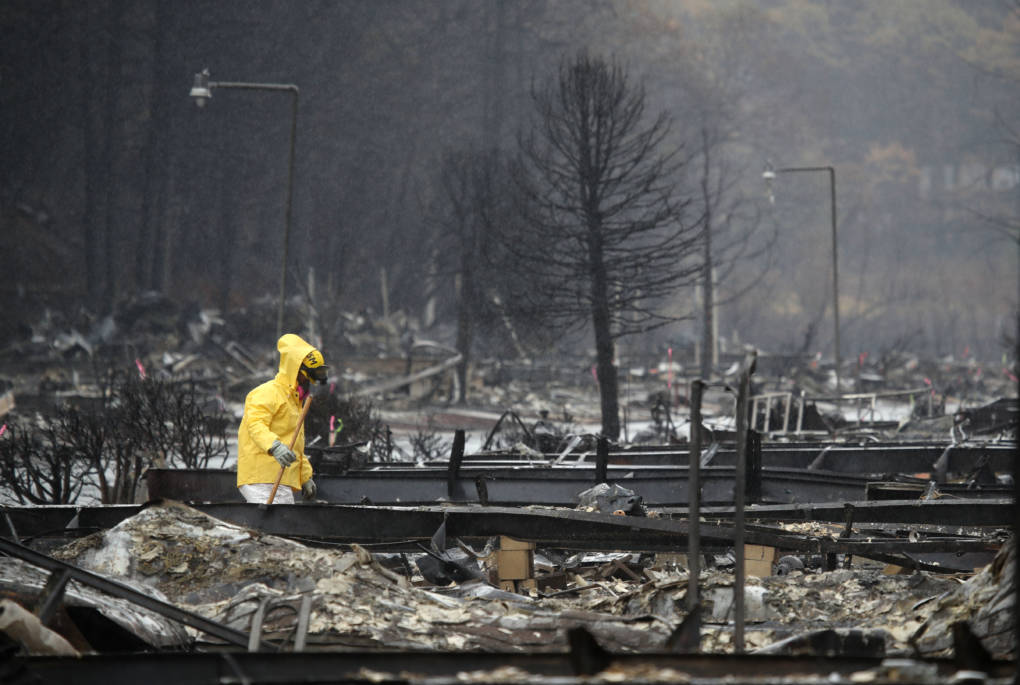
"caption": "A searcher amid rubble of a mobile home park in Paradise after the Camp Fire. ",
"description": null,
"title": "Camp Fire-Paradise",
"credit": "Justin Sullivan/Getty Images",
"status": "inherit",
"isLoading": false,
"fetchFailed": false
},
"news_11717405": {
"type": "attachments",
"id": "news_11717405",
"meta": {
"index": "attachments_1716263798",
"site": "news",
"id": "11717405",
"found": true
},
"parent": 11717355,
"imgSizes": {
"twentyfourteen-full-width": {
"file": "https://ww2.kqed.org/app/uploads/sites/10/2019/01/NewsomBudget-1038x576.jpg",
"width": 1038,
"mimeType": "image/jpeg",
"height": 576
},
"thumbnail": {
"file": "https://ww2.kqed.org/app/uploads/sites/10/2019/01/NewsomBudget-160x106.jpg",
"width": 160,
"mimeType": "image/jpeg",
"height": 106
},
"post-thumbnail": {
"file": "https://ww2.kqed.org/app/uploads/sites/10/2019/01/NewsomBudget-672x372.jpg",
"width": 672,
"mimeType": "image/jpeg",
"height": 372
},
"kqedFullSize": {
"file": "https://ww2.kqed.org/app/uploads/sites/10/2019/01/NewsomBudget.jpg",
"width": 1920,
"height": 1277
},
"large": {
"file": "https://ww2.kqed.org/app/uploads/sites/10/2019/01/NewsomBudget-1020x678.jpg",
"width": 1020,
"mimeType": "image/jpeg",
"height": 678
},
"complete_open_graph": {
"file": "https://ww2.kqed.org/app/uploads/sites/10/2019/01/NewsomBudget-1200x798.jpg",
"width": 1200,
"mimeType": "image/jpeg",
"height": 798
},
"guest-author-50": {
"file": "https://ww2.kqed.org/app/uploads/sites/10/2019/01/NewsomBudget-50x50.jpg",
"width": 50,
"mimeType": "image/jpeg",
"height": 50
},
"guest-author-96": {
"file": "https://ww2.kqed.org/app/uploads/sites/10/2019/01/NewsomBudget-96x96.jpg",
"width": 96,
"mimeType": "image/jpeg",
"height": 96
},
"medium": {
"file": "https://ww2.kqed.org/app/uploads/sites/10/2019/01/NewsomBudget-800x532.jpg",
"width": 800,
"mimeType": "image/jpeg",
"height": 532
},
"guest-author-64": {
"file": "https://ww2.kqed.org/app/uploads/sites/10/2019/01/NewsomBudget-64x64.jpg",
"width": 64,
"mimeType": "image/jpeg",
"height": 64
},
"guest-author-32": {
"file": "https://ww2.kqed.org/app/uploads/sites/10/2019/01/NewsomBudget-32x32.jpg",
"width": 32,
"mimeType": "image/jpeg",
"height": 32
},
"full-width": {
"file": "https://ww2.kqed.org/app/uploads/sites/10/2019/01/NewsomBudget-1920x1277.jpg",
"width": 1920,
"mimeType": "image/jpeg",
"height": 1277
},
"detail": {
"file": "https://ww2.kqed.org/app/uploads/sites/10/2019/01/NewsomBudget-150x150.jpg",
"width": 150,
"mimeType": "image/jpeg",
"height": 150
},
"guest-author-128": {
"file": "https://ww2.kqed.org/app/uploads/sites/10/2019/01/NewsomBudget-128x128.jpg",
"width": 128,
"mimeType": "image/jpeg",
"height": 128
}
},
"publishDate": 1547154789,
"modified": 1547154808,
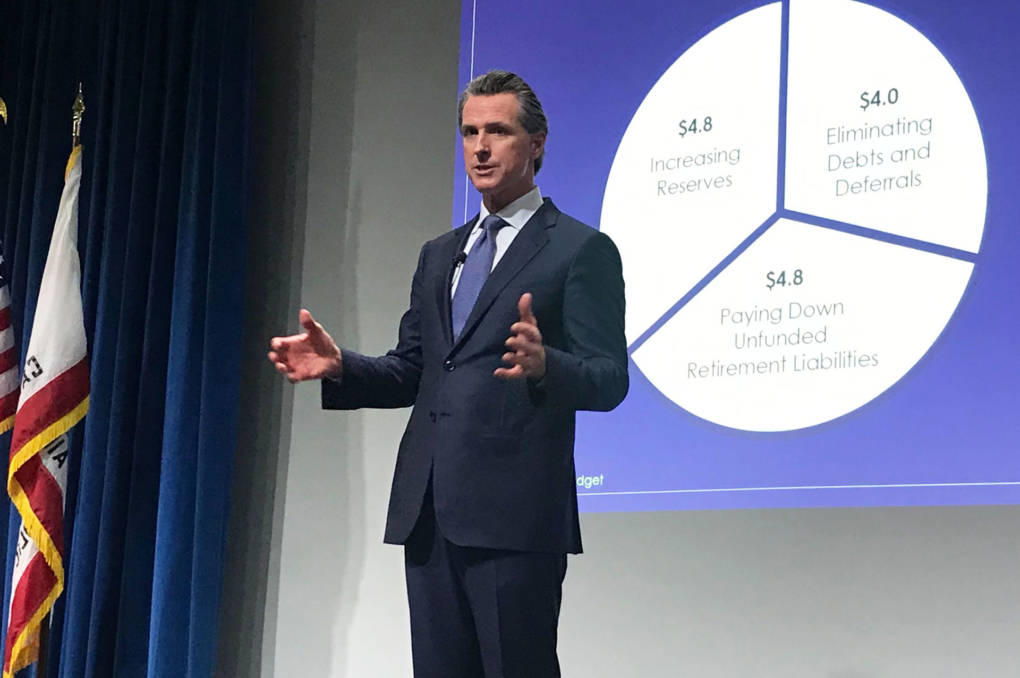
"caption": "Gov. Gavin Newsom unveils his first state budget proposal in Sacramento on Jan. 10, 2019. ",
"description": "Gov. Gavin Newsom unveils his first state budget proposal in Sacramento on Jan. 10, 2019. ",
"title": "NewsomBudget",
"credit": "Marisa Lagos/KQED",
"status": "inherit",
"isLoading": false,
"fetchFailed": false
},
"news_11729208": {
"type": "attachments",
"id": "news_11729208",
"meta": {
"index": "attachments_1716263798",
"site": "news",
"id": "11729208",
"found": true
},
"parent": 11729086,
"imgSizes": {
"twentyfourteen-full-width": {
"file": "https://ww2.kqed.org/app/uploads/sites/10/2019/02/NewsomPhones-1038x576.jpg",
"width": 1038,
"mimeType": "image/jpeg",
"height": 576
},
"thumbnail": {
"file": "https://ww2.kqed.org/app/uploads/sites/10/2019/02/NewsomPhones-160x106.jpg",
"width": 160,
"mimeType": "image/jpeg",
"height": 106
},
"post-thumbnail": {
"file": "https://ww2.kqed.org/app/uploads/sites/10/2019/02/NewsomPhones-672x372.jpg",
"width": 672,
"mimeType": "image/jpeg",
"height": 372
},
"kqedFullSize": {
"file": "https://ww2.kqed.org/app/uploads/sites/10/2019/02/NewsomPhones.jpg",
"width": 1920,
"height": 1273
},
"large": {
"file": "https://ww2.kqed.org/app/uploads/sites/10/2019/02/NewsomPhones-1020x676.jpg",
"width": 1020,
"mimeType": "image/jpeg",
"height": 676
},
"complete_open_graph": {
"file": "https://ww2.kqed.org/app/uploads/sites/10/2019/02/NewsomPhones-1200x796.jpg",
"width": 1200,
"mimeType": "image/jpeg",
"height": 796
},
"guest-author-50": {
"file": "https://ww2.kqed.org/app/uploads/sites/10/2019/02/NewsomPhones-50x50.jpg",
"width": 50,
"mimeType": "image/jpeg",
"height": 50
},
"guest-author-96": {
"file": "https://ww2.kqed.org/app/uploads/sites/10/2019/02/NewsomPhones-96x96.jpg",
"width": 96,
"mimeType": "image/jpeg",
"height": 96
},
"medium": {
"file": "https://ww2.kqed.org/app/uploads/sites/10/2019/02/NewsomPhones-800x530.jpg",
"width": 800,
"mimeType": "image/jpeg",
"height": 530
},
"guest-author-64": {
"file": "https://ww2.kqed.org/app/uploads/sites/10/2019/02/NewsomPhones-64x64.jpg",
"width": 64,
"mimeType": "image/jpeg",
"height": 64
},
"guest-author-32": {
"file": "https://ww2.kqed.org/app/uploads/sites/10/2019/02/NewsomPhones-32x32.jpg",
"width": 32,
"mimeType": "image/jpeg",
"height": 32
},
"full-width": {
"file": "https://ww2.kqed.org/app/uploads/sites/10/2019/02/NewsomPhones-1920x1273.jpg",
"width": 1920,
"mimeType": "image/jpeg",
"height": 1273
},
"guest-author-128": {
"file": "https://ww2.kqed.org/app/uploads/sites/10/2019/02/NewsomPhones-128x128.jpg",
"width": 128,
"mimeType": "image/jpeg",
"height": 128
}
},
"publishDate": 1551226637,
"modified": 1551226730,
"caption": "In his recent State of the State address, Gov. Gavin Newsom said California consumers should make money from all their data. ",
"description": "In his recent State of the State address, Gov. Gavin Newsom said California consumers should make money from all their data. ",
"title": "NewsomPhones",
"credit": "Jeff Chiu/AP/Pool",
"status": "inherit",
"isLoading": false,
"fetchFailed": false
},
"news_11728131": {
"type": "attachments",
"id": "news_11728131",
"meta": {
"index": "attachments_1716263798",
"site": "news",
"id": "11728131",
"found": true
},
"parent": 11728050,
"imgSizes": {
"thumbnail": {
"file": "https://ww2.kqed.org/app/uploads/sites/10/2019/02/KevinCooper-160x105.jpg",
"width": 160,
"mimeType": "image/jpeg",
"height": 105
},
"post-thumbnail": {
"file": "https://ww2.kqed.org/app/uploads/sites/10/2019/02/KevinCooper-672x372.jpg",
"width": 672,
"mimeType": "image/jpeg",
"height": 372
},
"kqedFullSize": {
"file": "https://ww2.kqed.org/app/uploads/sites/10/2019/02/KevinCooper.jpg",
"width": 769,
"height": 506
},
"guest-author-50": {
"file": "https://ww2.kqed.org/app/uploads/sites/10/2019/02/KevinCooper-50x50.jpg",
"width": 50,
"mimeType": "image/jpeg",
"height": 50
},
"guest-author-96": {
"file": "https://ww2.kqed.org/app/uploads/sites/10/2019/02/KevinCooper-96x96.jpg",
"width": 96,
"mimeType": "image/jpeg",
"height": 96
},
"guest-author-64": {
"file": "https://ww2.kqed.org/app/uploads/sites/10/2019/02/KevinCooper-64x64.jpg",
"width": 64,
"mimeType": "image/jpeg",
"height": 64
},
"detail": {
"file": "https://ww2.kqed.org/app/uploads/sites/10/2019/02/KevinCooper-150x150.jpg",
"width": 150,
"mimeType": "image/jpeg",
"height": 150
},
"guest-author-32": {
"file": "https://ww2.kqed.org/app/uploads/sites/10/2019/02/KevinCooper-32x32.jpg",
"width": 32,
"mimeType": "image/jpeg",
"height": 32
},
"guest-author-128": {
"file": "https://ww2.kqed.org/app/uploads/sites/10/2019/02/KevinCooper-128x128.jpg",
"width": 128,
"mimeType": "image/jpeg",
"height": 128
}
},
"publishDate": 1550863569,
"modified": 1550864297,
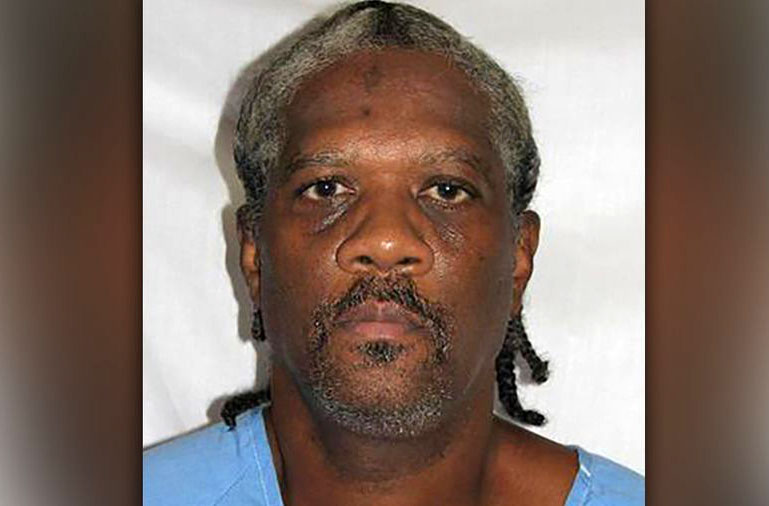
"caption": "An undated photo of Kevin Cooper, currently on death row at San Quentin State Prison.",
"description": "An undated photo of Kevin Cooper, currently on death row at San Quentin State Prison.",
"title": "KevinCooper",
"credit": "California Department of Corrections and Rehabilitation",
"status": "inherit",
"isLoading": false,
"fetchFailed": false
},
"news_11640681": {
"type": "attachments",
"id": "news_11640681",
"meta": {
"index": "attachments_1716263798",
"site": "news",
"id": "11640681",
"found": true
},
"parent": 11640668,
"imgSizes": {
"small": {
"file": "https://ww2.kqed.org/app/uploads/sites/10/2018/01/RS28767_GettyImages-900354318-qut-520x347.jpg",
"width": 520,
"mimeType": "image/jpeg",
"height": 347
},
"twentyfourteen-full-width": {
"file": "https://ww2.kqed.org/app/uploads/sites/10/2018/01/RS28767_GettyImages-900354318-qut-1038x576.jpg",
"width": 1038,
"mimeType": "image/jpeg",
"height": 576
},
"thumbnail": {
"file": "https://ww2.kqed.org/app/uploads/sites/10/2018/01/RS28767_GettyImages-900354318-qut-160x107.jpg",
"width": 160,
"mimeType": "image/jpeg",
"height": 107
},
"fd-sm": {
"file": "https://ww2.kqed.org/app/uploads/sites/10/2018/01/RS28767_GettyImages-900354318-qut-960x640.jpg",
"width": 960,
"mimeType": "image/jpeg",
"height": 640
},
"post-thumbnail": {
"file": "https://ww2.kqed.org/app/uploads/sites/10/2018/01/RS28767_GettyImages-900354318-qut-672x372.jpg",
"width": 672,
"mimeType": "image/jpeg",
"height": 372
},
"xsmall": {
"file": "https://ww2.kqed.org/app/uploads/sites/10/2018/01/RS28767_GettyImages-900354318-qut-375x250.jpg",
"width": 375,
"mimeType": "image/jpeg",
"height": 250
},
"kqedFullSize": {
"file": "https://ww2.kqed.org/app/uploads/sites/10/2018/01/RS28767_GettyImages-900354318-qut.jpg",
"width": 1920,
"height": 1280
},
"large": {
"file": "https://ww2.kqed.org/app/uploads/sites/10/2018/01/RS28767_GettyImages-900354318-qut-1020x680.jpg",
"width": 1020,
"mimeType": "image/jpeg",
"height": 680
},
"xlarge": {
"file": "https://ww2.kqed.org/app/uploads/sites/10/2018/01/RS28767_GettyImages-900354318-qut-1180x787.jpg",
"width": 1180,
"mimeType": "image/jpeg",
"height": 787
},
"guest-author-50": {
"file": "https://ww2.kqed.org/app/uploads/sites/10/2018/01/RS28767_GettyImages-900354318-qut-50x50.jpg",
"width": 50,
"mimeType": "image/jpeg",
"height": 50
},
"guest-author-96": {
"file": "https://ww2.kqed.org/app/uploads/sites/10/2018/01/RS28767_GettyImages-900354318-qut-96x96.jpg",
"width": 96,
"mimeType": "image/jpeg",
"height": 96
},
"medium": {
"file": "https://ww2.kqed.org/app/uploads/sites/10/2018/01/RS28767_GettyImages-900354318-qut-800x533.jpg",
"width": 800,
"mimeType": "image/jpeg",
"height": 533
},
"guest-author-64": {
"file": "https://ww2.kqed.org/app/uploads/sites/10/2018/01/RS28767_GettyImages-900354318-qut-64x64.jpg",
"width": 64,
"mimeType": "image/jpeg",
"height": 64
},
"guest-author-32": {
"file": "https://ww2.kqed.org/app/uploads/sites/10/2018/01/RS28767_GettyImages-900354318-qut-32x32.jpg",
"width": 32,
"mimeType": "image/jpeg",
"height": 32
},
"fd-lrg": {
"file": "https://ww2.kqed.org/app/uploads/sites/10/2018/01/RS28767_GettyImages-900354318-qut-1920x1280.jpg",
"width": 1920,
"mimeType": "image/jpeg",
"height": 1280
},
"fd-med": {
"file": "https://ww2.kqed.org/app/uploads/sites/10/2018/01/RS28767_GettyImages-900354318-qut-1180x787.jpg",
"width": 1180,
"mimeType": "image/jpeg",
"height": 787
},
"full-width": {
"file": "https://ww2.kqed.org/app/uploads/sites/10/2018/01/RS28767_GettyImages-900354318-qut-1920x1280.jpg",
"width": 1920,
"mimeType": "image/jpeg",
"height": 1280
},
"detail": {
"file": "https://ww2.kqed.org/app/uploads/sites/10/2018/01/RS28767_GettyImages-900354318-qut-150x150.jpg",
"width": 150,
"mimeType": "image/jpeg",
"height": 150
},
"guest-author-128": {
"file": "https://ww2.kqed.org/app/uploads/sites/10/2018/01/RS28767_GettyImages-900354318-qut-128x128.jpg",
"width": 128,
"mimeType": "image/jpeg",
"height": 128
},
"xxsmall": {
"file": "https://ww2.kqed.org/app/uploads/sites/10/2018/01/RS28767_GettyImages-900354318-qut-240x160.jpg",
"width": 240,
"mimeType": "image/jpeg",
"height": 160
}
},
"publishDate": 1515357942,
"modified": 1550797428,
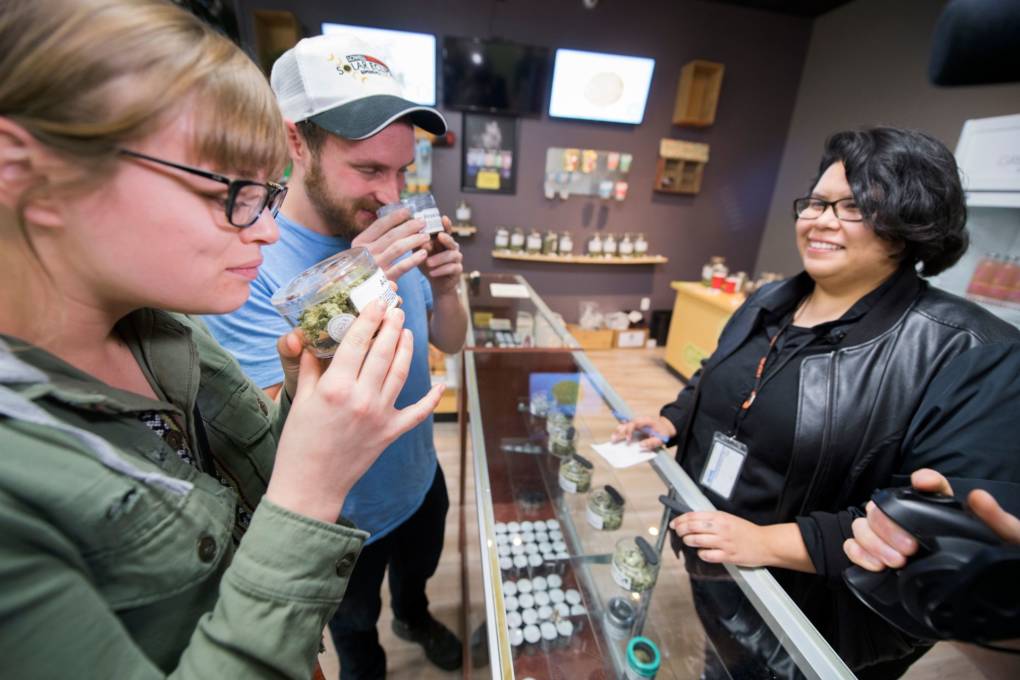
"caption": "Tourists Laura Torgerson and Ryan Sheehan, visiting from Arizona, smell cannabis buds at the Green Pearl Organics dispensary on the first day of legal recreational marijuana sales in California, Jan. 1, 2018, in Desert Hot Springs, California.",
"description": "Tourists Laura Torgerson and Ryan Sheehan, visiting from Arizona, smell cannabis buds at the Green Pearl Organics dispensary on the first day of legal recreational marijuana sales in California, January 1, 2018 in Desert Hot Springs, California.",
"title": "DOUNIAMAG-LIFESTYLE-US-HEALTH-BUSINESS",
"credit": "ROBYN BECK/AFP/Getty Images",
"status": "inherit",
"isLoading": false,
"fetchFailed": false
},
"news_11727663": {
"type": "attachments",
"id": "news_11727663",
"meta": {
"index": "attachments_1716263798",
"site": "news",
"id": "11727663",
"found": true
},
"title": "High-Speed Rail/Fresno Trench",
"publishDate": 1550716131,
"status": "inherit",
"parent": 11727539,
"modified": 1740091559,
"caption": "The Fresno Trench, a passage designed to allow future trains to travel beneath Highway 180. ",
"credit": "Courtesy of California High-Speed Rail Authority",
"altTag": "A",
"description": null,
"imgSizes": {
"thumbnail": {
"file": "https://cdn.kqed.org/wp-content/uploads/sites/10/2019/02/fresno_trench_november_2018_08-160x106.jpg",
"width": 160,
"height": 106,
"mimeType": "image/jpeg"
},
"medium": {
"file": "https://cdn.kqed.org/wp-content/uploads/sites/10/2019/02/fresno_trench_november_2018_08-800x531.jpg",
"width": 800,
"height": 531,
"mimeType": "image/jpeg"
},
"large": {
"file": "https://cdn.kqed.org/wp-content/uploads/sites/10/2019/02/fresno_trench_november_2018_08-1020x677.jpg",
"width": 1020,
"height": 677,
"mimeType": "image/jpeg"
},
"complete_open_graph": {
"file": "https://cdn.kqed.org/wp-content/uploads/sites/10/2019/02/fresno_trench_november_2018_08-1200x797.jpg",
"width": 1200,
"height": 797,
"mimeType": "image/jpeg"
},
"post-thumbnail": {
"file": "https://cdn.kqed.org/wp-content/uploads/sites/10/2019/02/fresno_trench_november_2018_08-672x372.jpg",
"width": 672,
"height": 372,
"mimeType": "image/jpeg"
},
"twentyfourteen-full-width": {
"file": "https://cdn.kqed.org/wp-content/uploads/sites/10/2019/02/fresno_trench_november_2018_08-1038x576.jpg",
"width": 1038,
"height": 576,
"mimeType": "image/jpeg"
},
"full-width": {
"file": "https://cdn.kqed.org/wp-content/uploads/sites/10/2019/02/fresno_trench_november_2018_08-1920x1275.jpg",
"width": 1920,
"height": 1275,
"mimeType": "image/jpeg"
},
"guest-author-32": {
"file": "https://cdn.kqed.org/wp-content/uploads/sites/10/2019/02/fresno_trench_november_2018_08-32x32.jpg",
"width": 32,
"height": 32,
"mimeType": "image/jpeg"
},
"guest-author-50": {
"file": "https://cdn.kqed.org/wp-content/uploads/sites/10/2019/02/fresno_trench_november_2018_08-50x50.jpg",
"width": 50,
"height": 50,
"mimeType": "image/jpeg"
},
"guest-author-64": {
"file": "https://cdn.kqed.org/wp-content/uploads/sites/10/2019/02/fresno_trench_november_2018_08-64x64.jpg",
"width": 64,
"height": 64,
"mimeType": "image/jpeg"
},
"guest-author-96": {
"file": "https://cdn.kqed.org/wp-content/uploads/sites/10/2019/02/fresno_trench_november_2018_08-96x96.jpg",
"width": 96,
"height": 96,
"mimeType": "image/jpeg"
},
"guest-author-128": {
"file": "https://cdn.kqed.org/wp-content/uploads/sites/10/2019/02/fresno_trench_november_2018_08-128x128.jpg",
"width": 128,
"height": 128,
"mimeType": "image/jpeg"
},
"detail": {
"file": "https://cdn.kqed.org/wp-content/uploads/sites/10/2019/02/fresno_trench_november_2018_08-150x150.jpg",
"width": 150,
"height": 150,
"mimeType": "image/jpeg"
},
"kqedFullSize": {
"file": "https://cdn.kqed.org/wp-content/uploads/sites/10/2019/02/fresno_trench_november_2018_08-e1550716412597.jpg",
"width": 1920,
"height": 1275
}
},
"isLoading": false,
"fetchFailed": false
},
"news_11727293": {
"type": "attachments",
"id": "news_11727293",
"meta": {
"index": "attachments_1716263798",
"site": "news",
"id": "11727293",
"found": true
},
"parent": 11727255,
"imgSizes": {
"twentyfourteen-full-width": {
"file": "https://ww2.kqed.org/app/uploads/sites/10/2019/02/Screen-Shot-2019-02-19-at-11.48.10-AM-1038x576.png",
"width": 1038,
"mimeType": "image/png",
"height": 576
},
"thumbnail": {
"file": "https://ww2.kqed.org/app/uploads/sites/10/2019/02/Screen-Shot-2019-02-19-at-11.48.10-AM-160x78.png",
"width": 160,
"mimeType": "image/png",
"height": 78
},
"post-thumbnail": {
"file": "https://ww2.kqed.org/app/uploads/sites/10/2019/02/Screen-Shot-2019-02-19-at-11.48.10-AM-672x372.png",
"width": 672,
"mimeType": "image/png",
"height": 372
},
"kqedFullSize": {
"file": "https://ww2.kqed.org/app/uploads/sites/10/2019/02/Screen-Shot-2019-02-19-at-11.48.10-AM.png",
"width": 1634,
"height": 794
},
"large": {
"file": "https://ww2.kqed.org/app/uploads/sites/10/2019/02/Screen-Shot-2019-02-19-at-11.48.10-AM-1020x496.png",
"width": 1020,
"mimeType": "image/png",
"height": 496
},
"complete_open_graph": {
"file": "https://ww2.kqed.org/app/uploads/sites/10/2019/02/Screen-Shot-2019-02-19-at-11.48.10-AM-1200x583.png",
"width": 1200,
"mimeType": "image/png",
"height": 583
},
"guest-author-50": {
"file": "https://ww2.kqed.org/app/uploads/sites/10/2019/02/Screen-Shot-2019-02-19-at-11.48.10-AM-50x50.png",
"width": 50,
"mimeType": "image/png",
"height": 50
},
"guest-author-96": {
"file": "https://ww2.kqed.org/app/uploads/sites/10/2019/02/Screen-Shot-2019-02-19-at-11.48.10-AM-96x96.png",
"width": 96,
"mimeType": "image/png",
"height": 96
},
"medium": {
"file": "https://ww2.kqed.org/app/uploads/sites/10/2019/02/Screen-Shot-2019-02-19-at-11.48.10-AM-800x389.png",
"width": 800,
"mimeType": "image/png",
"height": 389
},
"guest-author-64": {
"file": "https://ww2.kqed.org/app/uploads/sites/10/2019/02/Screen-Shot-2019-02-19-at-11.48.10-AM-64x64.png",
"width": 64,
"mimeType": "image/png",
"height": 64
},
"guest-author-32": {
"file": "https://ww2.kqed.org/app/uploads/sites/10/2019/02/Screen-Shot-2019-02-19-at-11.48.10-AM-32x32.png",
"width": 32,
"mimeType": "image/png",
"height": 32
},
"detail": {
"file": "https://ww2.kqed.org/app/uploads/sites/10/2019/02/Screen-Shot-2019-02-19-at-11.48.10-AM-150x150.png",
"width": 150,
"mimeType": "image/png",
"height": 150
},
"guest-author-128": {
"file": "https://ww2.kqed.org/app/uploads/sites/10/2019/02/Screen-Shot-2019-02-19-at-11.48.10-AM-128x128.png",
"width": 128,
"mimeType": "image/png",
"height": 128
}
},
"publishDate": 1550605715,
"modified": 1550605905,
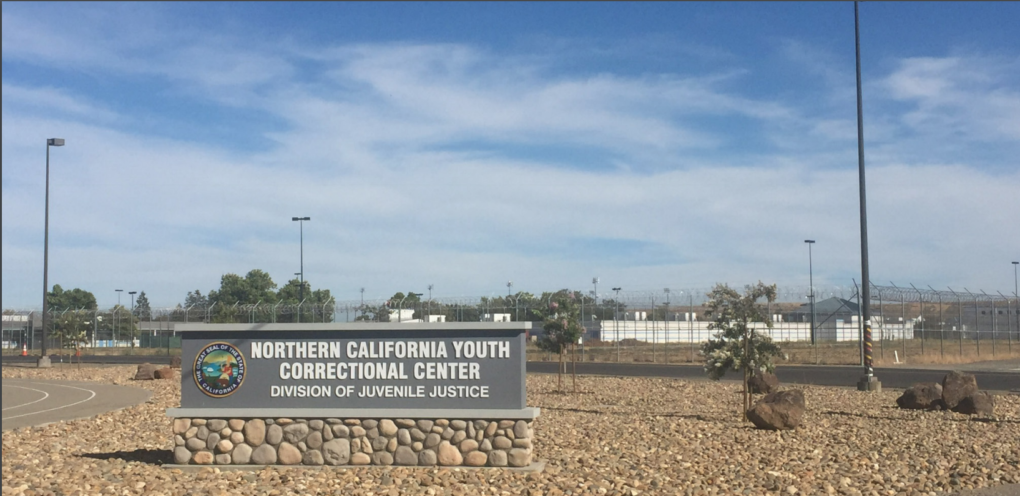
"caption": "Entrance to shared site of DJJ’s secluded O.H. Close and Chad facilities in Stockton.",
"description": "Entrance to shared site of DJJ’s secluded O.H. Close and Chad facilities in Stockton.",
"title": "Screen Shot 2019-02-19 at 11.48.10 AM",
"credit": "Center on Criminal and Juvenile Justice",
"status": "inherit",
"isLoading": false,
"fetchFailed": false
},
"news_11622683": {
"type": "attachments",
"id": "news_11622683",
"meta": {
"index": "attachments_1716263798",
"site": "news",
"id": "11622683",
"found": true
},
"parent": 11622620,
"imgSizes": {
"small": {
"file": "https://ww2.kqed.org/app/uploads/sites/10/2017/10/RS25456_20170515_StateCapitol_Sen_HollyMitchell_credit_BertJohnson-1-qut-520x347.jpg",
"width": 520,
"mimeType": "image/jpeg",
"height": 347
},
"twentyfourteen-full-width": {
"file": "https://ww2.kqed.org/app/uploads/sites/10/2017/10/RS25456_20170515_StateCapitol_Sen_HollyMitchell_credit_BertJohnson-1-qut-1038x576.jpg",
"width": 1038,
"mimeType": "image/jpeg",
"height": 576
},
"thumbnail": {
"file": "https://ww2.kqed.org/app/uploads/sites/10/2017/10/RS25456_20170515_StateCapitol_Sen_HollyMitchell_credit_BertJohnson-1-qut-160x107.jpg",
"width": 160,
"mimeType": "image/jpeg",
"height": 107
},
"fd-sm": {
"file": "https://ww2.kqed.org/app/uploads/sites/10/2017/10/RS25456_20170515_StateCapitol_Sen_HollyMitchell_credit_BertJohnson-1-qut-960x640.jpg",
"width": 960,
"mimeType": "image/jpeg",
"height": 640
},
"post-thumbnail": {
"file": "https://ww2.kqed.org/app/uploads/sites/10/2017/10/RS25456_20170515_StateCapitol_Sen_HollyMitchell_credit_BertJohnson-1-qut-672x372.jpg",
"width": 672,
"mimeType": "image/jpeg",
"height": 372
},
"xsmall": {
"file": "https://ww2.kqed.org/app/uploads/sites/10/2017/10/RS25456_20170515_StateCapitol_Sen_HollyMitchell_credit_BertJohnson-1-qut-375x250.jpg",
"width": 375,
"mimeType": "image/jpeg",
"height": 250
},
"kqedFullSize": {
"file": "https://ww2.kqed.org/app/uploads/sites/10/2017/10/RS25456_20170515_StateCapitol_Sen_HollyMitchell_credit_BertJohnson-1-qut.jpg",
"width": 1920,
"height": 1280
},
"large": {
"file": "https://ww2.kqed.org/app/uploads/sites/10/2017/10/RS25456_20170515_StateCapitol_Sen_HollyMitchell_credit_BertJohnson-1-qut-1020x680.jpg",
"width": 1020,
"mimeType": "image/jpeg",
"height": 680
},
"xlarge": {
"file": "https://ww2.kqed.org/app/uploads/sites/10/2017/10/RS25456_20170515_StateCapitol_Sen_HollyMitchell_credit_BertJohnson-1-qut-1180x787.jpg",
"width": 1180,
"mimeType": "image/jpeg",
"height": 787
},
"guest-author-50": {
"file": "https://ww2.kqed.org/app/uploads/sites/10/2017/10/RS25456_20170515_StateCapitol_Sen_HollyMitchell_credit_BertJohnson-1-qut-50x50.jpg",
"width": 50,
"mimeType": "image/jpeg",
"height": 50
},
"guest-author-96": {
"file": "https://ww2.kqed.org/app/uploads/sites/10/2017/10/RS25456_20170515_StateCapitol_Sen_HollyMitchell_credit_BertJohnson-1-qut-96x96.jpg",
"width": 96,
"mimeType": "image/jpeg",
"height": 96
},
"medium": {
"file": "https://ww2.kqed.org/app/uploads/sites/10/2017/10/RS25456_20170515_StateCapitol_Sen_HollyMitchell_credit_BertJohnson-1-qut-800x533.jpg",
"width": 800,
"mimeType": "image/jpeg",
"height": 533
},
"guest-author-64": {
"file": "https://ww2.kqed.org/app/uploads/sites/10/2017/10/RS25456_20170515_StateCapitol_Sen_HollyMitchell_credit_BertJohnson-1-qut-64x64.jpg",
"width": 64,
"mimeType": "image/jpeg",
"height": 64
},
"guest-author-32": {
"file": "https://ww2.kqed.org/app/uploads/sites/10/2017/10/RS25456_20170515_StateCapitol_Sen_HollyMitchell_credit_BertJohnson-1-qut-32x32.jpg",
"width": 32,
"mimeType": "image/jpeg",
"height": 32
},
"fd-lrg": {
"file": "https://ww2.kqed.org/app/uploads/sites/10/2017/10/RS25456_20170515_StateCapitol_Sen_HollyMitchell_credit_BertJohnson-1-qut-1920x1280.jpg",
"width": 1920,
"mimeType": "image/jpeg",
"height": 1280
},
"fd-med": {
"file": "https://ww2.kqed.org/app/uploads/sites/10/2017/10/RS25456_20170515_StateCapitol_Sen_HollyMitchell_credit_BertJohnson-1-qut-1180x787.jpg",
"width": 1180,
"mimeType": "image/jpeg",
"height": 787
},
"full-width": {
"file": "https://ww2.kqed.org/app/uploads/sites/10/2017/10/RS25456_20170515_StateCapitol_Sen_HollyMitchell_credit_BertJohnson-1-qut-1920x1280.jpg",
"width": 1920,
"mimeType": "image/jpeg",
"height": 1280
},
"detail": {
"file": "https://ww2.kqed.org/app/uploads/sites/10/2017/10/RS25456_20170515_StateCapitol_Sen_HollyMitchell_credit_BertJohnson-1-qut-150x150.jpg",
"width": 150,
"mimeType": "image/jpeg",
"height": 150
},
"guest-author-128": {
"file": "https://ww2.kqed.org/app/uploads/sites/10/2017/10/RS25456_20170515_StateCapitol_Sen_HollyMitchell_credit_BertJohnson-1-qut-128x128.jpg",
"width": 128,
"mimeType": "image/jpeg",
"height": 128
},
"xxsmall": {
"file": "https://ww2.kqed.org/app/uploads/sites/10/2017/10/RS25456_20170515_StateCapitol_Sen_HollyMitchell_credit_BertJohnson-1-qut-240x160.jpg",
"width": 240,
"mimeType": "image/jpeg",
"height": 160
}
},
"publishDate": 1507766028,
"modified": 1550599309,
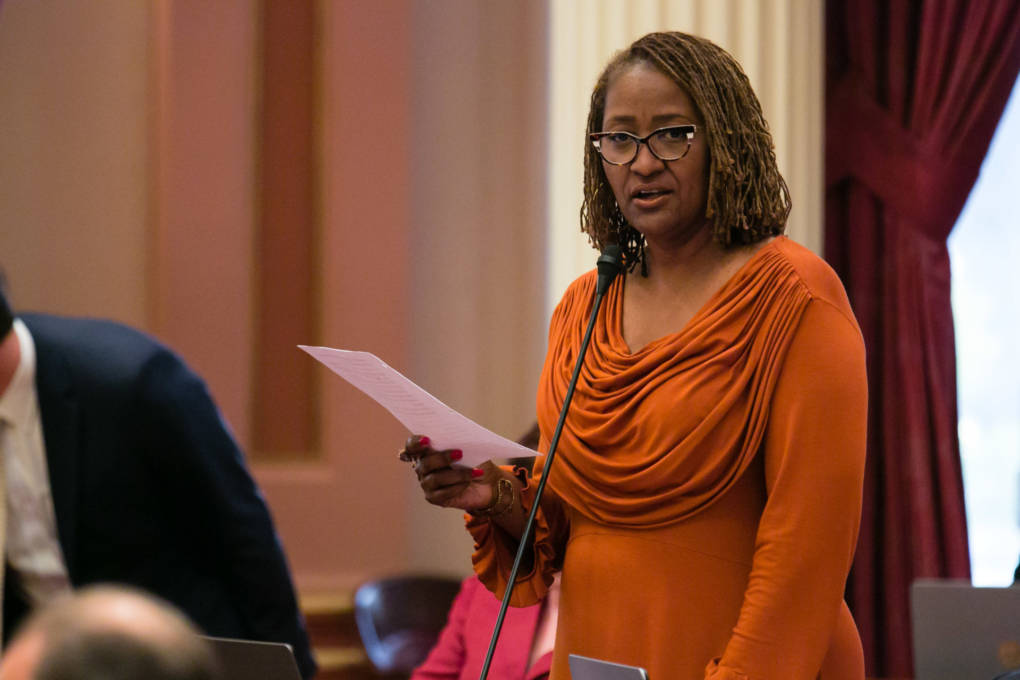
"caption": "State Sen. Holly Mitchell has championed many bills aimed at ending poverty.",
"description": "State Sen Holly Mitchell has championed many bills aimed at ending poverty.",
"title": "RS25456_20170515_StateCapitol_Sen_HollyMitchell_credit_BertJohnson-1-qut",
"credit": "Bert Johnson/KQED",
"status": "inherit",
"isLoading": false,
"fetchFailed": false
},
"news_11726817": {
"type": "attachments",
"id": "news_11726817",
"meta": {
"index": "attachments_1716263798",
"site": "news",
"id": "11726817",
"found": true
},
"parent": 11726603,
"imgSizes": {
"twentyfourteen-full-width": {
"file": "https://ww2.kqed.org/app/uploads/sites/10/2019/02/NR617_MARQUE-1038x576.jpg",
"width": 1038,
"mimeType": "image/jpeg",
"height": 576
},
"thumbnail": {
"file": "https://ww2.kqed.org/app/uploads/sites/10/2019/02/NR617_MARQUE-160x90.jpg",
"width": 160,
"mimeType": "image/jpeg",
"height": 90
},
"post-thumbnail": {
"file": "https://ww2.kqed.org/app/uploads/sites/10/2019/02/NR617_MARQUE-672x372.jpg",
"width": 672,
"mimeType": "image/jpeg",
"height": 372
},
"kqedFullSize": {
"file": "https://ww2.kqed.org/app/uploads/sites/10/2019/02/NR617_MARQUE.jpg",
"width": 1280,
"height": 720
},
"large": {
"file": "https://ww2.kqed.org/app/uploads/sites/10/2019/02/NR617_MARQUE-1020x574.jpg",
"width": 1020,
"mimeType": "image/jpeg",
"height": 574
},
"complete_open_graph": {
"file": "https://ww2.kqed.org/app/uploads/sites/10/2019/02/NR617_MARQUE-1200x675.jpg",
"width": 1200,
"mimeType": "image/jpeg",
"height": 675
},
"guest-author-50": {
"file": "https://ww2.kqed.org/app/uploads/sites/10/2019/02/NR617_MARQUE-50x50.jpg",
"width": 50,
"mimeType": "image/jpeg",
"height": 50
},
"guest-author-96": {
"file": "https://ww2.kqed.org/app/uploads/sites/10/2019/02/NR617_MARQUE-96x96.jpg",
"width": 96,
"mimeType": "image/jpeg",
"height": 96
},
"medium": {
"file": "https://ww2.kqed.org/app/uploads/sites/10/2019/02/NR617_MARQUE-800x450.jpg",
"width": 800,
"mimeType": "image/jpeg",
"height": 450
},
"guest-author-64": {
"file": "https://ww2.kqed.org/app/uploads/sites/10/2019/02/NR617_MARQUE-64x64.jpg",
"width": 64,
"mimeType": "image/jpeg",
"height": 64
},
"guest-author-32": {
"file": "https://ww2.kqed.org/app/uploads/sites/10/2019/02/NR617_MARQUE-32x32.jpg",
"width": 32,
"mimeType": "image/jpeg",
"height": 32
},
"detail": {
"file": "https://ww2.kqed.org/app/uploads/sites/10/2019/02/NR617_MARQUE-150x150.jpg",
"width": 150,
"mimeType": "image/jpeg",
"height": 150
},
"guest-author-128": {
"file": "https://ww2.kqed.org/app/uploads/sites/10/2019/02/NR617_MARQUE-128x128.jpg",
"width": 128,
"mimeType": "image/jpeg",
"height": 128
}
},
"publishDate": 1550281509,
"modified": 1550281509,
"caption": null,
"description": null,
"title": "NR617_MARQUE",
"credit": null,
"status": "inherit",
"isLoading": false,
"fetchFailed": false
},
"news_11726674": {
"type": "attachments",
"id": "news_11726674",
"meta": {
"index": "attachments_1716263798",
"site": "news",
"id": "11726674",
"found": true
},
"parent": 11726594,
"imgSizes": {
"twentyfourteen-full-width": {
"file": "https://ww2.kqed.org/app/uploads/sites/10/2019/02/NewsomBecerra-1038x576.jpg",
"width": 1038,
"mimeType": "image/jpeg",
"height": 576
},
"thumbnail": {
"file": "https://ww2.kqed.org/app/uploads/sites/10/2019/02/NewsomBecerra-160x98.jpg",
"width": 160,
"mimeType": "image/jpeg",
"height": 98
},
"post-thumbnail": {
"file": "https://ww2.kqed.org/app/uploads/sites/10/2019/02/NewsomBecerra-672x372.jpg",
"width": 672,
"mimeType": "image/jpeg",
"height": 372
},
"kqedFullSize": {
"file": "https://ww2.kqed.org/app/uploads/sites/10/2019/02/NewsomBecerra.jpg",
"width": 1920,
"height": 1174
},
"large": {
"file": "https://ww2.kqed.org/app/uploads/sites/10/2019/02/NewsomBecerra-1020x624.jpg",
"width": 1020,
"mimeType": "image/jpeg",
"height": 624
},
"complete_open_graph": {
"file": "https://ww2.kqed.org/app/uploads/sites/10/2019/02/NewsomBecerra-1200x734.jpg",
"width": 1200,
"mimeType": "image/jpeg",
"height": 734
},
"guest-author-50": {
"file": "https://ww2.kqed.org/app/uploads/sites/10/2019/02/NewsomBecerra-50x50.jpg",
"width": 50,
"mimeType": "image/jpeg",
"height": 50
},
"guest-author-96": {
"file": "https://ww2.kqed.org/app/uploads/sites/10/2019/02/NewsomBecerra-96x96.jpg",
"width": 96,
"mimeType": "image/jpeg",
"height": 96
},
"medium": {
"file": "https://ww2.kqed.org/app/uploads/sites/10/2019/02/NewsomBecerra-800x489.jpg",
"width": 800,
"mimeType": "image/jpeg",
"height": 489
},
"guest-author-64": {
"file": "https://ww2.kqed.org/app/uploads/sites/10/2019/02/NewsomBecerra-64x64.jpg",
"width": 64,
"mimeType": "image/jpeg",
"height": 64
},
"guest-author-32": {
"file": "https://ww2.kqed.org/app/uploads/sites/10/2019/02/NewsomBecerra-32x32.jpg",
"width": 32,
"mimeType": "image/jpeg",
"height": 32
},
"full-width": {
"file": "https://ww2.kqed.org/app/uploads/sites/10/2019/02/NewsomBecerra-1920x1174.jpg",
"width": 1920,
"mimeType": "image/jpeg",
"height": 1174
},
"detail": {
"file": "https://ww2.kqed.org/app/uploads/sites/10/2019/02/NewsomBecerra-150x150.jpg",
"width": 150,
"mimeType": "image/jpeg",
"height": 150
},
"guest-author-128": {
"file": "https://ww2.kqed.org/app/uploads/sites/10/2019/02/NewsomBecerra-128x128.jpg",
"width": 128,
"mimeType": "image/jpeg",
"height": 128
}
},
"publishDate": 1550265608,
"modified": 1550265640,
"caption": "Gov. Gavin Newsom and Attorney General Xavier Becerra hold a press conference on Feb. 15, 2019 at the Capitol in Sacramento to discuss President Trump's emergency declaration.",
"description": "Gov. Gavin Newsom and Attorney General Xavier Becerra hold a press conference on Feb. 15, 2019 at the Capitol in Sacramento to discuss President Trump's emergency declaration.",
"title": "NewsomBecerra",
"credit": "California Department of Justice",
"status": "inherit",
"isLoading": false,
"fetchFailed": false
},
"news_11726321": {
"type": "attachments",
"id": "news_11726321",
"meta": {
"index": "attachments_1716263798",
"site": "news",
"id": "11726321",
"found": true
},
"parent": 11726287,
"imgSizes": {
"twentyfourteen-full-width": {
"file": "https://ww2.kqed.org/app/uploads/sites/10/2019/02/GettyImages-1058495780-1038x576.jpg",
"width": 1038,
"mimeType": "image/jpeg",
"height": 576
},
"thumbnail": {
"file": "https://ww2.kqed.org/app/uploads/sites/10/2019/02/GettyImages-1058495780-160x105.jpg",
"width": 160,
"mimeType": "image/jpeg",
"height": 105
},
"post-thumbnail": {
"file": "https://ww2.kqed.org/app/uploads/sites/10/2019/02/GettyImages-1058495780-672x372.jpg",
"width": 672,
"mimeType": "image/jpeg",
"height": 372
},
"kqedFullSize": {
"file": "https://ww2.kqed.org/app/uploads/sites/10/2019/02/GettyImages-1058495780-e1550177751962.jpg",
"width": 1920,
"height": 1265
},
"large": {
"file": "https://ww2.kqed.org/app/uploads/sites/10/2019/02/GettyImages-1058495780-1020x672.jpg",
"width": 1020,
"mimeType": "image/jpeg",
"height": 672
},
"complete_open_graph": {
"file": "https://ww2.kqed.org/app/uploads/sites/10/2019/02/GettyImages-1058495780-1200x791.jpg",
"width": 1200,
"mimeType": "image/jpeg",
"height": 791
},
"guest-author-50": {
"file": "https://ww2.kqed.org/app/uploads/sites/10/2019/02/GettyImages-1058495780-50x50.jpg",
"width": 50,
"mimeType": "image/jpeg",
"height": 50
},
"guest-author-96": {
"file": "https://ww2.kqed.org/app/uploads/sites/10/2019/02/GettyImages-1058495780-96x96.jpg",
"width": 96,
"mimeType": "image/jpeg",
"height": 96
},
"medium": {
"file": "https://ww2.kqed.org/app/uploads/sites/10/2019/02/GettyImages-1058495780-800x527.jpg",
"width": 800,
"mimeType": "image/jpeg",
"height": 527
},
"guest-author-64": {
"file": "https://ww2.kqed.org/app/uploads/sites/10/2019/02/GettyImages-1058495780-64x64.jpg",
"width": 64,
"mimeType": "image/jpeg",
"height": 64
},
"guest-author-32": {
"file": "https://ww2.kqed.org/app/uploads/sites/10/2019/02/GettyImages-1058495780-32x32.jpg",
"width": 32,
"mimeType": "image/jpeg",
"height": 32
},
"full-width": {
"file": "https://ww2.kqed.org/app/uploads/sites/10/2019/02/GettyImages-1058495780-1920x1265.jpg",
"width": 1920,
"mimeType": "image/jpeg",
"height": 1265
},
"detail": {
"file": "https://ww2.kqed.org/app/uploads/sites/10/2019/02/GettyImages-1058495780-150x150.jpg",
"width": 150,
"mimeType": "image/jpeg",
"height": 150
},
"guest-author-128": {
"file": "https://ww2.kqed.org/app/uploads/sites/10/2019/02/GettyImages-1058495780-128x128.jpg",
"width": 128,
"mimeType": "image/jpeg",
"height": 128
}
},
"publishDate": 1550177710,
"modified": 1550177746,
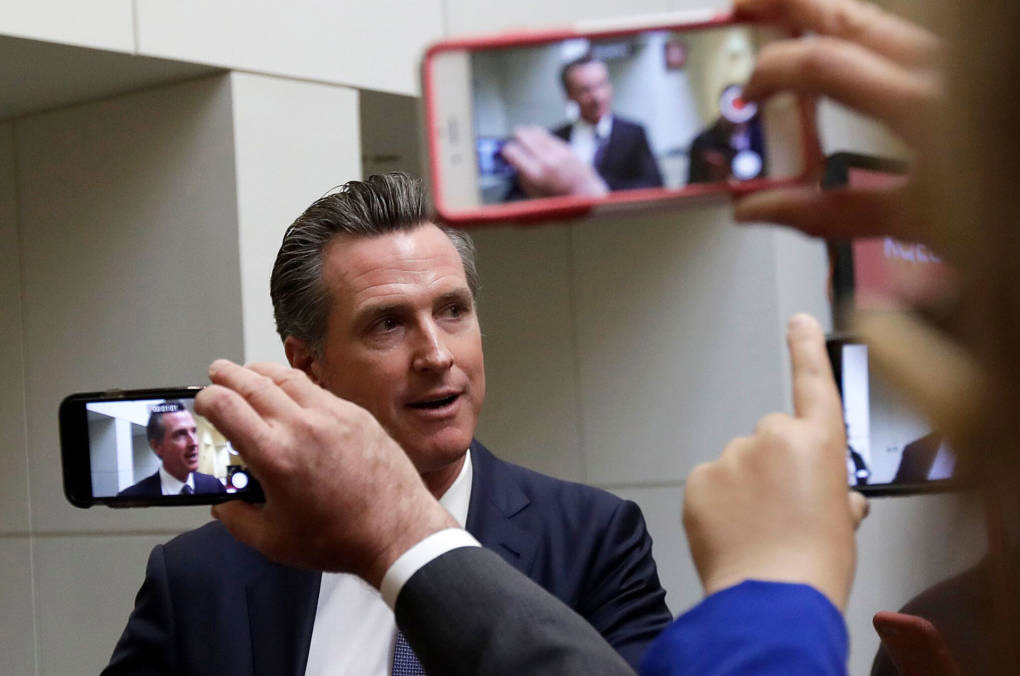
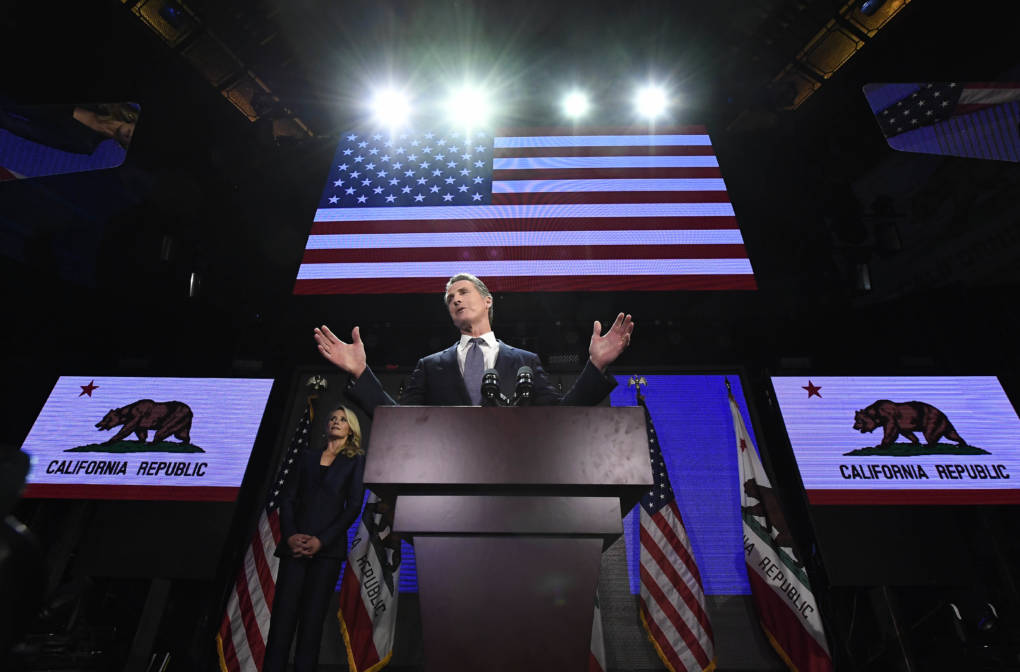
"caption": "Gavin Newsom speaking after being elected Governor in Nov. 2018.",
"description": "Gavin Newsom speaking after being elected Governor in Nov. 2018.",
"title": "Democratic Gubernatorial Candidate Gavin Newsom Holds Election Night Event In LA",
"credit": "Kevork Djansezian/Getty Images",
"status": "inherit",
"isLoading": false,
"fetchFailed": false
},
"news_11716310": {
"type": "attachments",
"id": "news_11716310",
"meta": {
"index": "attachments_1716263798",
"site": "news",
"id": "11716310",
"found": true
},
"parent": 11716309,
"imgSizes": {
"twentyfourteen-full-width": {
"file": "https://ww2.kqed.org/app/uploads/sites/10/2019/01/ap_18317743479007-e5eb20ca3771e1505c604ea1ac73bdad33d203a3-e1546882566141-1038x576.jpg",
"width": 1038,
"mimeType": "image/jpeg",
"height": 576
},
"thumbnail": {
"file": "https://ww2.kqed.org/app/uploads/sites/10/2019/01/ap_18317743479007-e5eb20ca3771e1505c604ea1ac73bdad33d203a3-e1546882566141-160x120.jpg",
"width": 160,
"mimeType": "image/jpeg",
"height": 120
},
"post-thumbnail": {
"file": "https://ww2.kqed.org/app/uploads/sites/10/2019/01/ap_18317743479007-e5eb20ca3771e1505c604ea1ac73bdad33d203a3-e1546882566141-672x372.jpg",
"width": 672,
"mimeType": "image/jpeg",
"height": 372
},
"kqedFullSize": {
"file": "https://ww2.kqed.org/app/uploads/sites/10/2019/01/ap_18317743479007-e5eb20ca3771e1505c604ea1ac73bdad33d203a3-e1546882566141.jpg",
"width": 1920,
"height": 1440
},
"large": {
"file": "https://ww2.kqed.org/app/uploads/sites/10/2019/01/ap_18317743479007-e5eb20ca3771e1505c604ea1ac73bdad33d203a3-e1546882566141-1020x765.jpg",
"width": 1020,
"mimeType": "image/jpeg",
"height": 765
},
"complete_open_graph": {
"file": "https://ww2.kqed.org/app/uploads/sites/10/2019/01/ap_18317743479007-e5eb20ca3771e1505c604ea1ac73bdad33d203a3-e1546882566141-1200x900.jpg",
"width": 1200,
"mimeType": "image/jpeg",
"height": 900
},
"guest-author-50": {
"file": "https://ww2.kqed.org/app/uploads/sites/10/2019/01/ap_18317743479007-e5eb20ca3771e1505c604ea1ac73bdad33d203a3-e1546882566141-50x50.jpg",
"width": 50,
"mimeType": "image/jpeg",
"height": 50
},
"guest-author-96": {
"file": "https://ww2.kqed.org/app/uploads/sites/10/2019/01/ap_18317743479007-e5eb20ca3771e1505c604ea1ac73bdad33d203a3-e1546882566141-96x96.jpg",
"width": 96,
"mimeType": "image/jpeg",
"height": 96
},
"medium": {
"file": "https://ww2.kqed.org/app/uploads/sites/10/2019/01/ap_18317743479007-e5eb20ca3771e1505c604ea1ac73bdad33d203a3-e1546882566141-800x600.jpg",
"width": 800,
"mimeType": "image/jpeg",
"height": 600
},
"guest-author-64": {
"file": "https://ww2.kqed.org/app/uploads/sites/10/2019/01/ap_18317743479007-e5eb20ca3771e1505c604ea1ac73bdad33d203a3-e1546882566141-64x64.jpg",
"width": 64,
"mimeType": "image/jpeg",
"height": 64
},
"guest-author-32": {
"file": "https://ww2.kqed.org/app/uploads/sites/10/2019/01/ap_18317743479007-e5eb20ca3771e1505c604ea1ac73bdad33d203a3-e1546882566141-32x32.jpg",
"width": 32,
"mimeType": "image/jpeg",
"height": 32
},
"full-width": {
"file": "https://ww2.kqed.org/app/uploads/sites/10/2019/01/ap_18317743479007-e5eb20ca3771e1505c604ea1ac73bdad33d203a3-e1546882566141-1920x1440.jpg",
"width": 1920,
"mimeType": "image/jpeg",
"height": 1440
},
"detail": {
"file": "https://ww2.kqed.org/app/uploads/sites/10/2019/01/ap_18317743479007-e5eb20ca3771e1505c604ea1ac73bdad33d203a3-e1546882566141-150x150.jpg",
"width": 150,
"mimeType": "image/jpeg",
"height": 150
},
"guest-author-128": {
"file": "https://ww2.kqed.org/app/uploads/sites/10/2019/01/ap_18317743479007-e5eb20ca3771e1505c604ea1ac73bdad33d203a3-e1546882566141-128x128.jpg",
"width": 128,
"mimeType": "image/jpeg",
"height": 128
}
},
"publishDate": 1546882432,
"modified": 1550098388,
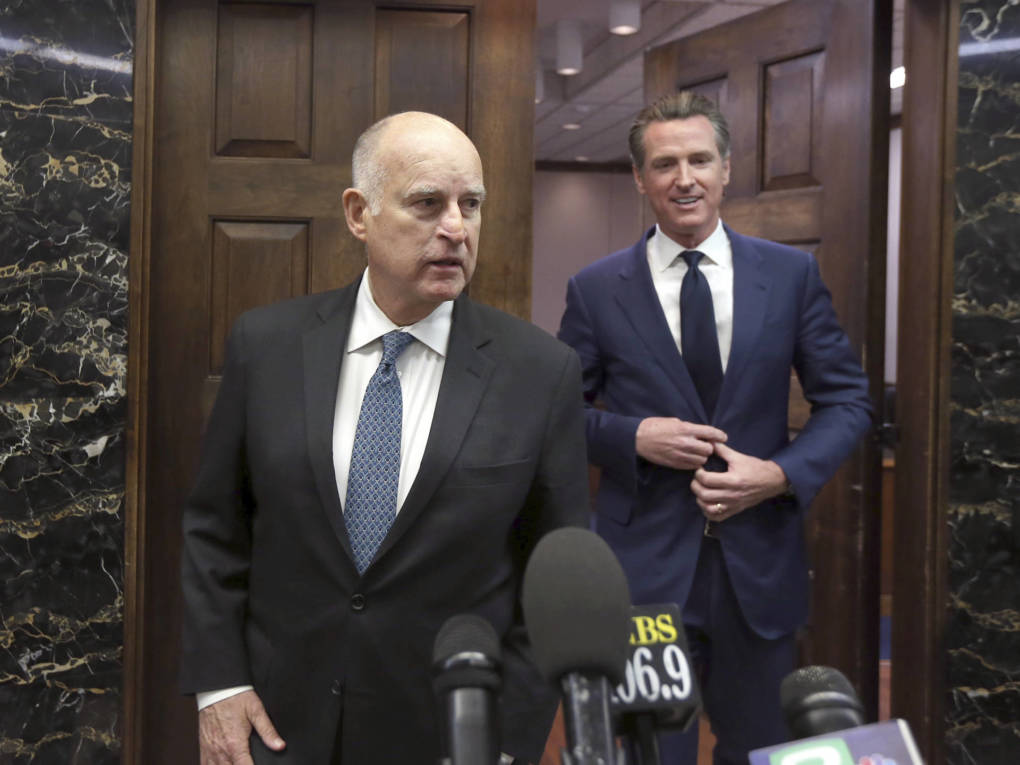
"caption": "Gov. Gavin Newsom (right) and his predecessor, Jerry Brown, after conferring in the governor's office shortly before Newsom was sworn in on Jan. 7, 2019.",
"description": "California Gov. Jerry Brown, left, and Governor-elect Gavin Newsom emerge from the Governor's office to talk with reporters after meeting at the Capitol. Newsom will be sworn into office Monday Jan. 7, 2019.",
"title": "California Gov. Jerry Brown, left, and Governor-elect Gavin Newsom emerge from the Governor's office to talk with reporters after meeting at the Capitol. Newsom will be sworn into office Monday Jan. 7, 2019.",
"credit": "Rich Pedroncelli/AP",
"status": "inherit",
"isLoading": false,
"fetchFailed": false
}
},
"audioPlayerReducer": {
"postId": "stream_live",
"isPaused": true,
"isPlaying": false,
"pfsActive": false,
"pledgeModalIsOpen": true,
"playerDrawerIsOpen": false,
"liveAudioPlayStartedAt": 0,
"liveAudioPlayContext": ""
},
"authorsReducer": {
"byline_news_11726287": {
"type": "authors",
"id": "byline_news_11726287",
"meta": {
"override": true
},
"slug": "byline_news_11726287",
"name": "Don Thompson\u003cbr>\u003cstrong>Associated Press\u003c/strong>",
"isLoading": false
},
"byline_news_11725969": {
"type": "authors",
"id": "byline_news_11725969",
"meta": {
"override": true
},
"slug": "byline_news_11725969",
"name": "\u003ca href=\"https://calmatters.org/articles/author/laurel-rosenhall/\">Laurel Rosenhall\u003c/a>",
"isLoading": false
},
"danbrekke": {
"type": "authors",
"id": "222",
"meta": {
"index": "authors_1716337520",
"id": "222",
"found": true
},
"name": "Dan Brekke",
"firstName": "Dan",
"lastName": "Brekke",
"slug": "danbrekke",
"email": "dbrekke@kqed.org",
"display_author_email": true,
"staff_mastheads": [
"news",
"science"
],
"title": "KQED Editor and Reporter",
"bio": "Dan Brekke is a reporter and editor for KQED News, responsible for coverage of topics ranging from California water issues to the Bay Area's transportation challenges. In a newsroom career that began in Chicago in 1972, Dan has worked for \u003cem>The San Francisco Examiner,\u003c/em> Wired and TechTV and has been published in The New York Times, The New York Times Magazine, Business 2.0, Salon and elsewhere.\r\n\r\nSince joining KQED in 2007, Dan has reported, edited and produced both radio and online features and breaking news pieces. He has shared as both editor and reporter in four Society of Professional Journalists Norcal Excellence in Journalism awards and one Edward R. Murrow regional award. He was chosen for a spring 2017 residency at the Mesa Refuge to advance his research on California salmon.\r\n\r\nEmail Dan at: \u003ca href=\"mailto:dbrekke@kqed.org\">dbrekke@kqed.org\u003c/a>\r\n\r\n\u003cstrong>Twitter:\u003c/strong> \u003ca href=\"https://twitter.com/danbrekke\" rel=\"noopener noreferrer\">twitter.com/danbrekke\u003c/a>\r\n\u003cstrong>Facebook:\u003c/strong> \u003ca href=\"https://www.facebook.com/danbrekke\" rel=\"noopener noreferrer\">www.facebook.com/danbrekke\u003c/a>\r\n\u003cstrong>LinkedIn:\u003c/strong> \u003ca href=\"https://www.linkedin.com/in/danbrekke\" rel=\"noopener noreferrer\">www.linkedin.com/in/danbrekke\u003c/a>",
"avatar": "https://secure.gravatar.com/avatar/c8126230345efca3f7aa89b1a402be45?s=600&d=mm&r=g",
"twitter": "danbrekke",
"facebook": null,
"instagram": "https://www.instagram.com/dan.brekke/",
"linkedin": "https://www.linkedin.com/in/danbrekke/",
"sites": [
{
"site": "news",
"roles": [
"administrator",
"create_posts"
]
},
{
"site": "stateofhealth",
"roles": [
"editor"
]
},
{
"site": "science",
"roles": [
"editor"
]
},
{
"site": "quest",
"roles": [
"contributor"
]
},
{
"site": "food",
"roles": [
"contributor"
]
},
{
"site": "forum",
"roles": [
"contributor"
]
},
{
"site": "liveblog",
"roles": [
"editor"
]
}
],
"headData": {
"title": "Dan Brekke | KQED",
"description": "KQED Editor and Reporter",
"ogImgSrc": "https://secure.gravatar.com/avatar/c8126230345efca3f7aa89b1a402be45?s=600&d=mm&r=g",
"twImgSrc": "https://secure.gravatar.com/avatar/c8126230345efca3f7aa89b1a402be45?s=600&d=mm&r=g"
},
"isLoading": false,
"link": "/author/danbrekke"
},
"gmarzorati": {
"type": "authors",
"id": "227",
"meta": {
"index": "authors_1716337520",
"id": "227",
"found": true
},
"name": "Guy Marzorati",
"firstName": "Guy",
"lastName": "Marzorati",
"slug": "gmarzorati",
"email": "gmarzorati@KQED.org",
"display_author_email": true,
"staff_mastheads": [
"news"
],
"title": "Correspondent",
"bio": "Guy Marzorati is a correspondent on KQED's California Politics and Government Desk, based in San Jose. A graduate of Santa Clara University, Guy joined KQED in 2013. He reports on state and local politics and produces KQED's digital voter guide.",
"avatar": "https://secure.gravatar.com/avatar/e7038b8dbfd55b104369b76b1cd0b9de?s=600&d=blank&r=g",
"twitter": "guymarzorati",
"facebook": null,
"instagram": null,
"linkedin": null,
"sites": [
{
"site": "",
"roles": [
"editor"
]
},
{
"site": "news",
"roles": [
"editor"
]
},
{
"site": "science",
"roles": [
"editor"
]
},
{
"site": "forum",
"roles": [
"editor"
]
},
{
"site": "elections",
"roles": [
"editor"
]
},
{
"site": "liveblog",
"roles": [
"editor"
]
}
],
"headData": {
"title": "Guy Marzorati | KQED",
"description": "Correspondent",
"ogImgSrc": "https://secure.gravatar.com/avatar/e7038b8dbfd55b104369b76b1cd0b9de?s=600&d=blank&r=g",
"twImgSrc": "https://secure.gravatar.com/avatar/e7038b8dbfd55b104369b76b1cd0b9de?s=600&d=blank&r=g"
},
"isLoading": false,
"link": "/author/gmarzorati"
},
"kqed": {
"type": "authors",
"id": "236",
"meta": {
"index": "authors_1716337520",
"id": "236",
"found": true
},
"name": "KQED News Staff",
"firstName": "KQED News Staff",
"lastName": null,
"slug": "kqed",
"email": "faq@kqed.org",
"display_author_email": false,
"staff_mastheads": [],
"title": null,
"bio": null,
"avatar": "https://secure.gravatar.com/avatar/ef0e801a68c4c54afa9180db14084167?s=600&d=blank&r=g",
"twitter": null,
"facebook": null,
"instagram": null,
"linkedin": null,
"sites": [
{
"site": "arts",
"roles": [
"contributor"
]
},
{
"site": "news",
"roles": [
"editor"
]
},
{
"site": "futureofyou",
"roles": [
"author"
]
}
],
"headData": {
"title": "KQED News Staff | KQED",
"description": null,
"ogImgSrc": "https://secure.gravatar.com/avatar/ef0e801a68c4c54afa9180db14084167?s=600&d=blank&r=g",
"twImgSrc": "https://secure.gravatar.com/avatar/ef0e801a68c4c54afa9180db14084167?s=600&d=blank&r=g"
},
"isLoading": false,
"link": "/author/kqed"
},
"kqednewsstaffandwires": {
"type": "authors",
"id": "237",
"meta": {
"index": "authors_1716337520",
"id": "237",
"found": true
},
"name": "KQED News Staff and Wires",
"firstName": "KQED News Staff and Wires",
"lastName": null,
"slug": "kqednewsstaffandwires",
"email": "onlinenewsstaff@kqed.org",
"display_author_email": false,
"staff_mastheads": [],
"title": null,
"bio": null,
"avatar": "https://secure.gravatar.com/avatar/72295af8ebbfbd19a4948f5271285664?s=600&d=blank&r=g",
"twitter": null,
"facebook": null,
"instagram": null,
"linkedin": null,
"sites": [
{
"site": "arts",
"roles": [
"contributor"
]
},
{
"site": "news",
"roles": [
"contributor"
]
},
{
"site": "lowdown",
"roles": [
"author"
]
},
{
"site": "stateofhealth",
"roles": [
"contributor"
]
},
{
"site": "food",
"roles": [
"author"
]
}
],
"headData": {
"title": "KQED News Staff and Wires | KQED",
"description": null,
"ogImgSrc": "https://secure.gravatar.com/avatar/72295af8ebbfbd19a4948f5271285664?s=600&d=blank&r=g",
"twImgSrc": "https://secure.gravatar.com/avatar/72295af8ebbfbd19a4948f5271285664?s=600&d=blank&r=g"
},
"isLoading": false,
"link": "/author/kqednewsstaffandwires"
},
"samharnett": {
"type": "authors",
"id": "253",
"meta": {
"index": "authors_1716337520",
"id": "253",
"found": true
},
"name": "Sam Harnett",
"firstName": "Sam",
"lastName": "Harnett",
"slug": "samharnett",
"email": "samharnett@gmail.com",
"display_author_email": false,
"staff_mastheads": [],
"title": "KQED Contributor",
"bio": "Sam Harnett covered tech and work at KQED. He is the co-creator of \u003cem>\u003ca href=\"http://www.theworldaccordingtosound.org\">The World According to Sound\u003c/a>,\u003c/em> a 90-second podcast that features different sounds and the stories behind them.\r\n\r\nBefore coming to KQED, Sam worked as an independent reporter who contributed regularly to \u003cem>The California Report, Marketplace,\u003c/em> \u003cem>The World \u003c/em>and NPR.",
"avatar": "https://secure.gravatar.com/avatar/2538b972ac02f2b9546c7a6c59a0f3d0?s=600&d=blank&r=g",
"twitter": "Samwharnett",
"facebook": null,
"instagram": null,
"linkedin": null,
"sites": [
{
"site": "news",
"roles": [
"edit_others_posts",
"subscriber"
]
},
{
"site": "stateofhealth",
"roles": [
"author"
]
},
{
"site": "science",
"roles": [
"editor"
]
},
{
"site": "quest",
"roles": [
"subscriber"
]
}
],
"headData": {
"title": "Sam Harnett | KQED",
"description": "KQED Contributor",
"ogImgSrc": "https://secure.gravatar.com/avatar/2538b972ac02f2b9546c7a6c59a0f3d0?s=600&d=blank&r=g",
"twImgSrc": "https://secure.gravatar.com/avatar/2538b972ac02f2b9546c7a6c59a0f3d0?s=600&d=blank&r=g"
},
"isLoading": false,
"link": "/author/samharnett"
},
"scottshafer": {
"type": "authors",
"id": "255",
"meta": {
"index": "authors_1716337520",
"id": "255",
"found": true
},
"name": "Scott Shafer",
"firstName": "Scott",
"lastName": "Shafer",
"slug": "scottshafer",
"email": "sshafer@kqed.org",
"display_author_email": false,
"staff_mastheads": [
"news"
],
"title": "KQED Contributor",
"bio": "Scott Shafer is a senior editor with the KQED Politics and Government desk. He is co-host of Political Breakdown, the award-winning radio show and podcast with a personal take on the world of politics. Scott came to KQED in 1998 to host the statewide\u003cem> California Report\u003c/em>. Prior to that he had extended stints in politics and government\u003cem>.\u003c/em> He uses that inside experience at KQED in his, reporting, hosting and analysis for the politics desk. Scott collaborated \u003cem>Political Breakdown a\u003c/em>nd on \u003cem>The Political Mind of Jerry Brown, \u003c/em>an eight-part series about the life and extraordinary political career of the former governor. For fun, he plays water polo with the San Francisco Tsunami.",
"avatar": "https://secure.gravatar.com/avatar/a62ebae45b79d7aed1a39a0e3bf68104?s=600&d=blank&r=g",
"twitter": "scottshafer",
"bluesky": null,
"facebook": null,
"instagram": null,
"linkedin": null,
"sites": [
{
"site": "news",
"roles": [
"editor"
]
},
{
"site": "stateofhealth",
"roles": [
"author"
]
},
{
"site": "science",
"roles": [
"author"
]
},
{
"site": "forum",
"roles": [
"subscriber"
]
},
{
"site": "liveblog",
"roles": [
"author"
]
}
],
"headData": {
"title": "Scott Shafer | KQED",
"description": "KQED Contributor",
"ogImgSrc": "https://secure.gravatar.com/avatar/a62ebae45b79d7aed1a39a0e3bf68104?s=600&d=blank&r=g",
"twImgSrc": "https://secure.gravatar.com/avatar/a62ebae45b79d7aed1a39a0e3bf68104?s=600&d=blank&r=g"
},
"isLoading": false,
"link": "/author/scottshafer"
},
"mlagos": {
"type": "authors",
"id": "3239",
"meta": {
"index": "authors_1716337520",
"id": "3239",
"found": true
},
"name": "Marisa Lagos",
"firstName": "Marisa",
"lastName": "Lagos",
"slug": "mlagos",
"email": "mlagos@kqed.org",
"display_author_email": false,
"staff_mastheads": [
"news"
],
"title": "KQED Contributor",
"bio": "Marisa Lagos is a correspondent for KQED’s California Politics and Government Desk and co-hosts the award-winning show and podcast, Political Breakdown. At KQED, Lagos also conducts reporting, analysis and investigations into state, local and national politics for radio, TV, online and onstage. In 2022, she and co-host, Scott Shafer, moderated the only gubernatorial debate in California. In 2020, the \u003ci>Washington Post\u003c/i> named her one of the top political journalists in California; she was nominated for a Peabody and won several other awards for her work investigating the 2017 California wildfires. She has worked at the \u003ci>San Francisco Chronicle\u003c/i>, \u003ci>San Francisco Examiner\u003c/i> and \u003ci>Los Angeles Times\u003c/i>. A UC Santa Barbara graduate, she lives in San Francisco with her two sons and husband.",
"avatar": "https://secure.gravatar.com/avatar/a261a0d3696fc066871ef96b85b5e7d2?s=600&d=blank&r=g",
"twitter": "@mlagos",
"facebook": null,
"instagram": null,
"linkedin": null,
"sites": [
{
"site": "arts",
"roles": [
"author"
]
},
{
"site": "news",
"roles": [
"editor"
]
},
{
"site": "science",
"roles": [
"editor"
]
},
{
"site": "forum",
"roles": [
"author"
]
},
{
"site": "liveblog",
"roles": [
"author"
]
}
],
"headData": {
"title": "Marisa Lagos | KQED",
"description": "KQED Contributor",
"ogImgSrc": "https://secure.gravatar.com/avatar/a261a0d3696fc066871ef96b85b5e7d2?s=600&d=blank&r=g",
"twImgSrc": "https://secure.gravatar.com/avatar/a261a0d3696fc066871ef96b85b5e7d2?s=600&d=blank&r=g"
},
"isLoading": false,
"link": "/author/mlagos"
},
"korr": {
"type": "authors",
"id": "11200",
"meta": {
"index": "authors_1716337520",
"id": "11200",
"found": true
},
"name": "Katie Orr",
"firstName": "Katie",
"lastName": "Orr",
"slug": "korr",
"email": "korr@kqed.org",
"display_author_email": false,
"staff_mastheads": [],
"title": "KQED Contributor",
"bio": "Katie Orr was a Sacramento-based reporter for KQED's Politics and Government Desk, covering the state Capitol and a variety of issues including women in politics, voting and elections and legislation. Prior to joining KQED in 2016, Katie was state government reporter for Capital Public Radio in Sacramento. She's also worked for KPBS in San Diego, where she covered City Hall.\r\n\r\nKatie received her masters degree in political science from San Diego State University and holds a Bachelors degree in broadcast journalism from Arizona State University.\r\n\r\nIn 2015 Katie won a national Clarion Award for a series of stories she did on women in California politics. She's been honored by the Society for Professional Journalists and, in 2013, was named by \u003cem>The Washington Post\u003c/em> as one of the country's top state Capitol reporters. She's also reported for the award-winning documentary series \u003cem>The View from Here \u003c/em>and was part of the team that won national PRNDI and Gabriel Awards in 2015. She lives in Sacramento with her husband. Twitter: @1KatieOrr",
"avatar": "https://secure.gravatar.com/avatar/41a40b25845adc78f50808670860449e?s=600&d=blank&r=g",
"twitter": "1katieorr",
"facebook": null,
"instagram": null,
"linkedin": null,
"sites": [
{
"site": "news",
"roles": [
"subscriber"
]
},
{
"site": "stateofhealth",
"roles": [
"author"
]
},
{
"site": "forum",
"roles": [
"author"
]
}
],
"headData": {
"title": "Katie Orr | KQED",
"description": "KQED Contributor",
"ogImgSrc": "https://secure.gravatar.com/avatar/41a40b25845adc78f50808670860449e?s=600&d=blank&r=g",
"twImgSrc": "https://secure.gravatar.com/avatar/41a40b25845adc78f50808670860449e?s=600&d=blank&r=g"
},
"isLoading": false,
"link": "/author/korr"
}
},
"pagesReducer": {
"news_tag_gavin-newsom": {
"type": "terms",
"id": "news_16",
"meta": {
"index": "terms_1716263798",
"site": "news",
"id": "16",
"score": 8.936871
},
"featImg": null,
"name": "Gavin Newsom",
"description": null,
"taxonomy": "tag",
"headData": {
"twImgId": null,
"twTitle": null,
"ogTitle": null,
"ogImgId": null,
"twDescription": null,
"description": null,
"title": "Gavin Newsom Archives | KQED News",
"ogDescription": null
},
"ttid": 16,
"slug": "gavin-newsom",
"isLoading": false,
"title": "Gavin Newsom",
"pageMeta": {
"site": "news",
"WpPageTemplate": "page-topic-editorial",
"currentPage": 88
},
"blocks": [
{
"blockName": "kqed/post-list",
"attrs": {
"layout": "cardArticle2",
"query": "posts/news?tag=gavin-newsom",
"seeMore": false,
"paginated": true,
"page": 88
}
},
{
"blockName": "kqed/ad"
}
]
}
},
"pfsSessionReducer": {},
"postsReducer": {
"stream_live": {
"type": "live",
"id": "stream_live",
"audioUrl": "https://streams.kqed.org/kqedradio",
"title": "Live Stream",
"excerpt": "Live Stream information currently unavailable.",
"link": "/radio",
"featImg": "",
"label": {
"name": "KQED Live",
"link": "/"
}
},
"stream_kqedNewscast": {
"type": "posts",
"id": "stream_kqedNewscast",
"audioUrl": "https://www.kqed.org/.stream/anon/radio/RDnews/newscast.mp3?_=1",
"title": "KQED Newscast",
"featImg": "",
"label": {
"name": "88.5 FM",
"link": "/"
}
},
"news_11730769": {
"type": "posts",
"id": "news_11730769",
"meta": {
"index": "posts_1716263798",
"site": "news",
"id": "11730769",
"score": null,
"sort": [
1551837947000
]
},
"parent": 0,
"labelTerm": {
"site": "news",
"term": 72
},
"blocks": [],
"publishDate": 1551837947,
"format": "standard",
"disqusTitle": "Cal Fire Report Urges Quick Action to Protect High-Risk Towns From Wildfire Threats",
"title": "Cal Fire Report Urges Quick Action to Protect High-Risk Towns From Wildfire Threats",
"headTitle": "The California Report | KQED News",
"content": "\u003cp>With a total of 3 percent of California's land area having burned in 2017 and 2018 -- years that saw the biggest, deadliest and most destructive wildfires in the state's history -- Cal Fire on Tuesday released a plan to reduce the threat posed by wildland blazes to communities around the state. \u003c/p>\n\u003cp>The Cal Fire recommendations call on state agencies to act quickly on a number of fronts, including launching projects to reduce fuels around dozens of the state's most wildfire-vulnerable communities and streamlining regulations so that needed vegetation management happens more rapidly. \u003c/p>\n\u003cp>To speed up the most urgent projects, the agency suggests its own firefighters could be deployed alongside National Guard troops on fuel reduction work.\u003c/p>\n\u003cp>California's housing affordability problem even makes an appearance in the recommendations, with the firefighting agency calling on the state to take immediate steps to provide more housing for entry-level employees working on fuel reduction projects\u003c/p>\n\u003cp>While \u003ca href=\"https://assets.documentcloud.org/documents/5759583/Cal-Fire-2019-Community-Wildfire-Prevention-and.pdf\" rel=\"noopener\" target=\"_blank\">the report\u003c/a> emphasizes rapid action, it also outlines the long-term challenges the state faces to reduce the risk of devastating wildfires. \u003c/p>\n\u003cp>[ad fullwidth]\u003c/p>\n\u003cp>\"It is important to note that California faces a massive backlog of forest management work,\" the reports says. \"Millions of acres are in need of treatment, and this work, once completed, must be repeated over the years. ... While fuels treatment such as forest thinning and creation of fire breaks can help reduce fire severity, wind-driven wildfire events that destroy lives and property will very likely still occur.\"\u003c/p>\n\u003cp>Gov. Gavin Newsom issued \u003ca href=\"https://www.gov.ca.gov/2019/01/08/emergency-preparedness-executive-orders/\" rel=\"noopener\" target=\"_blank\">an executive order\u003c/a> on Jan. 8, his first full day in office, for the agency to produce a list of recommendations for the \"most impactful\" steps he might take \"to prevent and mitigate wildfires to the greatest extent possible.”\u003c/p>\n\u003cp>Cal Fire's response leads off with a list of 35 \"priority\" fuel reduction projects that have already been identified by the agency's regional units and can be launched now \"to help reduce public safety risk for over 200 communities\" statewide. The projects involve removing dead trees, clearing or thinning vegetation, and creating travel corridors for firefighters and residents along densely wooded roads.\u003c/p>\n\u003cp>The list of priority projects includes several in the immediate Bay Area. Among them:\u003c/p>\n\u003cul>\n\u003cli>A 1,760-acre project to create shaded fuel breaks in the hills north and west of Orinda (a shaded fuel break is one that clears brush and lower branches from trees while leaving the trees themselves in place, part of a strategy to prevent fires from spreading through the crowns of trees).\u003c/li>\n\u003cli>A 467-acre project to create a shaded fuel break for 100 feet on each side of Kings Mountain Road in parkland above Woodside, in southern San Mateo County.\u003c/li>\n\u003cli>A 454-acre project to create a shaded fuel break along Highway 17 between Lexington Reservoir and the Santa Cruz County line.\u003c/li>\n\u003cli>A 250-acre project at Quarry County Park in El Granada that aims to cut back a major stand of eucalyptus. \u003c/li>\n\u003c/ul>\n\u003cp>The priority fuel reduction projects also includes two large swaths of territory near inland towns in Mendocino County: 26,500 acres around Ukiah and nearly 12,000 acres around Willits. \u003c/p>\n\u003cp>The report also recommends 13 medium- and long-term steps to reduce the risk of big, destructive fires throughout the state. Those include coordinating with air-quality agencies to allow more widespread use of prescribed burns; taking steps to develop the work force needed for future fuel reduction and forestry work; and studying changes in state forestry law needed to restore the health of the state's woodlands. \u003c/p>\n\u003cp>Newsom's order and the Cal Fire report come after a two-year period in which more than 3 million of California's roughly 100 million-acre land area burned. Those blazes include last summer's Mendocino Complex Fire, which charred about 459,000 acres -- about 15 times the area of San Francisco -- and became the biggest wildland fire in state history.\u003c/p>\n\u003cp>\u003c/p>\n\u003cp>More than 140 people have died in wildfires over the previous two fire seasons, including 85 last November in the Camp Fire in Butte County. That blaze also destroyed nearly 14,000 homes, making it California's deadliest and most destructive wildfire. \u003c/p>\n\n",
"disqusIdentifier": "11730769 https://ww2.kqed.org/news/?p=11730769",
"disqusUrl": "https://ww2.kqed.org/news/2019/03/05/cal-fire-report-urges-quick-action-to-protect-high-risk-towns-from-wildfire-threats/",
"stats": {
"hasVideo": false,
"hasChartOrMap": false,
"hasAudio": false,
"hasPolis": false,
"wordCount": 698,
"hasGoogleForm": false,
"hasGallery": false,
"hasHearkenModule": false,
"iframeSrcs": [],
"paragraphCount": 15
},
"modified": 1551884783,
"excerpt": "Agency responds to governor's order for recommendations with a menu of immediate and long-term recommendations. ",
"headData": {
"twImgId": "",
"twTitle": "",
"ogTitle": "",
"ogImgId": "",
"twDescription": "",
"description": "Agency responds to governor's order for recommendations with a menu of immediate and long-term recommendations. ",
"title": "Cal Fire Report Urges Quick Action to Protect High-Risk Towns From Wildfire Threats | KQED",
"ogDescription": "",
"schema": {
"@context": "https://schema.org",
"@type": "NewsArticle",
"headline": "Cal Fire Report Urges Quick Action to Protect High-Risk Towns From Wildfire Threats",
"datePublished": "2019-03-05T18:05:47-08:00",
"dateModified": "2019-03-06T07:06:23-08:00",
"image": "https://cdn.kqed.org/wp-content/uploads/2020/02/KQED-OG-Image@1x.png",
"isAccessibleForFree": "True",
"publisher": {
"@type": "NewsMediaOrganization",
"@id": "https://www.kqed.org/#organization",
"name": "KQED",
"logo": "https://cdn.kqed.org/wp-content/uploads/2020/02/KQED-OG-Image@1x.png",
"url": "https://www.kqed.org",
"sameAs": [
"https://www.facebook.com/KQED",
"https://twitter.com/KQED",
"https://www.instagram.com/kqed/",
"https://www.tiktok.com/@kqedofficial",
"https://www.linkedin.com/company/kqed",
"https://www.youtube.com/channel/UCeC0IOo7i1P_61zVUWbJ4nw"
]
}
}
},
"guestAuthors": [],
"slug": "cal-fire-report-urges-quick-action-to-protect-high-risk-towns-from-wildfire-threats",
"status": "publish",
"path": "/news/11730769/cal-fire-report-urges-quick-action-to-protect-high-risk-towns-from-wildfire-threats",
"audioTrackLength": null,
"parsedContent": [
{
"type": "contentString",
"content": "\u003cdiv class=\"post-body\">\u003cp>\u003cp>With a total of 3 percent of California's land area having burned in 2017 and 2018 -- years that saw the biggest, deadliest and most destructive wildfires in the state's history -- Cal Fire on Tuesday released a plan to reduce the threat posed by wildland blazes to communities around the state. \u003c/p>\n\u003cp>The Cal Fire recommendations call on state agencies to act quickly on a number of fronts, including launching projects to reduce fuels around dozens of the state's most wildfire-vulnerable communities and streamlining regulations so that needed vegetation management happens more rapidly. \u003c/p>\n\u003cp>To speed up the most urgent projects, the agency suggests its own firefighters could be deployed alongside National Guard troops on fuel reduction work.\u003c/p>\n\u003cp>California's housing affordability problem even makes an appearance in the recommendations, with the firefighting agency calling on the state to take immediate steps to provide more housing for entry-level employees working on fuel reduction projects\u003c/p>\n\u003cp>While \u003ca href=\"https://assets.documentcloud.org/documents/5759583/Cal-Fire-2019-Community-Wildfire-Prevention-and.pdf\" rel=\"noopener\" target=\"_blank\">the report\u003c/a> emphasizes rapid action, it also outlines the long-term challenges the state faces to reduce the risk of devastating wildfires. \u003c/p>\n\u003cp>\u003c/p>\u003c/div>",
"attributes": {
"named": {},
"numeric": []
}
},
{
"type": "component",
"content": "",
"name": "ad",
"attributes": {
"named": {
"label": "fullwidth"
},
"numeric": [
"fullwidth"
]
}
},
{
"type": "contentString",
"content": "\u003cdiv class=\"post-body\">\u003cp>\u003c/p>\n\u003cp>\"It is important to note that California faces a massive backlog of forest management work,\" the reports says. \"Millions of acres are in need of treatment, and this work, once completed, must be repeated over the years. ... While fuels treatment such as forest thinning and creation of fire breaks can help reduce fire severity, wind-driven wildfire events that destroy lives and property will very likely still occur.\"\u003c/p>\n\u003cp>Gov. Gavin Newsom issued \u003ca href=\"https://www.gov.ca.gov/2019/01/08/emergency-preparedness-executive-orders/\" rel=\"noopener\" target=\"_blank\">an executive order\u003c/a> on Jan. 8, his first full day in office, for the agency to produce a list of recommendations for the \"most impactful\" steps he might take \"to prevent and mitigate wildfires to the greatest extent possible.”\u003c/p>\n\u003cp>Cal Fire's response leads off with a list of 35 \"priority\" fuel reduction projects that have already been identified by the agency's regional units and can be launched now \"to help reduce public safety risk for over 200 communities\" statewide. The projects involve removing dead trees, clearing or thinning vegetation, and creating travel corridors for firefighters and residents along densely wooded roads.\u003c/p>\n\u003cp>The list of priority projects includes several in the immediate Bay Area. Among them:\u003c/p>\n\u003cul>\n\u003cli>A 1,760-acre project to create shaded fuel breaks in the hills north and west of Orinda (a shaded fuel break is one that clears brush and lower branches from trees while leaving the trees themselves in place, part of a strategy to prevent fires from spreading through the crowns of trees).\u003c/li>\n\u003cli>A 467-acre project to create a shaded fuel break for 100 feet on each side of Kings Mountain Road in parkland above Woodside, in southern San Mateo County.\u003c/li>\n\u003cli>A 454-acre project to create a shaded fuel break along Highway 17 between Lexington Reservoir and the Santa Cruz County line.\u003c/li>\n\u003cli>A 250-acre project at Quarry County Park in El Granada that aims to cut back a major stand of eucalyptus. \u003c/li>\n\u003c/ul>\n\u003cp>The priority fuel reduction projects also includes two large swaths of territory near inland towns in Mendocino County: 26,500 acres around Ukiah and nearly 12,000 acres around Willits. \u003c/p>\n\u003cp>The report also recommends 13 medium- and long-term steps to reduce the risk of big, destructive fires throughout the state. Those include coordinating with air-quality agencies to allow more widespread use of prescribed burns; taking steps to develop the work force needed for future fuel reduction and forestry work; and studying changes in state forestry law needed to restore the health of the state's woodlands. \u003c/p>\n\u003cp>Newsom's order and the Cal Fire report come after a two-year period in which more than 3 million of California's roughly 100 million-acre land area burned. Those blazes include last summer's Mendocino Complex Fire, which charred about 459,000 acres -- about 15 times the area of San Francisco -- and became the biggest wildland fire in state history.\u003c/p>\n\u003cp>\u003c/p>\n\u003cp>More than 140 people have died in wildfires over the previous two fire seasons, including 85 last November in the Camp Fire in Butte County. That blaze also destroyed nearly 14,000 homes, making it California's deadliest and most destructive wildfire. \u003c/p>\n\n\u003c/div>\u003c/p>",
"attributes": {
"named": {},
"numeric": []
}
}
],
"link": "/news/11730769/cal-fire-report-urges-quick-action-to-protect-high-risk-towns-from-wildfire-threats",
"authors": [
"222"
],
"programs": [
"news_72"
],
"categories": [
"news_19906",
"news_8",
"news_356"
],
"tags": [
"news_6383",
"news_19542",
"news_16",
"news_17041",
"news_4463"
],
"featImg": "news_11730877",
"label": "news_72"
},
"news_11729288": {
"type": "posts",
"id": "news_11729288",
"meta": {
"index": "posts_1716263798",
"site": "news",
"id": "11729288",
"score": null,
"sort": [
1551248677000
]
},
"parent": 0,
"labelTerm": {
"site": "news",
"term": 72
},
"blocks": [],
"publishDate": 1551248677,
"format": "standard",
"disqusTitle": "Legislators Push Back Against Newsom Housing Plan",
"title": "Legislators Push Back Against Newsom Housing Plan",
"headTitle": "The California Report | KQED News",
"content": "\u003cp>A proposal from Gov. Gavin Newsom to encourage more housing development landed with a thud in a state legislative committee hearing on Tuesday, signaling a tough road ahead for one piece of the governor's ambitious housing agenda.\u003c/p>\n\u003cp>The plan, loosely articulated in Newsom's January budget proposal, would link new road repair funding that California cities receive from the state to the progress those cities are making on housing development.\u003c/p>\n\u003cp>Legislators on three committees that convened to review Newsom's housing plans (including Democrats typically aligned with the governor's goals) argued that the road repair money should not be contingent upon housing development.\u003c/p>\n\u003cp>\"I’m taken aback right now,\" said Cecilia Aguilar-Curry, D-Winters. \"Because going after [transportation] funding is not something that I think should be on the table.\"\u003c/p>\n\u003cp>The pot of money targeted by the governor was created in 2017, when the Legislature passed Senate Bill 1 to raise the gasoline tax and vehicle fees in order to fund transportation infrastructure improvements. More than a quarter of the $5.24 billion raised by the tax goes to cities for \u003ca href=\"http://www.catc.ca.gov/programs/sb1/lsrp/\">road fixes and maintenance\u003c/a>.\u003c/p>\n\u003cp>[ad fullwidth]\u003c/p>\n\u003cp>In November, voters rejected an initiative that would have overturned the gas tax and road funding.\u003c/p>\n\u003cp>Newsom wants the state to demand more aggressive goals for housing production, and use the SB 1 funding as a stick toward local governments, to push them to facilitate development.\u003c/p>\n\u003cp>“You don’t reach those goals, we’re going to take SB 1 money from you,\" Newsom said at his budget press conference in January.\u003c/p>\n\u003cp>Legislators at a joint hearing of the Budget Subcommittee No. 4 on State Administration, the Assembly Housing And Community Development Committee, and the Assembly Local Government Committee told administration officials that the benchmarks were unfair, and the source of proposed funding inappropriate.\u003c/p>\n\u003cp>\"I think that the voters do have a certain expectation that those funds be used for what was promised,\" said Assemblyman Jim Cooper, D-Elk Grove. \"And now to change that mid-stream, I think that’s going to rub a lot of folks wrong.\"\u003c/p>\n\u003cp>Newsom's proposal, which has not yet been formulated into a bill, would keep the money dedicated toward transportation. But critics argue that worthy road repair projects in cities that aren't meeting housing goals could be deprived of funding.\u003c/p>\n\u003cp>Other legislators said cities should only be judged on how they plan for housing development, since actual production of new units can be subject to the whims of the market.\u003c/p>\n\u003cp>\"You’re tying SB 1 money to the production, where cities are only accountable to planning for it,\" said Assemblywoman Tasha Boerner Horvath, D-Encinitas. \"There’s a flaw in that logic.\"\u003c/p>\n\u003cp>Representatives with the Newsom administration's Department of Finance assured lawmakers that the transportation funding-housing production link is still being formulated.\u003c/p>\n\u003cp>\u003c/p>\n\u003cp>\"There are multiple different goals that could be looked at and determined whether good faith progress is being made toward housing goals,\" said Steve Wells, with the Department of Finance. \"So I think that’s all part of the deliberation that’s happening before we decide on any final numbers or final goals or what is going to be tallied to determine compliance.\"\u003c/p>\n\n",
"disqusIdentifier": "11729288 https://ww2.kqed.org/news/?p=11729288",
"disqusUrl": "https://ww2.kqed.org/news/2019/02/26/legislators-push-back-against-newsom-housing-plan/",
"stats": {
"hasVideo": false,
"hasChartOrMap": false,
"hasAudio": false,
"hasPolis": false,
"wordCount": 546,
"hasGoogleForm": false,
"hasGallery": false,
"hasHearkenModule": false,
"iframeSrcs": [],
"paragraphCount": 17
},
"modified": 1551289199,
"excerpt": "Legislators panned a plan to link SB 1 road repair funding to the progress cities are making on housing development.",
"headData": {
"twImgId": "",
"twTitle": "",
"ogTitle": "",
"ogImgId": "",
"twDescription": "",
"description": "Legislators panned a plan to link SB 1 road repair funding to the progress cities are making on housing development.",
"title": "Legislators Push Back Against Newsom Housing Plan | KQED",
"ogDescription": "",
"schema": {
"@context": "https://schema.org",
"@type": "NewsArticle",
"headline": "Legislators Push Back Against Newsom Housing Plan",
"datePublished": "2019-02-26T22:24:37-08:00",
"dateModified": "2019-02-27T09:39:59-08:00",
"image": "https://cdn.kqed.org/wp-content/uploads/2020/02/KQED-OG-Image@1x.png",
"isAccessibleForFree": "True",
"publisher": {
"@type": "NewsMediaOrganization",
"@id": "https://www.kqed.org/#organization",
"name": "KQED",
"logo": "https://cdn.kqed.org/wp-content/uploads/2020/02/KQED-OG-Image@1x.png",
"url": "https://www.kqed.org",
"sameAs": [
"https://www.facebook.com/KQED",
"https://twitter.com/KQED",
"https://www.instagram.com/kqed/",
"https://www.tiktok.com/@kqedofficial",
"https://www.linkedin.com/company/kqed",
"https://www.youtube.com/channel/UCeC0IOo7i1P_61zVUWbJ4nw"
]
}
}
},
"guestAuthors": [],
"slug": "legislators-push-back-against-newsom-housing-plan",
"status": "publish",
"path": "/news/11729288/legislators-push-back-against-newsom-housing-plan",
"audioTrackLength": null,
"parsedContent": [
{
"type": "contentString",
"content": "\u003cdiv class=\"post-body\">\u003cp>\u003cp>A proposal from Gov. Gavin Newsom to encourage more housing development landed with a thud in a state legislative committee hearing on Tuesday, signaling a tough road ahead for one piece of the governor's ambitious housing agenda.\u003c/p>\n\u003cp>The plan, loosely articulated in Newsom's January budget proposal, would link new road repair funding that California cities receive from the state to the progress those cities are making on housing development.\u003c/p>\n\u003cp>Legislators on three committees that convened to review Newsom's housing plans (including Democrats typically aligned with the governor's goals) argued that the road repair money should not be contingent upon housing development.\u003c/p>\n\u003cp>\"I’m taken aback right now,\" said Cecilia Aguilar-Curry, D-Winters. \"Because going after [transportation] funding is not something that I think should be on the table.\"\u003c/p>\n\u003cp>The pot of money targeted by the governor was created in 2017, when the Legislature passed Senate Bill 1 to raise the gasoline tax and vehicle fees in order to fund transportation infrastructure improvements. More than a quarter of the $5.24 billion raised by the tax goes to cities for \u003ca href=\"http://www.catc.ca.gov/programs/sb1/lsrp/\">road fixes and maintenance\u003c/a>.\u003c/p>\n\u003cp>\u003c/p>\u003c/div>",
"attributes": {
"named": {},
"numeric": []
}
},
{
"type": "component",
"content": "",
"name": "ad",
"attributes": {
"named": {
"label": "fullwidth"
},
"numeric": [
"fullwidth"
]
}
},
{
"type": "contentString",
"content": "\u003cdiv class=\"post-body\">\u003cp>\u003c/p>\n\u003cp>In November, voters rejected an initiative that would have overturned the gas tax and road funding.\u003c/p>\n\u003cp>Newsom wants the state to demand more aggressive goals for housing production, and use the SB 1 funding as a stick toward local governments, to push them to facilitate development.\u003c/p>\n\u003cp>“You don’t reach those goals, we’re going to take SB 1 money from you,\" Newsom said at his budget press conference in January.\u003c/p>\n\u003cp>Legislators at a joint hearing of the Budget Subcommittee No. 4 on State Administration, the Assembly Housing And Community Development Committee, and the Assembly Local Government Committee told administration officials that the benchmarks were unfair, and the source of proposed funding inappropriate.\u003c/p>\n\u003cp>\"I think that the voters do have a certain expectation that those funds be used for what was promised,\" said Assemblyman Jim Cooper, D-Elk Grove. \"And now to change that mid-stream, I think that’s going to rub a lot of folks wrong.\"\u003c/p>\n\u003cp>Newsom's proposal, which has not yet been formulated into a bill, would keep the money dedicated toward transportation. But critics argue that worthy road repair projects in cities that aren't meeting housing goals could be deprived of funding.\u003c/p>\n\u003cp>Other legislators said cities should only be judged on how they plan for housing development, since actual production of new units can be subject to the whims of the market.\u003c/p>\n\u003cp>\"You’re tying SB 1 money to the production, where cities are only accountable to planning for it,\" said Assemblywoman Tasha Boerner Horvath, D-Encinitas. \"There’s a flaw in that logic.\"\u003c/p>\n\u003cp>Representatives with the Newsom administration's Department of Finance assured lawmakers that the transportation funding-housing production link is still being formulated.\u003c/p>\n\u003cp>\u003c/p>\n\u003cp>\"There are multiple different goals that could be looked at and determined whether good faith progress is being made toward housing goals,\" said Steve Wells, with the Department of Finance. \"So I think that’s all part of the deliberation that’s happening before we decide on any final numbers or final goals or what is going to be tallied to determine compliance.\"\u003c/p>\n\n\u003c/div>\u003c/p>",
"attributes": {
"named": {},
"numeric": []
}
}
],
"link": "/news/11729288/legislators-push-back-against-newsom-housing-plan",
"authors": [
"227"
],
"programs": [
"news_72"
],
"categories": [
"news_6266",
"news_8",
"news_13"
],
"tags": [
"news_2704",
"news_16",
"news_1775",
"news_17968",
"news_17041"
],
"featImg": "news_11717405",
"label": "news_72"
},
"news_11729086": {
"type": "posts",
"id": "news_11729086",
"meta": {
"index": "posts_1716263798",
"site": "news",
"id": "11729086",
"score": null,
"sort": [
1551228004000
]
},
"guestAuthors": [],
"slug": "why-privacy-advocates-are-worried-about-newsoms-call-for-a-digital-dividend",
"title": "Why Privacy Advocates Are Worried About Newsom's Call for a 'Digital Dividend'",
"publishDate": 1551228004,
"format": "audio",
"headTitle": "Why Privacy Advocates Are Worried About Newsom’s Call for a ‘Digital Dividend’ | KQED",
"labelTerm": {
"term": 72,
"site": "news"
},
"content": "\u003cp>[dropcap]W[/dropcap]hat you do online. When you’re home. When you’re not. Where you shop. Who you friend and date. What apps you download and how you use them. Your age, sex, income, credit score, and location day and night. We trade thousands and thousands of points of data like this every day to use websites like Facebook, services like Gmail and apps like Tinder.\u003c/p>\n\u003cp>Personal data has become the currency of the Internet. Things are free online because you’re paying with your data. Companies mine that data, and then monetize it through advertising.\u003c/p>\n\u003cp>Big data collectors like Google and Facebook record not only what you do on their sites, but also elsewhere on the Internet through tracking devices like browser cookies. They combine all that information with data they acquire and purchase from third parties. \u003ca href=\"https://www.kqed.org/news/11657315/heres-the-data-facebook-has-on-users-and-how-the-company-gathers-it\">The result is a big ball of data\u003c/a> about you that can be used by advertisers for marketing.\u003c/p>\n\u003caside class=\"pullquote alignright\">‘This digital dividend scheme is really a trick for consumers to get them to agree to allow their information to be collected even more.’\u003ccite>Jeffrey Chester, Center for Digital Democracy\u003c/cite>\u003c/aside>\n\u003cp>Most smaller data collectors, like say a free smartphone game, sell the data they gather to brokers. Companies that have platforms to reach eyeballs — like Google and Facebook — roll up their own balls of user data and charge advertisers to target marketing to its users based on that information.\u003c/p>\n\u003cp>In his state of the state address, Gov. Gavin Newsom \u003ca href=\"https://www.kqed.org/news/11726287/gov-gavin-newsom-wants-users-to-profit-from-online-data\" rel=\"noopener\" target=\"_blank\">said consumers should make money from all their data\u003c/a>. \u003c/p>\n\u003cp>“I’ve asked my team to develop a proposal for a new ‘data dividend’ for Californians, because we recognize that your data has value and it belongs to you,” he said.\u003c/p>\n\u003cp>This idea isn’t new. \u003c/p>\n\u003cp>Private companies like Datacoup and Meeco have \u003ca href=\"https://www.marketplace.org/2014/08/27/tech/how-sell-your-private-data-if-you-really-want\">tried to get consumers to sell their data\u003c/a> directly to advertisers. The problem these companies have run into is that even selling even your most personal, intimate details won’t actually bring you that much money.\u003c/p>\n\u003cp>That’s because one individual’s information isn’t worth that much on its own. Even U.S. consumers, who, because of their buying power, have the most valuable personal information in the world, have only been able to make tens of dollars a month on these data marketplaces.\u003c/p>\n\u003cp>Data really starts to gain value when companies have information on millions or billions of users, and when they control the mediums for advertisers to access those users.\u003c/p>\n\u003cp>[ad fullwidth]\u003c/p>\n\u003cp>When news came out that Gov. Newsom wanted to pursue a digital dividend, some suggested that this could be trouble for companies like Google and Facebook. Could they survive if they were forced to pay users for their data?\u003c/p>\n\u003cp>But it’s all speculation so far. There are no details on how the dividend would work. Would companies have to provide cash? Would they have to give customers an option of paying to keep their data private? Or could Facebook and Google make their services free in exchange for user data, which is what they’re already doing?\u003c/p>\n\u003cp>Google and Facebook have not made a public comment about Newsom’s proposal.\u003c/p>\n\u003caside class=\"alignright\">\n\u003ch3>\u003ca href=\"https://www.kqed.org/news/11657315/heres-the-data-facebook-has-on-users-and-how-the-company-gathers-it\">Here’s the Data Facebook Has on Users and How the Company Gathers It\u003c/a>\u003c/h3>\n\u003cfigure>\u003ca href=\"https://www.kqed.org/news/11657315/heres-the-data-facebook-has-on-users-and-how-the-company-gathers-it\">\u003cimg decoding=\"async\" src=\"https://ww2.kqed.org/wp-content/uploads/sites/10/2017/06/RS23343_GettyImages-624830956-qut-1180x787.jpg\" alt=\"\">\u003c/a>\u003c/figure>\n\u003c/aside>\n\u003cp>It is impossible to tell how, if at all, the dividend would impact the business model at Google, Facebook or any other company that traffics in our personal data.\u003c/p>\n\u003cp>What we do know is that privacy advocates have not rallied around the call for a digital dividend. \u003c/p>\n\u003cp>Jeffrey Chester, for one, is concerned that Newsom and others are even floating the idea of paying people for data.\u003c/p>\n\u003cp>Chester is with the Center for Digital Democracy, a privacy advocacy group. He said giving people a digital dividend could actually speed up the collection of data rather than slow it down because it will regularize the idea that our personal information should be bought and sold.\u003c/p>\n\u003cp>“This digital dividend scheme is really a trick for consumers to get them to agree to allow their information to be collected even more than what’s going on today,” Chester said. What we really need to do, Chester said, is to protect data from being collected and used by corporations to shape our experiences online and off.\u003c/p>\n\u003cp>The stakes are high Chester said. Our online data has not only become the currency of the internet, it is increasingly being used to shape how we think of ourselves and each other. It is the grist for the algorithms that construct our online worlds.\u003c/p>\n\u003cp>What ads do you see online? What discounts are you offered? What stories pop up in your social media feed? Who should you friend? Who are you paired with on a dating app? What restaurants are recommended to you? What videos are shown to your children? What data are the companies making these decisions looking at? Who collected it? How accurate is it? How is it changing the way you see the world?\u003c/p>\n\u003cp>How much money, really, is it worth to have a say in these answers?\u003c/p>\n\u003cp>\u003c/p>\n",
"blocks": [],
"excerpt": "Gov. Gavin Newsom said California consumers should get a cut of the cash internet companies make off their personal data. But some privacy advocates aren’t on board.",
"status": "publish",
"parent": 0,
"modified": 1722643878,
"stats": {
"hasAudio": false,
"hasVideo": false,
"hasChartOrMap": false,
"iframeSrcs": [],
"hasGoogleForm": false,
"hasGallery": false,
"hasHearkenModule": false,
"hasPolis": false,
"paragraphCount": 23,
"wordCount": 867
},
"headData": {
"title": "Why Privacy Advocates Are Worried About Newsom's Call for a 'Digital Dividend' | KQED",
"description": "Gov. Gavin Newsom said California consumers should get a cut of the cash internet companies make off their personal data. But some privacy advocates aren’t on board.",
"ogTitle": "",
"ogDescription": "",
"ogImgId": "",
"twTitle": "",
"twDescription": "",
"twImgId": "",
"schema": {
"@context": "https://schema.org",
"@type": "NewsArticle",
"headline": "Why Privacy Advocates Are Worried About Newsom's Call for a 'Digital Dividend'",
"datePublished": "2019-02-26T16:40:04-08:00",
"dateModified": "2024-08-02T17:11:18-07:00",
"image": "https://cdn.kqed.org/wp-content/uploads/2020/02/KQED-OG-Image@1x.png",
"isAccessibleForFree": "True",
"publisher": {
"@type": "NewsMediaOrganization",
"@id": "https://www.kqed.org/#organization",
"name": "KQED",
"logo": "https://cdn.kqed.org/wp-content/uploads/2020/02/KQED-OG-Image@1x.png",
"url": "https://www.kqed.org",
"sameAs": [
"https://www.facebook.com/KQED",
"https://twitter.com/KQED",
"https://www.instagram.com/kqed/",
"https://www.tiktok.com/@kqedofficial",
"https://www.linkedin.com/company/kqed",
"https://www.youtube.com/channel/UCeC0IOo7i1P_61zVUWbJ4nw"
]
}
}
},
"audioUrl": "https://www.kqed.org/.stream/anon/radio/tcr/2019/02/HarnettDigitalDividends.mp3",
"sticky": false,
"audioTrackLength": 131,
"path": "/news/11729086/why-privacy-advocates-are-worried-about-newsoms-call-for-a-digital-dividend",
"parsedContent": [
{
"type": "contentString",
"content": "\u003cdiv class=\"post-body\">\u003cp>\u003cp>\u003c/p>\u003cp>\u003cspan class=\"utils-parseShortcode-shortcodes-__dropcapShortcode__dropcap\">W\u003c/span>\u003c/p>\u003cp>hat you do online. When you’re home. When you’re not. Where you shop. Who you friend and date. What apps you download and how you use them. Your age, sex, income, credit score, and location day and night. We trade thousands and thousands of points of data like this every day to use websites like Facebook, services like Gmail and apps like Tinder.\u003c/p>\n\u003cp>Personal data has become the currency of the Internet. Things are free online because you’re paying with your data. Companies mine that data, and then monetize it through advertising.\u003c/p>\n\u003cp>Big data collectors like Google and Facebook record not only what you do on their sites, but also elsewhere on the Internet through tracking devices like browser cookies. They combine all that information with data they acquire and purchase from third parties. \u003ca href=\"https://www.kqed.org/news/11657315/heres-the-data-facebook-has-on-users-and-how-the-company-gathers-it\">The result is a big ball of data\u003c/a> about you that can be used by advertisers for marketing.\u003c/p>\n\u003caside class=\"pullquote alignright\">‘This digital dividend scheme is really a trick for consumers to get them to agree to allow their information to be collected even more.’\u003ccite>Jeffrey Chester, Center for Digital Democracy\u003c/cite>\u003c/aside>\n\u003cp>Most smaller data collectors, like say a free smartphone game, sell the data they gather to brokers. Companies that have platforms to reach eyeballs — like Google and Facebook — roll up their own balls of user data and charge advertisers to target marketing to its users based on that information.\u003c/p>\n\u003cp>In his state of the state address, Gov. Gavin Newsom \u003ca href=\"https://www.kqed.org/news/11726287/gov-gavin-newsom-wants-users-to-profit-from-online-data\" rel=\"noopener\" target=\"_blank\">said consumers should make money from all their data\u003c/a>. \u003c/p>\n\u003cp>“I’ve asked my team to develop a proposal for a new ‘data dividend’ for Californians, because we recognize that your data has value and it belongs to you,” he said.\u003c/p>\n\u003cp>This idea isn’t new. \u003c/p>\n\u003cp>Private companies like Datacoup and Meeco have \u003ca href=\"https://www.marketplace.org/2014/08/27/tech/how-sell-your-private-data-if-you-really-want\">tried to get consumers to sell their data\u003c/a> directly to advertisers. The problem these companies have run into is that even selling even your most personal, intimate details won’t actually bring you that much money.\u003c/p>\n\u003cp>That’s because one individual’s information isn’t worth that much on its own. Even U.S. consumers, who, because of their buying power, have the most valuable personal information in the world, have only been able to make tens of dollars a month on these data marketplaces.\u003c/p>\n\u003cp>Data really starts to gain value when companies have information on millions or billions of users, and when they control the mediums for advertisers to access those users.\u003c/p>\n\u003cp>\u003c/p>\u003c/div>",
"attributes": {
"named": {},
"numeric": []
}
},
{
"type": "component",
"content": "",
"name": "ad",
"attributes": {
"named": {
"label": "fullwidth"
},
"numeric": [
"fullwidth"
]
}
},
{
"type": "contentString",
"content": "\u003cdiv class=\"post-body\">\u003cp>\u003c/p>\n\u003cp>When news came out that Gov. Newsom wanted to pursue a digital dividend, some suggested that this could be trouble for companies like Google and Facebook. Could they survive if they were forced to pay users for their data?\u003c/p>\n\u003cp>But it’s all speculation so far. There are no details on how the dividend would work. Would companies have to provide cash? Would they have to give customers an option of paying to keep their data private? Or could Facebook and Google make their services free in exchange for user data, which is what they’re already doing?\u003c/p>\n\u003cp>Google and Facebook have not made a public comment about Newsom’s proposal.\u003c/p>\n\u003caside class=\"alignright\">\n\u003ch3>\u003ca href=\"https://www.kqed.org/news/11657315/heres-the-data-facebook-has-on-users-and-how-the-company-gathers-it\">Here’s the Data Facebook Has on Users and How the Company Gathers It\u003c/a>\u003c/h3>\n\u003cfigure>\u003ca href=\"https://www.kqed.org/news/11657315/heres-the-data-facebook-has-on-users-and-how-the-company-gathers-it\">\u003cimg decoding=\"async\" src=\"https://ww2.kqed.org/wp-content/uploads/sites/10/2017/06/RS23343_GettyImages-624830956-qut-1180x787.jpg\" alt=\"\">\u003c/a>\u003c/figure>\n\u003c/aside>\n\u003cp>It is impossible to tell how, if at all, the dividend would impact the business model at Google, Facebook or any other company that traffics in our personal data.\u003c/p>\n\u003cp>What we do know is that privacy advocates have not rallied around the call for a digital dividend. \u003c/p>\n\u003cp>Jeffrey Chester, for one, is concerned that Newsom and others are even floating the idea of paying people for data.\u003c/p>\n\u003cp>Chester is with the Center for Digital Democracy, a privacy advocacy group. He said giving people a digital dividend could actually speed up the collection of data rather than slow it down because it will regularize the idea that our personal information should be bought and sold.\u003c/p>\n\u003cp>“This digital dividend scheme is really a trick for consumers to get them to agree to allow their information to be collected even more than what’s going on today,” Chester said. What we really need to do, Chester said, is to protect data from being collected and used by corporations to shape our experiences online and off.\u003c/p>\n\u003cp>The stakes are high Chester said. Our online data has not only become the currency of the internet, it is increasingly being used to shape how we think of ourselves and each other. It is the grist for the algorithms that construct our online worlds.\u003c/p>\n\u003cp>What ads do you see online? What discounts are you offered? What stories pop up in your social media feed? Who should you friend? Who are you paired with on a dating app? What restaurants are recommended to you? What videos are shown to your children? What data are the companies making these decisions looking at? Who collected it? How accurate is it? How is it changing the way you see the world?\u003c/p>\n\u003cp>How much money, really, is it worth to have a say in these answers?\u003c/p>\n\u003cp>\u003c/p>\n\u003c/div>\u003c/p>",
"attributes": {
"named": {},
"numeric": []
}
}
],
"link": "/news/11729086/why-privacy-advocates-are-worried-about-newsoms-call-for-a-digital-dividend",
"authors": [
"253"
],
"programs": [
"news_72"
],
"categories": [
"news_1758",
"news_6188",
"news_8",
"news_13",
"news_248"
],
"tags": [
"news_22844",
"news_249",
"news_16",
"news_93",
"news_2451",
"news_2125",
"news_720",
"news_1631"
],
"featImg": "news_11729208",
"label": "news_72"
},
"news_11728050": {
"type": "posts",
"id": "news_11728050",
"meta": {
"index": "posts_1716263798",
"site": "news",
"id": "11728050",
"score": null,
"sort": [
1550858531000
]
},
"guestAuthors": [],
"slug": "gov-newsom-orders-more-dna-testing-in-1983-quadruple-murder-case",
"title": "Gov. Newsom Orders More DNA Testing in 1983 Quadruple Murder Case",
"publishDate": 1550858531,
"format": "standard",
"headTitle": "Gov. Newsom Orders More DNA Testing in 1983 Quadruple Murder Case | KQED",
"labelTerm": {
"term": 72,
"site": "news"
},
"content": "\u003cp>Gov. Gavin Newsom is ordering additional testing in a 35-year-old quadruple murder case that’s attracted national attention after accusations of possible police misconduct.\u003c/p>\n\u003cp>Kevin Cooper was convicted of the brutal murders of Doug and Peggy Ryen, their 10-year-old daughter Jessica and 11-year-old neighbor Christopher Hughes in the Ryen’s home in San Bernardino County’s Chino Hills in 1983. Cooper had recently escaped from a minimum security section of a nearby prison where he was serving time for a burglary conviction.\u003c/p>\n\u003cp>But Cooper — who is currently on death row at San Quentin State Prison — has always maintained his innocence, and in recent years courts and outside observers have raised questions about the evidence used to convict Cooper, a black man.\u003c/p>\n\u003cp>Cooper and his supporters say that police planted evidence to frame him and that new technologies unavailable at the time of his trial and appeals could prove that he is not the murderer. They also note that the one surviving witness, an 8 year-old-boy, initially told police that three white men attacked him, then changed his story, and at one point said Cooper was not the murderer.\u003c/p>\n\u003cp>Prosecutors oppose the new testing, noting that Cooper was convicted and exhausted his numerous appeals — and that retesting undertaken in the early 2000s “conclusively” establishes his guilt.\u003c/p>\n\u003cp>[ad fullwidth]\u003c/p>\n\u003cp>Cooper applied for clemency in 2016, prompting the new flurry of activity in his case.\u003c/p>\n\u003cp>On Friday, Newsom overrode prosecutors’ objections and ordered new DNA tests on several key pieces of evidence, including hairs collected from the victim’s hands and the crime scene, two separate blood samples, fingernail scrapings from the victims and a button found in the house that authorities say the murderer hid out in after killing the victims with a hatchet and knife.\u003c/p>\n\u003cp>“I have reviewed the record in this case, including information regarding the evidentiary value of additional forensic testing submitted by Mr. Cooper’s representatives, and the People, acting through the San Bernardino County District Attorney,” Newsom wrote in the executive order ordering the new testing.\u003c/p>\n\u003cp>“I take no position regarding Mr. Cooper’s guilt or innocence at this time. Especially in cases where the government seeks to impose the ultimate punishment of death, I need to be satisfied that all relevant evidence is carefully and fairly examined,” he added.\u003c/p>\n\u003cp>In December, former Gov. Jerry Brown \u003ca href=\"https://www.kqed.org/news/11714673/gov-brown-orders-new-dna-testing-in-1983-murder-case\" target=\"_blank\" rel=\"noopener\">ordered tests\u003c/a> of four other pieces of evidence and appointed a retired Los Angeles Superior Court judge as special master to oversee the unusual case. The testing ordered in December has not yet been conducted.\u003c/p>\n\u003cp>Cooper’s attorney, Norman Hiles, said the additional testing and the tests ordered by Brown will all be done through the special master.\u003c/p>\n\u003cp>“We are extremely pleased and gratified that this has happened quickly,” Hiles said.\u003c/p>\n\u003cp>But San Bernardino County District Attorney Jason Anderson said he is disappointed by Newsom’s decision.\u003c/p>\n\u003cp>“Unfortunately, over time it seems the victims’ desire for justice in this case matters less and less. This office did not feel any additional DNA testing should have been ordered,” Anderson said in a written statement. “Prior DNA testing that Mr. Cooper sought, agreed to and claimed would exonerate him have all confirmed Mr. Cooper’s guilt and that Mr. Cooper’s allegations of evidence tampering were unfounded.”\u003c/p>\n\u003cp>The case attracted national interest after \u003ca href=\"https://www.nytimes.com/interactive/2018/05/17/opinion/sunday/kevin-cooper-california-death-row.html\">a New York Times columnist undertook an investigation\u003c/a>.\u003c/p>\n\u003cp>Afterwards, U.S. senators Kamala Harris and Dianne Feinstein — and reality television star Kim Kardashian — urged officials to allow re-testing. Harris opposed that re-testing when she was the state attorney general.\u003c/p>\n\u003cp>But it’s not just outside observers who have raised questions about the case.\u003c/p>\n\u003cp>In 2004, the Ninth U.S. Circuit Court of Appeals halted Cooper’s planned execution and ordered DNA testing of the bloody T-shirt that will now be re-tested again.\u003c/p>\n\u003cp>After Cooper’s DNA was found on the shirt, a majority of the appeals court reaffirmed his death sentence. But four members of the court, led by Judge William Fletcher, in 2009 \u003ca href=\"http://cdn.ca9.uscourts.gov/datastore/opinions/2009/05/11/05-99004o.pdf\">issued a blistering dissent\u003c/a>, arguing that the trial court had discounted key evidence — including the presence of a chemical used to preserve blood, which was found in one of the blood samples.\u003c/p>\n\u003cp>That indicated, the dissent stated, that police may have taken a blood sample of Cooper’s and sprinkled it on a T-shirt to frame him.\u003c/p>\n\u003cp>Fletcher’s dissent stated that there is “substantial evidence that three white men, rather than Cooper, were the killers. Some of the evidence was introduced at trial. Some of the evidence, even though exculpatory, was deliberately destroyed by the (San Bernardino County Sheriff’s Department) and was therefore not available for use at trial. Some of the evidence, even though exculpatory, was concealed from Cooper and therefore not available for use at trial.”\u003c/p>\n\u003cp>That evidence included the fact that the girlfriend of a convicted murderer, Lee Farrow, told police that Farrow was wearing a T-shirt identical to the bloody shirt found near the murder scene on the day of the killings. But later, when Farrow returned home, the girlfriend said, he was wearing bloody coveralls. She turned those coveralls over to police, and told them that his hatchet was missing. A hatchet was one of the weapons used in the murder.\u003c/p>\n\u003cp>The coveralls were later discarded by police, and were never tested for DNA evidence.\u003c/p>\n\u003cp>In the dissent, Fletcher went one-by-one through all the pieces of physical evidence used to convict Cooper and concluded that in numerous cases it was likely that police planted the evidence to frame Cooper after the fact.\u003c/p>\n\u003cp>“San Bernardino County Sheriff’s Department investigators were confronted with a horrifying multiple murder, far worse than any that had previously occurred in the county. They had an obvious suspect … They drew what seemed, at the beginning, a sensible conclusion — that Kevin Cooper, the escaped prisoner, was the murderer,” he wrote. “Once (sheriff’s) investigators drew that conclusion, they manipulated and planted evidence in order to convict Cooper. In the course of their investigation, they discounted, disregarded, and discarded evidence pointing to other killers.”\u003c/p>\n\u003cp>Fletcher closed by noting that Cooper has now been on death row for nearly half his life.\u003c/p>\n\u003cp>[ad floatright]\u003c/p>\n\u003cp>“In my opinion, he is probably innocent of the crimes for which the State of California is about to execute him. If he is innocent, the real killers have escaped. They may kill again. They may already have done so. We owe it to the victims of this horrible crime, to Kevin Cooper, and to ourselves to get this one right,” he wrote.\u003c/p>\n\n",
"blocks": [],
"excerpt": "Kevin Cooper, now on death row, was convicted of the brutal murders in Chino Hills in 1983. But the case attracted national attention after accusations of possible police misconduct.",
"status": "publish",
"parent": 0,
"modified": 1721154350,
"stats": {
"hasAudio": false,
"hasVideo": false,
"hasChartOrMap": false,
"iframeSrcs": [],
"hasGoogleForm": false,
"hasGallery": false,
"hasHearkenModule": false,
"hasPolis": false,
"paragraphCount": 29,
"wordCount": 1174
},
"headData": {
"title": "Gov. Newsom Orders More DNA Testing in 1983 Quadruple Murder Case | KQED",
"description": "Kevin Cooper, now on death row, was convicted of the brutal murders in Chino Hills in 1983. But the case attracted national attention after accusations of possible police misconduct.",
"ogTitle": "",
"ogDescription": "",
"ogImgId": "",
"twTitle": "",
"twDescription": "",
"twImgId": "",
"schema": {
"@context": "https://schema.org",
"@type": "NewsArticle",
"headline": "Gov. Newsom Orders More DNA Testing in 1983 Quadruple Murder Case",
"datePublished": "2019-02-22T10:02:11-08:00",
"dateModified": "2024-07-16T11:25:50-07:00",
"image": "https://cdn.kqed.org/wp-content/uploads/2020/02/KQED-OG-Image@1x.png",
"isAccessibleForFree": "True",
"publisher": {
"@type": "NewsMediaOrganization",
"@id": "https://www.kqed.org/#organization",
"name": "KQED",
"logo": "https://cdn.kqed.org/wp-content/uploads/2020/02/KQED-OG-Image@1x.png",
"url": "https://www.kqed.org",
"sameAs": [
"https://www.facebook.com/KQED",
"https://twitter.com/KQED",
"https://www.instagram.com/kqed/",
"https://www.tiktok.com/@kqedofficial",
"https://www.linkedin.com/company/kqed",
"https://www.youtube.com/channel/UCeC0IOo7i1P_61zVUWbJ4nw"
]
}
}
},
"sticky": false,
"path": "/news/11728050/gov-newsom-orders-more-dna-testing-in-1983-quadruple-murder-case",
"audioTrackLength": null,
"parsedContent": [
{
"type": "contentString",
"content": "\u003cdiv class=\"post-body\">\u003cp>\u003cp>Gov. Gavin Newsom is ordering additional testing in a 35-year-old quadruple murder case that’s attracted national attention after accusations of possible police misconduct.\u003c/p>\n\u003cp>Kevin Cooper was convicted of the brutal murders of Doug and Peggy Ryen, their 10-year-old daughter Jessica and 11-year-old neighbor Christopher Hughes in the Ryen’s home in San Bernardino County’s Chino Hills in 1983. Cooper had recently escaped from a minimum security section of a nearby prison where he was serving time for a burglary conviction.\u003c/p>\n\u003cp>But Cooper — who is currently on death row at San Quentin State Prison — has always maintained his innocence, and in recent years courts and outside observers have raised questions about the evidence used to convict Cooper, a black man.\u003c/p>\n\u003cp>Cooper and his supporters say that police planted evidence to frame him and that new technologies unavailable at the time of his trial and appeals could prove that he is not the murderer. They also note that the one surviving witness, an 8 year-old-boy, initially told police that three white men attacked him, then changed his story, and at one point said Cooper was not the murderer.\u003c/p>\n\u003cp>Prosecutors oppose the new testing, noting that Cooper was convicted and exhausted his numerous appeals — and that retesting undertaken in the early 2000s “conclusively” establishes his guilt.\u003c/p>\n\u003cp>\u003c/p>\u003c/div>",
"attributes": {
"named": {},
"numeric": []
}
},
{
"type": "component",
"content": "",
"name": "ad",
"attributes": {
"named": {
"label": "fullwidth"
},
"numeric": [
"fullwidth"
]
}
},
{
"type": "contentString",
"content": "\u003cdiv class=\"post-body\">\u003cp>\u003c/p>\n\u003cp>Cooper applied for clemency in 2016, prompting the new flurry of activity in his case.\u003c/p>\n\u003cp>On Friday, Newsom overrode prosecutors’ objections and ordered new DNA tests on several key pieces of evidence, including hairs collected from the victim’s hands and the crime scene, two separate blood samples, fingernail scrapings from the victims and a button found in the house that authorities say the murderer hid out in after killing the victims with a hatchet and knife.\u003c/p>\n\u003cp>“I have reviewed the record in this case, including information regarding the evidentiary value of additional forensic testing submitted by Mr. Cooper’s representatives, and the People, acting through the San Bernardino County District Attorney,” Newsom wrote in the executive order ordering the new testing.\u003c/p>\n\u003cp>“I take no position regarding Mr. Cooper’s guilt or innocence at this time. Especially in cases where the government seeks to impose the ultimate punishment of death, I need to be satisfied that all relevant evidence is carefully and fairly examined,” he added.\u003c/p>\n\u003cp>In December, former Gov. Jerry Brown \u003ca href=\"https://www.kqed.org/news/11714673/gov-brown-orders-new-dna-testing-in-1983-murder-case\" target=\"_blank\" rel=\"noopener\">ordered tests\u003c/a> of four other pieces of evidence and appointed a retired Los Angeles Superior Court judge as special master to oversee the unusual case. The testing ordered in December has not yet been conducted.\u003c/p>\n\u003cp>Cooper’s attorney, Norman Hiles, said the additional testing and the tests ordered by Brown will all be done through the special master.\u003c/p>\n\u003cp>“We are extremely pleased and gratified that this has happened quickly,” Hiles said.\u003c/p>\n\u003cp>But San Bernardino County District Attorney Jason Anderson said he is disappointed by Newsom’s decision.\u003c/p>\n\u003cp>“Unfortunately, over time it seems the victims’ desire for justice in this case matters less and less. This office did not feel any additional DNA testing should have been ordered,” Anderson said in a written statement. “Prior DNA testing that Mr. Cooper sought, agreed to and claimed would exonerate him have all confirmed Mr. Cooper’s guilt and that Mr. Cooper’s allegations of evidence tampering were unfounded.”\u003c/p>\n\u003cp>The case attracted national interest after \u003ca href=\"https://www.nytimes.com/interactive/2018/05/17/opinion/sunday/kevin-cooper-california-death-row.html\">a New York Times columnist undertook an investigation\u003c/a>.\u003c/p>\n\u003cp>Afterwards, U.S. senators Kamala Harris and Dianne Feinstein — and reality television star Kim Kardashian — urged officials to allow re-testing. Harris opposed that re-testing when she was the state attorney general.\u003c/p>\n\u003cp>But it’s not just outside observers who have raised questions about the case.\u003c/p>\n\u003cp>In 2004, the Ninth U.S. Circuit Court of Appeals halted Cooper’s planned execution and ordered DNA testing of the bloody T-shirt that will now be re-tested again.\u003c/p>\n\u003cp>After Cooper’s DNA was found on the shirt, a majority of the appeals court reaffirmed his death sentence. But four members of the court, led by Judge William Fletcher, in 2009 \u003ca href=\"http://cdn.ca9.uscourts.gov/datastore/opinions/2009/05/11/05-99004o.pdf\">issued a blistering dissent\u003c/a>, arguing that the trial court had discounted key evidence — including the presence of a chemical used to preserve blood, which was found in one of the blood samples.\u003c/p>\n\u003cp>That indicated, the dissent stated, that police may have taken a blood sample of Cooper’s and sprinkled it on a T-shirt to frame him.\u003c/p>\n\u003cp>Fletcher’s dissent stated that there is “substantial evidence that three white men, rather than Cooper, were the killers. Some of the evidence was introduced at trial. Some of the evidence, even though exculpatory, was deliberately destroyed by the (San Bernardino County Sheriff’s Department) and was therefore not available for use at trial. Some of the evidence, even though exculpatory, was concealed from Cooper and therefore not available for use at trial.”\u003c/p>\n\u003cp>That evidence included the fact that the girlfriend of a convicted murderer, Lee Farrow, told police that Farrow was wearing a T-shirt identical to the bloody shirt found near the murder scene on the day of the killings. But later, when Farrow returned home, the girlfriend said, he was wearing bloody coveralls. She turned those coveralls over to police, and told them that his hatchet was missing. A hatchet was one of the weapons used in the murder.\u003c/p>\n\u003cp>The coveralls were later discarded by police, and were never tested for DNA evidence.\u003c/p>\n\u003cp>In the dissent, Fletcher went one-by-one through all the pieces of physical evidence used to convict Cooper and concluded that in numerous cases it was likely that police planted the evidence to frame Cooper after the fact.\u003c/p>\n\u003cp>“San Bernardino County Sheriff’s Department investigators were confronted with a horrifying multiple murder, far worse than any that had previously occurred in the county. They had an obvious suspect … They drew what seemed, at the beginning, a sensible conclusion — that Kevin Cooper, the escaped prisoner, was the murderer,” he wrote. “Once (sheriff’s) investigators drew that conclusion, they manipulated and planted evidence in order to convict Cooper. In the course of their investigation, they discounted, disregarded, and discarded evidence pointing to other killers.”\u003c/p>\n\u003cp>Fletcher closed by noting that Cooper has now been on death row for nearly half his life.\u003c/p>\n\u003cp>\u003c/p>\u003c/div>",
"attributes": {
"named": {},
"numeric": []
}
},
{
"type": "component",
"content": "",
"name": "ad",
"attributes": {
"named": {
"label": "floatright"
},
"numeric": [
"floatright"
]
}
},
{
"type": "contentString",
"content": "\u003cdiv class=\"post-body\">\u003cp>\u003c/p>\n\u003cp>“In my opinion, he is probably innocent of the crimes for which the State of California is about to execute him. If he is innocent, the real killers have escaped. They may kill again. They may already have done so. We owe it to the victims of this horrible crime, to Kevin Cooper, and to ourselves to get this one right,” he wrote.\u003c/p>\n\n\u003c/div>\u003c/p>",
"attributes": {
"named": {},
"numeric": []
}
}
],
"link": "/news/11728050/gov-newsom-orders-more-dna-testing-in-1983-quadruple-murder-case",
"authors": [
"3239"
],
"programs": [
"news_72"
],
"categories": [
"news_6188",
"news_8"
],
"tags": [
"news_16",
"news_3574",
"news_486",
"news_23"
],
"featImg": "news_11728131",
"label": "news_72"
},
"news_11727890": {
"type": "posts",
"id": "news_11727890",
"meta": {
"index": "posts_1716263798",
"site": "news",
"id": "11727890",
"score": null,
"sort": [
1550796188000
]
},
"parent": 0,
"labelTerm": {
"site": "news",
"term": 72
},
"blocks": [],
"publishDate": 1550796188,
"format": "standard",
"disqusTitle": "Cannabis Leaders Say California's Recreational Pot Market Faltering",
"title": "Cannabis Leaders Say California's Recreational Pot Market Faltering",
"headTitle": "The California Report | KQED News",
"content": "\u003cp>Leaders in the cannabis industry say \u003ca href=\"https://www.kqed.org/news/11638056/everything-you-want-to-know-about-legal-weed-in-california-2\">California’s recreational marijuana market\u003c/a> is not working. On Thursday, a group of them sent Gov. Gavin Newsom's administration a list of recommendations on how to fix it.\u003c/p>\n\u003cp>The final recommendations — obtained by KQED — call for, among other things, simplifying the permitting process, including appointing a cannabis director to the governor's office to coordinate state policy.\u003c/p>\n\u003cp>Taxes are another issue. They can reach as high as 40 percent in some parts of California. The industry group suggests reforming the cannabis tax structure and offering tax deductions and incentives.\u003c/p>\n\u003cp>And getting a license can be prohibitively expensive for some cannabis businesses. The industry group recommends developing a loan program to help cover the cost of licenses.\u003c/p>\n\u003cp>[documentcloud url=\"https://www.documentcloud.org/documents/5746158-Making-a-Market-for-Cannabis-Recommendations-for.html\" width=800 height=800]\u003c/p>\n\u003cp>Hezekiah Allen, with \u003ca href=\"http://www.emeraldgrown.com/?fbclid=IwAR3AZwGPpwbRf2Ju1B6U6hYbVQI56lWezkDmSVXLiqS2ZQmZwk1XEjDLts4\">Emerald Grown\u003c/a>, a federation of cannabis cooperatives, was part of the group that made the recommendations. He said that, so far, state and local governments have mostly failed at implementing legal pot.\u003c/p>\n\u003cp>“Less than 10 percent of the businesses have licenses. The market is in recession. Sales are actually contracted year to year from previous years,\" said Allen. \"No metric is indicating that legal cannabis is working in California.\"\u003c/p>\n\u003cp>According to Allen, part of the problem is that not enough local jurisdictions are permitting cannabis operations. The industry group said more than 60 percent of cities and counties don't permit marijuana businesses. An estimated 20 million Californians don't have convenient access to legal cannabis. Among the recommendations is one to create incentives for more cities and counties to permit cannabis businesses and to offer grants and technical assistance to those that do.\u003c/p>\n\u003cp>[ad fullwidth]\u003c/p>\n\u003cp>The group is also recommending the state prioritize which illegal cannabis businesses it cracks down on.\u003c/p>\n\u003cp>They suggest the state focus on \"those operators who undermine legalization and present significant public health, safety or environmental risks” — for instance, large illegal marijuana operations on public lands that contaminate the environment — rather than small, unpermitted growers.\u003c/p>\n\u003cp>Allen said the growers he represents want the state to spend more on supporting the legal market rather than going after people who are trying to comply with the law.\u003c/p>\n\u003cp>\"These are not the criminals. These are small family businesses. They need help,\" said Allen.\u003c/p>\n\u003cp>According to Allen, news that Gov. Newsom is going to send in \u003ca href=\"https://www.kqed.org/news/11725301/gov-newsom-will-pull-california-national-guard-from-the-mexico-border\">National Guard troops to help combat illegal grows in Northern California\u003c/a> has upset small growers who feel like they’re already being kept out of the legal market.\u003c/p>\n\u003cp>He said they called the move a \"slap in the face,\" and that small unpermitted growers are worried they'll be unfairly lumped together with large illegal operations that damage public lands.\u003c/p>\n\u003cp>\"Sending the National Guard out to Northern California to go do something with cannabis is very different than prioritizing public lands, egregious environmental, worker abuse. You know, there are crimes that happen alongside unregulated cannabis cultivation which absolutely need to be a focus of more priority.\"\u003c/p>\n\u003cp>Along with its recommendations, the group suggests the state spend $400 million over the next three years to help \"jump-start a robust legal cannabis market in California.\"\u003c/p>\n\u003cp>\u003c/p>\n",
"disqusIdentifier": "11727890 https://ww2.kqed.org/news/?p=11727890",
"disqusUrl": "https://ww2.kqed.org/news/2019/02/21/cannabis-leaders-say-recreational-pot-market-faltering/",
"stats": {
"hasVideo": false,
"hasChartOrMap": false,
"hasAudio": false,
"hasPolis": false,
"wordCount": 550,
"hasGoogleForm": false,
"hasGallery": false,
"hasHearkenModule": false,
"iframeSrcs": [],
"paragraphCount": 18
},
"modified": 1550797905,
"excerpt": "They're reaching out to the Newsom administration with recommendations on how to fix the legal market.",
"headData": {
"twImgId": "",
"twTitle": "",
"ogTitle": "",
"ogImgId": "",
"twDescription": "",
"description": "They're reaching out to the Newsom administration with recommendations on how to fix the legal market.",
"title": "Cannabis Leaders Say California's Recreational Pot Market Faltering | KQED",
"ogDescription": "",
"schema": {
"@context": "https://schema.org",
"@type": "NewsArticle",
"headline": "Cannabis Leaders Say California's Recreational Pot Market Faltering",
"datePublished": "2019-02-21T16:43:08-08:00",
"dateModified": "2019-02-21T17:11:45-08:00",
"image": "https://cdn.kqed.org/wp-content/uploads/2020/02/KQED-OG-Image@1x.png",
"isAccessibleForFree": "True",
"publisher": {
"@type": "NewsMediaOrganization",
"@id": "https://www.kqed.org/#organization",
"name": "KQED",
"logo": "https://cdn.kqed.org/wp-content/uploads/2020/02/KQED-OG-Image@1x.png",
"url": "https://www.kqed.org",
"sameAs": [
"https://www.facebook.com/KQED",
"https://twitter.com/KQED",
"https://www.instagram.com/kqed/",
"https://www.tiktok.com/@kqedofficial",
"https://www.linkedin.com/company/kqed",
"https://www.youtube.com/channel/UCeC0IOo7i1P_61zVUWbJ4nw"
]
}
}
},
"guestAuthors": [],
"slug": "cannabis-leaders-say-recreational-pot-market-faltering",
"status": "publish",
"path": "/news/11727890/cannabis-leaders-say-recreational-pot-market-faltering",
"audioTrackLength": null,
"parsedContent": [
{
"type": "contentString",
"content": "\u003cdiv class=\"post-body\">\u003cp>\u003cp>Leaders in the cannabis industry say \u003ca href=\"https://www.kqed.org/news/11638056/everything-you-want-to-know-about-legal-weed-in-california-2\">California’s recreational marijuana market\u003c/a> is not working. On Thursday, a group of them sent Gov. Gavin Newsom's administration a list of recommendations on how to fix it.\u003c/p>\n\u003cp>The final recommendations — obtained by KQED — call for, among other things, simplifying the permitting process, including appointing a cannabis director to the governor's office to coordinate state policy.\u003c/p>\n\u003cp>Taxes are another issue. They can reach as high as 40 percent in some parts of California. The industry group suggests reforming the cannabis tax structure and offering tax deductions and incentives.\u003c/p>\n\u003cp>And getting a license can be prohibitively expensive for some cannabis businesses. The industry group recommends developing a loan program to help cover the cost of licenses.\u003c/p>\n\u003cp>\u003c/p>\u003c/div>",
"attributes": {
"named": {},
"numeric": []
}
},
{
"type": "component",
"content": "",
"name": "documentcloud",
"attributes": {
"named": {
"url": "https://www.documentcloud.org/documents/5746158-Making-a-Market-for-Cannabis-Recommendations-for.html",
"width": "800",
"height": "800",
"label": ""
},
"numeric": []
}
},
{
"type": "contentString",
"content": "\u003cdiv class=\"post-body\">\u003cp>\u003c/p>\n\u003cp>Hezekiah Allen, with \u003ca href=\"http://www.emeraldgrown.com/?fbclid=IwAR3AZwGPpwbRf2Ju1B6U6hYbVQI56lWezkDmSVXLiqS2ZQmZwk1XEjDLts4\">Emerald Grown\u003c/a>, a federation of cannabis cooperatives, was part of the group that made the recommendations. He said that, so far, state and local governments have mostly failed at implementing legal pot.\u003c/p>\n\u003cp>“Less than 10 percent of the businesses have licenses. The market is in recession. Sales are actually contracted year to year from previous years,\" said Allen. \"No metric is indicating that legal cannabis is working in California.\"\u003c/p>\n\u003cp>According to Allen, part of the problem is that not enough local jurisdictions are permitting cannabis operations. The industry group said more than 60 percent of cities and counties don't permit marijuana businesses. An estimated 20 million Californians don't have convenient access to legal cannabis. Among the recommendations is one to create incentives for more cities and counties to permit cannabis businesses and to offer grants and technical assistance to those that do.\u003c/p>\n\u003cp>\u003c/p>\u003c/div>",
"attributes": {
"named": {},
"numeric": []
}
},
{
"type": "component",
"content": "",
"name": "ad",
"attributes": {
"named": {
"label": "fullwidth"
},
"numeric": [
"fullwidth"
]
}
},
{
"type": "contentString",
"content": "\u003cdiv class=\"post-body\">\u003cp>\u003c/p>\n\u003cp>The group is also recommending the state prioritize which illegal cannabis businesses it cracks down on.\u003c/p>\n\u003cp>They suggest the state focus on \"those operators who undermine legalization and present significant public health, safety or environmental risks” — for instance, large illegal marijuana operations on public lands that contaminate the environment — rather than small, unpermitted growers.\u003c/p>\n\u003cp>Allen said the growers he represents want the state to spend more on supporting the legal market rather than going after people who are trying to comply with the law.\u003c/p>\n\u003cp>\"These are not the criminals. These are small family businesses. They need help,\" said Allen.\u003c/p>\n\u003cp>According to Allen, news that Gov. Newsom is going to send in \u003ca href=\"https://www.kqed.org/news/11725301/gov-newsom-will-pull-california-national-guard-from-the-mexico-border\">National Guard troops to help combat illegal grows in Northern California\u003c/a> has upset small growers who feel like they’re already being kept out of the legal market.\u003c/p>\n\u003cp>He said they called the move a \"slap in the face,\" and that small unpermitted growers are worried they'll be unfairly lumped together with large illegal operations that damage public lands.\u003c/p>\n\u003cp>\"Sending the National Guard out to Northern California to go do something with cannabis is very different than prioritizing public lands, egregious environmental, worker abuse. You know, there are crimes that happen alongside unregulated cannabis cultivation which absolutely need to be a focus of more priority.\"\u003c/p>\n\u003cp>Along with its recommendations, the group suggests the state spend $400 million over the next three years to help \"jump-start a robust legal cannabis market in California.\"\u003c/p>\n\u003cp>\u003c/p>\n\u003c/div>\u003c/p>",
"attributes": {
"named": {},
"numeric": []
}
}
],
"link": "/news/11727890/cannabis-leaders-say-recreational-pot-market-faltering",
"authors": [
"11200"
],
"programs": [
"news_72"
],
"categories": [
"news_1758",
"news_6188",
"news_8",
"news_13"
],
"tags": [
"news_19963",
"news_16",
"news_102",
"news_19895",
"news_20089"
],
"featImg": "news_11640681",
"label": "news_72"
},
"news_11727539": {
"type": "posts",
"id": "news_11727539",
"meta": {
"index": "posts_1716263798",
"site": "news",
"id": "11727539",
"score": null,
"sort": [
1550716548000
]
},
"parent": 0,
"labelTerm": {
"site": "news",
"term": 72
},
"blocks": [],
"publishDate": 1550716548,
"format": "standard",
"disqusTitle": "Trump's Battle With California Over Bullet Train Funding May Be Just Beginning",
"title": "Trump's Battle With California Over Bullet Train Funding May Be Just Beginning",
"headTitle": "The California Report | KQED News",
"content": "\u003cp>A day after the Trump administration put California on notice that it would try to take back as much as $3.5 billion in federal funding for the state's high-speed rail project, just one thing is clear: The dispute is likely to take months to resolve and could well wind up in court.\u003c/p>\n\u003cp>Ronald Batory, the head of the Department of Transportation's Federal Railroad Administration, sent \u003ca href=\"https://assets.documentcloud.org/documents/5745224/Batory-Letter-to-Kelly-Re-CAHSR-Termination-021919.pdf\" target=\"_blank\" rel=\"noopener\">a letter\u003c/a> to the California High-Speed Rail Authority on Tuesday informing the agency it intended to revoke \u003ca href=\"https://assets.documentcloud.org/documents/5745223/Executed-FY10-Amendment-1.pdf\" target=\"_blank\" rel=\"noopener\">a 2010 agreement\u003c/a> to provide $929 million for construction of the bullet train.\u003c/p>\n\u003cp>The letter also said the FRA would try to recover another \u003ca href=\"https://assets.documentcloud.org/documents/5745222/HSRFRA-CooperativeGrantAgreement-Amendment6.pdf\" target=\"_blank\" rel=\"noopener\">$2.5 billion in funds\u003c/a> granted as part of the federal stimulus program in 2009 -- money that has already been spent on the high-speed rail program.\u003c/p>\n\u003cp>Batory said the federal rail agency was acting after finding that the state had \"materially failed to comply\" with the terms of its grant agreements.\u003c/p>\n\u003cp>Wednesday's FRA letter came in the midst of a dispute between President Trump and Gov. Gavin Newsom, touched off in part by \u003ca href=\"https://www.kqed.org/news/11725636/state-of-the-state-newsom-pulls-plug-on-s-f-to-l-a-high-speed-rail-project\" target=\"_blank\" rel=\"noopener\">the governor's announcement last week \u003c/a>that the state would focus on building a 160-mile segment of high-speed rail route and essentially put key segments of the project -- building out the route to the Bay Area and Los Angeles -- on hold.\u003c/p>\n\u003cp>[ad fullwidth]\u003c/p>\n\u003cp>Newsom's declaration came after a seemingly unending series of delays and difficulties that have increased the bullet train network's estimated cost from $33 billion to $77 billion and delayed the projected completion date for the San Francisco-Los Angeles link from 2020 to 2033. The problems confronting the project have included lawsuits challenging various aspects of the enterprise, long delays in acquiring land for construction and major cost overruns.\u003c/p>\n\u003cp>Trump blasted Newsom's announcement last week and vowed to seek repayment of the federal funds already granted for the project. The president upped the ante after the Newsom administration announced California was joining 15 other states in a legal challenge to his declaration of a national emergency to secure funding for his long-sought wall on the U.S.-Mexico border.\u003c/p>\n\u003cp>https://twitter.com/realDonaldTrump/status/1097856404629700609\u003c/p>\n\u003cp>The situation leaves veteran transportation officials and analysts shaking their heads at a move they say is virtually without precedent.\u003c/p>\n\u003cp>\"I’ve never heard of a case where it escalates to this level,\" Randy Rentschler, the Metropolitan Transportation Commission's director of legislation and public affairs, said Wednesday. \"Usually these things are worked out quietly, not on the front pages of the papers. I can think of nothing remotely close to this. It’s unprecedented.\"\u003c/p>\n\u003cp>Art Bauer, a former senior staffer with the state Senate Transportation Committee who was involved in crafting the language for the state's 2008 high-speed rail ballot measure, said he was \"unfamiliar with any precedent\" for such a funding withdrawal.\u003c/p>\n\u003cp>\"Certainly, in my 25 or 30 years of being involved in transportation policy development in the state, I'm unfamiliar with the idea of canceling a grant,\" Bauer said.\u003c/p>\n\u003cp>Bauer said that the state could have a problem hanging onto the $929 million grant because it hadn't yet filed for reimbursement of some work already done on the rail project.\u003c/p>\n\u003cp>\"The way the grants work is you do a piece of work, then you file a claim with the Department of Transportation for reimbursement, and the grant money flows to you at that point,\" Bauer said. \"Evidently, the state has not done that. So I guess if you're sitting in Washington and you're looking at this $930 million or whatever it is, and you say, 'Well, no one's used this money,' ... and you may feel, 'We can withdraw the money, we can withdraw their ability to claim the money.' \"\u003c/p>\n\u003cp>Bauer predicted it will take months, at least, to unravel what happens to the funds.\u003c/p>\n\u003cp>The federal rail agency's letter alleged that the High-Speed Rail Authority has failed to meet certain funding and accounting requirements for work on the bullet train project.\u003c/p>\n\u003cp>The letter also said a review of the authority's documents led federal officials to conclude that the rail authority \"has failed to make reasonable progress\" on the project's initial segment in the San Joaquin Valley -- leading the federal agency to declare the work cannot be completed by the December 2022 deadline set by grant agreements.\u003c/p>\n\u003cp>State Sen. Scott Wiener, D-San Francisco, a strong proponent of public transportation in general, said the Trump administration's criticism of the high-speed rail project is disingenuous at best.\u003c/p>\n\u003cp>\"It's Donald Trump's allies in the Central Valley who have done everything in their power to slow down the land acquisition and the other logistical steps to build the project,\" Wiener said. \"So this project has been so politicized by Trump's own colleagues in the Republican Party who are opposing the project that it's hard for him to say, 'Well you didn't do it quickly enough.' \"\u003c/p>\n\u003cp>While Newsom may have put the high-speed rail project in the crosshairs by taunting Trump in his State of the State speech last week, Wiener wouldn't criticize the Democratic governor.\u003c/p>\n\u003cp>\"The governor said what he said and I believe what he was expressing was ... let's just finish the backbone of the system in the Central Valley. We're already constructing it. It's funded. Let's get it done and then we will move north and south from there.\"\u003c/p>\n\u003cp>James Moore, a USC professor of engineering and public policy and director of the university's transportation engineering program, said the matter could well wind up in court.\u003c/p>\n\u003cp>Moore said the issues itemized in Batory's letter \"appear to me to be ... technicalities that normally would not stop a project. But much depends on the exact language in the full-funding agreements, and much depends on the posture the federal government wants to take. These are in fact agreements, they're contracts. There is an obligation to perform.\"\u003c/p>\n\u003cp>\"The question then becomes, 'What is substantive non-performance?' \" Moore said. \"That's typically where judges get involved.\"\u003c/p>\n\u003cp>Moore also pointed to a 2010 case in which the Department of Transportation demanded repayment of grants awarded to a major transportation project.\u003c/p>\n\u003cp>[ad floatright]\u003c/p>\n\u003cp>In that episode, the department sought to reclaim $271 million in grants the state of New Jersey spent for initial planning of an $8.7 billion tunnel project under the Hudson River. The repayment demand was made after Gov. Chris Christie canceled the project. The state eventually agreed to pay back $95 million.\u003c/p>\n\n",
"disqusIdentifier": "11727539 https://ww2.kqed.org/news/?p=11727539",
"disqusUrl": "https://ww2.kqed.org/news/2019/02/20/feds-battle-with-california-over-bullet-train-funding-may-be-just-beginning/",
"stats": {
"hasVideo": false,
"hasChartOrMap": false,
"hasAudio": false,
"hasPolis": false,
"wordCount": 1110,
"hasGoogleForm": false,
"hasGallery": false,
"hasHearkenModule": false,
"iframeSrcs": [],
"paragraphCount": 27
},
"modified": 1550796886,
"excerpt": "Transportation officials and analysts say that attempted withdrawal of as much as $3.5 billion in high-speed rail grants is 'unprecedented.'",
"headData": {
"twImgId": "",
"twTitle": "",
"ogTitle": "",
"ogImgId": "",
"twDescription": "",
"description": "Transportation officials and analysts say that attempted withdrawal of as much as $3.5 billion in high-speed rail grants is 'unprecedented.'",
"title": "Trump's Battle With California Over Bullet Train Funding May Be Just Beginning | KQED",
"ogDescription": "",
"schema": {
"@context": "https://schema.org",
"@type": "NewsArticle",
"headline": "Trump's Battle With California Over Bullet Train Funding May Be Just Beginning",
"datePublished": "2019-02-20T18:35:48-08:00",
"dateModified": "2019-02-21T16:54:46-08:00",
"image": "https://cdn.kqed.org/wp-content/uploads/2020/02/KQED-OG-Image@1x.png",
"isAccessibleForFree": "True",
"publisher": {
"@type": "NewsMediaOrganization",
"@id": "https://www.kqed.org/#organization",
"name": "KQED",
"logo": "https://cdn.kqed.org/wp-content/uploads/2020/02/KQED-OG-Image@1x.png",
"url": "https://www.kqed.org",
"sameAs": [
"https://www.facebook.com/KQED",
"https://twitter.com/KQED",
"https://www.instagram.com/kqed/",
"https://www.tiktok.com/@kqedofficial",
"https://www.linkedin.com/company/kqed",
"https://www.youtube.com/channel/UCeC0IOo7i1P_61zVUWbJ4nw"
]
}
}
},
"guestAuthors": [],
"slug": "feds-battle-with-california-over-bullet-train-funding-may-be-just-beginning",
"status": "publish",
"path": "/news/11727539/feds-battle-with-california-over-bullet-train-funding-may-be-just-beginning",
"audioTrackLength": null,
"parsedContent": [
{
"type": "contentString",
"content": "\u003cdiv class=\"post-body\">\u003cp>\u003cp>A day after the Trump administration put California on notice that it would try to take back as much as $3.5 billion in federal funding for the state's high-speed rail project, just one thing is clear: The dispute is likely to take months to resolve and could well wind up in court.\u003c/p>\n\u003cp>Ronald Batory, the head of the Department of Transportation's Federal Railroad Administration, sent \u003ca href=\"https://assets.documentcloud.org/documents/5745224/Batory-Letter-to-Kelly-Re-CAHSR-Termination-021919.pdf\" target=\"_blank\" rel=\"noopener\">a letter\u003c/a> to the California High-Speed Rail Authority on Tuesday informing the agency it intended to revoke \u003ca href=\"https://assets.documentcloud.org/documents/5745223/Executed-FY10-Amendment-1.pdf\" target=\"_blank\" rel=\"noopener\">a 2010 agreement\u003c/a> to provide $929 million for construction of the bullet train.\u003c/p>\n\u003cp>The letter also said the FRA would try to recover another \u003ca href=\"https://assets.documentcloud.org/documents/5745222/HSRFRA-CooperativeGrantAgreement-Amendment6.pdf\" target=\"_blank\" rel=\"noopener\">$2.5 billion in funds\u003c/a> granted as part of the federal stimulus program in 2009 -- money that has already been spent on the high-speed rail program.\u003c/p>\n\u003cp>Batory said the federal rail agency was acting after finding that the state had \"materially failed to comply\" with the terms of its grant agreements.\u003c/p>\n\u003cp>Wednesday's FRA letter came in the midst of a dispute between President Trump and Gov. Gavin Newsom, touched off in part by \u003ca href=\"https://www.kqed.org/news/11725636/state-of-the-state-newsom-pulls-plug-on-s-f-to-l-a-high-speed-rail-project\" target=\"_blank\" rel=\"noopener\">the governor's announcement last week \u003c/a>that the state would focus on building a 160-mile segment of high-speed rail route and essentially put key segments of the project -- building out the route to the Bay Area and Los Angeles -- on hold.\u003c/p>\n\u003cp>\u003c/p>\u003c/div>",
"attributes": {
"named": {},
"numeric": []
}
},
{
"type": "component",
"content": "",
"name": "ad",
"attributes": {
"named": {
"label": "fullwidth"
},
"numeric": [
"fullwidth"
]
}
},
{
"type": "contentString",
"content": "\u003cdiv class=\"post-body\">\u003cp>\u003c/p>\n\u003cp>Newsom's declaration came after a seemingly unending series of delays and difficulties that have increased the bullet train network's estimated cost from $33 billion to $77 billion and delayed the projected completion date for the San Francisco-Los Angeles link from 2020 to 2033. The problems confronting the project have included lawsuits challenging various aspects of the enterprise, long delays in acquiring land for construction and major cost overruns.\u003c/p>\n\u003cp>Trump blasted Newsom's announcement last week and vowed to seek repayment of the federal funds already granted for the project. The president upped the ante after the Newsom administration announced California was joining 15 other states in a legal challenge to his declaration of a national emergency to secure funding for his long-sought wall on the U.S.-Mexico border.\u003c/p>\u003c/p>\u003c/div>",
"attributes": {
"named": {},
"numeric": []
}
},
{
"type": "component",
"content": "",
"name": "singleTwitterStatus",
"attributes": {
"named": {
"id": "1097856404629700609"
},
"numeric": []
}
},
{
"type": "contentString",
"content": "\u003cdiv class=\"post-body\">\u003cp>\n\u003cp>The situation leaves veteran transportation officials and analysts shaking their heads at a move they say is virtually without precedent.\u003c/p>\n\u003cp>\"I’ve never heard of a case where it escalates to this level,\" Randy Rentschler, the Metropolitan Transportation Commission's director of legislation and public affairs, said Wednesday. \"Usually these things are worked out quietly, not on the front pages of the papers. I can think of nothing remotely close to this. It’s unprecedented.\"\u003c/p>\n\u003cp>Art Bauer, a former senior staffer with the state Senate Transportation Committee who was involved in crafting the language for the state's 2008 high-speed rail ballot measure, said he was \"unfamiliar with any precedent\" for such a funding withdrawal.\u003c/p>\n\u003cp>\"Certainly, in my 25 or 30 years of being involved in transportation policy development in the state, I'm unfamiliar with the idea of canceling a grant,\" Bauer said.\u003c/p>\n\u003cp>Bauer said that the state could have a problem hanging onto the $929 million grant because it hadn't yet filed for reimbursement of some work already done on the rail project.\u003c/p>\n\u003cp>\"The way the grants work is you do a piece of work, then you file a claim with the Department of Transportation for reimbursement, and the grant money flows to you at that point,\" Bauer said. \"Evidently, the state has not done that. So I guess if you're sitting in Washington and you're looking at this $930 million or whatever it is, and you say, 'Well, no one's used this money,' ... and you may feel, 'We can withdraw the money, we can withdraw their ability to claim the money.' \"\u003c/p>\n\u003cp>Bauer predicted it will take months, at least, to unravel what happens to the funds.\u003c/p>\n\u003cp>The federal rail agency's letter alleged that the High-Speed Rail Authority has failed to meet certain funding and accounting requirements for work on the bullet train project.\u003c/p>\n\u003cp>The letter also said a review of the authority's documents led federal officials to conclude that the rail authority \"has failed to make reasonable progress\" on the project's initial segment in the San Joaquin Valley -- leading the federal agency to declare the work cannot be completed by the December 2022 deadline set by grant agreements.\u003c/p>\n\u003cp>State Sen. Scott Wiener, D-San Francisco, a strong proponent of public transportation in general, said the Trump administration's criticism of the high-speed rail project is disingenuous at best.\u003c/p>\n\u003cp>\"It's Donald Trump's allies in the Central Valley who have done everything in their power to slow down the land acquisition and the other logistical steps to build the project,\" Wiener said. \"So this project has been so politicized by Trump's own colleagues in the Republican Party who are opposing the project that it's hard for him to say, 'Well you didn't do it quickly enough.' \"\u003c/p>\n\u003cp>While Newsom may have put the high-speed rail project in the crosshairs by taunting Trump in his State of the State speech last week, Wiener wouldn't criticize the Democratic governor.\u003c/p>\n\u003cp>\"The governor said what he said and I believe what he was expressing was ... let's just finish the backbone of the system in the Central Valley. We're already constructing it. It's funded. Let's get it done and then we will move north and south from there.\"\u003c/p>\n\u003cp>James Moore, a USC professor of engineering and public policy and director of the university's transportation engineering program, said the matter could well wind up in court.\u003c/p>\n\u003cp>Moore said the issues itemized in Batory's letter \"appear to me to be ... technicalities that normally would not stop a project. But much depends on the exact language in the full-funding agreements, and much depends on the posture the federal government wants to take. These are in fact agreements, they're contracts. There is an obligation to perform.\"\u003c/p>\n\u003cp>\"The question then becomes, 'What is substantive non-performance?' \" Moore said. \"That's typically where judges get involved.\"\u003c/p>\n\u003cp>Moore also pointed to a 2010 case in which the Department of Transportation demanded repayment of grants awarded to a major transportation project.\u003c/p>\n\u003cp>\u003c/p>\u003c/div>",
"attributes": {
"named": {},
"numeric": []
}
},
{
"type": "component",
"content": "",
"name": "ad",
"attributes": {
"named": {
"label": "floatright"
},
"numeric": [
"floatright"
]
}
},
{
"type": "contentString",
"content": "\u003cdiv class=\"post-body\">\u003cp>\u003c/p>\n\u003cp>In that episode, the department sought to reclaim $271 million in grants the state of New Jersey spent for initial planning of an $8.7 billion tunnel project under the Hudson River. The repayment demand was made after Gov. Chris Christie canceled the project. The state eventually agreed to pay back $95 million.\u003c/p>\n\n\u003c/div>\u003c/p>",
"attributes": {
"named": {},
"numeric": []
}
}
],
"link": "/news/11727539/feds-battle-with-california-over-bullet-train-funding-may-be-just-beginning",
"authors": [
"222",
"255"
],
"programs": [
"news_72"
],
"categories": [
"news_8",
"news_13",
"news_1397"
],
"tags": [
"news_20290",
"news_1323",
"news_16",
"news_1217"
],
"featImg": "news_11727663",
"label": "news_72"
},
"news_11727255": {
"type": "posts",
"id": "news_11727255",
"meta": {
"index": "posts_1716263798",
"site": "news",
"id": "11727255",
"score": null,
"sort": [
1550606498000
]
},
"guestAuthors": [],
"slug": "state-juvenile-justice-facilities-are-failing-kids-report-finds",
"title": "State Juvenile Justice Facilities Are Failing Kids, Report Finds",
"publishDate": 1550606498,
"format": "audio",
"headTitle": "State Juvenile Justice Facilities Are Failing Kids, Report Finds | KQED",
"labelTerm": {
"term": 72,
"site": "news"
},
"content": "\u003cp>For 12 years, California’s juvenile justice facilities were overseen by a court monitor — the result of a lawsuit aimed at ending the culture of violence, including staff abuse and frequent suicides, at the state’s correctional institutions.\u003c/p>\n\u003cp>But now, three years after that oversight ended — and despite assurances “that the state was entering a new era of rehabilitative treatment” — a \u003ca href=\"http://www.cjcj.org/uploads/cjcj/documents/unmet_promises_continued_violence_and_neglect_in_california_division_of_juvenile_justice.pdf?utm_content=%7BURIENCODE%5BFIRST_NAME%5D%7D&utm_source=VerticalResponse&utm_medium=Email&utm_term=report&utm_campaign=New%20Report%20Finds%20Dangerous%20Conditions%20at%20CA%20Division%20of%20Juvenile%20Justice\">new report\u003c/a> finds the 600 young men and women housed in the four Division of Juvenile Justice (DJJ) facilities in California are still being exposed to “violent” and “inhumane” conditions, where fights and riots are a part of daily life and lead to lasting trauma.\u003c/p>\n\u003cfigure id=\"attachment_11727294\" class=\"wp-caption alignright\" style=\"max-width: 800px\">\u003ca href=\"https://ww2.kqed.org/news/wp-content/uploads/sites/10/2019/02/Screen-Shot-2019-02-19-at-11.47.54-AM.png\">\u003cimg loading=\"lazy\" decoding=\"async\" class=\"size-medium wp-image-11727294\" src=\"https://ww2.kqed.org/news/wp-content/uploads/sites/10/2019/02/Screen-Shot-2019-02-19-at-11.47.54-AM-800x606.png\" alt=\"\" width=\"800\" height=\"606\" srcset=\"https://cdn.kqed.org/wp-content/uploads/sites/10/2019/02/Screen-Shot-2019-02-19-at-11.47.54-AM-800x606.png 800w, https://cdn.kqed.org/wp-content/uploads/sites/10/2019/02/Screen-Shot-2019-02-19-at-11.47.54-AM-160x121.png 160w, https://cdn.kqed.org/wp-content/uploads/sites/10/2019/02/Screen-Shot-2019-02-19-at-11.47.54-AM.png 938w\" sizes=\"(max-width: 800px) 100vw, 800px\">\u003c/a>\u003cfigcaption class=\"wp-caption-text\">A graph of violent incidents per 100 kids, according to the report. \u003ccite>(Center on Juvenile and Criminal Justice)\u003c/cite>\u003c/figcaption>\u003c/figure>\n\u003cp>The 102-page report from the Center on Juvenile and Criminal Justice concludes that this culture is “concealed by an absence of state oversight,” as well as the isolated locations of the facilities, compared to where the youths’ families live.\u003c/p>\n\u003cp>“In the three years since court monitoring ended, DJJ has returned to its historical state of poor conditions, a punitive staff culture and inescapable violence,” says the report.\u003c/p>\n\u003cp>The state is also spending an exorbitant amount of money — about $300,000 per kid annually — to run these institutions, which housed 10,000 young people 20 years ago, but now are drastically under capacity. The majority of DJJ youths are 17- to 19-year-olds with assault or robbery convictions.\u003c/p>\n\u003cfigure id=\"attachment_11727295\" class=\"wp-caption aligncenter\" style=\"max-width: 1334px\">\u003ca href=\"https://ww2.kqed.org/news/wp-content/uploads/sites/10/2019/02/Screen-Shot-2019-02-19-at-11.47.30-AM.png\">\u003cimg loading=\"lazy\" decoding=\"async\" class=\"size-full wp-image-11727295\" src=\"https://ww2.kqed.org/news/wp-content/uploads/sites/10/2019/02/Screen-Shot-2019-02-19-at-11.47.30-AM.png\" alt=\"\" width=\"1334\" height=\"1186\" srcset=\"https://cdn.kqed.org/wp-content/uploads/sites/10/2019/02/Screen-Shot-2019-02-19-at-11.47.30-AM.png 1334w, https://cdn.kqed.org/wp-content/uploads/sites/10/2019/02/Screen-Shot-2019-02-19-at-11.47.30-AM-160x142.png 160w, https://cdn.kqed.org/wp-content/uploads/sites/10/2019/02/Screen-Shot-2019-02-19-at-11.47.30-AM-800x711.png 800w, https://cdn.kqed.org/wp-content/uploads/sites/10/2019/02/Screen-Shot-2019-02-19-at-11.47.30-AM-1020x907.png 1020w, https://cdn.kqed.org/wp-content/uploads/sites/10/2019/02/Screen-Shot-2019-02-19-at-11.47.30-AM-1200x1067.png 1200w\" sizes=\"(max-width: 1334px) 100vw, 1334px\">\u003c/a>\u003cfigcaption class=\"wp-caption-text\">The fenced area outside of a living unit. \u003ccite>(Center for Juvenile and Criminal Justice)\u003c/cite>\u003c/figcaption>\u003c/figure>\n\u003cfigure id=\"attachment_11727296\" class=\"wp-caption aligncenter\" style=\"max-width: 1618px\">\u003ca href=\"https://ww2.kqed.org/news/wp-content/uploads/sites/10/2019/02/Screen-Shot-2019-02-19-at-11.47.17-AM.png\">\u003cimg loading=\"lazy\" decoding=\"async\" class=\"size-full wp-image-11727296\" src=\"https://ww2.kqed.org/news/wp-content/uploads/sites/10/2019/02/Screen-Shot-2019-02-19-at-11.47.17-AM.png\" alt=\"\" width=\"1618\" height=\"998\" srcset=\"https://cdn.kqed.org/wp-content/uploads/sites/10/2019/02/Screen-Shot-2019-02-19-at-11.47.17-AM.png 1618w, https://cdn.kqed.org/wp-content/uploads/sites/10/2019/02/Screen-Shot-2019-02-19-at-11.47.17-AM-160x99.png 160w, https://cdn.kqed.org/wp-content/uploads/sites/10/2019/02/Screen-Shot-2019-02-19-at-11.47.17-AM-800x493.png 800w, https://cdn.kqed.org/wp-content/uploads/sites/10/2019/02/Screen-Shot-2019-02-19-at-11.47.17-AM-1020x629.png 1020w, https://cdn.kqed.org/wp-content/uploads/sites/10/2019/02/Screen-Shot-2019-02-19-at-11.47.17-AM-1200x740.png 1200w\" sizes=\"(max-width: 1618px) 100vw, 1618px\">\u003c/a>\u003cfigcaption class=\"wp-caption-text\">Cells in the Behavioral Treatment Program lockdown unit. \u003ccite>(Center for Juvenile and Criminal Justice)\u003c/cite>\u003c/figcaption>\u003c/figure>\n\u003cp>Center on Juvenile and Criminal Justice staff members Maureen Washburn and Renee Menart wrote the report after touring several DJJ facilities and speaking to dozens of people involved in the juvenile justice system, including facilities staff and young people who are currently incarcerated or formerly served time inside DJJ institutions.\u003c/p>\n\u003cp>Menart said that when you walk into a DJJ facility, it feels like a prison, and that every youth they spoke with had either witnessed or experienced violence. This experience continues to haunt them when they leave DJJ, she said, which contributes to high recidivism rates.\u003c/p>\n\u003cp>“Among the youth we spoke to, you have them all describing feeling very isolated when they come home — feeling distant from their families, feeling overwhelmed by the world,” she said. “These youth are coming out of institutions where they spend prime years of their adolescence. They come in as teenagers and they come out as an adult.”\u003c/p>\n\u003cp>Washburn said she was struck during their tours by the secretive culture at DJJ — including limits on which youths they were allowed to talk with.\u003c/p>\n\u003cp>[ad fullwidth]\u003c/p>\n\u003cp>“The real intent, I think, behind our report was to bring light and bring attention to a system that’s really been shrouded in secrecy for a long time,” she said.\u003c/p>\n\u003cp>The report recommends an entire rethinking of the juvenile justice system — something California Gov. Gavin Newsom has already indicated he’s open to. Newsom has proposed moving DJJ out from under the state corrections department and into the Department of Health and Human Services.\u003c/p>\n\u003caside class=\"pullquote alignright\">‘…the institution needs more than a switch in its agencies.’\u003ccite>Renee Menart,\u003cbr>\nCenter on Juvenile and Criminal Justice\u003c/cite>\u003c/aside>\n\u003cp>Menart said she’s cautiously optimistic about Newsom’s commitment to changing juvenile justice.\u003c/p>\n\u003cp>“We were certainly encouraged that the governor decided to focus in on the Division of Juvenile Justice, and his recognition that it needs reform is something that we’re all very grateful for. We also recognize that the institution needs more than a switch in its agencies,” she said.\u003c/p>\n\u003cp>Menart said a name change is not enough, noting that many of the staff come from a corrections background and that the youth have acclimated to the violent DJJ culture. She said juvenile justice needs to be entirely reimagined, and young people serving time at state facilities should be relocated to county facilities closer to home, which also have empty beds.\u003c/p>\n\u003cp>“Counties have the capacity and the ability to maintain and support youth,” she said. “(These) smaller facilities have family support nearby and can integrate them back into the community more easily and provide a more comprehensive continuum of care.”\u003c/p>\n\u003cp>\u003c/p>\n",
"blocks": [],
"excerpt": "'In the three years since court monitoring ended, DJJ has returned to its historical state of poor conditions, a punitive staff culture and inescapable violence.'",
"status": "publish",
"parent": 0,
"modified": 1721119894,
"stats": {
"hasAudio": false,
"hasVideo": false,
"hasChartOrMap": false,
"iframeSrcs": [],
"hasGoogleForm": false,
"hasGallery": false,
"hasHearkenModule": false,
"hasPolis": false,
"paragraphCount": 17,
"wordCount": 756
},
"headData": {
"title": "State Juvenile Justice Facilities Are Failing Kids, Report Finds | KQED",
"description": "'In the three years since court monitoring ended, DJJ has returned to its historical state of poor conditions, a punitive staff culture and inescapable violence.'",
"ogTitle": "",
"ogDescription": "",
"ogImgId": "",
"twTitle": "",
"twDescription": "",
"twImgId": "",
"schema": {
"@context": "https://schema.org",
"@type": "NewsArticle",
"headline": "State Juvenile Justice Facilities Are Failing Kids, Report Finds",
"datePublished": "2019-02-19T12:01:38-08:00",
"dateModified": "2024-07-16T01:51:34-07:00",
"image": "https://cdn.kqed.org/wp-content/uploads/2020/02/KQED-OG-Image@1x.png",
"isAccessibleForFree": "True",
"publisher": {
"@type": "NewsMediaOrganization",
"@id": "https://www.kqed.org/#organization",
"name": "KQED",
"logo": "https://cdn.kqed.org/wp-content/uploads/2020/02/KQED-OG-Image@1x.png",
"url": "https://www.kqed.org",
"sameAs": [
"https://www.facebook.com/KQED",
"https://twitter.com/KQED",
"https://www.instagram.com/kqed/",
"https://www.tiktok.com/@kqedofficial",
"https://www.linkedin.com/company/kqed",
"https://www.youtube.com/channel/UCeC0IOo7i1P_61zVUWbJ4nw"
]
}
}
},
"audioUrl": "https://www.kqed.org/.stream/anon/radio/tcr/2019/02/LagosJuvenileJustice2way.mp3",
"sticky": false,
"audioTrackLength": 170,
"path": "/news/11727255/state-juvenile-justice-facilities-are-failing-kids-report-finds",
"parsedContent": [
{
"type": "contentString",
"content": "\u003cdiv class=\"post-body\">\u003cp>\u003cp>For 12 years, California’s juvenile justice facilities were overseen by a court monitor — the result of a lawsuit aimed at ending the culture of violence, including staff abuse and frequent suicides, at the state’s correctional institutions.\u003c/p>\n\u003cp>But now, three years after that oversight ended — and despite assurances “that the state was entering a new era of rehabilitative treatment” — a \u003ca href=\"http://www.cjcj.org/uploads/cjcj/documents/unmet_promises_continued_violence_and_neglect_in_california_division_of_juvenile_justice.pdf?utm_content=%7BURIENCODE%5BFIRST_NAME%5D%7D&utm_source=VerticalResponse&utm_medium=Email&utm_term=report&utm_campaign=New%20Report%20Finds%20Dangerous%20Conditions%20at%20CA%20Division%20of%20Juvenile%20Justice\">new report\u003c/a> finds the 600 young men and women housed in the four Division of Juvenile Justice (DJJ) facilities in California are still being exposed to “violent” and “inhumane” conditions, where fights and riots are a part of daily life and lead to lasting trauma.\u003c/p>\n\u003cfigure id=\"attachment_11727294\" class=\"wp-caption alignright\" style=\"max-width: 800px\">\u003ca href=\"https://ww2.kqed.org/news/wp-content/uploads/sites/10/2019/02/Screen-Shot-2019-02-19-at-11.47.54-AM.png\">\u003cimg loading=\"lazy\" decoding=\"async\" class=\"size-medium wp-image-11727294\" src=\"https://ww2.kqed.org/news/wp-content/uploads/sites/10/2019/02/Screen-Shot-2019-02-19-at-11.47.54-AM-800x606.png\" alt=\"\" width=\"800\" height=\"606\" srcset=\"https://cdn.kqed.org/wp-content/uploads/sites/10/2019/02/Screen-Shot-2019-02-19-at-11.47.54-AM-800x606.png 800w, https://cdn.kqed.org/wp-content/uploads/sites/10/2019/02/Screen-Shot-2019-02-19-at-11.47.54-AM-160x121.png 160w, https://cdn.kqed.org/wp-content/uploads/sites/10/2019/02/Screen-Shot-2019-02-19-at-11.47.54-AM.png 938w\" sizes=\"(max-width: 800px) 100vw, 800px\">\u003c/a>\u003cfigcaption class=\"wp-caption-text\">A graph of violent incidents per 100 kids, according to the report. \u003ccite>(Center on Juvenile and Criminal Justice)\u003c/cite>\u003c/figcaption>\u003c/figure>\n\u003cp>The 102-page report from the Center on Juvenile and Criminal Justice concludes that this culture is “concealed by an absence of state oversight,” as well as the isolated locations of the facilities, compared to where the youths’ families live.\u003c/p>\n\u003cp>“In the three years since court monitoring ended, DJJ has returned to its historical state of poor conditions, a punitive staff culture and inescapable violence,” says the report.\u003c/p>\n\u003cp>The state is also spending an exorbitant amount of money — about $300,000 per kid annually — to run these institutions, which housed 10,000 young people 20 years ago, but now are drastically under capacity. The majority of DJJ youths are 17- to 19-year-olds with assault or robbery convictions.\u003c/p>\n\u003cfigure id=\"attachment_11727295\" class=\"wp-caption aligncenter\" style=\"max-width: 1334px\">\u003ca href=\"https://ww2.kqed.org/news/wp-content/uploads/sites/10/2019/02/Screen-Shot-2019-02-19-at-11.47.30-AM.png\">\u003cimg loading=\"lazy\" decoding=\"async\" class=\"size-full wp-image-11727295\" src=\"https://ww2.kqed.org/news/wp-content/uploads/sites/10/2019/02/Screen-Shot-2019-02-19-at-11.47.30-AM.png\" alt=\"\" width=\"1334\" height=\"1186\" srcset=\"https://cdn.kqed.org/wp-content/uploads/sites/10/2019/02/Screen-Shot-2019-02-19-at-11.47.30-AM.png 1334w, https://cdn.kqed.org/wp-content/uploads/sites/10/2019/02/Screen-Shot-2019-02-19-at-11.47.30-AM-160x142.png 160w, https://cdn.kqed.org/wp-content/uploads/sites/10/2019/02/Screen-Shot-2019-02-19-at-11.47.30-AM-800x711.png 800w, https://cdn.kqed.org/wp-content/uploads/sites/10/2019/02/Screen-Shot-2019-02-19-at-11.47.30-AM-1020x907.png 1020w, https://cdn.kqed.org/wp-content/uploads/sites/10/2019/02/Screen-Shot-2019-02-19-at-11.47.30-AM-1200x1067.png 1200w\" sizes=\"(max-width: 1334px) 100vw, 1334px\">\u003c/a>\u003cfigcaption class=\"wp-caption-text\">The fenced area outside of a living unit. \u003ccite>(Center for Juvenile and Criminal Justice)\u003c/cite>\u003c/figcaption>\u003c/figure>\n\u003cfigure id=\"attachment_11727296\" class=\"wp-caption aligncenter\" style=\"max-width: 1618px\">\u003ca href=\"https://ww2.kqed.org/news/wp-content/uploads/sites/10/2019/02/Screen-Shot-2019-02-19-at-11.47.17-AM.png\">\u003cimg loading=\"lazy\" decoding=\"async\" class=\"size-full wp-image-11727296\" src=\"https://ww2.kqed.org/news/wp-content/uploads/sites/10/2019/02/Screen-Shot-2019-02-19-at-11.47.17-AM.png\" alt=\"\" width=\"1618\" height=\"998\" srcset=\"https://cdn.kqed.org/wp-content/uploads/sites/10/2019/02/Screen-Shot-2019-02-19-at-11.47.17-AM.png 1618w, https://cdn.kqed.org/wp-content/uploads/sites/10/2019/02/Screen-Shot-2019-02-19-at-11.47.17-AM-160x99.png 160w, https://cdn.kqed.org/wp-content/uploads/sites/10/2019/02/Screen-Shot-2019-02-19-at-11.47.17-AM-800x493.png 800w, https://cdn.kqed.org/wp-content/uploads/sites/10/2019/02/Screen-Shot-2019-02-19-at-11.47.17-AM-1020x629.png 1020w, https://cdn.kqed.org/wp-content/uploads/sites/10/2019/02/Screen-Shot-2019-02-19-at-11.47.17-AM-1200x740.png 1200w\" sizes=\"(max-width: 1618px) 100vw, 1618px\">\u003c/a>\u003cfigcaption class=\"wp-caption-text\">Cells in the Behavioral Treatment Program lockdown unit. \u003ccite>(Center for Juvenile and Criminal Justice)\u003c/cite>\u003c/figcaption>\u003c/figure>\n\u003cp>Center on Juvenile and Criminal Justice staff members Maureen Washburn and Renee Menart wrote the report after touring several DJJ facilities and speaking to dozens of people involved in the juvenile justice system, including facilities staff and young people who are currently incarcerated or formerly served time inside DJJ institutions.\u003c/p>\n\u003cp>Menart said that when you walk into a DJJ facility, it feels like a prison, and that every youth they spoke with had either witnessed or experienced violence. This experience continues to haunt them when they leave DJJ, she said, which contributes to high recidivism rates.\u003c/p>\n\u003cp>“Among the youth we spoke to, you have them all describing feeling very isolated when they come home — feeling distant from their families, feeling overwhelmed by the world,” she said. “These youth are coming out of institutions where they spend prime years of their adolescence. They come in as teenagers and they come out as an adult.”\u003c/p>\n\u003cp>Washburn said she was struck during their tours by the secretive culture at DJJ — including limits on which youths they were allowed to talk with.\u003c/p>\n\u003cp>\u003c/p>\u003c/div>",
"attributes": {
"named": {},
"numeric": []
}
},
{
"type": "component",
"content": "",
"name": "ad",
"attributes": {
"named": {
"label": "fullwidth"
},
"numeric": [
"fullwidth"
]
}
},
{
"type": "contentString",
"content": "\u003cdiv class=\"post-body\">\u003cp>\u003c/p>\n\u003cp>“The real intent, I think, behind our report was to bring light and bring attention to a system that’s really been shrouded in secrecy for a long time,” she said.\u003c/p>\n\u003cp>The report recommends an entire rethinking of the juvenile justice system — something California Gov. Gavin Newsom has already indicated he’s open to. Newsom has proposed moving DJJ out from under the state corrections department and into the Department of Health and Human Services.\u003c/p>\n\u003caside class=\"pullquote alignright\">‘…the institution needs more than a switch in its agencies.’\u003ccite>Renee Menart,\u003cbr>\nCenter on Juvenile and Criminal Justice\u003c/cite>\u003c/aside>\n\u003cp>Menart said she’s cautiously optimistic about Newsom’s commitment to changing juvenile justice.\u003c/p>\n\u003cp>“We were certainly encouraged that the governor decided to focus in on the Division of Juvenile Justice, and his recognition that it needs reform is something that we’re all very grateful for. We also recognize that the institution needs more than a switch in its agencies,” she said.\u003c/p>\n\u003cp>Menart said a name change is not enough, noting that many of the staff come from a corrections background and that the youth have acclimated to the violent DJJ culture. She said juvenile justice needs to be entirely reimagined, and young people serving time at state facilities should be relocated to county facilities closer to home, which also have empty beds.\u003c/p>\n\u003cp>“Counties have the capacity and the ability to maintain and support youth,” she said. “(These) smaller facilities have family support nearby and can integrate them back into the community more easily and provide a more comprehensive continuum of care.”\u003c/p>\n\u003cp>\u003c/p>\n\u003c/div>\u003c/p>",
"attributes": {
"named": {},
"numeric": []
}
}
],
"link": "/news/11727255/state-juvenile-justice-facilities-are-failing-kids-report-finds",
"authors": [
"3239"
],
"programs": [
"news_72"
],
"categories": [
"news_6188",
"news_8"
],
"tags": [
"news_17725",
"news_16",
"news_1107"
],
"featImg": "news_11727293",
"label": "news_72"
},
"news_11726014": {
"type": "posts",
"id": "news_11726014",
"meta": {
"index": "posts_1716263798",
"site": "news",
"id": "11726014",
"score": null,
"sort": [
1550602706000
]
},
"parent": 0,
"labelTerm": {
"site": "news",
"term": 72
},
"blocks": [],
"publishDate": 1550602706,
"format": "audio",
"disqusTitle": "Newsom's Made Poverty a Priority—But Women Have Been Working on It for Years",
"title": "Newsom's Made Poverty a Priority—But Women Have Been Working on It for Years",
"headTitle": "The California Report | KQED News",
"content": "\u003cp>Children's advocates were thrilled when Gov. Gavin Newsom came out big for them on Jan. 10 in his \u003ca href=\"https://www.kqed.org/news/11717355/gavin-newsom-looks-to-spend-and-save-in-first-budget-proposal\" target=\"_blank\" rel=\"noopener\">first budget proposal\u003c/a>. He called for phasing in universal preschool, putting money into state-funded child care and investing in education for child care workers. State Sen. Holly Mitchell, D-Los Angeles, said it’s clear Newsom will be an ally on social issues.\u003c/p>\n\u003cp>\"And we're also clear that we also helped set the table for him to have the luxury of coming in in 2019 and making these declarations and having money to spend,\" she said.\u003c/p>\n\u003cp>Mitchell points to the painful votes lawmakers — women and men — took during the great recession that cut social programs, and afterward, that ultimately built up the state’s reserves. During his budget press conference, Newsom called out lawmakers whose proposals he’d drawn from, including Mitchell. She ticks off the hard-fought bills she got passed when others weren’t talking about poverty.\u003c/p>\n\u003cp>\"First increase in CalWORKs' cash grant in a generation. Elimination of a racist, classist, sexist policy — Maximum Family Grant,\" she listed. \"More and more people at the table talking about child poverty.”\u003c/p>\n\u003cp>Over the years women have championed bills \u003ca href=\"https://leginfo.legislature.ca.gov/faces/billNavClient.xhtml?bill_id=201720180AB273\" target=\"_blank\" rel=\"noopener\">expanding access to child care\u003c/a>, \u003ca href=\"http://leginfo.legislature.ca.gov/faces/billTextClient.xhtml?bill_id=201720180AB480&search_keywords=Diapers\">making diapers more affordable\u003c/a> and \u003ca href=\"http://leginfo.legislature.ca.gov/faces/billTextClient.xhtml?bill_id=201720180SB63\" target=\"_blank\" rel=\"noopener\">increasing access to family leave\u003c/a>.\u003c/p>\n\u003cp>[ad fullwidth]\u003c/p>\n\u003cp>Jessica Bartholow, a policy advocate with the Western Center on Law and Poverty, said women leaders in the Senate and Assembly drove poverty-related policies even while the state was dealing with a budget crisis.\u003c/p>\n\u003cp>“You saw women stepping forward and saying that poverty, that family poverty, that poverty among female-led households, was an important policy issue,\" she said. \"And you saw them apply this kind of creativity and big thinking that normally had been reserved for issues that weren't involving poor children and their mothers.”\u003c/p>\n\u003cp>Lawmakers acknowledge former Gov. Jerry Brown embraced some of their ideas, but somewhat reluctantly. In Newsom they see more of an enthusiastic partner in tackling issues like ending child poverty. Assemblywoman Autumn Burke, D-Marina del Rey, has had several conversations with Newsom about the problem. She said the state has to do better.\u003c/p>\n\u003cp>“To say that you're the fifth-largest economy in the world and that you let your children live in that kind of distress, to me, says that we are not caring about the correct population. And we're not caring about the state as the whole and the people as a whole,\" she said.\u003c/p>\n\u003cp>\u003c/p>\n\u003cp>Burke authored a bill that \u003ca href=\"http://leginfo.legislature.ca.gov/faces/billNavClient.xhtml?bill_id=201720180AB1520\" target=\"_blank\" rel=\"noopener\">created a task force to study how to best lift kids and families out of poverty\u003c/a>. Advocates are now urging lawmakers to act on the task force’s recommendations.\u003c/p>\n\n",
"disqusIdentifier": "11726014 https://ww2.kqed.org/news/?p=11726014",
"disqusUrl": "https://ww2.kqed.org/news/2019/02/19/newsoms-made-poverty-a-priority-but-women-have-been-working-on-it-for-years/",
"stats": {
"hasVideo": false,
"hasChartOrMap": false,
"hasAudio": false,
"hasPolis": false,
"wordCount": 460,
"hasGoogleForm": false,
"hasGallery": false,
"hasHearkenModule": false,
"iframeSrcs": [],
"paragraphCount": 12
},
"modified": 1550627736,
"excerpt": "Gov. Gavin Newsom has gotten credit for pushing policies aimed at improving the lives of California’s children and families. But women in the state Capitol have been supporting those issues for years.",
"headData": {
"twImgId": "",
"twTitle": "",
"ogTitle": "",
"ogImgId": "",
"twDescription": "",
"description": "Gov. Gavin Newsom has gotten credit for pushing policies aimed at improving the lives of California’s children and families. But women in the state Capitol have been supporting those issues for years.",
"title": "Newsom's Made Poverty a Priority—But Women Have Been Working on It for Years | KQED",
"ogDescription": "",
"schema": {
"@context": "https://schema.org",
"@type": "NewsArticle",
"headline": "Newsom's Made Poverty a Priority—But Women Have Been Working on It for Years",
"datePublished": "2019-02-19T10:58:26-08:00",
"dateModified": "2019-02-19T17:55:36-08:00",
"image": "https://cdn.kqed.org/wp-content/uploads/2020/02/KQED-OG-Image@1x.png",
"isAccessibleForFree": "True",
"publisher": {
"@type": "NewsMediaOrganization",
"@id": "https://www.kqed.org/#organization",
"name": "KQED",
"logo": "https://cdn.kqed.org/wp-content/uploads/2020/02/KQED-OG-Image@1x.png",
"url": "https://www.kqed.org",
"sameAs": [
"https://www.facebook.com/KQED",
"https://twitter.com/KQED",
"https://www.instagram.com/kqed/",
"https://www.tiktok.com/@kqedofficial",
"https://www.linkedin.com/company/kqed",
"https://www.youtube.com/channel/UCeC0IOo7i1P_61zVUWbJ4nw"
]
}
}
},
"guestAuthors": [],
"slug": "newsoms-made-poverty-a-priority-but-women-have-been-working-on-it-for-years",
"status": "publish",
"audioUrl": "https://www.kqed.org/.stream/anon/radio/tcr/2019/02/OrrWomensCaucusPoverty.mp3",
"audioTrackLength": 189,
"path": "/news/11726014/newsoms-made-poverty-a-priority-but-women-have-been-working-on-it-for-years",
"audioDuration": 206000,
"parsedContent": [
{
"type": "contentString",
"content": "\u003cdiv class=\"post-body\">\u003cp>\u003cp>Children's advocates were thrilled when Gov. Gavin Newsom came out big for them on Jan. 10 in his \u003ca href=\"https://www.kqed.org/news/11717355/gavin-newsom-looks-to-spend-and-save-in-first-budget-proposal\" target=\"_blank\" rel=\"noopener\">first budget proposal\u003c/a>. He called for phasing in universal preschool, putting money into state-funded child care and investing in education for child care workers. State Sen. Holly Mitchell, D-Los Angeles, said it’s clear Newsom will be an ally on social issues.\u003c/p>\n\u003cp>\"And we're also clear that we also helped set the table for him to have the luxury of coming in in 2019 and making these declarations and having money to spend,\" she said.\u003c/p>\n\u003cp>Mitchell points to the painful votes lawmakers — women and men — took during the great recession that cut social programs, and afterward, that ultimately built up the state’s reserves. During his budget press conference, Newsom called out lawmakers whose proposals he’d drawn from, including Mitchell. She ticks off the hard-fought bills she got passed when others weren’t talking about poverty.\u003c/p>\n\u003cp>\"First increase in CalWORKs' cash grant in a generation. Elimination of a racist, classist, sexist policy — Maximum Family Grant,\" she listed. \"More and more people at the table talking about child poverty.”\u003c/p>\n\u003cp>Over the years women have championed bills \u003ca href=\"https://leginfo.legislature.ca.gov/faces/billNavClient.xhtml?bill_id=201720180AB273\" target=\"_blank\" rel=\"noopener\">expanding access to child care\u003c/a>, \u003ca href=\"http://leginfo.legislature.ca.gov/faces/billTextClient.xhtml?bill_id=201720180AB480&search_keywords=Diapers\">making diapers more affordable\u003c/a> and \u003ca href=\"http://leginfo.legislature.ca.gov/faces/billTextClient.xhtml?bill_id=201720180SB63\" target=\"_blank\" rel=\"noopener\">increasing access to family leave\u003c/a>.\u003c/p>\n\u003cp>\u003c/p>\u003c/div>",
"attributes": {
"named": {},
"numeric": []
}
},
{
"type": "component",
"content": "",
"name": "ad",
"attributes": {
"named": {
"label": "fullwidth"
},
"numeric": [
"fullwidth"
]
}
},
{
"type": "contentString",
"content": "\u003cdiv class=\"post-body\">\u003cp>\u003c/p>\n\u003cp>Jessica Bartholow, a policy advocate with the Western Center on Law and Poverty, said women leaders in the Senate and Assembly drove poverty-related policies even while the state was dealing with a budget crisis.\u003c/p>\n\u003cp>“You saw women stepping forward and saying that poverty, that family poverty, that poverty among female-led households, was an important policy issue,\" she said. \"And you saw them apply this kind of creativity and big thinking that normally had been reserved for issues that weren't involving poor children and their mothers.”\u003c/p>\n\u003cp>Lawmakers acknowledge former Gov. Jerry Brown embraced some of their ideas, but somewhat reluctantly. In Newsom they see more of an enthusiastic partner in tackling issues like ending child poverty. Assemblywoman Autumn Burke, D-Marina del Rey, has had several conversations with Newsom about the problem. She said the state has to do better.\u003c/p>\n\u003cp>“To say that you're the fifth-largest economy in the world and that you let your children live in that kind of distress, to me, says that we are not caring about the correct population. And we're not caring about the state as the whole and the people as a whole,\" she said.\u003c/p>\n\u003cp>\u003c/p>\n\u003cp>Burke authored a bill that \u003ca href=\"http://leginfo.legislature.ca.gov/faces/billNavClient.xhtml?bill_id=201720180AB1520\" target=\"_blank\" rel=\"noopener\">created a task force to study how to best lift kids and families out of poverty\u003c/a>. Advocates are now urging lawmakers to act on the task force’s recommendations.\u003c/p>\n\n\u003c/div>\u003c/p>",
"attributes": {
"named": {},
"numeric": []
}
}
],
"link": "/news/11726014/newsoms-made-poverty-a-priority-but-women-have-been-working-on-it-for-years",
"authors": [
"11200"
],
"programs": [
"news_72"
],
"categories": [
"news_1758",
"news_8",
"news_13"
],
"tags": [
"news_2704",
"news_22569",
"news_16",
"news_1585",
"news_1932"
],
"featImg": "news_11622683",
"label": "news_72"
},
"news_11726603": {
"type": "posts",
"id": "news_11726603",
"meta": {
"index": "posts_1716263798",
"site": "news",
"id": "11726603",
"score": null,
"sort": [
1550281544000
]
},
"guestAuthors": [],
"slug": "national-emergency-and-state-of-the-state-congresswoman-anna-eshoo-zucked",
"title": "National Emergency and State of the State, Congresswoman Anna Eshoo, “Zucked”",
"publishDate": 1550281544,
"format": "video",
"headTitle": "National Emergency and State of the State, Congresswoman Anna Eshoo, “Zucked” | KQED",
"labelTerm": {
"term": 7052,
"site": "news"
},
"content": "\u003cp>\u003cb>National Emergency and State of the State\u003cbr>\n\u003c/b>\u003cspan style=\"font-weight: 400\">Citing “an invasion of our country,” President Trump declared a national emergency today to circumvent Congress and obtain additional funds to build a wall at the U.S.-Mexico border. The declaration allows him to access roughly $8 billion, including nearly $4 billion earmarked for military construction projects. California Gov. Gavin Newsom called the president’s declaration “a national disgrace” and vowed legal action. Also this week, the governor delivered his first State of the State speech from Sacramento. He scaled back costly projects championed by his predecessor, Jerry Brown, including high-speed rail and the construction of two tunnels to move water from the Delta, while championing state funding incentives to spur local communities to build affordable housing. \u003c/span>\u003c/p>\n\u003cp>\u003cb>Guests:\u003c/b>\u003c/p>\n\u003cul>\n\u003cli style=\"font-weight: 400\">\u003cspan style=\"font-weight: 400\">Katie Orr, KQED politics and government reporter\u003c/span>\u003c/li>\n\u003cli style=\"font-weight: 400\">\u003cspan style=\"font-weight: 400\">Tal Kopan, Washington correspondent, San Francisco Chronicle\u003c/span>\u003c/li>\n\u003cli style=\"font-weight: 400\">\u003cspan style=\"font-weight: 400\">Sean Walsh, GOP political strategist, Wilson Walsh George Ross Consulting \u003c/span>\u003c/li>\n\u003c/ul>\n\u003cp>\u003cb>Congresswoman Anna Eshoo\u003cbr>\n\u003c/b>\u003cspan style=\"font-weight: 400\">The new Congress boasts a record number of women lawmakers on Capitol Hill and many of them are in key leadership positions, including Anna Eshoo. The Palo Alto congresswoman is chair of the Health Subcommittee of the House Energy and Commerce Committee. This week, she held a hearing to discuss four bills introduced by her and fellow Democrats to shore up protections for people with pre-existing conditions and to educate consumers about the risks of short-term medical plans being promoted by the Trump administration. Meanwhile, divisions are emerging among congressional Democrats over single-payer “Medicare for All” legislation. \u003c/span>\u003c/p>\n\u003cp>\u003cb>Guest:\u003c/b>\u003cspan style=\"font-weight: 400\"> U.S. Rep. Anna Eshoo (D-Palo Alto)\u003cbr>\n\u003c/span>\u003c/p>\n\u003cp>\u003cb>“Zucked”\u003cbr>\n\u003c/b>\u003cspan style=\"font-weight: 400\">More than 2 billion people around the world log onto Facebook to do everything from sharing family vacation photos to scrolling through news feeds and streaming live events. But its explosive growth since its launch 15 years ago has come at a price. Multiple data breaches, including one last year affecting tens of millions of users, as well as the proliferation of misinformation campaigns to influence national elections, have prompted congressional hearings and public backlash to Facebook and its CEO, Mark Zuckerberg. Now, a new book by a venture capitalist and early Facebook investor explains why he thinks Facebook is a “clear and present danger to democracy” and what can be done about it.\u003cbr>\n\u003c/span>\u003cb>Guest:\u003c/b>\u003cspan style=\"font-weight: 400\"> Roger McNamee, author, “Zucked”\u003c/span> \u003cspan style=\"font-weight: 400\"> \u003c/span>\u003c/p>\n\u003cp>[ad fullwidth]\u003c/p>\u003cp>\u003c/p>\n",
"blocks": [],
"excerpt": "President Trump declared a national emergency, citing “an invasion of our country”, to circumvent Congress and access roughly eight billion dollars to build a wall at the U.S.-Mexico border. ",
"status": "publish",
"parent": 0,
"modified": 1727475778,
"stats": {
"hasAudio": false,
"hasVideo": false,
"hasChartOrMap": false,
"iframeSrcs": [],
"hasGoogleForm": false,
"hasGallery": false,
"hasHearkenModule": false,
"hasPolis": false,
"paragraphCount": 7,
"wordCount": 405
},
"headData": {
"title": "National Emergency and State of the State, Congresswoman Anna Eshoo, “Zucked” | KQED",
"description": "President Trump declared a national emergency, citing “an invasion of our country”, to circumvent Congress and access roughly eight billion dollars to build a wall at the U.S.-Mexico border. ",
"ogTitle": "",
"ogDescription": "",
"ogImgId": "",
"twTitle": "",
"twDescription": "",
"twImgId": "",
"schema": {
"@context": "https://schema.org",
"@type": "NewsArticle",
"headline": "National Emergency and State of the State, Congresswoman Anna Eshoo, “Zucked”",
"datePublished": "2019-02-15T17:45:44-08:00",
"dateModified": "2024-09-27T15:22:58-07:00",
"image": "https://cdn.kqed.org/wp-content/uploads/2020/02/KQED-OG-Image@1x.png",
"isAccessibleForFree": "True",
"publisher": {
"@type": "NewsMediaOrganization",
"@id": "https://www.kqed.org/#organization",
"name": "KQED",
"logo": "https://cdn.kqed.org/wp-content/uploads/2020/02/KQED-OG-Image@1x.png",
"url": "https://www.kqed.org",
"sameAs": [
"https://www.facebook.com/KQED",
"https://twitter.com/KQED",
"https://www.instagram.com/kqed/",
"https://www.tiktok.com/@kqedofficial",
"https://www.linkedin.com/company/kqed",
"https://www.youtube.com/channel/UCeC0IOo7i1P_61zVUWbJ4nw"
]
}
}
},
"videoEmbed": "https://youtu.be/feWvxaSmWo4",
"sticky": false,
"path": "/news/11726603/national-emergency-and-state-of-the-state-congresswoman-anna-eshoo-zucked",
"audioTrackLength": null,
"parsedContent": [
{
"type": "contentString",
"content": "\u003cdiv class=\"post-body\">\u003cp>\u003cp>\u003cb>National Emergency and State of the State\u003cbr>\n\u003c/b>\u003cspan style=\"font-weight: 400\">Citing “an invasion of our country,” President Trump declared a national emergency today to circumvent Congress and obtain additional funds to build a wall at the U.S.-Mexico border. The declaration allows him to access roughly $8 billion, including nearly $4 billion earmarked for military construction projects. California Gov. Gavin Newsom called the president’s declaration “a national disgrace” and vowed legal action. Also this week, the governor delivered his first State of the State speech from Sacramento. He scaled back costly projects championed by his predecessor, Jerry Brown, including high-speed rail and the construction of two tunnels to move water from the Delta, while championing state funding incentives to spur local communities to build affordable housing. \u003c/span>\u003c/p>\n\u003cp>\u003cb>Guests:\u003c/b>\u003c/p>\n\u003cul>\n\u003cli style=\"font-weight: 400\">\u003cspan style=\"font-weight: 400\">Katie Orr, KQED politics and government reporter\u003c/span>\u003c/li>\n\u003cli style=\"font-weight: 400\">\u003cspan style=\"font-weight: 400\">Tal Kopan, Washington correspondent, San Francisco Chronicle\u003c/span>\u003c/li>\n\u003cli style=\"font-weight: 400\">\u003cspan style=\"font-weight: 400\">Sean Walsh, GOP political strategist, Wilson Walsh George Ross Consulting \u003c/span>\u003c/li>\n\u003c/ul>\n\u003cp>\u003cb>Congresswoman Anna Eshoo\u003cbr>\n\u003c/b>\u003cspan style=\"font-weight: 400\">The new Congress boasts a record number of women lawmakers on Capitol Hill and many of them are in key leadership positions, including Anna Eshoo. The Palo Alto congresswoman is chair of the Health Subcommittee of the House Energy and Commerce Committee. This week, she held a hearing to discuss four bills introduced by her and fellow Democrats to shore up protections for people with pre-existing conditions and to educate consumers about the risks of short-term medical plans being promoted by the Trump administration. Meanwhile, divisions are emerging among congressional Democrats over single-payer “Medicare for All” legislation. \u003c/span>\u003c/p>\n\u003cp>\u003cb>Guest:\u003c/b>\u003cspan style=\"font-weight: 400\"> U.S. Rep. Anna Eshoo (D-Palo Alto)\u003cbr>\n\u003c/span>\u003c/p>\n\u003cp>\u003cb>“Zucked”\u003cbr>\n\u003c/b>\u003cspan style=\"font-weight: 400\">More than 2 billion people around the world log onto Facebook to do everything from sharing family vacation photos to scrolling through news feeds and streaming live events. But its explosive growth since its launch 15 years ago has come at a price. Multiple data breaches, including one last year affecting tens of millions of users, as well as the proliferation of misinformation campaigns to influence national elections, have prompted congressional hearings and public backlash to Facebook and its CEO, Mark Zuckerberg. Now, a new book by a venture capitalist and early Facebook investor explains why he thinks Facebook is a “clear and present danger to democracy” and what can be done about it.\u003cbr>\n\u003c/span>\u003cb>Guest:\u003c/b>\u003cspan style=\"font-weight: 400\"> Roger McNamee, author, “Zucked”\u003c/span> \u003cspan style=\"font-weight: 400\"> \u003c/span>\u003c/p>\n\u003cp>\u003c/p>\u003c/div>",
"attributes": {
"named": {},
"numeric": []
}
},
{
"type": "component",
"content": "",
"name": "ad",
"attributes": {
"named": {
"label": "fullwidth"
},
"numeric": [
"fullwidth"
]
}
},
{
"type": "contentString",
"content": "\u003cdiv class=\"post-body\">\u003cp>\u003c/p>\u003cp>\u003c/p>\n\u003c/div>\u003c/p>",
"attributes": {
"named": {},
"numeric": []
}
}
],
"link": "/news/11726603/national-emergency-and-state-of-the-state-congresswoman-anna-eshoo-zucked",
"authors": [
"236"
],
"programs": [
"news_7052"
],
"categories": [
"news_1169",
"news_6188",
"news_8",
"news_13",
"news_248"
],
"tags": [
"news_2409",
"news_21275",
"news_20594",
"news_1323",
"news_249",
"news_16",
"news_20870",
"news_20297",
"news_19177",
"news_25048",
"news_17968",
"news_20871",
"news_720",
"news_25049",
"news_21628"
],
"featImg": "news_11726817",
"label": "news_7052"
},
"news_11726594": {
"type": "posts",
"id": "news_11726594",
"meta": {
"index": "posts_1716263798",
"site": "news",
"id": "11726594",
"score": null,
"sort": [
1550259885000
]
},
"parent": 0,
"labelTerm": {
"site": "news",
"term": 72
},
"blocks": [],
"publishDate": 1550259885,
"format": "standard",
"disqusTitle": "California May Sue Trump Over Emergency Declaration to Fund Border Wall",
"title": "California May Sue Trump Over Emergency Declaration to Fund Border Wall",
"headTitle": "The California Report | KQED News",
"content": "\u003cp>California is likely to sue President Donald Trump over his emergency declaration to fund a wall on the U.S.-Mexico border, the state Attorney General Xavier Becerra said Friday.\u003c/p>\n\u003cp>At a joint news conference with Gov. Gavin Newsom, Becerra said there is no emergency at the border and Trump doesn't have the authority to make the declaration.\u003c/p>\n\u003cp>\"No one in America is above the law, not even the president of the United States,\" Becerra said. \"The president does not have power to act frivolously.\"\u003c/p>\n\u003caside class=\"alignright\">\n\u003ch3>\u003ca href=\"https://www.kqed.org/news/11726521/watch-live-trump-to-declare-national-emergency-to-help-fund-southern-border-wall\" target=\"_blank\" rel=\"noopener\">Trump Declares National Emergency to Help Fund Southern Border Wall\u003c/a>\u003c/h3>\n\u003cfigure>\u003ca href=\"https://www.kqed.org/news/11726521/watch-live-trump-to-declare-national-emergency-to-help-fund-southern-border-wall\" target=\"_blank\" rel=\"noopener\">\u003cimg src=\"https://ww2.kqed.org/news/wp-content/uploads/sites/10/2019/02/gettyimages-1125035044_custom-c0b5b0562355ae4ea8dce84dc4905d06ba5c8c0b-s800-c85.jpg\" alt=\"\">\u003c/a>\u003c/figure>\n\u003c/aside>\n\u003cp>Trump \u003ca href=\"https://www.kqed.org/news/11726521/watch-live-trump-to-declare-national-emergency-to-help-fund-southern-border-wall\" rel=\"noopener\" target=\"_blank\">declared a national emergency earlier in the day\u003c/a> to bypass Congress to use money from the Pentagon and other budgets to fulfill his promise of completing the border wall. The president said illegal immigrants were invading the country.\u003c/p>\n\u003cp>The announcement was immediately met with resistance from members of Congress.\u003c/p>\n\u003cp>House Speaker Nancy Pelosi and Senate Minority Leader Chuck Schumer, D-N.Y., issued a statement sharply critical of the president's action. The statement said, in part:\u003c/p>\n\u003cblockquote>\n\u003cp>\"The President's unlawful declaration over a crisis that does not exist does great violence to our Constitution and makes America less safe, stealing from urgently needed defense funds for the security of our military and our nation. ...\u003c/p>\n\u003cp>\"The President's actions clearly violate the Congress's exclusive power of the purse, which our Founders enshrined in the Constitution. The Congress will defend our constitutional authorities in the Congress, in the Courts, and in the public, using every remedy available.\"\u003c/p>\n\u003c/blockquote>\n\u003cp>Becerra and Newsom said they were reviewing the emergency declaration but are likely to join other states in suing.\u003c/p>\n\u003cp>Both challenged the notion that there was a real emergency. Becerra cited events past presidents used to implement such declarations.\u003c/p>\n\u003cp>“He has the power to declare a national emergency,\" Becerra said. \"But this is not 9/11. This is not the Iran hostage crisis of 1979. This is a president showing his disdain for the rule of law and our U.S Constitution. From California, seeing this is nothing new.\"\u003c/p>\n\u003cp>California has repeatedly challenged Trump in court. Becerra has filed at least 45 lawsuits against the administration.\u003c/p>\n\u003cp>Newsom said the wall is a \"monument to stupidity\" that would not make the country safer.\u003c/p>\n\u003cp>Republican congressman Tom McClintock, R-Elk Grove, told KQED in an interview Friday before the emergency declaration that the Trump administration was on “very solid legal ground.”\u003c/p>\n\u003cp>\"This is not an unprecedented action,\" McClintock said. \"This is the power that's been invoked by presidents 58 separate times.\"\u003c/p>\n\u003cp>Rep. Adam Schiff, D-Burbank, told KQED early Friday that the president absolutely did not have the power to declare an emergency in this case.\u003c/p>\n\u003cp>“It's plainly an unconstitutional act, and it's hard to imagine a weaker case than the one that the White House will be forced to defend in court — that a situation where Congress has considered a problem, Congress has acted on the problem and passed a border security bill, but it because it's not to the president's liking, he's going to declare an emergency,\" Schiff said.\u003c/p>\n\u003cp>\u003cem>Watch video of the press conference below:\u003c/em>\u003c/p>\n\u003cp>https://youtu.be/f5A43mumrjo\u003c/p>\n\u003cp>\u003cem>This post will be updated.\u003c/em>\u003c/p>\n\u003cp>\u003cem>The Associated Press' Kathleen Ronayne and KQED's Don Clyde contributed to this report.\u003c/em>\u003c/p>\n\u003cp>[ad fullwidth]\u003c/p>\n\u003cp>\u003c/p>\n",
"disqusIdentifier": "11726594 https://ww2.kqed.org/news/?p=11726594",
"disqusUrl": "https://ww2.kqed.org/news/2019/02/15/california-may-sue-trump-over-emergency-wall-declaration/",
"stats": {
"hasVideo": false,
"hasChartOrMap": false,
"hasAudio": false,
"hasPolis": false,
"wordCount": 556,
"hasGoogleForm": false,
"hasGallery": false,
"hasHearkenModule": false,
"iframeSrcs": [],
"paragraphCount": 22
},
"modified": 1550265777,
"excerpt": "Gov. Gavin Newsom and Attorney General Xavier Becerra made the announcement Friday in the state capital.",
"headData": {
"twImgId": "",
"twTitle": "",
"ogTitle": "",
"ogImgId": "",
"twDescription": "",
"description": "Gov. Gavin Newsom and Attorney General Xavier Becerra made the announcement Friday in the state capital.",
"title": "California May Sue Trump Over Emergency Declaration to Fund Border Wall | KQED",
"ogDescription": "",
"schema": {
"@context": "https://schema.org",
"@type": "NewsArticle",
"headline": "California May Sue Trump Over Emergency Declaration to Fund Border Wall",
"datePublished": "2019-02-15T11:44:45-08:00",
"dateModified": "2019-02-15T13:22:57-08:00",
"image": "https://cdn.kqed.org/wp-content/uploads/2020/02/KQED-OG-Image@1x.png",
"isAccessibleForFree": "True",
"publisher": {
"@type": "NewsMediaOrganization",
"@id": "https://www.kqed.org/#organization",
"name": "KQED",
"logo": "https://cdn.kqed.org/wp-content/uploads/2020/02/KQED-OG-Image@1x.png",
"url": "https://www.kqed.org",
"sameAs": [
"https://www.facebook.com/KQED",
"https://twitter.com/KQED",
"https://www.instagram.com/kqed/",
"https://www.tiktok.com/@kqedofficial",
"https://www.linkedin.com/company/kqed",
"https://www.youtube.com/channel/UCeC0IOo7i1P_61zVUWbJ4nw"
]
}
}
},
"guestAuthors": [],
"slug": "california-may-sue-trump-over-emergency-wall-declaration",
"status": "publish",
"path": "/news/11726594/california-may-sue-trump-over-emergency-wall-declaration",
"audioTrackLength": null,
"parsedContent": [
{
"type": "contentString",
"content": "\u003cdiv class=\"post-body\">\u003cp>\u003cp>California is likely to sue President Donald Trump over his emergency declaration to fund a wall on the U.S.-Mexico border, the state Attorney General Xavier Becerra said Friday.\u003c/p>\n\u003cp>At a joint news conference with Gov. Gavin Newsom, Becerra said there is no emergency at the border and Trump doesn't have the authority to make the declaration.\u003c/p>\n\u003cp>\"No one in America is above the law, not even the president of the United States,\" Becerra said. \"The president does not have power to act frivolously.\"\u003c/p>\n\u003caside class=\"alignright\">\n\u003ch3>\u003ca href=\"https://www.kqed.org/news/11726521/watch-live-trump-to-declare-national-emergency-to-help-fund-southern-border-wall\" target=\"_blank\" rel=\"noopener\">Trump Declares National Emergency to Help Fund Southern Border Wall\u003c/a>\u003c/h3>\n\u003cfigure>\u003ca href=\"https://www.kqed.org/news/11726521/watch-live-trump-to-declare-national-emergency-to-help-fund-southern-border-wall\" target=\"_blank\" rel=\"noopener\">\u003cimg src=\"https://ww2.kqed.org/news/wp-content/uploads/sites/10/2019/02/gettyimages-1125035044_custom-c0b5b0562355ae4ea8dce84dc4905d06ba5c8c0b-s800-c85.jpg\" alt=\"\">\u003c/a>\u003c/figure>\n\u003c/aside>\n\u003cp>Trump \u003ca href=\"https://www.kqed.org/news/11726521/watch-live-trump-to-declare-national-emergency-to-help-fund-southern-border-wall\" rel=\"noopener\" target=\"_blank\">declared a national emergency earlier in the day\u003c/a> to bypass Congress to use money from the Pentagon and other budgets to fulfill his promise of completing the border wall. The president said illegal immigrants were invading the country.\u003c/p>\n\u003cp>The announcement was immediately met with resistance from members of Congress.\u003c/p>\n\u003cp>House Speaker Nancy Pelosi and Senate Minority Leader Chuck Schumer, D-N.Y., issued a statement sharply critical of the president's action. The statement said, in part:\u003c/p>\n\u003cblockquote>\n\u003cp>\"The President's unlawful declaration over a crisis that does not exist does great violence to our Constitution and makes America less safe, stealing from urgently needed defense funds for the security of our military and our nation. ...\u003c/p>\n\u003cp>\"The President's actions clearly violate the Congress's exclusive power of the purse, which our Founders enshrined in the Constitution. The Congress will defend our constitutional authorities in the Congress, in the Courts, and in the public, using every remedy available.\"\u003c/p>\n\u003c/blockquote>\n\u003cp>Becerra and Newsom said they were reviewing the emergency declaration but are likely to join other states in suing.\u003c/p>\n\u003cp>Both challenged the notion that there was a real emergency. Becerra cited events past presidents used to implement such declarations.\u003c/p>\n\u003cp>“He has the power to declare a national emergency,\" Becerra said. \"But this is not 9/11. This is not the Iran hostage crisis of 1979. This is a president showing his disdain for the rule of law and our U.S Constitution. From California, seeing this is nothing new.\"\u003c/p>\n\u003cp>California has repeatedly challenged Trump in court. Becerra has filed at least 45 lawsuits against the administration.\u003c/p>\n\u003cp>Newsom said the wall is a \"monument to stupidity\" that would not make the country safer.\u003c/p>\n\u003cp>Republican congressman Tom McClintock, R-Elk Grove, told KQED in an interview Friday before the emergency declaration that the Trump administration was on “very solid legal ground.”\u003c/p>\n\u003cp>\"This is not an unprecedented action,\" McClintock said. \"This is the power that's been invoked by presidents 58 separate times.\"\u003c/p>\n\u003cp>Rep. Adam Schiff, D-Burbank, told KQED early Friday that the president absolutely did not have the power to declare an emergency in this case.\u003c/p>\n\u003cp>“It's plainly an unconstitutional act, and it's hard to imagine a weaker case than the one that the White House will be forced to defend in court — that a situation where Congress has considered a problem, Congress has acted on the problem and passed a border security bill, but it because it's not to the president's liking, he's going to declare an emergency,\" Schiff said.\u003c/p>\n\u003cp>\u003cem>Watch video of the press conference below:\u003c/em>\u003c/p>\u003c/p>\u003cp>\u003cspan class='utils-parseShortcode-shortcodes-__youtubeShortcode__embedYoutube'>\n \u003cspan class='utils-parseShortcode-shortcodes-__youtubeShortcode__embedYoutubeInside'>\n \u003ciframe\n loading='lazy'\n class='utils-parseShortcode-shortcodes-__youtubeShortcode__youtubePlayer'\n type='text/html'\n src='//www.youtube.com/embed/f5A43mumrjo'\n title='//www.youtube.com/embed/f5A43mumrjo'\n allowfullscreen='true'\n style='border:0;'>\u003c/iframe>\n \u003c/span>\n \u003c/span>\u003c/p>\u003cp>\u003cp>\u003cem>This post will be updated.\u003c/em>\u003c/p>\n\u003cp>\u003cem>The Associated Press' Kathleen Ronayne and KQED's Don Clyde contributed to this report.\u003c/em>\u003c/p>\n\u003cp>\u003c/p>\u003c/div>",
"attributes": {
"named": {},
"numeric": []
}
},
{
"type": "component",
"content": "",
"name": "ad",
"attributes": {
"named": {
"label": "fullwidth"
},
"numeric": [
"fullwidth"
]
}
},
{
"type": "contentString",
"content": "\u003cdiv class=\"post-body\">\u003cp>\u003c/p>\n\u003cp>\u003c/p>\n\u003c/div>\u003c/p>",
"attributes": {
"named": {},
"numeric": []
}
}
],
"link": "/news/11726594/california-may-sue-trump-over-emergency-wall-declaration",
"authors": [
"237"
],
"programs": [
"news_72"
],
"categories": [
"news_1169",
"news_6188",
"news_8",
"news_13"
],
"tags": [
"news_1323",
"news_19542",
"news_16",
"news_17041",
"news_20378"
],
"featImg": "news_11726674",
"label": "news_72"
},
"news_11726287": {
"type": "posts",
"id": "news_11726287",
"meta": {
"index": "posts_1716263798",
"site": "news",
"id": "11726287",
"score": null,
"sort": [
1550177768000
]
},
"parent": 0,
"labelTerm": {
"site": "news",
"term": 72
},
"blocks": [],
"publishDate": 1550177768,
"format": "standard",
"disqusTitle": "Gov. Gavin Newsom Wants Users to Profit From Online Data",
"title": "Gov. Gavin Newsom Wants Users to Profit From Online Data",
"headTitle": "The California Report | KQED News",
"content": "\u003cp>California Governor Gavin Newsom set off a flurry of speculation after he said the state's consumers should get a piece of the billions of dollars that technology companies make by capitalizing on personal data they collect.\u003c/p>\n\u003cp>The new governor has asked aides to develop a proposal for a \"data dividend\" for California residents, but provided no hints about whether he might be suggesting a tax on tech companies, an individual refund to their customers or something else.\u003c/p>\n\u003cp>\"Companies that make billions of dollars collecting, curating and monetizing our personal data have a duty to protect it,\" Newsom said in his first \u003ca href=\"https://www.kqed.org/news/11725969/state-of-the-state-five-ways-gavin-newsom-made-clear-hes-not-jerry-brown\" rel=\"noopener\" target=\"_blank\">State of the State\u003c/a> speech Tuesday. \"California's consumers should also be able to share in the wealth that is created from their data.\"\u003c/p>\n\u003cp>Tech companies, for example, sell the data to outside businesses that target ads to users. The European Union and Spain's socialist government last year each proposed taxing big internet companies like Google, Facebook and Amazon.\u003c/p>\n\u003cp>Common Sense Media, which helped pass California's nation-leading \u003ca href=\"https://www.kqed.org/news/11676475/compromise-may-keep-privacy-initiative-off-november-ballot\" rel=\"noopener\" target=\"_blank\">digital privacy law\u003c/a> last year, plans to propose legislation in coming weeks that would reflect Newsom's proposal, founder and CEO James Steyer said, without providing details.\u003c/p>\n\u003cp>[ad fullwidth]\u003c/p>\n\u003cp>Starting next year, California's privacy law will require companies to tell customers upon request what personal data they have collected and why, which categories of third parties have received it, and allow consumers to delete their information and not sell it.\u003c/p>\n\u003cp>U.S. Sen. Mark Warner of Virginia, ranking Democrat on the Senate Intelligence Committee, is considering federal legislation requiring companies like Facebook and Google to provide users with annual estimates of what their data is worth.\u003c/p>\n\u003cp>\u003ca href=\"https://www.axios.com/newsletters/axios-media-trends-399c6131-4601-4626-8e2a-04bab898aa4f.html?chunk=4\" rel=\"noopener\" target=\"_blank\">Axios\u003c/a> calculated that the average Facebook user is worth $7.37 to the company, while a Twitter user is worth $2.83, and a Reddit user, about 30 cents. The calculation basically divides the companies' annual revenue by their monthly active users.\u003c/p>\n\u003cp>Steyer, from Common Sense Media, promised \"landmark legislation\" that will change the way consumers view the value and privacy of their online information. Most consumers don't realize that companies \"are taking your data at extremely detailed levels and selling it and monetizing it,\" he said.\u003c/p>\n\u003cp>\"You're basically saying, 'It's my data,'\" Steyer said. \"And if you do use it, I would like a portion of that because you're monetizing my personal information. That's a big deal, and that will represent an enormous step forward for consumers in California and all across the country.\"\u003c/p>\n\u003cp>Newsom's office would not say who is leading his review. Newsom \"is open to constructive input\" from national experts and lawmakers, spokesman Brian Ferguson said in a statement.\u003c/p>\n\u003cp>The governor's office pointed to proposals elsewhere to put a tax on data, including one that died in the Washington state Legislature in 2017. That measure would have taxed receipts from the sale of state residents' personal data at a rate of 3.3 percent.\u003c/p>\n\u003cp>Mahsau Daee of the Internet Association said the industry will look forward to reviewing the governor's eventual proposal but that \"free and low-cost, data-driven online services offer Californians — and all Americans — enormous benefits.\"\u003c/p>\n\u003cp>Jeffrey Chester, executive director of the Center for Digital Democracy, said Newsom \"is off to the wrong start\" on protecting consumer privacy.\u003c/p>\n\u003cp>\"They shouldn't be tricked into giving away their privacy for a small discount,\" he said in an email. \"Selling it for a few bucks isn't the answer and will make the problem worse.\"\u003c/p>\n\u003cp>Dan Goldstein, president the digital marketing agency Page 1 Solutions, said a tax might not benefit consumers, while some sort of profit-sharing plan would likely return a \"pittance of a benefit\" to individuals.\u003c/p>\n\u003cp>Tech giants Facebook and Google did not immediately comment.\u003c/p>\n\u003cp>Facebook co-founder Chris Hughes last year suggested that users could band together to negotiate payments or a data tax could be administered, similar to a fund that annually shares oil profits with Alaska residents.\u003c/p>\n\u003cp>Newsom's announcement excited lawmakers who authored California's privacy law, but they had no additional information about it.\u003c/p>\n\u003cp>\u003c/p>\n\u003cp>Democratic Assemblyman Ed Chau, who is chairman of the Assembly Committee on Privacy and Consumer Protection, said the proposal \"highlights the value of data, which has often been described as the new oil in this technological data-driven economy.\"\u003c/p>\n\n",
"disqusIdentifier": "11726287 https://ww2.kqed.org/news/?p=11726287",
"disqusUrl": "https://ww2.kqed.org/news/2019/02/14/gov-gavin-newsom-wants-users-to-profit-from-online-data/",
"stats": {
"hasVideo": false,
"hasChartOrMap": false,
"hasAudio": false,
"hasPolis": false,
"wordCount": 725,
"hasGoogleForm": false,
"hasGallery": false,
"hasHearkenModule": false,
"iframeSrcs": [],
"paragraphCount": 22
},
"modified": 1550179348,
"excerpt": "In his State of the State, the new governor said California consumers should be able \"to share in the wealth that is created from their data.\"",
"headData": {
"twImgId": "",
"twTitle": "",
"ogTitle": "",
"ogImgId": "",
"twDescription": "",
"description": "In his State of the State, the new governor said California consumers should be able "to share in the wealth that is created from their data."",
"title": "Gov. Gavin Newsom Wants Users to Profit From Online Data | KQED",
"ogDescription": "",
"schema": {
"@context": "https://schema.org",
"@type": "NewsArticle",
"headline": "Gov. Gavin Newsom Wants Users to Profit From Online Data",
"datePublished": "2019-02-14T12:56:08-08:00",
"dateModified": "2019-02-14T13:22:28-08:00",
"image": "https://cdn.kqed.org/wp-content/uploads/2020/02/KQED-OG-Image@1x.png",
"isAccessibleForFree": "True",
"publisher": {
"@type": "NewsMediaOrganization",
"@id": "https://www.kqed.org/#organization",
"name": "KQED",
"logo": "https://cdn.kqed.org/wp-content/uploads/2020/02/KQED-OG-Image@1x.png",
"url": "https://www.kqed.org",
"sameAs": [
"https://www.facebook.com/KQED",
"https://twitter.com/KQED",
"https://www.instagram.com/kqed/",
"https://www.tiktok.com/@kqedofficial",
"https://www.linkedin.com/company/kqed",
"https://www.youtube.com/channel/UCeC0IOo7i1P_61zVUWbJ4nw"
]
}
}
},
"guestAuthors": [],
"slug": "gov-gavin-newsom-wants-users-to-profit-from-online-data",
"status": "publish",
"nprByline": "Don Thompson\u003cbr>\u003cstrong>Associated Press\u003c/strong>",
"path": "/news/11726287/gov-gavin-newsom-wants-users-to-profit-from-online-data",
"audioTrackLength": null,
"parsedContent": [
{
"type": "contentString",
"content": "\u003cdiv class=\"post-body\">\u003cp>\u003cp>California Governor Gavin Newsom set off a flurry of speculation after he said the state's consumers should get a piece of the billions of dollars that technology companies make by capitalizing on personal data they collect.\u003c/p>\n\u003cp>The new governor has asked aides to develop a proposal for a \"data dividend\" for California residents, but provided no hints about whether he might be suggesting a tax on tech companies, an individual refund to their customers or something else.\u003c/p>\n\u003cp>\"Companies that make billions of dollars collecting, curating and monetizing our personal data have a duty to protect it,\" Newsom said in his first \u003ca href=\"https://www.kqed.org/news/11725969/state-of-the-state-five-ways-gavin-newsom-made-clear-hes-not-jerry-brown\" rel=\"noopener\" target=\"_blank\">State of the State\u003c/a> speech Tuesday. \"California's consumers should also be able to share in the wealth that is created from their data.\"\u003c/p>\n\u003cp>Tech companies, for example, sell the data to outside businesses that target ads to users. The European Union and Spain's socialist government last year each proposed taxing big internet companies like Google, Facebook and Amazon.\u003c/p>\n\u003cp>Common Sense Media, which helped pass California's nation-leading \u003ca href=\"https://www.kqed.org/news/11676475/compromise-may-keep-privacy-initiative-off-november-ballot\" rel=\"noopener\" target=\"_blank\">digital privacy law\u003c/a> last year, plans to propose legislation in coming weeks that would reflect Newsom's proposal, founder and CEO James Steyer said, without providing details.\u003c/p>\n\u003cp>\u003c/p>\u003c/div>",
"attributes": {
"named": {},
"numeric": []
}
},
{
"type": "component",
"content": "",
"name": "ad",
"attributes": {
"named": {
"label": "fullwidth"
},
"numeric": [
"fullwidth"
]
}
},
{
"type": "contentString",
"content": "\u003cdiv class=\"post-body\">\u003cp>\u003c/p>\n\u003cp>Starting next year, California's privacy law will require companies to tell customers upon request what personal data they have collected and why, which categories of third parties have received it, and allow consumers to delete their information and not sell it.\u003c/p>\n\u003cp>U.S. Sen. Mark Warner of Virginia, ranking Democrat on the Senate Intelligence Committee, is considering federal legislation requiring companies like Facebook and Google to provide users with annual estimates of what their data is worth.\u003c/p>\n\u003cp>\u003ca href=\"https://www.axios.com/newsletters/axios-media-trends-399c6131-4601-4626-8e2a-04bab898aa4f.html?chunk=4\" rel=\"noopener\" target=\"_blank\">Axios\u003c/a> calculated that the average Facebook user is worth $7.37 to the company, while a Twitter user is worth $2.83, and a Reddit user, about 30 cents. The calculation basically divides the companies' annual revenue by their monthly active users.\u003c/p>\n\u003cp>Steyer, from Common Sense Media, promised \"landmark legislation\" that will change the way consumers view the value and privacy of their online information. Most consumers don't realize that companies \"are taking your data at extremely detailed levels and selling it and monetizing it,\" he said.\u003c/p>\n\u003cp>\"You're basically saying, 'It's my data,'\" Steyer said. \"And if you do use it, I would like a portion of that because you're monetizing my personal information. That's a big deal, and that will represent an enormous step forward for consumers in California and all across the country.\"\u003c/p>\n\u003cp>Newsom's office would not say who is leading his review. Newsom \"is open to constructive input\" from national experts and lawmakers, spokesman Brian Ferguson said in a statement.\u003c/p>\n\u003cp>The governor's office pointed to proposals elsewhere to put a tax on data, including one that died in the Washington state Legislature in 2017. That measure would have taxed receipts from the sale of state residents' personal data at a rate of 3.3 percent.\u003c/p>\n\u003cp>Mahsau Daee of the Internet Association said the industry will look forward to reviewing the governor's eventual proposal but that \"free and low-cost, data-driven online services offer Californians — and all Americans — enormous benefits.\"\u003c/p>\n\u003cp>Jeffrey Chester, executive director of the Center for Digital Democracy, said Newsom \"is off to the wrong start\" on protecting consumer privacy.\u003c/p>\n\u003cp>\"They shouldn't be tricked into giving away their privacy for a small discount,\" he said in an email. \"Selling it for a few bucks isn't the answer and will make the problem worse.\"\u003c/p>\n\u003cp>Dan Goldstein, president the digital marketing agency Page 1 Solutions, said a tax might not benefit consumers, while some sort of profit-sharing plan would likely return a \"pittance of a benefit\" to individuals.\u003c/p>\n\u003cp>Tech giants Facebook and Google did not immediately comment.\u003c/p>\n\u003cp>Facebook co-founder Chris Hughes last year suggested that users could band together to negotiate payments or a data tax could be administered, similar to a fund that annually shares oil profits with Alaska residents.\u003c/p>\n\u003cp>Newsom's announcement excited lawmakers who authored California's privacy law, but they had no additional information about it.\u003c/p>\n\u003cp>\u003c/p>\n\u003cp>Democratic Assemblyman Ed Chau, who is chairman of the Assembly Committee on Privacy and Consumer Protection, said the proposal \"highlights the value of data, which has often been described as the new oil in this technological data-driven economy.\"\u003c/p>\n\n\u003c/div>\u003c/p>",
"attributes": {
"named": {},
"numeric": []
}
}
],
"link": "/news/11726287/gov-gavin-newsom-wants-users-to-profit-from-online-data",
"authors": [
"byline_news_11726287"
],
"programs": [
"news_72"
],
"categories": [
"news_8",
"news_13",
"news_248"
],
"tags": [
"news_22844",
"news_16",
"news_720"
],
"featImg": "news_11726321",
"label": "news_72"
},
"news_11725969": {
"type": "posts",
"id": "news_11725969",
"meta": {
"index": "posts_1716263798",
"site": "news",
"id": "11725969",
"score": null,
"sort": [
1550097015000
]
},
"parent": 0,
"labelTerm": {},
"blocks": [],
"publishDate": 1550097015,
"format": "standard",
"disqusTitle": "State of the State: 5 Ways Gavin Newsom Made It Clear He’s Not Jerry Brown",
"title": "State of the State: 5 Ways Gavin Newsom Made It Clear He’s Not Jerry Brown",
"headTitle": "The California Report | KQED News",
"content": "\u003cp>Just a month after his inauguration, Gov. Gavin Newsom used his \u003ca href=\"https://calmatters.org/articles/newsom-state-of-the-state-annotated/\">State of the State speech\u003c/a> Tuesday to make his strongest showing yet that Jerry Brown is no longer in charge.\u003c/p>\n\u003cp>He proposed scaling back two of Brown’s legacy projects — a high-speed train and a pair of tunnels to move water north to south. He rescinded Brown’s deployment of California National Guard troops to the Mexican border. And he voiced support for education and housing policies that Brown generally stayed away from.\u003c/p>\n\u003cp>It’s no shock that Newsom is carving his own path. California’s last several governors took office vowing to right the perceived wrongs of their predecessors. Brown himself, in his first term, was a change agent.\u003c/p>\n\u003cp>But they were Democrats replacing Republicans, or vice versa. Newsom is the first Democrat to follow a Democrat into the California governor’s office in more than a century — and friendship between the Brown and Newsom families \u003ca href=\"https://calmatters.org/articles/commentary/gavin-newsoms-keeping-it-all-in-the-family/\">goes back generations\u003c/a>.\u003c/p>\n\u003cp>And that \u003ca href=\"https://calmatters.org/articles/blog/gavin-newsom-transition-jerry-brown/\">creates a challenge\u003c/a> other recent governors have not faced: Newsom must pay homage to the legacy of his predecessor while also establishing his own vision. It’s not an easy needle to thread — as evidenced by Newsom’s response when asked if he is breaking away from the course Brown set in his two terms in office:\u003c/p>\n\u003cp>[ad fullwidth]\u003c/p>\n\u003cp>“We’re building on a lot of the work that’s been done,” he said in a brief interview after the speech. “We’re just being more sober about it, more deliberative about it, more focused, more transparent.”\u003c/p>\n\u003cp>At this early stage in his governorship, here are five key ways Newsom has sought to differentiate himself:\u003c/p>\n\u003ch2>Border Patrol\u003c/h2>\n\u003cp>Early last year, President Trump asked border-state governors to beef up their National Guard troops along the Mexican border. Brown responded by saying California troops wouldn’t enforce immigration laws or “build a new wall.” \u003ca href=\"https://calmatters.org/articles/trump_california/gavin-newsom-says-hes-refuse-trump-on-sending-national-guard-to-the-border/\">But he agreed\u003c/a> to add 400 troops, saying they would focus on combating transnational crime.\u003c/p>\n\u003cp>Newsom \u003ca href=\"https://calmatters.org/articles/newsletters/national-guard-newsom-state-of-state-kamala-harris-caltrans-homeless/\">rolled back Brown’s order\u003c/a> this week, reassigning most of the troops from the border to areas threatened by wildfire and illegal marijuana grows. Those remaining at the border “will focus on stopping criminals smuggling drugs and guns through existing border checkpoints,” Newsom said in his speech. “This is our answer to the White House: No more division, no more xenophobia and no more nativism.”\u003c/p>\n\u003ch2>High-speed rail\u003c/h2>\n\u003cp>Since his first stint as governor in the 1970s, Brown has advocated for a new high-speed train to connect Northern and Southern California. He took steps more recently to support the project by negotiating funding for it from California’s signature climate change program. “I make no bones about it,” \u003ca href=\"https://www.scpr.org/news/2018/01/25/80125/gov-brown-to-lay-out-vision-in-last-state-of-state/\">Brown said last year\u003c/a>. “I like trains, and I like high-speed trains even better.”\u003c/p>\n\u003cp>Newsom said Tuesday that he has “nothing but respect for Governor Brown’s and Governor Schwarzenegger’s ambitious vision.” But he derided the current plan for a train from San Francisco to Los Angeles, saying it “would cost too much and take too long.”\u003c/p>\n\u003cp>Instead, Newsom embraced a more limited rail line, from Merced to Bakersfield. He also announced a new chairman for the rail authority, Lenny Mendonca, and a plan to post rail spending publicly online, a step meant to hold the administration accountable for cost overruns.\u003c/p>\n\u003cp>Republicans, long opposed to the new train, welcomed Newsom’s tack. State Sen. Shannon Grove of Bakersfield, who will soon take over as the Senate Republican leader, thanked Newsom for scaling back the project and making spending on it more transparent. “That was very responsible,” she said. “I’m pleasantly surprised.”\u003c/p>\n\u003ch2>Water\u003c/h2>\n\u003cp>Newsom also wants to scale back Brown’s controversial plan to carve two massive tunnels through the Sacramento-San Joaquin Delta to move water to Southern California. Instead, as he said during the campaign, and reiterated in his speech, he \u003ca href=\"https://www.latimes.com/politics/la-pol-sac-skelton-john-cox-gavin-newsom-california-governor-debate-20181011-story.html\">wants to build one tunnel.\u003c/a>\u003c/p>\n\u003cp>The idea was quickly embraced by Assembly Speaker Anthony Rendon, who said, “I’ve been skeptical of the two-tunnel approach for a while. Rethinking it and retooling it makes a lot of sense.”\u003c/p>\n\u003cp>To help carry out Newsom’s vision, the governor appointed \u003ca href=\"https://www.waterboards.ca.gov/about_us/board_members/\">Joaquin Esquivel\u003c/a> as the new chair of the state water board, replacing Brown’s pick, Felicia Marcus.\u003c/p>\n\u003ch2>Education\u003c/h2>\n\u003cp>Newsom and Brown have very different views when it comes to keeping track of how students are performing in California’s public schools. Brown repeatedly rejected the idea of developing a database to track student performance over time, saying he disagreed with a focus on test scores and feared the data could be abused to support prejudice. Newsom\u003ca href=\"https://calmatters.org/articles/can-california-afford-newsom-education-plan/\"> is embracing\u003c/a> a long-term student database as a way to measure which programs advance student learning.\u003c/p>\n\u003cp>“We need clear and achievable standards of transparency, more information sharing, and accountability for all public schools,” he said in his speech.\u003c/p>\n\u003cp>Newsom used the speech to announce his pick to lead the state Board of Education, naming \u003ca href=\"https://learningpolicyinstitute.org/person/linda-darling-hammond\">Linda Darling-Hammond\u003c/a> to the post. A former Stanford professor, she is an expert in teacher training and has chaired the state’s Commission on Teacher Credentialing for the last eight years.\u003c/p>\n\u003ch2>Housing & homelessness\u003c/h2>\n\u003cp>Tackling California’s extraordinarily high cost of housing — and the related epidemic of homelessness — was never a top priority for Brown. Even as he left office, he said he didn’t think there was \u003ca href=\"https://www.npr.org/2018/12/11/675647260/transcript-nprs-full-interview-with-california-gov-jerry-brown\">much the state could do\u003c/a> to make homes more affordable.\u003c/p>\n\u003cp>Newsom wants to change that by holding cities accountable for building affordable housing. He already \u003ca href=\"https://calmatters.org/articles/blog/will-dems-neutralize-huntington-beach-housing-suit/\">sued the city of Huntington Beach\u003c/a> for not building enough, and said in his speech that he wants to meet with 47 other cities that aren’t meeting their housing requirements.\u003c/p>\n\u003cp>Newsom also announced that he is establishing a new commission on homelessness, to be led by Sacramento Mayor Darrell Steinberg.\u003c/p>\n\u003cp>\u003c/p>\n\u003cp>\u003cem>\u003ca href=\"https://calmatters.org/\" target=\"_blank\" rel=\"noopener\">CALmatters.org\u003c/a> is a nonprofit, nonpartisan media venture explaining California policies and politics.\u003c/em>\u003c/p>\n\n",
"disqusIdentifier": "11725969 https://ww2.kqed.org/news/?p=11725969",
"disqusUrl": "https://ww2.kqed.org/news/2019/02/13/state-of-the-state-five-ways-gavin-newsom-made-clear-hes-not-jerry-brown/",
"stats": {
"hasVideo": false,
"hasChartOrMap": false,
"hasAudio": false,
"hasPolis": false,
"wordCount": 1066,
"hasGoogleForm": false,
"hasGallery": false,
"hasHearkenModule": false,
"iframeSrcs": [],
"paragraphCount": 25
},
"modified": 1550102509,
"excerpt": "In his first State of the State speech, governor reveals different approach to border patrol, high-speed rail, water, education and housing.\r\n",
"headData": {
"twImgId": "",
"twTitle": "",
"ogTitle": "",
"ogImgId": "",
"twDescription": "",
"description": "In his first State of the State speech, governor reveals different approach to border patrol, high-speed rail, water, education and housing.\r\n",
"title": "State of the State: 5 Ways Gavin Newsom Made It Clear He’s Not Jerry Brown | KQED",
"ogDescription": "",
"schema": {
"@context": "https://schema.org",
"@type": "NewsArticle",
"headline": "State of the State: 5 Ways Gavin Newsom Made It Clear He’s Not Jerry Brown",
"datePublished": "2019-02-13T14:30:15-08:00",
"dateModified": "2019-02-13T16:01:49-08:00",
"image": "https://cdn.kqed.org/wp-content/uploads/2020/02/KQED-OG-Image@1x.png",
"isAccessibleForFree": "True",
"publisher": {
"@type": "NewsMediaOrganization",
"@id": "https://www.kqed.org/#organization",
"name": "KQED",
"logo": "https://cdn.kqed.org/wp-content/uploads/2020/02/KQED-OG-Image@1x.png",
"url": "https://www.kqed.org",
"sameAs": [
"https://www.facebook.com/KQED",
"https://twitter.com/KQED",
"https://www.instagram.com/kqed/",
"https://www.tiktok.com/@kqedofficial",
"https://www.linkedin.com/company/kqed",
"https://www.youtube.com/channel/UCeC0IOo7i1P_61zVUWbJ4nw"
]
}
}
},
"guestAuthors": [],
"slug": "state-of-the-state-five-ways-gavin-newsom-made-clear-hes-not-jerry-brown",
"status": "publish",
"sourceUrl": "https://calmatters.org/",
"nprByline": "\u003ca href=\"https://calmatters.org/articles/author/laurel-rosenhall/\">Laurel Rosenhall\u003c/a>",
"source": "Calmatters",
"path": "/news/11725969/state-of-the-state-five-ways-gavin-newsom-made-clear-hes-not-jerry-brown",
"audioTrackLength": null,
"parsedContent": [
{
"type": "contentString",
"content": "\u003cdiv class=\"post-body\">\u003cp>\u003cp>Just a month after his inauguration, Gov. Gavin Newsom used his \u003ca href=\"https://calmatters.org/articles/newsom-state-of-the-state-annotated/\">State of the State speech\u003c/a> Tuesday to make his strongest showing yet that Jerry Brown is no longer in charge.\u003c/p>\n\u003cp>He proposed scaling back two of Brown’s legacy projects — a high-speed train and a pair of tunnels to move water north to south. He rescinded Brown’s deployment of California National Guard troops to the Mexican border. And he voiced support for education and housing policies that Brown generally stayed away from.\u003c/p>\n\u003cp>It’s no shock that Newsom is carving his own path. California’s last several governors took office vowing to right the perceived wrongs of their predecessors. Brown himself, in his first term, was a change agent.\u003c/p>\n\u003cp>But they were Democrats replacing Republicans, or vice versa. Newsom is the first Democrat to follow a Democrat into the California governor’s office in more than a century — and friendship between the Brown and Newsom families \u003ca href=\"https://calmatters.org/articles/commentary/gavin-newsoms-keeping-it-all-in-the-family/\">goes back generations\u003c/a>.\u003c/p>\n\u003cp>And that \u003ca href=\"https://calmatters.org/articles/blog/gavin-newsom-transition-jerry-brown/\">creates a challenge\u003c/a> other recent governors have not faced: Newsom must pay homage to the legacy of his predecessor while also establishing his own vision. It’s not an easy needle to thread — as evidenced by Newsom’s response when asked if he is breaking away from the course Brown set in his two terms in office:\u003c/p>\n\u003cp>\u003c/p>\u003c/div>",
"attributes": {
"named": {},
"numeric": []
}
},
{
"type": "component",
"content": "",
"name": "ad",
"attributes": {
"named": {
"label": "fullwidth"
},
"numeric": [
"fullwidth"
]
}
},
{
"type": "contentString",
"content": "\u003cdiv class=\"post-body\">\u003cp>\u003c/p>\n\u003cp>“We’re building on a lot of the work that’s been done,” he said in a brief interview after the speech. “We’re just being more sober about it, more deliberative about it, more focused, more transparent.”\u003c/p>\n\u003cp>At this early stage in his governorship, here are five key ways Newsom has sought to differentiate himself:\u003c/p>\n\u003ch2>Border Patrol\u003c/h2>\n\u003cp>Early last year, President Trump asked border-state governors to beef up their National Guard troops along the Mexican border. Brown responded by saying California troops wouldn’t enforce immigration laws or “build a new wall.” \u003ca href=\"https://calmatters.org/articles/trump_california/gavin-newsom-says-hes-refuse-trump-on-sending-national-guard-to-the-border/\">But he agreed\u003c/a> to add 400 troops, saying they would focus on combating transnational crime.\u003c/p>\n\u003cp>Newsom \u003ca href=\"https://calmatters.org/articles/newsletters/national-guard-newsom-state-of-state-kamala-harris-caltrans-homeless/\">rolled back Brown’s order\u003c/a> this week, reassigning most of the troops from the border to areas threatened by wildfire and illegal marijuana grows. Those remaining at the border “will focus on stopping criminals smuggling drugs and guns through existing border checkpoints,” Newsom said in his speech. “This is our answer to the White House: No more division, no more xenophobia and no more nativism.”\u003c/p>\n\u003ch2>High-speed rail\u003c/h2>\n\u003cp>Since his first stint as governor in the 1970s, Brown has advocated for a new high-speed train to connect Northern and Southern California. He took steps more recently to support the project by negotiating funding for it from California’s signature climate change program. “I make no bones about it,” \u003ca href=\"https://www.scpr.org/news/2018/01/25/80125/gov-brown-to-lay-out-vision-in-last-state-of-state/\">Brown said last year\u003c/a>. “I like trains, and I like high-speed trains even better.”\u003c/p>\n\u003cp>Newsom said Tuesday that he has “nothing but respect for Governor Brown’s and Governor Schwarzenegger’s ambitious vision.” But he derided the current plan for a train from San Francisco to Los Angeles, saying it “would cost too much and take too long.”\u003c/p>\n\u003cp>Instead, Newsom embraced a more limited rail line, from Merced to Bakersfield. He also announced a new chairman for the rail authority, Lenny Mendonca, and a plan to post rail spending publicly online, a step meant to hold the administration accountable for cost overruns.\u003c/p>\n\u003cp>Republicans, long opposed to the new train, welcomed Newsom’s tack. State Sen. Shannon Grove of Bakersfield, who will soon take over as the Senate Republican leader, thanked Newsom for scaling back the project and making spending on it more transparent. “That was very responsible,” she said. “I’m pleasantly surprised.”\u003c/p>\n\u003ch2>Water\u003c/h2>\n\u003cp>Newsom also wants to scale back Brown’s controversial plan to carve two massive tunnels through the Sacramento-San Joaquin Delta to move water to Southern California. Instead, as he said during the campaign, and reiterated in his speech, he \u003ca href=\"https://www.latimes.com/politics/la-pol-sac-skelton-john-cox-gavin-newsom-california-governor-debate-20181011-story.html\">wants to build one tunnel.\u003c/a>\u003c/p>\n\u003cp>The idea was quickly embraced by Assembly Speaker Anthony Rendon, who said, “I’ve been skeptical of the two-tunnel approach for a while. Rethinking it and retooling it makes a lot of sense.”\u003c/p>\n\u003cp>To help carry out Newsom’s vision, the governor appointed \u003ca href=\"https://www.waterboards.ca.gov/about_us/board_members/\">Joaquin Esquivel\u003c/a> as the new chair of the state water board, replacing Brown’s pick, Felicia Marcus.\u003c/p>\n\u003ch2>Education\u003c/h2>\n\u003cp>Newsom and Brown have very different views when it comes to keeping track of how students are performing in California’s public schools. Brown repeatedly rejected the idea of developing a database to track student performance over time, saying he disagreed with a focus on test scores and feared the data could be abused to support prejudice. Newsom\u003ca href=\"https://calmatters.org/articles/can-california-afford-newsom-education-plan/\"> is embracing\u003c/a> a long-term student database as a way to measure which programs advance student learning.\u003c/p>\n\u003cp>“We need clear and achievable standards of transparency, more information sharing, and accountability for all public schools,” he said in his speech.\u003c/p>\n\u003cp>Newsom used the speech to announce his pick to lead the state Board of Education, naming \u003ca href=\"https://learningpolicyinstitute.org/person/linda-darling-hammond\">Linda Darling-Hammond\u003c/a> to the post. A former Stanford professor, she is an expert in teacher training and has chaired the state’s Commission on Teacher Credentialing for the last eight years.\u003c/p>\n\u003ch2>Housing & homelessness\u003c/h2>\n\u003cp>Tackling California’s extraordinarily high cost of housing — and the related epidemic of homelessness — was never a top priority for Brown. Even as he left office, he said he didn’t think there was \u003ca href=\"https://www.npr.org/2018/12/11/675647260/transcript-nprs-full-interview-with-california-gov-jerry-brown\">much the state could do\u003c/a> to make homes more affordable.\u003c/p>\n\u003cp>Newsom wants to change that by holding cities accountable for building affordable housing. He already \u003ca href=\"https://calmatters.org/articles/blog/will-dems-neutralize-huntington-beach-housing-suit/\">sued the city of Huntington Beach\u003c/a> for not building enough, and said in his speech that he wants to meet with 47 other cities that aren’t meeting their housing requirements.\u003c/p>\n\u003cp>Newsom also announced that he is establishing a new commission on homelessness, to be led by Sacramento Mayor Darrell Steinberg.\u003c/p>\n\u003cp>\u003c/p>\n\u003cp>\u003cem>\u003ca href=\"https://calmatters.org/\" target=\"_blank\" rel=\"noopener\">CALmatters.org\u003c/a> is a nonprofit, nonpartisan media venture explaining California policies and politics.\u003c/em>\u003c/p>\n\n\u003c/div>\u003c/p>",
"attributes": {
"named": {},
"numeric": []
}
}
],
"link": "/news/11725969/state-of-the-state-five-ways-gavin-newsom-made-clear-hes-not-jerry-brown",
"authors": [
"byline_news_11725969"
],
"programs": [
"news_72"
],
"categories": [
"news_1758",
"news_18540",
"news_6266",
"news_13"
],
"tags": [
"news_756",
"news_16",
"news_309",
"news_17041",
"news_483"
],
"affiliates": [
"news_18481"
],
"featImg": "news_11716310",
"label": "source_news_11725969"
}
},
"podcastsReducer": {
"isFetching": false,
"fetchFailed": false,
"hasFetched": false,
"podcasts": {}
},
"radioProgramsReducer": {
"isFetching": false,
"fetchFailed": false,
"hasFetched": false,
"radioPrograms": {}
},
"radioSearchSegmentsReducer": {},
"programsReducer": {
"all-things-considered": {
"id": "all-things-considered",
"title": "All Things Considered",
"info": "Every weekday, \u003cem>All Things Considered\u003c/em> hosts Robert Siegel, Audie Cornish, Ari Shapiro, and Kelly McEvers present the program's trademark mix of news, interviews, commentaries, reviews, and offbeat features. Michel Martin hosts on the weekends.",
"airtime": "MON-FRI 1pm-2pm, 4:30pm-6:30pm\u003cbr />SAT-SUN 5pm-6pm",
"imageSrc": "https://cdn.kqed.org/wp-content/uploads/2024/04/All-Things-Considered-Podcast-Tile-360x360-1.jpg",
"officialWebsiteLink": "https://www.npr.org/programs/all-things-considered/",
"meta": {
"site": "news",
"source": "npr"
},
"link": "/radio/program/all-things-considered"
},
"american-suburb-podcast": {
"id": "american-suburb-podcast",
"title": "American Suburb: The Podcast",
"tagline": "The flip side of gentrification, told through one town",
"info": "Gentrification is changing cities across America, forcing people from neighborhoods they have long called home. Call them the displaced. Now those priced out of the Bay Area are looking for a better life in an unlikely place. American Suburb follows this migration to one California town along the Delta, 45 miles from San Francisco. But is this once sleepy suburb ready for them?",
"imageSrc": "https://cdn.kqed.org/wp-content/uploads/2024/04/American-Suburb-Podcast-Tile-703x703-1.jpg",
"officialWebsiteLink": "/news/series/american-suburb-podcast",
"meta": {
"site": "news",
"source": "kqed",
"order": 19
},
"link": "/news/series/american-suburb-podcast/",
"subscribe": {
"npr": "https://rpb3r.app.goo.gl/RBrW",
"apple": "https://itunes.apple.com/WebObjects/MZStore.woa/wa/viewPodcast?mt=2&id=1287748328",
"tuneIn": "https://tunein.com/radio/American-Suburb-p1086805/",
"rss": "https://ww2.kqed.org/news/series/american-suburb-podcast/feed/podcast",
"google": "https://podcasts.google.com/feed/aHR0cHM6Ly9mZWVkcy5tZWdhcGhvbmUuZm0vS1FJTkMzMDExODgxNjA5"
}
},
"baycurious": {
"id": "baycurious",
"title": "Bay Curious",
"tagline": "Exploring the Bay Area, one question at a time",
"info": "KQED’s new podcast, Bay Curious, gets to the bottom of the mysteries — both profound and peculiar — that give the Bay Area its unique identity. And we’ll do it with your help! You ask the questions. You decide what Bay Curious investigates. And you join us on the journey to find the answers.",
"imageSrc": "https://cdn.kqed.org/wp-content/uploads/2024/04/Bay-Curious-Podcast-Tile-703x703-1.jpg",
"imageAlt": "KQED Bay Curious",
"officialWebsiteLink": "/news/series/baycurious",
"meta": {
"site": "news",
"source": "kqed",
"order": 3
},
"link": "/podcasts/baycurious",
"subscribe": {
"apple": "https://podcasts.apple.com/us/podcast/bay-curious/id1172473406",
"npr": "https://www.npr.org/podcasts/500557090/bay-curious",
"rss": "https://ww2.kqed.org/news/category/bay-curious-podcast/feed/podcast",
"amazon": "https://music.amazon.com/podcasts/9a90d476-aa04-455d-9a4c-0871ed6216d4/bay-curious",
"stitcher": "https://www.stitcher.com/podcast/kqed/bay-curious",
"spotify": "https://open.spotify.com/show/6O76IdmhixfijmhTZLIJ8k"
}
},
"bbc-world-service": {
"id": "bbc-world-service",
"title": "BBC World Service",
"info": "The day's top stories from BBC News compiled twice daily in the week, once at weekends.",
"airtime": "MON-FRI 9pm-10pm, TUE-FRI 1am-2am",
"imageSrc": "https://cdn.kqed.org/wp-content/uploads/2024/04/BBC-World-Service-Podcast-Tile-360x360-1.jpg",
"officialWebsiteLink": "https://www.bbc.co.uk/sounds/play/live:bbc_world_service",
"meta": {
"site": "news",
"source": "BBC World Service"
},
"link": "/radio/program/bbc-world-service",
"subscribe": {
"apple": "https://itunes.apple.com/us/podcast/global-news-podcast/id135067274?mt=2",
"tuneIn": "https://tunein.com/radio/BBC-World-Service-p455581/",
"rss": "https://podcasts.files.bbci.co.uk/p02nq0gn.rss"
}
},
"californiareport": {
"id": "californiareport",
"title": "The California Report",
"tagline": "California, day by day",
"info": "KQED’s statewide radio news program providing daily coverage of issues, trends and public policy decisions.",
"imageSrc": "https://cdn.kqed.org/wp-content/uploads/2024/04/The-California-Report-Podcast-Tile-703x703-1.jpg",
"imageAlt": "KQED The California Report",
"officialWebsiteLink": "/californiareport",
"meta": {
"site": "news",
"source": "kqed",
"order": 8
},
"link": "/californiareport",
"subscribe": {
"apple": "https://podcasts.apple.com/us/podcast/kqeds-the-california-report/id79681292",
"amazon": "https://music.amazon.com/podcasts/26099305-72af-4542-9dde-ac1807fe36d5/kqed-s-the-california-report",
"npr": "https://www.npr.org/podcasts/432285393/the-california-report",
"stitcher": "https://www.stitcher.com/podcast/kqedfm-kqeds-the-california-report-podcast-8838",
"rss": "https://ww2.kqed.org/news/tag/tcram/feed/podcast"
}
},
"californiareportmagazine": {
"id": "californiareportmagazine",
"title": "The California Report Magazine",
"tagline": "Your state, your stories",
"info": "Every week, The California Report Magazine takes you on a road trip for the ears: to visit the places and meet the people who make California unique. The in-depth storytelling podcast from the California Report.",
"airtime": "FRI 4:30pm-5pm, 6:30pm-7pm, 11pm-11:30pm",
"imageSrc": "https://cdn.kqed.org/wp-content/uploads/2024/04/The-California-Report-Magazine-Podcast-Tile-703x703-1.jpg",
"imageAlt": "KQED The California Report Magazine",
"officialWebsiteLink": "/californiareportmagazine",
"meta": {
"site": "news",
"source": "kqed",
"order": 10
},
"link": "/californiareportmagazine",
"subscribe": {
"apple": "https://podcasts.apple.com/us/podcast/the-california-report-magazine/id1314750545",
"google": "https://podcasts.google.com/feed/aHR0cHM6Ly9mZWVkcy5tZWdhcGhvbmUuZm0vS1FJTkM3NjkwNjk1OTAz",
"npr": "https://www.npr.org/podcasts/564733126/the-california-report-magazine",
"stitcher": "https://www.stitcher.com/podcast/kqed/the-california-report-magazine",
"rss": "https://ww2.kqed.org/news/tag/tcrmag/feed/podcast"
}
},
"city-arts": {
"id": "city-arts",
"title": "City Arts & Lectures",
"info": "A one-hour radio program to hear celebrated writers, artists and thinkers address contemporary ideas and values, often discussing the creative process. Please note: tapes or transcripts are not available",
"imageSrc": "https://ww2.kqed.org/radio/wp-content/uploads/sites/50/2018/05/cityartsandlecture-300x300.jpg",
"officialWebsiteLink": "https://www.cityarts.net/",
"airtime": "SUN 1pm-2pm, TUE 10pm, WED 1am",
"meta": {
"site": "news",
"source": "City Arts & Lectures"
},
"link": "https://www.cityarts.net",
"subscribe": {
"tuneIn": "https://tunein.com/radio/City-Arts-and-Lectures-p692/",
"rss": "https://www.cityarts.net/feed/"
}
},
"closealltabs": {
"id": "closealltabs",
"title": "Close All Tabs",
"tagline": "Your irreverent guide to the trends redefining our world",
"info": "Close All Tabs breaks down how digital culture shapes our world through thoughtful insights and irreverent humor.",
"imageSrc": "https://cdn.kqed.org/wp-content/uploads/2025/02/CAT_2_Tile-scaled.jpg",
"imageAlt": "KQED Close All Tabs",
"officialWebsiteLink": "/podcasts/closealltabs",
"meta": {
"site": "news",
"source": "kqed",
"order": 1
},
"link": "/podcasts/closealltabs",
"subscribe": {
"apple": "https://podcasts.apple.com/us/podcast/close-all-tabs/id214663465",
"rss": "https://feeds.megaphone.fm/KQINC6993880386",
"amazon": "https://music.amazon.com/podcasts/92d9d4ac-67a3-4eed-b10a-fb45d45b1ef2/close-all-tabs",
"spotify": "https://open.spotify.com/show/6LAJFHnGK1pYXYzv6SIol6?si=deb0cae19813417c"
}
},
"code-switch-life-kit": {
"id": "code-switch-life-kit",
"title": "Code Switch / Life Kit",
"info": "\u003cem>Code Switch\u003c/em>, which listeners will hear in the first part of the hour, has fearless and much-needed conversations about race. Hosted by journalists of color, the show tackles the subject of race head-on, exploring how it impacts every part of society — from politics and pop culture to history, sports and more.\u003cbr />\u003cbr />\u003cem>Life Kit\u003c/em>, which will be in the second part of the hour, guides you through spaces and feelings no one prepares you for — from finances to mental health, from workplace microaggressions to imposter syndrome, from relationships to parenting. The show features experts with real world experience and shares their knowledge. Because everyone needs a little help being human.\u003cbr />\u003cbr />\u003ca href=\"https://www.npr.org/podcasts/510312/codeswitch\">\u003cem>Code Switch\u003c/em> offical site and podcast\u003c/a>\u003cbr />\u003ca href=\"https://www.npr.org/lifekit\">\u003cem>Life Kit\u003c/em> offical site and podcast\u003c/a>\u003cbr />",
"airtime": "SUN 9pm-10pm",
"imageSrc": "https://cdn.kqed.org/wp-content/uploads/2024/04/Code-Switch-Life-Kit-Podcast-Tile-360x360-1.jpg",
"meta": {
"site": "radio",
"source": "npr"
},
"link": "/radio/program/code-switch-life-kit",
"subscribe": {
"apple": "https://podcasts.apple.com/podcast/1112190608?mt=2&at=11l79Y&ct=nprdirectory",
"google": "https://podcasts.google.com/feed/aHR0cHM6Ly93d3cubnByLm9yZy9yc3MvcG9kY2FzdC5waHA_aWQ9NTEwMzEy",
"spotify": "https://open.spotify.com/show/3bExJ9JQpkwNhoHvaIIuyV",
"rss": "https://feeds.npr.org/510312/podcast.xml"
}
},
"commonwealth-club": {
"id": "commonwealth-club",
"title": "Commonwealth Club of California Podcast",
"info": "The Commonwealth Club of California is the nation's oldest and largest public affairs forum. As a non-partisan forum, The Club brings to the public airwaves diverse viewpoints on important topics. The Club's weekly radio broadcast - the oldest in the U.S., dating back to 1924 - is carried across the nation on public radio stations and is now podcasting. Our website archive features audio of our recent programs, as well as selected speeches from our long and distinguished history. This podcast feed is usually updated twice a week and is always un-edited.",
"airtime": "THU 10pm, FRI 1am",
"imageSrc": "https://cdn.kqed.org/wp-content/uploads/2024/04/Commonwealth-Club-Podcast-Tile-360x360-1.jpg",
"officialWebsiteLink": "https://www.commonwealthclub.org/podcasts",
"meta": {
"site": "news",
"source": "Commonwealth Club of California"
},
"link": "/radio/program/commonwealth-club",
"subscribe": {
"apple": "https://itunes.apple.com/us/podcast/commonwealth-club-of-california-podcast/id976334034?mt=2",
"google": "https://podcasts.google.com/feed/aHR0cDovL3d3dy5jb21tb253ZWFsdGhjbHViLm9yZy9hdWRpby9wb2RjYXN0L3dlZWtseS54bWw",
"tuneIn": "https://tunein.com/radio/Commonwealth-Club-of-California-p1060/"
}
},
"forum": {
"id": "forum",
"title": "Forum",
"tagline": "The conversation starts here",
"info": "KQED’s live call-in program discussing local, state, national and international issues, as well as in-depth interviews.",
"airtime": "MON-FRI 9am-11am, 10pm-11pm",
"imageSrc": "https://cdn.kqed.org/wp-content/uploads/2024/04/Forum-Podcast-Tile-703x703-1.jpg",
"imageAlt": "KQED Forum with Mina Kim and Alexis Madrigal",
"officialWebsiteLink": "/forum",
"meta": {
"site": "news",
"source": "kqed",
"order": 9
},
"link": "/forum",
"subscribe": {
"apple": "https://podcasts.apple.com/us/podcast/kqeds-forum/id73329719",
"google": "https://podcasts.google.com/feed/aHR0cHM6Ly9mZWVkcy5tZWdhcGhvbmUuZm0vS1FJTkM5NTU3MzgxNjMz",
"npr": "https://www.npr.org/podcasts/432307980/forum",
"stitcher": "https://www.stitcher.com/podcast/kqedfm-kqeds-forum-podcast",
"rss": "https://feeds.megaphone.fm/KQINC9557381633"
}
},
"freakonomics-radio": {
"id": "freakonomics-radio",
"title": "Freakonomics Radio",
"info": "Freakonomics Radio is a one-hour award-winning podcast and public-radio project hosted by Stephen Dubner, with co-author Steve Levitt as a regular guest. It is produced in partnership with WNYC.",
"imageSrc": "https://ww2.kqed.org/news/wp-content/uploads/sites/10/2018/05/freakonomicsRadio.png",
"officialWebsiteLink": "http://freakonomics.com/",
"airtime": "SUN 1am-2am, SAT 3pm-4pm",
"meta": {
"site": "radio",
"source": "WNYC"
},
"link": "/radio/program/freakonomics-radio",
"subscribe": {
"npr": "https://rpb3r.app.goo.gl/4s8b",
"apple": "https://itunes.apple.com/us/podcast/freakonomics-radio/id354668519",
"tuneIn": "https://tunein.com/podcasts/WNYC-Podcasts/Freakonomics-Radio-p272293/",
"rss": "https://feeds.feedburner.com/freakonomicsradio"
}
},
"fresh-air": {
"id": "fresh-air",
"title": "Fresh Air",
"info": "Hosted by Terry Gross, \u003cem>Fresh Air from WHYY\u003c/em> is the Peabody Award-winning weekday magazine of contemporary arts and issues. One of public radio's most popular programs, Fresh Air features intimate conversations with today's biggest luminaries.",
"airtime": "MON-FRI 7pm-8pm",
"imageSrc": "https://cdn.kqed.org/wp-content/uploads/2024/04/Fresh-Air-Podcast-Tile-360x360-1.jpg",
"officialWebsiteLink": "https://www.npr.org/programs/fresh-air/",
"meta": {
"site": "radio",
"source": "npr"
},
"link": "/radio/program/fresh-air",
"subscribe": {
"npr": "https://rpb3r.app.goo.gl/4s8b",
"apple": "https://itunes.apple.com/WebObjects/MZStore.woa/wa/viewPodcast?s=143441&mt=2&id=214089682&at=11l79Y&ct=nprdirectory",
"tuneIn": "https://tunein.com/radio/Fresh-Air-p17/",
"rss": "https://feeds.npr.org/381444908/podcast.xml"
}
},
"here-and-now": {
"id": "here-and-now",
"title": "Here & Now",
"info": "A live production of NPR and WBUR Boston, in collaboration with stations across the country, Here & Now reflects the fluid world of news as it's happening in the middle of the day, with timely, in-depth news, interviews and conversation. Hosted by Robin Young, Jeremy Hobson and Tonya Mosley.",
"airtime": "MON-THU 11am-12pm",
"imageSrc": "https://cdn.kqed.org/wp-content/uploads/2024/04/Here-And-Now-Podcast-Tile-360x360-1.jpg",
"officialWebsiteLink": "http://www.wbur.org/hereandnow",
"meta": {
"site": "news",
"source": "npr"
},
"link": "/radio/program/here-and-now",
"subsdcribe": {
"apple": "https://itunes.apple.com/WebObjects/MZStore.woa/wa/viewPodcast?mt=2&id=426698661",
"tuneIn": "https://tunein.com/radio/Here--Now-p211/",
"rss": "https://feeds.npr.org/510051/podcast.xml"
}
},
"hidden-brain": {
"id": "hidden-brain",
"title": "Hidden Brain",
"info": "Shankar Vedantam uses science and storytelling to reveal the unconscious patterns that drive human behavior, shape our choices and direct our relationships.",
"imageSrc": "https://ww2.kqed.org/radio/wp-content/uploads/sites/50/2018/05/hiddenbrain.jpg",
"officialWebsiteLink": "https://www.npr.org/series/423302056/hidden-brain",
"airtime": "SUN 7pm-8pm",
"meta": {
"site": "news",
"source": "NPR"
},
"link": "/radio/program/hidden-brain",
"subscribe": {
"apple": "https://itunes.apple.com/us/podcast/hidden-brain/id1028908750?mt=2",
"tuneIn": "https://tunein.com/podcasts/Science-Podcasts/Hidden-Brain-p787503/",
"rss": "https://feeds.npr.org/510308/podcast.xml"
}
},
"how-i-built-this": {
"id": "how-i-built-this",
"title": "How I Built This with Guy Raz",
"info": "Guy Raz dives into the stories behind some of the world's best known companies. How I Built This weaves a narrative journey about innovators, entrepreneurs and idealists—and the movements they built.",
"imageSrc": "https://ww2.kqed.org/news/wp-content/uploads/sites/10/2018/05/howIBuiltThis.png",
"officialWebsiteLink": "https://www.npr.org/podcasts/510313/how-i-built-this",
"airtime": "SUN 7:30pm-8pm",
"meta": {
"site": "news",
"source": "npr"
},
"link": "/radio/program/how-i-built-this",
"subscribe": {
"npr": "https://rpb3r.app.goo.gl/3zxy",
"apple": "https://itunes.apple.com/us/podcast/how-i-built-this-with-guy-raz/id1150510297?mt=2",
"tuneIn": "https://tunein.com/podcasts/Arts--Culture-Podcasts/How-I-Built-This-p910896/",
"rss": "https://feeds.npr.org/510313/podcast.xml"
}
},
"hyphenacion": {
"id": "hyphenacion",
"title": "Hyphenación",
"tagline": "Where conversation and cultura meet",
"info": "What kind of no sabo word is Hyphenación? For us, it’s about living within a hyphenation. Like being a third-gen Mexican-American from the Texas border now living that Bay Area Chicano life. Like Xorje! Each week we bring together a couple of hyphenated Latinos to talk all about personal life choices: family, careers, relationships, belonging … everything is on the table. ",
"imageSrc": "https://cdn.kqed.org/wp-content/uploads/2025/03/Hyphenacion_FinalAssets_PodcastTile.png",
"imageAlt": "KQED Hyphenación",
"officialWebsiteLink": "/podcasts/hyphenacion",
"meta": {
"site": "news",
"source": "kqed",
"order": 15
},
"link": "/podcasts/hyphenacion",
"subscribe": {
"apple": "https://podcasts.apple.com/us/podcast/hyphenaci%C3%B3n/id1191591838",
"spotify": "https://open.spotify.com/show/2p3Fifq96nw9BPcmFdIq0o?si=39209f7b25774f38",
"youtube": "https://www.youtube.com/c/kqedarts",
"amazon": "https://music.amazon.com/podcasts/6c3dd23c-93fb-4aab-97ba-1725fa6315f1/hyphenaci%C3%B3n",
"rss": "https://feeds.megaphone.fm/KQINC2275451163"
}
},
"jerrybrown": {
"id": "jerrybrown",
"title": "The Political Mind of Jerry Brown",
"tagline": "Lessons from a lifetime in politics",
"info": "The Political Mind of Jerry Brown brings listeners the wisdom of the former Governor, Mayor, and presidential candidate. Scott Shafer interviewed Brown for more than 40 hours, covering the former governor's life and half-century in the political game – and Brown has some lessons he'd like to share. ",
"imageSrc": "https://cdn.kqed.org/wp-content/uploads/2024/04/The-Political-Mind-of-Jerry-Brown-Podcast-Tile-703x703-1.jpg",
"imageAlt": "KQED The Political Mind of Jerry Brown",
"officialWebsiteLink": "/podcasts/jerrybrown",
"meta": {
"site": "news",
"source": "kqed",
"order": 18
},
"link": "/podcasts/jerrybrown",
"subscribe": {
"npr": "https://www.npr.org/podcasts/790253322/the-political-mind-of-jerry-brown",
"apple": "https://itunes.apple.com/us/podcast/id1492194549",
"rss": "https://ww2.kqed.org/news/series/jerrybrown/feed/podcast/",
"tuneIn": "http://tun.in/pjGcK",
"stitcher": "https://www.stitcher.com/podcast/kqed/the-political-mind-of-jerry-brown",
"spotify": "https://open.spotify.com/show/54C1dmuyFyKMFttY6X2j6r?si=K8SgRCoISNK6ZbjpXrX5-w",
"amazon": "https://music.amazon.com/podcasts/44420f75-3b0e-4301-ab3b-16da6b09e543/the-political-mind-of-jerry-brown"
}
},
"latino-usa": {
"id": "latino-usa",
"title": "Latino USA",
"airtime": "MON 1am-2am, SUN 6pm-7pm",
"info": "Latino USA, the radio journal of news and culture, is the only national, English-language radio program produced from a Latino perspective.",
"imageSrc": "https://ww2.kqed.org/radio/wp-content/uploads/sites/50/2018/04/latinoUsa.jpg",
"officialWebsiteLink": "http://latinousa.org/",
"meta": {
"site": "news",
"source": "npr"
},
"link": "/radio/program/latino-usa",
"subscribe": {
"npr": "https://rpb3r.app.goo.gl/xtTd",
"apple": "https://itunes.apple.com/WebObjects/MZStore.woa/wa/viewPodcast?s=143441&mt=2&id=79681317&at=11l79Y&ct=nprdirectory",
"tuneIn": "https://tunein.com/radio/Latino-USA-p621/",
"rss": "https://feeds.npr.org/510016/podcast.xml"
}
},
"marketplace": {
"id": "marketplace",
"title": "Marketplace",
"info": "Our flagship program, helmed by Kai Ryssdal, examines what the day in money delivered, through stories, conversations, newsworthy numbers and more. Updated Monday through Friday at about 3:30 p.m. PT.",
"airtime": "MON-FRI 4pm-4:30pm, MON-WED 6:30pm-7pm",
"imageSrc": "https://cdn.kqed.org/wp-content/uploads/2024/04/Marketplace-Podcast-Tile-360x360-1.jpg",
"officialWebsiteLink": "https://www.marketplace.org/",
"meta": {
"site": "news",
"source": "American Public Media"
},
"link": "/radio/program/marketplace",
"subscribe": {
"apple": "https://itunes.apple.com/WebObjects/MZStore.woa/wa/viewPodcast?s=143441&mt=2&id=201853034&at=11l79Y&ct=nprdirectory",
"tuneIn": "https://tunein.com/radio/APM-Marketplace-p88/",
"rss": "https://feeds.publicradio.org/public_feeds/marketplace-pm/rss/rss"
}
},
"masters-of-scale": {
"id": "masters-of-scale",
"title": "Masters of Scale",
"info": "Masters of Scale is an original podcast in which LinkedIn co-founder and Greylock Partner Reid Hoffman sets out to describe and prove theories that explain how great entrepreneurs take their companies from zero to a gazillion in ingenious fashion.",
"airtime": "Every other Wednesday June 12 through October 16 at 8pm (repeats Thursdays at 2am)",
"imageSrc": "https://cdn.kqed.org/wp-content/uploads/2024/04/Masters-of-Scale-Podcast-Tile-360x360-1.jpg",
"officialWebsiteLink": "https://mastersofscale.com/",
"meta": {
"site": "radio",
"source": "WaitWhat"
},
"link": "/radio/program/masters-of-scale",
"subscribe": {
"apple": "http://mastersofscale.app.link/",
"rss": "https://rss.art19.com/masters-of-scale"
}
},
"mindshift": {
"id": "mindshift",
"title": "MindShift",
"tagline": "A podcast about the future of learning and how we raise our kids",
"info": "The MindShift podcast explores the innovations in education that are shaping how kids learn. Hosts Ki Sung and Katrina Schwartz introduce listeners to educators, researchers, parents and students who are developing effective ways to improve how kids learn. We cover topics like how fed-up administrators are developing surprising tactics to deal with classroom disruptions; how listening to podcasts are helping kids develop reading skills; the consequences of overparenting; and why interdisciplinary learning can engage students on all ends of the traditional achievement spectrum. This podcast is part of the MindShift education site, a division of KQED News. KQED is an NPR/PBS member station based in San Francisco. You can also visit the MindShift website for episodes and supplemental blog posts or tweet us \u003ca href=\"https://twitter.com/MindShiftKQED\">@MindShiftKQED\u003c/a> or visit us at \u003ca href=\"/mindshift\">MindShift.KQED.org\u003c/a>",
"imageSrc": "https://cdn.kqed.org/wp-content/uploads/2024/04/Mindshift-Podcast-Tile-703x703-1.jpg",
"imageAlt": "KQED MindShift: How We Will Learn",
"officialWebsiteLink": "/mindshift/",
"meta": {
"site": "news",
"source": "kqed",
"order": 12
},
"link": "/podcasts/mindshift",
"subscribe": {
"apple": "https://podcasts.apple.com/us/podcast/mindshift-podcast/id1078765985",
"google": "https://podcasts.google.com/feed/aHR0cHM6Ly9mZWVkcy5tZWdhcGhvbmUuZm0vS1FJTkM1NzY0NjAwNDI5",
"npr": "https://www.npr.org/podcasts/464615685/mind-shift-podcast",
"stitcher": "https://www.stitcher.com/podcast/kqed/stories-teachers-share",
"spotify": "https://open.spotify.com/show/0MxSpNYZKNprFLCl7eEtyx"
}
},
"morning-edition": {
"id": "morning-edition",
"title": "Morning Edition",
"info": "\u003cem>Morning Edition\u003c/em> takes listeners around the country and the world with multi-faceted stories and commentaries every weekday. Hosts Steve Inskeep, David Greene and Rachel Martin bring you the latest breaking news and features to prepare you for the day.",
"airtime": "MON-FRI 3am-9am",
"imageSrc": "https://cdn.kqed.org/wp-content/uploads/2024/04/Morning-Edition-Podcast-Tile-360x360-1.jpg",
"officialWebsiteLink": "https://www.npr.org/programs/morning-edition/",
"meta": {
"site": "news",
"source": "npr"
},
"link": "/radio/program/morning-edition"
},
"onourwatch": {
"id": "onourwatch",
"title": "On Our Watch",
"tagline": "Deeply-reported investigative journalism",
"info": "For decades, the process for how police police themselves has been inconsistent – if not opaque. In some states, like California, these proceedings were completely hidden. After a new police transparency law unsealed scores of internal affairs files, our reporters set out to examine these cases and the shadow world of police discipline. On Our Watch brings listeners into the rooms where officers are questioned and witnesses are interrogated to find out who this system is really protecting. Is it the officers, or the public they've sworn to serve?",
"imageSrc": "https://cdn.kqed.org/wp-content/uploads/2024/04/On-Our-Watch-Podcast-Tile-703x703-1.jpg",
"imageAlt": "On Our Watch from NPR and KQED",
"officialWebsiteLink": "/podcasts/onourwatch",
"meta": {
"site": "news",
"source": "kqed",
"order": 11
},
"link": "/podcasts/onourwatch",
"subscribe": {
"apple": "https://podcasts.apple.com/podcast/id1567098962",
"google": "https://podcasts.google.com/feed/aHR0cHM6Ly9mZWVkcy5ucHIub3JnLzUxMDM2MC9wb2RjYXN0LnhtbD9zYz1nb29nbGVwb2RjYXN0cw",
"npr": "https://rpb3r.app.goo.gl/onourwatch",
"spotify": "https://open.spotify.com/show/0OLWoyizopu6tY1XiuX70x",
"tuneIn": "https://tunein.com/radio/On-Our-Watch-p1436229/",
"stitcher": "https://www.stitcher.com/show/on-our-watch",
"rss": "https://feeds.npr.org/510360/podcast.xml"
}
},
"on-the-media": {
"id": "on-the-media",
"title": "On The Media",
"info": "Our weekly podcast explores how the media 'sausage' is made, casts an incisive eye on fluctuations in the marketplace of ideas, and examines threats to the freedom of information and expression in America and abroad. For one hour a week, the show tries to lift the veil from the process of \"making media,\" especially news media, because it's through that lens that we see the world and the world sees us",
"airtime": "SUN 2pm-3pm, MON 12am-1am",
"imageSrc": "https://ww2.kqed.org/radio/wp-content/uploads/sites/50/2018/04/onTheMedia.png",
"officialWebsiteLink": "https://www.wnycstudios.org/shows/otm",
"meta": {
"site": "news",
"source": "wnyc"
},
"link": "/radio/program/on-the-media",
"subscribe": {
"apple": "https://itunes.apple.com/us/podcast/on-the-media/id73330715?mt=2",
"tuneIn": "https://tunein.com/radio/On-the-Media-p69/",
"rss": "http://feeds.wnyc.org/onthemedia"
}
},
"pbs-newshour": {
"id": "pbs-newshour",
"title": "PBS NewsHour",
"info": "Analysis, background reports and updates from the PBS NewsHour putting today's news in context.",
"airtime": "MON-FRI 3pm-4pm",
"imageSrc": "https://cdn.kqed.org/wp-content/uploads/2024/04/PBS-News-Hour-Podcast-Tile-360x360-1.jpg",
"officialWebsiteLink": "https://www.pbs.org/newshour/",
"meta": {
"site": "news",
"source": "pbs"
},
"link": "/radio/program/pbs-newshour",
"subscribe": {
"apple": "https://itunes.apple.com/us/podcast/pbs-newshour-full-show/id394432287?mt=2",
"tuneIn": "https://tunein.com/radio/PBS-NewsHour---Full-Show-p425698/",
"rss": "https://www.pbs.org/newshour/feeds/rss/podcasts/show"
}
},
"perspectives": {
"id": "perspectives",
"title": "Perspectives",
"tagline": "KQED's series of daily listener commentaries since 1991",
"info": "KQED's series of daily listener commentaries since 1991.",
"imageSrc": "https://cdn.kqed.org/wp-content/uploads/2025/01/Perspectives_Tile_Final.jpg",
"imageAlt": "KQED Perspectives",
"officialWebsiteLink": "/perspectives/",
"meta": {
"site": "radio",
"source": "kqed",
"order": 14
},
"link": "/perspectives",
"subscribe": {
"apple": "https://podcasts.apple.com/us/podcast/id73801135",
"npr": "https://www.npr.org/podcasts/432309616/perspectives",
"rss": "https://ww2.kqed.org/perspectives/category/perspectives/feed/",
"google": "https://podcasts.google.com/feed/aHR0cHM6Ly93dzIua3FlZC5vcmcvcGVyc3BlY3RpdmVzL2NhdGVnb3J5L3BlcnNwZWN0aXZlcy9mZWVkLw"
}
},
"planet-money": {
"id": "planet-money",
"title": "Planet Money",
"info": "The economy explained. Imagine you could call up a friend and say, Meet me at the bar and tell me what's going on with the economy. Now imagine that's actually a fun evening.",
"airtime": "SUN 3pm-4pm",
"imageSrc": "https://ww2.kqed.org/radio/wp-content/uploads/sites/50/2018/04/planetmoney.jpg",
"officialWebsiteLink": "https://www.npr.org/sections/money/",
"meta": {
"site": "news",
"source": "npr"
},
"link": "/radio/program/planet-money",
"subscribe": {
"npr": "https://rpb3r.app.goo.gl/M4f5",
"apple": "https://itunes.apple.com/us/podcast/planet-money/id290783428?mt=2",
"tuneIn": "https://tunein.com/podcasts/Business--Economics-Podcasts/Planet-Money-p164680/",
"rss": "https://feeds.npr.org/510289/podcast.xml"
}
},
"politicalbreakdown": {
"id": "politicalbreakdown",
"title": "Political Breakdown",
"tagline": "Politics from a personal perspective",
"info": "Political Breakdown is a new series that explores the political intersection of California and the nation. Each week hosts Scott Shafer and Marisa Lagos are joined with a new special guest to unpack politics -- with personality — and offer an insider’s glimpse at how politics happens.",
"airtime": "THU 6:30pm-7pm",
"imageSrc": "https://cdn.kqed.org/wp-content/uploads/2024/04/Political-Breakdown-2024-Podcast-Tile-703x703-1.jpg",
"imageAlt": "KQED Political Breakdown",
"officialWebsiteLink": "/podcasts/politicalbreakdown",
"meta": {
"site": "radio",
"source": "kqed",
"order": 5
},
"link": "/podcasts/politicalbreakdown",
"subscribe": {
"apple": "https://podcasts.apple.com/us/podcast/political-breakdown/id1327641087",
"amazon": "https://music.amazon.com/podcasts/e0c2d153-ad36-4c8d-901d-f1da6a724824/political-breakdown",
"npr": "https://www.npr.org/podcasts/572155894/political-breakdown",
"stitcher": "https://www.stitcher.com/podcast/kqed/political-breakdown",
"spotify": "https://open.spotify.com/show/07RVyIjIdk2WDuVehvBMoN",
"rss": "https://ww2.kqed.org/news/tag/political-breakdown/feed/podcast"
}
},
"possible": {
"id": "possible",
"title": "Possible",
"info": "Possible is hosted by entrepreneur Reid Hoffman and writer Aria Finger. Together in Possible, Hoffman and Finger lead enlightening discussions about building a brighter collective future. The show features interviews with visionary guests like Trevor Noah, Sam Altman and Janette Sadik-Khan. Possible paints an optimistic portrait of the world we can create through science, policy, business, art and our shared humanity. It asks: What if everything goes right for once? How can we get there? Each episode also includes a short fiction story generated by advanced AI GPT-4, serving as a thought-provoking springboard to speculate how humanity could leverage technology for good.",
"airtime": "SUN 2pm",
"imageSrc": "https://cdn.kqed.org/wp-content/uploads/2024/04/Possible-Podcast-Tile-360x360-1.jpg",
"officialWebsiteLink": "https://www.possible.fm/",
"meta": {
"site": "news",
"source": "Possible"
},
"link": "/radio/program/possible",
"subscribe": {
"apple": "https://podcasts.apple.com/us/podcast/possible/id1677184070",
"spotify": "https://open.spotify.com/show/730YpdUSNlMyPQwNnyjp4k"
}
},
"pri-the-world": {
"id": "pri-the-world",
"title": "PRI's The World: Latest Edition",
"info": "Each weekday, host Marco Werman and his team of producers bring you the world's most interesting stories in an hour of radio that reminds us just how small our planet really is.",
"airtime": "MON-FRI 2pm-3pm",
"imageSrc": "https://cdn.kqed.org/wp-content/uploads/2024/04/The-World-Podcast-Tile-360x360-1.jpg",
"officialWebsiteLink": "https://www.pri.org/programs/the-world",
"meta": {
"site": "news",
"source": "PRI"
},
"link": "/radio/program/pri-the-world",
"subscribe": {
"apple": "https://itunes.apple.com/us/podcast/pris-the-world-latest-edition/id278196007?mt=2",
"tuneIn": "https://tunein.com/podcasts/News--Politics-Podcasts/PRIs-The-World-p24/",
"rss": "http://feeds.feedburner.com/pri/theworld"
}
},
"radiolab": {
"id": "radiolab",
"title": "Radiolab",
"info": "A two-time Peabody Award-winner, Radiolab is an investigation told through sounds and stories, and centered around one big idea. In the Radiolab world, information sounds like music and science and culture collide. Hosted by Jad Abumrad and Robert Krulwich, the show is designed for listeners who demand skepticism, but appreciate wonder. WNYC Studios is the producer of other leading podcasts including Freakonomics Radio, Death, Sex & Money, On the Media and many more.",
"airtime": "SUN 12am-1am, SAT 2pm-3pm",
"imageSrc": "https://ww2.kqed.org/radio/wp-content/uploads/sites/50/2018/04/radiolab1400.png",
"officialWebsiteLink": "https://www.wnycstudios.org/shows/radiolab/",
"meta": {
"site": "science",
"source": "WNYC"
},
"link": "/radio/program/radiolab",
"subscribe": {
"apple": "https://itunes.apple.com/us/podcast/radiolab/id152249110?mt=2",
"tuneIn": "https://tunein.com/radio/RadioLab-p68032/",
"rss": "https://feeds.wnyc.org/radiolab"
}
},
"reveal": {
"id": "reveal",
"title": "Reveal",
"info": "Created by The Center for Investigative Reporting and PRX, Reveal is public radios first one-hour weekly radio show and podcast dedicated to investigative reporting. Credible, fact based and without a partisan agenda, Reveal combines the power and artistry of driveway moment storytelling with data-rich reporting on critically important issues. The result is stories that inform and inspire, arming our listeners with information to right injustices, hold the powerful accountable and improve lives.Reveal is hosted by Al Letson and showcases the award-winning work of CIR and newsrooms large and small across the nation. In a radio and podcast market crowded with choices, Reveal focuses on important and often surprising stories that illuminate the world for our listeners.",
"airtime": "SAT 4pm-5pm",
"imageSrc": "https://ww2.kqed.org/radio/wp-content/uploads/sites/50/2018/04/reveal300px.png",
"officialWebsiteLink": "https://www.revealnews.org/episodes/",
"meta": {
"site": "news",
"source": "npr"
},
"link": "/radio/program/reveal",
"subscribe": {
"apple": "https://itunes.apple.com/us/podcast/reveal/id886009669",
"tuneIn": "https://tunein.com/radio/Reveal-p679597/",
"rss": "http://feeds.revealradio.org/revealpodcast"
}
},
"rightnowish": {
"id": "rightnowish",
"title": "Rightnowish",
"tagline": "Art is where you find it",
"info": "Rightnowish digs into life in the Bay Area right now… ish. Journalist Pendarvis Harshaw takes us to galleries painted on the sides of liquor stores in West Oakland. We'll dance in warehouses in the Bayview, make smoothies with kids in South Berkeley, and listen to classical music in a 1984 Cutlass Supreme in Richmond. Every week, Pen talks to movers and shakers about how the Bay Area shapes what they create, and how they shape the place we call home.",
"imageSrc": "https://cdn.kqed.org/wp-content/uploads/2024/04/Rightnowish-Podcast-Tile-500x500-1.jpg",
"imageAlt": "KQED Rightnowish with Pendarvis Harshaw",
"officialWebsiteLink": "/podcasts/rightnowish",
"meta": {
"site": "arts",
"source": "kqed",
"order": 16
},
"link": "/podcasts/rightnowish",
"subscribe": {
"npr": "https://www.npr.org/podcasts/721590300/rightnowish",
"rss": "https://ww2.kqed.org/arts/programs/rightnowish/feed/podcast",
"apple": "https://podcasts.apple.com/us/podcast/rightnowish/id1482187648",
"stitcher": "https://www.stitcher.com/podcast/kqed/rightnowish",
"google": "https://podcasts.google.com/feed/aHR0cHM6Ly9mZWVkcy5tZWdhcGhvbmUuZm0vS1FJTkMxMjU5MTY3NDc4",
"spotify": "https://open.spotify.com/show/7kEJuafTzTVan7B78ttz1I"
}
},
"science-friday": {
"id": "science-friday",
"title": "Science Friday",
"info": "Science Friday is a weekly science talk show, broadcast live over public radio stations nationwide. Each week, the show focuses on science topics that are in the news and tries to bring an educated, balanced discussion to bear on the scientific issues at hand. Panels of expert guests join host Ira Flatow, a veteran science journalist, to discuss science and to take questions from listeners during the call-in portion of the program.",
"airtime": "FRI 11am-1pm",
"imageSrc": "https://cdn.kqed.org/wp-content/uploads/2024/04/Science-Friday-Podcast-Tile-360x360-1.jpg",
"officialWebsiteLink": "https://www.wnycstudios.org/shows/science-friday",
"meta": {
"site": "news",
"source": "npr"
},
"link": "/radio/program/science-friday",
"subscribe": {
"apple": "https://itunes.apple.com/WebObjects/MZStore.woa/wa/viewPodcast?s=143441&mt=2&id=73329284&at=11l79Y&ct=nprdirectory",
"tuneIn": "https://tunein.com/radio/Science-Friday-p394/",
"rss": "http://feeds.wnyc.org/science-friday"
}
},
"snap-judgment": {
"id": "snap-judgment",
"title": "Snap Judgment",
"tagline": "Real stories with killer beats",
"info": "The Snap Judgment radio show and podcast mixes real stories with killer beats to produce cinematic, dramatic radio. Snap's musical brand of storytelling dares listeners to see the world through the eyes of another. This is storytelling... with a BEAT!! Snap first aired on public radio stations nationwide in July 2010. Today, Snap Judgment airs on over 450 public radio stations and is brought to the airwaves by KQED & PRX.",
"airtime": "SAT 1pm-2pm, 9pm-10pm",
"imageSrc": "https://cdn.kqed.org/wp-content/uploads/2024/05/Snap-Judgment-Podcast-Tile-703x703-1.jpg",
"imageAlt": "KQED Snap Judgment",
"officialWebsiteLink": "https://snapjudgment.org",
"meta": {
"site": "arts",
"source": "kqed",
"order": 4
},
"link": "https://snapjudgment.org",
"subscribe": {
"apple": "https://podcasts.apple.com/us/podcast/snap-judgment/id283657561",
"npr": "https://www.npr.org/podcasts/449018144/snap-judgment",
"stitcher": "https://www.pandora.com/podcast/snap-judgment/PC:241?source=stitcher-sunset",
"spotify": "https://open.spotify.com/show/3Cct7ZWmxHNAtLgBTqjC5v",
"rss": "https://snap.feed.snapjudgment.org/"
}
},
"soldout": {
"id": "soldout",
"title": "SOLD OUT: Rethinking Housing in America",
"tagline": "A new future for housing",
"info": "Sold Out: Rethinking Housing in America",
"imageSrc": "https://cdn.kqed.org/wp-content/uploads/2024/04/Sold-Out-Podcast-Tile-703x703-1.jpg",
"imageAlt": "KQED Sold Out: Rethinking Housing in America",
"officialWebsiteLink": "/podcasts/soldout",
"meta": {
"site": "news",
"source": "kqed",
"order": 13
},
"link": "/podcasts/soldout",
"subscribe": {
"npr": "https://www.npr.org/podcasts/911586047/s-o-l-d-o-u-t-a-new-future-for-housing",
"apple": "https://podcasts.apple.com/us/podcast/introducing-sold-out-rethinking-housing-in-america/id1531354937",
"rss": "https://feeds.megaphone.fm/soldout",
"spotify": "https://open.spotify.com/show/38dTBSk2ISFoPiyYNoKn1X",
"stitcher": "https://www.stitcher.com/podcast/kqed/sold-out-rethinking-housing-in-america",
"tunein": "https://tunein.com/radio/SOLD-OUT-Rethinking-Housing-in-America-p1365871/"
}
},
"spooked": {
"id": "spooked",
"title": "Spooked",
"tagline": "True-life supernatural stories",
"info": "",
"imageSrc": "https://cdn.kqed.org/wp-content/uploads/2024/10/Spooked-Podcast-Tile-703x703-1.jpg",
"imageAlt": "KQED Spooked",
"officialWebsiteLink": "https://spookedpodcast.org/",
"meta": {
"site": "news",
"source": "kqed",
"order": 7
},
"link": "https://spookedpodcast.org/",
"subscribe": {
"apple": "https://podcasts.apple.com/us/podcast/spooked/id1279361017",
"npr": "https://www.npr.org/podcasts/549547848/snap-judgment-presents-spooked",
"spotify": "https://open.spotify.com/show/76571Rfl3m7PLJQZKQIGCT",
"rss": "https://feeds.simplecast.com/TBotaapn"
}
},
"tech-nation": {
"id": "tech-nation",
"title": "Tech Nation Radio Podcast",
"info": "Tech Nation is a weekly public radio program, hosted by Dr. Moira Gunn. Founded in 1993, it has grown from a simple interview show to a multi-faceted production, featuring conversations with noted technology and science leaders, and a weekly science and technology-related commentary.",
"airtime": "FRI 10pm",
"imageSrc": "https://cdn.kqed.org/wp-content/uploads/2024/04/Tech-Nation-Radio-Podcast-Tile-360x360-1.jpg",
"officialWebsiteLink": "http://technation.podomatic.com/",
"meta": {
"site": "science",
"source": "Tech Nation Media"
},
"link": "/radio/program/tech-nation",
"subscribe": {
"rss": "https://technation.podomatic.com/rss2.xml"
}
},
"ted-radio-hour": {
"id": "ted-radio-hour",
"title": "TED Radio Hour",
"info": "The TED Radio Hour is a journey through fascinating ideas, astonishing inventions, fresh approaches to old problems, and new ways to think and create.",
"airtime": "SUN 3pm-4pm, SAT 10pm-11pm",
"imageSrc": "https://ww2.kqed.org/radio/wp-content/uploads/sites/50/2018/04/tedRadioHour.jpg",
"officialWebsiteLink": "https://www.npr.org/programs/ted-radio-hour/?showDate=2018-06-22",
"meta": {
"site": "news",
"source": "npr"
},
"link": "/radio/program/ted-radio-hour",
"subscribe": {
"npr": "https://rpb3r.app.goo.gl/8vsS",
"apple": "https://itunes.apple.com/WebObjects/MZStore.woa/wa/viewPodcast?s=143441&mt=2&id=523121474&at=11l79Y&ct=nprdirectory",
"tuneIn": "https://tunein.com/radio/TED-Radio-Hour-p418021/",
"rss": "https://feeds.npr.org/510298/podcast.xml"
}
},
"thebay": {
"id": "thebay",
"title": "The Bay",
"tagline": "Local news to keep you rooted",
"info": "Host Devin Katayama walks you through the biggest story of the day with reporters and newsmakers.",
"imageSrc": "https://cdn.kqed.org/wp-content/uploads/2024/04/The-Bay-Podcast-Tile-703x703-1.jpg",
"imageAlt": "KQED The Bay",
"officialWebsiteLink": "/podcasts/thebay",
"meta": {
"site": "radio",
"source": "kqed",
"order": 2
},
"link": "/podcasts/thebay",
"subscribe": {
"apple": "https://podcasts.apple.com/us/podcast/the-bay/id1350043452",
"amazon": "https://music.amazon.com/podcasts/d800ea4c-7a2c-42f2-b861-edaf78a5db0b/the-bay",
"npr": "https://www.npr.org/podcasts/586725995/the-bay",
"stitcher": "https://www.stitcher.com/podcast/kqed/the-bay",
"spotify": "https://open.spotify.com/show/4BIKBKIujizLHlIlBNaAqQ",
"rss": "https://feeds.megaphone.fm/KQINC8259786327"
}
},
"thelatest": {
"id": "thelatest",
"title": "The Latest",
"tagline": "Trusted local news in real time",
"info": "",
"imageSrc": "https://cdn.kqed.org/wp-content/uploads/2025/05/The-Latest-2025-Podcast-Tile-703x703-1.jpg",
"imageAlt": "KQED The Latest",
"officialWebsiteLink": "/thelatest",
"meta": {
"site": "news",
"source": "kqed",
"order": 6
},
"link": "/thelatest",
"subscribe": {
"apple": "https://podcasts.apple.com/us/podcast/the-latest-from-kqed/id1197721799",
"npr": "https://www.npr.org/podcasts/1257949365/the-latest-from-k-q-e-d",
"spotify": "https://open.spotify.com/show/5KIIXMgM9GTi5AepwOYvIZ?si=bd3053fec7244dba",
"rss": "https://feeds.megaphone.fm/KQINC9137121918"
}
},
"theleap": {
"id": "theleap",
"title": "The Leap",
"tagline": "What if you closed your eyes, and jumped?",
"info": "Stories about people making dramatic, risky changes, told by award-winning public radio reporter Judy Campbell.",
"imageSrc": "https://cdn.kqed.org/wp-content/uploads/2024/04/The-Leap-Podcast-Tile-703x703-1.jpg",
"imageAlt": "KQED The Leap",
"officialWebsiteLink": "/podcasts/theleap",
"meta": {
"site": "news",
"source": "kqed",
"order": 17
},
"link": "/podcasts/theleap",
"subscribe": {
"apple": "https://podcasts.apple.com/us/podcast/the-leap/id1046668171",
"npr": "https://www.npr.org/podcasts/447248267/the-leap",
"stitcher": "https://www.stitcher.com/podcast/kqed/the-leap",
"spotify": "https://open.spotify.com/show/3sSlVHHzU0ytLwuGs1SD1U",
"rss": "https://ww2.kqed.org/news/programs/the-leap/feed/podcast"
}
},
"the-moth-radio-hour": {
"id": "the-moth-radio-hour",
"title": "The Moth Radio Hour",
"info": "Since its launch in 1997, The Moth has presented thousands of true stories, told live and without notes, to standing-room-only crowds worldwide. Moth storytellers stand alone, under a spotlight, with only a microphone and a roomful of strangers. The storyteller and the audience embark on a high-wire act of shared experience which is both terrifying and exhilarating. Since 2008, The Moth podcast has featured many of our favorite stories told live on Moth stages around the country. For information on all of our programs and live events, visit themoth.org.",
"airtime": "SAT 8pm-9pm and SUN 11am-12pm",
"imageSrc": "https://ww2.kqed.org/radio/wp-content/uploads/sites/50/2018/04/theMoth.jpg",
"officialWebsiteLink": "https://themoth.org/",
"meta": {
"site": "arts",
"source": "prx"
},
"link": "/radio/program/the-moth-radio-hour",
"subscribe": {
"apple": "https://itunes.apple.com/us/podcast/the-moth-podcast/id275699983?mt=2",
"tuneIn": "https://tunein.com/radio/The-Moth-p273888/",
"rss": "http://feeds.themoth.org/themothpodcast"
}
},
"the-new-yorker-radio-hour": {
"id": "the-new-yorker-radio-hour",
"title": "The New Yorker Radio Hour",
"info": "The New Yorker Radio Hour is a weekly program presented by the magazine's editor, David Remnick, and produced by WNYC Studios and The New Yorker. Each episode features a diverse mix of interviews, profiles, storytelling, and an occasional burst of humor inspired by the magazine, and shaped by its writers, artists, and editors. This isn't a radio version of a magazine, but something all its own, reflecting the rich possibilities of audio storytelling and conversation. Theme music for the show was composed and performed by Merrill Garbus of tUnE-YArDs.",
"airtime": "SAT 10am-11am",
"imageSrc": "https://cdn.kqed.org/wp-content/uploads/2024/04/The-New-Yorker-Podcast-Tile-360x360-1.jpg",
"officialWebsiteLink": "https://www.wnycstudios.org/shows/tnyradiohour",
"meta": {
"site": "arts",
"source": "WNYC"
},
"link": "/radio/program/the-new-yorker-radio-hour",
"subscribe": {
"apple": "https://itunes.apple.com/us/podcast/id1050430296",
"tuneIn": "https://tunein.com/podcasts/WNYC-Podcasts/New-Yorker-Radio-Hour-p803804/",
"rss": "https://feeds.feedburner.com/newyorkerradiohour"
}
},
"the-sam-sanders-show": {
"id": "the-sam-sanders-show",
"title": "The Sam Sanders Show",
"info": "One of public radio's most dynamic voices, Sam Sanders helped launch The NPR Politics Podcast and hosted NPR's hit show It's Been A Minute. Now, the award-winning host returns with something brand new, The Sam Sanders Show. Every week, Sam Sanders and friends dig into the culture that shapes our lives: what's driving the biggest trends, how artists really think, and even the memes you can't stop scrolling past. Sam is beloved for his way of unpacking the world and bringing you up close to fresh currents and engaging conversations. The Sam Sanders Show is smart, funny and always a good time.",
"airtime": "FRI 12-1pm AND SAT 11am-12pm",
"imageSrc": "https://cdn.kqed.org/wp-content/uploads/2025/11/The-Sam-Sanders-Show-Podcast-Tile-400x400-1.jpg",
"officialWebsiteLink": "https://www.kcrw.com/shows/the-sam-sanders-show/latest",
"meta": {
"site": "arts",
"source": "KCRW"
},
"link": "https://www.kcrw.com/shows/the-sam-sanders-show/latest",
"subscribe": {
"rss": "https://feed.cdnstream1.com/zjb/feed/download/ac/28/59/ac28594c-e1d0-4231-8728-61865cdc80e8.xml"
}
},
"the-splendid-table": {
"id": "the-splendid-table",
"title": "The Splendid Table",
"info": "\u003cem>The Splendid Table\u003c/em> hosts our nation's conversations about cooking, sustainability and food culture.",
"imageSrc": "https://cdn.kqed.org/wp-content/uploads/2024/04/The-Splendid-Table-Podcast-Tile-360x360-1.jpg",
"officialWebsiteLink": "https://www.splendidtable.org/",
"airtime": "SUN 10-11 pm",
"meta": {
"site": "radio",
"source": "npr"
},
"link": "/radio/program/the-splendid-table"
},
"this-american-life": {
"id": "this-american-life",
"title": "This American Life",
"info": "This American Life is a weekly public radio show, heard by 2.2 million people on more than 500 stations. Another 2.5 million people download the weekly podcast. It is hosted by Ira Glass, produced in collaboration with Chicago Public Media, delivered to stations by PRX The Public Radio Exchange, and has won all of the major broadcasting awards.",
"airtime": "SAT 12pm-1pm, 7pm-8pm",
"imageSrc": "https://ww2.kqed.org/radio/wp-content/uploads/sites/50/2018/04/thisAmericanLife.png",
"officialWebsiteLink": "https://www.thisamericanlife.org/",
"meta": {
"site": "news",
"source": "wbez"
},
"link": "/radio/program/this-american-life",
"subscribe": {
"apple": "https://itunes.apple.com/WebObjects/MZStore.woa/wa/viewPodcast?s=143441&mt=2&id=201671138&at=11l79Y&ct=nprdirectory",
"rss": "https://www.thisamericanlife.org/podcast/rss.xml"
}
},
"tinydeskradio": {
"id": "tinydeskradio",
"title": "Tiny Desk Radio",
"info": "We're bringing the best of Tiny Desk to the airwaves, only on public radio.",
"airtime": "SUN 8pm and SAT 9pm",
"imageSrc": "https://cdn.kqed.org/wp-content/uploads/2025/04/300x300-For-Member-Station-Logo-Tiny-Desk-Radio-@2x.png",
"officialWebsiteLink": "https://www.npr.org/series/g-s1-52030/tiny-desk-radio",
"meta": {
"site": "news",
"source": "npr"
},
"link": "/radio/program/tinydeskradio",
"subscribe": {
"rss": "https://feeds.npr.org/g-s1-52030/rss.xml"
}
},
"wait-wait-dont-tell-me": {
"id": "wait-wait-dont-tell-me",
"title": "Wait Wait... Don't Tell Me!",
"info": "Peter Sagal and Bill Kurtis host the weekly NPR News quiz show alongside some of the best and brightest news and entertainment personalities.",
"airtime": "SUN 10am-11am, SAT 11am-12pm, SAT 6pm-7pm",
"imageSrc": "https://cdn.kqed.org/wp-content/uploads/2024/04/Wait-Wait-Podcast-Tile-300x300-1.jpg",
"officialWebsiteLink": "https://www.npr.org/programs/wait-wait-dont-tell-me/",
"meta": {
"site": "news",
"source": "npr"
},
"link": "/radio/program/wait-wait-dont-tell-me",
"subscribe": {
"npr": "https://rpb3r.app.goo.gl/Xogv",
"apple": "https://itunes.apple.com/WebObjects/MZStore.woa/wa/viewPodcast?s=143441&mt=2&id=121493804&at=11l79Y&ct=nprdirectory",
"tuneIn": "https://tunein.com/radio/Wait-Wait-Dont-Tell-Me-p46/",
"rss": "https://feeds.npr.org/344098539/podcast.xml"
}
},
"weekend-edition-saturday": {
"id": "weekend-edition-saturday",
"title": "Weekend Edition Saturday",
"info": "Weekend Edition Saturday wraps up the week's news and offers a mix of analysis and features on a wide range of topics, including arts, sports, entertainment, and human interest stories. The two-hour program is hosted by NPR's Peabody Award-winning Scott Simon.",
"airtime": "SAT 5am-10am",
"imageSrc": "https://cdn.kqed.org/wp-content/uploads/2024/04/Weekend-Edition-Podcast-Tile-360x360-1.jpg",
"officialWebsiteLink": "https://www.npr.org/programs/weekend-edition-saturday/",
"meta": {
"site": "news",
"source": "npr"
},
"link": "/radio/program/weekend-edition-saturday"
},
"weekend-edition-sunday": {
"id": "weekend-edition-sunday",
"title": "Weekend Edition Sunday",
"info": "Weekend Edition Sunday features interviews with newsmakers, artists, scientists, politicians, musicians, writers, theologians and historians. The program has covered news events from Nelson Mandela's 1990 release from a South African prison to the capture of Saddam Hussein.",
"airtime": "SUN 5am-10am",
"imageSrc": "https://cdn.kqed.org/wp-content/uploads/2024/04/Weekend-Edition-Podcast-Tile-360x360-1.jpg",
"officialWebsiteLink": "https://www.npr.org/programs/weekend-edition-sunday/",
"meta": {
"site": "news",
"source": "npr"
},
"link": "/radio/program/weekend-edition-sunday"
}
},
"racesReducer": {},
"racesGenElectionReducer": {},
"racesGenElection2026Reducer": {},
"radioSchedulesReducer": {},
"listsReducer": {
"posts/news?tag=gavin-newsom": {
"isFetching": false,
"latestQuery": {
"from": 1044,
"size": 12
},
"vitalsOnly": false,
"totalRequested": 12,
"isLoading": false,
"isLoadingMore": true,
"total": {
"value": 1221,
"relation": "eq"
},
"items": [
"news_11730769",
"news_11729288",
"news_11729086",
"news_11728050",
"news_11727890",
"news_11727539",
"news_11727255",
"news_11726014",
"news_11726603",
"news_11726594",
"news_11726287",
"news_11725969"
],
"complete": true
}
},
"recallGuideReducer": {
"intros": {},
"policy": {},
"candidates": {}
},
"savedArticleReducer": {
"articles": [],
"status": {}
},
"newslettersReducer": {
"isFetching": false,
"fetchFailed": false,
"hasFetched": false,
"newsletters": {},
"isSubscribing": false,
"isUnsubscribing": false,
"subscribedNewsletters": {}
},
"termsReducer": {
"about": {
"name": "About",
"type": "terms",
"id": "about",
"slug": "about",
"link": "/about",
"taxonomy": "site"
},
"arts": {
"name": "Arts & Culture",
"grouping": [
"arts",
"pop",
"trulyca"
],
"description": "KQED Arts provides daily in-depth coverage of the Bay Area's music, art, film, performing arts, literature and arts news, as well as cultural commentary and criticism.",
"type": "terms",
"id": "arts",
"slug": "arts",
"link": "/arts",
"taxonomy": "site"
},
"artschool": {
"name": "Art School",
"parent": "arts",
"type": "terms",
"id": "artschool",
"slug": "artschool",
"link": "/artschool",
"taxonomy": "site"
},
"bayareabites": {
"name": "KQED food",
"grouping": [
"food",
"bayareabites",
"checkplease"
],
"parent": "food",
"type": "terms",
"id": "bayareabites",
"slug": "bayareabites",
"link": "/food",
"taxonomy": "site"
},
"bayareahiphop": {
"name": "Bay Area Hiphop",
"type": "terms",
"id": "bayareahiphop",
"slug": "bayareahiphop",
"link": "/bayareahiphop",
"taxonomy": "site"
},
"campaign21": {
"name": "Campaign 21",
"type": "terms",
"id": "campaign21",
"slug": "campaign21",
"link": "/campaign21",
"taxonomy": "site"
},
"careers": {
"name": "Careers",
"type": "terms",
"id": "careers",
"slug": "careers",
"link": "/careers",
"taxonomy": "site"
},
"checkplease": {
"name": "KQED food",
"grouping": [
"food",
"bayareabites",
"checkplease"
],
"parent": "food",
"type": "terms",
"id": "checkplease",
"slug": "checkplease",
"link": "/food",
"taxonomy": "site"
},
"education": {
"name": "Education",
"grouping": [
"education"
],
"type": "terms",
"id": "education",
"slug": "education",
"link": "/education",
"taxonomy": "site"
},
"elections": {
"name": "Elections",
"type": "terms",
"id": "elections",
"slug": "elections",
"link": "/elections",
"taxonomy": "site"
},
"events": {
"name": "Events",
"type": "terms",
"id": "events",
"slug": "events",
"link": "/events",
"taxonomy": "site"
},
"event": {
"name": "Event",
"alias": "events",
"type": "terms",
"id": "event",
"slug": "event",
"link": "/event",
"taxonomy": "site"
},
"filmschoolshorts": {
"name": "Film School Shorts",
"type": "terms",
"id": "filmschoolshorts",
"slug": "filmschoolshorts",
"link": "/filmschoolshorts",
"taxonomy": "site"
},
"food": {
"name": "KQED food",
"grouping": [
"food",
"bayareabites",
"checkplease"
],
"type": "terms",
"id": "food",
"slug": "food",
"link": "/food",
"taxonomy": "site"
},
"forum": {
"name": "Forum",
"relatedContentQuery": "posts/forum?",
"parent": "news",
"type": "terms",
"id": "forum",
"slug": "forum",
"link": "/forum",
"taxonomy": "site"
},
"futureofyou": {
"name": "Future of You",
"grouping": [
"science",
"futureofyou"
],
"parent": "science",
"type": "terms",
"id": "futureofyou",
"slug": "futureofyou",
"link": "/futureofyou",
"taxonomy": "site"
},
"jpepinheart": {
"name": "KQED food",
"relatedContentQuery": "posts/food,bayareabites,checkplease",
"parent": "food",
"type": "terms",
"id": "jpepinheart",
"slug": "jpepinheart",
"link": "/food",
"taxonomy": "site"
},
"liveblog": {
"name": "Live Blog",
"type": "terms",
"id": "liveblog",
"slug": "liveblog",
"link": "/liveblog",
"taxonomy": "site"
},
"livetv": {
"name": "Live TV",
"parent": "tv",
"type": "terms",
"id": "livetv",
"slug": "livetv",
"link": "/livetv",
"taxonomy": "site"
},
"lowdown": {
"name": "The Lowdown",
"relatedContentQuery": "posts/lowdown?",
"parent": "news",
"type": "terms",
"id": "lowdown",
"slug": "lowdown",
"link": "/lowdown",
"taxonomy": "site"
},
"mindshift": {
"name": "Mindshift",
"parent": "news",
"description": "MindShift explores the future of education by highlighting the innovative – and sometimes counterintuitive – ways educators and parents are helping all children succeed.",
"type": "terms",
"id": "mindshift",
"slug": "mindshift",
"link": "/mindshift",
"taxonomy": "site"
},
"news": {
"name": "News",
"grouping": [
"news",
"forum"
],
"type": "terms",
"id": "news",
"slug": "news",
"link": "/news",
"taxonomy": "site"
},
"newsletters": {
"name": "newsletters",
"type": "terms",
"id": "newsletters",
"slug": "newsletters",
"link": "/newsletters",
"taxonomy": "site"
},
"perspectives": {
"name": "Perspectives",
"parent": "radio",
"type": "terms",
"id": "perspectives",
"slug": "perspectives",
"link": "/perspectives",
"taxonomy": "site"
},
"podcasts": {
"name": "Podcasts",
"type": "terms",
"id": "podcasts",
"slug": "podcasts",
"link": "/podcasts",
"taxonomy": "site"
},
"pop": {
"name": "Pop",
"parent": "arts",
"type": "terms",
"id": "pop",
"slug": "pop",
"link": "/pop",
"taxonomy": "site"
},
"pressroom": {
"name": "Pressroom",
"type": "terms",
"id": "pressroom",
"slug": "pressroom",
"link": "/pressroom",
"taxonomy": "site"
},
"quest": {
"name": "Quest",
"parent": "science",
"type": "terms",
"id": "quest",
"slug": "quest",
"link": "/quest",
"taxonomy": "site"
},
"radio": {
"name": "Radio",
"grouping": [
"forum",
"perspectives"
],
"description": "Listen to KQED Public Radio – home of Forum and The California Report – on 88.5 FM in San Francisco, 89.3 FM in Sacramento, 88.3 FM in Santa Rosa and 88.1 FM in Martinez.",
"type": "terms",
"id": "radio",
"slug": "radio",
"link": "/radio",
"taxonomy": "site"
},
"root": {
"name": "KQED",
"image": "https://ww2.kqed.org/app/uploads/2020/02/KQED-OG-Image@1x.png",
"imageWidth": 1200,
"imageHeight": 630,
"headData": {
"title": "KQED | News, Radio, Podcasts, TV | Public Media for Northern California",
"description": "KQED provides public radio, television, and independent reporting on issues that matter to the Bay Area. We’re the NPR and PBS member station for Northern California."
},
"type": "terms",
"id": "root",
"slug": "root",
"link": "/root",
"taxonomy": "site"
},
"science": {
"name": "Science",
"grouping": [
"science",
"futureofyou"
],
"description": "KQED Science brings you award-winning science and environment coverage from the Bay Area and beyond.",
"type": "terms",
"id": "science",
"slug": "science",
"link": "/science",
"taxonomy": "site"
},
"stateofhealth": {
"name": "State of Health",
"parent": "science",
"type": "terms",
"id": "stateofhealth",
"slug": "stateofhealth",
"link": "/stateofhealth",
"taxonomy": "site"
},
"support": {
"name": "Support",
"type": "terms",
"id": "support",
"slug": "support",
"link": "/support",
"taxonomy": "site"
},
"thedolist": {
"name": "The Do List",
"parent": "arts",
"type": "terms",
"id": "thedolist",
"slug": "thedolist",
"link": "/thedolist",
"taxonomy": "site"
},
"trulyca": {
"name": "Truly CA",
"grouping": [
"arts",
"pop",
"trulyca"
],
"parent": "arts",
"type": "terms",
"id": "trulyca",
"slug": "trulyca",
"link": "/trulyca",
"taxonomy": "site"
},
"tv": {
"name": "TV",
"type": "terms",
"id": "tv",
"slug": "tv",
"link": "/tv",
"taxonomy": "site"
},
"voterguide": {
"name": "Voter Guide",
"parent": "elections",
"alias": "elections",
"type": "terms",
"id": "voterguide",
"slug": "voterguide",
"link": "/voterguide",
"taxonomy": "site"
},
"guiaelectoral": {
"name": "Guia Electoral",
"parent": "elections",
"alias": "elections",
"type": "terms",
"id": "guiaelectoral",
"slug": "guiaelectoral",
"link": "/guiaelectoral",
"taxonomy": "site"
},
"news_tag_gavin-newsom": {
"isLoading": true
},
"news_16": {
"type": "terms",
"id": "news_16",
"meta": {
"index": "terms_1716263798",
"site": "news",
"id": "16",
"found": true
},
"relationships": {},
"featImg": null,
"name": "Gavin Newsom",
"description": null,
"taxonomy": "tag",
"headData": {
"twImgId": null,
"twTitle": null,
"ogTitle": null,
"ogImgId": null,
"twDescription": null,
"description": null,
"title": "Gavin Newsom Archives | KQED News",
"ogDescription": null
},
"ttid": 16,
"slug": "gavin-newsom",
"isLoading": false,
"link": "/news/tag/gavin-newsom"
},
"source_news_11725969": {
"type": "terms",
"id": "source_news_11725969",
"meta": {
"override": true
},
"name": "Calmatters",
"link": "https://calmatters.org/",
"isLoading": false
},
"news_72": {
"type": "terms",
"id": "news_72",
"meta": {
"index": "terms_1716263798",
"site": "news",
"id": "72",
"found": true
},
"relationships": {},
"featImg": "https://ww2.kqed.org/app/uploads/sites/10/2014/10/TCR-2-Logo-Web-Banners-03.png",
"name": "The California Report",
"description": null,
"taxonomy": "program",
"headData": {
"twImgId": null,
"twTitle": null,
"ogTitle": null,
"ogImgId": null,
"twDescription": null,
"description": null,
"title": "The California Report Archives | KQED News",
"ogDescription": null
},
"ttid": 6969,
"slug": "the-california-report",
"isLoading": false,
"link": "/news/program/the-california-report"
},
"news_19906": {
"type": "terms",
"id": "news_19906",
"meta": {
"index": "terms_1716263798",
"site": "news",
"id": "19906",
"found": true
},
"relationships": {},
"featImg": null,
"name": "Environment",
"description": null,
"taxonomy": "category",
"headData": {
"twImgId": null,
"twTitle": null,
"ogTitle": null,
"ogImgId": null,
"twDescription": null,
"description": null,
"title": "Environment Archives | KQED News",
"ogDescription": null
},
"ttid": 19923,
"slug": "environment",
"isLoading": false,
"link": "/news/category/environment"
},
"news_8": {
"type": "terms",
"id": "news_8",
"meta": {
"index": "terms_1716263798",
"site": "news",
"id": "8",
"found": true
},
"relationships": {},
"featImg": null,
"name": "News",
"description": null,
"taxonomy": "category",
"headData": {
"twImgId": null,
"twTitle": null,
"ogTitle": null,
"ogImgId": null,
"twDescription": null,
"description": null,
"title": "News Archives | KQED News",
"ogDescription": null
},
"ttid": 8,
"slug": "news",
"isLoading": false,
"link": "/news/category/news"
},
"news_356": {
"type": "terms",
"id": "news_356",
"meta": {
"index": "terms_1716263798",
"site": "news",
"id": "356",
"found": true
},
"relationships": {},
"featImg": null,
"name": "Science",
"description": null,
"taxonomy": "category",
"headData": {
"twImgId": null,
"twTitle": null,
"ogTitle": null,
"ogImgId": null,
"twDescription": null,
"description": null,
"title": "Science Archives | KQED News",
"ogDescription": null
},
"ttid": 364,
"slug": "science",
"isLoading": false,
"link": "/news/category/science"
},
"news_6383": {
"type": "terms",
"id": "news_6383",
"meta": {
"index": "terms_1716263798",
"site": "news",
"id": "6383",
"found": true
},
"relationships": {},
"featImg": null,
"name": "Cal Fire",
"description": null,
"taxonomy": "tag",
"headData": {
"twImgId": null,
"twTitle": null,
"ogTitle": null,
"ogImgId": null,
"twDescription": null,
"description": null,
"title": "Cal Fire Archives | KQED News",
"ogDescription": null
},
"ttid": 6407,
"slug": "cal-fire",
"isLoading": false,
"link": "/news/tag/cal-fire"
},
"news_19542": {
"type": "terms",
"id": "news_19542",
"meta": {
"index": "terms_1716263798",
"site": "news",
"id": "19542",
"found": true
},
"relationships": {},
"featImg": null,
"name": "featured",
"description": null,
"taxonomy": "tag",
"headData": {
"twImgId": null,
"twTitle": null,
"ogTitle": null,
"ogImgId": null,
"twDescription": null,
"description": null,
"title": "featured Archives | KQED News",
"ogDescription": null
},
"ttid": 19559,
"slug": "featured",
"isLoading": false,
"link": "/news/tag/featured"
},
"news_17041": {
"type": "terms",
"id": "news_17041",
"meta": {
"index": "terms_1716263798",
"site": "news",
"id": "17041",
"found": true
},
"relationships": {},
"featImg": null,
"name": "the-california-report-featured",
"description": null,
"taxonomy": "tag",
"headData": {
"twImgId": null,
"twTitle": null,
"ogTitle": null,
"ogImgId": null,
"twDescription": null,
"description": null,
"title": "the-california-report-featured Archives | KQED News",
"ogDescription": null
},
"ttid": 17067,
"slug": "the-california-report-featured",
"isLoading": false,
"link": "/news/tag/the-california-report-featured"
},
"news_4463": {
"type": "terms",
"id": "news_4463",
"meta": {
"index": "terms_1716263798",
"site": "news",
"id": "4463",
"found": true
},
"relationships": {},
"featImg": null,
"name": "wildfires",
"description": null,
"taxonomy": "tag",
"headData": {
"twImgId": null,
"twTitle": null,
"ogTitle": null,
"ogImgId": null,
"twDescription": null,
"description": null,
"title": "wildfires Archives | KQED News",
"ogDescription": null
},
"ttid": 4482,
"slug": "wildfires",
"isLoading": false,
"link": "/news/tag/wildfires"
},
"news_6266": {
"type": "terms",
"id": "news_6266",
"meta": {
"index": "terms_1716263798",
"site": "news",
"id": "6266",
"found": true
},
"relationships": {},
"featImg": null,
"name": "Housing",
"description": null,
"taxonomy": "category",
"headData": {
"twImgId": null,
"twTitle": null,
"ogTitle": null,
"ogImgId": null,
"twDescription": null,
"description": null,
"title": "Housing Archives | KQED News",
"ogDescription": null
},
"ttid": 6290,
"slug": "housing",
"isLoading": false,
"link": "/news/category/housing"
},
"news_13": {
"type": "terms",
"id": "news_13",
"meta": {
"index": "terms_1716263798",
"site": "news",
"id": "13",
"found": true
},
"relationships": {},
"name": "Politics",
"slug": "politics",
"taxonomy": "category",
"description": null,
"featImg": null,
"headData": {
"title": "Politics | KQED News",
"description": null,
"ogTitle": null,
"ogDescription": null,
"ogImgId": null,
"twTitle": null,
"twDescription": null,
"twImgId": null
},
"ttid": 13,
"isLoading": false,
"link": "/news/category/politics"
},
"news_2704": {
"type": "terms",
"id": "news_2704",
"meta": {
"index": "terms_1716263798",
"site": "news",
"id": "2704",
"found": true
},
"relationships": {},
"featImg": null,
"name": "California Legislature",
"description": null,
"taxonomy": "tag",
"headData": {
"twImgId": null,
"twTitle": null,
"ogTitle": null,
"ogImgId": null,
"twDescription": null,
"description": null,
"title": "California Legislature Archives | KQED News",
"ogDescription": null
},
"ttid": 2722,
"slug": "california-legislature",
"isLoading": false,
"link": "/news/tag/california-legislature"
},
"news_1775": {
"type": "terms",
"id": "news_1775",
"meta": {
"index": "terms_1716263798",
"site": "news",
"id": "1775",
"found": true
},
"relationships": {},
"featImg": null,
"name": "housing",
"description": null,
"taxonomy": "tag",
"headData": {
"twImgId": null,
"twTitle": null,
"ogTitle": null,
"ogImgId": null,
"twDescription": null,
"description": null,
"title": "housing Archives | KQED News",
"ogDescription": null
},
"ttid": 1790,
"slug": "housing",
"isLoading": false,
"link": "/news/tag/housing"
},
"news_17968": {
"type": "terms",
"id": "news_17968",
"meta": {
"index": "terms_1716263798",
"site": "news",
"id": "17968",
"found": true
},
"relationships": {},
"name": "Politics",
"slug": "politics",
"taxonomy": "tag",
"description": null,
"featImg": null,
"headData": {
"title": "Politics | KQED News",
"description": null,
"ogTitle": null,
"ogDescription": null,
"ogImgId": null,
"twTitle": null,
"twDescription": null,
"twImgId": null
},
"ttid": 18002,
"isLoading": false,
"link": "/news/tag/politics"
},
"news_1758": {
"type": "terms",
"id": "news_1758",
"meta": {
"index": "terms_1716263798",
"site": "news",
"id": "1758",
"found": true
},
"relationships": {},
"featImg": null,
"name": "Economy",
"description": null,
"taxonomy": "category",
"headData": {
"twImgId": null,
"twTitle": null,
"ogTitle": null,
"ogImgId": null,
"twDescription": null,
"description": "Full coverage of the economy",
"title": "Economy Archives | KQED News",
"ogDescription": null
},
"ttid": 2648,
"slug": "economy",
"isLoading": false,
"link": "/news/category/economy"
},
"news_6188": {
"type": "terms",
"id": "news_6188",
"meta": {
"index": "terms_1716263798",
"site": "news",
"id": "6188",
"found": true
},
"relationships": {},
"featImg": null,
"name": "Law and Justice",
"description": null,
"taxonomy": "category",
"headData": {
"twImgId": null,
"twTitle": null,
"ogTitle": null,
"ogImgId": null,
"twDescription": null,
"description": null,
"title": "Law and Justice Archives | KQED News",
"ogDescription": null
},
"ttid": 6212,
"slug": "law-and-justice",
"isLoading": false,
"link": "/news/category/law-and-justice"
},
"news_248": {
"type": "terms",
"id": "news_248",
"meta": {
"index": "terms_1716263798",
"site": "news",
"id": "248",
"found": true
},
"relationships": {},
"featImg": null,
"name": "Technology",
"description": null,
"taxonomy": "category",
"headData": {
"twImgId": null,
"twTitle": null,
"ogTitle": null,
"ogImgId": null,
"twDescription": null,
"description": null,
"title": "Technology Archives | KQED News",
"ogDescription": null
},
"ttid": 256,
"slug": "technology",
"isLoading": false,
"link": "/news/category/technology"
},
"news_22844": {
"type": "terms",
"id": "news_22844",
"meta": {
"index": "terms_1716263798",
"site": "news",
"id": "22844",
"found": true
},
"relationships": {},
"featImg": null,
"name": "Data Privacy",
"description": null,
"taxonomy": "tag",
"headData": {
"twImgId": null,
"twTitle": null,
"ogTitle": null,
"ogImgId": null,
"twDescription": null,
"description": null,
"title": "Data Privacy Archives | KQED News",
"ogDescription": null
},
"ttid": 22861,
"slug": "data-privacy",
"isLoading": false,
"link": "/news/tag/data-privacy"
},
"news_249": {
"type": "terms",
"id": "news_249",
"meta": {
"index": "terms_1716263798",
"site": "news",
"id": "249",
"found": true
},
"relationships": {},
"featImg": null,
"name": "Facebook",
"description": null,
"taxonomy": "tag",
"headData": {
"twImgId": null,
"twTitle": null,
"ogTitle": null,
"ogImgId": null,
"twDescription": null,
"description": null,
"title": "Facebook Archives | KQED News",
"ogDescription": null
},
"ttid": 257,
"slug": "facebook",
"isLoading": false,
"link": "/news/tag/facebook"
},
"news_93": {
"type": "terms",
"id": "news_93",
"meta": {
"index": "terms_1716263798",
"site": "news",
"id": "93",
"found": true
},
"relationships": {},
"featImg": null,
"name": "Google",
"description": null,
"taxonomy": "tag",
"headData": {
"twImgId": null,
"twTitle": null,
"ogTitle": null,
"ogImgId": null,
"twDescription": null,
"description": null,
"title": "Google Archives | KQED News",
"ogDescription": null
},
"ttid": 96,
"slug": "google",
"isLoading": false,
"link": "/news/tag/google"
},
"news_2451": {
"type": "terms",
"id": "news_2451",
"meta": {
"index": "terms_1716263798",
"site": "news",
"id": "2451",
"found": true
},
"relationships": {},
"featImg": null,
"name": "Instagram",
"description": null,
"taxonomy": "tag",
"headData": {
"twImgId": null,
"twTitle": null,
"ogTitle": null,
"ogImgId": null,
"twDescription": null,
"description": null,
"title": "Instagram Archives | KQED News",
"ogDescription": null
},
"ttid": 2466,
"slug": "instagram",
"isLoading": false,
"link": "/news/tag/instagram"
},
"news_2125": {
"type": "terms",
"id": "news_2125",
"meta": {
"index": "terms_1716263798",
"site": "news",
"id": "2125",
"found": true
},
"relationships": {},
"featImg": null,
"name": "online privacy",
"description": null,
"taxonomy": "tag",
"headData": {
"twImgId": null,
"twTitle": null,
"ogTitle": null,
"ogImgId": null,
"twDescription": null,
"description": null,
"title": "online privacy Archives | KQED News",
"ogDescription": null
},
"ttid": 2140,
"slug": "online-privacy",
"isLoading": false,
"link": "/news/tag/online-privacy"
},
"news_720": {
"type": "terms",
"id": "news_720",
"meta": {
"index": "terms_1716263798",
"site": "news",
"id": "720",
"found": true
},
"relationships": {},
"featImg": null,
"name": "State of the State",
"description": null,
"taxonomy": "tag",
"headData": {
"twImgId": null,
"twTitle": null,
"ogTitle": null,
"ogImgId": null,
"twDescription": null,
"description": null,
"title": "State of the State Archives | KQED News",
"ogDescription": null
},
"ttid": 729,
"slug": "state-of-the-state",
"isLoading": false,
"link": "/news/tag/state-of-the-state"
},
"news_1631": {
"type": "terms",
"id": "news_1631",
"meta": {
"index": "terms_1716263798",
"site": "news",
"id": "1631",
"found": true
},
"relationships": {},
"name": "Technology",
"slug": "technology",
"taxonomy": "tag",
"description": null,
"featImg": null,
"headData": {
"title": "Technology | KQED News",
"description": null,
"ogTitle": null,
"ogDescription": null,
"ogImgId": null,
"twTitle": null,
"twDescription": null,
"twImgId": null
},
"ttid": 1643,
"isLoading": false,
"link": "/news/tag/technology"
},
"news_3574": {
"type": "terms",
"id": "news_3574",
"meta": {
"index": "terms_1716263798",
"site": "news",
"id": "3574",
"found": true
},
"relationships": {},
"featImg": null,
"name": "murder",
"description": null,
"taxonomy": "tag",
"headData": {
"twImgId": null,
"twTitle": null,
"ogTitle": null,
"ogImgId": null,
"twDescription": null,
"description": null,
"title": "murder Archives | KQED News",
"ogDescription": null
},
"ttid": 3592,
"slug": "murder",
"isLoading": false,
"link": "/news/tag/murder"
},
"news_486": {
"type": "terms",
"id": "news_486",
"meta": {
"index": "terms_1716263798",
"site": "news",
"id": "486",
"found": true
},
"relationships": {},
"featImg": null,
"name": "San Quentin",
"description": null,
"taxonomy": "tag",
"headData": {
"twImgId": null,
"twTitle": null,
"ogTitle": null,
"ogImgId": null,
"twDescription": null,
"description": null,
"title": "San Quentin Archives | KQED News",
"ogDescription": null
},
"ttid": 495,
"slug": "san-quentin",
"isLoading": false,
"link": "/news/tag/san-quentin"
},
"news_23": {
"type": "terms",
"id": "news_23",
"meta": {
"index": "terms_1716263798",
"site": "news",
"id": "23",
"found": true
},
"relationships": {},
"featImg": null,
"name": "San Quentin State Prison",
"description": null,
"taxonomy": "tag",
"headData": {
"twImgId": null,
"twTitle": null,
"ogTitle": null,
"ogImgId": null,
"twDescription": null,
"description": null,
"title": "San Quentin State Prison Archives | KQED News",
"ogDescription": null
},
"ttid": 23,
"slug": "san-quentin-state-prison",
"isLoading": false,
"link": "/news/tag/san-quentin-state-prison"
},
"news_19963": {
"type": "terms",
"id": "news_19963",
"meta": {
"index": "terms_1716263798",
"site": "news",
"id": "19963",
"found": true
},
"relationships": {},
"featImg": null,
"name": "Cannabis",
"description": null,
"taxonomy": "tag",
"headData": {
"twImgId": null,
"twTitle": null,
"ogTitle": null,
"ogImgId": null,
"twDescription": null,
"description": null,
"title": "Cannabis Archives | KQED News",
"ogDescription": null
},
"ttid": 19980,
"slug": "cannabis",
"isLoading": false,
"link": "/news/tag/cannabis"
},
"news_102": {
"type": "terms",
"id": "news_102",
"meta": {
"index": "terms_1716263798",
"site": "news",
"id": "102",
"found": true
},
"relationships": {},
"featImg": null,
"name": "marijuana",
"description": null,
"taxonomy": "tag",
"headData": {
"twImgId": null,
"twTitle": null,
"ogTitle": null,
"ogImgId": null,
"twDescription": null,
"description": null,
"title": "marijuana Archives | KQED News",
"ogDescription": null
},
"ttid": 106,
"slug": "marijuana",
"isLoading": false,
"link": "/news/tag/marijuana"
},
"news_19895": {
"type": "terms",
"id": "news_19895",
"meta": {
"index": "terms_1716263798",
"site": "news",
"id": "19895",
"found": true
},
"relationships": {},
"featImg": null,
"name": "Proposition 64",
"description": null,
"taxonomy": "tag",
"headData": {
"twImgId": null,
"twTitle": null,
"ogTitle": null,
"ogImgId": null,
"twDescription": null,
"description": null,
"title": "Proposition 64 Archives | KQED News",
"ogDescription": null
},
"ttid": 19912,
"slug": "proposition-64",
"isLoading": false,
"link": "/news/tag/proposition-64"
},
"news_20089": {
"type": "terms",
"id": "news_20089",
"meta": {
"index": "terms_1716263798",
"site": "news",
"id": "20089",
"found": true
},
"relationships": {},
"featImg": null,
"name": "recreational marijuana",
"description": null,
"taxonomy": "tag",
"headData": {
"twImgId": null,
"twTitle": null,
"ogTitle": null,
"ogImgId": null,
"twDescription": null,
"description": null,
"title": "recreational marijuana Archives | KQED News",
"ogDescription": null
},
"ttid": 20106,
"slug": "recreational-marijuana",
"isLoading": false,
"link": "/news/tag/recreational-marijuana"
},
"news_1397": {
"type": "terms",
"id": "news_1397",
"meta": {
"index": "terms_1716263798",
"site": "news",
"id": "1397",
"found": true
},
"relationships": {},
"featImg": null,
"name": "Transportation",
"description": null,
"taxonomy": "category",
"headData": {
"twImgId": null,
"twTitle": null,
"ogTitle": null,
"ogImgId": null,
"twDescription": null,
"description": null,
"title": "Transportation Archives | KQED News",
"ogDescription": null
},
"ttid": 1409,
"slug": "transportation",
"isLoading": false,
"link": "/news/category/transportation"
},
"news_20290": {
"type": "terms",
"id": "news_20290",
"meta": {
"index": "terms_1716263798",
"site": "news",
"id": "20290",
"found": true
},
"relationships": {},
"featImg": null,
"name": "California High-Speed Rail",
"description": null,
"taxonomy": "tag",
"headData": {
"twImgId": null,
"twTitle": null,
"ogTitle": null,
"ogImgId": null,
"twDescription": null,
"description": null,
"title": "California High-Speed Rail Archives | KQED News",
"ogDescription": null
},
"ttid": 20307,
"slug": "california-high-speed-rail",
"isLoading": false,
"link": "/news/tag/california-high-speed-rail"
},
"news_1323": {
"type": "terms",
"id": "news_1323",
"meta": {
"index": "terms_1716263798",
"site": "news",
"id": "1323",
"found": true
},
"relationships": {},
"featImg": null,
"name": "Donald Trump",
"description": null,
"taxonomy": "tag",
"headData": {
"twImgId": null,
"twTitle": null,
"ogTitle": null,
"ogImgId": null,
"twDescription": null,
"description": null,
"title": "Donald Trump Archives | KQED News",
"ogDescription": null
},
"ttid": 1335,
"slug": "donald-trump",
"isLoading": false,
"link": "/news/tag/donald-trump"
},
"news_1217": {
"type": "terms",
"id": "news_1217",
"meta": {
"index": "terms_1716263798",
"site": "news",
"id": "1217",
"found": true
},
"relationships": {},
"featImg": null,
"name": "Scott Wiener",
"description": null,
"taxonomy": "tag",
"headData": {
"twImgId": null,
"twTitle": null,
"ogTitle": null,
"ogImgId": null,
"twDescription": null,
"description": null,
"title": "Scott Wiener Archives | KQED News",
"ogDescription": null
},
"ttid": 1229,
"slug": "scott-wiener",
"isLoading": false,
"link": "/news/tag/scott-wiener"
},
"news_17725": {
"type": "terms",
"id": "news_17725",
"meta": {
"index": "terms_1716263798",
"site": "news",
"id": "17725",
"found": true
},
"relationships": {},
"featImg": null,
"name": "criminal justice",
"description": null,
"taxonomy": "tag",
"headData": {
"twImgId": null,
"twTitle": null,
"ogTitle": null,
"ogImgId": null,
"twDescription": null,
"description": null,
"title": "criminal justice Archives | KQED News",
"ogDescription": null
},
"ttid": 17759,
"slug": "criminal-justice",
"isLoading": false,
"link": "/news/tag/criminal-justice"
},
"news_1107": {
"type": "terms",
"id": "news_1107",
"meta": {
"index": "terms_1716263798",
"site": "news",
"id": "1107",
"found": true
},
"relationships": {},
"featImg": null,
"name": "juvenile justice",
"description": null,
"taxonomy": "tag",
"headData": {
"twImgId": null,
"twTitle": null,
"ogTitle": null,
"ogImgId": null,
"twDescription": null,
"description": null,
"title": "juvenile justice Archives | KQED News",
"ogDescription": null
},
"ttid": 1118,
"slug": "juvenile-justice",
"isLoading": false,
"link": "/news/tag/juvenile-justice"
},
"news_22569": {
"type": "terms",
"id": "news_22569",
"meta": {
"index": "terms_1716263798",
"site": "news",
"id": "22569",
"found": true
},
"relationships": {},
"featImg": null,
"name": "childhood poverty",
"description": null,
"taxonomy": "tag",
"headData": {
"twImgId": null,
"twTitle": null,
"ogTitle": null,
"ogImgId": null,
"twDescription": null,
"description": null,
"title": "childhood poverty Archives | KQED News",
"ogDescription": null
},
"ttid": 22586,
"slug": "childhood-poverty",
"isLoading": false,
"link": "/news/tag/childhood-poverty"
},
"news_1585": {
"type": "terms",
"id": "news_1585",
"meta": {
"index": "terms_1716263798",
"site": "news",
"id": "1585",
"found": true
},
"relationships": {},
"featImg": null,
"name": "poverty",
"description": null,
"taxonomy": "tag",
"headData": {
"twImgId": null,
"twTitle": null,
"ogTitle": null,
"ogImgId": null,
"twDescription": null,
"description": null,
"title": "poverty Archives | KQED News",
"ogDescription": null
},
"ttid": 1597,
"slug": "poverty",
"isLoading": false,
"link": "/news/tag/poverty"
},
"news_1932": {
"type": "terms",
"id": "news_1932",
"meta": {
"index": "terms_1716263798",
"site": "news",
"id": "1932",
"found": true
},
"relationships": {},
"featImg": null,
"name": "women in politics",
"description": null,
"taxonomy": "tag",
"headData": {
"twImgId": null,
"twTitle": null,
"ogTitle": null,
"ogImgId": null,
"twDescription": null,
"description": null,
"title": "women in politics Archives | KQED News",
"ogDescription": null
},
"ttid": 1947,
"slug": "women-in-politics",
"isLoading": false,
"link": "/news/tag/women-in-politics"
},
"news_7052": {
"type": "terms",
"id": "news_7052",
"meta": {
"index": "terms_1716263798",
"site": "news",
"id": "7052",
"found": true
},
"relationships": {
"ogImgId": {
"data": {
"type": "attachments",
"id": "news_117396"
}
}
},
"featImg": "https://ww2.kqed.org/app/uploads/sites/10/2014/10/KQED-Newsroom-Logo-Web-Banners-051.png",
"name": "KQED Newsroom",
"description": null,
"taxonomy": "program",
"headData": {
"twImgId": null,
"twTitle": null,
"ogTitle": "KQED Newsroom",
"ogImgId": "news_117396",
"twDescription": null,
"description": "KQED Newsroom airs every Friday on KQED-9",
"title": "KQED Newsroom | KQED Arts",
"ogDescription": "KQED Newsroom is our weekly show highlighting the issues that matter most to the people of Northern California."
},
"ttid": 7078,
"slug": "kqed-newsroom",
"isLoading": false,
"link": "/news/program/kqed-newsroom"
},
"news_1169": {
"type": "terms",
"id": "news_1169",
"meta": {
"index": "terms_1716263798",
"site": "news",
"id": "1169",
"found": true
},
"relationships": {},
"featImg": null,
"name": "Immigration",
"description": null,
"taxonomy": "category",
"headData": {
"twImgId": null,
"twTitle": null,
"ogTitle": null,
"ogImgId": null,
"twDescription": null,
"description": null,
"title": "Immigration Archives | KQED News",
"ogDescription": null
},
"ttid": 1180,
"slug": "immigration",
"isLoading": false,
"link": "/news/category/immigration"
},
"news_2409": {
"type": "terms",
"id": "news_2409",
"meta": {
"index": "terms_1716263798",
"site": "news",
"id": "2409",
"found": true
},
"relationships": {},
"featImg": null,
"name": "Affordable Care Act",
"description": null,
"taxonomy": "tag",
"headData": {
"twImgId": null,
"twTitle": null,
"ogTitle": null,
"ogImgId": null,
"twDescription": null,
"description": null,
"title": "Affordable Care Act Archives | KQED News",
"ogDescription": null
},
"ttid": 2424,
"slug": "affordable-care-act",
"isLoading": false,
"link": "/news/tag/affordable-care-act"
},
"news_21275": {
"type": "terms",
"id": "news_21275",
"meta": {
"index": "terms_1716263798",
"site": "news",
"id": "21275",
"found": true
},
"relationships": {},
"featImg": null,
"name": "anna eshoo",
"description": null,
"taxonomy": "tag",
"headData": {
"twImgId": null,
"twTitle": null,
"ogTitle": null,
"ogImgId": null,
"twDescription": null,
"description": null,
"title": "anna eshoo Archives | KQED News",
"ogDescription": null
},
"ttid": 21292,
"slug": "anna-eshoo",
"isLoading": false,
"link": "/news/tag/anna-eshoo"
},
"news_20594": {
"type": "terms",
"id": "news_20594",
"meta": {
"index": "terms_1716263798",
"site": "news",
"id": "20594",
"found": true
},
"relationships": {},
"featImg": null,
"name": "border security",
"description": null,
"taxonomy": "tag",
"headData": {
"twImgId": null,
"twTitle": null,
"ogTitle": null,
"ogImgId": null,
"twDescription": null,
"description": null,
"title": "border security Archives | KQED News",
"ogDescription": null
},
"ttid": 20611,
"slug": "border-security",
"isLoading": false,
"link": "/news/tag/border-security"
},
"news_20870": {
"type": "terms",
"id": "news_20870",
"meta": {
"index": "terms_1716263798",
"site": "news",
"id": "20870",
"found": true
},
"relationships": {},
"featImg": null,
"name": "katie orr",
"description": null,
"taxonomy": "tag",
"headData": {
"twImgId": null,
"twTitle": null,
"ogTitle": null,
"ogImgId": null,
"twDescription": null,
"description": null,
"title": "katie orr Archives | KQED News",
"ogDescription": null
},
"ttid": 20887,
"slug": "katie-orr",
"isLoading": false,
"link": "/news/tag/katie-orr"
},
"news_20297": {
"type": "terms",
"id": "news_20297",
"meta": {
"index": "terms_1716263798",
"site": "news",
"id": "20297",
"found": true
},
"relationships": {},
"featImg": "https://ww2.kqed.org/app/uploads/sites/10/2014/10/KQED-Newsroom-Logo-Web-Banners-051.png",
"name": "KQED Newsroom Full Episodes",
"description": null,
"taxonomy": "tag",
"headData": {
"twImgId": null,
"twTitle": null,
"ogTitle": null,
"ogImgId": null,
"twDescription": null,
"description": null,
"title": "KQED Newsroom Full Episodes Archives | KQED News",
"ogDescription": null
},
"ttid": 20314,
"slug": "kqed-newsroom-episode",
"isLoading": false,
"link": "/news/tag/kqed-newsroom-episode"
},
"news_19177": {
"type": "terms",
"id": "news_19177",
"meta": {
"index": "terms_1716263798",
"site": "news",
"id": "19177",
"found": true
},
"relationships": {},
"featImg": null,
"name": "kqed-newsroom-featured",
"description": null,
"taxonomy": "tag",
"headData": {
"twImgId": null,
"twTitle": null,
"ogTitle": null,
"ogImgId": null,
"twDescription": null,
"description": null,
"title": "kqed-newsroom-featured Archives | KQED News",
"ogDescription": null
},
"ttid": 19194,
"slug": "kqed-newsroom-featured",
"isLoading": false,
"link": "/news/tag/kqed-newsroom-featured"
},
"news_25048": {
"type": "terms",
"id": "news_25048",
"meta": {
"index": "terms_1716263798",
"site": "news",
"id": "25048",
"found": true
},
"relationships": {},
"featImg": null,
"name": "national emergency",
"description": null,
"taxonomy": "tag",
"headData": {
"twImgId": null,
"twTitle": null,
"ogTitle": null,
"ogImgId": null,
"twDescription": null,
"description": null,
"title": "national emergency Archives | KQED News",
"ogDescription": null
},
"ttid": 25065,
"slug": "national-emergency",
"isLoading": false,
"link": "/news/tag/national-emergency"
},
"news_20871": {
"type": "terms",
"id": "news_20871",
"meta": {
"index": "terms_1716263798",
"site": "news",
"id": "20871",
"found": true
},
"relationships": {},
"featImg": null,
"name": "sean walsh",
"description": null,
"taxonomy": "tag",
"headData": {
"twImgId": null,
"twTitle": null,
"ogTitle": null,
"ogImgId": null,
"twDescription": null,
"description": null,
"title": "sean walsh Archives | KQED News",
"ogDescription": null
},
"ttid": 20888,
"slug": "sean-walsh",
"isLoading": false,
"link": "/news/tag/sean-walsh"
},
"news_25049": {
"type": "terms",
"id": "news_25049",
"meta": {
"index": "terms_1716263798",
"site": "news",
"id": "25049",
"found": true
},
"relationships": {},
"featImg": null,
"name": "tal kopan",
"description": null,
"taxonomy": "tag",
"headData": {
"twImgId": null,
"twTitle": null,
"ogTitle": null,
"ogImgId": null,
"twDescription": null,
"description": null,
"title": "tal kopan Archives | KQED News",
"ogDescription": null
},
"ttid": 25066,
"slug": "tal-kopan",
"isLoading": false,
"link": "/news/tag/tal-kopan"
},
"news_21628": {
"type": "terms",
"id": "news_21628",
"meta": {
"index": "terms_1716263798",
"site": "news",
"id": "21628",
"found": true
},
"relationships": {},
"featImg": null,
"name": "US Mexico border",
"description": null,
"taxonomy": "tag",
"headData": {
"twImgId": null,
"twTitle": null,
"ogTitle": null,
"ogImgId": null,
"twDescription": null,
"description": null,
"title": "US Mexico border Archives | KQED News",
"ogDescription": null
},
"ttid": 21645,
"slug": "us-mexico-border",
"isLoading": false,
"link": "/news/tag/us-mexico-border"
},
"news_20378": {
"type": "terms",
"id": "news_20378",
"meta": {
"index": "terms_1716263798",
"site": "news",
"id": "20378",
"found": true
},
"relationships": {},
"featImg": null,
"name": "Xavier Becerra",
"description": null,
"taxonomy": "tag",
"headData": {
"twImgId": null,
"twTitle": null,
"ogTitle": null,
"ogImgId": null,
"twDescription": null,
"description": null,
"title": "Xavier Becerra Archives | KQED News",
"ogDescription": null
},
"ttid": 20395,
"slug": "xavier-becerra",
"isLoading": false,
"link": "/news/tag/xavier-becerra"
},
"news_18540": {
"type": "terms",
"id": "news_18540",
"meta": {
"index": "terms_1716263798",
"site": "news",
"id": "18540",
"found": true
},
"relationships": {},
"featImg": null,
"name": "Education",
"description": null,
"taxonomy": "category",
"headData": {
"twImgId": null,
"twTitle": null,
"ogTitle": null,
"ogImgId": null,
"twDescription": null,
"description": null,
"title": "Education Archives | KQED News",
"ogDescription": null
},
"ttid": 2595,
"slug": "education",
"isLoading": false,
"link": "/news/category/education"
},
"news_756": {
"type": "terms",
"id": "news_756",
"meta": {
"index": "terms_1716263798",
"site": "news",
"id": "756",
"found": true
},
"relationships": {},
"featImg": null,
"name": "California State of the State",
"description": null,
"taxonomy": "tag",
"headData": {
"twImgId": null,
"twTitle": null,
"ogTitle": null,
"ogImgId": null,
"twDescription": null,
"description": null,
"title": "California State of the State Archives | KQED News",
"ogDescription": null
},
"ttid": 765,
"slug": "california-state-of-the-state",
"isLoading": false,
"link": "/news/tag/california-state-of-the-state"
},
"news_309": {
"type": "terms",
"id": "news_309",
"meta": {
"index": "terms_1716263798",
"site": "news",
"id": "309",
"found": true
},
"relationships": {},
"featImg": null,
"name": "high-speed rail",
"description": null,
"taxonomy": "tag",
"headData": {
"twImgId": null,
"twTitle": null,
"ogTitle": null,
"ogImgId": null,
"twDescription": null,
"description": null,
"title": "high-speed rail Archives | KQED News",
"ogDescription": null
},
"ttid": 317,
"slug": "high-speed-rail",
"isLoading": false,
"link": "/news/tag/high-speed-rail"
},
"news_483": {
"type": "terms",
"id": "news_483",
"meta": {
"index": "terms_1716263798",
"site": "news",
"id": "483",
"found": true
},
"relationships": {},
"featImg": null,
"name": "water",
"description": null,
"taxonomy": "tag",
"headData": {
"twImgId": null,
"twTitle": null,
"ogTitle": null,
"ogImgId": null,
"twDescription": null,
"description": null,
"title": "water Archives | KQED News",
"ogDescription": null
},
"ttid": 492,
"slug": "water-2",
"isLoading": false,
"link": "/news/tag/water-2"
},
"news_18481": {
"type": "terms",
"id": "news_18481",
"meta": {
"index": "terms_1716263798",
"site": "news",
"id": "18481",
"found": true
},
"relationships": {},
"featImg": null,
"name": "CALmatters",
"description": null,
"taxonomy": "affiliate",
"headData": {
"twImgId": null,
"twTitle": null,
"ogTitle": null,
"ogImgId": null,
"twDescription": null,
"description": null,
"title": "CALmatters Archives | KQED Arts",
"ogDescription": null
},
"ttid": 18515,
"slug": "calmatters",
"isLoading": false,
"link": "/news/affiliate/calmatters"
}
},
"userPermissionsReducer": {
"wpLoggedIn": false
},
"eventsReducer": {},
"fssReducer": {},
"tvDailyScheduleReducer": {},
"tvWeeklyScheduleReducer": {},
"tvPrimetimeScheduleReducer": {},
"tvMonthlyScheduleReducer": {},
"userAccountReducer": {
"user": {
"email": null,
"emailStatus": "EMAIL_UNVALIDATED",
"loggedStatus": "LOGGED_OUT",
"loggingChecked": false,
"articles": [],
"firstName": null,
"lastName": null,
"phoneNumber": null,
"fetchingMembership": false,
"membershipError": false,
"memberships": [
{
"id": null,
"startDate": null,
"firstName": null,
"lastName": null,
"familyNumber": null,
"memberNumber": null,
"memberSince": null,
"expirationDate": null,
"pfsEligible": false,
"isSustaining": false,
"membershipLevel": "Prospect",
"membershipStatus": "Non Member",
"lastGiftDate": null,
"renewalDate": null,
"lastDonationAmount": null
}
]
},
"authModal": {
"isOpen": false,
"view": "LANDING_VIEW"
},
"error": null
},
"youthMediaReducer": {},
"checkPleaseReducer": {
"filterData": {
"region": {
"key": "Restaurant Region",
"filters": [
"Any Region"
]
},
"cuisine": {
"key": "Restaurant Cuisine",
"filters": [
"Any Cuisine"
]
}
},
"restaurantDataById": {},
"restaurantIdsSorted": [],
"error": null
},
"userAgentReducer": {
"userAgent": "Mozilla/5.0 AppleWebKit/537.36 (KHTML, like Gecko; compatible; ClaudeBot/1.0; +claudebot@anthropic.com)",
"isBot": true
},
"requestOutcomesReducer": {
"notFound": []
}
}