window.__IS_SSR__=true
window.__INITIAL_STATE__={
"attachmentsReducer": {
"audio_0": {
"type": "attachments",
"id": "audio_0",
"imgSizes": {
"kqedFullSize": {
"file": "https://ww2.kqed.org/news/wp-content/themes/KQED-unified/img/audio_bgs/background0.jpg"
}
}
},
"audio_1": {
"type": "attachments",
"id": "audio_1",
"imgSizes": {
"kqedFullSize": {
"file": "https://ww2.kqed.org/news/wp-content/themes/KQED-unified/img/audio_bgs/background1.jpg"
}
}
},
"audio_2": {
"type": "attachments",
"id": "audio_2",
"imgSizes": {
"kqedFullSize": {
"file": "https://ww2.kqed.org/news/wp-content/themes/KQED-unified/img/audio_bgs/background2.jpg"
}
}
},
"audio_3": {
"type": "attachments",
"id": "audio_3",
"imgSizes": {
"kqedFullSize": {
"file": "https://ww2.kqed.org/news/wp-content/themes/KQED-unified/img/audio_bgs/background3.jpg"
}
}
},
"audio_4": {
"type": "attachments",
"id": "audio_4",
"imgSizes": {
"kqedFullSize": {
"file": "https://ww2.kqed.org/news/wp-content/themes/KQED-unified/img/audio_bgs/background4.jpg"
}
}
},
"placeholder": {
"type": "attachments",
"id": "placeholder",
"imgSizes": {
"thumbnail": {
"file": "https://cdn.kqed.org/wp-content/uploads/2024/12/KQED-Default-Image-816638274-2000x1333-1-160x107.jpg",
"width": 160,
"height": 107,
"mimeType": "image/jpeg"
},
"medium": {
"file": "https://cdn.kqed.org/wp-content/uploads/2024/12/KQED-Default-Image-816638274-2000x1333-1-800x533.jpg",
"width": 800,
"height": 533,
"mimeType": "image/jpeg"
},
"medium_large": {
"file": "https://cdn.kqed.org/wp-content/uploads/2024/12/KQED-Default-Image-816638274-2000x1333-1-768x512.jpg",
"width": 768,
"height": 512,
"mimeType": "image/jpeg"
},
"large": {
"file": "https://cdn.kqed.org/wp-content/uploads/2024/12/KQED-Default-Image-816638274-2000x1333-1-1020x680.jpg",
"width": 1020,
"height": 680,
"mimeType": "image/jpeg"
},
"1536x1536": {
"file": "https://cdn.kqed.org/wp-content/uploads/2024/12/KQED-Default-Image-816638274-2000x1333-1-1536x1024.jpg",
"width": 1536,
"height": 1024,
"mimeType": "image/jpeg"
},
"fd-lrg": {
"file": "https://cdn.kqed.org/wp-content/uploads/2024/12/KQED-Default-Image-816638274-2000x1333-1-1536x1024.jpg",
"width": 1536,
"height": 1024,
"mimeType": "image/jpeg"
},
"fd-med": {
"file": "https://cdn.kqed.org/wp-content/uploads/2024/12/KQED-Default-Image-816638274-2000x1333-1-1020x680.jpg",
"width": 1020,
"height": 680,
"mimeType": "image/jpeg"
},
"fd-sm": {
"file": "https://cdn.kqed.org/wp-content/uploads/2024/12/KQED-Default-Image-816638274-2000x1333-1-800x533.jpg",
"width": 800,
"height": 533,
"mimeType": "image/jpeg"
},
"post-thumbnail": {
"file": "https://cdn.kqed.org/wp-content/uploads/2024/12/KQED-Default-Image-816638274-2000x1333-1-672x372.jpg",
"width": 672,
"height": 372,
"mimeType": "image/jpeg"
},
"twentyfourteen-full-width": {
"file": "https://cdn.kqed.org/wp-content/uploads/2024/12/KQED-Default-Image-816638274-2000x1333-1-1038x576.jpg",
"width": 1038,
"height": 576,
"mimeType": "image/jpeg"
},
"xxsmall": {
"file": "https://cdn.kqed.org/wp-content/uploads/2024/12/KQED-Default-Image-816638274-2000x1333-1-160x107.jpg",
"width": 160,
"height": 107,
"mimeType": "image/jpeg"
},
"xsmall": {
"file": "https://cdn.kqed.org/wp-content/uploads/2024/12/KQED-Default-Image-816638274-2000x1333-1-672x372.jpg",
"width": 672,
"height": 372,
"mimeType": "image/jpeg"
},
"small": {
"file": "https://cdn.kqed.org/wp-content/uploads/2024/12/KQED-Default-Image-816638274-2000x1333-1-672x372.jpg",
"width": 672,
"height": 372,
"mimeType": "image/jpeg"
},
"xlarge": {
"file": "https://cdn.kqed.org/wp-content/uploads/2024/12/KQED-Default-Image-816638274-2000x1333-1-1020x680.jpg",
"width": 1020,
"height": 680,
"mimeType": "image/jpeg"
},
"full-width": {
"file": "https://cdn.kqed.org/wp-content/uploads/2024/12/KQED-Default-Image-816638274-2000x1333-1-1920x1280.jpg",
"width": 1920,
"height": 1280,
"mimeType": "image/jpeg"
},
"guest-author-32": {
"file": "https://cdn.kqed.org/wp-content/uploads/2025/01/KQED-Default-Image-816638274-1333x1333-1-160x160.jpg",
"width": 32,
"height": 32,
"mimeType": "image/jpeg"
},
"guest-author-50": {
"file": "https://cdn.kqed.org/wp-content/uploads/2025/01/KQED-Default-Image-816638274-1333x1333-1-160x160.jpg",
"width": 50,
"height": 50,
"mimeType": "image/jpeg"
},
"guest-author-64": {
"file": "https://cdn.kqed.org/wp-content/uploads/2025/01/KQED-Default-Image-816638274-1333x1333-1-160x160.jpg",
"width": 64,
"height": 64,
"mimeType": "image/jpeg"
},
"guest-author-96": {
"file": "https://cdn.kqed.org/wp-content/uploads/2025/01/KQED-Default-Image-816638274-1333x1333-1-160x160.jpg",
"width": 96,
"height": 96,
"mimeType": "image/jpeg"
},
"guest-author-128": {
"file": "https://cdn.kqed.org/wp-content/uploads/2025/01/KQED-Default-Image-816638274-1333x1333-1-160x160.jpg",
"width": 128,
"height": 128,
"mimeType": "image/jpeg"
},
"detail": {
"file": "https://cdn.kqed.org/wp-content/uploads/2025/01/KQED-Default-Image-816638274-1333x1333-1-160x160.jpg",
"width": 160,
"height": 160,
"mimeType": "image/jpeg"
},
"kqedFullSize": {
"file": "https://cdn.kqed.org/wp-content/uploads/2024/12/KQED-Default-Image-816638274-2000x1333-1.jpg",
"width": 2000,
"height": 1333
}
}
},
"news_11847103": {
"type": "attachments",
"id": "news_11847103",
"meta": {
"index": "attachments_1716263798",
"site": "news",
"id": "11847103",
"found": true
},
"parent": 11847099,
"imgSizes": {
"apple_news_ca_landscape_5_5": {
"file": "https://ww2.kqed.org/app/uploads/sites/10/2020/11/IMG_3085-1044x783.jpg",
"width": 1044,
"mimeType": "image/jpeg",
"height": 783
},
"apple_news_ca_square_4_0": {
"file": "https://ww2.kqed.org/app/uploads/sites/10/2020/11/IMG_3085-470x470.jpg",
"width": 470,
"mimeType": "image/jpeg",
"height": 470
},
"twentyfourteen-full-width": {
"file": "https://ww2.kqed.org/app/uploads/sites/10/2020/11/IMG_3085-1038x576.jpg",
"width": 1038,
"mimeType": "image/jpeg",
"height": 576
},
"thumbnail": {
"file": "https://ww2.kqed.org/app/uploads/sites/10/2020/11/IMG_3085-160x120.jpg",
"width": 160,
"mimeType": "image/jpeg",
"height": 120
},
"post-thumbnail": {
"file": "https://ww2.kqed.org/app/uploads/sites/10/2020/11/IMG_3085-672x372.jpg",
"width": 672,
"mimeType": "image/jpeg",
"height": 372
},
"kqedFullSize": {
"file": "https://ww2.kqed.org/app/uploads/sites/10/2020/11/IMG_3085-scaled.jpg",
"width": 2560,
"height": 1920
},
"2048x2048": {
"file": "https://ww2.kqed.org/app/uploads/sites/10/2020/11/IMG_3085-2048x1536.jpg",
"width": 2048,
"mimeType": "image/jpeg",
"height": 1536
},
"apple_news_ca_landscape_4_7": {
"file": "https://ww2.kqed.org/app/uploads/sites/10/2020/11/IMG_3085-632x474.jpg",
"width": 632,
"mimeType": "image/jpeg",
"height": 474
},
"large": {
"file": "https://ww2.kqed.org/app/uploads/sites/10/2020/11/IMG_3085-1020x765.jpg",
"width": 1020,
"mimeType": "image/jpeg",
"height": 765
},
"apple_news_ca_landscape_4_0": {
"file": "https://ww2.kqed.org/app/uploads/sites/10/2020/11/IMG_3085-536x402.jpg",
"width": 536,
"mimeType": "image/jpeg",
"height": 402
},
"apple_news_ca_portrait_12_9": {
"file": "https://ww2.kqed.org/app/uploads/sites/10/2020/11/IMG_3085-1122x1496.jpg",
"width": 1122,
"mimeType": "image/jpeg",
"height": 1496
},
"medium": {
"file": "https://ww2.kqed.org/app/uploads/sites/10/2020/11/IMG_3085-800x600.jpg",
"width": 800,
"mimeType": "image/jpeg",
"height": 600
},
"apple_news_ca_portrait_4_0": {
"file": "https://ww2.kqed.org/app/uploads/sites/10/2020/11/IMG_3085-354x472.jpg",
"width": 354,
"mimeType": "image/jpeg",
"height": 472
},
"apple_news_ca_portrait_9_7": {
"file": "https://ww2.kqed.org/app/uploads/sites/10/2020/11/IMG_3085-840x1120.jpg",
"width": 840,
"mimeType": "image/jpeg",
"height": 1120
},
"apple_news_ca_landscape_12_9": {
"file": "https://ww2.kqed.org/app/uploads/sites/10/2020/11/IMG_3085-1832x1374.jpg",
"width": 1832,
"mimeType": "image/jpeg",
"height": 1374
},
"apple_news_ca_square_9_7": {
"file": "https://ww2.kqed.org/app/uploads/sites/10/2020/11/IMG_3085-1104x1104.jpg",
"width": 1104,
"mimeType": "image/jpeg",
"height": 1104
},
"1536x1536": {
"file": "https://ww2.kqed.org/app/uploads/sites/10/2020/11/IMG_3085-1536x1152.jpg",
"width": 1536,
"mimeType": "image/jpeg",
"height": 1152
},
"apple_news_ca_portrait_4_7": {
"file": "https://ww2.kqed.org/app/uploads/sites/10/2020/11/IMG_3085-414x552.jpg",
"width": 414,
"mimeType": "image/jpeg",
"height": 552
},
"apple_news_ca_square_12_9": {
"file": "https://ww2.kqed.org/app/uploads/sites/10/2020/11/IMG_3085-1472x1472.jpg",
"width": 1472,
"mimeType": "image/jpeg",
"height": 1472
},
"apple_news_ca_portrait_5_5": {
"file": "https://ww2.kqed.org/app/uploads/sites/10/2020/11/IMG_3085-687x916.jpg",
"width": 687,
"mimeType": "image/jpeg",
"height": 916
},
"full-width": {
"file": "https://ww2.kqed.org/app/uploads/sites/10/2020/11/IMG_3085-1920x1440.jpg",
"width": 1920,
"mimeType": "image/jpeg",
"height": 1440
},
"apple_news_ca_square_4_7": {
"file": "https://ww2.kqed.org/app/uploads/sites/10/2020/11/IMG_3085-550x550.jpg",
"width": 550,
"mimeType": "image/jpeg",
"height": 550
},
"apple_news_ca_landscape_9_7": {
"file": "https://ww2.kqed.org/app/uploads/sites/10/2020/11/IMG_3085-1376x1032.jpg",
"width": 1376,
"mimeType": "image/jpeg",
"height": 1032
},
"apple_news_ca_square_5_5": {
"file": "https://ww2.kqed.org/app/uploads/sites/10/2020/11/IMG_3085-912x912.jpg",
"width": 912,
"mimeType": "image/jpeg",
"height": 912
}
},
"publishDate": 1605132564,
"modified": 1605134012,
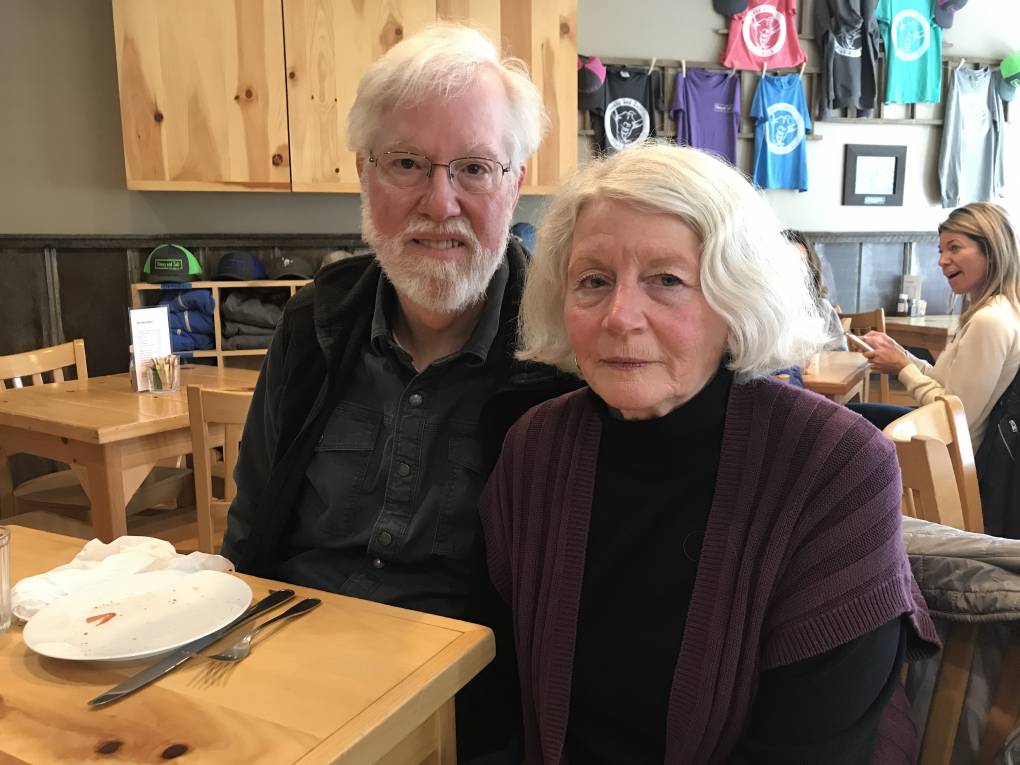
"caption": "Nationwide Insurance policyholders Tony and Jhan Dunn moved to North Carolina after the Camp Fire destroyed their home.",
"description": null,
"title": "IMG_3085",
"credit": null,
"status": "inherit",
"isLoading": false,
"fetchFailed": false
},
"news_11837925": {
"type": "attachments",
"id": "news_11837925",
"meta": {
"index": "attachments_1716263798",
"site": "news",
"id": "11837925",
"found": true
},
"parent": 11837188,
"imgSizes": {
"apple_news_ca_landscape_5_5": {
"file": "https://ww2.kqed.org/app/uploads/sites/10/2020/09/GettyImages-1228447704-1044x783.jpg",
"width": 1044,
"mimeType": "image/jpeg",
"height": 783
},
"apple_news_ca_square_4_0": {
"file": "https://ww2.kqed.org/app/uploads/sites/10/2020/09/GettyImages-1228447704-470x470.jpg",
"width": 470,
"mimeType": "image/jpeg",
"height": 470
},
"twentyfourteen-full-width": {
"file": "https://ww2.kqed.org/app/uploads/sites/10/2020/09/GettyImages-1228447704-1038x576.jpg",
"width": 1038,
"mimeType": "image/jpeg",
"height": 576
},
"thumbnail": {
"file": "https://ww2.kqed.org/app/uploads/sites/10/2020/09/GettyImages-1228447704-160x107.jpg",
"width": 160,
"mimeType": "image/jpeg",
"height": 107
},
"post-thumbnail": {
"file": "https://ww2.kqed.org/app/uploads/sites/10/2020/09/GettyImages-1228447704-672x372.jpg",
"width": 672,
"mimeType": "image/jpeg",
"height": 372
},
"kqedFullSize": {
"file": "https://ww2.kqed.org/app/uploads/sites/10/2020/09/GettyImages-1228447704-scaled-e1600123609927.jpg",
"width": 1920,
"height": 1280
},
"2048x2048": {
"file": "https://ww2.kqed.org/app/uploads/sites/10/2020/09/GettyImages-1228447704-2048x1365.jpg",
"width": 2048,
"mimeType": "image/jpeg",
"height": 1365
},
"apple_news_ca_landscape_4_7": {
"file": "https://ww2.kqed.org/app/uploads/sites/10/2020/09/GettyImages-1228447704-632x474.jpg",
"width": 632,
"mimeType": "image/jpeg",
"height": 474
},
"large": {
"file": "https://ww2.kqed.org/app/uploads/sites/10/2020/09/GettyImages-1228447704-1020x680.jpg",
"width": 1020,
"mimeType": "image/jpeg",
"height": 680
},
"apple_news_ca_landscape_4_0": {
"file": "https://ww2.kqed.org/app/uploads/sites/10/2020/09/GettyImages-1228447704-536x402.jpg",
"width": 536,
"mimeType": "image/jpeg",
"height": 402
},
"apple_news_ca_portrait_12_9": {
"file": "https://ww2.kqed.org/app/uploads/sites/10/2020/09/GettyImages-1228447704-1122x1496.jpg",
"width": 1122,
"mimeType": "image/jpeg",
"height": 1496
},
"medium": {
"file": "https://ww2.kqed.org/app/uploads/sites/10/2020/09/GettyImages-1228447704-800x533.jpg",
"width": 800,
"mimeType": "image/jpeg",
"height": 533
},
"apple_news_ca_portrait_4_0": {
"file": "https://ww2.kqed.org/app/uploads/sites/10/2020/09/GettyImages-1228447704-354x472.jpg",
"width": 354,
"mimeType": "image/jpeg",
"height": 472
},
"apple_news_ca_portrait_9_7": {
"file": "https://ww2.kqed.org/app/uploads/sites/10/2020/09/GettyImages-1228447704-840x1120.jpg",
"width": 840,
"mimeType": "image/jpeg",
"height": 1120
},
"apple_news_ca_landscape_12_9": {
"file": "https://ww2.kqed.org/app/uploads/sites/10/2020/09/GettyImages-1228447704-1832x1374.jpg",
"width": 1832,
"mimeType": "image/jpeg",
"height": 1374
},
"apple_news_ca_square_9_7": {
"file": "https://ww2.kqed.org/app/uploads/sites/10/2020/09/GettyImages-1228447704-1104x1104.jpg",
"width": 1104,
"mimeType": "image/jpeg",
"height": 1104
},
"1536x1536": {
"file": "https://ww2.kqed.org/app/uploads/sites/10/2020/09/GettyImages-1228447704-1536x1024.jpg",
"width": 1536,
"mimeType": "image/jpeg",
"height": 1024
},
"apple_news_ca_portrait_4_7": {
"file": "https://ww2.kqed.org/app/uploads/sites/10/2020/09/GettyImages-1228447704-414x552.jpg",
"width": 414,
"mimeType": "image/jpeg",
"height": 552
},
"apple_news_ca_square_12_9": {
"file": "https://ww2.kqed.org/app/uploads/sites/10/2020/09/GettyImages-1228447704-1472x1472.jpg",
"width": 1472,
"mimeType": "image/jpeg",
"height": 1472
},
"apple_news_ca_portrait_5_5": {
"file": "https://ww2.kqed.org/app/uploads/sites/10/2020/09/GettyImages-1228447704-687x916.jpg",
"width": 687,
"mimeType": "image/jpeg",
"height": 916
},
"full-width": {
"file": "https://ww2.kqed.org/app/uploads/sites/10/2020/09/GettyImages-1228447704-1920x1280.jpg",
"width": 1920,
"mimeType": "image/jpeg",
"height": 1280
},
"apple_news_ca_square_4_7": {
"file": "https://ww2.kqed.org/app/uploads/sites/10/2020/09/GettyImages-1228447704-550x550.jpg",
"width": 550,
"mimeType": "image/jpeg",
"height": 550
},
"apple_news_ca_landscape_9_7": {
"file": "https://ww2.kqed.org/app/uploads/sites/10/2020/09/GettyImages-1228447704-1376x1032.jpg",
"width": 1376,
"mimeType": "image/jpeg",
"height": 1032
},
"apple_news_ca_square_5_5": {
"file": "https://ww2.kqed.org/app/uploads/sites/10/2020/09/GettyImages-1228447704-912x912.jpg",
"width": 912,
"mimeType": "image/jpeg",
"height": 912
}
},
"publishDate": 1600123549,
"modified": 1600129033,
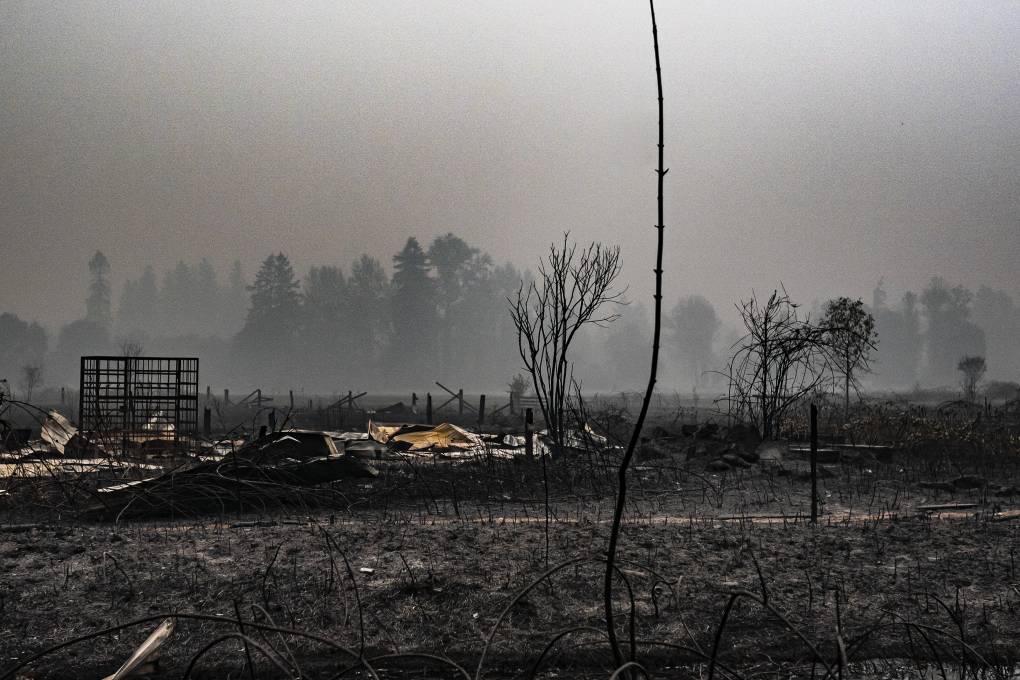
"caption": "A spot fire smolders near a lumber yard on Sept. 10, 2020 in Molalla, Oregon. Multiple wildfires grew by hundreds of thousands of acres Thursday, prompting large-scale evacuations throughout the state. ",
"description": "A spot fire smolders near a lumber yard on September 10, 2020 in Molalla, Oregon. Multiple wildfires grew by hundreds of thousands of acres Thursday, prompting large-scale evacuations throughout the state. ",
"title": "Wildfires In Oregon Force Mass Evacuations And Threaten Hundreds Of Structures",
"credit": "Nathan Howard/Getty Images",
"status": "inherit",
"isLoading": false,
"fetchFailed": false
},
"news_11833753": {
"type": "attachments",
"id": "news_11833753",
"meta": {
"index": "attachments_1716263798",
"site": "news",
"id": "11833753",
"found": true
},
"title": "PGE-Subcontractors-Inspect",
"publishDate": 1597704586,
"status": "inherit",
"parent": 11833283,
"modified": 1740089314,
"caption": "PG&E subcontractors assess vegetation at risk for catching fire near Paradise, California, on Nov. 13, 2018, five days after a PG&E transmission line sparked the Camp Fire, the deadliest and most destructive wildfire in modern California history. The blaze leveled the town of Paradise and killed 85 people.",
"credit": "Anne Wernikoff/KQED",
"altTag": "PG&E subcontractors assess vegetation at risk for catching fire near Paradise, Calif. on Nov. 13, 2018, five days after a PG&E transmission line sparked the Camp Fire, the deadliest and most destructive wildfire in modern California history. The blaze leveled the town of Paradise and killed 85 people.",
"description": "PG&E subcontractors assess vegetation at risk for catching fire near Paradise, Calif. on Nov. 13, 2018, five days after a PG&E transmission line sparked the Camp Fire, the deadliest and most destructive wildfire in modern California history. The blaze leveled the town of Paradise and killed 85 people.",
"imgSizes": {
"medium": {
"file": "https://cdn.kqed.org/wp-content/uploads/sites/10/2020/08/PGE-Subcontractors-Inspect-800x533.jpg",
"width": 800,
"height": 533,
"mimeType": "image/jpeg"
},
"large": {
"file": "https://cdn.kqed.org/wp-content/uploads/sites/10/2020/08/PGE-Subcontractors-Inspect-1020x680.jpg",
"width": 1020,
"height": 680,
"mimeType": "image/jpeg"
},
"thumbnail": {
"file": "https://cdn.kqed.org/wp-content/uploads/sites/10/2020/08/PGE-Subcontractors-Inspect-160x107.jpg",
"width": 160,
"height": 107,
"mimeType": "image/jpeg"
},
"1536x1536": {
"file": "https://cdn.kqed.org/wp-content/uploads/sites/10/2020/08/PGE-Subcontractors-Inspect-1536x1024.jpg",
"width": 1536,
"height": 1024,
"mimeType": "image/jpeg"
},
"post-thumbnail": {
"file": "https://cdn.kqed.org/wp-content/uploads/sites/10/2020/08/PGE-Subcontractors-Inspect-672x372.jpg",
"width": 672,
"height": 372,
"mimeType": "image/jpeg"
},
"twentyfourteen-full-width": {
"file": "https://cdn.kqed.org/wp-content/uploads/sites/10/2020/08/PGE-Subcontractors-Inspect-1038x576.jpg",
"width": 1038,
"height": 576,
"mimeType": "image/jpeg"
},
"apple_news_ca_landscape_12_9": {
"file": "https://cdn.kqed.org/wp-content/uploads/sites/10/2020/08/PGE-Subcontractors-Inspect-1832x1280.jpg",
"width": 1832,
"height": 1280,
"mimeType": "image/jpeg"
},
"apple_news_ca_landscape_9_7": {
"file": "https://cdn.kqed.org/wp-content/uploads/sites/10/2020/08/PGE-Subcontractors-Inspect-1376x1032.jpg",
"width": 1376,
"height": 1032,
"mimeType": "image/jpeg"
},
"apple_news_ca_landscape_5_5": {
"file": "https://cdn.kqed.org/wp-content/uploads/sites/10/2020/08/PGE-Subcontractors-Inspect-1044x783.jpg",
"width": 1044,
"height": 783,
"mimeType": "image/jpeg"
},
"apple_news_ca_landscape_4_7": {
"file": "https://cdn.kqed.org/wp-content/uploads/sites/10/2020/08/PGE-Subcontractors-Inspect-632x474.jpg",
"width": 632,
"height": 474,
"mimeType": "image/jpeg"
},
"apple_news_ca_landscape_4_0": {
"file": "https://cdn.kqed.org/wp-content/uploads/sites/10/2020/08/PGE-Subcontractors-Inspect-536x402.jpg",
"width": 536,
"height": 402,
"mimeType": "image/jpeg"
},
"apple_news_ca_portrait_12_9": {
"file": "https://cdn.kqed.org/wp-content/uploads/sites/10/2020/08/PGE-Subcontractors-Inspect-1122x1280.jpg",
"width": 1122,
"height": 1280,
"mimeType": "image/jpeg"
},
"apple_news_ca_portrait_9_7": {
"file": "https://cdn.kqed.org/wp-content/uploads/sites/10/2020/08/PGE-Subcontractors-Inspect-840x1120.jpg",
"width": 840,
"height": 1120,
"mimeType": "image/jpeg"
},
"apple_news_ca_portrait_5_5": {
"file": "https://cdn.kqed.org/wp-content/uploads/sites/10/2020/08/PGE-Subcontractors-Inspect-687x916.jpg",
"width": 687,
"height": 916,
"mimeType": "image/jpeg"
},
"apple_news_ca_portrait_4_7": {
"file": "https://cdn.kqed.org/wp-content/uploads/sites/10/2020/08/PGE-Subcontractors-Inspect-414x552.jpg",
"width": 414,
"height": 552,
"mimeType": "image/jpeg"
},
"apple_news_ca_portrait_4_0": {
"file": "https://cdn.kqed.org/wp-content/uploads/sites/10/2020/08/PGE-Subcontractors-Inspect-354x472.jpg",
"width": 354,
"height": 472,
"mimeType": "image/jpeg"
},
"apple_news_ca_square_12_9": {
"file": "https://cdn.kqed.org/wp-content/uploads/sites/10/2020/08/PGE-Subcontractors-Inspect-1472x1280.jpg",
"width": 1472,
"height": 1280,
"mimeType": "image/jpeg"
},
"apple_news_ca_square_9_7": {
"file": "https://cdn.kqed.org/wp-content/uploads/sites/10/2020/08/PGE-Subcontractors-Inspect-1104x1104.jpg",
"width": 1104,
"height": 1104,
"mimeType": "image/jpeg"
},
"apple_news_ca_square_5_5": {
"file": "https://cdn.kqed.org/wp-content/uploads/sites/10/2020/08/PGE-Subcontractors-Inspect-912x912.jpg",
"width": 912,
"height": 912,
"mimeType": "image/jpeg"
},
"apple_news_ca_square_4_7": {
"file": "https://cdn.kqed.org/wp-content/uploads/sites/10/2020/08/PGE-Subcontractors-Inspect-550x550.jpg",
"width": 550,
"height": 550,
"mimeType": "image/jpeg"
},
"apple_news_ca_square_4_0": {
"file": "https://cdn.kqed.org/wp-content/uploads/sites/10/2020/08/PGE-Subcontractors-Inspect-470x470.jpg",
"width": 470,
"height": 470,
"mimeType": "image/jpeg"
},
"kqedFullSize": {
"file": "https://cdn.kqed.org/wp-content/uploads/sites/10/2020/08/PGE-Subcontractors-Inspect.jpg",
"width": 1920,
"height": 1280
}
},
"isLoading": false,
"fetchFailed": false
},
"news_11742389": {
"type": "attachments",
"id": "news_11742389",
"meta": {
"index": "attachments_1716263798",
"site": "news",
"id": "11742389",
"found": true
},
"parent": 11742385,
"imgSizes": {
"twentyfourteen-full-width": {
"file": "https://ww2.kqed.org/app/uploads/sites/10/2019/04/pge-paradise-1038x576.jpg",
"width": 1038,
"mimeType": "image/jpeg",
"height": 576
},
"thumbnail": {
"file": "https://ww2.kqed.org/app/uploads/sites/10/2019/04/pge-paradise-160x103.jpg",
"width": 160,
"mimeType": "image/jpeg",
"height": 103
},
"post-thumbnail": {
"file": "https://ww2.kqed.org/app/uploads/sites/10/2019/04/pge-paradise-672x372.jpg",
"width": 672,
"mimeType": "image/jpeg",
"height": 372
},
"kqedFullSize": {
"file": "https://ww2.kqed.org/app/uploads/sites/10/2019/04/pge-paradise-e1556118255603.jpg",
"width": 1920,
"height": 1241
},
"large": {
"file": "https://ww2.kqed.org/app/uploads/sites/10/2019/04/pge-paradise-1020x660.jpg",
"width": 1020,
"mimeType": "image/jpeg",
"height": 660
},
"complete_open_graph": {
"file": "https://ww2.kqed.org/app/uploads/sites/10/2019/04/pge-paradise-1200x776.jpg",
"width": 1200,
"mimeType": "image/jpeg",
"height": 776
},
"full-width": {
"file": "https://ww2.kqed.org/app/uploads/sites/10/2019/04/pge-paradise-1920x1242.jpg",
"width": 1920,
"mimeType": "image/jpeg",
"height": 1242
},
"medium": {
"file": "https://ww2.kqed.org/app/uploads/sites/10/2019/04/pge-paradise-800x517.jpg",
"width": 800,
"mimeType": "image/jpeg",
"height": 517
}
},
"publishDate": 1556118177,
"modified": 1593664850,
"caption": "PG&E crews work to restore utility services in Paradise on Feb. 1, 2019.",
"description": "PG&E crews work to restore utility services in Paradise on Feb. 1, 2019.",
"title": "US-FIRE-UTILITY",
"credit": "Josh Edelson/AFP/Getty Images",
"status": "inherit",
"isLoading": false,
"fetchFailed": false
},
"news_11824598": {
"type": "attachments",
"id": "news_11824598",
"meta": {
"index": "attachments_1716263798",
"site": "news",
"id": "11824598",
"found": true
},
"parent": 11824596,
"imgSizes": {
"apple_news_ca_landscape_5_5": {
"file": "https://ww2.kqed.org/app/uploads/sites/10/2020/06/RS33914_111318_AW_CampFire_02-qut-1044x783.jpg",
"width": 1044,
"mimeType": "image/jpeg",
"height": 783
},
"apple_news_ca_square_4_0": {
"file": "https://ww2.kqed.org/app/uploads/sites/10/2020/06/RS33914_111318_AW_CampFire_02-qut-470x470.jpg",
"width": 470,
"mimeType": "image/jpeg",
"height": 470
},
"twentyfourteen-full-width": {
"file": "https://ww2.kqed.org/app/uploads/sites/10/2020/06/RS33914_111318_AW_CampFire_02-qut-1038x576.jpg",
"width": 1038,
"mimeType": "image/jpeg",
"height": 576
},
"thumbnail": {
"file": "https://ww2.kqed.org/app/uploads/sites/10/2020/06/RS33914_111318_AW_CampFire_02-qut-160x107.jpg",
"width": 160,
"mimeType": "image/jpeg",
"height": 107
},
"post-thumbnail": {
"file": "https://ww2.kqed.org/app/uploads/sites/10/2020/06/RS33914_111318_AW_CampFire_02-qut-672x372.jpg",
"width": 672,
"mimeType": "image/jpeg",
"height": 372
},
"kqedFullSize": {
"file": "https://ww2.kqed.org/app/uploads/sites/10/2020/06/RS33914_111318_AW_CampFire_02-qut.jpg",
"width": 1920,
"height": 1280
},
"apple_news_ca_landscape_4_7": {
"file": "https://ww2.kqed.org/app/uploads/sites/10/2020/06/RS33914_111318_AW_CampFire_02-qut-632x474.jpg",
"width": 632,
"mimeType": "image/jpeg",
"height": 474
},
"large": {
"file": "https://ww2.kqed.org/app/uploads/sites/10/2020/06/RS33914_111318_AW_CampFire_02-qut-1020x680.jpg",
"width": 1020,
"mimeType": "image/jpeg",
"height": 680
},
"apple_news_ca_landscape_4_0": {
"file": "https://ww2.kqed.org/app/uploads/sites/10/2020/06/RS33914_111318_AW_CampFire_02-qut-536x402.jpg",
"width": 536,
"mimeType": "image/jpeg",
"height": 402
},
"apple_news_ca_portrait_12_9": {
"file": "https://ww2.kqed.org/app/uploads/sites/10/2020/06/RS33914_111318_AW_CampFire_02-qut-1122x1280.jpg",
"width": 1122,
"mimeType": "image/jpeg",
"height": 1280
},
"medium": {
"file": "https://ww2.kqed.org/app/uploads/sites/10/2020/06/RS33914_111318_AW_CampFire_02-qut-800x533.jpg",
"width": 800,
"mimeType": "image/jpeg",
"height": 533
},
"apple_news_ca_portrait_4_0": {
"file": "https://ww2.kqed.org/app/uploads/sites/10/2020/06/RS33914_111318_AW_CampFire_02-qut-354x472.jpg",
"width": 354,
"mimeType": "image/jpeg",
"height": 472
},
"apple_news_ca_portrait_9_7": {
"file": "https://ww2.kqed.org/app/uploads/sites/10/2020/06/RS33914_111318_AW_CampFire_02-qut-840x1120.jpg",
"width": 840,
"mimeType": "image/jpeg",
"height": 1120
},
"apple_news_ca_landscape_12_9": {
"file": "https://ww2.kqed.org/app/uploads/sites/10/2020/06/RS33914_111318_AW_CampFire_02-qut-1832x1280.jpg",
"width": 1832,
"mimeType": "image/jpeg",
"height": 1280
},
"apple_news_ca_square_9_7": {
"file": "https://ww2.kqed.org/app/uploads/sites/10/2020/06/RS33914_111318_AW_CampFire_02-qut-1104x1104.jpg",
"width": 1104,
"mimeType": "image/jpeg",
"height": 1104
},
"apple_news_ca_portrait_4_7": {
"file": "https://ww2.kqed.org/app/uploads/sites/10/2020/06/RS33914_111318_AW_CampFire_02-qut-414x552.jpg",
"width": 414,
"mimeType": "image/jpeg",
"height": 552
},
"apple_news_ca_square_12_9": {
"file": "https://ww2.kqed.org/app/uploads/sites/10/2020/06/RS33914_111318_AW_CampFire_02-qut-1472x1280.jpg",
"width": 1472,
"mimeType": "image/jpeg",
"height": 1280
},
"apple_news_ca_portrait_5_5": {
"file": "https://ww2.kqed.org/app/uploads/sites/10/2020/06/RS33914_111318_AW_CampFire_02-qut-687x916.jpg",
"width": 687,
"mimeType": "image/jpeg",
"height": 916
},
"full-width": {
"file": "https://ww2.kqed.org/app/uploads/sites/10/2020/06/RS33914_111318_AW_CampFire_02-qut-1920x1280.jpg",
"width": 1920,
"mimeType": "image/jpeg",
"height": 1280
},
"apple_news_ca_square_4_7": {
"file": "https://ww2.kqed.org/app/uploads/sites/10/2020/06/RS33914_111318_AW_CampFire_02-qut-550x550.jpg",
"width": 550,
"mimeType": "image/jpeg",
"height": 550
},
"apple_news_ca_landscape_9_7": {
"file": "https://ww2.kqed.org/app/uploads/sites/10/2020/06/RS33914_111318_AW_CampFire_02-qut-1376x1032.jpg",
"width": 1376,
"mimeType": "image/jpeg",
"height": 1032
},
"apple_news_ca_square_5_5": {
"file": "https://ww2.kqed.org/app/uploads/sites/10/2020/06/RS33914_111318_AW_CampFire_02-qut-912x912.jpg",
"width": 912,
"mimeType": "image/jpeg",
"height": 912
}
},
"publishDate": 1592330727,
"modified": 1592333597,
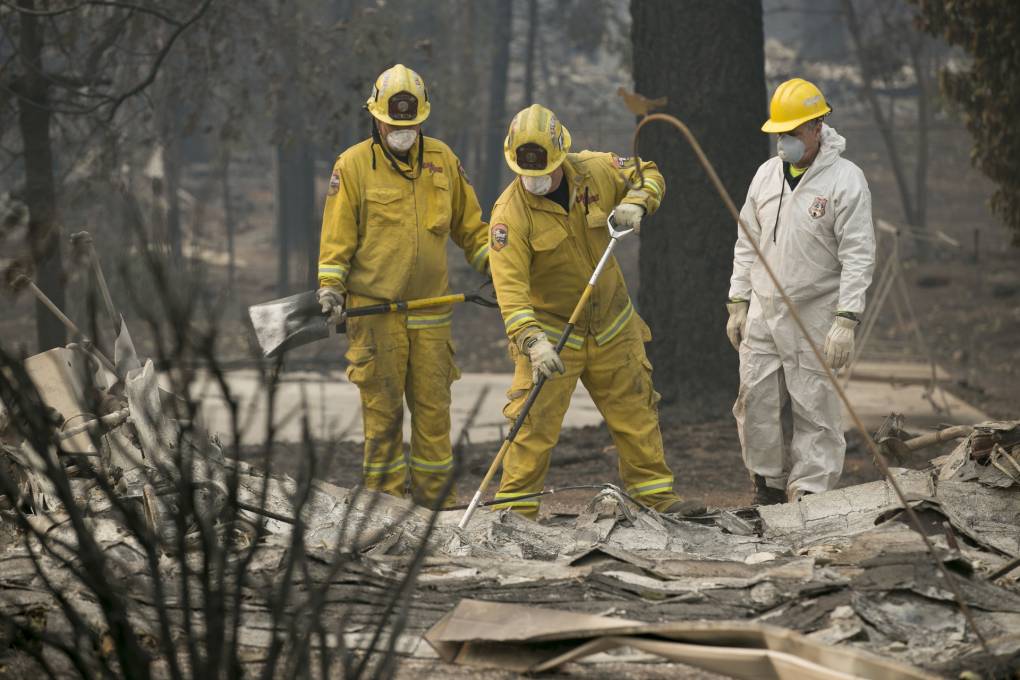
"caption": "Rescue crews search through rubble in an effort to locate remains of victims of the Camp Fire on Nov. 13, 2018.",
"description": "Rescue crews search through rubble in an effort to locate remains of victims of the Camp Fire on Nov. 13, 2018.",
"title": "RS33914_111318_AW_CampFire_02-qut",
"credit": "Anne Wernikoff/KQED",
"status": "inherit",
"isLoading": false,
"fetchFailed": false
},
"news_11822708": {
"type": "attachments",
"id": "news_11822708",
"meta": {
"index": "attachments_1716263798",
"site": "news",
"id": "11822708",
"found": true
},
"parent": 11822384,
"imgSizes": {
"apple_news_ca_landscape_5_5": {
"file": "https://ww2.kqed.org/app/uploads/sites/10/2020/06/RS43533_GettyImages-1060763496-qut-1044x783.jpg",
"width": 1044,
"mimeType": "image/jpeg",
"height": 783
},
"apple_news_ca_square_4_0": {
"file": "https://ww2.kqed.org/app/uploads/sites/10/2020/06/RS43533_GettyImages-1060763496-qut-470x470.jpg",
"width": 470,
"mimeType": "image/jpeg",
"height": 470
},
"twentyfourteen-full-width": {
"file": "https://ww2.kqed.org/app/uploads/sites/10/2020/06/RS43533_GettyImages-1060763496-qut-1038x576.jpg",
"width": 1038,
"mimeType": "image/jpeg",
"height": 576
},
"thumbnail": {
"file": "https://ww2.kqed.org/app/uploads/sites/10/2020/06/RS43533_GettyImages-1060763496-qut-160x101.jpg",
"width": 160,
"mimeType": "image/jpeg",
"height": 101
},
"post-thumbnail": {
"file": "https://ww2.kqed.org/app/uploads/sites/10/2020/06/RS43533_GettyImages-1060763496-qut-672x372.jpg",
"width": 672,
"mimeType": "image/jpeg",
"height": 372
},
"kqedFullSize": {
"file": "https://ww2.kqed.org/app/uploads/sites/10/2020/06/RS43533_GettyImages-1060763496-qut.jpg",
"width": 1920,
"height": 1211
},
"apple_news_ca_landscape_4_7": {
"file": "https://ww2.kqed.org/app/uploads/sites/10/2020/06/RS43533_GettyImages-1060763496-qut-632x474.jpg",
"width": 632,
"mimeType": "image/jpeg",
"height": 474
},
"large": {
"file": "https://ww2.kqed.org/app/uploads/sites/10/2020/06/RS43533_GettyImages-1060763496-qut-1020x643.jpg",
"width": 1020,
"mimeType": "image/jpeg",
"height": 643
},
"apple_news_ca_landscape_4_0": {
"file": "https://ww2.kqed.org/app/uploads/sites/10/2020/06/RS43533_GettyImages-1060763496-qut-536x402.jpg",
"width": 536,
"mimeType": "image/jpeg",
"height": 402
},
"apple_news_ca_portrait_12_9": {
"file": "https://ww2.kqed.org/app/uploads/sites/10/2020/06/RS43533_GettyImages-1060763496-qut-1122x1211.jpg",
"width": 1122,
"mimeType": "image/jpeg",
"height": 1211
},
"medium": {
"file": "https://ww2.kqed.org/app/uploads/sites/10/2020/06/RS43533_GettyImages-1060763496-qut-800x505.jpg",
"width": 800,
"mimeType": "image/jpeg",
"height": 505
},
"apple_news_ca_portrait_4_0": {
"file": "https://ww2.kqed.org/app/uploads/sites/10/2020/06/RS43533_GettyImages-1060763496-qut-354x472.jpg",
"width": 354,
"mimeType": "image/jpeg",
"height": 472
},
"apple_news_ca_portrait_9_7": {
"file": "https://ww2.kqed.org/app/uploads/sites/10/2020/06/RS43533_GettyImages-1060763496-qut-840x1120.jpg",
"width": 840,
"mimeType": "image/jpeg",
"height": 1120
},
"apple_news_ca_landscape_12_9": {
"file": "https://ww2.kqed.org/app/uploads/sites/10/2020/06/RS43533_GettyImages-1060763496-qut-1832x1211.jpg",
"width": 1832,
"mimeType": "image/jpeg",
"height": 1211
},
"apple_news_ca_square_9_7": {
"file": "https://ww2.kqed.org/app/uploads/sites/10/2020/06/RS43533_GettyImages-1060763496-qut-1104x1104.jpg",
"width": 1104,
"mimeType": "image/jpeg",
"height": 1104
},
"apple_news_ca_portrait_4_7": {
"file": "https://ww2.kqed.org/app/uploads/sites/10/2020/06/RS43533_GettyImages-1060763496-qut-414x552.jpg",
"width": 414,
"mimeType": "image/jpeg",
"height": 552
},
"apple_news_ca_square_12_9": {
"file": "https://ww2.kqed.org/app/uploads/sites/10/2020/06/RS43533_GettyImages-1060763496-qut-1472x1211.jpg",
"width": 1472,
"mimeType": "image/jpeg",
"height": 1211
},
"apple_news_ca_portrait_5_5": {
"file": "https://ww2.kqed.org/app/uploads/sites/10/2020/06/RS43533_GettyImages-1060763496-qut-687x916.jpg",
"width": 687,
"mimeType": "image/jpeg",
"height": 916
},
"full-width": {
"file": "https://ww2.kqed.org/app/uploads/sites/10/2020/06/RS43533_GettyImages-1060763496-qut-1920x1211.jpg",
"width": 1920,
"mimeType": "image/jpeg",
"height": 1211
},
"apple_news_ca_square_4_7": {
"file": "https://ww2.kqed.org/app/uploads/sites/10/2020/06/RS43533_GettyImages-1060763496-qut-550x550.jpg",
"width": 550,
"mimeType": "image/jpeg",
"height": 550
},
"apple_news_ca_landscape_9_7": {
"file": "https://ww2.kqed.org/app/uploads/sites/10/2020/06/RS43533_GettyImages-1060763496-qut-1376x1032.jpg",
"width": 1376,
"mimeType": "image/jpeg",
"height": 1032
},
"apple_news_ca_square_5_5": {
"file": "https://ww2.kqed.org/app/uploads/sites/10/2020/06/RS43533_GettyImages-1060763496-qut-912x912.jpg",
"width": 912,
"mimeType": "image/jpeg",
"height": 912
}
},
"publishDate": 1591221529,
"modified": 1591221641,
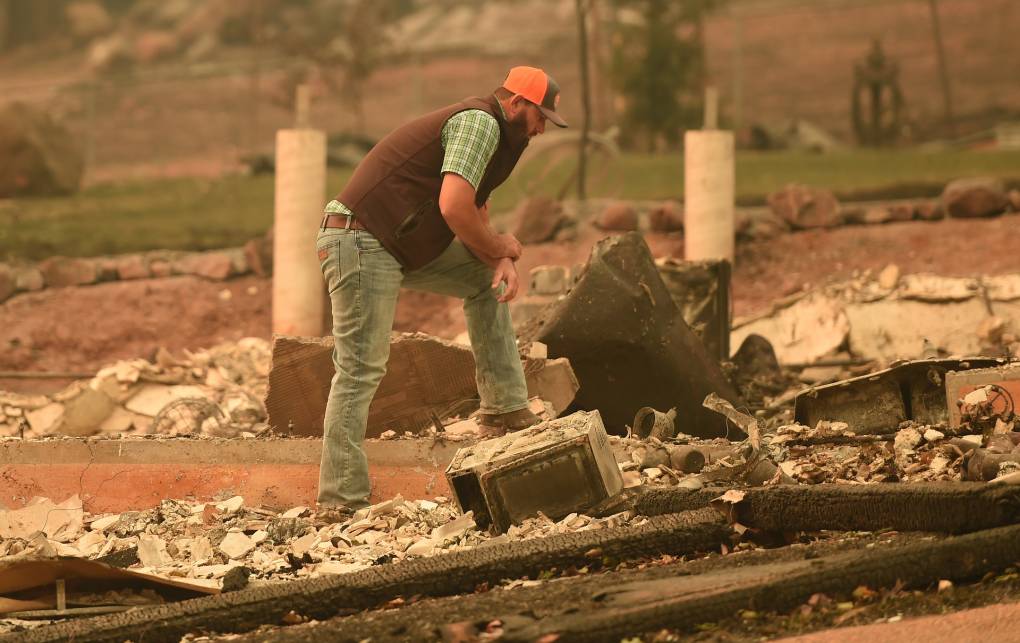
"caption": "A Camp Fire survivor looks over the remains of his burned home in Paradise on Nov. 12, 2018. The blaze - the deadliest and most destructive in modern California history - was sparked by PG&E equipment.",
"description": "A Camp Fire survivor looks over the remains of his burned home in Paradise on Nov. 12, 2018. The blaze - the deadliest and most destructive in modern California history - was sparked by PG&E equipment.",
"title": "US-FIRE-CALIFORNIA-ENVIORNMENT-WEATHER",
"credit": "JOSH EDELSON/AFP via Getty Images",
"status": "inherit",
"isLoading": false,
"fetchFailed": false
},
"news_11820701": {
"type": "attachments",
"id": "news_11820701",
"meta": {
"index": "attachments_1716263798",
"site": "news",
"id": "11820701",
"found": true
},
"parent": 11820694,
"imgSizes": {
"apple_news_ca_landscape_5_5": {
"file": "https://ww2.kqed.org/app/uploads/sites/10/2020/05/RS33929_111318_AW_CampFire_16-qut-1044x783.jpg",
"width": 1044,
"mimeType": "image/jpeg",
"height": 783
},
"apple_news_ca_square_4_0": {
"file": "https://ww2.kqed.org/app/uploads/sites/10/2020/05/RS33929_111318_AW_CampFire_16-qut-470x470.jpg",
"width": 470,
"mimeType": "image/jpeg",
"height": 470
},
"twentyfourteen-full-width": {
"file": "https://ww2.kqed.org/app/uploads/sites/10/2020/05/RS33929_111318_AW_CampFire_16-qut-1038x576.jpg",
"width": 1038,
"mimeType": "image/jpeg",
"height": 576
},
"thumbnail": {
"file": "https://ww2.kqed.org/app/uploads/sites/10/2020/05/RS33929_111318_AW_CampFire_16-qut-160x107.jpg",
"width": 160,
"mimeType": "image/jpeg",
"height": 107
},
"post-thumbnail": {
"file": "https://ww2.kqed.org/app/uploads/sites/10/2020/05/RS33929_111318_AW_CampFire_16-qut-672x372.jpg",
"width": 672,
"mimeType": "image/jpeg",
"height": 372
},
"kqedFullSize": {
"file": "https://ww2.kqed.org/app/uploads/sites/10/2020/05/RS33929_111318_AW_CampFire_16-qut.jpg",
"width": 1920,
"height": 1280
},
"apple_news_ca_landscape_4_7": {
"file": "https://ww2.kqed.org/app/uploads/sites/10/2020/05/RS33929_111318_AW_CampFire_16-qut-632x474.jpg",
"width": 632,
"mimeType": "image/jpeg",
"height": 474
},
"large": {
"file": "https://ww2.kqed.org/app/uploads/sites/10/2020/05/RS33929_111318_AW_CampFire_16-qut-1020x680.jpg",
"width": 1020,
"mimeType": "image/jpeg",
"height": 680
},
"apple_news_ca_landscape_4_0": {
"file": "https://ww2.kqed.org/app/uploads/sites/10/2020/05/RS33929_111318_AW_CampFire_16-qut-536x402.jpg",
"width": 536,
"mimeType": "image/jpeg",
"height": 402
},
"apple_news_ca_portrait_12_9": {
"file": "https://ww2.kqed.org/app/uploads/sites/10/2020/05/RS33929_111318_AW_CampFire_16-qut-1122x1280.jpg",
"width": 1122,
"mimeType": "image/jpeg",
"height": 1280
},
"medium": {
"file": "https://ww2.kqed.org/app/uploads/sites/10/2020/05/RS33929_111318_AW_CampFire_16-qut-800x533.jpg",
"width": 800,
"mimeType": "image/jpeg",
"height": 533
},
"apple_news_ca_portrait_4_0": {
"file": "https://ww2.kqed.org/app/uploads/sites/10/2020/05/RS33929_111318_AW_CampFire_16-qut-354x472.jpg",
"width": 354,
"mimeType": "image/jpeg",
"height": 472
},
"apple_news_ca_portrait_9_7": {
"file": "https://ww2.kqed.org/app/uploads/sites/10/2020/05/RS33929_111318_AW_CampFire_16-qut-840x1120.jpg",
"width": 840,
"mimeType": "image/jpeg",
"height": 1120
},
"apple_news_ca_landscape_12_9": {
"file": "https://ww2.kqed.org/app/uploads/sites/10/2020/05/RS33929_111318_AW_CampFire_16-qut-1832x1280.jpg",
"width": 1832,
"mimeType": "image/jpeg",
"height": 1280
},
"apple_news_ca_square_9_7": {
"file": "https://ww2.kqed.org/app/uploads/sites/10/2020/05/RS33929_111318_AW_CampFire_16-qut-1104x1104.jpg",
"width": 1104,
"mimeType": "image/jpeg",
"height": 1104
},
"apple_news_ca_portrait_4_7": {
"file": "https://ww2.kqed.org/app/uploads/sites/10/2020/05/RS33929_111318_AW_CampFire_16-qut-414x552.jpg",
"width": 414,
"mimeType": "image/jpeg",
"height": 552
},
"apple_news_ca_square_12_9": {
"file": "https://ww2.kqed.org/app/uploads/sites/10/2020/05/RS33929_111318_AW_CampFire_16-qut-1472x1280.jpg",
"width": 1472,
"mimeType": "image/jpeg",
"height": 1280
},
"apple_news_ca_portrait_5_5": {
"file": "https://ww2.kqed.org/app/uploads/sites/10/2020/05/RS33929_111318_AW_CampFire_16-qut-687x916.jpg",
"width": 687,
"mimeType": "image/jpeg",
"height": 916
},
"full-width": {
"file": "https://ww2.kqed.org/app/uploads/sites/10/2020/05/RS33929_111318_AW_CampFire_16-qut-1920x1280.jpg",
"width": 1920,
"mimeType": "image/jpeg",
"height": 1280
},
"apple_news_ca_square_4_7": {
"file": "https://ww2.kqed.org/app/uploads/sites/10/2020/05/RS33929_111318_AW_CampFire_16-qut-550x550.jpg",
"width": 550,
"mimeType": "image/jpeg",
"height": 550
},
"apple_news_ca_landscape_9_7": {
"file": "https://ww2.kqed.org/app/uploads/sites/10/2020/05/RS33929_111318_AW_CampFire_16-qut-1376x1032.jpg",
"width": 1376,
"mimeType": "image/jpeg",
"height": 1032
},
"apple_news_ca_square_5_5": {
"file": "https://ww2.kqed.org/app/uploads/sites/10/2020/05/RS33929_111318_AW_CampFire_16-qut-912x912.jpg",
"width": 912,
"mimeType": "image/jpeg",
"height": 912
}
},
"publishDate": 1590514876,
"modified": 1590524945,
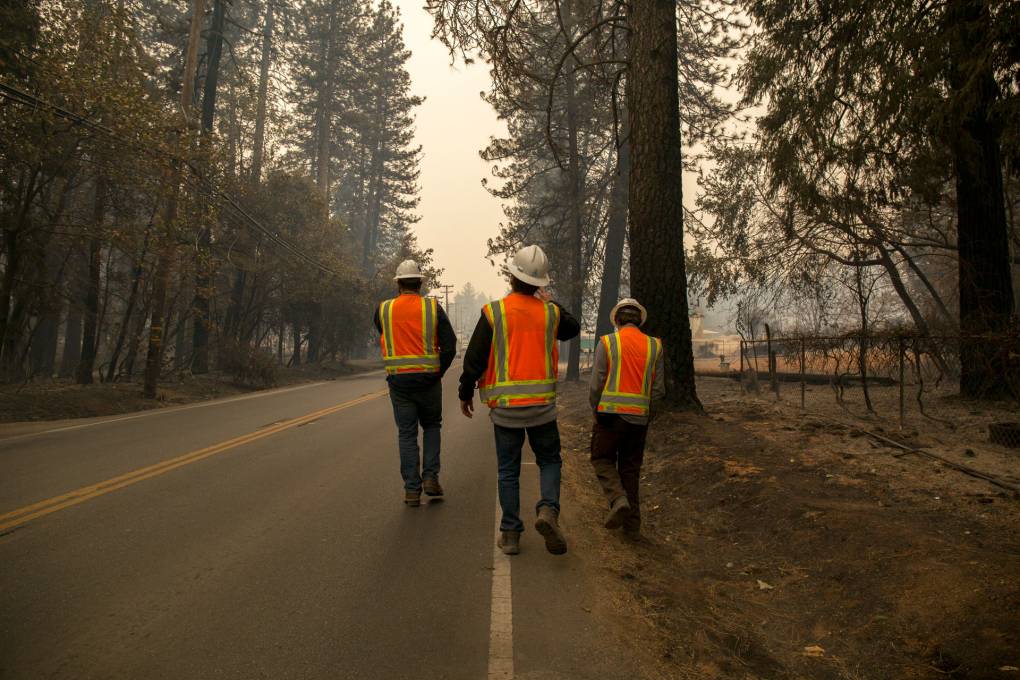
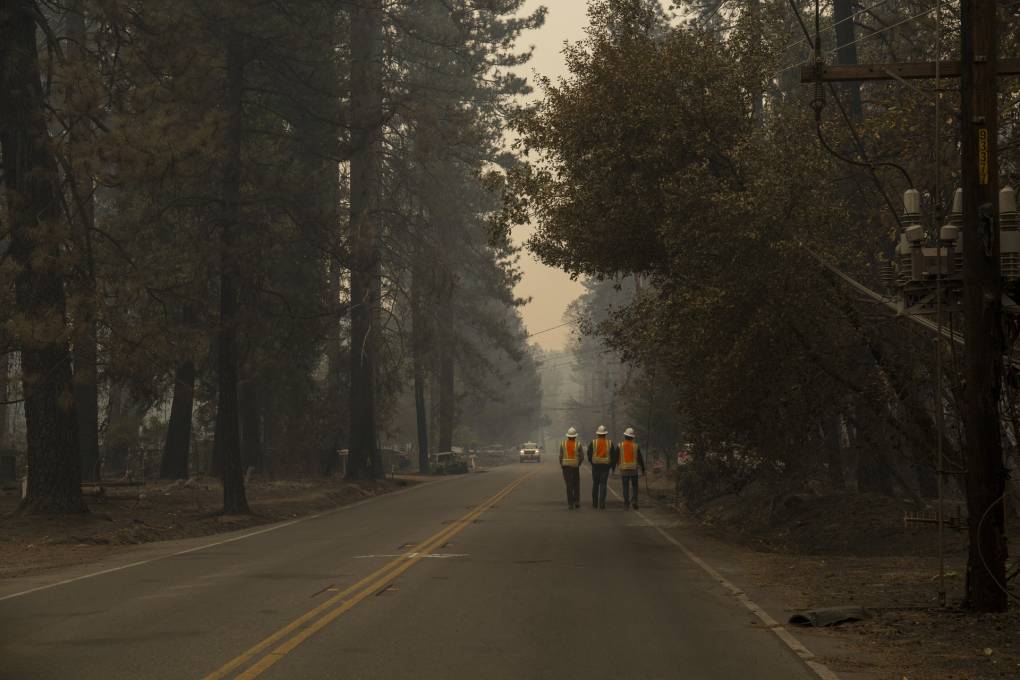
"caption": "PG&E subcontractors walk along Skyway in Paradise to assess vegetation at risk for catching fire on Nov. 13, 2018.",
"description": "PG&E subcontractors walk along Skyway in Paradise to assess vegetation at risk for catching fire on November 13, 2018.",
"title": "RS33929_111318_AW_CampFire_16-qut",
"credit": "Anne Wernikoff/KQED",
"status": "inherit",
"isLoading": false,
"fetchFailed": false
},
"news_11820077": {
"type": "attachments",
"id": "news_11820077",
"meta": {
"index": "attachments_1716263798",
"site": "news",
"id": "11820077",
"found": true
},
"title": "Camp-Fire-Aftermath",
"publishDate": 1590104566,
"status": "inherit",
"parent": 11819900,
"modified": 1788304360,
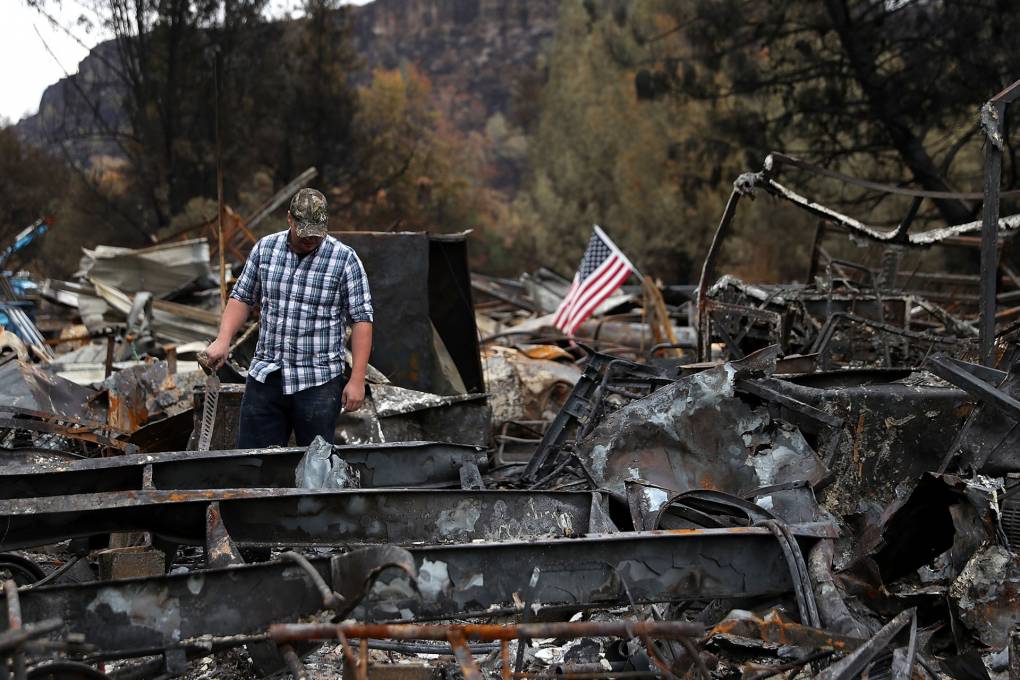
"caption": "A man looks over his burned home, destroyed by the Camp Fire in Nov. 2018 in Paradise. The deadline for 70,000 survivors of numerous fires to vote on a multi-billion-dollar settlement deal with PG&E was May 15.",
"credit": "Justin Sullivan/Getty Images",
"altTag": "A man looks over his burned home, destroyed by the Camp Fire in Nov. 2018 in Paradise. The deadline for 70,000 survivors of numerous fires to vote on a multi-billion-dollar settlement deal with PG&E was May 15.",
"description": "A man looks over his burned home, destroyed by the Camp Fire in Nov. 2018 in Paradise. The deadline for 70,000 survivors of numerous fires to vote on a multi-billion-dollar settlement deal with PG&E was May 15.",
"imgSizes": {
"thumbnail": {
"file": "https://cdn.kqed.org/wp-content/uploads/sites/10/2020/05/Camp-Fire-Aftermath-160x107.jpg",
"width": 160,
"height": 107,
"mimeType": "image/jpeg"
},
"medium": {
"file": "https://cdn.kqed.org/wp-content/uploads/sites/10/2020/05/Camp-Fire-Aftermath-800x533.jpg",
"width": 800,
"height": 533,
"mimeType": "image/jpeg"
},
"large": {
"file": "https://cdn.kqed.org/wp-content/uploads/sites/10/2020/05/Camp-Fire-Aftermath-1020x680.jpg",
"width": 1020,
"height": 680,
"mimeType": "image/jpeg"
},
"post-thumbnail": {
"file": "https://cdn.kqed.org/wp-content/uploads/sites/10/2020/05/Camp-Fire-Aftermath-672x372.jpg",
"width": 672,
"height": 372,
"mimeType": "image/jpeg"
},
"twentyfourteen-full-width": {
"file": "https://cdn.kqed.org/wp-content/uploads/sites/10/2020/05/Camp-Fire-Aftermath-1038x576.jpg",
"width": 1038,
"height": 576,
"mimeType": "image/jpeg"
},
"full-width": {
"file": "https://cdn.kqed.org/wp-content/uploads/sites/10/2020/05/Camp-Fire-Aftermath-1920x1280.jpg",
"width": 1920,
"height": 1280,
"mimeType": "image/jpeg"
},
"apple_news_ca_landscape_12_9": {
"file": "https://cdn.kqed.org/wp-content/uploads/sites/10/2020/05/Camp-Fire-Aftermath-1832x1280.jpg",
"width": 1832,
"height": 1280,
"mimeType": "image/jpeg"
},
"apple_news_ca_landscape_9_7": {
"file": "https://cdn.kqed.org/wp-content/uploads/sites/10/2020/05/Camp-Fire-Aftermath-1376x1032.jpg",
"width": 1376,
"height": 1032,
"mimeType": "image/jpeg"
},
"apple_news_ca_landscape_5_5": {
"file": "https://cdn.kqed.org/wp-content/uploads/sites/10/2020/05/Camp-Fire-Aftermath-1044x783.jpg",
"width": 1044,
"height": 783,
"mimeType": "image/jpeg"
},
"apple_news_ca_landscape_4_7": {
"file": "https://cdn.kqed.org/wp-content/uploads/sites/10/2020/05/Camp-Fire-Aftermath-632x474.jpg",
"width": 632,
"height": 474,
"mimeType": "image/jpeg"
},
"apple_news_ca_landscape_4_0": {
"file": "https://cdn.kqed.org/wp-content/uploads/sites/10/2020/05/Camp-Fire-Aftermath-536x402.jpg",
"width": 536,
"height": 402,
"mimeType": "image/jpeg"
},
"apple_news_ca_portrait_12_9": {
"file": "https://cdn.kqed.org/wp-content/uploads/sites/10/2020/05/Camp-Fire-Aftermath-1122x1280.jpg",
"width": 1122,
"height": 1280,
"mimeType": "image/jpeg"
},
"apple_news_ca_portrait_9_7": {
"file": "https://cdn.kqed.org/wp-content/uploads/sites/10/2020/05/Camp-Fire-Aftermath-840x1120.jpg",
"width": 840,
"height": 1120,
"mimeType": "image/jpeg"
},
"apple_news_ca_portrait_5_5": {
"file": "https://cdn.kqed.org/wp-content/uploads/sites/10/2020/05/Camp-Fire-Aftermath-687x916.jpg",
"width": 687,
"height": 916,
"mimeType": "image/jpeg"
},
"apple_news_ca_portrait_4_7": {
"file": "https://cdn.kqed.org/wp-content/uploads/sites/10/2020/05/Camp-Fire-Aftermath-414x552.jpg",
"width": 414,
"height": 552,
"mimeType": "image/jpeg"
},
"apple_news_ca_portrait_4_0": {
"file": "https://cdn.kqed.org/wp-content/uploads/sites/10/2020/05/Camp-Fire-Aftermath-354x472.jpg",
"width": 354,
"height": 472,
"mimeType": "image/jpeg"
},
"apple_news_ca_square_12_9": {
"file": "https://cdn.kqed.org/wp-content/uploads/sites/10/2020/05/Camp-Fire-Aftermath-1472x1280.jpg",
"width": 1472,
"height": 1280,
"mimeType": "image/jpeg"
},
"apple_news_ca_square_9_7": {
"file": "https://cdn.kqed.org/wp-content/uploads/sites/10/2020/05/Camp-Fire-Aftermath-1104x1104.jpg",
"width": 1104,
"height": 1104,
"mimeType": "image/jpeg"
},
"apple_news_ca_square_5_5": {
"file": "https://cdn.kqed.org/wp-content/uploads/sites/10/2020/05/Camp-Fire-Aftermath-912x912.jpg",
"width": 912,
"height": 912,
"mimeType": "image/jpeg"
},
"apple_news_ca_square_4_7": {
"file": "https://cdn.kqed.org/wp-content/uploads/sites/10/2020/05/Camp-Fire-Aftermath-550x550.jpg",
"width": 550,
"height": 550,
"mimeType": "image/jpeg"
},
"apple_news_ca_square_4_0": {
"file": "https://cdn.kqed.org/wp-content/uploads/sites/10/2020/05/Camp-Fire-Aftermath-470x470.jpg",
"width": 470,
"height": 470,
"mimeType": "image/jpeg"
},
"kqedFullSize": {
"file": "https://cdn.kqed.org/wp-content/uploads/sites/10/2020/05/Camp-Fire-Aftermath.jpg",
"width": 1920,
"height": 1280
}
},
"isLoading": false,
"fetchFailed": false
},
"news_11815297": {
"type": "attachments",
"id": "news_11815297",
"meta": {
"index": "attachments_1716263798",
"site": "news",
"id": "11815297",
"found": true
},
"parent": 11815296,
"imgSizes": {
"apple_news_ca_landscape_5_5": {
"file": "https://ww2.kqed.org/app/uploads/sites/10/2020/04/kincadefire-1044x783.jpg",
"width": 1044,
"mimeType": "image/jpeg",
"height": 783
},
"apple_news_ca_square_4_0": {
"file": "https://ww2.kqed.org/app/uploads/sites/10/2020/04/kincadefire-470x470.jpg",
"width": 470,
"mimeType": "image/jpeg",
"height": 470
},
"twentyfourteen-full-width": {
"file": "https://ww2.kqed.org/app/uploads/sites/10/2020/04/kincadefire-1038x576.jpg",
"width": 1038,
"mimeType": "image/jpeg",
"height": 576
},
"thumbnail": {
"file": "https://ww2.kqed.org/app/uploads/sites/10/2020/04/kincadefire-160x107.jpg",
"width": 160,
"mimeType": "image/jpeg",
"height": 107
},
"post-thumbnail": {
"file": "https://ww2.kqed.org/app/uploads/sites/10/2020/04/kincadefire-672x372.jpg",
"width": 672,
"mimeType": "image/jpeg",
"height": 372
},
"kqedFullSize": {
"file": "https://ww2.kqed.org/app/uploads/sites/10/2020/04/kincadefire.jpg",
"width": 1920,
"height": 1280
},
"apple_news_ca_landscape_4_7": {
"file": "https://ww2.kqed.org/app/uploads/sites/10/2020/04/kincadefire-632x474.jpg",
"width": 632,
"mimeType": "image/jpeg",
"height": 474
},
"large": {
"file": "https://ww2.kqed.org/app/uploads/sites/10/2020/04/kincadefire-1020x680.jpg",
"width": 1020,
"mimeType": "image/jpeg",
"height": 680
},
"apple_news_ca_landscape_4_0": {
"file": "https://ww2.kqed.org/app/uploads/sites/10/2020/04/kincadefire-536x402.jpg",
"width": 536,
"mimeType": "image/jpeg",
"height": 402
},
"apple_news_ca_portrait_12_9": {
"file": "https://ww2.kqed.org/app/uploads/sites/10/2020/04/kincadefire-1122x1280.jpg",
"width": 1122,
"mimeType": "image/jpeg",
"height": 1280
},
"medium": {
"file": "https://ww2.kqed.org/app/uploads/sites/10/2020/04/kincadefire-800x533.jpg",
"width": 800,
"mimeType": "image/jpeg",
"height": 533
},
"apple_news_ca_portrait_4_0": {
"file": "https://ww2.kqed.org/app/uploads/sites/10/2020/04/kincadefire-354x472.jpg",
"width": 354,
"mimeType": "image/jpeg",
"height": 472
},
"apple_news_ca_portrait_9_7": {
"file": "https://ww2.kqed.org/app/uploads/sites/10/2020/04/kincadefire-840x1120.jpg",
"width": 840,
"mimeType": "image/jpeg",
"height": 1120
},
"apple_news_ca_landscape_12_9": {
"file": "https://ww2.kqed.org/app/uploads/sites/10/2020/04/kincadefire-1832x1280.jpg",
"width": 1832,
"mimeType": "image/jpeg",
"height": 1280
},
"apple_news_ca_square_9_7": {
"file": "https://ww2.kqed.org/app/uploads/sites/10/2020/04/kincadefire-1104x1104.jpg",
"width": 1104,
"mimeType": "image/jpeg",
"height": 1104
},
"apple_news_ca_portrait_4_7": {
"file": "https://ww2.kqed.org/app/uploads/sites/10/2020/04/kincadefire-414x552.jpg",
"width": 414,
"mimeType": "image/jpeg",
"height": 552
},
"apple_news_ca_square_12_9": {
"file": "https://ww2.kqed.org/app/uploads/sites/10/2020/04/kincadefire-1472x1280.jpg",
"width": 1472,
"mimeType": "image/jpeg",
"height": 1280
},
"apple_news_ca_portrait_5_5": {
"file": "https://ww2.kqed.org/app/uploads/sites/10/2020/04/kincadefire-687x916.jpg",
"width": 687,
"mimeType": "image/jpeg",
"height": 916
},
"full-width": {
"file": "https://ww2.kqed.org/app/uploads/sites/10/2020/04/kincadefire-1920x1280.jpg",
"width": 1920,
"mimeType": "image/jpeg",
"height": 1280
},
"apple_news_ca_square_4_7": {
"file": "https://ww2.kqed.org/app/uploads/sites/10/2020/04/kincadefire-550x550.jpg",
"width": 550,
"mimeType": "image/jpeg",
"height": 550
},
"apple_news_ca_landscape_9_7": {
"file": "https://ww2.kqed.org/app/uploads/sites/10/2020/04/kincadefire-1376x1032.jpg",
"width": 1376,
"mimeType": "image/jpeg",
"height": 1032
},
"apple_news_ca_square_5_5": {
"file": "https://ww2.kqed.org/app/uploads/sites/10/2020/04/kincadefire-912x912.jpg",
"width": 912,
"mimeType": "image/jpeg",
"height": 912
}
},
"publishDate": 1588238913,
"modified": 1588239036,
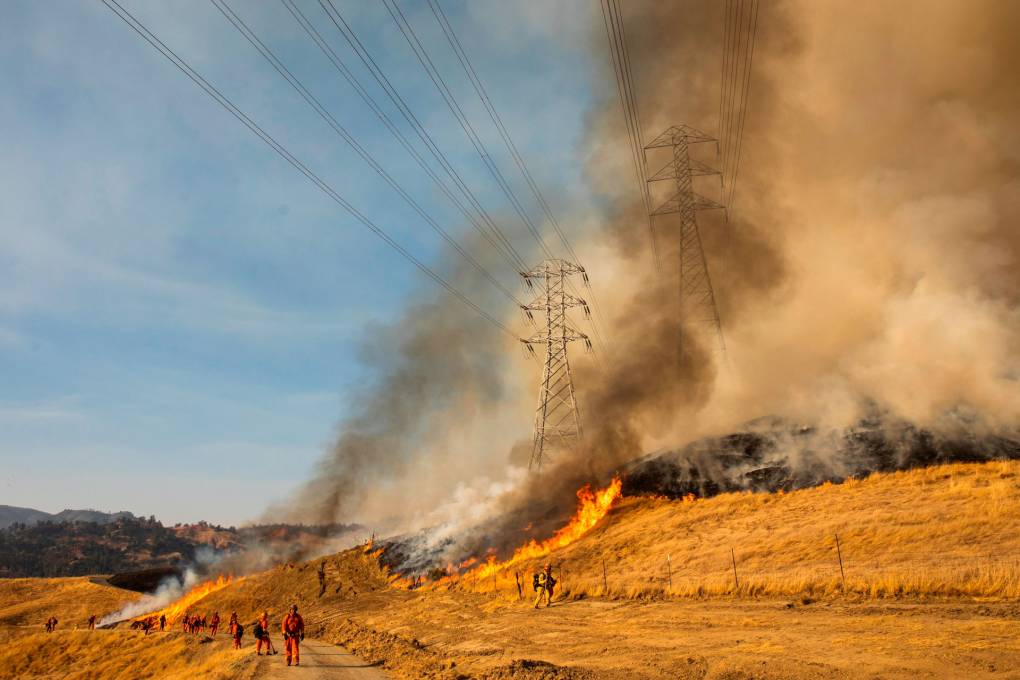
"caption": "A back fire set by fire fighters burns a hillside near PG&E power lines during firefighting operations to battle the Kincade Fire near Healdsburg in October 2019. The blaze is believed to have begun near a PG&E transmission tower in The Geysers geothermal area. ",
"description": null,
"title": "Kincade Fire",
"credit": "Philip Pacheco/AFP-Getty Images",
"status": "inherit",
"isLoading": false,
"fetchFailed": false
},
"news_11757315": {
"type": "attachments",
"id": "news_11757315",
"meta": {
"index": "attachments_1716263798",
"site": "news",
"id": "11757315",
"found": true
},
"parent": 11757298,
"imgSizes": {
"apple_news_ca_landscape_5_5": {
"file": "https://ww2.kqed.org/app/uploads/sites/10/2019/06/GettyImages-1092167026-1044x783.jpg",
"width": 1044,
"mimeType": "image/jpeg",
"height": 783
},
"apple_news_ca_square_4_0": {
"file": "https://ww2.kqed.org/app/uploads/sites/10/2019/06/GettyImages-1092167026-470x470.jpg",
"width": 470,
"mimeType": "image/jpeg",
"height": 470
},
"twentyfourteen-full-width": {
"file": "https://ww2.kqed.org/app/uploads/sites/10/2019/06/GettyImages-1092167026-1038x576.jpg",
"width": 1038,
"mimeType": "image/jpeg",
"height": 576
},
"thumbnail": {
"file": "https://ww2.kqed.org/app/uploads/sites/10/2019/06/GettyImages-1092167026-160x104.jpg",
"width": 160,
"mimeType": "image/jpeg",
"height": 104
},
"post-thumbnail": {
"file": "https://ww2.kqed.org/app/uploads/sites/10/2019/06/GettyImages-1092167026-672x372.jpg",
"width": 672,
"mimeType": "image/jpeg",
"height": 372
},
"kqedFullSize": {
"file": "https://ww2.kqed.org/app/uploads/sites/10/2019/06/GettyImages-1092167026-e1561523247862.jpg",
"width": 1920,
"height": 1246
},
"apple_news_ca_landscape_4_7": {
"file": "https://ww2.kqed.org/app/uploads/sites/10/2019/06/GettyImages-1092167026-632x474.jpg",
"width": 632,
"mimeType": "image/jpeg",
"height": 474
},
"large": {
"file": "https://ww2.kqed.org/app/uploads/sites/10/2019/06/GettyImages-1092167026-1020x662.jpg",
"width": 1020,
"mimeType": "image/jpeg",
"height": 662
},
"complete_open_graph": {
"file": "https://ww2.kqed.org/app/uploads/sites/10/2019/06/GettyImages-1092167026-1200x779.jpg",
"width": 1200,
"mimeType": "image/jpeg",
"height": 779
},
"apple_news_ca_landscape_4_0": {
"file": "https://ww2.kqed.org/app/uploads/sites/10/2019/06/GettyImages-1092167026-536x402.jpg",
"width": 536,
"mimeType": "image/jpeg",
"height": 402
},
"apple_news_ca_portrait_12_9": {
"file": "https://ww2.kqed.org/app/uploads/sites/10/2019/06/GettyImages-1092167026-1122x1496.jpg",
"width": 1122,
"mimeType": "image/jpeg",
"height": 1496
},
"medium": {
"file": "https://ww2.kqed.org/app/uploads/sites/10/2019/06/GettyImages-1092167026-800x519.jpg",
"width": 800,
"mimeType": "image/jpeg",
"height": 519
},
"apple_news_ca_portrait_4_0": {
"file": "https://ww2.kqed.org/app/uploads/sites/10/2019/06/GettyImages-1092167026-354x472.jpg",
"width": 354,
"mimeType": "image/jpeg",
"height": 472
},
"apple_news_ca_portrait_9_7": {
"file": "https://ww2.kqed.org/app/uploads/sites/10/2019/06/GettyImages-1092167026-840x1120.jpg",
"width": 840,
"mimeType": "image/jpeg",
"height": 1120
},
"apple_news_ca_landscape_12_9": {
"file": "https://ww2.kqed.org/app/uploads/sites/10/2019/06/GettyImages-1092167026-1832x1374.jpg",
"width": 1832,
"mimeType": "image/jpeg",
"height": 1374
},
"apple_news_ca_square_9_7": {
"file": "https://ww2.kqed.org/app/uploads/sites/10/2019/06/GettyImages-1092167026-1104x1104.jpg",
"width": 1104,
"mimeType": "image/jpeg",
"height": 1104
},
"apple_news_ca_portrait_4_7": {
"file": "https://ww2.kqed.org/app/uploads/sites/10/2019/06/GettyImages-1092167026-414x552.jpg",
"width": 414,
"mimeType": "image/jpeg",
"height": 552
},
"apple_news_ca_square_12_9": {
"file": "https://ww2.kqed.org/app/uploads/sites/10/2019/06/GettyImages-1092167026-1472x1472.jpg",
"width": 1472,
"mimeType": "image/jpeg",
"height": 1472
},
"apple_news_ca_portrait_5_5": {
"file": "https://ww2.kqed.org/app/uploads/sites/10/2019/06/GettyImages-1092167026-687x916.jpg",
"width": 687,
"mimeType": "image/jpeg",
"height": 916
},
"full-width": {
"file": "https://ww2.kqed.org/app/uploads/sites/10/2019/06/GettyImages-1092167026-1920x1246.jpg",
"width": 1920,
"mimeType": "image/jpeg",
"height": 1246
},
"apple_news_ca_square_4_7": {
"file": "https://ww2.kqed.org/app/uploads/sites/10/2019/06/GettyImages-1092167026-550x550.jpg",
"width": 550,
"mimeType": "image/jpeg",
"height": 550
},
"apple_news_ca_landscape_9_7": {
"file": "https://ww2.kqed.org/app/uploads/sites/10/2019/06/GettyImages-1092167026-1376x1032.jpg",
"width": 1376,
"mimeType": "image/jpeg",
"height": 1032
},
"apple_news_ca_square_5_5": {
"file": "https://ww2.kqed.org/app/uploads/sites/10/2019/06/GettyImages-1092167026-912x912.jpg",
"width": 912,
"mimeType": "image/jpeg",
"height": 912
}
},
"publishDate": 1561523214,
"modified": 1561523321,
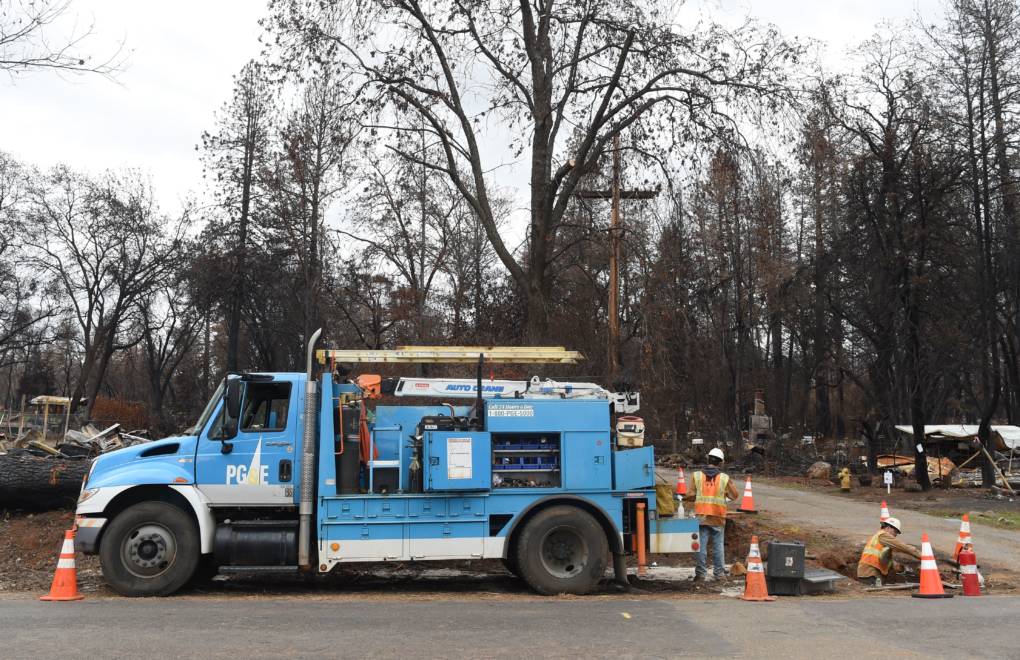
"caption": "A PG&E service truck in Paradise, the Butte County town nearly wiped out by the 2018 Camp Fire.",
"description": null,
"title": "PG&E",
"credit": "Josh Edelson/AFP-Getty Images",
"status": "inherit",
"isLoading": false,
"fetchFailed": false
},
"news_11769560": {
"type": "attachments",
"id": "news_11769560",
"meta": {
"index": "attachments_1716263798",
"site": "news",
"id": "11769560",
"found": true
},
"title": "PGE-Truck",
"publishDate": 1566593400,
"status": "inherit",
"parent": 11769525,
"modified": 1730836982,
"caption": "Even before PG&E filed for bankruptcy, it was clear the company’s wildfire damages would hit customers’ wallets.",
"credit": "Justin Sullivan/Getty Images",
"altTag": "The backside of a PG&E truck.",
"description": "Even before PG&E filed for bankruptcy, it was clear the company’s wildfire damages would hit customers’ wallets.",
"imgSizes": {
"thumbnail": {
"file": "https://cdn.kqed.org/wp-content/uploads/sites/10/2019/08/PGE-Truck-160x107.jpg",
"width": 160,
"height": 107,
"mimeType": "image/jpeg"
},
"medium": {
"file": "https://cdn.kqed.org/wp-content/uploads/sites/10/2019/08/PGE-Truck-800x533.jpg",
"width": 800,
"height": 533,
"mimeType": "image/jpeg"
},
"large": {
"file": "https://cdn.kqed.org/wp-content/uploads/sites/10/2019/08/PGE-Truck-1020x680.jpg",
"width": 1020,
"height": 680,
"mimeType": "image/jpeg"
},
"complete_open_graph": {
"file": "https://cdn.kqed.org/wp-content/uploads/sites/10/2019/08/PGE-Truck-1200x800.jpg",
"width": 1200,
"height": 800,
"mimeType": "image/jpeg"
},
"post-thumbnail": {
"file": "https://cdn.kqed.org/wp-content/uploads/sites/10/2019/08/PGE-Truck-672x372.jpg",
"width": 672,
"height": 372,
"mimeType": "image/jpeg"
},
"twentyfourteen-full-width": {
"file": "https://cdn.kqed.org/wp-content/uploads/sites/10/2019/08/PGE-Truck-1038x576.jpg",
"width": 1038,
"height": 576,
"mimeType": "image/jpeg"
},
"full-width": {
"file": "https://cdn.kqed.org/wp-content/uploads/sites/10/2019/08/PGE-Truck-1920x1280.jpg",
"width": 1920,
"height": 1280,
"mimeType": "image/jpeg"
},
"apple_news_ca_landscape_12_9": {
"file": "https://cdn.kqed.org/wp-content/uploads/sites/10/2019/08/PGE-Truck-1832x1280.jpg",
"width": 1832,
"height": 1280,
"mimeType": "image/jpeg"
},
"apple_news_ca_landscape_9_7": {
"file": "https://cdn.kqed.org/wp-content/uploads/sites/10/2019/08/PGE-Truck-1376x1032.jpg",
"width": 1376,
"height": 1032,
"mimeType": "image/jpeg"
},
"apple_news_ca_landscape_5_5": {
"file": "https://cdn.kqed.org/wp-content/uploads/sites/10/2019/08/PGE-Truck-1044x783.jpg",
"width": 1044,
"height": 783,
"mimeType": "image/jpeg"
},
"apple_news_ca_landscape_4_7": {
"file": "https://cdn.kqed.org/wp-content/uploads/sites/10/2019/08/PGE-Truck-632x474.jpg",
"width": 632,
"height": 474,
"mimeType": "image/jpeg"
},
"apple_news_ca_landscape_4_0": {
"file": "https://cdn.kqed.org/wp-content/uploads/sites/10/2019/08/PGE-Truck-536x402.jpg",
"width": 536,
"height": 402,
"mimeType": "image/jpeg"
},
"apple_news_ca_portrait_12_9": {
"file": "https://cdn.kqed.org/wp-content/uploads/sites/10/2019/08/PGE-Truck-1122x1280.jpg",
"width": 1122,
"height": 1280,
"mimeType": "image/jpeg"
},
"apple_news_ca_portrait_9_7": {
"file": "https://cdn.kqed.org/wp-content/uploads/sites/10/2019/08/PGE-Truck-840x1120.jpg",
"width": 840,
"height": 1120,
"mimeType": "image/jpeg"
},
"apple_news_ca_portrait_5_5": {
"file": "https://cdn.kqed.org/wp-content/uploads/sites/10/2019/08/PGE-Truck-687x916.jpg",
"width": 687,
"height": 916,
"mimeType": "image/jpeg"
},
"apple_news_ca_portrait_4_7": {
"file": "https://cdn.kqed.org/wp-content/uploads/sites/10/2019/08/PGE-Truck-414x552.jpg",
"width": 414,
"height": 552,
"mimeType": "image/jpeg"
},
"apple_news_ca_portrait_4_0": {
"file": "https://cdn.kqed.org/wp-content/uploads/sites/10/2019/08/PGE-Truck-354x472.jpg",
"width": 354,
"height": 472,
"mimeType": "image/jpeg"
},
"apple_news_ca_square_12_9": {
"file": "https://cdn.kqed.org/wp-content/uploads/sites/10/2019/08/PGE-Truck-1472x1280.jpg",
"width": 1472,
"height": 1280,
"mimeType": "image/jpeg"
},
"apple_news_ca_square_9_7": {
"file": "https://cdn.kqed.org/wp-content/uploads/sites/10/2019/08/PGE-Truck-1104x1104.jpg",
"width": 1104,
"height": 1104,
"mimeType": "image/jpeg"
},
"apple_news_ca_square_5_5": {
"file": "https://cdn.kqed.org/wp-content/uploads/sites/10/2019/08/PGE-Truck-912x912.jpg",
"width": 912,
"height": 912,
"mimeType": "image/jpeg"
},
"apple_news_ca_square_4_7": {
"file": "https://cdn.kqed.org/wp-content/uploads/sites/10/2019/08/PGE-Truck-550x550.jpg",
"width": 550,
"height": 550,
"mimeType": "image/jpeg"
},
"apple_news_ca_square_4_0": {
"file": "https://cdn.kqed.org/wp-content/uploads/sites/10/2019/08/PGE-Truck-470x470.jpg",
"width": 470,
"height": 470,
"mimeType": "image/jpeg"
},
"kqedFullSize": {
"file": "https://cdn.kqed.org/wp-content/uploads/sites/10/2019/08/PGE-Truck.jpg",
"width": 1920,
"height": 1280
}
},
"isLoading": false,
"fetchFailed": false
},
"news_11808169": {
"type": "attachments",
"id": "news_11808169",
"meta": {
"index": "attachments_1716263798",
"site": "news",
"id": "11808169",
"found": true
},
"parent": 11808166,
"imgSizes": {
"apple_news_ca_landscape_5_5": {
"file": "https://ww2.kqed.org/app/uploads/sites/10/2020/03/RS33764_GettyImages-1059345696-qut-1044x783.jpg",
"width": 1044,
"mimeType": "image/jpeg",
"height": 783
},
"apple_news_ca_square_4_0": {
"file": "https://ww2.kqed.org/app/uploads/sites/10/2020/03/RS33764_GettyImages-1059345696-qut-470x470.jpg",
"width": 470,
"mimeType": "image/jpeg",
"height": 470
},
"twentyfourteen-full-width": {
"file": "https://ww2.kqed.org/app/uploads/sites/10/2020/03/RS33764_GettyImages-1059345696-qut-1038x576.jpg",
"width": 1038,
"mimeType": "image/jpeg",
"height": 576
},
"thumbnail": {
"file": "https://ww2.kqed.org/app/uploads/sites/10/2020/03/RS33764_GettyImages-1059345696-qut-160x106.jpg",
"width": 160,
"mimeType": "image/jpeg",
"height": 106
},
"post-thumbnail": {
"file": "https://ww2.kqed.org/app/uploads/sites/10/2020/03/RS33764_GettyImages-1059345696-qut-672x372.jpg",
"width": 672,
"mimeType": "image/jpeg",
"height": 372
},
"kqedFullSize": {
"file": "https://ww2.kqed.org/app/uploads/sites/10/2020/03/RS33764_GettyImages-1059345696-qut.jpg",
"width": 1920,
"height": 1273
},
"apple_news_ca_landscape_4_7": {
"file": "https://ww2.kqed.org/app/uploads/sites/10/2020/03/RS33764_GettyImages-1059345696-qut-632x474.jpg",
"width": 632,
"mimeType": "image/jpeg",
"height": 474
},
"large": {
"file": "https://ww2.kqed.org/app/uploads/sites/10/2020/03/RS33764_GettyImages-1059345696-qut-1020x676.jpg",
"width": 1020,
"mimeType": "image/jpeg",
"height": 676
},
"apple_news_ca_landscape_4_0": {
"file": "https://ww2.kqed.org/app/uploads/sites/10/2020/03/RS33764_GettyImages-1059345696-qut-536x402.jpg",
"width": 536,
"mimeType": "image/jpeg",
"height": 402
},
"apple_news_ca_portrait_12_9": {
"file": "https://ww2.kqed.org/app/uploads/sites/10/2020/03/RS33764_GettyImages-1059345696-qut-1122x1273.jpg",
"width": 1122,
"mimeType": "image/jpeg",
"height": 1273
},
"medium": {
"file": "https://ww2.kqed.org/app/uploads/sites/10/2020/03/RS33764_GettyImages-1059345696-qut-800x530.jpg",
"width": 800,
"mimeType": "image/jpeg",
"height": 530
},
"apple_news_ca_portrait_4_0": {
"file": "https://ww2.kqed.org/app/uploads/sites/10/2020/03/RS33764_GettyImages-1059345696-qut-354x472.jpg",
"width": 354,
"mimeType": "image/jpeg",
"height": 472
},
"apple_news_ca_portrait_9_7": {
"file": "https://ww2.kqed.org/app/uploads/sites/10/2020/03/RS33764_GettyImages-1059345696-qut-840x1120.jpg",
"width": 840,
"mimeType": "image/jpeg",
"height": 1120
},
"apple_news_ca_landscape_12_9": {
"file": "https://ww2.kqed.org/app/uploads/sites/10/2020/03/RS33764_GettyImages-1059345696-qut-1832x1273.jpg",
"width": 1832,
"mimeType": "image/jpeg",
"height": 1273
},
"apple_news_ca_square_9_7": {
"file": "https://ww2.kqed.org/app/uploads/sites/10/2020/03/RS33764_GettyImages-1059345696-qut-1104x1104.jpg",
"width": 1104,
"mimeType": "image/jpeg",
"height": 1104
},
"apple_news_ca_portrait_4_7": {
"file": "https://ww2.kqed.org/app/uploads/sites/10/2020/03/RS33764_GettyImages-1059345696-qut-414x552.jpg",
"width": 414,
"mimeType": "image/jpeg",
"height": 552
},
"apple_news_ca_square_12_9": {
"file": "https://ww2.kqed.org/app/uploads/sites/10/2020/03/RS33764_GettyImages-1059345696-qut-1472x1273.jpg",
"width": 1472,
"mimeType": "image/jpeg",
"height": 1273
},
"apple_news_ca_portrait_5_5": {
"file": "https://ww2.kqed.org/app/uploads/sites/10/2020/03/RS33764_GettyImages-1059345696-qut-687x916.jpg",
"width": 687,
"mimeType": "image/jpeg",
"height": 916
},
"full-width": {
"file": "https://ww2.kqed.org/app/uploads/sites/10/2020/03/RS33764_GettyImages-1059345696-qut-1920x1273.jpg",
"width": 1920,
"mimeType": "image/jpeg",
"height": 1273
},
"apple_news_ca_square_4_7": {
"file": "https://ww2.kqed.org/app/uploads/sites/10/2020/03/RS33764_GettyImages-1059345696-qut-550x550.jpg",
"width": 550,
"mimeType": "image/jpeg",
"height": 550
},
"apple_news_ca_landscape_9_7": {
"file": "https://ww2.kqed.org/app/uploads/sites/10/2020/03/RS33764_GettyImages-1059345696-qut-1376x1032.jpg",
"width": 1376,
"mimeType": "image/jpeg",
"height": 1032
},
"apple_news_ca_square_5_5": {
"file": "https://ww2.kqed.org/app/uploads/sites/10/2020/03/RS33764_GettyImages-1059345696-qut-912x912.jpg",
"width": 912,
"mimeType": "image/jpeg",
"height": 912
}
},
"publishDate": 1584975230,
"modified": 1584979316,
"caption": "A home burns during the Camp fire in Paradise on November 8, 2018.",
"description": null,
"title": "US-FIRE-WEATHER",
"credit": "Josh Edelson/AFP-Getty Images",
"status": "inherit",
"isLoading": false,
"fetchFailed": false
}
},
"audioPlayerReducer": {
"postId": "stream_live",
"isPaused": true,
"isPlaying": false,
"pfsActive": false,
"pledgeModalIsOpen": true,
"playerDrawerIsOpen": false,
"liveAudioPlayStartedAt": 0,
"liveAudioPlayContext": ""
},
"authorsReducer": {
"byline_news_11833283": {
"type": "authors",
"id": "byline_news_11833283",
"meta": {
"override": true
},
"slug": "byline_news_11833283",
"name": "\u003ca href=\"https://www.pbs.org/wgbh/frontline/person/katie-worth/\">Katie Worth\u003c/a>, \u003ca href=\"https://www.pbs.org/wgbh/frontline/person/karen-pinchin/\">Karen Pinchin\u003c/a> and \u003ca href=\"https://www.pbs.org/wgbh/frontline/person/lucie-sullivan/\">Lucie Sullivan\u003c/a>\u003cbr>\u003ca href=\"https://www.pbs.org/wgbh/frontline/\">FRONTLINE\u003c/a>",
"isLoading": false
},
"byline_news_11824596": {
"type": "authors",
"id": "byline_news_11824596",
"meta": {
"override": true
},
"slug": "byline_news_11824596",
"name": "Michael Liedtke and Janie Har\u003cbr>The Associated Press",
"isLoading": false
},
"byline_news_11820694": {
"type": "authors",
"id": "byline_news_11820694",
"meta": {
"override": true
},
"slug": "byline_news_11820694",
"name": "Michael Liedtke\u003cbr />Associated Press",
"isLoading": false
},
"danbrekke": {
"type": "authors",
"id": "222",
"meta": {
"index": "authors_1716337520",
"id": "222",
"found": true
},
"name": "Dan Brekke",
"firstName": "Dan",
"lastName": "Brekke",
"slug": "danbrekke",
"email": "dbrekke@kqed.org",
"display_author_email": true,
"staff_mastheads": [
"news",
"science"
],
"title": "KQED Editor and Reporter",
"bio": "Dan Brekke is a reporter and editor for KQED News, responsible for coverage of topics ranging from California water issues to the Bay Area's transportation challenges. In a newsroom career that began in Chicago in 1972, Dan has worked for \u003cem>The San Francisco Examiner,\u003c/em> Wired and TechTV and has been published in The New York Times, The New York Times Magazine, Business 2.0, Salon and elsewhere.\r\n\r\nSince joining KQED in 2007, Dan has reported, edited and produced both radio and online features and breaking news pieces. He has shared as both editor and reporter in four Society of Professional Journalists Norcal Excellence in Journalism awards and one Edward R. Murrow regional award. He was chosen for a spring 2017 residency at the Mesa Refuge to advance his research on California salmon.\r\n\r\nEmail Dan at: \u003ca href=\"mailto:dbrekke@kqed.org\">dbrekke@kqed.org\u003c/a>\r\n\r\n\u003cstrong>Twitter:\u003c/strong> \u003ca href=\"https://twitter.com/danbrekke\" rel=\"noopener noreferrer\">twitter.com/danbrekke\u003c/a>\r\n\u003cstrong>Facebook:\u003c/strong> \u003ca href=\"https://www.facebook.com/danbrekke\" rel=\"noopener noreferrer\">www.facebook.com/danbrekke\u003c/a>\r\n\u003cstrong>LinkedIn:\u003c/strong> \u003ca href=\"https://www.linkedin.com/in/danbrekke\" rel=\"noopener noreferrer\">www.linkedin.com/in/danbrekke\u003c/a>",
"avatar": "https://secure.gravatar.com/avatar/c8126230345efca3f7aa89b1a402be45?s=600&d=mm&r=g",
"twitter": "danbrekke",
"facebook": null,
"instagram": "https://www.instagram.com/dan.brekke/",
"linkedin": "https://www.linkedin.com/in/danbrekke/",
"sites": [
{
"site": "news",
"roles": [
"administrator",
"create_posts"
]
},
{
"site": "stateofhealth",
"roles": [
"editor"
]
},
{
"site": "science",
"roles": [
"editor"
]
},
{
"site": "quest",
"roles": [
"contributor"
]
},
{
"site": "food",
"roles": [
"contributor"
]
},
{
"site": "forum",
"roles": [
"contributor"
]
},
{
"site": "liveblog",
"roles": [
"editor"
]
}
],
"headData": {
"title": "Dan Brekke | KQED",
"description": "KQED Editor and Reporter",
"ogImgSrc": "https://secure.gravatar.com/avatar/c8126230345efca3f7aa89b1a402be45?s=600&d=mm&r=g",
"twImgSrc": "https://secure.gravatar.com/avatar/c8126230345efca3f7aa89b1a402be45?s=600&d=mm&r=g"
},
"isLoading": false,
"link": "/author/danbrekke"
},
"mlagos": {
"type": "authors",
"id": "3239",
"meta": {
"index": "authors_1716337520",
"id": "3239",
"found": true
},
"name": "Marisa Lagos",
"firstName": "Marisa",
"lastName": "Lagos",
"slug": "mlagos",
"email": "mlagos@kqed.org",
"display_author_email": false,
"staff_mastheads": [
"news"
],
"title": "KQED Contributor",
"bio": "Marisa Lagos is a correspondent for KQED’s California Politics and Government Desk and co-hosts the award-winning show and podcast, Political Breakdown. At KQED, Lagos also conducts reporting, analysis and investigations into state, local and national politics for radio, TV, online and onstage. In 2022, she and co-host, Scott Shafer, moderated the only gubernatorial debate in California. In 2020, the \u003ci>Washington Post\u003c/i> named her one of the top political journalists in California; she was nominated for a Peabody and won several other awards for her work investigating the 2017 California wildfires. She has worked at the \u003ci>San Francisco Chronicle\u003c/i>, \u003ci>San Francisco Examiner\u003c/i> and \u003ci>Los Angeles Times\u003c/i>. A UC Santa Barbara graduate, she lives in San Francisco with her two sons and husband.",
"avatar": "https://secure.gravatar.com/avatar/a261a0d3696fc066871ef96b85b5e7d2?s=600&d=blank&r=g",
"twitter": "@mlagos",
"facebook": null,
"instagram": null,
"linkedin": null,
"sites": [
{
"site": "arts",
"roles": [
"author"
]
},
{
"site": "news",
"roles": [
"editor"
]
},
{
"site": "science",
"roles": [
"editor"
]
},
{
"site": "forum",
"roles": [
"author"
]
},
{
"site": "liveblog",
"roles": [
"author"
]
}
],
"headData": {
"title": "Marisa Lagos | KQED",
"description": "KQED Contributor",
"ogImgSrc": "https://secure.gravatar.com/avatar/a261a0d3696fc066871ef96b85b5e7d2?s=600&d=blank&r=g",
"twImgSrc": "https://secure.gravatar.com/avatar/a261a0d3696fc066871ef96b85b5e7d2?s=600&d=blank&r=g"
},
"isLoading": false,
"link": "/author/mlagos"
},
"mwiley": {
"type": "authors",
"id": "11526",
"meta": {
"index": "authors_1716337520",
"id": "11526",
"found": true
},
"name": "Michelle Wiley",
"firstName": "Michelle",
"lastName": "Wiley",
"slug": "mwiley",
"email": "mwiley@KQED.org",
"display_author_email": true,
"staff_mastheads": [],
"title": null,
"bio": "Michelle Wiley was the senior editor of weekends.",
"avatar": "https://secure.gravatar.com/avatar/3b897d82a09e8587e8e73fa69fbcc635?s=600&d=blank&r=g",
"twitter": "michelleewiley",
"facebook": null,
"instagram": null,
"linkedin": null,
"sites": [
{
"site": "",
"roles": [
"editor"
]
},
{
"site": "arts",
"roles": [
"editor"
]
},
{
"site": "news",
"roles": [
"subscriber"
]
},
{
"site": "lowdown",
"roles": [
"editor"
]
},
{
"site": "science",
"roles": [
"editor"
]
},
{
"site": "podcasts",
"roles": [
"editor"
]
}
],
"headData": {
"title": "Michelle Wiley | KQED",
"description": null,
"ogImgSrc": "https://secure.gravatar.com/avatar/3b897d82a09e8587e8e73fa69fbcc635?s=600&d=blank&r=g",
"twImgSrc": "https://secure.gravatar.com/avatar/3b897d82a09e8587e8e73fa69fbcc635?s=600&d=blank&r=g"
},
"isLoading": false,
"link": "/author/mwiley"
},
"ljamali": {
"type": "authors",
"id": "11552",
"meta": {
"index": "authors_1716337520",
"id": "11552",
"found": true
},
"name": "Lily Jamali",
"firstName": "Lily",
"lastName": "Jamali",
"slug": "ljamali",
"email": "ljamali@kqed.org",
"display_author_email": false,
"staff_mastheads": [],
"title": "KQED Contributor",
"bio": "Lily was the former co-host of the daily morning show, The California Report.",
"avatar": "https://secure.gravatar.com/avatar/dbf7b30d159e697731046a10d25a9e29?s=600&d=blank&r=g",
"twitter": "lilyjamali",
"facebook": null,
"instagram": null,
"linkedin": null,
"sites": [
{
"site": "news",
"roles": [
"create_posts",
"subscriber"
]
},
{
"site": "forum",
"roles": [
"editor"
]
}
],
"headData": {
"title": "Lily Jamali | KQED",
"description": "KQED Contributor",
"ogImgSrc": "https://secure.gravatar.com/avatar/dbf7b30d159e697731046a10d25a9e29?s=600&d=blank&r=g",
"twImgSrc": "https://secure.gravatar.com/avatar/dbf7b30d159e697731046a10d25a9e29?s=600&d=blank&r=g"
},
"isLoading": false,
"link": "/author/ljamali"
}
},
"pagesReducer": {
"news_tag_camp-fire": {
"type": "terms",
"id": "news_24483",
"meta": {
"index": "terms_1716263798",
"site": "news",
"id": "24483",
"score": 9.30474
},
"featImg": null,
"name": "Camp Fire",
"description": null,
"taxonomy": "tag",
"headData": {
"twImgId": null,
"twTitle": null,
"ogTitle": null,
"ogImgId": null,
"twDescription": null,
"description": null,
"title": "Camp Fire Archives | KQED News",
"ogDescription": null
},
"ttid": 24500,
"slug": "camp-fire",
"isLoading": false,
"title": "Camp Fire",
"pageMeta": {
"site": "news",
"WpPageTemplate": "page-topic-editorial",
"currentPage": 2
},
"blocks": [
{
"blockName": "kqed/post-list",
"attrs": {
"layout": "cardArticle2",
"query": "posts/news?tag=camp-fire",
"seeMore": false,
"paginated": true,
"page": 2
}
},
{
"blockName": "kqed/ad"
}
]
}
},
"pfsSessionReducer": {},
"postsReducer": {
"stream_live": {
"type": "live",
"id": "stream_live",
"audioUrl": "https://streams.kqed.org/kqedradio",
"title": "Live Stream",
"excerpt": "Live Stream information currently unavailable.",
"link": "/radio",
"featImg": "",
"label": {
"name": "KQED Live",
"link": "/"
}
},
"stream_kqedNewscast": {
"type": "posts",
"id": "stream_kqedNewscast",
"audioUrl": "https://www.kqed.org/.stream/anon/radio/RDnews/newscast.mp3?_=1",
"title": "KQED Newscast",
"featImg": "",
"label": {
"name": "88.5 FM",
"link": "/"
}
},
"news_11847099": {
"type": "posts",
"id": "news_11847099",
"meta": {
"index": "posts_1716263798",
"site": "news",
"id": "11847099",
"score": null,
"sort": [
1605134022000
]
},
"parent": 0,
"labelTerm": {},
"blocks": [],
"publishDate": 1605134022,
"format": "audio",
"title": "Two Years After Camp Fire Destroyed Paradise, Victims Are Still Wrangling With Insurers",
"headTitle": "Two Years After Camp Fire Destroyed Paradise, Victims Are Still Wrangling With Insurers | KQED",
"content": "\u003cp>Two years after the town of Paradise and nearby communities were destroyed by the Camp Fire, some fire victims remain in limbo with their insurers. One company, Nationwide Insurance, is under state scrutiny after claims that it has dragged out the process of paying policyholders.\u003c/p>\n\u003cp>\u003cem>Reporter: Lily Jamali\u003c/em>\u003c/p>\n\u003cp>[ad fullwidth]\u003c/p>\u003cp>\u003c/p>\n",
"stats": {
"hasVideo": false,
"hasChartOrMap": false,
"hasAudio": false,
"hasPolis": false,
"wordCount": 50,
"hasGoogleForm": false,
"hasGallery": false,
"hasHearkenModule": false,
"iframeSrcs": [],
"paragraphCount": 4
},
"modified": 1706228607,
"excerpt": null,
"headData": {
"twImgId": "",
"twTitle": "",
"ogTitle": "",
"ogImgId": "",
"twDescription": "",
"description": "Two years after the town of Paradise and nearby communities were destroyed by the Camp Fire, some fire victims remain in limbo with their insurers. One company, Nationwide Insurance, is under state scrutiny after claims that it has dragged out the process of paying policyholders. Reporter: Lily Jamali",
"title": "Two Years After Camp Fire Destroyed Paradise, Victims Are Still Wrangling With Insurers | KQED",
"ogDescription": "",
"schema": {
"@context": "https://schema.org",
"@type": "NewsArticle",
"headline": "Two Years After Camp Fire Destroyed Paradise, Victims Are Still Wrangling With Insurers",
"datePublished": "2020-11-11T14:33:42-08:00",
"dateModified": "2024-01-25T16:23:27-08:00",
"image": "https://cdn.kqed.org/wp-content/uploads/2020/02/KQED-OG-Image@1x.png",
"isAccessibleForFree": "True",
"publisher": {
"@type": "NewsMediaOrganization",
"@id": "https://www.kqed.org/#organization",
"name": "KQED",
"logo": "https://cdn.kqed.org/wp-content/uploads/2020/02/KQED-OG-Image@1x.png",
"url": "https://www.kqed.org",
"sameAs": [
"https://www.facebook.com/KQED",
"https://twitter.com/KQED",
"https://www.instagram.com/kqed/",
"https://www.tiktok.com/@kqedofficial",
"https://www.linkedin.com/company/kqed",
"https://www.youtube.com/channel/UCeC0IOo7i1P_61zVUWbJ4nw"
]
}
}
},
"guestAuthors": [],
"slug": "two-years-after-camp-fire-destroyed-paradise-victims-are-still-wrangling-with-insurers",
"status": "publish",
"sourceUrl": "https://www.kqed.org/californiareport",
"templateType": "standard",
"audioUrl": "https://www.kqed.org/.stream/anon/radio//2020/11/SurvivorsWrestlewithAftermathTwoYearsafterCampFireDestroyedParadise1.mp3",
"excludeFromSiteSearch": "Include",
"featuredImageType": "standard",
"sticky": false,
"source": "The California Report",
"articleAge": "0",
"path": "/news/11847099/two-years-after-camp-fire-destroyed-paradise-victims-are-still-wrangling-with-insurers",
"audioTrackLength": null,
"parsedContent": [
{
"type": "contentString",
"content": "\u003cdiv class=\"post-body\">\u003cp>\u003cp>Two years after the town of Paradise and nearby communities were destroyed by the Camp Fire, some fire victims remain in limbo with their insurers. One company, Nationwide Insurance, is under state scrutiny after claims that it has dragged out the process of paying policyholders.\u003c/p>\n\u003cp>\u003cem>Reporter: Lily Jamali\u003c/em>\u003c/p>\n\u003cp>\u003c/p>\u003c/div>",
"attributes": {
"named": {},
"numeric": []
}
},
{
"type": "component",
"content": "",
"name": "ad",
"attributes": {
"named": {
"label": "fullwidth"
},
"numeric": [
"fullwidth"
]
}
},
{
"type": "contentString",
"content": "\u003cdiv class=\"post-body\">\u003cp>\u003c/p>\u003cp>\u003c/p>\n\u003c/div>\u003c/p>",
"attributes": {
"named": {},
"numeric": []
}
}
],
"link": "/news/11847099/two-years-after-camp-fire-destroyed-paradise-victims-are-still-wrangling-with-insurers",
"authors": [
"11552"
],
"programs": [
"news_72"
],
"categories": [
"news_21291"
],
"tags": [
"news_24483",
"news_21998",
"news_21268"
],
"featImg": "news_11847103",
"label": "source_news_11847099"
},
"news_11837188": {
"type": "posts",
"id": "news_11837188",
"meta": {
"index": "posts_1716263798",
"site": "news",
"id": "11837188",
"score": null,
"sort": [
1600131384000
]
},
"parent": 0,
"labelTerm": {
"site": "news"
},
"blocks": [],
"publishDate": 1600131384,
"format": "image",
"disqusTitle": "‘How Could This Happen Twice?’: Camp Fire Survivors Who Moved Away Relive Wildfire Trauma",
"title": "‘How Could This Happen Twice?’: Camp Fire Survivors Who Moved Away Relive Wildfire Trauma",
"headTitle": "KQED News",
"content": "\u003cp>When Corinne and Bruce McCourt woke up to the news that there was a fire burning near their home in Stayton, Oregon, they didn't need any further warning.\u003c/p>\n\u003cp>\"When we saw live ash coming down on the roof ... we just said, 'That's it, I can't do this. I'm not going to wait till the last minute and leave,' \" said Corinne.\u003c/p>\n\u003cfigure id=\"attachment_11837926\" class=\"wp-caption aligncenter\" style=\"max-width: 1920px\">\u003cimg class=\"size-full wp-image-11837926\" src=\"https://ww2.kqed.org/app/uploads/sites/10/2020/09/IMG_1178-scaled-e1600123833112.jpg\" alt=\"\" width=\"1920\" height=\"1362\">\u003cfigcaption class=\"wp-caption-text\">The skies in Stayton, Oregon on Sept 8 at 8:30 a.m. 'What you can't see is all the ash falling on our house and neighborhood,' said Corinne McCourt. \u003ccite>(Courtesy of Corinne McCourt)\u003c/cite>\u003c/figcaption>\u003c/figure>\n\u003cp>That's because the last time the McCourts saw the skies look like this — dark red and orange, with ash sprinkling down — it was November 2018, when the deadly and destructive Camp Fire raged through Paradise, Magalia and Concow, completely destroying their home.\u003c/p>\n\u003cp>\"It's like ... how could this happen twice?\" she asked.\u003c/p>\n\u003cp>As wildfires rage across the West, families who left Butte County after the devastating Camp Fire and made new homes in Oregon are now experiencing traumatic wildfires they thought they'd left behind.\u003c/p>\n\u003cp>And wildfire experts say large wildfires will likely play a bigger part of life on the West Coast from now on.\u003c/p>\n\u003ch3>It Wasn't Supposed to Burn\u003c/h3>\n\u003cp>After the Camp Fire destroyed their home in 2018, the McCourts spent three months staying with friends while they sorted out their plans. Both had previously lived in Oregon's Willamette Valley in the 1970s and decided to find a new home there.[pullquote size=\"medium\" align=\"right\" citation=\"Corrine McCourt, Camp Fire survivor\"]'We knew it rained a lot. And I wanted to come up here because I just figured it would be so safe.'[/pullquote]In part because Oregon, usually, gets a lot of rain.\u003c/p>\n\u003cp>\"We knew it rained a lot,\" Corinne said. \"And I wanted to come up here because I just figured it would be so safe.\"\u003c/p>\n\u003cp>But after a hot summer and a weekend that saw hot, dry weather up and down the West Coast, fires began to spring up everywhere — including in Oregon. The closest to the McCourt's is the Beachie Creek Fire, which has now burned more than 180,000 acres east of Salem.\u003c/p>\n\u003cp>On Labor Day evening, the sky started to look too familiar.\u003c/p>\n\u003cp>\"The winds picked up. And smoke was everywhere, and it was very eerily reminiscent of the morning of the Camp Fire. Exactly the ... same weather experience and the smoke,\" Bruce said. \"And Corinne and I just looked at each other and said, 'This can't be happening now.' \"\u003c/p>\n\u003cp>After a warning from their neighbor, the couple began packing to flee a wildfire, again.\u003c/p>\n\u003cp>But Corinne found herself frozen. They'd lost everything in the Camp Fire and had spent years replacing furniture and buying new dishes. Now, she was faced with the prospect of losing it all again.\u003c/p>\n\u003cp>\"I just couldn't move,\" she said. \"I mean, you know, I just kept looking at this and thinking: What do I do?\"\u003c/p>\n\u003ch3>'Irrational Things Happen Sometimes'\u003c/h3>\n\u003cp>While public health researchers are\u003ca href=\"https://health.ucdavis.edu/health-news/newsroom/northern-californians-asked-to-complete-camp-fire-survey/2019/07/\"> still trying to understand\u003c/a> the health impacts from the Camp Fire, according to trauma and mental health experts, feelings of stress and anxiety are normal for survivors of traumatic events, like natural disasters. And big events, like wildfires, can reopen old wounds and cause people to relive difficult and frightening experiences.\u003c/p>\n\u003cp>Jesse and Laurel Merz recently moved to Oregon this past June. Initially, after their house was destroyed in Paradise, they were able to find a new place in Chico, but ended up moving to Oregon anyway.\u003c/p>\n\u003cp>At first they considered Southern Oregon, but said there was \"too much fire there\" and settled on Eugene, about two hours south of Portland.\u003c/p>\n\u003cp>Then the Holiday Farm Fire started. And even though it was nearly an hour away from their house, Laurel started getting nervous.\u003c/p>\n\u003cp>\"As soon as they said that there was a red flag warning ... the hair on the back of my arm started to raise,\" she said.\u003c/p>\n\u003cp>Laurel said that even though she rationally knew that the Holiday Farm Fire was dozens of miles away, it was hard to stop thinking about. She knew the fire would have to jump two rivers and a huge freeway to threaten their new home. So it should be safe.\u003c/p>\n\u003cp>But she'd also felt that way about the Camp Fire, before it burned down her home and destroyed the hospital she worked in.\u003c/p>\n\u003cp>\"My irrational brain has been correct before. Because irrational things happen sometimes,\" she said.\u003c/p>\n\u003cp>Mental health experts, like psychologist Daniela Domínguez, say it's important to pay attention to feelings of anxiety and hypervigilance, because they may be signs of a trauma-related reaction to what's happening.\u003c/p>\n\u003cp>\"It's really important for us to pay attention to those signs,\" Domínguez said. Because if we don't attend to those feelings with \"attention, love, care and community\" it could get worse, and lead to health concerns.\u003c/p>\n\u003cp>And it's important to note that not everyone experiences these traumatic events equally. For instance, those who identify as Black, Indigenous or people of color may have experienced traumatic events that \"have made a deep impact on the way they're moving through spaces,\" on top of concerns about wildfires, Domínguez said.\u003c/p>\n\u003cp>In addressing those feelings, Domínguez said it's important to remember the following:\u003c/p>\n\u003cul>\n\u003cli>\u003cstrong>Validate your experience:\u003c/strong> It's important to acknowledge your feelings, Domínguez said, so you can help yourself — and others — work through it.\u003c/li>\n\u003cli>\u003cstrong>Make sure you're in a supportive environment: \u003c/strong>\"Well-being depends on whether relationships and the environment in which we are moving are healthy or supportive or responsive,\" she said.\u003c/li>\n\u003cli>\u003cstrong>Normalize your stress\u003c/strong>\u003cstrong>: \u003c/strong>While in the midst of a difficult event, you may be tempted to discount your own feelings. But Domínguez said, considering the state of the world, it's normal to be stressed out and anxious.\u003c/li>\n\u003cli>\u003cstrong>Take the time you need\u003c/strong>: Think of trauma as a psychological injury, Domínguez said. So if you need to take some time to take care of yourself, you should.\u003c/li>\n\u003cli>\u003cstrong>Talk to a professional\u003c/strong>: If you've gotten to the point where you're experiencing a level of stress that is impacting your help, Domínguez said it may be time to speak to a mental health professional.\u003ca href=\"https://www.kqed.org/arts/13881725/where-to-find-affordable-culturally-competent-therapy-in-bay-area-and-beyond\"> Here's where you can find\u003c/a> affordable, culturally competent therapy in the Bay Area.\u003c/li>\n\u003c/ul>\n\u003cp>[ad fullwidth]\u003c/p>\n\u003ch3>A Future of Wildfires\u003c/h3>\n\u003cp>With another wildfire threatening their new home in Oregon, the McCourts said they were feeling like fire was following them.\u003c/p>\n\u003cp>\"Here's what I've been telling people,\" Bruce said with a laugh, \"if you wanted to find somewhere safe to live, watch where I moved to and don't move there.\"\u003c/p>\n\u003cp>[aside postID=news_11837317,science_1926793,news_11833686 label=\"additional resources\"]\u003c/p>\n\u003cp>But as difficult as it may be to think about, the West Coast could see even more fire in its future.\u003c/p>\n\u003cp>\"We're going to see fires in these places where we maybe didn't have them in recent history,\" said Crystal Kolden, assistant professor of fire science at UC Merced. \"We're going to see them more frequently and more explosively.\"\u003c/p>\n\u003cp>On Monday, \u003ca href=\"https://www.kqed.org/news/11837821/trump-to-visit-california-for-a-wildfire-briefing\">President Trump visited California\u003c/a> and again asserted that poor forest management, not climate change, is the cause of widespread wildfires across the West Coast. Kolden acknowledges that forest management \u003cem>is\u003c/em> part of the equation, but emphasizes that it doesn’t exist in a vacuum.\u003c/p>\n\u003cp>\"Climate change is ... it's the umbrella and it's the amplifier,\" she said.\u003c/p>\n\u003cp>While in the moment these widespread fires can feel overwhelming and impossible to deal with on an individual basis, Kolden said there are things we can do to prepare once the fires subside — like getting together with your community to \u003ca href=\"https://www.kqed.org/news/11833686/what-to-pack-in-your-emergency-bag-with-covid-19-in-mind\">make evacuation plans\u003c/a> and \u003ca href=\"https://www.kqed.org/science/1965575/and-now-fire-season-heres-how-to-prepare\">creating more defensible space\u003c/a> around your neighborhood.\u003c/p>\n\u003cp>She also recommends getting involved in the \u003ca href=\"https://www.nfpa.org/Public-Education/Fire-causes-and-risks/Wildfire/Firewise-USA/Become-a-Firewise-USA-site\">National Fire Protection Association's Firewise program\u003c/a>, which encourages communities to get together with wildfire stakeholders — like your local fire department, elected officials and emergency managers — to create a wildfire risk assessment and mitigation plan for your neighborhood.\u003c/p>\n\u003cp>Another way to advocate? Vote.\u003c/p>\n\u003cp>\"People always have to make choices about what the most important issue is to them. But guess what? If it's fire, then your vote needs to be for someone who is going to address climate change,\" Kolden said.\u003c/p>\n\u003cfigure id=\"attachment_11837929\" class=\"wp-caption aligncenter\" style=\"max-width: 604px\">\u003cimg class=\"size-full wp-image-11837929\" src=\"https://ww2.kqed.org/app/uploads/sites/10/2020/09/IMG_1250.jpg\" alt=\"\" width=\"604\" height=\"453\" srcset=\"https://ww2.kqed.org/app/uploads/sites/10/2020/09/IMG_1250.jpg 604w, https://ww2.kqed.org/app/uploads/sites/10/2020/09/IMG_1250-160x120.jpg 160w, https://ww2.kqed.org/app/uploads/sites/10/2020/09/IMG_1250-536x402.jpg 536w\" sizes=\"(max-width: 604px) 100vw, 604px\">\u003cfigcaption class=\"wp-caption-text\">Corinne and Bruce McCourt during a trip to Washington, D.C. \u003ccite>(Courtesy of Corinne McCourt)\u003c/cite>\u003c/figcaption>\u003c/figure>\n\u003ch3>The Wildfire Experts\u003c/h3>\n\u003cp>After leaving their home, the McCourts went to stay at a hotel in Salem. They said that while the fires in Oregon have brought up the stress and anxiety that they felt when the Camp Fire was still burning in 2018, their previous fire experience has also given them valuable perspective.\u003c/p>\n\u003cp>As Corinne McCourt saw fire evacuees filing into the Holiday Inn, some looking visibly distraught and crying, she felt compelled to tell them it’ll be OK.\u003c/p>\n\u003cp>\"I just wanted to reach out to them and tell them: You know what? It doesn't look like it, but it really is going to be OK. If you make it with your life, then that's the most important part,\" Corinne said.\u003c/p>\n\u003cp>[ad floatright]\u003c/p>\n",
"disqusIdentifier": "11837188 https://ww2.kqed.org/news/?p=11837188",
"disqusUrl": "https://ww2.kqed.org/news/2020/09/14/how-could-this-happen-twice-camp-fire-survivors-who-moved-away-relive-wildfire-trauma/",
"stats": {
"hasVideo": false,
"hasChartOrMap": false,
"hasAudio": false,
"hasPolis": false,
"wordCount": 1569,
"hasGoogleForm": false,
"hasGallery": false,
"hasHearkenModule": false,
"iframeSrcs": [],
"paragraphCount": 42
},
"modified": 1611081829,
"excerpt": "After the Camp Fire in 2018, many families left California to avoid fire season. But for some who relocated to Oregon, the wildfires came with them. ",
"headData": {
"twImgId": "",
"twTitle": "",
"ogTitle": "",
"ogImgId": "",
"twDescription": "",
"description": "After the Camp Fire in 2018, many families left California to avoid fire season. But for some who relocated to Oregon, the wildfires came with them. ",
"title": "‘How Could This Happen Twice?’: Camp Fire Survivors Who Moved Away Relive Wildfire Trauma | KQED",
"ogDescription": "",
"schema": {
"@context": "https://schema.org",
"@type": "NewsArticle",
"headline": "‘How Could This Happen Twice?’: Camp Fire Survivors Who Moved Away Relive Wildfire Trauma",
"datePublished": "2020-09-14T17:56:24-07:00",
"dateModified": "2021-01-19T10:43:49-08:00",
"image": "https://cdn.kqed.org/wp-content/uploads/2020/02/KQED-OG-Image@1x.png",
"isAccessibleForFree": "True",
"publisher": {
"@type": "NewsMediaOrganization",
"@id": "https://www.kqed.org/#organization",
"name": "KQED",
"logo": "https://cdn.kqed.org/wp-content/uploads/2020/02/KQED-OG-Image@1x.png",
"url": "https://www.kqed.org",
"sameAs": [
"https://www.facebook.com/KQED",
"https://twitter.com/KQED",
"https://www.instagram.com/kqed/",
"https://www.tiktok.com/@kqedofficial",
"https://www.linkedin.com/company/kqed",
"https://www.youtube.com/channel/UCeC0IOo7i1P_61zVUWbJ4nw"
]
}
}
},
"guestAuthors": [],
"slug": "how-could-this-happen-twice-camp-fire-survivors-who-moved-away-relive-wildfire-trauma",
"status": "publish",
"audioUrl": "https://traffic.omny.fm/d/clips/0af137ef-751e-4b19-a055-aaef00d2d578/ffca7e9f-6831-41c5-bcaf-aaef00f5a073/3673c819-688a-4527-96e8-ac330117dd5d/audio.mp3",
"path": "/news/11837188/how-could-this-happen-twice-camp-fire-survivors-who-moved-away-relive-wildfire-trauma",
"audioTrackLength": null,
"parsedContent": [
{
"type": "contentString",
"content": "\u003cdiv class=\"post-body\">\u003cp>\u003cp>When Corinne and Bruce McCourt woke up to the news that there was a fire burning near their home in Stayton, Oregon, they didn't need any further warning.\u003c/p>\n\u003cp>\"When we saw live ash coming down on the roof ... we just said, 'That's it, I can't do this. I'm not going to wait till the last minute and leave,' \" said Corinne.\u003c/p>\n\u003cfigure id=\"attachment_11837926\" class=\"wp-caption aligncenter\" style=\"max-width: 1920px\">\u003cimg class=\"size-full wp-image-11837926\" src=\"https://ww2.kqed.org/app/uploads/sites/10/2020/09/IMG_1178-scaled-e1600123833112.jpg\" alt=\"\" width=\"1920\" height=\"1362\">\u003cfigcaption class=\"wp-caption-text\">The skies in Stayton, Oregon on Sept 8 at 8:30 a.m. 'What you can't see is all the ash falling on our house and neighborhood,' said Corinne McCourt. \u003ccite>(Courtesy of Corinne McCourt)\u003c/cite>\u003c/figcaption>\u003c/figure>\n\u003cp>That's because the last time the McCourts saw the skies look like this — dark red and orange, with ash sprinkling down — it was November 2018, when the deadly and destructive Camp Fire raged through Paradise, Magalia and Concow, completely destroying their home.\u003c/p>\n\u003cp>\"It's like ... how could this happen twice?\" she asked.\u003c/p>\n\u003cp>As wildfires rage across the West, families who left Butte County after the devastating Camp Fire and made new homes in Oregon are now experiencing traumatic wildfires they thought they'd left behind.\u003c/p>\n\u003cp>And wildfire experts say large wildfires will likely play a bigger part of life on the West Coast from now on.\u003c/p>\n\u003ch3>It Wasn't Supposed to Burn\u003c/h3>\n\u003cp>After the Camp Fire destroyed their home in 2018, the McCourts spent three months staying with friends while they sorted out their plans. Both had previously lived in Oregon's Willamette Valley in the 1970s and decided to find a new home there.\u003c/p>\u003c/div>",
"attributes": {
"named": {},
"numeric": []
}
},
{
"type": "component",
"content": "'We knew it rained a lot. And I wanted to come up here because I just figured it would be so safe.'",
"name": "pullquote",
"attributes": {
"named": {
"size": "medium",
"align": "right",
"citation": "Corrine McCourt, Camp Fire survivor",
"label": ""
},
"numeric": []
}
},
{
"type": "contentString",
"content": "\u003cdiv class=\"post-body\">\u003cp>In part because Oregon, usually, gets a lot of rain.\u003c/p>\n\u003cp>\"We knew it rained a lot,\" Corinne said. \"And I wanted to come up here because I just figured it would be so safe.\"\u003c/p>\n\u003cp>But after a hot summer and a weekend that saw hot, dry weather up and down the West Coast, fires began to spring up everywhere — including in Oregon. The closest to the McCourt's is the Beachie Creek Fire, which has now burned more than 180,000 acres east of Salem.\u003c/p>\n\u003cp>On Labor Day evening, the sky started to look too familiar.\u003c/p>\n\u003cp>\"The winds picked up. And smoke was everywhere, and it was very eerily reminiscent of the morning of the Camp Fire. Exactly the ... same weather experience and the smoke,\" Bruce said. \"And Corinne and I just looked at each other and said, 'This can't be happening now.' \"\u003c/p>\n\u003cp>After a warning from their neighbor, the couple began packing to flee a wildfire, again.\u003c/p>\n\u003cp>But Corinne found herself frozen. They'd lost everything in the Camp Fire and had spent years replacing furniture and buying new dishes. Now, she was faced with the prospect of losing it all again.\u003c/p>\n\u003cp>\"I just couldn't move,\" she said. \"I mean, you know, I just kept looking at this and thinking: What do I do?\"\u003c/p>\n\u003ch3>'Irrational Things Happen Sometimes'\u003c/h3>\n\u003cp>While public health researchers are\u003ca href=\"https://health.ucdavis.edu/health-news/newsroom/northern-californians-asked-to-complete-camp-fire-survey/2019/07/\"> still trying to understand\u003c/a> the health impacts from the Camp Fire, according to trauma and mental health experts, feelings of stress and anxiety are normal for survivors of traumatic events, like natural disasters. And big events, like wildfires, can reopen old wounds and cause people to relive difficult and frightening experiences.\u003c/p>\n\u003cp>Jesse and Laurel Merz recently moved to Oregon this past June. Initially, after their house was destroyed in Paradise, they were able to find a new place in Chico, but ended up moving to Oregon anyway.\u003c/p>\n\u003cp>At first they considered Southern Oregon, but said there was \"too much fire there\" and settled on Eugene, about two hours south of Portland.\u003c/p>\n\u003cp>Then the Holiday Farm Fire started. And even though it was nearly an hour away from their house, Laurel started getting nervous.\u003c/p>\n\u003cp>\"As soon as they said that there was a red flag warning ... the hair on the back of my arm started to raise,\" she said.\u003c/p>\n\u003cp>Laurel said that even though she rationally knew that the Holiday Farm Fire was dozens of miles away, it was hard to stop thinking about. She knew the fire would have to jump two rivers and a huge freeway to threaten their new home. So it should be safe.\u003c/p>\n\u003cp>But she'd also felt that way about the Camp Fire, before it burned down her home and destroyed the hospital she worked in.\u003c/p>\n\u003cp>\"My irrational brain has been correct before. Because irrational things happen sometimes,\" she said.\u003c/p>\n\u003cp>Mental health experts, like psychologist Daniela Domínguez, say it's important to pay attention to feelings of anxiety and hypervigilance, because they may be signs of a trauma-related reaction to what's happening.\u003c/p>\n\u003cp>\"It's really important for us to pay attention to those signs,\" Domínguez said. Because if we don't attend to those feelings with \"attention, love, care and community\" it could get worse, and lead to health concerns.\u003c/p>\n\u003cp>And it's important to note that not everyone experiences these traumatic events equally. For instance, those who identify as Black, Indigenous or people of color may have experienced traumatic events that \"have made a deep impact on the way they're moving through spaces,\" on top of concerns about wildfires, Domínguez said.\u003c/p>\n\u003cp>In addressing those feelings, Domínguez said it's important to remember the following:\u003c/p>\n\u003cul>\n\u003cli>\u003cstrong>Validate your experience:\u003c/strong> It's important to acknowledge your feelings, Domínguez said, so you can help yourself — and others — work through it.\u003c/li>\n\u003cli>\u003cstrong>Make sure you're in a supportive environment: \u003c/strong>\"Well-being depends on whether relationships and the environment in which we are moving are healthy or supportive or responsive,\" she said.\u003c/li>\n\u003cli>\u003cstrong>Normalize your stress\u003c/strong>\u003cstrong>: \u003c/strong>While in the midst of a difficult event, you may be tempted to discount your own feelings. But Domínguez said, considering the state of the world, it's normal to be stressed out and anxious.\u003c/li>\n\u003cli>\u003cstrong>Take the time you need\u003c/strong>: Think of trauma as a psychological injury, Domínguez said. So if you need to take some time to take care of yourself, you should.\u003c/li>\n\u003cli>\u003cstrong>Talk to a professional\u003c/strong>: If you've gotten to the point where you're experiencing a level of stress that is impacting your help, Domínguez said it may be time to speak to a mental health professional.\u003ca href=\"https://www.kqed.org/arts/13881725/where-to-find-affordable-culturally-competent-therapy-in-bay-area-and-beyond\"> Here's where you can find\u003c/a> affordable, culturally competent therapy in the Bay Area.\u003c/li>\n\u003c/ul>\n\u003cp>\u003c/p>\u003c/div>",
"attributes": {
"named": {},
"numeric": []
}
},
{
"type": "component",
"content": "",
"name": "ad",
"attributes": {
"named": {
"label": "fullwidth"
},
"numeric": [
"fullwidth"
]
}
},
{
"type": "contentString",
"content": "\u003cdiv class=\"post-body\">\u003cp>\u003c/p>\n\u003ch3>A Future of Wildfires\u003c/h3>\n\u003cp>With another wildfire threatening their new home in Oregon, the McCourts said they were feeling like fire was following them.\u003c/p>\n\u003cp>\"Here's what I've been telling people,\" Bruce said with a laugh, \"if you wanted to find somewhere safe to live, watch where I moved to and don't move there.\"\u003c/p>\n\u003cp>\u003c/p>\u003c/div>",
"attributes": {
"named": {},
"numeric": []
}
},
{
"type": "component",
"content": "",
"name": "aside",
"attributes": {
"named": {
"postid": "news_11837317,science_1926793,news_11833686",
"label": "additional resources "
},
"numeric": []
}
},
{
"type": "contentString",
"content": "\u003cdiv class=\"post-body\">\u003cp>\u003c/p>\n\u003cp>But as difficult as it may be to think about, the West Coast could see even more fire in its future.\u003c/p>\n\u003cp>\"We're going to see fires in these places where we maybe didn't have them in recent history,\" said Crystal Kolden, assistant professor of fire science at UC Merced. \"We're going to see them more frequently and more explosively.\"\u003c/p>\n\u003cp>On Monday, \u003ca href=\"https://www.kqed.org/news/11837821/trump-to-visit-california-for-a-wildfire-briefing\">President Trump visited California\u003c/a> and again asserted that poor forest management, not climate change, is the cause of widespread wildfires across the West Coast. Kolden acknowledges that forest management \u003cem>is\u003c/em> part of the equation, but emphasizes that it doesn’t exist in a vacuum.\u003c/p>\n\u003cp>\"Climate change is ... it's the umbrella and it's the amplifier,\" she said.\u003c/p>\n\u003cp>While in the moment these widespread fires can feel overwhelming and impossible to deal with on an individual basis, Kolden said there are things we can do to prepare once the fires subside — like getting together with your community to \u003ca href=\"https://www.kqed.org/news/11833686/what-to-pack-in-your-emergency-bag-with-covid-19-in-mind\">make evacuation plans\u003c/a> and \u003ca href=\"https://www.kqed.org/science/1965575/and-now-fire-season-heres-how-to-prepare\">creating more defensible space\u003c/a> around your neighborhood.\u003c/p>\n\u003cp>She also recommends getting involved in the \u003ca href=\"https://www.nfpa.org/Public-Education/Fire-causes-and-risks/Wildfire/Firewise-USA/Become-a-Firewise-USA-site\">National Fire Protection Association's Firewise program\u003c/a>, which encourages communities to get together with wildfire stakeholders — like your local fire department, elected officials and emergency managers — to create a wildfire risk assessment and mitigation plan for your neighborhood.\u003c/p>\n\u003cp>Another way to advocate? Vote.\u003c/p>\n\u003cp>\"People always have to make choices about what the most important issue is to them. But guess what? If it's fire, then your vote needs to be for someone who is going to address climate change,\" Kolden said.\u003c/p>\n\u003cfigure id=\"attachment_11837929\" class=\"wp-caption aligncenter\" style=\"max-width: 604px\">\u003cimg class=\"size-full wp-image-11837929\" src=\"https://ww2.kqed.org/app/uploads/sites/10/2020/09/IMG_1250.jpg\" alt=\"\" width=\"604\" height=\"453\" srcset=\"https://ww2.kqed.org/app/uploads/sites/10/2020/09/IMG_1250.jpg 604w, https://ww2.kqed.org/app/uploads/sites/10/2020/09/IMG_1250-160x120.jpg 160w, https://ww2.kqed.org/app/uploads/sites/10/2020/09/IMG_1250-536x402.jpg 536w\" sizes=\"(max-width: 604px) 100vw, 604px\">\u003cfigcaption class=\"wp-caption-text\">Corinne and Bruce McCourt during a trip to Washington, D.C. \u003ccite>(Courtesy of Corinne McCourt)\u003c/cite>\u003c/figcaption>\u003c/figure>\n\u003ch3>The Wildfire Experts\u003c/h3>\n\u003cp>After leaving their home, the McCourts went to stay at a hotel in Salem. They said that while the fires in Oregon have brought up the stress and anxiety that they felt when the Camp Fire was still burning in 2018, their previous fire experience has also given them valuable perspective.\u003c/p>\n\u003cp>As Corinne McCourt saw fire evacuees filing into the Holiday Inn, some looking visibly distraught and crying, she felt compelled to tell them it’ll be OK.\u003c/p>\n\u003cp>\"I just wanted to reach out to them and tell them: You know what? It doesn't look like it, but it really is going to be OK. If you make it with your life, then that's the most important part,\" Corinne said.\u003c/p>\n\u003cp>\u003c/p>\u003c/div>",
"attributes": {
"named": {},
"numeric": []
}
},
{
"type": "component",
"content": "",
"name": "ad",
"attributes": {
"named": {
"label": "floatright"
},
"numeric": [
"floatright"
]
}
},
{
"type": "contentString",
"content": "\u003cdiv class=\"post-body\">\u003cp>\u003c/p>\n\u003c/div>\u003c/p>",
"attributes": {
"named": {},
"numeric": []
}
}
],
"link": "/news/11837188/how-could-this-happen-twice-camp-fire-survivors-who-moved-away-relive-wildfire-trauma",
"authors": [
"11526"
],
"categories": [
"news_19906",
"news_457",
"news_8"
],
"tags": [
"news_28440",
"news_24483",
"news_27626",
"news_1024"
],
"featImg": "news_11837925",
"label": "news"
},
"news_11833283": {
"type": "posts",
"id": "news_11833283",
"meta": {
"index": "posts_1716263798",
"site": "news",
"id": "11833283",
"score": null,
"sort": [
1597766436000
]
},
"parent": 0,
"labelTerm": {
"site": "news"
},
"blocks": [],
"publishDate": 1597766436,
"format": "image",
"disqusTitle": "'Deflect, Delay, Defer': Decade of PG&E Wildfire Safety Pushback Preceded Disasters",
"title": "'Deflect, Delay, Defer': Decade of PG&E Wildfire Safety Pushback Preceded Disasters",
"headTitle": "KQED News",
"content": "\u003cp>\u003cem>This story was co-published with the PBS series \u003ca href=\"https://www.pbs.org/wgbh/frontline/\">FRONTLINE\u003c/a>.\u003c/em>\u003c/p>\n\u003cp>[dropcap]A[/dropcap]fter sparking a series of deadly fires in Northern California and then shutting off power to millions of people in an attempt to avoid sparking more, Pacific Gas & Electric has started on an ambitious slate of upgrades that it says will drastically reduce the number of new fires sparked by its electrical equipment.\u003c/p>\n\u003cp>The utility giant’s leaders have said that transformation may take as long as a decade. But a detailed review of documents and hearings shows that PG&E spent the last 10 years resisting many of those very same reforms.\u003c/p>\n\u003cp>A FRONTLINE investigation found dozens of instances of such pushback: For instance, the company fought a proposal that it report every fire its equipment caused, describing the measure as an “unnecessary cost” of time and resources in a 2010 filing. The following year, responding to another proposal, its attorneys wrote that “PG&E does not agree that it is necessary to require a formal plan specific to fire prevention.” And for years, the Northern California company argued to regulators that it shouldn’t be held to the same standards as its Southern California counterparts, saying wind-driven fire risk in its territory was significantly lower than in Southern California.\u003c/p>\n\u003cp>These battles unfolded mainly within a little-publicized proceeding overseen by its regulator, the California Public Utilities Commission. In recent years, the commission has monitored the utilities’ fire safety more aggressively. But from 2008 to 2018, even as it wrote rules aimed at reducing utility wildfires, the commission didn’t have a single staff member who specialized in wildfire prevention. During that period, according to three former employees, the commission was hamstrung by too few enforcement officers and distracted by simultaneous investigations into other utility catastrophes, which allowed utility lawyers to dominate its proceedings.\u003c/p>\n\u003cp>[pullquote size=\"medium\" align=\"right\" citation=\"Mark Ferron, former CPUC commissioner\"]'On a scale from one to 10, where 10 is really obstructive and zero is completely cooperative, I would have put PG&E at a nine.'[/pullquote]In many cases, PG&E could have upgraded its systems and passed along those costs to its consumers as rate increases. After starting a devastating fire in 2018, the company filed for bankruptcy. Its exit plan, approved in June, leaves the company as much as $38 billion in debt, including $13.5 billion in compensation owed to people who lost their homes and businesses in fires over the last several years.\u003c/p>\n\u003cp>PG&E wasn’t the only utility that pushed back against fire-prevention regulations. California’s two other major investor-owned utilities, Southern California Edison and San Diego Gas & Electric, usually sided with them. But documents and interviews suggest that the vigor and persistence of PG&E’s resistance stood out.\u003c/p>\n\u003cp>[ad fullwidth]\u003c/p>\n\u003cp>“On a scale from one to 10, where 10 is really obstructive and zero is completely cooperative, I would have put PG&E at a nine,” said Mark Ferron, a CPUC commissioner from 2011 to 2014.\u003c/p>\n\u003cp>“The culture of PG&E has been to push back,” said Timothy Alan Simon, the former CPUC commissioner assigned to oversee the first years of the proceeding. “I think that kind of attitude has backfired.”\u003c/p>\n\u003cp>The uncooperative power company, together with an overwhelmed regulator, a rapidly warming climate and a growing population living in California’s tinder-dry forests combined to set the stage for tragedy: PG&E equipment has been found responsible for numerous wildfires in recent years, including the 2018 Camp Fire that burned nearly 14,000 homes and killed scores of people in the town of Paradise and nearby communities.\u003c/p>\n\u003cp>In June, PG&E \u003ca href=\"https://www.kqed.org/news/11824596/pge-pleads-guilty-to-84-deaths-in-wildfire-that-destroyed-paradise\">pleaded guilty\u003c/a> to 84 counts of involuntary manslaughter in connection with the blaze.\u003c/p>\n\u003cp>[aside postID=news_11824596 hero='https://ww2.kqed.org/app/uploads/sites/10/2020/06/RS33914_111318_AW_CampFire_02-qut-1020x680.jpg']FRONTLINE’s review of hundreds of documents filed with CPUC between 2008 and 2019 reveals that PG&E and its regulators repeatedly failed to swiftly adopt stringent safety measures. The story those records tell has been corroborated by interviews with more than a dozen experts and officials, some now retired, who attended years of hearings and workshops. PG&E’s recent embrace of fire safety policies, they say, has taken place only after years of resistance — a pattern that caused them deep exasperation.\u003c/p>\n\u003cp>“Deflect, delay, defer … we would joke that these were the rules of utility rulemaking,” said Los Angeles County Deputy Fire Chief John Todd, one of the few firefighting professionals who attended the CPUC hearings. “There was just no movement. It felt that they were just going to run out the clock on you.”\u003c/p>\n\u003cp>Many fire prevention measures were first proposed by a small, determined cadre of safety advocates long before they were forced upon the utilities by the CPUC or frustrated state lawmakers.\u003c/p>\n\u003cp>“We called it the glacial rodeo,” said Joseph Mitchell, a San Diego County resident who devoted years advocating for greater fire safety. “PG&E was just very, very hesitant. … I think it's come back to bite them now.”\u003c/p>\n\u003cp>Responding to a list of questions regarding the pushback on fire safety measures described in this story, PG&E spokesperson Jennifer Robison said in an email that “PG&E is very much focused on the future and re-imagining the company as one driven by the twin goals of safety and better serving our customers.” The devastating 2017 and 2018 fires “have made it clear that we must work together to continue to do what we must to keep our customers, their families and communities safe,” she said.\u003c/p>\n\u003cp>Robison points to the “state-of-the-art technology and techniques” the company has implemented in the last three years, including new fire-spread modeling, hundreds of new weather stations and cameras that allow for more granular weather forecasting and fire monitoring, and line inspections that sometimes include drones and helicopters. She says PG&E has begun replacing conventional power lines in wildfire-prone areas with insulated “tree wire” that’s less likely to spark a blaze if it comes into contact with vegetation. And she says the company has begun the process of dividing up its distribution system so that fire safety power shutoffs affect fewer people. These and other measures “lessen the risk that our equipment will start a wildfire.”\u003c/p>\n\u003cp>She referred to a summary on PG&E’s website detailing the many strides the company has made toward fire safety over the last three years.\u003c/p>\n\u003cp>“We remain deeply, deeply sorry for the terrible devastation we have caused,” said former company CEO William Johnson in a June 18 public statement accompanying the company’s guilty plea for the Camp Fire deaths. “We are intently focused on reducing the risk of wildfire in our communities.”\u003c/p>\n\u003cfigure id=\"attachment_11833769\" class=\"wp-caption aligncenter\" style=\"max-width: 1920px\">\u003cimg class=\"size-full wp-image-11833769\" src=\"https://ww2.kqed.org/app/uploads/sites/10/2020/08/PGE-Cuts-Line-After-Camp-Fire-2-scaled-e1597706943224.jpg\" alt=\"PG&E workers cut damaged power lines near Paradise on Nov. 13, 2018, five days after a PG&E transmission line sparked the Camp Fire, the deadliest and most destructive wildfire in modern California history.\" width=\"1920\" height=\"1405\">\u003cfigcaption class=\"wp-caption-text\">PG&E workers cut damaged power lines near Paradise on Nov. 13, 2018, five days after a PG&E transmission line sparked the Camp Fire, the deadliest and most destructive wildfire in modern California history. \u003ccite>(Anne Wernikoff/KQED)\u003c/cite>\u003c/figcaption>\u003c/figure>\n\u003cp>Asked to respond to charges that the CPUC’s approach to wildfire safety wasn’t aggressive enough in the years leading to the disasters of 2017 and 2018, commission spokesperson Terrie Prosper said in an email that the agency has been “working hard to address wildfire issues, both by ramping up staffing and by creating new policies and working with sister agencies. … Since the massive wildfires began a few years ago, the CPUC has taken a number of steps to ensure rules were in place for utilities, who have an obligation to safely operate their systems.”\u003c/p>\n\u003cp>After more than 100 deaths in PG&E-caused fires since 2015, critics of the utility and its regulator say such changes have come too late.\u003c/p>\n\u003cp>Former CPUC commissioner Catherine Sandoval says PG&E knew it had a wildfire problem fueled by drought and bark-beetle tree die-offs long before taking its recent steps.\u003c/p>\n\u003cp>“They knew that their territory was very vulnerable to wildfire,” she said. “Any assertion that they were just getting started on it in 2019 is disingenuous.\"\u003c/p>\n\u003cp>In November 2018, Mitchell was devastated as he listened to news reports of the Camp Fire.\u003c/p>\n\u003cp>“I had tears streaming down my face,” he said. “I mean, it was so frustrating to have worked so hard on this for so long, and to have this horrendous failure.”\u003c/p>\n\u003ch3>‘Trench Warfare’\u003c/h3>\n\u003cp>Mitchell, a physicist who worked in Europe before moving to California, bought his white, two-story San Diego County bungalow in 1999. Surrounded by crooked cacti and leggy rose bushes, the home sits atop a scrub-lined road northeast of San Diego in an area historically prone to devastating wildfires. In dry years — meaning most years — any wayward spark can ignite an inferno.\u003c/p>\n\u003cp>Haunted by the prospect that a wildfire could reduce his life to rubble, Mitchell rigged a rooftop watering system to protect his home in 2003. Soon after, a fire destroyed hundreds of nearby homes. Thanks to his system, when Mitchell and his wife Diane Conklin returned to theirs, roses still bloomed around their unscathed home.\u003c/p>\n\u003cfigure id=\"attachment_11833783\" class=\"wp-caption aligncenter\" style=\"max-width: 1536px\">\u003cimg class=\"size-full wp-image-11833783\" src=\"https://ww2.kqed.org/app/uploads/sites/10/2020/08/MitchellHouse.jpg\" alt=\"Before he became involved in state-level hearings on wildfire safety, San Diego-area engineer Joseph Mitchell designed this rooftop watering system to protect his own home from fire.\" width=\"1536\" height=\"1024\" srcset=\"https://ww2.kqed.org/app/uploads/sites/10/2020/08/MitchellHouse.jpg 1536w, https://ww2.kqed.org/app/uploads/sites/10/2020/08/MitchellHouse-800x533.jpg 800w, https://ww2.kqed.org/app/uploads/sites/10/2020/08/MitchellHouse-1020x680.jpg 1020w, https://ww2.kqed.org/app/uploads/sites/10/2020/08/MitchellHouse-160x107.jpg 160w\" sizes=\"(max-width: 1536px) 100vw, 1536px\">\u003cfigcaption class=\"wp-caption-text\">Before he became involved in state-level hearings on wildfire safety, San Diego-area engineer Joseph Mitchell designed this rooftop watering system to protect his own home from fire. \u003ccite>(Courtesy Joseph Mitchell)\u003c/cite>\u003c/figcaption>\u003c/figure>\n\u003cp>When San Diego Gas & Electric proposed a new power line through the neighborhood, Mitchell began investigating its potential fire risk and found a stunning relationship: Electrical equipment starts 10 percent or fewer of California’s fires, but has caused 40 percent of the state’s worst blazes. That’s because the high winds that can snap power poles and bring down lines can transform a spark into a catastrophe. When SDG&E equipment ignited the Witch Fire in 2007, Mitchell’s home again survived — but 1,100 others did not. He and Conklin decided they had to do more to protect their community.\u003c/p>\n\u003cp>So did the CPUC: In late 2008, the regulator opened a proceeding aimed at preventing future utility-caused fires. Thus began a years-long process in which stakeholders — including utility companies, state and city agencies, telecommunications firms, safety advocates and CPUC officials — could propose and debate new rules the utilities would have to follow.\u003c/p>\n\u003cp>Mitchell and Conklin, a law school graduate, threw themselves into the process as advocates under the name Mussey Grade Road Alliance, after their San Diego County community. Mitchell consulted wildfire experts and immersed himself in research papers while Conklin handled the legal paperwork. To encourage public involvement in proceedings, the CPUC pays participants for their time and labor; since 2006, Mitchell estimates that the couple has received close to $700,000 from the CPUC for their work on wildfires.\u003c/p>\n\u003cp>As the proceeding unfolded, it calcified into a series of standoffs between opposing camps. On one side: Mitchell, Conklin, a handful of municipal fire and elected officials, and the CPUC Consumer Protection and Safety Division — the department tasked with advocating for safety. On the other: attorneys representing the utilities.\u003c/p>\n\u003cp>[pullquote size=\"medium\" align=\"right\" citation=\"Mike Florio, former CPUC commissioner\"]'We had a very skeleton internal staff that didn’t really have any kind of wildfire expertise... I guess it’s human nature, you don’t get a focus on something until it becomes a problem.'[/pullquote]Southern California Edison, with territory far larger than San Diego Gas & Electric’s but not as sprawling or complex as PG&E’s, was dogged by the danger of the region’s famous Santa Ana winds. Despite this specter of higher fire risk, their attorneys nearly always sided with PG&E during the hearings.\u003c/p>\n\u003cp>SDG&E, which has the smallest and simplest system of the three major utilities, was the most likely to agree to proposed fire safety rules, as it had already invested in reforms after its equipment had touched off major fires in 2003 and 2007.\u003c/p>\n\u003cp>“They wanted to make some real changes,” said Los Angeles County Fire’s John Todd.\u003c/p>\n\u003cp>Todd had trained as a forester before being hired by the county’s fire agency and believed safety should trump financial considerations. He expected to be involved in the CPUC proceeding for a few months at the most.\u003c/p>\n\u003cp>“Eventually I learned that this was going to be a long game,” Todd said. He attended meetings for years, growing incredulous at how long it took to get new rules written. “It was trench warfare. … We weren't moving, we were just locked into place.”\u003c/p>\n\u003cp>The workload was unsustainable, Todd says, and he eventually stepped back to focus on pressing safety issues in his own community. That left the process even more vulnerable to domination by the utilities, he said, because once everyone else returned to their day jobs, “who's over there still working on the rule book?”\u003c/p>\n\u003cp>Another official at many hearings was now-retired Laguna Beach Fire Chief Jeff LaTendresse. He recalls that utility lawyers would frequently call for a vote over a motion, transforming a regulatory process into a democratic one. “It was all run by the utilities,” he said.\u003c/p>\n\u003cp>He often found himself the only fire official present during a given hearing, but was convinced that if other local fire officials had known about the proceeding, they would have been there. The Laguna Beach team became so frustrated with the lack of community involvement that they reached out to their state senator, John Moorlach. In 2016, Moorlach introduced a bill that would have required the CPUC and Cal Fire, the state firefighting agency, to consult with local officials and fire departments in identifying areas where overhead power lines posed an increased wildfire risk. Gov. Jerry Brown vetoed the bill, saying the agencies were already addressing the issue.\u003c/p>\n\u003cp>Simon, the CPUC commissioner, admits the regulator has not always been rigorous about encouraging public involvement, a “blind spot” that can tilt the balance of power.\u003c/p>\n\u003cp>“The utilities have a very deep bench, which oftentimes can outmatch local governments or other intervenors,” he said.\u003c/p>\n\u003cp>In many cases, the commission eventually did rule in favor of safety policies — but only after years of contentious hearings. Several people, including three former CPUC employees, told FRONTLINE that the regulator’s biggest problem was an absence of in-house expertise.\u003c/p>\n\u003cp>“We had a very skeleton internal staff that didn’t really have any kind of wildfire expertise,” said Mike Florio, a former commissioner who oversaw the proceeding between 2011 and 2017. “I guess it’s human nature, you don’t get a focus on something until it becomes a problem.”\u003c/p>\n\u003cp>The commission has since addressed its understaffing, said CPUC spokesperson Prosper: In 2018, the agency hired its first three engineers dedicated to wildfires. At the direction of the Legislature, the CPUC has established a new Wildfire Safety Division, which will audit and evaluate utilities’ safety plans. Another new division will provide advisory support to CPUC on safety policies.\u003c/p>\n\u003ch3>‘A Waste of Commission Staff and Utility Time’\u003c/h3>\n\u003cp>Almost as soon as the 2008 wildfire safety proceeding began, its slow pace worried CPUC’s safety division. In a March 2009 filing, commission engineer Ray Fugere wrote that “certain entities… would have the commission act like Nero fiddling while Rome burned. … Fires ignited by electric power lines have been responsible for some of the largest wildland fires in California’s history.”\u003c/p>\n\u003cp>To understand how the utilities influenced the pace and outcome of the proceeding, FRONTLINE’s investigation focused on three proposed rules: One would require utilities to report each fire that their equipment started. A second would create detailed maps to identify fire-prone parts of the system. A third would require utilities to create contingency plans for extreme winds.\u003c/p>\n\u003cp>Mitchell’s group made the first proposal – that utilities track and report every fire – as soon as the proceeding began. As it stood, utilities only reported fires that burned more than 100 acres. But Mitchell believed that gathering data on all fires — even small ones — would help utilities identify problem areas and prevent larger blazes.\u003c/p>\n\u003cp>PG&E immediately opposed the idea, saying that earlier efforts to collect such data had proven “a waste of commission staff and utility time” and that being required to disclose its role in fires could create new legal liabilities. Mitchell “would like to have the electric utilities collect fire incident data on the theory that it might be helpful for study in the future,” wrote PG&E’s attorneys in January 2010. PG&E put forth an alternate proposal, which would require utilities and the CPUC’s safety division to jointly assess “adequacy of fire-related data.”\u003c/p>\n\u003cp>[aside label=\"Older and Overlooked\" hero=\"https://ww2.kqed.org/app/uploads/sites/35/2020/08/RS44306_GettyImages-1059345394-qut.jpg\" heroURL=\"https://www.kqed.org/science/1968076\" link1=\"https://data.kqed.org/olderandoverlooked/index.html,See How Wildfires Endanger Older Californians - and Find Out If Your Address Is in a Fire-Prone Area\" link2=\"https://www.kqed.org/science/1968076/even-after-care-homes-abandoned-residents-california-still-isnt-ready-for-wildfires,Even After Care Homes Abandoned Residents, California Still Isn't Ready for Wildfires\" link3=\"https://www.kqed.org/science/1968093,The Questions to Ask Your Loved One's Facility\" link4=\"https://www.kqed.org/science/1968417/millions-of-older-californians-live-where-wildfire-threatens-mostly-theyre-on-their-own,Millions of Older Californians Live Where Wildfire Threatens. Mostly, They're on Their Own\"]Initially, the CPUC rejected both Mitchell’s and PG&E’s proposals. “We are not convinced that the … proposal to require [utilities] to report detailed data on all power-line fires will be any more successful than our previous effort,” it wrote in a 2012 decision. But the commission promised to reconsider the issue in a future phase of the proceeding.\u003c/p>\n\u003cp>Mitchell’s group continued to advocate for fire reporting, while PG&E and Southern California Edison persisted in their opposition, now arguing the idea was impractical because it would largely rely on “field observations made by utility personnel who are not trained forensic fire investigators.” Finally, in 2013, PG&E and Edison agreed to the mandate after negotiating changes that would limit their liability. But even after that, PG&E and Edison pushed for the rule to apply exclusively to “extreme” or “very high” fire threat areas.\u003c/p>\n\u003cp>It wasn’t until 2014 — the proceeding’s sixth year — that the commission finally mandated utilities track and report all fires, noting that PG&E and Edison remained “lukewarm” about the plan while SDG&E “strongly” supported it.\u003c/p>\n\u003cp>PG&E’s Robison did not comment on the company’s opposition to reporting its system’s fires, but she said that data now provides “an invaluable tool” for PG&E and regulators, allowing them to “evaluate diverse risks, better understand the effects of extreme weather, and, most importantly, improve wildfire safety.” She noted that the reported data has shown that the majority of fires associated with its system were “relatively small in size” and occurred outside high-risk areas. Further, she said, the data has shown that the number of fires within its highest risk territories has decreased by nearly 30 percent over the last two years, she said.\u003c/p>\n\u003ch3>‘A Fire Prevention Plan Is Not Necessary’\u003c/h3>\n\u003cp>A second key proposal made early in the rulemaking would require utilities to create contingency plans for the extreme winds that can cause fast-moving, destructive wildfires. The utilities could then assess what equipment might be vulnerable under worst-case wind conditions and either reinforce it or take other safety steps, like power shutoffs.\u003c/p>\n\u003cp>Again, PG&E pushed back, describing the idea as “misplaced” for several reasons: It fell under an inappropriate legal framework; duplicated plans already in existence; and assumed that “somehow utilities (or anyone else) can predict wildfires started by” power lines. Edison endorsed PG&E’s position, adding that the company “does not believe such costs are outweighed by the uncertain benefits of this proposal.”\u003c/p>\n\u003cfigure id=\"attachment_11833796\" class=\"wp-caption aligncenter\" style=\"max-width: 1920px\">\u003cimg class=\"size-full wp-image-11833796\" src=\"https://ww2.kqed.org/app/uploads/sites/10/2020/08/Fire-in-Paradise-screengrab-e1597709923559.jpg\" alt=\"A satellite image shows the Camp Fire - driven by high winds after it was sparked by PG&E equipment - as it consumes the town of Paradise in Nov., 2018. The blaze remains the deadliest and most destructive in California history.\" width=\"1920\" height=\"1080\">\u003cfigcaption class=\"wp-caption-text\">A satellite image shows the Camp Fire - driven by high winds after it was sparked by PG&E equipment - as it consumes the town of Paradise in Nov., 2018. The blaze remains the deadliest and most destructive in modern state history. \u003ccite>(FRONTLINE)\u003c/cite>\u003c/figcaption>\u003c/figure>\n\u003cp>PG&E also argued that if adopted, the mandate should only apply to Southern California utilities: “High winds in Northern California are most frequently associated with winter storms (not summer fire risk) and may not play as great a role in potential fire risk in Northern California as they do in Southern California,” the company’s lawyers wrote in 2011.\u003c/p>\n\u003cp>It was an argument PG&E made for years: That it should be held to different fire safety standards than its Southern Californian counterparts. Yet according to fire officials interviewed for this story, the historical record shows that wind-driven wildfire has always been a part of Northern California’s landscape.\u003c/p>\n\u003cp>In its 2012 decision, the CPUC required the two Southern California utilities to create fire prevention plans while asking PG&E to make a “good faith” effort to determine if its territory needed one too. Months later, PG&E told the commission that it had done its due diligence and “determined a fire prevention plan is not necessary” for its Northern California facilities. However, it nonetheless included a six-page summary of its territory-wide fire prevention and mitigation plans. The CPUC in 2013 approved the filing despite protests from Mitchell’s group that it was grossly inadequate.\u003c/p>\n\u003cp>It took a disaster of historic proportions and a sweeping change in state law to force PG&E to finally create a rigorous, enforceable fire protection plan.\u003c/p>\n\u003cp>Power line-sparked fires swept through parts of Northern California in October 2017, destroying nearly 10,000 structures and killing 44 people. State Sen. Bill Dodd, who represents a wine country district that saw some of the worst of the destruction, was so incensed that PG&E lacked a legally binding wildfire safety plan that he wrote a law requiring the state's utilities to develop plans or face criminal charges.\u003c/p>\n\u003cfigure id=\"attachment_11833791\" class=\"wp-caption aligncenter\" style=\"max-width: 1920px\">\u003cimg class=\"size-full wp-image-11833791\" src=\"https://ww2.kqed.org/app/uploads/sites/10/2020/08/Bill-Dodd-2017-Firestorm-Destruction-scaled-e1597708551796.jpg\" alt=\"California State Sen. Bill Dodd stands outside a home at the Silverado Crest residential complex in Napa County not long after it was destroyed by the wine country firestorm of Oct. 2017. Dodd lived nearby.\" width=\"1920\" height=\"1280\">\u003cfigcaption class=\"wp-caption-text\">California State Sen. Bill Dodd stands outside a home at the Silverado Crest residential complex in Napa County not long after it was destroyed by the wine country firestorm of Oct. 2017. Dodd lived nearby. \u003ccite>(Sheraz Sadiq/KQED)\u003c/cite>\u003c/figcaption>\u003c/figure>\n\u003cp>In February 2019, PG&E submitted the first of its newly required annual wildfire mitigation plans. In that 145-page blueprint, the company envisioned spending at least $1.7 billion for a program including improved infrastructure, a dramatically expanded effort to find and trim or remove dangerous trees near power lines, and expanding its network of remote weather stations to provide better awareness during periods of high fire danger. The plan also relied heavily on public safety power shutoffs to minimize the risk of wildfires during extremely windy, dry weather.\u003c/p>\n\u003cp>A CPUC administrative law judge signed off on the plan, though she identified several aspects of PG&E’s plan that required improvement in the following years’ plans. Responding, PG&E wrote, “we will not solve the problems of catastrophic wildfires in one year.”\u003c/p>\n\u003cp>Asked about the utility’s initial resistance to creating a fire contingency plan, PG&E’s Robison referred to a section of the 2012 decision in which the CPUC echoed the PG&E’s longstanding argument that Southern California “is the area of the state with the greatest risk” of utility-caused fires. Edison’s spokesman David Song said his company had never been “opposed to performing risk analysis on equipment based on high winds in high fire areas,” but rather contested the legal framework of the proposal and believed it conflicted with other requirements.\u003c/p>\n\u003cp>PG&E got mixed reviews for its execution of the first year’s plan. Unlike 2017 and 2018, no one died in fires sparked by the company’s equipment. But its widespread power shutoffs, which reached a climax during prolonged windstorms in October 2019 when more than 1 million customers were blacked out, were initially plagued by poor communication with the public.\u003c/p>\n\u003cfigure id=\"attachment_11833778\" class=\"wp-caption aligncenter\" style=\"max-width: 1920px\">\u003cimg class=\"size-full wp-image-11833778\" src=\"https://ww2.kqed.org/app/uploads/sites/10/2020/08/Bill-Johnson-at-CPUC-Meeting-Shutoffs.jpg\" alt=\"PG&E CEO Bill Johnson addressed the utility's widespread power shutoffs at an emergency meeting of the California Public Utilities Commission on Oct. 18, 2019.\" width=\"1920\" height=\"1280\" srcset=\"https://ww2.kqed.org/app/uploads/sites/10/2020/08/Bill-Johnson-at-CPUC-Meeting-Shutoffs.jpg 1920w, https://ww2.kqed.org/app/uploads/sites/10/2020/08/Bill-Johnson-at-CPUC-Meeting-Shutoffs-800x533.jpg 800w, https://ww2.kqed.org/app/uploads/sites/10/2020/08/Bill-Johnson-at-CPUC-Meeting-Shutoffs-1020x680.jpg 1020w, https://ww2.kqed.org/app/uploads/sites/10/2020/08/Bill-Johnson-at-CPUC-Meeting-Shutoffs-160x107.jpg 160w, https://ww2.kqed.org/app/uploads/sites/10/2020/08/Bill-Johnson-at-CPUC-Meeting-Shutoffs-1536x1024.jpg 1536w\" sizes=\"(max-width: 1920px) 100vw, 1920px\">\u003cfigcaption class=\"wp-caption-text\">PG&E CEO Bill Johnson addressed the utility's widespread power shutoffs at an emergency meeting of the California Public Utilities Commission on Oct. 18, 2019. \u003ccite>(Stephanie Lister/KQED)\u003c/cite>\u003c/figcaption>\u003c/figure>\n\u003cp>Although the utility reported it found hundreds of locations where the shutoffs probably prevented fires, one of its high-voltage transmission lines touched off one of the year’s most destructive blazes — the Kincade Fire, which broke out as 80 m.p.h. gusts raked a mountainous area north of San Francisco. About 200,000 people were forced from their homes during the incident, which destroyed 374 structures.\u003c/p>\n\u003ch3>A Battle Over Maps\u003c/h3>\n\u003cp>A third proposal advocated by Mitchell’s group and the CPUC’s safety division championed the creation of elaborate statewide fire maps overseen by the commission. Fire scientists have long known that a granular map of winds and other weather factors, layered on maps of vegetation, topography, human settlement and power lines, can provide invaluable insight into where fires may start and spread. Such maps could help utilities focus maintenance work on the areas at highest risk.\u003c/p>\n\u003cp>San Diego Gas & Electric had already mapped its system. PG&E and Southern California Edison were open to the idea, but pushed back on a series of specifics. PG&E attorneys asked that the CPUC not enforce the maps in an “absolute or prescriptive” way. “It should be made clear in the standard or rule that the maps are simply a guideline, and not the ultimate authority,” PG&E attorneys wrote in 2009.\u003c/p>\n\u003cp>The CPUC adopted interim fire maps for Southern California that year, but when Mitchell’s group and the commission’s safety division pushed for statewide maps with detailed wind data, Edison said the proposal would “impose significant costs on the utilities” and would duplicate work already done.\u003c/p>\n\u003cp>“Do not adopt,” PG&E attorneys wrote. “[The proposal] should be rejected outright. It overreaches in many respects, including the fact that it proposes that the maps be funded by the [utilities].” The company began suggesting the commission postpone the map question until a later phase of the proceeding, a suggestion the CPUC agreed to over the objections of safety advocates.\u003c/p>\n\u003cp>By 2015, PG&E and SoCal Edison had stopped resisting the concept but continued to influence the plan in ways that safety advocates believed delayed its implementation and diminished its rigor. That May, the CPUC opened a whole new proceeding to specifically focus on the maps and other issues that hadn’t been resolved.\u003c/p>\n\u003cp>Even in 2016, after Cal Fire concluded PG&E equipment had sparked a 70,000-acre wind-driven fire in Amador and Calaveras counties the year before, the utility continued to assert the fire threat in its territory was “very different from conditions in Southern California.”\u003c/p>\n\u003cp>Around then, Mitchell noticed that wind-specific maps — the core of his initial proposal — had been diluted.\u003c/p>\n\u003cp>“We have been promised a steak, and it has been turned into a hash, and then put into a stew, which has been used to make a soup,” Mitchell wrote. “If the commission is to deliver on what it has promised ratepayers in this proceeding … it will need to pull the steak back out of the soup.”\u003c/p>\n\u003cp>In January 2018 — nearly a decade after the mapping proposal was first made — the CPUC adopted new fire maps and required utilities to use remote weather stations to monitor high winds. Mitchell notes that the maps still lack the detailed wind data that would help utilities pinpoint vulnerable infrastructure.\u003c/p>\n\u003cp>Asked recently about its early opposition to detailed, CPUC-managed maps, Edison’s spokesperson, Song, said the utility’s “concern was procedural in nature, not with the substance of the rulemaking.” In response to a similar inquiry, PG&E’s Robison said the current map is helping PG&E and others prioritize safety, prevention and response efforts. She added that it shows how dramatically climate impacts are increasing fire risk. “In less than a decade, the area served by PG&E that the CPUC designated to be at a high risk of wildfire has tripled from 15 percent to more than 50 percent,” she said.\u003c/p>\n\u003ch3>Stopping Sparks\u003c/h3>\n\u003cp>Regulatory hearings weren’t the only arena in which PG&E took a sluggish approach to addressing fire safety. FRONTLINE’s investigation found the utility also failed to adopt a risk-reduction technique that had been used by other utilities for years.\u003c/p>\n\u003cp>When power lines suffer a problem — for instance, a branch striking the line — devices called \"reclosers\" will halt the flow of electricity, then immediately try to restore it. (When lights flicker at a home or an office building, it’s likely due to a recloser doing its job.)\u003c/p>\n\u003cp>For at least 30 years, utilities have known that reclosers can also start fires. For instance, if a line breaks and falls on brush-covered ground, the recloser’s attempt to resume the flow of power can spark a fire. A 1989 booklet titled “Power Line Fire Prevention Field Guide,” written by utility companies in conjunction with state fire agencies, outlined the risk: “Automatic reclosers, by re-energizing the line... increase the probability of ignition,” the booklet said.\u003c/p>\n\u003cp>As a result, many utilities have long-standing policies to turn off reclosers during fire season, opting for the laborious but safer method of sending out a crew to manually check a power line when it faults. Southern California Edison told FRONTLINE that it has had a policy in place to block reclosers during fire season since at least 1956; SDG&E began doing the same after its 2007 fire and hasn’t identified a recloser-linked fire since.\u003c/p>\n\u003cp>“That’s a real basic, easy thing to do,” said Hal Mortier, SDG&E’s retired head of fire safety.\u003c/p>\n\u003cp>Regulators raised the danger of reclosers with PG&E more than once: Former commissioner Simon said the regulator had “extensive dialogue” about reclosers with all utilities after the 2007 Witch Fire in San Diego County. And at a state Senate hearing in 2015, Sen. Jerry Hill of suburban San Francisco again asked utility officials about recloser risks. Representatives from SDG&E and Edison said they had recloser policies in place, while Pat Hogan, a PG&E senior vice president, said his company’s policy was “very similar to my colleagues’.”\u003c/p>\n\u003cp>In fact, PG&E did not have a formal recloser policy — a reality that came to light two years later when an active recloser re-energized a fallen line north of San Francisco, sparking a fire. It joined with four other nearby fires, part of the October 2017 wildfire siege, which ultimately killed three people and burned 172 structures.\u003c/p>\n\u003cp>PG&E only implemented a system-wide recloser shutoff policy in June 2018, after Sen. Hill authored a bill mandating they do so. When asked by FRONTLINE why the company had long failed to adopt such a measure, PG&E’s Robison did not respond directly, but rather outlined the specifics of the June 2018 program they were legally required to implement.\u003c/p>\n\u003cp>\"We are able to disable reclosing on those line reclosers based on a daily decision-making process during periods of high fire danger, as determined by our Wildfire Safety Operations Center,\" Robison said.\u003c/p>\n\u003ch3>'A Right to Expect Better'\u003c/h3>\n\u003cp>After killing scores of people and destroying billions of dollars of property, PG&E has now adopted a drastic new measure: It routinely cuts power to large portions of the state during times of high fire risk.\u003c/p>\n\u003cp>San Diego Gas & Electric started giving the measure considerable thought more than a decade ago. After the Witch Fire, SDG&E asked the CPUC for a special proceeding to develop a policy on power shutoffs during high winds. It implemented its first power shutoff under that policy in 2013, and then invested in grid upgrades allowing the utility to, for example, cut power to homes on a single ridge rather than to a whole city. The utility has also ramped up communication systems to notify customers as threatening conditions develop.\u003c/p>\n\u003cp>PG&E and SoCal Edison declined to participate in the proceeding that created the first preemptive power shutoff rules. When the subject was raised in 2010, PG&E said it had little interest.\u003c/p>\n\u003cp>“No company makes any money when it is forced to terminate power,” utility attorneys wrote. “Termination of power at multiple locations is the last thing that a utility wants to do.” As recently as January 2018, just months after disastrous electricity-sparked fires swept Northern California, PG&E’s former senior vice president Pat Hogan said in a state Senate hearing that the company was open to the idea, but did not have plans to implement it.\u003c/p>\n\u003cp>This changed months later, after CalFire concluded that PG&E equipment had caused 12 of the previous year’s fires. In October 2018, PG&E conducted its first major intentional blackout during a period of high winds and extremely low humidity, turning off power to 60,000 customers in seven counties. But an event several weeks later led to a dramatic shift in how PG&E and state regulators looked at public safety power shutoffs.\u003c/p>\n\u003cp>On Nov. 8, a badly worn piece of equipment on a PG&E transmission tower failed, providing the spark that ignited the Camp Fire and incinerated Paradise. PG&E’s policy at the time did not include shutting down its high-voltage transmission lines during fire safety blackouts. The utility said doing that would be overly complex, might affect the stability of its power grid and would likely affect millions of people in its service area. The company’s stance changed after the Camp Fire, with PG&E deciding in 2019 it would include transmission lines in its power shutoff plans. Partly as a consequence, the company repeatedly turned off power last fall to hundreds of thousands of customers at a time.\u003c/p>\n\u003cfigure id=\"attachment_11833788\" class=\"wp-caption aligncenter\" style=\"max-width: 1920px\">\u003cimg class=\"size-full wp-image-11833788\" src=\"https://ww2.kqed.org/app/uploads/sites/10/2020/08/Power-Shutoff-Oakland-2019-scaled-e1597708246761.jpg\" alt=\"Oakland's darkened Montclair neighborhood at dusk during a PG&E power shutoff on Oct. 10, 2019.\" width=\"1920\" height=\"1281\">\u003cfigcaption class=\"wp-caption-text\">Oakland's darkened Montclair neighborhood at dusk during a PG&E power shutoff on Oct. 10, 2019. \u003ccite>(Stephanie Lister/KQED)\u003c/cite>\u003c/figcaption>\u003c/figure>\n\u003cp>Amid widespread criticism of the 2019 shutoffs, PG&E CEO Johnson said it will likely take at least a decade for the company to fortify the system enough to make blackouts unnecessary. That comment drew public outcry, and since then, PG&E has laid out a new plan for power shutoffs, promising future shutoffs will be “smarter, smaller and shorter.”\u003c/p>\n\u003cp>As California faces the perennial threat of a potentially catastrophic fire season — as well as a global pandemic that threatens to hamper firefighting efforts — many involved in the CPUC wildfire rulemaking reflect on the process with regret: that it took so long; that the commission was hobbled by insufficient expertise; that aggressive safety measures weren’t adopted sooner. It’s impossible to know if those differences could have prevented any given fire, but they cannot help but speculate.\u003c/p>\n\u003cp>\"At the end of the day, I still think that the results are watered down, and it’s for economic reasons,” said retired Laguna Beach Fire Chief Jeff LaTendresse. “But look at what these fires are costing [PG&E]. Not just in losses, but in lawsuits.”\u003c/p>\n\u003cp>After hundreds of hours spent navigating the unwieldy CPUC proceedings, Joseph Mitchell still considers utility-caused wildfires a solvable problem. This gives him hope, as well as commitment to the cause of utility safety.\u003c/p>\n\u003cp>“The changes have been very slow,” he said. “People have a right to be upset, they have a right to be concerned, and I think they have a right to expect better.”\u003c/p>\n\u003cp>\u003cem>This story includes additional reporting from Jodi Wei, and additional editing from KQED's Dan Brekke.\u003c/em>\u003c/p>\n\u003cp>[ad floatright]\u003c/p>\n",
"disqusIdentifier": "11833283 https://ww2.kqed.org/news/?p=11833283",
"disqusUrl": "https://ww2.kqed.org/news/2020/08/18/deflect-delay-defer-decade-of-pge-wildfire-safety-pushback-preceded-disasters/",
"stats": {
"hasVideo": false,
"hasChartOrMap": false,
"hasAudio": false,
"hasPolis": false,
"wordCount": 6287,
"hasGoogleForm": false,
"hasGallery": false,
"hasHearkenModule": false,
"iframeSrcs": [],
"paragraphCount": 97
},
"modified": 1597773287,
"excerpt": "A FRONTLINE review of documents and hearings shows that PG&E spent the better part of 10 years fiercely resisting calls for critical wildfire safety reforms.",
"headData": {
"twImgId": "",
"twTitle": "",
"ogTitle": "",
"ogImgId": "",
"twDescription": "",
"description": "PG&E says a slate of upgrades to reduce the number of fires its equipment sparks may take a decade. But a review shows PG&E spent the last 10 years resisting many of those same reforms.",
"title": "'Deflect, Delay, Defer': Decade of PG&E Wildfire Safety Pushback Preceded Disasters | KQED",
"ogDescription": "",
"schema": {
"@context": "https://schema.org",
"@type": "NewsArticle",
"headline": "'Deflect, Delay, Defer': Decade of PG&E Wildfire Safety Pushback Preceded Disasters",
"datePublished": "2020-08-18T09:00:36-07:00",
"dateModified": "2020-08-18T10:54:47-07:00",
"image": "https://cdn.kqed.org/wp-content/uploads/2020/02/KQED-OG-Image@1x.png",
"isAccessibleForFree": "True",
"publisher": {
"@type": "NewsMediaOrganization",
"@id": "https://www.kqed.org/#organization",
"name": "KQED",
"logo": "https://cdn.kqed.org/wp-content/uploads/2020/02/KQED-OG-Image@1x.png",
"url": "https://www.kqed.org",
"sameAs": [
"https://www.facebook.com/KQED",
"https://twitter.com/KQED",
"https://www.instagram.com/kqed/",
"https://www.tiktok.com/@kqedofficial",
"https://www.linkedin.com/company/kqed",
"https://www.youtube.com/channel/UCeC0IOo7i1P_61zVUWbJ4nw"
]
}
}
},
"guestAuthors": [],
"slug": "deflect-delay-defer-decade-of-pge-wildfire-safety-pushback-preceded-disasters",
"status": "publish",
"nprByline": "\u003ca href=\"https://www.pbs.org/wgbh/frontline/person/katie-worth/\">Katie Worth\u003c/a>, \u003ca href=\"https://www.pbs.org/wgbh/frontline/person/karen-pinchin/\">Karen Pinchin\u003c/a> and \u003ca href=\"https://www.pbs.org/wgbh/frontline/person/lucie-sullivan/\">Lucie Sullivan\u003c/a>\u003cbr>\u003ca href=\"https://www.pbs.org/wgbh/frontline/\">FRONTLINE\u003c/a>",
"path": "/news/11833283/deflect-delay-defer-decade-of-pge-wildfire-safety-pushback-preceded-disasters",
"audioTrackLength": null,
"parsedContent": [
{
"type": "contentString",
"content": "\u003cdiv class=\"post-body\">\u003cp>\u003cp>\u003cem>This story was co-published with the PBS series \u003ca href=\"https://www.pbs.org/wgbh/frontline/\">FRONTLINE\u003c/a>.\u003c/em>\u003c/p>\n\u003cp>\u003c/p>\u003cp>\u003cspan class=\"utils-parseShortcode-shortcodes-__dropcapShortcode__dropcap\">A\u003c/span>\u003c/p>\u003cp>fter sparking a series of deadly fires in Northern California and then shutting off power to millions of people in an attempt to avoid sparking more, Pacific Gas & Electric has started on an ambitious slate of upgrades that it says will drastically reduce the number of new fires sparked by its electrical equipment.\u003c/p>\n\u003cp>The utility giant’s leaders have said that transformation may take as long as a decade. But a detailed review of documents and hearings shows that PG&E spent the last 10 years resisting many of those very same reforms.\u003c/p>\n\u003cp>A FRONTLINE investigation found dozens of instances of such pushback: For instance, the company fought a proposal that it report every fire its equipment caused, describing the measure as an “unnecessary cost” of time and resources in a 2010 filing. The following year, responding to another proposal, its attorneys wrote that “PG&E does not agree that it is necessary to require a formal plan specific to fire prevention.” And for years, the Northern California company argued to regulators that it shouldn’t be held to the same standards as its Southern California counterparts, saying wind-driven fire risk in its territory was significantly lower than in Southern California.\u003c/p>\n\u003cp>These battles unfolded mainly within a little-publicized proceeding overseen by its regulator, the California Public Utilities Commission. In recent years, the commission has monitored the utilities’ fire safety more aggressively. But from 2008 to 2018, even as it wrote rules aimed at reducing utility wildfires, the commission didn’t have a single staff member who specialized in wildfire prevention. During that period, according to three former employees, the commission was hamstrung by too few enforcement officers and distracted by simultaneous investigations into other utility catastrophes, which allowed utility lawyers to dominate its proceedings.\u003c/p>\n\u003cp>\u003c/p>\u003c/div>",
"attributes": {
"named": {},
"numeric": []
}
},
{
"type": "component",
"content": "'On a scale from one to 10, where 10 is really obstructive and zero is completely cooperative, I would have put PG&E at a nine.'",
"name": "pullquote",
"attributes": {
"named": {
"size": "medium",
"align": "right",
"citation": "Mark Ferron, former CPUC commissioner",
"label": ""
},
"numeric": []
}
},
{
"type": "contentString",
"content": "\u003cdiv class=\"post-body\">\u003cp>In many cases, PG&E could have upgraded its systems and passed along those costs to its consumers as rate increases. After starting a devastating fire in 2018, the company filed for bankruptcy. Its exit plan, approved in June, leaves the company as much as $38 billion in debt, including $13.5 billion in compensation owed to people who lost their homes and businesses in fires over the last several years.\u003c/p>\n\u003cp>PG&E wasn’t the only utility that pushed back against fire-prevention regulations. California’s two other major investor-owned utilities, Southern California Edison and San Diego Gas & Electric, usually sided with them. But documents and interviews suggest that the vigor and persistence of PG&E’s resistance stood out.\u003c/p>\n\u003cp>\u003c/p>\u003c/div>",
"attributes": {
"named": {},
"numeric": []
}
},
{
"type": "component",
"content": "",
"name": "ad",
"attributes": {
"named": {
"label": "fullwidth"
},
"numeric": [
"fullwidth"
]
}
},
{
"type": "contentString",
"content": "\u003cdiv class=\"post-body\">\u003cp>\u003c/p>\n\u003cp>“On a scale from one to 10, where 10 is really obstructive and zero is completely cooperative, I would have put PG&E at a nine,” said Mark Ferron, a CPUC commissioner from 2011 to 2014.\u003c/p>\n\u003cp>“The culture of PG&E has been to push back,” said Timothy Alan Simon, the former CPUC commissioner assigned to oversee the first years of the proceeding. “I think that kind of attitude has backfired.”\u003c/p>\n\u003cp>The uncooperative power company, together with an overwhelmed regulator, a rapidly warming climate and a growing population living in California’s tinder-dry forests combined to set the stage for tragedy: PG&E equipment has been found responsible for numerous wildfires in recent years, including the 2018 Camp Fire that burned nearly 14,000 homes and killed scores of people in the town of Paradise and nearby communities.\u003c/p>\n\u003cp>In June, PG&E \u003ca href=\"https://www.kqed.org/news/11824596/pge-pleads-guilty-to-84-deaths-in-wildfire-that-destroyed-paradise\">pleaded guilty\u003c/a> to 84 counts of involuntary manslaughter in connection with the blaze.\u003c/p>\n\u003cp>\u003c/p>\u003c/div>",
"attributes": {
"named": {},
"numeric": []
}
},
{
"type": "component",
"content": "",
"name": "aside",
"attributes": {
"named": {
"postid": "news_11824596",
"hero": "https://ww2.kqed.org/app/uploads/sites/10/2020/06/RS33914_111318_AW_CampFire_02-qut-1020x680.jpg",
"label": ""
},
"numeric": []
}
},
{
"type": "contentString",
"content": "\u003cdiv class=\"post-body\">\u003cp>FRONTLINE’s review of hundreds of documents filed with CPUC between 2008 and 2019 reveals that PG&E and its regulators repeatedly failed to swiftly adopt stringent safety measures. The story those records tell has been corroborated by interviews with more than a dozen experts and officials, some now retired, who attended years of hearings and workshops. PG&E’s recent embrace of fire safety policies, they say, has taken place only after years of resistance — a pattern that caused them deep exasperation.\u003c/p>\n\u003cp>“Deflect, delay, defer … we would joke that these were the rules of utility rulemaking,” said Los Angeles County Deputy Fire Chief John Todd, one of the few firefighting professionals who attended the CPUC hearings. “There was just no movement. It felt that they were just going to run out the clock on you.”\u003c/p>\n\u003cp>Many fire prevention measures were first proposed by a small, determined cadre of safety advocates long before they were forced upon the utilities by the CPUC or frustrated state lawmakers.\u003c/p>\n\u003cp>“We called it the glacial rodeo,” said Joseph Mitchell, a San Diego County resident who devoted years advocating for greater fire safety. “PG&E was just very, very hesitant. … I think it's come back to bite them now.”\u003c/p>\n\u003cp>Responding to a list of questions regarding the pushback on fire safety measures described in this story, PG&E spokesperson Jennifer Robison said in an email that “PG&E is very much focused on the future and re-imagining the company as one driven by the twin goals of safety and better serving our customers.” The devastating 2017 and 2018 fires “have made it clear that we must work together to continue to do what we must to keep our customers, their families and communities safe,” she said.\u003c/p>\n\u003cp>Robison points to the “state-of-the-art technology and techniques” the company has implemented in the last three years, including new fire-spread modeling, hundreds of new weather stations and cameras that allow for more granular weather forecasting and fire monitoring, and line inspections that sometimes include drones and helicopters. She says PG&E has begun replacing conventional power lines in wildfire-prone areas with insulated “tree wire” that’s less likely to spark a blaze if it comes into contact with vegetation. And she says the company has begun the process of dividing up its distribution system so that fire safety power shutoffs affect fewer people. These and other measures “lessen the risk that our equipment will start a wildfire.”\u003c/p>\n\u003cp>She referred to a summary on PG&E’s website detailing the many strides the company has made toward fire safety over the last three years.\u003c/p>\n\u003cp>“We remain deeply, deeply sorry for the terrible devastation we have caused,” said former company CEO William Johnson in a June 18 public statement accompanying the company’s guilty plea for the Camp Fire deaths. “We are intently focused on reducing the risk of wildfire in our communities.”\u003c/p>\n\u003cfigure id=\"attachment_11833769\" class=\"wp-caption aligncenter\" style=\"max-width: 1920px\">\u003cimg class=\"size-full wp-image-11833769\" src=\"https://ww2.kqed.org/app/uploads/sites/10/2020/08/PGE-Cuts-Line-After-Camp-Fire-2-scaled-e1597706943224.jpg\" alt=\"PG&E workers cut damaged power lines near Paradise on Nov. 13, 2018, five days after a PG&E transmission line sparked the Camp Fire, the deadliest and most destructive wildfire in modern California history.\" width=\"1920\" height=\"1405\">\u003cfigcaption class=\"wp-caption-text\">PG&E workers cut damaged power lines near Paradise on Nov. 13, 2018, five days after a PG&E transmission line sparked the Camp Fire, the deadliest and most destructive wildfire in modern California history. \u003ccite>(Anne Wernikoff/KQED)\u003c/cite>\u003c/figcaption>\u003c/figure>\n\u003cp>Asked to respond to charges that the CPUC’s approach to wildfire safety wasn’t aggressive enough in the years leading to the disasters of 2017 and 2018, commission spokesperson Terrie Prosper said in an email that the agency has been “working hard to address wildfire issues, both by ramping up staffing and by creating new policies and working with sister agencies. … Since the massive wildfires began a few years ago, the CPUC has taken a number of steps to ensure rules were in place for utilities, who have an obligation to safely operate their systems.”\u003c/p>\n\u003cp>After more than 100 deaths in PG&E-caused fires since 2015, critics of the utility and its regulator say such changes have come too late.\u003c/p>\n\u003cp>Former CPUC commissioner Catherine Sandoval says PG&E knew it had a wildfire problem fueled by drought and bark-beetle tree die-offs long before taking its recent steps.\u003c/p>\n\u003cp>“They knew that their territory was very vulnerable to wildfire,” she said. “Any assertion that they were just getting started on it in 2019 is disingenuous.\"\u003c/p>\n\u003cp>In November 2018, Mitchell was devastated as he listened to news reports of the Camp Fire.\u003c/p>\n\u003cp>“I had tears streaming down my face,” he said. “I mean, it was so frustrating to have worked so hard on this for so long, and to have this horrendous failure.”\u003c/p>\n\u003ch3>‘Trench Warfare’\u003c/h3>\n\u003cp>Mitchell, a physicist who worked in Europe before moving to California, bought his white, two-story San Diego County bungalow in 1999. Surrounded by crooked cacti and leggy rose bushes, the home sits atop a scrub-lined road northeast of San Diego in an area historically prone to devastating wildfires. In dry years — meaning most years — any wayward spark can ignite an inferno.\u003c/p>\n\u003cp>Haunted by the prospect that a wildfire could reduce his life to rubble, Mitchell rigged a rooftop watering system to protect his home in 2003. Soon after, a fire destroyed hundreds of nearby homes. Thanks to his system, when Mitchell and his wife Diane Conklin returned to theirs, roses still bloomed around their unscathed home.\u003c/p>\n\u003cfigure id=\"attachment_11833783\" class=\"wp-caption aligncenter\" style=\"max-width: 1536px\">\u003cimg class=\"size-full wp-image-11833783\" src=\"https://ww2.kqed.org/app/uploads/sites/10/2020/08/MitchellHouse.jpg\" alt=\"Before he became involved in state-level hearings on wildfire safety, San Diego-area engineer Joseph Mitchell designed this rooftop watering system to protect his own home from fire.\" width=\"1536\" height=\"1024\" srcset=\"https://ww2.kqed.org/app/uploads/sites/10/2020/08/MitchellHouse.jpg 1536w, https://ww2.kqed.org/app/uploads/sites/10/2020/08/MitchellHouse-800x533.jpg 800w, https://ww2.kqed.org/app/uploads/sites/10/2020/08/MitchellHouse-1020x680.jpg 1020w, https://ww2.kqed.org/app/uploads/sites/10/2020/08/MitchellHouse-160x107.jpg 160w\" sizes=\"(max-width: 1536px) 100vw, 1536px\">\u003cfigcaption class=\"wp-caption-text\">Before he became involved in state-level hearings on wildfire safety, San Diego-area engineer Joseph Mitchell designed this rooftop watering system to protect his own home from fire. \u003ccite>(Courtesy Joseph Mitchell)\u003c/cite>\u003c/figcaption>\u003c/figure>\n\u003cp>When San Diego Gas & Electric proposed a new power line through the neighborhood, Mitchell began investigating its potential fire risk and found a stunning relationship: Electrical equipment starts 10 percent or fewer of California’s fires, but has caused 40 percent of the state’s worst blazes. That’s because the high winds that can snap power poles and bring down lines can transform a spark into a catastrophe. When SDG&E equipment ignited the Witch Fire in 2007, Mitchell’s home again survived — but 1,100 others did not. He and Conklin decided they had to do more to protect their community.\u003c/p>\n\u003cp>So did the CPUC: In late 2008, the regulator opened a proceeding aimed at preventing future utility-caused fires. Thus began a years-long process in which stakeholders — including utility companies, state and city agencies, telecommunications firms, safety advocates and CPUC officials — could propose and debate new rules the utilities would have to follow.\u003c/p>\n\u003cp>Mitchell and Conklin, a law school graduate, threw themselves into the process as advocates under the name Mussey Grade Road Alliance, after their San Diego County community. Mitchell consulted wildfire experts and immersed himself in research papers while Conklin handled the legal paperwork. To encourage public involvement in proceedings, the CPUC pays participants for their time and labor; since 2006, Mitchell estimates that the couple has received close to $700,000 from the CPUC for their work on wildfires.\u003c/p>\n\u003cp>As the proceeding unfolded, it calcified into a series of standoffs between opposing camps. On one side: Mitchell, Conklin, a handful of municipal fire and elected officials, and the CPUC Consumer Protection and Safety Division — the department tasked with advocating for safety. On the other: attorneys representing the utilities.\u003c/p>\n\u003cp>\u003c/p>\u003c/div>",
"attributes": {
"named": {},
"numeric": []
}
},
{
"type": "component",
"content": "'We had a very skeleton internal staff that didn’t really have any kind of wildfire expertise... I guess it’s human nature, you don’t get a focus on something until it becomes a problem.'",
"name": "pullquote",
"attributes": {
"named": {
"size": "medium",
"align": "right",
"citation": "Mike Florio, former CPUC commissioner",
"label": ""
},
"numeric": []
}
},
{
"type": "contentString",
"content": "\u003cdiv class=\"post-body\">\u003cp>Southern California Edison, with territory far larger than San Diego Gas & Electric’s but not as sprawling or complex as PG&E’s, was dogged by the danger of the region’s famous Santa Ana winds. Despite this specter of higher fire risk, their attorneys nearly always sided with PG&E during the hearings.\u003c/p>\n\u003cp>SDG&E, which has the smallest and simplest system of the three major utilities, was the most likely to agree to proposed fire safety rules, as it had already invested in reforms after its equipment had touched off major fires in 2003 and 2007.\u003c/p>\n\u003cp>“They wanted to make some real changes,” said Los Angeles County Fire’s John Todd.\u003c/p>\n\u003cp>Todd had trained as a forester before being hired by the county’s fire agency and believed safety should trump financial considerations. He expected to be involved in the CPUC proceeding for a few months at the most.\u003c/p>\n\u003cp>“Eventually I learned that this was going to be a long game,” Todd said. He attended meetings for years, growing incredulous at how long it took to get new rules written. “It was trench warfare. … We weren't moving, we were just locked into place.”\u003c/p>\n\u003cp>The workload was unsustainable, Todd says, and he eventually stepped back to focus on pressing safety issues in his own community. That left the process even more vulnerable to domination by the utilities, he said, because once everyone else returned to their day jobs, “who's over there still working on the rule book?”\u003c/p>\n\u003cp>Another official at many hearings was now-retired Laguna Beach Fire Chief Jeff LaTendresse. He recalls that utility lawyers would frequently call for a vote over a motion, transforming a regulatory process into a democratic one. “It was all run by the utilities,” he said.\u003c/p>\n\u003cp>He often found himself the only fire official present during a given hearing, but was convinced that if other local fire officials had known about the proceeding, they would have been there. The Laguna Beach team became so frustrated with the lack of community involvement that they reached out to their state senator, John Moorlach. In 2016, Moorlach introduced a bill that would have required the CPUC and Cal Fire, the state firefighting agency, to consult with local officials and fire departments in identifying areas where overhead power lines posed an increased wildfire risk. Gov. Jerry Brown vetoed the bill, saying the agencies were already addressing the issue.\u003c/p>\n\u003cp>Simon, the CPUC commissioner, admits the regulator has not always been rigorous about encouraging public involvement, a “blind spot” that can tilt the balance of power.\u003c/p>\n\u003cp>“The utilities have a very deep bench, which oftentimes can outmatch local governments or other intervenors,” he said.\u003c/p>\n\u003cp>In many cases, the commission eventually did rule in favor of safety policies — but only after years of contentious hearings. Several people, including three former CPUC employees, told FRONTLINE that the regulator’s biggest problem was an absence of in-house expertise.\u003c/p>\n\u003cp>“We had a very skeleton internal staff that didn’t really have any kind of wildfire expertise,” said Mike Florio, a former commissioner who oversaw the proceeding between 2011 and 2017. “I guess it’s human nature, you don’t get a focus on something until it becomes a problem.”\u003c/p>\n\u003cp>The commission has since addressed its understaffing, said CPUC spokesperson Prosper: In 2018, the agency hired its first three engineers dedicated to wildfires. At the direction of the Legislature, the CPUC has established a new Wildfire Safety Division, which will audit and evaluate utilities’ safety plans. Another new division will provide advisory support to CPUC on safety policies.\u003c/p>\n\u003ch3>‘A Waste of Commission Staff and Utility Time’\u003c/h3>\n\u003cp>Almost as soon as the 2008 wildfire safety proceeding began, its slow pace worried CPUC’s safety division. In a March 2009 filing, commission engineer Ray Fugere wrote that “certain entities… would have the commission act like Nero fiddling while Rome burned. … Fires ignited by electric power lines have been responsible for some of the largest wildland fires in California’s history.”\u003c/p>\n\u003cp>To understand how the utilities influenced the pace and outcome of the proceeding, FRONTLINE’s investigation focused on three proposed rules: One would require utilities to report each fire that their equipment started. A second would create detailed maps to identify fire-prone parts of the system. A third would require utilities to create contingency plans for extreme winds.\u003c/p>\n\u003cp>Mitchell’s group made the first proposal – that utilities track and report every fire – as soon as the proceeding began. As it stood, utilities only reported fires that burned more than 100 acres. But Mitchell believed that gathering data on all fires — even small ones — would help utilities identify problem areas and prevent larger blazes.\u003c/p>\n\u003cp>PG&E immediately opposed the idea, saying that earlier efforts to collect such data had proven “a waste of commission staff and utility time” and that being required to disclose its role in fires could create new legal liabilities. Mitchell “would like to have the electric utilities collect fire incident data on the theory that it might be helpful for study in the future,” wrote PG&E’s attorneys in January 2010. PG&E put forth an alternate proposal, which would require utilities and the CPUC’s safety division to jointly assess “adequacy of fire-related data.”\u003c/p>\n\u003cp>\u003c/p>\u003c/div>",
"attributes": {
"named": {},
"numeric": []
}
},
{
"type": "component",
"content": "",
"name": "aside",
"attributes": {
"named": {
"label": "Older and Overlooked ",
"hero": "https://ww2.kqed.org/app/uploads/sites/35/2020/08/RS44306_GettyImages-1059345394-qut.jpg",
"herourl": "https://www.kqed.org/science/1968076",
"link1": "https://data.kqed.org/olderandoverlooked/index.html,See How Wildfires Endanger Older Californians - and Find Out If Your Address Is in a Fire-Prone Area",
"link2": "https://www.kqed.org/science/1968076/even-after-care-homes-abandoned-residents-california-still-isnt-ready-for-wildfires,Even After Care Homes Abandoned Residents, California Still Isn't Ready for Wildfires",
"link3": "https://www.kqed.org/science/1968093,The Questions to Ask Your Loved One's Facility",
"link4": "https://www.kqed.org/science/1968417/millions-of-older-californians-live-where-wildfire-threatens-mostly-theyre-on-their-own,Millions of Older Californians Live Where Wildfire Threatens. Mostly, They're on Their Own"
},
"numeric": []
}
},
{
"type": "contentString",
"content": "\u003cdiv class=\"post-body\">\u003cp>Initially, the CPUC rejected both Mitchell’s and PG&E’s proposals. “We are not convinced that the … proposal to require [utilities] to report detailed data on all power-line fires will be any more successful than our previous effort,” it wrote in a 2012 decision. But the commission promised to reconsider the issue in a future phase of the proceeding.\u003c/p>\n\u003cp>Mitchell’s group continued to advocate for fire reporting, while PG&E and Southern California Edison persisted in their opposition, now arguing the idea was impractical because it would largely rely on “field observations made by utility personnel who are not trained forensic fire investigators.” Finally, in 2013, PG&E and Edison agreed to the mandate after negotiating changes that would limit their liability. But even after that, PG&E and Edison pushed for the rule to apply exclusively to “extreme” or “very high” fire threat areas.\u003c/p>\n\u003cp>It wasn’t until 2014 — the proceeding’s sixth year — that the commission finally mandated utilities track and report all fires, noting that PG&E and Edison remained “lukewarm” about the plan while SDG&E “strongly” supported it.\u003c/p>\n\u003cp>PG&E’s Robison did not comment on the company’s opposition to reporting its system’s fires, but she said that data now provides “an invaluable tool” for PG&E and regulators, allowing them to “evaluate diverse risks, better understand the effects of extreme weather, and, most importantly, improve wildfire safety.” She noted that the reported data has shown that the majority of fires associated with its system were “relatively small in size” and occurred outside high-risk areas. Further, she said, the data has shown that the number of fires within its highest risk territories has decreased by nearly 30 percent over the last two years, she said.\u003c/p>\n\u003ch3>‘A Fire Prevention Plan Is Not Necessary’\u003c/h3>\n\u003cp>A second key proposal made early in the rulemaking would require utilities to create contingency plans for the extreme winds that can cause fast-moving, destructive wildfires. The utilities could then assess what equipment might be vulnerable under worst-case wind conditions and either reinforce it or take other safety steps, like power shutoffs.\u003c/p>\n\u003cp>Again, PG&E pushed back, describing the idea as “misplaced” for several reasons: It fell under an inappropriate legal framework; duplicated plans already in existence; and assumed that “somehow utilities (or anyone else) can predict wildfires started by” power lines. Edison endorsed PG&E’s position, adding that the company “does not believe such costs are outweighed by the uncertain benefits of this proposal.”\u003c/p>\n\u003cfigure id=\"attachment_11833796\" class=\"wp-caption aligncenter\" style=\"max-width: 1920px\">\u003cimg class=\"size-full wp-image-11833796\" src=\"https://ww2.kqed.org/app/uploads/sites/10/2020/08/Fire-in-Paradise-screengrab-e1597709923559.jpg\" alt=\"A satellite image shows the Camp Fire - driven by high winds after it was sparked by PG&E equipment - as it consumes the town of Paradise in Nov., 2018. The blaze remains the deadliest and most destructive in California history.\" width=\"1920\" height=\"1080\">\u003cfigcaption class=\"wp-caption-text\">A satellite image shows the Camp Fire - driven by high winds after it was sparked by PG&E equipment - as it consumes the town of Paradise in Nov., 2018. The blaze remains the deadliest and most destructive in modern state history. \u003ccite>(FRONTLINE)\u003c/cite>\u003c/figcaption>\u003c/figure>\n\u003cp>PG&E also argued that if adopted, the mandate should only apply to Southern California utilities: “High winds in Northern California are most frequently associated with winter storms (not summer fire risk) and may not play as great a role in potential fire risk in Northern California as they do in Southern California,” the company’s lawyers wrote in 2011.\u003c/p>\n\u003cp>It was an argument PG&E made for years: That it should be held to different fire safety standards than its Southern Californian counterparts. Yet according to fire officials interviewed for this story, the historical record shows that wind-driven wildfire has always been a part of Northern California’s landscape.\u003c/p>\n\u003cp>In its 2012 decision, the CPUC required the two Southern California utilities to create fire prevention plans while asking PG&E to make a “good faith” effort to determine if its territory needed one too. Months later, PG&E told the commission that it had done its due diligence and “determined a fire prevention plan is not necessary” for its Northern California facilities. However, it nonetheless included a six-page summary of its territory-wide fire prevention and mitigation plans. The CPUC in 2013 approved the filing despite protests from Mitchell’s group that it was grossly inadequate.\u003c/p>\n\u003cp>It took a disaster of historic proportions and a sweeping change in state law to force PG&E to finally create a rigorous, enforceable fire protection plan.\u003c/p>\n\u003cp>Power line-sparked fires swept through parts of Northern California in October 2017, destroying nearly 10,000 structures and killing 44 people. State Sen. Bill Dodd, who represents a wine country district that saw some of the worst of the destruction, was so incensed that PG&E lacked a legally binding wildfire safety plan that he wrote a law requiring the state's utilities to develop plans or face criminal charges.\u003c/p>\n\u003cfigure id=\"attachment_11833791\" class=\"wp-caption aligncenter\" style=\"max-width: 1920px\">\u003cimg class=\"size-full wp-image-11833791\" src=\"https://ww2.kqed.org/app/uploads/sites/10/2020/08/Bill-Dodd-2017-Firestorm-Destruction-scaled-e1597708551796.jpg\" alt=\"California State Sen. Bill Dodd stands outside a home at the Silverado Crest residential complex in Napa County not long after it was destroyed by the wine country firestorm of Oct. 2017. Dodd lived nearby.\" width=\"1920\" height=\"1280\">\u003cfigcaption class=\"wp-caption-text\">California State Sen. Bill Dodd stands outside a home at the Silverado Crest residential complex in Napa County not long after it was destroyed by the wine country firestorm of Oct. 2017. Dodd lived nearby. \u003ccite>(Sheraz Sadiq/KQED)\u003c/cite>\u003c/figcaption>\u003c/figure>\n\u003cp>In February 2019, PG&E submitted the first of its newly required annual wildfire mitigation plans. In that 145-page blueprint, the company envisioned spending at least $1.7 billion for a program including improved infrastructure, a dramatically expanded effort to find and trim or remove dangerous trees near power lines, and expanding its network of remote weather stations to provide better awareness during periods of high fire danger. The plan also relied heavily on public safety power shutoffs to minimize the risk of wildfires during extremely windy, dry weather.\u003c/p>\n\u003cp>A CPUC administrative law judge signed off on the plan, though she identified several aspects of PG&E’s plan that required improvement in the following years’ plans. Responding, PG&E wrote, “we will not solve the problems of catastrophic wildfires in one year.”\u003c/p>\n\u003cp>Asked about the utility’s initial resistance to creating a fire contingency plan, PG&E’s Robison referred to a section of the 2012 decision in which the CPUC echoed the PG&E’s longstanding argument that Southern California “is the area of the state with the greatest risk” of utility-caused fires. Edison’s spokesman David Song said his company had never been “opposed to performing risk analysis on equipment based on high winds in high fire areas,” but rather contested the legal framework of the proposal and believed it conflicted with other requirements.\u003c/p>\n\u003cp>PG&E got mixed reviews for its execution of the first year’s plan. Unlike 2017 and 2018, no one died in fires sparked by the company’s equipment. But its widespread power shutoffs, which reached a climax during prolonged windstorms in October 2019 when more than 1 million customers were blacked out, were initially plagued by poor communication with the public.\u003c/p>\n\u003cfigure id=\"attachment_11833778\" class=\"wp-caption aligncenter\" style=\"max-width: 1920px\">\u003cimg class=\"size-full wp-image-11833778\" src=\"https://ww2.kqed.org/app/uploads/sites/10/2020/08/Bill-Johnson-at-CPUC-Meeting-Shutoffs.jpg\" alt=\"PG&E CEO Bill Johnson addressed the utility's widespread power shutoffs at an emergency meeting of the California Public Utilities Commission on Oct. 18, 2019.\" width=\"1920\" height=\"1280\" srcset=\"https://ww2.kqed.org/app/uploads/sites/10/2020/08/Bill-Johnson-at-CPUC-Meeting-Shutoffs.jpg 1920w, https://ww2.kqed.org/app/uploads/sites/10/2020/08/Bill-Johnson-at-CPUC-Meeting-Shutoffs-800x533.jpg 800w, https://ww2.kqed.org/app/uploads/sites/10/2020/08/Bill-Johnson-at-CPUC-Meeting-Shutoffs-1020x680.jpg 1020w, https://ww2.kqed.org/app/uploads/sites/10/2020/08/Bill-Johnson-at-CPUC-Meeting-Shutoffs-160x107.jpg 160w, https://ww2.kqed.org/app/uploads/sites/10/2020/08/Bill-Johnson-at-CPUC-Meeting-Shutoffs-1536x1024.jpg 1536w\" sizes=\"(max-width: 1920px) 100vw, 1920px\">\u003cfigcaption class=\"wp-caption-text\">PG&E CEO Bill Johnson addressed the utility's widespread power shutoffs at an emergency meeting of the California Public Utilities Commission on Oct. 18, 2019. \u003ccite>(Stephanie Lister/KQED)\u003c/cite>\u003c/figcaption>\u003c/figure>\n\u003cp>Although the utility reported it found hundreds of locations where the shutoffs probably prevented fires, one of its high-voltage transmission lines touched off one of the year’s most destructive blazes — the Kincade Fire, which broke out as 80 m.p.h. gusts raked a mountainous area north of San Francisco. About 200,000 people were forced from their homes during the incident, which destroyed 374 structures.\u003c/p>\n\u003ch3>A Battle Over Maps\u003c/h3>\n\u003cp>A third proposal advocated by Mitchell’s group and the CPUC’s safety division championed the creation of elaborate statewide fire maps overseen by the commission. Fire scientists have long known that a granular map of winds and other weather factors, layered on maps of vegetation, topography, human settlement and power lines, can provide invaluable insight into where fires may start and spread. Such maps could help utilities focus maintenance work on the areas at highest risk.\u003c/p>\n\u003cp>San Diego Gas & Electric had already mapped its system. PG&E and Southern California Edison were open to the idea, but pushed back on a series of specifics. PG&E attorneys asked that the CPUC not enforce the maps in an “absolute or prescriptive” way. “It should be made clear in the standard or rule that the maps are simply a guideline, and not the ultimate authority,” PG&E attorneys wrote in 2009.\u003c/p>\n\u003cp>The CPUC adopted interim fire maps for Southern California that year, but when Mitchell’s group and the commission’s safety division pushed for statewide maps with detailed wind data, Edison said the proposal would “impose significant costs on the utilities” and would duplicate work already done.\u003c/p>\n\u003cp>“Do not adopt,” PG&E attorneys wrote. “[The proposal] should be rejected outright. It overreaches in many respects, including the fact that it proposes that the maps be funded by the [utilities].” The company began suggesting the commission postpone the map question until a later phase of the proceeding, a suggestion the CPUC agreed to over the objections of safety advocates.\u003c/p>\n\u003cp>By 2015, PG&E and SoCal Edison had stopped resisting the concept but continued to influence the plan in ways that safety advocates believed delayed its implementation and diminished its rigor. That May, the CPUC opened a whole new proceeding to specifically focus on the maps and other issues that hadn’t been resolved.\u003c/p>\n\u003cp>Even in 2016, after Cal Fire concluded PG&E equipment had sparked a 70,000-acre wind-driven fire in Amador and Calaveras counties the year before, the utility continued to assert the fire threat in its territory was “very different from conditions in Southern California.”\u003c/p>\n\u003cp>Around then, Mitchell noticed that wind-specific maps — the core of his initial proposal — had been diluted.\u003c/p>\n\u003cp>“We have been promised a steak, and it has been turned into a hash, and then put into a stew, which has been used to make a soup,” Mitchell wrote. “If the commission is to deliver on what it has promised ratepayers in this proceeding … it will need to pull the steak back out of the soup.”\u003c/p>\n\u003cp>In January 2018 — nearly a decade after the mapping proposal was first made — the CPUC adopted new fire maps and required utilities to use remote weather stations to monitor high winds. Mitchell notes that the maps still lack the detailed wind data that would help utilities pinpoint vulnerable infrastructure.\u003c/p>\n\u003cp>Asked recently about its early opposition to detailed, CPUC-managed maps, Edison’s spokesperson, Song, said the utility’s “concern was procedural in nature, not with the substance of the rulemaking.” In response to a similar inquiry, PG&E’s Robison said the current map is helping PG&E and others prioritize safety, prevention and response efforts. She added that it shows how dramatically climate impacts are increasing fire risk. “In less than a decade, the area served by PG&E that the CPUC designated to be at a high risk of wildfire has tripled from 15 percent to more than 50 percent,” she said.\u003c/p>\n\u003ch3>Stopping Sparks\u003c/h3>\n\u003cp>Regulatory hearings weren’t the only arena in which PG&E took a sluggish approach to addressing fire safety. FRONTLINE’s investigation found the utility also failed to adopt a risk-reduction technique that had been used by other utilities for years.\u003c/p>\n\u003cp>When power lines suffer a problem — for instance, a branch striking the line — devices called \"reclosers\" will halt the flow of electricity, then immediately try to restore it. (When lights flicker at a home or an office building, it’s likely due to a recloser doing its job.)\u003c/p>\n\u003cp>For at least 30 years, utilities have known that reclosers can also start fires. For instance, if a line breaks and falls on brush-covered ground, the recloser’s attempt to resume the flow of power can spark a fire. A 1989 booklet titled “Power Line Fire Prevention Field Guide,” written by utility companies in conjunction with state fire agencies, outlined the risk: “Automatic reclosers, by re-energizing the line... increase the probability of ignition,” the booklet said.\u003c/p>\n\u003cp>As a result, many utilities have long-standing policies to turn off reclosers during fire season, opting for the laborious but safer method of sending out a crew to manually check a power line when it faults. Southern California Edison told FRONTLINE that it has had a policy in place to block reclosers during fire season since at least 1956; SDG&E began doing the same after its 2007 fire and hasn’t identified a recloser-linked fire since.\u003c/p>\n\u003cp>“That’s a real basic, easy thing to do,” said Hal Mortier, SDG&E’s retired head of fire safety.\u003c/p>\n\u003cp>Regulators raised the danger of reclosers with PG&E more than once: Former commissioner Simon said the regulator had “extensive dialogue” about reclosers with all utilities after the 2007 Witch Fire in San Diego County. And at a state Senate hearing in 2015, Sen. Jerry Hill of suburban San Francisco again asked utility officials about recloser risks. Representatives from SDG&E and Edison said they had recloser policies in place, while Pat Hogan, a PG&E senior vice president, said his company’s policy was “very similar to my colleagues’.”\u003c/p>\n\u003cp>In fact, PG&E did not have a formal recloser policy — a reality that came to light two years later when an active recloser re-energized a fallen line north of San Francisco, sparking a fire. It joined with four other nearby fires, part of the October 2017 wildfire siege, which ultimately killed three people and burned 172 structures.\u003c/p>\n\u003cp>PG&E only implemented a system-wide recloser shutoff policy in June 2018, after Sen. Hill authored a bill mandating they do so. When asked by FRONTLINE why the company had long failed to adopt such a measure, PG&E’s Robison did not respond directly, but rather outlined the specifics of the June 2018 program they were legally required to implement.\u003c/p>\n\u003cp>\"We are able to disable reclosing on those line reclosers based on a daily decision-making process during periods of high fire danger, as determined by our Wildfire Safety Operations Center,\" Robison said.\u003c/p>\n\u003ch3>'A Right to Expect Better'\u003c/h3>\n\u003cp>After killing scores of people and destroying billions of dollars of property, PG&E has now adopted a drastic new measure: It routinely cuts power to large portions of the state during times of high fire risk.\u003c/p>\n\u003cp>San Diego Gas & Electric started giving the measure considerable thought more than a decade ago. After the Witch Fire, SDG&E asked the CPUC for a special proceeding to develop a policy on power shutoffs during high winds. It implemented its first power shutoff under that policy in 2013, and then invested in grid upgrades allowing the utility to, for example, cut power to homes on a single ridge rather than to a whole city. The utility has also ramped up communication systems to notify customers as threatening conditions develop.\u003c/p>\n\u003cp>PG&E and SoCal Edison declined to participate in the proceeding that created the first preemptive power shutoff rules. When the subject was raised in 2010, PG&E said it had little interest.\u003c/p>\n\u003cp>“No company makes any money when it is forced to terminate power,” utility attorneys wrote. “Termination of power at multiple locations is the last thing that a utility wants to do.” As recently as January 2018, just months after disastrous electricity-sparked fires swept Northern California, PG&E’s former senior vice president Pat Hogan said in a state Senate hearing that the company was open to the idea, but did not have plans to implement it.\u003c/p>\n\u003cp>This changed months later, after CalFire concluded that PG&E equipment had caused 12 of the previous year’s fires. In October 2018, PG&E conducted its first major intentional blackout during a period of high winds and extremely low humidity, turning off power to 60,000 customers in seven counties. But an event several weeks later led to a dramatic shift in how PG&E and state regulators looked at public safety power shutoffs.\u003c/p>\n\u003cp>On Nov. 8, a badly worn piece of equipment on a PG&E transmission tower failed, providing the spark that ignited the Camp Fire and incinerated Paradise. PG&E’s policy at the time did not include shutting down its high-voltage transmission lines during fire safety blackouts. The utility said doing that would be overly complex, might affect the stability of its power grid and would likely affect millions of people in its service area. The company’s stance changed after the Camp Fire, with PG&E deciding in 2019 it would include transmission lines in its power shutoff plans. Partly as a consequence, the company repeatedly turned off power last fall to hundreds of thousands of customers at a time.\u003c/p>\n\u003cfigure id=\"attachment_11833788\" class=\"wp-caption aligncenter\" style=\"max-width: 1920px\">\u003cimg class=\"size-full wp-image-11833788\" src=\"https://ww2.kqed.org/app/uploads/sites/10/2020/08/Power-Shutoff-Oakland-2019-scaled-e1597708246761.jpg\" alt=\"Oakland's darkened Montclair neighborhood at dusk during a PG&E power shutoff on Oct. 10, 2019.\" width=\"1920\" height=\"1281\">\u003cfigcaption class=\"wp-caption-text\">Oakland's darkened Montclair neighborhood at dusk during a PG&E power shutoff on Oct. 10, 2019. \u003ccite>(Stephanie Lister/KQED)\u003c/cite>\u003c/figcaption>\u003c/figure>\n\u003cp>Amid widespread criticism of the 2019 shutoffs, PG&E CEO Johnson said it will likely take at least a decade for the company to fortify the system enough to make blackouts unnecessary. That comment drew public outcry, and since then, PG&E has laid out a new plan for power shutoffs, promising future shutoffs will be “smarter, smaller and shorter.”\u003c/p>\n\u003cp>As California faces the perennial threat of a potentially catastrophic fire season — as well as a global pandemic that threatens to hamper firefighting efforts — many involved in the CPUC wildfire rulemaking reflect on the process with regret: that it took so long; that the commission was hobbled by insufficient expertise; that aggressive safety measures weren’t adopted sooner. It’s impossible to know if those differences could have prevented any given fire, but they cannot help but speculate.\u003c/p>\n\u003cp>\"At the end of the day, I still think that the results are watered down, and it’s for economic reasons,” said retired Laguna Beach Fire Chief Jeff LaTendresse. “But look at what these fires are costing [PG&E]. Not just in losses, but in lawsuits.”\u003c/p>\n\u003cp>After hundreds of hours spent navigating the unwieldy CPUC proceedings, Joseph Mitchell still considers utility-caused wildfires a solvable problem. This gives him hope, as well as commitment to the cause of utility safety.\u003c/p>\n\u003cp>“The changes have been very slow,” he said. “People have a right to be upset, they have a right to be concerned, and I think they have a right to expect better.”\u003c/p>\n\u003cp>\u003cem>This story includes additional reporting from Jodi Wei, and additional editing from KQED's Dan Brekke.\u003c/em>\u003c/p>\n\u003cp>\u003c/p>\u003c/div>",
"attributes": {
"named": {},
"numeric": []
}
},
{
"type": "component",
"content": "",
"name": "ad",
"attributes": {
"named": {
"label": "floatright"
},
"numeric": [
"floatright"
]
}
},
{
"type": "contentString",
"content": "\u003cdiv class=\"post-body\">\u003cp>\u003c/p>\n\u003c/div>\u003c/p>",
"attributes": {
"named": {},
"numeric": []
}
}
],
"link": "/news/11833283/deflect-delay-defer-decade-of-pge-wildfire-safety-pushback-preceded-disasters",
"authors": [
"byline_news_11833283"
],
"categories": [
"news_19906",
"news_8",
"news_356"
],
"tags": [
"news_18538",
"news_24483",
"news_19179",
"news_27626",
"news_28199",
"news_140",
"news_24802",
"news_26868",
"news_26802",
"news_26806",
"news_22228"
],
"featImg": "news_11833753",
"label": "news"
},
"news_11826612": {
"type": "posts",
"id": "news_11826612",
"meta": {
"index": "posts_1716263798",
"site": "news",
"id": "11826612",
"score": null,
"sort": [
1593636648000
]
},
"parent": 0,
"labelTerm": {
"site": "news"
},
"blocks": [],
"publishDate": 1593636648,
"format": "standard",
"disqusTitle": "Most PG&E Fire Victims Won't Be Able to Appeal Claim Decisions in Court ... With Some Exceptions",
"title": "Most PG&E Fire Victims Won't Be Able to Appeal Claim Decisions in Court ... With Some Exceptions",
"headTitle": "KQED News",
"content": "\u003cp>When the trustee overseeing the compensation fund for PG&E fire victims determines the values of some 80,000 claims, the vast majority of claimants won't have the opportunity to appeal the decision in court.\u003c/p>\n\u003cp>But the judge overseeing the utility's bankruptcy case has granted exceptions to a handful of local government agencies, corporations and individuals. They include Comcast, Adventist Health, Paradise Unified School District and five individual fire victims, who will have the right to what’s known as “judicial review” if they are dissatisfied with their awards.\u003c/p>\n\u003cp>The ability to contest decisions could take on relevance soon, as the disgraced utility is set to emerge from bankruptcy protection as early as today, and begin funding the trust. The company \u003ca href=\"https://www.kqed.org/news/11721861/pge-files-for-chapter-11-bankruptcy-protection\">filed for Chapter 11 bankruptcy protection\u003c/a> in January 2019, citing billions in wildfire liabilities.\u003c/p>\n\u003cp>In a deal reached in December, fire survivors were promised approximately $13.5 billion paid out in a combination of cash and PG&E stock. But the lackluster performance of PG&E shares means the deal is now worth \u003ca href=\"https://www.ft.com/content/6902e071-22fc-4fac-aeaa-7d1a5f3b99bc\">closer to $11.2 billion\u003c/a>.\u003c/p>\n\u003cp>On Monday, retired Justice John Trotter, the fund trustee, announced the names of those chosen to be on the committee overseeing the trust, a group comprised almost exclusively of mass tort lawyers representing PG&E fire victims.\u003c/p>\n\u003cp>[ad fullwidth]\u003c/p>\n\u003cp>Among them is attorney Doug Boxer — the son of former California Sen. Barbara Boxer — whose firm has partnered with the Watts Guerra law group. Amy Bach of the consumer group United Policyholders is the only advocate on the list.\u003c/p>\n\u003cp>The trust will begin \u003ca href=\"https://www.firevictimtrust.com/\">accepting claims information\u003c/a> from fire victims this week.\u003c/p>\n\u003cp>Experts say access to judicial review can be a valuable bargaining chip.\u003c/p>\n\u003cp>“The advantage of judicial review is that it's a second bite at the apple. You get another chance to make your case that the administrator made a mistake. The carve-out for those people gives them an advantage that nobody else has,” said Kenneth Feinberg, an attorney who has administered major trusts, including those stemming from the BP oil spill and the 9/11 attacks.\u003c/p>\n\u003cp>[aside label=\"more PG&E coverage\" tag=\"bankruptcy\"] Feinberg said he's never seen exceptions like the ones granted in the PG&E case.\u003c/p>\n\u003cp>“It’s very unusual,” he said. “There may be a very good reason. But the idea that a very small number can get judicial review, but everybody else is bound by the administrator's determination, is rare.”\u003c/p>\n\u003cp>Court appeals in this type of bankruptcy case are often restricted to allow the trustee to process claims more efficiently, said Jared Ellias, a bankruptcy law professor at UC Hastings.\u003c/p>\n\u003cp>“If you have lots of appeals, that can slow everything down to a crawl, and people can end up waiting years to get paid,” Ellias said. But, he added, \u003cspan style=\"font-weight: 400\">“The setup procedures should be the same for everybody, not just the people who are sophisticated enough to represent their own interests.\"\u003c/span>\u003c/p>\n\u003cp>\u003cspan style=\"font-weight: 400\">Judicial review is rarely used, Ellias noted. But, he said, having the right to appeal does offer claimants more leverage.\u003c/span>\u003c/p>\n\u003cp>\u003cspan style=\"font-weight: 400\">\"My strong hope is that it won’t matter. If it does matter, it probably works in favor of the VIP fire survivors.\" \u003c/span>\u003c/p>\n\u003cp>The very small group of individuals granted the right to appeal — largely because they raised concerns about the process — includes Debra Grassgreen, a bankruptcy attorney, and her husband, who lost their home in the 2017 Atlas Fire. Grassgreen has served on the team representing The Baupost Group, a hedge fund, which is set to reap a large profit from PG&E's bankruptcy.\u003c/p>\n\u003cp>Eric and Julie Carlson, who lost their home in the 2017 Tubbs Fire, and Camp Fire survivor Mary Kim Wallace are the only other individuals granted the right to seek a court review.\u003c/p>\n\u003cp>\"The only thing that makes you different from 70-some-odd or 80,000 other victims ... is that you complained that there was no access to a court if you were not satisfied with what the trustee determines,\" Judge Dennis Montali told Wallace in a hearing last week.\u003c/p>\n\u003cp>Under the terms of the fire victims' trust agreement, unsatisfied claimants can ask mediators to review award determinations. But the trustee has the power to override those decisions. Aside from those granted the court review exception, most fire victims will not be able to appeal to an outside court.\u003c/p>\n\u003cp>For months, some claimants have lobbied the Tort Claimants Committee (TCC), the group representing fire survivors in the case, to push for judicial review for all victims or, at the very least, to ensure that claimants are fully aware they won't have the right to appeal.\u003c/p>\n\u003cp>When KQED asked why the group did not advocate for this, a TCC attorney declined to comment.\u003c/p>\n\u003cp>One fire survivor is now attempting to secure the right to judicial review for all of the approximately 6,000 survivors who rejected the deal when they voted on it this spring. The vote to reject, argues Camp Fire survivor Theresa Ann McDonald, constitutes an objection similar to those brought by the parties who now have access to a court appeal.\u003c/p>\n\u003cp>\u003c/p>\n\u003cp>The judge has asked PG&E, the TCC and the trustee to weigh in on McDonald's request.\u003c/p>\n\n",
"disqusIdentifier": "11826612 https://ww2.kqed.org/news/?p=11826612",
"disqusUrl": "https://ww2.kqed.org/news/2020/07/01/most-pge-fire-victims-wont-be-able-to-appeal-claim-decisions-in-court-with-some-exceptions/",
"stats": {
"hasVideo": false,
"hasChartOrMap": false,
"hasAudio": false,
"hasPolis": false,
"wordCount": 896,
"hasGoogleForm": false,
"hasGallery": false,
"hasHearkenModule": false,
"iframeSrcs": [],
"paragraphCount": 25
},
"modified": 1593665081,
"excerpt": "The vast majority of PG&E wildfire victims awaiting compensation from the utility will not be able to appeal in court if they are dissatisfied with their award — a factor that could come into play soon, as the utility emerges from bankruptcy protection and begins funding the trust.",
"headData": {
"twImgId": "",
"twTitle": "",
"ogTitle": "",
"ogImgId": "",
"twDescription": "",
"description": "The vast majority of PG&E wildfire victims awaiting compensation from the utility will not be able to appeal in court if they are dissatisfied with their award — a factor that could come into play soon, as the utility emerges from bankruptcy protection and begins funding the trust.",
"title": "Most PG&E Fire Victims Won't Be Able to Appeal Claim Decisions in Court ... With Some Exceptions | KQED",
"ogDescription": "",
"schema": {
"@context": "https://schema.org",
"@type": "NewsArticle",
"headline": "Most PG&E Fire Victims Won't Be Able to Appeal Claim Decisions in Court ... With Some Exceptions",
"datePublished": "2020-07-01T13:50:48-07:00",
"dateModified": "2020-07-01T21:44:41-07:00",
"image": "https://cdn.kqed.org/wp-content/uploads/2020/02/KQED-OG-Image@1x.png",
"isAccessibleForFree": "True",
"publisher": {
"@type": "NewsMediaOrganization",
"@id": "https://www.kqed.org/#organization",
"name": "KQED",
"logo": "https://cdn.kqed.org/wp-content/uploads/2020/02/KQED-OG-Image@1x.png",
"url": "https://www.kqed.org",
"sameAs": [
"https://www.facebook.com/KQED",
"https://twitter.com/KQED",
"https://www.instagram.com/kqed/",
"https://www.tiktok.com/@kqedofficial",
"https://www.linkedin.com/company/kqed",
"https://www.youtube.com/channel/UCeC0IOo7i1P_61zVUWbJ4nw"
]
}
}
},
"guestAuthors": [],
"slug": "most-pge-fire-victims-wont-be-able-to-appeal-claim-decisions-in-court-with-some-exceptions",
"status": "publish",
"path": "/news/11826612/most-pge-fire-victims-wont-be-able-to-appeal-claim-decisions-in-court-with-some-exceptions",
"audioTrackLength": null,
"parsedContent": [
{
"type": "contentString",
"content": "\u003cdiv class=\"post-body\">\u003cp>\u003cp>When the trustee overseeing the compensation fund for PG&E fire victims determines the values of some 80,000 claims, the vast majority of claimants won't have the opportunity to appeal the decision in court.\u003c/p>\n\u003cp>But the judge overseeing the utility's bankruptcy case has granted exceptions to a handful of local government agencies, corporations and individuals. They include Comcast, Adventist Health, Paradise Unified School District and five individual fire victims, who will have the right to what’s known as “judicial review” if they are dissatisfied with their awards.\u003c/p>\n\u003cp>The ability to contest decisions could take on relevance soon, as the disgraced utility is set to emerge from bankruptcy protection as early as today, and begin funding the trust. The company \u003ca href=\"https://www.kqed.org/news/11721861/pge-files-for-chapter-11-bankruptcy-protection\">filed for Chapter 11 bankruptcy protection\u003c/a> in January 2019, citing billions in wildfire liabilities.\u003c/p>\n\u003cp>In a deal reached in December, fire survivors were promised approximately $13.5 billion paid out in a combination of cash and PG&E stock. But the lackluster performance of PG&E shares means the deal is now worth \u003ca href=\"https://www.ft.com/content/6902e071-22fc-4fac-aeaa-7d1a5f3b99bc\">closer to $11.2 billion\u003c/a>.\u003c/p>\n\u003cp>On Monday, retired Justice John Trotter, the fund trustee, announced the names of those chosen to be on the committee overseeing the trust, a group comprised almost exclusively of mass tort lawyers representing PG&E fire victims.\u003c/p>\n\u003cp>\u003c/p>\u003c/div>",
"attributes": {
"named": {},
"numeric": []
}
},
{
"type": "component",
"content": "",
"name": "ad",
"attributes": {
"named": {
"label": "fullwidth"
},
"numeric": [
"fullwidth"
]
}
},
{
"type": "contentString",
"content": "\u003cdiv class=\"post-body\">\u003cp>\u003c/p>\n\u003cp>Among them is attorney Doug Boxer — the son of former California Sen. Barbara Boxer — whose firm has partnered with the Watts Guerra law group. Amy Bach of the consumer group United Policyholders is the only advocate on the list.\u003c/p>\n\u003cp>The trust will begin \u003ca href=\"https://www.firevictimtrust.com/\">accepting claims information\u003c/a> from fire victims this week.\u003c/p>\n\u003cp>Experts say access to judicial review can be a valuable bargaining chip.\u003c/p>\n\u003cp>“The advantage of judicial review is that it's a second bite at the apple. You get another chance to make your case that the administrator made a mistake. The carve-out for those people gives them an advantage that nobody else has,” said Kenneth Feinberg, an attorney who has administered major trusts, including those stemming from the BP oil spill and the 9/11 attacks.\u003c/p>\n\u003cp>\u003c/p>\u003c/div>",
"attributes": {
"named": {},
"numeric": []
}
},
{
"type": "component",
"content": "",
"name": "aside",
"attributes": {
"named": {
"label": "more PG&E coverage ",
"tag": "bankruptcy"
},
"numeric": []
}
},
{
"type": "contentString",
"content": "\u003cdiv class=\"post-body\">\u003cp> Feinberg said he's never seen exceptions like the ones granted in the PG&E case.\u003c/p>\n\u003cp>“It’s very unusual,” he said. “There may be a very good reason. But the idea that a very small number can get judicial review, but everybody else is bound by the administrator's determination, is rare.”\u003c/p>\n\u003cp>Court appeals in this type of bankruptcy case are often restricted to allow the trustee to process claims more efficiently, said Jared Ellias, a bankruptcy law professor at UC Hastings.\u003c/p>\n\u003cp>“If you have lots of appeals, that can slow everything down to a crawl, and people can end up waiting years to get paid,” Ellias said. But, he added, \u003cspan style=\"font-weight: 400\">“The setup procedures should be the same for everybody, not just the people who are sophisticated enough to represent their own interests.\"\u003c/span>\u003c/p>\n\u003cp>\u003cspan style=\"font-weight: 400\">Judicial review is rarely used, Ellias noted. But, he said, having the right to appeal does offer claimants more leverage.\u003c/span>\u003c/p>\n\u003cp>\u003cspan style=\"font-weight: 400\">\"My strong hope is that it won’t matter. If it does matter, it probably works in favor of the VIP fire survivors.\" \u003c/span>\u003c/p>\n\u003cp>The very small group of individuals granted the right to appeal — largely because they raised concerns about the process — includes Debra Grassgreen, a bankruptcy attorney, and her husband, who lost their home in the 2017 Atlas Fire. Grassgreen has served on the team representing The Baupost Group, a hedge fund, which is set to reap a large profit from PG&E's bankruptcy.\u003c/p>\n\u003cp>Eric and Julie Carlson, who lost their home in the 2017 Tubbs Fire, and Camp Fire survivor Mary Kim Wallace are the only other individuals granted the right to seek a court review.\u003c/p>\n\u003cp>\"The only thing that makes you different from 70-some-odd or 80,000 other victims ... is that you complained that there was no access to a court if you were not satisfied with what the trustee determines,\" Judge Dennis Montali told Wallace in a hearing last week.\u003c/p>\n\u003cp>Under the terms of the fire victims' trust agreement, unsatisfied claimants can ask mediators to review award determinations. But the trustee has the power to override those decisions. Aside from those granted the court review exception, most fire victims will not be able to appeal to an outside court.\u003c/p>\n\u003cp>For months, some claimants have lobbied the Tort Claimants Committee (TCC), the group representing fire survivors in the case, to push for judicial review for all victims or, at the very least, to ensure that claimants are fully aware they won't have the right to appeal.\u003c/p>\n\u003cp>When KQED asked why the group did not advocate for this, a TCC attorney declined to comment.\u003c/p>\n\u003cp>One fire survivor is now attempting to secure the right to judicial review for all of the approximately 6,000 survivors who rejected the deal when they voted on it this spring. The vote to reject, argues Camp Fire survivor Theresa Ann McDonald, constitutes an objection similar to those brought by the parties who now have access to a court appeal.\u003c/p>\n\u003cp>\u003c/p>\n\u003cp>The judge has asked PG&E, the TCC and the trustee to weigh in on McDonald's request.\u003c/p>\n\n\u003c/div>\u003c/p>",
"attributes": {
"named": {},
"numeric": []
}
}
],
"link": "/news/11826612/most-pge-fire-victims-wont-be-able-to-appeal-claim-decisions-in-court-with-some-exceptions",
"authors": [
"11552"
],
"categories": [
"news_8"
],
"tags": [
"news_2632",
"news_24483",
"news_21878",
"news_140",
"news_24802"
],
"featImg": "news_11742389",
"label": "news"
},
"news_11824596": {
"type": "posts",
"id": "news_11824596",
"meta": {
"index": "posts_1716263798",
"site": "news",
"id": "11824596",
"score": null,
"sort": [
1592334146000
]
},
"parent": 0,
"labelTerm": {
"site": "news"
},
"blocks": [],
"publishDate": 1592334146,
"format": "standard",
"disqusTitle": "As PG&E Pleads Guilty to 84 Deaths in Camp Fire, Report Says It Put Profits Over Safety",
"title": "As PG&E Pleads Guilty to 84 Deaths in Camp Fire, Report Says It Put Profits Over Safety",
"headTitle": "KQED News",
"content": "\u003cp>Pacific Gas & Electric confessed Tuesday to killing \u003ca href=\"https://www.kqed.org/news/11710884/list-of-those-who-died-in-butte-county-paradise-camp-fire\">84 people\u003c/a> by causing the deadliest and most destructive wildfire in modern California history during a dramatic court hearing Tuesday, punctuated by a promise from the company's outgoing CEO that the utility will never again put profits ahead of safety.\u003c/p>\n\u003cp>PG&E CEO Bill Johnson appeared in a Butte County courthouse to plead guilty to 84 felony counts of involuntary manslaughter stemming from the November 2018 Camp Fire, which was \u003ca href=\"https://www.kqed.org/news/11747485/cal-fires-official-finding-pge-equipment-touched-off-camp-fire/\">ignited by the utility's crumbling electrical grid\u003c/a>. The blaze nearly wiped out the entire town of Paradise and drove PG&E into bankruptcy early last year.\u003c/p>\n\u003cp>Besides the mass deaths it caused, PG&E also pleaded guilty to one felony count of unlawfully starting a fire as part of an \u003ca href=\"https://apnews.com/b9a1b0ea20a2f76307cafcc6c64000bc\">agreement\u003c/a> with District Attorney Mike Ramsey.\u003c/p>\n\u003cp>As Butte County Superior Court Judge Michael Deems read the names of each victim, Johnson acknowledged the horrific toll of PG&E's history of neglect while solemnly staring at photos of each dead person shown on a screen set up in the courtroom.\u003c/p>\n\u003cp>“No words from me could ever reduce the magnitude of that devastation or do anything to repair the damage,\" Johnson said in a statement afterward. “I hope the actions taken today bring some measure of peace.\"\u003c/p>\n\u003cp>[aside postID=news_11710884 hero='https://ww2.kqed.org/app/uploads/sites/10/2018/12/GettyImages-1070764466-e1544221282927-1038x576.jpg']He also assured the judge that PG&E took responsibility for all the unnecessary devastation that it caused “with eyes wide open to what happened and to what must never happen again.\"\u003c/p>\n\u003cp>Johnson was hired about six months after the Camp Fire and plans to step down as CEO on June 30, when PG&E hopes to have won court approval for its plan to get out of its second bankruptcy case in 16 years. A mostly new board of directors recently announced by PG&E as part of a deal with California will hire his replacement.\u003c/p>\n\u003cp>Tuesday's extraordinary court hearing was set up to publicly shame PG&E for past practices that emphasized boosting profits to keep investors happy instead upgrading and maintaining its crumbling equipment to protect the 16 million people who rely on the utility for power.\u003c/p>\n\u003cp>[ad fullwidth]\u003c/p>\n\u003cp>Many of the fire's victims were elderly or disabled. They took desperate measures to save themselves.\u003c/p>\n\u003cp>Dennis Clark, Jr., 49, was found in the passenger seat of a car his 72-year-old mother was driving. Their car was in a line of three other vehicles with bodies of victims in each one.\u003c/p>\n\u003cp>Sara Magnuson, 75, was found inside her home, wrapped in a wet carpet in the bathtub in a futile attempt to save herself.\u003c/p>\n\u003cp>More than 20 family members of the people killed are expected to make statements in court Wednesday. Deems is expected to formally sentence PG&E either Thursday or Friday.\u003c/p>\n\u003cp>Prosecutors said they discussed charging utility individuals but decided they lacked the evidence to do so, which means no one will go to prison for the crimes.\u003c/p>\n\u003cp>[pullquote size=\"medium\" align=\"right\" citation=\"Mike Ramsey, Butte County district attorney\"]'We show that [PG&E] was absolutely criminally responsible for the death and destruction visited upon our friends, family and neighbors here in Butte County.'[/pullquote]PG&E has agreed to pay a maximum fine of $3.5 million in addition to $500,000 for the cost of the investigation.\u003c/p>\n\u003cp>The proceeding unfolded as PG&E approaches the end of a complicated bankruptcy case that it used to work out $25.5 billion in settlements to pay for the damages from the fire and others that torched wide swaths of Northern California and killed dozens of others in 2017. The bankruptcy deals include $13.5 billion earmarked for wildfire victims. A federal judge is expected to issue a final decision on PG&E’s plan by June 30.\u003c/p>\n\u003ch3>PG&E Put Profits Over Safety, Grand Jury Report Says\u003c/h3>\n\u003cp>Butte County's district attorney also released a summary of a scathing grand jury report Tuesday, finding that PG&E officials repeatedly ignored warnings about its failing power lines, performed inadequate inspections to focus on profits and refused to learn from past catastrophes.\u003c/p>\n\u003cp>\"We show that [PG&E] was absolutely criminally responsible for the death and destruction visited upon our friends, family and neighbors here in Butte County,\" District Attorney Mike Ramsey said. \"We uncovered a corporate culture that started sometime back, but specifically in the mid '90s, to squeeze every dime they could with creative risk management mumbo jumbo, and to find creative financing to get as much profit as they could. They basically put profit above safety.\"\u003c/p>\n\u003cp>PG&E exhibited “a callous disregard” for the life and property of residents before its equipment ignited the Camp Fire, the 92-page summary said. “Through a corporate culture of elevating profits over safety by taking shortcuts in the safe delivery of an extremely dangerous product – high-voltage electricity – PG&E certainly lead otherwise good people down an ultimately destructive path.\"\u003c/p>\n\u003cp>The report paints a damning picture of PG&E as an entity that regularly shirked accountability and was shameless in its unwillingness to learn from past failures. The San Francisco-based utility was convicted in 2016 of multiple federal felonies after one of its gas transmission lines exploded in San Bruno in 2010, killing eight people. That tragedy resulted in a criminal conviction that put PG&E on a five-year probation that ends in January 2022.\u003c/p>\n\u003cp>Investigators determined the cause of the Camp Fire was a suspension “C” hook on a transmission tower that had worn through after decades hanging in the Feather River Canyon. The report notes PG&E would have known had it bothered to inventory the hook, maintain thorough inspections with qualified inspectors or even listened to its own employees. But its line inspections were designed not to detect flaws.\u003c/p>\n\u003cfigure id=\"attachment_11759835\" class=\"wp-caption aligncenter\" style=\"max-width: 1020px\">\u003cimg class=\"size-full wp-image-11759835\" src=\"https://ww2.kqed.org/app/uploads/sites/10/2019/07/PGE-Transmission-Line-Camp-Fire-1-1020x679.jpg\" alt=\"PG&E transmission line towers on the Caribou-Palermo line are seen adjacent to the Feather River in Butte County, near the spot where the Camp Fire began. In February, PG&E said it's "probable" that its equipment caused the blaze, the deadliest and most destructive in modern California history. Cal Fire investigators later confirmed that to be the case.\" width=\"1020\" height=\"679\" srcset=\"https://ww2.kqed.org/app/uploads/sites/10/2019/07/PGE-Transmission-Line-Camp-Fire-1-1020x679.jpg 1020w, https://ww2.kqed.org/app/uploads/sites/10/2019/07/PGE-Transmission-Line-Camp-Fire-1-1020x679-160x107.jpg 160w, https://ww2.kqed.org/app/uploads/sites/10/2019/07/PGE-Transmission-Line-Camp-Fire-1-1020x679-800x533.jpg 800w\" sizes=\"(max-width: 1020px) 100vw, 1020px\">\u003cfigcaption class=\"wp-caption-text\">Transmission towers on PG&E's Caribou-Palermo line are seen adjacent to the Feather River in Butte County, near the spot where the Camp Fire began. In February, PG&E said it's \"probable\" that its equipment caused the blaze, the deadliest and most destructive in modern California history. Cal Fire investigators later confirmed that to be the case. \u003ccite>(Josh Edelson/AFP-Getty Images)\u003c/cite>\u003c/figcaption>\u003c/figure>\n\u003cp>PG&E acquired the transmission line from the Great Western Power Company in 1930 and, despite realizing it was likely at the end of its life, did minimal maintenance and repair.\u003c/p>\n\u003cp>“In essence, in 1930 PG&E blindly bought a used car. PG&E drove that car until it fell apart,\" according to the report. “A reasonable person has the common sense to know that service and maintenance become more important as the car ages and the miles accumulate.”\u003c/p>\n\u003cp>“Catastrophic failure ... was not an ‘if' question; it was a ‘when’ question.”\u003c/p>\n\u003cp>In 2007, the report notes, a PG&E engineer requested $800,000 to replace a section of the Caribou-Palermo line, writing of “multiple conductor failures” because of aging equipment. The engineer noted “the probability of that failure is imminent due to the age of both the towers and the conductor.”\u003c/p>\n\u003cp>Utility officials allocated $200,000 to the project, but the work was scrapped in 2009 against the project manager’s concerns that without upgrades, “we could be picking up these towers out of the Feather River Canyon when they fall over.\"\u003c/p>\n\u003cp>[aside tag=\"pge\" label=\"related coverage\"]In December 2012, a transmission tower on the line collapsed, dragging down four other towers and damaging a fifth. A PG&E engineer recommended inspecting the other towers, which did not happen “consistent with PG&E’s practice of not following up on clearly established potential safety and/or maintenance issues,” the report said.\u003c/p>\n\u003cp>Prosecutors found the inspections and patrols of the Caribou-Palermo line were hastily done and conducted by inexperienced, untrained and unqualified “troublemen.” The company also routinely moved money for repairs to its capital budget so it could pass the costs to consumers rather than shareholders, the grand jury found.\u003c/p>\n\u003cp>Despite being on probation that meant the company must not commit another crime, investigators said its negligence resulted in multiple wildfires in recent years.\u003c/p>\n\u003cp>Although it acknowledges it still has a lot of catching up to do after years of neglecting its equipment, PG&E maintains its electrical grid is far less dangerous than before the Camp Fire. Under a judge's orders, it says it has spent more than $1 billion trimming 1.3 million trees near its power lines and conducting exhaustive inspections for potential trouble spots. PG&E has budgeted another $1.3 billion this year.\u003c/p>\n\u003cp>“We are intently focused on reducing the risk of wildfire in our communities,” PG&E CEO Bill Johnson pledged after pleading guilty on behalf of the utility Tuesday.\u003c/p>\n\u003cp>Johnson also indicated in court that the grand jury findings wouldn't say anything PG&E doesn't already know.\u003c/p>\n\u003cp>“Our equipment started that fire,” Johnson ruefully acknowledged. ”PG&E will never forget the Camp Fire and all that it took away from the region.”\u003c/p>\n\u003cp>Despite PG&E’s pledge, critics fear more danger looms during an upcoming wildfire season after an unusually dry winter in Northern California.\u003c/p>\n\u003cp>\u003cem>This story includes reporting from KQED's Lily Jamali.\u003c/em>\u003c/p>\n\u003cp>\u003cem>This story has been updated.\u003c/em>\u003c/p>\n\u003cp>[ad floatright]\u003c/p>\n",
"disqusIdentifier": "11824596 https://ww2.kqed.org/news/?p=11824596",
"disqusUrl": "https://ww2.kqed.org/news/2020/06/16/pge-pleads-guilty-to-84-deaths-in-wildfire-that-destroyed-paradise/",
"stats": {
"hasVideo": false,
"hasChartOrMap": false,
"hasAudio": false,
"hasPolis": false,
"wordCount": 1625,
"hasGoogleForm": false,
"hasGallery": false,
"hasHearkenModule": false,
"iframeSrcs": [],
"paragraphCount": 37
},
"modified": 1592355291,
"excerpt": "'Our equipment started that fire,' said PG&E CEO Bill Johnson, who apologized directly to families of Camp Fire victims in a hearing on Tuesday.",
"headData": {
"twImgId": "",
"twTitle": "",
"ogTitle": "",
"ogImgId": "",
"twDescription": "",
"description": "'Our equipment started that fire,' said PG&E CEO Bill Johnson, who apologized directly to families of Camp Fire victims in a hearing on Tuesday.",
"title": "As PG&E Pleads Guilty to 84 Deaths in Camp Fire, Report Says It Put Profits Over Safety | KQED",
"ogDescription": "",
"schema": {
"@context": "https://schema.org",
"@type": "NewsArticle",
"headline": "As PG&E Pleads Guilty to 84 Deaths in Camp Fire, Report Says It Put Profits Over Safety",
"datePublished": "2020-06-16T12:02:26-07:00",
"dateModified": "2020-06-16T17:54:51-07:00",
"image": "https://cdn.kqed.org/wp-content/uploads/2020/02/KQED-OG-Image@1x.png",
"isAccessibleForFree": "True",
"publisher": {
"@type": "NewsMediaOrganization",
"@id": "https://www.kqed.org/#organization",
"name": "KQED",
"logo": "https://cdn.kqed.org/wp-content/uploads/2020/02/KQED-OG-Image@1x.png",
"url": "https://www.kqed.org",
"sameAs": [
"https://www.facebook.com/KQED",
"https://twitter.com/KQED",
"https://www.instagram.com/kqed/",
"https://www.tiktok.com/@kqedofficial",
"https://www.linkedin.com/company/kqed",
"https://www.youtube.com/channel/UCeC0IOo7i1P_61zVUWbJ4nw"
]
}
}
},
"guestAuthors": [],
"slug": "pge-pleads-guilty-to-84-deaths-in-wildfire-that-destroyed-paradise",
"status": "publish",
"nprByline": "Michael Liedtke and Janie Har\u003cbr>The Associated Press",
"path": "/news/11824596/pge-pleads-guilty-to-84-deaths-in-wildfire-that-destroyed-paradise",
"audioTrackLength": null,
"parsedContent": [
{
"type": "contentString",
"content": "\u003cdiv class=\"post-body\">\u003cp>\u003cp>Pacific Gas & Electric confessed Tuesday to killing \u003ca href=\"https://www.kqed.org/news/11710884/list-of-those-who-died-in-butte-county-paradise-camp-fire\">84 people\u003c/a> by causing the deadliest and most destructive wildfire in modern California history during a dramatic court hearing Tuesday, punctuated by a promise from the company's outgoing CEO that the utility will never again put profits ahead of safety.\u003c/p>\n\u003cp>PG&E CEO Bill Johnson appeared in a Butte County courthouse to plead guilty to 84 felony counts of involuntary manslaughter stemming from the November 2018 Camp Fire, which was \u003ca href=\"https://www.kqed.org/news/11747485/cal-fires-official-finding-pge-equipment-touched-off-camp-fire/\">ignited by the utility's crumbling electrical grid\u003c/a>. The blaze nearly wiped out the entire town of Paradise and drove PG&E into bankruptcy early last year.\u003c/p>\n\u003cp>Besides the mass deaths it caused, PG&E also pleaded guilty to one felony count of unlawfully starting a fire as part of an \u003ca href=\"https://apnews.com/b9a1b0ea20a2f76307cafcc6c64000bc\">agreement\u003c/a> with District Attorney Mike Ramsey.\u003c/p>\n\u003cp>As Butte County Superior Court Judge Michael Deems read the names of each victim, Johnson acknowledged the horrific toll of PG&E's history of neglect while solemnly staring at photos of each dead person shown on a screen set up in the courtroom.\u003c/p>\n\u003cp>“No words from me could ever reduce the magnitude of that devastation or do anything to repair the damage,\" Johnson said in a statement afterward. “I hope the actions taken today bring some measure of peace.\"\u003c/p>\n\u003cp>\u003c/p>\u003c/div>",
"attributes": {
"named": {},
"numeric": []
}
},
{
"type": "component",
"content": "",
"name": "aside",
"attributes": {
"named": {
"postid": "news_11710884",
"hero": "https://ww2.kqed.org/app/uploads/sites/10/2018/12/GettyImages-1070764466-e1544221282927-1038x576.jpg",
"label": ""
},
"numeric": []
}
},
{
"type": "contentString",
"content": "\u003cdiv class=\"post-body\">\u003cp>He also assured the judge that PG&E took responsibility for all the unnecessary devastation that it caused “with eyes wide open to what happened and to what must never happen again.\"\u003c/p>\n\u003cp>Johnson was hired about six months after the Camp Fire and plans to step down as CEO on June 30, when PG&E hopes to have won court approval for its plan to get out of its second bankruptcy case in 16 years. A mostly new board of directors recently announced by PG&E as part of a deal with California will hire his replacement.\u003c/p>\n\u003cp>Tuesday's extraordinary court hearing was set up to publicly shame PG&E for past practices that emphasized boosting profits to keep investors happy instead upgrading and maintaining its crumbling equipment to protect the 16 million people who rely on the utility for power.\u003c/p>\n\u003cp>\u003c/p>\u003c/div>",
"attributes": {
"named": {},
"numeric": []
}
},
{
"type": "component",
"content": "",
"name": "ad",
"attributes": {
"named": {
"label": "fullwidth"
},
"numeric": [
"fullwidth"
]
}
},
{
"type": "contentString",
"content": "\u003cdiv class=\"post-body\">\u003cp>\u003c/p>\n\u003cp>Many of the fire's victims were elderly or disabled. They took desperate measures to save themselves.\u003c/p>\n\u003cp>Dennis Clark, Jr., 49, was found in the passenger seat of a car his 72-year-old mother was driving. Their car was in a line of three other vehicles with bodies of victims in each one.\u003c/p>\n\u003cp>Sara Magnuson, 75, was found inside her home, wrapped in a wet carpet in the bathtub in a futile attempt to save herself.\u003c/p>\n\u003cp>More than 20 family members of the people killed are expected to make statements in court Wednesday. Deems is expected to formally sentence PG&E either Thursday or Friday.\u003c/p>\n\u003cp>Prosecutors said they discussed charging utility individuals but decided they lacked the evidence to do so, which means no one will go to prison for the crimes.\u003c/p>\n\u003cp>\u003c/p>\u003c/div>",
"attributes": {
"named": {},
"numeric": []
}
},
{
"type": "component",
"content": "'We show that [PG&E] was absolutely criminally responsible for the death and destruction visited upon our friends, family and neighbors here in Butte County.'",
"name": "pullquote",
"attributes": {
"named": {
"size": "medium",
"align": "right",
"citation": "Mike Ramsey, Butte County district attorney",
"label": ""
},
"numeric": []
}
},
{
"type": "contentString",
"content": "\u003cdiv class=\"post-body\">\u003cp>PG&E has agreed to pay a maximum fine of $3.5 million in addition to $500,000 for the cost of the investigation.\u003c/p>\n\u003cp>The proceeding unfolded as PG&E approaches the end of a complicated bankruptcy case that it used to work out $25.5 billion in settlements to pay for the damages from the fire and others that torched wide swaths of Northern California and killed dozens of others in 2017. The bankruptcy deals include $13.5 billion earmarked for wildfire victims. A federal judge is expected to issue a final decision on PG&E’s plan by June 30.\u003c/p>\n\u003ch3>PG&E Put Profits Over Safety, Grand Jury Report Says\u003c/h3>\n\u003cp>Butte County's district attorney also released a summary of a scathing grand jury report Tuesday, finding that PG&E officials repeatedly ignored warnings about its failing power lines, performed inadequate inspections to focus on profits and refused to learn from past catastrophes.\u003c/p>\n\u003cp>\"We show that [PG&E] was absolutely criminally responsible for the death and destruction visited upon our friends, family and neighbors here in Butte County,\" District Attorney Mike Ramsey said. \"We uncovered a corporate culture that started sometime back, but specifically in the mid '90s, to squeeze every dime they could with creative risk management mumbo jumbo, and to find creative financing to get as much profit as they could. They basically put profit above safety.\"\u003c/p>\n\u003cp>PG&E exhibited “a callous disregard” for the life and property of residents before its equipment ignited the Camp Fire, the 92-page summary said. “Through a corporate culture of elevating profits over safety by taking shortcuts in the safe delivery of an extremely dangerous product – high-voltage electricity – PG&E certainly lead otherwise good people down an ultimately destructive path.\"\u003c/p>\n\u003cp>The report paints a damning picture of PG&E as an entity that regularly shirked accountability and was shameless in its unwillingness to learn from past failures. The San Francisco-based utility was convicted in 2016 of multiple federal felonies after one of its gas transmission lines exploded in San Bruno in 2010, killing eight people. That tragedy resulted in a criminal conviction that put PG&E on a five-year probation that ends in January 2022.\u003c/p>\n\u003cp>Investigators determined the cause of the Camp Fire was a suspension “C” hook on a transmission tower that had worn through after decades hanging in the Feather River Canyon. The report notes PG&E would have known had it bothered to inventory the hook, maintain thorough inspections with qualified inspectors or even listened to its own employees. But its line inspections were designed not to detect flaws.\u003c/p>\n\u003cfigure id=\"attachment_11759835\" class=\"wp-caption aligncenter\" style=\"max-width: 1020px\">\u003cimg class=\"size-full wp-image-11759835\" src=\"https://ww2.kqed.org/app/uploads/sites/10/2019/07/PGE-Transmission-Line-Camp-Fire-1-1020x679.jpg\" alt=\"PG&E transmission line towers on the Caribou-Palermo line are seen adjacent to the Feather River in Butte County, near the spot where the Camp Fire began. In February, PG&E said it's "probable" that its equipment caused the blaze, the deadliest and most destructive in modern California history. Cal Fire investigators later confirmed that to be the case.\" width=\"1020\" height=\"679\" srcset=\"https://ww2.kqed.org/app/uploads/sites/10/2019/07/PGE-Transmission-Line-Camp-Fire-1-1020x679.jpg 1020w, https://ww2.kqed.org/app/uploads/sites/10/2019/07/PGE-Transmission-Line-Camp-Fire-1-1020x679-160x107.jpg 160w, https://ww2.kqed.org/app/uploads/sites/10/2019/07/PGE-Transmission-Line-Camp-Fire-1-1020x679-800x533.jpg 800w\" sizes=\"(max-width: 1020px) 100vw, 1020px\">\u003cfigcaption class=\"wp-caption-text\">Transmission towers on PG&E's Caribou-Palermo line are seen adjacent to the Feather River in Butte County, near the spot where the Camp Fire began. In February, PG&E said it's \"probable\" that its equipment caused the blaze, the deadliest and most destructive in modern California history. Cal Fire investigators later confirmed that to be the case. \u003ccite>(Josh Edelson/AFP-Getty Images)\u003c/cite>\u003c/figcaption>\u003c/figure>\n\u003cp>PG&E acquired the transmission line from the Great Western Power Company in 1930 and, despite realizing it was likely at the end of its life, did minimal maintenance and repair.\u003c/p>\n\u003cp>“In essence, in 1930 PG&E blindly bought a used car. PG&E drove that car until it fell apart,\" according to the report. “A reasonable person has the common sense to know that service and maintenance become more important as the car ages and the miles accumulate.”\u003c/p>\n\u003cp>“Catastrophic failure ... was not an ‘if' question; it was a ‘when’ question.”\u003c/p>\n\u003cp>In 2007, the report notes, a PG&E engineer requested $800,000 to replace a section of the Caribou-Palermo line, writing of “multiple conductor failures” because of aging equipment. The engineer noted “the probability of that failure is imminent due to the age of both the towers and the conductor.”\u003c/p>\n\u003cp>Utility officials allocated $200,000 to the project, but the work was scrapped in 2009 against the project manager’s concerns that without upgrades, “we could be picking up these towers out of the Feather River Canyon when they fall over.\"\u003c/p>\n\u003cp>\u003c/p>\u003c/div>",
"attributes": {
"named": {},
"numeric": []
}
},
{
"type": "component",
"content": "",
"name": "aside",
"attributes": {
"named": {
"tag": "pge",
"label": "related coverage "
},
"numeric": []
}
},
{
"type": "contentString",
"content": "\u003cdiv class=\"post-body\">\u003cp>In December 2012, a transmission tower on the line collapsed, dragging down four other towers and damaging a fifth. A PG&E engineer recommended inspecting the other towers, which did not happen “consistent with PG&E’s practice of not following up on clearly established potential safety and/or maintenance issues,” the report said.\u003c/p>\n\u003cp>Prosecutors found the inspections and patrols of the Caribou-Palermo line were hastily done and conducted by inexperienced, untrained and unqualified “troublemen.” The company also routinely moved money for repairs to its capital budget so it could pass the costs to consumers rather than shareholders, the grand jury found.\u003c/p>\n\u003cp>Despite being on probation that meant the company must not commit another crime, investigators said its negligence resulted in multiple wildfires in recent years.\u003c/p>\n\u003cp>Although it acknowledges it still has a lot of catching up to do after years of neglecting its equipment, PG&E maintains its electrical grid is far less dangerous than before the Camp Fire. Under a judge's orders, it says it has spent more than $1 billion trimming 1.3 million trees near its power lines and conducting exhaustive inspections for potential trouble spots. PG&E has budgeted another $1.3 billion this year.\u003c/p>\n\u003cp>“We are intently focused on reducing the risk of wildfire in our communities,” PG&E CEO Bill Johnson pledged after pleading guilty on behalf of the utility Tuesday.\u003c/p>\n\u003cp>Johnson also indicated in court that the grand jury findings wouldn't say anything PG&E doesn't already know.\u003c/p>\n\u003cp>“Our equipment started that fire,” Johnson ruefully acknowledged. ”PG&E will never forget the Camp Fire and all that it took away from the region.”\u003c/p>\n\u003cp>Despite PG&E’s pledge, critics fear more danger looms during an upcoming wildfire season after an unusually dry winter in Northern California.\u003c/p>\n\u003cp>\u003cem>This story includes reporting from KQED's Lily Jamali.\u003c/em>\u003c/p>\n\u003cp>\u003cem>This story has been updated.\u003c/em>\u003c/p>\n\u003cp>\u003c/p>\u003c/div>",
"attributes": {
"named": {},
"numeric": []
}
},
{
"type": "component",
"content": "",
"name": "ad",
"attributes": {
"named": {
"label": "floatright"
},
"numeric": [
"floatright"
]
}
},
{
"type": "contentString",
"content": "\u003cdiv class=\"post-body\">\u003cp>\u003c/p>\n\u003c/div>\u003c/p>",
"attributes": {
"named": {},
"numeric": []
}
}
],
"link": "/news/11824596/pge-pleads-guilty-to-84-deaths-in-wildfire-that-destroyed-paradise",
"authors": [
"byline_news_11824596"
],
"categories": [
"news_19906",
"news_6188",
"news_8"
],
"tags": [
"news_25270",
"news_22754",
"news_18538",
"news_24483",
"news_27626",
"news_22753",
"news_140",
"news_4463"
],
"featImg": "news_11824598",
"label": "news"
},
"news_11822384": {
"type": "posts",
"id": "news_11822384",
"meta": {
"index": "posts_1716263798",
"site": "news",
"id": "11822384",
"score": null,
"sort": [
1591222901000
]
},
"parent": 0,
"labelTerm": {
"site": "news"
},
"blocks": [],
"publishDate": 1591222901,
"format": "standard",
"disqusTitle": "In Final Days of PG&E Fire Settlement Vote, Hundreds of Survivors Still Had No Ballots",
"title": "In Final Days of PG&E Fire Settlement Vote, Hundreds of Survivors Still Had No Ballots",
"headTitle": "KQED News",
"content": "\u003cp>On the Friday before Memorial Day weekend, PG&E released results of a vote crucial to its exit from bankruptcy.\u003c/p>\n\u003cp>Fire survivors with wildfire-related claims against PG&E had overwhelmingly approved a multi-billion dollar compensation deal with the utility \"by in excess of 85 percent,\" PG&E reported.\u003c/p>\n\u003cp>But a KQED investigation found a larger subset of fire survivors than \u003ca href=\"https://www.kqed.org/news/11819900/crucial-vote-on-pge-settlement-marked-by-late-ballots-high-emotion-for-some-fire-survivors\">previously reported\u003c/a> got their ballots weeks after the dates by which PG&E said they were mailed out, raising continued questions about the integrity of the voting process.\u003c/p>\n\u003cp>PG&E is racing to have its bankruptcy plan confirmed by June 30 so that it can tap a state wildfire insurance fund in time for the peak of this year's fire season. For that to happen, two-thirds of the fire survivors who voted on the settlement deal had to approve it.\u003c/p>\n\u003cp>Nearly 45,000 of the 51,000 fire claimants who voted supported the deal, according to Prime Clerk – the company PG&E hired to manage the process – but approximately 36,000 others either did not vote or had their ballots discarded.\u003c/p>\n\u003cp>What remains unclear is how many of those 36,000 fire survivors were impacted by issues with the voting process – a margin large enough to potentially sway the vote's outcome.\u003c/p>\n\u003cp>[ad fullwidth]\u003c/p>\n\u003ch3>Late Ballots for Hundreds of Fire Survivors\u003c/h3>\n\u003cp>While PG&E maintains that all voting materials were sent out by April 8, more than 200 fire survivors interviewed by KQED said they didn't receive their packets until May. A substantial portion got their packets less than a week before May 15, the deadline they were due to be received by Prime Clerk to be counted. Some got their ballots after that deadline had passed.\u003c/p>\n\u003cp>Fire survivors were supposed to have six weeks to read through the complex materials, a timeframe agreed on by PG&E and several other parties, including the official committee for fire survivors – and approved by U.S. Judge Dennis Montali, who is presiding over PG&E's bankruptcy trial.\u003c/p>\n\u003cp>The interviews were conducted with a cross-section of fire victims, holding claims of various sizes from various fires, and expressing a range of opinions on the settlement. Claimants had the option to vote by phone, email or by mail.\u003c/p>\n\u003cp>Camp Fire survivor Amy Byrd received her packet on May 18 – three days after the deadline. That left her scrambling to figure out how to make her vote count.\u003c/p>\n\u003cp>\"I did it online and tried to find a way to put in a comment letting them know I had just received the ballot, but they would not let me do that,\" Byrd told KQED in a phone interview. In a recent court filing, Prime Clerk included Byrd's name on a list of about 1,000 votes discarded because they arrived after the deadline.\u003c/p>\n\u003cp>\"I think they dropped the ball,\" Byrd said of PG&E, despite her position in support of the settlement deal.\u003c/p>\n\u003cfigure id=\"attachment_11822717\" class=\"wp-caption aligncenter\" style=\"max-width: 1920px\">\u003cimg src=\"https://ww2.kqed.org/app/uploads/sites/10/2020/06/PGE-late-ballots.jpg\" alt=\"Camp Fire survivors Amanda Michaels and Eric Forrester noted the dates they received their voting packets on the PG&E fire settlement from Prime Clerk. Michaels reported she got her mailing on May 14, the day before the deadline to vote. Forrester said he received his on May 17, two days after ballots were due back.\" width=\"1920\" height=\"1321\" class=\"size-full wp-image-11822717\" srcset=\"https://ww2.kqed.org/app/uploads/sites/10/2020/06/PGE-late-ballots.jpg 1920w, https://ww2.kqed.org/app/uploads/sites/10/2020/06/PGE-late-ballots-160x110.jpg 160w, https://ww2.kqed.org/app/uploads/sites/10/2020/06/PGE-late-ballots-800x550.jpg 800w, https://ww2.kqed.org/app/uploads/sites/10/2020/06/PGE-late-ballots-1020x702.jpg 1020w\" sizes=\"(max-width: 1920px) 100vw, 1920px\">\u003cfigcaption class=\"wp-caption-text\">Camp Fire survivors Amanda Michaels and Eric Forrester noted the dates they received their voting packets on the PG&E fire settlement from Prime Clerk. Michaels reported she got her mailing on May 14, the day before the deadline to vote. Forrester said he received his on May 17, two days after ballots were due back. \u003ccite>(Courtesy Amanda Michaels)\u003c/cite>\u003c/figcaption>\u003c/figure>\n\u003cp>Tom Hess, another Camp Fire survivor, agreed. He got his voting packet on May 15, the day it was due back to Prime Clerk.\u003c/p>\n\u003cp>\"I just assumed that my vote did count and they would recognize my issue,\" said Hess, who noted the problem on his ballot, which he mailed to Prime Clerk in New York. Like many fire survivors, Hess learned that his vote had been discarded during his interview with KQED.\u003c/p>\n\u003cp>\"I don't have a ton of confidence in the whole system,\" Hess said.\u003c/p>\n\u003ch3>Court Weighs Integrity of Voting Process\u003c/h3>\n\u003cp>The integrity of the voting process has emerged as a central theme in PG&E's bankruptcy confirmation trial, which \u003ca href=\"https://www.kqed.org/news/11821101/pges-bankruptcy-trial-opens-with-attacks-on-wildfire-settlement-voting-process\">began last week\u003c/a>.\u003c/p>\n\u003cp>Prime Clerk has documented 10,000 holders of fire claims who were not included in the final voting tally for reasons including late receipt, lack of signature or no vote indicated. Some opponents of the deal are calling for an independent examiner to be appointed to audit the vote.\u003c/p>\n\u003cp>That request will be the subject of a hearing Thursday.\u003c/p>\n\u003cp>In recent testimony, Prime Clerk Vice President of Global Corporate Actions Christina Pullo, who supervised the voting process, acknowledged she knew some fire survivors had gotten the mailing days after the vote had ended.\u003c/p>\n\u003cp>\"We received inquiries from people stating that they had just received voting packages,\" Pullo told Camp Fire victim Mary Kim Wallace, who cross-examined her during the trial on Friday.\u003c/p>\n\u003cp>Pullo estimated that \"a handful\" of people had complained. All voting materials were served by first-class mail, but envelopes were not postmarked.\u003c/p>\n\u003cp>\"I can only say we sent out materials,\" Pullo testified. \"I can't speculate as to why they did not receive them.\"\u003c/p>\n\u003cp>[aside postID=news_11819900 hero='https://ww2.kqed.org/app/uploads/sites/10/2020/05/Camp-Fire-Aftermath-1038x576.jpg']\u003c/p>\n\u003cp>Pullo also stated that Prime Clerk emailed claimants on April 3. Wallace, who received her packet on the day after the deadline, explained that she lives without reliable internet access or cell service, as do other survivors living in the footprint of the Camp Fire.\u003c/p>\n\u003cp>Pullo and Prime Clerk's CEO, Shai Waisman, did not reply to phone calls and emails requesting comment.\u003c/p>\n\u003cp>PG&E has declined to acknowledge that delays took place despite several inquiries since early May, when KQED first \u003ca href=\"https://www.kqed.org/news/11815472/as-pge-fire-survivors-near-deadline-to-vote-on-settlement-some-still-dont-have-ballots\">reported\u003c/a> the problem.\u003c/p>\n\u003cp>\"We very much want to do right by the people and communities who have suffered so much as a result of wildfires in recent years,\" said PG&E spokesperson Andrew Castagnola in a statement. \"Our Chapter 11 process is intended to get them paid fairly and quickly, and we are in the final stages of being able to do that.”\u003c/p>\n\u003cp>[aside label='Related Coverage' tag='pge']PG&E needed support from two-thirds of fire claimants who vote. But the company failed to secure enough of a margin of \"Accept\" votes to decisively dismiss questions about the role that mailing delays may have played in the vote's outcome.\u003c/p>\n\u003cp>Pullo wrote in a court filing Tuesday that the outcome was unlikely to change because only one in six claims received late were from opponents of the plan.\u003c/p>\n\u003cp>Jared Ellias, who teaches bankruptcy law at UC Hastings College of the Law, told KQED he's not sure if the result would change if all survivors had received their voting materials on time.\u003c/p>\n\u003cp>\"The goal of the voting process was to bring everybody in, and it seems like they have fallen a little bit short,\" Ellias said. \"People voting in bankruptcy processes are often sophisticated hedge funds, and I think what we're seeing is that we may need a different paradigm when you have large numbers of disaster or tort victims.\"\u003c/p>\n\u003cp>On Wednesday, Camp Fire survivor Theresa McDonald wrote the court to register her support for an examiner of voting irregularities.\u003c/p>\n\u003cp>In explaining why it matters to fire victims, she wrote: \"It is a necessary piece of the puzzle I am trying to put together to understand the entire Camp Fire event. And make no mistake; these proceedings are part of the event.\"\u003c/p>\n\u003cp>[ad floatright]\u003c/p>\n",
"disqusIdentifier": "11822384 https://ww2.kqed.org/news/?p=11822384",
"disqusUrl": "https://ww2.kqed.org/news/2020/06/03/in-final-days-of-pge-fire-settlement-vote-hundreds-of-survivors-still-had-no-ballots/",
"stats": {
"hasVideo": false,
"hasChartOrMap": false,
"hasAudio": false,
"hasPolis": false,
"wordCount": 1258,
"hasGoogleForm": false,
"hasGallery": false,
"hasHearkenModule": false,
"iframeSrcs": [],
"paragraphCount": 35
},
"modified": 1591226622,
"excerpt": "Questions over the integrity of a vote crucial to PG&E's exit from bankruptcy continue as the court weighs a request for an independent examiner.",
"headData": {
"twImgId": "",
"twTitle": "",
"ogTitle": "",
"ogImgId": "",
"twDescription": "",
"description": "Questions over the integrity of a vote crucial to PG&E's exit from bankruptcy continue as the court weighs a request for an independent examiner.",
"title": "In Final Days of PG&E Fire Settlement Vote, Hundreds of Survivors Still Had No Ballots | KQED",
"ogDescription": "",
"schema": {
"@context": "https://schema.org",
"@type": "NewsArticle",
"headline": "In Final Days of PG&E Fire Settlement Vote, Hundreds of Survivors Still Had No Ballots",
"datePublished": "2020-06-03T15:21:41-07:00",
"dateModified": "2020-06-03T16:23:42-07:00",
"image": "https://cdn.kqed.org/wp-content/uploads/2020/02/KQED-OG-Image@1x.png",
"isAccessibleForFree": "True",
"publisher": {
"@type": "NewsMediaOrganization",
"@id": "https://www.kqed.org/#organization",
"name": "KQED",
"logo": "https://cdn.kqed.org/wp-content/uploads/2020/02/KQED-OG-Image@1x.png",
"url": "https://www.kqed.org",
"sameAs": [
"https://www.facebook.com/KQED",
"https://twitter.com/KQED",
"https://www.instagram.com/kqed/",
"https://www.tiktok.com/@kqedofficial",
"https://www.linkedin.com/company/kqed",
"https://www.youtube.com/channel/UCeC0IOo7i1P_61zVUWbJ4nw"
]
}
}
},
"guestAuthors": [],
"slug": "in-final-days-of-pge-fire-settlement-vote-hundreds-of-survivors-still-had-no-ballots",
"status": "publish",
"path": "/news/11822384/in-final-days-of-pge-fire-settlement-vote-hundreds-of-survivors-still-had-no-ballots",
"audioTrackLength": null,
"parsedContent": [
{
"type": "contentString",
"content": "\u003cdiv class=\"post-body\">\u003cp>\u003cp>On the Friday before Memorial Day weekend, PG&E released results of a vote crucial to its exit from bankruptcy.\u003c/p>\n\u003cp>Fire survivors with wildfire-related claims against PG&E had overwhelmingly approved a multi-billion dollar compensation deal with the utility \"by in excess of 85 percent,\" PG&E reported.\u003c/p>\n\u003cp>But a KQED investigation found a larger subset of fire survivors than \u003ca href=\"https://www.kqed.org/news/11819900/crucial-vote-on-pge-settlement-marked-by-late-ballots-high-emotion-for-some-fire-survivors\">previously reported\u003c/a> got their ballots weeks after the dates by which PG&E said they were mailed out, raising continued questions about the integrity of the voting process.\u003c/p>\n\u003cp>PG&E is racing to have its bankruptcy plan confirmed by June 30 so that it can tap a state wildfire insurance fund in time for the peak of this year's fire season. For that to happen, two-thirds of the fire survivors who voted on the settlement deal had to approve it.\u003c/p>\n\u003cp>Nearly 45,000 of the 51,000 fire claimants who voted supported the deal, according to Prime Clerk – the company PG&E hired to manage the process – but approximately 36,000 others either did not vote or had their ballots discarded.\u003c/p>\n\u003cp>What remains unclear is how many of those 36,000 fire survivors were impacted by issues with the voting process – a margin large enough to potentially sway the vote's outcome.\u003c/p>\n\u003cp>\u003c/p>\u003c/div>",
"attributes": {
"named": {},
"numeric": []
}
},
{
"type": "component",
"content": "",
"name": "ad",
"attributes": {
"named": {
"label": "fullwidth"
},
"numeric": [
"fullwidth"
]
}
},
{
"type": "contentString",
"content": "\u003cdiv class=\"post-body\">\u003cp>\u003c/p>\n\u003ch3>Late Ballots for Hundreds of Fire Survivors\u003c/h3>\n\u003cp>While PG&E maintains that all voting materials were sent out by April 8, more than 200 fire survivors interviewed by KQED said they didn't receive their packets until May. A substantial portion got their packets less than a week before May 15, the deadline they were due to be received by Prime Clerk to be counted. Some got their ballots after that deadline had passed.\u003c/p>\n\u003cp>Fire survivors were supposed to have six weeks to read through the complex materials, a timeframe agreed on by PG&E and several other parties, including the official committee for fire survivors – and approved by U.S. Judge Dennis Montali, who is presiding over PG&E's bankruptcy trial.\u003c/p>\n\u003cp>The interviews were conducted with a cross-section of fire victims, holding claims of various sizes from various fires, and expressing a range of opinions on the settlement. Claimants had the option to vote by phone, email or by mail.\u003c/p>\n\u003cp>Camp Fire survivor Amy Byrd received her packet on May 18 – three days after the deadline. That left her scrambling to figure out how to make her vote count.\u003c/p>\n\u003cp>\"I did it online and tried to find a way to put in a comment letting them know I had just received the ballot, but they would not let me do that,\" Byrd told KQED in a phone interview. In a recent court filing, Prime Clerk included Byrd's name on a list of about 1,000 votes discarded because they arrived after the deadline.\u003c/p>\n\u003cp>\"I think they dropped the ball,\" Byrd said of PG&E, despite her position in support of the settlement deal.\u003c/p>\n\u003cfigure id=\"attachment_11822717\" class=\"wp-caption aligncenter\" style=\"max-width: 1920px\">\u003cimg src=\"https://ww2.kqed.org/app/uploads/sites/10/2020/06/PGE-late-ballots.jpg\" alt=\"Camp Fire survivors Amanda Michaels and Eric Forrester noted the dates they received their voting packets on the PG&E fire settlement from Prime Clerk. Michaels reported she got her mailing on May 14, the day before the deadline to vote. Forrester said he received his on May 17, two days after ballots were due back.\" width=\"1920\" height=\"1321\" class=\"size-full wp-image-11822717\" srcset=\"https://ww2.kqed.org/app/uploads/sites/10/2020/06/PGE-late-ballots.jpg 1920w, https://ww2.kqed.org/app/uploads/sites/10/2020/06/PGE-late-ballots-160x110.jpg 160w, https://ww2.kqed.org/app/uploads/sites/10/2020/06/PGE-late-ballots-800x550.jpg 800w, https://ww2.kqed.org/app/uploads/sites/10/2020/06/PGE-late-ballots-1020x702.jpg 1020w\" sizes=\"(max-width: 1920px) 100vw, 1920px\">\u003cfigcaption class=\"wp-caption-text\">Camp Fire survivors Amanda Michaels and Eric Forrester noted the dates they received their voting packets on the PG&E fire settlement from Prime Clerk. Michaels reported she got her mailing on May 14, the day before the deadline to vote. Forrester said he received his on May 17, two days after ballots were due back. \u003ccite>(Courtesy Amanda Michaels)\u003c/cite>\u003c/figcaption>\u003c/figure>\n\u003cp>Tom Hess, another Camp Fire survivor, agreed. He got his voting packet on May 15, the day it was due back to Prime Clerk.\u003c/p>\n\u003cp>\"I just assumed that my vote did count and they would recognize my issue,\" said Hess, who noted the problem on his ballot, which he mailed to Prime Clerk in New York. Like many fire survivors, Hess learned that his vote had been discarded during his interview with KQED.\u003c/p>\n\u003cp>\"I don't have a ton of confidence in the whole system,\" Hess said.\u003c/p>\n\u003ch3>Court Weighs Integrity of Voting Process\u003c/h3>\n\u003cp>The integrity of the voting process has emerged as a central theme in PG&E's bankruptcy confirmation trial, which \u003ca href=\"https://www.kqed.org/news/11821101/pges-bankruptcy-trial-opens-with-attacks-on-wildfire-settlement-voting-process\">began last week\u003c/a>.\u003c/p>\n\u003cp>Prime Clerk has documented 10,000 holders of fire claims who were not included in the final voting tally for reasons including late receipt, lack of signature or no vote indicated. Some opponents of the deal are calling for an independent examiner to be appointed to audit the vote.\u003c/p>\n\u003cp>That request will be the subject of a hearing Thursday.\u003c/p>\n\u003cp>In recent testimony, Prime Clerk Vice President of Global Corporate Actions Christina Pullo, who supervised the voting process, acknowledged she knew some fire survivors had gotten the mailing days after the vote had ended.\u003c/p>\n\u003cp>\"We received inquiries from people stating that they had just received voting packages,\" Pullo told Camp Fire victim Mary Kim Wallace, who cross-examined her during the trial on Friday.\u003c/p>\n\u003cp>Pullo estimated that \"a handful\" of people had complained. All voting materials were served by first-class mail, but envelopes were not postmarked.\u003c/p>\n\u003cp>\"I can only say we sent out materials,\" Pullo testified. \"I can't speculate as to why they did not receive them.\"\u003c/p>\n\u003cp>\u003c/p>\u003c/div>",
"attributes": {
"named": {},
"numeric": []
}
},
{
"type": "component",
"content": "",
"name": "aside",
"attributes": {
"named": {
"postid": "news_11819900",
"hero": "https://ww2.kqed.org/app/uploads/sites/10/2020/05/Camp-Fire-Aftermath-1038x576.jpg",
"label": ""
},
"numeric": []
}
},
{
"type": "contentString",
"content": "\u003cdiv class=\"post-body\">\u003cp>\u003c/p>\n\u003cp>Pullo also stated that Prime Clerk emailed claimants on April 3. Wallace, who received her packet on the day after the deadline, explained that she lives without reliable internet access or cell service, as do other survivors living in the footprint of the Camp Fire.\u003c/p>\n\u003cp>Pullo and Prime Clerk's CEO, Shai Waisman, did not reply to phone calls and emails requesting comment.\u003c/p>\n\u003cp>PG&E has declined to acknowledge that delays took place despite several inquiries since early May, when KQED first \u003ca href=\"https://www.kqed.org/news/11815472/as-pge-fire-survivors-near-deadline-to-vote-on-settlement-some-still-dont-have-ballots\">reported\u003c/a> the problem.\u003c/p>\n\u003cp>\"We very much want to do right by the people and communities who have suffered so much as a result of wildfires in recent years,\" said PG&E spokesperson Andrew Castagnola in a statement. \"Our Chapter 11 process is intended to get them paid fairly and quickly, and we are in the final stages of being able to do that.”\u003c/p>\n\u003cp>\u003c/p>\u003c/div>",
"attributes": {
"named": {},
"numeric": []
}
},
{
"type": "component",
"content": "",
"name": "aside",
"attributes": {
"named": {
"label": "Related Coverage ",
"tag": "pge"
},
"numeric": []
}
},
{
"type": "contentString",
"content": "\u003cdiv class=\"post-body\">\u003cp>PG&E needed support from two-thirds of fire claimants who vote. But the company failed to secure enough of a margin of \"Accept\" votes to decisively dismiss questions about the role that mailing delays may have played in the vote's outcome.\u003c/p>\n\u003cp>Pullo wrote in a court filing Tuesday that the outcome was unlikely to change because only one in six claims received late were from opponents of the plan.\u003c/p>\n\u003cp>Jared Ellias, who teaches bankruptcy law at UC Hastings College of the Law, told KQED he's not sure if the result would change if all survivors had received their voting materials on time.\u003c/p>\n\u003cp>\"The goal of the voting process was to bring everybody in, and it seems like they have fallen a little bit short,\" Ellias said. \"People voting in bankruptcy processes are often sophisticated hedge funds, and I think what we're seeing is that we may need a different paradigm when you have large numbers of disaster or tort victims.\"\u003c/p>\n\u003cp>On Wednesday, Camp Fire survivor Theresa McDonald wrote the court to register her support for an examiner of voting irregularities.\u003c/p>\n\u003cp>In explaining why it matters to fire victims, she wrote: \"It is a necessary piece of the puzzle I am trying to put together to understand the entire Camp Fire event. And make no mistake; these proceedings are part of the event.\"\u003c/p>\n\u003cp>\u003c/p>\u003c/div>",
"attributes": {
"named": {},
"numeric": []
}
},
{
"type": "component",
"content": "",
"name": "ad",
"attributes": {
"named": {
"label": "floatright"
},
"numeric": [
"floatright"
]
}
},
{
"type": "contentString",
"content": "\u003cdiv class=\"post-body\">\u003cp>\u003c/p>\n\u003c/div>\u003c/p>",
"attributes": {
"named": {},
"numeric": []
}
}
],
"link": "/news/11822384/in-final-days-of-pge-fire-settlement-vote-hundreds-of-survivors-still-had-no-ballots",
"authors": [
"11552"
],
"categories": [
"news_19906",
"news_6188",
"news_8"
],
"tags": [
"news_18538",
"news_24483",
"news_25772",
"news_22753",
"news_140",
"news_24802",
"news_4463"
],
"featImg": "news_11822708",
"label": "news"
},
"news_11820694": {
"type": "posts",
"id": "news_11820694",
"meta": {
"index": "posts_1716263798",
"site": "news",
"id": "11820694",
"score": null,
"sort": [
1590516382000
]
},
"guestAuthors": [],
"slug": "pges-long-running-bankruptcy-saga-enters-pivotal-stage",
"title": "PG&E's Long-Running Bankruptcy Saga Enters Pivotal Stage",
"publishDate": 1590516382,
"format": "standard",
"headTitle": "PG&E’s Long-Running Bankruptcy Saga Enters Pivotal Stage | KQED",
"labelTerm": {
"site": "news"
},
"content": "\u003cp>PG&E limped into bankruptcy vilified for its long-running neglect of a crumbling electrical grid that ignited a succession of horrific Northern California wildfires that left entire cities in ruins.\u003c/p>\n\u003cp>After nearly a year-and-a-half of wrangling during one of the most complex bankruptcy cases in U.S. history, it’s unclear if PG&E is now any better equipped to protect the 16 million people who rely on it for power.\u003c/p>\n\u003cp>The drama is scheduled to enter its latest act starting Wednesday in a trial examining PG&E’s $58 billion plan to get out of bankruptcy. That proceeding, known as a confirmation hearing, will overlap with a hearing by state power regulators who also must approve PG&E’s plan. [pullquote size='medium' align='right' citation='U.S. District Judge William Alsup']‘This failure is upon us because for years, in order to enlarge dividends, bonuses, and political contributions, PG&E cheated on maintenance of its grid.’[/pullquote]\u003c/p>\n\u003cp>The outcome will affect the future of a sprawling service territory that includes San Francisco, Northern California’s world-famous wine country, Yosemite National Park and the Silicon Valley home of Apple, Google and Facebook.\u003c/p>\n\u003cp>The utility has been blamed for more than 100 deaths in the past decade, including 84 felony counts of involuntary manslaughter in a blaze that \u003ca href=\"https://www.kqed.org/news/tag/camp-fire\">destroyed the town of Paradise\u003c/a>.\u003c/p>\n\u003cp>“PG&E has a narrow tightrope to walk when it comes to doing what it needs to prevent wildfires, remain financially solvent and to keep rates from skyrocketing,” said Mark Toney, executive director of The Utility Reform Network, an activist group and frequent foil of the company.\u003c/p>\n\u003cp>PG&E believes it is ready to navigate that gauntlet. The company plans “to implement needed changes across our business to improve our operations and governance for the long term,” PG&E Chief Financial Officer Jason Wells assured state power regulators in a May 14 letter.\u003c/p>\n\u003cp>That confidence isn’t widely shared. [ad fullwidth]\u003c/p>\n\u003cp>Some of the lawyers representing wildfire victims are worried a $13.5 billion settlement they helped negotiate is turning out to be an illusion. They contend PG&E may only end up paying $5.4 billion in cash, with $1.3 billion in future payments tied to uncertain tax benefits. Another $6.75 billion in company stock is in danger of plunging in value during a pandemic-driven recession or, worse, if PG&E causes another disaster in a wildfire season that is expected to be even more dangerous than usual.\u003c/p>\n\u003cp>Meanwhile, PG&E’s intention to nearly double its debt load as part of its financial rehabilitation is raising fears about its ability to raise the additional money for an estimated $40 billion in improvements to electrical equipment. Its infrastructure is in such bad shape that PG&E expects to deliberately shut off power for several years to avoid igniting more wildfires during the dry, windy conditions that are an annual rite of Northern California autumns.\u003c/p>\n\u003cp>Footing those bills ultimately may fall on PG&E’s customers, who are already being asked to help pay for high insurance premiums for the utility’s past negligence. In 2010, its poorly maintained natural gas lines \u003ca href=\"https://www.kqed.org/news/10667274/five-years-after-deadly-san-bruno-explosion-are-we-safer\">blew up a neighborhood\u003c/a> in San Bruno, killing eight people and leading to the company’s felony convictions.\u003c/p>\n\u003cp>A federal judge overseeing PG&E’s five-year probation remains so appalled by its shoddy safety practices that he is seeking stricter requirements on the utility before his supervision ends in January 2022. [aside tag=\"pge\" label=\"More Coverage\"]\u003c/p>\n\u003cp>“This failure is upon us because for years, in order to enlarge dividends, bonuses, and political contributions, PG&E cheated on maintenance of its grid,” U.S. District Judge William Alsup wrote last month.\u003c/p>\n\u003cp>The San Bruno explosion occurred six years after PG&E finished its first bankruptcy, triggered by illegal manipulation of California’s then-deregulated power market. That was widely seen as a squandered opportunity to force PG&E to invest in safety measures instead of boosting profits.\u003c/p>\n\u003cp>Besides the tragedy in San Bruno, PG&E equipment has been blamed for a series of wildfires that caused more than $50 billion in losses. It used the bankruptcy process to settle those claims for $25.5 billion, including the $13.5 billion nominally promised to more than 80,000 people who lost family, homes and businesses in the wildfires.\u003c/p>\n\u003cp>To finance those deals and other obligations, PG&E’s debt will nearly double to almost $40 billion if its plan is approved by U.S. Bankruptcy Judge Dennis Montali and state regulators.\u003c/p>\n\u003cp>California’s political leaders and regulators promised to seize on PG&E’s latest bankruptcy to ensure the utility would emerge on solid financial ground and move toward protecting customers.\u003c/p>\n\u003cp>That hasn’t happened, warned San Jose Mayor Sam Liccardo and more than 200 other elected officials from municipalities served by the utility who oppose the company’s plan. “PG&E has failed financially twice in the past 20 years, and we have no reason to believe that it will not enter bankruptcy again, after the next wildfire season,” they wrote.\u003c/p>\n\u003cp>Liccardo likened PG&E’s current plan to rearranging the deck chairs on the Titanic at a time the economy is sinking into a recession.\u003c/p>\n\u003cp>“Nothing has changed for the better,” he said in an interview. “I am certain people are going to wind up with higher electricity bills at a time they can least afford them.” [pullquote size='medium' align='right' citation='Jared Ellias, professor at the UC Hastings College of the Law ']‘You hold your nose and you vote for [PG&E’s plan] to get some money into your pockets sooner rather than later.’[/pullquote]\u003c/p>\n\u003cp>Liccardo led an effort pushing for a government-financed takeover that would turn PG&E into a not-for-profit cooperative, but a formal bid never materialized.\u003c/p>\n\u003cp>With no other options, wildfire victims eager to rebuild their lives were left in an untenable position that probably contributed to 85% of them voting in favor of PG&E’s plan, said Jared Ellias, associate professor of law at the UC Hastings College of the Law.\u003c/p>\n\u003cp>“You hold your nose and you vote for it to get some money into your pockets sooner rather than later,” he said.\u003c/p>\n\u003cp>In one of PG&E’s biggest concessions, the company will replace 11 of its board 14 members, including CEO Bill Johnson, who signed a three-year contract 13 months ago. His June 30 departure ensures his tenure lasts just long enough for him to keep his $3 million signing bonus.\u003c/p>\n\u003cp>Lawyers, bankers and other specialists are also in line for $1.6 billion.\u003c/p>\n\u003cp>Meanwhile, PG&E was able to avoid paying a $200 million fine to the state of California for causing the wildfires. State regulators believed PG&E’s egregious neglect warranted the penalty, but the Public Utilities Commission backpedaled and waived the fine earlier this month after the company persuaded the regulatory agency paying the $200 million would cause its entire bankruptcy plan to collapse.\u003c/p>\n\u003cp>Will Abrams, a wildfire survivor in Santa Rosa, California, expects the bankruptcy case to be another domino in a cascading debacle.\u003c/p>\n\u003cp>“I don’t see this as an ending to a chapter, because this reorganization hasn’t really addressed the issues head on,” Abrams lamented. He said PG&E continues to focus on “who should get paid how much, as opposed to dealing with what really needs to get done to have a safer company.”\u003c/p>\n\u003cp>[ad floatright]\u003c/p>\n",
"blocks": [],
"excerpt": "PG&E's financial saga enters its latest act on Wednesday in a trial examining its $58 billion plan to get out of bankruptcy. That proceeding will overlap with a hearing by state power regulators who also must approve PG&E's plan. ",
"status": "publish",
"parent": 0,
"modified": 1722634271,
"stats": {
"hasAudio": false,
"hasVideo": false,
"hasChartOrMap": false,
"iframeSrcs": [],
"hasGoogleForm": false,
"hasGallery": false,
"hasHearkenModule": false,
"hasPolis": false,
"paragraphCount": 29,
"wordCount": 1329
},
"headData": {
"title": "PG&E's Long-Running Bankruptcy Saga Enters Pivotal Stage | KQED",
"description": "PG&E's financial saga enters its latest act on Wednesday in a trial examining its $58 billion plan to get out of bankruptcy. That proceeding will overlap with a hearing by state power regulators who also must approve PG&E's plan. ",
"ogTitle": "",
"ogDescription": "",
"ogImgId": "",
"twTitle": "",
"twDescription": "",
"twImgId": "",
"schema": {
"@context": "https://schema.org",
"@type": "NewsArticle",
"headline": "PG&E's Long-Running Bankruptcy Saga Enters Pivotal Stage",
"datePublished": "2020-05-26T11:06:22-07:00",
"dateModified": "2024-08-02T14:31:11-07:00",
"image": "https://cdn.kqed.org/wp-content/uploads/2020/02/KQED-OG-Image@1x.png",
"isAccessibleForFree": "True",
"publisher": {
"@type": "NewsMediaOrganization",
"@id": "https://www.kqed.org/#organization",
"name": "KQED",
"logo": "https://cdn.kqed.org/wp-content/uploads/2020/02/KQED-OG-Image@1x.png",
"url": "https://www.kqed.org",
"sameAs": [
"https://www.facebook.com/KQED",
"https://twitter.com/KQED",
"https://www.instagram.com/kqed/",
"https://www.tiktok.com/@kqedofficial",
"https://www.linkedin.com/company/kqed",
"https://www.youtube.com/channel/UCeC0IOo7i1P_61zVUWbJ4nw"
]
}
}
},
"sticky": false,
"nprByline": "Michael Liedtke\u003cbr />Associated Press",
"path": "/news/11820694/pges-long-running-bankruptcy-saga-enters-pivotal-stage",
"audioTrackLength": null,
"parsedContent": [
{
"type": "contentString",
"content": "\u003cdiv class=\"post-body\">\u003cp>\u003cp>PG&E limped into bankruptcy vilified for its long-running neglect of a crumbling electrical grid that ignited a succession of horrific Northern California wildfires that left entire cities in ruins.\u003c/p>\n\u003cp>After nearly a year-and-a-half of wrangling during one of the most complex bankruptcy cases in U.S. history, it’s unclear if PG&E is now any better equipped to protect the 16 million people who rely on it for power.\u003c/p>\n\u003cp>The drama is scheduled to enter its latest act starting Wednesday in a trial examining PG&E’s $58 billion plan to get out of bankruptcy. That proceeding, known as a confirmation hearing, will overlap with a hearing by state power regulators who also must approve PG&E’s plan. \u003c/p>\u003c/div>",
"attributes": {
"named": {},
"numeric": []
}
},
{
"type": "component",
"content": "‘This failure is upon us because for years, in order to enlarge dividends, bonuses, and political contributions, PG&E cheated on maintenance of its grid.’",
"name": "pullquote",
"attributes": {
"named": {
"size": "medium",
"align": "right",
"citation": "U.S. District Judge William Alsup",
"label": ""
},
"numeric": []
}
},
{
"type": "contentString",
"content": "\u003cdiv class=\"post-body\">\u003cp>\u003c/p>\n\u003cp>The outcome will affect the future of a sprawling service territory that includes San Francisco, Northern California’s world-famous wine country, Yosemite National Park and the Silicon Valley home of Apple, Google and Facebook.\u003c/p>\n\u003cp>The utility has been blamed for more than 100 deaths in the past decade, including 84 felony counts of involuntary manslaughter in a blaze that \u003ca href=\"https://www.kqed.org/news/tag/camp-fire\">destroyed the town of Paradise\u003c/a>.\u003c/p>\n\u003cp>“PG&E has a narrow tightrope to walk when it comes to doing what it needs to prevent wildfires, remain financially solvent and to keep rates from skyrocketing,” said Mark Toney, executive director of The Utility Reform Network, an activist group and frequent foil of the company.\u003c/p>\n\u003cp>PG&E believes it is ready to navigate that gauntlet. The company plans “to implement needed changes across our business to improve our operations and governance for the long term,” PG&E Chief Financial Officer Jason Wells assured state power regulators in a May 14 letter.\u003c/p>\n\u003cp>That confidence isn’t widely shared. \u003c/p>\u003c/div>",
"attributes": {
"named": {},
"numeric": []
}
},
{
"type": "component",
"content": "",
"name": "ad",
"attributes": {
"named": {
"label": "fullwidth"
},
"numeric": [
"fullwidth"
]
}
},
{
"type": "contentString",
"content": "\u003cdiv class=\"post-body\">\u003cp>\u003c/p>\n\u003cp>Some of the lawyers representing wildfire victims are worried a $13.5 billion settlement they helped negotiate is turning out to be an illusion. They contend PG&E may only end up paying $5.4 billion in cash, with $1.3 billion in future payments tied to uncertain tax benefits. Another $6.75 billion in company stock is in danger of plunging in value during a pandemic-driven recession or, worse, if PG&E causes another disaster in a wildfire season that is expected to be even more dangerous than usual.\u003c/p>\n\u003cp>Meanwhile, PG&E’s intention to nearly double its debt load as part of its financial rehabilitation is raising fears about its ability to raise the additional money for an estimated $40 billion in improvements to electrical equipment. Its infrastructure is in such bad shape that PG&E expects to deliberately shut off power for several years to avoid igniting more wildfires during the dry, windy conditions that are an annual rite of Northern California autumns.\u003c/p>\n\u003cp>Footing those bills ultimately may fall on PG&E’s customers, who are already being asked to help pay for high insurance premiums for the utility’s past negligence. In 2010, its poorly maintained natural gas lines \u003ca href=\"https://www.kqed.org/news/10667274/five-years-after-deadly-san-bruno-explosion-are-we-safer\">blew up a neighborhood\u003c/a> in San Bruno, killing eight people and leading to the company’s felony convictions.\u003c/p>\n\u003cp>A federal judge overseeing PG&E’s five-year probation remains so appalled by its shoddy safety practices that he is seeking stricter requirements on the utility before his supervision ends in January 2022. \u003c/p>\u003c/div>",
"attributes": {
"named": {},
"numeric": []
}
},
{
"type": "component",
"content": "",
"name": "aside",
"attributes": {
"named": {
"tag": "pge",
"label": "More Coverage "
},
"numeric": []
}
},
{
"type": "contentString",
"content": "\u003cdiv class=\"post-body\">\u003cp>\u003c/p>\n\u003cp>“This failure is upon us because for years, in order to enlarge dividends, bonuses, and political contributions, PG&E cheated on maintenance of its grid,” U.S. District Judge William Alsup wrote last month.\u003c/p>\n\u003cp>The San Bruno explosion occurred six years after PG&E finished its first bankruptcy, triggered by illegal manipulation of California’s then-deregulated power market. That was widely seen as a squandered opportunity to force PG&E to invest in safety measures instead of boosting profits.\u003c/p>\n\u003cp>Besides the tragedy in San Bruno, PG&E equipment has been blamed for a series of wildfires that caused more than $50 billion in losses. It used the bankruptcy process to settle those claims for $25.5 billion, including the $13.5 billion nominally promised to more than 80,000 people who lost family, homes and businesses in the wildfires.\u003c/p>\n\u003cp>To finance those deals and other obligations, PG&E’s debt will nearly double to almost $40 billion if its plan is approved by U.S. Bankruptcy Judge Dennis Montali and state regulators.\u003c/p>\n\u003cp>California’s political leaders and regulators promised to seize on PG&E’s latest bankruptcy to ensure the utility would emerge on solid financial ground and move toward protecting customers.\u003c/p>\n\u003cp>That hasn’t happened, warned San Jose Mayor Sam Liccardo and more than 200 other elected officials from municipalities served by the utility who oppose the company’s plan. “PG&E has failed financially twice in the past 20 years, and we have no reason to believe that it will not enter bankruptcy again, after the next wildfire season,” they wrote.\u003c/p>\n\u003cp>Liccardo likened PG&E’s current plan to rearranging the deck chairs on the Titanic at a time the economy is sinking into a recession.\u003c/p>\n\u003cp>“Nothing has changed for the better,” he said in an interview. “I am certain people are going to wind up with higher electricity bills at a time they can least afford them.” \u003c/p>\u003c/div>",
"attributes": {
"named": {},
"numeric": []
}
},
{
"type": "component",
"content": "‘You hold your nose and you vote for [PG&E’s plan] to get some money into your pockets sooner rather than later.’",
"name": "pullquote",
"attributes": {
"named": {
"size": "medium",
"align": "right",
"citation": "Jared Ellias, professor at the UC Hastings College of the Law ",
"label": ""
},
"numeric": []
}
},
{
"type": "contentString",
"content": "\u003cdiv class=\"post-body\">\u003cp>\u003c/p>\n\u003cp>Liccardo led an effort pushing for a government-financed takeover that would turn PG&E into a not-for-profit cooperative, but a formal bid never materialized.\u003c/p>\n\u003cp>With no other options, wildfire victims eager to rebuild their lives were left in an untenable position that probably contributed to 85% of them voting in favor of PG&E’s plan, said Jared Ellias, associate professor of law at the UC Hastings College of the Law.\u003c/p>\n\u003cp>“You hold your nose and you vote for it to get some money into your pockets sooner rather than later,” he said.\u003c/p>\n\u003cp>In one of PG&E’s biggest concessions, the company will replace 11 of its board 14 members, including CEO Bill Johnson, who signed a three-year contract 13 months ago. His June 30 departure ensures his tenure lasts just long enough for him to keep his $3 million signing bonus.\u003c/p>\n\u003cp>Lawyers, bankers and other specialists are also in line for $1.6 billion.\u003c/p>\n\u003cp>Meanwhile, PG&E was able to avoid paying a $200 million fine to the state of California for causing the wildfires. State regulators believed PG&E’s egregious neglect warranted the penalty, but the Public Utilities Commission backpedaled and waived the fine earlier this month after the company persuaded the regulatory agency paying the $200 million would cause its entire bankruptcy plan to collapse.\u003c/p>\n\u003cp>Will Abrams, a wildfire survivor in Santa Rosa, California, expects the bankruptcy case to be another domino in a cascading debacle.\u003c/p>\n\u003cp>“I don’t see this as an ending to a chapter, because this reorganization hasn’t really addressed the issues head on,” Abrams lamented. He said PG&E continues to focus on “who should get paid how much, as opposed to dealing with what really needs to get done to have a safer company.”\u003c/p>\n\u003cp>\u003c/p>\u003c/div>",
"attributes": {
"named": {},
"numeric": []
}
},
{
"type": "component",
"content": "",
"name": "ad",
"attributes": {
"named": {
"label": "floatright"
},
"numeric": [
"floatright"
]
}
},
{
"type": "contentString",
"content": "\u003cdiv class=\"post-body\">\u003cp>\u003c/p>\n\u003c/div>\u003c/p>",
"attributes": {
"named": {},
"numeric": []
}
}
],
"link": "/news/11820694/pges-long-running-bankruptcy-saga-enters-pivotal-stage",
"authors": [
"byline_news_11820694"
],
"categories": [
"news_19906",
"news_6188",
"news_8"
],
"tags": [
"news_24483",
"news_140",
"news_24802",
"news_4463"
],
"featImg": "news_11820701",
"label": "news"
},
"news_11819900": {
"type": "posts",
"id": "news_11819900",
"meta": {
"index": "posts_1716263798",
"site": "news",
"id": "11819900",
"score": null,
"sort": [
1590107703000
]
},
"guestAuthors": [],
"slug": "crucial-vote-on-pge-settlement-marked-by-late-ballots-high-emotion-for-some-fire-survivors",
"title": "Crucial Vote on PG&E Settlement Marked by Late Ballots, High Emotion for Some Fire Survivors",
"publishDate": 1590107703,
"format": "image",
"headTitle": "Crucial Vote on PG&E Settlement Marked by Late Ballots, High Emotion for Some Fire Survivors | KQED",
"labelTerm": {
"site": "news"
},
"content": "\u003cp>Last week, Camp Fire survivor Robert Bean received a thick, battered envelope in the mail at his property in Paradise.\u003c/p>\n\u003cp>The return address on the package was PG&E Ballot Processing, care of Prime Clerk, the company hired by the utility to send detailed informational packets and voting ballots on its multibillion-dollar settlement to 70,000 fire survivors like Bean, who have wildfire-related claims against PG&E.\u003c/p>\n\u003cp>The outcome of the settlement vote is crucial for PG&E, which is racing to have its bankruptcy plan confirmed by June 30 so that it can tap a state wildfire insurance fund in time for the peak of this year’s fire season. For PG&E’s bankruptcy plan to move forward, two-thirds of the fire survivors who vote on the settlement deal must approve it.\u003c/p>\n\u003cp>Bean’s package arrived at the address of his former home, burned when \u003ca href=\"https://www.kqed.org/news/11808166/pge-pleads-guilty-to-involuntary-manslaughter-in-deadly-camp-fire\">PG&E equipment sparked the Camp Fire,\u003c/a> leveling Paradise and killing 85 people in November 2018. It came on May 14, just one day before the deadline for fire survivors to vote on the high-stakes settlement.\u003c/p>\n\u003cp>It was too late to mail in – ballots had to be received by Prime Clerk by May 15 – let alone to read the dozens of pages of complex legal documents explaining the agreement. In the final hours, Bean called Prime Clerk and cast his vote by phone.\u003c/p>\n\u003cp>“That’s one hell of a way to do business,” Bean told KQED. “I feel the integrity of the vote was violated.”\u003c/p>\n\u003cp>[ad fullwidth]\u003c/p>\n\u003cp>At a court hearing last week, PG&E bankruptcy lawyer Stephen Karotkin told Bankruptcy Judge Dennis Montali, who is overseeing the PG&E bankruptcy case, that dissemination of voting materials took place between March 30 and April 8.\u003c/p>\n\u003cp>Fire survivors were supposed to have six weeks to read through the complex materials and vote, a timeframe agreed on by PG&E and several other parties, including the official committee for fire survivors – and approved by Montali.\u003c/p>\n\u003cp>But a dozen PG&E fire survivors told KQED they didn’t get their materials in the mail until May, in the final days of the six-week voting period.\u003c/p>\n\u003cp>In an email sent in early April, some fire survivors were also given the option of receiving an electronic ballot. They just had to email Prime Clerk directly to receive one.\u003c/p>\n\u003cp>But for some, like Camp Fire survivor Mary Kim Wallace of Magalia, reliable cell service and internet access are luxuries they don’t have.\u003c/p>\n\u003cp>After making daily trips to the post office looking for her materials in the run up to the deadline, Wallace finally got her packet on May 16, the day after voting ended.\u003c/p>\n\u003cp>“You’ve got a weak population here. We’re taking care of ourselves off the grid,” said Wallace.\u003c/p>\n\u003cp>[aside label='Related Coverage' tag='pge']Less than a week before the deadline, Wallace sent a letter to Judge Montali asking him to extend the voting period by 45 days.\u003c/p>\n\u003cp>Like all of the 12 fire survivors interviewed by KQED about the delays, Wallace doesn’t have a lawyer representing her in the PG&E bankruptcy case, a group PG&E has stated in Montali’s court could comprise as many as 18,000 people.\u003c/p>\n\u003cp>PG&E and Prime Clerk are overseeing the voting, and didn’t answer specific questions about why some survivors got their materials well after the dissemination date the utility’s lawyers stated in court.\u003c/p>\n\u003cp>“While we can’t speak to those incidences or circumstances surrounding them, the court’s balloting agent — Prime Clerk — will make a filing later this week to communicate the final voting results,” said PG&E spokeswoman Ari Vanrenen.\u003c/p>\n\u003cp>The voting process has been contentious, with fire survivors opposed to the deal \u003ca href=\"https://www.kqed.org/news/11817486/pge-bankruptcy-judge-weighs-potential-conflict-of-interest-of-fire-survivors-lawyer\">taking issue with lawyers\u003c/a> who have encouraged their clients to support it. The timing of payment and final amount of the settlement – which on paper is worth $13.5 billion in \u003ca href=\"https://www.kqed.org/news/11805766/pge-victims-weigh-rare-stock-funded-trust-amid-market-turmoil\">combined cash and PG&E stock\u003c/a> – is still being negotiated with the utility, even now that voting is over.\u003c/p>\n\u003cp>PG&E \u003ca href=\"https://www.kqed.org/news/11819194/fire-survivor-vote-on-huge-pge-settlement-can-stand-says-judge-despite-concern-over-lawyers-potential-conflict\">said this week\u003c/a> that preliminary results show overwhelming support from fire survivors. Approval from two-thirds of them would give PG&E the support it needs to move forward with its Chapter 11 exit plan on time. But only those who successfully cast ballots will count in the final tally, which is set to be released on Friday.\u003c/p>\n\u003cp>A source familiar with the voting process said it’s not clear if people will be able to view their ballots afterwards to ensure that their votes were accurately counted.\u003c/p>\n\u003cp>Reaching 70,000 people was never expected to be easy, according to UC Hastings bankruptcy professor Jared Ellias, who said the challenge has been exacerbated by the enormous spectrum of circumstances that PG&E fire survivors now find themselves in.\u003c/p>\n\u003cp>“On the one hand, you have people who are so highly connected and sophisticated that they’re actively participating in the bankruptcy process,” Ellias said.\u003c/p>\n\u003cp>“On the other hand, you have people who haven’t necessary recovered personally or financially from the tragedy. Some are living in places that are on the frontier of American settlement where internet and cell service is slow, where it’s hard to participate.”\u003c/p>\n\u003cp>“Reaching and engaging that whole community is a monumental challenge,” Ellias added.\u003c/p>\n\u003cp>For Michelle Smith, who is still rebuilding after the 2017 Nuns Fire, getting her ballot on May 8 prompted her to vote online in hopes that it will be counted.\u003c/p>\n\u003cp>“They have my current address. There was no problem in finding me,” Smith said. “I feel for the people who they haven’t found yet. We were all displaced. Some left the county, I don’t have a sense of how many haven’t received one.”\u003c/p>\n\u003cp>Voting online presented challenges for Camp Fire survivor Karen Masterson, who received her packet around the same time as Smith. Masterson and her husband now live in South Carolina.\u003c/p>\n\u003cp>“After I submitted it, I realized I never accepted or rejected the proposal. It’s just frustrating,” Masterson said. Masterson called tech support at Prime Clerk to try again with a new ballot identification number but isn’t sure if it worked.\u003c/p>\n\u003cp>She’s trying to stay patient, even though voting on the settlement triggered emotions in ways she hadn’t expected.\u003c/p>\n\u003cp>“I know the bankruptcy takes time,” Masterson said. “But having to keep scratching at the scab – I can’t think of anybody who hasn’t fallen apart in the last week because of all these feelings coming back.”\u003c/p>\n\u003cp>[ad floatright]\u003c/p>\n",
"blocks": [],
"excerpt": "Fire survivors were supposed to get six weeks to evaluate a complex, $13.5 billion deal PG&E needs to emerge from bankruptcy. Some got less than a day.",
"status": "publish",
"parent": 0,
"modified": 1722634301,
"stats": {
"hasAudio": false,
"hasVideo": false,
"hasChartOrMap": false,
"iframeSrcs": [],
"hasGoogleForm": false,
"hasGallery": false,
"hasHearkenModule": false,
"hasPolis": false,
"paragraphCount": 32,
"wordCount": 1174
},
"headData": {
"title": "Crucial Vote on PG&E Settlement Marked by Late Ballots, High Emotion for Some Fire Survivors | KQED",
"description": "Fire survivors were supposed to get six weeks to evaluate a complex, $13.5 billion deal PG&E needs to emerge from bankruptcy. Some got less than a day.",
"ogTitle": "",
"ogDescription": "",
"ogImgId": "",
"twTitle": "",
"twDescription": "",
"twImgId": "",
"socialDescription": "Fire survivors were supposed to get six weeks to evaluate a complex, $13.5 billion deal PG&E needs to emerge from bankruptcy. Some got less than a day.",
"schema": {
"@context": "https://schema.org",
"@type": "NewsArticle",
"headline": "Crucial Vote on PG&E Settlement Marked by Late Ballots, High Emotion for Some Fire Survivors",
"datePublished": "2020-05-21T17:35:03-07:00",
"dateModified": "2024-08-02T14:31:41-07:00",
"image": "https://cdn.kqed.org/wp-content/uploads/2020/02/KQED-OG-Image@1x.png",
"isAccessibleForFree": "True",
"publisher": {
"@type": "NewsMediaOrganization",
"@id": "https://www.kqed.org/#organization",
"name": "KQED",
"logo": "https://cdn.kqed.org/wp-content/uploads/2020/02/KQED-OG-Image@1x.png",
"url": "https://www.kqed.org",
"sameAs": [
"https://www.facebook.com/KQED",
"https://twitter.com/KQED",
"https://www.instagram.com/kqed/",
"https://www.tiktok.com/@kqedofficial",
"https://www.linkedin.com/company/kqed",
"https://www.youtube.com/channel/UCeC0IOo7i1P_61zVUWbJ4nw"
]
}
}
},
"sticky": false,
"path": "/news/11819900/crucial-vote-on-pge-settlement-marked-by-late-ballots-high-emotion-for-some-fire-survivors",
"audioTrackLength": null,
"parsedContent": [
{
"type": "contentString",
"content": "\u003cdiv class=\"post-body\">\u003cp>\u003cp>Last week, Camp Fire survivor Robert Bean received a thick, battered envelope in the mail at his property in Paradise.\u003c/p>\n\u003cp>The return address on the package was PG&E Ballot Processing, care of Prime Clerk, the company hired by the utility to send detailed informational packets and voting ballots on its multibillion-dollar settlement to 70,000 fire survivors like Bean, who have wildfire-related claims against PG&E.\u003c/p>\n\u003cp>The outcome of the settlement vote is crucial for PG&E, which is racing to have its bankruptcy plan confirmed by June 30 so that it can tap a state wildfire insurance fund in time for the peak of this year’s fire season. For PG&E’s bankruptcy plan to move forward, two-thirds of the fire survivors who vote on the settlement deal must approve it.\u003c/p>\n\u003cp>Bean’s package arrived at the address of his former home, burned when \u003ca href=\"https://www.kqed.org/news/11808166/pge-pleads-guilty-to-involuntary-manslaughter-in-deadly-camp-fire\">PG&E equipment sparked the Camp Fire,\u003c/a> leveling Paradise and killing 85 people in November 2018. It came on May 14, just one day before the deadline for fire survivors to vote on the high-stakes settlement.\u003c/p>\n\u003cp>It was too late to mail in – ballots had to be received by Prime Clerk by May 15 – let alone to read the dozens of pages of complex legal documents explaining the agreement. In the final hours, Bean called Prime Clerk and cast his vote by phone.\u003c/p>\n\u003cp>“That’s one hell of a way to do business,” Bean told KQED. “I feel the integrity of the vote was violated.”\u003c/p>\n\u003cp>\u003c/p>\u003c/div>",
"attributes": {
"named": {},
"numeric": []
}
},
{
"type": "component",
"content": "",
"name": "ad",
"attributes": {
"named": {
"label": "fullwidth"
},
"numeric": [
"fullwidth"
]
}
},
{
"type": "contentString",
"content": "\u003cdiv class=\"post-body\">\u003cp>\u003c/p>\n\u003cp>At a court hearing last week, PG&E bankruptcy lawyer Stephen Karotkin told Bankruptcy Judge Dennis Montali, who is overseeing the PG&E bankruptcy case, that dissemination of voting materials took place between March 30 and April 8.\u003c/p>\n\u003cp>Fire survivors were supposed to have six weeks to read through the complex materials and vote, a timeframe agreed on by PG&E and several other parties, including the official committee for fire survivors – and approved by Montali.\u003c/p>\n\u003cp>But a dozen PG&E fire survivors told KQED they didn’t get their materials in the mail until May, in the final days of the six-week voting period.\u003c/p>\n\u003cp>In an email sent in early April, some fire survivors were also given the option of receiving an electronic ballot. They just had to email Prime Clerk directly to receive one.\u003c/p>\n\u003cp>But for some, like Camp Fire survivor Mary Kim Wallace of Magalia, reliable cell service and internet access are luxuries they don’t have.\u003c/p>\n\u003cp>After making daily trips to the post office looking for her materials in the run up to the deadline, Wallace finally got her packet on May 16, the day after voting ended.\u003c/p>\n\u003cp>“You’ve got a weak population here. We’re taking care of ourselves off the grid,” said Wallace.\u003c/p>\n\u003cp>\u003c/p>\u003c/div>",
"attributes": {
"named": {},
"numeric": []
}
},
{
"type": "component",
"content": "",
"name": "aside",
"attributes": {
"named": {
"label": "Related Coverage ",
"tag": "pge"
},
"numeric": []
}
},
{
"type": "contentString",
"content": "\u003cdiv class=\"post-body\">\u003cp>Less than a week before the deadline, Wallace sent a letter to Judge Montali asking him to extend the voting period by 45 days.\u003c/p>\n\u003cp>Like all of the 12 fire survivors interviewed by KQED about the delays, Wallace doesn’t have a lawyer representing her in the PG&E bankruptcy case, a group PG&E has stated in Montali’s court could comprise as many as 18,000 people.\u003c/p>\n\u003cp>PG&E and Prime Clerk are overseeing the voting, and didn’t answer specific questions about why some survivors got their materials well after the dissemination date the utility’s lawyers stated in court.\u003c/p>\n\u003cp>“While we can’t speak to those incidences or circumstances surrounding them, the court’s balloting agent — Prime Clerk — will make a filing later this week to communicate the final voting results,” said PG&E spokeswoman Ari Vanrenen.\u003c/p>\n\u003cp>The voting process has been contentious, with fire survivors opposed to the deal \u003ca href=\"https://www.kqed.org/news/11817486/pge-bankruptcy-judge-weighs-potential-conflict-of-interest-of-fire-survivors-lawyer\">taking issue with lawyers\u003c/a> who have encouraged their clients to support it. The timing of payment and final amount of the settlement – which on paper is worth $13.5 billion in \u003ca href=\"https://www.kqed.org/news/11805766/pge-victims-weigh-rare-stock-funded-trust-amid-market-turmoil\">combined cash and PG&E stock\u003c/a> – is still being negotiated with the utility, even now that voting is over.\u003c/p>\n\u003cp>PG&E \u003ca href=\"https://www.kqed.org/news/11819194/fire-survivor-vote-on-huge-pge-settlement-can-stand-says-judge-despite-concern-over-lawyers-potential-conflict\">said this week\u003c/a> that preliminary results show overwhelming support from fire survivors. Approval from two-thirds of them would give PG&E the support it needs to move forward with its Chapter 11 exit plan on time. But only those who successfully cast ballots will count in the final tally, which is set to be released on Friday.\u003c/p>\n\u003cp>A source familiar with the voting process said it’s not clear if people will be able to view their ballots afterwards to ensure that their votes were accurately counted.\u003c/p>\n\u003cp>Reaching 70,000 people was never expected to be easy, according to UC Hastings bankruptcy professor Jared Ellias, who said the challenge has been exacerbated by the enormous spectrum of circumstances that PG&E fire survivors now find themselves in.\u003c/p>\n\u003cp>“On the one hand, you have people who are so highly connected and sophisticated that they’re actively participating in the bankruptcy process,” Ellias said.\u003c/p>\n\u003cp>“On the other hand, you have people who haven’t necessary recovered personally or financially from the tragedy. Some are living in places that are on the frontier of American settlement where internet and cell service is slow, where it’s hard to participate.”\u003c/p>\n\u003cp>“Reaching and engaging that whole community is a monumental challenge,” Ellias added.\u003c/p>\n\u003cp>For Michelle Smith, who is still rebuilding after the 2017 Nuns Fire, getting her ballot on May 8 prompted her to vote online in hopes that it will be counted.\u003c/p>\n\u003cp>“They have my current address. There was no problem in finding me,” Smith said. “I feel for the people who they haven’t found yet. We were all displaced. Some left the county, I don’t have a sense of how many haven’t received one.”\u003c/p>\n\u003cp>Voting online presented challenges for Camp Fire survivor Karen Masterson, who received her packet around the same time as Smith. Masterson and her husband now live in South Carolina.\u003c/p>\n\u003cp>“After I submitted it, I realized I never accepted or rejected the proposal. It’s just frustrating,” Masterson said. Masterson called tech support at Prime Clerk to try again with a new ballot identification number but isn’t sure if it worked.\u003c/p>\n\u003cp>She’s trying to stay patient, even though voting on the settlement triggered emotions in ways she hadn’t expected.\u003c/p>\n\u003cp>“I know the bankruptcy takes time,” Masterson said. “But having to keep scratching at the scab – I can’t think of anybody who hasn’t fallen apart in the last week because of all these feelings coming back.”\u003c/p>\n\u003cp>\u003c/p>\u003c/div>",
"attributes": {
"named": {},
"numeric": []
}
},
{
"type": "component",
"content": "",
"name": "ad",
"attributes": {
"named": {
"label": "floatright"
},
"numeric": [
"floatright"
]
}
},
{
"type": "contentString",
"content": "\u003cdiv class=\"post-body\">\u003cp>\u003c/p>\n\u003c/div>\u003c/p>",
"attributes": {
"named": {},
"numeric": []
}
}
],
"link": "/news/11819900/crucial-vote-on-pge-settlement-marked-by-late-ballots-high-emotion-for-some-fire-survivors",
"authors": [
"11552"
],
"categories": [
"news_19906",
"news_6188",
"news_8"
],
"tags": [
"news_18538",
"news_24483",
"news_25772",
"news_22753",
"news_140",
"news_24802",
"news_27132",
"news_4463"
],
"featImg": "news_11820077",
"label": "news"
},
"news_11815296": {
"type": "posts",
"id": "news_11815296",
"meta": {
"index": "posts_1716263798",
"site": "news",
"id": "11815296",
"score": null,
"sort": [
1588253479000
]
},
"parent": 0,
"labelTerm": {
"site": "news",
"term": 72
},
"blocks": [],
"publishDate": 1588253479,
"format": "audio",
"disqusTitle": "PG&E 'Cheated on Maintenance,' Judge Says — Then Orders New Probation Conditions",
"title": "PG&E 'Cheated on Maintenance,' Judge Says — Then Orders New Probation Conditions",
"headTitle": "The California Report | KQED News",
"content": "\u003cp>A federal judge in San Francisco who has spent the last 17 months trying to force PG&E to improve its safety practices in the wake of a string of deadly wildfires is now ordering the company to take a series of steps designed to head off future disasters.\u003c/p>\n\u003cp>In \u003ca href=\"https://assets.documentcloud.org/documents/6880045/Alsup-Pge-200429.pdf\" target=\"_blank\" rel=\"noopener noreferrer\">an order\u003c/a> that included a withering critique of the company's safety performance, U.S. District Judge William Alsup told the utility it must now undertake dramatically expanded inspections of both its lower-voltage distribution lines and its network of high-voltage transmission lines.\u003c/p>\n\u003cp>[aside postID=\"news_11802477,news_11796515,news_11767619\" label=\"PG&E on Probation\"]\u003cbr>\nAlsup oversees PG&E's criminal probation for federal pipeline safety violations arising from the 2010 San Bruno disaster. His order added the new inspection requirements to the company's other conditions of probation.\u003c/p>\n\u003cp>The judge began his 13-page directive by remarking that \"the single largest privately-owned utility in America ... cannot safely deliver power to California.\"\u003c/p>\n\u003cp>\"This failure is upon us because for years, in order to enlarge dividends, bonuses, and political contributions, PG&E cheated on maintenance of its grid, to the point that the grid became unsafe to operate during our annual high winds, so unsafe that the grid itself failed and ignited many catastrophic wildfires,\" Alsup wrote.\u003c/p>\n\u003cp>Both PG&E distribution and transmission lines were involved in sparking catastrophic fires in 2017 and 2018.\u003c/p>\n\u003cp>Cal Fire cited distribution lines that came into contact with trees as the source of many of the October 2017 fires that swept much of Northern California, including large swaths of Sonoma, Napa, Lake and Mendocino counties.\u003c/p>\n\u003cp>The November 2018 Camp Fire, which killed 85 people and destroyed nearly 14,000 homes in and around the Butte County town of Paradise, started when a badly worn piece of hardware on a high-voltage transmission tower failed, allowing a charged line to swing free and arc during a period of high winds.\u003c/p>\n\u003cp>Alsup's order faults PG&E for failing to adequately oversee the work of contractors hired to clear vegetation from along the company's distribution lines. Under \u003ca href=\"https://www.pge.com/en_US/safety/yard-safety/powerlines-and-trees/laws-and-regulations.page\" target=\"_blank\" rel=\"noopener noreferrer\">California law\u003c/a>, utilities are required to allow a minimum of 4 feet of clearance between the lines and surrounding vegetation.\u003c/p>\n\u003cp>[ad fullwidth]\u003c/p>\n\u003cp>Last year, Alsup directed the court monitor assigned to work with PG&E during its probation to devise a system to spot check the utility's vegetation management work — an effort that was significantly expanded as part of PG&E's state-mandated \u003ca href=\"https://www.kqed.org/news/11751074/regulators-ok-pges-big-wildfire-safety-program-and-set-new-rules-for-protective-power-shutoffs\" target=\"_blank\" rel=\"noopener noreferrer\">wildfire mitigation plan\u003c/a>.\u003c/p>\n\u003cp>Alsup noted that the court-appointed monitor found PG&E's 2019 \"enhanced\" vegetation management campaign to be \u003ca href=\"https://www.kqed.org/news/11767619/monitors-spot-check-of-pge-wildfire-safety-effort-finds-missed-trees-recordkeeping-errors\" target=\"_blank\" rel=\"noopener noreferrer\">riddled with errors\u003c/a>. Contract inspectors had overlooked more than 3,000 trees that needed work or should have been considered for removal. In a handful of cases, the monitor's report said, it uncovered issues with trees \"that could have resulted in fatalities, injuries or serious damage.\"\u003c/p>\n\u003cp>\"Thanks to the monitor’s spot checks, PG&E went out and fixed all these urgent problems,\" Alsup wrote. \"The point, however, is that PG&E’s outsourcing scheme remains sloppy and unreliable.\"\u003c/p>\n\u003cp>To fix that, the judge directed the company to hire new teams of inspectors, with one group assigned to identify all trees that need work and the second to conduct spot checks to ensure the needed work has actually been performed.\u003c/p>\n\u003cp>[pullquote size=\"medium\" align=\"right\" citation=\"Judge William Alsup\"]\"It is hard to get a straight answer from PG&E. The offender is masterful at falling back on the inspection reports and saying, 'See, Judge, we had that very line inspected and all was well.' \"[/pullquote]\u003c/p>\n\u003cp>Alsup was also severely critical of PG&E in his assessment of the company's past transmission line maintenance and inspections. He recounted the company's failure to detect the damaged transmission tower hardware that led to the Camp Fire and several other instances in which inspectors didn't see or neglected to take note of equipment that was later found to be badly worn.\u003c/p>\n\u003cp>The judge expressed frustration that PG&E reported three separate inspections of a Sonoma County transmission tower where a cable broke during a windstorm last October and apparently started the \u003ca href=\"https://www.kqed.org/news/11782314/what-you-need-to-know-sonoma-countys-kincade-fire\" target=\"_blank\" rel=\"noopener noreferrer\">Kincade Fire\u003c/a>.\u003c/p>\n\u003cp>\"Like a broken record, PG&E routinely excuses itself by insisting that all towers had been inspected and any noted faults were addressed, at least according to its paperwork,\" Alsup wrote. \"But these transmission tower inspections failed to spot dangerous conditions. Was this because the inspections were poorly designed or was it because they were poorly executed? Had someone falsified inspection reports? It is hard to get a straight answer from PG&E. The offender is masterful at falling back on the inspection reports and saying, 'See, Judge, we had that very line inspected and all was well,' or, 'We fixed whatever they found wrong. We did our part.' The reports, however, are a mere courtroom prop.\"\u003c/p>\n\u003cp>To deal with those shortcomings and hold both individual inspectors and the company responsible for their findings, Alsup ordered three new conditions of probation.\u003c/p>\n\u003cp>PG&E has to catalog the age and condition of every piece of hardware on every transmission tower and line in its system. The company must also devise a new system to assess the condition of towers, lines and associated equipment and will be required to take a video of every inspection. Finally, contract inspectors will be required to carry enough insurance \"to cover losses suffered by the public should their inspections be deficient and thereby start a wildfire.\"\u003c/p>\n\u003cp>Alsup gave PG&E until May 28 to present a plan to hire new vegetation management inspectors and a blueprint for the new transmission inspection protocols.\u003c/p>\n\u003cp>PG&E is aware of the court's order and is currently reviewing it, according to James Noonan, a spokesman for the utility.\u003c/p>\n\u003cp>\"We share the court's focus on safety and recognize that we must take a leading role in working to prevent catastrophic wildfires. We remain focused on preparing for the wildfire season ahead, while continuing to deliver safe, clean and reliable energy to our customers,\" Noonan said in an emailed statement.\u003c/p>\n\u003cp>The judge's order included a strong endorsement for public safety power shutoffs — preemptive blackouts that left millions of people in PG&E's service area in the dark during prolonged periods of high winds and low humidity. Alsup remarked that the utility's post-shutoff inspections disclosed hundreds of locations where limbs and trees fell onto de-energized power lines and likely would have sparked wildfires.\u003c/p>\n\u003cp>\"Those fallen limbs and trees remain proof positive that the PSPS program saved lives and homes,\" Alsup wrote. \"Shutting off the power in those lines in advance of the windstorms was essential to public safety, and PG&E did so. For this PG&E deserves credit. But at the same time, those hundreds of fallen limbs and trees also remain proof positive of how unsafe PG&E had allowed its maintenance backlog to become.\"\u003c/p>\n\u003cp>[ad floatright]\u003c/p>\n",
"disqusIdentifier": "11815296 https://ww2.kqed.org/news/?p=11815296",
"disqusUrl": "https://ww2.kqed.org/news/2020/04/30/pge-cheated-on-maintenance-judge-says-then-orders-new-probation-conditions/",
"stats": {
"hasVideo": false,
"hasChartOrMap": false,
"hasAudio": false,
"hasPolis": false,
"wordCount": 1191,
"hasGoogleForm": false,
"hasGallery": false,
"hasHearkenModule": false,
"iframeSrcs": [],
"paragraphCount": 26
},
"modified": 1588276946,
"excerpt": "Federal Judge William Alsup says company has failed to keep lines safe and orders it to implement tough new inspection standards. ",
"headData": {
"twImgId": "",
"twTitle": "",
"ogTitle": "",
"ogImgId": "",
"twDescription": "",
"description": "Federal Judge William Alsup says company has failed to keep lines safe and orders it to implement tough new inspection standards. ",
"title": "PG&E 'Cheated on Maintenance,' Judge Says — Then Orders New Probation Conditions | KQED",
"ogDescription": "",
"schema": {
"@context": "https://schema.org",
"@type": "NewsArticle",
"headline": "PG&E 'Cheated on Maintenance,' Judge Says — Then Orders New Probation Conditions",
"datePublished": "2020-04-30T06:31:19-07:00",
"dateModified": "2020-04-30T13:02:26-07:00",
"image": "https://cdn.kqed.org/wp-content/uploads/2020/02/KQED-OG-Image@1x.png",
"isAccessibleForFree": "True",
"publisher": {
"@type": "NewsMediaOrganization",
"@id": "https://www.kqed.org/#organization",
"name": "KQED",
"logo": "https://cdn.kqed.org/wp-content/uploads/2020/02/KQED-OG-Image@1x.png",
"url": "https://www.kqed.org",
"sameAs": [
"https://www.facebook.com/KQED",
"https://twitter.com/KQED",
"https://www.instagram.com/kqed/",
"https://www.tiktok.com/@kqedofficial",
"https://www.linkedin.com/company/kqed",
"https://www.youtube.com/channel/UCeC0IOo7i1P_61zVUWbJ4nw"
]
}
}
},
"guestAuthors": [],
"slug": "pge-cheated-on-maintenance-judge-says-then-orders-new-probation-conditions",
"status": "publish",
"audioUrl": "https://traffic.omny.fm/d/clips/0af137ef-751e-4b19-a055-aaef00d2d578/ffca7e9f-6831-41c5-bcaf-aaef00f5a073/2f1b3211-6de8-463a-a713-abad010e95e7/audio.mp3",
"path": "/news/11815296/pge-cheated-on-maintenance-judge-says-then-orders-new-probation-conditions",
"audioDuration": 54000,
"audioTrackLength": null,
"parsedContent": [
{
"type": "contentString",
"content": "\u003cdiv class=\"post-body\">\u003cp>\u003cp>A federal judge in San Francisco who has spent the last 17 months trying to force PG&E to improve its safety practices in the wake of a string of deadly wildfires is now ordering the company to take a series of steps designed to head off future disasters.\u003c/p>\n\u003cp>In \u003ca href=\"https://assets.documentcloud.org/documents/6880045/Alsup-Pge-200429.pdf\" target=\"_blank\" rel=\"noopener noreferrer\">an order\u003c/a> that included a withering critique of the company's safety performance, U.S. District Judge William Alsup told the utility it must now undertake dramatically expanded inspections of both its lower-voltage distribution lines and its network of high-voltage transmission lines.\u003c/p>\n\u003cp>\u003c/p>\u003c/div>",
"attributes": {
"named": {},
"numeric": []
}
},
{
"type": "component",
"content": "",
"name": "aside",
"attributes": {
"named": {
"postid": "news_11802477,news_11796515,news_11767619",
"label": "PG&E on Probation "
},
"numeric": []
}
},
{
"type": "contentString",
"content": "\u003cdiv class=\"post-body\">\u003cp>\u003cbr>\nAlsup oversees PG&E's criminal probation for federal pipeline safety violations arising from the 2010 San Bruno disaster. His order added the new inspection requirements to the company's other conditions of probation.\u003c/p>\n\u003cp>The judge began his 13-page directive by remarking that \"the single largest privately-owned utility in America ... cannot safely deliver power to California.\"\u003c/p>\n\u003cp>\"This failure is upon us because for years, in order to enlarge dividends, bonuses, and political contributions, PG&E cheated on maintenance of its grid, to the point that the grid became unsafe to operate during our annual high winds, so unsafe that the grid itself failed and ignited many catastrophic wildfires,\" Alsup wrote.\u003c/p>\n\u003cp>Both PG&E distribution and transmission lines were involved in sparking catastrophic fires in 2017 and 2018.\u003c/p>\n\u003cp>Cal Fire cited distribution lines that came into contact with trees as the source of many of the October 2017 fires that swept much of Northern California, including large swaths of Sonoma, Napa, Lake and Mendocino counties.\u003c/p>\n\u003cp>The November 2018 Camp Fire, which killed 85 people and destroyed nearly 14,000 homes in and around the Butte County town of Paradise, started when a badly worn piece of hardware on a high-voltage transmission tower failed, allowing a charged line to swing free and arc during a period of high winds.\u003c/p>\n\u003cp>Alsup's order faults PG&E for failing to adequately oversee the work of contractors hired to clear vegetation from along the company's distribution lines. Under \u003ca href=\"https://www.pge.com/en_US/safety/yard-safety/powerlines-and-trees/laws-and-regulations.page\" target=\"_blank\" rel=\"noopener noreferrer\">California law\u003c/a>, utilities are required to allow a minimum of 4 feet of clearance between the lines and surrounding vegetation.\u003c/p>\n\u003cp>\u003c/p>\u003c/div>",
"attributes": {
"named": {},
"numeric": []
}
},
{
"type": "component",
"content": "",
"name": "ad",
"attributes": {
"named": {
"label": "fullwidth"
},
"numeric": [
"fullwidth"
]
}
},
{
"type": "contentString",
"content": "\u003cdiv class=\"post-body\">\u003cp>\u003c/p>\n\u003cp>Last year, Alsup directed the court monitor assigned to work with PG&E during its probation to devise a system to spot check the utility's vegetation management work — an effort that was significantly expanded as part of PG&E's state-mandated \u003ca href=\"https://www.kqed.org/news/11751074/regulators-ok-pges-big-wildfire-safety-program-and-set-new-rules-for-protective-power-shutoffs\" target=\"_blank\" rel=\"noopener noreferrer\">wildfire mitigation plan\u003c/a>.\u003c/p>\n\u003cp>Alsup noted that the court-appointed monitor found PG&E's 2019 \"enhanced\" vegetation management campaign to be \u003ca href=\"https://www.kqed.org/news/11767619/monitors-spot-check-of-pge-wildfire-safety-effort-finds-missed-trees-recordkeeping-errors\" target=\"_blank\" rel=\"noopener noreferrer\">riddled with errors\u003c/a>. Contract inspectors had overlooked more than 3,000 trees that needed work or should have been considered for removal. In a handful of cases, the monitor's report said, it uncovered issues with trees \"that could have resulted in fatalities, injuries or serious damage.\"\u003c/p>\n\u003cp>\"Thanks to the monitor’s spot checks, PG&E went out and fixed all these urgent problems,\" Alsup wrote. \"The point, however, is that PG&E’s outsourcing scheme remains sloppy and unreliable.\"\u003c/p>\n\u003cp>To fix that, the judge directed the company to hire new teams of inspectors, with one group assigned to identify all trees that need work and the second to conduct spot checks to ensure the needed work has actually been performed.\u003c/p>\n\u003cp>\u003c/p>\u003c/div>",
"attributes": {
"named": {},
"numeric": []
}
},
{
"type": "component",
"content": "\"It is hard to get a straight answer from PG&E. The offender is masterful at falling back on the inspection reports and saying, 'See, Judge, we had that very line inspected and all was well.' \"",
"name": "pullquote",
"attributes": {
"named": {
"size": "medium",
"align": "right",
"citation": "Judge William Alsup",
"label": ""
},
"numeric": []
}
},
{
"type": "contentString",
"content": "\u003cdiv class=\"post-body\">\u003cp>\u003c/p>\n\u003cp>Alsup was also severely critical of PG&E in his assessment of the company's past transmission line maintenance and inspections. He recounted the company's failure to detect the damaged transmission tower hardware that led to the Camp Fire and several other instances in which inspectors didn't see or neglected to take note of equipment that was later found to be badly worn.\u003c/p>\n\u003cp>The judge expressed frustration that PG&E reported three separate inspections of a Sonoma County transmission tower where a cable broke during a windstorm last October and apparently started the \u003ca href=\"https://www.kqed.org/news/11782314/what-you-need-to-know-sonoma-countys-kincade-fire\" target=\"_blank\" rel=\"noopener noreferrer\">Kincade Fire\u003c/a>.\u003c/p>\n\u003cp>\"Like a broken record, PG&E routinely excuses itself by insisting that all towers had been inspected and any noted faults were addressed, at least according to its paperwork,\" Alsup wrote. \"But these transmission tower inspections failed to spot dangerous conditions. Was this because the inspections were poorly designed or was it because they were poorly executed? Had someone falsified inspection reports? It is hard to get a straight answer from PG&E. The offender is masterful at falling back on the inspection reports and saying, 'See, Judge, we had that very line inspected and all was well,' or, 'We fixed whatever they found wrong. We did our part.' The reports, however, are a mere courtroom prop.\"\u003c/p>\n\u003cp>To deal with those shortcomings and hold both individual inspectors and the company responsible for their findings, Alsup ordered three new conditions of probation.\u003c/p>\n\u003cp>PG&E has to catalog the age and condition of every piece of hardware on every transmission tower and line in its system. The company must also devise a new system to assess the condition of towers, lines and associated equipment and will be required to take a video of every inspection. Finally, contract inspectors will be required to carry enough insurance \"to cover losses suffered by the public should their inspections be deficient and thereby start a wildfire.\"\u003c/p>\n\u003cp>Alsup gave PG&E until May 28 to present a plan to hire new vegetation management inspectors and a blueprint for the new transmission inspection protocols.\u003c/p>\n\u003cp>PG&E is aware of the court's order and is currently reviewing it, according to James Noonan, a spokesman for the utility.\u003c/p>\n\u003cp>\"We share the court's focus on safety and recognize that we must take a leading role in working to prevent catastrophic wildfires. We remain focused on preparing for the wildfire season ahead, while continuing to deliver safe, clean and reliable energy to our customers,\" Noonan said in an emailed statement.\u003c/p>\n\u003cp>The judge's order included a strong endorsement for public safety power shutoffs — preemptive blackouts that left millions of people in PG&E's service area in the dark during prolonged periods of high winds and low humidity. Alsup remarked that the utility's post-shutoff inspections disclosed hundreds of locations where limbs and trees fell onto de-energized power lines and likely would have sparked wildfires.\u003c/p>\n\u003cp>\"Those fallen limbs and trees remain proof positive that the PSPS program saved lives and homes,\" Alsup wrote. \"Shutting off the power in those lines in advance of the windstorms was essential to public safety, and PG&E did so. For this PG&E deserves credit. But at the same time, those hundreds of fallen limbs and trees also remain proof positive of how unsafe PG&E had allowed its maintenance backlog to become.\"\u003c/p>\n\u003cp>\u003c/p>\u003c/div>",
"attributes": {
"named": {},
"numeric": []
}
},
{
"type": "component",
"content": "",
"name": "ad",
"attributes": {
"named": {
"label": "floatright"
},
"numeric": [
"floatright"
]
}
},
{
"type": "contentString",
"content": "\u003cdiv class=\"post-body\">\u003cp>\u003c/p>\n\u003c/div>\u003c/p>",
"attributes": {
"named": {},
"numeric": []
}
}
],
"link": "/news/11815296/pge-cheated-on-maintenance-judge-says-then-orders-new-probation-conditions",
"authors": [
"222"
],
"programs": [
"news_72"
],
"categories": [
"news_8"
],
"tags": [
"news_24483",
"news_26914",
"news_140",
"news_4463",
"news_24784"
],
"featImg": "news_11815297",
"label": "news_72"
},
"news_11808829": {
"type": "posts",
"id": "news_11808829",
"meta": {
"index": "posts_1716263798",
"site": "news",
"id": "11808829",
"score": null,
"sort": [
1585224030000
]
},
"parent": 0,
"labelTerm": {
"site": "news",
"term": 72
},
"blocks": [],
"publishDate": 1585224030,
"format": "standard",
"disqusTitle": "PG&E Seeks to Pay $4 Million Manslaughter Fine From Victims' Trust",
"title": "PG&E Seeks to Pay $4 Million Manslaughter Fine From Victims' Trust",
"headTitle": "The California Report | KQED News",
"content": "\u003cp>PG&E said it plans to use money from a $13.5 billion victims' compensation trust to pay a fine stemming from its expected guilty plea — to 84 counts of involuntary manslaughter and one count of unlawfully starting a fire — for the utility's role in the devastating 2018 Camp Fire.\u003c/p>\n\u003cp>\"The $4 million fine will be administered as part of the Fire Victim Trust,\" PG&E spokesperson Lynsey Paulo told KQED Wednesday. \"The Fire Victim Trust administration process will begin when PG&E emerges from Chapter 11.\"\u003c/p>\n\u003cp>PG&E announced Monday it had \u003ca href=\"https://www.kqed.org/news/11808166/pge-pleads-guilty-to-involuntary-manslaughter-in-deadly-camp-fire\">agreed to pay $3.48 million to Butte County\u003c/a>, plus $500,000 to reimburse expenses related to the criminal investigation into the blaze.\u003c/p>\n\u003cfigure id=\"attachment_11808854\" class=\"wp-caption alignright\" style=\"max-width: 480px\">\u003cimg class=\"size-full wp-image-11808854\" src=\"https://ww2.kqed.org/app/uploads/sites/10/2020/03/image.jpg\" alt=\"\" width=\"480\" height=\"440\">\u003cfigcaption class=\"wp-caption-text\">Marie Wehe was among the 85 people killed in the 2018 Camp Fire. \u003ccite>(Courtesy of Steven Skikos)\u003c/cite>\u003c/figcaption>\u003c/figure>\n\u003cp>PG&E's latest move outraged fire victims, including Tommy Wehe, whose mother, Marie, was one of 85 people killed in the Camp Fire.\u003c/p>\n\u003cp>\"They want me to pay for the fine for killing my mom,\" Wehe said in a statement to KQED. \"Their greed knows no end. We feel betrayed and we are emotionally and mentally broken by this case.\"\u003c/p>\n\u003cp>\"I have had it with these criminals. No one is going to jail. Why? Because they are rich and on Wall Street,\" Wehe added.\u003c/p>\n\u003cp>The conflicting wishes of PG&E and survivors are both reflected in an order approved by Judge Dennis Montali on Wednesday, leaving open the question of whether the utility will get its way.\u003c/p>\n\u003cp>\"The Debtors believe the [bankruptcy] Plan is clear that the fire and penalty set forth above is a Fire Victim Claim to be paid from the Fire Victim trust,\" the order reads.\u003c/p>\n\u003cp>Meanwhile, lawyers for the committee representing wildfire survivors in the bankruptcy insisted on adding disapproving language to be included in Montali's order: \"The Tort Claimants Committee has advised the Debtors that they disagree and assert that such fine and penalty is not to be paid from the Fire Victim Trust.\"\u003c/p>\n\u003cp>[aside postID=\"news_11808166,news_11705306,news_11741019\" label=\"PG&E and the Camp Fire\"]The Camp Fire destroyed nearly 14,000 homes in Paradise and surrounding towns, including Concow, where Marie Wehe lived.\u003c/p>\n\u003cp>\"PG&E wants to pay for the penalty for killing victims' parents out of the trust that's supposed to compensate them for losing their loved ones,\" said Robert Julian, an attorney representing the committee for wildfire victims.\u003c/p>\n\u003cp>PG&E's agreement with the district attorney's office is subject to approval by both the Butte County Superior Court and the bankruptcy court.\u003c/p>\n\u003cp>While Butte County District Attorney Michael Ramsey has no jurisdiction over how PG&E pays its fine, he said he hopes PG&E \"does the right thing\" by choosing not to pay on the backs of victims.\u003c/p>\n\u003cp>\"I believe for PG&E to take money from the victim fund to pay its fine is incredibly insensitive and belies the company’s recent statements of extreme remorse and desire to recompense the fire victims,\" Ramsey said in an email to KQED.\u003c/p>\n\u003cp>The utility entered into bankruptcy protection last year as wildfire liabilities mounted. It is aiming to exit Chapter 11 by this summer in order to \u003ca href=\"https://www.kqed.org/news/11760618/newsom-signs-wildfire-liability-bill-utility-customers-to-pay-10-5-billion-into-new-fund\">tap a state wildfire insurance fund\u003c/a>.\u003c/p>\n\u003cp>[ad fullwidth]\u003c/p>\n\u003cp>\u003c/p>\n",
"disqusIdentifier": "11808829 https://ww2.kqed.org/news/?p=11808829",
"disqusUrl": "https://ww2.kqed.org/news/2020/03/26/pge-seeks-to-pay-4-million-manslaughter-fine-from-victims-trust/",
"stats": {
"hasVideo": false,
"hasChartOrMap": false,
"hasAudio": false,
"hasPolis": false,
"wordCount": 557,
"hasGoogleForm": false,
"hasGallery": false,
"hasHearkenModule": false,
"iframeSrcs": [],
"paragraphCount": 17
},
"modified": 1586220807,
"excerpt": "The compensation trust is meant to pay wildfire survivors who have filed claims against PG&E. ",
"headData": {
"twImgId": "",
"twTitle": "",
"ogTitle": "",
"ogImgId": "",
"twDescription": "",
"description": "The compensation trust is meant to pay wildfire survivors who have filed claims against PG&E. ",
"title": "PG&E Seeks to Pay $4 Million Manslaughter Fine From Victims' Trust | KQED",
"ogDescription": "",
"schema": {
"@context": "https://schema.org",
"@type": "NewsArticle",
"headline": "PG&E Seeks to Pay $4 Million Manslaughter Fine From Victims' Trust",
"datePublished": "2020-03-26T05:00:30-07:00",
"dateModified": "2020-04-06T17:53:27-07:00",
"image": "https://cdn.kqed.org/wp-content/uploads/2020/02/KQED-OG-Image@1x.png",
"isAccessibleForFree": "True",
"publisher": {
"@type": "NewsMediaOrganization",
"@id": "https://www.kqed.org/#organization",
"name": "KQED",
"logo": "https://cdn.kqed.org/wp-content/uploads/2020/02/KQED-OG-Image@1x.png",
"url": "https://www.kqed.org",
"sameAs": [
"https://www.facebook.com/KQED",
"https://twitter.com/KQED",
"https://www.instagram.com/kqed/",
"https://www.tiktok.com/@kqedofficial",
"https://www.linkedin.com/company/kqed",
"https://www.youtube.com/channel/UCeC0IOo7i1P_61zVUWbJ4nw"
]
}
}
},
"guestAuthors": [],
"slug": "pge-seeks-to-pay-4-million-manslaughter-fine-from-victims-trust",
"status": "publish",
"path": "/news/11808829/pge-seeks-to-pay-4-million-manslaughter-fine-from-victims-trust",
"audioTrackLength": null,
"parsedContent": [
{
"type": "contentString",
"content": "\u003cdiv class=\"post-body\">\u003cp>\u003cp>PG&E said it plans to use money from a $13.5 billion victims' compensation trust to pay a fine stemming from its expected guilty plea — to 84 counts of involuntary manslaughter and one count of unlawfully starting a fire — for the utility's role in the devastating 2018 Camp Fire.\u003c/p>\n\u003cp>\"The $4 million fine will be administered as part of the Fire Victim Trust,\" PG&E spokesperson Lynsey Paulo told KQED Wednesday. \"The Fire Victim Trust administration process will begin when PG&E emerges from Chapter 11.\"\u003c/p>\n\u003cp>PG&E announced Monday it had \u003ca href=\"https://www.kqed.org/news/11808166/pge-pleads-guilty-to-involuntary-manslaughter-in-deadly-camp-fire\">agreed to pay $3.48 million to Butte County\u003c/a>, plus $500,000 to reimburse expenses related to the criminal investigation into the blaze.\u003c/p>\n\u003cfigure id=\"attachment_11808854\" class=\"wp-caption alignright\" style=\"max-width: 480px\">\u003cimg class=\"size-full wp-image-11808854\" src=\"https://ww2.kqed.org/app/uploads/sites/10/2020/03/image.jpg\" alt=\"\" width=\"480\" height=\"440\">\u003cfigcaption class=\"wp-caption-text\">Marie Wehe was among the 85 people killed in the 2018 Camp Fire. \u003ccite>(Courtesy of Steven Skikos)\u003c/cite>\u003c/figcaption>\u003c/figure>\n\u003cp>PG&E's latest move outraged fire victims, including Tommy Wehe, whose mother, Marie, was one of 85 people killed in the Camp Fire.\u003c/p>\n\u003cp>\"They want me to pay for the fine for killing my mom,\" Wehe said in a statement to KQED. \"Their greed knows no end. We feel betrayed and we are emotionally and mentally broken by this case.\"\u003c/p>\n\u003cp>\"I have had it with these criminals. No one is going to jail. Why? Because they are rich and on Wall Street,\" Wehe added.\u003c/p>\n\u003cp>The conflicting wishes of PG&E and survivors are both reflected in an order approved by Judge Dennis Montali on Wednesday, leaving open the question of whether the utility will get its way.\u003c/p>\n\u003cp>\"The Debtors believe the [bankruptcy] Plan is clear that the fire and penalty set forth above is a Fire Victim Claim to be paid from the Fire Victim trust,\" the order reads.\u003c/p>\n\u003cp>Meanwhile, lawyers for the committee representing wildfire survivors in the bankruptcy insisted on adding disapproving language to be included in Montali's order: \"The Tort Claimants Committee has advised the Debtors that they disagree and assert that such fine and penalty is not to be paid from the Fire Victim Trust.\"\u003c/p>\n\u003cp>\u003c/p>\u003c/div>",
"attributes": {
"named": {},
"numeric": []
}
},
{
"type": "component",
"content": "",
"name": "aside",
"attributes": {
"named": {
"postid": "news_11808166,news_11705306,news_11741019",
"label": "PG&E and the Camp Fire "
},
"numeric": []
}
},
{
"type": "contentString",
"content": "\u003cdiv class=\"post-body\">\u003cp>The Camp Fire destroyed nearly 14,000 homes in Paradise and surrounding towns, including Concow, where Marie Wehe lived.\u003c/p>\n\u003cp>\"PG&E wants to pay for the penalty for killing victims' parents out of the trust that's supposed to compensate them for losing their loved ones,\" said Robert Julian, an attorney representing the committee for wildfire victims.\u003c/p>\n\u003cp>PG&E's agreement with the district attorney's office is subject to approval by both the Butte County Superior Court and the bankruptcy court.\u003c/p>\n\u003cp>While Butte County District Attorney Michael Ramsey has no jurisdiction over how PG&E pays its fine, he said he hopes PG&E \"does the right thing\" by choosing not to pay on the backs of victims.\u003c/p>\n\u003cp>\"I believe for PG&E to take money from the victim fund to pay its fine is incredibly insensitive and belies the company’s recent statements of extreme remorse and desire to recompense the fire victims,\" Ramsey said in an email to KQED.\u003c/p>\n\u003cp>The utility entered into bankruptcy protection last year as wildfire liabilities mounted. It is aiming to exit Chapter 11 by this summer in order to \u003ca href=\"https://www.kqed.org/news/11760618/newsom-signs-wildfire-liability-bill-utility-customers-to-pay-10-5-billion-into-new-fund\">tap a state wildfire insurance fund\u003c/a>.\u003c/p>\n\u003cp>\u003c/p>\u003c/div>",
"attributes": {
"named": {},
"numeric": []
}
},
{
"type": "component",
"content": "",
"name": "ad",
"attributes": {
"named": {
"label": "fullwidth"
},
"numeric": [
"fullwidth"
]
}
},
{
"type": "contentString",
"content": "\u003cdiv class=\"post-body\">\u003cp>\u003c/p>\n\u003cp>\u003c/p>\n\u003c/div>\u003c/p>",
"attributes": {
"named": {},
"numeric": []
}
}
],
"link": "/news/11808829/pge-seeks-to-pay-4-million-manslaughter-fine-from-victims-trust",
"authors": [
"11552"
],
"programs": [
"news_72"
],
"categories": [
"news_8"
],
"tags": [
"news_2632",
"news_22754",
"news_24483",
"news_140",
"news_24802",
"news_27132",
"news_26848"
],
"featImg": "news_11757315",
"label": "news_72"
},
"news_11808826": {
"type": "posts",
"id": "news_11808826",
"meta": {
"index": "posts_1716263798",
"site": "news",
"id": "11808826",
"score": null,
"sort": [
1585198817000
]
},
"parent": 0,
"labelTerm": {
"site": "news",
"term": 72
},
"blocks": [],
"publishDate": 1585198817,
"format": "standard",
"disqusTitle": "Fire Survivor Resigns in Protest From PG&E Bankruptcy Committee",
"title": "Fire Survivor Resigns in Protest From PG&E Bankruptcy Committee",
"headTitle": "The California Report | KQED News",
"content": "\u003cp>One of the 11 members in the committee representing victims of PG&E-caused fires in the utility's bankruptcy proceedings has resigned in protest against the $13.5 billion half-stock settlement that's being offered to fire victims.\u003c/p>\n\u003cp>Kirk Trostle, who is a Camp Fire survivor, submitted his resignation letter to Assistant U.S. Trustee Timothy S. Laffredi on Tuesday.\u003c/p>\n\u003cp>\"PG&E's reorganization plan is deeply flawed and very risky for all fire victims,\" wrote Trostle, a former chief of the Chico Police Department who lost his Paradise home in the 2018 Camp Fire. \"The plan does not guarantee fire victims the aggregate of $13.5 billion in cash and stock compensation.\"\u003c/p>\n\u003cp>Trostle wrote he was resigning because he had been advised by lawyers for the committee that exercising his First Amendment right to speak out against the plan would conflict with his fiduciary duty as a member.\u003c/p>\n\u003cp>[ad fullwidth]\u003c/p>\n\u003cp>\"I, as a [tort claimants committee] member, cannot encourage fire victims to vote against the plan without violating my fiduciary duties,\" Trostle wrote in the letter.\u003c/p>\n\u003cp>Attorneys for the committee maintain that members can speak freely.\u003c/p>\n\u003cp>The bankruptcy process has reached a turning point as the coronavirus pandemic wreaks havoc on financial markets. Half of the $13.5 billion settlement amount is slated to be paid into a trust as PG&E stock, which was already volatile even before the outbreak.\u003c/p>\n\u003cp>PG&E shares lost nearly half their value over the past month.\u003c/p>\n\u003cp>[aside label=\"More coverage\" tag=\"pge-bankruptcy\"]\u003c/p>\n\u003cp>In a bankruptcy hearing Wednesday, Robert Julian, an attorney for the survivors' committee, told Judge Dennis Montali that survivors are demanding additional assurances that the $6.75 billion stock component of their deal will actually be worth that much when the bankruptcy plan is approved. Julian said the committee is in mediation with PG&E to resolve issues, including how quickly the trust can sell the stock, even as fire victims are slated to receive ballots and guidance on the multi-billion dollar settlement within days.\u003c/p>\n\u003cp>\"This is happening in real-time — today,\" Julian told Montali. \"This just happened in the last week. We need to let the victims know so they can decide.\"\u003c/p>\n\u003cp>Lawyers for PG&E say the current settlement with victims is the best way to get money to victims.\u003c/p>\n\u003cp>\"Throughout this process, our focus has remained on getting victims paid fairly and as soon as possible, continuing to deliver safe and reliable electric and gas service, and implementing needed changes across our business to improve our operations for the long term,\" a PG&E spokesperson said in a statement.\u003c/p>\n\u003cp>Under their current deal, through their trust, PG&E fire victims will hold 21% of shares in the newly reorganized utility once it emerges from Chapter 11. The settlement was finalized in December, when markets were stable.\u003c/p>\n\u003cp>Fire victims will have until May 15 to vote on the plan.\u003c/p>\n\u003cp>[documentcloud url=\"http://www.documentcloud.org/documents/6819297-Trostle-Letter-of-Resignation-From-TCC-3-24-20.html\" responsive=true]\u003c/p>\n\u003cp>\u003c/p>\n",
"disqusIdentifier": "11808826 https://ww2.kqed.org/news/?p=11808826",
"disqusUrl": "https://ww2.kqed.org/news/2020/03/25/fire-survivor-resigns-in-protest-from-pge-bankruptcy-committee/",
"stats": {
"hasVideo": false,
"hasChartOrMap": false,
"hasAudio": false,
"hasPolis": false,
"wordCount": 514,
"hasGoogleForm": false,
"hasGallery": false,
"hasHearkenModule": false,
"iframeSrcs": [],
"paragraphCount": 18
},
"modified": 1586220799,
"excerpt": "The committee member, who is also a Camp Fire survivor, called PG&E's settlement offer \"deeply flawed and very risky\" for all fire victims. \r\n",
"headData": {
"twImgId": "",
"twTitle": "",
"ogTitle": "",
"ogImgId": "",
"twDescription": "",
"description": "The committee member, who is also a Camp Fire survivor, called PG&E's settlement offer "deeply flawed and very risky" for all fire victims. \r\n",
"title": "Fire Survivor Resigns in Protest From PG&E Bankruptcy Committee | KQED",
"ogDescription": "",
"schema": {
"@context": "https://schema.org",
"@type": "NewsArticle",
"headline": "Fire Survivor Resigns in Protest From PG&E Bankruptcy Committee",
"datePublished": "2020-03-25T22:00:17-07:00",
"dateModified": "2020-04-06T17:53:19-07:00",
"image": "https://cdn.kqed.org/wp-content/uploads/2020/02/KQED-OG-Image@1x.png",
"isAccessibleForFree": "True",
"publisher": {
"@type": "NewsMediaOrganization",
"@id": "https://www.kqed.org/#organization",
"name": "KQED",
"logo": "https://cdn.kqed.org/wp-content/uploads/2020/02/KQED-OG-Image@1x.png",
"url": "https://www.kqed.org",
"sameAs": [
"https://www.facebook.com/KQED",
"https://twitter.com/KQED",
"https://www.instagram.com/kqed/",
"https://www.tiktok.com/@kqedofficial",
"https://www.linkedin.com/company/kqed",
"https://www.youtube.com/channel/UCeC0IOo7i1P_61zVUWbJ4nw"
]
}
}
},
"guestAuthors": [],
"slug": "fire-survivor-resigns-in-protest-from-pge-bankruptcy-committee",
"status": "publish",
"path": "/news/11808826/fire-survivor-resigns-in-protest-from-pge-bankruptcy-committee",
"audioTrackLength": null,
"parsedContent": [
{
"type": "contentString",
"content": "\u003cdiv class=\"post-body\">\u003cp>\u003cp>One of the 11 members in the committee representing victims of PG&E-caused fires in the utility's bankruptcy proceedings has resigned in protest against the $13.5 billion half-stock settlement that's being offered to fire victims.\u003c/p>\n\u003cp>Kirk Trostle, who is a Camp Fire survivor, submitted his resignation letter to Assistant U.S. Trustee Timothy S. Laffredi on Tuesday.\u003c/p>\n\u003cp>\"PG&E's reorganization plan is deeply flawed and very risky for all fire victims,\" wrote Trostle, a former chief of the Chico Police Department who lost his Paradise home in the 2018 Camp Fire. \"The plan does not guarantee fire victims the aggregate of $13.5 billion in cash and stock compensation.\"\u003c/p>\n\u003cp>Trostle wrote he was resigning because he had been advised by lawyers for the committee that exercising his First Amendment right to speak out against the plan would conflict with his fiduciary duty as a member.\u003c/p>\n\u003cp>\u003c/p>\u003c/div>",
"attributes": {
"named": {},
"numeric": []
}
},
{
"type": "component",
"content": "",
"name": "ad",
"attributes": {
"named": {
"label": "fullwidth"
},
"numeric": [
"fullwidth"
]
}
},
{
"type": "contentString",
"content": "\u003cdiv class=\"post-body\">\u003cp>\u003c/p>\n\u003cp>\"I, as a [tort claimants committee] member, cannot encourage fire victims to vote against the plan without violating my fiduciary duties,\" Trostle wrote in the letter.\u003c/p>\n\u003cp>Attorneys for the committee maintain that members can speak freely.\u003c/p>\n\u003cp>The bankruptcy process has reached a turning point as the coronavirus pandemic wreaks havoc on financial markets. Half of the $13.5 billion settlement amount is slated to be paid into a trust as PG&E stock, which was already volatile even before the outbreak.\u003c/p>\n\u003cp>PG&E shares lost nearly half their value over the past month.\u003c/p>\n\u003cp>\u003c/p>\u003c/div>",
"attributes": {
"named": {},
"numeric": []
}
},
{
"type": "component",
"content": "",
"name": "aside",
"attributes": {
"named": {
"label": "More coverage ",
"tag": "pge-bankruptcy"
},
"numeric": []
}
},
{
"type": "contentString",
"content": "\u003cdiv class=\"post-body\">\u003cp>\u003c/p>\n\u003cp>In a bankruptcy hearing Wednesday, Robert Julian, an attorney for the survivors' committee, told Judge Dennis Montali that survivors are demanding additional assurances that the $6.75 billion stock component of their deal will actually be worth that much when the bankruptcy plan is approved. Julian said the committee is in mediation with PG&E to resolve issues, including how quickly the trust can sell the stock, even as fire victims are slated to receive ballots and guidance on the multi-billion dollar settlement within days.\u003c/p>\n\u003cp>\"This is happening in real-time — today,\" Julian told Montali. \"This just happened in the last week. We need to let the victims know so they can decide.\"\u003c/p>\n\u003cp>Lawyers for PG&E say the current settlement with victims is the best way to get money to victims.\u003c/p>\n\u003cp>\"Throughout this process, our focus has remained on getting victims paid fairly and as soon as possible, continuing to deliver safe and reliable electric and gas service, and implementing needed changes across our business to improve our operations for the long term,\" a PG&E spokesperson said in a statement.\u003c/p>\n\u003cp>Under their current deal, through their trust, PG&E fire victims will hold 21% of shares in the newly reorganized utility once it emerges from Chapter 11. The settlement was finalized in December, when markets were stable.\u003c/p>\n\u003cp>Fire victims will have until May 15 to vote on the plan.\u003c/p>\n\u003cp>\u003c/p>\u003c/div>",
"attributes": {
"named": {},
"numeric": []
}
},
{
"type": "component",
"content": "",
"name": "documentcloud",
"attributes": {
"named": {
"url": "http://www.documentcloud.org/documents/6819297-Trostle-Letter-of-Resignation-From-TCC-3-24-20.html",
"responsive": "true",
"label": ""
},
"numeric": []
}
},
{
"type": "contentString",
"content": "\u003cdiv class=\"post-body\">\u003cp>\u003c/p>\n\u003cp>\u003c/p>\n\u003c/div>\u003c/p>",
"attributes": {
"named": {},
"numeric": []
}
}
],
"link": "/news/11808826/fire-survivor-resigns-in-protest-from-pge-bankruptcy-committee",
"authors": [
"11552"
],
"programs": [
"news_72"
],
"categories": [
"news_19906",
"news_8"
],
"tags": [
"news_2632",
"news_24483",
"news_140",
"news_24802"
],
"featImg": "news_11769560",
"label": "news_72"
},
"news_11808166": {
"type": "posts",
"id": "news_11808166",
"meta": {
"index": "posts_1716263798",
"site": "news",
"id": "11808166",
"score": null,
"sort": [
1584975375000
]
},
"parent": 0,
"labelTerm": {
"site": "news",
"term": 72
},
"blocks": [],
"publishDate": 1584975375,
"format": "standard",
"title": "PG&E Pleads Guilty to Involuntary Manslaughter in Deadly Camp Fire",
"headTitle": "PG&E Pleads Guilty to Involuntary Manslaughter in Deadly Camp Fire | KQED",
"content": "\u003cp>PG&E \u003ca href=\"https://www.pgecurrents.com/2020/03/23/pge-reaches-plea-agreement-on-state-charges-related-to-2018-camp-fire/\">said Monday that it is pleading guilty\u003c/a> to 84 criminal counts in connection with the 2018 Camp Fire in Butte County, a blaze that killed 85 people and destroyed nearly 14,000 homes in and around the town of Paradise.\u003c/p>\n\u003cp>In a statement, the company announced an agreement with the Butte County District Attorney’s Office to plead guilty to 84 counts of involuntary manslaughter and one count of unlawfully starting a fire.\u003c/p>\n\u003cp>\u003ca href=\"https://www.sec.gov/Archives/edgar/data/75488/000095015720000421/ex10-1.htm\">Under the agreement,\u003c/a> PG&E will pay the maximum $3.48 million fine as well as $500,000 to the district attorney’s office and Consumer Protection Trust Fund to reimburse expenses related to the investigation.\u003c/p>\n\u003cp>[aside postID=\"news_11705306,news_11741019,news_11747485,news_11789259\" label=\"PG&E and the Camp Fire\"]\u003c/p>\n\u003cp>Both the Butte County Superior Court and federal court overseeing PG&E’s bankruptcy case must approve the plea deal. It includes an agreement by the utility to spend as much as $15 million over the next five years to provide water to county residents impacted by the fire’s destruction of a canal in the area.\u003c/p>\n\u003cp>“What we’re looking at is a modicum of justice to the community for what has happened — just the horribleness of what happened to our community,” Butte County District Attorney Mike Ramsey said Monday after the plea agreement was announced. The indictment in the case remains under seal.\u003c/p>\n\u003cp>“This community has been through a great deal,” Ramsey added. ” … And it is our sincere hope that this rather extraordinary indictment and the even more extraordinary agreement to plead to 84 counts of manslaughter will send a clear message that this shall not happen again.”\u003c/p>\n\u003cp>PG&E said it accepts responsibility for the catastrophe.\u003c/p>\n\u003cp>“We cannot change the devastation or ever forget the loss of life that occurred,” PG&E CEO Bill Johnson said in a written statement. ” … Our hope is that this plea agreement, along with our rebuilding efforts, will help the community move forward from this tragic incident.”\u003c/p>\n\u003cp>One of the thousands of people who lost their homes said Monday she believes the guilty plea lets PG&E off the hook.\u003c/p>\n\u003cp>“We lost nearly everything,” said Patti Savage, who now lives in Chico. “Our town. Our belongings. Some of us our lives. And they get a slap on the hand.”\u003c/p>\n\u003cp>She said she doubts the outcome will prevent future tragedies.\u003c/p>\n\u003cp>“This isn’t going to stop them,” Savage said.\u003c/p>\n\u003cp>Ramsey said his office spent the weekend reaching out to the families of deceased victims to tell them about the plea agreement.\u003c/p>\n\u003cp>He said the final agreement includes 84, not 85, counts of involuntary manslaughter because there was “speculation” that one person died by suicide as the fire approached.\u003c/p>\n\u003cp>“We could not show beyond a reasonable doubt that the death was a result of the fire,” Ramsey said.\u003c/p>\n\u003cp>The Camp Fire began before dawn the morning of Nov. 8, 2018, when a piece of hardware on a high-voltage transmission tower snapped.\u003c/p>\n\u003cp>The failure of that hardware — a “C-hook” that investigators found was badly worn — allowed an electrified cable to swing against the steel transmission tower causing an arc that threw sparks into surrounding vegetation.\u003c/p>\n\u003cp>Whipped by high winds, the resulting fire burned out of control almost instantly and raced across hillsides and canyons into Paradise and the neighboring communities of Concow and Magalia.\u003c/p>\n\u003cp>The firestorm trapped many of its victims — 50 of whom ranged between the ages of 70 and 96 — in their homes. Others died as they tried to drive away or run from the inferno.\u003c/p>\n\u003cp>PG&E’s leading role in the tragedy came to light immediately.\u003c/p>\n\u003cp>The day after the fire began, \u003ca href=\"https://www.kqed.org/news/11705306/pge-transmission-line-may-be-tied-to-disastrous-butte-county-fire\" target=\"_blank\" rel=\"noopener noreferrer\">PG&E reported\u003c/a> it experienced a problem with the high-voltage line that sparked the blaze. Cal Fire investigators \u003ca href=\"https://www.kqed.org/news/11747485/cal-fires-official-finding-pge-equipment-touched-off-camp-fire\" target=\"_blank\" rel=\"noopener noreferrer\">ruled last May\u003c/a> that the utility’s equipment touched off the fire.\u003c/p>\n\u003cp>A \u003ca href=\"https://www.kqed.org/news/11789259/state-probe-says-pge-missed-deadly-flaw-on-line-that-sparked-camp-fire\" target=\"_blank\" rel=\"noopener noreferrer\">separate probe\u003c/a> by the California Public Utilities Commission found that for decades PG&E had overlooked critical maintenance problems on the transmission line that sparked the blaze.\u003c/p>\n\u003cp>Butte County District Attorney Ramsey said he was unable to charge any individual PG&E employees in the criminal case because the equipment that failed and triggered the fire was close to a century old.\u003c/p>\n\u003cp>“Over the past 50 years, scores of PG&E employees would have been in a position to observe the wear (on the C-hook), but none did,” he said. “So it would be impossible to prove any one person was negligent. Officers (of the company) are only liable if they personally participated in the act or personally authorized the crime.”\u003c/p>\n\u003cp>The Camp Fire came just 13 months after a series of devastating blazes sparked by the utility’s equipment.\u003c/p>\n\u003cp>In October 2017, PG&E power lines \u003ca href=\"https://www.kqed.org/news/11654027/my-world-was-burning-the-north-bay-fires-and-what-went-wrong\">sparked a series of fires\u003c/a> across counties in the North Bay and beyond.\u003c/p>\n\u003cp>Two months after the Camp Fire, in January 2019, PG&E filed for bankruptcy protection. The utility is striving to exit bankruptcy by June 30 and on Friday \u003ca href=\"https://www.kqed.org/news/11807934/pge-reaches-bankruptcy-deal-with-gov-newsom\">announced a key agreement with Gov. Gavin Newsom.\u003c/a>\u003c/p>\n\u003cp>[ad fullwidth]\u003c/p>\n\u003cp>PG&E is also on felony probation in federal criminal court for a 2010 gas pipeline explosion in San Bruno, which killed eight people and destroyed dozens of homes in the Peninsula suburb.\u003c/p>\n\u003cp>It’s unclear how this plea will impact that case: One of the chief conditions of that probation is that the company not violate any other local, state or federal laws.\u003c/p>\n\u003cp>PG&E’s guilty plea in another Butte County case was one of the factors that led to U.S. District Court Judge William Alsup to impose new conditions of probation against the company last year.\u003c/p>\n\u003cp>In that case, which involved a 200-acre fire that started just outside the town of Paradise in October 2017, the utility admitted it had violated a state law that sets minimum clearance distances between power lines and surrounding vegetation.\u003c/p>\n\u003cp>PG&E settled the case with Ramsey’s office and agreed to pay a $1.5 million fine just a month before its equipment touched off the Camp Fire.\u003c/p>\n\u003cp>\u003cem>KQED’s Dan Brekke contributed to this report. \u003c/em>\u003c/p>\n\u003cp>\u003c/p>\n",
"stats": {
"hasVideo": false,
"hasChartOrMap": false,
"hasAudio": false,
"hasPolis": false,
"wordCount": 1081,
"hasGoogleForm": false,
"hasGallery": false,
"hasHearkenModule": false,
"iframeSrcs": [],
"paragraphCount": 36
},
"modified": 1698866100,
"excerpt": "Utility giant PG&E says it will pay $4 million and plead guilty to 85 criminal counts in connection with the 2018 Camp Fire.",
"headData": {
"twImgId": "",
"twTitle": "",
"ogTitle": "",
"ogImgId": "",
"twDescription": "",
"description": "Utility giant PG&E says it will pay $4 million and plead guilty to 85 criminal counts in connection with the 2018 Camp Fire.",
"title": "PG&E Pleads Guilty to Involuntary Manslaughter in Deadly Camp Fire | KQED",
"ogDescription": "",
"schema": {
"@context": "https://schema.org",
"@type": "NewsArticle",
"headline": "PG&E Pleads Guilty to Involuntary Manslaughter in Deadly Camp Fire",
"datePublished": "2020-03-23T07:56:15-07:00",
"dateModified": "2023-11-01T12:15:00-07:00",
"image": "https://cdn.kqed.org/wp-content/uploads/2020/02/KQED-OG-Image@1x.png",
"isAccessibleForFree": "True",
"publisher": {
"@type": "NewsMediaOrganization",
"@id": "https://www.kqed.org/#organization",
"name": "KQED",
"logo": "https://cdn.kqed.org/wp-content/uploads/2020/02/KQED-OG-Image@1x.png",
"url": "https://www.kqed.org",
"sameAs": [
"https://www.facebook.com/KQED",
"https://twitter.com/KQED",
"https://www.instagram.com/kqed/",
"https://www.tiktok.com/@kqedofficial",
"https://www.linkedin.com/company/kqed",
"https://www.youtube.com/channel/UCeC0IOo7i1P_61zVUWbJ4nw"
]
}
}
},
"guestAuthors": [],
"slug": "pge-pleads-guilty-to-involuntary-manslaughter-in-deadly-camp-fire",
"status": "publish",
"excludeFromSiteSearch": "Include",
"articleAge": "0",
"path": "/news/11808166/pge-pleads-guilty-to-involuntary-manslaughter-in-deadly-camp-fire",
"audioTrackLength": null,
"parsedContent": [
{
"type": "contentString",
"content": "\u003cdiv class=\"post-body\">\u003cp>\u003cp>PG&E \u003ca href=\"https://www.pgecurrents.com/2020/03/23/pge-reaches-plea-agreement-on-state-charges-related-to-2018-camp-fire/\">said Monday that it is pleading guilty\u003c/a> to 84 criminal counts in connection with the 2018 Camp Fire in Butte County, a blaze that killed 85 people and destroyed nearly 14,000 homes in and around the town of Paradise.\u003c/p>\n\u003cp>In a statement, the company announced an agreement with the Butte County District Attorney’s Office to plead guilty to 84 counts of involuntary manslaughter and one count of unlawfully starting a fire.\u003c/p>\n\u003cp>\u003ca href=\"https://www.sec.gov/Archives/edgar/data/75488/000095015720000421/ex10-1.htm\">Under the agreement,\u003c/a> PG&E will pay the maximum $3.48 million fine as well as $500,000 to the district attorney’s office and Consumer Protection Trust Fund to reimburse expenses related to the investigation.\u003c/p>\n\u003cp>\u003c/p>\u003c/div>",
"attributes": {
"named": {},
"numeric": []
}
},
{
"type": "component",
"content": "",
"name": "aside",
"attributes": {
"named": {
"postid": "news_11705306,news_11741019,news_11747485,news_11789259",
"label": "PG&E and the Camp Fire "
},
"numeric": []
}
},
{
"type": "contentString",
"content": "\u003cdiv class=\"post-body\">\u003cp>\u003c/p>\n\u003cp>Both the Butte County Superior Court and federal court overseeing PG&E’s bankruptcy case must approve the plea deal. It includes an agreement by the utility to spend as much as $15 million over the next five years to provide water to county residents impacted by the fire’s destruction of a canal in the area.\u003c/p>\n\u003cp>“What we’re looking at is a modicum of justice to the community for what has happened — just the horribleness of what happened to our community,” Butte County District Attorney Mike Ramsey said Monday after the plea agreement was announced. The indictment in the case remains under seal.\u003c/p>\n\u003cp>“This community has been through a great deal,” Ramsey added. ” … And it is our sincere hope that this rather extraordinary indictment and the even more extraordinary agreement to plead to 84 counts of manslaughter will send a clear message that this shall not happen again.”\u003c/p>\n\u003cp>PG&E said it accepts responsibility for the catastrophe.\u003c/p>\n\u003cp>“We cannot change the devastation or ever forget the loss of life that occurred,” PG&E CEO Bill Johnson said in a written statement. ” … Our hope is that this plea agreement, along with our rebuilding efforts, will help the community move forward from this tragic incident.”\u003c/p>\n\u003cp>One of the thousands of people who lost their homes said Monday she believes the guilty plea lets PG&E off the hook.\u003c/p>\n\u003cp>“We lost nearly everything,” said Patti Savage, who now lives in Chico. “Our town. Our belongings. Some of us our lives. And they get a slap on the hand.”\u003c/p>\n\u003cp>She said she doubts the outcome will prevent future tragedies.\u003c/p>\n\u003cp>“This isn’t going to stop them,” Savage said.\u003c/p>\n\u003cp>Ramsey said his office spent the weekend reaching out to the families of deceased victims to tell them about the plea agreement.\u003c/p>\n\u003cp>He said the final agreement includes 84, not 85, counts of involuntary manslaughter because there was “speculation” that one person died by suicide as the fire approached.\u003c/p>\n\u003cp>“We could not show beyond a reasonable doubt that the death was a result of the fire,” Ramsey said.\u003c/p>\n\u003cp>The Camp Fire began before dawn the morning of Nov. 8, 2018, when a piece of hardware on a high-voltage transmission tower snapped.\u003c/p>\n\u003cp>The failure of that hardware — a “C-hook” that investigators found was badly worn — allowed an electrified cable to swing against the steel transmission tower causing an arc that threw sparks into surrounding vegetation.\u003c/p>\n\u003cp>Whipped by high winds, the resulting fire burned out of control almost instantly and raced across hillsides and canyons into Paradise and the neighboring communities of Concow and Magalia.\u003c/p>\n\u003cp>The firestorm trapped many of its victims — 50 of whom ranged between the ages of 70 and 96 — in their homes. Others died as they tried to drive away or run from the inferno.\u003c/p>\n\u003cp>PG&E’s leading role in the tragedy came to light immediately.\u003c/p>\n\u003cp>The day after the fire began, \u003ca href=\"https://www.kqed.org/news/11705306/pge-transmission-line-may-be-tied-to-disastrous-butte-county-fire\" target=\"_blank\" rel=\"noopener noreferrer\">PG&E reported\u003c/a> it experienced a problem with the high-voltage line that sparked the blaze. Cal Fire investigators \u003ca href=\"https://www.kqed.org/news/11747485/cal-fires-official-finding-pge-equipment-touched-off-camp-fire\" target=\"_blank\" rel=\"noopener noreferrer\">ruled last May\u003c/a> that the utility’s equipment touched off the fire.\u003c/p>\n\u003cp>A \u003ca href=\"https://www.kqed.org/news/11789259/state-probe-says-pge-missed-deadly-flaw-on-line-that-sparked-camp-fire\" target=\"_blank\" rel=\"noopener noreferrer\">separate probe\u003c/a> by the California Public Utilities Commission found that for decades PG&E had overlooked critical maintenance problems on the transmission line that sparked the blaze.\u003c/p>\n\u003cp>Butte County District Attorney Ramsey said he was unable to charge any individual PG&E employees in the criminal case because the equipment that failed and triggered the fire was close to a century old.\u003c/p>\n\u003cp>“Over the past 50 years, scores of PG&E employees would have been in a position to observe the wear (on the C-hook), but none did,” he said. “So it would be impossible to prove any one person was negligent. Officers (of the company) are only liable if they personally participated in the act or personally authorized the crime.”\u003c/p>\n\u003cp>The Camp Fire came just 13 months after a series of devastating blazes sparked by the utility’s equipment.\u003c/p>\n\u003cp>In October 2017, PG&E power lines \u003ca href=\"https://www.kqed.org/news/11654027/my-world-was-burning-the-north-bay-fires-and-what-went-wrong\">sparked a series of fires\u003c/a> across counties in the North Bay and beyond.\u003c/p>\n\u003cp>Two months after the Camp Fire, in January 2019, PG&E filed for bankruptcy protection. The utility is striving to exit bankruptcy by June 30 and on Friday \u003ca href=\"https://www.kqed.org/news/11807934/pge-reaches-bankruptcy-deal-with-gov-newsom\">announced a key agreement with Gov. Gavin Newsom.\u003c/a>\u003c/p>\n\u003cp>\u003c/p>\u003c/div>",
"attributes": {
"named": {},
"numeric": []
}
},
{
"type": "component",
"content": "",
"name": "ad",
"attributes": {
"named": {
"label": "fullwidth"
},
"numeric": [
"fullwidth"
]
}
},
{
"type": "contentString",
"content": "\u003cdiv class=\"post-body\">\u003cp>\u003c/p>\n\u003cp>PG&E is also on felony probation in federal criminal court for a 2010 gas pipeline explosion in San Bruno, which killed eight people and destroyed dozens of homes in the Peninsula suburb.\u003c/p>\n\u003cp>It’s unclear how this plea will impact that case: One of the chief conditions of that probation is that the company not violate any other local, state or federal laws.\u003c/p>\n\u003cp>PG&E’s guilty plea in another Butte County case was one of the factors that led to U.S. District Court Judge William Alsup to impose new conditions of probation against the company last year.\u003c/p>\n\u003cp>In that case, which involved a 200-acre fire that started just outside the town of Paradise in October 2017, the utility admitted it had violated a state law that sets minimum clearance distances between power lines and surrounding vegetation.\u003c/p>\n\u003cp>PG&E settled the case with Ramsey’s office and agreed to pay a $1.5 million fine just a month before its equipment touched off the Camp Fire.\u003c/p>\n\u003cp>\u003cem>KQED’s Dan Brekke contributed to this report. \u003c/em>\u003c/p>\n\u003cp>\u003c/p>\n\u003c/div>\u003c/p>",
"attributes": {
"named": {},
"numeric": []
}
}
],
"link": "/news/11808166/pge-pleads-guilty-to-involuntary-manslaughter-in-deadly-camp-fire",
"authors": [
"3239",
"11552"
],
"programs": [
"news_72"
],
"categories": [
"news_6188",
"news_8",
"news_13",
"news_356"
],
"tags": [
"news_22754",
"news_24483",
"news_140",
"news_24802"
],
"featImg": "news_11808169",
"label": "news_72"
}
},
"podcastsReducer": {
"isFetching": false,
"fetchFailed": false,
"hasFetched": false,
"podcasts": {}
},
"radioProgramsReducer": {
"isFetching": false,
"fetchFailed": false,
"hasFetched": false,
"radioPrograms": {}
},
"radioSearchSegmentsReducer": {},
"programsReducer": {
"all-things-considered": {
"id": "all-things-considered",
"title": "All Things Considered",
"info": "Every weekday, \u003cem>All Things Considered\u003c/em> hosts Robert Siegel, Audie Cornish, Ari Shapiro, and Kelly McEvers present the program's trademark mix of news, interviews, commentaries, reviews, and offbeat features. Michel Martin hosts on the weekends.",
"airtime": "MON-FRI 1pm-2pm, 4:30pm-6:30pm\u003cbr />SAT-SUN 5pm-6pm",
"imageSrc": "https://cdn.kqed.org/wp-content/uploads/2024/04/All-Things-Considered-Podcast-Tile-360x360-1.jpg",
"officialWebsiteLink": "https://www.npr.org/programs/all-things-considered/",
"meta": {
"site": "news",
"source": "npr"
},
"link": "/radio/program/all-things-considered"
},
"american-suburb-podcast": {
"id": "american-suburb-podcast",
"title": "American Suburb: The Podcast",
"tagline": "The flip side of gentrification, told through one town",
"info": "Gentrification is changing cities across America, forcing people from neighborhoods they have long called home. Call them the displaced. Now those priced out of the Bay Area are looking for a better life in an unlikely place. American Suburb follows this migration to one California town along the Delta, 45 miles from San Francisco. But is this once sleepy suburb ready for them?",
"imageSrc": "https://cdn.kqed.org/wp-content/uploads/2024/04/American-Suburb-Podcast-Tile-703x703-1.jpg",
"officialWebsiteLink": "/news/series/american-suburb-podcast",
"meta": {
"site": "news",
"source": "kqed",
"order": 19
},
"link": "/news/series/american-suburb-podcast/",
"subscribe": {
"npr": "https://rpb3r.app.goo.gl/RBrW",
"apple": "https://itunes.apple.com/WebObjects/MZStore.woa/wa/viewPodcast?mt=2&id=1287748328",
"tuneIn": "https://tunein.com/radio/American-Suburb-p1086805/",
"rss": "https://ww2.kqed.org/news/series/american-suburb-podcast/feed/podcast",
"google": "https://podcasts.google.com/feed/aHR0cHM6Ly9mZWVkcy5tZWdhcGhvbmUuZm0vS1FJTkMzMDExODgxNjA5"
}
},
"baycurious": {
"id": "baycurious",
"title": "Bay Curious",
"tagline": "Exploring the Bay Area, one question at a time",
"info": "KQED’s new podcast, Bay Curious, gets to the bottom of the mysteries — both profound and peculiar — that give the Bay Area its unique identity. And we’ll do it with your help! You ask the questions. You decide what Bay Curious investigates. And you join us on the journey to find the answers.",
"imageSrc": "https://cdn.kqed.org/wp-content/uploads/2024/04/Bay-Curious-Podcast-Tile-703x703-1.jpg",
"imageAlt": "KQED Bay Curious",
"officialWebsiteLink": "/news/series/baycurious",
"meta": {
"site": "news",
"source": "kqed",
"order": 3
},
"link": "/podcasts/baycurious",
"subscribe": {
"apple": "https://podcasts.apple.com/us/podcast/bay-curious/id1172473406",
"npr": "https://www.npr.org/podcasts/500557090/bay-curious",
"rss": "https://ww2.kqed.org/news/category/bay-curious-podcast/feed/podcast",
"amazon": "https://music.amazon.com/podcasts/9a90d476-aa04-455d-9a4c-0871ed6216d4/bay-curious",
"stitcher": "https://www.stitcher.com/podcast/kqed/bay-curious",
"spotify": "https://open.spotify.com/show/6O76IdmhixfijmhTZLIJ8k"
}
},
"bbc-world-service": {
"id": "bbc-world-service",
"title": "BBC World Service",
"info": "The day's top stories from BBC News compiled twice daily in the week, once at weekends.",
"airtime": "MON-FRI 9pm-10pm, TUE-FRI 1am-2am",
"imageSrc": "https://cdn.kqed.org/wp-content/uploads/2024/04/BBC-World-Service-Podcast-Tile-360x360-1.jpg",
"officialWebsiteLink": "https://www.bbc.co.uk/sounds/play/live:bbc_world_service",
"meta": {
"site": "news",
"source": "BBC World Service"
},
"link": "/radio/program/bbc-world-service",
"subscribe": {
"apple": "https://itunes.apple.com/us/podcast/global-news-podcast/id135067274?mt=2",
"tuneIn": "https://tunein.com/radio/BBC-World-Service-p455581/",
"rss": "https://podcasts.files.bbci.co.uk/p02nq0gn.rss"
}
},
"californiareport": {
"id": "californiareport",
"title": "The California Report",
"tagline": "California, day by day",
"info": "KQED’s statewide radio news program providing daily coverage of issues, trends and public policy decisions.",
"imageSrc": "https://cdn.kqed.org/wp-content/uploads/2024/04/The-California-Report-Podcast-Tile-703x703-1.jpg",
"imageAlt": "KQED The California Report",
"officialWebsiteLink": "/californiareport",
"meta": {
"site": "news",
"source": "kqed",
"order": 8
},
"link": "/californiareport",
"subscribe": {
"apple": "https://podcasts.apple.com/us/podcast/kqeds-the-california-report/id79681292",
"amazon": "https://music.amazon.com/podcasts/26099305-72af-4542-9dde-ac1807fe36d5/kqed-s-the-california-report",
"npr": "https://www.npr.org/podcasts/432285393/the-california-report",
"stitcher": "https://www.stitcher.com/podcast/kqedfm-kqeds-the-california-report-podcast-8838",
"rss": "https://ww2.kqed.org/news/tag/tcram/feed/podcast"
}
},
"californiareportmagazine": {
"id": "californiareportmagazine",
"title": "The California Report Magazine",
"tagline": "Your state, your stories",
"info": "Every week, The California Report Magazine takes you on a road trip for the ears: to visit the places and meet the people who make California unique. The in-depth storytelling podcast from the California Report.",
"airtime": "FRI 4:30pm-5pm, 6:30pm-7pm, 11pm-11:30pm",
"imageSrc": "https://cdn.kqed.org/wp-content/uploads/2024/04/The-California-Report-Magazine-Podcast-Tile-703x703-1.jpg",
"imageAlt": "KQED The California Report Magazine",
"officialWebsiteLink": "/californiareportmagazine",
"meta": {
"site": "news",
"source": "kqed",
"order": 10
},
"link": "/californiareportmagazine",
"subscribe": {
"apple": "https://podcasts.apple.com/us/podcast/the-california-report-magazine/id1314750545",
"google": "https://podcasts.google.com/feed/aHR0cHM6Ly9mZWVkcy5tZWdhcGhvbmUuZm0vS1FJTkM3NjkwNjk1OTAz",
"npr": "https://www.npr.org/podcasts/564733126/the-california-report-magazine",
"stitcher": "https://www.stitcher.com/podcast/kqed/the-california-report-magazine",
"rss": "https://ww2.kqed.org/news/tag/tcrmag/feed/podcast"
}
},
"city-arts": {
"id": "city-arts",
"title": "City Arts & Lectures",
"info": "A one-hour radio program to hear celebrated writers, artists and thinkers address contemporary ideas and values, often discussing the creative process. Please note: tapes or transcripts are not available",
"imageSrc": "https://ww2.kqed.org/radio/wp-content/uploads/sites/50/2018/05/cityartsandlecture-300x300.jpg",
"officialWebsiteLink": "https://www.cityarts.net/",
"airtime": "SUN 1pm-2pm, TUE 10pm, WED 1am",
"meta": {
"site": "news",
"source": "City Arts & Lectures"
},
"link": "https://www.cityarts.net",
"subscribe": {
"tuneIn": "https://tunein.com/radio/City-Arts-and-Lectures-p692/",
"rss": "https://www.cityarts.net/feed/"
}
},
"closealltabs": {
"id": "closealltabs",
"title": "Close All Tabs",
"tagline": "Your irreverent guide to the trends redefining our world",
"info": "Close All Tabs breaks down how digital culture shapes our world through thoughtful insights and irreverent humor.",
"imageSrc": "https://cdn.kqed.org/wp-content/uploads/2025/02/CAT_2_Tile-scaled.jpg",
"imageAlt": "KQED Close All Tabs",
"officialWebsiteLink": "/podcasts/closealltabs",
"meta": {
"site": "news",
"source": "kqed",
"order": 1
},
"link": "/podcasts/closealltabs",
"subscribe": {
"apple": "https://podcasts.apple.com/us/podcast/close-all-tabs/id214663465",
"rss": "https://feeds.megaphone.fm/KQINC6993880386",
"amazon": "https://music.amazon.com/podcasts/92d9d4ac-67a3-4eed-b10a-fb45d45b1ef2/close-all-tabs",
"spotify": "https://open.spotify.com/show/6LAJFHnGK1pYXYzv6SIol6?si=deb0cae19813417c"
}
},
"code-switch-life-kit": {
"id": "code-switch-life-kit",
"title": "Code Switch / Life Kit",
"info": "\u003cem>Code Switch\u003c/em>, which listeners will hear in the first part of the hour, has fearless and much-needed conversations about race. Hosted by journalists of color, the show tackles the subject of race head-on, exploring how it impacts every part of society — from politics and pop culture to history, sports and more.\u003cbr />\u003cbr />\u003cem>Life Kit\u003c/em>, which will be in the second part of the hour, guides you through spaces and feelings no one prepares you for — from finances to mental health, from workplace microaggressions to imposter syndrome, from relationships to parenting. The show features experts with real world experience and shares their knowledge. Because everyone needs a little help being human.\u003cbr />\u003cbr />\u003ca href=\"https://www.npr.org/podcasts/510312/codeswitch\">\u003cem>Code Switch\u003c/em> offical site and podcast\u003c/a>\u003cbr />\u003ca href=\"https://www.npr.org/lifekit\">\u003cem>Life Kit\u003c/em> offical site and podcast\u003c/a>\u003cbr />",
"airtime": "SUN 9pm-10pm",
"imageSrc": "https://cdn.kqed.org/wp-content/uploads/2024/04/Code-Switch-Life-Kit-Podcast-Tile-360x360-1.jpg",
"meta": {
"site": "radio",
"source": "npr"
},
"link": "/radio/program/code-switch-life-kit",
"subscribe": {
"apple": "https://podcasts.apple.com/podcast/1112190608?mt=2&at=11l79Y&ct=nprdirectory",
"google": "https://podcasts.google.com/feed/aHR0cHM6Ly93d3cubnByLm9yZy9yc3MvcG9kY2FzdC5waHA_aWQ9NTEwMzEy",
"spotify": "https://open.spotify.com/show/3bExJ9JQpkwNhoHvaIIuyV",
"rss": "https://feeds.npr.org/510312/podcast.xml"
}
},
"commonwealth-club": {
"id": "commonwealth-club",
"title": "Commonwealth Club of California Podcast",
"info": "The Commonwealth Club of California is the nation's oldest and largest public affairs forum. As a non-partisan forum, The Club brings to the public airwaves diverse viewpoints on important topics. The Club's weekly radio broadcast - the oldest in the U.S., dating back to 1924 - is carried across the nation on public radio stations and is now podcasting. Our website archive features audio of our recent programs, as well as selected speeches from our long and distinguished history. This podcast feed is usually updated twice a week and is always un-edited.",
"airtime": "THU 10pm, FRI 1am",
"imageSrc": "https://cdn.kqed.org/wp-content/uploads/2024/04/Commonwealth-Club-Podcast-Tile-360x360-1.jpg",
"officialWebsiteLink": "https://www.commonwealthclub.org/podcasts",
"meta": {
"site": "news",
"source": "Commonwealth Club of California"
},
"link": "/radio/program/commonwealth-club",
"subscribe": {
"apple": "https://itunes.apple.com/us/podcast/commonwealth-club-of-california-podcast/id976334034?mt=2",
"google": "https://podcasts.google.com/feed/aHR0cDovL3d3dy5jb21tb253ZWFsdGhjbHViLm9yZy9hdWRpby9wb2RjYXN0L3dlZWtseS54bWw",
"tuneIn": "https://tunein.com/radio/Commonwealth-Club-of-California-p1060/"
}
},
"forum": {
"id": "forum",
"title": "Forum",
"tagline": "The conversation starts here",
"info": "KQED’s live call-in program discussing local, state, national and international issues, as well as in-depth interviews.",
"airtime": "MON-FRI 9am-11am, 10pm-11pm",
"imageSrc": "https://cdn.kqed.org/wp-content/uploads/2024/04/Forum-Podcast-Tile-703x703-1.jpg",
"imageAlt": "KQED Forum with Mina Kim and Alexis Madrigal",
"officialWebsiteLink": "/forum",
"meta": {
"site": "news",
"source": "kqed",
"order": 9
},
"link": "/forum",
"subscribe": {
"apple": "https://podcasts.apple.com/us/podcast/kqeds-forum/id73329719",
"google": "https://podcasts.google.com/feed/aHR0cHM6Ly9mZWVkcy5tZWdhcGhvbmUuZm0vS1FJTkM5NTU3MzgxNjMz",
"npr": "https://www.npr.org/podcasts/432307980/forum",
"stitcher": "https://www.stitcher.com/podcast/kqedfm-kqeds-forum-podcast",
"rss": "https://feeds.megaphone.fm/KQINC9557381633"
}
},
"freakonomics-radio": {
"id": "freakonomics-radio",
"title": "Freakonomics Radio",
"info": "Freakonomics Radio is a one-hour award-winning podcast and public-radio project hosted by Stephen Dubner, with co-author Steve Levitt as a regular guest. It is produced in partnership with WNYC.",
"imageSrc": "https://ww2.kqed.org/news/wp-content/uploads/sites/10/2018/05/freakonomicsRadio.png",
"officialWebsiteLink": "http://freakonomics.com/",
"airtime": "SUN 1am-2am, SAT 3pm-4pm",
"meta": {
"site": "radio",
"source": "WNYC"
},
"link": "/radio/program/freakonomics-radio",
"subscribe": {
"npr": "https://rpb3r.app.goo.gl/4s8b",
"apple": "https://itunes.apple.com/us/podcast/freakonomics-radio/id354668519",
"tuneIn": "https://tunein.com/podcasts/WNYC-Podcasts/Freakonomics-Radio-p272293/",
"rss": "https://feeds.feedburner.com/freakonomicsradio"
}
},
"fresh-air": {
"id": "fresh-air",
"title": "Fresh Air",
"info": "Hosted by Terry Gross, \u003cem>Fresh Air from WHYY\u003c/em> is the Peabody Award-winning weekday magazine of contemporary arts and issues. One of public radio's most popular programs, Fresh Air features intimate conversations with today's biggest luminaries.",
"airtime": "MON-FRI 7pm-8pm",
"imageSrc": "https://cdn.kqed.org/wp-content/uploads/2024/04/Fresh-Air-Podcast-Tile-360x360-1.jpg",
"officialWebsiteLink": "https://www.npr.org/programs/fresh-air/",
"meta": {
"site": "radio",
"source": "npr"
},
"link": "/radio/program/fresh-air",
"subscribe": {
"npr": "https://rpb3r.app.goo.gl/4s8b",
"apple": "https://itunes.apple.com/WebObjects/MZStore.woa/wa/viewPodcast?s=143441&mt=2&id=214089682&at=11l79Y&ct=nprdirectory",
"tuneIn": "https://tunein.com/radio/Fresh-Air-p17/",
"rss": "https://feeds.npr.org/381444908/podcast.xml"
}
},
"here-and-now": {
"id": "here-and-now",
"title": "Here & Now",
"info": "A live production of NPR and WBUR Boston, in collaboration with stations across the country, Here & Now reflects the fluid world of news as it's happening in the middle of the day, with timely, in-depth news, interviews and conversation. Hosted by Robin Young, Jeremy Hobson and Tonya Mosley.",
"airtime": "MON-THU 11am-12pm",
"imageSrc": "https://cdn.kqed.org/wp-content/uploads/2024/04/Here-And-Now-Podcast-Tile-360x360-1.jpg",
"officialWebsiteLink": "http://www.wbur.org/hereandnow",
"meta": {
"site": "news",
"source": "npr"
},
"link": "/radio/program/here-and-now",
"subsdcribe": {
"apple": "https://itunes.apple.com/WebObjects/MZStore.woa/wa/viewPodcast?mt=2&id=426698661",
"tuneIn": "https://tunein.com/radio/Here--Now-p211/",
"rss": "https://feeds.npr.org/510051/podcast.xml"
}
},
"hidden-brain": {
"id": "hidden-brain",
"title": "Hidden Brain",
"info": "Shankar Vedantam uses science and storytelling to reveal the unconscious patterns that drive human behavior, shape our choices and direct our relationships.",
"imageSrc": "https://ww2.kqed.org/radio/wp-content/uploads/sites/50/2018/05/hiddenbrain.jpg",
"officialWebsiteLink": "https://www.npr.org/series/423302056/hidden-brain",
"airtime": "SUN 7pm-8pm",
"meta": {
"site": "news",
"source": "NPR"
},
"link": "/radio/program/hidden-brain",
"subscribe": {
"apple": "https://itunes.apple.com/us/podcast/hidden-brain/id1028908750?mt=2",
"tuneIn": "https://tunein.com/podcasts/Science-Podcasts/Hidden-Brain-p787503/",
"rss": "https://feeds.npr.org/510308/podcast.xml"
}
},
"how-i-built-this": {
"id": "how-i-built-this",
"title": "How I Built This with Guy Raz",
"info": "Guy Raz dives into the stories behind some of the world's best known companies. How I Built This weaves a narrative journey about innovators, entrepreneurs and idealists—and the movements they built.",
"imageSrc": "https://ww2.kqed.org/news/wp-content/uploads/sites/10/2018/05/howIBuiltThis.png",
"officialWebsiteLink": "https://www.npr.org/podcasts/510313/how-i-built-this",
"airtime": "SUN 7:30pm-8pm",
"meta": {
"site": "news",
"source": "npr"
},
"link": "/radio/program/how-i-built-this",
"subscribe": {
"npr": "https://rpb3r.app.goo.gl/3zxy",
"apple": "https://itunes.apple.com/us/podcast/how-i-built-this-with-guy-raz/id1150510297?mt=2",
"tuneIn": "https://tunein.com/podcasts/Arts--Culture-Podcasts/How-I-Built-This-p910896/",
"rss": "https://feeds.npr.org/510313/podcast.xml"
}
},
"hyphenacion": {
"id": "hyphenacion",
"title": "Hyphenación",
"tagline": "Where conversation and cultura meet",
"info": "What kind of no sabo word is Hyphenación? For us, it’s about living within a hyphenation. Like being a third-gen Mexican-American from the Texas border now living that Bay Area Chicano life. Like Xorje! Each week we bring together a couple of hyphenated Latinos to talk all about personal life choices: family, careers, relationships, belonging … everything is on the table. ",
"imageSrc": "https://cdn.kqed.org/wp-content/uploads/2025/03/Hyphenacion_FinalAssets_PodcastTile.png",
"imageAlt": "KQED Hyphenación",
"officialWebsiteLink": "/podcasts/hyphenacion",
"meta": {
"site": "news",
"source": "kqed",
"order": 15
},
"link": "/podcasts/hyphenacion",
"subscribe": {
"apple": "https://podcasts.apple.com/us/podcast/hyphenaci%C3%B3n/id1191591838",
"spotify": "https://open.spotify.com/show/2p3Fifq96nw9BPcmFdIq0o?si=39209f7b25774f38",
"youtube": "https://www.youtube.com/c/kqedarts",
"amazon": "https://music.amazon.com/podcasts/6c3dd23c-93fb-4aab-97ba-1725fa6315f1/hyphenaci%C3%B3n",
"rss": "https://feeds.megaphone.fm/KQINC2275451163"
}
},
"jerrybrown": {
"id": "jerrybrown",
"title": "The Political Mind of Jerry Brown",
"tagline": "Lessons from a lifetime in politics",
"info": "The Political Mind of Jerry Brown brings listeners the wisdom of the former Governor, Mayor, and presidential candidate. Scott Shafer interviewed Brown for more than 40 hours, covering the former governor's life and half-century in the political game – and Brown has some lessons he'd like to share. ",
"imageSrc": "https://cdn.kqed.org/wp-content/uploads/2024/04/The-Political-Mind-of-Jerry-Brown-Podcast-Tile-703x703-1.jpg",
"imageAlt": "KQED The Political Mind of Jerry Brown",
"officialWebsiteLink": "/podcasts/jerrybrown",
"meta": {
"site": "news",
"source": "kqed",
"order": 18
},
"link": "/podcasts/jerrybrown",
"subscribe": {
"npr": "https://www.npr.org/podcasts/790253322/the-political-mind-of-jerry-brown",
"apple": "https://itunes.apple.com/us/podcast/id1492194549",
"rss": "https://ww2.kqed.org/news/series/jerrybrown/feed/podcast/",
"tuneIn": "http://tun.in/pjGcK",
"stitcher": "https://www.stitcher.com/podcast/kqed/the-political-mind-of-jerry-brown",
"spotify": "https://open.spotify.com/show/54C1dmuyFyKMFttY6X2j6r?si=K8SgRCoISNK6ZbjpXrX5-w",
"amazon": "https://music.amazon.com/podcasts/44420f75-3b0e-4301-ab3b-16da6b09e543/the-political-mind-of-jerry-brown"
}
},
"latino-usa": {
"id": "latino-usa",
"title": "Latino USA",
"airtime": "MON 1am-2am, SUN 6pm-7pm",
"info": "Latino USA, the radio journal of news and culture, is the only national, English-language radio program produced from a Latino perspective.",
"imageSrc": "https://ww2.kqed.org/radio/wp-content/uploads/sites/50/2018/04/latinoUsa.jpg",
"officialWebsiteLink": "http://latinousa.org/",
"meta": {
"site": "news",
"source": "npr"
},
"link": "/radio/program/latino-usa",
"subscribe": {
"npr": "https://rpb3r.app.goo.gl/xtTd",
"apple": "https://itunes.apple.com/WebObjects/MZStore.woa/wa/viewPodcast?s=143441&mt=2&id=79681317&at=11l79Y&ct=nprdirectory",
"tuneIn": "https://tunein.com/radio/Latino-USA-p621/",
"rss": "https://feeds.npr.org/510016/podcast.xml"
}
},
"marketplace": {
"id": "marketplace",
"title": "Marketplace",
"info": "Our flagship program, helmed by Kai Ryssdal, examines what the day in money delivered, through stories, conversations, newsworthy numbers and more. Updated Monday through Friday at about 3:30 p.m. PT.",
"airtime": "MON-FRI 4pm-4:30pm, MON-WED 6:30pm-7pm",
"imageSrc": "https://cdn.kqed.org/wp-content/uploads/2024/04/Marketplace-Podcast-Tile-360x360-1.jpg",
"officialWebsiteLink": "https://www.marketplace.org/",
"meta": {
"site": "news",
"source": "American Public Media"
},
"link": "/radio/program/marketplace",
"subscribe": {
"apple": "https://itunes.apple.com/WebObjects/MZStore.woa/wa/viewPodcast?s=143441&mt=2&id=201853034&at=11l79Y&ct=nprdirectory",
"tuneIn": "https://tunein.com/radio/APM-Marketplace-p88/",
"rss": "https://feeds.publicradio.org/public_feeds/marketplace-pm/rss/rss"
}
},
"masters-of-scale": {
"id": "masters-of-scale",
"title": "Masters of Scale",
"info": "Masters of Scale is an original podcast in which LinkedIn co-founder and Greylock Partner Reid Hoffman sets out to describe and prove theories that explain how great entrepreneurs take their companies from zero to a gazillion in ingenious fashion.",
"airtime": "Every other Wednesday June 12 through October 16 at 8pm (repeats Thursdays at 2am)",
"imageSrc": "https://cdn.kqed.org/wp-content/uploads/2024/04/Masters-of-Scale-Podcast-Tile-360x360-1.jpg",
"officialWebsiteLink": "https://mastersofscale.com/",
"meta": {
"site": "radio",
"source": "WaitWhat"
},
"link": "/radio/program/masters-of-scale",
"subscribe": {
"apple": "http://mastersofscale.app.link/",
"rss": "https://rss.art19.com/masters-of-scale"
}
},
"mindshift": {
"id": "mindshift",
"title": "MindShift",
"tagline": "A podcast about the future of learning and how we raise our kids",
"info": "The MindShift podcast explores the innovations in education that are shaping how kids learn. Hosts Ki Sung and Katrina Schwartz introduce listeners to educators, researchers, parents and students who are developing effective ways to improve how kids learn. We cover topics like how fed-up administrators are developing surprising tactics to deal with classroom disruptions; how listening to podcasts are helping kids develop reading skills; the consequences of overparenting; and why interdisciplinary learning can engage students on all ends of the traditional achievement spectrum. This podcast is part of the MindShift education site, a division of KQED News. KQED is an NPR/PBS member station based in San Francisco. You can also visit the MindShift website for episodes and supplemental blog posts or tweet us \u003ca href=\"https://twitter.com/MindShiftKQED\">@MindShiftKQED\u003c/a> or visit us at \u003ca href=\"/mindshift\">MindShift.KQED.org\u003c/a>",
"imageSrc": "https://cdn.kqed.org/wp-content/uploads/2024/04/Mindshift-Podcast-Tile-703x703-1.jpg",
"imageAlt": "KQED MindShift: How We Will Learn",
"officialWebsiteLink": "/mindshift/",
"meta": {
"site": "news",
"source": "kqed",
"order": 12
},
"link": "/podcasts/mindshift",
"subscribe": {
"apple": "https://podcasts.apple.com/us/podcast/mindshift-podcast/id1078765985",
"google": "https://podcasts.google.com/feed/aHR0cHM6Ly9mZWVkcy5tZWdhcGhvbmUuZm0vS1FJTkM1NzY0NjAwNDI5",
"npr": "https://www.npr.org/podcasts/464615685/mind-shift-podcast",
"stitcher": "https://www.stitcher.com/podcast/kqed/stories-teachers-share",
"spotify": "https://open.spotify.com/show/0MxSpNYZKNprFLCl7eEtyx"
}
},
"morning-edition": {
"id": "morning-edition",
"title": "Morning Edition",
"info": "\u003cem>Morning Edition\u003c/em> takes listeners around the country and the world with multi-faceted stories and commentaries every weekday. Hosts Steve Inskeep, David Greene and Rachel Martin bring you the latest breaking news and features to prepare you for the day.",
"airtime": "MON-FRI 3am-9am",
"imageSrc": "https://cdn.kqed.org/wp-content/uploads/2024/04/Morning-Edition-Podcast-Tile-360x360-1.jpg",
"officialWebsiteLink": "https://www.npr.org/programs/morning-edition/",
"meta": {
"site": "news",
"source": "npr"
},
"link": "/radio/program/morning-edition"
},
"onourwatch": {
"id": "onourwatch",
"title": "On Our Watch",
"tagline": "Deeply-reported investigative journalism",
"info": "For decades, the process for how police police themselves has been inconsistent – if not opaque. In some states, like California, these proceedings were completely hidden. After a new police transparency law unsealed scores of internal affairs files, our reporters set out to examine these cases and the shadow world of police discipline. On Our Watch brings listeners into the rooms where officers are questioned and witnesses are interrogated to find out who this system is really protecting. Is it the officers, or the public they've sworn to serve?",
"imageSrc": "https://cdn.kqed.org/wp-content/uploads/2024/04/On-Our-Watch-Podcast-Tile-703x703-1.jpg",
"imageAlt": "On Our Watch from NPR and KQED",
"officialWebsiteLink": "/podcasts/onourwatch",
"meta": {
"site": "news",
"source": "kqed",
"order": 11
},
"link": "/podcasts/onourwatch",
"subscribe": {
"apple": "https://podcasts.apple.com/podcast/id1567098962",
"google": "https://podcasts.google.com/feed/aHR0cHM6Ly9mZWVkcy5ucHIub3JnLzUxMDM2MC9wb2RjYXN0LnhtbD9zYz1nb29nbGVwb2RjYXN0cw",
"npr": "https://rpb3r.app.goo.gl/onourwatch",
"spotify": "https://open.spotify.com/show/0OLWoyizopu6tY1XiuX70x",
"tuneIn": "https://tunein.com/radio/On-Our-Watch-p1436229/",
"stitcher": "https://www.stitcher.com/show/on-our-watch",
"rss": "https://feeds.npr.org/510360/podcast.xml"
}
},
"on-the-media": {
"id": "on-the-media",
"title": "On The Media",
"info": "Our weekly podcast explores how the media 'sausage' is made, casts an incisive eye on fluctuations in the marketplace of ideas, and examines threats to the freedom of information and expression in America and abroad. For one hour a week, the show tries to lift the veil from the process of \"making media,\" especially news media, because it's through that lens that we see the world and the world sees us",
"airtime": "SUN 2pm-3pm, MON 12am-1am",
"imageSrc": "https://ww2.kqed.org/radio/wp-content/uploads/sites/50/2018/04/onTheMedia.png",
"officialWebsiteLink": "https://www.wnycstudios.org/shows/otm",
"meta": {
"site": "news",
"source": "wnyc"
},
"link": "/radio/program/on-the-media",
"subscribe": {
"apple": "https://itunes.apple.com/us/podcast/on-the-media/id73330715?mt=2",
"tuneIn": "https://tunein.com/radio/On-the-Media-p69/",
"rss": "http://feeds.wnyc.org/onthemedia"
}
},
"pbs-newshour": {
"id": "pbs-newshour",
"title": "PBS NewsHour",
"info": "Analysis, background reports and updates from the PBS NewsHour putting today's news in context.",
"airtime": "MON-FRI 3pm-4pm",
"imageSrc": "https://cdn.kqed.org/wp-content/uploads/2024/04/PBS-News-Hour-Podcast-Tile-360x360-1.jpg",
"officialWebsiteLink": "https://www.pbs.org/newshour/",
"meta": {
"site": "news",
"source": "pbs"
},
"link": "/radio/program/pbs-newshour",
"subscribe": {
"apple": "https://itunes.apple.com/us/podcast/pbs-newshour-full-show/id394432287?mt=2",
"tuneIn": "https://tunein.com/radio/PBS-NewsHour---Full-Show-p425698/",
"rss": "https://www.pbs.org/newshour/feeds/rss/podcasts/show"
}
},
"perspectives": {
"id": "perspectives",
"title": "Perspectives",
"tagline": "KQED's series of daily listener commentaries since 1991",
"info": "KQED's series of daily listener commentaries since 1991.",
"imageSrc": "https://cdn.kqed.org/wp-content/uploads/2025/01/Perspectives_Tile_Final.jpg",
"imageAlt": "KQED Perspectives",
"officialWebsiteLink": "/perspectives/",
"meta": {
"site": "radio",
"source": "kqed",
"order": 14
},
"link": "/perspectives",
"subscribe": {
"apple": "https://podcasts.apple.com/us/podcast/id73801135",
"npr": "https://www.npr.org/podcasts/432309616/perspectives",
"rss": "https://ww2.kqed.org/perspectives/category/perspectives/feed/",
"google": "https://podcasts.google.com/feed/aHR0cHM6Ly93dzIua3FlZC5vcmcvcGVyc3BlY3RpdmVzL2NhdGVnb3J5L3BlcnNwZWN0aXZlcy9mZWVkLw"
}
},
"planet-money": {
"id": "planet-money",
"title": "Planet Money",
"info": "The economy explained. Imagine you could call up a friend and say, Meet me at the bar and tell me what's going on with the economy. Now imagine that's actually a fun evening.",
"airtime": "SUN 3pm-4pm",
"imageSrc": "https://ww2.kqed.org/radio/wp-content/uploads/sites/50/2018/04/planetmoney.jpg",
"officialWebsiteLink": "https://www.npr.org/sections/money/",
"meta": {
"site": "news",
"source": "npr"
},
"link": "/radio/program/planet-money",
"subscribe": {
"npr": "https://rpb3r.app.goo.gl/M4f5",
"apple": "https://itunes.apple.com/us/podcast/planet-money/id290783428?mt=2",
"tuneIn": "https://tunein.com/podcasts/Business--Economics-Podcasts/Planet-Money-p164680/",
"rss": "https://feeds.npr.org/510289/podcast.xml"
}
},
"politicalbreakdown": {
"id": "politicalbreakdown",
"title": "Political Breakdown",
"tagline": "Politics from a personal perspective",
"info": "Political Breakdown is a new series that explores the political intersection of California and the nation. Each week hosts Scott Shafer and Marisa Lagos are joined with a new special guest to unpack politics -- with personality — and offer an insider’s glimpse at how politics happens.",
"airtime": "THU 6:30pm-7pm",
"imageSrc": "https://cdn.kqed.org/wp-content/uploads/2024/04/Political-Breakdown-2024-Podcast-Tile-703x703-1.jpg",
"imageAlt": "KQED Political Breakdown",
"officialWebsiteLink": "/podcasts/politicalbreakdown",
"meta": {
"site": "radio",
"source": "kqed",
"order": 5
},
"link": "/podcasts/politicalbreakdown",
"subscribe": {
"apple": "https://podcasts.apple.com/us/podcast/political-breakdown/id1327641087",
"amazon": "https://music.amazon.com/podcasts/e0c2d153-ad36-4c8d-901d-f1da6a724824/political-breakdown",
"npr": "https://www.npr.org/podcasts/572155894/political-breakdown",
"stitcher": "https://www.stitcher.com/podcast/kqed/political-breakdown",
"spotify": "https://open.spotify.com/show/07RVyIjIdk2WDuVehvBMoN",
"rss": "https://ww2.kqed.org/news/tag/political-breakdown/feed/podcast"
}
},
"possible": {
"id": "possible",
"title": "Possible",
"info": "Possible is hosted by entrepreneur Reid Hoffman and writer Aria Finger. Together in Possible, Hoffman and Finger lead enlightening discussions about building a brighter collective future. The show features interviews with visionary guests like Trevor Noah, Sam Altman and Janette Sadik-Khan. Possible paints an optimistic portrait of the world we can create through science, policy, business, art and our shared humanity. It asks: What if everything goes right for once? How can we get there? Each episode also includes a short fiction story generated by advanced AI GPT-4, serving as a thought-provoking springboard to speculate how humanity could leverage technology for good.",
"airtime": "SUN 2pm",
"imageSrc": "https://cdn.kqed.org/wp-content/uploads/2024/04/Possible-Podcast-Tile-360x360-1.jpg",
"officialWebsiteLink": "https://www.possible.fm/",
"meta": {
"site": "news",
"source": "Possible"
},
"link": "/radio/program/possible",
"subscribe": {
"apple": "https://podcasts.apple.com/us/podcast/possible/id1677184070",
"spotify": "https://open.spotify.com/show/730YpdUSNlMyPQwNnyjp4k"
}
},
"pri-the-world": {
"id": "pri-the-world",
"title": "PRI's The World: Latest Edition",
"info": "Each weekday, host Marco Werman and his team of producers bring you the world's most interesting stories in an hour of radio that reminds us just how small our planet really is.",
"airtime": "MON-FRI 2pm-3pm",
"imageSrc": "https://cdn.kqed.org/wp-content/uploads/2024/04/The-World-Podcast-Tile-360x360-1.jpg",
"officialWebsiteLink": "https://www.pri.org/programs/the-world",
"meta": {
"site": "news",
"source": "PRI"
},
"link": "/radio/program/pri-the-world",
"subscribe": {
"apple": "https://itunes.apple.com/us/podcast/pris-the-world-latest-edition/id278196007?mt=2",
"tuneIn": "https://tunein.com/podcasts/News--Politics-Podcasts/PRIs-The-World-p24/",
"rss": "http://feeds.feedburner.com/pri/theworld"
}
},
"radiolab": {
"id": "radiolab",
"title": "Radiolab",
"info": "A two-time Peabody Award-winner, Radiolab is an investigation told through sounds and stories, and centered around one big idea. In the Radiolab world, information sounds like music and science and culture collide. Hosted by Jad Abumrad and Robert Krulwich, the show is designed for listeners who demand skepticism, but appreciate wonder. WNYC Studios is the producer of other leading podcasts including Freakonomics Radio, Death, Sex & Money, On the Media and many more.",
"airtime": "SUN 12am-1am, SAT 2pm-3pm",
"imageSrc": "https://ww2.kqed.org/radio/wp-content/uploads/sites/50/2018/04/radiolab1400.png",
"officialWebsiteLink": "https://www.wnycstudios.org/shows/radiolab/",
"meta": {
"site": "science",
"source": "WNYC"
},
"link": "/radio/program/radiolab",
"subscribe": {
"apple": "https://itunes.apple.com/us/podcast/radiolab/id152249110?mt=2",
"tuneIn": "https://tunein.com/radio/RadioLab-p68032/",
"rss": "https://feeds.wnyc.org/radiolab"
}
},
"reveal": {
"id": "reveal",
"title": "Reveal",
"info": "Created by The Center for Investigative Reporting and PRX, Reveal is public radios first one-hour weekly radio show and podcast dedicated to investigative reporting. Credible, fact based and without a partisan agenda, Reveal combines the power and artistry of driveway moment storytelling with data-rich reporting on critically important issues. The result is stories that inform and inspire, arming our listeners with information to right injustices, hold the powerful accountable and improve lives.Reveal is hosted by Al Letson and showcases the award-winning work of CIR and newsrooms large and small across the nation. In a radio and podcast market crowded with choices, Reveal focuses on important and often surprising stories that illuminate the world for our listeners.",
"airtime": "SAT 4pm-5pm",
"imageSrc": "https://ww2.kqed.org/radio/wp-content/uploads/sites/50/2018/04/reveal300px.png",
"officialWebsiteLink": "https://www.revealnews.org/episodes/",
"meta": {
"site": "news",
"source": "npr"
},
"link": "/radio/program/reveal",
"subscribe": {
"apple": "https://itunes.apple.com/us/podcast/reveal/id886009669",
"tuneIn": "https://tunein.com/radio/Reveal-p679597/",
"rss": "http://feeds.revealradio.org/revealpodcast"
}
},
"rightnowish": {
"id": "rightnowish",
"title": "Rightnowish",
"tagline": "Art is where you find it",
"info": "Rightnowish digs into life in the Bay Area right now… ish. Journalist Pendarvis Harshaw takes us to galleries painted on the sides of liquor stores in West Oakland. We'll dance in warehouses in the Bayview, make smoothies with kids in South Berkeley, and listen to classical music in a 1984 Cutlass Supreme in Richmond. Every week, Pen talks to movers and shakers about how the Bay Area shapes what they create, and how they shape the place we call home.",
"imageSrc": "https://cdn.kqed.org/wp-content/uploads/2024/04/Rightnowish-Podcast-Tile-500x500-1.jpg",
"imageAlt": "KQED Rightnowish with Pendarvis Harshaw",
"officialWebsiteLink": "/podcasts/rightnowish",
"meta": {
"site": "arts",
"source": "kqed",
"order": 16
},
"link": "/podcasts/rightnowish",
"subscribe": {
"npr": "https://www.npr.org/podcasts/721590300/rightnowish",
"rss": "https://ww2.kqed.org/arts/programs/rightnowish/feed/podcast",
"apple": "https://podcasts.apple.com/us/podcast/rightnowish/id1482187648",
"stitcher": "https://www.stitcher.com/podcast/kqed/rightnowish",
"google": "https://podcasts.google.com/feed/aHR0cHM6Ly9mZWVkcy5tZWdhcGhvbmUuZm0vS1FJTkMxMjU5MTY3NDc4",
"spotify": "https://open.spotify.com/show/7kEJuafTzTVan7B78ttz1I"
}
},
"science-friday": {
"id": "science-friday",
"title": "Science Friday",
"info": "Science Friday is a weekly science talk show, broadcast live over public radio stations nationwide. Each week, the show focuses on science topics that are in the news and tries to bring an educated, balanced discussion to bear on the scientific issues at hand. Panels of expert guests join host Ira Flatow, a veteran science journalist, to discuss science and to take questions from listeners during the call-in portion of the program.",
"airtime": "FRI 11am-1pm",
"imageSrc": "https://cdn.kqed.org/wp-content/uploads/2024/04/Science-Friday-Podcast-Tile-360x360-1.jpg",
"officialWebsiteLink": "https://www.wnycstudios.org/shows/science-friday",
"meta": {
"site": "news",
"source": "npr"
},
"link": "/radio/program/science-friday",
"subscribe": {
"apple": "https://itunes.apple.com/WebObjects/MZStore.woa/wa/viewPodcast?s=143441&mt=2&id=73329284&at=11l79Y&ct=nprdirectory",
"tuneIn": "https://tunein.com/radio/Science-Friday-p394/",
"rss": "http://feeds.wnyc.org/science-friday"
}
},
"snap-judgment": {
"id": "snap-judgment",
"title": "Snap Judgment",
"tagline": "Real stories with killer beats",
"info": "The Snap Judgment radio show and podcast mixes real stories with killer beats to produce cinematic, dramatic radio. Snap's musical brand of storytelling dares listeners to see the world through the eyes of another. This is storytelling... with a BEAT!! Snap first aired on public radio stations nationwide in July 2010. Today, Snap Judgment airs on over 450 public radio stations and is brought to the airwaves by KQED & PRX.",
"airtime": "SAT 1pm-2pm, 9pm-10pm",
"imageSrc": "https://cdn.kqed.org/wp-content/uploads/2024/05/Snap-Judgment-Podcast-Tile-703x703-1.jpg",
"imageAlt": "KQED Snap Judgment",
"officialWebsiteLink": "https://snapjudgment.org",
"meta": {
"site": "arts",
"source": "kqed",
"order": 4
},
"link": "https://snapjudgment.org",
"subscribe": {
"apple": "https://podcasts.apple.com/us/podcast/snap-judgment/id283657561",
"npr": "https://www.npr.org/podcasts/449018144/snap-judgment",
"stitcher": "https://www.pandora.com/podcast/snap-judgment/PC:241?source=stitcher-sunset",
"spotify": "https://open.spotify.com/show/3Cct7ZWmxHNAtLgBTqjC5v",
"rss": "https://snap.feed.snapjudgment.org/"
}
},
"soldout": {
"id": "soldout",
"title": "SOLD OUT: Rethinking Housing in America",
"tagline": "A new future for housing",
"info": "Sold Out: Rethinking Housing in America",
"imageSrc": "https://cdn.kqed.org/wp-content/uploads/2024/04/Sold-Out-Podcast-Tile-703x703-1.jpg",
"imageAlt": "KQED Sold Out: Rethinking Housing in America",
"officialWebsiteLink": "/podcasts/soldout",
"meta": {
"site": "news",
"source": "kqed",
"order": 13
},
"link": "/podcasts/soldout",
"subscribe": {
"npr": "https://www.npr.org/podcasts/911586047/s-o-l-d-o-u-t-a-new-future-for-housing",
"apple": "https://podcasts.apple.com/us/podcast/introducing-sold-out-rethinking-housing-in-america/id1531354937",
"rss": "https://feeds.megaphone.fm/soldout",
"spotify": "https://open.spotify.com/show/38dTBSk2ISFoPiyYNoKn1X",
"stitcher": "https://www.stitcher.com/podcast/kqed/sold-out-rethinking-housing-in-america",
"tunein": "https://tunein.com/radio/SOLD-OUT-Rethinking-Housing-in-America-p1365871/"
}
},
"spooked": {
"id": "spooked",
"title": "Spooked",
"tagline": "True-life supernatural stories",
"info": "",
"imageSrc": "https://cdn.kqed.org/wp-content/uploads/2024/10/Spooked-Podcast-Tile-703x703-1.jpg",
"imageAlt": "KQED Spooked",
"officialWebsiteLink": "https://spookedpodcast.org/",
"meta": {
"site": "news",
"source": "kqed",
"order": 7
},
"link": "https://spookedpodcast.org/",
"subscribe": {
"apple": "https://podcasts.apple.com/us/podcast/spooked/id1279361017",
"npr": "https://www.npr.org/podcasts/549547848/snap-judgment-presents-spooked",
"spotify": "https://open.spotify.com/show/76571Rfl3m7PLJQZKQIGCT",
"rss": "https://feeds.simplecast.com/TBotaapn"
}
},
"tech-nation": {
"id": "tech-nation",
"title": "Tech Nation Radio Podcast",
"info": "Tech Nation is a weekly public radio program, hosted by Dr. Moira Gunn. Founded in 1993, it has grown from a simple interview show to a multi-faceted production, featuring conversations with noted technology and science leaders, and a weekly science and technology-related commentary.",
"airtime": "FRI 10pm",
"imageSrc": "https://cdn.kqed.org/wp-content/uploads/2024/04/Tech-Nation-Radio-Podcast-Tile-360x360-1.jpg",
"officialWebsiteLink": "http://technation.podomatic.com/",
"meta": {
"site": "science",
"source": "Tech Nation Media"
},
"link": "/radio/program/tech-nation",
"subscribe": {
"rss": "https://technation.podomatic.com/rss2.xml"
}
},
"ted-radio-hour": {
"id": "ted-radio-hour",
"title": "TED Radio Hour",
"info": "The TED Radio Hour is a journey through fascinating ideas, astonishing inventions, fresh approaches to old problems, and new ways to think and create.",
"airtime": "SUN 3pm-4pm, SAT 10pm-11pm",
"imageSrc": "https://ww2.kqed.org/radio/wp-content/uploads/sites/50/2018/04/tedRadioHour.jpg",
"officialWebsiteLink": "https://www.npr.org/programs/ted-radio-hour/?showDate=2018-06-22",
"meta": {
"site": "news",
"source": "npr"
},
"link": "/radio/program/ted-radio-hour",
"subscribe": {
"npr": "https://rpb3r.app.goo.gl/8vsS",
"apple": "https://itunes.apple.com/WebObjects/MZStore.woa/wa/viewPodcast?s=143441&mt=2&id=523121474&at=11l79Y&ct=nprdirectory",
"tuneIn": "https://tunein.com/radio/TED-Radio-Hour-p418021/",
"rss": "https://feeds.npr.org/510298/podcast.xml"
}
},
"thebay": {
"id": "thebay",
"title": "The Bay",
"tagline": "Local news to keep you rooted",
"info": "Host Devin Katayama walks you through the biggest story of the day with reporters and newsmakers.",
"imageSrc": "https://cdn.kqed.org/wp-content/uploads/2024/04/The-Bay-Podcast-Tile-703x703-1.jpg",
"imageAlt": "KQED The Bay",
"officialWebsiteLink": "/podcasts/thebay",
"meta": {
"site": "radio",
"source": "kqed",
"order": 2
},
"link": "/podcasts/thebay",
"subscribe": {
"apple": "https://podcasts.apple.com/us/podcast/the-bay/id1350043452",
"amazon": "https://music.amazon.com/podcasts/d800ea4c-7a2c-42f2-b861-edaf78a5db0b/the-bay",
"npr": "https://www.npr.org/podcasts/586725995/the-bay",
"stitcher": "https://www.stitcher.com/podcast/kqed/the-bay",
"spotify": "https://open.spotify.com/show/4BIKBKIujizLHlIlBNaAqQ",
"rss": "https://feeds.megaphone.fm/KQINC8259786327"
}
},
"thelatest": {
"id": "thelatest",
"title": "The Latest",
"tagline": "Trusted local news in real time",
"info": "",
"imageSrc": "https://cdn.kqed.org/wp-content/uploads/2025/05/The-Latest-2025-Podcast-Tile-703x703-1.jpg",
"imageAlt": "KQED The Latest",
"officialWebsiteLink": "/thelatest",
"meta": {
"site": "news",
"source": "kqed",
"order": 6
},
"link": "/thelatest",
"subscribe": {
"apple": "https://podcasts.apple.com/us/podcast/the-latest-from-kqed/id1197721799",
"npr": "https://www.npr.org/podcasts/1257949365/the-latest-from-k-q-e-d",
"spotify": "https://open.spotify.com/show/5KIIXMgM9GTi5AepwOYvIZ?si=bd3053fec7244dba",
"rss": "https://feeds.megaphone.fm/KQINC9137121918"
}
},
"theleap": {
"id": "theleap",
"title": "The Leap",
"tagline": "What if you closed your eyes, and jumped?",
"info": "Stories about people making dramatic, risky changes, told by award-winning public radio reporter Judy Campbell.",
"imageSrc": "https://cdn.kqed.org/wp-content/uploads/2024/04/The-Leap-Podcast-Tile-703x703-1.jpg",
"imageAlt": "KQED The Leap",
"officialWebsiteLink": "/podcasts/theleap",
"meta": {
"site": "news",
"source": "kqed",
"order": 17
},
"link": "/podcasts/theleap",
"subscribe": {
"apple": "https://podcasts.apple.com/us/podcast/the-leap/id1046668171",
"npr": "https://www.npr.org/podcasts/447248267/the-leap",
"stitcher": "https://www.stitcher.com/podcast/kqed/the-leap",
"spotify": "https://open.spotify.com/show/3sSlVHHzU0ytLwuGs1SD1U",
"rss": "https://ww2.kqed.org/news/programs/the-leap/feed/podcast"
}
},
"the-moth-radio-hour": {
"id": "the-moth-radio-hour",
"title": "The Moth Radio Hour",
"info": "Since its launch in 1997, The Moth has presented thousands of true stories, told live and without notes, to standing-room-only crowds worldwide. Moth storytellers stand alone, under a spotlight, with only a microphone and a roomful of strangers. The storyteller and the audience embark on a high-wire act of shared experience which is both terrifying and exhilarating. Since 2008, The Moth podcast has featured many of our favorite stories told live on Moth stages around the country. For information on all of our programs and live events, visit themoth.org.",
"airtime": "SAT 8pm-9pm and SUN 11am-12pm",
"imageSrc": "https://ww2.kqed.org/radio/wp-content/uploads/sites/50/2018/04/theMoth.jpg",
"officialWebsiteLink": "https://themoth.org/",
"meta": {
"site": "arts",
"source": "prx"
},
"link": "/radio/program/the-moth-radio-hour",
"subscribe": {
"apple": "https://itunes.apple.com/us/podcast/the-moth-podcast/id275699983?mt=2",
"tuneIn": "https://tunein.com/radio/The-Moth-p273888/",
"rss": "http://feeds.themoth.org/themothpodcast"
}
},
"the-new-yorker-radio-hour": {
"id": "the-new-yorker-radio-hour",
"title": "The New Yorker Radio Hour",
"info": "The New Yorker Radio Hour is a weekly program presented by the magazine's editor, David Remnick, and produced by WNYC Studios and The New Yorker. Each episode features a diverse mix of interviews, profiles, storytelling, and an occasional burst of humor inspired by the magazine, and shaped by its writers, artists, and editors. This isn't a radio version of a magazine, but something all its own, reflecting the rich possibilities of audio storytelling and conversation. Theme music for the show was composed and performed by Merrill Garbus of tUnE-YArDs.",
"airtime": "SAT 10am-11am",
"imageSrc": "https://cdn.kqed.org/wp-content/uploads/2024/04/The-New-Yorker-Podcast-Tile-360x360-1.jpg",
"officialWebsiteLink": "https://www.wnycstudios.org/shows/tnyradiohour",
"meta": {
"site": "arts",
"source": "WNYC"
},
"link": "/radio/program/the-new-yorker-radio-hour",
"subscribe": {
"apple": "https://itunes.apple.com/us/podcast/id1050430296",
"tuneIn": "https://tunein.com/podcasts/WNYC-Podcasts/New-Yorker-Radio-Hour-p803804/",
"rss": "https://feeds.feedburner.com/newyorkerradiohour"
}
},
"the-sam-sanders-show": {
"id": "the-sam-sanders-show",
"title": "The Sam Sanders Show",
"info": "One of public radio's most dynamic voices, Sam Sanders helped launch The NPR Politics Podcast and hosted NPR's hit show It's Been A Minute. Now, the award-winning host returns with something brand new, The Sam Sanders Show. Every week, Sam Sanders and friends dig into the culture that shapes our lives: what's driving the biggest trends, how artists really think, and even the memes you can't stop scrolling past. Sam is beloved for his way of unpacking the world and bringing you up close to fresh currents and engaging conversations. The Sam Sanders Show is smart, funny and always a good time.",
"airtime": "FRI 12-1pm AND SAT 11am-12pm",
"imageSrc": "https://cdn.kqed.org/wp-content/uploads/2025/11/The-Sam-Sanders-Show-Podcast-Tile-400x400-1.jpg",
"officialWebsiteLink": "https://www.kcrw.com/shows/the-sam-sanders-show/latest",
"meta": {
"site": "arts",
"source": "KCRW"
},
"link": "https://www.kcrw.com/shows/the-sam-sanders-show/latest",
"subscribe": {
"rss": "https://feed.cdnstream1.com/zjb/feed/download/ac/28/59/ac28594c-e1d0-4231-8728-61865cdc80e8.xml"
}
},
"the-splendid-table": {
"id": "the-splendid-table",
"title": "The Splendid Table",
"info": "\u003cem>The Splendid Table\u003c/em> hosts our nation's conversations about cooking, sustainability and food culture.",
"imageSrc": "https://cdn.kqed.org/wp-content/uploads/2024/04/The-Splendid-Table-Podcast-Tile-360x360-1.jpg",
"officialWebsiteLink": "https://www.splendidtable.org/",
"airtime": "SUN 10-11 pm",
"meta": {
"site": "radio",
"source": "npr"
},
"link": "/radio/program/the-splendid-table"
},
"this-american-life": {
"id": "this-american-life",
"title": "This American Life",
"info": "This American Life is a weekly public radio show, heard by 2.2 million people on more than 500 stations. Another 2.5 million people download the weekly podcast. It is hosted by Ira Glass, produced in collaboration with Chicago Public Media, delivered to stations by PRX The Public Radio Exchange, and has won all of the major broadcasting awards.",
"airtime": "SAT 12pm-1pm, 7pm-8pm",
"imageSrc": "https://ww2.kqed.org/radio/wp-content/uploads/sites/50/2018/04/thisAmericanLife.png",
"officialWebsiteLink": "https://www.thisamericanlife.org/",
"meta": {
"site": "news",
"source": "wbez"
},
"link": "/radio/program/this-american-life",
"subscribe": {
"apple": "https://itunes.apple.com/WebObjects/MZStore.woa/wa/viewPodcast?s=143441&mt=2&id=201671138&at=11l79Y&ct=nprdirectory",
"rss": "https://www.thisamericanlife.org/podcast/rss.xml"
}
},
"tinydeskradio": {
"id": "tinydeskradio",
"title": "Tiny Desk Radio",
"info": "We're bringing the best of Tiny Desk to the airwaves, only on public radio.",
"airtime": "SUN 8pm and SAT 9pm",
"imageSrc": "https://cdn.kqed.org/wp-content/uploads/2025/04/300x300-For-Member-Station-Logo-Tiny-Desk-Radio-@2x.png",
"officialWebsiteLink": "https://www.npr.org/series/g-s1-52030/tiny-desk-radio",
"meta": {
"site": "news",
"source": "npr"
},
"link": "/radio/program/tinydeskradio",
"subscribe": {
"rss": "https://feeds.npr.org/g-s1-52030/rss.xml"
}
},
"wait-wait-dont-tell-me": {
"id": "wait-wait-dont-tell-me",
"title": "Wait Wait... Don't Tell Me!",
"info": "Peter Sagal and Bill Kurtis host the weekly NPR News quiz show alongside some of the best and brightest news and entertainment personalities.",
"airtime": "SUN 10am-11am, SAT 11am-12pm, SAT 6pm-7pm",
"imageSrc": "https://cdn.kqed.org/wp-content/uploads/2024/04/Wait-Wait-Podcast-Tile-300x300-1.jpg",
"officialWebsiteLink": "https://www.npr.org/programs/wait-wait-dont-tell-me/",
"meta": {
"site": "news",
"source": "npr"
},
"link": "/radio/program/wait-wait-dont-tell-me",
"subscribe": {
"npr": "https://rpb3r.app.goo.gl/Xogv",
"apple": "https://itunes.apple.com/WebObjects/MZStore.woa/wa/viewPodcast?s=143441&mt=2&id=121493804&at=11l79Y&ct=nprdirectory",
"tuneIn": "https://tunein.com/radio/Wait-Wait-Dont-Tell-Me-p46/",
"rss": "https://feeds.npr.org/344098539/podcast.xml"
}
},
"weekend-edition-saturday": {
"id": "weekend-edition-saturday",
"title": "Weekend Edition Saturday",
"info": "Weekend Edition Saturday wraps up the week's news and offers a mix of analysis and features on a wide range of topics, including arts, sports, entertainment, and human interest stories. The two-hour program is hosted by NPR's Peabody Award-winning Scott Simon.",
"airtime": "SAT 5am-10am",
"imageSrc": "https://cdn.kqed.org/wp-content/uploads/2024/04/Weekend-Edition-Podcast-Tile-360x360-1.jpg",
"officialWebsiteLink": "https://www.npr.org/programs/weekend-edition-saturday/",
"meta": {
"site": "news",
"source": "npr"
},
"link": "/radio/program/weekend-edition-saturday"
},
"weekend-edition-sunday": {
"id": "weekend-edition-sunday",
"title": "Weekend Edition Sunday",
"info": "Weekend Edition Sunday features interviews with newsmakers, artists, scientists, politicians, musicians, writers, theologians and historians. The program has covered news events from Nelson Mandela's 1990 release from a South African prison to the capture of Saddam Hussein.",
"airtime": "SUN 5am-10am",
"imageSrc": "https://cdn.kqed.org/wp-content/uploads/2024/04/Weekend-Edition-Podcast-Tile-360x360-1.jpg",
"officialWebsiteLink": "https://www.npr.org/programs/weekend-edition-sunday/",
"meta": {
"site": "news",
"source": "npr"
},
"link": "/radio/program/weekend-edition-sunday"
}
},
"racesReducer": {},
"racesGenElectionReducer": {},
"racesGenElection2026Reducer": {},
"radioSchedulesReducer": {},
"listsReducer": {
"posts/news?tag=camp-fire": {
"isFetching": false,
"latestQuery": {
"from": 12,
"size": 12
},
"vitalsOnly": false,
"totalRequested": 12,
"isLoading": false,
"isLoadingMore": true,
"total": {
"value": 208,
"relation": "eq"
},
"items": [
"news_11847099",
"news_11837188",
"news_11833283",
"news_11826612",
"news_11824596",
"news_11822384",
"news_11820694",
"news_11819900",
"news_11815296",
"news_11808829",
"news_11808826",
"news_11808166"
],
"complete": true
}
},
"recallGuideReducer": {
"intros": {},
"policy": {},
"candidates": {}
},
"savedArticleReducer": {
"articles": [],
"status": {}
},
"newslettersReducer": {
"isFetching": false,
"fetchFailed": false,
"hasFetched": false,
"newsletters": {},
"isSubscribing": false,
"isUnsubscribing": false,
"subscribedNewsletters": {}
},
"termsReducer": {
"about": {
"name": "About",
"type": "terms",
"id": "about",
"slug": "about",
"link": "/about",
"taxonomy": "site"
},
"arts": {
"name": "Arts & Culture",
"grouping": [
"arts",
"pop",
"trulyca"
],
"description": "KQED Arts provides daily in-depth coverage of the Bay Area's music, art, film, performing arts, literature and arts news, as well as cultural commentary and criticism.",
"type": "terms",
"id": "arts",
"slug": "arts",
"link": "/arts",
"taxonomy": "site"
},
"artschool": {
"name": "Art School",
"parent": "arts",
"type": "terms",
"id": "artschool",
"slug": "artschool",
"link": "/artschool",
"taxonomy": "site"
},
"bayareabites": {
"name": "KQED food",
"grouping": [
"food",
"bayareabites",
"checkplease"
],
"parent": "food",
"type": "terms",
"id": "bayareabites",
"slug": "bayareabites",
"link": "/food",
"taxonomy": "site"
},
"bayareahiphop": {
"name": "Bay Area Hiphop",
"type": "terms",
"id": "bayareahiphop",
"slug": "bayareahiphop",
"link": "/bayareahiphop",
"taxonomy": "site"
},
"campaign21": {
"name": "Campaign 21",
"type": "terms",
"id": "campaign21",
"slug": "campaign21",
"link": "/campaign21",
"taxonomy": "site"
},
"careers": {
"name": "Careers",
"type": "terms",
"id": "careers",
"slug": "careers",
"link": "/careers",
"taxonomy": "site"
},
"checkplease": {
"name": "KQED food",
"grouping": [
"food",
"bayareabites",
"checkplease"
],
"parent": "food",
"type": "terms",
"id": "checkplease",
"slug": "checkplease",
"link": "/food",
"taxonomy": "site"
},
"education": {
"name": "Education",
"grouping": [
"education"
],
"type": "terms",
"id": "education",
"slug": "education",
"link": "/education",
"taxonomy": "site"
},
"elections": {
"name": "Elections",
"type": "terms",
"id": "elections",
"slug": "elections",
"link": "/elections",
"taxonomy": "site"
},
"events": {
"name": "Events",
"type": "terms",
"id": "events",
"slug": "events",
"link": "/events",
"taxonomy": "site"
},
"event": {
"name": "Event",
"alias": "events",
"type": "terms",
"id": "event",
"slug": "event",
"link": "/event",
"taxonomy": "site"
},
"filmschoolshorts": {
"name": "Film School Shorts",
"type": "terms",
"id": "filmschoolshorts",
"slug": "filmschoolshorts",
"link": "/filmschoolshorts",
"taxonomy": "site"
},
"food": {
"name": "KQED food",
"grouping": [
"food",
"bayareabites",
"checkplease"
],
"type": "terms",
"id": "food",
"slug": "food",
"link": "/food",
"taxonomy": "site"
},
"forum": {
"name": "Forum",
"relatedContentQuery": "posts/forum?",
"parent": "news",
"type": "terms",
"id": "forum",
"slug": "forum",
"link": "/forum",
"taxonomy": "site"
},
"futureofyou": {
"name": "Future of You",
"grouping": [
"science",
"futureofyou"
],
"parent": "science",
"type": "terms",
"id": "futureofyou",
"slug": "futureofyou",
"link": "/futureofyou",
"taxonomy": "site"
},
"jpepinheart": {
"name": "KQED food",
"relatedContentQuery": "posts/food,bayareabites,checkplease",
"parent": "food",
"type": "terms",
"id": "jpepinheart",
"slug": "jpepinheart",
"link": "/food",
"taxonomy": "site"
},
"liveblog": {
"name": "Live Blog",
"type": "terms",
"id": "liveblog",
"slug": "liveblog",
"link": "/liveblog",
"taxonomy": "site"
},
"livetv": {
"name": "Live TV",
"parent": "tv",
"type": "terms",
"id": "livetv",
"slug": "livetv",
"link": "/livetv",
"taxonomy": "site"
},
"lowdown": {
"name": "The Lowdown",
"relatedContentQuery": "posts/lowdown?",
"parent": "news",
"type": "terms",
"id": "lowdown",
"slug": "lowdown",
"link": "/lowdown",
"taxonomy": "site"
},
"mindshift": {
"name": "Mindshift",
"parent": "news",
"description": "MindShift explores the future of education by highlighting the innovative – and sometimes counterintuitive – ways educators and parents are helping all children succeed.",
"type": "terms",
"id": "mindshift",
"slug": "mindshift",
"link": "/mindshift",
"taxonomy": "site"
},
"news": {
"name": "News",
"grouping": [
"news",
"forum"
],
"type": "terms",
"id": "news",
"slug": "news",
"link": "/news",
"taxonomy": "site"
},
"newsletters": {
"name": "newsletters",
"type": "terms",
"id": "newsletters",
"slug": "newsletters",
"link": "/newsletters",
"taxonomy": "site"
},
"perspectives": {
"name": "Perspectives",
"parent": "radio",
"type": "terms",
"id": "perspectives",
"slug": "perspectives",
"link": "/perspectives",
"taxonomy": "site"
},
"podcasts": {
"name": "Podcasts",
"type": "terms",
"id": "podcasts",
"slug": "podcasts",
"link": "/podcasts",
"taxonomy": "site"
},
"pop": {
"name": "Pop",
"parent": "arts",
"type": "terms",
"id": "pop",
"slug": "pop",
"link": "/pop",
"taxonomy": "site"
},
"pressroom": {
"name": "Pressroom",
"type": "terms",
"id": "pressroom",
"slug": "pressroom",
"link": "/pressroom",
"taxonomy": "site"
},
"quest": {
"name": "Quest",
"parent": "science",
"type": "terms",
"id": "quest",
"slug": "quest",
"link": "/quest",
"taxonomy": "site"
},
"radio": {
"name": "Radio",
"grouping": [
"forum",
"perspectives"
],
"description": "Listen to KQED Public Radio – home of Forum and The California Report – on 88.5 FM in San Francisco, 89.3 FM in Sacramento, 88.3 FM in Santa Rosa and 88.1 FM in Martinez.",
"type": "terms",
"id": "radio",
"slug": "radio",
"link": "/radio",
"taxonomy": "site"
},
"root": {
"name": "KQED",
"image": "https://ww2.kqed.org/app/uploads/2020/02/KQED-OG-Image@1x.png",
"imageWidth": 1200,
"imageHeight": 630,
"headData": {
"title": "KQED | News, Radio, Podcasts, TV | Public Media for Northern California",
"description": "KQED provides public radio, television, and independent reporting on issues that matter to the Bay Area. We’re the NPR and PBS member station for Northern California."
},
"type": "terms",
"id": "root",
"slug": "root",
"link": "/root",
"taxonomy": "site"
},
"science": {
"name": "Science",
"grouping": [
"science",
"futureofyou"
],
"description": "KQED Science brings you award-winning science and environment coverage from the Bay Area and beyond.",
"type": "terms",
"id": "science",
"slug": "science",
"link": "/science",
"taxonomy": "site"
},
"stateofhealth": {
"name": "State of Health",
"parent": "science",
"type": "terms",
"id": "stateofhealth",
"slug": "stateofhealth",
"link": "/stateofhealth",
"taxonomy": "site"
},
"support": {
"name": "Support",
"type": "terms",
"id": "support",
"slug": "support",
"link": "/support",
"taxonomy": "site"
},
"thedolist": {
"name": "The Do List",
"parent": "arts",
"type": "terms",
"id": "thedolist",
"slug": "thedolist",
"link": "/thedolist",
"taxonomy": "site"
},
"trulyca": {
"name": "Truly CA",
"grouping": [
"arts",
"pop",
"trulyca"
],
"parent": "arts",
"type": "terms",
"id": "trulyca",
"slug": "trulyca",
"link": "/trulyca",
"taxonomy": "site"
},
"tv": {
"name": "TV",
"type": "terms",
"id": "tv",
"slug": "tv",
"link": "/tv",
"taxonomy": "site"
},
"voterguide": {
"name": "Voter Guide",
"parent": "elections",
"alias": "elections",
"type": "terms",
"id": "voterguide",
"slug": "voterguide",
"link": "/voterguide",
"taxonomy": "site"
},
"guiaelectoral": {
"name": "Guia Electoral",
"parent": "elections",
"alias": "elections",
"type": "terms",
"id": "guiaelectoral",
"slug": "guiaelectoral",
"link": "/guiaelectoral",
"taxonomy": "site"
},
"news_tag_camp-fire": {
"isLoading": true
},
"news_24483": {
"type": "terms",
"id": "news_24483",
"meta": {
"index": "terms_1716263798",
"site": "news",
"id": "24483",
"found": true
},
"relationships": {},
"featImg": null,
"name": "Camp Fire",
"description": null,
"taxonomy": "tag",
"headData": {
"twImgId": null,
"twTitle": null,
"ogTitle": null,
"ogImgId": null,
"twDescription": null,
"description": null,
"title": "Camp Fire Archives | KQED News",
"ogDescription": null
},
"ttid": 24500,
"slug": "camp-fire",
"isLoading": false,
"link": "/news/tag/camp-fire"
},
"source_news_11847099": {
"type": "terms",
"id": "source_news_11847099",
"meta": {
"override": true
},
"name": "The California Report",
"link": "https://www.kqed.org/californiareport",
"isLoading": false
},
"news_72": {
"type": "terms",
"id": "news_72",
"meta": {
"index": "terms_1716263798",
"site": "news",
"id": "72",
"found": true
},
"relationships": {},
"featImg": "https://ww2.kqed.org/app/uploads/sites/10/2014/10/TCR-2-Logo-Web-Banners-03.png",
"name": "The California Report",
"description": null,
"taxonomy": "program",
"headData": {
"twImgId": null,
"twTitle": null,
"ogTitle": null,
"ogImgId": null,
"twDescription": null,
"description": null,
"title": "The California Report Archives | KQED News",
"ogDescription": null
},
"ttid": 6969,
"slug": "the-california-report",
"isLoading": false,
"link": "/news/program/the-california-report"
},
"news_21291": {
"type": "terms",
"id": "news_21291",
"meta": {
"index": "terms_1716263798",
"site": "news",
"id": "21291",
"found": true
},
"relationships": {},
"featImg": null,
"name": "Uncategorized",
"description": null,
"taxonomy": "category",
"headData": {
"twImgId": null,
"twTitle": null,
"ogTitle": null,
"ogImgId": null,
"twDescription": null,
"description": null,
"title": "Uncategorized Archives | KQED News",
"ogDescription": null
},
"ttid": 21308,
"slug": "uncategorized",
"isLoading": false,
"link": "/news/category/uncategorized"
},
"news_21998": {
"type": "terms",
"id": "news_21998",
"meta": {
"index": "terms_1716263798",
"site": "news",
"id": "21998",
"found": true
},
"relationships": {},
"featImg": null,
"name": "TCRAM",
"description": null,
"taxonomy": "tag",
"headData": {
"twImgId": null,
"twTitle": null,
"ogTitle": null,
"ogImgId": null,
"twDescription": null,
"description": null,
"title": "TCRAM Archives | KQED News",
"ogDescription": null
},
"ttid": 22015,
"slug": "tcram",
"isLoading": false,
"link": "/news/tag/tcram"
},
"news_21268": {
"type": "terms",
"id": "news_21268",
"meta": {
"index": "terms_1716263798",
"site": "news",
"id": "21268",
"found": true
},
"relationships": {},
"featImg": null,
"name": "tcrarchive",
"description": null,
"taxonomy": "tag",
"headData": {
"twImgId": null,
"twTitle": null,
"ogTitle": null,
"ogImgId": null,
"twDescription": null,
"description": null,
"title": "tcrarchive Archives | KQED News",
"ogDescription": null
},
"ttid": 21285,
"slug": "tcrarchive",
"isLoading": false,
"link": "/news/tag/tcrarchive"
},
"news_19906": {
"type": "terms",
"id": "news_19906",
"meta": {
"index": "terms_1716263798",
"site": "news",
"id": "19906",
"found": true
},
"relationships": {},
"featImg": null,
"name": "Environment",
"description": null,
"taxonomy": "category",
"headData": {
"twImgId": null,
"twTitle": null,
"ogTitle": null,
"ogImgId": null,
"twDescription": null,
"description": null,
"title": "Environment Archives | KQED News",
"ogDescription": null
},
"ttid": 19923,
"slug": "environment",
"isLoading": false,
"link": "/news/category/environment"
},
"news_457": {
"type": "terms",
"id": "news_457",
"meta": {
"index": "terms_1716263798",
"site": "news",
"id": "457",
"found": true
},
"relationships": {},
"featImg": null,
"name": "Health",
"description": null,
"taxonomy": "category",
"headData": {
"twImgId": null,
"twTitle": null,
"ogTitle": null,
"ogImgId": null,
"twDescription": null,
"description": null,
"title": "Health Archives | KQED News",
"ogDescription": null
},
"ttid": 16998,
"slug": "health",
"isLoading": false,
"link": "/news/category/health"
},
"news_8": {
"type": "terms",
"id": "news_8",
"meta": {
"index": "terms_1716263798",
"site": "news",
"id": "8",
"found": true
},
"relationships": {},
"featImg": null,
"name": "News",
"description": null,
"taxonomy": "category",
"headData": {
"twImgId": null,
"twTitle": null,
"ogTitle": null,
"ogImgId": null,
"twDescription": null,
"description": null,
"title": "News Archives | KQED News",
"ogDescription": null
},
"ttid": 8,
"slug": "news",
"isLoading": false,
"link": "/news/category/news"
},
"news_27626": {
"type": "terms",
"id": "news_27626",
"meta": {
"index": "terms_1716263798",
"site": "news",
"id": "27626",
"found": true
},
"relationships": {},
"featImg": null,
"name": "featured-news",
"description": null,
"taxonomy": "tag",
"headData": {
"twImgId": null,
"twTitle": null,
"ogTitle": null,
"ogImgId": null,
"twDescription": null,
"description": null,
"title": "featured-news Archives | KQED News",
"ogDescription": null
},
"ttid": 27643,
"slug": "featured-news",
"isLoading": false,
"link": "/news/tag/featured-news"
},
"news_1024": {
"type": "terms",
"id": "news_1024",
"meta": {
"index": "terms_1716263798",
"site": "news",
"id": "1024",
"found": true
},
"relationships": {},
"featImg": null,
"name": "oregon",
"description": null,
"taxonomy": "tag",
"headData": {
"twImgId": null,
"twTitle": null,
"ogTitle": null,
"ogImgId": null,
"twDescription": null,
"description": null,
"title": "oregon Archives | KQED News",
"ogDescription": null
},
"ttid": 1034,
"slug": "oregon",
"isLoading": false,
"link": "/news/tag/oregon"
},
"news_356": {
"type": "terms",
"id": "news_356",
"meta": {
"index": "terms_1716263798",
"site": "news",
"id": "356",
"found": true
},
"relationships": {},
"featImg": null,
"name": "Science",
"description": null,
"taxonomy": "category",
"headData": {
"twImgId": null,
"twTitle": null,
"ogTitle": null,
"ogImgId": null,
"twDescription": null,
"description": null,
"title": "Science Archives | KQED News",
"ogDescription": null
},
"ttid": 364,
"slug": "science",
"isLoading": false,
"link": "/news/category/science"
},
"news_18538": {
"type": "terms",
"id": "news_18538",
"meta": {
"index": "terms_1716263798",
"site": "news",
"id": "18538",
"found": true
},
"relationships": {},
"featImg": null,
"name": "California",
"description": null,
"taxonomy": "tag",
"headData": {
"twImgId": null,
"twTitle": null,
"ogTitle": null,
"ogImgId": null,
"twDescription": null,
"description": null,
"title": "California Archives | KQED News",
"ogDescription": null
},
"ttid": 31,
"slug": "california",
"isLoading": false,
"link": "/news/tag/california"
},
"news_19179": {
"type": "terms",
"id": "news_19179",
"meta": {
"index": "terms_1716263798",
"site": "news",
"id": "19179",
"found": true
},
"relationships": {},
"featImg": null,
"name": "CPUC",
"description": null,
"taxonomy": "tag",
"headData": {
"twImgId": null,
"twTitle": null,
"ogTitle": null,
"ogImgId": null,
"twDescription": null,
"description": null,
"title": "CPUC Archives | KQED News",
"ogDescription": null
},
"ttid": 19196,
"slug": "cpuc",
"isLoading": false,
"link": "/news/tag/cpuc"
},
"news_28199": {
"type": "terms",
"id": "news_28199",
"meta": {
"index": "terms_1716263798",
"site": "news",
"id": "28199",
"found": true
},
"relationships": {},
"featImg": null,
"name": "featured-science",
"description": null,
"taxonomy": "tag",
"headData": {
"twImgId": null,
"twTitle": null,
"ogTitle": null,
"ogImgId": null,
"twDescription": null,
"description": null,
"title": "featured-science Archives | KQED News",
"ogDescription": null
},
"ttid": 28216,
"slug": "featured-science",
"isLoading": false,
"link": "/news/tag/featured-science"
},
"news_140": {
"type": "terms",
"id": "news_140",
"meta": {
"index": "terms_1716263798",
"site": "news",
"id": "140",
"found": true
},
"relationships": {},
"featImg": null,
"name": "PG&E",
"description": null,
"taxonomy": "tag",
"headData": {
"twImgId": null,
"twTitle": null,
"ogTitle": null,
"ogImgId": null,
"twDescription": null,
"description": null,
"title": "PG&E Archives | KQED News",
"ogDescription": null
},
"ttid": 144,
"slug": "pge",
"isLoading": false,
"link": "/news/tag/pge"
},
"news_24802": {
"type": "terms",
"id": "news_24802",
"meta": {
"index": "terms_1716263798",
"site": "news",
"id": "24802",
"found": true
},
"relationships": {},
"featImg": null,
"name": "PG&E bankruptcy",
"description": null,
"taxonomy": "tag",
"headData": {
"twImgId": null,
"twTitle": null,
"ogTitle": null,
"ogImgId": null,
"twDescription": null,
"description": null,
"title": "PG&E bankruptcy Archives | KQED News",
"ogDescription": null
},
"ttid": 24819,
"slug": "pge-bankruptcy",
"isLoading": false,
"link": "/news/tag/pge-bankruptcy"
},
"news_26868": {
"type": "terms",
"id": "news_26868",
"meta": {
"index": "terms_1716263798",
"site": "news",
"id": "26868",
"found": true
},
"relationships": {},
"featImg": null,
"name": "PG&E power shutoffs",
"description": null,
"taxonomy": "tag",
"headData": {
"twImgId": null,
"twTitle": null,
"ogTitle": null,
"ogImgId": null,
"twDescription": null,
"description": null,
"title": "PG&E power shutoffs Archives | KQED News",
"ogDescription": null
},
"ttid": 26885,
"slug": "pge-power-shutoffs",
"isLoading": false,
"link": "/news/tag/pge-power-shutoffs"
},
"news_26802": {
"type": "terms",
"id": "news_26802",
"meta": {
"index": "terms_1716263798",
"site": "news",
"id": "26802",
"found": true
},
"relationships": {},
"featImg": null,
"name": "power shutoffs",
"description": null,
"taxonomy": "tag",
"headData": {
"twImgId": null,
"twTitle": null,
"ogTitle": null,
"ogImgId": null,
"twDescription": null,
"description": null,
"title": "power shutoffs Archives | KQED News",
"ogDescription": null
},
"ttid": 26819,
"slug": "power-shutoffs",
"isLoading": false,
"link": "/news/tag/power-shutoffs"
},
"news_26806": {
"type": "terms",
"id": "news_26806",
"meta": {
"index": "terms_1716263798",
"site": "news",
"id": "26806",
"found": true
},
"relationships": {},
"featImg": null,
"name": "psps",
"description": null,
"taxonomy": "tag",
"headData": {
"twImgId": null,
"twTitle": null,
"ogTitle": null,
"ogImgId": null,
"twDescription": null,
"description": null,
"title": "psps Archives | KQED News",
"ogDescription": null
},
"ttid": 26823,
"slug": "psps",
"isLoading": false,
"link": "/news/tag/psps"
},
"news_22228": {
"type": "terms",
"id": "news_22228",
"meta": {
"index": "terms_1716263798",
"site": "news",
"id": "22228",
"found": true
},
"relationships": {},
"featImg": null,
"name": "Southern California Edison",
"description": null,
"taxonomy": "tag",
"headData": {
"twImgId": null,
"twTitle": null,
"ogTitle": null,
"ogImgId": null,
"twDescription": null,
"description": null,
"title": "Southern California Edison Archives | KQED News",
"ogDescription": null
},
"ttid": 22245,
"slug": "southern-california-edison",
"isLoading": false,
"link": "/news/tag/southern-california-edison"
},
"news_2632": {
"type": "terms",
"id": "news_2632",
"meta": {
"index": "terms_1716263798",
"site": "news",
"id": "2632",
"found": true
},
"relationships": {},
"featImg": null,
"name": "bankruptcy",
"description": null,
"taxonomy": "tag",
"headData": {
"twImgId": null,
"twTitle": null,
"ogTitle": null,
"ogImgId": null,
"twDescription": null,
"description": null,
"title": "bankruptcy Archives | KQED News",
"ogDescription": null
},
"ttid": 2649,
"slug": "bankruptcy",
"isLoading": false,
"link": "/news/tag/bankruptcy"
},
"news_21878": {
"type": "terms",
"id": "news_21878",
"meta": {
"index": "terms_1716263798",
"site": "news",
"id": "21878",
"found": true
},
"relationships": {},
"featImg": null,
"name": "fire victims",
"description": null,
"taxonomy": "tag",
"headData": {
"twImgId": null,
"twTitle": null,
"ogTitle": null,
"ogImgId": null,
"twDescription": null,
"description": null,
"title": "fire victims Archives | KQED News",
"ogDescription": null
},
"ttid": 21895,
"slug": "fire-victims",
"isLoading": false,
"link": "/news/tag/fire-victims"
},
"news_6188": {
"type": "terms",
"id": "news_6188",
"meta": {
"index": "terms_1716263798",
"site": "news",
"id": "6188",
"found": true
},
"relationships": {},
"featImg": null,
"name": "Law and Justice",
"description": null,
"taxonomy": "category",
"headData": {
"twImgId": null,
"twTitle": null,
"ogTitle": null,
"ogImgId": null,
"twDescription": null,
"description": null,
"title": "Law and Justice Archives | KQED News",
"ogDescription": null
},
"ttid": 6212,
"slug": "law-and-justice",
"isLoading": false,
"link": "/news/category/law-and-justice"
},
"news_25270": {
"type": "terms",
"id": "news_25270",
"meta": {
"index": "terms_1716263798",
"site": "news",
"id": "25270",
"found": true
},
"relationships": {},
"featImg": null,
"name": "Bill Johnson",
"description": null,
"taxonomy": "tag",
"headData": {
"twImgId": null,
"twTitle": null,
"ogTitle": null,
"ogImgId": null,
"twDescription": null,
"description": null,
"title": "Bill Johnson Archives | KQED News",
"ogDescription": null
},
"ttid": 25287,
"slug": "bill-johnson",
"isLoading": false,
"link": "/news/tag/bill-johnson"
},
"news_22754": {
"type": "terms",
"id": "news_22754",
"meta": {
"index": "terms_1716263798",
"site": "news",
"id": "22754",
"found": true
},
"relationships": {},
"featImg": null,
"name": "Butte County",
"description": null,
"taxonomy": "tag",
"headData": {
"twImgId": null,
"twTitle": null,
"ogTitle": null,
"ogImgId": null,
"twDescription": null,
"description": null,
"title": "Butte County Archives | KQED News",
"ogDescription": null
},
"ttid": 22771,
"slug": "butte-county",
"isLoading": false,
"link": "/news/tag/butte-county"
},
"news_22753": {
"type": "terms",
"id": "news_22753",
"meta": {
"index": "terms_1716263798",
"site": "news",
"id": "22753",
"found": true
},
"relationships": {},
"featImg": null,
"name": "Paradise",
"description": null,
"taxonomy": "tag",
"headData": {
"twImgId": null,
"twTitle": null,
"ogTitle": null,
"ogImgId": null,
"twDescription": null,
"description": null,
"title": "Paradise Archives | KQED News",
"ogDescription": null
},
"ttid": 22770,
"slug": "paradise",
"isLoading": false,
"link": "/news/tag/paradise"
},
"news_4463": {
"type": "terms",
"id": "news_4463",
"meta": {
"index": "terms_1716263798",
"site": "news",
"id": "4463",
"found": true
},
"relationships": {},
"featImg": null,
"name": "wildfires",
"description": null,
"taxonomy": "tag",
"headData": {
"twImgId": null,
"twTitle": null,
"ogTitle": null,
"ogImgId": null,
"twDescription": null,
"description": null,
"title": "wildfires Archives | KQED News",
"ogDescription": null
},
"ttid": 4482,
"slug": "wildfires",
"isLoading": false,
"link": "/news/tag/wildfires"
},
"news_25772": {
"type": "terms",
"id": "news_25772",
"meta": {
"index": "terms_1716263798",
"site": "news",
"id": "25772",
"found": true
},
"relationships": {},
"featImg": null,
"name": "Dennis Montali",
"description": null,
"taxonomy": "tag",
"headData": {
"twImgId": null,
"twTitle": null,
"ogTitle": null,
"ogImgId": null,
"twDescription": null,
"description": null,
"title": "Dennis Montali Archives | KQED News",
"ogDescription": null
},
"ttid": 25789,
"slug": "dennis-montali",
"isLoading": false,
"link": "/news/tag/dennis-montali"
},
"news_27132": {
"type": "terms",
"id": "news_27132",
"meta": {
"index": "terms_1716263798",
"site": "news",
"id": "27132",
"found": true
},
"relationships": {},
"featImg": null,
"name": "PG&E settlement",
"description": null,
"taxonomy": "tag",
"headData": {
"twImgId": null,
"twTitle": null,
"ogTitle": null,
"ogImgId": null,
"twDescription": null,
"description": null,
"title": "PG&E settlement Archives | KQED News",
"ogDescription": null
},
"ttid": 27149,
"slug": "pge-settlement",
"isLoading": false,
"link": "/news/tag/pge-settlement"
},
"news_26914": {
"type": "terms",
"id": "news_26914",
"meta": {
"index": "terms_1716263798",
"site": "news",
"id": "26914",
"found": true
},
"relationships": {},
"featImg": null,
"name": "Kincade Fire",
"description": null,
"taxonomy": "tag",
"headData": {
"twImgId": null,
"twTitle": null,
"ogTitle": null,
"ogImgId": null,
"twDescription": null,
"description": null,
"title": "Kincade Fire Archives | KQED News",
"ogDescription": null
},
"ttid": 26931,
"slug": "kincade-fire",
"isLoading": false,
"link": "/news/tag/kincade-fire"
},
"news_24784": {
"type": "terms",
"id": "news_24784",
"meta": {
"index": "terms_1716263798",
"site": "news",
"id": "24784",
"found": true
},
"relationships": {},
"featImg": null,
"name": "William Alsup",
"description": null,
"taxonomy": "tag",
"headData": {
"twImgId": null,
"twTitle": null,
"ogTitle": null,
"ogImgId": null,
"twDescription": null,
"description": null,
"title": "William Alsup Archives | KQED News",
"ogDescription": null
},
"ttid": 24801,
"slug": "william-alsup",
"isLoading": false,
"link": "/news/tag/william-alsup"
},
"news_26848": {
"type": "terms",
"id": "news_26848",
"meta": {
"index": "terms_1716263798",
"site": "news",
"id": "26848",
"found": true
},
"relationships": {},
"featImg": null,
"name": "pg&e wildfire claims",
"description": null,
"taxonomy": "tag",
"headData": {
"twImgId": null,
"twTitle": null,
"ogTitle": null,
"ogImgId": null,
"twDescription": null,
"description": null,
"title": "pg&e wildfire claims Archives | KQED News",
"ogDescription": null
},
"ttid": 26865,
"slug": "pge-wildfire-claims",
"isLoading": false,
"link": "/news/tag/pge-wildfire-claims"
},
"news_13": {
"type": "terms",
"id": "news_13",
"meta": {
"index": "terms_1716263798",
"site": "news",
"id": "13",
"found": true
},
"relationships": {},
"name": "Politics",
"slug": "politics",
"taxonomy": "category",
"description": null,
"featImg": null,
"headData": {
"title": "Politics | KQED News",
"description": null,
"ogTitle": null,
"ogDescription": null,
"ogImgId": null,
"twTitle": null,
"twDescription": null,
"twImgId": null
},
"ttid": 13,
"isLoading": false,
"link": "/news/category/politics"
}
},
"userPermissionsReducer": {
"wpLoggedIn": false
},
"eventsReducer": {},
"fssReducer": {},
"tvDailyScheduleReducer": {},
"tvWeeklyScheduleReducer": {},
"tvPrimetimeScheduleReducer": {},
"tvMonthlyScheduleReducer": {},
"userAccountReducer": {
"user": {
"email": null,
"emailStatus": "EMAIL_UNVALIDATED",
"loggedStatus": "LOGGED_OUT",
"loggingChecked": false,
"articles": [],
"firstName": null,
"lastName": null,
"phoneNumber": null,
"fetchingMembership": false,
"membershipError": false,
"memberships": [
{
"id": null,
"startDate": null,
"firstName": null,
"lastName": null,
"familyNumber": null,
"memberNumber": null,
"memberSince": null,
"expirationDate": null,
"pfsEligible": false,
"isSustaining": false,
"membershipLevel": "Prospect",
"membershipStatus": "Non Member",
"lastGiftDate": null,
"renewalDate": null,
"lastDonationAmount": null
}
]
},
"authModal": {
"isOpen": false,
"view": "LANDING_VIEW"
},
"error": null
},
"youthMediaReducer": {},
"checkPleaseReducer": {
"filterData": {
"region": {
"key": "Restaurant Region",
"filters": [
"Any Region"
]
},
"cuisine": {
"key": "Restaurant Cuisine",
"filters": [
"Any Cuisine"
]
}
},
"restaurantDataById": {},
"restaurantIdsSorted": [],
"error": null
},
"userAgentReducer": {
"userAgent": "Mozilla/5.0 AppleWebKit/537.36 (KHTML, like Gecko; compatible; ClaudeBot/1.0; +claudebot@anthropic.com)",
"isBot": true
},
"requestOutcomesReducer": {
"notFound": []
}
}