window.__IS_SSR__=true
window.__INITIAL_STATE__={
"attachmentsReducer": {
"audio_0": {
"type": "attachments",
"id": "audio_0",
"imgSizes": {
"kqedFullSize": {
"file": "https://ww2.kqed.org/news/wp-content/themes/KQED-unified/img/audio_bgs/background0.jpg"
}
}
},
"audio_1": {
"type": "attachments",
"id": "audio_1",
"imgSizes": {
"kqedFullSize": {
"file": "https://ww2.kqed.org/news/wp-content/themes/KQED-unified/img/audio_bgs/background1.jpg"
}
}
},
"audio_2": {
"type": "attachments",
"id": "audio_2",
"imgSizes": {
"kqedFullSize": {
"file": "https://ww2.kqed.org/news/wp-content/themes/KQED-unified/img/audio_bgs/background2.jpg"
}
}
},
"audio_3": {
"type": "attachments",
"id": "audio_3",
"imgSizes": {
"kqedFullSize": {
"file": "https://ww2.kqed.org/news/wp-content/themes/KQED-unified/img/audio_bgs/background3.jpg"
}
}
},
"audio_4": {
"type": "attachments",
"id": "audio_4",
"imgSizes": {
"kqedFullSize": {
"file": "https://ww2.kqed.org/news/wp-content/themes/KQED-unified/img/audio_bgs/background4.jpg"
}
}
},
"placeholder": {
"type": "attachments",
"id": "placeholder",
"imgSizes": {
"thumbnail": {
"file": "https://cdn.kqed.org/wp-content/uploads/2024/12/KQED-Default-Image-816638274-2000x1333-1-160x107.jpg",
"width": 160,
"height": 107,
"mimeType": "image/jpeg"
},
"medium": {
"file": "https://cdn.kqed.org/wp-content/uploads/2024/12/KQED-Default-Image-816638274-2000x1333-1-800x533.jpg",
"width": 800,
"height": 533,
"mimeType": "image/jpeg"
},
"medium_large": {
"file": "https://cdn.kqed.org/wp-content/uploads/2024/12/KQED-Default-Image-816638274-2000x1333-1-768x512.jpg",
"width": 768,
"height": 512,
"mimeType": "image/jpeg"
},
"large": {
"file": "https://cdn.kqed.org/wp-content/uploads/2024/12/KQED-Default-Image-816638274-2000x1333-1-1020x680.jpg",
"width": 1020,
"height": 680,
"mimeType": "image/jpeg"
},
"1536x1536": {
"file": "https://cdn.kqed.org/wp-content/uploads/2024/12/KQED-Default-Image-816638274-2000x1333-1-1536x1024.jpg",
"width": 1536,
"height": 1024,
"mimeType": "image/jpeg"
},
"fd-lrg": {
"file": "https://cdn.kqed.org/wp-content/uploads/2024/12/KQED-Default-Image-816638274-2000x1333-1-1536x1024.jpg",
"width": 1536,
"height": 1024,
"mimeType": "image/jpeg"
},
"fd-med": {
"file": "https://cdn.kqed.org/wp-content/uploads/2024/12/KQED-Default-Image-816638274-2000x1333-1-1020x680.jpg",
"width": 1020,
"height": 680,
"mimeType": "image/jpeg"
},
"fd-sm": {
"file": "https://cdn.kqed.org/wp-content/uploads/2024/12/KQED-Default-Image-816638274-2000x1333-1-800x533.jpg",
"width": 800,
"height": 533,
"mimeType": "image/jpeg"
},
"post-thumbnail": {
"file": "https://cdn.kqed.org/wp-content/uploads/2024/12/KQED-Default-Image-816638274-2000x1333-1-672x372.jpg",
"width": 672,
"height": 372,
"mimeType": "image/jpeg"
},
"twentyfourteen-full-width": {
"file": "https://cdn.kqed.org/wp-content/uploads/2024/12/KQED-Default-Image-816638274-2000x1333-1-1038x576.jpg",
"width": 1038,
"height": 576,
"mimeType": "image/jpeg"
},
"xxsmall": {
"file": "https://cdn.kqed.org/wp-content/uploads/2024/12/KQED-Default-Image-816638274-2000x1333-1-160x107.jpg",
"width": 160,
"height": 107,
"mimeType": "image/jpeg"
},
"xsmall": {
"file": "https://cdn.kqed.org/wp-content/uploads/2024/12/KQED-Default-Image-816638274-2000x1333-1-672x372.jpg",
"width": 672,
"height": 372,
"mimeType": "image/jpeg"
},
"small": {
"file": "https://cdn.kqed.org/wp-content/uploads/2024/12/KQED-Default-Image-816638274-2000x1333-1-672x372.jpg",
"width": 672,
"height": 372,
"mimeType": "image/jpeg"
},
"xlarge": {
"file": "https://cdn.kqed.org/wp-content/uploads/2024/12/KQED-Default-Image-816638274-2000x1333-1-1020x680.jpg",
"width": 1020,
"height": 680,
"mimeType": "image/jpeg"
},
"full-width": {
"file": "https://cdn.kqed.org/wp-content/uploads/2024/12/KQED-Default-Image-816638274-2000x1333-1-1920x1280.jpg",
"width": 1920,
"height": 1280,
"mimeType": "image/jpeg"
},
"guest-author-32": {
"file": "https://cdn.kqed.org/wp-content/uploads/2025/01/KQED-Default-Image-816638274-1333x1333-1-160x160.jpg",
"width": 32,
"height": 32,
"mimeType": "image/jpeg"
},
"guest-author-50": {
"file": "https://cdn.kqed.org/wp-content/uploads/2025/01/KQED-Default-Image-816638274-1333x1333-1-160x160.jpg",
"width": 50,
"height": 50,
"mimeType": "image/jpeg"
},
"guest-author-64": {
"file": "https://cdn.kqed.org/wp-content/uploads/2025/01/KQED-Default-Image-816638274-1333x1333-1-160x160.jpg",
"width": 64,
"height": 64,
"mimeType": "image/jpeg"
},
"guest-author-96": {
"file": "https://cdn.kqed.org/wp-content/uploads/2025/01/KQED-Default-Image-816638274-1333x1333-1-160x160.jpg",
"width": 96,
"height": 96,
"mimeType": "image/jpeg"
},
"guest-author-128": {
"file": "https://cdn.kqed.org/wp-content/uploads/2025/01/KQED-Default-Image-816638274-1333x1333-1-160x160.jpg",
"width": 128,
"height": 128,
"mimeType": "image/jpeg"
},
"detail": {
"file": "https://cdn.kqed.org/wp-content/uploads/2025/01/KQED-Default-Image-816638274-1333x1333-1-160x160.jpg",
"width": 160,
"height": 160,
"mimeType": "image/jpeg"
},
"kqedFullSize": {
"file": "https://cdn.kqed.org/wp-content/uploads/2024/12/KQED-Default-Image-816638274-2000x1333-1.jpg",
"width": 2000,
"height": 1333
}
}
},
"news_11959337": {
"type": "attachments",
"id": "news_11959337",
"meta": {
"index": "attachments_1716263798",
"site": "news",
"id": "11959337",
"found": true
},
"parent": 0,
"imgSizes": {
"twentyfourteen-full-width": {
"file": "https://ww2.kqed.org/app/uploads/sites/10/2023/08/CMCareCourts01-1038x576.jpg",
"width": 1038,
"mimeType": "image/jpeg",
"height": 576
},
"thumbnail": {
"file": "https://ww2.kqed.org/app/uploads/sites/10/2023/08/CMCareCourts01-160x107.jpg",
"width": 160,
"mimeType": "image/jpeg",
"height": 107
},
"post-thumbnail": {
"file": "https://ww2.kqed.org/app/uploads/sites/10/2023/08/CMCareCourts01-672x372.jpg",
"width": 672,
"mimeType": "image/jpeg",
"height": 372
},
"kqedFullSize": {
"file": "https://ww2.kqed.org/app/uploads/sites/10/2023/08/CMCareCourts01.jpg",
"width": 2000,
"height": 1333
},
"large": {
"file": "https://ww2.kqed.org/app/uploads/sites/10/2023/08/CMCareCourts01-1020x680.jpg",
"width": 1020,
"mimeType": "image/jpeg",
"height": 680
},
"1536x1536": {
"file": "https://ww2.kqed.org/app/uploads/sites/10/2023/08/CMCareCourts01-1536x1024.jpg",
"width": 1536,
"mimeType": "image/jpeg",
"height": 1024
},
"full-width": {
"file": "https://ww2.kqed.org/app/uploads/sites/10/2023/08/CMCareCourts01-1920x1280.jpg",
"width": 1920,
"mimeType": "image/jpeg",
"height": 1280
},
"medium": {
"file": "https://ww2.kqed.org/app/uploads/sites/10/2023/08/CMCareCourts01-800x533.jpg",
"width": 800,
"mimeType": "image/jpeg",
"height": 533
}
},
"publishDate": 1693249635,
"modified": 1693255903,
"caption": "Stacey Berardino, assistant deputy director over the forensics and justice involved division of mental health, speaks to community members about CARE Court, a new program that will be implemented in October 2023, at the St. Irenaeus Catholic Church in Cypress.",
"description": null,
"title": "CMCareCourts01",
"credit": "Lauren Justice/CalMatters",
"status": "inherit",
"altTag": "A woman speaks in front of a crowd with a microphone in her hand. A projected screen behind her reads, \"What is in a CARE/Agreement Plan?\"",
"isLoading": false,
"fetchFailed": false
},
"news_11958914": {
"type": "attachments",
"id": "news_11958914",
"meta": {
"index": "attachments_1716263798",
"site": "news",
"id": "11958914",
"found": true
},
"parent": 11958888,
"imgSizes": {
"twentyfourteen-full-width": {
"file": "https://ww2.kqed.org/app/uploads/sites/10/2023/08/IMG_0355-1038x576.jpg",
"width": 1038,
"mimeType": "image/jpeg",
"height": 576
},
"thumbnail": {
"file": "https://ww2.kqed.org/app/uploads/sites/10/2023/08/IMG_0355-160x120.jpg",
"width": 160,
"mimeType": "image/jpeg",
"height": 120
},
"post-thumbnail": {
"file": "https://ww2.kqed.org/app/uploads/sites/10/2023/08/IMG_0355-672x372.jpg",
"width": 672,
"mimeType": "image/jpeg",
"height": 372
},
"kqedFullSize": {
"file": "https://ww2.kqed.org/app/uploads/sites/10/2023/08/IMG_0355.jpg",
"width": 2560,
"height": 1920
},
"2048x2048": {
"file": "https://ww2.kqed.org/app/uploads/sites/10/2023/08/IMG_0355-2048x1536.jpg",
"width": 2048,
"mimeType": "image/jpeg",
"height": 1536
},
"large": {
"file": "https://ww2.kqed.org/app/uploads/sites/10/2023/08/IMG_0355-1020x765.jpg",
"width": 1020,
"mimeType": "image/jpeg",
"height": 765
},
"1536x1536": {
"file": "https://ww2.kqed.org/app/uploads/sites/10/2023/08/IMG_0355-1536x1152.jpg",
"width": 1536,
"mimeType": "image/jpeg",
"height": 1152
},
"full-width": {
"file": "https://ww2.kqed.org/app/uploads/sites/10/2023/08/IMG_0355-1920x1440.jpg",
"width": 1920,
"mimeType": "image/jpeg",
"height": 1440
},
"medium": {
"file": "https://ww2.kqed.org/app/uploads/sites/10/2023/08/IMG_0355-800x600.jpg",
"width": 800,
"mimeType": "image/jpeg",
"height": 600
}
},
"publishDate": 1692822118,
"modified": 1692914458,
"caption": "The Welcomed Consensus, which inspired the now-indicted founder of the sexual wellness company OneTaste, has engaged in a pattern of psychological and sexual abuse for decades, according to nearly a dozen ex-members, students and others. ",
"description": null,
"title": "IMG_0355",
"credit": "Anna Vignet/KQED",
"status": "inherit",
"altTag": "an artistic illustration depicting a seated woman, hands clasped around her knees, within the palm of an oversized large hand. A larger sized profile of a woman looking upward appears to the right.",
"isLoading": false,
"fetchFailed": false
},
"news_11959187": {
"type": "attachments",
"id": "news_11959187",
"meta": {
"index": "attachments_1716263798",
"site": "news",
"id": "11959187",
"found": true
},
"parent": 0,
"imgSizes": {
"twentyfourteen-full-width": {
"file": "https://ww2.kqed.org/app/uploads/sites/10/2023/08/CalMattersHospitals-1038x576.jpg",
"width": 1038,
"mimeType": "image/jpeg",
"height": 576
},
"thumbnail": {
"file": "https://ww2.kqed.org/app/uploads/sites/10/2023/08/CalMattersHospitals-160x107.jpg",
"width": 160,
"mimeType": "image/jpeg",
"height": 107
},
"post-thumbnail": {
"file": "https://ww2.kqed.org/app/uploads/sites/10/2023/08/CalMattersHospitals-672x372.jpg",
"width": 672,
"mimeType": "image/jpeg",
"height": 372
},
"kqedFullSize": {
"file": "https://ww2.kqed.org/app/uploads/sites/10/2023/08/CalMattersHospitals.jpg",
"width": 2000,
"height": 1333
},
"large": {
"file": "https://ww2.kqed.org/app/uploads/sites/10/2023/08/CalMattersHospitals-1020x680.jpg",
"width": 1020,
"mimeType": "image/jpeg",
"height": 680
},
"1536x1536": {
"file": "https://ww2.kqed.org/app/uploads/sites/10/2023/08/CalMattersHospitals-1536x1024.jpg",
"width": 1536,
"mimeType": "image/jpeg",
"height": 1024
},
"full-width": {
"file": "https://ww2.kqed.org/app/uploads/sites/10/2023/08/CalMattersHospitals-1920x1280.jpg",
"width": 1920,
"mimeType": "image/jpeg",
"height": 1280
},
"medium": {
"file": "https://ww2.kqed.org/app/uploads/sites/10/2023/08/CalMattersHospitals-800x533.jpg",
"width": 800,
"mimeType": "image/jpeg",
"height": 533
}
},
"publishDate": 1692985617,
"modified": 1692986189,
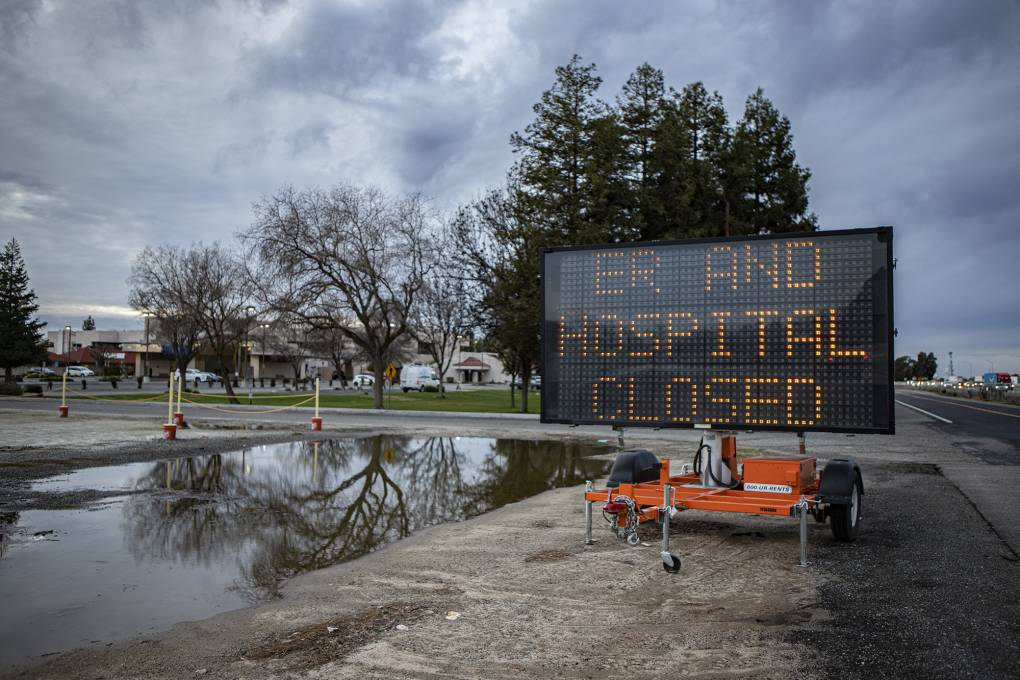
"caption": "A road sign announcing the closure of the Emergency Room and Madera Community Hospital outside the main entrance on Jan. 2, 2023.",
"description": null,
"title": "CalMattersHospitals",
"credit": "Larry Valenzuela/CalMatters via CatchLight Local",
"status": "inherit",
"altTag": "An electric road sign on a gloomy, wet day reads, \"ER and Hospital Closed.\" A hospital is seen in the background with several white vehicles in the parking lot.",
"isLoading": false,
"fetchFailed": false
},
"news_11959099": {
"type": "attachments",
"id": "news_11959099",
"meta": {
"index": "attachments_1716263798",
"site": "news",
"id": "11959099",
"found": true
},
"parent": 0,
"imgSizes": {
"twentyfourteen-full-width": {
"file": "https://ww2.kqed.org/app/uploads/sites/10/2023/08/230824-Diablo-Canyon-Nuclear-Power-Plant-Getty-GR-KQED-1038x576.jpg",
"width": 1038,
"mimeType": "image/jpeg",
"height": 576
},
"thumbnail": {
"file": "https://ww2.kqed.org/app/uploads/sites/10/2023/08/230824-Diablo-Canyon-Nuclear-Power-Plant-Getty-GR-KQED-160x107.jpg",
"width": 160,
"mimeType": "image/jpeg",
"height": 107
},
"post-thumbnail": {
"file": "https://ww2.kqed.org/app/uploads/sites/10/2023/08/230824-Diablo-Canyon-Nuclear-Power-Plant-Getty-GR-KQED-672x372.jpg",
"width": 672,
"mimeType": "image/jpeg",
"height": 372
},
"kqedFullSize": {
"file": "https://ww2.kqed.org/app/uploads/sites/10/2023/08/230824-Diablo-Canyon-Nuclear-Power-Plant-Getty-GR-KQED.jpg",
"width": 2000,
"height": 1333
},
"large": {
"file": "https://ww2.kqed.org/app/uploads/sites/10/2023/08/230824-Diablo-Canyon-Nuclear-Power-Plant-Getty-GR-KQED-1020x680.jpg",
"width": 1020,
"mimeType": "image/jpeg",
"height": 680
},
"1536x1536": {
"file": "https://ww2.kqed.org/app/uploads/sites/10/2023/08/230824-Diablo-Canyon-Nuclear-Power-Plant-Getty-GR-KQED-1536x1024.jpg",
"width": 1536,
"mimeType": "image/jpeg",
"height": 1024
},
"full-width": {
"file": "https://ww2.kqed.org/app/uploads/sites/10/2023/08/230824-Diablo-Canyon-Nuclear-Power-Plant-Getty-GR-KQED-1920x1280.jpg",
"width": 1920,
"mimeType": "image/jpeg",
"height": 1280
},
"medium": {
"file": "https://ww2.kqed.org/app/uploads/sites/10/2023/08/230824-Diablo-Canyon-Nuclear-Power-Plant-Getty-GR-KQED-800x533.jpg",
"width": 800,
"mimeType": "image/jpeg",
"height": 533
}
},
"publishDate": 1692919427,
"modified": 1692921548,
"caption": "Aerial view of the Diablo Canyon Power Plant, the only operational nuclear plant left in California. It's operated by Pacific Gas and Electric Company and was commissioned in 1985.",
"description": null,
"title": "California To Decommision Nuclear Power Plant",
"credit": "George Rose/Getty Images",
"status": "inherit",
"altTag": "A large industrial facility sits on the edge of the ocean.",
"isLoading": false,
"fetchFailed": false
},
"news_11958826": {
"type": "attachments",
"id": "news_11958826",
"meta": {
"index": "attachments_1716263798",
"site": "news",
"id": "11958826",
"found": true
},
"parent": 0,
"imgSizes": {
"twentyfourteen-full-width": {
"file": "https://ww2.kqed.org/app/uploads/sites/10/2023/08/230822-HOME-HEALTHCARE-WORKER-LM-KQED-1038x576.jpg",
"width": 1038,
"mimeType": "image/jpeg",
"height": 576
},
"thumbnail": {
"file": "https://ww2.kqed.org/app/uploads/sites/10/2023/08/230822-HOME-HEALTHCARE-WORKER-LM-KQED-160x107.jpg",
"width": 160,
"mimeType": "image/jpeg",
"height": 107
},
"post-thumbnail": {
"file": "https://ww2.kqed.org/app/uploads/sites/10/2023/08/230822-HOME-HEALTHCARE-WORKER-LM-KQED-672x372.jpg",
"width": 672,
"mimeType": "image/jpeg",
"height": 372
},
"kqedFullSize": {
"file": "https://ww2.kqed.org/app/uploads/sites/10/2023/08/230822-HOME-HEALTHCARE-WORKER-LM-KQED.jpg",
"width": 2000,
"height": 1333
},
"large": {
"file": "https://ww2.kqed.org/app/uploads/sites/10/2023/08/230822-HOME-HEALTHCARE-WORKER-LM-KQED-1020x680.jpg",
"width": 1020,
"mimeType": "image/jpeg",
"height": 680
},
"1536x1536": {
"file": "https://ww2.kqed.org/app/uploads/sites/10/2023/08/230822-HOME-HEALTHCARE-WORKER-LM-KQED-1536x1024.jpg",
"width": 1536,
"mimeType": "image/jpeg",
"height": 1024
},
"full-width": {
"file": "https://ww2.kqed.org/app/uploads/sites/10/2023/08/230822-HOME-HEALTHCARE-WORKER-LM-KQED-1920x1280.jpg",
"width": 1920,
"mimeType": "image/jpeg",
"height": 1280
},
"medium": {
"file": "https://ww2.kqed.org/app/uploads/sites/10/2023/08/230822-HOME-HEALTHCARE-WORKER-LM-KQED-800x533.jpg",
"width": 800,
"mimeType": "image/jpeg",
"height": 533
}
},
"publishDate": 1692740342,
"modified": 1692818481,
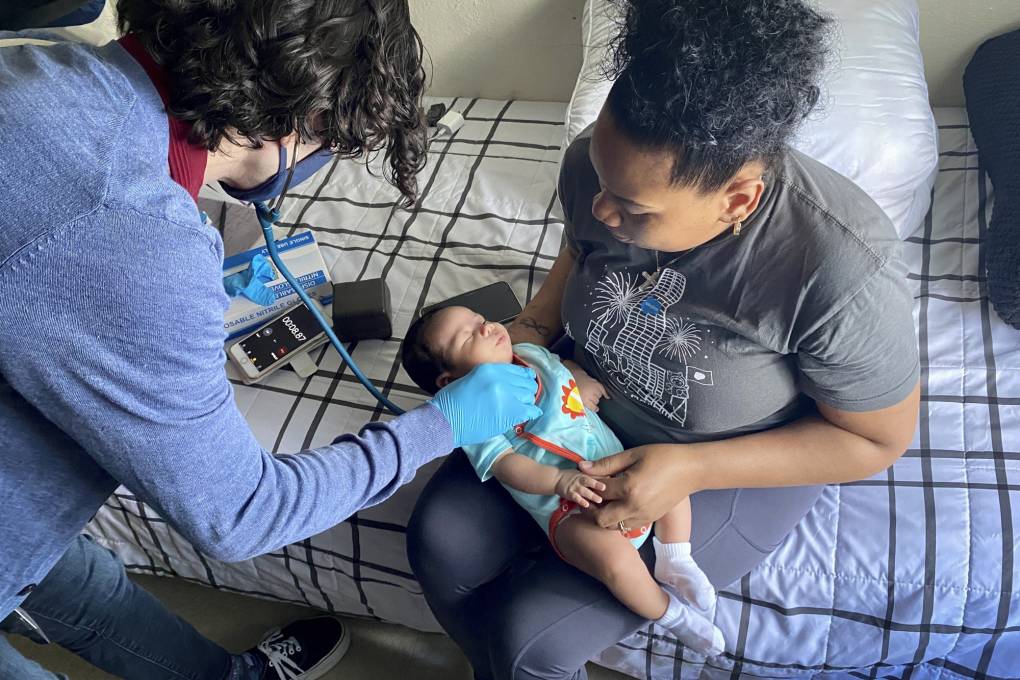
"caption": "Alvin Vallejo, a public health nurse in San Francisco, checks the heartbeat of Ibrahim Jose as his mother Dayanis holds him at his 6 week check-up.",
"description": null,
"title": "230822-HOME HEALTHCARE WORKER-LM-KQED",
"credit": "Lesley McClurg/KQED",
"status": "inherit",
"altTag": "A person cradles a baby in their lap while sitting on a bed as a person wearing medical gloves uses a stethoscope on the baby.",
"isLoading": false,
"fetchFailed": false
},
"news_11958774": {
"type": "attachments",
"id": "news_11958774",
"meta": {
"index": "attachments_1716263798",
"site": "news",
"id": "11958774",
"found": true
},
"parent": 0,
"imgSizes": {
"twentyfourteen-full-width": {
"file": "https://ww2.kqed.org/app/uploads/sites/10/2023/08/CMFarmworkers01-1038x576.jpg",
"width": 1038,
"mimeType": "image/jpeg",
"height": 576
},
"thumbnail": {
"file": "https://ww2.kqed.org/app/uploads/sites/10/2023/08/CMFarmworkers01-160x107.jpg",
"width": 160,
"mimeType": "image/jpeg",
"height": 107
},
"post-thumbnail": {
"file": "https://ww2.kqed.org/app/uploads/sites/10/2023/08/CMFarmworkers01-672x372.jpg",
"width": 672,
"mimeType": "image/jpeg",
"height": 372
},
"kqedFullSize": {
"file": "https://ww2.kqed.org/app/uploads/sites/10/2023/08/CMFarmworkers01.jpg",
"width": 2000,
"height": 1334
},
"large": {
"file": "https://ww2.kqed.org/app/uploads/sites/10/2023/08/CMFarmworkers01-1020x680.jpg",
"width": 1020,
"mimeType": "image/jpeg",
"height": 680
},
"1536x1536": {
"file": "https://ww2.kqed.org/app/uploads/sites/10/2023/08/CMFarmworkers01-1536x1025.jpg",
"width": 1536,
"mimeType": "image/jpeg",
"height": 1025
},
"full-width": {
"file": "https://ww2.kqed.org/app/uploads/sites/10/2023/08/CMFarmworkers01-1920x1281.jpg",
"width": 1920,
"mimeType": "image/jpeg",
"height": 1281
},
"medium": {
"file": "https://ww2.kqed.org/app/uploads/sites/10/2023/08/CMFarmworkers01-800x534.jpg",
"width": 800,
"mimeType": "image/jpeg",
"height": 534
}
},
"publishDate": 1692726230,
"modified": 1692733809,
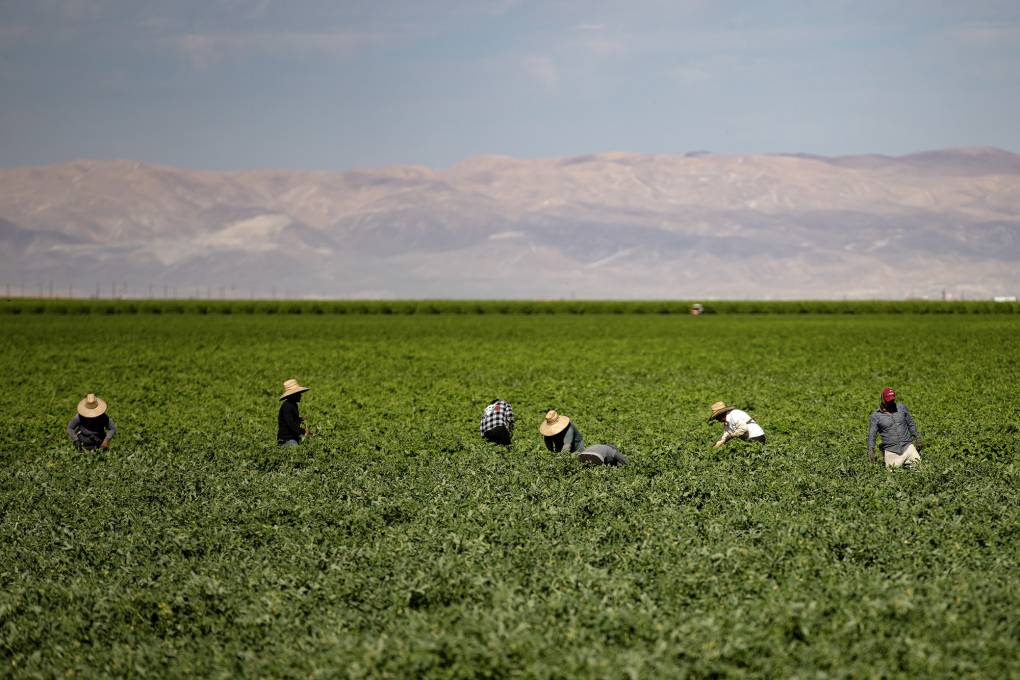
"caption": "Farmworkers work on a field outside of Bakersfield in Kern County on July 25, 2023. ",
"description": null,
"title": "CMFarmworkers01",
"credit": "Larry Valenzuela/CalMatters via CatchLight Local",
"status": "inherit",
"altTag": "Seven farmworkers are seen bent over in a field of green produce that comes up to their waists. It's a bright, sunny day. Many of the workers are wearing large, straw hats and long-sleeved clothing.",
"isLoading": false,
"fetchFailed": false
},
"news_11958553": {
"type": "attachments",
"id": "news_11958553",
"meta": {
"index": "attachments_1716263798",
"site": "news",
"id": "11958553",
"found": true
},
"parent": 0,
"imgSizes": {
"twentyfourteen-full-width": {
"file": "https://ww2.kqed.org/app/uploads/sites/10/2023/08/230818-LATINA-DOCTOR-CLINICA-GETTY-GM-KQED-1038x576.jpg",
"width": 1038,
"mimeType": "image/jpeg",
"height": 576
},
"thumbnail": {
"file": "https://ww2.kqed.org/app/uploads/sites/10/2023/08/230818-LATINA-DOCTOR-CLINICA-GETTY-GM-KQED-160x107.jpg",
"width": 160,
"mimeType": "image/jpeg",
"height": 107
},
"post-thumbnail": {
"file": "https://ww2.kqed.org/app/uploads/sites/10/2023/08/230818-LATINA-DOCTOR-CLINICA-GETTY-GM-KQED-672x372.jpg",
"width": 672,
"mimeType": "image/jpeg",
"height": 372
},
"kqedFullSize": {
"file": "https://ww2.kqed.org/app/uploads/sites/10/2023/08/230818-LATINA-DOCTOR-CLINICA-GETTY-GM-KQED.jpg",
"width": 2000,
"height": 1333
},
"large": {
"file": "https://ww2.kqed.org/app/uploads/sites/10/2023/08/230818-LATINA-DOCTOR-CLINICA-GETTY-GM-KQED-1020x680.jpg",
"width": 1020,
"mimeType": "image/jpeg",
"height": 680
},
"1536x1536": {
"file": "https://ww2.kqed.org/app/uploads/sites/10/2023/08/230818-LATINA-DOCTOR-CLINICA-GETTY-GM-KQED-1536x1024.jpg",
"width": 1536,
"mimeType": "image/jpeg",
"height": 1024
},
"full-width": {
"file": "https://ww2.kqed.org/app/uploads/sites/10/2023/08/230818-LATINA-DOCTOR-CLINICA-GETTY-GM-KQED-1920x1280.jpg",
"width": 1920,
"mimeType": "image/jpeg",
"height": 1280
},
"medium": {
"file": "https://ww2.kqed.org/app/uploads/sites/10/2023/08/230818-LATINA-DOCTOR-CLINICA-GETTY-GM-KQED-800x533.jpg",
"width": 800,
"mimeType": "image/jpeg",
"height": 533
}
},
"publishDate": 1692380234,
"modified": 1692382285,
"caption": "A patient receives the Moderna COVID-19 vaccine at Clinica Romero in Los Angeles on Feb. 6, 2021. ",
"description": null,
"title": "Clinica Monsenor Romerto vaccine clinic - during the Coronavirus pandemic",
"credit": "Genaro Molina/Los Angeles Times via Getty Images",
"status": "inherit",
"altTag": "A person in personal protective equipment gives a vaccine to another person in a brightly lit room.",
"isLoading": false,
"fetchFailed": false
},
"news_11958021": {
"type": "attachments",
"id": "news_11958021",
"meta": {
"index": "attachments_1716263798",
"site": "news",
"id": "11958021",
"found": true
},
"parent": 0,
"imgSizes": {
"twentyfourteen-full-width": {
"file": "https://ww2.kqed.org/app/uploads/sites/10/2023/08/CalMattersDelta01-1038x576.jpg",
"width": 1038,
"mimeType": "image/jpeg",
"height": 576
},
"thumbnail": {
"file": "https://ww2.kqed.org/app/uploads/sites/10/2023/08/CalMattersDelta01-160x107.jpg",
"width": 160,
"mimeType": "image/jpeg",
"height": 107
},
"post-thumbnail": {
"file": "https://ww2.kqed.org/app/uploads/sites/10/2023/08/CalMattersDelta01-672x372.jpg",
"width": 672,
"mimeType": "image/jpeg",
"height": 372
},
"kqedFullSize": {
"file": "https://ww2.kqed.org/app/uploads/sites/10/2023/08/CalMattersDelta01.jpg",
"width": 2000,
"height": 1333
},
"large": {
"file": "https://ww2.kqed.org/app/uploads/sites/10/2023/08/CalMattersDelta01-1020x680.jpg",
"width": 1020,
"mimeType": "image/jpeg",
"height": 680
},
"1536x1536": {
"file": "https://ww2.kqed.org/app/uploads/sites/10/2023/08/CalMattersDelta01-1536x1024.jpg",
"width": 1536,
"mimeType": "image/jpeg",
"height": 1024
},
"full-width": {
"file": "https://ww2.kqed.org/app/uploads/sites/10/2023/08/CalMattersDelta01-1920x1280.jpg",
"width": 1920,
"mimeType": "image/jpeg",
"height": 1280
},
"medium": {
"file": "https://ww2.kqed.org/app/uploads/sites/10/2023/08/CalMattersDelta01-800x533.jpg",
"width": 800,
"mimeType": "image/jpeg",
"height": 533
}
},
"publishDate": 1691775880,
"modified": 1691776353,
"caption": "The Sacramento-San Joaquin River Delta on June 22, 2023. ",
"description": null,
"title": "CalMattersDelta01",
"credit": "Miguel Gutierrez Jr./CalMatters",
"status": "inherit",
"altTag": "An aerial shot of the Sacramento-San Joaquin River Delta.",
"isLoading": false,
"fetchFailed": false
},
"news_11956784": {
"type": "attachments",
"id": "news_11956784",
"meta": {
"index": "attachments_1716263798",
"site": "news",
"id": "11956784",
"found": true
},
"parent": 11957801,
"imgSizes": {
"twentyfourteen-full-width": {
"file": "https://ww2.kqed.org/app/uploads/sites/10/2023/07/230727-Oakland-Diocese-Sexual-Abuse-MHN-05-KQED-1038x576.jpg",
"width": 1038,
"mimeType": "image/jpeg",
"height": 576
},
"thumbnail": {
"file": "https://ww2.kqed.org/app/uploads/sites/10/2023/07/230727-Oakland-Diocese-Sexual-Abuse-MHN-05-KQED-160x107.jpg",
"width": 160,
"mimeType": "image/jpeg",
"height": 107
},
"post-thumbnail": {
"file": "https://ww2.kqed.org/app/uploads/sites/10/2023/07/230727-Oakland-Diocese-Sexual-Abuse-MHN-05-KQED-672x372.jpg",
"width": 672,
"mimeType": "image/jpeg",
"height": 372
},
"kqedFullSize": {
"file": "https://ww2.kqed.org/app/uploads/sites/10/2023/07/230727-Oakland-Diocese-Sexual-Abuse-MHN-05-KQED.jpg",
"width": 2000,
"height": 1333
},
"large": {
"file": "https://ww2.kqed.org/app/uploads/sites/10/2023/07/230727-Oakland-Diocese-Sexual-Abuse-MHN-05-KQED-1020x680.jpg",
"width": 1020,
"mimeType": "image/jpeg",
"height": 680
},
"1536x1536": {
"file": "https://ww2.kqed.org/app/uploads/sites/10/2023/07/230727-Oakland-Diocese-Sexual-Abuse-MHN-05-KQED-1536x1024.jpg",
"width": 1536,
"mimeType": "image/jpeg",
"height": 1024
},
"full-width": {
"file": "https://ww2.kqed.org/app/uploads/sites/10/2023/07/230727-Oakland-Diocese-Sexual-Abuse-MHN-05-KQED-1920x1280.jpg",
"width": 1920,
"mimeType": "image/jpeg",
"height": 1280
},
"medium": {
"file": "https://ww2.kqed.org/app/uploads/sites/10/2023/07/230727-Oakland-Diocese-Sexual-Abuse-MHN-05-KQED-800x533.jpg",
"width": 800,
"mimeType": "image/jpeg",
"height": 533
}
},
"publishDate": 1690565331,
"modified": 1691625614,
"caption": "The Cathedral of Christ the Light and Catholic Diocese of Oakland in Oakland on July 28, 2023.",
"description": null,
"title": "230727-Oakland Diocese Sexual Abuse-MHN-05-KQED",
"credit": "Martin do Nascimento/KQED",
"status": "inherit",
"altTag": "Modern lettering on a concrete wall reading The Cathedral of Christ the Light: Catholic Diocese of Oakland.\"",
"isLoading": false,
"fetchFailed": false
},
"news_11957423": {
"type": "attachments",
"id": "news_11957423",
"meta": {
"index": "attachments_1716263798",
"site": "news",
"id": "11957423",
"found": true
},
"title": "RS67658_230802-CityHallSanFrancisco-16-BL-KQED",
"publishDate": 1691170996,
"status": "inherit",
"parent": 12072739,
"modified": 1770680128,
"caption": "San Francisco City Hall on Aug. 2, 2023. Mayor London Breed signed a $14.6 billion budget on July 26 after weeks of negotiations with the Board of Supervisors.",
"credit": "Beth LaBerge/KQED",
"altTag": "The dome of an ornate building.",
"description": null,
"imgSizes": {
"medium": {
"file": "https://cdn.kqed.org/wp-content/uploads/sites/10/2023/08/RS67658_230802-CityHallSanFrancisco-16-BL-KQED-800x533.jpg",
"width": 800,
"height": 533,
"mimeType": "image/jpeg"
},
"large": {
"file": "https://cdn.kqed.org/wp-content/uploads/sites/10/2023/08/RS67658_230802-CityHallSanFrancisco-16-BL-KQED-1020x680.jpg",
"width": 1020,
"height": 680,
"mimeType": "image/jpeg"
},
"thumbnail": {
"file": "https://cdn.kqed.org/wp-content/uploads/sites/10/2023/08/RS67658_230802-CityHallSanFrancisco-16-BL-KQED-160x107.jpg",
"width": 160,
"height": 107,
"mimeType": "image/jpeg"
},
"1536x1536": {
"file": "https://cdn.kqed.org/wp-content/uploads/sites/10/2023/08/RS67658_230802-CityHallSanFrancisco-16-BL-KQED-1536x1024.jpg",
"width": 1536,
"height": 1024,
"mimeType": "image/jpeg"
},
"post-thumbnail": {
"file": "https://cdn.kqed.org/wp-content/uploads/sites/10/2023/08/RS67658_230802-CityHallSanFrancisco-16-BL-KQED-672x372.jpg",
"width": 672,
"height": 372,
"mimeType": "image/jpeg"
},
"twentyfourteen-full-width": {
"file": "https://cdn.kqed.org/wp-content/uploads/sites/10/2023/08/RS67658_230802-CityHallSanFrancisco-16-BL-KQED-1038x576.jpg",
"width": 1038,
"height": 576,
"mimeType": "image/jpeg"
},
"full-width": {
"file": "https://cdn.kqed.org/wp-content/uploads/sites/10/2023/08/RS67658_230802-CityHallSanFrancisco-16-BL-KQED-1920x1280.jpg",
"width": 1920,
"height": 1280,
"mimeType": "image/jpeg"
},
"kqedFullSize": {
"file": "https://cdn.kqed.org/wp-content/uploads/sites/10/2023/08/RS67658_230802-CityHallSanFrancisco-16-BL-KQED.jpg",
"width": 2000,
"height": 1333
}
},
"isLoading": false,
"fetchFailed": false
},
"news_11957564": {
"type": "attachments",
"id": "news_11957564",
"meta": {
"index": "attachments_1716263798",
"site": "news",
"id": "11957564",
"found": true
},
"parent": 0,
"imgSizes": {
"twentyfourteen-full-width": {
"file": "https://ww2.kqed.org/app/uploads/sites/10/2023/08/RS67541_20230801-SJCityHall-21-JY-KQED-1038x576.jpg",
"width": 1038,
"mimeType": "image/jpeg",
"height": 576
},
"thumbnail": {
"file": "https://ww2.kqed.org/app/uploads/sites/10/2023/08/RS67541_20230801-SJCityHall-21-JY-KQED-160x107.jpg",
"width": 160,
"mimeType": "image/jpeg",
"height": 107
},
"post-thumbnail": {
"file": "https://ww2.kqed.org/app/uploads/sites/10/2023/08/RS67541_20230801-SJCityHall-21-JY-KQED-672x372.jpg",
"width": 672,
"mimeType": "image/jpeg",
"height": 372
},
"kqedFullSize": {
"file": "https://ww2.kqed.org/app/uploads/sites/10/2023/08/RS67541_20230801-SJCityHall-21-JY-KQED.jpg",
"width": 2000,
"height": 1333
},
"large": {
"file": "https://ww2.kqed.org/app/uploads/sites/10/2023/08/RS67541_20230801-SJCityHall-21-JY-KQED-1020x680.jpg",
"width": 1020,
"mimeType": "image/jpeg",
"height": 680
},
"1536x1536": {
"file": "https://ww2.kqed.org/app/uploads/sites/10/2023/08/RS67541_20230801-SJCityHall-21-JY-KQED-1536x1024.jpg",
"width": 1536,
"mimeType": "image/jpeg",
"height": 1024
},
"full-width": {
"file": "https://ww2.kqed.org/app/uploads/sites/10/2023/08/RS67541_20230801-SJCityHall-21-JY-KQED-1920x1280.jpg",
"width": 1920,
"mimeType": "image/jpeg",
"height": 1280
},
"medium": {
"file": "https://ww2.kqed.org/app/uploads/sites/10/2023/08/RS67541_20230801-SJCityHall-21-JY-KQED-800x533.jpg",
"width": 800,
"mimeType": "image/jpeg",
"height": 533
}
},
"publishDate": 1691431362,
"modified": 1691514274,
"caption": "City Hall in San José on Tuesday, Aug. 1, 2023.",
"description": null,
"title": "RS67541_20230801-SJCityHall-21-JY-KQED",
"credit": "Juliana Yamada/KQED",
"status": "inherit",
"altTag": "A large modern building beside an open courtyard.",
"isLoading": false,
"fetchFailed": false
},
"news_11957165": {
"type": "attachments",
"id": "news_11957165",
"meta": {
"index": "attachments_1716263798",
"site": "news",
"id": "11957165",
"found": true
},
"parent": 0,
"imgSizes": {
"twentyfourteen-full-width": {
"file": "https://ww2.kqed.org/app/uploads/sites/10/2023/08/RS67586_230728-WildfireSantaRosaHousing-53-BL-KQED-1038x576.jpg",
"width": 1038,
"mimeType": "image/jpeg",
"height": 576
},
"thumbnail": {
"file": "https://ww2.kqed.org/app/uploads/sites/10/2023/08/RS67586_230728-WildfireSantaRosaHousing-53-BL-KQED-160x107.jpg",
"width": 160,
"mimeType": "image/jpeg",
"height": 107
},
"post-thumbnail": {
"file": "https://ww2.kqed.org/app/uploads/sites/10/2023/08/RS67586_230728-WildfireSantaRosaHousing-53-BL-KQED-672x372.jpg",
"width": 672,
"mimeType": "image/jpeg",
"height": 372
},
"kqedFullSize": {
"file": "https://ww2.kqed.org/app/uploads/sites/10/2023/08/RS67586_230728-WildfireSantaRosaHousing-53-BL-KQED.jpg",
"width": 2000,
"height": 1333
},
"large": {
"file": "https://ww2.kqed.org/app/uploads/sites/10/2023/08/RS67586_230728-WildfireSantaRosaHousing-53-BL-KQED-1020x680.jpg",
"width": 1020,
"mimeType": "image/jpeg",
"height": 680
},
"1536x1536": {
"file": "https://ww2.kqed.org/app/uploads/sites/10/2023/08/RS67586_230728-WildfireSantaRosaHousing-53-BL-KQED-1536x1024.jpg",
"width": 1536,
"mimeType": "image/jpeg",
"height": 1024
},
"full-width": {
"file": "https://ww2.kqed.org/app/uploads/sites/10/2023/08/RS67586_230728-WildfireSantaRosaHousing-53-BL-KQED-1920x1280.jpg",
"width": 1920,
"mimeType": "image/jpeg",
"height": 1280
},
"medium": {
"file": "https://ww2.kqed.org/app/uploads/sites/10/2023/08/RS67586_230728-WildfireSantaRosaHousing-53-BL-KQED-800x533.jpg",
"width": 800,
"mimeType": "image/jpeg",
"height": 533
}
},
"publishDate": 1690993097,
"modified": 1691091614,
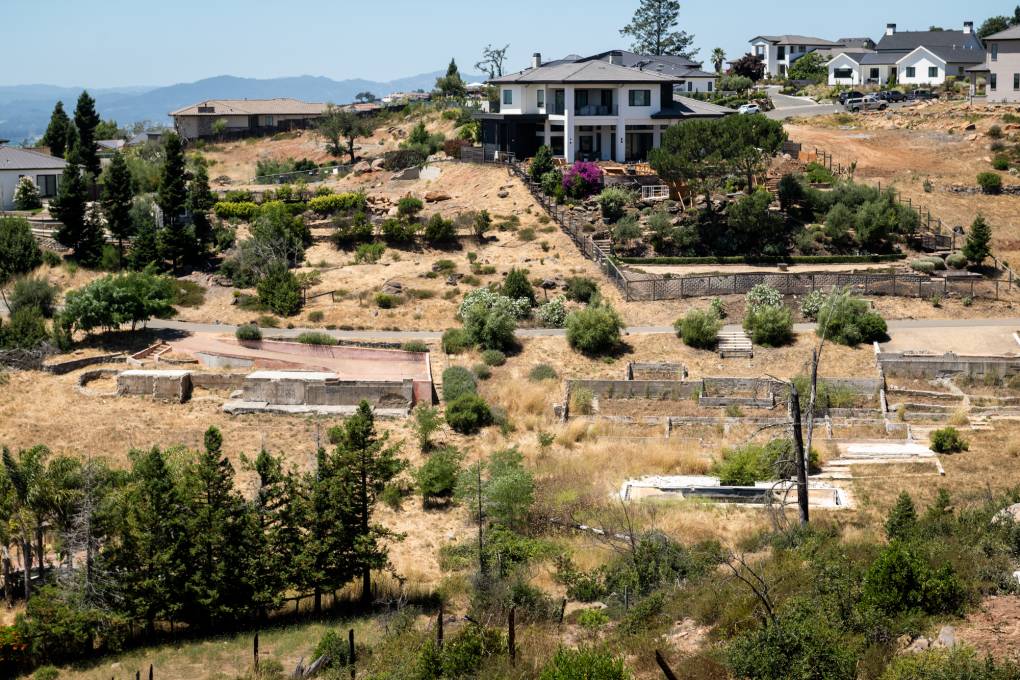
"caption": "A foundation for a home can be seen in the Fountaingrove area of Santa Rosa on July 28, 2023. Fountaingrove was hit hard by the Tubbs Fire in October 2017. In the single-family home market, large carriers, including Allstate, State Farm, Farmers and AIG, cited economic conditions and the increasing frequency and severity of weather events such as floods and wildfires as reasons for declining to sell new policies in the state.",
"description": null,
"title": "RS67586_230728-WildfireSantaRosaHousing-53-BL-KQED",
"credit": "Beth LaBerge/KQED",
"status": "inherit",
"altTag": "A hillside with the exposed foundations of several destroyed homes and a handful of newly built houses.",
"isLoading": false,
"fetchFailed": false
}
},
"audioPlayerReducer": {
"postId": "stream_live",
"isPaused": true,
"isPlaying": false,
"pfsActive": false,
"pledgeModalIsOpen": true,
"playerDrawerIsOpen": false,
"liveAudioPlayStartedAt": 0,
"liveAudioPlayContext": ""
},
"authorsReducer": {
"byline_news_11959302": {
"type": "authors",
"id": "byline_news_11959302",
"meta": {
"override": true
},
"slug": "byline_news_11959302",
"name": "\u003ca href=\"https://calmatters.org/author/jeanne-kuang/\">Jeanne Kuang\u003c/a>",
"isLoading": false
},
"byline_news_11959175": {
"type": "authors",
"id": "byline_news_11959175",
"meta": {
"override": true
},
"slug": "byline_news_11959175",
"name": "\u003ca href=\"https://calmatters.org/author/anaibarra/\">Ana B. Ibarra\u003c/a>",
"isLoading": false
},
"byline_news_11959091": {
"type": "authors",
"id": "byline_news_11959091",
"meta": {
"override": true
},
"slug": "byline_news_11959091",
"name": "\u003ca href=\"https://twitter.com/MichaelRBloodAP\">Michael R. Blood\u003c/a>\u003cbr>The Associated Press",
"isLoading": false
},
"byline_news_11958764": {
"type": "authors",
"id": "byline_news_11958764",
"meta": {
"override": true
},
"slug": "byline_news_11958764",
"name": "\u003ca href=\"https://calmatters.org/author/nicole-foy/\">Nicole Foy\u003c/a>",
"isLoading": false
},
"byline_news_11958011": {
"type": "authors",
"id": "byline_news_11958011",
"meta": {
"override": true
},
"slug": "byline_news_11958011",
"name": "\u003ca href=\"https://calmatters.org/author/rachel-becker/\">Rachel Becker\u003c/a>",
"isLoading": false
},
"gmarzorati": {
"type": "authors",
"id": "227",
"meta": {
"index": "authors_1716337520",
"id": "227",
"found": true
},
"name": "Guy Marzorati",
"firstName": "Guy",
"lastName": "Marzorati",
"slug": "gmarzorati",
"email": "gmarzorati@KQED.org",
"display_author_email": true,
"staff_mastheads": [
"news"
],
"title": "Correspondent",
"bio": "Guy Marzorati is a correspondent on KQED's California Politics and Government Desk, based in San Jose. A graduate of Santa Clara University, Guy joined KQED in 2013. He reports on state and local politics and produces KQED's digital voter guide.",
"avatar": "https://secure.gravatar.com/avatar/e7038b8dbfd55b104369b76b1cd0b9de?s=600&d=blank&r=g",
"twitter": "guymarzorati",
"facebook": null,
"instagram": null,
"linkedin": null,
"sites": [
{
"site": "",
"roles": [
"editor"
]
},
{
"site": "news",
"roles": [
"editor"
]
},
{
"site": "science",
"roles": [
"editor"
]
},
{
"site": "forum",
"roles": [
"editor"
]
},
{
"site": "elections",
"roles": [
"editor"
]
},
{
"site": "liveblog",
"roles": [
"editor"
]
}
],
"headData": {
"title": "Guy Marzorati | KQED",
"description": "Correspondent",
"ogImgSrc": "https://secure.gravatar.com/avatar/e7038b8dbfd55b104369b76b1cd0b9de?s=600&d=blank&r=g",
"twImgSrc": "https://secure.gravatar.com/avatar/e7038b8dbfd55b104369b76b1cd0b9de?s=600&d=blank&r=g"
},
"isLoading": false,
"link": "/author/gmarzorati"
},
"lesleymcclurg": {
"type": "authors",
"id": "11229",
"meta": {
"index": "authors_1716337520",
"id": "11229",
"found": true
},
"name": "Lesley McClurg",
"firstName": "Lesley",
"lastName": "McClurg",
"slug": "lesleymcclurg",
"email": "lmcclurg@KQED.org",
"display_author_email": false,
"staff_mastheads": [
"news",
"science"
],
"title": "KQED Health Correspondent",
"bio": "Lesley McClurg is a health correspondent and fill-in host whose work is regularly rebroadcast on NPR and PBS programs. She’s earned multiple regional Emmy awards, a national and a regional Edward R. Murrow award, and was named Best Beat Reporter by the Association of Health Care Journalists. The Society of Professional Journalists has recognized her work several times, and the Society of Environmental Journalists spotlighted her coverage of California’s historic drought.\r\n\r\nBefore joining KQED in 2016, Lesley covered food and sustainability for Capital Public Radio, environmental issues for Colorado Public Radio, and reported for KUOW and KCTS 9 in Seattle. Away from the newsroom, she loves skiing with her daughter, mountain biking with her partner, and playing with Ollie, the family’s goldendoodle. On deadline, she runs almost entirely on chocolate chips.\r\n\r\n ",
"avatar": "https://secure.gravatar.com/avatar/bab49e972ea10c774fe0f5e29dba1722b158f7c0d58a360923d1389d380b2978?s=600&d=blank&r=g",
"twitter": "lesleywmcclurg",
"bluesky": null,
"facebook": null,
"instagram": null,
"linkedin": null,
"sites": [
{
"site": "arts",
"roles": [
"author"
]
},
{
"site": "news",
"roles": [
"editor"
]
},
{
"site": "futureofyou",
"roles": [
"editor"
]
},
{
"site": "stateofhealth",
"roles": [
"author"
]
},
{
"site": "science",
"roles": [
"editor"
]
},
{
"site": "quest",
"roles": [
"subscriber"
]
},
{
"site": "forum",
"roles": [
"administrator"
]
},
{
"site": "liveblog",
"roles": [
"author"
]
}
],
"headData": {
"title": "Lesley McClurg | KQED",
"description": "KQED Health Correspondent",
"ogImgSrc": "https://secure.gravatar.com/avatar/bab49e972ea10c774fe0f5e29dba1722b158f7c0d58a360923d1389d380b2978?s=600&d=blank&r=g",
"twImgSrc": "https://secure.gravatar.com/avatar/bab49e972ea10c774fe0f5e29dba1722b158f7c0d58a360923d1389d380b2978?s=600&d=blank&r=g"
},
"isLoading": false,
"link": "/author/lesleymcclurg"
},
"ahall": {
"type": "authors",
"id": "11490",
"meta": {
"index": "authors_1716337520",
"id": "11490",
"found": true
},
"name": "Alex Hall",
"firstName": "Alex",
"lastName": "Hall",
"slug": "ahall",
"email": "ahall@kqed.org",
"display_author_email": false,
"staff_mastheads": [
"news"
],
"title": "KQED Enterprise & Accountability Reporter",
"bio": "Alex Hall is KQED's Enterprise and Accountability Reporter. She previously covered the Central Valley for five years from KQED's bureau in Fresno. Before joining KQED, Alex was an investigative reporting fellow at Wisconsin Public Radio and the Wisconsin Center for Investigative Journalism. She has also worked as a bilingual producer for NPR's investigative unit and freelance video producer for Reuters TV on the Latin America desk. She got her start in journalism in South America, where she worked as a radio producer and Spanish-English translator for CNN Chile. Her documentary and investigation into the series of deadly COVID-19 outbreaks at Foster Farms won a national Edward R. Murrow award and was named an Investigative Reporters & Editors award finalist. Alex's reporting for Reveal on the Wisconsin dairy industry's reliance on undocumented immigrant labor was made into a film, Los Lecheros, which won a regional Edward R. Murrow award for best news documentary.",
"avatar": "https://secure.gravatar.com/avatar/defcbeb88b0bf591ff9af41f22644051?s=600&d=blank&r=g",
"twitter": "@chalexhall",
"facebook": null,
"instagram": null,
"linkedin": null,
"sites": [
{
"site": "news",
"roles": [
"editor"
]
},
{
"site": "liveblog",
"roles": [
"author"
]
}
],
"headData": {
"title": "Alex Hall | KQED",
"description": "KQED Enterprise & Accountability Reporter",
"ogImgSrc": "https://secure.gravatar.com/avatar/defcbeb88b0bf591ff9af41f22644051?s=600&d=blank&r=g",
"twImgSrc": "https://secure.gravatar.com/avatar/defcbeb88b0bf591ff9af41f22644051?s=600&d=blank&r=g"
},
"isLoading": false,
"link": "/author/ahall"
},
"ebaldassari": {
"type": "authors",
"id": "11652",
"meta": {
"index": "authors_1716337520",
"id": "11652",
"found": true
},
"name": "Erin Baldassari",
"firstName": "Erin",
"lastName": "Baldassari",
"slug": "ebaldassari",
"email": "ebaldassari@KQED.org",
"display_author_email": true,
"staff_mastheads": [
"news"
],
"title": "Staff Writer",
"bio": "Erin Baldassari covers housing for KQED. She's a former print journalist and most recently worked as the transportation reporter for the \u003cem>Mercury News\u003c/em> and \u003cem>East Bay Times. \u003c/em>There, she focused on how the Bay Area’s housing shortage has changed the way people move around the region. She also served on the \u003cem>East Bay Times\u003c/em>’ 2017 Pulitzer Prize-winning team for coverage of the Ghost Ship Fire in Oakland. Prior to that, Erin worked as a breaking news and general assignment reporter for a variety of outlets in the Bay Area and the greater Boston area. A Tufts University alumna, Erin grew up in the foothills of the Sierra Nevada mountains and in Sonoma County. She is a life-long KQED listener.",
"avatar": "https://secure.gravatar.com/avatar/660ce35d088ca54ad606d7e941abc652?s=600&d=mm&r=g",
"twitter": "e_baldi",
"facebook": null,
"instagram": null,
"linkedin": null,
"sites": [
{
"site": "news",
"roles": [
"edit_others_posts",
"editor"
]
},
{
"site": "science",
"roles": [
"editor"
]
},
{
"site": "liveblog",
"roles": [
"editor"
]
}
],
"headData": {
"title": "Erin Baldassari | KQED",
"description": "Staff Writer",
"ogImgSrc": "https://secure.gravatar.com/avatar/660ce35d088ca54ad606d7e941abc652?s=600&d=mm&r=g",
"twImgSrc": "https://secure.gravatar.com/avatar/660ce35d088ca54ad606d7e941abc652?s=600&d=mm&r=g"
},
"isLoading": false,
"link": "/author/ebaldassari"
},
"jrodriguez": {
"type": "authors",
"id": "11690",
"meta": {
"index": "authors_1716337520",
"id": "11690",
"found": true
},
"name": "Joe Fitzgerald Rodriguez",
"firstName": "Joe",
"lastName": "Fitzgerald Rodriguez",
"slug": "jrodriguez",
"email": "jrodriguez@kqed.org",
"display_author_email": true,
"staff_mastheads": [
"news"
],
"title": "Reporter and Producer",
"bio": "Joe Fitzgerald Rodriguez is a reporter and digital producer for KQED covering politics. Joe most recently wrote for the \u003cem>San Francisco Examiner\u003c/em> as a political columnist covering The City. He was raised in San Francisco and has spent his reporting career in his beloved, foggy, city by the bay. Joe was 12-years-old when he conducted his first interview in journalism, grilling former San Francisco Mayor Willie Brown for the Marina Middle School newspaper, \u003cem>The Penguin Press, \u003c/em>and he continues to report on the San Francisco Bay Area to this day.",
"avatar": "https://secure.gravatar.com/avatar/2247beb0564c1e9c62228d5649d2edac?s=600&d=blank&r=g",
"twitter": "FitztheReporter",
"facebook": null,
"instagram": "https://www.instagram.com/fitzthereporter/",
"linkedin": null,
"sites": [
{
"site": "",
"roles": [
"editor"
]
},
{
"site": "arts",
"roles": [
"editor"
]
},
{
"site": "news",
"roles": [
"editor"
]
},
{
"site": "science",
"roles": [
"editor"
]
},
{
"site": "elections",
"roles": [
"editor"
]
},
{
"site": "liveblog",
"roles": [
"editor"
]
}
],
"headData": {
"title": "Joe Fitzgerald Rodriguez | KQED",
"description": "Reporter and Producer",
"ogImgSrc": "https://secure.gravatar.com/avatar/2247beb0564c1e9c62228d5649d2edac?s=600&d=blank&r=g",
"twImgSrc": "https://secure.gravatar.com/avatar/2247beb0564c1e9c62228d5649d2edac?s=600&d=blank&r=g"
},
"isLoading": false,
"link": "/author/jrodriguez"
},
"agonzalez": {
"type": "authors",
"id": "11724",
"meta": {
"index": "authors_1716337520",
"id": "11724",
"found": true
},
"name": "Alexander Gonzalez",
"firstName": "Alexander",
"lastName": "Gonzalez",
"slug": "agonzalez",
"email": "AlexanderGonzalez@KQED.org",
"display_author_email": false,
"staff_mastheads": [
"news"
],
"title": "KQED Contributor",
"bio": null,
"avatar": "https://secure.gravatar.com/avatar/9e291ed34e154df4c662edf858b641d70b4859939bfe40be478408f9dfd057d2?s=600&d=blank&r=g",
"twitter": null,
"bluesky": null,
"facebook": null,
"instagram": null,
"linkedin": null,
"sites": [
{
"site": "arts",
"roles": [
"editor"
]
},
{
"site": "news",
"roles": [
"editor"
]
},
{
"site": "science",
"roles": [
"editor"
]
}
],
"headData": {
"title": "Alexander Gonzalez | KQED",
"description": "KQED Contributor",
"ogImgSrc": "https://secure.gravatar.com/avatar/9e291ed34e154df4c662edf858b641d70b4859939bfe40be478408f9dfd057d2?s=600&d=blank&r=g",
"twImgSrc": "https://secure.gravatar.com/avatar/9e291ed34e154df4c662edf858b641d70b4859939bfe40be478408f9dfd057d2?s=600&d=blank&r=g"
},
"isLoading": false,
"link": "/author/agonzalez"
},
"sjohnson": {
"type": "authors",
"id": "11840",
"meta": {
"index": "authors_1716337520",
"id": "11840",
"found": true
},
"name": "Sydney Johnson",
"firstName": "Sydney",
"lastName": "Johnson",
"slug": "sjohnson",
"email": "sjohnson@kqed.org",
"display_author_email": false,
"staff_mastheads": [
"news"
],
"title": "KQED Reporter",
"bio": "Sydney Johnson is a general assignment reporter at KQED. She previously reported on public health and city government at the San Francisco Examiner, and before that, she covered statewide education policy for EdSource. Her reporting has won multiple local, state and national awards. Sydney is a graduate of the University of California, Berkeley and lives in San Francisco.",
"avatar": "https://secure.gravatar.com/avatar/97855f2719b72ad6190b7c535fe642c8?s=600&d=blank&r=g",
"twitter": "sydneyfjohnson",
"facebook": null,
"instagram": null,
"linkedin": null,
"sites": [
{
"site": "news",
"roles": [
"editor"
]
}
],
"headData": {
"title": "Sydney Johnson | KQED",
"description": "KQED Reporter",
"ogImgSrc": "https://secure.gravatar.com/avatar/97855f2719b72ad6190b7c535fe642c8?s=600&d=blank&r=g",
"twImgSrc": "https://secure.gravatar.com/avatar/97855f2719b72ad6190b7c535fe642c8?s=600&d=blank&r=g"
},
"isLoading": false,
"link": "/author/sjohnson"
}
},
"pagesReducer": {
"news_tag_california": {
"type": "terms",
"id": "news_18538",
"meta": {
"index": "terms_1716263798",
"site": "news",
"id": "18538",
"score": 6.8457103
},
"featImg": null,
"name": "California",
"description": null,
"taxonomy": "tag",
"headData": {
"twImgId": null,
"twTitle": null,
"ogTitle": null,
"ogImgId": null,
"twDescription": null,
"description": null,
"title": "California Archives | KQED News",
"ogDescription": null
},
"ttid": 31,
"slug": "california",
"isLoading": false,
"title": "California",
"pageMeta": {
"site": "news",
"WpPageTemplate": "page-topic-editorial",
"currentPage": 150
},
"blocks": [
{
"blockName": "kqed/post-list",
"attrs": {
"layout": "cardArticle2",
"query": "posts/news?tag=california",
"seeMore": false,
"paginated": true,
"page": 150
}
},
{
"blockName": "kqed/ad"
}
]
}
},
"pfsSessionReducer": {},
"postsReducer": {
"stream_live": {
"type": "live",
"id": "stream_live",
"audioUrl": "https://streams.kqed.org/kqedradio",
"title": "Live Stream",
"excerpt": "Live Stream information currently unavailable.",
"link": "/radio",
"featImg": "",
"label": {
"name": "KQED Live",
"link": "/"
}
},
"stream_kqedNewscast": {
"type": "posts",
"id": "stream_kqedNewscast",
"audioUrl": "https://www.kqed.org/.stream/anon/radio/RDnews/newscast.mp3?_=1",
"title": "KQED Newscast",
"featImg": "",
"label": {
"name": "88.5 FM",
"link": "/"
}
},
"news_11959302": {
"type": "posts",
"id": "news_11959302",
"meta": {
"index": "posts_1716263798",
"site": "news",
"id": "11959302",
"score": null,
"sort": [
1693256756000
]
},
"guestAuthors": [],
"slug": "newsoms-care-courts-plan-limited",
"title": "California Families Can Expect Eligibility Limits in CARE Courts Rollout",
"publishDate": 1693256756,
"format": "standard",
"headTitle": "California Families Can Expect Eligibility Limits in CARE Courts Rollout | KQED",
"labelTerm": {},
"content": "\u003cp>Under the low hum of cold fluorescent lights in a nondescript office park in Orange County, dozens of Californians gathered to find out if they could get help for their loved ones under the state’s new \u003ca href=\"https://www.kqed.org/news/tag/care-court\">CARE Court\u003c/a> system.\u003c/p>\n\u003cp>Unless that loved one has a medical diagnosis specific to schizophrenia or some other psychotic disorders, the answer is probably not.\u003c/p>\n\u003cp>The mid-August meeting was a series held by a mental health advocacy group in Orange County with the officials in charge of implementing CARE Court, which starts in October, about what the new system can and cannot do.\u003c/p>\n\u003cp>“What we’re here to do is share the facts to help manage expectations,” said Veronica Kelley, Orange County’s chief of mental health and recovery services.\u003c/p>\n\u003cp>[ad fullwidth]\u003c/p>\n\u003cp>Community Assistance, Recovery, and Empowerment (CARE) Court was Gov. Gavin Newsom’s \u003ca href=\"https://calmatters.org/housing/2022/09/california-lawmakers-approved-care-court-what-comes-next/\">biggest legislative priority\u003c/a> last year — what state lawmakers and local politicians hoped would be one answer to California’s dual, overlapping homelessness and mental health crises.\u003c/p>\n\u003cp>The new program allows family members and others to petition someone with untreated mental illness into civil courts, where a judge would order a treatment plan and require county mental health departments to provide it.\u003c/p>\n\u003cp>Backed by millions in new state funds, it’s a mandate for those departments at a time when Californians have become increasingly frustrated with one of the most visible consequences of the state’s trenchant homelessness crisis — people with the most severe mental illnesses languishing on the streets. [pullquote size=\"medium\" align=\"right\" citation=\"Luke Bergmann, director, San Diego County Behavioral Health Services\"]‘[CARE Court’s] not going to be this thing that dramatically changes homelessness.’[/pullquote] Counties will be judged on how well they’re able to get people, who may be resistant to help, inside and into treatment, even though CARE Court is not exclusively a program targeting homelessness. Local mental health officials are warning it won’t be a panacea.\u003c/p>\n\u003cp>“There’s been a presumption — and this is, to be clear, driven by how the administration talked about CARE Court at the outset — a broad presumption that CARE Court is going to fix homelessness or have a broad impact on the nexus of homelessness and behavioral health,” said Luke Bergmann, director of the San Diego County Behavioral Health Services department.\u003c/p>\n\u003cp>In reality, he said, it’s “actually going to be a pretty small program. It’s not going to be this thing that dramatically changes homelessness.”\u003c/p>\n\u003cp>The program aims to walk the line between forced treatment and completely voluntary treatment for those with the gravest needs. Disability rights groups decry it as a violation of a person’s civil liberties, and a potential path \u003ca href=\"https://calmatters.org/justice/2021/07/britney-spears-conservatorship/\">toward conservatorship\u003c/a> and the loss of legal rights for those who repeatedly decline care.\u003c/p>\n\u003cfigure id=\"attachment_11959338\" class=\"wp-caption aligncenter\" style=\"max-width: 2000px\">\u003cimg loading=\"lazy\" decoding=\"async\" class=\"size-full wp-image-11959338\" src=\"https://ww2.kqed.org/app/uploads/sites/10/2023/08/CMCareCourts02.jpg\" alt='An office full of people sit at tables looking toward a woman with a purple blouse who speaks from a microphone and holding index cards in her other hand. A flat-screen television hangs above her head displaying \"What is in a CARE Agreement Plan?\"' width=\"2000\" height=\"1333\" srcset=\"https://cdn.kqed.org/wp-content/uploads/sites/10/2023/08/CMCareCourts02.jpg 2000w, https://cdn.kqed.org/wp-content/uploads/sites/10/2023/08/CMCareCourts02-800x533.jpg 800w, https://cdn.kqed.org/wp-content/uploads/sites/10/2023/08/CMCareCourts02-1020x680.jpg 1020w, https://cdn.kqed.org/wp-content/uploads/sites/10/2023/08/CMCareCourts02-160x107.jpg 160w, https://cdn.kqed.org/wp-content/uploads/sites/10/2023/08/CMCareCourts02-1536x1024.jpg 1536w, https://cdn.kqed.org/wp-content/uploads/sites/10/2023/08/CMCareCourts02-1920x1280.jpg 1920w\" sizes=\"auto, (max-width: 2000px) 100vw, 2000px\">\u003cfigcaption class=\"wp-caption-text\">Annette Mugrditchian, deputy director, speaks to community members about CARE Court at the Behavioral Health Training Center in Orange County. \u003ccite>(Lauren Justice/CalMatters)\u003c/cite>\u003c/figcaption>\u003c/figure>\n\u003cp>CARE Court \u003ca href=\"https://www.latimes.com/california/story/2023-01-26/disability-advocates-lawsuit-care-court-newsom-mental-illness-addiction-homeless\">survived a legal challenge\u003c/a> from Disability Rights California and other civil rights groups earlier this year. The group sat on a state working group for the program’s implementation and will monitor its rollout.\u003c/p>\n\u003cp>The program was welcomed by some family members of those with severe mental illness, who have complained that the state’s privacy and patients’ rights laws only allow their loved ones to \u003ca href=\"https://calmatters.org/projects/mentally-ill-forced-treatment-conservatorship-california-debate/\">be compelled into treatment \u003c/a>when in crisis, trapping them in a revolving door of short-term hospital stays and homelessness.\u003c/p>\n\u003cp>The first courts will open across the state in about a month. Seven counties, urban and rural, have been deep in preparation to be the first to roll out the program in October.\u003c/p>\n\u003cp>Los Angeles County, whose roughly 75,000-person unhoused population is the state’s largest, will start the program in December; the rest of the state will follow next year.\u003c/p>\n\u003cp>Those in the first group — San Francisco, Orange, San Diego, Riverside, Stanislaus, Glenn and Tuolumne counties — have had numerous questions to address, such as:\u003c/p>\n\u003cul>\n\u003cli>Who will find and serve respondents with their CARE Court petition if the respondent is unhoused?\u003c/li>\n\u003cli>How can county courts make the paperwork-heavy petition process easy for family members?\u003c/li>\n\u003cli>How many mental health treatment beds will counties need to add?\u003c/li>\n\u003cli>Where will people live after completing the court-ordered plans?\u003c/li>\n\u003c/ul>\n\u003cp>The state estimates between 7,000 and 12,000 people will qualify. They needn’t be homeless to receive the services, though many who qualify are likely to be unhoused. The state’s homeless population on any given night last year topped 171,000. [aside postID=news_11955211 hero='https://ww2.kqed.org/app/uploads/sites/10/2023/07/230707-ORANGE-COUNTY-CARE-COURT-AD-02-KQED-1020x680.jpg'] A UC San Francisco \u003ca href=\"https://homelessness.ucsf.edu/sites/default/files/2023-06/CASPEH_Report_62023.pdf\">study of homelessness statewide (PDF)\u003c/a> this year found that more than a quarter of unhoused people had been hospitalized at some point in their lives for a mental health problem; the homeless services authority in Los Angeles \u003ca href=\"https://www.lahsa.org/documents?id=3422-2019-greater-los-angeles-homeless-count-los-angeles-continuum-of-care.pdf\">has estimated (PDF)\u003c/a> a quarter of the city’s homeless adults has a severe mental illness. But CARE Court is targeted at an even narrower set of diagnoses and circumstances.\u003c/p>\n\u003cp>So counties are also playing a careful game of “level-setting,” Bergman said, “about what this thing will actually be.”\u003c/p>\n\u003cp>Still, local officials see the program as an opportunity to get more people into mental health care who haven’t been treated, before their condition deteriorates to the point of being put in conservatorships.\u003c/p>\n\u003cp>And the state’s Department of Health Care Services says it will be looking out for whether the program reduces emergency room visits, police encounters, short-term hospital stays and involuntary psychiatric holds — and whether it helps people find stable housing.\u003c/p>\n\u003ch2>Managing expectations\u003c/h2>\n\u003cp>One major uncertainty counties face, officials say, is even knowing how many cases they’ll get.\u003c/p>\n\u003cp>That’s in part because the law allows a wide range of people to petition for someone to be in CARE Court, including family members, roommates, health care providers, paramedics, hospital officials or homeless outreach workers.\u003c/p>\n\u003cp>But the list of actual conditions the program targets is narrow. It’s limited to schizophrenia and related illnesses. [pullquote size=\"medium\" align=\"right\" citation=\"Michelle Doty Cabrera, director, County Behavioral Health Directors Association\"]‘What the public thinks CARE Court is and what it is are definitely two very different things.’[/pullquote] That could disappoint those whose loved ones have other diagnoses — and create an unknown amount of work for counties if a flood of those family members file petitions. Behavioral health departments must evaluate each person if it’s not clear whether they qualify for the program.\u003c/p>\n\u003cp>San Diego County estimates it will get 1,000 petitions in the first year and establish court-ordered treatment plans for 250 people; the remainder likely will either not qualify or will agree to services voluntarily, Bergmann said. Orange County expects about 1,400 petitions and anywhere from 400 to 600 treatment plans.\u003c/p>\n\u003cp>Officials in Riverside County don’t even have an estimate, citing varying data there on the prevalence of schizophrenia in the unhoused population.\u003c/p>\n\u003cp>“We really think it’s unknowable,” said Marcus Cannon, the county’s deputy behavioral health director.\u003c/p>\n\u003cp>Counties want the state to help them manage public expectations. Both Kelley and Cannon said they’ve heard from local leaders who have floated having city workers file petitions for a wide swath of unhoused residents, to get them indoors.\u003c/p>\n\u003cp>“What the public thinks CARE Court is and what it is are definitely two very different things,” said Michelle Doty Cabrera, director of \u003ca href=\"https://www.cbhda.org/\">the County Behavioral Health Directors Association\u003c/a>.\u003c/p>\n\u003cp>In an emailed statement, state Department of Health Care Services spokesperson Sami Gallegos said that counties “are managing public relations among local elected officials and others” to spread the message about who the program is and isn’t for.\u003c/p>\n\u003cp>After learning of the narrow eligibility criteria at a community meeting in August, Nancy Beltran considered her options.\u003c/p>\n\u003cp>Beltran, of Anaheim, said she lives with a family member whose psychotic condition caused him to hit another relative in 2020, landing him in the hospital against his will. She said he’s refused treatment and doesn’t believe he’s sick. Another psychotic episode earlier this year didn’t qualify him for hospitalization, she said, because the symptoms weren’t as severe.\u003c/p>\n\u003cp>“I didn’t want it to get to that point,” she said. “I don’t want him to be incarcerated. I want it to be the least restrictive, least traumatic experience.”\u003c/p>\n\u003cp>She’s still not sure whether the program is for her family member, because they haven’t gotten a clear diagnosis, she said.\u003c/p>\n\u003cp>Beltran said she also wishes the program could help a friend, who is already enrolled in therapy sessions for diagnosed schizophrenia, find a place to live. Her friend’s condition, she said, deteriorates because he is unhoused, but he remains on waiting lists for housing. But CARE Court, she was disappointed to learn at the meetings, is only for those with untreated schizophrenia.\u003c/p>\n\u003ch2>Threading a needle\u003c/h2>\n\u003cp>Everyone involved in CARE Court in Orange County — from the judge who would ultimately order treatment to the public defender who will represent respondents to the behavioral health officials responsible for finding, diagnosing and treating them — had the same message for the public: The program will be voluntary.\u003c/p>\n\u003cp>Critics, however,\u003cstrong> \u003c/strong>contend that there’s no way a court process can be voluntary, since at some point there is a judge’s order. By law, counties must try at least twice to persuade a respondent to accept treatment before a judge orders it. Even then, the treatment plan, which can include therapy, medication and housing, doesn’t come with much enforcement. Medication can be ordered, but not forcibly administered.\u003c/p>\n\u003cfigure id=\"attachment_11959344\" class=\"wp-caption aligncenter\" style=\"max-width: 2000px\">\u003cimg loading=\"lazy\" decoding=\"async\" class=\"size-full wp-image-11959344\" src=\"https://ww2.kqed.org/app/uploads/sites/10/2023/08/CMCareCourts03.jpg\" alt=\"A bald man in a business suit speaks to a crowd as he sits at a table holding a microphone in his hand.\" width=\"2000\" height=\"1333\" srcset=\"https://cdn.kqed.org/wp-content/uploads/sites/10/2023/08/CMCareCourts03.jpg 2000w, https://cdn.kqed.org/wp-content/uploads/sites/10/2023/08/CMCareCourts03-800x533.jpg 800w, https://cdn.kqed.org/wp-content/uploads/sites/10/2023/08/CMCareCourts03-1020x680.jpg 1020w, https://cdn.kqed.org/wp-content/uploads/sites/10/2023/08/CMCareCourts03-160x107.jpg 160w, https://cdn.kqed.org/wp-content/uploads/sites/10/2023/08/CMCareCourts03-1536x1024.jpg 1536w, https://cdn.kqed.org/wp-content/uploads/sites/10/2023/08/CMCareCourts03-1920x1280.jpg 1920w\" sizes=\"auto, (max-width: 2000px) 100vw, 2000px\">\u003cfigcaption class=\"wp-caption-text\">Judge Ebrahim Baytieh speaks to community members about CARE Court, a new program that will be implemented in the fall. \u003ccite>(Lauren Justice/CalMatters)\u003c/cite>\u003c/figcaption>\u003c/figure>\n\u003cp>Over the course of a year, respondents will attend court hearings to see whether they’re adhering to the treatment and whether the county is providing it. Counties can be fined as much as $1,000 a day for not providing the care; if the person fails to complete treatment they could be considered for conservatorship.\u003c/p>\n\u003cp>But county officials stressed that’s not the goal.\u003c/p>\n\u003cp>“We have tried for 40 years in this wonderful country of ours to force people with mental illness” to be treated, Orange County Superior Court Judge Ebrahim Baytieh told family members at another community meeting, in a church in Cypress. “Study after study has found it doesn’t work. We all know there’s no magical answer. But we will be patient, and we will be persistent.”\u003c/p>\n\u003cp>Kelley’s department is training its workers and peer supporters — people who also have mental illness or have recovered who can help guide a respondent through CARE Court — in a well-regarded communication method \u003ca href=\"https://leapinstitute.org/about/#:~:text=LEAP%20(Listen%2DEmpathize%2DAgree,and%20the%20treatment%20they%20need.\">called LEAP\u003c/a> to persuade respondents to accept care. It will offer services to those in CARE Court under a “whatever it takes” approach, whether it’s a ride to the doctor’s office, help to enroll in food stamps, addiction treatment, or temporary housing.\u003c/p>\n\u003cp>The task will take time.\u003c/p>\n\u003cp>At the community meetings, Kelley and her colleagues repeatedly described a pilot program she ran as behavioral health director in San Bernardino County. The program took referrals from family, police or other community members who wanted to prod those who were resistant to mental health treatment. [pullquote size=\"medium\" align=\"right\" citation=\"Orange County Superior Court Judge Ebrahim Baytieh\"]‘We have tried for 40 years in this wonderful country of ours to force people with mental illness” [to be treated]. … We all know there’s no magical answer. But we will be patient, and we will be persistent.’[/pullquote] The time it took for county workers using the LEAP method to persuade respondents to enter treatment varied, Kelley said. But on average, she said it took 20 visits if a respondent was housed — and 40 visits if they were unhoused. Visit times varied, from a few minutes to a whole day so that the whole process could take weeks or months, Kelley said.\u003c/p>\n\u003cp>The timetables set by law for CARE Court are much tighter.\u003c/p>\n\u003cp>If counties initially determine a client won’t agree to treatment, they get 14 days to try again before the next court hearing. Kelley said the judges in her county are sympathetic toward those concerns, but not all counties will get such flexibility.\u003c/p>\n\u003cp>“I can’t do 40 face-to-face visits in 14 days,” she said.\u003c/p>\n\u003cp>Civil rights advocates balked at the counties’ suggestion that any program involving the pressure of the judicial system, even a non-criminal court, could be voluntary.\u003c/p>\n\u003cp>“If you’re trying to engage somebody, and there’s a petition that involves a court,” there’s less hope of building genuine trust, said Keris Myrick, a mental health advocate who lives with schizophrenia and a board member of Disability Rights California.\u003c/p>\n\u003cp>The group is particularly concerned the court process could be ineffective or harmful among Black residents, who are overrepresented both in California’s homeless population and among people diagnosed with schizophrenia.\u003c/p>\n\u003cp>Myrick, who is Black, said she has been subject to involuntary treatment and described harrowing experiences during which she was handcuffed in the back of a police car or strapped down to a gurney for hours before a doctor visited. She said one thing that actually helped her recover was having a peer supporter who was also African American and related to her experiences, eventually persuading her to get treatment on her own terms.\u003c/p>\n\u003cp>She later ran a peer support program in Los Angeles County and trained workers in the county mental health department. Myrick says the state needs to expand those services, as well as housing and social supports to help people live stable lives, without the threat of a judicial order.\u003c/p>\n\u003cp>Alex Barnard, a sociologist at New York University who has studied involuntary mental health treatment in California, is skeptical about whether the state can appease both civil libertarians and those who want more aggressive treatment. But he said the program’s mandate of a year of persistent engagement is promising.\u003c/p>\n\u003cp>“If CARE Courts work, it will probably be because of that,” he said. “It creates some accountability on the provider to keep trying to work with somebody who might be very challenging, and elsewhere in the system would just have their file closed out.”\u003c/p>\n\u003ch2>Long-term resources\u003c/h2>\n\u003cp>Those implementation questions are among a list of other practical hurdles counties face for the program to be successful.\u003c/p>\n\u003cp>There’s long-term funding. The first seven counties were given $26 million in one-time state grants to start the programs; some have estimated annual costs of the services themselves will \u003ca href=\"https://sfstandard.com/2023/04/20/newsoms-care-court-faces-50-million-hurdle-in-san-francisco-as-key-deadline-approaches/\">far exceed\u003c/a> those allotments.\u003c/p>\n\u003cp>The state says most services will be covered by Medi-Cal or private insurance, and expects counties to submit reimbursement requests, including the costs of going to court or finding respondents.\u003c/p>\n\u003cp>But the \u003ca href=\"https://www.kqed.org/news/11923034/were-drowning-why-kaiser-mental-health-workers-are-striking#:~:text=Kaiser%20administrators%20point%20to%20what,15%20statement.\">nationwide shortage of behavioral health workers\u003c/a> has made it a challenge for some departments to hire. In San Diego County, Bergmann’s department plans to add 55 new staff, including 10 clinicians, for CARE Court. Only 35% have been hired so far, a spokesperson said. [aside label='More on Public Health' tag='public-health'] And there’s housing and beds, which all agree are crucial to making treatment a success.\u003c/p>\n\u003cp>Health officials believe most people who qualify for CARE Court will need a more intensive treatment placement in the beginning, while some may be able to be placed in residential facilities or their own apartments after being stabilized.\u003c/p>\n\u003cp>But there are shortages across that spectrum. A \u003ca href=\"https://www.rand.org/pubs/research_reports/RRA1824-1-v2.html\">2021 Rand analysis\u003c/a> found the state is short more than 4,700 psychiatric inpatient treatment beds and nearly 3,000 residential facility beds such as \u003ca href=\"https://calmatters.org/projects/board-and-care-homes-closing-in-california-mental-health-crisis/\">board-and-cares\u003c/a>—long-term housing for people with severe mental illness and one option for respondents to live after they complete CARE Court.\u003c/p>\n\u003cp>Included in last year’s state budget was \u003ca href=\"https://bridgehousing.buildingcalhhs.com/county-behavioral-health-agencies/\">nearly $1 billion\u003c/a> in new funding for counties to expand temporary housing placements for those with mental illness, with priority given to people in CARE Court.\u003c/p>\n\u003cp>Orange County and some others are using the grants to open new treatment beds. In San Diego, Bergmann’s department will use the money to pay for board-and-care placements. Significant new infrastructure, however, will take years to complete. Over the past five years, Bergmann said, the county has lost a fifth of those residential facilities.\u003c/p>\n\u003cp>“In the near term, those funds will help us help people with the fewest resources to compete more” for placements, he said. “It’s not going to all of a sudden create a net increase in infrastructure.”\u003c/p>\n\u003cp>\u003cem>\u003ca href=\"https://calmatters.org/author/marisa-kendall/\">Marisa Kendall\u003c/a> contributed to this reporting.\u003c/em>\u003c/p>\n\u003cp>[ad floatright]\u003c/p>\n",
"blocks": [],
"excerpt": "Gov. Gavin Newsom’s plan to encourage people with mental illnesses to accept treatment starts this fall. Counties responsible say it may be more modest than advertised.",
"status": "publish",
"parent": 0,
"modified": 1738185739,
"stats": {
"hasAudio": false,
"hasVideo": false,
"hasChartOrMap": false,
"iframeSrcs": [],
"hasGoogleForm": false,
"hasGallery": false,
"hasHearkenModule": false,
"hasPolis": false,
"paragraphCount": 63,
"wordCount": 2944
},
"headData": {
"title": "California Families Can Expect Eligibility Limits in CARE Courts Rollout | KQED",
"description": "Gov. Gavin Newsom’s plan to encourage people with mental illnesses to accept treatment starts this fall. Counties responsible say it may be more modest than advertised.",
"ogTitle": "",
"ogDescription": "",
"ogImgId": "",
"twTitle": "",
"twDescription": "",
"twImgId": "",
"schema": {
"@context": "https://schema.org",
"@type": "NewsArticle",
"headline": "California Families Can Expect Eligibility Limits in CARE Courts Rollout",
"datePublished": "2023-08-28T14:05:56-07:00",
"dateModified": "2025-01-29T13:22:19-08:00",
"image": "https://cdn.kqed.org/wp-content/uploads/2020/02/KQED-OG-Image@1x.png",
"isAccessibleForFree": "True",
"publisher": {
"@type": "NewsMediaOrganization",
"@id": "https://www.kqed.org/#organization",
"name": "KQED",
"logo": "https://cdn.kqed.org/wp-content/uploads/2020/02/KQED-OG-Image@1x.png",
"url": "https://www.kqed.org",
"sameAs": [
"https://www.facebook.com/KQED",
"https://twitter.com/KQED",
"https://www.instagram.com/kqed/",
"https://www.tiktok.com/@kqedofficial",
"https://www.linkedin.com/company/kqed",
"https://www.youtube.com/channel/UCeC0IOo7i1P_61zVUWbJ4nw"
]
}
}
},
"source": "CalMatters",
"sourceUrl": "https://calmatters.org/",
"sticky": false,
"nprByline": "\u003ca href=\"https://calmatters.org/author/jeanne-kuang/\">Jeanne Kuang\u003c/a>",
"excludeFromSiteSearch": "Include",
"showOnAuthorArchivePages": "No",
"articleAge": "0",
"path": "/news/11959302/newsoms-care-courts-plan-limited",
"audioTrackLength": null,
"parsedContent": [
{
"type": "contentString",
"content": "\u003cdiv class=\"post-body\">\u003cp>\u003cp>Under the low hum of cold fluorescent lights in a nondescript office park in Orange County, dozens of Californians gathered to find out if they could get help for their loved ones under the state’s new \u003ca href=\"https://www.kqed.org/news/tag/care-court\">CARE Court\u003c/a> system.\u003c/p>\n\u003cp>Unless that loved one has a medical diagnosis specific to schizophrenia or some other psychotic disorders, the answer is probably not.\u003c/p>\n\u003cp>The mid-August meeting was a series held by a mental health advocacy group in Orange County with the officials in charge of implementing CARE Court, which starts in October, about what the new system can and cannot do.\u003c/p>\n\u003cp>“What we’re here to do is share the facts to help manage expectations,” said Veronica Kelley, Orange County’s chief of mental health and recovery services.\u003c/p>\n\u003cp>\u003c/p>\u003c/div>",
"attributes": {
"named": {},
"numeric": []
}
},
{
"type": "component",
"content": "",
"name": "ad",
"attributes": {
"named": {
"label": "fullwidth"
},
"numeric": [
"fullwidth"
]
}
},
{
"type": "contentString",
"content": "\u003cdiv class=\"post-body\">\u003cp>\u003c/p>\n\u003cp>Community Assistance, Recovery, and Empowerment (CARE) Court was Gov. Gavin Newsom’s \u003ca href=\"https://calmatters.org/housing/2022/09/california-lawmakers-approved-care-court-what-comes-next/\">biggest legislative priority\u003c/a> last year — what state lawmakers and local politicians hoped would be one answer to California’s dual, overlapping homelessness and mental health crises.\u003c/p>\n\u003cp>The new program allows family members and others to petition someone with untreated mental illness into civil courts, where a judge would order a treatment plan and require county mental health departments to provide it.\u003c/p>\n\u003cp>Backed by millions in new state funds, it’s a mandate for those departments at a time when Californians have become increasingly frustrated with one of the most visible consequences of the state’s trenchant homelessness crisis — people with the most severe mental illnesses languishing on the streets. \u003c/p>\u003c/div>",
"attributes": {
"named": {},
"numeric": []
}
},
{
"type": "component",
"content": "‘[CARE Court’s] not going to be this thing that dramatically changes homelessness.’",
"name": "pullquote",
"attributes": {
"named": {
"size": "medium",
"align": "right",
"citation": "Luke Bergmann, director, San Diego County Behavioral Health Services",
"label": ""
},
"numeric": []
}
},
{
"type": "contentString",
"content": "\u003cdiv class=\"post-body\">\u003cp> Counties will be judged on how well they’re able to get people, who may be resistant to help, inside and into treatment, even though CARE Court is not exclusively a program targeting homelessness. Local mental health officials are warning it won’t be a panacea.\u003c/p>\n\u003cp>“There’s been a presumption — and this is, to be clear, driven by how the administration talked about CARE Court at the outset — a broad presumption that CARE Court is going to fix homelessness or have a broad impact on the nexus of homelessness and behavioral health,” said Luke Bergmann, director of the San Diego County Behavioral Health Services department.\u003c/p>\n\u003cp>In reality, he said, it’s “actually going to be a pretty small program. It’s not going to be this thing that dramatically changes homelessness.”\u003c/p>\n\u003cp>The program aims to walk the line between forced treatment and completely voluntary treatment for those with the gravest needs. Disability rights groups decry it as a violation of a person’s civil liberties, and a potential path \u003ca href=\"https://calmatters.org/justice/2021/07/britney-spears-conservatorship/\">toward conservatorship\u003c/a> and the loss of legal rights for those who repeatedly decline care.\u003c/p>\n\u003cfigure id=\"attachment_11959338\" class=\"wp-caption aligncenter\" style=\"max-width: 2000px\">\u003cimg loading=\"lazy\" decoding=\"async\" class=\"size-full wp-image-11959338\" src=\"https://ww2.kqed.org/app/uploads/sites/10/2023/08/CMCareCourts02.jpg\" alt='An office full of people sit at tables looking toward a woman with a purple blouse who speaks from a microphone and holding index cards in her other hand. A flat-screen television hangs above her head displaying \"What is in a CARE Agreement Plan?\"' width=\"2000\" height=\"1333\" srcset=\"https://cdn.kqed.org/wp-content/uploads/sites/10/2023/08/CMCareCourts02.jpg 2000w, https://cdn.kqed.org/wp-content/uploads/sites/10/2023/08/CMCareCourts02-800x533.jpg 800w, https://cdn.kqed.org/wp-content/uploads/sites/10/2023/08/CMCareCourts02-1020x680.jpg 1020w, https://cdn.kqed.org/wp-content/uploads/sites/10/2023/08/CMCareCourts02-160x107.jpg 160w, https://cdn.kqed.org/wp-content/uploads/sites/10/2023/08/CMCareCourts02-1536x1024.jpg 1536w, https://cdn.kqed.org/wp-content/uploads/sites/10/2023/08/CMCareCourts02-1920x1280.jpg 1920w\" sizes=\"auto, (max-width: 2000px) 100vw, 2000px\">\u003cfigcaption class=\"wp-caption-text\">Annette Mugrditchian, deputy director, speaks to community members about CARE Court at the Behavioral Health Training Center in Orange County. \u003ccite>(Lauren Justice/CalMatters)\u003c/cite>\u003c/figcaption>\u003c/figure>\n\u003cp>CARE Court \u003ca href=\"https://www.latimes.com/california/story/2023-01-26/disability-advocates-lawsuit-care-court-newsom-mental-illness-addiction-homeless\">survived a legal challenge\u003c/a> from Disability Rights California and other civil rights groups earlier this year. The group sat on a state working group for the program’s implementation and will monitor its rollout.\u003c/p>\n\u003cp>The program was welcomed by some family members of those with severe mental illness, who have complained that the state’s privacy and patients’ rights laws only allow their loved ones to \u003ca href=\"https://calmatters.org/projects/mentally-ill-forced-treatment-conservatorship-california-debate/\">be compelled into treatment \u003c/a>when in crisis, trapping them in a revolving door of short-term hospital stays and homelessness.\u003c/p>\n\u003cp>The first courts will open across the state in about a month. Seven counties, urban and rural, have been deep in preparation to be the first to roll out the program in October.\u003c/p>\n\u003cp>Los Angeles County, whose roughly 75,000-person unhoused population is the state’s largest, will start the program in December; the rest of the state will follow next year.\u003c/p>\n\u003cp>Those in the first group — San Francisco, Orange, San Diego, Riverside, Stanislaus, Glenn and Tuolumne counties — have had numerous questions to address, such as:\u003c/p>\n\u003cul>\n\u003cli>Who will find and serve respondents with their CARE Court petition if the respondent is unhoused?\u003c/li>\n\u003cli>How can county courts make the paperwork-heavy petition process easy for family members?\u003c/li>\n\u003cli>How many mental health treatment beds will counties need to add?\u003c/li>\n\u003cli>Where will people live after completing the court-ordered plans?\u003c/li>\n\u003c/ul>\n\u003cp>The state estimates between 7,000 and 12,000 people will qualify. They needn’t be homeless to receive the services, though many who qualify are likely to be unhoused. The state’s homeless population on any given night last year topped 171,000. \u003c/p>\u003c/div>",
"attributes": {
"named": {},
"numeric": []
}
},
{
"type": "component",
"content": "",
"name": "aside",
"attributes": {
"named": {
"postid": "news_11955211",
"hero": "https://ww2.kqed.org/app/uploads/sites/10/2023/07/230707-ORANGE-COUNTY-CARE-COURT-AD-02-KQED-1020x680.jpg",
"label": ""
},
"numeric": []
}
},
{
"type": "contentString",
"content": "\u003cdiv class=\"post-body\">\u003cp> A UC San Francisco \u003ca href=\"https://homelessness.ucsf.edu/sites/default/files/2023-06/CASPEH_Report_62023.pdf\">study of homelessness statewide (PDF)\u003c/a> this year found that more than a quarter of unhoused people had been hospitalized at some point in their lives for a mental health problem; the homeless services authority in Los Angeles \u003ca href=\"https://www.lahsa.org/documents?id=3422-2019-greater-los-angeles-homeless-count-los-angeles-continuum-of-care.pdf\">has estimated (PDF)\u003c/a> a quarter of the city’s homeless adults has a severe mental illness. But CARE Court is targeted at an even narrower set of diagnoses and circumstances.\u003c/p>\n\u003cp>So counties are also playing a careful game of “level-setting,” Bergman said, “about what this thing will actually be.”\u003c/p>\n\u003cp>Still, local officials see the program as an opportunity to get more people into mental health care who haven’t been treated, before their condition deteriorates to the point of being put in conservatorships.\u003c/p>\n\u003cp>And the state’s Department of Health Care Services says it will be looking out for whether the program reduces emergency room visits, police encounters, short-term hospital stays and involuntary psychiatric holds — and whether it helps people find stable housing.\u003c/p>\n\u003ch2>Managing expectations\u003c/h2>\n\u003cp>One major uncertainty counties face, officials say, is even knowing how many cases they’ll get.\u003c/p>\n\u003cp>That’s in part because the law allows a wide range of people to petition for someone to be in CARE Court, including family members, roommates, health care providers, paramedics, hospital officials or homeless outreach workers.\u003c/p>\n\u003cp>But the list of actual conditions the program targets is narrow. It’s limited to schizophrenia and related illnesses. \u003c/p>\u003c/div>",
"attributes": {
"named": {},
"numeric": []
}
},
{
"type": "component",
"content": "‘What the public thinks CARE Court is and what it is are definitely two very different things.’",
"name": "pullquote",
"attributes": {
"named": {
"size": "medium",
"align": "right",
"citation": "Michelle Doty Cabrera, director, County Behavioral Health Directors Association",
"label": ""
},
"numeric": []
}
},
{
"type": "contentString",
"content": "\u003cdiv class=\"post-body\">\u003cp> That could disappoint those whose loved ones have other diagnoses — and create an unknown amount of work for counties if a flood of those family members file petitions. Behavioral health departments must evaluate each person if it’s not clear whether they qualify for the program.\u003c/p>\n\u003cp>San Diego County estimates it will get 1,000 petitions in the first year and establish court-ordered treatment plans for 250 people; the remainder likely will either not qualify or will agree to services voluntarily, Bergmann said. Orange County expects about 1,400 petitions and anywhere from 400 to 600 treatment plans.\u003c/p>\n\u003cp>Officials in Riverside County don’t even have an estimate, citing varying data there on the prevalence of schizophrenia in the unhoused population.\u003c/p>\n\u003cp>“We really think it’s unknowable,” said Marcus Cannon, the county’s deputy behavioral health director.\u003c/p>\n\u003cp>Counties want the state to help them manage public expectations. Both Kelley and Cannon said they’ve heard from local leaders who have floated having city workers file petitions for a wide swath of unhoused residents, to get them indoors.\u003c/p>\n\u003cp>“What the public thinks CARE Court is and what it is are definitely two very different things,” said Michelle Doty Cabrera, director of \u003ca href=\"https://www.cbhda.org/\">the County Behavioral Health Directors Association\u003c/a>.\u003c/p>\n\u003cp>In an emailed statement, state Department of Health Care Services spokesperson Sami Gallegos said that counties “are managing public relations among local elected officials and others” to spread the message about who the program is and isn’t for.\u003c/p>\n\u003cp>After learning of the narrow eligibility criteria at a community meeting in August, Nancy Beltran considered her options.\u003c/p>\n\u003cp>Beltran, of Anaheim, said she lives with a family member whose psychotic condition caused him to hit another relative in 2020, landing him in the hospital against his will. She said he’s refused treatment and doesn’t believe he’s sick. Another psychotic episode earlier this year didn’t qualify him for hospitalization, she said, because the symptoms weren’t as severe.\u003c/p>\n\u003cp>“I didn’t want it to get to that point,” she said. “I don’t want him to be incarcerated. I want it to be the least restrictive, least traumatic experience.”\u003c/p>\n\u003cp>She’s still not sure whether the program is for her family member, because they haven’t gotten a clear diagnosis, she said.\u003c/p>\n\u003cp>Beltran said she also wishes the program could help a friend, who is already enrolled in therapy sessions for diagnosed schizophrenia, find a place to live. Her friend’s condition, she said, deteriorates because he is unhoused, but he remains on waiting lists for housing. But CARE Court, she was disappointed to learn at the meetings, is only for those with untreated schizophrenia.\u003c/p>\n\u003ch2>Threading a needle\u003c/h2>\n\u003cp>Everyone involved in CARE Court in Orange County — from the judge who would ultimately order treatment to the public defender who will represent respondents to the behavioral health officials responsible for finding, diagnosing and treating them — had the same message for the public: The program will be voluntary.\u003c/p>\n\u003cp>Critics, however,\u003cstrong> \u003c/strong>contend that there’s no way a court process can be voluntary, since at some point there is a judge’s order. By law, counties must try at least twice to persuade a respondent to accept treatment before a judge orders it. Even then, the treatment plan, which can include therapy, medication and housing, doesn’t come with much enforcement. Medication can be ordered, but not forcibly administered.\u003c/p>\n\u003cfigure id=\"attachment_11959344\" class=\"wp-caption aligncenter\" style=\"max-width: 2000px\">\u003cimg loading=\"lazy\" decoding=\"async\" class=\"size-full wp-image-11959344\" src=\"https://ww2.kqed.org/app/uploads/sites/10/2023/08/CMCareCourts03.jpg\" alt=\"A bald man in a business suit speaks to a crowd as he sits at a table holding a microphone in his hand.\" width=\"2000\" height=\"1333\" srcset=\"https://cdn.kqed.org/wp-content/uploads/sites/10/2023/08/CMCareCourts03.jpg 2000w, https://cdn.kqed.org/wp-content/uploads/sites/10/2023/08/CMCareCourts03-800x533.jpg 800w, https://cdn.kqed.org/wp-content/uploads/sites/10/2023/08/CMCareCourts03-1020x680.jpg 1020w, https://cdn.kqed.org/wp-content/uploads/sites/10/2023/08/CMCareCourts03-160x107.jpg 160w, https://cdn.kqed.org/wp-content/uploads/sites/10/2023/08/CMCareCourts03-1536x1024.jpg 1536w, https://cdn.kqed.org/wp-content/uploads/sites/10/2023/08/CMCareCourts03-1920x1280.jpg 1920w\" sizes=\"auto, (max-width: 2000px) 100vw, 2000px\">\u003cfigcaption class=\"wp-caption-text\">Judge Ebrahim Baytieh speaks to community members about CARE Court, a new program that will be implemented in the fall. \u003ccite>(Lauren Justice/CalMatters)\u003c/cite>\u003c/figcaption>\u003c/figure>\n\u003cp>Over the course of a year, respondents will attend court hearings to see whether they’re adhering to the treatment and whether the county is providing it. Counties can be fined as much as $1,000 a day for not providing the care; if the person fails to complete treatment they could be considered for conservatorship.\u003c/p>\n\u003cp>But county officials stressed that’s not the goal.\u003c/p>\n\u003cp>“We have tried for 40 years in this wonderful country of ours to force people with mental illness” to be treated, Orange County Superior Court Judge Ebrahim Baytieh told family members at another community meeting, in a church in Cypress. “Study after study has found it doesn’t work. We all know there’s no magical answer. But we will be patient, and we will be persistent.”\u003c/p>\n\u003cp>Kelley’s department is training its workers and peer supporters — people who also have mental illness or have recovered who can help guide a respondent through CARE Court — in a well-regarded communication method \u003ca href=\"https://leapinstitute.org/about/#:~:text=LEAP%20(Listen%2DEmpathize%2DAgree,and%20the%20treatment%20they%20need.\">called LEAP\u003c/a> to persuade respondents to accept care. It will offer services to those in CARE Court under a “whatever it takes” approach, whether it’s a ride to the doctor’s office, help to enroll in food stamps, addiction treatment, or temporary housing.\u003c/p>\n\u003cp>The task will take time.\u003c/p>\n\u003cp>At the community meetings, Kelley and her colleagues repeatedly described a pilot program she ran as behavioral health director in San Bernardino County. The program took referrals from family, police or other community members who wanted to prod those who were resistant to mental health treatment. \u003c/p>\u003c/div>",
"attributes": {
"named": {},
"numeric": []
}
},
{
"type": "component",
"content": "‘We have tried for 40 years in this wonderful country of ours to force people with mental illness” [to be treated]. … We all know there’s no magical answer. But we will be patient, and we will be persistent.’",
"name": "pullquote",
"attributes": {
"named": {
"size": "medium",
"align": "right",
"citation": "Orange County Superior Court Judge Ebrahim Baytieh",
"label": ""
},
"numeric": []
}
},
{
"type": "contentString",
"content": "\u003cdiv class=\"post-body\">\u003cp> The time it took for county workers using the LEAP method to persuade respondents to enter treatment varied, Kelley said. But on average, she said it took 20 visits if a respondent was housed — and 40 visits if they were unhoused. Visit times varied, from a few minutes to a whole day so that the whole process could take weeks or months, Kelley said.\u003c/p>\n\u003cp>The timetables set by law for CARE Court are much tighter.\u003c/p>\n\u003cp>If counties initially determine a client won’t agree to treatment, they get 14 days to try again before the next court hearing. Kelley said the judges in her county are sympathetic toward those concerns, but not all counties will get such flexibility.\u003c/p>\n\u003cp>“I can’t do 40 face-to-face visits in 14 days,” she said.\u003c/p>\n\u003cp>Civil rights advocates balked at the counties’ suggestion that any program involving the pressure of the judicial system, even a non-criminal court, could be voluntary.\u003c/p>\n\u003cp>“If you’re trying to engage somebody, and there’s a petition that involves a court,” there’s less hope of building genuine trust, said Keris Myrick, a mental health advocate who lives with schizophrenia and a board member of Disability Rights California.\u003c/p>\n\u003cp>The group is particularly concerned the court process could be ineffective or harmful among Black residents, who are overrepresented both in California’s homeless population and among people diagnosed with schizophrenia.\u003c/p>\n\u003cp>Myrick, who is Black, said she has been subject to involuntary treatment and described harrowing experiences during which she was handcuffed in the back of a police car or strapped down to a gurney for hours before a doctor visited. She said one thing that actually helped her recover was having a peer supporter who was also African American and related to her experiences, eventually persuading her to get treatment on her own terms.\u003c/p>\n\u003cp>She later ran a peer support program in Los Angeles County and trained workers in the county mental health department. Myrick says the state needs to expand those services, as well as housing and social supports to help people live stable lives, without the threat of a judicial order.\u003c/p>\n\u003cp>Alex Barnard, a sociologist at New York University who has studied involuntary mental health treatment in California, is skeptical about whether the state can appease both civil libertarians and those who want more aggressive treatment. But he said the program’s mandate of a year of persistent engagement is promising.\u003c/p>\n\u003cp>“If CARE Courts work, it will probably be because of that,” he said. “It creates some accountability on the provider to keep trying to work with somebody who might be very challenging, and elsewhere in the system would just have their file closed out.”\u003c/p>\n\u003ch2>Long-term resources\u003c/h2>\n\u003cp>Those implementation questions are among a list of other practical hurdles counties face for the program to be successful.\u003c/p>\n\u003cp>There’s long-term funding. The first seven counties were given $26 million in one-time state grants to start the programs; some have estimated annual costs of the services themselves will \u003ca href=\"https://sfstandard.com/2023/04/20/newsoms-care-court-faces-50-million-hurdle-in-san-francisco-as-key-deadline-approaches/\">far exceed\u003c/a> those allotments.\u003c/p>\n\u003cp>The state says most services will be covered by Medi-Cal or private insurance, and expects counties to submit reimbursement requests, including the costs of going to court or finding respondents.\u003c/p>\n\u003cp>But the \u003ca href=\"https://www.kqed.org/news/11923034/were-drowning-why-kaiser-mental-health-workers-are-striking#:~:text=Kaiser%20administrators%20point%20to%20what,15%20statement.\">nationwide shortage of behavioral health workers\u003c/a> has made it a challenge for some departments to hire. In San Diego County, Bergmann’s department plans to add 55 new staff, including 10 clinicians, for CARE Court. Only 35% have been hired so far, a spokesperson said. \u003c/p>\u003c/div>",
"attributes": {
"named": {},
"numeric": []
}
},
{
"type": "component",
"content": "",
"name": "aside",
"attributes": {
"named": {
"label": "More on Public Health ",
"tag": "public-health"
},
"numeric": []
}
},
{
"type": "contentString",
"content": "\u003cdiv class=\"post-body\">\u003cp> And there’s housing and beds, which all agree are crucial to making treatment a success.\u003c/p>\n\u003cp>Health officials believe most people who qualify for CARE Court will need a more intensive treatment placement in the beginning, while some may be able to be placed in residential facilities or their own apartments after being stabilized.\u003c/p>\n\u003cp>But there are shortages across that spectrum. A \u003ca href=\"https://www.rand.org/pubs/research_reports/RRA1824-1-v2.html\">2021 Rand analysis\u003c/a> found the state is short more than 4,700 psychiatric inpatient treatment beds and nearly 3,000 residential facility beds such as \u003ca href=\"https://calmatters.org/projects/board-and-care-homes-closing-in-california-mental-health-crisis/\">board-and-cares\u003c/a>—long-term housing for people with severe mental illness and one option for respondents to live after they complete CARE Court.\u003c/p>\n\u003cp>Included in last year’s state budget was \u003ca href=\"https://bridgehousing.buildingcalhhs.com/county-behavioral-health-agencies/\">nearly $1 billion\u003c/a> in new funding for counties to expand temporary housing placements for those with mental illness, with priority given to people in CARE Court.\u003c/p>\n\u003cp>Orange County and some others are using the grants to open new treatment beds. In San Diego, Bergmann’s department will use the money to pay for board-and-care placements. Significant new infrastructure, however, will take years to complete. Over the past five years, Bergmann said, the county has lost a fifth of those residential facilities.\u003c/p>\n\u003cp>“In the near term, those funds will help us help people with the fewest resources to compete more” for placements, he said. “It’s not going to all of a sudden create a net increase in infrastructure.”\u003c/p>\n\u003cp>\u003cem>\u003ca href=\"https://calmatters.org/author/marisa-kendall/\">Marisa Kendall\u003c/a> contributed to this reporting.\u003c/em>\u003c/p>\n\u003cp>\u003c/p>\u003c/div>",
"attributes": {
"named": {},
"numeric": []
}
},
{
"type": "component",
"content": "",
"name": "ad",
"attributes": {
"named": {
"label": "floatright"
},
"numeric": [
"floatright"
]
}
},
{
"type": "contentString",
"content": "\u003cdiv class=\"post-body\">\u003cp>\u003c/p>\n\u003c/div>\u003c/p>",
"attributes": {
"named": {},
"numeric": []
}
}
],
"link": "/news/11959302/newsoms-care-courts-plan-limited",
"authors": [
"byline_news_11959302"
],
"categories": [
"news_457",
"news_8"
],
"tags": [
"news_18538",
"news_31336",
"news_16",
"news_18543"
],
"affiliates": [
"news_18481"
],
"featImg": "news_11959337",
"label": "source_news_11959302"
},
"news_11958888": {
"type": "posts",
"id": "news_11958888",
"meta": {
"index": "posts_1716263798",
"site": "news",
"id": "11958888",
"score": null,
"sort": [
1693220483000
]
},
"guestAuthors": [],
"slug": "is-a-san-francisco-sex-cult-subjecting-people-to-sexual-abuse-onetaste-welcomed-consensus",
"title": "Is a San Francisco 'Sex Cult' Subjecting People to Abuse?",
"publishDate": 1693220483,
"format": "standard",
"headTitle": "Is a San Francisco ‘Sex Cult’ Subjecting People to Abuse? | KQED",
"labelTerm": {
"site": "news"
},
"content": "\u003cp>\u003cem>Warning: This story contains descriptions of sexual abuse.\u003c/em>\u003c/p>\n\u003cp>[dropcap]A[/dropcap]n alleged San Francisco sex cult has attempted to groom new members, multiple sources told KQED, even as one of their most well-known former “students” now faces federal charges for practices many past members say she learned while living with the group.\u003c/p>\n\u003cp>On June 6, \u003ca href=\"https://www.justice.gov/usao-edny/pr/onetaste-founder-and-former-head-sales-indicted-forced-labor-conspiracy\">Nicole Daedone was indicted on forced labor charges\u003c/a> that include \u003ca href=\"https://www.bloomberg.com/news/features/2018-06-18/the-dark-side-of-onetaste-the-orgasmic-meditation-company\">allegations of sexual and emotional abuse at her company, OneTaste\u003c/a>, which she founded in San Francisco. The commune and sexual wellness company sold courses and coaching promoting sexual empowerment and so-called “orgasmic meditation,” a ritual where a group of women would lie naked from the waist down while men wearing clothes would stroke the women’s genitals.\u003c/p>\n\u003cp>Former employees said OneTaste took advantage of people with sexual trauma, subjecting members and employees to surveillance, plus emotional, physical and psychological abuse.\u003c/p>\n\u003cp>But before her “orgasmic meditation” startup \u003ca href=\"https://www.lamag.com/culturefiles/inside-hollywoods-orgasm-cult/\">took off in Hollywood circles\u003c/a> — and recently came crashing down — Daedone learned the basis for her business model and orgasmic meditation techniques, former affiliates told KQED, while living for two years with the San Francisco-based\u003ca href=\"https://www.welcomed.com/\"> The Welcomed Consensus\u003c/a>, a much older organization that sold thousand-dollar courses promising sexual pleasure, social empowerment and freedom.\u003c/p>\n\u003cp>Rather than enlightenment, however, nearly a dozen ex-members, students and other affiliates have come forward to tell KQED about a consistent pattern of psychological and sexual abuse at the hands of the Welcomed Consensus, and its leader Robert “RJ” Testerman, over the past three decades.\u003c/p>\n\u003cp>“The Nicole news, I mean, it made me feel like RJ has done all of this times a hundred, and he’s still doing it,” said Sasha Nelson, who lived with the Welcomed Consensus for about four months at their house in the Glen Park neighborhood in 2018, after a member recruited her via Tinder.\u003c/p>\n\u003cfigure id=\"attachment_11956149\" class=\"wp-caption aligncenter\" style=\"max-width: 2000px\">\u003cimg loading=\"lazy\" decoding=\"async\" class=\"size-full wp-image-11956149\" src=\"https://ww2.kqed.org/app/uploads/sites/10/2023/07/RS67129_230710-OneTasteChristineSasha-03-BL-KQED.jpg\" alt=\"Two people with long hair sit next to each other at a table and look and look at the camera.\" width=\"2000\" height=\"1333\" srcset=\"https://cdn.kqed.org/wp-content/uploads/sites/10/2023/07/RS67129_230710-OneTasteChristineSasha-03-BL-KQED.jpg 2000w, https://cdn.kqed.org/wp-content/uploads/sites/10/2023/07/RS67129_230710-OneTasteChristineSasha-03-BL-KQED-800x533.jpg 800w, https://cdn.kqed.org/wp-content/uploads/sites/10/2023/07/RS67129_230710-OneTasteChristineSasha-03-BL-KQED-1020x680.jpg 1020w, https://cdn.kqed.org/wp-content/uploads/sites/10/2023/07/RS67129_230710-OneTasteChristineSasha-03-BL-KQED-160x107.jpg 160w, https://cdn.kqed.org/wp-content/uploads/sites/10/2023/07/RS67129_230710-OneTasteChristineSasha-03-BL-KQED-1536x1024.jpg 1536w, https://cdn.kqed.org/wp-content/uploads/sites/10/2023/07/RS67129_230710-OneTasteChristineSasha-03-BL-KQED-1920x1280.jpg 1920w\" sizes=\"(max-width: 2000px) 100vw, 2000px\">\u003cfigcaption class=\"wp-caption-text\">Christine Talbott Acosta (left) and Sasha Nelson sit in Christine’s home in San Francisco. Nelson and Talbott Acosta were part of a San Francisco-based alleged sex cult known as The Welcome Consensus and are now trying to warn people about abuse within the group. \u003ccite>(Beth LaBerge/KQED)\u003c/cite>\u003c/figcaption>\u003c/figure>\n\u003cp>KQED made multiple attempts to reach Testerman at the Welcomed Consensus’ properties in San Francisco and Siskiyou County, but phone calls and emails were not returned. An unnamed person who picked up the phone at a Siskiyou County ranch owned by the Welcomed Consensus declined to comment.\u003c/p>\n\u003cp>Similar to OneTaste, the Welcomed Consensus sold courses on sex and held gatherings where men would stroke undressed women. At its classes and recruiting events, the Welcomed Consensus taught “DOing,” essentially stroking a person’s genitals — most often it would be a man touching a woman. “DO” stood for “deliberate orgasm,” a term still actively trademarked by the Welcomed Consensus, \u003ca href=\"https://www.documentcloud.org/documents/23892105-trademark-electronic-search-system-tess\">according to the U.S. Patent and Trademark Office\u003c/a>.\u003c/p>\n\u003cp>Former affiliates of Daedone’s say the model was the foundation for her company’s orgasmic meditation or “OMing” practice.\u003c/p>\n\u003cp>While keeping a lower profile these days, the Welcomed Consensus has continued recruiting for a different era, now through social media, online dating apps and volunteer programs.\u003c/p>\n\u003ch2>‘The Wild West’\u003c/h2>\n\u003cp>Christine Talbott Acosta was a member and former recruiter for the Welcomed Consensus. Born and raised in Redwood City, she was initially connected to Testerman while babysitting for a woman who was a family friend of his, while he was working in San Francisco as a hairdresser.\u003c/p>\n\u003cp>“He was 32 and I was 12, and the first time we had sex, it was three months after my 13th birthday,” said Talbott Acosta, who is now 57 and continues to live in San Francisco. “At 16, my life kind of crumbled.”\u003c/p>\n\u003cp>[ad fullwidth]\u003c/p>\n\u003cp>In the early ’80s, Talbott Acosta was kicked out of her high school and left home.\u003c/p>\n\u003cp>“There was free drug use where I babysat, and I smoked and drank with RJ. They gave me acid when I was 15,” Talbott Acosta said. “They treated me like an adult and encouraged it. He taught me to lie, and I couldn’t tell anybody.”\u003c/p>\n\u003cp>She briefly lived in the Tenderloin near Post and Polk Streets. Testerman helped Talbott Acosta acquire birth control, then began prostituting her when she turned 17, she claims. At 18, she also began working as a hairdresser for Testerman.\u003c/p>\n\u003cp>“Their belief was that you’re born fully responsible [to have sex],” Talbott Acosta said.\u003c/p>\n\u003cp>During this time, Talbott Acosta grew estranged from her family, something common among Welcomed Consensus members she has encountered over the years. The distance strengthened the pull Testerman had over her.\u003c/p>\n\u003cp>“He was my world. I worked for him and he was my lover and my dad and my family, really, my family,” Talbott Acosta said. “RJ referred to that time as the Wild West. We didn’t have any structure, it was just a sex commune with lots of drinking and drugs and violence and drama.”\u003c/p>\n\u003cfigure id=\"attachment_11956148\" class=\"wp-caption aligncenter\" style=\"max-width: 2000px\">\u003cimg loading=\"lazy\" decoding=\"async\" class=\"size-full wp-image-11956148\" src=\"https://ww2.kqed.org/app/uploads/sites/10/2023/07/RS67128_230710-OneTasteChristineSasha-05-BL-KQED.jpg\" alt=\"A person with long hair looks out of a window in a residential setting.\" width=\"2000\" height=\"1333\" srcset=\"https://cdn.kqed.org/wp-content/uploads/sites/10/2023/07/RS67128_230710-OneTasteChristineSasha-05-BL-KQED.jpg 2000w, https://cdn.kqed.org/wp-content/uploads/sites/10/2023/07/RS67128_230710-OneTasteChristineSasha-05-BL-KQED-800x533.jpg 800w, https://cdn.kqed.org/wp-content/uploads/sites/10/2023/07/RS67128_230710-OneTasteChristineSasha-05-BL-KQED-1020x680.jpg 1020w, https://cdn.kqed.org/wp-content/uploads/sites/10/2023/07/RS67128_230710-OneTasteChristineSasha-05-BL-KQED-160x107.jpg 160w, https://cdn.kqed.org/wp-content/uploads/sites/10/2023/07/RS67128_230710-OneTasteChristineSasha-05-BL-KQED-1536x1024.jpg 1536w, https://cdn.kqed.org/wp-content/uploads/sites/10/2023/07/RS67128_230710-OneTasteChristineSasha-05-BL-KQED-1920x1280.jpg 1920w\" sizes=\"(max-width: 2000px) 100vw, 2000px\">\u003cfigcaption class=\"wp-caption-text\">Christine Talbott Acosta stands in her home in San Francisco. \u003ccite>(Beth LaBerge/KQED)\u003c/cite>\u003c/figcaption>\u003c/figure>\n\u003cp>Talbott Acosta then moved into a house near Oak and Fell streets that was affiliated with an \u003ca href=\"https://www.kqed.org/news/11913686/this-bay-area-sex-loving-commune-is-still-going-strong\">East Bay sex commune\u003c/a> called Lafayette Morehouse, which taught and sold sex classes through its so-called More University that began in 1977.\u003c/p>\n\u003cp>Everyone at her new house was taking classes from More University, with topics ranging from “Advanced Sensuality” to “Expansion of Sexual Potential.” Elite members of Morehouse lived at the commune’s larger property in Lafayette.[aside postID=news_11913686 label='More on Lafayette Morehouse']At around age 20, Talbott Acosta began living with Testerman at a house on Joost Avenue in San Francisco’s Glen Park neighborhood with about seven others while working for him at the hair salon. It was there in the early ’90s that Testerman formed the Welcomed Consensus, using the teachings and financial models he learned with More University.\u003c/p>\n\u003cp>“It was word for word,” Talbott Acosta said of how the Welcomed Consensus model is based on More University. She added, however, that she never experienced the rigid rules over sex, food, clothing or pressure to leave family with More University as she did with Welcomed Consensus.\u003c/p>\n\u003cp>Years later, Daedone would also become affiliated with both Morehouse and the Welcomed Consensus before launching her own version.\u003c/p>\n\u003cp>Members of the Welcomed Consensus’ inner circle had to pass what was referred to as “validation,” which required performing a three-hour long orgasm in private with Welcomed Consensus members as well as a one-hour orgasm demonstration as part of a public course offering, Talbott Acosta said. Women in the house would take turns performing DOing at workshops, she said.\u003c/p>\n\u003cp>Members of the inner circle typically lived at the Glen Park house. The group later bought a ranch in far Northern California near the community of Klamath River in rural Siskiyou County, called A Madrone Ranch and Gardens.\u003c/p>\n\u003cp>Former members described typical Welcomed Consensus lessons as a scene where a group of men and women would gather in a room, and men would practice stroking the clitoris of an assigned female partner.\u003c/p>\n\u003cp>“He would get the guys to come in and then all the women in the house would be who they practice on,” Talbott Acosta recalled.[pullquote size=\"medium\" align=\"right\" citation=\"Christine Talbott Acosta, former Welcomed Consensus member\"]‘That was the big hook. These guys who had been coming and ogling at you could do this. If you lived in the house, you were a shill they used as bait to bring guys in.’[/pullquote]For years, Talbott Acosta floated in and out of the Welcomed Consensus community, recruiting new members and participating in classes even as she moved out with a spouse and focused on having her own children.\u003c/p>\n\u003cp>She remembers one particular meeting with Testerman that influenced her split from the group, but it still took years to leave behind that life, even after moving out of the Glen Park house.\u003c/p>\n\u003cp>“RJ just hit me so hard… that I couldn’t imagine doing it again,” Talbott Acosta said of one particular DOing session where he repeatedly slapped her genitals. “The idea of taking my clothes off all of a sudden in public just had me really scared.”\u003c/p>\n\u003cp>There was also a “touch and look” course, where Welcomed Consensus students who reached a certain level in the courses could stroke and touch women who lived at the house, like Talbott Acosta, on the floor.\u003c/p>\n\u003cp>“That was the big hook,” Talbott Acosta said. “These guys who had been coming and ogling at you could do this. If you lived in the house, you were a shill they used as bait to bring guys in.”\u003c/p>\n\u003cfigure id=\"attachment_11956446\" class=\"wp-caption aligncenter\" style=\"max-width: 2000px\">\u003cimg loading=\"lazy\" decoding=\"async\" class=\"wp-image-11956446 size-full\" src=\"https://ww2.kqed.org/app/uploads/sites/10/2023/07/RS67218_230724-WelcomeConensusHouse-03-BL-KQED.jpg\" alt=\"A house in a residential neighborhoods with a verdant front garden.\" width=\"2000\" height=\"1333\" srcset=\"https://cdn.kqed.org/wp-content/uploads/sites/10/2023/07/RS67218_230724-WelcomeConensusHouse-03-BL-KQED.jpg 2000w, https://cdn.kqed.org/wp-content/uploads/sites/10/2023/07/RS67218_230724-WelcomeConensusHouse-03-BL-KQED-800x533.jpg 800w, https://cdn.kqed.org/wp-content/uploads/sites/10/2023/07/RS67218_230724-WelcomeConensusHouse-03-BL-KQED-1020x680.jpg 1020w, https://cdn.kqed.org/wp-content/uploads/sites/10/2023/07/RS67218_230724-WelcomeConensusHouse-03-BL-KQED-160x107.jpg 160w, https://cdn.kqed.org/wp-content/uploads/sites/10/2023/07/RS67218_230724-WelcomeConensusHouse-03-BL-KQED-1536x1024.jpg 1536w, https://cdn.kqed.org/wp-content/uploads/sites/10/2023/07/RS67218_230724-WelcomeConensusHouse-03-BL-KQED-1920x1280.jpg 1920w\" sizes=\"(max-width: 2000px) 100vw, 2000px\">\u003cfigcaption class=\"wp-caption-text\">827 Joost Avenue in San Francisco’s Sunnyside neighborhood, the house owned by the Welcomed Consensus where members of the group’s inner circle typically lived. \u003ccite>(Beth LaBerge/KQED)\u003c/cite>\u003c/figcaption>\u003c/figure>\n\u003cp>She tried to take on other roles at the house, like cooking, but even then she was required to wear a French maid’s outfit. Any time she objected, she said, “I was told this is my resistance to pleasure.”\u003c/p>\n\u003cp>Years after leaving the group, Talbott Acosta reported the abuses she faced there to local police in Redwood City and San Francisco. Her reports fell beyond California’s statute of limitations, so she says police told her she would need evidence of Testerman admitting to the abuse, which she did not have. The cases went nowhere.\u003c/p>\n\u003cp>She later tried reaching out to five different law firms to see if she had a civil case she could try, but hit wall after wall with the justice system.\u003c/p>\n\u003ch2>The Welcomed Consensus and OneTaste\u003c/h2>\n\u003cp>Sasha Nelson grew up in Berlin and traveled all over the world before landing a corporate job in Sonoma County. She didn’t like her static lifestyle, and heard about OneTaste from friends taking workshops. She wanted the freedom and sexual empowerment it advertised.\u003c/p>\n\u003cp>She attended an OMing workshop with OneTaste and said their sorority-rush-like efforts to recruit her were “intoxicating” at first. She described the group as “a typical cult vibe, everyone was euphoric and excited and giddy and making friends.”\u003c/p>\n\u003cp>When she arrived at her first gathering, “you do this horrifying exercise and all these women are taking off their pants in a warehouse of 200 people, getting stroked in front of everybody,” Nelson said. “My first experience was with a man I had an aversion to the entire weekend, but after I felt really close to him and felt like ‘wow, there’s something really to this.’”\u003c/p>\n\u003cp>But as time went on, she became less charmed by the large group events and felt disconnected from the strangers she was having sexual encounters with at the workshops.\u003c/p>\n\u003cp>Then in the fall of 2017, she matched with a man named Bill Berndt on Tinder. Text messages shared with KQED show he told her that he was in a sensuality community, and she was curious about it.\u003c/p>\n\u003cp>“I had liked the concept that was taught in Nicole [Daedone’s] workshop, but I didn’t like the scene,” Nelson said of the OneTaste event. “I thought, ‘Oh, here’s maybe another way to explore that. Like a little smaller group.’”\u003c/p>\n\u003cp>The Welcomed Consensus pushed much harder to recruit Nelson, she said.\u003c/p>\n\u003cp>“It was hard for me to believe these women would mislead me,” she told KQED. “It was a higher level of recruiting and grooming” than she experienced at the OneTaste workshops.\u003c/p>\n\u003cp>She began traveling to San Francisco for weekly “BenchMarks,” essentially cocktail-party-like recruitment gatherings led by Testerman and women who lived at Welcomed Consensus’ house on Joost in Glen Park.\u003c/p>\n\u003cp>BenchMarks were the first step in recruitment. Before each meeting, members would discuss who would be in attendance that night, remind each other to be happy and bubbly and not share any negatives about the group, and ultimately, bring in new members with money to spend, multiple former affiliates told KQED.\u003c/p>\n\u003cp>“A primary viewpoint of the group is that fun, turned-on women always enthusiastically say ‘Yes’ to offers,” Nelson told KQED. “By saying, ‘No, thank you,’ you are seen as out of agreement, resistant, or just plain unfun… Nobody wants to be deemed unattractive or unfun.”\u003c/p>\n\u003cfigure id=\"attachment_11956150\" class=\"wp-caption aligncenter\" style=\"max-width: 2000px\">\u003cimg loading=\"lazy\" decoding=\"async\" class=\"size-full wp-image-11956150\" src=\"https://ww2.kqed.org/app/uploads/sites/10/2023/07/RS67132_230710-OneTasteChristineSasha-07-BL-KQED.jpg\" alt=\"A person with long hair looks out of a window in a residential setting.\" width=\"2000\" height=\"1333\" srcset=\"https://cdn.kqed.org/wp-content/uploads/sites/10/2023/07/RS67132_230710-OneTasteChristineSasha-07-BL-KQED.jpg 2000w, https://cdn.kqed.org/wp-content/uploads/sites/10/2023/07/RS67132_230710-OneTasteChristineSasha-07-BL-KQED-800x533.jpg 800w, https://cdn.kqed.org/wp-content/uploads/sites/10/2023/07/RS67132_230710-OneTasteChristineSasha-07-BL-KQED-1020x680.jpg 1020w, https://cdn.kqed.org/wp-content/uploads/sites/10/2023/07/RS67132_230710-OneTasteChristineSasha-07-BL-KQED-160x107.jpg 160w, https://cdn.kqed.org/wp-content/uploads/sites/10/2023/07/RS67132_230710-OneTasteChristineSasha-07-BL-KQED-1536x1024.jpg 1536w, https://cdn.kqed.org/wp-content/uploads/sites/10/2023/07/RS67132_230710-OneTasteChristineSasha-07-BL-KQED-1920x1280.jpg 1920w\" sizes=\"(max-width: 2000px) 100vw, 2000px\">\u003cfigcaption class=\"wp-caption-text\">Sasha Nelson sits in the home of Christine Talbott Acosta in San Francisco. \u003ccite>(Beth LaBerge/KQED)\u003c/cite>\u003c/figcaption>\u003c/figure>\n\u003cp>Nelson was persuaded to move into the Welcomed Consensus’ San Francisco house in 2018, but left after four months.\u003c/p>\n\u003cp>She was often physically exhausted while living there — something other former members said was common in the early days of living among the Welcomed Consensus. Like sex, food was strictly controlled in the house, and women’s bodies were heavily scrutinized around weight, Nelson remembers.\u003c/p>\n\u003cp>“RJ likes skinny girls, that was one of the unspoken rules,” Nelson said. “You would really be pressured to eat the food being made, yet you were also not allowed to be fat.”\u003c/p>\n\u003cp>Another former student named Allyson told KQED she witnessed Testerman, wearing cowboy boots, repeatedly kick a household member who was on the floor. KQED is only using Allyson’s first name due to personal safety concerns.\u003c/p>\n\u003cp>By the time Nelson was being groomed by the Welcomed Consensus, OneTaste was booming. It was still edgy, but good marketing helped it inch its way toward mainstream acceptance with \u003ca href=\"https://www.nytimes.com/2009/03/15/fashion/15commune.html\">profiles in publications like \u003cem>The New York Times\u003c/em>\u003c/a> — and it made lots of money along the way.\u003c/p>\n\u003cp>But Daedone herself was a student with the Welcomed Consensus in the late 1990s and early 2000s, multiple sources told KQED, including a former housemate of hers and a colleague at OneTaste. Talbott Acosta described her mission with OneTaste as attempting to make the courses scalable, startup-style.\u003c/p>\n\u003cp>“Nicole took the Welcomed Consensus information and put her own twist on it. She used a lot of the same stuff, the basic business plan, but did change some of it,” Talbott Acosta said. “Her goal was to bring it to the masses.”\u003c/p>\n\u003ch2>‘So much social punishment’\u003c/h2>\n\u003cp>After graduating with a degree in ecology during the COVID-19 pandemic, Nat Jennings, then 23, was eager to get out into a world beyond screens to put it to use. In September 2022, she headed to California from Texas to volunteer with A Madrone Ranch and Gardens, which she found through a website that connects volunteers with organic farms to work in exchange for boarding, called Worldwide Opportunities on Organic Farms (WWOOF).\u003c/p>\n\u003cp>Jennings signed up to work at the farm — a remote property in rural Siskiyou County owned by the Welcomed Consensus — not knowing anything about the group. These days, she describes the experience as, “accidentally signing up to go live in a sex cult.”\u003c/p>\n\u003cfigure id=\"attachment_11956925\" class=\"wp-caption aligncenter\" style=\"max-width: 2000px\">\u003cimg loading=\"lazy\" decoding=\"async\" class=\"size-full wp-image-11956925\" src=\"https://ww2.kqed.org/app/uploads/sites/10/2023/07/230731-Nat-Jennings-02-KQED.jpg\" alt=\"A person with glasses inside a room with clothes and chairs and a tall fan.\" width=\"2000\" height=\"1333\" srcset=\"https://cdn.kqed.org/wp-content/uploads/sites/10/2023/07/230731-Nat-Jennings-02-KQED.jpg 2000w, https://cdn.kqed.org/wp-content/uploads/sites/10/2023/07/230731-Nat-Jennings-02-KQED-800x533.jpg 800w, https://cdn.kqed.org/wp-content/uploads/sites/10/2023/07/230731-Nat-Jennings-02-KQED-1020x680.jpg 1020w, https://cdn.kqed.org/wp-content/uploads/sites/10/2023/07/230731-Nat-Jennings-02-KQED-160x107.jpg 160w, https://cdn.kqed.org/wp-content/uploads/sites/10/2023/07/230731-Nat-Jennings-02-KQED-1536x1024.jpg 1536w, https://cdn.kqed.org/wp-content/uploads/sites/10/2023/07/230731-Nat-Jennings-02-KQED-1920x1280.jpg 1920w\" sizes=\"(max-width: 2000px) 100vw, 2000px\">\u003cfigcaption class=\"wp-caption-text\">Nat Jennings stands in her bedroom at A Madrone Ranch and Gardens in Sept. 2022, a property in Klamath River, Siskiyou County, owned by the Welcomed Consensus. \u003ccite>(Courtesy of Nat Jennings)\u003c/cite>\u003c/figcaption>\u003c/figure>\n\u003cp>“It’s really hard to realize what is happening, and to leave,” Jennings told KQED. “If I didn’t have friends on the outside, if I didn’t have a car there, I could have been trapped and I could have, like, not believed myself because I was struggling with sleep deprivation, overworking, like all these factors that were just kind of convincing me I was the crazy one.”\u003c/p>\n\u003cp>A few red flags stood out to her during her stay. First was early into her stay when women at the house began insisting that she wear a dress to dinner. When she replied she had come to work and didn’t bring a dress, they gave her one to put on. Jennings said she complied out of pressure, but said the dress felt “horribly inappropriate” and the experience made her feel “very uncomfortable.”\u003c/p>\n\u003cp>Another day, she went berry picking with one of the house mates, an older man, and he flashed his gun before asking her to go swimming with him and taking off his shirt.\u003c/p>\n\u003cp>“There was a lot of love bombing and then taking it away, that type of thing,” Jennings said. Love bombing refers to lavishing someone with affection, and usually revoking that kindness later to manipulate them. “There was so much social punishment if you do anything out of line.”\u003c/p>\n\u003cfigure id=\"attachment_11956924\" class=\"wp-caption aligncenter\" style=\"max-width: 1501px\">\u003cimg loading=\"lazy\" decoding=\"async\" class=\"size-full wp-image-11956924\" src=\"https://ww2.kqed.org/app/uploads/sites/10/2023/07/230731-Nat-Jennings-01-KQED.jpg\" alt=\"A person with glasses holds a plastic container full of blackberries in a wooded area.\" width=\"1501\" height=\"2000\" srcset=\"https://cdn.kqed.org/wp-content/uploads/sites/10/2023/07/230731-Nat-Jennings-01-KQED.jpg 1501w, https://cdn.kqed.org/wp-content/uploads/sites/10/2023/07/230731-Nat-Jennings-01-KQED-800x1066.jpg 800w, https://cdn.kqed.org/wp-content/uploads/sites/10/2023/07/230731-Nat-Jennings-01-KQED-1020x1359.jpg 1020w, https://cdn.kqed.org/wp-content/uploads/sites/10/2023/07/230731-Nat-Jennings-01-KQED-160x213.jpg 160w, https://cdn.kqed.org/wp-content/uploads/sites/10/2023/07/230731-Nat-Jennings-01-KQED-1153x1536.jpg 1153w\" sizes=\"(max-width: 1501px) 100vw, 1501px\">\u003cfigcaption class=\"wp-caption-text\">Nat Jennings holds a container of blackberries she picked near A Madrone Ranch and Gardens in Sept. 2022. \u003ccite>(Courtesy of Nat Jennings)\u003c/cite>\u003c/figcaption>\u003c/figure>\n\u003cp>Something felt off. So she and another volunteer in the work-away program dug around online and came across Talbott Acosta’s blog, \u003ca href=\"https://www.truthaboutrj.com/\">TruthAboutRJ.com\u003c/a>, where they saw the faces of several people they were staying with and read stories that started similar to their own — but ended badly.\u003c/p>\n\u003cp>“We read all that and had this mutual panic attack like, ‘We have to leave tomorrow. This is ridiculous,’” Jennings said. “So on day 12, we woke up at 4:45 a.m., packed our bags and ran out to our cars.”\u003c/p>\n\u003cp>It’s unclear exactly how many members are still active with the Welcomed Consensus community. Jennings said at least five people were living at the house while she was there and Talbott Acosta believes two new members were validated in recent years.\u003c/p>\n\u003cp>Talbot Acosta said she reported the group and its ranch to WWOOF, but no action was taken. As of publication, \u003ca href=\"https://wwoofusa.org/en/host/20952-homestead-garden-vegetables-community-ranchlivestock\">the ranch listing was still active on the volunteer farming program’s website\u003c/a>.\u003c/p>\n\u003cp>WWOOF did not respond to KQED’s requests for comment.\u003c/p>\n\u003cp>As young women like Jennings have come forward more recently, Talbott Acosta and Nelson fear a new generation of Welcomed Consensus leaders are being elevated.\u003c/p>\n\u003cp>Testerman’s daughter, Ginger Mueller-Testerman, completed a master’s thesis in 2021 titled “\u003ca href=\"https://scholarworks.calstate.edu/downloads/x633f6180\">Clitoral Analysis: Analysis of Pleasure in Contemporary Sex Instruction Materials\u003c/a>” at San Francisco State in Human Sexuality Studies, where she also taught a course. In Spring 2023, Mueller-Testerman taught a critical studies course including topics on gender and sexual identity at the California College of the Arts.\u003c/p>\n\u003cp>Upon hearing the news about Daedone and discovering Mueller-Testerman was teaching a course related to sex, Talbott Acosta contacted SF State and CCA to report personal experiences of abuse and recruiting for the Welcomed Consensus alongside Mueller-Testerman.\u003c/p>\n\u003cp>SF State and CCA also declined to comment on Talbott Acosta’s reports, but both schools confirmed she taught courses there last spring and said she was not signed up to teach this fall. Mueller-Testerman declined to comment when reached by phone.\u003c/p>\n\u003ch2>California, cults and the Welcomed Consensus\u003c/h2>\n\u003cp>It took decades before Talbott Acosta and her husband Dennis, who she met at the Welcomed Consensus, to fully cut ties with the group. She said it wasn’t until beginning intensive therapy, and having a total emotional breakdown, that she began to see more clearly the abuse that she encountered.\u003c/p>\n\u003cp>“For me, it was learning about trauma and learning about PTSD and getting the mental health care that I needed to start seeing what was really happening.”\u003c/p>\n\u003cp>Poulomi Saha, a UC Berkeley professor who teaches a course called Cults in Popular Culture, said that type of groupthink and pressure that keeps many members inside groups like the Welcomed Consensus is not uncommon in cults or other intentional communities.\u003c/p>\n\u003cp>“The first thing you have to ask is ‘Why do people join?’ without diagnosing some kind of brainwashing, mis-recognition or stupidity,” Saha told KQED. “If we begin by believing that followers are already in the wrong, we can’t understand what gets someone somewhere.”\u003c/p>\n\u003cp>“These groups draw followers by offering big-ticket items. Bliss. Salvation. Wild financial success. But also things that are big-ticket items that we make mundane like true belonging,” she said. “You also have a structure of authority, and huge financial outlays. People have bought in on every level of their social being. And there’s a leader whose power you actually somewhere really begin to adhere to.”[aside postID=news_11705963]California is often the backdrop to popular culture’s obsession with cults, from the \u003ca href=\"https://www.smithsonianmag.com/history/manson-family-murders-what-need-to-know-180972655/\">Manson Family\u003c/a> to the \u003ca href=\"https://www.kqed.org/news/11705963/do-you-really-want-to-know-one-mans-search-for-family-from-jonestown-and-beyond\">People’s Temple\u003c/a> and more. But there’s been a noticeable shift toward financial exploitation of group members, Saha said, which her research shows took off in the 1980s.\u003c/p>\n\u003cp>Groups like the Welcomed Consensus sold their offerings for thousands of dollars. \u003ca href=\"https://www.sfgate.com/news/article/Suit-It-s-hooking-not-sex-training-3055850.php\">One former member, Erwan Davon, even tried to sue Testerman\u003c/a>, court records show, for putting him out of at least $136,000.\u003c/p>\n\u003cp>Allyson, who worked as a computer programmer before the Welcomed Consensus recruited her, estimated she spent at least $30,000 on courses with the Welcomed Consensus, plus buying a van for their food program. To get OneTaste up and moving, Daedone later convinced her to hand over the $5,000 she had saved in her 401K plan.\u003c/p>\n\u003cp>Meanwhile, the Welcomed Consensus ran a nonprofit out of the house called \u003ca href=\"https://www.facebook.com/freetheneed/\">Free the Need\u003c/a>, through which it claimed to help distribute surplus groceries to hungry families. But multiple former affiliates that spoke to KQED said most of the donated food was kept to feed members of the Welcomed Consensus.\u003c/p>\n\u003cp>Two male sources who were associated with the group told KQED that it was common for leaders to probe recruits about their finances and convince students to pay up. In return, they promised to revolutionize their sex life and relationship to women.\u003c/p>\n\u003cp>If you couldn’t pay, they would find work for you to do to pay off your debts.\u003c/p>\n\u003cp>“I refinished the hardwood floors. We wanted to build a subterranean brewery in the backyard, so we literally dug like 15 feet down,” said Dennis Acosta. “Then we realized we were totally insane and covered it all up.”\u003c/p>\n\u003cp>Testerman sold freedom from mainstream power dynamics and markets, but, Saha argues, groups like his often recreate them.\u003c/p>\n\u003cp>“You are not outside of the market logic at all. In fact, it’s a place where the market logic is perfected,” said Saha. “How do you draw someone in? Go out and bring four friends.”\u003c/p>\n\u003cp>These days, Talbott Acosta is spreading a different message.\u003c/p>\n\u003cp>“It makes people very uncomfortable. But it is important to talk about,” she said. “It’s the only way to let people know that it exists and that it can happen to anyone.”\u003c/p>\n\u003cp>[ad floatright]\u003c/p>\n",
"blocks": [],
"excerpt": "The Welcomed Consensus, which inspired the now-indicted founder of the sexual wellness company OneTaste, has engaged in a pattern of psychological and sexual abuse for decades, according to nearly a dozen ex-members, students and others.",
"status": "publish",
"parent": 0,
"modified": 1721106265,
"stats": {
"hasAudio": false,
"hasVideo": false,
"hasChartOrMap": false,
"iframeSrcs": [],
"hasGoogleForm": false,
"hasGallery": false,
"hasHearkenModule": false,
"hasPolis": false,
"paragraphCount": 84,
"wordCount": 3886
},
"headData": {
"title": "Is a San Francisco 'Sex Cult' Subjecting People to Abuse? | KQED",
"description": "The Welcomed Consensus, which inspired the now-indicted founder of the sexual wellness company OneTaste, has engaged in a pattern of psychological and sexual abuse for decades, according to nearly a dozen ex-members, students and others.",
"ogTitle": "",
"ogDescription": "",
"ogImgId": "",
"twTitle": "",
"twDescription": "",
"twImgId": "",
"schema": {
"@context": "https://schema.org",
"@type": "NewsArticle",
"headline": "Is a San Francisco 'Sex Cult' Subjecting People to Abuse?",
"datePublished": "2023-08-28T04:01:23-07:00",
"dateModified": "2024-07-15T22:04:25-07:00",
"image": "https://cdn.kqed.org/wp-content/uploads/2020/02/KQED-OG-Image@1x.png",
"isAccessibleForFree": "True",
"publisher": {
"@type": "NewsMediaOrganization",
"@id": "https://www.kqed.org/#organization",
"name": "KQED",
"logo": "https://cdn.kqed.org/wp-content/uploads/2020/02/KQED-OG-Image@1x.png",
"url": "https://www.kqed.org",
"sameAs": [
"https://www.facebook.com/KQED",
"https://twitter.com/KQED",
"https://www.instagram.com/kqed/",
"https://www.tiktok.com/@kqedofficial",
"https://www.linkedin.com/company/kqed",
"https://www.youtube.com/channel/UCeC0IOo7i1P_61zVUWbJ4nw"
]
}
}
},
"audioUrl": "https://traffic.omny.fm/d/clips/0af137ef-751e-4b19-a055-aaef00d2d578/ffca7e9f-6831-41c5-bcaf-aaef00f5a073/38a6a09b-2b18-4bf5-8e58-b06e0185cea5/audio.mp3",
"sticky": false,
"excludeFromSiteSearch": "Include",
"articleAge": "0",
"path": "/news/11958888/is-a-san-francisco-sex-cult-subjecting-people-to-sexual-abuse-onetaste-welcomed-consensus",
"audioTrackLength": null,
"parsedContent": [
{
"type": "contentString",
"content": "\u003cdiv class=\"post-body\">\u003cp>\u003cp>\u003cem>Warning: This story contains descriptions of sexual abuse.\u003c/em>\u003c/p>\n\u003cp>\u003c/p>\u003cp>\u003cspan class=\"utils-parseShortcode-shortcodes-__dropcapShortcode__dropcap\">A\u003c/span>\u003c/p>\u003cp>n alleged San Francisco sex cult has attempted to groom new members, multiple sources told KQED, even as one of their most well-known former “students” now faces federal charges for practices many past members say she learned while living with the group.\u003c/p>\n\u003cp>On June 6, \u003ca href=\"https://www.justice.gov/usao-edny/pr/onetaste-founder-and-former-head-sales-indicted-forced-labor-conspiracy\">Nicole Daedone was indicted on forced labor charges\u003c/a> that include \u003ca href=\"https://www.bloomberg.com/news/features/2018-06-18/the-dark-side-of-onetaste-the-orgasmic-meditation-company\">allegations of sexual and emotional abuse at her company, OneTaste\u003c/a>, which she founded in San Francisco. The commune and sexual wellness company sold courses and coaching promoting sexual empowerment and so-called “orgasmic meditation,” a ritual where a group of women would lie naked from the waist down while men wearing clothes would stroke the women’s genitals.\u003c/p>\n\u003cp>Former employees said OneTaste took advantage of people with sexual trauma, subjecting members and employees to surveillance, plus emotional, physical and psychological abuse.\u003c/p>\n\u003cp>But before her “orgasmic meditation” startup \u003ca href=\"https://www.lamag.com/culturefiles/inside-hollywoods-orgasm-cult/\">took off in Hollywood circles\u003c/a> — and recently came crashing down — Daedone learned the basis for her business model and orgasmic meditation techniques, former affiliates told KQED, while living for two years with the San Francisco-based\u003ca href=\"https://www.welcomed.com/\"> The Welcomed Consensus\u003c/a>, a much older organization that sold thousand-dollar courses promising sexual pleasure, social empowerment and freedom.\u003c/p>\n\u003cp>Rather than enlightenment, however, nearly a dozen ex-members, students and other affiliates have come forward to tell KQED about a consistent pattern of psychological and sexual abuse at the hands of the Welcomed Consensus, and its leader Robert “RJ” Testerman, over the past three decades.\u003c/p>\n\u003cp>“The Nicole news, I mean, it made me feel like RJ has done all of this times a hundred, and he’s still doing it,” said Sasha Nelson, who lived with the Welcomed Consensus for about four months at their house in the Glen Park neighborhood in 2018, after a member recruited her via Tinder.\u003c/p>\n\u003cfigure id=\"attachment_11956149\" class=\"wp-caption aligncenter\" style=\"max-width: 2000px\">\u003cimg loading=\"lazy\" decoding=\"async\" class=\"size-full wp-image-11956149\" src=\"https://ww2.kqed.org/app/uploads/sites/10/2023/07/RS67129_230710-OneTasteChristineSasha-03-BL-KQED.jpg\" alt=\"Two people with long hair sit next to each other at a table and look and look at the camera.\" width=\"2000\" height=\"1333\" srcset=\"https://cdn.kqed.org/wp-content/uploads/sites/10/2023/07/RS67129_230710-OneTasteChristineSasha-03-BL-KQED.jpg 2000w, https://cdn.kqed.org/wp-content/uploads/sites/10/2023/07/RS67129_230710-OneTasteChristineSasha-03-BL-KQED-800x533.jpg 800w, https://cdn.kqed.org/wp-content/uploads/sites/10/2023/07/RS67129_230710-OneTasteChristineSasha-03-BL-KQED-1020x680.jpg 1020w, https://cdn.kqed.org/wp-content/uploads/sites/10/2023/07/RS67129_230710-OneTasteChristineSasha-03-BL-KQED-160x107.jpg 160w, https://cdn.kqed.org/wp-content/uploads/sites/10/2023/07/RS67129_230710-OneTasteChristineSasha-03-BL-KQED-1536x1024.jpg 1536w, https://cdn.kqed.org/wp-content/uploads/sites/10/2023/07/RS67129_230710-OneTasteChristineSasha-03-BL-KQED-1920x1280.jpg 1920w\" sizes=\"(max-width: 2000px) 100vw, 2000px\">\u003cfigcaption class=\"wp-caption-text\">Christine Talbott Acosta (left) and Sasha Nelson sit in Christine’s home in San Francisco. Nelson and Talbott Acosta were part of a San Francisco-based alleged sex cult known as The Welcome Consensus and are now trying to warn people about abuse within the group. \u003ccite>(Beth LaBerge/KQED)\u003c/cite>\u003c/figcaption>\u003c/figure>\n\u003cp>KQED made multiple attempts to reach Testerman at the Welcomed Consensus’ properties in San Francisco and Siskiyou County, but phone calls and emails were not returned. An unnamed person who picked up the phone at a Siskiyou County ranch owned by the Welcomed Consensus declined to comment.\u003c/p>\n\u003cp>Similar to OneTaste, the Welcomed Consensus sold courses on sex and held gatherings where men would stroke undressed women. At its classes and recruiting events, the Welcomed Consensus taught “DOing,” essentially stroking a person’s genitals — most often it would be a man touching a woman. “DO” stood for “deliberate orgasm,” a term still actively trademarked by the Welcomed Consensus, \u003ca href=\"https://www.documentcloud.org/documents/23892105-trademark-electronic-search-system-tess\">according to the U.S. Patent and Trademark Office\u003c/a>.\u003c/p>\n\u003cp>Former affiliates of Daedone’s say the model was the foundation for her company’s orgasmic meditation or “OMing” practice.\u003c/p>\n\u003cp>While keeping a lower profile these days, the Welcomed Consensus has continued recruiting for a different era, now through social media, online dating apps and volunteer programs.\u003c/p>\n\u003ch2>‘The Wild West’\u003c/h2>\n\u003cp>Christine Talbott Acosta was a member and former recruiter for the Welcomed Consensus. Born and raised in Redwood City, she was initially connected to Testerman while babysitting for a woman who was a family friend of his, while he was working in San Francisco as a hairdresser.\u003c/p>\n\u003cp>“He was 32 and I was 12, and the first time we had sex, it was three months after my 13th birthday,” said Talbott Acosta, who is now 57 and continues to live in San Francisco. “At 16, my life kind of crumbled.”\u003c/p>\n\u003cp>\u003c/p>\u003c/div>",
"attributes": {
"named": {},
"numeric": []
}
},
{
"type": "component",
"content": "",
"name": "ad",
"attributes": {
"named": {
"label": "fullwidth"
},
"numeric": [
"fullwidth"
]
}
},
{
"type": "contentString",
"content": "\u003cdiv class=\"post-body\">\u003cp>\u003c/p>\n\u003cp>In the early ’80s, Talbott Acosta was kicked out of her high school and left home.\u003c/p>\n\u003cp>“There was free drug use where I babysat, and I smoked and drank with RJ. They gave me acid when I was 15,” Talbott Acosta said. “They treated me like an adult and encouraged it. He taught me to lie, and I couldn’t tell anybody.”\u003c/p>\n\u003cp>She briefly lived in the Tenderloin near Post and Polk Streets. Testerman helped Talbott Acosta acquire birth control, then began prostituting her when she turned 17, she claims. At 18, she also began working as a hairdresser for Testerman.\u003c/p>\n\u003cp>“Their belief was that you’re born fully responsible [to have sex],” Talbott Acosta said.\u003c/p>\n\u003cp>During this time, Talbott Acosta grew estranged from her family, something common among Welcomed Consensus members she has encountered over the years. The distance strengthened the pull Testerman had over her.\u003c/p>\n\u003cp>“He was my world. I worked for him and he was my lover and my dad and my family, really, my family,” Talbott Acosta said. “RJ referred to that time as the Wild West. We didn’t have any structure, it was just a sex commune with lots of drinking and drugs and violence and drama.”\u003c/p>\n\u003cfigure id=\"attachment_11956148\" class=\"wp-caption aligncenter\" style=\"max-width: 2000px\">\u003cimg loading=\"lazy\" decoding=\"async\" class=\"size-full wp-image-11956148\" src=\"https://ww2.kqed.org/app/uploads/sites/10/2023/07/RS67128_230710-OneTasteChristineSasha-05-BL-KQED.jpg\" alt=\"A person with long hair looks out of a window in a residential setting.\" width=\"2000\" height=\"1333\" srcset=\"https://cdn.kqed.org/wp-content/uploads/sites/10/2023/07/RS67128_230710-OneTasteChristineSasha-05-BL-KQED.jpg 2000w, https://cdn.kqed.org/wp-content/uploads/sites/10/2023/07/RS67128_230710-OneTasteChristineSasha-05-BL-KQED-800x533.jpg 800w, https://cdn.kqed.org/wp-content/uploads/sites/10/2023/07/RS67128_230710-OneTasteChristineSasha-05-BL-KQED-1020x680.jpg 1020w, https://cdn.kqed.org/wp-content/uploads/sites/10/2023/07/RS67128_230710-OneTasteChristineSasha-05-BL-KQED-160x107.jpg 160w, https://cdn.kqed.org/wp-content/uploads/sites/10/2023/07/RS67128_230710-OneTasteChristineSasha-05-BL-KQED-1536x1024.jpg 1536w, https://cdn.kqed.org/wp-content/uploads/sites/10/2023/07/RS67128_230710-OneTasteChristineSasha-05-BL-KQED-1920x1280.jpg 1920w\" sizes=\"(max-width: 2000px) 100vw, 2000px\">\u003cfigcaption class=\"wp-caption-text\">Christine Talbott Acosta stands in her home in San Francisco. \u003ccite>(Beth LaBerge/KQED)\u003c/cite>\u003c/figcaption>\u003c/figure>\n\u003cp>Talbott Acosta then moved into a house near Oak and Fell streets that was affiliated with an \u003ca href=\"https://www.kqed.org/news/11913686/this-bay-area-sex-loving-commune-is-still-going-strong\">East Bay sex commune\u003c/a> called Lafayette Morehouse, which taught and sold sex classes through its so-called More University that began in 1977.\u003c/p>\n\u003cp>Everyone at her new house was taking classes from More University, with topics ranging from “Advanced Sensuality” to “Expansion of Sexual Potential.” Elite members of Morehouse lived at the commune’s larger property in Lafayette.\u003c/p>\u003c/div>",
"attributes": {
"named": {},
"numeric": []
}
},
{
"type": "component",
"content": "",
"name": "aside",
"attributes": {
"named": {
"postid": "news_11913686",
"label": "More on Lafayette Morehouse "
},
"numeric": []
}
},
{
"type": "contentString",
"content": "\u003cdiv class=\"post-body\">\u003cp>At around age 20, Talbott Acosta began living with Testerman at a house on Joost Avenue in San Francisco’s Glen Park neighborhood with about seven others while working for him at the hair salon. It was there in the early ’90s that Testerman formed the Welcomed Consensus, using the teachings and financial models he learned with More University.\u003c/p>\n\u003cp>“It was word for word,” Talbott Acosta said of how the Welcomed Consensus model is based on More University. She added, however, that she never experienced the rigid rules over sex, food, clothing or pressure to leave family with More University as she did with Welcomed Consensus.\u003c/p>\n\u003cp>Years later, Daedone would also become affiliated with both Morehouse and the Welcomed Consensus before launching her own version.\u003c/p>\n\u003cp>Members of the Welcomed Consensus’ inner circle had to pass what was referred to as “validation,” which required performing a three-hour long orgasm in private with Welcomed Consensus members as well as a one-hour orgasm demonstration as part of a public course offering, Talbott Acosta said. Women in the house would take turns performing DOing at workshops, she said.\u003c/p>\n\u003cp>Members of the inner circle typically lived at the Glen Park house. The group later bought a ranch in far Northern California near the community of Klamath River in rural Siskiyou County, called A Madrone Ranch and Gardens.\u003c/p>\n\u003cp>Former members described typical Welcomed Consensus lessons as a scene where a group of men and women would gather in a room, and men would practice stroking the clitoris of an assigned female partner.\u003c/p>\n\u003cp>“He would get the guys to come in and then all the women in the house would be who they practice on,” Talbott Acosta recalled.\u003c/p>\u003c/div>",
"attributes": {
"named": {},
"numeric": []
}
},
{
"type": "component",
"content": "‘That was the big hook. These guys who had been coming and ogling at you could do this. If you lived in the house, you were a shill they used as bait to bring guys in.’",
"name": "pullquote",
"attributes": {
"named": {
"size": "medium",
"align": "right",
"citation": "Christine Talbott Acosta, former Welcomed Consensus member",
"label": ""
},
"numeric": []
}
},
{
"type": "contentString",
"content": "\u003cdiv class=\"post-body\">\u003cp>For years, Talbott Acosta floated in and out of the Welcomed Consensus community, recruiting new members and participating in classes even as she moved out with a spouse and focused on having her own children.\u003c/p>\n\u003cp>She remembers one particular meeting with Testerman that influenced her split from the group, but it still took years to leave behind that life, even after moving out of the Glen Park house.\u003c/p>\n\u003cp>“RJ just hit me so hard… that I couldn’t imagine doing it again,” Talbott Acosta said of one particular DOing session where he repeatedly slapped her genitals. “The idea of taking my clothes off all of a sudden in public just had me really scared.”\u003c/p>\n\u003cp>There was also a “touch and look” course, where Welcomed Consensus students who reached a certain level in the courses could stroke and touch women who lived at the house, like Talbott Acosta, on the floor.\u003c/p>\n\u003cp>“That was the big hook,” Talbott Acosta said. “These guys who had been coming and ogling at you could do this. If you lived in the house, you were a shill they used as bait to bring guys in.”\u003c/p>\n\u003cfigure id=\"attachment_11956446\" class=\"wp-caption aligncenter\" style=\"max-width: 2000px\">\u003cimg loading=\"lazy\" decoding=\"async\" class=\"wp-image-11956446 size-full\" src=\"https://ww2.kqed.org/app/uploads/sites/10/2023/07/RS67218_230724-WelcomeConensusHouse-03-BL-KQED.jpg\" alt=\"A house in a residential neighborhoods with a verdant front garden.\" width=\"2000\" height=\"1333\" srcset=\"https://cdn.kqed.org/wp-content/uploads/sites/10/2023/07/RS67218_230724-WelcomeConensusHouse-03-BL-KQED.jpg 2000w, https://cdn.kqed.org/wp-content/uploads/sites/10/2023/07/RS67218_230724-WelcomeConensusHouse-03-BL-KQED-800x533.jpg 800w, https://cdn.kqed.org/wp-content/uploads/sites/10/2023/07/RS67218_230724-WelcomeConensusHouse-03-BL-KQED-1020x680.jpg 1020w, https://cdn.kqed.org/wp-content/uploads/sites/10/2023/07/RS67218_230724-WelcomeConensusHouse-03-BL-KQED-160x107.jpg 160w, https://cdn.kqed.org/wp-content/uploads/sites/10/2023/07/RS67218_230724-WelcomeConensusHouse-03-BL-KQED-1536x1024.jpg 1536w, https://cdn.kqed.org/wp-content/uploads/sites/10/2023/07/RS67218_230724-WelcomeConensusHouse-03-BL-KQED-1920x1280.jpg 1920w\" sizes=\"(max-width: 2000px) 100vw, 2000px\">\u003cfigcaption class=\"wp-caption-text\">827 Joost Avenue in San Francisco’s Sunnyside neighborhood, the house owned by the Welcomed Consensus where members of the group’s inner circle typically lived. \u003ccite>(Beth LaBerge/KQED)\u003c/cite>\u003c/figcaption>\u003c/figure>\n\u003cp>She tried to take on other roles at the house, like cooking, but even then she was required to wear a French maid’s outfit. Any time she objected, she said, “I was told this is my resistance to pleasure.”\u003c/p>\n\u003cp>Years after leaving the group, Talbott Acosta reported the abuses she faced there to local police in Redwood City and San Francisco. Her reports fell beyond California’s statute of limitations, so she says police told her she would need evidence of Testerman admitting to the abuse, which she did not have. The cases went nowhere.\u003c/p>\n\u003cp>She later tried reaching out to five different law firms to see if she had a civil case she could try, but hit wall after wall with the justice system.\u003c/p>\n\u003ch2>The Welcomed Consensus and OneTaste\u003c/h2>\n\u003cp>Sasha Nelson grew up in Berlin and traveled all over the world before landing a corporate job in Sonoma County. She didn’t like her static lifestyle, and heard about OneTaste from friends taking workshops. She wanted the freedom and sexual empowerment it advertised.\u003c/p>\n\u003cp>She attended an OMing workshop with OneTaste and said their sorority-rush-like efforts to recruit her were “intoxicating” at first. She described the group as “a typical cult vibe, everyone was euphoric and excited and giddy and making friends.”\u003c/p>\n\u003cp>When she arrived at her first gathering, “you do this horrifying exercise and all these women are taking off their pants in a warehouse of 200 people, getting stroked in front of everybody,” Nelson said. “My first experience was with a man I had an aversion to the entire weekend, but after I felt really close to him and felt like ‘wow, there’s something really to this.’”\u003c/p>\n\u003cp>But as time went on, she became less charmed by the large group events and felt disconnected from the strangers she was having sexual encounters with at the workshops.\u003c/p>\n\u003cp>Then in the fall of 2017, she matched with a man named Bill Berndt on Tinder. Text messages shared with KQED show he told her that he was in a sensuality community, and she was curious about it.\u003c/p>\n\u003cp>“I had liked the concept that was taught in Nicole [Daedone’s] workshop, but I didn’t like the scene,” Nelson said of the OneTaste event. “I thought, ‘Oh, here’s maybe another way to explore that. Like a little smaller group.’”\u003c/p>\n\u003cp>The Welcomed Consensus pushed much harder to recruit Nelson, she said.\u003c/p>\n\u003cp>“It was hard for me to believe these women would mislead me,” she told KQED. “It was a higher level of recruiting and grooming” than she experienced at the OneTaste workshops.\u003c/p>\n\u003cp>She began traveling to San Francisco for weekly “BenchMarks,” essentially cocktail-party-like recruitment gatherings led by Testerman and women who lived at Welcomed Consensus’ house on Joost in Glen Park.\u003c/p>\n\u003cp>BenchMarks were the first step in recruitment. Before each meeting, members would discuss who would be in attendance that night, remind each other to be happy and bubbly and not share any negatives about the group, and ultimately, bring in new members with money to spend, multiple former affiliates told KQED.\u003c/p>\n\u003cp>“A primary viewpoint of the group is that fun, turned-on women always enthusiastically say ‘Yes’ to offers,” Nelson told KQED. “By saying, ‘No, thank you,’ you are seen as out of agreement, resistant, or just plain unfun… Nobody wants to be deemed unattractive or unfun.”\u003c/p>\n\u003cfigure id=\"attachment_11956150\" class=\"wp-caption aligncenter\" style=\"max-width: 2000px\">\u003cimg loading=\"lazy\" decoding=\"async\" class=\"size-full wp-image-11956150\" src=\"https://ww2.kqed.org/app/uploads/sites/10/2023/07/RS67132_230710-OneTasteChristineSasha-07-BL-KQED.jpg\" alt=\"A person with long hair looks out of a window in a residential setting.\" width=\"2000\" height=\"1333\" srcset=\"https://cdn.kqed.org/wp-content/uploads/sites/10/2023/07/RS67132_230710-OneTasteChristineSasha-07-BL-KQED.jpg 2000w, https://cdn.kqed.org/wp-content/uploads/sites/10/2023/07/RS67132_230710-OneTasteChristineSasha-07-BL-KQED-800x533.jpg 800w, https://cdn.kqed.org/wp-content/uploads/sites/10/2023/07/RS67132_230710-OneTasteChristineSasha-07-BL-KQED-1020x680.jpg 1020w, https://cdn.kqed.org/wp-content/uploads/sites/10/2023/07/RS67132_230710-OneTasteChristineSasha-07-BL-KQED-160x107.jpg 160w, https://cdn.kqed.org/wp-content/uploads/sites/10/2023/07/RS67132_230710-OneTasteChristineSasha-07-BL-KQED-1536x1024.jpg 1536w, https://cdn.kqed.org/wp-content/uploads/sites/10/2023/07/RS67132_230710-OneTasteChristineSasha-07-BL-KQED-1920x1280.jpg 1920w\" sizes=\"(max-width: 2000px) 100vw, 2000px\">\u003cfigcaption class=\"wp-caption-text\">Sasha Nelson sits in the home of Christine Talbott Acosta in San Francisco. \u003ccite>(Beth LaBerge/KQED)\u003c/cite>\u003c/figcaption>\u003c/figure>\n\u003cp>Nelson was persuaded to move into the Welcomed Consensus’ San Francisco house in 2018, but left after four months.\u003c/p>\n\u003cp>She was often physically exhausted while living there — something other former members said was common in the early days of living among the Welcomed Consensus. Like sex, food was strictly controlled in the house, and women’s bodies were heavily scrutinized around weight, Nelson remembers.\u003c/p>\n\u003cp>“RJ likes skinny girls, that was one of the unspoken rules,” Nelson said. “You would really be pressured to eat the food being made, yet you were also not allowed to be fat.”\u003c/p>\n\u003cp>Another former student named Allyson told KQED she witnessed Testerman, wearing cowboy boots, repeatedly kick a household member who was on the floor. KQED is only using Allyson’s first name due to personal safety concerns.\u003c/p>\n\u003cp>By the time Nelson was being groomed by the Welcomed Consensus, OneTaste was booming. It was still edgy, but good marketing helped it inch its way toward mainstream acceptance with \u003ca href=\"https://www.nytimes.com/2009/03/15/fashion/15commune.html\">profiles in publications like \u003cem>The New York Times\u003c/em>\u003c/a> — and it made lots of money along the way.\u003c/p>\n\u003cp>But Daedone herself was a student with the Welcomed Consensus in the late 1990s and early 2000s, multiple sources told KQED, including a former housemate of hers and a colleague at OneTaste. Talbott Acosta described her mission with OneTaste as attempting to make the courses scalable, startup-style.\u003c/p>\n\u003cp>“Nicole took the Welcomed Consensus information and put her own twist on it. She used a lot of the same stuff, the basic business plan, but did change some of it,” Talbott Acosta said. “Her goal was to bring it to the masses.”\u003c/p>\n\u003ch2>‘So much social punishment’\u003c/h2>\n\u003cp>After graduating with a degree in ecology during the COVID-19 pandemic, Nat Jennings, then 23, was eager to get out into a world beyond screens to put it to use. In September 2022, she headed to California from Texas to volunteer with A Madrone Ranch and Gardens, which she found through a website that connects volunteers with organic farms to work in exchange for boarding, called Worldwide Opportunities on Organic Farms (WWOOF).\u003c/p>\n\u003cp>Jennings signed up to work at the farm — a remote property in rural Siskiyou County owned by the Welcomed Consensus — not knowing anything about the group. These days, she describes the experience as, “accidentally signing up to go live in a sex cult.”\u003c/p>\n\u003cfigure id=\"attachment_11956925\" class=\"wp-caption aligncenter\" style=\"max-width: 2000px\">\u003cimg loading=\"lazy\" decoding=\"async\" class=\"size-full wp-image-11956925\" src=\"https://ww2.kqed.org/app/uploads/sites/10/2023/07/230731-Nat-Jennings-02-KQED.jpg\" alt=\"A person with glasses inside a room with clothes and chairs and a tall fan.\" width=\"2000\" height=\"1333\" srcset=\"https://cdn.kqed.org/wp-content/uploads/sites/10/2023/07/230731-Nat-Jennings-02-KQED.jpg 2000w, https://cdn.kqed.org/wp-content/uploads/sites/10/2023/07/230731-Nat-Jennings-02-KQED-800x533.jpg 800w, https://cdn.kqed.org/wp-content/uploads/sites/10/2023/07/230731-Nat-Jennings-02-KQED-1020x680.jpg 1020w, https://cdn.kqed.org/wp-content/uploads/sites/10/2023/07/230731-Nat-Jennings-02-KQED-160x107.jpg 160w, https://cdn.kqed.org/wp-content/uploads/sites/10/2023/07/230731-Nat-Jennings-02-KQED-1536x1024.jpg 1536w, https://cdn.kqed.org/wp-content/uploads/sites/10/2023/07/230731-Nat-Jennings-02-KQED-1920x1280.jpg 1920w\" sizes=\"(max-width: 2000px) 100vw, 2000px\">\u003cfigcaption class=\"wp-caption-text\">Nat Jennings stands in her bedroom at A Madrone Ranch and Gardens in Sept. 2022, a property in Klamath River, Siskiyou County, owned by the Welcomed Consensus. \u003ccite>(Courtesy of Nat Jennings)\u003c/cite>\u003c/figcaption>\u003c/figure>\n\u003cp>“It’s really hard to realize what is happening, and to leave,” Jennings told KQED. “If I didn’t have friends on the outside, if I didn’t have a car there, I could have been trapped and I could have, like, not believed myself because I was struggling with sleep deprivation, overworking, like all these factors that were just kind of convincing me I was the crazy one.”\u003c/p>\n\u003cp>A few red flags stood out to her during her stay. First was early into her stay when women at the house began insisting that she wear a dress to dinner. When she replied she had come to work and didn’t bring a dress, they gave her one to put on. Jennings said she complied out of pressure, but said the dress felt “horribly inappropriate” and the experience made her feel “very uncomfortable.”\u003c/p>\n\u003cp>Another day, she went berry picking with one of the house mates, an older man, and he flashed his gun before asking her to go swimming with him and taking off his shirt.\u003c/p>\n\u003cp>“There was a lot of love bombing and then taking it away, that type of thing,” Jennings said. Love bombing refers to lavishing someone with affection, and usually revoking that kindness later to manipulate them. “There was so much social punishment if you do anything out of line.”\u003c/p>\n\u003cfigure id=\"attachment_11956924\" class=\"wp-caption aligncenter\" style=\"max-width: 1501px\">\u003cimg loading=\"lazy\" decoding=\"async\" class=\"size-full wp-image-11956924\" src=\"https://ww2.kqed.org/app/uploads/sites/10/2023/07/230731-Nat-Jennings-01-KQED.jpg\" alt=\"A person with glasses holds a plastic container full of blackberries in a wooded area.\" width=\"1501\" height=\"2000\" srcset=\"https://cdn.kqed.org/wp-content/uploads/sites/10/2023/07/230731-Nat-Jennings-01-KQED.jpg 1501w, https://cdn.kqed.org/wp-content/uploads/sites/10/2023/07/230731-Nat-Jennings-01-KQED-800x1066.jpg 800w, https://cdn.kqed.org/wp-content/uploads/sites/10/2023/07/230731-Nat-Jennings-01-KQED-1020x1359.jpg 1020w, https://cdn.kqed.org/wp-content/uploads/sites/10/2023/07/230731-Nat-Jennings-01-KQED-160x213.jpg 160w, https://cdn.kqed.org/wp-content/uploads/sites/10/2023/07/230731-Nat-Jennings-01-KQED-1153x1536.jpg 1153w\" sizes=\"(max-width: 1501px) 100vw, 1501px\">\u003cfigcaption class=\"wp-caption-text\">Nat Jennings holds a container of blackberries she picked near A Madrone Ranch and Gardens in Sept. 2022. \u003ccite>(Courtesy of Nat Jennings)\u003c/cite>\u003c/figcaption>\u003c/figure>\n\u003cp>Something felt off. So she and another volunteer in the work-away program dug around online and came across Talbott Acosta’s blog, \u003ca href=\"https://www.truthaboutrj.com/\">TruthAboutRJ.com\u003c/a>, where they saw the faces of several people they were staying with and read stories that started similar to their own — but ended badly.\u003c/p>\n\u003cp>“We read all that and had this mutual panic attack like, ‘We have to leave tomorrow. This is ridiculous,’” Jennings said. “So on day 12, we woke up at 4:45 a.m., packed our bags and ran out to our cars.”\u003c/p>\n\u003cp>It’s unclear exactly how many members are still active with the Welcomed Consensus community. Jennings said at least five people were living at the house while she was there and Talbott Acosta believes two new members were validated in recent years.\u003c/p>\n\u003cp>Talbot Acosta said she reported the group and its ranch to WWOOF, but no action was taken. As of publication, \u003ca href=\"https://wwoofusa.org/en/host/20952-homestead-garden-vegetables-community-ranchlivestock\">the ranch listing was still active on the volunteer farming program’s website\u003c/a>.\u003c/p>\n\u003cp>WWOOF did not respond to KQED’s requests for comment.\u003c/p>\n\u003cp>As young women like Jennings have come forward more recently, Talbott Acosta and Nelson fear a new generation of Welcomed Consensus leaders are being elevated.\u003c/p>\n\u003cp>Testerman’s daughter, Ginger Mueller-Testerman, completed a master’s thesis in 2021 titled “\u003ca href=\"https://scholarworks.calstate.edu/downloads/x633f6180\">Clitoral Analysis: Analysis of Pleasure in Contemporary Sex Instruction Materials\u003c/a>” at San Francisco State in Human Sexuality Studies, where she also taught a course. In Spring 2023, Mueller-Testerman taught a critical studies course including topics on gender and sexual identity at the California College of the Arts.\u003c/p>\n\u003cp>Upon hearing the news about Daedone and discovering Mueller-Testerman was teaching a course related to sex, Talbott Acosta contacted SF State and CCA to report personal experiences of abuse and recruiting for the Welcomed Consensus alongside Mueller-Testerman.\u003c/p>\n\u003cp>SF State and CCA also declined to comment on Talbott Acosta’s reports, but both schools confirmed she taught courses there last spring and said she was not signed up to teach this fall. Mueller-Testerman declined to comment when reached by phone.\u003c/p>\n\u003ch2>California, cults and the Welcomed Consensus\u003c/h2>\n\u003cp>It took decades before Talbott Acosta and her husband Dennis, who she met at the Welcomed Consensus, to fully cut ties with the group. She said it wasn’t until beginning intensive therapy, and having a total emotional breakdown, that she began to see more clearly the abuse that she encountered.\u003c/p>\n\u003cp>“For me, it was learning about trauma and learning about PTSD and getting the mental health care that I needed to start seeing what was really happening.”\u003c/p>\n\u003cp>Poulomi Saha, a UC Berkeley professor who teaches a course called Cults in Popular Culture, said that type of groupthink and pressure that keeps many members inside groups like the Welcomed Consensus is not uncommon in cults or other intentional communities.\u003c/p>\n\u003cp>“The first thing you have to ask is ‘Why do people join?’ without diagnosing some kind of brainwashing, mis-recognition or stupidity,” Saha told KQED. “If we begin by believing that followers are already in the wrong, we can’t understand what gets someone somewhere.”\u003c/p>\n\u003cp>“These groups draw followers by offering big-ticket items. Bliss. Salvation. Wild financial success. But also things that are big-ticket items that we make mundane like true belonging,” she said. “You also have a structure of authority, and huge financial outlays. People have bought in on every level of their social being. And there’s a leader whose power you actually somewhere really begin to adhere to.”\u003c/p>\u003c/div>",
"attributes": {
"named": {},
"numeric": []
}
},
{
"type": "component",
"content": "",
"name": "aside",
"attributes": {
"named": {
"postid": "news_11705963",
"label": ""
},
"numeric": []
}
},
{
"type": "contentString",
"content": "\u003cdiv class=\"post-body\">\u003cp>California is often the backdrop to popular culture’s obsession with cults, from the \u003ca href=\"https://www.smithsonianmag.com/history/manson-family-murders-what-need-to-know-180972655/\">Manson Family\u003c/a> to the \u003ca href=\"https://www.kqed.org/news/11705963/do-you-really-want-to-know-one-mans-search-for-family-from-jonestown-and-beyond\">People’s Temple\u003c/a> and more. But there’s been a noticeable shift toward financial exploitation of group members, Saha said, which her research shows took off in the 1980s.\u003c/p>\n\u003cp>Groups like the Welcomed Consensus sold their offerings for thousands of dollars. \u003ca href=\"https://www.sfgate.com/news/article/Suit-It-s-hooking-not-sex-training-3055850.php\">One former member, Erwan Davon, even tried to sue Testerman\u003c/a>, court records show, for putting him out of at least $136,000.\u003c/p>\n\u003cp>Allyson, who worked as a computer programmer before the Welcomed Consensus recruited her, estimated she spent at least $30,000 on courses with the Welcomed Consensus, plus buying a van for their food program. To get OneTaste up and moving, Daedone later convinced her to hand over the $5,000 she had saved in her 401K plan.\u003c/p>\n\u003cp>Meanwhile, the Welcomed Consensus ran a nonprofit out of the house called \u003ca href=\"https://www.facebook.com/freetheneed/\">Free the Need\u003c/a>, through which it claimed to help distribute surplus groceries to hungry families. But multiple former affiliates that spoke to KQED said most of the donated food was kept to feed members of the Welcomed Consensus.\u003c/p>\n\u003cp>Two male sources who were associated with the group told KQED that it was common for leaders to probe recruits about their finances and convince students to pay up. In return, they promised to revolutionize their sex life and relationship to women.\u003c/p>\n\u003cp>If you couldn’t pay, they would find work for you to do to pay off your debts.\u003c/p>\n\u003cp>“I refinished the hardwood floors. We wanted to build a subterranean brewery in the backyard, so we literally dug like 15 feet down,” said Dennis Acosta. “Then we realized we were totally insane and covered it all up.”\u003c/p>\n\u003cp>Testerman sold freedom from mainstream power dynamics and markets, but, Saha argues, groups like his often recreate them.\u003c/p>\n\u003cp>“You are not outside of the market logic at all. In fact, it’s a place where the market logic is perfected,” said Saha. “How do you draw someone in? Go out and bring four friends.”\u003c/p>\n\u003cp>These days, Talbott Acosta is spreading a different message.\u003c/p>\n\u003cp>“It makes people very uncomfortable. But it is important to talk about,” she said. “It’s the only way to let people know that it exists and that it can happen to anyone.”\u003c/p>\n\u003cp>\u003c/p>\u003c/div>",
"attributes": {
"named": {},
"numeric": []
}
},
{
"type": "component",
"content": "",
"name": "ad",
"attributes": {
"named": {
"label": "floatright"
},
"numeric": [
"floatright"
]
}
},
{
"type": "contentString",
"content": "\u003cdiv class=\"post-body\">\u003cp>\u003c/p>\n\u003c/div>\u003c/p>",
"attributes": {
"named": {},
"numeric": []
}
}
],
"link": "/news/11958888/is-a-san-francisco-sex-cult-subjecting-people-to-sexual-abuse-onetaste-welcomed-consensus",
"authors": [
"11840"
],
"categories": [
"news_457",
"news_6188",
"news_8"
],
"tags": [
"news_18538",
"news_17725",
"news_27626",
"news_38",
"news_2700",
"news_1527"
],
"featImg": "news_11958914",
"label": "news"
},
"news_11959175": {
"type": "posts",
"id": "news_11959175",
"meta": {
"index": "posts_1716263798",
"site": "news",
"id": "11959175",
"score": null,
"sort": [
1692989337000
]
},
"guestAuthors": [],
"slug": "17-california-hospitals-accept-millions-interest-free-loans",
"title": "17 Struggling California Hospitals Accept Millions in Interest-Free Loans",
"publishDate": 1692989337,
"format": "standard",
"headTitle": "17 Struggling California Hospitals Accept Millions in Interest-Free Loans | KQED",
"labelTerm": {
"term": 18481,
"site": "news"
},
"content": "\u003cp>Seventeen \u003ca href=\"https://hcai.ca.gov/california-announces-300-million-in-financial-support-for-community-hospitals-across-the-state/\">financially distressed California hospitals\u003c/a> — including three that filed for bankruptcy earlier this year — will receive close to $300 million in interest-free loans, state officials announced Thursday.\u003c/p>\n\u003cp>\u003ca href=\"https://calmatters.org/health/2023/01/hospital-closure/\">Madera Community Hospital\u003c/a>, which closed its doors in January, stands to receive the biggest chunk, $52 million. The money comes from the Distressed Hospital Loan Program, which the Legislature created to support rural and independent hospitals that faced financial challenges coming out of the COVID-19 pandemic.\u003c/p>\n\u003cp>The Madera hospital had requested $80 million, but the money it received is expected to be enough to fund a reopening for the rural hospital about 25 miles north of Fresno.\u003c/p>\n\u003cp>[ad fullwidth]\u003c/p>\n\u003cp>Adventist Health, which operates hospitals in four West Coast states, last month announced a proposal to take over Madera’s operations through a management agreement, contingent on it receiving the state funds. In a letter outlining its terms, Adventist \u003ca href=\"https://calmatters.org/wp-content/uploads/2023/08/Madera-LOI-20230727-final.pdf\">projected needing $55 million to reopen (PDF)\u003c/a> and another $30 million to sustain operations in the second year.[aside postID=news_11958245 hero='https://ww2.kqed.org/app/uploads/sites/10/2023/08/033023_Hollister_Hospital_LV_CM_01-1020x680.jpg']Madera will initially receive $2 million to cover immediate operating costs. Officials at Adventist Health and Madera Community will have to submit a “comprehensive hospital turnaround plan” and, if approved, will then become eligible to receive the remaining $50 million.\u003c/p>\n\u003cp>“This financial assistance is an important step in the right direction to help Madera Community Hospital reopen its doors to the community. We have more work to do, but I’m proud to have led this effort,” said Assemblymember Esmeralda Soria, a Fresno Democrat whose district includes Madera and who authored legislation that led to the loan program.\u003c/p>\n\u003cp>Adventist Health in a written statement said it is working with “community partners and stakeholders in developing a thoughtful, comprehensive hospital turnaround plan.”\u003c/p>\n\u003cp>Beverly Hospital, located east of Los Angeles, will receive $5 million to cover operations while it is in bankruptcy. The hospital applied for $35 million, but it is now set to be bought by Adventist Health White Memorial. A bankruptcy judge last week approved \u003ca href=\"https://oag.ca.gov/system/files/media/bh-638.pdf\">Adventist’s $39 million purchase of Beverly (PDF)\u003c/a>.[pullquote size=\"medium\" align=\"right\" citation=\"State Treasurer Fiona Ma\"]‘The hospitals approved for this program have shown a detailed plan for financial recovery and these funds will help them keep the doors open so they can keep serving their communities.’[/pullquote]Another bankrupt hospital, Hazel Hawkins Memorial, will receive the $10 million it requested. It’s the only source of emergency care in San Benito County, a rural community east of Monterey.\u003c/p>\n\u003cp>“The hospitals approved for this program have shown a detailed plan for financial recovery and these funds will help them keep the doors open so they can keep serving their communities,” said State Treasurer Fiona Ma, whose office is helping administer the funds. Ma said her team has already begun providing instructions and assistance to the awarded hospitals.\u003c/p>\n\u003ch2>Biggest loans to distressed hospitals\u003c/h2>\n\u003cp>The Department of Health Care Access and Information reviewed applications and selected hospitals for the program. Thirty hospitals applied for loans.\u003c/p>\n\u003cp>Other hospitals that will receive significant funding include the following:\u003c/p>\n\u003cul>\n\u003cli>\u003ca href=\"https://www.tricitymed.org/wp-content/uploads/2023/07/agenda-packet.Special-Meeting-7.27.23.pdf\">Tri-City Medical Center (PDF)\u003c/a> in San Diego will receive $33.2 million. The hospital recently announced plans to suspend its labor and delivery services amid “financial losses.”\u003c/li>\n\u003cli>\u003ca href=\"https://calmatters.org/health/2023/01/hospital-closure/\">Kaweah Delta Health Care District\u003c/a> in Visalia will get a $20.8 million loan. This hospital laid off 130 employees late last year.\u003c/li>\n\u003cli>\u003ca href=\"https://inewsource.org/2023/02/07/el-centro-hospital-financial-problems/\">El Centro Regional Medical Center\u003c/a> in Imperial County, which in January closed its maternity ward, will receive $28 million.\u003c/li>\n\u003cli>\u003ca href=\"https://pmhd.org/\">Pioneers Memorial Healthcare District\u003c/a>, Imperial County’s only other hospital, also is set to receive $28 million.\u003c/li>\n\u003cli>\u003ca href=\"https://www.dameronhospital.org/\">Dameron Hospital\u003c/a> in Stockton, now also being managed by Adventist Health, will be loaned $29 million.\u003c/li>\n\u003c/ul>\n\u003ch2>Vulnerable California hospitals\u003c/h2>\n\u003cp>Most California hospitals are part of large networks that can navigate turbulent financial periods. A number of community and independent hospitals have struggled for years, especially after the peak of the pandemic. Some recently reduced services or laid off staff.[aside label='More on Health Care' tag='health-care']Hospitals have pointed to a number of factors for their distressed state — increased labor costs, and inadequate reimbursement from public insurance programs, Medicare and Medi-Cal, and in \u003ca href=\"https://fresnoland.org/2023/03/01/reimbursements-rates-madera-hospital-closure/\">some cases private insurance.\u003c/a>\u003c/p>\n\u003cp>Some hospitals began to ask the state for help late last year, but the closure of Madera Community Hospital prompted more urgency from lawmakers. It shut its doors after Trinity Health, a large Catholic health system, pulled out of negotiations to purchase the hospital.\u003c/p>\n\u003cp>Madera Community Hospital in the San Joaquin Valley was the only general acute care hospital in the county of about 160,000 people. The closest emergency rooms are about \u003ca href=\"https://www.fresnobee.com/news/local/article272712840.html\">30 and 40 minutes drive away in Fresno and Merced\u003c/a>.\u003c/p>\n\u003cp>The Distressed Hospital Loan Program closes at the end of 2031. Hospitals will get an 18-month grace period and then will have to repay loans over a six-year period.\u003c/p>\n\u003cp>\u003c/p>\n",
"blocks": [],
"excerpt": "The Distressed Hospital Loan Program provides interest-free loans to struggling medical centers in an effort to combat rising costs exacerbated by the pandemic.",
"status": "publish",
"parent": 0,
"modified": 1726004880,
"stats": {
"hasAudio": false,
"hasVideo": false,
"hasChartOrMap": false,
"iframeSrcs": [],
"hasGoogleForm": false,
"hasGallery": false,
"hasHearkenModule": false,
"hasPolis": false,
"paragraphCount": 16,
"wordCount": 850
},
"headData": {
"title": "17 Struggling California Hospitals Accept Millions in Interest-Free Loans | KQED",
"description": "The Distressed Hospital Loan Program provides interest-free loans to struggling medical centers in an effort to combat rising costs exacerbated by the pandemic.",
"ogTitle": "",
"ogDescription": "",
"ogImgId": "",
"twTitle": "",
"twDescription": "",
"twImgId": "",
"schema": {
"@context": "https://schema.org",
"@type": "NewsArticle",
"headline": "17 Struggling California Hospitals Accept Millions in Interest-Free Loans",
"datePublished": "2023-08-25T11:48:57-07:00",
"dateModified": "2024-09-10T14:48:00-07:00",
"image": "https://cdn.kqed.org/wp-content/uploads/2020/02/KQED-OG-Image@1x.png",
"isAccessibleForFree": "True",
"publisher": {
"@type": "NewsMediaOrganization",
"@id": "https://www.kqed.org/#organization",
"name": "KQED",
"logo": "https://cdn.kqed.org/wp-content/uploads/2020/02/KQED-OG-Image@1x.png",
"url": "https://www.kqed.org",
"sameAs": [
"https://www.facebook.com/KQED",
"https://twitter.com/KQED",
"https://www.instagram.com/kqed/",
"https://www.tiktok.com/@kqedofficial",
"https://www.linkedin.com/company/kqed",
"https://www.youtube.com/channel/UCeC0IOo7i1P_61zVUWbJ4nw"
]
}
}
},
"sticky": false,
"nprByline": "\u003ca href=\"https://calmatters.org/author/anaibarra/\">Ana B. Ibarra\u003c/a>",
"excludeFromSiteSearch": "Include",
"showOnAuthorArchivePages": "No",
"articleAge": "0",
"path": "/news/11959175/17-california-hospitals-accept-millions-interest-free-loans",
"audioTrackLength": null,
"parsedContent": [
{
"type": "contentString",
"content": "\u003cdiv class=\"post-body\">\u003cp>\u003cp>Seventeen \u003ca href=\"https://hcai.ca.gov/california-announces-300-million-in-financial-support-for-community-hospitals-across-the-state/\">financially distressed California hospitals\u003c/a> — including three that filed for bankruptcy earlier this year — will receive close to $300 million in interest-free loans, state officials announced Thursday.\u003c/p>\n\u003cp>\u003ca href=\"https://calmatters.org/health/2023/01/hospital-closure/\">Madera Community Hospital\u003c/a>, which closed its doors in January, stands to receive the biggest chunk, $52 million. The money comes from the Distressed Hospital Loan Program, which the Legislature created to support rural and independent hospitals that faced financial challenges coming out of the COVID-19 pandemic.\u003c/p>\n\u003cp>The Madera hospital had requested $80 million, but the money it received is expected to be enough to fund a reopening for the rural hospital about 25 miles north of Fresno.\u003c/p>\n\u003cp>\u003c/p>\u003c/div>",
"attributes": {
"named": {},
"numeric": []
}
},
{
"type": "component",
"content": "",
"name": "ad",
"attributes": {
"named": {
"label": "fullwidth"
},
"numeric": [
"fullwidth"
]
}
},
{
"type": "contentString",
"content": "\u003cdiv class=\"post-body\">\u003cp>\u003c/p>\n\u003cp>Adventist Health, which operates hospitals in four West Coast states, last month announced a proposal to take over Madera’s operations through a management agreement, contingent on it receiving the state funds. In a letter outlining its terms, Adventist \u003ca href=\"https://calmatters.org/wp-content/uploads/2023/08/Madera-LOI-20230727-final.pdf\">projected needing $55 million to reopen (PDF)\u003c/a> and another $30 million to sustain operations in the second year.\u003c/p>\u003c/div>",
"attributes": {
"named": {},
"numeric": []
}
},
{
"type": "component",
"content": "",
"name": "aside",
"attributes": {
"named": {
"postid": "news_11958245",
"hero": "https://ww2.kqed.org/app/uploads/sites/10/2023/08/033023_Hollister_Hospital_LV_CM_01-1020x680.jpg",
"label": ""
},
"numeric": []
}
},
{
"type": "contentString",
"content": "\u003cdiv class=\"post-body\">\u003cp>Madera will initially receive $2 million to cover immediate operating costs. Officials at Adventist Health and Madera Community will have to submit a “comprehensive hospital turnaround plan” and, if approved, will then become eligible to receive the remaining $50 million.\u003c/p>\n\u003cp>“This financial assistance is an important step in the right direction to help Madera Community Hospital reopen its doors to the community. We have more work to do, but I’m proud to have led this effort,” said Assemblymember Esmeralda Soria, a Fresno Democrat whose district includes Madera and who authored legislation that led to the loan program.\u003c/p>\n\u003cp>Adventist Health in a written statement said it is working with “community partners and stakeholders in developing a thoughtful, comprehensive hospital turnaround plan.”\u003c/p>\n\u003cp>Beverly Hospital, located east of Los Angeles, will receive $5 million to cover operations while it is in bankruptcy. The hospital applied for $35 million, but it is now set to be bought by Adventist Health White Memorial. A bankruptcy judge last week approved \u003ca href=\"https://oag.ca.gov/system/files/media/bh-638.pdf\">Adventist’s $39 million purchase of Beverly (PDF)\u003c/a>.\u003c/p>\u003c/div>",
"attributes": {
"named": {},
"numeric": []
}
},
{
"type": "component",
"content": "‘The hospitals approved for this program have shown a detailed plan for financial recovery and these funds will help them keep the doors open so they can keep serving their communities.’",
"name": "pullquote",
"attributes": {
"named": {
"size": "medium",
"align": "right",
"citation": "State Treasurer Fiona Ma",
"label": ""
},
"numeric": []
}
},
{
"type": "contentString",
"content": "\u003cdiv class=\"post-body\">\u003cp>Another bankrupt hospital, Hazel Hawkins Memorial, will receive the $10 million it requested. It’s the only source of emergency care in San Benito County, a rural community east of Monterey.\u003c/p>\n\u003cp>“The hospitals approved for this program have shown a detailed plan for financial recovery and these funds will help them keep the doors open so they can keep serving their communities,” said State Treasurer Fiona Ma, whose office is helping administer the funds. Ma said her team has already begun providing instructions and assistance to the awarded hospitals.\u003c/p>\n\u003ch2>Biggest loans to distressed hospitals\u003c/h2>\n\u003cp>The Department of Health Care Access and Information reviewed applications and selected hospitals for the program. Thirty hospitals applied for loans.\u003c/p>\n\u003cp>Other hospitals that will receive significant funding include the following:\u003c/p>\n\u003cul>\n\u003cli>\u003ca href=\"https://www.tricitymed.org/wp-content/uploads/2023/07/agenda-packet.Special-Meeting-7.27.23.pdf\">Tri-City Medical Center (PDF)\u003c/a> in San Diego will receive $33.2 million. The hospital recently announced plans to suspend its labor and delivery services amid “financial losses.”\u003c/li>\n\u003cli>\u003ca href=\"https://calmatters.org/health/2023/01/hospital-closure/\">Kaweah Delta Health Care District\u003c/a> in Visalia will get a $20.8 million loan. This hospital laid off 130 employees late last year.\u003c/li>\n\u003cli>\u003ca href=\"https://inewsource.org/2023/02/07/el-centro-hospital-financial-problems/\">El Centro Regional Medical Center\u003c/a> in Imperial County, which in January closed its maternity ward, will receive $28 million.\u003c/li>\n\u003cli>\u003ca href=\"https://pmhd.org/\">Pioneers Memorial Healthcare District\u003c/a>, Imperial County’s only other hospital, also is set to receive $28 million.\u003c/li>\n\u003cli>\u003ca href=\"https://www.dameronhospital.org/\">Dameron Hospital\u003c/a> in Stockton, now also being managed by Adventist Health, will be loaned $29 million.\u003c/li>\n\u003c/ul>\n\u003ch2>Vulnerable California hospitals\u003c/h2>\n\u003cp>Most California hospitals are part of large networks that can navigate turbulent financial periods. A number of community and independent hospitals have struggled for years, especially after the peak of the pandemic. Some recently reduced services or laid off staff.\u003c/p>\u003c/div>",
"attributes": {
"named": {},
"numeric": []
}
},
{
"type": "component",
"content": "",
"name": "aside",
"attributes": {
"named": {
"label": "More on Health Care ",
"tag": "health-care"
},
"numeric": []
}
},
{
"type": "contentString",
"content": "\u003cdiv class=\"post-body\">\u003cp>Hospitals have pointed to a number of factors for their distressed state — increased labor costs, and inadequate reimbursement from public insurance programs, Medicare and Medi-Cal, and in \u003ca href=\"https://fresnoland.org/2023/03/01/reimbursements-rates-madera-hospital-closure/\">some cases private insurance.\u003c/a>\u003c/p>\n\u003cp>Some hospitals began to ask the state for help late last year, but the closure of Madera Community Hospital prompted more urgency from lawmakers. It shut its doors after Trinity Health, a large Catholic health system, pulled out of negotiations to purchase the hospital.\u003c/p>\n\u003cp>Madera Community Hospital in the San Joaquin Valley was the only general acute care hospital in the county of about 160,000 people. The closest emergency rooms are about \u003ca href=\"https://www.fresnobee.com/news/local/article272712840.html\">30 and 40 minutes drive away in Fresno and Merced\u003c/a>.\u003c/p>\n\u003cp>The Distressed Hospital Loan Program closes at the end of 2031. Hospitals will get an 18-month grace period and then will have to repay loans over a six-year period.\u003c/p>\n\u003cp>\u003c/p>\n\u003c/div>\u003c/p>",
"attributes": {
"named": {},
"numeric": []
}
}
],
"link": "/news/11959175/17-california-hospitals-accept-millions-interest-free-loans",
"authors": [
"byline_news_11959175"
],
"categories": [
"news_457",
"news_8"
],
"tags": [
"news_2632",
"news_33026",
"news_18538",
"news_29546",
"news_37",
"news_33025",
"news_18543",
"news_18659",
"news_4032",
"news_33024"
],
"affiliates": [
"news_18481"
],
"featImg": "news_11959187",
"label": "news_18481"
},
"news_11959091": {
"type": "posts",
"id": "news_11959091",
"meta": {
"index": "posts_1716263798",
"site": "news",
"id": "11959091",
"score": null,
"sort": [
1692921823000
]
},
"parent": 0,
"labelTerm": {
"site": "news"
},
"blocks": [],
"publishDate": 1692921823,
"format": "standard",
"title": "Environmental Group Loses Latest Legal Battle to Shut Down Diablo Canyon Nuclear Plant",
"headTitle": "Environmental Group Loses Latest Legal Battle to Shut Down Diablo Canyon Nuclear Plant | KQED",
"content": "\u003cp>A California judge on Thursday rejected an environmental group’s lawsuit that sought to block the state’s largest utility from seeking to extend the operating life of the Diablo Canyon Nuclear Power Plant.\u003c/p>\n\u003cp>Friends of the Earth \u003ca href=\"https://apnews.com/article/diablo-canyon-nuclear-extension-california-reactors-pge-cd398f8251311053b08aa8fbfcfa8ef4\">sued in state Superior Court\u003c/a> in April, hoping to derail a state-backed proposal to keep the twin-domed plant running for at least five additional years. The group was part of a 2016 agreement with operator Pacific Gas & Electric to shutter the state’s last nuclear power plant by 2025.\u003c/p>\n\u003cp>Amid concerns over power supplies in a changing climate, Democratic Gov. Gavin Newsom and the Legislature \u003ca href=\"https://apnews.com/article/california-legislature-sacramento-gavin-newsom-81edef684cf0c15f2940db7ff66eb8b2\">opened the way\u003c/a> for PG&E to seek a longer lifespan last year. In legal filings, the environmental group argued that the 2016 deal to close the reactors “is not fully extinguished,” and that the utility would break what it called a binding contract if it asked federal regulators to extend the operating licenses.\u003c/p>\n\u003cp>[ad fullwidth]\u003c/p>\n\u003cp>In an 18-page ruling, Judge Ethan P. Schulman dismissed the complaint, agreeing with the company that Friends of the Earth was asking the court to “impermissibly hinder or interfere” with state regulatory oversight of the seaside plant, located midway between San Francisco and Los Angeles.\u003c/p>\n\u003cp>If the group’s request was granted, the court would be placed in conflict with state regulators, and it would “enmesh the court in complex questions of energy, economic and environmental policy” that are best handled by the California Public Utilities Commission and other agencies, Schulman wrote.\u003c/p>\n\u003cp>The group said it might appeal.[pullquote size=\"medium\" align=\"right\" citation=\"Hallie Templeton, legal director, Friends of the Earth\"]‘The fight to shutter Diablo Canyon is not over.’[/pullquote]“The fight to shutter Diablo Canyon is not over,” Hallie Templeton, legal director for Friends of the Earth, said in a statement. The group has a separate case pending in federal court involving regulatory issues tied to the plant’s operation and possible extension of the licenses.\u003c/p>\n\u003cp>In a statement, PG&E spokesperson Suzanne Hosn said the company is following California energy policy “and our actions toward relicensing Diablo Canyon Power Plant are consistent with the direction of the state.”\u003c/p>\n\u003cp>The operating license for \u003ca href=\"https://www.nrc.gov/info-finder/reactors/diab1.html\">the Unit 1 reactor\u003c/a> expires next year, and the \u003ca href=\"https://www.nrc.gov/info-finder/reactors/diab2.html\">Unit 2\u003c/a> license expires in 2025. The company intends to apply to the Nuclear Regulatory Commission by the end of the year to extend operations by as much as two decades.[aside postID=science_1982651 hero='https://ww2.kqed.org/app/uploads/sites/35/2023/05/str_nifFusion_v002-1020x649.png']California is the birthplace of the modern environmental movement and for decades has had a fraught relationship with nuclear power, which doesn’t produce carbon pollution like fossil fuels but leaves behind waste that can remain \u003ca href=\"https://www.nrc.gov/reading-rm/doc-collections/fact-sheets/radwaste.html\">dangerously radioactive for centuries\u003c/a>. The Newsom administration is pushing to expand solar power and other clean energy as the state aims to cut emissions by 40% below 1990 levels by 2030.\u003c/p>\n\u003cp>Newsom’s decision last year \u003ca href=\"https://apnews.com/article/california-legislature-gavin-newsom-climate-and-environment-4968ee9da7fd1d10ad67bfdf03950873\">to support a longer operating run\u003c/a> for Diablo Canyon shocked environmentalists and anti-nuclear advocates because he had once been a leading voice for closing the plant.\u003c/p>\n\u003cp>The lawsuit represented another mile-marker in a long-running fight over the operation and safety of the decades-old plant, which Newsom says should keep running beyond 2025 to ward off possible blackouts as California transitions to solar and other renewable energy sources.\u003c/p>\n\u003cp>Diablo Canyon produces 9% of the state’s electricity.\u003c/p>\n\u003cp>At this juncture, it’s not clear if the reactors will continue operating beyond the expiration of their licenses in 2024 and 2025 — and if so, for how long — since many regulatory and legal hurdles remain. [aside label='More on Clean Energy' tag='clean-energy'] For example, it’s not yet publicly known what it will cost to update the plant for a longer run given that PG&E was preparing to close it for years. The state could consider backing out if capital costs climb over $1.4 billion \u003cspan style=\"font-weight: 400\"> —\u003c/span> the amount of a forgivable loan the state authorized for PG&E last year as part of the legislative plan to keep the reactors running.\u003c/p>\n\u003cp>Construction at Diablo Canyon began in the 1960s. Critics say potential earthquakes from nearby faults not known to exist when the design was approved \u003ca href=\"https://apnews.com/article/a8e61684b8e54fb7b9c8523cad84a9b5\">could damage equipment and release radiation.\u003c/a> One fault was not discovered until 2008. PG&E has long said the plant is safe, an assessment the NRC has supported.\u003c/p>\n\u003cp>The U.S. nuclear industry has been through a tough stretch, with reactors retiring and its share of energy production slipping since 2012. But many industry leaders \u003ca href=\"https://apnews.com/article/technology-politics-utilities-nuclear-power-climate-and-environment-23357f4087988a9d21fe714e5660838b\">see a renaissance on the horizon,\u003c/a> as climate change has brought attention to carbon-free power.\u003c/p>\n\u003cp>\u003c/p>\n",
"stats": {
"hasVideo": false,
"hasChartOrMap": false,
"hasAudio": false,
"hasPolis": false,
"wordCount": 831,
"hasGoogleForm": false,
"hasGallery": false,
"hasHearkenModule": false,
"iframeSrcs": [],
"paragraphCount": 16
},
"modified": 1692984993,
"excerpt": "A California judge rejected an environmental group's lawsuit that aimed to block PG&E from extending the operating life of the state's last nuclear power plant.",
"headData": {
"twImgId": "",
"twTitle": "",
"ogTitle": "",
"ogImgId": "",
"twDescription": "",
"description": "A California judge rejected an environmental group's lawsuit that aimed to block PG&E from extending the operating life of the state's last nuclear power plant.",
"title": "Environmental Group Loses Latest Legal Battle to Shut Down Diablo Canyon Nuclear Plant | KQED",
"ogDescription": "",
"schema": {
"@context": "https://schema.org",
"@type": "NewsArticle",
"headline": "Environmental Group Loses Latest Legal Battle to Shut Down Diablo Canyon Nuclear Plant",
"datePublished": "2023-08-24T17:03:43-07:00",
"dateModified": "2023-08-25T10:36:33-07:00",
"image": "https://cdn.kqed.org/wp-content/uploads/2020/02/KQED-OG-Image@1x.png",
"isAccessibleForFree": "True",
"publisher": {
"@type": "NewsMediaOrganization",
"@id": "https://www.kqed.org/#organization",
"name": "KQED",
"logo": "https://cdn.kqed.org/wp-content/uploads/2020/02/KQED-OG-Image@1x.png",
"url": "https://www.kqed.org",
"sameAs": [
"https://www.facebook.com/KQED",
"https://twitter.com/KQED",
"https://www.instagram.com/kqed/",
"https://www.tiktok.com/@kqedofficial",
"https://www.linkedin.com/company/kqed",
"https://www.youtube.com/channel/UCeC0IOo7i1P_61zVUWbJ4nw"
]
}
}
},
"guestAuthors": [],
"slug": "environmental-group-loses-legal-battle-to-shut-down-diablo-canyon-nuclear-plant",
"status": "publish",
"nprByline": "\u003ca href=\"https://twitter.com/MichaelRBloodAP\">Michael R. Blood\u003c/a>\u003cbr>The Associated Press",
"excludeFromSiteSearch": "Include",
"showOnAuthorArchivePages": "No",
"articleAge": "0",
"path": "/news/11959091/environmental-group-loses-legal-battle-to-shut-down-diablo-canyon-nuclear-plant",
"audioTrackLength": null,
"parsedContent": [
{
"type": "contentString",
"content": "\u003cdiv class=\"post-body\">\u003cp>\u003cp>A California judge on Thursday rejected an environmental group’s lawsuit that sought to block the state’s largest utility from seeking to extend the operating life of the Diablo Canyon Nuclear Power Plant.\u003c/p>\n\u003cp>Friends of the Earth \u003ca href=\"https://apnews.com/article/diablo-canyon-nuclear-extension-california-reactors-pge-cd398f8251311053b08aa8fbfcfa8ef4\">sued in state Superior Court\u003c/a> in April, hoping to derail a state-backed proposal to keep the twin-domed plant running for at least five additional years. The group was part of a 2016 agreement with operator Pacific Gas & Electric to shutter the state’s last nuclear power plant by 2025.\u003c/p>\n\u003cp>Amid concerns over power supplies in a changing climate, Democratic Gov. Gavin Newsom and the Legislature \u003ca href=\"https://apnews.com/article/california-legislature-sacramento-gavin-newsom-81edef684cf0c15f2940db7ff66eb8b2\">opened the way\u003c/a> for PG&E to seek a longer lifespan last year. In legal filings, the environmental group argued that the 2016 deal to close the reactors “is not fully extinguished,” and that the utility would break what it called a binding contract if it asked federal regulators to extend the operating licenses.\u003c/p>\n\u003cp>\u003c/p>\u003c/div>",
"attributes": {
"named": {},
"numeric": []
}
},
{
"type": "component",
"content": "",
"name": "ad",
"attributes": {
"named": {
"label": "fullwidth"
},
"numeric": [
"fullwidth"
]
}
},
{
"type": "contentString",
"content": "\u003cdiv class=\"post-body\">\u003cp>\u003c/p>\n\u003cp>In an 18-page ruling, Judge Ethan P. Schulman dismissed the complaint, agreeing with the company that Friends of the Earth was asking the court to “impermissibly hinder or interfere” with state regulatory oversight of the seaside plant, located midway between San Francisco and Los Angeles.\u003c/p>\n\u003cp>If the group’s request was granted, the court would be placed in conflict with state regulators, and it would “enmesh the court in complex questions of energy, economic and environmental policy” that are best handled by the California Public Utilities Commission and other agencies, Schulman wrote.\u003c/p>\n\u003cp>The group said it might appeal.\u003c/p>\u003c/div>",
"attributes": {
"named": {},
"numeric": []
}
},
{
"type": "component",
"content": "‘The fight to shutter Diablo Canyon is not over.’",
"name": "pullquote",
"attributes": {
"named": {
"size": "medium",
"align": "right",
"citation": "Hallie Templeton, legal director, Friends of the Earth",
"label": ""
},
"numeric": []
}
},
{
"type": "contentString",
"content": "\u003cdiv class=\"post-body\">\u003cp>“The fight to shutter Diablo Canyon is not over,” Hallie Templeton, legal director for Friends of the Earth, said in a statement. The group has a separate case pending in federal court involving regulatory issues tied to the plant’s operation and possible extension of the licenses.\u003c/p>\n\u003cp>In a statement, PG&E spokesperson Suzanne Hosn said the company is following California energy policy “and our actions toward relicensing Diablo Canyon Power Plant are consistent with the direction of the state.”\u003c/p>\n\u003cp>The operating license for \u003ca href=\"https://www.nrc.gov/info-finder/reactors/diab1.html\">the Unit 1 reactor\u003c/a> expires next year, and the \u003ca href=\"https://www.nrc.gov/info-finder/reactors/diab2.html\">Unit 2\u003c/a> license expires in 2025. The company intends to apply to the Nuclear Regulatory Commission by the end of the year to extend operations by as much as two decades.\u003c/p>\u003c/div>",
"attributes": {
"named": {},
"numeric": []
}
},
{
"type": "component",
"content": "",
"name": "aside",
"attributes": {
"named": {
"postid": "science_1982651",
"hero": "https://ww2.kqed.org/app/uploads/sites/35/2023/05/str_nifFusion_v002-1020x649.png",
"label": ""
},
"numeric": []
}
},
{
"type": "contentString",
"content": "\u003cdiv class=\"post-body\">\u003cp>California is the birthplace of the modern environmental movement and for decades has had a fraught relationship with nuclear power, which doesn’t produce carbon pollution like fossil fuels but leaves behind waste that can remain \u003ca href=\"https://www.nrc.gov/reading-rm/doc-collections/fact-sheets/radwaste.html\">dangerously radioactive for centuries\u003c/a>. The Newsom administration is pushing to expand solar power and other clean energy as the state aims to cut emissions by 40% below 1990 levels by 2030.\u003c/p>\n\u003cp>Newsom’s decision last year \u003ca href=\"https://apnews.com/article/california-legislature-gavin-newsom-climate-and-environment-4968ee9da7fd1d10ad67bfdf03950873\">to support a longer operating run\u003c/a> for Diablo Canyon shocked environmentalists and anti-nuclear advocates because he had once been a leading voice for closing the plant.\u003c/p>\n\u003cp>The lawsuit represented another mile-marker in a long-running fight over the operation and safety of the decades-old plant, which Newsom says should keep running beyond 2025 to ward off possible blackouts as California transitions to solar and other renewable energy sources.\u003c/p>\n\u003cp>Diablo Canyon produces 9% of the state’s electricity.\u003c/p>\n\u003cp>At this juncture, it’s not clear if the reactors will continue operating beyond the expiration of their licenses in 2024 and 2025 — and if so, for how long — since many regulatory and legal hurdles remain. \u003c/p>\u003c/div>",
"attributes": {
"named": {},
"numeric": []
}
},
{
"type": "component",
"content": "",
"name": "aside",
"attributes": {
"named": {
"label": "More on Clean Energy ",
"tag": "clean-energy"
},
"numeric": []
}
},
{
"type": "contentString",
"content": "\u003cdiv class=\"post-body\">\u003cp> For example, it’s not yet publicly known what it will cost to update the plant for a longer run given that PG&E was preparing to close it for years. The state could consider backing out if capital costs climb over $1.4 billion \u003cspan style=\"font-weight: 400\"> —\u003c/span> the amount of a forgivable loan the state authorized for PG&E last year as part of the legislative plan to keep the reactors running.\u003c/p>\n\u003cp>Construction at Diablo Canyon began in the 1960s. Critics say potential earthquakes from nearby faults not known to exist when the design was approved \u003ca href=\"https://apnews.com/article/a8e61684b8e54fb7b9c8523cad84a9b5\">could damage equipment and release radiation.\u003c/a> One fault was not discovered until 2008. PG&E has long said the plant is safe, an assessment the NRC has supported.\u003c/p>\n\u003cp>The U.S. nuclear industry has been through a tough stretch, with reactors retiring and its share of energy production slipping since 2012. But many industry leaders \u003ca href=\"https://apnews.com/article/technology-politics-utilities-nuclear-power-climate-and-environment-23357f4087988a9d21fe714e5660838b\">see a renaissance on the horizon,\u003c/a> as climate change has brought attention to carbon-free power.\u003c/p>\n\u003cp>\u003c/p>\n\u003c/div>\u003c/p>",
"attributes": {
"named": {},
"numeric": []
}
}
],
"link": "/news/11959091/environmental-group-loses-legal-battle-to-shut-down-diablo-canyon-nuclear-plant",
"authors": [
"byline_news_11959091"
],
"categories": [
"news_8",
"news_356"
],
"tags": [
"news_18538",
"news_1068",
"news_1029",
"news_1069",
"news_140",
"news_3187"
],
"featImg": "news_11959099",
"label": "news"
},
"news_11958841": {
"type": "posts",
"id": "news_11958841",
"meta": {
"index": "posts_1716263798",
"site": "news",
"id": "11958841",
"score": null,
"sort": [
1692824454000
]
},
"guestAuthors": [],
"slug": "californias-high-maternal-mortality-rates-drive-push-more-home-care",
"title": "California’s High Maternal Mortality Rates Drive Push for More At-Home Care",
"publishDate": 1692824454,
"format": "audio",
"headTitle": "California’s High Maternal Mortality Rates Drive Push for More At-Home Care | KQED",
"labelTerm": {
"site": "news"
},
"content": "\u003cp>Alvin Vallejo, a public health nurse in San Francisco, steps inside a dilapidated apartment building in the Tenderloin neighborhood.\u003c/p>\n\u003cp>He climbs a narrow staircase to visit a client on the third floor recovering from a high-risk pregnancy and a difficult birth. Vallejo turns down the hall, passes a communal bathroom, and knocks on a door.\u003c/p>\n\u003cp>Dayanis, a 35-year-old mother cradling a newborn dressed in a turquoise onesie, answers the door. (Only her first name is used to protect her medical privacy.)\u003c/p>\n\u003cp>[ad fullwidth]\u003c/p>\n\u003cp>Last year, she and her husband immigrated from Cuba, determined for a better life. They left two adolescent daughters behind with relatives. Their newest child, Abraham José, was unplanned.\u003c/p>\n\u003cp>Maternal mortality is at its \u003ca href=\"https://www.cdc.gov/nchs/data/hestat/maternal-mortality/2021/maternal-mortality-rates-2021.htm\">highest level\u003c/a> since 1965. But a new state bill, \u003ca href=\"https://legiscan.com/CA/text/AB1057/id/2701737\">AB 1057\u003c/a>, aims to improve conditions by helping more at-risk families like Dayanis’ receive \u003ca href=\"https://www.cdph.ca.gov/Programs/CFH/DMCAH/CHVP/Pages/default.aspx\">medical care at home in the early postpartum period\u003c/a> to ensure she and the baby thrive.[pullquote size=\"medium\" align=\"right\" citation=\"Michelle Gibbons, executive director, County Health Executives Association of California\"]‘How awesome is it to have a nurse come into your home and just be there to support you? … This offers quality care in an intimate setting and engagement with a nurse.’[/pullquote]Dayanis ushers Vallejo inside the orderly but tiny, tightly packed room. A makeshift kitchen lines one wall with a single burner and a tiny fridge. Dayanis sits on a twin bed before covering her baby’s ears as the wails from a nearby police siren fill the space.\u003c/p>\n\u003cp>Vallejo pulls up a metal chair and opens his clipboard before asking questions about medications, vitamins, unusual symptoms and eating habits. Dayanis says she’s recuperating well.\u003c/p>\n\u003cp>Vallejo routinely measures her blood pressure. Dayanis’s pulse is a touch high, but he assures her it’s nothing to worry about. He then asks about the baby.\u003c/p>\n\u003cp>During Vallejo’s visit, Dayanis rocks her son gently as he closes his eyes. She assures Vallejo that her baby, Abraham, is well, but he doesn’t like drinking from a bottle.[aside label='More Stories on Health Care' tag='health-care']So Vallejo offers to order a new one to help. After about an hour and a half, the appointment concludes and Vallejo schedules a time to return the following week.\u003c/p>\n\u003cp>“Wow. How awesome is it to have a nurse come into your home and just be there to support you?” asks Michelle Gibbons, executive director of the County Health Executives Association of California. “Everybody wants to do what’s best for your kid, and yet, not knowing if you’re actually doing what’s best for your kid. This offers quality care in an intimate setting and engagement with a nurse.”\u003c/p>\n\u003cp>She says public health nurses provide education on child development, nutrition, housing, and safety and also offer mental health screenings. \u003ca href=\"https://www.cdph.ca.gov/Programs/CFH/DMCAH/CHVP/CDPH%20Document%20Library/CHVP-AnnualFederalReportSummary-2020.pdf\">Research (PDF)\u003c/a> suggests that home-visiting programs increase breastfeeding rates and lead to lower cases of child abuse and substance abuse.\u003c/p>\n\u003cp>“It’s just one strategy to be able to address some of the disparities that we see in getting these kids off to a really good start in life,” Gibbons said.[pullquote size=\"medium\" align=\"right\" citation=\"Dayanis, mother\"]‘I have been well taken care of. I am very grateful.’[/pullquote]She added that she would love to see the program address more people, including options for the unhoused and families with more than one child. It’s why, she says, her group is backing AB 1057. The bill would expand the number of evidenced-based, home-visiting models that can be implemented. The legislation was unanimously passed in the state Assembly. Now, the proposal is before the Senate.\u003c/p>\n\u003cp>Back inside Dayanis’ studio, she says home health visits have improved her mental health and connected her to useful services like housing. Soon, her family plans to move into a city-supported unit nearby with two bedrooms and a private bathroom.\u003c/p>\n\u003cp>“I have been well taken care of,” Dayanis said in Spanish. “I am very grateful.”\u003c/p>\n\u003cp>\u003c/p>\n",
"blocks": [],
"excerpt": "AB 1057 expands in-home postpartum care to more at-risk families. Proponents say public health nurses provide vital support that helps mother and baby thrive.",
"status": "publish",
"parent": 0,
"modified": 1738186318,
"stats": {
"hasAudio": false,
"hasVideo": false,
"hasChartOrMap": false,
"iframeSrcs": [],
"hasGoogleForm": false,
"hasGallery": false,
"hasHearkenModule": false,
"hasPolis": false,
"paragraphCount": 15,
"wordCount": 702
},
"headData": {
"title": "California’s High Maternal Mortality Rates Drive Push for More At-Home Care | KQED",
"description": "AB 1057 expands in-home postpartum care to more at-risk families. Proponents say public health nurses provide vital support that helps mother and baby thrive.",
"ogTitle": "",
"ogDescription": "",
"ogImgId": "",
"twTitle": "",
"twDescription": "",
"twImgId": "",
"schema": {
"@context": "https://schema.org",
"@type": "NewsArticle",
"headline": "California’s High Maternal Mortality Rates Drive Push for More At-Home Care",
"datePublished": "2023-08-23T14:00:54-07:00",
"dateModified": "2025-01-29T13:31:58-08:00",
"image": "https://cdn.kqed.org/wp-content/uploads/2020/02/KQED-OG-Image@1x.png",
"isAccessibleForFree": "True",
"publisher": {
"@type": "NewsMediaOrganization",
"@id": "https://www.kqed.org/#organization",
"name": "KQED",
"logo": "https://cdn.kqed.org/wp-content/uploads/2020/02/KQED-OG-Image@1x.png",
"url": "https://www.kqed.org",
"sameAs": [
"https://www.facebook.com/KQED",
"https://twitter.com/KQED",
"https://www.instagram.com/kqed/",
"https://www.tiktok.com/@kqedofficial",
"https://www.linkedin.com/company/kqed",
"https://www.youtube.com/channel/UCeC0IOo7i1P_61zVUWbJ4nw"
]
}
}
},
"audioUrl": "https://traffic.omny.fm/d/clips/0af137ef-751e-4b19-a055-aaef00d2d578/ffca7e9f-6831-4[…]f-aaef00f5a073/a31c3e15-3a66-4443-9cfc-b0670100134c/audio.mp3",
"sticky": false,
"excludeFromSiteSearch": "Include",
"articleAge": "0",
"path": "/news/11958841/californias-high-maternal-mortality-rates-drive-push-more-home-care",
"audioTrackLength": null,
"parsedContent": [
{
"type": "contentString",
"content": "\u003cdiv class=\"post-body\">\u003cp>\u003cp>Alvin Vallejo, a public health nurse in San Francisco, steps inside a dilapidated apartment building in the Tenderloin neighborhood.\u003c/p>\n\u003cp>He climbs a narrow staircase to visit a client on the third floor recovering from a high-risk pregnancy and a difficult birth. Vallejo turns down the hall, passes a communal bathroom, and knocks on a door.\u003c/p>\n\u003cp>Dayanis, a 35-year-old mother cradling a newborn dressed in a turquoise onesie, answers the door. (Only her first name is used to protect her medical privacy.)\u003c/p>\n\u003cp>\u003c/p>\u003c/div>",
"attributes": {
"named": {},
"numeric": []
}
},
{
"type": "component",
"content": "",
"name": "ad",
"attributes": {
"named": {
"label": "fullwidth"
},
"numeric": [
"fullwidth"
]
}
},
{
"type": "contentString",
"content": "\u003cdiv class=\"post-body\">\u003cp>\u003c/p>\n\u003cp>Last year, she and her husband immigrated from Cuba, determined for a better life. They left two adolescent daughters behind with relatives. Their newest child, Abraham José, was unplanned.\u003c/p>\n\u003cp>Maternal mortality is at its \u003ca href=\"https://www.cdc.gov/nchs/data/hestat/maternal-mortality/2021/maternal-mortality-rates-2021.htm\">highest level\u003c/a> since 1965. But a new state bill, \u003ca href=\"https://legiscan.com/CA/text/AB1057/id/2701737\">AB 1057\u003c/a>, aims to improve conditions by helping more at-risk families like Dayanis’ receive \u003ca href=\"https://www.cdph.ca.gov/Programs/CFH/DMCAH/CHVP/Pages/default.aspx\">medical care at home in the early postpartum period\u003c/a> to ensure she and the baby thrive.\u003c/p>\u003c/div>",
"attributes": {
"named": {},
"numeric": []
}
},
{
"type": "component",
"content": "‘How awesome is it to have a nurse come into your home and just be there to support you? … This offers quality care in an intimate setting and engagement with a nurse.’",
"name": "pullquote",
"attributes": {
"named": {
"size": "medium",
"align": "right",
"citation": "Michelle Gibbons, executive director, County Health Executives Association of California",
"label": ""
},
"numeric": []
}
},
{
"type": "contentString",
"content": "\u003cdiv class=\"post-body\">\u003cp>Dayanis ushers Vallejo inside the orderly but tiny, tightly packed room. A makeshift kitchen lines one wall with a single burner and a tiny fridge. Dayanis sits on a twin bed before covering her baby’s ears as the wails from a nearby police siren fill the space.\u003c/p>\n\u003cp>Vallejo pulls up a metal chair and opens his clipboard before asking questions about medications, vitamins, unusual symptoms and eating habits. Dayanis says she’s recuperating well.\u003c/p>\n\u003cp>Vallejo routinely measures her blood pressure. Dayanis’s pulse is a touch high, but he assures her it’s nothing to worry about. He then asks about the baby.\u003c/p>\n\u003cp>During Vallejo’s visit, Dayanis rocks her son gently as he closes his eyes. She assures Vallejo that her baby, Abraham, is well, but he doesn’t like drinking from a bottle.\u003c/p>\u003c/div>",
"attributes": {
"named": {},
"numeric": []
}
},
{
"type": "component",
"content": "",
"name": "aside",
"attributes": {
"named": {
"label": "More Stories on Health Care ",
"tag": "health-care"
},
"numeric": []
}
},
{
"type": "contentString",
"content": "\u003cdiv class=\"post-body\">\u003cp>So Vallejo offers to order a new one to help. After about an hour and a half, the appointment concludes and Vallejo schedules a time to return the following week.\u003c/p>\n\u003cp>“Wow. How awesome is it to have a nurse come into your home and just be there to support you?” asks Michelle Gibbons, executive director of the County Health Executives Association of California. “Everybody wants to do what’s best for your kid, and yet, not knowing if you’re actually doing what’s best for your kid. This offers quality care in an intimate setting and engagement with a nurse.”\u003c/p>\n\u003cp>She says public health nurses provide education on child development, nutrition, housing, and safety and also offer mental health screenings. \u003ca href=\"https://www.cdph.ca.gov/Programs/CFH/DMCAH/CHVP/CDPH%20Document%20Library/CHVP-AnnualFederalReportSummary-2020.pdf\">Research (PDF)\u003c/a> suggests that home-visiting programs increase breastfeeding rates and lead to lower cases of child abuse and substance abuse.\u003c/p>\n\u003cp>“It’s just one strategy to be able to address some of the disparities that we see in getting these kids off to a really good start in life,” Gibbons said.\u003c/p>\u003c/div>",
"attributes": {
"named": {},
"numeric": []
}
},
{
"type": "component",
"content": "‘I have been well taken care of. I am very grateful.’",
"name": "pullquote",
"attributes": {
"named": {
"size": "medium",
"align": "right",
"citation": "Dayanis, mother",
"label": ""
},
"numeric": []
}
},
{
"type": "contentString",
"content": "\u003cdiv class=\"post-body\">\u003cp>She added that she would love to see the program address more people, including options for the unhoused and families with more than one child. It’s why, she says, her group is backing AB 1057. The bill would expand the number of evidenced-based, home-visiting models that can be implemented. The legislation was unanimously passed in the state Assembly. Now, the proposal is before the Senate.\u003c/p>\n\u003cp>Back inside Dayanis’ studio, she says home health visits have improved her mental health and connected her to useful services like housing. Soon, her family plans to move into a city-supported unit nearby with two bedrooms and a private bathroom.\u003c/p>\n\u003cp>“I have been well taken care of,” Dayanis said in Spanish. “I am very grateful.”\u003c/p>\n\u003cp>\u003c/p>\n\u003c/div>\u003c/p>",
"attributes": {
"named": {},
"numeric": []
}
}
],
"link": "/news/11958841/californias-high-maternal-mortality-rates-drive-push-more-home-care",
"authors": [
"11229"
],
"categories": [
"news_18540",
"news_457",
"news_8"
],
"tags": [
"news_18538",
"news_29886",
"news_20013",
"news_23333",
"news_18543",
"news_23792",
"news_23490",
"news_38",
"news_3181"
],
"featImg": "news_11958826",
"label": "news"
},
"news_11958764": {
"type": "posts",
"id": "news_11958764",
"meta": {
"index": "posts_1716263798",
"site": "news",
"id": "11958764",
"score": null,
"sort": [
1692734565000
]
},
"guestAuthors": [],
"slug": "farmworker-death-california-heat-ufw-padilla-urging-major-changes-protections",
"title": "A Farmworker Death in California Heat Has UFW, Padilla Urging Major Changes",
"publishDate": 1692734565,
"format": "standard",
"headTitle": "A Farmworker Death in California Heat Has UFW, Padilla Urging Major Changes | KQED",
"labelTerm": {
"term": 18481,
"site": "news"
},
"content": "\u003cp>As Fresno-area temperatures sizzled around 100 recently, a 59-year-old tomatillo field worker collapsed and died. The coroner listed the cause of death as cardiovascular disease caused by cholesterol buildup; the farmworkers’ union blamed it on working in such heat.\u003c/p>\n\u003cp>“Elidio Hernández should not have died,” said United Farm Workers President Teresa Romero at a Friday press conference in Delano. “Elidio had two young daughters who now don’t have a father.”\u003c/p>\n\u003cp>The case shines a spotlight on the effectiveness of a California law designed to protect workers laboring outdoors in searing temperatures — and it took center stage at a press conference called by U.S. Sen. Alex Padilla to push federal legislation that would impose stronger federal heat protections in workplaces.\u003c/p>\n\u003cp>[ad fullwidth]\u003c/p>\n\u003cp>Romero said the 59-year-old father of two, whose full name is Elidio Hernández Gómez, reported feeling ill to his supervisor but did not receive help. After he collapsed, his supervisor and coworkers did not report the incident, she said, but his coworkers were told to take him to a hospital.\u003c/p>\n\u003cp>National weather services reported temperatures in the Fresno area around 100 degrees on Aug. 8. A coroner’s report said he was pronounced dead at 1:44 p.m.\u003c/p>\n\u003cp>The coroner’s report says Hernández Gómez’s death was due to atherosclerotic cardiovascular disease, which is when cholesterol plaque builds up in arteries, obstructing blood flow.[pullquote size=\"medium\" align=\"right\" citation=\"Teresa Romero, president, United Farm Workers\"]‘Elidio Hernández should not have died. Elidio had two young daughters who now don’t have a father.’[/pullquote]There was no evidence showing whether heat played a role in his death, said Tony Botti, spokesperson for the Fresno County Coroner’s office.\u003c/p>\n\u003cp>Romero did not disclose the names of the employer or the workers. CalMatters has been unable to identify Hernández Gómez’s employer or to speak to his family members or coworkers.\u003c/p>\n\u003cp>Romero said the union and the United Farmworkers Foundation are assisting the family but family members fear retaliation. Hernández Gómez’s sister-in-law, Ana Navarro, \u003ca href=\"https://www.fresnobee.com/article278374474.html\">told the \u003cem>Fresno Bee\u003c/em>\u003c/a> the family is still searching for answers and just wants to “know what really happened.”\u003c/p>\n\u003cp>Some of Hernández Gómez’s relatives have organized a GoFundMe page to raise money to send his body back to his native Guanajuato in Mexico. The page says Hernández Gómez died from a heart attack caused by working in the heat.\u003c/p>\n\u003cp>A staffer at the Fresno district office of the California Division of Occupational Safety and Health told CalMatters Thursday the office has not received a report of the farmworker’s death.\u003c/p>\n\u003cp>Cal/OSHA asked UFW officials for information about the incident Friday, Romero said.\u003c/p>\n\u003cp>A Cal/OSHA statement said the agency is “gathering facts to determine whether to conduct an inspection.”\u003c/p>\n\u003cp>The announcement places a spotlight on California because it is one of the few states with an outdoor heat standard that is supposed to protect farmworkers. The state often is cited as an example by lawmakers pushing for tougher federal workplace standards — although California still does not have heat rules for indoor workplaces.\u003c/p>\n\u003cfigure id=\"attachment_11958775\" class=\"wp-caption aligncenter\" style=\"max-width: 2000px\">\u003cimg loading=\"lazy\" decoding=\"async\" class=\"size-full wp-image-11958775\" src=\"https://ww2.kqed.org/app/uploads/sites/10/2023/08/CMFarmworkers02.jpg\" alt=\"A group of men and women some in business attire, many in red T-shirts, sit around a large group of tables discussing a serious matter as many wear solemn faces. They're inside a conference room that has many framed pictures on the walls and a fireplace is pictured in the background.\" width=\"2000\" height=\"1334\" srcset=\"https://cdn.kqed.org/wp-content/uploads/sites/10/2023/08/CMFarmworkers02.jpg 2000w, https://cdn.kqed.org/wp-content/uploads/sites/10/2023/08/CMFarmworkers02-800x534.jpg 800w, https://cdn.kqed.org/wp-content/uploads/sites/10/2023/08/CMFarmworkers02-1020x680.jpg 1020w, https://cdn.kqed.org/wp-content/uploads/sites/10/2023/08/CMFarmworkers02-160x107.jpg 160w, https://cdn.kqed.org/wp-content/uploads/sites/10/2023/08/CMFarmworkers02-1536x1025.jpg 1536w, https://cdn.kqed.org/wp-content/uploads/sites/10/2023/08/CMFarmworkers02-1920x1281.jpg 1920w\" sizes=\"(max-width: 2000px) 100vw, 2000px\">\u003cfigcaption class=\"wp-caption-text\">Sen. Alex Padilla during a roundtable discussion with local organizers and farmworkers in Delano, Kern County, on Aug. 18, 2023. \u003ccite>(Julie Leopo-Bermudez/CalMatters)\u003c/cite>\u003c/figcaption>\u003c/figure>\n\u003cp>Any state investigation into Hernández Gómez’s death could also test two new initiatives Gov. Gavin Newsom’s administration recently touted as tools for protecting workers.\u003c/p>\n\u003cp>One is the recent establishment of temporary regional offices by Cal/OSHA, announced on Aug. 10, in several parts of the state — including Fresno — where there has been increased demand for services from workers and advocates seeking responses to complaints, accidents and requests for proactive high-heat inspections.[aside label='More on California Farmworkers' tag='farmworkers']The other state tool involves administrative actions to protect immigrant workers.\u003c/p>\n\u003cp>California labor department officials earlier this year said they have begun supporting undocumented workers’ requests for “prosecutorial discretion” or “deferred action” from federal immigration officials so that undocumented workers would not be deported or detained if the workers are involved in state labor investigations.\u003c/p>\n\u003cp>Newsom’s office took it a step further in July, announcing plans to refer and pay for \u003ca href=\"https://calmatters.org/california-divide/2023/07/farmworker-labor-california/\">immigration legal services\u003c/a> for undocumented workers assisting the state with labor investigations, whether as victims or witnesses.\u003c/p>\n\u003cp>At least 112 federal lawmakers recently signed a \u003ca href=\"https://casar.house.gov/sites/evo-subsites/casar.house.gov/files/evo-media-document/congressional-letter-to-biden-administration-on-extreme-heat.pdf\">letter (PDF)\u003c/a> pushing President Joe Biden to take administrative actions to better protect workers from too-hot workplaces.\u003c/p>\n\u003cp>Padilla also recently cosponsored the \u003ca href=\"https://www.padilla.senate.gov/newsroom/press-releases/padilla-introduces-legislation-to-protect-workers-from-extreme-heat/\">Asunción Valdivia Heat, Illness, Injury and Fatality Prevention Act\u003c/a>, which refers to a California farmworker who died of heat illness in 2004. The subsequent deaths of several other farmworkers the following year led to California adopting such outdoor heat standards as requiring employers to provide water and shade breaks for workers and emergency response and transportation for workers sickened by heat.[pullquote size=\"medium\" align=\"right\" citation=\"Teresa Romero, president, United Farm Workers\"]‘The law on the books is not the same as the law in the fields.’[/pullquote]The bill recently went to the Senate Committee on Health, Education, Labor, and Pensions. It has 18 cosponsors in the Senate and 35 in the House of Representatives.\u003c/p>\n\u003cp>Romero said California’s outdoor heat standard has saved lives, but employers have to know there will be legal consequences if they don’t take action when their employees show signs of heat illness.\u003c/p>\n\u003cp>“The law on the books is not the same as the law in the fields,” she said.\u003c/p>\n\u003cp>\u003c/p>\n",
"blocks": [],
"excerpt": "US Sen. Alex Padilla and the United Farm Workers union say a recent death in a tomatillo field was due to heat, but a coroner’s report doesn’t back that up.",
"status": "publish",
"parent": 0,
"modified": 1721146017,
"stats": {
"hasAudio": false,
"hasVideo": false,
"hasChartOrMap": false,
"iframeSrcs": [],
"hasGoogleForm": false,
"hasGallery": false,
"hasHearkenModule": false,
"hasPolis": false,
"paragraphCount": 23,
"wordCount": 989
},
"headData": {
"title": "A Farmworker Death in California Heat Has UFW, Padilla Urging Major Changes | KQED",
"description": "US Sen. Alex Padilla and the United Farm Workers union say a recent death in a tomatillo field was due to heat, but a coroner’s report doesn’t back that up.",
"ogTitle": "",
"ogDescription": "",
"ogImgId": "",
"twTitle": "",
"twDescription": "",
"twImgId": "",
"schema": {
"@context": "https://schema.org",
"@type": "NewsArticle",
"headline": "A Farmworker Death in California Heat Has UFW, Padilla Urging Major Changes",
"datePublished": "2023-08-22T13:02:45-07:00",
"dateModified": "2024-07-16T09:06:57-07:00",
"image": "https://cdn.kqed.org/wp-content/uploads/2020/02/KQED-OG-Image@1x.png",
"isAccessibleForFree": "True",
"publisher": {
"@type": "NewsMediaOrganization",
"@id": "https://www.kqed.org/#organization",
"name": "KQED",
"logo": "https://cdn.kqed.org/wp-content/uploads/2020/02/KQED-OG-Image@1x.png",
"url": "https://www.kqed.org",
"sameAs": [
"https://www.facebook.com/KQED",
"https://twitter.com/KQED",
"https://www.instagram.com/kqed/",
"https://www.tiktok.com/@kqedofficial",
"https://www.linkedin.com/company/kqed",
"https://www.youtube.com/channel/UCeC0IOo7i1P_61zVUWbJ4nw"
]
}
}
},
"sticky": false,
"nprByline": "\u003ca href=\"https://calmatters.org/author/nicole-foy/\">Nicole Foy\u003c/a>",
"excludeFromSiteSearch": "Include",
"showOnAuthorArchivePages": "No",
"articleAge": "0",
"path": "/news/11958764/farmworker-death-california-heat-ufw-padilla-urging-major-changes-protections",
"audioTrackLength": null,
"parsedContent": [
{
"type": "contentString",
"content": "\u003cdiv class=\"post-body\">\u003cp>\u003cp>As Fresno-area temperatures sizzled around 100 recently, a 59-year-old tomatillo field worker collapsed and died. The coroner listed the cause of death as cardiovascular disease caused by cholesterol buildup; the farmworkers’ union blamed it on working in such heat.\u003c/p>\n\u003cp>“Elidio Hernández should not have died,” said United Farm Workers President Teresa Romero at a Friday press conference in Delano. “Elidio had two young daughters who now don’t have a father.”\u003c/p>\n\u003cp>The case shines a spotlight on the effectiveness of a California law designed to protect workers laboring outdoors in searing temperatures — and it took center stage at a press conference called by U.S. Sen. Alex Padilla to push federal legislation that would impose stronger federal heat protections in workplaces.\u003c/p>\n\u003cp>\u003c/p>\u003c/div>",
"attributes": {
"named": {},
"numeric": []
}
},
{
"type": "component",
"content": "",
"name": "ad",
"attributes": {
"named": {
"label": "fullwidth"
},
"numeric": [
"fullwidth"
]
}
},
{
"type": "contentString",
"content": "\u003cdiv class=\"post-body\">\u003cp>\u003c/p>\n\u003cp>Romero said the 59-year-old father of two, whose full name is Elidio Hernández Gómez, reported feeling ill to his supervisor but did not receive help. After he collapsed, his supervisor and coworkers did not report the incident, she said, but his coworkers were told to take him to a hospital.\u003c/p>\n\u003cp>National weather services reported temperatures in the Fresno area around 100 degrees on Aug. 8. A coroner’s report said he was pronounced dead at 1:44 p.m.\u003c/p>\n\u003cp>The coroner’s report says Hernández Gómez’s death was due to atherosclerotic cardiovascular disease, which is when cholesterol plaque builds up in arteries, obstructing blood flow.\u003c/p>\u003c/div>",
"attributes": {
"named": {},
"numeric": []
}
},
{
"type": "component",
"content": "‘Elidio Hernández should not have died. Elidio had two young daughters who now don’t have a father.’",
"name": "pullquote",
"attributes": {
"named": {
"size": "medium",
"align": "right",
"citation": "Teresa Romero, president, United Farm Workers",
"label": ""
},
"numeric": []
}
},
{
"type": "contentString",
"content": "\u003cdiv class=\"post-body\">\u003cp>There was no evidence showing whether heat played a role in his death, said Tony Botti, spokesperson for the Fresno County Coroner’s office.\u003c/p>\n\u003cp>Romero did not disclose the names of the employer or the workers. CalMatters has been unable to identify Hernández Gómez’s employer or to speak to his family members or coworkers.\u003c/p>\n\u003cp>Romero said the union and the United Farmworkers Foundation are assisting the family but family members fear retaliation. Hernández Gómez’s sister-in-law, Ana Navarro, \u003ca href=\"https://www.fresnobee.com/article278374474.html\">told the \u003cem>Fresno Bee\u003c/em>\u003c/a> the family is still searching for answers and just wants to “know what really happened.”\u003c/p>\n\u003cp>Some of Hernández Gómez’s relatives have organized a GoFundMe page to raise money to send his body back to his native Guanajuato in Mexico. The page says Hernández Gómez died from a heart attack caused by working in the heat.\u003c/p>\n\u003cp>A staffer at the Fresno district office of the California Division of Occupational Safety and Health told CalMatters Thursday the office has not received a report of the farmworker’s death.\u003c/p>\n\u003cp>Cal/OSHA asked UFW officials for information about the incident Friday, Romero said.\u003c/p>\n\u003cp>A Cal/OSHA statement said the agency is “gathering facts to determine whether to conduct an inspection.”\u003c/p>\n\u003cp>The announcement places a spotlight on California because it is one of the few states with an outdoor heat standard that is supposed to protect farmworkers. The state often is cited as an example by lawmakers pushing for tougher federal workplace standards — although California still does not have heat rules for indoor workplaces.\u003c/p>\n\u003cfigure id=\"attachment_11958775\" class=\"wp-caption aligncenter\" style=\"max-width: 2000px\">\u003cimg loading=\"lazy\" decoding=\"async\" class=\"size-full wp-image-11958775\" src=\"https://ww2.kqed.org/app/uploads/sites/10/2023/08/CMFarmworkers02.jpg\" alt=\"A group of men and women some in business attire, many in red T-shirts, sit around a large group of tables discussing a serious matter as many wear solemn faces. They're inside a conference room that has many framed pictures on the walls and a fireplace is pictured in the background.\" width=\"2000\" height=\"1334\" srcset=\"https://cdn.kqed.org/wp-content/uploads/sites/10/2023/08/CMFarmworkers02.jpg 2000w, https://cdn.kqed.org/wp-content/uploads/sites/10/2023/08/CMFarmworkers02-800x534.jpg 800w, https://cdn.kqed.org/wp-content/uploads/sites/10/2023/08/CMFarmworkers02-1020x680.jpg 1020w, https://cdn.kqed.org/wp-content/uploads/sites/10/2023/08/CMFarmworkers02-160x107.jpg 160w, https://cdn.kqed.org/wp-content/uploads/sites/10/2023/08/CMFarmworkers02-1536x1025.jpg 1536w, https://cdn.kqed.org/wp-content/uploads/sites/10/2023/08/CMFarmworkers02-1920x1281.jpg 1920w\" sizes=\"(max-width: 2000px) 100vw, 2000px\">\u003cfigcaption class=\"wp-caption-text\">Sen. Alex Padilla during a roundtable discussion with local organizers and farmworkers in Delano, Kern County, on Aug. 18, 2023. \u003ccite>(Julie Leopo-Bermudez/CalMatters)\u003c/cite>\u003c/figcaption>\u003c/figure>\n\u003cp>Any state investigation into Hernández Gómez’s death could also test two new initiatives Gov. Gavin Newsom’s administration recently touted as tools for protecting workers.\u003c/p>\n\u003cp>One is the recent establishment of temporary regional offices by Cal/OSHA, announced on Aug. 10, in several parts of the state — including Fresno — where there has been increased demand for services from workers and advocates seeking responses to complaints, accidents and requests for proactive high-heat inspections.\u003c/p>\u003c/div>",
"attributes": {
"named": {},
"numeric": []
}
},
{
"type": "component",
"content": "",
"name": "aside",
"attributes": {
"named": {
"label": "More on California Farmworkers ",
"tag": "farmworkers"
},
"numeric": []
}
},
{
"type": "contentString",
"content": "\u003cdiv class=\"post-body\">\u003cp>The other state tool involves administrative actions to protect immigrant workers.\u003c/p>\n\u003cp>California labor department officials earlier this year said they have begun supporting undocumented workers’ requests for “prosecutorial discretion” or “deferred action” from federal immigration officials so that undocumented workers would not be deported or detained if the workers are involved in state labor investigations.\u003c/p>\n\u003cp>Newsom’s office took it a step further in July, announcing plans to refer and pay for \u003ca href=\"https://calmatters.org/california-divide/2023/07/farmworker-labor-california/\">immigration legal services\u003c/a> for undocumented workers assisting the state with labor investigations, whether as victims or witnesses.\u003c/p>\n\u003cp>At least 112 federal lawmakers recently signed a \u003ca href=\"https://casar.house.gov/sites/evo-subsites/casar.house.gov/files/evo-media-document/congressional-letter-to-biden-administration-on-extreme-heat.pdf\">letter (PDF)\u003c/a> pushing President Joe Biden to take administrative actions to better protect workers from too-hot workplaces.\u003c/p>\n\u003cp>Padilla also recently cosponsored the \u003ca href=\"https://www.padilla.senate.gov/newsroom/press-releases/padilla-introduces-legislation-to-protect-workers-from-extreme-heat/\">Asunción Valdivia Heat, Illness, Injury and Fatality Prevention Act\u003c/a>, which refers to a California farmworker who died of heat illness in 2004. The subsequent deaths of several other farmworkers the following year led to California adopting such outdoor heat standards as requiring employers to provide water and shade breaks for workers and emergency response and transportation for workers sickened by heat.\u003c/p>\u003c/div>",
"attributes": {
"named": {},
"numeric": []
}
},
{
"type": "component",
"content": "‘The law on the books is not the same as the law in the fields.’",
"name": "pullquote",
"attributes": {
"named": {
"size": "medium",
"align": "right",
"citation": "Teresa Romero, president, United Farm Workers",
"label": ""
},
"numeric": []
}
},
{
"type": "contentString",
"content": "\u003cdiv class=\"post-body\">\u003cp>The bill recently went to the Senate Committee on Health, Education, Labor, and Pensions. It has 18 cosponsors in the Senate and 35 in the House of Representatives.\u003c/p>\n\u003cp>Romero said California’s outdoor heat standard has saved lives, but employers have to know there will be legal consequences if they don’t take action when their employees show signs of heat illness.\u003c/p>\n\u003cp>“The law on the books is not the same as the law in the fields,” she said.\u003c/p>\n\u003cp>\u003c/p>\n\u003c/div>\u003c/p>",
"attributes": {
"named": {},
"numeric": []
}
}
],
"link": "/news/11958764/farmworker-death-california-heat-ufw-padilla-urging-major-changes-protections",
"authors": [
"byline_news_11958764"
],
"categories": [
"news_8"
],
"tags": [
"news_19112",
"news_18538",
"news_29593",
"news_5043",
"news_18269",
"news_2929",
"news_31551",
"news_1602"
],
"affiliates": [
"news_18481"
],
"featImg": "news_11958774",
"label": "news_18481"
},
"news_11958548": {
"type": "posts",
"id": "news_11958548",
"meta": {
"index": "posts_1716263798",
"site": "news",
"id": "11958548",
"score": null,
"sort": [
1692382610000
]
},
"guestAuthors": [],
"slug": "california-faces-severe-shortage-of-latinas-in-medicine-ucla-study-finds",
"title": "California Faces Severe Shortage of Latinas in Medicine, UCLA Study Finds",
"publishDate": 1692382610,
"format": "standard",
"headTitle": "California Faces Severe Shortage of Latinas in Medicine, UCLA Study Finds | KQED",
"labelTerm": {
"site": "news"
},
"content": "\u003cp>When Dr. Yohualli Anaya first noticed a lack of representation of Latina physicians in the U.S., she hoped to discover a different outcome when she embarked on a similar study — this time looking at California demographics. Latinos make up nearly 40% of the state’s population.[pullquote size=\"medium\" align=\"right\" citation=\"Dr. Yohualli Anaya, associate professor, University of Wisconsin-Madison\"]‘It’s something that I encounter on a day-to-day basis. It’s constantly being reminded of the lack of representation of Latina physicians.’[/pullquote]Anaya, the lead author of a new report published this month by UCLA’s Latino Policy and Politics Institute, found “disappointing” results when further examining nationwide trends.\u003c/p>\n\u003cp>“A reminder of the work that still needs to be done,” said Anaya, an associate professor of family medicine and community health at the University of Wisconsin-Madison. “There are so few of us that are in the clinic exam rooms with our patients, in the medical schools teaching our medical students. It’s something that I encounter on a day-to-day basis. It’s constantly being reminded of the lack of representation of Latina physicians.”\u003c/p>\n\u003cp>The study, which draws on census data from 2014–18, finds Latinas accounted for nearly 3% of California doctors. That’s slightly higher than the nationwide number at 2%.\u003c/p>\n\u003cp>[ad fullwidth]\u003c/p>\n\u003cp>Another detail that stood out to Anaya is that Latina physicians were almost 36 times more likely to speak Spanish at home compared to non-Hispanic white physicians.\u003c/p>\n\u003cp>“This is about ensuring equitable health care delivery for all populations. And Latino populations certainly deserve to have equitable health care delivery,” she said.\u003c/p>\n\u003cp>Anaya spoke more about the study’s results and what can be done to improve the shortage with KQED’s Alexander Gonzalez. Their conversation was edited for brevity and clarity.\u003c/p>\n\u003cp>\u003cstrong>Alexander Gonzalez: Why are we seeing these numbers? What’s driving this?\u003c/strong>\u003c/p>\n\u003cp>\u003cstrong>Dr. Yohualli Anaya:\u003c/strong> It’s a multitude of things that are leading to this lack of representation. In the report, I highlight the different stages of the educational pathway where we can do some interventions to improve these numbers. We really need an approach that is addressing each of these levels because doing one or the other is going to be insufficient. We have been making some efforts and yet our efforts have been insufficient thus far.\u003c/p>\n\u003cp>\u003cstrong>It sounds like this is a really systemic issue and it’s going to take looking at people’s education as young as high school. Is that fair to say?\u003c/strong>\u003c/p>\n\u003cp>I would say even earlier, from an early age. So, if we invest in the quality of the education that our students are receiving, then we’re going to have students that are even more qualified and better prepared to enter college, succeed in college [and] enter medical school.\u003c/p>\n\u003cp>\u003cstrong>The tuition for medical education is typically steep. How much of the issue is related to costs based on the numbers reported in this study?\u003c/strong>\u003c/p>\n\u003cp>It is definitely a contributor. And if we are thinking about being inclusive in our recruitment rates, we want students and physicians who represent the full scope of the patients we’re taking care of. And that not only includes diversity in race and ethnicity, that also includes diversity in socioeconomic status.[aside label='More on Health Care' tag='health-care']Let’s say we want more students who are of immigrant background, who are first generation; these students are likely to be affected by socioeconomic disadvantage. They’re likely to be underrepresented in medicine. They’ve also been shown in research to practice in underserved communities. So supporting students in community college, supporting students who are underrepresented minorities with scholarships, with programs for extended research opportunities, and ensuring their success through their undergraduate career is going to then funnel additional students into medical school.\u003c/p>\n\u003cp>\u003cstrong>What’s another recommendation for helping improve the shortage?\u003c/strong>\u003c/p>\n\u003cp>We are at risk of losing a number of both students and existing health care workers in the workforce if we lose the ability for students to have \u003ca href=\"https://www.uscis.gov/DACA\">DACA\u003c/a> (Deferred Action for Childhood Arrivals) and maintain work authorization and stay in the educational pathway. Protecting the ability of undocumented students to pursue and study and practice medicine in the United States is going to ensure that we continue to build our numbers and that we don’t lose numbers when we already don’t have numbers to lose\u003cem>.\u003c/em>\u003c/p>\n\u003cp>\u003c/p>\n",
"blocks": [],
"excerpt": "A new study by UCLA finds Latinas are severely underrepresented among physicians in the US, especially in California.",
"status": "publish",
"parent": 0,
"modified": 1738186325,
"stats": {
"hasAudio": false,
"hasVideo": false,
"hasChartOrMap": false,
"iframeSrcs": [],
"hasGoogleForm": false,
"hasGallery": false,
"hasHearkenModule": false,
"hasPolis": false,
"paragraphCount": 16,
"wordCount": 773
},
"headData": {
"title": "California Faces Severe Shortage of Latinas in Medicine, UCLA Study Finds | KQED",
"description": "A new study by UCLA finds Latinas are severely underrepresented among physicians in the US, especially in California.",
"ogTitle": "",
"ogDescription": "",
"ogImgId": "",
"twTitle": "",
"twDescription": "",
"twImgId": "",
"schema": {
"@context": "https://schema.org",
"@type": "NewsArticle",
"headline": "California Faces Severe Shortage of Latinas in Medicine, UCLA Study Finds",
"datePublished": "2023-08-18T11:16:50-07:00",
"dateModified": "2025-01-29T13:32:05-08:00",
"image": "https://cdn.kqed.org/wp-content/uploads/2020/02/KQED-OG-Image@1x.png",
"isAccessibleForFree": "True",
"publisher": {
"@type": "NewsMediaOrganization",
"@id": "https://www.kqed.org/#organization",
"name": "KQED",
"logo": "https://cdn.kqed.org/wp-content/uploads/2020/02/KQED-OG-Image@1x.png",
"url": "https://www.kqed.org",
"sameAs": [
"https://www.facebook.com/KQED",
"https://twitter.com/KQED",
"https://www.instagram.com/kqed/",
"https://www.tiktok.com/@kqedofficial",
"https://www.linkedin.com/company/kqed",
"https://www.youtube.com/channel/UCeC0IOo7i1P_61zVUWbJ4nw"
]
}
}
},
"audioUrl": "https://traffic.omny.fm/d/clips/0af137ef-751e-4b19-a055-aaef00d2d578/ffca7e9f-6831-41c5-bcaf-aaef00f5a073/a4e77ae9-78fb-4a18-baf4-b06201030d10/audio.mp3",
"sticky": false,
"excludeFromSiteSearch": "Include",
"articleAge": "0",
"path": "/news/11958548/california-faces-severe-shortage-of-latinas-in-medicine-ucla-study-finds",
"audioTrackLength": null,
"parsedContent": [
{
"type": "contentString",
"content": "\u003cdiv class=\"post-body\">\u003cp>\u003cp>When Dr. Yohualli Anaya first noticed a lack of representation of Latina physicians in the U.S., she hoped to discover a different outcome when she embarked on a similar study — this time looking at California demographics. Latinos make up nearly 40% of the state’s population.\u003c/p>\u003c/div>",
"attributes": {
"named": {},
"numeric": []
}
},
{
"type": "component",
"content": "‘It’s something that I encounter on a day-to-day basis. It’s constantly being reminded of the lack of representation of Latina physicians.’",
"name": "pullquote",
"attributes": {
"named": {
"size": "medium",
"align": "right",
"citation": "Dr. Yohualli Anaya, associate professor, University of Wisconsin-Madison",
"label": ""
},
"numeric": []
}
},
{
"type": "contentString",
"content": "\u003cdiv class=\"post-body\">\u003cp>Anaya, the lead author of a new report published this month by UCLA’s Latino Policy and Politics Institute, found “disappointing” results when further examining nationwide trends.\u003c/p>\n\u003cp>“A reminder of the work that still needs to be done,” said Anaya, an associate professor of family medicine and community health at the University of Wisconsin-Madison. “There are so few of us that are in the clinic exam rooms with our patients, in the medical schools teaching our medical students. It’s something that I encounter on a day-to-day basis. It’s constantly being reminded of the lack of representation of Latina physicians.”\u003c/p>\n\u003cp>The study, which draws on census data from 2014–18, finds Latinas accounted for nearly 3% of California doctors. That’s slightly higher than the nationwide number at 2%.\u003c/p>\n\u003cp>\u003c/p>\u003c/div>",
"attributes": {
"named": {},
"numeric": []
}
},
{
"type": "component",
"content": "",
"name": "ad",
"attributes": {
"named": {
"label": "fullwidth"
},
"numeric": [
"fullwidth"
]
}
},
{
"type": "contentString",
"content": "\u003cdiv class=\"post-body\">\u003cp>\u003c/p>\n\u003cp>Another detail that stood out to Anaya is that Latina physicians were almost 36 times more likely to speak Spanish at home compared to non-Hispanic white physicians.\u003c/p>\n\u003cp>“This is about ensuring equitable health care delivery for all populations. And Latino populations certainly deserve to have equitable health care delivery,” she said.\u003c/p>\n\u003cp>Anaya spoke more about the study’s results and what can be done to improve the shortage with KQED’s Alexander Gonzalez. Their conversation was edited for brevity and clarity.\u003c/p>\n\u003cp>\u003cstrong>Alexander Gonzalez: Why are we seeing these numbers? What’s driving this?\u003c/strong>\u003c/p>\n\u003cp>\u003cstrong>Dr. Yohualli Anaya:\u003c/strong> It’s a multitude of things that are leading to this lack of representation. In the report, I highlight the different stages of the educational pathway where we can do some interventions to improve these numbers. We really need an approach that is addressing each of these levels because doing one or the other is going to be insufficient. We have been making some efforts and yet our efforts have been insufficient thus far.\u003c/p>\n\u003cp>\u003cstrong>It sounds like this is a really systemic issue and it’s going to take looking at people’s education as young as high school. Is that fair to say?\u003c/strong>\u003c/p>\n\u003cp>I would say even earlier, from an early age. So, if we invest in the quality of the education that our students are receiving, then we’re going to have students that are even more qualified and better prepared to enter college, succeed in college [and] enter medical school.\u003c/p>\n\u003cp>\u003cstrong>The tuition for medical education is typically steep. How much of the issue is related to costs based on the numbers reported in this study?\u003c/strong>\u003c/p>\n\u003cp>It is definitely a contributor. And if we are thinking about being inclusive in our recruitment rates, we want students and physicians who represent the full scope of the patients we’re taking care of. And that not only includes diversity in race and ethnicity, that also includes diversity in socioeconomic status.\u003c/p>\u003c/div>",
"attributes": {
"named": {},
"numeric": []
}
},
{
"type": "component",
"content": "",
"name": "aside",
"attributes": {
"named": {
"label": "More on Health Care ",
"tag": "health-care"
},
"numeric": []
}
},
{
"type": "contentString",
"content": "\u003cdiv class=\"post-body\">\u003cp>Let’s say we want more students who are of immigrant background, who are first generation; these students are likely to be affected by socioeconomic disadvantage. They’re likely to be underrepresented in medicine. They’ve also been shown in research to practice in underserved communities. So supporting students in community college, supporting students who are underrepresented minorities with scholarships, with programs for extended research opportunities, and ensuring their success through their undergraduate career is going to then funnel additional students into medical school.\u003c/p>\n\u003cp>\u003cstrong>What’s another recommendation for helping improve the shortage?\u003c/strong>\u003c/p>\n\u003cp>We are at risk of losing a number of both students and existing health care workers in the workforce if we lose the ability for students to have \u003ca href=\"https://www.uscis.gov/DACA\">DACA\u003c/a> (Deferred Action for Childhood Arrivals) and maintain work authorization and stay in the educational pathway. Protecting the ability of undocumented students to pursue and study and practice medicine in the United States is going to ensure that we continue to build our numbers and that we don’t lose numbers when we already don’t have numbers to lose\u003cem>.\u003c/em>\u003c/p>\n\u003cp>\u003c/p>\n\u003c/div>\u003c/p>",
"attributes": {
"named": {},
"numeric": []
}
}
],
"link": "/news/11958548/california-faces-severe-shortage-of-latinas-in-medicine-ucla-study-finds",
"authors": [
"11724"
],
"categories": [
"news_457",
"news_8"
],
"tags": [
"news_18538",
"news_18543",
"news_18142",
"news_2792"
],
"featImg": "news_11958553",
"label": "news"
},
"news_11958011": {
"type": "posts",
"id": "news_11958011",
"meta": {
"index": "posts_1716263798",
"site": "news",
"id": "11958011",
"score": null,
"sort": [
1691787648000
]
},
"guestAuthors": [],
"slug": "california-tribes-environmental-groups-urge-epa-probe-state-water-board",
"title": "California Tribes, Environmental Groups Urge EPA Probe of State Water Board",
"publishDate": 1691787648,
"format": "standard",
"headTitle": "California Tribes, Environmental Groups Urge EPA Probe of State Water Board | KQED",
"labelTerm": {},
"content": "\u003cp>The Biden administration’s \u003ca href=\"https://www.kqed.org/news/tag/environmental-justice\">environmental justice\u003c/a> office is investigating whether California’s water agency has discriminated against Native Americans and other people of color by failing to protect the water quality of \u003ca href=\"https://www.kqed.org/news/tag/san-francisco-bay\">San Francisco Bay\u003c/a> and the Sacramento-San Joaquin Delta.[pullquote size=\"medium\" align=\"right\" citation=\"Gary Mulcahy, government liaison, Winnemem Wintu Tribe\"]‘It’s pretty bad when California Indians have to file a complaint with the Federal Government so that the State doesn’t violate our civil rights.’[/pullquote] The U.S. Environmental Protection Agency’s investigation was triggered by a complaint filed by tribes and environmental justice organizations that says the state Water Resources Control Board for over a decade “has failed to uphold its statutory duty” to review and update water quality standards in the Bay-Delta.\u003c/p>\n\u003cp>“It’s pretty bad when California Indians have to file a complaint with the Federal Government so that the State doesn’t violate our civil rights,” Gary Mulcahy, government liaison for the Winnemem Wintu Tribe, said in a statement.\u003c/p>\n\u003cp>The state water agency has allowed “waterways to descend into ecological crisis, with the resulting environmental burdens falling most heavily on Native tribes and other communities of color,” the complaint says.\u003c/p>\n\u003cp>The groups also said the agency “has intentionally excluded local Native Tribes and Black, Asian and Latino residents from participation in the policymaking process associated with the Bay-Delta Plan,” \u003ca href=\"https://www.restorethedelta.org/wp-content/uploads/2023.08.08-REC_Acceptance_01RNO-23-R9.pdf\">according to an EPA letter to the state dated Tuesday (PDF)\u003c/a>.\u003c/p>\n\u003cp>[ad fullwidth]\u003c/p>\n\u003cp>Jackie Carpenter, a spokesperson for the water board, said the agency will cooperate fully and “believes U.S. EPA will ultimately conclude the board has acted appropriately.”\u003c/p>\n\u003cp>“The State Water Board deeply values its partnership with tribes to protect and preserve California’s water resources. The board’s highest water quality planning priority has been restoring native fish species in the Delta watershed that many tribes rely upon,” Carpenter said in an emailed statement.\u003c/p>\n\u003cp>The watershed is the heart of California’s water supply: Covering \u003ca href=\"https://www.waterboards.ca.gov/drought/delta/#:~:text=The%20Delta%20watershed%20comprises%20approximately,millions%20of%20acres%20of%20farmland.\">about 20% of California\u003c/a>, it includes the Sacramento and San Joaquin river systems and is a vital water source for 27 million Californians and 750,000 acres of farmland.[aside postID=news_11957413 hero='https://ww2.kqed.org/app/uploads/sites/10/2023/08/TribalBuyBack01-1020x680.jpg']The Bay-Delta is \u003ca href=\"https://www.waterboards.ca.gov/waterrights/water_issues/programs/bay_delta/docs/sed/sac_delta_framework_070618%20.pdf\">experiencing an “ecological crisis,” (PDF)\u003c/a> state water regulators have said, including a “prolonged and precipitous decline in numerous native species,” such as \u003ca href=\"https://www.fisheries.noaa.gov/west-coast/endangered-species-conservation/sacramento-river-winter-run-chinook-salmon\">endangered winter-run Chinook salmon\u003c/a> and \u003ca href=\"https://wildlife.ca.gov/Conservation/Fishes/Delta-Smelt\">the tiny Delta smelt\u003c/a>. Intensifying water development, diversions and dwindling freshwater flows have exacerbated the crisis. And the relentless \u003ca href=\"https://www.usgs.gov/centers/california-water-science-center/science/emergency-drought-barriers-impacts-cyanohabs-and\">push of salt water into the Delta and blossoming harmful algal blooms\u003c/a> have left \u003ca href=\"https://calmatters.org/environment/2022/06/california-water-delta-tunnel/\">farmers and residents desperate for solutions\u003c/a>.\u003c/p>\n\u003cp>Healthy waterways and fisheries are critical to the culture and diet of the Shingle Springs Band of Miwok Indians and Winnemem Wintu Tribe. Harmful algal blooms, low flows and water contamination also prevent people of color in South Stockton and other communities from using waterways in their neighborhoods for recreation or subsistence fishing.\u003c/p>\n\u003cp>The EPA’s decision to investigate comes as water board scientists prepare a staff report on updating the Bay-Delta’s water quality plan. Carpenter said the report will evaluate certain tribal beneficial uses.\u003c/p>\n\u003cp>Among the possible approaches considered in the updated plan will be \u003ca href=\"https://resources.ca.gov/Newsroom/Page-Content/News-List/Agreement-with-Local-Water-Suppliers-to-Improve-the-Health-of-Rivers-and-Landscapes\">a $2.6 billion\u003c/a> deal that Gov. Gavin Newsom \u003ca href=\"https://resources.ca.gov/-/media/CNRA-Website/Files/NewsRoom/Voluntary-Agreement-Package-March-29-2022.pdf?utm_medium=email&utm_source=govdelivery\">struck last March with major water suppliers and agricultural irrigation districts (PDF)\u003c/a>, which voluntarily agreed to address flows and habitats in the Delta.[pullquote size=\"medium\" align=\"right\" citation=\"Dillon Delvo, executive director, Little Manila Rising\"]‘As long as the state upholds historic water rights, that we all know to be racist and unfair, we will continue to have first- and second-class California communities.’[/pullquote]Tribes and environmental organizations said the deal came from backroom negotiations between water suppliers and officials that excluded people of color, and that it “fails to protect the health of the estuary, its native fish and wildlife, and the jobs and communities that depend on its health.”\u003c/p>\n\u003cp>The complaint mentions Newsom’s voluntary agreements 52 times.\u003c/p>\n\u003cp>\u003cstrong>“\u003c/strong>As long as the state upholds historic water rights, that we all know to be racist and unfair, we will continue to have first- and second-class California communities,” Dillon Delvo, executive director of Little Manila Rising, an organization based in Stockton, said in a statement.\u003c/p>\n\u003cp>The EPA said in its letter that while an investigation “is not a decision on the merits,” the complaint meets the requirements for initiating its probe, including that “it alleges discriminatory acts by the Board which is a recipient of EPA financial assistance.”\u003c/p>\n\u003cp>California’s water board will have 30 days to respond, and the EPA will issue its findings within the next six months unless both sides agree to resolve the issue informally.\u003c/p>\n\u003cp>\u003c/p>\n",
"blocks": [],
"excerpt": "A discrimination complaint filed by Native American tribes and environmental justice groups alleges California failed to protect water quality in the Bay-Delta.",
"status": "publish",
"parent": 0,
"modified": 1721156690,
"stats": {
"hasAudio": false,
"hasVideo": false,
"hasChartOrMap": false,
"iframeSrcs": [],
"hasGoogleForm": false,
"hasGallery": false,
"hasHearkenModule": false,
"hasPolis": false,
"paragraphCount": 16,
"wordCount": 848
},
"headData": {
"title": "California Tribes, Environmental Groups Urge EPA Probe of State Water Board | KQED",
"description": "A discrimination complaint filed by Native American tribes and environmental justice groups alleges California failed to protect water quality in the Bay-Delta.",
"ogTitle": "",
"ogDescription": "",
"ogImgId": "",
"twTitle": "",
"twDescription": "",
"twImgId": "",
"schema": {
"@context": "https://schema.org",
"@type": "NewsArticle",
"headline": "California Tribes, Environmental Groups Urge EPA Probe of State Water Board",
"datePublished": "2023-08-11T14:00:48-07:00",
"dateModified": "2024-07-16T12:04:50-07:00",
"image": "https://cdn.kqed.org/wp-content/uploads/2020/02/KQED-OG-Image@1x.png",
"isAccessibleForFree": "True",
"publisher": {
"@type": "NewsMediaOrganization",
"@id": "https://www.kqed.org/#organization",
"name": "KQED",
"logo": "https://cdn.kqed.org/wp-content/uploads/2020/02/KQED-OG-Image@1x.png",
"url": "https://www.kqed.org",
"sameAs": [
"https://www.facebook.com/KQED",
"https://twitter.com/KQED",
"https://www.instagram.com/kqed/",
"https://www.tiktok.com/@kqedofficial",
"https://www.linkedin.com/company/kqed",
"https://www.youtube.com/channel/UCeC0IOo7i1P_61zVUWbJ4nw"
]
}
}
},
"source": "CalMatters",
"sourceUrl": "https://calmatters.org/",
"sticky": false,
"nprByline": "\u003ca href=\"https://calmatters.org/author/rachel-becker/\">Rachel Becker\u003c/a>",
"excludeFromSiteSearch": "Include",
"showOnAuthorArchivePages": "No",
"articleAge": "0",
"path": "/news/11958011/california-tribes-environmental-groups-urge-epa-probe-state-water-board",
"audioTrackLength": null,
"parsedContent": [
{
"type": "contentString",
"content": "\u003cdiv class=\"post-body\">\u003cp>\u003cp>The Biden administration’s \u003ca href=\"https://www.kqed.org/news/tag/environmental-justice\">environmental justice\u003c/a> office is investigating whether California’s water agency has discriminated against Native Americans and other people of color by failing to protect the water quality of \u003ca href=\"https://www.kqed.org/news/tag/san-francisco-bay\">San Francisco Bay\u003c/a> and the Sacramento-San Joaquin Delta.\u003c/p>\u003c/div>",
"attributes": {
"named": {},
"numeric": []
}
},
{
"type": "component",
"content": "‘It’s pretty bad when California Indians have to file a complaint with the Federal Government so that the State doesn’t violate our civil rights.’",
"name": "pullquote",
"attributes": {
"named": {
"size": "medium",
"align": "right",
"citation": "Gary Mulcahy, government liaison, Winnemem Wintu Tribe",
"label": ""
},
"numeric": []
}
},
{
"type": "contentString",
"content": "\u003cdiv class=\"post-body\">\u003cp> The U.S. Environmental Protection Agency’s investigation was triggered by a complaint filed by tribes and environmental justice organizations that says the state Water Resources Control Board for over a decade “has failed to uphold its statutory duty” to review and update water quality standards in the Bay-Delta.\u003c/p>\n\u003cp>“It’s pretty bad when California Indians have to file a complaint with the Federal Government so that the State doesn’t violate our civil rights,” Gary Mulcahy, government liaison for the Winnemem Wintu Tribe, said in a statement.\u003c/p>\n\u003cp>The state water agency has allowed “waterways to descend into ecological crisis, with the resulting environmental burdens falling most heavily on Native tribes and other communities of color,” the complaint says.\u003c/p>\n\u003cp>The groups also said the agency “has intentionally excluded local Native Tribes and Black, Asian and Latino residents from participation in the policymaking process associated with the Bay-Delta Plan,” \u003ca href=\"https://www.restorethedelta.org/wp-content/uploads/2023.08.08-REC_Acceptance_01RNO-23-R9.pdf\">according to an EPA letter to the state dated Tuesday (PDF)\u003c/a>.\u003c/p>\n\u003cp>\u003c/p>\u003c/div>",
"attributes": {
"named": {},
"numeric": []
}
},
{
"type": "component",
"content": "",
"name": "ad",
"attributes": {
"named": {
"label": "fullwidth"
},
"numeric": [
"fullwidth"
]
}
},
{
"type": "contentString",
"content": "\u003cdiv class=\"post-body\">\u003cp>\u003c/p>\n\u003cp>Jackie Carpenter, a spokesperson for the water board, said the agency will cooperate fully and “believes U.S. EPA will ultimately conclude the board has acted appropriately.”\u003c/p>\n\u003cp>“The State Water Board deeply values its partnership with tribes to protect and preserve California’s water resources. The board’s highest water quality planning priority has been restoring native fish species in the Delta watershed that many tribes rely upon,” Carpenter said in an emailed statement.\u003c/p>\n\u003cp>The watershed is the heart of California’s water supply: Covering \u003ca href=\"https://www.waterboards.ca.gov/drought/delta/#:~:text=The%20Delta%20watershed%20comprises%20approximately,millions%20of%20acres%20of%20farmland.\">about 20% of California\u003c/a>, it includes the Sacramento and San Joaquin river systems and is a vital water source for 27 million Californians and 750,000 acres of farmland.\u003c/p>\u003c/div>",
"attributes": {
"named": {},
"numeric": []
}
},
{
"type": "component",
"content": "",
"name": "aside",
"attributes": {
"named": {
"postid": "news_11957413",
"hero": "https://ww2.kqed.org/app/uploads/sites/10/2023/08/TribalBuyBack01-1020x680.jpg",
"label": ""
},
"numeric": []
}
},
{
"type": "contentString",
"content": "\u003cdiv class=\"post-body\">\u003cp>The Bay-Delta is \u003ca href=\"https://www.waterboards.ca.gov/waterrights/water_issues/programs/bay_delta/docs/sed/sac_delta_framework_070618%20.pdf\">experiencing an “ecological crisis,” (PDF)\u003c/a> state water regulators have said, including a “prolonged and precipitous decline in numerous native species,” such as \u003ca href=\"https://www.fisheries.noaa.gov/west-coast/endangered-species-conservation/sacramento-river-winter-run-chinook-salmon\">endangered winter-run Chinook salmon\u003c/a> and \u003ca href=\"https://wildlife.ca.gov/Conservation/Fishes/Delta-Smelt\">the tiny Delta smelt\u003c/a>. Intensifying water development, diversions and dwindling freshwater flows have exacerbated the crisis. And the relentless \u003ca href=\"https://www.usgs.gov/centers/california-water-science-center/science/emergency-drought-barriers-impacts-cyanohabs-and\">push of salt water into the Delta and blossoming harmful algal blooms\u003c/a> have left \u003ca href=\"https://calmatters.org/environment/2022/06/california-water-delta-tunnel/\">farmers and residents desperate for solutions\u003c/a>.\u003c/p>\n\u003cp>Healthy waterways and fisheries are critical to the culture and diet of the Shingle Springs Band of Miwok Indians and Winnemem Wintu Tribe. Harmful algal blooms, low flows and water contamination also prevent people of color in South Stockton and other communities from using waterways in their neighborhoods for recreation or subsistence fishing.\u003c/p>\n\u003cp>The EPA’s decision to investigate comes as water board scientists prepare a staff report on updating the Bay-Delta’s water quality plan. Carpenter said the report will evaluate certain tribal beneficial uses.\u003c/p>\n\u003cp>Among the possible approaches considered in the updated plan will be \u003ca href=\"https://resources.ca.gov/Newsroom/Page-Content/News-List/Agreement-with-Local-Water-Suppliers-to-Improve-the-Health-of-Rivers-and-Landscapes\">a $2.6 billion\u003c/a> deal that Gov. Gavin Newsom \u003ca href=\"https://resources.ca.gov/-/media/CNRA-Website/Files/NewsRoom/Voluntary-Agreement-Package-March-29-2022.pdf?utm_medium=email&utm_source=govdelivery\">struck last March with major water suppliers and agricultural irrigation districts (PDF)\u003c/a>, which voluntarily agreed to address flows and habitats in the Delta.\u003c/p>\u003c/div>",
"attributes": {
"named": {},
"numeric": []
}
},
{
"type": "component",
"content": "‘As long as the state upholds historic water rights, that we all know to be racist and unfair, we will continue to have first- and second-class California communities.’",
"name": "pullquote",
"attributes": {
"named": {
"size": "medium",
"align": "right",
"citation": "Dillon Delvo, executive director, Little Manila Rising",
"label": ""
},
"numeric": []
}
},
{
"type": "contentString",
"content": "\u003cdiv class=\"post-body\">\u003cp>Tribes and environmental organizations said the deal came from backroom negotiations between water suppliers and officials that excluded people of color, and that it “fails to protect the health of the estuary, its native fish and wildlife, and the jobs and communities that depend on its health.”\u003c/p>\n\u003cp>The complaint mentions Newsom’s voluntary agreements 52 times.\u003c/p>\n\u003cp>\u003cstrong>“\u003c/strong>As long as the state upholds historic water rights, that we all know to be racist and unfair, we will continue to have first- and second-class California communities,” Dillon Delvo, executive director of Little Manila Rising, an organization based in Stockton, said in a statement.\u003c/p>\n\u003cp>The EPA said in its letter that while an investigation “is not a decision on the merits,” the complaint meets the requirements for initiating its probe, including that “it alleges discriminatory acts by the Board which is a recipient of EPA financial assistance.”\u003c/p>\n\u003cp>California’s water board will have 30 days to respond, and the EPA will issue its findings within the next six months unless both sides agree to resolve the issue informally.\u003c/p>\n\u003cp>\u003c/p>\n\u003c/div>\u003c/p>",
"attributes": {
"named": {},
"numeric": []
}
}
],
"link": "/news/11958011/california-tribes-environmental-groups-urge-epa-probe-state-water-board",
"authors": [
"byline_news_11958011"
],
"categories": [
"news_19906",
"news_8"
],
"tags": [
"news_20075",
"news_28272",
"news_18538",
"news_6179",
"news_31791",
"news_20447",
"news_18863",
"news_20023",
"news_21506",
"news_18142",
"news_1262",
"news_2513",
"news_6653",
"news_1861"
],
"affiliates": [
"news_18481"
],
"featImg": "news_11958021",
"label": "source_news_11958011"
},
"news_11957801": {
"type": "posts",
"id": "news_11957801",
"meta": {
"index": "posts_1716263798",
"site": "news",
"id": "11957801",
"score": null,
"sort": [
1691665203000
]
},
"guestAuthors": [],
"slug": "east-bay-priests-accused-of-abuse-still-active",
"title": "Court Records Reveal Names of Active East Bay Priests Accused of Abuse",
"publishDate": 1691665203,
"format": "standard",
"headTitle": "Court Records Reveal Names of Active East Bay Priests Accused of Abuse | KQED",
"labelTerm": {
"site": "news"
},
"content": "\u003cp>A Catholic priest in Rodeo remains the active head of a church and parochial school while he faces accusations of molesting a child parishioner decades ago, KQED has learned.\u003c/p>\n\u003cp>A lawsuit filed in Alameda County in September alleges ongoing abuse in the mid-1980s, including that the priest secluded the unnamed plaintiff in an office and groped his genitals underneath his clothing when he was a parishioner at St. Raymond Catholic Church in Dublin. The plaintiff was around 6 and 7 years old at the time.\u003c/p>\n\u003cp>The priest is not named in the lawsuit. But documents filed in federal bankruptcy court and records from a special proceeding in state court reveal who the priest is: Father Larry Young.\u003c/p>\n\u003cp>[ad fullwidth]\u003c/p>\n\u003cp>Young was parochial vicar at St. Raymond’s from September 1984 to June 1987, according to the Oakland diocese.\u003c/p>\n\u003cp>He is the current pastor of St. Patrick Catholic Church in Rodeo.\u003c/p>\n\u003cp>Reached by phone on July 24, Young initially declined to comment. After he and his attorneys were presented with information identifying him as the unnamed defendant, Young sent an Aug. 8 emailed statement calling the accusation against him “absolutely false.”\u003c/p>\n\u003cp>“It is a defamation of my name and character for something I did not — and would not — do to any child of God,” Young said in his statement.\u003c/p>\n\u003cfigure id=\"attachment_11956782\" class=\"wp-caption aligncenter\" style=\"max-width: 2000px\">\u003cimg loading=\"lazy\" decoding=\"async\" class=\"size-full wp-image-11956782\" src=\"https://ww2.kqed.org/app/uploads/sites/10/2023/07/230727-Oakland-Diocese-Sexual-Abuse-MHN-01-KQED.jpg\" alt='A brightly colored sign hanging on a chain link fence that reads \"Saint Patrick School Now Enrolling.\"' width=\"2000\" height=\"1333\" srcset=\"https://cdn.kqed.org/wp-content/uploads/sites/10/2023/07/230727-Oakland-Diocese-Sexual-Abuse-MHN-01-KQED.jpg 2000w, https://cdn.kqed.org/wp-content/uploads/sites/10/2023/07/230727-Oakland-Diocese-Sexual-Abuse-MHN-01-KQED-800x533.jpg 800w, https://cdn.kqed.org/wp-content/uploads/sites/10/2023/07/230727-Oakland-Diocese-Sexual-Abuse-MHN-01-KQED-1020x680.jpg 1020w, https://cdn.kqed.org/wp-content/uploads/sites/10/2023/07/230727-Oakland-Diocese-Sexual-Abuse-MHN-01-KQED-160x107.jpg 160w, https://cdn.kqed.org/wp-content/uploads/sites/10/2023/07/230727-Oakland-Diocese-Sexual-Abuse-MHN-01-KQED-1536x1024.jpg 1536w, https://cdn.kqed.org/wp-content/uploads/sites/10/2023/07/230727-Oakland-Diocese-Sexual-Abuse-MHN-01-KQED-1920x1280.jpg 1920w\" sizes=\"(max-width: 2000px) 100vw, 2000px\">\u003cfigcaption class=\"wp-caption-text\">Signage outside the St. Patrick Catholic Church in Rodeo on July 27, 2023. \u003ccite>(Martin do Nascimento/KQED)\u003c/cite>\u003c/figcaption>\u003c/figure>\n\u003cp>The allegation in the lawsuit is not proven.\u003c/p>\n\u003cp>The lawsuit against Young is among over a thousand claims filed in Northern California courts on behalf of survivors of alleged childhood sexual abuse by clergy under a recent California law.\u003c/p>\n\u003cp>Attorneys defending the Roman Catholic Diocese of Oakland and two accused clergy who remain in active ministry — Young and another East Bay priest — have been fighting for several months to keep their identities sealed in court and out of public view.\u003c/p>\n\u003cp>They argue that the diocese’s internal investigation found the allegations are without merit and that the priests’ identities have been uncovered in violation of the law. [pullquote size=\"medium\" align=\"right\" citation=\"Rick Simons, attorney for victims’ cases against clergy in Northern California\"]‘The reason that the bishop and his lawyers want to keep names of alleged perpetrators confidential is they know that once the name gets out in the public, other potential victims will come forward.’[/pullquote] “This matter has not been deemed credible,” Oakland diocese spokesperson Helen Osman wrote in an email to KQED.\u003c/p>\n\u003cp>A former assistant U.S. attorney hired by the diocese found the allegations were not credible, Osman said. The diocese declined to identify the former prosecutor or provide documentation of their findings.\u003c/p>\n\u003cp>The bankruptcy proceedings effectively froze all the state court cases filed against the Oakland diocese, its facilities and its clergy. Advocates say the diocese is using the bankruptcy process to delay the lawsuits, and that the lack of transparency undermines the diocese’s public stance of compassion for survivors of abuse.\u003c/p>\n\u003cp>“This is absolutely abhorrent and irresponsible,” said Rick Simons, one of the lead attorneys managing victims’ cases against clergy in Northern California.\u003c/p>\n\u003cp>“The reason that the bishop and his lawyers want to keep names of alleged perpetrators confidential is they know that once the name gets out in the public, other potential victims will come forward,” Simons said. “It’s like the #MeToo movement.”\u003c/p>\n\u003cp>The Oakland diocese sought Chapter 11 protection in federal bankruptcy court in May as it faced more than 330 claims filed by the survivors of alleged child sexual abuse under a 2019 state law, the California Child Victims Act, or \u003ca href=\"https://leginfo.legislature.ca.gov/faces/billTextClient.xhtml?bill_id=201920200AB218\">Assembly Bill 218\u003c/a>.\u003c/p>\n\u003cp>The law waived all time limits for those claims from 2020 through the end of last year, and it permanently extended age limits to sue for childhood molestation — from age 26 to 40 years old, or within five years after the discovery of the abuse.\u003c/p>\n\u003cp>The Oakland diocese was the second California diocese to file for bankruptcy this year in the wake of lawsuits brought under AB 218. The Diocese of Santa Rosa sought Chapter 11 protection in March. The Archdiocese of San Francisco announced Friday it will “very likely” follow suit.\u003c/p>\n\u003cfigure id=\"attachment_11956783\" class=\"wp-caption aligncenter\" style=\"max-width: 2000px\">\u003cimg loading=\"lazy\" decoding=\"async\" class=\"size-full wp-image-11956783\" src=\"https://ww2.kqed.org/app/uploads/sites/10/2023/07/230727-Oakland-Diocese-Sexual-Abuse-MHN-03-KQED.jpg\" alt='A wooden sign outside a large building that reads \"Welcome: St. Patrick Catholic Church\" and listing the times of services.' width=\"2000\" height=\"1333\" srcset=\"https://cdn.kqed.org/wp-content/uploads/sites/10/2023/07/230727-Oakland-Diocese-Sexual-Abuse-MHN-03-KQED.jpg 2000w, https://cdn.kqed.org/wp-content/uploads/sites/10/2023/07/230727-Oakland-Diocese-Sexual-Abuse-MHN-03-KQED-800x533.jpg 800w, https://cdn.kqed.org/wp-content/uploads/sites/10/2023/07/230727-Oakland-Diocese-Sexual-Abuse-MHN-03-KQED-1020x680.jpg 1020w, https://cdn.kqed.org/wp-content/uploads/sites/10/2023/07/230727-Oakland-Diocese-Sexual-Abuse-MHN-03-KQED-160x107.jpg 160w, https://cdn.kqed.org/wp-content/uploads/sites/10/2023/07/230727-Oakland-Diocese-Sexual-Abuse-MHN-03-KQED-1536x1024.jpg 1536w, https://cdn.kqed.org/wp-content/uploads/sites/10/2023/07/230727-Oakland-Diocese-Sexual-Abuse-MHN-03-KQED-1920x1280.jpg 1920w\" sizes=\"(max-width: 2000px) 100vw, 2000px\">\u003cfigcaption class=\"wp-caption-text\">Signage outside the St. Patrick Catholic Church in Rodeo on July 27, 2023. \u003ccite>(Martin do Nascimento/KQED)\u003c/cite>\u003c/figcaption>\u003c/figure>\n\u003cp>Attorneys representing survivors of alleged molestation are “alarmed that two priests accused of sexual abuse remain currently employed by the [diocese],” according to a recent filing in federal court. “An immediate investigation is necessary with respect to the Accused Employees because they (i) remain in contact with children, and (ii) are continuing to collect a salary and benefits from assets of the [diocese’s] estate.”\u003c/p>\n\u003cp>A bankruptcy judge granted the diocese’s request last month to keep the names of the two current employees under seal in federal court.\u003c/p>\n\u003cp>Attorneys have also sought to keep the priests’ names out of state court filings — and the press.\u003c/p>\n\u003cp>“Referencing him in a story now is improper and would severely and recklessly harm Father Young and his reputation,” Young’s attorney, Dan Webb, wrote in a June 27 email to KQED.[pullquote size=\"medium\" align=\"right\" citation=\"Father George Mockel, pastor, Santa Maria Church in Orinda\"]‘I have never been involved in any disciplinary action, criminal case, or civil matter and have never been accused of assault or any such wrongdoing in my lifetime. I am deeply saddened and distressed by this maligning of my name and reputation.’[/pullquote] Webb, along with the diocese, argue that naming Young violates rules of civil proceedings created by the California Child Victims Act.\u003c/p>\n\u003cp>“These very issues are in litigation now,” Webb wrote.\u003c/p>\n\u003cp>The law prohibits accused abusers sued as defendants from being named in lawsuits until supporting evidence is presented. It does not apply to the press.\u003c/p>\n\u003cp>Father George Mockel, another active East Bay priest, has also been accused of sexually abusing a child in a civil case brought under AB 218.\u003c/p>\n\u003cp>In a lawsuit filed in December, a plaintiff alleges they were sexually abused by a priest in the mid-1970s. A filing in the case directly identifies Father George Mockel as the alleged perpetrator, as \u003ca href=\"https://www.nbcbayarea.com/investigations/east-bay-priests-accused-child-sex-abuse-suits/3263850/\">NBC Bay Area reported\u003c/a>.\u003c/p>\n\u003cp>Mockel is the pastor of Santa Maria Church in Orinda.\u003c/p>\n\u003cp>In \u003ca href=\"https://santamariaorinda.com/fr-george-statement\">a statement that was posted to the church’s website\u003c/a>, but has since been taken down, Mockel denied the allegations:\u003c/p>\n\u003cp>“I have never abused anyone in any way at any time. That is not who I am,” Mockel said. “I have never been involved in any disciplinary action, criminal case, or civil matter and have never been accused of assault or any such wrongdoing in my lifetime. I am deeply saddened and distressed by this maligning of my name and reputation.”\u003c/p>\n\u003cp>The plaintiffs’ attorneys in both cases either did not respond to a request for comment or declined to comment.\u003c/p>\n\u003cp>“This effort to leave them in ministry is an effort to intimidate other victims from coming forward,” said Dan McNevin, Oakland leader of the Survivors Network of those Abused by Priests, or SNAP.\u003c/p>\n\u003cp>“People are afraid of powerful priests. Larry Young is a very powerful man within the diocese,” he said.\u003c/p>\n\u003cp>Ordained in 1981, Young served at several parishes in the East Bay, including in San Leandro, Fremont and Richmond, according to church records, before becoming pastor of St. Patrick Catholic Church in Rodeo over 20 years ago.\u003c/p>\n\u003cfigure id=\"attachment_11956785\" class=\"wp-caption aligncenter\" style=\"max-width: 2000px\">\u003cimg loading=\"lazy\" decoding=\"async\" class=\"size-full wp-image-11956785\" src=\"https://ww2.kqed.org/app/uploads/sites/10/https://ww2.kqed.org/app/uploads/sites/10/2023/07/230727-Oakland-Diocese-Sexual-Abuse-MHN-06-KQED.jpg\" alt=\"A large and circular modern-looking building sitting beside a body of water.\" width=\"2000\" height=\"1333\" srcset=\"https://cdn.kqed.org/wp-content/uploads/sites/10/https://ww2.kqed.org/app/uploads/sites/10/2023/07/230727-Oakland-Diocese-Sexual-Abuse-MHN-06-KQED.jpg 2000w, https://cdn.kqed.org/wp-content/uploads/sites/10/https://ww2.kqed.org/app/uploads/sites/10/2023/07/230727-Oakland-Diocese-Sexual-Abuse-MHN-06-KQED-800x533.jpg 800w, https://cdn.kqed.org/wp-content/uploads/sites/10/https://ww2.kqed.org/app/uploads/sites/10/2023/07/230727-Oakland-Diocese-Sexual-Abuse-MHN-06-KQED-1020x680.jpg 1020w, https://cdn.kqed.org/wp-content/uploads/sites/10/https://ww2.kqed.org/app/uploads/sites/10/2023/07/230727-Oakland-Diocese-Sexual-Abuse-MHN-06-KQED-160x107.jpg 160w, https://cdn.kqed.org/wp-content/uploads/sites/10/https://ww2.kqed.org/app/uploads/sites/10/2023/07/230727-Oakland-Diocese-Sexual-Abuse-MHN-06-KQED-1536x1024.jpg 1536w, https://cdn.kqed.org/wp-content/uploads/sites/10/https://ww2.kqed.org/app/uploads/sites/10/2023/07/230727-Oakland-Diocese-Sexual-Abuse-MHN-06-KQED-1920x1280.jpg 1920w\" sizes=\"(max-width: 2000px) 100vw, 2000px\">\u003cfigcaption class=\"wp-caption-text\">The Cathedral of Christ the Light and Catholic Diocese of Oakland in Oakland on July 28, 2023. \u003ccite>(Martin do Nascimento/KQED)\u003c/cite>\u003c/figcaption>\u003c/figure>\n\u003cp>Mockel was previously the vicar general of the diocese, a role that directly supports the bishop in the governance of the diocese.\u003c/p>\n\u003cp>Both priests were listed among diocesan consultors in the 2021 Official Catholic Directory, meaning they are advisors to the bishop.\u003c/p>\n\u003cp>A \u003ca href=\"https://holyspiritfremont.org/wp-content/uploads/2019/05/July-2019-Appointments.pdf\">2019 memo (PDF)\u003c/a> includes Mockel and Young among members of the diocese’s Priests Personnel Board.\u003c/p>\n\u003cp>“I know them both, I know them fairly well,” said Tim Stier, a former priest with the Oakland diocese who was an associate pastor at St. Raymond in the early 1990s.[pullquote size=\"medium\" align=\"right\" citation=\"Tim Stier, former priest, outspoken critic, Oakland diocese\"]‘When a priest is accused, he’s supposed to be suspended by the bishop while an investigation takes place.’[/pullquote] “I like Larry. I’ve always found him somewhat peculiar and eccentric, but he’s always been nice to me. But then, priests are always nice to fellow priests, generally,” he said.\u003c/p>\n\u003cp>Stier has been an outspoken critic of the Oakland diocese’s handling of sexual abuse by its priests. Last year, the Vatican \u003ca href=\"https://www.mercurynews.com/2022/07/09/vatican-defrocks-priest-who-scolded-oakland-diocese-over-sex-abuse/?clearUserState=true\">officially removed\u003c/a> him from the priesthood.\u003c/p>\n\u003cp>“When a priest is accused, he’s supposed to be suspended by the bishop while an investigation takes place,” Stier said, referring to the Oakland diocese’s process for \u003ca href=\"https://oakdiocese.org/victims-assistance#:~:text=When%20the%20diocese%20receives%20an,temporary%20suspension%20of%20all%20ministry.\">responding to allegations of sexual abuse\u003c/a> by clergy.\u003c/p>\n\u003cp>The procedures also require the diocese to report any allegations that a priest is sexually abusing a child to law enforcement and the priest’s parish.\u003c/p>\n\u003cp>The diocese has not reported the allegation against Young to law enforcement. He has not been suspended and parishioners of St. Patrick Catholic Church have not been notified.\u003c/p>\n\u003cp>That’s because the diocese’s policies don’t apply to historical allegations brought through a lawsuit, according to spokesperson Helen Osman.\u003c/p>\n\u003cp>“The Diocese was not aware of the alleged abuse when it allegedly occurred,” Osman said in an email. “We have no records of being contacted. The Diocese also sought to speak with the plaintiff about the allegations after the filing of the complaint and the plaintiff refused.”\u003c/p>\n\u003cp>Young is also not included in the Oakland diocese’s \u003ca href=\"https://oakdiocese.org/credible-accusations\">list of credibly accused clergy\u003c/a> released in 2019, because, Osman said, he has not been credibly accused.\u003c/p>\n\u003cp>“The Bishop has expressed his support for me and has stated I deserve to maintain my good name,” Young said, adding that he has been advised not to speak about the case beyond his emailed statement.\u003c/p>\n\u003cp>“I appreciate your understanding, but especially your prayers, not just for me but for everyone involved,” he said.\u003c/p>\n\u003ch2>How the priests’ identities were revealed\u003c/h2>\n\u003cp>In a June 21 conference call in the bankruptcy case, a representative of the Oakland diocese said that two priests recently accused of child abuse in the East Bay remain in active ministry, without naming them.\u003c/p>\n\u003cp>The diocese initially requested that the names of all accused priests and anyone involved in a cover-up of abuse, along with the survivors of alleged abuse, be kept under seal or redacted from the bankruptcy proceedings. The diocese had argued its employees are entitled to protection from identity theft and harassment.[aside label='More on the Oakland Diocese' tag='oakland-diocese']Lawyers representing the survivors among other “unsecured creditors” in the case, opposed the request. The request for confidentiality was later narrowed to just the two priests in active ministry.\u003c/p>\n\u003cp>“The public should be aware. What we’re doing should not be done behind closed doors,” Jeff Prol, an attorney for the survivors and other creditors in the bankruptcy case, said in an interview with KQED on July 7.\u003c/p>\n\u003cp>“The public interest requires that the priests’ names be disclosed,” he said. “They’re potentially a danger to society.”\u003c/p>\n\u003cp>Bankruptcy Judge William J. Lafferty granted the diocese’s request last month, sealing the names of the two active priests in the bankruptcy case.\u003c/p>\n\u003cp>But cross-referencing filings by the diocese in bankruptcy court and documents filed in state court reveal the identities of the priests and the accusations against them.\u003c/p>\n\u003cp>A routine filing in bankruptcy court in early July disclosed that two active priests with the Oakland diocese hired an attorney to address potential violations of California privacy law. That document referenced two Alameda County Superior Court case numbers.\u003c/p>\n\u003cp>The case numbers relate to two lawsuits filed in state court alleging sexual abuse by priests. Mockel is identified as the alleged perpetrator in one of those cases, but Young is not named.\u003c/p>\n\u003cp>However, a statement filed monthly in state court includes a chart with information from over 1,500 lawsuits filed in the three-year window created by the California Child Victims Act. The chart displays case numbers, attorney names, time periods of the alleged abuse and the names of the alleged perpetrator in hundreds of the cases.\u003c/p>\n\u003cp>Young and Mockel are listed as alleged perpetrators in the chart, buried among the names of hundreds of other accused clergy. Searching by the two case numbers the diocese identified in bankruptcy court, however, highlights Mockel and Young as the two recently accused priests who remain actively leading parishioners.\u003c/p>\n\u003ch2>Pushing for secrecy\u003c/h2>\n\u003cp>Oakland diocese spokesperson Osman said attorneys for survivors “ignored the law” when they named Young in the chart.\u003c/p>\n\u003cp>“California law requires that certain criteria be met before an alleged childhood sexual abuser can be publicly named as a defendant in a lawsuit,” Osman wrote. “Those criteria have not been met in this case.”\u003c/p>\n\u003cp>But Simons, the plaintiffs’ attorney manager in the special proceeding, said lawyers are required by court order to provide information from their cases for use in the chart.[pullquote size=\"medium\" align=\"right\" citation=\"Dan McNevin, Oakland leader, Survivors Network of those Abused by Priests (SNAP)\"]‘I think it really defeats justice when these cases are not publicized and we have no visibility into the process that caused a priest to remain in ministry.’[/pullquote] Attorneys representing the priests have pushed to keep Young and Mockel’s names confidential in state court filings as well.\u003c/p>\n\u003cp>Dan Webb, the attorney representing the two priests, asked an Alameda County Superior Court clerk in late June to seal the chart, blocking public access, while he prepared a motion requesting the priests’ names be removed.\u003c/p>\n\u003cp>The court responded that no action would be taken based on Webb’s emailed request, but that the priests could file a motion to seal.\u003c/p>\n\u003cp>To date, no motion has been filed.\u003c/p>\n\u003cp>“I think it really defeats justice when these cases are not publicized and we have no visibility into the process that caused a priest to remain in ministry,” said McNevin of SNAP.\u003c/p>\n\u003cp>“[Young] should be suspended. His parish should be informed. All of the parishes where he worked should be informed, and survivors should be invited to come forward from all of those places. That would be the compassionate response to an accusation like this,” he said.\u003c/p>\n\u003cp>[ad floatright]\u003c/p>\n",
"blocks": [],
"excerpt": "Advocates say the Oakland diocese is using a bankruptcy bid to stall claims of alleged abuse. The diocese argues the allegations are not credible.",
"status": "publish",
"parent": 0,
"modified": 1728426532,
"stats": {
"hasAudio": false,
"hasVideo": false,
"hasChartOrMap": false,
"iframeSrcs": [],
"hasGoogleForm": false,
"hasGallery": false,
"hasHearkenModule": false,
"hasPolis": false,
"paragraphCount": 66,
"wordCount": 2499
},
"headData": {
"title": "Court Records Reveal Names of Active East Bay Priests Accused of Abuse | KQED",
"description": "Advocates say the Oakland diocese is using a bankruptcy bid to stall claims of alleged abuse. The diocese argues the allegations are not credible.",
"ogTitle": "",
"ogDescription": "",
"ogImgId": "",
"twTitle": "",
"twDescription": "",
"twImgId": "",
"schema": {
"@context": "https://schema.org",
"@type": "NewsArticle",
"headline": "Court Records Reveal Names of Active East Bay Priests Accused of Abuse",
"datePublished": "2023-08-10T04:00:03-07:00",
"dateModified": "2024-10-08T15:28:52-07:00",
"image": "https://cdn.kqed.org/wp-content/uploads/2020/02/KQED-OG-Image@1x.png",
"isAccessibleForFree": "True",
"publisher": {
"@type": "NewsMediaOrganization",
"@id": "https://www.kqed.org/#organization",
"name": "KQED",
"logo": "https://cdn.kqed.org/wp-content/uploads/2020/02/KQED-OG-Image@1x.png",
"url": "https://www.kqed.org",
"sameAs": [
"https://www.facebook.com/KQED",
"https://twitter.com/KQED",
"https://www.instagram.com/kqed/",
"https://www.tiktok.com/@kqedofficial",
"https://www.linkedin.com/company/kqed",
"https://www.youtube.com/channel/UCeC0IOo7i1P_61zVUWbJ4nw"
]
}
}
},
"audioUrl": "https://traffic.omny.fm/d/clips/0af137ef-751e-4b19-a055-aaef00d2d578/ffca7e9f-6831-41c5-bcaf-aaef00f5a073/6f40962c-4f63-4bca-9a38-b068010e28e5/audio.mp3?download=true",
"sticky": false,
"excludeFromSiteSearch": "Include",
"articleAge": "0",
"path": "/news/11957801/east-bay-priests-accused-of-abuse-still-active",
"audioTrackLength": null,
"parsedContent": [
{
"type": "contentString",
"content": "\u003cdiv class=\"post-body\">\u003cp>\u003cp>A Catholic priest in Rodeo remains the active head of a church and parochial school while he faces accusations of molesting a child parishioner decades ago, KQED has learned.\u003c/p>\n\u003cp>A lawsuit filed in Alameda County in September alleges ongoing abuse in the mid-1980s, including that the priest secluded the unnamed plaintiff in an office and groped his genitals underneath his clothing when he was a parishioner at St. Raymond Catholic Church in Dublin. The plaintiff was around 6 and 7 years old at the time.\u003c/p>\n\u003cp>The priest is not named in the lawsuit. But documents filed in federal bankruptcy court and records from a special proceeding in state court reveal who the priest is: Father Larry Young.\u003c/p>\n\u003cp>\u003c/p>\u003c/div>",
"attributes": {
"named": {},
"numeric": []
}
},
{
"type": "component",
"content": "",
"name": "ad",
"attributes": {
"named": {
"label": "fullwidth"
},
"numeric": [
"fullwidth"
]
}
},
{
"type": "contentString",
"content": "\u003cdiv class=\"post-body\">\u003cp>\u003c/p>\n\u003cp>Young was parochial vicar at St. Raymond’s from September 1984 to June 1987, according to the Oakland diocese.\u003c/p>\n\u003cp>He is the current pastor of St. Patrick Catholic Church in Rodeo.\u003c/p>\n\u003cp>Reached by phone on July 24, Young initially declined to comment. After he and his attorneys were presented with information identifying him as the unnamed defendant, Young sent an Aug. 8 emailed statement calling the accusation against him “absolutely false.”\u003c/p>\n\u003cp>“It is a defamation of my name and character for something I did not — and would not — do to any child of God,” Young said in his statement.\u003c/p>\n\u003cfigure id=\"attachment_11956782\" class=\"wp-caption aligncenter\" style=\"max-width: 2000px\">\u003cimg loading=\"lazy\" decoding=\"async\" class=\"size-full wp-image-11956782\" src=\"https://ww2.kqed.org/app/uploads/sites/10/2023/07/230727-Oakland-Diocese-Sexual-Abuse-MHN-01-KQED.jpg\" alt='A brightly colored sign hanging on a chain link fence that reads \"Saint Patrick School Now Enrolling.\"' width=\"2000\" height=\"1333\" srcset=\"https://cdn.kqed.org/wp-content/uploads/sites/10/2023/07/230727-Oakland-Diocese-Sexual-Abuse-MHN-01-KQED.jpg 2000w, https://cdn.kqed.org/wp-content/uploads/sites/10/2023/07/230727-Oakland-Diocese-Sexual-Abuse-MHN-01-KQED-800x533.jpg 800w, https://cdn.kqed.org/wp-content/uploads/sites/10/2023/07/230727-Oakland-Diocese-Sexual-Abuse-MHN-01-KQED-1020x680.jpg 1020w, https://cdn.kqed.org/wp-content/uploads/sites/10/2023/07/230727-Oakland-Diocese-Sexual-Abuse-MHN-01-KQED-160x107.jpg 160w, https://cdn.kqed.org/wp-content/uploads/sites/10/2023/07/230727-Oakland-Diocese-Sexual-Abuse-MHN-01-KQED-1536x1024.jpg 1536w, https://cdn.kqed.org/wp-content/uploads/sites/10/2023/07/230727-Oakland-Diocese-Sexual-Abuse-MHN-01-KQED-1920x1280.jpg 1920w\" sizes=\"(max-width: 2000px) 100vw, 2000px\">\u003cfigcaption class=\"wp-caption-text\">Signage outside the St. Patrick Catholic Church in Rodeo on July 27, 2023. \u003ccite>(Martin do Nascimento/KQED)\u003c/cite>\u003c/figcaption>\u003c/figure>\n\u003cp>The allegation in the lawsuit is not proven.\u003c/p>\n\u003cp>The lawsuit against Young is among over a thousand claims filed in Northern California courts on behalf of survivors of alleged childhood sexual abuse by clergy under a recent California law.\u003c/p>\n\u003cp>Attorneys defending the Roman Catholic Diocese of Oakland and two accused clergy who remain in active ministry — Young and another East Bay priest — have been fighting for several months to keep their identities sealed in court and out of public view.\u003c/p>\n\u003cp>They argue that the diocese’s internal investigation found the allegations are without merit and that the priests’ identities have been uncovered in violation of the law. \u003c/p>\u003c/div>",
"attributes": {
"named": {},
"numeric": []
}
},
{
"type": "component",
"content": "‘The reason that the bishop and his lawyers want to keep names of alleged perpetrators confidential is they know that once the name gets out in the public, other potential victims will come forward.’",
"name": "pullquote",
"attributes": {
"named": {
"size": "medium",
"align": "right",
"citation": "Rick Simons, attorney for victims’ cases against clergy in Northern California",
"label": ""
},
"numeric": []
}
},
{
"type": "contentString",
"content": "\u003cdiv class=\"post-body\">\u003cp> “This matter has not been deemed credible,” Oakland diocese spokesperson Helen Osman wrote in an email to KQED.\u003c/p>\n\u003cp>A former assistant U.S. attorney hired by the diocese found the allegations were not credible, Osman said. The diocese declined to identify the former prosecutor or provide documentation of their findings.\u003c/p>\n\u003cp>The bankruptcy proceedings effectively froze all the state court cases filed against the Oakland diocese, its facilities and its clergy. Advocates say the diocese is using the bankruptcy process to delay the lawsuits, and that the lack of transparency undermines the diocese’s public stance of compassion for survivors of abuse.\u003c/p>\n\u003cp>“This is absolutely abhorrent and irresponsible,” said Rick Simons, one of the lead attorneys managing victims’ cases against clergy in Northern California.\u003c/p>\n\u003cp>“The reason that the bishop and his lawyers want to keep names of alleged perpetrators confidential is they know that once the name gets out in the public, other potential victims will come forward,” Simons said. “It’s like the #MeToo movement.”\u003c/p>\n\u003cp>The Oakland diocese sought Chapter 11 protection in federal bankruptcy court in May as it faced more than 330 claims filed by the survivors of alleged child sexual abuse under a 2019 state law, the California Child Victims Act, or \u003ca href=\"https://leginfo.legislature.ca.gov/faces/billTextClient.xhtml?bill_id=201920200AB218\">Assembly Bill 218\u003c/a>.\u003c/p>\n\u003cp>The law waived all time limits for those claims from 2020 through the end of last year, and it permanently extended age limits to sue for childhood molestation — from age 26 to 40 years old, or within five years after the discovery of the abuse.\u003c/p>\n\u003cp>The Oakland diocese was the second California diocese to file for bankruptcy this year in the wake of lawsuits brought under AB 218. The Diocese of Santa Rosa sought Chapter 11 protection in March. The Archdiocese of San Francisco announced Friday it will “very likely” follow suit.\u003c/p>\n\u003cfigure id=\"attachment_11956783\" class=\"wp-caption aligncenter\" style=\"max-width: 2000px\">\u003cimg loading=\"lazy\" decoding=\"async\" class=\"size-full wp-image-11956783\" src=\"https://ww2.kqed.org/app/uploads/sites/10/2023/07/230727-Oakland-Diocese-Sexual-Abuse-MHN-03-KQED.jpg\" alt='A wooden sign outside a large building that reads \"Welcome: St. Patrick Catholic Church\" and listing the times of services.' width=\"2000\" height=\"1333\" srcset=\"https://cdn.kqed.org/wp-content/uploads/sites/10/2023/07/230727-Oakland-Diocese-Sexual-Abuse-MHN-03-KQED.jpg 2000w, https://cdn.kqed.org/wp-content/uploads/sites/10/2023/07/230727-Oakland-Diocese-Sexual-Abuse-MHN-03-KQED-800x533.jpg 800w, https://cdn.kqed.org/wp-content/uploads/sites/10/2023/07/230727-Oakland-Diocese-Sexual-Abuse-MHN-03-KQED-1020x680.jpg 1020w, https://cdn.kqed.org/wp-content/uploads/sites/10/2023/07/230727-Oakland-Diocese-Sexual-Abuse-MHN-03-KQED-160x107.jpg 160w, https://cdn.kqed.org/wp-content/uploads/sites/10/2023/07/230727-Oakland-Diocese-Sexual-Abuse-MHN-03-KQED-1536x1024.jpg 1536w, https://cdn.kqed.org/wp-content/uploads/sites/10/2023/07/230727-Oakland-Diocese-Sexual-Abuse-MHN-03-KQED-1920x1280.jpg 1920w\" sizes=\"(max-width: 2000px) 100vw, 2000px\">\u003cfigcaption class=\"wp-caption-text\">Signage outside the St. Patrick Catholic Church in Rodeo on July 27, 2023. \u003ccite>(Martin do Nascimento/KQED)\u003c/cite>\u003c/figcaption>\u003c/figure>\n\u003cp>Attorneys representing survivors of alleged molestation are “alarmed that two priests accused of sexual abuse remain currently employed by the [diocese],” according to a recent filing in federal court. “An immediate investigation is necessary with respect to the Accused Employees because they (i) remain in contact with children, and (ii) are continuing to collect a salary and benefits from assets of the [diocese’s] estate.”\u003c/p>\n\u003cp>A bankruptcy judge granted the diocese’s request last month to keep the names of the two current employees under seal in federal court.\u003c/p>\n\u003cp>Attorneys have also sought to keep the priests’ names out of state court filings — and the press.\u003c/p>\n\u003cp>“Referencing him in a story now is improper and would severely and recklessly harm Father Young and his reputation,” Young’s attorney, Dan Webb, wrote in a June 27 email to KQED.\u003c/p>\u003c/div>",
"attributes": {
"named": {},
"numeric": []
}
},
{
"type": "component",
"content": "‘I have never been involved in any disciplinary action, criminal case, or civil matter and have never been accused of assault or any such wrongdoing in my lifetime. I am deeply saddened and distressed by this maligning of my name and reputation.’",
"name": "pullquote",
"attributes": {
"named": {
"size": "medium",
"align": "right",
"citation": "Father George Mockel, pastor, Santa Maria Church in Orinda",
"label": ""
},
"numeric": []
}
},
{
"type": "contentString",
"content": "\u003cdiv class=\"post-body\">\u003cp> Webb, along with the diocese, argue that naming Young violates rules of civil proceedings created by the California Child Victims Act.\u003c/p>\n\u003cp>“These very issues are in litigation now,” Webb wrote.\u003c/p>\n\u003cp>The law prohibits accused abusers sued as defendants from being named in lawsuits until supporting evidence is presented. It does not apply to the press.\u003c/p>\n\u003cp>Father George Mockel, another active East Bay priest, has also been accused of sexually abusing a child in a civil case brought under AB 218.\u003c/p>\n\u003cp>In a lawsuit filed in December, a plaintiff alleges they were sexually abused by a priest in the mid-1970s. A filing in the case directly identifies Father George Mockel as the alleged perpetrator, as \u003ca href=\"https://www.nbcbayarea.com/investigations/east-bay-priests-accused-child-sex-abuse-suits/3263850/\">NBC Bay Area reported\u003c/a>.\u003c/p>\n\u003cp>Mockel is the pastor of Santa Maria Church in Orinda.\u003c/p>\n\u003cp>In \u003ca href=\"https://santamariaorinda.com/fr-george-statement\">a statement that was posted to the church’s website\u003c/a>, but has since been taken down, Mockel denied the allegations:\u003c/p>\n\u003cp>“I have never abused anyone in any way at any time. That is not who I am,” Mockel said. “I have never been involved in any disciplinary action, criminal case, or civil matter and have never been accused of assault or any such wrongdoing in my lifetime. I am deeply saddened and distressed by this maligning of my name and reputation.”\u003c/p>\n\u003cp>The plaintiffs’ attorneys in both cases either did not respond to a request for comment or declined to comment.\u003c/p>\n\u003cp>“This effort to leave them in ministry is an effort to intimidate other victims from coming forward,” said Dan McNevin, Oakland leader of the Survivors Network of those Abused by Priests, or SNAP.\u003c/p>\n\u003cp>“People are afraid of powerful priests. Larry Young is a very powerful man within the diocese,” he said.\u003c/p>\n\u003cp>Ordained in 1981, Young served at several parishes in the East Bay, including in San Leandro, Fremont and Richmond, according to church records, before becoming pastor of St. Patrick Catholic Church in Rodeo over 20 years ago.\u003c/p>\n\u003cfigure id=\"attachment_11956785\" class=\"wp-caption aligncenter\" style=\"max-width: 2000px\">\u003cimg loading=\"lazy\" decoding=\"async\" class=\"size-full wp-image-11956785\" src=\"https://ww2.kqed.org/app/uploads/sites/10/https://ww2.kqed.org/app/uploads/sites/10/2023/07/230727-Oakland-Diocese-Sexual-Abuse-MHN-06-KQED.jpg\" alt=\"A large and circular modern-looking building sitting beside a body of water.\" width=\"2000\" height=\"1333\" srcset=\"https://cdn.kqed.org/wp-content/uploads/sites/10/https://ww2.kqed.org/app/uploads/sites/10/2023/07/230727-Oakland-Diocese-Sexual-Abuse-MHN-06-KQED.jpg 2000w, https://cdn.kqed.org/wp-content/uploads/sites/10/https://ww2.kqed.org/app/uploads/sites/10/2023/07/230727-Oakland-Diocese-Sexual-Abuse-MHN-06-KQED-800x533.jpg 800w, https://cdn.kqed.org/wp-content/uploads/sites/10/https://ww2.kqed.org/app/uploads/sites/10/2023/07/230727-Oakland-Diocese-Sexual-Abuse-MHN-06-KQED-1020x680.jpg 1020w, https://cdn.kqed.org/wp-content/uploads/sites/10/https://ww2.kqed.org/app/uploads/sites/10/2023/07/230727-Oakland-Diocese-Sexual-Abuse-MHN-06-KQED-160x107.jpg 160w, https://cdn.kqed.org/wp-content/uploads/sites/10/https://ww2.kqed.org/app/uploads/sites/10/2023/07/230727-Oakland-Diocese-Sexual-Abuse-MHN-06-KQED-1536x1024.jpg 1536w, https://cdn.kqed.org/wp-content/uploads/sites/10/https://ww2.kqed.org/app/uploads/sites/10/2023/07/230727-Oakland-Diocese-Sexual-Abuse-MHN-06-KQED-1920x1280.jpg 1920w\" sizes=\"(max-width: 2000px) 100vw, 2000px\">\u003cfigcaption class=\"wp-caption-text\">The Cathedral of Christ the Light and Catholic Diocese of Oakland in Oakland on July 28, 2023. \u003ccite>(Martin do Nascimento/KQED)\u003c/cite>\u003c/figcaption>\u003c/figure>\n\u003cp>Mockel was previously the vicar general of the diocese, a role that directly supports the bishop in the governance of the diocese.\u003c/p>\n\u003cp>Both priests were listed among diocesan consultors in the 2021 Official Catholic Directory, meaning they are advisors to the bishop.\u003c/p>\n\u003cp>A \u003ca href=\"https://holyspiritfremont.org/wp-content/uploads/2019/05/July-2019-Appointments.pdf\">2019 memo (PDF)\u003c/a> includes Mockel and Young among members of the diocese’s Priests Personnel Board.\u003c/p>\n\u003cp>“I know them both, I know them fairly well,” said Tim Stier, a former priest with the Oakland diocese who was an associate pastor at St. Raymond in the early 1990s.\u003c/p>\u003c/div>",
"attributes": {
"named": {},
"numeric": []
}
},
{
"type": "component",
"content": "‘When a priest is accused, he’s supposed to be suspended by the bishop while an investigation takes place.’",
"name": "pullquote",
"attributes": {
"named": {
"size": "medium",
"align": "right",
"citation": "Tim Stier, former priest, outspoken critic, Oakland diocese",
"label": ""
},
"numeric": []
}
},
{
"type": "contentString",
"content": "\u003cdiv class=\"post-body\">\u003cp> “I like Larry. I’ve always found him somewhat peculiar and eccentric, but he’s always been nice to me. But then, priests are always nice to fellow priests, generally,” he said.\u003c/p>\n\u003cp>Stier has been an outspoken critic of the Oakland diocese’s handling of sexual abuse by its priests. Last year, the Vatican \u003ca href=\"https://www.mercurynews.com/2022/07/09/vatican-defrocks-priest-who-scolded-oakland-diocese-over-sex-abuse/?clearUserState=true\">officially removed\u003c/a> him from the priesthood.\u003c/p>\n\u003cp>“When a priest is accused, he’s supposed to be suspended by the bishop while an investigation takes place,” Stier said, referring to the Oakland diocese’s process for \u003ca href=\"https://oakdiocese.org/victims-assistance#:~:text=When%20the%20diocese%20receives%20an,temporary%20suspension%20of%20all%20ministry.\">responding to allegations of sexual abuse\u003c/a> by clergy.\u003c/p>\n\u003cp>The procedures also require the diocese to report any allegations that a priest is sexually abusing a child to law enforcement and the priest’s parish.\u003c/p>\n\u003cp>The diocese has not reported the allegation against Young to law enforcement. He has not been suspended and parishioners of St. Patrick Catholic Church have not been notified.\u003c/p>\n\u003cp>That’s because the diocese’s policies don’t apply to historical allegations brought through a lawsuit, according to spokesperson Helen Osman.\u003c/p>\n\u003cp>“The Diocese was not aware of the alleged abuse when it allegedly occurred,” Osman said in an email. “We have no records of being contacted. The Diocese also sought to speak with the plaintiff about the allegations after the filing of the complaint and the plaintiff refused.”\u003c/p>\n\u003cp>Young is also not included in the Oakland diocese’s \u003ca href=\"https://oakdiocese.org/credible-accusations\">list of credibly accused clergy\u003c/a> released in 2019, because, Osman said, he has not been credibly accused.\u003c/p>\n\u003cp>“The Bishop has expressed his support for me and has stated I deserve to maintain my good name,” Young said, adding that he has been advised not to speak about the case beyond his emailed statement.\u003c/p>\n\u003cp>“I appreciate your understanding, but especially your prayers, not just for me but for everyone involved,” he said.\u003c/p>\n\u003ch2>How the priests’ identities were revealed\u003c/h2>\n\u003cp>In a June 21 conference call in the bankruptcy case, a representative of the Oakland diocese said that two priests recently accused of child abuse in the East Bay remain in active ministry, without naming them.\u003c/p>\n\u003cp>The diocese initially requested that the names of all accused priests and anyone involved in a cover-up of abuse, along with the survivors of alleged abuse, be kept under seal or redacted from the bankruptcy proceedings. The diocese had argued its employees are entitled to protection from identity theft and harassment.\u003c/p>\u003c/div>",
"attributes": {
"named": {},
"numeric": []
}
},
{
"type": "component",
"content": "",
"name": "aside",
"attributes": {
"named": {
"label": "More on the Oakland Diocese ",
"tag": "oakland-diocese"
},
"numeric": []
}
},
{
"type": "contentString",
"content": "\u003cdiv class=\"post-body\">\u003cp>Lawyers representing the survivors among other “unsecured creditors” in the case, opposed the request. The request for confidentiality was later narrowed to just the two priests in active ministry.\u003c/p>\n\u003cp>“The public should be aware. What we’re doing should not be done behind closed doors,” Jeff Prol, an attorney for the survivors and other creditors in the bankruptcy case, said in an interview with KQED on July 7.\u003c/p>\n\u003cp>“The public interest requires that the priests’ names be disclosed,” he said. “They’re potentially a danger to society.”\u003c/p>\n\u003cp>Bankruptcy Judge William J. Lafferty granted the diocese’s request last month, sealing the names of the two active priests in the bankruptcy case.\u003c/p>\n\u003cp>But cross-referencing filings by the diocese in bankruptcy court and documents filed in state court reveal the identities of the priests and the accusations against them.\u003c/p>\n\u003cp>A routine filing in bankruptcy court in early July disclosed that two active priests with the Oakland diocese hired an attorney to address potential violations of California privacy law. That document referenced two Alameda County Superior Court case numbers.\u003c/p>\n\u003cp>The case numbers relate to two lawsuits filed in state court alleging sexual abuse by priests. Mockel is identified as the alleged perpetrator in one of those cases, but Young is not named.\u003c/p>\n\u003cp>However, a statement filed monthly in state court includes a chart with information from over 1,500 lawsuits filed in the three-year window created by the California Child Victims Act. The chart displays case numbers, attorney names, time periods of the alleged abuse and the names of the alleged perpetrator in hundreds of the cases.\u003c/p>\n\u003cp>Young and Mockel are listed as alleged perpetrators in the chart, buried among the names of hundreds of other accused clergy. Searching by the two case numbers the diocese identified in bankruptcy court, however, highlights Mockel and Young as the two recently accused priests who remain actively leading parishioners.\u003c/p>\n\u003ch2>Pushing for secrecy\u003c/h2>\n\u003cp>Oakland diocese spokesperson Osman said attorneys for survivors “ignored the law” when they named Young in the chart.\u003c/p>\n\u003cp>“California law requires that certain criteria be met before an alleged childhood sexual abuser can be publicly named as a defendant in a lawsuit,” Osman wrote. “Those criteria have not been met in this case.”\u003c/p>\n\u003cp>But Simons, the plaintiffs’ attorney manager in the special proceeding, said lawyers are required by court order to provide information from their cases for use in the chart.\u003c/p>\u003c/div>",
"attributes": {
"named": {},
"numeric": []
}
},
{
"type": "component",
"content": "‘I think it really defeats justice when these cases are not publicized and we have no visibility into the process that caused a priest to remain in ministry.’",
"name": "pullquote",
"attributes": {
"named": {
"size": "medium",
"align": "right",
"citation": "Dan McNevin, Oakland leader, Survivors Network of those Abused by Priests (SNAP)",
"label": ""
},
"numeric": []
}
},
{
"type": "contentString",
"content": "\u003cdiv class=\"post-body\">\u003cp> Attorneys representing the priests have pushed to keep Young and Mockel’s names confidential in state court filings as well.\u003c/p>\n\u003cp>Dan Webb, the attorney representing the two priests, asked an Alameda County Superior Court clerk in late June to seal the chart, blocking public access, while he prepared a motion requesting the priests’ names be removed.\u003c/p>\n\u003cp>The court responded that no action would be taken based on Webb’s emailed request, but that the priests could file a motion to seal.\u003c/p>\n\u003cp>To date, no motion has been filed.\u003c/p>\n\u003cp>“I think it really defeats justice when these cases are not publicized and we have no visibility into the process that caused a priest to remain in ministry,” said McNevin of SNAP.\u003c/p>\n\u003cp>“[Young] should be suspended. His parish should be informed. All of the parishes where he worked should be informed, and survivors should be invited to come forward from all of those places. That would be the compassionate response to an accusation like this,” he said.\u003c/p>\n\u003cp>\u003c/p>\u003c/div>",
"attributes": {
"named": {},
"numeric": []
}
},
{
"type": "component",
"content": "",
"name": "ad",
"attributes": {
"named": {
"label": "floatright"
},
"numeric": [
"floatright"
]
}
},
{
"type": "contentString",
"content": "\u003cdiv class=\"post-body\">\u003cp>\u003c/p>\n\u003c/div>\u003c/p>",
"attributes": {
"named": {},
"numeric": []
}
}
],
"link": "/news/11957801/east-bay-priests-accused-of-abuse-still-active",
"authors": [
"11490"
],
"categories": [
"news_6188",
"news_8"
],
"tags": [
"news_33003",
"news_32196",
"news_18538",
"news_30069",
"news_25609",
"news_3543",
"news_18352",
"news_27626",
"news_66",
"news_5930",
"news_4361",
"news_26944",
"news_2701",
"news_856",
"news_579",
"news_6032",
"news_23276",
"news_24079",
"news_1527",
"news_31616",
"news_33006"
],
"featImg": "news_11956784",
"label": "news"
},
"news_11957640": {
"type": "posts",
"id": "news_11957640",
"meta": {
"index": "posts_1716263798",
"site": "news",
"id": "11957640",
"score": null,
"sort": [
1691578852000
]
},
"guestAuthors": [],
"slug": "budget-deep-dive-san-francisco",
"title": "Budget Deep Dive: Here’s What SF’s Near $15 Billion Budget Funds",
"publishDate": 1691578852,
"format": "standard",
"headTitle": "Budget Deep Dive: Here’s What SF’s Near $15 Billion Budget Funds | KQED",
"labelTerm": {
"site": "news"
},
"content": "\u003cp>\u003cem>After three years of economic growth and historic federal pandemic relief, local budgets in the Bay Area are looking a little different this year. Much of that federal aid has been spent, and cities are grappling with the economic fallout of a rise in working from home and empty downtown office buildings and storefronts. Elected officials often say that budgets are “statements of values.” So KQED is checking the receipts of the \u003ca href=\"https://www.kqed.org/news/tag/city-budgets\">spending plans recently passed in San Francisco, San José and Oakland\u003c/a> to see how leaders in the region’s three largest cities are prioritizing taxpayer dollars.\u003c/em>\u003c/p>\n\u003cp>On July 26, San Francisco Mayor London Breed signed a $14.6 billion budget, after weeks of negotiations with the San Francisco Board of Supervisors over how to address a projected $780 million two-year deficit.\u003c/p>\n\u003cp>While that’s an eye-popping number compared to the budgets of San José and Oakland, it’s helpful to remember San Francisco is a county, as well as a city, and therefore funds additional expenses that Oakland and San José do not.\u003c/p>\n\u003cp>\u003cimg loading=\"lazy\" decoding=\"async\" class=\"aligncenter size-full wp-image-11957666\" src=\"https://ww2.kqed.org/app/uploads/sites/10/2023/08/V9yeN-san-francisco-2023-24-budget-1.png\" alt=\"A graph that shows San Francisco's 2023-24 $14.6 Billion Budget\" width=\"1788\" height=\"416\" srcset=\"https://cdn.kqed.org/wp-content/uploads/sites/10/2023/08/V9yeN-san-francisco-2023-24-budget-1.png 1788w, https://cdn.kqed.org/wp-content/uploads/sites/10/2023/08/V9yeN-san-francisco-2023-24-budget-1-800x186.png 800w, https://cdn.kqed.org/wp-content/uploads/sites/10/2023/08/V9yeN-san-francisco-2023-24-budget-1-1020x237.png 1020w, https://cdn.kqed.org/wp-content/uploads/sites/10/2023/08/V9yeN-san-francisco-2023-24-budget-1-160x37.png 160w, https://cdn.kqed.org/wp-content/uploads/sites/10/2023/08/V9yeN-san-francisco-2023-24-budget-1-1536x357.png 1536w\" sizes=\"(max-width: 1788px) 100vw, 1788px\">\u003c/p>\n\u003cp>The biggest budget battle in San Francisco centered on redirecting permanent housing funds to homeless shelters and temporary housing, similar to a controversial budget proposal in San José over homelessness spending. Breed proposed using $60 million earmarked by voters for permanent housing to fund her plan. Similarly, she also proposed dipping into a voter-approved tax that funds early childhood education and child care.\u003c/p>\n\u003cp>The Board of Supervisors tussled with the mayor’s office over those proposed changes in negotiations for weeks. Ultimately, they reached a compromise using money they only later realized was available, using accrued interest from those two tax measures.\u003c/p>\n\u003cp>[ad fullwidth]\u003c/p>\n\u003cp>Like San José, San Francisco’s budget also includes funding to increase the city’s police force. The police department budget grew by 8.5%, enough to hire 220 officers in the coming years. Public pressure to address a feared rise in crime prompted most lawmakers to back the mayor’s plan to increase the police department, one of the largest expansions in San Francisco’s spending plan, even as other departments were asked to take a cut.\u003c/p>\n\u003cp>\u003c!-- iframe plugin v.4.3 wordpress.org/plugins/iframe/ -->\u003cbr>\n\u003ciframe loading=\"lazy\" title=\"One-Time Funding Solutions in San Francisco's 2023–24 Budget\" aria-label=\"Bar Chart\" id=\"datawrapper-chart-cD4o8\" src=\"https://datawrapper.dwcdn.net/cD4o8/3/\" scrolling=\"no\" frameborder=\"0\" style=\"border: none;\" width=\"800\" height=\"654\" data-external=\"1\" class=\"iframe-class\">\u003c/iframe>\u003c/p>\n\u003cp>San Francisco’s shrinking daytime population and vacant office space blew a $780 million hole in San Francisco’s budget. Escalating health insurance costs and pensions contributed, as well.\u003c/p>\n\u003cp>But the way lawmakers plugged that hole won’t hold for long. The city’s two-year budget was balanced using nearly $1 billion in one-time funds.\u003c/p>\n\u003cp>This funding comes from a number of sources, including an opioid lawsuit settlement against Walgreens, FEMA reimbursements for emergency pandemic spending and various reserve funds.\u003c/p>\n\u003cp>The use of one-time sources to meet a budget need isn’t unheard of. And according to the City Controller’s Office, the use of one-time funding falls within the city’s legally mandated limits. But in a budget briefing letter, the controller also warned, “The use of one-time or nonrecurring sources to support ongoing operations creates a future budget shortfall, requiring expenditures to be reduced or replacement resources identified.”\u003c/p>\n\u003cp>That means it’s the budget equivalent of using chewing gum to plug a leak. If downtown doesn’t boom like a Gold Rush in the near future, then San Francisco lawmakers will need to make drastic cuts in future budgets.\u003c/p>\n\u003cp>The two-year budget is often revised in its second year so lawmakers can adjust it to the realities of tax revenue projections. If the projections don’t hold, Breed can look forward to a bitter fight over what departments to cut during her mayoral re-election bid.\u003c/p>\n\u003cp>\u003c!-- iframe plugin v.4.3 wordpress.org/plugins/iframe/ -->\u003cbr>\n\u003ciframe loading=\"lazy\" title=\"San Francisco's Projected Deficit in Upcoming Fiscal Years \" aria-label=\"Interactive line chart\" id=\"datawrapper-chart-cMZn6\" src=\"https://datawrapper.dwcdn.net/cMZn6/5/\" scrolling=\"no\" frameborder=\"0\" style=\"border: none;\" width=\"800\" height=\"400\" data-external=\"1\" class=\"iframe-class\">\u003c/iframe>\u003c/p>\n\u003cp>This year’s budget process didn’t turn into the bloodbath many predicted it would. But that could happen soon.\u003c/p>\n\u003cp>A five-year estimate issued by the City Controller’s Office, Mayor’s Office and Board of Supervisors’ Budget and Legislative Analyst foresees growing budget shortfalls in the coming years, starting at $488.9 million in 2024–2025 and reaching $1.3 billion in the 2027–2028 budget.\u003c/p>\n\u003cp>In some good news for the city, San Francisco’s tourism tax dollars are already rebounding. But it’s not enough money to offset a shrinking tax base from a massive dip in office use. A variety of taxes are tied to how many people work in San Francisco, from property taxes to various business taxes, and all of those have taken a hit post-pandemic.\u003c/p>\n\u003cp>Seeing this all coming down the pike, Mayor Breed and Board of Supervisors President Aaron Peskin passed legislation to foster economic growth downtown. Much of that was supported in this year’s budget, including a program to waive city fees for small businesses in their first year of operation, and the “vacant to vibrant” program which will help artists beautify empty ground-floor spaces, and give grants to business owners to fill those storefronts.\u003c/p>\n\u003cp>Studies have cited San Francisco’s reliance on the tech industry and the outsized impact of work-from-home as a major factor in its slow recovery from the pandemic. Now the city is trying to attract new businesses downtown to generate more city revenue.\u003c/p>\n\u003cp>\u003c!-- iframe plugin v.4.3 wordpress.org/plugins/iframe/ -->\u003cbr>\n\u003ciframe loading=\"lazy\" title=\"Under-the-Radar Projects Funded in SF's 2023–24 Budget\" aria-label=\"Map\" id=\"datawrapper-chart-0ampp\" src=\"https://datawrapper.dwcdn.net/0ampp/4/\" scrolling=\"no\" frameborder=\"0\" style=\"border: none;\" width=\"800\" height=\"729\" data-external=\"1\" class=\"iframe-class\">\u003c/iframe>\u003c/p>\n\u003cp>When the mayor and Board of Supervisors clash over the budget, it’s actually over a very small slice of the overall $14.6 billion pie. Ultimately, the Board of Supervisors reallocated $70 million after their weeks-long negotiations with the mayor.\u003c/p>\n\u003cp>To put that into perspective, that’s less than 1% of the budget.[aside label=\"Related Stories\" postID=\"forum_2010101893348,news_11953006,news_11954871\"]And while it may be a small piece of the pie, the impact on the people and programs who need it is incalculable. Here are some of the program investments that caught our eye:\u003c/p>\n\u003cp>Sisterhood Gardens near the Ocean View neighborhood received $115,000 to continue operating a community garden that serves the area’s large population of seniors and monolingual immigrants.\u003c/p>\n\u003cp>Another $4.8 million went to the SRO Collaborative to keep up its code enforcement efforts in single-room occupancy hotels. The program helps SRO tenants, many of whom are monolingual immigrants, negotiate with landlords over housing disputes.\u003c/p>\n\u003cp>Nature programming at Golden Gate Park’s Stow Lake netted $15,000, ensuring plenty of families can still enjoy a sunny (or foggy) day at the scenic lake. An additional $250,000 will keep the music playing at the Jerry Garcia Amphitheater, and $1 million will go toward an expansion of a homeless navigation center on Hyde Street for young adults, aged 18–24.\u003c/p>\n\u003cp>For a full list of programs the supervisors added back into the budget, \u003ca href=\"https://s3.documentcloud.org/documents/23903018/fy-2023-2024-and-fy-2024-2025-final-spending-plan-and-sources_weds-6-28-23-1130pm-final-1.pdf\">click here (PDF)\u003c/a>.\u003c/p>\n\u003cp>[ad floatright]\u003c/p>\n",
"blocks": [],
"excerpt": "SFPD receives a budget increase in addition to program investments that will waive fees for small businesses, and a homeless navigation center gets an expansion.",
"status": "publish",
"parent": 0,
"modified": 1721124843,
"stats": {
"hasAudio": false,
"hasVideo": false,
"hasChartOrMap": true,
"iframeSrcs": [
"https://datawrapper.dwcdn.net/cD4o8/3/",
"https://datawrapper.dwcdn.net/cMZn6/5/",
"https://datawrapper.dwcdn.net/0ampp/4/"
],
"hasGoogleForm": false,
"hasGallery": false,
"hasHearkenModule": false,
"hasPolis": false,
"paragraphCount": 29,
"wordCount": 1147
},
"headData": {
"title": "Budget Deep Dive: Here’s What SF’s Near $15 Billion Budget Funds | KQED",
"description": "SFPD receives a budget increase in addition to program investments that will waive fees for small businesses, and a homeless navigation center gets an expansion.",
"ogTitle": "",
"ogDescription": "",
"ogImgId": "",
"twTitle": "",
"twDescription": "",
"twImgId": "",
"schema": {
"@context": "https://schema.org",
"@type": "NewsArticle",
"headline": "Budget Deep Dive: Here’s What SF’s Near $15 Billion Budget Funds",
"datePublished": "2023-08-09T04:00:52-07:00",
"dateModified": "2024-07-16T03:14:03-07:00",
"image": "https://cdn.kqed.org/wp-content/uploads/2020/02/KQED-OG-Image@1x.png",
"isAccessibleForFree": "True",
"publisher": {
"@type": "NewsMediaOrganization",
"@id": "https://www.kqed.org/#organization",
"name": "KQED",
"logo": "https://cdn.kqed.org/wp-content/uploads/2020/02/KQED-OG-Image@1x.png",
"url": "https://www.kqed.org",
"sameAs": [
"https://www.facebook.com/KQED",
"https://twitter.com/KQED",
"https://www.instagram.com/kqed/",
"https://www.tiktok.com/@kqedofficial",
"https://www.linkedin.com/company/kqed",
"https://www.youtube.com/channel/UCeC0IOo7i1P_61zVUWbJ4nw"
]
}
}
},
"sticky": false,
"excludeFromSiteSearch": "Include",
"articleAge": "0",
"path": "/news/11957640/budget-deep-dive-san-francisco",
"audioTrackLength": null,
"parsedContent": [
{
"type": "contentString",
"content": "\u003cdiv class=\"post-body\">\u003cp>\u003cp>\u003cem>After three years of economic growth and historic federal pandemic relief, local budgets in the Bay Area are looking a little different this year. Much of that federal aid has been spent, and cities are grappling with the economic fallout of a rise in working from home and empty downtown office buildings and storefronts. Elected officials often say that budgets are “statements of values.” So KQED is checking the receipts of the \u003ca href=\"https://www.kqed.org/news/tag/city-budgets\">spending plans recently passed in San Francisco, San José and Oakland\u003c/a> to see how leaders in the region’s three largest cities are prioritizing taxpayer dollars.\u003c/em>\u003c/p>\n\u003cp>On July 26, San Francisco Mayor London Breed signed a $14.6 billion budget, after weeks of negotiations with the San Francisco Board of Supervisors over how to address a projected $780 million two-year deficit.\u003c/p>\n\u003cp>While that’s an eye-popping number compared to the budgets of San José and Oakland, it’s helpful to remember San Francisco is a county, as well as a city, and therefore funds additional expenses that Oakland and San José do not.\u003c/p>\n\u003cp>\u003cimg loading=\"lazy\" decoding=\"async\" class=\"aligncenter size-full wp-image-11957666\" src=\"https://ww2.kqed.org/app/uploads/sites/10/2023/08/V9yeN-san-francisco-2023-24-budget-1.png\" alt=\"A graph that shows San Francisco's 2023-24 $14.6 Billion Budget\" width=\"1788\" height=\"416\" srcset=\"https://cdn.kqed.org/wp-content/uploads/sites/10/2023/08/V9yeN-san-francisco-2023-24-budget-1.png 1788w, https://cdn.kqed.org/wp-content/uploads/sites/10/2023/08/V9yeN-san-francisco-2023-24-budget-1-800x186.png 800w, https://cdn.kqed.org/wp-content/uploads/sites/10/2023/08/V9yeN-san-francisco-2023-24-budget-1-1020x237.png 1020w, https://cdn.kqed.org/wp-content/uploads/sites/10/2023/08/V9yeN-san-francisco-2023-24-budget-1-160x37.png 160w, https://cdn.kqed.org/wp-content/uploads/sites/10/2023/08/V9yeN-san-francisco-2023-24-budget-1-1536x357.png 1536w\" sizes=\"(max-width: 1788px) 100vw, 1788px\">\u003c/p>\n\u003cp>The biggest budget battle in San Francisco centered on redirecting permanent housing funds to homeless shelters and temporary housing, similar to a controversial budget proposal in San José over homelessness spending. Breed proposed using $60 million earmarked by voters for permanent housing to fund her plan. Similarly, she also proposed dipping into a voter-approved tax that funds early childhood education and child care.\u003c/p>\n\u003cp>The Board of Supervisors tussled with the mayor’s office over those proposed changes in negotiations for weeks. Ultimately, they reached a compromise using money they only later realized was available, using accrued interest from those two tax measures.\u003c/p>\n\u003cp>\u003c/p>\u003c/div>",
"attributes": {
"named": {},
"numeric": []
}
},
{
"type": "component",
"content": "",
"name": "ad",
"attributes": {
"named": {
"label": "fullwidth"
},
"numeric": [
"fullwidth"
]
}
},
{
"type": "contentString",
"content": "\u003cdiv class=\"post-body\">\u003cp>\u003c/p>\n\u003cp>Like San José, San Francisco’s budget also includes funding to increase the city’s police force. The police department budget grew by 8.5%, enough to hire 220 officers in the coming years. Public pressure to address a feared rise in crime prompted most lawmakers to back the mayor’s plan to increase the police department, one of the largest expansions in San Francisco’s spending plan, even as other departments were asked to take a cut.\u003c/p>\n\u003cp>\u003c!-- iframe plugin v.4.3 wordpress.org/plugins/iframe/ -->\u003cbr>\n\u003ciframe loading=\"lazy\" title=\"One-Time Funding Solutions in San Francisco's 2023–24 Budget\" aria-label=\"Bar Chart\" id=\"datawrapper-chart-cD4o8\" src=\"https://datawrapper.dwcdn.net/cD4o8/3/\" scrolling=\"no\" frameborder=\"0\" style=\"border: none;\" width=\"800\" height=\"654\" data-external=\"1\" class=\"iframe-class\">\u003c/iframe>\u003c/p>\n\u003cp>San Francisco’s shrinking daytime population and vacant office space blew a $780 million hole in San Francisco’s budget. Escalating health insurance costs and pensions contributed, as well.\u003c/p>\n\u003cp>But the way lawmakers plugged that hole won’t hold for long. The city’s two-year budget was balanced using nearly $1 billion in one-time funds.\u003c/p>\n\u003cp>This funding comes from a number of sources, including an opioid lawsuit settlement against Walgreens, FEMA reimbursements for emergency pandemic spending and various reserve funds.\u003c/p>\n\u003cp>The use of one-time sources to meet a budget need isn’t unheard of. And according to the City Controller’s Office, the use of one-time funding falls within the city’s legally mandated limits. But in a budget briefing letter, the controller also warned, “The use of one-time or nonrecurring sources to support ongoing operations creates a future budget shortfall, requiring expenditures to be reduced or replacement resources identified.”\u003c/p>\n\u003cp>That means it’s the budget equivalent of using chewing gum to plug a leak. If downtown doesn’t boom like a Gold Rush in the near future, then San Francisco lawmakers will need to make drastic cuts in future budgets.\u003c/p>\n\u003cp>The two-year budget is often revised in its second year so lawmakers can adjust it to the realities of tax revenue projections. If the projections don’t hold, Breed can look forward to a bitter fight over what departments to cut during her mayoral re-election bid.\u003c/p>\n\u003cp>\u003c!-- iframe plugin v.4.3 wordpress.org/plugins/iframe/ -->\u003cbr>\n\u003ciframe loading=\"lazy\" title=\"San Francisco's Projected Deficit in Upcoming Fiscal Years \" aria-label=\"Interactive line chart\" id=\"datawrapper-chart-cMZn6\" src=\"https://datawrapper.dwcdn.net/cMZn6/5/\" scrolling=\"no\" frameborder=\"0\" style=\"border: none;\" width=\"800\" height=\"400\" data-external=\"1\" class=\"iframe-class\">\u003c/iframe>\u003c/p>\n\u003cp>This year’s budget process didn’t turn into the bloodbath many predicted it would. But that could happen soon.\u003c/p>\n\u003cp>A five-year estimate issued by the City Controller’s Office, Mayor’s Office and Board of Supervisors’ Budget and Legislative Analyst foresees growing budget shortfalls in the coming years, starting at $488.9 million in 2024–2025 and reaching $1.3 billion in the 2027–2028 budget.\u003c/p>\n\u003cp>In some good news for the city, San Francisco’s tourism tax dollars are already rebounding. But it’s not enough money to offset a shrinking tax base from a massive dip in office use. A variety of taxes are tied to how many people work in San Francisco, from property taxes to various business taxes, and all of those have taken a hit post-pandemic.\u003c/p>\n\u003cp>Seeing this all coming down the pike, Mayor Breed and Board of Supervisors President Aaron Peskin passed legislation to foster economic growth downtown. Much of that was supported in this year’s budget, including a program to waive city fees for small businesses in their first year of operation, and the “vacant to vibrant” program which will help artists beautify empty ground-floor spaces, and give grants to business owners to fill those storefronts.\u003c/p>\n\u003cp>Studies have cited San Francisco’s reliance on the tech industry and the outsized impact of work-from-home as a major factor in its slow recovery from the pandemic. Now the city is trying to attract new businesses downtown to generate more city revenue.\u003c/p>\n\u003cp>\u003c!-- iframe plugin v.4.3 wordpress.org/plugins/iframe/ -->\u003cbr>\n\u003ciframe loading=\"lazy\" title=\"Under-the-Radar Projects Funded in SF's 2023–24 Budget\" aria-label=\"Map\" id=\"datawrapper-chart-0ampp\" src=\"https://datawrapper.dwcdn.net/0ampp/4/\" scrolling=\"no\" frameborder=\"0\" style=\"border: none;\" width=\"800\" height=\"729\" data-external=\"1\" class=\"iframe-class\">\u003c/iframe>\u003c/p>\n\u003cp>When the mayor and Board of Supervisors clash over the budget, it’s actually over a very small slice of the overall $14.6 billion pie. Ultimately, the Board of Supervisors reallocated $70 million after their weeks-long negotiations with the mayor.\u003c/p>\n\u003cp>To put that into perspective, that’s less than 1% of the budget.\u003c/p>\u003c/div>",
"attributes": {
"named": {},
"numeric": []
}
},
{
"type": "component",
"content": "",
"name": "aside",
"attributes": {
"named": {
"label": "Related Stories ",
"postid": "forum_2010101893348,news_11953006,news_11954871"
},
"numeric": []
}
},
{
"type": "contentString",
"content": "\u003cdiv class=\"post-body\">\u003cp>And while it may be a small piece of the pie, the impact on the people and programs who need it is incalculable. Here are some of the program investments that caught our eye:\u003c/p>\n\u003cp>Sisterhood Gardens near the Ocean View neighborhood received $115,000 to continue operating a community garden that serves the area’s large population of seniors and monolingual immigrants.\u003c/p>\n\u003cp>Another $4.8 million went to the SRO Collaborative to keep up its code enforcement efforts in single-room occupancy hotels. The program helps SRO tenants, many of whom are monolingual immigrants, negotiate with landlords over housing disputes.\u003c/p>\n\u003cp>Nature programming at Golden Gate Park’s Stow Lake netted $15,000, ensuring plenty of families can still enjoy a sunny (or foggy) day at the scenic lake. An additional $250,000 will keep the music playing at the Jerry Garcia Amphitheater, and $1 million will go toward an expansion of a homeless navigation center on Hyde Street for young adults, aged 18–24.\u003c/p>\n\u003cp>For a full list of programs the supervisors added back into the budget, \u003ca href=\"https://s3.documentcloud.org/documents/23903018/fy-2023-2024-and-fy-2024-2025-final-spending-plan-and-sources_weds-6-28-23-1130pm-final-1.pdf\">click here (PDF)\u003c/a>.\u003c/p>\n\u003cp>\u003c/p>\u003c/div>",
"attributes": {
"named": {},
"numeric": []
}
},
{
"type": "component",
"content": "",
"name": "ad",
"attributes": {
"named": {
"label": "floatright"
},
"numeric": [
"floatright"
]
}
},
{
"type": "contentString",
"content": "\u003cdiv class=\"post-body\">\u003cp>\u003c/p>\n\u003c/div>\u003c/p>",
"attributes": {
"named": {},
"numeric": []
}
}
],
"link": "/news/11957640/budget-deep-dive-san-francisco",
"authors": [
"11690"
],
"categories": [
"news_1758",
"news_8",
"news_13"
],
"tags": [
"news_1759",
"news_18538",
"news_32983",
"news_6931",
"news_17968",
"news_38",
"news_545",
"news_27734"
],
"featImg": "news_11957423",
"label": "news"
},
"news_11957602": {
"type": "posts",
"id": "news_11957602",
"meta": {
"index": "posts_1716263798",
"site": "news",
"id": "11957602",
"score": null,
"sort": [
1691452843000
]
},
"guestAuthors": [],
"slug": "san-joses-looming-city-worker-strike-would-be-largest-in-42-years",
"title": "San José’s Looming City Worker Strike Would Be Largest in 42 Years",
"publishDate": 1691452843,
"format": "standard",
"headTitle": "San José’s Looming City Worker Strike Would Be Largest in 42 Years | KQED",
"labelTerm": {
"site": "news"
},
"content": "\u003cp>Thousands of San José city employees voted to strike next week, union leaders announced Monday, moving the city closer to a \u003ca href=\"https://www.kqed.org/news/11957086/san-jose-city-workers-strike-what-residents-can-expect-if-municipal-employees-walk-out\">historic work stoppage over municipal employee pay\u003c/a>.\u003c/p>\n\u003cp>In an overwhelming vote, workers in four bargaining units represented by unions MEF-AFSCME Local 101 and IFPTE Local 21 authorized a three-day strike beginning Aug. 15. The move ratchets up the pressure on union leaders and the City Council to avoid a work stoppage that could limit service at libraries, community centers and even San José Mineta International Airport.\u003c/p>\n\u003cp>“Striking is a last resort,” said Kyle Wong, a transportation specialist. “Our hope is that city councilmembers and Mayor Mahan will finally listen to us and address the understaffing crises impacting libraries, the airport, affordable housing, response times and more.”\u003c/p>\n\u003cp>[ad fullwidth]\u003c/p>\n\u003cp>Mayor Matt Mahan and officials in the City Manager’s office, which leads negotiations with employee unions, counter that San José’s vacancy rate is in line with cities like Oakland and Fremont — and that the city can’t afford the wage increases that workers demand.\u003c/p>\n\u003cp>The latest public ask from the bargaining units, which represent roughly 4,500 employees, amounts to a 7% wage increase in the current fiscal year and raises of 6% and 5% in the following two years. The city offered a 5% pay bump, followed by 4% and 3% increases.[pullquote size=\"medium\" align=\"right\" citation=\"Kyle Wong, transportation specialist, San José\"]‘Our hope is that city councilmembers and Mayor Mahan will finally listen to us and address the understaffing crises impacting libraries, the airport, affordable housing, response times and more.’[/pullquote]David Nerhood, a financial analyst with the Department of Transportation, said colleagues can often find better pay in neighboring cities for jobs with the same or lighter workload.\u003c/p>\n\u003cp>“San José has become what we call a training ground,” Nerhood said. “What inevitably happens is we train people in doing whatever they’re doing for this particular city, and it’s great training … it’s complicated work and we’re not getting benefits or pay commensurate with these other positions.”\u003c/p>\n\u003cp>Last week, the City Council returned from summer recess earlier than expected to hear an update on the negotiations from City Manager Jennifer Maguire, who has led bargaining with the unions.\u003c/p>\n\u003cp>Mahan said San José is constrained by its tax base, which is smaller on a per-capita basis than most neighboring cities. A 7% wage increase in the current fiscal year would require changes to the budget passed by the council in June, Mahan told KQED.\u003c/p>\n\u003cp>“If any of my colleagues want to go higher than a 5% raise in this fiscal year, they’re going to have to point in the budget to what they want to cut,” Mahan said.\u003c/p>\n\u003cp>The mayor left the door open to one-time bonuses or higher raises for union members tied to the city’s revenue in 2024–25 and 2025–26.\u003c/p>\n\u003cp>“In years two and three, if our revenue comes in higher than expected, I think it would be appropriate for us to have a modest increase that’s automatically triggered if there’s more money,” Mahan said.\u003c/p>\n\u003cp>On Tuesday, the council could authorize the city manager to increase or amend the city’s offer. Attorneys working for the city estimate that the cost of a 1% wage increase to the four bargaining units is $3.56 million. [aside label='More on San José' tag='san-jose'] “It’s my hope that the offer does increase,” said Councilmember Peter Ortiz. “It’s my hope that we are able to provide staff members here at the city of San José a wage increase and a contract that honors their commitment to the residents.”\u003c/p>\n\u003cp>If no agreement is reached, the unions have scheduled the strike to begin on Tuesday, Aug. 15 at 6 a.m. and last until Friday, Aug. 18 at 5:59 a.m., with picket lines planned for City Hall, the airport and Dr. Martin Luther King, Jr. Library.\u003c/p>\n\u003cp>The work stoppage would be the city’s largest since 1981 when AFSCME workers hit the picket lines for nine days to advocate for equal pay for women workers.\u003c/p>\n\u003cp>Union leaders say striking workers could result in flight delays, building permit holdups and the cancellation of city summer camps for kids.\u003c/p>\n\u003cp>The City Manager’s office has acknowledged that service interruptions could be felt at libraries and community centers, but cautioned that the strike impact would depend on the number of workers participating.\u003c/p>\n\u003cp>\u003c/p>\n",
"blocks": [],
"excerpt": "San José librarians, airport workers and planners are among those who could hit the picket line next week.",
"status": "publish",
"parent": 0,
"modified": 1728425474,
"stats": {
"hasAudio": false,
"hasVideo": false,
"hasChartOrMap": false,
"iframeSrcs": [],
"hasGoogleForm": false,
"hasGallery": false,
"hasHearkenModule": false,
"hasPolis": false,
"paragraphCount": 18,
"wordCount": 795
},
"headData": {
"title": "San José’s Looming City Worker Strike Would Be Largest in 42 Years | KQED",
"description": "San José librarians, airport workers and planners are among those who could hit the picket line next week.",
"ogTitle": "",
"ogDescription": "",
"ogImgId": "",
"twTitle": "",
"twDescription": "",
"twImgId": "",
"schema": {
"@context": "https://schema.org",
"@type": "NewsArticle",
"headline": "San José’s Looming City Worker Strike Would Be Largest in 42 Years",
"datePublished": "2023-08-07T17:00:43-07:00",
"dateModified": "2024-10-08T15:11:14-07:00",
"image": "https://cdn.kqed.org/wp-content/uploads/2020/02/KQED-OG-Image@1x.png",
"isAccessibleForFree": "True",
"publisher": {
"@type": "NewsMediaOrganization",
"@id": "https://www.kqed.org/#organization",
"name": "KQED",
"logo": "https://cdn.kqed.org/wp-content/uploads/2020/02/KQED-OG-Image@1x.png",
"url": "https://www.kqed.org",
"sameAs": [
"https://www.facebook.com/KQED",
"https://twitter.com/KQED",
"https://www.instagram.com/kqed/",
"https://www.tiktok.com/@kqedofficial",
"https://www.linkedin.com/company/kqed",
"https://www.youtube.com/channel/UCeC0IOo7i1P_61zVUWbJ4nw"
]
}
}
},
"sticky": false,
"excludeFromSiteSearch": "Include",
"articleAge": "0",
"path": "/news/11957602/san-joses-looming-city-worker-strike-would-be-largest-in-42-years",
"audioTrackLength": null,
"parsedContent": [
{
"type": "contentString",
"content": "\u003cdiv class=\"post-body\">\u003cp>\u003cp>Thousands of San José city employees voted to strike next week, union leaders announced Monday, moving the city closer to a \u003ca href=\"https://www.kqed.org/news/11957086/san-jose-city-workers-strike-what-residents-can-expect-if-municipal-employees-walk-out\">historic work stoppage over municipal employee pay\u003c/a>.\u003c/p>\n\u003cp>In an overwhelming vote, workers in four bargaining units represented by unions MEF-AFSCME Local 101 and IFPTE Local 21 authorized a three-day strike beginning Aug. 15. The move ratchets up the pressure on union leaders and the City Council to avoid a work stoppage that could limit service at libraries, community centers and even San José Mineta International Airport.\u003c/p>\n\u003cp>“Striking is a last resort,” said Kyle Wong, a transportation specialist. “Our hope is that city councilmembers and Mayor Mahan will finally listen to us and address the understaffing crises impacting libraries, the airport, affordable housing, response times and more.”\u003c/p>\n\u003cp>\u003c/p>\u003c/div>",
"attributes": {
"named": {},
"numeric": []
}
},
{
"type": "component",
"content": "",
"name": "ad",
"attributes": {
"named": {
"label": "fullwidth"
},
"numeric": [
"fullwidth"
]
}
},
{
"type": "contentString",
"content": "\u003cdiv class=\"post-body\">\u003cp>\u003c/p>\n\u003cp>Mayor Matt Mahan and officials in the City Manager’s office, which leads negotiations with employee unions, counter that San José’s vacancy rate is in line with cities like Oakland and Fremont — and that the city can’t afford the wage increases that workers demand.\u003c/p>\n\u003cp>The latest public ask from the bargaining units, which represent roughly 4,500 employees, amounts to a 7% wage increase in the current fiscal year and raises of 6% and 5% in the following two years. The city offered a 5% pay bump, followed by 4% and 3% increases.\u003c/p>\u003c/div>",
"attributes": {
"named": {},
"numeric": []
}
},
{
"type": "component",
"content": "‘Our hope is that city councilmembers and Mayor Mahan will finally listen to us and address the understaffing crises impacting libraries, the airport, affordable housing, response times and more.’",
"name": "pullquote",
"attributes": {
"named": {
"size": "medium",
"align": "right",
"citation": "Kyle Wong, transportation specialist, San José",
"label": ""
},
"numeric": []
}
},
{
"type": "contentString",
"content": "\u003cdiv class=\"post-body\">\u003cp>David Nerhood, a financial analyst with the Department of Transportation, said colleagues can often find better pay in neighboring cities for jobs with the same or lighter workload.\u003c/p>\n\u003cp>“San José has become what we call a training ground,” Nerhood said. “What inevitably happens is we train people in doing whatever they’re doing for this particular city, and it’s great training … it’s complicated work and we’re not getting benefits or pay commensurate with these other positions.”\u003c/p>\n\u003cp>Last week, the City Council returned from summer recess earlier than expected to hear an update on the negotiations from City Manager Jennifer Maguire, who has led bargaining with the unions.\u003c/p>\n\u003cp>Mahan said San José is constrained by its tax base, which is smaller on a per-capita basis than most neighboring cities. A 7% wage increase in the current fiscal year would require changes to the budget passed by the council in June, Mahan told KQED.\u003c/p>\n\u003cp>“If any of my colleagues want to go higher than a 5% raise in this fiscal year, they’re going to have to point in the budget to what they want to cut,” Mahan said.\u003c/p>\n\u003cp>The mayor left the door open to one-time bonuses or higher raises for union members tied to the city’s revenue in 2024–25 and 2025–26.\u003c/p>\n\u003cp>“In years two and three, if our revenue comes in higher than expected, I think it would be appropriate for us to have a modest increase that’s automatically triggered if there’s more money,” Mahan said.\u003c/p>\n\u003cp>On Tuesday, the council could authorize the city manager to increase or amend the city’s offer. Attorneys working for the city estimate that the cost of a 1% wage increase to the four bargaining units is $3.56 million. \u003c/p>\u003c/div>",
"attributes": {
"named": {},
"numeric": []
}
},
{
"type": "component",
"content": "",
"name": "aside",
"attributes": {
"named": {
"label": "More on San José ",
"tag": "san-jose"
},
"numeric": []
}
},
{
"type": "contentString",
"content": "\u003cdiv class=\"post-body\">\u003cp> “It’s my hope that the offer does increase,” said Councilmember Peter Ortiz. “It’s my hope that we are able to provide staff members here at the city of San José a wage increase and a contract that honors their commitment to the residents.”\u003c/p>\n\u003cp>If no agreement is reached, the unions have scheduled the strike to begin on Tuesday, Aug. 15 at 6 a.m. and last until Friday, Aug. 18 at 5:59 a.m., with picket lines planned for City Hall, the airport and Dr. Martin Luther King, Jr. Library.\u003c/p>\n\u003cp>The work stoppage would be the city’s largest since 1981 when AFSCME workers hit the picket lines for nine days to advocate for equal pay for women workers.\u003c/p>\n\u003cp>Union leaders say striking workers could result in flight delays, building permit holdups and the cancellation of city summer camps for kids.\u003c/p>\n\u003cp>The City Manager’s office has acknowledged that service interruptions could be felt at libraries and community centers, but cautioned that the strike impact would depend on the number of workers participating.\u003c/p>\n\u003cp>\u003c/p>\n\u003c/div>\u003c/p>",
"attributes": {
"named": {},
"numeric": []
}
}
],
"link": "/news/11957602/san-joses-looming-city-worker-strike-would-be-largest-in-42-years",
"authors": [
"227"
],
"categories": [
"news_8",
"news_13"
],
"tags": [
"news_18538",
"news_24590",
"news_17968",
"news_18541",
"news_32925"
],
"featImg": "news_11957564",
"label": "news"
},
"news_11957293": {
"type": "posts",
"id": "news_11957293",
"meta": {
"index": "posts_1716263798",
"site": "news",
"id": "11957293",
"score": null,
"sort": [
1691413210000
]
},
"guestAuthors": [],
"slug": "how-californias-rising-insurance-premiums-threaten-affordable-housing",
"title": "How California’s Rising Insurance Premiums Threaten Affordable Housing",
"publishDate": 1691413210,
"format": "standard",
"headTitle": "How California’s Rising Insurance Premiums Threaten Affordable Housing | KQED",
"labelTerm": {
"site": "news"
},
"content": "\u003cp>When Sarah Letts went to renew the property insurance for her organization’s 32 apartment buildings last year, she got a sticker shock: a 33% increase.\u003c/p>\n\u003cp>This year? Her carrier, Great American Insurance Group, dropped the policy entirely.\u003c/p>\n\u003cp>Letts said she might have understood if the nonprofit she helms, Hollywood Community Housing Corporation, was based in a forested area, but the affordable housing properties are all on urban infill sites within Los Angeles County and have been upgraded with sprinklers and seismic reinforcements where needed.\u003c/p>\n\u003cp>“We are not abutting a fire hazard,” she said.\u003c/p>\n\u003cp>Now, with less than a month to go before the current policy runs out, she’s scrambling. “We will get [property insurance] because we’re obligated to get it,” Letts said. “But the frightening part is, how much will we pay?”\u003c/p>\n\u003cp>[ad fullwidth]\u003c/p>\n\u003cp>Across the state, affordable housing providers report massive increases in insurance premiums — often regardless of where their buildings are located. And for nonprofits in rural areas with a more pronounced wildfire risk, it’s an “existential” crisis, according to Seana O’Shaughnessy, the president and CEO of Community Housing Improvement Program, which manages nearly 3,000 homes and apartments across seven counties in Northern California.\u003c/p>\n\u003cp>She said the state’s volatile insurance market calls into question the state’s ability to meet \u003ca href=\"https://www.kqed.org/news/11930679/newsom-campaigned-on-building-3-5-million-homes-he-hasnt-gotten-even-close\">Gov. Gavin Newsom’s ambitious goal of building 2.5 million new homes by 2031\u003c/a>.\u003c/p>\n\u003cp>“Without a stable insurance market, we aren’t able to build and meet the affordable housing needs of our state, and we aren’t able to operate effectively,” O’Shaughnessy said. “So this cannot be overstated, how important figuring out and fixing and stabilizing insurance is for our industry.”\u003c/p>\n\u003cp>Newsom’s office declined to comment for this story, deferring instead to the California Department of Insurance, which has recently held hearings to address rising premiums, as well as carriers leaving California, an issue that’s impacting all property owners. [pullquote size=\"medium\" align=\"right\" citation=\"Seana O’Shaughnessy, president and CEO, Community Housing Improvement Program\"]‘Without a stable insurance market, we aren’t able to build and meet the affordable housing needs of our state, and we aren’t able to operate effectively.’[/pullquote] Affordable housing providers, however, say they are at a particular disadvantage. Unlike for-profit apartment owners, who can raise rents to offset increased costs, the very nature of affordable housing means rents are restricted.\u003c/p>\n\u003cp>“Our margins in the affordable housing industry are very thin,” O’Shaughnessy said. “So, that means the nonprofit has to subsidize [increased costs].”\u003c/p>\n\u003cp>Industry groups that track the number of carriers and spending on premiums don’t separate affordable housing from other forms of commercial property. That means apartment buildings are lumped into the same category as gas stations and grocery stores. But according to the analytics firm CoreLogic, commercial property insurance premiums increased 45% since 2018, though the increases were not uniform across sectors.\u003c/p>\n\u003cp>Letts said she is girding for a 100% increase in premiums when she eventually does find a carrier, if not a 150% increase. Such an increase would raise the annual cost of insuring her organization’s properties from $500,000 to somewhere between $1 million to $1.5 million.\u003c/p>\n\u003cp>For the Community Housing Improvement Program’s 17 apartment buildings, property insurance premiums have more than tripled since 2017, according to the organization.\u003c/p>\n\u003cp>In the Bay Area, nonprofit Burbank Housing’s Director of Asset Management, Julie Heredia, said premiums doubled since 2018 across its portfolio of more than 70 properties.\u003c/p>\n\u003cp>And in Northern California, Ryan LaRue, the executive director of Rural Communities Housing Development Corporation, said property insurance premiums for its portfolio of 33 properties doubled between 2021 and 2022 alone.\u003c/p>\n\u003cp>“It’s a disaster,” LaRue said. “It’s a lose-lose for anyone in our part of the industry.”\u003c/p>\n\u003ch2>Rising premiums\u003c/h2>\n\u003cp>Driving the premium increases are inflation, rising interest rates and the ballooning cost of reinsurance, the insurance that carriers get to cover their losses, said Sheri Scott, a principal and consulting actuary at Milliman, an actuarial firm.\u003c/p>\n\u003cp>Unlike in other states, California doesn’t allow insurance companies to include the cost of reinsurance in determining its fire insurance rates.\u003c/p>\n\u003cfigure id=\"attachment_11957163\" class=\"wp-caption aligncenter\" style=\"max-width: 2000px\">\u003cimg loading=\"lazy\" decoding=\"async\" class=\"size-full wp-image-11957163\" src=\"https://ww2.kqed.org/app/uploads/sites/10/2023/08/RS67574_230728-WildfireSantaRosaHousing-37-BL-KQED.jpg\" alt=\"A new condo building is seen through the overgrown grasses of the lot across the street.\" width=\"2000\" height=\"1333\" srcset=\"https://cdn.kqed.org/wp-content/uploads/sites/10/2023/08/RS67574_230728-WildfireSantaRosaHousing-37-BL-KQED.jpg 2000w, https://cdn.kqed.org/wp-content/uploads/sites/10/2023/08/RS67574_230728-WildfireSantaRosaHousing-37-BL-KQED-800x533.jpg 800w, https://cdn.kqed.org/wp-content/uploads/sites/10/2023/08/RS67574_230728-WildfireSantaRosaHousing-37-BL-KQED-1020x680.jpg 1020w, https://cdn.kqed.org/wp-content/uploads/sites/10/2023/08/RS67574_230728-WildfireSantaRosaHousing-37-BL-KQED-160x107.jpg 160w, https://cdn.kqed.org/wp-content/uploads/sites/10/2023/08/RS67574_230728-WildfireSantaRosaHousing-37-BL-KQED-1536x1024.jpg 1536w, https://cdn.kqed.org/wp-content/uploads/sites/10/2023/08/RS67574_230728-WildfireSantaRosaHousing-37-BL-KQED-1920x1280.jpg 1920w\" sizes=\"auto, (max-width: 2000px) 100vw, 2000px\">\u003cfigcaption class=\"wp-caption-text\">Laurel at Perennial Park, an affordable apartment complex for seniors, can be seen behind flowers from Journey’s End mobile home park in Santa Rosa on July 28, 2023, which burned almost entirely during the Tubbs Fire in October 2017. Across the state, affordable housing providers report massive increases in insurance premiums — often regardless of where their buildings are located. And for nonprofits in rural areas with a more pronounced wildfire risk, it’s an ‘existential’ crisis. \u003ccite>(Beth LaBerge/KQED)\u003c/cite>\u003c/figcaption>\u003c/figure>\n\u003cp>“And if insurance companies aren’t able to include that cost of doing business in their insurance rates, that could create an issue where insurance companies don’t feel they’re able to get the appropriate rate for the risk,” Scott said.\u003c/p>\n\u003cp>Great American Insurance Group, the carrier that declined to continue providing coverage to Hollywood Community Housing Group, did not respond to requests for comment about its decision to discontinue the nonprofit’s policy. In the single-family home market, large carriers, including Allstate, State Farm, Farmers and AIG, cited economic conditions and the increasing frequency and severity of weather events such as floods and wildfires as reasons for declining to sell new policies in the state. [pullquote size=\"medium\" align=\"right\" citation=\"Ryan LaRue, executive director, Rural Communities Housing Development Corporation\"]‘It’s a disaster. It’s a lose-lose for anyone in our part of the industry.’[/pullquote] According to the National Oceanic and Atmospheric Administration, since 1980 there has been an average of 8.1 weather events nationally that amounted to $1 billion or more in damage. Over the past five years, the average was 18. And, as of July 11 this year, 12 events cost $1 billion or more.\u003c/p>\n\u003cp>“We are seeing a higher frequency of events and a higher severity of these events when they occur than we ever historically have had,” said Justin Dove, a broker specializing in real estate with Arthur J. Gallagher & Co., a risk management services firm.\u003c/p>\n\u003cp>Seven of California’s 10 most destructive wildfires occurred within the past decade, according to Cal Fire. But, insurance carriers in the state are barred from using catastrophe models to estimate their expected future losses to develop insurance rates. Instead, they must look at the previous 20 years of losses, a practice other states have long abandoned, Scott said.\u003c/p>\n\u003cp>“There are no other states that use that methodology anymore,” she said. “They have since modernized their procedures in what insurance companies use so that they can use catastrophe models.”\u003c/p>\n\u003cp>Deputy Insurance Commissioner Tony Cignarale said the Department of Insurance is currently looking at allowing insurers to use catastrophe modeling, as well as to include the cost of reinsurance in setting rates. Allowing the latter change might improve the availability of insurance, but not necessarily affordability.\u003c/p>\n\u003cfigure id=\"attachment_11957164\" class=\"wp-caption aligncenter\" style=\"max-width: 2000px\">\u003cimg loading=\"lazy\" decoding=\"async\" class=\"size-full wp-image-11957164\" src=\"https://ww2.kqed.org/app/uploads/sites/10/2023/08/RS67584_230728-WildfireSantaRosaHousing-55-BL-KQED.jpg\" alt=\"A large empty lot with overgrown grasses surrounded by houses.\" width=\"2000\" height=\"1333\" srcset=\"https://cdn.kqed.org/wp-content/uploads/sites/10/2023/08/RS67584_230728-WildfireSantaRosaHousing-55-BL-KQED.jpg 2000w, https://cdn.kqed.org/wp-content/uploads/sites/10/2023/08/RS67584_230728-WildfireSantaRosaHousing-55-BL-KQED-800x533.jpg 800w, https://cdn.kqed.org/wp-content/uploads/sites/10/2023/08/RS67584_230728-WildfireSantaRosaHousing-55-BL-KQED-1020x680.jpg 1020w, https://cdn.kqed.org/wp-content/uploads/sites/10/2023/08/RS67584_230728-WildfireSantaRosaHousing-55-BL-KQED-160x107.jpg 160w, https://cdn.kqed.org/wp-content/uploads/sites/10/2023/08/RS67584_230728-WildfireSantaRosaHousing-55-BL-KQED-1536x1024.jpg 1536w, https://cdn.kqed.org/wp-content/uploads/sites/10/2023/08/RS67584_230728-WildfireSantaRosaHousing-55-BL-KQED-1920x1280.jpg 1920w\" sizes=\"auto, (max-width: 2000px) 100vw, 2000px\">\u003cfigcaption class=\"wp-caption-text\">An empty plot of land in Coffey Park in Santa Rosa on July 28, 2023. Seven of California’s 10 most destructive wildfires occurred within the past 10 years, according to Cal Fire. \u003ccite>(Beth LaBerge/KQED)\u003c/cite>\u003c/figcaption>\u003c/figure>\n\u003cp>“With reinsurance, it is an additional cost. So, in theory [premiums] would rise,” Cignarale said. “The question is, how much would be allowable to add on to an individual policyholder’s premium? That’s another area that the [insurance] commissioner is looking at to ensure that it’s not excessive.”\u003c/p>\n\u003cp>And while insurance groups say allowing catastrophe modeling won’t necessarily raise rates — it may lower rates for some property owners — Cignarale said more information is needed.\u003c/p>\n\u003cp>“We’re going to take a deeper dive into these catastrophe models and see, are there good models? Are there bad models? Is there a way to make sure that there’s transparency, so that the public, as well as the insurance commissioner, can see what’s under the hood and make sure that there aren’t any negative algorithms there that may be unfair to policyholders just for the sake of increasing rates and premiums?” he said.\u003c/p>\n\u003cp>There’s no timeline for when the Department of Insurance will finalize or implement any proposed changes, Cignarale said.\u003c/p>\n\u003cp>In the meantime, the department in March announced the FAIR Plan — California’s insurance coverage of last resort. The plan is available to property owners who can’t secure fire insurance, though it doesn’t cover other hazards, such as floods or general liability — and it would raise its coverage cap to $20 million for commercial property owners. The FAIR Plan is expected to begin offering the new coverage by the end of the year. [aside label='More on Affordable Housing' tag='affordable-housing'] In October of 2022, Insurance Commissioner Ricardo Lara began enforcing new regulations requiring insurance carriers to provide discounts to property owners who mitigate their own risk of wildfires. The companies are now in the process of getting those proposed discounts approved by the department.\u003c/p>\n\u003cp>“That’s really the goal,” Cignarale said. “If you can reduce the risk, then you can reduce the insurance companies’ need to either restrict writing or increase premiums on consumers.”\u003c/p>\n\u003cp>But even with all these changes, it isn’t clear whether it would translate into lower premiums for property owners, or if the changing climate and increasing risk from wildfires and other extreme weather will discourage carriers from returning to the state.\u003c/p>\n\u003cp>Still, affordable housing providers say they aren’t going out of business — at least not yet.\u003c/p>\n\u003cp>“We always figure it out, but I don’t know that we should have to figure it out,” O’Shaughnessy said. “This is something that the state has to help figure out so that we can continue to provide essential housing for folks. We’ll do it as long as we have to, but we do need help.”\u003c/p>\n\u003cp>[ad floatright]\u003c/p>\n",
"blocks": [],
"excerpt": "California's rising insurance premiums and fleeing carriers are affecting the state’s affordable housing developers and its goal to build 2.5 million homes by 2031.",
"status": "publish",
"parent": 0,
"modified": 1738793668,
"stats": {
"hasAudio": false,
"hasVideo": false,
"hasChartOrMap": false,
"iframeSrcs": [],
"hasGoogleForm": false,
"hasGallery": false,
"hasHearkenModule": false,
"hasPolis": false,
"paragraphCount": 35,
"wordCount": 1754
},
"headData": {
"title": "How California’s Rising Insurance Premiums Threaten Affordable Housing | KQED",
"description": "California's rising insurance premiums and fleeing carriers are affecting the state’s affordable housing developers and its goal to build 2.5 million homes by 2031.",
"ogTitle": "",
"ogDescription": "",
"ogImgId": "",
"twTitle": "",
"twDescription": "",
"twImgId": "",
"schema": {
"@context": "https://schema.org",
"@type": "NewsArticle",
"headline": "How California’s Rising Insurance Premiums Threaten Affordable Housing",
"datePublished": "2023-08-07T06:00:10-07:00",
"dateModified": "2025-02-05T14:14:28-08:00",
"image": "https://cdn.kqed.org/wp-content/uploads/2020/02/KQED-OG-Image@1x.png",
"isAccessibleForFree": "True",
"publisher": {
"@type": "NewsMediaOrganization",
"@id": "https://www.kqed.org/#organization",
"name": "KQED",
"logo": "https://cdn.kqed.org/wp-content/uploads/2020/02/KQED-OG-Image@1x.png",
"url": "https://www.kqed.org",
"sameAs": [
"https://www.facebook.com/KQED",
"https://twitter.com/KQED",
"https://www.instagram.com/kqed/",
"https://www.tiktok.com/@kqedofficial",
"https://www.linkedin.com/company/kqed",
"https://www.youtube.com/channel/UCeC0IOo7i1P_61zVUWbJ4nw"
]
}
}
},
"sticky": false,
"excludeFromSiteSearch": "Include",
"articleAge": "0",
"path": "/news/11957293/how-californias-rising-insurance-premiums-threaten-affordable-housing",
"audioTrackLength": null,
"parsedContent": [
{
"type": "contentString",
"content": "\u003cdiv class=\"post-body\">\u003cp>\u003cp>When Sarah Letts went to renew the property insurance for her organization’s 32 apartment buildings last year, she got a sticker shock: a 33% increase.\u003c/p>\n\u003cp>This year? Her carrier, Great American Insurance Group, dropped the policy entirely.\u003c/p>\n\u003cp>Letts said she might have understood if the nonprofit she helms, Hollywood Community Housing Corporation, was based in a forested area, but the affordable housing properties are all on urban infill sites within Los Angeles County and have been upgraded with sprinklers and seismic reinforcements where needed.\u003c/p>\n\u003cp>“We are not abutting a fire hazard,” she said.\u003c/p>\n\u003cp>Now, with less than a month to go before the current policy runs out, she’s scrambling. “We will get [property insurance] because we’re obligated to get it,” Letts said. “But the frightening part is, how much will we pay?”\u003c/p>\n\u003cp>\u003c/p>\u003c/div>",
"attributes": {
"named": {},
"numeric": []
}
},
{
"type": "component",
"content": "",
"name": "ad",
"attributes": {
"named": {
"label": "fullwidth"
},
"numeric": [
"fullwidth"
]
}
},
{
"type": "contentString",
"content": "\u003cdiv class=\"post-body\">\u003cp>\u003c/p>\n\u003cp>Across the state, affordable housing providers report massive increases in insurance premiums — often regardless of where their buildings are located. And for nonprofits in rural areas with a more pronounced wildfire risk, it’s an “existential” crisis, according to Seana O’Shaughnessy, the president and CEO of Community Housing Improvement Program, which manages nearly 3,000 homes and apartments across seven counties in Northern California.\u003c/p>\n\u003cp>She said the state’s volatile insurance market calls into question the state’s ability to meet \u003ca href=\"https://www.kqed.org/news/11930679/newsom-campaigned-on-building-3-5-million-homes-he-hasnt-gotten-even-close\">Gov. Gavin Newsom’s ambitious goal of building 2.5 million new homes by 2031\u003c/a>.\u003c/p>\n\u003cp>“Without a stable insurance market, we aren’t able to build and meet the affordable housing needs of our state, and we aren’t able to operate effectively,” O’Shaughnessy said. “So this cannot be overstated, how important figuring out and fixing and stabilizing insurance is for our industry.”\u003c/p>\n\u003cp>Newsom’s office declined to comment for this story, deferring instead to the California Department of Insurance, which has recently held hearings to address rising premiums, as well as carriers leaving California, an issue that’s impacting all property owners. \u003c/p>\u003c/div>",
"attributes": {
"named": {},
"numeric": []
}
},
{
"type": "component",
"content": "‘Without a stable insurance market, we aren’t able to build and meet the affordable housing needs of our state, and we aren’t able to operate effectively.’",
"name": "pullquote",
"attributes": {
"named": {
"size": "medium",
"align": "right",
"citation": "Seana O’Shaughnessy, president and CEO, Community Housing Improvement Program",
"label": ""
},
"numeric": []
}
},
{
"type": "contentString",
"content": "\u003cdiv class=\"post-body\">\u003cp> Affordable housing providers, however, say they are at a particular disadvantage. Unlike for-profit apartment owners, who can raise rents to offset increased costs, the very nature of affordable housing means rents are restricted.\u003c/p>\n\u003cp>“Our margins in the affordable housing industry are very thin,” O’Shaughnessy said. “So, that means the nonprofit has to subsidize [increased costs].”\u003c/p>\n\u003cp>Industry groups that track the number of carriers and spending on premiums don’t separate affordable housing from other forms of commercial property. That means apartment buildings are lumped into the same category as gas stations and grocery stores. But according to the analytics firm CoreLogic, commercial property insurance premiums increased 45% since 2018, though the increases were not uniform across sectors.\u003c/p>\n\u003cp>Letts said she is girding for a 100% increase in premiums when she eventually does find a carrier, if not a 150% increase. Such an increase would raise the annual cost of insuring her organization’s properties from $500,000 to somewhere between $1 million to $1.5 million.\u003c/p>\n\u003cp>For the Community Housing Improvement Program’s 17 apartment buildings, property insurance premiums have more than tripled since 2017, according to the organization.\u003c/p>\n\u003cp>In the Bay Area, nonprofit Burbank Housing’s Director of Asset Management, Julie Heredia, said premiums doubled since 2018 across its portfolio of more than 70 properties.\u003c/p>\n\u003cp>And in Northern California, Ryan LaRue, the executive director of Rural Communities Housing Development Corporation, said property insurance premiums for its portfolio of 33 properties doubled between 2021 and 2022 alone.\u003c/p>\n\u003cp>“It’s a disaster,” LaRue said. “It’s a lose-lose for anyone in our part of the industry.”\u003c/p>\n\u003ch2>Rising premiums\u003c/h2>\n\u003cp>Driving the premium increases are inflation, rising interest rates and the ballooning cost of reinsurance, the insurance that carriers get to cover their losses, said Sheri Scott, a principal and consulting actuary at Milliman, an actuarial firm.\u003c/p>\n\u003cp>Unlike in other states, California doesn’t allow insurance companies to include the cost of reinsurance in determining its fire insurance rates.\u003c/p>\n\u003cfigure id=\"attachment_11957163\" class=\"wp-caption aligncenter\" style=\"max-width: 2000px\">\u003cimg loading=\"lazy\" decoding=\"async\" class=\"size-full wp-image-11957163\" src=\"https://ww2.kqed.org/app/uploads/sites/10/2023/08/RS67574_230728-WildfireSantaRosaHousing-37-BL-KQED.jpg\" alt=\"A new condo building is seen through the overgrown grasses of the lot across the street.\" width=\"2000\" height=\"1333\" srcset=\"https://cdn.kqed.org/wp-content/uploads/sites/10/2023/08/RS67574_230728-WildfireSantaRosaHousing-37-BL-KQED.jpg 2000w, https://cdn.kqed.org/wp-content/uploads/sites/10/2023/08/RS67574_230728-WildfireSantaRosaHousing-37-BL-KQED-800x533.jpg 800w, https://cdn.kqed.org/wp-content/uploads/sites/10/2023/08/RS67574_230728-WildfireSantaRosaHousing-37-BL-KQED-1020x680.jpg 1020w, https://cdn.kqed.org/wp-content/uploads/sites/10/2023/08/RS67574_230728-WildfireSantaRosaHousing-37-BL-KQED-160x107.jpg 160w, https://cdn.kqed.org/wp-content/uploads/sites/10/2023/08/RS67574_230728-WildfireSantaRosaHousing-37-BL-KQED-1536x1024.jpg 1536w, https://cdn.kqed.org/wp-content/uploads/sites/10/2023/08/RS67574_230728-WildfireSantaRosaHousing-37-BL-KQED-1920x1280.jpg 1920w\" sizes=\"auto, (max-width: 2000px) 100vw, 2000px\">\u003cfigcaption class=\"wp-caption-text\">Laurel at Perennial Park, an affordable apartment complex for seniors, can be seen behind flowers from Journey’s End mobile home park in Santa Rosa on July 28, 2023, which burned almost entirely during the Tubbs Fire in October 2017. Across the state, affordable housing providers report massive increases in insurance premiums — often regardless of where their buildings are located. And for nonprofits in rural areas with a more pronounced wildfire risk, it’s an ‘existential’ crisis. \u003ccite>(Beth LaBerge/KQED)\u003c/cite>\u003c/figcaption>\u003c/figure>\n\u003cp>“And if insurance companies aren’t able to include that cost of doing business in their insurance rates, that could create an issue where insurance companies don’t feel they’re able to get the appropriate rate for the risk,” Scott said.\u003c/p>\n\u003cp>Great American Insurance Group, the carrier that declined to continue providing coverage to Hollywood Community Housing Group, did not respond to requests for comment about its decision to discontinue the nonprofit’s policy. In the single-family home market, large carriers, including Allstate, State Farm, Farmers and AIG, cited economic conditions and the increasing frequency and severity of weather events such as floods and wildfires as reasons for declining to sell new policies in the state. \u003c/p>\u003c/div>",
"attributes": {
"named": {},
"numeric": []
}
},
{
"type": "component",
"content": "‘It’s a disaster. It’s a lose-lose for anyone in our part of the industry.’",
"name": "pullquote",
"attributes": {
"named": {
"size": "medium",
"align": "right",
"citation": "Ryan LaRue, executive director, Rural Communities Housing Development Corporation",
"label": ""
},
"numeric": []
}
},
{
"type": "contentString",
"content": "\u003cdiv class=\"post-body\">\u003cp> According to the National Oceanic and Atmospheric Administration, since 1980 there has been an average of 8.1 weather events nationally that amounted to $1 billion or more in damage. Over the past five years, the average was 18. And, as of July 11 this year, 12 events cost $1 billion or more.\u003c/p>\n\u003cp>“We are seeing a higher frequency of events and a higher severity of these events when they occur than we ever historically have had,” said Justin Dove, a broker specializing in real estate with Arthur J. Gallagher & Co., a risk management services firm.\u003c/p>\n\u003cp>Seven of California’s 10 most destructive wildfires occurred within the past decade, according to Cal Fire. But, insurance carriers in the state are barred from using catastrophe models to estimate their expected future losses to develop insurance rates. Instead, they must look at the previous 20 years of losses, a practice other states have long abandoned, Scott said.\u003c/p>\n\u003cp>“There are no other states that use that methodology anymore,” she said. “They have since modernized their procedures in what insurance companies use so that they can use catastrophe models.”\u003c/p>\n\u003cp>Deputy Insurance Commissioner Tony Cignarale said the Department of Insurance is currently looking at allowing insurers to use catastrophe modeling, as well as to include the cost of reinsurance in setting rates. Allowing the latter change might improve the availability of insurance, but not necessarily affordability.\u003c/p>\n\u003cfigure id=\"attachment_11957164\" class=\"wp-caption aligncenter\" style=\"max-width: 2000px\">\u003cimg loading=\"lazy\" decoding=\"async\" class=\"size-full wp-image-11957164\" src=\"https://ww2.kqed.org/app/uploads/sites/10/2023/08/RS67584_230728-WildfireSantaRosaHousing-55-BL-KQED.jpg\" alt=\"A large empty lot with overgrown grasses surrounded by houses.\" width=\"2000\" height=\"1333\" srcset=\"https://cdn.kqed.org/wp-content/uploads/sites/10/2023/08/RS67584_230728-WildfireSantaRosaHousing-55-BL-KQED.jpg 2000w, https://cdn.kqed.org/wp-content/uploads/sites/10/2023/08/RS67584_230728-WildfireSantaRosaHousing-55-BL-KQED-800x533.jpg 800w, https://cdn.kqed.org/wp-content/uploads/sites/10/2023/08/RS67584_230728-WildfireSantaRosaHousing-55-BL-KQED-1020x680.jpg 1020w, https://cdn.kqed.org/wp-content/uploads/sites/10/2023/08/RS67584_230728-WildfireSantaRosaHousing-55-BL-KQED-160x107.jpg 160w, https://cdn.kqed.org/wp-content/uploads/sites/10/2023/08/RS67584_230728-WildfireSantaRosaHousing-55-BL-KQED-1536x1024.jpg 1536w, https://cdn.kqed.org/wp-content/uploads/sites/10/2023/08/RS67584_230728-WildfireSantaRosaHousing-55-BL-KQED-1920x1280.jpg 1920w\" sizes=\"auto, (max-width: 2000px) 100vw, 2000px\">\u003cfigcaption class=\"wp-caption-text\">An empty plot of land in Coffey Park in Santa Rosa on July 28, 2023. Seven of California’s 10 most destructive wildfires occurred within the past 10 years, according to Cal Fire. \u003ccite>(Beth LaBerge/KQED)\u003c/cite>\u003c/figcaption>\u003c/figure>\n\u003cp>“With reinsurance, it is an additional cost. So, in theory [premiums] would rise,” Cignarale said. “The question is, how much would be allowable to add on to an individual policyholder’s premium? That’s another area that the [insurance] commissioner is looking at to ensure that it’s not excessive.”\u003c/p>\n\u003cp>And while insurance groups say allowing catastrophe modeling won’t necessarily raise rates — it may lower rates for some property owners — Cignarale said more information is needed.\u003c/p>\n\u003cp>“We’re going to take a deeper dive into these catastrophe models and see, are there good models? Are there bad models? Is there a way to make sure that there’s transparency, so that the public, as well as the insurance commissioner, can see what’s under the hood and make sure that there aren’t any negative algorithms there that may be unfair to policyholders just for the sake of increasing rates and premiums?” he said.\u003c/p>\n\u003cp>There’s no timeline for when the Department of Insurance will finalize or implement any proposed changes, Cignarale said.\u003c/p>\n\u003cp>In the meantime, the department in March announced the FAIR Plan — California’s insurance coverage of last resort. The plan is available to property owners who can’t secure fire insurance, though it doesn’t cover other hazards, such as floods or general liability — and it would raise its coverage cap to $20 million for commercial property owners. The FAIR Plan is expected to begin offering the new coverage by the end of the year. \u003c/p>\u003c/div>",
"attributes": {
"named": {},
"numeric": []
}
},
{
"type": "component",
"content": "",
"name": "aside",
"attributes": {
"named": {
"label": "More on Affordable Housing ",
"tag": "affordable-housing"
},
"numeric": []
}
},
{
"type": "contentString",
"content": "\u003cdiv class=\"post-body\">\u003cp> In October of 2022, Insurance Commissioner Ricardo Lara began enforcing new regulations requiring insurance carriers to provide discounts to property owners who mitigate their own risk of wildfires. The companies are now in the process of getting those proposed discounts approved by the department.\u003c/p>\n\u003cp>“That’s really the goal,” Cignarale said. “If you can reduce the risk, then you can reduce the insurance companies’ need to either restrict writing or increase premiums on consumers.”\u003c/p>\n\u003cp>But even with all these changes, it isn’t clear whether it would translate into lower premiums for property owners, or if the changing climate and increasing risk from wildfires and other extreme weather will discourage carriers from returning to the state.\u003c/p>\n\u003cp>Still, affordable housing providers say they aren’t going out of business — at least not yet.\u003c/p>\n\u003cp>“We always figure it out, but I don’t know that we should have to figure it out,” O’Shaughnessy said. “This is something that the state has to help figure out so that we can continue to provide essential housing for folks. We’ll do it as long as we have to, but we do need help.”\u003c/p>\n\u003cp>\u003c/p>\u003c/div>",
"attributes": {
"named": {},
"numeric": []
}
},
{
"type": "component",
"content": "",
"name": "ad",
"attributes": {
"named": {
"label": "floatright"
},
"numeric": [
"floatright"
]
}
},
{
"type": "contentString",
"content": "\u003cdiv class=\"post-body\">\u003cp>\u003c/p>\n\u003c/div>\u003c/p>",
"attributes": {
"named": {},
"numeric": []
}
}
],
"link": "/news/11957293/how-californias-rising-insurance-premiums-threaten-affordable-housing",
"authors": [
"11652"
],
"categories": [
"news_6266",
"news_8"
],
"tags": [
"news_3921",
"news_18538",
"news_27626",
"news_3431",
"news_16",
"news_1775",
"news_21358",
"news_881",
"news_4463"
],
"featImg": "news_11957165",
"label": "news"
}
},
"podcastsReducer": {
"isFetching": false,
"fetchFailed": false,
"hasFetched": false,
"podcasts": {}
},
"radioProgramsReducer": {
"isFetching": false,
"fetchFailed": false,
"hasFetched": false,
"radioPrograms": {}
},
"programsReducer": {
"all-things-considered": {
"id": "all-things-considered",
"title": "All Things Considered",
"info": "Every weekday, \u003cem>All Things Considered\u003c/em> hosts Robert Siegel, Audie Cornish, Ari Shapiro, and Kelly McEvers present the program's trademark mix of news, interviews, commentaries, reviews, and offbeat features. Michel Martin hosts on the weekends.",
"airtime": "MON-FRI 1pm-2pm, 4:30pm-6:30pm\u003cbr />SAT-SUN 5pm-6pm",
"imageSrc": "https://cdn.kqed.org/wp-content/uploads/2024/04/All-Things-Considered-Podcast-Tile-360x360-1.jpg",
"officialWebsiteLink": "https://www.npr.org/programs/all-things-considered/",
"meta": {
"site": "news",
"source": "npr"
},
"link": "/radio/program/all-things-considered"
},
"american-suburb-podcast": {
"id": "american-suburb-podcast",
"title": "American Suburb: The Podcast",
"tagline": "The flip side of gentrification, told through one town",
"info": "Gentrification is changing cities across America, forcing people from neighborhoods they have long called home. Call them the displaced. Now those priced out of the Bay Area are looking for a better life in an unlikely place. American Suburb follows this migration to one California town along the Delta, 45 miles from San Francisco. But is this once sleepy suburb ready for them?",
"imageSrc": "https://cdn.kqed.org/wp-content/uploads/2024/04/American-Suburb-Podcast-Tile-703x703-1.jpg",
"officialWebsiteLink": "/news/series/american-suburb-podcast",
"meta": {
"site": "news",
"source": "kqed",
"order": 19
},
"link": "/news/series/american-suburb-podcast/",
"subscribe": {
"npr": "https://rpb3r.app.goo.gl/RBrW",
"apple": "https://itunes.apple.com/WebObjects/MZStore.woa/wa/viewPodcast?mt=2&id=1287748328",
"tuneIn": "https://tunein.com/radio/American-Suburb-p1086805/",
"rss": "https://ww2.kqed.org/news/series/american-suburb-podcast/feed/podcast",
"google": "https://podcasts.google.com/feed/aHR0cHM6Ly9mZWVkcy5tZWdhcGhvbmUuZm0vS1FJTkMzMDExODgxNjA5"
}
},
"baycurious": {
"id": "baycurious",
"title": "Bay Curious",
"tagline": "Exploring the Bay Area, one question at a time",
"info": "KQED’s new podcast, Bay Curious, gets to the bottom of the mysteries — both profound and peculiar — that give the Bay Area its unique identity. And we’ll do it with your help! You ask the questions. You decide what Bay Curious investigates. And you join us on the journey to find the answers.",
"imageSrc": "https://cdn.kqed.org/wp-content/uploads/2024/04/Bay-Curious-Podcast-Tile-703x703-1.jpg",
"imageAlt": "KQED Bay Curious",
"officialWebsiteLink": "/news/series/baycurious",
"meta": {
"site": "news",
"source": "kqed",
"order": 3
},
"link": "/podcasts/baycurious",
"subscribe": {
"apple": "https://podcasts.apple.com/us/podcast/bay-curious/id1172473406",
"npr": "https://www.npr.org/podcasts/500557090/bay-curious",
"rss": "https://ww2.kqed.org/news/category/bay-curious-podcast/feed/podcast",
"amazon": "https://music.amazon.com/podcasts/9a90d476-aa04-455d-9a4c-0871ed6216d4/bay-curious",
"stitcher": "https://www.stitcher.com/podcast/kqed/bay-curious",
"spotify": "https://open.spotify.com/show/6O76IdmhixfijmhTZLIJ8k"
}
},
"bbc-world-service": {
"id": "bbc-world-service",
"title": "BBC World Service",
"info": "The day's top stories from BBC News compiled twice daily in the week, once at weekends.",
"airtime": "MON-FRI 9pm-10pm, TUE-FRI 1am-2am",
"imageSrc": "https://cdn.kqed.org/wp-content/uploads/2024/04/BBC-World-Service-Podcast-Tile-360x360-1.jpg",
"officialWebsiteLink": "https://www.bbc.co.uk/sounds/play/live:bbc_world_service",
"meta": {
"site": "news",
"source": "BBC World Service"
},
"link": "/radio/program/bbc-world-service",
"subscribe": {
"apple": "https://itunes.apple.com/us/podcast/global-news-podcast/id135067274?mt=2",
"tuneIn": "https://tunein.com/radio/BBC-World-Service-p455581/",
"rss": "https://podcasts.files.bbci.co.uk/p02nq0gn.rss"
}
},
"californiareport": {
"id": "californiareport",
"title": "The California Report",
"tagline": "California, day by day",
"info": "KQED’s statewide radio news program providing daily coverage of issues, trends and public policy decisions.",
"imageSrc": "https://cdn.kqed.org/wp-content/uploads/2024/04/The-California-Report-Podcast-Tile-703x703-1.jpg",
"imageAlt": "KQED The California Report",
"officialWebsiteLink": "/californiareport",
"meta": {
"site": "news",
"source": "kqed",
"order": 8
},
"link": "/californiareport",
"subscribe": {
"apple": "https://podcasts.apple.com/us/podcast/kqeds-the-california-report/id79681292",
"amazon": "https://music.amazon.com/podcasts/26099305-72af-4542-9dde-ac1807fe36d5/kqed-s-the-california-report",
"npr": "https://www.npr.org/podcasts/432285393/the-california-report",
"stitcher": "https://www.stitcher.com/podcast/kqedfm-kqeds-the-california-report-podcast-8838",
"rss": "https://ww2.kqed.org/news/tag/tcram/feed/podcast"
}
},
"californiareportmagazine": {
"id": "californiareportmagazine",
"title": "The California Report Magazine",
"tagline": "Your state, your stories",
"info": "Every week, The California Report Magazine takes you on a road trip for the ears: to visit the places and meet the people who make California unique. The in-depth storytelling podcast from the California Report.",
"airtime": "FRI 4:30pm-5pm, 6:30pm-7pm, 11pm-11:30pm",
"imageSrc": "https://cdn.kqed.org/wp-content/uploads/2024/04/The-California-Report-Magazine-Podcast-Tile-703x703-1.jpg",
"imageAlt": "KQED The California Report Magazine",
"officialWebsiteLink": "/californiareportmagazine",
"meta": {
"site": "news",
"source": "kqed",
"order": 10
},
"link": "/californiareportmagazine",
"subscribe": {
"apple": "https://podcasts.apple.com/us/podcast/the-california-report-magazine/id1314750545",
"google": "https://podcasts.google.com/feed/aHR0cHM6Ly9mZWVkcy5tZWdhcGhvbmUuZm0vS1FJTkM3NjkwNjk1OTAz",
"npr": "https://www.npr.org/podcasts/564733126/the-california-report-magazine",
"stitcher": "https://www.stitcher.com/podcast/kqed/the-california-report-magazine",
"rss": "https://ww2.kqed.org/news/tag/tcrmag/feed/podcast"
}
},
"city-arts": {
"id": "city-arts",
"title": "City Arts & Lectures",
"info": "A one-hour radio program to hear celebrated writers, artists and thinkers address contemporary ideas and values, often discussing the creative process. Please note: tapes or transcripts are not available",
"imageSrc": "https://ww2.kqed.org/radio/wp-content/uploads/sites/50/2018/05/cityartsandlecture-300x300.jpg",
"officialWebsiteLink": "https://www.cityarts.net/",
"airtime": "SUN 1pm-2pm, TUE 10pm, WED 1am",
"meta": {
"site": "news",
"source": "City Arts & Lectures"
},
"link": "https://www.cityarts.net",
"subscribe": {
"tuneIn": "https://tunein.com/radio/City-Arts-and-Lectures-p692/",
"rss": "https://www.cityarts.net/feed/"
}
},
"closealltabs": {
"id": "closealltabs",
"title": "Close All Tabs",
"tagline": "Your irreverent guide to the trends redefining our world",
"info": "Close All Tabs breaks down how digital culture shapes our world through thoughtful insights and irreverent humor.",
"imageSrc": "https://cdn.kqed.org/wp-content/uploads/2025/02/CAT_2_Tile-scaled.jpg",
"imageAlt": "KQED Close All Tabs",
"officialWebsiteLink": "/podcasts/closealltabs",
"meta": {
"site": "news",
"source": "kqed",
"order": 1
},
"link": "/podcasts/closealltabs",
"subscribe": {
"apple": "https://podcasts.apple.com/us/podcast/close-all-tabs/id214663465",
"rss": "https://feeds.megaphone.fm/KQINC6993880386",
"amazon": "https://music.amazon.com/podcasts/92d9d4ac-67a3-4eed-b10a-fb45d45b1ef2/close-all-tabs",
"spotify": "https://open.spotify.com/show/6LAJFHnGK1pYXYzv6SIol6?si=deb0cae19813417c"
}
},
"code-switch-life-kit": {
"id": "code-switch-life-kit",
"title": "Code Switch / Life Kit",
"info": "\u003cem>Code Switch\u003c/em>, which listeners will hear in the first part of the hour, has fearless and much-needed conversations about race. Hosted by journalists of color, the show tackles the subject of race head-on, exploring how it impacts every part of society — from politics and pop culture to history, sports and more.\u003cbr />\u003cbr />\u003cem>Life Kit\u003c/em>, which will be in the second part of the hour, guides you through spaces and feelings no one prepares you for — from finances to mental health, from workplace microaggressions to imposter syndrome, from relationships to parenting. The show features experts with real world experience and shares their knowledge. Because everyone needs a little help being human.\u003cbr />\u003cbr />\u003ca href=\"https://www.npr.org/podcasts/510312/codeswitch\">\u003cem>Code Switch\u003c/em> offical site and podcast\u003c/a>\u003cbr />\u003ca href=\"https://www.npr.org/lifekit\">\u003cem>Life Kit\u003c/em> offical site and podcast\u003c/a>\u003cbr />",
"airtime": "SUN 9pm-10pm",
"imageSrc": "https://cdn.kqed.org/wp-content/uploads/2024/04/Code-Switch-Life-Kit-Podcast-Tile-360x360-1.jpg",
"meta": {
"site": "radio",
"source": "npr"
},
"link": "/radio/program/code-switch-life-kit",
"subscribe": {
"apple": "https://podcasts.apple.com/podcast/1112190608?mt=2&at=11l79Y&ct=nprdirectory",
"google": "https://podcasts.google.com/feed/aHR0cHM6Ly93d3cubnByLm9yZy9yc3MvcG9kY2FzdC5waHA_aWQ9NTEwMzEy",
"spotify": "https://open.spotify.com/show/3bExJ9JQpkwNhoHvaIIuyV",
"rss": "https://feeds.npr.org/510312/podcast.xml"
}
},
"commonwealth-club": {
"id": "commonwealth-club",
"title": "Commonwealth Club of California Podcast",
"info": "The Commonwealth Club of California is the nation's oldest and largest public affairs forum. As a non-partisan forum, The Club brings to the public airwaves diverse viewpoints on important topics. The Club's weekly radio broadcast - the oldest in the U.S., dating back to 1924 - is carried across the nation on public radio stations and is now podcasting. Our website archive features audio of our recent programs, as well as selected speeches from our long and distinguished history. This podcast feed is usually updated twice a week and is always un-edited.",
"airtime": "THU 10pm, FRI 1am",
"imageSrc": "https://cdn.kqed.org/wp-content/uploads/2024/04/Commonwealth-Club-Podcast-Tile-360x360-1.jpg",
"officialWebsiteLink": "https://www.commonwealthclub.org/podcasts",
"meta": {
"site": "news",
"source": "Commonwealth Club of California"
},
"link": "/radio/program/commonwealth-club",
"subscribe": {
"apple": "https://itunes.apple.com/us/podcast/commonwealth-club-of-california-podcast/id976334034?mt=2",
"google": "https://podcasts.google.com/feed/aHR0cDovL3d3dy5jb21tb253ZWFsdGhjbHViLm9yZy9hdWRpby9wb2RjYXN0L3dlZWtseS54bWw",
"tuneIn": "https://tunein.com/radio/Commonwealth-Club-of-California-p1060/"
}
},
"forum": {
"id": "forum",
"title": "Forum",
"tagline": "The conversation starts here",
"info": "KQED’s live call-in program discussing local, state, national and international issues, as well as in-depth interviews.",
"airtime": "MON-FRI 9am-11am, 10pm-11pm",
"imageSrc": "https://cdn.kqed.org/wp-content/uploads/2024/04/Forum-Podcast-Tile-703x703-1.jpg",
"imageAlt": "KQED Forum with Mina Kim and Alexis Madrigal",
"officialWebsiteLink": "/forum",
"meta": {
"site": "news",
"source": "kqed",
"order": 9
},
"link": "/forum",
"subscribe": {
"apple": "https://podcasts.apple.com/us/podcast/kqeds-forum/id73329719",
"google": "https://podcasts.google.com/feed/aHR0cHM6Ly9mZWVkcy5tZWdhcGhvbmUuZm0vS1FJTkM5NTU3MzgxNjMz",
"npr": "https://www.npr.org/podcasts/432307980/forum",
"stitcher": "https://www.stitcher.com/podcast/kqedfm-kqeds-forum-podcast",
"rss": "https://feeds.megaphone.fm/KQINC9557381633"
}
},
"freakonomics-radio": {
"id": "freakonomics-radio",
"title": "Freakonomics Radio",
"info": "Freakonomics Radio is a one-hour award-winning podcast and public-radio project hosted by Stephen Dubner, with co-author Steve Levitt as a regular guest. It is produced in partnership with WNYC.",
"imageSrc": "https://ww2.kqed.org/news/wp-content/uploads/sites/10/2018/05/freakonomicsRadio.png",
"officialWebsiteLink": "http://freakonomics.com/",
"airtime": "SUN 1am-2am, SAT 3pm-4pm",
"meta": {
"site": "radio",
"source": "WNYC"
},
"link": "/radio/program/freakonomics-radio",
"subscribe": {
"npr": "https://rpb3r.app.goo.gl/4s8b",
"apple": "https://itunes.apple.com/us/podcast/freakonomics-radio/id354668519",
"tuneIn": "https://tunein.com/podcasts/WNYC-Podcasts/Freakonomics-Radio-p272293/",
"rss": "https://feeds.feedburner.com/freakonomicsradio"
}
},
"fresh-air": {
"id": "fresh-air",
"title": "Fresh Air",
"info": "Hosted by Terry Gross, \u003cem>Fresh Air from WHYY\u003c/em> is the Peabody Award-winning weekday magazine of contemporary arts and issues. One of public radio's most popular programs, Fresh Air features intimate conversations with today's biggest luminaries.",
"airtime": "MON-FRI 7pm-8pm",
"imageSrc": "https://cdn.kqed.org/wp-content/uploads/2024/04/Fresh-Air-Podcast-Tile-360x360-1.jpg",
"officialWebsiteLink": "https://www.npr.org/programs/fresh-air/",
"meta": {
"site": "radio",
"source": "npr"
},
"link": "/radio/program/fresh-air",
"subscribe": {
"npr": "https://rpb3r.app.goo.gl/4s8b",
"apple": "https://itunes.apple.com/WebObjects/MZStore.woa/wa/viewPodcast?s=143441&mt=2&id=214089682&at=11l79Y&ct=nprdirectory",
"tuneIn": "https://tunein.com/radio/Fresh-Air-p17/",
"rss": "https://feeds.npr.org/381444908/podcast.xml"
}
},
"here-and-now": {
"id": "here-and-now",
"title": "Here & Now",
"info": "A live production of NPR and WBUR Boston, in collaboration with stations across the country, Here & Now reflects the fluid world of news as it's happening in the middle of the day, with timely, in-depth news, interviews and conversation. Hosted by Robin Young, Jeremy Hobson and Tonya Mosley.",
"airtime": "MON-THU 11am-12pm",
"imageSrc": "https://cdn.kqed.org/wp-content/uploads/2024/04/Here-And-Now-Podcast-Tile-360x360-1.jpg",
"officialWebsiteLink": "http://www.wbur.org/hereandnow",
"meta": {
"site": "news",
"source": "npr"
},
"link": "/radio/program/here-and-now",
"subsdcribe": {
"apple": "https://itunes.apple.com/WebObjects/MZStore.woa/wa/viewPodcast?mt=2&id=426698661",
"tuneIn": "https://tunein.com/radio/Here--Now-p211/",
"rss": "https://feeds.npr.org/510051/podcast.xml"
}
},
"hidden-brain": {
"id": "hidden-brain",
"title": "Hidden Brain",
"info": "Shankar Vedantam uses science and storytelling to reveal the unconscious patterns that drive human behavior, shape our choices and direct our relationships.",
"imageSrc": "https://ww2.kqed.org/radio/wp-content/uploads/sites/50/2018/05/hiddenbrain.jpg",
"officialWebsiteLink": "https://www.npr.org/series/423302056/hidden-brain",
"airtime": "SUN 7pm-8pm",
"meta": {
"site": "news",
"source": "NPR"
},
"link": "/radio/program/hidden-brain",
"subscribe": {
"apple": "https://itunes.apple.com/us/podcast/hidden-brain/id1028908750?mt=2",
"tuneIn": "https://tunein.com/podcasts/Science-Podcasts/Hidden-Brain-p787503/",
"rss": "https://feeds.npr.org/510308/podcast.xml"
}
},
"how-i-built-this": {
"id": "how-i-built-this",
"title": "How I Built This with Guy Raz",
"info": "Guy Raz dives into the stories behind some of the world's best known companies. How I Built This weaves a narrative journey about innovators, entrepreneurs and idealists—and the movements they built.",
"imageSrc": "https://ww2.kqed.org/news/wp-content/uploads/sites/10/2018/05/howIBuiltThis.png",
"officialWebsiteLink": "https://www.npr.org/podcasts/510313/how-i-built-this",
"airtime": "SUN 7:30pm-8pm",
"meta": {
"site": "news",
"source": "npr"
},
"link": "/radio/program/how-i-built-this",
"subscribe": {
"npr": "https://rpb3r.app.goo.gl/3zxy",
"apple": "https://itunes.apple.com/us/podcast/how-i-built-this-with-guy-raz/id1150510297?mt=2",
"tuneIn": "https://tunein.com/podcasts/Arts--Culture-Podcasts/How-I-Built-This-p910896/",
"rss": "https://feeds.npr.org/510313/podcast.xml"
}
},
"hyphenacion": {
"id": "hyphenacion",
"title": "Hyphenación",
"tagline": "Where conversation and cultura meet",
"info": "What kind of no sabo word is Hyphenación? For us, it’s about living within a hyphenation. Like being a third-gen Mexican-American from the Texas border now living that Bay Area Chicano life. Like Xorje! Each week we bring together a couple of hyphenated Latinos to talk all about personal life choices: family, careers, relationships, belonging … everything is on the table. ",
"imageSrc": "https://cdn.kqed.org/wp-content/uploads/2025/03/Hyphenacion_FinalAssets_PodcastTile.png",
"imageAlt": "KQED Hyphenación",
"officialWebsiteLink": "/podcasts/hyphenacion",
"meta": {
"site": "news",
"source": "kqed",
"order": 15
},
"link": "/podcasts/hyphenacion",
"subscribe": {
"apple": "https://podcasts.apple.com/us/podcast/hyphenaci%C3%B3n/id1191591838",
"spotify": "https://open.spotify.com/show/2p3Fifq96nw9BPcmFdIq0o?si=39209f7b25774f38",
"youtube": "https://www.youtube.com/c/kqedarts",
"amazon": "https://music.amazon.com/podcasts/6c3dd23c-93fb-4aab-97ba-1725fa6315f1/hyphenaci%C3%B3n",
"rss": "https://feeds.megaphone.fm/KQINC2275451163"
}
},
"jerrybrown": {
"id": "jerrybrown",
"title": "The Political Mind of Jerry Brown",
"tagline": "Lessons from a lifetime in politics",
"info": "The Political Mind of Jerry Brown brings listeners the wisdom of the former Governor, Mayor, and presidential candidate. Scott Shafer interviewed Brown for more than 40 hours, covering the former governor's life and half-century in the political game – and Brown has some lessons he'd like to share. ",
"imageSrc": "https://cdn.kqed.org/wp-content/uploads/2024/04/The-Political-Mind-of-Jerry-Brown-Podcast-Tile-703x703-1.jpg",
"imageAlt": "KQED The Political Mind of Jerry Brown",
"officialWebsiteLink": "/podcasts/jerrybrown",
"meta": {
"site": "news",
"source": "kqed",
"order": 18
},
"link": "/podcasts/jerrybrown",
"subscribe": {
"npr": "https://www.npr.org/podcasts/790253322/the-political-mind-of-jerry-brown",
"apple": "https://itunes.apple.com/us/podcast/id1492194549",
"rss": "https://ww2.kqed.org/news/series/jerrybrown/feed/podcast/",
"tuneIn": "http://tun.in/pjGcK",
"stitcher": "https://www.stitcher.com/podcast/kqed/the-political-mind-of-jerry-brown",
"spotify": "https://open.spotify.com/show/54C1dmuyFyKMFttY6X2j6r?si=K8SgRCoISNK6ZbjpXrX5-w",
"amazon": "https://music.amazon.com/podcasts/44420f75-3b0e-4301-ab3b-16da6b09e543/the-political-mind-of-jerry-brown"
}
},
"latino-usa": {
"id": "latino-usa",
"title": "Latino USA",
"airtime": "MON 1am-2am, SUN 6pm-7pm",
"info": "Latino USA, the radio journal of news and culture, is the only national, English-language radio program produced from a Latino perspective.",
"imageSrc": "https://ww2.kqed.org/radio/wp-content/uploads/sites/50/2018/04/latinoUsa.jpg",
"officialWebsiteLink": "http://latinousa.org/",
"meta": {
"site": "news",
"source": "npr"
},
"link": "/radio/program/latino-usa",
"subscribe": {
"npr": "https://rpb3r.app.goo.gl/xtTd",
"apple": "https://itunes.apple.com/WebObjects/MZStore.woa/wa/viewPodcast?s=143441&mt=2&id=79681317&at=11l79Y&ct=nprdirectory",
"tuneIn": "https://tunein.com/radio/Latino-USA-p621/",
"rss": "https://feeds.npr.org/510016/podcast.xml"
}
},
"marketplace": {
"id": "marketplace",
"title": "Marketplace",
"info": "Our flagship program, helmed by Kai Ryssdal, examines what the day in money delivered, through stories, conversations, newsworthy numbers and more. Updated Monday through Friday at about 3:30 p.m. PT.",
"airtime": "MON-FRI 4pm-4:30pm, MON-WED 6:30pm-7pm",
"imageSrc": "https://cdn.kqed.org/wp-content/uploads/2024/04/Marketplace-Podcast-Tile-360x360-1.jpg",
"officialWebsiteLink": "https://www.marketplace.org/",
"meta": {
"site": "news",
"source": "American Public Media"
},
"link": "/radio/program/marketplace",
"subscribe": {
"apple": "https://itunes.apple.com/WebObjects/MZStore.woa/wa/viewPodcast?s=143441&mt=2&id=201853034&at=11l79Y&ct=nprdirectory",
"tuneIn": "https://tunein.com/radio/APM-Marketplace-p88/",
"rss": "https://feeds.publicradio.org/public_feeds/marketplace-pm/rss/rss"
}
},
"masters-of-scale": {
"id": "masters-of-scale",
"title": "Masters of Scale",
"info": "Masters of Scale is an original podcast in which LinkedIn co-founder and Greylock Partner Reid Hoffman sets out to describe and prove theories that explain how great entrepreneurs take their companies from zero to a gazillion in ingenious fashion.",
"airtime": "Every other Wednesday June 12 through October 16 at 8pm (repeats Thursdays at 2am)",
"imageSrc": "https://cdn.kqed.org/wp-content/uploads/2024/04/Masters-of-Scale-Podcast-Tile-360x360-1.jpg",
"officialWebsiteLink": "https://mastersofscale.com/",
"meta": {
"site": "radio",
"source": "WaitWhat"
},
"link": "/radio/program/masters-of-scale",
"subscribe": {
"apple": "http://mastersofscale.app.link/",
"rss": "https://rss.art19.com/masters-of-scale"
}
},
"mindshift": {
"id": "mindshift",
"title": "MindShift",
"tagline": "A podcast about the future of learning and how we raise our kids",
"info": "The MindShift podcast explores the innovations in education that are shaping how kids learn. Hosts Ki Sung and Katrina Schwartz introduce listeners to educators, researchers, parents and students who are developing effective ways to improve how kids learn. We cover topics like how fed-up administrators are developing surprising tactics to deal with classroom disruptions; how listening to podcasts are helping kids develop reading skills; the consequences of overparenting; and why interdisciplinary learning can engage students on all ends of the traditional achievement spectrum. This podcast is part of the MindShift education site, a division of KQED News. KQED is an NPR/PBS member station based in San Francisco. You can also visit the MindShift website for episodes and supplemental blog posts or tweet us \u003ca href=\"https://twitter.com/MindShiftKQED\">@MindShiftKQED\u003c/a> or visit us at \u003ca href=\"/mindshift\">MindShift.KQED.org\u003c/a>",
"imageSrc": "https://cdn.kqed.org/wp-content/uploads/2024/04/Mindshift-Podcast-Tile-703x703-1.jpg",
"imageAlt": "KQED MindShift: How We Will Learn",
"officialWebsiteLink": "/mindshift/",
"meta": {
"site": "news",
"source": "kqed",
"order": 12
},
"link": "/podcasts/mindshift",
"subscribe": {
"apple": "https://podcasts.apple.com/us/podcast/mindshift-podcast/id1078765985",
"google": "https://podcasts.google.com/feed/aHR0cHM6Ly9mZWVkcy5tZWdhcGhvbmUuZm0vS1FJTkM1NzY0NjAwNDI5",
"npr": "https://www.npr.org/podcasts/464615685/mind-shift-podcast",
"stitcher": "https://www.stitcher.com/podcast/kqed/stories-teachers-share",
"spotify": "https://open.spotify.com/show/0MxSpNYZKNprFLCl7eEtyx"
}
},
"morning-edition": {
"id": "morning-edition",
"title": "Morning Edition",
"info": "\u003cem>Morning Edition\u003c/em> takes listeners around the country and the world with multi-faceted stories and commentaries every weekday. Hosts Steve Inskeep, David Greene and Rachel Martin bring you the latest breaking news and features to prepare you for the day.",
"airtime": "MON-FRI 3am-9am",
"imageSrc": "https://cdn.kqed.org/wp-content/uploads/2024/04/Morning-Edition-Podcast-Tile-360x360-1.jpg",
"officialWebsiteLink": "https://www.npr.org/programs/morning-edition/",
"meta": {
"site": "news",
"source": "npr"
},
"link": "/radio/program/morning-edition"
},
"onourwatch": {
"id": "onourwatch",
"title": "On Our Watch",
"tagline": "Deeply-reported investigative journalism",
"info": "For decades, the process for how police police themselves has been inconsistent – if not opaque. In some states, like California, these proceedings were completely hidden. After a new police transparency law unsealed scores of internal affairs files, our reporters set out to examine these cases and the shadow world of police discipline. On Our Watch brings listeners into the rooms where officers are questioned and witnesses are interrogated to find out who this system is really protecting. Is it the officers, or the public they've sworn to serve?",
"imageSrc": "https://cdn.kqed.org/wp-content/uploads/2024/04/On-Our-Watch-Podcast-Tile-703x703-1.jpg",
"imageAlt": "On Our Watch from NPR and KQED",
"officialWebsiteLink": "/podcasts/onourwatch",
"meta": {
"site": "news",
"source": "kqed",
"order": 11
},
"link": "/podcasts/onourwatch",
"subscribe": {
"apple": "https://podcasts.apple.com/podcast/id1567098962",
"google": "https://podcasts.google.com/feed/aHR0cHM6Ly9mZWVkcy5ucHIub3JnLzUxMDM2MC9wb2RjYXN0LnhtbD9zYz1nb29nbGVwb2RjYXN0cw",
"npr": "https://rpb3r.app.goo.gl/onourwatch",
"spotify": "https://open.spotify.com/show/0OLWoyizopu6tY1XiuX70x",
"tuneIn": "https://tunein.com/radio/On-Our-Watch-p1436229/",
"stitcher": "https://www.stitcher.com/show/on-our-watch",
"rss": "https://feeds.npr.org/510360/podcast.xml"
}
},
"on-the-media": {
"id": "on-the-media",
"title": "On The Media",
"info": "Our weekly podcast explores how the media 'sausage' is made, casts an incisive eye on fluctuations in the marketplace of ideas, and examines threats to the freedom of information and expression in America and abroad. For one hour a week, the show tries to lift the veil from the process of \"making media,\" especially news media, because it's through that lens that we see the world and the world sees us",
"airtime": "SUN 2pm-3pm, MON 12am-1am",
"imageSrc": "https://ww2.kqed.org/radio/wp-content/uploads/sites/50/2018/04/onTheMedia.png",
"officialWebsiteLink": "https://www.wnycstudios.org/shows/otm",
"meta": {
"site": "news",
"source": "wnyc"
},
"link": "/radio/program/on-the-media",
"subscribe": {
"apple": "https://itunes.apple.com/us/podcast/on-the-media/id73330715?mt=2",
"tuneIn": "https://tunein.com/radio/On-the-Media-p69/",
"rss": "http://feeds.wnyc.org/onthemedia"
}
},
"pbs-newshour": {
"id": "pbs-newshour",
"title": "PBS NewsHour",
"info": "Analysis, background reports and updates from the PBS NewsHour putting today's news in context.",
"airtime": "MON-FRI 3pm-4pm",
"imageSrc": "https://cdn.kqed.org/wp-content/uploads/2024/04/PBS-News-Hour-Podcast-Tile-360x360-1.jpg",
"officialWebsiteLink": "https://www.pbs.org/newshour/",
"meta": {
"site": "news",
"source": "pbs"
},
"link": "/radio/program/pbs-newshour",
"subscribe": {
"apple": "https://itunes.apple.com/us/podcast/pbs-newshour-full-show/id394432287?mt=2",
"tuneIn": "https://tunein.com/radio/PBS-NewsHour---Full-Show-p425698/",
"rss": "https://www.pbs.org/newshour/feeds/rss/podcasts/show"
}
},
"perspectives": {
"id": "perspectives",
"title": "Perspectives",
"tagline": "KQED's series of daily listener commentaries since 1991",
"info": "KQED's series of daily listener commentaries since 1991.",
"imageSrc": "https://cdn.kqed.org/wp-content/uploads/2025/01/Perspectives_Tile_Final.jpg",
"imageAlt": "KQED Perspectives",
"officialWebsiteLink": "/perspectives/",
"meta": {
"site": "radio",
"source": "kqed",
"order": 14
},
"link": "/perspectives",
"subscribe": {
"apple": "https://podcasts.apple.com/us/podcast/id73801135",
"npr": "https://www.npr.org/podcasts/432309616/perspectives",
"rss": "https://ww2.kqed.org/perspectives/category/perspectives/feed/",
"google": "https://podcasts.google.com/feed/aHR0cHM6Ly93dzIua3FlZC5vcmcvcGVyc3BlY3RpdmVzL2NhdGVnb3J5L3BlcnNwZWN0aXZlcy9mZWVkLw"
}
},
"planet-money": {
"id": "planet-money",
"title": "Planet Money",
"info": "The economy explained. Imagine you could call up a friend and say, Meet me at the bar and tell me what's going on with the economy. Now imagine that's actually a fun evening.",
"airtime": "SUN 3pm-4pm",
"imageSrc": "https://ww2.kqed.org/radio/wp-content/uploads/sites/50/2018/04/planetmoney.jpg",
"officialWebsiteLink": "https://www.npr.org/sections/money/",
"meta": {
"site": "news",
"source": "npr"
},
"link": "/radio/program/planet-money",
"subscribe": {
"npr": "https://rpb3r.app.goo.gl/M4f5",
"apple": "https://itunes.apple.com/us/podcast/planet-money/id290783428?mt=2",
"tuneIn": "https://tunein.com/podcasts/Business--Economics-Podcasts/Planet-Money-p164680/",
"rss": "https://feeds.npr.org/510289/podcast.xml"
}
},
"politicalbreakdown": {
"id": "politicalbreakdown",
"title": "Political Breakdown",
"tagline": "Politics from a personal perspective",
"info": "Political Breakdown is a new series that explores the political intersection of California and the nation. Each week hosts Scott Shafer and Marisa Lagos are joined with a new special guest to unpack politics -- with personality — and offer an insider’s glimpse at how politics happens.",
"airtime": "THU 6:30pm-7pm",
"imageSrc": "https://cdn.kqed.org/wp-content/uploads/2024/04/Political-Breakdown-2024-Podcast-Tile-703x703-1.jpg",
"imageAlt": "KQED Political Breakdown",
"officialWebsiteLink": "/podcasts/politicalbreakdown",
"meta": {
"site": "radio",
"source": "kqed",
"order": 5
},
"link": "/podcasts/politicalbreakdown",
"subscribe": {
"apple": "https://podcasts.apple.com/us/podcast/political-breakdown/id1327641087",
"amazon": "https://music.amazon.com/podcasts/e0c2d153-ad36-4c8d-901d-f1da6a724824/political-breakdown",
"npr": "https://www.npr.org/podcasts/572155894/political-breakdown",
"stitcher": "https://www.stitcher.com/podcast/kqed/political-breakdown",
"spotify": "https://open.spotify.com/show/07RVyIjIdk2WDuVehvBMoN",
"rss": "https://ww2.kqed.org/news/tag/political-breakdown/feed/podcast"
}
},
"possible": {
"id": "possible",
"title": "Possible",
"info": "Possible is hosted by entrepreneur Reid Hoffman and writer Aria Finger. Together in Possible, Hoffman and Finger lead enlightening discussions about building a brighter collective future. The show features interviews with visionary guests like Trevor Noah, Sam Altman and Janette Sadik-Khan. Possible paints an optimistic portrait of the world we can create through science, policy, business, art and our shared humanity. It asks: What if everything goes right for once? How can we get there? Each episode also includes a short fiction story generated by advanced AI GPT-4, serving as a thought-provoking springboard to speculate how humanity could leverage technology for good.",
"airtime": "SUN 2pm",
"imageSrc": "https://cdn.kqed.org/wp-content/uploads/2024/04/Possible-Podcast-Tile-360x360-1.jpg",
"officialWebsiteLink": "https://www.possible.fm/",
"meta": {
"site": "news",
"source": "Possible"
},
"link": "/radio/program/possible",
"subscribe": {
"apple": "https://podcasts.apple.com/us/podcast/possible/id1677184070",
"spotify": "https://open.spotify.com/show/730YpdUSNlMyPQwNnyjp4k"
}
},
"pri-the-world": {
"id": "pri-the-world",
"title": "PRI's The World: Latest Edition",
"info": "Each weekday, host Marco Werman and his team of producers bring you the world's most interesting stories in an hour of radio that reminds us just how small our planet really is.",
"airtime": "MON-FRI 2pm-3pm",
"imageSrc": "https://cdn.kqed.org/wp-content/uploads/2024/04/The-World-Podcast-Tile-360x360-1.jpg",
"officialWebsiteLink": "https://www.pri.org/programs/the-world",
"meta": {
"site": "news",
"source": "PRI"
},
"link": "/radio/program/pri-the-world",
"subscribe": {
"apple": "https://itunes.apple.com/us/podcast/pris-the-world-latest-edition/id278196007?mt=2",
"tuneIn": "https://tunein.com/podcasts/News--Politics-Podcasts/PRIs-The-World-p24/",
"rss": "http://feeds.feedburner.com/pri/theworld"
}
},
"radiolab": {
"id": "radiolab",
"title": "Radiolab",
"info": "A two-time Peabody Award-winner, Radiolab is an investigation told through sounds and stories, and centered around one big idea. In the Radiolab world, information sounds like music and science and culture collide. Hosted by Jad Abumrad and Robert Krulwich, the show is designed for listeners who demand skepticism, but appreciate wonder. WNYC Studios is the producer of other leading podcasts including Freakonomics Radio, Death, Sex & Money, On the Media and many more.",
"airtime": "SUN 12am-1am, SAT 2pm-3pm",
"imageSrc": "https://ww2.kqed.org/radio/wp-content/uploads/sites/50/2018/04/radiolab1400.png",
"officialWebsiteLink": "https://www.wnycstudios.org/shows/radiolab/",
"meta": {
"site": "science",
"source": "WNYC"
},
"link": "/radio/program/radiolab",
"subscribe": {
"apple": "https://itunes.apple.com/us/podcast/radiolab/id152249110?mt=2",
"tuneIn": "https://tunein.com/radio/RadioLab-p68032/",
"rss": "https://feeds.wnyc.org/radiolab"
}
},
"reveal": {
"id": "reveal",
"title": "Reveal",
"info": "Created by The Center for Investigative Reporting and PRX, Reveal is public radios first one-hour weekly radio show and podcast dedicated to investigative reporting. Credible, fact based and without a partisan agenda, Reveal combines the power and artistry of driveway moment storytelling with data-rich reporting on critically important issues. The result is stories that inform and inspire, arming our listeners with information to right injustices, hold the powerful accountable and improve lives.Reveal is hosted by Al Letson and showcases the award-winning work of CIR and newsrooms large and small across the nation. In a radio and podcast market crowded with choices, Reveal focuses on important and often surprising stories that illuminate the world for our listeners.",
"airtime": "SAT 4pm-5pm",
"imageSrc": "https://ww2.kqed.org/radio/wp-content/uploads/sites/50/2018/04/reveal300px.png",
"officialWebsiteLink": "https://www.revealnews.org/episodes/",
"meta": {
"site": "news",
"source": "npr"
},
"link": "/radio/program/reveal",
"subscribe": {
"apple": "https://itunes.apple.com/us/podcast/reveal/id886009669",
"tuneIn": "https://tunein.com/radio/Reveal-p679597/",
"rss": "http://feeds.revealradio.org/revealpodcast"
}
},
"rightnowish": {
"id": "rightnowish",
"title": "Rightnowish",
"tagline": "Art is where you find it",
"info": "Rightnowish digs into life in the Bay Area right now… ish. Journalist Pendarvis Harshaw takes us to galleries painted on the sides of liquor stores in West Oakland. We'll dance in warehouses in the Bayview, make smoothies with kids in South Berkeley, and listen to classical music in a 1984 Cutlass Supreme in Richmond. Every week, Pen talks to movers and shakers about how the Bay Area shapes what they create, and how they shape the place we call home.",
"imageSrc": "https://cdn.kqed.org/wp-content/uploads/2024/04/Rightnowish-Podcast-Tile-500x500-1.jpg",
"imageAlt": "KQED Rightnowish with Pendarvis Harshaw",
"officialWebsiteLink": "/podcasts/rightnowish",
"meta": {
"site": "arts",
"source": "kqed",
"order": 16
},
"link": "/podcasts/rightnowish",
"subscribe": {
"npr": "https://www.npr.org/podcasts/721590300/rightnowish",
"rss": "https://ww2.kqed.org/arts/programs/rightnowish/feed/podcast",
"apple": "https://podcasts.apple.com/us/podcast/rightnowish/id1482187648",
"stitcher": "https://www.stitcher.com/podcast/kqed/rightnowish",
"google": "https://podcasts.google.com/feed/aHR0cHM6Ly9mZWVkcy5tZWdhcGhvbmUuZm0vS1FJTkMxMjU5MTY3NDc4",
"spotify": "https://open.spotify.com/show/7kEJuafTzTVan7B78ttz1I"
}
},
"science-friday": {
"id": "science-friday",
"title": "Science Friday",
"info": "Science Friday is a weekly science talk show, broadcast live over public radio stations nationwide. Each week, the show focuses on science topics that are in the news and tries to bring an educated, balanced discussion to bear on the scientific issues at hand. Panels of expert guests join host Ira Flatow, a veteran science journalist, to discuss science and to take questions from listeners during the call-in portion of the program.",
"airtime": "FRI 11am-1pm",
"imageSrc": "https://cdn.kqed.org/wp-content/uploads/2024/04/Science-Friday-Podcast-Tile-360x360-1.jpg",
"officialWebsiteLink": "https://www.wnycstudios.org/shows/science-friday",
"meta": {
"site": "news",
"source": "npr"
},
"link": "/radio/program/science-friday",
"subscribe": {
"apple": "https://itunes.apple.com/WebObjects/MZStore.woa/wa/viewPodcast?s=143441&mt=2&id=73329284&at=11l79Y&ct=nprdirectory",
"tuneIn": "https://tunein.com/radio/Science-Friday-p394/",
"rss": "http://feeds.wnyc.org/science-friday"
}
},
"snap-judgment": {
"id": "snap-judgment",
"title": "Snap Judgment",
"tagline": "Real stories with killer beats",
"info": "The Snap Judgment radio show and podcast mixes real stories with killer beats to produce cinematic, dramatic radio. Snap's musical brand of storytelling dares listeners to see the world through the eyes of another. This is storytelling... with a BEAT!! Snap first aired on public radio stations nationwide in July 2010. Today, Snap Judgment airs on over 450 public radio stations and is brought to the airwaves by KQED & PRX.",
"airtime": "SAT 1pm-2pm, 9pm-10pm",
"imageSrc": "https://cdn.kqed.org/wp-content/uploads/2024/05/Snap-Judgment-Podcast-Tile-703x703-1.jpg",
"imageAlt": "KQED Snap Judgment",
"officialWebsiteLink": "https://snapjudgment.org",
"meta": {
"site": "arts",
"source": "kqed",
"order": 4
},
"link": "https://snapjudgment.org",
"subscribe": {
"apple": "https://podcasts.apple.com/us/podcast/snap-judgment/id283657561",
"npr": "https://www.npr.org/podcasts/449018144/snap-judgment",
"stitcher": "https://www.pandora.com/podcast/snap-judgment/PC:241?source=stitcher-sunset",
"spotify": "https://open.spotify.com/show/3Cct7ZWmxHNAtLgBTqjC5v",
"rss": "https://snap.feed.snapjudgment.org/"
}
},
"soldout": {
"id": "soldout",
"title": "SOLD OUT: Rethinking Housing in America",
"tagline": "A new future for housing",
"info": "Sold Out: Rethinking Housing in America",
"imageSrc": "https://cdn.kqed.org/wp-content/uploads/2024/04/Sold-Out-Podcast-Tile-703x703-1.jpg",
"imageAlt": "KQED Sold Out: Rethinking Housing in America",
"officialWebsiteLink": "/podcasts/soldout",
"meta": {
"site": "news",
"source": "kqed",
"order": 13
},
"link": "/podcasts/soldout",
"subscribe": {
"npr": "https://www.npr.org/podcasts/911586047/s-o-l-d-o-u-t-a-new-future-for-housing",
"apple": "https://podcasts.apple.com/us/podcast/introducing-sold-out-rethinking-housing-in-america/id1531354937",
"rss": "https://feeds.megaphone.fm/soldout",
"spotify": "https://open.spotify.com/show/38dTBSk2ISFoPiyYNoKn1X",
"stitcher": "https://www.stitcher.com/podcast/kqed/sold-out-rethinking-housing-in-america",
"tunein": "https://tunein.com/radio/SOLD-OUT-Rethinking-Housing-in-America-p1365871/"
}
},
"spooked": {
"id": "spooked",
"title": "Spooked",
"tagline": "True-life supernatural stories",
"info": "",
"imageSrc": "https://cdn.kqed.org/wp-content/uploads/2024/10/Spooked-Podcast-Tile-703x703-1.jpg",
"imageAlt": "KQED Spooked",
"officialWebsiteLink": "https://spookedpodcast.org/",
"meta": {
"site": "news",
"source": "kqed",
"order": 7
},
"link": "https://spookedpodcast.org/",
"subscribe": {
"apple": "https://podcasts.apple.com/us/podcast/spooked/id1279361017",
"npr": "https://www.npr.org/podcasts/549547848/snap-judgment-presents-spooked",
"spotify": "https://open.spotify.com/show/76571Rfl3m7PLJQZKQIGCT",
"rss": "https://feeds.simplecast.com/TBotaapn"
}
},
"tech-nation": {
"id": "tech-nation",
"title": "Tech Nation Radio Podcast",
"info": "Tech Nation is a weekly public radio program, hosted by Dr. Moira Gunn. Founded in 1993, it has grown from a simple interview show to a multi-faceted production, featuring conversations with noted technology and science leaders, and a weekly science and technology-related commentary.",
"airtime": "FRI 10pm",
"imageSrc": "https://cdn.kqed.org/wp-content/uploads/2024/04/Tech-Nation-Radio-Podcast-Tile-360x360-1.jpg",
"officialWebsiteLink": "http://technation.podomatic.com/",
"meta": {
"site": "science",
"source": "Tech Nation Media"
},
"link": "/radio/program/tech-nation",
"subscribe": {
"rss": "https://technation.podomatic.com/rss2.xml"
}
},
"ted-radio-hour": {
"id": "ted-radio-hour",
"title": "TED Radio Hour",
"info": "The TED Radio Hour is a journey through fascinating ideas, astonishing inventions, fresh approaches to old problems, and new ways to think and create.",
"airtime": "SUN 3pm-4pm, SAT 10pm-11pm",
"imageSrc": "https://ww2.kqed.org/radio/wp-content/uploads/sites/50/2018/04/tedRadioHour.jpg",
"officialWebsiteLink": "https://www.npr.org/programs/ted-radio-hour/?showDate=2018-06-22",
"meta": {
"site": "news",
"source": "npr"
},
"link": "/radio/program/ted-radio-hour",
"subscribe": {
"npr": "https://rpb3r.app.goo.gl/8vsS",
"apple": "https://itunes.apple.com/WebObjects/MZStore.woa/wa/viewPodcast?s=143441&mt=2&id=523121474&at=11l79Y&ct=nprdirectory",
"tuneIn": "https://tunein.com/radio/TED-Radio-Hour-p418021/",
"rss": "https://feeds.npr.org/510298/podcast.xml"
}
},
"thebay": {
"id": "thebay",
"title": "The Bay",
"tagline": "Local news to keep you rooted",
"info": "Host Devin Katayama walks you through the biggest story of the day with reporters and newsmakers.",
"imageSrc": "https://cdn.kqed.org/wp-content/uploads/2024/04/The-Bay-Podcast-Tile-703x703-1.jpg",
"imageAlt": "KQED The Bay",
"officialWebsiteLink": "/podcasts/thebay",
"meta": {
"site": "radio",
"source": "kqed",
"order": 2
},
"link": "/podcasts/thebay",
"subscribe": {
"apple": "https://podcasts.apple.com/us/podcast/the-bay/id1350043452",
"amazon": "https://music.amazon.com/podcasts/d800ea4c-7a2c-42f2-b861-edaf78a5db0b/the-bay",
"npr": "https://www.npr.org/podcasts/586725995/the-bay",
"stitcher": "https://www.stitcher.com/podcast/kqed/the-bay",
"spotify": "https://open.spotify.com/show/4BIKBKIujizLHlIlBNaAqQ",
"rss": "https://feeds.megaphone.fm/KQINC8259786327"
}
},
"thelatest": {
"id": "thelatest",
"title": "The Latest",
"tagline": "Trusted local news in real time",
"info": "",
"imageSrc": "https://cdn.kqed.org/wp-content/uploads/2025/05/The-Latest-2025-Podcast-Tile-703x703-1.jpg",
"imageAlt": "KQED The Latest",
"officialWebsiteLink": "/thelatest",
"meta": {
"site": "news",
"source": "kqed",
"order": 6
},
"link": "/thelatest",
"subscribe": {
"apple": "https://podcasts.apple.com/us/podcast/the-latest-from-kqed/id1197721799",
"npr": "https://www.npr.org/podcasts/1257949365/the-latest-from-k-q-e-d",
"spotify": "https://open.spotify.com/show/5KIIXMgM9GTi5AepwOYvIZ?si=bd3053fec7244dba",
"rss": "https://feeds.megaphone.fm/KQINC9137121918"
}
},
"theleap": {
"id": "theleap",
"title": "The Leap",
"tagline": "What if you closed your eyes, and jumped?",
"info": "Stories about people making dramatic, risky changes, told by award-winning public radio reporter Judy Campbell.",
"imageSrc": "https://cdn.kqed.org/wp-content/uploads/2024/04/The-Leap-Podcast-Tile-703x703-1.jpg",
"imageAlt": "KQED The Leap",
"officialWebsiteLink": "/podcasts/theleap",
"meta": {
"site": "news",
"source": "kqed",
"order": 17
},
"link": "/podcasts/theleap",
"subscribe": {
"apple": "https://podcasts.apple.com/us/podcast/the-leap/id1046668171",
"npr": "https://www.npr.org/podcasts/447248267/the-leap",
"stitcher": "https://www.stitcher.com/podcast/kqed/the-leap",
"spotify": "https://open.spotify.com/show/3sSlVHHzU0ytLwuGs1SD1U",
"rss": "https://ww2.kqed.org/news/programs/the-leap/feed/podcast"
}
},
"the-moth-radio-hour": {
"id": "the-moth-radio-hour",
"title": "The Moth Radio Hour",
"info": "Since its launch in 1997, The Moth has presented thousands of true stories, told live and without notes, to standing-room-only crowds worldwide. Moth storytellers stand alone, under a spotlight, with only a microphone and a roomful of strangers. The storyteller and the audience embark on a high-wire act of shared experience which is both terrifying and exhilarating. Since 2008, The Moth podcast has featured many of our favorite stories told live on Moth stages around the country. For information on all of our programs and live events, visit themoth.org.",
"airtime": "SAT 8pm-9pm and SUN 11am-12pm",
"imageSrc": "https://ww2.kqed.org/radio/wp-content/uploads/sites/50/2018/04/theMoth.jpg",
"officialWebsiteLink": "https://themoth.org/",
"meta": {
"site": "arts",
"source": "prx"
},
"link": "/radio/program/the-moth-radio-hour",
"subscribe": {
"apple": "https://itunes.apple.com/us/podcast/the-moth-podcast/id275699983?mt=2",
"tuneIn": "https://tunein.com/radio/The-Moth-p273888/",
"rss": "http://feeds.themoth.org/themothpodcast"
}
},
"the-new-yorker-radio-hour": {
"id": "the-new-yorker-radio-hour",
"title": "The New Yorker Radio Hour",
"info": "The New Yorker Radio Hour is a weekly program presented by the magazine's editor, David Remnick, and produced by WNYC Studios and The New Yorker. Each episode features a diverse mix of interviews, profiles, storytelling, and an occasional burst of humor inspired by the magazine, and shaped by its writers, artists, and editors. This isn't a radio version of a magazine, but something all its own, reflecting the rich possibilities of audio storytelling and conversation. Theme music for the show was composed and performed by Merrill Garbus of tUnE-YArDs.",
"airtime": "SAT 10am-11am",
"imageSrc": "https://cdn.kqed.org/wp-content/uploads/2024/04/The-New-Yorker-Podcast-Tile-360x360-1.jpg",
"officialWebsiteLink": "https://www.wnycstudios.org/shows/tnyradiohour",
"meta": {
"site": "arts",
"source": "WNYC"
},
"link": "/radio/program/the-new-yorker-radio-hour",
"subscribe": {
"apple": "https://itunes.apple.com/us/podcast/id1050430296",
"tuneIn": "https://tunein.com/podcasts/WNYC-Podcasts/New-Yorker-Radio-Hour-p803804/",
"rss": "https://feeds.feedburner.com/newyorkerradiohour"
}
},
"the-sam-sanders-show": {
"id": "the-sam-sanders-show",
"title": "The Sam Sanders Show",
"info": "One of public radio's most dynamic voices, Sam Sanders helped launch The NPR Politics Podcast and hosted NPR's hit show It's Been A Minute. Now, the award-winning host returns with something brand new, The Sam Sanders Show. Every week, Sam Sanders and friends dig into the culture that shapes our lives: what's driving the biggest trends, how artists really think, and even the memes you can't stop scrolling past. Sam is beloved for his way of unpacking the world and bringing you up close to fresh currents and engaging conversations. The Sam Sanders Show is smart, funny and always a good time.",
"airtime": "FRI 12-1pm AND SAT 11am-12pm",
"imageSrc": "https://cdn.kqed.org/wp-content/uploads/2025/11/The-Sam-Sanders-Show-Podcast-Tile-400x400-1.jpg",
"officialWebsiteLink": "https://www.kcrw.com/shows/the-sam-sanders-show/latest",
"meta": {
"site": "arts",
"source": "KCRW"
},
"link": "https://www.kcrw.com/shows/the-sam-sanders-show/latest",
"subscribe": {
"rss": "https://feed.cdnstream1.com/zjb/feed/download/ac/28/59/ac28594c-e1d0-4231-8728-61865cdc80e8.xml"
}
},
"the-splendid-table": {
"id": "the-splendid-table",
"title": "The Splendid Table",
"info": "\u003cem>The Splendid Table\u003c/em> hosts our nation's conversations about cooking, sustainability and food culture.",
"imageSrc": "https://cdn.kqed.org/wp-content/uploads/2024/04/The-Splendid-Table-Podcast-Tile-360x360-1.jpg",
"officialWebsiteLink": "https://www.splendidtable.org/",
"airtime": "SUN 10-11 pm",
"meta": {
"site": "radio",
"source": "npr"
},
"link": "/radio/program/the-splendid-table"
},
"this-american-life": {
"id": "this-american-life",
"title": "This American Life",
"info": "This American Life is a weekly public radio show, heard by 2.2 million people on more than 500 stations. Another 2.5 million people download the weekly podcast. It is hosted by Ira Glass, produced in collaboration with Chicago Public Media, delivered to stations by PRX The Public Radio Exchange, and has won all of the major broadcasting awards.",
"airtime": "SAT 12pm-1pm, 7pm-8pm",
"imageSrc": "https://ww2.kqed.org/radio/wp-content/uploads/sites/50/2018/04/thisAmericanLife.png",
"officialWebsiteLink": "https://www.thisamericanlife.org/",
"meta": {
"site": "news",
"source": "wbez"
},
"link": "/radio/program/this-american-life",
"subscribe": {
"apple": "https://itunes.apple.com/WebObjects/MZStore.woa/wa/viewPodcast?s=143441&mt=2&id=201671138&at=11l79Y&ct=nprdirectory",
"rss": "https://www.thisamericanlife.org/podcast/rss.xml"
}
},
"tinydeskradio": {
"id": "tinydeskradio",
"title": "Tiny Desk Radio",
"info": "We're bringing the best of Tiny Desk to the airwaves, only on public radio.",
"airtime": "SUN 8pm and SAT 9pm",
"imageSrc": "https://cdn.kqed.org/wp-content/uploads/2025/04/300x300-For-Member-Station-Logo-Tiny-Desk-Radio-@2x.png",
"officialWebsiteLink": "https://www.npr.org/series/g-s1-52030/tiny-desk-radio",
"meta": {
"site": "news",
"source": "npr"
},
"link": "/radio/program/tinydeskradio",
"subscribe": {
"rss": "https://feeds.npr.org/g-s1-52030/rss.xml"
}
},
"wait-wait-dont-tell-me": {
"id": "wait-wait-dont-tell-me",
"title": "Wait Wait... Don't Tell Me!",
"info": "Peter Sagal and Bill Kurtis host the weekly NPR News quiz show alongside some of the best and brightest news and entertainment personalities.",
"airtime": "SUN 10am-11am, SAT 11am-12pm, SAT 6pm-7pm",
"imageSrc": "https://cdn.kqed.org/wp-content/uploads/2024/04/Wait-Wait-Podcast-Tile-300x300-1.jpg",
"officialWebsiteLink": "https://www.npr.org/programs/wait-wait-dont-tell-me/",
"meta": {
"site": "news",
"source": "npr"
},
"link": "/radio/program/wait-wait-dont-tell-me",
"subscribe": {
"npr": "https://rpb3r.app.goo.gl/Xogv",
"apple": "https://itunes.apple.com/WebObjects/MZStore.woa/wa/viewPodcast?s=143441&mt=2&id=121493804&at=11l79Y&ct=nprdirectory",
"tuneIn": "https://tunein.com/radio/Wait-Wait-Dont-Tell-Me-p46/",
"rss": "https://feeds.npr.org/344098539/podcast.xml"
}
},
"weekend-edition-saturday": {
"id": "weekend-edition-saturday",
"title": "Weekend Edition Saturday",
"info": "Weekend Edition Saturday wraps up the week's news and offers a mix of analysis and features on a wide range of topics, including arts, sports, entertainment, and human interest stories. The two-hour program is hosted by NPR's Peabody Award-winning Scott Simon.",
"airtime": "SAT 5am-10am",
"imageSrc": "https://cdn.kqed.org/wp-content/uploads/2024/04/Weekend-Edition-Podcast-Tile-360x360-1.jpg",
"officialWebsiteLink": "https://www.npr.org/programs/weekend-edition-saturday/",
"meta": {
"site": "news",
"source": "npr"
},
"link": "/radio/program/weekend-edition-saturday"
},
"weekend-edition-sunday": {
"id": "weekend-edition-sunday",
"title": "Weekend Edition Sunday",
"info": "Weekend Edition Sunday features interviews with newsmakers, artists, scientists, politicians, musicians, writers, theologians and historians. The program has covered news events from Nelson Mandela's 1990 release from a South African prison to the capture of Saddam Hussein.",
"airtime": "SUN 5am-10am",
"imageSrc": "https://cdn.kqed.org/wp-content/uploads/2024/04/Weekend-Edition-Podcast-Tile-360x360-1.jpg",
"officialWebsiteLink": "https://www.npr.org/programs/weekend-edition-sunday/",
"meta": {
"site": "news",
"source": "npr"
},
"link": "/radio/program/weekend-edition-sunday"
}
},
"racesReducer": {},
"racesGenElectionReducer": {},
"racesGenElection2026Reducer": {},
"radioSchedulesReducer": {},
"listsReducer": {
"posts/news?tag=california": {
"isFetching": false,
"latestQuery": {
"from": 1788,
"size": 12
},
"vitalsOnly": false,
"totalRequested": 12,
"isLoading": false,
"isLoadingMore": true,
"total": {
"value": 2773,
"relation": "eq"
},
"items": [
"news_11959302",
"news_11958888",
"news_11959175",
"news_11959091",
"news_11958841",
"news_11958764",
"news_11958548",
"news_11958011",
"news_11957801",
"news_11957640",
"news_11957602",
"news_11957293"
],
"complete": true
}
},
"recallGuideReducer": {
"intros": {},
"policy": {},
"candidates": {}
},
"savedArticleReducer": {
"articles": [],
"status": {}
},
"newslettersReducer": {
"isFetching": false,
"fetchFailed": false,
"hasFetched": false,
"newsletters": {},
"isSubscribing": false,
"isUnsubscribing": false,
"subscribedNewsletters": {}
},
"termsReducer": {
"about": {
"name": "About",
"type": "terms",
"id": "about",
"slug": "about",
"link": "/about",
"taxonomy": "site"
},
"arts": {
"name": "Arts & Culture",
"grouping": [
"arts",
"pop",
"trulyca"
],
"description": "KQED Arts provides daily in-depth coverage of the Bay Area's music, art, film, performing arts, literature and arts news, as well as cultural commentary and criticism.",
"type": "terms",
"id": "arts",
"slug": "arts",
"link": "/arts",
"taxonomy": "site"
},
"artschool": {
"name": "Art School",
"parent": "arts",
"type": "terms",
"id": "artschool",
"slug": "artschool",
"link": "/artschool",
"taxonomy": "site"
},
"bayareabites": {
"name": "KQED food",
"grouping": [
"food",
"bayareabites",
"checkplease"
],
"parent": "food",
"type": "terms",
"id": "bayareabites",
"slug": "bayareabites",
"link": "/food",
"taxonomy": "site"
},
"bayareahiphop": {
"name": "Bay Area Hiphop",
"type": "terms",
"id": "bayareahiphop",
"slug": "bayareahiphop",
"link": "/bayareahiphop",
"taxonomy": "site"
},
"campaign21": {
"name": "Campaign 21",
"type": "terms",
"id": "campaign21",
"slug": "campaign21",
"link": "/campaign21",
"taxonomy": "site"
},
"careers": {
"name": "Careers",
"type": "terms",
"id": "careers",
"slug": "careers",
"link": "/careers",
"taxonomy": "site"
},
"checkplease": {
"name": "KQED food",
"grouping": [
"food",
"bayareabites",
"checkplease"
],
"parent": "food",
"type": "terms",
"id": "checkplease",
"slug": "checkplease",
"link": "/food",
"taxonomy": "site"
},
"education": {
"name": "Education",
"grouping": [
"education"
],
"type": "terms",
"id": "education",
"slug": "education",
"link": "/education",
"taxonomy": "site"
},
"elections": {
"name": "Elections",
"type": "terms",
"id": "elections",
"slug": "elections",
"link": "/elections",
"taxonomy": "site"
},
"events": {
"name": "Events",
"type": "terms",
"id": "events",
"slug": "events",
"link": "/events",
"taxonomy": "site"
},
"event": {
"name": "Event",
"alias": "events",
"type": "terms",
"id": "event",
"slug": "event",
"link": "/event",
"taxonomy": "site"
},
"filmschoolshorts": {
"name": "Film School Shorts",
"type": "terms",
"id": "filmschoolshorts",
"slug": "filmschoolshorts",
"link": "/filmschoolshorts",
"taxonomy": "site"
},
"food": {
"name": "KQED food",
"grouping": [
"food",
"bayareabites",
"checkplease"
],
"type": "terms",
"id": "food",
"slug": "food",
"link": "/food",
"taxonomy": "site"
},
"forum": {
"name": "Forum",
"relatedContentQuery": "posts/forum?",
"parent": "news",
"type": "terms",
"id": "forum",
"slug": "forum",
"link": "/forum",
"taxonomy": "site"
},
"futureofyou": {
"name": "Future of You",
"grouping": [
"science",
"futureofyou"
],
"parent": "science",
"type": "terms",
"id": "futureofyou",
"slug": "futureofyou",
"link": "/futureofyou",
"taxonomy": "site"
},
"jpepinheart": {
"name": "KQED food",
"relatedContentQuery": "posts/food,bayareabites,checkplease",
"parent": "food",
"type": "terms",
"id": "jpepinheart",
"slug": "jpepinheart",
"link": "/food",
"taxonomy": "site"
},
"liveblog": {
"name": "Live Blog",
"type": "terms",
"id": "liveblog",
"slug": "liveblog",
"link": "/liveblog",
"taxonomy": "site"
},
"livetv": {
"name": "Live TV",
"parent": "tv",
"type": "terms",
"id": "livetv",
"slug": "livetv",
"link": "/livetv",
"taxonomy": "site"
},
"lowdown": {
"name": "The Lowdown",
"relatedContentQuery": "posts/lowdown?",
"parent": "news",
"type": "terms",
"id": "lowdown",
"slug": "lowdown",
"link": "/lowdown",
"taxonomy": "site"
},
"mindshift": {
"name": "Mindshift",
"parent": "news",
"description": "MindShift explores the future of education by highlighting the innovative – and sometimes counterintuitive – ways educators and parents are helping all children succeed.",
"type": "terms",
"id": "mindshift",
"slug": "mindshift",
"link": "/mindshift",
"taxonomy": "site"
},
"news": {
"name": "News",
"grouping": [
"news",
"forum"
],
"type": "terms",
"id": "news",
"slug": "news",
"link": "/news",
"taxonomy": "site"
},
"newsletters": {
"name": "newsletters",
"type": "terms",
"id": "newsletters",
"slug": "newsletters",
"link": "/newsletters",
"taxonomy": "site"
},
"perspectives": {
"name": "Perspectives",
"parent": "radio",
"type": "terms",
"id": "perspectives",
"slug": "perspectives",
"link": "/perspectives",
"taxonomy": "site"
},
"podcasts": {
"name": "Podcasts",
"type": "terms",
"id": "podcasts",
"slug": "podcasts",
"link": "/podcasts",
"taxonomy": "site"
},
"pop": {
"name": "Pop",
"parent": "arts",
"type": "terms",
"id": "pop",
"slug": "pop",
"link": "/pop",
"taxonomy": "site"
},
"pressroom": {
"name": "Pressroom",
"type": "terms",
"id": "pressroom",
"slug": "pressroom",
"link": "/pressroom",
"taxonomy": "site"
},
"quest": {
"name": "Quest",
"parent": "science",
"type": "terms",
"id": "quest",
"slug": "quest",
"link": "/quest",
"taxonomy": "site"
},
"radio": {
"name": "Radio",
"grouping": [
"forum",
"perspectives"
],
"description": "Listen to KQED Public Radio – home of Forum and The California Report – on 88.5 FM in San Francisco, 89.3 FM in Sacramento, 88.3 FM in Santa Rosa and 88.1 FM in Martinez.",
"type": "terms",
"id": "radio",
"slug": "radio",
"link": "/radio",
"taxonomy": "site"
},
"root": {
"name": "KQED",
"image": "https://ww2.kqed.org/app/uploads/2020/02/KQED-OG-Image@1x.png",
"imageWidth": 1200,
"imageHeight": 630,
"headData": {
"title": "KQED | News, Radio, Podcasts, TV | Public Media for Northern California",
"description": "KQED provides public radio, television, and independent reporting on issues that matter to the Bay Area. We’re the NPR and PBS member station for Northern California."
},
"type": "terms",
"id": "root",
"slug": "root",
"link": "/root",
"taxonomy": "site"
},
"science": {
"name": "Science",
"grouping": [
"science",
"futureofyou"
],
"description": "KQED Science brings you award-winning science and environment coverage from the Bay Area and beyond.",
"type": "terms",
"id": "science",
"slug": "science",
"link": "/science",
"taxonomy": "site"
},
"stateofhealth": {
"name": "State of Health",
"parent": "science",
"type": "terms",
"id": "stateofhealth",
"slug": "stateofhealth",
"link": "/stateofhealth",
"taxonomy": "site"
},
"support": {
"name": "Support",
"type": "terms",
"id": "support",
"slug": "support",
"link": "/support",
"taxonomy": "site"
},
"thedolist": {
"name": "The Do List",
"parent": "arts",
"type": "terms",
"id": "thedolist",
"slug": "thedolist",
"link": "/thedolist",
"taxonomy": "site"
},
"trulyca": {
"name": "Truly CA",
"grouping": [
"arts",
"pop",
"trulyca"
],
"parent": "arts",
"type": "terms",
"id": "trulyca",
"slug": "trulyca",
"link": "/trulyca",
"taxonomy": "site"
},
"tv": {
"name": "TV",
"type": "terms",
"id": "tv",
"slug": "tv",
"link": "/tv",
"taxonomy": "site"
},
"voterguide": {
"name": "Voter Guide",
"parent": "elections",
"alias": "elections",
"type": "terms",
"id": "voterguide",
"slug": "voterguide",
"link": "/voterguide",
"taxonomy": "site"
},
"guiaelectoral": {
"name": "Guia Electoral",
"parent": "elections",
"alias": "elections",
"type": "terms",
"id": "guiaelectoral",
"slug": "guiaelectoral",
"link": "/guiaelectoral",
"taxonomy": "site"
},
"news_tag_california": {
"isLoading": true
},
"news_18538": {
"type": "terms",
"id": "news_18538",
"meta": {
"index": "terms_1716263798",
"site": "news",
"id": "18538",
"found": true
},
"relationships": {},
"featImg": null,
"name": "California",
"description": null,
"taxonomy": "tag",
"headData": {
"twImgId": null,
"twTitle": null,
"ogTitle": null,
"ogImgId": null,
"twDescription": null,
"description": null,
"title": "California Archives | KQED News",
"ogDescription": null
},
"ttid": 31,
"slug": "california",
"isLoading": false,
"link": "/news/tag/california"
},
"source_news_11959302": {
"type": "terms",
"id": "source_news_11959302",
"meta": {
"override": true
},
"name": "CalMatters",
"link": "https://calmatters.org/",
"isLoading": false
},
"source_news_11958011": {
"type": "terms",
"id": "source_news_11958011",
"meta": {
"override": true
},
"name": "CalMatters",
"link": "https://calmatters.org/",
"isLoading": false
},
"news_457": {
"type": "terms",
"id": "news_457",
"meta": {
"index": "terms_1716263798",
"site": "news",
"id": "457",
"found": true
},
"relationships": {},
"featImg": null,
"name": "Health",
"description": null,
"taxonomy": "category",
"headData": {
"twImgId": null,
"twTitle": null,
"ogTitle": null,
"ogImgId": null,
"twDescription": null,
"description": null,
"title": "Health Archives | KQED News",
"ogDescription": null
},
"ttid": 16998,
"slug": "health",
"isLoading": false,
"link": "/news/category/health"
},
"news_8": {
"type": "terms",
"id": "news_8",
"meta": {
"index": "terms_1716263798",
"site": "news",
"id": "8",
"found": true
},
"relationships": {},
"featImg": null,
"name": "News",
"description": null,
"taxonomy": "category",
"headData": {
"twImgId": null,
"twTitle": null,
"ogTitle": null,
"ogImgId": null,
"twDescription": null,
"description": null,
"title": "News Archives | KQED News",
"ogDescription": null
},
"ttid": 8,
"slug": "news",
"isLoading": false,
"link": "/news/category/news"
},
"news_31336": {
"type": "terms",
"id": "news_31336",
"meta": {
"index": "terms_1716263798",
"site": "news",
"id": "31336",
"found": true
},
"relationships": {},
"featImg": null,
"name": "CARE court",
"description": null,
"taxonomy": "tag",
"headData": {
"twImgId": null,
"twTitle": null,
"ogTitle": null,
"ogImgId": null,
"twDescription": null,
"description": null,
"title": "CARE court Archives | KQED News",
"ogDescription": null
},
"ttid": 31353,
"slug": "care-court",
"isLoading": false,
"link": "/news/tag/care-court"
},
"news_16": {
"type": "terms",
"id": "news_16",
"meta": {
"index": "terms_1716263798",
"site": "news",
"id": "16",
"found": true
},
"relationships": {},
"featImg": null,
"name": "Gavin Newsom",
"description": null,
"taxonomy": "tag",
"headData": {
"twImgId": null,
"twTitle": null,
"ogTitle": null,
"ogImgId": null,
"twDescription": null,
"description": null,
"title": "Gavin Newsom Archives | KQED News",
"ogDescription": null
},
"ttid": 16,
"slug": "gavin-newsom",
"isLoading": false,
"link": "/news/tag/gavin-newsom"
},
"news_18543": {
"type": "terms",
"id": "news_18543",
"meta": {
"index": "terms_1716263798",
"site": "news",
"id": "18543",
"found": true
},
"relationships": {},
"featImg": null,
"name": "Health",
"description": null,
"taxonomy": "tag",
"headData": {
"twImgId": null,
"twTitle": null,
"ogTitle": null,
"ogImgId": null,
"twDescription": null,
"description": null,
"title": "Health Archives | KQED News",
"ogDescription": null
},
"ttid": 466,
"slug": "health",
"isLoading": false,
"link": "/news/tag/health"
},
"news_18481": {
"type": "terms",
"id": "news_18481",
"meta": {
"index": "terms_1716263798",
"site": "news",
"id": "18481",
"found": true
},
"relationships": {},
"featImg": null,
"name": "CALmatters",
"description": null,
"taxonomy": "affiliate",
"headData": {
"twImgId": null,
"twTitle": null,
"ogTitle": null,
"ogImgId": null,
"twDescription": null,
"description": null,
"title": "CALmatters Archives | KQED Arts",
"ogDescription": null
},
"ttid": 18515,
"slug": "calmatters",
"isLoading": false,
"link": "/news/affiliate/calmatters"
},
"news_6188": {
"type": "terms",
"id": "news_6188",
"meta": {
"index": "terms_1716263798",
"site": "news",
"id": "6188",
"found": true
},
"relationships": {},
"featImg": null,
"name": "Law and Justice",
"description": null,
"taxonomy": "category",
"headData": {
"twImgId": null,
"twTitle": null,
"ogTitle": null,
"ogImgId": null,
"twDescription": null,
"description": null,
"title": "Law and Justice Archives | KQED News",
"ogDescription": null
},
"ttid": 6212,
"slug": "law-and-justice",
"isLoading": false,
"link": "/news/category/law-and-justice"
},
"news_17725": {
"type": "terms",
"id": "news_17725",
"meta": {
"index": "terms_1716263798",
"site": "news",
"id": "17725",
"found": true
},
"relationships": {},
"featImg": null,
"name": "criminal justice",
"description": null,
"taxonomy": "tag",
"headData": {
"twImgId": null,
"twTitle": null,
"ogTitle": null,
"ogImgId": null,
"twDescription": null,
"description": null,
"title": "criminal justice Archives | KQED News",
"ogDescription": null
},
"ttid": 17759,
"slug": "criminal-justice",
"isLoading": false,
"link": "/news/tag/criminal-justice"
},
"news_27626": {
"type": "terms",
"id": "news_27626",
"meta": {
"index": "terms_1716263798",
"site": "news",
"id": "27626",
"found": true
},
"relationships": {},
"featImg": null,
"name": "featured-news",
"description": null,
"taxonomy": "tag",
"headData": {
"twImgId": null,
"twTitle": null,
"ogTitle": null,
"ogImgId": null,
"twDescription": null,
"description": null,
"title": "featured-news Archives | KQED News",
"ogDescription": null
},
"ttid": 27643,
"slug": "featured-news",
"isLoading": false,
"link": "/news/tag/featured-news"
},
"news_38": {
"type": "terms",
"id": "news_38",
"meta": {
"index": "terms_1716263798",
"site": "news",
"id": "38",
"found": true
},
"relationships": {},
"featImg": null,
"name": "San Francisco",
"description": null,
"taxonomy": "tag",
"headData": {
"twImgId": null,
"twTitle": null,
"ogTitle": null,
"ogImgId": null,
"twDescription": null,
"description": null,
"title": "San Francisco Archives | KQED News",
"ogDescription": null
},
"ttid": 58,
"slug": "san-francisco",
"isLoading": false,
"link": "/news/tag/san-francisco"
},
"news_2700": {
"type": "terms",
"id": "news_2700",
"meta": {
"index": "terms_1716263798",
"site": "news",
"id": "2700",
"found": true
},
"relationships": {},
"featImg": null,
"name": "sexual abuse",
"description": null,
"taxonomy": "tag",
"headData": {
"twImgId": null,
"twTitle": null,
"ogTitle": null,
"ogImgId": null,
"twDescription": null,
"description": null,
"title": "sexual abuse Archives | KQED News",
"ogDescription": null
},
"ttid": 2718,
"slug": "sexual-abuse",
"isLoading": false,
"link": "/news/tag/sexual-abuse"
},
"news_1527": {
"type": "terms",
"id": "news_1527",
"meta": {
"index": "terms_1716263798",
"site": "news",
"id": "1527",
"found": true
},
"relationships": {},
"featImg": null,
"name": "sexual assault",
"description": null,
"taxonomy": "tag",
"headData": {
"twImgId": null,
"twTitle": null,
"ogTitle": null,
"ogImgId": null,
"twDescription": null,
"description": null,
"title": "sexual assault Archives | KQED News",
"ogDescription": null
},
"ttid": 1539,
"slug": "sexual-assault",
"isLoading": false,
"link": "/news/tag/sexual-assault"
},
"news_2632": {
"type": "terms",
"id": "news_2632",
"meta": {
"index": "terms_1716263798",
"site": "news",
"id": "2632",
"found": true
},
"relationships": {},
"featImg": null,
"name": "bankruptcy",
"description": null,
"taxonomy": "tag",
"headData": {
"twImgId": null,
"twTitle": null,
"ogTitle": null,
"ogImgId": null,
"twDescription": null,
"description": null,
"title": "bankruptcy Archives | KQED News",
"ogDescription": null
},
"ttid": 2649,
"slug": "bankruptcy",
"isLoading": false,
"link": "/news/tag/bankruptcy"
},
"news_33026": {
"type": "terms",
"id": "news_33026",
"meta": {
"index": "terms_1716263798",
"site": "news",
"id": "33026",
"found": true
},
"relationships": {},
"name": "Beverly Community Hospital",
"slug": "beverly-community-hospital",
"taxonomy": "tag",
"description": null,
"featImg": null,
"headData": {
"title": "Beverly Community Hospital | KQED News",
"description": null,
"ogTitle": null,
"ogDescription": null,
"ogImgId": null,
"twTitle": null,
"twDescription": null,
"twImgId": null,
"metaRobotsNoIndex": "noindex"
},
"ttid": 33043,
"isLoading": false,
"link": "/news/tag/beverly-community-hospital"
},
"news_29546": {
"type": "terms",
"id": "news_29546",
"meta": {
"index": "terms_1716263798",
"site": "news",
"id": "29546",
"found": true
},
"relationships": {},
"featImg": null,
"name": "Covid 19 Pandemic",
"description": null,
"taxonomy": "tag",
"headData": {
"twImgId": null,
"twTitle": null,
"ogTitle": null,
"ogImgId": null,
"twDescription": null,
"description": null,
"title": "Covid 19 Pandemic Archives | KQED News",
"ogDescription": null
},
"ttid": 29563,
"slug": "covid-19-pandemic",
"isLoading": false,
"link": "/news/tag/covid-19-pandemic"
},
"news_37": {
"type": "terms",
"id": "news_37",
"meta": {
"index": "terms_1716263798",
"site": "news",
"id": "37",
"found": true
},
"relationships": {},
"featImg": null,
"name": "Fresno",
"description": null,
"taxonomy": "tag",
"headData": {
"twImgId": null,
"twTitle": null,
"ogTitle": null,
"ogImgId": null,
"twDescription": null,
"description": null,
"title": "Fresno Archives | KQED News",
"ogDescription": null
},
"ttid": 37,
"slug": "fresno",
"isLoading": false,
"link": "/news/tag/fresno"
},
"news_33025": {
"type": "terms",
"id": "news_33025",
"meta": {
"index": "terms_1716263798",
"site": "news",
"id": "33025",
"found": true
},
"relationships": {},
"name": "Hazel Hawkins Memorial Hospital",
"slug": "hazel-hawkins-memorial-hospital",
"taxonomy": "tag",
"description": null,
"featImg": null,
"headData": {
"title": "Hazel Hawkins Memorial Hospital | KQED News",
"description": null,
"ogTitle": null,
"ogDescription": null,
"ogImgId": null,
"twTitle": null,
"twDescription": null,
"twImgId": null,
"metaRobotsNoIndex": "noindex"
},
"ttid": 33042,
"isLoading": false,
"link": "/news/tag/hazel-hawkins-memorial-hospital"
},
"news_18659": {
"type": "terms",
"id": "news_18659",
"meta": {
"index": "terms_1716263798",
"site": "news",
"id": "18659",
"found": true
},
"relationships": {},
"featImg": null,
"name": "hospitals",
"description": null,
"taxonomy": "tag",
"headData": {
"twImgId": null,
"twTitle": null,
"ogTitle": null,
"ogImgId": null,
"twDescription": null,
"description": null,
"title": "hospitals Archives | KQED News",
"ogDescription": null
},
"ttid": 18676,
"slug": "hospitals",
"isLoading": false,
"link": "/news/tag/hospitals"
},
"news_4032": {
"type": "terms",
"id": "news_4032",
"meta": {
"index": "terms_1716263798",
"site": "news",
"id": "4032",
"found": true
},
"relationships": {},
"featImg": null,
"name": "loans",
"description": null,
"taxonomy": "tag",
"headData": {
"twImgId": null,
"twTitle": null,
"ogTitle": null,
"ogImgId": null,
"twDescription": null,
"description": null,
"title": "loans Archives | KQED News",
"ogDescription": null
},
"ttid": 4051,
"slug": "loans",
"isLoading": false,
"link": "/news/tag/loans"
},
"news_33024": {
"type": "terms",
"id": "news_33024",
"meta": {
"index": "terms_1716263798",
"site": "news",
"id": "33024",
"found": true
},
"relationships": {},
"featImg": null,
"name": "Madera Community Hospital",
"description": null,
"taxonomy": "tag",
"headData": {
"twImgId": null,
"twTitle": null,
"ogTitle": null,
"ogImgId": null,
"twDescription": null,
"description": null,
"title": "Madera Community Hospital Archives | KQED News",
"ogDescription": null
},
"ttid": 33041,
"slug": "madera-community-hospital",
"isLoading": false,
"link": "/news/tag/madera-community-hospital"
},
"news_356": {
"type": "terms",
"id": "news_356",
"meta": {
"index": "terms_1716263798",
"site": "news",
"id": "356",
"found": true
},
"relationships": {},
"featImg": null,
"name": "Science",
"description": null,
"taxonomy": "category",
"headData": {
"twImgId": null,
"twTitle": null,
"ogTitle": null,
"ogImgId": null,
"twDescription": null,
"description": null,
"title": "Science Archives | KQED News",
"ogDescription": null
},
"ttid": 364,
"slug": "science",
"isLoading": false,
"link": "/news/category/science"
},
"news_1068": {
"type": "terms",
"id": "news_1068",
"meta": {
"index": "terms_1716263798",
"site": "news",
"id": "1068",
"found": true
},
"relationships": {},
"featImg": null,
"name": "Diablo Canyon",
"description": null,
"taxonomy": "tag",
"headData": {
"twImgId": null,
"twTitle": null,
"ogTitle": null,
"ogImgId": null,
"twDescription": null,
"description": null,
"title": "Diablo Canyon Archives | KQED News",
"ogDescription": null
},
"ttid": 1079,
"slug": "diablo-canyon",
"isLoading": false,
"link": "/news/tag/diablo-canyon"
},
"news_1029": {
"type": "terms",
"id": "news_1029",
"meta": {
"index": "terms_1716263798",
"site": "news",
"id": "1029",
"found": true
},
"relationships": {},
"featImg": null,
"name": "nuclear plants",
"description": null,
"taxonomy": "tag",
"headData": {
"twImgId": null,
"twTitle": null,
"ogTitle": null,
"ogImgId": null,
"twDescription": null,
"description": null,
"title": "nuclear plants Archives | KQED News",
"ogDescription": null
},
"ttid": 1039,
"slug": "nuclear-plants",
"isLoading": false,
"link": "/news/tag/nuclear-plants"
},
"news_1069": {
"type": "terms",
"id": "news_1069",
"meta": {
"index": "terms_1716263798",
"site": "news",
"id": "1069",
"found": true
},
"relationships": {},
"featImg": null,
"name": "nuclear power",
"description": null,
"taxonomy": "tag",
"headData": {
"twImgId": null,
"twTitle": null,
"ogTitle": null,
"ogImgId": null,
"twDescription": null,
"description": null,
"title": "nuclear power Archives | KQED News",
"ogDescription": null
},
"ttid": 1080,
"slug": "nuclear-power",
"isLoading": false,
"link": "/news/tag/nuclear-power"
},
"news_140": {
"type": "terms",
"id": "news_140",
"meta": {
"index": "terms_1716263798",
"site": "news",
"id": "140",
"found": true
},
"relationships": {},
"featImg": null,
"name": "PG&E",
"description": null,
"taxonomy": "tag",
"headData": {
"twImgId": null,
"twTitle": null,
"ogTitle": null,
"ogImgId": null,
"twDescription": null,
"description": null,
"title": "PG&E Archives | KQED News",
"ogDescription": null
},
"ttid": 144,
"slug": "pge",
"isLoading": false,
"link": "/news/tag/pge"
},
"news_3187": {
"type": "terms",
"id": "news_3187",
"meta": {
"index": "terms_1716263798",
"site": "news",
"id": "3187",
"found": true
},
"relationships": {},
"featImg": null,
"name": "science",
"description": null,
"taxonomy": "tag",
"headData": {
"twImgId": null,
"twTitle": null,
"ogTitle": null,
"ogImgId": null,
"twDescription": null,
"description": null,
"title": "science Archives | KQED News",
"ogDescription": null
},
"ttid": 3205,
"slug": "science-2",
"isLoading": false,
"link": "/news/tag/science-2"
},
"news_18540": {
"type": "terms",
"id": "news_18540",
"meta": {
"index": "terms_1716263798",
"site": "news",
"id": "18540",
"found": true
},
"relationships": {},
"featImg": null,
"name": "Education",
"description": null,
"taxonomy": "category",
"headData": {
"twImgId": null,
"twTitle": null,
"ogTitle": null,
"ogImgId": null,
"twDescription": null,
"description": null,
"title": "Education Archives | KQED News",
"ogDescription": null
},
"ttid": 2595,
"slug": "education",
"isLoading": false,
"link": "/news/category/education"
},
"news_29886": {
"type": "terms",
"id": "news_29886",
"meta": {
"index": "terms_1716263798",
"site": "news",
"id": "29886",
"found": true
},
"relationships": {},
"featImg": null,
"name": "children's health",
"description": null,
"taxonomy": "tag",
"headData": {
"twImgId": null,
"twTitle": null,
"ogTitle": null,
"ogImgId": null,
"twDescription": null,
"description": null,
"title": "children's health Archives | KQED News",
"ogDescription": null
},
"ttid": 29903,
"slug": "childrens-health",
"isLoading": false,
"link": "/news/tag/childrens-health"
},
"news_20013": {
"type": "terms",
"id": "news_20013",
"meta": {
"index": "terms_1716263798",
"site": "news",
"id": "20013",
"found": true
},
"relationships": {},
"featImg": null,
"name": "education",
"description": null,
"taxonomy": "tag",
"headData": {
"twImgId": null,
"twTitle": null,
"ogTitle": null,
"ogImgId": null,
"twDescription": null,
"description": null,
"title": "education Archives | KQED News",
"ogDescription": null
},
"ttid": 20030,
"slug": "education",
"isLoading": false,
"link": "/news/tag/education"
},
"news_23333": {
"type": "terms",
"id": "news_23333",
"meta": {
"index": "terms_1716263798",
"site": "news",
"id": "23333",
"found": true
},
"relationships": {},
"featImg": null,
"name": "families",
"description": null,
"taxonomy": "tag",
"headData": {
"twImgId": null,
"twTitle": null,
"ogTitle": null,
"ogImgId": null,
"twDescription": null,
"description": null,
"title": "families Archives | KQED News",
"ogDescription": null
},
"ttid": 23350,
"slug": "families",
"isLoading": false,
"link": "/news/tag/families"
},
"news_23792": {
"type": "terms",
"id": "news_23792",
"meta": {
"index": "terms_1716263798",
"site": "news",
"id": "23792",
"found": true
},
"relationships": {},
"featImg": null,
"name": "migrant families",
"description": null,
"taxonomy": "tag",
"headData": {
"twImgId": null,
"twTitle": null,
"ogTitle": null,
"ogImgId": null,
"twDescription": null,
"description": null,
"title": "migrant families Archives | KQED News",
"ogDescription": null
},
"ttid": 23809,
"slug": "migrant-families",
"isLoading": false,
"link": "/news/tag/migrant-families"
},
"news_23490": {
"type": "terms",
"id": "news_23490",
"meta": {
"index": "terms_1716263798",
"site": "news",
"id": "23490",
"found": true
},
"relationships": {},
"featImg": null,
"name": "reproductive health",
"description": null,
"taxonomy": "tag",
"headData": {
"twImgId": null,
"twTitle": null,
"ogTitle": null,
"ogImgId": null,
"twDescription": null,
"description": null,
"title": "reproductive health Archives | KQED News",
"ogDescription": null
},
"ttid": 23507,
"slug": "reproductive-health",
"isLoading": false,
"link": "/news/tag/reproductive-health"
},
"news_3181": {
"type": "terms",
"id": "news_3181",
"meta": {
"index": "terms_1716263798",
"site": "news",
"id": "3181",
"found": true
},
"relationships": {},
"featImg": null,
"name": "Tenderloin",
"description": null,
"taxonomy": "tag",
"headData": {
"twImgId": null,
"twTitle": null,
"ogTitle": null,
"ogImgId": null,
"twDescription": null,
"description": null,
"title": "Tenderloin Archives | KQED News",
"ogDescription": null
},
"ttid": 3199,
"slug": "tenderloin",
"isLoading": false,
"link": "/news/tag/tenderloin"
},
"news_19112": {
"type": "terms",
"id": "news_19112",
"meta": {
"index": "terms_1716263798",
"site": "news",
"id": "19112",
"found": true
},
"relationships": {},
"featImg": null,
"name": "Alex Padilla",
"description": null,
"taxonomy": "tag",
"headData": {
"twImgId": null,
"twTitle": null,
"ogTitle": null,
"ogImgId": null,
"twDescription": null,
"description": null,
"title": "Alex Padilla Archives | KQED News",
"ogDescription": null
},
"ttid": 19129,
"slug": "alex-padilla",
"isLoading": false,
"link": "/news/tag/alex-padilla"
},
"news_29593": {
"type": "terms",
"id": "news_29593",
"meta": {
"index": "terms_1716263798",
"site": "news",
"id": "29593",
"found": true
},
"relationships": {},
"name": "California Occupational Safety and Health Standards Board",
"slug": "california-occupational-safety-and-health-standards-board",
"taxonomy": "tag",
"description": null,
"featImg": null,
"headData": {
"title": "California Occupational Safety and Health Standards Board | KQED News",
"description": null,
"ogTitle": null,
"ogDescription": null,
"ogImgId": null,
"twTitle": null,
"twDescription": null,
"twImgId": null,
"metaRobotsNoIndex": "noindex"
},
"ttid": 29610,
"isLoading": false,
"link": "/news/tag/california-occupational-safety-and-health-standards-board"
},
"news_5043": {
"type": "terms",
"id": "news_5043",
"meta": {
"index": "terms_1716263798",
"site": "news",
"id": "5043",
"found": true
},
"relationships": {},
"featImg": null,
"name": "CalOSHA",
"description": null,
"taxonomy": "tag",
"headData": {
"twImgId": null,
"twTitle": null,
"ogTitle": null,
"ogImgId": null,
"twDescription": null,
"description": null,
"title": "CalOSHA Archives | KQED News",
"ogDescription": null
},
"ttid": 5063,
"slug": "calosha",
"isLoading": false,
"link": "/news/tag/calosha"
},
"news_18269": {
"type": "terms",
"id": "news_18269",
"meta": {
"index": "terms_1716263798",
"site": "news",
"id": "18269",
"found": true
},
"relationships": {},
"featImg": null,
"name": "farmworkers",
"description": null,
"taxonomy": "tag",
"headData": {
"twImgId": null,
"twTitle": null,
"ogTitle": null,
"ogImgId": null,
"twDescription": null,
"description": null,
"title": "farmworkers Archives | KQED News",
"ogDescription": null
},
"ttid": 18303,
"slug": "farmworkers",
"isLoading": false,
"link": "/news/tag/farmworkers"
},
"news_2929": {
"type": "terms",
"id": "news_2929",
"meta": {
"index": "terms_1716263798",
"site": "news",
"id": "2929",
"found": true
},
"relationships": {},
"featImg": null,
"name": "heat",
"description": null,
"taxonomy": "tag",
"headData": {
"twImgId": null,
"twTitle": null,
"ogTitle": null,
"ogImgId": null,
"twDescription": null,
"description": null,
"title": "heat Archives | KQED News",
"ogDescription": null
},
"ttid": 2947,
"slug": "heat",
"isLoading": false,
"link": "/news/tag/heat"
},
"news_31551": {
"type": "terms",
"id": "news_31551",
"meta": {
"index": "terms_1716263798",
"site": "news",
"id": "31551",
"found": true
},
"relationships": {},
"featImg": null,
"name": "heat illness",
"description": null,
"taxonomy": "tag",
"headData": {
"twImgId": null,
"twTitle": null,
"ogTitle": null,
"ogImgId": null,
"twDescription": null,
"description": null,
"title": "heat illness Archives | KQED News",
"ogDescription": null
},
"ttid": 31568,
"slug": "heat-illness",
"isLoading": false,
"link": "/news/tag/heat-illness"
},
"news_1602": {
"type": "terms",
"id": "news_1602",
"meta": {
"index": "terms_1716263798",
"site": "news",
"id": "1602",
"found": true
},
"relationships": {},
"featImg": null,
"name": "united farm workers",
"description": null,
"taxonomy": "tag",
"headData": {
"twImgId": null,
"twTitle": null,
"ogTitle": null,
"ogImgId": null,
"twDescription": null,
"description": null,
"title": "united farm workers Archives | KQED News",
"ogDescription": null
},
"ttid": 1614,
"slug": "united-farm-workers",
"isLoading": false,
"link": "/news/tag/united-farm-workers"
},
"news_18142": {
"type": "terms",
"id": "news_18142",
"meta": {
"index": "terms_1716263798",
"site": "news",
"id": "18142",
"found": true
},
"relationships": {},
"featImg": null,
"name": "Latinos",
"description": null,
"taxonomy": "tag",
"headData": {
"twImgId": null,
"twTitle": null,
"ogTitle": null,
"ogImgId": null,
"twDescription": null,
"description": null,
"title": "Latinos Archives | KQED News",
"ogDescription": null
},
"ttid": 18176,
"slug": "latinos",
"isLoading": false,
"link": "/news/tag/latinos"
},
"news_2792": {
"type": "terms",
"id": "news_2792",
"meta": {
"index": "terms_1716263798",
"site": "news",
"id": "2792",
"found": true
},
"relationships": {},
"featImg": null,
"name": "UCLA",
"description": null,
"taxonomy": "tag",
"headData": {
"twImgId": null,
"twTitle": null,
"ogTitle": null,
"ogImgId": null,
"twDescription": null,
"description": null,
"title": "UCLA Archives | KQED News",
"ogDescription": null
},
"ttid": 2810,
"slug": "ucla",
"isLoading": false,
"link": "/news/tag/ucla"
},
"news_19906": {
"type": "terms",
"id": "news_19906",
"meta": {
"index": "terms_1716263798",
"site": "news",
"id": "19906",
"found": true
},
"relationships": {},
"featImg": null,
"name": "Environment",
"description": null,
"taxonomy": "category",
"headData": {
"twImgId": null,
"twTitle": null,
"ogTitle": null,
"ogImgId": null,
"twDescription": null,
"description": null,
"title": "Environment Archives | KQED News",
"ogDescription": null
},
"ttid": 19923,
"slug": "environment",
"isLoading": false,
"link": "/news/category/environment"
},
"news_20075": {
"type": "terms",
"id": "news_20075",
"meta": {
"index": "terms_1716263798",
"site": "news",
"id": "20075",
"found": true
},
"relationships": {},
"featImg": null,
"name": "asian americans",
"description": null,
"taxonomy": "tag",
"headData": {
"twImgId": null,
"twTitle": null,
"ogTitle": null,
"ogImgId": null,
"twDescription": null,
"description": null,
"title": "asian americans Archives | KQED News",
"ogDescription": null
},
"ttid": 20092,
"slug": "asian-americans",
"isLoading": false,
"link": "/news/tag/asian-americans"
},
"news_28272": {
"type": "terms",
"id": "news_28272",
"meta": {
"index": "terms_1716263798",
"site": "news",
"id": "28272",
"found": true
},
"relationships": {},
"featImg": null,
"name": "black californians",
"description": null,
"taxonomy": "tag",
"headData": {
"twImgId": null,
"twTitle": null,
"ogTitle": null,
"ogImgId": null,
"twDescription": null,
"description": null,
"title": "black californians Archives | KQED News",
"ogDescription": null
},
"ttid": 28289,
"slug": "black-californians",
"isLoading": false,
"link": "/news/tag/black-californians"
},
"news_6179": {
"type": "terms",
"id": "news_6179",
"meta": {
"index": "terms_1716263798",
"site": "news",
"id": "6179",
"found": true
},
"relationships": {},
"featImg": null,
"name": "california delta",
"description": null,
"taxonomy": "tag",
"headData": {
"twImgId": null,
"twTitle": null,
"ogTitle": null,
"ogImgId": null,
"twDescription": null,
"description": null,
"title": "california delta Archives | KQED News",
"ogDescription": null
},
"ttid": 6203,
"slug": "california-delta",
"isLoading": false,
"link": "/news/tag/california-delta"
},
"news_31791": {
"type": "terms",
"id": "news_31791",
"meta": {
"index": "terms_1716263798",
"site": "news",
"id": "31791",
"found": true
},
"relationships": {},
"featImg": null,
"name": "California tribes",
"description": null,
"taxonomy": "tag",
"headData": {
"twImgId": null,
"twTitle": null,
"ogTitle": null,
"ogImgId": null,
"twDescription": null,
"description": null,
"title": "California tribes Archives | KQED News",
"ogDescription": null
},
"ttid": 31808,
"slug": "california-tribes",
"isLoading": false,
"link": "/news/tag/california-tribes"
},
"news_20447": {
"type": "terms",
"id": "news_20447",
"meta": {
"index": "terms_1716263798",
"site": "news",
"id": "20447",
"found": true
},
"relationships": {},
"featImg": null,
"name": "California water",
"description": null,
"taxonomy": "tag",
"headData": {
"twImgId": null,
"twTitle": null,
"ogTitle": null,
"ogImgId": null,
"twDescription": null,
"description": null,
"title": "California water Archives | KQED News",
"ogDescription": null
},
"ttid": 20464,
"slug": "california-water",
"isLoading": false,
"link": "/news/tag/california-water"
},
"news_18863": {
"type": "terms",
"id": "news_18863",
"meta": {
"index": "terms_1716263798",
"site": "news",
"id": "18863",
"found": true
},
"relationships": {},
"featImg": null,
"name": "Delta",
"description": null,
"taxonomy": "tag",
"headData": {
"twImgId": null,
"twTitle": null,
"ogTitle": null,
"ogImgId": null,
"twDescription": null,
"description": null,
"title": "Delta Archives | KQED News",
"ogDescription": null
},
"ttid": 18880,
"slug": "delta",
"isLoading": false,
"link": "/news/tag/delta"
},
"news_20023": {
"type": "terms",
"id": "news_20023",
"meta": {
"index": "terms_1716263798",
"site": "news",
"id": "20023",
"found": true
},
"relationships": {},
"featImg": null,
"name": "environment",
"description": null,
"taxonomy": "tag",
"headData": {
"twImgId": null,
"twTitle": null,
"ogTitle": null,
"ogImgId": null,
"twDescription": null,
"description": null,
"title": "environment Archives | KQED News",
"ogDescription": null
},
"ttid": 20040,
"slug": "environment",
"isLoading": false,
"link": "/news/tag/environment"
},
"news_21506": {
"type": "terms",
"id": "news_21506",
"meta": {
"index": "terms_1716263798",
"site": "news",
"id": "21506",
"found": true
},
"relationships": {},
"featImg": null,
"name": "Environmental Protection Agency",
"description": null,
"taxonomy": "tag",
"headData": {
"twImgId": null,
"twTitle": null,
"ogTitle": null,
"ogImgId": null,
"twDescription": null,
"description": null,
"title": "Environmental Protection Agency Archives | KQED News",
"ogDescription": null
},
"ttid": 21523,
"slug": "environmental-protection-agency",
"isLoading": false,
"link": "/news/tag/environmental-protection-agency"
},
"news_1262": {
"type": "terms",
"id": "news_1262",
"meta": {
"index": "terms_1716263798",
"site": "news",
"id": "1262",
"found": true
},
"relationships": {},
"featImg": null,
"name": "native americans",
"description": null,
"taxonomy": "tag",
"headData": {
"twImgId": null,
"twTitle": null,
"ogTitle": null,
"ogImgId": null,
"twDescription": null,
"description": null,
"title": "native americans Archives | KQED News",
"ogDescription": null
},
"ttid": 1274,
"slug": "native-americans",
"isLoading": false,
"link": "/news/tag/native-americans"
},
"news_2513": {
"type": "terms",
"id": "news_2513",
"meta": {
"index": "terms_1716263798",
"site": "news",
"id": "2513",
"found": true
},
"relationships": {},
"featImg": null,
"name": "Sacramento-San Joaquin Delta",
"description": null,
"taxonomy": "tag",
"headData": {
"twImgId": null,
"twTitle": null,
"ogTitle": null,
"ogImgId": null,
"twDescription": null,
"description": null,
"title": "Sacramento-San Joaquin Delta Archives | KQED News",
"ogDescription": null
},
"ttid": 2528,
"slug": "sacramento-san-joaquin-delta",
"isLoading": false,
"link": "/news/tag/sacramento-san-joaquin-delta"
},
"news_6653": {
"type": "terms",
"id": "news_6653",
"meta": {
"index": "terms_1716263798",
"site": "news",
"id": "6653",
"found": true
},
"relationships": {},
"featImg": null,
"name": "Sacramento-San Joaquin River Delta",
"description": null,
"taxonomy": "tag",
"headData": {
"twImgId": null,
"twTitle": null,
"ogTitle": null,
"ogImgId": null,
"twDescription": null,
"description": null,
"title": "Sacramento-San Joaquin River Delta Archives | KQED News",
"ogDescription": null
},
"ttid": 6677,
"slug": "sacramento-san-joaquin-river-delta",
"isLoading": false,
"link": "/news/tag/sacramento-san-joaquin-river-delta"
},
"news_1861": {
"type": "terms",
"id": "news_1861",
"meta": {
"index": "terms_1716263798",
"site": "news",
"id": "1861",
"found": true
},
"relationships": {},
"featImg": null,
"name": "San Francisco Bay",
"description": null,
"taxonomy": "tag",
"headData": {
"twImgId": null,
"twTitle": null,
"ogTitle": null,
"ogImgId": null,
"twDescription": null,
"description": null,
"title": "San Francisco Bay Archives | KQED News",
"ogDescription": null
},
"ttid": 1876,
"slug": "san-francisco-bay",
"isLoading": false,
"link": "/news/tag/san-francisco-bay"
},
"news_33003": {
"type": "terms",
"id": "news_33003",
"meta": {
"index": "terms_1716263798",
"site": "news",
"id": "33003",
"found": true
},
"relationships": {},
"featImg": null,
"name": "Archdiocese of San Francisco",
"description": null,
"taxonomy": "tag",
"headData": {
"twImgId": null,
"twTitle": null,
"ogTitle": null,
"ogImgId": null,
"twDescription": null,
"description": null,
"title": "Archdiocese of San Francisco Archives | KQED News",
"ogDescription": null
},
"ttid": 33020,
"slug": "archdiocese-of-san-francisco",
"isLoading": false,
"link": "/news/tag/archdiocese-of-san-francisco"
},
"news_32196": {
"type": "terms",
"id": "news_32196",
"meta": {
"index": "terms_1716263798",
"site": "news",
"id": "32196",
"found": true
},
"relationships": {},
"name": "Assembly Bill 218",
"slug": "assembly-bill-218",
"taxonomy": "tag",
"description": null,
"featImg": null,
"headData": {
"title": "Assembly Bill 218 | KQED News",
"description": null,
"ogTitle": null,
"ogDescription": null,
"ogImgId": null,
"twTitle": null,
"twDescription": null,
"twImgId": null,
"metaRobotsNoIndex": "noindex"
},
"ttid": 32213,
"isLoading": false,
"link": "/news/tag/assembly-bill-218"
},
"news_30069": {
"type": "terms",
"id": "news_30069",
"meta": {
"index": "terms_1716263798",
"site": "news",
"id": "30069",
"found": true
},
"relationships": {},
"featImg": null,
"name": "california law",
"description": null,
"taxonomy": "tag",
"headData": {
"twImgId": null,
"twTitle": null,
"ogTitle": null,
"ogImgId": null,
"twDescription": null,
"description": null,
"title": "california law Archives | KQED News",
"ogDescription": null
},
"ttid": 30086,
"slug": "california-law",
"isLoading": false,
"link": "/news/tag/california-law"
},
"news_25609": {
"type": "terms",
"id": "news_25609",
"meta": {
"index": "terms_1716263798",
"site": "news",
"id": "25609",
"found": true
},
"relationships": {},
"featImg": null,
"name": "Catholic Church sexual abuse",
"description": null,
"taxonomy": "tag",
"headData": {
"twImgId": null,
"twTitle": null,
"ogTitle": null,
"ogImgId": null,
"twDescription": null,
"description": null,
"title": "Catholic Church sexual abuse Archives | KQED News",
"ogDescription": null
},
"ttid": 25626,
"slug": "catholic-church-sexual-abuse",
"isLoading": false,
"link": "/news/tag/catholic-church-sexual-abuse"
},
"news_3543": {
"type": "terms",
"id": "news_3543",
"meta": {
"index": "terms_1716263798",
"site": "news",
"id": "3543",
"found": true
},
"relationships": {},
"featImg": null,
"name": "Dublin",
"description": null,
"taxonomy": "tag",
"headData": {
"twImgId": null,
"twTitle": null,
"ogTitle": null,
"ogImgId": null,
"twDescription": null,
"description": null,
"title": "Dublin Archives | KQED News",
"ogDescription": null
},
"ttid": 3561,
"slug": "dublin",
"isLoading": false,
"link": "/news/tag/dublin"
},
"news_18352": {
"type": "terms",
"id": "news_18352",
"meta": {
"index": "terms_1716263798",
"site": "news",
"id": "18352",
"found": true
},
"relationships": {},
"featImg": null,
"name": "East Bay",
"description": null,
"taxonomy": "tag",
"headData": {
"twImgId": null,
"twTitle": null,
"ogTitle": null,
"ogImgId": null,
"twDescription": null,
"description": null,
"title": "East Bay Archives | KQED News",
"ogDescription": null
},
"ttid": 18386,
"slug": "east-bay",
"isLoading": false,
"link": "/news/tag/east-bay"
},
"news_66": {
"type": "terms",
"id": "news_66",
"meta": {
"index": "terms_1716263798",
"site": "news",
"id": "66",
"found": true
},
"relationships": {},
"featImg": null,
"name": "Fremont",
"description": null,
"taxonomy": "tag",
"headData": {
"twImgId": null,
"twTitle": null,
"ogTitle": null,
"ogImgId": null,
"twDescription": null,
"description": null,
"title": "Fremont Archives | KQED News",
"ogDescription": null
},
"ttid": 67,
"slug": "fremont",
"isLoading": false,
"link": "/news/tag/fremont"
},
"news_5930": {
"type": "terms",
"id": "news_5930",
"meta": {
"index": "terms_1716263798",
"site": "news",
"id": "5930",
"found": true
},
"relationships": {},
"featImg": null,
"name": "Northern California",
"description": null,
"taxonomy": "tag",
"headData": {
"twImgId": null,
"twTitle": null,
"ogTitle": null,
"ogImgId": null,
"twDescription": null,
"description": null,
"title": "Northern California Archives | KQED News",
"ogDescription": null
},
"ttid": 5954,
"slug": "northern-california",
"isLoading": false,
"link": "/news/tag/northern-california"
},
"news_4361": {
"type": "terms",
"id": "news_4361",
"meta": {
"index": "terms_1716263798",
"site": "news",
"id": "4361",
"found": true
},
"relationships": {},
"featImg": null,
"name": "Oakland diocese",
"description": null,
"taxonomy": "tag",
"headData": {
"twImgId": null,
"twTitle": null,
"ogTitle": null,
"ogImgId": null,
"twDescription": null,
"description": null,
"title": "Oakland diocese Archives | KQED News",
"ogDescription": null
},
"ttid": 4380,
"slug": "oakland-diocese",
"isLoading": false,
"link": "/news/tag/oakland-diocese"
},
"news_26944": {
"type": "terms",
"id": "news_26944",
"meta": {
"index": "terms_1716263798",
"site": "news",
"id": "26944",
"found": true
},
"relationships": {},
"featImg": null,
"name": "Orinda",
"description": null,
"taxonomy": "tag",
"headData": {
"twImgId": null,
"twTitle": null,
"ogTitle": null,
"ogImgId": null,
"twDescription": null,
"description": null,
"title": "Orinda Archives | KQED News",
"ogDescription": null
},
"ttid": 26961,
"slug": "orinda",
"isLoading": false,
"link": "/news/tag/orinda"
},
"news_2701": {
"type": "terms",
"id": "news_2701",
"meta": {
"index": "terms_1716263798",
"site": "news",
"id": "2701",
"found": true
},
"relationships": {},
"name": "priests",
"slug": "priests",
"taxonomy": "tag",
"description": null,
"featImg": null,
"headData": {
"title": "priests | KQED News",
"description": null,
"ogTitle": null,
"ogDescription": null,
"ogImgId": null,
"twTitle": null,
"twDescription": null,
"twImgId": null,
"metaRobotsNoIndex": "noindex"
},
"ttid": 2719,
"isLoading": false,
"link": "/news/tag/priests"
},
"news_856": {
"type": "terms",
"id": "news_856",
"meta": {
"index": "terms_1716263798",
"site": "news",
"id": "856",
"found": true
},
"relationships": {},
"featImg": null,
"name": "Religion",
"description": null,
"taxonomy": "tag",
"headData": {
"twImgId": null,
"twTitle": null,
"ogTitle": null,
"ogImgId": null,
"twDescription": null,
"description": null,
"title": "Religion Archives | KQED News",
"ogDescription": null
},
"ttid": 866,
"slug": "religion",
"isLoading": false,
"link": "/news/tag/religion"
},
"news_579": {
"type": "terms",
"id": "news_579",
"meta": {
"index": "terms_1716263798",
"site": "news",
"id": "579",
"found": true
},
"relationships": {},
"featImg": null,
"name": "Richmond",
"description": null,
"taxonomy": "tag",
"headData": {
"twImgId": null,
"twTitle": null,
"ogTitle": null,
"ogImgId": null,
"twDescription": null,
"description": null,
"title": "Richmond Archives | KQED News",
"ogDescription": null
},
"ttid": 2717,
"slug": "richmond",
"isLoading": false,
"link": "/news/tag/richmond"
},
"news_6032": {
"type": "terms",
"id": "news_6032",
"meta": {
"index": "terms_1716263798",
"site": "news",
"id": "6032",
"found": true
},
"relationships": {},
"featImg": null,
"name": "rodeo",
"description": null,
"taxonomy": "tag",
"headData": {
"twImgId": null,
"twTitle": null,
"ogTitle": null,
"ogImgId": null,
"twDescription": null,
"description": null,
"title": "rodeo Archives | KQED News",
"ogDescription": null
},
"ttid": 6056,
"slug": "rodeo",
"isLoading": false,
"link": "/news/tag/rodeo"
},
"news_23276": {
"type": "terms",
"id": "news_23276",
"meta": {
"index": "terms_1716263798",
"site": "news",
"id": "23276",
"found": true
},
"relationships": {},
"featImg": null,
"name": "San Leandro",
"description": null,
"taxonomy": "tag",
"headData": {
"twImgId": null,
"twTitle": null,
"ogTitle": null,
"ogImgId": null,
"twDescription": null,
"description": null,
"title": "San Leandro Archives | KQED News",
"ogDescription": null
},
"ttid": 23293,
"slug": "san-leandro",
"isLoading": false,
"link": "/news/tag/san-leandro"
},
"news_24079": {
"type": "terms",
"id": "news_24079",
"meta": {
"index": "terms_1716263798",
"site": "news",
"id": "24079",
"found": true
},
"relationships": {},
"featImg": null,
"name": "sexual abuse by priests",
"description": null,
"taxonomy": "tag",
"headData": {
"twImgId": null,
"twTitle": null,
"ogTitle": null,
"ogImgId": null,
"twDescription": null,
"description": null,
"title": "sexual abuse by priests Archives | KQED News",
"ogDescription": null
},
"ttid": 24096,
"slug": "sexual-abuse-by-priests",
"isLoading": false,
"link": "/news/tag/sexual-abuse-by-priests"
},
"news_31616": {
"type": "terms",
"id": "news_31616",
"meta": {
"index": "terms_1716263798",
"site": "news",
"id": "31616",
"found": true
},
"relationships": {},
"name": "sexual assault case",
"slug": "sexual-assault-case",
"taxonomy": "tag",
"description": null,
"featImg": null,
"headData": {
"title": "sexual assault case | KQED News",
"description": null,
"ogTitle": null,
"ogDescription": null,
"ogImgId": null,
"twTitle": null,
"twDescription": null,
"twImgId": null,
"metaRobotsNoIndex": "noindex"
},
"ttid": 31633,
"isLoading": false,
"link": "/news/tag/sexual-assault-case"
},
"news_33006": {
"type": "terms",
"id": "news_33006",
"meta": {
"index": "terms_1716263798",
"site": "news",
"id": "33006",
"found": true
},
"relationships": {},
"name": "Survivors Network of those Abused by Priests",
"slug": "survivors-network-of-those-abused-by-priests",
"taxonomy": "tag",
"description": null,
"featImg": null,
"headData": {
"title": "Survivors Network of those Abused by Priests | KQED News",
"description": null,
"ogTitle": null,
"ogDescription": null,
"ogImgId": null,
"twTitle": null,
"twDescription": null,
"twImgId": null,
"metaRobotsNoIndex": "noindex"
},
"ttid": 33023,
"isLoading": false,
"link": "/news/tag/survivors-network-of-those-abused-by-priests"
},
"news_1758": {
"type": "terms",
"id": "news_1758",
"meta": {
"index": "terms_1716263798",
"site": "news",
"id": "1758",
"found": true
},
"relationships": {},
"featImg": null,
"name": "Economy",
"description": null,
"taxonomy": "category",
"headData": {
"twImgId": null,
"twTitle": null,
"ogTitle": null,
"ogImgId": null,
"twDescription": null,
"description": "Full coverage of the economy",
"title": "Economy Archives | KQED News",
"ogDescription": null
},
"ttid": 2648,
"slug": "economy",
"isLoading": false,
"link": "/news/category/economy"
},
"news_13": {
"type": "terms",
"id": "news_13",
"meta": {
"index": "terms_1716263798",
"site": "news",
"id": "13",
"found": true
},
"relationships": {},
"name": "Politics",
"slug": "politics",
"taxonomy": "category",
"description": null,
"featImg": null,
"headData": {
"title": "Politics | KQED News",
"description": null,
"ogTitle": null,
"ogDescription": null,
"ogImgId": null,
"twTitle": null,
"twDescription": null,
"twImgId": null
},
"ttid": 13,
"isLoading": false,
"link": "/news/category/politics"
},
"news_1759": {
"type": "terms",
"id": "news_1759",
"meta": {
"index": "terms_1716263798",
"site": "news",
"id": "1759",
"found": true
},
"relationships": {},
"featImg": null,
"name": "budget",
"description": null,
"taxonomy": "tag",
"headData": {
"twImgId": null,
"twTitle": null,
"ogTitle": null,
"ogImgId": null,
"twDescription": null,
"description": null,
"title": "budget Archives | KQED News",
"ogDescription": null
},
"ttid": 1772,
"slug": "budget",
"isLoading": false,
"link": "/news/tag/budget"
},
"news_32983": {
"type": "terms",
"id": "news_32983",
"meta": {
"index": "terms_1716263798",
"site": "news",
"id": "32983",
"found": true
},
"relationships": {},
"featImg": null,
"name": "city budgets",
"description": null,
"taxonomy": "tag",
"headData": {
"twImgId": null,
"twTitle": null,
"ogTitle": null,
"ogImgId": null,
"twDescription": null,
"description": null,
"title": "city budgets Archives | KQED News",
"ogDescription": null
},
"ttid": 33000,
"slug": "city-budgets",
"isLoading": false,
"link": "/news/tag/city-budgets"
},
"news_6931": {
"type": "terms",
"id": "news_6931",
"meta": {
"index": "terms_1716263798",
"site": "news",
"id": "6931",
"found": true
},
"relationships": {},
"featImg": null,
"name": "London Breed",
"description": null,
"taxonomy": "tag",
"headData": {
"twImgId": null,
"twTitle": null,
"ogTitle": null,
"ogImgId": null,
"twDescription": null,
"description": null,
"title": "London Breed Archives | KQED News",
"ogDescription": null
},
"ttid": 6955,
"slug": "london-breed",
"isLoading": false,
"link": "/news/tag/london-breed"
},
"news_17968": {
"type": "terms",
"id": "news_17968",
"meta": {
"index": "terms_1716263798",
"site": "news",
"id": "17968",
"found": true
},
"relationships": {},
"name": "Politics",
"slug": "politics",
"taxonomy": "tag",
"description": null,
"featImg": null,
"headData": {
"title": "Politics | KQED News",
"description": null,
"ogTitle": null,
"ogDescription": null,
"ogImgId": null,
"twTitle": null,
"twDescription": null,
"twImgId": null
},
"ttid": 18002,
"isLoading": false,
"link": "/news/tag/politics"
},
"news_545": {
"type": "terms",
"id": "news_545",
"meta": {
"index": "terms_1716263798",
"site": "news",
"id": "545",
"found": true
},
"relationships": {},
"featImg": null,
"name": "San Francisco Police Department",
"description": null,
"taxonomy": "tag",
"headData": {
"twImgId": null,
"twTitle": null,
"ogTitle": null,
"ogImgId": null,
"twDescription": null,
"description": null,
"title": "San Francisco Police Department Archives | KQED News",
"ogDescription": null
},
"ttid": 554,
"slug": "san-francisco-police-department",
"isLoading": false,
"link": "/news/tag/san-francisco-police-department"
},
"news_27734": {
"type": "terms",
"id": "news_27734",
"meta": {
"index": "terms_1716263798",
"site": "news",
"id": "27734",
"found": true
},
"relationships": {},
"featImg": null,
"name": "small businesses",
"description": null,
"taxonomy": "tag",
"headData": {
"twImgId": null,
"twTitle": null,
"ogTitle": null,
"ogImgId": null,
"twDescription": null,
"description": null,
"title": "small businesses Archives | KQED News",
"ogDescription": null
},
"ttid": 27751,
"slug": "small-businesses",
"isLoading": false,
"link": "/news/tag/small-businesses"
},
"news_24590": {
"type": "terms",
"id": "news_24590",
"meta": {
"index": "terms_1716263798",
"site": "news",
"id": "24590",
"found": true
},
"relationships": {},
"featImg": null,
"name": "labor strikes",
"description": null,
"taxonomy": "tag",
"headData": {
"twImgId": null,
"twTitle": null,
"ogTitle": null,
"ogImgId": null,
"twDescription": null,
"description": null,
"title": "labor strikes Archives | KQED News",
"ogDescription": null
},
"ttid": 24607,
"slug": "labor-strikes",
"isLoading": false,
"link": "/news/tag/labor-strikes"
},
"news_18541": {
"type": "terms",
"id": "news_18541",
"meta": {
"index": "terms_1716263798",
"site": "news",
"id": "18541",
"found": true
},
"relationships": {},
"featImg": null,
"name": "San Jose",
"description": null,
"taxonomy": "tag",
"headData": {
"twImgId": null,
"twTitle": null,
"ogTitle": null,
"ogImgId": null,
"twDescription": null,
"description": null,
"title": "San Jose Archives | KQED News",
"ogDescription": null
},
"ttid": 91,
"slug": "san-jose",
"isLoading": false,
"link": "/news/tag/san-jose"
},
"news_32925": {
"type": "terms",
"id": "news_32925",
"meta": {
"index": "terms_1716263798",
"site": "news",
"id": "32925",
"found": true
},
"relationships": {},
"featImg": null,
"name": "san jose city workers",
"description": null,
"taxonomy": "tag",
"headData": {
"twImgId": null,
"twTitle": null,
"ogTitle": null,
"ogImgId": null,
"twDescription": null,
"description": null,
"title": "san jose city workers Archives | KQED News",
"ogDescription": null
},
"ttid": 32942,
"slug": "san-jose-city-workers",
"isLoading": false,
"link": "/news/tag/san-jose-city-workers"
},
"news_6266": {
"type": "terms",
"id": "news_6266",
"meta": {
"index": "terms_1716263798",
"site": "news",
"id": "6266",
"found": true
},
"relationships": {},
"featImg": null,
"name": "Housing",
"description": null,
"taxonomy": "category",
"headData": {
"twImgId": null,
"twTitle": null,
"ogTitle": null,
"ogImgId": null,
"twDescription": null,
"description": null,
"title": "Housing Archives | KQED News",
"ogDescription": null
},
"ttid": 6290,
"slug": "housing",
"isLoading": false,
"link": "/news/category/housing"
},
"news_3921": {
"type": "terms",
"id": "news_3921",
"meta": {
"index": "terms_1716263798",
"site": "news",
"id": "3921",
"found": true
},
"relationships": {},
"featImg": null,
"name": "affordable housing",
"description": null,
"taxonomy": "tag",
"headData": {
"twImgId": null,
"twTitle": null,
"ogTitle": null,
"ogImgId": null,
"twDescription": null,
"description": null,
"title": "affordable housing Archives | KQED News",
"ogDescription": null
},
"ttid": 3940,
"slug": "affordable-housing",
"isLoading": false,
"link": "/news/tag/affordable-housing"
},
"news_3431": {
"type": "terms",
"id": "news_3431",
"meta": {
"index": "terms_1716263798",
"site": "news",
"id": "3431",
"found": true
},
"relationships": {},
"name": "Flooding",
"slug": "flooding",
"taxonomy": "tag",
"description": null,
"featImg": null,
"headData": {
"title": "Flooding | KQED News",
"description": null,
"ogTitle": null,
"ogDescription": null,
"ogImgId": null,
"twTitle": null,
"twDescription": null,
"twImgId": null
},
"ttid": 3449,
"isLoading": false,
"link": "/news/tag/flooding"
},
"news_1775": {
"type": "terms",
"id": "news_1775",
"meta": {
"index": "terms_1716263798",
"site": "news",
"id": "1775",
"found": true
},
"relationships": {},
"featImg": null,
"name": "housing",
"description": null,
"taxonomy": "tag",
"headData": {
"twImgId": null,
"twTitle": null,
"ogTitle": null,
"ogImgId": null,
"twDescription": null,
"description": null,
"title": "housing Archives | KQED News",
"ogDescription": null
},
"ttid": 1790,
"slug": "housing",
"isLoading": false,
"link": "/news/tag/housing"
},
"news_21358": {
"type": "terms",
"id": "news_21358",
"meta": {
"index": "terms_1716263798",
"site": "news",
"id": "21358",
"found": true
},
"relationships": {},
"featImg": null,
"name": "housing crisis",
"description": null,
"taxonomy": "tag",
"headData": {
"twImgId": null,
"twTitle": null,
"ogTitle": null,
"ogImgId": null,
"twDescription": null,
"description": null,
"title": "housing crisis Archives | KQED News",
"ogDescription": null
},
"ttid": 21375,
"slug": "housing-crisis",
"isLoading": false,
"link": "/news/tag/housing-crisis"
},
"news_881": {
"type": "terms",
"id": "news_881",
"meta": {
"index": "terms_1716263798",
"site": "news",
"id": "881",
"found": true
},
"relationships": {},
"featImg": null,
"name": "Natural Disasters",
"description": null,
"taxonomy": "tag",
"headData": {
"twImgId": null,
"twTitle": null,
"ogTitle": null,
"ogImgId": null,
"twDescription": null,
"description": null,
"title": "Natural Disasters Archives | KQED News",
"ogDescription": null
},
"ttid": 891,
"slug": "natural-disasters",
"isLoading": false,
"link": "/news/tag/natural-disasters"
},
"news_4463": {
"type": "terms",
"id": "news_4463",
"meta": {
"index": "terms_1716263798",
"site": "news",
"id": "4463",
"found": true
},
"relationships": {},
"featImg": null,
"name": "wildfires",
"description": null,
"taxonomy": "tag",
"headData": {
"twImgId": null,
"twTitle": null,
"ogTitle": null,
"ogImgId": null,
"twDescription": null,
"description": null,
"title": "wildfires Archives | KQED News",
"ogDescription": null
},
"ttid": 4482,
"slug": "wildfires",
"isLoading": false,
"link": "/news/tag/wildfires"
}
},
"userPermissionsReducer": {
"wpLoggedIn": false
},
"eventsReducer": {},
"fssReducer": {},
"tvDailyScheduleReducer": {},
"tvWeeklyScheduleReducer": {},
"tvPrimetimeScheduleReducer": {},
"tvMonthlyScheduleReducer": {},
"userAccountReducer": {
"user": {
"email": null,
"emailStatus": "EMAIL_UNVALIDATED",
"loggedStatus": "LOGGED_OUT",
"loggingChecked": false,
"articles": [],
"firstName": null,
"lastName": null,
"phoneNumber": null,
"fetchingMembership": false,
"membershipError": false,
"memberships": [
{
"id": null,
"startDate": null,
"firstName": null,
"lastName": null,
"familyNumber": null,
"memberNumber": null,
"memberSince": null,
"expirationDate": null,
"pfsEligible": false,
"isSustaining": false,
"membershipLevel": "Prospect",
"membershipStatus": "Non Member",
"lastGiftDate": null,
"renewalDate": null,
"lastDonationAmount": null
}
]
},
"authModal": {
"isOpen": false,
"view": "LANDING_VIEW"
},
"error": null
},
"youthMediaReducer": {},
"checkPleaseReducer": {
"filterData": {
"region": {
"key": "Restaurant Region",
"filters": [
"Any Region"
]
},
"cuisine": {
"key": "Restaurant Cuisine",
"filters": [
"Any Cuisine"
]
}
},
"restaurantDataById": {},
"restaurantIdsSorted": [],
"error": null
},
"userAgentReducer": {
"userAgent": "Mozilla/5.0 AppleWebKit/537.36 (KHTML, like Gecko; compatible; ClaudeBot/1.0; +claudebot@anthropic.com)",
"isBot": true
}
}