window.__IS_SSR__=true
window.__INITIAL_STATE__={
"attachmentsReducer": {
"audio_0": {
"type": "attachments",
"id": "audio_0",
"imgSizes": {
"kqedFullSize": {
"file": "https://ww2.kqed.org/news/wp-content/themes/KQED-unified/img/audio_bgs/background0.jpg"
}
}
},
"audio_1": {
"type": "attachments",
"id": "audio_1",
"imgSizes": {
"kqedFullSize": {
"file": "https://ww2.kqed.org/news/wp-content/themes/KQED-unified/img/audio_bgs/background1.jpg"
}
}
},
"audio_2": {
"type": "attachments",
"id": "audio_2",
"imgSizes": {
"kqedFullSize": {
"file": "https://ww2.kqed.org/news/wp-content/themes/KQED-unified/img/audio_bgs/background2.jpg"
}
}
},
"audio_3": {
"type": "attachments",
"id": "audio_3",
"imgSizes": {
"kqedFullSize": {
"file": "https://ww2.kqed.org/news/wp-content/themes/KQED-unified/img/audio_bgs/background3.jpg"
}
}
},
"audio_4": {
"type": "attachments",
"id": "audio_4",
"imgSizes": {
"kqedFullSize": {
"file": "https://ww2.kqed.org/news/wp-content/themes/KQED-unified/img/audio_bgs/background4.jpg"
}
}
},
"placeholder": {
"type": "attachments",
"id": "placeholder",
"imgSizes": {
"thumbnail": {
"file": "https://cdn.kqed.org/wp-content/uploads/2024/12/KQED-Default-Image-816638274-2000x1333-1-160x107.jpg",
"width": 160,
"height": 107,
"mimeType": "image/jpeg"
},
"medium": {
"file": "https://cdn.kqed.org/wp-content/uploads/2024/12/KQED-Default-Image-816638274-2000x1333-1-800x533.jpg",
"width": 800,
"height": 533,
"mimeType": "image/jpeg"
},
"medium_large": {
"file": "https://cdn.kqed.org/wp-content/uploads/2024/12/KQED-Default-Image-816638274-2000x1333-1-768x512.jpg",
"width": 768,
"height": 512,
"mimeType": "image/jpeg"
},
"large": {
"file": "https://cdn.kqed.org/wp-content/uploads/2024/12/KQED-Default-Image-816638274-2000x1333-1-1020x680.jpg",
"width": 1020,
"height": 680,
"mimeType": "image/jpeg"
},
"1536x1536": {
"file": "https://cdn.kqed.org/wp-content/uploads/2024/12/KQED-Default-Image-816638274-2000x1333-1-1536x1024.jpg",
"width": 1536,
"height": 1024,
"mimeType": "image/jpeg"
},
"fd-lrg": {
"file": "https://cdn.kqed.org/wp-content/uploads/2024/12/KQED-Default-Image-816638274-2000x1333-1-1536x1024.jpg",
"width": 1536,
"height": 1024,
"mimeType": "image/jpeg"
},
"fd-med": {
"file": "https://cdn.kqed.org/wp-content/uploads/2024/12/KQED-Default-Image-816638274-2000x1333-1-1020x680.jpg",
"width": 1020,
"height": 680,
"mimeType": "image/jpeg"
},
"fd-sm": {
"file": "https://cdn.kqed.org/wp-content/uploads/2024/12/KQED-Default-Image-816638274-2000x1333-1-800x533.jpg",
"width": 800,
"height": 533,
"mimeType": "image/jpeg"
},
"post-thumbnail": {
"file": "https://cdn.kqed.org/wp-content/uploads/2024/12/KQED-Default-Image-816638274-2000x1333-1-672x372.jpg",
"width": 672,
"height": 372,
"mimeType": "image/jpeg"
},
"twentyfourteen-full-width": {
"file": "https://cdn.kqed.org/wp-content/uploads/2024/12/KQED-Default-Image-816638274-2000x1333-1-1038x576.jpg",
"width": 1038,
"height": 576,
"mimeType": "image/jpeg"
},
"xxsmall": {
"file": "https://cdn.kqed.org/wp-content/uploads/2024/12/KQED-Default-Image-816638274-2000x1333-1-160x107.jpg",
"width": 160,
"height": 107,
"mimeType": "image/jpeg"
},
"xsmall": {
"file": "https://cdn.kqed.org/wp-content/uploads/2024/12/KQED-Default-Image-816638274-2000x1333-1-672x372.jpg",
"width": 672,
"height": 372,
"mimeType": "image/jpeg"
},
"small": {
"file": "https://cdn.kqed.org/wp-content/uploads/2024/12/KQED-Default-Image-816638274-2000x1333-1-672x372.jpg",
"width": 672,
"height": 372,
"mimeType": "image/jpeg"
},
"xlarge": {
"file": "https://cdn.kqed.org/wp-content/uploads/2024/12/KQED-Default-Image-816638274-2000x1333-1-1020x680.jpg",
"width": 1020,
"height": 680,
"mimeType": "image/jpeg"
},
"full-width": {
"file": "https://cdn.kqed.org/wp-content/uploads/2024/12/KQED-Default-Image-816638274-2000x1333-1-1920x1280.jpg",
"width": 1920,
"height": 1280,
"mimeType": "image/jpeg"
},
"guest-author-32": {
"file": "https://cdn.kqed.org/wp-content/uploads/2025/01/KQED-Default-Image-816638274-1333x1333-1-160x160.jpg",
"width": 32,
"height": 32,
"mimeType": "image/jpeg"
},
"guest-author-50": {
"file": "https://cdn.kqed.org/wp-content/uploads/2025/01/KQED-Default-Image-816638274-1333x1333-1-160x160.jpg",
"width": 50,
"height": 50,
"mimeType": "image/jpeg"
},
"guest-author-64": {
"file": "https://cdn.kqed.org/wp-content/uploads/2025/01/KQED-Default-Image-816638274-1333x1333-1-160x160.jpg",
"width": 64,
"height": 64,
"mimeType": "image/jpeg"
},
"guest-author-96": {
"file": "https://cdn.kqed.org/wp-content/uploads/2025/01/KQED-Default-Image-816638274-1333x1333-1-160x160.jpg",
"width": 96,
"height": 96,
"mimeType": "image/jpeg"
},
"guest-author-128": {
"file": "https://cdn.kqed.org/wp-content/uploads/2025/01/KQED-Default-Image-816638274-1333x1333-1-160x160.jpg",
"width": 128,
"height": 128,
"mimeType": "image/jpeg"
},
"detail": {
"file": "https://cdn.kqed.org/wp-content/uploads/2025/01/KQED-Default-Image-816638274-1333x1333-1-160x160.jpg",
"width": 160,
"height": 160,
"mimeType": "image/jpeg"
},
"kqedFullSize": {
"file": "https://cdn.kqed.org/wp-content/uploads/2024/12/KQED-Default-Image-816638274-2000x1333-1.jpg",
"width": 2000,
"height": 1333
}
}
},
"news_11961472": {
"type": "attachments",
"id": "news_11961472",
"meta": {
"index": "attachments_1716263798",
"site": "news",
"id": "11961472",
"found": true
},
"parent": 0,
"imgSizes": {
"twentyfourteen-full-width": {
"file": "https://ww2.kqed.org/app/uploads/sites/10/2023/09/230915-HOSPICE-Getty-KQED_1-1038x576.jpg",
"width": 1038,
"mimeType": "image/jpeg",
"height": 576
},
"thumbnail": {
"file": "https://ww2.kqed.org/app/uploads/sites/10/2023/09/230915-HOSPICE-Getty-KQED_1-160x107.jpg",
"width": 160,
"mimeType": "image/jpeg",
"height": 107
},
"post-thumbnail": {
"file": "https://ww2.kqed.org/app/uploads/sites/10/2023/09/230915-HOSPICE-Getty-KQED_1-672x372.jpg",
"width": 672,
"mimeType": "image/jpeg",
"height": 372
},
"kqedFullSize": {
"file": "https://ww2.kqed.org/app/uploads/sites/10/2023/09/230915-HOSPICE-Getty-KQED_1.jpg",
"width": 2000,
"height": 1334
},
"large": {
"file": "https://ww2.kqed.org/app/uploads/sites/10/2023/09/230915-HOSPICE-Getty-KQED_1-1020x680.jpg",
"width": 1020,
"mimeType": "image/jpeg",
"height": 680
},
"1536x1536": {
"file": "https://ww2.kqed.org/app/uploads/sites/10/2023/09/230915-HOSPICE-Getty-KQED_1-1536x1025.jpg",
"width": 1536,
"mimeType": "image/jpeg",
"height": 1025
},
"full-width": {
"file": "https://ww2.kqed.org/app/uploads/sites/10/2023/09/230915-HOSPICE-Getty-KQED_1-1920x1281.jpg",
"width": 1920,
"mimeType": "image/jpeg",
"height": 1281
},
"medium": {
"file": "https://ww2.kqed.org/app/uploads/sites/10/2023/09/230915-HOSPICE-Getty-KQED_1-800x534.jpg",
"width": 800,
"mimeType": "image/jpeg",
"height": 534
}
},
"publishDate": 1694821309,
"modified": 1694821519,
"caption": "Support, care and helping hands for an elderly patient during a consultation at a nursing clinic.",
"description": null,
"title": "Support, care and helping hands for an elderly patient during a consultation at a nursing clinic. Closeup of hope, trust and comfort from a woman caregiver consulting a senior man in retirement home",
"credit": "Getty Images",
"status": "inherit",
"altTag": "A person puts their hand on another person's shoulder.",
"isLoading": false,
"fetchFailed": false
},
"news_11961321": {
"type": "attachments",
"id": "news_11961321",
"meta": {
"index": "attachments_1716263798",
"site": "news",
"id": "11961321",
"found": true
},
"parent": 0,
"imgSizes": {
"twentyfourteen-full-width": {
"file": "https://ww2.kqed.org/app/uploads/sites/10/2023/09/230915-NOTRE-DAME-DE-NAMUR-MD-02-KQED-1038x576.jpg",
"width": 1038,
"mimeType": "image/jpeg",
"height": 576
},
"thumbnail": {
"file": "https://ww2.kqed.org/app/uploads/sites/10/2023/09/230915-NOTRE-DAME-DE-NAMUR-MD-02-KQED-160x107.jpg",
"width": 160,
"mimeType": "image/jpeg",
"height": 107
},
"post-thumbnail": {
"file": "https://ww2.kqed.org/app/uploads/sites/10/2023/09/230915-NOTRE-DAME-DE-NAMUR-MD-02-KQED-672x372.jpg",
"width": 672,
"mimeType": "image/jpeg",
"height": 372
},
"kqedFullSize": {
"file": "https://ww2.kqed.org/app/uploads/sites/10/2023/09/230915-NOTRE-DAME-DE-NAMUR-MD-02-KQED.jpg?ver=1694793499",
"width": 2000,
"height": 1333
},
"large": {
"file": "https://ww2.kqed.org/app/uploads/sites/10/2023/09/230915-NOTRE-DAME-DE-NAMUR-MD-02-KQED-1020x680.jpg",
"width": 1020,
"mimeType": "image/jpeg",
"height": 680
},
"1536x1536": {
"file": "https://ww2.kqed.org/app/uploads/sites/10/2023/09/230915-NOTRE-DAME-DE-NAMUR-MD-02-KQED-1536x1024.jpg",
"width": 1536,
"mimeType": "image/jpeg",
"height": 1024
},
"full-width": {
"file": "https://ww2.kqed.org/app/uploads/sites/10/2023/09/230915-NOTRE-DAME-DE-NAMUR-MD-02-KQED-1920x1280.jpg",
"width": 1920,
"mimeType": "image/jpeg",
"height": 1280
},
"medium": {
"file": "https://ww2.kqed.org/app/uploads/sites/10/2023/09/230915-NOTRE-DAME-DE-NAMUR-MD-02-KQED-800x533.jpg",
"width": 800,
"mimeType": "image/jpeg",
"height": 533
}
},
"publishDate": 1694792003,
"modified": 1694794301,
"caption": "The Notre Dame de Namur University campus in Belmont on Sept. 15, 2023.",
"description": null,
"title": "230915-NOTRE DAME DE NAMUR-MD-02-KQED",
"credit": "Martin do Nascimento/KQED",
"status": "inherit",
"altTag": "A large structure with a cross on top is seen through a set of windows.",
"isLoading": false,
"fetchFailed": false
},
"news_11961404": {
"type": "attachments",
"id": "news_11961404",
"meta": {
"index": "attachments_1716263798",
"site": "news",
"id": "11961404",
"found": true
},
"parent": 0,
"imgSizes": {
"twentyfourteen-full-width": {
"file": "https://ww2.kqed.org/app/uploads/sites/10/2023/09/AP23258004036977-1038x576.jpg",
"width": 1038,
"mimeType": "image/jpeg",
"height": 576
},
"thumbnail": {
"file": "https://ww2.kqed.org/app/uploads/sites/10/2023/09/AP23258004036977-160x107.jpg",
"width": 160,
"mimeType": "image/jpeg",
"height": 107
},
"post-thumbnail": {
"file": "https://ww2.kqed.org/app/uploads/sites/10/2023/09/AP23258004036977-672x372.jpg",
"width": 672,
"mimeType": "image/jpeg",
"height": 372
},
"kqedFullSize": {
"file": "https://ww2.kqed.org/app/uploads/sites/10/2023/09/AP23258004036977-scaled.jpg",
"width": 2560,
"height": 1707
},
"2048x2048": {
"file": "https://ww2.kqed.org/app/uploads/sites/10/2023/09/AP23258004036977-2048x1366.jpg",
"width": 2048,
"mimeType": "image/jpeg",
"height": 1366
},
"large": {
"file": "https://ww2.kqed.org/app/uploads/sites/10/2023/09/AP23258004036977-1020x680.jpg",
"width": 1020,
"mimeType": "image/jpeg",
"height": 680
},
"1536x1536": {
"file": "https://ww2.kqed.org/app/uploads/sites/10/2023/09/AP23258004036977-1536x1024.jpg",
"width": 1536,
"mimeType": "image/jpeg",
"height": 1024
},
"full-width": {
"file": "https://ww2.kqed.org/app/uploads/sites/10/2023/09/AP23258004036977-1920x1280.jpg",
"width": 1920,
"mimeType": "image/jpeg",
"height": 1280
},
"medium": {
"file": "https://ww2.kqed.org/app/uploads/sites/10/2023/09/AP23258004036977-800x533.jpg",
"width": 800,
"mimeType": "image/jpeg",
"height": 533
}
},
"publishDate": 1694808860,
"modified": 1694813584,
"caption": "Guests tour the 5 turbines of America's first offshore wind farm, owned by the Danish company, Orsted, off the coast of Block Island, R.I., as part of a wind power conference on Oct. 17, 2022. California lawmakers were scheduled to vote Thursday, Sept. 14, 2023, on whether to give Gov. Newsom's administration permission to buy massive amounts of electricity.",
"description": null,
"title": "California Legislature Energy",
"credit": "David Goldman/AP Photo",
"status": "inherit",
"altTag": "People on a windy pier look out into the wavy ocean and see wind turbines in the distance poking out among the water. The sky is gray and cloudy. One blond woman's hair is blowing in the wind.",
"isLoading": false,
"fetchFailed": false
},
"news_11960918": {
"type": "attachments",
"id": "news_11960918",
"meta": {
"index": "attachments_1716263798",
"site": "news",
"id": "11960918",
"found": true
},
"parent": 0,
"imgSizes": {
"twentyfourteen-full-width": {
"file": "https://ww2.kqed.org/app/uploads/sites/10/2023/09/230912-BUNGKUS-BAGUS-01-KQED-1038x576.jpg",
"width": 1038,
"mimeType": "image/jpeg",
"height": 576
},
"thumbnail": {
"file": "https://ww2.kqed.org/app/uploads/sites/10/2023/09/230912-BUNGKUS-BAGUS-01-KQED-160x107.jpg",
"width": 160,
"mimeType": "image/jpeg",
"height": 107
},
"post-thumbnail": {
"file": "https://ww2.kqed.org/app/uploads/sites/10/2023/09/230912-BUNGKUS-BAGUS-01-KQED-672x372.jpg",
"width": 672,
"mimeType": "image/jpeg",
"height": 372
},
"kqedFullSize": {
"file": "https://ww2.kqed.org/app/uploads/sites/10/2023/09/230912-BUNGKUS-BAGUS-01-KQED.jpg",
"width": 2000,
"height": 1334
},
"large": {
"file": "https://ww2.kqed.org/app/uploads/sites/10/2023/09/230912-BUNGKUS-BAGUS-01-KQED-1020x680.jpg",
"width": 1020,
"mimeType": "image/jpeg",
"height": 680
},
"1536x1536": {
"file": "https://ww2.kqed.org/app/uploads/sites/10/2023/09/230912-BUNGKUS-BAGUS-01-KQED-1536x1025.jpg",
"width": 1536,
"mimeType": "image/jpeg",
"height": 1025
},
"full-width": {
"file": "https://ww2.kqed.org/app/uploads/sites/10/2023/09/230912-BUNGKUS-BAGUS-01-KQED-1920x1281.jpg",
"width": 1920,
"mimeType": "image/jpeg",
"height": 1281
},
"medium": {
"file": "https://ww2.kqed.org/app/uploads/sites/10/2023/09/230912-BUNGKUS-BAGUS-01-KQED-800x534.jpg",
"width": 800,
"mimeType": "image/jpeg",
"height": 534
}
},
"publishDate": 1694562090,
"modified": 1694723944,
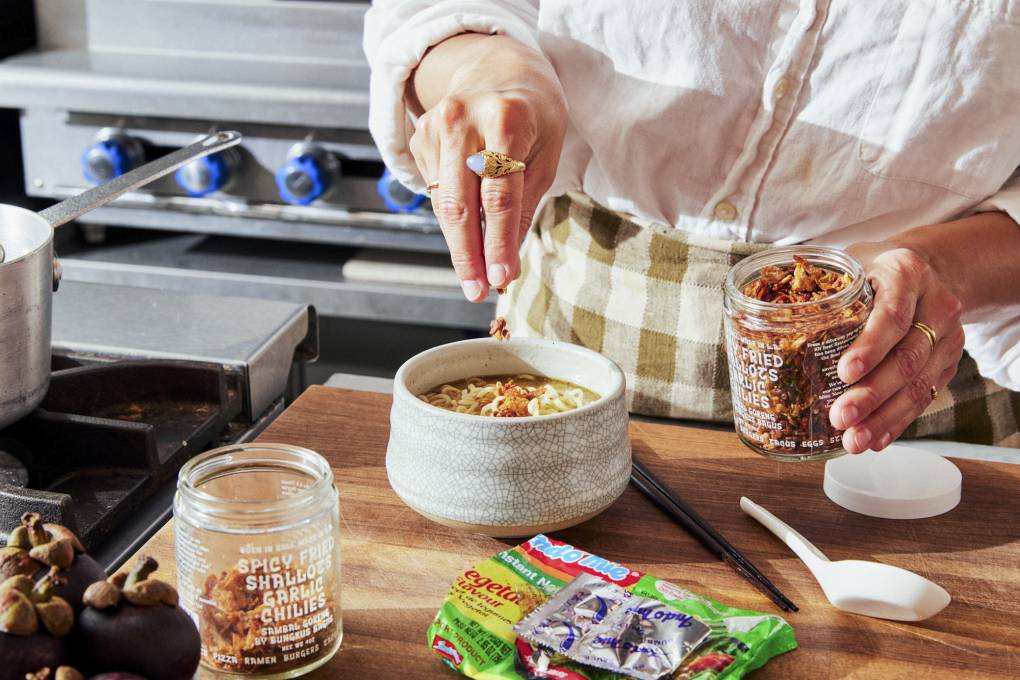
"caption": "Celene adds the finishing touch — some Sambal Goreng — on a bowl of Indomie instant ramen.",
"description": null,
"title": "230912-BUNGKUS BAGUS-01-KQED",
"credit": "Courtesy of Ren Fuller",
"status": "inherit",
"altTag": "A hand sprinkles flakes of something into a bowl of noodles.",
"isLoading": false,
"fetchFailed": false
},
"news_11960917": {
"type": "attachments",
"id": "news_11960917",
"meta": {
"index": "attachments_1716263798",
"site": "news",
"id": "11960917",
"found": true
},
"parent": 0,
"imgSizes": {
"twentyfourteen-full-width": {
"file": "https://ww2.kqed.org/app/uploads/sites/10/2023/09/CMCollege01-1038x576.jpg",
"width": 1038,
"mimeType": "image/jpeg",
"height": 576
},
"thumbnail": {
"file": "https://ww2.kqed.org/app/uploads/sites/10/2023/09/CMCollege01-160x107.jpg",
"width": 160,
"mimeType": "image/jpeg",
"height": 107
},
"post-thumbnail": {
"file": "https://ww2.kqed.org/app/uploads/sites/10/2023/09/CMCollege01-672x372.jpg",
"width": 672,
"mimeType": "image/jpeg",
"height": 372
},
"kqedFullSize": {
"file": "https://ww2.kqed.org/app/uploads/sites/10/2023/09/CMCollege01.jpg",
"width": 2000,
"height": 1333
},
"large": {
"file": "https://ww2.kqed.org/app/uploads/sites/10/2023/09/CMCollege01-1020x680.jpg",
"width": 1020,
"mimeType": "image/jpeg",
"height": 680
},
"1536x1536": {
"file": "https://ww2.kqed.org/app/uploads/sites/10/2023/09/CMCollege01-1536x1024.jpg",
"width": 1536,
"mimeType": "image/jpeg",
"height": 1024
},
"full-width": {
"file": "https://ww2.kqed.org/app/uploads/sites/10/2023/09/CMCollege01-1920x1280.jpg",
"width": 1920,
"mimeType": "image/jpeg",
"height": 1280
},
"medium": {
"file": "https://ww2.kqed.org/app/uploads/sites/10/2023/09/CMCollege01-800x533.jpg",
"width": 800,
"mimeType": "image/jpeg",
"height": 533
}
},
"publishDate": 1694561280,
"modified": 1694561372,
"caption": "Students walking along the walkway to the Academic Village building 2 at the Madera Community College campus on Aug. 28, 2023. ",
"description": null,
"title": "CMCollege01",
"credit": "Larry Valenzuela/CalMatters/CatchLight Local",
"status": "inherit",
"altTag": "The outside of the Madera Community College campus.",
"isLoading": false,
"fetchFailed": false
},
"news_11960809": {
"type": "attachments",
"id": "news_11960809",
"meta": {
"index": "attachments_1716263798",
"site": "news",
"id": "11960809",
"found": true
},
"parent": 0,
"imgSizes": {
"twentyfourteen-full-width": {
"file": "https://ww2.kqed.org/app/uploads/sites/10/2023/09/GettyImages-450371241-qut-1038x576.jpg",
"width": 1038,
"mimeType": "image/jpeg",
"height": 576
},
"thumbnail": {
"file": "https://ww2.kqed.org/app/uploads/sites/10/2023/09/GettyImages-450371241-qut-160x107.jpg",
"width": 160,
"mimeType": "image/jpeg",
"height": 107
},
"post-thumbnail": {
"file": "https://ww2.kqed.org/app/uploads/sites/10/2023/09/GettyImages-450371241-qut-672x372.jpg",
"width": 672,
"mimeType": "image/jpeg",
"height": 372
},
"kqedFullSize": {
"file": "https://ww2.kqed.org/app/uploads/sites/10/2023/09/GettyImages-450371241-qut.jpg",
"width": 1920,
"height": 1280
},
"large": {
"file": "https://ww2.kqed.org/app/uploads/sites/10/2023/09/GettyImages-450371241-qut-1020x680.jpg",
"width": 1020,
"mimeType": "image/jpeg",
"height": 680
},
"1536x1536": {
"file": "https://ww2.kqed.org/app/uploads/sites/10/2023/09/GettyImages-450371241-qut-1536x1024.jpg",
"width": 1536,
"mimeType": "image/jpeg",
"height": 1024
},
"medium": {
"file": "https://ww2.kqed.org/app/uploads/sites/10/2023/09/GettyImages-450371241-qut-800x533.jpg",
"width": 800,
"mimeType": "image/jpeg",
"height": 533
}
},
"publishDate": 1694540341,
"modified": 1694557561,
"caption": "On average, nearly 1,600 people come out of state prison each year with an immigration detainer that leads to their transfer to ICE to be deported, according to an estimate by state Senate staff.",
"description": null,
"title": "GettyImages-450371241-qut",
"credit": "John Moore/Getty Images",
"status": "inherit",
"altTag": "A line of individuals are shown from their wrists down. Their hands are shackles with handcuffs. They are incarcerated individuals seemingly on their way to be transported to a different area.",
"isLoading": false,
"fetchFailed": false
},
"news_11960658": {
"type": "attachments",
"id": "news_11960658",
"meta": {
"index": "attachments_1716263798",
"site": "news",
"id": "11960658",
"found": true
},
"parent": 0,
"imgSizes": {
"twentyfourteen-full-width": {
"file": "https://ww2.kqed.org/app/uploads/sites/10/2023/09/091123-PHOTO-AI-RM-01-KQED-1038x576.jpg",
"width": 1038,
"mimeType": "image/jpeg",
"height": 576
},
"thumbnail": {
"file": "https://ww2.kqed.org/app/uploads/sites/10/2023/09/091123-PHOTO-AI-RM-01-KQED-160x106.jpg",
"width": 160,
"mimeType": "image/jpeg",
"height": 106
},
"post-thumbnail": {
"file": "https://ww2.kqed.org/app/uploads/sites/10/2023/09/091123-PHOTO-AI-RM-01-KQED-672x372.jpg",
"width": 672,
"mimeType": "image/jpeg",
"height": 372
},
"kqedFullSize": {
"file": "https://ww2.kqed.org/app/uploads/sites/10/2023/09/091123-PHOTO-AI-RM-01-KQED.jpg",
"width": 2000,
"height": 1319
},
"large": {
"file": "https://ww2.kqed.org/app/uploads/sites/10/2023/09/091123-PHOTO-AI-RM-01-KQED-1020x673.jpg",
"width": 1020,
"mimeType": "image/jpeg",
"height": 673
},
"1536x1536": {
"file": "https://ww2.kqed.org/app/uploads/sites/10/2023/09/091123-PHOTO-AI-RM-01-KQED-1536x1013.jpg",
"width": 1536,
"mimeType": "image/jpeg",
"height": 1013
},
"full-width": {
"file": "https://ww2.kqed.org/app/uploads/sites/10/2023/09/091123-PHOTO-AI-RM-01-KQED-1920x1266.jpg",
"width": 1920,
"mimeType": "image/jpeg",
"height": 1266
},
"medium": {
"file": "https://ww2.kqed.org/app/uploads/sites/10/2023/09/091123-PHOTO-AI-RM-01-KQED-800x528.jpg",
"width": 800,
"mimeType": "image/jpeg",
"height": 528
}
},
"publishDate": 1694465224,
"modified": 1694552085,
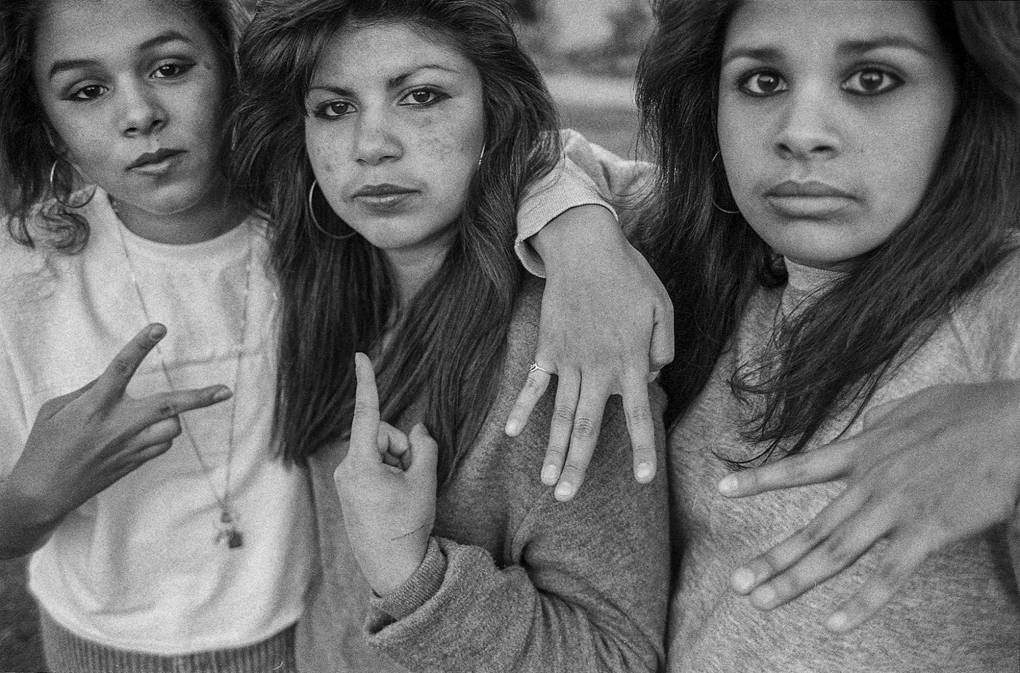
"caption": "Taken for Rolling Stone magazine. 'Homegirls' or 'cholas' associated with the Venice 13 (also V13), a Mexican American street gang.",
"description": "DO NOT REPUBLISH",
"title": "091123-PHOTO AI-RM-01-KQED",
"credit": "Courtesy of Merrick Morton",
"status": "inherit",
"altTag": "Three women look at the camera and make signs with their hands.",
"isLoading": false,
"fetchFailed": false
},
"news_11960371": {
"type": "attachments",
"id": "news_11960371",
"meta": {
"index": "attachments_1716263798",
"site": "news",
"id": "11960371",
"found": true
},
"parent": 11959904,
"imgSizes": {
"twentyfourteen-full-width": {
"file": "https://ww2.kqed.org/app/uploads/sites/10/2023/09/RS68797_iStock-684059604-qut-1038x576.jpg",
"width": 1038,
"mimeType": "image/jpeg",
"height": 576
},
"thumbnail": {
"file": "https://ww2.kqed.org/app/uploads/sites/10/2023/09/RS68797_iStock-684059604-qut-160x107.jpg",
"width": 160,
"mimeType": "image/jpeg",
"height": 107
},
"post-thumbnail": {
"file": "https://ww2.kqed.org/app/uploads/sites/10/2023/09/RS68797_iStock-684059604-qut-672x372.jpg",
"width": 672,
"mimeType": "image/jpeg",
"height": 372
},
"kqedFullSize": {
"file": "https://ww2.kqed.org/app/uploads/sites/10/2023/09/RS68797_iStock-684059604-qut.jpg",
"width": 1920,
"height": 1280
},
"large": {
"file": "https://ww2.kqed.org/app/uploads/sites/10/2023/09/RS68797_iStock-684059604-qut-1020x680.jpg",
"width": 1020,
"mimeType": "image/jpeg",
"height": 680
},
"1536x1536": {
"file": "https://ww2.kqed.org/app/uploads/sites/10/2023/09/RS68797_iStock-684059604-qut-1536x1024.jpg",
"width": 1536,
"mimeType": "image/jpeg",
"height": 1024
},
"medium": {
"file": "https://ww2.kqed.org/app/uploads/sites/10/2023/09/RS68797_iStock-684059604-qut-800x533.jpg",
"width": 800,
"mimeType": "image/jpeg",
"height": 533
}
},
"publishDate": 1694125719,
"modified": 1694125850,
"caption": "With child care becoming increasingly harder to access, California parents are having to navigate kindergarten readiness on their own. Here’s a guide to help.",
"description": null,
"title": "Teacher And Pupils Using Wooden Shapes In Montessori School",
"credit": "Getty Images",
"status": "inherit",
"altTag": "A young Black woman teacher sits at a classroom table smiling at kindergarten-aged children of various races",
"isLoading": false,
"fetchFailed": false
},
"news_11960230": {
"type": "attachments",
"id": "news_11960230",
"meta": {
"index": "attachments_1716263798",
"site": "news",
"id": "11960230",
"found": true
},
"title": "Chino Valley School District Passes Policy For Parental Rights",
"publishDate": 1694031517,
"status": "inherit",
"parent": 12075180,
"modified": 1772579133,
"caption": "People hold up signs in support of gay and transgender student rights during the Chino Valley Unified School District board meeting at Don Lugo High School in Chino on Thursday night July 20, 2023.",
"credit": "Will Lester/MediaNews Group/Inland Valley Daily Bulletin via Getty Images",
"altTag": "A crowd of people in an indoor setting including some holding signs, one of which reads \"Let Queer & Trans Kids Be Kids Too!\"",
"description": null,
"imgSizes": {
"medium": {
"file": "https://cdn.kqed.org/wp-content/uploads/sites/10/2023/09/230806-Kids-Pronouns-Protest-Getty-WL-KQED-800x533.jpg",
"width": 800,
"height": 533,
"mimeType": "image/jpeg"
},
"large": {
"file": "https://cdn.kqed.org/wp-content/uploads/sites/10/2023/09/230806-Kids-Pronouns-Protest-Getty-WL-KQED-1020x680.jpg",
"width": 1020,
"height": 680,
"mimeType": "image/jpeg"
},
"thumbnail": {
"file": "https://cdn.kqed.org/wp-content/uploads/sites/10/2023/09/230806-Kids-Pronouns-Protest-Getty-WL-KQED-160x107.jpg",
"width": 160,
"height": 107,
"mimeType": "image/jpeg"
},
"1536x1536": {
"file": "https://cdn.kqed.org/wp-content/uploads/sites/10/2023/09/230806-Kids-Pronouns-Protest-Getty-WL-KQED-1536x1024.jpg",
"width": 1536,
"height": 1024,
"mimeType": "image/jpeg"
},
"post-thumbnail": {
"file": "https://cdn.kqed.org/wp-content/uploads/sites/10/2023/09/230806-Kids-Pronouns-Protest-Getty-WL-KQED-672x372.jpg",
"width": 672,
"height": 372,
"mimeType": "image/jpeg"
},
"twentyfourteen-full-width": {
"file": "https://cdn.kqed.org/wp-content/uploads/sites/10/2023/09/230806-Kids-Pronouns-Protest-Getty-WL-KQED-1038x576.jpg",
"width": 1038,
"height": 576,
"mimeType": "image/jpeg"
},
"full-width": {
"file": "https://cdn.kqed.org/wp-content/uploads/sites/10/2023/09/230806-Kids-Pronouns-Protest-Getty-WL-KQED-1920x1280.jpg",
"width": 1920,
"height": 1280,
"mimeType": "image/jpeg"
},
"kqedFullSize": {
"file": "https://cdn.kqed.org/wp-content/uploads/sites/10/2023/09/230806-Kids-Pronouns-Protest-Getty-WL-KQED.jpg",
"width": 2000,
"height": 1333
}
},
"isLoading": false,
"fetchFailed": false
},
"news_11960134": {
"type": "attachments",
"id": "news_11960134",
"meta": {
"index": "attachments_1716263798",
"site": "news",
"id": "11960134",
"found": true
},
"parent": 0,
"imgSizes": {
"twentyfourteen-full-width": {
"file": "https://ww2.kqed.org/app/uploads/sites/10/2023/09/CMWildfire-1038x576.jpg",
"width": 1038,
"mimeType": "image/jpeg",
"height": 576
},
"thumbnail": {
"file": "https://ww2.kqed.org/app/uploads/sites/10/2023/09/CMWildfire-160x106.jpg",
"width": 160,
"mimeType": "image/jpeg",
"height": 106
},
"post-thumbnail": {
"file": "https://ww2.kqed.org/app/uploads/sites/10/2023/09/CMWildfire-672x372.jpg",
"width": 672,
"mimeType": "image/jpeg",
"height": 372
},
"kqedFullSize": {
"file": "https://ww2.kqed.org/app/uploads/sites/10/2023/09/CMWildfire.jpg",
"width": 2000,
"height": 1331
},
"large": {
"file": "https://ww2.kqed.org/app/uploads/sites/10/2023/09/CMWildfire-1020x679.jpg",
"width": 1020,
"mimeType": "image/jpeg",
"height": 679
},
"1536x1536": {
"file": "https://ww2.kqed.org/app/uploads/sites/10/2023/09/CMWildfire-1536x1022.jpg",
"width": 1536,
"mimeType": "image/jpeg",
"height": 1022
},
"full-width": {
"file": "https://ww2.kqed.org/app/uploads/sites/10/2023/09/CMWildfire-1920x1278.jpg",
"width": 1920,
"mimeType": "image/jpeg",
"height": 1278
},
"medium": {
"file": "https://ww2.kqed.org/app/uploads/sites/10/2023/09/CMWildfire-800x532.jpg",
"width": 800,
"mimeType": "image/jpeg",
"height": 532
}
},
"publishDate": 1693948094,
"modified": 1693956218,
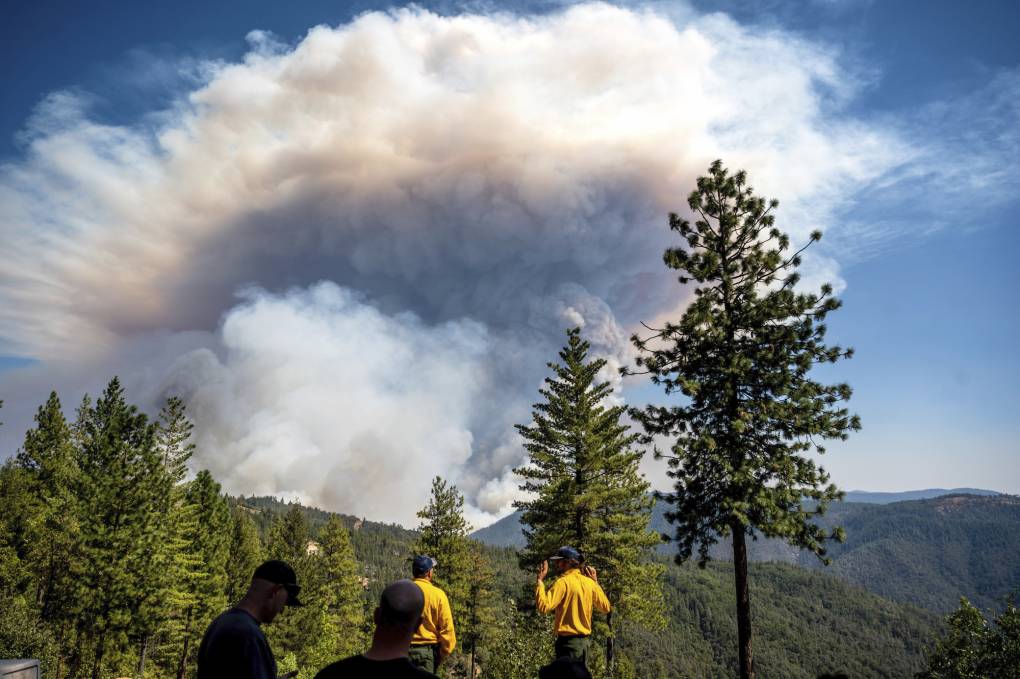
"caption": "Firefighters in the Foresthill community of Placer County watch as a plume rises from the Mosquito Fire on Sept. 8, 2022. ",
"description": null,
"title": "Western Wildfires",
"credit": "Noah Berger/AP Photo",
"status": "inherit",
"altTag": "A gigantic, gray plume of wildfire smoke is seen in the distance. Green, rolling mountains with lush trees surround it. Men in yellow uniforms and baseball caps observe the plume from a distance.",
"isLoading": false,
"fetchFailed": false
},
"news_11959570": {
"type": "attachments",
"id": "news_11959570",
"meta": {
"index": "attachments_1716263798",
"site": "news",
"id": "11959570",
"found": true
},
"parent": 0,
"imgSizes": {
"twentyfourteen-full-width": {
"file": "https://ww2.kqed.org/app/uploads/sites/10/2023/08/230830-Hollywood-Food-Stylist-LM-01-KQED-1038x576.jpg",
"width": 1038,
"mimeType": "image/jpeg",
"height": 576
},
"thumbnail": {
"file": "https://ww2.kqed.org/app/uploads/sites/10/2023/08/230830-Hollywood-Food-Stylist-LM-01-KQED-160x107.jpg",
"width": 160,
"mimeType": "image/jpeg",
"height": 107
},
"post-thumbnail": {
"file": "https://ww2.kqed.org/app/uploads/sites/10/2023/08/230830-Hollywood-Food-Stylist-LM-01-KQED-672x372.jpg",
"width": 672,
"mimeType": "image/jpeg",
"height": 372
},
"kqedFullSize": {
"file": "https://ww2.kqed.org/app/uploads/sites/10/2023/08/230830-Hollywood-Food-Stylist-LM-01-KQED.jpg",
"width": 2000,
"height": 1333
},
"large": {
"file": "https://ww2.kqed.org/app/uploads/sites/10/2023/08/230830-Hollywood-Food-Stylist-LM-01-KQED-1020x680.jpg",
"width": 1020,
"mimeType": "image/jpeg",
"height": 680
},
"1536x1536": {
"file": "https://ww2.kqed.org/app/uploads/sites/10/2023/08/230830-Hollywood-Food-Stylist-LM-01-KQED-1536x1024.jpg",
"width": 1536,
"mimeType": "image/jpeg",
"height": 1024
},
"full-width": {
"file": "https://ww2.kqed.org/app/uploads/sites/10/2023/08/230830-Hollywood-Food-Stylist-LM-01-KQED-1920x1280.jpg",
"width": 1920,
"mimeType": "image/jpeg",
"height": 1280
},
"medium": {
"file": "https://ww2.kqed.org/app/uploads/sites/10/2023/08/230830-Hollywood-Food-Stylist-LM-01-KQED-800x533.jpg",
"width": 800,
"mimeType": "image/jpeg",
"height": 533
}
},
"publishDate": 1693414137,
"modified": 1693426424,
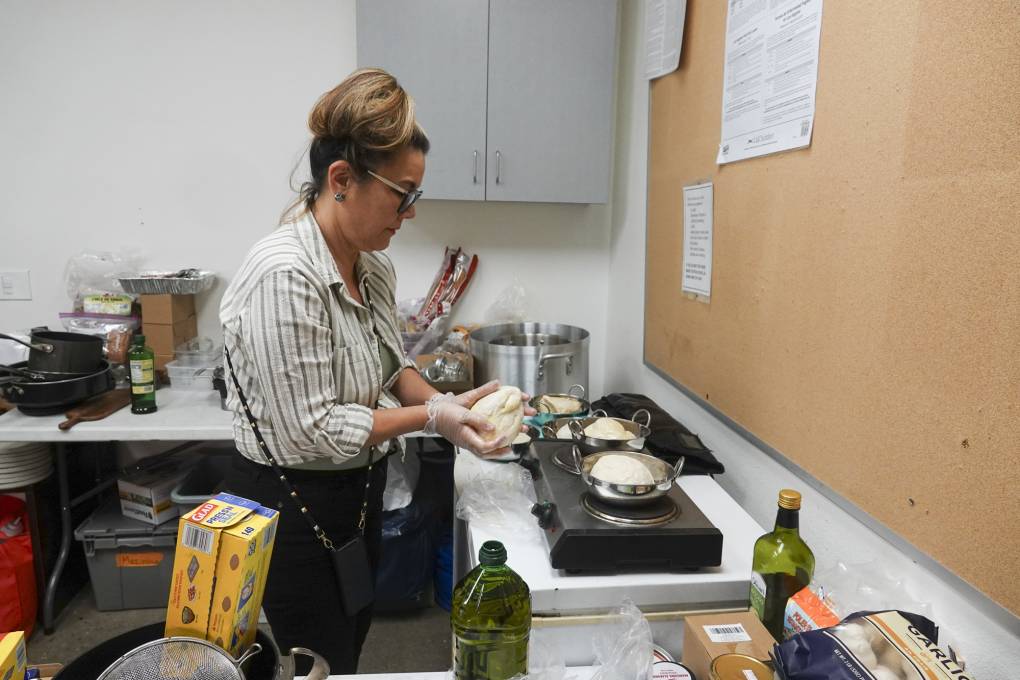
"caption": "Hollywood food stylist, Melissa McSorley, preps pizza dough in her work kitchen on the set of the Hulu television series 'Good Trouble.'",
"description": null,
"title": "230830-Hollywood Food Stylist-LM-01-KQED",
"credit": "Lisa Morehouse/KQED",
"status": "inherit",
"altTag": "A woman with her hair tied up in a bun, preps pizza dough in her hands in a commercial kitchen.",
"isLoading": false,
"fetchFailed": false
},
"news_11953159": {
"type": "attachments",
"id": "news_11953159",
"meta": {
"index": "attachments_1716263798",
"site": "news",
"id": "11953159",
"found": true
},
"parent": 0,
"imgSizes": {
"twentyfourteen-full-width": {
"file": "https://ww2.kqed.org/app/uploads/sites/10/2023/06/RS66328_230613-RealtorMontanaHooks-06-BL-KQED-1038x576.jpg",
"width": 1038,
"mimeType": "image/jpeg",
"height": 576
},
"thumbnail": {
"file": "https://ww2.kqed.org/app/uploads/sites/10/2023/06/RS66328_230613-RealtorMontanaHooks-06-BL-KQED-160x107.jpg",
"width": 160,
"mimeType": "image/jpeg",
"height": 107
},
"post-thumbnail": {
"file": "https://ww2.kqed.org/app/uploads/sites/10/2023/06/RS66328_230613-RealtorMontanaHooks-06-BL-KQED-672x372.jpg",
"width": 672,
"mimeType": "image/jpeg",
"height": 372
},
"kqedFullSize": {
"file": "https://ww2.kqed.org/app/uploads/sites/10/2023/06/RS66328_230613-RealtorMontanaHooks-06-BL-KQED.jpg",
"width": 2000,
"height": 1333
},
"large": {
"file": "https://ww2.kqed.org/app/uploads/sites/10/2023/06/RS66328_230613-RealtorMontanaHooks-06-BL-KQED-1020x680.jpg",
"width": 1020,
"mimeType": "image/jpeg",
"height": 680
},
"1536x1536": {
"file": "https://ww2.kqed.org/app/uploads/sites/10/2023/06/RS66328_230613-RealtorMontanaHooks-06-BL-KQED-1536x1024.jpg",
"width": 1536,
"mimeType": "image/jpeg",
"height": 1024
},
"full-width": {
"file": "https://ww2.kqed.org/app/uploads/sites/10/2023/06/RS66328_230613-RealtorMontanaHooks-06-BL-KQED-1920x1280.jpg",
"width": 1920,
"mimeType": "image/jpeg",
"height": 1280
},
"medium": {
"file": "https://ww2.kqed.org/app/uploads/sites/10/2023/06/RS66328_230613-RealtorMontanaHooks-06-BL-KQED-800x533.jpg",
"width": 800,
"mimeType": "image/jpeg",
"height": 533
}
},
"publishDate": 1686929820,
"modified": 1686930219,
"caption": "Realtor Montana Gabrielle Hooks stands outside her realty office in the Uptown neighborhood of Oakland on June 15, 2023.",
"description": null,
"title": "RS66328_230613-RealtorMontanaHooks-06-BL-KQED",
"credit": "Beth LaBerge/KQED",
"status": "inherit",
"altTag": "A woman in a red top stands outdoors along a city sidewalk leaning against big pane glass windows and looking at the camera.",
"isLoading": false,
"fetchFailed": false
}
},
"audioPlayerReducer": {
"postId": "stream_live",
"isPaused": true,
"isPlaying": false,
"pfsActive": false,
"pledgeModalIsOpen": true,
"playerDrawerIsOpen": false,
"liveAudioPlayStartedAt": 0,
"liveAudioPlayContext": ""
},
"authorsReducer": {
"byline_news_11961400": {
"type": "authors",
"id": "byline_news_11961400",
"meta": {
"override": true
},
"slug": "byline_news_11961400",
"name": "\u003ca href=\"https://twitter.com/adambeam\">Adam Beam\u003c/a> \u003cbr> The Associated Press",
"isLoading": false
},
"byline_news_11961126": {
"type": "authors",
"id": "byline_news_11961126",
"meta": {
"override": true
},
"slug": "byline_news_11961126",
"name": "\u003ca href=\"https://twitter.com/Clare_Wiley\">Clare Wiley\u003c/a>",
"isLoading": false
},
"byline_news_11960912": {
"type": "authors",
"id": "byline_news_11960912",
"meta": {
"override": true
},
"slug": "byline_news_11960912",
"name": "\u003ca href=\"https://calmatters.org/author/adam-echelman/\">Adam Echelman\u003c/a>",
"isLoading": false
},
"byline_news_11960814": {
"type": "authors",
"id": "byline_news_11960814",
"meta": {
"override": true
},
"slug": "byline_news_11960814",
"name": "\u003ca href=\"https://www.kqed.org/\">Beth Tribolet\u003c/a>",
"isLoading": false
},
"byline_news_11960202": {
"type": "authors",
"id": "byline_news_11960202",
"meta": {
"override": true
},
"slug": "byline_news_11960202",
"name": "\u003ca href=\"https://twitter.com/ataxin\">Amy Taxin\u003c/a>\u003cbr>The Associated Press",
"isLoading": false
},
"byline_news_11960130": {
"type": "authors",
"id": "byline_news_11960130",
"meta": {
"override": true
},
"slug": "byline_news_11960130",
"name": "\u003ca href=\"https://calmatters.org/author/alejandro-lazo/\">Alejandro Lazo\u003c/a>",
"isLoading": false
},
"astupi": {
"type": "authors",
"id": "70",
"meta": {
"index": "authors_1716337520",
"id": "70",
"found": true
},
"name": "Amanda Stupi",
"firstName": "Amanda",
"lastName": "Stupi",
"slug": "astupi",
"email": "astupi@kqed.org",
"display_author_email": false,
"staff_mastheads": [],
"title": "Senior Engagement Producer",
"bio": "Amanda joined KQED Science’s engagement team as a Senior Audience Engagement Strategist in the spring of 2019. She has helped craft messaging around wildfires, the coronavirus pandemic, climate change and many other stories. She has also brought KQED Science to new platforms such as Reddit’s Ask Me Anything series. Prior to joining KQED Science, Amanda spent seven years as an engagement producer with Forum, KQED’s daily live call-in show. She got her start in radio at KALW's weekly call in show, City Visions, before going on to an internship and stint at NPR's Talk of the Nation.\r\n\r\nPrior to journalism, Amanda taught English at Lowell High School. She's a native of Petaluma and currently lives under the \"South San Francisco the Industrial City\" sign in South City. She believes that engagement is vital to news’s future and that good journalism listens as much as it asks questions.",
"avatar": "https://secure.gravatar.com/avatar/e981c503e5c162da701dcaccfbf87e35?s=600&d=blank&r=g",
"twitter": null,
"facebook": null,
"instagram": null,
"linkedin": null,
"sites": [
{
"site": "arts",
"roles": [
"Contributor"
]
},
{
"site": "news",
"roles": [
"editor"
]
},
{
"site": "pop",
"roles": [
"contributor"
]
},
{
"site": "stateofhealth",
"roles": [
"editor"
]
},
{
"site": "science",
"roles": []
},
{
"site": "perspectives",
"roles": [
"editor"
]
}
],
"headData": {
"title": "Amanda Stupi | KQED",
"description": "Senior Engagement Producer",
"ogImgSrc": "https://secure.gravatar.com/avatar/e981c503e5c162da701dcaccfbf87e35?s=600&d=blank&r=g",
"twImgSrc": "https://secure.gravatar.com/avatar/e981c503e5c162da701dcaccfbf87e35?s=600&d=blank&r=g"
},
"isLoading": false,
"link": "/author/astupi"
},
"tychehendricks": {
"type": "authors",
"id": "259",
"meta": {
"index": "authors_1716337520",
"id": "259",
"found": true
},
"name": "Tyche Hendricks",
"firstName": "Tyche",
"lastName": "Hendricks",
"slug": "tychehendricks",
"email": "thendricks@kqed.org",
"display_author_email": true,
"staff_mastheads": [
"news"
],
"title": "KQED Senior Editor, Immigration",
"bio": "\u003cspan style=\"font-weight: 400;\">Tyche Hendricks is KQED’s senior editor for immigration, leading coverage of the policy and politics that affect California’s immigrant communities. Her work for KQED’s radio and online audiences is also carried on NPR and other national outlets. She has been recognized with awards from the Radio and Television News Directors Association, the Society for Professional Journalists; the Education Writers Association; the Best of the West and the National Federation of Community Broadcasters. Before joining KQED in 2010, Tyche spent more than a dozen years as a newspaper reporter, notably at the \u003c/span>\u003ci>\u003cspan style=\"font-weight: 400;\">San Francisco Chronicle\u003c/span>\u003c/i>\u003cspan style=\"font-weight: 400;\">. At different times she has covered criminal justice, government and politics and urban planning. Tyche has taught in the MFA Creative Writing program at the University of San Francisco and at UC Berkeley’s Graduate School of Journalism, where she was co-director of a national immigration symposium for professional journalists. She is the author of \u003c/span>\u003ci>\u003cspan style=\"font-weight: 400;\">The Wind Doesn't Need a Passport: Stories from the U.S.-Mexico Borderlands\u003c/span>\u003c/i>\u003cspan style=\"font-weight: 400;\"> (University of California Press). \u003c/span>",
"avatar": "https://secure.gravatar.com/avatar/b8ee458e2731c2d43df86882ce17267e?s=600&d=blank&r=g",
"twitter": "tychehendricks",
"facebook": null,
"instagram": null,
"linkedin": null,
"sites": [
{
"site": "news",
"roles": [
"editor"
]
},
{
"site": "stateofhealth",
"roles": [
"editor"
]
}
],
"headData": {
"title": "Tyche Hendricks | KQED",
"description": "KQED Senior Editor, Immigration",
"ogImgSrc": "https://secure.gravatar.com/avatar/b8ee458e2731c2d43df86882ce17267e?s=600&d=blank&r=g",
"twImgSrc": "https://secure.gravatar.com/avatar/b8ee458e2731c2d43df86882ce17267e?s=600&d=blank&r=g"
},
"isLoading": false,
"link": "/author/tychehendricks"
},
"lmorehouse": {
"type": "authors",
"id": "3229",
"meta": {
"index": "authors_1716337520",
"id": "3229",
"found": true
},
"name": "Lisa Morehouse",
"firstName": "Lisa",
"lastName": "Morehouse",
"slug": "lmorehouse",
"email": "morehouse.lisa@gmail.com",
"display_author_email": false,
"staff_mastheads": [],
"title": "KQED Contributor",
"bio": "Lisa Morehouse is an award-winning public radio and print journalist, who has filed for National Public Radio, American Public Media, KQED Public Radio, Edutopia, and McSweeney’s. Her reporting has taken her from Samoan traveling circuses to Mississippi Delta classrooms to the homes of Lao refugees in rural Iowa. In addition to reporting, she teaches radio production to at-risk youth in the Bay Area. Her series \u003ca href=\"http://afterthegoldrushradio.com/\">After the Gold Rush\u003c/a> featured the changing industries, populations and identities of rural towns throughout California. She’s now producing \u003ca href=\"http://www.californiafoodways.com/\">California Foodways\u003c/a>, a series exploring the intersections of food, culture, economics, history and labor. Follow along on the \u003ca href=\"https://www.facebook.com/californiafoodways?ref=hl\">Facebook page\u003c/a> or on Twitter @cafoodways.",
"avatar": "https://secure.gravatar.com/avatar/dae74b002a6e256f39abb19d6f5acaea?s=600&d=blank&r=g",
"twitter": null,
"facebook": null,
"instagram": null,
"linkedin": null,
"sites": [
{
"site": "",
"roles": [
"editor"
]
},
{
"site": "news",
"roles": [
"author"
]
}
],
"headData": {
"title": "Lisa Morehouse | KQED",
"description": "KQED Contributor",
"ogImgSrc": "https://secure.gravatar.com/avatar/dae74b002a6e256f39abb19d6f5acaea?s=600&d=blank&r=g",
"twImgSrc": "https://secure.gravatar.com/avatar/dae74b002a6e256f39abb19d6f5acaea?s=600&d=blank&r=g"
},
"isLoading": false,
"link": "/author/lmorehouse"
},
"bwatt": {
"type": "authors",
"id": "11238",
"meta": {
"index": "authors_1716337520",
"id": "11238",
"found": true
},
"name": "Brian Watt",
"firstName": "Brian",
"lastName": "Watt",
"slug": "bwatt",
"email": "bwatt@KQED.org",
"display_author_email": false,
"staff_mastheads": [
"news"
],
"title": "Morning News Anchor",
"bio": "Brian Watt is KQED's morning radio news anchor. He joined the KQED News team in April of 2016. Prior to that, he worked as a Reporter for KPCC in Los Angeles and a producer at \u003cem>Marketplace.\u003c/em>\r\n\r\nDuring eight years at KPCC, Brian covered business and economics, and his work won several awards. In 2008, he won the Los Angeles Press Club’s first-place award for Business and Financial Reporting, Broadcast. He’s also received honorable mention and been first runner up for the Press Club’s Radio Journalist of the Year. He won two Golden Mike awards from the Radio and TV News Association of Southern California.\r\n\r\nBrian holds degrees in theater from Yale University and the Sorbonne, and has worked as an actor in France, Italy, Brazil, Hungary and . . . Hollywood. He appeared in a few television shows, including \u003cem>The West Wing, Judging Amy\u003c/em> and \u003cem>The District.\u003c/em>\r\n\r\nEmail: bwatt@KQED.org Twitter: @RadioBWatt",
"avatar": "https://secure.gravatar.com/avatar/55393ff57ed34e2be773ba4789dd6a19?s=600&d=blank&r=g",
"twitter": "@RadioBWatt",
"facebook": null,
"instagram": null,
"linkedin": null,
"sites": [
{
"site": "arts",
"roles": [
"contributor"
]
},
{
"site": "news",
"roles": [
"editor"
]
}
],
"headData": {
"title": "Brian Watt | KQED",
"description": "Morning News Anchor",
"ogImgSrc": "https://secure.gravatar.com/avatar/55393ff57ed34e2be773ba4789dd6a19?s=600&d=blank&r=g",
"twImgSrc": "https://secure.gravatar.com/avatar/55393ff57ed34e2be773ba4789dd6a19?s=600&d=blank&r=g"
},
"isLoading": false,
"link": "/author/bwatt"
},
"btorres": {
"type": "authors",
"id": "11666",
"meta": {
"index": "authors_1716337520",
"id": "11666",
"found": true
},
"name": "Blanca Torres",
"firstName": "Blanca",
"lastName": "Torres",
"slug": "btorres",
"email": "btorres@kqed.org",
"display_author_email": true,
"staff_mastheads": [
"news"
],
"title": "Producer, Forum",
"bio": "Blanca Torres brings sharp news judgement and keen sense of lively conversation to her work as producer for Forum. She loves producing shows that leave listeners feeling like they heard distinctive voices, learned something new and gained a fresh perspective.\r\n\r\nShe joined KQED in January of 2020 after 16 years of working as a newspaper reporter most recently at the \u003cem>San Francisco Business Times,\u003c/em> where she wrote about real estate and economic development. Before that, she covered a variety of beats including crime, education, retail, workplace, the economy, consumer issues, and small business for the \u003cem>Contra Costa Times, Baltimore Sun\u003c/em> and\u003cem> The Seattle Times\u003c/em>. In addition to reporting, she worked as an editorial writer and columnist for the \u003cem>Seattle Times\u003c/em>. From 2017 to 2020, Blanca won a total of ten awards from the National Association of Real Estate Editors and won first place for land use reporting from the California News Publishers Association two years in a row. She is also a member and former board member for the National Association of Hispanic Journalists.\r\n\r\nA native of the Pacific Northwest, Blanca earned her bachelor's degree from Vanderbilt University in Nashville and a master's in fine arts in creative writing at Mills College. She lives in the East Bay with her family.",
"avatar": "https://secure.gravatar.com/avatar/f2322ff46076d337f7ba731ee6068cb1?s=600&d=blank&r=g",
"twitter": "@blancawrites",
"facebook": null,
"instagram": null,
"linkedin": null,
"sites": [
{
"site": "arts",
"roles": [
"editor"
]
},
{
"site": "news",
"roles": [
"editor"
]
},
{
"site": "forum",
"roles": [
"editor"
]
}
],
"headData": {
"title": "Blanca Torres | KQED",
"description": "Producer, Forum",
"ogImgSrc": "https://secure.gravatar.com/avatar/f2322ff46076d337f7ba731ee6068cb1?s=600&d=blank&r=g",
"twImgSrc": "https://secure.gravatar.com/avatar/f2322ff46076d337f7ba731ee6068cb1?s=600&d=blank&r=g"
},
"isLoading": false,
"link": "/author/btorres"
},
"agonzalez": {
"type": "authors",
"id": "11724",
"meta": {
"index": "authors_1716337520",
"id": "11724",
"found": true
},
"name": "Alexander Gonzalez",
"firstName": "Alexander",
"lastName": "Gonzalez",
"slug": "agonzalez",
"email": "AlexanderGonzalez@KQED.org",
"display_author_email": false,
"staff_mastheads": [
"news"
],
"title": "KQED Contributor",
"bio": null,
"avatar": "https://secure.gravatar.com/avatar/9e291ed34e154df4c662edf858b641d70b4859939bfe40be478408f9dfd057d2?s=600&d=blank&r=g",
"twitter": null,
"bluesky": null,
"facebook": null,
"instagram": null,
"linkedin": null,
"sites": [
{
"site": "arts",
"roles": [
"editor"
]
},
{
"site": "news",
"roles": [
"editor"
]
},
{
"site": "science",
"roles": [
"editor"
]
}
],
"headData": {
"title": "Alexander Gonzalez | KQED",
"description": "KQED Contributor",
"ogImgSrc": "https://secure.gravatar.com/avatar/9e291ed34e154df4c662edf858b641d70b4859939bfe40be478408f9dfd057d2?s=600&d=blank&r=g",
"twImgSrc": "https://secure.gravatar.com/avatar/9e291ed34e154df4c662edf858b641d70b4859939bfe40be478408f9dfd057d2?s=600&d=blank&r=g"
},
"isLoading": false,
"link": "/author/agonzalez"
},
"amadrigal": {
"type": "authors",
"id": "11757",
"meta": {
"index": "authors_1716337520",
"id": "11757",
"found": true
},
"name": "Alexis Madrigal",
"firstName": "Alexis",
"lastName": "Madrigal",
"slug": "amadrigal",
"email": "amadrigal@kqed.org",
"display_author_email": true,
"staff_mastheads": [],
"title": "Co-Host Forum",
"bio": "Alexis Madrigal is the co-host of Forum. He is also a contributing writer at \u003cem>The Atlantic \u003c/em>and the co-founder of the COVID Tracking Project. He's the creator of the podcast, \u003cem>Containers\u003c/em>, and has been a staff writer at \u003cem>Wired. \u003c/em>He was a visiting scholar at UC Berkeley's Information School, and is working on a book about Oakland and the Bay Area's revolutionary ideas.",
"avatar": "https://secure.gravatar.com/avatar/200d13dd6cebef55bf04327dec901b3d?s=600&d=blank&r=g",
"twitter": "alexismadrigal",
"bluesky": null,
"facebook": null,
"instagram": null,
"linkedin": null,
"sites": [
{
"site": "arts",
"roles": [
"editor"
]
},
{
"site": "news",
"roles": [
"editor"
]
},
{
"site": "forum",
"roles": [
"editor"
]
}
],
"headData": {
"title": "Alexis Madrigal | KQED",
"description": "Co-Host Forum",
"ogImgSrc": "https://secure.gravatar.com/avatar/200d13dd6cebef55bf04327dec901b3d?s=600&d=blank&r=g",
"twImgSrc": "https://secure.gravatar.com/avatar/200d13dd6cebef55bf04327dec901b3d?s=600&d=blank&r=g"
},
"isLoading": false,
"link": "/author/amadrigal"
},
"nkhan": {
"type": "authors",
"id": "11867",
"meta": {
"index": "authors_1716337520",
"id": "11867",
"found": true
},
"name": "Nisa Khan",
"firstName": "Nisa",
"lastName": "Khan",
"slug": "nkhan",
"email": "nkhan@kqed.org",
"display_author_email": false,
"staff_mastheads": [],
"title": "KQED Contributor",
"bio": "Nisa Khan is a reporter for KQED's Audience News Desk. She was formerly a data reporter at Michigan Radio. She earned a Bachelor of Science in Information from the University of Michigan and a Master of Arts in Communication from Stanford University.",
"avatar": "https://secure.gravatar.com/avatar/a3bf1efcfbe7658d13a434cc54d0b2e3?s=600&d=blank&r=g",
"twitter": "mnisakhan",
"bluesky": null,
"facebook": null,
"instagram": null,
"linkedin": null,
"sites": [
{
"site": "arts",
"roles": [
"editor"
]
},
{
"site": "news",
"roles": [
"editor"
]
},
{
"site": "science",
"roles": [
"editor",
"author"
]
},
{
"site": "forum",
"roles": [
"editor"
]
},
{
"site": "liveblog",
"roles": [
"contributor"
]
}
],
"headData": {
"title": "Nisa Khan | KQED",
"description": "KQED Contributor",
"ogImgSrc": "https://secure.gravatar.com/avatar/a3bf1efcfbe7658d13a434cc54d0b2e3?s=600&d=blank&r=g",
"twImgSrc": "https://secure.gravatar.com/avatar/a3bf1efcfbe7658d13a434cc54d0b2e3?s=600&d=blank&r=g"
},
"isLoading": false,
"link": "/author/nkhan"
}
},
"pagesReducer": {
"news_tag_california": {
"type": "terms",
"id": "news_18538",
"meta": {
"index": "terms_1716263798",
"site": "news",
"id": "18538",
"score": 6.845124
},
"featImg": null,
"name": "California",
"description": null,
"taxonomy": "tag",
"headData": {
"twImgId": null,
"twTitle": null,
"ogTitle": null,
"ogImgId": null,
"twDescription": null,
"description": null,
"title": "California Archives | KQED News",
"ogDescription": null
},
"ttid": 31,
"slug": "california",
"isLoading": false,
"title": "California",
"pageMeta": {
"site": "news",
"WpPageTemplate": "page-topic-editorial",
"currentPage": 149
},
"blocks": [
{
"blockName": "kqed/post-list",
"attrs": {
"layout": "cardArticle2",
"query": "posts/news?tag=california",
"seeMore": false,
"paginated": true,
"page": 149
}
},
{
"blockName": "kqed/ad"
}
]
}
},
"pfsSessionReducer": {},
"postsReducer": {
"stream_live": {
"type": "live",
"id": "stream_live",
"audioUrl": "https://streams.kqed.org/kqedradio",
"title": "Live Stream",
"excerpt": "Live Stream information currently unavailable.",
"link": "/radio",
"featImg": "",
"label": {
"name": "KQED Live",
"link": "/"
}
},
"stream_kqedNewscast": {
"type": "posts",
"id": "stream_kqedNewscast",
"audioUrl": "https://www.kqed.org/.stream/anon/radio/RDnews/newscast.mp3?_=1",
"title": "KQED Newscast",
"featImg": "",
"label": {
"name": "88.5 FM",
"link": "/"
}
},
"news_11961447": {
"type": "posts",
"id": "news_11961447",
"meta": {
"index": "posts_1716263798",
"site": "news",
"id": "11961447",
"score": null,
"sort": [
1695034821000
]
},
"guestAuthors": [],
"slug": "what-hospice-workers-learned-about-saying-goodbye",
"title": "'Hold Your Memory': What Hospice Workers Learned About Saying Goodbye",
"publishDate": 1695034821,
"format": "standard",
"headTitle": "‘Hold Your Memory’: What Hospice Workers Learned About Saying Goodbye | KQED",
"labelTerm": {
"site": "news"
},
"content": "\u003cp>Not everyone has the chance to say goodbye to someone who’s dying. But when they do have that opportunity, it can be one of the most intense moments of their life.\u003c/p>\n\u003cp>Bay Area artist Wendy MacNaughton is familiar with this process, from spending time with her aunt — who had Parkinson’s — before she died. [pullquote size=\"medium\" align=\"right\" citation=\"Wendy MacNaughton, artist and author, ‘How to Say Goodbye’\"]‘Drawing is a way that I am able to look at things and to be present with people. So I started drawing her every day as she was dying.’[/pullquote] MacNaughton said that at first, she was uncomfortable being around her aunt.\u003c/p>\n\u003cp>“I’d never been at the bedside with somebody who was dying, and I didn’t know what to do,” MacNaughton said. “I didn’t know what to say. I was afraid to really sit and be with her.”\u003c/p>\n\u003cp>But for MacNaughton, “drawing is a way that I am able to look at things and to be present with people,” she said. “So I started drawing her every day as she was dying.”\u003c/p>\n\u003cp>Days after her aunt’s passing, MacNaughton received a call from the Bay Area Zen Hospice Guest House inviting her to become their artist-in-residence. The “universe steps in, as it sometimes does,” she said.\u003c/p>\n\u003cp>[ad fullwidth]\u003c/p>\n\u003cp>During her residency, \u003ca href=\"https://www.wendymacnaughton.com/illustration/how-to-say-goodbye\">MacNaughton wrote and illustrated the book \u003cem>How to Say Goodbye\u003c/em>\u003c/a>. The book, as she describes it, contains “the wisdom of the hospice caregivers: how to, in a way, be present with somebody in the last days of their life.”\u003c/p>\n\u003cp>\u003ca href=\"https://www.kqed.org/forum/2010101894355/how-to-say-goodbye-to-the-dying\">KQED Forum spoke to MacNaughton, and nurse Ladybird Morgan\u003c/a>, who is the co-founder of the Humane Prison Hospice Project and has worked in end-of-life care for two decades. The two shared their thoughts on how to navigate the difficult process:\u003c/p>\n\u003ch2>1. Keep these 5 phrases in mind\u003c/h2>\n\u003cp>MacNaughton shared what the executive director of the Zen Hospice Guest House learned — which are the five phrases that people can say to help them let go, and not leave anything unsaid to a loved one.\u003c/p>\n\u003cp>\u003cstrong>The phrases are:\u003c/strong>\u003c/p>\n\u003cul>\n\u003cli>I forgive you.\u003c/li>\n\u003cli>Please forgive me.\u003c/li>\n\u003cli>Thank you.\u003c/li>\n\u003cli>I love you.\u003c/li>\n\u003cli>Goodbye.\u003c/li>\n\u003c/ul>\n\u003cp>“There are ways to start a conversation so that nothing is left unsaid. It doesn’t change anything, right? We’re still learning. We’re still letting go of a person. We’re still going to lose them. And maybe we’ll always have some regrets,” MacNaughton said. “I don’t think it’s possible for us to say it all and resolve it all: That’s just not possible. But we can do our best.”\u003c/p>\n\u003cp>In life, MacNaughton said many people are not the type to go right into challenging conversations with others. [aside postID=news_11923381 hero='https://ww2.kqed.org/app/uploads/sites/10/2022/08/pexels-valeria-boltneva-12965-CROPPED-1020x680.jpg'] “But the end of life is an opportunity to say those things that we’ve maybe been avoiding our whole lives, that we hold so deep in our heart that we want to let go of,” she said. “Two of the five things are about forgiveness, but maybe it’s more about letting go of things that we’ve held onto so that we can let go of the person who we love.”\u003c/p>\n\u003cp>The Prison Hospice Project’s Ladybird Morgan added that these questions can also be “a pathway to someone getting confirmation that they mattered in the world, and they were noticed.”\u003c/p>\n\u003cp>“‘Did you see? Did you understand what I meant? Did you really actually feel me?’” she said she imagines a dying person wondering. “‘Yes, I felt you. I saw you. I love you.’”\u003c/p>\n\u003ch2>2. Be present in the moment\u003c/h2>\n\u003cp>MacNaughton describes herself as a “doer.” Some people, however, may have to turn off their problem-solving brain in this situation.\u003c/p>\n\u003cp>“I am somebody who wants to fix things. I want to make things out of things,” she said. “And time and time again, life is teaching me, ‘We can’t fix things. We can’t do a lot.’”\u003c/p>\n\u003cp>“All we can do is really slow down and open up and be there with somebody in a way that is close and intimate and loving,” MacNaughton said.\u003c/p>\n\u003cp>Morgan said when dealing with the death of a loved one and trying to find closure, people can seek a place of trust and know that their connection — and love — is real.\u003c/p>\n\u003cp>“I think the only thing I can say right now in this moment is just hold your memory. Hold your love for this being close to you. That is real and that exists,” she said.\u003c/p>\n\u003ch2>3. Requests may have deeper meanings — especially around food\u003c/h2>\n\u003cp>A listener named Erin called in to describe her experience as a kitchen manager at Zen Hospice Guesthouse. She said the experience was a lesson in learning how “food isn’t really about food. It’s about all these other things happening.”\u003c/p>\n\u003cp>Erin described asking someone what they wanted to eat and “it would be this opening to talk about [how] they escaped the Holocaust, and they want some chicken matzo ball soup.”\u003c/p>\n\u003cfigure id=\"attachment_11961628\" class=\"wp-caption alignnone\" style=\"max-width: 1900px\">\u003cimg loading=\"lazy\" decoding=\"async\" class=\"size-full wp-image-11961628\" src=\"https://ww2.kqed.org/app/uploads/sites/10/2023/09/MacNaughton-Collage.jpg\" alt=\"A collage of colorful illustrations that depict scenes from hospice care, with figures in bed as other figures sit around them.\" width=\"1900\" height=\"1280\" srcset=\"https://cdn.kqed.org/wp-content/uploads/sites/10/2023/09/MacNaughton-Collage.jpg 1900w, https://cdn.kqed.org/wp-content/uploads/sites/10/2023/09/MacNaughton-Collage-800x539.jpg 800w, https://cdn.kqed.org/wp-content/uploads/sites/10/2023/09/MacNaughton-Collage-1020x687.jpg 1020w, https://cdn.kqed.org/wp-content/uploads/sites/10/2023/09/MacNaughton-Collage-160x108.jpg 160w, https://cdn.kqed.org/wp-content/uploads/sites/10/2023/09/MacNaughton-Collage-1536x1035.jpg 1536w\" sizes=\"auto, (max-width: 1900px) 100vw, 1900px\">\u003cfigcaption class=\"wp-caption-text\">Illustrations from Wendy MacNaughton’s book ‘How to Say Goodbye’ \u003ccite>(Courtesy of Wendy MacNaughton)\u003c/cite>\u003c/figcaption>\u003c/figure>\n\u003cp>One woman wanted to drink beer and milk all day. Another man requested a fancy pot roast that he couldn’t eat.\u003c/p>\n\u003cp>“He just wanted to smell, and see all the incredible communities that would gather around food,” she said.\u003c/p>\n\u003ch2>4. Remember the scope of the world\u003c/h2>\n\u003cp>Morgan said she got into hospice work because death reminds her that “life isn’t just about me.”\u003c/p>\n\u003cp>“People are dying in so many different ways: suddenly, dramatically, violently, sometimes with grace, sometimes with planning,” she said. “But there’s many, many ways to die.” [pullquote size=\"medium\" align=\"right\" citation=\"Ladybird Morgan, co-founder, Humane Prison Hospice Project \"]‘What’s really important is taking away this mysticism, and this magical quality, of ‘being at the bedside’ — and [instead] remembering that the whole universe is here supporting us in living and dying.’[/pullquote] Even though the experience of being at the bedside of a dying person can feel small-scale and intimate, Morgan stressed the importance of remembering our place in the wider world when death is on the horizon.\u003c/p>\n\u003cp>“What’s really important is taking away this mysticism, and this magical quality, of ‘being at the bedside’ — and [instead] remembering that the whole universe is here supporting us in living and dying,” she said.\u003c/p>\n\u003cp>“How do we make more space for all of us, to be able to see what our role is in it?” asked Morgan. “Not just the magical people who happen to choose to do the work?”\u003c/p>\n\u003cp>This awareness of the wider world, and our place in it, is also helpful when considering how you could support a partner or friend who’s losing \u003cem>their \u003c/em>loved one. It is natural for people to want to be the perfect support system, acknowledged Morgan, when a KQED Forum listener asked how she could best help her husband as his father began to pass.\u003c/p>\n\u003cp>“Just be yourself,” Morgan advised. “We want to get it right. We want to do it right. But you can’t get everything right. [So you should] do what you can, when you can.”\u003c/p>\n\u003cp>She encouraged listeners to “remember that it’s not just about you,” in that there are many other outlets, like nature, art, food, museums and music, with which a person can “nourish” themselves at this difficult time, without their partner or friend needing to be their sole source of solace.\u003c/p>\n\u003cp>“It’s not just about having a conversation, or making someone talk about something or even going to therapy, which is wonderful,” Morgan said. “But just remember the bigger scope of what’s available to you.”\u003c/p>\n\u003cp>[ad floatright]\u003c/p>\n",
"blocks": [],
"excerpt": "KQED Forum spoke to Bay Area illustrator Wendy MacNaughton, and nurse Ladybird Morgan, who is the co-founder of the Humane Prison Hospice Project. They shared tips on how to navigate the difficult process.",
"status": "publish",
"parent": 0,
"modified": 1747671549,
"stats": {
"hasAudio": false,
"hasVideo": false,
"hasChartOrMap": false,
"iframeSrcs": [],
"hasGoogleForm": false,
"hasGallery": false,
"hasHearkenModule": false,
"hasPolis": false,
"paragraphCount": 32,
"wordCount": 1435
},
"headData": {
"title": "Insights from Hospice Workers on Saying Goodbye | KQED",
"description": "Discover the insights of hospice caregivers on the art of saying goodbye. Explore the five essential phrases that bring closure and comfort at life's end.",
"ogTitle": "",
"ogDescription": "",
"ogImgId": "",
"twTitle": "",
"twDescription": "",
"twImgId": "",
"socialTitle": "Insights from Hospice Workers on Saying Goodbye | KQED",
"socialDescription": "Discover the insights of hospice caregivers on the art of saying goodbye. Explore the five essential phrases that bring closure and comfort at life's end.",
"schema": {
"@context": "https://schema.org",
"@type": "NewsArticle",
"headline": "'Hold Your Memory': What Hospice Workers Learned About Saying Goodbye",
"datePublished": "2023-09-18T04:00:21-07:00",
"dateModified": "2025-05-19T09:19:09-07:00",
"image": "https://cdn.kqed.org/wp-content/uploads/2020/02/KQED-OG-Image@1x.png",
"isAccessibleForFree": "True",
"publisher": {
"@type": "NewsMediaOrganization",
"@id": "https://www.kqed.org/#organization",
"name": "KQED",
"logo": "https://cdn.kqed.org/wp-content/uploads/2020/02/KQED-OG-Image@1x.png",
"url": "https://www.kqed.org",
"sameAs": [
"https://www.facebook.com/KQED",
"https://twitter.com/KQED",
"https://www.instagram.com/kqed/",
"https://www.tiktok.com/@kqedofficial",
"https://www.linkedin.com/company/kqed",
"https://www.youtube.com/channel/UCeC0IOo7i1P_61zVUWbJ4nw"
]
}
}
},
"audioUrl": "https://www.podtrac.com/pts/redirect.mp3/pdst.fm/e/chrt.fm/track/G6C7C3/traffic.megaphone.fm/KQINC4481065337.mp3?updated=1694459490",
"sticky": false,
"templateType": "standard",
"featuredImageType": "standard",
"excludeFromSiteSearch": "Include",
"articleAge": "0",
"path": "/news/11961447/what-hospice-workers-learned-about-saying-goodbye",
"audioTrackLength": null,
"parsedContent": [
{
"type": "contentString",
"content": "\u003cdiv class=\"post-body\">\u003cp>\u003cp>Not everyone has the chance to say goodbye to someone who’s dying. But when they do have that opportunity, it can be one of the most intense moments of their life.\u003c/p>\n\u003cp>Bay Area artist Wendy MacNaughton is familiar with this process, from spending time with her aunt — who had Parkinson’s — before she died. \u003c/p>\u003c/div>",
"attributes": {
"named": {},
"numeric": []
}
},
{
"type": "component",
"content": "‘Drawing is a way that I am able to look at things and to be present with people. So I started drawing her every day as she was dying.’",
"name": "pullquote",
"attributes": {
"named": {
"size": "medium",
"align": "right",
"citation": "Wendy MacNaughton, artist and author, ‘How to Say Goodbye’",
"label": ""
},
"numeric": []
}
},
{
"type": "contentString",
"content": "\u003cdiv class=\"post-body\">\u003cp> MacNaughton said that at first, she was uncomfortable being around her aunt.\u003c/p>\n\u003cp>“I’d never been at the bedside with somebody who was dying, and I didn’t know what to do,” MacNaughton said. “I didn’t know what to say. I was afraid to really sit and be with her.”\u003c/p>\n\u003cp>But for MacNaughton, “drawing is a way that I am able to look at things and to be present with people,” she said. “So I started drawing her every day as she was dying.”\u003c/p>\n\u003cp>Days after her aunt’s passing, MacNaughton received a call from the Bay Area Zen Hospice Guest House inviting her to become their artist-in-residence. The “universe steps in, as it sometimes does,” she said.\u003c/p>\n\u003cp>\u003c/p>\u003c/div>",
"attributes": {
"named": {},
"numeric": []
}
},
{
"type": "component",
"content": "",
"name": "ad",
"attributes": {
"named": {
"label": "fullwidth"
},
"numeric": [
"fullwidth"
]
}
},
{
"type": "contentString",
"content": "\u003cdiv class=\"post-body\">\u003cp>\u003c/p>\n\u003cp>During her residency, \u003ca href=\"https://www.wendymacnaughton.com/illustration/how-to-say-goodbye\">MacNaughton wrote and illustrated the book \u003cem>How to Say Goodbye\u003c/em>\u003c/a>. The book, as she describes it, contains “the wisdom of the hospice caregivers: how to, in a way, be present with somebody in the last days of their life.”\u003c/p>\n\u003cp>\u003ca href=\"https://www.kqed.org/forum/2010101894355/how-to-say-goodbye-to-the-dying\">KQED Forum spoke to MacNaughton, and nurse Ladybird Morgan\u003c/a>, who is the co-founder of the Humane Prison Hospice Project and has worked in end-of-life care for two decades. The two shared their thoughts on how to navigate the difficult process:\u003c/p>\n\u003ch2>1. Keep these 5 phrases in mind\u003c/h2>\n\u003cp>MacNaughton shared what the executive director of the Zen Hospice Guest House learned — which are the five phrases that people can say to help them let go, and not leave anything unsaid to a loved one.\u003c/p>\n\u003cp>\u003cstrong>The phrases are:\u003c/strong>\u003c/p>\n\u003cul>\n\u003cli>I forgive you.\u003c/li>\n\u003cli>Please forgive me.\u003c/li>\n\u003cli>Thank you.\u003c/li>\n\u003cli>I love you.\u003c/li>\n\u003cli>Goodbye.\u003c/li>\n\u003c/ul>\n\u003cp>“There are ways to start a conversation so that nothing is left unsaid. It doesn’t change anything, right? We’re still learning. We’re still letting go of a person. We’re still going to lose them. And maybe we’ll always have some regrets,” MacNaughton said. “I don’t think it’s possible for us to say it all and resolve it all: That’s just not possible. But we can do our best.”\u003c/p>\n\u003cp>In life, MacNaughton said many people are not the type to go right into challenging conversations with others. \u003c/p>\u003c/div>",
"attributes": {
"named": {},
"numeric": []
}
},
{
"type": "component",
"content": "",
"name": "aside",
"attributes": {
"named": {
"postid": "news_11923381",
"hero": "https://ww2.kqed.org/app/uploads/sites/10/2022/08/pexels-valeria-boltneva-12965-CROPPED-1020x680.jpg",
"label": ""
},
"numeric": []
}
},
{
"type": "contentString",
"content": "\u003cdiv class=\"post-body\">\u003cp> “But the end of life is an opportunity to say those things that we’ve maybe been avoiding our whole lives, that we hold so deep in our heart that we want to let go of,” she said. “Two of the five things are about forgiveness, but maybe it’s more about letting go of things that we’ve held onto so that we can let go of the person who we love.”\u003c/p>\n\u003cp>The Prison Hospice Project’s Ladybird Morgan added that these questions can also be “a pathway to someone getting confirmation that they mattered in the world, and they were noticed.”\u003c/p>\n\u003cp>“‘Did you see? Did you understand what I meant? Did you really actually feel me?’” she said she imagines a dying person wondering. “‘Yes, I felt you. I saw you. I love you.’”\u003c/p>\n\u003ch2>2. Be present in the moment\u003c/h2>\n\u003cp>MacNaughton describes herself as a “doer.” Some people, however, may have to turn off their problem-solving brain in this situation.\u003c/p>\n\u003cp>“I am somebody who wants to fix things. I want to make things out of things,” she said. “And time and time again, life is teaching me, ‘We can’t fix things. We can’t do a lot.’”\u003c/p>\n\u003cp>“All we can do is really slow down and open up and be there with somebody in a way that is close and intimate and loving,” MacNaughton said.\u003c/p>\n\u003cp>Morgan said when dealing with the death of a loved one and trying to find closure, people can seek a place of trust and know that their connection — and love — is real.\u003c/p>\n\u003cp>“I think the only thing I can say right now in this moment is just hold your memory. Hold your love for this being close to you. That is real and that exists,” she said.\u003c/p>\n\u003ch2>3. Requests may have deeper meanings — especially around food\u003c/h2>\n\u003cp>A listener named Erin called in to describe her experience as a kitchen manager at Zen Hospice Guesthouse. She said the experience was a lesson in learning how “food isn’t really about food. It’s about all these other things happening.”\u003c/p>\n\u003cp>Erin described asking someone what they wanted to eat and “it would be this opening to talk about [how] they escaped the Holocaust, and they want some chicken matzo ball soup.”\u003c/p>\n\u003cfigure id=\"attachment_11961628\" class=\"wp-caption alignnone\" style=\"max-width: 1900px\">\u003cimg loading=\"lazy\" decoding=\"async\" class=\"size-full wp-image-11961628\" src=\"https://ww2.kqed.org/app/uploads/sites/10/2023/09/MacNaughton-Collage.jpg\" alt=\"A collage of colorful illustrations that depict scenes from hospice care, with figures in bed as other figures sit around them.\" width=\"1900\" height=\"1280\" srcset=\"https://cdn.kqed.org/wp-content/uploads/sites/10/2023/09/MacNaughton-Collage.jpg 1900w, https://cdn.kqed.org/wp-content/uploads/sites/10/2023/09/MacNaughton-Collage-800x539.jpg 800w, https://cdn.kqed.org/wp-content/uploads/sites/10/2023/09/MacNaughton-Collage-1020x687.jpg 1020w, https://cdn.kqed.org/wp-content/uploads/sites/10/2023/09/MacNaughton-Collage-160x108.jpg 160w, https://cdn.kqed.org/wp-content/uploads/sites/10/2023/09/MacNaughton-Collage-1536x1035.jpg 1536w\" sizes=\"auto, (max-width: 1900px) 100vw, 1900px\">\u003cfigcaption class=\"wp-caption-text\">Illustrations from Wendy MacNaughton’s book ‘How to Say Goodbye’ \u003ccite>(Courtesy of Wendy MacNaughton)\u003c/cite>\u003c/figcaption>\u003c/figure>\n\u003cp>One woman wanted to drink beer and milk all day. Another man requested a fancy pot roast that he couldn’t eat.\u003c/p>\n\u003cp>“He just wanted to smell, and see all the incredible communities that would gather around food,” she said.\u003c/p>\n\u003ch2>4. Remember the scope of the world\u003c/h2>\n\u003cp>Morgan said she got into hospice work because death reminds her that “life isn’t just about me.”\u003c/p>\n\u003cp>“People are dying in so many different ways: suddenly, dramatically, violently, sometimes with grace, sometimes with planning,” she said. “But there’s many, many ways to die.” \u003c/p>\u003c/div>",
"attributes": {
"named": {},
"numeric": []
}
},
{
"type": "component",
"content": "‘What’s really important is taking away this mysticism, and this magical quality, of ‘being at the bedside’ — and [instead] remembering that the whole universe is here supporting us in living and dying.’",
"name": "pullquote",
"attributes": {
"named": {
"size": "medium",
"align": "right",
"citation": "Ladybird Morgan, co-founder, Humane Prison Hospice Project ",
"label": ""
},
"numeric": []
}
},
{
"type": "contentString",
"content": "\u003cdiv class=\"post-body\">\u003cp> Even though the experience of being at the bedside of a dying person can feel small-scale and intimate, Morgan stressed the importance of remembering our place in the wider world when death is on the horizon.\u003c/p>\n\u003cp>“What’s really important is taking away this mysticism, and this magical quality, of ‘being at the bedside’ — and [instead] remembering that the whole universe is here supporting us in living and dying,” she said.\u003c/p>\n\u003cp>“How do we make more space for all of us, to be able to see what our role is in it?” asked Morgan. “Not just the magical people who happen to choose to do the work?”\u003c/p>\n\u003cp>This awareness of the wider world, and our place in it, is also helpful when considering how you could support a partner or friend who’s losing \u003cem>their \u003c/em>loved one. It is natural for people to want to be the perfect support system, acknowledged Morgan, when a KQED Forum listener asked how she could best help her husband as his father began to pass.\u003c/p>\n\u003cp>“Just be yourself,” Morgan advised. “We want to get it right. We want to do it right. But you can’t get everything right. [So you should] do what you can, when you can.”\u003c/p>\n\u003cp>She encouraged listeners to “remember that it’s not just about you,” in that there are many other outlets, like nature, art, food, museums and music, with which a person can “nourish” themselves at this difficult time, without their partner or friend needing to be their sole source of solace.\u003c/p>\n\u003cp>“It’s not just about having a conversation, or making someone talk about something or even going to therapy, which is wonderful,” Morgan said. “But just remember the bigger scope of what’s available to you.”\u003c/p>\n\u003cp>\u003c/p>\u003c/div>",
"attributes": {
"named": {},
"numeric": []
}
},
{
"type": "component",
"content": "",
"name": "ad",
"attributes": {
"named": {
"label": "floatright"
},
"numeric": [
"floatright"
]
}
},
{
"type": "contentString",
"content": "\u003cdiv class=\"post-body\">\u003cp>\u003c/p>\n\u003c/div>\u003c/p>",
"attributes": {
"named": {},
"numeric": []
}
}
],
"link": "/news/11961447/what-hospice-workers-learned-about-saying-goodbye",
"authors": [
"11867",
"11757"
],
"categories": [
"news_457",
"news_8"
],
"tags": [
"news_32707",
"news_1386",
"news_18538",
"news_27626",
"news_18509",
"news_2109"
],
"featImg": "news_11961472",
"label": "news"
},
"news_11961122": {
"type": "posts",
"id": "news_11961122",
"meta": {
"index": "posts_1716263798",
"site": "news",
"id": "11961122",
"score": null,
"sort": [
1694862008000
]
},
"parent": 0,
"labelTerm": {
"site": "news"
},
"blocks": [],
"publishDate": 1694862008,
"format": "standard",
"title": "At 100, a Bay Area University Makes a Major Pandemic-Era Pivot. Will It Pay Off?",
"headTitle": "At 100, a Bay Area University Makes a Major Pandemic-Era Pivot. Will It Pay Off? | KQED",
"content": "\u003cp>The higher education sector is still reeling from the pandemic as universities and colleges face declining student enrollment and figure out the expansion of online education.\u003c/p>\n\u003cp>While many large public universities get state funding, the economic impacts are particularly challenging for small private colleges and universities. In Los Angeles County, Marymount California University closed in summer 2022, and in May, Holy Names University in Oakland also \u003ca href=\"https://hnu.edu/news/holy-names-university-in-oakland-to-close-after-spring-semester-in-may-2023/\">closed\u003c/a>, citing financial challenges.\u003c/p>\n\u003cp>While the pandemic has affected higher education overall, since 2004, more than 850 colleges have closed, according to the \u003ca href=\"https://hechingerreport.org/proof-points-861-colleges-and-9499-campuses-have-closed-down-since-2004/\">Hechinger Report\u003c/a>, an education news source.\u003c/p>\n\u003cp>Despite the tough forecast, some institutions have been creative in an effort to stay open. Mills College in Oakland — which historically served women — decided last year to \u003ca href=\"https://www.kqed.org/news/11888178/mills-college-to-merge-with-northeastern-university-after-months-long-court-battle\">merge\u003c/a> with Northeastern University. Notre Dame de Namur University in Belmont, which turns 100 years old on Sunday, Sept. 17, is banking on a pivot away from undergraduate education — focusing instead on graduate programs and continuing education for non-traditional students.\u003c/p>\n\u003cp>[ad fullwidth]\u003c/p>\n\u003cp>“In a way, the pandemic had a silver lining,” said Beth Martin, the university’s president. “We have turned to trying to put more of our programs fully online. There are populations that we’ve never been able to reach. So I see it over the next many years being able to expand the mission and being able to reach more students than we ever could before.”\u003c/p>\n\u003cp>Martin has led this shift since her tenure began in September 2021, just as the 45-acre university had closed its undergraduate programs, and is pursuing a land-sale agreement with Stanford. She talked about all this with KQED’s Brian Watt.\u003c/p>\n\u003cp>\u003cem>This interview has been edited for brevity and clarity.\u003c/em>\u003c/p>\n\u003cp>\u003cstrong>Brian Watt: One hundred years is a real milestone. How do you see that in the context of the university’s history, as you look back on how the school has changed over the years?\u003c/strong>\u003c/p>\n\u003cp>[aside postID=\"mindshift_62014,news_11960912\" label=\"Related Stories\"]\u003cstrong>Beth Martin:\u003c/strong> When the sisters first arrived in 1923 in Belmont, Belmont wasn’t Belmont. It wasn’t incorporated until three years later. And so I see the hundred years as an increasingly large tapestry and the sisters and the educational institutions that they founded — not only a university, but also a high school and an elementary school — have really become inseparable parts of the community and have helped the community itself grow. I believe that their presence in the area has really also heightened the value of education, and over the years now, the university has managed to place so many teachers, so many therapists, and so many business people in our community and in Silicon Valley.\u003c/p>\n\u003cp>\u003cstrong>The university has lately been undergoing some pretty big changes. Tell us a little more about this shift and the impacts you’ve seen so far.\u003c/strong>\u003c/p>\n\u003cp>It was a major pivot. In addition to our graduate programs, we’re expanding our degree-completion programs, serving the post-traditional student, the adult student who has families [and] jobs. There are approximately 70 million people in the United States who have many units towards a bachelor’s degree but have never completed [it]. The mission of the sisters has always been to reach underserved populations. As you can imagine, when you’re a traditional residential facility, there are lots of people you can’t reach.\u003c/p>\n\u003cp>\u003cstrong>Tens of millions of people who have unfinished bachelor degrees — that’s a really huge number and strikes me as a real opening for a place like yours.\u003c/strong>\u003c/p>\n\u003cp>We see it that way. And we also see that our graduate programs are in high demand. We have clinical psychology that’s been in high demand for many years. And you know that the need right now is extreme. We have wonderful teaching programs. The teaching \u003ca href=\"https://www.kqed.org/news/11944810/california-sees-increase-in-number-of-credentialed-teachers-bucking-national-trends-but-is-it-enough\">shortage\u003c/a> is very high, especially in California.\u003c/p>\n\u003cp>\u003cstrong>The pivot is still a big change. Did it result in pretty big cuts?\u003c/strong>\u003c/p>\n\u003cp>We’re about 40% of the size that we were because we have a 45-acre campus with 25 major buildings that were primarily geared toward traditional undergraduate students living on campus. And now we don’t need a footprint that large. So there were quite a few cuts and then we had to build back.\u003c/p>\n\u003cp>\u003cstrong>One of the other big changes is the sale of Notre Dame de Namur’s campus to Stanford. Can you just talk a little bit more about that and what prompted it?\u003c/strong>\u003c/p>\n\u003cp>In 2020, the board of trustees were trying to figure out the best move forward. At one point, they said, In addition to our pivot, we really need to monetize the value of our campus. So they made the momentous decision to sell the property. They were hoping that it would [be maintained] as an academic site, so they were delighted to find that Stanford had an interest in purchasing it. The agreement is actually an option to purchase. So Stanford has the exclusive option to purchase our campus, but they have until June 2025 to exercise that option.\u003c/p>\n\u003cfigure id=\"attachment_11961159\" class=\"wp-caption alignleft\" style=\"max-width: 800px\">\u003cimg decoding=\"async\" loading=\"lazy\" class=\"size-medium wp-image-11961159\" src=\"https://ww2.kqed.org/app/uploads/sites/10/2023/09/230914-BETH-MARTIN-1-KQED-800x1199.jpg\" alt=\"A person with long gray hair smiles at the camera.\" width=\"800\" height=\"1199\" srcset=\"https://ww2.kqed.org/app/uploads/sites/10/2023/09/230914-BETH-MARTIN-1-KQED-800x1199.jpg 800w, https://ww2.kqed.org/app/uploads/sites/10/2023/09/230914-BETH-MARTIN-1-KQED-1020x1528.jpg 1020w, https://ww2.kqed.org/app/uploads/sites/10/2023/09/230914-BETH-MARTIN-1-KQED-160x240.jpg 160w, https://ww2.kqed.org/app/uploads/sites/10/2023/09/230914-BETH-MARTIN-1-KQED-1025x1536.jpg 1025w, https://ww2.kqed.org/app/uploads/sites/10/2023/09/230914-BETH-MARTIN-1-KQED.jpg 1335w\" sizes=\"(max-width: 800px) 100vw, 800px\">\u003cfigcaption class=\"wp-caption-text\">Notre Dame de Namur University President Beth Martin. \u003ccite>(Courtesy of Notre Dame de Namur University)\u003c/cite>\u003c/figcaption>\u003c/figure>\n\u003cp>\u003cstrong>Does the exclusive option to purchase mean any immediate influx of money that might actually be much needed for your campus?\u003c/strong>\u003c/p>\n\u003cp>That’s an interesting question, and you probably can imagine we have signed many NDAs. The agreement itself is very private.\u003c/p>\n\u003cp>\u003cstrong>Fair enough. I had to ask. And once the sale is finished, what happens next? Does the university have to find a new physical home?\u003c/strong>\u003c/p>\n\u003cp>In our agreement, Stanford has given us a lease-back option. They would be happy for us to stay a considerable amount of time. Even though we’re probably at least three years out from leaving, we’re already starting to make plans. We would love to stay — and plan to stay — in the community very close by because we’ve been a member of the community for so long.\u003c/p>\n\u003cp>One consideration is that as we get more sophisticated technologically. We’re in the process now of setting up a center for excellence in teaching and learning with instructional designers to increasingly put programs online. So we’re thinking maybe a small newer building that is super high-tech. But we don’t have to be in any hurry to leave the campus.\u003c/p>\n\u003cp>\u003cstrong>Given how higher education has struggled for years now and the pandemic dealt a big blow to universities, do you think Notre Dame de Namur can survive another 100 years?\u003c/strong>\u003c/p>\n\u003cp>That’s our plan. And I’ll tell you, it’s interesting, because you probably remember for the last several decades, people have been saying lifelong learning is important. But now it’s very clear that lifelong learning is not only important, it’s necessary. People have switched careers three, four or five times. So people are continually having to relearn skills that didn’t exist five years ago.\u003c/p>\n\u003cp>On our orientation day, I talked to a woman in her sixties who’s coming back to get her degree in clinical psychology. She’s had another career for 40 years. We’re seeing more of those folks. I think we’re going to be a little bit ahead of the game in being able to serve that demand.\u003c/p>\n\u003cp>[ad floatright]\u003c/p>\n",
"stats": {
"hasVideo": false,
"hasChartOrMap": false,
"hasAudio": false,
"hasPolis": false,
"wordCount": 1259,
"hasGoogleForm": false,
"hasGallery": false,
"hasHearkenModule": false,
"iframeSrcs": [],
"paragraphCount": 27
},
"modified": 1695076709,
"excerpt": "The president of Notre Dame de Namur University emphasizes increased investments in graduate and continuing education after the closure of its undergraduate program. ",
"headData": {
"twImgId": "",
"twTitle": "",
"ogTitle": "",
"ogImgId": "",
"twDescription": "",
"description": "The president of Notre Dame de Namur University emphasizes increased investments in graduate and continuing education after the closure of its undergraduate program. ",
"title": "At 100, a Bay Area University Makes a Major Pandemic-Era Pivot. Will It Pay Off? | KQED",
"ogDescription": "",
"schema": {
"@context": "https://schema.org",
"@type": "NewsArticle",
"headline": "At 100, a Bay Area University Makes a Major Pandemic-Era Pivot. Will It Pay Off?",
"datePublished": "2023-09-16T04:00:08-07:00",
"dateModified": "2023-09-18T15:38:29-07:00",
"image": "https://cdn.kqed.org/wp-content/uploads/2020/02/KQED-OG-Image@1x.png",
"isAccessibleForFree": "True",
"publisher": {
"@type": "NewsMediaOrganization",
"@id": "https://www.kqed.org/#organization",
"name": "KQED",
"logo": "https://cdn.kqed.org/wp-content/uploads/2020/02/KQED-OG-Image@1x.png",
"url": "https://www.kqed.org",
"sameAs": [
"https://www.facebook.com/KQED",
"https://twitter.com/KQED",
"https://www.instagram.com/kqed/",
"https://www.tiktok.com/@kqedofficial",
"https://www.linkedin.com/company/kqed",
"https://www.youtube.com/channel/UCeC0IOo7i1P_61zVUWbJ4nw"
]
}
}
},
"guestAuthors": [],
"slug": "bay-area-university-pandemic-pivot-hopes-lasting-another-100-years",
"status": "publish",
"audioUrl": "https://traffic.omny.fm/d/clips/0af137ef-751e-4b19-a055-aaef00d2d578/ffca7e9f-6831-41c5-bcaf-aaef00f5a073/0f6deb48-2009-4cb9-9a72-b07e0103752f/audio.mp3",
"excludeFromSiteSearch": "Include",
"articleAge": "0",
"path": "/news/11961122/bay-area-university-pandemic-pivot-hopes-lasting-another-100-years",
"audioTrackLength": null,
"parsedContent": [
{
"type": "contentString",
"content": "\u003cdiv class=\"post-body\">\u003cp>\u003cp>The higher education sector is still reeling from the pandemic as universities and colleges face declining student enrollment and figure out the expansion of online education.\u003c/p>\n\u003cp>While many large public universities get state funding, the economic impacts are particularly challenging for small private colleges and universities. In Los Angeles County, Marymount California University closed in summer 2022, and in May, Holy Names University in Oakland also \u003ca href=\"https://hnu.edu/news/holy-names-university-in-oakland-to-close-after-spring-semester-in-may-2023/\">closed\u003c/a>, citing financial challenges.\u003c/p>\n\u003cp>While the pandemic has affected higher education overall, since 2004, more than 850 colleges have closed, according to the \u003ca href=\"https://hechingerreport.org/proof-points-861-colleges-and-9499-campuses-have-closed-down-since-2004/\">Hechinger Report\u003c/a>, an education news source.\u003c/p>\n\u003cp>Despite the tough forecast, some institutions have been creative in an effort to stay open. Mills College in Oakland — which historically served women — decided last year to \u003ca href=\"https://www.kqed.org/news/11888178/mills-college-to-merge-with-northeastern-university-after-months-long-court-battle\">merge\u003c/a> with Northeastern University. Notre Dame de Namur University in Belmont, which turns 100 years old on Sunday, Sept. 17, is banking on a pivot away from undergraduate education — focusing instead on graduate programs and continuing education for non-traditional students.\u003c/p>\n\u003cp>\u003c/p>\u003c/div>",
"attributes": {
"named": {},
"numeric": []
}
},
{
"type": "component",
"content": "",
"name": "ad",
"attributes": {
"named": {
"label": "fullwidth"
},
"numeric": [
"fullwidth"
]
}
},
{
"type": "contentString",
"content": "\u003cdiv class=\"post-body\">\u003cp>\u003c/p>\n\u003cp>“In a way, the pandemic had a silver lining,” said Beth Martin, the university’s president. “We have turned to trying to put more of our programs fully online. There are populations that we’ve never been able to reach. So I see it over the next many years being able to expand the mission and being able to reach more students than we ever could before.”\u003c/p>\n\u003cp>Martin has led this shift since her tenure began in September 2021, just as the 45-acre university had closed its undergraduate programs, and is pursuing a land-sale agreement with Stanford. She talked about all this with KQED’s Brian Watt.\u003c/p>\n\u003cp>\u003cem>This interview has been edited for brevity and clarity.\u003c/em>\u003c/p>\n\u003cp>\u003cstrong>Brian Watt: One hundred years is a real milestone. How do you see that in the context of the university’s history, as you look back on how the school has changed over the years?\u003c/strong>\u003c/p>\n\u003cp>\u003c/p>\u003c/div>",
"attributes": {
"named": {},
"numeric": []
}
},
{
"type": "component",
"content": "",
"name": "aside",
"attributes": {
"named": {
"postid": "mindshift_62014,news_11960912",
"label": "Related Stories "
},
"numeric": []
}
},
{
"type": "contentString",
"content": "\u003cdiv class=\"post-body\">\u003cp>\u003cstrong>Beth Martin:\u003c/strong> When the sisters first arrived in 1923 in Belmont, Belmont wasn’t Belmont. It wasn’t incorporated until three years later. And so I see the hundred years as an increasingly large tapestry and the sisters and the educational institutions that they founded — not only a university, but also a high school and an elementary school — have really become inseparable parts of the community and have helped the community itself grow. I believe that their presence in the area has really also heightened the value of education, and over the years now, the university has managed to place so many teachers, so many therapists, and so many business people in our community and in Silicon Valley.\u003c/p>\n\u003cp>\u003cstrong>The university has lately been undergoing some pretty big changes. Tell us a little more about this shift and the impacts you’ve seen so far.\u003c/strong>\u003c/p>\n\u003cp>It was a major pivot. In addition to our graduate programs, we’re expanding our degree-completion programs, serving the post-traditional student, the adult student who has families [and] jobs. There are approximately 70 million people in the United States who have many units towards a bachelor’s degree but have never completed [it]. The mission of the sisters has always been to reach underserved populations. As you can imagine, when you’re a traditional residential facility, there are lots of people you can’t reach.\u003c/p>\n\u003cp>\u003cstrong>Tens of millions of people who have unfinished bachelor degrees — that’s a really huge number and strikes me as a real opening for a place like yours.\u003c/strong>\u003c/p>\n\u003cp>We see it that way. And we also see that our graduate programs are in high demand. We have clinical psychology that’s been in high demand for many years. And you know that the need right now is extreme. We have wonderful teaching programs. The teaching \u003ca href=\"https://www.kqed.org/news/11944810/california-sees-increase-in-number-of-credentialed-teachers-bucking-national-trends-but-is-it-enough\">shortage\u003c/a> is very high, especially in California.\u003c/p>\n\u003cp>\u003cstrong>The pivot is still a big change. Did it result in pretty big cuts?\u003c/strong>\u003c/p>\n\u003cp>We’re about 40% of the size that we were because we have a 45-acre campus with 25 major buildings that were primarily geared toward traditional undergraduate students living on campus. And now we don’t need a footprint that large. So there were quite a few cuts and then we had to build back.\u003c/p>\n\u003cp>\u003cstrong>One of the other big changes is the sale of Notre Dame de Namur’s campus to Stanford. Can you just talk a little bit more about that and what prompted it?\u003c/strong>\u003c/p>\n\u003cp>In 2020, the board of trustees were trying to figure out the best move forward. At one point, they said, In addition to our pivot, we really need to monetize the value of our campus. So they made the momentous decision to sell the property. They were hoping that it would [be maintained] as an academic site, so they were delighted to find that Stanford had an interest in purchasing it. The agreement is actually an option to purchase. So Stanford has the exclusive option to purchase our campus, but they have until June 2025 to exercise that option.\u003c/p>\n\u003cfigure id=\"attachment_11961159\" class=\"wp-caption alignleft\" style=\"max-width: 800px\">\u003cimg decoding=\"async\" loading=\"lazy\" class=\"size-medium wp-image-11961159\" src=\"https://ww2.kqed.org/app/uploads/sites/10/2023/09/230914-BETH-MARTIN-1-KQED-800x1199.jpg\" alt=\"A person with long gray hair smiles at the camera.\" width=\"800\" height=\"1199\" srcset=\"https://ww2.kqed.org/app/uploads/sites/10/2023/09/230914-BETH-MARTIN-1-KQED-800x1199.jpg 800w, https://ww2.kqed.org/app/uploads/sites/10/2023/09/230914-BETH-MARTIN-1-KQED-1020x1528.jpg 1020w, https://ww2.kqed.org/app/uploads/sites/10/2023/09/230914-BETH-MARTIN-1-KQED-160x240.jpg 160w, https://ww2.kqed.org/app/uploads/sites/10/2023/09/230914-BETH-MARTIN-1-KQED-1025x1536.jpg 1025w, https://ww2.kqed.org/app/uploads/sites/10/2023/09/230914-BETH-MARTIN-1-KQED.jpg 1335w\" sizes=\"(max-width: 800px) 100vw, 800px\">\u003cfigcaption class=\"wp-caption-text\">Notre Dame de Namur University President Beth Martin. \u003ccite>(Courtesy of Notre Dame de Namur University)\u003c/cite>\u003c/figcaption>\u003c/figure>\n\u003cp>\u003cstrong>Does the exclusive option to purchase mean any immediate influx of money that might actually be much needed for your campus?\u003c/strong>\u003c/p>\n\u003cp>That’s an interesting question, and you probably can imagine we have signed many NDAs. The agreement itself is very private.\u003c/p>\n\u003cp>\u003cstrong>Fair enough. I had to ask. And once the sale is finished, what happens next? Does the university have to find a new physical home?\u003c/strong>\u003c/p>\n\u003cp>In our agreement, Stanford has given us a lease-back option. They would be happy for us to stay a considerable amount of time. Even though we’re probably at least three years out from leaving, we’re already starting to make plans. We would love to stay — and plan to stay — in the community very close by because we’ve been a member of the community for so long.\u003c/p>\n\u003cp>One consideration is that as we get more sophisticated technologically. We’re in the process now of setting up a center for excellence in teaching and learning with instructional designers to increasingly put programs online. So we’re thinking maybe a small newer building that is super high-tech. But we don’t have to be in any hurry to leave the campus.\u003c/p>\n\u003cp>\u003cstrong>Given how higher education has struggled for years now and the pandemic dealt a big blow to universities, do you think Notre Dame de Namur can survive another 100 years?\u003c/strong>\u003c/p>\n\u003cp>That’s our plan. And I’ll tell you, it’s interesting, because you probably remember for the last several decades, people have been saying lifelong learning is important. But now it’s very clear that lifelong learning is not only important, it’s necessary. People have switched careers three, four or five times. So people are continually having to relearn skills that didn’t exist five years ago.\u003c/p>\n\u003cp>On our orientation day, I talked to a woman in her sixties who’s coming back to get her degree in clinical psychology. She’s had another career for 40 years. We’re seeing more of those folks. I think we’re going to be a little bit ahead of the game in being able to serve that demand.\u003c/p>\n\u003cp>\u003c/p>\u003c/div>",
"attributes": {
"named": {},
"numeric": []
}
},
{
"type": "component",
"content": "",
"name": "ad",
"attributes": {
"named": {
"label": "floatright"
},
"numeric": [
"floatright"
]
}
},
{
"type": "contentString",
"content": "\u003cdiv class=\"post-body\">\u003cp>\u003c/p>\n\u003c/div>\u003c/p>",
"attributes": {
"named": {},
"numeric": []
}
}
],
"link": "/news/11961122/bay-area-university-pandemic-pivot-hopes-lasting-another-100-years",
"authors": [
"11724",
"11238"
],
"categories": [
"news_31795",
"news_18540",
"news_8"
],
"tags": [
"news_18538",
"news_4843",
"news_33184"
],
"featImg": "news_11961321",
"label": "news"
},
"news_11961400": {
"type": "posts",
"id": "news_11961400",
"meta": {
"index": "posts_1716263798",
"site": "news",
"id": "11961400",
"score": null,
"sort": [
1694813717000
]
},
"guestAuthors": [],
"slug": "california-legislature-approves-plan-allow-state-buy-power",
"title": "Power Play: California Legislature Allows State to Buy Massive Amounts of Electricity",
"publishDate": 1694813717,
"format": "standard",
"headTitle": "Power Play: California Legislature Allows State to Buy Massive Amounts of Electricity | KQED",
"labelTerm": {
"site": "news"
},
"content": "\u003cp>The California Legislature voted Thursday to give Democratic Gov. Gavin Newsom’s administration permission to buy massive amounts of electricity, a move aimed at \u003ca href=\"https://apnews.com/article/california-941c5a94c7bc7b1f93e1ed4bf6560fd4\">avoiding blackouts\u003c/a> by shoring up the state’s power supply while jumpstarting the West Coast’s fledgling offshore wind industry.\u003c/p>\n\u003cp>Five companies paid roughly \u003ca href=\"https://apnews.com/article/business-california-united-states-government-rwe-ag-climate-and-environment-87f602496e34299f5429a3d8a67ae478\">$750 million\u003c/a> last year to lease areas off the California coast to build wind turbines. Collectively, those projects could generate enough electricity to power 3.5 million homes, helping the state avoid blackouts during extreme heat waves that have routinely strained the electrical grid of the nation’s most populous state.\u003c/p>\n\u003cp>But so far, the state’s largest utility companies have not been willing to commit to buying power from projects like those because it would cost too much money and take too long to build. In addition to building the wind turbines, the projects will require improvements at the state’s ports and new power lines to transport the energy from the ocean to the land.\u003c/p>\n\u003cp>[ad fullwidth]\u003c/p>\n\u003cp>“This is a major, generational series of investments that need to happen, and there’s a real risk [that] it won’t if we can’t provide more certainty,” said Alex Jackson, director of the American Clean Power Association, which represents the companies trying to build the wind projects.\u003c/p>\n\u003cp>The bill would \u003ca href=\"https://apnews.com/article/california-blackouts-wind-geothermal-energy-fd6e382afd43c3e88d8a35a8dc22578f\">let the state buy the power\u003c/a>. The money would come from a surcharge imposed on Californians’ electricity bills. State regulators would decide how much this charge would be. Consumers would not pay it until the wind projects are up and running, likely several years from now.\u003c/p>\n\u003cp>California already has among the highest electricity rates in the country. [pullquote size=\"medium\" align=\"right\" citation=\"Alex Jackson, director, American Clean Power Association\"]‘This is a major, generational series of investments that need to happen, and there’s a real risk [that] it won’t if we can’t provide more certainty.’[/pullquote] “This legislation … means that every single ratepayer in California, no matter where you live, is going to pay for this,” said Republican state Sen. Brian Dahle, who opposes the bill.\u003c/p>\n\u003cp>Supporters argue the bill will save people money in the long run on their electric bills. California has a law requiring all of its electricity to come from renewable or non-carbon sources by 2045. To do that, supporters say the state will have to invest in offshore wind projects, which typically generate the most power at night when solar energy is not as abundant.\u003c/p>\n\u003cp>Supporters say it would be more efficient for these offshore wind projects to sell all of their electricity to the state instead of selling pieces of it to multiple utility companies, helping to control costs and keep rates lower.\u003c/p>\n\u003cp>“The biggest threat to us meeting our climate goals between now and 2045 are rate impacts to ratepayers,” Scott Wetch, a lobbyist representing various construction trade associations, told lawmakers in a recent public hearing. “[This bill] is the only way to bring down those costs on these large, complex, long lead time projects in order to minimize the rate impacts.” [aside postID=science_1983253 hero='https://ww2.kqed.org/app/uploads/sites/35/2023/07/RS42448_GettyImages-94155086-qut-1020x680.jpg'] The bill gives the Department of Water Resources the authority to purchase the power — but not forever. Their authority would expire in 2035. Lawmakers would have to vote again to extend it.\u003c/p>\n\u003cp>California has moved quickly to end its reliance on fossil fuels in recent years. State regulators have OK’d rules \u003ca href=\"https://apnews.com/article/technology-california-air-resources-board-climate-and-environment-dc75c11280f85a8ab134cf392497be68\">banning the sale\u003c/a> of most new gas-powered cars by 2035. But the state has struggled to maintain its clean energy values amid that transition.\u003c/p>\n\u003cp>An extreme heat wave in 2020 overwhelmed the state’s power grid, leaving hundreds of thousands of homes in the dark for a few hours over two days. Similar heat waves in the following summers prompted regulators to ask consumers to use less energy when demand was at its peak in the early evenings.\u003c/p>\n\u003cp>Newsom and the state Legislature have since spent $3.3 billion to build a “strategic reliability reserve” that included purchasing \u003ca href=\"https://apnews.com/article/technology-california-sacramento-gavin-newsom-power-outages-0c520b790860fac7326cfdcdb4d3a785#:~:text=(AP)%20%E2%80%94%20A%20record%20heat,use%20of%20oil%20and%20gas.\">diesel-powered generators\u003c/a> and extending the life of some gas-fired power plants that were scheduled to retire. [aside label='More on Clean Energy' tag='clean-energy'] “There are things happening right now in energy policy that give me some pause about the efficacy of our strategy,” Democratic state Sen. Henry Stern lamented during a public hearing on the bill last week.\u003c/p>\n\u003cp>State law requires utility companies to have enough energy to meet demand. If they don’t, the bill would require those companies to pay a penalty. The Newsom administration has said this will prevent utilities from relying too much on the strategic reliability reserve, which uses gas-powered generators that pollute the air.\u003c/p>\n\u003cp>Alice Reynolds, president of the California Public Utilities Commission, said the state has completed more than 100 projects that have added 9,000 megawatts of new clean energy in the past three years. The bill lawmakers approved on Wednesday also includes provisions to fast-track new electric transmission projects.\u003c/p>\n\u003cp>“We need to act quickly and we need to really have all hands on deck,” Reynolds said.\u003c/p>\n\u003cp>\u003c/p>\n",
"blocks": [],
"excerpt": "Gov. Gavin Newsom can now buy massive amounts of electricity, with a goal to prevent blackouts, and kickstart the West Coast’s fledging offshore wind industry.",
"status": "publish",
"parent": 0,
"modified": 1721152270,
"stats": {
"hasAudio": false,
"hasVideo": false,
"hasChartOrMap": false,
"iframeSrcs": [],
"hasGoogleForm": false,
"hasGallery": false,
"hasHearkenModule": false,
"hasPolis": false,
"paragraphCount": 17,
"wordCount": 907
},
"headData": {
"title": "Power Play: California Legislature Allows State to Buy Massive Amounts of Electricity | KQED",
"description": "Gov. Gavin Newsom can now buy massive amounts of electricity, with a goal to prevent blackouts, and kickstart the West Coast’s fledging offshore wind industry.",
"ogTitle": "",
"ogDescription": "",
"ogImgId": "",
"twTitle": "",
"twDescription": "",
"twImgId": "",
"schema": {
"@context": "https://schema.org",
"@type": "NewsArticle",
"headline": "Power Play: California Legislature Allows State to Buy Massive Amounts of Electricity",
"datePublished": "2023-09-15T14:35:17-07:00",
"dateModified": "2024-07-16T10:51:10-07:00",
"image": "https://cdn.kqed.org/wp-content/uploads/2020/02/KQED-OG-Image@1x.png",
"isAccessibleForFree": "True",
"publisher": {
"@type": "NewsMediaOrganization",
"@id": "https://www.kqed.org/#organization",
"name": "KQED",
"logo": "https://cdn.kqed.org/wp-content/uploads/2020/02/KQED-OG-Image@1x.png",
"url": "https://www.kqed.org",
"sameAs": [
"https://www.facebook.com/KQED",
"https://twitter.com/KQED",
"https://www.instagram.com/kqed/",
"https://www.tiktok.com/@kqedofficial",
"https://www.linkedin.com/company/kqed",
"https://www.youtube.com/channel/UCeC0IOo7i1P_61zVUWbJ4nw"
]
}
}
},
"sticky": false,
"nprByline": "\u003ca href=\"https://twitter.com/adambeam\">Adam Beam\u003c/a> \u003cbr> The Associated Press",
"excludeFromSiteSearch": "Include",
"showOnAuthorArchivePages": "No",
"articleAge": "0",
"path": "/news/11961400/california-legislature-approves-plan-allow-state-buy-power",
"audioTrackLength": null,
"parsedContent": [
{
"type": "contentString",
"content": "\u003cdiv class=\"post-body\">\u003cp>\u003cp>The California Legislature voted Thursday to give Democratic Gov. Gavin Newsom’s administration permission to buy massive amounts of electricity, a move aimed at \u003ca href=\"https://apnews.com/article/california-941c5a94c7bc7b1f93e1ed4bf6560fd4\">avoiding blackouts\u003c/a> by shoring up the state’s power supply while jumpstarting the West Coast’s fledgling offshore wind industry.\u003c/p>\n\u003cp>Five companies paid roughly \u003ca href=\"https://apnews.com/article/business-california-united-states-government-rwe-ag-climate-and-environment-87f602496e34299f5429a3d8a67ae478\">$750 million\u003c/a> last year to lease areas off the California coast to build wind turbines. Collectively, those projects could generate enough electricity to power 3.5 million homes, helping the state avoid blackouts during extreme heat waves that have routinely strained the electrical grid of the nation’s most populous state.\u003c/p>\n\u003cp>But so far, the state’s largest utility companies have not been willing to commit to buying power from projects like those because it would cost too much money and take too long to build. In addition to building the wind turbines, the projects will require improvements at the state’s ports and new power lines to transport the energy from the ocean to the land.\u003c/p>\n\u003cp>\u003c/p>\u003c/div>",
"attributes": {
"named": {},
"numeric": []
}
},
{
"type": "component",
"content": "",
"name": "ad",
"attributes": {
"named": {
"label": "fullwidth"
},
"numeric": [
"fullwidth"
]
}
},
{
"type": "contentString",
"content": "\u003cdiv class=\"post-body\">\u003cp>\u003c/p>\n\u003cp>“This is a major, generational series of investments that need to happen, and there’s a real risk [that] it won’t if we can’t provide more certainty,” said Alex Jackson, director of the American Clean Power Association, which represents the companies trying to build the wind projects.\u003c/p>\n\u003cp>The bill would \u003ca href=\"https://apnews.com/article/california-blackouts-wind-geothermal-energy-fd6e382afd43c3e88d8a35a8dc22578f\">let the state buy the power\u003c/a>. The money would come from a surcharge imposed on Californians’ electricity bills. State regulators would decide how much this charge would be. Consumers would not pay it until the wind projects are up and running, likely several years from now.\u003c/p>\n\u003cp>California already has among the highest electricity rates in the country. \u003c/p>\u003c/div>",
"attributes": {
"named": {},
"numeric": []
}
},
{
"type": "component",
"content": "‘This is a major, generational series of investments that need to happen, and there’s a real risk [that] it won’t if we can’t provide more certainty.’",
"name": "pullquote",
"attributes": {
"named": {
"size": "medium",
"align": "right",
"citation": "Alex Jackson, director, American Clean Power Association",
"label": ""
},
"numeric": []
}
},
{
"type": "contentString",
"content": "\u003cdiv class=\"post-body\">\u003cp> “This legislation … means that every single ratepayer in California, no matter where you live, is going to pay for this,” said Republican state Sen. Brian Dahle, who opposes the bill.\u003c/p>\n\u003cp>Supporters argue the bill will save people money in the long run on their electric bills. California has a law requiring all of its electricity to come from renewable or non-carbon sources by 2045. To do that, supporters say the state will have to invest in offshore wind projects, which typically generate the most power at night when solar energy is not as abundant.\u003c/p>\n\u003cp>Supporters say it would be more efficient for these offshore wind projects to sell all of their electricity to the state instead of selling pieces of it to multiple utility companies, helping to control costs and keep rates lower.\u003c/p>\n\u003cp>“The biggest threat to us meeting our climate goals between now and 2045 are rate impacts to ratepayers,” Scott Wetch, a lobbyist representing various construction trade associations, told lawmakers in a recent public hearing. “[This bill] is the only way to bring down those costs on these large, complex, long lead time projects in order to minimize the rate impacts.” \u003c/p>\u003c/div>",
"attributes": {
"named": {},
"numeric": []
}
},
{
"type": "component",
"content": "",
"name": "aside",
"attributes": {
"named": {
"postid": "science_1983253",
"hero": "https://ww2.kqed.org/app/uploads/sites/35/2023/07/RS42448_GettyImages-94155086-qut-1020x680.jpg",
"label": ""
},
"numeric": []
}
},
{
"type": "contentString",
"content": "\u003cdiv class=\"post-body\">\u003cp> The bill gives the Department of Water Resources the authority to purchase the power — but not forever. Their authority would expire in 2035. Lawmakers would have to vote again to extend it.\u003c/p>\n\u003cp>California has moved quickly to end its reliance on fossil fuels in recent years. State regulators have OK’d rules \u003ca href=\"https://apnews.com/article/technology-california-air-resources-board-climate-and-environment-dc75c11280f85a8ab134cf392497be68\">banning the sale\u003c/a> of most new gas-powered cars by 2035. But the state has struggled to maintain its clean energy values amid that transition.\u003c/p>\n\u003cp>An extreme heat wave in 2020 overwhelmed the state’s power grid, leaving hundreds of thousands of homes in the dark for a few hours over two days. Similar heat waves in the following summers prompted regulators to ask consumers to use less energy when demand was at its peak in the early evenings.\u003c/p>\n\u003cp>Newsom and the state Legislature have since spent $3.3 billion to build a “strategic reliability reserve” that included purchasing \u003ca href=\"https://apnews.com/article/technology-california-sacramento-gavin-newsom-power-outages-0c520b790860fac7326cfdcdb4d3a785#:~:text=(AP)%20%E2%80%94%20A%20record%20heat,use%20of%20oil%20and%20gas.\">diesel-powered generators\u003c/a> and extending the life of some gas-fired power plants that were scheduled to retire. \u003c/p>\u003c/div>",
"attributes": {
"named": {},
"numeric": []
}
},
{
"type": "component",
"content": "",
"name": "aside",
"attributes": {
"named": {
"label": "More on Clean Energy ",
"tag": "clean-energy"
},
"numeric": []
}
},
{
"type": "contentString",
"content": "\u003cdiv class=\"post-body\">\u003cp> “There are things happening right now in energy policy that give me some pause about the efficacy of our strategy,” Democratic state Sen. Henry Stern lamented during a public hearing on the bill last week.\u003c/p>\n\u003cp>State law requires utility companies to have enough energy to meet demand. If they don’t, the bill would require those companies to pay a penalty. The Newsom administration has said this will prevent utilities from relying too much on the strategic reliability reserve, which uses gas-powered generators that pollute the air.\u003c/p>\n\u003cp>Alice Reynolds, president of the California Public Utilities Commission, said the state has completed more than 100 projects that have added 9,000 megawatts of new clean energy in the past three years. The bill lawmakers approved on Wednesday also includes provisions to fast-track new electric transmission projects.\u003c/p>\n\u003cp>“We need to act quickly and we need to really have all hands on deck,” Reynolds said.\u003c/p>\n\u003cp>\u003c/p>\n\u003c/div>\u003c/p>",
"attributes": {
"named": {},
"numeric": []
}
}
],
"link": "/news/11961400/california-legislature-approves-plan-allow-state-buy-power",
"authors": [
"byline_news_11961400"
],
"categories": [
"news_31795",
"news_19906",
"news_8"
],
"tags": [
"news_18538",
"news_2704",
"news_29147",
"news_21349",
"news_33200",
"news_21973",
"news_20023",
"news_16",
"news_31571",
"news_29509"
],
"featImg": "news_11961404",
"label": "news"
},
"news_11961126": {
"type": "posts",
"id": "news_11961126",
"meta": {
"index": "posts_1716263798",
"site": "news",
"id": "11961126",
"score": null,
"sort": [
1694728282000
]
},
"parent": 0,
"labelTerm": {},
"blocks": [],
"publishDate": 1694728282,
"format": "standard",
"title": "This Spicy, Crunchy Chili Topping Is the Essence of Balinese Flavors",
"headTitle": "This Spicy, Crunchy Chili Topping Is the Essence of Balinese Flavors | KQED",
"content": "\u003cp>\u003ci data-stringify-type=\"italic\">Flavor Profile is our new series looking at how people, some with little or no experience, started successful food businesses during the COVID-19 pandemic.\u003cbr>\n\u003c/i>\u003cbr>\nOn a leafy residential street in Glendale, Los Angeles, a line of people snaked its way into the driveway of one unassuming house. A sign on the gate informed customers: “Nasi bungkus are 100% sold out.”\u003c/p>\n\u003cp>\u003ca href=\"https://bungkusbagusla.com/\">Bungkus Bagus, a popular Balinese food pop-up\u003c/a> is run by sisters Tara and Celene Carrara. Two big gold balloons in the shape of the letter “B” floated above the driveway, celebrating the pop-up’s third anniversary.\u003c/p>\n\u003cp>Tara served customers from behind a colorful booth at the top of the driveway. She knew many by name, greeting them like old friends. Others were first-timers. The sisters’ signature dish is nasi bungkus, which means “rice to go” or “rice package.” The Bungkus Bagus version features nine dishes all wrapped up in a banana leaf.\u003c/p>\n\u003cp>“It’s a classic hot, spicy, sweet, savory kind of a dish,” said Jim Pickett, who drove from Santa Monica. “Plus, I love the fact that it’s wrapped in banana leaves, and you can have your plate and eat it too.”\u003c/p>\n\u003cp>[ad fullwidth]\u003c/p>\n\u003cp>While Tara was serving customers outside, Celene was in the dining room prepping the nasi bungkus. In the middle of a banana leaf she spooned fragrant rice, circling it with three dishes: slow-cooked coconut chicken curry, sweet-spicy tempeh, and long beans with bean sprouts. To finish, she topped each bungkus with a tamari-marinated egg, Bali-style salted peanuts, dried pork garnish, toasted coconut, and the sisters’ house-made sambal goreng, a spicy, crunchy topping of fried shallot, garlic and chili. Celene then expertly folded the whole thing into a bundle.\u003c/p>\n\u003cp>“It’s such a wonderful blend of sweet and spicy,” said longtime fan Cindy Roberts. “And I can just feel the love that they pour into making it.” [pullquote size=\"medium\" align=\"right\" citation=\"Jim Pickett, a Santa Monica customer\"]‘It’s a classic hot, spicy, sweet, savory kind of a dish. Plus, I love the fact that it’s wrapped in banana leaves, and you can have your plate and eat it too.’[/pullquote] The banana leaf-wrapped parcel is deceptively small for the amount of food contained inside: a rich, filling meal with contrasting textures and zingy flavors.\u003c/p>\n\u003cp>“I’m quite familiar with the taste because I’m actually from Malaysia,” said Rendra Zawawi. “Bali is nearby, and we sort of share the same taste profile in our food. So when I found out that they were doing this during the pandemic, I was like, ‘Oh, wow.’ It gives a sense of home.”\u003c/p>\n\u003cp>For Celene and Tara, taste isn’t enough — they want their bungkus to be eye-catching too.\u003c/p>\n\u003cp>“In Bali, there is a very intentional effort to make everything beautiful,” Celene said. “I really wanted the colors to be balanced all the way across. So, if you’re imagining the bungkus like a clock, there’s balance around the clock itself.”\u003c/p>\n\u003cp>The sisters’ creative flare is evident in their desserts too.\u003c/p>\n\u003cp>“All of our dishes are colorful and very dense,” Tara said. “Everything’s a little bit unbelievable when you see it, which I think is a very Bali thing. There’s this whimsy to things there.”\u003c/p>\n\u003cp>For example, kueh lapis is a cake made from rice flour, tapioca flour and coconut milk. Each layer is dyed a bright rainbow color.\u003c/p>\n\u003cfigure id=\"attachment_11960922\" class=\"wp-caption aligncenter\" style=\"max-width: 2000px\">\u003cimg decoding=\"async\" loading=\"lazy\" class=\"wp-image-11960922 size-full\" src=\"https://ww2.kqed.org/app/uploads/sites/10/2023/09/230912-BUNGKUS-BAGUS-05-KQED.jpg\" alt=\"Several colorful dishes and decorations photographed on a white backdrop.\" width=\"2000\" height=\"1533\" srcset=\"https://ww2.kqed.org/app/uploads/sites/10/2023/09/230912-BUNGKUS-BAGUS-05-KQED.jpg 2000w, https://ww2.kqed.org/app/uploads/sites/10/2023/09/230912-BUNGKUS-BAGUS-05-KQED-800x613.jpg 800w, https://ww2.kqed.org/app/uploads/sites/10/2023/09/230912-BUNGKUS-BAGUS-05-KQED-1020x782.jpg 1020w, https://ww2.kqed.org/app/uploads/sites/10/2023/09/230912-BUNGKUS-BAGUS-05-KQED-160x123.jpg 160w, https://ww2.kqed.org/app/uploads/sites/10/2023/09/230912-BUNGKUS-BAGUS-05-KQED-1536x1177.jpg 1536w, https://ww2.kqed.org/app/uploads/sites/10/2023/09/230912-BUNGKUS-BAGUS-05-KQED-1920x1472.jpg 1920w\" sizes=\"(max-width: 2000px) 100vw, 2000px\">\u003cfigcaption class=\"wp-caption-text\">Some Bungkus Bagus pop-up favorites, including the rainbow-colored, sticky dessert, kueh lapis, in the upper right-hand corner. \u003ccite>(Courtesy of Caitlin Timmins)\u003c/cite>\u003c/figcaption>\u003c/figure>\n\u003cp>“You have this really bouncy, chewy cake that you can cut up and peel each of the layers as you’re eating it,” Tara said. “So it’s a tactile, silly, wacky, fun dessert. We call it the sticky hand of desserts because you can literally fling it around like a sticky hand or like stick it on your face. It’s popular with children for that reason, but also with us, because we are children at heart.”\u003c/p>\n\u003ch2>Discovering tastes of Bali in LA\u003c/h2>\n\u003cp>Tara and Celene grew up in Bali, where big family meals were the norm. They would all gather round the table to share feasts, tucking into six or seven dishes at a time.\u003c/p>\n\u003cp>“I’ve definitely been on a personal quest since I was young, to figure out how to replicate the recipes that we were eating in Bali,” Celene said. “Our stepmom is Indonesian and she definitely was a huge player in teaching me how to make these dishes.”\u003c/p>\n\u003cfigure id=\"attachment_11960920\" class=\"wp-caption aligncenter\" style=\"max-width: 2000px\">\u003cimg decoding=\"async\" loading=\"lazy\" class=\"size-full wp-image-11960920\" src=\"https://ww2.kqed.org/app/uploads/sites/10/2023/09/230912-BUNGKUS-BAGUS-03-KQED.jpg\" alt=\"A group of five young people and a dog pose for a photo with a green verdant background.\" width=\"2000\" height=\"1333\" srcset=\"https://ww2.kqed.org/app/uploads/sites/10/2023/09/230912-BUNGKUS-BAGUS-03-KQED.jpg 2000w, https://ww2.kqed.org/app/uploads/sites/10/2023/09/230912-BUNGKUS-BAGUS-03-KQED-800x533.jpg 800w, https://ww2.kqed.org/app/uploads/sites/10/2023/09/230912-BUNGKUS-BAGUS-03-KQED-1020x680.jpg 1020w, https://ww2.kqed.org/app/uploads/sites/10/2023/09/230912-BUNGKUS-BAGUS-03-KQED-160x107.jpg 160w, https://ww2.kqed.org/app/uploads/sites/10/2023/09/230912-BUNGKUS-BAGUS-03-KQED-1536x1024.jpg 1536w, https://ww2.kqed.org/app/uploads/sites/10/2023/09/230912-BUNGKUS-BAGUS-03-KQED-1920x1280.jpg 1920w\" sizes=\"(max-width: 2000px) 100vw, 2000px\">\u003cfigcaption class=\"wp-caption-text\">The old Bali family, from left: Celene, Ayu, Tara, Ketut Siwi and Suar Mini at home in Campuhan, Ubud in 1995. \u003ccite>(Courtesy of Bungkus Bagus)\u003c/cite>\u003c/figcaption>\u003c/figure>\n\u003cp>She added that you can’t simply “Google it” and make the recipe. Textures are important. Celene further emphasized that even the measurements are different, “the amounts of ginger that go in one dish are measured in knuckle lengths!” she said.\u003c/p>\n\u003cp>The sisters both love cooking, but never planned to make food their business. Then the COVID-19 pandemic hit and they lost their jobs: Tara as a makeup artist and Celene as a doula. They began batting around the idea of a pop-up food business. [pullquote size=\"medium\" align=\"right\" citation=\"Tara Carrara, co-founder, Bungkus Bagus\"]‘With our free time, we just started exploring different markets in LA, and trying to look for the right ingredients to make Balinese food.’[/pullquote] “With our free time, we just started exploring different markets in L.A., and trying to look for the right ingredients to make Balinese food,” Tara said.\u003c/p>\n\u003cp>They found galangal (a ginger-like root in appearance, but with a more earthy spice profile) and lemongrass in a \u003ca href=\"https://www.theinfatuation.com/los-angeles/reviews/bangluck-market\">Thai Town market\u003c/a>; and stumbled across long beans and canned jackfruit in a Chinatown warehouse store. On the shelves of a corner store in West Covina, they discovered toasted coconut and crunchy soybean chips. And during a trip to their local Mexican supermarket to stock up on tortillas, Celene spotted large banana leaves.\u003c/p>\n\u003cp>“Once we found the leaves, we were like, ‘Oh! we could wrap it,’” Celene said.\u003c/p>\n\u003cp>That’s when the idea for Bungkus Bagus came together. The name means “good package.” The sisters hosted their first pop-up from home in July 2020. The customers were mostly people they knew — but the word got out fast. Soon, 200 customers were pre-ordering weekly meals.\u003c/p>\n\u003cp>“Everyone was stuck at home and really craving an opportunity to get out and be in community,” Celene said. “The concept has always really been about connecting with people and sharing this amazing place [where] we grew up through the food.”\u003c/p>\n\u003cfigure id=\"attachment_11960919\" class=\"wp-caption aligncenter\" style=\"max-width: 2000px\">\u003cimg decoding=\"async\" loading=\"lazy\" class=\"size-full wp-image-11960919\" src=\"https://ww2.kqed.org/app/uploads/sites/10/2023/09/230912-BUNGKUS-BAGUS-02-KQED.jpg\" alt=\"Two people with long hair pose for a photo in front of a large bush.\" width=\"2000\" height=\"1334\" srcset=\"https://ww2.kqed.org/app/uploads/sites/10/2023/09/230912-BUNGKUS-BAGUS-02-KQED.jpg 2000w, https://ww2.kqed.org/app/uploads/sites/10/2023/09/230912-BUNGKUS-BAGUS-02-KQED-800x534.jpg 800w, https://ww2.kqed.org/app/uploads/sites/10/2023/09/230912-BUNGKUS-BAGUS-02-KQED-1020x680.jpg 1020w, https://ww2.kqed.org/app/uploads/sites/10/2023/09/230912-BUNGKUS-BAGUS-02-KQED-160x107.jpg 160w, https://ww2.kqed.org/app/uploads/sites/10/2023/09/230912-BUNGKUS-BAGUS-02-KQED-1536x1025.jpg 1536w, https://ww2.kqed.org/app/uploads/sites/10/2023/09/230912-BUNGKUS-BAGUS-02-KQED-1920x1281.jpg 1920w\" sizes=\"(max-width: 2000px) 100vw, 2000px\">\u003cfigcaption class=\"wp-caption-text\">Celene and Tara Carrara, sisters and founders of Bungkus Bagus. \u003ccite>(Courtesy of Ren Fuller)\u003c/cite>\u003c/figcaption>\u003c/figure>\n\u003cp>The sisters didn’t have experience running a food business, so the first months were difficult. They initially struggled to manage their time, making overly complicated dishes in their home kitchen.\u003c/p>\n\u003cp>“Everything felt really challenging,” Celene said, “because we were learning so much so quickly, and then also having to problem-solve on the fly all the time. We weren’t sure if we could keep up [that pace].” [pullquote size=\"medium\" align=\"right\" citation=\"Celene Carrara, co-founder, Bungkus Bagus \"]‘The concept has always really been about connecting with people and sharing this amazing place [where] we grew up through the food.’[/pullquote] Gradually though, the sisters did find balance. They narrowed the menu to focus on the bungkus. They figured out a system where customers pre-ordered food on a Monday so the sisters had the cash to buy groceries for the following weekend’s pop-up.\u003c/p>\n\u003cp>Running a business together — even living under the same roof for the first nine months of lockdown — would bring many sisters to a breaking point. But for Tara and Celene, being family has made things easier.\u003c/p>\n\u003cp>“When things do go awry, or I am really stressed out and tired, it’s really easy to have a meltdown in front of her and recover quickly,” Celene said. “We can’t take ourselves so seriously in each other’s company.”\u003c/p>\n\u003cp>Over the past three years, Tara and Celene estimate they’ve made over 10,000 nasi bungkus at more than 100 events. But it has taken a toll.\u003c/p>\n\u003cp>“Doing the food pop-ups is a lot of hard work,” Celene said. “I don’t know if our bodies could do it for another 10 years. Even though we love it, it is a very physical challenge to work through.”\u003c/p>\n\u003cfigure id=\"attachment_11960921\" class=\"wp-caption aligncenter\" style=\"max-width: 2000px\">\u003cimg decoding=\"async\" loading=\"lazy\" class=\"size-full wp-image-11960921\" src=\"https://ww2.kqed.org/app/uploads/sites/10/2023/09/230912-BUNGKUS-BAGUS-04-KQED.jpg\" alt='A group of people pose for a photo together under a sign reading \"Bungkus Bagus: Balinese Street Food.\"' width=\"2000\" height=\"1333\" srcset=\"https://ww2.kqed.org/app/uploads/sites/10/2023/09/230912-BUNGKUS-BAGUS-04-KQED.jpg 2000w, https://ww2.kqed.org/app/uploads/sites/10/2023/09/230912-BUNGKUS-BAGUS-04-KQED-800x533.jpg 800w, https://ww2.kqed.org/app/uploads/sites/10/2023/09/230912-BUNGKUS-BAGUS-04-KQED-1020x680.jpg 1020w, https://ww2.kqed.org/app/uploads/sites/10/2023/09/230912-BUNGKUS-BAGUS-04-KQED-160x107.jpg 160w, https://ww2.kqed.org/app/uploads/sites/10/2023/09/230912-BUNGKUS-BAGUS-04-KQED-1536x1024.jpg 1536w, https://ww2.kqed.org/app/uploads/sites/10/2023/09/230912-BUNGKUS-BAGUS-04-KQED-1920x1280.jpg 1920w\" sizes=\"(max-width: 2000px) 100vw, 2000px\">\u003cfigcaption class=\"wp-caption-text\">The new Bungkus Bagus family, from left: Alex Hernandez-Zapata, Dwinisa Perkel, Celene Carrara, Tara Carrara and Ines Vasquez at their Smorgasburg LA booth in 2022. \u003ccite>(Courtesy of Bungkus Bagus)\u003c/cite>\u003c/figcaption>\u003c/figure>\n\u003cp>The Carraras are now focusing on increasing production of their condiment, sambal goreng — that crunchy topping of fried shallots, chili and garlic. To make it happen, they’re working out of a busy commercial kitchen in L.A.’s Arts District.\u003c/p>\n\u003cp>“Switching into the commercial kitchen was a dream,” Celene said. “It allowed us to scale rapidly.” [aside label='More from the Flavor Profile series' tag='flavor-profile'] Thanks to an industrial-sized chopping machine and large-scale stoves, Tara and Celene can go from raw ingredients to 500 labeled jars in one day. That’s five times what they could make at home. Their sambal goreng is now available in \u003ca href=\"https://bungkusbagusla.com/pages/stockists\">50 retailers across the country\u003c/a>.\u003c/p>\n\u003cp>“When a new person is introduced to sambal goreng, they have this access point to our childhood and to Bali flavor in a really easy, simple way,” Celene said. “You could be living in Lincoln, Nebraska, and buy a jar of sambal goreng and now have one of the flavors of Bali in your own home.”\u003c/p>\n\u003cp>The business isn’t fully supporting them yet — Celene and Tara still take the occasional make-up gig or doula client to supplement their income, but Bunkgus Bagus is demanding more of their attention. Their aim is to make it a full-time job.\u003c/p>\n\u003cp>“We want Bungkus Bagus to be around for the long haul,” Celene said.\u003c/p>\n\u003cp>“Bungkus Bagus is a project that’s about our sisterhood and our origin story as sisters. We both feel that we can really do anything when we are working alongside one another.”\u003c/p>\n\u003cp>\u003cem>For more information on Bungkus Bagus pop-ups, or Celene and Tara Carrara’s sambal goreng, visit\u003c/em>\u003ca href=\"http://bungkusbagusla.com\"> \u003cem>bungkusbagusla.com\u003c/em>\u003c/a>\u003cem>.\u003c/em>\u003c/p>\n\u003cp>[ad floatright]\u003c/p>\n",
"stats": {
"hasVideo": false,
"hasChartOrMap": false,
"hasAudio": false,
"hasPolis": false,
"wordCount": 1869,
"hasGoogleForm": false,
"hasGallery": false,
"hasHearkenModule": false,
"iframeSrcs": [],
"paragraphCount": 36
},
"modified": 1694812385,
"excerpt": "The Carrara sisters deepened their bond by starting a Balinese food pop-up in Los Angeles. Now, their spicy, crunchy chili topping is in 50 US retailers.",
"headData": {
"twImgId": "",
"twTitle": "",
"ogTitle": "",
"ogImgId": "",
"twDescription": "",
"description": "The Carrara sisters deepened their bond by starting a Balinese food pop-up in Los Angeles. Now, their spicy, crunchy chili topping is in 50 US retailers.",
"title": "This Spicy, Crunchy Chili Topping Is the Essence of Balinese Flavors | KQED",
"ogDescription": "",
"schema": {
"@context": "https://schema.org",
"@type": "NewsArticle",
"headline": "This Spicy, Crunchy Chili Topping Is the Essence of Balinese Flavors",
"datePublished": "2023-09-14T14:51:22-07:00",
"dateModified": "2023-09-15T14:13:05-07:00",
"image": "https://cdn.kqed.org/wp-content/uploads/2020/02/KQED-OG-Image@1x.png",
"isAccessibleForFree": "True",
"publisher": {
"@type": "NewsMediaOrganization",
"@id": "https://www.kqed.org/#organization",
"name": "KQED",
"logo": "https://cdn.kqed.org/wp-content/uploads/2020/02/KQED-OG-Image@1x.png",
"url": "https://www.kqed.org",
"sameAs": [
"https://www.facebook.com/KQED",
"https://twitter.com/KQED",
"https://www.instagram.com/kqed/",
"https://www.tiktok.com/@kqedofficial",
"https://www.linkedin.com/company/kqed",
"https://www.youtube.com/channel/UCeC0IOo7i1P_61zVUWbJ4nw"
]
}
}
},
"guestAuthors": [],
"slug": "this-spicy-crunchy-chili-topping-is-the-essence-of-balinese-flavors",
"status": "publish",
"sourceUrl": "/food/",
"audioUrl": "https://traffic.omny.fm/d/clips/0af137ef-751e-4b19-a055-aaef00d2d578/ffca7e9f-6831-41c5-bcaf-aaef00f5a073/01d22873-50e4-447d-ac89-b07e015ca9d2/audio.mp3",
"nprByline": "\u003ca href=\"https://twitter.com/Clare_Wiley\">Clare Wiley\u003c/a>",
"excludeFromSiteSearch": "Include",
"source": "Food",
"showOnAuthorArchivePages": "No",
"articleAge": "0",
"path": "/news/11961126/this-spicy-crunchy-chili-topping-is-the-essence-of-balinese-flavors",
"audioTrackLength": null,
"parsedContent": [
{
"type": "contentString",
"content": "\u003cdiv class=\"post-body\">\u003cp>\u003cp>\u003ci data-stringify-type=\"italic\">Flavor Profile is our new series looking at how people, some with little or no experience, started successful food businesses during the COVID-19 pandemic.\u003cbr>\n\u003c/i>\u003cbr>\nOn a leafy residential street in Glendale, Los Angeles, a line of people snaked its way into the driveway of one unassuming house. A sign on the gate informed customers: “Nasi bungkus are 100% sold out.”\u003c/p>\n\u003cp>\u003ca href=\"https://bungkusbagusla.com/\">Bungkus Bagus, a popular Balinese food pop-up\u003c/a> is run by sisters Tara and Celene Carrara. Two big gold balloons in the shape of the letter “B” floated above the driveway, celebrating the pop-up’s third anniversary.\u003c/p>\n\u003cp>Tara served customers from behind a colorful booth at the top of the driveway. She knew many by name, greeting them like old friends. Others were first-timers. The sisters’ signature dish is nasi bungkus, which means “rice to go” or “rice package.” The Bungkus Bagus version features nine dishes all wrapped up in a banana leaf.\u003c/p>\n\u003cp>“It’s a classic hot, spicy, sweet, savory kind of a dish,” said Jim Pickett, who drove from Santa Monica. “Plus, I love the fact that it’s wrapped in banana leaves, and you can have your plate and eat it too.”\u003c/p>\n\u003cp>\u003c/p>\u003c/div>",
"attributes": {
"named": {},
"numeric": []
}
},
{
"type": "component",
"content": "",
"name": "ad",
"attributes": {
"named": {
"label": "fullwidth"
},
"numeric": [
"fullwidth"
]
}
},
{
"type": "contentString",
"content": "\u003cdiv class=\"post-body\">\u003cp>\u003c/p>\n\u003cp>While Tara was serving customers outside, Celene was in the dining room prepping the nasi bungkus. In the middle of a banana leaf she spooned fragrant rice, circling it with three dishes: slow-cooked coconut chicken curry, sweet-spicy tempeh, and long beans with bean sprouts. To finish, she topped each bungkus with a tamari-marinated egg, Bali-style salted peanuts, dried pork garnish, toasted coconut, and the sisters’ house-made sambal goreng, a spicy, crunchy topping of fried shallot, garlic and chili. Celene then expertly folded the whole thing into a bundle.\u003c/p>\n\u003cp>“It’s such a wonderful blend of sweet and spicy,” said longtime fan Cindy Roberts. “And I can just feel the love that they pour into making it.” \u003c/p>\u003c/div>",
"attributes": {
"named": {},
"numeric": []
}
},
{
"type": "component",
"content": "‘It’s a classic hot, spicy, sweet, savory kind of a dish. Plus, I love the fact that it’s wrapped in banana leaves, and you can have your plate and eat it too.’",
"name": "pullquote",
"attributes": {
"named": {
"size": "medium",
"align": "right",
"citation": "Jim Pickett, a Santa Monica customer",
"label": ""
},
"numeric": []
}
},
{
"type": "contentString",
"content": "\u003cdiv class=\"post-body\">\u003cp> The banana leaf-wrapped parcel is deceptively small for the amount of food contained inside: a rich, filling meal with contrasting textures and zingy flavors.\u003c/p>\n\u003cp>“I’m quite familiar with the taste because I’m actually from Malaysia,” said Rendra Zawawi. “Bali is nearby, and we sort of share the same taste profile in our food. So when I found out that they were doing this during the pandemic, I was like, ‘Oh, wow.’ It gives a sense of home.”\u003c/p>\n\u003cp>For Celene and Tara, taste isn’t enough — they want their bungkus to be eye-catching too.\u003c/p>\n\u003cp>“In Bali, there is a very intentional effort to make everything beautiful,” Celene said. “I really wanted the colors to be balanced all the way across. So, if you’re imagining the bungkus like a clock, there’s balance around the clock itself.”\u003c/p>\n\u003cp>The sisters’ creative flare is evident in their desserts too.\u003c/p>\n\u003cp>“All of our dishes are colorful and very dense,” Tara said. “Everything’s a little bit unbelievable when you see it, which I think is a very Bali thing. There’s this whimsy to things there.”\u003c/p>\n\u003cp>For example, kueh lapis is a cake made from rice flour, tapioca flour and coconut milk. Each layer is dyed a bright rainbow color.\u003c/p>\n\u003cfigure id=\"attachment_11960922\" class=\"wp-caption aligncenter\" style=\"max-width: 2000px\">\u003cimg decoding=\"async\" loading=\"lazy\" class=\"wp-image-11960922 size-full\" src=\"https://ww2.kqed.org/app/uploads/sites/10/2023/09/230912-BUNGKUS-BAGUS-05-KQED.jpg\" alt=\"Several colorful dishes and decorations photographed on a white backdrop.\" width=\"2000\" height=\"1533\" srcset=\"https://ww2.kqed.org/app/uploads/sites/10/2023/09/230912-BUNGKUS-BAGUS-05-KQED.jpg 2000w, https://ww2.kqed.org/app/uploads/sites/10/2023/09/230912-BUNGKUS-BAGUS-05-KQED-800x613.jpg 800w, https://ww2.kqed.org/app/uploads/sites/10/2023/09/230912-BUNGKUS-BAGUS-05-KQED-1020x782.jpg 1020w, https://ww2.kqed.org/app/uploads/sites/10/2023/09/230912-BUNGKUS-BAGUS-05-KQED-160x123.jpg 160w, https://ww2.kqed.org/app/uploads/sites/10/2023/09/230912-BUNGKUS-BAGUS-05-KQED-1536x1177.jpg 1536w, https://ww2.kqed.org/app/uploads/sites/10/2023/09/230912-BUNGKUS-BAGUS-05-KQED-1920x1472.jpg 1920w\" sizes=\"(max-width: 2000px) 100vw, 2000px\">\u003cfigcaption class=\"wp-caption-text\">Some Bungkus Bagus pop-up favorites, including the rainbow-colored, sticky dessert, kueh lapis, in the upper right-hand corner. \u003ccite>(Courtesy of Caitlin Timmins)\u003c/cite>\u003c/figcaption>\u003c/figure>\n\u003cp>“You have this really bouncy, chewy cake that you can cut up and peel each of the layers as you’re eating it,” Tara said. “So it’s a tactile, silly, wacky, fun dessert. We call it the sticky hand of desserts because you can literally fling it around like a sticky hand or like stick it on your face. It’s popular with children for that reason, but also with us, because we are children at heart.”\u003c/p>\n\u003ch2>Discovering tastes of Bali in LA\u003c/h2>\n\u003cp>Tara and Celene grew up in Bali, where big family meals were the norm. They would all gather round the table to share feasts, tucking into six or seven dishes at a time.\u003c/p>\n\u003cp>“I’ve definitely been on a personal quest since I was young, to figure out how to replicate the recipes that we were eating in Bali,” Celene said. “Our stepmom is Indonesian and she definitely was a huge player in teaching me how to make these dishes.”\u003c/p>\n\u003cfigure id=\"attachment_11960920\" class=\"wp-caption aligncenter\" style=\"max-width: 2000px\">\u003cimg decoding=\"async\" loading=\"lazy\" class=\"size-full wp-image-11960920\" src=\"https://ww2.kqed.org/app/uploads/sites/10/2023/09/230912-BUNGKUS-BAGUS-03-KQED.jpg\" alt=\"A group of five young people and a dog pose for a photo with a green verdant background.\" width=\"2000\" height=\"1333\" srcset=\"https://ww2.kqed.org/app/uploads/sites/10/2023/09/230912-BUNGKUS-BAGUS-03-KQED.jpg 2000w, https://ww2.kqed.org/app/uploads/sites/10/2023/09/230912-BUNGKUS-BAGUS-03-KQED-800x533.jpg 800w, https://ww2.kqed.org/app/uploads/sites/10/2023/09/230912-BUNGKUS-BAGUS-03-KQED-1020x680.jpg 1020w, https://ww2.kqed.org/app/uploads/sites/10/2023/09/230912-BUNGKUS-BAGUS-03-KQED-160x107.jpg 160w, https://ww2.kqed.org/app/uploads/sites/10/2023/09/230912-BUNGKUS-BAGUS-03-KQED-1536x1024.jpg 1536w, https://ww2.kqed.org/app/uploads/sites/10/2023/09/230912-BUNGKUS-BAGUS-03-KQED-1920x1280.jpg 1920w\" sizes=\"(max-width: 2000px) 100vw, 2000px\">\u003cfigcaption class=\"wp-caption-text\">The old Bali family, from left: Celene, Ayu, Tara, Ketut Siwi and Suar Mini at home in Campuhan, Ubud in 1995. \u003ccite>(Courtesy of Bungkus Bagus)\u003c/cite>\u003c/figcaption>\u003c/figure>\n\u003cp>She added that you can’t simply “Google it” and make the recipe. Textures are important. Celene further emphasized that even the measurements are different, “the amounts of ginger that go in one dish are measured in knuckle lengths!” she said.\u003c/p>\n\u003cp>The sisters both love cooking, but never planned to make food their business. Then the COVID-19 pandemic hit and they lost their jobs: Tara as a makeup artist and Celene as a doula. They began batting around the idea of a pop-up food business. \u003c/p>\u003c/div>",
"attributes": {
"named": {},
"numeric": []
}
},
{
"type": "component",
"content": "‘With our free time, we just started exploring different markets in LA, and trying to look for the right ingredients to make Balinese food.’",
"name": "pullquote",
"attributes": {
"named": {
"size": "medium",
"align": "right",
"citation": "Tara Carrara, co-founder, Bungkus Bagus",
"label": ""
},
"numeric": []
}
},
{
"type": "contentString",
"content": "\u003cdiv class=\"post-body\">\u003cp> “With our free time, we just started exploring different markets in L.A., and trying to look for the right ingredients to make Balinese food,” Tara said.\u003c/p>\n\u003cp>They found galangal (a ginger-like root in appearance, but with a more earthy spice profile) and lemongrass in a \u003ca href=\"https://www.theinfatuation.com/los-angeles/reviews/bangluck-market\">Thai Town market\u003c/a>; and stumbled across long beans and canned jackfruit in a Chinatown warehouse store. On the shelves of a corner store in West Covina, they discovered toasted coconut and crunchy soybean chips. And during a trip to their local Mexican supermarket to stock up on tortillas, Celene spotted large banana leaves.\u003c/p>\n\u003cp>“Once we found the leaves, we were like, ‘Oh! we could wrap it,’” Celene said.\u003c/p>\n\u003cp>That’s when the idea for Bungkus Bagus came together. The name means “good package.” The sisters hosted their first pop-up from home in July 2020. The customers were mostly people they knew — but the word got out fast. Soon, 200 customers were pre-ordering weekly meals.\u003c/p>\n\u003cp>“Everyone was stuck at home and really craving an opportunity to get out and be in community,” Celene said. “The concept has always really been about connecting with people and sharing this amazing place [where] we grew up through the food.”\u003c/p>\n\u003cfigure id=\"attachment_11960919\" class=\"wp-caption aligncenter\" style=\"max-width: 2000px\">\u003cimg decoding=\"async\" loading=\"lazy\" class=\"size-full wp-image-11960919\" src=\"https://ww2.kqed.org/app/uploads/sites/10/2023/09/230912-BUNGKUS-BAGUS-02-KQED.jpg\" alt=\"Two people with long hair pose for a photo in front of a large bush.\" width=\"2000\" height=\"1334\" srcset=\"https://ww2.kqed.org/app/uploads/sites/10/2023/09/230912-BUNGKUS-BAGUS-02-KQED.jpg 2000w, https://ww2.kqed.org/app/uploads/sites/10/2023/09/230912-BUNGKUS-BAGUS-02-KQED-800x534.jpg 800w, https://ww2.kqed.org/app/uploads/sites/10/2023/09/230912-BUNGKUS-BAGUS-02-KQED-1020x680.jpg 1020w, https://ww2.kqed.org/app/uploads/sites/10/2023/09/230912-BUNGKUS-BAGUS-02-KQED-160x107.jpg 160w, https://ww2.kqed.org/app/uploads/sites/10/2023/09/230912-BUNGKUS-BAGUS-02-KQED-1536x1025.jpg 1536w, https://ww2.kqed.org/app/uploads/sites/10/2023/09/230912-BUNGKUS-BAGUS-02-KQED-1920x1281.jpg 1920w\" sizes=\"(max-width: 2000px) 100vw, 2000px\">\u003cfigcaption class=\"wp-caption-text\">Celene and Tara Carrara, sisters and founders of Bungkus Bagus. \u003ccite>(Courtesy of Ren Fuller)\u003c/cite>\u003c/figcaption>\u003c/figure>\n\u003cp>The sisters didn’t have experience running a food business, so the first months were difficult. They initially struggled to manage their time, making overly complicated dishes in their home kitchen.\u003c/p>\n\u003cp>“Everything felt really challenging,” Celene said, “because we were learning so much so quickly, and then also having to problem-solve on the fly all the time. We weren’t sure if we could keep up [that pace].” \u003c/p>\u003c/div>",
"attributes": {
"named": {},
"numeric": []
}
},
{
"type": "component",
"content": "‘The concept has always really been about connecting with people and sharing this amazing place [where] we grew up through the food.’",
"name": "pullquote",
"attributes": {
"named": {
"size": "medium",
"align": "right",
"citation": "Celene Carrara, co-founder, Bungkus Bagus ",
"label": ""
},
"numeric": []
}
},
{
"type": "contentString",
"content": "\u003cdiv class=\"post-body\">\u003cp> Gradually though, the sisters did find balance. They narrowed the menu to focus on the bungkus. They figured out a system where customers pre-ordered food on a Monday so the sisters had the cash to buy groceries for the following weekend’s pop-up.\u003c/p>\n\u003cp>Running a business together — even living under the same roof for the first nine months of lockdown — would bring many sisters to a breaking point. But for Tara and Celene, being family has made things easier.\u003c/p>\n\u003cp>“When things do go awry, or I am really stressed out and tired, it’s really easy to have a meltdown in front of her and recover quickly,” Celene said. “We can’t take ourselves so seriously in each other’s company.”\u003c/p>\n\u003cp>Over the past three years, Tara and Celene estimate they’ve made over 10,000 nasi bungkus at more than 100 events. But it has taken a toll.\u003c/p>\n\u003cp>“Doing the food pop-ups is a lot of hard work,” Celene said. “I don’t know if our bodies could do it for another 10 years. Even though we love it, it is a very physical challenge to work through.”\u003c/p>\n\u003cfigure id=\"attachment_11960921\" class=\"wp-caption aligncenter\" style=\"max-width: 2000px\">\u003cimg decoding=\"async\" loading=\"lazy\" class=\"size-full wp-image-11960921\" src=\"https://ww2.kqed.org/app/uploads/sites/10/2023/09/230912-BUNGKUS-BAGUS-04-KQED.jpg\" alt='A group of people pose for a photo together under a sign reading \"Bungkus Bagus: Balinese Street Food.\"' width=\"2000\" height=\"1333\" srcset=\"https://ww2.kqed.org/app/uploads/sites/10/2023/09/230912-BUNGKUS-BAGUS-04-KQED.jpg 2000w, https://ww2.kqed.org/app/uploads/sites/10/2023/09/230912-BUNGKUS-BAGUS-04-KQED-800x533.jpg 800w, https://ww2.kqed.org/app/uploads/sites/10/2023/09/230912-BUNGKUS-BAGUS-04-KQED-1020x680.jpg 1020w, https://ww2.kqed.org/app/uploads/sites/10/2023/09/230912-BUNGKUS-BAGUS-04-KQED-160x107.jpg 160w, https://ww2.kqed.org/app/uploads/sites/10/2023/09/230912-BUNGKUS-BAGUS-04-KQED-1536x1024.jpg 1536w, https://ww2.kqed.org/app/uploads/sites/10/2023/09/230912-BUNGKUS-BAGUS-04-KQED-1920x1280.jpg 1920w\" sizes=\"(max-width: 2000px) 100vw, 2000px\">\u003cfigcaption class=\"wp-caption-text\">The new Bungkus Bagus family, from left: Alex Hernandez-Zapata, Dwinisa Perkel, Celene Carrara, Tara Carrara and Ines Vasquez at their Smorgasburg LA booth in 2022. \u003ccite>(Courtesy of Bungkus Bagus)\u003c/cite>\u003c/figcaption>\u003c/figure>\n\u003cp>The Carraras are now focusing on increasing production of their condiment, sambal goreng — that crunchy topping of fried shallots, chili and garlic. To make it happen, they’re working out of a busy commercial kitchen in L.A.’s Arts District.\u003c/p>\n\u003cp>“Switching into the commercial kitchen was a dream,” Celene said. “It allowed us to scale rapidly.” \u003c/p>\u003c/div>",
"attributes": {
"named": {},
"numeric": []
}
},
{
"type": "component",
"content": "",
"name": "aside",
"attributes": {
"named": {
"label": "More from the Flavor Profile series ",
"tag": "flavor-profile"
},
"numeric": []
}
},
{
"type": "contentString",
"content": "\u003cdiv class=\"post-body\">\u003cp> Thanks to an industrial-sized chopping machine and large-scale stoves, Tara and Celene can go from raw ingredients to 500 labeled jars in one day. That’s five times what they could make at home. Their sambal goreng is now available in \u003ca href=\"https://bungkusbagusla.com/pages/stockists\">50 retailers across the country\u003c/a>.\u003c/p>\n\u003cp>“When a new person is introduced to sambal goreng, they have this access point to our childhood and to Bali flavor in a really easy, simple way,” Celene said. “You could be living in Lincoln, Nebraska, and buy a jar of sambal goreng and now have one of the flavors of Bali in your own home.”\u003c/p>\n\u003cp>The business isn’t fully supporting them yet — Celene and Tara still take the occasional make-up gig or doula client to supplement their income, but Bunkgus Bagus is demanding more of their attention. Their aim is to make it a full-time job.\u003c/p>\n\u003cp>“We want Bungkus Bagus to be around for the long haul,” Celene said.\u003c/p>\n\u003cp>“Bungkus Bagus is a project that’s about our sisterhood and our origin story as sisters. We both feel that we can really do anything when we are working alongside one another.”\u003c/p>\n\u003cp>\u003cem>For more information on Bungkus Bagus pop-ups, or Celene and Tara Carrara’s sambal goreng, visit\u003c/em>\u003ca href=\"http://bungkusbagusla.com\"> \u003cem>bungkusbagusla.com\u003c/em>\u003c/a>\u003cem>.\u003c/em>\u003c/p>\n\u003cp>\u003c/p>\u003c/div>",
"attributes": {
"named": {},
"numeric": []
}
},
{
"type": "component",
"content": "",
"name": "ad",
"attributes": {
"named": {
"label": "floatright"
},
"numeric": [
"floatright"
]
}
},
{
"type": "contentString",
"content": "\u003cdiv class=\"post-body\">\u003cp>\u003c/p>\n\u003c/div>\u003c/p>",
"attributes": {
"named": {},
"numeric": []
}
}
],
"link": "/news/11961126/this-spicy-crunchy-chili-topping-is-the-essence-of-balinese-flavors",
"authors": [
"byline_news_11961126"
],
"programs": [
"news_72",
"news_26731"
],
"categories": [
"news_24114",
"news_8"
],
"tags": [
"news_19133",
"news_33190",
"news_33189",
"news_33194",
"news_18538",
"news_33191",
"news_32866",
"news_333",
"news_33193",
"news_4",
"news_27660",
"news_28013",
"news_33192"
],
"featImg": "news_11960918",
"label": "source_news_11961126"
},
"news_11960912": {
"type": "posts",
"id": "news_11960912",
"meta": {
"index": "posts_1716263798",
"site": "news",
"id": "11960912",
"score": null,
"sort": [
1694615405000
]
},
"parent": 0,
"labelTerm": {
"site": "news",
"term": 18481
},
"blocks": [],
"publishDate": 1694615405,
"format": "standard",
"title": "'Radically Different': 8 California Community Colleges Test New Way to Earn Degrees With Less Class Time",
"headTitle": "‘Radically Different’: 8 California Community Colleges Test New Way to Earn Degrees With Less Class Time | KQED",
"content": "\u003cp>A revolution is in the making at California’s community colleges: No more grades, no more sitting through lectures or seminars, no more deadlines. In a pilot program taking shape across eight of the state’s community colleges, the only requirement for some associate degrees will be “competency.”\u003c/p>\n\u003cp>Students who can prove that they have the relevant skills can earn that degree.\u003c/p>\n\u003cp>In theory, this model, known as “competency-based education,” could provide students with more flexibility and the potential to attain degrees faster in key job sectors. The pilot is geared toward working adults, many of whom \u003ca href=\"https://calmatters.org/education/higher-education/2023/06/community-college-enrollment-2/\">left community colleges at record rates\u003c/a> during the COVID-19 pandemic.\u003c/p>\n\u003cp>As the state’s population of K-12 students continues to shrink, leaving colleges with fewer students right out of high school, the pilot aims to attract adults who are already in the workforce by “valuing their lived and work experience,” said Madera Community College President Ángel Reyna.\u003c/p>\n\u003cp>[ad fullwidth]\u003c/p>\n\u003cp>If successful, these community colleges will set themselves apart from every other two-year institution in the country. The pilot, which launched in 2021, provides \u003ca href=\"https://www.datawrapper.de/_/3nzyx/\">eight California community colleges\u003c/a> with up to $515,000 over four years to design a single associate degree program using this new model.\u003c/p>\n\u003cp>The goal is for students to be able to enroll at some point in the 2024–25 academic year, said Aisha Lowe, an executive vice chancellor at the California Community College Chancellor’s Office. In practice, colleges must overcome bureaucratic and logistical hurdles to make the new system work. At least one community college says it is struggling to hit the state’s deadline.\u003c/p>\n\u003cp>The challenge is to create something that works “but isn’t so different that colleges can still wrap their heads around it and engage,” Lowe said. “It’s definitely unprecedented.”\u003c/p>\n\u003ch2>A new way to measure learning\u003c/h2>\n\u003cp>The new model restructures the requirements of a degree to reflect what students have learned, rather than the amount of time they spend in class.\u003c/p>\n\u003cp>Currently, all college degrees require a certain number of hours spent in a classroom, either in-person or virtually. An associate degree, which California’s community colleges offer, requires roughly 3,000 hours spent in a classroom or on homework in a traditional academic year. That’s why some refer to it as a “two-year degree.” [aside label='More on Education' tag='california-education'] Teachers get paid in part based on the number of hours they teach. Because of the high number of part-time students, the state funds colleges and universities based largely on the number of hours that a student spends in class, not the number of students themselves.\u003c/p>\n\u003cp>In this current system, students may be required to sit through classes to get college credit even if they can demonstrate they already have some of the requisite skills. Students who may have less time for school because of work or family obligations lose out too, said Charla Long, the president of the Competency-Based Education Network, a consultant for California’s pilot program.\u003c/p>\n\u003cp>“We’ve created an inequitable system because it’s so time-bound,” she said.\u003c/p>\n\u003cp>In the new system, students seeking an associate degree in early childhood education at Shasta College in Redding will take 60 different exams, each one testing a specific skill, said Buffy Tanner, the college’s director of innovation and special projects. Students in the program will have materials to teach themselves, teachers will be available to answer questions and counselors will be able to provide wraparound support. [pullquote size=\"medium\" align=\"right\" citation=\"Charla Long, president, Competency-Based Education Network\"]‘We’ve created an inequitable system because it’s so time-bound.’[/pullquote] Currently, a student is required to take 20 semester-long classes for that same degree. Students in the new program will be able to take an exam up to three times and can move as quickly or as slowly as they want, Tanner said. In-state students in the new program who do not qualify for financial aid will pay the same total tuition, just shy of $2,800 for an associate degree, not including the cost of books, classroom supplies, or other miscellaneous fees. Shasta College, like the other colleges in the pilot, is still trying to figure out how much to pay faculty in the new system.\u003c/p>\n\u003cp>Not every student can succeed in this self-paced format. Tanner said the plan is to vet students for the program through questions about their lives and study habits: “Do you need external deadlines? What kind of self-discipline do you have?”\u003c/p>\n\u003cp>“We have to make sure students fully understand what they’re getting into,” she said.\u003c/p>\n\u003ch2>A growing phenomenon\u003c/h2>\n\u003cp>Such \u003ca href=\"https://calmatters.org/education/higher-education/2023/09/community-colleges/\">alternative education systems\u003c/a> have existed for decades. Since the 1970s, some colleges and universities have experimented with new models of teaching and learning that offer more flexibility and try to evaluate students based on what they know, not on how much time they spent in class, Long said.\u003c/p>\n\u003cp>In 1997, a group of 19 governors from Western states agreed to develop a private, nonprofit institution, known as \u003ca href=\"https://www.wgu.edu/student-experience/learning/how.html\">Western Governors University\u003c/a>, to provide “competency-based” education. With roughly 150,000 students today, it’s the \u003ca href=\"https://nces.ed.gov/programs/digest/d21/tables/dt21_312.10.asp\">largest higher education institution in the country\u003c/a>. Though headquartered in Utah, the university is entirely online and boasts students from all 50 states.\u003c/p>\n\u003cp>Other large for-profit and nonprofit university systems have experimented with the same model, including Capella University, an online college, and Southern New Hampshire University. California followed. In 2018, \u003ca href=\"https://edsource.org/2018/gov-brown-pushes-online-community-college-in-his-state-of-the-state-faculty-critic-remains-unmoved/593020\">at the behest of former Gov. Jerry Brown\u003c/a>, the state created a new community college, known as Calbright, which is free, entirely online, and exclusively “competency-based.”\u003c/p>\n\u003cp>“This is radically different, and an incredibly powerful way to support our students,” Calbright’s \u003ca href=\"https://www.calbright.org/newsroom/blog/what-is-competency-based-education/\">blog\u003c/a> says about its model.\u003c/p>\n\u003cp>A \u003ca href=\"https://www.air.org/sites/default/files/2021-07/State-of-the-Field-Findings-from-2020-Postsecondary-CBE-Survey-July-2021.pdf\">2020 survey (PDF)\u003c/a> of nearly 500 colleges and universities across the country found that 13% were already offering at least one degree or certificate through competency-based education and roughly half of those surveyed were in the process of adopting one, though the report noted that there’s “considerable variation” about how they define the model.\u003c/p>\n\u003ch2>Late-night homework makes progress slow\u003c/h2>\n\u003cp>For Calbright student Jeremy Cox, the appeal was less about the instructional method and more about the convenience of online education. He started taking online classes in 2016 through for-profit companies such as Udemy and Coursera.\u003c/p>\n\u003cfigure id=\"attachment_11960916\" class=\"wp-caption aligncenter\" style=\"max-width: 2000px\">\u003cimg decoding=\"async\" loading=\"lazy\" class=\"wp-image-11960916 size-full\" src=\"https://ww2.kqed.org/app/uploads/sites/10/2023/09/CMCollege02.jpg\" alt='An older man with a blue, collared shirt that says \"Calbright College\" on it stands in a walkway with trees.' width=\"2000\" height=\"1333\" srcset=\"https://ww2.kqed.org/app/uploads/sites/10/2023/09/CMCollege02.jpg 2000w, https://ww2.kqed.org/app/uploads/sites/10/2023/09/CMCollege02-800x533.jpg 800w, https://ww2.kqed.org/app/uploads/sites/10/2023/09/CMCollege02-1020x680.jpg 1020w, https://ww2.kqed.org/app/uploads/sites/10/2023/09/CMCollege02-160x107.jpg 160w, https://ww2.kqed.org/app/uploads/sites/10/2023/09/CMCollege02-1536x1024.jpg 1536w, https://ww2.kqed.org/app/uploads/sites/10/2023/09/CMCollege02-1920x1280.jpg 1920w\" sizes=\"(max-width: 2000px) 100vw, 2000px\">\u003cfigcaption class=\"wp-caption-text\">Jeremy Cox at Seal Beach on Aug. 28, 2023. \u003ccite>(Julie A Hotz/CalMatters)\u003c/cite>\u003c/figcaption>\u003c/figure>\n\u003cp>“To be able to just pull out a phone and bust out a couple of lessons from Udemy or Coursera, that’s very helpful,” he said.\u003c/p>\n\u003cp>One day while at a park near Long Beach with his children, Cox ran into a woman who told him about Calbright College. While Udemy and Coursera do not focus on a particular instructional method, Cox said his experience at Calbright College has been pretty similar, with two key differences.\u003c/p>\n\u003cp>Unlike Udemy or Coursera, he said, Calbright provides teachers who are more available and respond quickly to questions via Slack, a messaging app. The other difference is social interaction. He has become involved in building community among his classmates and serves as the college’s first student body president.\u003c/p>\n\u003cp>Calbright has had consistent enrollment growth each academic year since it began, despite \u003ca href=\"https://calmatters.org/education/higher-education/2021/05/calbright-community-college-audi/\">a scathing report\u003c/a> from the state auditor’s office. State legislators have repeatedly tried to defund the school, pointing to poor academic outcomes.\u003c/p>\n\u003cp>Even though the college advertises that students can finish certificate programs in less than a year, CalMatters found that \u003ca href=\"https://calmatters.org/education/2023/04/calbright-community-college/\">fewer than 10% of Calbright students do\u003c/a>. The data only runs through the spring of 2022, and Calbright was unable to provide updated figures.\u003c/p>\n\u003cp>Cox said he had intended to complete an IT certification at Calbright in three to six months with a goal of one day getting a job that involves user design, artificial intelligence or blockchain. Now, he expects it to take about a year and a half.\u003c/p>\n\u003cp>“My study time is when the kids go to bed. I only have after 10 p.m.,” he said. “And then with student body responsibilities, my time is split between the two. Half of it is with the student body and half is my studies.”\u003c/p>\n\u003ch2>Creating an ‘unprecedented’ new system\u003c/h2>\n\u003cp>With this new pilot, these eight community colleges in California aim to go one step further than Calbright College, using a similar concept but creating new curricula and setting up new systems to provide even more flexibility for students. Calbright is not in the pilot, but Lowe said the college has provided advice, such as strategies to support students outside the classroom.\u003c/p>\n\u003cp>By the 2024–25 school year, these eight colleges plan to change part of their state funding formula, faculty pay, and financial aid regulations. They’re also adapting the licenses that allow them to operate, a process known as accreditation. These are changes that take years of work and include getting approval from district boards, state officials and federal agencies. Adapting financial aid policies is particularly cumbersome, but Long, president of the Competency-Based Education Network, said if the eight colleges can succeed, they’ll be the first two-year institutions in the country to do it. [pullquote size=\"medium\" align=\"right\" citation=\"Elizabeth Waterbury, music instructor and faculty association president, Shasta College\"]‘This whole framework is going to have to break or change and nobody really knows how to go about doing that.’[/pullquote] If the state’s community colleges can’t adapt to the competency model of no lectures or grades, other schools will beat them to it, said Lowe, an executive vice chancellor of the community college system. She pointed to “for-profits” as the primary competitor.\u003c/p>\n\u003cp>At Shasta College, Tanner said the pilot program offered an opportunity to train students as the state ramps up its plans to offer free transitional kindergarten, which is a year of school offered to any 4-year-old before kindergarten. California will need \u003ca href=\"https://learningpolicyinstitute.org/product/ca-transitional-kindergarten-workforce-brief\">as many as 15,600 new early childhood educators\u003c/a> by 2025–26 to teach transitional kindergarten.\u003c/p>\n\u003cp>State law sets requirements for transitional kindergarten teachers, such as taking 24 units of early education college classes or having comparable professional experience. For those who already have some background in early childhood education, but not enough to meet the requirements, the new course model could allow them to “quickly demonstrate that they know their stuff,” Tanner said.\u003c/p>\n\u003ch2>Unions and faculty leaders voice concern\u003c/h2>\n\u003cp>The success of the pilot depends on the support of the faculty.\u003c/p>\n\u003cp>“Take a look at teacher load, teacher contracts — that’s all connected to time in the classroom, lecture hours. This whole framework is going to have to break or change and nobody really knows how to go about doing that,” said Elizabeth Waterbury, a music instructor and the faculty association president at Shasta College.\u003c/p>\n\u003cp>While she supports the idea, she’s concerned about what the new system could do to faculty pay.\u003c/p>\n\u003cp>“I’m afraid we may be the ones who could make it more difficult for California to transition to competency-based education,” she said.\u003c/p>\n\u003cp>Tanner and her colleagues haven’t yet tried to sell the faculty union on the pilot. Instead, they plan to ask faculty involved in the pilot program to track their time so that the college first understands the workload.\u003c/p>\n\u003cp>Last fall, faculty leaders from the Madera Community College Academic Senate expressed concerns about the ways this new model might impact their pay and intellectual property, college president Reyna said. The development of the new program has been on “pause” ever since, he said.\u003c/p>\n\u003cfigure id=\"attachment_11960915\" class=\"wp-caption aligncenter\" style=\"max-width: 2000px\">\u003cimg decoding=\"async\" loading=\"lazy\" class=\"wp-image-11960915 size-full\" src=\"https://ww2.kqed.org/app/uploads/sites/10/2023/09/CMCollege03.jpg\" alt=\"The campus of Madera Community College is show. A pole with the school's flag hangs on a pole. Students walk with backpacks.\" width=\"2000\" height=\"1333\" srcset=\"https://ww2.kqed.org/app/uploads/sites/10/2023/09/CMCollege03.jpg 2000w, https://ww2.kqed.org/app/uploads/sites/10/2023/09/CMCollege03-800x533.jpg 800w, https://ww2.kqed.org/app/uploads/sites/10/2023/09/CMCollege03-1020x680.jpg 1020w, https://ww2.kqed.org/app/uploads/sites/10/2023/09/CMCollege03-160x107.jpg 160w, https://ww2.kqed.org/app/uploads/sites/10/2023/09/CMCollege03-1536x1024.jpg 1536w, https://ww2.kqed.org/app/uploads/sites/10/2023/09/CMCollege03-1920x1280.jpg 1920w\" sizes=\"(max-width: 2000px) 100vw, 2000px\">\u003cfigcaption class=\"wp-caption-text\">A Madera Community College banner hanging over the main walkway on campus on Aug. 28, 2023. \u003ccite>(Larry Valenzuela/CalMatters/CatchLight Local)\u003c/cite>\u003c/figcaption>\u003c/figure>\n\u003cp>On Aug. 25, the Madera Community College Academic Senate issued \u003ca href=\"https://calmatters.org/wp-content/uploads/2023/08/CBE-Resolution-adopted-08.25.23.pdf\">a resolution (PDF) \u003c/a>saying it was “deeply concerned” about the direction of the pilot program and asked the college to “reconsider” participating. However, the former president of the academic senate, Brad Millar, \u003ca href=\"https://calmatters.org/wp-content/uploads/2023/08/Attachment-C-Madera_Direct-Assessment-Competency-Based-Education-Collaborative-RFA-20-040.pdf\">already signed off on the formation of the program\u003c/a> on March 7, 2021, when the college submitted its application to join the pilot.\u003c/p>\n\u003cp>But in its resolution, the academic senate said anyone who signed the application on behalf of the group never sought approval from its members. When the members of the academic senate did discuss the program on Nov. 18, 2022, it “failed to garner support,” according to the resolution.\u003c/p>\n\u003cp>“In concept, there are many benefits,” Bill Turini, president of the Madera Community College Academic Senate, told CalMatters. One potential concern is that the model could lead to less qualified teachers in some instances, he said. He said the program is “still an abstraction” but pointed to other, simpler changes that he said yield similar results, such as more online instruction and flexible start dates. [pullquote size=\"medium\" align=\"right\" citation=\"Leticia Barajas, faculty member and president of academic senate, East Los Angeles College\"]‘We’ve now grown to an older student population. This is about institutional transformative change.’[/pullquote] Madera Community College is the newest community college in the state, officially recognized in 2020. It is part of a large district that includes Fresno City College, Clovis Community College, and Reedley College. None of the other schools in the district are participating in the pilot.\u003c/p>\n\u003cp>“Any policy that we want to change at Madera Community College to accommodate competency-based education, it impacts the three other colleges,” Reyna said.\u003c/p>\n\u003cp>East Los Angeles College is the only college participating in the pilot among a nine-college district. It’s the largest community college district in the nation. It’s been slow to implement some of the changes required by the pilot program, but success there could make it easier for other colleges in the district to follow.\u003c/p>\n\u003cp>“When you talk to faculty who’ve been here longer than 10 years and their picture of an East Los Angeles College student, they envision a 20-year-old student taking 15 units (full-time) at the Monterey Park campus. We’ve now grown to an older student population,” said Leticia Barajas, a faculty member and president of the college’s academic senate. “This is about institutional transformative change.”\u003c/p>\n\u003cp>[ad floatright]\u003c/p>\n",
"stats": {
"hasVideo": false,
"hasChartOrMap": false,
"hasAudio": false,
"hasPolis": false,
"wordCount": 2498,
"hasGoogleForm": false,
"hasGallery": false,
"hasHearkenModule": false,
"iframeSrcs": [],
"paragraphCount": 45
},
"modified": 1694564786,
"excerpt": "Eight California community colleges are trying a new education model that defines success by the skills a student learns, versus the time spent in a classroom.",
"headData": {
"twImgId": "",
"twTitle": "",
"ogTitle": "",
"ogImgId": "",
"twDescription": "",
"description": "Eight California community colleges are trying a new education model that defines success by the skills a student learns, versus the time spent in a classroom.",
"title": "'Radically Different': 8 California Community Colleges Test New Way to Earn Degrees With Less Class Time | KQED",
"ogDescription": "",
"schema": {
"@context": "https://schema.org",
"@type": "NewsArticle",
"headline": "'Radically Different': 8 California Community Colleges Test New Way to Earn Degrees With Less Class Time",
"datePublished": "2023-09-13T07:30:05-07:00",
"dateModified": "2023-09-12T17:26:26-07:00",
"image": "https://cdn.kqed.org/wp-content/uploads/2020/02/KQED-OG-Image@1x.png",
"isAccessibleForFree": "True",
"publisher": {
"@type": "NewsMediaOrganization",
"@id": "https://www.kqed.org/#organization",
"name": "KQED",
"logo": "https://cdn.kqed.org/wp-content/uploads/2020/02/KQED-OG-Image@1x.png",
"url": "https://www.kqed.org",
"sameAs": [
"https://www.facebook.com/KQED",
"https://twitter.com/KQED",
"https://www.instagram.com/kqed/",
"https://www.tiktok.com/@kqedofficial",
"https://www.linkedin.com/company/kqed",
"https://www.youtube.com/channel/UCeC0IOo7i1P_61zVUWbJ4nw"
]
}
}
},
"guestAuthors": [],
"slug": "radically-different-8-california-community-colleges-test-new-way-to-earn-degrees-with-less-class-time",
"status": "publish",
"nprByline": "\u003ca href=\"https://calmatters.org/author/adam-echelman/\">Adam Echelman\u003c/a>",
"excludeFromSiteSearch": "Include",
"showOnAuthorArchivePages": "No",
"articleAge": "0",
"path": "/news/11960912/radically-different-8-california-community-colleges-test-new-way-to-earn-degrees-with-less-class-time",
"audioTrackLength": null,
"parsedContent": [
{
"type": "contentString",
"content": "\u003cdiv class=\"post-body\">\u003cp>\u003cp>A revolution is in the making at California’s community colleges: No more grades, no more sitting through lectures or seminars, no more deadlines. In a pilot program taking shape across eight of the state’s community colleges, the only requirement for some associate degrees will be “competency.”\u003c/p>\n\u003cp>Students who can prove that they have the relevant skills can earn that degree.\u003c/p>\n\u003cp>In theory, this model, known as “competency-based education,” could provide students with more flexibility and the potential to attain degrees faster in key job sectors. The pilot is geared toward working adults, many of whom \u003ca href=\"https://calmatters.org/education/higher-education/2023/06/community-college-enrollment-2/\">left community colleges at record rates\u003c/a> during the COVID-19 pandemic.\u003c/p>\n\u003cp>As the state’s population of K-12 students continues to shrink, leaving colleges with fewer students right out of high school, the pilot aims to attract adults who are already in the workforce by “valuing their lived and work experience,” said Madera Community College President Ángel Reyna.\u003c/p>\n\u003cp>\u003c/p>\u003c/div>",
"attributes": {
"named": {},
"numeric": []
}
},
{
"type": "component",
"content": "",
"name": "ad",
"attributes": {
"named": {
"label": "fullwidth"
},
"numeric": [
"fullwidth"
]
}
},
{
"type": "contentString",
"content": "\u003cdiv class=\"post-body\">\u003cp>\u003c/p>\n\u003cp>If successful, these community colleges will set themselves apart from every other two-year institution in the country. The pilot, which launched in 2021, provides \u003ca href=\"https://www.datawrapper.de/_/3nzyx/\">eight California community colleges\u003c/a> with up to $515,000 over four years to design a single associate degree program using this new model.\u003c/p>\n\u003cp>The goal is for students to be able to enroll at some point in the 2024–25 academic year, said Aisha Lowe, an executive vice chancellor at the California Community College Chancellor’s Office. In practice, colleges must overcome bureaucratic and logistical hurdles to make the new system work. At least one community college says it is struggling to hit the state’s deadline.\u003c/p>\n\u003cp>The challenge is to create something that works “but isn’t so different that colleges can still wrap their heads around it and engage,” Lowe said. “It’s definitely unprecedented.”\u003c/p>\n\u003ch2>A new way to measure learning\u003c/h2>\n\u003cp>The new model restructures the requirements of a degree to reflect what students have learned, rather than the amount of time they spend in class.\u003c/p>\n\u003cp>Currently, all college degrees require a certain number of hours spent in a classroom, either in-person or virtually. An associate degree, which California’s community colleges offer, requires roughly 3,000 hours spent in a classroom or on homework in a traditional academic year. That’s why some refer to it as a “two-year degree.” \u003c/p>\u003c/div>",
"attributes": {
"named": {},
"numeric": []
}
},
{
"type": "component",
"content": "",
"name": "aside",
"attributes": {
"named": {
"label": "More on Education ",
"tag": "california-education"
},
"numeric": []
}
},
{
"type": "contentString",
"content": "\u003cdiv class=\"post-body\">\u003cp> Teachers get paid in part based on the number of hours they teach. Because of the high number of part-time students, the state funds colleges and universities based largely on the number of hours that a student spends in class, not the number of students themselves.\u003c/p>\n\u003cp>In this current system, students may be required to sit through classes to get college credit even if they can demonstrate they already have some of the requisite skills. Students who may have less time for school because of work or family obligations lose out too, said Charla Long, the president of the Competency-Based Education Network, a consultant for California’s pilot program.\u003c/p>\n\u003cp>“We’ve created an inequitable system because it’s so time-bound,” she said.\u003c/p>\n\u003cp>In the new system, students seeking an associate degree in early childhood education at Shasta College in Redding will take 60 different exams, each one testing a specific skill, said Buffy Tanner, the college’s director of innovation and special projects. Students in the program will have materials to teach themselves, teachers will be available to answer questions and counselors will be able to provide wraparound support. \u003c/p>\u003c/div>",
"attributes": {
"named": {},
"numeric": []
}
},
{
"type": "component",
"content": "‘We’ve created an inequitable system because it’s so time-bound.’",
"name": "pullquote",
"attributes": {
"named": {
"size": "medium",
"align": "right",
"citation": "Charla Long, president, Competency-Based Education Network",
"label": ""
},
"numeric": []
}
},
{
"type": "contentString",
"content": "\u003cdiv class=\"post-body\">\u003cp> Currently, a student is required to take 20 semester-long classes for that same degree. Students in the new program will be able to take an exam up to three times and can move as quickly or as slowly as they want, Tanner said. In-state students in the new program who do not qualify for financial aid will pay the same total tuition, just shy of $2,800 for an associate degree, not including the cost of books, classroom supplies, or other miscellaneous fees. Shasta College, like the other colleges in the pilot, is still trying to figure out how much to pay faculty in the new system.\u003c/p>\n\u003cp>Not every student can succeed in this self-paced format. Tanner said the plan is to vet students for the program through questions about their lives and study habits: “Do you need external deadlines? What kind of self-discipline do you have?”\u003c/p>\n\u003cp>“We have to make sure students fully understand what they’re getting into,” she said.\u003c/p>\n\u003ch2>A growing phenomenon\u003c/h2>\n\u003cp>Such \u003ca href=\"https://calmatters.org/education/higher-education/2023/09/community-colleges/\">alternative education systems\u003c/a> have existed for decades. Since the 1970s, some colleges and universities have experimented with new models of teaching and learning that offer more flexibility and try to evaluate students based on what they know, not on how much time they spent in class, Long said.\u003c/p>\n\u003cp>In 1997, a group of 19 governors from Western states agreed to develop a private, nonprofit institution, known as \u003ca href=\"https://www.wgu.edu/student-experience/learning/how.html\">Western Governors University\u003c/a>, to provide “competency-based” education. With roughly 150,000 students today, it’s the \u003ca href=\"https://nces.ed.gov/programs/digest/d21/tables/dt21_312.10.asp\">largest higher education institution in the country\u003c/a>. Though headquartered in Utah, the university is entirely online and boasts students from all 50 states.\u003c/p>\n\u003cp>Other large for-profit and nonprofit university systems have experimented with the same model, including Capella University, an online college, and Southern New Hampshire University. California followed. In 2018, \u003ca href=\"https://edsource.org/2018/gov-brown-pushes-online-community-college-in-his-state-of-the-state-faculty-critic-remains-unmoved/593020\">at the behest of former Gov. Jerry Brown\u003c/a>, the state created a new community college, known as Calbright, which is free, entirely online, and exclusively “competency-based.”\u003c/p>\n\u003cp>“This is radically different, and an incredibly powerful way to support our students,” Calbright’s \u003ca href=\"https://www.calbright.org/newsroom/blog/what-is-competency-based-education/\">blog\u003c/a> says about its model.\u003c/p>\n\u003cp>A \u003ca href=\"https://www.air.org/sites/default/files/2021-07/State-of-the-Field-Findings-from-2020-Postsecondary-CBE-Survey-July-2021.pdf\">2020 survey (PDF)\u003c/a> of nearly 500 colleges and universities across the country found that 13% were already offering at least one degree or certificate through competency-based education and roughly half of those surveyed were in the process of adopting one, though the report noted that there’s “considerable variation” about how they define the model.\u003c/p>\n\u003ch2>Late-night homework makes progress slow\u003c/h2>\n\u003cp>For Calbright student Jeremy Cox, the appeal was less about the instructional method and more about the convenience of online education. He started taking online classes in 2016 through for-profit companies such as Udemy and Coursera.\u003c/p>\n\u003cfigure id=\"attachment_11960916\" class=\"wp-caption aligncenter\" style=\"max-width: 2000px\">\u003cimg decoding=\"async\" loading=\"lazy\" class=\"wp-image-11960916 size-full\" src=\"https://ww2.kqed.org/app/uploads/sites/10/2023/09/CMCollege02.jpg\" alt='An older man with a blue, collared shirt that says \"Calbright College\" on it stands in a walkway with trees.' width=\"2000\" height=\"1333\" srcset=\"https://ww2.kqed.org/app/uploads/sites/10/2023/09/CMCollege02.jpg 2000w, https://ww2.kqed.org/app/uploads/sites/10/2023/09/CMCollege02-800x533.jpg 800w, https://ww2.kqed.org/app/uploads/sites/10/2023/09/CMCollege02-1020x680.jpg 1020w, https://ww2.kqed.org/app/uploads/sites/10/2023/09/CMCollege02-160x107.jpg 160w, https://ww2.kqed.org/app/uploads/sites/10/2023/09/CMCollege02-1536x1024.jpg 1536w, https://ww2.kqed.org/app/uploads/sites/10/2023/09/CMCollege02-1920x1280.jpg 1920w\" sizes=\"(max-width: 2000px) 100vw, 2000px\">\u003cfigcaption class=\"wp-caption-text\">Jeremy Cox at Seal Beach on Aug. 28, 2023. \u003ccite>(Julie A Hotz/CalMatters)\u003c/cite>\u003c/figcaption>\u003c/figure>\n\u003cp>“To be able to just pull out a phone and bust out a couple of lessons from Udemy or Coursera, that’s very helpful,” he said.\u003c/p>\n\u003cp>One day while at a park near Long Beach with his children, Cox ran into a woman who told him about Calbright College. While Udemy and Coursera do not focus on a particular instructional method, Cox said his experience at Calbright College has been pretty similar, with two key differences.\u003c/p>\n\u003cp>Unlike Udemy or Coursera, he said, Calbright provides teachers who are more available and respond quickly to questions via Slack, a messaging app. The other difference is social interaction. He has become involved in building community among his classmates and serves as the college’s first student body president.\u003c/p>\n\u003cp>Calbright has had consistent enrollment growth each academic year since it began, despite \u003ca href=\"https://calmatters.org/education/higher-education/2021/05/calbright-community-college-audi/\">a scathing report\u003c/a> from the state auditor’s office. State legislators have repeatedly tried to defund the school, pointing to poor academic outcomes.\u003c/p>\n\u003cp>Even though the college advertises that students can finish certificate programs in less than a year, CalMatters found that \u003ca href=\"https://calmatters.org/education/2023/04/calbright-community-college/\">fewer than 10% of Calbright students do\u003c/a>. The data only runs through the spring of 2022, and Calbright was unable to provide updated figures.\u003c/p>\n\u003cp>Cox said he had intended to complete an IT certification at Calbright in three to six months with a goal of one day getting a job that involves user design, artificial intelligence or blockchain. Now, he expects it to take about a year and a half.\u003c/p>\n\u003cp>“My study time is when the kids go to bed. I only have after 10 p.m.,” he said. “And then with student body responsibilities, my time is split between the two. Half of it is with the student body and half is my studies.”\u003c/p>\n\u003ch2>Creating an ‘unprecedented’ new system\u003c/h2>\n\u003cp>With this new pilot, these eight community colleges in California aim to go one step further than Calbright College, using a similar concept but creating new curricula and setting up new systems to provide even more flexibility for students. Calbright is not in the pilot, but Lowe said the college has provided advice, such as strategies to support students outside the classroom.\u003c/p>\n\u003cp>By the 2024–25 school year, these eight colleges plan to change part of their state funding formula, faculty pay, and financial aid regulations. They’re also adapting the licenses that allow them to operate, a process known as accreditation. These are changes that take years of work and include getting approval from district boards, state officials and federal agencies. Adapting financial aid policies is particularly cumbersome, but Long, president of the Competency-Based Education Network, said if the eight colleges can succeed, they’ll be the first two-year institutions in the country to do it. \u003c/p>\u003c/div>",
"attributes": {
"named": {},
"numeric": []
}
},
{
"type": "component",
"content": "‘This whole framework is going to have to break or change and nobody really knows how to go about doing that.’",
"name": "pullquote",
"attributes": {
"named": {
"size": "medium",
"align": "right",
"citation": "Elizabeth Waterbury, music instructor and faculty association president, Shasta College",
"label": ""
},
"numeric": []
}
},
{
"type": "contentString",
"content": "\u003cdiv class=\"post-body\">\u003cp> If the state’s community colleges can’t adapt to the competency model of no lectures or grades, other schools will beat them to it, said Lowe, an executive vice chancellor of the community college system. She pointed to “for-profits” as the primary competitor.\u003c/p>\n\u003cp>At Shasta College, Tanner said the pilot program offered an opportunity to train students as the state ramps up its plans to offer free transitional kindergarten, which is a year of school offered to any 4-year-old before kindergarten. California will need \u003ca href=\"https://learningpolicyinstitute.org/product/ca-transitional-kindergarten-workforce-brief\">as many as 15,600 new early childhood educators\u003c/a> by 2025–26 to teach transitional kindergarten.\u003c/p>\n\u003cp>State law sets requirements for transitional kindergarten teachers, such as taking 24 units of early education college classes or having comparable professional experience. For those who already have some background in early childhood education, but not enough to meet the requirements, the new course model could allow them to “quickly demonstrate that they know their stuff,” Tanner said.\u003c/p>\n\u003ch2>Unions and faculty leaders voice concern\u003c/h2>\n\u003cp>The success of the pilot depends on the support of the faculty.\u003c/p>\n\u003cp>“Take a look at teacher load, teacher contracts — that’s all connected to time in the classroom, lecture hours. This whole framework is going to have to break or change and nobody really knows how to go about doing that,” said Elizabeth Waterbury, a music instructor and the faculty association president at Shasta College.\u003c/p>\n\u003cp>While she supports the idea, she’s concerned about what the new system could do to faculty pay.\u003c/p>\n\u003cp>“I’m afraid we may be the ones who could make it more difficult for California to transition to competency-based education,” she said.\u003c/p>\n\u003cp>Tanner and her colleagues haven’t yet tried to sell the faculty union on the pilot. Instead, they plan to ask faculty involved in the pilot program to track their time so that the college first understands the workload.\u003c/p>\n\u003cp>Last fall, faculty leaders from the Madera Community College Academic Senate expressed concerns about the ways this new model might impact their pay and intellectual property, college president Reyna said. The development of the new program has been on “pause” ever since, he said.\u003c/p>\n\u003cfigure id=\"attachment_11960915\" class=\"wp-caption aligncenter\" style=\"max-width: 2000px\">\u003cimg decoding=\"async\" loading=\"lazy\" class=\"wp-image-11960915 size-full\" src=\"https://ww2.kqed.org/app/uploads/sites/10/2023/09/CMCollege03.jpg\" alt=\"The campus of Madera Community College is show. A pole with the school's flag hangs on a pole. Students walk with backpacks.\" width=\"2000\" height=\"1333\" srcset=\"https://ww2.kqed.org/app/uploads/sites/10/2023/09/CMCollege03.jpg 2000w, https://ww2.kqed.org/app/uploads/sites/10/2023/09/CMCollege03-800x533.jpg 800w, https://ww2.kqed.org/app/uploads/sites/10/2023/09/CMCollege03-1020x680.jpg 1020w, https://ww2.kqed.org/app/uploads/sites/10/2023/09/CMCollege03-160x107.jpg 160w, https://ww2.kqed.org/app/uploads/sites/10/2023/09/CMCollege03-1536x1024.jpg 1536w, https://ww2.kqed.org/app/uploads/sites/10/2023/09/CMCollege03-1920x1280.jpg 1920w\" sizes=\"(max-width: 2000px) 100vw, 2000px\">\u003cfigcaption class=\"wp-caption-text\">A Madera Community College banner hanging over the main walkway on campus on Aug. 28, 2023. \u003ccite>(Larry Valenzuela/CalMatters/CatchLight Local)\u003c/cite>\u003c/figcaption>\u003c/figure>\n\u003cp>On Aug. 25, the Madera Community College Academic Senate issued \u003ca href=\"https://calmatters.org/wp-content/uploads/2023/08/CBE-Resolution-adopted-08.25.23.pdf\">a resolution (PDF) \u003c/a>saying it was “deeply concerned” about the direction of the pilot program and asked the college to “reconsider” participating. However, the former president of the academic senate, Brad Millar, \u003ca href=\"https://calmatters.org/wp-content/uploads/2023/08/Attachment-C-Madera_Direct-Assessment-Competency-Based-Education-Collaborative-RFA-20-040.pdf\">already signed off on the formation of the program\u003c/a> on March 7, 2021, when the college submitted its application to join the pilot.\u003c/p>\n\u003cp>But in its resolution, the academic senate said anyone who signed the application on behalf of the group never sought approval from its members. When the members of the academic senate did discuss the program on Nov. 18, 2022, it “failed to garner support,” according to the resolution.\u003c/p>\n\u003cp>“In concept, there are many benefits,” Bill Turini, president of the Madera Community College Academic Senate, told CalMatters. One potential concern is that the model could lead to less qualified teachers in some instances, he said. He said the program is “still an abstraction” but pointed to other, simpler changes that he said yield similar results, such as more online instruction and flexible start dates. \u003c/p>\u003c/div>",
"attributes": {
"named": {},
"numeric": []
}
},
{
"type": "component",
"content": "‘We’ve now grown to an older student population. This is about institutional transformative change.’",
"name": "pullquote",
"attributes": {
"named": {
"size": "medium",
"align": "right",
"citation": "Leticia Barajas, faculty member and president of academic senate, East Los Angeles College",
"label": ""
},
"numeric": []
}
},
{
"type": "contentString",
"content": "\u003cdiv class=\"post-body\">\u003cp> Madera Community College is the newest community college in the state, officially recognized in 2020. It is part of a large district that includes Fresno City College, Clovis Community College, and Reedley College. None of the other schools in the district are participating in the pilot.\u003c/p>\n\u003cp>“Any policy that we want to change at Madera Community College to accommodate competency-based education, it impacts the three other colleges,” Reyna said.\u003c/p>\n\u003cp>East Los Angeles College is the only college participating in the pilot among a nine-college district. It’s the largest community college district in the nation. It’s been slow to implement some of the changes required by the pilot program, but success there could make it easier for other colleges in the district to follow.\u003c/p>\n\u003cp>“When you talk to faculty who’ve been here longer than 10 years and their picture of an East Los Angeles College student, they envision a 20-year-old student taking 15 units (full-time) at the Monterey Park campus. We’ve now grown to an older student population,” said Leticia Barajas, a faculty member and president of the college’s academic senate. “This is about institutional transformative change.”\u003c/p>\n\u003cp>\u003c/p>\u003c/div>",
"attributes": {
"named": {},
"numeric": []
}
},
{
"type": "component",
"content": "",
"name": "ad",
"attributes": {
"named": {
"label": "floatright"
},
"numeric": [
"floatright"
]
}
},
{
"type": "contentString",
"content": "\u003cdiv class=\"post-body\">\u003cp>\u003c/p>\n\u003c/div>\u003c/p>",
"attributes": {
"named": {},
"numeric": []
}
}
],
"link": "/news/11960912/radically-different-8-california-community-colleges-test-new-way-to-earn-degrees-with-less-class-time",
"authors": [
"byline_news_11960912"
],
"categories": [
"news_31795",
"news_18540",
"news_8"
],
"tags": [
"news_18538",
"news_20334",
"news_31933",
"news_20652"
],
"affiliates": [
"news_18481"
],
"featImg": "news_11960917",
"label": "news_18481"
},
"news_11960794": {
"type": "posts",
"id": "news_11960794",
"meta": {
"index": "posts_1716263798",
"site": "news",
"id": "11960794",
"score": null,
"sort": [
1694558099000
]
},
"parent": 0,
"labelTerm": {
"site": "news"
},
"blocks": [],
"publishDate": 1694558099,
"format": "standard",
"title": "A Bill to Stop Some Prison-to-ICE Transfers Heads to Newsom's Desk",
"headTitle": "A Bill to Stop Some Prison-to-ICE Transfers Heads to Newsom’s Desk | KQED",
"content": "\u003cp>The California Legislature took steps Monday to close an exception to the state’s sanctuary laws and offer incarcerated immigrants the same opportunity as U.S. citizens to restart their lives upon release from prison.\u003c/p>\n\u003cp>By a vote of 29–9, the California state Senate gave final approval to a bill that would bar state officials from turning some immigrants over to federal authorities when they’re granted parole. The bill, known as \u003ca href=\"https://leginfo.legislature.ca.gov/faces/billTextClient.xhtml?bill_id=202320240AB1306\">the HOME Act\u003c/a>, now goes to Gov. Gavin Newsom’s desk. He has until Oct. 14 to decide whether to sign it into law.\u003c/p>\n\u003cp>Passage is a victory for advocates, who have pressed for years to end the practice by the California Department of Corrections and Rehabilitation of flagging foreign-born people in its custody and, after they’ve served their times, transferring them to U.S. Immigration and Customs Enforcement for detention and possible deportation.\u003c/p>\n\u003cp>[ad fullwidth]\u003c/p>\n\u003cp>“The existing state sanctuary laws have not covered people in CDCR custody, and that’s been heartbreaking for a lot of families who’ve been separated because an individual obtained release from state prison but then was handed over to ICE,” said Angela Chan, an immigration expert at the San Francisco Public Defender’s Office who helped craft the bill. “To have the HOME Act pass the Legislature, and hopefully, get signed by the governor, means we’re going to make a significant dent in covering this glaring gap.”[pullquote size=\"medium\" align=\"right\" citation=\"Asm. Wendy Carrillo (D-Echo Park)\"]‘It was never the intent of the Legislature to create a dual system of justice that treats immigrants differently and as second-class individuals. We now look to the governor in putting a stop to this inhumane practice …’[/pullquote]AB 1306 would bar prison-to-ICE transfers specifically for people who win clemency from the governor or are released from prison under any of several criminal justice reform laws recently enacted in California.\u003c/p>\n\u003cp>The bill’s author, Assemblymember Wendy Carrillo (D-Echo Park), said she was elated by the overwhelming support for the bill, which would allow immigrants to benefit from recent laws that aim to reduce over-incarceration and racial disparities in sentencing.\u003c/p>\n\u003cp>“It was never the intent of the Legislature to create a dual system of justice that treats immigrants differently and as second-class individuals,” she said. “We now look to the governor in putting a stop to this inhumane practice, which results in the indefinite incarceration of justice-impacted individuals when transferred to immigration detention centers to serve an additional sentence that is never handed down by a criminal court or a judge.”\u003c/p>\n\u003cp>Under federal immigration law, even legal permanent residents with green cards can lose their lawful status and be deported if they have committed certain crimes. Nothing in the state bill prevents ICE from locating those people after they return home, but it reduces the state’s role in cooperating with ICE’s enforcement efforts.\u003c/p>\n\u003cp>The HOME Act is more limited than a different bill last year, the VISION Act, which would have blocked all transfers from prison to ICE. That bill\u003ca href=\"https://www.kqed.org/news/11924388/effort-to-block-prison-to-ice-transfers-in-california-fails-in-final-hours-of-legislative-session\"> narrowly failed in the state Legislature\u003c/a> last August after three Democratic senators joined Republicans to vote against the bill and nine others abstained from voting. A number of those Democrats voted in support of the HOME Act on Monday.\u003c/p>\n\u003cp>One was Sen. Susan Talamantes Eggman.[aside label='More on California Law' tag='california-law']“Last year’s bill was far more expansive than I could support due to public safety concerns,” Eggman told KQED. “This year’s bill is a more measured approach that protects immigrants and helps keep families together without putting public safety at risk.”\u003c/p>\n\u003cp>ICE officials say the agency does not comment on pending legislation.\u003c/p>\n\u003cp>The Peace Officers Research Association of California opposed the broader VISION Act last year, but chose not to take a position on the HOME Act.\u003c/p>\n\u003cp>On average, \u003ca href=\"https://leginfo.legislature.ca.gov/faces/billAnalysisClient.xhtml?bill_id=202120220AB937\">nearly 1,600 people come out of state prison each year with an immigration detainer\u003c/a> that leads to their transfer to ICE to be deported, according to an estimate by state Senate staff.\u003c/p>\n\u003cp>The HOME Act would bar prisons from handing over noncitizens to ICE who are being released as a result of several criminal justice reforms signed by Gov. Newsom or his predecessor, Jerry Brown. They include:\u003c/p>\n\u003cul>\n\u003cli>People eligible for compassionate release or parole because they are older or suffering severe medical conditions.\u003c/li>\n\u003cli>People eligible for early parole after serving a set amount of time because their crimes were committed in their youth.\u003c/li>\n\u003cli>People whose crimes were a direct result of having been victims of sexual assault or domestic violence.\u003c/li>\n\u003cli>People eligible for release because they demonstrate that racial bias affected their case.\u003c/li>\n\u003cli>People eligible for resentencing because they were originally convicted under the felony murder rule but did not kill anyone.\u003c/li>\n\u003c/ul>\n\u003cp>The bill would also protect people whose sentences were commuted by the governor. And, where the unsuccessful \u003ca href=\"https://www.kqed.org/news/11923465/immigrant-advocates-make-final-push-to-pass-bill-ending-prison-to-ice-transfers-in-california\">VISION Act also would have banned transfers from local jails to ICE\u003c/a>, the HOME Act only focuses on restricting transfers by the California Department of Corrections and Rehabilitation, or CDCR.\u003c/p>\n\u003cp>In coming weeks, advocates plan to press Newsom to support the bill, and Chan noted that it passed both the Senate and Assembly with veto-proof supermajorities.\u003c/p>\n\u003cp>“We are going to hold his feet to the fire and make sure that we strongly encourage him to sign the HOME Act into law,” she said. “He certainly hasn’t said anything yet, so we’re reading the tea leaves. But we’re pretty hopeful because the bills have passed the legislature with no opposition.”\u003c/p>\n\u003cp>\u003c/p>\n",
"stats": {
"hasVideo": false,
"hasChartOrMap": false,
"hasAudio": false,
"hasPolis": false,
"wordCount": 974,
"hasGoogleForm": false,
"hasGallery": false,
"hasHearkenModule": false,
"iframeSrcs": [],
"paragraphCount": 18
},
"modified": 1694558099,
"excerpt": "The HOME Act would protect immigrants in California prisons from being handed to ICE — if they're released under recent criminal justice reforms. ",
"headData": {
"twImgId": "",
"twTitle": "",
"ogTitle": "",
"ogImgId": "",
"twDescription": "",
"description": "The HOME Act would protect immigrants in California prisons from being handed to ICE — if they're released under recent criminal justice reforms. ",
"title": "A Bill to Stop Some Prison-to-ICE Transfers Heads to Newsom's Desk | KQED",
"ogDescription": "",
"schema": {
"@context": "https://schema.org",
"@type": "NewsArticle",
"headline": "A Bill to Stop Some Prison-to-ICE Transfers Heads to Newsom's Desk",
"datePublished": "2023-09-12T15:34:59-07:00",
"dateModified": "2023-09-12T15:34:59-07:00",
"image": "https://cdn.kqed.org/wp-content/uploads/2020/02/KQED-OG-Image@1x.png",
"isAccessibleForFree": "True",
"publisher": {
"@type": "NewsMediaOrganization",
"@id": "https://www.kqed.org/#organization",
"name": "KQED",
"logo": "https://cdn.kqed.org/wp-content/uploads/2020/02/KQED-OG-Image@1x.png",
"url": "https://www.kqed.org",
"sameAs": [
"https://www.facebook.com/KQED",
"https://twitter.com/KQED",
"https://www.instagram.com/kqed/",
"https://www.tiktok.com/@kqedofficial",
"https://www.linkedin.com/company/kqed",
"https://www.youtube.com/channel/UCeC0IOo7i1P_61zVUWbJ4nw"
]
}
}
},
"guestAuthors": [],
"slug": "a-bill-to-stop-some-prison-to-ice-transfers-heads-to-newsoms-desk",
"status": "publish",
"audioUrl": "https://traffic.omny.fm/d/clips/0af137ef-751e-4b19-a055-aaef00d2d578/ffca7e9f-6831-41c5-bcaf-aaef00f5a073/714af746-7749-4f3f-b38c-b07b0167478c/audio.mp3",
"excludeFromSiteSearch": "Include",
"articleAge": "0",
"path": "/news/11960794/a-bill-to-stop-some-prison-to-ice-transfers-heads-to-newsoms-desk",
"audioTrackLength": null,
"parsedContent": [
{
"type": "contentString",
"content": "\u003cdiv class=\"post-body\">\u003cp>\u003cp>The California Legislature took steps Monday to close an exception to the state’s sanctuary laws and offer incarcerated immigrants the same opportunity as U.S. citizens to restart their lives upon release from prison.\u003c/p>\n\u003cp>By a vote of 29–9, the California state Senate gave final approval to a bill that would bar state officials from turning some immigrants over to federal authorities when they’re granted parole. The bill, known as \u003ca href=\"https://leginfo.legislature.ca.gov/faces/billTextClient.xhtml?bill_id=202320240AB1306\">the HOME Act\u003c/a>, now goes to Gov. Gavin Newsom’s desk. He has until Oct. 14 to decide whether to sign it into law.\u003c/p>\n\u003cp>Passage is a victory for advocates, who have pressed for years to end the practice by the California Department of Corrections and Rehabilitation of flagging foreign-born people in its custody and, after they’ve served their times, transferring them to U.S. Immigration and Customs Enforcement for detention and possible deportation.\u003c/p>\n\u003cp>\u003c/p>\u003c/div>",
"attributes": {
"named": {},
"numeric": []
}
},
{
"type": "component",
"content": "",
"name": "ad",
"attributes": {
"named": {
"label": "fullwidth"
},
"numeric": [
"fullwidth"
]
}
},
{
"type": "contentString",
"content": "\u003cdiv class=\"post-body\">\u003cp>\u003c/p>\n\u003cp>“The existing state sanctuary laws have not covered people in CDCR custody, and that’s been heartbreaking for a lot of families who’ve been separated because an individual obtained release from state prison but then was handed over to ICE,” said Angela Chan, an immigration expert at the San Francisco Public Defender’s Office who helped craft the bill. “To have the HOME Act pass the Legislature, and hopefully, get signed by the governor, means we’re going to make a significant dent in covering this glaring gap.”\u003c/p>\u003c/div>",
"attributes": {
"named": {},
"numeric": []
}
},
{
"type": "component",
"content": "‘It was never the intent of the Legislature to create a dual system of justice that treats immigrants differently and as second-class individuals. We now look to the governor in putting a stop to this inhumane practice …’",
"name": "pullquote",
"attributes": {
"named": {
"size": "medium",
"align": "right",
"citation": "Asm. Wendy Carrillo (D-Echo Park)",
"label": ""
},
"numeric": []
}
},
{
"type": "contentString",
"content": "\u003cdiv class=\"post-body\">\u003cp>AB 1306 would bar prison-to-ICE transfers specifically for people who win clemency from the governor or are released from prison under any of several criminal justice reform laws recently enacted in California.\u003c/p>\n\u003cp>The bill’s author, Assemblymember Wendy Carrillo (D-Echo Park), said she was elated by the overwhelming support for the bill, which would allow immigrants to benefit from recent laws that aim to reduce over-incarceration and racial disparities in sentencing.\u003c/p>\n\u003cp>“It was never the intent of the Legislature to create a dual system of justice that treats immigrants differently and as second-class individuals,” she said. “We now look to the governor in putting a stop to this inhumane practice, which results in the indefinite incarceration of justice-impacted individuals when transferred to immigration detention centers to serve an additional sentence that is never handed down by a criminal court or a judge.”\u003c/p>\n\u003cp>Under federal immigration law, even legal permanent residents with green cards can lose their lawful status and be deported if they have committed certain crimes. Nothing in the state bill prevents ICE from locating those people after they return home, but it reduces the state’s role in cooperating with ICE’s enforcement efforts.\u003c/p>\n\u003cp>The HOME Act is more limited than a different bill last year, the VISION Act, which would have blocked all transfers from prison to ICE. That bill\u003ca href=\"https://www.kqed.org/news/11924388/effort-to-block-prison-to-ice-transfers-in-california-fails-in-final-hours-of-legislative-session\"> narrowly failed in the state Legislature\u003c/a> last August after three Democratic senators joined Republicans to vote against the bill and nine others abstained from voting. A number of those Democrats voted in support of the HOME Act on Monday.\u003c/p>\n\u003cp>One was Sen. Susan Talamantes Eggman.\u003c/p>\u003c/div>",
"attributes": {
"named": {},
"numeric": []
}
},
{
"type": "component",
"content": "",
"name": "aside",
"attributes": {
"named": {
"label": "More on California Law ",
"tag": "california-law"
},
"numeric": []
}
},
{
"type": "contentString",
"content": "\u003cdiv class=\"post-body\">\u003cp>“Last year’s bill was far more expansive than I could support due to public safety concerns,” Eggman told KQED. “This year’s bill is a more measured approach that protects immigrants and helps keep families together without putting public safety at risk.”\u003c/p>\n\u003cp>ICE officials say the agency does not comment on pending legislation.\u003c/p>\n\u003cp>The Peace Officers Research Association of California opposed the broader VISION Act last year, but chose not to take a position on the HOME Act.\u003c/p>\n\u003cp>On average, \u003ca href=\"https://leginfo.legislature.ca.gov/faces/billAnalysisClient.xhtml?bill_id=202120220AB937\">nearly 1,600 people come out of state prison each year with an immigration detainer\u003c/a> that leads to their transfer to ICE to be deported, according to an estimate by state Senate staff.\u003c/p>\n\u003cp>The HOME Act would bar prisons from handing over noncitizens to ICE who are being released as a result of several criminal justice reforms signed by Gov. Newsom or his predecessor, Jerry Brown. They include:\u003c/p>\n\u003cul>\n\u003cli>People eligible for compassionate release or parole because they are older or suffering severe medical conditions.\u003c/li>\n\u003cli>People eligible for early parole after serving a set amount of time because their crimes were committed in their youth.\u003c/li>\n\u003cli>People whose crimes were a direct result of having been victims of sexual assault or domestic violence.\u003c/li>\n\u003cli>People eligible for release because they demonstrate that racial bias affected their case.\u003c/li>\n\u003cli>People eligible for resentencing because they were originally convicted under the felony murder rule but did not kill anyone.\u003c/li>\n\u003c/ul>\n\u003cp>The bill would also protect people whose sentences were commuted by the governor. And, where the unsuccessful \u003ca href=\"https://www.kqed.org/news/11923465/immigrant-advocates-make-final-push-to-pass-bill-ending-prison-to-ice-transfers-in-california\">VISION Act also would have banned transfers from local jails to ICE\u003c/a>, the HOME Act only focuses on restricting transfers by the California Department of Corrections and Rehabilitation, or CDCR.\u003c/p>\n\u003cp>In coming weeks, advocates plan to press Newsom to support the bill, and Chan noted that it passed both the Senate and Assembly with veto-proof supermajorities.\u003c/p>\n\u003cp>“We are going to hold his feet to the fire and make sure that we strongly encourage him to sign the HOME Act into law,” she said. “He certainly hasn’t said anything yet, so we’re reading the tea leaves. But we’re pretty hopeful because the bills have passed the legislature with no opposition.”\u003c/p>\n\u003cp>\u003c/p>\n\u003c/div>\u003c/p>",
"attributes": {
"named": {},
"numeric": []
}
}
],
"link": "/news/11960794/a-bill-to-stop-some-prison-to-ice-transfers-heads-to-newsoms-desk",
"authors": [
"259"
],
"categories": [
"news_1169",
"news_8"
],
"tags": [
"news_18538",
"news_26658",
"news_30069",
"news_16",
"news_33168",
"news_20202",
"news_20857"
],
"featImg": "news_11960809",
"label": "news"
},
"news_11960814": {
"type": "posts",
"id": "news_11960814",
"meta": {
"index": "posts_1716263798",
"site": "news",
"id": "11960814",
"score": null,
"sort": [
1694553010000
]
},
"guestAuthors": [],
"slug": "i-lost-everything-california-photographer-blames-ai-bias-for-instagram-ban",
"title": "'I Lost Everything': California Photographer Blames AI Bias for Instagram Ban",
"publishDate": 1694553010,
"format": "standard",
"headTitle": "‘I Lost Everything’: California Photographer Blames AI Bias for Instagram Ban | KQED",
"labelTerm": {
"site": "news"
},
"content": "\u003cp>For months, photographer Merrick Morton seemed like he was playing whack-a-mole as he tried to get a hold of someone at Meta’s Instagram.\u003c/p>\n\u003cp>The social media platform repeatedly took down his photo archive depicting the lives of cholo and African American street culture in Los Angeles during the 1980s.\u003c/p>\n\u003cp>This experience, once again, left him trying to navigate the best way to get his photography restored on the site, mainly with help from his contacts.\u003c/p>\n\u003cp>Morton said his account, @MerrickMortonPhoto, has been taken down three times by Instagram moderators. That is, until last week when it was permanently disabled.\u003c/p>\n\u003cp>[ad fullwidth]\u003c/p>\n\u003cp>That time, he was notified via email that his account would no longer be active, and with that, he lost more than 60,000 followers that he had cultivated for over five years.\u003c/p>\n\u003cp>“All of a sudden, one day, I lost everything,” Morton said.\u003c/p>\n\u003cp>His archive had more than 500 historic photographs, mostly in black and white, that captured images of cholo and African American street culture in Los Angeles.\u003c/p>\n\u003cfigure id=\"attachment_11960659\" class=\"wp-caption alignright\" style=\"max-width: 800px\">\u003cimg loading=\"lazy\" decoding=\"async\" class=\"wp-image-11960659 size-medium\" src=\"https://ww2.kqed.org/app/uploads/sites/10/2023/09/091123-PHOTO-AI-RM-02-KQED-800x911.jpg\" alt=\"A person wearing sunglasses stands with his hands in his pockets\" width=\"800\" height=\"911\" srcset=\"https://cdn.kqed.org/wp-content/uploads/sites/10/2023/09/091123-PHOTO-AI-RM-02-KQED-800x911.jpg 800w, https://cdn.kqed.org/wp-content/uploads/sites/10/2023/09/091123-PHOTO-AI-RM-02-KQED-160x182.jpg 160w, https://cdn.kqed.org/wp-content/uploads/sites/10/2023/09/091123-PHOTO-AI-RM-02-KQED.jpg 878w\" sizes=\"(max-width: 800px) 100vw, 800px\">\u003cfigcaption class=\"wp-caption-text\">‘Wolfe’ from El Hoyo Maravilla, a Mexican American street gang, in East Los Angeles, 1980. \u003ccite>(Courtesy of Merrick Morton)\u003c/cite>\u003c/figcaption>\u003c/figure>\n\u003cp>Among the notices Morton received from Instagram, one stated that his photos violated its community guidelines on violence or dangerous organizations. Those guidelines state that Instagram is “… not a place to support or praise, terrorism, organized crime, or hate groups.”\u003c/p>\n\u003cp>KQED reached out to Meta’s press office multiple times through email to request comment. Meta did not respond in time for publication.\u003c/p>\n\u003cp>Morton bristles at the idea that his photography belongs in the same category as terrorist organizations and hate groups like white supremacists. He defines his work as “fine art” and says his images have been displayed in many art galleries.\u003c/p>\n\u003cp>He said it’s also journalism. His work on street gangs has been published internationally. Morton’s goal is that he wants his photographs available to archivists, students, activists and historians. It captures a unique time and place in Southern California that the mainstream media has mostly ignored.\u003c/p>\n\u003cp>“I think I’m the only photographer in the ’80s who had the cholo culture, who also captured the Black culture and also captured the interactions with the police and these communities,” Morton said.\u003c/p>\n\u003cp>He’s seen how his photographs provoke discussions about ending the deadly warfare between rival street gangs in Los Angeles. His photos also raise questions about the fraught relationship between the police and the communities they patrol.\u003c/p>\n\u003cp>But someone — or some machine — has decided these historic snapshots needed to come down, and Morton can’t get an explanation from Meta, Instagram’s parent company. These experiences have left Morton to wonder if the problem stems from the skin tone of the people he features.\u003c/p>\n\u003ch2>Making community and connections\u003c/h2>\n\u003cp>Before Instagram took down his photos, Morton was building relationships with the friends and families of his subjects.\u003c/p>\n\u003cp>“I had people communicating with me through Instagram. Family members, I was getting back to them,” he said.\u003c/p>\n\u003cp>A few years ago, he reconnected with Charles “Bear” Spratley whom he met on the set of the 1988 movie \u003cem>Colors.\u003c/em> Directed by Dennis Hopper, the film starred Robert Duvall as a Los Angeles Police Department veteran at odds with his rookie partner, Sean Penn, over how to manage their relationships with the Black and cholo street gangs whose territory they patrolled.\u003c/p>\n\u003cfigure id=\"attachment_11960664\" class=\"wp-caption alignleft\" style=\"max-width: 800px\">\u003cimg loading=\"lazy\" decoding=\"async\" class=\"size-medium wp-image-11960664\" src=\"https://ww2.kqed.org/app/uploads/sites/10/2023/09/091123-PHOTO-AI-RM-07-KQED-800x1384.jpg\" alt=\"A screen shot of a photo of a man wearing sunglasses surrounded by other people making signs with their hands.\" width=\"800\" height=\"1384\" srcset=\"https://cdn.kqed.org/wp-content/uploads/sites/10/2023/09/091123-PHOTO-AI-RM-07-KQED-800x1384.jpg 800w, https://cdn.kqed.org/wp-content/uploads/sites/10/2023/09/091123-PHOTO-AI-RM-07-KQED-160x277.jpg 160w, https://cdn.kqed.org/wp-content/uploads/sites/10/2023/09/091123-PHOTO-AI-RM-07-KQED.jpg 816w\" sizes=\"(max-width: 800px) 100vw, 800px\">\u003cfigcaption class=\"wp-caption-text\">Director Dennis Hopper surrounded by East Coast Crips\u003cbr>on the set of his film ‘Colors.’ This photograph was taken down by Instagram. \u003ccite>(Courtesy of Merrick Morton)\u003c/cite>\u003c/figcaption>\u003c/figure>\n\u003cp>Spratley was an active member of the 89 East Coast Crips during filming. Through Morton, he was hired as an extra and received on-screen credit for working in the art department.\u003c/p>\n\u003cp>A few years ago, Spratley found Morton on Instagram.\u003c/p>\n\u003cp>“I had been looking for a way to get in touch with whoever was involved in those pictures for years. They were memories for us, you know,” Spratley said.\u003c/p>\n\u003cp>Once reunited, Morton learned that many of Spratley’s friends, whom Morton had met and photographed for \u003cem>Colors,\u003c/em> had died on the streets. According to Spratley, the ones who are still alive have left gang life.\u003c/p>\n\u003cp>“A lot of these guys, if they made it through living, they are changed. They have changed their lives,” Spratley said.\u003c/p>\n\u003cp>After attending hundreds of funerals for young men from his community, Spratley founded an organization called \u003ca href=\"https://www.babyla.org/\">B.A.B.Y.\u003c/a>, or Brothers Against Banging Youth, that works to prevent young people from joining gangs.\u003c/p>\n\u003cp>Morton, who currently earns a living as a set photographer for film and television, has helped Spratley find union entertainment jobs for young men who have gone through B.A.B.Y.’s programs.\u003c/p>\n\u003ch2>Algorithmic bias in content moderation\u003c/h2>\n\u003cp>For Morton, Instagram at its best connects people, challenges systems and creates opportunities. But at its worst, it perpetuates social biases against people of color. He suspects his photographs were swept up by artificial intelligence applications because of the skin color of his subjects.\u003c/p>\n\u003cp>To prove his point, Morton cites this side-by-side comparison: On the left, is a photograph he took that was removed by Instagram. On the right, is a photograph of the Hells Angels, a group that federal law enforcement calls “a criminal threat on six different continents.” The Anti-Defamation League has linked them to white supremacists.\u003c/p>\n\u003cfigure id=\"attachment_11960666\" class=\"wp-caption aligncenter\" style=\"max-width: 2000px\">\u003cimg loading=\"lazy\" decoding=\"async\" class=\"size-full wp-image-11960666\" src=\"https://ww2.kqed.org/app/uploads/sites/10/2023/09/091123-PHOTO-AI-RM-09-KQED.jpg\" alt=\"Screen shots from two different Instagram accounts: outlawarchive of the left and marrickmortonphoto on the right.\" width=\"2000\" height=\"1055\" srcset=\"https://cdn.kqed.org/wp-content/uploads/sites/10/2023/09/091123-PHOTO-AI-RM-09-KQED.jpg 2000w, https://cdn.kqed.org/wp-content/uploads/sites/10/2023/09/091123-PHOTO-AI-RM-09-KQED-800x422.jpg 800w, https://cdn.kqed.org/wp-content/uploads/sites/10/2023/09/091123-PHOTO-AI-RM-09-KQED-1020x538.jpg 1020w, https://cdn.kqed.org/wp-content/uploads/sites/10/2023/09/091123-PHOTO-AI-RM-09-KQED-160x84.jpg 160w, https://cdn.kqed.org/wp-content/uploads/sites/10/2023/09/091123-PHOTO-AI-RM-09-KQED-1536x810.jpg 1536w, https://cdn.kqed.org/wp-content/uploads/sites/10/2023/09/091123-PHOTO-AI-RM-09-KQED-1920x1013.jpg 1920w\" sizes=\"(max-width: 2000px) 100vw, 2000px\">\u003cfigcaption class=\"wp-caption-text\">OutlawArchive (right) is currently up on Instagram. \u003ccite>(Courtesy of Merrick Morton)\u003c/cite>\u003c/figcaption>\u003c/figure>\n\u003cp>When a machine moderates content, it evaluates text and images as data using an algorithm that has been trained on existing data sets. The process for selecting training data has come under fire as it’s been shown to have racial, gender and other biases.\u003c/p>\n\u003cp>Joy Buolamwini, a digital activist at the MIT Media Lab, has written that facial analysis software was unable to recognize her until she put on a white mask. She further demonstrated how artificial intelligence had trouble identifying three famous Black women: Oprah Winfrey, Serena Williams and Michelle Obama. Obama, for instance, was identified by artificial intelligence as a young man with a toupee in this \u003ca href=\"https://time.com/5520558/artificial-intelligence-racial-gender-bias/\">video\u003c/a>.\u003c/p>\n\u003cp>Buolamwini argued that “when technology denigrates even these iconic women, it is time to re-examine how these systems are built and who they truly serve.”\u003c/p>\n\u003ch2>The pitfalls of content moderation\u003c/h2>\n\u003cp>Despite his account being permanently banned, Morton believes that if he could get in touch with an actual human being at Instagram, he could explain why his archive should remain accessible to the public.\u003c/p>\n\u003cp>He did, however, manage to locate someone through his network who knew someone who worked at Instagram, and his original account was restored then. Once his images were back, Morton received a brief apology email from the Facebook Team on behalf of Instagram. (Meta owns and operates Facebook, Instagram, WhatsApp and more.) [aside label='More on Artificial Intelligence' tag='artificial-intelligence'] But, since the latest ban on his account in March, Morton has been unable to get through to someone at Instagram to plead his case once again. Since then, he filed an appeal but hasn’t received a response.\u003c/p>\n\u003cp>Attorney Jessica González of the nonprofit Freepress.net, is a watchdog for Meta’s content moderation practices. She said she has observed differential treatment across the social media platform, depending on the race of the subject in the image in question or who posted it.\u003c/p>\n\u003cp>“We’ve seen this time and again, Meta taking down content by and about people of color,” she said. “While similar content by and about white people remains up.”\u003c/p>\n\u003cp>During recent national elections, González noted that neither Instagram nor Facebook managed to keep hate speech and violent organizing off of their platforms.\u003c/p>\n\u003cp>“We’ve raised this with Meta many times leading up to the 2020 election and the 2022 midterms,” González said. “We had militia groups not just posting pictures with guns, or that seemed to be promoting violence, but actually organizing violent rallies, calling for people to bring guns.”\u003c/p>\n\u003cp>With an estimated 2.3 billion worldwide users, Instagram cannot sift through its sheer volume of content using human moderators. Artificial intelligence can be used to make the “first cut” before actual human beings take a second look. Human reviewers, however, have their own biases, and some may struggle with prolonged exposure to harsh images. [pullquote size=\"medium\" align=\"right\" citation=\"Jessica González, attorney, nonprofit Freepress.net\"]‘We’ve seen this time and again, Meta taking down content by and about people of color. While similar content by and about white people remains up.’[/pullquote] Brian Fishman led the team at Facebook that removed hate organizations and terrorist groups from its platform. He now runs Cinder, a trust and safety company that builds custom content moderation tools. He said he believes that making the internet safe requires nuanced thinking.\u003c/p>\n\u003cp>“There are circumstances where AI is actually more accurate in some circumstances than human reviewers, but there’s also plenty of examples where that’s not the case,” he said. “We know that AI misses things, and calculating that risk and understanding what that risk may be is really difficult.”\u003c/p>\n\u003cp>He went on to acknowledge that many AI scientists are just beginning to understand how to manage this powerful new technology.\u003c/p>\n\u003cp>“They don’t necessarily just want to suck up everything, they want to be able to understand whether they are inadvertently introducing bias into their models based on the training data that they have selected originally,” Fishman said.\u003c/p>\n\u003cp>Morton, in the meantime, created an alternate Instagram account, but has only gained about half of his original followers back. He said he hopes to keep the new archive up and fly under the content-moderation radar for as long as possible.\u003c/p>\n\u003cp>“I feel it’s important because the public has the right to know. People in these communities have the right to see these images,” Morton said. “Educators have the right to see these images. Curators and fine artists have the right to see these images.”\u003c/p>\n\u003cp>[ad floatright]\u003c/p>\n",
"blocks": [],
"excerpt": "An LA-based photographer says his Instagram account that documents 1980s cholo and African American street culture has been banned repeatedly due to racial bias.",
"status": "publish",
"parent": 0,
"modified": 1721121701,
"stats": {
"hasAudio": false,
"hasVideo": false,
"hasChartOrMap": false,
"iframeSrcs": [],
"hasGoogleForm": false,
"hasGallery": false,
"hasHearkenModule": false,
"hasPolis": false,
"paragraphCount": 43,
"wordCount": 1742
},
"headData": {
"title": "'I Lost Everything': California Photographer Blames AI Bias for Instagram Ban | KQED",
"description": "An LA-based photographer says his Instagram account that documents 1980s cholo and African American street culture has been banned repeatedly due to racial bias.",
"ogTitle": "",
"ogDescription": "",
"ogImgId": "",
"twTitle": "",
"twDescription": "",
"twImgId": "",
"schema": {
"@context": "https://schema.org",
"@type": "NewsArticle",
"headline": "'I Lost Everything': California Photographer Blames AI Bias for Instagram Ban",
"datePublished": "2023-09-12T14:10:10-07:00",
"dateModified": "2024-07-16T02:21:41-07:00",
"image": "https://cdn.kqed.org/wp-content/uploads/2020/02/KQED-OG-Image@1x.png",
"isAccessibleForFree": "True",
"publisher": {
"@type": "NewsMediaOrganization",
"@id": "https://www.kqed.org/#organization",
"name": "KQED",
"logo": "https://cdn.kqed.org/wp-content/uploads/2020/02/KQED-OG-Image@1x.png",
"url": "https://www.kqed.org",
"sameAs": [
"https://www.facebook.com/KQED",
"https://twitter.com/KQED",
"https://www.instagram.com/kqed/",
"https://www.tiktok.com/@kqedofficial",
"https://www.linkedin.com/company/kqed",
"https://www.youtube.com/channel/UCeC0IOo7i1P_61zVUWbJ4nw"
]
}
}
},
"audioUrl": "https://traffic.omny.fm/d/clips/0af137ef-751e-4b19-a055-aaef00d2d578/ffca7e9f-6831-41c5-bcaf-aaef00f5a073/a346cf1e-4a87-4ecd-9476-b07a010b2b30/audio.mp3",
"sticky": false,
"nprByline": "\u003ca href=\"https://www.kqed.org/\">Beth Tribolet\u003c/a>",
"excludeFromSiteSearch": "Include",
"showOnAuthorArchivePages": "No",
"articleAge": "0",
"path": "/news/11960814/i-lost-everything-california-photographer-blames-ai-bias-for-instagram-ban",
"audioTrackLength": null,
"parsedContent": [
{
"type": "contentString",
"content": "\u003cdiv class=\"post-body\">\u003cp>\u003cp>For months, photographer Merrick Morton seemed like he was playing whack-a-mole as he tried to get a hold of someone at Meta’s Instagram.\u003c/p>\n\u003cp>The social media platform repeatedly took down his photo archive depicting the lives of cholo and African American street culture in Los Angeles during the 1980s.\u003c/p>\n\u003cp>This experience, once again, left him trying to navigate the best way to get his photography restored on the site, mainly with help from his contacts.\u003c/p>\n\u003cp>Morton said his account, @MerrickMortonPhoto, has been taken down three times by Instagram moderators. That is, until last week when it was permanently disabled.\u003c/p>\n\u003cp>\u003c/p>\u003c/div>",
"attributes": {
"named": {},
"numeric": []
}
},
{
"type": "component",
"content": "",
"name": "ad",
"attributes": {
"named": {
"label": "fullwidth"
},
"numeric": [
"fullwidth"
]
}
},
{
"type": "contentString",
"content": "\u003cdiv class=\"post-body\">\u003cp>\u003c/p>\n\u003cp>That time, he was notified via email that his account would no longer be active, and with that, he lost more than 60,000 followers that he had cultivated for over five years.\u003c/p>\n\u003cp>“All of a sudden, one day, I lost everything,” Morton said.\u003c/p>\n\u003cp>His archive had more than 500 historic photographs, mostly in black and white, that captured images of cholo and African American street culture in Los Angeles.\u003c/p>\n\u003cfigure id=\"attachment_11960659\" class=\"wp-caption alignright\" style=\"max-width: 800px\">\u003cimg loading=\"lazy\" decoding=\"async\" class=\"wp-image-11960659 size-medium\" src=\"https://ww2.kqed.org/app/uploads/sites/10/2023/09/091123-PHOTO-AI-RM-02-KQED-800x911.jpg\" alt=\"A person wearing sunglasses stands with his hands in his pockets\" width=\"800\" height=\"911\" srcset=\"https://cdn.kqed.org/wp-content/uploads/sites/10/2023/09/091123-PHOTO-AI-RM-02-KQED-800x911.jpg 800w, https://cdn.kqed.org/wp-content/uploads/sites/10/2023/09/091123-PHOTO-AI-RM-02-KQED-160x182.jpg 160w, https://cdn.kqed.org/wp-content/uploads/sites/10/2023/09/091123-PHOTO-AI-RM-02-KQED.jpg 878w\" sizes=\"(max-width: 800px) 100vw, 800px\">\u003cfigcaption class=\"wp-caption-text\">‘Wolfe’ from El Hoyo Maravilla, a Mexican American street gang, in East Los Angeles, 1980. \u003ccite>(Courtesy of Merrick Morton)\u003c/cite>\u003c/figcaption>\u003c/figure>\n\u003cp>Among the notices Morton received from Instagram, one stated that his photos violated its community guidelines on violence or dangerous organizations. Those guidelines state that Instagram is “… not a place to support or praise, terrorism, organized crime, or hate groups.”\u003c/p>\n\u003cp>KQED reached out to Meta’s press office multiple times through email to request comment. Meta did not respond in time for publication.\u003c/p>\n\u003cp>Morton bristles at the idea that his photography belongs in the same category as terrorist organizations and hate groups like white supremacists. He defines his work as “fine art” and says his images have been displayed in many art galleries.\u003c/p>\n\u003cp>He said it’s also journalism. His work on street gangs has been published internationally. Morton’s goal is that he wants his photographs available to archivists, students, activists and historians. It captures a unique time and place in Southern California that the mainstream media has mostly ignored.\u003c/p>\n\u003cp>“I think I’m the only photographer in the ’80s who had the cholo culture, who also captured the Black culture and also captured the interactions with the police and these communities,” Morton said.\u003c/p>\n\u003cp>He’s seen how his photographs provoke discussions about ending the deadly warfare between rival street gangs in Los Angeles. His photos also raise questions about the fraught relationship between the police and the communities they patrol.\u003c/p>\n\u003cp>But someone — or some machine — has decided these historic snapshots needed to come down, and Morton can’t get an explanation from Meta, Instagram’s parent company. These experiences have left Morton to wonder if the problem stems from the skin tone of the people he features.\u003c/p>\n\u003ch2>Making community and connections\u003c/h2>\n\u003cp>Before Instagram took down his photos, Morton was building relationships with the friends and families of his subjects.\u003c/p>\n\u003cp>“I had people communicating with me through Instagram. Family members, I was getting back to them,” he said.\u003c/p>\n\u003cp>A few years ago, he reconnected with Charles “Bear” Spratley whom he met on the set of the 1988 movie \u003cem>Colors.\u003c/em> Directed by Dennis Hopper, the film starred Robert Duvall as a Los Angeles Police Department veteran at odds with his rookie partner, Sean Penn, over how to manage their relationships with the Black and cholo street gangs whose territory they patrolled.\u003c/p>\n\u003cfigure id=\"attachment_11960664\" class=\"wp-caption alignleft\" style=\"max-width: 800px\">\u003cimg loading=\"lazy\" decoding=\"async\" class=\"size-medium wp-image-11960664\" src=\"https://ww2.kqed.org/app/uploads/sites/10/2023/09/091123-PHOTO-AI-RM-07-KQED-800x1384.jpg\" alt=\"A screen shot of a photo of a man wearing sunglasses surrounded by other people making signs with their hands.\" width=\"800\" height=\"1384\" srcset=\"https://cdn.kqed.org/wp-content/uploads/sites/10/2023/09/091123-PHOTO-AI-RM-07-KQED-800x1384.jpg 800w, https://cdn.kqed.org/wp-content/uploads/sites/10/2023/09/091123-PHOTO-AI-RM-07-KQED-160x277.jpg 160w, https://cdn.kqed.org/wp-content/uploads/sites/10/2023/09/091123-PHOTO-AI-RM-07-KQED.jpg 816w\" sizes=\"(max-width: 800px) 100vw, 800px\">\u003cfigcaption class=\"wp-caption-text\">Director Dennis Hopper surrounded by East Coast Crips\u003cbr>on the set of his film ‘Colors.’ This photograph was taken down by Instagram. \u003ccite>(Courtesy of Merrick Morton)\u003c/cite>\u003c/figcaption>\u003c/figure>\n\u003cp>Spratley was an active member of the 89 East Coast Crips during filming. Through Morton, he was hired as an extra and received on-screen credit for working in the art department.\u003c/p>\n\u003cp>A few years ago, Spratley found Morton on Instagram.\u003c/p>\n\u003cp>“I had been looking for a way to get in touch with whoever was involved in those pictures for years. They were memories for us, you know,” Spratley said.\u003c/p>\n\u003cp>Once reunited, Morton learned that many of Spratley’s friends, whom Morton had met and photographed for \u003cem>Colors,\u003c/em> had died on the streets. According to Spratley, the ones who are still alive have left gang life.\u003c/p>\n\u003cp>“A lot of these guys, if they made it through living, they are changed. They have changed their lives,” Spratley said.\u003c/p>\n\u003cp>After attending hundreds of funerals for young men from his community, Spratley founded an organization called \u003ca href=\"https://www.babyla.org/\">B.A.B.Y.\u003c/a>, or Brothers Against Banging Youth, that works to prevent young people from joining gangs.\u003c/p>\n\u003cp>Morton, who currently earns a living as a set photographer for film and television, has helped Spratley find union entertainment jobs for young men who have gone through B.A.B.Y.’s programs.\u003c/p>\n\u003ch2>Algorithmic bias in content moderation\u003c/h2>\n\u003cp>For Morton, Instagram at its best connects people, challenges systems and creates opportunities. But at its worst, it perpetuates social biases against people of color. He suspects his photographs were swept up by artificial intelligence applications because of the skin color of his subjects.\u003c/p>\n\u003cp>To prove his point, Morton cites this side-by-side comparison: On the left, is a photograph he took that was removed by Instagram. On the right, is a photograph of the Hells Angels, a group that federal law enforcement calls “a criminal threat on six different continents.” The Anti-Defamation League has linked them to white supremacists.\u003c/p>\n\u003cfigure id=\"attachment_11960666\" class=\"wp-caption aligncenter\" style=\"max-width: 2000px\">\u003cimg loading=\"lazy\" decoding=\"async\" class=\"size-full wp-image-11960666\" src=\"https://ww2.kqed.org/app/uploads/sites/10/2023/09/091123-PHOTO-AI-RM-09-KQED.jpg\" alt=\"Screen shots from two different Instagram accounts: outlawarchive of the left and marrickmortonphoto on the right.\" width=\"2000\" height=\"1055\" srcset=\"https://cdn.kqed.org/wp-content/uploads/sites/10/2023/09/091123-PHOTO-AI-RM-09-KQED.jpg 2000w, https://cdn.kqed.org/wp-content/uploads/sites/10/2023/09/091123-PHOTO-AI-RM-09-KQED-800x422.jpg 800w, https://cdn.kqed.org/wp-content/uploads/sites/10/2023/09/091123-PHOTO-AI-RM-09-KQED-1020x538.jpg 1020w, https://cdn.kqed.org/wp-content/uploads/sites/10/2023/09/091123-PHOTO-AI-RM-09-KQED-160x84.jpg 160w, https://cdn.kqed.org/wp-content/uploads/sites/10/2023/09/091123-PHOTO-AI-RM-09-KQED-1536x810.jpg 1536w, https://cdn.kqed.org/wp-content/uploads/sites/10/2023/09/091123-PHOTO-AI-RM-09-KQED-1920x1013.jpg 1920w\" sizes=\"(max-width: 2000px) 100vw, 2000px\">\u003cfigcaption class=\"wp-caption-text\">OutlawArchive (right) is currently up on Instagram. \u003ccite>(Courtesy of Merrick Morton)\u003c/cite>\u003c/figcaption>\u003c/figure>\n\u003cp>When a machine moderates content, it evaluates text and images as data using an algorithm that has been trained on existing data sets. The process for selecting training data has come under fire as it’s been shown to have racial, gender and other biases.\u003c/p>\n\u003cp>Joy Buolamwini, a digital activist at the MIT Media Lab, has written that facial analysis software was unable to recognize her until she put on a white mask. She further demonstrated how artificial intelligence had trouble identifying three famous Black women: Oprah Winfrey, Serena Williams and Michelle Obama. Obama, for instance, was identified by artificial intelligence as a young man with a toupee in this \u003ca href=\"https://time.com/5520558/artificial-intelligence-racial-gender-bias/\">video\u003c/a>.\u003c/p>\n\u003cp>Buolamwini argued that “when technology denigrates even these iconic women, it is time to re-examine how these systems are built and who they truly serve.”\u003c/p>\n\u003ch2>The pitfalls of content moderation\u003c/h2>\n\u003cp>Despite his account being permanently banned, Morton believes that if he could get in touch with an actual human being at Instagram, he could explain why his archive should remain accessible to the public.\u003c/p>\n\u003cp>He did, however, manage to locate someone through his network who knew someone who worked at Instagram, and his original account was restored then. Once his images were back, Morton received a brief apology email from the Facebook Team on behalf of Instagram. (Meta owns and operates Facebook, Instagram, WhatsApp and more.) \u003c/p>\u003c/div>",
"attributes": {
"named": {},
"numeric": []
}
},
{
"type": "component",
"content": "",
"name": "aside",
"attributes": {
"named": {
"label": "More on Artificial Intelligence ",
"tag": "artificial-intelligence"
},
"numeric": []
}
},
{
"type": "contentString",
"content": "\u003cdiv class=\"post-body\">\u003cp> But, since the latest ban on his account in March, Morton has been unable to get through to someone at Instagram to plead his case once again. Since then, he filed an appeal but hasn’t received a response.\u003c/p>\n\u003cp>Attorney Jessica González of the nonprofit Freepress.net, is a watchdog for Meta’s content moderation practices. She said she has observed differential treatment across the social media platform, depending on the race of the subject in the image in question or who posted it.\u003c/p>\n\u003cp>“We’ve seen this time and again, Meta taking down content by and about people of color,” she said. “While similar content by and about white people remains up.”\u003c/p>\n\u003cp>During recent national elections, González noted that neither Instagram nor Facebook managed to keep hate speech and violent organizing off of their platforms.\u003c/p>\n\u003cp>“We’ve raised this with Meta many times leading up to the 2020 election and the 2022 midterms,” González said. “We had militia groups not just posting pictures with guns, or that seemed to be promoting violence, but actually organizing violent rallies, calling for people to bring guns.”\u003c/p>\n\u003cp>With an estimated 2.3 billion worldwide users, Instagram cannot sift through its sheer volume of content using human moderators. Artificial intelligence can be used to make the “first cut” before actual human beings take a second look. Human reviewers, however, have their own biases, and some may struggle with prolonged exposure to harsh images. \u003c/p>\u003c/div>",
"attributes": {
"named": {},
"numeric": []
}
},
{
"type": "component",
"content": "‘We’ve seen this time and again, Meta taking down content by and about people of color. While similar content by and about white people remains up.’",
"name": "pullquote",
"attributes": {
"named": {
"size": "medium",
"align": "right",
"citation": "Jessica González, attorney, nonprofit Freepress.net",
"label": ""
},
"numeric": []
}
},
{
"type": "contentString",
"content": "\u003cdiv class=\"post-body\">\u003cp> Brian Fishman led the team at Facebook that removed hate organizations and terrorist groups from its platform. He now runs Cinder, a trust and safety company that builds custom content moderation tools. He said he believes that making the internet safe requires nuanced thinking.\u003c/p>\n\u003cp>“There are circumstances where AI is actually more accurate in some circumstances than human reviewers, but there’s also plenty of examples where that’s not the case,” he said. “We know that AI misses things, and calculating that risk and understanding what that risk may be is really difficult.”\u003c/p>\n\u003cp>He went on to acknowledge that many AI scientists are just beginning to understand how to manage this powerful new technology.\u003c/p>\n\u003cp>“They don’t necessarily just want to suck up everything, they want to be able to understand whether they are inadvertently introducing bias into their models based on the training data that they have selected originally,” Fishman said.\u003c/p>\n\u003cp>Morton, in the meantime, created an alternate Instagram account, but has only gained about half of his original followers back. He said he hopes to keep the new archive up and fly under the content-moderation radar for as long as possible.\u003c/p>\n\u003cp>“I feel it’s important because the public has the right to know. People in these communities have the right to see these images,” Morton said. “Educators have the right to see these images. Curators and fine artists have the right to see these images.”\u003c/p>\n\u003cp>\u003c/p>\u003c/div>",
"attributes": {
"named": {},
"numeric": []
}
},
{
"type": "component",
"content": "",
"name": "ad",
"attributes": {
"named": {
"label": "floatright"
},
"numeric": [
"floatright"
]
}
},
{
"type": "contentString",
"content": "\u003cdiv class=\"post-body\">\u003cp>\u003c/p>\n\u003c/div>\u003c/p>",
"attributes": {
"named": {},
"numeric": []
}
}
],
"link": "/news/11960814/i-lost-everything-california-photographer-blames-ai-bias-for-instagram-ban",
"authors": [
"byline_news_11960814"
],
"categories": [
"news_8"
],
"tags": [
"news_21126",
"news_25184",
"news_19133",
"news_18538",
"news_22973",
"news_249",
"news_86",
"news_2451",
"news_4",
"news_30214",
"news_19216",
"news_5022"
],
"featImg": "news_11960658",
"label": "news"
},
"news_11959904": {
"type": "posts",
"id": "news_11959904",
"meta": {
"index": "posts_1716263798",
"site": "news",
"id": "11959904",
"score": null,
"sort": [
1694430092000
]
},
"guestAuthors": [],
"slug": "how-to-prep-your-kid-for-kindergarten-if-they-havent-been-to-preschool",
"title": "Kindergarten Readiness: A Guide for Parents Without Preschool Access",
"publishDate": 1694430092,
"format": "image",
"headTitle": "Kindergarten Readiness: A Guide for Parents Without Preschool Access | KQED",
"labelTerm": {
"site": "news"
},
"content": "\u003cp>[dropcap]I[/dropcap]t’s a harsh reality that the first few years of being a parent, when you’re operating on little sleep and learning a completely new set of skills, are some of \u003ca href=\"https://www.zerotothree.org/\">the most important years in a child’s brain development\u003c/a>.\u003c/p>\n\u003cp>America’s child care shortage makes the first few years even trickier for parents to navigate. \u003ca href=\"https://strongnation.s3.amazonaws.com/documents/1596/4db2b14c-a85b-4b49-9390-c6b90935e3de.pdf\">Seventy-four percent of parents who responded to a nationwide survey in 2022 (PDF)\u003c/a> reported that child care was difficult to access. In 2018, The Center for American Progress found that \u003ca href=\"https://childcaredeserts.org/2018/index.html?state=CA&split=true\">about 51% of Americans and 60% of Californians lived in a “child care desert,”\u003c/a> where the supply of licensed child care is not enough to meet the demand.\u003c/p>\n\u003cp>Finding child care could get even harder \u003ca href=\"https://tcf.org/content/report/child-care-cliff/\">when stabilization funding from the federal American Recovery Plan Act (ARPA) ends \u003c/a>Sept. 30. One estimate found that \u003ca href=\"https://tcf.org/content/report/child-care-cliff/#\">funding loss could cause more than 13,000 child care programs in California to close\u003c/a> and more than 84,000 kids to lose child care.\u003c/p>\n\u003cp>That loss in care will likely affect elementary classrooms down the line because \u003ca href=\"https://publications.aap.org/pediatrics/article/146/6/e20200978/77108/Kindergarten-Readiness-Later-Health-and-Social?autolog\">child care programs, including preschool, play a huge role in preparing children for kindergarten\u003c/a>, and influence kids’ academic performance throughout elementary school.\u003c/p>\n\u003cp>Many parents want to place their kids in child care, but don’t qualify for state-subsidized care and can’t afford private care. Others either don’t have care close by or the available care doesn’t match up with their work schedules.\u003c/p>\n\u003cp>So how can parents be sure that their children are growing and learning at a healthy pace without the help of early childhood educators?\u003c/p>\n\u003cp>No matter the situation, there are still lots of things California parents can do to prepare their children for kindergarten, even if child care and preschool are not viable options. We created this guide with those parents in mind, to help connect them to resources so that they don’t have to face the school readiness challenge alone.\u003c/p>\n\u003cp>Keep reading to learn why preparing a child for kindergarten is so important, and\u003cspan style=\"font-weight: 400;\"> about the tools available to help California families\u003c/span>. Or jump straight to:\u003c/p>\n\u003cul>\n\u003cli>\u003cstrong>\u003ca href=\"#milestones\">What are my child’s developmental milestones to know?\u003c/a>\u003c/strong>\u003c/li>\n\u003cli>\u003cstrong>\u003ca href=\"#readiness\">How can I improve my kid’s “kindergarten readiness”?\u003c/a>\u003c/strong>\u003c/li>\n\u003cli>\u003cstrong>\u003ca href=\"#statewide\">What early learning and development resources does the state offer?\u003c/a>\u003c/strong>\u003c/li>\n\u003cli>\u003cstrong>\u003ca href=\"#local\">What early learning and development resources does my Bay Area county offer?\u003c/a>\u003c/strong>\u003c/li>\n\u003c/ul>\n\u003cp>[ad fullwidth]\u003c/p>\n\u003ch2>Preparing for kindergarten without child care\u003c/h2>\n\u003cp>\u003ca href=\"https://www.kqed.org/news/11922708/californias-2-7-billion-plan-to-expand-transitional-kindergarten-is-off-to-an-uneven-start\">California is in the process of expanding transitional kindergarten\u003c/a> to include all 4-year-olds, which will help close the school readiness gap for children who don’t have access to private preschool. \u003ca href=\"https://www.childcarelaw.org/content/quick-guide-to-affordable-child-care-programs-in-california/\">There are state and federal no-cost or subsidized child care programs\u003c/a> for families that receive CalWORKS benefits, for children experiencing homelessness and abuse, some foster children, and for families who meet low-income requirements.\u003c/p>\n\u003cul>\n\u003cli>\u003cstrong>\u003ca href=\"#tellus\">Tell us: What else do you need a guide on right now?\u003c/a>\u003c/strong>\u003c/li>\n\u003c/ul>\n\u003cp>But for the many Californians who don’t qualify for public programs and who cannot find or afford early childhood care on their own, there are some parenting resources and support systems in place.\u003c/p>\n\u003cp>\u003ca href=\"#statewide\">Statewide initiatives like Early Start and First 5 California\u003c/a> offer developmental assessments and tools to help build early literacy and numeracy skills at home. And state programs often contract with local nonprofit organizations to provide culturally-relevant programming. These resources can help parents navigate the first few years when child care is hardest to find and when kids’ neural networks are developing at a rapid rate.\u003c/p>\n\u003cp>One example of a culturally-relevant resource is the \u003ca href=\"https://www.capsonoma.org/pasitos-playgroups/\">Pasitos program\u003c/a>, started by Community Action Partnership of Sonoma County in 2006 to help boost school readiness for the county’s Latinx communities. Resources like Pasitos are especially crucial in Sonoma County, where the supply of licensed care has been decimated by repeated natural disasters — the devastating \u003ca href=\"https://www.kqed.org/news/11715439/pge-says-unlicensed-electrical-work-may-have-sparked-tubbs-fire-disaster\">Tubbs Fire\u003c/a> in 2017 \u003ca href=\"https://www.santarosametrochamber.com/programs/employer-supported-child-care/\">resulted in the loss of 15 programs, displacing 444 children practically overnight\u003c/a>.\u003c/p>\n\u003cp>At Pasitos, parents and their kids attend weekly classes, taught in Spanish, at numerous sites throughout the county.[pullquote size=\"medium\" align=\"right\" citation=\"Samantha Carranza, Pasitos parent\"]‘Even a small program like this, when we come for a few hours a week, it’s made a huge difference in my children.’[/pullquote]“We are celebrating the ending of the first school year for these children,” said Ingrid Arceo as she looked around at the toddlers swarming the play structure at a neighborhood park in Santa Rosa. “They are in our Primero Pasitos, that’s when they’re 16 months to two years. For some of them, this is their very first time they’re attending a playgroup for any social setting.”\u003c/p>\n\u003cp>One way that Pasitos prepares students for school is by getting them familiar with routine and structure.\u003c/p>\n\u003cp>“They have free play at the beginning of their class and then they gather for a circle with the teacher where they sing and read books,” said Arceo. “They talk about different themes every week, like weather, or animals. And then they have an activity that the teacher plans.”\u003c/p>\n\u003cp>Kids also get a chance to play and work through conflict with other children. That’s especially important because social and emotional regulation is a large component of kindergarten readiness.\u003c/p>\n\u003ch2>A link to early intervention\u003c/h2>\n\u003cp>When Samantha Carranza and her husband calculated what child care would cost, they decided it made more sense for Samantha to stay at home full-time rather than return to work. Carranza and her husband are now celebrating their daughter’s graduation from Primero Pasitos, something they wish they knew about when they were first-time parents.\u003c/p>\n\u003cp>“My daughter has the advantage of coming to this program and it’s night and day,” said Carranza. “Even a small program like this, when we come for a few hours a week, it’s made a huge difference in my children.”\u003c/p>\n\u003cfigure id=\"attachment_11960470\" class=\"wp-caption aligncenter\" style=\"max-width: 2000px\">\u003cimg loading=\"lazy\" decoding=\"async\" class=\"size-full wp-image-11960470\" src=\"https://ww2.kqed.org/app/uploads/sites/10/2023/09/Certificates-and-gifts.jpg-LJ-KQED.jpg\" alt='A table top with with a blue table cloth and cardboard graduation caps and paperwork reading \"Primeros Pasitos: Congratulations.\"' width=\"2000\" height=\"1500\" srcset=\"https://cdn.kqed.org/wp-content/uploads/sites/10/2023/09/Certificates-and-gifts.jpg-LJ-KQED.jpg 2000w, https://cdn.kqed.org/wp-content/uploads/sites/10/2023/09/Certificates-and-gifts.jpg-LJ-KQED-800x600.jpg 800w, https://cdn.kqed.org/wp-content/uploads/sites/10/2023/09/Certificates-and-gifts.jpg-LJ-KQED-1020x765.jpg 1020w, https://cdn.kqed.org/wp-content/uploads/sites/10/2023/09/Certificates-and-gifts.jpg-LJ-KQED-160x120.jpg 160w, https://cdn.kqed.org/wp-content/uploads/sites/10/2023/09/Certificates-and-gifts.jpg-LJ-KQED-1536x1152.jpg 1536w, https://cdn.kqed.org/wp-content/uploads/sites/10/2023/09/Certificates-and-gifts.jpg-LJ-KQED-1920x1440.jpg 1920w\" sizes=\"auto, (max-width: 2000px) 100vw, 2000px\">\u003cfigcaption class=\"wp-caption-text\">Graduation gifts and certificates ready to be handed out to participants of the Primero Pasitos program in Santa Rosa on May 17. 2023. \u003ccite>(Amanda Stupi/KQED)\u003c/cite>\u003c/figcaption>\u003c/figure>\n\u003cp>Carranza’s son has a speech delay. She said if she had enrolled in Pasitos when he was younger, she would have sought help for his delay earlier because the program taught her about developmental timelines.\u003c/p>\n\u003cp>“I knew that it wasn’t normal for a 2-year-old to have no words,” said Carranza. “When I brought it up to his pediatrician, she said, ‘Well, it’s the middle of the pandemic and he’s a boy. Boys talk a lot later.’ In a way, dismissing me. But at the time it was kind of what I wanted to hear.”\u003c/p>\n\u003cp>After learning about speech therapy from another parent, Carranza connected with the North Bay Regional Center, part of California’s Early Start Program that offers evaluations and services to kids under the age of 3 who are at risk of having developmental or intellectual disabilities.\u003c/p>\n\u003cp>“I didn’t really know how serious it is to really make sure that your children are hitting certain milestones,” said Carranza. “And I think a lot of us, we don’t know.”\u003c/p>\n\u003ch2>The advantage of a peer group\u003c/h2>\n\u003cp>Amy Westling, executive director of the Association of Regional Center Agencies, said parents with kids in child care or preschool have an advantage when it comes to identifying developmental differences in their kids.\u003c/p>\n\u003cp>“When you see children who are about the same age as your child, doing things that your child hasn’t done, it sometimes triggers families to think through perhaps there could be a challenge that their child needs some additional support with,” said Westling.\u003c/p>\n\u003cp>Similarly, a preschool teacher or caregiver can offer a second opinion when a doctor raises or dismisses concerns.\u003c/p>\n\u003ch2>When doctor visits fall short\u003c/h2>\n\u003cp>\u003ca href=\"https://www.healthychildren.org/English/family-life/health-management/Pages/Well-Child-Care-A-Check-Up-for-Success.aspx\">The American Association of Pediatrics (AAP) recommends that children have preventative check-ins\u003c/a>, often called “well visits,” at 12 different times between birth and 3 years of age. These visits should continue once a year after a child turns 3.\u003c/p>\n\u003cp>AAP recommends that kids receive developmental and behavioral screenings during the 9-, 18- and 30-month well visits, and that kids be screened for autism spectrum disorder (ASD) at their 18- and 24-month visits.\u003c/p>\n\u003cp>But studies indicate that \u003ca href=\"https://www.zerotothree.org/resource/whats-the-most-compelling-data-or-statistic-in-the-early-childhood-field-youve-seen-lately/\">many kids are not being assessed\u003c/a> and that \u003ca href=\"https://publications.aap.org/pediatrics/article-abstract/129/6/1027/32022/Missed-Opportunities-in-the-Referral-of-High-Risk\">developmental delays are being missed\u003c/a>. Research shows that \u003ca href=\"https://ectacenter.org/~pdfs/topics/racialequity/factsheet-racialequity-2023.pdf\">white children and children of wealthier and more educated parents are more likely to be screened (PDF)\u003c/a>.\u003c/p>\n\u003cp>[aside label='Early Childhood Education and Care' tag='early-childhood-education-and-care']Westling says that pediatricians and other healthcare providers often don’t have enough time with patients to complete an adequate assessment.\u003c/p>\n\u003cp>“They often see them for 10 or 15 minutes every three months or so,” said Westling. “They may rely upon families’ identification of concerns to really trigger a more in-depth exploration. But their families don’t have the awareness that the child may be falling behind same-age peers. They may not flag that.”\u003c/p>\n\u003cp>Families on \u003ca href=\"https://www.kqed.org/news/11944543/on-medi-cal-eligibility-changes-starting-in-april-could-mean-you-lose-coverage-heres-what-to-do\">Medi-Cal\u003c/a> should be especially concerned about short visits, says Westling.\u003c/p>\n\u003cp>“Pediatricians who accept various types of insurance, particularly Medi-Cal, have to make their practices financially viable, oftentimes through high volume.” said Westling. “So it may be that children who have Medi-Cal as their primary insurance may find that their appointment times are shorter than children who have private commercial insurance.”\u003c/p>\n\u003cp>Sometimes even if a pediatrician takes the time to conduct an assessment, a child may behave differently in a clinical setting, making it harder to discern between a developmental delay and a scared child acting timid.\u003c/p>\n\u003cfigure id=\"attachment_11960375\" class=\"wp-caption aligncenter\" style=\"max-width: 1920px\">\u003cimg loading=\"lazy\" decoding=\"async\" class=\"size-full wp-image-11960375\" src=\"https://ww2.kqed.org/app/uploads/sites/10/2023/09/RS68798_iStock-1408303916-qut.jpg\" alt=\"A kindergarten-age white child high-fives a young Black woman teacher in a classroom\" width=\"1920\" height=\"1280\" srcset=\"https://cdn.kqed.org/wp-content/uploads/sites/10/2023/09/RS68798_iStock-1408303916-qut.jpg 1920w, https://cdn.kqed.org/wp-content/uploads/sites/10/2023/09/RS68798_iStock-1408303916-qut-800x533.jpg 800w, https://cdn.kqed.org/wp-content/uploads/sites/10/2023/09/RS68798_iStock-1408303916-qut-1020x680.jpg 1020w, https://cdn.kqed.org/wp-content/uploads/sites/10/2023/09/RS68798_iStock-1408303916-qut-160x107.jpg 160w, https://cdn.kqed.org/wp-content/uploads/sites/10/2023/09/RS68798_iStock-1408303916-qut-1536x1024.jpg 1536w\" sizes=\"auto, (max-width: 1920px) 100vw, 1920px\">\u003cfigcaption class=\"wp-caption-text\">Developmental milestones are important to track because the earlier a child receives help, the more likely they are to overcome a challenge. \u003ccite>(Getty Images)\u003c/cite>\u003c/figcaption>\u003c/figure>\n\u003ch2>\u003ca id=\"milestones\">\u003c/a>Resources to learn about developmental milestones\u003c/h2>\n\u003cp>\u003ca href=\"https://www.cdc.gov/ncbddd/actearly/milestones/milestones-2mo.html\">The Centers for Disease Control and Prevention (CDC) defines a developmental milestone\u003c/a> as something that 75% or more children can do by a certain age.\u003c/p>\n\u003cp>The milestones help parents and doctors track children’s growth across physical, cognitive, language and social-emotional areas. Examples of milestones include a child’s ability to hold their head up, to point or to string a certain number of words together in a sentence. If a child misses a milestone it could be an indication that they need extra help to fully develop in one area or that they face a more serious disability or health problem.\u003c/p>\n\u003cp>Milestones are important to track because the earlier a child receives help, the more likely they are to overcome a delay or challenge.\u003c/p>\n\u003cp>“The most important thing for people to realize is that children can make incredible progress,” said Westling. “And they make the best progress the earlier we can intervene in their lives and in their development. Their little minds are like sponges.”\u003c/p>\n\u003cul>\n\u003cli>\u003ca href=\"https://www.cdc.gov/ncbddd/actearly/index.html\">The CDC has lots of great information on developmental milestones\u003c/a>, including \u003ca href=\"https://www.cdc.gov/ncbddd/actearly/milestones/milestones-in-action.html\">videos of milestones in action\u003c/a> as well as a \u003ca href=\"https://www.cdc.gov/ncbddd/actearly/milestones-app.html\">milestone-tracking app\u003c/a>, available in English and Spanish, to help you keep track of your child’s development.\u003c/li>\n\u003cli>The \u003ca href=\"https://www.healthychildren.org/English/Pages/default.aspx\">American Academy of Pediatrics’ website organizes milestones and skills by age, making it fairly easy to find information quickly\u003c/a>.\u003c/li>\n\u003cli>The Ages & Stages Questionnaires (ASQ) is a common screening tool. \u003ca href=\"https://agesandstages.com/about-asq/for-parents/\">Read answers to commonly-asked questions about this questionnaire.\u003c/a>\u003c/li>\n\u003cli>California’s Early Start operates a toll-free “babyline” at 800–515–BABY (800–515–2229). You can also email \u003ca href=\"mailto:earlystart@dds.ca.gov\">earlystart@dds.ca.gov\u003c/a>.\u003c/li>\n\u003c/ul>\n\u003ch2>\u003ca id=\"readiness\">\u003c/a>Resources to learn about kindergarten readiness\u003c/h2>\n\u003cp>There’s no single, standardized checklist for kindergarten readiness skills, largely because there is no state or federal requirement for schools to assess them.\u003c/p>\n\u003cp>Among the school districts that do track kindergarten readiness, several different assessment tools are used. Sarah Crow, managing director of the \u003ca href=\"https://first5center.org/publications/readying-our-state-how-kindergarten-readiness-inventories-can-benefit-california\">First 5 Center for Children’s Policy\u003c/a>, says 35 states are in the process of implementing assessments and that 25 counties in California currently track kindergarten readiness.\u003c/p>\n\u003cp>Most experts agree that kids entering kindergarten should have some exposure to language and reading, numbers and counting, logic and sorting, and some practice regulating emotions and playing with other children their age.\u003c/p>\n\u003cp>“Readiness, as it’s sort of been defined and studied, is about literacy and numeracy knowledge,” said Crow. “But it also refers to things like the ability to listen and ask questions, express your thoughts and communicate and demonstrate some self regulation, like sit on a rug in a kindergarten classroom.”\u003c/p>\n\u003cp>Child care providers trained in early childhood development incorporate these skills into daily activities. Similarly, parents may already be teaching these skills without even realizing it — \u003ca href=\"https://www.naeyc.org/sites/default/files/globally-shared/downloads/PDFs/resources/pubs/pi2e-first-look.pdf\">every interaction has potential to be educational for babies and infants (PDF)\u003c/a>. Still, intention goes a long way and experts have tips for how to incorporate numeracy and literacy into your day-to-day.\u003c/p>\n\u003cul>\n\u003cli>\u003ca href=\"https://www.healthychildren.org/English/ages-stages/preschool/Pages/Is-Your-Child-Ready-for-School.aspx\">The American Academy of Pediatrics offers a good overview of kindergarten readiness\u003c/a>, including addressing misconceptions about “redshirting,” the parental practice of starting kids in kindergarten late in an attempt to give them a better chance at success.\u003c/li>\n\u003cli>\u003ca href=\"https://www.cocokids.org/beginning-kindergarten-skills/\">Explore an exhaustive list of actions kindergartners may be expected to have the ability to do\u003c/a> via CocoKids, a nonprofit that champions quality child care and early education in Contra Costa County.\u003c/li>\n\u003cli>The National Association for the Education of Young Children (NAEYC) \u003ca href=\"https://www.naeyc.org/our-work/families/math\">offers lots of resources to help you incorporate math concepts at home\u003c/a>.\u003c/li>\n\u003cli>First 5’s parenting site \u003ca href=\"https://www.first5california.com/en-us/articles/everyday-opportunities-for-speech-language-and-literacy-development-newborn-baby-toddler-preschooler/\">features a list of ways to encourage language skills in your child\u003c/a>.\u003c/li>\n\u003cli>The \u003ca href=\"https://talkingisteaching.org/\">Talking Is Teaching public awareness campaign\u003c/a> has great advice for how to have verbal interactions with someone who can’t talk back to you yet — their \u003ca href=\"https://talkingisteaching.org/big-feelings\">videos about developing social-emotional skills are helpful too\u003c/a>.\u003c/li>\n\u003cli>Here’s a \u003ca href=\"https://d4804za1f1gw.cloudfront.net/wp-content/uploads/sites/72/2019/10/28103533/HelpChildRead.pdf\">helpful quick-reference PDF from Contra Costa County Library (PDF)\u003c/a> with guidance on how to have everyday educational interactions with your child, from talking to reading and playing. (You may want to paste this one to the fridge.)\u003c/li>\n\u003c/ul>\n\u003ch2>\u003ca id=\"statewide\">\u003c/a>Statewide resources for early learning and development\u003c/h2>\n\u003cp>When it comes to finding resources related to child care and child development, three California programs will be key: the California Child Care Resource and Referral Network, First 5 California and Early Start.\u003c/p>\n\u003cp>\u003cstrong>\u003ca href=\"https://rrnetwork.org/family-services/find-child-care\">California Child Care Resource and Referral Network\u003c/a> \u003c/strong>\u003c/p>\n\u003cp>Each county in California \u003ca href=\"https://www.cde.ca.gov/sp/cd/re/rragencylist.asp\">has at least one agency that’s part of the California Child Care Resource and Referral Network\u003c/a>. These offices focus on helping parents find child care and recruiting and training more family child care providers: people who care for small groups of kids in their homes. Even if you’re not looking for child care specifically, these agencies can be a good place to contact.\u003c/p>\n\u003cp>Sometimes the organizations that have resource and referral (R&R) contracts provide other services as well — think play groups, parenting classes and financial assistance. Each agency varies, but chances are the people working at your local R&R center know about many of the resources in your community.\u003c/p>\n\u003cp>\u003ca href=\"https://rrnetwork.org/\">Look up your local resource and referral agency within the California Child Care Resource and Referral Network\u003c/a>.\u003c/p>\n\u003cp>\u003cstrong>\u003ca href=\"https://www.ccfc.ca.gov/index.html\">First 5 California\u003c/a>\u003c/strong>\u003c/p>\n\u003cp>First 5 California is a statewide organization with a presence in each county. First 5 was established in 1998 when voters approved \u003ca href=\"https://www.ccfc.ca.gov/about/prop_10.html\">Proposition 10\u003c/a>, which imposed a tax on tobacco products. The collected funds are divided between First 5 at the state level and a First 5 commission in each county. At a statewide level, First 5 advocates for policies that support children up to 5 years of age and their families. \u003ca href=\"https://www.first5california.com/en-us/\">First 5 operates a resource website for parents that’s worth checking out\u003c/a>.\u003c/p>\n\u003cp>Like R&R agencies, each First 5 county commission varies in focus, depending on what challenges families in the region face. Local efforts range from parenting groups to child development classes to tracking kindergarten readiness. Again, if your local First 5 office doesn’t offer a service directly, the people working there likely know who does.\u003c/p>\n\u003cp>\u003ca href=\"https://www.ccfc.ca.gov/family/family.html#find\">Find your local First 5 office\u003c/a>.\u003c/p>\n\u003cp>\u003cstrong>\u003ca href=\"https://www.dds.ca.gov/services/early-start/\">Early Start\u003c/a>\u003c/strong>\u003c/p>\n\u003cp>Early Start is California’s early intervention program for infants and toddlers with developmental delays or those at risk for having a developmental disability. Most people interact with Early Start through one of 21 regional centers throughout the state. Regional centers are agencies contracted by the state to manage services for families with children under 3 years old who have or are at risk of having a developmental disability or delay. Some families are referred to regional centers immediately after birth by a neonatal intensive care unit. Other families may be referred later on by a pediatrician, and still other parents call on their own.\u003c/p>\n\u003cp>There is no cost for an evaluation, and one is supposed to be conducted within 45 days of when a parent first contacts the center. \u003ca href=\"https://www.dds.ca.gov/wp-content/uploads/2023/02/EarlyStart_FAQ_01262023-.pdf\">This FAQ by the California Dept. of Developmental Services is straightforward and may answer many of the questions you have about calling a center \u003c/a>\u003ca href=\"https://www.dds.ca.gov/wp-content/uploads/2023/02/EarlyStart_FAQ_01262023-.pdf\">(PDF)\u003c/a>.\u003c/p>\n\u003cp>\u003ca href=\"https://www.dds.ca.gov/rc/lookup-rcs-by-county/\">Look up an Early Start regional center near you\u003c/a>.\u003c/p>\n\u003ch2>\u003ca id=\"local\">\u003c/a>Bay Area resources by county for early learning and development\u003c/h2>\n\u003cp>Scroll down to find your Bay Area county below. This guide focuses on programs that can help parents without access to child care make sure their young children are kindergarten-ready. The classes and playgroups here do not require the time or financial commitment of more traditional child care or preschool.\u003c/p>\n\u003cp>In addition to the local outposts of the larger statewide organizations mentioned above, parents looking to bolster their kids’ school readiness should check out their local libraries and recreation departments.\u003c/p>\n\u003cp>Bay Area libraries offer much more than traditional storytimes. Kids can dial a number and have a story read to them in English or Spanish — another library has worked to place books in barbershops — and several libraries have project kits that kids can check out.\u003c/p>\n\u003cp>Most recreation departments offer some kind of financial assistance for classes, but that information is often not easy to find. If cost is preventing you from registering for a class, call your county’s recreation and parks department and ask about scholarships.\u003c/p>\n\u003cp>\u003cstrong>Alameda County\u003c/strong>\u003c/p>\n\u003cul>\n\u003cli>\u003ca href=\"https://alamedakids.org/resource-directory/early-childhood-resource-directory.php\">Explore First 5 Alameda County’s parenting resources.\u003c/a>\u003c/li>\n\u003cli>\u003ca href=\"https://4calameda.org/\">Alameda County 4Cs\u003c/a> offers a play group for children ages 3-5. Find more information on their \u003ca href=\"https://4calameda.org/events-trainings/\">events calendar\u003c/a>.\u003c/li>\n\u003cli>Find \u003ca href=\"https://alamedakids.org/resource-directory/view-program.php?id=782\">free playgroups offered by Oakland Parks and Recreation\u003c/a>.\u003c/li>\n\u003cli>Kids attending kindergarten the next year can enroll in a \u003ca href=\"https://alamedakids.org/summer-pre-kindergarten\">free 5–6 week crash course called Summer Pre-Kindergarten\u003c/a>.\u003c/li>\n\u003cli>\u003ca href=\"https://bananasbunch.org/\">Bananas Bunch\u003c/a> in Oakland offers \u003ca href=\"https://bananasbunch.org/bananas-workshops-trainings/\">workshops for parents and caregivers\u003c/a> at multiple locations, \u003ca href=\"https://bananasbunch.org/east-oakland-office-resources/\">including one in East Oakland\u003c/a>.\u003c/li>\n\u003cli>510 Families features a \u003ca href=\"https://www.510families.com/free-storytimes-east-bay/\">helpful listing of free storytimes in the East Bay\u003c/a>.\u003c/li>\n\u003cli>\u003ca href=\"https://berkeleyca.gov/community-recreation/parks-recreation\">Berkeley’s Parks and Rec Dept.\u003c/a> offers \u003ca href=\"https://rec.berkeleyca.gov/CA/berkeley-ca/catalog/index/1b0541170dcfdbf827582958f16afda6?filter=c2VhcmNoPXdlZSUyMHBsYXk=\">Together Wee Play\u003c/a>, a drop-in playgroup for parents and their kids. Staff offer ideas for play and skill building. Some scholarships available. There’s \u003ca href=\"https://berkeleyca.gov/sites/default/files/documents/Fall-Winter-Activity-Guide_2023-08-15.pdf\">much more in their fall and winter activity guide (PDF)\u003c/a>.\u003c/li>\n\u003cli>Explore the \u003ca href=\"https://aclibrary.bibliocommons.com/v2/events\">Alameda County Library’s Event Calendar here\u003c/a>, including make and play labs, storytimes and more.\u003c/li>\n\u003cli>\u003ca href=\"https://www.alamedafree.org/PROGRAMS-SERVICES/Childrens-Services/Childrens-Activities\">Find storytimes at the city of Alameda’s Free Library\u003c/a>.\u003c/li>\n\u003cli>\u003ca href=\"https://behively.org/\">Hively\u003c/a> operates five family resource centers throughout the county and offers child care resource and referral services.\u003c/li>\n\u003c/ul>\n\u003cp>\u003cstrong>Contra Costa County\u003c/strong>\u003c/p>\n\u003cul>\n\u003cli>\u003ca href=\"https://www.first5coco.org/who-we-are/\">First 5 Contra Costa\u003c/a> operates \u003ca href=\"https://www.first5coco.org/strengthening-families/first-5-centers/first-5-centers/\">five centers throughout the county, each with a downloadable event calendar available in English and Spanish\u003c/a>.\u003c/li>\n\u003cli>\u003ca href=\"https://www.cocokids.org/\">Coco Kids offers child care resource and referral services\u003c/a> and other family supportive services.\u003c/li>\n\u003cli>\u003ca href=\"https://www.ci.richmond.ca.us/106/Recreation\">Richmond’s recreation department\u003c/a> offers a drop-in play group at two locations. Cost is $5. \u003ca href=\"https://www.ci.richmond.ca.us/DocumentCenter/View/66240/2023-Fall-Activity-Guide---Eng-PDF\">Find more information on page 6 of the Fall Activity Guide (PDF)\u003c/a>.\u003c/li>\n\u003cli>\u003ca href=\"https://pram.net/playgroups-1\">Pram (Parents, Resources and More) operates volunteer-led playgroups in and around Richmond\u003c/a>.\u003c/li>\n\u003cli>Contra Costa County libraries offer \u003ca href=\"https://ccclib.org/earlylit/\">storytimes\u003c/a> and \u003ca href=\"https://ccclib.org/kids/#story-walk\">story walks\u003c/a>. They also offer \u003ca href=\"https://ccclib.org/kindergarten-countdown/\">Kindergarten Countdown activity kits\u003c/a>, with some also available in Spanish.\u003c/li>\n\u003cli>\u003ca href=\"https://www.antiochca.gov/recreation/\">Antioch’s\u003c/a> Recreation Department \u003ca href=\"https://www.antiochca.gov/fc/recreation/RecGuide.pdf\">offers tumbling and dance classes, some on Saturdays, for young kids (PDF)\u003c/a>. Scholarships are available.\u003c/li>\n\u003cli>Pittsburg’s recreation department \u003ca href=\"https://secure.rec1.com/CA/city-of-pittsburg/catalog\">offers a Mommy and Me Yoga class and more\u003c/a>.\u003c/li>\n\u003c/ul>\n\u003cp>\u003cstrong>Marin County\u003c/strong>\u003c/p>\n\u003cul>\n\u003cli>Explore \u003ca href=\"https://www.first5marin.org/parenting/\">First 5 Marin’s parenting resources\u003c/a>.\u003c/li>\n\u003cli>Marin Child Care Council \u003ca href=\"https://www.mc3.org/\">offers child care referrals and training for parents and providers\u003c/a>. They also run \u003ca href=\"https://www.mc3.org/playgroups\">Kaleidoscope Play and Learn\u003c/a>, a playgroup for children ages 0–5.\u003c/li>\n\u003cli>Help Me Grow Marin \u003ca href=\"https://helpmegrowmarin.org/\">helps parents find developmental and behavioral screenings\u003c/a>.\u003c/li>\n\u003cli>The Parent Services Project \u003ca href=\"https://parentservices.org/program/literacy-child-development-supports/\">offers a Raising a Reader program where participants access a rotating selection of books\u003c/a>. They also offer playgroups in San Rafael’s Canal neighborhood and in Point Reyes.\u003c/li>\n\u003cli>North Marin Community Services operates out of Novato and offers lots of services \u003ca href=\"https://www.northmarincs.org/education-programs/developmental-playgroup/\">including a developmental playgroup for ages 2–5\u003c/a>. They also \u003ca href=\"https://www.northmarincs.org/pathways-to-programs/\">offer individual peer emotional support\u003c/a> for Spanish speakers.\u003c/li>\n\u003cli>The Marin County Free Library \u003ca href=\"https://marinlibrary.org/kids-0-5/\">offers multiple story times throughout the week and also has online story playlists\u003c/a>. There’s also a \u003ca href=\"https://marinlibrary.org/learning-bus/\">learning bus\u003c/a> that brings free, bilingual activities to locations throughout the county. In West Marin, they \u003ca href=\"https://marinlibrary.org/west-marin-literacy-services/\">offer a yearly Día de los Niños/Día de los Libros (Children’s Day/Book Day) program and a summertime Reading on the Ranches program\u003c/a>.\u003c/li>\n\u003c/ul>\n\u003cp>\u003cstrong>Napa County\u003c/strong>\u003c/p>\n\u003cul>\n\u003cli>\u003ca href=\"https://www.first5napa.org/\">Explore First 5 Napa’s parenting resources\u003c/a>.\u003c/li>\n\u003cli>\u003ca href=\"https://crcnapa.org/family-friend-and-neighbor/\">Community Resources for Children\u003c/a> offers bilingual resources with a focus on informal caregivers like family, friends, and neighbors. They also offer \u003ca href=\"https://crcnapa.org/portfolio-item/active-minds/\">Active Minds, a six-week program for parents and their children designed to promote school readiness skills through play\u003c/a>. Space is limited.\u003c/li>\n\u003cli>The \u003ca href=\"https://www.countyofnapa.org/911/Storytimes\">Napa County Library offers storytimes at four locations\u003c/a>. The Napa branch offers a Spanish-language storytime. That branch also hosts \u003ca href=\"https://www.countyofnapa.org/236/Parenting-Classes\">Triple P positive parenting classes\u003c/a>, which provide parenting information and support.\u003c/li>\n\u003cli>Cope Family Center \u003ca href=\"https://www.copefamilycenter.org/about-parenting-classes\">offers Triple P positive parenting classes for parents of kids 2 years and older\u003c/a>. The classes are free and most are offered in Spanish and English.\u003c/li>\n\u003cli>UpValley Family Resource Center \u003ca href=\"https://upvalleyfamilycenters.org/events/\">offers playgroups in St. Helena and Calistoga\u003c/a>. It also offers books through the Raising a Reader program and a \u003ca href=\"https://upvalleyfamilycenters.org/children-youth-schools/\">summer bridge program for incoming kindergartners\u003c/a>.\u003c/li>\n\u003c/ul>\n\u003cp>\u003cstrong>San Mateo County\u003c/strong>\u003c/p>\n\u003cul>\n\u003cli>\u003ca href=\"https://first5sanmateo.org/\">Explore First 5 San Mateo’s parenting resources\u003c/a>.\u003c/li>\n\u003cli>\u003ca href=\"https://sanmateo4cs.org/families/child-care-referrals/\">San Mateo 4Cs\u003c/a> offers child care referrals and training and support for providers.\u003c/li>\n\u003cli>\u003ca href=\"https://helpmegrowsmc.org/\">Help Me Grow\u003c/a> connects parents, caregivers and providers with information and resources about early childhood development.\u003c/li>\n\u003cli>The \u003ca href=\"https://web2.myvscloud.com/wbwsc/casanmateowt.wsc/\">city of San Mateo Parks and Recreation Department\u003c/a> offers several child care programs and a variety of Adult and Child classes. Kids can participate in some activities like ballet and soccer by themselves starting at age 4. There are class fees but the city activity guide says that financial assistance may be available if requested at least 10 business days before a class starts.\u003c/li>\n\u003cli>\u003ca href=\"https://www.burlingame.org/library/services/kids/storytimecorner.php\">Burlingame City Library\u003c/a> hosts four different storytimes throughout the week.\u003c/li>\n\u003cli>\u003ca href=\"https://ccy.jfcs.org/workshops/\">Center for Children and Youth, part of Jewish Family and Children’s Services\u003c/a>, puts on playgroups throughout the Bay Area. The most regular offerings appear to be on the Peninsula. Playgroups cost $10 each.\u003c/li>\n\u003cli>\u003ca href=\"https://www.dalycity.org/845/About-Us\">Daly City’s\u003c/a> recreation department \u003ca href=\"https://anc.apm.activecommunities.com/dalycity/daycare/program/185?onlineSiteId=0&locale=en-US&from_original_cui=true&online=true\">hosts a Tiny Tot Playtime\u003c/a>. Cost is $5 for residents, $6.50 for nonresidents. The department \u003ca href=\"https://www.dalycity.org/DocumentCenter/View/769/Scholarship-Policy-and-Application-PDF?bidId=\">does have some scholarships available (PDF)\u003c/a>.\u003c/li>\n\u003cli>\u003ca href=\"https://www.dalycity.org/289/Kids\">Daly City Library\u003c/a> offers numerous storytimes at its branches, including two that start at 6 p.m.\u003c/li>\n\u003cli>\u003ca href=\"https://smcl.bibliocommons.com/v2/events?_gl=1*rq44ly*_ga*NTIwNTgxMzAxLjE2OTI2NzkzMjA.*_ga_G99DMMNG39*MTY5MjY3OTMyMS4xLjAuMTY5MjY3OTMyMS4wLjAuMA..*_ga_C65HB4ZH63*MTY5MjY3OTMyMS4xLjAuMTY5MjY3OTMyMS4wLjAuMA..&locations=1E\">The San Mateo County Library\u003c/a> hosts a weekly bilingual story time at the East Palo Alto branch.\u003c/li>\n\u003cli>\u003ca href=\"https://www.redwoodcity.org/departments/library/events/storytimes-calendar-events\">Redwood City Public Library’s offerings\u003c/a> include evening “pajama” storytimes in Spanish and English.\u003c/li>\n\u003cli>\u003ca href=\"https://www.redwoodcity.org/departments/parks-recreation-and-community-services/activities-programs/activity-guide\">Redwood City Parks and Recreation offers several different preschool options\u003c/a> including Spanish and Persian immersion programs. \u003ca href=\"https://www.redwoodcity.org/departments/parks-recreation-and-community-services/early-learning\">Various Adult and Child classes are offered\u003c/a>.\u003c/li>\n\u003cli>\u003ca href=\"https://www.ssf.net/departments/parks-recreation/\">South San Francisco\u003c/a> Parks and Recreation Department \u003ca href=\"https://www.ssf.net/home/showpublisheddocument/30344/638263894278470000\">offers some preschool programming and classes (PDF)\u003c/a>, including a PE-style class called “Gym Daddy.” Scholarships are available for city residents.\u003c/li>\n\u003cli>\u003ca href=\"https://www.ssf.net/departments/library/kids\">The South San Francisco Public Library offers storytimes\u003c/a> in Cantonese and Tagalog, as well as a storytime that takes place outside.\u003c/li>\n\u003c/ul>\n\u003cp>\u003cstrong>San Francisco\u003c/strong>\u003c/p>\n\u003cul>\n\u003cli>\u003ca href=\"https://sfdec.org/\">San Francisco’s Department of Early Childhood\u003c/a> operates 26 family resource centers throughout the city. Offerings at each vary, but span from playgroups to Triple P positive parenting classes. \u003ca href=\"https://sfdec.org/family-event-calendar/\">Explore the department’s family event calendar\u003c/a>.\u003c/li>\n\u003cli>\u003ca href=\"https://sfrecpark.org/\">San Francisco’s Department of Recreation and Parks\u003c/a> offers free, drop-in “kinder gyms” for kids 4 years and younger and their caregivers \u003ca href=\"https://sfrecpark.org/406/Recreation-Programs\">at various sites throughout the city\u003c/a>. Some classes are also geared for kids ages 3–5.\u003c/li>\n\u003cli>\u003ca href=\"https://sfpl.org/kids\">San Francisco Public Library\u003c/a> offers storytimes for different age groups in multiple languages at branches across the city.\u003c/li>\n\u003cli>The \u003ca href=\"https://www.ymcasf.org/family-resource-centers\">YMCA of San Francisco\u003c/a> operates a handful of family resource centers across the city.\u003c/li>\n\u003c/ul>\n\u003cp>\u003cstrong>Santa Clara County\u003c/strong>\u003c/p>\n\u003cul>\n\u003cli>\u003ca href=\"https://www.first5kids.org/\">First 5 Santa Clara\u003c/a> operates 20 Family Resource Centers throughout the county that \u003ca href=\"https://www.first5kids.org/what-we-fund/family-strengthening-initiative/family-resource-center/\">offer parenting classes and a wide range of resources\u003c/a>, including bridge libraries with books available in English, Spanish, Vietnamese and other languages.\u003c/li>\n\u003cli>\u003ca href=\"https://www.childcarescc.org/\">Santa Clara County Childcare Resource and Referral agencies\u003c/a> help families locate child care, offer training for child care providers and help with locating developmental screenings.\u003c/li>\n\u003cli>\u003ca href=\"http://www.inclusioncollaborative.org/warmline.aspx\">Inclusion Support WarmLine\u003c/a> offers support for parents and caregivers of children with disabilities and other challenges. They can also be reached at (408) 453-6651 or by email at \u003ca href=\"mailto:inclusionwarmline@sccoe.org\">inclusionwarmline@sccoe.org\u003c/a>.\u003c/li>\n\u003cli>\u003ca href=\"https://sccld.org/kids/\">The Santa Clara County Library District\u003c/a> offers storytimes for different age groups at multiple branches including bilingual options and one geared toward kids with special needs. There’s also a “Play and Learn” offering that incorporates 30 minutes of free play for kids 1–5 years old.\u003c/li>\n\u003cli>The district also offers members free access to \u003ca href=\"https://sccld.org/ready-rosie/\">Ready Rosie, an online subscription tool that provides videos and tips for early literacy\u003c/a>. Ready Rosie is available in English and Spanish. The district’s website also includes a page \u003ca href=\"https://sccld.org/kinderreadiness/\">dedicated to kindergarten readiness\u003c/a>, which includes resources for developing literacy and information on registering for kindergarten.\u003c/li>\n\u003cli>\u003ca href=\"https://www.cupertino.org/our-city/departments/parks-recreation\">Cupertino Parks and Recreation\u003c/a> offers dance, sport and music classes starting as young as 2 years old, but most start at age 4. There are class fees but limited scholarships are available. Search by activities \u003ca href=\"https://anc.apm.activecommunities.com/cupertino/activity/search?onlineSiteId=0&locale=en-US&activity_select_param=2&max_age=4&viewMode=list\">here\u003c/a>.\u003c/li>\n\u003cli>\u003ca href=\"https://www.cityofgilroy.org/340/Recreation-Division\">Gilroy Recreation’s classes for kids\u003c/a> include dance, soccer and science classes. \u003ca href=\"https://secure.rec1.com/CA/gilroy-ca/catalog\">Some of Gilroy Recreation’s classes start as early as age 2\u003c/a>.\u003c/li>\n\u003cli>\u003ca href=\"https://www.lasmadres.org/content.aspx?page_id=22&club_id=177487&module_id=9888\">Las Madres playgroups\u003c/a> offers memberships at $85 annually.\u003c/li>\n\u003cli>\u003ca href=\"https://www.sjpl.org/early-education\">San José Public Library events for kids\u003c/a> include storytimes, play groups, art activities. Library members also get free access to Ready4K, a service that texts early learning strategies once a week. The library also has \u003ca href=\"https://www.youtube.com/playlist?list=PLC29BE8C245D07700\">70 recorded story times on YouTube\u003c/a>.\u003c/li>\n\u003cli>\u003ca href=\"https://www.sclibrary.org/kids-teens/kids/resources-for-little-ones-kindergarten-under\">The Santa Clara City Library\u003c/a> offers storytimes, including bilingual and “Stay and Play” options. They also \u003ca href=\"https://www.sclibrary.org/kids-teens/kids/dial-a-story\">offer a Dial-a-Story service\u003c/a> in English and Spanish and \u003ca href=\"https://www.sclibrary.org/kids-teens/kids/early-literacy-kits\">early literacy kits that you can check out\u003c/a> and use while at the library.\u003c/li>\n\u003c/ul>\n\u003cp>\u003cstrong>Solano County\u003c/strong>\u003c/p>\n\u003cul>\n\u003cli>\u003ca href=\"https://www.solanocounty.com/depts/first5/default.asp\">First 5 Solano County\u003c/a> operates a family center in Vallejo which offers parenting classes, developmental assessments, car seat fittings and drop-in play groups and \u003ca href=\"https://solanotriplep.com/\">offers Triple P positive parenting classes\u003c/a>.\u003c/li>\n\u003cli>\u003ca href=\"https://solanofamily.org/\">Solano Family and Children’s Services\u003c/a> offers child care referrals and trainings for providers.\u003c/li>\n\u003cli>The Solano County Library \u003ca href=\"https://solanolibrary.com/services/storytimes/\">offers storytimes for three different age groups under 5\u003c/a> and \u003ca href=\"https://solanolibrary.evanced.info/signup\">events\u003c/a> like Coloring Book Week and Read to a Dog. They also \u003ca href=\"https://solanolibrary.com/kids/storytime-kits/\">offer thematic online literacy kits\u003c/a> for young children and operate \u003ca href=\"https://solanolibrary.com/kids/reading-at-the-barbershop/\">Reading at the Barbershop,\u003c/a> which places books at barbershops around the county.\u003c/li>\n\u003cli>Explore programs \u003ca href=\"https://www.gvrd.org/teacher-kay-s-mini-alphapals\">from the Greater Vallejo Recreation District\u003c/a>.\u003c/li>\n\u003cli>\u003ca href=\"https://www.solanocounty.com/depts/fvp/community_resources/family_resource_center_(frc).asp\">Nine family resource centers\u003c/a> are located throughout the county, offering a myriad of services and supports.\u003c/li>\n\u003c/ul>\n\u003cp>\u003cstrong>Sonoma County\u003c/strong>\u003c/p>\n\u003cul>\n\u003cli>\u003ca href=\"https://first5sonomacounty.org/resources-for-parents/parents-resource-guide/child-activities-safety-and-clubs-for-families/\">Explore offerings from First 5 Sonoma County\u003c/a>.\u003c/li>\n\u003cli>4Cs of Sonoma County \u003ca href=\"https://www.sonoma4cs.org/families/\">offers child care referrals and training and support of child care providers\u003c/a>.\u003c/li>\n\u003cli>\u003ca href=\"https://www.earlylearninginstitute.com/playgroup\">The Early Learning Institute offers multiple playgroups\u003c/a> including one for children with special needs.\u003c/li>\n\u003cli>Children’s Museum of Sonoma County \u003ca href=\"https://www.cmosc.org/visit/membership/access-program/\">offers Family Access Programs with reduced membership rates\u003c/a> as low as $18 a year.\u003c/li>\n\u003cli>\u003ca href=\"https://www.capsonoma.org/education/\">Community Action Partnership\u003c/a> offers parenting classes and support groups in English and Spanish, \u003ca href=\"https://www.capsonoma.org/pasitos-playgroups/\">including the Pasitos and Primeros program\u003c/a>. They also operate \u003ca href=\"https://www.capsonoma.org/padres-unidos/\">FUERZA\u003c/a>, a parent and youth support center.\u003c/li>\n\u003cli>\u003ca href=\"https://www.corazonhealdsburg.org/\">Corazón Healdsburg\u003c/a> runs a bilingual family resource center, offering case management services and classes for a variety of age groups.\u003c/li>\n\u003cli>\u003ca href=\"https://www.rpcity.org/cms/One.aspx?portalId=3037873&pageId=3360871\">Rohnert Park’s Community Services Department\u003c/a> runs a preschool program for kids ages 3–5 and offers a variety of youth classes.\u003c/li>\n\u003cli>\u003ca href=\"https://rccservices.org/\">River to Coast Children’s Services\u003c/a> serves Western Sonoma County. They offer services ranging from child care referral, trainings for providers and a \u003ca href=\"https://rccservices.org/kindergym.html\">weekly kindergym playgroup\u003c/a> in Forestville.\u003c/li>\n\u003cli>The City of Santa Rosa Parks offers a variety classes for kids which cost money — \u003ca href=\"https://www.srcity.org/1235/Apply-for-a-Scholarship\">but you can apply for scholarships\u003c/a>.\u003c/li>\n\u003cli>Sonoma County Library \u003ca href=\"https://legacy.sonomalibrary.org/kids/early-literacy/storytimes\">offers storytimes geared for different age groups at branches throughout the county\u003c/a>.\u003c/li>\n\u003c/ul>\n\u003ch2>\u003ca id=\"tellus\">\u003c/a>Tell us: What else do you need information about?\u003c/h2>\n\u003cp>At KQED News, we know that it can sometimes be hard to track down the answers to navigate life in the Bay Area. We’ve published \u003ca href=\"https://www.kqed.org/news/tag/coronavirus-resources-and-explainers\">clear, practical explainers and guides about COVID\u003c/a>, \u003ca href=\"https://www.kqed.org/news/11936674/how-to-prepare-for-this-weeks-atmospheric-river-storm-sandbags-emergency-kits-and-more\">how to cope with intense winter weather\u003c/a> and \u003ca href=\"https://www.kqed.org/news/11821950/how-to-safely-attend-a-protest-in-the-bay-area\">how to exercise your right to protest safely\u003c/a>.\u003c/p>\n\u003cp>So tell us: What do you need to know more about? Tell us, and you could see your question answered online or on social media. What you submit will make our reporting stronger, and help us decide what to cover here on our site, and on KQED Public Radio, too.\u003c/p>\n\u003cp>[hearken id=\"10483\" src=\"https://modules.wearehearken.com/kqed/embed/10483.js\"]\u003c/p>\n\u003cp>[ad floatright]\u003c/p>\n",
"blocks": [],
"excerpt": "With child care becoming increasingly harder to access, parents are having to navigate kindergarten readiness on their own. Here’s a guide to help them do that.",
"status": "publish",
"parent": 0,
"modified": 1746621939,
"stats": {
"hasAudio": false,
"hasVideo": false,
"hasChartOrMap": false,
"iframeSrcs": [],
"hasGoogleForm": false,
"hasGallery": false,
"hasHearkenModule": true,
"hasPolis": false,
"paragraphCount": 73,
"wordCount": 4957
},
"headData": {
"title": "Preparing Child for Kindergarten Without Preschool | KQED",
"description": "Help your child succeed in kindergarten without preschool experience. Discover practical strategies to develop social, emotional & academic skills at home.",
"ogTitle": "",
"ogDescription": "",
"ogImgId": "",
"twTitle": "",
"twDescription": "",
"twImgId": "",
"socialTitle": "Preparing Child for Kindergarten Without Preschool | KQED",
"socialDescription": "Help your child succeed in kindergarten without preschool experience. Discover practical strategies to develop social, emotional & academic skills at home.",
"schema": {
"@context": "https://schema.org",
"@type": "NewsArticle",
"headline": "Kindergarten Readiness: A Guide for Parents Without Preschool Access",
"datePublished": "2023-09-11T04:01:32-07:00",
"dateModified": "2025-05-07T05:45:39-07:00",
"image": "https://cdn.kqed.org/wp-content/uploads/2020/02/KQED-OG-Image@1x.png",
"isAccessibleForFree": "True",
"publisher": {
"@type": "NewsMediaOrganization",
"@id": "https://www.kqed.org/#organization",
"name": "KQED",
"logo": "https://cdn.kqed.org/wp-content/uploads/2020/02/KQED-OG-Image@1x.png",
"url": "https://www.kqed.org",
"sameAs": [
"https://www.facebook.com/KQED",
"https://twitter.com/KQED",
"https://www.instagram.com/kqed/",
"https://www.tiktok.com/@kqedofficial",
"https://www.linkedin.com/company/kqed",
"https://www.youtube.com/channel/UCeC0IOo7i1P_61zVUWbJ4nw"
]
}
}
},
"audioUrl": "https://traffic.omny.fm/d/clips/0af137ef-751e-4b19-a055-aaef00d2d578/ffca7e9f-6831-41c5-bcaf-aaef00f5a073/bea73393-44fd-4cbc-adc2-b07a0112166b/audio.mp3",
"sticky": false,
"templateType": "standard",
"featuredImageType": "standard",
"excludeFromSiteSearch": "Include",
"articleAge": "0",
"path": "/news/11959904/how-to-prep-your-kid-for-kindergarten-if-they-havent-been-to-preschool",
"audioTrackLength": null,
"parsedContent": [
{
"type": "contentString",
"content": "\u003cdiv class=\"post-body\">\u003cp>\u003cp>\u003c/p>\u003cp>\u003cspan class=\"utils-parseShortcode-shortcodes-__dropcapShortcode__dropcap\">I\u003c/span>\u003c/p>\u003cp>t’s a harsh reality that the first few years of being a parent, when you’re operating on little sleep and learning a completely new set of skills, are some of \u003ca href=\"https://www.zerotothree.org/\">the most important years in a child’s brain development\u003c/a>.\u003c/p>\n\u003cp>America’s child care shortage makes the first few years even trickier for parents to navigate. \u003ca href=\"https://strongnation.s3.amazonaws.com/documents/1596/4db2b14c-a85b-4b49-9390-c6b90935e3de.pdf\">Seventy-four percent of parents who responded to a nationwide survey in 2022 (PDF)\u003c/a> reported that child care was difficult to access. In 2018, The Center for American Progress found that \u003ca href=\"https://childcaredeserts.org/2018/index.html?state=CA&split=true\">about 51% of Americans and 60% of Californians lived in a “child care desert,”\u003c/a> where the supply of licensed child care is not enough to meet the demand.\u003c/p>\n\u003cp>Finding child care could get even harder \u003ca href=\"https://tcf.org/content/report/child-care-cliff/\">when stabilization funding from the federal American Recovery Plan Act (ARPA) ends \u003c/a>Sept. 30. One estimate found that \u003ca href=\"https://tcf.org/content/report/child-care-cliff/#\">funding loss could cause more than 13,000 child care programs in California to close\u003c/a> and more than 84,000 kids to lose child care.\u003c/p>\n\u003cp>That loss in care will likely affect elementary classrooms down the line because \u003ca href=\"https://publications.aap.org/pediatrics/article/146/6/e20200978/77108/Kindergarten-Readiness-Later-Health-and-Social?autolog\">child care programs, including preschool, play a huge role in preparing children for kindergarten\u003c/a>, and influence kids’ academic performance throughout elementary school.\u003c/p>\n\u003cp>Many parents want to place their kids in child care, but don’t qualify for state-subsidized care and can’t afford private care. Others either don’t have care close by or the available care doesn’t match up with their work schedules.\u003c/p>\n\u003cp>So how can parents be sure that their children are growing and learning at a healthy pace without the help of early childhood educators?\u003c/p>\n\u003cp>No matter the situation, there are still lots of things California parents can do to prepare their children for kindergarten, even if child care and preschool are not viable options. We created this guide with those parents in mind, to help connect them to resources so that they don’t have to face the school readiness challenge alone.\u003c/p>\n\u003cp>Keep reading to learn why preparing a child for kindergarten is so important, and\u003cspan style=\"font-weight: 400;\"> about the tools available to help California families\u003c/span>. Or jump straight to:\u003c/p>\n\u003cul>\n\u003cli>\u003cstrong>\u003ca href=\"#milestones\">What are my child’s developmental milestones to know?\u003c/a>\u003c/strong>\u003c/li>\n\u003cli>\u003cstrong>\u003ca href=\"#readiness\">How can I improve my kid’s “kindergarten readiness”?\u003c/a>\u003c/strong>\u003c/li>\n\u003cli>\u003cstrong>\u003ca href=\"#statewide\">What early learning and development resources does the state offer?\u003c/a>\u003c/strong>\u003c/li>\n\u003cli>\u003cstrong>\u003ca href=\"#local\">What early learning and development resources does my Bay Area county offer?\u003c/a>\u003c/strong>\u003c/li>\n\u003c/ul>\n\u003cp>\u003c/p>\u003c/div>",
"attributes": {
"named": {},
"numeric": []
}
},
{
"type": "component",
"content": "",
"name": "ad",
"attributes": {
"named": {
"label": "fullwidth"
},
"numeric": [
"fullwidth"
]
}
},
{
"type": "contentString",
"content": "\u003cdiv class=\"post-body\">\u003cp>\u003c/p>\n\u003ch2>Preparing for kindergarten without child care\u003c/h2>\n\u003cp>\u003ca href=\"https://www.kqed.org/news/11922708/californias-2-7-billion-plan-to-expand-transitional-kindergarten-is-off-to-an-uneven-start\">California is in the process of expanding transitional kindergarten\u003c/a> to include all 4-year-olds, which will help close the school readiness gap for children who don’t have access to private preschool. \u003ca href=\"https://www.childcarelaw.org/content/quick-guide-to-affordable-child-care-programs-in-california/\">There are state and federal no-cost or subsidized child care programs\u003c/a> for families that receive CalWORKS benefits, for children experiencing homelessness and abuse, some foster children, and for families who meet low-income requirements.\u003c/p>\n\u003cul>\n\u003cli>\u003cstrong>\u003ca href=\"#tellus\">Tell us: What else do you need a guide on right now?\u003c/a>\u003c/strong>\u003c/li>\n\u003c/ul>\n\u003cp>But for the many Californians who don’t qualify for public programs and who cannot find or afford early childhood care on their own, there are some parenting resources and support systems in place.\u003c/p>\n\u003cp>\u003ca href=\"#statewide\">Statewide initiatives like Early Start and First 5 California\u003c/a> offer developmental assessments and tools to help build early literacy and numeracy skills at home. And state programs often contract with local nonprofit organizations to provide culturally-relevant programming. These resources can help parents navigate the first few years when child care is hardest to find and when kids’ neural networks are developing at a rapid rate.\u003c/p>\n\u003cp>One example of a culturally-relevant resource is the \u003ca href=\"https://www.capsonoma.org/pasitos-playgroups/\">Pasitos program\u003c/a>, started by Community Action Partnership of Sonoma County in 2006 to help boost school readiness for the county’s Latinx communities. Resources like Pasitos are especially crucial in Sonoma County, where the supply of licensed care has been decimated by repeated natural disasters — the devastating \u003ca href=\"https://www.kqed.org/news/11715439/pge-says-unlicensed-electrical-work-may-have-sparked-tubbs-fire-disaster\">Tubbs Fire\u003c/a> in 2017 \u003ca href=\"https://www.santarosametrochamber.com/programs/employer-supported-child-care/\">resulted in the loss of 15 programs, displacing 444 children practically overnight\u003c/a>.\u003c/p>\n\u003cp>At Pasitos, parents and their kids attend weekly classes, taught in Spanish, at numerous sites throughout the county.\u003c/p>\u003c/div>",
"attributes": {
"named": {},
"numeric": []
}
},
{
"type": "component",
"content": "‘Even a small program like this, when we come for a few hours a week, it’s made a huge difference in my children.’",
"name": "pullquote",
"attributes": {
"named": {
"size": "medium",
"align": "right",
"citation": "Samantha Carranza, Pasitos parent",
"label": ""
},
"numeric": []
}
},
{
"type": "contentString",
"content": "\u003cdiv class=\"post-body\">\u003cp>“We are celebrating the ending of the first school year for these children,” said Ingrid Arceo as she looked around at the toddlers swarming the play structure at a neighborhood park in Santa Rosa. “They are in our Primero Pasitos, that’s when they’re 16 months to two years. For some of them, this is their very first time they’re attending a playgroup for any social setting.”\u003c/p>\n\u003cp>One way that Pasitos prepares students for school is by getting them familiar with routine and structure.\u003c/p>\n\u003cp>“They have free play at the beginning of their class and then they gather for a circle with the teacher where they sing and read books,” said Arceo. “They talk about different themes every week, like weather, or animals. And then they have an activity that the teacher plans.”\u003c/p>\n\u003cp>Kids also get a chance to play and work through conflict with other children. That’s especially important because social and emotional regulation is a large component of kindergarten readiness.\u003c/p>\n\u003ch2>A link to early intervention\u003c/h2>\n\u003cp>When Samantha Carranza and her husband calculated what child care would cost, they decided it made more sense for Samantha to stay at home full-time rather than return to work. Carranza and her husband are now celebrating their daughter’s graduation from Primero Pasitos, something they wish they knew about when they were first-time parents.\u003c/p>\n\u003cp>“My daughter has the advantage of coming to this program and it’s night and day,” said Carranza. “Even a small program like this, when we come for a few hours a week, it’s made a huge difference in my children.”\u003c/p>\n\u003cfigure id=\"attachment_11960470\" class=\"wp-caption aligncenter\" style=\"max-width: 2000px\">\u003cimg loading=\"lazy\" decoding=\"async\" class=\"size-full wp-image-11960470\" src=\"https://ww2.kqed.org/app/uploads/sites/10/2023/09/Certificates-and-gifts.jpg-LJ-KQED.jpg\" alt='A table top with with a blue table cloth and cardboard graduation caps and paperwork reading \"Primeros Pasitos: Congratulations.\"' width=\"2000\" height=\"1500\" srcset=\"https://cdn.kqed.org/wp-content/uploads/sites/10/2023/09/Certificates-and-gifts.jpg-LJ-KQED.jpg 2000w, https://cdn.kqed.org/wp-content/uploads/sites/10/2023/09/Certificates-and-gifts.jpg-LJ-KQED-800x600.jpg 800w, https://cdn.kqed.org/wp-content/uploads/sites/10/2023/09/Certificates-and-gifts.jpg-LJ-KQED-1020x765.jpg 1020w, https://cdn.kqed.org/wp-content/uploads/sites/10/2023/09/Certificates-and-gifts.jpg-LJ-KQED-160x120.jpg 160w, https://cdn.kqed.org/wp-content/uploads/sites/10/2023/09/Certificates-and-gifts.jpg-LJ-KQED-1536x1152.jpg 1536w, https://cdn.kqed.org/wp-content/uploads/sites/10/2023/09/Certificates-and-gifts.jpg-LJ-KQED-1920x1440.jpg 1920w\" sizes=\"auto, (max-width: 2000px) 100vw, 2000px\">\u003cfigcaption class=\"wp-caption-text\">Graduation gifts and certificates ready to be handed out to participants of the Primero Pasitos program in Santa Rosa on May 17. 2023. \u003ccite>(Amanda Stupi/KQED)\u003c/cite>\u003c/figcaption>\u003c/figure>\n\u003cp>Carranza’s son has a speech delay. She said if she had enrolled in Pasitos when he was younger, she would have sought help for his delay earlier because the program taught her about developmental timelines.\u003c/p>\n\u003cp>“I knew that it wasn’t normal for a 2-year-old to have no words,” said Carranza. “When I brought it up to his pediatrician, she said, ‘Well, it’s the middle of the pandemic and he’s a boy. Boys talk a lot later.’ In a way, dismissing me. But at the time it was kind of what I wanted to hear.”\u003c/p>\n\u003cp>After learning about speech therapy from another parent, Carranza connected with the North Bay Regional Center, part of California’s Early Start Program that offers evaluations and services to kids under the age of 3 who are at risk of having developmental or intellectual disabilities.\u003c/p>\n\u003cp>“I didn’t really know how serious it is to really make sure that your children are hitting certain milestones,” said Carranza. “And I think a lot of us, we don’t know.”\u003c/p>\n\u003ch2>The advantage of a peer group\u003c/h2>\n\u003cp>Amy Westling, executive director of the Association of Regional Center Agencies, said parents with kids in child care or preschool have an advantage when it comes to identifying developmental differences in their kids.\u003c/p>\n\u003cp>“When you see children who are about the same age as your child, doing things that your child hasn’t done, it sometimes triggers families to think through perhaps there could be a challenge that their child needs some additional support with,” said Westling.\u003c/p>\n\u003cp>Similarly, a preschool teacher or caregiver can offer a second opinion when a doctor raises or dismisses concerns.\u003c/p>\n\u003ch2>When doctor visits fall short\u003c/h2>\n\u003cp>\u003ca href=\"https://www.healthychildren.org/English/family-life/health-management/Pages/Well-Child-Care-A-Check-Up-for-Success.aspx\">The American Association of Pediatrics (AAP) recommends that children have preventative check-ins\u003c/a>, often called “well visits,” at 12 different times between birth and 3 years of age. These visits should continue once a year after a child turns 3.\u003c/p>\n\u003cp>AAP recommends that kids receive developmental and behavioral screenings during the 9-, 18- and 30-month well visits, and that kids be screened for autism spectrum disorder (ASD) at their 18- and 24-month visits.\u003c/p>\n\u003cp>But studies indicate that \u003ca href=\"https://www.zerotothree.org/resource/whats-the-most-compelling-data-or-statistic-in-the-early-childhood-field-youve-seen-lately/\">many kids are not being assessed\u003c/a> and that \u003ca href=\"https://publications.aap.org/pediatrics/article-abstract/129/6/1027/32022/Missed-Opportunities-in-the-Referral-of-High-Risk\">developmental delays are being missed\u003c/a>. Research shows that \u003ca href=\"https://ectacenter.org/~pdfs/topics/racialequity/factsheet-racialequity-2023.pdf\">white children and children of wealthier and more educated parents are more likely to be screened (PDF)\u003c/a>.\u003c/p>\n\u003cp>\u003c/p>\u003c/div>",
"attributes": {
"named": {},
"numeric": []
}
},
{
"type": "component",
"content": "",
"name": "aside",
"attributes": {
"named": {
"label": "Early Childhood Education and Care ",
"tag": "early-childhood-education-and-care"
},
"numeric": []
}
},
{
"type": "contentString",
"content": "\u003cdiv class=\"post-body\">\u003cp>Westling says that pediatricians and other healthcare providers often don’t have enough time with patients to complete an adequate assessment.\u003c/p>\n\u003cp>“They often see them for 10 or 15 minutes every three months or so,” said Westling. “They may rely upon families’ identification of concerns to really trigger a more in-depth exploration. But their families don’t have the awareness that the child may be falling behind same-age peers. They may not flag that.”\u003c/p>\n\u003cp>Families on \u003ca href=\"https://www.kqed.org/news/11944543/on-medi-cal-eligibility-changes-starting-in-april-could-mean-you-lose-coverage-heres-what-to-do\">Medi-Cal\u003c/a> should be especially concerned about short visits, says Westling.\u003c/p>\n\u003cp>“Pediatricians who accept various types of insurance, particularly Medi-Cal, have to make their practices financially viable, oftentimes through high volume.” said Westling. “So it may be that children who have Medi-Cal as their primary insurance may find that their appointment times are shorter than children who have private commercial insurance.”\u003c/p>\n\u003cp>Sometimes even if a pediatrician takes the time to conduct an assessment, a child may behave differently in a clinical setting, making it harder to discern between a developmental delay and a scared child acting timid.\u003c/p>\n\u003cfigure id=\"attachment_11960375\" class=\"wp-caption aligncenter\" style=\"max-width: 1920px\">\u003cimg loading=\"lazy\" decoding=\"async\" class=\"size-full wp-image-11960375\" src=\"https://ww2.kqed.org/app/uploads/sites/10/2023/09/RS68798_iStock-1408303916-qut.jpg\" alt=\"A kindergarten-age white child high-fives a young Black woman teacher in a classroom\" width=\"1920\" height=\"1280\" srcset=\"https://cdn.kqed.org/wp-content/uploads/sites/10/2023/09/RS68798_iStock-1408303916-qut.jpg 1920w, https://cdn.kqed.org/wp-content/uploads/sites/10/2023/09/RS68798_iStock-1408303916-qut-800x533.jpg 800w, https://cdn.kqed.org/wp-content/uploads/sites/10/2023/09/RS68798_iStock-1408303916-qut-1020x680.jpg 1020w, https://cdn.kqed.org/wp-content/uploads/sites/10/2023/09/RS68798_iStock-1408303916-qut-160x107.jpg 160w, https://cdn.kqed.org/wp-content/uploads/sites/10/2023/09/RS68798_iStock-1408303916-qut-1536x1024.jpg 1536w\" sizes=\"auto, (max-width: 1920px) 100vw, 1920px\">\u003cfigcaption class=\"wp-caption-text\">Developmental milestones are important to track because the earlier a child receives help, the more likely they are to overcome a challenge. \u003ccite>(Getty Images)\u003c/cite>\u003c/figcaption>\u003c/figure>\n\u003ch2>\u003ca id=\"milestones\">\u003c/a>Resources to learn about developmental milestones\u003c/h2>\n\u003cp>\u003ca href=\"https://www.cdc.gov/ncbddd/actearly/milestones/milestones-2mo.html\">The Centers for Disease Control and Prevention (CDC) defines a developmental milestone\u003c/a> as something that 75% or more children can do by a certain age.\u003c/p>\n\u003cp>The milestones help parents and doctors track children’s growth across physical, cognitive, language and social-emotional areas. Examples of milestones include a child’s ability to hold their head up, to point or to string a certain number of words together in a sentence. If a child misses a milestone it could be an indication that they need extra help to fully develop in one area or that they face a more serious disability or health problem.\u003c/p>\n\u003cp>Milestones are important to track because the earlier a child receives help, the more likely they are to overcome a delay or challenge.\u003c/p>\n\u003cp>“The most important thing for people to realize is that children can make incredible progress,” said Westling. “And they make the best progress the earlier we can intervene in their lives and in their development. Their little minds are like sponges.”\u003c/p>\n\u003cul>\n\u003cli>\u003ca href=\"https://www.cdc.gov/ncbddd/actearly/index.html\">The CDC has lots of great information on developmental milestones\u003c/a>, including \u003ca href=\"https://www.cdc.gov/ncbddd/actearly/milestones/milestones-in-action.html\">videos of milestones in action\u003c/a> as well as a \u003ca href=\"https://www.cdc.gov/ncbddd/actearly/milestones-app.html\">milestone-tracking app\u003c/a>, available in English and Spanish, to help you keep track of your child’s development.\u003c/li>\n\u003cli>The \u003ca href=\"https://www.healthychildren.org/English/Pages/default.aspx\">American Academy of Pediatrics’ website organizes milestones and skills by age, making it fairly easy to find information quickly\u003c/a>.\u003c/li>\n\u003cli>The Ages & Stages Questionnaires (ASQ) is a common screening tool. \u003ca href=\"https://agesandstages.com/about-asq/for-parents/\">Read answers to commonly-asked questions about this questionnaire.\u003c/a>\u003c/li>\n\u003cli>California’s Early Start operates a toll-free “babyline” at 800–515–BABY (800–515–2229). You can also email \u003ca href=\"mailto:earlystart@dds.ca.gov\">earlystart@dds.ca.gov\u003c/a>.\u003c/li>\n\u003c/ul>\n\u003ch2>\u003ca id=\"readiness\">\u003c/a>Resources to learn about kindergarten readiness\u003c/h2>\n\u003cp>There’s no single, standardized checklist for kindergarten readiness skills, largely because there is no state or federal requirement for schools to assess them.\u003c/p>\n\u003cp>Among the school districts that do track kindergarten readiness, several different assessment tools are used. Sarah Crow, managing director of the \u003ca href=\"https://first5center.org/publications/readying-our-state-how-kindergarten-readiness-inventories-can-benefit-california\">First 5 Center for Children’s Policy\u003c/a>, says 35 states are in the process of implementing assessments and that 25 counties in California currently track kindergarten readiness.\u003c/p>\n\u003cp>Most experts agree that kids entering kindergarten should have some exposure to language and reading, numbers and counting, logic and sorting, and some practice regulating emotions and playing with other children their age.\u003c/p>\n\u003cp>“Readiness, as it’s sort of been defined and studied, is about literacy and numeracy knowledge,” said Crow. “But it also refers to things like the ability to listen and ask questions, express your thoughts and communicate and demonstrate some self regulation, like sit on a rug in a kindergarten classroom.”\u003c/p>\n\u003cp>Child care providers trained in early childhood development incorporate these skills into daily activities. Similarly, parents may already be teaching these skills without even realizing it — \u003ca href=\"https://www.naeyc.org/sites/default/files/globally-shared/downloads/PDFs/resources/pubs/pi2e-first-look.pdf\">every interaction has potential to be educational for babies and infants (PDF)\u003c/a>. Still, intention goes a long way and experts have tips for how to incorporate numeracy and literacy into your day-to-day.\u003c/p>\n\u003cul>\n\u003cli>\u003ca href=\"https://www.healthychildren.org/English/ages-stages/preschool/Pages/Is-Your-Child-Ready-for-School.aspx\">The American Academy of Pediatrics offers a good overview of kindergarten readiness\u003c/a>, including addressing misconceptions about “redshirting,” the parental practice of starting kids in kindergarten late in an attempt to give them a better chance at success.\u003c/li>\n\u003cli>\u003ca href=\"https://www.cocokids.org/beginning-kindergarten-skills/\">Explore an exhaustive list of actions kindergartners may be expected to have the ability to do\u003c/a> via CocoKids, a nonprofit that champions quality child care and early education in Contra Costa County.\u003c/li>\n\u003cli>The National Association for the Education of Young Children (NAEYC) \u003ca href=\"https://www.naeyc.org/our-work/families/math\">offers lots of resources to help you incorporate math concepts at home\u003c/a>.\u003c/li>\n\u003cli>First 5’s parenting site \u003ca href=\"https://www.first5california.com/en-us/articles/everyday-opportunities-for-speech-language-and-literacy-development-newborn-baby-toddler-preschooler/\">features a list of ways to encourage language skills in your child\u003c/a>.\u003c/li>\n\u003cli>The \u003ca href=\"https://talkingisteaching.org/\">Talking Is Teaching public awareness campaign\u003c/a> has great advice for how to have verbal interactions with someone who can’t talk back to you yet — their \u003ca href=\"https://talkingisteaching.org/big-feelings\">videos about developing social-emotional skills are helpful too\u003c/a>.\u003c/li>\n\u003cli>Here’s a \u003ca href=\"https://d4804za1f1gw.cloudfront.net/wp-content/uploads/sites/72/2019/10/28103533/HelpChildRead.pdf\">helpful quick-reference PDF from Contra Costa County Library (PDF)\u003c/a> with guidance on how to have everyday educational interactions with your child, from talking to reading and playing. (You may want to paste this one to the fridge.)\u003c/li>\n\u003c/ul>\n\u003ch2>\u003ca id=\"statewide\">\u003c/a>Statewide resources for early learning and development\u003c/h2>\n\u003cp>When it comes to finding resources related to child care and child development, three California programs will be key: the California Child Care Resource and Referral Network, First 5 California and Early Start.\u003c/p>\n\u003cp>\u003cstrong>\u003ca href=\"https://rrnetwork.org/family-services/find-child-care\">California Child Care Resource and Referral Network\u003c/a> \u003c/strong>\u003c/p>\n\u003cp>Each county in California \u003ca href=\"https://www.cde.ca.gov/sp/cd/re/rragencylist.asp\">has at least one agency that’s part of the California Child Care Resource and Referral Network\u003c/a>. These offices focus on helping parents find child care and recruiting and training more family child care providers: people who care for small groups of kids in their homes. Even if you’re not looking for child care specifically, these agencies can be a good place to contact.\u003c/p>\n\u003cp>Sometimes the organizations that have resource and referral (R&R) contracts provide other services as well — think play groups, parenting classes and financial assistance. Each agency varies, but chances are the people working at your local R&R center know about many of the resources in your community.\u003c/p>\n\u003cp>\u003ca href=\"https://rrnetwork.org/\">Look up your local resource and referral agency within the California Child Care Resource and Referral Network\u003c/a>.\u003c/p>\n\u003cp>\u003cstrong>\u003ca href=\"https://www.ccfc.ca.gov/index.html\">First 5 California\u003c/a>\u003c/strong>\u003c/p>\n\u003cp>First 5 California is a statewide organization with a presence in each county. First 5 was established in 1998 when voters approved \u003ca href=\"https://www.ccfc.ca.gov/about/prop_10.html\">Proposition 10\u003c/a>, which imposed a tax on tobacco products. The collected funds are divided between First 5 at the state level and a First 5 commission in each county. At a statewide level, First 5 advocates for policies that support children up to 5 years of age and their families. \u003ca href=\"https://www.first5california.com/en-us/\">First 5 operates a resource website for parents that’s worth checking out\u003c/a>.\u003c/p>\n\u003cp>Like R&R agencies, each First 5 county commission varies in focus, depending on what challenges families in the region face. Local efforts range from parenting groups to child development classes to tracking kindergarten readiness. Again, if your local First 5 office doesn’t offer a service directly, the people working there likely know who does.\u003c/p>\n\u003cp>\u003ca href=\"https://www.ccfc.ca.gov/family/family.html#find\">Find your local First 5 office\u003c/a>.\u003c/p>\n\u003cp>\u003cstrong>\u003ca href=\"https://www.dds.ca.gov/services/early-start/\">Early Start\u003c/a>\u003c/strong>\u003c/p>\n\u003cp>Early Start is California’s early intervention program for infants and toddlers with developmental delays or those at risk for having a developmental disability. Most people interact with Early Start through one of 21 regional centers throughout the state. Regional centers are agencies contracted by the state to manage services for families with children under 3 years old who have or are at risk of having a developmental disability or delay. Some families are referred to regional centers immediately after birth by a neonatal intensive care unit. Other families may be referred later on by a pediatrician, and still other parents call on their own.\u003c/p>\n\u003cp>There is no cost for an evaluation, and one is supposed to be conducted within 45 days of when a parent first contacts the center. \u003ca href=\"https://www.dds.ca.gov/wp-content/uploads/2023/02/EarlyStart_FAQ_01262023-.pdf\">This FAQ by the California Dept. of Developmental Services is straightforward and may answer many of the questions you have about calling a center \u003c/a>\u003ca href=\"https://www.dds.ca.gov/wp-content/uploads/2023/02/EarlyStart_FAQ_01262023-.pdf\">(PDF)\u003c/a>.\u003c/p>\n\u003cp>\u003ca href=\"https://www.dds.ca.gov/rc/lookup-rcs-by-county/\">Look up an Early Start regional center near you\u003c/a>.\u003c/p>\n\u003ch2>\u003ca id=\"local\">\u003c/a>Bay Area resources by county for early learning and development\u003c/h2>\n\u003cp>Scroll down to find your Bay Area county below. This guide focuses on programs that can help parents without access to child care make sure their young children are kindergarten-ready. The classes and playgroups here do not require the time or financial commitment of more traditional child care or preschool.\u003c/p>\n\u003cp>In addition to the local outposts of the larger statewide organizations mentioned above, parents looking to bolster their kids’ school readiness should check out their local libraries and recreation departments.\u003c/p>\n\u003cp>Bay Area libraries offer much more than traditional storytimes. Kids can dial a number and have a story read to them in English or Spanish — another library has worked to place books in barbershops — and several libraries have project kits that kids can check out.\u003c/p>\n\u003cp>Most recreation departments offer some kind of financial assistance for classes, but that information is often not easy to find. If cost is preventing you from registering for a class, call your county’s recreation and parks department and ask about scholarships.\u003c/p>\n\u003cp>\u003cstrong>Alameda County\u003c/strong>\u003c/p>\n\u003cul>\n\u003cli>\u003ca href=\"https://alamedakids.org/resource-directory/early-childhood-resource-directory.php\">Explore First 5 Alameda County’s parenting resources.\u003c/a>\u003c/li>\n\u003cli>\u003ca href=\"https://4calameda.org/\">Alameda County 4Cs\u003c/a> offers a play group for children ages 3-5. Find more information on their \u003ca href=\"https://4calameda.org/events-trainings/\">events calendar\u003c/a>.\u003c/li>\n\u003cli>Find \u003ca href=\"https://alamedakids.org/resource-directory/view-program.php?id=782\">free playgroups offered by Oakland Parks and Recreation\u003c/a>.\u003c/li>\n\u003cli>Kids attending kindergarten the next year can enroll in a \u003ca href=\"https://alamedakids.org/summer-pre-kindergarten\">free 5–6 week crash course called Summer Pre-Kindergarten\u003c/a>.\u003c/li>\n\u003cli>\u003ca href=\"https://bananasbunch.org/\">Bananas Bunch\u003c/a> in Oakland offers \u003ca href=\"https://bananasbunch.org/bananas-workshops-trainings/\">workshops for parents and caregivers\u003c/a> at multiple locations, \u003ca href=\"https://bananasbunch.org/east-oakland-office-resources/\">including one in East Oakland\u003c/a>.\u003c/li>\n\u003cli>510 Families features a \u003ca href=\"https://www.510families.com/free-storytimes-east-bay/\">helpful listing of free storytimes in the East Bay\u003c/a>.\u003c/li>\n\u003cli>\u003ca href=\"https://berkeleyca.gov/community-recreation/parks-recreation\">Berkeley’s Parks and Rec Dept.\u003c/a> offers \u003ca href=\"https://rec.berkeleyca.gov/CA/berkeley-ca/catalog/index/1b0541170dcfdbf827582958f16afda6?filter=c2VhcmNoPXdlZSUyMHBsYXk=\">Together Wee Play\u003c/a>, a drop-in playgroup for parents and their kids. Staff offer ideas for play and skill building. Some scholarships available. There’s \u003ca href=\"https://berkeleyca.gov/sites/default/files/documents/Fall-Winter-Activity-Guide_2023-08-15.pdf\">much more in their fall and winter activity guide (PDF)\u003c/a>.\u003c/li>\n\u003cli>Explore the \u003ca href=\"https://aclibrary.bibliocommons.com/v2/events\">Alameda County Library’s Event Calendar here\u003c/a>, including make and play labs, storytimes and more.\u003c/li>\n\u003cli>\u003ca href=\"https://www.alamedafree.org/PROGRAMS-SERVICES/Childrens-Services/Childrens-Activities\">Find storytimes at the city of Alameda’s Free Library\u003c/a>.\u003c/li>\n\u003cli>\u003ca href=\"https://behively.org/\">Hively\u003c/a> operates five family resource centers throughout the county and offers child care resource and referral services.\u003c/li>\n\u003c/ul>\n\u003cp>\u003cstrong>Contra Costa County\u003c/strong>\u003c/p>\n\u003cul>\n\u003cli>\u003ca href=\"https://www.first5coco.org/who-we-are/\">First 5 Contra Costa\u003c/a> operates \u003ca href=\"https://www.first5coco.org/strengthening-families/first-5-centers/first-5-centers/\">five centers throughout the county, each with a downloadable event calendar available in English and Spanish\u003c/a>.\u003c/li>\n\u003cli>\u003ca href=\"https://www.cocokids.org/\">Coco Kids offers child care resource and referral services\u003c/a> and other family supportive services.\u003c/li>\n\u003cli>\u003ca href=\"https://www.ci.richmond.ca.us/106/Recreation\">Richmond’s recreation department\u003c/a> offers a drop-in play group at two locations. Cost is $5. \u003ca href=\"https://www.ci.richmond.ca.us/DocumentCenter/View/66240/2023-Fall-Activity-Guide---Eng-PDF\">Find more information on page 6 of the Fall Activity Guide (PDF)\u003c/a>.\u003c/li>\n\u003cli>\u003ca href=\"https://pram.net/playgroups-1\">Pram (Parents, Resources and More) operates volunteer-led playgroups in and around Richmond\u003c/a>.\u003c/li>\n\u003cli>Contra Costa County libraries offer \u003ca href=\"https://ccclib.org/earlylit/\">storytimes\u003c/a> and \u003ca href=\"https://ccclib.org/kids/#story-walk\">story walks\u003c/a>. They also offer \u003ca href=\"https://ccclib.org/kindergarten-countdown/\">Kindergarten Countdown activity kits\u003c/a>, with some also available in Spanish.\u003c/li>\n\u003cli>\u003ca href=\"https://www.antiochca.gov/recreation/\">Antioch’s\u003c/a> Recreation Department \u003ca href=\"https://www.antiochca.gov/fc/recreation/RecGuide.pdf\">offers tumbling and dance classes, some on Saturdays, for young kids (PDF)\u003c/a>. Scholarships are available.\u003c/li>\n\u003cli>Pittsburg’s recreation department \u003ca href=\"https://secure.rec1.com/CA/city-of-pittsburg/catalog\">offers a Mommy and Me Yoga class and more\u003c/a>.\u003c/li>\n\u003c/ul>\n\u003cp>\u003cstrong>Marin County\u003c/strong>\u003c/p>\n\u003cul>\n\u003cli>Explore \u003ca href=\"https://www.first5marin.org/parenting/\">First 5 Marin’s parenting resources\u003c/a>.\u003c/li>\n\u003cli>Marin Child Care Council \u003ca href=\"https://www.mc3.org/\">offers child care referrals and training for parents and providers\u003c/a>. They also run \u003ca href=\"https://www.mc3.org/playgroups\">Kaleidoscope Play and Learn\u003c/a>, a playgroup for children ages 0–5.\u003c/li>\n\u003cli>Help Me Grow Marin \u003ca href=\"https://helpmegrowmarin.org/\">helps parents find developmental and behavioral screenings\u003c/a>.\u003c/li>\n\u003cli>The Parent Services Project \u003ca href=\"https://parentservices.org/program/literacy-child-development-supports/\">offers a Raising a Reader program where participants access a rotating selection of books\u003c/a>. They also offer playgroups in San Rafael’s Canal neighborhood and in Point Reyes.\u003c/li>\n\u003cli>North Marin Community Services operates out of Novato and offers lots of services \u003ca href=\"https://www.northmarincs.org/education-programs/developmental-playgroup/\">including a developmental playgroup for ages 2–5\u003c/a>. They also \u003ca href=\"https://www.northmarincs.org/pathways-to-programs/\">offer individual peer emotional support\u003c/a> for Spanish speakers.\u003c/li>\n\u003cli>The Marin County Free Library \u003ca href=\"https://marinlibrary.org/kids-0-5/\">offers multiple story times throughout the week and also has online story playlists\u003c/a>. There’s also a \u003ca href=\"https://marinlibrary.org/learning-bus/\">learning bus\u003c/a> that brings free, bilingual activities to locations throughout the county. In West Marin, they \u003ca href=\"https://marinlibrary.org/west-marin-literacy-services/\">offer a yearly Día de los Niños/Día de los Libros (Children’s Day/Book Day) program and a summertime Reading on the Ranches program\u003c/a>.\u003c/li>\n\u003c/ul>\n\u003cp>\u003cstrong>Napa County\u003c/strong>\u003c/p>\n\u003cul>\n\u003cli>\u003ca href=\"https://www.first5napa.org/\">Explore First 5 Napa’s parenting resources\u003c/a>.\u003c/li>\n\u003cli>\u003ca href=\"https://crcnapa.org/family-friend-and-neighbor/\">Community Resources for Children\u003c/a> offers bilingual resources with a focus on informal caregivers like family, friends, and neighbors. They also offer \u003ca href=\"https://crcnapa.org/portfolio-item/active-minds/\">Active Minds, a six-week program for parents and their children designed to promote school readiness skills through play\u003c/a>. Space is limited.\u003c/li>\n\u003cli>The \u003ca href=\"https://www.countyofnapa.org/911/Storytimes\">Napa County Library offers storytimes at four locations\u003c/a>. The Napa branch offers a Spanish-language storytime. That branch also hosts \u003ca href=\"https://www.countyofnapa.org/236/Parenting-Classes\">Triple P positive parenting classes\u003c/a>, which provide parenting information and support.\u003c/li>\n\u003cli>Cope Family Center \u003ca href=\"https://www.copefamilycenter.org/about-parenting-classes\">offers Triple P positive parenting classes for parents of kids 2 years and older\u003c/a>. The classes are free and most are offered in Spanish and English.\u003c/li>\n\u003cli>UpValley Family Resource Center \u003ca href=\"https://upvalleyfamilycenters.org/events/\">offers playgroups in St. Helena and Calistoga\u003c/a>. It also offers books through the Raising a Reader program and a \u003ca href=\"https://upvalleyfamilycenters.org/children-youth-schools/\">summer bridge program for incoming kindergartners\u003c/a>.\u003c/li>\n\u003c/ul>\n\u003cp>\u003cstrong>San Mateo County\u003c/strong>\u003c/p>\n\u003cul>\n\u003cli>\u003ca href=\"https://first5sanmateo.org/\">Explore First 5 San Mateo’s parenting resources\u003c/a>.\u003c/li>\n\u003cli>\u003ca href=\"https://sanmateo4cs.org/families/child-care-referrals/\">San Mateo 4Cs\u003c/a> offers child care referrals and training and support for providers.\u003c/li>\n\u003cli>\u003ca href=\"https://helpmegrowsmc.org/\">Help Me Grow\u003c/a> connects parents, caregivers and providers with information and resources about early childhood development.\u003c/li>\n\u003cli>The \u003ca href=\"https://web2.myvscloud.com/wbwsc/casanmateowt.wsc/\">city of San Mateo Parks and Recreation Department\u003c/a> offers several child care programs and a variety of Adult and Child classes. Kids can participate in some activities like ballet and soccer by themselves starting at age 4. There are class fees but the city activity guide says that financial assistance may be available if requested at least 10 business days before a class starts.\u003c/li>\n\u003cli>\u003ca href=\"https://www.burlingame.org/library/services/kids/storytimecorner.php\">Burlingame City Library\u003c/a> hosts four different storytimes throughout the week.\u003c/li>\n\u003cli>\u003ca href=\"https://ccy.jfcs.org/workshops/\">Center for Children and Youth, part of Jewish Family and Children’s Services\u003c/a>, puts on playgroups throughout the Bay Area. The most regular offerings appear to be on the Peninsula. Playgroups cost $10 each.\u003c/li>\n\u003cli>\u003ca href=\"https://www.dalycity.org/845/About-Us\">Daly City’s\u003c/a> recreation department \u003ca href=\"https://anc.apm.activecommunities.com/dalycity/daycare/program/185?onlineSiteId=0&locale=en-US&from_original_cui=true&online=true\">hosts a Tiny Tot Playtime\u003c/a>. Cost is $5 for residents, $6.50 for nonresidents. The department \u003ca href=\"https://www.dalycity.org/DocumentCenter/View/769/Scholarship-Policy-and-Application-PDF?bidId=\">does have some scholarships available (PDF)\u003c/a>.\u003c/li>\n\u003cli>\u003ca href=\"https://www.dalycity.org/289/Kids\">Daly City Library\u003c/a> offers numerous storytimes at its branches, including two that start at 6 p.m.\u003c/li>\n\u003cli>\u003ca href=\"https://smcl.bibliocommons.com/v2/events?_gl=1*rq44ly*_ga*NTIwNTgxMzAxLjE2OTI2NzkzMjA.*_ga_G99DMMNG39*MTY5MjY3OTMyMS4xLjAuMTY5MjY3OTMyMS4wLjAuMA..*_ga_C65HB4ZH63*MTY5MjY3OTMyMS4xLjAuMTY5MjY3OTMyMS4wLjAuMA..&locations=1E\">The San Mateo County Library\u003c/a> hosts a weekly bilingual story time at the East Palo Alto branch.\u003c/li>\n\u003cli>\u003ca href=\"https://www.redwoodcity.org/departments/library/events/storytimes-calendar-events\">Redwood City Public Library’s offerings\u003c/a> include evening “pajama” storytimes in Spanish and English.\u003c/li>\n\u003cli>\u003ca href=\"https://www.redwoodcity.org/departments/parks-recreation-and-community-services/activities-programs/activity-guide\">Redwood City Parks and Recreation offers several different preschool options\u003c/a> including Spanish and Persian immersion programs. \u003ca href=\"https://www.redwoodcity.org/departments/parks-recreation-and-community-services/early-learning\">Various Adult and Child classes are offered\u003c/a>.\u003c/li>\n\u003cli>\u003ca href=\"https://www.ssf.net/departments/parks-recreation/\">South San Francisco\u003c/a> Parks and Recreation Department \u003ca href=\"https://www.ssf.net/home/showpublisheddocument/30344/638263894278470000\">offers some preschool programming and classes (PDF)\u003c/a>, including a PE-style class called “Gym Daddy.” Scholarships are available for city residents.\u003c/li>\n\u003cli>\u003ca href=\"https://www.ssf.net/departments/library/kids\">The South San Francisco Public Library offers storytimes\u003c/a> in Cantonese and Tagalog, as well as a storytime that takes place outside.\u003c/li>\n\u003c/ul>\n\u003cp>\u003cstrong>San Francisco\u003c/strong>\u003c/p>\n\u003cul>\n\u003cli>\u003ca href=\"https://sfdec.org/\">San Francisco’s Department of Early Childhood\u003c/a> operates 26 family resource centers throughout the city. Offerings at each vary, but span from playgroups to Triple P positive parenting classes. \u003ca href=\"https://sfdec.org/family-event-calendar/\">Explore the department’s family event calendar\u003c/a>.\u003c/li>\n\u003cli>\u003ca href=\"https://sfrecpark.org/\">San Francisco’s Department of Recreation and Parks\u003c/a> offers free, drop-in “kinder gyms” for kids 4 years and younger and their caregivers \u003ca href=\"https://sfrecpark.org/406/Recreation-Programs\">at various sites throughout the city\u003c/a>. Some classes are also geared for kids ages 3–5.\u003c/li>\n\u003cli>\u003ca href=\"https://sfpl.org/kids\">San Francisco Public Library\u003c/a> offers storytimes for different age groups in multiple languages at branches across the city.\u003c/li>\n\u003cli>The \u003ca href=\"https://www.ymcasf.org/family-resource-centers\">YMCA of San Francisco\u003c/a> operates a handful of family resource centers across the city.\u003c/li>\n\u003c/ul>\n\u003cp>\u003cstrong>Santa Clara County\u003c/strong>\u003c/p>\n\u003cul>\n\u003cli>\u003ca href=\"https://www.first5kids.org/\">First 5 Santa Clara\u003c/a> operates 20 Family Resource Centers throughout the county that \u003ca href=\"https://www.first5kids.org/what-we-fund/family-strengthening-initiative/family-resource-center/\">offer parenting classes and a wide range of resources\u003c/a>, including bridge libraries with books available in English, Spanish, Vietnamese and other languages.\u003c/li>\n\u003cli>\u003ca href=\"https://www.childcarescc.org/\">Santa Clara County Childcare Resource and Referral agencies\u003c/a> help families locate child care, offer training for child care providers and help with locating developmental screenings.\u003c/li>\n\u003cli>\u003ca href=\"http://www.inclusioncollaborative.org/warmline.aspx\">Inclusion Support WarmLine\u003c/a> offers support for parents and caregivers of children with disabilities and other challenges. They can also be reached at (408) 453-6651 or by email at \u003ca href=\"mailto:inclusionwarmline@sccoe.org\">inclusionwarmline@sccoe.org\u003c/a>.\u003c/li>\n\u003cli>\u003ca href=\"https://sccld.org/kids/\">The Santa Clara County Library District\u003c/a> offers storytimes for different age groups at multiple branches including bilingual options and one geared toward kids with special needs. There’s also a “Play and Learn” offering that incorporates 30 minutes of free play for kids 1–5 years old.\u003c/li>\n\u003cli>The district also offers members free access to \u003ca href=\"https://sccld.org/ready-rosie/\">Ready Rosie, an online subscription tool that provides videos and tips for early literacy\u003c/a>. Ready Rosie is available in English and Spanish. The district’s website also includes a page \u003ca href=\"https://sccld.org/kinderreadiness/\">dedicated to kindergarten readiness\u003c/a>, which includes resources for developing literacy and information on registering for kindergarten.\u003c/li>\n\u003cli>\u003ca href=\"https://www.cupertino.org/our-city/departments/parks-recreation\">Cupertino Parks and Recreation\u003c/a> offers dance, sport and music classes starting as young as 2 years old, but most start at age 4. There are class fees but limited scholarships are available. Search by activities \u003ca href=\"https://anc.apm.activecommunities.com/cupertino/activity/search?onlineSiteId=0&locale=en-US&activity_select_param=2&max_age=4&viewMode=list\">here\u003c/a>.\u003c/li>\n\u003cli>\u003ca href=\"https://www.cityofgilroy.org/340/Recreation-Division\">Gilroy Recreation’s classes for kids\u003c/a> include dance, soccer and science classes. \u003ca href=\"https://secure.rec1.com/CA/gilroy-ca/catalog\">Some of Gilroy Recreation’s classes start as early as age 2\u003c/a>.\u003c/li>\n\u003cli>\u003ca href=\"https://www.lasmadres.org/content.aspx?page_id=22&club_id=177487&module_id=9888\">Las Madres playgroups\u003c/a> offers memberships at $85 annually.\u003c/li>\n\u003cli>\u003ca href=\"https://www.sjpl.org/early-education\">San José Public Library events for kids\u003c/a> include storytimes, play groups, art activities. Library members also get free access to Ready4K, a service that texts early learning strategies once a week. The library also has \u003ca href=\"https://www.youtube.com/playlist?list=PLC29BE8C245D07700\">70 recorded story times on YouTube\u003c/a>.\u003c/li>\n\u003cli>\u003ca href=\"https://www.sclibrary.org/kids-teens/kids/resources-for-little-ones-kindergarten-under\">The Santa Clara City Library\u003c/a> offers storytimes, including bilingual and “Stay and Play” options. They also \u003ca href=\"https://www.sclibrary.org/kids-teens/kids/dial-a-story\">offer a Dial-a-Story service\u003c/a> in English and Spanish and \u003ca href=\"https://www.sclibrary.org/kids-teens/kids/early-literacy-kits\">early literacy kits that you can check out\u003c/a> and use while at the library.\u003c/li>\n\u003c/ul>\n\u003cp>\u003cstrong>Solano County\u003c/strong>\u003c/p>\n\u003cul>\n\u003cli>\u003ca href=\"https://www.solanocounty.com/depts/first5/default.asp\">First 5 Solano County\u003c/a> operates a family center in Vallejo which offers parenting classes, developmental assessments, car seat fittings and drop-in play groups and \u003ca href=\"https://solanotriplep.com/\">offers Triple P positive parenting classes\u003c/a>.\u003c/li>\n\u003cli>\u003ca href=\"https://solanofamily.org/\">Solano Family and Children’s Services\u003c/a> offers child care referrals and trainings for providers.\u003c/li>\n\u003cli>The Solano County Library \u003ca href=\"https://solanolibrary.com/services/storytimes/\">offers storytimes for three different age groups under 5\u003c/a> and \u003ca href=\"https://solanolibrary.evanced.info/signup\">events\u003c/a> like Coloring Book Week and Read to a Dog. They also \u003ca href=\"https://solanolibrary.com/kids/storytime-kits/\">offer thematic online literacy kits\u003c/a> for young children and operate \u003ca href=\"https://solanolibrary.com/kids/reading-at-the-barbershop/\">Reading at the Barbershop,\u003c/a> which places books at barbershops around the county.\u003c/li>\n\u003cli>Explore programs \u003ca href=\"https://www.gvrd.org/teacher-kay-s-mini-alphapals\">from the Greater Vallejo Recreation District\u003c/a>.\u003c/li>\n\u003cli>\u003ca href=\"https://www.solanocounty.com/depts/fvp/community_resources/family_resource_center_(frc).asp\">Nine family resource centers\u003c/a> are located throughout the county, offering a myriad of services and supports.\u003c/li>\n\u003c/ul>\n\u003cp>\u003cstrong>Sonoma County\u003c/strong>\u003c/p>\n\u003cul>\n\u003cli>\u003ca href=\"https://first5sonomacounty.org/resources-for-parents/parents-resource-guide/child-activities-safety-and-clubs-for-families/\">Explore offerings from First 5 Sonoma County\u003c/a>.\u003c/li>\n\u003cli>4Cs of Sonoma County \u003ca href=\"https://www.sonoma4cs.org/families/\">offers child care referrals and training and support of child care providers\u003c/a>.\u003c/li>\n\u003cli>\u003ca href=\"https://www.earlylearninginstitute.com/playgroup\">The Early Learning Institute offers multiple playgroups\u003c/a> including one for children with special needs.\u003c/li>\n\u003cli>Children’s Museum of Sonoma County \u003ca href=\"https://www.cmosc.org/visit/membership/access-program/\">offers Family Access Programs with reduced membership rates\u003c/a> as low as $18 a year.\u003c/li>\n\u003cli>\u003ca href=\"https://www.capsonoma.org/education/\">Community Action Partnership\u003c/a> offers parenting classes and support groups in English and Spanish, \u003ca href=\"https://www.capsonoma.org/pasitos-playgroups/\">including the Pasitos and Primeros program\u003c/a>. They also operate \u003ca href=\"https://www.capsonoma.org/padres-unidos/\">FUERZA\u003c/a>, a parent and youth support center.\u003c/li>\n\u003cli>\u003ca href=\"https://www.corazonhealdsburg.org/\">Corazón Healdsburg\u003c/a> runs a bilingual family resource center, offering case management services and classes for a variety of age groups.\u003c/li>\n\u003cli>\u003ca href=\"https://www.rpcity.org/cms/One.aspx?portalId=3037873&pageId=3360871\">Rohnert Park’s Community Services Department\u003c/a> runs a preschool program for kids ages 3–5 and offers a variety of youth classes.\u003c/li>\n\u003cli>\u003ca href=\"https://rccservices.org/\">River to Coast Children’s Services\u003c/a> serves Western Sonoma County. They offer services ranging from child care referral, trainings for providers and a \u003ca href=\"https://rccservices.org/kindergym.html\">weekly kindergym playgroup\u003c/a> in Forestville.\u003c/li>\n\u003cli>The City of Santa Rosa Parks offers a variety classes for kids which cost money — \u003ca href=\"https://www.srcity.org/1235/Apply-for-a-Scholarship\">but you can apply for scholarships\u003c/a>.\u003c/li>\n\u003cli>Sonoma County Library \u003ca href=\"https://legacy.sonomalibrary.org/kids/early-literacy/storytimes\">offers storytimes geared for different age groups at branches throughout the county\u003c/a>.\u003c/li>\n\u003c/ul>\n\u003ch2>\u003ca id=\"tellus\">\u003c/a>Tell us: What else do you need information about?\u003c/h2>\n\u003cp>At KQED News, we know that it can sometimes be hard to track down the answers to navigate life in the Bay Area. We’ve published \u003ca href=\"https://www.kqed.org/news/tag/coronavirus-resources-and-explainers\">clear, practical explainers and guides about COVID\u003c/a>, \u003ca href=\"https://www.kqed.org/news/11936674/how-to-prepare-for-this-weeks-atmospheric-river-storm-sandbags-emergency-kits-and-more\">how to cope with intense winter weather\u003c/a> and \u003ca href=\"https://www.kqed.org/news/11821950/how-to-safely-attend-a-protest-in-the-bay-area\">how to exercise your right to protest safely\u003c/a>.\u003c/p>\n\u003cp>So tell us: What do you need to know more about? Tell us, and you could see your question answered online or on social media. What you submit will make our reporting stronger, and help us decide what to cover here on our site, and on KQED Public Radio, too.\u003c/p>\n\u003cp>\u003c/p>\u003c/div>",
"attributes": {
"named": {},
"numeric": []
}
},
{
"type": "component",
"content": "",
"name": "hearken",
"attributes": {
"named": {
"id": "10483",
"src": "https://modules.wearehearken.com/kqed/embed/10483.js",
"label": ""
},
"numeric": []
}
},
{
"type": "contentString",
"content": "\u003cdiv class=\"post-body\">\u003cp>\u003c/p>\n\u003cp>\u003c/p>\u003c/div>",
"attributes": {
"named": {},
"numeric": []
}
},
{
"type": "component",
"content": "",
"name": "ad",
"attributes": {
"named": {
"label": "floatright"
},
"numeric": [
"floatright"
]
}
},
{
"type": "contentString",
"content": "\u003cdiv class=\"post-body\">\u003cp>\u003c/p>\n\u003c/div>\u003c/p>",
"attributes": {
"named": {},
"numeric": []
}
}
],
"link": "/news/11959904/how-to-prep-your-kid-for-kindergarten-if-they-havent-been-to-preschool",
"authors": [
"70"
],
"categories": [
"news_18540",
"news_8"
],
"tags": [
"news_32707",
"news_18538",
"news_20754",
"news_20013",
"news_27626",
"news_22350",
"news_689",
"news_2252"
],
"featImg": "news_11960371",
"label": "news"
},
"news_11960202": {
"type": "posts",
"id": "news_11960202",
"meta": {
"index": "posts_1716263798",
"site": "news",
"id": "11960202",
"score": null,
"sort": [
1694034354000
]
},
"guestAuthors": [],
"slug": "judge-halts-district-policy-that-notified-parents-when-kids-change-pronouns",
"title": "Judge Halts Southern California School District's Transgender Outing Policy",
"publishDate": 1694034354,
"format": "standard",
"headTitle": "Judge Halts Southern California School District’s Transgender Outing Policy | KQED",
"labelTerm": {
"site": "news"
},
"content": "\u003cp>A judge on Wednesday halted a Southern California school district from requiring parents to be notified if their children change their gender identification or pronouns at school.\u003c/p>\n\u003cp>San Bernardino County Superior Court Judge Thomas S. Garza ruled after California Attorney General Rob Bonta \u003ca href=\"https://www.kqed.org/news/11959323/california-sues-southern-california-school-district-over-transgender-notification-policy\">sued the Chino Valley Unified School District\u003c/a> for adopting a policy requiring schools to tell parents when their children change their pronouns or use a bathroom of a gender other than the one listed on their official paperwork.\u003c/p>\n\u003cp>“Today’s decision by the San Bernardino Superior Court rightfully upholds the state rights of our LGBTQ+ students and protects kids from harm by immediately halting the board’s forced outing policy,” Attorney General Rob Bonta said in a statement.\u003c/p>\n\u003cp>Garza’s order halts the district’s policy while Bonta’s lawsuit continues. During a court hearing Wednesday, Garza raised questions about why the policy came up in the first place and how it protected students.\u003c/p>\n\u003cp>Full details of the order were not immediately available. The next court hearing on the issue was scheduled for Oct. 13.\u003c/p>\n\u003cp>[ad fullwidth]\u003c/p>\n\u003cp>Sonja Shaw, president of the Chino Valley Unified Board of Education, said she was disappointed by the ruling but hopes the case will bring attention to the issue. She said she and other parents feel state officials are limiting their ability to be involved in their children’s education on issues ranging from gender identification to curriculum.\u003c/p>\n\u003cp>“I don’t understand why they are so gung ho on this issue, but everything else we have to inform the parents about,” Shaw said. “There is obviously an issue and parents are concerned.”[pullquote size=\"medium\" align=\"right\" citation=\"California Attorney General Rob Bonta\"]‘Today’s decision by the San Bernardino Superior Court rightfully upholds the state rights of our LGBTQ+ students and protects kids from harm by immediately halting the board’s forced outing policy.’[/pullquote]Chino Valley Unified, which serves 27,000 students about 35 miles east of Los Angeles, is one of several that requires parents to be informed if their children are transgender. The district passed the policy this summer, saying it supported the rights of parents to be involved in their children’s care and education.\u003c/p>\n\u003cp>Two nearby districts have done the same, while at least two others in the state are bringing up similar measures this week.\u003c/p>\n\u003cp>Bonta argues the policy will forcibly out transgender students in violation of their privacy rights and threaten their well-being. Chino Valley contends the policy seeks to involve parents so they can provide the support their children need.\u003c/p>\n\u003cp>During Wednesday’s hearing, Delbert Tran, a deputy attorney general for California, said students were already being affected by the policy and feared being themselves at school, and that risking the safety of one transgender student would be too many. “This policy needs to be addressed now,” Tran told the court.\u003c/p>\n\u003cp>Anthony De Marco, an attorney for Chino Valley Unified, argued the policy would not affect students who were holding private conversations with teachers, but would involve parents in situations where students were making more public decisions such as changing their name or pronouns or using bathrooms or joining sports teams of a gender other than the one on their official paperwork. “We need those parents to be part of a successful transition,” De Marco said.[aside label='More on California Schools' tag='california-schools']He also questioned whether elementary school students as young as 4 and 5 years old should be treated the same as high school teens involved in confidential counseling.\u003c/p>\n\u003cp>The national conversation over transgender rights has intensified as other states have sought to \u003ca href=\"https://apnews.com/article/politics-health-texas-state-government-tennessee-minnesota-878a9217fa434f3ecd83738a71e40572\">impose bans on gender-affirming care\u003c/a>, \u003ca href=\"https://apnews.com/article/congress-transgender-women-sports-ban-athletes-1c58c20cac2b191e323e4376d7949a2d\">bar transgender athletes\u003c/a> from girls’ and women’s sports, and require schools to “out” transgender and nonbinary students to their parents.\u003c/p>\n\u003cp>In California, parental notification policies cropped up after Republican state lawmaker Bill Essayli proposed a statewide bill on the issue, but it never received a hearing in Sacramento. He then worked with school board members and the California Family Council to draft the policy that was voted on in Chino Valley.\u003c/p>\n\u003cp>Essayli said he hopes other school districts evaluating similar proposals will not be discouraged by the judge’s decision.\u003c/p>\n\u003cp>Many of the conversations about transgender students and LGBTQ+ curriculum are taking place in communities that elected more conservative school board members after the pandemic drove many parents who were angry about closures to political action. The districts are increasingly at odds with Gov. Gavin Newsom and fellow Democrats who dominate the state’s political leadership.\u003c/p>\n\u003cp>\u003c/p>\n",
"blocks": [],
"excerpt": "The ruling stops Chino Valley Unified School District from notifying parents if their children change their gender identification and pronouns on campus.",
"status": "publish",
"parent": 0,
"modified": 1721121102,
"stats": {
"hasAudio": false,
"hasVideo": false,
"hasChartOrMap": false,
"iframeSrcs": [],
"hasGoogleForm": false,
"hasGallery": false,
"hasHearkenModule": false,
"hasPolis": false,
"paragraphCount": 17,
"wordCount": 792
},
"headData": {
"title": "Judge Halts Southern California School District's Transgender Outing Policy | KQED",
"description": "The ruling stops Chino Valley Unified School District from notifying parents if their children change their gender identification and pronouns on campus.",
"ogTitle": "",
"ogDescription": "",
"ogImgId": "",
"twTitle": "",
"twDescription": "",
"twImgId": "",
"schema": {
"@context": "https://schema.org",
"@type": "NewsArticle",
"headline": "Judge Halts Southern California School District's Transgender Outing Policy",
"datePublished": "2023-09-06T14:05:54-07:00",
"dateModified": "2024-07-16T02:11:42-07:00",
"image": "https://cdn.kqed.org/wp-content/uploads/2020/02/KQED-OG-Image@1x.png",
"isAccessibleForFree": "True",
"publisher": {
"@type": "NewsMediaOrganization",
"@id": "https://www.kqed.org/#organization",
"name": "KQED",
"logo": "https://cdn.kqed.org/wp-content/uploads/2020/02/KQED-OG-Image@1x.png",
"url": "https://www.kqed.org",
"sameAs": [
"https://www.facebook.com/KQED",
"https://twitter.com/KQED",
"https://www.instagram.com/kqed/",
"https://www.tiktok.com/@kqedofficial",
"https://www.linkedin.com/company/kqed",
"https://www.youtube.com/channel/UCeC0IOo7i1P_61zVUWbJ4nw"
]
}
}
},
"sticky": false,
"nprByline": "\u003ca href=\"https://twitter.com/ataxin\">Amy Taxin\u003c/a>\u003cbr>The Associated Press",
"excludeFromSiteSearch": "Include",
"showOnAuthorArchivePages": "No",
"articleAge": "0",
"path": "/news/11960202/judge-halts-district-policy-that-notified-parents-when-kids-change-pronouns",
"audioTrackLength": null,
"parsedContent": [
{
"type": "contentString",
"content": "\u003cdiv class=\"post-body\">\u003cp>\u003cp>A judge on Wednesday halted a Southern California school district from requiring parents to be notified if their children change their gender identification or pronouns at school.\u003c/p>\n\u003cp>San Bernardino County Superior Court Judge Thomas S. Garza ruled after California Attorney General Rob Bonta \u003ca href=\"https://www.kqed.org/news/11959323/california-sues-southern-california-school-district-over-transgender-notification-policy\">sued the Chino Valley Unified School District\u003c/a> for adopting a policy requiring schools to tell parents when their children change their pronouns or use a bathroom of a gender other than the one listed on their official paperwork.\u003c/p>\n\u003cp>“Today’s decision by the San Bernardino Superior Court rightfully upholds the state rights of our LGBTQ+ students and protects kids from harm by immediately halting the board’s forced outing policy,” Attorney General Rob Bonta said in a statement.\u003c/p>\n\u003cp>Garza’s order halts the district’s policy while Bonta’s lawsuit continues. During a court hearing Wednesday, Garza raised questions about why the policy came up in the first place and how it protected students.\u003c/p>\n\u003cp>Full details of the order were not immediately available. The next court hearing on the issue was scheduled for Oct. 13.\u003c/p>\n\u003cp>\u003c/p>\u003c/div>",
"attributes": {
"named": {},
"numeric": []
}
},
{
"type": "component",
"content": "",
"name": "ad",
"attributes": {
"named": {
"label": "fullwidth"
},
"numeric": [
"fullwidth"
]
}
},
{
"type": "contentString",
"content": "\u003cdiv class=\"post-body\">\u003cp>\u003c/p>\n\u003cp>Sonja Shaw, president of the Chino Valley Unified Board of Education, said she was disappointed by the ruling but hopes the case will bring attention to the issue. She said she and other parents feel state officials are limiting their ability to be involved in their children’s education on issues ranging from gender identification to curriculum.\u003c/p>\n\u003cp>“I don’t understand why they are so gung ho on this issue, but everything else we have to inform the parents about,” Shaw said. “There is obviously an issue and parents are concerned.”\u003c/p>\u003c/div>",
"attributes": {
"named": {},
"numeric": []
}
},
{
"type": "component",
"content": "‘Today’s decision by the San Bernardino Superior Court rightfully upholds the state rights of our LGBTQ+ students and protects kids from harm by immediately halting the board’s forced outing policy.’",
"name": "pullquote",
"attributes": {
"named": {
"size": "medium",
"align": "right",
"citation": "California Attorney General Rob Bonta",
"label": ""
},
"numeric": []
}
},
{
"type": "contentString",
"content": "\u003cdiv class=\"post-body\">\u003cp>Chino Valley Unified, which serves 27,000 students about 35 miles east of Los Angeles, is one of several that requires parents to be informed if their children are transgender. The district passed the policy this summer, saying it supported the rights of parents to be involved in their children’s care and education.\u003c/p>\n\u003cp>Two nearby districts have done the same, while at least two others in the state are bringing up similar measures this week.\u003c/p>\n\u003cp>Bonta argues the policy will forcibly out transgender students in violation of their privacy rights and threaten their well-being. Chino Valley contends the policy seeks to involve parents so they can provide the support their children need.\u003c/p>\n\u003cp>During Wednesday’s hearing, Delbert Tran, a deputy attorney general for California, said students were already being affected by the policy and feared being themselves at school, and that risking the safety of one transgender student would be too many. “This policy needs to be addressed now,” Tran told the court.\u003c/p>\n\u003cp>Anthony De Marco, an attorney for Chino Valley Unified, argued the policy would not affect students who were holding private conversations with teachers, but would involve parents in situations where students were making more public decisions such as changing their name or pronouns or using bathrooms or joining sports teams of a gender other than the one on their official paperwork. “We need those parents to be part of a successful transition,” De Marco said.\u003c/p>\u003c/div>",
"attributes": {
"named": {},
"numeric": []
}
},
{
"type": "component",
"content": "",
"name": "aside",
"attributes": {
"named": {
"label": "More on California Schools ",
"tag": "california-schools"
},
"numeric": []
}
},
{
"type": "contentString",
"content": "\u003cdiv class=\"post-body\">\u003cp>He also questioned whether elementary school students as young as 4 and 5 years old should be treated the same as high school teens involved in confidential counseling.\u003c/p>\n\u003cp>The national conversation over transgender rights has intensified as other states have sought to \u003ca href=\"https://apnews.com/article/politics-health-texas-state-government-tennessee-minnesota-878a9217fa434f3ecd83738a71e40572\">impose bans on gender-affirming care\u003c/a>, \u003ca href=\"https://apnews.com/article/congress-transgender-women-sports-ban-athletes-1c58c20cac2b191e323e4376d7949a2d\">bar transgender athletes\u003c/a> from girls’ and women’s sports, and require schools to “out” transgender and nonbinary students to their parents.\u003c/p>\n\u003cp>In California, parental notification policies cropped up after Republican state lawmaker Bill Essayli proposed a statewide bill on the issue, but it never received a hearing in Sacramento. He then worked with school board members and the California Family Council to draft the policy that was voted on in Chino Valley.\u003c/p>\n\u003cp>Essayli said he hopes other school districts evaluating similar proposals will not be discouraged by the judge’s decision.\u003c/p>\n\u003cp>Many of the conversations about transgender students and LGBTQ+ curriculum are taking place in communities that elected more conservative school board members after the pandemic drove many parents who were angry about closures to political action. The districts are increasingly at odds with Gov. Gavin Newsom and fellow Democrats who dominate the state’s political leadership.\u003c/p>\n\u003cp>\u003c/p>\n\u003c/div>\u003c/p>",
"attributes": {
"named": {},
"numeric": []
}
}
],
"link": "/news/11960202/judge-halts-district-policy-that-notified-parents-when-kids-change-pronouns",
"authors": [
"byline_news_11960202"
],
"categories": [
"news_31795",
"news_18540",
"news_8"
],
"tags": [
"news_18538",
"news_31933",
"news_30069",
"news_20013",
"news_20004",
"news_19345",
"news_32549",
"news_4",
"news_17968"
],
"featImg": "news_11960230",
"label": "news"
},
"news_11960130": {
"type": "posts",
"id": "news_11960130",
"meta": {
"index": "posts_1716263798",
"site": "news",
"id": "11960130",
"score": null,
"sort": [
1694010623000
]
},
"guestAuthors": [],
"slug": "4-things-about-californias-wildfire-smoke-climate-change",
"title": "4 Things to Know About California's Wildfire Smoke and Climate Change",
"publishDate": 1694010623,
"format": "standard",
"headTitle": "4 Things to Know About California’s Wildfire Smoke and Climate Change | KQED",
"labelTerm": {
"term": 18481,
"site": "news"
},
"content": "\u003cp>Wildfires and climate change are locked in a vicious circle: Fires worsen climate change — and climate change worsens fires.\u003c/p>\n\u003cp>Scientists, including \u003ca href=\"https://www.wri.org/insights/6-graphics-explain-climate-feedback-loop-fueling-us-fires\">those at the World Resources Institute\u003c/a>, have been increasingly sounding the alarm about this feedback loop, warning that fires don’t burn in isolation — they produce greenhouse gases that, in turn, create warmer and drier conditions that ignite more frequent and intense fires.\u003c/p>\n\u003cp>Last week, wildfire smoke prompted another round of unhealthy air quality in California. Fires in Oregon and Northern California sent smoke into Sacramento and the San Francisco Bay Area.\u003c/p>\n\u003cp>And it’s a global nightmare: This summer, world temperatures hit an \u003ca href=\"https://public.wmo.int/en/media/news/july-2023-confirmed-hottest-month-record#:~:text=The%20global%20average%20temperature%20for,previous%20warmest%20month%2C%20July%202019.\">all-time high\u003c/a>, the worst U.S. wildfire in \u003ca href=\"https://apnews.com/article/maui-deadliest-fires-us-history-507273968474a03bec332f42d10a018b\">more than a century\u003c/a> devastated Maui, a deadly \u003ca href=\"https://www.theguardian.com/world/2023/aug/29/greece-wildfire-declared-largest-ever-recorded-in-eu\">fire in Greece\u003c/a> was declared Europe’s largest ever, and swaths of the Midwest and Northeast have been blanketed \u003ca href=\"https://www.nytimes.com/2023/06/30/us/air-quality-wildfires-smoke-forecast.html\">by smoke\u003c/a> from Canada’s forest fires.\u003c/p>\n\u003cp>[ad fullwidth]\u003c/p>\n\u003cp>As California’s most intense wildfire months approach, the volume of greenhouse gases they emit is expected to grow.\u003c/p>\n\u003cp>A \u003ca href=\"https://leginfo.legislature.ca.gov/faces/billTextClient.xhtml?bill_id=202320240AB397\">bill\u003c/a> by Assemblymember \u003ca href=\"https://calmatters.org/legislator-tracker/bill-essayli-1985/\">Bill Essayli\u003c/a>, a Republican from Riverside, introduced this year would have required the state to count wildfire emissions in its efforts to reduce statewide greenhouse gases. But the bill didn’t get far: It was defeated in committee.\u003c/p>\n\u003cp>Here are answers to some of the key questions raised by the symbiotic relationship between wildfires and climate change:\u003c/p>\n\u003ch2>What’s happening to carbon emissions as wildfires worsen?\u003c/h2>\n\u003cp>Scientists around the world are trying to quantify just how much wildfires contribute to climate change.\u003c/p>\n\u003cp>Last year, California wildfires sent an estimated 9 million metric tons of carbon dioxide into the atmosphere, according to \u003ca href=\"https://ww2.arb.ca.gov/sites/default/files/classic/cc/inventory/Wildfire%20Emission%20Estimates%20for%202022%20%28ADA%29.pdf\">California Air Resources Board estimates (PDF)\u003c/a>. That’s equivalent to the emissions of about 1.9 million cars in a year.\u003c/p>\n\u003cp>In 2020, California’s wildfires were its second-largest source of greenhouse gases, after transportation, according to a study published \u003ca href=\"https://www.sciencedirect.com/science/article/pii/S0269749122011022#!\">last year\u003c/a>. The researchers from UCLA and the University of Chicago concluded that the 2020 wildfires increased overall emissions by about 30%.\u003c/p>\n\u003cp>When forests burn, carbon dioxide and other greenhouse gases are released into the air. It’s considered part of a natural cycle, with plants absorbing and then releasing the chemicals into the air over time. But experts say the increasing frequency of fires might be \u003ca href=\"https://ww2.arb.ca.gov/resources/documents/frequently-asked-questions-wildfire-emissions\">throwing this cycle out of balance\u003c/a>.[pullquote size=\"medium\" align=\"right\" citation=\"Char Miller, environmental professor, Pomona College\"]‘Where does that carbon go? It goes up into the atmosphere, it circles all around the globe, it’s affecting all of us.’[/pullquote]Emissions this year from Canada’s forests have shattered records, according to the European Union’s Copernicus Atmosphere Monitoring Service. Last year, carbon dioxide from boreal forests — the world’s northernmost forests, which span vast swaths of Canada and Alaska — hit a record high, UC Irvine researchers reported in the journal \u003cem>\u003ca href=\"https://www.science.org/doi/10.1126/science.ade0805\">Science\u003c/a>\u003c/em>.\u003c/p>\n\u003cp>Fires in these northern latitudes are of deep concern to researchers, as those forests historically were too cold to experience significant burns. They are incredibly dense and emit methane from the permafrost that lies beneath them.\u003c/p>\n\u003cp>“These are forests that haven’t burned, not just in decades but probably centuries,” said Char Miller, an environmental professor at Pomona College in Claremont. “Where does that carbon go? It goes up into the atmosphere, it circles all around the globe, it’s affecting all of us. It’s both symbolic and I think really significant. The coldest part of the planet is also exploding in fire.”\u003c/p>\n\u003cp>In addition, wildfires emit methane, which is a much more potent greenhouse gas than carbon dioxide, according to a \u003ca href=\"https://eos.org/articles/as-wildfires-grow-so-could-methane-emissions\">study published earlier this summer\u003c/a>.\u003c/p>\n\u003ch2>Will wildfire smoke derail the state’s climate goals?\u003c/h2>\n\u003cp>Researchers are increasingly calling attention to how forest fires might be eroding \u003ca href=\"https://www.sciencedirect.com/science/article/pii/S0269749122011022#bbib30\">the state’s climate goals\u003c/a>, with UCLA scientists describing the state’s efforts as “up in smoke.”\u003c/p>\n\u003cp>Michael Jerrett, a professor at the UCLA Fielding School of Public Health, said nearly two decades worth of emission reductions from power plants were threatened by the 2020 fires, which included some of California’s \u003ca href=\"https://calmatters.org/california-wildfire-map-tracker/\">largest and most destructive fires\u003c/a>.\u003c/p>\n\u003cp>“Essentially, the positive impact of all that hard work over almost two decades is at risk of being swept aside by the smoke produced in a single year of record-breaking wildfires,” Jerrett said in a statement.\u003c/p>\n\u003cp>\u003ca href=\"https://aqrc.ucdavis.edu/news/how-much-problem-co2-emitted-ca-wildfires\">Some experts\u003c/a> say carbon emissions from wildfires are not much of a concern — that the carbon captured by trees, brush and grasses already exists in the atmosphere so its release during fires is part of a natural cycle. As a result, they say, those emissions shouldn’t be considered net contributors to climate change.[aside postID=news_11959515 hero='https://ww2.kqed.org/app/uploads/sites/10/2023/08/230829-POWER-LINES-Getty-JS-KQED-1020x669.jpg']“These are distractions from the real issue which is that we need to generate a lot more renewable energy to displace our use of fossil fuels,” Anthony Wexler, director of the Air Quality Research Center at UC Davis, wrote to CalMatters in an email.\u003c/p>\n\u003cp>On the other hand, some experts say carbon is carbon — and that it all contributes to climate change. Jerrett and the other authors of the UCLA report \u003ca href=\"https://news.uchicago.edu/story/wildfires-are-erasing-californias-climate-gains-research-shows\">said\u003c/a> wildfire emissions should be a bigger part of California’s climate policy.\u003c/p>\n\u003cp>For its part, the California Air Resources Board estimates emissions from wildfires, but it doesn’t count them against greenhouse gas targets for 2030. The targets are based only on gases produced by industries, energy, transportation \u003ca href=\"https://ww2.arb.ca.gov/our-work/programs/ghg-inventory-program\">and other human sources\u003c/a>.\u003c/p>\n\u003cp>Last year, Gov. Gavin Newsom \u003ca href=\"https://a66.asmdc.org/press-releases/20220916-governor-newsom-signs-assemblymember-muratsuchis-ab-1279-california-climate\">signed into law\u003c/a> a requirement that the state achieve net-zero emissions as quickly as possible, no later than 2045. That mandate means the state will have to ultimately consider the roles of natural and working lands, said David Clegern, an air board spokesman. However, some wildfires are “part of the natural cycle and should not count against targets,” Clegern wrote in an email.\u003c/p>\n\u003cp>Clegern said “It’s difficult to know” how much carbon from wildfires “might reduce the effectiveness of the state’s climate programs.”\u003c/p>\n\u003cp>“That’s because, to a certain extent, wildfire smoke is part of a natural carbon cycle. … We cannot yet draw a bright line to accurately measure that impact,” he said.\u003c/p>\n\u003cp>Instead, he said scaling back fossil fuels has to be California’s priority.\u003c/p>\n\u003cp>“California is working on reducing wildfire in an all-hands-on-deck manner, but we won’t really fix the problem until we quit pumping more fossil fuel emissions into the atmosphere,” Clegern said.\u003c/p>\n\u003ch2>How does the state plan to deal with carbon from fires?\u003c/h2>\n\u003cp>State officials say restoring the health of forests and taking steps to make sure they are more resilient to fires will result in fewer wildfires and fewer climate-changing emissions.\u003c/p>\n\u003cp>Air board models project that natural and working lands — forests, rangelands, urban green spaces, wetlands and farms — will be a net source of emissions through 2045, while at the same time these lands will experience a decrease in the trees, shrubbery, soil and other natural features that naturally sequester carbon.\u003c/p>\n\u003cp>That’s why the proper management of these undeveloped lands will be important in the coming two decades. More than half of California’s forestland is managed by the federal government, and the Newsom administration \u003ca href=\"https://www.gov.ca.gov/2021/08/04/governor-newsom-u-s-agriculture-secretary-vilsack-and-forest-service-chief-moore-discuss-state-federal-efforts-to-build-wildfire-resilience/#:~:text=Last%20year%2C%20the%20Newsom%20Administration,the%20risk%20of%20catastrophic%20wildfire.\">announced\u003c/a> in 2021 that it was working with the Biden administration to better manage forests and build fire resilience.\u003c/p>\n\u003cfigure id=\"attachment_11960144\" class=\"wp-caption aligncenter\" style=\"max-width: 2000px\">\u003cimg loading=\"lazy\" decoding=\"async\" class=\"size-full wp-image-11960144\" src=\"https://ww2.kqed.org/app/uploads/sites/10/2023/09/CMWildfire02.jpg\" alt=\"The San Francisco skyline is illuminated in a burnt, orange smog during wildfire season.\" width=\"2000\" height=\"1333\" srcset=\"https://cdn.kqed.org/wp-content/uploads/sites/10/2023/09/CMWildfire02.jpg 2000w, https://cdn.kqed.org/wp-content/uploads/sites/10/2023/09/CMWildfire02-800x533.jpg 800w, https://cdn.kqed.org/wp-content/uploads/sites/10/2023/09/CMWildfire02-1020x680.jpg 1020w, https://cdn.kqed.org/wp-content/uploads/sites/10/2023/09/CMWildfire02-160x107.jpg 160w, https://cdn.kqed.org/wp-content/uploads/sites/10/2023/09/CMWildfire02-1536x1024.jpg 1536w, https://cdn.kqed.org/wp-content/uploads/sites/10/2023/09/CMWildfire02-1920x1280.jpg 1920w\" sizes=\"(max-width: 2000px) 100vw, 2000px\">\u003cfigcaption class=\"wp-caption-text\">The San Francisco skyline in the distance behind Crissy Field is barely visible due to smoke from wildfires burning across California on Sept. 9, 2020. Researchers say smoke from wildfires accounted for up to half of all small-particle air pollution in parts of the western U.S. in recent years. \u003ccite>(Eric Risberg/AP Photo)\u003c/cite>\u003c/figcaption>\u003c/figure>\n\u003cp>“These lands can be part of the climate solution, but we need to increase our efforts to reduce their emissions and improve their ability to store carbon into the future,” Clegern said.\u003c/p>\n\u003cp>Burning forests might be complicating the state’s climate goals in other ways, too. California’s carbon offset market has been threatened by out-of-state wildfires, the online publication Grist reported, because the state awards \u003ca href=\"https://grist.org/wildfires/california-forests-carbon-offsets-reduce-emissions/\">credits\u003c/a> to companies that maintain forests elsewhere to store carbon.\u003c/p>\n\u003ch2>What about the impact of smog and soot?\u003c/h2>\n\u003cp>Wildfire smoke is \u003ca href=\"https://www.airnow.gov/sites/default/files/2021-05/wildfire-smoke-guide-revised-2019-chapters-1-3.pdf\">toxic (PDF),\u003c/a> containing substances such as carbon monoxide and benzene, a carcinogen. Smoke’s tiny particles of soot are considered its most hazardous ingredient since they can enter airways, lodge in the lungs and trigger asthma or heart attacks. Local air quality districts regularly send out warnings in California when wildfires spread smoke, sometimes hundreds of miles from the fires.[aside label='More on Wildfires' tag='wildfire']Smoke may be negating some of California’s hard-fought \u003ca href=\"https://www.nytimes.com/interactive/2022/09/22/climate/wildfire-smoke-pollution.html?partner=slack&smid=sl-share\">clean-air gains\u003c/a>. A \u003ca href=\"https://epic.uchicago.edu/insights/wildfire-ravaged-california-is-home-to-29-of-the-top-30-most-polluted-counties/\">report\u003c/a> last year by the Energy Policy Institute of Chicago found that some California counties were more polluted than they were in 1970. In 2020, more than half of California counties experienced their worst air pollution since 1998, according to the report.\u003c/p>\n\u003cp>California’s air quality agencies do not have to consider wildfire smoke when they outline plans to attain health standards for air pollutants, such as fine particles and ozone. That’s because fires are considered “exceptional events” under the federal Clean Air Act.\u003c/p>\n\u003cp>“Even though the frequency of wildfires is increasing, we have no reason to believe that (U.S.) EPA will change how wildfire emissions are treated under the exceptional events process,” Clegern said.\u003c/p>\n\u003cp>Meanwhile, concern about the impact of smoke on communities is growing. Nitrogen oxides, which form smog, appear to be increasing in rural areas — largely due to wildfires, according to a \u003ca href=\"https://iopscience.iop.org/article/10.1088/1748-9326/acec5f\">recent UC Davis study\u003c/a>.\u003c/p>\n\u003cp>“If you go to these remote forests — which are predominantly in the north and the Sierras in the south — what you find is that there’s this large increase,” said study co-author \u003ca href=\"https://lawr.ucdavis.edu/people/faculty/faloona-ian\">Ian Faloona\u003c/a>, a UC Davis bio-micro-meteorologist.\u003c/p>\n\u003cp>[ad floatright]\u003c/p>\n",
"blocks": [],
"excerpt": "Every year, California wildfires emit as much carbon as almost 2 million cars, posing a threat to efforts to battle climate change.",
"status": "publish",
"parent": 0,
"modified": 1722638087,
"stats": {
"hasAudio": false,
"hasVideo": false,
"hasChartOrMap": false,
"iframeSrcs": [],
"hasGoogleForm": false,
"hasGallery": false,
"hasHearkenModule": false,
"hasPolis": false,
"paragraphCount": 37,
"wordCount": 1763
},
"headData": {
"title": "4 Things to Know About California's Wildfire Smoke and Climate Change | KQED",
"description": "Every year, California wildfires emit as much carbon as almost 2 million cars, posing a threat to efforts to battle climate change.",
"ogTitle": "",
"ogDescription": "",
"ogImgId": "",
"twTitle": "",
"twDescription": "",
"twImgId": "",
"schema": {
"@context": "https://schema.org",
"@type": "NewsArticle",
"headline": "4 Things to Know About California's Wildfire Smoke and Climate Change",
"datePublished": "2023-09-06T07:30:23-07:00",
"dateModified": "2024-08-02T15:34:47-07:00",
"image": "https://cdn.kqed.org/wp-content/uploads/2020/02/KQED-OG-Image@1x.png",
"isAccessibleForFree": "True",
"publisher": {
"@type": "NewsMediaOrganization",
"@id": "https://www.kqed.org/#organization",
"name": "KQED",
"logo": "https://cdn.kqed.org/wp-content/uploads/2020/02/KQED-OG-Image@1x.png",
"url": "https://www.kqed.org",
"sameAs": [
"https://www.facebook.com/KQED",
"https://twitter.com/KQED",
"https://www.instagram.com/kqed/",
"https://www.tiktok.com/@kqedofficial",
"https://www.linkedin.com/company/kqed",
"https://www.youtube.com/channel/UCeC0IOo7i1P_61zVUWbJ4nw"
]
}
}
},
"sticky": false,
"nprByline": "\u003ca href=\"https://calmatters.org/author/alejandro-lazo/\">Alejandro Lazo\u003c/a>",
"excludeFromSiteSearch": "Include",
"showOnAuthorArchivePages": "No",
"articleAge": "0",
"path": "/news/11960130/4-things-about-californias-wildfire-smoke-climate-change",
"audioTrackLength": null,
"parsedContent": [
{
"type": "contentString",
"content": "\u003cdiv class=\"post-body\">\u003cp>\u003cp>Wildfires and climate change are locked in a vicious circle: Fires worsen climate change — and climate change worsens fires.\u003c/p>\n\u003cp>Scientists, including \u003ca href=\"https://www.wri.org/insights/6-graphics-explain-climate-feedback-loop-fueling-us-fires\">those at the World Resources Institute\u003c/a>, have been increasingly sounding the alarm about this feedback loop, warning that fires don’t burn in isolation — they produce greenhouse gases that, in turn, create warmer and drier conditions that ignite more frequent and intense fires.\u003c/p>\n\u003cp>Last week, wildfire smoke prompted another round of unhealthy air quality in California. Fires in Oregon and Northern California sent smoke into Sacramento and the San Francisco Bay Area.\u003c/p>\n\u003cp>And it’s a global nightmare: This summer, world temperatures hit an \u003ca href=\"https://public.wmo.int/en/media/news/july-2023-confirmed-hottest-month-record#:~:text=The%20global%20average%20temperature%20for,previous%20warmest%20month%2C%20July%202019.\">all-time high\u003c/a>, the worst U.S. wildfire in \u003ca href=\"https://apnews.com/article/maui-deadliest-fires-us-history-507273968474a03bec332f42d10a018b\">more than a century\u003c/a> devastated Maui, a deadly \u003ca href=\"https://www.theguardian.com/world/2023/aug/29/greece-wildfire-declared-largest-ever-recorded-in-eu\">fire in Greece\u003c/a> was declared Europe’s largest ever, and swaths of the Midwest and Northeast have been blanketed \u003ca href=\"https://www.nytimes.com/2023/06/30/us/air-quality-wildfires-smoke-forecast.html\">by smoke\u003c/a> from Canada’s forest fires.\u003c/p>\n\u003cp>\u003c/p>\u003c/div>",
"attributes": {
"named": {},
"numeric": []
}
},
{
"type": "component",
"content": "",
"name": "ad",
"attributes": {
"named": {
"label": "fullwidth"
},
"numeric": [
"fullwidth"
]
}
},
{
"type": "contentString",
"content": "\u003cdiv class=\"post-body\">\u003cp>\u003c/p>\n\u003cp>As California’s most intense wildfire months approach, the volume of greenhouse gases they emit is expected to grow.\u003c/p>\n\u003cp>A \u003ca href=\"https://leginfo.legislature.ca.gov/faces/billTextClient.xhtml?bill_id=202320240AB397\">bill\u003c/a> by Assemblymember \u003ca href=\"https://calmatters.org/legislator-tracker/bill-essayli-1985/\">Bill Essayli\u003c/a>, a Republican from Riverside, introduced this year would have required the state to count wildfire emissions in its efforts to reduce statewide greenhouse gases. But the bill didn’t get far: It was defeated in committee.\u003c/p>\n\u003cp>Here are answers to some of the key questions raised by the symbiotic relationship between wildfires and climate change:\u003c/p>\n\u003ch2>What’s happening to carbon emissions as wildfires worsen?\u003c/h2>\n\u003cp>Scientists around the world are trying to quantify just how much wildfires contribute to climate change.\u003c/p>\n\u003cp>Last year, California wildfires sent an estimated 9 million metric tons of carbon dioxide into the atmosphere, according to \u003ca href=\"https://ww2.arb.ca.gov/sites/default/files/classic/cc/inventory/Wildfire%20Emission%20Estimates%20for%202022%20%28ADA%29.pdf\">California Air Resources Board estimates (PDF)\u003c/a>. That’s equivalent to the emissions of about 1.9 million cars in a year.\u003c/p>\n\u003cp>In 2020, California’s wildfires were its second-largest source of greenhouse gases, after transportation, according to a study published \u003ca href=\"https://www.sciencedirect.com/science/article/pii/S0269749122011022#!\">last year\u003c/a>. The researchers from UCLA and the University of Chicago concluded that the 2020 wildfires increased overall emissions by about 30%.\u003c/p>\n\u003cp>When forests burn, carbon dioxide and other greenhouse gases are released into the air. It’s considered part of a natural cycle, with plants absorbing and then releasing the chemicals into the air over time. But experts say the increasing frequency of fires might be \u003ca href=\"https://ww2.arb.ca.gov/resources/documents/frequently-asked-questions-wildfire-emissions\">throwing this cycle out of balance\u003c/a>.\u003c/p>\u003c/div>",
"attributes": {
"named": {},
"numeric": []
}
},
{
"type": "component",
"content": "‘Where does that carbon go? It goes up into the atmosphere, it circles all around the globe, it’s affecting all of us.’",
"name": "pullquote",
"attributes": {
"named": {
"size": "medium",
"align": "right",
"citation": "Char Miller, environmental professor, Pomona College",
"label": ""
},
"numeric": []
}
},
{
"type": "contentString",
"content": "\u003cdiv class=\"post-body\">\u003cp>Emissions this year from Canada’s forests have shattered records, according to the European Union’s Copernicus Atmosphere Monitoring Service. Last year, carbon dioxide from boreal forests — the world’s northernmost forests, which span vast swaths of Canada and Alaska — hit a record high, UC Irvine researchers reported in the journal \u003cem>\u003ca href=\"https://www.science.org/doi/10.1126/science.ade0805\">Science\u003c/a>\u003c/em>.\u003c/p>\n\u003cp>Fires in these northern latitudes are of deep concern to researchers, as those forests historically were too cold to experience significant burns. They are incredibly dense and emit methane from the permafrost that lies beneath them.\u003c/p>\n\u003cp>“These are forests that haven’t burned, not just in decades but probably centuries,” said Char Miller, an environmental professor at Pomona College in Claremont. “Where does that carbon go? It goes up into the atmosphere, it circles all around the globe, it’s affecting all of us. It’s both symbolic and I think really significant. The coldest part of the planet is also exploding in fire.”\u003c/p>\n\u003cp>In addition, wildfires emit methane, which is a much more potent greenhouse gas than carbon dioxide, according to a \u003ca href=\"https://eos.org/articles/as-wildfires-grow-so-could-methane-emissions\">study published earlier this summer\u003c/a>.\u003c/p>\n\u003ch2>Will wildfire smoke derail the state’s climate goals?\u003c/h2>\n\u003cp>Researchers are increasingly calling attention to how forest fires might be eroding \u003ca href=\"https://www.sciencedirect.com/science/article/pii/S0269749122011022#bbib30\">the state’s climate goals\u003c/a>, with UCLA scientists describing the state’s efforts as “up in smoke.”\u003c/p>\n\u003cp>Michael Jerrett, a professor at the UCLA Fielding School of Public Health, said nearly two decades worth of emission reductions from power plants were threatened by the 2020 fires, which included some of California’s \u003ca href=\"https://calmatters.org/california-wildfire-map-tracker/\">largest and most destructive fires\u003c/a>.\u003c/p>\n\u003cp>“Essentially, the positive impact of all that hard work over almost two decades is at risk of being swept aside by the smoke produced in a single year of record-breaking wildfires,” Jerrett said in a statement.\u003c/p>\n\u003cp>\u003ca href=\"https://aqrc.ucdavis.edu/news/how-much-problem-co2-emitted-ca-wildfires\">Some experts\u003c/a> say carbon emissions from wildfires are not much of a concern — that the carbon captured by trees, brush and grasses already exists in the atmosphere so its release during fires is part of a natural cycle. As a result, they say, those emissions shouldn’t be considered net contributors to climate change.\u003c/p>\u003c/div>",
"attributes": {
"named": {},
"numeric": []
}
},
{
"type": "component",
"content": "",
"name": "aside",
"attributes": {
"named": {
"postid": "news_11959515",
"hero": "https://ww2.kqed.org/app/uploads/sites/10/2023/08/230829-POWER-LINES-Getty-JS-KQED-1020x669.jpg",
"label": ""
},
"numeric": []
}
},
{
"type": "contentString",
"content": "\u003cdiv class=\"post-body\">\u003cp>“These are distractions from the real issue which is that we need to generate a lot more renewable energy to displace our use of fossil fuels,” Anthony Wexler, director of the Air Quality Research Center at UC Davis, wrote to CalMatters in an email.\u003c/p>\n\u003cp>On the other hand, some experts say carbon is carbon — and that it all contributes to climate change. Jerrett and the other authors of the UCLA report \u003ca href=\"https://news.uchicago.edu/story/wildfires-are-erasing-californias-climate-gains-research-shows\">said\u003c/a> wildfire emissions should be a bigger part of California’s climate policy.\u003c/p>\n\u003cp>For its part, the California Air Resources Board estimates emissions from wildfires, but it doesn’t count them against greenhouse gas targets for 2030. The targets are based only on gases produced by industries, energy, transportation \u003ca href=\"https://ww2.arb.ca.gov/our-work/programs/ghg-inventory-program\">and other human sources\u003c/a>.\u003c/p>\n\u003cp>Last year, Gov. Gavin Newsom \u003ca href=\"https://a66.asmdc.org/press-releases/20220916-governor-newsom-signs-assemblymember-muratsuchis-ab-1279-california-climate\">signed into law\u003c/a> a requirement that the state achieve net-zero emissions as quickly as possible, no later than 2045. That mandate means the state will have to ultimately consider the roles of natural and working lands, said David Clegern, an air board spokesman. However, some wildfires are “part of the natural cycle and should not count against targets,” Clegern wrote in an email.\u003c/p>\n\u003cp>Clegern said “It’s difficult to know” how much carbon from wildfires “might reduce the effectiveness of the state’s climate programs.”\u003c/p>\n\u003cp>“That’s because, to a certain extent, wildfire smoke is part of a natural carbon cycle. … We cannot yet draw a bright line to accurately measure that impact,” he said.\u003c/p>\n\u003cp>Instead, he said scaling back fossil fuels has to be California’s priority.\u003c/p>\n\u003cp>“California is working on reducing wildfire in an all-hands-on-deck manner, but we won’t really fix the problem until we quit pumping more fossil fuel emissions into the atmosphere,” Clegern said.\u003c/p>\n\u003ch2>How does the state plan to deal with carbon from fires?\u003c/h2>\n\u003cp>State officials say restoring the health of forests and taking steps to make sure they are more resilient to fires will result in fewer wildfires and fewer climate-changing emissions.\u003c/p>\n\u003cp>Air board models project that natural and working lands — forests, rangelands, urban green spaces, wetlands and farms — will be a net source of emissions through 2045, while at the same time these lands will experience a decrease in the trees, shrubbery, soil and other natural features that naturally sequester carbon.\u003c/p>\n\u003cp>That’s why the proper management of these undeveloped lands will be important in the coming two decades. More than half of California’s forestland is managed by the federal government, and the Newsom administration \u003ca href=\"https://www.gov.ca.gov/2021/08/04/governor-newsom-u-s-agriculture-secretary-vilsack-and-forest-service-chief-moore-discuss-state-federal-efforts-to-build-wildfire-resilience/#:~:text=Last%20year%2C%20the%20Newsom%20Administration,the%20risk%20of%20catastrophic%20wildfire.\">announced\u003c/a> in 2021 that it was working with the Biden administration to better manage forests and build fire resilience.\u003c/p>\n\u003cfigure id=\"attachment_11960144\" class=\"wp-caption aligncenter\" style=\"max-width: 2000px\">\u003cimg loading=\"lazy\" decoding=\"async\" class=\"size-full wp-image-11960144\" src=\"https://ww2.kqed.org/app/uploads/sites/10/2023/09/CMWildfire02.jpg\" alt=\"The San Francisco skyline is illuminated in a burnt, orange smog during wildfire season.\" width=\"2000\" height=\"1333\" srcset=\"https://cdn.kqed.org/wp-content/uploads/sites/10/2023/09/CMWildfire02.jpg 2000w, https://cdn.kqed.org/wp-content/uploads/sites/10/2023/09/CMWildfire02-800x533.jpg 800w, https://cdn.kqed.org/wp-content/uploads/sites/10/2023/09/CMWildfire02-1020x680.jpg 1020w, https://cdn.kqed.org/wp-content/uploads/sites/10/2023/09/CMWildfire02-160x107.jpg 160w, https://cdn.kqed.org/wp-content/uploads/sites/10/2023/09/CMWildfire02-1536x1024.jpg 1536w, https://cdn.kqed.org/wp-content/uploads/sites/10/2023/09/CMWildfire02-1920x1280.jpg 1920w\" sizes=\"(max-width: 2000px) 100vw, 2000px\">\u003cfigcaption class=\"wp-caption-text\">The San Francisco skyline in the distance behind Crissy Field is barely visible due to smoke from wildfires burning across California on Sept. 9, 2020. Researchers say smoke from wildfires accounted for up to half of all small-particle air pollution in parts of the western U.S. in recent years. \u003ccite>(Eric Risberg/AP Photo)\u003c/cite>\u003c/figcaption>\u003c/figure>\n\u003cp>“These lands can be part of the climate solution, but we need to increase our efforts to reduce their emissions and improve their ability to store carbon into the future,” Clegern said.\u003c/p>\n\u003cp>Burning forests might be complicating the state’s climate goals in other ways, too. California’s carbon offset market has been threatened by out-of-state wildfires, the online publication Grist reported, because the state awards \u003ca href=\"https://grist.org/wildfires/california-forests-carbon-offsets-reduce-emissions/\">credits\u003c/a> to companies that maintain forests elsewhere to store carbon.\u003c/p>\n\u003ch2>What about the impact of smog and soot?\u003c/h2>\n\u003cp>Wildfire smoke is \u003ca href=\"https://www.airnow.gov/sites/default/files/2021-05/wildfire-smoke-guide-revised-2019-chapters-1-3.pdf\">toxic (PDF),\u003c/a> containing substances such as carbon monoxide and benzene, a carcinogen. Smoke’s tiny particles of soot are considered its most hazardous ingredient since they can enter airways, lodge in the lungs and trigger asthma or heart attacks. Local air quality districts regularly send out warnings in California when wildfires spread smoke, sometimes hundreds of miles from the fires.\u003c/p>\u003c/div>",
"attributes": {
"named": {},
"numeric": []
}
},
{
"type": "component",
"content": "",
"name": "aside",
"attributes": {
"named": {
"label": "More on Wildfires ",
"tag": "wildfire"
},
"numeric": []
}
},
{
"type": "contentString",
"content": "\u003cdiv class=\"post-body\">\u003cp>Smoke may be negating some of California’s hard-fought \u003ca href=\"https://www.nytimes.com/interactive/2022/09/22/climate/wildfire-smoke-pollution.html?partner=slack&smid=sl-share\">clean-air gains\u003c/a>. A \u003ca href=\"https://epic.uchicago.edu/insights/wildfire-ravaged-california-is-home-to-29-of-the-top-30-most-polluted-counties/\">report\u003c/a> last year by the Energy Policy Institute of Chicago found that some California counties were more polluted than they were in 1970. In 2020, more than half of California counties experienced their worst air pollution since 1998, according to the report.\u003c/p>\n\u003cp>California’s air quality agencies do not have to consider wildfire smoke when they outline plans to attain health standards for air pollutants, such as fine particles and ozone. That’s because fires are considered “exceptional events” under the federal Clean Air Act.\u003c/p>\n\u003cp>“Even though the frequency of wildfires is increasing, we have no reason to believe that (U.S.) EPA will change how wildfire emissions are treated under the exceptional events process,” Clegern said.\u003c/p>\n\u003cp>Meanwhile, concern about the impact of smoke on communities is growing. Nitrogen oxides, which form smog, appear to be increasing in rural areas — largely due to wildfires, according to a \u003ca href=\"https://iopscience.iop.org/article/10.1088/1748-9326/acec5f\">recent UC Davis study\u003c/a>.\u003c/p>\n\u003cp>“If you go to these remote forests — which are predominantly in the north and the Sierras in the south — what you find is that there’s this large increase,” said study co-author \u003ca href=\"https://lawr.ucdavis.edu/people/faculty/faloona-ian\">Ian Faloona\u003c/a>, a UC Davis bio-micro-meteorologist.\u003c/p>\n\u003cp>\u003c/p>\u003c/div>",
"attributes": {
"named": {},
"numeric": []
}
},
{
"type": "component",
"content": "",
"name": "ad",
"attributes": {
"named": {
"label": "floatright"
},
"numeric": [
"floatright"
]
}
},
{
"type": "contentString",
"content": "\u003cdiv class=\"post-body\">\u003cp>\u003c/p>\n\u003c/div>\u003c/p>",
"attributes": {
"named": {},
"numeric": []
}
}
],
"link": "/news/11960130/4-things-about-californias-wildfire-smoke-climate-change",
"authors": [
"byline_news_11960130"
],
"categories": [
"news_19906",
"news_8"
],
"tags": [
"news_18538",
"news_23716",
"news_4463"
],
"affiliates": [
"news_18481"
],
"featImg": "news_11960134",
"label": "news_18481"
},
"news_11959359": {
"type": "posts",
"id": "news_11959359",
"meta": {
"index": "posts_1716263798",
"site": "news",
"id": "11959359",
"score": null,
"sort": [
1693576825000
]
},
"guestAuthors": [],
"slug": "hulus-good-trouble-hired-this-hollywood-food-stylist-to-make-18-pizzas",
"title": "The Hollywood Food Stylist Behind the Scenes of Popular Films and TV",
"publishDate": 1693576825,
"format": "standard",
"headTitle": "The Hollywood Food Stylist Behind the Scenes of Popular Films and TV | KQED",
"labelTerm": {},
"content": "\u003cp>Making engaging movies or TV shows is all about creating a convincing fantasy. Take the show \u003ca href=\"https://www.imdb.com/title/tt0804503/\">\u003cem>Mad Men\u003c/em>\u003c/a> for example: The mid-century furniture, soundtrack and clothes all work together to create a mood.\u003c/p>\n\u003cp>Perhaps less obvious, but no less important, is the food seen on screen — tomato aspic, salmon mousse or cocktail party weenies in grape jelly that take us right back to the 1960s.\u003c/p>\n\u003cp>Behind every dish on screen, there’s a person or a team of people researching it, cooking it and keeping it fresh on set take after take. It may seem simple, but food styling requires a unique combination of organizational skills, culinary expertise and creativity.\u003c/p>\n\u003cp>While much of the \u003ca href=\"https://www.washingtonpost.com/lifestyle/2023/08/27/hollywood-writers-strike-issues-studios/\">media attention is focused on the Hollywood writers and actors strike\u003c/a>, thousands of \u003ca href=\"https://www.kcrw.com/news/shows/press-play-with-madeleine-brand/hollywood-indictment-crypto-space/wga-sag-aftra-economic-costs\">other movie industry workers are impacted\u003c/a> by the work stoppage. People like food stylist Melissa McSorley, whose work is often invisible.\u003c/p>\n\u003cp>[ad fullwidth]\u003c/p>\n\u003ch2>Behind the scenes with Hollywood’s food stylist\u003c/h2>\n\u003cp>On an early morning in March, well before the strikes began, McSorley pulled into the parking lot of a distinctly unglamorous part of Santa Clarita — an industrial-park-turned-soundstage.\u003c/p>\n\u003cp>She unloaded her SUV, packed as tightly as a perfectly played Tetris game, pulling out electric burners and what looked like a contractor’s tool bag. Instead of hammers and drills, it held hundreds of kitchen utensils, from tongs and torches to measuring cups and cutting boards.\u003c/p>\n\u003cp>McSorley moves around a lot, working on different sets most days, so she carries all her tools with her. On this particular set, she was assigned a designated space for her work kitchen — a treat — because the show, Hulu’s \u003ca href=\"https://www.imdb.com/title/tt7820906/?ref_=fn_al_tt_1\">\u003cem>Good Trouble\u003c/em>\u003c/a>, features a character who is opening a restaurant. Food is central to the show’s plot.[aside postID=news_11954383 hero='https://ww2.kqed.org/app/uploads/sites/10/2023/06/20230626-SAUCY-CHICK-05-KQED-1020x816.jpg']Before they started filming, the space was an empty shell with ceiling insulation exposed, McSorley said. But crews built a half-dozen huge plywood boxes that each hold a completely realistic room, like an office or a den.\u003c/p>\n\u003cp>“So many people touched all of this before you could even think about putting food into this set,” McSorley said, with awe.\u003cem> \u003c/em>\u003c/p>\n\u003cp>She made sure everything on the commercial kitchen set was perfect before filming began the next day when actors were expected to flip burgers and stir polenta. The set was incredibly realistic, from rubber mats covering the floor to food containers labeled with blue painter’s tape. Except, it wasn’t a real kitchen.\u003c/p>\n\u003cp>“One thing about a set, it doesn’t have practical lighting,” McSorley said. “Any light switches you see don’t really work.”\u003c/p>\n\u003cp>She had to use the flashlight on her phone to complete her inspection.\u003c/p>\n\u003ch2>An unlikely career\u003c/h2>\n\u003cp>Food styling is not the job McSorley thought she’d have.\u003c/p>\n\u003cp>She grew up in Burbank, home to many studios, but her family wasn’t involved in entertainment at all.\u003c/p>\n\u003cp>“My mom had office jobs,” McSorley said. “In fact, when I was little, she was a telephone operator. I don’t even think that exists anymore.”\u003c/p>\n\u003cp>Her stepfather owned a printing company in North Hollywood. But the entertainment industry was all around. As a girl, she remembers driving past fans lining up to watch \u003cem>The Tonight Show\u003c/em> being taped.\u003c/p>\n\u003cp>“There was [an actors’] strike that happened when I was in high school, and it affected a lot of the families that I grew up with,” she said.\u003c/p>\n\u003cp>That’s when she told her family that she would never work in entertainment.\u003c/p>\n\u003cp>“I never wanted to work in an industry where people were so expendable,” she said. “Nobody cared how many lives these strikes could disrupt. And so, I was never, ever, ever going to be in this industry.”\u003c/p>\n\u003cp>Melissa was a kid with a creative streak, growing up in a structured home.\u003c/p>\n\u003cp>“When I was in high school, I actually wanted to go to school for photography, and my parents said that I could do that as a hobby any time I wanted,” she said.[pullquote size=\"medium\" align=\"right\" citation=\"Melissa McSorley, Hollywood food stylist\"]‘I decided I was just going to do it part-time for a little while before I decided what I really wanted to do. It turned out that I loved it. And here I am, almost 20 years later.’[/pullquote]They expected her to pursue a degree that would lead to a stable career.\u003c/p>\n\u003cp>“Culinary arts falls under the term ‘arts,’ and it would not have been acceptable to my parents,” she said.\u003c/p>\n\u003cp>So she studied biology and psychology. She learned the basics of cooking as a kid by whipping up casseroles for her hungry siblings when her mom was working.\u003c/p>\n\u003cp>After college, she started taking cooking courses in her spare time. She cycled through several different careers, working at an electrical engineering company, drawing blood and producing commercials at an advertising agency.\u003c/p>\n\u003cp>But she yearned for more creative work. While working at the ad agency, she encountered her first “food stylist.”\u003c/p>\n\u003cp>“I decided I was just going to do it part-time for a little while before I decided what I really wanted to do,” McSorley said. “It turned out that I loved it. And here I am, almost 20 years later.”\u003c/p>\n\u003ch2>Not home cooking\u003c/h2>\n\u003cp>In her work kitchen on the set of \u003cem>Good Trouble\u003c/em>, McSorley demonstrated how cooking for the screen is a lot different than cooking at home. For example, in one scene an actor makes a pizza. To pull that off, she needed to prep at least 18 pizzas so the crew could shoot the actor in all stages of pizza-making.\u003c/p>\n\u003cp>“So you’ll see her grab a dough ball, that’s been proofed and looks amazing,” McSorley said.[pullquote size=\"medium\" align=\"right\" citation=\"Melissa McSorley, Hollywood food stylist\"]‘Then, you might see her start to sauce it. Then, you might see it finished, but uncooked. At the very, very end of the scene, she’ll pull out that perfect pizza.’[/pullquote]McSorley will then swap out that dough for another that’s been perfectly shaped.\u003c/p>\n\u003cp>“Then, you might see her start to sauce it. Then, you might see it finished, but uncooked,” she said. “At the very, very end of the scene, she’ll pull out that perfect pizza.”\u003c/p>\n\u003cp>And to make sure that shot is just right, McSorley will have three or four perfect pizzas prepped — just in case.\u003c/p>\n\u003cp>Her job depends on making sure that food looks as delicious as possible, and that it looks identical, take after take.\u003c/p>\n\u003ch2>A bizarre set of skills\u003c/h2>\n\u003cp>What’s clear is that a Hollywood food stylist needs an eclectic array of skills that go way beyond cooking.\u003c/p>\n\u003cp>First, they have to be organized. Even the simplest scene has many moving parts. One pivotal scene in the \u003ca href=\"https://www.imdb.com/title/tt2279339/\">2015 film \u003cem>Love the Coopers\u003c/em>\u003c/a>, for example, took place around a Christmas dinner table.\u003c/p>\n\u003cfigure id=\"attachment_11959571\" class=\"wp-caption aligncenter\" style=\"max-width: 2000px\">\u003cimg loading=\"lazy\" decoding=\"async\" class=\"size-full wp-image-11959571\" src=\"https://ww2.kqed.org/app/uploads/sites/10/2023/08/230830-Hollywood-Food-Stylist-LM-02-KQED.jpg\" alt=\"A woman with light-brown hair and black glasses holds a clipboard in one hand, a pen in the other, as she stands in front of a large refrigerator filled with food.\" width=\"2000\" height=\"1333\" srcset=\"https://cdn.kqed.org/wp-content/uploads/sites/10/2023/08/230830-Hollywood-Food-Stylist-LM-02-KQED.jpg 2000w, https://cdn.kqed.org/wp-content/uploads/sites/10/2023/08/230830-Hollywood-Food-Stylist-LM-02-KQED-800x533.jpg 800w, https://cdn.kqed.org/wp-content/uploads/sites/10/2023/08/230830-Hollywood-Food-Stylist-LM-02-KQED-1020x680.jpg 1020w, https://cdn.kqed.org/wp-content/uploads/sites/10/2023/08/230830-Hollywood-Food-Stylist-LM-02-KQED-160x107.jpg 160w, https://cdn.kqed.org/wp-content/uploads/sites/10/2023/08/230830-Hollywood-Food-Stylist-LM-02-KQED-1536x1024.jpg 1536w, https://cdn.kqed.org/wp-content/uploads/sites/10/2023/08/230830-Hollywood-Food-Stylist-LM-02-KQED-1920x1280.jpg 1920w\" sizes=\"auto, (max-width: 2000px) 100vw, 2000px\">\u003cfigcaption class=\"wp-caption-text\">Food stylist Melissa McSorley checks the set refrigerator for ingredients needed for the next day’s shooting on the set of the Hulu series ‘Good Trouble.’ \u003ccite>(Lisa Morehouse/KQED)\u003c/cite>\u003c/figcaption>\u003c/figure>\n\u003cp>McSorley said the scene took nine days to shoot and in that time they went through more than 50 turkeys. There were full, perfect turkeys, turkeys staged just for carving, turkeys that fell on the floor, turkeys that the dog came too close to, and even turkeys in the oven. McSorley had to find them, buy them, store them and cook them.\u003c/p>\n\u003cp>“There were a lot of turkeys,” she said, shaking her head.\u003c/p>\n\u003cp>Second, a food stylist needs to be a nutritionist — and a problem-solver. In that same scene in \u003cem>Love the Coopers\u003c/em>, stars like Diane Keaton, John Goodman, Marisa Tomei and Alan Arkin all sat together.[aside postID=news_11958720 hero='https://ww2.kqed.org/app/uploads/sites/10/2023/06/RS66538_230623-wahpepahs-kitchen-05-ks-KQED-1020x679.jpg']“When you went around the table, there was a vegetarian who loves cheese; a vegan that also doesn’t do sugar or sugar substitutes; [and] other people who ate no carbs,” McSorley said. “You have to make sure that you’ve made something that everybody can eat.”\u003c/p>\n\u003cp>Third, food stylists are often technical advisors, making sure kitchens on set seem real to viewers. They’ll organize a fictional restaurant’s fridge according to safety regulations, with raw meat on the bottom level, not sitting on top of produce, for instance.\u003c/p>\n\u003ch2>Amplifying scenes with food\u003c/h2>\n\u003cp>“The highlights of my career are the times when I’ve been able to do something that is, like, so amplified,” McSorley said.\u003c/p>\n\u003cp>Like the time she dug into research for a period-perfect meal in \u003cem>Mad Men\u003c/em> or \u003cem>Perry Mason\u003c/em> or making food for imaginary worlds.\u003c/p>\n\u003cp>On \u003ca href=\"https://www.imdb.com/title/tt0844441/?ref_=fn_al_tt_1\">the vampire drama \u003cem>True Blood\u003c/em>\u003c/a>, McSorley’s first task was to concoct a substance worthy of the show’s title — a drink that actors could gulp down, that also looked and functioned like blood, not juice.\u003c/p>\n\u003cp>“It had to leave a trail when it went down the glass,” she said, “And so, that was a lot of fun, using a little bit of wheatgrass to give it the opaqueness that it needed, and then to add a little bit of methyl cellulose to get the viscosity that it needed.”\u003c/p>\n\u003cp>She added pomegranate-cherry juice to get the right color and to lend it a decent taste.\u003c/p>\n\u003cp>“It was like a little chemistry experiment in the kitchen,” she said.\u003cstrong> \u003c/strong>\u003c/p>\n\u003cp>McSorley also created the food seen in science-fiction shows like \u003ca href=\"https://www.imdb.com/title/tt8806524/?ref_=nv_sr_srsg_0_tt_2_nm_6_q_picard\">\u003cem>Star Trek:\u003c/em> \u003cem>Picard\u003c/em>\u003c/a> or \u003ca href=\"https://www.imdb.com/title/tt13668894/?ref_=nv_sr_srsg_0_tt_8_nm_0_q_boba%2520fett\">\u003cem>The Book of\u003c/em> \u003cem>Boba Fett\u003c/em>\u003c/a>. And that’s not as simple as it might seem.[pullquote size=\"medium\" align=\"right\" citation=\"Melissa McSorley, Hollywood food stylist\"]‘I was able to work with the prop master to come up with a \u003cem>nuna\u003c/em> skeleton and skin that I could work with. Then, I filled it with turkey meat so that it looked like the meat was just coming off in layers.’[/pullquote]“The food couldn’t look like anything that we’ve seen here,” McSorley said. “Was it a planet that actually had an environment: air, water to it? Was it a dry planet that maybe everything would have been from root vegetables? And then, you just figure out what exists in the edible world that you can make look like that.”\u003c/p>\n\u003cp>For one scene in \u003cem>Boba Fett\u003c/em>, McSorley helped fill a 30-foot-long table for a feast. One element was a roasted \u003cem>nuna\u003c/em>, a swamp turkey from the planet Naboo.\u003c/p>\n\u003cp>“And it was really awesome because I was able to work with the prop master to come up with a \u003cem>nuna\u003c/em> skeleton and skin that I could work with,” she said. “Then, I filled it with turkey meat so that it looked like the meat was just coming off in layers. And you really get the idea that these came from another planet.”\u003c/p>\n\u003cp>In the hands of a stylist like McSorley, food becomes a character on screen. It can help set the mood with party food, home cooking or upscale bites.\u003c/p>\n\u003cp>It can mirror the personality of a character — like a meticulous assassin who also bakes with precision. One glance at a plate and the viewer should get a sense of the person in the scene with it.\u003c/p>\n\u003cp>It takes a lot of labor to make the shimmering fantasy that Hollywood sells to the world. There are a lot of behind-the-scenes industry people like Melissa whose work is largely invisible — and they’re all feeling the impact of recent labor disputes.\u003c/p>\n\u003cp>“I guess I wish people knew that the job existed, that the food didn’t just miraculously appear on the plate,” she said.\u003c/p>\n\u003cp>\u003cem>Lisa Morehouse’s series \u003c/em>\u003ca href=\"https://californiafoodways.com/\">\u003cem>California Foodways\u003c/em>\u003c/a>\u003cem> is supported by California Humanities, a nonprofit partner of the National Endowment for the Humanities.\u003c/em>\u003c/p>\n\u003cp>[ad floatright]\u003c/p>\n",
"blocks": [],
"excerpt": "Hollywood writers and actors are on strike. But these work stoppages also affect other creative people in the business, including food stylists for TV and film.",
"status": "publish",
"parent": 0,
"modified": 1765232806,
"stats": {
"hasAudio": false,
"hasVideo": false,
"hasChartOrMap": false,
"iframeSrcs": [],
"hasGoogleForm": false,
"hasGallery": false,
"hasHearkenModule": false,
"hasPolis": false,
"paragraphCount": 52,
"wordCount": 2083
},
"headData": {
"title": "The Hollywood Food Stylist Behind the Scenes of Popular Films and TV | KQED",
"description": "Hollywood writers and actors are on strike. But these work stoppages also affect other creative people in the business, including food stylists for TV and film.",
"ogTitle": "",
"ogDescription": "",
"ogImgId": "",
"twTitle": "",
"twDescription": "",
"twImgId": "",
"schema": {
"@context": "https://schema.org",
"@type": "NewsArticle",
"headline": "The Hollywood Food Stylist Behind the Scenes of Popular Films and TV",
"datePublished": "2023-09-01T07:00:25-07:00",
"dateModified": "2025-12-08T14:26:46-08:00",
"image": "https://cdn.kqed.org/wp-content/uploads/2020/02/KQED-OG-Image@1x.png",
"isAccessibleForFree": "True",
"publisher": {
"@type": "NewsMediaOrganization",
"@id": "https://www.kqed.org/#organization",
"name": "KQED",
"logo": "https://cdn.kqed.org/wp-content/uploads/2020/02/KQED-OG-Image@1x.png",
"url": "https://www.kqed.org",
"sameAs": [
"https://www.facebook.com/KQED",
"https://twitter.com/KQED",
"https://www.instagram.com/kqed/",
"https://www.tiktok.com/@kqedofficial",
"https://www.linkedin.com/company/kqed",
"https://www.youtube.com/channel/UCeC0IOo7i1P_61zVUWbJ4nw"
]
}
}
},
"primaryCategory": {
"termId": 8,
"slug": "news",
"name": "News"
},
"source": "Food",
"sourceUrl": "https://www.kqed.org/food/",
"audioUrl": "https://traffic.omny.fm/d/clips/0af137ef-751e-4b19-a055-aaef00d2d578/ffca7e9f-6831-41c5-bcaf-aaef00f5a073/e712bbfc-a3f5-4276-a764-b06e01610b66/audio.mp3",
"sticky": false,
"templateType": "standard",
"featuredImageType": "standard",
"excludeFromSiteSearch": "Include",
"articleAge": "0",
"path": "/news/11959359/hulus-good-trouble-hired-this-hollywood-food-stylist-to-make-18-pizzas",
"audioTrackLength": null,
"parsedContent": [
{
"type": "contentString",
"content": "\u003cdiv class=\"post-body\">\u003cp>\u003cp>Making engaging movies or TV shows is all about creating a convincing fantasy. Take the show \u003ca href=\"https://www.imdb.com/title/tt0804503/\">\u003cem>Mad Men\u003c/em>\u003c/a> for example: The mid-century furniture, soundtrack and clothes all work together to create a mood.\u003c/p>\n\u003cp>Perhaps less obvious, but no less important, is the food seen on screen — tomato aspic, salmon mousse or cocktail party weenies in grape jelly that take us right back to the 1960s.\u003c/p>\n\u003cp>Behind every dish on screen, there’s a person or a team of people researching it, cooking it and keeping it fresh on set take after take. It may seem simple, but food styling requires a unique combination of organizational skills, culinary expertise and creativity.\u003c/p>\n\u003cp>While much of the \u003ca href=\"https://www.washingtonpost.com/lifestyle/2023/08/27/hollywood-writers-strike-issues-studios/\">media attention is focused on the Hollywood writers and actors strike\u003c/a>, thousands of \u003ca href=\"https://www.kcrw.com/news/shows/press-play-with-madeleine-brand/hollywood-indictment-crypto-space/wga-sag-aftra-economic-costs\">other movie industry workers are impacted\u003c/a> by the work stoppage. People like food stylist Melissa McSorley, whose work is often invisible.\u003c/p>\n\u003cp>\u003c/p>\u003c/div>",
"attributes": {
"named": {},
"numeric": []
}
},
{
"type": "component",
"content": "",
"name": "ad",
"attributes": {
"named": {
"label": "fullwidth"
},
"numeric": [
"fullwidth"
]
}
},
{
"type": "contentString",
"content": "\u003cdiv class=\"post-body\">\u003cp>\u003c/p>\n\u003ch2>Behind the scenes with Hollywood’s food stylist\u003c/h2>\n\u003cp>On an early morning in March, well before the strikes began, McSorley pulled into the parking lot of a distinctly unglamorous part of Santa Clarita — an industrial-park-turned-soundstage.\u003c/p>\n\u003cp>She unloaded her SUV, packed as tightly as a perfectly played Tetris game, pulling out electric burners and what looked like a contractor’s tool bag. Instead of hammers and drills, it held hundreds of kitchen utensils, from tongs and torches to measuring cups and cutting boards.\u003c/p>\n\u003cp>McSorley moves around a lot, working on different sets most days, so she carries all her tools with her. On this particular set, she was assigned a designated space for her work kitchen — a treat — because the show, Hulu’s \u003ca href=\"https://www.imdb.com/title/tt7820906/?ref_=fn_al_tt_1\">\u003cem>Good Trouble\u003c/em>\u003c/a>, features a character who is opening a restaurant. Food is central to the show’s plot.\u003c/p>\u003c/div>",
"attributes": {
"named": {},
"numeric": []
}
},
{
"type": "component",
"content": "",
"name": "aside",
"attributes": {
"named": {
"postid": "news_11954383",
"hero": "https://ww2.kqed.org/app/uploads/sites/10/2023/06/20230626-SAUCY-CHICK-05-KQED-1020x816.jpg",
"label": ""
},
"numeric": []
}
},
{
"type": "contentString",
"content": "\u003cdiv class=\"post-body\">\u003cp>Before they started filming, the space was an empty shell with ceiling insulation exposed, McSorley said. But crews built a half-dozen huge plywood boxes that each hold a completely realistic room, like an office or a den.\u003c/p>\n\u003cp>“So many people touched all of this before you could even think about putting food into this set,” McSorley said, with awe.\u003cem> \u003c/em>\u003c/p>\n\u003cp>She made sure everything on the commercial kitchen set was perfect before filming began the next day when actors were expected to flip burgers and stir polenta. The set was incredibly realistic, from rubber mats covering the floor to food containers labeled with blue painter’s tape. Except, it wasn’t a real kitchen.\u003c/p>\n\u003cp>“One thing about a set, it doesn’t have practical lighting,” McSorley said. “Any light switches you see don’t really work.”\u003c/p>\n\u003cp>She had to use the flashlight on her phone to complete her inspection.\u003c/p>\n\u003ch2>An unlikely career\u003c/h2>\n\u003cp>Food styling is not the job McSorley thought she’d have.\u003c/p>\n\u003cp>She grew up in Burbank, home to many studios, but her family wasn’t involved in entertainment at all.\u003c/p>\n\u003cp>“My mom had office jobs,” McSorley said. “In fact, when I was little, she was a telephone operator. I don’t even think that exists anymore.”\u003c/p>\n\u003cp>Her stepfather owned a printing company in North Hollywood. But the entertainment industry was all around. As a girl, she remembers driving past fans lining up to watch \u003cem>The Tonight Show\u003c/em> being taped.\u003c/p>\n\u003cp>“There was [an actors’] strike that happened when I was in high school, and it affected a lot of the families that I grew up with,” she said.\u003c/p>\n\u003cp>That’s when she told her family that she would never work in entertainment.\u003c/p>\n\u003cp>“I never wanted to work in an industry where people were so expendable,” she said. “Nobody cared how many lives these strikes could disrupt. And so, I was never, ever, ever going to be in this industry.”\u003c/p>\n\u003cp>Melissa was a kid with a creative streak, growing up in a structured home.\u003c/p>\n\u003cp>“When I was in high school, I actually wanted to go to school for photography, and my parents said that I could do that as a hobby any time I wanted,” she said.\u003c/p>\u003c/div>",
"attributes": {
"named": {},
"numeric": []
}
},
{
"type": "component",
"content": "‘I decided I was just going to do it part-time for a little while before I decided what I really wanted to do. It turned out that I loved it. And here I am, almost 20 years later.’",
"name": "pullquote",
"attributes": {
"named": {
"size": "medium",
"align": "right",
"citation": "Melissa McSorley, Hollywood food stylist",
"label": ""
},
"numeric": []
}
},
{
"type": "contentString",
"content": "\u003cdiv class=\"post-body\">\u003cp>They expected her to pursue a degree that would lead to a stable career.\u003c/p>\n\u003cp>“Culinary arts falls under the term ‘arts,’ and it would not have been acceptable to my parents,” she said.\u003c/p>\n\u003cp>So she studied biology and psychology. She learned the basics of cooking as a kid by whipping up casseroles for her hungry siblings when her mom was working.\u003c/p>\n\u003cp>After college, she started taking cooking courses in her spare time. She cycled through several different careers, working at an electrical engineering company, drawing blood and producing commercials at an advertising agency.\u003c/p>\n\u003cp>But she yearned for more creative work. While working at the ad agency, she encountered her first “food stylist.”\u003c/p>\n\u003cp>“I decided I was just going to do it part-time for a little while before I decided what I really wanted to do,” McSorley said. “It turned out that I loved it. And here I am, almost 20 years later.”\u003c/p>\n\u003ch2>Not home cooking\u003c/h2>\n\u003cp>In her work kitchen on the set of \u003cem>Good Trouble\u003c/em>, McSorley demonstrated how cooking for the screen is a lot different than cooking at home. For example, in one scene an actor makes a pizza. To pull that off, she needed to prep at least 18 pizzas so the crew could shoot the actor in all stages of pizza-making.\u003c/p>\n\u003cp>“So you’ll see her grab a dough ball, that’s been proofed and looks amazing,” McSorley said.\u003c/p>\u003c/div>",
"attributes": {
"named": {},
"numeric": []
}
},
{
"type": "component",
"content": "‘Then, you might see her start to sauce it. Then, you might see it finished, but uncooked. At the very, very end of the scene, she’ll pull out that perfect pizza.’",
"name": "pullquote",
"attributes": {
"named": {
"size": "medium",
"align": "right",
"citation": "Melissa McSorley, Hollywood food stylist",
"label": ""
},
"numeric": []
}
},
{
"type": "contentString",
"content": "\u003cdiv class=\"post-body\">\u003cp>McSorley will then swap out that dough for another that’s been perfectly shaped.\u003c/p>\n\u003cp>“Then, you might see her start to sauce it. Then, you might see it finished, but uncooked,” she said. “At the very, very end of the scene, she’ll pull out that perfect pizza.”\u003c/p>\n\u003cp>And to make sure that shot is just right, McSorley will have three or four perfect pizzas prepped — just in case.\u003c/p>\n\u003cp>Her job depends on making sure that food looks as delicious as possible, and that it looks identical, take after take.\u003c/p>\n\u003ch2>A bizarre set of skills\u003c/h2>\n\u003cp>What’s clear is that a Hollywood food stylist needs an eclectic array of skills that go way beyond cooking.\u003c/p>\n\u003cp>First, they have to be organized. Even the simplest scene has many moving parts. One pivotal scene in the \u003ca href=\"https://www.imdb.com/title/tt2279339/\">2015 film \u003cem>Love the Coopers\u003c/em>\u003c/a>, for example, took place around a Christmas dinner table.\u003c/p>\n\u003cfigure id=\"attachment_11959571\" class=\"wp-caption aligncenter\" style=\"max-width: 2000px\">\u003cimg loading=\"lazy\" decoding=\"async\" class=\"size-full wp-image-11959571\" src=\"https://ww2.kqed.org/app/uploads/sites/10/2023/08/230830-Hollywood-Food-Stylist-LM-02-KQED.jpg\" alt=\"A woman with light-brown hair and black glasses holds a clipboard in one hand, a pen in the other, as she stands in front of a large refrigerator filled with food.\" width=\"2000\" height=\"1333\" srcset=\"https://cdn.kqed.org/wp-content/uploads/sites/10/2023/08/230830-Hollywood-Food-Stylist-LM-02-KQED.jpg 2000w, https://cdn.kqed.org/wp-content/uploads/sites/10/2023/08/230830-Hollywood-Food-Stylist-LM-02-KQED-800x533.jpg 800w, https://cdn.kqed.org/wp-content/uploads/sites/10/2023/08/230830-Hollywood-Food-Stylist-LM-02-KQED-1020x680.jpg 1020w, https://cdn.kqed.org/wp-content/uploads/sites/10/2023/08/230830-Hollywood-Food-Stylist-LM-02-KQED-160x107.jpg 160w, https://cdn.kqed.org/wp-content/uploads/sites/10/2023/08/230830-Hollywood-Food-Stylist-LM-02-KQED-1536x1024.jpg 1536w, https://cdn.kqed.org/wp-content/uploads/sites/10/2023/08/230830-Hollywood-Food-Stylist-LM-02-KQED-1920x1280.jpg 1920w\" sizes=\"auto, (max-width: 2000px) 100vw, 2000px\">\u003cfigcaption class=\"wp-caption-text\">Food stylist Melissa McSorley checks the set refrigerator for ingredients needed for the next day’s shooting on the set of the Hulu series ‘Good Trouble.’ \u003ccite>(Lisa Morehouse/KQED)\u003c/cite>\u003c/figcaption>\u003c/figure>\n\u003cp>McSorley said the scene took nine days to shoot and in that time they went through more than 50 turkeys. There were full, perfect turkeys, turkeys staged just for carving, turkeys that fell on the floor, turkeys that the dog came too close to, and even turkeys in the oven. McSorley had to find them, buy them, store them and cook them.\u003c/p>\n\u003cp>“There were a lot of turkeys,” she said, shaking her head.\u003c/p>\n\u003cp>Second, a food stylist needs to be a nutritionist — and a problem-solver. In that same scene in \u003cem>Love the Coopers\u003c/em>, stars like Diane Keaton, John Goodman, Marisa Tomei and Alan Arkin all sat together.\u003c/p>\u003c/div>",
"attributes": {
"named": {},
"numeric": []
}
},
{
"type": "component",
"content": "",
"name": "aside",
"attributes": {
"named": {
"postid": "news_11958720",
"hero": "https://ww2.kqed.org/app/uploads/sites/10/2023/06/RS66538_230623-wahpepahs-kitchen-05-ks-KQED-1020x679.jpg",
"label": ""
},
"numeric": []
}
},
{
"type": "contentString",
"content": "\u003cdiv class=\"post-body\">\u003cp>“When you went around the table, there was a vegetarian who loves cheese; a vegan that also doesn’t do sugar or sugar substitutes; [and] other people who ate no carbs,” McSorley said. “You have to make sure that you’ve made something that everybody can eat.”\u003c/p>\n\u003cp>Third, food stylists are often technical advisors, making sure kitchens on set seem real to viewers. They’ll organize a fictional restaurant’s fridge according to safety regulations, with raw meat on the bottom level, not sitting on top of produce, for instance.\u003c/p>\n\u003ch2>Amplifying scenes with food\u003c/h2>\n\u003cp>“The highlights of my career are the times when I’ve been able to do something that is, like, so amplified,” McSorley said.\u003c/p>\n\u003cp>Like the time she dug into research for a period-perfect meal in \u003cem>Mad Men\u003c/em> or \u003cem>Perry Mason\u003c/em> or making food for imaginary worlds.\u003c/p>\n\u003cp>On \u003ca href=\"https://www.imdb.com/title/tt0844441/?ref_=fn_al_tt_1\">the vampire drama \u003cem>True Blood\u003c/em>\u003c/a>, McSorley’s first task was to concoct a substance worthy of the show’s title — a drink that actors could gulp down, that also looked and functioned like blood, not juice.\u003c/p>\n\u003cp>“It had to leave a trail when it went down the glass,” she said, “And so, that was a lot of fun, using a little bit of wheatgrass to give it the opaqueness that it needed, and then to add a little bit of methyl cellulose to get the viscosity that it needed.”\u003c/p>\n\u003cp>She added pomegranate-cherry juice to get the right color and to lend it a decent taste.\u003c/p>\n\u003cp>“It was like a little chemistry experiment in the kitchen,” she said.\u003cstrong> \u003c/strong>\u003c/p>\n\u003cp>McSorley also created the food seen in science-fiction shows like \u003ca href=\"https://www.imdb.com/title/tt8806524/?ref_=nv_sr_srsg_0_tt_2_nm_6_q_picard\">\u003cem>Star Trek:\u003c/em> \u003cem>Picard\u003c/em>\u003c/a> or \u003ca href=\"https://www.imdb.com/title/tt13668894/?ref_=nv_sr_srsg_0_tt_8_nm_0_q_boba%2520fett\">\u003cem>The Book of\u003c/em> \u003cem>Boba Fett\u003c/em>\u003c/a>. And that’s not as simple as it might seem.\u003c/p>\u003c/div>",
"attributes": {
"named": {},
"numeric": []
}
},
{
"type": "component",
"content": "‘I was able to work with the prop master to come up with a \u003cem>nuna\u003c/em> skeleton and skin that I could work with. Then, I filled it with turkey meat so that it looked like the meat was just coming off in layers.’",
"name": "pullquote",
"attributes": {
"named": {
"size": "medium",
"align": "right",
"citation": "Melissa McSorley, Hollywood food stylist",
"label": ""
},
"numeric": []
}
},
{
"type": "contentString",
"content": "\u003cdiv class=\"post-body\">\u003cp>“The food couldn’t look like anything that we’ve seen here,” McSorley said. “Was it a planet that actually had an environment: air, water to it? Was it a dry planet that maybe everything would have been from root vegetables? And then, you just figure out what exists in the edible world that you can make look like that.”\u003c/p>\n\u003cp>For one scene in \u003cem>Boba Fett\u003c/em>, McSorley helped fill a 30-foot-long table for a feast. One element was a roasted \u003cem>nuna\u003c/em>, a swamp turkey from the planet Naboo.\u003c/p>\n\u003cp>“And it was really awesome because I was able to work with the prop master to come up with a \u003cem>nuna\u003c/em> skeleton and skin that I could work with,” she said. “Then, I filled it with turkey meat so that it looked like the meat was just coming off in layers. And you really get the idea that these came from another planet.”\u003c/p>\n\u003cp>In the hands of a stylist like McSorley, food becomes a character on screen. It can help set the mood with party food, home cooking or upscale bites.\u003c/p>\n\u003cp>It can mirror the personality of a character — like a meticulous assassin who also bakes with precision. One glance at a plate and the viewer should get a sense of the person in the scene with it.\u003c/p>\n\u003cp>It takes a lot of labor to make the shimmering fantasy that Hollywood sells to the world. There are a lot of behind-the-scenes industry people like Melissa whose work is largely invisible — and they’re all feeling the impact of recent labor disputes.\u003c/p>\n\u003cp>“I guess I wish people knew that the job existed, that the food didn’t just miraculously appear on the plate,” she said.\u003c/p>\n\u003cp>\u003cem>Lisa Morehouse’s series \u003c/em>\u003ca href=\"https://californiafoodways.com/\">\u003cem>California Foodways\u003c/em>\u003c/a>\u003cem> is supported by California Humanities, a nonprofit partner of the National Endowment for the Humanities.\u003c/em>\u003c/p>\n\u003cp>\u003c/p>\u003c/div>",
"attributes": {
"named": {},
"numeric": []
}
},
{
"type": "component",
"content": "",
"name": "ad",
"attributes": {
"named": {
"label": "floatright"
},
"numeric": [
"floatright"
]
}
},
{
"type": "contentString",
"content": "\u003cdiv class=\"post-body\">\u003cp>\u003c/p>\n\u003c/div>\u003c/p>",
"attributes": {
"named": {},
"numeric": []
}
}
],
"link": "/news/11959359/hulus-good-trouble-hired-this-hollywood-food-stylist-to-make-18-pizzas",
"authors": [
"3229"
],
"programs": [
"news_72",
"news_26731"
],
"series": [
"news_17045"
],
"categories": [
"news_223",
"news_24114",
"news_8",
"news_33520"
],
"tags": [
"news_18538",
"news_17719",
"news_333",
"news_5396",
"news_2254",
"news_24590",
"news_701",
"news_472"
],
"featImg": "news_11959570",
"label": "source_news_11959359"
},
"news_11959201": {
"type": "posts",
"id": "news_11959201",
"meta": {
"index": "posts_1716263798",
"site": "news",
"id": "11959201",
"score": null,
"sort": [
1693306820000
]
},
"guestAuthors": [],
"slug": "bay-area-black-latino-residents-struggle-most-to-become-homeowners",
"title": "Why Bay Area Black, Latino Residents Struggle Most to Become Homeowners",
"publishDate": 1693306820,
"format": "standard",
"headTitle": "Why Bay Area Black, Latino Residents Struggle Most to Become Homeowners | KQED",
"labelTerm": {
"site": "news"
},
"content": "\u003cp>Montana Hooks fondly remembers a childhood filled with open houses on the weekends.\u003c/p>\n\u003cp>But the Fremont native wasn’t peering into bedrooms, living rooms and kitchens with her house-hunting family. She often found herself dashing across streets to set up signs to attract prospective buyers for her realtor father.\u003c/p>\n\u003cp>On weekday nights, he taught her to run comps, the process of using home sales data to come up with a house price. Those lessons stayed with Hooks, but she didn’t plan on following in her father’s footsteps.\u003c/p>\n\u003cp>But Hooks, 34, has spent the last few years immersing herself in real estate after leaving a career in corporate marketing.\u003c/p>\n\u003cp>[ad fullwidth]\u003c/p>\n\u003cp>“Real estate wasn’t something I thought I would do as an adult,” said Hooks, a realtor with eXp Realty. “I always knew, and looking back to my time with my dad, that real estate is definitely a way to create huge transformative wealth in your family if you stick with it.”\u003c/p>\n\u003cp>Selling homes is about much more than properties changing owners, Hooks said. A home gives buyers stability and the feeling of being rooted in a community.\u003c/p>\n\u003cp>Hooks, who is Black, focuses on working with first-time buyers and people of color, mostly Black or Latinx — the type of buyers who struggle the most to purchase homes in the Bay Area.[pullquote size=\"medium\" align=\"right\" citation=\"Montana Hooks, realtor, eXp Realty\"]‘I don’t know if I will ever be able to afford Oakland. It’s like the hairdresser whose hair is always messy or the chef who eats macaroni and cheese at home.’[/pullquote]When she’s not working directly with clients, she writes articles to help buyers understand the home-buying process. A couple of years ago, she launched \u003ca href=\"https://www.bayareablackrealtors.com/\">bayareablackrealtors.com\u003c/a>, a website that matches Black buyers with agents.\u003c/p>\n\u003cp>In 2020, nationwide, just \u003ca href=\"https://datausa.io/profile/soc/real-estate-brokers-sales-agents?ethnicity-gender=genderAllE&races-filter=shareR\">6% of realtors and real estate agents identified as Black while 11% identified as Hispanic.\u003c/a>\u003c/p>\n\u003cp>“I can’t even tell you how infrequently I see another Black listing agent,” Hooks said. “And I can’t tell you how many times I’ve been looked at with a side-eye when I show up to sell a home, even in Oakland.”\u003c/p>\n\u003cp>She continued: “The more people of color that work in real estate on any of these sides of the transactions, the less inequity that buyers of color will feel when they’re going through the buying process or when they’re trying to sell their home.”\u003c/p>\n\u003cp>While Hooks is dedicated to selling homes to people of color, she has yet to buy one for herself.\u003c/p>\n\u003cp>“I don’t know if I will ever be able to afford Oakland,” she said. “It’s like the hairdresser whose hair is always messy or the chef who eats macaroni and cheese at home.”\u003c/p>\n\u003cp>Homeownership is the most common pathway to build wealth in the U.S., but the cost of owning a home is increasingly out of reach for first-time buyers. In August, the average 30-year mortgage rate reached the highest level — 7.23% — in more than two decades, according to mortgage buyer Freddie Mac. High interest rates and low inventory have combined to create a daunting atmosphere for people looking for their starter home.\u003c/p>\n\u003cp>Hooks’ experience underscores a paradox many would-be Latinx and Black buyers face: Not coming from generational wealth makes it harder to accumulate wealth. From 2011 to 2021, Black homeownership in the Bay Area ranged between 29% and 33%, according to U.S. Census data. For Latinos, the rate ranged between 35% and 39%. At around 60%, both white and Asian households, have the highest homeownership rates in the Bay Area.\u003c/p>\n\u003cp>Both Latino and Black households in the Bay Area own homes at lower rates than they do statewide or \u003ca href=\"https://www.jchs.harvard.edu/blog/nearly-every-state-people-color-are-less-likely-own-homes-compared-white-households#:~:text=However%2C%20the%20racial%20homeownership%20gap,points%20lower%20than%20white%20households.\">across the country.\u003c/a> More often than not, clients come to Hooks excited to shop for a house only to find that they don’t qualify for a mortgage, can’t afford the location they want or simply can’t find any houses in their price ranges.\u003c/p>\n\u003cp>\u003c!-- iframe plugin v.4.3 wordpress.org/plugins/iframe/ -->\u003cbr>\n\u003ciframe loading=\"lazy\" title=\"Bay Area Homeownership Rates by Race\" aria-label=\"Interactive line chart\" id=\"datawrapper-chart-PGYfC\" src=\"https://datawrapper.dwcdn.net/PGYfC/5/\" scrolling=\"no\" frameborder=\"0\" style=\"border: none;\" width=\"1000\" height=\"600\" data-external=\"1\" class=\"iframe-class\">\u003c/iframe>\u003c/p>\n\u003cp>The Black and Latinx rates are low, but it’s not because they don’t want to own homes, according to Rebecca Gallardo, a Latina realtor in San José for more than 30 years.\u003c/p>\n\u003cp>“At the end of the day, homeownership for Latinos and African Americans creates not just general generational wealth, but also contributes to the socialization of your family and creates sustainability,” said Gallardo, a former board member for the National Association of Hispanic Real Estate Professionals.\u003c/p>\n\u003cp>In California, more than half of all households — 54.4% — own homes, but Blacks and Latinos are the only demographic groups that have homeowner rates under 50% at 34.5% and 43.2%, respectively. The trend is related to the unaffordable market, according to Jung Hyun Choi, a senior research associate with the Housing Finance Policy Center at the Urban Institute, a think tank focused on economic and social equity.[pullquote size=\"medium\" align=\"right\" citation=\"Rebecca Gallardo, realtor, Intero Real Estate Services\"]‘At the end of the day, homeownership for Latinos and African Americans creates not just general generational wealth, but also contributes to the socialization of your family and creates sustainability.’[/pullquote]“In places like California, where homes are really unaffordable, it is really difficult for those with fewer financial resources to access homeownership,” she said. “Homeownership itself is creating greater wealth disparities and inequalities among those who have been able to access homeownership and those who have not, and that is likely to exacerbate over time.”\u003c/p>\n\u003cp>Many Black and Latino households also lack know-how about the buying process, according to Maria Michel-Ramirez, a Latina East Bay realtor. And even after educating potential buyers, realtors often contend with another barrier: fear. Michel-Ramirez, who owns a home in Pinole and several investment properties, said she can’t even convince her own mother to give up renting.\u003c/p>\n\u003cp>“I find that a lot of Latinos and African Americans tell me, ‘Well, if I buy a house, I’m responsible for everything. Right now, if my dishwasher breaks, I just call the landlord, or the property manager,’” she said. “They see the negative part of homeownership, not the positive part. They don’t think, like, ‘Oh, if I buy a home, I’m going to build equity. And, I can write off my property taxes and I can write off my insurance.’”\u003c/p>\n\u003cp>Michel-Ramirez recalls a couple that was paying $3,200 a month in rent. She found them a home to purchase in a better neighborhood for a total monthly payment of $3,400, including the mortgage, taxes and insurance. According to Michel-Ramirez, the couple initially balked at the higher monthly cost of $200.\u003c/p>\n\u003cp>“A lot of individuals just don’t have the education that comes with homeownership. They think it’s like a lot of money out and no money in,” she said. “A lot of Latino and African Americans come from parents who don’t own a house and have to be the first ones to make the move and that’s a little scary.”[aside label='More on Affordable Housing' tag='affordable-housing']Many Black and Latinx households just don’t have the income needed to keep up with the Bay Area’s rising home prices. In California, the median income for white households is 45% higher than Latino households and 65% higher than Black households, according to the Public Policy Institute of California.\u003c/p>\n\u003cp>Michel-Ramirez once represented a family of buyers — two parents, two grown children, a niece and nephew — who combined their incomes to qualify for a mortgage for a house in Richmond.\u003c/p>\n\u003cp>“With the incomes that many individuals have here, they have to come together and do this,” she said.\u003c/p>\n\u003cp>The median price of an existing home in the Bay Area is $1.3 million, according to the California Association of Realtors. Gallardo, the San José realtor, said the market doesn’t have inventory, especially at the low end.\u003c/p>\n\u003cp>The lack of inventory, she continued, “doesn’t affect just the first-time homebuyer, the Latino and African American community, but it affects our country as a whole because there’s just not enough inventory and not enough housing stock for every stretch of the imagination — from the homeless to the first-time home buyer to the moderate buyer.”\u003c/p>\n\u003cp>Issi Romem, a housing and real estate economist with MetroSight, an economics research company, said people who own homes tend to be more stable and engaged in their communities, but he added that renting is not inherently bad since it gives people more flexibility about where they want to live and for how long.\u003c/p>\n\u003cp>“What’s not OK is when people are forced into renting because they can’t afford to buy a home,” Romem, who also conducts research for the Terner Center for Housing Innovation at UC Berkeley, told KQED. “We want people to have both options. We don’t want their finances or, more correctly, the cost of housing as it relates to their finances, to prevent them from having access to all the good that can come with homeownership.”\u003c/p>\n\u003cp>Boosting the state’s housing inventory, especially at low price points, would make a huge difference. California gives every city housing goals at different levels of affordability, \u003ca href=\"https://www.kqed.org/news/11938267/to-meet-state-housing-goals-one-bay-area-city-had-to-overcome-its-nimby-past\">but cities rarely meet those goals, especially at the lower end of the market.\u003c/a>[pullquote size=\"medium\" align=\"right\" citation=\"Issi Romem, real estate economist, MetroSight\"]‘The most important fundamental fix is building more housing. … housing of all types, not housing geared at this population or that population. Build enough new housing, and it will keep price growth at bay.’[/pullquote]“The most important fundamental fix is building more housing,” Romem said. “That’s what matters — housing of all types, not housing geared at this population or that population. Build enough new housing, and it will keep price growth at bay.”\u003c/p>\n\u003cp>Hooks, who has deep knowledge and roots in real estate, still faces barriers to home ownership. Her father was a realtor, but her family didn’t own a home when she was growing up.\u003c/p>\n\u003cp>“I went to six different elementary schools and moved around a lot, so I understand the stability that homeownership can provide, and even tax benefits and just having something there to pass on,” she said. “But for me, it seems very difficult to do.”\u003c/p>\n\u003cp>Television shows such as \u003cem>Selling Sunset\u003c/em> on Netflix might make it seem like realtors are raking in millions in sales commissions, Hooks said. But as a single woman in her mid-30s, she said she doesn’t have enough income to buy a home on her own.\u003c/p>\n\u003cp>“I totally understand how difficult it is to scrounge up the funds for the down payment,” she said. “I have a lot of empathy for my buyers.”\u003c/p>\n\u003cp>Hooks is contemplating buying an investment property — out of state. For now, she prioritizes living in Oakland.\u003c/p>\n\u003cp>“The cost of living might be a bit more affordable elsewhere, [but] you’re going to be giving up some of that culture that you love or the nightlife or access to great restaurants and great food or proximity to nature,” she said. “So, there’s a lot to think about. And for me, I’m not sure I’m ready to make that trade yet.”\u003c/p>\n\u003cp>[ad floatright]\u003c/p>\n",
"blocks": [],
"excerpt": "Bay Area Black and Latino households own homes at lower rates compared to statewide and across the US. These local realtors are dedicated to changing that.",
"status": "publish",
"parent": 0,
"modified": 1721105643,
"stats": {
"hasAudio": false,
"hasVideo": false,
"hasChartOrMap": true,
"iframeSrcs": [
"https://datawrapper.dwcdn.net/PGYfC/5/"
],
"hasGoogleForm": false,
"hasGallery": false,
"hasHearkenModule": false,
"hasPolis": false,
"paragraphCount": 38,
"wordCount": 2012
},
"headData": {
"title": "Why Bay Area Black, Latino Residents Struggle Most to Become Homeowners | KQED",
"description": "Bay Area Black and Latino households own homes at lower rates compared to statewide and across the US. These local realtors are dedicated to changing that.",
"ogTitle": "",
"ogDescription": "",
"ogImgId": "",
"twTitle": "",
"twDescription": "",
"twImgId": "",
"schema": {
"@context": "https://schema.org",
"@type": "NewsArticle",
"headline": "Why Bay Area Black, Latino Residents Struggle Most to Become Homeowners",
"datePublished": "2023-08-29T04:00:20-07:00",
"dateModified": "2024-07-15T21:54:03-07:00",
"image": "https://cdn.kqed.org/wp-content/uploads/2020/02/KQED-OG-Image@1x.png",
"isAccessibleForFree": "True",
"publisher": {
"@type": "NewsMediaOrganization",
"@id": "https://www.kqed.org/#organization",
"name": "KQED",
"logo": "https://cdn.kqed.org/wp-content/uploads/2020/02/KQED-OG-Image@1x.png",
"url": "https://www.kqed.org",
"sameAs": [
"https://www.facebook.com/KQED",
"https://twitter.com/KQED",
"https://www.instagram.com/kqed/",
"https://www.tiktok.com/@kqedofficial",
"https://www.linkedin.com/company/kqed",
"https://www.youtube.com/channel/UCeC0IOo7i1P_61zVUWbJ4nw"
]
}
}
},
"sticky": false,
"excludeFromSiteSearch": "Include",
"articleAge": "0",
"path": "/news/11959201/bay-area-black-latino-residents-struggle-most-to-become-homeowners",
"audioTrackLength": null,
"parsedContent": [
{
"type": "contentString",
"content": "\u003cdiv class=\"post-body\">\u003cp>\u003cp>Montana Hooks fondly remembers a childhood filled with open houses on the weekends.\u003c/p>\n\u003cp>But the Fremont native wasn’t peering into bedrooms, living rooms and kitchens with her house-hunting family. She often found herself dashing across streets to set up signs to attract prospective buyers for her realtor father.\u003c/p>\n\u003cp>On weekday nights, he taught her to run comps, the process of using home sales data to come up with a house price. Those lessons stayed with Hooks, but she didn’t plan on following in her father’s footsteps.\u003c/p>\n\u003cp>But Hooks, 34, has spent the last few years immersing herself in real estate after leaving a career in corporate marketing.\u003c/p>\n\u003cp>\u003c/p>\u003c/div>",
"attributes": {
"named": {},
"numeric": []
}
},
{
"type": "component",
"content": "",
"name": "ad",
"attributes": {
"named": {
"label": "fullwidth"
},
"numeric": [
"fullwidth"
]
}
},
{
"type": "contentString",
"content": "\u003cdiv class=\"post-body\">\u003cp>\u003c/p>\n\u003cp>“Real estate wasn’t something I thought I would do as an adult,” said Hooks, a realtor with eXp Realty. “I always knew, and looking back to my time with my dad, that real estate is definitely a way to create huge transformative wealth in your family if you stick with it.”\u003c/p>\n\u003cp>Selling homes is about much more than properties changing owners, Hooks said. A home gives buyers stability and the feeling of being rooted in a community.\u003c/p>\n\u003cp>Hooks, who is Black, focuses on working with first-time buyers and people of color, mostly Black or Latinx — the type of buyers who struggle the most to purchase homes in the Bay Area.\u003c/p>\u003c/div>",
"attributes": {
"named": {},
"numeric": []
}
},
{
"type": "component",
"content": "‘I don’t know if I will ever be able to afford Oakland. It’s like the hairdresser whose hair is always messy or the chef who eats macaroni and cheese at home.’",
"name": "pullquote",
"attributes": {
"named": {
"size": "medium",
"align": "right",
"citation": "Montana Hooks, realtor, eXp Realty",
"label": ""
},
"numeric": []
}
},
{
"type": "contentString",
"content": "\u003cdiv class=\"post-body\">\u003cp>When she’s not working directly with clients, she writes articles to help buyers understand the home-buying process. A couple of years ago, she launched \u003ca href=\"https://www.bayareablackrealtors.com/\">bayareablackrealtors.com\u003c/a>, a website that matches Black buyers with agents.\u003c/p>\n\u003cp>In 2020, nationwide, just \u003ca href=\"https://datausa.io/profile/soc/real-estate-brokers-sales-agents?ethnicity-gender=genderAllE&races-filter=shareR\">6% of realtors and real estate agents identified as Black while 11% identified as Hispanic.\u003c/a>\u003c/p>\n\u003cp>“I can’t even tell you how infrequently I see another Black listing agent,” Hooks said. “And I can’t tell you how many times I’ve been looked at with a side-eye when I show up to sell a home, even in Oakland.”\u003c/p>\n\u003cp>She continued: “The more people of color that work in real estate on any of these sides of the transactions, the less inequity that buyers of color will feel when they’re going through the buying process or when they’re trying to sell their home.”\u003c/p>\n\u003cp>While Hooks is dedicated to selling homes to people of color, she has yet to buy one for herself.\u003c/p>\n\u003cp>“I don’t know if I will ever be able to afford Oakland,” she said. “It’s like the hairdresser whose hair is always messy or the chef who eats macaroni and cheese at home.”\u003c/p>\n\u003cp>Homeownership is the most common pathway to build wealth in the U.S., but the cost of owning a home is increasingly out of reach for first-time buyers. In August, the average 30-year mortgage rate reached the highest level — 7.23% — in more than two decades, according to mortgage buyer Freddie Mac. High interest rates and low inventory have combined to create a daunting atmosphere for people looking for their starter home.\u003c/p>\n\u003cp>Hooks’ experience underscores a paradox many would-be Latinx and Black buyers face: Not coming from generational wealth makes it harder to accumulate wealth. From 2011 to 2021, Black homeownership in the Bay Area ranged between 29% and 33%, according to U.S. Census data. For Latinos, the rate ranged between 35% and 39%. At around 60%, both white and Asian households, have the highest homeownership rates in the Bay Area.\u003c/p>\n\u003cp>Both Latino and Black households in the Bay Area own homes at lower rates than they do statewide or \u003ca href=\"https://www.jchs.harvard.edu/blog/nearly-every-state-people-color-are-less-likely-own-homes-compared-white-households#:~:text=However%2C%20the%20racial%20homeownership%20gap,points%20lower%20than%20white%20households.\">across the country.\u003c/a> More often than not, clients come to Hooks excited to shop for a house only to find that they don’t qualify for a mortgage, can’t afford the location they want or simply can’t find any houses in their price ranges.\u003c/p>\n\u003cp>\u003c!-- iframe plugin v.4.3 wordpress.org/plugins/iframe/ -->\u003cbr>\n\u003ciframe loading=\"lazy\" title=\"Bay Area Homeownership Rates by Race\" aria-label=\"Interactive line chart\" id=\"datawrapper-chart-PGYfC\" src=\"https://datawrapper.dwcdn.net/PGYfC/5/\" scrolling=\"no\" frameborder=\"0\" style=\"border: none;\" width=\"1000\" height=\"600\" data-external=\"1\" class=\"iframe-class\">\u003c/iframe>\u003c/p>\n\u003cp>The Black and Latinx rates are low, but it’s not because they don’t want to own homes, according to Rebecca Gallardo, a Latina realtor in San José for more than 30 years.\u003c/p>\n\u003cp>“At the end of the day, homeownership for Latinos and African Americans creates not just general generational wealth, but also contributes to the socialization of your family and creates sustainability,” said Gallardo, a former board member for the National Association of Hispanic Real Estate Professionals.\u003c/p>\n\u003cp>In California, more than half of all households — 54.4% — own homes, but Blacks and Latinos are the only demographic groups that have homeowner rates under 50% at 34.5% and 43.2%, respectively. The trend is related to the unaffordable market, according to Jung Hyun Choi, a senior research associate with the Housing Finance Policy Center at the Urban Institute, a think tank focused on economic and social equity.\u003c/p>\u003c/div>",
"attributes": {
"named": {},
"numeric": []
}
},
{
"type": "component",
"content": "‘At the end of the day, homeownership for Latinos and African Americans creates not just general generational wealth, but also contributes to the socialization of your family and creates sustainability.’",
"name": "pullquote",
"attributes": {
"named": {
"size": "medium",
"align": "right",
"citation": "Rebecca Gallardo, realtor, Intero Real Estate Services",
"label": ""
},
"numeric": []
}
},
{
"type": "contentString",
"content": "\u003cdiv class=\"post-body\">\u003cp>“In places like California, where homes are really unaffordable, it is really difficult for those with fewer financial resources to access homeownership,” she said. “Homeownership itself is creating greater wealth disparities and inequalities among those who have been able to access homeownership and those who have not, and that is likely to exacerbate over time.”\u003c/p>\n\u003cp>Many Black and Latino households also lack know-how about the buying process, according to Maria Michel-Ramirez, a Latina East Bay realtor. And even after educating potential buyers, realtors often contend with another barrier: fear. Michel-Ramirez, who owns a home in Pinole and several investment properties, said she can’t even convince her own mother to give up renting.\u003c/p>\n\u003cp>“I find that a lot of Latinos and African Americans tell me, ‘Well, if I buy a house, I’m responsible for everything. Right now, if my dishwasher breaks, I just call the landlord, or the property manager,’” she said. “They see the negative part of homeownership, not the positive part. They don’t think, like, ‘Oh, if I buy a home, I’m going to build equity. And, I can write off my property taxes and I can write off my insurance.’”\u003c/p>\n\u003cp>Michel-Ramirez recalls a couple that was paying $3,200 a month in rent. She found them a home to purchase in a better neighborhood for a total monthly payment of $3,400, including the mortgage, taxes and insurance. According to Michel-Ramirez, the couple initially balked at the higher monthly cost of $200.\u003c/p>\n\u003cp>“A lot of individuals just don’t have the education that comes with homeownership. They think it’s like a lot of money out and no money in,” she said. “A lot of Latino and African Americans come from parents who don’t own a house and have to be the first ones to make the move and that’s a little scary.”\u003c/p>\u003c/div>",
"attributes": {
"named": {},
"numeric": []
}
},
{
"type": "component",
"content": "",
"name": "aside",
"attributes": {
"named": {
"label": "More on Affordable Housing ",
"tag": "affordable-housing"
},
"numeric": []
}
},
{
"type": "contentString",
"content": "\u003cdiv class=\"post-body\">\u003cp>Many Black and Latinx households just don’t have the income needed to keep up with the Bay Area’s rising home prices. In California, the median income for white households is 45% higher than Latino households and 65% higher than Black households, according to the Public Policy Institute of California.\u003c/p>\n\u003cp>Michel-Ramirez once represented a family of buyers — two parents, two grown children, a niece and nephew — who combined their incomes to qualify for a mortgage for a house in Richmond.\u003c/p>\n\u003cp>“With the incomes that many individuals have here, they have to come together and do this,” she said.\u003c/p>\n\u003cp>The median price of an existing home in the Bay Area is $1.3 million, according to the California Association of Realtors. Gallardo, the San José realtor, said the market doesn’t have inventory, especially at the low end.\u003c/p>\n\u003cp>The lack of inventory, she continued, “doesn’t affect just the first-time homebuyer, the Latino and African American community, but it affects our country as a whole because there’s just not enough inventory and not enough housing stock for every stretch of the imagination — from the homeless to the first-time home buyer to the moderate buyer.”\u003c/p>\n\u003cp>Issi Romem, a housing and real estate economist with MetroSight, an economics research company, said people who own homes tend to be more stable and engaged in their communities, but he added that renting is not inherently bad since it gives people more flexibility about where they want to live and for how long.\u003c/p>\n\u003cp>“What’s not OK is when people are forced into renting because they can’t afford to buy a home,” Romem, who also conducts research for the Terner Center for Housing Innovation at UC Berkeley, told KQED. “We want people to have both options. We don’t want their finances or, more correctly, the cost of housing as it relates to their finances, to prevent them from having access to all the good that can come with homeownership.”\u003c/p>\n\u003cp>Boosting the state’s housing inventory, especially at low price points, would make a huge difference. California gives every city housing goals at different levels of affordability, \u003ca href=\"https://www.kqed.org/news/11938267/to-meet-state-housing-goals-one-bay-area-city-had-to-overcome-its-nimby-past\">but cities rarely meet those goals, especially at the lower end of the market.\u003c/a>\u003c/p>\u003c/div>",
"attributes": {
"named": {},
"numeric": []
}
},
{
"type": "component",
"content": "‘The most important fundamental fix is building more housing. … housing of all types, not housing geared at this population or that population. Build enough new housing, and it will keep price growth at bay.’",
"name": "pullquote",
"attributes": {
"named": {
"size": "medium",
"align": "right",
"citation": "Issi Romem, real estate economist, MetroSight",
"label": ""
},
"numeric": []
}
},
{
"type": "contentString",
"content": "\u003cdiv class=\"post-body\">\u003cp>“The most important fundamental fix is building more housing,” Romem said. “That’s what matters — housing of all types, not housing geared at this population or that population. Build enough new housing, and it will keep price growth at bay.”\u003c/p>\n\u003cp>Hooks, who has deep knowledge and roots in real estate, still faces barriers to home ownership. Her father was a realtor, but her family didn’t own a home when she was growing up.\u003c/p>\n\u003cp>“I went to six different elementary schools and moved around a lot, so I understand the stability that homeownership can provide, and even tax benefits and just having something there to pass on,” she said. “But for me, it seems very difficult to do.”\u003c/p>\n\u003cp>Television shows such as \u003cem>Selling Sunset\u003c/em> on Netflix might make it seem like realtors are raking in millions in sales commissions, Hooks said. But as a single woman in her mid-30s, she said she doesn’t have enough income to buy a home on her own.\u003c/p>\n\u003cp>“I totally understand how difficult it is to scrounge up the funds for the down payment,” she said. “I have a lot of empathy for my buyers.”\u003c/p>\n\u003cp>Hooks is contemplating buying an investment property — out of state. For now, she prioritizes living in Oakland.\u003c/p>\n\u003cp>“The cost of living might be a bit more affordable elsewhere, [but] you’re going to be giving up some of that culture that you love or the nightlife or access to great restaurants and great food or proximity to nature,” she said. “So, there’s a lot to think about. And for me, I’m not sure I’m ready to make that trade yet.”\u003c/p>\n\u003cp>\u003c/p>\u003c/div>",
"attributes": {
"named": {},
"numeric": []
}
},
{
"type": "component",
"content": "",
"name": "ad",
"attributes": {
"named": {
"label": "floatright"
},
"numeric": [
"floatright"
]
}
},
{
"type": "contentString",
"content": "\u003cdiv class=\"post-body\">\u003cp>\u003c/p>\n\u003c/div>\u003c/p>",
"attributes": {
"named": {},
"numeric": []
}
}
],
"link": "/news/11959201/bay-area-black-latino-residents-struggle-most-to-become-homeowners",
"authors": [
"11666"
],
"categories": [
"news_6266",
"news_8"
],
"tags": [
"news_3921",
"news_28272",
"news_18538",
"news_27626",
"news_1775",
"news_30796",
"news_20605",
"news_25409",
"news_137"
],
"featImg": "news_11953159",
"label": "news"
}
},
"podcastsReducer": {
"isFetching": false,
"fetchFailed": false,
"hasFetched": false,
"podcasts": {}
},
"radioProgramsReducer": {
"isFetching": false,
"fetchFailed": false,
"hasFetched": false,
"radioPrograms": {}
},
"programsReducer": {
"all-things-considered": {
"id": "all-things-considered",
"title": "All Things Considered",
"info": "Every weekday, \u003cem>All Things Considered\u003c/em> hosts Robert Siegel, Audie Cornish, Ari Shapiro, and Kelly McEvers present the program's trademark mix of news, interviews, commentaries, reviews, and offbeat features. Michel Martin hosts on the weekends.",
"airtime": "MON-FRI 1pm-2pm, 4:30pm-6:30pm\u003cbr />SAT-SUN 5pm-6pm",
"imageSrc": "https://cdn.kqed.org/wp-content/uploads/2024/04/All-Things-Considered-Podcast-Tile-360x360-1.jpg",
"officialWebsiteLink": "https://www.npr.org/programs/all-things-considered/",
"meta": {
"site": "news",
"source": "npr"
},
"link": "/radio/program/all-things-considered"
},
"american-suburb-podcast": {
"id": "american-suburb-podcast",
"title": "American Suburb: The Podcast",
"tagline": "The flip side of gentrification, told through one town",
"info": "Gentrification is changing cities across America, forcing people from neighborhoods they have long called home. Call them the displaced. Now those priced out of the Bay Area are looking for a better life in an unlikely place. American Suburb follows this migration to one California town along the Delta, 45 miles from San Francisco. But is this once sleepy suburb ready for them?",
"imageSrc": "https://cdn.kqed.org/wp-content/uploads/2024/04/American-Suburb-Podcast-Tile-703x703-1.jpg",
"officialWebsiteLink": "/news/series/american-suburb-podcast",
"meta": {
"site": "news",
"source": "kqed",
"order": 19
},
"link": "/news/series/american-suburb-podcast/",
"subscribe": {
"npr": "https://rpb3r.app.goo.gl/RBrW",
"apple": "https://itunes.apple.com/WebObjects/MZStore.woa/wa/viewPodcast?mt=2&id=1287748328",
"tuneIn": "https://tunein.com/radio/American-Suburb-p1086805/",
"rss": "https://ww2.kqed.org/news/series/american-suburb-podcast/feed/podcast",
"google": "https://podcasts.google.com/feed/aHR0cHM6Ly9mZWVkcy5tZWdhcGhvbmUuZm0vS1FJTkMzMDExODgxNjA5"
}
},
"baycurious": {
"id": "baycurious",
"title": "Bay Curious",
"tagline": "Exploring the Bay Area, one question at a time",
"info": "KQED’s new podcast, Bay Curious, gets to the bottom of the mysteries — both profound and peculiar — that give the Bay Area its unique identity. And we’ll do it with your help! You ask the questions. You decide what Bay Curious investigates. And you join us on the journey to find the answers.",
"imageSrc": "https://cdn.kqed.org/wp-content/uploads/2024/04/Bay-Curious-Podcast-Tile-703x703-1.jpg",
"imageAlt": "KQED Bay Curious",
"officialWebsiteLink": "/news/series/baycurious",
"meta": {
"site": "news",
"source": "kqed",
"order": 3
},
"link": "/podcasts/baycurious",
"subscribe": {
"apple": "https://podcasts.apple.com/us/podcast/bay-curious/id1172473406",
"npr": "https://www.npr.org/podcasts/500557090/bay-curious",
"rss": "https://ww2.kqed.org/news/category/bay-curious-podcast/feed/podcast",
"amazon": "https://music.amazon.com/podcasts/9a90d476-aa04-455d-9a4c-0871ed6216d4/bay-curious",
"stitcher": "https://www.stitcher.com/podcast/kqed/bay-curious",
"spotify": "https://open.spotify.com/show/6O76IdmhixfijmhTZLIJ8k"
}
},
"bbc-world-service": {
"id": "bbc-world-service",
"title": "BBC World Service",
"info": "The day's top stories from BBC News compiled twice daily in the week, once at weekends.",
"airtime": "MON-FRI 9pm-10pm, TUE-FRI 1am-2am",
"imageSrc": "https://cdn.kqed.org/wp-content/uploads/2024/04/BBC-World-Service-Podcast-Tile-360x360-1.jpg",
"officialWebsiteLink": "https://www.bbc.co.uk/sounds/play/live:bbc_world_service",
"meta": {
"site": "news",
"source": "BBC World Service"
},
"link": "/radio/program/bbc-world-service",
"subscribe": {
"apple": "https://itunes.apple.com/us/podcast/global-news-podcast/id135067274?mt=2",
"tuneIn": "https://tunein.com/radio/BBC-World-Service-p455581/",
"rss": "https://podcasts.files.bbci.co.uk/p02nq0gn.rss"
}
},
"californiareport": {
"id": "californiareport",
"title": "The California Report",
"tagline": "California, day by day",
"info": "KQED’s statewide radio news program providing daily coverage of issues, trends and public policy decisions.",
"imageSrc": "https://cdn.kqed.org/wp-content/uploads/2024/04/The-California-Report-Podcast-Tile-703x703-1.jpg",
"imageAlt": "KQED The California Report",
"officialWebsiteLink": "/californiareport",
"meta": {
"site": "news",
"source": "kqed",
"order": 8
},
"link": "/californiareport",
"subscribe": {
"apple": "https://podcasts.apple.com/us/podcast/kqeds-the-california-report/id79681292",
"amazon": "https://music.amazon.com/podcasts/26099305-72af-4542-9dde-ac1807fe36d5/kqed-s-the-california-report",
"npr": "https://www.npr.org/podcasts/432285393/the-california-report",
"stitcher": "https://www.stitcher.com/podcast/kqedfm-kqeds-the-california-report-podcast-8838",
"rss": "https://ww2.kqed.org/news/tag/tcram/feed/podcast"
}
},
"californiareportmagazine": {
"id": "californiareportmagazine",
"title": "The California Report Magazine",
"tagline": "Your state, your stories",
"info": "Every week, The California Report Magazine takes you on a road trip for the ears: to visit the places and meet the people who make California unique. The in-depth storytelling podcast from the California Report.",
"airtime": "FRI 4:30pm-5pm, 6:30pm-7pm, 11pm-11:30pm",
"imageSrc": "https://cdn.kqed.org/wp-content/uploads/2024/04/The-California-Report-Magazine-Podcast-Tile-703x703-1.jpg",
"imageAlt": "KQED The California Report Magazine",
"officialWebsiteLink": "/californiareportmagazine",
"meta": {
"site": "news",
"source": "kqed",
"order": 10
},
"link": "/californiareportmagazine",
"subscribe": {
"apple": "https://podcasts.apple.com/us/podcast/the-california-report-magazine/id1314750545",
"google": "https://podcasts.google.com/feed/aHR0cHM6Ly9mZWVkcy5tZWdhcGhvbmUuZm0vS1FJTkM3NjkwNjk1OTAz",
"npr": "https://www.npr.org/podcasts/564733126/the-california-report-magazine",
"stitcher": "https://www.stitcher.com/podcast/kqed/the-california-report-magazine",
"rss": "https://ww2.kqed.org/news/tag/tcrmag/feed/podcast"
}
},
"city-arts": {
"id": "city-arts",
"title": "City Arts & Lectures",
"info": "A one-hour radio program to hear celebrated writers, artists and thinkers address contemporary ideas and values, often discussing the creative process. Please note: tapes or transcripts are not available",
"imageSrc": "https://ww2.kqed.org/radio/wp-content/uploads/sites/50/2018/05/cityartsandlecture-300x300.jpg",
"officialWebsiteLink": "https://www.cityarts.net/",
"airtime": "SUN 1pm-2pm, TUE 10pm, WED 1am",
"meta": {
"site": "news",
"source": "City Arts & Lectures"
},
"link": "https://www.cityarts.net",
"subscribe": {
"tuneIn": "https://tunein.com/radio/City-Arts-and-Lectures-p692/",
"rss": "https://www.cityarts.net/feed/"
}
},
"closealltabs": {
"id": "closealltabs",
"title": "Close All Tabs",
"tagline": "Your irreverent guide to the trends redefining our world",
"info": "Close All Tabs breaks down how digital culture shapes our world through thoughtful insights and irreverent humor.",
"imageSrc": "https://cdn.kqed.org/wp-content/uploads/2025/02/CAT_2_Tile-scaled.jpg",
"imageAlt": "KQED Close All Tabs",
"officialWebsiteLink": "/podcasts/closealltabs",
"meta": {
"site": "news",
"source": "kqed",
"order": 1
},
"link": "/podcasts/closealltabs",
"subscribe": {
"apple": "https://podcasts.apple.com/us/podcast/close-all-tabs/id214663465",
"rss": "https://feeds.megaphone.fm/KQINC6993880386",
"amazon": "https://music.amazon.com/podcasts/92d9d4ac-67a3-4eed-b10a-fb45d45b1ef2/close-all-tabs",
"spotify": "https://open.spotify.com/show/6LAJFHnGK1pYXYzv6SIol6?si=deb0cae19813417c"
}
},
"code-switch-life-kit": {
"id": "code-switch-life-kit",
"title": "Code Switch / Life Kit",
"info": "\u003cem>Code Switch\u003c/em>, which listeners will hear in the first part of the hour, has fearless and much-needed conversations about race. Hosted by journalists of color, the show tackles the subject of race head-on, exploring how it impacts every part of society — from politics and pop culture to history, sports and more.\u003cbr />\u003cbr />\u003cem>Life Kit\u003c/em>, which will be in the second part of the hour, guides you through spaces and feelings no one prepares you for — from finances to mental health, from workplace microaggressions to imposter syndrome, from relationships to parenting. The show features experts with real world experience and shares their knowledge. Because everyone needs a little help being human.\u003cbr />\u003cbr />\u003ca href=\"https://www.npr.org/podcasts/510312/codeswitch\">\u003cem>Code Switch\u003c/em> offical site and podcast\u003c/a>\u003cbr />\u003ca href=\"https://www.npr.org/lifekit\">\u003cem>Life Kit\u003c/em> offical site and podcast\u003c/a>\u003cbr />",
"airtime": "SUN 9pm-10pm",
"imageSrc": "https://cdn.kqed.org/wp-content/uploads/2024/04/Code-Switch-Life-Kit-Podcast-Tile-360x360-1.jpg",
"meta": {
"site": "radio",
"source": "npr"
},
"link": "/radio/program/code-switch-life-kit",
"subscribe": {
"apple": "https://podcasts.apple.com/podcast/1112190608?mt=2&at=11l79Y&ct=nprdirectory",
"google": "https://podcasts.google.com/feed/aHR0cHM6Ly93d3cubnByLm9yZy9yc3MvcG9kY2FzdC5waHA_aWQ9NTEwMzEy",
"spotify": "https://open.spotify.com/show/3bExJ9JQpkwNhoHvaIIuyV",
"rss": "https://feeds.npr.org/510312/podcast.xml"
}
},
"commonwealth-club": {
"id": "commonwealth-club",
"title": "Commonwealth Club of California Podcast",
"info": "The Commonwealth Club of California is the nation's oldest and largest public affairs forum. As a non-partisan forum, The Club brings to the public airwaves diverse viewpoints on important topics. The Club's weekly radio broadcast - the oldest in the U.S., dating back to 1924 - is carried across the nation on public radio stations and is now podcasting. Our website archive features audio of our recent programs, as well as selected speeches from our long and distinguished history. This podcast feed is usually updated twice a week and is always un-edited.",
"airtime": "THU 10pm, FRI 1am",
"imageSrc": "https://cdn.kqed.org/wp-content/uploads/2024/04/Commonwealth-Club-Podcast-Tile-360x360-1.jpg",
"officialWebsiteLink": "https://www.commonwealthclub.org/podcasts",
"meta": {
"site": "news",
"source": "Commonwealth Club of California"
},
"link": "/radio/program/commonwealth-club",
"subscribe": {
"apple": "https://itunes.apple.com/us/podcast/commonwealth-club-of-california-podcast/id976334034?mt=2",
"google": "https://podcasts.google.com/feed/aHR0cDovL3d3dy5jb21tb253ZWFsdGhjbHViLm9yZy9hdWRpby9wb2RjYXN0L3dlZWtseS54bWw",
"tuneIn": "https://tunein.com/radio/Commonwealth-Club-of-California-p1060/"
}
},
"forum": {
"id": "forum",
"title": "Forum",
"tagline": "The conversation starts here",
"info": "KQED’s live call-in program discussing local, state, national and international issues, as well as in-depth interviews.",
"airtime": "MON-FRI 9am-11am, 10pm-11pm",
"imageSrc": "https://cdn.kqed.org/wp-content/uploads/2024/04/Forum-Podcast-Tile-703x703-1.jpg",
"imageAlt": "KQED Forum with Mina Kim and Alexis Madrigal",
"officialWebsiteLink": "/forum",
"meta": {
"site": "news",
"source": "kqed",
"order": 9
},
"link": "/forum",
"subscribe": {
"apple": "https://podcasts.apple.com/us/podcast/kqeds-forum/id73329719",
"google": "https://podcasts.google.com/feed/aHR0cHM6Ly9mZWVkcy5tZWdhcGhvbmUuZm0vS1FJTkM5NTU3MzgxNjMz",
"npr": "https://www.npr.org/podcasts/432307980/forum",
"stitcher": "https://www.stitcher.com/podcast/kqedfm-kqeds-forum-podcast",
"rss": "https://feeds.megaphone.fm/KQINC9557381633"
}
},
"freakonomics-radio": {
"id": "freakonomics-radio",
"title": "Freakonomics Radio",
"info": "Freakonomics Radio is a one-hour award-winning podcast and public-radio project hosted by Stephen Dubner, with co-author Steve Levitt as a regular guest. It is produced in partnership with WNYC.",
"imageSrc": "https://ww2.kqed.org/news/wp-content/uploads/sites/10/2018/05/freakonomicsRadio.png",
"officialWebsiteLink": "http://freakonomics.com/",
"airtime": "SUN 1am-2am, SAT 3pm-4pm",
"meta": {
"site": "radio",
"source": "WNYC"
},
"link": "/radio/program/freakonomics-radio",
"subscribe": {
"npr": "https://rpb3r.app.goo.gl/4s8b",
"apple": "https://itunes.apple.com/us/podcast/freakonomics-radio/id354668519",
"tuneIn": "https://tunein.com/podcasts/WNYC-Podcasts/Freakonomics-Radio-p272293/",
"rss": "https://feeds.feedburner.com/freakonomicsradio"
}
},
"fresh-air": {
"id": "fresh-air",
"title": "Fresh Air",
"info": "Hosted by Terry Gross, \u003cem>Fresh Air from WHYY\u003c/em> is the Peabody Award-winning weekday magazine of contemporary arts and issues. One of public radio's most popular programs, Fresh Air features intimate conversations with today's biggest luminaries.",
"airtime": "MON-FRI 7pm-8pm",
"imageSrc": "https://cdn.kqed.org/wp-content/uploads/2024/04/Fresh-Air-Podcast-Tile-360x360-1.jpg",
"officialWebsiteLink": "https://www.npr.org/programs/fresh-air/",
"meta": {
"site": "radio",
"source": "npr"
},
"link": "/radio/program/fresh-air",
"subscribe": {
"npr": "https://rpb3r.app.goo.gl/4s8b",
"apple": "https://itunes.apple.com/WebObjects/MZStore.woa/wa/viewPodcast?s=143441&mt=2&id=214089682&at=11l79Y&ct=nprdirectory",
"tuneIn": "https://tunein.com/radio/Fresh-Air-p17/",
"rss": "https://feeds.npr.org/381444908/podcast.xml"
}
},
"here-and-now": {
"id": "here-and-now",
"title": "Here & Now",
"info": "A live production of NPR and WBUR Boston, in collaboration with stations across the country, Here & Now reflects the fluid world of news as it's happening in the middle of the day, with timely, in-depth news, interviews and conversation. Hosted by Robin Young, Jeremy Hobson and Tonya Mosley.",
"airtime": "MON-THU 11am-12pm",
"imageSrc": "https://cdn.kqed.org/wp-content/uploads/2024/04/Here-And-Now-Podcast-Tile-360x360-1.jpg",
"officialWebsiteLink": "http://www.wbur.org/hereandnow",
"meta": {
"site": "news",
"source": "npr"
},
"link": "/radio/program/here-and-now",
"subsdcribe": {
"apple": "https://itunes.apple.com/WebObjects/MZStore.woa/wa/viewPodcast?mt=2&id=426698661",
"tuneIn": "https://tunein.com/radio/Here--Now-p211/",
"rss": "https://feeds.npr.org/510051/podcast.xml"
}
},
"hidden-brain": {
"id": "hidden-brain",
"title": "Hidden Brain",
"info": "Shankar Vedantam uses science and storytelling to reveal the unconscious patterns that drive human behavior, shape our choices and direct our relationships.",
"imageSrc": "https://ww2.kqed.org/radio/wp-content/uploads/sites/50/2018/05/hiddenbrain.jpg",
"officialWebsiteLink": "https://www.npr.org/series/423302056/hidden-brain",
"airtime": "SUN 7pm-8pm",
"meta": {
"site": "news",
"source": "NPR"
},
"link": "/radio/program/hidden-brain",
"subscribe": {
"apple": "https://itunes.apple.com/us/podcast/hidden-brain/id1028908750?mt=2",
"tuneIn": "https://tunein.com/podcasts/Science-Podcasts/Hidden-Brain-p787503/",
"rss": "https://feeds.npr.org/510308/podcast.xml"
}
},
"how-i-built-this": {
"id": "how-i-built-this",
"title": "How I Built This with Guy Raz",
"info": "Guy Raz dives into the stories behind some of the world's best known companies. How I Built This weaves a narrative journey about innovators, entrepreneurs and idealists—and the movements they built.",
"imageSrc": "https://ww2.kqed.org/news/wp-content/uploads/sites/10/2018/05/howIBuiltThis.png",
"officialWebsiteLink": "https://www.npr.org/podcasts/510313/how-i-built-this",
"airtime": "SUN 7:30pm-8pm",
"meta": {
"site": "news",
"source": "npr"
},
"link": "/radio/program/how-i-built-this",
"subscribe": {
"npr": "https://rpb3r.app.goo.gl/3zxy",
"apple": "https://itunes.apple.com/us/podcast/how-i-built-this-with-guy-raz/id1150510297?mt=2",
"tuneIn": "https://tunein.com/podcasts/Arts--Culture-Podcasts/How-I-Built-This-p910896/",
"rss": "https://feeds.npr.org/510313/podcast.xml"
}
},
"hyphenacion": {
"id": "hyphenacion",
"title": "Hyphenación",
"tagline": "Where conversation and cultura meet",
"info": "What kind of no sabo word is Hyphenación? For us, it’s about living within a hyphenation. Like being a third-gen Mexican-American from the Texas border now living that Bay Area Chicano life. Like Xorje! Each week we bring together a couple of hyphenated Latinos to talk all about personal life choices: family, careers, relationships, belonging … everything is on the table. ",
"imageSrc": "https://cdn.kqed.org/wp-content/uploads/2025/03/Hyphenacion_FinalAssets_PodcastTile.png",
"imageAlt": "KQED Hyphenación",
"officialWebsiteLink": "/podcasts/hyphenacion",
"meta": {
"site": "news",
"source": "kqed",
"order": 15
},
"link": "/podcasts/hyphenacion",
"subscribe": {
"apple": "https://podcasts.apple.com/us/podcast/hyphenaci%C3%B3n/id1191591838",
"spotify": "https://open.spotify.com/show/2p3Fifq96nw9BPcmFdIq0o?si=39209f7b25774f38",
"youtube": "https://www.youtube.com/c/kqedarts",
"amazon": "https://music.amazon.com/podcasts/6c3dd23c-93fb-4aab-97ba-1725fa6315f1/hyphenaci%C3%B3n",
"rss": "https://feeds.megaphone.fm/KQINC2275451163"
}
},
"jerrybrown": {
"id": "jerrybrown",
"title": "The Political Mind of Jerry Brown",
"tagline": "Lessons from a lifetime in politics",
"info": "The Political Mind of Jerry Brown brings listeners the wisdom of the former Governor, Mayor, and presidential candidate. Scott Shafer interviewed Brown for more than 40 hours, covering the former governor's life and half-century in the political game – and Brown has some lessons he'd like to share. ",
"imageSrc": "https://cdn.kqed.org/wp-content/uploads/2024/04/The-Political-Mind-of-Jerry-Brown-Podcast-Tile-703x703-1.jpg",
"imageAlt": "KQED The Political Mind of Jerry Brown",
"officialWebsiteLink": "/podcasts/jerrybrown",
"meta": {
"site": "news",
"source": "kqed",
"order": 18
},
"link": "/podcasts/jerrybrown",
"subscribe": {
"npr": "https://www.npr.org/podcasts/790253322/the-political-mind-of-jerry-brown",
"apple": "https://itunes.apple.com/us/podcast/id1492194549",
"rss": "https://ww2.kqed.org/news/series/jerrybrown/feed/podcast/",
"tuneIn": "http://tun.in/pjGcK",
"stitcher": "https://www.stitcher.com/podcast/kqed/the-political-mind-of-jerry-brown",
"spotify": "https://open.spotify.com/show/54C1dmuyFyKMFttY6X2j6r?si=K8SgRCoISNK6ZbjpXrX5-w",
"amazon": "https://music.amazon.com/podcasts/44420f75-3b0e-4301-ab3b-16da6b09e543/the-political-mind-of-jerry-brown"
}
},
"latino-usa": {
"id": "latino-usa",
"title": "Latino USA",
"airtime": "MON 1am-2am, SUN 6pm-7pm",
"info": "Latino USA, the radio journal of news and culture, is the only national, English-language radio program produced from a Latino perspective.",
"imageSrc": "https://ww2.kqed.org/radio/wp-content/uploads/sites/50/2018/04/latinoUsa.jpg",
"officialWebsiteLink": "http://latinousa.org/",
"meta": {
"site": "news",
"source": "npr"
},
"link": "/radio/program/latino-usa",
"subscribe": {
"npr": "https://rpb3r.app.goo.gl/xtTd",
"apple": "https://itunes.apple.com/WebObjects/MZStore.woa/wa/viewPodcast?s=143441&mt=2&id=79681317&at=11l79Y&ct=nprdirectory",
"tuneIn": "https://tunein.com/radio/Latino-USA-p621/",
"rss": "https://feeds.npr.org/510016/podcast.xml"
}
},
"marketplace": {
"id": "marketplace",
"title": "Marketplace",
"info": "Our flagship program, helmed by Kai Ryssdal, examines what the day in money delivered, through stories, conversations, newsworthy numbers and more. Updated Monday through Friday at about 3:30 p.m. PT.",
"airtime": "MON-FRI 4pm-4:30pm, MON-WED 6:30pm-7pm",
"imageSrc": "https://cdn.kqed.org/wp-content/uploads/2024/04/Marketplace-Podcast-Tile-360x360-1.jpg",
"officialWebsiteLink": "https://www.marketplace.org/",
"meta": {
"site": "news",
"source": "American Public Media"
},
"link": "/radio/program/marketplace",
"subscribe": {
"apple": "https://itunes.apple.com/WebObjects/MZStore.woa/wa/viewPodcast?s=143441&mt=2&id=201853034&at=11l79Y&ct=nprdirectory",
"tuneIn": "https://tunein.com/radio/APM-Marketplace-p88/",
"rss": "https://feeds.publicradio.org/public_feeds/marketplace-pm/rss/rss"
}
},
"masters-of-scale": {
"id": "masters-of-scale",
"title": "Masters of Scale",
"info": "Masters of Scale is an original podcast in which LinkedIn co-founder and Greylock Partner Reid Hoffman sets out to describe and prove theories that explain how great entrepreneurs take their companies from zero to a gazillion in ingenious fashion.",
"airtime": "Every other Wednesday June 12 through October 16 at 8pm (repeats Thursdays at 2am)",
"imageSrc": "https://cdn.kqed.org/wp-content/uploads/2024/04/Masters-of-Scale-Podcast-Tile-360x360-1.jpg",
"officialWebsiteLink": "https://mastersofscale.com/",
"meta": {
"site": "radio",
"source": "WaitWhat"
},
"link": "/radio/program/masters-of-scale",
"subscribe": {
"apple": "http://mastersofscale.app.link/",
"rss": "https://rss.art19.com/masters-of-scale"
}
},
"mindshift": {
"id": "mindshift",
"title": "MindShift",
"tagline": "A podcast about the future of learning and how we raise our kids",
"info": "The MindShift podcast explores the innovations in education that are shaping how kids learn. Hosts Ki Sung and Katrina Schwartz introduce listeners to educators, researchers, parents and students who are developing effective ways to improve how kids learn. We cover topics like how fed-up administrators are developing surprising tactics to deal with classroom disruptions; how listening to podcasts are helping kids develop reading skills; the consequences of overparenting; and why interdisciplinary learning can engage students on all ends of the traditional achievement spectrum. This podcast is part of the MindShift education site, a division of KQED News. KQED is an NPR/PBS member station based in San Francisco. You can also visit the MindShift website for episodes and supplemental blog posts or tweet us \u003ca href=\"https://twitter.com/MindShiftKQED\">@MindShiftKQED\u003c/a> or visit us at \u003ca href=\"/mindshift\">MindShift.KQED.org\u003c/a>",
"imageSrc": "https://cdn.kqed.org/wp-content/uploads/2024/04/Mindshift-Podcast-Tile-703x703-1.jpg",
"imageAlt": "KQED MindShift: How We Will Learn",
"officialWebsiteLink": "/mindshift/",
"meta": {
"site": "news",
"source": "kqed",
"order": 12
},
"link": "/podcasts/mindshift",
"subscribe": {
"apple": "https://podcasts.apple.com/us/podcast/mindshift-podcast/id1078765985",
"google": "https://podcasts.google.com/feed/aHR0cHM6Ly9mZWVkcy5tZWdhcGhvbmUuZm0vS1FJTkM1NzY0NjAwNDI5",
"npr": "https://www.npr.org/podcasts/464615685/mind-shift-podcast",
"stitcher": "https://www.stitcher.com/podcast/kqed/stories-teachers-share",
"spotify": "https://open.spotify.com/show/0MxSpNYZKNprFLCl7eEtyx"
}
},
"morning-edition": {
"id": "morning-edition",
"title": "Morning Edition",
"info": "\u003cem>Morning Edition\u003c/em> takes listeners around the country and the world with multi-faceted stories and commentaries every weekday. Hosts Steve Inskeep, David Greene and Rachel Martin bring you the latest breaking news and features to prepare you for the day.",
"airtime": "MON-FRI 3am-9am",
"imageSrc": "https://cdn.kqed.org/wp-content/uploads/2024/04/Morning-Edition-Podcast-Tile-360x360-1.jpg",
"officialWebsiteLink": "https://www.npr.org/programs/morning-edition/",
"meta": {
"site": "news",
"source": "npr"
},
"link": "/radio/program/morning-edition"
},
"onourwatch": {
"id": "onourwatch",
"title": "On Our Watch",
"tagline": "Deeply-reported investigative journalism",
"info": "For decades, the process for how police police themselves has been inconsistent – if not opaque. In some states, like California, these proceedings were completely hidden. After a new police transparency law unsealed scores of internal affairs files, our reporters set out to examine these cases and the shadow world of police discipline. On Our Watch brings listeners into the rooms where officers are questioned and witnesses are interrogated to find out who this system is really protecting. Is it the officers, or the public they've sworn to serve?",
"imageSrc": "https://cdn.kqed.org/wp-content/uploads/2024/04/On-Our-Watch-Podcast-Tile-703x703-1.jpg",
"imageAlt": "On Our Watch from NPR and KQED",
"officialWebsiteLink": "/podcasts/onourwatch",
"meta": {
"site": "news",
"source": "kqed",
"order": 11
},
"link": "/podcasts/onourwatch",
"subscribe": {
"apple": "https://podcasts.apple.com/podcast/id1567098962",
"google": "https://podcasts.google.com/feed/aHR0cHM6Ly9mZWVkcy5ucHIub3JnLzUxMDM2MC9wb2RjYXN0LnhtbD9zYz1nb29nbGVwb2RjYXN0cw",
"npr": "https://rpb3r.app.goo.gl/onourwatch",
"spotify": "https://open.spotify.com/show/0OLWoyizopu6tY1XiuX70x",
"tuneIn": "https://tunein.com/radio/On-Our-Watch-p1436229/",
"stitcher": "https://www.stitcher.com/show/on-our-watch",
"rss": "https://feeds.npr.org/510360/podcast.xml"
}
},
"on-the-media": {
"id": "on-the-media",
"title": "On The Media",
"info": "Our weekly podcast explores how the media 'sausage' is made, casts an incisive eye on fluctuations in the marketplace of ideas, and examines threats to the freedom of information and expression in America and abroad. For one hour a week, the show tries to lift the veil from the process of \"making media,\" especially news media, because it's through that lens that we see the world and the world sees us",
"airtime": "SUN 2pm-3pm, MON 12am-1am",
"imageSrc": "https://ww2.kqed.org/radio/wp-content/uploads/sites/50/2018/04/onTheMedia.png",
"officialWebsiteLink": "https://www.wnycstudios.org/shows/otm",
"meta": {
"site": "news",
"source": "wnyc"
},
"link": "/radio/program/on-the-media",
"subscribe": {
"apple": "https://itunes.apple.com/us/podcast/on-the-media/id73330715?mt=2",
"tuneIn": "https://tunein.com/radio/On-the-Media-p69/",
"rss": "http://feeds.wnyc.org/onthemedia"
}
},
"pbs-newshour": {
"id": "pbs-newshour",
"title": "PBS NewsHour",
"info": "Analysis, background reports and updates from the PBS NewsHour putting today's news in context.",
"airtime": "MON-FRI 3pm-4pm",
"imageSrc": "https://cdn.kqed.org/wp-content/uploads/2024/04/PBS-News-Hour-Podcast-Tile-360x360-1.jpg",
"officialWebsiteLink": "https://www.pbs.org/newshour/",
"meta": {
"site": "news",
"source": "pbs"
},
"link": "/radio/program/pbs-newshour",
"subscribe": {
"apple": "https://itunes.apple.com/us/podcast/pbs-newshour-full-show/id394432287?mt=2",
"tuneIn": "https://tunein.com/radio/PBS-NewsHour---Full-Show-p425698/",
"rss": "https://www.pbs.org/newshour/feeds/rss/podcasts/show"
}
},
"perspectives": {
"id": "perspectives",
"title": "Perspectives",
"tagline": "KQED's series of daily listener commentaries since 1991",
"info": "KQED's series of daily listener commentaries since 1991.",
"imageSrc": "https://cdn.kqed.org/wp-content/uploads/2025/01/Perspectives_Tile_Final.jpg",
"imageAlt": "KQED Perspectives",
"officialWebsiteLink": "/perspectives/",
"meta": {
"site": "radio",
"source": "kqed",
"order": 14
},
"link": "/perspectives",
"subscribe": {
"apple": "https://podcasts.apple.com/us/podcast/id73801135",
"npr": "https://www.npr.org/podcasts/432309616/perspectives",
"rss": "https://ww2.kqed.org/perspectives/category/perspectives/feed/",
"google": "https://podcasts.google.com/feed/aHR0cHM6Ly93dzIua3FlZC5vcmcvcGVyc3BlY3RpdmVzL2NhdGVnb3J5L3BlcnNwZWN0aXZlcy9mZWVkLw"
}
},
"planet-money": {
"id": "planet-money",
"title": "Planet Money",
"info": "The economy explained. Imagine you could call up a friend and say, Meet me at the bar and tell me what's going on with the economy. Now imagine that's actually a fun evening.",
"airtime": "SUN 3pm-4pm",
"imageSrc": "https://ww2.kqed.org/radio/wp-content/uploads/sites/50/2018/04/planetmoney.jpg",
"officialWebsiteLink": "https://www.npr.org/sections/money/",
"meta": {
"site": "news",
"source": "npr"
},
"link": "/radio/program/planet-money",
"subscribe": {
"npr": "https://rpb3r.app.goo.gl/M4f5",
"apple": "https://itunes.apple.com/us/podcast/planet-money/id290783428?mt=2",
"tuneIn": "https://tunein.com/podcasts/Business--Economics-Podcasts/Planet-Money-p164680/",
"rss": "https://feeds.npr.org/510289/podcast.xml"
}
},
"politicalbreakdown": {
"id": "politicalbreakdown",
"title": "Political Breakdown",
"tagline": "Politics from a personal perspective",
"info": "Political Breakdown is a new series that explores the political intersection of California and the nation. Each week hosts Scott Shafer and Marisa Lagos are joined with a new special guest to unpack politics -- with personality — and offer an insider’s glimpse at how politics happens.",
"airtime": "THU 6:30pm-7pm",
"imageSrc": "https://cdn.kqed.org/wp-content/uploads/2024/04/Political-Breakdown-2024-Podcast-Tile-703x703-1.jpg",
"imageAlt": "KQED Political Breakdown",
"officialWebsiteLink": "/podcasts/politicalbreakdown",
"meta": {
"site": "radio",
"source": "kqed",
"order": 5
},
"link": "/podcasts/politicalbreakdown",
"subscribe": {
"apple": "https://podcasts.apple.com/us/podcast/political-breakdown/id1327641087",
"amazon": "https://music.amazon.com/podcasts/e0c2d153-ad36-4c8d-901d-f1da6a724824/political-breakdown",
"npr": "https://www.npr.org/podcasts/572155894/political-breakdown",
"stitcher": "https://www.stitcher.com/podcast/kqed/political-breakdown",
"spotify": "https://open.spotify.com/show/07RVyIjIdk2WDuVehvBMoN",
"rss": "https://ww2.kqed.org/news/tag/political-breakdown/feed/podcast"
}
},
"possible": {
"id": "possible",
"title": "Possible",
"info": "Possible is hosted by entrepreneur Reid Hoffman and writer Aria Finger. Together in Possible, Hoffman and Finger lead enlightening discussions about building a brighter collective future. The show features interviews with visionary guests like Trevor Noah, Sam Altman and Janette Sadik-Khan. Possible paints an optimistic portrait of the world we can create through science, policy, business, art and our shared humanity. It asks: What if everything goes right for once? How can we get there? Each episode also includes a short fiction story generated by advanced AI GPT-4, serving as a thought-provoking springboard to speculate how humanity could leverage technology for good.",
"airtime": "SUN 2pm",
"imageSrc": "https://cdn.kqed.org/wp-content/uploads/2024/04/Possible-Podcast-Tile-360x360-1.jpg",
"officialWebsiteLink": "https://www.possible.fm/",
"meta": {
"site": "news",
"source": "Possible"
},
"link": "/radio/program/possible",
"subscribe": {
"apple": "https://podcasts.apple.com/us/podcast/possible/id1677184070",
"spotify": "https://open.spotify.com/show/730YpdUSNlMyPQwNnyjp4k"
}
},
"pri-the-world": {
"id": "pri-the-world",
"title": "PRI's The World: Latest Edition",
"info": "Each weekday, host Marco Werman and his team of producers bring you the world's most interesting stories in an hour of radio that reminds us just how small our planet really is.",
"airtime": "MON-FRI 2pm-3pm",
"imageSrc": "https://cdn.kqed.org/wp-content/uploads/2024/04/The-World-Podcast-Tile-360x360-1.jpg",
"officialWebsiteLink": "https://www.pri.org/programs/the-world",
"meta": {
"site": "news",
"source": "PRI"
},
"link": "/radio/program/pri-the-world",
"subscribe": {
"apple": "https://itunes.apple.com/us/podcast/pris-the-world-latest-edition/id278196007?mt=2",
"tuneIn": "https://tunein.com/podcasts/News--Politics-Podcasts/PRIs-The-World-p24/",
"rss": "http://feeds.feedburner.com/pri/theworld"
}
},
"radiolab": {
"id": "radiolab",
"title": "Radiolab",
"info": "A two-time Peabody Award-winner, Radiolab is an investigation told through sounds and stories, and centered around one big idea. In the Radiolab world, information sounds like music and science and culture collide. Hosted by Jad Abumrad and Robert Krulwich, the show is designed for listeners who demand skepticism, but appreciate wonder. WNYC Studios is the producer of other leading podcasts including Freakonomics Radio, Death, Sex & Money, On the Media and many more.",
"airtime": "SUN 12am-1am, SAT 2pm-3pm",
"imageSrc": "https://ww2.kqed.org/radio/wp-content/uploads/sites/50/2018/04/radiolab1400.png",
"officialWebsiteLink": "https://www.wnycstudios.org/shows/radiolab/",
"meta": {
"site": "science",
"source": "WNYC"
},
"link": "/radio/program/radiolab",
"subscribe": {
"apple": "https://itunes.apple.com/us/podcast/radiolab/id152249110?mt=2",
"tuneIn": "https://tunein.com/radio/RadioLab-p68032/",
"rss": "https://feeds.wnyc.org/radiolab"
}
},
"reveal": {
"id": "reveal",
"title": "Reveal",
"info": "Created by The Center for Investigative Reporting and PRX, Reveal is public radios first one-hour weekly radio show and podcast dedicated to investigative reporting. Credible, fact based and without a partisan agenda, Reveal combines the power and artistry of driveway moment storytelling with data-rich reporting on critically important issues. The result is stories that inform and inspire, arming our listeners with information to right injustices, hold the powerful accountable and improve lives.Reveal is hosted by Al Letson and showcases the award-winning work of CIR and newsrooms large and small across the nation. In a radio and podcast market crowded with choices, Reveal focuses on important and often surprising stories that illuminate the world for our listeners.",
"airtime": "SAT 4pm-5pm",
"imageSrc": "https://ww2.kqed.org/radio/wp-content/uploads/sites/50/2018/04/reveal300px.png",
"officialWebsiteLink": "https://www.revealnews.org/episodes/",
"meta": {
"site": "news",
"source": "npr"
},
"link": "/radio/program/reveal",
"subscribe": {
"apple": "https://itunes.apple.com/us/podcast/reveal/id886009669",
"tuneIn": "https://tunein.com/radio/Reveal-p679597/",
"rss": "http://feeds.revealradio.org/revealpodcast"
}
},
"rightnowish": {
"id": "rightnowish",
"title": "Rightnowish",
"tagline": "Art is where you find it",
"info": "Rightnowish digs into life in the Bay Area right now… ish. Journalist Pendarvis Harshaw takes us to galleries painted on the sides of liquor stores in West Oakland. We'll dance in warehouses in the Bayview, make smoothies with kids in South Berkeley, and listen to classical music in a 1984 Cutlass Supreme in Richmond. Every week, Pen talks to movers and shakers about how the Bay Area shapes what they create, and how they shape the place we call home.",
"imageSrc": "https://cdn.kqed.org/wp-content/uploads/2024/04/Rightnowish-Podcast-Tile-500x500-1.jpg",
"imageAlt": "KQED Rightnowish with Pendarvis Harshaw",
"officialWebsiteLink": "/podcasts/rightnowish",
"meta": {
"site": "arts",
"source": "kqed",
"order": 16
},
"link": "/podcasts/rightnowish",
"subscribe": {
"npr": "https://www.npr.org/podcasts/721590300/rightnowish",
"rss": "https://ww2.kqed.org/arts/programs/rightnowish/feed/podcast",
"apple": "https://podcasts.apple.com/us/podcast/rightnowish/id1482187648",
"stitcher": "https://www.stitcher.com/podcast/kqed/rightnowish",
"google": "https://podcasts.google.com/feed/aHR0cHM6Ly9mZWVkcy5tZWdhcGhvbmUuZm0vS1FJTkMxMjU5MTY3NDc4",
"spotify": "https://open.spotify.com/show/7kEJuafTzTVan7B78ttz1I"
}
},
"science-friday": {
"id": "science-friday",
"title": "Science Friday",
"info": "Science Friday is a weekly science talk show, broadcast live over public radio stations nationwide. Each week, the show focuses on science topics that are in the news and tries to bring an educated, balanced discussion to bear on the scientific issues at hand. Panels of expert guests join host Ira Flatow, a veteran science journalist, to discuss science and to take questions from listeners during the call-in portion of the program.",
"airtime": "FRI 11am-1pm",
"imageSrc": "https://cdn.kqed.org/wp-content/uploads/2024/04/Science-Friday-Podcast-Tile-360x360-1.jpg",
"officialWebsiteLink": "https://www.wnycstudios.org/shows/science-friday",
"meta": {
"site": "news",
"source": "npr"
},
"link": "/radio/program/science-friday",
"subscribe": {
"apple": "https://itunes.apple.com/WebObjects/MZStore.woa/wa/viewPodcast?s=143441&mt=2&id=73329284&at=11l79Y&ct=nprdirectory",
"tuneIn": "https://tunein.com/radio/Science-Friday-p394/",
"rss": "http://feeds.wnyc.org/science-friday"
}
},
"snap-judgment": {
"id": "snap-judgment",
"title": "Snap Judgment",
"tagline": "Real stories with killer beats",
"info": "The Snap Judgment radio show and podcast mixes real stories with killer beats to produce cinematic, dramatic radio. Snap's musical brand of storytelling dares listeners to see the world through the eyes of another. This is storytelling... with a BEAT!! Snap first aired on public radio stations nationwide in July 2010. Today, Snap Judgment airs on over 450 public radio stations and is brought to the airwaves by KQED & PRX.",
"airtime": "SAT 1pm-2pm, 9pm-10pm",
"imageSrc": "https://cdn.kqed.org/wp-content/uploads/2024/05/Snap-Judgment-Podcast-Tile-703x703-1.jpg",
"imageAlt": "KQED Snap Judgment",
"officialWebsiteLink": "https://snapjudgment.org",
"meta": {
"site": "arts",
"source": "kqed",
"order": 4
},
"link": "https://snapjudgment.org",
"subscribe": {
"apple": "https://podcasts.apple.com/us/podcast/snap-judgment/id283657561",
"npr": "https://www.npr.org/podcasts/449018144/snap-judgment",
"stitcher": "https://www.pandora.com/podcast/snap-judgment/PC:241?source=stitcher-sunset",
"spotify": "https://open.spotify.com/show/3Cct7ZWmxHNAtLgBTqjC5v",
"rss": "https://snap.feed.snapjudgment.org/"
}
},
"soldout": {
"id": "soldout",
"title": "SOLD OUT: Rethinking Housing in America",
"tagline": "A new future for housing",
"info": "Sold Out: Rethinking Housing in America",
"imageSrc": "https://cdn.kqed.org/wp-content/uploads/2024/04/Sold-Out-Podcast-Tile-703x703-1.jpg",
"imageAlt": "KQED Sold Out: Rethinking Housing in America",
"officialWebsiteLink": "/podcasts/soldout",
"meta": {
"site": "news",
"source": "kqed",
"order": 13
},
"link": "/podcasts/soldout",
"subscribe": {
"npr": "https://www.npr.org/podcasts/911586047/s-o-l-d-o-u-t-a-new-future-for-housing",
"apple": "https://podcasts.apple.com/us/podcast/introducing-sold-out-rethinking-housing-in-america/id1531354937",
"rss": "https://feeds.megaphone.fm/soldout",
"spotify": "https://open.spotify.com/show/38dTBSk2ISFoPiyYNoKn1X",
"stitcher": "https://www.stitcher.com/podcast/kqed/sold-out-rethinking-housing-in-america",
"tunein": "https://tunein.com/radio/SOLD-OUT-Rethinking-Housing-in-America-p1365871/"
}
},
"spooked": {
"id": "spooked",
"title": "Spooked",
"tagline": "True-life supernatural stories",
"info": "",
"imageSrc": "https://cdn.kqed.org/wp-content/uploads/2024/10/Spooked-Podcast-Tile-703x703-1.jpg",
"imageAlt": "KQED Spooked",
"officialWebsiteLink": "https://spookedpodcast.org/",
"meta": {
"site": "news",
"source": "kqed",
"order": 7
},
"link": "https://spookedpodcast.org/",
"subscribe": {
"apple": "https://podcasts.apple.com/us/podcast/spooked/id1279361017",
"npr": "https://www.npr.org/podcasts/549547848/snap-judgment-presents-spooked",
"spotify": "https://open.spotify.com/show/76571Rfl3m7PLJQZKQIGCT",
"rss": "https://feeds.simplecast.com/TBotaapn"
}
},
"tech-nation": {
"id": "tech-nation",
"title": "Tech Nation Radio Podcast",
"info": "Tech Nation is a weekly public radio program, hosted by Dr. Moira Gunn. Founded in 1993, it has grown from a simple interview show to a multi-faceted production, featuring conversations with noted technology and science leaders, and a weekly science and technology-related commentary.",
"airtime": "FRI 10pm",
"imageSrc": "https://cdn.kqed.org/wp-content/uploads/2024/04/Tech-Nation-Radio-Podcast-Tile-360x360-1.jpg",
"officialWebsiteLink": "http://technation.podomatic.com/",
"meta": {
"site": "science",
"source": "Tech Nation Media"
},
"link": "/radio/program/tech-nation",
"subscribe": {
"rss": "https://technation.podomatic.com/rss2.xml"
}
},
"ted-radio-hour": {
"id": "ted-radio-hour",
"title": "TED Radio Hour",
"info": "The TED Radio Hour is a journey through fascinating ideas, astonishing inventions, fresh approaches to old problems, and new ways to think and create.",
"airtime": "SUN 3pm-4pm, SAT 10pm-11pm",
"imageSrc": "https://ww2.kqed.org/radio/wp-content/uploads/sites/50/2018/04/tedRadioHour.jpg",
"officialWebsiteLink": "https://www.npr.org/programs/ted-radio-hour/?showDate=2018-06-22",
"meta": {
"site": "news",
"source": "npr"
},
"link": "/radio/program/ted-radio-hour",
"subscribe": {
"npr": "https://rpb3r.app.goo.gl/8vsS",
"apple": "https://itunes.apple.com/WebObjects/MZStore.woa/wa/viewPodcast?s=143441&mt=2&id=523121474&at=11l79Y&ct=nprdirectory",
"tuneIn": "https://tunein.com/radio/TED-Radio-Hour-p418021/",
"rss": "https://feeds.npr.org/510298/podcast.xml"
}
},
"thebay": {
"id": "thebay",
"title": "The Bay",
"tagline": "Local news to keep you rooted",
"info": "Host Devin Katayama walks you through the biggest story of the day with reporters and newsmakers.",
"imageSrc": "https://cdn.kqed.org/wp-content/uploads/2024/04/The-Bay-Podcast-Tile-703x703-1.jpg",
"imageAlt": "KQED The Bay",
"officialWebsiteLink": "/podcasts/thebay",
"meta": {
"site": "radio",
"source": "kqed",
"order": 2
},
"link": "/podcasts/thebay",
"subscribe": {
"apple": "https://podcasts.apple.com/us/podcast/the-bay/id1350043452",
"amazon": "https://music.amazon.com/podcasts/d800ea4c-7a2c-42f2-b861-edaf78a5db0b/the-bay",
"npr": "https://www.npr.org/podcasts/586725995/the-bay",
"stitcher": "https://www.stitcher.com/podcast/kqed/the-bay",
"spotify": "https://open.spotify.com/show/4BIKBKIujizLHlIlBNaAqQ",
"rss": "https://feeds.megaphone.fm/KQINC8259786327"
}
},
"thelatest": {
"id": "thelatest",
"title": "The Latest",
"tagline": "Trusted local news in real time",
"info": "",
"imageSrc": "https://cdn.kqed.org/wp-content/uploads/2025/05/The-Latest-2025-Podcast-Tile-703x703-1.jpg",
"imageAlt": "KQED The Latest",
"officialWebsiteLink": "/thelatest",
"meta": {
"site": "news",
"source": "kqed",
"order": 6
},
"link": "/thelatest",
"subscribe": {
"apple": "https://podcasts.apple.com/us/podcast/the-latest-from-kqed/id1197721799",
"npr": "https://www.npr.org/podcasts/1257949365/the-latest-from-k-q-e-d",
"spotify": "https://open.spotify.com/show/5KIIXMgM9GTi5AepwOYvIZ?si=bd3053fec7244dba",
"rss": "https://feeds.megaphone.fm/KQINC9137121918"
}
},
"theleap": {
"id": "theleap",
"title": "The Leap",
"tagline": "What if you closed your eyes, and jumped?",
"info": "Stories about people making dramatic, risky changes, told by award-winning public radio reporter Judy Campbell.",
"imageSrc": "https://cdn.kqed.org/wp-content/uploads/2024/04/The-Leap-Podcast-Tile-703x703-1.jpg",
"imageAlt": "KQED The Leap",
"officialWebsiteLink": "/podcasts/theleap",
"meta": {
"site": "news",
"source": "kqed",
"order": 17
},
"link": "/podcasts/theleap",
"subscribe": {
"apple": "https://podcasts.apple.com/us/podcast/the-leap/id1046668171",
"npr": "https://www.npr.org/podcasts/447248267/the-leap",
"stitcher": "https://www.stitcher.com/podcast/kqed/the-leap",
"spotify": "https://open.spotify.com/show/3sSlVHHzU0ytLwuGs1SD1U",
"rss": "https://ww2.kqed.org/news/programs/the-leap/feed/podcast"
}
},
"the-moth-radio-hour": {
"id": "the-moth-radio-hour",
"title": "The Moth Radio Hour",
"info": "Since its launch in 1997, The Moth has presented thousands of true stories, told live and without notes, to standing-room-only crowds worldwide. Moth storytellers stand alone, under a spotlight, with only a microphone and a roomful of strangers. The storyteller and the audience embark on a high-wire act of shared experience which is both terrifying and exhilarating. Since 2008, The Moth podcast has featured many of our favorite stories told live on Moth stages around the country. For information on all of our programs and live events, visit themoth.org.",
"airtime": "SAT 8pm-9pm and SUN 11am-12pm",
"imageSrc": "https://ww2.kqed.org/radio/wp-content/uploads/sites/50/2018/04/theMoth.jpg",
"officialWebsiteLink": "https://themoth.org/",
"meta": {
"site": "arts",
"source": "prx"
},
"link": "/radio/program/the-moth-radio-hour",
"subscribe": {
"apple": "https://itunes.apple.com/us/podcast/the-moth-podcast/id275699983?mt=2",
"tuneIn": "https://tunein.com/radio/The-Moth-p273888/",
"rss": "http://feeds.themoth.org/themothpodcast"
}
},
"the-new-yorker-radio-hour": {
"id": "the-new-yorker-radio-hour",
"title": "The New Yorker Radio Hour",
"info": "The New Yorker Radio Hour is a weekly program presented by the magazine's editor, David Remnick, and produced by WNYC Studios and The New Yorker. Each episode features a diverse mix of interviews, profiles, storytelling, and an occasional burst of humor inspired by the magazine, and shaped by its writers, artists, and editors. This isn't a radio version of a magazine, but something all its own, reflecting the rich possibilities of audio storytelling and conversation. Theme music for the show was composed and performed by Merrill Garbus of tUnE-YArDs.",
"airtime": "SAT 10am-11am",
"imageSrc": "https://cdn.kqed.org/wp-content/uploads/2024/04/The-New-Yorker-Podcast-Tile-360x360-1.jpg",
"officialWebsiteLink": "https://www.wnycstudios.org/shows/tnyradiohour",
"meta": {
"site": "arts",
"source": "WNYC"
},
"link": "/radio/program/the-new-yorker-radio-hour",
"subscribe": {
"apple": "https://itunes.apple.com/us/podcast/id1050430296",
"tuneIn": "https://tunein.com/podcasts/WNYC-Podcasts/New-Yorker-Radio-Hour-p803804/",
"rss": "https://feeds.feedburner.com/newyorkerradiohour"
}
},
"the-sam-sanders-show": {
"id": "the-sam-sanders-show",
"title": "The Sam Sanders Show",
"info": "One of public radio's most dynamic voices, Sam Sanders helped launch The NPR Politics Podcast and hosted NPR's hit show It's Been A Minute. Now, the award-winning host returns with something brand new, The Sam Sanders Show. Every week, Sam Sanders and friends dig into the culture that shapes our lives: what's driving the biggest trends, how artists really think, and even the memes you can't stop scrolling past. Sam is beloved for his way of unpacking the world and bringing you up close to fresh currents and engaging conversations. The Sam Sanders Show is smart, funny and always a good time.",
"airtime": "FRI 12-1pm AND SAT 11am-12pm",
"imageSrc": "https://cdn.kqed.org/wp-content/uploads/2025/11/The-Sam-Sanders-Show-Podcast-Tile-400x400-1.jpg",
"officialWebsiteLink": "https://www.kcrw.com/shows/the-sam-sanders-show/latest",
"meta": {
"site": "arts",
"source": "KCRW"
},
"link": "https://www.kcrw.com/shows/the-sam-sanders-show/latest",
"subscribe": {
"rss": "https://feed.cdnstream1.com/zjb/feed/download/ac/28/59/ac28594c-e1d0-4231-8728-61865cdc80e8.xml"
}
},
"the-splendid-table": {
"id": "the-splendid-table",
"title": "The Splendid Table",
"info": "\u003cem>The Splendid Table\u003c/em> hosts our nation's conversations about cooking, sustainability and food culture.",
"imageSrc": "https://cdn.kqed.org/wp-content/uploads/2024/04/The-Splendid-Table-Podcast-Tile-360x360-1.jpg",
"officialWebsiteLink": "https://www.splendidtable.org/",
"airtime": "SUN 10-11 pm",
"meta": {
"site": "radio",
"source": "npr"
},
"link": "/radio/program/the-splendid-table"
},
"this-american-life": {
"id": "this-american-life",
"title": "This American Life",
"info": "This American Life is a weekly public radio show, heard by 2.2 million people on more than 500 stations. Another 2.5 million people download the weekly podcast. It is hosted by Ira Glass, produced in collaboration with Chicago Public Media, delivered to stations by PRX The Public Radio Exchange, and has won all of the major broadcasting awards.",
"airtime": "SAT 12pm-1pm, 7pm-8pm",
"imageSrc": "https://ww2.kqed.org/radio/wp-content/uploads/sites/50/2018/04/thisAmericanLife.png",
"officialWebsiteLink": "https://www.thisamericanlife.org/",
"meta": {
"site": "news",
"source": "wbez"
},
"link": "/radio/program/this-american-life",
"subscribe": {
"apple": "https://itunes.apple.com/WebObjects/MZStore.woa/wa/viewPodcast?s=143441&mt=2&id=201671138&at=11l79Y&ct=nprdirectory",
"rss": "https://www.thisamericanlife.org/podcast/rss.xml"
}
},
"tinydeskradio": {
"id": "tinydeskradio",
"title": "Tiny Desk Radio",
"info": "We're bringing the best of Tiny Desk to the airwaves, only on public radio.",
"airtime": "SUN 8pm and SAT 9pm",
"imageSrc": "https://cdn.kqed.org/wp-content/uploads/2025/04/300x300-For-Member-Station-Logo-Tiny-Desk-Radio-@2x.png",
"officialWebsiteLink": "https://www.npr.org/series/g-s1-52030/tiny-desk-radio",
"meta": {
"site": "news",
"source": "npr"
},
"link": "/radio/program/tinydeskradio",
"subscribe": {
"rss": "https://feeds.npr.org/g-s1-52030/rss.xml"
}
},
"wait-wait-dont-tell-me": {
"id": "wait-wait-dont-tell-me",
"title": "Wait Wait... Don't Tell Me!",
"info": "Peter Sagal and Bill Kurtis host the weekly NPR News quiz show alongside some of the best and brightest news and entertainment personalities.",
"airtime": "SUN 10am-11am, SAT 11am-12pm, SAT 6pm-7pm",
"imageSrc": "https://cdn.kqed.org/wp-content/uploads/2024/04/Wait-Wait-Podcast-Tile-300x300-1.jpg",
"officialWebsiteLink": "https://www.npr.org/programs/wait-wait-dont-tell-me/",
"meta": {
"site": "news",
"source": "npr"
},
"link": "/radio/program/wait-wait-dont-tell-me",
"subscribe": {
"npr": "https://rpb3r.app.goo.gl/Xogv",
"apple": "https://itunes.apple.com/WebObjects/MZStore.woa/wa/viewPodcast?s=143441&mt=2&id=121493804&at=11l79Y&ct=nprdirectory",
"tuneIn": "https://tunein.com/radio/Wait-Wait-Dont-Tell-Me-p46/",
"rss": "https://feeds.npr.org/344098539/podcast.xml"
}
},
"weekend-edition-saturday": {
"id": "weekend-edition-saturday",
"title": "Weekend Edition Saturday",
"info": "Weekend Edition Saturday wraps up the week's news and offers a mix of analysis and features on a wide range of topics, including arts, sports, entertainment, and human interest stories. The two-hour program is hosted by NPR's Peabody Award-winning Scott Simon.",
"airtime": "SAT 5am-10am",
"imageSrc": "https://cdn.kqed.org/wp-content/uploads/2024/04/Weekend-Edition-Podcast-Tile-360x360-1.jpg",
"officialWebsiteLink": "https://www.npr.org/programs/weekend-edition-saturday/",
"meta": {
"site": "news",
"source": "npr"
},
"link": "/radio/program/weekend-edition-saturday"
},
"weekend-edition-sunday": {
"id": "weekend-edition-sunday",
"title": "Weekend Edition Sunday",
"info": "Weekend Edition Sunday features interviews with newsmakers, artists, scientists, politicians, musicians, writers, theologians and historians. The program has covered news events from Nelson Mandela's 1990 release from a South African prison to the capture of Saddam Hussein.",
"airtime": "SUN 5am-10am",
"imageSrc": "https://cdn.kqed.org/wp-content/uploads/2024/04/Weekend-Edition-Podcast-Tile-360x360-1.jpg",
"officialWebsiteLink": "https://www.npr.org/programs/weekend-edition-sunday/",
"meta": {
"site": "news",
"source": "npr"
},
"link": "/radio/program/weekend-edition-sunday"
}
},
"racesReducer": {},
"racesGenElectionReducer": {},
"racesGenElection2026Reducer": {},
"radioSchedulesReducer": {},
"listsReducer": {
"posts/news?tag=california": {
"isFetching": false,
"latestQuery": {
"from": 1776,
"size": 12
},
"vitalsOnly": false,
"totalRequested": 12,
"isLoading": false,
"isLoadingMore": true,
"total": {
"value": 2773,
"relation": "eq"
},
"items": [
"news_11961447",
"news_11961122",
"news_11961400",
"news_11961126",
"news_11960912",
"news_11960794",
"news_11960814",
"news_11959904",
"news_11960202",
"news_11960130",
"news_11959359",
"news_11959201"
],
"complete": true
}
},
"recallGuideReducer": {
"intros": {},
"policy": {},
"candidates": {}
},
"savedArticleReducer": {
"articles": [],
"status": {}
},
"newslettersReducer": {
"isFetching": false,
"fetchFailed": false,
"hasFetched": false,
"newsletters": {},
"isSubscribing": false,
"isUnsubscribing": false,
"subscribedNewsletters": {}
},
"termsReducer": {
"about": {
"name": "About",
"type": "terms",
"id": "about",
"slug": "about",
"link": "/about",
"taxonomy": "site"
},
"arts": {
"name": "Arts & Culture",
"grouping": [
"arts",
"pop",
"trulyca"
],
"description": "KQED Arts provides daily in-depth coverage of the Bay Area's music, art, film, performing arts, literature and arts news, as well as cultural commentary and criticism.",
"type": "terms",
"id": "arts",
"slug": "arts",
"link": "/arts",
"taxonomy": "site"
},
"artschool": {
"name": "Art School",
"parent": "arts",
"type": "terms",
"id": "artschool",
"slug": "artschool",
"link": "/artschool",
"taxonomy": "site"
},
"bayareabites": {
"name": "KQED food",
"grouping": [
"food",
"bayareabites",
"checkplease"
],
"parent": "food",
"type": "terms",
"id": "bayareabites",
"slug": "bayareabites",
"link": "/food",
"taxonomy": "site"
},
"bayareahiphop": {
"name": "Bay Area Hiphop",
"type": "terms",
"id": "bayareahiphop",
"slug": "bayareahiphop",
"link": "/bayareahiphop",
"taxonomy": "site"
},
"campaign21": {
"name": "Campaign 21",
"type": "terms",
"id": "campaign21",
"slug": "campaign21",
"link": "/campaign21",
"taxonomy": "site"
},
"careers": {
"name": "Careers",
"type": "terms",
"id": "careers",
"slug": "careers",
"link": "/careers",
"taxonomy": "site"
},
"checkplease": {
"name": "KQED food",
"grouping": [
"food",
"bayareabites",
"checkplease"
],
"parent": "food",
"type": "terms",
"id": "checkplease",
"slug": "checkplease",
"link": "/food",
"taxonomy": "site"
},
"education": {
"name": "Education",
"grouping": [
"education"
],
"type": "terms",
"id": "education",
"slug": "education",
"link": "/education",
"taxonomy": "site"
},
"elections": {
"name": "Elections",
"type": "terms",
"id": "elections",
"slug": "elections",
"link": "/elections",
"taxonomy": "site"
},
"events": {
"name": "Events",
"type": "terms",
"id": "events",
"slug": "events",
"link": "/events",
"taxonomy": "site"
},
"event": {
"name": "Event",
"alias": "events",
"type": "terms",
"id": "event",
"slug": "event",
"link": "/event",
"taxonomy": "site"
},
"filmschoolshorts": {
"name": "Film School Shorts",
"type": "terms",
"id": "filmschoolshorts",
"slug": "filmschoolshorts",
"link": "/filmschoolshorts",
"taxonomy": "site"
},
"food": {
"name": "KQED food",
"grouping": [
"food",
"bayareabites",
"checkplease"
],
"type": "terms",
"id": "food",
"slug": "food",
"link": "/food",
"taxonomy": "site"
},
"forum": {
"name": "Forum",
"relatedContentQuery": "posts/forum?",
"parent": "news",
"type": "terms",
"id": "forum",
"slug": "forum",
"link": "/forum",
"taxonomy": "site"
},
"futureofyou": {
"name": "Future of You",
"grouping": [
"science",
"futureofyou"
],
"parent": "science",
"type": "terms",
"id": "futureofyou",
"slug": "futureofyou",
"link": "/futureofyou",
"taxonomy": "site"
},
"jpepinheart": {
"name": "KQED food",
"relatedContentQuery": "posts/food,bayareabites,checkplease",
"parent": "food",
"type": "terms",
"id": "jpepinheart",
"slug": "jpepinheart",
"link": "/food",
"taxonomy": "site"
},
"liveblog": {
"name": "Live Blog",
"type": "terms",
"id": "liveblog",
"slug": "liveblog",
"link": "/liveblog",
"taxonomy": "site"
},
"livetv": {
"name": "Live TV",
"parent": "tv",
"type": "terms",
"id": "livetv",
"slug": "livetv",
"link": "/livetv",
"taxonomy": "site"
},
"lowdown": {
"name": "The Lowdown",
"relatedContentQuery": "posts/lowdown?",
"parent": "news",
"type": "terms",
"id": "lowdown",
"slug": "lowdown",
"link": "/lowdown",
"taxonomy": "site"
},
"mindshift": {
"name": "Mindshift",
"parent": "news",
"description": "MindShift explores the future of education by highlighting the innovative – and sometimes counterintuitive – ways educators and parents are helping all children succeed.",
"type": "terms",
"id": "mindshift",
"slug": "mindshift",
"link": "/mindshift",
"taxonomy": "site"
},
"news": {
"name": "News",
"grouping": [
"news",
"forum"
],
"type": "terms",
"id": "news",
"slug": "news",
"link": "/news",
"taxonomy": "site"
},
"newsletters": {
"name": "newsletters",
"type": "terms",
"id": "newsletters",
"slug": "newsletters",
"link": "/newsletters",
"taxonomy": "site"
},
"perspectives": {
"name": "Perspectives",
"parent": "radio",
"type": "terms",
"id": "perspectives",
"slug": "perspectives",
"link": "/perspectives",
"taxonomy": "site"
},
"podcasts": {
"name": "Podcasts",
"type": "terms",
"id": "podcasts",
"slug": "podcasts",
"link": "/podcasts",
"taxonomy": "site"
},
"pop": {
"name": "Pop",
"parent": "arts",
"type": "terms",
"id": "pop",
"slug": "pop",
"link": "/pop",
"taxonomy": "site"
},
"pressroom": {
"name": "Pressroom",
"type": "terms",
"id": "pressroom",
"slug": "pressroom",
"link": "/pressroom",
"taxonomy": "site"
},
"quest": {
"name": "Quest",
"parent": "science",
"type": "terms",
"id": "quest",
"slug": "quest",
"link": "/quest",
"taxonomy": "site"
},
"radio": {
"name": "Radio",
"grouping": [
"forum",
"perspectives"
],
"description": "Listen to KQED Public Radio – home of Forum and The California Report – on 88.5 FM in San Francisco, 89.3 FM in Sacramento, 88.3 FM in Santa Rosa and 88.1 FM in Martinez.",
"type": "terms",
"id": "radio",
"slug": "radio",
"link": "/radio",
"taxonomy": "site"
},
"root": {
"name": "KQED",
"image": "https://ww2.kqed.org/app/uploads/2020/02/KQED-OG-Image@1x.png",
"imageWidth": 1200,
"imageHeight": 630,
"headData": {
"title": "KQED | News, Radio, Podcasts, TV | Public Media for Northern California",
"description": "KQED provides public radio, television, and independent reporting on issues that matter to the Bay Area. We’re the NPR and PBS member station for Northern California."
},
"type": "terms",
"id": "root",
"slug": "root",
"link": "/root",
"taxonomy": "site"
},
"science": {
"name": "Science",
"grouping": [
"science",
"futureofyou"
],
"description": "KQED Science brings you award-winning science and environment coverage from the Bay Area and beyond.",
"type": "terms",
"id": "science",
"slug": "science",
"link": "/science",
"taxonomy": "site"
},
"stateofhealth": {
"name": "State of Health",
"parent": "science",
"type": "terms",
"id": "stateofhealth",
"slug": "stateofhealth",
"link": "/stateofhealth",
"taxonomy": "site"
},
"support": {
"name": "Support",
"type": "terms",
"id": "support",
"slug": "support",
"link": "/support",
"taxonomy": "site"
},
"thedolist": {
"name": "The Do List",
"parent": "arts",
"type": "terms",
"id": "thedolist",
"slug": "thedolist",
"link": "/thedolist",
"taxonomy": "site"
},
"trulyca": {
"name": "Truly CA",
"grouping": [
"arts",
"pop",
"trulyca"
],
"parent": "arts",
"type": "terms",
"id": "trulyca",
"slug": "trulyca",
"link": "/trulyca",
"taxonomy": "site"
},
"tv": {
"name": "TV",
"type": "terms",
"id": "tv",
"slug": "tv",
"link": "/tv",
"taxonomy": "site"
},
"voterguide": {
"name": "Voter Guide",
"parent": "elections",
"alias": "elections",
"type": "terms",
"id": "voterguide",
"slug": "voterguide",
"link": "/voterguide",
"taxonomy": "site"
},
"guiaelectoral": {
"name": "Guia Electoral",
"parent": "elections",
"alias": "elections",
"type": "terms",
"id": "guiaelectoral",
"slug": "guiaelectoral",
"link": "/guiaelectoral",
"taxonomy": "site"
},
"news_tag_california": {
"isLoading": true
},
"news_18538": {
"type": "terms",
"id": "news_18538",
"meta": {
"index": "terms_1716263798",
"site": "news",
"id": "18538",
"found": true
},
"relationships": {},
"featImg": null,
"name": "California",
"description": null,
"taxonomy": "tag",
"headData": {
"twImgId": null,
"twTitle": null,
"ogTitle": null,
"ogImgId": null,
"twDescription": null,
"description": null,
"title": "California Archives | KQED News",
"ogDescription": null
},
"ttid": 31,
"slug": "california",
"isLoading": false,
"link": "/news/tag/california"
},
"source_news_11961126": {
"type": "terms",
"id": "source_news_11961126",
"meta": {
"override": true
},
"name": "Food",
"link": "/food/",
"isLoading": false
},
"source_news_11959359": {
"type": "terms",
"id": "source_news_11959359",
"meta": {
"override": true
},
"name": "Food",
"link": "https://www.kqed.org/food/",
"isLoading": false
},
"news_457": {
"type": "terms",
"id": "news_457",
"meta": {
"index": "terms_1716263798",
"site": "news",
"id": "457",
"found": true
},
"relationships": {},
"featImg": null,
"name": "Health",
"description": null,
"taxonomy": "category",
"headData": {
"twImgId": null,
"twTitle": null,
"ogTitle": null,
"ogImgId": null,
"twDescription": null,
"description": null,
"title": "Health Archives | KQED News",
"ogDescription": null
},
"ttid": 16998,
"slug": "health",
"isLoading": false,
"link": "/news/category/health"
},
"news_8": {
"type": "terms",
"id": "news_8",
"meta": {
"index": "terms_1716263798",
"site": "news",
"id": "8",
"found": true
},
"relationships": {},
"featImg": null,
"name": "News",
"description": null,
"taxonomy": "category",
"headData": {
"twImgId": null,
"twTitle": null,
"ogTitle": null,
"ogImgId": null,
"twDescription": null,
"description": null,
"title": "News Archives | KQED News",
"ogDescription": null
},
"ttid": 8,
"slug": "news",
"isLoading": false,
"link": "/news/category/news"
},
"news_32707": {
"type": "terms",
"id": "news_32707",
"meta": {
"index": "terms_1716263798",
"site": "news",
"id": "32707",
"found": true
},
"relationships": {},
"featImg": null,
"name": "audience-news",
"description": null,
"taxonomy": "tag",
"headData": {
"twImgId": null,
"twTitle": null,
"ogTitle": null,
"ogImgId": null,
"twDescription": null,
"description": null,
"title": "audience-news Archives | KQED News",
"ogDescription": null
},
"ttid": 32724,
"slug": "audience-news",
"isLoading": false,
"link": "/news/tag/audience-news"
},
"news_1386": {
"type": "terms",
"id": "news_1386",
"meta": {
"index": "terms_1716263798",
"site": "news",
"id": "1386",
"found": true
},
"relationships": {},
"featImg": null,
"name": "Bay Area",
"description": null,
"taxonomy": "tag",
"headData": {
"twImgId": null,
"twTitle": null,
"ogTitle": null,
"ogImgId": null,
"twDescription": null,
"description": null,
"title": "Bay Area Archives | KQED News",
"ogDescription": null
},
"ttid": 1398,
"slug": "bay-area",
"isLoading": false,
"link": "/news/tag/bay-area"
},
"news_27626": {
"type": "terms",
"id": "news_27626",
"meta": {
"index": "terms_1716263798",
"site": "news",
"id": "27626",
"found": true
},
"relationships": {},
"featImg": null,
"name": "featured-news",
"description": null,
"taxonomy": "tag",
"headData": {
"twImgId": null,
"twTitle": null,
"ogTitle": null,
"ogImgId": null,
"twDescription": null,
"description": null,
"title": "featured-news Archives | KQED News",
"ogDescription": null
},
"ttid": 27643,
"slug": "featured-news",
"isLoading": false,
"link": "/news/tag/featured-news"
},
"news_18509": {
"type": "terms",
"id": "news_18509",
"meta": {
"index": "terms_1716263798",
"site": "news",
"id": "18509",
"found": true
},
"relationships": {},
"featImg": null,
"name": "Hospice",
"description": null,
"taxonomy": "tag",
"headData": {
"twImgId": null,
"twTitle": null,
"ogTitle": null,
"ogImgId": null,
"twDescription": null,
"description": null,
"title": "Hospice Archives | KQED News",
"ogDescription": null
},
"ttid": 18543,
"slug": "hospice",
"isLoading": false,
"link": "/news/tag/hospice"
},
"news_2109": {
"type": "terms",
"id": "news_2109",
"meta": {
"index": "terms_1716263798",
"site": "news",
"id": "2109",
"found": true
},
"relationships": {},
"featImg": null,
"name": "mental health",
"description": null,
"taxonomy": "tag",
"headData": {
"twImgId": null,
"twTitle": null,
"ogTitle": null,
"ogImgId": null,
"twDescription": null,
"description": null,
"title": "mental health Archives | KQED News",
"ogDescription": null
},
"ttid": 2124,
"slug": "mental-health",
"isLoading": false,
"link": "/news/tag/mental-health"
},
"news_31795": {
"type": "terms",
"id": "news_31795",
"meta": {
"index": "terms_1716263798",
"site": "news",
"id": "31795",
"found": true
},
"relationships": {},
"featImg": null,
"name": "California",
"description": null,
"taxonomy": "category",
"headData": {
"twImgId": null,
"twTitle": null,
"ogTitle": null,
"ogImgId": null,
"twDescription": null,
"description": null,
"title": "California Archives | KQED News",
"ogDescription": null
},
"ttid": 31812,
"slug": "california",
"isLoading": false,
"link": "/news/category/california"
},
"news_18540": {
"type": "terms",
"id": "news_18540",
"meta": {
"index": "terms_1716263798",
"site": "news",
"id": "18540",
"found": true
},
"relationships": {},
"featImg": null,
"name": "Education",
"description": null,
"taxonomy": "category",
"headData": {
"twImgId": null,
"twTitle": null,
"ogTitle": null,
"ogImgId": null,
"twDescription": null,
"description": null,
"title": "Education Archives | KQED News",
"ogDescription": null
},
"ttid": 2595,
"slug": "education",
"isLoading": false,
"link": "/news/category/education"
},
"news_4843": {
"type": "terms",
"id": "news_4843",
"meta": {
"index": "terms_1716263798",
"site": "news",
"id": "4843",
"found": true
},
"relationships": {},
"featImg": null,
"name": "higher education",
"description": null,
"taxonomy": "tag",
"headData": {
"twImgId": null,
"twTitle": null,
"ogTitle": null,
"ogImgId": null,
"twDescription": null,
"description": null,
"title": "higher education Archives | KQED News",
"ogDescription": null
},
"ttid": 4862,
"slug": "higher-education",
"isLoading": false,
"link": "/news/tag/higher-education"
},
"news_19906": {
"type": "terms",
"id": "news_19906",
"meta": {
"index": "terms_1716263798",
"site": "news",
"id": "19906",
"found": true
},
"relationships": {},
"featImg": null,
"name": "Environment",
"description": null,
"taxonomy": "category",
"headData": {
"twImgId": null,
"twTitle": null,
"ogTitle": null,
"ogImgId": null,
"twDescription": null,
"description": null,
"title": "Environment Archives | KQED News",
"ogDescription": null
},
"ttid": 19923,
"slug": "environment",
"isLoading": false,
"link": "/news/category/environment"
},
"news_2704": {
"type": "terms",
"id": "news_2704",
"meta": {
"index": "terms_1716263798",
"site": "news",
"id": "2704",
"found": true
},
"relationships": {},
"featImg": null,
"name": "California Legislature",
"description": null,
"taxonomy": "tag",
"headData": {
"twImgId": null,
"twTitle": null,
"ogTitle": null,
"ogImgId": null,
"twDescription": null,
"description": null,
"title": "California Legislature Archives | KQED News",
"ogDescription": null
},
"ttid": 2722,
"slug": "california-legislature",
"isLoading": false,
"link": "/news/tag/california-legislature"
},
"news_29147": {
"type": "terms",
"id": "news_29147",
"meta": {
"index": "terms_1716263798",
"site": "news",
"id": "29147",
"found": true
},
"relationships": {},
"featImg": null,
"name": "California Power Grid",
"description": null,
"taxonomy": "tag",
"headData": {
"twImgId": null,
"twTitle": null,
"ogTitle": null,
"ogImgId": null,
"twDescription": null,
"description": null,
"title": "California Power Grid Archives | KQED News",
"ogDescription": null
},
"ttid": 29164,
"slug": "california-power-grid",
"isLoading": false,
"link": "/news/tag/california-power-grid"
},
"news_21349": {
"type": "terms",
"id": "news_21349",
"meta": {
"index": "terms_1716263798",
"site": "news",
"id": "21349",
"found": true
},
"relationships": {},
"featImg": null,
"name": "clean energy",
"description": null,
"taxonomy": "tag",
"headData": {
"twImgId": null,
"twTitle": null,
"ogTitle": null,
"ogImgId": null,
"twDescription": null,
"description": null,
"title": "clean energy Archives | KQED News",
"ogDescription": null
},
"ttid": 21366,
"slug": "clean-energy",
"isLoading": false,
"link": "/news/tag/clean-energy"
},
"news_33200": {
"type": "terms",
"id": "news_33200",
"meta": {
"index": "terms_1716263798",
"site": "news",
"id": "33200",
"found": true
},
"relationships": {},
"name": "clean power",
"slug": "clean-power",
"taxonomy": "tag",
"description": null,
"featImg": null,
"headData": {
"title": "clean power | KQED News",
"description": null,
"ogTitle": null,
"ogDescription": null,
"ogImgId": null,
"twTitle": null,
"twDescription": null,
"twImgId": null,
"metaRobotsNoIndex": "noindex"
},
"ttid": 33217,
"isLoading": false,
"link": "/news/tag/clean-power"
},
"news_21973": {
"type": "terms",
"id": "news_21973",
"meta": {
"index": "terms_1716263798",
"site": "news",
"id": "21973",
"found": true
},
"relationships": {},
"featImg": null,
"name": "energy",
"description": null,
"taxonomy": "tag",
"headData": {
"twImgId": null,
"twTitle": null,
"ogTitle": null,
"ogImgId": null,
"twDescription": null,
"description": null,
"title": "energy Archives | KQED News",
"ogDescription": null
},
"ttid": 21990,
"slug": "energy",
"isLoading": false,
"link": "/news/tag/energy"
},
"news_20023": {
"type": "terms",
"id": "news_20023",
"meta": {
"index": "terms_1716263798",
"site": "news",
"id": "20023",
"found": true
},
"relationships": {},
"featImg": null,
"name": "environment",
"description": null,
"taxonomy": "tag",
"headData": {
"twImgId": null,
"twTitle": null,
"ogTitle": null,
"ogImgId": null,
"twDescription": null,
"description": null,
"title": "environment Archives | KQED News",
"ogDescription": null
},
"ttid": 20040,
"slug": "environment",
"isLoading": false,
"link": "/news/tag/environment"
},
"news_16": {
"type": "terms",
"id": "news_16",
"meta": {
"index": "terms_1716263798",
"site": "news",
"id": "16",
"found": true
},
"relationships": {},
"featImg": null,
"name": "Gavin Newsom",
"description": null,
"taxonomy": "tag",
"headData": {
"twImgId": null,
"twTitle": null,
"ogTitle": null,
"ogImgId": null,
"twDescription": null,
"description": null,
"title": "Gavin Newsom Archives | KQED News",
"ogDescription": null
},
"ttid": 16,
"slug": "gavin-newsom",
"isLoading": false,
"link": "/news/tag/gavin-newsom"
},
"news_31571": {
"type": "terms",
"id": "news_31571",
"meta": {
"index": "terms_1716263798",
"site": "news",
"id": "31571",
"found": true
},
"relationships": {},
"featImg": null,
"name": "power electricity",
"description": null,
"taxonomy": "tag",
"headData": {
"twImgId": null,
"twTitle": null,
"ogTitle": null,
"ogImgId": null,
"twDescription": null,
"description": null,
"title": "power electricity Archives | KQED News",
"ogDescription": null
},
"ttid": 31588,
"slug": "power-electricity",
"isLoading": false,
"link": "/news/tag/power-electricity"
},
"news_29509": {
"type": "terms",
"id": "news_29509",
"meta": {
"index": "terms_1716263798",
"site": "news",
"id": "29509",
"found": true
},
"relationships": {},
"featImg": null,
"name": "wind turbines",
"description": null,
"taxonomy": "tag",
"headData": {
"twImgId": null,
"twTitle": null,
"ogTitle": null,
"ogImgId": null,
"twDescription": null,
"description": null,
"title": "wind turbines Archives | KQED News",
"ogDescription": null
},
"ttid": 29526,
"slug": "wind-turbines",
"isLoading": false,
"link": "/news/tag/wind-turbines"
},
"news_72": {
"type": "terms",
"id": "news_72",
"meta": {
"index": "terms_1716263798",
"site": "news",
"id": "72",
"found": true
},
"relationships": {},
"featImg": "https://ww2.kqed.org/app/uploads/sites/10/2014/10/TCR-2-Logo-Web-Banners-03.png",
"name": "The California Report",
"description": null,
"taxonomy": "program",
"headData": {
"twImgId": null,
"twTitle": null,
"ogTitle": null,
"ogImgId": null,
"twDescription": null,
"description": null,
"title": "The California Report Archives | KQED News",
"ogDescription": null
},
"ttid": 6969,
"slug": "the-california-report",
"isLoading": false,
"link": "/news/program/the-california-report"
},
"news_26731": {
"type": "terms",
"id": "news_26731",
"meta": {
"index": "terms_1716263798",
"site": "news",
"id": "26731",
"found": true
},
"relationships": {},
"featImg": null,
"name": "The California Report Magazine",
"description": null,
"taxonomy": "program",
"headData": {
"twImgId": null,
"twTitle": null,
"ogTitle": null,
"ogImgId": null,
"twDescription": null,
"description": null,
"title": "The California Report Magazine Archives | KQED News",
"ogDescription": null
},
"ttid": 26748,
"slug": "the-california-report-magazine",
"isLoading": false,
"link": "/news/program/the-california-report-magazine"
},
"news_24114": {
"type": "terms",
"id": "news_24114",
"meta": {
"index": "terms_1716263798",
"site": "news",
"id": "24114",
"found": true
},
"relationships": {},
"featImg": null,
"name": "Food",
"description": null,
"taxonomy": "category",
"headData": {
"twImgId": null,
"twTitle": null,
"ogTitle": null,
"ogImgId": null,
"twDescription": null,
"description": null,
"title": "Food Archives | KQED News",
"ogDescription": null
},
"ttid": 24131,
"slug": "food",
"isLoading": false,
"link": "/news/category/food"
},
"news_19133": {
"type": "terms",
"id": "news_19133",
"meta": {
"index": "terms_1716263798",
"site": "news",
"id": "19133",
"found": true
},
"relationships": {},
"featImg": null,
"name": "Arts",
"description": null,
"taxonomy": "tag",
"headData": {
"twImgId": null,
"twTitle": null,
"ogTitle": null,
"ogImgId": null,
"twDescription": null,
"description": null,
"title": "Arts Archives | KQED News",
"ogDescription": null
},
"ttid": 19150,
"slug": "arts",
"isLoading": false,
"link": "/news/tag/arts"
},
"news_32866": {
"type": "terms",
"id": "news_32866",
"meta": {
"index": "terms_1716263798",
"site": "news",
"id": "32866",
"found": true
},
"relationships": {},
"featImg": null,
"name": "Flavor Profile",
"description": null,
"taxonomy": "tag",
"headData": {
"twImgId": null,
"twTitle": null,
"ogTitle": null,
"ogImgId": null,
"twDescription": null,
"description": null,
"title": "Flavor Profile Archives | KQED News",
"ogDescription": null
},
"ttid": 32883,
"slug": "flavor-profile",
"isLoading": false,
"link": "/news/tag/flavor-profile"
},
"news_333": {
"type": "terms",
"id": "news_333",
"meta": {
"index": "terms_1716263798",
"site": "news",
"id": "333",
"found": true
},
"relationships": {},
"featImg": null,
"name": "Food",
"description": null,
"taxonomy": "tag",
"headData": {
"twImgId": null,
"twTitle": null,
"ogTitle": null,
"ogImgId": null,
"twDescription": null,
"description": null,
"title": "Food Archives | KQED News",
"ogDescription": null
},
"ttid": 341,
"slug": "food",
"isLoading": false,
"link": "/news/tag/food"
},
"news_4": {
"type": "terms",
"id": "news_4",
"meta": {
"index": "terms_1716263798",
"site": "news",
"id": "4",
"found": true
},
"relationships": {},
"featImg": null,
"name": "los angeles",
"description": null,
"taxonomy": "tag",
"headData": {
"twImgId": null,
"twTitle": null,
"ogTitle": null,
"ogImgId": null,
"twDescription": null,
"description": null,
"title": "los angeles Archives | KQED News",
"ogDescription": null
},
"ttid": 4,
"slug": "los-angeles",
"isLoading": false,
"link": "/news/tag/los-angeles"
},
"news_27660": {
"type": "terms",
"id": "news_27660",
"meta": {
"index": "terms_1716263798",
"site": "news",
"id": "27660",
"found": true
},
"relationships": {},
"featImg": null,
"name": "pandemic",
"description": null,
"taxonomy": "tag",
"headData": {
"twImgId": null,
"twTitle": null,
"ogTitle": null,
"ogImgId": null,
"twDescription": null,
"description": null,
"title": "pandemic Archives | KQED News",
"ogDescription": null
},
"ttid": 27677,
"slug": "pandemic",
"isLoading": false,
"link": "/news/tag/pandemic"
},
"news_28013": {
"type": "terms",
"id": "news_28013",
"meta": {
"index": "terms_1716263798",
"site": "news",
"id": "28013",
"found": true
},
"relationships": {},
"name": "popup",
"slug": "popup",
"taxonomy": "tag",
"description": null,
"featImg": null,
"headData": {
"title": "popup | KQED News",
"description": null,
"ogTitle": null,
"ogDescription": null,
"ogImgId": null,
"twTitle": null,
"twDescription": null,
"twImgId": null,
"metaRobotsNoIndex": "noindex"
},
"ttid": 28030,
"isLoading": false,
"link": "/news/tag/popup"
},
"news_20334": {
"type": "terms",
"id": "news_20334",
"meta": {
"index": "terms_1716263798",
"site": "news",
"id": "20334",
"found": true
},
"relationships": {},
"featImg": null,
"name": "California Community Colleges",
"description": null,
"taxonomy": "tag",
"headData": {
"twImgId": null,
"twTitle": null,
"ogTitle": null,
"ogImgId": null,
"twDescription": null,
"description": null,
"title": "California Community Colleges Archives | KQED News",
"ogDescription": null
},
"ttid": 20351,
"slug": "california-community-colleges",
"isLoading": false,
"link": "/news/tag/california-community-colleges"
},
"news_31933": {
"type": "terms",
"id": "news_31933",
"meta": {
"index": "terms_1716263798",
"site": "news",
"id": "31933",
"found": true
},
"relationships": {},
"featImg": null,
"name": "California education",
"description": null,
"taxonomy": "tag",
"headData": {
"twImgId": null,
"twTitle": null,
"ogTitle": null,
"ogImgId": null,
"twDescription": null,
"description": null,
"title": "California education Archives | KQED News",
"ogDescription": null
},
"ttid": 31950,
"slug": "california-education",
"isLoading": false,
"link": "/news/tag/california-education"
},
"news_20652": {
"type": "terms",
"id": "news_20652",
"meta": {
"index": "terms_1716263798",
"site": "news",
"id": "20652",
"found": true
},
"relationships": {},
"featImg": null,
"name": "community college",
"description": null,
"taxonomy": "tag",
"headData": {
"twImgId": null,
"twTitle": null,
"ogTitle": null,
"ogImgId": null,
"twDescription": null,
"description": null,
"title": "community college Archives | KQED News",
"ogDescription": null
},
"ttid": 20669,
"slug": "community-college",
"isLoading": false,
"link": "/news/tag/community-college"
},
"news_18481": {
"type": "terms",
"id": "news_18481",
"meta": {
"index": "terms_1716263798",
"site": "news",
"id": "18481",
"found": true
},
"relationships": {},
"featImg": null,
"name": "CALmatters",
"description": null,
"taxonomy": "affiliate",
"headData": {
"twImgId": null,
"twTitle": null,
"ogTitle": null,
"ogImgId": null,
"twDescription": null,
"description": null,
"title": "CALmatters Archives | KQED Arts",
"ogDescription": null
},
"ttid": 18515,
"slug": "calmatters",
"isLoading": false,
"link": "/news/affiliate/calmatters"
},
"news_1169": {
"type": "terms",
"id": "news_1169",
"meta": {
"index": "terms_1716263798",
"site": "news",
"id": "1169",
"found": true
},
"relationships": {},
"featImg": null,
"name": "Immigration",
"description": null,
"taxonomy": "category",
"headData": {
"twImgId": null,
"twTitle": null,
"ogTitle": null,
"ogImgId": null,
"twDescription": null,
"description": null,
"title": "Immigration Archives | KQED News",
"ogDescription": null
},
"ttid": 1180,
"slug": "immigration",
"isLoading": false,
"link": "/news/category/immigration"
},
"news_26658": {
"type": "terms",
"id": "news_26658",
"meta": {
"index": "terms_1716263798",
"site": "news",
"id": "26658",
"found": true
},
"relationships": {},
"featImg": null,
"name": "California Department of Correction and Rehabilitation",
"description": null,
"taxonomy": "tag",
"headData": {
"twImgId": null,
"twTitle": null,
"ogTitle": null,
"ogImgId": null,
"twDescription": null,
"description": null,
"title": "California Department of Correction and Rehabilitation Archives | KQED News",
"ogDescription": null
},
"ttid": 26675,
"slug": "california-department-of-correction-and-rehabilitation",
"isLoading": false,
"link": "/news/tag/california-department-of-correction-and-rehabilitation"
},
"news_30069": {
"type": "terms",
"id": "news_30069",
"meta": {
"index": "terms_1716263798",
"site": "news",
"id": "30069",
"found": true
},
"relationships": {},
"featImg": null,
"name": "california law",
"description": null,
"taxonomy": "tag",
"headData": {
"twImgId": null,
"twTitle": null,
"ogTitle": null,
"ogImgId": null,
"twDescription": null,
"description": null,
"title": "california law Archives | KQED News",
"ogDescription": null
},
"ttid": 30086,
"slug": "california-law",
"isLoading": false,
"link": "/news/tag/california-law"
},
"news_33168": {
"type": "terms",
"id": "news_33168",
"meta": {
"index": "terms_1716263798",
"site": "news",
"id": "33168",
"found": true
},
"relationships": {},
"name": "HOME Act",
"slug": "home-act",
"taxonomy": "tag",
"description": null,
"featImg": null,
"headData": {
"title": "HOME Act | KQED News",
"description": null,
"ogTitle": null,
"ogDescription": null,
"ogImgId": null,
"twTitle": null,
"twDescription": null,
"twImgId": null,
"metaRobotsNoIndex": "noindex"
},
"ttid": 33185,
"isLoading": false,
"link": "/news/tag/home-act"
},
"news_20202": {
"type": "terms",
"id": "news_20202",
"meta": {
"index": "terms_1716263798",
"site": "news",
"id": "20202",
"found": true
},
"relationships": {},
"featImg": null,
"name": "immigration",
"description": null,
"taxonomy": "tag",
"headData": {
"twImgId": null,
"twTitle": null,
"ogTitle": null,
"ogImgId": null,
"twDescription": null,
"description": null,
"title": "immigration Archives | KQED News",
"ogDescription": null
},
"ttid": 20219,
"slug": "immigration",
"isLoading": false,
"link": "/news/tag/immigration"
},
"news_20857": {
"type": "terms",
"id": "news_20857",
"meta": {
"index": "terms_1716263798",
"site": "news",
"id": "20857",
"found": true
},
"relationships": {},
"featImg": null,
"name": "Immigration Customs and Enforcement",
"description": null,
"taxonomy": "tag",
"headData": {
"twImgId": null,
"twTitle": null,
"ogTitle": null,
"ogImgId": null,
"twDescription": null,
"description": null,
"title": "Immigration Customs and Enforcement Archives | KQED News",
"ogDescription": null
},
"ttid": 20874,
"slug": "immigration-customs-and-enforcement",
"isLoading": false,
"link": "/news/tag/immigration-customs-and-enforcement"
},
"news_21126": {
"type": "terms",
"id": "news_21126",
"meta": {
"index": "terms_1716263798",
"site": "news",
"id": "21126",
"found": true
},
"relationships": {},
"featImg": null,
"name": "African American",
"description": null,
"taxonomy": "tag",
"headData": {
"twImgId": null,
"twTitle": null,
"ogTitle": null,
"ogImgId": null,
"twDescription": null,
"description": null,
"title": "African American Archives | KQED News",
"ogDescription": null
},
"ttid": 21143,
"slug": "african-american",
"isLoading": false,
"link": "/news/tag/african-american"
},
"news_25184": {
"type": "terms",
"id": "news_25184",
"meta": {
"index": "terms_1716263798",
"site": "news",
"id": "25184",
"found": true
},
"relationships": {},
"featImg": null,
"name": "AI",
"description": null,
"taxonomy": "tag",
"headData": {
"twImgId": null,
"twTitle": null,
"ogTitle": null,
"ogImgId": null,
"twDescription": null,
"description": null,
"title": "AI Archives | KQED News",
"ogDescription": null
},
"ttid": 25201,
"slug": "ai",
"isLoading": false,
"link": "/news/tag/ai"
},
"news_22973": {
"type": "terms",
"id": "news_22973",
"meta": {
"index": "terms_1716263798",
"site": "news",
"id": "22973",
"found": true
},
"relationships": {},
"featImg": null,
"name": "culture",
"description": null,
"taxonomy": "tag",
"headData": {
"twImgId": null,
"twTitle": null,
"ogTitle": null,
"ogImgId": null,
"twDescription": null,
"description": null,
"title": "culture Archives | KQED News",
"ogDescription": null
},
"ttid": 22990,
"slug": "culture",
"isLoading": false,
"link": "/news/tag/culture"
},
"news_249": {
"type": "terms",
"id": "news_249",
"meta": {
"index": "terms_1716263798",
"site": "news",
"id": "249",
"found": true
},
"relationships": {},
"featImg": null,
"name": "Facebook",
"description": null,
"taxonomy": "tag",
"headData": {
"twImgId": null,
"twTitle": null,
"ogTitle": null,
"ogImgId": null,
"twDescription": null,
"description": null,
"title": "Facebook Archives | KQED News",
"ogDescription": null
},
"ttid": 257,
"slug": "facebook",
"isLoading": false,
"link": "/news/tag/facebook"
},
"news_86": {
"type": "terms",
"id": "news_86",
"meta": {
"index": "terms_1716263798",
"site": "news",
"id": "86",
"found": true
},
"relationships": {},
"featImg": null,
"name": "gangs",
"description": null,
"taxonomy": "tag",
"headData": {
"twImgId": null,
"twTitle": null,
"ogTitle": null,
"ogImgId": null,
"twDescription": null,
"description": null,
"title": "gangs Archives | KQED News",
"ogDescription": null
},
"ttid": 88,
"slug": "gangs",
"isLoading": false,
"link": "/news/tag/gangs"
},
"news_2451": {
"type": "terms",
"id": "news_2451",
"meta": {
"index": "terms_1716263798",
"site": "news",
"id": "2451",
"found": true
},
"relationships": {},
"featImg": null,
"name": "Instagram",
"description": null,
"taxonomy": "tag",
"headData": {
"twImgId": null,
"twTitle": null,
"ogTitle": null,
"ogImgId": null,
"twDescription": null,
"description": null,
"title": "Instagram Archives | KQED News",
"ogDescription": null
},
"ttid": 2466,
"slug": "instagram",
"isLoading": false,
"link": "/news/tag/instagram"
},
"news_30214": {
"type": "terms",
"id": "news_30214",
"meta": {
"index": "terms_1716263798",
"site": "news",
"id": "30214",
"found": true
},
"relationships": {},
"featImg": null,
"name": "Meta",
"description": null,
"taxonomy": "tag",
"headData": {
"twImgId": null,
"twTitle": null,
"ogTitle": null,
"ogImgId": null,
"twDescription": null,
"description": null,
"title": "Meta Archives | KQED News",
"ogDescription": null
},
"ttid": 30231,
"slug": "meta",
"isLoading": false,
"link": "/news/tag/meta"
},
"news_19216": {
"type": "terms",
"id": "news_19216",
"meta": {
"index": "terms_1716263798",
"site": "news",
"id": "19216",
"found": true
},
"relationships": {},
"featImg": null,
"name": "racism",
"description": null,
"taxonomy": "tag",
"headData": {
"twImgId": null,
"twTitle": null,
"ogTitle": null,
"ogImgId": null,
"twDescription": null,
"description": null,
"title": "racism Archives | KQED News",
"ogDescription": null
},
"ttid": 19233,
"slug": "racism",
"isLoading": false,
"link": "/news/tag/racism"
},
"news_5022": {
"type": "terms",
"id": "news_5022",
"meta": {
"index": "terms_1716263798",
"site": "news",
"id": "5022",
"found": true
},
"relationships": {},
"name": "street culture",
"slug": "street-culture",
"taxonomy": "tag",
"description": null,
"featImg": null,
"headData": {
"title": "street culture | KQED News",
"description": null,
"ogTitle": null,
"ogDescription": null,
"ogImgId": null,
"twTitle": null,
"twDescription": null,
"twImgId": null,
"metaRobotsNoIndex": "noindex"
},
"ttid": 5041,
"isLoading": false,
"link": "/news/tag/street-culture"
},
"news_20754": {
"type": "terms",
"id": "news_20754",
"meta": {
"index": "terms_1716263798",
"site": "news",
"id": "20754",
"found": true
},
"relationships": {},
"featImg": null,
"name": "child care",
"description": null,
"taxonomy": "tag",
"headData": {
"twImgId": null,
"twTitle": null,
"ogTitle": null,
"ogImgId": null,
"twDescription": null,
"description": null,
"title": "child care Archives | KQED News",
"ogDescription": null
},
"ttid": 20771,
"slug": "child-care",
"isLoading": false,
"link": "/news/tag/child-care"
},
"news_20013": {
"type": "terms",
"id": "news_20013",
"meta": {
"index": "terms_1716263798",
"site": "news",
"id": "20013",
"found": true
},
"relationships": {},
"featImg": null,
"name": "education",
"description": null,
"taxonomy": "tag",
"headData": {
"twImgId": null,
"twTitle": null,
"ogTitle": null,
"ogImgId": null,
"twDescription": null,
"description": null,
"title": "education Archives | KQED News",
"ogDescription": null
},
"ttid": 20030,
"slug": "education",
"isLoading": false,
"link": "/news/tag/education"
},
"news_22350": {
"type": "terms",
"id": "news_22350",
"meta": {
"index": "terms_1716263798",
"site": "news",
"id": "22350",
"found": true
},
"relationships": {},
"featImg": null,
"name": "kindergarten",
"description": null,
"taxonomy": "tag",
"headData": {
"twImgId": null,
"twTitle": null,
"ogTitle": null,
"ogImgId": null,
"twDescription": null,
"description": null,
"title": "kindergarten Archives | KQED News",
"ogDescription": null
},
"ttid": 22367,
"slug": "kindergarten",
"isLoading": false,
"link": "/news/tag/kindergarten"
},
"news_689": {
"type": "terms",
"id": "news_689",
"meta": {
"index": "terms_1716263798",
"site": "news",
"id": "689",
"found": true
},
"relationships": {},
"featImg": null,
"name": "Parenting",
"description": null,
"taxonomy": "tag",
"headData": {
"twImgId": null,
"twTitle": null,
"ogTitle": null,
"ogImgId": null,
"twDescription": null,
"description": null,
"title": "Parenting Archives | KQED News",
"ogDescription": null
},
"ttid": 698,
"slug": "parenting",
"isLoading": false,
"link": "/news/tag/parenting"
},
"news_2252": {
"type": "terms",
"id": "news_2252",
"meta": {
"index": "terms_1716263798",
"site": "news",
"id": "2252",
"found": true
},
"relationships": {},
"featImg": null,
"name": "transitional kindergarten",
"description": null,
"taxonomy": "tag",
"headData": {
"twImgId": null,
"twTitle": null,
"ogTitle": null,
"ogImgId": null,
"twDescription": null,
"description": null,
"title": "transitional kindergarten Archives | KQED News",
"ogDescription": null
},
"ttid": 2267,
"slug": "transitional-kindergarten",
"isLoading": false,
"link": "/news/tag/transitional-kindergarten"
},
"news_20004": {
"type": "terms",
"id": "news_20004",
"meta": {
"index": "terms_1716263798",
"site": "news",
"id": "20004",
"found": true
},
"relationships": {},
"featImg": null,
"name": "LGBTQ",
"description": null,
"taxonomy": "tag",
"headData": {
"twImgId": null,
"twTitle": null,
"ogTitle": null,
"ogImgId": null,
"twDescription": null,
"description": null,
"title": "LGBTQ Archives | KQED News",
"ogDescription": null
},
"ttid": 20021,
"slug": "lgbtq",
"isLoading": false,
"link": "/news/tag/lgbtq"
},
"news_19345": {
"type": "terms",
"id": "news_19345",
"meta": {
"index": "terms_1716263798",
"site": "news",
"id": "19345",
"found": true
},
"relationships": {},
"featImg": null,
"name": "LGBTQ rights",
"description": null,
"taxonomy": "tag",
"headData": {
"twImgId": null,
"twTitle": null,
"ogTitle": null,
"ogImgId": null,
"twDescription": null,
"description": null,
"title": "LGBTQ rights Archives | KQED News",
"ogDescription": null
},
"ttid": 19362,
"slug": "lgbtq-rights",
"isLoading": false,
"link": "/news/tag/lgbtq-rights"
},
"news_32549": {
"type": "terms",
"id": "news_32549",
"meta": {
"index": "terms_1716263798",
"site": "news",
"id": "32549",
"found": true
},
"relationships": {},
"featImg": null,
"name": "LGBTQ youth",
"description": null,
"taxonomy": "tag",
"headData": {
"twImgId": null,
"twTitle": null,
"ogTitle": null,
"ogImgId": null,
"twDescription": null,
"description": null,
"title": "LGBTQ youth Archives | KQED News",
"ogDescription": null
},
"ttid": 32566,
"slug": "lgbtq-youth",
"isLoading": false,
"link": "/news/tag/lgbtq-youth"
},
"news_17968": {
"type": "terms",
"id": "news_17968",
"meta": {
"index": "terms_1716263798",
"site": "news",
"id": "17968",
"found": true
},
"relationships": {},
"name": "Politics",
"slug": "politics",
"taxonomy": "tag",
"description": null,
"featImg": null,
"headData": {
"title": "Politics | KQED News",
"description": null,
"ogTitle": null,
"ogDescription": null,
"ogImgId": null,
"twTitle": null,
"twDescription": null,
"twImgId": null
},
"ttid": 18002,
"isLoading": false,
"link": "/news/tag/politics"
},
"news_23716": {
"type": "terms",
"id": "news_23716",
"meta": {
"index": "terms_1716263798",
"site": "news",
"id": "23716",
"found": true
},
"relationships": {},
"featImg": null,
"name": "carbon emissions",
"description": null,
"taxonomy": "tag",
"headData": {
"twImgId": null,
"twTitle": null,
"ogTitle": null,
"ogImgId": null,
"twDescription": null,
"description": null,
"title": "carbon emissions Archives | KQED News",
"ogDescription": null
},
"ttid": 23733,
"slug": "carbon-emissions",
"isLoading": false,
"link": "/news/tag/carbon-emissions"
},
"news_4463": {
"type": "terms",
"id": "news_4463",
"meta": {
"index": "terms_1716263798",
"site": "news",
"id": "4463",
"found": true
},
"relationships": {},
"featImg": null,
"name": "wildfires",
"description": null,
"taxonomy": "tag",
"headData": {
"twImgId": null,
"twTitle": null,
"ogTitle": null,
"ogImgId": null,
"twDescription": null,
"description": null,
"title": "wildfires Archives | KQED News",
"ogDescription": null
},
"ttid": 4482,
"slug": "wildfires",
"isLoading": false,
"link": "/news/tag/wildfires"
},
"news_17045": {
"type": "terms",
"id": "news_17045",
"meta": {
"index": "terms_1716263798",
"site": "news",
"id": "17045",
"found": true
},
"relationships": {},
"featImg": null,
"name": "California Foodways",
"description": "\u003ca href=\"http://www.californiafoodways.com/\" target=\"_blank\">California Foodways\u003c/a> is a series by independent producer Lisa Morehouse. She's traveling county by county reporting on people and places at the intersection of food, culture, history and economy.\r\n\r\nFollow the series on \u003ca href=\"https://www.facebook.com/californiafoodways\">Facebook\u003c/a> and Twitter \u003ca href=\"https://twitter.com/cafoodways\">@cafoodways.\r\n\u003c/a>\r\n\u003cem>Funded in part by \u003ca href=\"http://www.calhum.org/\">Cal Humanities\u003c/a>.\u003c/em>",
"taxonomy": "series",
"headData": {
"twImgId": null,
"twTitle": null,
"ogTitle": null,
"ogImgId": null,
"twDescription": null,
"description": "California Foodways is a series by independent producer Lisa Morehouse. She's traveling county by county reporting on people and places at the intersection of food, culture, history and economy. Follow the series on Facebook and Twitter @cafoodways. Funded in part by Cal Humanities.",
"title": "California Foodways Archives | KQED News",
"ogDescription": null
},
"ttid": 17073,
"slug": "california-foodways",
"isLoading": false,
"link": "/news/series/california-foodways"
},
"news_223": {
"type": "terms",
"id": "news_223",
"meta": {
"index": "terms_1716263798",
"site": "news",
"id": "223",
"found": true
},
"relationships": {},
"featImg": null,
"name": "Arts and Culture",
"description": null,
"taxonomy": "category",
"headData": {
"twImgId": null,
"twTitle": null,
"ogTitle": null,
"ogImgId": null,
"twDescription": null,
"description": null,
"title": "Arts and Culture Archives | KQED News",
"ogDescription": null
},
"ttid": 231,
"slug": "arts-and-culture",
"isLoading": false,
"link": "/news/category/arts-and-culture"
},
"news_33520": {
"type": "terms",
"id": "news_33520",
"meta": {
"index": "terms_1716263798",
"site": "news",
"id": "33520",
"found": true
},
"relationships": {},
"featImg": null,
"name": "Podcast",
"description": null,
"taxonomy": "category",
"headData": {
"twImgId": null,
"twTitle": null,
"ogTitle": null,
"ogImgId": null,
"twDescription": null,
"description": null,
"title": "Podcast Archives | KQED News",
"ogDescription": null
},
"ttid": 33537,
"slug": "podcast",
"isLoading": false,
"link": "/news/category/podcast"
},
"news_17719": {
"type": "terms",
"id": "news_17719",
"meta": {
"index": "terms_1716263798",
"site": "news",
"id": "17719",
"found": true
},
"relationships": {},
"featImg": null,
"name": "film",
"description": null,
"taxonomy": "tag",
"headData": {
"twImgId": null,
"twTitle": null,
"ogTitle": null,
"ogImgId": null,
"twDescription": null,
"description": null,
"title": "film Archives | KQED News",
"ogDescription": null
},
"ttid": 17753,
"slug": "film",
"isLoading": false,
"link": "/news/tag/film"
},
"news_5396": {
"type": "terms",
"id": "news_5396",
"meta": {
"index": "terms_1716263798",
"site": "news",
"id": "5396",
"found": true
},
"relationships": {},
"featImg": null,
"name": "hollywood",
"description": null,
"taxonomy": "tag",
"headData": {
"twImgId": null,
"twTitle": null,
"ogTitle": null,
"ogImgId": null,
"twDescription": null,
"description": null,
"title": "hollywood Archives | KQED News",
"ogDescription": null
},
"ttid": 5419,
"slug": "hollywood",
"isLoading": false,
"link": "/news/tag/hollywood"
},
"news_2254": {
"type": "terms",
"id": "news_2254",
"meta": {
"index": "terms_1716263798",
"site": "news",
"id": "2254",
"found": true
},
"relationships": {},
"name": "Hulu",
"slug": "hulu",
"taxonomy": "tag",
"description": null,
"featImg": null,
"headData": {
"title": "Hulu | KQED News",
"description": null,
"ogTitle": null,
"ogDescription": null,
"ogImgId": null,
"twTitle": null,
"twDescription": null,
"twImgId": null,
"metaRobotsNoIndex": "noindex"
},
"ttid": 2269,
"isLoading": false,
"link": "/news/tag/hulu"
},
"news_24590": {
"type": "terms",
"id": "news_24590",
"meta": {
"index": "terms_1716263798",
"site": "news",
"id": "24590",
"found": true
},
"relationships": {},
"featImg": null,
"name": "labor strikes",
"description": null,
"taxonomy": "tag",
"headData": {
"twImgId": null,
"twTitle": null,
"ogTitle": null,
"ogImgId": null,
"twDescription": null,
"description": null,
"title": "labor strikes Archives | KQED News",
"ogDescription": null
},
"ttid": 24607,
"slug": "labor-strikes",
"isLoading": false,
"link": "/news/tag/labor-strikes"
},
"news_701": {
"type": "terms",
"id": "news_701",
"meta": {
"index": "terms_1716263798",
"site": "news",
"id": "701",
"found": true
},
"relationships": {},
"featImg": null,
"name": "movies",
"description": null,
"taxonomy": "tag",
"headData": {
"twImgId": null,
"twTitle": null,
"ogTitle": null,
"ogImgId": null,
"twDescription": null,
"description": null,
"title": "movies Archives | KQED News",
"ogDescription": null
},
"ttid": 710,
"slug": "movies",
"isLoading": false,
"link": "/news/tag/movies"
},
"news_472": {
"type": "terms",
"id": "news_472",
"meta": {
"index": "terms_1716263798",
"site": "news",
"id": "472",
"found": true
},
"relationships": {},
"featImg": null,
"name": "television",
"description": null,
"taxonomy": "tag",
"headData": {
"twImgId": null,
"twTitle": null,
"ogTitle": null,
"ogImgId": null,
"twDescription": null,
"description": null,
"title": "television Archives | KQED News",
"ogDescription": null
},
"ttid": 481,
"slug": "television",
"isLoading": false,
"link": "/news/tag/television"
},
"news_6266": {
"type": "terms",
"id": "news_6266",
"meta": {
"index": "terms_1716263798",
"site": "news",
"id": "6266",
"found": true
},
"relationships": {},
"featImg": null,
"name": "Housing",
"description": null,
"taxonomy": "category",
"headData": {
"twImgId": null,
"twTitle": null,
"ogTitle": null,
"ogImgId": null,
"twDescription": null,
"description": null,
"title": "Housing Archives | KQED News",
"ogDescription": null
},
"ttid": 6290,
"slug": "housing",
"isLoading": false,
"link": "/news/category/housing"
},
"news_3921": {
"type": "terms",
"id": "news_3921",
"meta": {
"index": "terms_1716263798",
"site": "news",
"id": "3921",
"found": true
},
"relationships": {},
"featImg": null,
"name": "affordable housing",
"description": null,
"taxonomy": "tag",
"headData": {
"twImgId": null,
"twTitle": null,
"ogTitle": null,
"ogImgId": null,
"twDescription": null,
"description": null,
"title": "affordable housing Archives | KQED News",
"ogDescription": null
},
"ttid": 3940,
"slug": "affordable-housing",
"isLoading": false,
"link": "/news/tag/affordable-housing"
},
"news_28272": {
"type": "terms",
"id": "news_28272",
"meta": {
"index": "terms_1716263798",
"site": "news",
"id": "28272",
"found": true
},
"relationships": {},
"featImg": null,
"name": "black californians",
"description": null,
"taxonomy": "tag",
"headData": {
"twImgId": null,
"twTitle": null,
"ogTitle": null,
"ogImgId": null,
"twDescription": null,
"description": null,
"title": "black californians Archives | KQED News",
"ogDescription": null
},
"ttid": 28289,
"slug": "black-californians",
"isLoading": false,
"link": "/news/tag/black-californians"
},
"news_1775": {
"type": "terms",
"id": "news_1775",
"meta": {
"index": "terms_1716263798",
"site": "news",
"id": "1775",
"found": true
},
"relationships": {},
"featImg": null,
"name": "housing",
"description": null,
"taxonomy": "tag",
"headData": {
"twImgId": null,
"twTitle": null,
"ogTitle": null,
"ogImgId": null,
"twDescription": null,
"description": null,
"title": "housing Archives | KQED News",
"ogDescription": null
},
"ttid": 1790,
"slug": "housing",
"isLoading": false,
"link": "/news/tag/housing"
},
"news_30796": {
"type": "terms",
"id": "news_30796",
"meta": {
"index": "terms_1716263798",
"site": "news",
"id": "30796",
"found": true
},
"relationships": {},
"featImg": null,
"name": "housing market",
"description": null,
"taxonomy": "tag",
"headData": {
"twImgId": null,
"twTitle": null,
"ogTitle": null,
"ogImgId": null,
"twDescription": null,
"description": null,
"title": "housing market Archives | KQED News",
"ogDescription": null
},
"ttid": 30813,
"slug": "housing-market",
"isLoading": false,
"link": "/news/tag/housing-market"
},
"news_20605": {
"type": "terms",
"id": "news_20605",
"meta": {
"index": "terms_1716263798",
"site": "news",
"id": "20605",
"found": true
},
"relationships": {},
"featImg": null,
"name": "Latino",
"description": null,
"taxonomy": "tag",
"headData": {
"twImgId": null,
"twTitle": null,
"ogTitle": null,
"ogImgId": null,
"twDescription": null,
"description": null,
"title": "Latino Archives | KQED News",
"ogDescription": null
},
"ttid": 20622,
"slug": "latino",
"isLoading": false,
"link": "/news/tag/latino"
},
"news_25409": {
"type": "terms",
"id": "news_25409",
"meta": {
"index": "terms_1716263798",
"site": "news",
"id": "25409",
"found": true
},
"relationships": {},
"featImg": null,
"name": "Latinx",
"description": null,
"taxonomy": "tag",
"headData": {
"twImgId": null,
"twTitle": null,
"ogTitle": null,
"ogImgId": null,
"twDescription": null,
"description": null,
"title": "Latinx Archives | KQED News",
"ogDescription": null
},
"ttid": 25426,
"slug": "latinx",
"isLoading": false,
"link": "/news/tag/latinx"
},
"news_137": {
"type": "terms",
"id": "news_137",
"meta": {
"index": "terms_1716263798",
"site": "news",
"id": "137",
"found": true
},
"relationships": {},
"featImg": null,
"name": "real estate",
"description": null,
"taxonomy": "tag",
"headData": {
"twImgId": null,
"twTitle": null,
"ogTitle": null,
"ogImgId": null,
"twDescription": null,
"description": null,
"title": "real estate Archives | KQED News",
"ogDescription": null
},
"ttid": 141,
"slug": "real-estate",
"isLoading": false,
"link": "/news/tag/real-estate"
}
},
"userPermissionsReducer": {
"wpLoggedIn": false
},
"eventsReducer": {},
"fssReducer": {},
"tvDailyScheduleReducer": {},
"tvWeeklyScheduleReducer": {},
"tvPrimetimeScheduleReducer": {},
"tvMonthlyScheduleReducer": {},
"userAccountReducer": {
"user": {
"email": null,
"emailStatus": "EMAIL_UNVALIDATED",
"loggedStatus": "LOGGED_OUT",
"loggingChecked": false,
"articles": [],
"firstName": null,
"lastName": null,
"phoneNumber": null,
"fetchingMembership": false,
"membershipError": false,
"memberships": [
{
"id": null,
"startDate": null,
"firstName": null,
"lastName": null,
"familyNumber": null,
"memberNumber": null,
"memberSince": null,
"expirationDate": null,
"pfsEligible": false,
"isSustaining": false,
"membershipLevel": "Prospect",
"membershipStatus": "Non Member",
"lastGiftDate": null,
"renewalDate": null,
"lastDonationAmount": null
}
]
},
"authModal": {
"isOpen": false,
"view": "LANDING_VIEW"
},
"error": null
},
"youthMediaReducer": {},
"checkPleaseReducer": {
"filterData": {
"region": {
"key": "Restaurant Region",
"filters": [
"Any Region"
]
},
"cuisine": {
"key": "Restaurant Cuisine",
"filters": [
"Any Cuisine"
]
}
},
"restaurantDataById": {},
"restaurantIdsSorted": [],
"error": null
},
"userAgentReducer": {
"userAgent": "Mozilla/5.0 AppleWebKit/537.36 (KHTML, like Gecko; compatible; ClaudeBot/1.0; +claudebot@anthropic.com)",
"isBot": true
}
}