window.__IS_SSR__=true
window.__INITIAL_STATE__={
"attachmentsReducer": {
"audio_0": {
"type": "attachments",
"id": "audio_0",
"imgSizes": {
"kqedFullSize": {
"file": "https://ww2.kqed.org/news/wp-content/themes/KQED-unified/img/audio_bgs/background0.jpg"
}
}
},
"audio_1": {
"type": "attachments",
"id": "audio_1",
"imgSizes": {
"kqedFullSize": {
"file": "https://ww2.kqed.org/news/wp-content/themes/KQED-unified/img/audio_bgs/background1.jpg"
}
}
},
"audio_2": {
"type": "attachments",
"id": "audio_2",
"imgSizes": {
"kqedFullSize": {
"file": "https://ww2.kqed.org/news/wp-content/themes/KQED-unified/img/audio_bgs/background2.jpg"
}
}
},
"audio_3": {
"type": "attachments",
"id": "audio_3",
"imgSizes": {
"kqedFullSize": {
"file": "https://ww2.kqed.org/news/wp-content/themes/KQED-unified/img/audio_bgs/background3.jpg"
}
}
},
"audio_4": {
"type": "attachments",
"id": "audio_4",
"imgSizes": {
"kqedFullSize": {
"file": "https://ww2.kqed.org/news/wp-content/themes/KQED-unified/img/audio_bgs/background4.jpg"
}
}
},
"placeholder": {
"type": "attachments",
"id": "placeholder",
"imgSizes": {
"thumbnail": {
"file": "https://cdn.kqed.org/wp-content/uploads/2024/12/KQED-Default-Image-816638274-2000x1333-1-160x107.jpg",
"width": 160,
"height": 107,
"mimeType": "image/jpeg"
},
"medium": {
"file": "https://cdn.kqed.org/wp-content/uploads/2024/12/KQED-Default-Image-816638274-2000x1333-1-800x533.jpg",
"width": 800,
"height": 533,
"mimeType": "image/jpeg"
},
"medium_large": {
"file": "https://cdn.kqed.org/wp-content/uploads/2024/12/KQED-Default-Image-816638274-2000x1333-1-768x512.jpg",
"width": 768,
"height": 512,
"mimeType": "image/jpeg"
},
"large": {
"file": "https://cdn.kqed.org/wp-content/uploads/2024/12/KQED-Default-Image-816638274-2000x1333-1-1020x680.jpg",
"width": 1020,
"height": 680,
"mimeType": "image/jpeg"
},
"1536x1536": {
"file": "https://cdn.kqed.org/wp-content/uploads/2024/12/KQED-Default-Image-816638274-2000x1333-1-1536x1024.jpg",
"width": 1536,
"height": 1024,
"mimeType": "image/jpeg"
},
"fd-lrg": {
"file": "https://cdn.kqed.org/wp-content/uploads/2024/12/KQED-Default-Image-816638274-2000x1333-1-1536x1024.jpg",
"width": 1536,
"height": 1024,
"mimeType": "image/jpeg"
},
"fd-med": {
"file": "https://cdn.kqed.org/wp-content/uploads/2024/12/KQED-Default-Image-816638274-2000x1333-1-1020x680.jpg",
"width": 1020,
"height": 680,
"mimeType": "image/jpeg"
},
"fd-sm": {
"file": "https://cdn.kqed.org/wp-content/uploads/2024/12/KQED-Default-Image-816638274-2000x1333-1-800x533.jpg",
"width": 800,
"height": 533,
"mimeType": "image/jpeg"
},
"post-thumbnail": {
"file": "https://cdn.kqed.org/wp-content/uploads/2024/12/KQED-Default-Image-816638274-2000x1333-1-672x372.jpg",
"width": 672,
"height": 372,
"mimeType": "image/jpeg"
},
"twentyfourteen-full-width": {
"file": "https://cdn.kqed.org/wp-content/uploads/2024/12/KQED-Default-Image-816638274-2000x1333-1-1038x576.jpg",
"width": 1038,
"height": 576,
"mimeType": "image/jpeg"
},
"xxsmall": {
"file": "https://cdn.kqed.org/wp-content/uploads/2024/12/KQED-Default-Image-816638274-2000x1333-1-160x107.jpg",
"width": 160,
"height": 107,
"mimeType": "image/jpeg"
},
"xsmall": {
"file": "https://cdn.kqed.org/wp-content/uploads/2024/12/KQED-Default-Image-816638274-2000x1333-1-672x372.jpg",
"width": 672,
"height": 372,
"mimeType": "image/jpeg"
},
"small": {
"file": "https://cdn.kqed.org/wp-content/uploads/2024/12/KQED-Default-Image-816638274-2000x1333-1-672x372.jpg",
"width": 672,
"height": 372,
"mimeType": "image/jpeg"
},
"xlarge": {
"file": "https://cdn.kqed.org/wp-content/uploads/2024/12/KQED-Default-Image-816638274-2000x1333-1-1020x680.jpg",
"width": 1020,
"height": 680,
"mimeType": "image/jpeg"
},
"full-width": {
"file": "https://cdn.kqed.org/wp-content/uploads/2024/12/KQED-Default-Image-816638274-2000x1333-1-1920x1280.jpg",
"width": 1920,
"height": 1280,
"mimeType": "image/jpeg"
},
"guest-author-32": {
"file": "https://cdn.kqed.org/wp-content/uploads/2025/01/KQED-Default-Image-816638274-1333x1333-1-160x160.jpg",
"width": 32,
"height": 32,
"mimeType": "image/jpeg"
},
"guest-author-50": {
"file": "https://cdn.kqed.org/wp-content/uploads/2025/01/KQED-Default-Image-816638274-1333x1333-1-160x160.jpg",
"width": 50,
"height": 50,
"mimeType": "image/jpeg"
},
"guest-author-64": {
"file": "https://cdn.kqed.org/wp-content/uploads/2025/01/KQED-Default-Image-816638274-1333x1333-1-160x160.jpg",
"width": 64,
"height": 64,
"mimeType": "image/jpeg"
},
"guest-author-96": {
"file": "https://cdn.kqed.org/wp-content/uploads/2025/01/KQED-Default-Image-816638274-1333x1333-1-160x160.jpg",
"width": 96,
"height": 96,
"mimeType": "image/jpeg"
},
"guest-author-128": {
"file": "https://cdn.kqed.org/wp-content/uploads/2025/01/KQED-Default-Image-816638274-1333x1333-1-160x160.jpg",
"width": 128,
"height": 128,
"mimeType": "image/jpeg"
},
"detail": {
"file": "https://cdn.kqed.org/wp-content/uploads/2025/01/KQED-Default-Image-816638274-1333x1333-1-160x160.jpg",
"width": 160,
"height": 160,
"mimeType": "image/jpeg"
},
"kqedFullSize": {
"file": "https://cdn.kqed.org/wp-content/uploads/2024/12/KQED-Default-Image-816638274-2000x1333-1.jpg",
"width": 2000,
"height": 1333
}
}
},
"news_11943822": {
"type": "attachments",
"id": "news_11943822",
"meta": {
"index": "attachments_1716263798",
"site": "news",
"id": "11943822",
"found": true
},
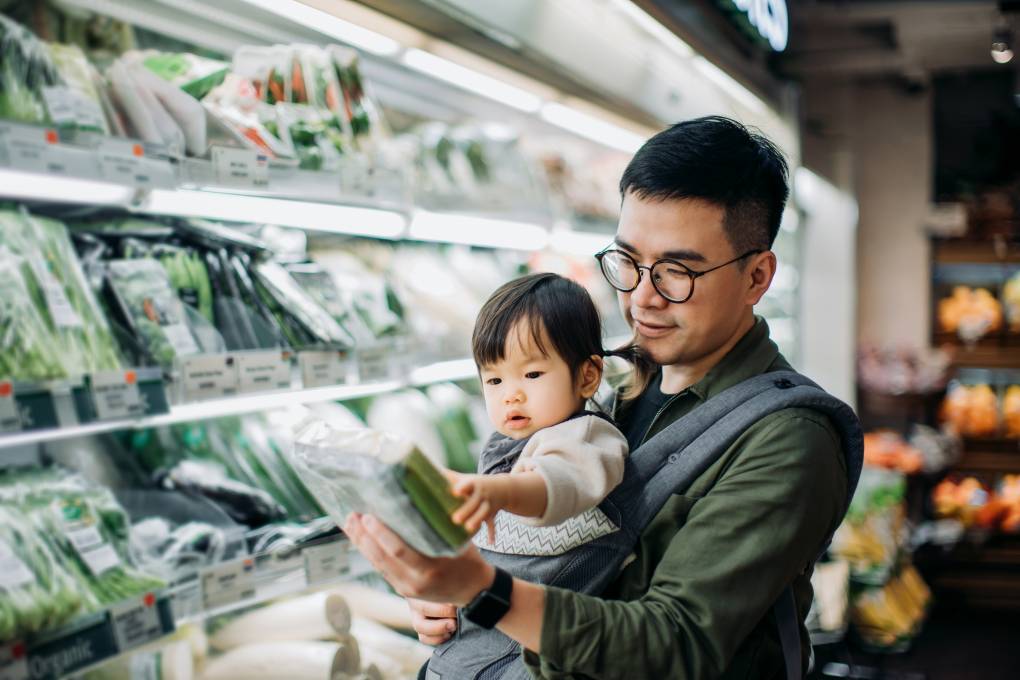
"title": "Young Asian father with cute little daughter grocery shopping for fresh organic vegetables in supermarket",
"publishDate": 1679006512,
"status": "inherit",
"parent": 11943420,
"modified": 1679089855,
"caption": "In April, millions of households across California will see their CalFresh food stamp benefits drop due to a change in federal funding. Here's what to do if you're affected.",
"credit": "d3sign/Getty Images",
"altTag": "A young Asian man with short dark hair and round glasses carries a 1-year-old girl, with tiny black pigtails, in a harness on his chest, with the girl facing out. They stand in the light of a vegetable display in a supermarket. The man holds a plastic container full of green vegetables, maybe cucumbers, smiling as his daughter reaches out to touch the box.",
"description": "In April, millions of households across California will see their CalFresh food stamps benefits drop due to a change in federal funding. Here's what to do if you're affected.",
"imgSizes": {
"medium": {
"file": "https://cdn.kqed.org/wp-content/uploads/sites/10/2023/03/GettyImages-1144627849-800x533.jpg",
"width": 800,
"height": 533,
"mimeType": "image/jpeg"
},
"large": {
"file": "https://cdn.kqed.org/wp-content/uploads/sites/10/2023/03/GettyImages-1144627849-1020x680.jpg",
"width": 1020,
"height": 680,
"mimeType": "image/jpeg"
},
"thumbnail": {
"file": "https://cdn.kqed.org/wp-content/uploads/sites/10/2023/03/GettyImages-1144627849-160x107.jpg",
"width": 160,
"height": 107,
"mimeType": "image/jpeg"
},
"1536x1536": {
"file": "https://cdn.kqed.org/wp-content/uploads/sites/10/2023/03/GettyImages-1144627849-1536x1024.jpg",
"width": 1536,
"height": 1024,
"mimeType": "image/jpeg"
},
"2048x2048": {
"file": "https://cdn.kqed.org/wp-content/uploads/sites/10/2023/03/GettyImages-1144627849-2048x1365.jpg",
"width": 2048,
"height": 1365,
"mimeType": "image/jpeg"
},
"post-thumbnail": {
"file": "https://cdn.kqed.org/wp-content/uploads/sites/10/2023/03/GettyImages-1144627849-672x372.jpg",
"width": 672,
"height": 372,
"mimeType": "image/jpeg"
},
"twentyfourteen-full-width": {
"file": "https://cdn.kqed.org/wp-content/uploads/sites/10/2023/03/GettyImages-1144627849-1038x576.jpg",
"width": 1038,
"height": 576,
"mimeType": "image/jpeg"
},
"full-width": {
"file": "https://cdn.kqed.org/wp-content/uploads/sites/10/2023/03/GettyImages-1144627849-1920x1280.jpg",
"width": 1920,
"height": 1280,
"mimeType": "image/jpeg"
},
"kqedFullSize": {
"file": "https://cdn.kqed.org/wp-content/uploads/sites/10/2023/03/GettyImages-1144627849-scaled-e1764880413771.jpg",
"width": 2000,
"height": 1334
}
},
"isLoading": false,
"fetchFailed": false
},
"news_11902230": {
"type": "attachments",
"id": "news_11902230",
"meta": {
"index": "attachments_1716263798",
"site": "news",
"id": "11902230",
"found": true
},
"parent": 11902149,
"imgSizes": {
"twentyfourteen-full-width": {
"file": "https://ww2.kqed.org/app/uploads/sites/10/2022/01/RS46108_016_KQED_SanFrancisco_COVIDTesting_11302020-qut-1038x576.jpg",
"width": 1038,
"mimeType": "image/jpeg",
"height": 576
},
"thumbnail": {
"file": "https://ww2.kqed.org/app/uploads/sites/10/2022/01/RS46108_016_KQED_SanFrancisco_COVIDTesting_11302020-qut-160x107.jpg",
"width": 160,
"mimeType": "image/jpeg",
"height": 107
},
"post-thumbnail": {
"file": "https://ww2.kqed.org/app/uploads/sites/10/2022/01/RS46108_016_KQED_SanFrancisco_COVIDTesting_11302020-qut-672x372.jpg",
"width": 672,
"mimeType": "image/jpeg",
"height": 372
},
"kqedFullSize": {
"file": "https://ww2.kqed.org/app/uploads/sites/10/2022/01/RS46108_016_KQED_SanFrancisco_COVIDTesting_11302020-qut.jpg",
"width": 1920,
"height": 1280
},
"large": {
"file": "https://ww2.kqed.org/app/uploads/sites/10/2022/01/RS46108_016_KQED_SanFrancisco_COVIDTesting_11302020-qut-1020x680.jpg",
"width": 1020,
"mimeType": "image/jpeg",
"height": 680
},
"1536x1536": {
"file": "https://ww2.kqed.org/app/uploads/sites/10/2022/01/RS46108_016_KQED_SanFrancisco_COVIDTesting_11302020-qut-1536x1024.jpg",
"width": 1536,
"mimeType": "image/jpeg",
"height": 1024
},
"medium": {
"file": "https://ww2.kqed.org/app/uploads/sites/10/2022/01/RS46108_016_KQED_SanFrancisco_COVIDTesting_11302020-qut-800x533.jpg",
"width": 800,
"mimeType": "image/jpeg",
"height": 533
}
},
"publishDate": 1642722284,
"modified": 1676430999,
"caption": "Health care worker Olga Duran tests a patient for COVID at a Unidos en Salud testing site on 24th and Mission streets in San Francisco on Nov. 30, 2020.",
"description": null,
"title": "RS46108_016_KQED_SanFrancisco_COVIDTesting_11302020-qut",
"credit": "Beth LaBerge/KQED",
"status": "inherit",
"altTag": "A nurse in full PPE prepares to swab man wearing a mask facing away from camera, outside in sunlight",
"isLoading": false,
"fetchFailed": false
},
"news_11940606": {
"type": "attachments",
"id": "news_11940606",
"meta": {
"index": "attachments_1716263798",
"site": "news",
"id": "11940606",
"found": true
},
"parent": 11940602,
"imgSizes": {
"twentyfourteen-full-width": {
"file": "https://ww2.kqed.org/app/uploads/sites/10/2023/02/GettyImages-1219595595-1024x576.jpg",
"width": 1024,
"mimeType": "image/jpeg",
"height": 576
},
"thumbnail": {
"file": "https://ww2.kqed.org/app/uploads/sites/10/2023/02/GettyImages-1219595595-160x105.jpg",
"width": 160,
"mimeType": "image/jpeg",
"height": 105
},
"post-thumbnail": {
"file": "https://ww2.kqed.org/app/uploads/sites/10/2023/02/GettyImages-1219595595-672x372.jpg",
"width": 672,
"mimeType": "image/jpeg",
"height": 372
},
"kqedFullSize": {
"file": "https://ww2.kqed.org/app/uploads/sites/10/2023/02/GettyImages-1219595595.jpg",
"width": 1024,
"height": 671
},
"large": {
"file": "https://ww2.kqed.org/app/uploads/sites/10/2023/02/GettyImages-1219595595-1020x668.jpg",
"width": 1020,
"mimeType": "image/jpeg",
"height": 668
},
"medium": {
"file": "https://ww2.kqed.org/app/uploads/sites/10/2023/02/GettyImages-1219595595-800x524.jpg",
"width": 800,
"mimeType": "image/jpeg",
"height": 524
}
},
"publishDate": 1675976348,
"modified": 1675989056,
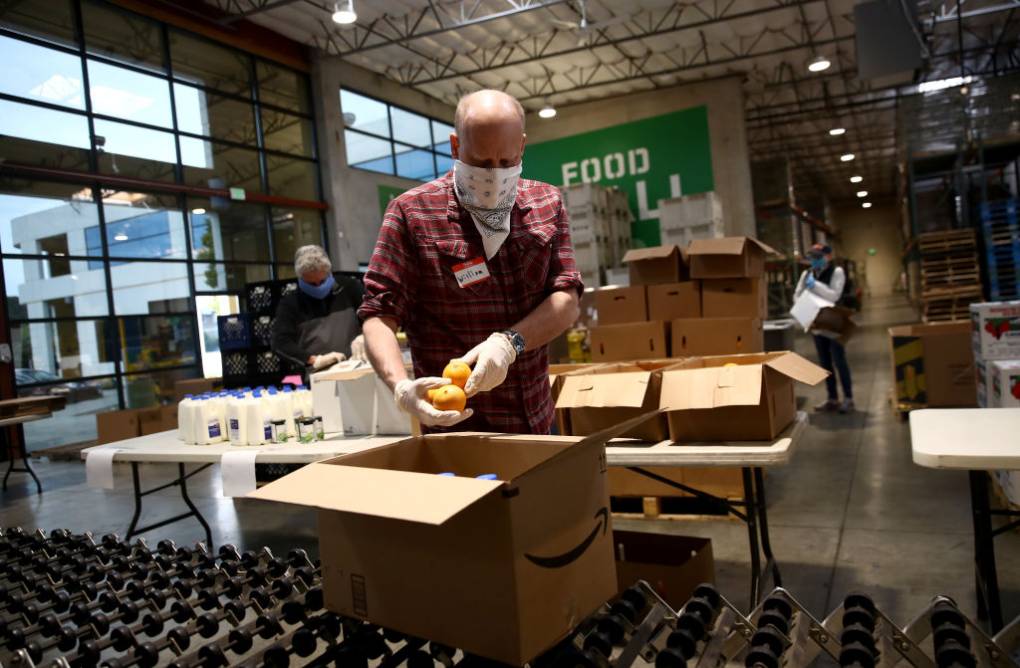
"caption": "Volunteers pack boxes full of food at the San Francisco-Marin Food Bank on April 18, 2020, in San Rafael.",
"description": "Second sentence previously was: The food bank is offering drive thru pickup on Saturday mornings during the Coronavirus (COVID-19) pandemic. ",
"title": "Food Pantry Offers Drive Thru Grocery Pickup During Coronavirus Pandemic",
"credit": "Ezra Shaw/Getty Images",
"status": "inherit",
"altTag": "A man wearing a white bandana, gloves and red shirt holds fruit in both hands over a cardboard box sitting on a conveyor belt inside a warehouse.",
"isLoading": false,
"fetchFailed": false
},
"news_11935441": {
"type": "attachments",
"id": "news_11935441",
"meta": {
"index": "attachments_1716263798",
"site": "news",
"id": "11935441",
"found": true
},
"parent": 11897177,
"imgSizes": {
"twentyfourteen-full-width": {
"file": "https://ww2.kqed.org/app/uploads/sites/10/2021/11/RS61678_GettyImages-1241546546-qut-1038x576.jpg",
"width": 1038,
"mimeType": "image/jpeg",
"height": 576
},
"thumbnail": {
"file": "https://ww2.kqed.org/app/uploads/sites/10/2021/11/RS61678_GettyImages-1241546546-qut-160x110.jpg",
"width": 160,
"mimeType": "image/jpeg",
"height": 110
},
"post-thumbnail": {
"file": "https://ww2.kqed.org/app/uploads/sites/10/2021/11/RS61678_GettyImages-1241546546-qut-672x372.jpg",
"width": 672,
"mimeType": "image/jpeg",
"height": 372
},
"kqedFullSize": {
"file": "https://ww2.kqed.org/app/uploads/sites/10/2021/11/RS61678_GettyImages-1241546546-qut.jpg",
"width": 1920,
"height": 1324
},
"large": {
"file": "https://ww2.kqed.org/app/uploads/sites/10/2021/11/RS61678_GettyImages-1241546546-qut-1020x703.jpg",
"width": 1020,
"mimeType": "image/jpeg",
"height": 703
},
"1536x1536": {
"file": "https://ww2.kqed.org/app/uploads/sites/10/2021/11/RS61678_GettyImages-1241546546-qut-1536x1059.jpg",
"width": 1536,
"mimeType": "image/jpeg",
"height": 1059
},
"medium": {
"file": "https://ww2.kqed.org/app/uploads/sites/10/2021/11/RS61678_GettyImages-1241546546-qut-800x552.jpg",
"width": 800,
"mimeType": "image/jpeg",
"height": 552
}
},
"publishDate": 1671146899,
"modified": 1671150120,
"caption": "Volunteers place onions and potatoes into small bags at a food distribution event sponsored by the Second Harvest Food Bank of Central Florida and Orange County at St. John Vianney Catholic Church in Orlando, Florida. High food and gas prices are squeezing working families, sending some to food pantries for the first time, but providers are struggling with inflation costs as demand spikes.",
"description": null,
"title": "food-bank-near-me",
"credit": "Paul Hennessy/SOPA Images/LightRocket via Getty Images",
"status": "inherit",
"altTag": "A group of three volunteers wearing bright yellow jackets photographed from above, sorting large white bags of onions and potatoes.",
"isLoading": false,
"fetchFailed": false
},
"news_11915368": {
"type": "attachments",
"id": "news_11915368",
"meta": {
"index": "attachments_1716263798",
"site": "news",
"id": "11915368",
"found": true
},
"title": "RS47523_009_SanFrancisco_SkyStarWheel_03042021-qut",
"publishDate": 1653689774,
"status": "inherit",
"parent": 11915329,
"modified": 1767990095,
"caption": "The de Young Museum in Golden Gate Park on March 4, 2021.",
"credit": "Beth LaBerge/KQED",
"altTag": "An image of the De Young museum from above during the afternoon.",
"description": "View from the SkyStar Observation Wheel of the de Young Museum in Golden Gate Park on March 4, 2021, the first day of reopening as San Francisco enters the Red Tier.",
"imgSizes": {
"medium": {
"file": "https://cdn.kqed.org/wp-content/uploads/sites/10/2022/05/RS47523_009_SanFrancisco_SkyStarWheel_03042021-qut-800x533.jpg",
"width": 800,
"height": 533,
"mimeType": "image/jpeg"
},
"large": {
"file": "https://cdn.kqed.org/wp-content/uploads/sites/10/2022/05/RS47523_009_SanFrancisco_SkyStarWheel_03042021-qut-1020x680.jpg",
"width": 1020,
"height": 680,
"mimeType": "image/jpeg"
},
"thumbnail": {
"file": "https://cdn.kqed.org/wp-content/uploads/sites/10/2022/05/RS47523_009_SanFrancisco_SkyStarWheel_03042021-qut-160x107.jpg",
"width": 160,
"height": 107,
"mimeType": "image/jpeg"
},
"1536x1536": {
"file": "https://cdn.kqed.org/wp-content/uploads/sites/10/2022/05/RS47523_009_SanFrancisco_SkyStarWheel_03042021-qut-1536x1024.jpg",
"width": 1536,
"height": 1024,
"mimeType": "image/jpeg"
},
"post-thumbnail": {
"file": "https://cdn.kqed.org/wp-content/uploads/sites/10/2022/05/RS47523_009_SanFrancisco_SkyStarWheel_03042021-qut-672x372.jpg",
"width": 672,
"height": 372,
"mimeType": "image/jpeg"
},
"twentyfourteen-full-width": {
"file": "https://cdn.kqed.org/wp-content/uploads/sites/10/2022/05/RS47523_009_SanFrancisco_SkyStarWheel_03042021-qut-1038x576.jpg",
"width": 1038,
"height": 576,
"mimeType": "image/jpeg"
},
"kqedFullSize": {
"file": "https://cdn.kqed.org/wp-content/uploads/sites/10/2022/05/RS47523_009_SanFrancisco_SkyStarWheel_03042021-qut.jpg",
"width": 1920,
"height": 1280
}
},
"isLoading": false,
"fetchFailed": false
},
"news_11890790": {
"type": "attachments",
"id": "news_11890790",
"meta": {
"index": "attachments_1716263798",
"site": "news",
"id": "11890790",
"found": true
},
"parent": 11890716,
"imgSizes": {
"twentyfourteen-full-width": {
"file": "https://ww2.kqed.org/app/uploads/sites/10/2021/10/lucky-getty-1038x576.jpg",
"width": 1038,
"mimeType": "image/jpeg",
"height": 576
},
"thumbnail": {
"file": "https://ww2.kqed.org/app/uploads/sites/10/2021/10/lucky-getty-160x115.jpg",
"width": 160,
"mimeType": "image/jpeg",
"height": 115
},
"post-thumbnail": {
"file": "https://ww2.kqed.org/app/uploads/sites/10/2021/10/lucky-getty-672x372.jpg",
"width": 672,
"mimeType": "image/jpeg",
"height": 372
},
"kqedFullSize": {
"file": "https://ww2.kqed.org/app/uploads/sites/10/2021/10/lucky-getty-scaled.jpg",
"width": 2560,
"height": 1842
},
"2048x2048": {
"file": "https://ww2.kqed.org/app/uploads/sites/10/2021/10/lucky-getty-2048x1473.jpg",
"width": 2048,
"mimeType": "image/jpeg",
"height": 1473
},
"large": {
"file": "https://ww2.kqed.org/app/uploads/sites/10/2021/10/lucky-getty-1020x734.jpg",
"width": 1020,
"mimeType": "image/jpeg",
"height": 734
},
"1536x1536": {
"file": "https://ww2.kqed.org/app/uploads/sites/10/2021/10/lucky-getty-1536x1105.jpg",
"width": 1536,
"mimeType": "image/jpeg",
"height": 1105
},
"full-width": {
"file": "https://ww2.kqed.org/app/uploads/sites/10/2021/10/lucky-getty-1920x1381.jpg",
"width": 1920,
"mimeType": "image/jpeg",
"height": 1381
},
"medium": {
"file": "https://ww2.kqed.org/app/uploads/sites/10/2021/10/lucky-getty-800x576.jpg",
"width": 800,
"mimeType": "image/jpeg",
"height": 576
}
},
"publishDate": 1633124447,
"modified": 1633135111,
"caption": "A customer leaves a Lucky store on July 27, 2020 in Larkspur, California.",
"description": "A customer leaves a Lucky store on July 27, 2020 in Larkspur, California.",
"title": "Supermarket Chain Albertsons, Owner Of Safeway And Other Grocery Stores, Sees Increases In Sales",
"credit": "Justin Sullivan/Getty Images",
"status": "inherit",
"altTag": "The front of a Lucky store, with its read \"Lucky\" sign above the awning.",
"isLoading": false,
"fetchFailed": false
},
"news_11876780": {
"type": "attachments",
"id": "news_11876780",
"meta": {
"index": "attachments_1716263798",
"site": "news",
"id": "11876780",
"found": true
},
"parent": 11876704,
"imgSizes": {
"thumbnail": {
"file": "https://ww2.kqed.org/app/uploads/sites/10/2021/06/GettyImages-1232601824-160x86.jpg",
"width": 160,
"mimeType": "image/jpeg",
"height": 86
},
"post-thumbnail": {
"file": "https://ww2.kqed.org/app/uploads/sites/10/2021/06/GettyImages-1232601824-672x372.jpg",
"width": 672,
"mimeType": "image/jpeg",
"height": 372
},
"kqedFullSize": {
"file": "https://ww2.kqed.org/app/uploads/sites/10/2021/06/GettyImages-1232601824.jpg",
"width": 1024,
"height": 550
},
"large": {
"file": "https://ww2.kqed.org/app/uploads/sites/10/2021/06/GettyImages-1232601824-1020x548.jpg",
"width": 1020,
"mimeType": "image/jpeg",
"height": 548
},
"medium": {
"file": "https://ww2.kqed.org/app/uploads/sites/10/2021/06/GettyImages-1232601824-800x430.jpg",
"width": 800,
"mimeType": "image/jpeg",
"height": 430
}
},
"publishDate": 1622845458,
"modified": 1622845533,
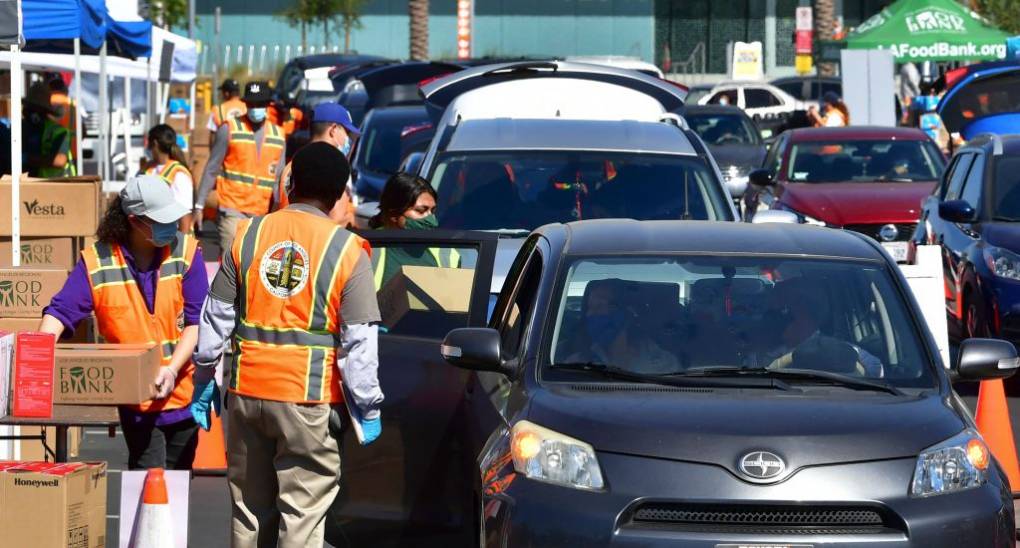
"caption": "Los Angeles County Regional Food Bank workers help distribute food to some 2,000 vehicles expected to arrive in Willowbrook on April 29, 2021, part of an ongoing effort to help people affected by the coronavirus pandemic.",
"description": null,
"title": "US-HEALTH-VIRUS-FOOD",
"credit": "Frederic J. Brown/AFP via Getty Images",
"status": "inherit",
"altTag": null,
"isLoading": false,
"fetchFailed": false
},
"news_11847420": {
"type": "attachments",
"id": "news_11847420",
"meta": {
"index": "attachments_1716263798",
"site": "news",
"id": "11847420",
"found": true
},
"parent": 11847203,
"imgSizes": {
"apple_news_ca_landscape_5_5": {
"file": "https://ww2.kqed.org/app/uploads/sites/10/2020/11/1920_GettyImages-1227684396-copy-1044x783.jpg",
"width": 1044,
"mimeType": "image/jpeg",
"height": 783
},
"apple_news_ca_square_4_0": {
"file": "https://ww2.kqed.org/app/uploads/sites/10/2020/11/1920_GettyImages-1227684396-copy-470x470.jpg",
"width": 470,
"mimeType": "image/jpeg",
"height": 470
},
"twentyfourteen-full-width": {
"file": "https://ww2.kqed.org/app/uploads/sites/10/2020/11/1920_GettyImages-1227684396-copy-1038x576.jpg",
"width": 1038,
"mimeType": "image/jpeg",
"height": 576
},
"thumbnail": {
"file": "https://ww2.kqed.org/app/uploads/sites/10/2020/11/1920_GettyImages-1227684396-copy-160x90.jpg",
"width": 160,
"mimeType": "image/jpeg",
"height": 90
},
"post-thumbnail": {
"file": "https://ww2.kqed.org/app/uploads/sites/10/2020/11/1920_GettyImages-1227684396-copy-672x372.jpg",
"width": 672,
"mimeType": "image/jpeg",
"height": 372
},
"kqedFullSize": {
"file": "https://ww2.kqed.org/app/uploads/sites/10/2020/11/1920_GettyImages-1227684396-copy-scaled.jpg",
"width": 2560,
"height": 1440
},
"2048x2048": {
"file": "https://ww2.kqed.org/app/uploads/sites/10/2020/11/1920_GettyImages-1227684396-copy-2048x1152.jpg",
"width": 2048,
"mimeType": "image/jpeg",
"height": 1152
},
"apple_news_ca_landscape_4_7": {
"file": "https://ww2.kqed.org/app/uploads/sites/10/2020/11/1920_GettyImages-1227684396-copy-632x474.jpg",
"width": 632,
"mimeType": "image/jpeg",
"height": 474
},
"large": {
"file": "https://ww2.kqed.org/app/uploads/sites/10/2020/11/1920_GettyImages-1227684396-copy-1020x574.jpg",
"width": 1020,
"mimeType": "image/jpeg",
"height": 574
},
"apple_news_ca_landscape_4_0": {
"file": "https://ww2.kqed.org/app/uploads/sites/10/2020/11/1920_GettyImages-1227684396-copy-536x402.jpg",
"width": 536,
"mimeType": "image/jpeg",
"height": 402
},
"apple_news_ca_portrait_12_9": {
"file": "https://ww2.kqed.org/app/uploads/sites/10/2020/11/1920_GettyImages-1227684396-copy-1122x1496.jpg",
"width": 1122,
"mimeType": "image/jpeg",
"height": 1496
},
"medium": {
"file": "https://ww2.kqed.org/app/uploads/sites/10/2020/11/1920_GettyImages-1227684396-copy-800x450.jpg",
"width": 800,
"mimeType": "image/jpeg",
"height": 450
},
"apple_news_ca_portrait_4_0": {
"file": "https://ww2.kqed.org/app/uploads/sites/10/2020/11/1920_GettyImages-1227684396-copy-354x472.jpg",
"width": 354,
"mimeType": "image/jpeg",
"height": 472
},
"apple_news_ca_portrait_9_7": {
"file": "https://ww2.kqed.org/app/uploads/sites/10/2020/11/1920_GettyImages-1227684396-copy-840x1120.jpg",
"width": 840,
"mimeType": "image/jpeg",
"height": 1120
},
"apple_news_ca_landscape_12_9": {
"file": "https://ww2.kqed.org/app/uploads/sites/10/2020/11/1920_GettyImages-1227684396-copy-1832x1374.jpg",
"width": 1832,
"mimeType": "image/jpeg",
"height": 1374
},
"apple_news_ca_square_9_7": {
"file": "https://ww2.kqed.org/app/uploads/sites/10/2020/11/1920_GettyImages-1227684396-copy-1104x1104.jpg",
"width": 1104,
"mimeType": "image/jpeg",
"height": 1104
},
"1536x1536": {
"file": "https://ww2.kqed.org/app/uploads/sites/10/2020/11/1920_GettyImages-1227684396-copy-1536x864.jpg",
"width": 1536,
"mimeType": "image/jpeg",
"height": 864
},
"apple_news_ca_portrait_4_7": {
"file": "https://ww2.kqed.org/app/uploads/sites/10/2020/11/1920_GettyImages-1227684396-copy-414x552.jpg",
"width": 414,
"mimeType": "image/jpeg",
"height": 552
},
"apple_news_ca_square_12_9": {
"file": "https://ww2.kqed.org/app/uploads/sites/10/2020/11/1920_GettyImages-1227684396-copy-1472x1472.jpg",
"width": 1472,
"mimeType": "image/jpeg",
"height": 1472
},
"apple_news_ca_portrait_5_5": {
"file": "https://ww2.kqed.org/app/uploads/sites/10/2020/11/1920_GettyImages-1227684396-copy-687x916.jpg",
"width": 687,
"mimeType": "image/jpeg",
"height": 916
},
"full-width": {
"file": "https://ww2.kqed.org/app/uploads/sites/10/2020/11/1920_GettyImages-1227684396-copy-1920x1080.jpg",
"width": 1920,
"mimeType": "image/jpeg",
"height": 1080
},
"apple_news_ca_square_4_7": {
"file": "https://ww2.kqed.org/app/uploads/sites/10/2020/11/1920_GettyImages-1227684396-copy-550x550.jpg",
"width": 550,
"mimeType": "image/jpeg",
"height": 550
},
"apple_news_ca_landscape_9_7": {
"file": "https://ww2.kqed.org/app/uploads/sites/10/2020/11/1920_GettyImages-1227684396-copy-1376x1032.jpg",
"width": 1376,
"mimeType": "image/jpeg",
"height": 1032
},
"apple_news_ca_square_5_5": {
"file": "https://ww2.kqed.org/app/uploads/sites/10/2020/11/1920_GettyImages-1227684396-copy-912x912.jpg",
"width": 912,
"mimeType": "image/jpeg",
"height": 912
}
},
"publishDate": 1605291672,
"modified": 1605291737,
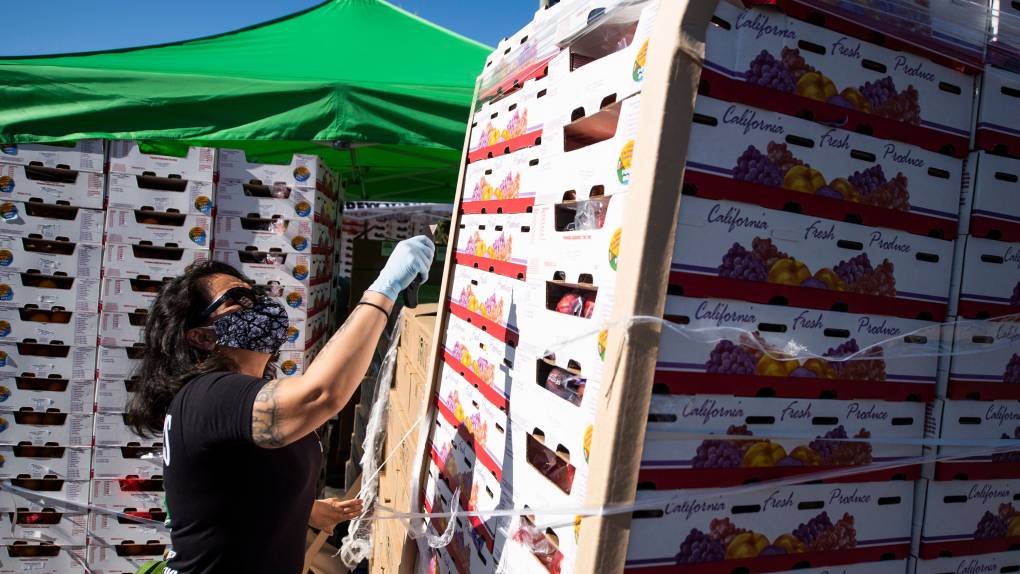
"caption": "A volunteer prepares produce for distribution at a community food bank in the Crenshaw neighborhood of Los Angeles, California, July 18, 2020 during the coronavirus pandemic. - Food insecurity is a growing issue in the United States as the COVID-19 positive rates spike upward. ",
"description": null,
"title": "US-HEALTH-VIRUS-FOOD BANK",
"credit": "Robyn Beck/AFP via Getty Images",
"status": "inherit",
"isLoading": false,
"fetchFailed": false
},
"news_11819564": {
"type": "attachments",
"id": "news_11819564",
"meta": {
"index": "attachments_1716263798",
"site": "news",
"id": "11819564",
"found": true
},
"parent": 11819549,
"imgSizes": {
"apple_news_ca_landscape_5_5": {
"file": "https://ww2.kqed.org/app/uploads/sites/10/2020/05/RS43261_FOOD-photo-qut-1044x783.jpg",
"width": 1044,
"mimeType": "image/jpeg",
"height": 783
},
"apple_news_ca_square_4_0": {
"file": "https://ww2.kqed.org/app/uploads/sites/10/2020/05/RS43261_FOOD-photo-qut-470x470.jpg",
"width": 470,
"mimeType": "image/jpeg",
"height": 470
},
"twentyfourteen-full-width": {
"file": "https://ww2.kqed.org/app/uploads/sites/10/2020/05/RS43261_FOOD-photo-qut-1038x576.jpg",
"width": 1038,
"mimeType": "image/jpeg",
"height": 576
},
"thumbnail": {
"file": "https://ww2.kqed.org/app/uploads/sites/10/2020/05/RS43261_FOOD-photo-qut-160x117.jpg",
"width": 160,
"mimeType": "image/jpeg",
"height": 117
},
"post-thumbnail": {
"file": "https://ww2.kqed.org/app/uploads/sites/10/2020/05/RS43261_FOOD-photo-qut-672x372.jpg",
"width": 672,
"mimeType": "image/jpeg",
"height": 372
},
"kqedFullSize": {
"file": "https://ww2.kqed.org/app/uploads/sites/10/2020/05/RS43261_FOOD-photo-qut.jpg",
"width": 1920,
"height": 1403
},
"apple_news_ca_landscape_4_7": {
"file": "https://ww2.kqed.org/app/uploads/sites/10/2020/05/RS43261_FOOD-photo-qut-632x474.jpg",
"width": 632,
"mimeType": "image/jpeg",
"height": 474
},
"large": {
"file": "https://ww2.kqed.org/app/uploads/sites/10/2020/05/RS43261_FOOD-photo-qut-1020x745.jpg",
"width": 1020,
"mimeType": "image/jpeg",
"height": 745
},
"apple_news_ca_landscape_4_0": {
"file": "https://ww2.kqed.org/app/uploads/sites/10/2020/05/RS43261_FOOD-photo-qut-536x402.jpg",
"width": 536,
"mimeType": "image/jpeg",
"height": 402
},
"apple_news_ca_portrait_12_9": {
"file": "https://ww2.kqed.org/app/uploads/sites/10/2020/05/RS43261_FOOD-photo-qut-1122x1403.jpg",
"width": 1122,
"mimeType": "image/jpeg",
"height": 1403
},
"medium": {
"file": "https://ww2.kqed.org/app/uploads/sites/10/2020/05/RS43261_FOOD-photo-qut-800x585.jpg",
"width": 800,
"mimeType": "image/jpeg",
"height": 585
},
"apple_news_ca_portrait_4_0": {
"file": "https://ww2.kqed.org/app/uploads/sites/10/2020/05/RS43261_FOOD-photo-qut-354x472.jpg",
"width": 354,
"mimeType": "image/jpeg",
"height": 472
},
"apple_news_ca_portrait_9_7": {
"file": "https://ww2.kqed.org/app/uploads/sites/10/2020/05/RS43261_FOOD-photo-qut-840x1120.jpg",
"width": 840,
"mimeType": "image/jpeg",
"height": 1120
},
"apple_news_ca_landscape_12_9": {
"file": "https://ww2.kqed.org/app/uploads/sites/10/2020/05/RS43261_FOOD-photo-qut-1832x1374.jpg",
"width": 1832,
"mimeType": "image/jpeg",
"height": 1374
},
"apple_news_ca_square_9_7": {
"file": "https://ww2.kqed.org/app/uploads/sites/10/2020/05/RS43261_FOOD-photo-qut-1104x1104.jpg",
"width": 1104,
"mimeType": "image/jpeg",
"height": 1104
},
"apple_news_ca_portrait_4_7": {
"file": "https://ww2.kqed.org/app/uploads/sites/10/2020/05/RS43261_FOOD-photo-qut-414x552.jpg",
"width": 414,
"mimeType": "image/jpeg",
"height": 552
},
"apple_news_ca_square_12_9": {
"file": "https://ww2.kqed.org/app/uploads/sites/10/2020/05/RS43261_FOOD-photo-qut-1472x1403.jpg",
"width": 1472,
"mimeType": "image/jpeg",
"height": 1403
},
"apple_news_ca_portrait_5_5": {
"file": "https://ww2.kqed.org/app/uploads/sites/10/2020/05/RS43261_FOOD-photo-qut-687x916.jpg",
"width": 687,
"mimeType": "image/jpeg",
"height": 916
},
"full-width": {
"file": "https://ww2.kqed.org/app/uploads/sites/10/2020/05/RS43261_FOOD-photo-qut-1920x1403.jpg",
"width": 1920,
"mimeType": "image/jpeg",
"height": 1403
},
"apple_news_ca_square_4_7": {
"file": "https://ww2.kqed.org/app/uploads/sites/10/2020/05/RS43261_FOOD-photo-qut-550x550.jpg",
"width": 550,
"mimeType": "image/jpeg",
"height": 550
},
"apple_news_ca_landscape_9_7": {
"file": "https://ww2.kqed.org/app/uploads/sites/10/2020/05/RS43261_FOOD-photo-qut-1376x1032.jpg",
"width": 1376,
"mimeType": "image/jpeg",
"height": 1032
},
"apple_news_ca_square_5_5": {
"file": "https://ww2.kqed.org/app/uploads/sites/10/2020/05/RS43261_FOOD-photo-qut-912x912.jpg",
"width": 912,
"mimeType": "image/jpeg",
"height": 912
}
},
"publishDate": 1590003525,
"modified": 1590014736,
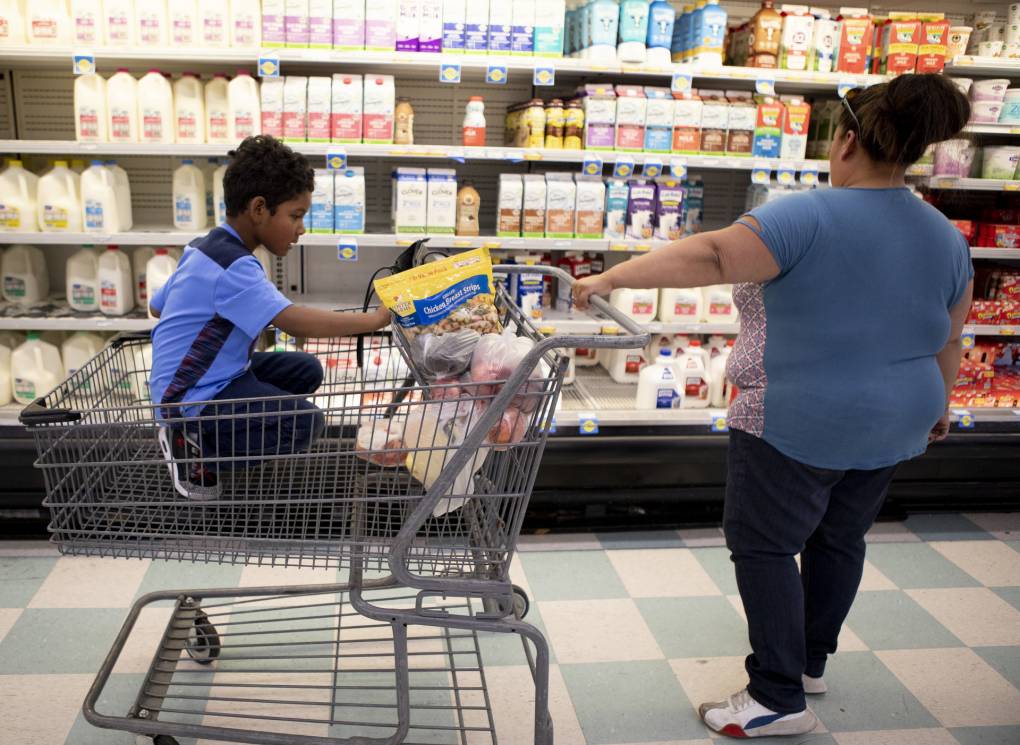
"caption": "Antionette Martinez and her son Caden, 5, who receive CalFresh, do their weekly grocery shopping at FoodMaxx on July 26, 2019. ",
"description": null,
"title": "RS43261_FOOD photo-qut",
"credit": "Anne Wernikoff/CalMatters",
"status": "inherit",
"isLoading": false,
"fetchFailed": false
},
"news_11796716": {
"type": "attachments",
"id": "news_11796716",
"meta": {
"index": "attachments_1716263798",
"site": "news",
"id": "11796716",
"found": true
},
"parent": 11796627,
"imgSizes": {
"apple_news_ca_landscape_5_5": {
"file": "https://ww2.kqed.org/app/uploads/sites/10/2020/01/RS40760_1-qut-1-1044x783.jpg",
"width": 1044,
"mimeType": "image/jpeg",
"height": 783
},
"apple_news_ca_square_4_0": {
"file": "https://ww2.kqed.org/app/uploads/sites/10/2020/01/RS40760_1-qut-1-470x470.jpg",
"width": 470,
"mimeType": "image/jpeg",
"height": 470
},
"twentyfourteen-full-width": {
"file": "https://ww2.kqed.org/app/uploads/sites/10/2020/01/RS40760_1-qut-1-1038x576.jpg",
"width": 1038,
"mimeType": "image/jpeg",
"height": 576
},
"thumbnail": {
"file": "https://ww2.kqed.org/app/uploads/sites/10/2020/01/RS40760_1-qut-1-160x109.jpg",
"width": 160,
"mimeType": "image/jpeg",
"height": 109
},
"post-thumbnail": {
"file": "https://ww2.kqed.org/app/uploads/sites/10/2020/01/RS40760_1-qut-1-672x372.jpg",
"width": 672,
"mimeType": "image/jpeg",
"height": 372
},
"kqedFullSize": {
"file": "https://ww2.kqed.org/app/uploads/sites/10/2020/01/RS40760_1-qut-1.jpg",
"width": 1920,
"height": 1308
},
"apple_news_ca_landscape_4_7": {
"file": "https://ww2.kqed.org/app/uploads/sites/10/2020/01/RS40760_1-qut-1-632x474.jpg",
"width": 632,
"mimeType": "image/jpeg",
"height": 474
},
"large": {
"file": "https://ww2.kqed.org/app/uploads/sites/10/2020/01/RS40760_1-qut-1-1020x695.jpg",
"width": 1020,
"mimeType": "image/jpeg",
"height": 695
},
"apple_news_ca_landscape_4_0": {
"file": "https://ww2.kqed.org/app/uploads/sites/10/2020/01/RS40760_1-qut-1-536x402.jpg",
"width": 536,
"mimeType": "image/jpeg",
"height": 402
},
"apple_news_ca_portrait_12_9": {
"file": "https://ww2.kqed.org/app/uploads/sites/10/2020/01/RS40760_1-qut-1-1122x1308.jpg",
"width": 1122,
"mimeType": "image/jpeg",
"height": 1308
},
"medium": {
"file": "https://ww2.kqed.org/app/uploads/sites/10/2020/01/RS40760_1-qut-1-800x545.jpg",
"width": 800,
"mimeType": "image/jpeg",
"height": 545
},
"apple_news_ca_portrait_4_0": {
"file": "https://ww2.kqed.org/app/uploads/sites/10/2020/01/RS40760_1-qut-1-354x472.jpg",
"width": 354,
"mimeType": "image/jpeg",
"height": 472
},
"apple_news_ca_portrait_9_7": {
"file": "https://ww2.kqed.org/app/uploads/sites/10/2020/01/RS40760_1-qut-1-840x1120.jpg",
"width": 840,
"mimeType": "image/jpeg",
"height": 1120
},
"apple_news_ca_landscape_12_9": {
"file": "https://ww2.kqed.org/app/uploads/sites/10/2020/01/RS40760_1-qut-1-1832x1308.jpg",
"width": 1832,
"mimeType": "image/jpeg",
"height": 1308
},
"apple_news_ca_square_9_7": {
"file": "https://ww2.kqed.org/app/uploads/sites/10/2020/01/RS40760_1-qut-1-1104x1104.jpg",
"width": 1104,
"mimeType": "image/jpeg",
"height": 1104
},
"apple_news_ca_portrait_4_7": {
"file": "https://ww2.kqed.org/app/uploads/sites/10/2020/01/RS40760_1-qut-1-414x552.jpg",
"width": 414,
"mimeType": "image/jpeg",
"height": 552
},
"apple_news_ca_square_12_9": {
"file": "https://ww2.kqed.org/app/uploads/sites/10/2020/01/RS40760_1-qut-1-1472x1308.jpg",
"width": 1472,
"mimeType": "image/jpeg",
"height": 1308
},
"apple_news_ca_portrait_5_5": {
"file": "https://ww2.kqed.org/app/uploads/sites/10/2020/01/RS40760_1-qut-1-687x916.jpg",
"width": 687,
"mimeType": "image/jpeg",
"height": 916
},
"full-width": {
"file": "https://ww2.kqed.org/app/uploads/sites/10/2020/01/RS40760_1-qut-1-1920x1308.jpg",
"width": 1920,
"mimeType": "image/jpeg",
"height": 1308
},
"apple_news_ca_square_4_7": {
"file": "https://ww2.kqed.org/app/uploads/sites/10/2020/01/RS40760_1-qut-1-550x550.jpg",
"width": 550,
"mimeType": "image/jpeg",
"height": 550
},
"apple_news_ca_landscape_9_7": {
"file": "https://ww2.kqed.org/app/uploads/sites/10/2020/01/RS40760_1-qut-1-1376x1032.jpg",
"width": 1376,
"mimeType": "image/jpeg",
"height": 1032
},
"apple_news_ca_square_5_5": {
"file": "https://ww2.kqed.org/app/uploads/sites/10/2020/01/RS40760_1-qut-1-912x912.jpg",
"width": 912,
"mimeType": "image/jpeg",
"height": 912
}
},
"publishDate": 1579295579,
"modified": 1579295629,
"caption": "Antoinette Martinez uses CalFresh to pay for her groceries at FoodMaxx. ",
"description": null,
"title": "RS40760_1-qut (1)",
"credit": "Anne Wernikoff/CalMatters",
"status": "inherit",
"isLoading": false,
"fetchFailed": false
},
"news_11786071": {
"type": "attachments",
"id": "news_11786071",
"meta": {
"index": "attachments_1716263798",
"site": "news",
"id": "11786071",
"found": true
},
"parent": 11785978,
"imgSizes": {
"apple_news_ca_landscape_5_5": {
"file": "https://ww2.kqed.org/app/uploads/sites/10/2019/11/CalFreshprofilesphoto7-1044x783.jpg",
"width": 1044,
"mimeType": "image/jpeg",
"height": 783
},
"apple_news_ca_square_4_0": {
"file": "https://ww2.kqed.org/app/uploads/sites/10/2019/11/CalFreshprofilesphoto7-470x470.jpg",
"width": 470,
"mimeType": "image/jpeg",
"height": 470
},
"twentyfourteen-full-width": {
"file": "https://ww2.kqed.org/app/uploads/sites/10/2019/11/CalFreshprofilesphoto7-1038x576.jpg",
"width": 1038,
"mimeType": "image/jpeg",
"height": 576
},
"thumbnail": {
"file": "https://ww2.kqed.org/app/uploads/sites/10/2019/11/CalFreshprofilesphoto7-160x122.jpg",
"width": 160,
"mimeType": "image/jpeg",
"height": 122
},
"post-thumbnail": {
"file": "https://ww2.kqed.org/app/uploads/sites/10/2019/11/CalFreshprofilesphoto7-672x372.jpg",
"width": 672,
"mimeType": "image/jpeg",
"height": 372
},
"kqedFullSize": {
"file": "https://ww2.kqed.org/app/uploads/sites/10/2019/11/CalFreshprofilesphoto7.jpg",
"width": 1920,
"height": 1458
},
"apple_news_ca_landscape_4_7": {
"file": "https://ww2.kqed.org/app/uploads/sites/10/2019/11/CalFreshprofilesphoto7-632x474.jpg",
"width": 632,
"mimeType": "image/jpeg",
"height": 474
},
"large": {
"file": "https://ww2.kqed.org/app/uploads/sites/10/2019/11/CalFreshprofilesphoto7-1020x775.jpg",
"width": 1020,
"mimeType": "image/jpeg",
"height": 775
},
"complete_open_graph": {
"file": "https://ww2.kqed.org/app/uploads/sites/10/2019/11/CalFreshprofilesphoto7-1200x911.jpg",
"width": 1200,
"mimeType": "image/jpeg",
"height": 911
},
"apple_news_ca_landscape_4_0": {
"file": "https://ww2.kqed.org/app/uploads/sites/10/2019/11/CalFreshprofilesphoto7-536x402.jpg",
"width": 536,
"mimeType": "image/jpeg",
"height": 402
},
"apple_news_ca_portrait_12_9": {
"file": "https://ww2.kqed.org/app/uploads/sites/10/2019/11/CalFreshprofilesphoto7-1122x1458.jpg",
"width": 1122,
"mimeType": "image/jpeg",
"height": 1458
},
"medium": {
"file": "https://ww2.kqed.org/app/uploads/sites/10/2019/11/CalFreshprofilesphoto7-800x608.jpg",
"width": 800,
"mimeType": "image/jpeg",
"height": 608
},
"apple_news_ca_portrait_4_0": {
"file": "https://ww2.kqed.org/app/uploads/sites/10/2019/11/CalFreshprofilesphoto7-354x472.jpg",
"width": 354,
"mimeType": "image/jpeg",
"height": 472
},
"apple_news_ca_portrait_9_7": {
"file": "https://ww2.kqed.org/app/uploads/sites/10/2019/11/CalFreshprofilesphoto7-840x1120.jpg",
"width": 840,
"mimeType": "image/jpeg",
"height": 1120
},
"apple_news_ca_landscape_12_9": {
"file": "https://ww2.kqed.org/app/uploads/sites/10/2019/11/CalFreshprofilesphoto7-1832x1374.jpg",
"width": 1832,
"mimeType": "image/jpeg",
"height": 1374
},
"apple_news_ca_square_9_7": {
"file": "https://ww2.kqed.org/app/uploads/sites/10/2019/11/CalFreshprofilesphoto7-1104x1104.jpg",
"width": 1104,
"mimeType": "image/jpeg",
"height": 1104
},
"apple_news_ca_portrait_4_7": {
"file": "https://ww2.kqed.org/app/uploads/sites/10/2019/11/CalFreshprofilesphoto7-414x552.jpg",
"width": 414,
"mimeType": "image/jpeg",
"height": 552
},
"apple_news_ca_square_12_9": {
"file": "https://ww2.kqed.org/app/uploads/sites/10/2019/11/CalFreshprofilesphoto7-1472x1458.jpg",
"width": 1472,
"mimeType": "image/jpeg",
"height": 1458
},
"apple_news_ca_portrait_5_5": {
"file": "https://ww2.kqed.org/app/uploads/sites/10/2019/11/CalFreshprofilesphoto7-687x916.jpg",
"width": 687,
"mimeType": "image/jpeg",
"height": 916
},
"full-width": {
"file": "https://ww2.kqed.org/app/uploads/sites/10/2019/11/CalFreshprofilesphoto7-1920x1458.jpg",
"width": 1920,
"mimeType": "image/jpeg",
"height": 1458
},
"apple_news_ca_square_4_7": {
"file": "https://ww2.kqed.org/app/uploads/sites/10/2019/11/CalFreshprofilesphoto7-550x550.jpg",
"width": 550,
"mimeType": "image/jpeg",
"height": 550
},
"apple_news_ca_landscape_9_7": {
"file": "https://ww2.kqed.org/app/uploads/sites/10/2019/11/CalFreshprofilesphoto7-1376x1032.jpg",
"width": 1376,
"mimeType": "image/jpeg",
"height": 1032
},
"apple_news_ca_square_5_5": {
"file": "https://ww2.kqed.org/app/uploads/sites/10/2019/11/CalFreshprofilesphoto7-912x912.jpg",
"width": 912,
"mimeType": "image/jpeg",
"height": 912
}
},
"publishDate": 1573493596,
"modified": 1669210011,
"caption": null,
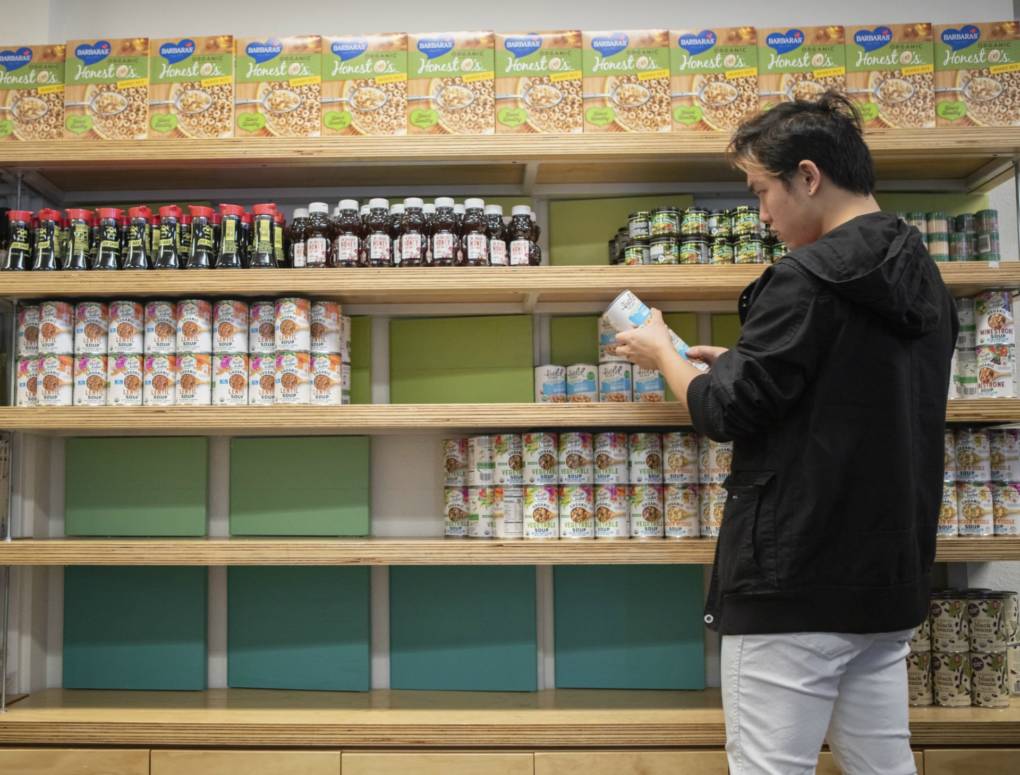
"description": "Student volunteer Yongjie He restocks shelves with canned goods at the UC Berkeley campus food pantry. (Anne Wernikoff for CalMatters)",
"title": "CalFreshprofilesphoto7",
"credit": "Anne Wernikoff for CalMatters",
"status": "inherit",
"altTag": "Man restocks shelves with canned food",
"isLoading": false,
"fetchFailed": false
},
"news_11776050": {
"type": "attachments",
"id": "news_11776050",
"meta": {
"index": "attachments_1716263798",
"site": "news",
"id": "11776050",
"found": true
},
"title": "public charge photo 1",
"publishDate": 1569275086,
"status": "inherit",
"parent": 11776046,
"modified": 1762473306,
"caption": "An applicant signs up for food stamps, known as CalFresh in California, at a low-income health clinic in Contra Costa County. ",
"credit": "Anne Wernikoff/CalMatters",
"altTag": null,
"description": null,
"imgSizes": {
"thumbnail": {
"file": "https://cdn.kqed.org/wp-content/uploads/sites/10/2019/09/public-charge-photo-1-1-160x107.jpg",
"width": 160,
"height": 107,
"mimeType": "image/jpeg"
},
"medium": {
"file": "https://cdn.kqed.org/wp-content/uploads/sites/10/2019/09/public-charge-photo-1-1-800x533.jpg",
"width": 800,
"height": 533,
"mimeType": "image/jpeg"
},
"large": {
"file": "https://cdn.kqed.org/wp-content/uploads/sites/10/2019/09/public-charge-photo-1-1-1020x680.jpg",
"width": 1020,
"height": 680,
"mimeType": "image/jpeg"
},
"complete_open_graph": {
"file": "https://cdn.kqed.org/wp-content/uploads/sites/10/2019/09/public-charge-photo-1-1-1200x800.jpg",
"width": 1200,
"height": 800,
"mimeType": "image/jpeg"
},
"post-thumbnail": {
"file": "https://cdn.kqed.org/wp-content/uploads/sites/10/2019/09/public-charge-photo-1-1-672x372.jpg",
"width": 672,
"height": 372,
"mimeType": "image/jpeg"
},
"twentyfourteen-full-width": {
"file": "https://cdn.kqed.org/wp-content/uploads/sites/10/2019/09/public-charge-photo-1-1-1038x576.jpg",
"width": 1038,
"height": 576,
"mimeType": "image/jpeg"
},
"full-width": {
"file": "https://cdn.kqed.org/wp-content/uploads/sites/10/2019/09/public-charge-photo-1-1-1920x1280.jpg",
"width": 1920,
"height": 1280,
"mimeType": "image/jpeg"
},
"apple_news_ca_landscape_12_9": {
"file": "https://cdn.kqed.org/wp-content/uploads/sites/10/2019/09/public-charge-photo-1-1-1832x1280.jpg",
"width": 1832,
"height": 1280,
"mimeType": "image/jpeg"
},
"apple_news_ca_landscape_9_7": {
"file": "https://cdn.kqed.org/wp-content/uploads/sites/10/2019/09/public-charge-photo-1-1-1376x1032.jpg",
"width": 1376,
"height": 1032,
"mimeType": "image/jpeg"
},
"apple_news_ca_landscape_5_5": {
"file": "https://cdn.kqed.org/wp-content/uploads/sites/10/2019/09/public-charge-photo-1-1-1044x783.jpg",
"width": 1044,
"height": 783,
"mimeType": "image/jpeg"
},
"apple_news_ca_landscape_4_7": {
"file": "https://cdn.kqed.org/wp-content/uploads/sites/10/2019/09/public-charge-photo-1-1-632x474.jpg",
"width": 632,
"height": 474,
"mimeType": "image/jpeg"
},
"apple_news_ca_landscape_4_0": {
"file": "https://cdn.kqed.org/wp-content/uploads/sites/10/2019/09/public-charge-photo-1-1-536x402.jpg",
"width": 536,
"height": 402,
"mimeType": "image/jpeg"
},
"apple_news_ca_portrait_12_9": {
"file": "https://cdn.kqed.org/wp-content/uploads/sites/10/2019/09/public-charge-photo-1-1-1122x1280.jpg",
"width": 1122,
"height": 1280,
"mimeType": "image/jpeg"
},
"apple_news_ca_portrait_9_7": {
"file": "https://cdn.kqed.org/wp-content/uploads/sites/10/2019/09/public-charge-photo-1-1-840x1120.jpg",
"width": 840,
"height": 1120,
"mimeType": "image/jpeg"
},
"apple_news_ca_portrait_5_5": {
"file": "https://cdn.kqed.org/wp-content/uploads/sites/10/2019/09/public-charge-photo-1-1-687x916.jpg",
"width": 687,
"height": 916,
"mimeType": "image/jpeg"
},
"apple_news_ca_portrait_4_7": {
"file": "https://cdn.kqed.org/wp-content/uploads/sites/10/2019/09/public-charge-photo-1-1-414x552.jpg",
"width": 414,
"height": 552,
"mimeType": "image/jpeg"
},
"apple_news_ca_portrait_4_0": {
"file": "https://cdn.kqed.org/wp-content/uploads/sites/10/2019/09/public-charge-photo-1-1-354x472.jpg",
"width": 354,
"height": 472,
"mimeType": "image/jpeg"
},
"apple_news_ca_square_12_9": {
"file": "https://cdn.kqed.org/wp-content/uploads/sites/10/2019/09/public-charge-photo-1-1-1472x1280.jpg",
"width": 1472,
"height": 1280,
"mimeType": "image/jpeg"
},
"apple_news_ca_square_9_7": {
"file": "https://cdn.kqed.org/wp-content/uploads/sites/10/2019/09/public-charge-photo-1-1-1104x1104.jpg",
"width": 1104,
"height": 1104,
"mimeType": "image/jpeg"
},
"apple_news_ca_square_5_5": {
"file": "https://cdn.kqed.org/wp-content/uploads/sites/10/2019/09/public-charge-photo-1-1-912x912.jpg",
"width": 912,
"height": 912,
"mimeType": "image/jpeg"
},
"apple_news_ca_square_4_7": {
"file": "https://cdn.kqed.org/wp-content/uploads/sites/10/2019/09/public-charge-photo-1-1-550x550.jpg",
"width": 550,
"height": 550,
"mimeType": "image/jpeg"
},
"apple_news_ca_square_4_0": {
"file": "https://cdn.kqed.org/wp-content/uploads/sites/10/2019/09/public-charge-photo-1-1-470x470.jpg",
"width": 470,
"height": 470,
"mimeType": "image/jpeg"
},
"kqedFullSize": {
"file": "https://cdn.kqed.org/wp-content/uploads/sites/10/2019/09/public-charge-photo-1-1.jpg",
"width": 1920,
"height": 1280
}
},
"isLoading": false,
"fetchFailed": false
}
},
"audioPlayerReducer": {
"postId": "stream_live",
"isPaused": true,
"isPlaying": false,
"pfsActive": false,
"pledgeModalIsOpen": true,
"playerDrawerIsOpen": false,
"liveAudioPlayStartedAt": 0,
"liveAudioPlayContext": ""
},
"authorsReducer": {
"byline_news_11940602": {
"type": "authors",
"id": "byline_news_11940602",
"meta": {
"override": true
},
"slug": "byline_news_11940602",
"name": "\u003ca href=\"https://calmatters.org/author/jeanne-kuang/\">Jeanne Kuang\u003c/a>",
"isLoading": false
},
"byline_news_11819549": {
"type": "authors",
"id": "byline_news_11819549",
"meta": {
"override": true
},
"slug": "byline_news_11819549",
"name": "\u003ca href=\"https://calmatters.org/author/jacqueline-garcia/\"> Jacqueline Garcia \u003ca />",
"isLoading": false
},
"byline_news_11796627": {
"type": "authors",
"id": "byline_news_11796627",
"meta": {
"override": true
},
"slug": "byline_news_11796627",
"name": "\u003ca href=\"https://calmatters.org/author/jackie-botts/\"> Jackie Botts \u003ca />",
"isLoading": false
},
"byline_news_11785978": {
"type": "authors",
"id": "byline_news_11785978",
"meta": {
"override": true
},
"slug": "byline_news_11785978",
"name": "\u003ca href= https://calmatters.org/author/jackie-botts/\"> Jackie Botts \u003ca/> \u003cbr>\u003ca href= https://calmatters.org/author/feliciacalmatters-org/\"> Felicia Mello \u003ca/>",
"isLoading": false
},
"byline_news_11776046": {
"type": "authors",
"id": "byline_news_11776046",
"meta": {
"override": true
},
"slug": "byline_news_11776046",
"name": "\u003ca href=\"https://calmatters.org/author/ericahellerstein/\">Erica Hellerstein\u003c/a>\u003cbr>The Mercury News",
"isLoading": false
},
"dclyde": {
"type": "authors",
"id": "104",
"meta": {
"index": "authors_1716337520",
"id": "104",
"found": true
},
"name": "Don Clyde",
"firstName": "Don",
"lastName": "Clyde",
"slug": "dclyde",
"email": "dclyde@kqed.org",
"display_author_email": false,
"staff_mastheads": [],
"title": "KQED Contributor",
"bio": "Don Clyde is an online producer, reporter and copy editor for KQED News. Before venturing into journalism, he worked as a medical device engineer and scientist for nearly a decade after earning a degree in physics from UC Berkeley. He loves travel, reading, living in Oakland, and most importantly, a good walk. Email him at dclyde@kqed.org or follow him @clydedon.",
"avatar": "https://secure.gravatar.com/avatar/decd3e640c3eedbd0a574275aebb2d19?s=600&d=blank&r=g",
"twitter": "clydedon",
"facebook": null,
"instagram": null,
"linkedin": null,
"sites": [
{
"site": "artschool",
"roles": [
"editor"
]
},
{
"site": "news",
"roles": [
"administrator"
]
},
{
"site": "futureofyou",
"roles": [
"editor"
]
},
{
"site": "about",
"roles": [
"editor"
]
},
{
"site": "mindshift",
"roles": [
"contributor"
]
},
{
"site": "bayareabites",
"roles": [
"contributor"
]
},
{
"site": "lowdown",
"roles": [
"editor"
]
},
{
"site": "stateofhealth",
"roles": [
"administrator"
]
},
{
"site": "spark",
"roles": [
"administrator"
]
},
{
"site": "trulyca",
"roles": [
"administrator"
]
},
{
"site": "imagemakers",
"roles": [
"administrator"
]
},
{
"site": "science",
"roles": []
},
{
"site": "education",
"roles": [
"editor"
]
},
{
"site": "quest",
"roles": [
"subscriber"
]
},
{
"site": "checkplease",
"roles": [
"subscriber"
]
},
{
"site": "forum",
"roles": [
"editor"
]
},
{
"site": "perspectives",
"roles": [
"editor"
]
}
],
"headData": {
"title": "Don Clyde | KQED",
"description": "KQED Contributor",
"ogImgSrc": "https://secure.gravatar.com/avatar/decd3e640c3eedbd0a574275aebb2d19?s=600&d=blank&r=g",
"twImgSrc": "https://secure.gravatar.com/avatar/decd3e640c3eedbd0a574275aebb2d19?s=600&d=blank&r=g"
},
"isLoading": false,
"link": "/author/dclyde"
},
"tychehendricks": {
"type": "authors",
"id": "259",
"meta": {
"index": "authors_1716337520",
"id": "259",
"found": true
},
"name": "Tyche Hendricks",
"firstName": "Tyche",
"lastName": "Hendricks",
"slug": "tychehendricks",
"email": "thendricks@kqed.org",
"display_author_email": true,
"staff_mastheads": [
"news"
],
"title": "KQED Senior Editor, Immigration",
"bio": "\u003cspan style=\"font-weight: 400;\">Tyche Hendricks is KQED’s senior editor for immigration, leading coverage of the policy and politics that affect California’s immigrant communities. Her work for KQED’s radio and online audiences is also carried on NPR and other national outlets. She has been recognized with awards from the Radio and Television News Directors Association, the Society for Professional Journalists; the Education Writers Association; the Best of the West and the National Federation of Community Broadcasters. Before joining KQED in 2010, Tyche spent more than a dozen years as a newspaper reporter, notably at the \u003c/span>\u003ci>\u003cspan style=\"font-weight: 400;\">San Francisco Chronicle\u003c/span>\u003c/i>\u003cspan style=\"font-weight: 400;\">. At different times she has covered criminal justice, government and politics and urban planning. Tyche has taught in the MFA Creative Writing program at the University of San Francisco and at UC Berkeley’s Graduate School of Journalism, where she was co-director of a national immigration symposium for professional journalists. She is the author of \u003c/span>\u003ci>\u003cspan style=\"font-weight: 400;\">The Wind Doesn't Need a Passport: Stories from the U.S.-Mexico Borderlands\u003c/span>\u003c/i>\u003cspan style=\"font-weight: 400;\"> (University of California Press). \u003c/span>",
"avatar": "https://secure.gravatar.com/avatar/b8ee458e2731c2d43df86882ce17267e?s=600&d=blank&r=g",
"twitter": "tychehendricks",
"facebook": null,
"instagram": null,
"linkedin": null,
"sites": [
{
"site": "news",
"roles": [
"editor"
]
},
{
"site": "stateofhealth",
"roles": [
"editor"
]
}
],
"headData": {
"title": "Tyche Hendricks | KQED",
"description": "KQED Senior Editor, Immigration",
"ogImgSrc": "https://secure.gravatar.com/avatar/b8ee458e2731c2d43df86882ce17267e?s=600&d=blank&r=g",
"twImgSrc": "https://secure.gravatar.com/avatar/b8ee458e2731c2d43df86882ce17267e?s=600&d=blank&r=g"
},
"isLoading": false,
"link": "/author/tychehendricks"
},
"carlysevern": {
"type": "authors",
"id": "3243",
"meta": {
"index": "authors_1716337520",
"id": "3243",
"found": true
},
"name": "Carly Severn",
"firstName": "Carly",
"lastName": "Severn",
"slug": "carlysevern",
"email": "csevern@kqed.org",
"display_author_email": false,
"staff_mastheads": [
"news"
],
"title": "Senior Editor, Audience News ",
"bio": "Carly is KQED's Senior Editor of Audience News on the Digital News team, and has reported for the California Report Magazine, Bay Curious and KQED Arts. She's formerly the host of \u003ca href=\"http://ww2.kqed.org/pop/category/the-cooler/\" rel=\"noopener noreferrer\">The Cooler\u003c/a> podcast.",
"avatar": "https://secure.gravatar.com/avatar/54037bf5c128fe678f0ef26cec97a93f2e7f220a22d7285703328f12c42c1b1d?s=600&d=blank&r=g",
"twitter": "teacupinthebay",
"bluesky": null,
"facebook": null,
"instagram": null,
"linkedin": null,
"sites": [
{
"site": "",
"roles": [
"editor"
]
},
{
"site": "arts",
"roles": [
"editor"
]
},
{
"site": "news",
"roles": [
"administrator"
]
},
{
"site": "pop",
"roles": [
"editor"
]
},
{
"site": "futureofyou",
"roles": [
"editor"
]
},
{
"site": "about",
"roles": [
"administrator"
]
},
{
"site": "mindshift",
"roles": [
"editor"
]
},
{
"site": "bayareabites",
"roles": [
"editor"
]
},
{
"site": "stateofhealth",
"roles": [
"editor"
]
},
{
"site": "science",
"roles": [
"editor"
]
},
{
"site": "food",
"roles": [
"contributor"
]
},
{
"site": "forum",
"roles": [
"editor"
]
},
{
"site": "perspectives",
"roles": [
"administrator"
]
},
{
"site": "liveblog",
"roles": [
"editor"
]
}
],
"headData": {
"title": "Carly Severn | KQED",
"description": "Senior Editor, Audience News ",
"ogImgSrc": "https://secure.gravatar.com/avatar/54037bf5c128fe678f0ef26cec97a93f2e7f220a22d7285703328f12c42c1b1d?s=600&d=blank&r=g",
"twImgSrc": "https://secure.gravatar.com/avatar/54037bf5c128fe678f0ef26cec97a93f2e7f220a22d7285703328f12c42c1b1d?s=600&d=blank&r=g"
},
"isLoading": false,
"link": "/author/carlysevern"
},
"lblanco": {
"type": "authors",
"id": "11357",
"meta": {
"index": "authors_1716337520",
"id": "11357",
"found": true
},
"name": "Lina Blanco",
"firstName": "Lina",
"lastName": "Blanco",
"slug": "lblanco",
"email": "lblanco@kqed.org",
"display_author_email": false,
"staff_mastheads": [],
"title": null,
"bio": "Lina was a Senior Engagement Platforms Manager for KQED News, producing engagement strategies on social media at \u003ca href=\"https://twitter.com/KQEDnews\">@KQEDNews, \u003c/a>via \u003ca href=\"https://www.kqed.org/about/newsletters/\">KQED's daily newsletter\u003c/a> as well as texting campaigns with KQED readers and listeners. She also co-produces for KQED's bilingual news hub \u003ca href=\"https://www.instagram.com/kqedenespanol/\">KQED en Español\u003c/a>.\r\n\r\nLina previously worked for \u003ca href=\"https://kqed.org/arts\">KQED Arts\u003c/a> — supporting audience engagement efforts on the weekly \u003ca href=\"https://www.kqed.org/podcasts/rightnowish\">\u003cem>Rightnowish\u003c/em> \u003c/a>podcast, Webby-winning video series \u003ca href=\"https://www.kqed.org/if-cities-could-dance\">\u003cem>If Cities Could Dance\u003c/em>\u003c/a>, and daily Arts & Culture reporting. She won a \u003ca href=\"https://www.kqed.org/pressroom/10884/murrow\">National 2019 Edward R. Murrow Award for Excellence in Social Media\u003c/a> for KQED's series \u003cem>The Hustle\u003c/em>.\r\n\r\nBefore KQED, Lina worked as a graphic designer and digital storytelling facilitator at the \u003ca href=\"https://www.nativehealth.org/\">Native American Health Center\u003c/a>.\r\n\r\nShe's mom to a senior Chihuahua (plus one black cat) and lives in West Sonoma County on a small farmstead.",
"avatar": "https://secure.gravatar.com/avatar/77ec326d67223c38a436b87bcfd2a2e8?s=600&d=mm&r=g",
"twitter": "LinaBlanco",
"facebook": null,
"instagram": null,
"linkedin": null,
"sites": [
{
"site": "arts",
"roles": [
"subscriber"
]
},
{
"site": "news",
"roles": [
"subscriber"
]
},
{
"site": "pop",
"roles": [
"administrator"
]
},
{
"site": "about",
"roles": [
"administrator"
]
},
{
"site": "bayareabites",
"roles": [
"editor"
]
},
{
"site": "science",
"roles": [
"editor"
]
},
{
"site": "checkplease",
"roles": [
"editor"
]
},
{
"site": "food",
"roles": []
},
{
"site": "perspectives",
"roles": [
"editor"
]
}
],
"headData": {
"title": "Lina Blanco | KQED",
"description": null,
"ogImgSrc": "https://secure.gravatar.com/avatar/77ec326d67223c38a436b87bcfd2a2e8?s=600&d=mm&r=g",
"twImgSrc": "https://secure.gravatar.com/avatar/77ec326d67223c38a436b87bcfd2a2e8?s=600&d=mm&r=g"
},
"isLoading": false,
"link": "/author/lblanco"
},
"jasminegarnett": {
"type": "authors",
"id": "11530",
"meta": {
"index": "authors_1716337520",
"id": "11530",
"found": true
},
"name": "Jasmine Garnett",
"firstName": "Jasmine",
"lastName": "Garnett",
"slug": "jasminegarnett",
"email": "JGarnett@KQED.org",
"display_author_email": false,
"staff_mastheads": [
"news"
],
"title": "Senior Engagement Platforms Producer",
"bio": "Jasmine is a Senior Engagement Platforms Producer on the KQED News team. She is also a freelance writer, with work appearing in KQED, Bitch Media, and Kotaku among others. Jasmine graduated from UC Berkeley with a degree in Media Studies, where she was also an Arts and Entertainment reporter at the Daily Californian.",
"avatar": "https://secure.gravatar.com/avatar/a6ea8b0641874311533b7401bee15c8e?s=600&d=blank&r=g",
"twitter": "JFLGarnett",
"facebook": null,
"instagram": null,
"linkedin": null,
"sites": [
{
"site": "arts",
"roles": [
"author"
]
},
{
"site": "news",
"roles": [
"editor"
]
},
{
"site": "about",
"roles": [
"editor"
]
},
{
"site": "science",
"roles": [
"editor"
]
},
{
"site": "forum",
"roles": [
"editor"
]
},
{
"site": "pressroom",
"roles": [
"editor"
]
}
],
"headData": {
"title": "Jasmine Garnett | KQED",
"description": "Senior Engagement Platforms Producer",
"ogImgSrc": "https://secure.gravatar.com/avatar/a6ea8b0641874311533b7401bee15c8e?s=600&d=blank&r=g",
"twImgSrc": "https://secure.gravatar.com/avatar/a6ea8b0641874311533b7401bee15c8e?s=600&d=blank&r=g"
},
"isLoading": false,
"link": "/author/jasminegarnett"
},
"smohamad": {
"type": "authors",
"id": "11631",
"meta": {
"index": "authors_1716337520",
"id": "11631",
"found": true
},
"name": "Sarah Mohamad",
"firstName": "Sarah",
"lastName": "Mohamad",
"slug": "smohamad",
"email": "smohamad@KQED.org",
"display_author_email": true,
"staff_mastheads": [],
"title": "Engagement Producer and Reporter, KQED Science",
"bio": "Sarah Mohamad is an audience engagement reporter and producer for KQED Science. She reports on audience-focused science and environment stories and manages the team's social media, newsletter, and engagement efforts. Prior to this role, she played a key role as project manager for NSF's \u003ca href=\"https://www.kqed.org/crackingthecode\">\u003cem>Cracking the Code: Influencing Millennial Science Engagement\u003c/em> \u003c/a>audience research.",
"avatar": "https://secure.gravatar.com/avatar/e6224957cd82d015183756ddde1f928013a563d7ca2e4565f8c4de1ec64886c5?s=600&d=blank&r=g",
"twitter": "sarahkmohamad",
"bluesky": null,
"facebook": null,
"instagram": null,
"linkedin": null,
"sites": [
{
"site": "",
"roles": [
"editor"
]
},
{
"site": "arts",
"roles": [
"editor"
]
},
{
"site": "news",
"roles": [
"editor"
]
},
{
"site": "about",
"roles": [
"editor"
]
},
{
"site": "science",
"roles": [
"editor"
]
}
],
"headData": {
"title": "Sarah Mohamad | KQED",
"description": "Engagement Producer and Reporter, KQED Science",
"ogImgSrc": "https://secure.gravatar.com/avatar/e6224957cd82d015183756ddde1f928013a563d7ca2e4565f8c4de1ec64886c5?s=600&d=blank&r=g",
"twImgSrc": "https://secure.gravatar.com/avatar/e6224957cd82d015183756ddde1f928013a563d7ca2e4565f8c4de1ec64886c5?s=600&d=blank&r=g"
},
"isLoading": false,
"link": "/author/smohamad"
}
},
"pagesReducer": {
"news_tag_calfresh": {
"type": "terms",
"id": "news_22578",
"meta": {
"index": "terms_1716263798",
"site": "news",
"id": "22578",
"score": 9.55587
},
"featImg": null,
"name": "CalFresh",
"description": null,
"taxonomy": "tag",
"headData": {
"twImgId": null,
"twTitle": null,
"ogTitle": null,
"ogImgId": null,
"twDescription": null,
"description": null,
"title": "CalFresh Archives | KQED News",
"ogDescription": null
},
"ttid": 22595,
"slug": "calfresh",
"isLoading": false,
"title": "CalFresh",
"pageMeta": {
"site": "news",
"WpPageTemplate": "page-topic-editorial",
"currentPage": 4
},
"blocks": [
{
"blockName": "kqed/post-list",
"attrs": {
"layout": "cardArticle2",
"query": "posts/news?tag=calfresh",
"seeMore": false,
"paginated": true,
"page": 4
}
},
{
"blockName": "kqed/ad"
}
]
}
},
"pfsSessionReducer": {},
"postsReducer": {
"stream_live": {
"type": "live",
"id": "stream_live",
"audioUrl": "https://streams.kqed.org/kqedradio",
"title": "Live Stream",
"excerpt": "Live Stream information currently unavailable.",
"link": "/radio",
"featImg": "",
"label": {
"name": "KQED Live",
"link": "/"
}
},
"stream_kqedNewscast": {
"type": "posts",
"id": "stream_kqedNewscast",
"audioUrl": "https://www.kqed.org/.stream/anon/radio/RDnews/newscast.mp3?_=1",
"title": "KQED Newscast",
"featImg": "",
"label": {
"name": "88.5 FM",
"link": "/"
}
},
"news_11943420": {
"type": "posts",
"id": "news_11943420",
"meta": {
"index": "posts_1716263798",
"site": "news",
"id": "11943420",
"score": null,
"sort": [
1679014937000
]
},
"guestAuthors": [],
"slug": "your-calfresh-benefits-will-drop-in-april-heres-what-you-can-do",
"title": "Your CalFresh Benefits Will Drop in April. Here's What You Can Do",
"publishDate": 1679014937,
"format": "standard",
"headTitle": "Your CalFresh Benefits Will Drop in April. Here’s What You Can Do | KQED",
"labelTerm": {
"site": "news"
},
"content": "\u003cp>\u003cem>This story was updated at 1:40 p.m., Thursday, April 6.\u003c/em>\u003c/p>\n\u003cul>\n\u003cli>\u003cstrong>Jump straight to: \u003c/strong>\u003ca href=\"#foodsupport\">\u003cstrong>Where to find additional money and food support if your CalFresh benefits are dropping\u003c/strong>\u003c/a>\u003c/li>\n\u003c/ul>\n\u003cp>\u003ca href=\"https://www.cdss.ca.gov/inforesources/data-portal/research-and-data/calfresh-data-dashboard\">Over 3 million households around California use CalFresh\u003c/a>, the state’s version of the federal Supplemental Nutrition Assistance Program (SNAP), the food benefits program also known as “food stamps.” According to \u003ca href=\"https://www.cdss.ca.gov/inforesources/data-portal/research-and-data/calfresh-data-dashboard\">the state’s most recent data from January 2023\u003c/a>, that’s more than 5 million people using these funds to ensure they have access to food.\u003c/p>\n\u003cp>During the pandemic, folks using CalFresh have been receiving extra funds, called “emergency allotments,” in recognition of the extreme challenges the COVID pandemic has been causing to people’s lives and jobs. This increase was at least $95 in CalFresh benefits per month.\u003c/p>\n\u003cp>But starting in April, CalFresh users will notice a big drop in their food benefits. That’s because \u003ca href=\"https://cdss.ca.gov/calfreshcovid19\">those extra CalFresh pandemic funds were discontinued on Feb. 28\u003c/a>, making March the last month the emergency allotments will appear in your CalFresh benefits.\u003c/p>\n\u003cp>Keep reading to find out why this is happening, or jump straight to \u003ca href=\"#foodsupport\">where you can find additional food support and benefits\u003c/a> if you’re going to be affected by this drop in CalFresh.\u003c/p>\n\u003cp>Are you a student on CalFresh? \u003ca href=\"https://www.kqed.org/news/11945814/college-students-your-calfresh-eligibility-is-about-to-change-heres-what-to-do\">Read more about how your eligibility for food benefits is also changing starting June 10.\u003c/a>\u003c/p>\n\u003cul>\n\u003cli>\u003cstrong>\u003ca href=\"#tellus\">Tell us: What else do you need information about right now?\u003c/a>\u003c/strong>\u003c/li>\n\u003c/ul>\n\u003ch2>Why is this drop in my CalFresh benefits happening?\u003c/h2>\n\u003cp>The sharp reduction in CalFresh funds is due to federal funding changes for SNAP programs across the whole United States — not because of a change in California law.\u003c/p>\n\u003cp>In March 2020, the U.S. Department of Agriculture (USDA) — the federal agency that oversees SNAP programs nationwide — gave states extra funding so they could increase food benefits for people using SNAP. The increase allowed California to up the amount CalFresh users received every month, either to the maximum amount allowed or by adding a $95 increase for the people already getting the maximum.\u003c/p>\n\u003cp>But now, a 2023 Congressional spending bill — the Consolidated Appropriations Act of 2023 — has ended the pandemic-era release of these extra funds to households across the U.S.\u003c/p>\n\u003ch2>So how much money in CalFresh benefits will I now lose?\u003c/h2>\n\u003cp>Starting in April, your CalFresh benefits will go back down to their pre-pandemic levels, according to what you’re currently eligible for.\u003c/p>\n\u003cp>These emergency allotments were $95 \u003cem>minimum\u003c/em>. So the end of these extra funds means that a person using CalFresh \u003cem>at the very least\u003c/em> is losing $95 each month in their food benefits.\u003c/p>\n\u003cp>\u003ca href=\"https://www.cdss.ca.gov/Portals/9/CalFreshOutreach/Brochures/Income_Inserts_FFY2023-English.pdf?ver=2022-09-27-105231-437\">Both your regular CalFresh benefits and how much emergency allotment you’ve been receiving are calculated based on your personal circumstances (PDF)\u003c/a>, which includes how many people are in your household, what your income is and what tax deductions you claim. The bigger your household and the lower your income, the larger your CalFresh benefits will be.\u003c/p>\n\u003cul>\n\u003cli>\u003cstrong>Jump straight to: \u003c/strong>\u003ca href=\"#foodsupport\">\u003cstrong>Where to find additional money and food support if your CalFresh benefits are dropping\u003c/strong>\u003c/a>\u003c/li>\n\u003c/ul>\n\u003cp>\u003ca href=\"https://www.cdss.ca.gov/Portals/9/CalFreshOutreach/Brochures/Income_Inserts_FFY2023-English.pdf?ver=2022-09-27-105231-437\">You can go here to see the income thresholds and maximum CalFresh monthly allotments (PDF)\u003c/a> that are currently in effect through Sept. 30, 2023. But remember that the dollar amounts for regular CalFresh allotments shown in the table below represent the \u003cem>absolute maximum amount\u003c/em> available to a household based on their circumstances, not the average. \u003ca href=\"https://www.fns.usda.gov/snap/fy-2023-cola\">The minimum CalFresh allotment available is $23.\u003c/a>\u003c/p>\n\u003cfigure id=\"attachment_11943797\" class=\"wp-caption alignnone\" style=\"max-width: 1242px\">\u003cimg loading=\"lazy\" decoding=\"async\" class=\"size-full wp-image-11943797\" src=\"https://ww2.kqed.org/app/uploads/sites/10/2023/03/calfresh-elig2.png\" alt=\"A table that shows Maximum Monthly allotments for CalFresh users\" width=\"1242\" height=\"817\" srcset=\"https://cdn.kqed.org/wp-content/uploads/sites/10/2023/03/calfresh-elig2.png 1242w, https://cdn.kqed.org/wp-content/uploads/sites/10/2023/03/calfresh-elig2-800x526.png 800w, https://cdn.kqed.org/wp-content/uploads/sites/10/2023/03/calfresh-elig2-1020x671.png 1020w, https://cdn.kqed.org/wp-content/uploads/sites/10/2023/03/calfresh-elig2-160x105.png 160w\" sizes=\"(max-width: 1242px) 100vw, 1242px\">\u003cfigcaption class=\"wp-caption-text\">A table that shows maximum monthly allotments for CalFresh users. \u003ccite>(California Department of Social Services)\u003c/cite>\u003c/figcaption>\u003c/figure>\n\u003ch2>How will this affect Californians using CalFresh?\u003c/h2>\n\u003cp>CalMatters has reported that since November, \u003ca href=\"https://calmatters.org/california-divide/2023/02/calfresh-emergency-allotments-ending/\">the extra emergency allotment boosts have amounted to more than $500 million a month\u003c/a> in additional food stamps for lower-income Californians, according to USDA data. Becky Silva, government relations director at the California Association of Food Banks, told CalMatters that a single-person household could see their food aid drop from $281 a month to as low as $23 in April.\u003c/p>\n\u003cp>In San Francisco alone, officials at the city’s Human Services Agency (SFHSA) estimated in a March 1 press conference that around 70,000 households receiving CalFresh — more than 96,000 individuals — will lose an average of $160 per month, totaling a loss of $11.5 million citywide. The SFHSA estimates that older people, people with disabilities and families with multiple children will be most affected by these CalFresh changes.\u003c/p>\n\u003cp>The California Department of Social Services (CDSS), the agency that administers CalFresh, says that it’s been using “many methods of communication” to alert CalFresh users about the imminent drop in funds, including texts, social media, automated phone calls and a January mailer sent to all people using CalFresh. This messaging, the agency says, has been translated into Spanish, Vietnamese, Armenian and Cantonese.\u003c/p>\n\u003cp>In its \u003ca href=\"https://cdss.ca.gov/Portals/13/CFF-COVID/emergency-allotment-flyer-english.pdf\">official flyer warning of the CalFresh funding changes (PDF)\u003c/a>, CDSS advises people being hit by this sudden drop in food benefits in April that they can “get free food from your local food bank” as an “additional food resource.” The agency notes that both the state and the USDA also have made more funding available to food banks recently.\u003c/p>\n\u003cp>However, many advocates are deeply concerned about the impact on hunger in California. Particularly concerned are food bank representatives, whose organizations have already seen huge demand during the pandemic, and are themselves being squeezed by the food inflation that’s affecting the people that food banks serve.\u003c/p>\n\u003cp>\u003ca href=\"https://calmatters.org/california-divide/2023/02/calfresh-emergency-allotments-ending/\">“There’s no way to overstate how devastating this is going to be,”\u003c/a> Silva from the California Association of Food Banks told CalMatters. “Families are going to see a dramatic and sudden drop in their food benefits at a time when food price inflation and the cost of living in California especially is through the roof.”\u003c/p>\n\u003cp>Mike Altfest, Alameda County Community Food Bank’s director of community engagement, says that the loss in Alameda County alone will amount to more than 3 million meals in the county per month. “Our food bank can’t make up 3.1 million meals,” Altfest said. “It’s physically impossible.”\u003c/p>\n\u003cp>“We’re going to see a huge jump in demand,” he said. “And I think food banks across the country are going to struggle to make this up.”\u003c/p>\n\u003cp>Altfest says that many food banks across the state are joining forces with lawmakers and “working on a number of bills and proposals that we’ve been lobbying for.” These measures not only \u003ca href=\"https://www.latimes.com/california/story/2023-03-02/millions-of-californians-see-catastrophic-end-of-covid-19-food-benefits-as-inflation-climbs\">advocate for increased state funding for food banks, but also for the state to augment federal SNAP benefits\u003c/a>.\u003c/p>\n\u003ch2>\u003ca id=\"foodsupport\">\u003c/a>Where can I find additional money and support if my CalFresh benefits are dropping?\u003c/h2>\n\u003cp>\u003cstrong>First, make sure you’re getting all the CalFresh benefits you’re entitled to\u003c/strong>\u003c/p>\n\u003cp>If your income has gone down, or stopped because you’ve lost your job or your expenses have risen, you may be eligible for more CalFresh benefits. (\u003ca href=\"https://www.cdss.ca.gov/Portals/9/CalFreshOutreach/Brochures/Income_Inserts_FFY2023-English.pdf?ver=2022-09-27-105231-437\">See the income thresholds and maximum CalFresh monthly allotments [PDF]\u003c/a> that are currently in effect through Sept. 30, 2023.)\u003c/p>\n\u003cp>If that’s your situation, you should contact your local social services office. \u003ca href=\"https://www.cdss.ca.gov/county-offices\">Find your local social services office.\u003c/a>\u003c/p>\n\u003cp>[ad fullwidth]\u003c/p>\n\u003cp>\u003cstrong>Call 211\u003c/strong>\u003c/p>\n\u003cp>CalFresh officials say that if you are in “immediate need of food assistance,” you can dial 211 and speak with someone about food services that are available in your area.\u003c/p>\n\u003cp>This hotline is open 24 hours a day, but they warn that “not all areas provide 211 phone support.”\u003c/p>\n\u003cp>Alternatively, the CalFresh Info Line can be reached at (877) 847-3663. The California Department of Social Services Helpline is (888) 445-1955, which CalFresh says can also offer information and assistance.\u003c/p>\n\u003cp>\u003cstrong>Use your county’s food access programs\u003c/strong>\u003c/p>\n\u003cp>These are food assistance options that are separate from food banks, although sometimes they work together. Your county may provide locations where you can pick up free food, or offer other ways of getting free or low-cost meals that include delivery.\u003c/p>\n\u003cp>\u003cem>Food assistance options in the city and county of San Francisco:\u003c/em>\u003c/p>\n\u003cul>\n\u003cli>\u003ca href=\"https://www.sfhsa.org/services/food/free-food-locations\">Free food locations offering both groceries and meals\u003c/a>\u003c/li>\n\u003cli>\u003ca href=\"https://www.sfhsa.org/services/disability-aging-services/groceries-meals\">Options for having meals delivered to your home\u003c/a>\u003c/li>\n\u003cli>\u003ca href=\"https://www.sfhsa.org/sites/default/files/Directory_Community%20meals%202022-23.pdf\">Locations where you can find a community meal (PDF)\u003c/a>\u003c/li>\n\u003cli>\u003ca href=\"https://www.sfchampss.org/our-program/\">Choosing Healthy Appetizing Meal Plan Solution for Seniors (CHAMPSS)\u003c/a>, a restaurant partnership that offers adults age 60 and older ways to eat subsidized meals at designated restaurants in San Francisco, with a suggested (optional) contribution of $4\u003c/li>\n\u003c/ul>\n\u003cp>\u003cem>Food assistance options in Contra Costa County:\u003c/em>\u003c/p>\n\u003cul>\n\u003cli>\u003ca href=\"https://cchealth.org/foodsecurity/everyone.php\">A food assistance program\u003c/a> that provides one member of lower-income households in the county a box of food every month\u003c/li>\n\u003cli>\u003ca href=\"https://cchealth.org/foodsecurity/everyone.php\">The Community Produce Program\u003c/a> that offers one member of each household one or two bags of fresh fruits and vegetables, twice a month (own bag is required)\u003c/li>\n\u003c/ul>\n\u003cp>Contra Costa County residents can call (855) 309-FOOD (3663) for more information.\u003c/p>\n\u003cp>\u003cem>Food assistance options in Alameda County:\u003c/em>\u003c/p>\n\u003cul>\n\u003cli>\u003ca href=\"https://foodnow.net/\">FoodNow\u003c/a>: A site managed with the Alameda County Community Food Bank that connects county residents to different food sources, including emergency groceries\u003c/li>\n\u003cli>\u003ca href=\"http://www.acgov.org/maps/food-services.htm\">Map of food services and distribution locations in Alameda County\u003c/a>\u003c/li>\n\u003cli>\u003ca href=\"https://covid-19.acgov.org/covid19-assets/docs/food-housing-finance/food-access-resource-list-2021.06.21.pdf\">List of food services and distribution locations in Alameda County (PDF)\u003c/a>\u003c/li>\n\u003cli>\u003ca href=\"https://www.alamedacountysocialservices.org/ex/our-services/Work-and-Money/General-Assistance/index\">General Assistance\u003c/a>: Cash aid for certain residents of Alameda County\u003c/li>\n\u003c/ul>\n\u003cp>\u003cem>Food assistance options in Marin County:\u003c/em>\u003c/p>\n\u003cul>\n\u003cli>\u003ca href=\"https://www.marinhhs.org/resources/Food/Congregate-Meals\">Congregate meal options in Marin County\u003c/a>\u003c/li>\n\u003cli>\u003ca href=\"https://www.marinhhs.org/resources/Food/Food-Pantries\">Food pantry and distribution options in Marin County\u003c/a>\u003c/li>\n\u003cli>\u003ca href=\"https://www.marinhhs.org/resources/Food/Home-Delivered-Meals%2C-Food\">Home-delivered meals in Marin County\u003c/a>\u003c/li>\n\u003c/ul>\n\u003cp>\u003cem>Food assistance options in San Mateo County:\u003c/em>\u003c/p>\n\u003cul>\n\u003cli>\u003ca href=\"https://www.smcgov.org/food\">Food assistance resources\u003c/a>, including details of meals for K–12 students and college students\u003c/li>\n\u003c/ul>\n\u003cp>\u003cem>Food assistance options in Napa County:\u003c/em>\u003c/p>\n\u003cul>\n\u003cli>\u003ca href=\"https://fifnv.org/wp-content/uploads/FoodResources.pdf\">A list of food services and distribution locations, including groceries, in Napa County (PDF)\u003c/a>\u003c/li>\n\u003cli>\u003ca href=\"https://fifnv.org/events\">A list of food services and distribution locations, including groceries, in Napa County (calendar view)\u003c/a>\u003c/li>\n\u003c/ul>\n\u003cp>\u003cem>Food assistance options in Solano County:\u003c/em>\u003c/p>\n\u003cul>\n\u003cli>\u003ca href=\"https://www.solanocounty.com/emergencies/emfood.asp\">Resources for emergency food assistance in Solano County\u003c/a>\u003c/li>\n\u003c/ul>\n\u003cp>\u003cem>Food assistance options in Sonoma County:\u003c/em>\u003c/p>\n\u003cul>\n\u003cli>\u003ca href=\"https://sonomacounty.ca.gov/health-and-human-services/human-services/divisions-and-services/economic-assistance/food-and-nutrition-benefits/other-food-programs\">Meals and food service resources in Sonoma County\u003c/a>\u003c/li>\n\u003c/ul>\n\u003cp>\u003cem>Food assistance options in Santa Clara County:\u003c/em>\u003c/p>\n\u003cul>\n\u003cli>\u003ca href=\"https://socialservices.sccgov.org/food-assistance\">Food resources, including delivery, for older adults in Santa Clara County\u003c/a>\u003c/li>\n\u003c/ul>\n\u003cp>\u003cstrong>Get free produce at a farmers market that’s participating in California’s Fruit and Vegetable EBT pilot \u003c/strong>\u003c/p>\n\u003cp>The state’s Fruit and Vegetable EBT pilot provides CalFresh participants with up to $60 per month in rebates when they use their EBT card to pay for California-grown produce at a limited number of farmers markets and grocery stores statewide.\u003c/p>\n\u003cp>How it works: If you have funds on your EBT card and use them to pay for eligible produce at a participating location, you’ll instantly get a rebate for the cost of that produce — effectively making it free at the point of sale.\u003c/p>\n\u003cp>More stores will be participating in this pilot program in 2023. But right now, you can get up to $60 worth of California-grown produce with your EBT card at the following farmers markets and stores in the wider Bay Area:\u003c/p>\n\u003cp>\u003ca href=\"https://napafarmersmarket.org/\">\u003cem>Napa Farmers Market\u003c/em>\u003c/a>\u003c/p>\n\u003cul>\n\u003cli>110 West Street, Napa, CA 94559 (already in effect at the Saturday market; starts April 4 at the Tuesday market)\u003c/li>\n\u003c/ul>\n\u003cp>\u003ca href=\"https://splashpad.org/farmers-market/\">\u003cem>Grand Lake Farmers Market\u003c/em>\u003c/a>\u003c/p>\n\u003cul>\n\u003cli>746 Grand Avenue, Oakland, CA 94610 (starting April 8)\u003c/li>\n\u003c/ul>\n\u003cp>\u003cem>\u003ca href=\"https://marketlocations.com/\">Country Club Plaza Farmers Market\u003c/a>\u003c/em>\u003c/p>\n\u003cul>\n\u003cli>2405 Butano Drive, Sacramento, CA 95828\u003c/li>\n\u003c/ul>\n\u003cp>See the \u003ca href=\"https://www.cdss.ca.gov/inforesources/ebt/california-fruit-vegetable-ebt-pilot-project\">full list of stores and farmers markets that are already participating in the Fruit and Vegetables EBT pilot\u003c/a>, as well as the Bay Area locations that will start participating in April 2023 (dates TBD).\u003c/p>\n\u003cp>\u003cstrong>Apply for WIC\u003c/strong>\u003c/p>\n\u003cp>The Women, Infants and Children Supplemental Nutrition Program (WIC) provides food assistance to lower-income families who have young children or are expecting a new child. Like CalFresh, it’s federally funded, and you can receive WIC benefits on top of your CalFresh benefits.\u003c/p>\n\u003cp>The program is income-based, and is available to pregnant people, plus new parents and grandparents of young children. \u003ca href=\"https://myfamily.wic.ca.gov/Home/HowCanIGetWIC#howToGetWIC\">See whether you’re eligible for WIC and apply online.\u003c/a>\u003c/p>\n\u003cp>\u003cstrong>Use Market Match to double your CalFresh or WIC dollars at a farmers market\u003c/strong>\u003c/p>\n\u003cp>\u003ca href=\"https://marketmatch.org/\">Market Match\u003c/a> is a statewide program that enables you to double your CalFresh or Women, Infants and Children Supplemental Nutrition Program (WIC) funds at certain farmers markets and farm-direct locations near you.\u003c/p>\n\u003cp>How it works: Use the Market Match map to \u003ca href=\"http://ecologycenter.org/fmfinder/\">find a participating farmers market or other farm-direct location near you\u003c/a>, and when you arrive during operating hours, go to that market’s information booth with your EBT card and ask for Market Match. \u003ca href=\"https://marketmatch.org/about/how-it-works/\">Your EBT card will be swiped for a dollar amount of your choice\u003c/a>, and in return you’ll receive tokens for double that dollar amount to spend at the market. (Another way of looking at it: Market Match effectively gives you 50% off produce you buy at participating farmers markets.)\u003c/p>\n\u003cp>Some markets will have a limit on the amount of CalFresh or WIC dollars you can have matched (often $10); others have no limit. Consider watching \u003ca href=\"https://marketmatch.org/about/how-it-works/\">Market Match’s short “how it works” video\u003c/a> before using Market Match for the first time at a farmers market.\u003c/p>\n\u003cp>\u003cstrong>Find a food bank or community pantry near you\u003c/strong>\u003c/p>\n\u003cp>You can \u003ca href=\"https://www.cafoodbanks.org/our-members/\">find a local foodbank through the California Association of Food Banks\u003c/a>, or keep scrolling for a list of food banks and community kitchens, pantries and more near you:\u003c/p>\n\u003cp>\u003cem>San Francisco:\u003c/em>\u003c/p>\n\u003cul>\n\u003cli>\u003ca href=\"https://www.sfmfoodbank.org/\">SF-Marin Food Bank\u003c/a>\u003c/li>\n\u003cli>\u003ca href=\"https://www.stanthonysf.org/\">St. Anthony Foundation\u003c/a>\u003c/li>\n\u003cli>\u003ca href=\"http://www.glide.org/\">Glide Memorial Church\u003c/a>\u003c/li>\n\u003cli>\u003ca href=\"https://www.sfcityimpact.com/programs/#hunger\">San Francisco City Impact\u003c/a>\u003c/li>\n\u003cli>\u003ca href=\"https://www.foodrunners.org/\">Food Runners\u003c/a>\u003c/li>\n\u003cli>\u003ca href=\"https://www.oldfirst.org/volunteer.html\">Old First Presbyterian Church Inter-Faith Food Pantry\u003c/a>\u003c/li>\n\u003c/ul>\n\u003cp>\u003cem>East Bay:\u003c/em>\u003c/p>\n\u003cul>\n\u003cli>\u003ca href=\"http://www.accfb.org/\">Alameda County Community Food Bank\u003c/a> (and \u003ca href=\"https://www.accfb.org/get-involved/volunteer-community/\">ACCFB’s partner organizations\u003c/a>)\u003c/li>\n\u003cli>\u003ca href=\"http://www.loavesfishescc.org/\">Loaves and Fishes of Contra Costa\u003c/a>\u003c/li>\n\u003cli>\u003ca href=\"https://www.berkeleyfoodpantry.org/\">Berkeley Food Pantry\u003c/a>\u003c/li>\n\u003cli>\u003ca href=\"https://www.edfufoundation.org/bay-area-street-pantry.html\">Bay Area Street Pantry\u003c/a>\u003c/li>\n\u003cli>\u003ca href=\"https://unitycouncil.org/program/food-distribution/\">Unity Council’s Food Security Project\u003c/a>\u003c/li>\n\u003cli>\u003ca href=\"https://trivalleyhaven.org/homeless-and-family-support/food-pantry/\">Tri-Valley Haven Food Pantry\u003c/a>\u003c/li>\n\u003cli>\u003ca href=\"http://www.refp.org/\">Richmond Emergency Food Pantry\u003c/a>\u003c/li>\n\u003cli>\u003ca href=\"https://tmcoakland.org/\">Telegraph Community Ministry Center\u003c/a>\u003c/li>\n\u003c/ul>\n\u003cp>\u003cem>North Bay:\u003c/em>\u003c/p>\n\u003cul>\n\u003cli>\u003ca href=\"http://www.vinnies.org/\">St. Vincent de Paul Society of Marin County\u003c/a>\u003c/li>\n\u003cli>\u003ca href=\"https://www.sfmfoodbank.org/\">SF-Marin Food Bank\u003c/a>\u003c/li>\n\u003cli>\u003ca href=\"http://canv.org/\">Community Action of Napa Valley Food Bank\u003c/a>\u003c/li>\n\u003cli>\u003ca href=\"http://www.refb.org/\">Redwood Empire Food Bank\u003c/a>\u003c/li>\n\u003c/ul>\n\u003cp>\u003cem>South Bay:\u003c/em>\u003c/p>\n\u003cul>\n\u003cli>\u003ca href=\"https://www.shfb.org/\">Second Harvest of Silicon Valley\u003c/a>\u003c/li>\n\u003cli>\u003ca href=\"http://www.marthas-kitchen.org/\">Martha’s Kitchen\u003c/a>\u003c/li>\n\u003cli>\u003ca href=\"https://www.sacredheartcs.org/\">Sacred Heart Community Service\u003c/a>\u003c/li>\n\u003cli>\u003ca href=\"https://rolfusa.org/food-pantry-more\">River of Life Foundation Food Pantry\u003c/a>\u003c/li>\n\u003c/ul>\n\u003cp>Other, smaller food banks and community fridges may be operating in your area.\u003c/p>\n\u003ch2>\u003ca id=\"tellus\">\u003c/a>Tell us: What else do you need information about?\u003c/h2>\n\u003cp>At KQED News, we know that it can sometimes be hard to track down the answers to navigate life in the Bay Area in 2023. We’ve published \u003ca href=\"https://www.kqed.org/news/tag/coronavirus-resources-and-explainers\">clear, helpful explainers and guides about issues like COVID\u003c/a>, \u003ca href=\"https://www.kqed.org/news/11936674/how-to-prepare-for-this-weeks-atmospheric-river-storm-sandbags-emergency-kits-and-more\">how to cope with intense winter weather\u003c/a> and \u003ca href=\"https://www.kqed.org/news/11821950/how-to-safely-attend-a-protest-in-the-bay-area\">how to exercise your right to protest safely\u003c/a>.\u003c/p>\n\u003cp>So tell us: What do you need to know more about? Tell us, and you could see your question answered online or on social media. What you submit will make our reporting stronger, and help us decide what to cover here on our site, and on KQED Public Radio, too.\u003c/p>\n\u003cp>[hearken id=\"10483\" src=\"https://modules.wearehearken.com/kqed/embed/10483.js\"]\u003c/p>\n\u003cp>\u003cem>This story contains additional reporting by KQED’s Sara Hossaini, and has been updated to include the latest numbers from the California Department of Social Services on how many people statewide use CalFresh.\u003c/em>\u003c/p>\n\u003cp>[ad floatright]\u003c/p>\n",
"blocks": [],
"excerpt": "In April, millions of households across California will see their CalFresh food stamps benefits drop due to a change in federal funding. Here's what to do if you're affected.",
"status": "publish",
"parent": 0,
"modified": 1721134192,
"stats": {
"hasAudio": false,
"hasVideo": false,
"hasChartOrMap": false,
"iframeSrcs": [],
"hasGoogleForm": false,
"hasGallery": false,
"hasHearkenModule": true,
"hasPolis": false,
"paragraphCount": 69,
"wordCount": 2537
},
"headData": {
"title": "Your CalFresh Benefits Will Drop in April. Here's What You Can Do | KQED",
"description": "In April, millions of households across California will see their CalFresh food stamps benefits drop due to a change in federal funding. Here's what to do if you're affected.",
"ogTitle": "",
"ogDescription": "",
"ogImgId": "",
"twTitle": "",
"twDescription": "",
"twImgId": "",
"schema": {
"@context": "https://schema.org",
"@type": "NewsArticle",
"headline": "Your CalFresh Benefits Will Drop in April. Here's What You Can Do",
"datePublished": "2023-03-16T18:02:17-07:00",
"dateModified": "2024-07-16T05:49:52-07:00",
"image": "https://cdn.kqed.org/wp-content/uploads/2020/02/KQED-OG-Image@1x.png",
"isAccessibleForFree": "True",
"publisher": {
"@type": "NewsMediaOrganization",
"@id": "https://www.kqed.org/#organization",
"name": "KQED",
"logo": "https://cdn.kqed.org/wp-content/uploads/2020/02/KQED-OG-Image@1x.png",
"url": "https://www.kqed.org",
"sameAs": [
"https://www.facebook.com/KQED",
"https://twitter.com/KQED",
"https://www.instagram.com/kqed/",
"https://www.tiktok.com/@kqedofficial",
"https://www.linkedin.com/company/kqed",
"https://www.youtube.com/channel/UCeC0IOo7i1P_61zVUWbJ4nw"
]
}
}
},
"sticky": false,
"excludeFromSiteSearch": "Include",
"articleAge": "0",
"path": "/news/11943420/your-calfresh-benefits-will-drop-in-april-heres-what-you-can-do",
"audioTrackLength": null,
"parsedContent": [
{
"type": "contentString",
"content": "\u003cdiv class=\"post-body\">\u003cp>\u003cp>\u003cem>This story was updated at 1:40 p.m., Thursday, April 6.\u003c/em>\u003c/p>\n\u003cul>\n\u003cli>\u003cstrong>Jump straight to: \u003c/strong>\u003ca href=\"#foodsupport\">\u003cstrong>Where to find additional money and food support if your CalFresh benefits are dropping\u003c/strong>\u003c/a>\u003c/li>\n\u003c/ul>\n\u003cp>\u003ca href=\"https://www.cdss.ca.gov/inforesources/data-portal/research-and-data/calfresh-data-dashboard\">Over 3 million households around California use CalFresh\u003c/a>, the state’s version of the federal Supplemental Nutrition Assistance Program (SNAP), the food benefits program also known as “food stamps.” According to \u003ca href=\"https://www.cdss.ca.gov/inforesources/data-portal/research-and-data/calfresh-data-dashboard\">the state’s most recent data from January 2023\u003c/a>, that’s more than 5 million people using these funds to ensure they have access to food.\u003c/p>\n\u003cp>During the pandemic, folks using CalFresh have been receiving extra funds, called “emergency allotments,” in recognition of the extreme challenges the COVID pandemic has been causing to people’s lives and jobs. This increase was at least $95 in CalFresh benefits per month.\u003c/p>\n\u003cp>But starting in April, CalFresh users will notice a big drop in their food benefits. That’s because \u003ca href=\"https://cdss.ca.gov/calfreshcovid19\">those extra CalFresh pandemic funds were discontinued on Feb. 28\u003c/a>, making March the last month the emergency allotments will appear in your CalFresh benefits.\u003c/p>\n\u003cp>Keep reading to find out why this is happening, or jump straight to \u003ca href=\"#foodsupport\">where you can find additional food support and benefits\u003c/a> if you’re going to be affected by this drop in CalFresh.\u003c/p>\n\u003cp>Are you a student on CalFresh? \u003ca href=\"https://www.kqed.org/news/11945814/college-students-your-calfresh-eligibility-is-about-to-change-heres-what-to-do\">Read more about how your eligibility for food benefits is also changing starting June 10.\u003c/a>\u003c/p>\n\u003cul>\n\u003cli>\u003cstrong>\u003ca href=\"#tellus\">Tell us: What else do you need information about right now?\u003c/a>\u003c/strong>\u003c/li>\n\u003c/ul>\n\u003ch2>Why is this drop in my CalFresh benefits happening?\u003c/h2>\n\u003cp>The sharp reduction in CalFresh funds is due to federal funding changes for SNAP programs across the whole United States — not because of a change in California law.\u003c/p>\n\u003cp>In March 2020, the U.S. Department of Agriculture (USDA) — the federal agency that oversees SNAP programs nationwide — gave states extra funding so they could increase food benefits for people using SNAP. The increase allowed California to up the amount CalFresh users received every month, either to the maximum amount allowed or by adding a $95 increase for the people already getting the maximum.\u003c/p>\n\u003cp>But now, a 2023 Congressional spending bill — the Consolidated Appropriations Act of 2023 — has ended the pandemic-era release of these extra funds to households across the U.S.\u003c/p>\n\u003ch2>So how much money in CalFresh benefits will I now lose?\u003c/h2>\n\u003cp>Starting in April, your CalFresh benefits will go back down to their pre-pandemic levels, according to what you’re currently eligible for.\u003c/p>\n\u003cp>These emergency allotments were $95 \u003cem>minimum\u003c/em>. So the end of these extra funds means that a person using CalFresh \u003cem>at the very least\u003c/em> is losing $95 each month in their food benefits.\u003c/p>\n\u003cp>\u003ca href=\"https://www.cdss.ca.gov/Portals/9/CalFreshOutreach/Brochures/Income_Inserts_FFY2023-English.pdf?ver=2022-09-27-105231-437\">Both your regular CalFresh benefits and how much emergency allotment you’ve been receiving are calculated based on your personal circumstances (PDF)\u003c/a>, which includes how many people are in your household, what your income is and what tax deductions you claim. The bigger your household and the lower your income, the larger your CalFresh benefits will be.\u003c/p>\n\u003cul>\n\u003cli>\u003cstrong>Jump straight to: \u003c/strong>\u003ca href=\"#foodsupport\">\u003cstrong>Where to find additional money and food support if your CalFresh benefits are dropping\u003c/strong>\u003c/a>\u003c/li>\n\u003c/ul>\n\u003cp>\u003ca href=\"https://www.cdss.ca.gov/Portals/9/CalFreshOutreach/Brochures/Income_Inserts_FFY2023-English.pdf?ver=2022-09-27-105231-437\">You can go here to see the income thresholds and maximum CalFresh monthly allotments (PDF)\u003c/a> that are currently in effect through Sept. 30, 2023. But remember that the dollar amounts for regular CalFresh allotments shown in the table below represent the \u003cem>absolute maximum amount\u003c/em> available to a household based on their circumstances, not the average. \u003ca href=\"https://www.fns.usda.gov/snap/fy-2023-cola\">The minimum CalFresh allotment available is $23.\u003c/a>\u003c/p>\n\u003cfigure id=\"attachment_11943797\" class=\"wp-caption alignnone\" style=\"max-width: 1242px\">\u003cimg loading=\"lazy\" decoding=\"async\" class=\"size-full wp-image-11943797\" src=\"https://ww2.kqed.org/app/uploads/sites/10/2023/03/calfresh-elig2.png\" alt=\"A table that shows Maximum Monthly allotments for CalFresh users\" width=\"1242\" height=\"817\" srcset=\"https://cdn.kqed.org/wp-content/uploads/sites/10/2023/03/calfresh-elig2.png 1242w, https://cdn.kqed.org/wp-content/uploads/sites/10/2023/03/calfresh-elig2-800x526.png 800w, https://cdn.kqed.org/wp-content/uploads/sites/10/2023/03/calfresh-elig2-1020x671.png 1020w, https://cdn.kqed.org/wp-content/uploads/sites/10/2023/03/calfresh-elig2-160x105.png 160w\" sizes=\"(max-width: 1242px) 100vw, 1242px\">\u003cfigcaption class=\"wp-caption-text\">A table that shows maximum monthly allotments for CalFresh users. \u003ccite>(California Department of Social Services)\u003c/cite>\u003c/figcaption>\u003c/figure>\n\u003ch2>How will this affect Californians using CalFresh?\u003c/h2>\n\u003cp>CalMatters has reported that since November, \u003ca href=\"https://calmatters.org/california-divide/2023/02/calfresh-emergency-allotments-ending/\">the extra emergency allotment boosts have amounted to more than $500 million a month\u003c/a> in additional food stamps for lower-income Californians, according to USDA data. Becky Silva, government relations director at the California Association of Food Banks, told CalMatters that a single-person household could see their food aid drop from $281 a month to as low as $23 in April.\u003c/p>\n\u003cp>In San Francisco alone, officials at the city’s Human Services Agency (SFHSA) estimated in a March 1 press conference that around 70,000 households receiving CalFresh — more than 96,000 individuals — will lose an average of $160 per month, totaling a loss of $11.5 million citywide. The SFHSA estimates that older people, people with disabilities and families with multiple children will be most affected by these CalFresh changes.\u003c/p>\n\u003cp>The California Department of Social Services (CDSS), the agency that administers CalFresh, says that it’s been using “many methods of communication” to alert CalFresh users about the imminent drop in funds, including texts, social media, automated phone calls and a January mailer sent to all people using CalFresh. This messaging, the agency says, has been translated into Spanish, Vietnamese, Armenian and Cantonese.\u003c/p>\n\u003cp>In its \u003ca href=\"https://cdss.ca.gov/Portals/13/CFF-COVID/emergency-allotment-flyer-english.pdf\">official flyer warning of the CalFresh funding changes (PDF)\u003c/a>, CDSS advises people being hit by this sudden drop in food benefits in April that they can “get free food from your local food bank” as an “additional food resource.” The agency notes that both the state and the USDA also have made more funding available to food banks recently.\u003c/p>\n\u003cp>However, many advocates are deeply concerned about the impact on hunger in California. Particularly concerned are food bank representatives, whose organizations have already seen huge demand during the pandemic, and are themselves being squeezed by the food inflation that’s affecting the people that food banks serve.\u003c/p>\n\u003cp>\u003ca href=\"https://calmatters.org/california-divide/2023/02/calfresh-emergency-allotments-ending/\">“There’s no way to overstate how devastating this is going to be,”\u003c/a> Silva from the California Association of Food Banks told CalMatters. “Families are going to see a dramatic and sudden drop in their food benefits at a time when food price inflation and the cost of living in California especially is through the roof.”\u003c/p>\n\u003cp>Mike Altfest, Alameda County Community Food Bank’s director of community engagement, says that the loss in Alameda County alone will amount to more than 3 million meals in the county per month. “Our food bank can’t make up 3.1 million meals,” Altfest said. “It’s physically impossible.”\u003c/p>\n\u003cp>“We’re going to see a huge jump in demand,” he said. “And I think food banks across the country are going to struggle to make this up.”\u003c/p>\n\u003cp>Altfest says that many food banks across the state are joining forces with lawmakers and “working on a number of bills and proposals that we’ve been lobbying for.” These measures not only \u003ca href=\"https://www.latimes.com/california/story/2023-03-02/millions-of-californians-see-catastrophic-end-of-covid-19-food-benefits-as-inflation-climbs\">advocate for increased state funding for food banks, but also for the state to augment federal SNAP benefits\u003c/a>.\u003c/p>\n\u003ch2>\u003ca id=\"foodsupport\">\u003c/a>Where can I find additional money and support if my CalFresh benefits are dropping?\u003c/h2>\n\u003cp>\u003cstrong>First, make sure you’re getting all the CalFresh benefits you’re entitled to\u003c/strong>\u003c/p>\n\u003cp>If your income has gone down, or stopped because you’ve lost your job or your expenses have risen, you may be eligible for more CalFresh benefits. (\u003ca href=\"https://www.cdss.ca.gov/Portals/9/CalFreshOutreach/Brochures/Income_Inserts_FFY2023-English.pdf?ver=2022-09-27-105231-437\">See the income thresholds and maximum CalFresh monthly allotments [PDF]\u003c/a> that are currently in effect through Sept. 30, 2023.)\u003c/p>\n\u003cp>If that’s your situation, you should contact your local social services office. \u003ca href=\"https://www.cdss.ca.gov/county-offices\">Find your local social services office.\u003c/a>\u003c/p>\n\u003cp>\u003c/p>\u003c/div>",
"attributes": {
"named": {},
"numeric": []
}
},
{
"type": "component",
"content": "",
"name": "ad",
"attributes": {
"named": {
"label": "fullwidth"
},
"numeric": [
"fullwidth"
]
}
},
{
"type": "contentString",
"content": "\u003cdiv class=\"post-body\">\u003cp>\u003c/p>\n\u003cp>\u003cstrong>Call 211\u003c/strong>\u003c/p>\n\u003cp>CalFresh officials say that if you are in “immediate need of food assistance,” you can dial 211 and speak with someone about food services that are available in your area.\u003c/p>\n\u003cp>This hotline is open 24 hours a day, but they warn that “not all areas provide 211 phone support.”\u003c/p>\n\u003cp>Alternatively, the CalFresh Info Line can be reached at (877) 847-3663. The California Department of Social Services Helpline is (888) 445-1955, which CalFresh says can also offer information and assistance.\u003c/p>\n\u003cp>\u003cstrong>Use your county’s food access programs\u003c/strong>\u003c/p>\n\u003cp>These are food assistance options that are separate from food banks, although sometimes they work together. Your county may provide locations where you can pick up free food, or offer other ways of getting free or low-cost meals that include delivery.\u003c/p>\n\u003cp>\u003cem>Food assistance options in the city and county of San Francisco:\u003c/em>\u003c/p>\n\u003cul>\n\u003cli>\u003ca href=\"https://www.sfhsa.org/services/food/free-food-locations\">Free food locations offering both groceries and meals\u003c/a>\u003c/li>\n\u003cli>\u003ca href=\"https://www.sfhsa.org/services/disability-aging-services/groceries-meals\">Options for having meals delivered to your home\u003c/a>\u003c/li>\n\u003cli>\u003ca href=\"https://www.sfhsa.org/sites/default/files/Directory_Community%20meals%202022-23.pdf\">Locations where you can find a community meal (PDF)\u003c/a>\u003c/li>\n\u003cli>\u003ca href=\"https://www.sfchampss.org/our-program/\">Choosing Healthy Appetizing Meal Plan Solution for Seniors (CHAMPSS)\u003c/a>, a restaurant partnership that offers adults age 60 and older ways to eat subsidized meals at designated restaurants in San Francisco, with a suggested (optional) contribution of $4\u003c/li>\n\u003c/ul>\n\u003cp>\u003cem>Food assistance options in Contra Costa County:\u003c/em>\u003c/p>\n\u003cul>\n\u003cli>\u003ca href=\"https://cchealth.org/foodsecurity/everyone.php\">A food assistance program\u003c/a> that provides one member of lower-income households in the county a box of food every month\u003c/li>\n\u003cli>\u003ca href=\"https://cchealth.org/foodsecurity/everyone.php\">The Community Produce Program\u003c/a> that offers one member of each household one or two bags of fresh fruits and vegetables, twice a month (own bag is required)\u003c/li>\n\u003c/ul>\n\u003cp>Contra Costa County residents can call (855) 309-FOOD (3663) for more information.\u003c/p>\n\u003cp>\u003cem>Food assistance options in Alameda County:\u003c/em>\u003c/p>\n\u003cul>\n\u003cli>\u003ca href=\"https://foodnow.net/\">FoodNow\u003c/a>: A site managed with the Alameda County Community Food Bank that connects county residents to different food sources, including emergency groceries\u003c/li>\n\u003cli>\u003ca href=\"http://www.acgov.org/maps/food-services.htm\">Map of food services and distribution locations in Alameda County\u003c/a>\u003c/li>\n\u003cli>\u003ca href=\"https://covid-19.acgov.org/covid19-assets/docs/food-housing-finance/food-access-resource-list-2021.06.21.pdf\">List of food services and distribution locations in Alameda County (PDF)\u003c/a>\u003c/li>\n\u003cli>\u003ca href=\"https://www.alamedacountysocialservices.org/ex/our-services/Work-and-Money/General-Assistance/index\">General Assistance\u003c/a>: Cash aid for certain residents of Alameda County\u003c/li>\n\u003c/ul>\n\u003cp>\u003cem>Food assistance options in Marin County:\u003c/em>\u003c/p>\n\u003cul>\n\u003cli>\u003ca href=\"https://www.marinhhs.org/resources/Food/Congregate-Meals\">Congregate meal options in Marin County\u003c/a>\u003c/li>\n\u003cli>\u003ca href=\"https://www.marinhhs.org/resources/Food/Food-Pantries\">Food pantry and distribution options in Marin County\u003c/a>\u003c/li>\n\u003cli>\u003ca href=\"https://www.marinhhs.org/resources/Food/Home-Delivered-Meals%2C-Food\">Home-delivered meals in Marin County\u003c/a>\u003c/li>\n\u003c/ul>\n\u003cp>\u003cem>Food assistance options in San Mateo County:\u003c/em>\u003c/p>\n\u003cul>\n\u003cli>\u003ca href=\"https://www.smcgov.org/food\">Food assistance resources\u003c/a>, including details of meals for K–12 students and college students\u003c/li>\n\u003c/ul>\n\u003cp>\u003cem>Food assistance options in Napa County:\u003c/em>\u003c/p>\n\u003cul>\n\u003cli>\u003ca href=\"https://fifnv.org/wp-content/uploads/FoodResources.pdf\">A list of food services and distribution locations, including groceries, in Napa County (PDF)\u003c/a>\u003c/li>\n\u003cli>\u003ca href=\"https://fifnv.org/events\">A list of food services and distribution locations, including groceries, in Napa County (calendar view)\u003c/a>\u003c/li>\n\u003c/ul>\n\u003cp>\u003cem>Food assistance options in Solano County:\u003c/em>\u003c/p>\n\u003cul>\n\u003cli>\u003ca href=\"https://www.solanocounty.com/emergencies/emfood.asp\">Resources for emergency food assistance in Solano County\u003c/a>\u003c/li>\n\u003c/ul>\n\u003cp>\u003cem>Food assistance options in Sonoma County:\u003c/em>\u003c/p>\n\u003cul>\n\u003cli>\u003ca href=\"https://sonomacounty.ca.gov/health-and-human-services/human-services/divisions-and-services/economic-assistance/food-and-nutrition-benefits/other-food-programs\">Meals and food service resources in Sonoma County\u003c/a>\u003c/li>\n\u003c/ul>\n\u003cp>\u003cem>Food assistance options in Santa Clara County:\u003c/em>\u003c/p>\n\u003cul>\n\u003cli>\u003ca href=\"https://socialservices.sccgov.org/food-assistance\">Food resources, including delivery, for older adults in Santa Clara County\u003c/a>\u003c/li>\n\u003c/ul>\n\u003cp>\u003cstrong>Get free produce at a farmers market that’s participating in California’s Fruit and Vegetable EBT pilot \u003c/strong>\u003c/p>\n\u003cp>The state’s Fruit and Vegetable EBT pilot provides CalFresh participants with up to $60 per month in rebates when they use their EBT card to pay for California-grown produce at a limited number of farmers markets and grocery stores statewide.\u003c/p>\n\u003cp>How it works: If you have funds on your EBT card and use them to pay for eligible produce at a participating location, you’ll instantly get a rebate for the cost of that produce — effectively making it free at the point of sale.\u003c/p>\n\u003cp>More stores will be participating in this pilot program in 2023. But right now, you can get up to $60 worth of California-grown produce with your EBT card at the following farmers markets and stores in the wider Bay Area:\u003c/p>\n\u003cp>\u003ca href=\"https://napafarmersmarket.org/\">\u003cem>Napa Farmers Market\u003c/em>\u003c/a>\u003c/p>\n\u003cul>\n\u003cli>110 West Street, Napa, CA 94559 (already in effect at the Saturday market; starts April 4 at the Tuesday market)\u003c/li>\n\u003c/ul>\n\u003cp>\u003ca href=\"https://splashpad.org/farmers-market/\">\u003cem>Grand Lake Farmers Market\u003c/em>\u003c/a>\u003c/p>\n\u003cul>\n\u003cli>746 Grand Avenue, Oakland, CA 94610 (starting April 8)\u003c/li>\n\u003c/ul>\n\u003cp>\u003cem>\u003ca href=\"https://marketlocations.com/\">Country Club Plaza Farmers Market\u003c/a>\u003c/em>\u003c/p>\n\u003cul>\n\u003cli>2405 Butano Drive, Sacramento, CA 95828\u003c/li>\n\u003c/ul>\n\u003cp>See the \u003ca href=\"https://www.cdss.ca.gov/inforesources/ebt/california-fruit-vegetable-ebt-pilot-project\">full list of stores and farmers markets that are already participating in the Fruit and Vegetables EBT pilot\u003c/a>, as well as the Bay Area locations that will start participating in April 2023 (dates TBD).\u003c/p>\n\u003cp>\u003cstrong>Apply for WIC\u003c/strong>\u003c/p>\n\u003cp>The Women, Infants and Children Supplemental Nutrition Program (WIC) provides food assistance to lower-income families who have young children or are expecting a new child. Like CalFresh, it’s federally funded, and you can receive WIC benefits on top of your CalFresh benefits.\u003c/p>\n\u003cp>The program is income-based, and is available to pregnant people, plus new parents and grandparents of young children. \u003ca href=\"https://myfamily.wic.ca.gov/Home/HowCanIGetWIC#howToGetWIC\">See whether you’re eligible for WIC and apply online.\u003c/a>\u003c/p>\n\u003cp>\u003cstrong>Use Market Match to double your CalFresh or WIC dollars at a farmers market\u003c/strong>\u003c/p>\n\u003cp>\u003ca href=\"https://marketmatch.org/\">Market Match\u003c/a> is a statewide program that enables you to double your CalFresh or Women, Infants and Children Supplemental Nutrition Program (WIC) funds at certain farmers markets and farm-direct locations near you.\u003c/p>\n\u003cp>How it works: Use the Market Match map to \u003ca href=\"http://ecologycenter.org/fmfinder/\">find a participating farmers market or other farm-direct location near you\u003c/a>, and when you arrive during operating hours, go to that market’s information booth with your EBT card and ask for Market Match. \u003ca href=\"https://marketmatch.org/about/how-it-works/\">Your EBT card will be swiped for a dollar amount of your choice\u003c/a>, and in return you’ll receive tokens for double that dollar amount to spend at the market. (Another way of looking at it: Market Match effectively gives you 50% off produce you buy at participating farmers markets.)\u003c/p>\n\u003cp>Some markets will have a limit on the amount of CalFresh or WIC dollars you can have matched (often $10); others have no limit. Consider watching \u003ca href=\"https://marketmatch.org/about/how-it-works/\">Market Match’s short “how it works” video\u003c/a> before using Market Match for the first time at a farmers market.\u003c/p>\n\u003cp>\u003cstrong>Find a food bank or community pantry near you\u003c/strong>\u003c/p>\n\u003cp>You can \u003ca href=\"https://www.cafoodbanks.org/our-members/\">find a local foodbank through the California Association of Food Banks\u003c/a>, or keep scrolling for a list of food banks and community kitchens, pantries and more near you:\u003c/p>\n\u003cp>\u003cem>San Francisco:\u003c/em>\u003c/p>\n\u003cul>\n\u003cli>\u003ca href=\"https://www.sfmfoodbank.org/\">SF-Marin Food Bank\u003c/a>\u003c/li>\n\u003cli>\u003ca href=\"https://www.stanthonysf.org/\">St. Anthony Foundation\u003c/a>\u003c/li>\n\u003cli>\u003ca href=\"http://www.glide.org/\">Glide Memorial Church\u003c/a>\u003c/li>\n\u003cli>\u003ca href=\"https://www.sfcityimpact.com/programs/#hunger\">San Francisco City Impact\u003c/a>\u003c/li>\n\u003cli>\u003ca href=\"https://www.foodrunners.org/\">Food Runners\u003c/a>\u003c/li>\n\u003cli>\u003ca href=\"https://www.oldfirst.org/volunteer.html\">Old First Presbyterian Church Inter-Faith Food Pantry\u003c/a>\u003c/li>\n\u003c/ul>\n\u003cp>\u003cem>East Bay:\u003c/em>\u003c/p>\n\u003cul>\n\u003cli>\u003ca href=\"http://www.accfb.org/\">Alameda County Community Food Bank\u003c/a> (and \u003ca href=\"https://www.accfb.org/get-involved/volunteer-community/\">ACCFB’s partner organizations\u003c/a>)\u003c/li>\n\u003cli>\u003ca href=\"http://www.loavesfishescc.org/\">Loaves and Fishes of Contra Costa\u003c/a>\u003c/li>\n\u003cli>\u003ca href=\"https://www.berkeleyfoodpantry.org/\">Berkeley Food Pantry\u003c/a>\u003c/li>\n\u003cli>\u003ca href=\"https://www.edfufoundation.org/bay-area-street-pantry.html\">Bay Area Street Pantry\u003c/a>\u003c/li>\n\u003cli>\u003ca href=\"https://unitycouncil.org/program/food-distribution/\">Unity Council’s Food Security Project\u003c/a>\u003c/li>\n\u003cli>\u003ca href=\"https://trivalleyhaven.org/homeless-and-family-support/food-pantry/\">Tri-Valley Haven Food Pantry\u003c/a>\u003c/li>\n\u003cli>\u003ca href=\"http://www.refp.org/\">Richmond Emergency Food Pantry\u003c/a>\u003c/li>\n\u003cli>\u003ca href=\"https://tmcoakland.org/\">Telegraph Community Ministry Center\u003c/a>\u003c/li>\n\u003c/ul>\n\u003cp>\u003cem>North Bay:\u003c/em>\u003c/p>\n\u003cul>\n\u003cli>\u003ca href=\"http://www.vinnies.org/\">St. Vincent de Paul Society of Marin County\u003c/a>\u003c/li>\n\u003cli>\u003ca href=\"https://www.sfmfoodbank.org/\">SF-Marin Food Bank\u003c/a>\u003c/li>\n\u003cli>\u003ca href=\"http://canv.org/\">Community Action of Napa Valley Food Bank\u003c/a>\u003c/li>\n\u003cli>\u003ca href=\"http://www.refb.org/\">Redwood Empire Food Bank\u003c/a>\u003c/li>\n\u003c/ul>\n\u003cp>\u003cem>South Bay:\u003c/em>\u003c/p>\n\u003cul>\n\u003cli>\u003ca href=\"https://www.shfb.org/\">Second Harvest of Silicon Valley\u003c/a>\u003c/li>\n\u003cli>\u003ca href=\"http://www.marthas-kitchen.org/\">Martha’s Kitchen\u003c/a>\u003c/li>\n\u003cli>\u003ca href=\"https://www.sacredheartcs.org/\">Sacred Heart Community Service\u003c/a>\u003c/li>\n\u003cli>\u003ca href=\"https://rolfusa.org/food-pantry-more\">River of Life Foundation Food Pantry\u003c/a>\u003c/li>\n\u003c/ul>\n\u003cp>Other, smaller food banks and community fridges may be operating in your area.\u003c/p>\n\u003ch2>\u003ca id=\"tellus\">\u003c/a>Tell us: What else do you need information about?\u003c/h2>\n\u003cp>At KQED News, we know that it can sometimes be hard to track down the answers to navigate life in the Bay Area in 2023. We’ve published \u003ca href=\"https://www.kqed.org/news/tag/coronavirus-resources-and-explainers\">clear, helpful explainers and guides about issues like COVID\u003c/a>, \u003ca href=\"https://www.kqed.org/news/11936674/how-to-prepare-for-this-weeks-atmospheric-river-storm-sandbags-emergency-kits-and-more\">how to cope with intense winter weather\u003c/a> and \u003ca href=\"https://www.kqed.org/news/11821950/how-to-safely-attend-a-protest-in-the-bay-area\">how to exercise your right to protest safely\u003c/a>.\u003c/p>\n\u003cp>So tell us: What do you need to know more about? Tell us, and you could see your question answered online or on social media. What you submit will make our reporting stronger, and help us decide what to cover here on our site, and on KQED Public Radio, too.\u003c/p>\n\u003cp>\u003c/p>\u003c/div>",
"attributes": {
"named": {},
"numeric": []
}
},
{
"type": "component",
"content": "",
"name": "hearken",
"attributes": {
"named": {
"id": "10483",
"src": "https://modules.wearehearken.com/kqed/embed/10483.js",
"label": ""
},
"numeric": []
}
},
{
"type": "contentString",
"content": "\u003cdiv class=\"post-body\">\u003cp>\u003c/p>\n\u003cp>\u003cem>This story contains additional reporting by KQED’s Sara Hossaini, and has been updated to include the latest numbers from the California Department of Social Services on how many people statewide use CalFresh.\u003c/em>\u003c/p>\n\u003cp>\u003c/p>\u003c/div>",
"attributes": {
"named": {},
"numeric": []
}
},
{
"type": "component",
"content": "",
"name": "ad",
"attributes": {
"named": {
"label": "floatright"
},
"numeric": [
"floatright"
]
}
},
{
"type": "contentString",
"content": "\u003cdiv class=\"post-body\">\u003cp>\u003c/p>\n\u003c/div>\u003c/p>",
"attributes": {
"named": {},
"numeric": []
}
}
],
"link": "/news/11943420/your-calfresh-benefits-will-drop-in-april-heres-what-you-can-do",
"authors": [
"3243"
],
"categories": [
"news_28250",
"news_8"
],
"tags": [
"news_22578",
"news_29029",
"news_20013",
"news_23333",
"news_333",
"news_23122",
"news_20337",
"news_19994",
"news_26702",
"news_22992"
],
"featImg": "news_11943822",
"label": "news"
},
"news_11941075": {
"type": "posts",
"id": "news_11941075",
"meta": {
"index": "posts_1716263798",
"site": "news",
"id": "11941075",
"score": null,
"sort": [
1677604534000
]
},
"guestAuthors": [],
"slug": "californias-covid-emergency-ends-feb-28-what-does-that-actually-mean-for-you",
"title": "California's COVID State of Emergency Ends Today. What Does That Actually Mean for You?",
"publishDate": 1677604534,
"format": "standard",
"headTitle": "California’s COVID State of Emergency Ends Today. What Does That Actually Mean for You? | KQED",
"labelTerm": {
"site": "news"
},
"content": "\u003cp>Today, \u003ca href=\"https://www.kqed.org/news/11929285/newsom-to-end-californias-covid-state-of-emergency-in-february\">California’s COVID-19 state of emergency officially comes to an end\u003c/a>.\u003c/p>\n\u003cp>Since March 2020, this statewide emergency declaration has given Gov. Gavin Newsom the power to suspend or change laws in California to fight the spread of COVID. Now, after almost three years, the state is winding down its state of emergency.\u003c/p>\n\u003cul>\n\u003cli>\u003cstrong>Jump to: \u003ca href=\"#calfreshmedical\">What you need to know if use CalFresh or Medi-Cal\u003c/a>\u003c/strong>\u003c/li>\n\u003c/ul>\n\u003cp>The move has been characterized as \u003ca href=\"https://apnews.com/article/health-california-covid-gavin-newsom-government-and-politics-0a013cc71e580d33fe59f93bc6c2b16e\">“a symbolic end” to the pandemic in California\u003c/a>, and a “decision [that] will have little practical impact on most people’s lives.” And it’s certainly true that most of the pandemic-related orders Newsom has issued since March 2020 — almost 600 of them — have been lifted.\u003c/p>\n\u003cp>https://twitter.com/TeacupInTheBay/status/1623832514744942592\u003c/p>\n\u003cp>But it’s not entirely accurate to say that this move will have \u003ci>zero \u003c/i>implications for California and the way COVID is handled — and perceived. Added to the mix is the fact that even if people are aware that the state of emergency is ending, they might not really know exactly what that entails — or how it could affect them personally.\u003c/p>\n\u003cp>So what \u003ci>does\u003c/i> California ending its state of emergency mean for you?\u003c/p>\n\u003ch2>The federal state of emergency is ending, too — which also affects Californians\u003c/h2>\n\u003cp>In January, the White House announced that \u003ca href=\"https://www.npr.org/2023/01/30/1152702709/covid-emergency-declarations-end-white-house\">the federal state of emergency for COVID will end on May 11\u003c/a> — over two months after California ends its own. And to complicate matters a little more, there are actually \u003ci>two \u003c/i>federal emergencies ending May 11: the national emergency, and the public health emergency.[aside postID=news_11940562 hero='https://ww2.kqed.org/app/uploads/sites/10/2023/02/RS62644_GettyImages-1237599780-qut-1020x680.jpg']\u003c/p>\n\u003cp>The end of these national emergencies will have big effects upon nationwide funding for COVID vaccines and testing.\u003c/p>\n\u003cp>Thanks to laws that have been passed in California in the last few years (more on this below), Californians will at least be able to keep a lot \u003ci>more \u003c/i>COVID coverage than folks living in other states. But May 11 is a date people in California still need to know, because some of those laws are tied to the end of the national-level declarations.\u003c/p>\n\u003cp>Looking beyond the end of both the statewide emergency and the nationwide public health declaration, Gov. Newsom’s office says his administration intends to seek lawmakers’ approval to actually preserve two of the emergency provisions enabled by the 2020 state of emergency in California. These specifically deal with allowing different health care workers to perform certain COVID-related functions (for nurses, it’s dispensing COVID medications like Paxlovid; for lab workers, it’s processing COVID tests on their own).\u003c/p>\n\u003ch2>For insured people in California, most COVID coverage won’t change — yet\u003c/h2>\n\u003cp>California has recently enacted several laws that force insurers to keep covering COVID care even after the state and federal states of emergency wind down.\u003c/p>\n\u003cp>State Senate Bill 510 requires insurers in California to keep covering COVID costs like testing and vaccination after the national emergency ends. On the national level, the White House’s COVID-19 Response Coordinator Dr. Ashish K. Jha has promised that COVID vaccines will remain free in the U.S. for insured people as a preventive service covered under the Affordable Care Act of 2010.\u003c/p>\n\u003cp>Meanwhile, another California law — \u003ca href=\"https://leginfo.legislature.ca.gov/faces/billTextClient.xhtml?bill_id=202120220SB1473\">State Bill 1473\u003c/a> — requires insurers to not only keep covering the costs of COVID therapeutic treatments like Paxlovid, but also to keep reimbursing their members for the costs of up to eight over-the-counter COVID tests a month. But this law only keeps the current situation in place until six months after the \u003ca href=\"https://www.latimes.com/california/story/2023-02-07/with-covid-emergency-ending-will-i-have-to-pay-for-tests\">end of the federal emergency on Nov. 11\u003c/a>.[aside postID=news_11902122 hero='https://ww2.kqed.org/app/uploads/sites/10/2022/01/RS53229_GettyImages-1237664205-qut-1536x1065.jpg']After that date, if you want Paxlovid or to \u003ca href=\"https://www.kqed.org/news/11902122/at-home-covid-test-reimbursement-from-blue-shield-to-kaiser-how-to-get-your-health-insurance-to-pay-you-back\">get reimbursed for COVID tests by an insurer\u003c/a>, you’ll have to make sure you are obtaining these services “in-network.” And at this stage of the year, specific details about what that’ll look like in practice come November are lacking.\u003c/p>\n\u003ch2>For uninsured people, COVID care will probably get (even) more confusing\u003c/h2>\n\u003cp>As with so many aspects of the pandemic, it looks like things will become less clear — and often plain harder — for uninsured folks. Jha has given assurances that “\u003ca href=\"https://twitter.com/AshishKJha46/status/1620836123630239750\">[o]n May 12, you can still walk into a pharmacy and get your bivalent vaccine. For free\u003c/a>,” and that the same will hold for obtaining Paxlovid.\u003c/p>\n\u003cp>But he also wrote that, longer term, “likely over the summer or early fall,” the country would “transition from US government distributed vaccines and treatments to those purchased through the regular healthcare system,” and that the White House was “committed to ensuring that vaccines and treatments are accessible and not prohibitively expensive for uninsured Americans.”\u003c/p>\n\u003cp>Which does not necessarily mean they will be free.\u003c/p>\n\u003ch2>Some California cities also have their own public health emergencies — with their own effects\u003c/h2>\n\u003cp>California ending its state of emergency may well spur the remaining cities that have kept their own states of emergencies to end theirs, too — which may have effects of their own upon residents.\u003c/p>\n\u003cp>For example, San Francisco also still has its own \u003ca href=\"https://sf.gov/resource/2022/public-health-emergency-declarations\">Public Health Emergency Declaration for COVID\u003c/a> in effect, and several programs for San Francisco residents (and people who work in the city) are dependent on that declaration being in effect. But on Thursday, San Francisco officials announced that the city’s public health emergency would be coming to an end at the same time as the state’s, on Feb. 28.\u003c/p>\n\u003cp>Among the impacts of this decision: As of Oct. 1, 2022, \u003ca href=\"https://sfgov.org/olse/public-health-emergency-leave-ordinance\">San Francisco’s Public Health Emergency Leave (PHEL)\u003c/a> offers employees who work for certain San Francisco employers \u003ca href=\"https://www.kqed.org/news/11904834/covid-sick-pay-in-california-how-to-claim-this-new-paid-leave\">up to 80 hours of paid leave for COVID-related reasons\u003c/a>. Now that San Francisco’s public health emergency is ending at the end of February, city residents and workers will no longer be able to claim this paid sick leave for COVID starting March 1.\u003c/p>\n\u003cfigure id=\"attachment_11938425\" class=\"wp-caption alignnone\" style=\"max-width: 1920px\">\u003cimg loading=\"lazy\" decoding=\"async\" class=\"size-full wp-image-11938425\" src=\"https://ww2.kqed.org/app/uploads/sites/10/2022/12/RS50546_014_SanFrancisco_IndoorMasks_07302021-qut-1.jpg\" alt=\"A person in an orange shirt and black mask and black-rimmed glasses operates a tablet-style cash register.\" width=\"1920\" height=\"1280\" srcset=\"https://cdn.kqed.org/wp-content/uploads/sites/10/2022/12/RS50546_014_SanFrancisco_IndoorMasks_07302021-qut-1.jpg 1920w, https://cdn.kqed.org/wp-content/uploads/sites/10/2022/12/RS50546_014_SanFrancisco_IndoorMasks_07302021-qut-1-800x533.jpg 800w, https://cdn.kqed.org/wp-content/uploads/sites/10/2022/12/RS50546_014_SanFrancisco_IndoorMasks_07302021-qut-1-1020x680.jpg 1020w, https://cdn.kqed.org/wp-content/uploads/sites/10/2022/12/RS50546_014_SanFrancisco_IndoorMasks_07302021-qut-1-160x107.jpg 160w, https://cdn.kqed.org/wp-content/uploads/sites/10/2022/12/RS50546_014_SanFrancisco_IndoorMasks_07302021-qut-1-1536x1024.jpg 1536w\" sizes=\"auto, (max-width: 1920px) 100vw, 1920px\">\u003cfigcaption class=\"wp-caption-text\">An employee at La Copa Loca Gelato rings up a customer at the shop in San Francisco on July 30, 2021. \u003ccite>(Beth LaBerge/KQED)\u003c/cite>\u003c/figcaption>\u003c/figure>\n\u003ch2>Not everyone thinks this is a good idea\u003c/h2>\n\u003cp>In the announcement about California ending its state of emergency on Feb. 28, administration officials acknowledged the crucial role played by these emergency powers in fighting the pandemic — but framed the expiration as a logical step that was coming at the right time.\u003c/p>\n\u003cp>Gov. Newsom called the state of emergency “an effective and necessary tool that we utilized to protect our state,” saying that now, “with the operational preparedness that we’ve built up and the measures that we’ll continue to employ moving forward, California is ready to phase out this tool.” Dr. Mark Ghaly, secretary of the California Health and Human Services Agency, spoke of California moving “into this next phase” with the winding down of the state of emergency, and how “the infrastructure and processes we’ve invested in and built up will provide us the tools to manage any ups and downs in the future.”\u003c/p>\n\u003cp>But some disagree it’s the right time to end the state’s emergency powers. Carmela Coyle, head of the California Hospital Association, told \u003cem>The New York Times\u003c/em> earlier this month that \u003ca href=\"https://www.nytimes.com/2023/02/02/us/california-covid-state-of-emergency-ending.html\">February was “a terrible time to end the public health emergency,”\u003c/a> because of ongoing strain on California’s hospitals.\u003c/p>\n\u003cp>Coyle said that Newsom’s emergency declaration had helped state hospitals better cope with high numbers of patients — by permitting facilities to temporarily expand treatment spaces to deal with larger numbers of patients — and also staffing shortages, by allowing hospitals to hire workers from out of state.\u003c/p>\n\u003cp>[ad fullwidth]\u003c/p>\n\u003cp>“The discontinuation of those declarations of emergency has to be thoughtfully planned and transitioned,” Coyle told \u003cem>The New York Times\u003c/em>. “Otherwise, it leaves hospitals caught in the middle in this debate of whether the pandemic is over or not.”\u003c/p>\n\u003cp>Speaking to KQED Forum this month, UCSF infectious disease specialist Dr. Peter Chin-Hong struck a cautious note, saying that while he believed it is essentially “the right time” for California and the White House to end these emergency declarations, there were still “repercussions that we have to be prepared for.”\u003c/p>\n\u003cp>“In a fractured medical health care system, I’m worried that people are going to fall between the cracks,” said Chin-Hong, noting that Californians would still be “generally, decently protected as a people, compared to other areas” in the U.S. “The biggest worry that I have is that it will be confusing,” he said, pointing to the potential for contradictory signals around COVID testing, vaccination and treatment among people who don’t know whether they’ll face steep out-of-pocket costs for this care and might just give up trying to access it.\u003c/p>\n\u003cp>Chin-Hong also acknowledged the risks of how the states of emergency ending could falsely signal to the general public that COVID no longer posed them — or others — any threat. “The worst thing,” he said, would be “that people think that it means that it’s all over until next winter.”\u003c/p>\n\u003cp>And finally, just to make everything even \u003ci>more \u003c/i>complex …\u003c/p>\n\u003cfigure id=\"attachment_11940585\" class=\"wp-caption alignnone\" style=\"max-width: 1920px\">\u003cimg loading=\"lazy\" decoding=\"async\" class=\"size-full wp-image-11940585\" src=\"https://ww2.kqed.org/app/uploads/sites/10/2023/02/RS62643_GettyImages-1239425766-qut.jpg\" alt=\"A sign taped to a brick wall saying COVID 19\" width=\"1920\" height=\"1290\" srcset=\"https://cdn.kqed.org/wp-content/uploads/sites/10/2023/02/RS62643_GettyImages-1239425766-qut.jpg 1920w, https://cdn.kqed.org/wp-content/uploads/sites/10/2023/02/RS62643_GettyImages-1239425766-qut-800x538.jpg 800w, https://cdn.kqed.org/wp-content/uploads/sites/10/2023/02/RS62643_GettyImages-1239425766-qut-1020x685.jpg 1020w, https://cdn.kqed.org/wp-content/uploads/sites/10/2023/02/RS62643_GettyImages-1239425766-qut-160x108.jpg 160w, https://cdn.kqed.org/wp-content/uploads/sites/10/2023/02/RS62643_GettyImages-1239425766-qut-1536x1032.jpg 1536w\" sizes=\"auto, (max-width: 1920px) 100vw, 1920px\">\u003cfigcaption class=\"wp-caption-text\">Lines for COVID testing and vaccinations are now nonexistent at Jessie Turner Health and Fitness in Fontana on Tuesday, March 22, 2022. Federal funding is running out for COVID relief measures, calling into question what will happen to clinics, testing and other COVID-related funding measures. \u003ccite>(Will Lester/MediaNews Group/Inland Valley Daily Bulletin via Getty Images)\u003c/cite>\u003c/figcaption>\u003c/figure>\n\u003ch2>\u003ca id=\"calfreshmedical\">\u003c/a>Several other COVID programs are ending in California — but that’s not (entirely) due to the state of emergency\u003c/h2>\n\u003cp>There are a number of pandemic-related programs and support schemes that are winding down alongside the ending of California’s (and the nation’s) states of emergency, but they are not 100% related to those expirations — at least, not directly. Among them:\u003c/p>\n\u003ch2>COVID testing sites are shutting down\u003c/h2>\n\u003cp>Large-scale testing sites have been a crucial part of counties’ ability to slow the spread of COVID over the last few years — and these states of emergency have played a key role in funding these facilities. Now, a large portion of funding for free COVID testing (and vaccination) clinics will come to an end, meaning not only that costs for individuals for these services could rise, but also the sites themselves are starting to shutter. And the sites that remain open will have to look to the future of county-level funding after the state and federal supplies are gone.\u003c/p>\n\u003cp>But officials say the end of California’s state of emergency is not the sole reason many of these facilities are closing. San Francisco’s free drive-up testing site on Alemany Blvd., for example, is being closed due to a combination of reduced funding and “low demand,” according to San Francisco health officials. \u003ca href=\"https://www.kqed.org/news/11940562/how-to-find-a-free-covid-test-near-you-in-2023-because-its-getting-harder\">Find a COVID testing site near you.\u003c/a>\u003c/p>\n\u003cp>The California Department of Public Health’s post-state of emergency “\u003ca href=\"https://www.gov.ca.gov/wp-content/uploads/2022/10/SMARTER-Plan-Progress-Update-FINAL-10.12.2022_jb.pdf?emrc=eed198\">SMARTER Plan (PDF)\u003c/a>” says that as far as schools are concerned, the agency has “completed the distribution of 8.4 million over-the-counter antigen tests for end of school year and summer testing, and an additional 10.6 million for the return from summer break testing.”\u003c/p>\n\u003ch2>California is ending its vaccine mandate for schoolchildren\u003c/h2>\n\u003cp>In 2021, Gov. Newsom announced the policy mandating COVID vaccination for schoolchildren — adding it as one of the (multiple) vaccinations families would need to prove for a child to attend school. There was uncertainty over whether this policy would be extended, and on Feb. 3 the California Department of Health finally announced that the state’s schoolkids would not now have to get a COVID vaccine, and that the department was “not currently exploring emergency rulemaking to add COVID-19 to the list of required school vaccinations,” adding, “but we continue to strongly recommend COVID-19 immunization for students and staff to keep everyone safer in the classroom.”\u003c/p>\n\u003cp>Because the policy itself originated from the state Department of Public Health, it wasn’t itself affected directly by California’s emergency declaration being lifted. But early this month, just before the change was announced, state public health officials told EdSource in an email that the end of California’s state of emergency \u003ci>was\u003c/i> \u003ca href=\"https://edsource.org/2023/california-ends-plans-for-kids-covid-vaccine-mandate/685077?campaign_id=49&emc=edit_ca_20230203&instance_id=84396&nl=california-today®i_id=79933371&segment_id=124294&te=1&user_id=730d7bc2f6e57d075af70f58c76999e6\">effectively going to end any plan to add COVID vaccinations to the required-vaccines list for schoolchildren\u003c/a>.\u003c/p>\n\u003ch2>CalFresh is ending extra payments\u003c/h2>\n\u003cp>[aside postID=news_11940602 hero='https://ww2.kqed.org/app/uploads/sites/10/2023/02/GettyImages-1219595595.jpg']During the pandemic, folks using CalFresh — California’s version of the federal Supplemental Nutrition Assistance Program (SNAP) food benefits program for lower-income families — have been receiving extra funds, called “emergency allotments.”\u003c/p>\n\u003cp>This increase was at least $95 in CalFresh benefits per month. But \u003ca href=\"https://cdss.ca.gov/calfreshcovid19\">these extra CalFresh funds will now cease on Feb. 28\u003c/a> — not because they’re tied to California’s state of emergency, but because of the federal Consolidated Appropriations Act of 2023, which ends the pandemic-era release of these extra funds to households across the United States.\u003c/p>\n\u003ch2>Medi-Cal will no longer automatically renew enrollment\u003c/h2>\n\u003cp>When COVID hit, Congress signed \u003ca href=\"https://www.congress.gov/bill/116th-congress/house-bill/6201/text\">a bill that required Medicaid programs around the U.S. — known as Medi-Cal in California — to keep their members continuously enrolled\u003c/a>, in exchange for higher federal funding. This has meant that during the pandemic, Medi-Cal has not been permitted to drop people who would otherwise not qualify for the program if they tried to sign up fresh.\u003c/p>\n\u003cp>But now, the same act that means the end of CalFresh’s extra payments (see above) is bringing an end to the Medi-Cal requirement to automatically renew its members. This means that starting in April, \u003ca href=\"https://californiahealthline.org/news/article/medicaid-unwinding-coverage-loss-california-post-pandemic/\">the state will begin to remove folks who no longer qualify\u003c/a> — and require Medi-Cal members to manually renew their coverage, which they haven’t had to do for the last few years.\u003c/p>\n\u003cp>Over 15 million Californians are enrolled in Medi-Cal, and \u003ca href=\"https://www.dhcs.ca.gov/Documents/PHE-UOP/Medi-Cal-COVID-19-PHE-Unwinding-Plan.pdf\">the state forecasts that up to 3 million people could lose their coverage (PDF)\u003c/a> if they fail to reenroll or no longer qualify. If you’re on Medi-Cal, the state recommends that you \u003ca href=\"https://www.dhcs.ca.gov/Pages/Keep-Your-Medi-Cal.aspx\">make sure Medi-Cal has your up-to-date contact details\u003c/a>, sign up for email and text alerts and watch for the renewal form hitting your mailbox in the coming weeks.\u003c/p>\n\u003cp>\u003cem>This story has been updated. An earlier version of this story was published on Feb. 15.\u003c/em>\u003c/p>\n\u003cp>[ad floatright]\u003c/p>\n",
"blocks": [],
"excerpt": "On Feb. 28, California’s COVID-19 state of emergency officially comes to an end. Since March 2020, this statewide emergency declaration has given Gov. Newsom the power to suspend or change laws in California to fight the spread of COVID.",
"status": "publish",
"parent": 0,
"modified": 1740699476,
"stats": {
"hasAudio": false,
"hasVideo": false,
"hasChartOrMap": false,
"iframeSrcs": [],
"hasGoogleForm": false,
"hasGallery": false,
"hasHearkenModule": false,
"hasPolis": false,
"paragraphCount": 41,
"wordCount": 2538
},
"headData": {
"title": "California's COVID State of Emergency Ends Today. What Does That Actually Mean for You? | KQED",
"description": "On Feb. 28, California’s COVID-19 state of emergency officially comes to an end. Since March 2020, this statewide emergency declaration has given Gov. Newsom the power to suspend or change laws in California to fight the spread of COVID.",
"ogTitle": "",
"ogDescription": "",
"ogImgId": "",
"twTitle": "",
"twDescription": "",
"twImgId": "",
"schema": {
"@context": "https://schema.org",
"@type": "NewsArticle",
"headline": "California's COVID State of Emergency Ends Today. What Does That Actually Mean for You?",
"datePublished": "2023-02-28T09:15:34-08:00",
"dateModified": "2025-02-27T15:37:56-08:00",
"image": "https://cdn.kqed.org/wp-content/uploads/2020/02/KQED-OG-Image@1x.png",
"isAccessibleForFree": "True",
"publisher": {
"@type": "NewsMediaOrganization",
"@id": "https://www.kqed.org/#organization",
"name": "KQED",
"logo": "https://cdn.kqed.org/wp-content/uploads/2020/02/KQED-OG-Image@1x.png",
"url": "https://www.kqed.org",
"sameAs": [
"https://www.facebook.com/KQED",
"https://twitter.com/KQED",
"https://www.instagram.com/kqed/",
"https://www.tiktok.com/@kqedofficial",
"https://www.linkedin.com/company/kqed",
"https://www.youtube.com/channel/UCeC0IOo7i1P_61zVUWbJ4nw"
]
}
}
},
"sticky": false,
"excludeFromSiteSearch": "Include",
"articleAge": "0",
"path": "/news/11941075/californias-covid-emergency-ends-feb-28-what-does-that-actually-mean-for-you",
"audioTrackLength": null,
"parsedContent": [
{
"type": "contentString",
"content": "\u003cdiv class=\"post-body\">\u003cp>\u003cp>Today, \u003ca href=\"https://www.kqed.org/news/11929285/newsom-to-end-californias-covid-state-of-emergency-in-february\">California’s COVID-19 state of emergency officially comes to an end\u003c/a>.\u003c/p>\n\u003cp>Since March 2020, this statewide emergency declaration has given Gov. Gavin Newsom the power to suspend or change laws in California to fight the spread of COVID. Now, after almost three years, the state is winding down its state of emergency.\u003c/p>\n\u003cul>\n\u003cli>\u003cstrong>Jump to: \u003ca href=\"#calfreshmedical\">What you need to know if use CalFresh or Medi-Cal\u003c/a>\u003c/strong>\u003c/li>\n\u003c/ul>\n\u003cp>The move has been characterized as \u003ca href=\"https://apnews.com/article/health-california-covid-gavin-newsom-government-and-politics-0a013cc71e580d33fe59f93bc6c2b16e\">“a symbolic end” to the pandemic in California\u003c/a>, and a “decision [that] will have little practical impact on most people’s lives.” And it’s certainly true that most of the pandemic-related orders Newsom has issued since March 2020 — almost 600 of them — have been lifted.\u003c/p>\u003c/p>\u003c/div>",
"attributes": {
"named": {},
"numeric": []
}
},
{
"type": "component",
"content": "",
"name": "singleTwitterStatus",
"attributes": {
"named": {
"id": "1623832514744942592"
},
"numeric": []
}
},
{
"type": "contentString",
"content": "\u003cdiv class=\"post-body\">\u003cp>\n\u003cp>But it’s not entirely accurate to say that this move will have \u003ci>zero \u003c/i>implications for California and the way COVID is handled — and perceived. Added to the mix is the fact that even if people are aware that the state of emergency is ending, they might not really know exactly what that entails — or how it could affect them personally.\u003c/p>\n\u003cp>So what \u003ci>does\u003c/i> California ending its state of emergency mean for you?\u003c/p>\n\u003ch2>The federal state of emergency is ending, too — which also affects Californians\u003c/h2>\n\u003cp>In January, the White House announced that \u003ca href=\"https://www.npr.org/2023/01/30/1152702709/covid-emergency-declarations-end-white-house\">the federal state of emergency for COVID will end on May 11\u003c/a> — over two months after California ends its own. And to complicate matters a little more, there are actually \u003ci>two \u003c/i>federal emergencies ending May 11: the national emergency, and the public health emergency.\u003c/p>\u003c/div>",
"attributes": {
"named": {},
"numeric": []
}
},
{
"type": "component",
"content": "",
"name": "aside",
"attributes": {
"named": {
"postid": "news_11940562",
"hero": "https://ww2.kqed.org/app/uploads/sites/10/2023/02/RS62644_GettyImages-1237599780-qut-1020x680.jpg",
"label": ""
},
"numeric": []
}
},
{
"type": "contentString",
"content": "\u003cdiv class=\"post-body\">\u003cp>\u003c/p>\n\u003cp>The end of these national emergencies will have big effects upon nationwide funding for COVID vaccines and testing.\u003c/p>\n\u003cp>Thanks to laws that have been passed in California in the last few years (more on this below), Californians will at least be able to keep a lot \u003ci>more \u003c/i>COVID coverage than folks living in other states. But May 11 is a date people in California still need to know, because some of those laws are tied to the end of the national-level declarations.\u003c/p>\n\u003cp>Looking beyond the end of both the statewide emergency and the nationwide public health declaration, Gov. Newsom’s office says his administration intends to seek lawmakers’ approval to actually preserve two of the emergency provisions enabled by the 2020 state of emergency in California. These specifically deal with allowing different health care workers to perform certain COVID-related functions (for nurses, it’s dispensing COVID medications like Paxlovid; for lab workers, it’s processing COVID tests on their own).\u003c/p>\n\u003ch2>For insured people in California, most COVID coverage won’t change — yet\u003c/h2>\n\u003cp>California has recently enacted several laws that force insurers to keep covering COVID care even after the state and federal states of emergency wind down.\u003c/p>\n\u003cp>State Senate Bill 510 requires insurers in California to keep covering COVID costs like testing and vaccination after the national emergency ends. On the national level, the White House’s COVID-19 Response Coordinator Dr. Ashish K. Jha has promised that COVID vaccines will remain free in the U.S. for insured people as a preventive service covered under the Affordable Care Act of 2010.\u003c/p>\n\u003cp>Meanwhile, another California law — \u003ca href=\"https://leginfo.legislature.ca.gov/faces/billTextClient.xhtml?bill_id=202120220SB1473\">State Bill 1473\u003c/a> — requires insurers to not only keep covering the costs of COVID therapeutic treatments like Paxlovid, but also to keep reimbursing their members for the costs of up to eight over-the-counter COVID tests a month. But this law only keeps the current situation in place until six months after the \u003ca href=\"https://www.latimes.com/california/story/2023-02-07/with-covid-emergency-ending-will-i-have-to-pay-for-tests\">end of the federal emergency on Nov. 11\u003c/a>.\u003c/p>\u003c/div>",
"attributes": {
"named": {},
"numeric": []
}
},
{
"type": "component",
"content": "",
"name": "aside",
"attributes": {
"named": {
"postid": "news_11902122",
"hero": "https://ww2.kqed.org/app/uploads/sites/10/2022/01/RS53229_GettyImages-1237664205-qut-1536x1065.jpg",
"label": ""
},
"numeric": []
}
},
{
"type": "contentString",
"content": "\u003cdiv class=\"post-body\">\u003cp>After that date, if you want Paxlovid or to \u003ca href=\"https://www.kqed.org/news/11902122/at-home-covid-test-reimbursement-from-blue-shield-to-kaiser-how-to-get-your-health-insurance-to-pay-you-back\">get reimbursed for COVID tests by an insurer\u003c/a>, you’ll have to make sure you are obtaining these services “in-network.” And at this stage of the year, specific details about what that’ll look like in practice come November are lacking.\u003c/p>\n\u003ch2>For uninsured people, COVID care will probably get (even) more confusing\u003c/h2>\n\u003cp>As with so many aspects of the pandemic, it looks like things will become less clear — and often plain harder — for uninsured folks. Jha has given assurances that “\u003ca href=\"https://twitter.com/AshishKJha46/status/1620836123630239750\">[o]n May 12, you can still walk into a pharmacy and get your bivalent vaccine. For free\u003c/a>,” and that the same will hold for obtaining Paxlovid.\u003c/p>\n\u003cp>But he also wrote that, longer term, “likely over the summer or early fall,” the country would “transition from US government distributed vaccines and treatments to those purchased through the regular healthcare system,” and that the White House was “committed to ensuring that vaccines and treatments are accessible and not prohibitively expensive for uninsured Americans.”\u003c/p>\n\u003cp>Which does not necessarily mean they will be free.\u003c/p>\n\u003ch2>Some California cities also have their own public health emergencies — with their own effects\u003c/h2>\n\u003cp>California ending its state of emergency may well spur the remaining cities that have kept their own states of emergencies to end theirs, too — which may have effects of their own upon residents.\u003c/p>\n\u003cp>For example, San Francisco also still has its own \u003ca href=\"https://sf.gov/resource/2022/public-health-emergency-declarations\">Public Health Emergency Declaration for COVID\u003c/a> in effect, and several programs for San Francisco residents (and people who work in the city) are dependent on that declaration being in effect. But on Thursday, San Francisco officials announced that the city’s public health emergency would be coming to an end at the same time as the state’s, on Feb. 28.\u003c/p>\n\u003cp>Among the impacts of this decision: As of Oct. 1, 2022, \u003ca href=\"https://sfgov.org/olse/public-health-emergency-leave-ordinance\">San Francisco’s Public Health Emergency Leave (PHEL)\u003c/a> offers employees who work for certain San Francisco employers \u003ca href=\"https://www.kqed.org/news/11904834/covid-sick-pay-in-california-how-to-claim-this-new-paid-leave\">up to 80 hours of paid leave for COVID-related reasons\u003c/a>. Now that San Francisco’s public health emergency is ending at the end of February, city residents and workers will no longer be able to claim this paid sick leave for COVID starting March 1.\u003c/p>\n\u003cfigure id=\"attachment_11938425\" class=\"wp-caption alignnone\" style=\"max-width: 1920px\">\u003cimg loading=\"lazy\" decoding=\"async\" class=\"size-full wp-image-11938425\" src=\"https://ww2.kqed.org/app/uploads/sites/10/2022/12/RS50546_014_SanFrancisco_IndoorMasks_07302021-qut-1.jpg\" alt=\"A person in an orange shirt and black mask and black-rimmed glasses operates a tablet-style cash register.\" width=\"1920\" height=\"1280\" srcset=\"https://cdn.kqed.org/wp-content/uploads/sites/10/2022/12/RS50546_014_SanFrancisco_IndoorMasks_07302021-qut-1.jpg 1920w, https://cdn.kqed.org/wp-content/uploads/sites/10/2022/12/RS50546_014_SanFrancisco_IndoorMasks_07302021-qut-1-800x533.jpg 800w, https://cdn.kqed.org/wp-content/uploads/sites/10/2022/12/RS50546_014_SanFrancisco_IndoorMasks_07302021-qut-1-1020x680.jpg 1020w, https://cdn.kqed.org/wp-content/uploads/sites/10/2022/12/RS50546_014_SanFrancisco_IndoorMasks_07302021-qut-1-160x107.jpg 160w, https://cdn.kqed.org/wp-content/uploads/sites/10/2022/12/RS50546_014_SanFrancisco_IndoorMasks_07302021-qut-1-1536x1024.jpg 1536w\" sizes=\"auto, (max-width: 1920px) 100vw, 1920px\">\u003cfigcaption class=\"wp-caption-text\">An employee at La Copa Loca Gelato rings up a customer at the shop in San Francisco on July 30, 2021. \u003ccite>(Beth LaBerge/KQED)\u003c/cite>\u003c/figcaption>\u003c/figure>\n\u003ch2>Not everyone thinks this is a good idea\u003c/h2>\n\u003cp>In the announcement about California ending its state of emergency on Feb. 28, administration officials acknowledged the crucial role played by these emergency powers in fighting the pandemic — but framed the expiration as a logical step that was coming at the right time.\u003c/p>\n\u003cp>Gov. Newsom called the state of emergency “an effective and necessary tool that we utilized to protect our state,” saying that now, “with the operational preparedness that we’ve built up and the measures that we’ll continue to employ moving forward, California is ready to phase out this tool.” Dr. Mark Ghaly, secretary of the California Health and Human Services Agency, spoke of California moving “into this next phase” with the winding down of the state of emergency, and how “the infrastructure and processes we’ve invested in and built up will provide us the tools to manage any ups and downs in the future.”\u003c/p>\n\u003cp>But some disagree it’s the right time to end the state’s emergency powers. Carmela Coyle, head of the California Hospital Association, told \u003cem>The New York Times\u003c/em> earlier this month that \u003ca href=\"https://www.nytimes.com/2023/02/02/us/california-covid-state-of-emergency-ending.html\">February was “a terrible time to end the public health emergency,”\u003c/a> because of ongoing strain on California’s hospitals.\u003c/p>\n\u003cp>Coyle said that Newsom’s emergency declaration had helped state hospitals better cope with high numbers of patients — by permitting facilities to temporarily expand treatment spaces to deal with larger numbers of patients — and also staffing shortages, by allowing hospitals to hire workers from out of state.\u003c/p>\n\u003cp>\u003c/p>\u003c/div>",
"attributes": {
"named": {},
"numeric": []
}
},
{
"type": "component",
"content": "",
"name": "ad",
"attributes": {
"named": {
"label": "fullwidth"
},
"numeric": [
"fullwidth"
]
}
},
{
"type": "contentString",
"content": "\u003cdiv class=\"post-body\">\u003cp>\u003c/p>\n\u003cp>“The discontinuation of those declarations of emergency has to be thoughtfully planned and transitioned,” Coyle told \u003cem>The New York Times\u003c/em>. “Otherwise, it leaves hospitals caught in the middle in this debate of whether the pandemic is over or not.”\u003c/p>\n\u003cp>Speaking to KQED Forum this month, UCSF infectious disease specialist Dr. Peter Chin-Hong struck a cautious note, saying that while he believed it is essentially “the right time” for California and the White House to end these emergency declarations, there were still “repercussions that we have to be prepared for.”\u003c/p>\n\u003cp>“In a fractured medical health care system, I’m worried that people are going to fall between the cracks,” said Chin-Hong, noting that Californians would still be “generally, decently protected as a people, compared to other areas” in the U.S. “The biggest worry that I have is that it will be confusing,” he said, pointing to the potential for contradictory signals around COVID testing, vaccination and treatment among people who don’t know whether they’ll face steep out-of-pocket costs for this care and might just give up trying to access it.\u003c/p>\n\u003cp>Chin-Hong also acknowledged the risks of how the states of emergency ending could falsely signal to the general public that COVID no longer posed them — or others — any threat. “The worst thing,” he said, would be “that people think that it means that it’s all over until next winter.”\u003c/p>\n\u003cp>And finally, just to make everything even \u003ci>more \u003c/i>complex …\u003c/p>\n\u003cfigure id=\"attachment_11940585\" class=\"wp-caption alignnone\" style=\"max-width: 1920px\">\u003cimg loading=\"lazy\" decoding=\"async\" class=\"size-full wp-image-11940585\" src=\"https://ww2.kqed.org/app/uploads/sites/10/2023/02/RS62643_GettyImages-1239425766-qut.jpg\" alt=\"A sign taped to a brick wall saying COVID 19\" width=\"1920\" height=\"1290\" srcset=\"https://cdn.kqed.org/wp-content/uploads/sites/10/2023/02/RS62643_GettyImages-1239425766-qut.jpg 1920w, https://cdn.kqed.org/wp-content/uploads/sites/10/2023/02/RS62643_GettyImages-1239425766-qut-800x538.jpg 800w, https://cdn.kqed.org/wp-content/uploads/sites/10/2023/02/RS62643_GettyImages-1239425766-qut-1020x685.jpg 1020w, https://cdn.kqed.org/wp-content/uploads/sites/10/2023/02/RS62643_GettyImages-1239425766-qut-160x108.jpg 160w, https://cdn.kqed.org/wp-content/uploads/sites/10/2023/02/RS62643_GettyImages-1239425766-qut-1536x1032.jpg 1536w\" sizes=\"auto, (max-width: 1920px) 100vw, 1920px\">\u003cfigcaption class=\"wp-caption-text\">Lines for COVID testing and vaccinations are now nonexistent at Jessie Turner Health and Fitness in Fontana on Tuesday, March 22, 2022. Federal funding is running out for COVID relief measures, calling into question what will happen to clinics, testing and other COVID-related funding measures. \u003ccite>(Will Lester/MediaNews Group/Inland Valley Daily Bulletin via Getty Images)\u003c/cite>\u003c/figcaption>\u003c/figure>\n\u003ch2>\u003ca id=\"calfreshmedical\">\u003c/a>Several other COVID programs are ending in California — but that’s not (entirely) due to the state of emergency\u003c/h2>\n\u003cp>There are a number of pandemic-related programs and support schemes that are winding down alongside the ending of California’s (and the nation’s) states of emergency, but they are not 100% related to those expirations — at least, not directly. Among them:\u003c/p>\n\u003ch2>COVID testing sites are shutting down\u003c/h2>\n\u003cp>Large-scale testing sites have been a crucial part of counties’ ability to slow the spread of COVID over the last few years — and these states of emergency have played a key role in funding these facilities. Now, a large portion of funding for free COVID testing (and vaccination) clinics will come to an end, meaning not only that costs for individuals for these services could rise, but also the sites themselves are starting to shutter. And the sites that remain open will have to look to the future of county-level funding after the state and federal supplies are gone.\u003c/p>\n\u003cp>But officials say the end of California’s state of emergency is not the sole reason many of these facilities are closing. San Francisco’s free drive-up testing site on Alemany Blvd., for example, is being closed due to a combination of reduced funding and “low demand,” according to San Francisco health officials. \u003ca href=\"https://www.kqed.org/news/11940562/how-to-find-a-free-covid-test-near-you-in-2023-because-its-getting-harder\">Find a COVID testing site near you.\u003c/a>\u003c/p>\n\u003cp>The California Department of Public Health’s post-state of emergency “\u003ca href=\"https://www.gov.ca.gov/wp-content/uploads/2022/10/SMARTER-Plan-Progress-Update-FINAL-10.12.2022_jb.pdf?emrc=eed198\">SMARTER Plan (PDF)\u003c/a>” says that as far as schools are concerned, the agency has “completed the distribution of 8.4 million over-the-counter antigen tests for end of school year and summer testing, and an additional 10.6 million for the return from summer break testing.”\u003c/p>\n\u003ch2>California is ending its vaccine mandate for schoolchildren\u003c/h2>\n\u003cp>In 2021, Gov. Newsom announced the policy mandating COVID vaccination for schoolchildren — adding it as one of the (multiple) vaccinations families would need to prove for a child to attend school. There was uncertainty over whether this policy would be extended, and on Feb. 3 the California Department of Health finally announced that the state’s schoolkids would not now have to get a COVID vaccine, and that the department was “not currently exploring emergency rulemaking to add COVID-19 to the list of required school vaccinations,” adding, “but we continue to strongly recommend COVID-19 immunization for students and staff to keep everyone safer in the classroom.”\u003c/p>\n\u003cp>Because the policy itself originated from the state Department of Public Health, it wasn’t itself affected directly by California’s emergency declaration being lifted. But early this month, just before the change was announced, state public health officials told EdSource in an email that the end of California’s state of emergency \u003ci>was\u003c/i> \u003ca href=\"https://edsource.org/2023/california-ends-plans-for-kids-covid-vaccine-mandate/685077?campaign_id=49&emc=edit_ca_20230203&instance_id=84396&nl=california-today®i_id=79933371&segment_id=124294&te=1&user_id=730d7bc2f6e57d075af70f58c76999e6\">effectively going to end any plan to add COVID vaccinations to the required-vaccines list for schoolchildren\u003c/a>.\u003c/p>\n\u003ch2>CalFresh is ending extra payments\u003c/h2>\n\u003cp>\u003c/p>\u003c/div>",
"attributes": {
"named": {},
"numeric": []
}
},
{
"type": "component",
"content": "",
"name": "aside",
"attributes": {
"named": {
"postid": "news_11940602",
"hero": "https://ww2.kqed.org/app/uploads/sites/10/2023/02/GettyImages-1219595595.jpg",
"label": ""
},
"numeric": []
}
},
{
"type": "contentString",
"content": "\u003cdiv class=\"post-body\">\u003cp>During the pandemic, folks using CalFresh — California’s version of the federal Supplemental Nutrition Assistance Program (SNAP) food benefits program for lower-income families — have been receiving extra funds, called “emergency allotments.”\u003c/p>\n\u003cp>This increase was at least $95 in CalFresh benefits per month. But \u003ca href=\"https://cdss.ca.gov/calfreshcovid19\">these extra CalFresh funds will now cease on Feb. 28\u003c/a> — not because they’re tied to California’s state of emergency, but because of the federal Consolidated Appropriations Act of 2023, which ends the pandemic-era release of these extra funds to households across the United States.\u003c/p>\n\u003ch2>Medi-Cal will no longer automatically renew enrollment\u003c/h2>\n\u003cp>When COVID hit, Congress signed \u003ca href=\"https://www.congress.gov/bill/116th-congress/house-bill/6201/text\">a bill that required Medicaid programs around the U.S. — known as Medi-Cal in California — to keep their members continuously enrolled\u003c/a>, in exchange for higher federal funding. This has meant that during the pandemic, Medi-Cal has not been permitted to drop people who would otherwise not qualify for the program if they tried to sign up fresh.\u003c/p>\n\u003cp>But now, the same act that means the end of CalFresh’s extra payments (see above) is bringing an end to the Medi-Cal requirement to automatically renew its members. This means that starting in April, \u003ca href=\"https://californiahealthline.org/news/article/medicaid-unwinding-coverage-loss-california-post-pandemic/\">the state will begin to remove folks who no longer qualify\u003c/a> — and require Medi-Cal members to manually renew their coverage, which they haven’t had to do for the last few years.\u003c/p>\n\u003cp>Over 15 million Californians are enrolled in Medi-Cal, and \u003ca href=\"https://www.dhcs.ca.gov/Documents/PHE-UOP/Medi-Cal-COVID-19-PHE-Unwinding-Plan.pdf\">the state forecasts that up to 3 million people could lose their coverage (PDF)\u003c/a> if they fail to reenroll or no longer qualify. If you’re on Medi-Cal, the state recommends that you \u003ca href=\"https://www.dhcs.ca.gov/Pages/Keep-Your-Medi-Cal.aspx\">make sure Medi-Cal has your up-to-date contact details\u003c/a>, sign up for email and text alerts and watch for the renewal form hitting your mailbox in the coming weeks.\u003c/p>\n\u003cp>\u003cem>This story has been updated. An earlier version of this story was published on Feb. 15.\u003c/em>\u003c/p>\n\u003cp>\u003c/p>\u003c/div>",
"attributes": {
"named": {},
"numeric": []
}
},
{
"type": "component",
"content": "",
"name": "ad",
"attributes": {
"named": {
"label": "floatright"
},
"numeric": [
"floatright"
]
}
},
{
"type": "contentString",
"content": "\u003cdiv class=\"post-body\">\u003cp>\u003c/p>\n\u003c/div>\u003c/p>",
"attributes": {
"named": {},
"numeric": []
}
}
],
"link": "/news/11941075/californias-covid-emergency-ends-feb-28-what-does-that-actually-mean-for-you",
"authors": [
"3243"
],
"categories": [
"news_457",
"news_8"
],
"tags": [
"news_22578",
"news_1153",
"news_29029",
"news_27989",
"news_29122",
"news_27626",
"news_981"
],
"featImg": "news_11902230",
"label": "news"
},
"news_11940602": {
"type": "posts",
"id": "news_11940602",
"meta": {
"index": "posts_1716263798",
"site": "news",
"id": "11940602",
"score": null,
"sort": [
1675990985000
]
},
"guestAuthors": [],
"slug": "no-light-at-the-other-end-impending-loss-of-pandemic-calfresh-boosts-could-trigger-hunger-spike",
"title": "'No Light at the Other End': Impending Loss of Pandemic CalFresh Boosts Could Trigger Hunger Spike",
"publishDate": 1675990985,
"format": "standard",
"headTitle": "‘No Light at the Other End’: Impending Loss of Pandemic CalFresh Boosts Could Trigger Hunger Spike | KQED",
"labelTerm": {},
"content": "\u003cp>Food banks across California are bracing for a feared spike in hunger amid inflated prices after a pandemic-era boost in food aid ends in April.\u003c/p>\n\u003cp>March is the last month CalFresh recipients will get the additional benefits, as the federal government cuts off the “emergency allotments” that have kept food stamp allowances higher than usual for nearly three years now.[pullquote size=\"medium\" align=\"right\" citation=\"Becky Silva, government relations director, California Association of Food Banks\"]‘Families are going to see a dramatic and sudden drop in their food benefits at a time when food price inflation and the cost of living in California especially is through the roof.’[/pullquote]\u003c/p>\n\u003cp>The average household on CalFresh will lose about $200 a month, said Becky Silva, government relations director at the California Association of Food Banks. A single-person household, for instance, could drop from $281 a month in food aid to as low as $23 in April.\u003c/p>\n\u003cp>U.S. Department of Agriculture documents show that since November, the pandemic boosts have amounted to \u003ca href=\"https://fns-prod.azureedge.us/sites/default/files/resource-files/CA-SNAP-COVID-EA-Extension-February-2023-Acknowledged.pdf\">more than $500 million a month (PDF)\u003c/a> in additional food stamps coming into lower-income Californians’ budgets.\u003c/p>\n\u003cp>“There’s no way to overstate how devastating this is going to be,” Silva said. “Families are going to see a dramatic and sudden drop in their food benefits at a time when food price inflation and the cost of living in California especially is through the roof.”\u003c/p>\n\u003cp>Food stamps are funded by the federal government, which determines benefit amounts annually based on the nationwide cost of living as well as recipients’ household size and income.[aside postID=\"news_11937317,news_11897177\" label=\"Related Posts\"]In March 2020, Congress allowed the USDA to give states funding to boost all recipients’ aid to the maximum allowable benefits for their household size, or add $95 on top for those already receiving the maximum. The recent Congressional spending bill passed in December cuts that off this spring in exchange for funding for extra food aid for schoolchildren during the summer months.\u003c/p>\n\u003cp>More than \u003ca href=\"https://www.cdss.ca.gov/inforesources/data-portal/research-and-data/calfresh-data-dashboard\">2.9 million California households receive food assistance\u003c/a> through CalFresh, a number that has risen steadily throughout the pandemic.\u003c/p>\n\u003cp>The state social services department attributes the increase partially to a more flexible application process during the pandemic, while advocates like Silva also suggest the boost in aid made going through an application more worthwhile for eligible residents.\u003c/p>\n\u003cp>The loss of emergency allotments will be felt particularly hard by older and disabled people, many of whom have already seen their food aid eligibility reduced after \u003ca href=\"https://www.mercurynews.com/2022/10/13/social-security-benefits-to-jump-by-8-7-next-year-2/\">a historic inflationary bump\u003c/a> in Social Security checks in January. In addition to wages, Social Security, unemployment benefits and disability payments all count as income for the person receiving food aid.[pullquote size=\"medium\" align=\"right\" citation=\"Tom McSpedden, Citrus Heights CalFresh recipient\"]‘I’m just not going to be able to afford food. It’s that simple.’[/pullquote]Tom McSpedden, a 69-year-old Citrus Heights resident with Type 2 diabetes, saw a nearly $60 decrease in his normal CalFresh allowance last month after getting a $109 increase in his monthly Social Security checks.\u003c/p>\n\u003cp>But he continued to get the pandemic CalFresh boosts, which kept the total food stamps on his benefits card at $281 that month — the maximum allowable aid for a single-person household.\u003c/p>\n\u003cp>In April, McSpedden’s monthly CalFresh benefits will drop to roughly $50.\u003c/p>\n\u003cp>Nearly half of McSpedden’s monthly $1,368 Social Security check goes toward renting a room; the rest is meticulously budgeted for his phone, car insurance, gas, the portion of insulin and medications that Medicare doesn’t cover and bankruptcy payments.\u003c/p>\n\u003cp>“I don’t have the $230 left over each month to compensate” for the drop in aid, he said. “I’m just not going to be able to afford food. It’s that simple.”\u003c/p>\n\u003cp>There isn’t any plan to immediately backfill the loss.\u003c/p>\n\u003cp>The food banks association and other anti-poverty organizations have proposed that the state spend more than $2 billion providing a “ramp-down” of the extra benefits for five months after the federal boosts end.\u003c/p>\n\u003cp>But it’s unclear whether the Legislature and Gov. Gavin Newsom’s administration would agree on new spending as they \u003ca href=\"https://calmatters.org/california-budget/2023/01/california-budget-newsom-deficit/\">seek to close a $23 billion budget deficit\u003c/a>.\u003c/p>\n\u003cp>Advocates are also calling for the state to add its own funds to the regular food stamps program, to boost the minimum food aid grant from $23 to $50 with corresponding inflationary increases. Other ideas include expanding special CalFresh programs that provide extra dollars for those purchasing California-grown produce, or for certain Central Valley households who lack clean drinking water in their homes.\u003c/p>\n\u003cp>Those proposals are “nowhere near approaching the $500 million a month that will be absent from people’s budgets, dinner tables and California retailers as well,” said Jared Call, senior advocate at the food policy organization Nourish California. “But our approach is, no tool in the toolbox should be unused.”\u003c/p>\n\u003cp>The California Department of Social Services says it’s warning households of the upcoming decline in aid and directing CalFresh recipients to food banks, which have received additional funding from both the state and federal governments in recent years.\u003c/p>\n\u003cp>The state’s network of food banks continues to serve on average 1.5 times the number of clients as before the pandemic, Silva said.\u003c/p>\n\u003cp>The Sacramento Food Bank and Family Services, which provides food in the county McSpedden lives, averaged 150,000 clients a month before the pandemic, said community resource manager Lorena Carranza. In recent months, that number has been about 275,000.\u003c/p>\n\u003cp>But food distributions can’t replace the flexibility of food stamps that many residents rely on.\u003c/p>\n\u003cp>With a special diet to manage his diabetes, McSpedden said food distribution boxes usually only contain a few items he can eat. He’s loath to take a full box when others could use it, he said.\u003c/p>\n\u003cp>McSpedden worked for nearly three decades as a long-haul trucker until about 15 years ago, when a series of heart attacks ended that career and landed him in a hospital stay that wiped out his savings and retirement accounts.\u003c/p>\n\u003cp>“I’ve been in predicaments before,” he said. “But this thing here with the extra food stamps, I have no idea. I’m looking into a tunnel with no light at the other end.”\u003c/p>\n\u003cp>[ad fullwidth]\u003c/p>\n\u003cp>[ad floatright]\u003c/p>\n",
"blocks": [],
"excerpt": "For nearly three years, an increase in federal aid has allowed California to issue higher-than-usual amounts in food stamps. That ends in April.",
"status": "publish",
"parent": 0,
"modified": 1721133679,
"stats": {
"hasAudio": false,
"hasVideo": false,
"hasChartOrMap": false,
"iframeSrcs": [],
"hasGoogleForm": false,
"hasGallery": false,
"hasHearkenModule": false,
"hasPolis": false,
"paragraphCount": 27,
"wordCount": 1105
},
"headData": {
"title": "'No Light at the Other End': Impending Loss of Pandemic CalFresh Boosts Could Trigger Hunger Spike | KQED",
"description": "For nearly three years, an increase in federal aid has allowed California to issue higher-than-usual amounts in food stamps. That ends in April.",
"ogTitle": "",
"ogDescription": "",
"ogImgId": "",
"twTitle": "",
"twDescription": "",
"twImgId": "",
"schema": {
"@context": "https://schema.org",
"@type": "NewsArticle",
"headline": "'No Light at the Other End': Impending Loss of Pandemic CalFresh Boosts Could Trigger Hunger Spike",
"datePublished": "2023-02-09T17:03:05-08:00",
"dateModified": "2024-07-16T05:41:19-07:00",
"image": "https://cdn.kqed.org/wp-content/uploads/2020/02/KQED-OG-Image@1x.png",
"isAccessibleForFree": "True",
"publisher": {
"@type": "NewsMediaOrganization",
"@id": "https://www.kqed.org/#organization",
"name": "KQED",
"logo": "https://cdn.kqed.org/wp-content/uploads/2020/02/KQED-OG-Image@1x.png",
"url": "https://www.kqed.org",
"sameAs": [
"https://www.facebook.com/KQED",
"https://twitter.com/KQED",
"https://www.instagram.com/kqed/",
"https://www.tiktok.com/@kqedofficial",
"https://www.linkedin.com/company/kqed",
"https://www.youtube.com/channel/UCeC0IOo7i1P_61zVUWbJ4nw"
]
}
}
},
"source": "CalMatters",
"sourceUrl": "https://calmatters.org/",
"sticky": false,
"nprByline": "\u003ca href=\"https://calmatters.org/author/jeanne-kuang/\">Jeanne Kuang\u003c/a>",
"excludeFromSiteSearch": "Include",
"showOnAuthorArchivePages": "No",
"articleAge": "0",
"path": "/news/11940602/no-light-at-the-other-end-impending-loss-of-pandemic-calfresh-boosts-could-trigger-hunger-spike",
"audioTrackLength": null,
"parsedContent": [
{
"type": "contentString",
"content": "\u003cdiv class=\"post-body\">\u003cp>\u003cp>Food banks across California are bracing for a feared spike in hunger amid inflated prices after a pandemic-era boost in food aid ends in April.\u003c/p>\n\u003cp>March is the last month CalFresh recipients will get the additional benefits, as the federal government cuts off the “emergency allotments” that have kept food stamp allowances higher than usual for nearly three years now.\u003c/p>\u003c/div>",
"attributes": {
"named": {},
"numeric": []
}
},
{
"type": "component",
"content": "‘Families are going to see a dramatic and sudden drop in their food benefits at a time when food price inflation and the cost of living in California especially is through the roof.’",
"name": "pullquote",
"attributes": {
"named": {
"size": "medium",
"align": "right",
"citation": "Becky Silva, government relations director, California Association of Food Banks",
"label": ""
},
"numeric": []
}
},
{
"type": "contentString",
"content": "\u003cdiv class=\"post-body\">\u003cp>\u003c/p>\n\u003cp>The average household on CalFresh will lose about $200 a month, said Becky Silva, government relations director at the California Association of Food Banks. A single-person household, for instance, could drop from $281 a month in food aid to as low as $23 in April.\u003c/p>\n\u003cp>U.S. Department of Agriculture documents show that since November, the pandemic boosts have amounted to \u003ca href=\"https://fns-prod.azureedge.us/sites/default/files/resource-files/CA-SNAP-COVID-EA-Extension-February-2023-Acknowledged.pdf\">more than $500 million a month (PDF)\u003c/a> in additional food stamps coming into lower-income Californians’ budgets.\u003c/p>\n\u003cp>“There’s no way to overstate how devastating this is going to be,” Silva said. “Families are going to see a dramatic and sudden drop in their food benefits at a time when food price inflation and the cost of living in California especially is through the roof.”\u003c/p>\n\u003cp>Food stamps are funded by the federal government, which determines benefit amounts annually based on the nationwide cost of living as well as recipients’ household size and income.\u003c/p>\u003c/div>",
"attributes": {
"named": {},
"numeric": []
}
},
{
"type": "component",
"content": "",
"name": "aside",
"attributes": {
"named": {
"postid": "news_11937317,news_11897177",
"label": "Related Posts "
},
"numeric": []
}
},
{
"type": "contentString",
"content": "\u003cdiv class=\"post-body\">\u003cp>In March 2020, Congress allowed the USDA to give states funding to boost all recipients’ aid to the maximum allowable benefits for their household size, or add $95 on top for those already receiving the maximum. The recent Congressional spending bill passed in December cuts that off this spring in exchange for funding for extra food aid for schoolchildren during the summer months.\u003c/p>\n\u003cp>More than \u003ca href=\"https://www.cdss.ca.gov/inforesources/data-portal/research-and-data/calfresh-data-dashboard\">2.9 million California households receive food assistance\u003c/a> through CalFresh, a number that has risen steadily throughout the pandemic.\u003c/p>\n\u003cp>The state social services department attributes the increase partially to a more flexible application process during the pandemic, while advocates like Silva also suggest the boost in aid made going through an application more worthwhile for eligible residents.\u003c/p>\n\u003cp>The loss of emergency allotments will be felt particularly hard by older and disabled people, many of whom have already seen their food aid eligibility reduced after \u003ca href=\"https://www.mercurynews.com/2022/10/13/social-security-benefits-to-jump-by-8-7-next-year-2/\">a historic inflationary bump\u003c/a> in Social Security checks in January. In addition to wages, Social Security, unemployment benefits and disability payments all count as income for the person receiving food aid.\u003c/p>\u003c/div>",
"attributes": {
"named": {},
"numeric": []
}
},
{
"type": "component",
"content": "‘I’m just not going to be able to afford food. It’s that simple.’",
"name": "pullquote",
"attributes": {
"named": {
"size": "medium",
"align": "right",
"citation": "Tom McSpedden, Citrus Heights CalFresh recipient",
"label": ""
},
"numeric": []
}
},
{
"type": "contentString",
"content": "\u003cdiv class=\"post-body\">\u003cp>Tom McSpedden, a 69-year-old Citrus Heights resident with Type 2 diabetes, saw a nearly $60 decrease in his normal CalFresh allowance last month after getting a $109 increase in his monthly Social Security checks.\u003c/p>\n\u003cp>But he continued to get the pandemic CalFresh boosts, which kept the total food stamps on his benefits card at $281 that month — the maximum allowable aid for a single-person household.\u003c/p>\n\u003cp>In April, McSpedden’s monthly CalFresh benefits will drop to roughly $50.\u003c/p>\n\u003cp>Nearly half of McSpedden’s monthly $1,368 Social Security check goes toward renting a room; the rest is meticulously budgeted for his phone, car insurance, gas, the portion of insulin and medications that Medicare doesn’t cover and bankruptcy payments.\u003c/p>\n\u003cp>“I don’t have the $230 left over each month to compensate” for the drop in aid, he said. “I’m just not going to be able to afford food. It’s that simple.”\u003c/p>\n\u003cp>There isn’t any plan to immediately backfill the loss.\u003c/p>\n\u003cp>The food banks association and other anti-poverty organizations have proposed that the state spend more than $2 billion providing a “ramp-down” of the extra benefits for five months after the federal boosts end.\u003c/p>\n\u003cp>But it’s unclear whether the Legislature and Gov. Gavin Newsom’s administration would agree on new spending as they \u003ca href=\"https://calmatters.org/california-budget/2023/01/california-budget-newsom-deficit/\">seek to close a $23 billion budget deficit\u003c/a>.\u003c/p>\n\u003cp>Advocates are also calling for the state to add its own funds to the regular food stamps program, to boost the minimum food aid grant from $23 to $50 with corresponding inflationary increases. Other ideas include expanding special CalFresh programs that provide extra dollars for those purchasing California-grown produce, or for certain Central Valley households who lack clean drinking water in their homes.\u003c/p>\n\u003cp>Those proposals are “nowhere near approaching the $500 million a month that will be absent from people’s budgets, dinner tables and California retailers as well,” said Jared Call, senior advocate at the food policy organization Nourish California. “But our approach is, no tool in the toolbox should be unused.”\u003c/p>\n\u003cp>The California Department of Social Services says it’s warning households of the upcoming decline in aid and directing CalFresh recipients to food banks, which have received additional funding from both the state and federal governments in recent years.\u003c/p>\n\u003cp>The state’s network of food banks continues to serve on average 1.5 times the number of clients as before the pandemic, Silva said.\u003c/p>\n\u003cp>The Sacramento Food Bank and Family Services, which provides food in the county McSpedden lives, averaged 150,000 clients a month before the pandemic, said community resource manager Lorena Carranza. In recent months, that number has been about 275,000.\u003c/p>\n\u003cp>But food distributions can’t replace the flexibility of food stamps that many residents rely on.\u003c/p>\n\u003cp>With a special diet to manage his diabetes, McSpedden said food distribution boxes usually only contain a few items he can eat. He’s loath to take a full box when others could use it, he said.\u003c/p>\n\u003cp>McSpedden worked for nearly three decades as a long-haul trucker until about 15 years ago, when a series of heart attacks ended that career and landed him in a hospital stay that wiped out his savings and retirement accounts.\u003c/p>\n\u003cp>“I’ve been in predicaments before,” he said. “But this thing here with the extra food stamps, I have no idea. I’m looking into a tunnel with no light at the other end.”\u003c/p>\n\u003cp>\u003c/p>\u003c/div>",
"attributes": {
"named": {},
"numeric": []
}
},
{
"type": "component",
"content": "",
"name": "ad",
"attributes": {
"named": {
"label": "fullwidth"
},
"numeric": [
"fullwidth"
]
}
},
{
"type": "contentString",
"content": "\u003cdiv class=\"post-body\">\u003cp>\u003c/p>\n\u003cp>\u003c/p>\u003c/div>",
"attributes": {
"named": {},
"numeric": []
}
},
{
"type": "component",
"content": "",
"name": "ad",
"attributes": {
"named": {
"label": "floatright"
},
"numeric": [
"floatright"
]
}
},
{
"type": "contentString",
"content": "\u003cdiv class=\"post-body\">\u003cp>\u003c/p>\n\u003c/div>\u003c/p>",
"attributes": {
"named": {},
"numeric": []
}
}
],
"link": "/news/11940602/no-light-at-the-other-end-impending-loss-of-pandemic-calfresh-boosts-could-trigger-hunger-spike",
"authors": [
"byline_news_11940602"
],
"categories": [
"news_8"
],
"tags": [
"news_22578",
"news_18538",
"news_20337",
"news_19994"
],
"affiliates": [
"news_18481"
],
"featImg": "news_11940606",
"label": "source_news_11940602"
},
"news_11897177": {
"type": "posts",
"id": "news_11897177",
"meta": {
"index": "posts_1716263798",
"site": "news",
"id": "11897177",
"score": null,
"sort": [
1671149752000
]
},
"guestAuthors": [],
"slug": "nearly-2-years-into-pandemic-food-banks-still-need-support-how-to-help-and-find-one",
"title": "How Can I Find (or Support) a Food Bank Near Me This Holiday Season?",
"publishDate": 1671149752,
"format": "standard",
"headTitle": "How Can I Find (or Support) a Food Bank Near Me This Holiday Season? | KQED",
"labelTerm": {},
"content": "\u003cp>Around the holidays, many folks’ thoughts turn to food banks.\u003c/p>\n\u003cp>This can be because people particularly need the services that food banks provide at this time of year. It can also stem from a personal desire to donate money or time to these organizations. For some people, it’s about both.\u003c/p>\n\u003cp>When people can’t buy the food they need, that’s known as food insecurity. And for many individuals and families, food banks offer a crucial lifeline, offering free food.\u003c/p>\n\u003cp>Keep reading for where to find your local food bank, how demand for these organizations has persisted through the COVID pandemic, and how best to support a food bank near you.\u003c/p>\n\u003cp>\u003cstrong>Jump to: \u003c/strong>\u003c/p>\n\u003cul>\n\u003cli>\u003cstrong>\u003ca href=\"#find\">Where can I find a food bank near me?\u003c/a>\u003c/strong>\u003c/li>\n\u003cli>\u003cstrong>\u003ca href=\"#support\">How can I best support my local food bank?\u003c/a>\u003c/strong>\u003c/li>\n\u003c/ul>\n\u003ch2>Demand for food banks rose during the pandemic — and has stayed that way\u003c/h2>\n\u003cp>In 2020, San José’s Second Harvest of Silicon Valley had “literally doubled the amount of food we’re distributing” from before the COVID outbreak, \u003ca href=\"https://www.kqed.org/forum/2010101880355/food-banks-struggle-to-meet-pandemic-fueled-demand\">CEO Leslie Bacho told KQED Forum in 2020\u003c/a> — and demand was already high.\u003c/p>\n\u003cp>“We are seeing so many people who are already just living on the edge, having to then burn through their savings,” Bacho said in that 2020 interview. “More than half the people we’re serving now have never sought food assistance before.”\u003c/p>\n\u003cp>An ongoing housing crisis, continuing gentrification, high cost of living and inflation hitting food prices means Bay Area residents continue to be particularly vulnerable to food insecurity as 2022 draws to a close. But what’s happening here continues to be felt nationwide: According to the most recent numbers from the Department of Agriculture’s Economic Research Service, in 2021 \u003ca href=\"https://www.ers.usda.gov/topics/food-nutrition-assistance/food-security-in-the-u-s/key-statistics-graphics/\">more than 33 million people across the United States were food insecure\u003c/a>. And \u003ca href=\"https://www.npr.org/2022/10/02/1125571699/hunger-poverty-us-dc-food-pantry\">as NPR has reported, “No community is spared\u003c/a>, with rural areas, families with children and communities of color disproportionately affected.”\u003c/p>\n\u003cp>“Coming out of the height of the pandemic with inflation being as sustained and high as it is, \u003ca href=\"https://www.npr.org/2022/10/02/1125571699/hunger-poverty-us-dc-food-pantry\">it’s a hard time for many families\u003c/a>,” Radha Muthiah, CEO of Washington, D.C.’s Capital Area Food Bank, told NPR recently.\u003c/p>\n\u003cp>Michael Altfest, community engagement and marketing director at the Alameda County Community Food Bank, said that the need for his organization’s services has only risen in 2023. Thirty percent of the calls made to the Alameda County Community Food Bank emergency food line are still coming from first-time callers, he said.\u003c/p>\n\u003cp>“Since 2021, it’s been a pretty sustained need,” said Altfest. “We’re serving far more people now than we were in 2020, and we continue to see new people regularly.”\u003c/p>\n\u003cfigure id=\"attachment_11847434\" class=\"wp-caption alignnone\" style=\"max-width: 1920px\">\u003cimg loading=\"lazy\" decoding=\"async\" class=\"wp-image-11847434 size-full\" src=\"https://ww2.kqed.org/app/uploads/sites/10/2020/11/drive-thru-fb.png\" alt=\"Two volunteers load food into a dark red car. One volunteer with long brown hair, a baseball cap, a green shirt and a yellow jacket is holding the door of the car. The other volunteer, wearing a blue shirt with short brown hair, is crouched to lift a heavy-looking box into the car.\" width=\"1920\" height=\"1280\" srcset=\"https://cdn.kqed.org/wp-content/uploads/sites/10/2020/11/drive-thru-fb.png 1920w, https://cdn.kqed.org/wp-content/uploads/sites/10/2020/11/drive-thru-fb-800x533.png 800w, https://cdn.kqed.org/wp-content/uploads/sites/10/2020/11/drive-thru-fb-1020x680.png 1020w, https://cdn.kqed.org/wp-content/uploads/sites/10/2020/11/drive-thru-fb-160x107.png 160w, https://cdn.kqed.org/wp-content/uploads/sites/10/2020/11/drive-thru-fb-1536x1024.png 1536w\" sizes=\"(max-width: 1920px) 100vw, 1920px\">\u003cfigcaption class=\"wp-caption-text\">As demand for food banks soars, drive-thru facilities like this have proved effective at getting people what they need during the pandemic. \u003ccite>(Frederic J. Brown/Getty)\u003c/cite>\u003c/figcaption>\u003c/figure>\n\u003ch2>\u003ca id=\"support\">\u003c/a>How can you help your local food bank?\u003c/h2>\n\u003cp>\u003cstrong>Donating money might be better than donating food\u003c/strong>\u003c/p>\n\u003cp>Altfest said that “the best thing anybody can do to support our food bank or any food bank right now is financial donations.” The same inflation that’s making it harder for people to afford food is also \u003ca href=\"https://www.usatoday.com/story/news/nation/2022/11/23/us-food-banks-pantries-struggle/10671432002/\">affecting the ability of food banks to purchase supplies to serve their clients\u003c/a>.\u003c/p>\n\u003cp>Around 60% of the Alameda County Community Food Bank’s funding comes just from the holiday season, said Altfest. But the need for food banks isn’t confined to the holidays. He explains that “hunger is a 365-day-a-year problem,” and that food banks still need support all throughout the year.\u003c/p>\n\u003cp>Donating money might also be more effective than donating food in helping your local food bank acquire and bring food to those it serves: When the pandemic hit in 2020, it changed the way many food banks solicit and accept food donations due to the risks of spreading COVID — and you still might not see as many food drive collection barrels in stores these days.\u003c/p>\n\u003cp>Donating money rather than food gives food banks far more flexibility. Second Harvest in San José, for example, is able to negotiate special deals for the food it buys “by the truckload” — at a “much better value than you could get if you went to Costco or Safeway,” \u003ca href=\"https://www.kqed.org/forum/2010101880355/food-banks-struggle-to-meet-pandemic-fueled-demand\">as Second Harvest’s Leslie Bacho told KQED in 2020\u003c/a>.\u003c/p>\n\u003cp>Put simply, food banks know how to make your cash go a long way when it comes to buying food — almost certainly further than if you donated food yourself.\u003c/p>\n\u003cp>\u003cstrong>Donate your time\u003c/strong>\u003c/p>\n\u003cp>If you don’t need the services of a food bank right now, and you have time to spare, you might consider volunteering at a local food bank.\u003c/p>\n\u003cp>Altfest said that while volunteers are critical, it’s common that their shifts are mostly filled over the holidays. But after January 1, it’s a different story.\u003c/p>\n\u003cp>If you’re considering taking on a volunteer shift, Altfest said that January and February are important times to consider — and maybe even more impactful — because a lot of support peters out after the holidays end. That’s when you could be needed most.\u003c/p>\n\u003cp>If you’re planning on volunteering at a food bank this holiday season or beyond, check for any COVID vaccination requirements but also still expect potential rules including wearing face coverings and gloves, and maintaining social distance. If you’re nervous about volunteering in person during the ongoing pandemic, speak with someone at the food bank you’re thinking of supporting and ask them about their COVID safety procedures.\u003c/p>\n\u003cp>\u003cstrong>Give back in a way that connects with you\u003c/strong>\u003c/p>\n\u003cp>Altfest said that it’s also crucial that volunteers support food banks in a way that fosters community.\u003c/p>\n\u003cp>“We are always encouraging people to support us in the ways that are most meaningful to them,” he said. “Added to that individual direct support — like making a donation, putting food in a food drive barrel, coming in — volunteering is sharing what you’re doing, and what the impact is with other people.”\u003c/p>\n\u003cp>“It’s our intent to get as many people in this community involved in our work in as many ways,” said Altfest.\u003c/p>\n\u003cp>\u003cstrong>How to sign up to help\u003c/strong>\u003c/p>\n\u003cp>The quickest way to offer your support is by visiting your local food bank’s website and signing up there to volunteer or make a donation.\u003c/p>\n\u003cp>[ad fullwidth]\u003c/p>\n\u003ch2>\u003ca id=\"find\">\u003c/a>Find a food bank near you\u003c/h2>\n\u003cp>\u003cem>San Francisco:\u003c/em>\u003c/p>\n\u003cul>\n\u003cli>\u003ca href=\"https://www.sfmfoodbank.org/\">SF-Marin Food Bank\u003c/a>\u003c/li>\n\u003cli>\u003ca href=\"https://www.stanthonysf.org/\">St. Anthony Foundation\u003c/a>\u003c/li>\n\u003cli>\u003ca href=\"http://www.glide.org/\">Glide Memorial Church\u003c/a>\u003c/li>\n\u003cli>\u003ca href=\"https://www.sfcityimpact.com/programs/#hunger\">San Francisco City Impact\u003c/a>\u003c/li>\n\u003cli>\u003ca href=\"https://www.foodrunners.org/\">Food Runners\u003c/a>\u003c/li>\n\u003cli>\u003ca href=\"https://www.oldfirst.org/volunteer.html\">Old First Presbyterian Church Inter-Faith Food Pantry\u003c/a>\u003c/li>\n\u003c/ul>\n\u003cp>\u003cem>East Bay:\u003c/em>\u003c/p>\n\u003cul>\n\u003cli>\u003ca href=\"http://www.accfb.org/\">Alameda County Community Food Bank\u003c/a> (and \u003ca href=\"https://www.accfb.org/get-involved/volunteer-community/\">ACCFB’s partner organizations\u003c/a>)\u003c/li>\n\u003cli>\u003ca href=\"http://www.loavesfishescc.org/\">Loaves and Fishes of Contra Costa\u003c/a>\u003c/li>\n\u003cli>\u003ca href=\"https://www.berkeleyfoodpantry.org/\">Berkeley Food Pantry\u003c/a>\u003c/li>\n\u003cli>\u003ca href=\"https://www.edfufoundation.org/bay-area-street-pantry.html\">Bay Area Street Pantry\u003c/a>\u003c/li>\n\u003cli>\u003ca href=\"https://unitycouncil.org/program/food-distribution/\">Unity Council’s Food Security Project\u003c/a>\u003c/li>\n\u003cli>\u003ca href=\"https://trivalleyhaven.org/homeless-and-family-support/food-pantry/\">Tri-Valley Haven Food Pantry\u003c/a>\u003c/li>\n\u003cli>\u003ca href=\"http://www.refp.org/\">Richmond Emergency Food Pantry\u003c/a>\u003c/li>\n\u003cli>\u003ca href=\"https://tmcoakland.org/\">Telegraph Community Ministry Center\u003c/a>\u003c/li>\n\u003c/ul>\n\u003cp>\u003cem>North Bay:\u003c/em>\u003c/p>\n\u003cul>\n\u003cli>\u003ca href=\"http://www.vinnies.org/\">St. Vincent de Paul Society of Marin County\u003c/a>\u003c/li>\n\u003cli>\u003ca href=\"https://www.sfmfoodbank.org/\">SF-Marin Food Bank\u003c/a>\u003c/li>\n\u003cli>\u003ca href=\"http://canv.org/\">Community Action of Napa County Food Bank\u003c/a>\u003c/li>\n\u003cli>\u003ca href=\"http://www.refb.org/\">Redwood Empire Food Bank\u003c/a>\u003c/li>\n\u003c/ul>\n\u003cp>\u003cem>South Bay:\u003c/em>\u003c/p>\n\u003cul>\n\u003cli>\u003ca href=\"https://www.shfb.org/\">Second Harvest of Silicon Valley\u003c/a>\u003c/li>\n\u003cli>\u003ca href=\"http://www.marthas-kitchen.org/\">Martha’s Kitchen\u003c/a>\u003c/li>\n\u003cli>\u003ca href=\"https://www.sacredheartcs.org/holidays\">Sacred Heart Community Service\u003c/a>\u003c/li>\n\u003cli>\u003ca href=\"https://www.theriverflows.org/food-pantry\">River of Life Foundation Food Pantry\u003c/a>\u003c/li>\n\u003c/ul>\n\u003cp>Other smaller food banks and community fridges may be operating in your area. Some food banks also can offer advice and assistance with applying for food benefits such as \u003ca href=\"https://www.getcalfresh.org/\">CalFresh\u003c/a> (also known as food stamps).\u003c/p>\n\u003cp>\u003cem>A version of this story first published on November 23, 2021.\u003c/em>\u003c/p>\n\u003cp>[ad floatright]\u003c/p>\n",
"blocks": [],
"excerpt": "Find a food bank near you, discover how to offer them your support and learn why demand is still high in 2023.",
"status": "publish",
"parent": 0,
"modified": 1721127692,
"stats": {
"hasAudio": false,
"hasVideo": false,
"hasChartOrMap": false,
"iframeSrcs": [],
"hasGoogleForm": false,
"hasGallery": false,
"hasHearkenModule": false,
"hasPolis": false,
"paragraphCount": 36,
"wordCount": 1292
},
"headData": {
"title": "How Can I Find (or Support) a Food Bank Near Me This Holiday Season? | KQED",
"description": "Find a food bank near you, discover how to offer them your support and learn why demand is still high in 2023.",
"ogTitle": "",
"ogDescription": "",
"ogImgId": "",
"twTitle": "",
"twDescription": "",
"twImgId": "",
"schema": {
"@context": "https://schema.org",
"@type": "NewsArticle",
"headline": "How Can I Find (or Support) a Food Bank Near Me This Holiday Season?",
"datePublished": "2022-12-15T16:15:52-08:00",
"dateModified": "2024-07-16T04:01:32-07:00",
"image": "https://cdn.kqed.org/wp-content/uploads/2020/02/KQED-OG-Image@1x.png",
"isAccessibleForFree": "True",
"publisher": {
"@type": "NewsMediaOrganization",
"@id": "https://www.kqed.org/#organization",
"name": "KQED",
"logo": "https://cdn.kqed.org/wp-content/uploads/2020/02/KQED-OG-Image@1x.png",
"url": "https://www.kqed.org",
"sameAs": [
"https://www.facebook.com/KQED",
"https://twitter.com/KQED",
"https://www.instagram.com/kqed/",
"https://www.tiktok.com/@kqedofficial",
"https://www.linkedin.com/company/kqed",
"https://www.youtube.com/channel/UCeC0IOo7i1P_61zVUWbJ4nw"
]
}
}
},
"source": "Food",
"sourceUrl": "/food/",
"sticky": false,
"excludeFromSiteSearch": "Include",
"articleAge": "0",
"path": "/news/11897177/nearly-2-years-into-pandemic-food-banks-still-need-support-how-to-help-and-find-one",
"audioTrackLength": null,
"parsedContent": [
{
"type": "contentString",
"content": "\u003cdiv class=\"post-body\">\u003cp>\u003cp>Around the holidays, many folks’ thoughts turn to food banks.\u003c/p>\n\u003cp>This can be because people particularly need the services that food banks provide at this time of year. It can also stem from a personal desire to donate money or time to these organizations. For some people, it’s about both.\u003c/p>\n\u003cp>When people can’t buy the food they need, that’s known as food insecurity. And for many individuals and families, food banks offer a crucial lifeline, offering free food.\u003c/p>\n\u003cp>Keep reading for where to find your local food bank, how demand for these organizations has persisted through the COVID pandemic, and how best to support a food bank near you.\u003c/p>\n\u003cp>\u003cstrong>Jump to: \u003c/strong>\u003c/p>\n\u003cul>\n\u003cli>\u003cstrong>\u003ca href=\"#find\">Where can I find a food bank near me?\u003c/a>\u003c/strong>\u003c/li>\n\u003cli>\u003cstrong>\u003ca href=\"#support\">How can I best support my local food bank?\u003c/a>\u003c/strong>\u003c/li>\n\u003c/ul>\n\u003ch2>Demand for food banks rose during the pandemic — and has stayed that way\u003c/h2>\n\u003cp>In 2020, San José’s Second Harvest of Silicon Valley had “literally doubled the amount of food we’re distributing” from before the COVID outbreak, \u003ca href=\"https://www.kqed.org/forum/2010101880355/food-banks-struggle-to-meet-pandemic-fueled-demand\">CEO Leslie Bacho told KQED Forum in 2020\u003c/a> — and demand was already high.\u003c/p>\n\u003cp>“We are seeing so many people who are already just living on the edge, having to then burn through their savings,” Bacho said in that 2020 interview. “More than half the people we’re serving now have never sought food assistance before.”\u003c/p>\n\u003cp>An ongoing housing crisis, continuing gentrification, high cost of living and inflation hitting food prices means Bay Area residents continue to be particularly vulnerable to food insecurity as 2022 draws to a close. But what’s happening here continues to be felt nationwide: According to the most recent numbers from the Department of Agriculture’s Economic Research Service, in 2021 \u003ca href=\"https://www.ers.usda.gov/topics/food-nutrition-assistance/food-security-in-the-u-s/key-statistics-graphics/\">more than 33 million people across the United States were food insecure\u003c/a>. And \u003ca href=\"https://www.npr.org/2022/10/02/1125571699/hunger-poverty-us-dc-food-pantry\">as NPR has reported, “No community is spared\u003c/a>, with rural areas, families with children and communities of color disproportionately affected.”\u003c/p>\n\u003cp>“Coming out of the height of the pandemic with inflation being as sustained and high as it is, \u003ca href=\"https://www.npr.org/2022/10/02/1125571699/hunger-poverty-us-dc-food-pantry\">it’s a hard time for many families\u003c/a>,” Radha Muthiah, CEO of Washington, D.C.’s Capital Area Food Bank, told NPR recently.\u003c/p>\n\u003cp>Michael Altfest, community engagement and marketing director at the Alameda County Community Food Bank, said that the need for his organization’s services has only risen in 2023. Thirty percent of the calls made to the Alameda County Community Food Bank emergency food line are still coming from first-time callers, he said.\u003c/p>\n\u003cp>“Since 2021, it’s been a pretty sustained need,” said Altfest. “We’re serving far more people now than we were in 2020, and we continue to see new people regularly.”\u003c/p>\n\u003cfigure id=\"attachment_11847434\" class=\"wp-caption alignnone\" style=\"max-width: 1920px\">\u003cimg loading=\"lazy\" decoding=\"async\" class=\"wp-image-11847434 size-full\" src=\"https://ww2.kqed.org/app/uploads/sites/10/2020/11/drive-thru-fb.png\" alt=\"Two volunteers load food into a dark red car. One volunteer with long brown hair, a baseball cap, a green shirt and a yellow jacket is holding the door of the car. The other volunteer, wearing a blue shirt with short brown hair, is crouched to lift a heavy-looking box into the car.\" width=\"1920\" height=\"1280\" srcset=\"https://cdn.kqed.org/wp-content/uploads/sites/10/2020/11/drive-thru-fb.png 1920w, https://cdn.kqed.org/wp-content/uploads/sites/10/2020/11/drive-thru-fb-800x533.png 800w, https://cdn.kqed.org/wp-content/uploads/sites/10/2020/11/drive-thru-fb-1020x680.png 1020w, https://cdn.kqed.org/wp-content/uploads/sites/10/2020/11/drive-thru-fb-160x107.png 160w, https://cdn.kqed.org/wp-content/uploads/sites/10/2020/11/drive-thru-fb-1536x1024.png 1536w\" sizes=\"(max-width: 1920px) 100vw, 1920px\">\u003cfigcaption class=\"wp-caption-text\">As demand for food banks soars, drive-thru facilities like this have proved effective at getting people what they need during the pandemic. \u003ccite>(Frederic J. Brown/Getty)\u003c/cite>\u003c/figcaption>\u003c/figure>\n\u003ch2>\u003ca id=\"support\">\u003c/a>How can you help your local food bank?\u003c/h2>\n\u003cp>\u003cstrong>Donating money might be better than donating food\u003c/strong>\u003c/p>\n\u003cp>Altfest said that “the best thing anybody can do to support our food bank or any food bank right now is financial donations.” The same inflation that’s making it harder for people to afford food is also \u003ca href=\"https://www.usatoday.com/story/news/nation/2022/11/23/us-food-banks-pantries-struggle/10671432002/\">affecting the ability of food banks to purchase supplies to serve their clients\u003c/a>.\u003c/p>\n\u003cp>Around 60% of the Alameda County Community Food Bank’s funding comes just from the holiday season, said Altfest. But the need for food banks isn’t confined to the holidays. He explains that “hunger is a 365-day-a-year problem,” and that food banks still need support all throughout the year.\u003c/p>\n\u003cp>Donating money might also be more effective than donating food in helping your local food bank acquire and bring food to those it serves: When the pandemic hit in 2020, it changed the way many food banks solicit and accept food donations due to the risks of spreading COVID — and you still might not see as many food drive collection barrels in stores these days.\u003c/p>\n\u003cp>Donating money rather than food gives food banks far more flexibility. Second Harvest in San José, for example, is able to negotiate special deals for the food it buys “by the truckload” — at a “much better value than you could get if you went to Costco or Safeway,” \u003ca href=\"https://www.kqed.org/forum/2010101880355/food-banks-struggle-to-meet-pandemic-fueled-demand\">as Second Harvest’s Leslie Bacho told KQED in 2020\u003c/a>.\u003c/p>\n\u003cp>Put simply, food banks know how to make your cash go a long way when it comes to buying food — almost certainly further than if you donated food yourself.\u003c/p>\n\u003cp>\u003cstrong>Donate your time\u003c/strong>\u003c/p>\n\u003cp>If you don’t need the services of a food bank right now, and you have time to spare, you might consider volunteering at a local food bank.\u003c/p>\n\u003cp>Altfest said that while volunteers are critical, it’s common that their shifts are mostly filled over the holidays. But after January 1, it’s a different story.\u003c/p>\n\u003cp>If you’re considering taking on a volunteer shift, Altfest said that January and February are important times to consider — and maybe even more impactful — because a lot of support peters out after the holidays end. That’s when you could be needed most.\u003c/p>\n\u003cp>If you’re planning on volunteering at a food bank this holiday season or beyond, check for any COVID vaccination requirements but also still expect potential rules including wearing face coverings and gloves, and maintaining social distance. If you’re nervous about volunteering in person during the ongoing pandemic, speak with someone at the food bank you’re thinking of supporting and ask them about their COVID safety procedures.\u003c/p>\n\u003cp>\u003cstrong>Give back in a way that connects with you\u003c/strong>\u003c/p>\n\u003cp>Altfest said that it’s also crucial that volunteers support food banks in a way that fosters community.\u003c/p>\n\u003cp>“We are always encouraging people to support us in the ways that are most meaningful to them,” he said. “Added to that individual direct support — like making a donation, putting food in a food drive barrel, coming in — volunteering is sharing what you’re doing, and what the impact is with other people.”\u003c/p>\n\u003cp>“It’s our intent to get as many people in this community involved in our work in as many ways,” said Altfest.\u003c/p>\n\u003cp>\u003cstrong>How to sign up to help\u003c/strong>\u003c/p>\n\u003cp>The quickest way to offer your support is by visiting your local food bank’s website and signing up there to volunteer or make a donation.\u003c/p>\n\u003cp>\u003c/p>\u003c/div>",
"attributes": {
"named": {},
"numeric": []
}
},
{
"type": "component",
"content": "",
"name": "ad",
"attributes": {
"named": {
"label": "fullwidth"
},
"numeric": [
"fullwidth"
]
}
},
{
"type": "contentString",
"content": "\u003cdiv class=\"post-body\">\u003cp>\u003c/p>\n\u003ch2>\u003ca id=\"find\">\u003c/a>Find a food bank near you\u003c/h2>\n\u003cp>\u003cem>San Francisco:\u003c/em>\u003c/p>\n\u003cul>\n\u003cli>\u003ca href=\"https://www.sfmfoodbank.org/\">SF-Marin Food Bank\u003c/a>\u003c/li>\n\u003cli>\u003ca href=\"https://www.stanthonysf.org/\">St. Anthony Foundation\u003c/a>\u003c/li>\n\u003cli>\u003ca href=\"http://www.glide.org/\">Glide Memorial Church\u003c/a>\u003c/li>\n\u003cli>\u003ca href=\"https://www.sfcityimpact.com/programs/#hunger\">San Francisco City Impact\u003c/a>\u003c/li>\n\u003cli>\u003ca href=\"https://www.foodrunners.org/\">Food Runners\u003c/a>\u003c/li>\n\u003cli>\u003ca href=\"https://www.oldfirst.org/volunteer.html\">Old First Presbyterian Church Inter-Faith Food Pantry\u003c/a>\u003c/li>\n\u003c/ul>\n\u003cp>\u003cem>East Bay:\u003c/em>\u003c/p>\n\u003cul>\n\u003cli>\u003ca href=\"http://www.accfb.org/\">Alameda County Community Food Bank\u003c/a> (and \u003ca href=\"https://www.accfb.org/get-involved/volunteer-community/\">ACCFB’s partner organizations\u003c/a>)\u003c/li>\n\u003cli>\u003ca href=\"http://www.loavesfishescc.org/\">Loaves and Fishes of Contra Costa\u003c/a>\u003c/li>\n\u003cli>\u003ca href=\"https://www.berkeleyfoodpantry.org/\">Berkeley Food Pantry\u003c/a>\u003c/li>\n\u003cli>\u003ca href=\"https://www.edfufoundation.org/bay-area-street-pantry.html\">Bay Area Street Pantry\u003c/a>\u003c/li>\n\u003cli>\u003ca href=\"https://unitycouncil.org/program/food-distribution/\">Unity Council’s Food Security Project\u003c/a>\u003c/li>\n\u003cli>\u003ca href=\"https://trivalleyhaven.org/homeless-and-family-support/food-pantry/\">Tri-Valley Haven Food Pantry\u003c/a>\u003c/li>\n\u003cli>\u003ca href=\"http://www.refp.org/\">Richmond Emergency Food Pantry\u003c/a>\u003c/li>\n\u003cli>\u003ca href=\"https://tmcoakland.org/\">Telegraph Community Ministry Center\u003c/a>\u003c/li>\n\u003c/ul>\n\u003cp>\u003cem>North Bay:\u003c/em>\u003c/p>\n\u003cul>\n\u003cli>\u003ca href=\"http://www.vinnies.org/\">St. Vincent de Paul Society of Marin County\u003c/a>\u003c/li>\n\u003cli>\u003ca href=\"https://www.sfmfoodbank.org/\">SF-Marin Food Bank\u003c/a>\u003c/li>\n\u003cli>\u003ca href=\"http://canv.org/\">Community Action of Napa County Food Bank\u003c/a>\u003c/li>\n\u003cli>\u003ca href=\"http://www.refb.org/\">Redwood Empire Food Bank\u003c/a>\u003c/li>\n\u003c/ul>\n\u003cp>\u003cem>South Bay:\u003c/em>\u003c/p>\n\u003cul>\n\u003cli>\u003ca href=\"https://www.shfb.org/\">Second Harvest of Silicon Valley\u003c/a>\u003c/li>\n\u003cli>\u003ca href=\"http://www.marthas-kitchen.org/\">Martha’s Kitchen\u003c/a>\u003c/li>\n\u003cli>\u003ca href=\"https://www.sacredheartcs.org/holidays\">Sacred Heart Community Service\u003c/a>\u003c/li>\n\u003cli>\u003ca href=\"https://www.theriverflows.org/food-pantry\">River of Life Foundation Food Pantry\u003c/a>\u003c/li>\n\u003c/ul>\n\u003cp>Other smaller food banks and community fridges may be operating in your area. Some food banks also can offer advice and assistance with applying for food benefits such as \u003ca href=\"https://www.getcalfresh.org/\">CalFresh\u003c/a> (also known as food stamps).\u003c/p>\n\u003cp>\u003cem>A version of this story first published on November 23, 2021.\u003c/em>\u003c/p>\n\u003cp>\u003c/p>\u003c/div>",
"attributes": {
"named": {},
"numeric": []
}
},
{
"type": "component",
"content": "",
"name": "ad",
"attributes": {
"named": {
"label": "floatright"
},
"numeric": [
"floatright"
]
}
},
{
"type": "contentString",
"content": "\u003cdiv class=\"post-body\">\u003cp>\u003c/p>\n\u003c/div>\u003c/p>",
"attributes": {
"named": {},
"numeric": []
}
}
],
"link": "/news/11897177/nearly-2-years-into-pandemic-food-banks-still-need-support-how-to-help-and-find-one",
"authors": [
"3243",
"11530"
],
"categories": [
"news_24114",
"news_8"
],
"tags": [
"news_22578",
"news_27350",
"news_29029",
"news_27504",
"news_333",
"news_20337",
"news_21602"
],
"featImg": "news_11935441",
"label": "source_news_11897177"
},
"news_11915329": {
"type": "posts",
"id": "news_11915329",
"meta": {
"index": "posts_1716263798",
"site": "news",
"id": "11915329",
"score": null,
"sort": [
1654290423000
]
},
"guestAuthors": [],
"slug": "how-to-get-free-or-low-cost-museum-entry-this-summer-with-your-ebt-card",
"title": "How to Get Free or Low-Cost Museum Entry With Your EBT Card",
"publishDate": 1654290423,
"format": "image",
"headTitle": "How to Get Free or Low-Cost Museum Entry With Your EBT Card | KQED",
"labelTerm": {
"site": "news"
},
"content": "\u003cp>Let’s be honest — going to museums can be expensive.\u003c/p>\n\u003cp>A weekend adult ticket to the Academy of Sciences can run you about $40. And if you’re planning on taking your whole family, you could easily spend over $100 just to get in the door.\u003c/p>\n\u003cp>If you’re looking for things to do with kids, here’s a tip that might make your next trip a little more budget-friendly. If you receive food assistance — also known as \u003ca href=\"https://www.benefits.gov/benefit/361\">SNAP (Supplemental Nutrition Assistance Program) benefits\u003c/a> or food stamps, called \u003ca href=\"https://www.cdss.ca.gov/calfresh\">CalFresh\u003c/a> in California — you can access free or reduced admission to more than 850 museums for you and your family throughout the United States as part of the \u003ca href=\"https://museums4all.org/\">Museums for All program\u003c/a>.\u003c/p>\n\u003cp>The list of participating museums includes a bunch of places in the Bay Area. Generally, all you have to do is show your \u003ca class=\"c-link\" href=\"https://www.cdss.ca.gov/ebt-card\" target=\"_blank\" rel=\"noopener noreferrer\" data-stringify-link=\"https://www.cdss.ca.gov/ebt-card\" data-sk=\"tooltip_parent\" data-remove-tab-index=\"true\">EBT (electronic benefit transfer) card\u003c/a> — the card you receive your benefits funds on — and a valid ID.\u003c/p>\n\u003cp>See a \u003ca href=\"https://museums4all.org/#!\">full list of all the Bay Area museums participating in the Museums for All program\u003c/a>, or keep reading for a list of local museums that we’ve directly verified will offer free or discounted entry with your EBT card as part of the Museums for All program\u003c/p>\n\u003cp>A note: We’ve reproduced the advice from these museums below. That said, remember that sometimes a staff member might be newer, or hasn’t received their training on the Museums for All program yet and could be less familiar with the discount. If this happens when you arrive, we recommend staying patient and bringing up this article on your phone, or showing the \u003ca href=\"https://museums4all.org/#!\">museum’s listing on the Museums for All site\u003c/a>.\u003c/p>\n\u003cp>(Don’t receive SNAP benefits, but think you could be eligible? \u003ca href=\"https://www.getcalfresh.org/?source=dssfood\">Find out how to apply for CalFresh.\u003c/a>)\u003c/p>\n\u003cp>\u003cstrong>Jump straight to:\u003c/strong>\u003c/p>\n\u003cul>\n\u003cli>\u003cstrong>\u003ca href=\"#sanfrancisco\">San Francisco\u003c/a>\u003c/strong>\u003c/li>\n\u003cli>\u003cstrong>\u003ca href=\"#eastbay\">East Bay\u003c/a>\u003c/strong>\u003c/li>\n\u003cli>\u003cstrong>\u003ca href=\"#southbay\">South Bay\u003c/a>\u003c/strong>\u003c/li>\n\u003c/ul>\n\u003ch2>\u003ca id=\"sanfrancisco\">\u003c/a>San Francisco\u003c/h2>\n\u003ch2>\u003ca href=\"https://www.calacademy.org/\">\u003cstrong>California Academy of Sciences\u003c/strong>\u003c/a>\u003c/h2>\n\u003cp>\u003cstrong>Regular price:\u003c/strong> Daytime admission varies and can cost anything from $36 to $40 per adult. Admission to NightLife (Thursday-night events for adults over 21) can cost $17 to $25, depending on the date.\u003c/p>\n\u003cp>\u003cstrong>Museums for All price:\u003c/strong> Discounted tickets are $3 for daytime admission or NightLife. You can receive up to four tickets per qualifying adult during daytime hours, and up to two tickets for NightLife.\u003c/p>\n\u003cp>\u003cstrong>How to redeem:\u003c/strong> Guests can show an EBT, WIC, Lifeline Pass or Medi-Cal card and ID at the ticket window. For a more discreet option, CalAcademy staff advise that you could ask for “Museums for All” tickets, or present your proof of qualification to the staff at the window without mentioning the program by name — their staff are all trained and informed about it. \u003ca href=\"https://www.calacademy.org/\">More information about California Academy of Sciences.\u003c/a>\u003c/p>\n\u003cfigure id=\"attachment_11915937\" class=\"wp-caption alignnone\" style=\"max-width: 2560px\">\u003cimg loading=\"lazy\" decoding=\"async\" class=\"size-full wp-image-11915937\" src=\"https://ww2.kqed.org/app/uploads/sites/10/2022/06/pexels-rodnae-productions-5637813-scaled.jpg\" alt=\"Two girls in a white floral dress are holding hands and jumping. In the background a woman looks on and is smiling at them.\" width=\"2560\" height=\"1707\" srcset=\"https://cdn.kqed.org/wp-content/uploads/sites/10/2022/06/pexels-rodnae-productions-5637813-scaled.jpg 2560w, https://cdn.kqed.org/wp-content/uploads/sites/10/2022/06/pexels-rodnae-productions-5637813-800x533.jpg 800w, https://cdn.kqed.org/wp-content/uploads/sites/10/2022/06/pexels-rodnae-productions-5637813-1020x680.jpg 1020w, https://cdn.kqed.org/wp-content/uploads/sites/10/2022/06/pexels-rodnae-productions-5637813-160x107.jpg 160w, https://cdn.kqed.org/wp-content/uploads/sites/10/2022/06/pexels-rodnae-productions-5637813-1536x1024.jpg 1536w, https://cdn.kqed.org/wp-content/uploads/sites/10/2022/06/pexels-rodnae-productions-5637813-2048x1365.jpg 2048w, https://cdn.kqed.org/wp-content/uploads/sites/10/2022/06/pexels-rodnae-productions-5637813-1920x1280.jpg 1920w\" sizes=\"(max-width: 2560px) 100vw, 2560px\">\u003cfigcaption class=\"wp-caption-text\">Your EBT card could get your family free or low-cost entry into many museums. \u003ccite>(RODNAE Productions via Pexels)\u003c/cite>\u003c/figcaption>\u003c/figure>\n\u003ch2>\u003ca href=\"https://conservatoryofflowers.org/\">\u003cstrong>Conservatory of Flowers\u003c/strong>\u003c/a>\u003c/h2>\n\u003cp>\u003cstrong>Regular price:\u003c/strong> Adult tickets are $10. Youth tickets (age 12-17) are $7. Senior tickets (age 65 and over) are $7. Children’s tickets (age 5-11) are $3. Children 4 and under are free.\u003c/p>\n\u003cp>\u003cstrong>Museums for All price:\u003c/strong> The Conservatory of Flowers provides free admission for guests with SNAP benefits.\u003c/p>\n\u003cp>\u003cstrong>How to redeem:\u003c/strong> Present your EBT card and ID at the front desk, and staff will check you in. \u003ca href=\"https://conservatoryofflowers.org/\">More information about the Conservatory of Flowers.\u003c/a>\u003c/p>\n\u003ch2>\u003ca href=\"https://www.glbthistory.org/museum-about-visitor-info\">\u003cstrong>GLBT Historical Society Museum\u003c/strong>\u003c/a>\u003c/h2>\n\u003cp>\u003cstrong>Regular price:\u003c/strong> General admission tickets are $10. Discounted tickets ($6) are available to youth (age 13-17), seniors (age 65 and over), students and teachers (with ID), active-duty military service members (with ID) and people with disabilities. Admission for children (age 12 and under) is free.\u003c/p>\n\u003cp>\u003cstrong>Museums for All price:\u003c/strong> The GLBT Historical Society Museum offers four free tickets per EBT cardholder with a valid ID. It’s possible to buy tickets in person with a valid card and ID, but the tickets are likely to sell out in advance so it’s safer to make a reservation ahead of time.\u003c/p>\n\u003cp>\u003cstrong>How to redeem:\u003c/strong> Email leigh@glbthistory.org to purchase the tickets. \u003ca href=\"https://www.glbthistory.org/museum-about-visitor-info\">More information about the GLBT Historical Society Museum.\u003c/a>\u003c/p>\n\u003ch2>\u003ca href=\"https://www.exploratorium.edu/\">\u003cstrong>Exploratorium\u003c/strong>\u003c/a>\u003c/h2>\n\u003cp>\u003cstrong>Regular price:\u003c/strong> Daytime tickets at the Exploratorium can cost anything between $19.95 and $29.95. After Dark (which is every Thursday) tickets are priced at $19.95 each.\u003c/p>\n\u003cp>\u003cstrong>Museums for All price:\u003c/strong> Entry is free with a valid EBT card.\u003c/p>\n\u003cp>\u003cstrong>How to redeem:\u003c/strong> Present your EBT card and ID at the ticket counter. \u003ca href=\"https://www.exploratorium.edu/\">More information about the Exploratorium.\u003c/a>\u003c/p>\n\u003ch2>\u003cstrong>\u003ca href=\"https://deyoung.famsf.org/\">de Young Museum\u003c/a> or \u003ca href=\"https://legionofhonor.famsf.org/\">Legion of Honor\u003c/a>\u003c/strong>\u003c/h2>\n\u003cp>\u003cstrong>Regular price:\u003c/strong> Adult tickets are $15. Senior tickets (age 65 and over) are $12. Tickets for students (with a valid ID) are $6. Youth tickets (17 and under) are free.\u003c/p>\n\u003cp>\u003cstrong>Museums for All price:\u003c/strong> Tickets with an EBT card and a photo ID are free, but the discount doesn’t apply to special exhibitions.\u003c/p>\n\u003cp>\u003cstrong>How to redeem:\u003c/strong> Present your EBT card and ID at the kiosk; discounted tickets aren’t available to purchase online. \u003ca href=\"https://deyoung.famsf.org/\">More information about the de Young Museum.\u003c/a> \u003ca href=\"https://legionofhonor.famsf.org/\">More information about the Legion of Honor.\u003c/a>\u003c/p>\n\u003ch2>\u003ca href=\"https://sfmcd.org/\">\u003cstrong>Museum of Craft and Design\u003c/strong>\u003c/a>\u003c/h2>\n\u003cp>\u003cstrong>Regular price:\u003c/strong> General admission is $10. Student tickets (with an ID) are $8. Senior tickets (age 65 and over) are $8. Children’s tickets (through age 12) are free.\u003c/p>\n\u003cp>\u003cstrong>Museums for All price:\u003c/strong> Entry to the museum is free for a valid EBT/Medi-Cal cardholder and three extra guests.\u003c/p>\n\u003cp>\u003cstrong>How to redeem:\u003c/strong> To redeem your ticket, show your EBT/Medi-Cal card and ID at the front desk. \u003ca href=\"https://sfmcd.org/\">More information about the Museum of Craft and Design.\u003c/a>\u003c/p>\n\u003ch2>\u003ca href=\"https://www.sfzoo.org/\">\u003cstrong>San Francisco Zoo & Gardens\u003c/strong>\u003c/a>\u003c/h2>\n\u003cp>\u003cstrong>Regular price:\u003c/strong> Adult tickets (age 12 to 64) are $25. Senior tickets (age 65 and over) are $20. Children’s tickets (age 2 to 11) are $18. Children under 2 enter for free.\u003c/p>\n\u003cp>\u003cstrong>Museums for All price:\u003c/strong> Discounted tickets are $3 per person with a limit of four tickets per card.\u003c/p>\n\u003cp>\u003cstrong>How to redeem:\u003c/strong> Present your EBT/WIC card and ID at the ticket counter. \u003ca href=\"https://www.sfzoo.org/\">More information about the San Francisco Zoo & Gardens.\u003c/a>\u003c/p>\n\u003cp>[ad fullwidth]\u003c/p>\n\u003ch2>\u003cstrong>\u003ca href=\"https://www.moadsf.org/\">Museum of the African Diaspora (MoAD)\u003c/a>\u003c/strong>\u003c/h2>\n\u003cp>\u003cstrong>Regular price:\u003c/strong> General admission tickets are $12. Tickets for seniors, students and educators are $6. Youth (under 12 years old) enter for free.\u003c/p>\n\u003cp>\u003cstrong>Museums for All price:\u003c/strong> Entry is free for up to four individuals per EBT card.\u003c/p>\n\u003cp>\u003cstrong>How to redeem:\u003c/strong> Present your EBT card and ID at the counter. \u003ca href=\"https://www.moadsf.org/\">More information about the Museum of the African Diaspora.\u003c/a>\u003c/p>\n\u003ch2>\u003ca href=\"https://www.thecjm.org/\">\u003cstrong>The Contemporary Jewish Museum\u003c/strong>\u003c/a>\u003c/h2>\n\u003cp>\u003cstrong>Regular price:\u003c/strong> Tickets for adults are $16. Senior (age 65 and older) and student tickets are $14. Entry is free for people age 18 and under.\u003c/p>\n\u003cp>\u003cstrong>Museums for All price:\u003c/strong> EBT and Medi-Cal cardholders and their families get free admission.\u003c/p>\n\u003cp>\u003cstrong>How to redeem:\u003c/strong> Email info@thecjm.org to redeem your discounted ticket. \u003ca href=\"https://www.thecjm.org/\">More information about The Contemporary Jewish Museum.\u003c/a>\u003c/p>\n\u003ch2>\u003ca href=\"https://www.sfbg.org/\">\u003cstrong>SF Botanical Garden\u003c/strong>\u003c/a>\u003c/h2>\n\u003cp>\u003cstrong>Regular price:\u003c/strong> Adult tickets are $13 between February and October. Adult tickets between November and January are $10. Youth tickets (age 12-17) and senior tickets (age 65 and over) are $7. Children’s tickets (age 5 to 11) are $3. Toddler tickets (age 4 and under) are free. Family tickets are $21.\u003c/p>\n\u003cp>\u003cstrong>Museums for All price:\u003c/strong> Visitors who receive SNAP benefits are offered free general admission, which doesn’t apply to special exhibitions, events and programs.\u003c/p>\n\u003cp>\u003cstrong>How to redeem:\u003c/strong> Present a valid EBT card and ID at admission. \u003ca href=\"https://www.sfbg.org/\">More information about the SF Botanical Garden.\u003c/a>\u003c/p>\n\u003cfigure id=\"attachment_11915942\" class=\"wp-caption alignnone\" style=\"max-width: 2560px\">\u003cimg loading=\"lazy\" decoding=\"async\" class=\"size-full wp-image-11915942\" src=\"https://ww2.kqed.org/app/uploads/sites/10/2022/06/pexels-ketut-subiyanto-4473871-scaled.jpg\" alt=\"A woman wearing a white turtleneck is lying on a bed with two children on either side of her. One of them is a boy wearing a red shirt, and to her right is a girl wearing a light pink shirt and brown overalls.\" width=\"2560\" height=\"1707\" srcset=\"https://cdn.kqed.org/wp-content/uploads/sites/10/2022/06/pexels-ketut-subiyanto-4473871-scaled.jpg 2560w, https://cdn.kqed.org/wp-content/uploads/sites/10/2022/06/pexels-ketut-subiyanto-4473871-800x533.jpg 800w, https://cdn.kqed.org/wp-content/uploads/sites/10/2022/06/pexels-ketut-subiyanto-4473871-1020x680.jpg 1020w, https://cdn.kqed.org/wp-content/uploads/sites/10/2022/06/pexels-ketut-subiyanto-4473871-160x107.jpg 160w, https://cdn.kqed.org/wp-content/uploads/sites/10/2022/06/pexels-ketut-subiyanto-4473871-1536x1024.jpg 1536w, https://cdn.kqed.org/wp-content/uploads/sites/10/2022/06/pexels-ketut-subiyanto-4473871-2048x1365.jpg 2048w, https://cdn.kqed.org/wp-content/uploads/sites/10/2022/06/pexels-ketut-subiyanto-4473871-1920x1280.jpg 1920w\" sizes=\"(max-width: 2560px) 100vw, 2560px\">\u003cfigcaption class=\"wp-caption-text\">Your EBT card could get your family free or low-cost entry into many museums. \u003ccite>(Ketut Subiyanto)\u003c/cite>\u003c/figcaption>\u003c/figure>\n\u003ch2>\u003ca id=\"eastbay\">\u003c/a>East Bay\u003c/h2>\n\u003ch2>\u003ca href=\"https://chabotspace.org/\">\u003cstrong>Chabot Space & Science Center\u003c/strong>\u003c/a>\u003c/h2>\n\u003cp>\u003cstrong>Regular price:\u003c/strong> Admission can cost $24 per adult.\u003c/p>\n\u003cp>\u003cstrong>Museums for All price:\u003c/strong> Discounted tickets are $1, and cardholders can bring up to nine friends or family for $1 each (for a total of 10 per card). The discount applies to general admission only.\u003c/p>\n\u003cp>\u003cstrong>How to redeem:\u003c/strong> Present your EBT card and valid ID at the counter. If you forget your ID, the center will work with you to get you admission. \u003ca href=\"https://chabotspace.org/\">More information about the Chabot Space & Science Center.\u003c/a>\u003c/p>\n\u003ch2>\u003ca href=\"https://museumca.org/\">\u003cstrong>Oakland Museum of California\u003c/strong>\u003c/a>\u003c/h2>\n\u003cp>\u003cstrong>Museums for All price:\u003c/strong> Discounted tickets are $1 each for up to four individuals, including special admissions.\u003c/p>\n\u003cp>\u003cstrong>How to redeem:\u003c/strong> No need to show your EBT card; just ask for the Museums for All rate. \u003ca href=\"https://museumca.org/\">More information about the Oakland Museum of California.\u003c/a>\u003c/p>\n\u003ch2>\u003ca href=\"https://www.lawrencehallofscience.org/\">\u003cstrong>Lawrence Hall of Science\u003c/strong>\u003c/a>\u003c/h2>\n\u003cp>\u003cstrong>Regular price:\u003c/strong> Regular admission costs $20.\u003c/p>\n\u003cp>\u003cstrong>Museums for All price:\u003c/strong> Tickets are free for the ticket holder and five additional guests.\u003c/p>\n\u003cp>\u003cstrong>How to redeem:\u003c/strong> You can ask about EBT discounts or the Museums for All program at the front desk. \u003ca href=\"https://www.lawrencehallofscience.org/\">More information about the Lawrence Hall of Science.\u003c/a>\u003c/p>\n\u003ch2>\u003ca href=\"https://www.mocha.org/\">\u003cstrong>Museum of Children’s Art\u003c/strong>\u003c/a>\u003c/h2>\n\u003cp>\u003cb data-stringify-type=\"bold\">Regular price:\u003c/b> Varies depending on the activity.\u003c/p>\n\u003cp>\u003cstrong>Museums for All price: \u003c/strong>The discounted price for open studio is $1 per family member.\u003c/p>\n\u003cp>\u003cstrong>How to redeem:\u003c/strong> Present an EBT/WIC/Medi-Cal card when you arrive. \u003ca href=\"https://www.mocha.org/\">More information about the Museum of Children’s Art.\u003c/a>\u003c/p>\n\u003ch2>\u003ca href=\"https://botanicalgarden.berkeley.edu/\">\u003cstrong>University of California Botanical Garden at Berkeley\u003c/strong>\u003c/a>\u003c/h2>\n\u003cp>\u003cstrong>Regular price:\u003c/strong> Adult ticket prices are $15. Senior (age 65 and over) tickets are $12. Non-UCB student tickets are $12. Junior (age 7 to 17) tickets are $7. Children (age 6 and under) enter for free.\u003c/p>\n\u003cp>\u003cstrong>Museums for All price:\u003c/strong> Tickets with a valid EBT card are $3 each, with a maximum order of four tickets per card.\u003c/p>\n\u003cp>\u003cstrong>How to redeem:\u003c/strong> You can purchase the ticket online by making a reservation on the website and selecting the Museums for All option, then show your card and ID at the kiosk upon arrival; or simply buy the ticket in person and show your ID/EBT card. \u003ca href=\"https://botanicalgarden.berkeley.edu/\">More information about the University of California Botanical Garden at Berkeley. \u003c/a>\u003c/p>\n\u003ch2>\u003ca id=\"southbay\">\u003c/a>South Bay\u003c/h2>\n\u003ch2>\u003ca href=\"https://filoli.org/\">\u003cstrong>Filoli Historic House & Garden\u003c/strong>\u003c/a>\u003c/h2>\n\u003cp>\u003cstrong>Regular price:\u003c/strong> General admission is $25 per adult.\u003c/p>\n\u003cp>\u003cstrong>Museums for All price:\u003c/strong> Filoli offers four free tickets to any holder of an EBT card.\u003c/p>\n\u003cp>\u003cstrong>How to redeem:\u003c/strong> Email tickets@filoli.org to reserve your admission with Museums for All. The staff recommends doing this a few days before your visit, since Filoli requires tickets to be booked ahead of time due to on-site capacity. \u003ca href=\"https://filoli.org/\">More information about the Fioli Historic House & Garden.\u003c/a>\u003c/p>\n\u003ch2>\u003ca href=\"https://curiodyssey.org/\">\u003cstrong>CuriOdyssey\u003c/strong>\u003c/a>\u003c/h2>\n\u003cp>\u003cstrong>Regular price:\u003c/strong> Adult tickets are $19.95. Senior (age 62 and over), student and children’s tickets are $15.95. Infants (between 0 and 17 months) enter for free.\u003c/p>\n\u003cp>\u003cstrong>Museums for All price:\u003c/strong> Discounted tickets are $1 per person, with a limit of four people per EBT card. The discount does not include the $6 entrance fee to Coyote Point.\u003c/p>\n\u003cp>\u003cstrong>How to redeem:\u003c/strong> Tickets should be purchased in person, with an EBT card and matching ID. A representative recommended visiting later in the afternoon if on a weekend, as mornings are busier and may sell out. \u003ca href=\"https://curiodyssey.org/\">More information about CuriOdyssey.\u003c/a>\u003c/p>\n\u003ch2>\u003cstrong>\u003ca href=\"https://sjmusart.org/\">San Jose Museum of Art\u003c/a>\u003c/strong>\u003c/h2>\n\u003cp>\u003cstrong>Regular price:\u003c/strong> Adult tickets are $10. Senior (65 and over) tickets are $8. Teachers with IDs, students with IDs, and children (17 and under) enter for free.\u003c/p>\n\u003cp>\u003cstrong>Museums for All price:\u003c/strong> Entrance is free for up to four people per EBT card.\u003c/p>\n\u003cp>\u003cstrong>How to redeem: \u003c/strong>Present your EBT card upon arrival. \u003ca href=\"https://sjmusart.org/\">More information about the San Jose Museum of Art.\u003c/a>\u003c/p>\n\u003ch2>\u003cstrong>\u003ca href=\"https://www.sjquiltmuseum.org/\">San Jose Museum of Quilts & Textiles\u003c/a>\u003c/strong>\u003c/h2>\n\u003cp>\u003cstrong>Regular price:\u003c/strong> General admission tickets are $8. Senior, teacher, student (with ID) and military tickets are $6.50. Children 17 and under enter free.\u003c/p>\n\u003cp>\u003cstrong>Museums for All price:\u003c/strong> Entry is free for up to four people per EBT card.\u003c/p>\n\u003cp>\u003cstrong>How to redeem:\u003c/strong> Present your EBT and valid photo ID on arrival. \u003ca href=\"https://www.sjquiltmuseum.org/\">More information about the San Jose Museum of Quilts & Textiles.\u003c/a>\u003c/p>\n\u003ch2>\u003ca href=\"https://www.thetech.org/\">\u003cstrong>The Tech Interactive\u003c/strong>\u003c/a>\u003c/h2>\n\u003cp>\u003cstrong>Regular price:\u003c/strong> Adult tickets are $25. Senior (age 65 and over), student and child tickets are $20.\u003c/p>\n\u003cp>\u003cstrong>Museums for All price:\u003c/strong> Reduced tickets are $1 per person for up to six people, but IMAX and special events are not included.\u003c/p>\n\u003cp>\u003cstrong> How to redeem:\u003c/strong> Go to the admissions desk and ask about the Museums for All discount. \u003ca href=\"https://www.thetech.org/\">More information about The Tech Interactive.\u003c/a>\u003c/p>\n\u003cp>[ad floatright]\u003c/p>\n",
"blocks": [],
"excerpt": "Looking for things to do with kids? If you receive SNAP or CalFresh benefits, you can get free or discounted museum access for you and your family through the Museums for All program.",
"status": "publish",
"parent": 0,
"modified": 1721157666,
"stats": {
"hasAudio": false,
"hasVideo": false,
"hasChartOrMap": false,
"iframeSrcs": [],
"hasGoogleForm": false,
"hasGallery": false,
"hasHearkenModule": false,
"hasPolis": false,
"paragraphCount": 69,
"wordCount": 2015
},
"headData": {
"title": "How to Get Free or Low-Cost Museum Entry With Your EBT Card | KQED",
"description": "Looking for things to do with kids? If you receive SNAP or CalFresh benefits, you can get free or discounted museum access for you and your family through the Museums for All program.",
"ogTitle": "",
"ogDescription": "",
"ogImgId": "",
"twTitle": "",
"twDescription": "",
"twImgId": "",
"schema": {
"@context": "https://schema.org",
"@type": "NewsArticle",
"headline": "How to Get Free or Low-Cost Museum Entry With Your EBT Card",
"datePublished": "2022-06-03T14:07:03-07:00",
"dateModified": "2024-07-16T12:21:06-07:00",
"image": "https://cdn.kqed.org/wp-content/uploads/2020/02/KQED-OG-Image@1x.png",
"isAccessibleForFree": "True",
"publisher": {
"@type": "NewsMediaOrganization",
"@id": "https://www.kqed.org/#organization",
"name": "KQED",
"logo": "https://cdn.kqed.org/wp-content/uploads/2020/02/KQED-OG-Image@1x.png",
"url": "https://www.kqed.org",
"sameAs": [
"https://www.facebook.com/KQED",
"https://twitter.com/KQED",
"https://www.instagram.com/kqed/",
"https://www.tiktok.com/@kqedofficial",
"https://www.linkedin.com/company/kqed",
"https://www.youtube.com/channel/UCeC0IOo7i1P_61zVUWbJ4nw"
]
}
}
},
"sticky": false,
"excludeFromSiteSearch": "Include",
"path": "/news/11915329/how-to-get-free-or-low-cost-museum-entry-this-summer-with-your-ebt-card",
"audioTrackLength": null,
"parsedContent": [
{
"type": "contentString",
"content": "\u003cdiv class=\"post-body\">\u003cp>\u003cp>Let’s be honest — going to museums can be expensive.\u003c/p>\n\u003cp>A weekend adult ticket to the Academy of Sciences can run you about $40. And if you’re planning on taking your whole family, you could easily spend over $100 just to get in the door.\u003c/p>\n\u003cp>If you’re looking for things to do with kids, here’s a tip that might make your next trip a little more budget-friendly. If you receive food assistance — also known as \u003ca href=\"https://www.benefits.gov/benefit/361\">SNAP (Supplemental Nutrition Assistance Program) benefits\u003c/a> or food stamps, called \u003ca href=\"https://www.cdss.ca.gov/calfresh\">CalFresh\u003c/a> in California — you can access free or reduced admission to more than 850 museums for you and your family throughout the United States as part of the \u003ca href=\"https://museums4all.org/\">Museums for All program\u003c/a>.\u003c/p>\n\u003cp>The list of participating museums includes a bunch of places in the Bay Area. Generally, all you have to do is show your \u003ca class=\"c-link\" href=\"https://www.cdss.ca.gov/ebt-card\" target=\"_blank\" rel=\"noopener noreferrer\" data-stringify-link=\"https://www.cdss.ca.gov/ebt-card\" data-sk=\"tooltip_parent\" data-remove-tab-index=\"true\">EBT (electronic benefit transfer) card\u003c/a> — the card you receive your benefits funds on — and a valid ID.\u003c/p>\n\u003cp>See a \u003ca href=\"https://museums4all.org/#!\">full list of all the Bay Area museums participating in the Museums for All program\u003c/a>, or keep reading for a list of local museums that we’ve directly verified will offer free or discounted entry with your EBT card as part of the Museums for All program\u003c/p>\n\u003cp>A note: We’ve reproduced the advice from these museums below. That said, remember that sometimes a staff member might be newer, or hasn’t received their training on the Museums for All program yet and could be less familiar with the discount. If this happens when you arrive, we recommend staying patient and bringing up this article on your phone, or showing the \u003ca href=\"https://museums4all.org/#!\">museum’s listing on the Museums for All site\u003c/a>.\u003c/p>\n\u003cp>(Don’t receive SNAP benefits, but think you could be eligible? \u003ca href=\"https://www.getcalfresh.org/?source=dssfood\">Find out how to apply for CalFresh.\u003c/a>)\u003c/p>\n\u003cp>\u003cstrong>Jump straight to:\u003c/strong>\u003c/p>\n\u003cul>\n\u003cli>\u003cstrong>\u003ca href=\"#sanfrancisco\">San Francisco\u003c/a>\u003c/strong>\u003c/li>\n\u003cli>\u003cstrong>\u003ca href=\"#eastbay\">East Bay\u003c/a>\u003c/strong>\u003c/li>\n\u003cli>\u003cstrong>\u003ca href=\"#southbay\">South Bay\u003c/a>\u003c/strong>\u003c/li>\n\u003c/ul>\n\u003ch2>\u003ca id=\"sanfrancisco\">\u003c/a>San Francisco\u003c/h2>\n\u003ch2>\u003ca href=\"https://www.calacademy.org/\">\u003cstrong>California Academy of Sciences\u003c/strong>\u003c/a>\u003c/h2>\n\u003cp>\u003cstrong>Regular price:\u003c/strong> Daytime admission varies and can cost anything from $36 to $40 per adult. Admission to NightLife (Thursday-night events for adults over 21) can cost $17 to $25, depending on the date.\u003c/p>\n\u003cp>\u003cstrong>Museums for All price:\u003c/strong> Discounted tickets are $3 for daytime admission or NightLife. You can receive up to four tickets per qualifying adult during daytime hours, and up to two tickets for NightLife.\u003c/p>\n\u003cp>\u003cstrong>How to redeem:\u003c/strong> Guests can show an EBT, WIC, Lifeline Pass or Medi-Cal card and ID at the ticket window. For a more discreet option, CalAcademy staff advise that you could ask for “Museums for All” tickets, or present your proof of qualification to the staff at the window without mentioning the program by name — their staff are all trained and informed about it. \u003ca href=\"https://www.calacademy.org/\">More information about California Academy of Sciences.\u003c/a>\u003c/p>\n\u003cfigure id=\"attachment_11915937\" class=\"wp-caption alignnone\" style=\"max-width: 2560px\">\u003cimg loading=\"lazy\" decoding=\"async\" class=\"size-full wp-image-11915937\" src=\"https://ww2.kqed.org/app/uploads/sites/10/2022/06/pexels-rodnae-productions-5637813-scaled.jpg\" alt=\"Two girls in a white floral dress are holding hands and jumping. In the background a woman looks on and is smiling at them.\" width=\"2560\" height=\"1707\" srcset=\"https://cdn.kqed.org/wp-content/uploads/sites/10/2022/06/pexels-rodnae-productions-5637813-scaled.jpg 2560w, https://cdn.kqed.org/wp-content/uploads/sites/10/2022/06/pexels-rodnae-productions-5637813-800x533.jpg 800w, https://cdn.kqed.org/wp-content/uploads/sites/10/2022/06/pexels-rodnae-productions-5637813-1020x680.jpg 1020w, https://cdn.kqed.org/wp-content/uploads/sites/10/2022/06/pexels-rodnae-productions-5637813-160x107.jpg 160w, https://cdn.kqed.org/wp-content/uploads/sites/10/2022/06/pexels-rodnae-productions-5637813-1536x1024.jpg 1536w, https://cdn.kqed.org/wp-content/uploads/sites/10/2022/06/pexels-rodnae-productions-5637813-2048x1365.jpg 2048w, https://cdn.kqed.org/wp-content/uploads/sites/10/2022/06/pexels-rodnae-productions-5637813-1920x1280.jpg 1920w\" sizes=\"(max-width: 2560px) 100vw, 2560px\">\u003cfigcaption class=\"wp-caption-text\">Your EBT card could get your family free or low-cost entry into many museums. \u003ccite>(RODNAE Productions via Pexels)\u003c/cite>\u003c/figcaption>\u003c/figure>\n\u003ch2>\u003ca href=\"https://conservatoryofflowers.org/\">\u003cstrong>Conservatory of Flowers\u003c/strong>\u003c/a>\u003c/h2>\n\u003cp>\u003cstrong>Regular price:\u003c/strong> Adult tickets are $10. Youth tickets (age 12-17) are $7. Senior tickets (age 65 and over) are $7. Children’s tickets (age 5-11) are $3. Children 4 and under are free.\u003c/p>\n\u003cp>\u003cstrong>Museums for All price:\u003c/strong> The Conservatory of Flowers provides free admission for guests with SNAP benefits.\u003c/p>\n\u003cp>\u003cstrong>How to redeem:\u003c/strong> Present your EBT card and ID at the front desk, and staff will check you in. \u003ca href=\"https://conservatoryofflowers.org/\">More information about the Conservatory of Flowers.\u003c/a>\u003c/p>\n\u003ch2>\u003ca href=\"https://www.glbthistory.org/museum-about-visitor-info\">\u003cstrong>GLBT Historical Society Museum\u003c/strong>\u003c/a>\u003c/h2>\n\u003cp>\u003cstrong>Regular price:\u003c/strong> General admission tickets are $10. Discounted tickets ($6) are available to youth (age 13-17), seniors (age 65 and over), students and teachers (with ID), active-duty military service members (with ID) and people with disabilities. Admission for children (age 12 and under) is free.\u003c/p>\n\u003cp>\u003cstrong>Museums for All price:\u003c/strong> The GLBT Historical Society Museum offers four free tickets per EBT cardholder with a valid ID. It’s possible to buy tickets in person with a valid card and ID, but the tickets are likely to sell out in advance so it’s safer to make a reservation ahead of time.\u003c/p>\n\u003cp>\u003cstrong>How to redeem:\u003c/strong> Email leigh@glbthistory.org to purchase the tickets. \u003ca href=\"https://www.glbthistory.org/museum-about-visitor-info\">More information about the GLBT Historical Society Museum.\u003c/a>\u003c/p>\n\u003ch2>\u003ca href=\"https://www.exploratorium.edu/\">\u003cstrong>Exploratorium\u003c/strong>\u003c/a>\u003c/h2>\n\u003cp>\u003cstrong>Regular price:\u003c/strong> Daytime tickets at the Exploratorium can cost anything between $19.95 and $29.95. After Dark (which is every Thursday) tickets are priced at $19.95 each.\u003c/p>\n\u003cp>\u003cstrong>Museums for All price:\u003c/strong> Entry is free with a valid EBT card.\u003c/p>\n\u003cp>\u003cstrong>How to redeem:\u003c/strong> Present your EBT card and ID at the ticket counter. \u003ca href=\"https://www.exploratorium.edu/\">More information about the Exploratorium.\u003c/a>\u003c/p>\n\u003ch2>\u003cstrong>\u003ca href=\"https://deyoung.famsf.org/\">de Young Museum\u003c/a> or \u003ca href=\"https://legionofhonor.famsf.org/\">Legion of Honor\u003c/a>\u003c/strong>\u003c/h2>\n\u003cp>\u003cstrong>Regular price:\u003c/strong> Adult tickets are $15. Senior tickets (age 65 and over) are $12. Tickets for students (with a valid ID) are $6. Youth tickets (17 and under) are free.\u003c/p>\n\u003cp>\u003cstrong>Museums for All price:\u003c/strong> Tickets with an EBT card and a photo ID are free, but the discount doesn’t apply to special exhibitions.\u003c/p>\n\u003cp>\u003cstrong>How to redeem:\u003c/strong> Present your EBT card and ID at the kiosk; discounted tickets aren’t available to purchase online. \u003ca href=\"https://deyoung.famsf.org/\">More information about the de Young Museum.\u003c/a> \u003ca href=\"https://legionofhonor.famsf.org/\">More information about the Legion of Honor.\u003c/a>\u003c/p>\n\u003ch2>\u003ca href=\"https://sfmcd.org/\">\u003cstrong>Museum of Craft and Design\u003c/strong>\u003c/a>\u003c/h2>\n\u003cp>\u003cstrong>Regular price:\u003c/strong> General admission is $10. Student tickets (with an ID) are $8. Senior tickets (age 65 and over) are $8. Children’s tickets (through age 12) are free.\u003c/p>\n\u003cp>\u003cstrong>Museums for All price:\u003c/strong> Entry to the museum is free for a valid EBT/Medi-Cal cardholder and three extra guests.\u003c/p>\n\u003cp>\u003cstrong>How to redeem:\u003c/strong> To redeem your ticket, show your EBT/Medi-Cal card and ID at the front desk. \u003ca href=\"https://sfmcd.org/\">More information about the Museum of Craft and Design.\u003c/a>\u003c/p>\n\u003ch2>\u003ca href=\"https://www.sfzoo.org/\">\u003cstrong>San Francisco Zoo & Gardens\u003c/strong>\u003c/a>\u003c/h2>\n\u003cp>\u003cstrong>Regular price:\u003c/strong> Adult tickets (age 12 to 64) are $25. Senior tickets (age 65 and over) are $20. Children’s tickets (age 2 to 11) are $18. Children under 2 enter for free.\u003c/p>\n\u003cp>\u003cstrong>Museums for All price:\u003c/strong> Discounted tickets are $3 per person with a limit of four tickets per card.\u003c/p>\n\u003cp>\u003cstrong>How to redeem:\u003c/strong> Present your EBT/WIC card and ID at the ticket counter. \u003ca href=\"https://www.sfzoo.org/\">More information about the San Francisco Zoo & Gardens.\u003c/a>\u003c/p>\n\u003cp>\u003c/p>\u003c/div>",
"attributes": {
"named": {},
"numeric": []
}
},
{
"type": "component",
"content": "",
"name": "ad",
"attributes": {
"named": {
"label": "fullwidth"
},
"numeric": [
"fullwidth"
]
}
},
{
"type": "contentString",
"content": "\u003cdiv class=\"post-body\">\u003cp>\u003c/p>\n\u003ch2>\u003cstrong>\u003ca href=\"https://www.moadsf.org/\">Museum of the African Diaspora (MoAD)\u003c/a>\u003c/strong>\u003c/h2>\n\u003cp>\u003cstrong>Regular price:\u003c/strong> General admission tickets are $12. Tickets for seniors, students and educators are $6. Youth (under 12 years old) enter for free.\u003c/p>\n\u003cp>\u003cstrong>Museums for All price:\u003c/strong> Entry is free for up to four individuals per EBT card.\u003c/p>\n\u003cp>\u003cstrong>How to redeem:\u003c/strong> Present your EBT card and ID at the counter. \u003ca href=\"https://www.moadsf.org/\">More information about the Museum of the African Diaspora.\u003c/a>\u003c/p>\n\u003ch2>\u003ca href=\"https://www.thecjm.org/\">\u003cstrong>The Contemporary Jewish Museum\u003c/strong>\u003c/a>\u003c/h2>\n\u003cp>\u003cstrong>Regular price:\u003c/strong> Tickets for adults are $16. Senior (age 65 and older) and student tickets are $14. Entry is free for people age 18 and under.\u003c/p>\n\u003cp>\u003cstrong>Museums for All price:\u003c/strong> EBT and Medi-Cal cardholders and their families get free admission.\u003c/p>\n\u003cp>\u003cstrong>How to redeem:\u003c/strong> Email info@thecjm.org to redeem your discounted ticket. \u003ca href=\"https://www.thecjm.org/\">More information about The Contemporary Jewish Museum.\u003c/a>\u003c/p>\n\u003ch2>\u003ca href=\"https://www.sfbg.org/\">\u003cstrong>SF Botanical Garden\u003c/strong>\u003c/a>\u003c/h2>\n\u003cp>\u003cstrong>Regular price:\u003c/strong> Adult tickets are $13 between February and October. Adult tickets between November and January are $10. Youth tickets (age 12-17) and senior tickets (age 65 and over) are $7. Children’s tickets (age 5 to 11) are $3. Toddler tickets (age 4 and under) are free. Family tickets are $21.\u003c/p>\n\u003cp>\u003cstrong>Museums for All price:\u003c/strong> Visitors who receive SNAP benefits are offered free general admission, which doesn’t apply to special exhibitions, events and programs.\u003c/p>\n\u003cp>\u003cstrong>How to redeem:\u003c/strong> Present a valid EBT card and ID at admission. \u003ca href=\"https://www.sfbg.org/\">More information about the SF Botanical Garden.\u003c/a>\u003c/p>\n\u003cfigure id=\"attachment_11915942\" class=\"wp-caption alignnone\" style=\"max-width: 2560px\">\u003cimg loading=\"lazy\" decoding=\"async\" class=\"size-full wp-image-11915942\" src=\"https://ww2.kqed.org/app/uploads/sites/10/2022/06/pexels-ketut-subiyanto-4473871-scaled.jpg\" alt=\"A woman wearing a white turtleneck is lying on a bed with two children on either side of her. One of them is a boy wearing a red shirt, and to her right is a girl wearing a light pink shirt and brown overalls.\" width=\"2560\" height=\"1707\" srcset=\"https://cdn.kqed.org/wp-content/uploads/sites/10/2022/06/pexels-ketut-subiyanto-4473871-scaled.jpg 2560w, https://cdn.kqed.org/wp-content/uploads/sites/10/2022/06/pexels-ketut-subiyanto-4473871-800x533.jpg 800w, https://cdn.kqed.org/wp-content/uploads/sites/10/2022/06/pexels-ketut-subiyanto-4473871-1020x680.jpg 1020w, https://cdn.kqed.org/wp-content/uploads/sites/10/2022/06/pexels-ketut-subiyanto-4473871-160x107.jpg 160w, https://cdn.kqed.org/wp-content/uploads/sites/10/2022/06/pexels-ketut-subiyanto-4473871-1536x1024.jpg 1536w, https://cdn.kqed.org/wp-content/uploads/sites/10/2022/06/pexels-ketut-subiyanto-4473871-2048x1365.jpg 2048w, https://cdn.kqed.org/wp-content/uploads/sites/10/2022/06/pexels-ketut-subiyanto-4473871-1920x1280.jpg 1920w\" sizes=\"(max-width: 2560px) 100vw, 2560px\">\u003cfigcaption class=\"wp-caption-text\">Your EBT card could get your family free or low-cost entry into many museums. \u003ccite>(Ketut Subiyanto)\u003c/cite>\u003c/figcaption>\u003c/figure>\n\u003ch2>\u003ca id=\"eastbay\">\u003c/a>East Bay\u003c/h2>\n\u003ch2>\u003ca href=\"https://chabotspace.org/\">\u003cstrong>Chabot Space & Science Center\u003c/strong>\u003c/a>\u003c/h2>\n\u003cp>\u003cstrong>Regular price:\u003c/strong> Admission can cost $24 per adult.\u003c/p>\n\u003cp>\u003cstrong>Museums for All price:\u003c/strong> Discounted tickets are $1, and cardholders can bring up to nine friends or family for $1 each (for a total of 10 per card). The discount applies to general admission only.\u003c/p>\n\u003cp>\u003cstrong>How to redeem:\u003c/strong> Present your EBT card and valid ID at the counter. If you forget your ID, the center will work with you to get you admission. \u003ca href=\"https://chabotspace.org/\">More information about the Chabot Space & Science Center.\u003c/a>\u003c/p>\n\u003ch2>\u003ca href=\"https://museumca.org/\">\u003cstrong>Oakland Museum of California\u003c/strong>\u003c/a>\u003c/h2>\n\u003cp>\u003cstrong>Museums for All price:\u003c/strong> Discounted tickets are $1 each for up to four individuals, including special admissions.\u003c/p>\n\u003cp>\u003cstrong>How to redeem:\u003c/strong> No need to show your EBT card; just ask for the Museums for All rate. \u003ca href=\"https://museumca.org/\">More information about the Oakland Museum of California.\u003c/a>\u003c/p>\n\u003ch2>\u003ca href=\"https://www.lawrencehallofscience.org/\">\u003cstrong>Lawrence Hall of Science\u003c/strong>\u003c/a>\u003c/h2>\n\u003cp>\u003cstrong>Regular price:\u003c/strong> Regular admission costs $20.\u003c/p>\n\u003cp>\u003cstrong>Museums for All price:\u003c/strong> Tickets are free for the ticket holder and five additional guests.\u003c/p>\n\u003cp>\u003cstrong>How to redeem:\u003c/strong> You can ask about EBT discounts or the Museums for All program at the front desk. \u003ca href=\"https://www.lawrencehallofscience.org/\">More information about the Lawrence Hall of Science.\u003c/a>\u003c/p>\n\u003ch2>\u003ca href=\"https://www.mocha.org/\">\u003cstrong>Museum of Children’s Art\u003c/strong>\u003c/a>\u003c/h2>\n\u003cp>\u003cb data-stringify-type=\"bold\">Regular price:\u003c/b> Varies depending on the activity.\u003c/p>\n\u003cp>\u003cstrong>Museums for All price: \u003c/strong>The discounted price for open studio is $1 per family member.\u003c/p>\n\u003cp>\u003cstrong>How to redeem:\u003c/strong> Present an EBT/WIC/Medi-Cal card when you arrive. \u003ca href=\"https://www.mocha.org/\">More information about the Museum of Children’s Art.\u003c/a>\u003c/p>\n\u003ch2>\u003ca href=\"https://botanicalgarden.berkeley.edu/\">\u003cstrong>University of California Botanical Garden at Berkeley\u003c/strong>\u003c/a>\u003c/h2>\n\u003cp>\u003cstrong>Regular price:\u003c/strong> Adult ticket prices are $15. Senior (age 65 and over) tickets are $12. Non-UCB student tickets are $12. Junior (age 7 to 17) tickets are $7. Children (age 6 and under) enter for free.\u003c/p>\n\u003cp>\u003cstrong>Museums for All price:\u003c/strong> Tickets with a valid EBT card are $3 each, with a maximum order of four tickets per card.\u003c/p>\n\u003cp>\u003cstrong>How to redeem:\u003c/strong> You can purchase the ticket online by making a reservation on the website and selecting the Museums for All option, then show your card and ID at the kiosk upon arrival; or simply buy the ticket in person and show your ID/EBT card. \u003ca href=\"https://botanicalgarden.berkeley.edu/\">More information about the University of California Botanical Garden at Berkeley. \u003c/a>\u003c/p>\n\u003ch2>\u003ca id=\"southbay\">\u003c/a>South Bay\u003c/h2>\n\u003ch2>\u003ca href=\"https://filoli.org/\">\u003cstrong>Filoli Historic House & Garden\u003c/strong>\u003c/a>\u003c/h2>\n\u003cp>\u003cstrong>Regular price:\u003c/strong> General admission is $25 per adult.\u003c/p>\n\u003cp>\u003cstrong>Museums for All price:\u003c/strong> Filoli offers four free tickets to any holder of an EBT card.\u003c/p>\n\u003cp>\u003cstrong>How to redeem:\u003c/strong> Email tickets@filoli.org to reserve your admission with Museums for All. The staff recommends doing this a few days before your visit, since Filoli requires tickets to be booked ahead of time due to on-site capacity. \u003ca href=\"https://filoli.org/\">More information about the Fioli Historic House & Garden.\u003c/a>\u003c/p>\n\u003ch2>\u003ca href=\"https://curiodyssey.org/\">\u003cstrong>CuriOdyssey\u003c/strong>\u003c/a>\u003c/h2>\n\u003cp>\u003cstrong>Regular price:\u003c/strong> Adult tickets are $19.95. Senior (age 62 and over), student and children’s tickets are $15.95. Infants (between 0 and 17 months) enter for free.\u003c/p>\n\u003cp>\u003cstrong>Museums for All price:\u003c/strong> Discounted tickets are $1 per person, with a limit of four people per EBT card. The discount does not include the $6 entrance fee to Coyote Point.\u003c/p>\n\u003cp>\u003cstrong>How to redeem:\u003c/strong> Tickets should be purchased in person, with an EBT card and matching ID. A representative recommended visiting later in the afternoon if on a weekend, as mornings are busier and may sell out. \u003ca href=\"https://curiodyssey.org/\">More information about CuriOdyssey.\u003c/a>\u003c/p>\n\u003ch2>\u003cstrong>\u003ca href=\"https://sjmusart.org/\">San Jose Museum of Art\u003c/a>\u003c/strong>\u003c/h2>\n\u003cp>\u003cstrong>Regular price:\u003c/strong> Adult tickets are $10. Senior (65 and over) tickets are $8. Teachers with IDs, students with IDs, and children (17 and under) enter for free.\u003c/p>\n\u003cp>\u003cstrong>Museums for All price:\u003c/strong> Entrance is free for up to four people per EBT card.\u003c/p>\n\u003cp>\u003cstrong>How to redeem: \u003c/strong>Present your EBT card upon arrival. \u003ca href=\"https://sjmusart.org/\">More information about the San Jose Museum of Art.\u003c/a>\u003c/p>\n\u003ch2>\u003cstrong>\u003ca href=\"https://www.sjquiltmuseum.org/\">San Jose Museum of Quilts & Textiles\u003c/a>\u003c/strong>\u003c/h2>\n\u003cp>\u003cstrong>Regular price:\u003c/strong> General admission tickets are $8. Senior, teacher, student (with ID) and military tickets are $6.50. Children 17 and under enter free.\u003c/p>\n\u003cp>\u003cstrong>Museums for All price:\u003c/strong> Entry is free for up to four people per EBT card.\u003c/p>\n\u003cp>\u003cstrong>How to redeem:\u003c/strong> Present your EBT and valid photo ID on arrival. \u003ca href=\"https://www.sjquiltmuseum.org/\">More information about the San Jose Museum of Quilts & Textiles.\u003c/a>\u003c/p>\n\u003ch2>\u003ca href=\"https://www.thetech.org/\">\u003cstrong>The Tech Interactive\u003c/strong>\u003c/a>\u003c/h2>\n\u003cp>\u003cstrong>Regular price:\u003c/strong> Adult tickets are $25. Senior (age 65 and over), student and child tickets are $20.\u003c/p>\n\u003cp>\u003cstrong>Museums for All price:\u003c/strong> Reduced tickets are $1 per person for up to six people, but IMAX and special events are not included.\u003c/p>\n\u003cp>\u003cstrong> How to redeem:\u003c/strong> Go to the admissions desk and ask about the Museums for All discount. \u003ca href=\"https://www.thetech.org/\">More information about The Tech Interactive.\u003c/a>\u003c/p>\n\u003cp>\u003c/p>\u003c/div>",
"attributes": {
"named": {},
"numeric": []
}
},
{
"type": "component",
"content": "",
"name": "ad",
"attributes": {
"named": {
"label": "floatright"
},
"numeric": [
"floatright"
]
}
},
{
"type": "contentString",
"content": "\u003cdiv class=\"post-body\">\u003cp>\u003c/p>\n\u003c/div>\u003c/p>",
"attributes": {
"named": {},
"numeric": []
}
}
],
"link": "/news/11915329/how-to-get-free-or-low-cost-museum-entry-this-summer-with-your-ebt-card",
"authors": [
"11530",
"11631"
],
"categories": [
"news_8"
],
"tags": [
"news_31080",
"news_22578",
"news_23333",
"news_19994",
"news_639",
"news_22992"
],
"featImg": "news_11915368",
"label": "news"
},
"news_11890716": {
"type": "posts",
"id": "news_11890716",
"meta": {
"index": "posts_1716263798",
"site": "news",
"id": "11890716",
"score": null,
"sort": [
1633131941000
]
},
"guestAuthors": [],
"slug": "calfresh-benefits-increase-significantly-just-as-other-safety-net-programs-expire",
"title": "CalFresh Benefits Just Increased Significantly. Here’s How To Access Them.",
"publishDate": 1633131941,
"format": "standard",
"headTitle": "CalFresh Benefits Just Increased Significantly. Here’s How To Access Them. | KQED",
"labelTerm": {
"site": "news"
},
"content": "\u003cp>Recipients of the \u003ca href=\"https://www.cdss.ca.gov/inforesources/calfresh\">CalFresh\u003c/a> food program will see a significant jump in payments starting Friday — just as some of California’s major coronavirus-related benefit programs end.\u003c/p>\n\u003cul>\n\u003cli>\u003cstrong>Jump to: \u003c/strong>\u003ca href=\"#apply\">\u003cstrong>How to apply for CalFresh benefits\u003c/strong>\u003c/a>\u003c/li>\n\u003c/ul>\n\u003cp>CalFresh benefits will go up permanently by about 22% over pre-pandemic levels, the first major increase in nearly 50 years.\u003c/p>\n\u003cp>That amounts to \u003ca href=\"https://news.sccgov.org/news-release/calfresh-benefits-increase-first-time-nearly-50-years\">roughly $155 more per month for a family of four with the maximum benefit\u003c/a> — or about $53 more than the benefits offered through temporary pandemic relief, according to a statement from Santa Clara County.\u003c/p>\n\u003cp>CalFresh is the state’s version of the federal Supplemental Nutrition Assistance Program, or SNAP, which provides food benefits — also known as food stamps — to lower-income families.\u003c/p>\n\u003cp>In July 2021, more than \u003ca href=\"https://public.tableau.com/app/profile/california.department.of.social.services/viz/CFdashboard-PUBLIC/Home\">2.4 million households, or 4.3 million people, used CalFresh\u003c/a>, the largest food assistance program in the state.\u003c/p>\n\u003cp>In Santa Clara County alone, more than 62,000 households received CalFresh benefits in July, an increase of more than 20% over pre-pandemic levels, the county reported.[aside postID='news_11888843,news_11889738,science_1976551' label='Find Out About Other Support Programs']“These are members of our community who, before the pandemic, already faced more obstacles than everyone else,” Angela Shing, director of employment and benefits services for the Santa Clara County Social Services Agency, said in a press release.\u003c/p>\n\u003cp>Children and people 65 and older make up more than half of those receiving assistance in the county, the statement said, noting that groups hardest hit by the pandemic, including Latino, Black, and Vietnamese community members, were also overrepresented in enrollment, according to the statement.\u003c/p>\n\u003cp>“The more resources we have to make life more equitable for all residents, the more resilient we are as a community,” Shing said.\u003c/p>\n\u003cp>CalFresh benefits are distributed on electronic benefit transfer cards, which can be used at grocery stores and farmers markets. Beneficiaries can also purchase groceries online for home delivery through major retailers like Amazon, Walmart, and participating grocery chains.\u003c/p>\n\u003cp>The increase in CalFresh benefits comes just months after the state announced it would \u003ca href=\"https://www.kqed.org/news/11881642/california-launches-the-largest-free-school-lunch-program-in-the-country\">offer all 6.2 million public school students the option to eat school breakfasts and lunches for free this year\u003c/a>, regardless of household income.\u003c/p>\n\u003cp>The Public Policy Institute of California reported Friday that \u003ca href=\"https://www.ppic.org/blog/expansions-to-food-assistance-could-reduce-child-poverty/\">the two expanded benefits together “could lower poverty among school-aged children [in California]\u003c/a> by 1.3 percentage points relative to a pre-pandemic baseline, lifting 90,000 children out of poverty.”\u003c/p>\n\u003cp>According to the U.S. Department of Agriculture, more than 42 million people rely on SNAP to feed their families. The \u003ca href=\"https://www.fns.usda.gov/cnpp/usda-food-plans-cost-food-reports\">USDA recently reevaluated how it sets SNAP benefits\u003c/a>, increasing allotted payments by over 20% for the first time since the program started in in 1975 — resulting in the Oct. 1 increase.\u003c/p>\n\u003cp>That increase starts as other food benefits end, including a temporary 15% boost in SNAP payments that started in January 2021, and expired Thursday. It also comes a month after federal pandemic unemployment assistance dried up, and just a day after \u003ca href=\"https://www.kqed.org/news/11889738/covid-rent-relief-what-renters-and-landlords-need-to-know-as-californias-eviction-moratorium-ends\">California’s eviction moratorium\u003c/a> and extended sick leave rules expired.\u003c/p>\n\u003ch3>\u003ca id=\"apply\">\u003c/a>How to get the CalFresh benefits increase\u003c/h3>\n\u003cp>If you’re already a \u003ca href=\"http://calfresh.dss.ca.gov/food/\" target=\"_blank\" rel=\"noopener noreferrer\">CalFresh\u003c/a> recipient, you should already see an increase in your monthly benefits starting Oct. 1. If you’re experiencing problems or have questions about your current CalFresh benefits, the state recommends that you \u003ca href=\"https://www.cdss.ca.gov/Benefits-Services/Cash-Assistance/CalWORKS/County-Offices\" target=\"_blank\" rel=\"noopener noreferrer\">contact your county’s social services agency\u003c/a>.\u003c/p>\n\u003cp>New CalFresh applicants can \u003ca href=\"https://www.getcalfresh.org/\" target=\"_blank\" rel=\"noopener noreferrer\">start their application online in English, Spanish or Chinese\u003c/a> using the state’s official site, or by calling (877) 847-3663. You can also apply in person at your county’s designated CalFresh Office.\u003c/p>\n\u003cp>\u003cimg loading=\"lazy\" decoding=\"async\" class=\"aligncenter size-large wp-image-11891175\" src=\"https://ww2.kqed.org/app/uploads/sites/10/2021/10/CalFreshApplicationWebsite-1020x679.png\" alt=\"Screenshot of the states' application website for CalFresh benefits.\" width=\"640\" height=\"426\" srcset=\"https://cdn.kqed.org/wp-content/uploads/sites/10/2021/10/CalFreshApplicationWebsite-1020x679.png 1020w, https://cdn.kqed.org/wp-content/uploads/sites/10/2021/10/CalFreshApplicationWebsite-800x533.png 800w, https://cdn.kqed.org/wp-content/uploads/sites/10/2021/10/CalFreshApplicationWebsite-160x107.png 160w, https://cdn.kqed.org/wp-content/uploads/sites/10/2021/10/CalFreshApplicationWebsite.png 1281w\" sizes=\"(max-width: 640px) 100vw, 640px\">\u003c/p>\n\u003cp>\u003cstrong>New CalFresh applicants must:\u003c/strong>\u003c/p>\n\u003cul>\n\u003cli>Be 18 years or older to apply for themselves or for their household\u003c/li>\n\u003cli>Meet \u003ca href=\"https://www.cdss.ca.gov/inforesources/cdss-programs/calfresh/eligibility-and-issuance-requirements#income\">federal low-income eligibility rules\u003c/a>\u003c/li>\n\u003c/ul>\n\u003cp>Remember, public charge rules\u003ca href=\"https://www.cdss.ca.gov/calfreshoutreach/res/4.%20ImmigrationandPublicCharge.pdf\" target=\"_blank\" rel=\"noopener noreferrer\"> do not apply to programs like CalFresh, WIC (California Special Supplemental Nutrition Program for Women, Infants, and Children) and free or reduced-cost lunch programs\u003c/a>, and any immigration information will remain private. The California Department of Social Services ensures that applying for CalFresh will not affect your green card or application for U.S. citizenship.\u003c/p>\n\u003cp>All children born in the U.S. can get CalFresh benefits if they qualify. It does not matter where their parents were born. For details on eligibility requirements for people who immigrated to the U.S., \u003ca href=\"https://www.cdss.ca.gov/inforesources/cdss-programs/calfresh/eligibility-and-issuance-requirements#income\" target=\"_blank\" rel=\"noopener noreferrer\">see the state’s website for complete information\u003c/a>.\u003c/p>\n\u003cp>CalFresh says it should take 10 minutes to apply online. New applicants should receive a call from a county representative for a short interview within a week.\u003c/p>\n\u003cp>As of Sept. 1, the CalFresh application site states that counties are receiving more applications than usual and application processing may be delayed.\u003c/p>\n\u003cp>\u003cstrong>\u003cem>Check out more data, including enrollment at the county level, on the \u003ca href=\"https://public.tableau.com/app/profile/california.department.of.social.services/viz/CFdashboard-PUBLIC/Home\">California Department of Social Services’ CalFresh Data Dashboard\u003c/a>.\u003c/em>\u003c/strong>\u003cbr>\n[ad fullwidth]\u003c/p>\n\u003cp>\u003c/p>\n",
"blocks": [],
"excerpt": "Learn about the increase in CalFresh benefits: the largest food assistance program in the state, used by 4.3 million people as of July 2021.",
"status": "publish",
"parent": 0,
"modified": 1726006198,
"stats": {
"hasAudio": false,
"hasVideo": false,
"hasChartOrMap": false,
"iframeSrcs": [],
"hasGoogleForm": false,
"hasGallery": false,
"hasHearkenModule": false,
"hasPolis": false,
"paragraphCount": 23,
"wordCount": 820
},
"headData": {
"title": "CalFresh Benefits Just Increased Significantly. Here’s How To Access Them. | KQED",
"description": "Learn about the increase in CalFresh benefits: the largest food assistance program in the state, used by 4.3 million people as of July 2021.",
"ogTitle": "",
"ogDescription": "",
"ogImgId": "",
"twTitle": "",
"twDescription": "",
"twImgId": "",
"schema": {
"@context": "https://schema.org",
"@type": "NewsArticle",
"headline": "CalFresh Benefits Just Increased Significantly. Here’s How To Access Them.",
"datePublished": "2021-10-01T16:45:41-07:00",
"dateModified": "2024-09-10T15:09:58-07:00",
"image": "https://cdn.kqed.org/wp-content/uploads/2020/02/KQED-OG-Image@1x.png",
"isAccessibleForFree": "True",
"publisher": {
"@type": "NewsMediaOrganization",
"@id": "https://www.kqed.org/#organization",
"name": "KQED",
"logo": "https://cdn.kqed.org/wp-content/uploads/2020/02/KQED-OG-Image@1x.png",
"url": "https://www.kqed.org",
"sameAs": [
"https://www.facebook.com/KQED",
"https://twitter.com/KQED",
"https://www.instagram.com/kqed/",
"https://www.tiktok.com/@kqedofficial",
"https://www.linkedin.com/company/kqed",
"https://www.youtube.com/channel/UCeC0IOo7i1P_61zVUWbJ4nw"
]
}
}
},
"sticky": false,
"path": "/news/11890716/calfresh-benefits-increase-significantly-just-as-other-safety-net-programs-expire",
"audioTrackLength": null,
"parsedContent": [
{
"type": "contentString",
"content": "\u003cdiv class=\"post-body\">\u003cp>\u003cp>Recipients of the \u003ca href=\"https://www.cdss.ca.gov/inforesources/calfresh\">CalFresh\u003c/a> food program will see a significant jump in payments starting Friday — just as some of California’s major coronavirus-related benefit programs end.\u003c/p>\n\u003cul>\n\u003cli>\u003cstrong>Jump to: \u003c/strong>\u003ca href=\"#apply\">\u003cstrong>How to apply for CalFresh benefits\u003c/strong>\u003c/a>\u003c/li>\n\u003c/ul>\n\u003cp>CalFresh benefits will go up permanently by about 22% over pre-pandemic levels, the first major increase in nearly 50 years.\u003c/p>\n\u003cp>That amounts to \u003ca href=\"https://news.sccgov.org/news-release/calfresh-benefits-increase-first-time-nearly-50-years\">roughly $155 more per month for a family of four with the maximum benefit\u003c/a> — or about $53 more than the benefits offered through temporary pandemic relief, according to a statement from Santa Clara County.\u003c/p>\n\u003cp>CalFresh is the state’s version of the federal Supplemental Nutrition Assistance Program, or SNAP, which provides food benefits — also known as food stamps — to lower-income families.\u003c/p>\n\u003cp>In July 2021, more than \u003ca href=\"https://public.tableau.com/app/profile/california.department.of.social.services/viz/CFdashboard-PUBLIC/Home\">2.4 million households, or 4.3 million people, used CalFresh\u003c/a>, the largest food assistance program in the state.\u003c/p>\n\u003cp>In Santa Clara County alone, more than 62,000 households received CalFresh benefits in July, an increase of more than 20% over pre-pandemic levels, the county reported.\u003c/p>\u003c/div>",
"attributes": {
"named": {},
"numeric": []
}
},
{
"type": "component",
"content": "",
"name": "aside",
"attributes": {
"named": {
"postid": "news_11888843,news_11889738,science_1976551",
"label": "Find Out About Other Support Programs "
},
"numeric": []
}
},
{
"type": "contentString",
"content": "\u003cdiv class=\"post-body\">\u003cp>“These are members of our community who, before the pandemic, already faced more obstacles than everyone else,” Angela Shing, director of employment and benefits services for the Santa Clara County Social Services Agency, said in a press release.\u003c/p>\n\u003cp>Children and people 65 and older make up more than half of those receiving assistance in the county, the statement said, noting that groups hardest hit by the pandemic, including Latino, Black, and Vietnamese community members, were also overrepresented in enrollment, according to the statement.\u003c/p>\n\u003cp>“The more resources we have to make life more equitable for all residents, the more resilient we are as a community,” Shing said.\u003c/p>\n\u003cp>CalFresh benefits are distributed on electronic benefit transfer cards, which can be used at grocery stores and farmers markets. Beneficiaries can also purchase groceries online for home delivery through major retailers like Amazon, Walmart, and participating grocery chains.\u003c/p>\n\u003cp>The increase in CalFresh benefits comes just months after the state announced it would \u003ca href=\"https://www.kqed.org/news/11881642/california-launches-the-largest-free-school-lunch-program-in-the-country\">offer all 6.2 million public school students the option to eat school breakfasts and lunches for free this year\u003c/a>, regardless of household income.\u003c/p>\n\u003cp>The Public Policy Institute of California reported Friday that \u003ca href=\"https://www.ppic.org/blog/expansions-to-food-assistance-could-reduce-child-poverty/\">the two expanded benefits together “could lower poverty among school-aged children [in California]\u003c/a> by 1.3 percentage points relative to a pre-pandemic baseline, lifting 90,000 children out of poverty.”\u003c/p>\n\u003cp>According to the U.S. Department of Agriculture, more than 42 million people rely on SNAP to feed their families. The \u003ca href=\"https://www.fns.usda.gov/cnpp/usda-food-plans-cost-food-reports\">USDA recently reevaluated how it sets SNAP benefits\u003c/a>, increasing allotted payments by over 20% for the first time since the program started in in 1975 — resulting in the Oct. 1 increase.\u003c/p>\n\u003cp>That increase starts as other food benefits end, including a temporary 15% boost in SNAP payments that started in January 2021, and expired Thursday. It also comes a month after federal pandemic unemployment assistance dried up, and just a day after \u003ca href=\"https://www.kqed.org/news/11889738/covid-rent-relief-what-renters-and-landlords-need-to-know-as-californias-eviction-moratorium-ends\">California’s eviction moratorium\u003c/a> and extended sick leave rules expired.\u003c/p>\n\u003ch3>\u003ca id=\"apply\">\u003c/a>How to get the CalFresh benefits increase\u003c/h3>\n\u003cp>If you’re already a \u003ca href=\"http://calfresh.dss.ca.gov/food/\" target=\"_blank\" rel=\"noopener noreferrer\">CalFresh\u003c/a> recipient, you should already see an increase in your monthly benefits starting Oct. 1. If you’re experiencing problems or have questions about your current CalFresh benefits, the state recommends that you \u003ca href=\"https://www.cdss.ca.gov/Benefits-Services/Cash-Assistance/CalWORKS/County-Offices\" target=\"_blank\" rel=\"noopener noreferrer\">contact your county’s social services agency\u003c/a>.\u003c/p>\n\u003cp>New CalFresh applicants can \u003ca href=\"https://www.getcalfresh.org/\" target=\"_blank\" rel=\"noopener noreferrer\">start their application online in English, Spanish or Chinese\u003c/a> using the state’s official site, or by calling (877) 847-3663. You can also apply in person at your county’s designated CalFresh Office.\u003c/p>\n\u003cp>\u003cimg loading=\"lazy\" decoding=\"async\" class=\"aligncenter size-large wp-image-11891175\" src=\"https://ww2.kqed.org/app/uploads/sites/10/2021/10/CalFreshApplicationWebsite-1020x679.png\" alt=\"Screenshot of the states' application website for CalFresh benefits.\" width=\"640\" height=\"426\" srcset=\"https://cdn.kqed.org/wp-content/uploads/sites/10/2021/10/CalFreshApplicationWebsite-1020x679.png 1020w, https://cdn.kqed.org/wp-content/uploads/sites/10/2021/10/CalFreshApplicationWebsite-800x533.png 800w, https://cdn.kqed.org/wp-content/uploads/sites/10/2021/10/CalFreshApplicationWebsite-160x107.png 160w, https://cdn.kqed.org/wp-content/uploads/sites/10/2021/10/CalFreshApplicationWebsite.png 1281w\" sizes=\"(max-width: 640px) 100vw, 640px\">\u003c/p>\n\u003cp>\u003cstrong>New CalFresh applicants must:\u003c/strong>\u003c/p>\n\u003cul>\n\u003cli>Be 18 years or older to apply for themselves or for their household\u003c/li>\n\u003cli>Meet \u003ca href=\"https://www.cdss.ca.gov/inforesources/cdss-programs/calfresh/eligibility-and-issuance-requirements#income\">federal low-income eligibility rules\u003c/a>\u003c/li>\n\u003c/ul>\n\u003cp>Remember, public charge rules\u003ca href=\"https://www.cdss.ca.gov/calfreshoutreach/res/4.%20ImmigrationandPublicCharge.pdf\" target=\"_blank\" rel=\"noopener noreferrer\"> do not apply to programs like CalFresh, WIC (California Special Supplemental Nutrition Program for Women, Infants, and Children) and free or reduced-cost lunch programs\u003c/a>, and any immigration information will remain private. The California Department of Social Services ensures that applying for CalFresh will not affect your green card or application for U.S. citizenship.\u003c/p>\n\u003cp>All children born in the U.S. can get CalFresh benefits if they qualify. It does not matter where their parents were born. For details on eligibility requirements for people who immigrated to the U.S., \u003ca href=\"https://www.cdss.ca.gov/inforesources/cdss-programs/calfresh/eligibility-and-issuance-requirements#income\" target=\"_blank\" rel=\"noopener noreferrer\">see the state’s website for complete information\u003c/a>.\u003c/p>\n\u003cp>CalFresh says it should take 10 minutes to apply online. New applicants should receive a call from a county representative for a short interview within a week.\u003c/p>\n\u003cp>As of Sept. 1, the CalFresh application site states that counties are receiving more applications than usual and application processing may be delayed.\u003c/p>\n\u003cp>\u003cstrong>\u003cem>Check out more data, including enrollment at the county level, on the \u003ca href=\"https://public.tableau.com/app/profile/california.department.of.social.services/viz/CFdashboard-PUBLIC/Home\">California Department of Social Services’ CalFresh Data Dashboard\u003c/a>.\u003c/em>\u003c/strong>\u003cbr>\n\u003c/p>\u003c/div>",
"attributes": {
"named": {},
"numeric": []
}
},
{
"type": "component",
"content": "",
"name": "ad",
"attributes": {
"named": {
"label": "fullwidth"
},
"numeric": [
"fullwidth"
]
}
},
{
"type": "contentString",
"content": "\u003cdiv class=\"post-body\">\u003cp>\u003c/p>\n\u003cp>\u003c/p>\n\u003c/div>\u003c/p>",
"attributes": {
"named": {},
"numeric": []
}
}
],
"link": "/news/11890716/calfresh-benefits-increase-significantly-just-as-other-safety-net-programs-expire",
"authors": [
"104",
"11357"
],
"categories": [
"news_457",
"news_8"
],
"tags": [
"news_22578",
"news_19994",
"news_18543",
"news_22992"
],
"featImg": "news_11890790",
"label": "news"
},
"news_11876704": {
"type": "posts",
"id": "news_11876704",
"meta": {
"index": "posts_1716263798",
"site": "news",
"id": "11876704",
"score": null,
"sort": [
1622850002000
]
},
"guestAuthors": [],
"slug": "essential-for-everyone-food-aid-bill-for-undocumented-californians-gains-momentum",
"title": "‘Essential for Everyone’: Food Aid Bill for Undocumented Californians Gains Momentum",
"publishDate": 1622850002,
"format": "standard",
"headTitle": "‘Essential for Everyone’: Food Aid Bill for Undocumented Californians Gains Momentum | KQED",
"labelTerm": {},
"content": "\u003cp>A bill to offer food assistance benefits to undocumented immigrants gained momentum in the California Legislature this week, and its backers are now hoping funds for the initiative survive the budget negotiations underway between lawmakers and Gov. Gavin Newsom.\u003c/p>\n\u003cp>The bill, known as the Food For All Act (\u003ca href=\"https://leginfo.legislature.ca.gov/faces/billTextClient.xhtml?bill_id=202120220SB464\">SB 464\u003c/a>), would benefit low-income unauthorized immigrants and others who don’t qualify for federally funded \u003ca href=\"https://www.cdss.ca.gov/inforesources/calfresh\">CalFresh\u003c/a> food aid because of their immigration status.[pullquote align=\"right\" size=\"medium\" citation=\"State Sen. Melissa Hurtado, D-Sanger\"]‘It’s beyond time that we do the right thing and make sure that food is accessible to all.’[/pullquote]Advocates say as many as 1 million California residents could qualify, including immigrants with humanitarian protections such as Deferred Action for Childhood Arrivals (DACA) or Temporary Protected Status (TPS). And, they say, many undocumented immigrants are essential workers who should be recognized for their contributions to the state during the COVID-19 pandemic.\u003c/p>\n\u003cp>Benyamin Chao, public benefits policy coordinator with the California Immigrant Policy Center, said the bill is especially important because the number of families facing hunger spiked during the pandemic, amid devastating job losses and a lack of universally available public assistance.\u003c/p>\n\u003cp>“The bottom line is that food is essential for everyone,” said Chao. “It’s essential for Californians to live a full and healthy life, regardless of your income, your race or ethnicity, or your immigration status.”\u003c/p>\n\u003cp>Chao, 25, whose family came to the U.S. from the Southeast Asian nation of Brunei when he was a small child, was once an undocumented immigrant himself — and he said he knows firsthand why expanded food aid is needed.\u003c/p>\n\u003cp>[ad fullwidth]\u003c/p>\n\u003cp>Although he eventually became a legal permanent resident after marrying a U.S. citizen, Chao said the rest of his family is still undocumented.\u003c/p>\n\u003cp>“My family was always at risk of food insecurity,” he said. “I have a single mother. She had to work extra hard to put food on the table. … She’s a caregiver for the elderly. It’s very hard work, working seven days a week.”\u003c/p>\n\u003cp>After college, when Chao was still looking for a job, his partner applied for CalFresh and received a $200-a-month benefit. Chao said the security it gave them was a game-changer, allowing him to spend a little more on clothing and transportation for job interviews.\u003c/p>\n\u003cp>“It helped me invest in myself because I wasn’t focused so much on spending money on food,” he said. “I was able to invest in ways where I could begin to not just survive, but to thrive.”\u003c/p>\n\u003cp>Chao celebrated on Tuesday when the state Senate passed SB 464 on a party-line vote of 31 to 9. The same day, Democratic leaders in both houses included funding for the program in their joint budget package — with $5 million for the upcoming 2021-22 budget year, and a proposal to steadily increase that funding to $550 million within three years.\u003c/p>\n\u003cp>The bill and the funding would expand the \u003ca href=\"http://calfresh.guide/california-food-assistance-program-cfap/\">California Food Assistance Program\u003c/a>, which provides food aid to roughly 35,000 legal immigrants and refugees who have been excluded from receiving federal food stamps since the passage of a 1990s federal welfare reform law.\u003c/p>\n\u003cp>Meanwhile, as of June 2020, \u003ca href=\"https://www.ppic.org/publication/the-calfresh-food-assistance-program/\">4.8 million Californians\u003c/a> received assistance from CalFresh, the state’s primary food stamp program, which is funded by the federal government. That’s a nearly 20% increase from just before the pandemic, according to the Public Policy Institute of California.\u003c/p>\n\u003cp>The Senate’s analysis of the bill said the combined effects of the pandemic, wildfires and other disasters “have had a staggering effect on food security across the state.” It cited a U.S. Census Bureau finding that, as of February, nearly 30% of California households with children were food insecure.\u003c/p>\n\u003cp>[aside label=\"related coverage\" tag=\"food-assistance\"]Several Republican state senators contacted by KQED did not respond to a request for comment about their opposition to the bill, but the state Republican Party, \u003ca href=\"https://cagop.my.salesforce.com/sfc/p/#3i000000CsCG/a/3i000000CcJw/n51HS0ybBBUItXs68wA_ydonniApC3HK0BlfOmBXDLM\">as it states in its platform\u003c/a>, opposes giving any social benefits to people who do not have a legal right to be in the state.\u003c/p>\n\u003cp>State Sen. Melissa Hurtado, D-Sanger, who sponsored the bill, said immigrant farmworkers in her Central Valley district — many of them undocumented — have long faced hunger and poverty. But seeing them risk their health during the pandemic to harvest food for other people, she said, pushed her to take action to expand the social safety net to all Californians.\u003c/p>\n\u003cp>“Food security is not just about someone’s legal status,” said Hurtado. “It’s about mankind, and making sure that we protect one another in a time of challenges.”\u003c/p>\n\u003cp>The state Assembly also passed a related bill this week, \u003ca href=\"https://leginfo.legislature.ca.gov/faces/billTextClient.xhtml?bill_id=202120220AB221\">AB 221\u003c/a>, by an overwhelming majority. And Hurtado said she is encouraged that leaders in both houses are backing expanded food aid, even as Newsom did not include funding for it in his May budget proposal.\u003c/p>\n\u003cp>So, as lawmakers begin negotiating with the governor to work out a final agreement before the Legislature’s June 15 deadline to pass a budget, Hurtado said she’ll be speaking out to make her case for why Newsom should support the expansion.\u003c/p>\n\u003cp>\u003c/p>\n\u003cp>“It shows that we’re compassionate and we’re leading the nation,” she said. “It’s about good health. And it’s also about prosperity and opportunity. And we all deserve a shot at that. It’s beyond time that we do the right thing and make sure that food is accessible to all.”\u003c/p>\n\n",
"blocks": [],
"excerpt": "With state budget negotiations underway, 'Food For All' advocates are pushing the governor to expand food aid programs to all residents in need, regardless of immigration status.",
"status": "publish",
"parent": 0,
"modified": 1721156008,
"stats": {
"hasAudio": false,
"hasVideo": false,
"hasChartOrMap": false,
"iframeSrcs": [],
"hasGoogleForm": false,
"hasGallery": false,
"hasHearkenModule": false,
"hasPolis": false,
"paragraphCount": 21,
"wordCount": 969
},
"headData": {
"title": "‘Essential for Everyone’: Food Aid Bill for Undocumented Californians Gains Momentum | KQED",
"description": "With state budget negotiations underway, 'Food For All' advocates are pushing the governor to expand food aid programs to all residents in need, regardless of immigration status.",
"ogTitle": "",
"ogDescription": "",
"ogImgId": "",
"twTitle": "",
"twDescription": "",
"twImgId": "",
"schema": {
"@context": "https://schema.org",
"@type": "NewsArticle",
"headline": "‘Essential for Everyone’: Food Aid Bill for Undocumented Californians Gains Momentum",
"datePublished": "2021-06-04T16:40:02-07:00",
"dateModified": "2024-07-16T11:53:28-07:00",
"image": "https://cdn.kqed.org/wp-content/uploads/2020/02/KQED-OG-Image@1x.png",
"isAccessibleForFree": "True",
"publisher": {
"@type": "NewsMediaOrganization",
"@id": "https://www.kqed.org/#organization",
"name": "KQED",
"logo": "https://cdn.kqed.org/wp-content/uploads/2020/02/KQED-OG-Image@1x.png",
"url": "https://www.kqed.org",
"sameAs": [
"https://www.facebook.com/KQED",
"https://twitter.com/KQED",
"https://www.instagram.com/kqed/",
"https://www.tiktok.com/@kqedofficial",
"https://www.linkedin.com/company/kqed",
"https://www.youtube.com/channel/UCeC0IOo7i1P_61zVUWbJ4nw"
]
}
}
},
"source": "Food",
"sourceUrl": "/food/",
"audioUrl": "https://traffic.omny.fm/d/clips/0af137ef-751e-4b19-a055-aaef00d2d578/ffca7e9f-6831-4[…]f-aaef00f5a073/5aa5505a-6ee6-4af2-936c-ad3c010ef1c5/audio.mp3",
"sticky": false,
"path": "/news/11876704/essential-for-everyone-food-aid-bill-for-undocumented-californians-gains-momentum",
"audioTrackLength": null,
"parsedContent": [
{
"type": "contentString",
"content": "\u003cdiv class=\"post-body\">\u003cp>\u003cp>A bill to offer food assistance benefits to undocumented immigrants gained momentum in the California Legislature this week, and its backers are now hoping funds for the initiative survive the budget negotiations underway between lawmakers and Gov. Gavin Newsom.\u003c/p>\n\u003cp>The bill, known as the Food For All Act (\u003ca href=\"https://leginfo.legislature.ca.gov/faces/billTextClient.xhtml?bill_id=202120220SB464\">SB 464\u003c/a>), would benefit low-income unauthorized immigrants and others who don’t qualify for federally funded \u003ca href=\"https://www.cdss.ca.gov/inforesources/calfresh\">CalFresh\u003c/a> food aid because of their immigration status.\u003c/p>\u003c/div>",
"attributes": {
"named": {},
"numeric": []
}
},
{
"type": "component",
"content": "‘It’s beyond time that we do the right thing and make sure that food is accessible to all.’",
"name": "pullquote",
"attributes": {
"named": {
"align": "right",
"size": "medium",
"citation": "State Sen. Melissa Hurtado, D-Sanger",
"label": ""
},
"numeric": []
}
},
{
"type": "contentString",
"content": "\u003cdiv class=\"post-body\">\u003cp>Advocates say as many as 1 million California residents could qualify, including immigrants with humanitarian protections such as Deferred Action for Childhood Arrivals (DACA) or Temporary Protected Status (TPS). And, they say, many undocumented immigrants are essential workers who should be recognized for their contributions to the state during the COVID-19 pandemic.\u003c/p>\n\u003cp>Benyamin Chao, public benefits policy coordinator with the California Immigrant Policy Center, said the bill is especially important because the number of families facing hunger spiked during the pandemic, amid devastating job losses and a lack of universally available public assistance.\u003c/p>\n\u003cp>“The bottom line is that food is essential for everyone,” said Chao. “It’s essential for Californians to live a full and healthy life, regardless of your income, your race or ethnicity, or your immigration status.”\u003c/p>\n\u003cp>Chao, 25, whose family came to the U.S. from the Southeast Asian nation of Brunei when he was a small child, was once an undocumented immigrant himself — and he said he knows firsthand why expanded food aid is needed.\u003c/p>\n\u003cp>\u003c/p>\u003c/div>",
"attributes": {
"named": {},
"numeric": []
}
},
{
"type": "component",
"content": "",
"name": "ad",
"attributes": {
"named": {
"label": "fullwidth"
},
"numeric": [
"fullwidth"
]
}
},
{
"type": "contentString",
"content": "\u003cdiv class=\"post-body\">\u003cp>\u003c/p>\n\u003cp>Although he eventually became a legal permanent resident after marrying a U.S. citizen, Chao said the rest of his family is still undocumented.\u003c/p>\n\u003cp>“My family was always at risk of food insecurity,” he said. “I have a single mother. She had to work extra hard to put food on the table. … She’s a caregiver for the elderly. It’s very hard work, working seven days a week.”\u003c/p>\n\u003cp>After college, when Chao was still looking for a job, his partner applied for CalFresh and received a $200-a-month benefit. Chao said the security it gave them was a game-changer, allowing him to spend a little more on clothing and transportation for job interviews.\u003c/p>\n\u003cp>“It helped me invest in myself because I wasn’t focused so much on spending money on food,” he said. “I was able to invest in ways where I could begin to not just survive, but to thrive.”\u003c/p>\n\u003cp>Chao celebrated on Tuesday when the state Senate passed SB 464 on a party-line vote of 31 to 9. The same day, Democratic leaders in both houses included funding for the program in their joint budget package — with $5 million for the upcoming 2021-22 budget year, and a proposal to steadily increase that funding to $550 million within three years.\u003c/p>\n\u003cp>The bill and the funding would expand the \u003ca href=\"http://calfresh.guide/california-food-assistance-program-cfap/\">California Food Assistance Program\u003c/a>, which provides food aid to roughly 35,000 legal immigrants and refugees who have been excluded from receiving federal food stamps since the passage of a 1990s federal welfare reform law.\u003c/p>\n\u003cp>Meanwhile, as of June 2020, \u003ca href=\"https://www.ppic.org/publication/the-calfresh-food-assistance-program/\">4.8 million Californians\u003c/a> received assistance from CalFresh, the state’s primary food stamp program, which is funded by the federal government. That’s a nearly 20% increase from just before the pandemic, according to the Public Policy Institute of California.\u003c/p>\n\u003cp>The Senate’s analysis of the bill said the combined effects of the pandemic, wildfires and other disasters “have had a staggering effect on food security across the state.” It cited a U.S. Census Bureau finding that, as of February, nearly 30% of California households with children were food insecure.\u003c/p>\n\u003cp>\u003c/p>\u003c/div>",
"attributes": {
"named": {},
"numeric": []
}
},
{
"type": "component",
"content": "",
"name": "aside",
"attributes": {
"named": {
"label": "related coverage ",
"tag": "food-assistance"
},
"numeric": []
}
},
{
"type": "contentString",
"content": "\u003cdiv class=\"post-body\">\u003cp>Several Republican state senators contacted by KQED did not respond to a request for comment about their opposition to the bill, but the state Republican Party, \u003ca href=\"https://cagop.my.salesforce.com/sfc/p/#3i000000CsCG/a/3i000000CcJw/n51HS0ybBBUItXs68wA_ydonniApC3HK0BlfOmBXDLM\">as it states in its platform\u003c/a>, opposes giving any social benefits to people who do not have a legal right to be in the state.\u003c/p>\n\u003cp>State Sen. Melissa Hurtado, D-Sanger, who sponsored the bill, said immigrant farmworkers in her Central Valley district — many of them undocumented — have long faced hunger and poverty. But seeing them risk their health during the pandemic to harvest food for other people, she said, pushed her to take action to expand the social safety net to all Californians.\u003c/p>\n\u003cp>“Food security is not just about someone’s legal status,” said Hurtado. “It’s about mankind, and making sure that we protect one another in a time of challenges.”\u003c/p>\n\u003cp>The state Assembly also passed a related bill this week, \u003ca href=\"https://leginfo.legislature.ca.gov/faces/billTextClient.xhtml?bill_id=202120220AB221\">AB 221\u003c/a>, by an overwhelming majority. And Hurtado said she is encouraged that leaders in both houses are backing expanded food aid, even as Newsom did not include funding for it in his May budget proposal.\u003c/p>\n\u003cp>So, as lawmakers begin negotiating with the governor to work out a final agreement before the Legislature’s June 15 deadline to pass a budget, Hurtado said she’ll be speaking out to make her case for why Newsom should support the expansion.\u003c/p>\n\u003cp>\u003c/p>\n\u003cp>“It shows that we’re compassionate and we’re leading the nation,” she said. “It’s about good health. And it’s also about prosperity and opportunity. And we all deserve a shot at that. It’s beyond time that we do the right thing and make sure that food is accessible to all.”\u003c/p>\n\n\u003c/div>\u003c/p>",
"attributes": {
"named": {},
"numeric": []
}
}
],
"link": "/news/11876704/essential-for-everyone-food-aid-bill-for-undocumented-californians-gains-momentum",
"authors": [
"259"
],
"categories": [
"news_24114",
"news_1169",
"news_8",
"news_13"
],
"tags": [
"news_22578",
"news_2704",
"news_27698",
"news_23122",
"news_19994",
"news_16",
"news_20202",
"news_27660",
"news_244"
],
"featImg": "news_11876780",
"label": "source_news_11876704"
},
"news_11847203": {
"type": "posts",
"id": "news_11847203",
"meta": {
"index": "posts_1716263798",
"site": "news",
"id": "11847203",
"score": null,
"sort": [
1605295431000
]
},
"guestAuthors": [],
"slug": "food-banks-in-the-bay-area-how-to-find-and-support-your-local-facility",
"title": "Demand for Bay Area Food Banks Is Soaring. Here's How to Find (and Support) Them",
"publishDate": 1605295431,
"format": "standard",
"headTitle": "Demand for Bay Area Food Banks Is Soaring. Here’s How to Find (and Support) Them | KQED",
"labelTerm": {},
"content": "\u003cp>\u003ca href=\"https://www.kqed.org/news/11847820/la-demanda-de-bancos-de-alimentos-en-el-area-de-la-bahia-esta-incrementando-como-puedo-encontrarlos-y-apoyarlos\">\u003cem>Leer en español\u003c/em>\u003c/a>\u003c/p>\n\u003cp>The Bay Area has lost close to 350,000 jobs during the past year as of September, according to the state Economic Development Department.\u003c/p>\n\u003cp>That means across the region, more and more people are finding they can’t purchase the food they need — a situation also known as food insecurity. For many individuals and families, food banks offer a crucial health lifeline in providing food free of charge.\u003c/p>\n\u003cp>Across the Bay Area, food banks are racing to keep up with increased demand for food — and for volunteers. Read on for the facts about food banks, how things have changed during the pandemic, how to find a food bank near you and what you can do to help.\u003c/p>\n\u003cp>\u003cstrong>Skip to: \u003c/strong>\u003c/p>\n\u003cul>\n\u003cli>\u003cstrong>\u003ca href=\"#find\">Find a food bank near you\u003c/a>\u003c/strong>\u003c/li>\n\u003cli>\u003cstrong>\u003ca href=\"#support\">How to support your local food bank\u003c/a>\u003c/strong>\u003c/li>\n\u003c/ul>\n\u003ch3>Demand for Food Banks is Rising\u003c/h3>\n\u003cp>Second Harvest of Silicon Valley has “literally doubled the amount of food we’re distributing,” said CEO Leslie Bacho, in \u003ca href=\"https://www.kqed.org/forum/2010101880355/food-banks-struggle-to-meet-pandemic-fueled-demand\" target=\"_blank\" rel=\"noopener noreferrer\">an interview with KQED Forum\u003c/a>.\u003c/p>\n\u003cp>Demand was already high due to widespread food insecurity in Silicon Valley. “We already serving a quarter million people. Now we’re serving a half million people,” Bacho said.\u003cspan style=\"font-weight: 400;\">[aside postID=\"news_11851193\"]\u003c/span>\u003c/p>\n\u003cp>A housing crisis, continuing gentrification and high cost of living means the Bay Area is particularly vulnerable, but what’s happening here is being felt nationwide. Researchers at Northwestern University \u003ca href=\"https://www.ipr.northwestern.edu/documents/reports/ipr-rapid-research-reports-pulse-hh-data-10-june-2020.pdf\" target=\"_blank\" rel=\"noopener noreferrer\">have estimated\u003c/a> that food insecurity has more than doubled in the U.S. as a result of the economic crisis from COVID-19, \u003ca href=\"https://www.npr.org/2020/09/27/912486921/food-insecurity-in-the-u-s-by-the-numbers\" target=\"_blank\" rel=\"noopener noreferrer\">affecting up to 23% of households earlier this year\u003c/a>.\u003c/p>\n\u003cp>Many folks using food banks in the Bay Area are coming to them for the first time, Bacho said. This is a testament to how the pandemic-induced economic crisis is disproportionately impacting low-wage workers.\u003c/p>\n\u003cp>“We are seeing so many people who are already just living on the edge, having to then burn through their savings,” Bacho said. “More than half the people we’re serving now have never sought food assistance before.”\u003c/p>\n\u003ch3>Food Insecurity’s Impacts Are Unequal\u003c/h3>\n\u003cp>\u003ca href=\"https://www.npr.org/2020/09/27/912486921/food-insecurity-in-the-u-s-by-the-numbers\" target=\"_blank\" rel=\"noopener noreferrer\">As NPR has reported\u003c/a>, Black and Hispanic Americans are disproportionately affected by the food insecurity that drives the need for food banks.\u003c/p>\n\u003cp>According to 2019 data from the U.S. Department of Agriculture, over 19% of Black households and over 15% of Hispanic households experienced food insecurity in 2019. In that same period, white Americans fell \u003cem>below\u003c/em> the national average of about 10%, with less than 8% experiencing food insecurity.\u003c/p>\n\u003cp>In addition, adults who have a disability — especially those who are not in the workforce — also experience more than twice the rate of food insecurity as adults who do not have a disability, NPR reports.\u003c/p>\n\u003cfigure id=\"attachment_11847434\" class=\"wp-caption alignnone\" style=\"max-width: 1920px\">\u003cimg loading=\"lazy\" decoding=\"async\" class=\"size-full wp-image-11847434\" src=\"https://ww2.kqed.org/app/uploads/sites/10/2020/11/drive-thru-fb.png\" alt=\"\" width=\"1920\" height=\"1280\" srcset=\"https://cdn.kqed.org/wp-content/uploads/sites/10/2020/11/drive-thru-fb.png 1920w, https://cdn.kqed.org/wp-content/uploads/sites/10/2020/11/drive-thru-fb-800x533.png 800w, https://cdn.kqed.org/wp-content/uploads/sites/10/2020/11/drive-thru-fb-1020x680.png 1020w, https://cdn.kqed.org/wp-content/uploads/sites/10/2020/11/drive-thru-fb-160x107.png 160w, https://cdn.kqed.org/wp-content/uploads/sites/10/2020/11/drive-thru-fb-1536x1024.png 1536w\" sizes=\"(max-width: 1920px) 100vw, 1920px\">\u003cfigcaption class=\"wp-caption-text\">As demand for food banks soars, drive-thru facilities are proving effective at getting people what they need during the pandemic \u003ccite>(Frederic J. Brown/Getty)\u003c/cite>\u003c/figcaption>\u003c/figure>\n\u003ch3>Food Banks are Finding New Ways to Serve — and Overcome Stigma\u003c/h3>\n\u003cp>As part of its drive to meet soaring demand, Second Harvest has established 130 new drive-thru sites in Santa Clara and San Mateo counties for people to get the food they need. Bacho said these sites have “really been critical during this time to be able to distribute the food safely and easily, and that “many of these drive-thrus are serving a thousand people at a time.” Bacho stresses that not having a car isn’t a barrier to picking up food at these sites, and people can still access the services on foot.\u003cb>\u003c/b>\u003c/p>\n\u003cp>Media visibility of food banks has helped places like Second Harvest reach those who need assistance, but Bacho also thinks the drive-thru facilities are encouraging folks who might otherwise feel uncomfortable visiting a food bank to take advantage of the service. When people don’t have to leave their car, “it’s very anonymous, it’s very convenient,” Bacho said, predicting that even post-pandemic, “we will probably continue to see a lot of these drive-thrus, just because I do think that helps reduce the stigma.”\u003c/p>\n\u003ch3>\u003ca id=\"support\">\u003c/a>How Can You Help Your Local Food Bank?\u003c/h3>\n\u003cp>\u003cstrong>Donate Your Time\u003c/strong>\u003c/p>\n\u003cp>If you don’t need the services of a food bank right now, and you have time to spare, you might consider volunteering at a local food bank.\u003c/p>\n\u003cp>Right now, many food banks specifically need more volunteers to help box up food. A lot of the commodities coming into food banks are pre-boxed, explains Bacho, and having to then box all the food again, ready for recipients who need it, takes a lot of human power.\u003c/p>\n\u003cp>“We were already very dependent on volunteers,” at Second Harvest, Bacho said, “but especially at this time, we really need volunteers helping us box up food in a warehouse, and then helping us at these distribution sites.”\u003c/p>\n\u003cp>During the pandemic, food banks are taking extra precautions to reduce this risks of their volunteers contracting — or spreading — COVID-19.\u003c/p>\n\u003cp>In-person volunteers should expect rules on wearing face coverings and gloves, and maintaining social distance.\u003c/p>\n\u003cp>The Second Harvest food bank is laying firm emphasis on extra sanitation methods, Bacho said, and has overnight deep cleaning in place to keep surfaces sanitized, in addition to its “strong air filtration system” in the facility. They are also screening volunteers for coronavirus symptoms “constantly,” Bacho said.\u003c/p>\n\u003cp>If you’re nervous about volunteering in person during the pandemic, speak with someone at the food bank you’re thinking of supporting and ask them about their COVID-19 safety procedures. Bear in mind that there may be restrictions on folks deemed to be in certain high-risk categories around volunteering — for example, Second Harvest says that at this time, they “do not recommend that seniors (65+) or anyone with a chronic health condition volunteer.”\u003c/p>\n\u003cp>\u003cstrong>Donating Money Might Be Better Than Donating Food\u003c/strong>\u003c/p>\n\u003cp>The pandemic has changed the way many food banks solicit and accept food donations, due to the risks of spreading COVID-19. You won’t see as many food drive collection barrels in stores — if any — this holiday season, “we really want to stress financial donations,” Bacho said.\u003c/p>\n\u003cp>Donating money rather than food gives food banks far more flexibility, Bacho explains. About a third of the food Bacho’s food bank distributes is purchased, not donated. Second Harvest is able to negotiate special deals for the food it buys “by the truckload” — at a “much better value than you could get if you went to Costco or Safeway,” Bacho said. Put simply, food banks know how to make your cash go a long way when it comes to buying food — and almost certainly further than you’d be able to if you buy food yourself.\u003c/p>\n\u003cp>If you’ve previously donated food directly to a local food bank, and are set on doing so again, remember that they may have changed the way they accept these donations because of COVID-19. Second Harvest, for example, is no longer accepting walk-in food donations to adhere to their safety and social distancing policies, and explicitly asks that you donate funds instead.\u003c/p>\n\u003cp>\u003cstrong>How to Sign Up to Help\u003c/strong>\u003c/p>\n\u003cp>The quickest way to offer your support is by visiting your local food bank’s website and signing up there to volunteer or make a donation.\u003c/p>\n\u003cp>[ad fullwidth]\u003c/p>\n\u003ch3>\u003ca id=\"find\">\u003c/a>Find a Food Bank Near You\u003c/h3>\n\u003cp>\u003cem>San Francisco:\u003c/em>\u003c/p>\n\u003cul>\n\u003cli>\u003ca href=\"https://www.sfmfoodbank.org/\" target=\"_blank\" rel=\"noopener noreferrer\">SF-Marin Food Bank\u003c/a>\u003c/li>\n\u003cli>\u003ca href=\"https://www.stanthonysf.org/\" target=\"_blank\" rel=\"noopener noreferrer\">St. Anthony Foundation\u003c/a>\u003c/li>\n\u003cli>\u003ca href=\"http://www.glide.org/\" target=\"_blank\" rel=\"noopener noreferrer\">Glide Memorial Church\u003c/a>\u003c/li>\n\u003c/ul>\n\u003cp>\u003cem>East Bay:\u003c/em>\u003c/p>\n\u003cul>\n\u003cli>\u003ca href=\"http://www.accfb.org/\" target=\"_blank\" rel=\"noopener noreferrer\">Alameda County Community Food Bank\u003c/a>\u003c/li>\n\u003cli>\u003ca href=\"http://www.foodbankccs.org/\" target=\"_blank\" rel=\"noopener noreferrer\">Food Bank of Contra Costa and Solano\u003c/a>\u003c/li>\n\u003cli>\u003ca href=\"http://www.loavesfishescc.org/\" target=\"_blank\" rel=\"noopener noreferrer\">Loaves and Fishes of Contra Costa\u003c/a>\u003c/li>\n\u003c/ul>\n\u003cp>\u003cem>North Bay:\u003c/em>\u003c/p>\n\u003cul>\n\u003cli>\u003ca href=\"http://www.vinnies.org/\" target=\"_blank\" rel=\"noopener noreferrer\">St. Vincent de Paul Society of Marin County\u003c/a>\u003c/li>\n\u003cli>\u003ca href=\"https://www.sfmfoodbank.org/\" target=\"_blank\" rel=\"noopener noreferrer\">SF-Marin Food Bank\u003c/a>\u003c/li>\n\u003cli>\u003ca href=\"http://canv.org/\" target=\"_blank\" rel=\"noopener noreferrer\">Community Action of Napa County Food Bank\u003c/a>\u003c/li>\n\u003cli>\u003ca href=\"http://www.refb.org/\" target=\"_blank\" rel=\"noopener noreferrer\">Redwood Empire Food Bank\u003c/a>\u003c/li>\n\u003c/ul>\n\u003cp>\u003cem>South Bay:\u003c/em>\u003c/p>\n\u003cul>\n\u003cli>\u003ca href=\"https://www.shfb.org/\" target=\"_blank\" rel=\"noopener noreferrer\">Second Harvest of Silicon Valley\u003c/a>\u003c/li>\n\u003cli>\u003ca href=\"http://www.marthas-kitchen.org/\" target=\"_blank\" rel=\"noopener noreferrer\">Martha’s Kitchen\u003c/a>\u003c/li>\n\u003c/ul>\n\u003cp>Other smaller food banks and community fridges may be operating in your area. Some food banks can also offer advice and assistance with applying for food benefits such as \u003ca href=\"https://www.getcalfresh.org/\">CalFresh\u003c/a> (also known as food stamps).\u003c/p>\n\u003cp>[ad floatright]\u003c/p>\n",
"blocks": [],
"excerpt": "Find a food bank near you, discover how to offer them your support and learn why demand is so high right now.",
"status": "publish",
"parent": 0,
"modified": 1721127697,
"stats": {
"hasAudio": false,
"hasVideo": false,
"hasChartOrMap": false,
"iframeSrcs": [],
"hasGoogleForm": false,
"hasGallery": false,
"hasHearkenModule": false,
"hasPolis": false,
"paragraphCount": 36,
"wordCount": 1377
},
"headData": {
"title": "Demand for Bay Area Food Banks Is Soaring. Here's How to Find (and Support) Them | KQED",
"description": "Find a food bank near you, discover how to offer them your support and learn why demand is so high right now.",
"ogTitle": "",
"ogDescription": "",
"ogImgId": "",
"twTitle": "",
"twDescription": "",
"twImgId": "",
"schema": {
"@context": "https://schema.org",
"@type": "NewsArticle",
"headline": "Demand for Bay Area Food Banks Is Soaring. Here's How to Find (and Support) Them",
"datePublished": "2020-11-13T11:23:51-08:00",
"dateModified": "2024-07-16T04:01:37-07:00",
"image": "https://cdn.kqed.org/wp-content/uploads/2020/02/KQED-OG-Image@1x.png",
"isAccessibleForFree": "True",
"publisher": {
"@type": "NewsMediaOrganization",
"@id": "https://www.kqed.org/#organization",
"name": "KQED",
"logo": "https://cdn.kqed.org/wp-content/uploads/2020/02/KQED-OG-Image@1x.png",
"url": "https://www.kqed.org",
"sameAs": [
"https://www.facebook.com/KQED",
"https://twitter.com/KQED",
"https://www.instagram.com/kqed/",
"https://www.tiktok.com/@kqedofficial",
"https://www.linkedin.com/company/kqed",
"https://www.youtube.com/channel/UCeC0IOo7i1P_61zVUWbJ4nw"
]
}
}
},
"source": "Food",
"sourceUrl": "https://www.kqed.org/food",
"sticky": false,
"path": "/news/11847203/food-banks-in-the-bay-area-how-to-find-and-support-your-local-facility",
"audioTrackLength": null,
"parsedContent": [
{
"type": "contentString",
"content": "\u003cdiv class=\"post-body\">\u003cp>\u003cp>\u003ca href=\"https://www.kqed.org/news/11847820/la-demanda-de-bancos-de-alimentos-en-el-area-de-la-bahia-esta-incrementando-como-puedo-encontrarlos-y-apoyarlos\">\u003cem>Leer en español\u003c/em>\u003c/a>\u003c/p>\n\u003cp>The Bay Area has lost close to 350,000 jobs during the past year as of September, according to the state Economic Development Department.\u003c/p>\n\u003cp>That means across the region, more and more people are finding they can’t purchase the food they need — a situation also known as food insecurity. For many individuals and families, food banks offer a crucial health lifeline in providing food free of charge.\u003c/p>\n\u003cp>Across the Bay Area, food banks are racing to keep up with increased demand for food — and for volunteers. Read on for the facts about food banks, how things have changed during the pandemic, how to find a food bank near you and what you can do to help.\u003c/p>\n\u003cp>\u003cstrong>Skip to: \u003c/strong>\u003c/p>\n\u003cul>\n\u003cli>\u003cstrong>\u003ca href=\"#find\">Find a food bank near you\u003c/a>\u003c/strong>\u003c/li>\n\u003cli>\u003cstrong>\u003ca href=\"#support\">How to support your local food bank\u003c/a>\u003c/strong>\u003c/li>\n\u003c/ul>\n\u003ch3>Demand for Food Banks is Rising\u003c/h3>\n\u003cp>Second Harvest of Silicon Valley has “literally doubled the amount of food we’re distributing,” said CEO Leslie Bacho, in \u003ca href=\"https://www.kqed.org/forum/2010101880355/food-banks-struggle-to-meet-pandemic-fueled-demand\" target=\"_blank\" rel=\"noopener noreferrer\">an interview with KQED Forum\u003c/a>.\u003c/p>\n\u003cp>Demand was already high due to widespread food insecurity in Silicon Valley. “We already serving a quarter million people. Now we’re serving a half million people,” Bacho said.\u003cspan style=\"font-weight: 400;\">\u003c/p>\u003c/div>",
"attributes": {
"named": {},
"numeric": []
}
},
{
"type": "component",
"content": "",
"name": "aside",
"attributes": {
"named": {
"postid": "news_11851193",
"label": ""
},
"numeric": []
}
},
{
"type": "contentString",
"content": "\u003cdiv class=\"post-body\">\u003cp>\u003c/span>\u003c/p>\n\u003cp>A housing crisis, continuing gentrification and high cost of living means the Bay Area is particularly vulnerable, but what’s happening here is being felt nationwide. Researchers at Northwestern University \u003ca href=\"https://www.ipr.northwestern.edu/documents/reports/ipr-rapid-research-reports-pulse-hh-data-10-june-2020.pdf\" target=\"_blank\" rel=\"noopener noreferrer\">have estimated\u003c/a> that food insecurity has more than doubled in the U.S. as a result of the economic crisis from COVID-19, \u003ca href=\"https://www.npr.org/2020/09/27/912486921/food-insecurity-in-the-u-s-by-the-numbers\" target=\"_blank\" rel=\"noopener noreferrer\">affecting up to 23% of households earlier this year\u003c/a>.\u003c/p>\n\u003cp>Many folks using food banks in the Bay Area are coming to them for the first time, Bacho said. This is a testament to how the pandemic-induced economic crisis is disproportionately impacting low-wage workers.\u003c/p>\n\u003cp>“We are seeing so many people who are already just living on the edge, having to then burn through their savings,” Bacho said. “More than half the people we’re serving now have never sought food assistance before.”\u003c/p>\n\u003ch3>Food Insecurity’s Impacts Are Unequal\u003c/h3>\n\u003cp>\u003ca href=\"https://www.npr.org/2020/09/27/912486921/food-insecurity-in-the-u-s-by-the-numbers\" target=\"_blank\" rel=\"noopener noreferrer\">As NPR has reported\u003c/a>, Black and Hispanic Americans are disproportionately affected by the food insecurity that drives the need for food banks.\u003c/p>\n\u003cp>According to 2019 data from the U.S. Department of Agriculture, over 19% of Black households and over 15% of Hispanic households experienced food insecurity in 2019. In that same period, white Americans fell \u003cem>below\u003c/em> the national average of about 10%, with less than 8% experiencing food insecurity.\u003c/p>\n\u003cp>In addition, adults who have a disability — especially those who are not in the workforce — also experience more than twice the rate of food insecurity as adults who do not have a disability, NPR reports.\u003c/p>\n\u003cfigure id=\"attachment_11847434\" class=\"wp-caption alignnone\" style=\"max-width: 1920px\">\u003cimg loading=\"lazy\" decoding=\"async\" class=\"size-full wp-image-11847434\" src=\"https://ww2.kqed.org/app/uploads/sites/10/2020/11/drive-thru-fb.png\" alt=\"\" width=\"1920\" height=\"1280\" srcset=\"https://cdn.kqed.org/wp-content/uploads/sites/10/2020/11/drive-thru-fb.png 1920w, https://cdn.kqed.org/wp-content/uploads/sites/10/2020/11/drive-thru-fb-800x533.png 800w, https://cdn.kqed.org/wp-content/uploads/sites/10/2020/11/drive-thru-fb-1020x680.png 1020w, https://cdn.kqed.org/wp-content/uploads/sites/10/2020/11/drive-thru-fb-160x107.png 160w, https://cdn.kqed.org/wp-content/uploads/sites/10/2020/11/drive-thru-fb-1536x1024.png 1536w\" sizes=\"(max-width: 1920px) 100vw, 1920px\">\u003cfigcaption class=\"wp-caption-text\">As demand for food banks soars, drive-thru facilities are proving effective at getting people what they need during the pandemic \u003ccite>(Frederic J. Brown/Getty)\u003c/cite>\u003c/figcaption>\u003c/figure>\n\u003ch3>Food Banks are Finding New Ways to Serve — and Overcome Stigma\u003c/h3>\n\u003cp>As part of its drive to meet soaring demand, Second Harvest has established 130 new drive-thru sites in Santa Clara and San Mateo counties for people to get the food they need. Bacho said these sites have “really been critical during this time to be able to distribute the food safely and easily, and that “many of these drive-thrus are serving a thousand people at a time.” Bacho stresses that not having a car isn’t a barrier to picking up food at these sites, and people can still access the services on foot.\u003cb>\u003c/b>\u003c/p>\n\u003cp>Media visibility of food banks has helped places like Second Harvest reach those who need assistance, but Bacho also thinks the drive-thru facilities are encouraging folks who might otherwise feel uncomfortable visiting a food bank to take advantage of the service. When people don’t have to leave their car, “it’s very anonymous, it’s very convenient,” Bacho said, predicting that even post-pandemic, “we will probably continue to see a lot of these drive-thrus, just because I do think that helps reduce the stigma.”\u003c/p>\n\u003ch3>\u003ca id=\"support\">\u003c/a>How Can You Help Your Local Food Bank?\u003c/h3>\n\u003cp>\u003cstrong>Donate Your Time\u003c/strong>\u003c/p>\n\u003cp>If you don’t need the services of a food bank right now, and you have time to spare, you might consider volunteering at a local food bank.\u003c/p>\n\u003cp>Right now, many food banks specifically need more volunteers to help box up food. A lot of the commodities coming into food banks are pre-boxed, explains Bacho, and having to then box all the food again, ready for recipients who need it, takes a lot of human power.\u003c/p>\n\u003cp>“We were already very dependent on volunteers,” at Second Harvest, Bacho said, “but especially at this time, we really need volunteers helping us box up food in a warehouse, and then helping us at these distribution sites.”\u003c/p>\n\u003cp>During the pandemic, food banks are taking extra precautions to reduce this risks of their volunteers contracting — or spreading — COVID-19.\u003c/p>\n\u003cp>In-person volunteers should expect rules on wearing face coverings and gloves, and maintaining social distance.\u003c/p>\n\u003cp>The Second Harvest food bank is laying firm emphasis on extra sanitation methods, Bacho said, and has overnight deep cleaning in place to keep surfaces sanitized, in addition to its “strong air filtration system” in the facility. They are also screening volunteers for coronavirus symptoms “constantly,” Bacho said.\u003c/p>\n\u003cp>If you’re nervous about volunteering in person during the pandemic, speak with someone at the food bank you’re thinking of supporting and ask them about their COVID-19 safety procedures. Bear in mind that there may be restrictions on folks deemed to be in certain high-risk categories around volunteering — for example, Second Harvest says that at this time, they “do not recommend that seniors (65+) or anyone with a chronic health condition volunteer.”\u003c/p>\n\u003cp>\u003cstrong>Donating Money Might Be Better Than Donating Food\u003c/strong>\u003c/p>\n\u003cp>The pandemic has changed the way many food banks solicit and accept food donations, due to the risks of spreading COVID-19. You won’t see as many food drive collection barrels in stores — if any — this holiday season, “we really want to stress financial donations,” Bacho said.\u003c/p>\n\u003cp>Donating money rather than food gives food banks far more flexibility, Bacho explains. About a third of the food Bacho’s food bank distributes is purchased, not donated. Second Harvest is able to negotiate special deals for the food it buys “by the truckload” — at a “much better value than you could get if you went to Costco or Safeway,” Bacho said. Put simply, food banks know how to make your cash go a long way when it comes to buying food — and almost certainly further than you’d be able to if you buy food yourself.\u003c/p>\n\u003cp>If you’ve previously donated food directly to a local food bank, and are set on doing so again, remember that they may have changed the way they accept these donations because of COVID-19. Second Harvest, for example, is no longer accepting walk-in food donations to adhere to their safety and social distancing policies, and explicitly asks that you donate funds instead.\u003c/p>\n\u003cp>\u003cstrong>How to Sign Up to Help\u003c/strong>\u003c/p>\n\u003cp>The quickest way to offer your support is by visiting your local food bank’s website and signing up there to volunteer or make a donation.\u003c/p>\n\u003cp>\u003c/p>\u003c/div>",
"attributes": {
"named": {},
"numeric": []
}
},
{
"type": "component",
"content": "",
"name": "ad",
"attributes": {
"named": {
"label": "fullwidth"
},
"numeric": [
"fullwidth"
]
}
},
{
"type": "contentString",
"content": "\u003cdiv class=\"post-body\">\u003cp>\u003c/p>\n\u003ch3>\u003ca id=\"find\">\u003c/a>Find a Food Bank Near You\u003c/h3>\n\u003cp>\u003cem>San Francisco:\u003c/em>\u003c/p>\n\u003cul>\n\u003cli>\u003ca href=\"https://www.sfmfoodbank.org/\" target=\"_blank\" rel=\"noopener noreferrer\">SF-Marin Food Bank\u003c/a>\u003c/li>\n\u003cli>\u003ca href=\"https://www.stanthonysf.org/\" target=\"_blank\" rel=\"noopener noreferrer\">St. Anthony Foundation\u003c/a>\u003c/li>\n\u003cli>\u003ca href=\"http://www.glide.org/\" target=\"_blank\" rel=\"noopener noreferrer\">Glide Memorial Church\u003c/a>\u003c/li>\n\u003c/ul>\n\u003cp>\u003cem>East Bay:\u003c/em>\u003c/p>\n\u003cul>\n\u003cli>\u003ca href=\"http://www.accfb.org/\" target=\"_blank\" rel=\"noopener noreferrer\">Alameda County Community Food Bank\u003c/a>\u003c/li>\n\u003cli>\u003ca href=\"http://www.foodbankccs.org/\" target=\"_blank\" rel=\"noopener noreferrer\">Food Bank of Contra Costa and Solano\u003c/a>\u003c/li>\n\u003cli>\u003ca href=\"http://www.loavesfishescc.org/\" target=\"_blank\" rel=\"noopener noreferrer\">Loaves and Fishes of Contra Costa\u003c/a>\u003c/li>\n\u003c/ul>\n\u003cp>\u003cem>North Bay:\u003c/em>\u003c/p>\n\u003cul>\n\u003cli>\u003ca href=\"http://www.vinnies.org/\" target=\"_blank\" rel=\"noopener noreferrer\">St. Vincent de Paul Society of Marin County\u003c/a>\u003c/li>\n\u003cli>\u003ca href=\"https://www.sfmfoodbank.org/\" target=\"_blank\" rel=\"noopener noreferrer\">SF-Marin Food Bank\u003c/a>\u003c/li>\n\u003cli>\u003ca href=\"http://canv.org/\" target=\"_blank\" rel=\"noopener noreferrer\">Community Action of Napa County Food Bank\u003c/a>\u003c/li>\n\u003cli>\u003ca href=\"http://www.refb.org/\" target=\"_blank\" rel=\"noopener noreferrer\">Redwood Empire Food Bank\u003c/a>\u003c/li>\n\u003c/ul>\n\u003cp>\u003cem>South Bay:\u003c/em>\u003c/p>\n\u003cul>\n\u003cli>\u003ca href=\"https://www.shfb.org/\" target=\"_blank\" rel=\"noopener noreferrer\">Second Harvest of Silicon Valley\u003c/a>\u003c/li>\n\u003cli>\u003ca href=\"http://www.marthas-kitchen.org/\" target=\"_blank\" rel=\"noopener noreferrer\">Martha’s Kitchen\u003c/a>\u003c/li>\n\u003c/ul>\n\u003cp>Other smaller food banks and community fridges may be operating in your area. Some food banks can also offer advice and assistance with applying for food benefits such as \u003ca href=\"https://www.getcalfresh.org/\">CalFresh\u003c/a> (also known as food stamps).\u003c/p>\n\u003cp>\u003c/p>\u003c/div>",
"attributes": {
"named": {},
"numeric": []
}
},
{
"type": "component",
"content": "",
"name": "ad",
"attributes": {
"named": {
"label": "floatright"
},
"numeric": [
"floatright"
]
}
},
{
"type": "contentString",
"content": "\u003cdiv class=\"post-body\">\u003cp>\u003c/p>\n\u003c/div>\u003c/p>",
"attributes": {
"named": {},
"numeric": []
}
}
],
"link": "/news/11847203/food-banks-in-the-bay-area-how-to-find-and-support-your-local-facility",
"authors": [
"3243"
],
"categories": [
"news_24114",
"news_8"
],
"tags": [
"news_22578",
"news_27350",
"news_29029",
"news_27504",
"news_27626",
"news_333",
"news_20337",
"news_21602"
],
"featImg": "news_11847420",
"label": "source_news_11847203"
},
"news_11819549": {
"type": "posts",
"id": "news_11819549",
"meta": {
"index": "posts_1716263798",
"site": "news",
"id": "11819549",
"score": null,
"sort": [
1590004460000
]
},
"parent": 0,
"labelTerm": {},
"blocks": [],
"publishDate": 1590004460,
"format": "standard",
"disqusTitle": "Pandemic Food Stamps Offer Up to $365 Per Child",
"title": "Pandemic Food Stamps Offer Up to $365 Per Child",
"headTitle": "CALmatters | KQED News",
"content": "\u003cp>Families with children who qualify for free or reduced-price meals at their schools — regardless of immigration status — may notice something in the mail to help them buy groceries.\u003c/p>\n\u003cp>California is issuing one-time food stamps with credits of up to $365 per child to help qualifying families get through the coronavirus outbreak. The Pandemic-Electronic Benefit Transfer card, or P-EBT, from the Department of Social Services is an emergency disaster benefit that can be used to buy food and groceries, including online at Walmart and Amazon.\u003c/p>\n\u003cp>The first cards arrived last week for families receiving CalFresh, Medi-Cal or foster care benefits as a supplement to their EBT card. The second phase, which starts Friday, requires low-income families to apply \u003ca href=\"https://ca.p-ebt.org/\">here\u003c/a>.\u003c/p>\n\u003cp>The deadline to apply is June 30.\u003c/p>\n\u003cp>[pullquote size=\"medium\" align=\"right\" citation=\"Betzabe Castillo, mother to a 9-year-old son\"]'It is very difficult because rent does not wait, the bills do not either. We are surviving day to day.'[/pullquote]\u003c/p>\n\u003cp>The timing of this extra boost comes as many families struggle to provide nutritious meals for their children while schools are closed in response to the novel coronavirus.\u003c/p>\n\u003cp>Betzabe Castillo, who has a 9-year-old son at a public school in Stockton, California, was among the first to receive the P-EBT cards. She welcomes the help since her husband is the only one bringing in an income. Their rent is nearly $2,000 a month.\u003c/p>\n\u003cp>“It is very difficult because rent does not wait, the bills do not either,” Castillo said. “We are surviving day to day.”\u003c/p>\n\u003cp>Berenice Burgos, who has two children, ages 9 and 4, also received a P-EBT card last week. She wasn’t aware of the extra help but was grateful when it arrived in the mail.\u003c/p>\n\u003cp>“Right now I am not working and my husband, who is a mechanic, got his hours cut,” said Burgos, who lives in Concord, in Northern California. “It is very good help, especially for my children – to buy their milk, cereal and fruit because they want to eat all day.”\u003c/p>\n\u003cp>[ad fullwidth]\u003c/p>\n\u003ch3>Much Needed Help While Schools Are Closed\u003c/h3>\n\u003cp>Jason Montiel, a spokesman for the social services department, said the state is offering additional assistance to children who are eligible for free or reduced-price meals while school is closed.\u003c/p>\n\u003cp>The cards are distributed in two phases. The first batch of about 2 million went to families who enrolled in CalFresh, Medi-Cal or foster care.\u003c/p>\n\u003cp>“For this phase, the beneficiaries do not have to do anything and the card will be mailed to them,” Montiel said.\u003c/p>\n\u003cp>The second phase requires residents to apply. The state projects an additional 1.8 million more children are eligible.\u003c/p>\n\u003cp>[aside tag=\"resource\" label=\"coronavirus resources\"]\u003c/p>\n\u003cp>State officials say the card is available to eligible families regardless of a student’s immigration status or their parents’ status. It also doesn’t impact whether children are picking up grab-and-go meals from schools.\u003c/p>\n\u003cp>The food card isn’t considered a public charge by the Department of Homeland Security. However, the U.S. Citizenship and Immigration Services may consider several factors under its public charge test. Those who have questions should seek legal advice.\u003c/p>\n\u003cp>State officials also want recipients to be on alert for scams. Since the P-EBT cards began arriving in the mail, some recipients have received calls from people posing as social service representatives seeking personal information.\u003c/p>\n\u003cp>“The Department of Social Services will not contact clients or ask for personal information,” said Montiel. “We will not request a Social Security number or any document that is shared with us.”\u003c/p>\n\u003ch3>How Do I Learn More?\u003c/h3>\n\u003cp>For more information about the P-EBT card visit:\u003c/p>\n\u003cp>\u003ca href=\"https://ca.p-ebt.org/en/info\">https://ca.p-ebt.org/en/info\u003c/a>\u003c/p>\n\u003cp>Those interested should apply between May 22 and June 30:\u003c/p>\n\u003cp>\u003ca href=\"https://ca.p-ebt.org/\">https://ca.p-ebt.org/ \u003c/a>\u003c/p>\n\u003cp>If you have questions regarding public charge, visit:\u003c/p>\n\u003cp>\u003ca href=\"https://covid19.ca.gov/img/wp/listos_covid_19_immigrant_guidance_en_daf.pdf\">https://covid19.ca.gov/img/wp/listos_covid_19_immigrant_guidance_en_daf.pdf\u003c/a>\u003c/p>\n\u003cp>\u003cem>Jacqueline García is a reporter with La Opinión. This article is part of \u003ca href=\"https://calmatters.org/projects/the-california-divide/\">The California Divide\u003c/a>, a collaboration among newsrooms examining income inequity and economic survival in California.\u003c/em>\u003c/p>\n\u003cp>\u003c/p>\n",
"disqusIdentifier": "11819549 https://ww2.kqed.org/news/?p=11819549",
"disqusUrl": "https://ww2.kqed.org/news/2020/05/20/pandemic-food-stamps-offer-up-to-365-per-child/",
"stats": {
"hasVideo": false,
"hasChartOrMap": false,
"hasAudio": false,
"hasPolis": false,
"wordCount": 714,
"hasGoogleForm": false,
"hasGallery": false,
"hasHearkenModule": false,
"iframeSrcs": [],
"paragraphCount": 25
},
"modified": 1590014739,
"excerpt": "California issues one-time food stamps up to $365 per child to families with children who qualify for free or reduced-price meals at school.",
"headData": {
"twImgId": "",
"twTitle": "",
"ogTitle": "",
"ogImgId": "",
"twDescription": "",
"description": "California issues one-time food stamps up to $365 per child to families with children who qualify for free or reduced-price meals at school.",
"title": "Pandemic Food Stamps Offer Up to $365 Per Child | KQED",
"ogDescription": "",
"schema": {
"@context": "https://schema.org",
"@type": "NewsArticle",
"headline": "Pandemic Food Stamps Offer Up to $365 Per Child",
"datePublished": "2020-05-20T12:54:20-07:00",
"dateModified": "2020-05-20T15:45:39-07:00",
"image": "https://cdn.kqed.org/wp-content/uploads/2020/02/KQED-OG-Image@1x.png",
"isAccessibleForFree": "True",
"publisher": {
"@type": "NewsMediaOrganization",
"@id": "https://www.kqed.org/#organization",
"name": "KQED",
"logo": "https://cdn.kqed.org/wp-content/uploads/2020/02/KQED-OG-Image@1x.png",
"url": "https://www.kqed.org",
"sameAs": [
"https://www.facebook.com/KQED",
"https://twitter.com/KQED",
"https://www.instagram.com/kqed/",
"https://www.tiktok.com/@kqedofficial",
"https://www.linkedin.com/company/kqed",
"https://www.youtube.com/channel/UCeC0IOo7i1P_61zVUWbJ4nw"
]
}
}
},
"guestAuthors": [],
"slug": "pandemic-food-stamps-offer-up-to-365-per-child",
"status": "publish",
"sourceUrl": "calmatters.org",
"nprByline": "\u003ca href=\"https://calmatters.org/author/jacqueline-garcia/\"> Jacqueline Garcia \u003ca />",
"source": "CALmatters",
"path": "/news/11819549/pandemic-food-stamps-offer-up-to-365-per-child",
"audioTrackLength": null,
"parsedContent": [
{
"type": "contentString",
"content": "\u003cdiv class=\"post-body\">\u003cp>\u003cp>Families with children who qualify for free or reduced-price meals at their schools — regardless of immigration status — may notice something in the mail to help them buy groceries.\u003c/p>\n\u003cp>California is issuing one-time food stamps with credits of up to $365 per child to help qualifying families get through the coronavirus outbreak. The Pandemic-Electronic Benefit Transfer card, or P-EBT, from the Department of Social Services is an emergency disaster benefit that can be used to buy food and groceries, including online at Walmart and Amazon.\u003c/p>\n\u003cp>The first cards arrived last week for families receiving CalFresh, Medi-Cal or foster care benefits as a supplement to their EBT card. The second phase, which starts Friday, requires low-income families to apply \u003ca href=\"https://ca.p-ebt.org/\">here\u003c/a>.\u003c/p>\n\u003cp>The deadline to apply is June 30.\u003c/p>\n\u003cp>\u003c/p>\u003c/div>",
"attributes": {
"named": {},
"numeric": []
}
},
{
"type": "component",
"content": "'It is very difficult because rent does not wait, the bills do not either. We are surviving day to day.'",
"name": "pullquote",
"attributes": {
"named": {
"size": "medium",
"align": "right",
"citation": "Betzabe Castillo, mother to a 9-year-old son",
"label": ""
},
"numeric": []
}
},
{
"type": "contentString",
"content": "\u003cdiv class=\"post-body\">\u003cp>\u003c/p>\n\u003cp>The timing of this extra boost comes as many families struggle to provide nutritious meals for their children while schools are closed in response to the novel coronavirus.\u003c/p>\n\u003cp>Betzabe Castillo, who has a 9-year-old son at a public school in Stockton, California, was among the first to receive the P-EBT cards. She welcomes the help since her husband is the only one bringing in an income. Their rent is nearly $2,000 a month.\u003c/p>\n\u003cp>“It is very difficult because rent does not wait, the bills do not either,” Castillo said. “We are surviving day to day.”\u003c/p>\n\u003cp>Berenice Burgos, who has two children, ages 9 and 4, also received a P-EBT card last week. She wasn’t aware of the extra help but was grateful when it arrived in the mail.\u003c/p>\n\u003cp>“Right now I am not working and my husband, who is a mechanic, got his hours cut,” said Burgos, who lives in Concord, in Northern California. “It is very good help, especially for my children – to buy their milk, cereal and fruit because they want to eat all day.”\u003c/p>\n\u003cp>\u003c/p>\u003c/div>",
"attributes": {
"named": {},
"numeric": []
}
},
{
"type": "component",
"content": "",
"name": "ad",
"attributes": {
"named": {
"label": "fullwidth"
},
"numeric": [
"fullwidth"
]
}
},
{
"type": "contentString",
"content": "\u003cdiv class=\"post-body\">\u003cp>\u003c/p>\n\u003ch3>Much Needed Help While Schools Are Closed\u003c/h3>\n\u003cp>Jason Montiel, a spokesman for the social services department, said the state is offering additional assistance to children who are eligible for free or reduced-price meals while school is closed.\u003c/p>\n\u003cp>The cards are distributed in two phases. The first batch of about 2 million went to families who enrolled in CalFresh, Medi-Cal or foster care.\u003c/p>\n\u003cp>“For this phase, the beneficiaries do not have to do anything and the card will be mailed to them,” Montiel said.\u003c/p>\n\u003cp>The second phase requires residents to apply. The state projects an additional 1.8 million more children are eligible.\u003c/p>\n\u003cp>\u003c/p>\u003c/div>",
"attributes": {
"named": {},
"numeric": []
}
},
{
"type": "component",
"content": "",
"name": "aside",
"attributes": {
"named": {
"tag": "resource",
"label": "coronavirus resources "
},
"numeric": []
}
},
{
"type": "contentString",
"content": "\u003cdiv class=\"post-body\">\u003cp>\u003c/p>\n\u003cp>State officials say the card is available to eligible families regardless of a student’s immigration status or their parents’ status. It also doesn’t impact whether children are picking up grab-and-go meals from schools.\u003c/p>\n\u003cp>The food card isn’t considered a public charge by the Department of Homeland Security. However, the U.S. Citizenship and Immigration Services may consider several factors under its public charge test. Those who have questions should seek legal advice.\u003c/p>\n\u003cp>State officials also want recipients to be on alert for scams. Since the P-EBT cards began arriving in the mail, some recipients have received calls from people posing as social service representatives seeking personal information.\u003c/p>\n\u003cp>“The Department of Social Services will not contact clients or ask for personal information,” said Montiel. “We will not request a Social Security number or any document that is shared with us.”\u003c/p>\n\u003ch3>How Do I Learn More?\u003c/h3>\n\u003cp>For more information about the P-EBT card visit:\u003c/p>\n\u003cp>\u003ca href=\"https://ca.p-ebt.org/en/info\">https://ca.p-ebt.org/en/info\u003c/a>\u003c/p>\n\u003cp>Those interested should apply between May 22 and June 30:\u003c/p>\n\u003cp>\u003ca href=\"https://ca.p-ebt.org/\">https://ca.p-ebt.org/ \u003c/a>\u003c/p>\n\u003cp>If you have questions regarding public charge, visit:\u003c/p>\n\u003cp>\u003ca href=\"https://covid19.ca.gov/img/wp/listos_covid_19_immigrant_guidance_en_daf.pdf\">https://covid19.ca.gov/img/wp/listos_covid_19_immigrant_guidance_en_daf.pdf\u003c/a>\u003c/p>\n\u003cp>\u003cem>Jacqueline García is a reporter with La Opinión. This article is part of \u003ca href=\"https://calmatters.org/projects/the-california-divide/\">The California Divide\u003c/a>, a collaboration among newsrooms examining income inequity and economic survival in California.\u003c/em>\u003c/p>\n\u003cp>\u003c/p>\n\u003c/div>\u003c/p>",
"attributes": {
"named": {},
"numeric": []
}
}
],
"link": "/news/11819549/pandemic-food-stamps-offer-up-to-365-per-child",
"authors": [
"byline_news_11819549"
],
"categories": [
"news_24114",
"news_8"
],
"tags": [
"news_22578",
"news_27350",
"news_19994",
"news_27808"
],
"affiliates": [
"news_18481"
],
"featImg": "news_11819564",
"label": "source_news_11819549"
},
"news_11796627": {
"type": "posts",
"id": "news_11796627",
"meta": {
"index": "posts_1716263798",
"site": "news",
"id": "11796627",
"score": null,
"sort": [
1579365007000
]
},
"guestAuthors": [],
"slug": "california-13-other-states-sue-to-stop-trumps-food-stamp-cuts",
"title": "California, 13 Other States Sue to Stop Trump’s Food Stamp Cuts",
"publishDate": 1579365007,
"format": "standard",
"headTitle": "California, 13 Other States Sue to Stop Trump’s Food Stamp Cuts | KQED",
"labelTerm": {},
"content": "\u003cp>Fourteen states, including California, \u003ca href=\"https://oag.ca.gov/system/files/attachments/press-docs/2020-01-16%20Complaint%20-%20SNAP%20-%20Filed.pdf\" target=\"_blank\" rel=\"noopener noreferrer\">filed suit\u003c/a> Thursday against the Trump administration to block a rule that would eliminate food stamps for an estimated 688,000 Americans.\u003c/p>\n\u003cp>“No one should have to choose between a hot meal and paying their rent,” California Attorney General Xavier Becerra said in a \u003ca href=\"https://oag.ca.gov/news/press-releases/attorney-general-becerra-joins-multistate-lawsuit-challenging-federal-rule\" target=\"_blank\" rel=\"noopener noreferrer\">statement\u003c/a>. “Yet again, the Trump Administration has failed to offer any legitimate evidence to justify decisions that have real consequences for the health and well-being of our residents.”\u003c/p>\n\u003cp>The states plus Washington, D.C., and New York City are claiming that the Trump administration failed to follow the steps required to enact such a far-sweeping rule. It’s the latest in a \u003ca href=\"https://calmatters.org/politics/2018/03/becerra-v-trump-california-using-courts-fight-administration/\" target=\"_blank\" rel=\"noopener noreferrer\">record 65 lawsuits\u003c/a> that Becerra has brought against the Trump administration.\u003c/p>\n\u003cp>The new rule, scheduled to go into effect on April 1, requires that adults without children must work at least 20 hours per week to consistently receive food stamps. In California, that will initially affect about 400,000 Californians, or 11% of people currently getting food stamps, according to the state Department of Social Services.\u003c/p>\n\u003cp>The social services agency and county welfare departments are scrambling to prepare people who might lose their monthly grocery money from the federal Supplemental Nutrition Assistance Program, known as CalFresh here. Meanwhile, state lawmakers are floating possible work-arounds that could blunt the edge of the federal cuts.\u003cbr>\nHere’s what you need to know about the federal food stamp cuts, the lawsuit and how California is preparing.\u003c/p>\n\u003cp>\u003c!-- iframe plugin v.4.3 wordpress.org/plugins/iframe/ -->\u003cbr>\n\u003ciframe loading=\"lazy\" src=\"https://e.infogram.com/3451afa1-8943-46f2-8ed7-eba91aab4cc3?src=embed\" title=\"calfresh_trump_cuts\" width=\"550\" height=\"968\" scrolling=\"no\" frameborder=\"0\" style=\"border:none;\" class=\"iframe-class\">\u003c/iframe>\u003c/p>\n\u003ch3>What Exactly Does the Rule Do?\u003c/h3>\n\u003cp>Under current federal law, able-bodied adults under the age of 50 with no dependent children must either be working at least 20 hours a week or in vocational training to get food stamps consistently. Otherwise, they can only receive three months of the benefit every three years.\u003c/p>\n\u003cp>[pullquote size=\"medium\" align=\"right\" citation=\" U.S. Agriculture Secretary Sonny Perdue \"]We need to encourage people by giving them a helping hand but not allowing it to become an indefinitely giving hand.’[/pullquote]\u003c/p>\n\u003cp>For a decade, states and counties have gotten that limit waived by demonstrating that the local labor market made it hard for people to find jobs. All but six California counties—Alameda, Contra Costa, Marin, San Francisco, Santa Clara and San Mateo—have waivers.\u003c/p>\n\u003cp>The new federal rule makes that waiver much more elusive in most of the state. A city or county must have an unemployment rate of at least 6% to qualify. California closed 2019 with a \u003ca href=\"https://www.edd.ca.gov/newsroom/unemployment-december-2019.htm\" target=\"_blank\" rel=\"noopener noreferrer\">statewide unemployment rate\u003c/a> of just under 4%.\u003c/p>\n\u003cp>An estimated 40 California counties would be subject to the 20-hour work requirement starting April 1, while 18 central and northern counties would be spared initially due to their higher unemployment rates.\u003c/p>\n\u003ch3>Why Did the Trump Administration Do it?\u003c/h3>\n\u003cp>When he announced the rule in December, U.S. Agriculture Secretary Sonny Perdue said it will restore the original intent of food stamps: “self-sufficiency.”\u003c/p>\n\u003cp>“We need to encourage people by giving them a helping hand but not allowing it to become an indefinitely giving hand,” Perdue said in a statement.\u003c/p>\n\u003cp>But anti-poverty advocates reject the claim that limiting food stamps will encourage people to work more, citing \u003ca href=\"https://drive.google.com/file/d/1fyVWIkJIl4Ub2R8k8wV-YbncNTJ9sDB-/view\" target=\"_blank\" rel=\"noopener noreferrer\">evidence\u003c/a> that food stamp work requirements have failed in other places. The initial proposal spurred more \u003ca href=\"https://www.regulations.gov/docketBrowser?rpp=50&so=DESC&sb=postedDate&po=0&dct=PS&D=FNS-2018-0004\" target=\"_blank\" rel=\"noopener noreferrer\">than 140,000 public comments\u003c/a>, with many calling the policy outdated and cruel.\u003c/p>\n\u003cp>The Trump administration says the rule would shave $5.5 billion off the federal budget over 5 years. Critics counter that each food stamp dollar translates to \u003ca href=\"https://www.ers.usda.gov/amber-waves/2019/july/quantifying-the-impact-of-snap-benefits-on-the-us-economy-and-jobs/\" target=\"_blank\" rel=\"noopener noreferrer\">$1.54 in economic activity\u003c/a>, according to U.S. Department of Agriculture calculations.\u003c/p>\n\u003ch3>Why Do the States Say it’s Illegal?\u003c/h3>\n\u003cp>The attorneys general say the rule violates the Administrative Procedure Act, a federal law that lays out steps, including notification of the public and comment periods, required to make new rules. The Trump administration did not adequately assess the impact of the rule, or how to mitigate its effects, the suit claims.\u003c/p>\n\u003cp>Plus, the states argue that the rule defies long-standing policy and the original intent of the work requirement law by eliminating the states’ ability to decide whether childless adults must work given local labor markets conditions.\u003c/p>\n\u003cp>“The Rule unequivocally runs afoul of Congress’s intent to ensure food security for low-income individuals and to permit States, who have a better understanding of their labor markets and economic conditions, to apply for waivers and use exemptions where local or individual circumstances warrant relief,” the lawsuit states.\u003c/p>\n\u003ch3>Who Would be Most Affected?\u003c/h3>\n\u003cp>In the first year, more than 55,000 Californians are expected to lose the benefit, according to Becerra’s office, which amounts to more than $100 million in lost benefits. The lawsuit claims that women and people of color would be most affected because they face higher barriers to employment.\u003cbr>\n[pullquote size=\"medium\" align=\"right\" citation=\" Angela Shing, Deputy Director of Santa Clara County Social Services Agency\"]‘I want people to make sure that if they’re in need that they’re coming to the agency and that we are here to serve. And I fear that many of these new rules and changes that are coming out are negatively impacting our ability to do that.’[/pullquote]\u003cbr>\n\u003ca href=\"https://www.epi.org/data/#/?subject=underemp&r=*\" target=\"_blank\" rel=\"noopener noreferrer\">National underemployment data\u003c/a> reveals who might be at risk. Black adults are nearly twice as likely as their white counterparts to be out of a job or working part-time even though they’d prefer a full-time schedule. Hispanics, people without a high school degree and adults under 24 also face high rates of underemployment.\u003c/p>\n\u003cp>Other groups at risk of losing their food stamps include people experiencing homelessness, veterans, people recently out of jail or prison and former foster youth, according to Jessica Bartholow, a policy advocate at the Western Center on Law and Poverty.\u003c/p>\n\u003cp>For some, having to provide proof of working 20 hours per week may become a roadblock.\u003c/p>\n\u003cp>“They will have to go through a lot of hurdles to verify eligibility,” Bartholow said. “A lot of people don’t work in places that regularly provide a printed time-sheet.”\u003c/p>\n\u003ch3>What About Other Food Stamp Cuts?\u003c/h3>\n\u003cp>This is the first of three Trump proposals to cut food stamps. All are part of a broader set of policies aimed at reducing the country’s social safety net.\u003c/p>\n\u003cp>Another food stamp proposal would restrict the ability of states to raise the eligibility limit on income and assets, as \u003ca href=\"https://calmatters.org/poverty/2019/07/california-trump-food-stamp-cuts-poverty-income-inequality/\" target=\"_blank\" rel=\"noopener noreferrer\">California has done\u003c/a>. The other would set a national standard for deducting utility costs from a household budget to determine food stamp eligibility.\u003c/p>\n\u003cp>If all three rules go into effect, an estimated 3.7 million Americans, including about 625,700 Californians, would lose food stamps, according to an \u003ca href=\"https://www.urban.org/sites/default/files/publication/101368/estimated_effect_of_recent_proposed_changes_to_snap_regulations.pdf\" target=\"_blank\" rel=\"noopener noreferrer\">Urban Institute study\u003c/a>.\u003c/p>\n\u003ch3>How is the State Getting Ready for the Rule?\u003c/h3>\n\u003cp>State and county officials are reaching out to all recipients subject to the new requirements, alerting them of the change and getting as many as possible into local employment and training programs. Through those programs, affected adults can keep their CalFresh benefits.\u003c/p>\n\u003cp>Santa Clara County got a head start. Though it lost its waiver in late 2018, the Social Services Agency used banked exemptions to avoid having to cut anyone off food stamps. In the meantime, the agency has enrolled hundreds in employment programs. But the work ahead is still daunting: More than 600 residents could lose CalFresh this year if they don’t start working.\u003c/p>\n\u003cp>Deputy Director Angela Shing says she worries that the various federal proposals to cut food stamps are causing people to lose faith in her agency.\u003c/p>\n\u003cp>“I want people to make sure that if they’re in need that they’re coming to the agency and that we are here to serve,” said Shing. “And I fear that many of these new rules and changes that are coming out are negatively impacting our ability to do that.”\u003c/p>\n\u003ch3>What Else Could the State Do?\u003c/h3>\n\u003cp>State lawmakers and advisors to the governor are exploring ways that the state could provide a bandaid if the rule survives the courtroom.\u003c/p>\n\u003cp>[aside tag=\"food-stamps\" label=\"related coverage\"]\u003cbr>\nFor the first few months, the state plans to shield people from the new requirements using a backlog of month-long exemptions to the work requirement that the state has been banking. Under the new rule, those exemptions will disappear in the fall.\u003c/p>\n\u003cp>One solution is to use state funds to provide food stamps. That’s the idea behind a \u003ca href=\"https://leginfo.legislature.ca.gov/faces/billNavClient.xhtml?bill_id=201920200AB1022\">bill\u003c/a> introduced last year by Assemblywoman Buffy Wicks, a Democrat from Oakland.\u003c/p>\n\u003cp>That could be pricey. The state estimates it could lose as much as $400 million in federal funding for CalFresh if all three of the proposed food stamp rules go into effect.\u003c/p>\n\u003cp>“The state is not in a position to backfill directly the federal contributions by writing a $400 million check,” Governor Gavin Newsom said last week. But, he added, his administration is looking at ways “to significantly minimize” that cost. He said he had put $20 million for food banks in his proposed budget as a “placeholder.”\u003c/p>\n\u003ch3>What’s Next?\u003c/h3>\n\u003cp>All eyes will be on the courts. What are the odds that the states’ lawsuit pauses the food stamp cuts? Hard to say, but it’s been done before.\u003c/p>\n\u003cp>In October, the Trump administration’s “public charge” rule was halted just days before it would have gone into effect, after California and other states sued on similar grounds. That rule, which is still winding its way through the courts, would make it harder for legal immigrants to get green cards if they use, or are deemed likely to use, public assistance.\u003c/p>\n\u003cp>\u003cem>Jackie Botts is a reporter at CalMatters. This article is part of\u003ca href=\"https://calmatters.org/divide/\" target=\"_blank\" rel=\"noopener noreferrer\"> The California Divide\u003c/a>, a collaboration among newsrooms examining income inequity and economic survival in California.\u003c/em>\u003c/p>\n\u003cp>\u003cem>\u003ca href=\"http://calmatters.org/\" target=\"_blank\" rel=\"noopener noreferrer\">CalMatters.org\u003c/a> is a nonprofit, nonpartisan media venture explaining California policies and politics.\u003c/em>\u003c/p>\n\u003cp>[ad fullwidth]\u003c/p>\n\u003cp>[ad floatright]\u003c/p>\n",
"blocks": [],
"excerpt": "Adults would no longer receive grocery money under the Trump administration rule if they aren't working 20 or more hours per week. In California, about 400,000 would be affected in the first year.",
"status": "publish",
"parent": 0,
"modified": 1721123875,
"stats": {
"hasAudio": false,
"hasVideo": false,
"hasChartOrMap": true,
"iframeSrcs": [
"https://e.infogram.com/3451afa1-8943-46f2-8ed7-eba91aab4cc3"
],
"hasGoogleForm": false,
"hasGallery": false,
"hasHearkenModule": false,
"hasPolis": false,
"paragraphCount": 40,
"wordCount": 1710
},
"headData": {
"title": "California, 13 Other States Sue to Stop Trump’s Food Stamp Cuts | KQED",
"description": "Adults would no longer receive grocery money under the Trump administration rule if they aren't working 20 or more hours per week. In California, about 400,000 would be affected in the first year.",
"ogTitle": "",
"ogDescription": "",
"ogImgId": "",
"twTitle": "",
"twDescription": "",
"twImgId": "",
"schema": {
"@context": "https://schema.org",
"@type": "NewsArticle",
"headline": "California, 13 Other States Sue to Stop Trump’s Food Stamp Cuts",
"datePublished": "2020-01-18T08:30:07-08:00",
"dateModified": "2024-07-16T02:57:55-07:00",
"image": "https://cdn.kqed.org/wp-content/uploads/2020/02/KQED-OG-Image@1x.png",
"isAccessibleForFree": "True",
"publisher": {
"@type": "NewsMediaOrganization",
"@id": "https://www.kqed.org/#organization",
"name": "KQED",
"logo": "https://cdn.kqed.org/wp-content/uploads/2020/02/KQED-OG-Image@1x.png",
"url": "https://www.kqed.org",
"sameAs": [
"https://www.facebook.com/KQED",
"https://twitter.com/KQED",
"https://www.instagram.com/kqed/",
"https://www.tiktok.com/@kqedofficial",
"https://www.linkedin.com/company/kqed",
"https://www.youtube.com/channel/UCeC0IOo7i1P_61zVUWbJ4nw"
]
}
}
},
"source": "CALMATTERS",
"sourceUrl": "calmatters.org",
"sticky": false,
"nprByline": "\u003ca href=\"https://calmatters.org/author/jackie-botts/\"> Jackie Botts \u003ca />",
"path": "/news/11796627/california-13-other-states-sue-to-stop-trumps-food-stamp-cuts",
"audioTrackLength": null,
"parsedContent": [
{
"type": "contentString",
"content": "\u003cdiv class=\"post-body\">\u003cp>\u003cp>Fourteen states, including California, \u003ca href=\"https://oag.ca.gov/system/files/attachments/press-docs/2020-01-16%20Complaint%20-%20SNAP%20-%20Filed.pdf\" target=\"_blank\" rel=\"noopener noreferrer\">filed suit\u003c/a> Thursday against the Trump administration to block a rule that would eliminate food stamps for an estimated 688,000 Americans.\u003c/p>\n\u003cp>“No one should have to choose between a hot meal and paying their rent,” California Attorney General Xavier Becerra said in a \u003ca href=\"https://oag.ca.gov/news/press-releases/attorney-general-becerra-joins-multistate-lawsuit-challenging-federal-rule\" target=\"_blank\" rel=\"noopener noreferrer\">statement\u003c/a>. “Yet again, the Trump Administration has failed to offer any legitimate evidence to justify decisions that have real consequences for the health and well-being of our residents.”\u003c/p>\n\u003cp>The states plus Washington, D.C., and New York City are claiming that the Trump administration failed to follow the steps required to enact such a far-sweeping rule. It’s the latest in a \u003ca href=\"https://calmatters.org/politics/2018/03/becerra-v-trump-california-using-courts-fight-administration/\" target=\"_blank\" rel=\"noopener noreferrer\">record 65 lawsuits\u003c/a> that Becerra has brought against the Trump administration.\u003c/p>\n\u003cp>The new rule, scheduled to go into effect on April 1, requires that adults without children must work at least 20 hours per week to consistently receive food stamps. In California, that will initially affect about 400,000 Californians, or 11% of people currently getting food stamps, according to the state Department of Social Services.\u003c/p>\n\u003cp>The social services agency and county welfare departments are scrambling to prepare people who might lose their monthly grocery money from the federal Supplemental Nutrition Assistance Program, known as CalFresh here. Meanwhile, state lawmakers are floating possible work-arounds that could blunt the edge of the federal cuts.\u003cbr>\nHere’s what you need to know about the federal food stamp cuts, the lawsuit and how California is preparing.\u003c/p>\n\u003cp>\u003c!-- iframe plugin v.4.3 wordpress.org/plugins/iframe/ -->\u003cbr>\n\u003ciframe loading=\"lazy\" src=\"https://e.infogram.com/3451afa1-8943-46f2-8ed7-eba91aab4cc3?src=embed\" title=\"calfresh_trump_cuts\" width=\"550\" height=\"968\" scrolling=\"no\" frameborder=\"0\" style=\"border:none;\" class=\"iframe-class\">\u003c/iframe>\u003c/p>\n\u003ch3>What Exactly Does the Rule Do?\u003c/h3>\n\u003cp>Under current federal law, able-bodied adults under the age of 50 with no dependent children must either be working at least 20 hours a week or in vocational training to get food stamps consistently. Otherwise, they can only receive three months of the benefit every three years.\u003c/p>\n\u003cp>\u003c/p>\u003c/div>",
"attributes": {
"named": {},
"numeric": []
}
},
{
"type": "component",
"content": "We need to encourage people by giving them a helping hand but not allowing it to become an indefinitely giving hand.’",
"name": "pullquote",
"attributes": {
"named": {
"size": "medium",
"align": "right",
"citation": " U.S. Agriculture Secretary Sonny Perdue ",
"label": ""
},
"numeric": []
}
},
{
"type": "contentString",
"content": "\u003cdiv class=\"post-body\">\u003cp>\u003c/p>\n\u003cp>For a decade, states and counties have gotten that limit waived by demonstrating that the local labor market made it hard for people to find jobs. All but six California counties—Alameda, Contra Costa, Marin, San Francisco, Santa Clara and San Mateo—have waivers.\u003c/p>\n\u003cp>The new federal rule makes that waiver much more elusive in most of the state. A city or county must have an unemployment rate of at least 6% to qualify. California closed 2019 with a \u003ca href=\"https://www.edd.ca.gov/newsroom/unemployment-december-2019.htm\" target=\"_blank\" rel=\"noopener noreferrer\">statewide unemployment rate\u003c/a> of just under 4%.\u003c/p>\n\u003cp>An estimated 40 California counties would be subject to the 20-hour work requirement starting April 1, while 18 central and northern counties would be spared initially due to their higher unemployment rates.\u003c/p>\n\u003ch3>Why Did the Trump Administration Do it?\u003c/h3>\n\u003cp>When he announced the rule in December, U.S. Agriculture Secretary Sonny Perdue said it will restore the original intent of food stamps: “self-sufficiency.”\u003c/p>\n\u003cp>“We need to encourage people by giving them a helping hand but not allowing it to become an indefinitely giving hand,” Perdue said in a statement.\u003c/p>\n\u003cp>But anti-poverty advocates reject the claim that limiting food stamps will encourage people to work more, citing \u003ca href=\"https://drive.google.com/file/d/1fyVWIkJIl4Ub2R8k8wV-YbncNTJ9sDB-/view\" target=\"_blank\" rel=\"noopener noreferrer\">evidence\u003c/a> that food stamp work requirements have failed in other places. The initial proposal spurred more \u003ca href=\"https://www.regulations.gov/docketBrowser?rpp=50&so=DESC&sb=postedDate&po=0&dct=PS&D=FNS-2018-0004\" target=\"_blank\" rel=\"noopener noreferrer\">than 140,000 public comments\u003c/a>, with many calling the policy outdated and cruel.\u003c/p>\n\u003cp>The Trump administration says the rule would shave $5.5 billion off the federal budget over 5 years. Critics counter that each food stamp dollar translates to \u003ca href=\"https://www.ers.usda.gov/amber-waves/2019/july/quantifying-the-impact-of-snap-benefits-on-the-us-economy-and-jobs/\" target=\"_blank\" rel=\"noopener noreferrer\">$1.54 in economic activity\u003c/a>, according to U.S. Department of Agriculture calculations.\u003c/p>\n\u003ch3>Why Do the States Say it’s Illegal?\u003c/h3>\n\u003cp>The attorneys general say the rule violates the Administrative Procedure Act, a federal law that lays out steps, including notification of the public and comment periods, required to make new rules. The Trump administration did not adequately assess the impact of the rule, or how to mitigate its effects, the suit claims.\u003c/p>\n\u003cp>Plus, the states argue that the rule defies long-standing policy and the original intent of the work requirement law by eliminating the states’ ability to decide whether childless adults must work given local labor markets conditions.\u003c/p>\n\u003cp>“The Rule unequivocally runs afoul of Congress’s intent to ensure food security for low-income individuals and to permit States, who have a better understanding of their labor markets and economic conditions, to apply for waivers and use exemptions where local or individual circumstances warrant relief,” the lawsuit states.\u003c/p>\n\u003ch3>Who Would be Most Affected?\u003c/h3>\n\u003cp>In the first year, more than 55,000 Californians are expected to lose the benefit, according to Becerra’s office, which amounts to more than $100 million in lost benefits. The lawsuit claims that women and people of color would be most affected because they face higher barriers to employment.\u003cbr>\n\u003c/p>\u003c/div>",
"attributes": {
"named": {},
"numeric": []
}
},
{
"type": "component",
"content": "‘I want people to make sure that if they’re in need that they’re coming to the agency and that we are here to serve. And I fear that many of these new rules and changes that are coming out are negatively impacting our ability to do that.’",
"name": "pullquote",
"attributes": {
"named": {
"size": "medium",
"align": "right",
"citation": " Angela Shing, Deputy Director of Santa Clara County Social Services Agency",
"label": ""
},
"numeric": []
}
},
{
"type": "contentString",
"content": "\u003cdiv class=\"post-body\">\u003cp>\u003cbr>\n\u003ca href=\"https://www.epi.org/data/#/?subject=underemp&r=*\" target=\"_blank\" rel=\"noopener noreferrer\">National underemployment data\u003c/a> reveals who might be at risk. Black adults are nearly twice as likely as their white counterparts to be out of a job or working part-time even though they’d prefer a full-time schedule. Hispanics, people without a high school degree and adults under 24 also face high rates of underemployment.\u003c/p>\n\u003cp>Other groups at risk of losing their food stamps include people experiencing homelessness, veterans, people recently out of jail or prison and former foster youth, according to Jessica Bartholow, a policy advocate at the Western Center on Law and Poverty.\u003c/p>\n\u003cp>For some, having to provide proof of working 20 hours per week may become a roadblock.\u003c/p>\n\u003cp>“They will have to go through a lot of hurdles to verify eligibility,” Bartholow said. “A lot of people don’t work in places that regularly provide a printed time-sheet.”\u003c/p>\n\u003ch3>What About Other Food Stamp Cuts?\u003c/h3>\n\u003cp>This is the first of three Trump proposals to cut food stamps. All are part of a broader set of policies aimed at reducing the country’s social safety net.\u003c/p>\n\u003cp>Another food stamp proposal would restrict the ability of states to raise the eligibility limit on income and assets, as \u003ca href=\"https://calmatters.org/poverty/2019/07/california-trump-food-stamp-cuts-poverty-income-inequality/\" target=\"_blank\" rel=\"noopener noreferrer\">California has done\u003c/a>. The other would set a national standard for deducting utility costs from a household budget to determine food stamp eligibility.\u003c/p>\n\u003cp>If all three rules go into effect, an estimated 3.7 million Americans, including about 625,700 Californians, would lose food stamps, according to an \u003ca href=\"https://www.urban.org/sites/default/files/publication/101368/estimated_effect_of_recent_proposed_changes_to_snap_regulations.pdf\" target=\"_blank\" rel=\"noopener noreferrer\">Urban Institute study\u003c/a>.\u003c/p>\n\u003ch3>How is the State Getting Ready for the Rule?\u003c/h3>\n\u003cp>State and county officials are reaching out to all recipients subject to the new requirements, alerting them of the change and getting as many as possible into local employment and training programs. Through those programs, affected adults can keep their CalFresh benefits.\u003c/p>\n\u003cp>Santa Clara County got a head start. Though it lost its waiver in late 2018, the Social Services Agency used banked exemptions to avoid having to cut anyone off food stamps. In the meantime, the agency has enrolled hundreds in employment programs. But the work ahead is still daunting: More than 600 residents could lose CalFresh this year if they don’t start working.\u003c/p>\n\u003cp>Deputy Director Angela Shing says she worries that the various federal proposals to cut food stamps are causing people to lose faith in her agency.\u003c/p>\n\u003cp>“I want people to make sure that if they’re in need that they’re coming to the agency and that we are here to serve,” said Shing. “And I fear that many of these new rules and changes that are coming out are negatively impacting our ability to do that.”\u003c/p>\n\u003ch3>What Else Could the State Do?\u003c/h3>\n\u003cp>State lawmakers and advisors to the governor are exploring ways that the state could provide a bandaid if the rule survives the courtroom.\u003c/p>\n\u003cp>\u003c/p>\u003c/div>",
"attributes": {
"named": {},
"numeric": []
}
},
{
"type": "component",
"content": "",
"name": "aside",
"attributes": {
"named": {
"tag": "food-stamps",
"label": "related coverage "
},
"numeric": []
}
},
{
"type": "contentString",
"content": "\u003cdiv class=\"post-body\">\u003cp>\u003cbr>\nFor the first few months, the state plans to shield people from the new requirements using a backlog of month-long exemptions to the work requirement that the state has been banking. Under the new rule, those exemptions will disappear in the fall.\u003c/p>\n\u003cp>One solution is to use state funds to provide food stamps. That’s the idea behind a \u003ca href=\"https://leginfo.legislature.ca.gov/faces/billNavClient.xhtml?bill_id=201920200AB1022\">bill\u003c/a> introduced last year by Assemblywoman Buffy Wicks, a Democrat from Oakland.\u003c/p>\n\u003cp>That could be pricey. The state estimates it could lose as much as $400 million in federal funding for CalFresh if all three of the proposed food stamp rules go into effect.\u003c/p>\n\u003cp>“The state is not in a position to backfill directly the federal contributions by writing a $400 million check,” Governor Gavin Newsom said last week. But, he added, his administration is looking at ways “to significantly minimize” that cost. He said he had put $20 million for food banks in his proposed budget as a “placeholder.”\u003c/p>\n\u003ch3>What’s Next?\u003c/h3>\n\u003cp>All eyes will be on the courts. What are the odds that the states’ lawsuit pauses the food stamp cuts? Hard to say, but it’s been done before.\u003c/p>\n\u003cp>In October, the Trump administration’s “public charge” rule was halted just days before it would have gone into effect, after California and other states sued on similar grounds. That rule, which is still winding its way through the courts, would make it harder for legal immigrants to get green cards if they use, or are deemed likely to use, public assistance.\u003c/p>\n\u003cp>\u003cem>Jackie Botts is a reporter at CalMatters. This article is part of\u003ca href=\"https://calmatters.org/divide/\" target=\"_blank\" rel=\"noopener noreferrer\"> The California Divide\u003c/a>, a collaboration among newsrooms examining income inequity and economic survival in California.\u003c/em>\u003c/p>\n\u003cp>\u003cem>\u003ca href=\"http://calmatters.org/\" target=\"_blank\" rel=\"noopener noreferrer\">CalMatters.org\u003c/a> is a nonprofit, nonpartisan media venture explaining California policies and politics.\u003c/em>\u003c/p>\n\u003cp>\u003c/p>\u003c/div>",
"attributes": {
"named": {},
"numeric": []
}
},
{
"type": "component",
"content": "",
"name": "ad",
"attributes": {
"named": {
"label": "fullwidth"
},
"numeric": [
"fullwidth"
]
}
},
{
"type": "contentString",
"content": "\u003cdiv class=\"post-body\">\u003cp>\u003c/p>\n\u003cp>\u003c/p>\u003c/div>",
"attributes": {
"named": {},
"numeric": []
}
},
{
"type": "component",
"content": "",
"name": "ad",
"attributes": {
"named": {
"label": "floatright"
},
"numeric": [
"floatright"
]
}
},
{
"type": "contentString",
"content": "\u003cdiv class=\"post-body\">\u003cp>\u003c/p>\n\u003c/div>\u003c/p>",
"attributes": {
"named": {},
"numeric": []
}
}
],
"link": "/news/11796627/california-13-other-states-sue-to-stop-trumps-food-stamp-cuts",
"authors": [
"byline_news_11796627"
],
"programs": [
"news_72"
],
"categories": [
"news_24114",
"news_6188",
"news_8",
"news_13"
],
"tags": [
"news_22578",
"news_1323",
"news_21405",
"news_19994"
],
"affiliates": [
"news_18481"
],
"featImg": "news_11796716",
"label": "source_news_11796627"
},
"news_11785978": {
"type": "posts",
"id": "news_11785978",
"meta": {
"index": "posts_1716263798",
"site": "news",
"id": "11785978",
"score": null,
"sort": [
1573490241000
]
},
"guestAuthors": [],
"slug": "college-students-seniors-and-immigrants-miss-out-on-food-stamps-heres-why",
"title": "College Students, Seniors and Immigrants Miss Out on Food Stamps. Here’s Why.",
"publishDate": 1573490241,
"format": "image",
"headTitle": "College Students, Seniors and Immigrants Miss Out on Food Stamps. Here’s Why. | KQED",
"labelTerm": {},
"content": "\u003cp>A college student in Fresno who struggles with hunger has applied for food stamps three times. Another student, who is homeless in Sacramento, has applied twice. Each time, they were denied.\u003c/p>\n\u003cp>A 61-year-old in-home caretaker in Oakland was cut off from food stamps last year when her paperwork got lost. Out of work, she can’t afford groceries.\u003c/p>\n\u003cp>While picking up a monthly box of free food, a 62-year-old senior in San Diego told outreach workers that she won’t apply for food stamps because she worries that it might prevent her from qualifying for U.S. citizenship.\u003c/p>\n\u003cfigure id=\"attachment_11785986\" class=\"wp-caption aligncenter\" style=\"max-width: 800px\">\u003cimg loading=\"lazy\" decoding=\"async\" class=\"size-medium wp-image-11785986\" src=\"https://ww2.kqed.org/news/wp-content/uploads/sites/10/2019/11/CalFreshprofilesphoto1-800x533.jpg\" alt=\"Photo of Beverly Callupe preparing lunch.\" width=\"800\" height=\"533\" srcset=\"https://cdn.kqed.org/wp-content/uploads/sites/10/2019/11/CalFreshprofilesphoto1-800x533.jpg 800w, https://cdn.kqed.org/wp-content/uploads/sites/10/2019/11/CalFreshprofilesphoto1-160x107.jpg 160w, https://cdn.kqed.org/wp-content/uploads/sites/10/2019/11/CalFreshprofilesphoto1-1020x680.jpg 1020w, https://cdn.kqed.org/wp-content/uploads/sites/10/2019/11/CalFreshprofilesphoto1-1200x800.jpg 1200w, https://cdn.kqed.org/wp-content/uploads/sites/10/2019/11/CalFreshprofilesphoto1.jpg 1920w\" sizes=\"auto, (max-width: 800px) 100vw, 800px\">\u003cfigcaption class=\"wp-caption-text\">Beverly Callupe, 20, prepares lunch in a homeless shelter after an English class at Sacramento City College. Some days, she skipped lunch to save money. She recently dropped all her classes so she could focus on finding work. \u003ccite>(Anne Wernikoff for CalMatters)\u003c/cite>\u003c/figcaption>\u003c/figure>\n\u003cp>All told, roughly 1.6 million Californians are not getting help from the federal Supplemental Nutrition Assistance Program, known as CalFresh here, even though they are eligible. That means \u003ca href=\"https://calmatters.org/poverty/2019/07/california-food-stamp-enrollment-rate-calfresh/\" target=\"_blank\" rel=\"noopener\">28% of people\u003c/a> with poverty-level budgets didn’t receive the food assistance they needed, according to 2017 \u003ca href=\"https://public.tableau.com/profile/california.department.of.social.services#!/vizhome/CFdashboard-PUBLIC/Home?publish=yes\" target=\"_blank\" rel=\"noopener\">state data\u003c/a>.\u003c/p>\n\u003cp>At the bookends of adulthood, college students and seniors increasingly struggle to pay their bills yet they are among the groups most likely to miss out on the food stamps they qualify for, according to interviews with more than a dozen outreach workers and state and county officials. Obstacles also face immigrants, working families and homeless people, experts said. When these categories overlap, the hurdles to obtaining food stamps are often higher.\u003c/p>\n\u003cp>At California State University\u003ca href=\"https://www2.calstate.edu/impact-of-the-csu/student-success/basic-needs-initiative/Documents/BasicNeedsStudy_phaseII_withAccessibilityComments.pdf\" target=\"_blank\" rel=\"noopener\"> campuses\u003c/a> in 2016, just 5% of students were getting food stamps even though one in every four is eligible. For \u003ca href=\"https://frac.org/research/resource-library/snap-map-snap-matters-to-seniors\" target=\"_blank\" rel=\"noopener\">seniors in California\u003c/a>, just 19% get the assistance, compared with 42% of seniors nationally, according to 2015 data. And citizens who are immigrants are less likely to sign up than those who were born in the United States.\u003cbr>\n\u003c!-- iframe plugin v.4.3 wordpress.org/plugins/iframe/ -->\u003cbr>\n\u003ciframe loading=\"lazy\" src=\"https://e.infogram.com/959f427a-1571-4e5a-9290-65ae23e5533d?src=embed\" title=\"CalFresh participation gaps among college students, seniors, working poor\" width=\"400\" height=\"550\" align=\"left\" scrolling=\"no\" frameborder=\"0\" style=\"border:none;\" allowfullscreen=\"allowfullscreen\" class=\"iframe-class\">\u003c/iframe>\u003c/p>\n\u003cp>For those living on the edge, food stamps can make a big difference: The \u003ca href=\"https://fns-prod.azureedge.net/sites/default/files/resource-files/Characteristics2017.pdf\" target=\"_blank\" rel=\"noopener\">average CalFresh\u003c/a> household each month earns $735 and gets $272 in food stamps, which amounts to $3 per meal. A family of two qualifies with $16,920 per year after paying expenses such as housing and childcare.\u003c/p>\n\u003cp>“On a human level, what that means is that we continue to allow Californians to go without food,” said Jessica Bartholow, a policy advocate at the Western Center on Law and Poverty.\u003c/p>\n\u003cp>California’s low enrollment is not inevitable. Nine states, including neighbors Oregon and Washington, enrolled nearly every eligible person in 2016, according to federal data, while California had the \u003ca href=\"https://fns-prod.azureedge.net/sites/default/files/ops/Reaching2016.pdf\" target=\"_blank\" rel=\"noopener\">fifth lowest rate\u003c/a> in the nation.\u003c/p>\n\u003cp>Nearly \u003ca href=\"https://map.feedingamerica.org/county/2017/overall/california\" target=\"_blank\" rel=\"noopener\">4.4 million Californians\u003c/a> lack reliable access to sufficient food, including 644,300 \u003ca href=\"https://www.feedingamerica.org/sites/default/files/2019-06/The%20State%20of%20Senior%20Hunger%20in%202017_F2.pdf\" target=\"_blank\" rel=\"noopener\">seniors\u003c/a> and 1,638,430 \u003ca href=\"https://map.feedingamerica.org/county/2017/child/california\" target=\"_blank\" rel=\"noopener\">children\u003c/a>. In a statewide survey of college students, 35% were\u003ca href=\"https://www.csac.ca.gov/sites/main/files/file-attachments/2018-19_student_expenses_and_resources_survey_web.pdf\" target=\"_blank\" rel=\"noopener\"> food insecure\u003c/a>.\u003c/p>\n\u003cp>Each story of someone who loses out on food stamps provides a lesson for how county officials and state lawmakers could clear the roadblocks that prevent people from getting help.\u003c/p>\n\u003cp>Here are some of their stories.\u003c/p>\n\u003ch3>“It’s like a job itself to apply”\u003c/h3>\n\u003cp>On an empty stomach, Beverly Callupe’s brain felt hazy and slow while her English instructor reviewed possible exam questions on the memoir \u003cem>The Glass Castle\u003c/em>.\u003c/p>\n\u003cp>“I just try to write down everything and try to make sense of it after, when I’ve gotten some food,” said Callupe, 20, a Sacramento City College student. “Doing something as simple as reading just becomes so exhausting. Paying attention is really difficult. It is not the best state to go to class.”\u003c/p>\n\u003cp>Hunger has been a constant for Callupe since June, when she left what she describes as the abusive household of a parent and became homeless overnight. Now living in a shelter, she supplements free dinners there with the cheapest foods she can find: canned soup, pancake mix, granola bars, canned peaches. She often skips lunch, and said she goes to bed hungry “almost every single night.”\u003c/p>\n\u003cfigure id=\"attachment_11785988\" class=\"wp-caption aligncenter\" style=\"max-width: 800px\">\u003cimg loading=\"lazy\" decoding=\"async\" class=\"size-medium wp-image-11785988\" src=\"https://ww2.kqed.org/news/wp-content/uploads/sites/10/2019/11/CalFreshprofilesphoto6-800x548.jpg\" alt=\"Photo of Beverly Callupe eating soup.\" width=\"800\" height=\"548\" srcset=\"https://cdn.kqed.org/wp-content/uploads/sites/10/2019/11/CalFreshprofilesphoto6-800x548.jpg 800w, https://cdn.kqed.org/wp-content/uploads/sites/10/2019/11/CalFreshprofilesphoto6-160x110.jpg 160w, https://cdn.kqed.org/wp-content/uploads/sites/10/2019/11/CalFreshprofilesphoto6-1020x699.jpg 1020w, https://cdn.kqed.org/wp-content/uploads/sites/10/2019/11/CalFreshprofilesphoto6-1200x822.jpg 1200w, https://cdn.kqed.org/wp-content/uploads/sites/10/2019/11/CalFreshprofilesphoto6.jpg 1920w\" sizes=\"auto, (max-width: 800px) 100vw, 800px\">\u003cfigcaption class=\"wp-caption-text\">Beverly Callupe, 20, eats a bowl of soup after class. Callupe knows that she should eat more but would rather save money in case she loses her housing. She was turned down for food stamps twice. \u003ccite>(Anne Wernikoff for CalMatters)\u003c/cite>\u003c/figcaption>\u003c/figure>\n\u003cp>The first time Sacramento County denied Callupe’s CalFresh application, several months ago, she wasn’t sure why. The second time, a county worker told her that she needed to work more hours to qualify.\u003c/p>\n\u003cp>That’s because federal law bars full-time students from receiving CalFresh benefits unless they meet one of several exceptions or work at least 20 hours per week — an amount that can hurt their grades and delay graduation.\u003c/p>\n\u003cp>“I was really sad and frustrated because I was really depending on that,” said Callupe.\u003c/p>\n\u003cp>In late October, she dropped all of her courses to focus on finding a job. She is hesitant to apply for CalFresh again because she plans to enroll as a full-time student again next semester.\u003c/p>\n\u003cp>Many students also struggle to navigate the complex rules. Ruby Sultan first learned about CalFresh in a class for her major in Food Science and Nutrition at Fresno State University. The instructor assigned the students to live for one week on just $21 worth of food — a typical food stamp budget. To Sultan, the assignment felt like an abstract exercise.\u003c/p>\n\u003cp>“Now it’s like my real life,” said Sultan, 26, who has since moved out of her mother’s house, become financially independent and unsuccessfully applied for CalFresh three times.\u003c/p>\n\u003cp>Between odd jobs and teaching classes at three fitness studios, Sultan said she hardly has enough money to cover food and rent. But the aspiring dietitian refuses to let her budget diminish the quality of her diet, so she meticulously plans meals with fresh veggies, seeds and grains. Meanwhile, she holds off on other expenses, like textbooks.\u003c/p>\n\u003cp>Apart from the $25-$30 she spends on groceries each week, she relies on free rice, beans and oranges from a food pantry, and weekly hot meals at a local church.\u003c/p>\n\u003cp>Sultan frequently works over 20 hours a week but has struggled to prove it to Fresno County. The first time she was denied CalFresh, she couldn’t get pay stubs for one job in time. The second time, she hadn’t worked enough hours to qualify. The last time, in September, she was working enough hours but failed to get a boss to sign a form before time ran out.\u003c/p>\n\u003cfigure id=\"attachment_11785989\" class=\"wp-caption aligncenter\" style=\"max-width: 800px\">\u003cimg loading=\"lazy\" decoding=\"async\" class=\"size-medium wp-image-11785989\" src=\"https://ww2.kqed.org/news/wp-content/uploads/sites/10/2019/11/CalFreshprofilesphoto8-800x563.jpg\" alt=\"Photo of Ruby Sultan lifting weights. \" width=\"800\" height=\"563\" srcset=\"https://cdn.kqed.org/wp-content/uploads/sites/10/2019/11/CalFreshprofilesphoto8-800x563.jpg 800w, https://cdn.kqed.org/wp-content/uploads/sites/10/2019/11/CalFreshprofilesphoto8-160x113.jpg 160w, https://cdn.kqed.org/wp-content/uploads/sites/10/2019/11/CalFreshprofilesphoto8-1020x718.jpg 1020w, https://cdn.kqed.org/wp-content/uploads/sites/10/2019/11/CalFreshprofilesphoto8-1200x845.jpg 1200w, https://cdn.kqed.org/wp-content/uploads/sites/10/2019/11/CalFreshprofilesphoto8.jpg 1920w\" sizes=\"auto, (max-width: 800px) 100vw, 800px\">\u003cfigcaption class=\"wp-caption-text\">Ruby Sultan, 26, teaches a fitness class at Fresno State’s Student Recreation Center in Fresno. \u003ccite>(Eric Zamora/The Fresno Bee)\u003c/cite>\u003c/figcaption>\u003c/figure>\n\u003cp>Student \u003ca href=\"https://www.google.com/search?q=california+campuses+confront+a+growing+challenge+homeless+kqed&oq=california+campuses+confront+a+growing+challenge+homeless+kqed&aqs=chrome..69i57.8118j0j4&sourceid=chrome&ie=UTF-8\" target=\"_blank\" rel=\"noopener\">hunger and homelessness\u003c/a> in California is widespread. In a 2018 \u003ca href=\"https://www2.calstate.edu/impact-of-the-csu/student-success/basic-needs-initiative/Documents/BasicNeedsStudy_phaseII_withAccessibilityComments.pdf\" target=\"_blank\" rel=\"noopener\">survey\u003c/a> at 23 California State University campuses, more than 40% of students reported food insecurity while one in ten said they experienced homelessness in the past year.\u003c/p>\n\u003cp>“It really has to do with this kind of mythology about students that comes from the history of education being reserved for elite and middle class people,” said Bartholow of the Western Center on Law and Poverty. While previous generations might have been able to rely on their parents for help with food costs, she said, many of today’s students come from families already grappling with hunger.\u003c/p>\n\u003cp>Students who have children or receive certain other forms of aid — such as Cal Grants and federal work-study jobs — are still eligible for food stamps.\u003c/p>\n\u003cp>In recent years, California campuses have stepped up their efforts to help students like Callupe and Sultan negotiate the CalFresh bureaucracy. Some hold \u003ca href=\"http://triton.news/2018/02/hundreds-students-seek-calfresh-information-benefits/\" target=\"_blank\" rel=\"noopener\">fairs\u003c/a> in which hundreds sign up en masse.\u003c/p>\n\u003cp>Sacramento County sends county workers to fairs at two area colleges — though not to Callupe’s — several times a year to help students apply on the spot, said Media Officer Janna Haynes. Fresno County has trained staff at campuses to help students apply and has clarified letters to students, said Social Service Program Manager Angela Stillwell.\u003c/p>\n\u003cp>“The support is there if [students] have the time to seek it,” said Stillwell. But she said there’s only so much Fresno County can do to simplify the process given federal regulations.\u003c/p>\n\u003cp>[ad fullwidth]\u003c/p>\n\u003cp>Campus outreach workers say their biggest challenge is meeting the growing demand from students who want to apply but need support.\u003c/p>\n\u003cp>When Fresno State added a CalFresh application link to its class registration system, interest among students skyrocketed, said Jessica Medina, who runs the school’s food security project. Nearly 400 students have applied this quarter alone, she said, compared with a total of about 200 over the previous two years. Medina estimates she’d need two to three assistants to handle the volume of questions her office receives. Right now, she has one part-time helper.\u003c/p>\n\u003cp>One new California \u003ca href=\"https://leginfo.legislature.ca.gov/faces/billTextClient.xhtml?bill_id=201920200SB173\" target=\"_blank\" rel=\"noopener\">law\u003c/a> might make a dent by streamlining the student application for CalFresh. \u003ca href=\"https://www.congress.gov/bill/116th-congress/senate-bill/2143/related-bills?r=2\" target=\"_blank\" rel=\"noopener\">Two bills\u003c/a> pending in Congress would expand student eligibility for food stamps.\u003c/p>\n\u003cp>A few days after her third denial, Sultan said she was too discouraged to apply again.\u003c/p>\n\u003cp>“It’s too much time. It’s like a job itself to apply.”\u003c/p>\n\u003cfigure id=\"attachment_11785990\" class=\"wp-caption aligncenter\" style=\"max-width: 800px\">\u003cimg loading=\"lazy\" decoding=\"async\" class=\"size-medium wp-image-11785990\" src=\"https://ww2.kqed.org/news/wp-content/uploads/sites/10/2019/11/CalFreshprofilesphoto9-800x533.jpg\" alt=\"Photo of students sitting outside the food pantry room at UC Berkeley.\" width=\"800\" height=\"533\" srcset=\"https://cdn.kqed.org/wp-content/uploads/sites/10/2019/11/CalFreshprofilesphoto9-800x533.jpg 800w, https://cdn.kqed.org/wp-content/uploads/sites/10/2019/11/CalFreshprofilesphoto9-160x107.jpg 160w, https://cdn.kqed.org/wp-content/uploads/sites/10/2019/11/CalFreshprofilesphoto9-1020x680.jpg 1020w, https://cdn.kqed.org/wp-content/uploads/sites/10/2019/11/CalFreshprofilesphoto9-1200x800.jpg 1200w, https://cdn.kqed.org/wp-content/uploads/sites/10/2019/11/CalFreshprofilesphoto9.jpg 1920w\" sizes=\"auto, (max-width: 800px) 100vw, 800px\">\u003cfigcaption class=\"wp-caption-text\">Students sit against the wall while they wait for the campus food pantry to open at UC Berkeley. \u003ccite>( Anne Wernikoff for CalMatters)\u003c/cite>\u003c/figcaption>\u003c/figure>\n\u003ch3>“I don’t know why they cut me off.”\u003c/h3>\n\u003cp>It’s not only students who struggle to navigate CalFresh. A year ago, Ruth Aquino, 61, received a letter from Alameda County saying that her CalFresh benefits had ended because she failed to turn in a report verifying that she was still eligible. But Aquino says she did submit the report, and left a voicemail to confirm it.\u003c/p>\n\u003cp>“I don’t know why they cut me off when I submitted the papers. I have the receipt,” said Aquino.\u003c/p>\n\u003cp>She had come to count on the $91 per month. Now, between jobs as an in-home caretaker after a client died, she has no income. To save money, she stopped filling prescriptions to treat her high cholesterol.\u003c/p>\n\u003cp>In September, she learned that she could sign up for CalFresh in the lobby of her low-income senior apartment building in West Oakland. She decided it was time to apply again, no matter how frustrating her last experience had been.\u003c/p>\n\u003cp>“Sometimes I’m looking at food that I want to buy that I cannot afford,” Aquino said. With the extra grocery money, she’d be able to buy meat with less saturated fat. She daydreamed about making a big spaghetti dish with lots of vegetables.\u003c/p>\n\u003cp>With the help of an outreach worker from the Alameda County Community Food Bank, it took half an hour to upload Aquino’s documents — ID, rent receipt, utility bills — and answer the application’s many \u003ca href=\"https://www.cdss.ca.gov/cdssweb/entres/forms/English/CF285.pdf\" target=\"_blank\" rel=\"noopener\">questions\u003c/a>. Days later, a county worker called Aquino for a required interview. When her application was approved about a week later, she received $194, the maximum amount per month for a single person.\u003c/p>\n\u003cp>To veteran CalFresh outreach workers, the phenomenon of people reapplying after they accidentally fall off is called “churn.”\u003c/p>\n\u003cp>In the first quarter of 2019, 23% of all new CalFresh applications statewide came from people who had received the food aid within the last 90 days.\u003c/p>\n\u003cp>Sometimes people churn because their income temporarily rises above the limit, but more often it’s due to paperwork problems. Often people miss the deadline for their six-month \u003ca href=\"https://www.cdss.ca.gov/cdssweb/entres/forms/English/SAR7.pdf\" target=\"_blank\" rel=\"noopener\">status report\u003c/a> or annual \u003ca href=\"https://www.cdss.ca.gov/cdssweb/entres/forms/English/CF37.pdf\" target=\"_blank\" rel=\"noopener\">recertification\u003c/a>, or their paperwork is deemed incomplete. It’s not uncommon that documents get lost at the county, according to outreach workers.\u003c/p>\n\u003cfigure id=\"attachment_11785992\" class=\"wp-caption aligncenter\" style=\"max-width: 800px\">\u003cimg loading=\"lazy\" decoding=\"async\" class=\"size-medium wp-image-11785992\" src=\"https://ww2.kqed.org/news/wp-content/uploads/sites/10/2019/11/CalFreshprofilesphoto2-800x600.jpg\" alt=\"Photo of Sharon Johnston-Corson stands in the middle of the street with a plastic bag on her hand and a rolling bag on the other. \" width=\"800\" height=\"600\" srcset=\"https://cdn.kqed.org/wp-content/uploads/sites/10/2019/11/CalFreshprofilesphoto2-800x600.jpg 800w, https://cdn.kqed.org/wp-content/uploads/sites/10/2019/11/CalFreshprofilesphoto2-160x120.jpg 160w, https://cdn.kqed.org/wp-content/uploads/sites/10/2019/11/CalFreshprofilesphoto2-1020x765.jpg 1020w, https://cdn.kqed.org/wp-content/uploads/sites/10/2019/11/CalFreshprofilesphoto2-1200x900.jpg 1200w, https://cdn.kqed.org/wp-content/uploads/sites/10/2019/11/CalFreshprofilesphoto2.jpg 1920w, https://cdn.kqed.org/wp-content/uploads/sites/10/2019/11/CalFreshprofilesphoto2-1832x1374.jpg 1832w, https://cdn.kqed.org/wp-content/uploads/sites/10/2019/11/CalFreshprofilesphoto2-1376x1032.jpg 1376w, https://cdn.kqed.org/wp-content/uploads/sites/10/2019/11/CalFreshprofilesphoto2-1044x783.jpg 1044w, https://cdn.kqed.org/wp-content/uploads/sites/10/2019/11/CalFreshprofilesphoto2-632x474.jpg 632w, https://cdn.kqed.org/wp-content/uploads/sites/10/2019/11/CalFreshprofilesphoto2-536x402.jpg 536w\" sizes=\"auto, (max-width: 800px) 100vw, 800px\">\u003cfigcaption class=\"wp-caption-text\">Sharon Johnston-Corson, 50, leaves the River City Food Bank in Sacramento, where she reapplied for CalFresh and picked up food for herself, her husband and her teenage twins. \u003ccite>(Jackie Botts for CalMatters)\u003c/cite>\u003c/figcaption>\u003c/figure>\n\u003cp>For Sharon Johnston-Corson, 50, of Sacramento, it took losing a job to have time to deal with CalFresh. Without a computer at home, she said she and her husband had struggled to find time outside of their full-time jobs to go to a library where they could upload required documents. A month ago their CalFresh was cut off.\u003c/p>\n\u003cp>But now that Johnston-Corson’s temporary job has ended, their family — including teenage twins — is living on the $11 per hour her husband makes.\u003c/p>\n\u003cp>“One thing being out of work is that I do have time to get to the food bank and get all of that (CalFresh) stuff done,” she said.\u003c/p>\n\u003cp>In California, about 61% of eligible working poor people participated in CalFresh in 2016, compared to 75% across the country, \u003ca href=\"https://fns-prod.azureedge.net/sites/default/files/resource-files/Reaching2016.pdf\" target=\"_blank\" rel=\"noopener\">according to federal data\u003c/a>.\u003c/p>\n\u003cp>Incomplete applications and churn are especially common among homeless people, who often lack an address and cellphone, said Amy Dierlam, CalFresh outreach director at the River City Food Bank, a lifeline for Sacramento’s growing homeless population. Some have trouble keeping track of papers and appointments due to disability, mental illness or addiction.\u003c/p>\n\u003cp>While waiting for Dierlam’s help on a recent afternoon, Antonio Chaquies, a middle-aged homeless man, railed off a list of things that have gone wrong: His CalFresh card was stolen, his benefits were cut because he didn’t turn in one of his interim reports, his backpack containing personal documents was stolen. He’d missed multiple county meetings.\u003c/p>\n\u003cp>“They just don’t get through the hoops,” Dierlam said. Her job often feels like detective work, piecing together clients’ stories with letters from the county to figure out why their CalFresh was cut.\u003c/p>\n\u003cp>“For some, it’s life or death.”\u003c/p>\n\u003cfigure id=\"attachment_11785993\" class=\"wp-caption aligncenter\" style=\"max-width: 800px\">\u003cimg loading=\"lazy\" decoding=\"async\" class=\"size-medium wp-image-11785993\" src=\"https://ww2.kqed.org/news/wp-content/uploads/sites/10/2019/11/CalFreshprofilesphoto3-800x600.jpg\" alt=\"Photo of Richard Valentin standing in line to pick up food from the River City Food Bank. He places the bags of food on his walker.\" width=\"800\" height=\"600\" srcset=\"https://cdn.kqed.org/wp-content/uploads/sites/10/2019/11/CalFreshprofilesphoto3-800x600.jpg 800w, https://cdn.kqed.org/wp-content/uploads/sites/10/2019/11/CalFreshprofilesphoto3-160x120.jpg 160w, https://cdn.kqed.org/wp-content/uploads/sites/10/2019/11/CalFreshprofilesphoto3-1020x765.jpg 1020w, https://cdn.kqed.org/wp-content/uploads/sites/10/2019/11/CalFreshprofilesphoto3-1200x900.jpg 1200w, https://cdn.kqed.org/wp-content/uploads/sites/10/2019/11/CalFreshprofilesphoto3.jpg 1920w, https://cdn.kqed.org/wp-content/uploads/sites/10/2019/11/CalFreshprofilesphoto3-1832x1374.jpg 1832w, https://cdn.kqed.org/wp-content/uploads/sites/10/2019/11/CalFreshprofilesphoto3-1376x1032.jpg 1376w, https://cdn.kqed.org/wp-content/uploads/sites/10/2019/11/CalFreshprofilesphoto3-1044x783.jpg 1044w, https://cdn.kqed.org/wp-content/uploads/sites/10/2019/11/CalFreshprofilesphoto3-632x474.jpg 632w, https://cdn.kqed.org/wp-content/uploads/sites/10/2019/11/CalFreshprofilesphoto3-536x402.jpg 536w\" sizes=\"auto, (max-width: 800px) 100vw, 800px\">\u003cfigcaption class=\"wp-caption-text\">Richard Valentine, 70, picks up food from the River City Food Bank in Sacramento for himself and his brother Antonio Chaquies, who struggles to hold onto CalFresh. The two brothers are homeless. \u003ccite>(Jackie Botts for CalMatters)\u003c/cite>\u003c/figcaption>\u003c/figure>\n\u003ch3>“This program is not for me anymore”\u003c/h3>\n\u003cp>Nearly two decades ago, when Evangelina Castaneda’s husband passed away, food stamps helped her family make ends meet. But now the 62-year-old San Diego resident doesn’t want to depend on governmental assistance.\u003c/p>\n\u003cp>“I have fear that I will lose my papers,” said Castaneda who is originally from Mexico, but as a lawful permanent resident for decades, is eligible for food stamps. “Now it’s a little scary because of the president…. I hear about what he says sometimes in the news.”\u003c/p>\n\u003cp>Castaneda said she usually has enough to eat, and when she doesn’t, she picks up boxes from the food bank or attends meals at a local church. Of her four adult children, she said, “They don’t know I go to these places to eat food…. I’m not going to tell them, because they have their own families.”\u003c/p>\n\u003cp>Castaneda’s concern has become increasingly common among immigrant communities since early 2017, said food bank outreach workers. That’s when a version was first leaked of \u003ca href=\"https://www.kqed.org/news/11776046/immigrants-afraid-of-trumps-public-charge-rule-are-dropping-food-stamps-medical\" target=\"_blank\" rel=\"noopener\">a Trump administration rule\u003c/a> that would make it harder for immigrants to get a green card if they were likely to use safety net benefits like food stamps or Medicaid.\u003c/p>\n\u003cp>California and other states sued the Trump administration and federal courts blocked the rule on Oct. 11, days before it would it take effect.\u003c/p>\n\u003cp>The court battle hasn’t made a difference on the ground. Maria Lewis, a San Diego Food Bank CalFresh outreach coordinator, estimates that she talks to about 10 people each week who worry applying for CalFresh would harm their or a family member’s green card application.\u003c/p>\n\u003cp>Across the state, social services providers have reported that even those, like Castaneda, who would be unaffected by the federal rule increasingly are avoiding safety net programs because of uncertainty and confusion.\u003c/p>\n\u003cdiv class=\"mceTemp\">\u003c/div>\n\u003cfigure id=\"attachment_11785994\" class=\"wp-caption aligncenter\" style=\"max-width: 1920px\">\u003ca href=\"https://ww2.kqed.org/news/2019/11/11/college-students-seniors-and-immigrants-miss-out-on-food-stamps-heres-why/calfreshprofilesphoto5/\" rel=\"attachment wp-att-11785994\">\u003cimg loading=\"lazy\" decoding=\"async\" class=\"size-full wp-image-11785994\" src=\"https://ww2.kqed.org/news/wp-content/uploads/sites/10/2019/11/CalFreshprofilesphoto5.jpg\" alt=\"Photo of a man signing a document at a table with an ad that says CalFresh.\" width=\"1920\" height=\"1280\" srcset=\"https://cdn.kqed.org/wp-content/uploads/sites/10/2019/11/CalFreshprofilesphoto5.jpg 1920w, https://cdn.kqed.org/wp-content/uploads/sites/10/2019/11/CalFreshprofilesphoto5-160x107.jpg 160w, https://cdn.kqed.org/wp-content/uploads/sites/10/2019/11/CalFreshprofilesphoto5-800x533.jpg 800w, https://cdn.kqed.org/wp-content/uploads/sites/10/2019/11/CalFreshprofilesphoto5-1020x680.jpg 1020w, https://cdn.kqed.org/wp-content/uploads/sites/10/2019/11/CalFreshprofilesphoto5-1200x800.jpg 1200w\" sizes=\"auto, (max-width: 1920px) 100vw, 1920px\">\u003c/a>\u003cfigcaption class=\"wp-caption-text\">A man signs up for food stamps, known as CalFresh in California, at a low-income health clinic in Contra Costa County. \u003ccite>(Anne Wernikoff for CalMatters)\u003c/cite>\u003c/figcaption>\u003c/figure>\n\u003cp>The fear has made it harder to get CalFresh to immigrants. But the puzzle of \u003ca href=\"https://www.fns.usda.gov/snap/eligibility/citizen/non-citizen-policy\" target=\"_blank\" rel=\"noopener\">federal eligibility requirements for non-citizens\u003c/a> has long been difficult for county workers to explain in English, let alone in other languages.\u003c/p>\n\u003cp>Among U.S. citizens who fall below the income limit for the program, the rate of immigrants who reported participating in CalFresh is 70% that of people born in the U.S., \u003ca href=\"http://healthpolicy.ucla.edu/chis/Pages/default.aspx\" target=\"_blank\" rel=\"noopener\">according to 2018 California Health Interview Survey data\u003c/a>.\u003c/p>\n\u003cp>Counties can fight the chilling effect by ensuring that all paperwork is well-translated into locally-spoken languages, said Almas Sayeed, deputy director of California Immigrant Policy Center. She said county offices dedicated to providing immigrants with a welcoming space in Los Angeles, San Francisco, San Mateo and Santa Clara provide a model.\u003c/p>\n\u003cp>Castaneda also didn’t want to accept food stamps because she thought it should go to needier people, a belief common among seniors. “These programs are good but I feel that this program is not for me anymore because I’m healthy,” said Castaneda. “I don’t want to take advantage.”\u003c/p>\n\u003cp>Limited knowledge of the program and the intimidating amount of paperwork also are significant barriers for seniors, said Lorena Carranza, CalFresh outreach manager at the Sacramento Food Bank.\u003c/p>\n\u003cp>One recent policy change may help educate seniors and dispel myths. Until June of this year, low-income seniors and disabled people receiving Supplemental Security Income (SSI) were barred from getting CalFresh. But California lawmakers voted last year to expand the program to SSI recipients, so counties and food bank mobilized \u003ca href=\"https://www.sacbee.com/news/local/article234714092.html\" target=\"_blank\" rel=\"noopener\">a statewide enrollment campaign\u003c/a>. As of Oct. 1, nearly \u003ca href=\"https://public.tableau.com/profile/california.department.of.social.services#!/vizhome/CFdashboard-PUBLIC/Home?publish=yes\" target=\"_blank\" rel=\"noopener\">243,000\u003c/a> SSI recipients had enrolled.\u003c/p>\n\u003cp>\u003c!-- iframe plugin v.4.3 wordpress.org/plugins/iframe/ -->\u003cbr>\n\u003ciframe loading=\"lazy\" src=\"https://e.infogram.com/22910855-23f0-4f3f-a1e4-14d9a80b7939?src=embed\" title=\"California Food Insecurity\" width=\"800\" height=\"715\" scrolling=\"no\" frameborder=\"0\" style=\"border:none;\" allowfullscreen=\"allowfullscreen\" class=\"iframe-class\">\u003c/iframe>\u003c/p>\n\u003ch3>Lessons learned\u003c/h3>\n\u003cp>There are common themes among these tales of Californians — college students, immigrants, seniors, people working long hours and those without homes — who are not getting the food they need.\u003c/p>\n\u003cp>Misconceptions about who’s entitled to food stamps abound. Getting on and staying on the program requires a lot of time, diligent record-keeping and comfort navigating bureaucracy. Many need the support of food banks and non-profits to guide them through the program.\u003c/p>\n\u003cp>Alexis Fernandez, acting chief of the California Department of Social Services CalFresh branch, said increasing participation among students, working people and seniors is a priority for the state. Some progress already has been made: The state has dropped requirements for fingerprints, a test of financial assets and a lifetime ban on people with drug-related felonies.\u003c/p>\n\u003cp>Allowing people to apply and be approved for the program all in the same day, as Washington state has done, would greatly reduce barriers, said policy advocate Bartholow. Some California counties have moved towards this model by checking state databases rather than requiring people to track down documents, offering applications entirely over the phone and letting people do the interview on-demand.\u003c/p>\n\u003cp>But the roll-out hasn’t been uniform across the state’s 58 counties, which each run the program separately. State leaders have \u003ca href=\"https://calmatters.org/california-divide/2019/09/california-food-stamp-participation-counties-challenges/?_thumbnail_id=86399\" target=\"_blank\" rel=\"noopener\">clashed\u003c/a> over how much improvement can be gained by pressuring counties to be more efficient and how much depends on the state providing more funding for workers and outreach.\u003c/p>\n\u003cp>The stakes are high as populations who are vulnerable to hunger swell. Seniors, who are increasingly poor and immigrant, are the \u003ca href=\"https://grayingcalifornia.org/stories/data/\" target=\"_blank\" rel=\"noopener\">fastest growing age group in the state\u003c/a>. More low-income students are attending California colleges than in the past. And homelessness is rising rapidly amid a housing affordability crisis.\u003c/p>\n\u003cp>But closing the gap between those who need food stamps and those who aren’t getting them is doable, Bartholow said.\u003c/p>\n\u003cp>“It’s not as complicated as being hungry and trying to go to school, or being hungry and trying to find housing, or being hungry and trying to care for your kids, or being hungry and needing to take medication with your meals,” Bartholow said.\u003c/p>\n\u003cp>“There’s a meal with their name on it.”\u003c/p>\n\u003cfigure id=\"attachment_11785995\" class=\"wp-caption aligncenter\" style=\"max-width: 800px\">\u003cimg loading=\"lazy\" decoding=\"async\" class=\"size-medium wp-image-11785995\" src=\"https://ww2.kqed.org/news/wp-content/uploads/sites/10/2019/11/CalFreshprofilesphoto4-800x415.jpg\" alt='Photo of people going through an assembly line to pick up groceries. There is a sign above the line that reads \"nutrition.\"' width=\"800\" height=\"415\" srcset=\"https://cdn.kqed.org/wp-content/uploads/sites/10/2019/11/CalFreshprofilesphoto4-800x415.jpg 800w, https://cdn.kqed.org/wp-content/uploads/sites/10/2019/11/CalFreshprofilesphoto4-160x83.jpg 160w, https://cdn.kqed.org/wp-content/uploads/sites/10/2019/11/CalFreshprofilesphoto4-1020x529.jpg 1020w, https://cdn.kqed.org/wp-content/uploads/sites/10/2019/11/CalFreshprofilesphoto4-1200x622.jpg 1200w, https://cdn.kqed.org/wp-content/uploads/sites/10/2019/11/CalFreshprofilesphoto4.jpg 1920w\" sizes=\"auto, (max-width: 800px) 100vw, 800px\">\u003cfigcaption class=\"wp-caption-text\">People pick up produce, canned goods, meat, dairy and bread at the River City Food Bank in Sacramento. \u003ccite>(Jackie Botts for CalMatters)\u003c/cite>\u003c/figcaption>\u003c/figure>\n\u003cp>\u003cem>Jackie Botts and Felicia Mellow are CalMatters journalists. Botts is part of \u003ca href=\"https://calmatters.org/divide/\" target=\"_blank\" rel=\"noopener\">The California Divide\u003c/a>, a collaboration among newsrooms examining income inequity and economic survival in California.\u003c/em>\u003c/p>\n\u003cp>[ad floatright]\u003c/p>\n",
"blocks": [],
"excerpt": "Each story of someone who loses out on food stamps provides a lesson for how county officials and state lawmakers could clear the roadblocks that prevent people from getting help. Here are some of their stories.",
"status": "publish",
"parent": 0,
"modified": 1740612916,
"stats": {
"hasAudio": false,
"hasVideo": false,
"hasChartOrMap": true,
"iframeSrcs": [
"https://e.infogram.com/959f427a-1571-4e5a-9290-65ae23e5533d",
"https://e.infogram.com/22910855-23f0-4f3f-a1e4-14d9a80b7939"
],
"hasGoogleForm": false,
"hasGallery": false,
"hasHearkenModule": false,
"hasPolis": false,
"paragraphCount": 78,
"wordCount": 3424
},
"headData": {
"title": "College Students, Seniors and Immigrants Miss Out on Food Stamps. Here’s Why. | KQED",
"description": "Each story of someone who loses out on food stamps provides a lesson for how county officials and state lawmakers could clear the roadblocks that prevent people from getting help. Here are some of their stories.",
"ogTitle": "",
"ogDescription": "",
"ogImgId": "",
"twTitle": "",
"twDescription": "",
"twImgId": "",
"schema": {
"@context": "https://schema.org",
"@type": "NewsArticle",
"headline": "College Students, Seniors and Immigrants Miss Out on Food Stamps. Here’s Why.",
"datePublished": "2019-11-11T08:37:21-08:00",
"dateModified": "2025-02-26T15:35:16-08:00",
"image": "https://cdn.kqed.org/wp-content/uploads/2020/02/KQED-OG-Image@1x.png",
"isAccessibleForFree": "True",
"publisher": {
"@type": "NewsMediaOrganization",
"@id": "https://www.kqed.org/#organization",
"name": "KQED",
"logo": "https://cdn.kqed.org/wp-content/uploads/2020/02/KQED-OG-Image@1x.png",
"url": "https://www.kqed.org",
"sameAs": [
"https://www.facebook.com/KQED",
"https://twitter.com/KQED",
"https://www.instagram.com/kqed/",
"https://www.tiktok.com/@kqedofficial",
"https://www.linkedin.com/company/kqed",
"https://www.youtube.com/channel/UCeC0IOo7i1P_61zVUWbJ4nw"
]
}
}
},
"source": "CALmatters",
"sourceUrl": "https://calmatters.org/projects/california-food-stamp-gap-seniors-students-immigrants-calfresh/",
"sticky": false,
"nprByline": "\u003ca href= https://calmatters.org/author/jackie-botts/\"> Jackie Botts \u003ca/> \u003cbr>\u003ca href= https://calmatters.org/author/feliciacalmatters-org/\"> Felicia Mello \u003ca/>",
"path": "/news/11785978/college-students-seniors-and-immigrants-miss-out-on-food-stamps-heres-why",
"audioTrackLength": null,
"parsedContent": [
{
"type": "contentString",
"content": "\u003cdiv class=\"post-body\">\u003cp>\u003cp>A college student in Fresno who struggles with hunger has applied for food stamps three times. Another student, who is homeless in Sacramento, has applied twice. Each time, they were denied.\u003c/p>\n\u003cp>A 61-year-old in-home caretaker in Oakland was cut off from food stamps last year when her paperwork got lost. Out of work, she can’t afford groceries.\u003c/p>\n\u003cp>While picking up a monthly box of free food, a 62-year-old senior in San Diego told outreach workers that she won’t apply for food stamps because she worries that it might prevent her from qualifying for U.S. citizenship.\u003c/p>\n\u003cfigure id=\"attachment_11785986\" class=\"wp-caption aligncenter\" style=\"max-width: 800px\">\u003cimg loading=\"lazy\" decoding=\"async\" class=\"size-medium wp-image-11785986\" src=\"https://ww2.kqed.org/news/wp-content/uploads/sites/10/2019/11/CalFreshprofilesphoto1-800x533.jpg\" alt=\"Photo of Beverly Callupe preparing lunch.\" width=\"800\" height=\"533\" srcset=\"https://cdn.kqed.org/wp-content/uploads/sites/10/2019/11/CalFreshprofilesphoto1-800x533.jpg 800w, https://cdn.kqed.org/wp-content/uploads/sites/10/2019/11/CalFreshprofilesphoto1-160x107.jpg 160w, https://cdn.kqed.org/wp-content/uploads/sites/10/2019/11/CalFreshprofilesphoto1-1020x680.jpg 1020w, https://cdn.kqed.org/wp-content/uploads/sites/10/2019/11/CalFreshprofilesphoto1-1200x800.jpg 1200w, https://cdn.kqed.org/wp-content/uploads/sites/10/2019/11/CalFreshprofilesphoto1.jpg 1920w\" sizes=\"auto, (max-width: 800px) 100vw, 800px\">\u003cfigcaption class=\"wp-caption-text\">Beverly Callupe, 20, prepares lunch in a homeless shelter after an English class at Sacramento City College. Some days, she skipped lunch to save money. She recently dropped all her classes so she could focus on finding work. \u003ccite>(Anne Wernikoff for CalMatters)\u003c/cite>\u003c/figcaption>\u003c/figure>\n\u003cp>All told, roughly 1.6 million Californians are not getting help from the federal Supplemental Nutrition Assistance Program, known as CalFresh here, even though they are eligible. That means \u003ca href=\"https://calmatters.org/poverty/2019/07/california-food-stamp-enrollment-rate-calfresh/\" target=\"_blank\" rel=\"noopener\">28% of people\u003c/a> with poverty-level budgets didn’t receive the food assistance they needed, according to 2017 \u003ca href=\"https://public.tableau.com/profile/california.department.of.social.services#!/vizhome/CFdashboard-PUBLIC/Home?publish=yes\" target=\"_blank\" rel=\"noopener\">state data\u003c/a>.\u003c/p>\n\u003cp>At the bookends of adulthood, college students and seniors increasingly struggle to pay their bills yet they are among the groups most likely to miss out on the food stamps they qualify for, according to interviews with more than a dozen outreach workers and state and county officials. Obstacles also face immigrants, working families and homeless people, experts said. When these categories overlap, the hurdles to obtaining food stamps are often higher.\u003c/p>\n\u003cp>At California State University\u003ca href=\"https://www2.calstate.edu/impact-of-the-csu/student-success/basic-needs-initiative/Documents/BasicNeedsStudy_phaseII_withAccessibilityComments.pdf\" target=\"_blank\" rel=\"noopener\"> campuses\u003c/a> in 2016, just 5% of students were getting food stamps even though one in every four is eligible. For \u003ca href=\"https://frac.org/research/resource-library/snap-map-snap-matters-to-seniors\" target=\"_blank\" rel=\"noopener\">seniors in California\u003c/a>, just 19% get the assistance, compared with 42% of seniors nationally, according to 2015 data. And citizens who are immigrants are less likely to sign up than those who were born in the United States.\u003cbr>\n\u003c!-- iframe plugin v.4.3 wordpress.org/plugins/iframe/ -->\u003cbr>\n\u003ciframe loading=\"lazy\" src=\"https://e.infogram.com/959f427a-1571-4e5a-9290-65ae23e5533d?src=embed\" title=\"CalFresh participation gaps among college students, seniors, working poor\" width=\"400\" height=\"550\" align=\"left\" scrolling=\"no\" frameborder=\"0\" style=\"border:none;\" allowfullscreen=\"allowfullscreen\" class=\"iframe-class\">\u003c/iframe>\u003c/p>\n\u003cp>For those living on the edge, food stamps can make a big difference: The \u003ca href=\"https://fns-prod.azureedge.net/sites/default/files/resource-files/Characteristics2017.pdf\" target=\"_blank\" rel=\"noopener\">average CalFresh\u003c/a> household each month earns $735 and gets $272 in food stamps, which amounts to $3 per meal. A family of two qualifies with $16,920 per year after paying expenses such as housing and childcare.\u003c/p>\n\u003cp>“On a human level, what that means is that we continue to allow Californians to go without food,” said Jessica Bartholow, a policy advocate at the Western Center on Law and Poverty.\u003c/p>\n\u003cp>California’s low enrollment is not inevitable. Nine states, including neighbors Oregon and Washington, enrolled nearly every eligible person in 2016, according to federal data, while California had the \u003ca href=\"https://fns-prod.azureedge.net/sites/default/files/ops/Reaching2016.pdf\" target=\"_blank\" rel=\"noopener\">fifth lowest rate\u003c/a> in the nation.\u003c/p>\n\u003cp>Nearly \u003ca href=\"https://map.feedingamerica.org/county/2017/overall/california\" target=\"_blank\" rel=\"noopener\">4.4 million Californians\u003c/a> lack reliable access to sufficient food, including 644,300 \u003ca href=\"https://www.feedingamerica.org/sites/default/files/2019-06/The%20State%20of%20Senior%20Hunger%20in%202017_F2.pdf\" target=\"_blank\" rel=\"noopener\">seniors\u003c/a> and 1,638,430 \u003ca href=\"https://map.feedingamerica.org/county/2017/child/california\" target=\"_blank\" rel=\"noopener\">children\u003c/a>. In a statewide survey of college students, 35% were\u003ca href=\"https://www.csac.ca.gov/sites/main/files/file-attachments/2018-19_student_expenses_and_resources_survey_web.pdf\" target=\"_blank\" rel=\"noopener\"> food insecure\u003c/a>.\u003c/p>\n\u003cp>Each story of someone who loses out on food stamps provides a lesson for how county officials and state lawmakers could clear the roadblocks that prevent people from getting help.\u003c/p>\n\u003cp>Here are some of their stories.\u003c/p>\n\u003ch3>“It’s like a job itself to apply”\u003c/h3>\n\u003cp>On an empty stomach, Beverly Callupe’s brain felt hazy and slow while her English instructor reviewed possible exam questions on the memoir \u003cem>The Glass Castle\u003c/em>.\u003c/p>\n\u003cp>“I just try to write down everything and try to make sense of it after, when I’ve gotten some food,” said Callupe, 20, a Sacramento City College student. “Doing something as simple as reading just becomes so exhausting. Paying attention is really difficult. It is not the best state to go to class.”\u003c/p>\n\u003cp>Hunger has been a constant for Callupe since June, when she left what she describes as the abusive household of a parent and became homeless overnight. Now living in a shelter, she supplements free dinners there with the cheapest foods she can find: canned soup, pancake mix, granola bars, canned peaches. She often skips lunch, and said she goes to bed hungry “almost every single night.”\u003c/p>\n\u003cfigure id=\"attachment_11785988\" class=\"wp-caption aligncenter\" style=\"max-width: 800px\">\u003cimg loading=\"lazy\" decoding=\"async\" class=\"size-medium wp-image-11785988\" src=\"https://ww2.kqed.org/news/wp-content/uploads/sites/10/2019/11/CalFreshprofilesphoto6-800x548.jpg\" alt=\"Photo of Beverly Callupe eating soup.\" width=\"800\" height=\"548\" srcset=\"https://cdn.kqed.org/wp-content/uploads/sites/10/2019/11/CalFreshprofilesphoto6-800x548.jpg 800w, https://cdn.kqed.org/wp-content/uploads/sites/10/2019/11/CalFreshprofilesphoto6-160x110.jpg 160w, https://cdn.kqed.org/wp-content/uploads/sites/10/2019/11/CalFreshprofilesphoto6-1020x699.jpg 1020w, https://cdn.kqed.org/wp-content/uploads/sites/10/2019/11/CalFreshprofilesphoto6-1200x822.jpg 1200w, https://cdn.kqed.org/wp-content/uploads/sites/10/2019/11/CalFreshprofilesphoto6.jpg 1920w\" sizes=\"auto, (max-width: 800px) 100vw, 800px\">\u003cfigcaption class=\"wp-caption-text\">Beverly Callupe, 20, eats a bowl of soup after class. Callupe knows that she should eat more but would rather save money in case she loses her housing. She was turned down for food stamps twice. \u003ccite>(Anne Wernikoff for CalMatters)\u003c/cite>\u003c/figcaption>\u003c/figure>\n\u003cp>The first time Sacramento County denied Callupe’s CalFresh application, several months ago, she wasn’t sure why. The second time, a county worker told her that she needed to work more hours to qualify.\u003c/p>\n\u003cp>That’s because federal law bars full-time students from receiving CalFresh benefits unless they meet one of several exceptions or work at least 20 hours per week — an amount that can hurt their grades and delay graduation.\u003c/p>\n\u003cp>“I was really sad and frustrated because I was really depending on that,” said Callupe.\u003c/p>\n\u003cp>In late October, she dropped all of her courses to focus on finding a job. She is hesitant to apply for CalFresh again because she plans to enroll as a full-time student again next semester.\u003c/p>\n\u003cp>Many students also struggle to navigate the complex rules. Ruby Sultan first learned about CalFresh in a class for her major in Food Science and Nutrition at Fresno State University. The instructor assigned the students to live for one week on just $21 worth of food — a typical food stamp budget. To Sultan, the assignment felt like an abstract exercise.\u003c/p>\n\u003cp>“Now it’s like my real life,” said Sultan, 26, who has since moved out of her mother’s house, become financially independent and unsuccessfully applied for CalFresh three times.\u003c/p>\n\u003cp>Between odd jobs and teaching classes at three fitness studios, Sultan said she hardly has enough money to cover food and rent. But the aspiring dietitian refuses to let her budget diminish the quality of her diet, so she meticulously plans meals with fresh veggies, seeds and grains. Meanwhile, she holds off on other expenses, like textbooks.\u003c/p>\n\u003cp>Apart from the $25-$30 she spends on groceries each week, she relies on free rice, beans and oranges from a food pantry, and weekly hot meals at a local church.\u003c/p>\n\u003cp>Sultan frequently works over 20 hours a week but has struggled to prove it to Fresno County. The first time she was denied CalFresh, she couldn’t get pay stubs for one job in time. The second time, she hadn’t worked enough hours to qualify. The last time, in September, she was working enough hours but failed to get a boss to sign a form before time ran out.\u003c/p>\n\u003cfigure id=\"attachment_11785989\" class=\"wp-caption aligncenter\" style=\"max-width: 800px\">\u003cimg loading=\"lazy\" decoding=\"async\" class=\"size-medium wp-image-11785989\" src=\"https://ww2.kqed.org/news/wp-content/uploads/sites/10/2019/11/CalFreshprofilesphoto8-800x563.jpg\" alt=\"Photo of Ruby Sultan lifting weights. \" width=\"800\" height=\"563\" srcset=\"https://cdn.kqed.org/wp-content/uploads/sites/10/2019/11/CalFreshprofilesphoto8-800x563.jpg 800w, https://cdn.kqed.org/wp-content/uploads/sites/10/2019/11/CalFreshprofilesphoto8-160x113.jpg 160w, https://cdn.kqed.org/wp-content/uploads/sites/10/2019/11/CalFreshprofilesphoto8-1020x718.jpg 1020w, https://cdn.kqed.org/wp-content/uploads/sites/10/2019/11/CalFreshprofilesphoto8-1200x845.jpg 1200w, https://cdn.kqed.org/wp-content/uploads/sites/10/2019/11/CalFreshprofilesphoto8.jpg 1920w\" sizes=\"auto, (max-width: 800px) 100vw, 800px\">\u003cfigcaption class=\"wp-caption-text\">Ruby Sultan, 26, teaches a fitness class at Fresno State’s Student Recreation Center in Fresno. \u003ccite>(Eric Zamora/The Fresno Bee)\u003c/cite>\u003c/figcaption>\u003c/figure>\n\u003cp>Student \u003ca href=\"https://www.google.com/search?q=california+campuses+confront+a+growing+challenge+homeless+kqed&oq=california+campuses+confront+a+growing+challenge+homeless+kqed&aqs=chrome..69i57.8118j0j4&sourceid=chrome&ie=UTF-8\" target=\"_blank\" rel=\"noopener\">hunger and homelessness\u003c/a> in California is widespread. In a 2018 \u003ca href=\"https://www2.calstate.edu/impact-of-the-csu/student-success/basic-needs-initiative/Documents/BasicNeedsStudy_phaseII_withAccessibilityComments.pdf\" target=\"_blank\" rel=\"noopener\">survey\u003c/a> at 23 California State University campuses, more than 40% of students reported food insecurity while one in ten said they experienced homelessness in the past year.\u003c/p>\n\u003cp>“It really has to do with this kind of mythology about students that comes from the history of education being reserved for elite and middle class people,” said Bartholow of the Western Center on Law and Poverty. While previous generations might have been able to rely on their parents for help with food costs, she said, many of today’s students come from families already grappling with hunger.\u003c/p>\n\u003cp>Students who have children or receive certain other forms of aid — such as Cal Grants and federal work-study jobs — are still eligible for food stamps.\u003c/p>\n\u003cp>In recent years, California campuses have stepped up their efforts to help students like Callupe and Sultan negotiate the CalFresh bureaucracy. Some hold \u003ca href=\"http://triton.news/2018/02/hundreds-students-seek-calfresh-information-benefits/\" target=\"_blank\" rel=\"noopener\">fairs\u003c/a> in which hundreds sign up en masse.\u003c/p>\n\u003cp>Sacramento County sends county workers to fairs at two area colleges — though not to Callupe’s — several times a year to help students apply on the spot, said Media Officer Janna Haynes. Fresno County has trained staff at campuses to help students apply and has clarified letters to students, said Social Service Program Manager Angela Stillwell.\u003c/p>\n\u003cp>“The support is there if [students] have the time to seek it,” said Stillwell. But she said there’s only so much Fresno County can do to simplify the process given federal regulations.\u003c/p>\n\u003cp>\u003c/p>\u003c/div>",
"attributes": {
"named": {},
"numeric": []
}
},
{
"type": "component",
"content": "",
"name": "ad",
"attributes": {
"named": {
"label": "fullwidth"
},
"numeric": [
"fullwidth"
]
}
},
{
"type": "contentString",
"content": "\u003cdiv class=\"post-body\">\u003cp>\u003c/p>\n\u003cp>Campus outreach workers say their biggest challenge is meeting the growing demand from students who want to apply but need support.\u003c/p>\n\u003cp>When Fresno State added a CalFresh application link to its class registration system, interest among students skyrocketed, said Jessica Medina, who runs the school’s food security project. Nearly 400 students have applied this quarter alone, she said, compared with a total of about 200 over the previous two years. Medina estimates she’d need two to three assistants to handle the volume of questions her office receives. Right now, she has one part-time helper.\u003c/p>\n\u003cp>One new California \u003ca href=\"https://leginfo.legislature.ca.gov/faces/billTextClient.xhtml?bill_id=201920200SB173\" target=\"_blank\" rel=\"noopener\">law\u003c/a> might make a dent by streamlining the student application for CalFresh. \u003ca href=\"https://www.congress.gov/bill/116th-congress/senate-bill/2143/related-bills?r=2\" target=\"_blank\" rel=\"noopener\">Two bills\u003c/a> pending in Congress would expand student eligibility for food stamps.\u003c/p>\n\u003cp>A few days after her third denial, Sultan said she was too discouraged to apply again.\u003c/p>\n\u003cp>“It’s too much time. It’s like a job itself to apply.”\u003c/p>\n\u003cfigure id=\"attachment_11785990\" class=\"wp-caption aligncenter\" style=\"max-width: 800px\">\u003cimg loading=\"lazy\" decoding=\"async\" class=\"size-medium wp-image-11785990\" src=\"https://ww2.kqed.org/news/wp-content/uploads/sites/10/2019/11/CalFreshprofilesphoto9-800x533.jpg\" alt=\"Photo of students sitting outside the food pantry room at UC Berkeley.\" width=\"800\" height=\"533\" srcset=\"https://cdn.kqed.org/wp-content/uploads/sites/10/2019/11/CalFreshprofilesphoto9-800x533.jpg 800w, https://cdn.kqed.org/wp-content/uploads/sites/10/2019/11/CalFreshprofilesphoto9-160x107.jpg 160w, https://cdn.kqed.org/wp-content/uploads/sites/10/2019/11/CalFreshprofilesphoto9-1020x680.jpg 1020w, https://cdn.kqed.org/wp-content/uploads/sites/10/2019/11/CalFreshprofilesphoto9-1200x800.jpg 1200w, https://cdn.kqed.org/wp-content/uploads/sites/10/2019/11/CalFreshprofilesphoto9.jpg 1920w\" sizes=\"auto, (max-width: 800px) 100vw, 800px\">\u003cfigcaption class=\"wp-caption-text\">Students sit against the wall while they wait for the campus food pantry to open at UC Berkeley. \u003ccite>( Anne Wernikoff for CalMatters)\u003c/cite>\u003c/figcaption>\u003c/figure>\n\u003ch3>“I don’t know why they cut me off.”\u003c/h3>\n\u003cp>It’s not only students who struggle to navigate CalFresh. A year ago, Ruth Aquino, 61, received a letter from Alameda County saying that her CalFresh benefits had ended because she failed to turn in a report verifying that she was still eligible. But Aquino says she did submit the report, and left a voicemail to confirm it.\u003c/p>\n\u003cp>“I don’t know why they cut me off when I submitted the papers. I have the receipt,” said Aquino.\u003c/p>\n\u003cp>She had come to count on the $91 per month. Now, between jobs as an in-home caretaker after a client died, she has no income. To save money, she stopped filling prescriptions to treat her high cholesterol.\u003c/p>\n\u003cp>In September, she learned that she could sign up for CalFresh in the lobby of her low-income senior apartment building in West Oakland. She decided it was time to apply again, no matter how frustrating her last experience had been.\u003c/p>\n\u003cp>“Sometimes I’m looking at food that I want to buy that I cannot afford,” Aquino said. With the extra grocery money, she’d be able to buy meat with less saturated fat. She daydreamed about making a big spaghetti dish with lots of vegetables.\u003c/p>\n\u003cp>With the help of an outreach worker from the Alameda County Community Food Bank, it took half an hour to upload Aquino’s documents — ID, rent receipt, utility bills — and answer the application’s many \u003ca href=\"https://www.cdss.ca.gov/cdssweb/entres/forms/English/CF285.pdf\" target=\"_blank\" rel=\"noopener\">questions\u003c/a>. Days later, a county worker called Aquino for a required interview. When her application was approved about a week later, she received $194, the maximum amount per month for a single person.\u003c/p>\n\u003cp>To veteran CalFresh outreach workers, the phenomenon of people reapplying after they accidentally fall off is called “churn.”\u003c/p>\n\u003cp>In the first quarter of 2019, 23% of all new CalFresh applications statewide came from people who had received the food aid within the last 90 days.\u003c/p>\n\u003cp>Sometimes people churn because their income temporarily rises above the limit, but more often it’s due to paperwork problems. Often people miss the deadline for their six-month \u003ca href=\"https://www.cdss.ca.gov/cdssweb/entres/forms/English/SAR7.pdf\" target=\"_blank\" rel=\"noopener\">status report\u003c/a> or annual \u003ca href=\"https://www.cdss.ca.gov/cdssweb/entres/forms/English/CF37.pdf\" target=\"_blank\" rel=\"noopener\">recertification\u003c/a>, or their paperwork is deemed incomplete. It’s not uncommon that documents get lost at the county, according to outreach workers.\u003c/p>\n\u003cfigure id=\"attachment_11785992\" class=\"wp-caption aligncenter\" style=\"max-width: 800px\">\u003cimg loading=\"lazy\" decoding=\"async\" class=\"size-medium wp-image-11785992\" src=\"https://ww2.kqed.org/news/wp-content/uploads/sites/10/2019/11/CalFreshprofilesphoto2-800x600.jpg\" alt=\"Photo of Sharon Johnston-Corson stands in the middle of the street with a plastic bag on her hand and a rolling bag on the other. \" width=\"800\" height=\"600\" srcset=\"https://cdn.kqed.org/wp-content/uploads/sites/10/2019/11/CalFreshprofilesphoto2-800x600.jpg 800w, https://cdn.kqed.org/wp-content/uploads/sites/10/2019/11/CalFreshprofilesphoto2-160x120.jpg 160w, https://cdn.kqed.org/wp-content/uploads/sites/10/2019/11/CalFreshprofilesphoto2-1020x765.jpg 1020w, https://cdn.kqed.org/wp-content/uploads/sites/10/2019/11/CalFreshprofilesphoto2-1200x900.jpg 1200w, https://cdn.kqed.org/wp-content/uploads/sites/10/2019/11/CalFreshprofilesphoto2.jpg 1920w, https://cdn.kqed.org/wp-content/uploads/sites/10/2019/11/CalFreshprofilesphoto2-1832x1374.jpg 1832w, https://cdn.kqed.org/wp-content/uploads/sites/10/2019/11/CalFreshprofilesphoto2-1376x1032.jpg 1376w, https://cdn.kqed.org/wp-content/uploads/sites/10/2019/11/CalFreshprofilesphoto2-1044x783.jpg 1044w, https://cdn.kqed.org/wp-content/uploads/sites/10/2019/11/CalFreshprofilesphoto2-632x474.jpg 632w, https://cdn.kqed.org/wp-content/uploads/sites/10/2019/11/CalFreshprofilesphoto2-536x402.jpg 536w\" sizes=\"auto, (max-width: 800px) 100vw, 800px\">\u003cfigcaption class=\"wp-caption-text\">Sharon Johnston-Corson, 50, leaves the River City Food Bank in Sacramento, where she reapplied for CalFresh and picked up food for herself, her husband and her teenage twins. \u003ccite>(Jackie Botts for CalMatters)\u003c/cite>\u003c/figcaption>\u003c/figure>\n\u003cp>For Sharon Johnston-Corson, 50, of Sacramento, it took losing a job to have time to deal with CalFresh. Without a computer at home, she said she and her husband had struggled to find time outside of their full-time jobs to go to a library where they could upload required documents. A month ago their CalFresh was cut off.\u003c/p>\n\u003cp>But now that Johnston-Corson’s temporary job has ended, their family — including teenage twins — is living on the $11 per hour her husband makes.\u003c/p>\n\u003cp>“One thing being out of work is that I do have time to get to the food bank and get all of that (CalFresh) stuff done,” she said.\u003c/p>\n\u003cp>In California, about 61% of eligible working poor people participated in CalFresh in 2016, compared to 75% across the country, \u003ca href=\"https://fns-prod.azureedge.net/sites/default/files/resource-files/Reaching2016.pdf\" target=\"_blank\" rel=\"noopener\">according to federal data\u003c/a>.\u003c/p>\n\u003cp>Incomplete applications and churn are especially common among homeless people, who often lack an address and cellphone, said Amy Dierlam, CalFresh outreach director at the River City Food Bank, a lifeline for Sacramento’s growing homeless population. Some have trouble keeping track of papers and appointments due to disability, mental illness or addiction.\u003c/p>\n\u003cp>While waiting for Dierlam’s help on a recent afternoon, Antonio Chaquies, a middle-aged homeless man, railed off a list of things that have gone wrong: His CalFresh card was stolen, his benefits were cut because he didn’t turn in one of his interim reports, his backpack containing personal documents was stolen. He’d missed multiple county meetings.\u003c/p>\n\u003cp>“They just don’t get through the hoops,” Dierlam said. Her job often feels like detective work, piecing together clients’ stories with letters from the county to figure out why their CalFresh was cut.\u003c/p>\n\u003cp>“For some, it’s life or death.”\u003c/p>\n\u003cfigure id=\"attachment_11785993\" class=\"wp-caption aligncenter\" style=\"max-width: 800px\">\u003cimg loading=\"lazy\" decoding=\"async\" class=\"size-medium wp-image-11785993\" src=\"https://ww2.kqed.org/news/wp-content/uploads/sites/10/2019/11/CalFreshprofilesphoto3-800x600.jpg\" alt=\"Photo of Richard Valentin standing in line to pick up food from the River City Food Bank. He places the bags of food on his walker.\" width=\"800\" height=\"600\" srcset=\"https://cdn.kqed.org/wp-content/uploads/sites/10/2019/11/CalFreshprofilesphoto3-800x600.jpg 800w, https://cdn.kqed.org/wp-content/uploads/sites/10/2019/11/CalFreshprofilesphoto3-160x120.jpg 160w, https://cdn.kqed.org/wp-content/uploads/sites/10/2019/11/CalFreshprofilesphoto3-1020x765.jpg 1020w, https://cdn.kqed.org/wp-content/uploads/sites/10/2019/11/CalFreshprofilesphoto3-1200x900.jpg 1200w, https://cdn.kqed.org/wp-content/uploads/sites/10/2019/11/CalFreshprofilesphoto3.jpg 1920w, https://cdn.kqed.org/wp-content/uploads/sites/10/2019/11/CalFreshprofilesphoto3-1832x1374.jpg 1832w, https://cdn.kqed.org/wp-content/uploads/sites/10/2019/11/CalFreshprofilesphoto3-1376x1032.jpg 1376w, https://cdn.kqed.org/wp-content/uploads/sites/10/2019/11/CalFreshprofilesphoto3-1044x783.jpg 1044w, https://cdn.kqed.org/wp-content/uploads/sites/10/2019/11/CalFreshprofilesphoto3-632x474.jpg 632w, https://cdn.kqed.org/wp-content/uploads/sites/10/2019/11/CalFreshprofilesphoto3-536x402.jpg 536w\" sizes=\"auto, (max-width: 800px) 100vw, 800px\">\u003cfigcaption class=\"wp-caption-text\">Richard Valentine, 70, picks up food from the River City Food Bank in Sacramento for himself and his brother Antonio Chaquies, who struggles to hold onto CalFresh. The two brothers are homeless. \u003ccite>(Jackie Botts for CalMatters)\u003c/cite>\u003c/figcaption>\u003c/figure>\n\u003ch3>“This program is not for me anymore”\u003c/h3>\n\u003cp>Nearly two decades ago, when Evangelina Castaneda’s husband passed away, food stamps helped her family make ends meet. But now the 62-year-old San Diego resident doesn’t want to depend on governmental assistance.\u003c/p>\n\u003cp>“I have fear that I will lose my papers,” said Castaneda who is originally from Mexico, but as a lawful permanent resident for decades, is eligible for food stamps. “Now it’s a little scary because of the president…. I hear about what he says sometimes in the news.”\u003c/p>\n\u003cp>Castaneda said she usually has enough to eat, and when she doesn’t, she picks up boxes from the food bank or attends meals at a local church. Of her four adult children, she said, “They don’t know I go to these places to eat food…. I’m not going to tell them, because they have their own families.”\u003c/p>\n\u003cp>Castaneda’s concern has become increasingly common among immigrant communities since early 2017, said food bank outreach workers. That’s when a version was first leaked of \u003ca href=\"https://www.kqed.org/news/11776046/immigrants-afraid-of-trumps-public-charge-rule-are-dropping-food-stamps-medical\" target=\"_blank\" rel=\"noopener\">a Trump administration rule\u003c/a> that would make it harder for immigrants to get a green card if they were likely to use safety net benefits like food stamps or Medicaid.\u003c/p>\n\u003cp>California and other states sued the Trump administration and federal courts blocked the rule on Oct. 11, days before it would it take effect.\u003c/p>\n\u003cp>The court battle hasn’t made a difference on the ground. Maria Lewis, a San Diego Food Bank CalFresh outreach coordinator, estimates that she talks to about 10 people each week who worry applying for CalFresh would harm their or a family member’s green card application.\u003c/p>\n\u003cp>Across the state, social services providers have reported that even those, like Castaneda, who would be unaffected by the federal rule increasingly are avoiding safety net programs because of uncertainty and confusion.\u003c/p>\n\u003cdiv class=\"mceTemp\">\u003c/div>\n\u003cfigure id=\"attachment_11785994\" class=\"wp-caption aligncenter\" style=\"max-width: 1920px\">\u003ca href=\"https://ww2.kqed.org/news/2019/11/11/college-students-seniors-and-immigrants-miss-out-on-food-stamps-heres-why/calfreshprofilesphoto5/\" rel=\"attachment wp-att-11785994\">\u003cimg loading=\"lazy\" decoding=\"async\" class=\"size-full wp-image-11785994\" src=\"https://ww2.kqed.org/news/wp-content/uploads/sites/10/2019/11/CalFreshprofilesphoto5.jpg\" alt=\"Photo of a man signing a document at a table with an ad that says CalFresh.\" width=\"1920\" height=\"1280\" srcset=\"https://cdn.kqed.org/wp-content/uploads/sites/10/2019/11/CalFreshprofilesphoto5.jpg 1920w, https://cdn.kqed.org/wp-content/uploads/sites/10/2019/11/CalFreshprofilesphoto5-160x107.jpg 160w, https://cdn.kqed.org/wp-content/uploads/sites/10/2019/11/CalFreshprofilesphoto5-800x533.jpg 800w, https://cdn.kqed.org/wp-content/uploads/sites/10/2019/11/CalFreshprofilesphoto5-1020x680.jpg 1020w, https://cdn.kqed.org/wp-content/uploads/sites/10/2019/11/CalFreshprofilesphoto5-1200x800.jpg 1200w\" sizes=\"auto, (max-width: 1920px) 100vw, 1920px\">\u003c/a>\u003cfigcaption class=\"wp-caption-text\">A man signs up for food stamps, known as CalFresh in California, at a low-income health clinic in Contra Costa County. \u003ccite>(Anne Wernikoff for CalMatters)\u003c/cite>\u003c/figcaption>\u003c/figure>\n\u003cp>The fear has made it harder to get CalFresh to immigrants. But the puzzle of \u003ca href=\"https://www.fns.usda.gov/snap/eligibility/citizen/non-citizen-policy\" target=\"_blank\" rel=\"noopener\">federal eligibility requirements for non-citizens\u003c/a> has long been difficult for county workers to explain in English, let alone in other languages.\u003c/p>\n\u003cp>Among U.S. citizens who fall below the income limit for the program, the rate of immigrants who reported participating in CalFresh is 70% that of people born in the U.S., \u003ca href=\"http://healthpolicy.ucla.edu/chis/Pages/default.aspx\" target=\"_blank\" rel=\"noopener\">according to 2018 California Health Interview Survey data\u003c/a>.\u003c/p>\n\u003cp>Counties can fight the chilling effect by ensuring that all paperwork is well-translated into locally-spoken languages, said Almas Sayeed, deputy director of California Immigrant Policy Center. She said county offices dedicated to providing immigrants with a welcoming space in Los Angeles, San Francisco, San Mateo and Santa Clara provide a model.\u003c/p>\n\u003cp>Castaneda also didn’t want to accept food stamps because she thought it should go to needier people, a belief common among seniors. “These programs are good but I feel that this program is not for me anymore because I’m healthy,” said Castaneda. “I don’t want to take advantage.”\u003c/p>\n\u003cp>Limited knowledge of the program and the intimidating amount of paperwork also are significant barriers for seniors, said Lorena Carranza, CalFresh outreach manager at the Sacramento Food Bank.\u003c/p>\n\u003cp>One recent policy change may help educate seniors and dispel myths. Until June of this year, low-income seniors and disabled people receiving Supplemental Security Income (SSI) were barred from getting CalFresh. But California lawmakers voted last year to expand the program to SSI recipients, so counties and food bank mobilized \u003ca href=\"https://www.sacbee.com/news/local/article234714092.html\" target=\"_blank\" rel=\"noopener\">a statewide enrollment campaign\u003c/a>. As of Oct. 1, nearly \u003ca href=\"https://public.tableau.com/profile/california.department.of.social.services#!/vizhome/CFdashboard-PUBLIC/Home?publish=yes\" target=\"_blank\" rel=\"noopener\">243,000\u003c/a> SSI recipients had enrolled.\u003c/p>\n\u003cp>\u003c!-- iframe plugin v.4.3 wordpress.org/plugins/iframe/ -->\u003cbr>\n\u003ciframe loading=\"lazy\" src=\"https://e.infogram.com/22910855-23f0-4f3f-a1e4-14d9a80b7939?src=embed\" title=\"California Food Insecurity\" width=\"800\" height=\"715\" scrolling=\"no\" frameborder=\"0\" style=\"border:none;\" allowfullscreen=\"allowfullscreen\" class=\"iframe-class\">\u003c/iframe>\u003c/p>\n\u003ch3>Lessons learned\u003c/h3>\n\u003cp>There are common themes among these tales of Californians — college students, immigrants, seniors, people working long hours and those without homes — who are not getting the food they need.\u003c/p>\n\u003cp>Misconceptions about who’s entitled to food stamps abound. Getting on and staying on the program requires a lot of time, diligent record-keeping and comfort navigating bureaucracy. Many need the support of food banks and non-profits to guide them through the program.\u003c/p>\n\u003cp>Alexis Fernandez, acting chief of the California Department of Social Services CalFresh branch, said increasing participation among students, working people and seniors is a priority for the state. Some progress already has been made: The state has dropped requirements for fingerprints, a test of financial assets and a lifetime ban on people with drug-related felonies.\u003c/p>\n\u003cp>Allowing people to apply and be approved for the program all in the same day, as Washington state has done, would greatly reduce barriers, said policy advocate Bartholow. Some California counties have moved towards this model by checking state databases rather than requiring people to track down documents, offering applications entirely over the phone and letting people do the interview on-demand.\u003c/p>\n\u003cp>But the roll-out hasn’t been uniform across the state’s 58 counties, which each run the program separately. State leaders have \u003ca href=\"https://calmatters.org/california-divide/2019/09/california-food-stamp-participation-counties-challenges/?_thumbnail_id=86399\" target=\"_blank\" rel=\"noopener\">clashed\u003c/a> over how much improvement can be gained by pressuring counties to be more efficient and how much depends on the state providing more funding for workers and outreach.\u003c/p>\n\u003cp>The stakes are high as populations who are vulnerable to hunger swell. Seniors, who are increasingly poor and immigrant, are the \u003ca href=\"https://grayingcalifornia.org/stories/data/\" target=\"_blank\" rel=\"noopener\">fastest growing age group in the state\u003c/a>. More low-income students are attending California colleges than in the past. And homelessness is rising rapidly amid a housing affordability crisis.\u003c/p>\n\u003cp>But closing the gap between those who need food stamps and those who aren’t getting them is doable, Bartholow said.\u003c/p>\n\u003cp>“It’s not as complicated as being hungry and trying to go to school, or being hungry and trying to find housing, or being hungry and trying to care for your kids, or being hungry and needing to take medication with your meals,” Bartholow said.\u003c/p>\n\u003cp>“There’s a meal with their name on it.”\u003c/p>\n\u003cfigure id=\"attachment_11785995\" class=\"wp-caption aligncenter\" style=\"max-width: 800px\">\u003cimg loading=\"lazy\" decoding=\"async\" class=\"size-medium wp-image-11785995\" src=\"https://ww2.kqed.org/news/wp-content/uploads/sites/10/2019/11/CalFreshprofilesphoto4-800x415.jpg\" alt='Photo of people going through an assembly line to pick up groceries. There is a sign above the line that reads \"nutrition.\"' width=\"800\" height=\"415\" srcset=\"https://cdn.kqed.org/wp-content/uploads/sites/10/2019/11/CalFreshprofilesphoto4-800x415.jpg 800w, https://cdn.kqed.org/wp-content/uploads/sites/10/2019/11/CalFreshprofilesphoto4-160x83.jpg 160w, https://cdn.kqed.org/wp-content/uploads/sites/10/2019/11/CalFreshprofilesphoto4-1020x529.jpg 1020w, https://cdn.kqed.org/wp-content/uploads/sites/10/2019/11/CalFreshprofilesphoto4-1200x622.jpg 1200w, https://cdn.kqed.org/wp-content/uploads/sites/10/2019/11/CalFreshprofilesphoto4.jpg 1920w\" sizes=\"auto, (max-width: 800px) 100vw, 800px\">\u003cfigcaption class=\"wp-caption-text\">People pick up produce, canned goods, meat, dairy and bread at the River City Food Bank in Sacramento. \u003ccite>(Jackie Botts for CalMatters)\u003c/cite>\u003c/figcaption>\u003c/figure>\n\u003cp>\u003cem>Jackie Botts and Felicia Mellow are CalMatters journalists. Botts is part of \u003ca href=\"https://calmatters.org/divide/\" target=\"_blank\" rel=\"noopener\">The California Divide\u003c/a>, a collaboration among newsrooms examining income inequity and economic survival in California.\u003c/em>\u003c/p>\n\u003cp>\u003c/p>\u003c/div>",
"attributes": {
"named": {},
"numeric": []
}
},
{
"type": "component",
"content": "",
"name": "ad",
"attributes": {
"named": {
"label": "floatright"
},
"numeric": [
"floatright"
]
}
},
{
"type": "contentString",
"content": "\u003cdiv class=\"post-body\">\u003cp>\u003c/p>\n\u003c/div>\u003c/p>",
"attributes": {
"named": {},
"numeric": []
}
}
],
"link": "/news/11785978/college-students-seniors-and-immigrants-miss-out-on-food-stamps-heres-why",
"authors": [
"byline_news_11785978"
],
"programs": [
"news_72"
],
"categories": [
"news_1758",
"news_24114",
"news_8",
"news_33520"
],
"tags": [
"news_22578",
"news_19994",
"news_25798",
"news_22992",
"news_3457"
],
"affiliates": [
"news_18481"
],
"featImg": "news_11786071",
"label": "source_news_11785978"
},
"news_11776046": {
"type": "posts",
"id": "news_11776046",
"meta": {
"index": "posts_1716263798",
"site": "news",
"id": "11776046",
"score": null,
"sort": [
1569281458000
]
},
"guestAuthors": [],
"slug": "immigrants-afraid-of-trumps-public-charge-rule-are-dropping-food-stamps-medical",
"title": "Immigrants Afraid of Trump’s 'Public Charge' Rule Are Dropping Food Stamps, MediCal",
"publishDate": 1569281458,
"format": "standard",
"headTitle": "Immigrants Afraid of Trump’s ‘Public Charge’ Rule Are Dropping Food Stamps, MediCal | KQED",
"labelTerm": {},
"content": "\u003cp>Last month, Yuri sat in her dining room in San Jose, turned on the TV, and heard something that made her sit up straight and sent her mind racing.\u003c/p>\n\u003cp>The Trump administration, the newscaster announced, had just published a new rule that could make it harder for immigrants to get a green card if they used, or were likely to use, public government benefits like food stamps or Medicaid.\u003c/p>\n\u003cp>Yuri, who came to the United States from Michoacán, Mexico, was enrolled in CalFresh, California’s food stamp program, for her seven children, who range in age from just over a month to 15 and who all were born in this country. But with the new rule, Yuri, wondered, would staying on food stamps imperil her asylum application or get her deported? Would she and her family have to move back to Michoacán, which has some of the worst cartel violence in Mexico?\u003c/p>\n\u003cp>[aside label=\"related coverage\" tag=\"public-charge\"]\u003c/p>\n\u003cp>She decided to terminate food stamps for her kids and to withdraw herself from MediCal, despite some health complications she said accompanied her latest pregnancy. She worries, she said, about how she will keep her children’s bellies full without food stamps. But she doesn’t want the use of social service programs to put her at risk of being deported.\u003c/p>\n\u003cp>Across California, the looming change, known as the “public charge” rule, is sowing confusion and fear within the immigrant community, causing many people to abandon programs for fear of retaliation from immigration authorities, according to nearly two dozen interviews with health care providers, lawyers, nonprofit organizations and social service agencies.\u003c/p>\n\u003cp>The new rule could affect more than 2 million Californians, most of whom are not subject to the regulation, and could result in 765,000 people withdrawing from MediCal and CalFresh, according to UCLA’s Center for Health Policy Research.\u003c/p>\n\u003cp>Yuri, who did not want her last name used for fear of drawing attention to her family, would not be affected by the rule change: Refugees and asylees are\u003ca href=\"https://www.uscis.gov/legal-resources/final-rule-public-charge-ground-inadmissibility\"> exempted\u003c/a> from the policy, as are the food stamps she gets for her children, who are citizens. But many immigrants like her, who are not subject to the rule, are feeling the chilling effect, with some withdrawing from social services unnecessarily.\u003c/p>\n\u003cp>Social service experts describe patients staying away from crucial medical appointments, domestic violence survivors avoiding food stamps, a crime victim with a humanitarian visa dropping health coverage during treatment for cancer and parents considering removing their children from benefits ranging from free and reduced school lunches to health coverage.\u003c/p>\n\u003cp>Currently, green card applicants must prove they will not be a financial burden — or a “public charge” — on the United States through use of cash welfare programs or publicly funded institutional care. The new regulation, which will take effect in mid-October, would expand the public charge definition to include Medicaid, food stamps and housing vouchers. Immigration officials will also consider income, education, English-language abilities and health when making a determination.\u003c/p>\n\u003cp>Claribel Chavez, an outreach worker for the Second Harvest Food Bank of Silicon Valley, said the primary reason the people she talks to resist signing up for food stamps is out of fear of being considered a public charge.\u003c/p>\n\u003cp>“They’re just not doing it because they are scared,” she said. “They say, ‘We would rather struggle than put our name into the system.’ It’s getting bad.”\u003c/p>\n\u003cp>In August, Santa Clara and San Francisco counties\u003ca href=\"https://www.sccgov.org/sites/cco/public-charge/pages/home.aspx\"> sued\u003c/a> the Trump administration over the regulation and filed a motion to block the rule before it takes effect. The\u003ca href=\"https://www.sccgov.org/sites/cco/public-charge/Documents/Counties_Prelimimary_Injunction_Motion.pdf\"> motion\u003c/a> argues that the rule, if implemented, would cause “irreparable harm” to the counties and “will cause individuals to dis-enroll from or forgo critical public benefits out of fear of potential immigration consequences.”\u003c/p>\n\u003cp>California is one of a\u003ca href=\"https://thehill.com/homenews/news/457485-washington-state-ag-files-lawsuit-over-trump-public-charge-rule\"> number\u003c/a> of states suing to block the policy.\u003c/p>\n\u003cp>In its\u003ca href=\"https://s3.amazonaws.com/public-inspection.federalregister.gov/2019-17142.pdf\"> publication\u003c/a> of the rule change, the Department of Homeland Security estimated that 324,000 people in households with non-citizens will withdraw or stay away from public benefits because of the change.\u003c/p>\n\u003cp>[pullquote size='medium' align='right' citation=\"Yuri, an asylum-seeker\"]‘We don’t want to have the risk. You never know what’s going to happen.’[/pullquote]But immigrants’ rights advocates said they expect the affected pool to be much larger, because the effects are trickling down to legal immigrants and mixed-status families who, fearing negative consequences, may now withdraw or stay away from housing assistance, health care or other social services. A recent\u003ca href=\"https://www.kff.org/report-section/estimated-impacts-of-final-public-charge-inadmissibility-rule-on-immigrants-and-medicaid-coverage-key-findings/\"> report\u003c/a> by the Kaiser Family Foundation, for example, estimated that the rule could result in up to 4.7 million people withdrawing from Medicaid and the Children’s Health Insurance Program (CHIP).\u003c/p>\n\u003cp>Although it is difficult to measure the full impacts of the policy before it takes effect, there are some indications that it may already be having an influence.\u003c/p>\n\u003cp>In San Francisco County, according to court records, food stamp enrollment in households with at least one noncitizen dropped sharply when the proposed rule was announced in the fall of 2018, while citizen household enrollment remained relatively steady.\u003c/p>\n\u003cp>In Santa Clara County, data provided in\u003ca href=\"https://www.sccgov.org/sites/cco/public-charge/Documents/Declaration_of_Director_of_DEBS_Angela_Shing.pdf\"> court records\u003c/a> indicates that the number of households receiving food stamps with at least one member who is not a citizen decreased 20% — or from about 15,000 to about 12,000 — from October 2018 to May 2019. During the same time period, food stamp enrollment in citizen households stayed at roughly 26,000. The records also show that MediCal participation in households with at least one noncitizen decreased more than 13% from the fall of 2018 to July 2019, while participation in citizen households increased 6%.\u003c/p>\n\u003cp>For health care providers in the Bay Area, the prospect of patients declining medical care is worrisome. Santa Clara County has the fourth-highest rate of tuberculosis in California, according to Dr. Sara Cody, the county’s director of public health, with almost 10% of that population infected with latent TB. Patients forgoing evaluation and treatment could heighten the risk of spreading infection to county residents, she said.\u003c/p>\n\u003cp>Jane Garcia, the chief executive officer of La Clinica, a health clinic that operates in Alameda, Solano and Contra Costa counties, said health care providers have reported patients skipping appointments and withdrawing from county health programs, as well as from MediCal. She said she gets three to four emails a day from doctors reporting appointment cancellations and no-shows.\u003c/p>\n\u003cp>Greg C. Garrett, the chief policy and external affairs officer of the Alameda Health Consortium, shared the story of a 13-year-old U.S. citizen with severe depression and schizophrenia whose mother withdrew her from health services because she was afraid of the public charge rule.\u003c/p>\n\u003cp>“Her provider told me she is having nightmares, wondering what is happening with this young girl because of her issues,” Garrett said.\u003c/p>\n\u003cp>[ad fullwidth]\u003c/p>\n\u003cp>Asylum-seekers and refugees would be exempt from the current rule, as would victims of domestic violence and trafficking. But advocates and lawyers who work with those populations say that many of them, too, are confused about the 800-plus-page rule and have asked if they should reconsider using benefits.\u003c/p>\n\u003cp>In addition, neither the Special Supplemental Nutrition Program for Women, Infants, and Children (WIC) nor free and reduced price school lunch programs would be affected by the change. But social service providers in the Bay Area say recipients of both benefits have expressed concern about continuing their enrollment.\u003c/p>\n\u003cp>As for Yuri, the path forward is one without CalFresh for her children, and although she is seeking the advice of an immigration lawyer, legal consultation seems unlikely to change her mind about withdrawing. For now, she said, it all just seems too uncertain.\u003c/p>\n\u003cp>“We don’t want to have the risk,” she said, rocking her newborn’s pink crib. “You never know what’s going to happen.”\u003c/p>\n\u003cp>\u003cem>Erica Hellerstein is a journalist at The Mercury News in San Jose working for The California Divide, a collaboration among newsrooms examining income inequity and economic survival in California.\u003c/em>\u003c/p>\n\u003cp>[ad floatright]\u003c/p>\n",
"blocks": [],
"excerpt": "A looming change in the \"public charge\" rule is sowing confusion and fear among immigrants, causing many to abandon public programs for fear of retaliation from authorities.\r\n",
"status": "publish",
"parent": 0,
"modified": 1721123337,
"stats": {
"hasAudio": false,
"hasVideo": false,
"hasChartOrMap": false,
"iframeSrcs": [],
"hasGoogleForm": false,
"hasGallery": false,
"hasHearkenModule": false,
"hasPolis": false,
"paragraphCount": 30,
"wordCount": 1400
},
"headData": {
"title": "Immigrants Afraid of Trump’s 'Public Charge' Rule Are Dropping Food Stamps, MediCal | KQED",
"description": "A looming change in the "public charge" rule is sowing confusion and fear among immigrants, causing many to abandon public programs for fear of retaliation from authorities.\r\n",
"ogTitle": "",
"ogDescription": "",
"ogImgId": "",
"twTitle": "",
"twDescription": "",
"twImgId": "",
"schema": {
"@context": "https://schema.org",
"@type": "NewsArticle",
"headline": "Immigrants Afraid of Trump’s 'Public Charge' Rule Are Dropping Food Stamps, MediCal",
"datePublished": "2019-09-23T16:30:58-07:00",
"dateModified": "2024-07-16T02:48:57-07:00",
"image": "https://cdn.kqed.org/wp-content/uploads/2020/02/KQED-OG-Image@1x.png",
"isAccessibleForFree": "True",
"publisher": {
"@type": "NewsMediaOrganization",
"@id": "https://www.kqed.org/#organization",
"name": "KQED",
"logo": "https://cdn.kqed.org/wp-content/uploads/2020/02/KQED-OG-Image@1x.png",
"url": "https://www.kqed.org",
"sameAs": [
"https://www.facebook.com/KQED",
"https://twitter.com/KQED",
"https://www.instagram.com/kqed/",
"https://www.tiktok.com/@kqedofficial",
"https://www.linkedin.com/company/kqed",
"https://www.youtube.com/channel/UCeC0IOo7i1P_61zVUWbJ4nw"
]
}
}
},
"source": "CalMatters",
"sourceUrl": "https://calmatters.org/",
"sticky": false,
"nprByline": "\u003ca href=\"https://calmatters.org/author/ericahellerstein/\">Erica Hellerstein\u003c/a>\u003cbr>The Mercury News",
"path": "/news/11776046/immigrants-afraid-of-trumps-public-charge-rule-are-dropping-food-stamps-medical",
"audioTrackLength": null,
"parsedContent": [
{
"type": "contentString",
"content": "\u003cdiv class=\"post-body\">\u003cp>\u003cp>Last month, Yuri sat in her dining room in San Jose, turned on the TV, and heard something that made her sit up straight and sent her mind racing.\u003c/p>\n\u003cp>The Trump administration, the newscaster announced, had just published a new rule that could make it harder for immigrants to get a green card if they used, or were likely to use, public government benefits like food stamps or Medicaid.\u003c/p>\n\u003cp>Yuri, who came to the United States from Michoacán, Mexico, was enrolled in CalFresh, California’s food stamp program, for her seven children, who range in age from just over a month to 15 and who all were born in this country. But with the new rule, Yuri, wondered, would staying on food stamps imperil her asylum application or get her deported? Would she and her family have to move back to Michoacán, which has some of the worst cartel violence in Mexico?\u003c/p>\n\u003cp>\u003c/p>\u003c/div>",
"attributes": {
"named": {},
"numeric": []
}
},
{
"type": "component",
"content": "",
"name": "aside",
"attributes": {
"named": {
"label": "related coverage ",
"tag": "public-charge"
},
"numeric": []
}
},
{
"type": "contentString",
"content": "\u003cdiv class=\"post-body\">\u003cp>\u003c/p>\n\u003cp>She decided to terminate food stamps for her kids and to withdraw herself from MediCal, despite some health complications she said accompanied her latest pregnancy. She worries, she said, about how she will keep her children’s bellies full without food stamps. But she doesn’t want the use of social service programs to put her at risk of being deported.\u003c/p>\n\u003cp>Across California, the looming change, known as the “public charge” rule, is sowing confusion and fear within the immigrant community, causing many people to abandon programs for fear of retaliation from immigration authorities, according to nearly two dozen interviews with health care providers, lawyers, nonprofit organizations and social service agencies.\u003c/p>\n\u003cp>The new rule could affect more than 2 million Californians, most of whom are not subject to the regulation, and could result in 765,000 people withdrawing from MediCal and CalFresh, according to UCLA’s Center for Health Policy Research.\u003c/p>\n\u003cp>Yuri, who did not want her last name used for fear of drawing attention to her family, would not be affected by the rule change: Refugees and asylees are\u003ca href=\"https://www.uscis.gov/legal-resources/final-rule-public-charge-ground-inadmissibility\"> exempted\u003c/a> from the policy, as are the food stamps she gets for her children, who are citizens. But many immigrants like her, who are not subject to the rule, are feeling the chilling effect, with some withdrawing from social services unnecessarily.\u003c/p>\n\u003cp>Social service experts describe patients staying away from crucial medical appointments, domestic violence survivors avoiding food stamps, a crime victim with a humanitarian visa dropping health coverage during treatment for cancer and parents considering removing their children from benefits ranging from free and reduced school lunches to health coverage.\u003c/p>\n\u003cp>Currently, green card applicants must prove they will not be a financial burden — or a “public charge” — on the United States through use of cash welfare programs or publicly funded institutional care. The new regulation, which will take effect in mid-October, would expand the public charge definition to include Medicaid, food stamps and housing vouchers. Immigration officials will also consider income, education, English-language abilities and health when making a determination.\u003c/p>\n\u003cp>Claribel Chavez, an outreach worker for the Second Harvest Food Bank of Silicon Valley, said the primary reason the people she talks to resist signing up for food stamps is out of fear of being considered a public charge.\u003c/p>\n\u003cp>“They’re just not doing it because they are scared,” she said. “They say, ‘We would rather struggle than put our name into the system.’ It’s getting bad.”\u003c/p>\n\u003cp>In August, Santa Clara and San Francisco counties\u003ca href=\"https://www.sccgov.org/sites/cco/public-charge/pages/home.aspx\"> sued\u003c/a> the Trump administration over the regulation and filed a motion to block the rule before it takes effect. The\u003ca href=\"https://www.sccgov.org/sites/cco/public-charge/Documents/Counties_Prelimimary_Injunction_Motion.pdf\"> motion\u003c/a> argues that the rule, if implemented, would cause “irreparable harm” to the counties and “will cause individuals to dis-enroll from or forgo critical public benefits out of fear of potential immigration consequences.”\u003c/p>\n\u003cp>California is one of a\u003ca href=\"https://thehill.com/homenews/news/457485-washington-state-ag-files-lawsuit-over-trump-public-charge-rule\"> number\u003c/a> of states suing to block the policy.\u003c/p>\n\u003cp>In its\u003ca href=\"https://s3.amazonaws.com/public-inspection.federalregister.gov/2019-17142.pdf\"> publication\u003c/a> of the rule change, the Department of Homeland Security estimated that 324,000 people in households with non-citizens will withdraw or stay away from public benefits because of the change.\u003c/p>\n\u003cp>\u003c/p>\u003c/div>",
"attributes": {
"named": {},
"numeric": []
}
},
{
"type": "component",
"content": "‘We don’t want to have the risk. You never know what’s going to happen.’",
"name": "pullquote",
"attributes": {
"named": {
"size": "medium",
"align": "right",
"citation": "Yuri, an asylum-seeker",
"label": ""
},
"numeric": []
}
},
{
"type": "contentString",
"content": "\u003cdiv class=\"post-body\">\u003cp>But immigrants’ rights advocates said they expect the affected pool to be much larger, because the effects are trickling down to legal immigrants and mixed-status families who, fearing negative consequences, may now withdraw or stay away from housing assistance, health care or other social services. A recent\u003ca href=\"https://www.kff.org/report-section/estimated-impacts-of-final-public-charge-inadmissibility-rule-on-immigrants-and-medicaid-coverage-key-findings/\"> report\u003c/a> by the Kaiser Family Foundation, for example, estimated that the rule could result in up to 4.7 million people withdrawing from Medicaid and the Children’s Health Insurance Program (CHIP).\u003c/p>\n\u003cp>Although it is difficult to measure the full impacts of the policy before it takes effect, there are some indications that it may already be having an influence.\u003c/p>\n\u003cp>In San Francisco County, according to court records, food stamp enrollment in households with at least one noncitizen dropped sharply when the proposed rule was announced in the fall of 2018, while citizen household enrollment remained relatively steady.\u003c/p>\n\u003cp>In Santa Clara County, data provided in\u003ca href=\"https://www.sccgov.org/sites/cco/public-charge/Documents/Declaration_of_Director_of_DEBS_Angela_Shing.pdf\"> court records\u003c/a> indicates that the number of households receiving food stamps with at least one member who is not a citizen decreased 20% — or from about 15,000 to about 12,000 — from October 2018 to May 2019. During the same time period, food stamp enrollment in citizen households stayed at roughly 26,000. The records also show that MediCal participation in households with at least one noncitizen decreased more than 13% from the fall of 2018 to July 2019, while participation in citizen households increased 6%.\u003c/p>\n\u003cp>For health care providers in the Bay Area, the prospect of patients declining medical care is worrisome. Santa Clara County has the fourth-highest rate of tuberculosis in California, according to Dr. Sara Cody, the county’s director of public health, with almost 10% of that population infected with latent TB. Patients forgoing evaluation and treatment could heighten the risk of spreading infection to county residents, she said.\u003c/p>\n\u003cp>Jane Garcia, the chief executive officer of La Clinica, a health clinic that operates in Alameda, Solano and Contra Costa counties, said health care providers have reported patients skipping appointments and withdrawing from county health programs, as well as from MediCal. She said she gets three to four emails a day from doctors reporting appointment cancellations and no-shows.\u003c/p>\n\u003cp>Greg C. Garrett, the chief policy and external affairs officer of the Alameda Health Consortium, shared the story of a 13-year-old U.S. citizen with severe depression and schizophrenia whose mother withdrew her from health services because she was afraid of the public charge rule.\u003c/p>\n\u003cp>“Her provider told me she is having nightmares, wondering what is happening with this young girl because of her issues,” Garrett said.\u003c/p>\n\u003cp>\u003c/p>\u003c/div>",
"attributes": {
"named": {},
"numeric": []
}
},
{
"type": "component",
"content": "",
"name": "ad",
"attributes": {
"named": {
"label": "fullwidth"
},
"numeric": [
"fullwidth"
]
}
},
{
"type": "contentString",
"content": "\u003cdiv class=\"post-body\">\u003cp>\u003c/p>\n\u003cp>Asylum-seekers and refugees would be exempt from the current rule, as would victims of domestic violence and trafficking. But advocates and lawyers who work with those populations say that many of them, too, are confused about the 800-plus-page rule and have asked if they should reconsider using benefits.\u003c/p>\n\u003cp>In addition, neither the Special Supplemental Nutrition Program for Women, Infants, and Children (WIC) nor free and reduced price school lunch programs would be affected by the change. But social service providers in the Bay Area say recipients of both benefits have expressed concern about continuing their enrollment.\u003c/p>\n\u003cp>As for Yuri, the path forward is one without CalFresh for her children, and although she is seeking the advice of an immigration lawyer, legal consultation seems unlikely to change her mind about withdrawing. For now, she said, it all just seems too uncertain.\u003c/p>\n\u003cp>“We don’t want to have the risk,” she said, rocking her newborn’s pink crib. “You never know what’s going to happen.”\u003c/p>\n\u003cp>\u003cem>Erica Hellerstein is a journalist at The Mercury News in San Jose working for The California Divide, a collaboration among newsrooms examining income inequity and economic survival in California.\u003c/em>\u003c/p>\n\u003cp>\u003c/p>\u003c/div>",
"attributes": {
"named": {},
"numeric": []
}
},
{
"type": "component",
"content": "",
"name": "ad",
"attributes": {
"named": {
"label": "floatright"
},
"numeric": [
"floatright"
]
}
},
{
"type": "contentString",
"content": "\u003cdiv class=\"post-body\">\u003cp>\u003c/p>\n\u003c/div>\u003c/p>",
"attributes": {
"named": {},
"numeric": []
}
}
],
"link": "/news/11776046/immigrants-afraid-of-trumps-public-charge-rule-are-dropping-food-stamps-medical",
"authors": [
"byline_news_11776046"
],
"programs": [
"news_72"
],
"categories": [
"news_1169",
"news_6188",
"news_8"
],
"tags": [
"news_23653",
"news_22578",
"news_19994",
"news_2605",
"news_24494",
"news_22992"
],
"featImg": "news_11776050",
"label": "source_news_11776046"
}
},
"podcastsReducer": {
"isFetching": false,
"fetchFailed": false,
"hasFetched": false,
"podcasts": {}
},
"radioProgramsReducer": {
"isFetching": false,
"fetchFailed": false,
"hasFetched": false,
"radioPrograms": {}
},
"radioSearchSegmentsReducer": {},
"programsReducer": {
"all-things-considered": {
"id": "all-things-considered",
"title": "All Things Considered",
"info": "Every weekday, \u003cem>All Things Considered\u003c/em> hosts Robert Siegel, Audie Cornish, Ari Shapiro, and Kelly McEvers present the program's trademark mix of news, interviews, commentaries, reviews, and offbeat features. Michel Martin hosts on the weekends.",
"airtime": "MON-FRI 1pm-2pm, 4:30pm-6:30pm\u003cbr />SAT-SUN 5pm-6pm",
"imageSrc": "https://cdn.kqed.org/wp-content/uploads/2024/04/All-Things-Considered-Podcast-Tile-360x360-1.jpg",
"officialWebsiteLink": "https://www.npr.org/programs/all-things-considered/",
"meta": {
"site": "news",
"source": "npr"
},
"link": "/radio/program/all-things-considered"
},
"american-suburb-podcast": {
"id": "american-suburb-podcast",
"title": "American Suburb: The Podcast",
"tagline": "The flip side of gentrification, told through one town",
"info": "Gentrification is changing cities across America, forcing people from neighborhoods they have long called home. Call them the displaced. Now those priced out of the Bay Area are looking for a better life in an unlikely place. American Suburb follows this migration to one California town along the Delta, 45 miles from San Francisco. But is this once sleepy suburb ready for them?",
"imageSrc": "https://cdn.kqed.org/wp-content/uploads/2024/04/American-Suburb-Podcast-Tile-703x703-1.jpg",
"officialWebsiteLink": "/news/series/american-suburb-podcast",
"meta": {
"site": "news",
"source": "kqed",
"order": 19
},
"link": "/news/series/american-suburb-podcast/",
"subscribe": {
"npr": "https://rpb3r.app.goo.gl/RBrW",
"apple": "https://itunes.apple.com/WebObjects/MZStore.woa/wa/viewPodcast?mt=2&id=1287748328",
"tuneIn": "https://tunein.com/radio/American-Suburb-p1086805/",
"rss": "https://ww2.kqed.org/news/series/american-suburb-podcast/feed/podcast",
"google": "https://podcasts.google.com/feed/aHR0cHM6Ly9mZWVkcy5tZWdhcGhvbmUuZm0vS1FJTkMzMDExODgxNjA5"
}
},
"baycurious": {
"id": "baycurious",
"title": "Bay Curious",
"tagline": "Exploring the Bay Area, one question at a time",
"info": "KQED’s new podcast, Bay Curious, gets to the bottom of the mysteries — both profound and peculiar — that give the Bay Area its unique identity. And we’ll do it with your help! You ask the questions. You decide what Bay Curious investigates. And you join us on the journey to find the answers.",
"imageSrc": "https://cdn.kqed.org/wp-content/uploads/2024/04/Bay-Curious-Podcast-Tile-703x703-1.jpg",
"imageAlt": "KQED Bay Curious",
"officialWebsiteLink": "/news/series/baycurious",
"meta": {
"site": "news",
"source": "kqed",
"order": 3
},
"link": "/podcasts/baycurious",
"subscribe": {
"apple": "https://podcasts.apple.com/us/podcast/bay-curious/id1172473406",
"npr": "https://www.npr.org/podcasts/500557090/bay-curious",
"rss": "https://ww2.kqed.org/news/category/bay-curious-podcast/feed/podcast",
"amazon": "https://music.amazon.com/podcasts/9a90d476-aa04-455d-9a4c-0871ed6216d4/bay-curious",
"stitcher": "https://www.stitcher.com/podcast/kqed/bay-curious",
"spotify": "https://open.spotify.com/show/6O76IdmhixfijmhTZLIJ8k"
}
},
"bbc-world-service": {
"id": "bbc-world-service",
"title": "BBC World Service",
"info": "The day's top stories from BBC News compiled twice daily in the week, once at weekends.",
"airtime": "MON-FRI 9pm-10pm, TUE-FRI 1am-2am",
"imageSrc": "https://cdn.kqed.org/wp-content/uploads/2024/04/BBC-World-Service-Podcast-Tile-360x360-1.jpg",
"officialWebsiteLink": "https://www.bbc.co.uk/sounds/play/live:bbc_world_service",
"meta": {
"site": "news",
"source": "BBC World Service"
},
"link": "/radio/program/bbc-world-service",
"subscribe": {
"apple": "https://itunes.apple.com/us/podcast/global-news-podcast/id135067274?mt=2",
"tuneIn": "https://tunein.com/radio/BBC-World-Service-p455581/",
"rss": "https://podcasts.files.bbci.co.uk/p02nq0gn.rss"
}
},
"californiareport": {
"id": "californiareport",
"title": "The California Report",
"tagline": "California, day by day",
"info": "KQED’s statewide radio news program providing daily coverage of issues, trends and public policy decisions.",
"imageSrc": "https://cdn.kqed.org/wp-content/uploads/2024/04/The-California-Report-Podcast-Tile-703x703-1.jpg",
"imageAlt": "KQED The California Report",
"officialWebsiteLink": "/californiareport",
"meta": {
"site": "news",
"source": "kqed",
"order": 8
},
"link": "/californiareport",
"subscribe": {
"apple": "https://podcasts.apple.com/us/podcast/kqeds-the-california-report/id79681292",
"amazon": "https://music.amazon.com/podcasts/26099305-72af-4542-9dde-ac1807fe36d5/kqed-s-the-california-report",
"npr": "https://www.npr.org/podcasts/432285393/the-california-report",
"stitcher": "https://www.stitcher.com/podcast/kqedfm-kqeds-the-california-report-podcast-8838",
"rss": "https://ww2.kqed.org/news/tag/tcram/feed/podcast"
}
},
"californiareportmagazine": {
"id": "californiareportmagazine",
"title": "The California Report Magazine",
"tagline": "Your state, your stories",
"info": "Every week, The California Report Magazine takes you on a road trip for the ears: to visit the places and meet the people who make California unique. The in-depth storytelling podcast from the California Report.",
"airtime": "FRI 4:30pm-5pm, 6:30pm-7pm, 11pm-11:30pm",
"imageSrc": "https://cdn.kqed.org/wp-content/uploads/2024/04/The-California-Report-Magazine-Podcast-Tile-703x703-1.jpg",
"imageAlt": "KQED The California Report Magazine",
"officialWebsiteLink": "/californiareportmagazine",
"meta": {
"site": "news",
"source": "kqed",
"order": 10
},
"link": "/californiareportmagazine",
"subscribe": {
"apple": "https://podcasts.apple.com/us/podcast/the-california-report-magazine/id1314750545",
"google": "https://podcasts.google.com/feed/aHR0cHM6Ly9mZWVkcy5tZWdhcGhvbmUuZm0vS1FJTkM3NjkwNjk1OTAz",
"npr": "https://www.npr.org/podcasts/564733126/the-california-report-magazine",
"stitcher": "https://www.stitcher.com/podcast/kqed/the-california-report-magazine",
"rss": "https://ww2.kqed.org/news/tag/tcrmag/feed/podcast"
}
},
"city-arts": {
"id": "city-arts",
"title": "City Arts & Lectures",
"info": "A one-hour radio program to hear celebrated writers, artists and thinkers address contemporary ideas and values, often discussing the creative process. Please note: tapes or transcripts are not available",
"imageSrc": "https://ww2.kqed.org/radio/wp-content/uploads/sites/50/2018/05/cityartsandlecture-300x300.jpg",
"officialWebsiteLink": "https://www.cityarts.net/",
"airtime": "SUN 1pm-2pm, TUE 10pm, WED 1am",
"meta": {
"site": "news",
"source": "City Arts & Lectures"
},
"link": "https://www.cityarts.net",
"subscribe": {
"tuneIn": "https://tunein.com/radio/City-Arts-and-Lectures-p692/",
"rss": "https://www.cityarts.net/feed/"
}
},
"closealltabs": {
"id": "closealltabs",
"title": "Close All Tabs",
"tagline": "Your irreverent guide to the trends redefining our world",
"info": "Close All Tabs breaks down how digital culture shapes our world through thoughtful insights and irreverent humor.",
"imageSrc": "https://cdn.kqed.org/wp-content/uploads/2025/02/CAT_2_Tile-scaled.jpg",
"imageAlt": "KQED Close All Tabs",
"officialWebsiteLink": "/podcasts/closealltabs",
"meta": {
"site": "news",
"source": "kqed",
"order": 1
},
"link": "/podcasts/closealltabs",
"subscribe": {
"apple": "https://podcasts.apple.com/us/podcast/close-all-tabs/id214663465",
"rss": "https://feeds.megaphone.fm/KQINC6993880386",
"amazon": "https://music.amazon.com/podcasts/92d9d4ac-67a3-4eed-b10a-fb45d45b1ef2/close-all-tabs",
"spotify": "https://open.spotify.com/show/6LAJFHnGK1pYXYzv6SIol6?si=deb0cae19813417c"
}
},
"code-switch-life-kit": {
"id": "code-switch-life-kit",
"title": "Code Switch / Life Kit",
"info": "\u003cem>Code Switch\u003c/em>, which listeners will hear in the first part of the hour, has fearless and much-needed conversations about race. Hosted by journalists of color, the show tackles the subject of race head-on, exploring how it impacts every part of society — from politics and pop culture to history, sports and more.\u003cbr />\u003cbr />\u003cem>Life Kit\u003c/em>, which will be in the second part of the hour, guides you through spaces and feelings no one prepares you for — from finances to mental health, from workplace microaggressions to imposter syndrome, from relationships to parenting. The show features experts with real world experience and shares their knowledge. Because everyone needs a little help being human.\u003cbr />\u003cbr />\u003ca href=\"https://www.npr.org/podcasts/510312/codeswitch\">\u003cem>Code Switch\u003c/em> offical site and podcast\u003c/a>\u003cbr />\u003ca href=\"https://www.npr.org/lifekit\">\u003cem>Life Kit\u003c/em> offical site and podcast\u003c/a>\u003cbr />",
"airtime": "SUN 9pm-10pm",
"imageSrc": "https://cdn.kqed.org/wp-content/uploads/2024/04/Code-Switch-Life-Kit-Podcast-Tile-360x360-1.jpg",
"meta": {
"site": "radio",
"source": "npr"
},
"link": "/radio/program/code-switch-life-kit",
"subscribe": {
"apple": "https://podcasts.apple.com/podcast/1112190608?mt=2&at=11l79Y&ct=nprdirectory",
"google": "https://podcasts.google.com/feed/aHR0cHM6Ly93d3cubnByLm9yZy9yc3MvcG9kY2FzdC5waHA_aWQ9NTEwMzEy",
"spotify": "https://open.spotify.com/show/3bExJ9JQpkwNhoHvaIIuyV",
"rss": "https://feeds.npr.org/510312/podcast.xml"
}
},
"commonwealth-club": {
"id": "commonwealth-club",
"title": "Commonwealth Club of California Podcast",
"info": "The Commonwealth Club of California is the nation's oldest and largest public affairs forum. As a non-partisan forum, The Club brings to the public airwaves diverse viewpoints on important topics. The Club's weekly radio broadcast - the oldest in the U.S., dating back to 1924 - is carried across the nation on public radio stations and is now podcasting. Our website archive features audio of our recent programs, as well as selected speeches from our long and distinguished history. This podcast feed is usually updated twice a week and is always un-edited.",
"airtime": "THU 10pm, FRI 1am",
"imageSrc": "https://cdn.kqed.org/wp-content/uploads/2024/04/Commonwealth-Club-Podcast-Tile-360x360-1.jpg",
"officialWebsiteLink": "https://www.commonwealthclub.org/podcasts",
"meta": {
"site": "news",
"source": "Commonwealth Club of California"
},
"link": "/radio/program/commonwealth-club",
"subscribe": {
"apple": "https://itunes.apple.com/us/podcast/commonwealth-club-of-california-podcast/id976334034?mt=2",
"google": "https://podcasts.google.com/feed/aHR0cDovL3d3dy5jb21tb253ZWFsdGhjbHViLm9yZy9hdWRpby9wb2RjYXN0L3dlZWtseS54bWw",
"tuneIn": "https://tunein.com/radio/Commonwealth-Club-of-California-p1060/"
}
},
"forum": {
"id": "forum",
"title": "Forum",
"tagline": "The conversation starts here",
"info": "KQED’s live call-in program discussing local, state, national and international issues, as well as in-depth interviews.",
"airtime": "MON-FRI 9am-11am, 10pm-11pm",
"imageSrc": "https://cdn.kqed.org/wp-content/uploads/2024/04/Forum-Podcast-Tile-703x703-1.jpg",
"imageAlt": "KQED Forum with Mina Kim and Alexis Madrigal",
"officialWebsiteLink": "/forum",
"meta": {
"site": "news",
"source": "kqed",
"order": 9
},
"link": "/forum",
"subscribe": {
"apple": "https://podcasts.apple.com/us/podcast/kqeds-forum/id73329719",
"google": "https://podcasts.google.com/feed/aHR0cHM6Ly9mZWVkcy5tZWdhcGhvbmUuZm0vS1FJTkM5NTU3MzgxNjMz",
"npr": "https://www.npr.org/podcasts/432307980/forum",
"stitcher": "https://www.stitcher.com/podcast/kqedfm-kqeds-forum-podcast",
"rss": "https://feeds.megaphone.fm/KQINC9557381633"
}
},
"freakonomics-radio": {
"id": "freakonomics-radio",
"title": "Freakonomics Radio",
"info": "Freakonomics Radio is a one-hour award-winning podcast and public-radio project hosted by Stephen Dubner, with co-author Steve Levitt as a regular guest. It is produced in partnership with WNYC.",
"imageSrc": "https://ww2.kqed.org/news/wp-content/uploads/sites/10/2018/05/freakonomicsRadio.png",
"officialWebsiteLink": "http://freakonomics.com/",
"airtime": "SUN 1am-2am, SAT 3pm-4pm",
"meta": {
"site": "radio",
"source": "WNYC"
},
"link": "/radio/program/freakonomics-radio",
"subscribe": {
"npr": "https://rpb3r.app.goo.gl/4s8b",
"apple": "https://itunes.apple.com/us/podcast/freakonomics-radio/id354668519",
"tuneIn": "https://tunein.com/podcasts/WNYC-Podcasts/Freakonomics-Radio-p272293/",
"rss": "https://feeds.feedburner.com/freakonomicsradio"
}
},
"fresh-air": {
"id": "fresh-air",
"title": "Fresh Air",
"info": "Hosted by Terry Gross, \u003cem>Fresh Air from WHYY\u003c/em> is the Peabody Award-winning weekday magazine of contemporary arts and issues. One of public radio's most popular programs, Fresh Air features intimate conversations with today's biggest luminaries.",
"airtime": "MON-FRI 7pm-8pm",
"imageSrc": "https://cdn.kqed.org/wp-content/uploads/2024/04/Fresh-Air-Podcast-Tile-360x360-1.jpg",
"officialWebsiteLink": "https://www.npr.org/programs/fresh-air/",
"meta": {
"site": "radio",
"source": "npr"
},
"link": "/radio/program/fresh-air",
"subscribe": {
"npr": "https://rpb3r.app.goo.gl/4s8b",
"apple": "https://itunes.apple.com/WebObjects/MZStore.woa/wa/viewPodcast?s=143441&mt=2&id=214089682&at=11l79Y&ct=nprdirectory",
"tuneIn": "https://tunein.com/radio/Fresh-Air-p17/",
"rss": "https://feeds.npr.org/381444908/podcast.xml"
}
},
"here-and-now": {
"id": "here-and-now",
"title": "Here & Now",
"info": "A live production of NPR and WBUR Boston, in collaboration with stations across the country, Here & Now reflects the fluid world of news as it's happening in the middle of the day, with timely, in-depth news, interviews and conversation. Hosted by Robin Young, Jeremy Hobson and Tonya Mosley.",
"airtime": "MON-THU 11am-12pm",
"imageSrc": "https://cdn.kqed.org/wp-content/uploads/2024/04/Here-And-Now-Podcast-Tile-360x360-1.jpg",
"officialWebsiteLink": "http://www.wbur.org/hereandnow",
"meta": {
"site": "news",
"source": "npr"
},
"link": "/radio/program/here-and-now",
"subsdcribe": {
"apple": "https://itunes.apple.com/WebObjects/MZStore.woa/wa/viewPodcast?mt=2&id=426698661",
"tuneIn": "https://tunein.com/radio/Here--Now-p211/",
"rss": "https://feeds.npr.org/510051/podcast.xml"
}
},
"hidden-brain": {
"id": "hidden-brain",
"title": "Hidden Brain",
"info": "Shankar Vedantam uses science and storytelling to reveal the unconscious patterns that drive human behavior, shape our choices and direct our relationships.",
"imageSrc": "https://ww2.kqed.org/radio/wp-content/uploads/sites/50/2018/05/hiddenbrain.jpg",
"officialWebsiteLink": "https://www.npr.org/series/423302056/hidden-brain",
"airtime": "SUN 7pm-8pm",
"meta": {
"site": "news",
"source": "NPR"
},
"link": "/radio/program/hidden-brain",
"subscribe": {
"apple": "https://itunes.apple.com/us/podcast/hidden-brain/id1028908750?mt=2",
"tuneIn": "https://tunein.com/podcasts/Science-Podcasts/Hidden-Brain-p787503/",
"rss": "https://feeds.npr.org/510308/podcast.xml"
}
},
"how-i-built-this": {
"id": "how-i-built-this",
"title": "How I Built This with Guy Raz",
"info": "Guy Raz dives into the stories behind some of the world's best known companies. How I Built This weaves a narrative journey about innovators, entrepreneurs and idealists—and the movements they built.",
"imageSrc": "https://ww2.kqed.org/news/wp-content/uploads/sites/10/2018/05/howIBuiltThis.png",
"officialWebsiteLink": "https://www.npr.org/podcasts/510313/how-i-built-this",
"airtime": "SUN 7:30pm-8pm",
"meta": {
"site": "news",
"source": "npr"
},
"link": "/radio/program/how-i-built-this",
"subscribe": {
"npr": "https://rpb3r.app.goo.gl/3zxy",
"apple": "https://itunes.apple.com/us/podcast/how-i-built-this-with-guy-raz/id1150510297?mt=2",
"tuneIn": "https://tunein.com/podcasts/Arts--Culture-Podcasts/How-I-Built-This-p910896/",
"rss": "https://feeds.npr.org/510313/podcast.xml"
}
},
"hyphenacion": {
"id": "hyphenacion",
"title": "Hyphenación",
"tagline": "Where conversation and cultura meet",
"info": "What kind of no sabo word is Hyphenación? For us, it’s about living within a hyphenation. Like being a third-gen Mexican-American from the Texas border now living that Bay Area Chicano life. Like Xorje! Each week we bring together a couple of hyphenated Latinos to talk all about personal life choices: family, careers, relationships, belonging … everything is on the table. ",
"imageSrc": "https://cdn.kqed.org/wp-content/uploads/2025/03/Hyphenacion_FinalAssets_PodcastTile.png",
"imageAlt": "KQED Hyphenación",
"officialWebsiteLink": "/podcasts/hyphenacion",
"meta": {
"site": "news",
"source": "kqed",
"order": 15
},
"link": "/podcasts/hyphenacion",
"subscribe": {
"apple": "https://podcasts.apple.com/us/podcast/hyphenaci%C3%B3n/id1191591838",
"spotify": "https://open.spotify.com/show/2p3Fifq96nw9BPcmFdIq0o?si=39209f7b25774f38",
"youtube": "https://www.youtube.com/c/kqedarts",
"amazon": "https://music.amazon.com/podcasts/6c3dd23c-93fb-4aab-97ba-1725fa6315f1/hyphenaci%C3%B3n",
"rss": "https://feeds.megaphone.fm/KQINC2275451163"
}
},
"jerrybrown": {
"id": "jerrybrown",
"title": "The Political Mind of Jerry Brown",
"tagline": "Lessons from a lifetime in politics",
"info": "The Political Mind of Jerry Brown brings listeners the wisdom of the former Governor, Mayor, and presidential candidate. Scott Shafer interviewed Brown for more than 40 hours, covering the former governor's life and half-century in the political game – and Brown has some lessons he'd like to share. ",
"imageSrc": "https://cdn.kqed.org/wp-content/uploads/2024/04/The-Political-Mind-of-Jerry-Brown-Podcast-Tile-703x703-1.jpg",
"imageAlt": "KQED The Political Mind of Jerry Brown",
"officialWebsiteLink": "/podcasts/jerrybrown",
"meta": {
"site": "news",
"source": "kqed",
"order": 18
},
"link": "/podcasts/jerrybrown",
"subscribe": {
"npr": "https://www.npr.org/podcasts/790253322/the-political-mind-of-jerry-brown",
"apple": "https://itunes.apple.com/us/podcast/id1492194549",
"rss": "https://ww2.kqed.org/news/series/jerrybrown/feed/podcast/",
"tuneIn": "http://tun.in/pjGcK",
"stitcher": "https://www.stitcher.com/podcast/kqed/the-political-mind-of-jerry-brown",
"spotify": "https://open.spotify.com/show/54C1dmuyFyKMFttY6X2j6r?si=K8SgRCoISNK6ZbjpXrX5-w",
"amazon": "https://music.amazon.com/podcasts/44420f75-3b0e-4301-ab3b-16da6b09e543/the-political-mind-of-jerry-brown"
}
},
"latino-usa": {
"id": "latino-usa",
"title": "Latino USA",
"airtime": "MON 1am-2am, SUN 6pm-7pm",
"info": "Latino USA, the radio journal of news and culture, is the only national, English-language radio program produced from a Latino perspective.",
"imageSrc": "https://ww2.kqed.org/radio/wp-content/uploads/sites/50/2018/04/latinoUsa.jpg",
"officialWebsiteLink": "http://latinousa.org/",
"meta": {
"site": "news",
"source": "npr"
},
"link": "/radio/program/latino-usa",
"subscribe": {
"npr": "https://rpb3r.app.goo.gl/xtTd",
"apple": "https://itunes.apple.com/WebObjects/MZStore.woa/wa/viewPodcast?s=143441&mt=2&id=79681317&at=11l79Y&ct=nprdirectory",
"tuneIn": "https://tunein.com/radio/Latino-USA-p621/",
"rss": "https://feeds.npr.org/510016/podcast.xml"
}
},
"marketplace": {
"id": "marketplace",
"title": "Marketplace",
"info": "Our flagship program, helmed by Kai Ryssdal, examines what the day in money delivered, through stories, conversations, newsworthy numbers and more. Updated Monday through Friday at about 3:30 p.m. PT.",
"airtime": "MON-FRI 4pm-4:30pm, MON-WED 6:30pm-7pm",
"imageSrc": "https://cdn.kqed.org/wp-content/uploads/2024/04/Marketplace-Podcast-Tile-360x360-1.jpg",
"officialWebsiteLink": "https://www.marketplace.org/",
"meta": {
"site": "news",
"source": "American Public Media"
},
"link": "/radio/program/marketplace",
"subscribe": {
"apple": "https://itunes.apple.com/WebObjects/MZStore.woa/wa/viewPodcast?s=143441&mt=2&id=201853034&at=11l79Y&ct=nprdirectory",
"tuneIn": "https://tunein.com/radio/APM-Marketplace-p88/",
"rss": "https://feeds.publicradio.org/public_feeds/marketplace-pm/rss/rss"
}
},
"masters-of-scale": {
"id": "masters-of-scale",
"title": "Masters of Scale",
"info": "Masters of Scale is an original podcast in which LinkedIn co-founder and Greylock Partner Reid Hoffman sets out to describe and prove theories that explain how great entrepreneurs take their companies from zero to a gazillion in ingenious fashion.",
"airtime": "Every other Wednesday June 12 through October 16 at 8pm (repeats Thursdays at 2am)",
"imageSrc": "https://cdn.kqed.org/wp-content/uploads/2024/04/Masters-of-Scale-Podcast-Tile-360x360-1.jpg",
"officialWebsiteLink": "https://mastersofscale.com/",
"meta": {
"site": "radio",
"source": "WaitWhat"
},
"link": "/radio/program/masters-of-scale",
"subscribe": {
"apple": "http://mastersofscale.app.link/",
"rss": "https://rss.art19.com/masters-of-scale"
}
},
"mindshift": {
"id": "mindshift",
"title": "MindShift",
"tagline": "A podcast about the future of learning and how we raise our kids",
"info": "The MindShift podcast explores the innovations in education that are shaping how kids learn. Hosts Ki Sung and Katrina Schwartz introduce listeners to educators, researchers, parents and students who are developing effective ways to improve how kids learn. We cover topics like how fed-up administrators are developing surprising tactics to deal with classroom disruptions; how listening to podcasts are helping kids develop reading skills; the consequences of overparenting; and why interdisciplinary learning can engage students on all ends of the traditional achievement spectrum. This podcast is part of the MindShift education site, a division of KQED News. KQED is an NPR/PBS member station based in San Francisco. You can also visit the MindShift website for episodes and supplemental blog posts or tweet us \u003ca href=\"https://twitter.com/MindShiftKQED\">@MindShiftKQED\u003c/a> or visit us at \u003ca href=\"/mindshift\">MindShift.KQED.org\u003c/a>",
"imageSrc": "https://cdn.kqed.org/wp-content/uploads/2024/04/Mindshift-Podcast-Tile-703x703-1.jpg",
"imageAlt": "KQED MindShift: How We Will Learn",
"officialWebsiteLink": "/mindshift/",
"meta": {
"site": "news",
"source": "kqed",
"order": 12
},
"link": "/podcasts/mindshift",
"subscribe": {
"apple": "https://podcasts.apple.com/us/podcast/mindshift-podcast/id1078765985",
"google": "https://podcasts.google.com/feed/aHR0cHM6Ly9mZWVkcy5tZWdhcGhvbmUuZm0vS1FJTkM1NzY0NjAwNDI5",
"npr": "https://www.npr.org/podcasts/464615685/mind-shift-podcast",
"stitcher": "https://www.stitcher.com/podcast/kqed/stories-teachers-share",
"spotify": "https://open.spotify.com/show/0MxSpNYZKNprFLCl7eEtyx"
}
},
"morning-edition": {
"id": "morning-edition",
"title": "Morning Edition",
"info": "\u003cem>Morning Edition\u003c/em> takes listeners around the country and the world with multi-faceted stories and commentaries every weekday. Hosts Steve Inskeep, David Greene and Rachel Martin bring you the latest breaking news and features to prepare you for the day.",
"airtime": "MON-FRI 3am-9am",
"imageSrc": "https://cdn.kqed.org/wp-content/uploads/2024/04/Morning-Edition-Podcast-Tile-360x360-1.jpg",
"officialWebsiteLink": "https://www.npr.org/programs/morning-edition/",
"meta": {
"site": "news",
"source": "npr"
},
"link": "/radio/program/morning-edition"
},
"onourwatch": {
"id": "onourwatch",
"title": "On Our Watch",
"tagline": "Deeply-reported investigative journalism",
"info": "For decades, the process for how police police themselves has been inconsistent – if not opaque. In some states, like California, these proceedings were completely hidden. After a new police transparency law unsealed scores of internal affairs files, our reporters set out to examine these cases and the shadow world of police discipline. On Our Watch brings listeners into the rooms where officers are questioned and witnesses are interrogated to find out who this system is really protecting. Is it the officers, or the public they've sworn to serve?",
"imageSrc": "https://cdn.kqed.org/wp-content/uploads/2024/04/On-Our-Watch-Podcast-Tile-703x703-1.jpg",
"imageAlt": "On Our Watch from NPR and KQED",
"officialWebsiteLink": "/podcasts/onourwatch",
"meta": {
"site": "news",
"source": "kqed",
"order": 11
},
"link": "/podcasts/onourwatch",
"subscribe": {
"apple": "https://podcasts.apple.com/podcast/id1567098962",
"google": "https://podcasts.google.com/feed/aHR0cHM6Ly9mZWVkcy5ucHIub3JnLzUxMDM2MC9wb2RjYXN0LnhtbD9zYz1nb29nbGVwb2RjYXN0cw",
"npr": "https://rpb3r.app.goo.gl/onourwatch",
"spotify": "https://open.spotify.com/show/0OLWoyizopu6tY1XiuX70x",
"tuneIn": "https://tunein.com/radio/On-Our-Watch-p1436229/",
"stitcher": "https://www.stitcher.com/show/on-our-watch",
"rss": "https://feeds.npr.org/510360/podcast.xml"
}
},
"on-the-media": {
"id": "on-the-media",
"title": "On The Media",
"info": "Our weekly podcast explores how the media 'sausage' is made, casts an incisive eye on fluctuations in the marketplace of ideas, and examines threats to the freedom of information and expression in America and abroad. For one hour a week, the show tries to lift the veil from the process of \"making media,\" especially news media, because it's through that lens that we see the world and the world sees us",
"airtime": "SUN 2pm-3pm, MON 12am-1am",
"imageSrc": "https://ww2.kqed.org/radio/wp-content/uploads/sites/50/2018/04/onTheMedia.png",
"officialWebsiteLink": "https://www.wnycstudios.org/shows/otm",
"meta": {
"site": "news",
"source": "wnyc"
},
"link": "/radio/program/on-the-media",
"subscribe": {
"apple": "https://itunes.apple.com/us/podcast/on-the-media/id73330715?mt=2",
"tuneIn": "https://tunein.com/radio/On-the-Media-p69/",
"rss": "http://feeds.wnyc.org/onthemedia"
}
},
"pbs-newshour": {
"id": "pbs-newshour",
"title": "PBS NewsHour",
"info": "Analysis, background reports and updates from the PBS NewsHour putting today's news in context.",
"airtime": "MON-FRI 3pm-4pm",
"imageSrc": "https://cdn.kqed.org/wp-content/uploads/2024/04/PBS-News-Hour-Podcast-Tile-360x360-1.jpg",
"officialWebsiteLink": "https://www.pbs.org/newshour/",
"meta": {
"site": "news",
"source": "pbs"
},
"link": "/radio/program/pbs-newshour",
"subscribe": {
"apple": "https://itunes.apple.com/us/podcast/pbs-newshour-full-show/id394432287?mt=2",
"tuneIn": "https://tunein.com/radio/PBS-NewsHour---Full-Show-p425698/",
"rss": "https://www.pbs.org/newshour/feeds/rss/podcasts/show"
}
},
"perspectives": {
"id": "perspectives",
"title": "Perspectives",
"tagline": "KQED's series of daily listener commentaries since 1991",
"info": "KQED's series of daily listener commentaries since 1991.",
"imageSrc": "https://cdn.kqed.org/wp-content/uploads/2025/01/Perspectives_Tile_Final.jpg",
"imageAlt": "KQED Perspectives",
"officialWebsiteLink": "/perspectives/",
"meta": {
"site": "radio",
"source": "kqed",
"order": 14
},
"link": "/perspectives",
"subscribe": {
"apple": "https://podcasts.apple.com/us/podcast/id73801135",
"npr": "https://www.npr.org/podcasts/432309616/perspectives",
"rss": "https://ww2.kqed.org/perspectives/category/perspectives/feed/",
"google": "https://podcasts.google.com/feed/aHR0cHM6Ly93dzIua3FlZC5vcmcvcGVyc3BlY3RpdmVzL2NhdGVnb3J5L3BlcnNwZWN0aXZlcy9mZWVkLw"
}
},
"planet-money": {
"id": "planet-money",
"title": "Planet Money",
"info": "The economy explained. Imagine you could call up a friend and say, Meet me at the bar and tell me what's going on with the economy. Now imagine that's actually a fun evening.",
"airtime": "SUN 3pm-4pm",
"imageSrc": "https://ww2.kqed.org/radio/wp-content/uploads/sites/50/2018/04/planetmoney.jpg",
"officialWebsiteLink": "https://www.npr.org/sections/money/",
"meta": {
"site": "news",
"source": "npr"
},
"link": "/radio/program/planet-money",
"subscribe": {
"npr": "https://rpb3r.app.goo.gl/M4f5",
"apple": "https://itunes.apple.com/us/podcast/planet-money/id290783428?mt=2",
"tuneIn": "https://tunein.com/podcasts/Business--Economics-Podcasts/Planet-Money-p164680/",
"rss": "https://feeds.npr.org/510289/podcast.xml"
}
},
"politicalbreakdown": {
"id": "politicalbreakdown",
"title": "Political Breakdown",
"tagline": "Politics from a personal perspective",
"info": "Political Breakdown is a new series that explores the political intersection of California and the nation. Each week hosts Scott Shafer and Marisa Lagos are joined with a new special guest to unpack politics -- with personality — and offer an insider’s glimpse at how politics happens.",
"airtime": "THU 6:30pm-7pm",
"imageSrc": "https://cdn.kqed.org/wp-content/uploads/2024/04/Political-Breakdown-2024-Podcast-Tile-703x703-1.jpg",
"imageAlt": "KQED Political Breakdown",
"officialWebsiteLink": "/podcasts/politicalbreakdown",
"meta": {
"site": "radio",
"source": "kqed",
"order": 5
},
"link": "/podcasts/politicalbreakdown",
"subscribe": {
"apple": "https://podcasts.apple.com/us/podcast/political-breakdown/id1327641087",
"amazon": "https://music.amazon.com/podcasts/e0c2d153-ad36-4c8d-901d-f1da6a724824/political-breakdown",
"npr": "https://www.npr.org/podcasts/572155894/political-breakdown",
"stitcher": "https://www.stitcher.com/podcast/kqed/political-breakdown",
"spotify": "https://open.spotify.com/show/07RVyIjIdk2WDuVehvBMoN",
"rss": "https://ww2.kqed.org/news/tag/political-breakdown/feed/podcast"
}
},
"possible": {
"id": "possible",
"title": "Possible",
"info": "Possible is hosted by entrepreneur Reid Hoffman and writer Aria Finger. Together in Possible, Hoffman and Finger lead enlightening discussions about building a brighter collective future. The show features interviews with visionary guests like Trevor Noah, Sam Altman and Janette Sadik-Khan. Possible paints an optimistic portrait of the world we can create through science, policy, business, art and our shared humanity. It asks: What if everything goes right for once? How can we get there? Each episode also includes a short fiction story generated by advanced AI GPT-4, serving as a thought-provoking springboard to speculate how humanity could leverage technology for good.",
"airtime": "SUN 2pm",
"imageSrc": "https://cdn.kqed.org/wp-content/uploads/2024/04/Possible-Podcast-Tile-360x360-1.jpg",
"officialWebsiteLink": "https://www.possible.fm/",
"meta": {
"site": "news",
"source": "Possible"
},
"link": "/radio/program/possible",
"subscribe": {
"apple": "https://podcasts.apple.com/us/podcast/possible/id1677184070",
"spotify": "https://open.spotify.com/show/730YpdUSNlMyPQwNnyjp4k"
}
},
"pri-the-world": {
"id": "pri-the-world",
"title": "PRI's The World: Latest Edition",
"info": "Each weekday, host Marco Werman and his team of producers bring you the world's most interesting stories in an hour of radio that reminds us just how small our planet really is.",
"airtime": "MON-FRI 2pm-3pm",
"imageSrc": "https://cdn.kqed.org/wp-content/uploads/2024/04/The-World-Podcast-Tile-360x360-1.jpg",
"officialWebsiteLink": "https://www.pri.org/programs/the-world",
"meta": {
"site": "news",
"source": "PRI"
},
"link": "/radio/program/pri-the-world",
"subscribe": {
"apple": "https://itunes.apple.com/us/podcast/pris-the-world-latest-edition/id278196007?mt=2",
"tuneIn": "https://tunein.com/podcasts/News--Politics-Podcasts/PRIs-The-World-p24/",
"rss": "http://feeds.feedburner.com/pri/theworld"
}
},
"radiolab": {
"id": "radiolab",
"title": "Radiolab",
"info": "A two-time Peabody Award-winner, Radiolab is an investigation told through sounds and stories, and centered around one big idea. In the Radiolab world, information sounds like music and science and culture collide. Hosted by Jad Abumrad and Robert Krulwich, the show is designed for listeners who demand skepticism, but appreciate wonder. WNYC Studios is the producer of other leading podcasts including Freakonomics Radio, Death, Sex & Money, On the Media and many more.",
"airtime": "SUN 12am-1am, SAT 2pm-3pm",
"imageSrc": "https://ww2.kqed.org/radio/wp-content/uploads/sites/50/2018/04/radiolab1400.png",
"officialWebsiteLink": "https://www.wnycstudios.org/shows/radiolab/",
"meta": {
"site": "science",
"source": "WNYC"
},
"link": "/radio/program/radiolab",
"subscribe": {
"apple": "https://itunes.apple.com/us/podcast/radiolab/id152249110?mt=2",
"tuneIn": "https://tunein.com/radio/RadioLab-p68032/",
"rss": "https://feeds.wnyc.org/radiolab"
}
},
"reveal": {
"id": "reveal",
"title": "Reveal",
"info": "Created by The Center for Investigative Reporting and PRX, Reveal is public radios first one-hour weekly radio show and podcast dedicated to investigative reporting. Credible, fact based and without a partisan agenda, Reveal combines the power and artistry of driveway moment storytelling with data-rich reporting on critically important issues. The result is stories that inform and inspire, arming our listeners with information to right injustices, hold the powerful accountable and improve lives.Reveal is hosted by Al Letson and showcases the award-winning work of CIR and newsrooms large and small across the nation. In a radio and podcast market crowded with choices, Reveal focuses on important and often surprising stories that illuminate the world for our listeners.",
"airtime": "SAT 4pm-5pm",
"imageSrc": "https://ww2.kqed.org/radio/wp-content/uploads/sites/50/2018/04/reveal300px.png",
"officialWebsiteLink": "https://www.revealnews.org/episodes/",
"meta": {
"site": "news",
"source": "npr"
},
"link": "/radio/program/reveal",
"subscribe": {
"apple": "https://itunes.apple.com/us/podcast/reveal/id886009669",
"tuneIn": "https://tunein.com/radio/Reveal-p679597/",
"rss": "http://feeds.revealradio.org/revealpodcast"
}
},
"rightnowish": {
"id": "rightnowish",
"title": "Rightnowish",
"tagline": "Art is where you find it",
"info": "Rightnowish digs into life in the Bay Area right now… ish. Journalist Pendarvis Harshaw takes us to galleries painted on the sides of liquor stores in West Oakland. We'll dance in warehouses in the Bayview, make smoothies with kids in South Berkeley, and listen to classical music in a 1984 Cutlass Supreme in Richmond. Every week, Pen talks to movers and shakers about how the Bay Area shapes what they create, and how they shape the place we call home.",
"imageSrc": "https://cdn.kqed.org/wp-content/uploads/2024/04/Rightnowish-Podcast-Tile-500x500-1.jpg",
"imageAlt": "KQED Rightnowish with Pendarvis Harshaw",
"officialWebsiteLink": "/podcasts/rightnowish",
"meta": {
"site": "arts",
"source": "kqed",
"order": 16
},
"link": "/podcasts/rightnowish",
"subscribe": {
"npr": "https://www.npr.org/podcasts/721590300/rightnowish",
"rss": "https://ww2.kqed.org/arts/programs/rightnowish/feed/podcast",
"apple": "https://podcasts.apple.com/us/podcast/rightnowish/id1482187648",
"stitcher": "https://www.stitcher.com/podcast/kqed/rightnowish",
"google": "https://podcasts.google.com/feed/aHR0cHM6Ly9mZWVkcy5tZWdhcGhvbmUuZm0vS1FJTkMxMjU5MTY3NDc4",
"spotify": "https://open.spotify.com/show/7kEJuafTzTVan7B78ttz1I"
}
},
"science-friday": {
"id": "science-friday",
"title": "Science Friday",
"info": "Science Friday is a weekly science talk show, broadcast live over public radio stations nationwide. Each week, the show focuses on science topics that are in the news and tries to bring an educated, balanced discussion to bear on the scientific issues at hand. Panels of expert guests join host Ira Flatow, a veteran science journalist, to discuss science and to take questions from listeners during the call-in portion of the program.",
"airtime": "FRI 11am-1pm",
"imageSrc": "https://cdn.kqed.org/wp-content/uploads/2024/04/Science-Friday-Podcast-Tile-360x360-1.jpg",
"officialWebsiteLink": "https://www.wnycstudios.org/shows/science-friday",
"meta": {
"site": "news",
"source": "npr"
},
"link": "/radio/program/science-friday",
"subscribe": {
"apple": "https://itunes.apple.com/WebObjects/MZStore.woa/wa/viewPodcast?s=143441&mt=2&id=73329284&at=11l79Y&ct=nprdirectory",
"tuneIn": "https://tunein.com/radio/Science-Friday-p394/",
"rss": "http://feeds.wnyc.org/science-friday"
}
},
"snap-judgment": {
"id": "snap-judgment",
"title": "Snap Judgment",
"tagline": "Real stories with killer beats",
"info": "The Snap Judgment radio show and podcast mixes real stories with killer beats to produce cinematic, dramatic radio. Snap's musical brand of storytelling dares listeners to see the world through the eyes of another. This is storytelling... with a BEAT!! Snap first aired on public radio stations nationwide in July 2010. Today, Snap Judgment airs on over 450 public radio stations and is brought to the airwaves by KQED & PRX.",
"airtime": "SAT 1pm-2pm, 9pm-10pm",
"imageSrc": "https://cdn.kqed.org/wp-content/uploads/2024/05/Snap-Judgment-Podcast-Tile-703x703-1.jpg",
"imageAlt": "KQED Snap Judgment",
"officialWebsiteLink": "https://snapjudgment.org",
"meta": {
"site": "arts",
"source": "kqed",
"order": 4
},
"link": "https://snapjudgment.org",
"subscribe": {
"apple": "https://podcasts.apple.com/us/podcast/snap-judgment/id283657561",
"npr": "https://www.npr.org/podcasts/449018144/snap-judgment",
"stitcher": "https://www.pandora.com/podcast/snap-judgment/PC:241?source=stitcher-sunset",
"spotify": "https://open.spotify.com/show/3Cct7ZWmxHNAtLgBTqjC5v",
"rss": "https://snap.feed.snapjudgment.org/"
}
},
"soldout": {
"id": "soldout",
"title": "SOLD OUT: Rethinking Housing in America",
"tagline": "A new future for housing",
"info": "Sold Out: Rethinking Housing in America",
"imageSrc": "https://cdn.kqed.org/wp-content/uploads/2024/04/Sold-Out-Podcast-Tile-703x703-1.jpg",
"imageAlt": "KQED Sold Out: Rethinking Housing in America",
"officialWebsiteLink": "/podcasts/soldout",
"meta": {
"site": "news",
"source": "kqed",
"order": 13
},
"link": "/podcasts/soldout",
"subscribe": {
"npr": "https://www.npr.org/podcasts/911586047/s-o-l-d-o-u-t-a-new-future-for-housing",
"apple": "https://podcasts.apple.com/us/podcast/introducing-sold-out-rethinking-housing-in-america/id1531354937",
"rss": "https://feeds.megaphone.fm/soldout",
"spotify": "https://open.spotify.com/show/38dTBSk2ISFoPiyYNoKn1X",
"stitcher": "https://www.stitcher.com/podcast/kqed/sold-out-rethinking-housing-in-america",
"tunein": "https://tunein.com/radio/SOLD-OUT-Rethinking-Housing-in-America-p1365871/"
}
},
"spooked": {
"id": "spooked",
"title": "Spooked",
"tagline": "True-life supernatural stories",
"info": "",
"imageSrc": "https://cdn.kqed.org/wp-content/uploads/2024/10/Spooked-Podcast-Tile-703x703-1.jpg",
"imageAlt": "KQED Spooked",
"officialWebsiteLink": "https://spookedpodcast.org/",
"meta": {
"site": "news",
"source": "kqed",
"order": 7
},
"link": "https://spookedpodcast.org/",
"subscribe": {
"apple": "https://podcasts.apple.com/us/podcast/spooked/id1279361017",
"npr": "https://www.npr.org/podcasts/549547848/snap-judgment-presents-spooked",
"spotify": "https://open.spotify.com/show/76571Rfl3m7PLJQZKQIGCT",
"rss": "https://feeds.simplecast.com/TBotaapn"
}
},
"tech-nation": {
"id": "tech-nation",
"title": "Tech Nation Radio Podcast",
"info": "Tech Nation is a weekly public radio program, hosted by Dr. Moira Gunn. Founded in 1993, it has grown from a simple interview show to a multi-faceted production, featuring conversations with noted technology and science leaders, and a weekly science and technology-related commentary.",
"airtime": "FRI 10pm",
"imageSrc": "https://cdn.kqed.org/wp-content/uploads/2024/04/Tech-Nation-Radio-Podcast-Tile-360x360-1.jpg",
"officialWebsiteLink": "http://technation.podomatic.com/",
"meta": {
"site": "science",
"source": "Tech Nation Media"
},
"link": "/radio/program/tech-nation",
"subscribe": {
"rss": "https://technation.podomatic.com/rss2.xml"
}
},
"ted-radio-hour": {
"id": "ted-radio-hour",
"title": "TED Radio Hour",
"info": "The TED Radio Hour is a journey through fascinating ideas, astonishing inventions, fresh approaches to old problems, and new ways to think and create.",
"airtime": "SUN 3pm-4pm, SAT 10pm-11pm",
"imageSrc": "https://ww2.kqed.org/radio/wp-content/uploads/sites/50/2018/04/tedRadioHour.jpg",
"officialWebsiteLink": "https://www.npr.org/programs/ted-radio-hour/?showDate=2018-06-22",
"meta": {
"site": "news",
"source": "npr"
},
"link": "/radio/program/ted-radio-hour",
"subscribe": {
"npr": "https://rpb3r.app.goo.gl/8vsS",
"apple": "https://itunes.apple.com/WebObjects/MZStore.woa/wa/viewPodcast?s=143441&mt=2&id=523121474&at=11l79Y&ct=nprdirectory",
"tuneIn": "https://tunein.com/radio/TED-Radio-Hour-p418021/",
"rss": "https://feeds.npr.org/510298/podcast.xml"
}
},
"thebay": {
"id": "thebay",
"title": "The Bay",
"tagline": "Local news to keep you rooted",
"info": "Host Devin Katayama walks you through the biggest story of the day with reporters and newsmakers.",
"imageSrc": "https://cdn.kqed.org/wp-content/uploads/2024/04/The-Bay-Podcast-Tile-703x703-1.jpg",
"imageAlt": "KQED The Bay",
"officialWebsiteLink": "/podcasts/thebay",
"meta": {
"site": "radio",
"source": "kqed",
"order": 2
},
"link": "/podcasts/thebay",
"subscribe": {
"apple": "https://podcasts.apple.com/us/podcast/the-bay/id1350043452",
"amazon": "https://music.amazon.com/podcasts/d800ea4c-7a2c-42f2-b861-edaf78a5db0b/the-bay",
"npr": "https://www.npr.org/podcasts/586725995/the-bay",
"stitcher": "https://www.stitcher.com/podcast/kqed/the-bay",
"spotify": "https://open.spotify.com/show/4BIKBKIujizLHlIlBNaAqQ",
"rss": "https://feeds.megaphone.fm/KQINC8259786327"
}
},
"thelatest": {
"id": "thelatest",
"title": "The Latest",
"tagline": "Trusted local news in real time",
"info": "",
"imageSrc": "https://cdn.kqed.org/wp-content/uploads/2025/05/The-Latest-2025-Podcast-Tile-703x703-1.jpg",
"imageAlt": "KQED The Latest",
"officialWebsiteLink": "/thelatest",
"meta": {
"site": "news",
"source": "kqed",
"order": 6
},
"link": "/thelatest",
"subscribe": {
"apple": "https://podcasts.apple.com/us/podcast/the-latest-from-kqed/id1197721799",
"npr": "https://www.npr.org/podcasts/1257949365/the-latest-from-k-q-e-d",
"spotify": "https://open.spotify.com/show/5KIIXMgM9GTi5AepwOYvIZ?si=bd3053fec7244dba",
"rss": "https://feeds.megaphone.fm/KQINC9137121918"
}
},
"theleap": {
"id": "theleap",
"title": "The Leap",
"tagline": "What if you closed your eyes, and jumped?",
"info": "Stories about people making dramatic, risky changes, told by award-winning public radio reporter Judy Campbell.",
"imageSrc": "https://cdn.kqed.org/wp-content/uploads/2024/04/The-Leap-Podcast-Tile-703x703-1.jpg",
"imageAlt": "KQED The Leap",
"officialWebsiteLink": "/podcasts/theleap",
"meta": {
"site": "news",
"source": "kqed",
"order": 17
},
"link": "/podcasts/theleap",
"subscribe": {
"apple": "https://podcasts.apple.com/us/podcast/the-leap/id1046668171",
"npr": "https://www.npr.org/podcasts/447248267/the-leap",
"stitcher": "https://www.stitcher.com/podcast/kqed/the-leap",
"spotify": "https://open.spotify.com/show/3sSlVHHzU0ytLwuGs1SD1U",
"rss": "https://ww2.kqed.org/news/programs/the-leap/feed/podcast"
}
},
"the-moth-radio-hour": {
"id": "the-moth-radio-hour",
"title": "The Moth Radio Hour",
"info": "Since its launch in 1997, The Moth has presented thousands of true stories, told live and without notes, to standing-room-only crowds worldwide. Moth storytellers stand alone, under a spotlight, with only a microphone and a roomful of strangers. The storyteller and the audience embark on a high-wire act of shared experience which is both terrifying and exhilarating. Since 2008, The Moth podcast has featured many of our favorite stories told live on Moth stages around the country. For information on all of our programs and live events, visit themoth.org.",
"airtime": "SAT 8pm-9pm and SUN 11am-12pm",
"imageSrc": "https://ww2.kqed.org/radio/wp-content/uploads/sites/50/2018/04/theMoth.jpg",
"officialWebsiteLink": "https://themoth.org/",
"meta": {
"site": "arts",
"source": "prx"
},
"link": "/radio/program/the-moth-radio-hour",
"subscribe": {
"apple": "https://itunes.apple.com/us/podcast/the-moth-podcast/id275699983?mt=2",
"tuneIn": "https://tunein.com/radio/The-Moth-p273888/",
"rss": "http://feeds.themoth.org/themothpodcast"
}
},
"the-new-yorker-radio-hour": {
"id": "the-new-yorker-radio-hour",
"title": "The New Yorker Radio Hour",
"info": "The New Yorker Radio Hour is a weekly program presented by the magazine's editor, David Remnick, and produced by WNYC Studios and The New Yorker. Each episode features a diverse mix of interviews, profiles, storytelling, and an occasional burst of humor inspired by the magazine, and shaped by its writers, artists, and editors. This isn't a radio version of a magazine, but something all its own, reflecting the rich possibilities of audio storytelling and conversation. Theme music for the show was composed and performed by Merrill Garbus of tUnE-YArDs.",
"airtime": "SAT 10am-11am",
"imageSrc": "https://cdn.kqed.org/wp-content/uploads/2024/04/The-New-Yorker-Podcast-Tile-360x360-1.jpg",
"officialWebsiteLink": "https://www.wnycstudios.org/shows/tnyradiohour",
"meta": {
"site": "arts",
"source": "WNYC"
},
"link": "/radio/program/the-new-yorker-radio-hour",
"subscribe": {
"apple": "https://itunes.apple.com/us/podcast/id1050430296",
"tuneIn": "https://tunein.com/podcasts/WNYC-Podcasts/New-Yorker-Radio-Hour-p803804/",
"rss": "https://feeds.feedburner.com/newyorkerradiohour"
}
},
"the-sam-sanders-show": {
"id": "the-sam-sanders-show",
"title": "The Sam Sanders Show",
"info": "One of public radio's most dynamic voices, Sam Sanders helped launch The NPR Politics Podcast and hosted NPR's hit show It's Been A Minute. Now, the award-winning host returns with something brand new, The Sam Sanders Show. Every week, Sam Sanders and friends dig into the culture that shapes our lives: what's driving the biggest trends, how artists really think, and even the memes you can't stop scrolling past. Sam is beloved for his way of unpacking the world and bringing you up close to fresh currents and engaging conversations. The Sam Sanders Show is smart, funny and always a good time.",
"airtime": "FRI 12-1pm AND SAT 11am-12pm",
"imageSrc": "https://cdn.kqed.org/wp-content/uploads/2025/11/The-Sam-Sanders-Show-Podcast-Tile-400x400-1.jpg",
"officialWebsiteLink": "https://www.kcrw.com/shows/the-sam-sanders-show/latest",
"meta": {
"site": "arts",
"source": "KCRW"
},
"link": "https://www.kcrw.com/shows/the-sam-sanders-show/latest",
"subscribe": {
"rss": "https://feed.cdnstream1.com/zjb/feed/download/ac/28/59/ac28594c-e1d0-4231-8728-61865cdc80e8.xml"
}
},
"the-splendid-table": {
"id": "the-splendid-table",
"title": "The Splendid Table",
"info": "\u003cem>The Splendid Table\u003c/em> hosts our nation's conversations about cooking, sustainability and food culture.",
"imageSrc": "https://cdn.kqed.org/wp-content/uploads/2024/04/The-Splendid-Table-Podcast-Tile-360x360-1.jpg",
"officialWebsiteLink": "https://www.splendidtable.org/",
"airtime": "SUN 10-11 pm",
"meta": {
"site": "radio",
"source": "npr"
},
"link": "/radio/program/the-splendid-table"
},
"this-american-life": {
"id": "this-american-life",
"title": "This American Life",
"info": "This American Life is a weekly public radio show, heard by 2.2 million people on more than 500 stations. Another 2.5 million people download the weekly podcast. It is hosted by Ira Glass, produced in collaboration with Chicago Public Media, delivered to stations by PRX The Public Radio Exchange, and has won all of the major broadcasting awards.",
"airtime": "SAT 12pm-1pm, 7pm-8pm",
"imageSrc": "https://ww2.kqed.org/radio/wp-content/uploads/sites/50/2018/04/thisAmericanLife.png",
"officialWebsiteLink": "https://www.thisamericanlife.org/",
"meta": {
"site": "news",
"source": "wbez"
},
"link": "/radio/program/this-american-life",
"subscribe": {
"apple": "https://itunes.apple.com/WebObjects/MZStore.woa/wa/viewPodcast?s=143441&mt=2&id=201671138&at=11l79Y&ct=nprdirectory",
"rss": "https://www.thisamericanlife.org/podcast/rss.xml"
}
},
"tinydeskradio": {
"id": "tinydeskradio",
"title": "Tiny Desk Radio",
"info": "We're bringing the best of Tiny Desk to the airwaves, only on public radio.",
"airtime": "SUN 8pm and SAT 9pm",
"imageSrc": "https://cdn.kqed.org/wp-content/uploads/2025/04/300x300-For-Member-Station-Logo-Tiny-Desk-Radio-@2x.png",
"officialWebsiteLink": "https://www.npr.org/series/g-s1-52030/tiny-desk-radio",
"meta": {
"site": "news",
"source": "npr"
},
"link": "/radio/program/tinydeskradio",
"subscribe": {
"rss": "https://feeds.npr.org/g-s1-52030/rss.xml"
}
},
"wait-wait-dont-tell-me": {
"id": "wait-wait-dont-tell-me",
"title": "Wait Wait... Don't Tell Me!",
"info": "Peter Sagal and Bill Kurtis host the weekly NPR News quiz show alongside some of the best and brightest news and entertainment personalities.",
"airtime": "SUN 10am-11am, SAT 11am-12pm, SAT 6pm-7pm",
"imageSrc": "https://cdn.kqed.org/wp-content/uploads/2024/04/Wait-Wait-Podcast-Tile-300x300-1.jpg",
"officialWebsiteLink": "https://www.npr.org/programs/wait-wait-dont-tell-me/",
"meta": {
"site": "news",
"source": "npr"
},
"link": "/radio/program/wait-wait-dont-tell-me",
"subscribe": {
"npr": "https://rpb3r.app.goo.gl/Xogv",
"apple": "https://itunes.apple.com/WebObjects/MZStore.woa/wa/viewPodcast?s=143441&mt=2&id=121493804&at=11l79Y&ct=nprdirectory",
"tuneIn": "https://tunein.com/radio/Wait-Wait-Dont-Tell-Me-p46/",
"rss": "https://feeds.npr.org/344098539/podcast.xml"
}
},
"weekend-edition-saturday": {
"id": "weekend-edition-saturday",
"title": "Weekend Edition Saturday",
"info": "Weekend Edition Saturday wraps up the week's news and offers a mix of analysis and features on a wide range of topics, including arts, sports, entertainment, and human interest stories. The two-hour program is hosted by NPR's Peabody Award-winning Scott Simon.",
"airtime": "SAT 5am-10am",
"imageSrc": "https://cdn.kqed.org/wp-content/uploads/2024/04/Weekend-Edition-Podcast-Tile-360x360-1.jpg",
"officialWebsiteLink": "https://www.npr.org/programs/weekend-edition-saturday/",
"meta": {
"site": "news",
"source": "npr"
},
"link": "/radio/program/weekend-edition-saturday"
},
"weekend-edition-sunday": {
"id": "weekend-edition-sunday",
"title": "Weekend Edition Sunday",
"info": "Weekend Edition Sunday features interviews with newsmakers, artists, scientists, politicians, musicians, writers, theologians and historians. The program has covered news events from Nelson Mandela's 1990 release from a South African prison to the capture of Saddam Hussein.",
"airtime": "SUN 5am-10am",
"imageSrc": "https://cdn.kqed.org/wp-content/uploads/2024/04/Weekend-Edition-Podcast-Tile-360x360-1.jpg",
"officialWebsiteLink": "https://www.npr.org/programs/weekend-edition-sunday/",
"meta": {
"site": "news",
"source": "npr"
},
"link": "/radio/program/weekend-edition-sunday"
}
},
"racesReducer": {},
"racesGenElectionReducer": {},
"racesGenElection2026Reducer": {},
"radioSchedulesReducer": {},
"listsReducer": {
"posts/news?tag=calfresh": {
"isFetching": false,
"latestQuery": {
"from": 36,
"size": 12
},
"vitalsOnly": false,
"totalRequested": 12,
"isLoading": false,
"isLoadingMore": true,
"total": {
"value": 53,
"relation": "eq"
},
"items": [
"news_11943420",
"news_11941075",
"news_11940602",
"news_11897177",
"news_11915329",
"news_11890716",
"news_11876704",
"news_11847203",
"news_11819549",
"news_11796627",
"news_11785978",
"news_11776046"
],
"complete": true
}
},
"recallGuideReducer": {
"intros": {},
"policy": {},
"candidates": {}
},
"savedArticleReducer": {
"articles": [],
"status": {}
},
"newslettersReducer": {
"isFetching": false,
"fetchFailed": false,
"hasFetched": false,
"newsletters": {},
"isSubscribing": false,
"isUnsubscribing": false,
"subscribedNewsletters": {}
},
"termsReducer": {
"about": {
"name": "About",
"type": "terms",
"id": "about",
"slug": "about",
"link": "/about",
"taxonomy": "site"
},
"arts": {
"name": "Arts & Culture",
"grouping": [
"arts",
"pop",
"trulyca"
],
"description": "KQED Arts provides daily in-depth coverage of the Bay Area's music, art, film, performing arts, literature and arts news, as well as cultural commentary and criticism.",
"type": "terms",
"id": "arts",
"slug": "arts",
"link": "/arts",
"taxonomy": "site"
},
"artschool": {
"name": "Art School",
"parent": "arts",
"type": "terms",
"id": "artschool",
"slug": "artschool",
"link": "/artschool",
"taxonomy": "site"
},
"bayareabites": {
"name": "KQED food",
"grouping": [
"food",
"bayareabites",
"checkplease"
],
"parent": "food",
"type": "terms",
"id": "bayareabites",
"slug": "bayareabites",
"link": "/food",
"taxonomy": "site"
},
"bayareahiphop": {
"name": "Bay Area Hiphop",
"type": "terms",
"id": "bayareahiphop",
"slug": "bayareahiphop",
"link": "/bayareahiphop",
"taxonomy": "site"
},
"campaign21": {
"name": "Campaign 21",
"type": "terms",
"id": "campaign21",
"slug": "campaign21",
"link": "/campaign21",
"taxonomy": "site"
},
"careers": {
"name": "Careers",
"type": "terms",
"id": "careers",
"slug": "careers",
"link": "/careers",
"taxonomy": "site"
},
"checkplease": {
"name": "KQED food",
"grouping": [
"food",
"bayareabites",
"checkplease"
],
"parent": "food",
"type": "terms",
"id": "checkplease",
"slug": "checkplease",
"link": "/food",
"taxonomy": "site"
},
"education": {
"name": "Education",
"grouping": [
"education"
],
"type": "terms",
"id": "education",
"slug": "education",
"link": "/education",
"taxonomy": "site"
},
"elections": {
"name": "Elections",
"type": "terms",
"id": "elections",
"slug": "elections",
"link": "/elections",
"taxonomy": "site"
},
"events": {
"name": "Events",
"type": "terms",
"id": "events",
"slug": "events",
"link": "/events",
"taxonomy": "site"
},
"event": {
"name": "Event",
"alias": "events",
"type": "terms",
"id": "event",
"slug": "event",
"link": "/event",
"taxonomy": "site"
},
"filmschoolshorts": {
"name": "Film School Shorts",
"type": "terms",
"id": "filmschoolshorts",
"slug": "filmschoolshorts",
"link": "/filmschoolshorts",
"taxonomy": "site"
},
"food": {
"name": "KQED food",
"grouping": [
"food",
"bayareabites",
"checkplease"
],
"type": "terms",
"id": "food",
"slug": "food",
"link": "/food",
"taxonomy": "site"
},
"forum": {
"name": "Forum",
"relatedContentQuery": "posts/forum?",
"parent": "news",
"type": "terms",
"id": "forum",
"slug": "forum",
"link": "/forum",
"taxonomy": "site"
},
"futureofyou": {
"name": "Future of You",
"grouping": [
"science",
"futureofyou"
],
"parent": "science",
"type": "terms",
"id": "futureofyou",
"slug": "futureofyou",
"link": "/futureofyou",
"taxonomy": "site"
},
"jpepinheart": {
"name": "KQED food",
"relatedContentQuery": "posts/food,bayareabites,checkplease",
"parent": "food",
"type": "terms",
"id": "jpepinheart",
"slug": "jpepinheart",
"link": "/food",
"taxonomy": "site"
},
"liveblog": {
"name": "Live Blog",
"type": "terms",
"id": "liveblog",
"slug": "liveblog",
"link": "/liveblog",
"taxonomy": "site"
},
"livetv": {
"name": "Live TV",
"parent": "tv",
"type": "terms",
"id": "livetv",
"slug": "livetv",
"link": "/livetv",
"taxonomy": "site"
},
"lowdown": {
"name": "The Lowdown",
"relatedContentQuery": "posts/lowdown?",
"parent": "news",
"type": "terms",
"id": "lowdown",
"slug": "lowdown",
"link": "/lowdown",
"taxonomy": "site"
},
"mindshift": {
"name": "Mindshift",
"parent": "news",
"description": "MindShift explores the future of education by highlighting the innovative – and sometimes counterintuitive – ways educators and parents are helping all children succeed.",
"type": "terms",
"id": "mindshift",
"slug": "mindshift",
"link": "/mindshift",
"taxonomy": "site"
},
"news": {
"name": "News",
"grouping": [
"news",
"forum"
],
"type": "terms",
"id": "news",
"slug": "news",
"link": "/news",
"taxonomy": "site"
},
"newsletters": {
"name": "newsletters",
"type": "terms",
"id": "newsletters",
"slug": "newsletters",
"link": "/newsletters",
"taxonomy": "site"
},
"perspectives": {
"name": "Perspectives",
"parent": "radio",
"type": "terms",
"id": "perspectives",
"slug": "perspectives",
"link": "/perspectives",
"taxonomy": "site"
},
"podcasts": {
"name": "Podcasts",
"type": "terms",
"id": "podcasts",
"slug": "podcasts",
"link": "/podcasts",
"taxonomy": "site"
},
"pop": {
"name": "Pop",
"parent": "arts",
"type": "terms",
"id": "pop",
"slug": "pop",
"link": "/pop",
"taxonomy": "site"
},
"pressroom": {
"name": "Pressroom",
"type": "terms",
"id": "pressroom",
"slug": "pressroom",
"link": "/pressroom",
"taxonomy": "site"
},
"quest": {
"name": "Quest",
"parent": "science",
"type": "terms",
"id": "quest",
"slug": "quest",
"link": "/quest",
"taxonomy": "site"
},
"radio": {
"name": "Radio",
"grouping": [
"forum",
"perspectives"
],
"description": "Listen to KQED Public Radio – home of Forum and The California Report – on 88.5 FM in San Francisco, 89.3 FM in Sacramento, 88.3 FM in Santa Rosa and 88.1 FM in Martinez.",
"type": "terms",
"id": "radio",
"slug": "radio",
"link": "/radio",
"taxonomy": "site"
},
"root": {
"name": "KQED",
"image": "https://ww2.kqed.org/app/uploads/2020/02/KQED-OG-Image@1x.png",
"imageWidth": 1200,
"imageHeight": 630,
"headData": {
"title": "KQED | News, Radio, Podcasts, TV | Public Media for Northern California",
"description": "KQED provides public radio, television, and independent reporting on issues that matter to the Bay Area. We’re the NPR and PBS member station for Northern California."
},
"type": "terms",
"id": "root",
"slug": "root",
"link": "/root",
"taxonomy": "site"
},
"science": {
"name": "Science",
"grouping": [
"science",
"futureofyou"
],
"description": "KQED Science brings you award-winning science and environment coverage from the Bay Area and beyond.",
"type": "terms",
"id": "science",
"slug": "science",
"link": "/science",
"taxonomy": "site"
},
"stateofhealth": {
"name": "State of Health",
"parent": "science",
"type": "terms",
"id": "stateofhealth",
"slug": "stateofhealth",
"link": "/stateofhealth",
"taxonomy": "site"
},
"support": {
"name": "Support",
"type": "terms",
"id": "support",
"slug": "support",
"link": "/support",
"taxonomy": "site"
},
"thedolist": {
"name": "The Do List",
"parent": "arts",
"type": "terms",
"id": "thedolist",
"slug": "thedolist",
"link": "/thedolist",
"taxonomy": "site"
},
"trulyca": {
"name": "Truly CA",
"grouping": [
"arts",
"pop",
"trulyca"
],
"parent": "arts",
"type": "terms",
"id": "trulyca",
"slug": "trulyca",
"link": "/trulyca",
"taxonomy": "site"
},
"tv": {
"name": "TV",
"type": "terms",
"id": "tv",
"slug": "tv",
"link": "/tv",
"taxonomy": "site"
},
"voterguide": {
"name": "Voter Guide",
"parent": "elections",
"alias": "elections",
"type": "terms",
"id": "voterguide",
"slug": "voterguide",
"link": "/voterguide",
"taxonomy": "site"
},
"guiaelectoral": {
"name": "Guia Electoral",
"parent": "elections",
"alias": "elections",
"type": "terms",
"id": "guiaelectoral",
"slug": "guiaelectoral",
"link": "/guiaelectoral",
"taxonomy": "site"
},
"news_tag_calfresh": {
"isLoading": true
},
"news_22578": {
"type": "terms",
"id": "news_22578",
"meta": {
"index": "terms_1716263798",
"site": "news",
"id": "22578",
"found": true
},
"relationships": {},
"featImg": null,
"name": "CalFresh",
"description": null,
"taxonomy": "tag",
"headData": {
"twImgId": null,
"twTitle": null,
"ogTitle": null,
"ogImgId": null,
"twDescription": null,
"description": null,
"title": "CalFresh Archives | KQED News",
"ogDescription": null
},
"ttid": 22595,
"slug": "calfresh",
"isLoading": false,
"link": "/news/tag/calfresh"
},
"source_news_11940602": {
"type": "terms",
"id": "source_news_11940602",
"meta": {
"override": true
},
"name": "CalMatters",
"link": "https://calmatters.org/",
"isLoading": false
},
"source_news_11897177": {
"type": "terms",
"id": "source_news_11897177",
"meta": {
"override": true
},
"name": "Food",
"link": "/food/",
"isLoading": false
},
"source_news_11876704": {
"type": "terms",
"id": "source_news_11876704",
"meta": {
"override": true
},
"name": "Food",
"link": "/food/",
"isLoading": false
},
"source_news_11847203": {
"type": "terms",
"id": "source_news_11847203",
"meta": {
"override": true
},
"name": "Food",
"link": "https://www.kqed.org/food",
"isLoading": false
},
"source_news_11819549": {
"type": "terms",
"id": "source_news_11819549",
"meta": {
"override": true
},
"name": "CALmatters",
"link": "calmatters.org",
"isLoading": false
},
"source_news_11796627": {
"type": "terms",
"id": "source_news_11796627",
"meta": {
"override": true
},
"name": "CALMATTERS",
"link": "calmatters.org",
"isLoading": false
},
"source_news_11785978": {
"type": "terms",
"id": "source_news_11785978",
"meta": {
"override": true
},
"name": "CALmatters",
"link": "https://calmatters.org/projects/california-food-stamp-gap-seniors-students-immigrants-calfresh/",
"isLoading": false
},
"source_news_11776046": {
"type": "terms",
"id": "source_news_11776046",
"meta": {
"override": true
},
"name": "CalMatters",
"link": "https://calmatters.org/",
"isLoading": false
},
"news_28250": {
"type": "terms",
"id": "news_28250",
"meta": {
"index": "terms_1716263798",
"site": "news",
"id": "28250",
"found": true
},
"relationships": {},
"featImg": null,
"name": "Local",
"description": null,
"taxonomy": "category",
"headData": {
"twImgId": null,
"twTitle": null,
"ogTitle": null,
"ogImgId": null,
"twDescription": null,
"description": null,
"title": "Local Archives | KQED News",
"ogDescription": null
},
"ttid": 28267,
"slug": "local",
"isLoading": false,
"link": "/news/category/local"
},
"news_8": {
"type": "terms",
"id": "news_8",
"meta": {
"index": "terms_1716263798",
"site": "news",
"id": "8",
"found": true
},
"relationships": {},
"featImg": null,
"name": "News",
"description": null,
"taxonomy": "category",
"headData": {
"twImgId": null,
"twTitle": null,
"ogTitle": null,
"ogImgId": null,
"twDescription": null,
"description": null,
"title": "News Archives | KQED News",
"ogDescription": null
},
"ttid": 8,
"slug": "news",
"isLoading": false,
"link": "/news/category/news"
},
"news_29029": {
"type": "terms",
"id": "news_29029",
"meta": {
"index": "terms_1716263798",
"site": "news",
"id": "29029",
"found": true
},
"relationships": {},
"featImg": null,
"name": "Coronavirus Resources and Explainers",
"description": null,
"taxonomy": "tag",
"headData": {
"twImgId": null,
"twTitle": null,
"ogTitle": null,
"ogImgId": null,
"twDescription": null,
"description": null,
"title": "Coronavirus Resources and Explainers Archives | KQED News",
"ogDescription": null
},
"ttid": 29046,
"slug": "coronavirus-resources-and-explainers",
"isLoading": false,
"link": "/news/tag/coronavirus-resources-and-explainers"
},
"news_20013": {
"type": "terms",
"id": "news_20013",
"meta": {
"index": "terms_1716263798",
"site": "news",
"id": "20013",
"found": true
},
"relationships": {},
"featImg": null,
"name": "education",
"description": null,
"taxonomy": "tag",
"headData": {
"twImgId": null,
"twTitle": null,
"ogTitle": null,
"ogImgId": null,
"twDescription": null,
"description": null,
"title": "education Archives | KQED News",
"ogDescription": null
},
"ttid": 20030,
"slug": "education",
"isLoading": false,
"link": "/news/tag/education"
},
"news_23333": {
"type": "terms",
"id": "news_23333",
"meta": {
"index": "terms_1716263798",
"site": "news",
"id": "23333",
"found": true
},
"relationships": {},
"featImg": null,
"name": "families",
"description": null,
"taxonomy": "tag",
"headData": {
"twImgId": null,
"twTitle": null,
"ogTitle": null,
"ogImgId": null,
"twDescription": null,
"description": null,
"title": "families Archives | KQED News",
"ogDescription": null
},
"ttid": 23350,
"slug": "families",
"isLoading": false,
"link": "/news/tag/families"
},
"news_333": {
"type": "terms",
"id": "news_333",
"meta": {
"index": "terms_1716263798",
"site": "news",
"id": "333",
"found": true
},
"relationships": {},
"featImg": null,
"name": "Food",
"description": null,
"taxonomy": "tag",
"headData": {
"twImgId": null,
"twTitle": null,
"ogTitle": null,
"ogImgId": null,
"twDescription": null,
"description": null,
"title": "Food Archives | KQED News",
"ogDescription": null
},
"ttid": 341,
"slug": "food",
"isLoading": false,
"link": "/news/tag/food"
},
"news_23122": {
"type": "terms",
"id": "news_23122",
"meta": {
"index": "terms_1716263798",
"site": "news",
"id": "23122",
"found": true
},
"relationships": {},
"featImg": null,
"name": "food assistance",
"description": null,
"taxonomy": "tag",
"headData": {
"twImgId": null,
"twTitle": null,
"ogTitle": null,
"ogImgId": null,
"twDescription": null,
"description": null,
"title": "food assistance Archives | KQED News",
"ogDescription": null
},
"ttid": 23139,
"slug": "food-assistance",
"isLoading": false,
"link": "/news/tag/food-assistance"
},
"news_20337": {
"type": "terms",
"id": "news_20337",
"meta": {
"index": "terms_1716263798",
"site": "news",
"id": "20337",
"found": true
},
"relationships": {},
"featImg": null,
"name": "food banks",
"description": null,
"taxonomy": "tag",
"headData": {
"twImgId": null,
"twTitle": null,
"ogTitle": null,
"ogImgId": null,
"twDescription": null,
"description": null,
"title": "food banks Archives | KQED News",
"ogDescription": null
},
"ttid": 20354,
"slug": "food-banks",
"isLoading": false,
"link": "/news/tag/food-banks"
},
"news_19994": {
"type": "terms",
"id": "news_19994",
"meta": {
"index": "terms_1716263798",
"site": "news",
"id": "19994",
"found": true
},
"relationships": {},
"featImg": null,
"name": "food stamps",
"description": null,
"taxonomy": "tag",
"headData": {
"twImgId": null,
"twTitle": null,
"ogTitle": null,
"ogImgId": null,
"twDescription": null,
"description": null,
"title": "food stamps Archives | KQED News",
"ogDescription": null
},
"ttid": 20011,
"slug": "food-stamps",
"isLoading": false,
"link": "/news/tag/food-stamps"
},
"news_26702": {
"type": "terms",
"id": "news_26702",
"meta": {
"index": "terms_1716263798",
"site": "news",
"id": "26702",
"found": true
},
"relationships": {},
"featImg": null,
"name": "KQED guides",
"description": null,
"taxonomy": "tag",
"headData": {
"twImgId": null,
"twTitle": null,
"ogTitle": null,
"ogImgId": null,
"twDescription": null,
"description": null,
"title": "KQED guides Archives | KQED News",
"ogDescription": null
},
"ttid": 26719,
"slug": "kqed-guides",
"isLoading": false,
"link": "/news/tag/kqed-guides"
},
"news_22992": {
"type": "terms",
"id": "news_22992",
"meta": {
"index": "terms_1716263798",
"site": "news",
"id": "22992",
"found": true
},
"relationships": {},
"featImg": null,
"name": "snap",
"description": null,
"taxonomy": "tag",
"headData": {
"twImgId": null,
"twTitle": null,
"ogTitle": null,
"ogImgId": null,
"twDescription": null,
"description": null,
"title": "snap Archives | KQED News",
"ogDescription": null
},
"ttid": 23009,
"slug": "snap",
"isLoading": false,
"link": "/news/tag/snap"
},
"news_457": {
"type": "terms",
"id": "news_457",
"meta": {
"index": "terms_1716263798",
"site": "news",
"id": "457",
"found": true
},
"relationships": {},
"featImg": null,
"name": "Health",
"description": null,
"taxonomy": "category",
"headData": {
"twImgId": null,
"twTitle": null,
"ogTitle": null,
"ogImgId": null,
"twDescription": null,
"description": null,
"title": "Health Archives | KQED News",
"ogDescription": null
},
"ttid": 16998,
"slug": "health",
"isLoading": false,
"link": "/news/category/health"
},
"news_1153": {
"type": "terms",
"id": "news_1153",
"meta": {
"index": "terms_1716263798",
"site": "news",
"id": "1153",
"found": true
},
"relationships": {},
"featImg": null,
"name": "California Department of Public Health",
"description": null,
"taxonomy": "tag",
"headData": {
"twImgId": null,
"twTitle": null,
"ogTitle": null,
"ogImgId": null,
"twDescription": null,
"description": null,
"title": "California Department of Public Health Archives | KQED News",
"ogDescription": null
},
"ttid": 1164,
"slug": "california-department-of-public-health",
"isLoading": false,
"link": "/news/tag/california-department-of-public-health"
},
"news_27989": {
"type": "terms",
"id": "news_27989",
"meta": {
"index": "terms_1716263798",
"site": "news",
"id": "27989",
"found": true
},
"relationships": {},
"featImg": null,
"name": "covid",
"description": null,
"taxonomy": "tag",
"headData": {
"twImgId": null,
"twTitle": null,
"ogTitle": null,
"ogImgId": null,
"twDescription": null,
"description": null,
"title": "covid Archives | KQED News",
"ogDescription": null
},
"ttid": 28006,
"slug": "covid",
"isLoading": false,
"link": "/news/tag/covid"
},
"news_29122": {
"type": "terms",
"id": "news_29122",
"meta": {
"index": "terms_1716263798",
"site": "news",
"id": "29122",
"found": true
},
"relationships": {},
"featImg": null,
"name": "COVID-19 testing",
"description": null,
"taxonomy": "tag",
"headData": {
"twImgId": null,
"twTitle": null,
"ogTitle": null,
"ogImgId": null,
"twDescription": null,
"description": null,
"title": "COVID-19 testing Archives | KQED News",
"ogDescription": null
},
"ttid": 29139,
"slug": "covid-19-testing",
"isLoading": false,
"link": "/news/tag/covid-19-testing"
},
"news_27626": {
"type": "terms",
"id": "news_27626",
"meta": {
"index": "terms_1716263798",
"site": "news",
"id": "27626",
"found": true
},
"relationships": {},
"featImg": null,
"name": "featured-news",
"description": null,
"taxonomy": "tag",
"headData": {
"twImgId": null,
"twTitle": null,
"ogTitle": null,
"ogImgId": null,
"twDescription": null,
"description": null,
"title": "featured-news Archives | KQED News",
"ogDescription": null
},
"ttid": 27643,
"slug": "featured-news",
"isLoading": false,
"link": "/news/tag/featured-news"
},
"news_981": {
"type": "terms",
"id": "news_981",
"meta": {
"index": "terms_1716263798",
"site": "news",
"id": "981",
"found": true
},
"relationships": {},
"name": "Vaccines",
"slug": "vaccines",
"taxonomy": "tag",
"description": null,
"featImg": null,
"headData": {
"title": "Vaccines | KQED News",
"description": null,
"ogTitle": null,
"ogDescription": null,
"ogImgId": null,
"twTitle": null,
"twDescription": null,
"twImgId": null
},
"ttid": 991,
"isLoading": false,
"link": "/news/tag/vaccines"
},
"news_18538": {
"type": "terms",
"id": "news_18538",
"meta": {
"index": "terms_1716263798",
"site": "news",
"id": "18538",
"found": true
},
"relationships": {},
"featImg": null,
"name": "California",
"description": null,
"taxonomy": "tag",
"headData": {
"twImgId": null,
"twTitle": null,
"ogTitle": null,
"ogImgId": null,
"twDescription": null,
"description": null,
"title": "California Archives | KQED News",
"ogDescription": null
},
"ttid": 31,
"slug": "california",
"isLoading": false,
"link": "/news/tag/california"
},
"news_18481": {
"type": "terms",
"id": "news_18481",
"meta": {
"index": "terms_1716263798",
"site": "news",
"id": "18481",
"found": true
},
"relationships": {},
"featImg": null,
"name": "CALmatters",
"description": null,
"taxonomy": "affiliate",
"headData": {
"twImgId": null,
"twTitle": null,
"ogTitle": null,
"ogImgId": null,
"twDescription": null,
"description": null,
"title": "CALmatters Archives | KQED Arts",
"ogDescription": null
},
"ttid": 18515,
"slug": "calmatters",
"isLoading": false,
"link": "/news/affiliate/calmatters"
},
"news_24114": {
"type": "terms",
"id": "news_24114",
"meta": {
"index": "terms_1716263798",
"site": "news",
"id": "24114",
"found": true
},
"relationships": {},
"featImg": null,
"name": "Food",
"description": null,
"taxonomy": "category",
"headData": {
"twImgId": null,
"twTitle": null,
"ogTitle": null,
"ogImgId": null,
"twDescription": null,
"description": null,
"title": "Food Archives | KQED News",
"ogDescription": null
},
"ttid": 24131,
"slug": "food",
"isLoading": false,
"link": "/news/category/food"
},
"news_27350": {
"type": "terms",
"id": "news_27350",
"meta": {
"index": "terms_1716263798",
"site": "news",
"id": "27350",
"found": true
},
"relationships": {},
"featImg": null,
"name": "coronavirus",
"description": null,
"taxonomy": "tag",
"headData": {
"twImgId": null,
"twTitle": null,
"ogTitle": null,
"ogImgId": null,
"twDescription": null,
"description": null,
"title": "coronavirus Archives | KQED News",
"ogDescription": null
},
"ttid": 27367,
"slug": "coronavirus",
"isLoading": false,
"link": "/news/tag/coronavirus"
},
"news_27504": {
"type": "terms",
"id": "news_27504",
"meta": {
"index": "terms_1716263798",
"site": "news",
"id": "27504",
"found": true
},
"relationships": {},
"featImg": null,
"name": "covid-19",
"description": null,
"taxonomy": "tag",
"headData": {
"twImgId": null,
"twTitle": null,
"ogTitle": null,
"ogImgId": null,
"twDescription": null,
"description": null,
"title": "covid-19 Archives | KQED News",
"ogDescription": null
},
"ttid": 27521,
"slug": "covid-19",
"isLoading": false,
"link": "/news/tag/covid-19"
},
"news_21602": {
"type": "terms",
"id": "news_21602",
"meta": {
"index": "terms_1716263798",
"site": "news",
"id": "21602",
"found": true
},
"relationships": {},
"featImg": null,
"name": "food insecurity",
"description": null,
"taxonomy": "tag",
"headData": {
"twImgId": null,
"twTitle": null,
"ogTitle": null,
"ogImgId": null,
"twDescription": null,
"description": null,
"title": "food insecurity Archives | KQED News",
"ogDescription": null
},
"ttid": 21619,
"slug": "food-insecurity",
"isLoading": false,
"link": "/news/tag/food-insecurity"
},
"news_31080": {
"type": "terms",
"id": "news_31080",
"meta": {
"index": "terms_1716263798",
"site": "news",
"id": "31080",
"found": true
},
"relationships": {},
"featImg": null,
"name": "benefits",
"description": null,
"taxonomy": "tag",
"headData": {
"twImgId": null,
"twTitle": null,
"ogTitle": null,
"ogImgId": null,
"twDescription": null,
"description": null,
"title": "benefits Archives | KQED News",
"ogDescription": null
},
"ttid": 31097,
"slug": "benefits",
"isLoading": false,
"link": "/news/tag/benefits"
},
"news_639": {
"type": "terms",
"id": "news_639",
"meta": {
"index": "terms_1716263798",
"site": "news",
"id": "639",
"found": true
},
"relationships": {},
"featImg": null,
"name": "museums",
"description": null,
"taxonomy": "tag",
"headData": {
"twImgId": null,
"twTitle": null,
"ogTitle": null,
"ogImgId": null,
"twDescription": null,
"description": null,
"title": "museums Archives | KQED News",
"ogDescription": null
},
"ttid": 648,
"slug": "museums",
"isLoading": false,
"link": "/news/tag/museums"
},
"news_18543": {
"type": "terms",
"id": "news_18543",
"meta": {
"index": "terms_1716263798",
"site": "news",
"id": "18543",
"found": true
},
"relationships": {},
"featImg": null,
"name": "Health",
"description": null,
"taxonomy": "tag",
"headData": {
"twImgId": null,
"twTitle": null,
"ogTitle": null,
"ogImgId": null,
"twDescription": null,
"description": null,
"title": "Health Archives | KQED News",
"ogDescription": null
},
"ttid": 466,
"slug": "health",
"isLoading": false,
"link": "/news/tag/health"
},
"news_1169": {
"type": "terms",
"id": "news_1169",
"meta": {
"index": "terms_1716263798",
"site": "news",
"id": "1169",
"found": true
},
"relationships": {},
"featImg": null,
"name": "Immigration",
"description": null,
"taxonomy": "category",
"headData": {
"twImgId": null,
"twTitle": null,
"ogTitle": null,
"ogImgId": null,
"twDescription": null,
"description": null,
"title": "Immigration Archives | KQED News",
"ogDescription": null
},
"ttid": 1180,
"slug": "immigration",
"isLoading": false,
"link": "/news/category/immigration"
},
"news_13": {
"type": "terms",
"id": "news_13",
"meta": {
"index": "terms_1716263798",
"site": "news",
"id": "13",
"found": true
},
"relationships": {},
"name": "Politics",
"slug": "politics",
"taxonomy": "category",
"description": null,
"featImg": null,
"headData": {
"title": "Politics | KQED News",
"description": null,
"ogTitle": null,
"ogDescription": null,
"ogImgId": null,
"twTitle": null,
"twDescription": null,
"twImgId": null
},
"ttid": 13,
"isLoading": false,
"link": "/news/category/politics"
},
"news_2704": {
"type": "terms",
"id": "news_2704",
"meta": {
"index": "terms_1716263798",
"site": "news",
"id": "2704",
"found": true
},
"relationships": {},
"featImg": null,
"name": "California Legislature",
"description": null,
"taxonomy": "tag",
"headData": {
"twImgId": null,
"twTitle": null,
"ogTitle": null,
"ogImgId": null,
"twDescription": null,
"description": null,
"title": "California Legislature Archives | KQED News",
"ogDescription": null
},
"ttid": 2722,
"slug": "california-legislature",
"isLoading": false,
"link": "/news/tag/california-legislature"
},
"news_27698": {
"type": "terms",
"id": "news_27698",
"meta": {
"index": "terms_1716263798",
"site": "news",
"id": "27698",
"found": true
},
"relationships": {},
"featImg": null,
"name": "essential workers",
"description": null,
"taxonomy": "tag",
"headData": {
"twImgId": null,
"twTitle": null,
"ogTitle": null,
"ogImgId": null,
"twDescription": null,
"description": null,
"title": "essential workers Archives | KQED News",
"ogDescription": null
},
"ttid": 27715,
"slug": "essential-workers",
"isLoading": false,
"link": "/news/tag/essential-workers"
},
"news_16": {
"type": "terms",
"id": "news_16",
"meta": {
"index": "terms_1716263798",
"site": "news",
"id": "16",
"found": true
},
"relationships": {},
"featImg": null,
"name": "Gavin Newsom",
"description": null,
"taxonomy": "tag",
"headData": {
"twImgId": null,
"twTitle": null,
"ogTitle": null,
"ogImgId": null,
"twDescription": null,
"description": null,
"title": "Gavin Newsom Archives | KQED News",
"ogDescription": null
},
"ttid": 16,
"slug": "gavin-newsom",
"isLoading": false,
"link": "/news/tag/gavin-newsom"
},
"news_20202": {
"type": "terms",
"id": "news_20202",
"meta": {
"index": "terms_1716263798",
"site": "news",
"id": "20202",
"found": true
},
"relationships": {},
"featImg": null,
"name": "immigration",
"description": null,
"taxonomy": "tag",
"headData": {
"twImgId": null,
"twTitle": null,
"ogTitle": null,
"ogImgId": null,
"twDescription": null,
"description": null,
"title": "immigration Archives | KQED News",
"ogDescription": null
},
"ttid": 20219,
"slug": "immigration",
"isLoading": false,
"link": "/news/tag/immigration"
},
"news_27660": {
"type": "terms",
"id": "news_27660",
"meta": {
"index": "terms_1716263798",
"site": "news",
"id": "27660",
"found": true
},
"relationships": {},
"featImg": null,
"name": "pandemic",
"description": null,
"taxonomy": "tag",
"headData": {
"twImgId": null,
"twTitle": null,
"ogTitle": null,
"ogImgId": null,
"twDescription": null,
"description": null,
"title": "pandemic Archives | KQED News",
"ogDescription": null
},
"ttid": 27677,
"slug": "pandemic",
"isLoading": false,
"link": "/news/tag/pandemic"
},
"news_244": {
"type": "terms",
"id": "news_244",
"meta": {
"index": "terms_1716263798",
"site": "news",
"id": "244",
"found": true
},
"relationships": {},
"featImg": null,
"name": "undocumented immigrants",
"description": null,
"taxonomy": "tag",
"headData": {
"twImgId": null,
"twTitle": null,
"ogTitle": null,
"ogImgId": null,
"twDescription": null,
"description": null,
"title": "undocumented immigrants Archives | KQED News",
"ogDescription": null
},
"ttid": 252,
"slug": "undocumented-immigrants",
"isLoading": false,
"link": "/news/tag/undocumented-immigrants"
},
"news_27808": {
"type": "terms",
"id": "news_27808",
"meta": {
"index": "terms_1716263798",
"site": "news",
"id": "27808",
"found": true
},
"relationships": {},
"featImg": null,
"name": "resource",
"description": null,
"taxonomy": "tag",
"headData": {
"twImgId": null,
"twTitle": null,
"ogTitle": null,
"ogImgId": null,
"twDescription": null,
"description": null,
"title": "resource Archives | KQED News",
"ogDescription": null
},
"ttid": 27825,
"slug": "resource",
"isLoading": false,
"link": "/news/tag/resource"
},
"news_72": {
"type": "terms",
"id": "news_72",
"meta": {
"index": "terms_1716263798",
"site": "news",
"id": "72",
"found": true
},
"relationships": {},
"featImg": "https://ww2.kqed.org/app/uploads/sites/10/2014/10/TCR-2-Logo-Web-Banners-03.png",
"name": "The California Report",
"description": null,
"taxonomy": "program",
"headData": {
"twImgId": null,
"twTitle": null,
"ogTitle": null,
"ogImgId": null,
"twDescription": null,
"description": null,
"title": "The California Report Archives | KQED News",
"ogDescription": null
},
"ttid": 6969,
"slug": "the-california-report",
"isLoading": false,
"link": "/news/program/the-california-report"
},
"news_6188": {
"type": "terms",
"id": "news_6188",
"meta": {
"index": "terms_1716263798",
"site": "news",
"id": "6188",
"found": true
},
"relationships": {},
"featImg": null,
"name": "Law and Justice",
"description": null,
"taxonomy": "category",
"headData": {
"twImgId": null,
"twTitle": null,
"ogTitle": null,
"ogImgId": null,
"twDescription": null,
"description": null,
"title": "Law and Justice Archives | KQED News",
"ogDescription": null
},
"ttid": 6212,
"slug": "law-and-justice",
"isLoading": false,
"link": "/news/category/law-and-justice"
},
"news_1323": {
"type": "terms",
"id": "news_1323",
"meta": {
"index": "terms_1716263798",
"site": "news",
"id": "1323",
"found": true
},
"relationships": {},
"featImg": null,
"name": "Donald Trump",
"description": null,
"taxonomy": "tag",
"headData": {
"twImgId": null,
"twTitle": null,
"ogTitle": null,
"ogImgId": null,
"twDescription": null,
"description": null,
"title": "Donald Trump Archives | KQED News",
"ogDescription": null
},
"ttid": 1335,
"slug": "donald-trump",
"isLoading": false,
"link": "/news/tag/donald-trump"
},
"news_21405": {
"type": "terms",
"id": "news_21405",
"meta": {
"index": "terms_1716263798",
"site": "news",
"id": "21405",
"found": true
},
"relationships": {},
"featImg": null,
"name": "equity",
"description": null,
"taxonomy": "tag",
"headData": {
"twImgId": null,
"twTitle": null,
"ogTitle": null,
"ogImgId": null,
"twDescription": null,
"description": null,
"title": "equity Archives | KQED News",
"ogDescription": null
},
"ttid": 21422,
"slug": "equity",
"isLoading": false,
"link": "/news/tag/equity"
},
"news_1758": {
"type": "terms",
"id": "news_1758",
"meta": {
"index": "terms_1716263798",
"site": "news",
"id": "1758",
"found": true
},
"relationships": {},
"featImg": null,
"name": "Economy",
"description": null,
"taxonomy": "category",
"headData": {
"twImgId": null,
"twTitle": null,
"ogTitle": null,
"ogImgId": null,
"twDescription": null,
"description": "Full coverage of the economy",
"title": "Economy Archives | KQED News",
"ogDescription": null
},
"ttid": 2648,
"slug": "economy",
"isLoading": false,
"link": "/news/category/economy"
},
"news_33520": {
"type": "terms",
"id": "news_33520",
"meta": {
"index": "terms_1716263798",
"site": "news",
"id": "33520",
"found": true
},
"relationships": {},
"featImg": null,
"name": "Podcast",
"description": null,
"taxonomy": "category",
"headData": {
"twImgId": null,
"twTitle": null,
"ogTitle": null,
"ogImgId": null,
"twDescription": null,
"description": null,
"title": "Podcast Archives | KQED News",
"ogDescription": null
},
"ttid": 33537,
"slug": "podcast",
"isLoading": false,
"link": "/news/category/podcast"
},
"news_25798": {
"type": "terms",
"id": "news_25798",
"meta": {
"index": "terms_1716263798",
"site": "news",
"id": "25798",
"found": true
},
"relationships": {},
"featImg": null,
"name": "senior citizens",
"description": null,
"taxonomy": "tag",
"headData": {
"twImgId": null,
"twTitle": null,
"ogTitle": null,
"ogImgId": null,
"twDescription": null,
"description": null,
"title": "senior citizens Archives | KQED News",
"ogDescription": null
},
"ttid": 25815,
"slug": "senior-citizens",
"isLoading": false,
"link": "/news/tag/senior-citizens"
},
"news_3457": {
"type": "terms",
"id": "news_3457",
"meta": {
"index": "terms_1716263798",
"site": "news",
"id": "3457",
"found": true
},
"relationships": {},
"name": "Students",
"slug": "students",
"taxonomy": "tag",
"description": null,
"featImg": null,
"headData": {
"title": "Students | KQED News",
"description": null,
"ogTitle": null,
"ogDescription": null,
"ogImgId": null,
"twTitle": null,
"twDescription": null,
"twImgId": null
},
"ttid": 3475,
"isLoading": false,
"link": "/news/tag/students"
},
"news_23653": {
"type": "terms",
"id": "news_23653",
"meta": {
"index": "terms_1716263798",
"site": "news",
"id": "23653",
"found": true
},
"relationships": {},
"featImg": null,
"name": "Asylum-seekers",
"description": null,
"taxonomy": "tag",
"headData": {
"twImgId": null,
"twTitle": null,
"ogTitle": null,
"ogImgId": null,
"twDescription": null,
"description": null,
"title": "Asylum-seekers Archives | KQED News",
"ogDescription": null
},
"ttid": 23670,
"slug": "asylum-seekers",
"isLoading": false,
"link": "/news/tag/asylum-seekers"
},
"news_2605": {
"type": "terms",
"id": "news_2605",
"meta": {
"index": "terms_1716263798",
"site": "news",
"id": "2605",
"found": true
},
"relationships": {},
"featImg": null,
"name": "Medi-Cal",
"description": null,
"taxonomy": "tag",
"headData": {
"twImgId": null,
"twTitle": null,
"ogTitle": null,
"ogImgId": null,
"twDescription": null,
"description": null,
"title": "Medi-Cal Archives | KQED News",
"ogDescription": null
},
"ttid": 2621,
"slug": "medi-cal",
"isLoading": false,
"link": "/news/tag/medi-cal"
},
"news_24494": {
"type": "terms",
"id": "news_24494",
"meta": {
"index": "terms_1716263798",
"site": "news",
"id": "24494",
"found": true
},
"relationships": {},
"featImg": null,
"name": "public charge",
"description": null,
"taxonomy": "tag",
"headData": {
"twImgId": null,
"twTitle": null,
"ogTitle": null,
"ogImgId": null,
"twDescription": null,
"description": null,
"title": "public charge Archives | KQED News",
"ogDescription": null
},
"ttid": 24511,
"slug": "public-charge",
"isLoading": false,
"link": "/news/tag/public-charge"
}
},
"userPermissionsReducer": {
"wpLoggedIn": false
},
"eventsReducer": {},
"fssReducer": {},
"tvDailyScheduleReducer": {},
"tvWeeklyScheduleReducer": {},
"tvPrimetimeScheduleReducer": {},
"tvMonthlyScheduleReducer": {},
"userAccountReducer": {
"user": {
"email": null,
"emailStatus": "EMAIL_UNVALIDATED",
"loggedStatus": "LOGGED_OUT",
"loggingChecked": false,
"articles": [],
"firstName": null,
"lastName": null,
"phoneNumber": null,
"fetchingMembership": false,
"membershipError": false,
"memberships": [
{
"id": null,
"startDate": null,
"firstName": null,
"lastName": null,
"familyNumber": null,
"memberNumber": null,
"memberSince": null,
"expirationDate": null,
"pfsEligible": false,
"isSustaining": false,
"membershipLevel": "Prospect",
"membershipStatus": "Non Member",
"lastGiftDate": null,
"renewalDate": null,
"lastDonationAmount": null
}
]
},
"authModal": {
"isOpen": false,
"view": "LANDING_VIEW"
},
"error": null
},
"youthMediaReducer": {},
"checkPleaseReducer": {
"filterData": {
"region": {
"key": "Restaurant Region",
"filters": [
"Any Region"
]
},
"cuisine": {
"key": "Restaurant Cuisine",
"filters": [
"Any Cuisine"
]
}
},
"restaurantDataById": {},
"restaurantIdsSorted": [],
"error": null
},
"userAgentReducer": {
"userAgent": "Mozilla/5.0 AppleWebKit/537.36 (KHTML, like Gecko; compatible; ClaudeBot/1.0; +claudebot@anthropic.com)",
"isBot": true
},
"requestOutcomesReducer": {
"notFound": []
}
}