window.__IS_SSR__=true
window.__INITIAL_STATE__={
"attachmentsReducer": {
"audio_0": {
"type": "attachments",
"id": "audio_0",
"imgSizes": {
"kqedFullSize": {
"file": "https://ww2.kqed.org/news/wp-content/themes/KQED-unified/img/audio_bgs/background0.jpg"
}
}
},
"audio_1": {
"type": "attachments",
"id": "audio_1",
"imgSizes": {
"kqedFullSize": {
"file": "https://ww2.kqed.org/news/wp-content/themes/KQED-unified/img/audio_bgs/background1.jpg"
}
}
},
"audio_2": {
"type": "attachments",
"id": "audio_2",
"imgSizes": {
"kqedFullSize": {
"file": "https://ww2.kqed.org/news/wp-content/themes/KQED-unified/img/audio_bgs/background2.jpg"
}
}
},
"audio_3": {
"type": "attachments",
"id": "audio_3",
"imgSizes": {
"kqedFullSize": {
"file": "https://ww2.kqed.org/news/wp-content/themes/KQED-unified/img/audio_bgs/background3.jpg"
}
}
},
"audio_4": {
"type": "attachments",
"id": "audio_4",
"imgSizes": {
"kqedFullSize": {
"file": "https://ww2.kqed.org/news/wp-content/themes/KQED-unified/img/audio_bgs/background4.jpg"
}
}
},
"placeholder": {
"type": "attachments",
"id": "placeholder",
"imgSizes": {
"thumbnail": {
"file": "https://cdn.kqed.org/wp-content/uploads/2024/12/KQED-Default-Image-816638274-2000x1333-1-160x107.jpg",
"width": 160,
"height": 107,
"mimeType": "image/jpeg"
},
"medium": {
"file": "https://cdn.kqed.org/wp-content/uploads/2024/12/KQED-Default-Image-816638274-2000x1333-1-800x533.jpg",
"width": 800,
"height": 533,
"mimeType": "image/jpeg"
},
"medium_large": {
"file": "https://cdn.kqed.org/wp-content/uploads/2024/12/KQED-Default-Image-816638274-2000x1333-1-768x512.jpg",
"width": 768,
"height": 512,
"mimeType": "image/jpeg"
},
"large": {
"file": "https://cdn.kqed.org/wp-content/uploads/2024/12/KQED-Default-Image-816638274-2000x1333-1-1020x680.jpg",
"width": 1020,
"height": 680,
"mimeType": "image/jpeg"
},
"1536x1536": {
"file": "https://cdn.kqed.org/wp-content/uploads/2024/12/KQED-Default-Image-816638274-2000x1333-1-1536x1024.jpg",
"width": 1536,
"height": 1024,
"mimeType": "image/jpeg"
},
"fd-lrg": {
"file": "https://cdn.kqed.org/wp-content/uploads/2024/12/KQED-Default-Image-816638274-2000x1333-1-1536x1024.jpg",
"width": 1536,
"height": 1024,
"mimeType": "image/jpeg"
},
"fd-med": {
"file": "https://cdn.kqed.org/wp-content/uploads/2024/12/KQED-Default-Image-816638274-2000x1333-1-1020x680.jpg",
"width": 1020,
"height": 680,
"mimeType": "image/jpeg"
},
"fd-sm": {
"file": "https://cdn.kqed.org/wp-content/uploads/2024/12/KQED-Default-Image-816638274-2000x1333-1-800x533.jpg",
"width": 800,
"height": 533,
"mimeType": "image/jpeg"
},
"post-thumbnail": {
"file": "https://cdn.kqed.org/wp-content/uploads/2024/12/KQED-Default-Image-816638274-2000x1333-1-672x372.jpg",
"width": 672,
"height": 372,
"mimeType": "image/jpeg"
},
"twentyfourteen-full-width": {
"file": "https://cdn.kqed.org/wp-content/uploads/2024/12/KQED-Default-Image-816638274-2000x1333-1-1038x576.jpg",
"width": 1038,
"height": 576,
"mimeType": "image/jpeg"
},
"xxsmall": {
"file": "https://cdn.kqed.org/wp-content/uploads/2024/12/KQED-Default-Image-816638274-2000x1333-1-160x107.jpg",
"width": 160,
"height": 107,
"mimeType": "image/jpeg"
},
"xsmall": {
"file": "https://cdn.kqed.org/wp-content/uploads/2024/12/KQED-Default-Image-816638274-2000x1333-1-672x372.jpg",
"width": 672,
"height": 372,
"mimeType": "image/jpeg"
},
"small": {
"file": "https://cdn.kqed.org/wp-content/uploads/2024/12/KQED-Default-Image-816638274-2000x1333-1-672x372.jpg",
"width": 672,
"height": 372,
"mimeType": "image/jpeg"
},
"xlarge": {
"file": "https://cdn.kqed.org/wp-content/uploads/2024/12/KQED-Default-Image-816638274-2000x1333-1-1020x680.jpg",
"width": 1020,
"height": 680,
"mimeType": "image/jpeg"
},
"full-width": {
"file": "https://cdn.kqed.org/wp-content/uploads/2024/12/KQED-Default-Image-816638274-2000x1333-1-1920x1280.jpg",
"width": 1920,
"height": 1280,
"mimeType": "image/jpeg"
},
"guest-author-32": {
"file": "https://cdn.kqed.org/wp-content/uploads/2025/01/KQED-Default-Image-816638274-1333x1333-1-160x160.jpg",
"width": 32,
"height": 32,
"mimeType": "image/jpeg"
},
"guest-author-50": {
"file": "https://cdn.kqed.org/wp-content/uploads/2025/01/KQED-Default-Image-816638274-1333x1333-1-160x160.jpg",
"width": 50,
"height": 50,
"mimeType": "image/jpeg"
},
"guest-author-64": {
"file": "https://cdn.kqed.org/wp-content/uploads/2025/01/KQED-Default-Image-816638274-1333x1333-1-160x160.jpg",
"width": 64,
"height": 64,
"mimeType": "image/jpeg"
},
"guest-author-96": {
"file": "https://cdn.kqed.org/wp-content/uploads/2025/01/KQED-Default-Image-816638274-1333x1333-1-160x160.jpg",
"width": 96,
"height": 96,
"mimeType": "image/jpeg"
},
"guest-author-128": {
"file": "https://cdn.kqed.org/wp-content/uploads/2025/01/KQED-Default-Image-816638274-1333x1333-1-160x160.jpg",
"width": 128,
"height": 128,
"mimeType": "image/jpeg"
},
"detail": {
"file": "https://cdn.kqed.org/wp-content/uploads/2025/01/KQED-Default-Image-816638274-1333x1333-1-160x160.jpg",
"width": 160,
"height": 160,
"mimeType": "image/jpeg"
},
"kqedFullSize": {
"file": "https://cdn.kqed.org/wp-content/uploads/2024/12/KQED-Default-Image-816638274-2000x1333-1.jpg",
"width": 2000,
"height": 1333
}
}
},
"news_12064449": {
"type": "attachments",
"id": "news_12064449",
"meta": {
"index": "attachments_1716263798",
"site": "news",
"id": "12064449",
"found": true
},
"title": "251113-SNAPDELAYSFEATURE01472_TV-KQED",
"publishDate": 1763420222,
"status": "inherit",
"parent": 0,
"modified": 1763664497,
"caption": "Trozalla Smith poses for a portrait outside her family home in San Leandro on Friday, Nov. 14, 2025. The government shutdown has delayed the distribution of SNAP benefits to recipients like Smith, who has had to turn to food pantries as an alternative.",
"credit": "Tâm Vũ/KQED",
"altTag": null,
"description": null,
"imgSizes": {
"thumbnail": {
"file": "https://cdn.kqed.org/wp-content/uploads/sites/10/2025/11/251113-SNAPDELAYSFEATURE01472_TV-KQED-160x107.jpg",
"width": 160,
"height": 107,
"mimeType": "image/jpeg"
},
"1536x1536": {
"file": "https://cdn.kqed.org/wp-content/uploads/sites/10/2025/11/251113-SNAPDELAYSFEATURE01472_TV-KQED-1536x1024.jpg",
"width": 1536,
"height": 1024,
"mimeType": "image/jpeg"
},
"post-thumbnail": {
"file": "https://cdn.kqed.org/wp-content/uploads/sites/10/2025/11/251113-SNAPDELAYSFEATURE01472_TV-KQED-672x372.jpg",
"width": 672,
"height": 372,
"mimeType": "image/jpeg"
},
"twentyfourteen-full-width": {
"file": "https://cdn.kqed.org/wp-content/uploads/sites/10/2025/11/251113-SNAPDELAYSFEATURE01472_TV-KQED-1038x576.jpg",
"width": 1038,
"height": 576,
"mimeType": "image/jpeg"
},
"npr-cds-wide": {
"file": "https://cdn.kqed.org/wp-content/uploads/sites/10/2025/11/251113-SNAPDELAYSFEATURE01472_TV-KQED-1200x675.jpg",
"width": 1200,
"height": 675,
"mimeType": "image/jpeg"
},
"kqedFullSize": {
"file": "https://cdn.kqed.org/wp-content/uploads/sites/10/2025/11/251113-SNAPDELAYSFEATURE01472_TV-KQED.jpg",
"width": 2000,
"height": 1333
}
},
"isLoading": false,
"fetchFailed": false
},
"news_12064559": {
"type": "attachments",
"id": "news_12064559",
"meta": {
"index": "attachments_1716263798",
"site": "news",
"id": "12064559",
"found": true
},
"title": "Thanksgiving Turkeys Delivered To Bay Area Food Bank",
"publishDate": 1763488669,
"status": "inherit",
"parent": 12064551,
"modified": 1763494840,
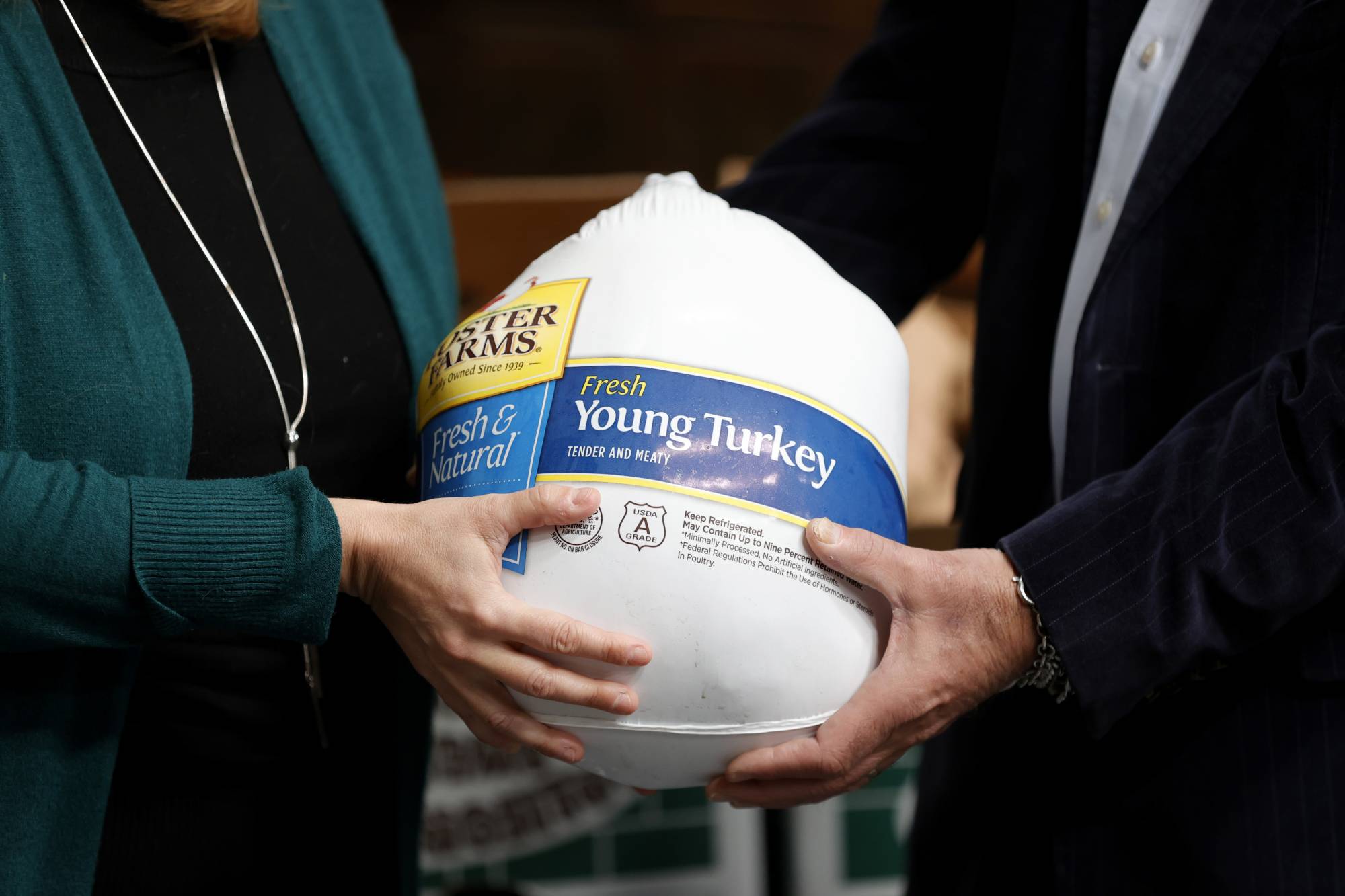
"caption": "A donated Foster Farms turkey is held during a press conference at the SF-Marin Food Bank on Nov 8, 2021, in San Francisco, California. ",
"credit": "Photo by Justin Sullivan/Getty Images",
"altTag": null,
"description": null,
"imgSizes": {
"medium": {
"file": "https://cdn.kqed.org/wp-content/uploads/sites/10/2025/11/GettyImages-1352132356-2000x1333.jpg",
"width": 2000,
"height": 1333,
"mimeType": "image/jpeg"
},
"large": {
"file": "https://cdn.kqed.org/wp-content/uploads/sites/10/2025/11/GettyImages-1352132356-2000x1333.jpg",
"width": 2000,
"height": 1333,
"mimeType": "image/jpeg"
},
"thumbnail": {
"file": "https://cdn.kqed.org/wp-content/uploads/sites/10/2025/11/GettyImages-1352132356-160x107.jpg",
"width": 160,
"height": 107,
"mimeType": "image/jpeg"
},
"1536x1536": {
"file": "https://cdn.kqed.org/wp-content/uploads/sites/10/2025/11/GettyImages-1352132356-1536x1024.jpg",
"width": 1536,
"height": 1024,
"mimeType": "image/jpeg"
},
"2048x2048": {
"file": "https://cdn.kqed.org/wp-content/uploads/sites/10/2025/11/GettyImages-1352132356-2048x1365.jpg",
"width": 2048,
"height": 1365,
"mimeType": "image/jpeg"
},
"post-thumbnail": {
"file": "https://cdn.kqed.org/wp-content/uploads/sites/10/2025/11/GettyImages-1352132356-672x372.jpg",
"width": 672,
"height": 372,
"mimeType": "image/jpeg"
},
"twentyfourteen-full-width": {
"file": "https://cdn.kqed.org/wp-content/uploads/sites/10/2025/11/GettyImages-1352132356-1038x576.jpg",
"width": 1038,
"height": 576,
"mimeType": "image/jpeg"
},
"full-width": {
"file": "https://cdn.kqed.org/wp-content/uploads/sites/10/2025/11/GettyImages-1352132356-2000x1333.jpg",
"width": 2000,
"height": 1333,
"mimeType": "image/jpeg"
},
"npr-cds-wide": {
"file": "https://cdn.kqed.org/wp-content/uploads/sites/10/2025/11/GettyImages-1352132356-1200x675.jpg",
"width": 1200,
"height": 675,
"mimeType": "image/jpeg"
},
"kqedFullSize": {
"file": "https://cdn.kqed.org/wp-content/uploads/sites/10/2025/11/GettyImages-1352132356-scaled-e1763488723616.jpg",
"width": 2000,
"height": 1334
}
},
"isLoading": false,
"fetchFailed": false
},
"news_12063649": {
"type": "attachments",
"id": "news_12063649",
"meta": {
"index": "attachments_1716263798",
"site": "news",
"id": "12063649",
"found": true
},
"title": "Kaylee Jensen at Santa Clara University on Nov. 10., 2025.",
"publishDate": 1762807440,
"status": "inherit",
"parent": 0,
"modified": 1762842169,
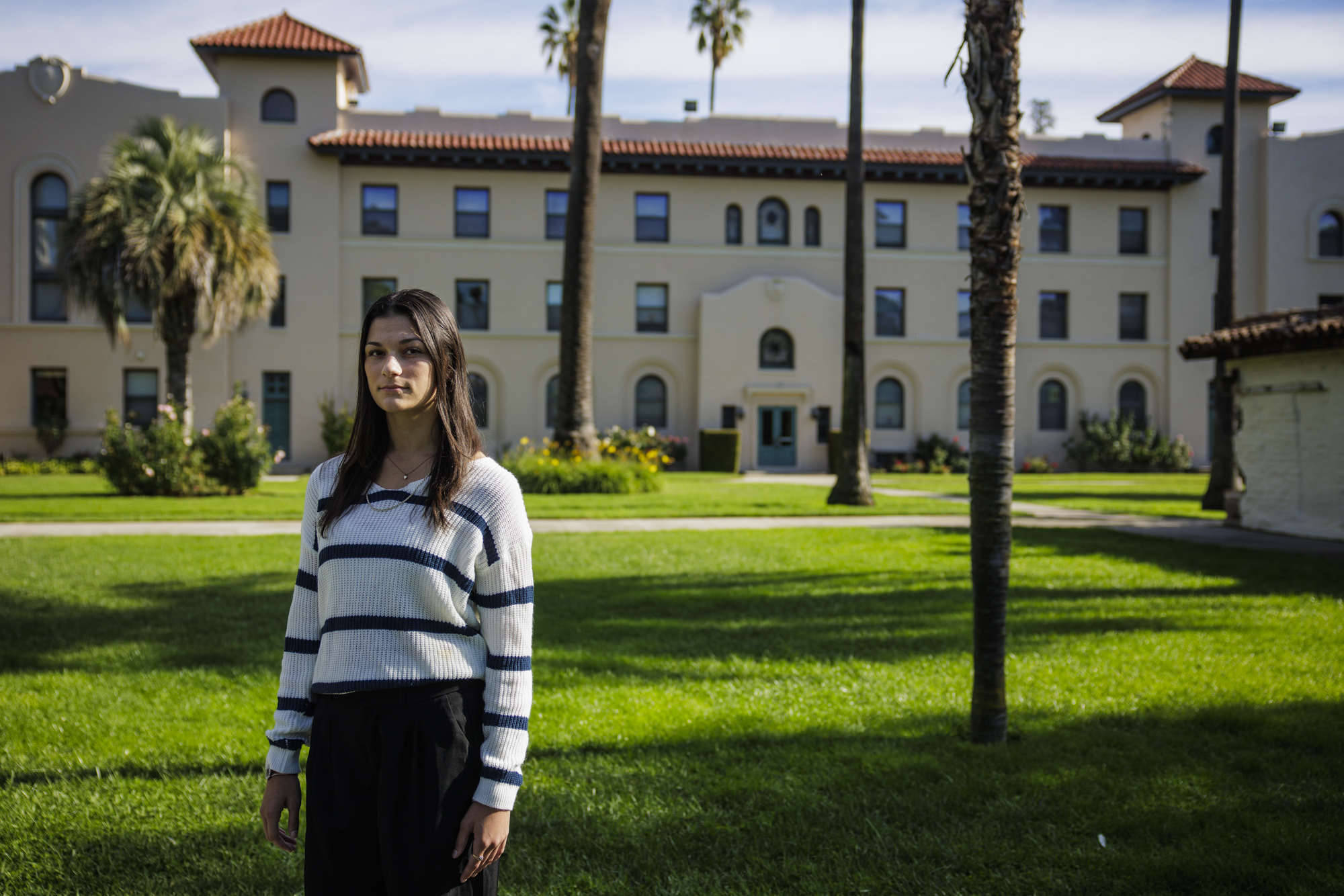
"caption": "Kaylee Jensen at Santa Clara University on Nov. 10, 2025.",
"credit": "Martin do Nascimento/KQED",
"altTag": null,
"description": null,
"imgSizes": {
"thumbnail": {
"file": "https://cdn.kqed.org/wp-content/uploads/sites/10/2025/11/251110-COLLEGE-STUDENTS-CALFRESH-MD-01-KQED-160x107.jpg",
"width": 160,
"height": 107,
"mimeType": "image/jpeg"
},
"1536x1536": {
"file": "https://cdn.kqed.org/wp-content/uploads/sites/10/2025/11/251110-COLLEGE-STUDENTS-CALFRESH-MD-01-KQED-1536x1025.jpg",
"width": 1536,
"height": 1025,
"mimeType": "image/jpeg"
},
"post-thumbnail": {
"file": "https://cdn.kqed.org/wp-content/uploads/sites/10/2025/11/251110-COLLEGE-STUDENTS-CALFRESH-MD-01-KQED-672x372.jpg",
"width": 672,
"height": 372,
"mimeType": "image/jpeg"
},
"twentyfourteen-full-width": {
"file": "https://cdn.kqed.org/wp-content/uploads/sites/10/2025/11/251110-COLLEGE-STUDENTS-CALFRESH-MD-01-KQED-1038x576.jpg",
"width": 1038,
"height": 576,
"mimeType": "image/jpeg"
},
"npr-cds-wide": {
"file": "https://cdn.kqed.org/wp-content/uploads/sites/10/2025/11/251110-COLLEGE-STUDENTS-CALFRESH-MD-01-KQED-1200x675.jpg",
"width": 1200,
"height": 675,
"mimeType": "image/jpeg"
},
"kqedFullSize": {
"file": "https://cdn.kqed.org/wp-content/uploads/sites/10/2025/11/251110-COLLEGE-STUDENTS-CALFRESH-MD-01-KQED.jpg",
"width": 2000,
"height": 1334
}
},
"isLoading": false,
"fetchFailed": false
},
"news_12063751": {
"type": "attachments",
"id": "news_12063751",
"meta": {
"index": "attachments_1716263798",
"site": "news",
"id": "12063751",
"found": true
},
"title": "drunk-driving-69134909529e8",
"publishDate": 1762872267,
"status": "inherit",
"parent": 12063749,
"modified": 1762872318,
"caption": "The Victims of Drunk Drivers Memorial at Pacific View Mortuary and Memorial Park in Corona del Mar, on Sept. 24, 2025. ",
"credit": "Photo by Jules Hotz/CalMatters",
"altTag": null,
"description": null,
"imgSizes": {
"thumbnail": {
"file": "https://cdn.kqed.org/wp-content/uploads/sites/10/2025/11/drunk-driving-69134909529e8-160x107.jpg",
"width": 160,
"height": 107,
"mimeType": "image/jpeg"
},
"post-thumbnail": {
"file": "https://cdn.kqed.org/wp-content/uploads/sites/10/2025/11/drunk-driving-69134909529e8-672x372.jpg",
"width": 672,
"height": 372,
"mimeType": "image/jpeg"
},
"kqedFullSize": {
"file": "https://cdn.kqed.org/wp-content/uploads/sites/10/2025/11/drunk-driving-69134909529e8.jpg",
"width": 780,
"height": 520
}
},
"isLoading": false,
"fetchFailed": false
},
"news_12063671": {
"type": "attachments",
"id": "news_12063671",
"meta": {
"index": "attachments_1716263798",
"site": "news",
"id": "12063671",
"found": true
},
"title": "Supreme Court Tariffs",
"publishDate": 1762809166,
"status": "inherit",
"parent": 12063660,
"modified": 1762809199,
"caption": "California Attorney General Rob Bonta speaks to reporters as Arizona Attorney General Kris Mayes, left, and Oregon Attorney General Dan Rayfield, right, listen outside the Supreme Court on Wednesday, Nov. 5, 2025, in Washington, D.C.",
"credit": "Mark Schiefelbein/AP Photo",
"altTag": null,
"description": null,
"imgSizes": {
"thumbnail": {
"file": "https://cdn.kqed.org/wp-content/uploads/sites/10/2025/11/RobBontaAP-160x107.jpg",
"width": 160,
"height": 107,
"mimeType": "image/jpeg"
},
"1536x1536": {
"file": "https://cdn.kqed.org/wp-content/uploads/sites/10/2025/11/RobBontaAP-1536x1024.jpg",
"width": 1536,
"height": 1024,
"mimeType": "image/jpeg"
},
"post-thumbnail": {
"file": "https://cdn.kqed.org/wp-content/uploads/sites/10/2025/11/RobBontaAP-672x372.jpg",
"width": 672,
"height": 372,
"mimeType": "image/jpeg"
},
"twentyfourteen-full-width": {
"file": "https://cdn.kqed.org/wp-content/uploads/sites/10/2025/11/RobBontaAP-1038x576.jpg",
"width": 1038,
"height": 576,
"mimeType": "image/jpeg"
},
"npr-cds-wide": {
"file": "https://cdn.kqed.org/wp-content/uploads/sites/10/2025/11/RobBontaAP-1200x675.jpg",
"width": 1200,
"height": 675,
"mimeType": "image/jpeg"
},
"kqedFullSize": {
"file": "https://cdn.kqed.org/wp-content/uploads/sites/10/2025/11/RobBontaAP.jpg",
"width": 2000,
"height": 1333
}
},
"isLoading": false,
"fetchFailed": false
},
"news_12063396": {
"type": "attachments",
"id": "news_12063396",
"meta": {
"index": "attachments_1716263798",
"site": "news",
"id": "12063396",
"found": true
},
"title": "calfresh students",
"publishDate": 1762524604,
"status": "inherit",
"parent": 12063395,
"modified": 1762524651,
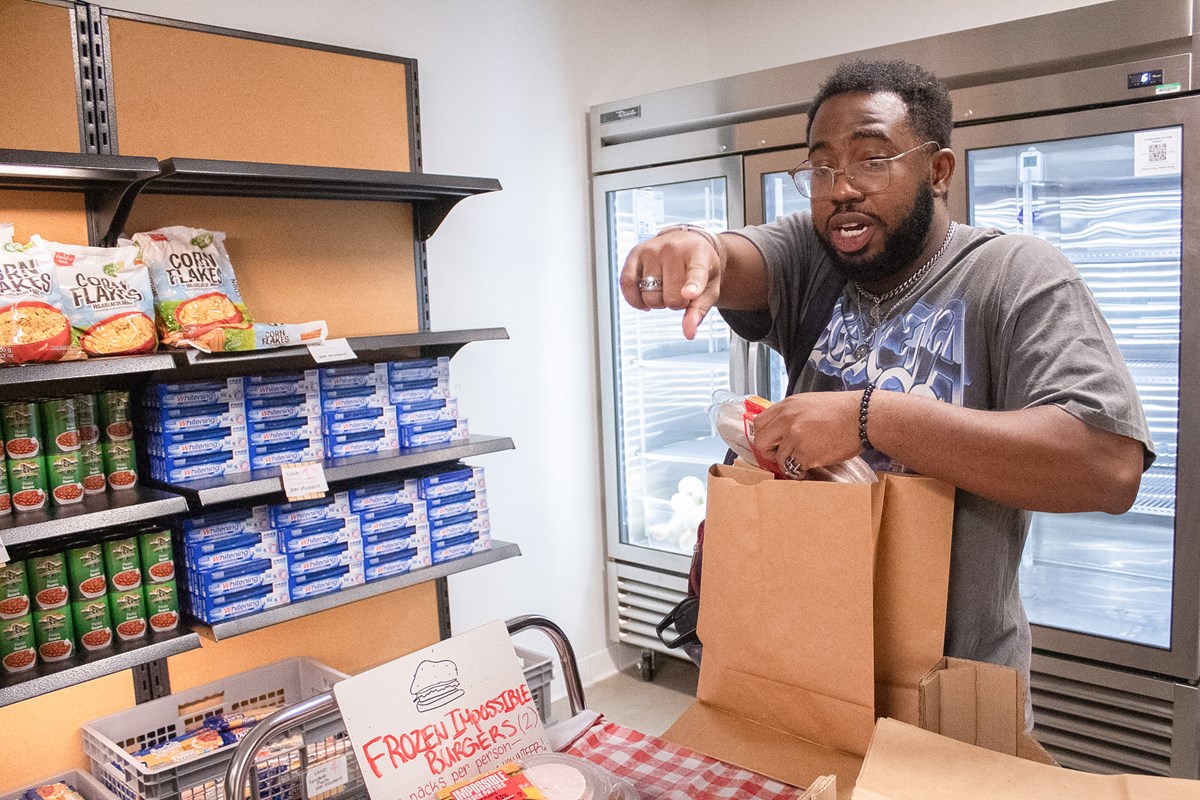
"caption": "Sacramento State student Tylor Williams grabs Impossible Burgers Monday, Oct. 27, 2025, at the campus's food pantry. He's been on CalFresh for two months and said he'll need to rely on pantries like these even more because of delays.",
"credit": "Gerardo Zavala/CapRadio",
"altTag": null,
"description": null,
"imgSizes": {
"thumbnail": {
"file": "https://cdn.kqed.org/wp-content/uploads/sites/10/2025/11/calfresh-students-160x107.jpg",
"width": 160,
"height": 107,
"mimeType": "image/jpeg"
},
"post-thumbnail": {
"file": "https://cdn.kqed.org/wp-content/uploads/sites/10/2025/11/calfresh-students-672x372.jpg",
"width": 672,
"height": 372,
"mimeType": "image/jpeg"
},
"twentyfourteen-full-width": {
"file": "https://cdn.kqed.org/wp-content/uploads/sites/10/2025/11/calfresh-students-1038x576.jpg",
"width": 1038,
"height": 576,
"mimeType": "image/jpeg"
},
"npr-cds-wide": {
"file": "https://cdn.kqed.org/wp-content/uploads/sites/10/2025/11/calfresh-students-1200x675.jpg",
"width": 1200,
"height": 675,
"mimeType": "image/jpeg"
},
"kqedFullSize": {
"file": "https://cdn.kqed.org/wp-content/uploads/sites/10/2025/11/calfresh-students.jpg",
"width": 1200,
"height": 800
}
},
"isLoading": false,
"fetchFailed": false
},
"news_12062563": {
"type": "attachments",
"id": "news_12062563",
"meta": {
"index": "attachments_1716263798",
"site": "news",
"id": "12062563",
"found": true
},
"title": "251031-SFMARINFOODBANK-03-BL-KQED",
"publishDate": 1761943576,
"status": "inherit",
"parent": 12062685,
"modified": 1762280668,
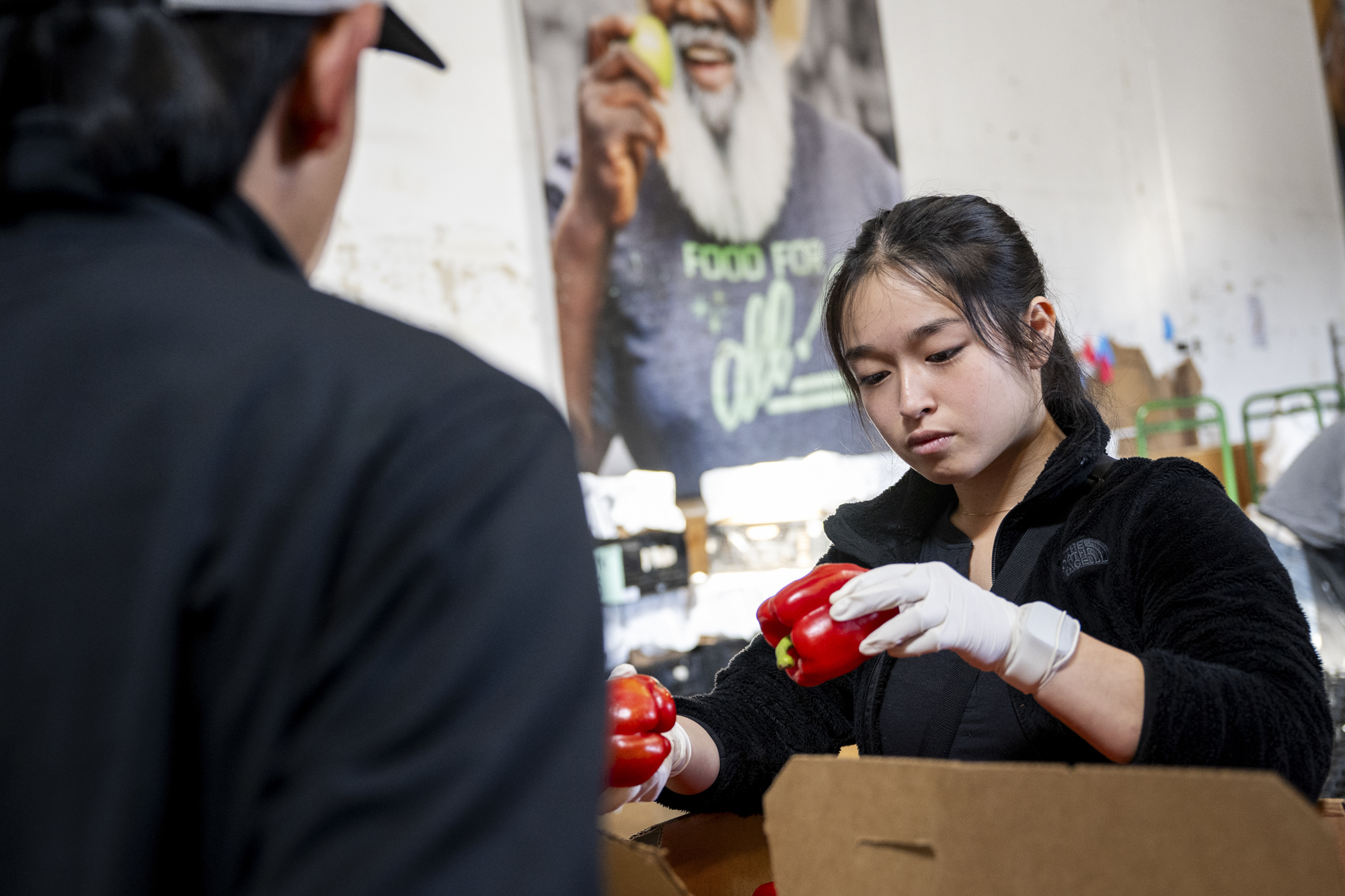
"caption": "Filmark Bernante (left) and Megan Feria inspect produce while sorting it into boxes at the San Francisco‑Marin Food Bank warehouse in San Francisco on Oct. 31, 2025.",
"credit": "Beth LaBerge/KQED",
"altTag": null,
"description": null,
"imgSizes": {
"thumbnail": {
"file": "https://cdn.kqed.org/wp-content/uploads/sites/10/2025/10/251031-SFMARINFOODBANK-03-BL-KQED-160x107.jpg",
"width": 160,
"height": 107,
"mimeType": "image/jpeg"
},
"1536x1536": {
"file": "https://cdn.kqed.org/wp-content/uploads/sites/10/2025/10/251031-SFMARINFOODBANK-03-BL-KQED-1536x1024.jpg",
"width": 1536,
"height": 1024,
"mimeType": "image/jpeg"
},
"post-thumbnail": {
"file": "https://cdn.kqed.org/wp-content/uploads/sites/10/2025/10/251031-SFMARINFOODBANK-03-BL-KQED-672x372.jpg",
"width": 672,
"height": 372,
"mimeType": "image/jpeg"
},
"twentyfourteen-full-width": {
"file": "https://cdn.kqed.org/wp-content/uploads/sites/10/2025/10/251031-SFMARINFOODBANK-03-BL-KQED-1038x576.jpg",
"width": 1038,
"height": 576,
"mimeType": "image/jpeg"
},
"npr-cds-wide": {
"file": "https://cdn.kqed.org/wp-content/uploads/sites/10/2025/10/251031-SFMARINFOODBANK-03-BL-KQED-1200x675.jpg",
"width": 1200,
"height": 675,
"mimeType": "image/jpeg"
},
"kqedFullSize": {
"file": "https://cdn.kqed.org/wp-content/uploads/sites/10/2025/10/251031-SFMARINFOODBANK-03-BL-KQED.jpg",
"width": 2000,
"height": 1333
}
},
"isLoading": false,
"fetchFailed": false
},
"news_12062567": {
"type": "attachments",
"id": "news_12062567",
"meta": {
"index": "attachments_1716263798",
"site": "news",
"id": "12062567",
"found": true
},
"title": "251031-SFMARINFOODBANK-24-BL-KQED",
"publishDate": 1761943592,
"status": "inherit",
"parent": 12062743,
"modified": 1762277859,
"caption": "Workers sort fresh produce into boxes at the San Francisco‑Marin Food Bank warehouse in San Francisco on Oct. 31, 2025.",
"credit": "Beth LaBerge/KQED",
"altTag": null,
"description": null,
"imgSizes": {
"thumbnail": {
"file": "https://cdn.kqed.org/wp-content/uploads/sites/10/2025/10/251031-SFMARINFOODBANK-24-BL-KQED-160x107.jpg",
"width": 160,
"height": 107,
"mimeType": "image/jpeg"
},
"1536x1536": {
"file": "https://cdn.kqed.org/wp-content/uploads/sites/10/2025/10/251031-SFMARINFOODBANK-24-BL-KQED-1536x1024.jpg",
"width": 1536,
"height": 1024,
"mimeType": "image/jpeg"
},
"post-thumbnail": {
"file": "https://cdn.kqed.org/wp-content/uploads/sites/10/2025/10/251031-SFMARINFOODBANK-24-BL-KQED-672x372.jpg",
"width": 672,
"height": 372,
"mimeType": "image/jpeg"
},
"twentyfourteen-full-width": {
"file": "https://cdn.kqed.org/wp-content/uploads/sites/10/2025/10/251031-SFMARINFOODBANK-24-BL-KQED-1038x576.jpg",
"width": 1038,
"height": 576,
"mimeType": "image/jpeg"
},
"npr-cds-wide": {
"file": "https://cdn.kqed.org/wp-content/uploads/sites/10/2025/10/251031-SFMARINFOODBANK-24-BL-KQED-1200x675.jpg",
"width": 1200,
"height": 675,
"mimeType": "image/jpeg"
},
"kqedFullSize": {
"file": "https://cdn.kqed.org/wp-content/uploads/sites/10/2025/10/251031-SFMARINFOODBANK-24-BL-KQED.jpg",
"width": 2000,
"height": 1333
}
},
"isLoading": false,
"fetchFailed": false
},
"news_12062637": {
"type": "attachments",
"id": "news_12062637",
"meta": {
"index": "attachments_1716263798",
"site": "news",
"id": "12062637",
"found": true
},
"title": "California Attorney General Rob Bonta will hold a news conference in Los Angeles ``to discuss the stakes in his lawsuit challenging the Trump Administration's unlawful decision to indefinitely suspend Supplemental Nutrition Assistance Program (SNAP) benef",
"publishDate": 1762188477,
"status": "inherit",
"parent": 12062631,
"modified": 1762188547,
"caption": "California Attorney General Rob Bonta speaks at a news conference ``to discuss the stakes in his lawsuit challenging the Trump Administration's unlawful decision to indefinitely suspend Supplemental Nutrition Assistance Program (SNAP) benefits during the federal government shutdown.'' CalFresh is the California version of SNAP. Bonta will be joined by Michael Flood, president/CEO of the Los Angeles Regional Food Bank. Photo taken at Los Angeles Regional Food Bank in Los Angeles Thursday, Oct. 30, 2025. (Allen J. Schaben / Los Angeles Times via Getty Images)",
"credit": null,
"altTag": null,
"description": null,
"imgSizes": {
"medium": {
"file": "https://cdn.kqed.org/wp-content/uploads/sites/10/2025/11/GettyImages-2243675996-2000x1333.jpg",
"width": 2000,
"height": 1333,
"mimeType": "image/jpeg"
},
"large": {
"file": "https://cdn.kqed.org/wp-content/uploads/sites/10/2025/11/GettyImages-2243675996-2000x1333.jpg",
"width": 2000,
"height": 1333,
"mimeType": "image/jpeg"
},
"thumbnail": {
"file": "https://cdn.kqed.org/wp-content/uploads/sites/10/2025/11/GettyImages-2243675996-160x107.jpg",
"width": 160,
"height": 107,
"mimeType": "image/jpeg"
},
"1536x1536": {
"file": "https://cdn.kqed.org/wp-content/uploads/sites/10/2025/11/GettyImages-2243675996-1536x1024.jpg",
"width": 1536,
"height": 1024,
"mimeType": "image/jpeg"
},
"2048x2048": {
"file": "https://cdn.kqed.org/wp-content/uploads/sites/10/2025/11/GettyImages-2243675996-2048x1365.jpg",
"width": 2048,
"height": 1365,
"mimeType": "image/jpeg"
},
"post-thumbnail": {
"file": "https://cdn.kqed.org/wp-content/uploads/sites/10/2025/11/GettyImages-2243675996-672x372.jpg",
"width": 672,
"height": 372,
"mimeType": "image/jpeg"
},
"twentyfourteen-full-width": {
"file": "https://cdn.kqed.org/wp-content/uploads/sites/10/2025/11/GettyImages-2243675996-1038x576.jpg",
"width": 1038,
"height": 576,
"mimeType": "image/jpeg"
},
"full-width": {
"file": "https://cdn.kqed.org/wp-content/uploads/sites/10/2025/11/GettyImages-2243675996-2000x1333.jpg",
"width": 2000,
"height": 1333,
"mimeType": "image/jpeg"
},
"npr-cds-wide": {
"file": "https://cdn.kqed.org/wp-content/uploads/sites/10/2025/11/GettyImages-2243675996-1200x675.jpg",
"width": 1200,
"height": 675,
"mimeType": "image/jpeg"
},
"kqedFullSize": {
"file": "https://cdn.kqed.org/wp-content/uploads/sites/10/2025/11/GettyImages-2243675996-scaled.jpg",
"width": 2560,
"height": 1707
}
},
"isLoading": false,
"fetchFailed": false
},
"news_12062533": {
"type": "attachments",
"id": "news_12062533",
"meta": {
"index": "attachments_1716263798",
"site": "news",
"id": "12062533",
"found": true
},
"title": "APTOPIX US Government Shutdown-SNAP",
"publishDate": 1761936832,
"status": "inherit",
"parent": 12062530,
"modified": 1761936864,
"caption": "A volunteer prepares meals at the Philabundance Community Kitchen in Philadelphia, Oct. 30, 2025. ",
"credit": "AP Photo/Matt Rourke",
"altTag": null,
"description": null,
"imgSizes": {
"medium": {
"file": "https://cdn.kqed.org/wp-content/uploads/sites/10/2025/10/AP25303685099353-2000x1333.jpg",
"width": 2000,
"height": 1333,
"mimeType": "image/jpeg"
},
"large": {
"file": "https://cdn.kqed.org/wp-content/uploads/sites/10/2025/10/AP25303685099353-2000x1333.jpg",
"width": 2000,
"height": 1333,
"mimeType": "image/jpeg"
},
"thumbnail": {
"file": "https://cdn.kqed.org/wp-content/uploads/sites/10/2025/10/AP25303685099353-160x107.jpg",
"width": 160,
"height": 107,
"mimeType": "image/jpeg"
},
"1536x1536": {
"file": "https://cdn.kqed.org/wp-content/uploads/sites/10/2025/10/AP25303685099353-1536x1024.jpg",
"width": 1536,
"height": 1024,
"mimeType": "image/jpeg"
},
"2048x2048": {
"file": "https://cdn.kqed.org/wp-content/uploads/sites/10/2025/10/AP25303685099353-2048x1365.jpg",
"width": 2048,
"height": 1365,
"mimeType": "image/jpeg"
},
"post-thumbnail": {
"file": "https://cdn.kqed.org/wp-content/uploads/sites/10/2025/10/AP25303685099353-672x372.jpg",
"width": 672,
"height": 372,
"mimeType": "image/jpeg"
},
"twentyfourteen-full-width": {
"file": "https://cdn.kqed.org/wp-content/uploads/sites/10/2025/10/AP25303685099353-1038x576.jpg",
"width": 1038,
"height": 576,
"mimeType": "image/jpeg"
},
"full-width": {
"file": "https://cdn.kqed.org/wp-content/uploads/sites/10/2025/10/AP25303685099353-2000x1333.jpg",
"width": 2000,
"height": 1333,
"mimeType": "image/jpeg"
},
"npr-cds-wide": {
"file": "https://cdn.kqed.org/wp-content/uploads/sites/10/2025/10/AP25303685099353-1200x675.jpg",
"width": 1200,
"height": 675,
"mimeType": "image/jpeg"
},
"kqedFullSize": {
"file": "https://cdn.kqed.org/wp-content/uploads/sites/10/2025/10/AP25303685099353-scaled-e1761936872193.jpg",
"width": 2000,
"height": 1334
}
},
"isLoading": false,
"fetchFailed": false
},
"news_12062022": {
"type": "attachments",
"id": "news_12062022",
"meta": {
"index": "attachments_1716263798",
"site": "news",
"id": "12062022",
"found": true
},
"title": "Male and female friends arranging food in cardboard boxes",
"publishDate": 1761758018,
"status": "inherit",
"parent": 12062018,
"modified": 1761758123,
"caption": null,
"credit": "Maskot/Getty Images",
"altTag": null,
"description": null,
"imgSizes": {
"thumbnail": {
"file": "https://cdn.kqed.org/wp-content/uploads/sites/10/2025/10/FoodPantryGetty1-160x107.jpg",
"width": 160,
"height": 107,
"mimeType": "image/jpeg"
},
"1536x1536": {
"file": "https://cdn.kqed.org/wp-content/uploads/sites/10/2025/10/FoodPantryGetty1-1536x1024.jpg",
"width": 1536,
"height": 1024,
"mimeType": "image/jpeg"
},
"post-thumbnail": {
"file": "https://cdn.kqed.org/wp-content/uploads/sites/10/2025/10/FoodPantryGetty1-672x372.jpg",
"width": 672,
"height": 372,
"mimeType": "image/jpeg"
},
"twentyfourteen-full-width": {
"file": "https://cdn.kqed.org/wp-content/uploads/sites/10/2025/10/FoodPantryGetty1-1038x576.jpg",
"width": 1038,
"height": 576,
"mimeType": "image/jpeg"
},
"npr-cds-wide": {
"file": "https://cdn.kqed.org/wp-content/uploads/sites/10/2025/10/FoodPantryGetty1-1600x900.jpg",
"width": 1600,
"height": 900,
"mimeType": "image/jpeg"
},
"kqedFullSize": {
"file": "https://cdn.kqed.org/wp-content/uploads/sites/10/2025/10/FoodPantryGetty1.jpg",
"width": 2000,
"height": 1333
}
},
"isLoading": false,
"fetchFailed": false
},
"news_11792620": {
"type": "attachments",
"id": "news_11792620",
"meta": {
"index": "attachments_1716263798",
"site": "news",
"id": "11792620",
"found": true
},
"title": "The new Trump administration rule makes it harder for states to waive the requirement that adults work at least 20 hours a week in order to receive their Supplemental Nutrition Assistance Program — or SNAP — benefits. Some low-income college students could be affected.",
"publishDate": 1576950119,
"status": "inherit",
"parent": 11792619,
"modified": 1761673418,
"caption": "The new Trump administration rule makes it harder for states to waive the requirement that adults work at least 20 hours a week in order to receive their Supplemental Nutrition Assistance Program — or SNAP — benefits. Some low-income college students could be affected.",
"credit": "Danny Moloshok/AP Photo",
"altTag": null,
"description": "The new Trump administration rule makes it harder for states to waive the requirement that adults work at least 20 hours a week in order to receive their Supplemental Nutrition Assistance Program — or SNAP — benefits. Some low-income college students could be affected.",
"imgSizes": {
"thumbnail": {
"file": "https://cdn.kqed.org/wp-content/uploads/sites/10/2019/12/ap_17271692702067-ea1b97e98e157d598fa245d9c752f917e6c25c57-160x120.jpg",
"width": 160,
"height": 120,
"mimeType": "image/jpeg"
},
"medium": {
"file": "https://cdn.kqed.org/wp-content/uploads/sites/10/2019/12/ap_17271692702067-ea1b97e98e157d598fa245d9c752f917e6c25c57-800x600.jpg",
"width": 800,
"height": 600,
"mimeType": "image/jpeg"
},
"large": {
"file": "https://cdn.kqed.org/wp-content/uploads/sites/10/2019/12/ap_17271692702067-ea1b97e98e157d598fa245d9c752f917e6c25c57-1020x765.jpg",
"width": 1020,
"height": 765,
"mimeType": "image/jpeg"
},
"complete_open_graph": {
"file": "https://cdn.kqed.org/wp-content/uploads/sites/10/2019/12/ap_17271692702067-ea1b97e98e157d598fa245d9c752f917e6c25c57-1200x900.jpg",
"width": 1200,
"height": 900,
"mimeType": "image/jpeg"
},
"post-thumbnail": {
"file": "https://cdn.kqed.org/wp-content/uploads/sites/10/2019/12/ap_17271692702067-ea1b97e98e157d598fa245d9c752f917e6c25c57-672x372.jpg",
"width": 672,
"height": 372,
"mimeType": "image/jpeg"
},
"twentyfourteen-full-width": {
"file": "https://cdn.kqed.org/wp-content/uploads/sites/10/2019/12/ap_17271692702067-ea1b97e98e157d598fa245d9c752f917e6c25c57-1038x576.jpg",
"width": 1038,
"height": 576,
"mimeType": "image/jpeg"
},
"full-width": {
"file": "https://cdn.kqed.org/wp-content/uploads/sites/10/2019/12/ap_17271692702067-ea1b97e98e157d598fa245d9c752f917e6c25c57-1920x1440.jpg",
"width": 1920,
"height": 1440,
"mimeType": "image/jpeg"
},
"apple_news_ca_landscape_12_9": {
"file": "https://cdn.kqed.org/wp-content/uploads/sites/10/2019/12/ap_17271692702067-ea1b97e98e157d598fa245d9c752f917e6c25c57-1832x1374.jpg",
"width": 1832,
"height": 1374,
"mimeType": "image/jpeg"
},
"apple_news_ca_landscape_9_7": {
"file": "https://cdn.kqed.org/wp-content/uploads/sites/10/2019/12/ap_17271692702067-ea1b97e98e157d598fa245d9c752f917e6c25c57-1376x1032.jpg",
"width": 1376,
"height": 1032,
"mimeType": "image/jpeg"
},
"apple_news_ca_landscape_5_5": {
"file": "https://cdn.kqed.org/wp-content/uploads/sites/10/2019/12/ap_17271692702067-ea1b97e98e157d598fa245d9c752f917e6c25c57-1044x783.jpg",
"width": 1044,
"height": 783,
"mimeType": "image/jpeg"
},
"apple_news_ca_landscape_4_7": {
"file": "https://cdn.kqed.org/wp-content/uploads/sites/10/2019/12/ap_17271692702067-ea1b97e98e157d598fa245d9c752f917e6c25c57-632x474.jpg",
"width": 632,
"height": 474,
"mimeType": "image/jpeg"
},
"apple_news_ca_landscape_4_0": {
"file": "https://cdn.kqed.org/wp-content/uploads/sites/10/2019/12/ap_17271692702067-ea1b97e98e157d598fa245d9c752f917e6c25c57-536x402.jpg",
"width": 536,
"height": 402,
"mimeType": "image/jpeg"
},
"apple_news_ca_portrait_12_9": {
"file": "https://cdn.kqed.org/wp-content/uploads/sites/10/2019/12/ap_17271692702067-ea1b97e98e157d598fa245d9c752f917e6c25c57-1122x1496.jpg",
"width": 1122,
"height": 1496,
"mimeType": "image/jpeg"
},
"apple_news_ca_portrait_9_7": {
"file": "https://cdn.kqed.org/wp-content/uploads/sites/10/2019/12/ap_17271692702067-ea1b97e98e157d598fa245d9c752f917e6c25c57-840x1120.jpg",
"width": 840,
"height": 1120,
"mimeType": "image/jpeg"
},
"apple_news_ca_portrait_5_5": {
"file": "https://cdn.kqed.org/wp-content/uploads/sites/10/2019/12/ap_17271692702067-ea1b97e98e157d598fa245d9c752f917e6c25c57-687x916.jpg",
"width": 687,
"height": 916,
"mimeType": "image/jpeg"
},
"apple_news_ca_portrait_4_7": {
"file": "https://cdn.kqed.org/wp-content/uploads/sites/10/2019/12/ap_17271692702067-ea1b97e98e157d598fa245d9c752f917e6c25c57-414x552.jpg",
"width": 414,
"height": 552,
"mimeType": "image/jpeg"
},
"apple_news_ca_portrait_4_0": {
"file": "https://cdn.kqed.org/wp-content/uploads/sites/10/2019/12/ap_17271692702067-ea1b97e98e157d598fa245d9c752f917e6c25c57-354x472.jpg",
"width": 354,
"height": 472,
"mimeType": "image/jpeg"
},
"apple_news_ca_square_12_9": {
"file": "https://cdn.kqed.org/wp-content/uploads/sites/10/2019/12/ap_17271692702067-ea1b97e98e157d598fa245d9c752f917e6c25c57-1472x1472.jpg",
"width": 1472,
"height": 1472,
"mimeType": "image/jpeg"
},
"apple_news_ca_square_9_7": {
"file": "https://cdn.kqed.org/wp-content/uploads/sites/10/2019/12/ap_17271692702067-ea1b97e98e157d598fa245d9c752f917e6c25c57-1104x1104.jpg",
"width": 1104,
"height": 1104,
"mimeType": "image/jpeg"
},
"apple_news_ca_square_5_5": {
"file": "https://cdn.kqed.org/wp-content/uploads/sites/10/2019/12/ap_17271692702067-ea1b97e98e157d598fa245d9c752f917e6c25c57-912x912.jpg",
"width": 912,
"height": 912,
"mimeType": "image/jpeg"
},
"apple_news_ca_square_4_7": {
"file": "https://cdn.kqed.org/wp-content/uploads/sites/10/2019/12/ap_17271692702067-ea1b97e98e157d598fa245d9c752f917e6c25c57-550x550.jpg",
"width": 550,
"height": 550,
"mimeType": "image/jpeg"
},
"apple_news_ca_square_4_0": {
"file": "https://cdn.kqed.org/wp-content/uploads/sites/10/2019/12/ap_17271692702067-ea1b97e98e157d598fa245d9c752f917e6c25c57-470x470.jpg",
"width": 470,
"height": 470,
"mimeType": "image/jpeg"
},
"kqedFullSize": {
"file": "https://cdn.kqed.org/wp-content/uploads/sites/10/2019/12/ap_17271692702067-ea1b97e98e157d598fa245d9c752f917e6c25c57-e1576950264238.jpg",
"width": 1920,
"height": 1440
}
},
"isLoading": false,
"fetchFailed": false
}
},
"audioPlayerReducer": {
"postId": "stream_live",
"isPaused": true,
"isPlaying": false,
"pfsActive": false,
"pledgeModalIsOpen": true,
"playerDrawerIsOpen": false,
"liveAudioPlayStartedAt": 0,
"liveAudioPlayContext": ""
},
"authorsReducer": {
"byline_news_12062530": {
"type": "authors",
"id": "byline_news_12062530",
"meta": {
"override": true
},
"slug": "byline_news_12062530",
"name": "Michael Casey, Geoff Mulvihill and Kimberlee Kruesi, The Associated Press ",
"isLoading": false
},
"mlagos": {
"type": "authors",
"id": "3239",
"meta": {
"index": "authors_1716337520",
"id": "3239",
"found": true
},
"name": "Marisa Lagos",
"firstName": "Marisa",
"lastName": "Lagos",
"slug": "mlagos",
"email": "mlagos@kqed.org",
"display_author_email": false,
"staff_mastheads": [
"news"
],
"title": "KQED Contributor",
"bio": "Marisa Lagos is a correspondent for KQED’s California Politics and Government Desk and co-hosts the award-winning show and podcast, Political Breakdown. At KQED, Lagos also conducts reporting, analysis and investigations into state, local and national politics for radio, TV, online and onstage. In 2022, she and co-host, Scott Shafer, moderated the only gubernatorial debate in California. In 2020, the \u003ci>Washington Post\u003c/i> named her one of the top political journalists in California; she was nominated for a Peabody and won several other awards for her work investigating the 2017 California wildfires. She has worked at the \u003ci>San Francisco Chronicle\u003c/i>, \u003ci>San Francisco Examiner\u003c/i> and \u003ci>Los Angeles Times\u003c/i>. A UC Santa Barbara graduate, she lives in San Francisco with her two sons and husband.",
"avatar": "https://secure.gravatar.com/avatar/a261a0d3696fc066871ef96b85b5e7d2?s=600&d=blank&r=g",
"twitter": "@mlagos",
"facebook": null,
"instagram": null,
"linkedin": null,
"sites": [
{
"site": "arts",
"roles": [
"author"
]
},
{
"site": "news",
"roles": [
"editor"
]
},
{
"site": "science",
"roles": [
"editor"
]
},
{
"site": "forum",
"roles": [
"author"
]
},
{
"site": "liveblog",
"roles": [
"author"
]
}
],
"headData": {
"title": "Marisa Lagos | KQED",
"description": "KQED Contributor",
"ogImgSrc": "https://secure.gravatar.com/avatar/a261a0d3696fc066871ef96b85b5e7d2?s=600&d=blank&r=g",
"twImgSrc": "https://secure.gravatar.com/avatar/a261a0d3696fc066871ef96b85b5e7d2?s=600&d=blank&r=g"
},
"isLoading": false,
"link": "/author/mlagos"
},
"carlysevern": {
"type": "authors",
"id": "3243",
"meta": {
"index": "authors_1716337520",
"id": "3243",
"found": true
},
"name": "Carly Severn",
"firstName": "Carly",
"lastName": "Severn",
"slug": "carlysevern",
"email": "csevern@kqed.org",
"display_author_email": false,
"staff_mastheads": [
"news"
],
"title": "Senior Editor, Audience News ",
"bio": "Carly is KQED's Senior Editor of Audience News on the Digital News team, and has reported for the California Report Magazine, Bay Curious and KQED Arts. She's formerly the host of \u003ca href=\"http://ww2.kqed.org/pop/category/the-cooler/\" rel=\"noopener noreferrer\">The Cooler\u003c/a> podcast.",
"avatar": "https://secure.gravatar.com/avatar/54037bf5c128fe678f0ef26cec97a93f2e7f220a22d7285703328f12c42c1b1d?s=600&d=blank&r=g",
"twitter": "teacupinthebay",
"bluesky": null,
"facebook": null,
"instagram": null,
"linkedin": null,
"sites": [
{
"site": "",
"roles": [
"editor"
]
},
{
"site": "arts",
"roles": [
"editor"
]
},
{
"site": "news",
"roles": [
"administrator"
]
},
{
"site": "pop",
"roles": [
"editor"
]
},
{
"site": "futureofyou",
"roles": [
"editor"
]
},
{
"site": "about",
"roles": [
"administrator"
]
},
{
"site": "mindshift",
"roles": [
"editor"
]
},
{
"site": "bayareabites",
"roles": [
"editor"
]
},
{
"site": "stateofhealth",
"roles": [
"editor"
]
},
{
"site": "science",
"roles": [
"editor"
]
},
{
"site": "food",
"roles": [
"contributor"
]
},
{
"site": "forum",
"roles": [
"editor"
]
},
{
"site": "perspectives",
"roles": [
"administrator"
]
},
{
"site": "liveblog",
"roles": [
"editor"
]
}
],
"headData": {
"title": "Carly Severn | KQED",
"description": "Senior Editor, Audience News ",
"ogImgSrc": "https://secure.gravatar.com/avatar/54037bf5c128fe678f0ef26cec97a93f2e7f220a22d7285703328f12c42c1b1d?s=600&d=blank&r=g",
"twImgSrc": "https://secure.gravatar.com/avatar/54037bf5c128fe678f0ef26cec97a93f2e7f220a22d7285703328f12c42c1b1d?s=600&d=blank&r=g"
},
"isLoading": false,
"link": "/author/carlysevern"
},
"vrancano": {
"type": "authors",
"id": "11276",
"meta": {
"index": "authors_1716337520",
"id": "11276",
"found": true
},
"name": "Vanessa Rancaño",
"firstName": "Vanessa",
"lastName": "Rancaño",
"slug": "vrancano",
"email": "vrancano@kqed.org",
"display_author_email": false,
"staff_mastheads": [
"news"
],
"title": "Reporter",
"bio": "Vanessa Rancaño is a features reporter for KQED. She’s also covered homelessness and education for the station and reported from the Central Valley. Her work has aired across public radio, from flagship national news shows to longform narrative podcasts. Before taking up a mic, she worked as a freelance print journalist. She’s been recognized with a number of national and regional awards. Vanessa grew up in California's Central Valley. She's a former NPR Kroc Fellow, and a graduate of the UC Berkeley Graduate School of Journalism.",
"avatar": "https://secure.gravatar.com/avatar/b3a383dfb0e7ee1c17568f2cf067904ab654d6e3de9743fc661f3c788ade1bed?s=600&d=blank&r=g",
"twitter": "vanessarancano",
"bluesky": null,
"facebook": null,
"instagram": null,
"linkedin": null,
"sites": [
{
"site": "arts",
"roles": [
"editor"
]
},
{
"site": "news",
"roles": [
"editor"
]
},
{
"site": "liveblog",
"roles": [
"contributor"
]
}
],
"headData": {
"title": "Vanessa Rancaño | KQED",
"description": "Reporter",
"ogImgSrc": "https://secure.gravatar.com/avatar/b3a383dfb0e7ee1c17568f2cf067904ab654d6e3de9743fc661f3c788ade1bed?s=600&d=blank&r=g",
"twImgSrc": "https://secure.gravatar.com/avatar/b3a383dfb0e7ee1c17568f2cf067904ab654d6e3de9743fc661f3c788ade1bed?s=600&d=blank&r=g"
},
"isLoading": false,
"link": "/author/vrancano"
},
"ccabreralomeli": {
"type": "authors",
"id": "11708",
"meta": {
"index": "authors_1716337520",
"id": "11708",
"found": true
},
"name": "Carlos Cabrera-Lomelí",
"firstName": "Carlos",
"lastName": "Cabrera-Lomelí",
"slug": "ccabreralomeli",
"email": "ccabreralomeli@KQED.org",
"display_author_email": true,
"staff_mastheads": [
"news"
],
"title": "Community Reporter",
"bio": "Carlos Cabrera-Lomelí is a community reporter with KQED's digital engagement team. He also reports and co-produces for KQED's bilingual news hub KQED en Español. He grew up in San Francisco's Mission District and has previously worked with Univision, 48 Hills and REFORMA in Mexico City.",
"avatar": "https://secure.gravatar.com/avatar/c309be9665e484f887b818c89e273ecc673004f426f36b24d00a4d813a2e0518?s=600&d=blank&r=g",
"twitter": "@LomeliCabrera",
"bluesky": null,
"facebook": null,
"instagram": null,
"linkedin": null,
"sites": [
{
"site": "arts",
"roles": [
"editor"
]
},
{
"site": "news",
"roles": [
"editor"
]
},
{
"site": "about",
"roles": [
"editor"
]
},
{
"site": "science",
"roles": [
"editor"
]
},
{
"site": "perspectives",
"roles": [
"editor"
]
},
{
"site": "elections",
"roles": [
"editor"
]
},
{
"site": "liveblog",
"roles": [
"contributor"
]
}
],
"headData": {
"title": "Carlos Cabrera-Lomelí | KQED",
"description": "Community Reporter",
"ogImgSrc": "https://secure.gravatar.com/avatar/c309be9665e484f887b818c89e273ecc673004f426f36b24d00a4d813a2e0518?s=600&d=blank&r=g",
"twImgSrc": "https://secure.gravatar.com/avatar/c309be9665e484f887b818c89e273ecc673004f426f36b24d00a4d813a2e0518?s=600&d=blank&r=g"
},
"isLoading": false,
"link": "/author/ccabreralomeli"
},
"kmizuguchi": {
"type": "authors",
"id": "11739",
"meta": {
"index": "authors_1716337520",
"id": "11739",
"found": true
},
"name": "Keith Mizuguchi",
"firstName": "Keith",
"lastName": "Mizuguchi",
"slug": "kmizuguchi",
"email": "kmizuguchi@kqed.org",
"display_author_email": false,
"staff_mastheads": [],
"title": "KQED Contributor",
"bio": null,
"avatar": "https://secure.gravatar.com/avatar/64d8a7de0723d4099b9fe4e915136103febcc20809abce228ee4415bcb237023?s=600&d=blank&r=g",
"twitter": null,
"bluesky": null,
"facebook": null,
"instagram": null,
"linkedin": null,
"sites": [
{
"site": "news",
"roles": [
"editor"
]
},
{
"site": "science",
"roles": [
"editor"
]
}
],
"headData": {
"title": "Keith Mizuguchi | KQED",
"description": "KQED Contributor",
"ogImgSrc": "https://secure.gravatar.com/avatar/64d8a7de0723d4099b9fe4e915136103febcc20809abce228ee4415bcb237023?s=600&d=blank&r=g",
"twImgSrc": "https://secure.gravatar.com/avatar/64d8a7de0723d4099b9fe4e915136103febcc20809abce228ee4415bcb237023?s=600&d=blank&r=g"
},
"isLoading": false,
"link": "/author/kmizuguchi"
},
"nkhan": {
"type": "authors",
"id": "11867",
"meta": {
"index": "authors_1716337520",
"id": "11867",
"found": true
},
"name": "Nisa Khan",
"firstName": "Nisa",
"lastName": "Khan",
"slug": "nkhan",
"email": "nkhan@kqed.org",
"display_author_email": false,
"staff_mastheads": [],
"title": "KQED Contributor",
"bio": "Nisa Khan is a reporter for KQED's Audience News Desk. She was formerly a data reporter at Michigan Radio. She earned a Bachelor of Science in Information from the University of Michigan and a Master of Arts in Communication from Stanford University.",
"avatar": "https://secure.gravatar.com/avatar/8720459eef081ff64582b3506b124d58523e80e120704a0cbd9892533c914991?s=600&d=blank&r=g",
"twitter": "mnisakhan",
"bluesky": null,
"facebook": null,
"instagram": null,
"linkedin": null,
"sites": [
{
"site": "arts",
"roles": [
"editor"
]
},
{
"site": "news",
"roles": [
"editor"
]
},
{
"site": "science",
"roles": [
"editor",
"author"
]
},
{
"site": "forum",
"roles": [
"editor"
]
},
{
"site": "liveblog",
"roles": [
"contributor"
]
}
],
"headData": {
"title": "Nisa Khan | KQED",
"description": "KQED Contributor",
"ogImgSrc": "https://secure.gravatar.com/avatar/8720459eef081ff64582b3506b124d58523e80e120704a0cbd9892533c914991?s=600&d=blank&r=g",
"twImgSrc": "https://secure.gravatar.com/avatar/8720459eef081ff64582b3506b124d58523e80e120704a0cbd9892533c914991?s=600&d=blank&r=g"
},
"isLoading": false,
"link": "/author/nkhan"
},
"bsiavoshy": {
"type": "authors",
"id": "11890",
"meta": {
"index": "authors_1716337520",
"id": "11890",
"found": true
},
"name": "Bejan Siavoshy",
"firstName": "Bejan",
"lastName": "Siavoshy",
"slug": "bsiavoshy",
"email": "bsiavoshy@kqed.org",
"display_author_email": false,
"staff_mastheads": [],
"title": "KQED Contributor",
"bio": null,
"avatar": "https://secure.gravatar.com/avatar/ead3e7c509634b37a73b1f57677e49f9?s=600&d=blank&r=g",
"twitter": null,
"facebook": null,
"instagram": null,
"linkedin": null,
"sites": [
{
"site": "news",
"roles": [
"editor"
]
}
],
"headData": {
"title": "Bejan Siavoshy | KQED",
"description": "KQED Contributor",
"ogImgSrc": "https://secure.gravatar.com/avatar/ead3e7c509634b37a73b1f57677e49f9?s=600&d=blank&r=g",
"twImgSrc": "https://secure.gravatar.com/avatar/ead3e7c509634b37a73b1f57677e49f9?s=600&d=blank&r=g"
},
"isLoading": false,
"link": "/author/bsiavoshy"
},
"kdebenedetti": {
"type": "authors",
"id": "11913",
"meta": {
"index": "authors_1716337520",
"id": "11913",
"found": true
},
"name": "Katie DeBenedetti",
"firstName": "Katie",
"lastName": "DeBenedetti",
"slug": "kdebenedetti",
"email": "kdebenedetti@kqed.org",
"display_author_email": false,
"staff_mastheads": [
"news",
"science"
],
"title": "KQED Contributor",
"bio": "Katie DeBenedetti is a digital reporter covering daily news for the Express Desk. Prior to joining KQED as a culture reporting intern in January 2024, she covered education and city government for the Napa Valley Register.",
"avatar": "https://secure.gravatar.com/avatar/6e31073cb8f7e4214ab03f42771d0f45?s=600&d=blank&r=g",
"twitter": null,
"facebook": null,
"instagram": null,
"linkedin": null,
"sites": [
{
"site": "news",
"roles": [
"author"
]
},
{
"site": "science",
"roles": [
"author"
]
},
{
"site": "liveblog",
"roles": [
"author"
]
}
],
"headData": {
"title": "Katie DeBenedetti | KQED",
"description": "KQED Contributor",
"ogImgSrc": "https://secure.gravatar.com/avatar/6e31073cb8f7e4214ab03f42771d0f45?s=600&d=blank&r=g",
"twImgSrc": "https://secure.gravatar.com/avatar/6e31073cb8f7e4214ab03f42771d0f45?s=600&d=blank&r=g"
},
"isLoading": false,
"link": "/author/kdebenedetti"
},
"sarahwright": {
"type": "authors",
"id": "11956",
"meta": {
"index": "authors_1716337520",
"id": "11956",
"found": true
},
"name": "Sarah Wright",
"firstName": "Sarah",
"lastName": "Wright",
"slug": "sarahwright",
"email": "swright@kqed.org",
"display_author_email": true,
"staff_mastheads": [],
"title": "Outdoors Engagement Reporter",
"bio": "Sarah Wright is KQED's Outdoors Engagement Reporter. Originally from Lake Tahoe, she completed a thru-hike of the Pacific Crest Trail in 2019 and was a U.S. Fulbright Program grantee to Argentina in 2023. Her journalism has appeared in The Guardian, The San Francisco Standard, The Palo Alto Weekly and the Half Moon Bay Review.",
"avatar": "https://secure.gravatar.com/avatar/c161a3d6441865cba25e6db4fa561099ad665799e9432e34da2b84d7e371524c?s=600&d=blank&r=g",
"twitter": null,
"bluesky": null,
"facebook": null,
"instagram": null,
"linkedin": null,
"sites": [
{
"site": "arts",
"roles": [
"editor"
]
},
{
"site": "news",
"roles": [
"editor"
]
},
{
"site": "science",
"roles": [
"contributor",
"author"
]
},
{
"site": "forum",
"roles": [
"editor"
]
}
],
"headData": {
"title": "Sarah Wright | KQED",
"description": "Outdoors Engagement Reporter",
"ogImgSrc": "https://secure.gravatar.com/avatar/c161a3d6441865cba25e6db4fa561099ad665799e9432e34da2b84d7e371524c?s=600&d=blank&r=g",
"twImgSrc": "https://secure.gravatar.com/avatar/c161a3d6441865cba25e6db4fa561099ad665799e9432e34da2b84d7e371524c?s=600&d=blank&r=g"
},
"isLoading": false,
"link": "/author/sarahwright"
}
},
"pagesReducer": {
"news_tag_calfresh": {
"type": "terms",
"id": "news_22578",
"meta": {
"index": "terms_1716263798",
"site": "news",
"id": "22578",
"score": 9.55587
},
"featImg": null,
"name": "CalFresh",
"description": null,
"taxonomy": "tag",
"headData": {
"twImgId": null,
"twTitle": null,
"ogTitle": null,
"ogImgId": null,
"twDescription": null,
"description": null,
"title": "CalFresh Archives | KQED News",
"ogDescription": null
},
"ttid": 22595,
"slug": "calfresh",
"isLoading": false,
"title": "CalFresh",
"pageMeta": {
"site": "news",
"WpPageTemplate": "page-topic-editorial",
"currentPage": 2
},
"blocks": [
{
"blockName": "kqed/post-list",
"attrs": {
"layout": "cardArticle2",
"query": "posts/news?tag=calfresh",
"seeMore": false,
"paginated": true,
"page": 2
}
},
{
"blockName": "kqed/ad"
}
]
}
},
"pfsSessionReducer": {},
"postsReducer": {
"stream_live": {
"type": "live",
"id": "stream_live",
"audioUrl": "https://streams.kqed.org/kqedradio",
"title": "Live Stream",
"excerpt": "Live Stream information currently unavailable.",
"link": "/radio",
"featImg": "",
"label": {
"name": "KQED Live",
"link": "/"
}
},
"stream_kqedNewscast": {
"type": "posts",
"id": "stream_kqedNewscast",
"audioUrl": "https://www.kqed.org/.stream/anon/radio/RDnews/newscast.mp3?_=1",
"title": "KQED Newscast",
"featImg": "",
"label": {
"name": "88.5 FM",
"link": "/"
}
},
"news_12064126": {
"type": "posts",
"id": "news_12064126",
"meta": {
"index": "posts_1716263798",
"site": "news",
"id": "12064126",
"score": null,
"sort": [
1763661252000
]
},
"guestAuthors": [],
"slug": "snap-benefits-hung-in-limbo-for-weeks-it-was-a-peek-at-life-under-long-term-cuts",
"title": "SNAP Benefits Hung in Limbo for Weeks. It Was a Peek at Life Under Long-Term Cuts",
"publishDate": 1763661252,
"format": "standard",
"headTitle": "SNAP Benefits Hung in Limbo for Weeks. It Was a Peek at Life Under Long-Term Cuts | KQED",
"labelTerm": {
"site": "news"
},
"content": "\u003cp>She’d been waiting for over an hour, and Trozalla Smith was still nowhere near the front of the line.\u003c/p>\n\u003cp>Outside the East Oakland Collective’s \u003ca href=\"https://www.kqed.org/news/12061440/calfresh-snap-ebt-shutdown-find-food-banks-near-me-san-francisco-bay-area-alameda-oakland-contra-costa-newsom-national-guard\">food pantry,\u003c/a> the mass of people stretched half a block in either direction around her. Women with babies strapped to their backs shifted their weight from one foot to another, bored kids sat on the sidewalk, and elderly men stood stiffly in place as they waited to pick up whatever was left of that week’s offerings — fresh produce, instant ramen, milk and, if they were lucky, eggs and meat.\u003c/p>\n\u003cp>It was the end of October, and food pantries were absorbing the shock of around 5.5 million Californians anticipating \u003ca href=\"https://www.kqed.org/news/12060770/snap-calfresh-food-stamps-government-shutdown-november-payments-ebt\">delays to their federal food benefits\u003c/a> amid the government shutdown. Unsure of the status of her aid, Smith, 24, was relying entirely on pantries to feed herself and her boyfriend. “It’s our lifeline,” she said.\u003c/p>\n\u003cp>[ad fullwidth]\u003c/p>\n\u003cp>The uncertainty was only the latest reminder of how precarious life on the economic margins already is. The struggle to afford one of the country’s most expensive regions, with grocery prices still soaring, started long before the shutdown and will continue long after it finally ended on Nov. 12.\u003c/p>\n\u003cp>For two weeks, the country’s largest anti-hunger program hung in the balance — and it may have been only a glimpse of what’s to come.\u003c/p>\n\u003cp>As Smith and thousands more across the Bay Area scrambled to get by during the shutdown, state leaders were wrestling with a more enduring threat to food aid: policy changes recently signed into law by President Trump that \u003ca href=\"https://calbudgetcenter.org/resources/federal-funding-cuts-to-snap-calfresh-will-have-sweeping-impacts-on-californians/?utm_source=chatgpt.com\">are expected to reduce\u003c/a> benefits for over 3 million California households.\u003c/p>\n\u003cfigure id=\"attachment_12064444\" class=\"wp-caption aligncenter\" style=\"max-width: 2000px\">\u003cimg loading=\"lazy\" decoding=\"async\" class=\"size-full wp-image-12064444\" src=\"https://cdn.kqed.org/wp-content/uploads/sites/10/2025/11/251113-SNAPDELAYSFEATURE00687_TV-KQED.jpg\" alt=\"\" width=\"2000\" height=\"1333\" srcset=\"https://cdn.kqed.org/wp-content/uploads/sites/10/2025/11/251113-SNAPDELAYSFEATURE00687_TV-KQED.jpg 2000w, https://cdn.kqed.org/wp-content/uploads/sites/10/2025/11/251113-SNAPDELAYSFEATURE00687_TV-KQED-160x107.jpg 160w, https://cdn.kqed.org/wp-content/uploads/sites/10/2025/11/251113-SNAPDELAYSFEATURE00687_TV-KQED-1536x1024.jpg 1536w\" sizes=\"auto, (max-width: 2000px) 100vw, 2000px\">\u003cfigcaption class=\"wp-caption-text\">Trozalla Smith arrives at the Alameda Food Bank on Friday, Nov. 14, 2025. \u003ccite>(Tâm Vũ/KQED)\u003c/cite>\u003c/figcaption>\u003c/figure>\n\u003cp>New eligibility limits and benefit reductions in the One Big Beautiful Bill Act \u003ca href=\"https://lao.ca.gov/Publications/Detail/5090\">mean some 400,000 to 750,000 Californians\u003c/a> could lose access to the Supplemental Nutrition Assistance Program altogether, according to estimates by the state Legislative Analyst’s Office and policy experts.\u003c/p>\n\u003cp>And all the recent attention on SNAP has \u003ca href=\"https://newrepublic.com/article/203120/trump-snap-food-stamps\">placed the program\u003c/a> in the Trump administration’s \u003ca href=\"https://www.politico.com/news/2025/11/14/trump-usda-snap-participants-reapply-benefits-00651874\">crosshairs\u003c/a>, leading many to brace for still more blows to food aid.\u003c/p>\n\u003cp>“These are unprecedented changes to the program that will have impacts for many years,” David Swanson Hollinger, chief deputy director at the California Department of Social Services, \u003ca href=\"https://www.senate.ca.gov/media-archive?time%5bmedia-element-18223%5d=2999.428751\">told a state Senate committee\u003c/a> last week, warning that lawmakers will have to “reimagine our path forward.”\u003c/p>\n\u003ch2>‘Everything is so expensive’\u003c/h2>\n\u003cp>Some of the newly enacted changes haven’t yet rolled out in California, and others are just beginning to take effect, but staff at the East Oakland Collective said they’d heard from several clients who unexpectedly had their benefits cut in October.\u003c/p>\n\u003cp>Among them was Monica Thompson, a 64-year-old who has breast cancer and was one of the first to get in line that morning. Her assistance was cut from about $300 down to $24, she said, screwing up her face. “What can I do with $24?”\u003c/p>\n\u003cp>In the last week of October, the collective had already served 100 more families than usual, according to executive director Candice Elder.\u003c/p>\n\u003cfigure id=\"attachment_12064446\" class=\"wp-caption aligncenter\" style=\"max-width: 2000px\">\u003cimg loading=\"lazy\" decoding=\"async\" class=\"size-full wp-image-12064446\" src=\"https://cdn.kqed.org/wp-content/uploads/sites/10/2025/11/251113-SNAPDELAYSFEATURE00936_TV-KQED.jpg\" alt=\"\" width=\"2000\" height=\"1333\" srcset=\"https://cdn.kqed.org/wp-content/uploads/sites/10/2025/11/251113-SNAPDELAYSFEATURE00936_TV-KQED.jpg 2000w, https://cdn.kqed.org/wp-content/uploads/sites/10/2025/11/251113-SNAPDELAYSFEATURE00936_TV-KQED-160x107.jpg 160w, https://cdn.kqed.org/wp-content/uploads/sites/10/2025/11/251113-SNAPDELAYSFEATURE00936_TV-KQED-1536x1024.jpg 1536w\" sizes=\"auto, (max-width: 2000px) 100vw, 2000px\">\u003cfigcaption class=\"wp-caption-text\">Shopping carts are parked around the Alameda Food Bank on Nov. 14, 2025. \u003ccite>(Tâm Vũ/KQED)\u003c/cite>\u003c/figcaption>\u003c/figure>\n\u003cp>Standing in line that morning, a pregnant woman with a toddler in a stroller checked the state benefits app on her phone for updates. “November benefits will likely be delayed,” Taylor Ducote read, scrolling through the FAQs with exasperation.\u003c/p>\n\u003cp>“The fear that we have to live with every day until we find out if we’re going to get it or not … it’s just really nerve-wracking and scary for our kids,” she said.\u003c/p>\n\u003cp>Ducote had just gotten housing four months earlier after half a decade of homelessness, and she wondered aloud how she’d pay her rent and utilities if she had to buy food out of pocket. Already, she was desperate by the end of the month.[aside postID=news_12061440 hero='https://cdn.kqed.org/wp-content/uploads/sites/10/2025/06/013_KQED_SanFranciscoMarinFoodBank_03182020_9229_qed.jpg']The night before, she said, she got caught stealing from a grocery store. She didn’t get arrested, but she was humiliated. “You think I want to be right here stealing so my son can get milk?” she had told the security guard. “Look what I’m stealing: toilet paper, diapers.”\u003c/p>\n\u003cp>A few miles away, Ana Hoover, 54, stood in line at the Berkeley Food Pantry. She said she’d been out of work since December and was relying on food stamps, pantries and occasional gigs she found through an event staffing company or on NextDoor to make ends meet.\u003c/p>\n\u003cp>Every month, she used up her SNAP benefits at least two weeks before they were replenished.\u003c/p>\n\u003cp>Like Ducote, the prospect of losing them altogether left her unsure about how she’d stay housed and take care of other basic needs. She’d been homeless for three years until recently, and she now pays $1,050 a month for a room at the YMCA.\u003c/p>\n\u003cp>“Everything is so expensive,” she said. “Food stamps doesn’t cover toothpaste, toothbrushes … [and] now the money is also going for food.”\u003c/p>\n\u003cfigure id=\"attachment_12064885\" class=\"wp-caption aligncenter\" style=\"max-width: 2000px\">\u003cimg loading=\"lazy\" decoding=\"async\" class=\"size-full wp-image-12064885\" src=\"https://cdn.kqed.org/wp-content/uploads/sites/10/2025/11/251113-SNAPdelaysfeature00921_TV_qed.jpg\" alt=\"\" width=\"2000\" height=\"1333\" srcset=\"https://cdn.kqed.org/wp-content/uploads/sites/10/2025/11/251113-SNAPdelaysfeature00921_TV_qed.jpg 2000w, https://cdn.kqed.org/wp-content/uploads/sites/10/2025/11/251113-SNAPdelaysfeature00921_TV_qed-160x107.jpg 160w, https://cdn.kqed.org/wp-content/uploads/sites/10/2025/11/251113-SNAPdelaysfeature00921_TV_qed-1536x1024.jpg 1536w\" sizes=\"auto, (max-width: 2000px) 100vw, 2000px\">\u003cfigcaption class=\"wp-caption-text\">Trozalla Smith shops at the Alameda Food Bank on Nov. 14, 2025. \u003ccite>(Tâm Vũ/KQED)\u003c/cite>\u003c/figcaption>\u003c/figure>\n\u003cp>The added stress of losing her $300 in food aid rippled across her life in ways big and small. It put more obstacles on her path back to the workforce. How would she pay for transportation to jobs? She rationed the mascara, lipstick and deodorant that gave her the confidence to go to interviews.\u003c/p>\n\u003cp>She had a gig coming up as an usher for an event at the Moscone Center, and she needed an all-black outfit. “I went into a panic because I’m like, ‘Oh, my God, I need to buy black shoes.’”\u003c/p>\n\u003cp>She aims to apply for three jobs a day. “I need to be focusing,” she said. “When you’re almost in a panic, how can you focus and how can you be productive?”\u003c/p>\n\u003ch2>The power of choice\u003c/h2>\n\u003cp>The next week, Smith pushed a shopping cart through the Alameda Food Bank. She had applied for CalFresh, \u003ca href=\"https://www.kqed.org/news/12063660/california-moves-to-protect-calfresh-payments-from-federal-confusion-and-chaos\">California’s version of SNAP\u003c/a>, in early October, after she lost her job as a home health aide, and she received emergency benefits for the month.\u003c/p>\n\u003cp>While she waited on approval, she created a daily schedule of food pantries and bused from one to another, patching together meals from the hodgepodge of dry goods and produce available and figuring out which were worth her time. This bank, with its brand new building and heaping bins of apples and potatoes, was one of the best she’d found.\u003c/p>\n\u003cfigure id=\"attachment_12064445\" class=\"wp-caption aligncenter\" style=\"max-width: 2000px\">\u003cimg loading=\"lazy\" decoding=\"async\" class=\"size-full wp-image-12064445\" src=\"https://cdn.kqed.org/wp-content/uploads/sites/10/2025/11/251113-SNAPDELAYSFEATURE00731_TV-KQED.jpg\" alt=\"\" width=\"2000\" height=\"1333\" srcset=\"https://cdn.kqed.org/wp-content/uploads/sites/10/2025/11/251113-SNAPDELAYSFEATURE00731_TV-KQED.jpg 2000w, https://cdn.kqed.org/wp-content/uploads/sites/10/2025/11/251113-SNAPDELAYSFEATURE00731_TV-KQED-160x107.jpg 160w, https://cdn.kqed.org/wp-content/uploads/sites/10/2025/11/251113-SNAPDELAYSFEATURE00731_TV-KQED-1536x1024.jpg 1536w\" sizes=\"auto, (max-width: 2000px) 100vw, 2000px\">\u003cfigcaption class=\"wp-caption-text\">Trozalla Smith shops at the Alameda Food Bank on Nov. 14, 2025. \u003ccite>(Tâm Vũ/KQED)\u003c/cite>\u003c/figcaption>\u003c/figure>\n\u003cp>Today, she was most excited about the fresh strawberries — usually too expensive to buy, and often starting to mold by the time she found them at food pantries. Those pantries rely heavily on the Alameda County Community Food Bank, which fills their shelves with a mix of food from federal programs, donations, bulk farm purchases and surplus groceries that are sometimes on the verge of expiring.\u003c/p>\n\u003cp>“You have to eat it that day or the next, which makes it hard,” Smith said. These berries, though, looked perfectly fresh.\u003c/p>\n\u003cp>Each bin listed an item limit on the side, so Smith had learned to shop carefully. “You can get four apples,” she said, hunting through the bin for the largest she could find. “You’ll get fuller with a bigger apple, but they tend to be more bruised. It’s a bit like a scavenger hunt.”\u003c/p>\n\u003cp>That the new, sprawling food bank was designed to mimic the experience of shopping wasn’t lost on Smith. “I like this place because it makes you feel more like a regular person,” she said. “You get to shop for your food.”[aside postID=news_12063723 hero='https://cdn.kqed.org/wp-content/uploads/sites/10/2025/11/251110-COLLEGE-STUDENTS-CALFRESH-MD-01-KQED.jpg']She was grateful for the semblance of choice, but what the SNAP program provided was the real thing — something people pointed out again and again as they faced the prospect of going without their benefits.\u003c/p>\n\u003cp>“I get to cook. I refuse to go to them fast-food places,” said Anthony Cassidy, standing outside the food bank with a basket full of fruits and vegetables. “I like making stew.”\u003c/p>\n\u003cp>The 75-year-old Vietnam War veteran said he spent decades addicted to heroin, in and out of prison and homelessness, and was now sober and stably housed.\u003c/p>\n\u003cp>“I’m bound and determined to live out my days healthy and free,” he said. “SNAP has really helped me, allowed me to get some food that I like instead of stuff that I had to get.”\u003c/p>\n\u003cp>In a single week, Smith spent some 20 hours busing to and from six pantries, waiting in line and picking up food.\u003c/p>\n\u003cp>“My body’s tired today, really tired,” she said, the day after her trip to the Alameda Food Bank. She was back in East Oakland, making her way to the bus stop after visiting two food pantries on MacArthur Boulevard. She struggled under the weight of three heavy tote bags loaded with watermelon, butternut squash, potatoes and pears. In her free hand, she balanced a pizza, an unexpected pantry score.\u003c/p>\n\u003cp>“It’s definitely going to hurt later on tonight,” she said.\u003c/p>\n\u003cfigure id=\"attachment_12064448\" class=\"wp-caption aligncenter\" style=\"max-width: 2000px\">\u003cimg loading=\"lazy\" decoding=\"async\" class=\"size-full wp-image-12064448\" src=\"https://cdn.kqed.org/wp-content/uploads/sites/10/2025/11/251113-SNAPDELAYSFEATURE01284_TV-KQED.jpg\" alt=\"\" width=\"2000\" height=\"1333\" srcset=\"https://cdn.kqed.org/wp-content/uploads/sites/10/2025/11/251113-SNAPDELAYSFEATURE01284_TV-KQED.jpg 2000w, https://cdn.kqed.org/wp-content/uploads/sites/10/2025/11/251113-SNAPDELAYSFEATURE01284_TV-KQED-160x107.jpg 160w, https://cdn.kqed.org/wp-content/uploads/sites/10/2025/11/251113-SNAPDELAYSFEATURE01284_TV-KQED-1536x1024.jpg 1536w\" sizes=\"auto, (max-width: 2000px) 100vw, 2000px\">\u003cfigcaption class=\"wp-caption-text\">Trozalla Smith stands across advertisements for CalFresh as she holds her groceries from the Alameda Food Bank at the 12th Street BART Station in Oakland on Nov. 14, 2025. \u003ccite>(Tâm Vũ/KQED)\u003c/cite>\u003c/figcaption>\u003c/figure>\n\u003cp>Smith has lupus, an autoimmune condition that makes her joints ache and some days, leaves her too exhausted to get out of bed. She was diagnosed at 8 years old, she said, after a series of mysterious rashes, fevers and aches had perplexed doctors for nearly two years.\u003c/p>\n\u003cp>In 2023, the illness forced her to come home from college at Emory University in Atlanta. She developed pericarditis, a swelling of the tissue surrounding her heart, and doctors recommended she take a break.\u003c/p>\n\u003cp>“I was on a lot of steroids, couldn’t walk at that point,” she said. Still, she was devastated to leave the school, where she was on a pre-med track. “I loved it so much,” she said.\u003c/p>\n\u003cp>Back home after a 30-minute bus ride and 10-minute walk, Smith and her boyfriend, 24-year-old Kelinde Secrease, hoisted the groceries onto the counter.\u003c/p>\n\u003cp>She pulled eggs from a tote triumphantly. The pantries often ran out, and she’d gotten in line an hour and a half before the East Oakland Collective opened in order to bring these home.\u003c/p>\n\u003cfigure id=\"attachment_12064450\" class=\"wp-caption aligncenter\" style=\"max-width: 2000px\">\u003cimg loading=\"lazy\" decoding=\"async\" class=\"size-full wp-image-12064450\" src=\"https://cdn.kqed.org/wp-content/uploads/sites/10/2025/11/251113-SNAPDELAYSFEATURE01577_TV-KQED.jpg\" alt=\"\" width=\"2000\" height=\"1333\" srcset=\"https://cdn.kqed.org/wp-content/uploads/sites/10/2025/11/251113-SNAPDELAYSFEATURE01577_TV-KQED.jpg 2000w, https://cdn.kqed.org/wp-content/uploads/sites/10/2025/11/251113-SNAPDELAYSFEATURE01577_TV-KQED-160x107.jpg 160w, https://cdn.kqed.org/wp-content/uploads/sites/10/2025/11/251113-SNAPDELAYSFEATURE01577_TV-KQED-1536x1024.jpg 1536w\" sizes=\"auto, (max-width: 2000px) 100vw, 2000px\">\u003cfigcaption class=\"wp-caption-text\">Trozalla Smith puts away groceries from the Alameda food bank in her fridge at her family home in San Leandro on Nov. 14, 2025. \u003ccite>(Tâm Vũ/KQED)\u003c/cite>\u003c/figcaption>\u003c/figure>\n\u003cp>A few days earlier, Secrease had caught himself doing something he hadn’t done in a long time: wondering what he wanted to eat.\u003c/p>\n\u003cp>“I had a realization where I was like, wow — even being able to say ‘What do I want to eat?’ is a very powerful statement that I’m very grateful for,” he said. Before they’d learned to navigate the patchwork of pantries in the area, with Smith out of work and his own hours stuck at just 12 a week, food had been so limited that eating stopped feeling like a choice at all.\u003c/p>\n\u003cp>Having choices allowed him to enjoy food again. “It doesn’t feel so laborious having to eat because you’re eating something that you really don’t want to,” he said.\u003c/p>\n\u003cp>For people like Smith and Secrease, going without federal food aid doesn’t necessarily mean going hungry. But it pushes their already precarious budget to the breaking point, forcing them to scramble for rent and utilities, bus fare, tampons and toothpaste. Necessity strips away choice, and with it, the small freedoms that make life feel like more than survival. “When you have options, you have freedom,” Secrease said.\u003c/p>\n\u003cp>For the moment, the couple figured they had enough food to last them a week. Smith was relieved she’d have that time to focus on applying for jobs and tending to her health. But first they had to chop, freeze, roast and juice their way through the small mountain of produce to keep it from going to waste. After six hours in the kitchen, they had a freezer and refrigerator full of food.\u003c/p>\n\u003ch2>Some relief, but uncertainty remains\u003c/h2>\n\u003cp>A week into November, Hoover stood in the YMCA residence’s shared kitchen, chopping onion, potato and bell pepper to add to a roasting pan where a whole chicken sizzled in the oven.\u003c/p>\n\u003cp>“I love to cook, it’s one of my favorite things to do,” she said.\u003c/p>\n\u003cp>She’d gotten the bird for under $10 at Trader Joe’s; the rest of the meal came from the Berkeley Food Pantry.\u003c/p>\n\u003cfigure id=\"attachment_12064440\" class=\"wp-caption aligncenter\" style=\"max-width: 2000px\">\u003cimg loading=\"lazy\" decoding=\"async\" class=\"size-full wp-image-12064440\" src=\"https://cdn.kqed.org/wp-content/uploads/sites/10/2025/11/251113-SNAPDELAYSFEATURE00103_TV-KQED.jpg\" alt=\"\" width=\"2000\" height=\"1333\" srcset=\"https://cdn.kqed.org/wp-content/uploads/sites/10/2025/11/251113-SNAPDELAYSFEATURE00103_TV-KQED.jpg 2000w, https://cdn.kqed.org/wp-content/uploads/sites/10/2025/11/251113-SNAPDELAYSFEATURE00103_TV-KQED-160x107.jpg 160w, https://cdn.kqed.org/wp-content/uploads/sites/10/2025/11/251113-SNAPDELAYSFEATURE00103_TV-KQED-1536x1024.jpg 1536w\" sizes=\"auto, (max-width: 2000px) 100vw, 2000px\">\u003cfigcaption class=\"wp-caption-text\">Ana Hoover checks out her groceries at her local Trader Joe’s in Berkeley on Thursday, Nov. 13, 2025. \u003ccite>(Tâm Vũ/KQED)\u003c/cite>\u003c/figcaption>\u003c/figure>\n\u003cp>With the month’s food stamps still in limbo amid federal court challenges and the ongoing government shutdown, she called the state’s EBT helpline, hoping for answers.\u003c/p>\n\u003cp>“Your CalFresh balance is $0.61,” a recorded voice said. “You have one future benefit added to the account. CalFresh benefits available on Nov. 10 for $298.00.”\u003c/p>\n\u003cp>“Oh, my God, what a lifesaver!” Hoover said. “Oh, my God.”\u003c/p>\n\u003cp>She covered her face with her hands and burst into tears. “The stress level — feeling like, how am I going to do this,” she said. “You have no idea what relief.”\u003c/p>\n\u003cfigure id=\"attachment_12064441\" class=\"wp-caption aligncenter\" style=\"max-width: 2000px\">\u003cimg loading=\"lazy\" decoding=\"async\" class=\"size-full wp-image-12064441\" src=\"https://cdn.kqed.org/wp-content/uploads/sites/10/2025/11/251113-SNAPDELAYSFEATURE00125_TV-KQED.jpg\" alt=\"\" width=\"2000\" height=\"1333\" srcset=\"https://cdn.kqed.org/wp-content/uploads/sites/10/2025/11/251113-SNAPDELAYSFEATURE00125_TV-KQED.jpg 2000w, https://cdn.kqed.org/wp-content/uploads/sites/10/2025/11/251113-SNAPDELAYSFEATURE00125_TV-KQED-160x107.jpg 160w, https://cdn.kqed.org/wp-content/uploads/sites/10/2025/11/251113-SNAPDELAYSFEATURE00125_TV-KQED-1536x1024.jpg 1536w\" sizes=\"auto, (max-width: 2000px) 100vw, 2000px\">\u003cfigcaption class=\"wp-caption-text\">Ana Hoover, whose SNAP benefits were delayed by the government shutdown, uses her EBT card to pay for her groceries at her local Trader Joe’s in Berkeley on Nov. 13, 2025. \u003ccite>(Tâm Vũ/KQED)\u003c/cite>\u003c/figcaption>\u003c/figure>\n\u003cp>Earlier that week, Smith had come home from a three-hour food pantry trip to a letter from the county. Her CalFresh benefits were being denied, the letter explained, because she had not submitted proof of income. She was deflated and frustrated. “I don’t understand. I don’t have any income,” she said.\u003c/p>\n\u003cp>By mid-November, Smith had landed a part-time nanny position, Secrease was working full-time, midnight to 7 a.m., training robots to fold clothes and bus tables, and Hoover was still picking up gigs while applying for jobs.\u003c/p>\n\u003cp>Smith was again waiting to hear back about her CalFresh case after submitting new income documents, and Hoover had $58 left in her account — just enough to make a Thanksgiving meal with the free turkey she’d learned a local pantry was offering.\u003c/p>\n\u003cfigure id=\"attachment_12064439\" class=\"wp-caption aligncenter\" style=\"max-width: 2000px\">\u003cimg loading=\"lazy\" decoding=\"async\" class=\"size-full wp-image-12064439\" src=\"https://cdn.kqed.org/wp-content/uploads/sites/10/2025/11/251113-SNAPDELAYSFEATURE00089_TV-KQED.jpg\" alt=\"\" width=\"2000\" height=\"1333\" srcset=\"https://cdn.kqed.org/wp-content/uploads/sites/10/2025/11/251113-SNAPDELAYSFEATURE00089_TV-KQED.jpg 2000w, https://cdn.kqed.org/wp-content/uploads/sites/10/2025/11/251113-SNAPDELAYSFEATURE00089_TV-KQED-160x107.jpg 160w, https://cdn.kqed.org/wp-content/uploads/sites/10/2025/11/251113-SNAPDELAYSFEATURE00089_TV-KQED-1536x1024.jpg 1536w\" sizes=\"auto, (max-width: 2000px) 100vw, 2000px\">\u003cfigcaption class=\"wp-caption-text\">Ana Hoover shops at her local Trader Joe’s in Berkeley on Nov. 13, 2025. \u003ccite>(Tâm Vũ/KQED)\u003c/cite>\u003c/figcaption>\u003c/figure>\n\u003cp>For both women, the last month had deepened their distrust of a system meant to catch them when they fell. “I have always felt that these types of benefits could end anytime,” Hoover said, but that fear no longer feels hypothetical.\u003c/p>\n\u003cp>Republicans have long sought to cut federal funding for food benefits, implement stricter work requirements and shift the burden to states. After Trump signed some of those restrictions into law this year, the shutdown showed what could follow if federal benefits are further curtailed.\u003c/p>\n\u003cp>Smith took some comfort in knowing she found a way forward through sheer tenacity, but the effort had caused her lupus to flare.\u003c/p>\n\u003cp>As she lay in bed, she hoped the food in the freezer would last long enough for her to recover. Then she’d pull up her pantry schedule, pack her tote bags and do it all over again.\u003c/p>\n\u003cp>[ad floatright]\u003c/p>\n",
"blocks": [],
"excerpt": "The shutdown is over, but the panic over delayed benefits is only the latest reminder of how precarious life is on the economic margins — and what could come under cuts by the Trump administration.",
"status": "publish",
"parent": 0,
"modified": 1764184306,
"stats": {
"hasAudio": false,
"hasVideo": false,
"hasChartOrMap": false,
"iframeSrcs": [],
"hasGoogleForm": false,
"hasGallery": false,
"hasHearkenModule": false,
"hasPolis": false,
"paragraphCount": 60,
"wordCount": 2795
},
"headData": {
"title": "SNAP Benefits Hung in Limbo for Weeks. It Was a Peek at Life Under Long-Term Cuts | KQED",
"description": "The shutdown is over, but the panic over delayed benefits is only the latest reminder of how precarious life is on the economic margins — and what could come under cuts by the Trump administration.",
"ogTitle": "",
"ogDescription": "",
"ogImgId": "",
"twTitle": "",
"twDescription": "",
"twImgId": "",
"schema": {
"@context": "https://schema.org",
"@type": "NewsArticle",
"headline": "SNAP Benefits Hung in Limbo for Weeks. It Was a Peek at Life Under Long-Term Cuts",
"datePublished": "2025-11-20T09:54:12-08:00",
"dateModified": "2025-11-26T11:11:46-08:00",
"image": "https://cdn.kqed.org/wp-content/uploads/2020/02/KQED-OG-Image@1x.png",
"isAccessibleForFree": "True",
"publisher": {
"@type": "NewsMediaOrganization",
"@id": "https://www.kqed.org/#organization",
"name": "KQED",
"logo": "https://cdn.kqed.org/wp-content/uploads/2020/02/KQED-OG-Image@1x.png",
"url": "https://www.kqed.org",
"sameAs": [
"https://www.facebook.com/KQED",
"https://twitter.com/KQED",
"https://www.instagram.com/kqed/",
"https://www.tiktok.com/@kqedofficial",
"https://www.linkedin.com/company/kqed",
"https://www.youtube.com/channel/UCeC0IOo7i1P_61zVUWbJ4nw"
]
}
}
},
"primaryCategory": {
"termId": 457,
"slug": "health",
"name": "Health"
},
"audioUrl": "https://traffic.omny.fm/d/clips/0af137ef-751e-4b19-a055-aaef00d2d578/ffca7e9f-6831-4[…]f-aaef00f5a073/f202d505-0abc-4618-b923-b3a1011bc03b/audio.mp3",
"sticky": false,
"nprStoryId": "kqed-12064126",
"templateType": "standard",
"featuredImageType": "standard",
"excludeFromSiteSearch": "Include",
"articleAge": "0",
"path": "/news/12064126/snap-benefits-hung-in-limbo-for-weeks-it-was-a-peek-at-life-under-long-term-cuts",
"audioTrackLength": null,
"parsedContent": [
{
"type": "contentString",
"content": "\u003cdiv class=\"post-body\">\u003cp>\u003cp>She’d been waiting for over an hour, and Trozalla Smith was still nowhere near the front of the line.\u003c/p>\n\u003cp>Outside the East Oakland Collective’s \u003ca href=\"https://www.kqed.org/news/12061440/calfresh-snap-ebt-shutdown-find-food-banks-near-me-san-francisco-bay-area-alameda-oakland-contra-costa-newsom-national-guard\">food pantry,\u003c/a> the mass of people stretched half a block in either direction around her. Women with babies strapped to their backs shifted their weight from one foot to another, bored kids sat on the sidewalk, and elderly men stood stiffly in place as they waited to pick up whatever was left of that week’s offerings — fresh produce, instant ramen, milk and, if they were lucky, eggs and meat.\u003c/p>\n\u003cp>It was the end of October, and food pantries were absorbing the shock of around 5.5 million Californians anticipating \u003ca href=\"https://www.kqed.org/news/12060770/snap-calfresh-food-stamps-government-shutdown-november-payments-ebt\">delays to their federal food benefits\u003c/a> amid the government shutdown. Unsure of the status of her aid, Smith, 24, was relying entirely on pantries to feed herself and her boyfriend. “It’s our lifeline,” she said.\u003c/p>\n\u003cp>\u003c/p>\u003c/div>",
"attributes": {
"named": {},
"numeric": []
}
},
{
"type": "component",
"content": "",
"name": "ad",
"attributes": {
"named": {
"label": "fullwidth"
},
"numeric": [
"fullwidth"
]
}
},
{
"type": "contentString",
"content": "\u003cdiv class=\"post-body\">\u003cp>\u003c/p>\n\u003cp>The uncertainty was only the latest reminder of how precarious life on the economic margins already is. The struggle to afford one of the country’s most expensive regions, with grocery prices still soaring, started long before the shutdown and will continue long after it finally ended on Nov. 12.\u003c/p>\n\u003cp>For two weeks, the country’s largest anti-hunger program hung in the balance — and it may have been only a glimpse of what’s to come.\u003c/p>\n\u003cp>As Smith and thousands more across the Bay Area scrambled to get by during the shutdown, state leaders were wrestling with a more enduring threat to food aid: policy changes recently signed into law by President Trump that \u003ca href=\"https://calbudgetcenter.org/resources/federal-funding-cuts-to-snap-calfresh-will-have-sweeping-impacts-on-californians/?utm_source=chatgpt.com\">are expected to reduce\u003c/a> benefits for over 3 million California households.\u003c/p>\n\u003cfigure id=\"attachment_12064444\" class=\"wp-caption aligncenter\" style=\"max-width: 2000px\">\u003cimg loading=\"lazy\" decoding=\"async\" class=\"size-full wp-image-12064444\" src=\"https://cdn.kqed.org/wp-content/uploads/sites/10/2025/11/251113-SNAPDELAYSFEATURE00687_TV-KQED.jpg\" alt=\"\" width=\"2000\" height=\"1333\" srcset=\"https://cdn.kqed.org/wp-content/uploads/sites/10/2025/11/251113-SNAPDELAYSFEATURE00687_TV-KQED.jpg 2000w, https://cdn.kqed.org/wp-content/uploads/sites/10/2025/11/251113-SNAPDELAYSFEATURE00687_TV-KQED-160x107.jpg 160w, https://cdn.kqed.org/wp-content/uploads/sites/10/2025/11/251113-SNAPDELAYSFEATURE00687_TV-KQED-1536x1024.jpg 1536w\" sizes=\"auto, (max-width: 2000px) 100vw, 2000px\">\u003cfigcaption class=\"wp-caption-text\">Trozalla Smith arrives at the Alameda Food Bank on Friday, Nov. 14, 2025. \u003ccite>(Tâm Vũ/KQED)\u003c/cite>\u003c/figcaption>\u003c/figure>\n\u003cp>New eligibility limits and benefit reductions in the One Big Beautiful Bill Act \u003ca href=\"https://lao.ca.gov/Publications/Detail/5090\">mean some 400,000 to 750,000 Californians\u003c/a> could lose access to the Supplemental Nutrition Assistance Program altogether, according to estimates by the state Legislative Analyst’s Office and policy experts.\u003c/p>\n\u003cp>And all the recent attention on SNAP has \u003ca href=\"https://newrepublic.com/article/203120/trump-snap-food-stamps\">placed the program\u003c/a> in the Trump administration’s \u003ca href=\"https://www.politico.com/news/2025/11/14/trump-usda-snap-participants-reapply-benefits-00651874\">crosshairs\u003c/a>, leading many to brace for still more blows to food aid.\u003c/p>\n\u003cp>“These are unprecedented changes to the program that will have impacts for many years,” David Swanson Hollinger, chief deputy director at the California Department of Social Services, \u003ca href=\"https://www.senate.ca.gov/media-archive?time%5bmedia-element-18223%5d=2999.428751\">told a state Senate committee\u003c/a> last week, warning that lawmakers will have to “reimagine our path forward.”\u003c/p>\n\u003ch2>‘Everything is so expensive’\u003c/h2>\n\u003cp>Some of the newly enacted changes haven’t yet rolled out in California, and others are just beginning to take effect, but staff at the East Oakland Collective said they’d heard from several clients who unexpectedly had their benefits cut in October.\u003c/p>\n\u003cp>Among them was Monica Thompson, a 64-year-old who has breast cancer and was one of the first to get in line that morning. Her assistance was cut from about $300 down to $24, she said, screwing up her face. “What can I do with $24?”\u003c/p>\n\u003cp>In the last week of October, the collective had already served 100 more families than usual, according to executive director Candice Elder.\u003c/p>\n\u003cfigure id=\"attachment_12064446\" class=\"wp-caption aligncenter\" style=\"max-width: 2000px\">\u003cimg loading=\"lazy\" decoding=\"async\" class=\"size-full wp-image-12064446\" src=\"https://cdn.kqed.org/wp-content/uploads/sites/10/2025/11/251113-SNAPDELAYSFEATURE00936_TV-KQED.jpg\" alt=\"\" width=\"2000\" height=\"1333\" srcset=\"https://cdn.kqed.org/wp-content/uploads/sites/10/2025/11/251113-SNAPDELAYSFEATURE00936_TV-KQED.jpg 2000w, https://cdn.kqed.org/wp-content/uploads/sites/10/2025/11/251113-SNAPDELAYSFEATURE00936_TV-KQED-160x107.jpg 160w, https://cdn.kqed.org/wp-content/uploads/sites/10/2025/11/251113-SNAPDELAYSFEATURE00936_TV-KQED-1536x1024.jpg 1536w\" sizes=\"auto, (max-width: 2000px) 100vw, 2000px\">\u003cfigcaption class=\"wp-caption-text\">Shopping carts are parked around the Alameda Food Bank on Nov. 14, 2025. \u003ccite>(Tâm Vũ/KQED)\u003c/cite>\u003c/figcaption>\u003c/figure>\n\u003cp>Standing in line that morning, a pregnant woman with a toddler in a stroller checked the state benefits app on her phone for updates. “November benefits will likely be delayed,” Taylor Ducote read, scrolling through the FAQs with exasperation.\u003c/p>\n\u003cp>“The fear that we have to live with every day until we find out if we’re going to get it or not … it’s just really nerve-wracking and scary for our kids,” she said.\u003c/p>\n\u003cp>Ducote had just gotten housing four months earlier after half a decade of homelessness, and she wondered aloud how she’d pay her rent and utilities if she had to buy food out of pocket. Already, she was desperate by the end of the month.\u003c/p>\u003c/div>",
"attributes": {
"named": {},
"numeric": []
}
},
{
"type": "component",
"content": "",
"name": "aside",
"attributes": {
"named": {
"postid": "news_12061440",
"hero": "https://cdn.kqed.org/wp-content/uploads/sites/10/2025/06/013_KQED_SanFranciscoMarinFoodBank_03182020_9229_qed.jpg",
"label": ""
},
"numeric": []
}
},
{
"type": "contentString",
"content": "\u003cdiv class=\"post-body\">\u003cp>The night before, she said, she got caught stealing from a grocery store. She didn’t get arrested, but she was humiliated. “You think I want to be right here stealing so my son can get milk?” she had told the security guard. “Look what I’m stealing: toilet paper, diapers.”\u003c/p>\n\u003cp>A few miles away, Ana Hoover, 54, stood in line at the Berkeley Food Pantry. She said she’d been out of work since December and was relying on food stamps, pantries and occasional gigs she found through an event staffing company or on NextDoor to make ends meet.\u003c/p>\n\u003cp>Every month, she used up her SNAP benefits at least two weeks before they were replenished.\u003c/p>\n\u003cp>Like Ducote, the prospect of losing them altogether left her unsure about how she’d stay housed and take care of other basic needs. She’d been homeless for three years until recently, and she now pays $1,050 a month for a room at the YMCA.\u003c/p>\n\u003cp>“Everything is so expensive,” she said. “Food stamps doesn’t cover toothpaste, toothbrushes … [and] now the money is also going for food.”\u003c/p>\n\u003cfigure id=\"attachment_12064885\" class=\"wp-caption aligncenter\" style=\"max-width: 2000px\">\u003cimg loading=\"lazy\" decoding=\"async\" class=\"size-full wp-image-12064885\" src=\"https://cdn.kqed.org/wp-content/uploads/sites/10/2025/11/251113-SNAPdelaysfeature00921_TV_qed.jpg\" alt=\"\" width=\"2000\" height=\"1333\" srcset=\"https://cdn.kqed.org/wp-content/uploads/sites/10/2025/11/251113-SNAPdelaysfeature00921_TV_qed.jpg 2000w, https://cdn.kqed.org/wp-content/uploads/sites/10/2025/11/251113-SNAPdelaysfeature00921_TV_qed-160x107.jpg 160w, https://cdn.kqed.org/wp-content/uploads/sites/10/2025/11/251113-SNAPdelaysfeature00921_TV_qed-1536x1024.jpg 1536w\" sizes=\"auto, (max-width: 2000px) 100vw, 2000px\">\u003cfigcaption class=\"wp-caption-text\">Trozalla Smith shops at the Alameda Food Bank on Nov. 14, 2025. \u003ccite>(Tâm Vũ/KQED)\u003c/cite>\u003c/figcaption>\u003c/figure>\n\u003cp>The added stress of losing her $300 in food aid rippled across her life in ways big and small. It put more obstacles on her path back to the workforce. How would she pay for transportation to jobs? She rationed the mascara, lipstick and deodorant that gave her the confidence to go to interviews.\u003c/p>\n\u003cp>She had a gig coming up as an usher for an event at the Moscone Center, and she needed an all-black outfit. “I went into a panic because I’m like, ‘Oh, my God, I need to buy black shoes.’”\u003c/p>\n\u003cp>She aims to apply for three jobs a day. “I need to be focusing,” she said. “When you’re almost in a panic, how can you focus and how can you be productive?”\u003c/p>\n\u003ch2>The power of choice\u003c/h2>\n\u003cp>The next week, Smith pushed a shopping cart through the Alameda Food Bank. She had applied for CalFresh, \u003ca href=\"https://www.kqed.org/news/12063660/california-moves-to-protect-calfresh-payments-from-federal-confusion-and-chaos\">California’s version of SNAP\u003c/a>, in early October, after she lost her job as a home health aide, and she received emergency benefits for the month.\u003c/p>\n\u003cp>While she waited on approval, she created a daily schedule of food pantries and bused from one to another, patching together meals from the hodgepodge of dry goods and produce available and figuring out which were worth her time. This bank, with its brand new building and heaping bins of apples and potatoes, was one of the best she’d found.\u003c/p>\n\u003cfigure id=\"attachment_12064445\" class=\"wp-caption aligncenter\" style=\"max-width: 2000px\">\u003cimg loading=\"lazy\" decoding=\"async\" class=\"size-full wp-image-12064445\" src=\"https://cdn.kqed.org/wp-content/uploads/sites/10/2025/11/251113-SNAPDELAYSFEATURE00731_TV-KQED.jpg\" alt=\"\" width=\"2000\" height=\"1333\" srcset=\"https://cdn.kqed.org/wp-content/uploads/sites/10/2025/11/251113-SNAPDELAYSFEATURE00731_TV-KQED.jpg 2000w, https://cdn.kqed.org/wp-content/uploads/sites/10/2025/11/251113-SNAPDELAYSFEATURE00731_TV-KQED-160x107.jpg 160w, https://cdn.kqed.org/wp-content/uploads/sites/10/2025/11/251113-SNAPDELAYSFEATURE00731_TV-KQED-1536x1024.jpg 1536w\" sizes=\"auto, (max-width: 2000px) 100vw, 2000px\">\u003cfigcaption class=\"wp-caption-text\">Trozalla Smith shops at the Alameda Food Bank on Nov. 14, 2025. \u003ccite>(Tâm Vũ/KQED)\u003c/cite>\u003c/figcaption>\u003c/figure>\n\u003cp>Today, she was most excited about the fresh strawberries — usually too expensive to buy, and often starting to mold by the time she found them at food pantries. Those pantries rely heavily on the Alameda County Community Food Bank, which fills their shelves with a mix of food from federal programs, donations, bulk farm purchases and surplus groceries that are sometimes on the verge of expiring.\u003c/p>\n\u003cp>“You have to eat it that day or the next, which makes it hard,” Smith said. These berries, though, looked perfectly fresh.\u003c/p>\n\u003cp>Each bin listed an item limit on the side, so Smith had learned to shop carefully. “You can get four apples,” she said, hunting through the bin for the largest she could find. “You’ll get fuller with a bigger apple, but they tend to be more bruised. It’s a bit like a scavenger hunt.”\u003c/p>\n\u003cp>That the new, sprawling food bank was designed to mimic the experience of shopping wasn’t lost on Smith. “I like this place because it makes you feel more like a regular person,” she said. “You get to shop for your food.”\u003c/p>\u003c/div>",
"attributes": {
"named": {},
"numeric": []
}
},
{
"type": "component",
"content": "",
"name": "aside",
"attributes": {
"named": {
"postid": "news_12063723",
"hero": "https://cdn.kqed.org/wp-content/uploads/sites/10/2025/11/251110-COLLEGE-STUDENTS-CALFRESH-MD-01-KQED.jpg",
"label": ""
},
"numeric": []
}
},
{
"type": "contentString",
"content": "\u003cdiv class=\"post-body\">\u003cp>She was grateful for the semblance of choice, but what the SNAP program provided was the real thing — something people pointed out again and again as they faced the prospect of going without their benefits.\u003c/p>\n\u003cp>“I get to cook. I refuse to go to them fast-food places,” said Anthony Cassidy, standing outside the food bank with a basket full of fruits and vegetables. “I like making stew.”\u003c/p>\n\u003cp>The 75-year-old Vietnam War veteran said he spent decades addicted to heroin, in and out of prison and homelessness, and was now sober and stably housed.\u003c/p>\n\u003cp>“I’m bound and determined to live out my days healthy and free,” he said. “SNAP has really helped me, allowed me to get some food that I like instead of stuff that I had to get.”\u003c/p>\n\u003cp>In a single week, Smith spent some 20 hours busing to and from six pantries, waiting in line and picking up food.\u003c/p>\n\u003cp>“My body’s tired today, really tired,” she said, the day after her trip to the Alameda Food Bank. She was back in East Oakland, making her way to the bus stop after visiting two food pantries on MacArthur Boulevard. She struggled under the weight of three heavy tote bags loaded with watermelon, butternut squash, potatoes and pears. In her free hand, she balanced a pizza, an unexpected pantry score.\u003c/p>\n\u003cp>“It’s definitely going to hurt later on tonight,” she said.\u003c/p>\n\u003cfigure id=\"attachment_12064448\" class=\"wp-caption aligncenter\" style=\"max-width: 2000px\">\u003cimg loading=\"lazy\" decoding=\"async\" class=\"size-full wp-image-12064448\" src=\"https://cdn.kqed.org/wp-content/uploads/sites/10/2025/11/251113-SNAPDELAYSFEATURE01284_TV-KQED.jpg\" alt=\"\" width=\"2000\" height=\"1333\" srcset=\"https://cdn.kqed.org/wp-content/uploads/sites/10/2025/11/251113-SNAPDELAYSFEATURE01284_TV-KQED.jpg 2000w, https://cdn.kqed.org/wp-content/uploads/sites/10/2025/11/251113-SNAPDELAYSFEATURE01284_TV-KQED-160x107.jpg 160w, https://cdn.kqed.org/wp-content/uploads/sites/10/2025/11/251113-SNAPDELAYSFEATURE01284_TV-KQED-1536x1024.jpg 1536w\" sizes=\"auto, (max-width: 2000px) 100vw, 2000px\">\u003cfigcaption class=\"wp-caption-text\">Trozalla Smith stands across advertisements for CalFresh as she holds her groceries from the Alameda Food Bank at the 12th Street BART Station in Oakland on Nov. 14, 2025. \u003ccite>(Tâm Vũ/KQED)\u003c/cite>\u003c/figcaption>\u003c/figure>\n\u003cp>Smith has lupus, an autoimmune condition that makes her joints ache and some days, leaves her too exhausted to get out of bed. She was diagnosed at 8 years old, she said, after a series of mysterious rashes, fevers and aches had perplexed doctors for nearly two years.\u003c/p>\n\u003cp>In 2023, the illness forced her to come home from college at Emory University in Atlanta. She developed pericarditis, a swelling of the tissue surrounding her heart, and doctors recommended she take a break.\u003c/p>\n\u003cp>“I was on a lot of steroids, couldn’t walk at that point,” she said. Still, she was devastated to leave the school, where she was on a pre-med track. “I loved it so much,” she said.\u003c/p>\n\u003cp>Back home after a 30-minute bus ride and 10-minute walk, Smith and her boyfriend, 24-year-old Kelinde Secrease, hoisted the groceries onto the counter.\u003c/p>\n\u003cp>She pulled eggs from a tote triumphantly. The pantries often ran out, and she’d gotten in line an hour and a half before the East Oakland Collective opened in order to bring these home.\u003c/p>\n\u003cfigure id=\"attachment_12064450\" class=\"wp-caption aligncenter\" style=\"max-width: 2000px\">\u003cimg loading=\"lazy\" decoding=\"async\" class=\"size-full wp-image-12064450\" src=\"https://cdn.kqed.org/wp-content/uploads/sites/10/2025/11/251113-SNAPDELAYSFEATURE01577_TV-KQED.jpg\" alt=\"\" width=\"2000\" height=\"1333\" srcset=\"https://cdn.kqed.org/wp-content/uploads/sites/10/2025/11/251113-SNAPDELAYSFEATURE01577_TV-KQED.jpg 2000w, https://cdn.kqed.org/wp-content/uploads/sites/10/2025/11/251113-SNAPDELAYSFEATURE01577_TV-KQED-160x107.jpg 160w, https://cdn.kqed.org/wp-content/uploads/sites/10/2025/11/251113-SNAPDELAYSFEATURE01577_TV-KQED-1536x1024.jpg 1536w\" sizes=\"auto, (max-width: 2000px) 100vw, 2000px\">\u003cfigcaption class=\"wp-caption-text\">Trozalla Smith puts away groceries from the Alameda food bank in her fridge at her family home in San Leandro on Nov. 14, 2025. \u003ccite>(Tâm Vũ/KQED)\u003c/cite>\u003c/figcaption>\u003c/figure>\n\u003cp>A few days earlier, Secrease had caught himself doing something he hadn’t done in a long time: wondering what he wanted to eat.\u003c/p>\n\u003cp>“I had a realization where I was like, wow — even being able to say ‘What do I want to eat?’ is a very powerful statement that I’m very grateful for,” he said. Before they’d learned to navigate the patchwork of pantries in the area, with Smith out of work and his own hours stuck at just 12 a week, food had been so limited that eating stopped feeling like a choice at all.\u003c/p>\n\u003cp>Having choices allowed him to enjoy food again. “It doesn’t feel so laborious having to eat because you’re eating something that you really don’t want to,” he said.\u003c/p>\n\u003cp>For people like Smith and Secrease, going without federal food aid doesn’t necessarily mean going hungry. But it pushes their already precarious budget to the breaking point, forcing them to scramble for rent and utilities, bus fare, tampons and toothpaste. Necessity strips away choice, and with it, the small freedoms that make life feel like more than survival. “When you have options, you have freedom,” Secrease said.\u003c/p>\n\u003cp>For the moment, the couple figured they had enough food to last them a week. Smith was relieved she’d have that time to focus on applying for jobs and tending to her health. But first they had to chop, freeze, roast and juice their way through the small mountain of produce to keep it from going to waste. After six hours in the kitchen, they had a freezer and refrigerator full of food.\u003c/p>\n\u003ch2>Some relief, but uncertainty remains\u003c/h2>\n\u003cp>A week into November, Hoover stood in the YMCA residence’s shared kitchen, chopping onion, potato and bell pepper to add to a roasting pan where a whole chicken sizzled in the oven.\u003c/p>\n\u003cp>“I love to cook, it’s one of my favorite things to do,” she said.\u003c/p>\n\u003cp>She’d gotten the bird for under $10 at Trader Joe’s; the rest of the meal came from the Berkeley Food Pantry.\u003c/p>\n\u003cfigure id=\"attachment_12064440\" class=\"wp-caption aligncenter\" style=\"max-width: 2000px\">\u003cimg loading=\"lazy\" decoding=\"async\" class=\"size-full wp-image-12064440\" src=\"https://cdn.kqed.org/wp-content/uploads/sites/10/2025/11/251113-SNAPDELAYSFEATURE00103_TV-KQED.jpg\" alt=\"\" width=\"2000\" height=\"1333\" srcset=\"https://cdn.kqed.org/wp-content/uploads/sites/10/2025/11/251113-SNAPDELAYSFEATURE00103_TV-KQED.jpg 2000w, https://cdn.kqed.org/wp-content/uploads/sites/10/2025/11/251113-SNAPDELAYSFEATURE00103_TV-KQED-160x107.jpg 160w, https://cdn.kqed.org/wp-content/uploads/sites/10/2025/11/251113-SNAPDELAYSFEATURE00103_TV-KQED-1536x1024.jpg 1536w\" sizes=\"auto, (max-width: 2000px) 100vw, 2000px\">\u003cfigcaption class=\"wp-caption-text\">Ana Hoover checks out her groceries at her local Trader Joe’s in Berkeley on Thursday, Nov. 13, 2025. \u003ccite>(Tâm Vũ/KQED)\u003c/cite>\u003c/figcaption>\u003c/figure>\n\u003cp>With the month’s food stamps still in limbo amid federal court challenges and the ongoing government shutdown, she called the state’s EBT helpline, hoping for answers.\u003c/p>\n\u003cp>“Your CalFresh balance is $0.61,” a recorded voice said. “You have one future benefit added to the account. CalFresh benefits available on Nov. 10 for $298.00.”\u003c/p>\n\u003cp>“Oh, my God, what a lifesaver!” Hoover said. “Oh, my God.”\u003c/p>\n\u003cp>She covered her face with her hands and burst into tears. “The stress level — feeling like, how am I going to do this,” she said. “You have no idea what relief.”\u003c/p>\n\u003cfigure id=\"attachment_12064441\" class=\"wp-caption aligncenter\" style=\"max-width: 2000px\">\u003cimg loading=\"lazy\" decoding=\"async\" class=\"size-full wp-image-12064441\" src=\"https://cdn.kqed.org/wp-content/uploads/sites/10/2025/11/251113-SNAPDELAYSFEATURE00125_TV-KQED.jpg\" alt=\"\" width=\"2000\" height=\"1333\" srcset=\"https://cdn.kqed.org/wp-content/uploads/sites/10/2025/11/251113-SNAPDELAYSFEATURE00125_TV-KQED.jpg 2000w, https://cdn.kqed.org/wp-content/uploads/sites/10/2025/11/251113-SNAPDELAYSFEATURE00125_TV-KQED-160x107.jpg 160w, https://cdn.kqed.org/wp-content/uploads/sites/10/2025/11/251113-SNAPDELAYSFEATURE00125_TV-KQED-1536x1024.jpg 1536w\" sizes=\"auto, (max-width: 2000px) 100vw, 2000px\">\u003cfigcaption class=\"wp-caption-text\">Ana Hoover, whose SNAP benefits were delayed by the government shutdown, uses her EBT card to pay for her groceries at her local Trader Joe’s in Berkeley on Nov. 13, 2025. \u003ccite>(Tâm Vũ/KQED)\u003c/cite>\u003c/figcaption>\u003c/figure>\n\u003cp>Earlier that week, Smith had come home from a three-hour food pantry trip to a letter from the county. Her CalFresh benefits were being denied, the letter explained, because she had not submitted proof of income. She was deflated and frustrated. “I don’t understand. I don’t have any income,” she said.\u003c/p>\n\u003cp>By mid-November, Smith had landed a part-time nanny position, Secrease was working full-time, midnight to 7 a.m., training robots to fold clothes and bus tables, and Hoover was still picking up gigs while applying for jobs.\u003c/p>\n\u003cp>Smith was again waiting to hear back about her CalFresh case after submitting new income documents, and Hoover had $58 left in her account — just enough to make a Thanksgiving meal with the free turkey she’d learned a local pantry was offering.\u003c/p>\n\u003cfigure id=\"attachment_12064439\" class=\"wp-caption aligncenter\" style=\"max-width: 2000px\">\u003cimg loading=\"lazy\" decoding=\"async\" class=\"size-full wp-image-12064439\" src=\"https://cdn.kqed.org/wp-content/uploads/sites/10/2025/11/251113-SNAPDELAYSFEATURE00089_TV-KQED.jpg\" alt=\"\" width=\"2000\" height=\"1333\" srcset=\"https://cdn.kqed.org/wp-content/uploads/sites/10/2025/11/251113-SNAPDELAYSFEATURE00089_TV-KQED.jpg 2000w, https://cdn.kqed.org/wp-content/uploads/sites/10/2025/11/251113-SNAPDELAYSFEATURE00089_TV-KQED-160x107.jpg 160w, https://cdn.kqed.org/wp-content/uploads/sites/10/2025/11/251113-SNAPDELAYSFEATURE00089_TV-KQED-1536x1024.jpg 1536w\" sizes=\"auto, (max-width: 2000px) 100vw, 2000px\">\u003cfigcaption class=\"wp-caption-text\">Ana Hoover shops at her local Trader Joe’s in Berkeley on Nov. 13, 2025. \u003ccite>(Tâm Vũ/KQED)\u003c/cite>\u003c/figcaption>\u003c/figure>\n\u003cp>For both women, the last month had deepened their distrust of a system meant to catch them when they fell. “I have always felt that these types of benefits could end anytime,” Hoover said, but that fear no longer feels hypothetical.\u003c/p>\n\u003cp>Republicans have long sought to cut federal funding for food benefits, implement stricter work requirements and shift the burden to states. After Trump signed some of those restrictions into law this year, the shutdown showed what could follow if federal benefits are further curtailed.\u003c/p>\n\u003cp>Smith took some comfort in knowing she found a way forward through sheer tenacity, but the effort had caused her lupus to flare.\u003c/p>\n\u003cp>As she lay in bed, she hoped the food in the freezer would last long enough for her to recover. Then she’d pull up her pantry schedule, pack her tote bags and do it all over again.\u003c/p>\n\u003cp>\u003c/p>\u003c/div>",
"attributes": {
"named": {},
"numeric": []
}
},
{
"type": "component",
"content": "",
"name": "ad",
"attributes": {
"named": {
"label": "floatright"
},
"numeric": [
"floatright"
]
}
},
{
"type": "contentString",
"content": "\u003cdiv class=\"post-body\">\u003cp>\u003c/p>\n\u003c/div>\u003c/p>",
"attributes": {
"named": {},
"numeric": []
}
}
],
"link": "/news/12064126/snap-benefits-hung-in-limbo-for-weeks-it-was-a-peek-at-life-under-long-term-cuts",
"authors": [
"11276"
],
"categories": [
"news_31795",
"news_1758",
"news_457",
"news_28250",
"news_8",
"news_13"
],
"tags": [
"news_22578",
"news_18538",
"news_3651",
"news_2043",
"news_29806",
"news_18545",
"news_22072",
"news_23333",
"news_27626",
"news_333",
"news_23122",
"news_20337",
"news_21602",
"news_16",
"news_1204",
"news_2672",
"news_17968",
"news_22992"
],
"featImg": "news_12064449",
"label": "news"
},
"news_12064551": {
"type": "posts",
"id": "news_12064551",
"meta": {
"index": "posts_1716263798",
"site": "news",
"id": "12064551",
"score": null,
"sort": [
1763496005000
]
},
"guestAuthors": [],
"slug": "where-to-find-free-meals-thanksgiving-2025-bay-area-near-me",
"title": "Where to Find Free Thanksgiving 2025 Meals in the Bay Area",
"publishDate": 1763496005,
"format": "standard",
"headTitle": "Where to Find Free Thanksgiving 2025 Meals in the Bay Area | KQED",
"labelTerm": {},
"content": "\u003cp>The Thanksgiving holiday can be an anxious time for people facing \u003ca href=\"https://www.kqed.org/news/12063723/food-insecurity-on-campus-how-snap-is-a-lifeline-for-many-students\">food insecurity\u003c/a>.\u003c/p>\n\u003cp>But this year, the run-up to the holiday season has been even more fraught, as hundreds of thousands of Bay Area residents receiving benefits through the Supplemental Nutrition Assistance Program — known as CalFresh in the state — saw their\u003ca href=\"https://www.kqed.org/news/12060770/snap-calfresh-food-stamps-government-shutdown-november-payments-ebt\"> payments delayed during the now-ended government shutdown\u003c/a>. Federal employees in the region also went without pay during the shutdown, \u003ca href=\"https://www.kqed.org/news/12061440/calfresh-snap-ebt-shutdown-find-food-banks-near-me-san-francisco-bay-area-alameda-oakland-contra-costa-newsom-national-guard\">causing demand at Bay Area food banks to soar\u003c/a>.\u003c/p>\n\u003cul>\n\u003cli>\u003cstrong>\u003ca href=\"#Foodbank\">Jump straight to: Where to find a food bank this Thanksgiving\u003c/a>\u003c/strong>\u003c/li>\n\u003c/ul>\n\u003cp>[ad fullwidth]\u003c/p>\n\u003cp>While CalFresh benefits have finally been restored, many local families remain food insecure as Thanksgiving approaches. And in response, organizations around the Bay Area are getting ready to provide meals to people who need them this holiday season, from hot food to distribution boxes for use at home.\u003c/p>\n\u003cp>“Everyone is welcome to come — it doesn’t matter what zip code you live in or what your situation is,” Demone Carter, director of community engagement at Sacred Heart Community Services, told KQED in 2024. This San José-based nonprofit offers a food box distribution each Thanksgiving.\u003c/p>\n\u003cfigure id=\"attachment_11953001\" class=\"wp-caption aligncenter\" style=\"max-width: 2000px\">\u003ca href=\"https://cdn.kqed.org/wp-content/uploads/sites/10/2023/06/RS66299_230613-SFMarinFoodPantry-09-BL-KQED.jpg\">\u003cimg loading=\"lazy\" decoding=\"async\" class=\"size-full wp-image-11953001\" src=\"https://cdn.kqed.org/wp-content/uploads/sites/10/2023/06/RS66299_230613-SFMarinFoodPantry-09-BL-KQED.jpg\" alt=\"Stacked brown cardboard boxes of cauliflower and sweet potatoes in a paved outdoor area.\" width=\"2000\" height=\"1333\" srcset=\"https://cdn.kqed.org/wp-content/uploads/sites/10/2023/06/RS66299_230613-SFMarinFoodPantry-09-BL-KQED.jpg 2000w, https://cdn.kqed.org/wp-content/uploads/sites/10/2023/06/RS66299_230613-SFMarinFoodPantry-09-BL-KQED-800x533.jpg 800w, https://cdn.kqed.org/wp-content/uploads/sites/10/2023/06/RS66299_230613-SFMarinFoodPantry-09-BL-KQED-1020x680.jpg 1020w, https://cdn.kqed.org/wp-content/uploads/sites/10/2023/06/RS66299_230613-SFMarinFoodPantry-09-BL-KQED-160x107.jpg 160w, https://cdn.kqed.org/wp-content/uploads/sites/10/2023/06/RS66299_230613-SFMarinFoodPantry-09-BL-KQED-1536x1024.jpg 1536w, https://cdn.kqed.org/wp-content/uploads/sites/10/2023/06/RS66299_230613-SFMarinFoodPantry-09-BL-KQED-1920x1280.jpg 1920w\" sizes=\"auto, (max-width: 2000px) 100vw, 2000px\">\u003c/a>\u003cfigcaption class=\"wp-caption-text\">Boxes of vegetables await distribution at a San Francisco-Marin Food Bank pop-up pantry in the Richmond District of San Francisco on June 13, 2023. Volunteers at food pantries often help set up, build grocery bags, distribute food, check in participants, manage the line, and help with other tasks as needed. \u003ccite>(Beth LaBerge/KQED)\u003c/cite>\u003c/figcaption>\u003c/figure>\n\u003cp>Keep reading for a list of more places that are offering either hot meals or food boxes to the community this Thanksgiving week — or jump straight to where to find:\u003c/p>\n\u003cp>\u003cstrong>Jump straight to where to find Thanksgiving meals: \u003c/strong>\u003c/p>\n\u003cul>\n\u003cli>\u003cstrong>\u003ca href=\"#sanfrancisco\">Free Thanksgiving meals in San Francisco\u003cbr>\n\u003c/a>\u003c/strong>\u003c/li>\n\u003cli>\u003cstrong>\u003ca href=\"#eastbay\">Free Thanksgiving meals in the East Bay\u003c/a>\u003c/strong>\u003c/li>\n\u003cli>\u003cstrong>\u003ca href=\"#southbay\">Free Thanksgiving meals in the South Bay and Peninsula\u003cbr>\n\u003c/a>\u003c/strong>\u003c/li>\n\u003c/ul>\n\u003cp>If you’re hoping to volunteer with one of these organizations this Thanksgiving, look for “For volunteers” below.\u003c/p>\n\u003cp>Keep in mind that not all groups listed below will serve their Thanksgiving meals on Thursday, but rather a day or two before. We’ll continue to update the list as we find more information.\u003c/p>\n\u003ch2>\u003ca id=\"Foodbank\">\u003c/a>Looking for a food bank near you instead?\u003c/h2>\n\u003cp>For community members who prefer to take food home on their own schedule, the Bay Area’s food banks and pantries have already begun gearing up to meet community needs for Thanksgiving — after already dealing with several weeks of soaring demand due to the shutdown and SNAP delays.\u003c/p>\n\u003cp>Calls to the Alameda County Community Food Bank’s hotline skyrocketed in November, said Michael Altfest, the organization’s director of community engagement and marketing — with roughly a third of calls coming from people who hadn’t used a food bank before. The shutdown created “an extraordinary situation,” Altfest said, “and we’ve seen in the past that when there is an emergency like this, it typically hits the more vulnerable communities harder, and it takes them longer to recover from it.”[aside postID=news_12062018 hero='https://cdn.kqed.org/wp-content/uploads/sites/10/2025/10/FoodPantryGetty1.jpg']ACCFB is among the local food banks offering specialty food items as Thanksgiving approaches, based on requests from the community. This year, these items include over 100,000 whole chickens, corn meal, grits, masa, stuffing, fresh cranberries, stock and an increased amount of fresh produce.\u003c/p>\n\u003cp>Although the two terms are often used interchangeably, \u003ca href=\"https://www.feedingamerica.org/hunger-blog/what-difference-between-food-bank-and-food-pantry\">a food bank like ACCFB is usually where food is stored in a warehouse\u003c/a>, to be delivered to local food programs, which include food pantries. But don’t worry too much about the difference, as food banks specialize in helping connect you to where to actually physically pick up the food itself, and will be clear with you about the best locations near you to do so.\u003c/p>\n\u003cp>Many food banks have phone hotlines that can assist you in finding food nearby this holiday season. ACCFB’s helpline — 1-510-635-3663, open Monday through Friday 9 a.m.–4 p.m. — is available in multiple languages and promises to connect callers “to a source for groceries or a hot meal the same day you call us.” You can also search online using ACCFB’s \u003ca href=\"http://foodnow.net/\">FoodNow.net\u003c/a> tool for food sources near you.\u003c/p>\n\u003cp>The SF-Marin Food Bank has \u003ca href=\"https://foodlocator.sfmfoodbank.org/?_gl=1*3xmc3d*_gcl_aw*R0NMLjE3NjM2Njk3OTMuQ2p3S0NBaUFsZnZJQmhBNkVpd0FjRXJweVdOclRrU0dQc25ON1FkMTktTF9DcjI1YnI3RFRyeS1YUkIwM3RsY0xmaDZRcUw3RmxMS1V4b0NHMzRRQXZEX0J3RQ..*_gcl_au*MTAyODY0MTk3MC4xNzYxNjg5MjU3&_ga=2.164845503.1219262661.1763669793-1779016062.1761689258&_gac=1.229238510.1763669793.CjwKCAiAlfvIBhA6EiwAcErpyWNrTkSGPsnN7Qd19-L_Cr25br7DTry-XRB03tlcLfh6QqL7FlLKUxoCG34QAvD_BwE\">a Food Locator tool \u003c/a>to help you find food assistance in San Francisco and Marin, including monthly food boxes for seniors and one-time emergency food. You can also contact their San Francisco office at 415-824-3663 and their Marin office at 415-824-3663.\u003c/p>\n\u003cp>San José’s Second Harvest has \u003ca href=\"https://www.shfb.org/get-food/?filter_mode=distribution/\">a Find Food online search tool\u003c/a>, and you can call their Food Connection helpline at 1-800-984-3663 (or email foodconnection@shfb.org).\u003c/p>\n\u003cp>Bear in mind that many food banks and their distribution sites may be closed over the Thanksgiving holiday itself. \u003ca href=\"https://www.kqed.org/news/12061440/calfresh-snap-ebt-shutdown-find-food-banks-near-me-san-francisco-bay-area-alameda-oakland-contra-costa-newsom-national-guard\">Find a food bank near you in the Bay Area.\u003c/a>\u003c/p>\n\u003cp>\u003cem>For volunteers:\u003c/em> Sign-ups for Thanksgiving Day itself are always popular, and ACCFB’s volunteer shifts for the holiday are completely booked — although Altfest recommends checking for cancellations if you’re determined. At this stage of the year, “we’re really encouraging people to look to January, February and March for volunteering,” Altfest said.\u003c/p>\n\u003cp>If you’re looking to support your local food bank with donations, giving money rather than food itself gives these organizations far more flexibility, as they’re able to negotiate special deals for the food they buy in bulk, at much better prices than you can access as a private customer at a store. \u003ca href=\"https://www.kqed.org/news/12062018/how-to-volunteer-donate-food-bank-near-me-thanksgiving-free-meals-san-francisco-bay-area-snap-calfresh-delays-ebt-november-shutdown\">Read more tips on how to support your local food bank this Thanksgiving.\u003c/a>\u003c/p>\n\u003ch2>\u003ca id=\"sanfrancisco\">\u003c/a>Thanksgiving meals in San Francisco\u003c/h2>\n\u003cp>\u003cstrong>Martin de Porres House of Hospitality, 225 Potrero Ave.\u003c/strong>\u003c/p>\n\u003cp>A late \u003ca href=\"https://martindeporres.org/\">morning meal\u003c/a> will be served on Thanksgiving Day, Thursday, Nov. 27, between 9 a.m. and 2:30 p.m.\u003c/p>\n\u003cp>\u003cem>For volunteers: \u003c/em>While the organization has enough volunteers to serve the Thanksgiving meal, people are encouraged to bring a homemade pie to their annual Thanksgiving Pie Drop-Off on Tuesday, Nov. 25, from 4 p.m. to 6:30 p.m.\u003c/p>\n\u003cp>\u003cstrong>St. Anthony’s Dining Room, 121 Golden Gate Ave.\u003c/strong>\u003c/p>\n\u003cp>Celebrating its 75th year in the Tenderloin, \u003ca href=\"https://www.stanthonysf.org/75-years-of-love-and-community-in-the-tenderloin-this-thanksgiving/\">St. Anthony Foundation\u003c/a> plans to serve more than 2,000 Thanksgiving meals on Thanksgiving Day, Thursday, Nov. 27, between 10 a.m. and 1:30 p.m. this year. Doors will open at 7 a.m. for coffee and pastries.\u003c/p>\n\u003cp>\u003cstrong>GLIDE, 330 Ellis St.\u003c/strong>\u003c/p>\n\u003cp>Following a celebration at Glide Memorial Church, \u003ca href=\"https://www.glide.org/holidays-at-glide/\">Thanksgiving meals\u003c/a> of ham, turkey and all the fixings will be served on Thanksgiving Day, Thursday, Nov. 27, from 11 a.m. to 2 p.m.\u003c/p>\n\u003cp>\u003cem>For volunteers: \u003c/em>The church is accepting donations of frozen turkeys on Nov. 25 and 26 from 11 a.m. to 5:30 p.m.\u003c/p>\n\u003cp>\u003cstrong>CityTeam, 164 Sixth St.\u003c/strong>\u003c/p>\n\u003cp>Warm meals will be available for pickup on Thanksgiving Day, Thursday, Nov. 27, from 8 a.m. to noon.\u003c/p>\n\u003cp>On Nov. 26, a \u003ca href=\"https://www.instagram.com/cityteamsf/\">Thanksgiving Eve brunch\u003c/a> will be served from 11 a.m. to 2 p.m. while supplies last.\u003c/p>\n\u003cp>\u003cem>For volunteers: \u003c/em>Community members are welcome to bring sides and desserts and help with distribution on Thanksgiving Day from 7 a.m. to 10 a.m.\u003c/p>\n\u003ch2>\u003ca id=\"eastbay\">\u003c/a>Thanksgiving meals in the East Bay\u003c/h2>\n\u003cp>\u003cstrong>East Oakland Collective, 7800 MacArthur Blvd., Oakland\u003c/strong>\u003c/p>\n\u003cp>\u003ca href=\"https://www.instagram.com/p/DRIBOdcDyBD/\">Free Thanksgiving\u003c/a> staples and turkeys will be available for pickup on Thursday, Nov. 20, from 10:30 a.m. to 1:30 p.m. while supplies last.\u003c/p>\n\u003cp>Expect wait times and lines. First-come, first-served — no advanced registration required.\u003c/p>\n\u003cp>\u003cstrong>Lake Merritt United Methodist Church, enter either at 1330 Lakeshore Ave. or 1255 First Ave., Oakland\u003c/strong>\u003c/p>\n\u003cp>Warm meals, which include turkey, will be served on Thanksgiving Day, Thursday, Nov. 27, between noon and 1:30 p.m. for the 40th annual meal this year.\u003c/p>\n\u003cp>\u003cem>For volunteers:\u003c/em> \u003ca href=\"https://www.signupgenius.com/go/20F0F45A5A72AA3F49-58766683-2026#/\">Complete a sign-up form online\u003c/a>.\u003c/p>\n\u003ch2>\u003ca id=\"southbay\">\u003c/a>Thanksgiving meals on the Peninsula and South Bay\u003c/h2>\n\u003cp>\u003cstrong>Sacred Heart Community Service, 1381 S. First St., San José\u003c/strong>\u003c/p>\n\u003cp>Food boxes will be distributed on Monday, Nov. 24, from 9 a.m. to 4 p.m., Tuesday, Nov. 25, from 9 a.m. to 6 p.m. and Wednesday, Nov. 26, from 9 a.m. to 3 p.m. No appointment is required, but you do need to \u003ca href=\"https://www.sacredheartcs.org/new-member\">sign up to become a member here.\u003c/a>\u003c/p>\n\u003cp>\u003cstrong>Martha’s Kitchen, 749 Story Road, San José\u003c/strong>\u003c/p>\n\u003cp>Thanksgiving dine-in meals will be available from 4 p.m. to 5 p.m. on Tuesday, Nov. 25, and Wednesday, Nov. 26. Preregistration is \u003ca href=\"https://www.marthas-kitchen.org/ourservices\">available online\u003c/a>.\u003c/p>\n\u003cp>\u003cstrong>Salvation Army, 200 West Fifth St., Gilroy\u003c/strong>\u003c/p>\n\u003cp>Residents of the 95020, 95046 and 95037 zip codes can get drive-through food supplies on Tuesday, Nov. 25, at 9 a.m. and a hot Thanksgiving lunch at noon on Wednesday, Nov. 26.\u003c/p>\n\u003cp>\u003cem>For volunteers:\u003c/em> The organization expects to feed 250 families, and is \u003ca href=\"https://gilroy.salvationarmy.org/\">accepting donations and volunteers for both days online\u003c/a>.\u003c/p>\n\u003cp>\u003cstrong>Samaritan House Martin Luther King Center, 725 Monte Diablo Ave., San Mateo\u003c/strong>\u003c/p>\n\u003cp>The whole community is invited to a \u003ca href=\"https://samaritanhousesanmateo.org/\">Thanksgiving Day meal\u003c/a> from 11:30 a.m. to 3:30 p.m. on Thursday, Nov. 27, with all the fixings, music and raffles.\u003c/p>\n\u003cp>[ad floatright]\u003c/p>\n",
"blocks": [],
"excerpt": "Organizations from the East to the South Bay will provide free, warm meals to those in need on Thanksgiving and the days leading up to the holiday.",
"status": "publish",
"parent": 0,
"modified": 1764965223,
"stats": {
"hasAudio": false,
"hasVideo": false,
"hasChartOrMap": false,
"iframeSrcs": [],
"hasGoogleForm": false,
"hasGallery": false,
"hasHearkenModule": false,
"hasPolis": false,
"paragraphCount": 46,
"wordCount": 1570
},
"headData": {
"title": "Where to Find Free Thanksgiving 2025 Meals in the Bay Area | KQED",
"description": "Organizations from the East to the South Bay will provide free, warm meals to those in need on Thanksgiving and the days leading up to the holiday.",
"ogTitle": "",
"ogDescription": "",
"ogImgId": "",
"twTitle": "",
"twDescription": "",
"twImgId": "",
"schema": {
"@context": "https://schema.org",
"@type": "NewsArticle",
"headline": "Where to Find Free Thanksgiving 2025 Meals in the Bay Area",
"datePublished": "2025-11-18T12:00:05-08:00",
"dateModified": "2025-12-05T12:07:03-08:00",
"image": "https://cdn.kqed.org/wp-content/uploads/2020/02/KQED-OG-Image@1x.png",
"isAccessibleForFree": "True",
"publisher": {
"@type": "NewsMediaOrganization",
"@id": "https://www.kqed.org/#organization",
"name": "KQED",
"logo": "https://cdn.kqed.org/wp-content/uploads/2020/02/KQED-OG-Image@1x.png",
"url": "https://www.kqed.org",
"sameAs": [
"https://www.facebook.com/KQED",
"https://twitter.com/KQED",
"https://www.instagram.com/kqed/",
"https://www.tiktok.com/@kqedofficial",
"https://www.linkedin.com/company/kqed",
"https://www.youtube.com/channel/UCeC0IOo7i1P_61zVUWbJ4nw"
]
}
}
},
"primaryCategory": {
"termId": 24114,
"slug": "food",
"name": "Food"
},
"source": "Food",
"sourceUrl": "https://www.kqed.org/food",
"sticky": false,
"nprStoryId": "kqed-12064551",
"templateType": "standard",
"featuredImageType": "standard",
"excludeFromSiteSearch": "Include",
"articleAge": "0",
"path": "/news/12064551/where-to-find-free-meals-thanksgiving-2025-bay-area-near-me",
"audioTrackLength": null,
"parsedContent": [
{
"type": "contentString",
"content": "\u003cdiv class=\"post-body\">\u003cp>\u003cp>The Thanksgiving holiday can be an anxious time for people facing \u003ca href=\"https://www.kqed.org/news/12063723/food-insecurity-on-campus-how-snap-is-a-lifeline-for-many-students\">food insecurity\u003c/a>.\u003c/p>\n\u003cp>But this year, the run-up to the holiday season has been even more fraught, as hundreds of thousands of Bay Area residents receiving benefits through the Supplemental Nutrition Assistance Program — known as CalFresh in the state — saw their\u003ca href=\"https://www.kqed.org/news/12060770/snap-calfresh-food-stamps-government-shutdown-november-payments-ebt\"> payments delayed during the now-ended government shutdown\u003c/a>. Federal employees in the region also went without pay during the shutdown, \u003ca href=\"https://www.kqed.org/news/12061440/calfresh-snap-ebt-shutdown-find-food-banks-near-me-san-francisco-bay-area-alameda-oakland-contra-costa-newsom-national-guard\">causing demand at Bay Area food banks to soar\u003c/a>.\u003c/p>\n\u003cul>\n\u003cli>\u003cstrong>\u003ca href=\"#Foodbank\">Jump straight to: Where to find a food bank this Thanksgiving\u003c/a>\u003c/strong>\u003c/li>\n\u003c/ul>\n\u003cp>\u003c/p>\u003c/div>",
"attributes": {
"named": {},
"numeric": []
}
},
{
"type": "component",
"content": "",
"name": "ad",
"attributes": {
"named": {
"label": "fullwidth"
},
"numeric": [
"fullwidth"
]
}
},
{
"type": "contentString",
"content": "\u003cdiv class=\"post-body\">\u003cp>\u003c/p>\n\u003cp>While CalFresh benefits have finally been restored, many local families remain food insecure as Thanksgiving approaches. And in response, organizations around the Bay Area are getting ready to provide meals to people who need them this holiday season, from hot food to distribution boxes for use at home.\u003c/p>\n\u003cp>“Everyone is welcome to come — it doesn’t matter what zip code you live in or what your situation is,” Demone Carter, director of community engagement at Sacred Heart Community Services, told KQED in 2024. This San José-based nonprofit offers a food box distribution each Thanksgiving.\u003c/p>\n\u003cfigure id=\"attachment_11953001\" class=\"wp-caption aligncenter\" style=\"max-width: 2000px\">\u003ca href=\"https://cdn.kqed.org/wp-content/uploads/sites/10/2023/06/RS66299_230613-SFMarinFoodPantry-09-BL-KQED.jpg\">\u003cimg loading=\"lazy\" decoding=\"async\" class=\"size-full wp-image-11953001\" src=\"https://cdn.kqed.org/wp-content/uploads/sites/10/2023/06/RS66299_230613-SFMarinFoodPantry-09-BL-KQED.jpg\" alt=\"Stacked brown cardboard boxes of cauliflower and sweet potatoes in a paved outdoor area.\" width=\"2000\" height=\"1333\" srcset=\"https://cdn.kqed.org/wp-content/uploads/sites/10/2023/06/RS66299_230613-SFMarinFoodPantry-09-BL-KQED.jpg 2000w, https://cdn.kqed.org/wp-content/uploads/sites/10/2023/06/RS66299_230613-SFMarinFoodPantry-09-BL-KQED-800x533.jpg 800w, https://cdn.kqed.org/wp-content/uploads/sites/10/2023/06/RS66299_230613-SFMarinFoodPantry-09-BL-KQED-1020x680.jpg 1020w, https://cdn.kqed.org/wp-content/uploads/sites/10/2023/06/RS66299_230613-SFMarinFoodPantry-09-BL-KQED-160x107.jpg 160w, https://cdn.kqed.org/wp-content/uploads/sites/10/2023/06/RS66299_230613-SFMarinFoodPantry-09-BL-KQED-1536x1024.jpg 1536w, https://cdn.kqed.org/wp-content/uploads/sites/10/2023/06/RS66299_230613-SFMarinFoodPantry-09-BL-KQED-1920x1280.jpg 1920w\" sizes=\"auto, (max-width: 2000px) 100vw, 2000px\">\u003c/a>\u003cfigcaption class=\"wp-caption-text\">Boxes of vegetables await distribution at a San Francisco-Marin Food Bank pop-up pantry in the Richmond District of San Francisco on June 13, 2023. Volunteers at food pantries often help set up, build grocery bags, distribute food, check in participants, manage the line, and help with other tasks as needed. \u003ccite>(Beth LaBerge/KQED)\u003c/cite>\u003c/figcaption>\u003c/figure>\n\u003cp>Keep reading for a list of more places that are offering either hot meals or food boxes to the community this Thanksgiving week — or jump straight to where to find:\u003c/p>\n\u003cp>\u003cstrong>Jump straight to where to find Thanksgiving meals: \u003c/strong>\u003c/p>\n\u003cul>\n\u003cli>\u003cstrong>\u003ca href=\"#sanfrancisco\">Free Thanksgiving meals in San Francisco\u003cbr>\n\u003c/a>\u003c/strong>\u003c/li>\n\u003cli>\u003cstrong>\u003ca href=\"#eastbay\">Free Thanksgiving meals in the East Bay\u003c/a>\u003c/strong>\u003c/li>\n\u003cli>\u003cstrong>\u003ca href=\"#southbay\">Free Thanksgiving meals in the South Bay and Peninsula\u003cbr>\n\u003c/a>\u003c/strong>\u003c/li>\n\u003c/ul>\n\u003cp>If you’re hoping to volunteer with one of these organizations this Thanksgiving, look for “For volunteers” below.\u003c/p>\n\u003cp>Keep in mind that not all groups listed below will serve their Thanksgiving meals on Thursday, but rather a day or two before. We’ll continue to update the list as we find more information.\u003c/p>\n\u003ch2>\u003ca id=\"Foodbank\">\u003c/a>Looking for a food bank near you instead?\u003c/h2>\n\u003cp>For community members who prefer to take food home on their own schedule, the Bay Area’s food banks and pantries have already begun gearing up to meet community needs for Thanksgiving — after already dealing with several weeks of soaring demand due to the shutdown and SNAP delays.\u003c/p>\n\u003cp>Calls to the Alameda County Community Food Bank’s hotline skyrocketed in November, said Michael Altfest, the organization’s director of community engagement and marketing — with roughly a third of calls coming from people who hadn’t used a food bank before. The shutdown created “an extraordinary situation,” Altfest said, “and we’ve seen in the past that when there is an emergency like this, it typically hits the more vulnerable communities harder, and it takes them longer to recover from it.”\u003c/p>\u003c/div>",
"attributes": {
"named": {},
"numeric": []
}
},
{
"type": "component",
"content": "",
"name": "aside",
"attributes": {
"named": {
"postid": "news_12062018",
"hero": "https://cdn.kqed.org/wp-content/uploads/sites/10/2025/10/FoodPantryGetty1.jpg",
"label": ""
},
"numeric": []
}
},
{
"type": "contentString",
"content": "\u003cdiv class=\"post-body\">\u003cp>ACCFB is among the local food banks offering specialty food items as Thanksgiving approaches, based on requests from the community. This year, these items include over 100,000 whole chickens, corn meal, grits, masa, stuffing, fresh cranberries, stock and an increased amount of fresh produce.\u003c/p>\n\u003cp>Although the two terms are often used interchangeably, \u003ca href=\"https://www.feedingamerica.org/hunger-blog/what-difference-between-food-bank-and-food-pantry\">a food bank like ACCFB is usually where food is stored in a warehouse\u003c/a>, to be delivered to local food programs, which include food pantries. But don’t worry too much about the difference, as food banks specialize in helping connect you to where to actually physically pick up the food itself, and will be clear with you about the best locations near you to do so.\u003c/p>\n\u003cp>Many food banks have phone hotlines that can assist you in finding food nearby this holiday season. ACCFB’s helpline — 1-510-635-3663, open Monday through Friday 9 a.m.–4 p.m. — is available in multiple languages and promises to connect callers “to a source for groceries or a hot meal the same day you call us.” You can also search online using ACCFB’s \u003ca href=\"http://foodnow.net/\">FoodNow.net\u003c/a> tool for food sources near you.\u003c/p>\n\u003cp>The SF-Marin Food Bank has \u003ca href=\"https://foodlocator.sfmfoodbank.org/?_gl=1*3xmc3d*_gcl_aw*R0NMLjE3NjM2Njk3OTMuQ2p3S0NBaUFsZnZJQmhBNkVpd0FjRXJweVdOclRrU0dQc25ON1FkMTktTF9DcjI1YnI3RFRyeS1YUkIwM3RsY0xmaDZRcUw3RmxMS1V4b0NHMzRRQXZEX0J3RQ..*_gcl_au*MTAyODY0MTk3MC4xNzYxNjg5MjU3&_ga=2.164845503.1219262661.1763669793-1779016062.1761689258&_gac=1.229238510.1763669793.CjwKCAiAlfvIBhA6EiwAcErpyWNrTkSGPsnN7Qd19-L_Cr25br7DTry-XRB03tlcLfh6QqL7FlLKUxoCG34QAvD_BwE\">a Food Locator tool \u003c/a>to help you find food assistance in San Francisco and Marin, including monthly food boxes for seniors and one-time emergency food. You can also contact their San Francisco office at 415-824-3663 and their Marin office at 415-824-3663.\u003c/p>\n\u003cp>San José’s Second Harvest has \u003ca href=\"https://www.shfb.org/get-food/?filter_mode=distribution/\">a Find Food online search tool\u003c/a>, and you can call their Food Connection helpline at 1-800-984-3663 (or email foodconnection@shfb.org).\u003c/p>\n\u003cp>Bear in mind that many food banks and their distribution sites may be closed over the Thanksgiving holiday itself. \u003ca href=\"https://www.kqed.org/news/12061440/calfresh-snap-ebt-shutdown-find-food-banks-near-me-san-francisco-bay-area-alameda-oakland-contra-costa-newsom-national-guard\">Find a food bank near you in the Bay Area.\u003c/a>\u003c/p>\n\u003cp>\u003cem>For volunteers:\u003c/em> Sign-ups for Thanksgiving Day itself are always popular, and ACCFB’s volunteer shifts for the holiday are completely booked — although Altfest recommends checking for cancellations if you’re determined. At this stage of the year, “we’re really encouraging people to look to January, February and March for volunteering,” Altfest said.\u003c/p>\n\u003cp>If you’re looking to support your local food bank with donations, giving money rather than food itself gives these organizations far more flexibility, as they’re able to negotiate special deals for the food they buy in bulk, at much better prices than you can access as a private customer at a store. \u003ca href=\"https://www.kqed.org/news/12062018/how-to-volunteer-donate-food-bank-near-me-thanksgiving-free-meals-san-francisco-bay-area-snap-calfresh-delays-ebt-november-shutdown\">Read more tips on how to support your local food bank this Thanksgiving.\u003c/a>\u003c/p>\n\u003ch2>\u003ca id=\"sanfrancisco\">\u003c/a>Thanksgiving meals in San Francisco\u003c/h2>\n\u003cp>\u003cstrong>Martin de Porres House of Hospitality, 225 Potrero Ave.\u003c/strong>\u003c/p>\n\u003cp>A late \u003ca href=\"https://martindeporres.org/\">morning meal\u003c/a> will be served on Thanksgiving Day, Thursday, Nov. 27, between 9 a.m. and 2:30 p.m.\u003c/p>\n\u003cp>\u003cem>For volunteers: \u003c/em>While the organization has enough volunteers to serve the Thanksgiving meal, people are encouraged to bring a homemade pie to their annual Thanksgiving Pie Drop-Off on Tuesday, Nov. 25, from 4 p.m. to 6:30 p.m.\u003c/p>\n\u003cp>\u003cstrong>St. Anthony’s Dining Room, 121 Golden Gate Ave.\u003c/strong>\u003c/p>\n\u003cp>Celebrating its 75th year in the Tenderloin, \u003ca href=\"https://www.stanthonysf.org/75-years-of-love-and-community-in-the-tenderloin-this-thanksgiving/\">St. Anthony Foundation\u003c/a> plans to serve more than 2,000 Thanksgiving meals on Thanksgiving Day, Thursday, Nov. 27, between 10 a.m. and 1:30 p.m. this year. Doors will open at 7 a.m. for coffee and pastries.\u003c/p>\n\u003cp>\u003cstrong>GLIDE, 330 Ellis St.\u003c/strong>\u003c/p>\n\u003cp>Following a celebration at Glide Memorial Church, \u003ca href=\"https://www.glide.org/holidays-at-glide/\">Thanksgiving meals\u003c/a> of ham, turkey and all the fixings will be served on Thanksgiving Day, Thursday, Nov. 27, from 11 a.m. to 2 p.m.\u003c/p>\n\u003cp>\u003cem>For volunteers: \u003c/em>The church is accepting donations of frozen turkeys on Nov. 25 and 26 from 11 a.m. to 5:30 p.m.\u003c/p>\n\u003cp>\u003cstrong>CityTeam, 164 Sixth St.\u003c/strong>\u003c/p>\n\u003cp>Warm meals will be available for pickup on Thanksgiving Day, Thursday, Nov. 27, from 8 a.m. to noon.\u003c/p>\n\u003cp>On Nov. 26, a \u003ca href=\"https://www.instagram.com/cityteamsf/\">Thanksgiving Eve brunch\u003c/a> will be served from 11 a.m. to 2 p.m. while supplies last.\u003c/p>\n\u003cp>\u003cem>For volunteers: \u003c/em>Community members are welcome to bring sides and desserts and help with distribution on Thanksgiving Day from 7 a.m. to 10 a.m.\u003c/p>\n\u003ch2>\u003ca id=\"eastbay\">\u003c/a>Thanksgiving meals in the East Bay\u003c/h2>\n\u003cp>\u003cstrong>East Oakland Collective, 7800 MacArthur Blvd., Oakland\u003c/strong>\u003c/p>\n\u003cp>\u003ca href=\"https://www.instagram.com/p/DRIBOdcDyBD/\">Free Thanksgiving\u003c/a> staples and turkeys will be available for pickup on Thursday, Nov. 20, from 10:30 a.m. to 1:30 p.m. while supplies last.\u003c/p>\n\u003cp>Expect wait times and lines. First-come, first-served — no advanced registration required.\u003c/p>\n\u003cp>\u003cstrong>Lake Merritt United Methodist Church, enter either at 1330 Lakeshore Ave. or 1255 First Ave., Oakland\u003c/strong>\u003c/p>\n\u003cp>Warm meals, which include turkey, will be served on Thanksgiving Day, Thursday, Nov. 27, between noon and 1:30 p.m. for the 40th annual meal this year.\u003c/p>\n\u003cp>\u003cem>For volunteers:\u003c/em> \u003ca href=\"https://www.signupgenius.com/go/20F0F45A5A72AA3F49-58766683-2026#/\">Complete a sign-up form online\u003c/a>.\u003c/p>\n\u003ch2>\u003ca id=\"southbay\">\u003c/a>Thanksgiving meals on the Peninsula and South Bay\u003c/h2>\n\u003cp>\u003cstrong>Sacred Heart Community Service, 1381 S. First St., San José\u003c/strong>\u003c/p>\n\u003cp>Food boxes will be distributed on Monday, Nov. 24, from 9 a.m. to 4 p.m., Tuesday, Nov. 25, from 9 a.m. to 6 p.m. and Wednesday, Nov. 26, from 9 a.m. to 3 p.m. No appointment is required, but you do need to \u003ca href=\"https://www.sacredheartcs.org/new-member\">sign up to become a member here.\u003c/a>\u003c/p>\n\u003cp>\u003cstrong>Martha’s Kitchen, 749 Story Road, San José\u003c/strong>\u003c/p>\n\u003cp>Thanksgiving dine-in meals will be available from 4 p.m. to 5 p.m. on Tuesday, Nov. 25, and Wednesday, Nov. 26. Preregistration is \u003ca href=\"https://www.marthas-kitchen.org/ourservices\">available online\u003c/a>.\u003c/p>\n\u003cp>\u003cstrong>Salvation Army, 200 West Fifth St., Gilroy\u003c/strong>\u003c/p>\n\u003cp>Residents of the 95020, 95046 and 95037 zip codes can get drive-through food supplies on Tuesday, Nov. 25, at 9 a.m. and a hot Thanksgiving lunch at noon on Wednesday, Nov. 26.\u003c/p>\n\u003cp>\u003cem>For volunteers:\u003c/em> The organization expects to feed 250 families, and is \u003ca href=\"https://gilroy.salvationarmy.org/\">accepting donations and volunteers for both days online\u003c/a>.\u003c/p>\n\u003cp>\u003cstrong>Samaritan House Martin Luther King Center, 725 Monte Diablo Ave., San Mateo\u003c/strong>\u003c/p>\n\u003cp>The whole community is invited to a \u003ca href=\"https://samaritanhousesanmateo.org/\">Thanksgiving Day meal\u003c/a> from 11:30 a.m. to 3:30 p.m. on Thursday, Nov. 27, with all the fixings, music and raffles.\u003c/p>\n\u003cp>\u003c/p>\u003c/div>",
"attributes": {
"named": {},
"numeric": []
}
},
{
"type": "component",
"content": "",
"name": "ad",
"attributes": {
"named": {
"label": "floatright"
},
"numeric": [
"floatright"
]
}
},
{
"type": "contentString",
"content": "\u003cdiv class=\"post-body\">\u003cp>\u003c/p>\n\u003c/div>\u003c/p>",
"attributes": {
"named": {},
"numeric": []
}
}
],
"link": "/news/12064551/where-to-find-free-meals-thanksgiving-2025-bay-area-near-me",
"authors": [
"11708",
"3243",
"11956"
],
"categories": [
"news_24114",
"news_34168",
"news_28250",
"news_8"
],
"tags": [
"news_32707",
"news_22578",
"news_18545",
"news_21602",
"news_26702",
"news_293"
],
"featImg": "news_12064559",
"label": "source_news_12064551"
},
"news_12063723": {
"type": "posts",
"id": "news_12063723",
"meta": {
"index": "posts_1716263798",
"site": "news",
"id": "12063723",
"score": null,
"sort": [
1762891200000
]
},
"guestAuthors": [],
"slug": "food-insecurity-on-campus-how-snap-is-a-lifeline-for-many-students",
"title": "Food Insecurity on Campus: How SNAP is a 'Lifeline' for Many Students",
"publishDate": 1762891200,
"format": "standard",
"headTitle": "Food Insecurity on Campus: How SNAP is a ‘Lifeline’ for Many Students | KQED",
"labelTerm": {
"site": "news"
},
"content": "\u003cp>Before she applied for food assistance through the federal Supplemental Nutrition Assistance Program, Santa Clara University student Kaylee Jensen remembers the anxiety she felt when thinking about how she was going to juggle paying for her rent with affording her next meal — all while studying miles from home.\u003c/p>\n\u003cp>But when a staff member from her college’s basic needs program helped her apply for CalFresh, California’s version of SNAP, Jensen said, “it was like ‘night and day’ difference.”\u003c/p>\n\u003cp>“I could eat so much better,” Jensen, now 20, said. As a supplementary program, CalFresh is “not something you can really rely on fully, but it honestly changed so much for me,” she said.\u003c/p>\n\u003cp>[ad fullwidth]\u003c/p>\n\u003cp>And when it came to finally being able to afford certain kinds of fresh food, CalFresh “really just unlocked a whole new level of eating for me,” Jensen said.\u003c/p>\n\u003cp>At SCU, a private college, \u003ca href=\"https://www.nytimes.com/interactive/projects/college-mobility/santa-clara-university\">71% of students come from families in the top 20% of earners. \u003c/a>Jensen, a first-generation college student, said she told virtually no one that she was receiving benefits — including her friends.\u003c/p>\n\u003cfigure id=\"attachment_12063651\" class=\"wp-caption aligncenter\" style=\"max-width: 2000px\">\u003ca href=\"https://cdn.kqed.org/wp-content/uploads/sites/10/2025/11/251110-COLLEGE-STUDENTS-CALFRESH-MD-07-KQED.jpg\">\u003cimg loading=\"lazy\" decoding=\"async\" class=\"size-full wp-image-12063651\" src=\"https://cdn.kqed.org/wp-content/uploads/sites/10/2025/11/251110-COLLEGE-STUDENTS-CALFRESH-MD-07-KQED.jpg\" alt=\"\" width=\"2000\" height=\"1334\" srcset=\"https://cdn.kqed.org/wp-content/uploads/sites/10/2025/11/251110-COLLEGE-STUDENTS-CALFRESH-MD-07-KQED.jpg 2000w, https://cdn.kqed.org/wp-content/uploads/sites/10/2025/11/251110-COLLEGE-STUDENTS-CALFRESH-MD-07-KQED-160x107.jpg 160w, https://cdn.kqed.org/wp-content/uploads/sites/10/2025/11/251110-COLLEGE-STUDENTS-CALFRESH-MD-07-KQED-1536x1025.jpg 1536w\" sizes=\"auto, (max-width: 2000px) 100vw, 2000px\">\u003c/a>\u003cfigcaption class=\"wp-caption-text\">Students on campus at Santa Clara University on Nov. 10, 2025. \u003ccite>(Martin do Nascimento/KQED)\u003c/cite>\u003c/figcaption>\u003c/figure>\n\u003cp>“SNAP or EBT is almost like a bad word,” she said. “It’s almost an embarrassing part of shame that you’re holding within you … Like, oh, ‘I’m trying to catch up to everyone else, but I can barely afford to live, let alone to eat.’”\u003c/p>\n\u003cp>While Jensen is no longer using CalFresh, she was one of over \u003ca href=\"https://www.ers.usda.gov/data-products/chart-gallery/chart-detail?chartId=55416\">41 million people\u003c/a> nationwide who depend on SNAP to put food on the table — a group that’s seen \u003ca href=\"https://www.kqed.org/news/12060770/snap-calfresh-food-stamps-government-shutdown-november-payments-ebt\">their November benefits delayed\u003c/a> due to what is now the longest \u003ca href=\"https://www.kqed.org/news/tag/government-shutdown\">federal government shutdown\u003c/a> in U.S. history.\u003c/p>\n\u003cp>And even as \u003ca href=\"https://www.gov.ca.gov/2025/11/06/californians-are-beginning-to-see-cash-on-their-snap-cards-following-major-win-against-the-trump-administration/\">CalFresh recipients in the state have finally begun receiving this month’s benefits \u003c/a>after \u003ca href=\"https://apnews.com/live/donald-trump-news-updates-11-6-2025#0000019a-5af9-d003-addb-deffec620000\">a federal judge’s ruling, and Congress discusses a deal to end the shutdown, President Donald Trump’s administration is now fighting the states in the courts to\u003c/a>\u003ca href=\"https://www.kqed.org/news/12063660/california-moves-to-protect-calfresh-payments-from-federal-confusion-and-chaos\"> “undo” this month’s SNAP money\u003c/a> — leaving recipients in even more confusion and anxiety.\u003c/p>\n\u003cp>The shutdown delays have sharply highlighted just how many people in California — \u003ca href=\"https://www.gov.ca.gov/2025/11/06/californians-are-beginning-to-see-cash-on-their-snap-cards-following-major-win-against-the-trump-administration/\">around 5.5 million people\u003c/a> — rely on SNAP. But among the program’s seniors, families, single parents and veterans, college students like Jensen are a group that’s often overlooked when it comes to depending on CalFresh to eat.\u003c/p>\n\u003ch2>\u003cstrong>Hunger on campus\u003c/strong>\u003c/h2>\n\u003cp>Over 400,000 public university and college students participate in CalFresh statewide — a number that surprises people, according to Jennifer Hogg, a senior research manager at the California Policy Lab at UC Berkeley.\u003c/p>\n\u003cp>“Many people don’t think of college students when they think of who is impacted by the SNAP shut off,” Hogg said. “But today’s college student is largely lower-income — potentially first-generation — and doesn’t have a ton of financial support from home.” And as \u003ca href=\"https://www.cnn.com/2025/11/07/politics/fact-check-beef-grocery-prices-trump-vis\">groceries have become more and more expensive\u003c/a>, some colleges are also \u003ca href=\"https://pmc.ncbi.nlm.nih.gov/articles/PMC6520682/\">located in food deserts\u003c/a>, making it even harder to find fresh, substantial meals.[aside postID=news_12063660 hero='https://cdn.kqed.org/wp-content/uploads/sites/10/2025/11/RobBontaAP.jpg']Jensen noted it’s common for college students to darkly joke among themselves about how little they’ve eaten that day, as they juggle studies and extracurriculars. But that could normalize the hunger, she said. According to \u003ca href=\"https://healthpolicy.ucla.edu/newsroom/blog/calfresh-college-students-food-insecurity\">a UCLA study\u003c/a> from earlier this year, half of the California college students surveyed said they experienced food insecurity, and 28% of respondents said they’d skipped a meal in the past because they couldn’t afford to eat.\u003c/p>\n\u003cp>“When you’re having to deal with those things, it’s impossible to think about the larger academic responsibilities that you have,” Jensen said. “I couldn’t focus on anything else.”\u003c/p>\n\u003cp>The \u003ca href=\"https://capolicylab.org/news/analysis-shows-govt-shutdown-could-lead-to-at-least-414000-college-students-not-receiving-their-nov-calfresh-benefits/\">California Policy Lab’s data\u003c/a> includes students from the 2022 to 2023 academic school year at California Community Colleges, the University of California and the California State University systems. The data does not include students like Jensen, who attend private schools.\u003c/p>\n\u003cp>According to the data, over 58,000 CalFresh recipients are within the University of California system, including Berkeley transfer student LisaMarie Fusco, who \u003ca href=\"https://www.kqed.org/news/12062685/eating-for-survival-with-november-snap-delays-how-will-bay-area-families-cope\">told KQED she was “broken-hearted” by the SNAP delays\u003c/a>.\u003c/p>\n\u003cp>“I’m devastated,” she said. “People are really tired. We’re done.”\u003c/p>\n\u003cp>When it comes to juggling the demands of her academic studies with reduced access to school, “I’ll have to bite the bullet and maybe just continue writing and not think about food,” Fusco said.\u003c/p>\n\u003cp>The November delays in SNAP payments due to the government shutdown are keeping around $56 million from the hundreds of thousands of students on CalFresh this month, according to the California Policy Lab’s estimates.\u003c/p>\n\u003cp>“It’s just a huge amount of money that we’re talking about — that families and individuals across our state aren’t getting this month, and that isn’t going to support our economy,” Hogg said.\u003c/p>\n\u003ch2>The view from community colleges\u003cstrong> \u003c/strong>\u003c/h2>\n\u003cp>As the government shutdown stretched into October, some college administrators and experts began warning about a possible delay in benefits — and planning for the consequences.\u003c/p>\n\u003cp>Schools like Chabot College were immediately “trying to brainstorm how to respond …. even before students were receiving letters from the county about their benefits being impacted,” explained Muna Taqi-Eddin, the college’s CalFresh Outreach Specialist.[aside postID=news_12062743 hero='https://cdn.kqed.org/wp-content/uploads/sites/10/2025/10/251031-SFMARINFOODBANK-03-BL-KQED.jpg']College campuses quickly \u003ca href=\"https://www.calstate.edu/csu-system/news/Pages/CSU-Steps-Up-to-Support-Students-Amid-CalFresh-Delays.aspx\">deployed resources\u003c/a> for students, including expanding existing food pantries on campus and distributing grocery gift cards and fresh food.\u003c/p>\n\u003cp>Some colleges have also made emergency grants available to affected students. Evergreen Valley College in San Jose secured $100,000 worth of emergency funding for 250 students, according to a college spokesperson. It’s money that the college hopes could help alleviate some pressures facing students, said Sean Dickerson, Evergreen Valley College’s Interim Director of Student Development, Engagement, & Inclusion.\u003c/p>\n\u003cp>In his role, Dickerson has encountered students who’ve told him they’ve been unable to focus and engage fully in their studies as they miss their November payments, ahead of their upcoming midterm exams.\u003c/p>\n\u003cp>“It’s just the increase of stress and anxiety,” he said — and students are wondering if they need to decide between “rent or gas or food.”\u003c/p>\n\u003cp>Like all community colleges, Evergreen Valley is required to provide a \u003ca href=\"https://www.evc.edu/basic-needs\">basic needs program\u003c/a> to help provide resources regarding food, housing and transportation for their students, including those on CalFresh. According to the California Policy Lab, around 276,000 students attending a California community college use CalFresh.\u003c/p>\n\u003cp>One such student on CalFresh is 61-year-old Salimah Shabazz of Chabot College. Shabazz — known to friends and family as Mrs. Mak — recalled walking into her school’s resource center in tears when learning of the delayed November benefits.\u003c/p>\n\u003cp>“I suffer from different health problems also. It was in limbo. I didn’t know what I was going to do,” she said. “Thank God for the student resource hub.”\u003c/p>\n\u003cp>At the start of the shutdown, the Foundation for California Community Colleges \u003ca href=\"https://give.foundationccc.org/campaign/738630/donate\">launched a fundraising campaign\u003c/a> to assist students during the shutdown and beyond, and “to directly support our students regardless of what happens at the national level,” said Marisela Hernandez, a manager with the foundation.\u003c/p>\n\u003cp>“The reality is that their financial aid is not enough to cover all of their living expenses in California,” Hernandez said. “Often our students are having to choose between going to class, or going to work, or being able to provide for their families.”\u003c/p>\n\u003ch2>Community organizations step up\u003c/h2>\n\u003cp>UC Berkeley student Fusco said she already relies on the \u003ca href=\"https://www.berkeleyfoodnetwork.org/\">Berkeley Food Network\u003c/a>, which operates food pantries and deliveries in the region. And community resources have been a vital lifeline for many CalFresh recipients during an unprecedented moment.\u003c/p>\n\u003cp>\u003ca href=\"https://www.kqed.org/news/12061440/calfresh-snap-ebt-shutdown-find-food-banks-near-me-san-francisco-bay-area-alameda-oakland-contra-costa-newsom-national-guard#find-food-bank-near-me\">Food banks across the Bay Area\u003c/a> have prepared for the expected surges of people visiting their distribution sites, and local restaurants are providing \u003ca href=\"https://www.kqed.org/arts/13982957/snap-calfresh-ebt-november-shutdown-meals-food-assistance-san-francisco-bay-area\">free or discounted meals\u003c/a> for impacted residents, with many focusing on families. And continuing a history of \u003ca href=\"https://www.nokidhungry.org/blog/black-activists-remember-radical-origins-food-justice-movement\">food justice in schools\u003c/a>, students themselves are collaborating to offer mutual aid.\u003c/p>\n\u003cfigure id=\"attachment_12063730\" class=\"wp-caption aligncenter\" style=\"max-width: 2000px\">\u003ca href=\"https://cdn.kqed.org/wp-content/uploads/sites/10/2025/11/20251110_College_students_CalFresh_GH-2_qed.jpg\">\u003cimg loading=\"lazy\" decoding=\"async\" class=\"size-full wp-image-12063730\" src=\"https://cdn.kqed.org/wp-content/uploads/sites/10/2025/11/20251110_College_students_CalFresh_GH-2_qed.jpg\" alt=\"\" width=\"2000\" height=\"1333\" srcset=\"https://cdn.kqed.org/wp-content/uploads/sites/10/2025/11/20251110_College_students_CalFresh_GH-2_qed.jpg 2000w, https://cdn.kqed.org/wp-content/uploads/sites/10/2025/11/20251110_College_students_CalFresh_GH-2_qed-160x107.jpg 160w, https://cdn.kqed.org/wp-content/uploads/sites/10/2025/11/20251110_College_students_CalFresh_GH-2_qed-1536x1024.jpg 1536w\" sizes=\"auto, (max-width: 2000px) 100vw, 2000px\">\u003c/a>\u003cfigcaption class=\"wp-caption-text\">From left to right: staff members of The Berkeley Student Food Collective, Yesenik Alfaro Puga, Emily Torres-Zepeda, Sadie Muller, Amory Marten and David Cho, at the co-op’s storefront in Berkeley on Nov. 10, 2025. The student-run grocery aims to provide healthy and low-cost food options to the campus community. \u003ccite>(Gustavo Hernandez/KQED)\u003c/cite>\u003c/figcaption>\u003c/figure>\n\u003cp>The \u003ca href=\"https://www.foodcollective.org/\">Berkeley Student Food Collective\u003c/a> is a non-profit “student-governed grocery co-op” located next to the UC Berkeley campus, led by J. Noven, the organization’s executive director. For Noven, the shutdown has highlighted existing problems, from “widespread food insecurity” to a “hollowing out of benefits for students and young people” — but the CalFresh delays were an additional blow to students already struggling to make ends meet.\u003c/p>\n\u003cp>“Already, we’ve seen a significant downturn in utilization of EBT at the storefront,” Noven said — from students with dwindling or zero CalFresh funds to use.\u003c/p>\n\u003cp>But despite Noven’s determination to help students and Berkeley residents at this time, the food collective still has its restrictions. A month into the shutdown, the U.S. Department of Agriculture told retailers — including grocery stores or corner stores — that providing discounts to EBT cardholders would be considered a \u003ca href=\"https://www.fns.usda.gov/snap/ebt/retailer/retailer-notice/reminder-snap-equal-treatment\">“SNAP violation.”\u003c/a>\u003c/p>\n\u003cp>“We are one of a network of individual or independent grocery stores that really want to be stepping up to support communities that use SNAP, and our hands are being tied by the USDA,” they said.\u003c/p>\n\u003ch2>How \u003cstrong>‘a lifeline’ can still be out of reach\u003c/strong>\u003c/h2>\n\u003cp>Jensen, the Santa Clara University student, said she got off CalFresh a few months ago. But her experience led her to study food insecurity at her own institution’s basic needs office, learning more about the cost-of-living in one of the most expensive regions in the country.\u003c/p>\n\u003cp>“I felt very alone at this school, in my issues,” Jensen said — but in the course of her research, she said she realized, “‘Wow, there’s a lot of students who are dealing with this.’”[aside postID=news_12063395 hero='https://cdn.kqed.org/wp-content/uploads/sites/10/2025/11/calfresh-students.jpg']In \u003ca href=\"https://www.scu.edu/media/environmental-justice-initiative/2023-24-SCU-Food-Security-and-Basic-Needs-Report.pdf\">a survey of around 830 SCU students\u003c/a>, over a quarter reported “having very low or low food security in 2023.” “It should never be something that anyone’s ashamed of,” Jensen said.\u003c/p>\n\u003cp>According to \u003ca href=\"https://healthpolicy.ucla.edu/newsroom/blog/calfresh-college-students-food-insecurity\">the UCLA study\u003c/a>, student subpopulations that were most likely to report being food insecure were those who have been in the foster care system, first-generation students and disabled students — disparities that the study’s lead author said showed “food security is also a matter of educational equity.”\u003c/p>\n\u003cp>In her own studies, Jensen also delved deeper into systemic detriments of going without food as a student: \u003ca href=\"https://pmc.ncbi.nlm.nih.gov/articles/PMC9370637/\">the lower GPAs\u003c/a>, the higher rates of anxiety and depression, the disproportionate impacts on first-generation students and people of color.\u003c/p>\n\u003cp>But for many students, even just getting onto CalFresh is an issue.\u003c/p>\n\u003cp>According to the UCLA study, over a quarter of food-insecure students who have heard of CalFresh but never used it said they did not know how to apply. Half of them said they hadn’t applied because \u003ca href=\"https://healthpolicy.ucla.edu/newsroom/blog/calfresh-college-students-food-insecurity\">they didn’t think they’d qualify\u003c/a>.\u003c/p>\n\u003cp>But, in fact, many more students are eligible for CalFresh than are actually using it. According to Hogg’s UC Berkeley research, 1 in 3 UC undergrads qualify for SNAP benefits, as do 1 in 5 community college students.\u003c/p>\n\u003cp>What’s more, according to 2019 data, “over a quarter of California high school students participated in CalFresh at some point during high school,” said Hogg. But those numbers then drop off after high school graduation — and a major factor is the \u003ca href=\"https://www.cdss.ca.gov/calfreshoutreach/res/toolkit/quickreference/regulationquickreference_e_students.pdf\">additional eligibility criteria\u003c/a> college students need to meet to stay on CalFresh, Hogg said.\u003c/p>\n\u003cfigure id=\"attachment_12063728\" class=\"wp-caption aligncenter\" style=\"max-width: 1999px\">\u003ca href=\"https://cdn.kqed.org/wp-content/uploads/sites/10/2025/11/20251110_College_students_CalFresh_GH-4_qed.jpg\">\u003cimg loading=\"lazy\" decoding=\"async\" class=\"size-full wp-image-12063728\" src=\"https://cdn.kqed.org/wp-content/uploads/sites/10/2025/11/20251110_College_students_CalFresh_GH-4_qed.jpg\" alt=\"\" width=\"1999\" height=\"1333\" srcset=\"https://cdn.kqed.org/wp-content/uploads/sites/10/2025/11/20251110_College_students_CalFresh_GH-4_qed.jpg 1999w, https://cdn.kqed.org/wp-content/uploads/sites/10/2025/11/20251110_College_students_CalFresh_GH-4_qed-160x107.jpg 160w, https://cdn.kqed.org/wp-content/uploads/sites/10/2025/11/20251110_College_students_CalFresh_GH-4_qed-1536x1024.jpg 1536w\" sizes=\"auto, (max-width: 1999px) 100vw, 1999px\">\u003c/a>\u003cfigcaption class=\"wp-caption-text\">Pedestrians pass The Berkeley Student Food Collective on Bancroft Way in Berkeley on Nov. 10, 2025. The co-op, known for its focus on affordability and sustainability, displays local produce outside its storefront. \u003ccite>(Gustavo Hernandez/KQED)\u003c/cite>\u003c/figcaption>\u003c/figure>\n\u003cp>Students need to be either a parent, working for 20 hours a week or participating in work-study to keep receiving food benefits when they get to college. Some students may also lose eligibility for CalFresh if they live with their parents. Overall, “there’s a list of things that students have to do — above and beyond the general population — to be eligible for CalFresh,” Hogg said.\u003c/p>\n\u003cp>Jensen said that thinking about the back-and-forth court battles still happening over SNAP, and what she called “food benefits being used as a political pawn,” she gets mad. Institutions — the government and colleges alike — need to provide for their students, she said.\u003c/p>\n\u003cp>“The UN has quite literally delegated \u003ca href=\"https://geneva.usmission.gov/2017/03/24/u-s-explanation-of-vote-on-the-right-to-food/\">food security as a human right\u003c/a>,” Jensen said. “And it’s a right that Americans aren’t getting … It’s genuinely a lifeline in an extremely unaffordable country.”\u003c/p>\n\u003cp>“Now I need to use my voice to speak up for those who can’t, because I was able to not rely on SNAP anymore,” she added. “And that’s something I did hold a lot of pride in myself for — but I also held a lot of pride when I did use SNAP.”\u003c/p>\n\u003cp>\u003cem>KQED’s \u003ca href=\"https://www.kqed.org/author/carlysevern\">Carly Severn\u003c/a> contributed to this report. \u003c/em>\u003c/p>\n\u003cp>[ad floatright]\u003c/p>\n",
"blocks": [],
"excerpt": "Among California’s 5.5 million SNAP recipients, over 400,000 college students use CalFresh too — and they’re an often-overlooked group affected by the shutdown’s delay in benefits.\r\n",
"status": "publish",
"parent": 0,
"modified": 1764965249,
"stats": {
"hasAudio": false,
"hasVideo": false,
"hasChartOrMap": false,
"iframeSrcs": [],
"hasGoogleForm": false,
"hasGallery": false,
"hasHearkenModule": false,
"hasPolis": false,
"paragraphCount": 49,
"wordCount": 2410
},
"headData": {
"title": "Food Insecurity on Campus: How SNAP is a 'Lifeline' for Many Students | KQED",
"description": "Among California’s 5.5 million SNAP recipients, over 400,000 college students use CalFresh too — and they’re an often-overlooked group affected by the shutdown’s delay in benefits.\r\n",
"ogTitle": "",
"ogDescription": "",
"ogImgId": "",
"twTitle": "",
"twDescription": "",
"twImgId": "",
"schema": {
"@context": "https://schema.org",
"@type": "NewsArticle",
"headline": "Food Insecurity on Campus: How SNAP is a 'Lifeline' for Many Students",
"datePublished": "2025-11-11T12:00:00-08:00",
"dateModified": "2025-12-05T12:07:29-08:00",
"image": "https://cdn.kqed.org/wp-content/uploads/2020/02/KQED-OG-Image@1x.png",
"isAccessibleForFree": "True",
"publisher": {
"@type": "NewsMediaOrganization",
"@id": "https://www.kqed.org/#organization",
"name": "KQED",
"logo": "https://cdn.kqed.org/wp-content/uploads/2020/02/KQED-OG-Image@1x.png",
"url": "https://www.kqed.org",
"sameAs": [
"https://www.facebook.com/KQED",
"https://twitter.com/KQED",
"https://www.instagram.com/kqed/",
"https://www.tiktok.com/@kqedofficial",
"https://www.linkedin.com/company/kqed",
"https://www.youtube.com/channel/UCeC0IOo7i1P_61zVUWbJ4nw"
]
}
}
},
"primaryCategory": {
"termId": 13,
"slug": "politics",
"name": "Politics"
},
"sticky": false,
"nprStoryId": "kqed-12063723",
"templateType": "standard",
"featuredImageType": "standard",
"excludeFromSiteSearch": "Include",
"articleAge": "0",
"path": "/news/12063723/food-insecurity-on-campus-how-snap-is-a-lifeline-for-many-students",
"audioTrackLength": null,
"parsedContent": [
{
"type": "contentString",
"content": "\u003cdiv class=\"post-body\">\u003cp>\u003cp>Before she applied for food assistance through the federal Supplemental Nutrition Assistance Program, Santa Clara University student Kaylee Jensen remembers the anxiety she felt when thinking about how she was going to juggle paying for her rent with affording her next meal — all while studying miles from home.\u003c/p>\n\u003cp>But when a staff member from her college’s basic needs program helped her apply for CalFresh, California’s version of SNAP, Jensen said, “it was like ‘night and day’ difference.”\u003c/p>\n\u003cp>“I could eat so much better,” Jensen, now 20, said. As a supplementary program, CalFresh is “not something you can really rely on fully, but it honestly changed so much for me,” she said.\u003c/p>\n\u003cp>\u003c/p>\u003c/div>",
"attributes": {
"named": {},
"numeric": []
}
},
{
"type": "component",
"content": "",
"name": "ad",
"attributes": {
"named": {
"label": "fullwidth"
},
"numeric": [
"fullwidth"
]
}
},
{
"type": "contentString",
"content": "\u003cdiv class=\"post-body\">\u003cp>\u003c/p>\n\u003cp>And when it came to finally being able to afford certain kinds of fresh food, CalFresh “really just unlocked a whole new level of eating for me,” Jensen said.\u003c/p>\n\u003cp>At SCU, a private college, \u003ca href=\"https://www.nytimes.com/interactive/projects/college-mobility/santa-clara-university\">71% of students come from families in the top 20% of earners. \u003c/a>Jensen, a first-generation college student, said she told virtually no one that she was receiving benefits — including her friends.\u003c/p>\n\u003cfigure id=\"attachment_12063651\" class=\"wp-caption aligncenter\" style=\"max-width: 2000px\">\u003ca href=\"https://cdn.kqed.org/wp-content/uploads/sites/10/2025/11/251110-COLLEGE-STUDENTS-CALFRESH-MD-07-KQED.jpg\">\u003cimg loading=\"lazy\" decoding=\"async\" class=\"size-full wp-image-12063651\" src=\"https://cdn.kqed.org/wp-content/uploads/sites/10/2025/11/251110-COLLEGE-STUDENTS-CALFRESH-MD-07-KQED.jpg\" alt=\"\" width=\"2000\" height=\"1334\" srcset=\"https://cdn.kqed.org/wp-content/uploads/sites/10/2025/11/251110-COLLEGE-STUDENTS-CALFRESH-MD-07-KQED.jpg 2000w, https://cdn.kqed.org/wp-content/uploads/sites/10/2025/11/251110-COLLEGE-STUDENTS-CALFRESH-MD-07-KQED-160x107.jpg 160w, https://cdn.kqed.org/wp-content/uploads/sites/10/2025/11/251110-COLLEGE-STUDENTS-CALFRESH-MD-07-KQED-1536x1025.jpg 1536w\" sizes=\"auto, (max-width: 2000px) 100vw, 2000px\">\u003c/a>\u003cfigcaption class=\"wp-caption-text\">Students on campus at Santa Clara University on Nov. 10, 2025. \u003ccite>(Martin do Nascimento/KQED)\u003c/cite>\u003c/figcaption>\u003c/figure>\n\u003cp>“SNAP or EBT is almost like a bad word,” she said. “It’s almost an embarrassing part of shame that you’re holding within you … Like, oh, ‘I’m trying to catch up to everyone else, but I can barely afford to live, let alone to eat.’”\u003c/p>\n\u003cp>While Jensen is no longer using CalFresh, she was one of over \u003ca href=\"https://www.ers.usda.gov/data-products/chart-gallery/chart-detail?chartId=55416\">41 million people\u003c/a> nationwide who depend on SNAP to put food on the table — a group that’s seen \u003ca href=\"https://www.kqed.org/news/12060770/snap-calfresh-food-stamps-government-shutdown-november-payments-ebt\">their November benefits delayed\u003c/a> due to what is now the longest \u003ca href=\"https://www.kqed.org/news/tag/government-shutdown\">federal government shutdown\u003c/a> in U.S. history.\u003c/p>\n\u003cp>And even as \u003ca href=\"https://www.gov.ca.gov/2025/11/06/californians-are-beginning-to-see-cash-on-their-snap-cards-following-major-win-against-the-trump-administration/\">CalFresh recipients in the state have finally begun receiving this month’s benefits \u003c/a>after \u003ca href=\"https://apnews.com/live/donald-trump-news-updates-11-6-2025#0000019a-5af9-d003-addb-deffec620000\">a federal judge’s ruling, and Congress discusses a deal to end the shutdown, President Donald Trump’s administration is now fighting the states in the courts to\u003c/a>\u003ca href=\"https://www.kqed.org/news/12063660/california-moves-to-protect-calfresh-payments-from-federal-confusion-and-chaos\"> “undo” this month’s SNAP money\u003c/a> — leaving recipients in even more confusion and anxiety.\u003c/p>\n\u003cp>The shutdown delays have sharply highlighted just how many people in California — \u003ca href=\"https://www.gov.ca.gov/2025/11/06/californians-are-beginning-to-see-cash-on-their-snap-cards-following-major-win-against-the-trump-administration/\">around 5.5 million people\u003c/a> — rely on SNAP. But among the program’s seniors, families, single parents and veterans, college students like Jensen are a group that’s often overlooked when it comes to depending on CalFresh to eat.\u003c/p>\n\u003ch2>\u003cstrong>Hunger on campus\u003c/strong>\u003c/h2>\n\u003cp>Over 400,000 public university and college students participate in CalFresh statewide — a number that surprises people, according to Jennifer Hogg, a senior research manager at the California Policy Lab at UC Berkeley.\u003c/p>\n\u003cp>“Many people don’t think of college students when they think of who is impacted by the SNAP shut off,” Hogg said. “But today’s college student is largely lower-income — potentially first-generation — and doesn’t have a ton of financial support from home.” And as \u003ca href=\"https://www.cnn.com/2025/11/07/politics/fact-check-beef-grocery-prices-trump-vis\">groceries have become more and more expensive\u003c/a>, some colleges are also \u003ca href=\"https://pmc.ncbi.nlm.nih.gov/articles/PMC6520682/\">located in food deserts\u003c/a>, making it even harder to find fresh, substantial meals.\u003c/p>\u003c/div>",
"attributes": {
"named": {},
"numeric": []
}
},
{
"type": "component",
"content": "",
"name": "aside",
"attributes": {
"named": {
"postid": "news_12063660",
"hero": "https://cdn.kqed.org/wp-content/uploads/sites/10/2025/11/RobBontaAP.jpg",
"label": ""
},
"numeric": []
}
},
{
"type": "contentString",
"content": "\u003cdiv class=\"post-body\">\u003cp>Jensen noted it’s common for college students to darkly joke among themselves about how little they’ve eaten that day, as they juggle studies and extracurriculars. But that could normalize the hunger, she said. According to \u003ca href=\"https://healthpolicy.ucla.edu/newsroom/blog/calfresh-college-students-food-insecurity\">a UCLA study\u003c/a> from earlier this year, half of the California college students surveyed said they experienced food insecurity, and 28% of respondents said they’d skipped a meal in the past because they couldn’t afford to eat.\u003c/p>\n\u003cp>“When you’re having to deal with those things, it’s impossible to think about the larger academic responsibilities that you have,” Jensen said. “I couldn’t focus on anything else.”\u003c/p>\n\u003cp>The \u003ca href=\"https://capolicylab.org/news/analysis-shows-govt-shutdown-could-lead-to-at-least-414000-college-students-not-receiving-their-nov-calfresh-benefits/\">California Policy Lab’s data\u003c/a> includes students from the 2022 to 2023 academic school year at California Community Colleges, the University of California and the California State University systems. The data does not include students like Jensen, who attend private schools.\u003c/p>\n\u003cp>According to the data, over 58,000 CalFresh recipients are within the University of California system, including Berkeley transfer student LisaMarie Fusco, who \u003ca href=\"https://www.kqed.org/news/12062685/eating-for-survival-with-november-snap-delays-how-will-bay-area-families-cope\">told KQED she was “broken-hearted” by the SNAP delays\u003c/a>.\u003c/p>\n\u003cp>“I’m devastated,” she said. “People are really tired. We’re done.”\u003c/p>\n\u003cp>When it comes to juggling the demands of her academic studies with reduced access to school, “I’ll have to bite the bullet and maybe just continue writing and not think about food,” Fusco said.\u003c/p>\n\u003cp>The November delays in SNAP payments due to the government shutdown are keeping around $56 million from the hundreds of thousands of students on CalFresh this month, according to the California Policy Lab’s estimates.\u003c/p>\n\u003cp>“It’s just a huge amount of money that we’re talking about — that families and individuals across our state aren’t getting this month, and that isn’t going to support our economy,” Hogg said.\u003c/p>\n\u003ch2>The view from community colleges\u003cstrong> \u003c/strong>\u003c/h2>\n\u003cp>As the government shutdown stretched into October, some college administrators and experts began warning about a possible delay in benefits — and planning for the consequences.\u003c/p>\n\u003cp>Schools like Chabot College were immediately “trying to brainstorm how to respond …. even before students were receiving letters from the county about their benefits being impacted,” explained Muna Taqi-Eddin, the college’s CalFresh Outreach Specialist.\u003c/p>\u003c/div>",
"attributes": {
"named": {},
"numeric": []
}
},
{
"type": "component",
"content": "",
"name": "aside",
"attributes": {
"named": {
"postid": "news_12062743",
"hero": "https://cdn.kqed.org/wp-content/uploads/sites/10/2025/10/251031-SFMARINFOODBANK-03-BL-KQED.jpg",
"label": ""
},
"numeric": []
}
},
{
"type": "contentString",
"content": "\u003cdiv class=\"post-body\">\u003cp>College campuses quickly \u003ca href=\"https://www.calstate.edu/csu-system/news/Pages/CSU-Steps-Up-to-Support-Students-Amid-CalFresh-Delays.aspx\">deployed resources\u003c/a> for students, including expanding existing food pantries on campus and distributing grocery gift cards and fresh food.\u003c/p>\n\u003cp>Some colleges have also made emergency grants available to affected students. Evergreen Valley College in San Jose secured $100,000 worth of emergency funding for 250 students, according to a college spokesperson. It’s money that the college hopes could help alleviate some pressures facing students, said Sean Dickerson, Evergreen Valley College’s Interim Director of Student Development, Engagement, & Inclusion.\u003c/p>\n\u003cp>In his role, Dickerson has encountered students who’ve told him they’ve been unable to focus and engage fully in their studies as they miss their November payments, ahead of their upcoming midterm exams.\u003c/p>\n\u003cp>“It’s just the increase of stress and anxiety,” he said — and students are wondering if they need to decide between “rent or gas or food.”\u003c/p>\n\u003cp>Like all community colleges, Evergreen Valley is required to provide a \u003ca href=\"https://www.evc.edu/basic-needs\">basic needs program\u003c/a> to help provide resources regarding food, housing and transportation for their students, including those on CalFresh. According to the California Policy Lab, around 276,000 students attending a California community college use CalFresh.\u003c/p>\n\u003cp>One such student on CalFresh is 61-year-old Salimah Shabazz of Chabot College. Shabazz — known to friends and family as Mrs. Mak — recalled walking into her school’s resource center in tears when learning of the delayed November benefits.\u003c/p>\n\u003cp>“I suffer from different health problems also. It was in limbo. I didn’t know what I was going to do,” she said. “Thank God for the student resource hub.”\u003c/p>\n\u003cp>At the start of the shutdown, the Foundation for California Community Colleges \u003ca href=\"https://give.foundationccc.org/campaign/738630/donate\">launched a fundraising campaign\u003c/a> to assist students during the shutdown and beyond, and “to directly support our students regardless of what happens at the national level,” said Marisela Hernandez, a manager with the foundation.\u003c/p>\n\u003cp>“The reality is that their financial aid is not enough to cover all of their living expenses in California,” Hernandez said. “Often our students are having to choose between going to class, or going to work, or being able to provide for their families.”\u003c/p>\n\u003ch2>Community organizations step up\u003c/h2>\n\u003cp>UC Berkeley student Fusco said she already relies on the \u003ca href=\"https://www.berkeleyfoodnetwork.org/\">Berkeley Food Network\u003c/a>, which operates food pantries and deliveries in the region. And community resources have been a vital lifeline for many CalFresh recipients during an unprecedented moment.\u003c/p>\n\u003cp>\u003ca href=\"https://www.kqed.org/news/12061440/calfresh-snap-ebt-shutdown-find-food-banks-near-me-san-francisco-bay-area-alameda-oakland-contra-costa-newsom-national-guard#find-food-bank-near-me\">Food banks across the Bay Area\u003c/a> have prepared for the expected surges of people visiting their distribution sites, and local restaurants are providing \u003ca href=\"https://www.kqed.org/arts/13982957/snap-calfresh-ebt-november-shutdown-meals-food-assistance-san-francisco-bay-area\">free or discounted meals\u003c/a> for impacted residents, with many focusing on families. And continuing a history of \u003ca href=\"https://www.nokidhungry.org/blog/black-activists-remember-radical-origins-food-justice-movement\">food justice in schools\u003c/a>, students themselves are collaborating to offer mutual aid.\u003c/p>\n\u003cfigure id=\"attachment_12063730\" class=\"wp-caption aligncenter\" style=\"max-width: 2000px\">\u003ca href=\"https://cdn.kqed.org/wp-content/uploads/sites/10/2025/11/20251110_College_students_CalFresh_GH-2_qed.jpg\">\u003cimg loading=\"lazy\" decoding=\"async\" class=\"size-full wp-image-12063730\" src=\"https://cdn.kqed.org/wp-content/uploads/sites/10/2025/11/20251110_College_students_CalFresh_GH-2_qed.jpg\" alt=\"\" width=\"2000\" height=\"1333\" srcset=\"https://cdn.kqed.org/wp-content/uploads/sites/10/2025/11/20251110_College_students_CalFresh_GH-2_qed.jpg 2000w, https://cdn.kqed.org/wp-content/uploads/sites/10/2025/11/20251110_College_students_CalFresh_GH-2_qed-160x107.jpg 160w, https://cdn.kqed.org/wp-content/uploads/sites/10/2025/11/20251110_College_students_CalFresh_GH-2_qed-1536x1024.jpg 1536w\" sizes=\"auto, (max-width: 2000px) 100vw, 2000px\">\u003c/a>\u003cfigcaption class=\"wp-caption-text\">From left to right: staff members of The Berkeley Student Food Collective, Yesenik Alfaro Puga, Emily Torres-Zepeda, Sadie Muller, Amory Marten and David Cho, at the co-op’s storefront in Berkeley on Nov. 10, 2025. The student-run grocery aims to provide healthy and low-cost food options to the campus community. \u003ccite>(Gustavo Hernandez/KQED)\u003c/cite>\u003c/figcaption>\u003c/figure>\n\u003cp>The \u003ca href=\"https://www.foodcollective.org/\">Berkeley Student Food Collective\u003c/a> is a non-profit “student-governed grocery co-op” located next to the UC Berkeley campus, led by J. Noven, the organization’s executive director. For Noven, the shutdown has highlighted existing problems, from “widespread food insecurity” to a “hollowing out of benefits for students and young people” — but the CalFresh delays were an additional blow to students already struggling to make ends meet.\u003c/p>\n\u003cp>“Already, we’ve seen a significant downturn in utilization of EBT at the storefront,” Noven said — from students with dwindling or zero CalFresh funds to use.\u003c/p>\n\u003cp>But despite Noven’s determination to help students and Berkeley residents at this time, the food collective still has its restrictions. A month into the shutdown, the U.S. Department of Agriculture told retailers — including grocery stores or corner stores — that providing discounts to EBT cardholders would be considered a \u003ca href=\"https://www.fns.usda.gov/snap/ebt/retailer/retailer-notice/reminder-snap-equal-treatment\">“SNAP violation.”\u003c/a>\u003c/p>\n\u003cp>“We are one of a network of individual or independent grocery stores that really want to be stepping up to support communities that use SNAP, and our hands are being tied by the USDA,” they said.\u003c/p>\n\u003ch2>How \u003cstrong>‘a lifeline’ can still be out of reach\u003c/strong>\u003c/h2>\n\u003cp>Jensen, the Santa Clara University student, said she got off CalFresh a few months ago. But her experience led her to study food insecurity at her own institution’s basic needs office, learning more about the cost-of-living in one of the most expensive regions in the country.\u003c/p>\n\u003cp>“I felt very alone at this school, in my issues,” Jensen said — but in the course of her research, she said she realized, “‘Wow, there’s a lot of students who are dealing with this.’”\u003c/p>\u003c/div>",
"attributes": {
"named": {},
"numeric": []
}
},
{
"type": "component",
"content": "",
"name": "aside",
"attributes": {
"named": {
"postid": "news_12063395",
"hero": "https://cdn.kqed.org/wp-content/uploads/sites/10/2025/11/calfresh-students.jpg",
"label": ""
},
"numeric": []
}
},
{
"type": "contentString",
"content": "\u003cdiv class=\"post-body\">\u003cp>In \u003ca href=\"https://www.scu.edu/media/environmental-justice-initiative/2023-24-SCU-Food-Security-and-Basic-Needs-Report.pdf\">a survey of around 830 SCU students\u003c/a>, over a quarter reported “having very low or low food security in 2023.” “It should never be something that anyone’s ashamed of,” Jensen said.\u003c/p>\n\u003cp>According to \u003ca href=\"https://healthpolicy.ucla.edu/newsroom/blog/calfresh-college-students-food-insecurity\">the UCLA study\u003c/a>, student subpopulations that were most likely to report being food insecure were those who have been in the foster care system, first-generation students and disabled students — disparities that the study’s lead author said showed “food security is also a matter of educational equity.”\u003c/p>\n\u003cp>In her own studies, Jensen also delved deeper into systemic detriments of going without food as a student: \u003ca href=\"https://pmc.ncbi.nlm.nih.gov/articles/PMC9370637/\">the lower GPAs\u003c/a>, the higher rates of anxiety and depression, the disproportionate impacts on first-generation students and people of color.\u003c/p>\n\u003cp>But for many students, even just getting onto CalFresh is an issue.\u003c/p>\n\u003cp>According to the UCLA study, over a quarter of food-insecure students who have heard of CalFresh but never used it said they did not know how to apply. Half of them said they hadn’t applied because \u003ca href=\"https://healthpolicy.ucla.edu/newsroom/blog/calfresh-college-students-food-insecurity\">they didn’t think they’d qualify\u003c/a>.\u003c/p>\n\u003cp>But, in fact, many more students are eligible for CalFresh than are actually using it. According to Hogg’s UC Berkeley research, 1 in 3 UC undergrads qualify for SNAP benefits, as do 1 in 5 community college students.\u003c/p>\n\u003cp>What’s more, according to 2019 data, “over a quarter of California high school students participated in CalFresh at some point during high school,” said Hogg. But those numbers then drop off after high school graduation — and a major factor is the \u003ca href=\"https://www.cdss.ca.gov/calfreshoutreach/res/toolkit/quickreference/regulationquickreference_e_students.pdf\">additional eligibility criteria\u003c/a> college students need to meet to stay on CalFresh, Hogg said.\u003c/p>\n\u003cfigure id=\"attachment_12063728\" class=\"wp-caption aligncenter\" style=\"max-width: 1999px\">\u003ca href=\"https://cdn.kqed.org/wp-content/uploads/sites/10/2025/11/20251110_College_students_CalFresh_GH-4_qed.jpg\">\u003cimg loading=\"lazy\" decoding=\"async\" class=\"size-full wp-image-12063728\" src=\"https://cdn.kqed.org/wp-content/uploads/sites/10/2025/11/20251110_College_students_CalFresh_GH-4_qed.jpg\" alt=\"\" width=\"1999\" height=\"1333\" srcset=\"https://cdn.kqed.org/wp-content/uploads/sites/10/2025/11/20251110_College_students_CalFresh_GH-4_qed.jpg 1999w, https://cdn.kqed.org/wp-content/uploads/sites/10/2025/11/20251110_College_students_CalFresh_GH-4_qed-160x107.jpg 160w, https://cdn.kqed.org/wp-content/uploads/sites/10/2025/11/20251110_College_students_CalFresh_GH-4_qed-1536x1024.jpg 1536w\" sizes=\"auto, (max-width: 1999px) 100vw, 1999px\">\u003c/a>\u003cfigcaption class=\"wp-caption-text\">Pedestrians pass The Berkeley Student Food Collective on Bancroft Way in Berkeley on Nov. 10, 2025. The co-op, known for its focus on affordability and sustainability, displays local produce outside its storefront. \u003ccite>(Gustavo Hernandez/KQED)\u003c/cite>\u003c/figcaption>\u003c/figure>\n\u003cp>Students need to be either a parent, working for 20 hours a week or participating in work-study to keep receiving food benefits when they get to college. Some students may also lose eligibility for CalFresh if they live with their parents. Overall, “there’s a list of things that students have to do — above and beyond the general population — to be eligible for CalFresh,” Hogg said.\u003c/p>\n\u003cp>Jensen said that thinking about the back-and-forth court battles still happening over SNAP, and what she called “food benefits being used as a political pawn,” she gets mad. Institutions — the government and colleges alike — need to provide for their students, she said.\u003c/p>\n\u003cp>“The UN has quite literally delegated \u003ca href=\"https://geneva.usmission.gov/2017/03/24/u-s-explanation-of-vote-on-the-right-to-food/\">food security as a human right\u003c/a>,” Jensen said. “And it’s a right that Americans aren’t getting … It’s genuinely a lifeline in an extremely unaffordable country.”\u003c/p>\n\u003cp>“Now I need to use my voice to speak up for those who can’t, because I was able to not rely on SNAP anymore,” she added. “And that’s something I did hold a lot of pride in myself for — but I also held a lot of pride when I did use SNAP.”\u003c/p>\n\u003cp>\u003cem>KQED’s \u003ca href=\"https://www.kqed.org/author/carlysevern\">Carly Severn\u003c/a> contributed to this report. \u003c/em>\u003c/p>\n\u003cp>\u003c/p>\u003c/div>",
"attributes": {
"named": {},
"numeric": []
}
},
{
"type": "component",
"content": "",
"name": "ad",
"attributes": {
"named": {
"label": "floatright"
},
"numeric": [
"floatright"
]
}
},
{
"type": "contentString",
"content": "\u003cdiv class=\"post-body\">\u003cp>\u003c/p>\n\u003c/div>\u003c/p>",
"attributes": {
"named": {},
"numeric": []
}
}
],
"link": "/news/12063723/food-insecurity-on-campus-how-snap-is-a-lifeline-for-many-students",
"authors": [
"11867"
],
"categories": [
"news_31795",
"news_24114",
"news_8",
"news_13"
],
"tags": [
"news_32707",
"news_36020",
"news_22578",
"news_18538",
"news_1323",
"news_29806",
"news_18545",
"news_35397",
"news_23122",
"news_20337",
"news_21602",
"news_1204",
"news_17968",
"news_3674",
"news_22992"
],
"featImg": "news_12063649",
"label": "news"
},
"news_12063749": {
"type": "posts",
"id": "news_12063749",
"meta": {
"index": "posts_1716263798",
"site": "news",
"id": "12063749",
"score": null,
"sort": [
1762884687000
]
},
"guestAuthors": [],
"slug": "californias-lax-dui-laws-lead-to-spike-in-alcohol-related-roadway-deaths",
"title": "California's Lax DUI laws Lead To Spike In Alcohol-Related Roadway Deaths",
"publishDate": 1762884687,
"format": "audio",
"headTitle": "California’s Lax DUI laws Lead To Spike In Alcohol-Related Roadway Deaths | KQED",
"labelTerm": {},
"content": "\u003cp>\u003cb>Here are the morning’s top stories on Tuesday, November 11, 2025…\u003c/b>\u003c/p>\n\u003cul>\n\u003cli style=\"font-weight: 400\">\u003cspan style=\"font-weight: 400\">45 years ago, a Sacramento woman founded Mothers Against Drunk Driving after her 13-year-old daughter was struck and killed in Fair Oaks. MADD would go on to advocate for some of the nation’s toughest DUI laws in the 1980s. But \u003c/span>\u003ca href=\"https://calmatters.org/investigation/2025/10/california-dui-failure/?series=license-to-kill\">\u003cspan style=\"font-weight: 400\">a new investigation from our California newsroom partner CalMatters\u003c/span>\u003c/a>\u003cspan style=\"font-weight: 400\"> found our home state now has some of the weakest DUI laws in the country, and that’s led to a spike in alcohol-related roadway deaths.\u003c/span>\u003c/li>\n\u003cli>California \u003ca href=\"https://www.kqed.org/news/12063660/california-moves-to-protect-calfresh-payments-from-federal-confusion-and-chaos\">has filed a request for a temporary restraining order\u003c/a> against the Trump administration, over its attempts to stop states from giving out SNAP benefits.\u003c/li>\n\u003c/ul>\n\u003ch2 class=\"entry-title entry-title--with-subtitle\">\u003ca href=\"https://calmatters.org/investigation/2025/10/california-dui-failure/?series=license-to-kill\">\u003cstrong>Behind California’s Failure To Take Repeat Drunk Drivers Off The Road\u003c/strong>\u003c/a>\u003c/h2>\n\u003cp>Alcohol-related roadway deaths in California have shot up by more than 50% in the past decade — an increase more than twice as steep as the rest of the country, federal estimates show. More than 1,300 people die each year statewide in drunken collisions. Thousands more are injured. Again and again, repeat DUI offenders cause the crashes.\u003c/p>\n\u003cp>To understand why so many people are dying under the wheels of drunk and drugged drivers, \u003ca href=\"https://calmatters.org/show-your-work/2025/04/reporting-on-californias-deadly-drivers/\">CalMatters reviewed\u003c/a> thousands of vehicular manslaughter and homicide cases prosecutors filed across the state since 2019. The news organization also examined other states’ laws on intoxicated driving and sifted through decades of state and federal traffic safety data. It found that California has some of the weakest DUI laws in the country, allowing repeat drunk and drugged drivers to stay on the road with little punishment.\u003cstrong> \u003c/strong>Here, drivers generally can’t be charged with a felony until their fourth DUI within 10 years, unless they injure someone. In some states, a second DUI can be a felony.\u003c/p>\n\u003cp>California also gives repeat drunk drivers their licenses back faster than other states. Here, you typically lose your license for three years after your third DUI, compared to eight years in New Jersey, 15 years in Nebraska and a permanent revocation in Connecticut. CalMatters found drivers with as many as six DUIs who were able to get a license in California. Many drivers stay on the road for years even when the state does take their license — racking up tickets and even additional DUIs — with few consequences until they eventually kill.\u003c/p>\n\u003cp>When the worst does happen, there’s often little punishment. Drunk vehicular manslaughter isn’t considered a “violent felony.” But in a twist of state law, a DUI that causes “great bodily injury” is — meaning that a drunk driver who breaks someone’s leg can face more time behind bars than if they’d killed them, prosecutors said.\u003c/p>\n\u003cp>[ad fullwidth]\u003c/p>\n\u003cp>Despite the mounting death toll, state leaders have shown little willingness to address the issue. A bill proposed in the state Legislature this year would have expanded the use of in-car breathalyzers, which research shows can significantly reduce drunk driving. Most other states already require the device for first-time DUI offenders. But lawmakers killed the provision after the state’s \u003ca href=\"https://leginfo.legislature.ca.gov/faces/billAnalysisClient.xhtml?bill_id=202520260AB366\">Department of Motor Vehicles said\u003c/a> it didn’t have the time or resources to carry it out.\u003c/p>\n\u003ch2 class=\"routes-Site-routes-Post-Title-__Title__title\">\u003ca href=\"https://www.kqed.org/news/12063660/california-moves-to-protect-calfresh-payments-from-federal-confusion-and-chaos\">\u003cstrong>California Moves To Protect CalFresh Payments From Federal ‘Confusion And Chaos’\u003c/strong>\u003c/a>\u003c/h2>\n\u003cp>California Attorney General Rob Bonta on Monday morning announced moves to protect \u003ca href=\"https://www.kqed.org/news/12062743/shutdown-san-francisco-sf-cal-fresh-snap-november-grocery-card-ebt-meals-prepaid-debit-contra-costa\">food benefits\u003c/a> that California has paid out after the U.S. Department of Agriculture \u003ca href=\"https://www.fns.usda.gov/snap/updated-supplemental-nutrition-assistance-program-snap-november-benefit-issuance11-8\">called on states\u003c/a> over the weekend to halt and unwind payments.\u003c/p>\n\u003cp>The filing for a temporary restraining order against the federal government, joined by \u003ca href=\"https://oag.ca.gov/news/press-releases/continuing-fight-full-november-snap-benefits-attorney-general-bonta-co-leads\">23 attorneys general\u003c/a> and three governors, comes as the USDA told states to “immediately undo any steps taken to issue full SNAP benefits for November 2025” during the longest federal government shutdown in U.S. history.\u003c/p>\n\u003cp>“The whiplash the president and USDA Secretary Brooke Rollins have given Americans in recent weeks, the steps they’ve taken to prevent vulnerable families from putting food on the table, are unnecessary, unconscionable and unlawful,” Bonta said. “We refuse to stand by and allow it to continue without a fight.”\u003c/p>\n\u003cp>\u003c/p>\n\u003cp>The shutdown, which \u003ca href=\"https://www.kqed.org/news/12060770/snap-calfresh-food-stamps-government-shutdown-november-payments-ebt\">started in early October\u003c/a>, has led to delayed payments for people on the federal Supplemental Nutrition Assistance Program and has, according to Bonta, sparked “confusion and chaos” that was “concocted by the Trump administration.” Over \u003ca href=\"https://www.ers.usda.gov/data-products/chart-gallery/chart-detail?chartId=55416\">41 million people\u003c/a> depend on SNAP, with \u003ca href=\"https://www.gov.ca.gov/2025/11/06/californians-are-beginning-to-see-cash-on-their-snap-cards-following-major-win-against-the-trump-administration/#:~:text=Earlier%20today%2C%20a%20court%20ordered,access%20the%20food%20they%20need.\">around 5.5 million\u003c/a> on California’s version, known as CalFresh.\u003c/p>\n\n",
"blocks": [],
"excerpt": "Alcohol-related roadway deaths in California have shot up by more than 50% in the past decade.",
"status": "publish",
"parent": 0,
"modified": 1762884687,
"stats": {
"hasAudio": false,
"hasVideo": false,
"hasChartOrMap": false,
"iframeSrcs": [],
"hasGoogleForm": false,
"hasGallery": false,
"hasHearkenModule": false,
"hasPolis": false,
"paragraphCount": 12,
"wordCount": 783
},
"headData": {
"title": "California's Lax DUI laws Lead To Spike In Alcohol-Related Roadway Deaths | KQED",
"description": "Alcohol-related roadway deaths in California have shot up by more than 50% in the past decade.",
"ogTitle": "",
"ogDescription": "",
"ogImgId": "",
"twTitle": "",
"twDescription": "",
"twImgId": "",
"schema": {
"@context": "https://schema.org",
"@type": "NewsArticle",
"headline": "California's Lax DUI laws Lead To Spike In Alcohol-Related Roadway Deaths",
"datePublished": "2025-11-11T10:11:27-08:00",
"dateModified": "2025-11-11T10:11:27-08:00",
"image": "https://cdn.kqed.org/wp-content/uploads/2020/02/KQED-OG-Image@1x.png",
"isAccessibleForFree": "True",
"publisher": {
"@type": "NewsMediaOrganization",
"@id": "https://www.kqed.org/#organization",
"name": "KQED",
"logo": "https://cdn.kqed.org/wp-content/uploads/2020/02/KQED-OG-Image@1x.png",
"url": "https://www.kqed.org",
"sameAs": [
"https://www.facebook.com/KQED",
"https://twitter.com/KQED",
"https://www.instagram.com/kqed/",
"https://www.tiktok.com/@kqedofficial",
"https://www.linkedin.com/company/kqed",
"https://www.youtube.com/channel/UCeC0IOo7i1P_61zVUWbJ4nw"
]
}
}
},
"primaryCategory": {
"termId": 33520,
"slug": "podcast",
"name": "Podcast"
},
"source": "The California Report",
"sourceUrl": "https://www.kqed.org/news/tag/tcrarchive/",
"audioUrl": "https://www.podtrac.com/pts/redirect.mp3/chrt.fm/track/G6C7C3/traffic.megaphone.fm/KQINC5686108275.mp3?updated=1762873064",
"sticky": false,
"nprStoryId": "kqed-12063749",
"templateType": "standard",
"featuredImageType": "standard",
"excludeFromSiteSearch": "Include",
"articleAge": "0",
"path": "/news/12063749/californias-lax-dui-laws-lead-to-spike-in-alcohol-related-roadway-deaths",
"audioTrackLength": null,
"parsedContent": [
{
"type": "contentString",
"content": "\u003cdiv class=\"post-body\">\u003cp>\u003cp>\u003cb>Here are the morning’s top stories on Tuesday, November 11, 2025…\u003c/b>\u003c/p>\n\u003cul>\n\u003cli style=\"font-weight: 400\">\u003cspan style=\"font-weight: 400\">45 years ago, a Sacramento woman founded Mothers Against Drunk Driving after her 13-year-old daughter was struck and killed in Fair Oaks. MADD would go on to advocate for some of the nation’s toughest DUI laws in the 1980s. But \u003c/span>\u003ca href=\"https://calmatters.org/investigation/2025/10/california-dui-failure/?series=license-to-kill\">\u003cspan style=\"font-weight: 400\">a new investigation from our California newsroom partner CalMatters\u003c/span>\u003c/a>\u003cspan style=\"font-weight: 400\"> found our home state now has some of the weakest DUI laws in the country, and that’s led to a spike in alcohol-related roadway deaths.\u003c/span>\u003c/li>\n\u003cli>California \u003ca href=\"https://www.kqed.org/news/12063660/california-moves-to-protect-calfresh-payments-from-federal-confusion-and-chaos\">has filed a request for a temporary restraining order\u003c/a> against the Trump administration, over its attempts to stop states from giving out SNAP benefits.\u003c/li>\n\u003c/ul>\n\u003ch2 class=\"entry-title entry-title--with-subtitle\">\u003ca href=\"https://calmatters.org/investigation/2025/10/california-dui-failure/?series=license-to-kill\">\u003cstrong>Behind California’s Failure To Take Repeat Drunk Drivers Off The Road\u003c/strong>\u003c/a>\u003c/h2>\n\u003cp>Alcohol-related roadway deaths in California have shot up by more than 50% in the past decade — an increase more than twice as steep as the rest of the country, federal estimates show. More than 1,300 people die each year statewide in drunken collisions. Thousands more are injured. Again and again, repeat DUI offenders cause the crashes.\u003c/p>\n\u003cp>To understand why so many people are dying under the wheels of drunk and drugged drivers, \u003ca href=\"https://calmatters.org/show-your-work/2025/04/reporting-on-californias-deadly-drivers/\">CalMatters reviewed\u003c/a> thousands of vehicular manslaughter and homicide cases prosecutors filed across the state since 2019. The news organization also examined other states’ laws on intoxicated driving and sifted through decades of state and federal traffic safety data. It found that California has some of the weakest DUI laws in the country, allowing repeat drunk and drugged drivers to stay on the road with little punishment.\u003cstrong> \u003c/strong>Here, drivers generally can’t be charged with a felony until their fourth DUI within 10 years, unless they injure someone. In some states, a second DUI can be a felony.\u003c/p>\n\u003cp>California also gives repeat drunk drivers their licenses back faster than other states. Here, you typically lose your license for three years after your third DUI, compared to eight years in New Jersey, 15 years in Nebraska and a permanent revocation in Connecticut. CalMatters found drivers with as many as six DUIs who were able to get a license in California. Many drivers stay on the road for years even when the state does take their license — racking up tickets and even additional DUIs — with few consequences until they eventually kill.\u003c/p>\n\u003cp>When the worst does happen, there’s often little punishment. Drunk vehicular manslaughter isn’t considered a “violent felony.” But in a twist of state law, a DUI that causes “great bodily injury” is — meaning that a drunk driver who breaks someone’s leg can face more time behind bars than if they’d killed them, prosecutors said.\u003c/p>\n\u003cp>\u003c/p>\u003c/div>",
"attributes": {
"named": {},
"numeric": []
}
},
{
"type": "component",
"content": "",
"name": "ad",
"attributes": {
"named": {
"label": "fullwidth"
},
"numeric": [
"fullwidth"
]
}
},
{
"type": "contentString",
"content": "\u003cdiv class=\"post-body\">\u003cp>\u003c/p>\n\u003cp>Despite the mounting death toll, state leaders have shown little willingness to address the issue. A bill proposed in the state Legislature this year would have expanded the use of in-car breathalyzers, which research shows can significantly reduce drunk driving. Most other states already require the device for first-time DUI offenders. But lawmakers killed the provision after the state’s \u003ca href=\"https://leginfo.legislature.ca.gov/faces/billAnalysisClient.xhtml?bill_id=202520260AB366\">Department of Motor Vehicles said\u003c/a> it didn’t have the time or resources to carry it out.\u003c/p>\n\u003ch2 class=\"routes-Site-routes-Post-Title-__Title__title\">\u003ca href=\"https://www.kqed.org/news/12063660/california-moves-to-protect-calfresh-payments-from-federal-confusion-and-chaos\">\u003cstrong>California Moves To Protect CalFresh Payments From Federal ‘Confusion And Chaos’\u003c/strong>\u003c/a>\u003c/h2>\n\u003cp>California Attorney General Rob Bonta on Monday morning announced moves to protect \u003ca href=\"https://www.kqed.org/news/12062743/shutdown-san-francisco-sf-cal-fresh-snap-november-grocery-card-ebt-meals-prepaid-debit-contra-costa\">food benefits\u003c/a> that California has paid out after the U.S. Department of Agriculture \u003ca href=\"https://www.fns.usda.gov/snap/updated-supplemental-nutrition-assistance-program-snap-november-benefit-issuance11-8\">called on states\u003c/a> over the weekend to halt and unwind payments.\u003c/p>\n\u003cp>The filing for a temporary restraining order against the federal government, joined by \u003ca href=\"https://oag.ca.gov/news/press-releases/continuing-fight-full-november-snap-benefits-attorney-general-bonta-co-leads\">23 attorneys general\u003c/a> and three governors, comes as the USDA told states to “immediately undo any steps taken to issue full SNAP benefits for November 2025” during the longest federal government shutdown in U.S. history.\u003c/p>\n\u003cp>“The whiplash the president and USDA Secretary Brooke Rollins have given Americans in recent weeks, the steps they’ve taken to prevent vulnerable families from putting food on the table, are unnecessary, unconscionable and unlawful,” Bonta said. “We refuse to stand by and allow it to continue without a fight.”\u003c/p>\n\u003cp>\u003c/p>\n\u003cp>The shutdown, which \u003ca href=\"https://www.kqed.org/news/12060770/snap-calfresh-food-stamps-government-shutdown-november-payments-ebt\">started in early October\u003c/a>, has led to delayed payments for people on the federal Supplemental Nutrition Assistance Program and has, according to Bonta, sparked “confusion and chaos” that was “concocted by the Trump administration.” Over \u003ca href=\"https://www.ers.usda.gov/data-products/chart-gallery/chart-detail?chartId=55416\">41 million people\u003c/a> depend on SNAP, with \u003ca href=\"https://www.gov.ca.gov/2025/11/06/californians-are-beginning-to-see-cash-on-their-snap-cards-following-major-win-against-the-trump-administration/#:~:text=Earlier%20today%2C%20a%20court%20ordered,access%20the%20food%20they%20need.\">around 5.5 million\u003c/a> on California’s version, known as CalFresh.\u003c/p>\n\n\u003c/div>\u003c/p>",
"attributes": {
"named": {},
"numeric": []
}
}
],
"link": "/news/12063749/californias-lax-dui-laws-lead-to-spike-in-alcohol-related-roadway-deaths",
"authors": [
"11739"
],
"programs": [
"news_72"
],
"categories": [
"news_33520",
"news_34018"
],
"tags": [
"news_22578",
"news_36095",
"news_36096",
"news_22992",
"news_21998",
"news_21268"
],
"featImg": "news_12063751",
"label": "source_news_12063749"
},
"news_12063660": {
"type": "posts",
"id": "news_12063660",
"meta": {
"index": "posts_1716263798",
"site": "news",
"id": "12063660",
"score": null,
"sort": [
1762809422000
]
},
"guestAuthors": [],
"slug": "california-moves-to-protect-calfresh-payments-from-federal-confusion-and-chaos",
"title": "California Moves to Protect CalFresh Payments From Federal ‘Confusion and Chaos’",
"publishDate": 1762809422,
"format": "standard",
"headTitle": "California Moves to Protect CalFresh Payments From Federal ‘Confusion and Chaos’ | KQED",
"labelTerm": {
"site": "news"
},
"content": "\u003cp>Attorney General Rob Bonta on Monday morning announced moves to protect \u003ca href=\"https://www.kqed.org/news/12062743/shutdown-san-francisco-sf-cal-fresh-snap-november-grocery-card-ebt-meals-prepaid-debit-contra-costa\">food benefits\u003c/a> that California has paid out after the U.S. Department of Agriculture \u003ca href=\"https://www.fns.usda.gov/snap/updated-supplemental-nutrition-assistance-program-snap-november-benefit-issuance11-8\">called on states\u003c/a> over the weekend to halt and unwind payments.\u003c/p>\n\u003cp>The filing for a temporary restraining order against the federal government, joined by \u003ca href=\"https://oag.ca.gov/news/press-releases/continuing-fight-full-november-snap-benefits-attorney-general-bonta-co-leads\">23 attorneys general\u003c/a> and three governors, comes as the USDA told states to “immediately undo any steps taken to issue full SNAP benefits for November 2025” during the longest federal government shutdown in U.S. history.\u003c/p>\n\u003cp>“The whiplash the president and USDA Secretary Brooke Rollins have given Americans in recent weeks, the steps they’ve taken to prevent vulnerable families from putting food on the table, are unnecessary, unconscionable and unlawful,” Bonta said. “We refuse to stand by and allow it to continue without a fight.”\u003c/p>\n\u003cp>[ad fullwidth]\u003c/p>\n\u003cp>The shutdown, which \u003ca href=\"https://www.kqed.org/news/12060770/snap-calfresh-food-stamps-government-shutdown-november-payments-ebt\">started in early October\u003c/a>, has led to delayed payments for people on the federal Supplemental Nutrition Assistance Program and has, according to Bonta, sparked “confusion and chaos” that was “concocted by the Trump administration.”\u003c/p>\n\u003cp>Over \u003ca href=\"https://www.ers.usda.gov/data-products/chart-gallery/chart-detail?chartId=55416\">41 million people\u003c/a> depend on SNAP, with \u003ca href=\"https://www.gov.ca.gov/2025/11/06/californians-are-beginning-to-see-cash-on-their-snap-cards-following-major-win-against-the-trump-administration/#:~:text=Earlier%20today%2C%20a%20court%20ordered,access%20the%20food%20they%20need.\">around 5.5 million\u003c/a> on California’s version, known as CalFresh.\u003c/p>\n\u003cp>Food benefits have been at the center of the clashes between courts, states and the administration. Last week, a federal judge ordered Trump’s administration to make a payment that would \u003ca href=\"https://abcnews.go.com/US/judge-orders-trump-administration-fully-fund-snap-benefits/story?id=127273708\">fully fund\u003c/a> the month of November. The administration has already ignored a previous order to resume some payments and is \u003ca href=\"https://www.nytimes.com/2025/11/06/us/politics/snap-food-stamps-shutdown-trump.html\">appealing this most recent decision\u003c/a> as well.\u003c/p>\n\u003cfigure id=\"attachment_11939767\" class=\"wp-caption aligncenter\" style=\"max-width: 2000px\">\u003cimg loading=\"lazy\" decoding=\"async\" class=\"wp-image-11939767 size-full\" src=\"https://cdn.kqed.org/wp-content/uploads/sites/10/2023/01/GettyImages-1322106041-scaled-e1762809304939.jpg\" alt=\"two hands hold a plastic card that reads 'golden state advantage'\" width=\"2000\" height=\"1334\">\u003cfigcaption class=\"wp-caption-text\">A Berkeley resident holds his Golden State Advantage Electronic Benefit Transfer (EBT) card. \u003ccite>(Lea Suzuki/The San Francisco Chronicle via Getty Images)\u003c/cite>\u003c/figcaption>\u003c/figure>\n\u003cp>The court’s decision prompted states, including California, to \u003ca href=\"https://www.gov.ca.gov/2025/11/06/californians-are-beginning-to-see-cash-on-their-snap-cards-following-major-win-against-the-trump-administration/\">reinstate benefits \u003c/a>on people’s EBT cards. According to Bonta, “the vast majority” of Californians on CalFresh “have received full funding” — payments that the USDA is now attempting to claw back.\u003c/p>\n\u003cp>According to \u003ca href=\"https://www.fns.usda.gov/snap/updated-supplemental-nutrition-assistance-program-snap-november-benefit-issuance11-8\">the USDA on Saturday\u003c/a>, “failure to comply with this memorandum may result in USDA taking various actions, including cancellation of the Federal share of State administrative costs and holding States liable for any overissuances that result from the noncompliance.”\u003c/p>\n\u003cp>The U.S. District Court for the District of Massachusetts is pausing this request, with \u003ca href=\"https://oag.ca.gov/news/press-releases/continuing-fight-full-november-snap-benefits-attorney-general-bonta-co-leads\">a hearing on the matter set for later Monday\u003c/a>.[aside postID=news_12062743 hero='https://cdn.kqed.org/wp-content/uploads/sites/10/2025/10/251031-SFMARINFOODBANK-03-BL-KQED.jpg']“If any of that back and forth left you with whiplash, you are not alone,” Bonta said.\u003c/p>\n\u003cp>However, he later emphasized, “I want every SNAP beneficiary to know we are fighting for you tooth and nail to make sure that you can be fed. And that there will be no revocation or undoing of the benefits that you have loaded onto your cards.”\u003c/p>\n\u003cp>An end to the federal government shutdown is in sight. Eight Democratic senators \u003ca href=\"https://www.npr.org/2025/11/10/nx-s1-5604135/senate-shutdown-breakthrough-snap-legal-battle-cop30-climate-summit-starts\">broke rank to join Republicans\u003c/a> on Sunday in making a deal to reopen the government.\u003c/p>\n\u003cp>The shutdown in October was triggered primarily by Democrats trying to secure extended subsidies under the Affordable Care Act, also known as Obamacare, which supports \u003ca href=\"https://www.reuters.com/business/healthcare-pharmaceuticals/trump-takes-aim-obamacare-historic-federal-shutdown-hits-40th-day-2025-11-09/\">lower-income Americans’ access to health care\u003c/a>.\u003c/p>\n\u003cp>The current deal does not guarantee the extended subsidies but is based on \u003ca href=\"https://www.npr.org/2025/11/09/nx-s1-5603659/government-shutdown-senate-agreement\">an informal agreement\u003c/a> that Republicans will vote to extend them in December.\u003c/p>\n\u003cp>“They got a promise that they would bring up a bill. Well, what’s that? They’re gonna vote for it? Is he gonna sign it? What’s the promise? What’s a promise? Them is fighting words,” former House Speaker Nancy Pelosi said Monday morning.\u003c/p>\n\u003cfigure id=\"attachment_12034002\" class=\"wp-caption aligncenter\" style=\"max-width: 2000px\">\u003cimg loading=\"lazy\" decoding=\"async\" class=\"size-full wp-image-12034002\" src=\"https://cdn.kqed.org/wp-content/uploads/sites/10/2025/04/034_SanFrancisco_AlexPadillaMissionKids_06012021_qed-1.jpg\" alt=\"\" width=\"2000\" height=\"1333\" srcset=\"https://cdn.kqed.org/wp-content/uploads/sites/10/2025/04/034_SanFrancisco_AlexPadillaMissionKids_06012021_qed-1.jpg 2000w, https://cdn.kqed.org/wp-content/uploads/sites/10/2025/04/034_SanFrancisco_AlexPadillaMissionKids_06012021_qed-1-800x533.jpg 800w, https://cdn.kqed.org/wp-content/uploads/sites/10/2025/04/034_SanFrancisco_AlexPadillaMissionKids_06012021_qed-1-1020x680.jpg 1020w, https://cdn.kqed.org/wp-content/uploads/sites/10/2025/04/034_SanFrancisco_AlexPadillaMissionKids_06012021_qed-1-160x107.jpg 160w, https://cdn.kqed.org/wp-content/uploads/sites/10/2025/04/034_SanFrancisco_AlexPadillaMissionKids_06012021_qed-1-1536x1024.jpg 1536w, https://cdn.kqed.org/wp-content/uploads/sites/10/2025/04/034_SanFrancisco_AlexPadillaMissionKids_06012021_qed-1-1920x1280.jpg 1920w\" sizes=\"auto, (max-width: 2000px) 100vw, 2000px\">\u003cfigcaption class=\"wp-caption-text\">Sen. Alex Padilla speaks at a press briefing in San Francisco on June 1, 2021. \u003ccite>(Beth LaBerge/KQED)\u003c/cite>\u003c/figcaption>\u003c/figure>\n\u003cp>The eight Democrats have been criticized by fellow party members, including Gov. Gavin Newsom, who \u003ca href=\"https://x.com/govpressoffice/status/1987664398014677442?s=46&t=7BBzFwo6eYLzJIVfAlumEQ\">posted on social media\u003c/a>, saying, “Pathetic. This isn’t a deal. It’s a surrender. Don’t bend the knee!”\u003c/p>\n\u003cp>California’s senators, Alex Padilla and Adam Schiff, said they will not be voting for the deal, highlighting their concerns about health care access.\u003c/p>\n\u003cp>“This does nothing to stop the Republican-made health care crisis. It does nothing to stop premiums from doubling for millions of Americans,” Padilla said, according to \u003ca href=\"https://www.sacbee.com/news/politics-government/capitol-alert/article312852331.html\">the \u003cem>Sacramento Bee\u003c/em>\u003c/a>\u003cem>.\u003c/em>\u003c/p>\n\u003cp>“I have heard from countless Californians who are at risk of losing their health insurance, and my position has been clear from the beginning: I would not support a government funding bill that did not fund health care tax credits,” Schiff said.\u003c/p>\n\u003cp>\u003cem>KQED’s \u003c/em>\u003ca href=\"https://www.kqed.org/author/carlysevern\">\u003cem>Carly Severn\u003c/em>\u003c/a>\u003cem> and \u003c/em>\u003ca href=\"https://www.kqed.org/author/shossaini\">\u003cem>Sara Hossaini\u003c/em>\u003c/a>\u003cem> contributed to this report.\u003c/em>\u003c/p>\n\u003cp>\u003c/p>\n",
"blocks": [],
"excerpt": "In response to a USDA directive to undo SNAP payments, Attorney General Rob Bonta announced Monday morning that he is filing for a restraining order against the federal government.",
"status": "publish",
"parent": 0,
"modified": 1762815336,
"stats": {
"hasAudio": false,
"hasVideo": false,
"hasChartOrMap": false,
"iframeSrcs": [],
"hasGoogleForm": false,
"hasGallery": false,
"hasHearkenModule": false,
"hasPolis": false,
"paragraphCount": 21,
"wordCount": 797
},
"headData": {
"title": "California Moves to Protect CalFresh Payments From Federal ‘Confusion and Chaos’ | KQED",
"description": "In response to a USDA directive to undo SNAP payments, Attorney General Rob Bonta announced Monday morning that he is filing for a restraining order against the federal government.",
"ogTitle": "",
"ogDescription": "",
"ogImgId": "",
"twTitle": "",
"twDescription": "",
"twImgId": "",
"schema": {
"@context": "https://schema.org",
"@type": "NewsArticle",
"headline": "California Moves to Protect CalFresh Payments From Federal ‘Confusion and Chaos’",
"datePublished": "2025-11-10T13:17:02-08:00",
"dateModified": "2025-11-10T14:55:36-08:00",
"image": "https://cdn.kqed.org/wp-content/uploads/2020/02/KQED-OG-Image@1x.png",
"isAccessibleForFree": "True",
"publisher": {
"@type": "NewsMediaOrganization",
"@id": "https://www.kqed.org/#organization",
"name": "KQED",
"logo": "https://cdn.kqed.org/wp-content/uploads/2020/02/KQED-OG-Image@1x.png",
"url": "https://www.kqed.org",
"sameAs": [
"https://www.facebook.com/KQED",
"https://twitter.com/KQED",
"https://www.instagram.com/kqed/",
"https://www.tiktok.com/@kqedofficial",
"https://www.linkedin.com/company/kqed",
"https://www.youtube.com/channel/UCeC0IOo7i1P_61zVUWbJ4nw"
]
}
}
},
"primaryCategory": {
"termId": 13,
"slug": "politics",
"name": "Politics"
},
"sticky": false,
"nprStoryId": "kqed-12063660",
"templateType": "standard",
"featuredImageType": "standard",
"excludeFromSiteSearch": "Include",
"articleAge": "0",
"path": "/news/12063660/california-moves-to-protect-calfresh-payments-from-federal-confusion-and-chaos",
"audioTrackLength": null,
"parsedContent": [
{
"type": "contentString",
"content": "\u003cdiv class=\"post-body\">\u003cp>\u003cp>Attorney General Rob Bonta on Monday morning announced moves to protect \u003ca href=\"https://www.kqed.org/news/12062743/shutdown-san-francisco-sf-cal-fresh-snap-november-grocery-card-ebt-meals-prepaid-debit-contra-costa\">food benefits\u003c/a> that California has paid out after the U.S. Department of Agriculture \u003ca href=\"https://www.fns.usda.gov/snap/updated-supplemental-nutrition-assistance-program-snap-november-benefit-issuance11-8\">called on states\u003c/a> over the weekend to halt and unwind payments.\u003c/p>\n\u003cp>The filing for a temporary restraining order against the federal government, joined by \u003ca href=\"https://oag.ca.gov/news/press-releases/continuing-fight-full-november-snap-benefits-attorney-general-bonta-co-leads\">23 attorneys general\u003c/a> and three governors, comes as the USDA told states to “immediately undo any steps taken to issue full SNAP benefits for November 2025” during the longest federal government shutdown in U.S. history.\u003c/p>\n\u003cp>“The whiplash the president and USDA Secretary Brooke Rollins have given Americans in recent weeks, the steps they’ve taken to prevent vulnerable families from putting food on the table, are unnecessary, unconscionable and unlawful,” Bonta said. “We refuse to stand by and allow it to continue without a fight.”\u003c/p>\n\u003cp>\u003c/p>\u003c/div>",
"attributes": {
"named": {},
"numeric": []
}
},
{
"type": "component",
"content": "",
"name": "ad",
"attributes": {
"named": {
"label": "fullwidth"
},
"numeric": [
"fullwidth"
]
}
},
{
"type": "contentString",
"content": "\u003cdiv class=\"post-body\">\u003cp>\u003c/p>\n\u003cp>The shutdown, which \u003ca href=\"https://www.kqed.org/news/12060770/snap-calfresh-food-stamps-government-shutdown-november-payments-ebt\">started in early October\u003c/a>, has led to delayed payments for people on the federal Supplemental Nutrition Assistance Program and has, according to Bonta, sparked “confusion and chaos” that was “concocted by the Trump administration.”\u003c/p>\n\u003cp>Over \u003ca href=\"https://www.ers.usda.gov/data-products/chart-gallery/chart-detail?chartId=55416\">41 million people\u003c/a> depend on SNAP, with \u003ca href=\"https://www.gov.ca.gov/2025/11/06/californians-are-beginning-to-see-cash-on-their-snap-cards-following-major-win-against-the-trump-administration/#:~:text=Earlier%20today%2C%20a%20court%20ordered,access%20the%20food%20they%20need.\">around 5.5 million\u003c/a> on California’s version, known as CalFresh.\u003c/p>\n\u003cp>Food benefits have been at the center of the clashes between courts, states and the administration. Last week, a federal judge ordered Trump’s administration to make a payment that would \u003ca href=\"https://abcnews.go.com/US/judge-orders-trump-administration-fully-fund-snap-benefits/story?id=127273708\">fully fund\u003c/a> the month of November. The administration has already ignored a previous order to resume some payments and is \u003ca href=\"https://www.nytimes.com/2025/11/06/us/politics/snap-food-stamps-shutdown-trump.html\">appealing this most recent decision\u003c/a> as well.\u003c/p>\n\u003cfigure id=\"attachment_11939767\" class=\"wp-caption aligncenter\" style=\"max-width: 2000px\">\u003cimg loading=\"lazy\" decoding=\"async\" class=\"wp-image-11939767 size-full\" src=\"https://cdn.kqed.org/wp-content/uploads/sites/10/2023/01/GettyImages-1322106041-scaled-e1762809304939.jpg\" alt=\"two hands hold a plastic card that reads 'golden state advantage'\" width=\"2000\" height=\"1334\">\u003cfigcaption class=\"wp-caption-text\">A Berkeley resident holds his Golden State Advantage Electronic Benefit Transfer (EBT) card. \u003ccite>(Lea Suzuki/The San Francisco Chronicle via Getty Images)\u003c/cite>\u003c/figcaption>\u003c/figure>\n\u003cp>The court’s decision prompted states, including California, to \u003ca href=\"https://www.gov.ca.gov/2025/11/06/californians-are-beginning-to-see-cash-on-their-snap-cards-following-major-win-against-the-trump-administration/\">reinstate benefits \u003c/a>on people’s EBT cards. According to Bonta, “the vast majority” of Californians on CalFresh “have received full funding” — payments that the USDA is now attempting to claw back.\u003c/p>\n\u003cp>According to \u003ca href=\"https://www.fns.usda.gov/snap/updated-supplemental-nutrition-assistance-program-snap-november-benefit-issuance11-8\">the USDA on Saturday\u003c/a>, “failure to comply with this memorandum may result in USDA taking various actions, including cancellation of the Federal share of State administrative costs and holding States liable for any overissuances that result from the noncompliance.”\u003c/p>\n\u003cp>The U.S. District Court for the District of Massachusetts is pausing this request, with \u003ca href=\"https://oag.ca.gov/news/press-releases/continuing-fight-full-november-snap-benefits-attorney-general-bonta-co-leads\">a hearing on the matter set for later Monday\u003c/a>.\u003c/p>\u003c/div>",
"attributes": {
"named": {},
"numeric": []
}
},
{
"type": "component",
"content": "",
"name": "aside",
"attributes": {
"named": {
"postid": "news_12062743",
"hero": "https://cdn.kqed.org/wp-content/uploads/sites/10/2025/10/251031-SFMARINFOODBANK-03-BL-KQED.jpg",
"label": ""
},
"numeric": []
}
},
{
"type": "contentString",
"content": "\u003cdiv class=\"post-body\">\u003cp>“If any of that back and forth left you with whiplash, you are not alone,” Bonta said.\u003c/p>\n\u003cp>However, he later emphasized, “I want every SNAP beneficiary to know we are fighting for you tooth and nail to make sure that you can be fed. And that there will be no revocation or undoing of the benefits that you have loaded onto your cards.”\u003c/p>\n\u003cp>An end to the federal government shutdown is in sight. Eight Democratic senators \u003ca href=\"https://www.npr.org/2025/11/10/nx-s1-5604135/senate-shutdown-breakthrough-snap-legal-battle-cop30-climate-summit-starts\">broke rank to join Republicans\u003c/a> on Sunday in making a deal to reopen the government.\u003c/p>\n\u003cp>The shutdown in October was triggered primarily by Democrats trying to secure extended subsidies under the Affordable Care Act, also known as Obamacare, which supports \u003ca href=\"https://www.reuters.com/business/healthcare-pharmaceuticals/trump-takes-aim-obamacare-historic-federal-shutdown-hits-40th-day-2025-11-09/\">lower-income Americans’ access to health care\u003c/a>.\u003c/p>\n\u003cp>The current deal does not guarantee the extended subsidies but is based on \u003ca href=\"https://www.npr.org/2025/11/09/nx-s1-5603659/government-shutdown-senate-agreement\">an informal agreement\u003c/a> that Republicans will vote to extend them in December.\u003c/p>\n\u003cp>“They got a promise that they would bring up a bill. Well, what’s that? They’re gonna vote for it? Is he gonna sign it? What’s the promise? What’s a promise? Them is fighting words,” former House Speaker Nancy Pelosi said Monday morning.\u003c/p>\n\u003cfigure id=\"attachment_12034002\" class=\"wp-caption aligncenter\" style=\"max-width: 2000px\">\u003cimg loading=\"lazy\" decoding=\"async\" class=\"size-full wp-image-12034002\" src=\"https://cdn.kqed.org/wp-content/uploads/sites/10/2025/04/034_SanFrancisco_AlexPadillaMissionKids_06012021_qed-1.jpg\" alt=\"\" width=\"2000\" height=\"1333\" srcset=\"https://cdn.kqed.org/wp-content/uploads/sites/10/2025/04/034_SanFrancisco_AlexPadillaMissionKids_06012021_qed-1.jpg 2000w, https://cdn.kqed.org/wp-content/uploads/sites/10/2025/04/034_SanFrancisco_AlexPadillaMissionKids_06012021_qed-1-800x533.jpg 800w, https://cdn.kqed.org/wp-content/uploads/sites/10/2025/04/034_SanFrancisco_AlexPadillaMissionKids_06012021_qed-1-1020x680.jpg 1020w, https://cdn.kqed.org/wp-content/uploads/sites/10/2025/04/034_SanFrancisco_AlexPadillaMissionKids_06012021_qed-1-160x107.jpg 160w, https://cdn.kqed.org/wp-content/uploads/sites/10/2025/04/034_SanFrancisco_AlexPadillaMissionKids_06012021_qed-1-1536x1024.jpg 1536w, https://cdn.kqed.org/wp-content/uploads/sites/10/2025/04/034_SanFrancisco_AlexPadillaMissionKids_06012021_qed-1-1920x1280.jpg 1920w\" sizes=\"auto, (max-width: 2000px) 100vw, 2000px\">\u003cfigcaption class=\"wp-caption-text\">Sen. Alex Padilla speaks at a press briefing in San Francisco on June 1, 2021. \u003ccite>(Beth LaBerge/KQED)\u003c/cite>\u003c/figcaption>\u003c/figure>\n\u003cp>The eight Democrats have been criticized by fellow party members, including Gov. Gavin Newsom, who \u003ca href=\"https://x.com/govpressoffice/status/1987664398014677442?s=46&t=7BBzFwo6eYLzJIVfAlumEQ\">posted on social media\u003c/a>, saying, “Pathetic. This isn’t a deal. It’s a surrender. Don’t bend the knee!”\u003c/p>\n\u003cp>California’s senators, Alex Padilla and Adam Schiff, said they will not be voting for the deal, highlighting their concerns about health care access.\u003c/p>\n\u003cp>“This does nothing to stop the Republican-made health care crisis. It does nothing to stop premiums from doubling for millions of Americans,” Padilla said, according to \u003ca href=\"https://www.sacbee.com/news/politics-government/capitol-alert/article312852331.html\">the \u003cem>Sacramento Bee\u003c/em>\u003c/a>\u003cem>.\u003c/em>\u003c/p>\n\u003cp>“I have heard from countless Californians who are at risk of losing their health insurance, and my position has been clear from the beginning: I would not support a government funding bill that did not fund health care tax credits,” Schiff said.\u003c/p>\n\u003cp>\u003cem>KQED’s \u003c/em>\u003ca href=\"https://www.kqed.org/author/carlysevern\">\u003cem>Carly Severn\u003c/em>\u003c/a>\u003cem> and \u003c/em>\u003ca href=\"https://www.kqed.org/author/shossaini\">\u003cem>Sara Hossaini\u003c/em>\u003c/a>\u003cem> contributed to this report.\u003c/em>\u003c/p>\n\u003cp>\u003c/p>\n\u003c/div>\u003c/p>",
"attributes": {
"named": {},
"numeric": []
}
}
],
"link": "/news/12063660/california-moves-to-protect-calfresh-payments-from-federal-confusion-and-chaos",
"authors": [
"11867"
],
"categories": [
"news_31795",
"news_24114",
"news_8",
"news_13"
],
"tags": [
"news_22578",
"news_18538",
"news_1323",
"news_29806",
"news_35397",
"news_23122",
"news_20337",
"news_21602",
"news_1204",
"news_17968",
"news_3674",
"news_22992"
],
"featImg": "news_12063671",
"label": "news"
},
"news_12063395": {
"type": "posts",
"id": "news_12063395",
"meta": {
"index": "posts_1716263798",
"site": "news",
"id": "12063395",
"score": null,
"sort": [
1762536695000
]
},
"guestAuthors": [],
"slug": "delay-in-calfresh-benefits-leaves-college-students-struggling-to-afford-food",
"title": "Delay In CalFresh Benefits Leaves College Students Struggling To Afford Food",
"publishDate": 1762536695,
"format": "audio",
"headTitle": "Delay In CalFresh Benefits Leaves College Students Struggling To Afford Food | KQED",
"labelTerm": {},
"content": "\u003cp>\u003cb>Here are the morning’s top stories on Friday, November 7, 2025…\u003c/b>\u003c/p>\n\u003cul>\n\u003cli style=\"font-weight: 400\">\u003cspan style=\"font-weight: 400\">A federal judge ordered the Trump administration to restore full funding for SNAP benefits by Friday. The Justice Department is appealing. Meanwhile, Governor Newsom’s office says some people are starting to receive their benefits, but it’s unclear how many. The uncertainty is leaving many college students to wonder \u003c/span>\u003ca href=\"https://www.capradio.org/articles/2025/11/04/calfresh-delays-leave-california-college-students-struggling-to-afford-food/\">\u003cspan style=\"font-weight: 400\">how they’ll afford their next meal.\u003c/span>\u003c/a>\u003c/li>\n\u003cli>Overwhelming support of Proposition 50 in California \u003ca href=\"https://www.ijpr.org/politics-government/2025-11-06/prop-50-split-up-california-shasta\">is renewing efforts\u003c/a> to split the state in half.\u003c/li>\n\u003c/ul>\n\u003ch2 class=\"page-title\">\u003ca href=\"https://www.capradio.org/articles/2025/11/04/calfresh-delays-leave-california-college-students-struggling-to-afford-food/\">\u003cstrong>CalFresh Delays Leave California College Students Struggling To Afford Food\u003c/strong>\u003c/a>\u003c/h2>\n\u003cp>A Rhode Island federal judge \u003ca href=\"https://www.npr.org/2025/11/06/nx-s1-5600097/snap-partial-payments-trump-administration\">has ordered the Trump administration\u003c/a> to find enough money to restore full funding for SNAP benefits by Friday. In failing to fully fund the food assistance program that covers 42 million low-income Americans, U.S. District Court Judge John McConnell Jr. said the government “failed to consider the harms individuals who rely on those benefits would suffer.” He also said President Trump showed “intent to defy a court order” when he posted on Truth Social this week that SNAP benefits would not restart until after the federal shutdown was over, a comment that was walked back by the White House. The Trump administration is appealing the decision, asking for an emergency stay in the case.\u003c/p>\n\u003cp>Some Californians who rely on CalFresh — the state’s version of SNAP — are beginning to see their full benefits restored on their EBT cards. That’s according to\u003ca href=\"https://www.gov.ca.gov/2025/11/06/californians-are-beginning-to-see-cash-on-their-snap-cards-following-major-win-against-the-trump-administration/\"> Governor Gavin Newsom’s office.\u003c/a> But it’s unclear how many of California’s 5.5 million SNAP recipients have had their benefits restored.\u003c/p>\n\u003cp>For many college students who rely on CalFresh, all this uncertainty has left them wondering how they’ll afford their next meal. At Sacramento State’s ASI Food Pantry last week, transfer student Tylor Williams was picking up groceries — produce, a few cans of tuna and Impossible Burgers. “You can get unlimited produce here so that’d be clutch,” Williams said. “I went on Facebook Marketplace and found a $5 juicer. I wasn’t even a juicer before, but now I know why people be juicing.” Williams said this semester has been difficult. He recently moved to Sacramento from Los Angeles and has been relying on CalFresh for the past two months. “Covering these first two payments for housing — it definitely drained the account practically to zero,” he said. “So the benefits were really helpful, especially for the price of eggs, mayo, bread, oil, butter — like basic things.”\u003c/p>\n\u003cp>Jane Nguyen, coordinator for the pantry, said demand is rising. Nearly 700 students visited the pantry in a single week earlier this semester, a record for the school. “We’re trying our best to keep volume, variety and balance for our students,” Nguyen said. That means making sure shelves are stocked with high-protein foods like tuna and culturally relevant items. She said the biggest factor driving demand is the rising cost of living. “If students are already spending the funds that they’re using on their rent, they’re not going to be able to afford a meal,” she added. “And that’s what we’re hoping our resource is able to fulfill — that gap for students.”\u003c/p>\n\u003ch2 class=\"ArtP-headline\">\u003ca href=\"https://www.ijpr.org/politics-government/2025-11-06/prop-50-split-up-california-shasta\">\u003cstrong>Prop 50 Victory Fuels ‘Two-State Solution’ For California\u003c/strong>\u003c/a>\u003c/h2>\n\u003cp>Shasta County supervisors voted 3-2 on Thursday to back a \u003ca class=\"Link\" href=\"https://leginfo.legislature.ca.gov/faces/billNavClient.xhtml?bill_id=202520260AJR23\" target=\"_blank\" rel=\"noopener\">state assembly resolution\u003c/a> seeking to divide California’s coastal and inland counties into separate states.\u003c/p>\n\u003cp>[ad fullwidth]\u003c/p>\n\u003cp>Assemblyman James Gallagher from Sutter County sponsored the measure. He said it’s a response to Proposition 50, which he argues shows how state politics favor coastal priorities over inland communities. “They don’t really care about us, because they don’t have to,” he said. “At the end of the day, they can pass through whatever policy they want, over our objections, over us being a very strong and loud voice against those things.”\u003c/p>\n\u003cp>\u003c/p>\n\u003cp>The resolution is unlikely to advance in the Assembly, where Democrats hold a supermajority. But Gallagher said getting counties and local jurisdictions to come together is what’s needed to get the state to consider their proposal.\u003c/p>\n\n",
"blocks": [],
"excerpt": "It comes as many students are already spending much of their money on rent each month.",
"status": "publish",
"parent": 0,
"modified": 1762536695,
"stats": {
"hasAudio": false,
"hasVideo": false,
"hasChartOrMap": false,
"iframeSrcs": [],
"hasGoogleForm": false,
"hasGallery": false,
"hasHearkenModule": false,
"hasPolis": false,
"paragraphCount": 10,
"wordCount": 746
},
"headData": {
"title": "Delay In CalFresh Benefits Leaves College Students Struggling To Afford Food | KQED",
"description": "It comes as many students are already spending much of their money on rent each month.",
"ogTitle": "",
"ogDescription": "",
"ogImgId": "",
"twTitle": "",
"twDescription": "",
"twImgId": "",
"schema": {
"@context": "https://schema.org",
"@type": "NewsArticle",
"headline": "Delay In CalFresh Benefits Leaves College Students Struggling To Afford Food",
"datePublished": "2025-11-07T09:31:35-08:00",
"dateModified": "2025-11-07T09:31:35-08:00",
"image": "https://cdn.kqed.org/wp-content/uploads/2020/02/KQED-OG-Image@1x.png",
"isAccessibleForFree": "True",
"publisher": {
"@type": "NewsMediaOrganization",
"@id": "https://www.kqed.org/#organization",
"name": "KQED",
"logo": "https://cdn.kqed.org/wp-content/uploads/2020/02/KQED-OG-Image@1x.png",
"url": "https://www.kqed.org",
"sameAs": [
"https://www.facebook.com/KQED",
"https://twitter.com/KQED",
"https://www.instagram.com/kqed/",
"https://www.tiktok.com/@kqedofficial",
"https://www.linkedin.com/company/kqed",
"https://www.youtube.com/channel/UCeC0IOo7i1P_61zVUWbJ4nw"
]
}
}
},
"primaryCategory": {
"termId": 34018,
"slug": "tcr",
"name": "tcr"
},
"source": "The California Report",
"sourceUrl": "https://www.kqed.org/news/tag/tcrarchive/",
"audioUrl": "https://www.podtrac.com/pts/redirect.mp3/chrt.fm/track/G6C7C3/traffic.megaphone.fm/KQINC3203630435.mp3?updated=1762526588",
"sticky": false,
"nprStoryId": "kqed-12063395",
"templateType": "standard",
"featuredImageType": "standard",
"excludeFromSiteSearch": "Include",
"articleAge": "0",
"path": "/news/12063395/delay-in-calfresh-benefits-leaves-college-students-struggling-to-afford-food",
"audioTrackLength": null,
"parsedContent": [
{
"type": "contentString",
"content": "\u003cdiv class=\"post-body\">\u003cp>\u003cp>\u003cb>Here are the morning’s top stories on Friday, November 7, 2025…\u003c/b>\u003c/p>\n\u003cul>\n\u003cli style=\"font-weight: 400\">\u003cspan style=\"font-weight: 400\">A federal judge ordered the Trump administration to restore full funding for SNAP benefits by Friday. The Justice Department is appealing. Meanwhile, Governor Newsom’s office says some people are starting to receive their benefits, but it’s unclear how many. The uncertainty is leaving many college students to wonder \u003c/span>\u003ca href=\"https://www.capradio.org/articles/2025/11/04/calfresh-delays-leave-california-college-students-struggling-to-afford-food/\">\u003cspan style=\"font-weight: 400\">how they’ll afford their next meal.\u003c/span>\u003c/a>\u003c/li>\n\u003cli>Overwhelming support of Proposition 50 in California \u003ca href=\"https://www.ijpr.org/politics-government/2025-11-06/prop-50-split-up-california-shasta\">is renewing efforts\u003c/a> to split the state in half.\u003c/li>\n\u003c/ul>\n\u003ch2 class=\"page-title\">\u003ca href=\"https://www.capradio.org/articles/2025/11/04/calfresh-delays-leave-california-college-students-struggling-to-afford-food/\">\u003cstrong>CalFresh Delays Leave California College Students Struggling To Afford Food\u003c/strong>\u003c/a>\u003c/h2>\n\u003cp>A Rhode Island federal judge \u003ca href=\"https://www.npr.org/2025/11/06/nx-s1-5600097/snap-partial-payments-trump-administration\">has ordered the Trump administration\u003c/a> to find enough money to restore full funding for SNAP benefits by Friday. In failing to fully fund the food assistance program that covers 42 million low-income Americans, U.S. District Court Judge John McConnell Jr. said the government “failed to consider the harms individuals who rely on those benefits would suffer.” He also said President Trump showed “intent to defy a court order” when he posted on Truth Social this week that SNAP benefits would not restart until after the federal shutdown was over, a comment that was walked back by the White House. The Trump administration is appealing the decision, asking for an emergency stay in the case.\u003c/p>\n\u003cp>Some Californians who rely on CalFresh — the state’s version of SNAP — are beginning to see their full benefits restored on their EBT cards. That’s according to\u003ca href=\"https://www.gov.ca.gov/2025/11/06/californians-are-beginning-to-see-cash-on-their-snap-cards-following-major-win-against-the-trump-administration/\"> Governor Gavin Newsom’s office.\u003c/a> But it’s unclear how many of California’s 5.5 million SNAP recipients have had their benefits restored.\u003c/p>\n\u003cp>For many college students who rely on CalFresh, all this uncertainty has left them wondering how they’ll afford their next meal. At Sacramento State’s ASI Food Pantry last week, transfer student Tylor Williams was picking up groceries — produce, a few cans of tuna and Impossible Burgers. “You can get unlimited produce here so that’d be clutch,” Williams said. “I went on Facebook Marketplace and found a $5 juicer. I wasn’t even a juicer before, but now I know why people be juicing.” Williams said this semester has been difficult. He recently moved to Sacramento from Los Angeles and has been relying on CalFresh for the past two months. “Covering these first two payments for housing — it definitely drained the account practically to zero,” he said. “So the benefits were really helpful, especially for the price of eggs, mayo, bread, oil, butter — like basic things.”\u003c/p>\n\u003cp>Jane Nguyen, coordinator for the pantry, said demand is rising. Nearly 700 students visited the pantry in a single week earlier this semester, a record for the school. “We’re trying our best to keep volume, variety and balance for our students,” Nguyen said. That means making sure shelves are stocked with high-protein foods like tuna and culturally relevant items. She said the biggest factor driving demand is the rising cost of living. “If students are already spending the funds that they’re using on their rent, they’re not going to be able to afford a meal,” she added. “And that’s what we’re hoping our resource is able to fulfill — that gap for students.”\u003c/p>\n\u003ch2 class=\"ArtP-headline\">\u003ca href=\"https://www.ijpr.org/politics-government/2025-11-06/prop-50-split-up-california-shasta\">\u003cstrong>Prop 50 Victory Fuels ‘Two-State Solution’ For California\u003c/strong>\u003c/a>\u003c/h2>\n\u003cp>Shasta County supervisors voted 3-2 on Thursday to back a \u003ca class=\"Link\" href=\"https://leginfo.legislature.ca.gov/faces/billNavClient.xhtml?bill_id=202520260AJR23\" target=\"_blank\" rel=\"noopener\">state assembly resolution\u003c/a> seeking to divide California’s coastal and inland counties into separate states.\u003c/p>\n\u003cp>\u003c/p>\u003c/div>",
"attributes": {
"named": {},
"numeric": []
}
},
{
"type": "component",
"content": "",
"name": "ad",
"attributes": {
"named": {
"label": "fullwidth"
},
"numeric": [
"fullwidth"
]
}
},
{
"type": "contentString",
"content": "\u003cdiv class=\"post-body\">\u003cp>\u003c/p>\n\u003cp>Assemblyman James Gallagher from Sutter County sponsored the measure. He said it’s a response to Proposition 50, which he argues shows how state politics favor coastal priorities over inland communities. “They don’t really care about us, because they don’t have to,” he said. “At the end of the day, they can pass through whatever policy they want, over our objections, over us being a very strong and loud voice against those things.”\u003c/p>\n\u003cp>\u003c/p>\n\u003cp>The resolution is unlikely to advance in the Assembly, where Democrats hold a supermajority. But Gallagher said getting counties and local jurisdictions to come together is what’s needed to get the state to consider their proposal.\u003c/p>\n\n\u003c/div>\u003c/p>",
"attributes": {
"named": {},
"numeric": []
}
}
],
"link": "/news/12063395/delay-in-calfresh-benefits-leaves-college-students-struggling-to-afford-food",
"authors": [
"11739"
],
"programs": [
"news_72"
],
"categories": [
"news_33520",
"news_34018"
],
"tags": [
"news_22578",
"news_36084",
"news_35928",
"news_22992",
"news_36085",
"news_21998",
"news_21268"
],
"featImg": "news_12063396",
"label": "source_news_12063395"
},
"news_12062743": {
"type": "posts",
"id": "news_12062743",
"meta": {
"index": "posts_1716263798",
"site": "news",
"id": "12062743",
"score": null,
"sort": [
1762473918000
]
},
"guestAuthors": [],
"slug": "shutdown-san-francisco-sf-cal-fresh-snap-november-grocery-card-ebt-meals-prepaid-debit-contra-costa",
"title": "How San Francisco and Contra Costa SNAP Users Can Find Prepaid Grocery Cards",
"publishDate": 1762473918,
"format": "standard",
"headTitle": "How San Francisco and Contra Costa SNAP Users Can Find Prepaid Grocery Cards | KQED",
"labelTerm": {
"site": "news"
},
"content": "\u003cp>More than 644,000 Bay Area residents who use CalFresh — the state’s version of the Supplemental Nutrition Assistance Program, sometimes referred to as food stamps — have been \u003ca href=\"https://www.kqed.org/news/12061440/calfresh-snap-ebt-shutdown-find-food-banks-near-me-san-francisco-bay-area-alameda-oakland-contra-costa-newsom-national-guard\">hit by a delay in November SNAP payments\u003c/a> due to the \u003ca href=\"https://www.kqed.org/news/tag/government-shutdown\">ongoing federal government shutdown.\u003c/a>\u003c/p>\n\u003cp>But in \u003ca href=\"https://www.kqed.org/news/12062034/san-francisco-will-cover-full-snap-benefits-for-november-amid-federal-shutdown\">San Francisco \u003c/a>and Contra Costa County, residents will be receiving prepaid cards this month to cover at least some of their missing food funds.\u003c/p>\n\u003cp>The money will come at a time when it’s still unclear how soon SNAP payments will be distributed this month. On Thursday, Gov. Gavin Newsom’s office confirmed that \u003ca href=\"https://www.gov.ca.gov/2025/11/06/californians-are-beginning-to-see-cash-on-their-snap-cards-following-major-win-against-the-trump-administration/\">some CalFresh recipients have begun to see benefits payments\u003c/a> arrive in full onto their EBT cards, after a judge \u003ca href=\"https://apnews.com/live/donald-trump-news-updates-11-6-2025#0000019a-5af9-d003-addb-deffec620000\">ruled a second time that the White House must pay these benefits\u003c/a> in full by Friday. \u003ca href=\"https://www.fns.usda.gov/snap/updated-supplemental-nutrition-assistance-program-snap-november-benefit-issuance\">The U.S. Department of Agriculture also announced\u003c/a> Friday it will comply with the court order and start sending out full November SNAP benefits.\u003c/p>\n\u003cp>[ad fullwidth]\u003c/p>\n\u003cp>But it’s still not known exactly how these funds will continue to roll out, especially since \u003ca href=\"https://apnews.com/article/snap-food-government-shutdown-trump-a807e9f0c0a7213e203c074553dc1f9b\">the Trump administration asked a federal appeals court on Friday to block the judge’s order\u003c/a>, and has \u003ca href=\"https://www.nytimes.com/live/2025/11/07/us/trump-news-shutdown?smid=nytcore-ios-share&referringSource=articleShare\">now appealed to the Supreme Court\u003c/a> after that request was denied.\u003c/p>\n\u003cp>Amid all this uncertainty, if you’re on CalFresh and you live in San Francisco or Contra Costa County, here’s what to know about getting your prepaid card — from how to activate it to how much money the card will contain.\u003c/p>\n\u003cul>\n\u003cli>\u003cstrong>Jump straight to: \u003ca href=\"#HowContraCostaresidentsonCalFreshcanaccesstheirdebitcard\">How Contra Costa residents on CalFresh can access their debit card\u003c/a>\u003c/strong>\u003c/li>\n\u003c/ul>\n\u003ch2>I’m a San Francisco resident using CalFresh. When will my prepaid grocery card arrive?\u003c/h2>\n\u003cp>Roughly 112,000 people in San Francisco receive benefits through CalFresh.\u003c/p>\n\u003cp>According to the San Francisco Human Services Agency, all SNAP recipients in San Francisco will receive a letter in the mail this week — the first week of November — with instructions on how to receive their grocery card.\u003c/p>\n\u003cfigure id=\"attachment_12062567\" class=\"wp-caption aligncenter\" style=\"max-width: 2000px\">\u003cimg loading=\"lazy\" decoding=\"async\" class=\"size-full wp-image-12062567\" src=\"https://cdn.kqed.org/wp-content/uploads/sites/10/2025/10/251031-SFMARINFOODBANK-24-BL-KQED.jpg\" alt=\"\" width=\"2000\" height=\"1333\" srcset=\"https://cdn.kqed.org/wp-content/uploads/sites/10/2025/10/251031-SFMARINFOODBANK-24-BL-KQED.jpg 2000w, https://cdn.kqed.org/wp-content/uploads/sites/10/2025/10/251031-SFMARINFOODBANK-24-BL-KQED-160x107.jpg 160w, https://cdn.kqed.org/wp-content/uploads/sites/10/2025/10/251031-SFMARINFOODBANK-24-BL-KQED-1536x1024.jpg 1536w\" sizes=\"auto, (max-width: 2000px) 100vw, 2000px\">\u003cfigcaption class=\"wp-caption-text\">Workers sort fresh produce into boxes at the San Francisco‑Marin Food Bank warehouse in San Francisco on Oct. 31, 2025. \u003ccite>(Beth LaBerge/KQED)\u003c/cite>\u003c/figcaption>\u003c/figure>\n\u003cp>Trent Rhorer, executive director of the SFHSA, said that if you’re a CalFresh user living in San Francisco, your letter will most likely arrive on Wednesday.\u003c/p>\n\u003cp>You don’t need to contact the city to request your card — it’ll be mailed out automatically to you,\u003ca href=\"https://www.sfhsa.org/calfresh-emergency-grocery-card-program/calfresh-emergency-grocery-card-program-frequently-asked-questions\"> as long as you were signed up for CalFresh by the end of October.\u003c/a>\u003c/p>\n\u003cp>A SFHSA spokesperson told KQED that the agency isn’t publicizing the details of the instructions contained in the letter, “to help prevent fraud.”\u003c/p>\n\u003ch2>What if I don’t have a fixed address within San Francisco?\u003c/h2>\n\u003cp>An estimated 5,000–6,000 people experiencing homelessness in San Francisco use CalFresh, Rhorer said.\u003c/p>\n\u003cp>If you’re unhoused or currently living in a shelter, and if you have your mail delivered via general delivery to the Hyde St. post office, your letter about the grocery card will be delivered to that location, Rhorer said.\u003c/p>\n\u003cfigure id=\"attachment_12062568\" class=\"wp-caption aligncenter\" style=\"max-width: 2000px\">\u003cimg loading=\"lazy\" decoding=\"async\" class=\"size-full wp-image-12062568\" src=\"https://cdn.kqed.org/wp-content/uploads/sites/10/2025/10/251031-SFMARINFOODBANK-26-BL-KQED.jpg\" alt=\"\" width=\"2000\" height=\"1333\" srcset=\"https://cdn.kqed.org/wp-content/uploads/sites/10/2025/10/251031-SFMARINFOODBANK-26-BL-KQED.jpg 2000w, https://cdn.kqed.org/wp-content/uploads/sites/10/2025/10/251031-SFMARINFOODBANK-26-BL-KQED-160x107.jpg 160w, https://cdn.kqed.org/wp-content/uploads/sites/10/2025/10/251031-SFMARINFOODBANK-26-BL-KQED-1536x1024.jpg 1536w\" sizes=\"auto, (max-width: 2000px) 100vw, 2000px\">\u003cfigcaption class=\"wp-caption-text\">Workers sort fresh produce into boxes at the San Francisco‑Marin Food Bank warehouse in San Francisco on Oct. 31, 2025. \u003ccite>(Beth LaBerge/KQED)\u003c/cite>\u003c/figcaption>\u003c/figure>\n\u003cp>Alternatively, he said, you can speak to staff at the San Francisco community support agency, homeless shelter or Navigation Center you use, and they’ll be able to help you activate the card too.\u003c/p>\n\u003cp>“You don’t need to receive the letter to activate the card,” Rhorer said, since “you can actually call the call center with your personal identifying information, and they can activate the digital card right there.” Support staff at these agencies and shelters will provide the correct phone number for you to call.\u003c/p>\n\u003ch2>How can I access my grocery card?\u003c/h2>\n\u003cp>You won’t receive the actual grocery card itself in the mail. Instead, the letter will contain an activation code, which will be unique to you and which will allow you to access a digital gift card either online or by phone, Rhorer said.\u003c/p>\n\u003cp>You’ll then be able to load your card funds onto your phone through Apple Wallet or Google Play, he said. If you prefer, you can request a physical card in the mail, but this will take 5–7 business days to arrive, SFHSA said.\u003c/p>\n\u003cp>Only one card will be sent to San Francisco CalFresh users, and you’ll have to \u003ca href=\"https://www.sfhsa.org/calfresh-emergency-grocery-card-program/calfresh-emergency-grocery-card-program-frequently-asked-questions\">activate your card by Dec. 31 \u003c/a>for it to remain valid.\u003c/p>\n\u003ch2>What kind of information will I have to provide to access my card?\u003c/h2>\n\u003cp>You should follow the instructions in the letter to activate your card either online or through a call center, when you’ll be prompted to “enter personal identifying information,” Rhorer said.\u003c/p>\n\u003cfigure id=\"attachment_12062569\" class=\"wp-caption aligncenter\" style=\"max-width: 2000px\">\u003cimg loading=\"lazy\" decoding=\"async\" class=\"size-full wp-image-12062569\" src=\"https://cdn.kqed.org/wp-content/uploads/sites/10/2025/10/251031-SFMARINFOODBANK-28-BL-KQED.jpg\" alt=\"\" width=\"2000\" height=\"1333\" srcset=\"https://cdn.kqed.org/wp-content/uploads/sites/10/2025/10/251031-SFMARINFOODBANK-28-BL-KQED.jpg 2000w, https://cdn.kqed.org/wp-content/uploads/sites/10/2025/10/251031-SFMARINFOODBANK-28-BL-KQED-160x107.jpg 160w, https://cdn.kqed.org/wp-content/uploads/sites/10/2025/10/251031-SFMARINFOODBANK-28-BL-KQED-1536x1024.jpg 1536w\" sizes=\"auto, (max-width: 2000px) 100vw, 2000px\">\u003cfigcaption class=\"wp-caption-text\">Maria Gudmundsdottir sorts fresh produce into boxes at the San Francisco‑Marin Food Bank warehouse in San Francisco on Oct. 31, 2025. \u003ccite>(Beth LaBerge/KQED)\u003c/cite>\u003c/figcaption>\u003c/figure>\n\u003cp>This means that if your letter was stolen by someone else who attempted to use your activation code to access your gift card, they still won’t know your personal information to be able to complete the process, he said.\u003c/p>\n\u003cp>You’ll never be asked for your bank account details or Social Security information to redeem the grocery card, SFHSA said.\u003c/p>\n\u003ch2>Once I have my virtual or physical card, how do I spend the funds?\u003c/h2>\n\u003cp>SFHSA said that you’ll be able to use the prepaid grocery card at grocery stores and “most markets that accept EBT.”\u003c/p>\n\u003cp>“The replacement card will\u003ca href=\"https://www.sfhsa.org/services/food/calfresh/using-calfresh\"> work exactly as their CalFresh EBT card would have worked\u003c/a>,” Rhorer said.\u003c/p>\n\u003cp>Like EBT, your card’s funds “cannot be used to purchase sugary or alcoholic beverages or tobacco products,” SFHSA said.\u003c/p>\n\u003cp>[aside postID=arts_13982957 hero='https://cdn.kqed.org/wp-content/uploads/sites/2/2024/11/monster-pho-free-event-1020x947.jpg']\u003c/p>\n\u003ch2>How much money will I get through my prepaid grocery card?\u003c/h2>\n\u003cp>One thing to note: the amount on your grocery card might not match the amount you’d have normally received in November through your CalFresh benefits.\u003c/p>\n\u003cp>That’s because how much each household receives on their card has been calculated “based on the average CalFresh benefit amount for households of a similar size to yours,” SFHSA said.\u003c/p>\n\u003cp>\u003cstrong>The amount you’ll see on your card:\u003c/strong>\u003c/p>\n\u003cul>\n\u003cli> For a 1–2 person household: $200\u003c/li>\n\u003cli> For a 3–4 person household: $350\u003c/li>\n\u003cli> For a household with 5 or more people: $500\u003c/li>\n\u003c/ul>\n\u003cp>“Some households might get a little bit more in the gift card” than their regular EBT funds, Rhorer said — but “some households might get a little less.”\u003c/p>\n\u003ch2>Can I still use my card if the government shutdown ends or partial SNAP benefits are paid this month?\u003c/h2>\n\u003cp>Yes. The grocery card program is intended to “help offset the impact of federal actions that have delayed the reloading of EBT cards for CalFresh recipients,” SFHSA said, and \u003ca href=\"https://www.sfhsa.org/calfresh-emergency-grocery-card-program/calfresh-emergency-grocery-card-program-frequently-asked-questions\">will move ahead regardless \u003c/a>of what happens this month at the federal level.\u003c/p>\n\u003cp>Rhorer said that even if the federal government releases partial SNAP funds this month, he suspects that this might happen “maybe in mid-November or late November” — which would still be some time after CalFresh payments were meant to arrive, in the first 10 days of the month, and after San Francisco CalFresh households have accessed their prepaid gift cards.\u003c/p>\n\u003cfigure id=\"attachment_12060772\" class=\"wp-caption aligncenter\" style=\"max-width: 2000px\">\u003cimg loading=\"lazy\" decoding=\"async\" class=\"size-full wp-image-12060772\" src=\"https://cdn.kqed.org/wp-content/uploads/sites/10/2025/10/SNAPGetty.jpg\" alt=\"\" width=\"2000\" height=\"1333\" srcset=\"https://cdn.kqed.org/wp-content/uploads/sites/10/2025/10/SNAPGetty.jpg 2000w, https://cdn.kqed.org/wp-content/uploads/sites/10/2025/10/SNAPGetty-160x107.jpg 160w, https://cdn.kqed.org/wp-content/uploads/sites/10/2025/10/SNAPGetty-1536x1024.jpg 1536w\" sizes=\"auto, (max-width: 2000px) 100vw, 2000px\">\u003cfigcaption class=\"wp-caption-text\">SNAP and EBT Accepted here sign. SNAP and Food Stamps provide nutrition benefits to supplement the budgets of disadvantaged families. \u003ccite>(Jet City Image/iStock Editorial via Getty Images Plus)\u003c/cite>\u003c/figcaption>\u003c/figure>\n\u003cp>“So, hopefully, at the end of the day, the households are certainly made whole for their benefits in November,” Rhorer said. “And perhaps many households will receive a little bit more than they otherwise would have received.”\u003c/p>\n\u003cp>Even if the federal government announces the imminent release of SNAP dollars, “It’s going to be a 7–10 day delay,” he said. “We want people to be able to put food on the table.”\u003c/p>\n\u003ch2>What should I do if my card doesn’t arrive?\u003c/h2>\n\u003cp>A SFHSA spokesperson told KQED by email that if you’re a San Francisco resident receiving CalFresh and you don’t receive your letter by Monday, Nov. 10, reach out to the agency’s CalFresh call center at 855-355-5757.\u003c/p>\n\u003cp>You can \u003ca href=\"https://www.sfhsa.org/contact-us\">contact SFHSA directly by phone or email\u003c/a>, or \u003ca href=\"https://www.sfhsa.org/contact-us/locations\">visit an SFHSA office in person\u003c/a>.\u003c/p>\n\u003cp>For general questions about the grocery cards, San Francisco CalFresh users can call 3-1-1, according to SFHSA.\u003c/p>\n\u003ch2>\u003ca id=\"HowContraCostaresidentsonCalFreshcanaccesstheirdebitcard\">\u003c/a>I’m a Contra Costa County resident using CalFresh. When can I access my debit card?\u003c/h2>\n\u003cp>More than 65,000 households in Contra Costa County rely on CalFresh.\u003c/p>\n\u003cp>Starting Monday, Nov. 10, Contra Costa residents on SNAP can \u003ca href=\"https://ehsd.org/2025/11/05/county-declares-emergency-over-calfresh-funding-disruption-due-to-federal-shutdown/\">pick up a debit card in person from one of the county’s Employment and Human Services Department buildings\u003c/a>, located at:\u003c/p>\n\u003cul>\n\u003cli>1305 Macdonald Ave., Richmond\u003c/li>\n\u003cli>151 Linus Pauling Drive, Hercules\u003c/li>\n\u003cli>400 Ellinwood Way, Pleasant Hill\u003c/li>\n\u003cli>4545 Delta Fair Blvd., Antioch\u003c/li>\n\u003c/ul>\n\u003cfigure id=\"attachment_11953001\" class=\"wp-caption aligncenter\" style=\"max-width: 2000px\">\u003cimg loading=\"lazy\" decoding=\"async\" class=\"size-full wp-image-11953001\" src=\"https://cdn.kqed.org/wp-content/uploads/sites/10/2023/06/RS66299_230613-SFMarinFoodPantry-09-BL-KQED.jpg\" alt=\"Stacked brown cardboard boxes of cauliflower and sweet potatoes in a paved outdoor area.\" width=\"2000\" height=\"1333\" srcset=\"https://cdn.kqed.org/wp-content/uploads/sites/10/2023/06/RS66299_230613-SFMarinFoodPantry-09-BL-KQED.jpg 2000w, https://cdn.kqed.org/wp-content/uploads/sites/10/2023/06/RS66299_230613-SFMarinFoodPantry-09-BL-KQED-800x533.jpg 800w, https://cdn.kqed.org/wp-content/uploads/sites/10/2023/06/RS66299_230613-SFMarinFoodPantry-09-BL-KQED-1020x680.jpg 1020w, https://cdn.kqed.org/wp-content/uploads/sites/10/2023/06/RS66299_230613-SFMarinFoodPantry-09-BL-KQED-160x107.jpg 160w, https://cdn.kqed.org/wp-content/uploads/sites/10/2023/06/RS66299_230613-SFMarinFoodPantry-09-BL-KQED-1536x1024.jpg 1536w, https://cdn.kqed.org/wp-content/uploads/sites/10/2023/06/RS66299_230613-SFMarinFoodPantry-09-BL-KQED-1920x1280.jpg 1920w\" sizes=\"auto, (max-width: 2000px) 100vw, 2000px\">\u003cfigcaption class=\"wp-caption-text\">Boxes of vegetables await distribution at a San Francisco-Marin Food Bank pop-up pantry in the Richmond District of San Francisco on June 13, 2023. Volunteers at food pantries often help set up, build grocery bags, distribute food, check in participants, manage the line, and help with other tasks as needed. \u003ccite>(Beth LaBerge/KQED)\u003c/cite>\u003c/figcaption>\u003c/figure>\n\u003cp>Cards can be picked up every day starting Monday, between 7 a.m. and 7 p.m. The last day to pick up a debit card is Saturday, Nov. 15.\u003c/p>\n\u003cp>Angela Bullock-Hayes, director of the Workforce Services Bureau for the Contra Costa County Employment and Human Services Department, said that county residents will first receive a text message inviting them to an appointment at one of these locations — “to address shorter wait times, we hope.”\u003c/p>\n\u003cp>But if an appointment time isn’t convenient, “people are welcome to come whenever they need to, because we want to make sure that people have access to food,” she said.\u003c/p>\n\u003ch2>What if I can’t pick up my Contra Costa debit card in person that week?\u003c/h2>\n\u003cp>If circumstances mean you can’t come to one of those four offices to collect your card, you should \u003ca href=\"https://ehsd.org/overview/contact/\">contact the Contra Costa County Employment and Human Services Department\u003c/a> to arrange an alternative.\u003c/p>\n\u003cp>“We will provide support,” Bullock-Hayes said.\u003c/p>\n\u003ch2>What kind of information will I have to provide to access my debit card?\u003c/h2>\n\u003cp>You should bring your EBT card and a form of ID to pick up your Contra Costa debit card, Bullock-Hayes said.\u003c/p>\n\u003cp>Unlike San Francisco, which is only providing prepaid cards to residents who were already using CalFresh by October, Contra Costa County will also provide cards to residents who are eligible for CalFresh but who aren’t already signed up — after helping them apply for SNAP.\u003c/p>\n\u003ch2>Once I have my virtual or physical card, how do I spend the funds?\u003c/h2>\n\u003cp>After a Contra Costa County resident has picked up their physical grocery card, they should be able to “go to the grocery stores or [other] resources to purchase foods right away,” Bullock-Hayes said.\u003c/p>\n\u003cp>You’ll be able to use your debit card like you would have used your EBT card, and “it can be used at any retailer that sells food, and those retailers that usually carry and accept EBT cards,” she said.\u003c/p>\n\u003cp>As for which foods and items you can purchase using the debit card, Bullock-Hayes said you’ll be informed about those stipulations when you first access your debit card, which “will outline how the card should be used.”\u003c/p>\n\u003cp>[aside postID=news_12062018 hero='https://cdn.kqed.org/wp-content/uploads/sites/10/2025/10/FoodPantryGetty1.jpg']\u003c/p>\n\u003ch2>How much money will I get through my debit card?\u003c/h2>\n\u003cp>The dollar amount on your debit card will likely not match the amount you’d have normally received in November through your CalFresh benefits in Contra Costa, and will be based on household size.\u003c/p>\n\u003cp>Previously, \u003ca href=\"https://www.kqed.org/news/12062817/more-bay-area-counties-join-push-to-send-prepaid-grocery-cards-amid-federal-snap-lapse\">the county had planned to initially load the debit cards with 50% of the available funds\u003c/a> and reload the cards every week. But now, Contra Costa CalFresh recipients will have the full benefit amount available on their debit card when they pick it up, which is intended to last two weeks, Bullock-Hayes said.\u003c/p>\n\u003cp>But don’t throw your debit card away once you’ve used up the funds, she said. “After the two weeks, we will need to evaluate the status of the federal shutdown and what information we receive,” Bullock-Hayes said. “If additional benefits are available, then we will be able to add those to the cards.”\u003c/p>\n\u003ch2>Can I still use my card if the government shutdown ends or partial SNAP benefits are paid this month?\u003c/h2>\n\u003cp>Yes. “We are planning to move forward with issuing the cards and giving the money to residents to use,” said Bullock-Hayes, and the county has no plans to stop card usage if there are further developments at the federal level.\u003c/p>\n\u003cp>“We want people to go out and use the … benefits for the food that they need,” she said.\u003c/p>\n\u003cp>\u003cem>KQED’s \u003c/em>\u003ca href=\"https://www.kqed.org/author/aemslie\">\u003cem>Alex Emslie\u003c/em>\u003c/a>\u003cem> and \u003c/em>\u003ca href=\"https://www.kqed.org/author/kdebenedetti\">\u003cem>Katie DeBenedetti\u003c/em>\u003c/a>\u003cem> contributed to this report.\u003c/em>\u003c/p>\n\u003cp>[ad floatright]\u003c/p>\n",
"blocks": [],
"excerpt": "With November’s SNAP payments delayed, San Francisco — and now Contra Costa County — will cover the missing funds for CalFresh users in the city. Here’s how to redeem your grocery card.",
"status": "publish",
"parent": 0,
"modified": 1767830505,
"stats": {
"hasAudio": false,
"hasVideo": false,
"hasChartOrMap": false,
"iframeSrcs": [],
"hasGoogleForm": false,
"hasGallery": false,
"hasHearkenModule": false,
"hasPolis": false,
"paragraphCount": 56,
"wordCount": 2279
},
"headData": {
"title": "How San Francisco and Contra Costa SNAP Users Can Find Prepaid Grocery Cards | KQED",
"description": "With November’s SNAP payments delayed, San Francisco — and now Contra Costa County — will cover the missing funds for CalFresh users in the city. Here’s how to redeem your grocery card.",
"ogTitle": "",
"ogDescription": "",
"ogImgId": "",
"twTitle": "",
"twDescription": "",
"twImgId": "",
"schema": {
"@context": "https://schema.org",
"@type": "NewsArticle",
"headline": "How San Francisco and Contra Costa SNAP Users Can Find Prepaid Grocery Cards",
"datePublished": "2025-11-06T16:05:18-08:00",
"dateModified": "2026-01-07T16:01:45-08:00",
"image": "https://cdn.kqed.org/wp-content/uploads/2020/02/KQED-OG-Image@1x.png",
"isAccessibleForFree": "True",
"publisher": {
"@type": "NewsMediaOrganization",
"@id": "https://www.kqed.org/#organization",
"name": "KQED",
"logo": "https://cdn.kqed.org/wp-content/uploads/2020/02/KQED-OG-Image@1x.png",
"url": "https://www.kqed.org",
"sameAs": [
"https://www.facebook.com/KQED",
"https://twitter.com/KQED",
"https://www.instagram.com/kqed/",
"https://www.tiktok.com/@kqedofficial",
"https://www.linkedin.com/company/kqed",
"https://www.youtube.com/channel/UCeC0IOo7i1P_61zVUWbJ4nw"
]
}
}
},
"primaryCategory": {
"termId": 34168,
"slug": "guides-and-explainers",
"name": "Guides and Explainers"
},
"sticky": false,
"nprStoryId": "kqed-12062743",
"templateType": "standard",
"featuredImageType": "standard",
"excludeFromSiteSearch": "Include",
"articleAge": "0",
"path": "/news/12062743/shutdown-san-francisco-sf-cal-fresh-snap-november-grocery-card-ebt-meals-prepaid-debit-contra-costa",
"audioTrackLength": null,
"parsedContent": [
{
"type": "contentString",
"content": "\u003cdiv class=\"post-body\">\u003cp>\u003cp>More than 644,000 Bay Area residents who use CalFresh — the state’s version of the Supplemental Nutrition Assistance Program, sometimes referred to as food stamps — have been \u003ca href=\"https://www.kqed.org/news/12061440/calfresh-snap-ebt-shutdown-find-food-banks-near-me-san-francisco-bay-area-alameda-oakland-contra-costa-newsom-national-guard\">hit by a delay in November SNAP payments\u003c/a> due to the \u003ca href=\"https://www.kqed.org/news/tag/government-shutdown\">ongoing federal government shutdown.\u003c/a>\u003c/p>\n\u003cp>But in \u003ca href=\"https://www.kqed.org/news/12062034/san-francisco-will-cover-full-snap-benefits-for-november-amid-federal-shutdown\">San Francisco \u003c/a>and Contra Costa County, residents will be receiving prepaid cards this month to cover at least some of their missing food funds.\u003c/p>\n\u003cp>The money will come at a time when it’s still unclear how soon SNAP payments will be distributed this month. On Thursday, Gov. Gavin Newsom’s office confirmed that \u003ca href=\"https://www.gov.ca.gov/2025/11/06/californians-are-beginning-to-see-cash-on-their-snap-cards-following-major-win-against-the-trump-administration/\">some CalFresh recipients have begun to see benefits payments\u003c/a> arrive in full onto their EBT cards, after a judge \u003ca href=\"https://apnews.com/live/donald-trump-news-updates-11-6-2025#0000019a-5af9-d003-addb-deffec620000\">ruled a second time that the White House must pay these benefits\u003c/a> in full by Friday. \u003ca href=\"https://www.fns.usda.gov/snap/updated-supplemental-nutrition-assistance-program-snap-november-benefit-issuance\">The U.S. Department of Agriculture also announced\u003c/a> Friday it will comply with the court order and start sending out full November SNAP benefits.\u003c/p>\n\u003cp>\u003c/p>\u003c/div>",
"attributes": {
"named": {},
"numeric": []
}
},
{
"type": "component",
"content": "",
"name": "ad",
"attributes": {
"named": {
"label": "fullwidth"
},
"numeric": [
"fullwidth"
]
}
},
{
"type": "contentString",
"content": "\u003cdiv class=\"post-body\">\u003cp>\u003c/p>\n\u003cp>But it’s still not known exactly how these funds will continue to roll out, especially since \u003ca href=\"https://apnews.com/article/snap-food-government-shutdown-trump-a807e9f0c0a7213e203c074553dc1f9b\">the Trump administration asked a federal appeals court on Friday to block the judge’s order\u003c/a>, and has \u003ca href=\"https://www.nytimes.com/live/2025/11/07/us/trump-news-shutdown?smid=nytcore-ios-share&referringSource=articleShare\">now appealed to the Supreme Court\u003c/a> after that request was denied.\u003c/p>\n\u003cp>Amid all this uncertainty, if you’re on CalFresh and you live in San Francisco or Contra Costa County, here’s what to know about getting your prepaid card — from how to activate it to how much money the card will contain.\u003c/p>\n\u003cul>\n\u003cli>\u003cstrong>Jump straight to: \u003ca href=\"#HowContraCostaresidentsonCalFreshcanaccesstheirdebitcard\">How Contra Costa residents on CalFresh can access their debit card\u003c/a>\u003c/strong>\u003c/li>\n\u003c/ul>\n\u003ch2>I’m a San Francisco resident using CalFresh. When will my prepaid grocery card arrive?\u003c/h2>\n\u003cp>Roughly 112,000 people in San Francisco receive benefits through CalFresh.\u003c/p>\n\u003cp>According to the San Francisco Human Services Agency, all SNAP recipients in San Francisco will receive a letter in the mail this week — the first week of November — with instructions on how to receive their grocery card.\u003c/p>\n\u003cfigure id=\"attachment_12062567\" class=\"wp-caption aligncenter\" style=\"max-width: 2000px\">\u003cimg loading=\"lazy\" decoding=\"async\" class=\"size-full wp-image-12062567\" src=\"https://cdn.kqed.org/wp-content/uploads/sites/10/2025/10/251031-SFMARINFOODBANK-24-BL-KQED.jpg\" alt=\"\" width=\"2000\" height=\"1333\" srcset=\"https://cdn.kqed.org/wp-content/uploads/sites/10/2025/10/251031-SFMARINFOODBANK-24-BL-KQED.jpg 2000w, https://cdn.kqed.org/wp-content/uploads/sites/10/2025/10/251031-SFMARINFOODBANK-24-BL-KQED-160x107.jpg 160w, https://cdn.kqed.org/wp-content/uploads/sites/10/2025/10/251031-SFMARINFOODBANK-24-BL-KQED-1536x1024.jpg 1536w\" sizes=\"auto, (max-width: 2000px) 100vw, 2000px\">\u003cfigcaption class=\"wp-caption-text\">Workers sort fresh produce into boxes at the San Francisco‑Marin Food Bank warehouse in San Francisco on Oct. 31, 2025. \u003ccite>(Beth LaBerge/KQED)\u003c/cite>\u003c/figcaption>\u003c/figure>\n\u003cp>Trent Rhorer, executive director of the SFHSA, said that if you’re a CalFresh user living in San Francisco, your letter will most likely arrive on Wednesday.\u003c/p>\n\u003cp>You don’t need to contact the city to request your card — it’ll be mailed out automatically to you,\u003ca href=\"https://www.sfhsa.org/calfresh-emergency-grocery-card-program/calfresh-emergency-grocery-card-program-frequently-asked-questions\"> as long as you were signed up for CalFresh by the end of October.\u003c/a>\u003c/p>\n\u003cp>A SFHSA spokesperson told KQED that the agency isn’t publicizing the details of the instructions contained in the letter, “to help prevent fraud.”\u003c/p>\n\u003ch2>What if I don’t have a fixed address within San Francisco?\u003c/h2>\n\u003cp>An estimated 5,000–6,000 people experiencing homelessness in San Francisco use CalFresh, Rhorer said.\u003c/p>\n\u003cp>If you’re unhoused or currently living in a shelter, and if you have your mail delivered via general delivery to the Hyde St. post office, your letter about the grocery card will be delivered to that location, Rhorer said.\u003c/p>\n\u003cfigure id=\"attachment_12062568\" class=\"wp-caption aligncenter\" style=\"max-width: 2000px\">\u003cimg loading=\"lazy\" decoding=\"async\" class=\"size-full wp-image-12062568\" src=\"https://cdn.kqed.org/wp-content/uploads/sites/10/2025/10/251031-SFMARINFOODBANK-26-BL-KQED.jpg\" alt=\"\" width=\"2000\" height=\"1333\" srcset=\"https://cdn.kqed.org/wp-content/uploads/sites/10/2025/10/251031-SFMARINFOODBANK-26-BL-KQED.jpg 2000w, https://cdn.kqed.org/wp-content/uploads/sites/10/2025/10/251031-SFMARINFOODBANK-26-BL-KQED-160x107.jpg 160w, https://cdn.kqed.org/wp-content/uploads/sites/10/2025/10/251031-SFMARINFOODBANK-26-BL-KQED-1536x1024.jpg 1536w\" sizes=\"auto, (max-width: 2000px) 100vw, 2000px\">\u003cfigcaption class=\"wp-caption-text\">Workers sort fresh produce into boxes at the San Francisco‑Marin Food Bank warehouse in San Francisco on Oct. 31, 2025. \u003ccite>(Beth LaBerge/KQED)\u003c/cite>\u003c/figcaption>\u003c/figure>\n\u003cp>Alternatively, he said, you can speak to staff at the San Francisco community support agency, homeless shelter or Navigation Center you use, and they’ll be able to help you activate the card too.\u003c/p>\n\u003cp>“You don’t need to receive the letter to activate the card,” Rhorer said, since “you can actually call the call center with your personal identifying information, and they can activate the digital card right there.” Support staff at these agencies and shelters will provide the correct phone number for you to call.\u003c/p>\n\u003ch2>How can I access my grocery card?\u003c/h2>\n\u003cp>You won’t receive the actual grocery card itself in the mail. Instead, the letter will contain an activation code, which will be unique to you and which will allow you to access a digital gift card either online or by phone, Rhorer said.\u003c/p>\n\u003cp>You’ll then be able to load your card funds onto your phone through Apple Wallet or Google Play, he said. If you prefer, you can request a physical card in the mail, but this will take 5–7 business days to arrive, SFHSA said.\u003c/p>\n\u003cp>Only one card will be sent to San Francisco CalFresh users, and you’ll have to \u003ca href=\"https://www.sfhsa.org/calfresh-emergency-grocery-card-program/calfresh-emergency-grocery-card-program-frequently-asked-questions\">activate your card by Dec. 31 \u003c/a>for it to remain valid.\u003c/p>\n\u003ch2>What kind of information will I have to provide to access my card?\u003c/h2>\n\u003cp>You should follow the instructions in the letter to activate your card either online or through a call center, when you’ll be prompted to “enter personal identifying information,” Rhorer said.\u003c/p>\n\u003cfigure id=\"attachment_12062569\" class=\"wp-caption aligncenter\" style=\"max-width: 2000px\">\u003cimg loading=\"lazy\" decoding=\"async\" class=\"size-full wp-image-12062569\" src=\"https://cdn.kqed.org/wp-content/uploads/sites/10/2025/10/251031-SFMARINFOODBANK-28-BL-KQED.jpg\" alt=\"\" width=\"2000\" height=\"1333\" srcset=\"https://cdn.kqed.org/wp-content/uploads/sites/10/2025/10/251031-SFMARINFOODBANK-28-BL-KQED.jpg 2000w, https://cdn.kqed.org/wp-content/uploads/sites/10/2025/10/251031-SFMARINFOODBANK-28-BL-KQED-160x107.jpg 160w, https://cdn.kqed.org/wp-content/uploads/sites/10/2025/10/251031-SFMARINFOODBANK-28-BL-KQED-1536x1024.jpg 1536w\" sizes=\"auto, (max-width: 2000px) 100vw, 2000px\">\u003cfigcaption class=\"wp-caption-text\">Maria Gudmundsdottir sorts fresh produce into boxes at the San Francisco‑Marin Food Bank warehouse in San Francisco on Oct. 31, 2025. \u003ccite>(Beth LaBerge/KQED)\u003c/cite>\u003c/figcaption>\u003c/figure>\n\u003cp>This means that if your letter was stolen by someone else who attempted to use your activation code to access your gift card, they still won’t know your personal information to be able to complete the process, he said.\u003c/p>\n\u003cp>You’ll never be asked for your bank account details or Social Security information to redeem the grocery card, SFHSA said.\u003c/p>\n\u003ch2>Once I have my virtual or physical card, how do I spend the funds?\u003c/h2>\n\u003cp>SFHSA said that you’ll be able to use the prepaid grocery card at grocery stores and “most markets that accept EBT.”\u003c/p>\n\u003cp>“The replacement card will\u003ca href=\"https://www.sfhsa.org/services/food/calfresh/using-calfresh\"> work exactly as their CalFresh EBT card would have worked\u003c/a>,” Rhorer said.\u003c/p>\n\u003cp>Like EBT, your card’s funds “cannot be used to purchase sugary or alcoholic beverages or tobacco products,” SFHSA said.\u003c/p>\n\u003cp>\u003c/p>\u003c/div>",
"attributes": {
"named": {},
"numeric": []
}
},
{
"type": "component",
"content": "",
"name": "aside",
"attributes": {
"named": {
"postid": "arts_13982957",
"hero": "https://cdn.kqed.org/wp-content/uploads/sites/2/2024/11/monster-pho-free-event-1020x947.jpg",
"label": ""
},
"numeric": []
}
},
{
"type": "contentString",
"content": "\u003cdiv class=\"post-body\">\u003cp>\u003c/p>\n\u003ch2>How much money will I get through my prepaid grocery card?\u003c/h2>\n\u003cp>One thing to note: the amount on your grocery card might not match the amount you’d have normally received in November through your CalFresh benefits.\u003c/p>\n\u003cp>That’s because how much each household receives on their card has been calculated “based on the average CalFresh benefit amount for households of a similar size to yours,” SFHSA said.\u003c/p>\n\u003cp>\u003cstrong>The amount you’ll see on your card:\u003c/strong>\u003c/p>\n\u003cul>\n\u003cli> For a 1–2 person household: $200\u003c/li>\n\u003cli> For a 3–4 person household: $350\u003c/li>\n\u003cli> For a household with 5 or more people: $500\u003c/li>\n\u003c/ul>\n\u003cp>“Some households might get a little bit more in the gift card” than their regular EBT funds, Rhorer said — but “some households might get a little less.”\u003c/p>\n\u003ch2>Can I still use my card if the government shutdown ends or partial SNAP benefits are paid this month?\u003c/h2>\n\u003cp>Yes. The grocery card program is intended to “help offset the impact of federal actions that have delayed the reloading of EBT cards for CalFresh recipients,” SFHSA said, and \u003ca href=\"https://www.sfhsa.org/calfresh-emergency-grocery-card-program/calfresh-emergency-grocery-card-program-frequently-asked-questions\">will move ahead regardless \u003c/a>of what happens this month at the federal level.\u003c/p>\n\u003cp>Rhorer said that even if the federal government releases partial SNAP funds this month, he suspects that this might happen “maybe in mid-November or late November” — which would still be some time after CalFresh payments were meant to arrive, in the first 10 days of the month, and after San Francisco CalFresh households have accessed their prepaid gift cards.\u003c/p>\n\u003cfigure id=\"attachment_12060772\" class=\"wp-caption aligncenter\" style=\"max-width: 2000px\">\u003cimg loading=\"lazy\" decoding=\"async\" class=\"size-full wp-image-12060772\" src=\"https://cdn.kqed.org/wp-content/uploads/sites/10/2025/10/SNAPGetty.jpg\" alt=\"\" width=\"2000\" height=\"1333\" srcset=\"https://cdn.kqed.org/wp-content/uploads/sites/10/2025/10/SNAPGetty.jpg 2000w, https://cdn.kqed.org/wp-content/uploads/sites/10/2025/10/SNAPGetty-160x107.jpg 160w, https://cdn.kqed.org/wp-content/uploads/sites/10/2025/10/SNAPGetty-1536x1024.jpg 1536w\" sizes=\"auto, (max-width: 2000px) 100vw, 2000px\">\u003cfigcaption class=\"wp-caption-text\">SNAP and EBT Accepted here sign. SNAP and Food Stamps provide nutrition benefits to supplement the budgets of disadvantaged families. \u003ccite>(Jet City Image/iStock Editorial via Getty Images Plus)\u003c/cite>\u003c/figcaption>\u003c/figure>\n\u003cp>“So, hopefully, at the end of the day, the households are certainly made whole for their benefits in November,” Rhorer said. “And perhaps many households will receive a little bit more than they otherwise would have received.”\u003c/p>\n\u003cp>Even if the federal government announces the imminent release of SNAP dollars, “It’s going to be a 7–10 day delay,” he said. “We want people to be able to put food on the table.”\u003c/p>\n\u003ch2>What should I do if my card doesn’t arrive?\u003c/h2>\n\u003cp>A SFHSA spokesperson told KQED by email that if you’re a San Francisco resident receiving CalFresh and you don’t receive your letter by Monday, Nov. 10, reach out to the agency’s CalFresh call center at 855-355-5757.\u003c/p>\n\u003cp>You can \u003ca href=\"https://www.sfhsa.org/contact-us\">contact SFHSA directly by phone or email\u003c/a>, or \u003ca href=\"https://www.sfhsa.org/contact-us/locations\">visit an SFHSA office in person\u003c/a>.\u003c/p>\n\u003cp>For general questions about the grocery cards, San Francisco CalFresh users can call 3-1-1, according to SFHSA.\u003c/p>\n\u003ch2>\u003ca id=\"HowContraCostaresidentsonCalFreshcanaccesstheirdebitcard\">\u003c/a>I’m a Contra Costa County resident using CalFresh. When can I access my debit card?\u003c/h2>\n\u003cp>More than 65,000 households in Contra Costa County rely on CalFresh.\u003c/p>\n\u003cp>Starting Monday, Nov. 10, Contra Costa residents on SNAP can \u003ca href=\"https://ehsd.org/2025/11/05/county-declares-emergency-over-calfresh-funding-disruption-due-to-federal-shutdown/\">pick up a debit card in person from one of the county’s Employment and Human Services Department buildings\u003c/a>, located at:\u003c/p>\n\u003cul>\n\u003cli>1305 Macdonald Ave., Richmond\u003c/li>\n\u003cli>151 Linus Pauling Drive, Hercules\u003c/li>\n\u003cli>400 Ellinwood Way, Pleasant Hill\u003c/li>\n\u003cli>4545 Delta Fair Blvd., Antioch\u003c/li>\n\u003c/ul>\n\u003cfigure id=\"attachment_11953001\" class=\"wp-caption aligncenter\" style=\"max-width: 2000px\">\u003cimg loading=\"lazy\" decoding=\"async\" class=\"size-full wp-image-11953001\" src=\"https://cdn.kqed.org/wp-content/uploads/sites/10/2023/06/RS66299_230613-SFMarinFoodPantry-09-BL-KQED.jpg\" alt=\"Stacked brown cardboard boxes of cauliflower and sweet potatoes in a paved outdoor area.\" width=\"2000\" height=\"1333\" srcset=\"https://cdn.kqed.org/wp-content/uploads/sites/10/2023/06/RS66299_230613-SFMarinFoodPantry-09-BL-KQED.jpg 2000w, https://cdn.kqed.org/wp-content/uploads/sites/10/2023/06/RS66299_230613-SFMarinFoodPantry-09-BL-KQED-800x533.jpg 800w, https://cdn.kqed.org/wp-content/uploads/sites/10/2023/06/RS66299_230613-SFMarinFoodPantry-09-BL-KQED-1020x680.jpg 1020w, https://cdn.kqed.org/wp-content/uploads/sites/10/2023/06/RS66299_230613-SFMarinFoodPantry-09-BL-KQED-160x107.jpg 160w, https://cdn.kqed.org/wp-content/uploads/sites/10/2023/06/RS66299_230613-SFMarinFoodPantry-09-BL-KQED-1536x1024.jpg 1536w, https://cdn.kqed.org/wp-content/uploads/sites/10/2023/06/RS66299_230613-SFMarinFoodPantry-09-BL-KQED-1920x1280.jpg 1920w\" sizes=\"auto, (max-width: 2000px) 100vw, 2000px\">\u003cfigcaption class=\"wp-caption-text\">Boxes of vegetables await distribution at a San Francisco-Marin Food Bank pop-up pantry in the Richmond District of San Francisco on June 13, 2023. Volunteers at food pantries often help set up, build grocery bags, distribute food, check in participants, manage the line, and help with other tasks as needed. \u003ccite>(Beth LaBerge/KQED)\u003c/cite>\u003c/figcaption>\u003c/figure>\n\u003cp>Cards can be picked up every day starting Monday, between 7 a.m. and 7 p.m. The last day to pick up a debit card is Saturday, Nov. 15.\u003c/p>\n\u003cp>Angela Bullock-Hayes, director of the Workforce Services Bureau for the Contra Costa County Employment and Human Services Department, said that county residents will first receive a text message inviting them to an appointment at one of these locations — “to address shorter wait times, we hope.”\u003c/p>\n\u003cp>But if an appointment time isn’t convenient, “people are welcome to come whenever they need to, because we want to make sure that people have access to food,” she said.\u003c/p>\n\u003ch2>What if I can’t pick up my Contra Costa debit card in person that week?\u003c/h2>\n\u003cp>If circumstances mean you can’t come to one of those four offices to collect your card, you should \u003ca href=\"https://ehsd.org/overview/contact/\">contact the Contra Costa County Employment and Human Services Department\u003c/a> to arrange an alternative.\u003c/p>\n\u003cp>“We will provide support,” Bullock-Hayes said.\u003c/p>\n\u003ch2>What kind of information will I have to provide to access my debit card?\u003c/h2>\n\u003cp>You should bring your EBT card and a form of ID to pick up your Contra Costa debit card, Bullock-Hayes said.\u003c/p>\n\u003cp>Unlike San Francisco, which is only providing prepaid cards to residents who were already using CalFresh by October, Contra Costa County will also provide cards to residents who are eligible for CalFresh but who aren’t already signed up — after helping them apply for SNAP.\u003c/p>\n\u003ch2>Once I have my virtual or physical card, how do I spend the funds?\u003c/h2>\n\u003cp>After a Contra Costa County resident has picked up their physical grocery card, they should be able to “go to the grocery stores or [other] resources to purchase foods right away,” Bullock-Hayes said.\u003c/p>\n\u003cp>You’ll be able to use your debit card like you would have used your EBT card, and “it can be used at any retailer that sells food, and those retailers that usually carry and accept EBT cards,” she said.\u003c/p>\n\u003cp>As for which foods and items you can purchase using the debit card, Bullock-Hayes said you’ll be informed about those stipulations when you first access your debit card, which “will outline how the card should be used.”\u003c/p>\n\u003cp>\u003c/p>\u003c/div>",
"attributes": {
"named": {},
"numeric": []
}
},
{
"type": "component",
"content": "",
"name": "aside",
"attributes": {
"named": {
"postid": "news_12062018",
"hero": "https://cdn.kqed.org/wp-content/uploads/sites/10/2025/10/FoodPantryGetty1.jpg",
"label": ""
},
"numeric": []
}
},
{
"type": "contentString",
"content": "\u003cdiv class=\"post-body\">\u003cp>\u003c/p>\n\u003ch2>How much money will I get through my debit card?\u003c/h2>\n\u003cp>The dollar amount on your debit card will likely not match the amount you’d have normally received in November through your CalFresh benefits in Contra Costa, and will be based on household size.\u003c/p>\n\u003cp>Previously, \u003ca href=\"https://www.kqed.org/news/12062817/more-bay-area-counties-join-push-to-send-prepaid-grocery-cards-amid-federal-snap-lapse\">the county had planned to initially load the debit cards with 50% of the available funds\u003c/a> and reload the cards every week. But now, Contra Costa CalFresh recipients will have the full benefit amount available on their debit card when they pick it up, which is intended to last two weeks, Bullock-Hayes said.\u003c/p>\n\u003cp>But don’t throw your debit card away once you’ve used up the funds, she said. “After the two weeks, we will need to evaluate the status of the federal shutdown and what information we receive,” Bullock-Hayes said. “If additional benefits are available, then we will be able to add those to the cards.”\u003c/p>\n\u003ch2>Can I still use my card if the government shutdown ends or partial SNAP benefits are paid this month?\u003c/h2>\n\u003cp>Yes. “We are planning to move forward with issuing the cards and giving the money to residents to use,” said Bullock-Hayes, and the county has no plans to stop card usage if there are further developments at the federal level.\u003c/p>\n\u003cp>“We want people to go out and use the … benefits for the food that they need,” she said.\u003c/p>\n\u003cp>\u003cem>KQED’s \u003c/em>\u003ca href=\"https://www.kqed.org/author/aemslie\">\u003cem>Alex Emslie\u003c/em>\u003c/a>\u003cem> and \u003c/em>\u003ca href=\"https://www.kqed.org/author/kdebenedetti\">\u003cem>Katie DeBenedetti\u003c/em>\u003c/a>\u003cem> contributed to this report.\u003c/em>\u003c/p>\n\u003cp>\u003c/p>\u003c/div>",
"attributes": {
"named": {},
"numeric": []
}
},
{
"type": "component",
"content": "",
"name": "ad",
"attributes": {
"named": {
"label": "floatright"
},
"numeric": [
"floatright"
]
}
},
{
"type": "contentString",
"content": "\u003cdiv class=\"post-body\">\u003cp>\u003c/p>\n\u003c/div>\u003c/p>",
"attributes": {
"named": {},
"numeric": []
}
}
],
"link": "/news/12062743/shutdown-san-francisco-sf-cal-fresh-snap-november-grocery-card-ebt-meals-prepaid-debit-contra-costa",
"authors": [
"3243"
],
"categories": [
"news_31795",
"news_1758",
"news_24114",
"news_34168",
"news_457",
"news_28250",
"news_8"
],
"tags": [
"news_26598",
"news_32707",
"news_36020",
"news_1386",
"news_22578",
"news_18538",
"news_1467",
"news_29806",
"news_18545",
"news_23333",
"news_35888",
"news_333",
"news_23122",
"news_20337",
"news_21602",
"news_1204",
"news_17968",
"news_38",
"news_22992"
],
"featImg": "news_12062563",
"label": "news"
},
"news_12062817": {
"type": "posts",
"id": "news_12062817",
"meta": {
"index": "posts_1716263798",
"site": "news",
"id": "12062817",
"score": null,
"sort": [
1762370704000
]
},
"guestAuthors": [],
"slug": "more-bay-area-counties-join-push-to-send-prepaid-grocery-cards-amid-federal-snap-lapse",
"title": "More Bay Area Counties Join Push to Send Prepaid Grocery Cards Amid Federal SNAP Lapse",
"publishDate": 1762370704,
"format": "standard",
"headTitle": "More Bay Area Counties Join Push to Send Prepaid Grocery Cards Amid Federal SNAP Lapse | KQED",
"labelTerm": {
"site": "news"
},
"content": "\u003cp>Contra Costa County supervisors voted unanimously Tuesday to provide millions of dollars in direct funding to more than 65,000 households that rely on federal food assistance, joining \u003ca href=\"https://www.kqed.org/news/12062577/bay-area-counties-pour-millions-into-food-aid-assistance-as-clock-runs-out-on-snap\">similar efforts across the Bay Area\u003c/a> as benefits remain in limbo.\u003c/p>\n\u003cp>Although \u003ca href=\"https://www.kqed.org/news/12062530/judges-order-the-trump-administration-to-use-contingency-funds-for-snap-payments-during-the-shutdown\">multiple federal judges\u003c/a> ordered the Trump administration on Friday to continue operating the Supplemental Nutrition Assistance Program despite the lapse in appropriations since Oct. 1, when the federal government shut down, President Trump is still threatening to \u003ca href=\"https://truthsocial.com/@realDonaldTrump/posts/115492285081397189\">withhold any funds\u003c/a> until the shutdown ends.\u003c/p>\n\u003cp>Even if payments do go out this month, recipients across the country are expected to receive delayed and incomplete benefit transfers.\u003c/p>\n\u003cp>[ad fullwidth]\u003c/p>\n\u003cp>Amid the uncertainty, Contra Costa County will allocate up to $21 million to provide debit cards to households on CalFresh, California’s iteration of SNAP, beginning next week.\u003c/p>\n\u003cp>“The loss of CalFresh benefits threatens the food security of over 110,000 county residents,” said Marla Stuart, the director of East Bay County’s Employment & Human Services Department.\u003c/p>\n\u003cp>Even if the U.S. Department of Agriculture issues partial SNAP benefits for November, she said, those are not likely to hit recipients’ accounts during the usual window during the first 10 days of the month.\u003c/p>\n\u003cfigure id=\"attachment_12060772\" class=\"wp-caption aligncenter\" style=\"max-width: 2000px\">\u003cimg loading=\"lazy\" decoding=\"async\" class=\"size-full wp-image-12060772\" src=\"https://cdn.kqed.org/wp-content/uploads/sites/10/2025/10/SNAPGetty.jpg\" alt=\"\" width=\"2000\" height=\"1333\" srcset=\"https://cdn.kqed.org/wp-content/uploads/sites/10/2025/10/SNAPGetty.jpg 2000w, https://cdn.kqed.org/wp-content/uploads/sites/10/2025/10/SNAPGetty-160x107.jpg 160w, https://cdn.kqed.org/wp-content/uploads/sites/10/2025/10/SNAPGetty-1536x1024.jpg 1536w\" sizes=\"auto, (max-width: 2000px) 100vw, 2000px\">\u003cfigcaption class=\"wp-caption-text\">SNAP and EBT Accepted here sign. SNAP and Food Stamps provide nutrition benefits to supplement the budgets of disadvantaged families. \u003ccite>(Jet City Image/iStock Editorial via Getty Images Plus)\u003c/cite>\u003c/figcaption>\u003c/figure>\n\u003cp>“We do anticipate the best-case scenario at this point, and everything is changing, that we are several weeks away from any kind of distribution, if there is a distribution,” she said.\u003c/p>\n\u003cp>The cards will initially be loaded with 50% of the total funds, then reloaded with each half of the remaining funding weekly for the following two weeks. It wasn’t clear whether recipients would receive the full dollar amount they usually do through CalFresh, but Contra Costa County households received just over $21 million in electronic benefit transfers in September.\u003c/p>\n\u003cp>Recipients will be able to pick up the cards at the county’s Employment & Human Services Department (EHSD) buildings in Richmond, Hercules, Pleasant Hill and Antioch every weekday next week between 7 a.m. and 7 p.m. The supervisors asked EHSD staff to consider adding weekend hours to the pick-up schedule, though whether they will be able to do so wasn’t determined before the vote.[aside postID=news_12062685 hero='https://cdn.kqed.org/wp-content/uploads/sites/10/2025/11/251103-SNAP-RECIPIENTS-MD-03-KQED.jpg']To help households get through this week, Stuart said the county has already purchased the equivalent of 10,000 food boxes from the Food Bank of Contra Costa and Solano and begun distributing their contents. She said the food should be enough to serve about 40,000 people for two weeks, and estimated it would likely last through the middle of next week.\u003c/p>\n\u003cp>The county will load the debit cards using millions of dollars from COVID-19 reimbursement from the Federal Emergency Management Agency and other unallocated money in its general fund set aside for contingencies to pay for the cards.\u003c/p>\n\u003cp>While all of the supervisors agreed the lapse in CalFresh funding \u003ca href=\"https://www.kqed.org/news/12062685/eating-for-survival-with-november-snap-delays-how-will-bay-area-families-cope\">constituted a crisis\u003c/a> worth spending this funding on, multiple raised questions about the sustainability of spending such large sums to cover federal shortfalls.\u003c/p>\n\u003cp>“It’s clear that there’s an urgent need, and we are in a crisis in so many ways,” Supervisor Ken Carlson said. “I also want to be thinking that we’re 10 months into this crisis. We do not know what court order, what action [is coming]; what Congress, what this president will do. I want to be very thoughtful of how we proceed, because we might be here three months from now for a totally different issue.”\u003c/p>\n\u003cp>Elsewhere across the Bay Area, \u003ca href=\"https://www.kqed.org/news/12062577/bay-area-counties-pour-millions-into-food-aid-assistance-as-clock-runs-out-on-snap\">counties have taken similar steps\u003c/a> to support households whose usual electronic benefit transfers aren’t arriving this week.\u003c/p>\n\u003cfigure id=\"attachment_12062564\" class=\"wp-caption aligncenter\" style=\"max-width: 2000px\">\u003cimg loading=\"lazy\" decoding=\"async\" class=\"size-full wp-image-12062564\" src=\"https://cdn.kqed.org/wp-content/uploads/sites/10/2025/10/251031-SFMARINFOODBANK-11-BL-KQED.jpg\" alt=\"\" width=\"2000\" height=\"1333\" srcset=\"https://cdn.kqed.org/wp-content/uploads/sites/10/2025/10/251031-SFMARINFOODBANK-11-BL-KQED.jpg 2000w, https://cdn.kqed.org/wp-content/uploads/sites/10/2025/10/251031-SFMARINFOODBANK-11-BL-KQED-160x107.jpg 160w, https://cdn.kqed.org/wp-content/uploads/sites/10/2025/10/251031-SFMARINFOODBANK-11-BL-KQED-1536x1024.jpg 1536w\" sizes=\"auto, (max-width: 2000px) 100vw, 2000px\">\u003cfigcaption class=\"wp-caption-text\">Filmark Bernante (left) and Megan Feria sort fresh produce into boxes at the San Francisco‑Marin Food Bank warehouse in San Francisco on Oct. 31, 2025. \u003ccite>(Beth LaBerge/KQED)\u003c/cite>\u003c/figcaption>\u003c/figure>\n\u003cp>San Francisco is also providing direct aid, sending $18 million in \u003ca href=\"https://www.kqed.org/news/12062743/shutdown-san-francisco-sf-cal-fresh-snap-november-grocery-card-ebt-meals-prepaid-debit-contra-costa\">electronic gift cards\u003c/a> to CalFresh recipients. Alameda County, meanwhile, is sending $10 million in emergency funding to local food banks and food assistance programs, and it has raised an additional $1.5 million, partly through philanthropic support, for an emergency food program to support food banks and smaller, community-based organizations.\u003c/p>\n\u003cp>On Tuesday, Marin County supervisors allocated $800,000 to send prepaid cards to the county’s 15,000 CalFresh recipients. The program will be facilitated through the San Francisco-Marin Food Bank, and funding will be issued in $200,000 increments for four weeks.\u003c/p>\n\u003cp>While local jurisdictions and the state have quickly mobilized to help people continue to put food on the table, how long they’ll be able to do so is unclear.\u003c/p>\n\u003cp>“This is a Band-Aid,” Contra Costa Supervisor Diane Burgis said. “Are we also working on if this is to continue for another month or two, what we would do? This is four weeks. So what is the next plan after that?”\u003c/p>\n\u003cp>\u003c/p>\n",
"blocks": [],
"excerpt": "Contra Costa County will allocate up to $21 million for over 65,000 households that rely on federal food assistance, and Marin County allocated $800,000 for payments to 15,000 recipients.",
"status": "publish",
"parent": 0,
"modified": 1762374280,
"stats": {
"hasAudio": false,
"hasVideo": false,
"hasChartOrMap": false,
"iframeSrcs": [],
"hasGoogleForm": false,
"hasGallery": false,
"hasHearkenModule": false,
"hasPolis": false,
"paragraphCount": 19,
"wordCount": 882
},
"headData": {
"title": "More Bay Area Counties Join Push to Send Prepaid Grocery Cards Amid Federal SNAP Lapse | KQED",
"description": "Contra Costa County will allocate up to $21 million for over 65,000 households that rely on federal food assistance, and Marin County allocated $800,000 for payments to 15,000 recipients.",
"ogTitle": "",
"ogDescription": "",
"ogImgId": "",
"twTitle": "",
"twDescription": "",
"twImgId": "",
"schema": {
"@context": "https://schema.org",
"@type": "NewsArticle",
"headline": "More Bay Area Counties Join Push to Send Prepaid Grocery Cards Amid Federal SNAP Lapse",
"datePublished": "2025-11-05T11:25:04-08:00",
"dateModified": "2025-11-05T12:24:40-08:00",
"image": "https://cdn.kqed.org/wp-content/uploads/2020/02/KQED-OG-Image@1x.png",
"isAccessibleForFree": "True",
"publisher": {
"@type": "NewsMediaOrganization",
"@id": "https://www.kqed.org/#organization",
"name": "KQED",
"logo": "https://cdn.kqed.org/wp-content/uploads/2020/02/KQED-OG-Image@1x.png",
"url": "https://www.kqed.org",
"sameAs": [
"https://www.facebook.com/KQED",
"https://twitter.com/KQED",
"https://www.instagram.com/kqed/",
"https://www.tiktok.com/@kqedofficial",
"https://www.linkedin.com/company/kqed",
"https://www.youtube.com/channel/UCeC0IOo7i1P_61zVUWbJ4nw"
]
}
}
},
"primaryCategory": {
"termId": 457,
"slug": "health",
"name": "Health"
},
"sticky": false,
"nprStoryId": "kqed-12062817",
"templateType": "standard",
"featuredImageType": "standard",
"excludeFromSiteSearch": "Include",
"articleAge": "0",
"path": "/news/12062817/more-bay-area-counties-join-push-to-send-prepaid-grocery-cards-amid-federal-snap-lapse",
"audioTrackLength": null,
"parsedContent": [
{
"type": "contentString",
"content": "\u003cdiv class=\"post-body\">\u003cp>\u003cp>Contra Costa County supervisors voted unanimously Tuesday to provide millions of dollars in direct funding to more than 65,000 households that rely on federal food assistance, joining \u003ca href=\"https://www.kqed.org/news/12062577/bay-area-counties-pour-millions-into-food-aid-assistance-as-clock-runs-out-on-snap\">similar efforts across the Bay Area\u003c/a> as benefits remain in limbo.\u003c/p>\n\u003cp>Although \u003ca href=\"https://www.kqed.org/news/12062530/judges-order-the-trump-administration-to-use-contingency-funds-for-snap-payments-during-the-shutdown\">multiple federal judges\u003c/a> ordered the Trump administration on Friday to continue operating the Supplemental Nutrition Assistance Program despite the lapse in appropriations since Oct. 1, when the federal government shut down, President Trump is still threatening to \u003ca href=\"https://truthsocial.com/@realDonaldTrump/posts/115492285081397189\">withhold any funds\u003c/a> until the shutdown ends.\u003c/p>\n\u003cp>Even if payments do go out this month, recipients across the country are expected to receive delayed and incomplete benefit transfers.\u003c/p>\n\u003cp>\u003c/p>\u003c/div>",
"attributes": {
"named": {},
"numeric": []
}
},
{
"type": "component",
"content": "",
"name": "ad",
"attributes": {
"named": {
"label": "fullwidth"
},
"numeric": [
"fullwidth"
]
}
},
{
"type": "contentString",
"content": "\u003cdiv class=\"post-body\">\u003cp>\u003c/p>\n\u003cp>Amid the uncertainty, Contra Costa County will allocate up to $21 million to provide debit cards to households on CalFresh, California’s iteration of SNAP, beginning next week.\u003c/p>\n\u003cp>“The loss of CalFresh benefits threatens the food security of over 110,000 county residents,” said Marla Stuart, the director of East Bay County’s Employment & Human Services Department.\u003c/p>\n\u003cp>Even if the U.S. Department of Agriculture issues partial SNAP benefits for November, she said, those are not likely to hit recipients’ accounts during the usual window during the first 10 days of the month.\u003c/p>\n\u003cfigure id=\"attachment_12060772\" class=\"wp-caption aligncenter\" style=\"max-width: 2000px\">\u003cimg loading=\"lazy\" decoding=\"async\" class=\"size-full wp-image-12060772\" src=\"https://cdn.kqed.org/wp-content/uploads/sites/10/2025/10/SNAPGetty.jpg\" alt=\"\" width=\"2000\" height=\"1333\" srcset=\"https://cdn.kqed.org/wp-content/uploads/sites/10/2025/10/SNAPGetty.jpg 2000w, https://cdn.kqed.org/wp-content/uploads/sites/10/2025/10/SNAPGetty-160x107.jpg 160w, https://cdn.kqed.org/wp-content/uploads/sites/10/2025/10/SNAPGetty-1536x1024.jpg 1536w\" sizes=\"auto, (max-width: 2000px) 100vw, 2000px\">\u003cfigcaption class=\"wp-caption-text\">SNAP and EBT Accepted here sign. SNAP and Food Stamps provide nutrition benefits to supplement the budgets of disadvantaged families. \u003ccite>(Jet City Image/iStock Editorial via Getty Images Plus)\u003c/cite>\u003c/figcaption>\u003c/figure>\n\u003cp>“We do anticipate the best-case scenario at this point, and everything is changing, that we are several weeks away from any kind of distribution, if there is a distribution,” she said.\u003c/p>\n\u003cp>The cards will initially be loaded with 50% of the total funds, then reloaded with each half of the remaining funding weekly for the following two weeks. It wasn’t clear whether recipients would receive the full dollar amount they usually do through CalFresh, but Contra Costa County households received just over $21 million in electronic benefit transfers in September.\u003c/p>\n\u003cp>Recipients will be able to pick up the cards at the county’s Employment & Human Services Department (EHSD) buildings in Richmond, Hercules, Pleasant Hill and Antioch every weekday next week between 7 a.m. and 7 p.m. The supervisors asked EHSD staff to consider adding weekend hours to the pick-up schedule, though whether they will be able to do so wasn’t determined before the vote.\u003c/p>\u003c/div>",
"attributes": {
"named": {},
"numeric": []
}
},
{
"type": "component",
"content": "",
"name": "aside",
"attributes": {
"named": {
"postid": "news_12062685",
"hero": "https://cdn.kqed.org/wp-content/uploads/sites/10/2025/11/251103-SNAP-RECIPIENTS-MD-03-KQED.jpg",
"label": ""
},
"numeric": []
}
},
{
"type": "contentString",
"content": "\u003cdiv class=\"post-body\">\u003cp>To help households get through this week, Stuart said the county has already purchased the equivalent of 10,000 food boxes from the Food Bank of Contra Costa and Solano and begun distributing their contents. She said the food should be enough to serve about 40,000 people for two weeks, and estimated it would likely last through the middle of next week.\u003c/p>\n\u003cp>The county will load the debit cards using millions of dollars from COVID-19 reimbursement from the Federal Emergency Management Agency and other unallocated money in its general fund set aside for contingencies to pay for the cards.\u003c/p>\n\u003cp>While all of the supervisors agreed the lapse in CalFresh funding \u003ca href=\"https://www.kqed.org/news/12062685/eating-for-survival-with-november-snap-delays-how-will-bay-area-families-cope\">constituted a crisis\u003c/a> worth spending this funding on, multiple raised questions about the sustainability of spending such large sums to cover federal shortfalls.\u003c/p>\n\u003cp>“It’s clear that there’s an urgent need, and we are in a crisis in so many ways,” Supervisor Ken Carlson said. “I also want to be thinking that we’re 10 months into this crisis. We do not know what court order, what action [is coming]; what Congress, what this president will do. I want to be very thoughtful of how we proceed, because we might be here three months from now for a totally different issue.”\u003c/p>\n\u003cp>Elsewhere across the Bay Area, \u003ca href=\"https://www.kqed.org/news/12062577/bay-area-counties-pour-millions-into-food-aid-assistance-as-clock-runs-out-on-snap\">counties have taken similar steps\u003c/a> to support households whose usual electronic benefit transfers aren’t arriving this week.\u003c/p>\n\u003cfigure id=\"attachment_12062564\" class=\"wp-caption aligncenter\" style=\"max-width: 2000px\">\u003cimg loading=\"lazy\" decoding=\"async\" class=\"size-full wp-image-12062564\" src=\"https://cdn.kqed.org/wp-content/uploads/sites/10/2025/10/251031-SFMARINFOODBANK-11-BL-KQED.jpg\" alt=\"\" width=\"2000\" height=\"1333\" srcset=\"https://cdn.kqed.org/wp-content/uploads/sites/10/2025/10/251031-SFMARINFOODBANK-11-BL-KQED.jpg 2000w, https://cdn.kqed.org/wp-content/uploads/sites/10/2025/10/251031-SFMARINFOODBANK-11-BL-KQED-160x107.jpg 160w, https://cdn.kqed.org/wp-content/uploads/sites/10/2025/10/251031-SFMARINFOODBANK-11-BL-KQED-1536x1024.jpg 1536w\" sizes=\"auto, (max-width: 2000px) 100vw, 2000px\">\u003cfigcaption class=\"wp-caption-text\">Filmark Bernante (left) and Megan Feria sort fresh produce into boxes at the San Francisco‑Marin Food Bank warehouse in San Francisco on Oct. 31, 2025. \u003ccite>(Beth LaBerge/KQED)\u003c/cite>\u003c/figcaption>\u003c/figure>\n\u003cp>San Francisco is also providing direct aid, sending $18 million in \u003ca href=\"https://www.kqed.org/news/12062743/shutdown-san-francisco-sf-cal-fresh-snap-november-grocery-card-ebt-meals-prepaid-debit-contra-costa\">electronic gift cards\u003c/a> to CalFresh recipients. Alameda County, meanwhile, is sending $10 million in emergency funding to local food banks and food assistance programs, and it has raised an additional $1.5 million, partly through philanthropic support, for an emergency food program to support food banks and smaller, community-based organizations.\u003c/p>\n\u003cp>On Tuesday, Marin County supervisors allocated $800,000 to send prepaid cards to the county’s 15,000 CalFresh recipients. The program will be facilitated through the San Francisco-Marin Food Bank, and funding will be issued in $200,000 increments for four weeks.\u003c/p>\n\u003cp>While local jurisdictions and the state have quickly mobilized to help people continue to put food on the table, how long they’ll be able to do so is unclear.\u003c/p>\n\u003cp>“This is a Band-Aid,” Contra Costa Supervisor Diane Burgis said. “Are we also working on if this is to continue for another month or two, what we would do? This is four weeks. So what is the next plan after that?”\u003c/p>\n\u003cp>\u003c/p>\n\u003c/div>\u003c/p>",
"attributes": {
"named": {},
"numeric": []
}
}
],
"link": "/news/12062817/more-bay-area-counties-join-push-to-send-prepaid-grocery-cards-amid-federal-snap-lapse",
"authors": [
"11913"
],
"categories": [
"news_31795",
"news_24114",
"news_457",
"news_8",
"news_13"
],
"tags": [
"news_32707",
"news_1386",
"news_22578",
"news_18538",
"news_1467",
"news_1323",
"news_18352",
"news_29806",
"news_23122",
"news_21602",
"news_1204",
"news_22992"
],
"featImg": "news_12062567",
"label": "news"
},
"news_12062631": {
"type": "posts",
"id": "news_12062631",
"meta": {
"index": "posts_1716263798",
"site": "news",
"id": "12062631",
"score": null,
"sort": [
1762190344000
]
},
"guestAuthors": [],
"slug": "californias-food-pantries-mobilize-to-fill-benefits-gap-left-by-gov-shutdown",
"title": "California's Food Banks Mobilize to Fill Benefits Gap Left by Gov. Shutdown",
"publishDate": 1762190344,
"format": "audio",
"headTitle": "California’s Food Banks Mobilize to Fill Benefits Gap Left by Gov. Shutdown | KQED",
"labelTerm": {},
"content": "\u003cp>\u003cstrong>Here are this morning’s headlines for the morning of November 3rd, 2025: \u003c/strong>\u003c/p>\n\u003cul>\n\u003cli>The government shutdown has left the federal Supplemental Nutrition Assistance Program in funding limbo–after two judges on Friday ordered a reticent Trump Administration to fund the food aid program with the $5 billion in contingency funds the USDA has on hand. Meanwhile, millions of Californians who rely on the state’s version of SNAP–CalFresh–to stay fed are left wondering where their next meals will come from. Food pantries throughout the state are gearing up to meet the demand.\u003c/li>\n\u003cli>Meanwhile, Democratic Senator, Adam Schiff says his party is pushing to get SNAP funded while also ending the political stalemate in Washington.\u003c/li>\n\u003c/ul>\n\u003cp>\u003ca href=\"https://www.kqed.org/news/12061440/calfresh-snap-ebt-shutdown-find-food-banks-near-me-san-francisco-bay-area-alameda-oakland-contra-costa-newsom-national-guard\">\u003cstrong>What You Need to Know as California Food Pantries Get Ready for a Surge in Demand\u003c/strong>\u003c/a>\u003c/p>\n\u003cp>If you’re one of the 5.5 million Californians who use CalFresh — the state’s version of the Supplemental Nutrition Assistance Program — you should now expect \u003ca href=\"https://www.kqed.org/news/12060770/snap-calfresh-food-stamps-government-shutdown-november-payments-ebt\">your November SNAP payments on your EBT card to be “delayed” \u003c/a>due to the \u003ca href=\"https://www.kqed.org/news/tag/government-shutdown\">ongoing federal government shutdown\u003c/a>, according to the state.\u003c/p>\n\u003cp>That somber revelation has foodbanks throughout California marshalling up all available resources to meet the coming surge in demand, especially ahead of the Thanksgiving holiday. We’ll walk you through how to find your nearest foodbank, what to expect and how to get involved in donations–while SNAP funding lingers in legal limbo.\u003c/p>\n\u003cp>On Friday, \u003ca href=\"https://apnews.com/live/donald-trump-news-updates-10-31-2025?utm_source=copy&utm_medium=share\">two federal judges ruled\u003c/a> that President Donald Trump’s administration must continue to fund SNAP, and\u003ca href=\"https://apnews.com/live/donald-trump-news-updates-10-31-2025#0000019a-3b85-db90-a7de-3bb7cfb00000\"> gave the administration’s deadline to make its decision is today\u003c/a>. President\u003c/p>\n\u003cp>[ad fullwidth]\u003c/p>\n\u003cp>Trump \u003ca href=\"https://truthsocial.com/@realDonaldTrump/posts/115471065919157533\">responded on social media\u003c/a> that he had “instructed our lawyers to ask the Court to clarify how we can legally fund SNAP as soon as possible,” but that “even if we get immediate guidance, it will unfortunately be delayed while States get the money out.” The administration had previously claimed that \u003ca href=\"https://www.kqed.org/news/12061823/california-sues-trump-administration-over-suspension-of-snap-benefits-during-shutdown\">it could not use the USDA’s contingency fund\u003c/a> of around $6 billion to fund SNAP benefits in November.\u003c/p>\n\u003cp>\u003cstrong>Senator Schiff Says President Trump Key to Breaking Shutdown Stalemate, Fund SNAP\u003c/strong>\u003c/p>\n\u003cp>California Senator Adam Schiff is calling on President Trump to get involved in congressional negotiations to fund SNAP and end the government shutdown in DC.\u003c/p>\n\u003cp>During an interview with \u003ca href=\"https://www.kcra.com/article/adam-schiff-shutdown-talks-president-trump-california-politics-360/69221541\">KCRA in Los Angeles over the weekend,\u003c/a> Schiff said, once President Trump returns from his trip overseas, he may be more receptive to striking a deal to end the shutdown, because “now that I think Americans are seeing their insurance costs, I think it is really increasing the pressure on the White House to try to fix this.”\u003c/p>\n\u003cp>President Trump spent\u003ca href=\"https://www.npr.org/2025/11/01/nx-s1-5593444/trump-government-shutdown-travel\"> nearly half the duration of the shutdown traveling outside of Washington. \u003c/a>\u003c/p>\n\u003cp> \u003c/p>\n\u003cp>\u003c/p>\n\u003cp> \u003c/p>\n\n",
"blocks": [],
"excerpt": null,
"status": "publish",
"parent": 0,
"modified": 1762190879,
"stats": {
"hasAudio": false,
"hasVideo": false,
"hasChartOrMap": false,
"iframeSrcs": [],
"hasGoogleForm": false,
"hasGallery": false,
"hasHearkenModule": false,
"hasPolis": false,
"paragraphCount": 12,
"wordCount": 483
},
"headData": {
"title": "California's Food Banks Mobilize to Fill Benefits Gap Left by Gov. Shutdown | KQED",
"description": "Here are this morning's headlines for the morning of November 3rd, 2025: The government shutdown has left the federal Supplemental Nutrition Assistance Program in funding limbo--after two judges on Friday ordered a reticent Trump Administration to fund the food aid program with the $5 billion in contingency funds the USDA has on hand. Meanwhile, millions of Californians who rely on the state's version of SNAP--CalFresh--to stay fed are left wondering where their next meals will come from. Food pantries throughout the state are gearing up to meet the demand. Meanwhile, Democratic Senator, Adam Schiff says his party is pushing to",
"ogTitle": "",
"ogDescription": "",
"ogImgId": "",
"twTitle": "",
"twDescription": "",
"twImgId": "",
"schema": {
"@context": "https://schema.org",
"@type": "NewsArticle",
"headline": "California's Food Banks Mobilize to Fill Benefits Gap Left by Gov. Shutdown",
"datePublished": "2025-11-03T09:19:04-08:00",
"dateModified": "2025-11-03T09:27:59-08:00",
"image": "https://cdn.kqed.org/wp-content/uploads/2020/02/KQED-OG-Image@1x.png",
"isAccessibleForFree": "True",
"publisher": {
"@type": "NewsMediaOrganization",
"@id": "https://www.kqed.org/#organization",
"name": "KQED",
"logo": "https://cdn.kqed.org/wp-content/uploads/2020/02/KQED-OG-Image@1x.png",
"url": "https://www.kqed.org",
"sameAs": [
"https://www.facebook.com/KQED",
"https://twitter.com/KQED",
"https://www.instagram.com/kqed/",
"https://www.tiktok.com/@kqedofficial",
"https://www.linkedin.com/company/kqed",
"https://www.youtube.com/channel/UCeC0IOo7i1P_61zVUWbJ4nw"
]
}
}
},
"primaryCategory": {
"termId": 34018,
"slug": "tcr",
"name": "tcr"
},
"source": "The California Report",
"sourceUrl": "https://www.kqed.org/news/tag/tcrarchive/",
"audioUrl": "https://www.podtrac.com/pts/redirect.mp3/chrt.fm/track/G6C7C3/traffic.megaphone.fm/KQINC6152937858.mp3?updated=1762189265",
"sticky": false,
"nprStoryId": "kqed-12062631",
"templateType": "standard",
"featuredImageType": "standard",
"excludeFromSiteSearch": "Include",
"articleAge": "0",
"path": "/news/12062631/californias-food-pantries-mobilize-to-fill-benefits-gap-left-by-gov-shutdown",
"audioTrackLength": null,
"parsedContent": [
{
"type": "contentString",
"content": "\u003cdiv class=\"post-body\">\u003cp>\u003cp>\u003cstrong>Here are this morning’s headlines for the morning of November 3rd, 2025: \u003c/strong>\u003c/p>\n\u003cul>\n\u003cli>The government shutdown has left the federal Supplemental Nutrition Assistance Program in funding limbo–after two judges on Friday ordered a reticent Trump Administration to fund the food aid program with the $5 billion in contingency funds the USDA has on hand. Meanwhile, millions of Californians who rely on the state’s version of SNAP–CalFresh–to stay fed are left wondering where their next meals will come from. Food pantries throughout the state are gearing up to meet the demand.\u003c/li>\n\u003cli>Meanwhile, Democratic Senator, Adam Schiff says his party is pushing to get SNAP funded while also ending the political stalemate in Washington.\u003c/li>\n\u003c/ul>\n\u003cp>\u003ca href=\"https://www.kqed.org/news/12061440/calfresh-snap-ebt-shutdown-find-food-banks-near-me-san-francisco-bay-area-alameda-oakland-contra-costa-newsom-national-guard\">\u003cstrong>What You Need to Know as California Food Pantries Get Ready for a Surge in Demand\u003c/strong>\u003c/a>\u003c/p>\n\u003cp>If you’re one of the 5.5 million Californians who use CalFresh — the state’s version of the Supplemental Nutrition Assistance Program — you should now expect \u003ca href=\"https://www.kqed.org/news/12060770/snap-calfresh-food-stamps-government-shutdown-november-payments-ebt\">your November SNAP payments on your EBT card to be “delayed” \u003c/a>due to the \u003ca href=\"https://www.kqed.org/news/tag/government-shutdown\">ongoing federal government shutdown\u003c/a>, according to the state.\u003c/p>\n\u003cp>That somber revelation has foodbanks throughout California marshalling up all available resources to meet the coming surge in demand, especially ahead of the Thanksgiving holiday. We’ll walk you through how to find your nearest foodbank, what to expect and how to get involved in donations–while SNAP funding lingers in legal limbo.\u003c/p>\n\u003cp>On Friday, \u003ca href=\"https://apnews.com/live/donald-trump-news-updates-10-31-2025?utm_source=copy&utm_medium=share\">two federal judges ruled\u003c/a> that President Donald Trump’s administration must continue to fund SNAP, and\u003ca href=\"https://apnews.com/live/donald-trump-news-updates-10-31-2025#0000019a-3b85-db90-a7de-3bb7cfb00000\"> gave the administration’s deadline to make its decision is today\u003c/a>. President\u003c/p>\n\u003cp>\u003c/p>\u003c/div>",
"attributes": {
"named": {},
"numeric": []
}
},
{
"type": "component",
"content": "",
"name": "ad",
"attributes": {
"named": {
"label": "fullwidth"
},
"numeric": [
"fullwidth"
]
}
},
{
"type": "contentString",
"content": "\u003cdiv class=\"post-body\">\u003cp>\u003c/p>\n\u003cp>Trump \u003ca href=\"https://truthsocial.com/@realDonaldTrump/posts/115471065919157533\">responded on social media\u003c/a> that he had “instructed our lawyers to ask the Court to clarify how we can legally fund SNAP as soon as possible,” but that “even if we get immediate guidance, it will unfortunately be delayed while States get the money out.” The administration had previously claimed that \u003ca href=\"https://www.kqed.org/news/12061823/california-sues-trump-administration-over-suspension-of-snap-benefits-during-shutdown\">it could not use the USDA’s contingency fund\u003c/a> of around $6 billion to fund SNAP benefits in November.\u003c/p>\n\u003cp>\u003cstrong>Senator Schiff Says President Trump Key to Breaking Shutdown Stalemate, Fund SNAP\u003c/strong>\u003c/p>\n\u003cp>California Senator Adam Schiff is calling on President Trump to get involved in congressional negotiations to fund SNAP and end the government shutdown in DC.\u003c/p>\n\u003cp>During an interview with \u003ca href=\"https://www.kcra.com/article/adam-schiff-shutdown-talks-president-trump-california-politics-360/69221541\">KCRA in Los Angeles over the weekend,\u003c/a> Schiff said, once President Trump returns from his trip overseas, he may be more receptive to striking a deal to end the shutdown, because “now that I think Americans are seeing their insurance costs, I think it is really increasing the pressure on the White House to try to fix this.”\u003c/p>\n\u003cp>President Trump spent\u003ca href=\"https://www.npr.org/2025/11/01/nx-s1-5593444/trump-government-shutdown-travel\"> nearly half the duration of the shutdown traveling outside of Washington. \u003c/a>\u003c/p>\n\u003cp> \u003c/p>\n\u003cp>\u003c/p>\n\u003cp> \u003c/p>\n\n\u003c/div>\u003c/p>",
"attributes": {
"named": {},
"numeric": []
}
}
],
"link": "/news/12062631/californias-food-pantries-mobilize-to-fill-benefits-gap-left-by-gov-shutdown",
"authors": [
"11890"
],
"programs": [
"news_72"
],
"categories": [
"news_33520",
"news_34018"
],
"tags": [
"news_31080",
"news_22578",
"news_18538",
"news_1323",
"news_29806",
"news_23122",
"news_36040",
"news_20337",
"news_19994",
"news_36038",
"news_1204",
"news_79",
"news_35255",
"news_22992",
"news_36039",
"news_17286",
"news_21998",
"news_20851"
],
"featImg": "news_12062637",
"label": "source_news_12062631"
},
"news_12062530": {
"type": "posts",
"id": "news_12062530",
"meta": {
"index": "posts_1716263798",
"site": "news",
"id": "12062530",
"score": null,
"sort": [
1761937296000
]
},
"guestAuthors": [],
"slug": "judges-order-the-trump-administration-to-use-contingency-funds-for-snap-payments-during-the-shutdown",
"title": "Judges Order the Trump Administration to Fund Snap Payments During Shutdown",
"publishDate": 1761937296,
"format": "standard",
"headTitle": "Judges Order the Trump Administration to Fund Snap Payments During Shutdown | KQED",
"labelTerm": {
"site": "news"
},
"content": "\u003cp>Two federal judges ruled nearly simultaneously on Friday that \u003ca href=\"https://www.kqed.org/news/tag/donald-trump\">President Donald Trump’s\u003c/a> administration must continue to \u003ca href=\"https://www.kqed.org/news/12060770/snap-calfresh-food-stamps-government-shutdown-november-payments-ebt\">fund SNAP, the nation’s biggest food aid program\u003c/a>, using contingency funds during the government shutdown.\u003c/p>\n\u003cp>The judges in Massachusetts and Rhode Island gave the administration leeway on whether to fund the program partially or in full for November.\u003c/p>\n\u003cp>The rulings came a day before the U.S. Department of Agriculture planned to freeze payments to the Supplemental Nutrition Assistance Program because it said it could no longer keep funding it due to the shutdown.\u003c/p>\n\u003cp>[ad fullwidth]\u003c/p>\n\u003cp>The program serves about 1 in 8 Americans and is a major piece of the nation’s social safety net — and it costs about $8 billion per month nationally.\u003c/p>\n\u003cp>Democratic state attorneys general or governors from 25 states, as well as the District of Columbia, challenged the plan to pause the program, contending that the administration has a legal obligation to keep it running in their jurisdictions.\u003c/p>\n\u003cfigure id=\"attachment_12062532\" class=\"wp-caption aligncenter\" style=\"max-width: 2000px\">\u003ca href=\"https://cdn.kqed.org/wp-content/uploads/sites/10/2025/10/AP25304635007787-scaled-e1761936895845.jpg\">\u003cimg loading=\"lazy\" decoding=\"async\" class=\"size-full wp-image-12062532\" src=\"https://cdn.kqed.org/wp-content/uploads/sites/10/2025/10/AP25304635007787-scaled-e1761936895845.jpg\" alt=\"\" width=\"2000\" height=\"1334\">\u003c/a>\u003cfigcaption class=\"wp-caption-text\">Brock Brooks, a disable Marine Corps veteran, cries while describing the impending SNAP shutdowns while waiting in line to enter the food pantry service at Calvary Episcopal Church on Thursday, Oct. 30, 2025, in Louisville, Ky. \u003ccite>(AP Photo/Jon Cherry)\u003c/cite>\u003c/figcaption>\u003c/figure>\n\u003cp>The administration said it wasn’t allowed to use a contingency fund with about $5 billion in it for the program, which reversed a USDA plan from before the shutdown that said money would be tapped to keep SNAP running. The Democratic officials argued that not only could that money be used, but it must be. They also said a separate fund with around $23 billion is available for the cause.\u003c/p>\n\u003cp>In Providence, Rhode Island, U.S. District Judge John J. McConnell ruled from the bench in a case filed by cities and nonprofits that the program must be funded using at least the contingency funds, and he asked for an update on progress by Monday.\u003c/p>\n\u003cp>Along with ordering the federal government to use emergency reserves to backfill SNAP benefits, McConnell ruled that all previous work requirement waivers must continue to be honored. The USDA during the shutdown has terminated existing waivers that exempted work requirements for older adults, veterans and others.\u003c/p>\n\u003cp>“The court’s ruling protects millions of families, seniors, and veterans from being used as leverage in a political fight and upholds the principle that no one in America should go hungry,” Skye Perryman, president and CEO of Democracy Forward, said of the Rhode Island decision.[aside postID='news_12060770,news_12062018,news_12061440,arts_13982957,news_12061005' label='More CalFresh Guides']There were similar elements in the Boston case, where U.S. District Judge Indira Talwani ruled in a written opinion that the USDA has to pay for SNAP, calling the suspension “unlawful.” She ordered the federal government to advise the court by Monday as to whether they will use the contingency funds to provide reduced SNAP benefits for November or fully fund the program “using both contingency funds and additional available funds.\u003c/p>\n\u003cp>“Defendants’ suspension of SNAP payments was based on the erroneous conclusion that the Contingency Funds could not be used to ensure continuation of SNAP payments,” she wrote. “This court has now clarified that Defendants are required to use those Contingency Funds as necessary for the SNAP program.”\u003c/p>\n\u003cp>It wasn’t immediately clear how quickly the debit cards that beneficiaries use to buy groceries could be reloaded after the ruling. That process often takes one to two weeks.\u003c/p>\n\u003cp>The rulings are likely to face appeals.\u003c/p>\n\u003cp>States, food banks and SNAP recipients have been bracing for an abrupt shift in how low-income people can get groceries. Advocates and beneficiaries say halting the food aid would force people to choose between buying groceries and paying other bills.\u003c/p>\n\u003cp>The majority of states have announced more or expedited funding for food banks or novel ways to load at least some benefits onto the debit cards used in the program.\u003c/p>\n\u003cp>At a Washington news conference earlier Friday, Agriculture Secretary Brooke Rollins, whose department runs SNAP, said the contingency funds in question would not cover the cost of SNAP for long. Speaking at a press conference with House Speaker Mike Johnson at the Capitol, she blamed Democrats for conducting a “disgusting dereliction of duty” by refusing to end their Senate filibuster as they hold out for an extension of health care funds.\u003c/p>\n\u003cp>A push this week to continue SNAP funding during the shutdown \u003ca href=\"https://apnews.com/article/snap-benefits-government-shutdown-democrats-0cb0858eca47c90e2379f823d360083b\">failed in Congress\u003c/a>.\u003c/p>\n\u003cp>To qualify for SNAP in 2025, a family of four’s net income after certain expenses can’t exceed the federal poverty line, which is about $31,000 per year. Last year, SNAP provided assistance to 41 million people, nearly two-thirds of whom were families with children.\u003c/p>\n\u003cp>\u003cem>Mulvihill reported from Haddonfield, New Jersey; and Kruesi from Providence, Rhode Island. Associated Press reporter Lisa Mascaro in Washington, D.C., contributed.\u003c/em>\u003c/p>\n\u003cp>\u003c/p>\n",
"blocks": [],
"excerpt": "Two federal judge have ruled that the Trump administration must continue to fund the SNAP food aid program using contingency funds during the government shutdown.",
"status": "publish",
"parent": 0,
"modified": 1761940555,
"stats": {
"hasAudio": false,
"hasVideo": false,
"hasChartOrMap": false,
"iframeSrcs": [],
"hasGoogleForm": false,
"hasGallery": false,
"hasHearkenModule": false,
"hasPolis": false,
"paragraphCount": 20,
"wordCount": 825
},
"headData": {
"title": "Judges Order the Trump Administration to Fund Snap Payments During Shutdown | KQED",
"description": "Two federal judge have ruled that the Trump administration must continue to fund the SNAP food aid program using contingency funds during the government shutdown.",
"ogTitle": "",
"ogDescription": "",
"ogImgId": "",
"twTitle": "",
"twDescription": "",
"twImgId": "",
"schema": {
"@context": "https://schema.org",
"@type": "NewsArticle",
"headline": "Judges Order the Trump Administration to Fund Snap Payments During Shutdown",
"datePublished": "2025-10-31T12:01:36-07:00",
"dateModified": "2025-10-31T12:55:55-07:00",
"image": "https://cdn.kqed.org/wp-content/uploads/2020/02/KQED-OG-Image@1x.png",
"isAccessibleForFree": "True",
"publisher": {
"@type": "NewsMediaOrganization",
"@id": "https://www.kqed.org/#organization",
"name": "KQED",
"logo": "https://cdn.kqed.org/wp-content/uploads/2020/02/KQED-OG-Image@1x.png",
"url": "https://www.kqed.org",
"sameAs": [
"https://www.facebook.com/KQED",
"https://twitter.com/KQED",
"https://www.instagram.com/kqed/",
"https://www.tiktok.com/@kqedofficial",
"https://www.linkedin.com/company/kqed",
"https://www.youtube.com/channel/UCeC0IOo7i1P_61zVUWbJ4nw"
]
}
}
},
"primaryCategory": {
"termId": 13,
"slug": "politics",
"name": "Politics"
},
"sticky": false,
"nprByline": "Michael Casey, Geoff Mulvihill and Kimberlee Kruesi, The Associated Press ",
"nprStoryId": "kqed-12062530",
"templateType": "standard",
"featuredImageType": "standard",
"excludeFromSiteSearch": "Include",
"showOnAuthorArchivePages": "No",
"articleAge": "0",
"path": "/news/12062530/judges-order-the-trump-administration-to-use-contingency-funds-for-snap-payments-during-the-shutdown",
"audioTrackLength": null,
"parsedContent": [
{
"type": "contentString",
"content": "\u003cdiv class=\"post-body\">\u003cp>\u003cp>Two federal judges ruled nearly simultaneously on Friday that \u003ca href=\"https://www.kqed.org/news/tag/donald-trump\">President Donald Trump’s\u003c/a> administration must continue to \u003ca href=\"https://www.kqed.org/news/12060770/snap-calfresh-food-stamps-government-shutdown-november-payments-ebt\">fund SNAP, the nation’s biggest food aid program\u003c/a>, using contingency funds during the government shutdown.\u003c/p>\n\u003cp>The judges in Massachusetts and Rhode Island gave the administration leeway on whether to fund the program partially or in full for November.\u003c/p>\n\u003cp>The rulings came a day before the U.S. Department of Agriculture planned to freeze payments to the Supplemental Nutrition Assistance Program because it said it could no longer keep funding it due to the shutdown.\u003c/p>\n\u003cp>\u003c/p>\u003c/div>",
"attributes": {
"named": {},
"numeric": []
}
},
{
"type": "component",
"content": "",
"name": "ad",
"attributes": {
"named": {
"label": "fullwidth"
},
"numeric": [
"fullwidth"
]
}
},
{
"type": "contentString",
"content": "\u003cdiv class=\"post-body\">\u003cp>\u003c/p>\n\u003cp>The program serves about 1 in 8 Americans and is a major piece of the nation’s social safety net — and it costs about $8 billion per month nationally.\u003c/p>\n\u003cp>Democratic state attorneys general or governors from 25 states, as well as the District of Columbia, challenged the plan to pause the program, contending that the administration has a legal obligation to keep it running in their jurisdictions.\u003c/p>\n\u003cfigure id=\"attachment_12062532\" class=\"wp-caption aligncenter\" style=\"max-width: 2000px\">\u003ca href=\"https://cdn.kqed.org/wp-content/uploads/sites/10/2025/10/AP25304635007787-scaled-e1761936895845.jpg\">\u003cimg loading=\"lazy\" decoding=\"async\" class=\"size-full wp-image-12062532\" src=\"https://cdn.kqed.org/wp-content/uploads/sites/10/2025/10/AP25304635007787-scaled-e1761936895845.jpg\" alt=\"\" width=\"2000\" height=\"1334\">\u003c/a>\u003cfigcaption class=\"wp-caption-text\">Brock Brooks, a disable Marine Corps veteran, cries while describing the impending SNAP shutdowns while waiting in line to enter the food pantry service at Calvary Episcopal Church on Thursday, Oct. 30, 2025, in Louisville, Ky. \u003ccite>(AP Photo/Jon Cherry)\u003c/cite>\u003c/figcaption>\u003c/figure>\n\u003cp>The administration said it wasn’t allowed to use a contingency fund with about $5 billion in it for the program, which reversed a USDA plan from before the shutdown that said money would be tapped to keep SNAP running. The Democratic officials argued that not only could that money be used, but it must be. They also said a separate fund with around $23 billion is available for the cause.\u003c/p>\n\u003cp>In Providence, Rhode Island, U.S. District Judge John J. McConnell ruled from the bench in a case filed by cities and nonprofits that the program must be funded using at least the contingency funds, and he asked for an update on progress by Monday.\u003c/p>\n\u003cp>Along with ordering the federal government to use emergency reserves to backfill SNAP benefits, McConnell ruled that all previous work requirement waivers must continue to be honored. The USDA during the shutdown has terminated existing waivers that exempted work requirements for older adults, veterans and others.\u003c/p>\n\u003cp>“The court’s ruling protects millions of families, seniors, and veterans from being used as leverage in a political fight and upholds the principle that no one in America should go hungry,” Skye Perryman, president and CEO of Democracy Forward, said of the Rhode Island decision.\u003c/p>\u003c/div>",
"attributes": {
"named": {},
"numeric": []
}
},
{
"type": "component",
"content": "",
"name": "aside",
"attributes": {
"named": {
"postid": "news_12060770,news_12062018,news_12061440,arts_13982957,news_12061005",
"label": "More CalFresh Guides "
},
"numeric": []
}
},
{
"type": "contentString",
"content": "\u003cdiv class=\"post-body\">\u003cp>There were similar elements in the Boston case, where U.S. District Judge Indira Talwani ruled in a written opinion that the USDA has to pay for SNAP, calling the suspension “unlawful.” She ordered the federal government to advise the court by Monday as to whether they will use the contingency funds to provide reduced SNAP benefits for November or fully fund the program “using both contingency funds and additional available funds.\u003c/p>\n\u003cp>“Defendants’ suspension of SNAP payments was based on the erroneous conclusion that the Contingency Funds could not be used to ensure continuation of SNAP payments,” she wrote. “This court has now clarified that Defendants are required to use those Contingency Funds as necessary for the SNAP program.”\u003c/p>\n\u003cp>It wasn’t immediately clear how quickly the debit cards that beneficiaries use to buy groceries could be reloaded after the ruling. That process often takes one to two weeks.\u003c/p>\n\u003cp>The rulings are likely to face appeals.\u003c/p>\n\u003cp>States, food banks and SNAP recipients have been bracing for an abrupt shift in how low-income people can get groceries. Advocates and beneficiaries say halting the food aid would force people to choose between buying groceries and paying other bills.\u003c/p>\n\u003cp>The majority of states have announced more or expedited funding for food banks or novel ways to load at least some benefits onto the debit cards used in the program.\u003c/p>\n\u003cp>At a Washington news conference earlier Friday, Agriculture Secretary Brooke Rollins, whose department runs SNAP, said the contingency funds in question would not cover the cost of SNAP for long. Speaking at a press conference with House Speaker Mike Johnson at the Capitol, she blamed Democrats for conducting a “disgusting dereliction of duty” by refusing to end their Senate filibuster as they hold out for an extension of health care funds.\u003c/p>\n\u003cp>A push this week to continue SNAP funding during the shutdown \u003ca href=\"https://apnews.com/article/snap-benefits-government-shutdown-democrats-0cb0858eca47c90e2379f823d360083b\">failed in Congress\u003c/a>.\u003c/p>\n\u003cp>To qualify for SNAP in 2025, a family of four’s net income after certain expenses can’t exceed the federal poverty line, which is about $31,000 per year. Last year, SNAP provided assistance to 41 million people, nearly two-thirds of whom were families with children.\u003c/p>\n\u003cp>\u003cem>Mulvihill reported from Haddonfield, New Jersey; and Kruesi from Providence, Rhode Island. Associated Press reporter Lisa Mascaro in Washington, D.C., contributed.\u003c/em>\u003c/p>\n\u003cp>\u003c/p>\n\u003c/div>\u003c/p>",
"attributes": {
"named": {},
"numeric": []
}
}
],
"link": "/news/12062530/judges-order-the-trump-administration-to-use-contingency-funds-for-snap-payments-during-the-shutdown",
"authors": [
"byline_news_12062530"
],
"categories": [
"news_31795",
"news_24114",
"news_8",
"news_13"
],
"tags": [
"news_22578",
"news_18538",
"news_1323",
"news_24796",
"news_23122",
"news_19994",
"news_1204"
],
"featImg": "news_12062533",
"label": "news"
},
"news_12062018": {
"type": "posts",
"id": "news_12062018",
"meta": {
"index": "posts_1716263798",
"site": "news",
"id": "12062018",
"score": null,
"sort": [
1761764433000
]
},
"guestAuthors": [],
"slug": "how-to-volunteer-donate-food-bank-near-me-thanksgiving-free-meals-san-francisco-bay-area-snap-calfresh-delays-ebt-november-shutdown",
"title": "How to Best Support Your Local Food Bank During Shutdown SNAP Delays",
"publishDate": 1761764433,
"format": "standard",
"headTitle": "How to Best Support Your Local Food Bank During Shutdown SNAP Delays | KQED",
"labelTerm": {
"site": "news"
},
"content": "\u003cp>The \u003ca href=\"https://www.kqed.org/news/tag/government-shutdown\">government shutdown\u003c/a> has reached its second month. And the 5.5 million Californians who use CalFresh — the state’s version of the Supplemental Nutrition Assistance Program, formerly known as food stamps — have seen \u003ca href=\"https://www.kqed.org/news/12060770/snap-calfresh-food-stamps-government-shutdown-november-payments-ebt\">their November SNAP payments delayed\u003c/a>.\u003c/p>\n\u003cp>And it’s still unclear how SNAP payments will be distributed this month. On Nov. 3, President Donald Trump’s administration said it would \u003ca href=\"https://www.npr.org/2025/11/03/nx-s1-5596121/snap-food-benefits-trump-government-shutdown\">use the U.S. Department of Agriculture’s contingency fund to provide SNAP payments\u003c/a> in November after all, having previously claimed that it could not tap this fund.\u003c/p>\n\u003cp>[ad fullwidth]\u003c/p>\n\u003cp>But the White House warned that payments would still only be half of people’s regular benefits, and that there could be lengthy delays before EBT cards are reloaded. And on Nov. 4, \u003ca href=\"https://www.nytimes.com/live/2025/11/04/us/trump-shutdown-news#cities-nonprofits-food-stamp-snap-payments\">Trump again threatened to withhold SNAP payments\u003c/a> entirely — before a judge \u003ca href=\"https://apnews.com/live/donald-trump-news-updates-11-6-2025#0000019a-5af9-d003-addb-deffec620000\">ruled a second time that the White House must pay these benefits in full by Nov. 7\u003c/a>.\u003c/p>\n\u003cp>On Nov. 6, Gov. Gavin Newsom’s office confirmed that \u003ca href=\"https://www.gov.ca.gov/2025/11/06/californians-are-beginning-to-see-cash-on-their-snap-cards-following-major-win-against-the-trump-administration/\">some CalFresh recipients have begun to see benefits payments\u003c/a> arrive in full onto their EBT cards, but it’s not yet clear how these funds will continue to roll out, especially since \u003ca href=\"https://apnews.com/article/snap-food-government-shutdown-trump-a807e9f0c0a7213e203c074553dc1f9b\">the Trump administration asked a federal appeals court Friday to block the judge’s order\u003c/a>.\u003c/p>\n\u003cp>Around the Bay Area,\u003ca href=\"https://www.kqed.org/news/12061440/calfresh-snap-ebt-shutdown-find-food-banks-near-me-san-francisco-bay-area-alameda-oakland-contra-costa-newsom-national-guard\"> food banks\u003c/a> are working to meet the needs of thousands of people who have seen their access to food greatly reduced aleady, with the Thanksgiving holidays fast approaching.\u003c/p>\n\u003cp>And if you don’t need the services of a food bank right now, you might be wondering how to best support your local nonprofit providing food assistance to your neighbor, either by volunteering your time or donating to them financially.\u003c/p>\n\u003cp>Keep reading for how Bay Area food banks say you can most effectively support them during the shutdown. And remember: The quickest way to offer your support is by visiting an organization’s website and signing up there to volunteer or make a donation.\u003c/p>\n\u003cp>[ad fullwidth]\u003c/p>\n\u003ch2>Don’t feel you need to wait until the holidays to volunteer or donate\u003c/h2>\n\u003cp>“The holidays are definitely busier times when we tend to get more volunteers coming in,” said Elizabeth Gomez, vice president of impact at the \u003ca href=\"https://www.accfb.org/\">Alameda County Community Food Bank\u003c/a>. “But the truth is that we need volunteers every day of the year.”\u003c/p>\n\u003cp>And while the Thanksgiving holiday is a particularly popular time to volunteer at food banks around the country, SNAP payments are typically paid onto recipients’ EBT cards in the first ten days of the month — meaning that with the shutdown delays, many people’s urgency around accessing food will start early in November.\u003c/p>\n\u003cfigure id=\"attachment_12062023\" class=\"wp-caption aligncenter\" style=\"max-width: 2000px\">\u003cimg loading=\"lazy\" decoding=\"async\" class=\"wp-image-12062023 size-full\" src=\"https://cdn.kqed.org/wp-content/uploads/sites/10/2025/10/FoodPantryGetty2.jpg\" alt=\"\" width=\"2000\" height=\"1333\" srcset=\"https://cdn.kqed.org/wp-content/uploads/sites/10/2025/10/FoodPantryGetty2.jpg 2000w, https://cdn.kqed.org/wp-content/uploads/sites/10/2025/10/FoodPantryGetty2-160x107.jpg 160w, https://cdn.kqed.org/wp-content/uploads/sites/10/2025/10/FoodPantryGetty2-1536x1024.jpg 1536w\" sizes=\"auto, (max-width: 2000px) 100vw, 2000px\">\u003cfigcaption class=\"wp-caption-text\">Would-be volunteers should also seek out opportunities at smaller locations in their communities, such as schools, community centers, senior centers and soup kitchens. \u003ccite>(Maskot/Getty Images)\u003c/cite>\u003c/figcaption>\u003c/figure>\n\u003cp>ACCFB has already seen a 12% increase since July in people using its food distribution sites, Gomez said. And now, the CalFresh delays “couldn’t come at a worse time,” she said. “This is November: It’s a time for family, for food, for togetherness.”\u003c/p>\n\u003cp>Many people on CalFresh are particularly relying on these funds to feed their families at the holidays, noted Gomez, “especially during the winter months when not only our food prices go up, but electricity bills go up.”\u003c/p>\n\u003ch2>Be open to different volunteer roles …\u003c/h2>\n\u003cp>Food banks — and the programs they distribute to — have a wide variety of volunteer roles to be filled, from warehouse roles like stocking shelves, packing boxes and cleaning facilities to “front of house” opportunities where volunteers work directly with members of the public.\u003c/p>\n\u003cfigure id=\"attachment_11928374\" class=\"wp-caption aligncenter\" style=\"max-width: 1920px\">\u003cimg loading=\"lazy\" decoding=\"async\" class=\"size-full wp-image-11928374\" src=\"https://cdn.kqed.org/wp-content/uploads/sites/10/2022/10/RS42171_005_KQED_SanFranciscoMarinFoodBank_03182020_9168-qut.jpg\" alt=\"a volunteer sorts donated food for the SF Marin food bank\" width=\"1920\" height=\"1280\" srcset=\"https://cdn.kqed.org/wp-content/uploads/sites/10/2022/10/RS42171_005_KQED_SanFranciscoMarinFoodBank_03182020_9168-qut.jpg 1920w, https://cdn.kqed.org/wp-content/uploads/sites/10/2022/10/RS42171_005_KQED_SanFranciscoMarinFoodBank_03182020_9168-qut-800x533.jpg 800w, https://cdn.kqed.org/wp-content/uploads/sites/10/2022/10/RS42171_005_KQED_SanFranciscoMarinFoodBank_03182020_9168-qut-1020x680.jpg 1020w, https://cdn.kqed.org/wp-content/uploads/sites/10/2022/10/RS42171_005_KQED_SanFranciscoMarinFoodBank_03182020_9168-qut-160x107.jpg 160w, https://cdn.kqed.org/wp-content/uploads/sites/10/2022/10/RS42171_005_KQED_SanFranciscoMarinFoodBank_03182020_9168-qut-1536x1024.jpg 1536w\" sizes=\"auto, (max-width: 1920px) 100vw, 1920px\">\u003cfigcaption class=\"wp-caption-text\">Volunteers sort donated apples at the San Francisco-Marin Food Bank. The organization’s workers voted to unionize in 2020 following a growing sense among employees that management was ignoring institutional problems. \u003ccite>(Beth LaBerge/KQED)\u003c/cite>\u003c/figcaption>\u003c/figure>\n\u003cp>Different organizations may have different needs. Cody Jang, senior associate director of community engagement at the \u003ca href=\"https://www.sfmfoodbank.org/\">San Francisco-Marin Food Bank\u003c/a>, \u003ca href=\"https://www.kqed.org/news/12036573/volunteer-bay-area-non-profits-what-helps-opportunities\">told KQED earlier this year\u003c/a> that one of the organization’s biggest needs is for volunteers with a valid driver’s license and their own vehicle to deliver food door-to-door through\u003ca href=\"https://www.sfmfoodbank.org/programs/home-delivered-groceries-seniors/\"> the home-delivered grocery program\u003c/a>.\u003c/p>\n\u003cp>At \u003ca href=\"https://www.berkeleyfoodnetwork.org/\">Berkeley Food Network\u003c/a>, the most crucial volunteer role is that of greeter, executive director Andrew Crispin said: people who welcome clients, “letting them know what’s on the menu, letting them know that this is a safe space.”\u003c/p>\n\u003ch2>… and volunteering at different places\u003c/h2>\n\u003cp>Since\u003ca href=\"https://www.feedingamerica.org/hunger-blog/what-difference-between-food-bank-and-food-pantry\"> the SF-Marin Food Bank itself is “much more of a warehouse” \u003c/a>where “we get the food, we build a menu each week, and then we push it out to partners,” Jang also suggested would-be volunteers seek out opportunities at these smaller locations in their communities: “schools, community centers, senior centers, soup kitchens, all kinds of different places.”\u003c/p>\n\u003cp>Not only does donating volunteer hours to one of these smaller pantries help “with the chain of getting food to those in need,” your work there is more likely to impact your actual neighbors, Jang said.\u003c/p>\n\u003ch2>Know that donating money has greater impact than donating food\u003c/h2>\n\u003cp>‘We definitely need volunteers both at our distribution sites and at our warehouses, but also quite honestly, we need people’s financial support,” said Leslie Bacho, CEO of \u003ca href=\"https://www.shfb.org/\">Second Harvest of Silicon Valley\u003c/a>.[aside postID=news_12061440 hero='https://cdn.kqed.org/wp-content/uploads/sites/10/2025/06/013_KQED_SanFranciscoMarinFoodBank_03182020_9229_qed.jpg']Donating money rather than food gives food banks far more flexibility, as these nonprofits are able to negotiate special deals for the food they buy in bulk — at much better prices than you can access as a private customer at a store.\u003c/p>\n\u003cp>“We can really stretch people’s dollars far,” Bacho said. “And believe me, they are really needed in this moment.”\u003c/p>\n\u003cp>“For every dollar, we’re able to turn that into $2 of purchasing power,” ACCFB’s Gomez said.\u003c/p>\n\u003cp>“And especially at a time when CalFresh benefits are decreasing, we need to do everything that we can to secure additional funds to purchase nutritious food for our community.”\u003c/p>\n\u003ch2>See if your employer will match your donation\u003c/h2>\n\u003cp>Some companies will match whatever you donate to a food bank, so it’s worth inquiring with your employer. \u003ca href=\"https://donate.accfb.org/search/Donate\">ACCFB’s donation page \u003c/a>even allows you to type in your company’s name to see if they’ll match the amount you give.\u003c/p>\n\u003ch2>Be aware of any guidelines for donating food\u003c/h2>\n\u003cp>Food banks will typically welcome nonperishable, unopened food. And you’ll want to make sure your product can be accepted at the particular food bank you want to donate to.\u003c/p>\n\u003cp>For example, \u003ca href=\"https://www.accfb.org/wp-content/uploads/2025/05/Needed-Food-items-2025.pdf\">ACCFB has a list of foods “our community loves” \u003c/a>to guide food donations, which include:\u003c/p>\n\u003cp>[aside postID=news_12060770 hero='https://cdn.kqed.org/wp-content/uploads/sites/10/2025/10/SNAPGetty.jpg']\u003c/p>\n\u003cul>\n\u003cli>Ready-to-eat meals, especially in easy-open cans or pouches\u003c/li>\n\u003cli>Chilis, stews, ravioli and soups\u003c/li>\n\u003cli>Chicken, tuna and salmon\u003c/li>\n\u003cli>Snacks for children (like healthy lunch snacks, bars, and fruit or veggie pouches)\u003c/li>\n\u003cli>Nonperishable fruit (in cups, bowls or cans)\u003c/li>\n\u003cli>Peanut butter\u003c/li>\n\u003cli>Cereal (boxes or single-serve bowls)\u003c/li>\n\u003cli>Nutrition and protein bars\u003c/li>\n\u003c/ul>\n\u003cp>\u003ca href=\"https://www.accfb.org/wp-content/uploads/2021/10/ACCFB-General-Donation-Guidelines-new-logo-Oct21.pdf\">Items the food bank asks people \u003cem>not \u003c/em>to donate:\u003c/a>\u003c/p>\n\u003cul>\n\u003cli>Soda, carbonated drinks, energy drinks or alcohol\u003c/li>\n\u003cli>Items with major dents or damage\u003c/li>\n\u003cli>Produce that’s overripe, moldy, wilted or extremely bruised\u003c/li>\n\u003cli>Items that have been previously thawed\u003c/li>\n\u003cli>Ice cream\u003c/li>\n\u003c/ul>\n\u003cp>Some food banks may also accept products needed by the community, like detergent, period supplies, diapers or other personal care items, and \u003ca href=\"https://www.feedingamerica.org/hunger-blog/three-non-food-items-food\">Feeding America suggests \u003c/a>you contact your local organization directly to check.\u003c/p>\n\u003ch2>Host a food drive to collect physical donations …\u003c/h2>\n\u003cp>While food banks across the country paused their traditional food drives at the height of the COVID-19 pandemic, they’re once again an option for people wanting to support their local food bank with food donations.\u003c/p>\n\u003cfigure id=\"attachment_11953002\" class=\"wp-caption aligncenter\" style=\"max-width: 2000px\">\u003cimg loading=\"lazy\" decoding=\"async\" class=\"size-full wp-image-11953002\" src=\"https://cdn.kqed.org/wp-content/uploads/sites/10/2023/06/RS66300_230613-SFMarinFoodPantry-11-BL-KQED.jpg\" alt=\"A woman with white hair and a warm coat picks through a huge box of ears of corn in a paved outdoor area where lots of other people are also circulating.\" width=\"2000\" height=\"1333\" srcset=\"https://cdn.kqed.org/wp-content/uploads/sites/10/2023/06/RS66300_230613-SFMarinFoodPantry-11-BL-KQED.jpg 2000w, https://cdn.kqed.org/wp-content/uploads/sites/10/2023/06/RS66300_230613-SFMarinFoodPantry-11-BL-KQED-800x533.jpg 800w, https://cdn.kqed.org/wp-content/uploads/sites/10/2023/06/RS66300_230613-SFMarinFoodPantry-11-BL-KQED-1020x680.jpg 1020w, https://cdn.kqed.org/wp-content/uploads/sites/10/2023/06/RS66300_230613-SFMarinFoodPantry-11-BL-KQED-160x107.jpg 160w, https://cdn.kqed.org/wp-content/uploads/sites/10/2023/06/RS66300_230613-SFMarinFoodPantry-11-BL-KQED-1536x1024.jpg 1536w, https://cdn.kqed.org/wp-content/uploads/sites/10/2023/06/RS66300_230613-SFMarinFoodPantry-11-BL-KQED-1920x1280.jpg 1920w\" sizes=\"auto, (max-width: 2000px) 100vw, 2000px\">\u003cfigcaption class=\"wp-caption-text\">Volunteers distribute food items at a San Francisco-Marin Food Bank pop-up pantry in the Richmond District of San Francisco on June 13, 2023. \u003ccite>(Beth LaBerge/KQED)\u003c/cite>\u003c/figcaption>\u003c/figure>\n\u003cp>ACCFB also welcomes\u003ca href=\"https://www.accfb.org/get-involved/fundraise/food-drive/#large\"> “large-scale food drives”\u003c/a> in which groups like schools and larger businesses commit to collecting over 400 lbs. of food, i.e., at least three completely full food drive barrels.\u003c/p>\n\u003ch2>… or start a virtual food drive\u003c/h2>\n\u003cp>ACCFB has a tool that allows supporters to \u003ca href=\"https://donate.accfb.org/vfd\">host virtual food drives online\u003c/a>, inviting donors to “shop” for the food bank’s most needed fresh items, like milk, eggs and produce, which can’t be collected in a typical food drive’s barrels.\u003c/p>\n\u003cp>“Thanks to our bulk purchasing power, the money you’d spend in a grocery store to fill just one food drive barrel is enough to fill 3–4 virtual barrels,” ACCFB’s website said.\u003c/p>\n\u003cp>\u003cem>This story contains reporting from KQED’s \u003ca href=\"https://www.kqed.org/author/ffenzi\">Francesca Fenzi\u003c/a>.\u003c/em>\u003c/p>\n\u003cp>[ad floatright]\u003c/p>\n",
"blocks": [],
"excerpt": "As millions of Californians prepare to go without food benefits in November due to the government shutdown, here’s how you can support local food banks.",
"status": "publish",
"parent": 0,
"modified": 1762542465,
"stats": {
"hasAudio": false,
"hasVideo": false,
"hasChartOrMap": false,
"iframeSrcs": [],
"hasGoogleForm": false,
"hasGallery": false,
"hasHearkenModule": false,
"hasPolis": false,
"paragraphCount": 34,
"wordCount": 1535
},
"headData": {
"title": "How to Best Support Your Local Food Bank During Shutdown SNAP Delays | KQED",
"description": "As millions of Californians prepare to go without food benefits in November due to the government shutdown, here’s how you can support local food banks.",
"ogTitle": "",
"ogDescription": "",
"ogImgId": "",
"twTitle": "",
"twDescription": "",
"twImgId": "",
"schema": {
"@context": "https://schema.org",
"@type": "NewsArticle",
"headline": "How to Best Support Your Local Food Bank During Shutdown SNAP Delays",
"datePublished": "2025-10-29T12:00:33-07:00",
"dateModified": "2025-11-07T11:07:45-08:00",
"image": "https://cdn.kqed.org/wp-content/uploads/2020/02/KQED-OG-Image@1x.png",
"isAccessibleForFree": "True",
"publisher": {
"@type": "NewsMediaOrganization",
"@id": "https://www.kqed.org/#organization",
"name": "KQED",
"logo": "https://cdn.kqed.org/wp-content/uploads/2020/02/KQED-OG-Image@1x.png",
"url": "https://www.kqed.org",
"sameAs": [
"https://www.facebook.com/KQED",
"https://twitter.com/KQED",
"https://www.instagram.com/kqed/",
"https://www.tiktok.com/@kqedofficial",
"https://www.linkedin.com/company/kqed",
"https://www.youtube.com/channel/UCeC0IOo7i1P_61zVUWbJ4nw"
]
}
}
},
"primaryCategory": {
"termId": 34168,
"slug": "guides-and-explainers",
"name": "Guides and Explainers"
},
"sticky": false,
"nprStoryId": "kqed-12062018",
"templateType": "standard",
"featuredImageType": "standard",
"excludeFromSiteSearch": "Include",
"articleAge": "0",
"path": "/news/12062018/how-to-volunteer-donate-food-bank-near-me-thanksgiving-free-meals-san-francisco-bay-area-snap-calfresh-delays-ebt-november-shutdown",
"audioTrackLength": null,
"parsedContent": [
{
"type": "contentString",
"content": "\u003cdiv class=\"post-body\">\u003cp>\u003cp>The \u003ca href=\"https://www.kqed.org/news/tag/government-shutdown\">government shutdown\u003c/a> has reached its second month. And the 5.5 million Californians who use CalFresh — the state’s version of the Supplemental Nutrition Assistance Program, formerly known as food stamps — have seen \u003ca href=\"https://www.kqed.org/news/12060770/snap-calfresh-food-stamps-government-shutdown-november-payments-ebt\">their November SNAP payments delayed\u003c/a>.\u003c/p>\n\u003cp>And it’s still unclear how SNAP payments will be distributed this month. On Nov. 3, President Donald Trump’s administration said it would \u003ca href=\"https://www.npr.org/2025/11/03/nx-s1-5596121/snap-food-benefits-trump-government-shutdown\">use the U.S. Department of Agriculture’s contingency fund to provide SNAP payments\u003c/a> in November after all, having previously claimed that it could not tap this fund.\u003c/p>\n\u003cp>\u003c/p>\u003c/div>",
"attributes": {
"named": {},
"numeric": []
}
},
{
"type": "component",
"content": "",
"name": "ad",
"attributes": {
"named": {
"label": "fullwidth"
},
"numeric": [
"fullwidth"
]
}
},
{
"type": "contentString",
"content": "\u003cdiv class=\"post-body\">\u003cp>\u003c/p>\n\u003cp>But the White House warned that payments would still only be half of people’s regular benefits, and that there could be lengthy delays before EBT cards are reloaded. And on Nov. 4, \u003ca href=\"https://www.nytimes.com/live/2025/11/04/us/trump-shutdown-news#cities-nonprofits-food-stamp-snap-payments\">Trump again threatened to withhold SNAP payments\u003c/a> entirely — before a judge \u003ca href=\"https://apnews.com/live/donald-trump-news-updates-11-6-2025#0000019a-5af9-d003-addb-deffec620000\">ruled a second time that the White House must pay these benefits in full by Nov. 7\u003c/a>.\u003c/p>\n\u003cp>On Nov. 6, Gov. Gavin Newsom’s office confirmed that \u003ca href=\"https://www.gov.ca.gov/2025/11/06/californians-are-beginning-to-see-cash-on-their-snap-cards-following-major-win-against-the-trump-administration/\">some CalFresh recipients have begun to see benefits payments\u003c/a> arrive in full onto their EBT cards, but it’s not yet clear how these funds will continue to roll out, especially since \u003ca href=\"https://apnews.com/article/snap-food-government-shutdown-trump-a807e9f0c0a7213e203c074553dc1f9b\">the Trump administration asked a federal appeals court Friday to block the judge’s order\u003c/a>.\u003c/p>\n\u003cp>Around the Bay Area,\u003ca href=\"https://www.kqed.org/news/12061440/calfresh-snap-ebt-shutdown-find-food-banks-near-me-san-francisco-bay-area-alameda-oakland-contra-costa-newsom-national-guard\"> food banks\u003c/a> are working to meet the needs of thousands of people who have seen their access to food greatly reduced aleady, with the Thanksgiving holidays fast approaching.\u003c/p>\n\u003cp>And if you don’t need the services of a food bank right now, you might be wondering how to best support your local nonprofit providing food assistance to your neighbor, either by volunteering your time or donating to them financially.\u003c/p>\n\u003cp>Keep reading for how Bay Area food banks say you can most effectively support them during the shutdown. And remember: The quickest way to offer your support is by visiting an organization’s website and signing up there to volunteer or make a donation.\u003c/p>\n\u003cp>\u003c/p>\u003c/div>",
"attributes": {
"named": {},
"numeric": []
}
},
{
"type": "component",
"content": "",
"name": "ad",
"attributes": {
"named": {
"label": "fullwidth"
},
"numeric": [
"fullwidth"
]
}
},
{
"type": "contentString",
"content": "\u003cdiv class=\"post-body\">\u003cp>\u003c/p>\n\u003ch2>Don’t feel you need to wait until the holidays to volunteer or donate\u003c/h2>\n\u003cp>“The holidays are definitely busier times when we tend to get more volunteers coming in,” said Elizabeth Gomez, vice president of impact at the \u003ca href=\"https://www.accfb.org/\">Alameda County Community Food Bank\u003c/a>. “But the truth is that we need volunteers every day of the year.”\u003c/p>\n\u003cp>And while the Thanksgiving holiday is a particularly popular time to volunteer at food banks around the country, SNAP payments are typically paid onto recipients’ EBT cards in the first ten days of the month — meaning that with the shutdown delays, many people’s urgency around accessing food will start early in November.\u003c/p>\n\u003cfigure id=\"attachment_12062023\" class=\"wp-caption aligncenter\" style=\"max-width: 2000px\">\u003cimg loading=\"lazy\" decoding=\"async\" class=\"wp-image-12062023 size-full\" src=\"https://cdn.kqed.org/wp-content/uploads/sites/10/2025/10/FoodPantryGetty2.jpg\" alt=\"\" width=\"2000\" height=\"1333\" srcset=\"https://cdn.kqed.org/wp-content/uploads/sites/10/2025/10/FoodPantryGetty2.jpg 2000w, https://cdn.kqed.org/wp-content/uploads/sites/10/2025/10/FoodPantryGetty2-160x107.jpg 160w, https://cdn.kqed.org/wp-content/uploads/sites/10/2025/10/FoodPantryGetty2-1536x1024.jpg 1536w\" sizes=\"auto, (max-width: 2000px) 100vw, 2000px\">\u003cfigcaption class=\"wp-caption-text\">Would-be volunteers should also seek out opportunities at smaller locations in their communities, such as schools, community centers, senior centers and soup kitchens. \u003ccite>(Maskot/Getty Images)\u003c/cite>\u003c/figcaption>\u003c/figure>\n\u003cp>ACCFB has already seen a 12% increase since July in people using its food distribution sites, Gomez said. And now, the CalFresh delays “couldn’t come at a worse time,” she said. “This is November: It’s a time for family, for food, for togetherness.”\u003c/p>\n\u003cp>Many people on CalFresh are particularly relying on these funds to feed their families at the holidays, noted Gomez, “especially during the winter months when not only our food prices go up, but electricity bills go up.”\u003c/p>\n\u003ch2>Be open to different volunteer roles …\u003c/h2>\n\u003cp>Food banks — and the programs they distribute to — have a wide variety of volunteer roles to be filled, from warehouse roles like stocking shelves, packing boxes and cleaning facilities to “front of house” opportunities where volunteers work directly with members of the public.\u003c/p>\n\u003cfigure id=\"attachment_11928374\" class=\"wp-caption aligncenter\" style=\"max-width: 1920px\">\u003cimg loading=\"lazy\" decoding=\"async\" class=\"size-full wp-image-11928374\" src=\"https://cdn.kqed.org/wp-content/uploads/sites/10/2022/10/RS42171_005_KQED_SanFranciscoMarinFoodBank_03182020_9168-qut.jpg\" alt=\"a volunteer sorts donated food for the SF Marin food bank\" width=\"1920\" height=\"1280\" srcset=\"https://cdn.kqed.org/wp-content/uploads/sites/10/2022/10/RS42171_005_KQED_SanFranciscoMarinFoodBank_03182020_9168-qut.jpg 1920w, https://cdn.kqed.org/wp-content/uploads/sites/10/2022/10/RS42171_005_KQED_SanFranciscoMarinFoodBank_03182020_9168-qut-800x533.jpg 800w, https://cdn.kqed.org/wp-content/uploads/sites/10/2022/10/RS42171_005_KQED_SanFranciscoMarinFoodBank_03182020_9168-qut-1020x680.jpg 1020w, https://cdn.kqed.org/wp-content/uploads/sites/10/2022/10/RS42171_005_KQED_SanFranciscoMarinFoodBank_03182020_9168-qut-160x107.jpg 160w, https://cdn.kqed.org/wp-content/uploads/sites/10/2022/10/RS42171_005_KQED_SanFranciscoMarinFoodBank_03182020_9168-qut-1536x1024.jpg 1536w\" sizes=\"auto, (max-width: 1920px) 100vw, 1920px\">\u003cfigcaption class=\"wp-caption-text\">Volunteers sort donated apples at the San Francisco-Marin Food Bank. The organization’s workers voted to unionize in 2020 following a growing sense among employees that management was ignoring institutional problems. \u003ccite>(Beth LaBerge/KQED)\u003c/cite>\u003c/figcaption>\u003c/figure>\n\u003cp>Different organizations may have different needs. Cody Jang, senior associate director of community engagement at the \u003ca href=\"https://www.sfmfoodbank.org/\">San Francisco-Marin Food Bank\u003c/a>, \u003ca href=\"https://www.kqed.org/news/12036573/volunteer-bay-area-non-profits-what-helps-opportunities\">told KQED earlier this year\u003c/a> that one of the organization’s biggest needs is for volunteers with a valid driver’s license and their own vehicle to deliver food door-to-door through\u003ca href=\"https://www.sfmfoodbank.org/programs/home-delivered-groceries-seniors/\"> the home-delivered grocery program\u003c/a>.\u003c/p>\n\u003cp>At \u003ca href=\"https://www.berkeleyfoodnetwork.org/\">Berkeley Food Network\u003c/a>, the most crucial volunteer role is that of greeter, executive director Andrew Crispin said: people who welcome clients, “letting them know what’s on the menu, letting them know that this is a safe space.”\u003c/p>\n\u003ch2>… and volunteering at different places\u003c/h2>\n\u003cp>Since\u003ca href=\"https://www.feedingamerica.org/hunger-blog/what-difference-between-food-bank-and-food-pantry\"> the SF-Marin Food Bank itself is “much more of a warehouse” \u003c/a>where “we get the food, we build a menu each week, and then we push it out to partners,” Jang also suggested would-be volunteers seek out opportunities at these smaller locations in their communities: “schools, community centers, senior centers, soup kitchens, all kinds of different places.”\u003c/p>\n\u003cp>Not only does donating volunteer hours to one of these smaller pantries help “with the chain of getting food to those in need,” your work there is more likely to impact your actual neighbors, Jang said.\u003c/p>\n\u003ch2>Know that donating money has greater impact than donating food\u003c/h2>\n\u003cp>‘We definitely need volunteers both at our distribution sites and at our warehouses, but also quite honestly, we need people’s financial support,” said Leslie Bacho, CEO of \u003ca href=\"https://www.shfb.org/\">Second Harvest of Silicon Valley\u003c/a>.\u003c/p>\u003c/div>",
"attributes": {
"named": {},
"numeric": []
}
},
{
"type": "component",
"content": "",
"name": "aside",
"attributes": {
"named": {
"postid": "news_12061440",
"hero": "https://cdn.kqed.org/wp-content/uploads/sites/10/2025/06/013_KQED_SanFranciscoMarinFoodBank_03182020_9229_qed.jpg",
"label": ""
},
"numeric": []
}
},
{
"type": "contentString",
"content": "\u003cdiv class=\"post-body\">\u003cp>Donating money rather than food gives food banks far more flexibility, as these nonprofits are able to negotiate special deals for the food they buy in bulk — at much better prices than you can access as a private customer at a store.\u003c/p>\n\u003cp>“We can really stretch people’s dollars far,” Bacho said. “And believe me, they are really needed in this moment.”\u003c/p>\n\u003cp>“For every dollar, we’re able to turn that into $2 of purchasing power,” ACCFB’s Gomez said.\u003c/p>\n\u003cp>“And especially at a time when CalFresh benefits are decreasing, we need to do everything that we can to secure additional funds to purchase nutritious food for our community.”\u003c/p>\n\u003ch2>See if your employer will match your donation\u003c/h2>\n\u003cp>Some companies will match whatever you donate to a food bank, so it’s worth inquiring with your employer. \u003ca href=\"https://donate.accfb.org/search/Donate\">ACCFB’s donation page \u003c/a>even allows you to type in your company’s name to see if they’ll match the amount you give.\u003c/p>\n\u003ch2>Be aware of any guidelines for donating food\u003c/h2>\n\u003cp>Food banks will typically welcome nonperishable, unopened food. And you’ll want to make sure your product can be accepted at the particular food bank you want to donate to.\u003c/p>\n\u003cp>For example, \u003ca href=\"https://www.accfb.org/wp-content/uploads/2025/05/Needed-Food-items-2025.pdf\">ACCFB has a list of foods “our community loves” \u003c/a>to guide food donations, which include:\u003c/p>\n\u003cp>\u003c/p>\u003c/div>",
"attributes": {
"named": {},
"numeric": []
}
},
{
"type": "component",
"content": "",
"name": "aside",
"attributes": {
"named": {
"postid": "news_12060770",
"hero": "https://cdn.kqed.org/wp-content/uploads/sites/10/2025/10/SNAPGetty.jpg",
"label": ""
},
"numeric": []
}
},
{
"type": "contentString",
"content": "\u003cdiv class=\"post-body\">\u003cp>\u003c/p>\n\u003cul>\n\u003cli>Ready-to-eat meals, especially in easy-open cans or pouches\u003c/li>\n\u003cli>Chilis, stews, ravioli and soups\u003c/li>\n\u003cli>Chicken, tuna and salmon\u003c/li>\n\u003cli>Snacks for children (like healthy lunch snacks, bars, and fruit or veggie pouches)\u003c/li>\n\u003cli>Nonperishable fruit (in cups, bowls or cans)\u003c/li>\n\u003cli>Peanut butter\u003c/li>\n\u003cli>Cereal (boxes or single-serve bowls)\u003c/li>\n\u003cli>Nutrition and protein bars\u003c/li>\n\u003c/ul>\n\u003cp>\u003ca href=\"https://www.accfb.org/wp-content/uploads/2021/10/ACCFB-General-Donation-Guidelines-new-logo-Oct21.pdf\">Items the food bank asks people \u003cem>not \u003c/em>to donate:\u003c/a>\u003c/p>\n\u003cul>\n\u003cli>Soda, carbonated drinks, energy drinks or alcohol\u003c/li>\n\u003cli>Items with major dents or damage\u003c/li>\n\u003cli>Produce that’s overripe, moldy, wilted or extremely bruised\u003c/li>\n\u003cli>Items that have been previously thawed\u003c/li>\n\u003cli>Ice cream\u003c/li>\n\u003c/ul>\n\u003cp>Some food banks may also accept products needed by the community, like detergent, period supplies, diapers or other personal care items, and \u003ca href=\"https://www.feedingamerica.org/hunger-blog/three-non-food-items-food\">Feeding America suggests \u003c/a>you contact your local organization directly to check.\u003c/p>\n\u003ch2>Host a food drive to collect physical donations …\u003c/h2>\n\u003cp>While food banks across the country paused their traditional food drives at the height of the COVID-19 pandemic, they’re once again an option for people wanting to support their local food bank with food donations.\u003c/p>\n\u003cfigure id=\"attachment_11953002\" class=\"wp-caption aligncenter\" style=\"max-width: 2000px\">\u003cimg loading=\"lazy\" decoding=\"async\" class=\"size-full wp-image-11953002\" src=\"https://cdn.kqed.org/wp-content/uploads/sites/10/2023/06/RS66300_230613-SFMarinFoodPantry-11-BL-KQED.jpg\" alt=\"A woman with white hair and a warm coat picks through a huge box of ears of corn in a paved outdoor area where lots of other people are also circulating.\" width=\"2000\" height=\"1333\" srcset=\"https://cdn.kqed.org/wp-content/uploads/sites/10/2023/06/RS66300_230613-SFMarinFoodPantry-11-BL-KQED.jpg 2000w, https://cdn.kqed.org/wp-content/uploads/sites/10/2023/06/RS66300_230613-SFMarinFoodPantry-11-BL-KQED-800x533.jpg 800w, https://cdn.kqed.org/wp-content/uploads/sites/10/2023/06/RS66300_230613-SFMarinFoodPantry-11-BL-KQED-1020x680.jpg 1020w, https://cdn.kqed.org/wp-content/uploads/sites/10/2023/06/RS66300_230613-SFMarinFoodPantry-11-BL-KQED-160x107.jpg 160w, https://cdn.kqed.org/wp-content/uploads/sites/10/2023/06/RS66300_230613-SFMarinFoodPantry-11-BL-KQED-1536x1024.jpg 1536w, https://cdn.kqed.org/wp-content/uploads/sites/10/2023/06/RS66300_230613-SFMarinFoodPantry-11-BL-KQED-1920x1280.jpg 1920w\" sizes=\"auto, (max-width: 2000px) 100vw, 2000px\">\u003cfigcaption class=\"wp-caption-text\">Volunteers distribute food items at a San Francisco-Marin Food Bank pop-up pantry in the Richmond District of San Francisco on June 13, 2023. \u003ccite>(Beth LaBerge/KQED)\u003c/cite>\u003c/figcaption>\u003c/figure>\n\u003cp>ACCFB also welcomes\u003ca href=\"https://www.accfb.org/get-involved/fundraise/food-drive/#large\"> “large-scale food drives”\u003c/a> in which groups like schools and larger businesses commit to collecting over 400 lbs. of food, i.e., at least three completely full food drive barrels.\u003c/p>\n\u003ch2>… or start a virtual food drive\u003c/h2>\n\u003cp>ACCFB has a tool that allows supporters to \u003ca href=\"https://donate.accfb.org/vfd\">host virtual food drives online\u003c/a>, inviting donors to “shop” for the food bank’s most needed fresh items, like milk, eggs and produce, which can’t be collected in a typical food drive’s barrels.\u003c/p>\n\u003cp>“Thanks to our bulk purchasing power, the money you’d spend in a grocery store to fill just one food drive barrel is enough to fill 3–4 virtual barrels,” ACCFB’s website said.\u003c/p>\n\u003cp>\u003cem>This story contains reporting from KQED’s \u003ca href=\"https://www.kqed.org/author/ffenzi\">Francesca Fenzi\u003c/a>.\u003c/em>\u003c/p>\n\u003cp>\u003c/p>\u003c/div>",
"attributes": {
"named": {},
"numeric": []
}
},
{
"type": "component",
"content": "",
"name": "ad",
"attributes": {
"named": {
"label": "floatright"
},
"numeric": [
"floatright"
]
}
},
{
"type": "contentString",
"content": "\u003cdiv class=\"post-body\">\u003cp>\u003c/p>\n\u003c/div>\u003c/p>",
"attributes": {
"named": {},
"numeric": []
}
}
],
"link": "/news/12062018/how-to-volunteer-donate-food-bank-near-me-thanksgiving-free-meals-san-francisco-bay-area-snap-calfresh-delays-ebt-november-shutdown",
"authors": [
"3243"
],
"categories": [
"news_31795",
"news_24114",
"news_34168",
"news_457",
"news_28250",
"news_8",
"news_13"
],
"tags": [
"news_32707",
"news_36020",
"news_22578",
"news_18538",
"news_29806",
"news_35888",
"news_23122",
"news_20337",
"news_21602",
"news_1204",
"news_17968",
"news_22992"
],
"featImg": "news_12062022",
"label": "news"
},
"news_12061823": {
"type": "posts",
"id": "news_12061823",
"meta": {
"index": "posts_1716263798",
"site": "news",
"id": "12061823",
"score": null,
"sort": [
1761677221000
]
},
"guestAuthors": [],
"slug": "california-sues-trump-administration-over-suspension-of-snap-benefits-during-shutdown",
"title": "California Sues Trump Administration Over Suspension of SNAP Benefits During Shutdown",
"publishDate": 1761677221,
"format": "standard",
"headTitle": "California Sues Trump Administration Over Suspension of SNAP Benefits During Shutdown | KQED",
"labelTerm": {
"site": "news"
},
"content": "\u003cp>California and 21 other states are suing the Trump administration over its move to \u003ca href=\"https://www.kqed.org/arts/13982957/snap-calfresh-ebt-november-shutdown-meals-food-assistance-san-francisco-bay-area\">suspend food stamp benefits\u003c/a> during the ongoing government shutdown.\u003c/p>\n\u003cp>The lawsuit, announced Tuesday morning by Gov. Gavin Newsom and Attorney General Rob Bonta, marks the 45th time this year that California has taken the Trump administration to court over its policies, often joined by other Democratic governors and attorneys general. Many of those lawsuits, like this one, challenge moves by the White House to withhold funding to California and other states.\u003c/p>\n\u003cp>This \u003ca href=\"https://oag.ca.gov/system/files/attachments/press-docs/2025.10.28%20Complaint.pdf\">lawsuit\u003c/a>, filed in federal court in Massachusetts, alleges that the U.S. Department of Agriculture still has sufficient funds to continue administering Supplemental Nutrition Assistance Program, or SNAP, benefits despite the government shutdown. It asks the court for a temporary restraining order to halt the suspension, set to take effect Nov. 1.\u003c/p>\n\u003cp>[ad fullwidth]\u003c/p>\n\u003cp>“For the first time ever, SNAP benefits will not be available to the millions of low-income individuals who depend on them to put food on the table,” Bonta said. “With the holidays around the corner, we are seeing costs for groceries continue to increase and \u003ca href=\"https://www.kqed.org/news/12061440/calfresh-snap-ebt-shutdown-find-food-banks-near-me-san-francisco-bay-area-alameda-oakland-contra-costa-newsom-national-guard\">food banks facing unprecedented demand\u003c/a>. We are taking a stand because families will experience hunger and malnutrition if the Trump administration gets its way.”\u003c/p>\n\u003cp>About 5.5 million Californians \u003ca href=\"https://www.kqed.org/news/12060770/snap-calfresh-food-stamps-government-shutdown-november-payments-ebt\">rely on SNAP benefits\u003c/a>, which are distributed as debit cards to people making less than the federal poverty line — about $31,000 for a family of four. Last year, Bonta said, 41 million Americans benefited from SNAP, most of them families with children and many of them disabled or elderly. In California, the SNAP program is known as CalFresh.[aside postID=news_12061440 hero='https://cdn.kqed.org/wp-content/uploads/sites/10/2025/06/013_KQED_SanFranciscoMarinFoodBank_03182020_9229_qed.jpg']The Trump administration has sought to blame Democrats for the shutdown and the suspension of SNAP benefits. Last week, White House spokesperson Abigail Jackson \u003ca href=\"https://www.kqed.org/news/12061030/california-national-guard-to-support-food-banks-as-federal-shutdown-drags-on\">told KQED\u003c/a> in a statement that Democrats could choose to end the shutdown at any time by supporting a continuing resolution to extend federal appropriations, and a banner now at the top of the USDA’s website accuses Democrats of keeping the government closed as they “hold out for health care for illegal aliens and gender mutilation procedures.”\u003c/p>\n\u003cp>The lawsuit alleges that the USDA’s Oct. 24 decision to suspend SNAP benefits, despite having $6 billion in contingency funds available, contradicts the agency’s earlier statements that it could use those funds during the government shutdown. And it notes that USDA has never before chosen to cut off benefits during a government shutdown.\u003c/p>\n\u003cp>“While Donald Trump parades around the world trying to repair the economic damage he’s done with his incompetence, he’s denying food to millions of Americans who will go hungry next month,” Newsom said in a statement. “It’s cruel and speaks to his basic lack of humanity. He doesn’t care about the people of this country, only himself.”\u003c/p>\n\u003cp>\u003c/p>\n",
"blocks": [],
"excerpt": "The lawsuit filed by 22 states alleges that the U.S. Department of Agriculture still has sufficient funds to continue administering the food stamp program despite the government shutdown.",
"status": "publish",
"parent": 0,
"modified": 1761679619,
"stats": {
"hasAudio": false,
"hasVideo": false,
"hasChartOrMap": false,
"iframeSrcs": [],
"hasGoogleForm": false,
"hasGallery": false,
"hasHearkenModule": false,
"hasPolis": false,
"paragraphCount": 9,
"wordCount": 507
},
"headData": {
"title": "California Sues Trump Administration Over Suspension of SNAP Benefits During Shutdown | KQED",
"description": "The lawsuit filed by 22 states alleges that the U.S. Department of Agriculture still has sufficient funds to continue administering the food stamp program despite the government shutdown.",
"ogTitle": "",
"ogDescription": "",
"ogImgId": "",
"twTitle": "",
"twDescription": "",
"twImgId": "",
"schema": {
"@context": "https://schema.org",
"@type": "NewsArticle",
"headline": "California Sues Trump Administration Over Suspension of SNAP Benefits During Shutdown",
"datePublished": "2025-10-28T11:47:01-07:00",
"dateModified": "2025-10-28T12:26:59-07:00",
"image": "https://cdn.kqed.org/wp-content/uploads/2020/02/KQED-OG-Image@1x.png",
"isAccessibleForFree": "True",
"publisher": {
"@type": "NewsMediaOrganization",
"@id": "https://www.kqed.org/#organization",
"name": "KQED",
"logo": "https://cdn.kqed.org/wp-content/uploads/2020/02/KQED-OG-Image@1x.png",
"url": "https://www.kqed.org",
"sameAs": [
"https://www.facebook.com/KQED",
"https://twitter.com/KQED",
"https://www.instagram.com/kqed/",
"https://www.tiktok.com/@kqedofficial",
"https://www.linkedin.com/company/kqed",
"https://www.youtube.com/channel/UCeC0IOo7i1P_61zVUWbJ4nw"
]
}
}
},
"primaryCategory": {
"termId": 457,
"slug": "health",
"name": "Health"
},
"sticky": false,
"nprStoryId": "kqed-12061823",
"templateType": "standard",
"featuredImageType": "standard",
"excludeFromSiteSearch": "Include",
"articleAge": "0",
"path": "/news/12061823/california-sues-trump-administration-over-suspension-of-snap-benefits-during-shutdown",
"audioTrackLength": null,
"parsedContent": [
{
"type": "contentString",
"content": "\u003cdiv class=\"post-body\">\u003cp>\u003cp>California and 21 other states are suing the Trump administration over its move to \u003ca href=\"https://www.kqed.org/arts/13982957/snap-calfresh-ebt-november-shutdown-meals-food-assistance-san-francisco-bay-area\">suspend food stamp benefits\u003c/a> during the ongoing government shutdown.\u003c/p>\n\u003cp>The lawsuit, announced Tuesday morning by Gov. Gavin Newsom and Attorney General Rob Bonta, marks the 45th time this year that California has taken the Trump administration to court over its policies, often joined by other Democratic governors and attorneys general. Many of those lawsuits, like this one, challenge moves by the White House to withhold funding to California and other states.\u003c/p>\n\u003cp>This \u003ca href=\"https://oag.ca.gov/system/files/attachments/press-docs/2025.10.28%20Complaint.pdf\">lawsuit\u003c/a>, filed in federal court in Massachusetts, alleges that the U.S. Department of Agriculture still has sufficient funds to continue administering Supplemental Nutrition Assistance Program, or SNAP, benefits despite the government shutdown. It asks the court for a temporary restraining order to halt the suspension, set to take effect Nov. 1.\u003c/p>\n\u003cp>\u003c/p>\u003c/div>",
"attributes": {
"named": {},
"numeric": []
}
},
{
"type": "component",
"content": "",
"name": "ad",
"attributes": {
"named": {
"label": "fullwidth"
},
"numeric": [
"fullwidth"
]
}
},
{
"type": "contentString",
"content": "\u003cdiv class=\"post-body\">\u003cp>\u003c/p>\n\u003cp>“For the first time ever, SNAP benefits will not be available to the millions of low-income individuals who depend on them to put food on the table,” Bonta said. “With the holidays around the corner, we are seeing costs for groceries continue to increase and \u003ca href=\"https://www.kqed.org/news/12061440/calfresh-snap-ebt-shutdown-find-food-banks-near-me-san-francisco-bay-area-alameda-oakland-contra-costa-newsom-national-guard\">food banks facing unprecedented demand\u003c/a>. We are taking a stand because families will experience hunger and malnutrition if the Trump administration gets its way.”\u003c/p>\n\u003cp>About 5.5 million Californians \u003ca href=\"https://www.kqed.org/news/12060770/snap-calfresh-food-stamps-government-shutdown-november-payments-ebt\">rely on SNAP benefits\u003c/a>, which are distributed as debit cards to people making less than the federal poverty line — about $31,000 for a family of four. Last year, Bonta said, 41 million Americans benefited from SNAP, most of them families with children and many of them disabled or elderly. In California, the SNAP program is known as CalFresh.\u003c/p>\u003c/div>",
"attributes": {
"named": {},
"numeric": []
}
},
{
"type": "component",
"content": "",
"name": "aside",
"attributes": {
"named": {
"postid": "news_12061440",
"hero": "https://cdn.kqed.org/wp-content/uploads/sites/10/2025/06/013_KQED_SanFranciscoMarinFoodBank_03182020_9229_qed.jpg",
"label": ""
},
"numeric": []
}
},
{
"type": "contentString",
"content": "\u003cdiv class=\"post-body\">\u003cp>The Trump administration has sought to blame Democrats for the shutdown and the suspension of SNAP benefits. Last week, White House spokesperson Abigail Jackson \u003ca href=\"https://www.kqed.org/news/12061030/california-national-guard-to-support-food-banks-as-federal-shutdown-drags-on\">told KQED\u003c/a> in a statement that Democrats could choose to end the shutdown at any time by supporting a continuing resolution to extend federal appropriations, and a banner now at the top of the USDA’s website accuses Democrats of keeping the government closed as they “hold out for health care for illegal aliens and gender mutilation procedures.”\u003c/p>\n\u003cp>The lawsuit alleges that the USDA’s Oct. 24 decision to suspend SNAP benefits, despite having $6 billion in contingency funds available, contradicts the agency’s earlier statements that it could use those funds during the government shutdown. And it notes that USDA has never before chosen to cut off benefits during a government shutdown.\u003c/p>\n\u003cp>“While Donald Trump parades around the world trying to repair the economic damage he’s done with his incompetence, he’s denying food to millions of Americans who will go hungry next month,” Newsom said in a statement. “It’s cruel and speaks to his basic lack of humanity. He doesn’t care about the people of this country, only himself.”\u003c/p>\n\u003cp>\u003c/p>\n\u003c/div>\u003c/p>",
"attributes": {
"named": {},
"numeric": []
}
}
],
"link": "/news/12061823/california-sues-trump-administration-over-suspension-of-snap-benefits-during-shutdown",
"authors": [
"3239"
],
"categories": [
"news_31795",
"news_457",
"news_8",
"news_13"
],
"tags": [
"news_22578",
"news_18538",
"news_1323",
"news_29806",
"news_35063",
"news_34927",
"news_23122",
"news_20337",
"news_21602",
"news_1204",
"news_21891",
"news_22992"
],
"featImg": "news_11792620",
"label": "news"
}
},
"podcastsReducer": {
"isFetching": false,
"fetchFailed": false,
"hasFetched": false,
"podcasts": {}
},
"radioProgramsReducer": {
"isFetching": false,
"fetchFailed": false,
"hasFetched": false,
"radioPrograms": {}
},
"radioSearchSegmentsReducer": {},
"programsReducer": {
"all-things-considered": {
"id": "all-things-considered",
"title": "All Things Considered",
"info": "Every weekday, \u003cem>All Things Considered\u003c/em> hosts Robert Siegel, Audie Cornish, Ari Shapiro, and Kelly McEvers present the program's trademark mix of news, interviews, commentaries, reviews, and offbeat features. Michel Martin hosts on the weekends.",
"airtime": "MON-FRI 1pm-2pm, 4:30pm-6:30pm\u003cbr />SAT-SUN 5pm-6pm",
"imageSrc": "https://cdn.kqed.org/wp-content/uploads/2024/04/All-Things-Considered-Podcast-Tile-360x360-1.jpg",
"officialWebsiteLink": "https://www.npr.org/programs/all-things-considered/",
"meta": {
"site": "news",
"source": "npr"
},
"link": "/radio/program/all-things-considered"
},
"american-suburb-podcast": {
"id": "american-suburb-podcast",
"title": "American Suburb: The Podcast",
"tagline": "The flip side of gentrification, told through one town",
"info": "Gentrification is changing cities across America, forcing people from neighborhoods they have long called home. Call them the displaced. Now those priced out of the Bay Area are looking for a better life in an unlikely place. American Suburb follows this migration to one California town along the Delta, 45 miles from San Francisco. But is this once sleepy suburb ready for them?",
"imageSrc": "https://cdn.kqed.org/wp-content/uploads/2024/04/American-Suburb-Podcast-Tile-703x703-1.jpg",
"officialWebsiteLink": "/news/series/american-suburb-podcast",
"meta": {
"site": "news",
"source": "kqed",
"order": 19
},
"link": "/news/series/american-suburb-podcast/",
"subscribe": {
"npr": "https://rpb3r.app.goo.gl/RBrW",
"apple": "https://itunes.apple.com/WebObjects/MZStore.woa/wa/viewPodcast?mt=2&id=1287748328",
"tuneIn": "https://tunein.com/radio/American-Suburb-p1086805/",
"rss": "https://ww2.kqed.org/news/series/american-suburb-podcast/feed/podcast",
"google": "https://podcasts.google.com/feed/aHR0cHM6Ly9mZWVkcy5tZWdhcGhvbmUuZm0vS1FJTkMzMDExODgxNjA5"
}
},
"baycurious": {
"id": "baycurious",
"title": "Bay Curious",
"tagline": "Exploring the Bay Area, one question at a time",
"info": "KQED’s new podcast, Bay Curious, gets to the bottom of the mysteries — both profound and peculiar — that give the Bay Area its unique identity. And we’ll do it with your help! You ask the questions. You decide what Bay Curious investigates. And you join us on the journey to find the answers.",
"imageSrc": "https://cdn.kqed.org/wp-content/uploads/2024/04/Bay-Curious-Podcast-Tile-703x703-1.jpg",
"imageAlt": "KQED Bay Curious",
"officialWebsiteLink": "/news/series/baycurious",
"meta": {
"site": "news",
"source": "kqed",
"order": 3
},
"link": "/podcasts/baycurious",
"subscribe": {
"apple": "https://podcasts.apple.com/us/podcast/bay-curious/id1172473406",
"npr": "https://www.npr.org/podcasts/500557090/bay-curious",
"rss": "https://ww2.kqed.org/news/category/bay-curious-podcast/feed/podcast",
"amazon": "https://music.amazon.com/podcasts/9a90d476-aa04-455d-9a4c-0871ed6216d4/bay-curious",
"stitcher": "https://www.stitcher.com/podcast/kqed/bay-curious",
"spotify": "https://open.spotify.com/show/6O76IdmhixfijmhTZLIJ8k"
}
},
"bbc-world-service": {
"id": "bbc-world-service",
"title": "BBC World Service",
"info": "The day's top stories from BBC News compiled twice daily in the week, once at weekends.",
"airtime": "MON-FRI 9pm-10pm, TUE-FRI 1am-2am",
"imageSrc": "https://cdn.kqed.org/wp-content/uploads/2024/04/BBC-World-Service-Podcast-Tile-360x360-1.jpg",
"officialWebsiteLink": "https://www.bbc.co.uk/sounds/play/live:bbc_world_service",
"meta": {
"site": "news",
"source": "BBC World Service"
},
"link": "/radio/program/bbc-world-service",
"subscribe": {
"apple": "https://itunes.apple.com/us/podcast/global-news-podcast/id135067274?mt=2",
"tuneIn": "https://tunein.com/radio/BBC-World-Service-p455581/",
"rss": "https://podcasts.files.bbci.co.uk/p02nq0gn.rss"
}
},
"californiareport": {
"id": "californiareport",
"title": "The California Report",
"tagline": "California, day by day",
"info": "KQED’s statewide radio news program providing daily coverage of issues, trends and public policy decisions.",
"imageSrc": "https://cdn.kqed.org/wp-content/uploads/2024/04/The-California-Report-Podcast-Tile-703x703-1.jpg",
"imageAlt": "KQED The California Report",
"officialWebsiteLink": "/californiareport",
"meta": {
"site": "news",
"source": "kqed",
"order": 8
},
"link": "/californiareport",
"subscribe": {
"apple": "https://podcasts.apple.com/us/podcast/kqeds-the-california-report/id79681292",
"amazon": "https://music.amazon.com/podcasts/26099305-72af-4542-9dde-ac1807fe36d5/kqed-s-the-california-report",
"npr": "https://www.npr.org/podcasts/432285393/the-california-report",
"stitcher": "https://www.stitcher.com/podcast/kqedfm-kqeds-the-california-report-podcast-8838",
"rss": "https://ww2.kqed.org/news/tag/tcram/feed/podcast"
}
},
"californiareportmagazine": {
"id": "californiareportmagazine",
"title": "The California Report Magazine",
"tagline": "Your state, your stories",
"info": "Every week, The California Report Magazine takes you on a road trip for the ears: to visit the places and meet the people who make California unique. The in-depth storytelling podcast from the California Report.",
"airtime": "FRI 4:30pm-5pm, 6:30pm-7pm, 11pm-11:30pm",
"imageSrc": "https://cdn.kqed.org/wp-content/uploads/2024/04/The-California-Report-Magazine-Podcast-Tile-703x703-1.jpg",
"imageAlt": "KQED The California Report Magazine",
"officialWebsiteLink": "/californiareportmagazine",
"meta": {
"site": "news",
"source": "kqed",
"order": 10
},
"link": "/californiareportmagazine",
"subscribe": {
"apple": "https://podcasts.apple.com/us/podcast/the-california-report-magazine/id1314750545",
"google": "https://podcasts.google.com/feed/aHR0cHM6Ly9mZWVkcy5tZWdhcGhvbmUuZm0vS1FJTkM3NjkwNjk1OTAz",
"npr": "https://www.npr.org/podcasts/564733126/the-california-report-magazine",
"stitcher": "https://www.stitcher.com/podcast/kqed/the-california-report-magazine",
"rss": "https://ww2.kqed.org/news/tag/tcrmag/feed/podcast"
}
},
"city-arts": {
"id": "city-arts",
"title": "City Arts & Lectures",
"info": "A one-hour radio program to hear celebrated writers, artists and thinkers address contemporary ideas and values, often discussing the creative process. Please note: tapes or transcripts are not available",
"imageSrc": "https://ww2.kqed.org/radio/wp-content/uploads/sites/50/2018/05/cityartsandlecture-300x300.jpg",
"officialWebsiteLink": "https://www.cityarts.net/",
"airtime": "SUN 1pm-2pm, TUE 10pm, WED 1am",
"meta": {
"site": "news",
"source": "City Arts & Lectures"
},
"link": "https://www.cityarts.net",
"subscribe": {
"tuneIn": "https://tunein.com/radio/City-Arts-and-Lectures-p692/",
"rss": "https://www.cityarts.net/feed/"
}
},
"closealltabs": {
"id": "closealltabs",
"title": "Close All Tabs",
"tagline": "Your irreverent guide to the trends redefining our world",
"info": "Close All Tabs breaks down how digital culture shapes our world through thoughtful insights and irreverent humor.",
"imageSrc": "https://cdn.kqed.org/wp-content/uploads/2025/02/CAT_2_Tile-scaled.jpg",
"imageAlt": "KQED Close All Tabs",
"officialWebsiteLink": "/podcasts/closealltabs",
"meta": {
"site": "news",
"source": "kqed",
"order": 1
},
"link": "/podcasts/closealltabs",
"subscribe": {
"apple": "https://podcasts.apple.com/us/podcast/close-all-tabs/id214663465",
"rss": "https://feeds.megaphone.fm/KQINC6993880386",
"amazon": "https://music.amazon.com/podcasts/92d9d4ac-67a3-4eed-b10a-fb45d45b1ef2/close-all-tabs",
"spotify": "https://open.spotify.com/show/6LAJFHnGK1pYXYzv6SIol6?si=deb0cae19813417c"
}
},
"code-switch-life-kit": {
"id": "code-switch-life-kit",
"title": "Code Switch / Life Kit",
"info": "\u003cem>Code Switch\u003c/em>, which listeners will hear in the first part of the hour, has fearless and much-needed conversations about race. Hosted by journalists of color, the show tackles the subject of race head-on, exploring how it impacts every part of society — from politics and pop culture to history, sports and more.\u003cbr />\u003cbr />\u003cem>Life Kit\u003c/em>, which will be in the second part of the hour, guides you through spaces and feelings no one prepares you for — from finances to mental health, from workplace microaggressions to imposter syndrome, from relationships to parenting. The show features experts with real world experience and shares their knowledge. Because everyone needs a little help being human.\u003cbr />\u003cbr />\u003ca href=\"https://www.npr.org/podcasts/510312/codeswitch\">\u003cem>Code Switch\u003c/em> offical site and podcast\u003c/a>\u003cbr />\u003ca href=\"https://www.npr.org/lifekit\">\u003cem>Life Kit\u003c/em> offical site and podcast\u003c/a>\u003cbr />",
"airtime": "SUN 9pm-10pm",
"imageSrc": "https://cdn.kqed.org/wp-content/uploads/2024/04/Code-Switch-Life-Kit-Podcast-Tile-360x360-1.jpg",
"meta": {
"site": "radio",
"source": "npr"
},
"link": "/radio/program/code-switch-life-kit",
"subscribe": {
"apple": "https://podcasts.apple.com/podcast/1112190608?mt=2&at=11l79Y&ct=nprdirectory",
"google": "https://podcasts.google.com/feed/aHR0cHM6Ly93d3cubnByLm9yZy9yc3MvcG9kY2FzdC5waHA_aWQ9NTEwMzEy",
"spotify": "https://open.spotify.com/show/3bExJ9JQpkwNhoHvaIIuyV",
"rss": "https://feeds.npr.org/510312/podcast.xml"
}
},
"commonwealth-club": {
"id": "commonwealth-club",
"title": "Commonwealth Club of California Podcast",
"info": "The Commonwealth Club of California is the nation's oldest and largest public affairs forum. As a non-partisan forum, The Club brings to the public airwaves diverse viewpoints on important topics. The Club's weekly radio broadcast - the oldest in the U.S., dating back to 1924 - is carried across the nation on public radio stations and is now podcasting. Our website archive features audio of our recent programs, as well as selected speeches from our long and distinguished history. This podcast feed is usually updated twice a week and is always un-edited.",
"airtime": "THU 10pm, FRI 1am",
"imageSrc": "https://cdn.kqed.org/wp-content/uploads/2024/04/Commonwealth-Club-Podcast-Tile-360x360-1.jpg",
"officialWebsiteLink": "https://www.commonwealthclub.org/podcasts",
"meta": {
"site": "news",
"source": "Commonwealth Club of California"
},
"link": "/radio/program/commonwealth-club",
"subscribe": {
"apple": "https://itunes.apple.com/us/podcast/commonwealth-club-of-california-podcast/id976334034?mt=2",
"google": "https://podcasts.google.com/feed/aHR0cDovL3d3dy5jb21tb253ZWFsdGhjbHViLm9yZy9hdWRpby9wb2RjYXN0L3dlZWtseS54bWw",
"tuneIn": "https://tunein.com/radio/Commonwealth-Club-of-California-p1060/"
}
},
"forum": {
"id": "forum",
"title": "Forum",
"tagline": "The conversation starts here",
"info": "KQED’s live call-in program discussing local, state, national and international issues, as well as in-depth interviews.",
"airtime": "MON-FRI 9am-11am, 10pm-11pm",
"imageSrc": "https://cdn.kqed.org/wp-content/uploads/2024/04/Forum-Podcast-Tile-703x703-1.jpg",
"imageAlt": "KQED Forum with Mina Kim and Alexis Madrigal",
"officialWebsiteLink": "/forum",
"meta": {
"site": "news",
"source": "kqed",
"order": 9
},
"link": "/forum",
"subscribe": {
"apple": "https://podcasts.apple.com/us/podcast/kqeds-forum/id73329719",
"google": "https://podcasts.google.com/feed/aHR0cHM6Ly9mZWVkcy5tZWdhcGhvbmUuZm0vS1FJTkM5NTU3MzgxNjMz",
"npr": "https://www.npr.org/podcasts/432307980/forum",
"stitcher": "https://www.stitcher.com/podcast/kqedfm-kqeds-forum-podcast",
"rss": "https://feeds.megaphone.fm/KQINC9557381633"
}
},
"freakonomics-radio": {
"id": "freakonomics-radio",
"title": "Freakonomics Radio",
"info": "Freakonomics Radio is a one-hour award-winning podcast and public-radio project hosted by Stephen Dubner, with co-author Steve Levitt as a regular guest. It is produced in partnership with WNYC.",
"imageSrc": "https://ww2.kqed.org/news/wp-content/uploads/sites/10/2018/05/freakonomicsRadio.png",
"officialWebsiteLink": "http://freakonomics.com/",
"airtime": "SUN 1am-2am, SAT 3pm-4pm",
"meta": {
"site": "radio",
"source": "WNYC"
},
"link": "/radio/program/freakonomics-radio",
"subscribe": {
"npr": "https://rpb3r.app.goo.gl/4s8b",
"apple": "https://itunes.apple.com/us/podcast/freakonomics-radio/id354668519",
"tuneIn": "https://tunein.com/podcasts/WNYC-Podcasts/Freakonomics-Radio-p272293/",
"rss": "https://feeds.feedburner.com/freakonomicsradio"
}
},
"fresh-air": {
"id": "fresh-air",
"title": "Fresh Air",
"info": "Hosted by Terry Gross, \u003cem>Fresh Air from WHYY\u003c/em> is the Peabody Award-winning weekday magazine of contemporary arts and issues. One of public radio's most popular programs, Fresh Air features intimate conversations with today's biggest luminaries.",
"airtime": "MON-FRI 7pm-8pm",
"imageSrc": "https://cdn.kqed.org/wp-content/uploads/2024/04/Fresh-Air-Podcast-Tile-360x360-1.jpg",
"officialWebsiteLink": "https://www.npr.org/programs/fresh-air/",
"meta": {
"site": "radio",
"source": "npr"
},
"link": "/radio/program/fresh-air",
"subscribe": {
"npr": "https://rpb3r.app.goo.gl/4s8b",
"apple": "https://itunes.apple.com/WebObjects/MZStore.woa/wa/viewPodcast?s=143441&mt=2&id=214089682&at=11l79Y&ct=nprdirectory",
"tuneIn": "https://tunein.com/radio/Fresh-Air-p17/",
"rss": "https://feeds.npr.org/381444908/podcast.xml"
}
},
"here-and-now": {
"id": "here-and-now",
"title": "Here & Now",
"info": "A live production of NPR and WBUR Boston, in collaboration with stations across the country, Here & Now reflects the fluid world of news as it's happening in the middle of the day, with timely, in-depth news, interviews and conversation. Hosted by Robin Young, Jeremy Hobson and Tonya Mosley.",
"airtime": "MON-THU 11am-12pm",
"imageSrc": "https://cdn.kqed.org/wp-content/uploads/2024/04/Here-And-Now-Podcast-Tile-360x360-1.jpg",
"officialWebsiteLink": "http://www.wbur.org/hereandnow",
"meta": {
"site": "news",
"source": "npr"
},
"link": "/radio/program/here-and-now",
"subsdcribe": {
"apple": "https://itunes.apple.com/WebObjects/MZStore.woa/wa/viewPodcast?mt=2&id=426698661",
"tuneIn": "https://tunein.com/radio/Here--Now-p211/",
"rss": "https://feeds.npr.org/510051/podcast.xml"
}
},
"hidden-brain": {
"id": "hidden-brain",
"title": "Hidden Brain",
"info": "Shankar Vedantam uses science and storytelling to reveal the unconscious patterns that drive human behavior, shape our choices and direct our relationships.",
"imageSrc": "https://ww2.kqed.org/radio/wp-content/uploads/sites/50/2018/05/hiddenbrain.jpg",
"officialWebsiteLink": "https://www.npr.org/series/423302056/hidden-brain",
"airtime": "SUN 7pm-8pm",
"meta": {
"site": "news",
"source": "NPR"
},
"link": "/radio/program/hidden-brain",
"subscribe": {
"apple": "https://itunes.apple.com/us/podcast/hidden-brain/id1028908750?mt=2",
"tuneIn": "https://tunein.com/podcasts/Science-Podcasts/Hidden-Brain-p787503/",
"rss": "https://feeds.npr.org/510308/podcast.xml"
}
},
"how-i-built-this": {
"id": "how-i-built-this",
"title": "How I Built This with Guy Raz",
"info": "Guy Raz dives into the stories behind some of the world's best known companies. How I Built This weaves a narrative journey about innovators, entrepreneurs and idealists—and the movements they built.",
"imageSrc": "https://ww2.kqed.org/news/wp-content/uploads/sites/10/2018/05/howIBuiltThis.png",
"officialWebsiteLink": "https://www.npr.org/podcasts/510313/how-i-built-this",
"airtime": "SUN 7:30pm-8pm",
"meta": {
"site": "news",
"source": "npr"
},
"link": "/radio/program/how-i-built-this",
"subscribe": {
"npr": "https://rpb3r.app.goo.gl/3zxy",
"apple": "https://itunes.apple.com/us/podcast/how-i-built-this-with-guy-raz/id1150510297?mt=2",
"tuneIn": "https://tunein.com/podcasts/Arts--Culture-Podcasts/How-I-Built-This-p910896/",
"rss": "https://feeds.npr.org/510313/podcast.xml"
}
},
"hyphenacion": {
"id": "hyphenacion",
"title": "Hyphenación",
"tagline": "Where conversation and cultura meet",
"info": "What kind of no sabo word is Hyphenación? For us, it’s about living within a hyphenation. Like being a third-gen Mexican-American from the Texas border now living that Bay Area Chicano life. Like Xorje! Each week we bring together a couple of hyphenated Latinos to talk all about personal life choices: family, careers, relationships, belonging … everything is on the table. ",
"imageSrc": "https://cdn.kqed.org/wp-content/uploads/2025/03/Hyphenacion_FinalAssets_PodcastTile.png",
"imageAlt": "KQED Hyphenación",
"officialWebsiteLink": "/podcasts/hyphenacion",
"meta": {
"site": "news",
"source": "kqed",
"order": 15
},
"link": "/podcasts/hyphenacion",
"subscribe": {
"apple": "https://podcasts.apple.com/us/podcast/hyphenaci%C3%B3n/id1191591838",
"spotify": "https://open.spotify.com/show/2p3Fifq96nw9BPcmFdIq0o?si=39209f7b25774f38",
"youtube": "https://www.youtube.com/c/kqedarts",
"amazon": "https://music.amazon.com/podcasts/6c3dd23c-93fb-4aab-97ba-1725fa6315f1/hyphenaci%C3%B3n",
"rss": "https://feeds.megaphone.fm/KQINC2275451163"
}
},
"jerrybrown": {
"id": "jerrybrown",
"title": "The Political Mind of Jerry Brown",
"tagline": "Lessons from a lifetime in politics",
"info": "The Political Mind of Jerry Brown brings listeners the wisdom of the former Governor, Mayor, and presidential candidate. Scott Shafer interviewed Brown for more than 40 hours, covering the former governor's life and half-century in the political game – and Brown has some lessons he'd like to share. ",
"imageSrc": "https://cdn.kqed.org/wp-content/uploads/2024/04/The-Political-Mind-of-Jerry-Brown-Podcast-Tile-703x703-1.jpg",
"imageAlt": "KQED The Political Mind of Jerry Brown",
"officialWebsiteLink": "/podcasts/jerrybrown",
"meta": {
"site": "news",
"source": "kqed",
"order": 18
},
"link": "/podcasts/jerrybrown",
"subscribe": {
"npr": "https://www.npr.org/podcasts/790253322/the-political-mind-of-jerry-brown",
"apple": "https://itunes.apple.com/us/podcast/id1492194549",
"rss": "https://ww2.kqed.org/news/series/jerrybrown/feed/podcast/",
"tuneIn": "http://tun.in/pjGcK",
"stitcher": "https://www.stitcher.com/podcast/kqed/the-political-mind-of-jerry-brown",
"spotify": "https://open.spotify.com/show/54C1dmuyFyKMFttY6X2j6r?si=K8SgRCoISNK6ZbjpXrX5-w",
"amazon": "https://music.amazon.com/podcasts/44420f75-3b0e-4301-ab3b-16da6b09e543/the-political-mind-of-jerry-brown"
}
},
"latino-usa": {
"id": "latino-usa",
"title": "Latino USA",
"airtime": "MON 1am-2am, SUN 6pm-7pm",
"info": "Latino USA, the radio journal of news and culture, is the only national, English-language radio program produced from a Latino perspective.",
"imageSrc": "https://ww2.kqed.org/radio/wp-content/uploads/sites/50/2018/04/latinoUsa.jpg",
"officialWebsiteLink": "http://latinousa.org/",
"meta": {
"site": "news",
"source": "npr"
},
"link": "/radio/program/latino-usa",
"subscribe": {
"npr": "https://rpb3r.app.goo.gl/xtTd",
"apple": "https://itunes.apple.com/WebObjects/MZStore.woa/wa/viewPodcast?s=143441&mt=2&id=79681317&at=11l79Y&ct=nprdirectory",
"tuneIn": "https://tunein.com/radio/Latino-USA-p621/",
"rss": "https://feeds.npr.org/510016/podcast.xml"
}
},
"marketplace": {
"id": "marketplace",
"title": "Marketplace",
"info": "Our flagship program, helmed by Kai Ryssdal, examines what the day in money delivered, through stories, conversations, newsworthy numbers and more. Updated Monday through Friday at about 3:30 p.m. PT.",
"airtime": "MON-FRI 4pm-4:30pm, MON-WED 6:30pm-7pm",
"imageSrc": "https://cdn.kqed.org/wp-content/uploads/2024/04/Marketplace-Podcast-Tile-360x360-1.jpg",
"officialWebsiteLink": "https://www.marketplace.org/",
"meta": {
"site": "news",
"source": "American Public Media"
},
"link": "/radio/program/marketplace",
"subscribe": {
"apple": "https://itunes.apple.com/WebObjects/MZStore.woa/wa/viewPodcast?s=143441&mt=2&id=201853034&at=11l79Y&ct=nprdirectory",
"tuneIn": "https://tunein.com/radio/APM-Marketplace-p88/",
"rss": "https://feeds.publicradio.org/public_feeds/marketplace-pm/rss/rss"
}
},
"masters-of-scale": {
"id": "masters-of-scale",
"title": "Masters of Scale",
"info": "Masters of Scale is an original podcast in which LinkedIn co-founder and Greylock Partner Reid Hoffman sets out to describe and prove theories that explain how great entrepreneurs take their companies from zero to a gazillion in ingenious fashion.",
"airtime": "Every other Wednesday June 12 through October 16 at 8pm (repeats Thursdays at 2am)",
"imageSrc": "https://cdn.kqed.org/wp-content/uploads/2024/04/Masters-of-Scale-Podcast-Tile-360x360-1.jpg",
"officialWebsiteLink": "https://mastersofscale.com/",
"meta": {
"site": "radio",
"source": "WaitWhat"
},
"link": "/radio/program/masters-of-scale",
"subscribe": {
"apple": "http://mastersofscale.app.link/",
"rss": "https://rss.art19.com/masters-of-scale"
}
},
"mindshift": {
"id": "mindshift",
"title": "MindShift",
"tagline": "A podcast about the future of learning and how we raise our kids",
"info": "The MindShift podcast explores the innovations in education that are shaping how kids learn. Hosts Ki Sung and Katrina Schwartz introduce listeners to educators, researchers, parents and students who are developing effective ways to improve how kids learn. We cover topics like how fed-up administrators are developing surprising tactics to deal with classroom disruptions; how listening to podcasts are helping kids develop reading skills; the consequences of overparenting; and why interdisciplinary learning can engage students on all ends of the traditional achievement spectrum. This podcast is part of the MindShift education site, a division of KQED News. KQED is an NPR/PBS member station based in San Francisco. You can also visit the MindShift website for episodes and supplemental blog posts or tweet us \u003ca href=\"https://twitter.com/MindShiftKQED\">@MindShiftKQED\u003c/a> or visit us at \u003ca href=\"/mindshift\">MindShift.KQED.org\u003c/a>",
"imageSrc": "https://cdn.kqed.org/wp-content/uploads/2024/04/Mindshift-Podcast-Tile-703x703-1.jpg",
"imageAlt": "KQED MindShift: How We Will Learn",
"officialWebsiteLink": "/mindshift/",
"meta": {
"site": "news",
"source": "kqed",
"order": 12
},
"link": "/podcasts/mindshift",
"subscribe": {
"apple": "https://podcasts.apple.com/us/podcast/mindshift-podcast/id1078765985",
"google": "https://podcasts.google.com/feed/aHR0cHM6Ly9mZWVkcy5tZWdhcGhvbmUuZm0vS1FJTkM1NzY0NjAwNDI5",
"npr": "https://www.npr.org/podcasts/464615685/mind-shift-podcast",
"stitcher": "https://www.stitcher.com/podcast/kqed/stories-teachers-share",
"spotify": "https://open.spotify.com/show/0MxSpNYZKNprFLCl7eEtyx"
}
},
"morning-edition": {
"id": "morning-edition",
"title": "Morning Edition",
"info": "\u003cem>Morning Edition\u003c/em> takes listeners around the country and the world with multi-faceted stories and commentaries every weekday. Hosts Steve Inskeep, David Greene and Rachel Martin bring you the latest breaking news and features to prepare you for the day.",
"airtime": "MON-FRI 3am-9am",
"imageSrc": "https://cdn.kqed.org/wp-content/uploads/2024/04/Morning-Edition-Podcast-Tile-360x360-1.jpg",
"officialWebsiteLink": "https://www.npr.org/programs/morning-edition/",
"meta": {
"site": "news",
"source": "npr"
},
"link": "/radio/program/morning-edition"
},
"onourwatch": {
"id": "onourwatch",
"title": "On Our Watch",
"tagline": "Deeply-reported investigative journalism",
"info": "For decades, the process for how police police themselves has been inconsistent – if not opaque. In some states, like California, these proceedings were completely hidden. After a new police transparency law unsealed scores of internal affairs files, our reporters set out to examine these cases and the shadow world of police discipline. On Our Watch brings listeners into the rooms where officers are questioned and witnesses are interrogated to find out who this system is really protecting. Is it the officers, or the public they've sworn to serve?",
"imageSrc": "https://cdn.kqed.org/wp-content/uploads/2024/04/On-Our-Watch-Podcast-Tile-703x703-1.jpg",
"imageAlt": "On Our Watch from NPR and KQED",
"officialWebsiteLink": "/podcasts/onourwatch",
"meta": {
"site": "news",
"source": "kqed",
"order": 11
},
"link": "/podcasts/onourwatch",
"subscribe": {
"apple": "https://podcasts.apple.com/podcast/id1567098962",
"google": "https://podcasts.google.com/feed/aHR0cHM6Ly9mZWVkcy5ucHIub3JnLzUxMDM2MC9wb2RjYXN0LnhtbD9zYz1nb29nbGVwb2RjYXN0cw",
"npr": "https://rpb3r.app.goo.gl/onourwatch",
"spotify": "https://open.spotify.com/show/0OLWoyizopu6tY1XiuX70x",
"tuneIn": "https://tunein.com/radio/On-Our-Watch-p1436229/",
"stitcher": "https://www.stitcher.com/show/on-our-watch",
"rss": "https://feeds.npr.org/510360/podcast.xml"
}
},
"on-the-media": {
"id": "on-the-media",
"title": "On The Media",
"info": "Our weekly podcast explores how the media 'sausage' is made, casts an incisive eye on fluctuations in the marketplace of ideas, and examines threats to the freedom of information and expression in America and abroad. For one hour a week, the show tries to lift the veil from the process of \"making media,\" especially news media, because it's through that lens that we see the world and the world sees us",
"airtime": "SUN 2pm-3pm, MON 12am-1am",
"imageSrc": "https://ww2.kqed.org/radio/wp-content/uploads/sites/50/2018/04/onTheMedia.png",
"officialWebsiteLink": "https://www.wnycstudios.org/shows/otm",
"meta": {
"site": "news",
"source": "wnyc"
},
"link": "/radio/program/on-the-media",
"subscribe": {
"apple": "https://itunes.apple.com/us/podcast/on-the-media/id73330715?mt=2",
"tuneIn": "https://tunein.com/radio/On-the-Media-p69/",
"rss": "http://feeds.wnyc.org/onthemedia"
}
},
"pbs-newshour": {
"id": "pbs-newshour",
"title": "PBS NewsHour",
"info": "Analysis, background reports and updates from the PBS NewsHour putting today's news in context.",
"airtime": "MON-FRI 3pm-4pm",
"imageSrc": "https://cdn.kqed.org/wp-content/uploads/2024/04/PBS-News-Hour-Podcast-Tile-360x360-1.jpg",
"officialWebsiteLink": "https://www.pbs.org/newshour/",
"meta": {
"site": "news",
"source": "pbs"
},
"link": "/radio/program/pbs-newshour",
"subscribe": {
"apple": "https://itunes.apple.com/us/podcast/pbs-newshour-full-show/id394432287?mt=2",
"tuneIn": "https://tunein.com/radio/PBS-NewsHour---Full-Show-p425698/",
"rss": "https://www.pbs.org/newshour/feeds/rss/podcasts/show"
}
},
"perspectives": {
"id": "perspectives",
"title": "Perspectives",
"tagline": "KQED's series of daily listener commentaries since 1991",
"info": "KQED's series of daily listener commentaries since 1991.",
"imageSrc": "https://cdn.kqed.org/wp-content/uploads/2025/01/Perspectives_Tile_Final.jpg",
"imageAlt": "KQED Perspectives",
"officialWebsiteLink": "/perspectives/",
"meta": {
"site": "radio",
"source": "kqed",
"order": 14
},
"link": "/perspectives",
"subscribe": {
"apple": "https://podcasts.apple.com/us/podcast/id73801135",
"npr": "https://www.npr.org/podcasts/432309616/perspectives",
"rss": "https://ww2.kqed.org/perspectives/category/perspectives/feed/",
"google": "https://podcasts.google.com/feed/aHR0cHM6Ly93dzIua3FlZC5vcmcvcGVyc3BlY3RpdmVzL2NhdGVnb3J5L3BlcnNwZWN0aXZlcy9mZWVkLw"
}
},
"planet-money": {
"id": "planet-money",
"title": "Planet Money",
"info": "The economy explained. Imagine you could call up a friend and say, Meet me at the bar and tell me what's going on with the economy. Now imagine that's actually a fun evening.",
"airtime": "SUN 3pm-4pm",
"imageSrc": "https://ww2.kqed.org/radio/wp-content/uploads/sites/50/2018/04/planetmoney.jpg",
"officialWebsiteLink": "https://www.npr.org/sections/money/",
"meta": {
"site": "news",
"source": "npr"
},
"link": "/radio/program/planet-money",
"subscribe": {
"npr": "https://rpb3r.app.goo.gl/M4f5",
"apple": "https://itunes.apple.com/us/podcast/planet-money/id290783428?mt=2",
"tuneIn": "https://tunein.com/podcasts/Business--Economics-Podcasts/Planet-Money-p164680/",
"rss": "https://feeds.npr.org/510289/podcast.xml"
}
},
"politicalbreakdown": {
"id": "politicalbreakdown",
"title": "Political Breakdown",
"tagline": "Politics from a personal perspective",
"info": "Political Breakdown is a new series that explores the political intersection of California and the nation. Each week hosts Scott Shafer and Marisa Lagos are joined with a new special guest to unpack politics -- with personality — and offer an insider’s glimpse at how politics happens.",
"airtime": "THU 6:30pm-7pm",
"imageSrc": "https://cdn.kqed.org/wp-content/uploads/2024/04/Political-Breakdown-2024-Podcast-Tile-703x703-1.jpg",
"imageAlt": "KQED Political Breakdown",
"officialWebsiteLink": "/podcasts/politicalbreakdown",
"meta": {
"site": "radio",
"source": "kqed",
"order": 5
},
"link": "/podcasts/politicalbreakdown",
"subscribe": {
"apple": "https://podcasts.apple.com/us/podcast/political-breakdown/id1327641087",
"amazon": "https://music.amazon.com/podcasts/e0c2d153-ad36-4c8d-901d-f1da6a724824/political-breakdown",
"npr": "https://www.npr.org/podcasts/572155894/political-breakdown",
"stitcher": "https://www.stitcher.com/podcast/kqed/political-breakdown",
"spotify": "https://open.spotify.com/show/07RVyIjIdk2WDuVehvBMoN",
"rss": "https://ww2.kqed.org/news/tag/political-breakdown/feed/podcast"
}
},
"possible": {
"id": "possible",
"title": "Possible",
"info": "Possible is hosted by entrepreneur Reid Hoffman and writer Aria Finger. Together in Possible, Hoffman and Finger lead enlightening discussions about building a brighter collective future. The show features interviews with visionary guests like Trevor Noah, Sam Altman and Janette Sadik-Khan. Possible paints an optimistic portrait of the world we can create through science, policy, business, art and our shared humanity. It asks: What if everything goes right for once? How can we get there? Each episode also includes a short fiction story generated by advanced AI GPT-4, serving as a thought-provoking springboard to speculate how humanity could leverage technology for good.",
"airtime": "SUN 2pm",
"imageSrc": "https://cdn.kqed.org/wp-content/uploads/2024/04/Possible-Podcast-Tile-360x360-1.jpg",
"officialWebsiteLink": "https://www.possible.fm/",
"meta": {
"site": "news",
"source": "Possible"
},
"link": "/radio/program/possible",
"subscribe": {
"apple": "https://podcasts.apple.com/us/podcast/possible/id1677184070",
"spotify": "https://open.spotify.com/show/730YpdUSNlMyPQwNnyjp4k"
}
},
"pri-the-world": {
"id": "pri-the-world",
"title": "PRI's The World: Latest Edition",
"info": "Each weekday, host Marco Werman and his team of producers bring you the world's most interesting stories in an hour of radio that reminds us just how small our planet really is.",
"airtime": "MON-FRI 2pm-3pm",
"imageSrc": "https://cdn.kqed.org/wp-content/uploads/2024/04/The-World-Podcast-Tile-360x360-1.jpg",
"officialWebsiteLink": "https://www.pri.org/programs/the-world",
"meta": {
"site": "news",
"source": "PRI"
},
"link": "/radio/program/pri-the-world",
"subscribe": {
"apple": "https://itunes.apple.com/us/podcast/pris-the-world-latest-edition/id278196007?mt=2",
"tuneIn": "https://tunein.com/podcasts/News--Politics-Podcasts/PRIs-The-World-p24/",
"rss": "http://feeds.feedburner.com/pri/theworld"
}
},
"radiolab": {
"id": "radiolab",
"title": "Radiolab",
"info": "A two-time Peabody Award-winner, Radiolab is an investigation told through sounds and stories, and centered around one big idea. In the Radiolab world, information sounds like music and science and culture collide. Hosted by Jad Abumrad and Robert Krulwich, the show is designed for listeners who demand skepticism, but appreciate wonder. WNYC Studios is the producer of other leading podcasts including Freakonomics Radio, Death, Sex & Money, On the Media and many more.",
"airtime": "SUN 12am-1am, SAT 2pm-3pm",
"imageSrc": "https://ww2.kqed.org/radio/wp-content/uploads/sites/50/2018/04/radiolab1400.png",
"officialWebsiteLink": "https://www.wnycstudios.org/shows/radiolab/",
"meta": {
"site": "science",
"source": "WNYC"
},
"link": "/radio/program/radiolab",
"subscribe": {
"apple": "https://itunes.apple.com/us/podcast/radiolab/id152249110?mt=2",
"tuneIn": "https://tunein.com/radio/RadioLab-p68032/",
"rss": "https://feeds.wnyc.org/radiolab"
}
},
"reveal": {
"id": "reveal",
"title": "Reveal",
"info": "Created by The Center for Investigative Reporting and PRX, Reveal is public radios first one-hour weekly radio show and podcast dedicated to investigative reporting. Credible, fact based and without a partisan agenda, Reveal combines the power and artistry of driveway moment storytelling with data-rich reporting on critically important issues. The result is stories that inform and inspire, arming our listeners with information to right injustices, hold the powerful accountable and improve lives.Reveal is hosted by Al Letson and showcases the award-winning work of CIR and newsrooms large and small across the nation. In a radio and podcast market crowded with choices, Reveal focuses on important and often surprising stories that illuminate the world for our listeners.",
"airtime": "SAT 4pm-5pm",
"imageSrc": "https://ww2.kqed.org/radio/wp-content/uploads/sites/50/2018/04/reveal300px.png",
"officialWebsiteLink": "https://www.revealnews.org/episodes/",
"meta": {
"site": "news",
"source": "npr"
},
"link": "/radio/program/reveal",
"subscribe": {
"apple": "https://itunes.apple.com/us/podcast/reveal/id886009669",
"tuneIn": "https://tunein.com/radio/Reveal-p679597/",
"rss": "http://feeds.revealradio.org/revealpodcast"
}
},
"rightnowish": {
"id": "rightnowish",
"title": "Rightnowish",
"tagline": "Art is where you find it",
"info": "Rightnowish digs into life in the Bay Area right now… ish. Journalist Pendarvis Harshaw takes us to galleries painted on the sides of liquor stores in West Oakland. We'll dance in warehouses in the Bayview, make smoothies with kids in South Berkeley, and listen to classical music in a 1984 Cutlass Supreme in Richmond. Every week, Pen talks to movers and shakers about how the Bay Area shapes what they create, and how they shape the place we call home.",
"imageSrc": "https://cdn.kqed.org/wp-content/uploads/2024/04/Rightnowish-Podcast-Tile-500x500-1.jpg",
"imageAlt": "KQED Rightnowish with Pendarvis Harshaw",
"officialWebsiteLink": "/podcasts/rightnowish",
"meta": {
"site": "arts",
"source": "kqed",
"order": 16
},
"link": "/podcasts/rightnowish",
"subscribe": {
"npr": "https://www.npr.org/podcasts/721590300/rightnowish",
"rss": "https://ww2.kqed.org/arts/programs/rightnowish/feed/podcast",
"apple": "https://podcasts.apple.com/us/podcast/rightnowish/id1482187648",
"stitcher": "https://www.stitcher.com/podcast/kqed/rightnowish",
"google": "https://podcasts.google.com/feed/aHR0cHM6Ly9mZWVkcy5tZWdhcGhvbmUuZm0vS1FJTkMxMjU5MTY3NDc4",
"spotify": "https://open.spotify.com/show/7kEJuafTzTVan7B78ttz1I"
}
},
"science-friday": {
"id": "science-friday",
"title": "Science Friday",
"info": "Science Friday is a weekly science talk show, broadcast live over public radio stations nationwide. Each week, the show focuses on science topics that are in the news and tries to bring an educated, balanced discussion to bear on the scientific issues at hand. Panels of expert guests join host Ira Flatow, a veteran science journalist, to discuss science and to take questions from listeners during the call-in portion of the program.",
"airtime": "FRI 11am-1pm",
"imageSrc": "https://cdn.kqed.org/wp-content/uploads/2024/04/Science-Friday-Podcast-Tile-360x360-1.jpg",
"officialWebsiteLink": "https://www.wnycstudios.org/shows/science-friday",
"meta": {
"site": "news",
"source": "npr"
},
"link": "/radio/program/science-friday",
"subscribe": {
"apple": "https://itunes.apple.com/WebObjects/MZStore.woa/wa/viewPodcast?s=143441&mt=2&id=73329284&at=11l79Y&ct=nprdirectory",
"tuneIn": "https://tunein.com/radio/Science-Friday-p394/",
"rss": "http://feeds.wnyc.org/science-friday"
}
},
"snap-judgment": {
"id": "snap-judgment",
"title": "Snap Judgment",
"tagline": "Real stories with killer beats",
"info": "The Snap Judgment radio show and podcast mixes real stories with killer beats to produce cinematic, dramatic radio. Snap's musical brand of storytelling dares listeners to see the world through the eyes of another. This is storytelling... with a BEAT!! Snap first aired on public radio stations nationwide in July 2010. Today, Snap Judgment airs on over 450 public radio stations and is brought to the airwaves by KQED & PRX.",
"airtime": "SAT 1pm-2pm, 9pm-10pm",
"imageSrc": "https://cdn.kqed.org/wp-content/uploads/2024/05/Snap-Judgment-Podcast-Tile-703x703-1.jpg",
"imageAlt": "KQED Snap Judgment",
"officialWebsiteLink": "https://snapjudgment.org",
"meta": {
"site": "arts",
"source": "kqed",
"order": 4
},
"link": "https://snapjudgment.org",
"subscribe": {
"apple": "https://podcasts.apple.com/us/podcast/snap-judgment/id283657561",
"npr": "https://www.npr.org/podcasts/449018144/snap-judgment",
"stitcher": "https://www.pandora.com/podcast/snap-judgment/PC:241?source=stitcher-sunset",
"spotify": "https://open.spotify.com/show/3Cct7ZWmxHNAtLgBTqjC5v",
"rss": "https://snap.feed.snapjudgment.org/"
}
},
"soldout": {
"id": "soldout",
"title": "SOLD OUT: Rethinking Housing in America",
"tagline": "A new future for housing",
"info": "Sold Out: Rethinking Housing in America",
"imageSrc": "https://cdn.kqed.org/wp-content/uploads/2024/04/Sold-Out-Podcast-Tile-703x703-1.jpg",
"imageAlt": "KQED Sold Out: Rethinking Housing in America",
"officialWebsiteLink": "/podcasts/soldout",
"meta": {
"site": "news",
"source": "kqed",
"order": 13
},
"link": "/podcasts/soldout",
"subscribe": {
"npr": "https://www.npr.org/podcasts/911586047/s-o-l-d-o-u-t-a-new-future-for-housing",
"apple": "https://podcasts.apple.com/us/podcast/introducing-sold-out-rethinking-housing-in-america/id1531354937",
"rss": "https://feeds.megaphone.fm/soldout",
"spotify": "https://open.spotify.com/show/38dTBSk2ISFoPiyYNoKn1X",
"stitcher": "https://www.stitcher.com/podcast/kqed/sold-out-rethinking-housing-in-america",
"tunein": "https://tunein.com/radio/SOLD-OUT-Rethinking-Housing-in-America-p1365871/"
}
},
"spooked": {
"id": "spooked",
"title": "Spooked",
"tagline": "True-life supernatural stories",
"info": "",
"imageSrc": "https://cdn.kqed.org/wp-content/uploads/2024/10/Spooked-Podcast-Tile-703x703-1.jpg",
"imageAlt": "KQED Spooked",
"officialWebsiteLink": "https://spookedpodcast.org/",
"meta": {
"site": "news",
"source": "kqed",
"order": 7
},
"link": "https://spookedpodcast.org/",
"subscribe": {
"apple": "https://podcasts.apple.com/us/podcast/spooked/id1279361017",
"npr": "https://www.npr.org/podcasts/549547848/snap-judgment-presents-spooked",
"spotify": "https://open.spotify.com/show/76571Rfl3m7PLJQZKQIGCT",
"rss": "https://feeds.simplecast.com/TBotaapn"
}
},
"tech-nation": {
"id": "tech-nation",
"title": "Tech Nation Radio Podcast",
"info": "Tech Nation is a weekly public radio program, hosted by Dr. Moira Gunn. Founded in 1993, it has grown from a simple interview show to a multi-faceted production, featuring conversations with noted technology and science leaders, and a weekly science and technology-related commentary.",
"airtime": "FRI 10pm",
"imageSrc": "https://cdn.kqed.org/wp-content/uploads/2024/04/Tech-Nation-Radio-Podcast-Tile-360x360-1.jpg",
"officialWebsiteLink": "http://technation.podomatic.com/",
"meta": {
"site": "science",
"source": "Tech Nation Media"
},
"link": "/radio/program/tech-nation",
"subscribe": {
"rss": "https://technation.podomatic.com/rss2.xml"
}
},
"ted-radio-hour": {
"id": "ted-radio-hour",
"title": "TED Radio Hour",
"info": "The TED Radio Hour is a journey through fascinating ideas, astonishing inventions, fresh approaches to old problems, and new ways to think and create.",
"airtime": "SUN 3pm-4pm, SAT 10pm-11pm",
"imageSrc": "https://ww2.kqed.org/radio/wp-content/uploads/sites/50/2018/04/tedRadioHour.jpg",
"officialWebsiteLink": "https://www.npr.org/programs/ted-radio-hour/?showDate=2018-06-22",
"meta": {
"site": "news",
"source": "npr"
},
"link": "/radio/program/ted-radio-hour",
"subscribe": {
"npr": "https://rpb3r.app.goo.gl/8vsS",
"apple": "https://itunes.apple.com/WebObjects/MZStore.woa/wa/viewPodcast?s=143441&mt=2&id=523121474&at=11l79Y&ct=nprdirectory",
"tuneIn": "https://tunein.com/radio/TED-Radio-Hour-p418021/",
"rss": "https://feeds.npr.org/510298/podcast.xml"
}
},
"thebay": {
"id": "thebay",
"title": "The Bay",
"tagline": "Local news to keep you rooted",
"info": "Host Devin Katayama walks you through the biggest story of the day with reporters and newsmakers.",
"imageSrc": "https://cdn.kqed.org/wp-content/uploads/2024/04/The-Bay-Podcast-Tile-703x703-1.jpg",
"imageAlt": "KQED The Bay",
"officialWebsiteLink": "/podcasts/thebay",
"meta": {
"site": "radio",
"source": "kqed",
"order": 2
},
"link": "/podcasts/thebay",
"subscribe": {
"apple": "https://podcasts.apple.com/us/podcast/the-bay/id1350043452",
"amazon": "https://music.amazon.com/podcasts/d800ea4c-7a2c-42f2-b861-edaf78a5db0b/the-bay",
"npr": "https://www.npr.org/podcasts/586725995/the-bay",
"stitcher": "https://www.stitcher.com/podcast/kqed/the-bay",
"spotify": "https://open.spotify.com/show/4BIKBKIujizLHlIlBNaAqQ",
"rss": "https://feeds.megaphone.fm/KQINC8259786327"
}
},
"thelatest": {
"id": "thelatest",
"title": "The Latest",
"tagline": "Trusted local news in real time",
"info": "",
"imageSrc": "https://cdn.kqed.org/wp-content/uploads/2025/05/The-Latest-2025-Podcast-Tile-703x703-1.jpg",
"imageAlt": "KQED The Latest",
"officialWebsiteLink": "/thelatest",
"meta": {
"site": "news",
"source": "kqed",
"order": 6
},
"link": "/thelatest",
"subscribe": {
"apple": "https://podcasts.apple.com/us/podcast/the-latest-from-kqed/id1197721799",
"npr": "https://www.npr.org/podcasts/1257949365/the-latest-from-k-q-e-d",
"spotify": "https://open.spotify.com/show/5KIIXMgM9GTi5AepwOYvIZ?si=bd3053fec7244dba",
"rss": "https://feeds.megaphone.fm/KQINC9137121918"
}
},
"theleap": {
"id": "theleap",
"title": "The Leap",
"tagline": "What if you closed your eyes, and jumped?",
"info": "Stories about people making dramatic, risky changes, told by award-winning public radio reporter Judy Campbell.",
"imageSrc": "https://cdn.kqed.org/wp-content/uploads/2024/04/The-Leap-Podcast-Tile-703x703-1.jpg",
"imageAlt": "KQED The Leap",
"officialWebsiteLink": "/podcasts/theleap",
"meta": {
"site": "news",
"source": "kqed",
"order": 17
},
"link": "/podcasts/theleap",
"subscribe": {
"apple": "https://podcasts.apple.com/us/podcast/the-leap/id1046668171",
"npr": "https://www.npr.org/podcasts/447248267/the-leap",
"stitcher": "https://www.stitcher.com/podcast/kqed/the-leap",
"spotify": "https://open.spotify.com/show/3sSlVHHzU0ytLwuGs1SD1U",
"rss": "https://ww2.kqed.org/news/programs/the-leap/feed/podcast"
}
},
"the-moth-radio-hour": {
"id": "the-moth-radio-hour",
"title": "The Moth Radio Hour",
"info": "Since its launch in 1997, The Moth has presented thousands of true stories, told live and without notes, to standing-room-only crowds worldwide. Moth storytellers stand alone, under a spotlight, with only a microphone and a roomful of strangers. The storyteller and the audience embark on a high-wire act of shared experience which is both terrifying and exhilarating. Since 2008, The Moth podcast has featured many of our favorite stories told live on Moth stages around the country. For information on all of our programs and live events, visit themoth.org.",
"airtime": "SAT 8pm-9pm and SUN 11am-12pm",
"imageSrc": "https://ww2.kqed.org/radio/wp-content/uploads/sites/50/2018/04/theMoth.jpg",
"officialWebsiteLink": "https://themoth.org/",
"meta": {
"site": "arts",
"source": "prx"
},
"link": "/radio/program/the-moth-radio-hour",
"subscribe": {
"apple": "https://itunes.apple.com/us/podcast/the-moth-podcast/id275699983?mt=2",
"tuneIn": "https://tunein.com/radio/The-Moth-p273888/",
"rss": "http://feeds.themoth.org/themothpodcast"
}
},
"the-new-yorker-radio-hour": {
"id": "the-new-yorker-radio-hour",
"title": "The New Yorker Radio Hour",
"info": "The New Yorker Radio Hour is a weekly program presented by the magazine's editor, David Remnick, and produced by WNYC Studios and The New Yorker. Each episode features a diverse mix of interviews, profiles, storytelling, and an occasional burst of humor inspired by the magazine, and shaped by its writers, artists, and editors. This isn't a radio version of a magazine, but something all its own, reflecting the rich possibilities of audio storytelling and conversation. Theme music for the show was composed and performed by Merrill Garbus of tUnE-YArDs.",
"airtime": "SAT 10am-11am",
"imageSrc": "https://cdn.kqed.org/wp-content/uploads/2024/04/The-New-Yorker-Podcast-Tile-360x360-1.jpg",
"officialWebsiteLink": "https://www.wnycstudios.org/shows/tnyradiohour",
"meta": {
"site": "arts",
"source": "WNYC"
},
"link": "/radio/program/the-new-yorker-radio-hour",
"subscribe": {
"apple": "https://itunes.apple.com/us/podcast/id1050430296",
"tuneIn": "https://tunein.com/podcasts/WNYC-Podcasts/New-Yorker-Radio-Hour-p803804/",
"rss": "https://feeds.feedburner.com/newyorkerradiohour"
}
},
"the-sam-sanders-show": {
"id": "the-sam-sanders-show",
"title": "The Sam Sanders Show",
"info": "One of public radio's most dynamic voices, Sam Sanders helped launch The NPR Politics Podcast and hosted NPR's hit show It's Been A Minute. Now, the award-winning host returns with something brand new, The Sam Sanders Show. Every week, Sam Sanders and friends dig into the culture that shapes our lives: what's driving the biggest trends, how artists really think, and even the memes you can't stop scrolling past. Sam is beloved for his way of unpacking the world and bringing you up close to fresh currents and engaging conversations. The Sam Sanders Show is smart, funny and always a good time.",
"airtime": "FRI 12-1pm AND SAT 11am-12pm",
"imageSrc": "https://cdn.kqed.org/wp-content/uploads/2025/11/The-Sam-Sanders-Show-Podcast-Tile-400x400-1.jpg",
"officialWebsiteLink": "https://www.kcrw.com/shows/the-sam-sanders-show/latest",
"meta": {
"site": "arts",
"source": "KCRW"
},
"link": "https://www.kcrw.com/shows/the-sam-sanders-show/latest",
"subscribe": {
"rss": "https://feed.cdnstream1.com/zjb/feed/download/ac/28/59/ac28594c-e1d0-4231-8728-61865cdc80e8.xml"
}
},
"the-splendid-table": {
"id": "the-splendid-table",
"title": "The Splendid Table",
"info": "\u003cem>The Splendid Table\u003c/em> hosts our nation's conversations about cooking, sustainability and food culture.",
"imageSrc": "https://cdn.kqed.org/wp-content/uploads/2024/04/The-Splendid-Table-Podcast-Tile-360x360-1.jpg",
"officialWebsiteLink": "https://www.splendidtable.org/",
"airtime": "SUN 10-11 pm",
"meta": {
"site": "radio",
"source": "npr"
},
"link": "/radio/program/the-splendid-table"
},
"this-american-life": {
"id": "this-american-life",
"title": "This American Life",
"info": "This American Life is a weekly public radio show, heard by 2.2 million people on more than 500 stations. Another 2.5 million people download the weekly podcast. It is hosted by Ira Glass, produced in collaboration with Chicago Public Media, delivered to stations by PRX The Public Radio Exchange, and has won all of the major broadcasting awards.",
"airtime": "SAT 12pm-1pm, 7pm-8pm",
"imageSrc": "https://ww2.kqed.org/radio/wp-content/uploads/sites/50/2018/04/thisAmericanLife.png",
"officialWebsiteLink": "https://www.thisamericanlife.org/",
"meta": {
"site": "news",
"source": "wbez"
},
"link": "/radio/program/this-american-life",
"subscribe": {
"apple": "https://itunes.apple.com/WebObjects/MZStore.woa/wa/viewPodcast?s=143441&mt=2&id=201671138&at=11l79Y&ct=nprdirectory",
"rss": "https://www.thisamericanlife.org/podcast/rss.xml"
}
},
"tinydeskradio": {
"id": "tinydeskradio",
"title": "Tiny Desk Radio",
"info": "We're bringing the best of Tiny Desk to the airwaves, only on public radio.",
"airtime": "SUN 8pm and SAT 9pm",
"imageSrc": "https://cdn.kqed.org/wp-content/uploads/2025/04/300x300-For-Member-Station-Logo-Tiny-Desk-Radio-@2x.png",
"officialWebsiteLink": "https://www.npr.org/series/g-s1-52030/tiny-desk-radio",
"meta": {
"site": "news",
"source": "npr"
},
"link": "/radio/program/tinydeskradio",
"subscribe": {
"rss": "https://feeds.npr.org/g-s1-52030/rss.xml"
}
},
"wait-wait-dont-tell-me": {
"id": "wait-wait-dont-tell-me",
"title": "Wait Wait... Don't Tell Me!",
"info": "Peter Sagal and Bill Kurtis host the weekly NPR News quiz show alongside some of the best and brightest news and entertainment personalities.",
"airtime": "SUN 10am-11am, SAT 11am-12pm, SAT 6pm-7pm",
"imageSrc": "https://cdn.kqed.org/wp-content/uploads/2024/04/Wait-Wait-Podcast-Tile-300x300-1.jpg",
"officialWebsiteLink": "https://www.npr.org/programs/wait-wait-dont-tell-me/",
"meta": {
"site": "news",
"source": "npr"
},
"link": "/radio/program/wait-wait-dont-tell-me",
"subscribe": {
"npr": "https://rpb3r.app.goo.gl/Xogv",
"apple": "https://itunes.apple.com/WebObjects/MZStore.woa/wa/viewPodcast?s=143441&mt=2&id=121493804&at=11l79Y&ct=nprdirectory",
"tuneIn": "https://tunein.com/radio/Wait-Wait-Dont-Tell-Me-p46/",
"rss": "https://feeds.npr.org/344098539/podcast.xml"
}
},
"weekend-edition-saturday": {
"id": "weekend-edition-saturday",
"title": "Weekend Edition Saturday",
"info": "Weekend Edition Saturday wraps up the week's news and offers a mix of analysis and features on a wide range of topics, including arts, sports, entertainment, and human interest stories. The two-hour program is hosted by NPR's Peabody Award-winning Scott Simon.",
"airtime": "SAT 5am-10am",
"imageSrc": "https://cdn.kqed.org/wp-content/uploads/2024/04/Weekend-Edition-Podcast-Tile-360x360-1.jpg",
"officialWebsiteLink": "https://www.npr.org/programs/weekend-edition-saturday/",
"meta": {
"site": "news",
"source": "npr"
},
"link": "/radio/program/weekend-edition-saturday"
},
"weekend-edition-sunday": {
"id": "weekend-edition-sunday",
"title": "Weekend Edition Sunday",
"info": "Weekend Edition Sunday features interviews with newsmakers, artists, scientists, politicians, musicians, writers, theologians and historians. The program has covered news events from Nelson Mandela's 1990 release from a South African prison to the capture of Saddam Hussein.",
"airtime": "SUN 5am-10am",
"imageSrc": "https://cdn.kqed.org/wp-content/uploads/2024/04/Weekend-Edition-Podcast-Tile-360x360-1.jpg",
"officialWebsiteLink": "https://www.npr.org/programs/weekend-edition-sunday/",
"meta": {
"site": "news",
"source": "npr"
},
"link": "/radio/program/weekend-edition-sunday"
}
},
"racesReducer": {},
"racesGenElectionReducer": {},
"racesGenElection2026Reducer": {},
"radioSchedulesReducer": {},
"listsReducer": {
"posts/news?tag=calfresh": {
"isFetching": false,
"latestQuery": {
"from": 12,
"size": 12
},
"vitalsOnly": false,
"totalRequested": 12,
"isLoading": false,
"isLoadingMore": true,
"total": {
"value": 53,
"relation": "eq"
},
"items": [
"news_12064126",
"news_12064551",
"news_12063723",
"news_12063749",
"news_12063660",
"news_12063395",
"news_12062743",
"news_12062817",
"news_12062631",
"news_12062530",
"news_12062018",
"news_12061823"
],
"complete": true
}
},
"recallGuideReducer": {
"intros": {},
"policy": {},
"candidates": {}
},
"savedArticleReducer": {
"articles": [],
"status": {}
},
"newslettersReducer": {
"isFetching": false,
"fetchFailed": false,
"hasFetched": false,
"newsletters": {},
"isSubscribing": false,
"isUnsubscribing": false,
"subscribedNewsletters": {}
},
"termsReducer": {
"about": {
"name": "About",
"type": "terms",
"id": "about",
"slug": "about",
"link": "/about",
"taxonomy": "site"
},
"arts": {
"name": "Arts & Culture",
"grouping": [
"arts",
"pop",
"trulyca"
],
"description": "KQED Arts provides daily in-depth coverage of the Bay Area's music, art, film, performing arts, literature and arts news, as well as cultural commentary and criticism.",
"type": "terms",
"id": "arts",
"slug": "arts",
"link": "/arts",
"taxonomy": "site"
},
"artschool": {
"name": "Art School",
"parent": "arts",
"type": "terms",
"id": "artschool",
"slug": "artschool",
"link": "/artschool",
"taxonomy": "site"
},
"bayareabites": {
"name": "KQED food",
"grouping": [
"food",
"bayareabites",
"checkplease"
],
"parent": "food",
"type": "terms",
"id": "bayareabites",
"slug": "bayareabites",
"link": "/food",
"taxonomy": "site"
},
"bayareahiphop": {
"name": "Bay Area Hiphop",
"type": "terms",
"id": "bayareahiphop",
"slug": "bayareahiphop",
"link": "/bayareahiphop",
"taxonomy": "site"
},
"campaign21": {
"name": "Campaign 21",
"type": "terms",
"id": "campaign21",
"slug": "campaign21",
"link": "/campaign21",
"taxonomy": "site"
},
"careers": {
"name": "Careers",
"type": "terms",
"id": "careers",
"slug": "careers",
"link": "/careers",
"taxonomy": "site"
},
"checkplease": {
"name": "KQED food",
"grouping": [
"food",
"bayareabites",
"checkplease"
],
"parent": "food",
"type": "terms",
"id": "checkplease",
"slug": "checkplease",
"link": "/food",
"taxonomy": "site"
},
"education": {
"name": "Education",
"grouping": [
"education"
],
"type": "terms",
"id": "education",
"slug": "education",
"link": "/education",
"taxonomy": "site"
},
"elections": {
"name": "Elections",
"type": "terms",
"id": "elections",
"slug": "elections",
"link": "/elections",
"taxonomy": "site"
},
"events": {
"name": "Events",
"type": "terms",
"id": "events",
"slug": "events",
"link": "/events",
"taxonomy": "site"
},
"event": {
"name": "Event",
"alias": "events",
"type": "terms",
"id": "event",
"slug": "event",
"link": "/event",
"taxonomy": "site"
},
"filmschoolshorts": {
"name": "Film School Shorts",
"type": "terms",
"id": "filmschoolshorts",
"slug": "filmschoolshorts",
"link": "/filmschoolshorts",
"taxonomy": "site"
},
"food": {
"name": "KQED food",
"grouping": [
"food",
"bayareabites",
"checkplease"
],
"type": "terms",
"id": "food",
"slug": "food",
"link": "/food",
"taxonomy": "site"
},
"forum": {
"name": "Forum",
"relatedContentQuery": "posts/forum?",
"parent": "news",
"type": "terms",
"id": "forum",
"slug": "forum",
"link": "/forum",
"taxonomy": "site"
},
"futureofyou": {
"name": "Future of You",
"grouping": [
"science",
"futureofyou"
],
"parent": "science",
"type": "terms",
"id": "futureofyou",
"slug": "futureofyou",
"link": "/futureofyou",
"taxonomy": "site"
},
"jpepinheart": {
"name": "KQED food",
"relatedContentQuery": "posts/food,bayareabites,checkplease",
"parent": "food",
"type": "terms",
"id": "jpepinheart",
"slug": "jpepinheart",
"link": "/food",
"taxonomy": "site"
},
"liveblog": {
"name": "Live Blog",
"type": "terms",
"id": "liveblog",
"slug": "liveblog",
"link": "/liveblog",
"taxonomy": "site"
},
"livetv": {
"name": "Live TV",
"parent": "tv",
"type": "terms",
"id": "livetv",
"slug": "livetv",
"link": "/livetv",
"taxonomy": "site"
},
"lowdown": {
"name": "The Lowdown",
"relatedContentQuery": "posts/lowdown?",
"parent": "news",
"type": "terms",
"id": "lowdown",
"slug": "lowdown",
"link": "/lowdown",
"taxonomy": "site"
},
"mindshift": {
"name": "Mindshift",
"parent": "news",
"description": "MindShift explores the future of education by highlighting the innovative – and sometimes counterintuitive – ways educators and parents are helping all children succeed.",
"type": "terms",
"id": "mindshift",
"slug": "mindshift",
"link": "/mindshift",
"taxonomy": "site"
},
"news": {
"name": "News",
"grouping": [
"news",
"forum"
],
"type": "terms",
"id": "news",
"slug": "news",
"link": "/news",
"taxonomy": "site"
},
"newsletters": {
"name": "newsletters",
"type": "terms",
"id": "newsletters",
"slug": "newsletters",
"link": "/newsletters",
"taxonomy": "site"
},
"perspectives": {
"name": "Perspectives",
"parent": "radio",
"type": "terms",
"id": "perspectives",
"slug": "perspectives",
"link": "/perspectives",
"taxonomy": "site"
},
"podcasts": {
"name": "Podcasts",
"type": "terms",
"id": "podcasts",
"slug": "podcasts",
"link": "/podcasts",
"taxonomy": "site"
},
"pop": {
"name": "Pop",
"parent": "arts",
"type": "terms",
"id": "pop",
"slug": "pop",
"link": "/pop",
"taxonomy": "site"
},
"pressroom": {
"name": "Pressroom",
"type": "terms",
"id": "pressroom",
"slug": "pressroom",
"link": "/pressroom",
"taxonomy": "site"
},
"quest": {
"name": "Quest",
"parent": "science",
"type": "terms",
"id": "quest",
"slug": "quest",
"link": "/quest",
"taxonomy": "site"
},
"radio": {
"name": "Radio",
"grouping": [
"forum",
"perspectives"
],
"description": "Listen to KQED Public Radio – home of Forum and The California Report – on 88.5 FM in San Francisco, 89.3 FM in Sacramento, 88.3 FM in Santa Rosa and 88.1 FM in Martinez.",
"type": "terms",
"id": "radio",
"slug": "radio",
"link": "/radio",
"taxonomy": "site"
},
"root": {
"name": "KQED",
"image": "https://ww2.kqed.org/app/uploads/2020/02/KQED-OG-Image@1x.png",
"imageWidth": 1200,
"imageHeight": 630,
"headData": {
"title": "KQED | News, Radio, Podcasts, TV | Public Media for Northern California",
"description": "KQED provides public radio, television, and independent reporting on issues that matter to the Bay Area. We’re the NPR and PBS member station for Northern California."
},
"type": "terms",
"id": "root",
"slug": "root",
"link": "/root",
"taxonomy": "site"
},
"science": {
"name": "Science",
"grouping": [
"science",
"futureofyou"
],
"description": "KQED Science brings you award-winning science and environment coverage from the Bay Area and beyond.",
"type": "terms",
"id": "science",
"slug": "science",
"link": "/science",
"taxonomy": "site"
},
"stateofhealth": {
"name": "State of Health",
"parent": "science",
"type": "terms",
"id": "stateofhealth",
"slug": "stateofhealth",
"link": "/stateofhealth",
"taxonomy": "site"
},
"support": {
"name": "Support",
"type": "terms",
"id": "support",
"slug": "support",
"link": "/support",
"taxonomy": "site"
},
"thedolist": {
"name": "The Do List",
"parent": "arts",
"type": "terms",
"id": "thedolist",
"slug": "thedolist",
"link": "/thedolist",
"taxonomy": "site"
},
"trulyca": {
"name": "Truly CA",
"grouping": [
"arts",
"pop",
"trulyca"
],
"parent": "arts",
"type": "terms",
"id": "trulyca",
"slug": "trulyca",
"link": "/trulyca",
"taxonomy": "site"
},
"tv": {
"name": "TV",
"type": "terms",
"id": "tv",
"slug": "tv",
"link": "/tv",
"taxonomy": "site"
},
"voterguide": {
"name": "Voter Guide",
"parent": "elections",
"alias": "elections",
"type": "terms",
"id": "voterguide",
"slug": "voterguide",
"link": "/voterguide",
"taxonomy": "site"
},
"guiaelectoral": {
"name": "Guia Electoral",
"parent": "elections",
"alias": "elections",
"type": "terms",
"id": "guiaelectoral",
"slug": "guiaelectoral",
"link": "/guiaelectoral",
"taxonomy": "site"
},
"news_tag_calfresh": {
"isLoading": true
},
"news_22578": {
"type": "terms",
"id": "news_22578",
"meta": {
"index": "terms_1716263798",
"site": "news",
"id": "22578",
"found": true
},
"relationships": {},
"featImg": null,
"name": "CalFresh",
"description": null,
"taxonomy": "tag",
"headData": {
"twImgId": null,
"twTitle": null,
"ogTitle": null,
"ogImgId": null,
"twDescription": null,
"description": null,
"title": "CalFresh Archives | KQED News",
"ogDescription": null
},
"ttid": 22595,
"slug": "calfresh",
"isLoading": false,
"link": "/news/tag/calfresh"
},
"source_news_12064551": {
"type": "terms",
"id": "source_news_12064551",
"meta": {
"override": true
},
"name": "Food",
"link": "https://www.kqed.org/food",
"isLoading": false
},
"source_news_12063749": {
"type": "terms",
"id": "source_news_12063749",
"meta": {
"override": true
},
"name": "The California Report",
"link": "https://www.kqed.org/news/tag/tcrarchive/",
"isLoading": false
},
"source_news_12063395": {
"type": "terms",
"id": "source_news_12063395",
"meta": {
"override": true
},
"name": "The California Report",
"link": "https://www.kqed.org/news/tag/tcrarchive/",
"isLoading": false
},
"source_news_12062631": {
"type": "terms",
"id": "source_news_12062631",
"meta": {
"override": true
},
"name": "The California Report",
"link": "https://www.kqed.org/news/tag/tcrarchive/",
"isLoading": false
},
"news_31795": {
"type": "terms",
"id": "news_31795",
"meta": {
"index": "terms_1716263798",
"site": "news",
"id": "31795",
"found": true
},
"relationships": {},
"featImg": null,
"name": "California",
"description": null,
"taxonomy": "category",
"headData": {
"twImgId": null,
"twTitle": null,
"ogTitle": null,
"ogImgId": null,
"twDescription": null,
"description": null,
"title": "California Archives | KQED News",
"ogDescription": null
},
"ttid": 31812,
"slug": "california",
"isLoading": false,
"link": "/news/category/california"
},
"news_1758": {
"type": "terms",
"id": "news_1758",
"meta": {
"index": "terms_1716263798",
"site": "news",
"id": "1758",
"found": true
},
"relationships": {},
"featImg": null,
"name": "Economy",
"description": null,
"taxonomy": "category",
"headData": {
"twImgId": null,
"twTitle": null,
"ogTitle": null,
"ogImgId": null,
"twDescription": null,
"description": "Full coverage of the economy",
"title": "Economy Archives | KQED News",
"ogDescription": null
},
"ttid": 2648,
"slug": "economy",
"isLoading": false,
"link": "/news/category/economy"
},
"news_457": {
"type": "terms",
"id": "news_457",
"meta": {
"index": "terms_1716263798",
"site": "news",
"id": "457",
"found": true
},
"relationships": {},
"featImg": null,
"name": "Health",
"description": null,
"taxonomy": "category",
"headData": {
"twImgId": null,
"twTitle": null,
"ogTitle": null,
"ogImgId": null,
"twDescription": null,
"description": null,
"title": "Health Archives | KQED News",
"ogDescription": null
},
"ttid": 16998,
"slug": "health",
"isLoading": false,
"link": "/news/category/health"
},
"news_28250": {
"type": "terms",
"id": "news_28250",
"meta": {
"index": "terms_1716263798",
"site": "news",
"id": "28250",
"found": true
},
"relationships": {},
"featImg": null,
"name": "Local",
"description": null,
"taxonomy": "category",
"headData": {
"twImgId": null,
"twTitle": null,
"ogTitle": null,
"ogImgId": null,
"twDescription": null,
"description": null,
"title": "Local Archives | KQED News",
"ogDescription": null
},
"ttid": 28267,
"slug": "local",
"isLoading": false,
"link": "/news/category/local"
},
"news_8": {
"type": "terms",
"id": "news_8",
"meta": {
"index": "terms_1716263798",
"site": "news",
"id": "8",
"found": true
},
"relationships": {},
"featImg": null,
"name": "News",
"description": null,
"taxonomy": "category",
"headData": {
"twImgId": null,
"twTitle": null,
"ogTitle": null,
"ogImgId": null,
"twDescription": null,
"description": null,
"title": "News Archives | KQED News",
"ogDescription": null
},
"ttid": 8,
"slug": "news",
"isLoading": false,
"link": "/news/category/news"
},
"news_13": {
"type": "terms",
"id": "news_13",
"meta": {
"index": "terms_1716263798",
"site": "news",
"id": "13",
"found": true
},
"relationships": {},
"name": "Politics",
"slug": "politics",
"taxonomy": "category",
"description": null,
"featImg": null,
"headData": {
"title": "Politics | KQED News",
"description": null,
"ogTitle": null,
"ogDescription": null,
"ogImgId": null,
"twTitle": null,
"twDescription": null,
"twImgId": null
},
"ttid": 13,
"isLoading": false,
"link": "/news/category/politics"
},
"news_18538": {
"type": "terms",
"id": "news_18538",
"meta": {
"index": "terms_1716263798",
"site": "news",
"id": "18538",
"found": true
},
"relationships": {},
"featImg": null,
"name": "California",
"description": null,
"taxonomy": "tag",
"headData": {
"twImgId": null,
"twTitle": null,
"ogTitle": null,
"ogImgId": null,
"twDescription": null,
"description": null,
"title": "California Archives | KQED News",
"ogDescription": null
},
"ttid": 31,
"slug": "california",
"isLoading": false,
"link": "/news/tag/california"
},
"news_3651": {
"type": "terms",
"id": "news_3651",
"meta": {
"index": "terms_1716263798",
"site": "news",
"id": "3651",
"found": true
},
"relationships": {},
"featImg": null,
"name": "California economy",
"description": null,
"taxonomy": "tag",
"headData": {
"twImgId": null,
"twTitle": null,
"ogTitle": null,
"ogImgId": null,
"twDescription": null,
"description": null,
"title": "California economy Archives | KQED News",
"ogDescription": null
},
"ttid": 3669,
"slug": "california-economy",
"isLoading": false,
"link": "/news/tag/california-economy"
},
"news_2043": {
"type": "terms",
"id": "news_2043",
"meta": {
"index": "terms_1716263798",
"site": "news",
"id": "2043",
"found": true
},
"relationships": {},
"featImg": null,
"name": "children",
"description": null,
"taxonomy": "tag",
"headData": {
"twImgId": null,
"twTitle": null,
"ogTitle": null,
"ogImgId": null,
"twDescription": null,
"description": null,
"title": "children Archives | KQED News",
"ogDescription": null
},
"ttid": 2058,
"slug": "children",
"isLoading": false,
"link": "/news/tag/children"
},
"news_29806": {
"type": "terms",
"id": "news_29806",
"meta": {
"index": "terms_1716263798",
"site": "news",
"id": "29806",
"found": true
},
"relationships": {},
"name": "EBT",
"slug": "ebt",
"taxonomy": "tag",
"description": null,
"featImg": null,
"headData": {
"title": "EBT | KQED News",
"description": null,
"ogTitle": null,
"ogDescription": null,
"ogImgId": null,
"twTitle": null,
"twDescription": null,
"twImgId": null,
"metaRobotsNoIndex": "noindex"
},
"ttid": 29823,
"isLoading": false,
"link": "/news/tag/ebt"
},
"news_18545": {
"type": "terms",
"id": "news_18545",
"meta": {
"index": "terms_1716263798",
"site": "news",
"id": "18545",
"found": true
},
"relationships": {},
"featImg": null,
"name": "Economy",
"description": null,
"taxonomy": "tag",
"headData": {
"twImgId": null,
"twTitle": null,
"ogTitle": null,
"ogImgId": null,
"twDescription": null,
"description": null,
"title": "Economy Archives | KQED News",
"ogDescription": null
},
"ttid": 1771,
"slug": "economy",
"isLoading": false,
"link": "/news/tag/economy"
},
"news_22072": {
"type": "terms",
"id": "news_22072",
"meta": {
"index": "terms_1716263798",
"site": "news",
"id": "22072",
"found": true
},
"relationships": {},
"featImg": null,
"name": "elderly",
"description": null,
"taxonomy": "tag",
"headData": {
"twImgId": null,
"twTitle": null,
"ogTitle": null,
"ogImgId": null,
"twDescription": null,
"description": null,
"title": "elderly Archives | KQED News",
"ogDescription": null
},
"ttid": 22089,
"slug": "elderly",
"isLoading": false,
"link": "/news/tag/elderly"
},
"news_23333": {
"type": "terms",
"id": "news_23333",
"meta": {
"index": "terms_1716263798",
"site": "news",
"id": "23333",
"found": true
},
"relationships": {},
"featImg": null,
"name": "families",
"description": null,
"taxonomy": "tag",
"headData": {
"twImgId": null,
"twTitle": null,
"ogTitle": null,
"ogImgId": null,
"twDescription": null,
"description": null,
"title": "families Archives | KQED News",
"ogDescription": null
},
"ttid": 23350,
"slug": "families",
"isLoading": false,
"link": "/news/tag/families"
},
"news_27626": {
"type": "terms",
"id": "news_27626",
"meta": {
"index": "terms_1716263798",
"site": "news",
"id": "27626",
"found": true
},
"relationships": {},
"featImg": null,
"name": "featured-news",
"description": null,
"taxonomy": "tag",
"headData": {
"twImgId": null,
"twTitle": null,
"ogTitle": null,
"ogImgId": null,
"twDescription": null,
"description": null,
"title": "featured-news Archives | KQED News",
"ogDescription": null
},
"ttid": 27643,
"slug": "featured-news",
"isLoading": false,
"link": "/news/tag/featured-news"
},
"news_333": {
"type": "terms",
"id": "news_333",
"meta": {
"index": "terms_1716263798",
"site": "news",
"id": "333",
"found": true
},
"relationships": {},
"featImg": null,
"name": "Food",
"description": null,
"taxonomy": "tag",
"headData": {
"twImgId": null,
"twTitle": null,
"ogTitle": null,
"ogImgId": null,
"twDescription": null,
"description": null,
"title": "Food Archives | KQED News",
"ogDescription": null
},
"ttid": 341,
"slug": "food",
"isLoading": false,
"link": "/news/tag/food"
},
"news_23122": {
"type": "terms",
"id": "news_23122",
"meta": {
"index": "terms_1716263798",
"site": "news",
"id": "23122",
"found": true
},
"relationships": {},
"featImg": null,
"name": "food assistance",
"description": null,
"taxonomy": "tag",
"headData": {
"twImgId": null,
"twTitle": null,
"ogTitle": null,
"ogImgId": null,
"twDescription": null,
"description": null,
"title": "food assistance Archives | KQED News",
"ogDescription": null
},
"ttid": 23139,
"slug": "food-assistance",
"isLoading": false,
"link": "/news/tag/food-assistance"
},
"news_20337": {
"type": "terms",
"id": "news_20337",
"meta": {
"index": "terms_1716263798",
"site": "news",
"id": "20337",
"found": true
},
"relationships": {},
"featImg": null,
"name": "food banks",
"description": null,
"taxonomy": "tag",
"headData": {
"twImgId": null,
"twTitle": null,
"ogTitle": null,
"ogImgId": null,
"twDescription": null,
"description": null,
"title": "food banks Archives | KQED News",
"ogDescription": null
},
"ttid": 20354,
"slug": "food-banks",
"isLoading": false,
"link": "/news/tag/food-banks"
},
"news_21602": {
"type": "terms",
"id": "news_21602",
"meta": {
"index": "terms_1716263798",
"site": "news",
"id": "21602",
"found": true
},
"relationships": {},
"featImg": null,
"name": "food insecurity",
"description": null,
"taxonomy": "tag",
"headData": {
"twImgId": null,
"twTitle": null,
"ogTitle": null,
"ogImgId": null,
"twDescription": null,
"description": null,
"title": "food insecurity Archives | KQED News",
"ogDescription": null
},
"ttid": 21619,
"slug": "food-insecurity",
"isLoading": false,
"link": "/news/tag/food-insecurity"
},
"news_16": {
"type": "terms",
"id": "news_16",
"meta": {
"index": "terms_1716263798",
"site": "news",
"id": "16",
"found": true
},
"relationships": {},
"featImg": null,
"name": "Gavin Newsom",
"description": null,
"taxonomy": "tag",
"headData": {
"twImgId": null,
"twTitle": null,
"ogTitle": null,
"ogImgId": null,
"twDescription": null,
"description": null,
"title": "Gavin Newsom Archives | KQED News",
"ogDescription": null
},
"ttid": 16,
"slug": "gavin-newsom",
"isLoading": false,
"link": "/news/tag/gavin-newsom"
},
"news_1204": {
"type": "terms",
"id": "news_1204",
"meta": {
"index": "terms_1716263798",
"site": "news",
"id": "1204",
"found": true
},
"relationships": {},
"featImg": null,
"name": "government shutdown",
"description": null,
"taxonomy": "tag",
"headData": {
"twImgId": null,
"twTitle": null,
"ogTitle": null,
"ogImgId": null,
"twDescription": null,
"description": null,
"title": "government shutdown Archives | KQED News",
"ogDescription": null
},
"ttid": 1216,
"slug": "government-shutdown",
"isLoading": false,
"link": "/news/tag/government-shutdown"
},
"news_2672": {
"type": "terms",
"id": "news_2672",
"meta": {
"index": "terms_1716263798",
"site": "news",
"id": "2672",
"found": true
},
"relationships": {},
"featImg": null,
"name": "Photography",
"description": "Witness the Bay Area through captivating images and compelling narratives. Explore the latest visually-driven storytelling by KQED and immerse yourself in the heart of our community.",
"taxonomy": "tag",
"headData": {
"twImgId": null,
"twTitle": null,
"ogTitle": null,
"ogImgId": null,
"twDescription": null,
"description": "Witness the Bay Area through captivating images and compelling narratives. Explore the latest visually-driven storytelling by KQED and immerse yourself in the heart of our community.",
"title": "Photography Archives | KQED News",
"ogDescription": null
},
"ttid": 2689,
"slug": "photography",
"isLoading": false,
"link": "/news/tag/photography"
},
"news_17968": {
"type": "terms",
"id": "news_17968",
"meta": {
"index": "terms_1716263798",
"site": "news",
"id": "17968",
"found": true
},
"relationships": {},
"name": "Politics",
"slug": "politics",
"taxonomy": "tag",
"description": null,
"featImg": null,
"headData": {
"title": "Politics | KQED News",
"description": null,
"ogTitle": null,
"ogDescription": null,
"ogImgId": null,
"twTitle": null,
"twDescription": null,
"twImgId": null
},
"ttid": 18002,
"isLoading": false,
"link": "/news/tag/politics"
},
"news_22992": {
"type": "terms",
"id": "news_22992",
"meta": {
"index": "terms_1716263798",
"site": "news",
"id": "22992",
"found": true
},
"relationships": {},
"featImg": null,
"name": "snap",
"description": null,
"taxonomy": "tag",
"headData": {
"twImgId": null,
"twTitle": null,
"ogTitle": null,
"ogImgId": null,
"twDescription": null,
"description": null,
"title": "snap Archives | KQED News",
"ogDescription": null
},
"ttid": 23009,
"slug": "snap",
"isLoading": false,
"link": "/news/tag/snap"
},
"news_33747": {
"type": "terms",
"id": "news_33747",
"meta": {
"index": "terms_1716263798",
"site": "news",
"id": "33747",
"found": true
},
"relationships": {},
"featImg": null,
"name": "Health",
"description": null,
"taxonomy": "interest",
"headData": {
"twImgId": null,
"twTitle": null,
"ogTitle": null,
"ogImgId": null,
"twDescription": null,
"description": null,
"title": "Health Archives | KQED News",
"ogDescription": null
},
"ttid": 33764,
"slug": "health",
"isLoading": false,
"link": "/news/interest/health"
},
"news_33734": {
"type": "terms",
"id": "news_33734",
"meta": {
"index": "terms_1716263798",
"site": "news",
"id": "33734",
"found": true
},
"relationships": {},
"featImg": null,
"name": "Local Politics",
"description": null,
"taxonomy": "interest",
"headData": {
"twImgId": null,
"twTitle": null,
"ogTitle": null,
"ogImgId": null,
"twDescription": null,
"description": null,
"title": "Local Politics Archives | KQED News",
"ogDescription": null
},
"ttid": 33751,
"slug": "local-politics",
"isLoading": false,
"link": "/news/interest/local-politics"
},
"news_33733": {
"type": "terms",
"id": "news_33733",
"meta": {
"index": "terms_1716263798",
"site": "news",
"id": "33733",
"found": true
},
"relationships": {},
"featImg": null,
"name": "News",
"description": null,
"taxonomy": "interest",
"headData": {
"twImgId": null,
"twTitle": null,
"ogTitle": null,
"ogImgId": null,
"twDescription": null,
"description": null,
"title": "News Archives | KQED News",
"ogDescription": null
},
"ttid": 33750,
"slug": "news",
"isLoading": false,
"link": "/news/interest/news"
},
"news_24114": {
"type": "terms",
"id": "news_24114",
"meta": {
"index": "terms_1716263798",
"site": "news",
"id": "24114",
"found": true
},
"relationships": {},
"featImg": null,
"name": "Food",
"description": null,
"taxonomy": "category",
"headData": {
"twImgId": null,
"twTitle": null,
"ogTitle": null,
"ogImgId": null,
"twDescription": null,
"description": null,
"title": "Food Archives | KQED News",
"ogDescription": null
},
"ttid": 24131,
"slug": "food",
"isLoading": false,
"link": "/news/category/food"
},
"news_34168": {
"type": "terms",
"id": "news_34168",
"meta": {
"index": "terms_1716263798",
"site": "news",
"id": "34168",
"found": true
},
"relationships": {},
"name": "Guides and Explainers",
"slug": "guides-and-explainers",
"taxonomy": "category",
"description": null,
"featImg": null,
"headData": {
"title": "Guides and Explainers Archives | KQED News",
"description": null,
"ogTitle": null,
"ogDescription": null,
"ogImgId": null,
"twTitle": null,
"twDescription": null,
"twImgId": null
},
"ttid": 34185,
"isLoading": false,
"link": "/news/category/guides-and-explainers"
},
"news_32707": {
"type": "terms",
"id": "news_32707",
"meta": {
"index": "terms_1716263798",
"site": "news",
"id": "32707",
"found": true
},
"relationships": {},
"featImg": null,
"name": "audience-news",
"description": null,
"taxonomy": "tag",
"headData": {
"twImgId": null,
"twTitle": null,
"ogTitle": null,
"ogImgId": null,
"twDescription": null,
"description": null,
"title": "audience-news Archives | KQED News",
"ogDescription": null
},
"ttid": 32724,
"slug": "audience-news",
"isLoading": false,
"link": "/news/tag/audience-news"
},
"news_26702": {
"type": "terms",
"id": "news_26702",
"meta": {
"index": "terms_1716263798",
"site": "news",
"id": "26702",
"found": true
},
"relationships": {},
"featImg": null,
"name": "KQED guides",
"description": null,
"taxonomy": "tag",
"headData": {
"twImgId": null,
"twTitle": null,
"ogTitle": null,
"ogImgId": null,
"twDescription": null,
"description": null,
"title": "KQED guides Archives | KQED News",
"ogDescription": null
},
"ttid": 26719,
"slug": "kqed-guides",
"isLoading": false,
"link": "/news/tag/kqed-guides"
},
"news_293": {
"type": "terms",
"id": "news_293",
"meta": {
"index": "terms_1716263798",
"site": "news",
"id": "293",
"found": true
},
"relationships": {},
"featImg": null,
"name": "Thanksgiving",
"description": null,
"taxonomy": "tag",
"headData": {
"twImgId": null,
"twTitle": null,
"ogTitle": null,
"ogImgId": null,
"twDescription": null,
"description": null,
"title": "Thanksgiving Archives | KQED News",
"ogDescription": null
},
"ttid": 301,
"slug": "thanksgiving",
"isLoading": false,
"link": "/news/tag/thanksgiving"
},
"news_33741": {
"type": "terms",
"id": "news_33741",
"meta": {
"index": "terms_1716263798",
"site": "news",
"id": "33741",
"found": true
},
"relationships": {},
"featImg": null,
"name": "East Bay",
"description": null,
"taxonomy": "interest",
"headData": {
"twImgId": null,
"twTitle": null,
"ogTitle": null,
"ogImgId": null,
"twDescription": null,
"description": null,
"title": "East Bay Archives | KQED News",
"ogDescription": null
},
"ttid": 33758,
"slug": "east-bay",
"isLoading": false,
"link": "/news/interest/east-bay"
},
"news_33735": {
"type": "terms",
"id": "news_33735",
"meta": {
"index": "terms_1716263798",
"site": "news",
"id": "33735",
"found": true
},
"relationships": {},
"featImg": null,
"name": "Food and Drink",
"description": null,
"taxonomy": "interest",
"headData": {
"twImgId": null,
"twTitle": null,
"ogTitle": null,
"ogImgId": null,
"twDescription": null,
"description": null,
"title": "Food and Drink Archives | KQED News",
"ogDescription": null
},
"ttid": 33752,
"slug": "food-and-drink",
"isLoading": false,
"link": "/news/interest/food-and-drink"
},
"news_33730": {
"type": "terms",
"id": "news_33730",
"meta": {
"index": "terms_1716263798",
"site": "news",
"id": "33730",
"found": true
},
"relationships": {},
"featImg": null,
"name": "Oakland",
"description": null,
"taxonomy": "interest",
"headData": {
"twImgId": null,
"twTitle": null,
"ogTitle": null,
"ogImgId": null,
"twDescription": null,
"description": null,
"title": "Oakland Archives | KQED News",
"ogDescription": null
},
"ttid": 33747,
"slug": "oakland",
"isLoading": false,
"link": "/news/interest/oakland"
},
"news_33729": {
"type": "terms",
"id": "news_33729",
"meta": {
"index": "terms_1716263798",
"site": "news",
"id": "33729",
"found": true
},
"relationships": {},
"featImg": null,
"name": "San Francisco",
"description": null,
"taxonomy": "interest",
"headData": {
"twImgId": null,
"twTitle": null,
"ogTitle": null,
"ogImgId": null,
"twDescription": null,
"description": null,
"title": "San Francisco Archives | KQED News",
"ogDescription": null
},
"ttid": 33746,
"slug": "san-francisco",
"isLoading": false,
"link": "/news/interest/san-francisco"
},
"news_33731": {
"type": "terms",
"id": "news_33731",
"meta": {
"index": "terms_1716263798",
"site": "news",
"id": "33731",
"found": true
},
"relationships": {},
"featImg": null,
"name": "South Bay",
"description": null,
"taxonomy": "interest",
"headData": {
"twImgId": null,
"twTitle": null,
"ogTitle": null,
"ogImgId": null,
"twDescription": null,
"description": null,
"title": "South Bay Archives | KQED News",
"ogDescription": null
},
"ttid": 33748,
"slug": "south-bay",
"isLoading": false,
"link": "/news/interest/south-bay"
},
"news_36020": {
"type": "terms",
"id": "news_36020",
"meta": {
"index": "terms_1716263798",
"site": "news",
"id": "36020",
"found": true
},
"relationships": {},
"name": "audience-shutdown",
"slug": "audience-shutdown",
"taxonomy": "tag",
"description": null,
"featImg": null,
"headData": {
"title": "audience-shutdown | KQED News",
"description": null,
"ogTitle": null,
"ogDescription": null,
"ogImgId": null,
"twTitle": null,
"twDescription": null,
"twImgId": null
},
"ttid": 36037,
"isLoading": false,
"link": "/news/tag/audience-shutdown"
},
"news_1323": {
"type": "terms",
"id": "news_1323",
"meta": {
"index": "terms_1716263798",
"site": "news",
"id": "1323",
"found": true
},
"relationships": {},
"featImg": null,
"name": "Donald Trump",
"description": null,
"taxonomy": "tag",
"headData": {
"twImgId": null,
"twTitle": null,
"ogTitle": null,
"ogImgId": null,
"twDescription": null,
"description": null,
"title": "Donald Trump Archives | KQED News",
"ogDescription": null
},
"ttid": 1335,
"slug": "donald-trump",
"isLoading": false,
"link": "/news/tag/donald-trump"
},
"news_35397": {
"type": "terms",
"id": "news_35397",
"meta": {
"index": "terms_1716263798",
"site": "news",
"id": "35397",
"found": true
},
"relationships": {},
"name": "federal government",
"slug": "federal-government",
"taxonomy": "tag",
"description": null,
"featImg": null,
"headData": {
"title": "federal government | KQED News",
"description": null,
"ogTitle": null,
"ogDescription": null,
"ogImgId": null,
"twTitle": null,
"twDescription": null,
"twImgId": null
},
"ttid": 35414,
"isLoading": false,
"link": "/news/tag/federal-government"
},
"news_3674": {
"type": "terms",
"id": "news_3674",
"meta": {
"index": "terms_1716263798",
"site": "news",
"id": "3674",
"found": true
},
"relationships": {},
"featImg": null,
"name": "Rob Bonta",
"description": null,
"taxonomy": "tag",
"headData": {
"twImgId": null,
"twTitle": null,
"ogTitle": null,
"ogImgId": null,
"twDescription": null,
"description": null,
"title": "Rob Bonta Archives | KQED News",
"ogDescription": null
},
"ttid": 3692,
"slug": "rob-bonta",
"isLoading": false,
"link": "/news/tag/rob-bonta"
},
"news_33738": {
"type": "terms",
"id": "news_33738",
"meta": {
"index": "terms_1716263798",
"site": "news",
"id": "33738",
"found": true
},
"relationships": {},
"featImg": null,
"name": "California",
"description": null,
"taxonomy": "interest",
"headData": {
"twImgId": null,
"twTitle": null,
"ogTitle": null,
"ogImgId": null,
"twDescription": null,
"description": null,
"title": "California Archives | KQED News",
"ogDescription": null
},
"ttid": 33755,
"slug": "california",
"isLoading": false,
"link": "/news/interest/california"
},
"news_72": {
"type": "terms",
"id": "news_72",
"meta": {
"index": "terms_1716263798",
"site": "news",
"id": "72",
"found": true
},
"relationships": {},
"featImg": "https://ww2.kqed.org/app/uploads/sites/10/2014/10/TCR-2-Logo-Web-Banners-03.png",
"name": "The California Report",
"description": null,
"taxonomy": "program",
"headData": {
"twImgId": null,
"twTitle": null,
"ogTitle": null,
"ogImgId": null,
"twDescription": null,
"description": null,
"title": "The California Report Archives | KQED News",
"ogDescription": null
},
"ttid": 6969,
"slug": "the-california-report",
"isLoading": false,
"link": "/news/program/the-california-report"
},
"news_33520": {
"type": "terms",
"id": "news_33520",
"meta": {
"index": "terms_1716263798",
"site": "news",
"id": "33520",
"found": true
},
"relationships": {},
"featImg": null,
"name": "Podcast",
"description": null,
"taxonomy": "category",
"headData": {
"twImgId": null,
"twTitle": null,
"ogTitle": null,
"ogImgId": null,
"twDescription": null,
"description": null,
"title": "Podcast Archives | KQED News",
"ogDescription": null
},
"ttid": 33537,
"slug": "podcast",
"isLoading": false,
"link": "/news/category/podcast"
},
"news_34018": {
"type": "terms",
"id": "news_34018",
"meta": {
"index": "terms_1716263798",
"site": "news",
"id": "34018",
"found": true
},
"relationships": {},
"featImg": null,
"name": "tcr",
"description": null,
"taxonomy": "category",
"headData": {
"twImgId": null,
"twTitle": null,
"ogTitle": null,
"ogImgId": null,
"twDescription": null,
"description": null,
"title": "tcr Archives | KQED News",
"ogDescription": null
},
"ttid": 34035,
"slug": "tcr",
"isLoading": false,
"link": "/news/category/tcr"
},
"news_36095": {
"type": "terms",
"id": "news_36095",
"meta": {
"index": "terms_1716263798",
"site": "news",
"id": "36095",
"found": true
},
"relationships": {},
"name": "drunk driving",
"slug": "drunk-driving",
"taxonomy": "tag",
"description": null,
"featImg": null,
"headData": {
"title": "drunk driving | KQED News",
"description": null,
"ogTitle": null,
"ogDescription": null,
"ogImgId": null,
"twTitle": null,
"twDescription": null,
"twImgId": null
},
"ttid": 36112,
"isLoading": false,
"link": "/news/tag/drunk-driving"
},
"news_36096": {
"type": "terms",
"id": "news_36096",
"meta": {
"index": "terms_1716263798",
"site": "news",
"id": "36096",
"found": true
},
"relationships": {},
"name": "DUI",
"slug": "dui",
"taxonomy": "tag",
"description": null,
"featImg": null,
"headData": {
"title": "DUI | KQED News",
"description": null,
"ogTitle": null,
"ogDescription": null,
"ogImgId": null,
"twTitle": null,
"twDescription": null,
"twImgId": null
},
"ttid": 36113,
"isLoading": false,
"link": "/news/tag/dui"
},
"news_21998": {
"type": "terms",
"id": "news_21998",
"meta": {
"index": "terms_1716263798",
"site": "news",
"id": "21998",
"found": true
},
"relationships": {},
"featImg": null,
"name": "TCRAM",
"description": null,
"taxonomy": "tag",
"headData": {
"twImgId": null,
"twTitle": null,
"ogTitle": null,
"ogImgId": null,
"twDescription": null,
"description": null,
"title": "TCRAM Archives | KQED News",
"ogDescription": null
},
"ttid": 22015,
"slug": "tcram",
"isLoading": false,
"link": "/news/tag/tcram"
},
"news_21268": {
"type": "terms",
"id": "news_21268",
"meta": {
"index": "terms_1716263798",
"site": "news",
"id": "21268",
"found": true
},
"relationships": {},
"featImg": null,
"name": "tcrarchive",
"description": null,
"taxonomy": "tag",
"headData": {
"twImgId": null,
"twTitle": null,
"ogTitle": null,
"ogImgId": null,
"twDescription": null,
"description": null,
"title": "tcrarchive Archives | KQED News",
"ogDescription": null
},
"ttid": 21285,
"slug": "tcrarchive",
"isLoading": false,
"link": "/news/tag/tcrarchive"
},
"news_36084": {
"type": "terms",
"id": "news_36084",
"meta": {
"index": "terms_1716263798",
"site": "news",
"id": "36084",
"found": true
},
"relationships": {},
"name": "college students",
"slug": "college-students",
"taxonomy": "tag",
"description": null,
"featImg": null,
"headData": {
"title": "college students | KQED News",
"description": null,
"ogTitle": null,
"ogDescription": null,
"ogImgId": null,
"twTitle": null,
"twDescription": null,
"twImgId": null
},
"ttid": 36101,
"isLoading": false,
"link": "/news/tag/college-students"
},
"news_35928": {
"type": "terms",
"id": "news_35928",
"meta": {
"index": "terms_1716263798",
"site": "news",
"id": "35928",
"found": true
},
"relationships": {},
"name": "Proposition 50",
"slug": "proposition-50",
"taxonomy": "tag",
"description": null,
"featImg": null,
"headData": {
"title": "Proposition 50 | KQED News",
"description": null,
"ogTitle": null,
"ogDescription": null,
"ogImgId": null,
"twTitle": null,
"twDescription": null,
"twImgId": null
},
"ttid": 35945,
"isLoading": false,
"link": "/news/tag/proposition-50"
},
"news_36085": {
"type": "terms",
"id": "news_36085",
"meta": {
"index": "terms_1716263798",
"site": "news",
"id": "36085",
"found": true
},
"relationships": {},
"name": "split the state",
"slug": "split-the-state",
"taxonomy": "tag",
"description": null,
"featImg": null,
"headData": {
"title": "split the state | KQED News",
"description": null,
"ogTitle": null,
"ogDescription": null,
"ogImgId": null,
"twTitle": null,
"twDescription": null,
"twImgId": null
},
"ttid": 36102,
"isLoading": false,
"link": "/news/tag/split-the-state"
},
"news_26598": {
"type": "terms",
"id": "news_26598",
"meta": {
"index": "terms_1716263798",
"site": "news",
"id": "26598",
"found": true
},
"relationships": {},
"name": "affordability",
"slug": "affordability",
"taxonomy": "tag",
"description": null,
"featImg": null,
"headData": {
"title": "affordability | KQED News",
"description": null,
"ogTitle": null,
"ogDescription": null,
"ogImgId": null,
"twTitle": null,
"twDescription": null,
"twImgId": null,
"metaRobotsNoIndex": "noindex"
},
"ttid": 26615,
"isLoading": false,
"link": "/news/tag/affordability"
},
"news_1386": {
"type": "terms",
"id": "news_1386",
"meta": {
"index": "terms_1716263798",
"site": "news",
"id": "1386",
"found": true
},
"relationships": {},
"featImg": null,
"name": "Bay Area",
"description": null,
"taxonomy": "tag",
"headData": {
"twImgId": null,
"twTitle": null,
"ogTitle": null,
"ogImgId": null,
"twDescription": null,
"description": null,
"title": "Bay Area Archives | KQED News",
"ogDescription": null
},
"ttid": 1398,
"slug": "bay-area",
"isLoading": false,
"link": "/news/tag/bay-area"
},
"news_1467": {
"type": "terms",
"id": "news_1467",
"meta": {
"index": "terms_1716263798",
"site": "news",
"id": "1467",
"found": true
},
"relationships": {},
"featImg": null,
"name": "Contra Costa County",
"description": null,
"taxonomy": "tag",
"headData": {
"twImgId": null,
"twTitle": null,
"ogTitle": null,
"ogImgId": null,
"twDescription": null,
"description": null,
"title": "Contra Costa County Archives | KQED News",
"ogDescription": null
},
"ttid": 1479,
"slug": "contra-costa-county",
"isLoading": false,
"link": "/news/tag/contra-costa-county"
},
"news_35888": {
"type": "terms",
"id": "news_35888",
"meta": {
"index": "terms_1716263798",
"site": "news",
"id": "35888",
"found": true
},
"relationships": {},
"name": "featured-audience-news",
"slug": "featured-audience-news",
"taxonomy": "tag",
"description": null,
"featImg": null,
"headData": {
"title": "featured-audience-news | KQED News",
"description": null,
"ogTitle": null,
"ogDescription": null,
"ogImgId": null,
"twTitle": null,
"twDescription": null,
"twImgId": null
},
"ttid": 35905,
"isLoading": false,
"link": "/news/tag/featured-audience-news"
},
"news_38": {
"type": "terms",
"id": "news_38",
"meta": {
"index": "terms_1716263798",
"site": "news",
"id": "38",
"found": true
},
"relationships": {},
"featImg": null,
"name": "San Francisco",
"description": null,
"taxonomy": "tag",
"headData": {
"twImgId": null,
"twTitle": null,
"ogTitle": null,
"ogImgId": null,
"twDescription": null,
"description": null,
"title": "San Francisco Archives | KQED News",
"ogDescription": null
},
"ttid": 58,
"slug": "san-francisco",
"isLoading": false,
"link": "/news/tag/san-francisco"
},
"news_18352": {
"type": "terms",
"id": "news_18352",
"meta": {
"index": "terms_1716263798",
"site": "news",
"id": "18352",
"found": true
},
"relationships": {},
"featImg": null,
"name": "East Bay",
"description": null,
"taxonomy": "tag",
"headData": {
"twImgId": null,
"twTitle": null,
"ogTitle": null,
"ogImgId": null,
"twDescription": null,
"description": null,
"title": "East Bay Archives | KQED News",
"ogDescription": null
},
"ttid": 18386,
"slug": "east-bay",
"isLoading": false,
"link": "/news/tag/east-bay"
},
"news_31080": {
"type": "terms",
"id": "news_31080",
"meta": {
"index": "terms_1716263798",
"site": "news",
"id": "31080",
"found": true
},
"relationships": {},
"featImg": null,
"name": "benefits",
"description": null,
"taxonomy": "tag",
"headData": {
"twImgId": null,
"twTitle": null,
"ogTitle": null,
"ogImgId": null,
"twDescription": null,
"description": null,
"title": "benefits Archives | KQED News",
"ogDescription": null
},
"ttid": 31097,
"slug": "benefits",
"isLoading": false,
"link": "/news/tag/benefits"
},
"news_36040": {
"type": "terms",
"id": "news_36040",
"meta": {
"index": "terms_1716263798",
"site": "news",
"id": "36040",
"found": true
},
"relationships": {},
"name": "Food Bank",
"slug": "food-bank",
"taxonomy": "tag",
"description": null,
"featImg": null,
"headData": {
"title": "Food Bank | KQED News",
"description": null,
"ogTitle": null,
"ogDescription": null,
"ogImgId": null,
"twTitle": null,
"twDescription": null,
"twImgId": null
},
"ttid": 36057,
"isLoading": false,
"link": "/news/tag/food-bank"
},
"news_19994": {
"type": "terms",
"id": "news_19994",
"meta": {
"index": "terms_1716263798",
"site": "news",
"id": "19994",
"found": true
},
"relationships": {},
"featImg": null,
"name": "food stamps",
"description": null,
"taxonomy": "tag",
"headData": {
"twImgId": null,
"twTitle": null,
"ogTitle": null,
"ogImgId": null,
"twDescription": null,
"description": null,
"title": "food stamps Archives | KQED News",
"ogDescription": null
},
"ttid": 20011,
"slug": "food-stamps",
"isLoading": false,
"link": "/news/tag/food-stamps"
},
"news_36038": {
"type": "terms",
"id": "news_36038",
"meta": {
"index": "terms_1716263798",
"site": "news",
"id": "36038",
"found": true
},
"relationships": {},
"name": "Government Benefits",
"slug": "government-benefits",
"taxonomy": "tag",
"description": null,
"featImg": null,
"headData": {
"title": "Government Benefits | KQED News",
"description": null,
"ogTitle": null,
"ogDescription": null,
"ogImgId": null,
"twTitle": null,
"twDescription": null,
"twImgId": null
},
"ttid": 36055,
"isLoading": false,
"link": "/news/tag/government-benefits"
},
"news_79": {
"type": "terms",
"id": "news_79",
"meta": {
"index": "terms_1716263798",
"site": "news",
"id": "79",
"found": true
},
"relationships": {},
"featImg": null,
"name": "National Guard",
"description": null,
"taxonomy": "tag",
"headData": {
"twImgId": null,
"twTitle": null,
"ogTitle": null,
"ogImgId": null,
"twDescription": null,
"description": null,
"title": "National Guard Archives | KQED News",
"ogDescription": null
},
"ttid": 80,
"slug": "national-guard",
"isLoading": false,
"link": "/news/tag/national-guard"
},
"news_35255": {
"type": "terms",
"id": "news_35255",
"meta": {
"index": "terms_1716263798",
"site": "news",
"id": "35255",
"found": true
},
"relationships": {},
"name": "President Trump",
"slug": "president-trump",
"taxonomy": "tag",
"description": null,
"featImg": null,
"headData": {
"title": "President Trump | KQED News",
"description": null,
"ogTitle": null,
"ogDescription": null,
"ogImgId": null,
"twTitle": null,
"twDescription": null,
"twImgId": null
},
"ttid": 35272,
"isLoading": false,
"link": "/news/tag/president-trump"
},
"news_36039": {
"type": "terms",
"id": "news_36039",
"meta": {
"index": "terms_1716263798",
"site": "news",
"id": "36039",
"found": true
},
"relationships": {},
"name": "Supplemental Nutrition Assistance Program",
"slug": "supplemental-nutrition-assistance-program",
"taxonomy": "tag",
"description": null,
"featImg": null,
"headData": {
"title": "Supplemental Nutrition Assistance Program | KQED News",
"description": null,
"ogTitle": null,
"ogDescription": null,
"ogImgId": null,
"twTitle": null,
"twDescription": null,
"twImgId": null
},
"ttid": 36056,
"isLoading": false,
"link": "/news/tag/supplemental-nutrition-assistance-program"
},
"news_17286": {
"type": "terms",
"id": "news_17286",
"meta": {
"index": "terms_1716263798",
"site": "news",
"id": "17286",
"found": true
},
"relationships": {},
"featImg": null,
"name": "tcr",
"description": null,
"taxonomy": "tag",
"headData": {
"twImgId": null,
"twTitle": null,
"ogTitle": null,
"ogImgId": null,
"twDescription": null,
"description": null,
"title": "tcr Archives | KQED News",
"ogDescription": null
},
"ttid": 17318,
"slug": "tcr",
"isLoading": false,
"link": "/news/tag/tcr"
},
"news_20851": {
"type": "terms",
"id": "news_20851",
"meta": {
"index": "terms_1716263798",
"site": "news",
"id": "20851",
"found": true
},
"relationships": {},
"featImg": null,
"name": "The California Report",
"description": null,
"taxonomy": "tag",
"headData": {
"twImgId": null,
"twTitle": null,
"ogTitle": null,
"ogImgId": null,
"twDescription": null,
"description": null,
"title": "The California Report Archives | KQED News",
"ogDescription": null
},
"ttid": 20868,
"slug": "the-california-report",
"isLoading": false,
"link": "/news/tag/the-california-report"
},
"news_24796": {
"type": "terms",
"id": "news_24796",
"meta": {
"index": "terms_1716263798",
"site": "news",
"id": "24796",
"found": true
},
"relationships": {},
"featImg": null,
"name": "Federal government shutdown",
"description": null,
"taxonomy": "tag",
"headData": {
"twImgId": null,
"twTitle": null,
"ogTitle": null,
"ogImgId": null,
"twDescription": null,
"description": null,
"title": "Federal government shutdown Archives | KQED News",
"ogDescription": null
},
"ttid": 24813,
"slug": "federal-government-shutdown",
"isLoading": false,
"link": "/news/tag/federal-government-shutdown"
},
"news_35063": {
"type": "terms",
"id": "news_35063",
"meta": {
"index": "terms_1716263798",
"site": "news",
"id": "35063",
"found": true
},
"relationships": {},
"name": "federal funding",
"slug": "federal-funding",
"taxonomy": "tag",
"description": null,
"featImg": null,
"headData": {
"title": "federal funding | KQED News",
"description": null,
"ogTitle": null,
"ogDescription": null,
"ogImgId": null,
"twTitle": null,
"twDescription": null,
"twImgId": null
},
"ttid": 35080,
"isLoading": false,
"link": "/news/tag/federal-funding"
},
"news_34927": {
"type": "terms",
"id": "news_34927",
"meta": {
"index": "terms_1716263798",
"site": "news",
"id": "34927",
"found": true
},
"relationships": {},
"name": "federal funds",
"slug": "federal-funds",
"taxonomy": "tag",
"description": null,
"featImg": null,
"headData": {
"title": "federal funds | KQED News",
"description": null,
"ogTitle": null,
"ogDescription": null,
"ogImgId": null,
"twTitle": null,
"twDescription": null,
"twImgId": null
},
"ttid": 34944,
"isLoading": false,
"link": "/news/tag/federal-funds"
},
"news_21891": {
"type": "terms",
"id": "news_21891",
"meta": {
"index": "terms_1716263798",
"site": "news",
"id": "21891",
"found": true
},
"relationships": {},
"featImg": null,
"name": "lawsuits",
"description": null,
"taxonomy": "tag",
"headData": {
"twImgId": null,
"twTitle": null,
"ogTitle": null,
"ogImgId": null,
"twDescription": null,
"description": null,
"title": "lawsuits Archives | KQED News",
"ogDescription": null
},
"ttid": 21908,
"slug": "lawsuits",
"isLoading": false,
"link": "/news/tag/lawsuits"
}
},
"userPermissionsReducer": {
"wpLoggedIn": false
},
"eventsReducer": {},
"fssReducer": {},
"tvDailyScheduleReducer": {},
"tvWeeklyScheduleReducer": {},
"tvPrimetimeScheduleReducer": {},
"tvMonthlyScheduleReducer": {},
"userAccountReducer": {
"user": {
"email": null,
"emailStatus": "EMAIL_UNVALIDATED",
"loggedStatus": "LOGGED_OUT",
"loggingChecked": false,
"articles": [],
"firstName": null,
"lastName": null,
"phoneNumber": null,
"fetchingMembership": false,
"membershipError": false,
"memberships": [
{
"id": null,
"startDate": null,
"firstName": null,
"lastName": null,
"familyNumber": null,
"memberNumber": null,
"memberSince": null,
"expirationDate": null,
"pfsEligible": false,
"isSustaining": false,
"membershipLevel": "Prospect",
"membershipStatus": "Non Member",
"lastGiftDate": null,
"renewalDate": null,
"lastDonationAmount": null
}
]
},
"authModal": {
"isOpen": false,
"view": "LANDING_VIEW"
},
"error": null
},
"youthMediaReducer": {},
"checkPleaseReducer": {
"filterData": {
"region": {
"key": "Restaurant Region",
"filters": [
"Any Region"
]
},
"cuisine": {
"key": "Restaurant Cuisine",
"filters": [
"Any Cuisine"
]
}
},
"restaurantDataById": {},
"restaurantIdsSorted": [],
"error": null
},
"userAgentReducer": {
"userAgent": "Mozilla/5.0 AppleWebKit/537.36 (KHTML, like Gecko; compatible; ClaudeBot/1.0; +claudebot@anthropic.com)",
"isBot": true
},
"requestOutcomesReducer": {
"notFound": []
}
}