Where Can I Get the New 2024 COVID Vaccine Near Me?
A New COVID Vaccine Dose Is Now Available for People Age 65 and Older. Where Can You Find a Shot Near You?
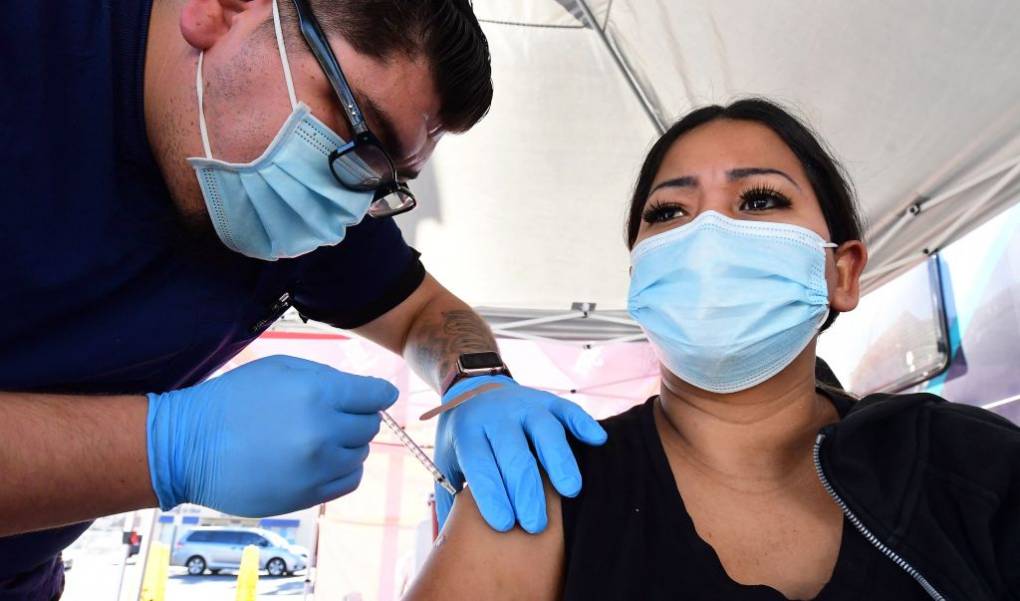
Where Can I Find the New COVID Vaccine Near Me?
La vacuna bivalente de refuerzo contra COVID-19: ¿Cuándo podré recibir una segunda dosis?
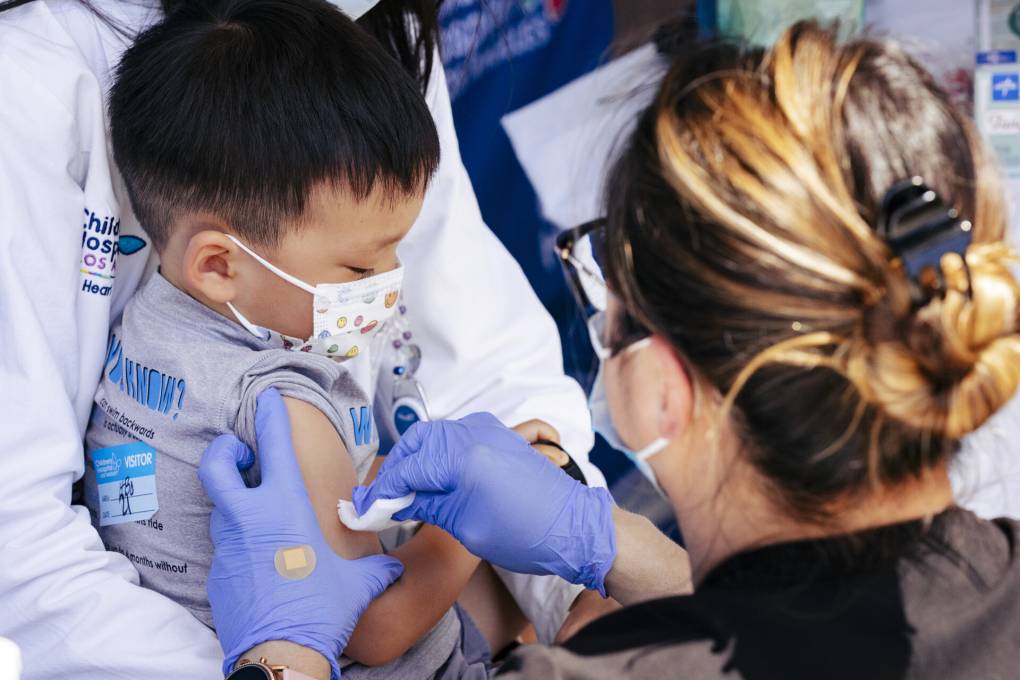
Where Can I Find a Bivalent COVID Booster Shot Near Me (Now for Kids Under 5, Too)?
How Biden's Declaring the Pandemic 'Over' Complicates Efforts to Fight COVID
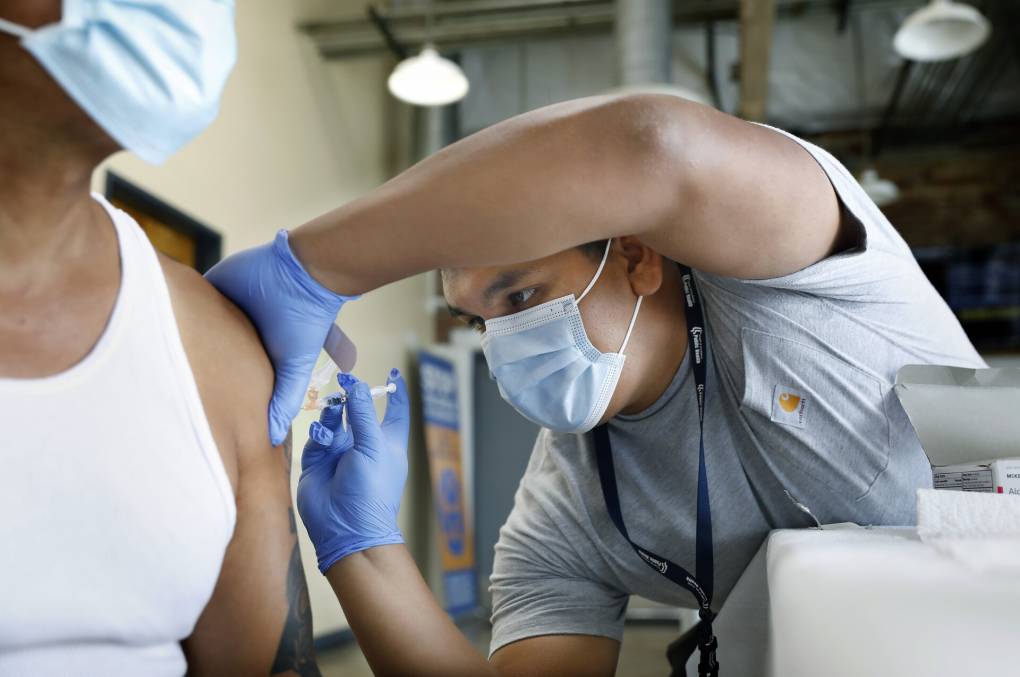
Where Can I Get a Moderna, Johnson & Johnson or Pfizer COVID Booster Shot Near Me?
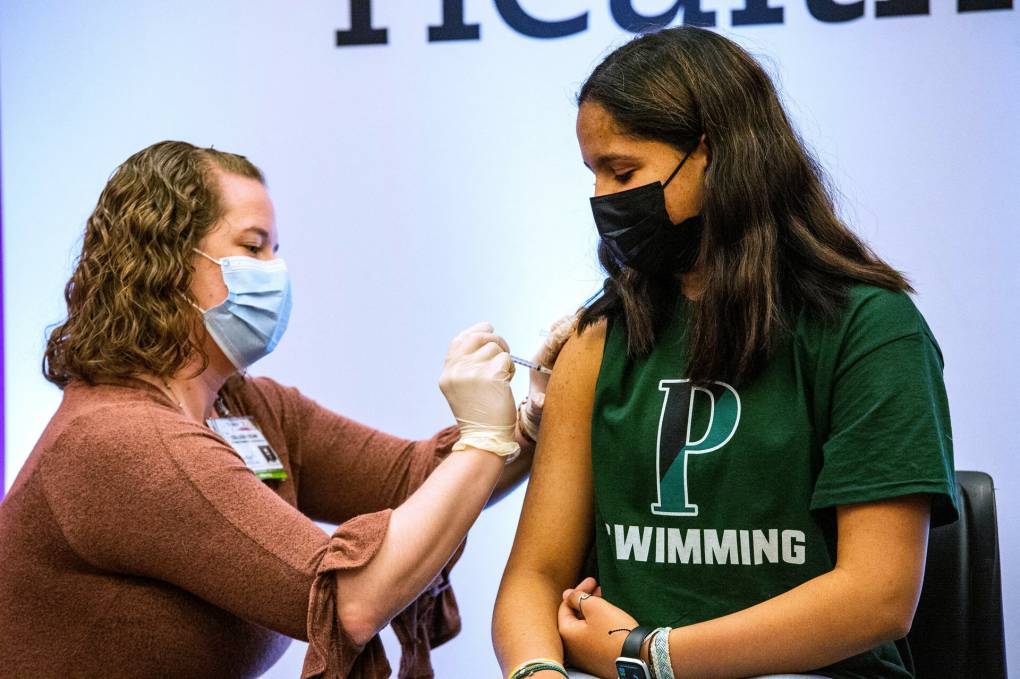
California to Require Booster Shots for Health Care Workers Amid Omicron Spread
Many Ways to Pronounce, Many Ways to Protect
Sponsored
Player sponsored by
window.__IS_SSR__=true
window.__INITIAL_STATE__={
"attachmentsReducer": {
"audio_0": {
"type": "attachments",
"id": "audio_0",
"imgSizes": {
"kqedFullSize": {
"file": "https://ww2.kqed.org/news/wp-content/themes/KQED-unified/img/audio_bgs/background0.jpg"
}
}
},
"audio_1": {
"type": "attachments",
"id": "audio_1",
"imgSizes": {
"kqedFullSize": {
"file": "https://ww2.kqed.org/news/wp-content/themes/KQED-unified/img/audio_bgs/background1.jpg"
}
}
},
"audio_2": {
"type": "attachments",
"id": "audio_2",
"imgSizes": {
"kqedFullSize": {
"file": "https://ww2.kqed.org/news/wp-content/themes/KQED-unified/img/audio_bgs/background2.jpg"
}
}
},
"audio_3": {
"type": "attachments",
"id": "audio_3",
"imgSizes": {
"kqedFullSize": {
"file": "https://ww2.kqed.org/news/wp-content/themes/KQED-unified/img/audio_bgs/background3.jpg"
}
}
},
"audio_4": {
"type": "attachments",
"id": "audio_4",
"imgSizes": {
"kqedFullSize": {
"file": "https://ww2.kqed.org/news/wp-content/themes/KQED-unified/img/audio_bgs/background4.jpg"
}
}
},
"placeholder": {
"type": "attachments",
"id": "placeholder",
"imgSizes": {
"thumbnail": {
"file": "https://cdn.kqed.org/wp-content/uploads/2024/12/KQED-Default-Image-816638274-2000x1333-1-160x107.jpg",
"width": 160,
"height": 107,
"mimeType": "image/jpeg"
},
"medium": {
"file": "https://cdn.kqed.org/wp-content/uploads/2024/12/KQED-Default-Image-816638274-2000x1333-1-800x533.jpg",
"width": 800,
"height": 533,
"mimeType": "image/jpeg"
},
"medium_large": {
"file": "https://cdn.kqed.org/wp-content/uploads/2024/12/KQED-Default-Image-816638274-2000x1333-1-768x512.jpg",
"width": 768,
"height": 512,
"mimeType": "image/jpeg"
},
"large": {
"file": "https://cdn.kqed.org/wp-content/uploads/2024/12/KQED-Default-Image-816638274-2000x1333-1-1020x680.jpg",
"width": 1020,
"height": 680,
"mimeType": "image/jpeg"
},
"1536x1536": {
"file": "https://cdn.kqed.org/wp-content/uploads/2024/12/KQED-Default-Image-816638274-2000x1333-1-1536x1024.jpg",
"width": 1536,
"height": 1024,
"mimeType": "image/jpeg"
},
"fd-lrg": {
"file": "https://cdn.kqed.org/wp-content/uploads/2024/12/KQED-Default-Image-816638274-2000x1333-1-1536x1024.jpg",
"width": 1536,
"height": 1024,
"mimeType": "image/jpeg"
},
"fd-med": {
"file": "https://cdn.kqed.org/wp-content/uploads/2024/12/KQED-Default-Image-816638274-2000x1333-1-1020x680.jpg",
"width": 1020,
"height": 680,
"mimeType": "image/jpeg"
},
"fd-sm": {
"file": "https://cdn.kqed.org/wp-content/uploads/2024/12/KQED-Default-Image-816638274-2000x1333-1-800x533.jpg",
"width": 800,
"height": 533,
"mimeType": "image/jpeg"
},
"post-thumbnail": {
"file": "https://cdn.kqed.org/wp-content/uploads/2024/12/KQED-Default-Image-816638274-2000x1333-1-672x372.jpg",
"width": 672,
"height": 372,
"mimeType": "image/jpeg"
},
"twentyfourteen-full-width": {
"file": "https://cdn.kqed.org/wp-content/uploads/2024/12/KQED-Default-Image-816638274-2000x1333-1-1038x576.jpg",
"width": 1038,
"height": 576,
"mimeType": "image/jpeg"
},
"xxsmall": {
"file": "https://cdn.kqed.org/wp-content/uploads/2024/12/KQED-Default-Image-816638274-2000x1333-1-160x107.jpg",
"width": 160,
"height": 107,
"mimeType": "image/jpeg"
},
"xsmall": {
"file": "https://cdn.kqed.org/wp-content/uploads/2024/12/KQED-Default-Image-816638274-2000x1333-1-672x372.jpg",
"width": 672,
"height": 372,
"mimeType": "image/jpeg"
},
"small": {
"file": "https://cdn.kqed.org/wp-content/uploads/2024/12/KQED-Default-Image-816638274-2000x1333-1-672x372.jpg",
"width": 672,
"height": 372,
"mimeType": "image/jpeg"
},
"xlarge": {
"file": "https://cdn.kqed.org/wp-content/uploads/2024/12/KQED-Default-Image-816638274-2000x1333-1-1020x680.jpg",
"width": 1020,
"height": 680,
"mimeType": "image/jpeg"
},
"full-width": {
"file": "https://cdn.kqed.org/wp-content/uploads/2024/12/KQED-Default-Image-816638274-2000x1333-1-1920x1280.jpg",
"width": 1920,
"height": 1280,
"mimeType": "image/jpeg"
},
"guest-author-32": {
"file": "https://cdn.kqed.org/wp-content/uploads/2025/01/KQED-Default-Image-816638274-1333x1333-1-160x160.jpg",
"width": 32,
"height": 32,
"mimeType": "image/jpeg"
},
"guest-author-50": {
"file": "https://cdn.kqed.org/wp-content/uploads/2025/01/KQED-Default-Image-816638274-1333x1333-1-160x160.jpg",
"width": 50,
"height": 50,
"mimeType": "image/jpeg"
},
"guest-author-64": {
"file": "https://cdn.kqed.org/wp-content/uploads/2025/01/KQED-Default-Image-816638274-1333x1333-1-160x160.jpg",
"width": 64,
"height": 64,
"mimeType": "image/jpeg"
},
"guest-author-96": {
"file": "https://cdn.kqed.org/wp-content/uploads/2025/01/KQED-Default-Image-816638274-1333x1333-1-160x160.jpg",
"width": 96,
"height": 96,
"mimeType": "image/jpeg"
},
"guest-author-128": {
"file": "https://cdn.kqed.org/wp-content/uploads/2025/01/KQED-Default-Image-816638274-1333x1333-1-160x160.jpg",
"width": 128,
"height": 128,
"mimeType": "image/jpeg"
},
"detail": {
"file": "https://cdn.kqed.org/wp-content/uploads/2025/01/KQED-Default-Image-816638274-1333x1333-1-160x160.jpg",
"width": 160,
"height": 160,
"mimeType": "image/jpeg"
},
"kqedFullSize": {
"file": "https://cdn.kqed.org/wp-content/uploads/2024/12/KQED-Default-Image-816638274-2000x1333-1.jpg",
"width": 2000,
"height": 1333
}
}
},
"news_12001514": {
"type": "attachments",
"id": "news_12001514",
"meta": {
"index": "attachments_1716263798",
"site": "news",
"id": "12001514",
"found": true
},
"title": "where-to-get-new-covid-vaccine",
"publishDate": 1724373438,
"status": "inherit",
"parent": 12001396,
"modified": 1724437765,
"caption": "Where can you get the new COVID-19 vaccine? It'll be rolling out in California in the coming days and weeks after FDA approval.",
"credit": "Imaginestock/Getty Images",
"altTag": "A young doctor in a white protective glove holds a medical syringe and vial.",
"description": null,
"imgSizes": {
"medium": {
"file": "https://cdn.kqed.org/wp-content/uploads/sites/10/2024/08/GettyImages-1303038502-800x516.jpg",
"width": 800,
"height": 516,
"mimeType": "image/jpeg"
},
"large": {
"file": "https://cdn.kqed.org/wp-content/uploads/sites/10/2024/08/GettyImages-1303038502-1020x658.jpg",
"width": 1020,
"height": 658,
"mimeType": "image/jpeg"
},
"thumbnail": {
"file": "https://cdn.kqed.org/wp-content/uploads/sites/10/2024/08/GettyImages-1303038502-160x103.jpg",
"width": 160,
"height": 103,
"mimeType": "image/jpeg"
},
"1536x1536": {
"file": "https://cdn.kqed.org/wp-content/uploads/sites/10/2024/08/GettyImages-1303038502-1536x991.jpg",
"width": 1536,
"height": 991,
"mimeType": "image/jpeg"
},
"2048x2048": {
"file": "https://cdn.kqed.org/wp-content/uploads/sites/10/2024/08/GettyImages-1303038502-2048x1322.jpg",
"width": 2048,
"height": 1322,
"mimeType": "image/jpeg"
},
"post-thumbnail": {
"file": "https://cdn.kqed.org/wp-content/uploads/sites/10/2024/08/GettyImages-1303038502-672x372.jpg",
"width": 672,
"height": 372,
"mimeType": "image/jpeg"
},
"twentyfourteen-full-width": {
"file": "https://cdn.kqed.org/wp-content/uploads/sites/10/2024/08/GettyImages-1303038502-1038x576.jpg",
"width": 1038,
"height": 576,
"mimeType": "image/jpeg"
},
"full-width": {
"file": "https://cdn.kqed.org/wp-content/uploads/sites/10/2024/08/GettyImages-1303038502-1920x1239.jpg",
"width": 1920,
"height": 1239,
"mimeType": "image/jpeg"
},
"kqedFullSize": {
"file": "https://cdn.kqed.org/wp-content/uploads/sites/10/2024/08/GettyImages-1303038502.jpg",
"width": 2155,
"height": 1391
}
},
"fetchFailed": false,
"isLoading": false
},
"news_11977861": {
"type": "attachments",
"id": "news_11977861",
"meta": {
"index": "attachments_1716263798",
"site": "news",
"id": "11977861",
"found": true
},
"parent": 11977786,
"imgSizes": {
"twentyfourteen-full-width": {
"file": "https://cdn.kqed.org/wp-content/uploads/sites/10/2024/03/GettyImages-1666315571-1024x576.jpg",
"width": 1024,
"mimeType": "image/jpeg",
"height": 576
},
"thumbnail": {
"file": "https://cdn.kqed.org/wp-content/uploads/sites/10/2024/03/GettyImages-1666315571-160x107.jpg",
"width": 160,
"mimeType": "image/jpeg",
"height": 107
},
"post-thumbnail": {
"file": "https://cdn.kqed.org/wp-content/uploads/sites/10/2024/03/GettyImages-1666315571-672x372.jpg",
"width": 672,
"mimeType": "image/jpeg",
"height": 372
},
"kqedFullSize": {
"file": "https://cdn.kqed.org/wp-content/uploads/sites/10/2024/03/GettyImages-1666315571.jpg",
"width": 1024,
"height": 683
},
"large": {
"file": "https://cdn.kqed.org/wp-content/uploads/sites/10/2024/03/GettyImages-1666315571-1020x680.jpg",
"width": 1020,
"mimeType": "image/jpeg",
"height": 680
},
"medium": {
"file": "https://cdn.kqed.org/wp-content/uploads/sites/10/2024/03/GettyImages-1666315571-800x534.jpg",
"width": 800,
"mimeType": "image/jpeg",
"height": 534
}
},
"publishDate": 1709345931,
"modified": 1709391806,
"caption": "Pharmacist Aaron Sun administers the COMIRNATY® (COVID-19 Vaccine, mRNA) vaccine by Pfizer, to John Vuich at a CVS Pharmacy in Eagle Rock, LA County. ",
"description": null,
"title": "New COVID vaccine COMIRNATY® (COVID-19 Vaccine, mRNA) by Pfizer at CVS.",
"credit": "Irfan Khan/Los Angeles Times via Getty Images",
"status": "inherit",
"altTag": null,
"fetchFailed": false,
"isLoading": false
},
"news_11961112": {
"type": "attachments",
"id": "news_11961112",
"meta": {
"index": "attachments_1716263798",
"site": "news",
"id": "11961112",
"found": true
},
"parent": 0,
"imgSizes": {
"twentyfourteen-full-width": {
"file": "https://ww2.kqed.org/app/uploads/sites/10/2023/09/005_SanFrancisco_UnitedinHealthKidsCOVIDVaccination_11092021-qut-1038x576.jpg",
"width": 1038,
"mimeType": "image/jpeg",
"height": 576
},
"thumbnail": {
"file": "https://ww2.kqed.org/app/uploads/sites/10/2023/09/005_SanFrancisco_UnitedinHealthKidsCOVIDVaccination_11092021-qut-160x107.jpg",
"width": 160,
"mimeType": "image/jpeg",
"height": 107
},
"post-thumbnail": {
"file": "https://ww2.kqed.org/app/uploads/sites/10/2023/09/005_SanFrancisco_UnitedinHealthKidsCOVIDVaccination_11092021-qut-672x372.jpg",
"width": 672,
"mimeType": "image/jpeg",
"height": 372
},
"kqedFullSize": {
"file": "https://ww2.kqed.org/app/uploads/sites/10/2023/09/005_SanFrancisco_UnitedinHealthKidsCOVIDVaccination_11092021-qut.jpg",
"width": 1920,
"height": 1280
},
"large": {
"file": "https://ww2.kqed.org/app/uploads/sites/10/2023/09/005_SanFrancisco_UnitedinHealthKidsCOVIDVaccination_11092021-qut-1020x680.jpg",
"width": 1020,
"mimeType": "image/jpeg",
"height": 680
},
"1536x1536": {
"file": "https://ww2.kqed.org/app/uploads/sites/10/2023/09/005_SanFrancisco_UnitedinHealthKidsCOVIDVaccination_11092021-qut-1536x1024.jpg",
"width": 1536,
"mimeType": "image/jpeg",
"height": 1024
},
"medium": {
"file": "https://ww2.kqed.org/app/uploads/sites/10/2023/09/005_SanFrancisco_UnitedinHealthKidsCOVIDVaccination_11092021-qut-800x533.jpg",
"width": 800,
"mimeType": "image/jpeg",
"height": 533
}
},
"publishDate": 1694646398,
"modified": 1694709097,
"caption": "On Sept. 12, 2023, advisers of the Centers for Disease Control and Prevention formally authorized new COVID vaccines from Moderna and Pfizer (also known as Comirnaty). The vaccines are now starting to roll out across the United States, amid a rise in COVID cases locally and nationally.",
"description": null,
"title": "new-covid-booster",
"credit": "Beth LaBerge/KQED",
"status": "inherit",
"altTag": "A boy with a tuxedo T-shirt and a face mask holds his mother's hand as he receives a shot in the arm by a nurse.",
"fetchFailed": false,
"isLoading": false
},
"news_11942628": {
"type": "attachments",
"id": "news_11942628",
"meta": {
"index": "attachments_1716263798",
"site": "news",
"id": "11942628",
"found": true
},
"parent": 11942625,
"imgSizes": {
"twentyfourteen-full-width": {
"file": "https://ww2.kqed.org/app/uploads/sites/10/2023/03/nurse-with-patient-getting-a-booster-shot-1020x576.jpg",
"width": 1020,
"mimeType": "image/jpeg",
"height": 576
},
"thumbnail": {
"file": "https://ww2.kqed.org/app/uploads/sites/10/2023/03/nurse-with-patient-getting-a-booster-shot-160x101.jpg",
"width": 160,
"mimeType": "image/jpeg",
"height": 101
},
"post-thumbnail": {
"file": "https://ww2.kqed.org/app/uploads/sites/10/2023/03/nurse-with-patient-getting-a-booster-shot-672x372.jpg",
"width": 672,
"mimeType": "image/jpeg",
"height": 372
},
"kqedFullSize": {
"file": "https://ww2.kqed.org/app/uploads/sites/10/2023/03/nurse-with-patient-getting-a-booster-shot.jpg",
"width": 1020,
"height": 642
},
"medium": {
"file": "https://ww2.kqed.org/app/uploads/sites/10/2023/03/nurse-with-patient-getting-a-booster-shot-800x504.jpg",
"width": 800,
"mimeType": "image/jpeg",
"height": 504
}
},
"publishDate": 1678074421,
"modified": 1678074451,
"caption": "La enfermera vocacional Cleopatra Oniya administra la vacuna de refuerzo de Pfizer en un centro de vacunación y pruebas de COVID-19, el cual está decorado en celebración del Cinco de Mayo, en el Ted Watkins Memorial Park de Los Ángeles el 5 de mayo de 2022.",
"description": null,
"title": "nurse with patient getting a booster shot",
"credit": "Frederic J. Brown/AFP vía Getty Images",
"status": "inherit",
"altTag": null,
"fetchFailed": false,
"isLoading": false
},
"news_11935454": {
"type": "attachments",
"id": "news_11935454",
"meta": {
"index": "attachments_1716263798",
"site": "news",
"id": "11935454",
"found": true
},
"parent": 11924327,
"imgSizes": {
"twentyfourteen-full-width": {
"file": "https://ww2.kqed.org/app/uploads/sites/10/2022/12/RS61679_GettyImages-1241629214-qut-1038x576.jpg",
"width": 1038,
"mimeType": "image/jpeg",
"height": 576
},
"thumbnail": {
"file": "https://ww2.kqed.org/app/uploads/sites/10/2022/12/RS61679_GettyImages-1241629214-qut-160x107.jpg",
"width": 160,
"mimeType": "image/jpeg",
"height": 107
},
"post-thumbnail": {
"file": "https://ww2.kqed.org/app/uploads/sites/10/2022/12/RS61679_GettyImages-1241629214-qut-672x372.jpg",
"width": 672,
"mimeType": "image/jpeg",
"height": 372
},
"kqedFullSize": {
"file": "https://ww2.kqed.org/app/uploads/sites/10/2022/12/RS61679_GettyImages-1241629214-qut.jpg",
"width": 1920,
"height": 1280
},
"large": {
"file": "https://ww2.kqed.org/app/uploads/sites/10/2022/12/RS61679_GettyImages-1241629214-qut-1020x680.jpg",
"width": 1020,
"mimeType": "image/jpeg",
"height": 680
},
"1536x1536": {
"file": "https://ww2.kqed.org/app/uploads/sites/10/2022/12/RS61679_GettyImages-1241629214-qut-1536x1024.jpg",
"width": 1536,
"mimeType": "image/jpeg",
"height": 1024
},
"medium": {
"file": "https://ww2.kqed.org/app/uploads/sites/10/2022/12/RS61679_GettyImages-1241629214-qut-800x533.jpg",
"width": 800,
"mimeType": "image/jpeg",
"height": 533
}
},
"publishDate": 1671149319,
"modified": 1671149486,
"caption": "Children's Hospital Los Angeles nurse Monica Lopez prepares to administer the Pfizer COVID-19 vaccine to Callum Diaz-Cheng, 3, son of CHLA Cardiologist Dr. Jennifer Su and one of the hospital's first children under five to receive the shot, on Tuesday, June 21, 2022 in Los Angeles, CA. ",
"description": null,
"title": "Vaccines For Children Under Five",
"credit": "Wesley Lapointe / Los Angeles Times via Getty Images",
"status": "inherit",
"altTag": "A small Asian child wearing a spotted face mask sits on the lap of an unseen person wearing a white coat, while a medical professional wearing blue surgical gloves leans over them and swabs their arm.",
"fetchFailed": false,
"isLoading": false
},
"news_11924494": {
"type": "attachments",
"id": "news_11924494",
"meta": {
"index": "attachments_1716263798",
"site": "news",
"id": "11924494",
"found": true
},
"parent": 11924327,
"imgSizes": {
"twentyfourteen-full-width": {
"file": "https://ww2.kqed.org/app/uploads/sites/10/2022/09/RS58338_GettyImages-1242749971-qut-1038x576.jpg",
"width": 1038,
"mimeType": "image/jpeg",
"height": 576
},
"thumbnail": {
"file": "https://ww2.kqed.org/app/uploads/sites/10/2022/09/RS58338_GettyImages-1242749971-qut-160x106.jpg",
"width": 160,
"mimeType": "image/jpeg",
"height": 106
},
"post-thumbnail": {
"file": "https://ww2.kqed.org/app/uploads/sites/10/2022/09/RS58338_GettyImages-1242749971-qut-672x372.jpg",
"width": 672,
"mimeType": "image/jpeg",
"height": 372
},
"kqedFullSize": {
"file": "https://ww2.kqed.org/app/uploads/sites/10/2022/09/RS58338_GettyImages-1242749971-qut.jpg",
"width": 1920,
"height": 1274
},
"large": {
"file": "https://ww2.kqed.org/app/uploads/sites/10/2022/09/RS58338_GettyImages-1242749971-qut-1020x677.jpg",
"width": 1020,
"mimeType": "image/jpeg",
"height": 677
},
"1536x1536": {
"file": "https://ww2.kqed.org/app/uploads/sites/10/2022/09/RS58338_GettyImages-1242749971-qut-1536x1019.jpg",
"width": 1536,
"mimeType": "image/jpeg",
"height": 1019
},
"medium": {
"file": "https://ww2.kqed.org/app/uploads/sites/10/2022/09/RS58338_GettyImages-1242749971-qut-800x531.jpg",
"width": 800,
"mimeType": "image/jpeg",
"height": 531
}
},
"publishDate": 1662086193,
"modified": 1665436636,
"caption": "Jeremy Oyague (derecha), enfermero titulado del Departamento de Salud Pública de Los Ángeles, administra un refuerzo de COVID en una clínica de vacunación para inmunizar a las personas contra el MPX y el COVID en The Village Mental Health Services de Los Ángeles, un centro gestionado por The People Concern.",
"description": null,
"title": "omicron-booster-shot",
"credit": "Christina House/Los Angeles Times via Getty Images",
"status": "inherit",
"altTag": "A health care worker in a grey t-shirt bends to the side to administer a vaccine to a person whose face we can't see.",
"fetchFailed": false,
"isLoading": false
},
"news_11900967": {
"type": "attachments",
"id": "news_11900967",
"meta": {
"index": "attachments_1716263798",
"site": "news",
"id": "11900967",
"found": true
},
"parent": 11890031,
"imgSizes": {
"twentyfourteen-full-width": {
"file": "https://ww2.kqed.org/app/uploads/sites/10/2021/10/RS52992_GettyImages-1237563534-qut-1038x576.jpg",
"width": 1038,
"mimeType": "image/jpeg",
"height": 576
},
"thumbnail": {
"file": "https://ww2.kqed.org/app/uploads/sites/10/2021/10/RS52992_GettyImages-1237563534-qut-160x107.jpg",
"width": 160,
"mimeType": "image/jpeg",
"height": 107
},
"post-thumbnail": {
"file": "https://ww2.kqed.org/app/uploads/sites/10/2021/10/RS52992_GettyImages-1237563534-qut-672x372.jpg",
"width": 672,
"mimeType": "image/jpeg",
"height": 372
},
"kqedFullSize": {
"file": "https://ww2.kqed.org/app/uploads/sites/10/2021/10/RS52992_GettyImages-1237563534-qut.jpg",
"width": 1920,
"height": 1278
},
"large": {
"file": "https://ww2.kqed.org/app/uploads/sites/10/2021/10/RS52992_GettyImages-1237563534-qut-1020x679.jpg",
"width": 1020,
"mimeType": "image/jpeg",
"height": 679
},
"1536x1536": {
"file": "https://ww2.kqed.org/app/uploads/sites/10/2021/10/RS52992_GettyImages-1237563534-qut-1536x1022.jpg",
"width": 1536,
"mimeType": "image/jpeg",
"height": 1022
},
"medium": {
"file": "https://ww2.kqed.org/app/uploads/sites/10/2021/10/RS52992_GettyImages-1237563534-qut-800x533.jpg",
"width": 800,
"mimeType": "image/jpeg",
"height": 533
}
},
"publishDate": 1641496276,
"modified": 1677088673,
"caption": "Children age 12-15 years old receive a Pfizer-BioNTech Covid-19 vaccine booster at Hartford Hospital in Hartford, Connecticut on January 6, 2022. ",
"description": null,
"title": "US-virus-HEALTH-vaccines",
"credit": "Joseph Prezioso/AFP via Getty Images",
"status": "inherit",
"altTag": "A health care worker wearing a brown shirt crouches to administer a COVID booster shot to a young person seated in a chair wearing a shirt that says \"SWIMMING.\"",
"fetchFailed": false,
"isLoading": false
},
"news_11900019": {
"type": "attachments",
"id": "news_11900019",
"meta": {
"index": "attachments_1716263798",
"site": "news",
"id": "11900019",
"found": true
},
"parent": 11900014,
"imgSizes": {
"twentyfourteen-full-width": {
"file": "https://ww2.kqed.org/app/uploads/sites/10/2021/12/GettyImages-1236892674-1024x576.jpg",
"width": 1024,
"mimeType": "image/jpeg",
"height": 576
},
"thumbnail": {
"file": "https://ww2.kqed.org/app/uploads/sites/10/2021/12/GettyImages-1236892674-160x94.jpg",
"width": 160,
"mimeType": "image/jpeg",
"height": 94
},
"post-thumbnail": {
"file": "https://ww2.kqed.org/app/uploads/sites/10/2021/12/GettyImages-1236892674-672x372.jpg",
"width": 672,
"mimeType": "image/jpeg",
"height": 372
},
"kqedFullSize": {
"file": "https://ww2.kqed.org/app/uploads/sites/10/2021/12/GettyImages-1236892674.jpg",
"width": 1024,
"height": 603
},
"large": {
"file": "https://ww2.kqed.org/app/uploads/sites/10/2021/12/GettyImages-1236892674-1020x601.jpg",
"width": 1020,
"mimeType": "image/jpeg",
"height": 601
},
"medium": {
"file": "https://ww2.kqed.org/app/uploads/sites/10/2021/12/GettyImages-1236892674-800x471.jpg",
"width": 800,
"mimeType": "image/jpeg",
"height": 471
}
},
"publishDate": 1640198091,
"modified": 1640199273,
"caption": "Carmen Penaloza receives her first dose of the Pfizer COVID-19 vaccine at a pop-up clinic in Rosemead, California on Nov. 29, 2021.",
"description": null,
"title": "US-HEALTH-VIRUS-VARIANT",
"credit": "Frederic J. Brown/ AFP via Getty Images",
"status": "inherit",
"altTag": "A man wearing glasses, a surgical mask and gloves injects a syringe into the arm of a woman wearing a black shirt and surgical mask.",
"fetchFailed": false,
"isLoading": false
},
"news_11897771": {
"type": "attachments",
"id": "news_11897771",
"meta": {
"index": "attachments_1716263798",
"site": "news",
"id": "11897771",
"found": true
},
"parent": 11897761,
"imgSizes": {
"twentyfourteen-full-width": {
"file": "https://ww2.kqed.org/app/uploads/sites/10/2021/12/omicron_120121_final-1038x576.png",
"width": 1038,
"mimeType": "image/png",
"height": 576
},
"thumbnail": {
"file": "https://ww2.kqed.org/app/uploads/sites/10/2021/12/omicron_120121_final-160x102.png",
"width": 160,
"mimeType": "image/png",
"height": 102
},
"post-thumbnail": {
"file": "https://ww2.kqed.org/app/uploads/sites/10/2021/12/omicron_120121_final-672x372.png",
"width": 672,
"mimeType": "image/png",
"height": 372
},
"kqedFullSize": {
"file": "https://ww2.kqed.org/app/uploads/sites/10/2021/12/omicron_120121_final.png",
"width": 1920,
"height": 1229
},
"large": {
"file": "https://ww2.kqed.org/app/uploads/sites/10/2021/12/omicron_120121_final-1020x653.png",
"width": 1020,
"mimeType": "image/png",
"height": 653
},
"1536x1536": {
"file": "https://ww2.kqed.org/app/uploads/sites/10/2021/12/omicron_120121_final-1536x983.png",
"width": 1536,
"mimeType": "image/png",
"height": 983
},
"medium": {
"file": "https://ww2.kqed.org/app/uploads/sites/10/2021/12/omicron_120121_final-800x512.png",
"width": 800,
"mimeType": "image/png",
"height": 512
}
},
"publishDate": 1638387256,
"modified": 1638387376,
"caption": null,
"description": null,
"title": "omicron_120121_final",
"credit": null,
"status": "inherit",
"altTag": "Cartoon: word bubbles read, \"how do you pronounce it?\" by the word \"omicron.\" Pronunciation reads: oh-ma-cron, oh-mih-krahn, oh-krahp-again, oh-ma-don't-panic, oh-ma-vaccinate-your-kids, on-my-way-to-get-a-booster.",
"fetchFailed": false,
"isLoading": false
}
},
"audioPlayerReducer": {
"postId": "stream_live",
"isPaused": true,
"isPlaying": false,
"pfsActive": false,
"pledgeModalIsOpen": true,
"playerDrawerIsOpen": false
},
"authorsReducer": {
"byline_news_11926261": {
"type": "authors",
"id": "byline_news_11926261",
"meta": {
"override": true
},
"slug": "byline_news_11926261",
"name": "Rob Stein",
"isLoading": false
},
"kqednewsstaffandwires": {
"type": "authors",
"id": "237",
"meta": {
"index": "authors_1716337520",
"id": "237",
"found": true
},
"name": "KQED News Staff and Wires",
"firstName": "KQED News Staff and Wires",
"lastName": null,
"slug": "kqednewsstaffandwires",
"email": "onlinenewsstaff@kqed.org",
"display_author_email": false,
"staff_mastheads": [],
"title": null,
"bio": null,
"avatar": "https://secure.gravatar.com/avatar/72295af8ebbfbd19a4948f5271285664?s=600&d=blank&r=g",
"twitter": null,
"facebook": null,
"instagram": null,
"linkedin": null,
"sites": [
{
"site": "arts",
"roles": [
"contributor"
]
},
{
"site": "news",
"roles": [
"contributor"
]
},
{
"site": "lowdown",
"roles": [
"author"
]
},
{
"site": "stateofhealth",
"roles": [
"contributor"
]
},
{
"site": "food",
"roles": [
"author"
]
}
],
"headData": {
"title": "KQED News Staff and Wires | KQED",
"description": null,
"ogImgSrc": "https://secure.gravatar.com/avatar/72295af8ebbfbd19a4948f5271285664?s=600&d=blank&r=g",
"twImgSrc": "https://secure.gravatar.com/avatar/72295af8ebbfbd19a4948f5271285664?s=600&d=blank&r=g"
},
"isLoading": false,
"link": "/author/kqednewsstaffandwires"
},
"markfiore": {
"type": "authors",
"id": "3236",
"meta": {
"index": "authors_1716337520",
"id": "3236",
"found": true
},
"name": "Mark Fiore",
"firstName": "Mark",
"lastName": "Fiore",
"slug": "markfiore",
"email": "mark@markfiore.com",
"display_author_email": false,
"staff_mastheads": [
"news"
],
"title": "KQED News Cartoonist",
"bio": "\u003ca href=\"http://www.MarkFiore.com\">MarkFiore.com\u003c/a> | \u003ca href=\"https://twitter.com/markfiore\">Follow on Twitter\u003c/a> | \u003ca href=\"https://www.facebook.com/pages/Mark-Fiore-Animated-Political-Cartoons/94451707396?ref=bookmarks\">Facebook\u003c/a> | \u003ca href=\"mailto:mark@markfiore.com\">email\u003c/a>\r\n\r\nPulitzer Prize-winner, Mark Fiore, who the Wall Street Journal has called “the undisputed guru of the form,” creates animated political cartoons in San Francisco, where his work has been featured regularly on the San Francisco Chronicle’s web site, SFGate.com. His work has appeared on Newsweek.com, Slate.com, CBSNews.com, MotherJones.com, DailyKos.com and NPR’s web site. Fiore’s political animation has appeared on CNN, Frontline, Bill Moyers Journal, Salon.com and cable and broadcast outlets across the globe.\r\n\r\nBeginning his professional life by drawing traditional political cartoons for newspapers, Fiore’s work appeared in publications ranging from the Washington Post to the Los Angeles Times. In the late 1990s, he began to experiment with animating political cartoons and, after a short stint at the San Jose Mercury News as their staff cartoonist, Fiore devoted all his energies to animation.\r\nGrowing up in California, Fiore also spent a good portion of his life in the backwoods of Idaho. It was this combination that shaped him politically. Mark majored in political science at Colorado College, where, in a perfect send-off for a cartoonist, he received his diploma in 1991 as commencement speaker Dick Cheney smiled approvingly.\r\nMark Fiore was awarded the Pulitzer Prize for political cartooning in 2010, a Robert F. Kennedy Journalism Award in 2004 and has twice received an Online Journalism Award for commentary from the Online News Association (2002, 2008). Fiore has received two awards for his work in new media from the National Cartoonists Society (2001, 2002), and in 2006 received The James Madison Freedom of Information Award from The Society of Professional Journalists.",
"avatar": "https://secure.gravatar.com/avatar/fc4e2a612b15b67bad0c6f0e1db4ca9b?s=600&d=blank&r=g",
"twitter": "MarkFiore",
"facebook": null,
"instagram": "https://www.instagram.com/markfiore/?hl=en",
"linkedin": null,
"sites": [
{
"site": "arts",
"roles": [
"contributor"
]
},
{
"site": "news",
"roles": [
"editor"
]
},
{
"site": "futureofyou",
"roles": [
"editor"
]
},
{
"site": "science",
"roles": [
"editor"
]
}
],
"headData": {
"title": "Mark Fiore | KQED",
"description": "KQED News Cartoonist",
"ogImgSrc": "https://secure.gravatar.com/avatar/fc4e2a612b15b67bad0c6f0e1db4ca9b?s=600&d=blank&r=g",
"twImgSrc": "https://secure.gravatar.com/avatar/fc4e2a612b15b67bad0c6f0e1db4ca9b?s=600&d=blank&r=g"
},
"isLoading": false,
"link": "/author/markfiore"
},
"carlysevern": {
"type": "authors",
"id": "3243",
"meta": {
"index": "authors_1716337520",
"id": "3243",
"found": true
},
"name": "Carly Severn",
"firstName": "Carly",
"lastName": "Severn",
"slug": "carlysevern",
"email": "csevern@kqed.org",
"display_author_email": false,
"staff_mastheads": [
"news"
],
"title": "Senior Editor, Audience News ",
"bio": "Carly is KQED's Senior Editor of Audience News on the Digital News team, and has reported for the California Report Magazine, Bay Curious and KQED Arts. She's formerly the host of \u003ca href=\"http://ww2.kqed.org/pop/category/the-cooler/\" rel=\"noopener noreferrer\">The Cooler\u003c/a> podcast.",
"avatar": "https://secure.gravatar.com/avatar/2d8d6765f186e64c798cf7f0c8088a41?s=600&d=blank&r=g",
"twitter": "teacupinthebay",
"facebook": null,
"instagram": null,
"linkedin": null,
"sites": [
{
"site": "",
"roles": [
"editor"
]
},
{
"site": "arts",
"roles": [
"editor"
]
},
{
"site": "news",
"roles": [
"administrator"
]
},
{
"site": "pop",
"roles": [
"editor"
]
},
{
"site": "futureofyou",
"roles": [
"editor"
]
},
{
"site": "about",
"roles": [
"administrator"
]
},
{
"site": "mindshift",
"roles": [
"editor"
]
},
{
"site": "bayareabites",
"roles": [
"editor"
]
},
{
"site": "stateofhealth",
"roles": [
"editor"
]
},
{
"site": "science",
"roles": [
"editor"
]
},
{
"site": "food",
"roles": [
"contributor"
]
},
{
"site": "forum",
"roles": [
"editor"
]
},
{
"site": "perspectives",
"roles": [
"administrator"
]
},
{
"site": "liveblog",
"roles": [
"editor"
]
}
],
"headData": {
"title": "Carly Severn | KQED",
"description": "Senior Editor, Audience News ",
"ogImgSrc": "https://secure.gravatar.com/avatar/2d8d6765f186e64c798cf7f0c8088a41?s=600&d=blank&r=g",
"twImgSrc": "https://secure.gravatar.com/avatar/2d8d6765f186e64c798cf7f0c8088a41?s=600&d=blank&r=g"
},
"isLoading": false,
"link": "/author/carlysevern"
},
"sjohnson": {
"type": "authors",
"id": "11840",
"meta": {
"index": "authors_1716337520",
"id": "11840",
"found": true
},
"name": "Sydney Johnson",
"firstName": "Sydney",
"lastName": "Johnson",
"slug": "sjohnson",
"email": "sjohnson@kqed.org",
"display_author_email": false,
"staff_mastheads": [
"news"
],
"title": "KQED Reporter",
"bio": "Sydney Johnson is a general assignment reporter at KQED. She previously reported on public health and city government at the San Francisco Examiner, and before that, she covered statewide education policy for EdSource. Her reporting has won multiple local, state and national awards. Sydney is a graduate of the University of California, Berkeley and lives in San Francisco.",
"avatar": "https://secure.gravatar.com/avatar/97855f2719b72ad6190b7c535fe642c8?s=600&d=blank&r=g",
"twitter": "sydneyfjohnson",
"facebook": null,
"instagram": null,
"linkedin": null,
"sites": [
{
"site": "news",
"roles": [
"editor"
]
}
],
"headData": {
"title": "Sydney Johnson | KQED",
"description": "KQED Reporter",
"ogImgSrc": "https://secure.gravatar.com/avatar/97855f2719b72ad6190b7c535fe642c8?s=600&d=blank&r=g",
"twImgSrc": "https://secure.gravatar.com/avatar/97855f2719b72ad6190b7c535fe642c8?s=600&d=blank&r=g"
},
"isLoading": false,
"link": "/author/sjohnson"
}
},
"breakingNewsReducer": {},
"pagesReducer": {},
"postsReducer": {
"stream_live": {
"type": "live",
"id": "stream_live",
"audioUrl": "https://streams.kqed.org/kqedradio",
"title": "Live Stream",
"excerpt": "Live Stream information currently unavailable.",
"link": "/radio",
"featImg": "",
"label": {
"name": "KQED Live",
"link": "/"
}
},
"stream_kqedNewscast": {
"type": "posts",
"id": "stream_kqedNewscast",
"audioUrl": "https://www.kqed.org/.stream/anon/radio/RDnews/newscast.mp3?_=1",
"title": "KQED Newscast",
"featImg": "",
"label": {
"name": "88.5 FM",
"link": "/"
}
},
"news_12001396": {
"type": "posts",
"id": "news_12001396",
"meta": {
"index": "posts_1716263798",
"site": "news",
"id": "12001396",
"score": null,
"sort": [
1724410810000
]
},
"guestAuthors": [],
"slug": "where-can-i-get-new-covid-vaccine-near-me-2024",
"title": "Where Can I Get the New 2024 COVID Vaccine Near Me?",
"publishDate": 1724410810,
"format": "image",
"headTitle": "Where Can I Get the New 2024 COVID Vaccine Near Me? | KQED",
"labelTerm": {
"site": "news"
},
"content": "\u003cp>\u003cstrong>\u003cem>Looking for \u003ca href=\"https://www.kqed.org/news/12055165/where-can-i-find-new-updated-2025-covid-vaccine-near-me-moderna-pfizer-cvs-walgreens-safeway-vaccinations-health-insurance-cost\">where to find your 2025 COVID-19 vaccine instead\u003c/a>? See our new \u003ca href=\"https://www.kqed.org/news/12055165/where-can-i-find-new-updated-2025-covid-vaccine-near-me-moderna-pfizer-cvs-walgreens-safeway-vaccinations-health-insurance-cost\">guide on how to get vaccinated in 2025\u003c/a>.\u003c/em>\u003c/strong>\u003c/p>\n\u003cp>\u003cem>\u003cbr>\nUpdated 6:20 p.m. on Sept. 1\u003c/em>\u003c/p>\n\u003cp>Have you been wondering, \u003ca href=\"https://www.kqed.org/news/12001344/when-are-new-covid-vaccines-coming-2024\">“When will the new 2024 COVID-19 vaccine be available?” \u003c/a>\u003c/p>\n\u003cp>The short answer is: It’s here. But even though the “fall vaccine” has been approved much earlier this year than the 2023 COVID-19 vaccine was, just like last year, it may take a while for these shots to become widely available to the public.\u003c/p>\n\u003ch2>When will the new COVID vaccines become available?\u003c/h2>\n\u003cp>On Aug. 22, \u003ca href=\"https://apnews.com/article/covid19-vaccines-virus-pfizer-moderna-fb542f97096e9759059c0bdd82a48a74\">the Food and Drug Administration (FDA) signed off on these updated COVID-19 vaccines\u003c/a> from Moderna and Pfizer (also known as Comirnaty), which should roll out across the United States in the coming weeks as \u003ca href=\"https://www.kqed.org/news/11973108/how-long-to-isolate-with-covid-in-2024-california-now-says-that-depends-on-symptoms\">the 2024 summer wave of infections continues around the country. \u003c/a>\u003c/p>\n\u003cp>On Aug. 30, \u003ca href=\"https://www.statnews.com/2024/08/30/novavax-covid-vaccine-fda-authorization/\">the FDA also signed off on the updated Novavax COVID vaccine\u003c/a>.\u003c/p>\n\u003cp>Earlier this year, the Centers for Disease Control and Prevention (CDC) recommended that the updated shots be available to everyone age 6 months and older through pharmacies like CVS, Walgreens, Rite Aid and Safeway, as well as health care providers, county public health departments and community clinics.\u003c/p>\n\u003cp>These COVID-19 vaccines usually become available at pharmacies first because pharmacies take their cue from the federal government and not the state — but with vaccines needing to be shipped, it might still be a while before vaccinations are available. For example, \u003ca href=\"https://www.cvs.com/immunizations/covid-19-vaccine\">CVS is currently offering appointments for the new COVID-19 vaccine\u003c/a> starting no earlier than late August, and \u003ca href=\"https://www.walgreens.com/findcare/schedule-vaccine\">Walgreens is similarly offering appointments \u003c/a>that begin Sept. 6.\u003c/p>\n\u003cp>We’ll keep updating the guide below as vaccines start to roll out, so consider bookmarking this link.\u003c/p>\n\u003cp>\u003cstrong>Jump straight to: \u003c/strong>\u003c/p>\n\u003cul>\n\u003cli>\u003cstrong>\u003ca href=\"#where\">Where can I get the new COVID vaccine near me when it’s available?\u003c/a>\u003c/strong>\u003c/li>\n\u003cli>\u003cstrong>\u003ca href=\"#novavax-covid-vaccine\">Is the new Novavax vaccine now available too?\u003c/a>\u003c/strong>\u003c/li>\n\u003cli>\u003cstrong>\u003ca href=\"#doihavetopayfornewcovidvaccine\">Why do COVID vaccines now involve health insurance? \u003c/a>\u003c/strong>\u003c/li>\n\u003cli>\u003cstrong>\u003ca href=\"#kaisernewcovidvaccine\">Why can’t I get a new COVID vaccine at a pharmacy if I have Kaiser health insurance?\u003c/a>\u003c/strong>\u003c/li>\n\u003c/ul>\n\u003cp>Remember: Unlike previous rounds of the vaccine, the FDA and the CDC stopped calling these updated shots “boosters” in 2023 — so you won’t see that language online around appointments. Instead, they refer to these annual fall vaccines as “new” or “updated” vaccines that have been reformulated to better target a more recent strain of the coronavirus. This time around, Moderna and Pfizer’s vaccines target the omicron variant known as KP.2 that was common earlier this year, and Novavax’s new vaccine targets KP.2’s parent strain, JN.1.\u003c/p>\n\u003cp>Keep reading for what you need to know about the new COVID-19 shots from Pfizer and Moderna — and now Novavax too —and how to find a free COVID-19 vaccine near you \u003cem>when\u003c/em> it becomes available. Or jump straight to:\u003c/p>\n\u003cul>\n\u003cli>\u003cstrong>\u003ca href=\"#delay-covid-vaccine\">The vaccine is available early this year. Should I wait to get it?\u003c/a>\u003c/strong>\u003c/li>\n\u003cli>\u003cstrong>\u003ca href=\"#howsoonaftercovidgetvaccine\">I got COVID this summer. How soon can I get the new COVID vaccine?\u003cbr>\n\u003c/a>\u003c/strong>\u003c/li>\n\u003cli>\u003cstrong>\u003ca href=\"#shouldigetfluandcovidvaccine\">Should I get my 2024 flu shot at the same time as my new COVID vaccine?\u003c/a>\u003c/strong>\u003c/li>\n\u003cli>\u003cstrong>\u003ca href=\"#covidvaccine-no-insurance\">How do I find a COVID vaccine if I’m uninsured?\u003c/a>\u003c/strong>\u003c/li>\n\u003c/ul>\n\u003ch2>\u003ca id=\"doihavetopayfornewcovidvaccine\">\u003c/a>Why do the new COVID vaccine rollouts seem different than they used to?\u003c/h2>\n\u003cp>If you’re wondering why the new COVID-19 vaccine seems to take so long to become widely available now, why you can no longer walk into any vaccination location to get an updated shot and why health insurance matters now, it’s because of the major change that came into effect last year: The federal government has stopped footing the bill for COVID-19 vaccines.\u003c/p>\n\u003cp>\u003ca href=\"https://www.hhs.gov/about/news/2023/05/09/fact-sheet-end-of-the-covid-19-public-health-emergency.html\">These shots have now transitioned into the traditional health care market, like many other kinds of vaccines\u003c/a>. So, for most people with health insurance, insurers will now cover the cost of getting the new COVID-19 vaccine directly, much like your plan might cover your flu shot. This is why you’ll hear many county public health officials urging people to first seek out the new vaccine via their health care provider (and also why those county-run vaccination sites that were so common at the height of the pandemic now don’t exist at least on the same scale.)\u003c/p>\n\u003cul>\n\u003cli>\u003cstrong>Jump straight to: \u003ca href=\"#delay-covid-vaccine\">The vaccine is available early this year. Should I wait to get it?\u003c/a>\u003c/strong>\u003c/li>\n\u003c/ul>\n\u003cp>However, COVID-19 vaccines now being purchased and distributed through the health care market also means it’s far less simple for people without health insurance to find a free shot. Jump to “\u003ca href=\"#covidvaccine-no-insurance\">How do I find a COVID vaccine if I’m uninsured?”\u003c/a>\u003c/p>\n\u003ch2>\u003ca id=\"novavax-covid-vaccine\">\u003c/a>Is the Novavax COVID vaccine available, as well as Moderna and Pfizer’s new vaccines?\u003c/h2>\n\u003cp>The new Novavax vaccine was approved by the FDA on Aug. 30, so expect appointment availability for this particular shot to be a little behind Moderna and Pfizer’s vaccines, which were approved over a week earlier. Right now, our guide to where to find a new vaccine appointment below reflects the Moderna and Pfizer vaccines, as they’re the shots that are currently available.\u003c/p>\n\u003cp>Unlike Pfizer and Moderna’s new COVID-19 shots, the Novavax vaccine is a non-mRNA, protein-based vaccine. One reason some people choose the Novavax vaccine is based on aftereffects from getting the shot — as \u003cem>Science\u003c/em> has reported,\u003ca href=\"https://www.science.org/content/article/should-you-pick-novavax-s-covid-19-shot-over-mrna-options\"> Novavax “appeared less likely than mRNA shots to cause side effects like headache and fatigue”\u003c/a> in clinical trials.\u003c/p>\n\u003cul>\n\u003cli>\u003cstrong>Jump to: \u003ca href=\"#where\">Where can I find the new COVID vaccine near me when it’s available?\u003c/a>\u003c/strong>\u003c/li>\n\u003c/ul>\n\u003ch2>How effective are the new COVID vaccines against the current strains?\u003c/h2>\n\u003cp>Much like the flu shot, COVID-19 vaccines have now become annual shots offered in the fall — and their “recipe” gets updated each year in the hope of maximum efficacy against current strains.\u003c/p>\n\u003cp>The new 2024–25 COVID-19 vaccines from Moderna and Pfizer is an updated shot that supersedes and replaces the 2023–2024 shot, which you should now consider outdated. The recipe for this new vaccine will address a newer target: The KP.2 subvariant of omicron.\u003c/p>\n\u003cp>COVID-19 strains are a moving target, and as you can see from the \u003ca href=\"https://covid.cdc.gov/covid-data-tracker/#variant-proportions\">CDC’s COVID Variant Tracker\u003c/a>, KP.2 is no longer the dominant subvariant in the U.S. — that’s currently KP.3.1.1. But this family of omicron subvariants is closely enough related that the vaccines promise cross-protection. \u003ca href=\"https://apnews.com/article/covid19-vaccines-virus-pfizer-moderna-fb542f97096e9759059c0bdd82a48a74\">A Pfizer spokesman said the company submitted data to the FDA\u003c/a> showing its updated vaccine “generates a substantially improved response” against multiple virus subtypes compared to last fall’s vaccine.\u003c/p>\n\u003cp>“The vaccine is not intended to be perfect. It’s not going to absolutely prevent COVID-19,” said Dr. \u003ca href=\"https://www.fda.gov/about-fda/fda-organization/peter-marks\">Peter Marks\u003c/a>, director of the FDA’s Center for Biologics Evaluation and Research, in a statement announcing the approval decision. “But if we can prevent people from getting serious cases that end them up in emergency rooms, hospitals or worse — dead — that’s what we’re trying to do with these vaccines.”\u003c/p>\n\u003cp>The new vaccines should cut the risk of getting COVID-19 by 60% to 70% and reduce the risk of getting seriously ill by 80% to 90%, Marks said.\u003c/p>\n\u003cul>\n\u003cli>\u003cstrong>\u003ca href=\"#tellus\">Tell us: What else do you need information about right now?\u003c/a>\u003c/strong>\u003c/li>\n\u003c/ul>\n\u003ch2>\u003ca id=\"eligiblebooster\">\u003c/a>Who can get the new COVID vaccine?\u003c/h2>\n\u003cp>As of Aug. 22, anyone aged 6 months and up who got their last COVID-19 vaccine shot at least two months ago — whether that was their primary vaccination series or their last booster shot — can get an updated COVID-19 vaccine from Pfizer or Moderna, as soon as \u003ca href=\"#where\">vaccination appointments become available. \u003c/a>As in 2023, appointments may not become immediately widespread, depending on your location. \u003ca href=\"#where\">Jump straight to where you can find a new COVID-19 vaccine near you.\u003c/a>\u003c/p>\n\u003cp>“Vaccination continues to be the cornerstone of COVID-19 prevention,” Marks said. “Given waning immunity of the population from previous exposure to the virus and from prior vaccination, we strongly encourage those who are eligible to consider receiving an updated COVID-19 vaccine to provide better protection against currently circulating variants.”\u003c/p>\n\u003cp>There is no specific guidance for certain age groups, but, as with other vaccines, children under 12 will be offered a pediatric (smaller) dose of this vaccine.\u003c/p>\n\u003cfigure id=\"attachment_11961117\" class=\"wp-caption aligncenter\" style=\"max-width: 1920px\">\u003cimg loading=\"lazy\" decoding=\"async\" class=\"wp-image-11961117 size-full\" src=\"https://ww2.kqed.org/app/uploads/sites/10/2023/09/013_SanFrancisco_UnitedinHealthKidsCOVIDVaccination_11092021-qut.jpg\" alt=\"A nurse gives a little boy a shot while his mother gives him encouragement.\" width=\"1920\" height=\"1280\" srcset=\"https://cdn.kqed.org/wp-content/uploads/sites/10/2023/09/013_SanFrancisco_UnitedinHealthKidsCOVIDVaccination_11092021-qut.jpg 1920w, https://cdn.kqed.org/wp-content/uploads/sites/10/2023/09/013_SanFrancisco_UnitedinHealthKidsCOVIDVaccination_11092021-qut-800x533.jpg 800w, https://cdn.kqed.org/wp-content/uploads/sites/10/2023/09/013_SanFrancisco_UnitedinHealthKidsCOVIDVaccination_11092021-qut-1020x680.jpg 1020w, https://cdn.kqed.org/wp-content/uploads/sites/10/2023/09/013_SanFrancisco_UnitedinHealthKidsCOVIDVaccination_11092021-qut-160x107.jpg 160w, https://cdn.kqed.org/wp-content/uploads/sites/10/2023/09/013_SanFrancisco_UnitedinHealthKidsCOVIDVaccination_11092021-qut-1536x1024.jpg 1536w\" sizes=\"auto, (max-width: 1920px) 100vw, 1920px\">\u003cfigcaption class=\"wp-caption-text\">COVID-19 shots are transitioning to the traditional health care market and will be increasingly considered the way that other preventative vaccines, like flu shots, are. \u003ccite>(Beth LaBerge/KQED)\u003c/cite>\u003c/figcaption>\u003c/figure>\n\u003ch2>\u003ca id=\"delay-covid-vaccine\">\u003c/a>This ‘fall’ vaccine is available pretty early this year. Who should get it straight away?\u003c/h2>\n\u003cp>The FDA’s Marks said that, for his part, “when this gets into pharmacies, I will probably be online as soon as it gets rolled out.”\u003c/p>\n\u003cp>“Right now, we’re in a wave, so you’d like to get protection against what’s going on right now,” he said. “So I would probably get vaccinated in as timely a manner as possible. Because right now, the match is reasonably close. You’re probably going to get the most benefit you’re going to get from this vaccine against what’s currently circulating.”\u003c/p>\n\u003cp>Dr. Peter Chin-Hong, an infectious disease specialist at UCSF, said that older folks (age 65 and over) or people who are immunocompromised who have neither had a COVID-19 vaccine in the last year nor had a COVID-19 infection should seek out their new vaccine as soon as they can. These were the “folks I saw in the hospital very ill with COVID in the past few months,” Chin-Hong said.\u003c/p>\n\u003cp>Additionally, for Chin-Hong, the best vaccine is the one you actually get, so “at the end of the day, convenience trumps everything,” he said. “If you are motivated to get the updated COVID shot when it comes out sooner rather than later, just do it.”\u003c/p>\n\u003cp>“Getting it in your arm when you are motivated trumps being strategic about the whole thing,” Chin-Hong said.\u003c/p>\n\u003ch2>Who should consider waiting a little while to get the new vaccine?\u003c/h2>\n\u003cp>Delaying getting the updated vaccine may be right for …\u003c/p>\n\u003cp>\u003cstrong>Those who want the best possible immunity for a winter wave — and over the holidays\u003c/strong>\u003c/p>\n\u003cp>Marks also said that even though he personally will be getting his vaccine straightaway, others might consider waiting until September or October if they’re particularly focused on having maximal protection through the anticipated winter COVID-19 wave, as well as over the holidays. “Getting vaccinated sometime in the September to early October time frame seems like a pretty reasonable thing to do to help bring you protection through the December/January time frame,” Marks said.\u003c/p>\n\u003cp>For Chin-Hong, the “sweet spot” for getting the new COVID-19 vaccine, if you’re not in that higher-risk group above, “is still some time in October so that antibodies peak in the winter when things are expected to be worse than the summer.”\u003c/p>\n\u003cp>“This is going to apply to most people,” he said. And while “the vaccine’s superpower is protection against serious disease, hospitalization and death,” the updated shot “does have the bonus of increasing the force field against getting infected as well,” Chin-Hong said. “Because there are so many events after October (Thanksgiving, holiday get-togethers, Christmas, New Year’s), you may also want your antibodies to peak then for that bonus of lowering infection risk.”\u003c/p>\n\u003cp>\u003cstrong>\u003ca id=\"#howsoonaftercovidgetvaccine\">\u003c/a>People who’ve had a COVID vaccine — or a COVID infection — recently\u003c/strong>\u003c/p>\n\u003cp>Another reason you’d want to wait to seek the new vaccine is \u003ca href=\"https://www.cdc.gov/vaccines/covid-19/downloads/COVID-19-immunization-schedule-ages-6months-older.pdf\">if you got your last COVID-19 shot less than two months ago or you had a COVID-19 infection less than three months ago. (PDF)\u003c/a> (If your case was asymptomatic, use the date of your positive test instead of the onset of your symptoms.)\u003c/p>\n\u003cp>“If you have received a vaccine over the summer or got infected over the summer, there is no need to rush out and get the new vaccine as you will be well protected,” Chin-Hong said. “Wait until October and get both flu and COVID shots at the same time.”\u003c/p>\n\u003cp>\u003cstrong>People who are uninsured and need a free vaccine\u003c/strong>\u003c/p>\n\u003cp>The CDC’s \u003ca href=\"https://www.cdc.gov/media/releases/2023/p0914-uninsured-vaccination.html\">Bridge Access Program\u003c/a>, which was launched in September 2023 to provide free COVID-19 vaccinations to uninsured people, was \u003ca href=\"https://www.kqed.org/news/12000297/uninsured-experts-explain-how-to-get-your-free-covid-shot-before-the-money-runs-out\">forecast to last until December — but is instead ending this month\u003c/a>. And while a CDC spokesperson said that the agency will be making “$62 million of unused vaccine contract money” available to states to help vaccinate people without health insurance, right now, it’s still unclear how that will work practically.\u003c/p>\n\u003cp>Waiting for your fall COVID-19 shot, Chin-Hong said, will “give it more time for that system to be put into place so you won’t be charged if you don’t have insurance.”\u003c/p>\n\u003ch2>\u003ca id=\"shouldigetfluandcovidvaccine\">\u003c/a>Should I get my 2024 flu shot at the same time as my new COVID vaccine?\u003c/h2>\n\u003cp>It’s totally fine and safe to get your flu shot at the same time as your new COVID-19 vaccine, and when appointments roll out more widely, you’ll often find that COVID-19 vaccine appointments will prompt you to “add on” a flu shot at the same session — especially at pharmacies. Although, if you’re trying to schedule your kid’s vaccinations, \u003ca href=\"https://www.npr.org/sections/health-shots/2023/09/13/1198803134/covid-boosters-updated-vaccines-fda-cdc\">the CDC advised in 2023 that you first talk to your pediatrician\u003c/a> about the best schedule for the COVID-19 and flu vaccines (and now the RSV — respiratory syncytial virus — preventive treatment, too).\u003c/p>\n\u003cp>That said, the recommendations medical professionals make about when to get a flu shot are based on the fact that, like with your COVID-19 vaccine, it takes about two weeks after you get vaccinated for antibodies to develop and provide protection against the virus.\u003c/p>\n\u003cp>\u003ca href=\"https://www.cdc.gov/flu/professionals/vaccination/vax-summary.htm\">The CDC said that September and October “are generally good times” to get your flu shot.\u003c/a> In 2023, UCSF’s Chin-Hong told KQED that his “optimal sweet point” for getting this shot is “sometime before Halloween” — but notes that this is based on traditional predictions of flu season starting in November and peaking around January or February. If flu cases start to rise earlier, you should seek out your flu shot sooner, he said. And ultimately, in the spirit of any vaccine being better than no vaccine, “do what is most convenient,” he advised.\u003c/p>\n\u003cfigure id=\"attachment_11890214\" class=\"wp-caption alignnone\" style=\"max-width: 2560px\">\u003cimg loading=\"lazy\" decoding=\"async\" class=\"size-full wp-image-11890214\" src=\"https://ww2.kqed.org/app/uploads/sites/10/2021/09/GettyImages-1234768670-scaled.jpg\" alt=\"A man sitting on a large porch lifts up his sleeve as he awaits his vaccine, beside a woman in an orange safety vest preparing the vaccine.\" width=\"2560\" height=\"1703\" srcset=\"https://cdn.kqed.org/wp-content/uploads/sites/10/2021/09/GettyImages-1234768670-scaled.jpg 2560w, https://cdn.kqed.org/wp-content/uploads/sites/10/2021/09/GettyImages-1234768670-800x532.jpg 800w, https://cdn.kqed.org/wp-content/uploads/sites/10/2021/09/GettyImages-1234768670-1020x679.jpg 1020w, https://cdn.kqed.org/wp-content/uploads/sites/10/2021/09/GettyImages-1234768670-160x106.jpg 160w, https://cdn.kqed.org/wp-content/uploads/sites/10/2021/09/GettyImages-1234768670-1536x1022.jpg 1536w, https://cdn.kqed.org/wp-content/uploads/sites/10/2021/09/GettyImages-1234768670-2048x1362.jpg 2048w, https://cdn.kqed.org/wp-content/uploads/sites/10/2021/09/GettyImages-1234768670-1920x1277.jpg 1920w\" sizes=\"auto, (max-width: 2560px) 100vw, 2560px\">\u003cfigcaption class=\"wp-caption-text\">A nurse prepares a first dose of the Pfizer coronavirus vaccine for Jose Luis Sánchez at a clinic in Pasadena on Aug. 19, 2021. The clinic was one of the first in the city to offer ‘supplemental’ third coronavirus shots to people with immunological conditions, according to organizers. \u003ccite>(Robyn Beck/AFP via Getty Images)\u003c/cite>\u003c/figcaption>\u003c/figure>\n\u003ch2>\u003ca id=\"where\">\u003c/a>Where can I find a new COVID vaccine this fall when it becomes available?\u003c/h2>\n\u003cp>Don’t assume you’ll be proactively contacted about getting the new COVID-19 vaccine.\u003c/p>\n\u003cp>Remember that a certain location may only be offering a certain brand of the new vaccine, whether that’s Moderna or Pfizer (or soon, Novavax). So be sure that the location you’re walking into or making an appointment for offers the type of updated vaccine you need or want.\u003c/p>\n\u003cp>Also, make sure the appointment you schedule for your new vaccine is at least two months after your last COVID-19 vaccine shot or three months after your last COVID-19 infection. (When you’re making an appointment for a new vaccine, you’ll likely be asked for the date of your last COVID-19 vaccine dose or booster dose for this reason, to ensure you’re not getting your shot too soon.)\u003c/p>\n\u003cp>If you don’t have health insurance, jump to \u003ca href=\"#covidvaccine-no-insurance\">what we know about COVID-19 vaccination for uninsured folks.\u003c/a>\u003c/p>\n\u003cfigure id=\"attachment_11890217\" class=\"wp-caption alignnone\" style=\"max-width: 2560px\">\u003ca href=\"#mix\">\u003cimg loading=\"lazy\" decoding=\"async\" class=\"wp-image-11890217 size-full\" src=\"https://ww2.kqed.org/app/uploads/sites/10/2021/09/GettyImages-1234768450-scaled.jpg\" alt=\"A close-up of a hand gripping a vaccination card and writing on it with a pen.\" width=\"2560\" height=\"1704\" srcset=\"https://cdn.kqed.org/wp-content/uploads/sites/10/2021/09/GettyImages-1234768450-scaled.jpg 2560w, https://cdn.kqed.org/wp-content/uploads/sites/10/2021/09/GettyImages-1234768450-800x532.jpg 800w, https://cdn.kqed.org/wp-content/uploads/sites/10/2021/09/GettyImages-1234768450-1020x679.jpg 1020w, https://cdn.kqed.org/wp-content/uploads/sites/10/2021/09/GettyImages-1234768450-160x106.jpg 160w, https://cdn.kqed.org/wp-content/uploads/sites/10/2021/09/GettyImages-1234768450-1536x1022.jpg 1536w, https://cdn.kqed.org/wp-content/uploads/sites/10/2021/09/GettyImages-1234768450-2048x1363.jpg 2048w, https://cdn.kqed.org/wp-content/uploads/sites/10/2021/09/GettyImages-1234768450-1920x1278.jpg 1920w\" sizes=\"auto, (max-width: 2560px) 100vw, 2560px\">\u003c/a>\u003cfigcaption class=\"wp-caption-text\">A nurse marks a coronavirus vaccination card with a third booster dose of Pfizer at a vaccine clinic in Pasadena on Aug. 19, 2021. \u003ccite>(Robyn Beck/AFP via Getty Images))\u003c/cite>\u003c/figcaption>\u003c/figure>\n\u003cp>\u003cstrong>1. Find a new COVID vaccine through a local pharmacy, when available\u003c/strong>\u003c/p>\n\u003cp>For future reference, pharmacies are usually the first place new vaccine shots become available when announced because pharmacies take their cue from the federal government, not the state.\u003c/p>\n\u003cp>For example, \u003ca href=\"https://www.cvs.com/immunizations/covid-19-vaccine\">CVS’s COVID-19 vaccination homepage\u003c/a> says that the pharmacy chain is now “waiting on the arrival of the new 2024–25 COVID-19 vaccines” and that “you can schedule an appointment online now for a date in the near future.” \u003ca href=\"https://www.walgreens.com/findcare/schedule-vaccine?ban=RI22_covidvaccine_landing_hero_scheduler&vaccineType=covid\">Walgreens is also offering appointments for the new vaccine starting Sept. 6\u003c/a>.\u003c/p>\n\u003cp>Remember that pharmacies can’t vaccinate kids under 3, except for CVS MinuteClinics, who are permitted to vaccinate kids as young as 18 months old.\u003c/p>\n\u003cp>If you have health insurance, you should be able to give your insurer’s details at a pharmacy vaccination appointment to have the cost of your shot billed to them. One big exception to this: If you get your health care through a health system like Kaiser Permanente, you almost certainly \u003cem>won’t\u003c/em> be able to get your new COVID-19 vaccine for free (i.e., covered by your insurance) at a pharmacy like CVS or Walgreens, the way you can’t get your flu shot covered by Kaiser at a pharmacy either.\u003c/p>\n\u003cp>Ultimately, \u003ca href=\"#kaisernewcovidvaccine\">if you are a member of a health system like Kaiser \u003c/a>and are unsure about what your health insurance covers, reach out to your provider to check if you will need to obtain your new COVID-19 vaccine through them in order to have it covered.\u003c/p>\n\u003cul>\n\u003cli>\u003ca href=\"https://www.cvs.com/immunizations/covid-19-vaccine?icid=cvs-home-hero1-banner-1-link2-coronavirus-vaccine\">CVS COVID vaccine appointments. \u003c/a>\u003c/li>\n\u003cli>\u003ca href=\"https://www.walgreens.com/findcare/vaccination/covid-19?ban=covid_vaccine_landing_schedule\">Walgreens COVID vaccine appointments\u003c/a>, or call 800-WALGREENS/800-925-4733.\u003c/li>\n\u003cli>\u003ca href=\"https://www.riteaid.com/pharmacy/covid-qualifier?utm_source=state&utm_medium=web&utm_campaign=Covid19&utm_content=Covid19scheduler_CA_2_12_21\">Rite Aid COVID vaccine appointments.\u003c/a>\u003c/li>\n\u003cli>\u003ca href=\"https://www.mhealthappointments.com/covidappt\">Safeway (Albertsons) COVID vaccine appointments.\u003c/a>\u003c/li>\n\u003c/ul>\n\u003cp>\u003cstrong>2. Find a new COVID vaccine through your health care provider, when available\u003c/strong>\u003c/p>\n\u003cp>If you have health insurance, check with your health care provider to see whether they can offer you an updated COVID-19 vaccine. The San Francisco Department of Public Health stresses that “Health care providers are the first place to go for COVID-19 and flu health care.” That said, you could still be looking at a wait for supplies to reach your health care provider, even after the new shots were first authorized.\u003c/p>\n\u003cp>If you don’t have health insurance but get medical care through a city- or county-run provider, you should check with that location to see whether they can offer you the new COVID-19 vaccine.\u003c/p>\n\u003cp>In addition to trying to talk with your health care provider directly, check the website of your provider to see whether it offers the ability to make appointments and sign up for their vaccine notifications if that’s an option.\u003c/p>\n\u003cp>\u003cstrong>3. Find a new COVID vaccine through vaccines.gov, when available\u003c/strong>\u003c/p>\n\u003cp>Visit the federal government’s \u003ca href=\"https://www.vaccines.gov/\">vaccines.gov\u003c/a> website to see when appointments for the new updated COVID-19 vaccine in or near your zip code become available.\u003c/p>\n\u003cp>A message on the site states that the CDC is updating this tool, “including replacing the vaccine locator with a pharmacy lookup tool to help people find a pharmacy near them, and this “lookup tool will be added once 2024–25 flu and COVID-19 vaccines become widely available.”\u003c/p>\n\u003cp>\u003cstrong>4. Find a new Moderna or Pfizer COVID vaccine through My Turn, when available\u003c/strong>\u003c/p>\n\u003cp>Throughout the pandemic, \u003ca href=\"https://myturn.ca.gov/\">My Turn has been the state’s site\u003c/a> for all Californians to schedule vaccination appointments or find walk-in locations, regardless of health insurance status.\u003c/p>\n\u003cp>Because the new COVID-19 vaccines are now being distributed through the traditional health care market, My Turn’s services have now been geared primarily toward uninsured people.\u003c/p>\n\u003cp>\u003ca href=\"https://myturn.ca.gov/\">If you visit the My Turn page\u003c/a>, select “Make an Appointment.” My Turn will ask for your information and the ZIP code or location you’d like to use to search for vaccine appointments. You can give your home location or input other locations to see which sites might be available farther away.\u003c/p>\n\u003cp>[ad fullwidth]\u003c/p>\n\u003cp>If you can’t travel to a clinic for your new COVID-19 vaccine because of health or transportation issues, you can note this when registering on My Turn, and a representative from the CDPH is supposed to call you to arrange an in-home visit or transportation.\u003c/p>\n\u003cp>My Turn will ask you to provide a cellphone number and an email address. The state says this is so you can use two-factor authentication to confirm your identity and make your appointment and to prevent bots from automatically scooping up available appointments online.\u003c/p>\n\u003cp>If you don’t have an email address or a cellphone number, or you have questions, you can call the California COVID-19 hotline at 833-422-4255 (Monday–Friday 8 a.m.–8 p.m., Saturday and Sunday 8 a.m.–5 p.m. PDT) and sign up over the phone. Both English-speaking and Spanish-speaking operators are available. Callers needing information in other languages will be connected to a translation service that offers assistance in over 250 languages.\u003c/p>\n\u003cfigure id=\"attachment_11889661\" class=\"wp-caption alignnone\" style=\"max-width: 1920px\">\u003cimg loading=\"lazy\" decoding=\"async\" class=\"size-full wp-image-11889661\" src=\"https://ww2.kqed.org/app/uploads/sites/10/2021/09/michigan_shot_gettyimages-1234850852-8f2a1402d5a0ab808313f55bdac52f950c8ad974-scaled-e1632414475184.jpg\" alt=\"Blue-gloved hands administer a vaccine into a shoulder.\" width=\"1920\" height=\"1440\">\u003cfigcaption class=\"wp-caption-text\">Rufus Peoples receives his booster dose of the Pfizer-BioNTech coronavirus vaccine during an Oakland County Health Department vaccination clinic at the Southfield Pavilion on Aug. 24, 2021, in Southfield, Michigan. \u003ccite>(Emily Elconin/Getty Images)\u003c/cite>\u003c/figcaption>\u003c/figure>\n\u003cp>\u003cstrong>5. Find a new COVID vaccine through your county, when available\u003c/strong>\u003c/p>\n\u003cp>\u003ca href=\"https://www.kqed.org/news/11855623/where-can-i-get-a-covid-19-vaccine-in-the-bay-area-your-questions-answered#county\">Visit your county’s public health website \u003c/a>to learn if your county will soon be offering the new updated COVID-19 vaccine to its residents, particularly those who are uninsured or under-insured.\u003c/p>\n\u003cp>\u003ca href=\"https://www.kqed.org/news/11855623/where-can-i-get-a-covid-19-vaccine-in-the-bay-area-your-questions-answered#county\">Find your Bay Area county in our list.\u003c/a>\u003c/p>\n\u003ch2>\u003ca id=\"covidvaccine-no-insurance\">\u003c/a>Where can I find a new COVID vaccine near me if I’m uninsured?\u003c/h2>\n\u003cp>The CDC’s \u003ca href=\"https://www.cdc.gov/media/releases/2023/p0914-uninsured-vaccination.html\">Bridge Access Program\u003c/a>, which was launched in September 2023 to provide free COVID-19 vaccinations to uninsured people, was \u003ca href=\"https://www.kqed.org/news/12000297/uninsured-experts-explain-how-to-get-your-free-covid-shot-before-the-money-runs-out\">forecast to last until December — but is instead ending this month\u003c/a>.\u003c/p>\n\u003cp>A CDC spokesperson told KQED that the agency will now supply states with “$62 million of unused vaccine contract money” to support state and local health departments this respiratory virus season “and help improve access for uninsured and underinsured Americans to COVID vaccines.” Right now, details of how this will practically work for folks without insurance in California are unclear, so we’ll keep updating this section as we find out new information relating to how people without health insurance can find a free or low-cost vaccine.\u003c/p>\n\u003cp>Uninsured children ages 18 and under can still get free COVID-19 vaccines — and other free immunizations — as part of the \u003ca href=\"https://www.cdc.gov/vaccines/programs/vfc/index.html\">Vaccines for Children Program\u003c/a>.\u003c/p>\n\u003ch2>\u003ca id=\"kaisernewcovidvaccine\">\u003c/a>Why can’t I get my new COVID vaccine at a pharmacy if I have Kaiser health insurance?\u003c/h2>\n\u003cp>Something to watch for this fall: If you get your health care through a health system like Kaiser Permanente, you’ll be asked to pay out-of-pocket if you try to get your new COVID-19 vaccine at a pharmacy like CVS or Walgreens.\u003c/p>\n\u003cp>Why? Usually, if you have health insurance, you should be able to give your insurer’s details at a pharmacy vaccination appointment to have the cost of your shot billed to them. Health systems like Kaiser are the exception to this, and so you almost certainly won’t be able to get your new COVID-19 vaccine at a pharmacy like CVS or Walgreens, the way you can’t get your flu shot covered by Kaiser at a pharmacy either.\u003c/p>\n\u003cp>Instead, last year, Kaiser recommended that its members receive their updated COVID-19 shot at a Kaiser facility. The health system’s website says that \u003ca href=\"https://healthy.kaiserpermanente.org/northern-california/health-wellness/coronavirus-information/vaccine-appointments\">“when provided by Kaiser Permanente, COVID-19 vaccines are covered at no cost,”\u003c/a> but that “most California members” apart from Medi-Cal members will need to pay for the shot if obtained elsewhere. (KP.com also states that \u003ca href=\"https://healthy.kaiserpermanente.org/northern-california/health-wellness/coronavirus-information/vaccine-appointments\">you “may be able to get up to half of the cost reimbursed” from Kaiser\u003c/a> if you do.)\u003c/p>\n\u003cp>This meant that in 2023, people with health insurance through Kaiser faced a longer wait for their new COVID-19 vaccine than folks with other types of insurance unless they were prepared to pay these large costs up-front.\u003ca href=\"https://www.cvs.com/immunizations/covid-19-vaccine\">CVS, for example, charges $190.99 for the new COVID-19 vaccine\u003c/a> “if CVS is not in network with your insurance plan.”\u003c/p>\n\u003cp>We’ll keep updating this guide with information as we get it.\u003ca href=\"https://mydoctor.kaiserpermanente.org/ncal/covid-19-vaccine-locations/\"> Find a Kaiser location near you that may offer the new COVID-19 vaccine when it’s available.\u003c/a>\u003c/p>\n\u003ch2>\u003ca id=\"tellus\">\u003c/a>Tell us: What else do you need information about?\u003c/h2>\n\u003cp>At KQED News, we know that it can sometimes be hard to track down the answers to navigate life in the Bay Area in 2024. We’ve published everything from \u003ca href=\"https://www.kqed.org/news/tag/coronavirus-resources-and-explainers\">clear, practical explainers and guides about COVID-19 \u003c/a>to \u003ca href=\"https://www.kqed.org/news/11821950/how-to-safely-attend-a-protest-in-the-bay-area\">how to exercise your right to protest safely\u003c/a>.\u003c/p>\n\u003cp>So tell us: What do you need to know more about? What questions didn’t you have answered in this guide? Tell us, and you could see your question answered online or on social media. What you submit will make our reporting stronger and help us decide what to cover here on our site and on KQED Public Radio, too.\u003c/p>\n\u003cp>[hearken id=\"10483\" src=\"https://modules.wearehearken.com/kqed/embed/10483.js\"]\u003c/p>\n\u003cp>\u003cem>This story contains reporting from The Associated Press.\u003c/em>\u003c/p>\n\u003cp>[ad floatright]\u003c/p>\n",
"blocks": [],
"excerpt": "The new 2024 COVID-19 vaccine has been approved and will roll out in the coming days and weeks. But should you get it as soon as possible or delay it until later this fall? Here's how to find a free COVID-19 vaccine near you.",
"status": "publish",
"parent": 0,
"modified": 1758058046,
"stats": {
"hasAudio": false,
"hasVideo": false,
"hasChartOrMap": false,
"iframeSrcs": [],
"hasGoogleForm": false,
"hasGallery": false,
"hasHearkenModule": true,
"hasPolis": false,
"paragraphCount": 85,
"wordCount": 4382
},
"headData": {
"title": "Where Can I Get the New 2024 COVID Vaccine Near Me? | KQED",
"description": "The new 2024 COVID-19 vaccine has been approved and will roll out in the coming days and weeks. But should you get it as soon as possible or delay it until later this fall? Here's how to find a free COVID-19 vaccine near you.",
"ogTitle": "",
"ogDescription": "",
"ogImgId": "",
"twTitle": "",
"twDescription": "",
"twImgId": "",
"schema": {
"@context": "https://schema.org",
"@type": "NewsArticle",
"headline": "Where Can I Get the New 2024 COVID Vaccine Near Me?",
"datePublished": "2024-08-23T04:00:10-07:00",
"dateModified": "2025-09-16T14:27:26-07:00",
"image": "https://cdn.kqed.org/wp-content/uploads/2020/02/KQED-OG-Image@1x.png",
"isAccessibleForFree": "True",
"publisher": {
"@type": "NewsMediaOrganization",
"@id": "https://www.kqed.org/#organization",
"name": "KQED",
"logo": "https://cdn.kqed.org/wp-content/uploads/2020/02/KQED-OG-Image@1x.png",
"url": "https://www.kqed.org",
"sameAs": [
"https://www.facebook.com/KQED",
"https://twitter.com/KQED",
"https://www.instagram.com/kqed/",
"https://www.tiktok.com/@kqedofficial",
"https://www.linkedin.com/company/kqed",
"https://www.youtube.com/channel/UCeC0IOo7i1P_61zVUWbJ4nw"
]
}
}
},
"primaryCategory": {
"termId": 8,
"slug": "news",
"name": "News"
},
"sticky": false,
"templateType": "standard",
"featuredImageType": "standard",
"excludeFromSiteSearch": "Include",
"articleAge": "0",
"path": "/news/12001396/where-can-i-get-new-covid-vaccine-near-me-2024",
"audioTrackLength": null,
"parsedContent": [
{
"type": "contentString",
"content": "\u003cdiv class=\"post-body\">\u003cp>\u003cp>\u003cstrong>\u003cem>Looking for \u003ca href=\"https://www.kqed.org/news/12055165/where-can-i-find-new-updated-2025-covid-vaccine-near-me-moderna-pfizer-cvs-walgreens-safeway-vaccinations-health-insurance-cost\">where to find your 2025 COVID-19 vaccine instead\u003c/a>? See our new \u003ca href=\"https://www.kqed.org/news/12055165/where-can-i-find-new-updated-2025-covid-vaccine-near-me-moderna-pfizer-cvs-walgreens-safeway-vaccinations-health-insurance-cost\">guide on how to get vaccinated in 2025\u003c/a>.\u003c/em>\u003c/strong>\u003c/p>\n\u003cp>\u003cem>\u003cbr>\nUpdated 6:20 p.m. on Sept. 1\u003c/em>\u003c/p>\n\u003cp>Have you been wondering, \u003ca href=\"https://www.kqed.org/news/12001344/when-are-new-covid-vaccines-coming-2024\">“When will the new 2024 COVID-19 vaccine be available?” \u003c/a>\u003c/p>\n\u003cp>The short answer is: It’s here. But even though the “fall vaccine” has been approved much earlier this year than the 2023 COVID-19 vaccine was, just like last year, it may take a while for these shots to become widely available to the public.\u003c/p>\n\u003ch2>When will the new COVID vaccines become available?\u003c/h2>\n\u003cp>On Aug. 22, \u003ca href=\"https://apnews.com/article/covid19-vaccines-virus-pfizer-moderna-fb542f97096e9759059c0bdd82a48a74\">the Food and Drug Administration (FDA) signed off on these updated COVID-19 vaccines\u003c/a> from Moderna and Pfizer (also known as Comirnaty), which should roll out across the United States in the coming weeks as \u003ca href=\"https://www.kqed.org/news/11973108/how-long-to-isolate-with-covid-in-2024-california-now-says-that-depends-on-symptoms\">the 2024 summer wave of infections continues around the country. \u003c/a>\u003c/p>\n\u003cp>On Aug. 30, \u003ca href=\"https://www.statnews.com/2024/08/30/novavax-covid-vaccine-fda-authorization/\">the FDA also signed off on the updated Novavax COVID vaccine\u003c/a>.\u003c/p>\n\u003cp>Earlier this year, the Centers for Disease Control and Prevention (CDC) recommended that the updated shots be available to everyone age 6 months and older through pharmacies like CVS, Walgreens, Rite Aid and Safeway, as well as health care providers, county public health departments and community clinics.\u003c/p>\n\u003cp>These COVID-19 vaccines usually become available at pharmacies first because pharmacies take their cue from the federal government and not the state — but with vaccines needing to be shipped, it might still be a while before vaccinations are available. For example, \u003ca href=\"https://www.cvs.com/immunizations/covid-19-vaccine\">CVS is currently offering appointments for the new COVID-19 vaccine\u003c/a> starting no earlier than late August, and \u003ca href=\"https://www.walgreens.com/findcare/schedule-vaccine\">Walgreens is similarly offering appointments \u003c/a>that begin Sept. 6.\u003c/p>\n\u003cp>We’ll keep updating the guide below as vaccines start to roll out, so consider bookmarking this link.\u003c/p>\n\u003cp>\u003cstrong>Jump straight to: \u003c/strong>\u003c/p>\n\u003cul>\n\u003cli>\u003cstrong>\u003ca href=\"#where\">Where can I get the new COVID vaccine near me when it’s available?\u003c/a>\u003c/strong>\u003c/li>\n\u003cli>\u003cstrong>\u003ca href=\"#novavax-covid-vaccine\">Is the new Novavax vaccine now available too?\u003c/a>\u003c/strong>\u003c/li>\n\u003cli>\u003cstrong>\u003ca href=\"#doihavetopayfornewcovidvaccine\">Why do COVID vaccines now involve health insurance? \u003c/a>\u003c/strong>\u003c/li>\n\u003cli>\u003cstrong>\u003ca href=\"#kaisernewcovidvaccine\">Why can’t I get a new COVID vaccine at a pharmacy if I have Kaiser health insurance?\u003c/a>\u003c/strong>\u003c/li>\n\u003c/ul>\n\u003cp>Remember: Unlike previous rounds of the vaccine, the FDA and the CDC stopped calling these updated shots “boosters” in 2023 — so you won’t see that language online around appointments. Instead, they refer to these annual fall vaccines as “new” or “updated” vaccines that have been reformulated to better target a more recent strain of the coronavirus. This time around, Moderna and Pfizer’s vaccines target the omicron variant known as KP.2 that was common earlier this year, and Novavax’s new vaccine targets KP.2’s parent strain, JN.1.\u003c/p>\n\u003cp>Keep reading for what you need to know about the new COVID-19 shots from Pfizer and Moderna — and now Novavax too —and how to find a free COVID-19 vaccine near you \u003cem>when\u003c/em> it becomes available. Or jump straight to:\u003c/p>\n\u003cul>\n\u003cli>\u003cstrong>\u003ca href=\"#delay-covid-vaccine\">The vaccine is available early this year. Should I wait to get it?\u003c/a>\u003c/strong>\u003c/li>\n\u003cli>\u003cstrong>\u003ca href=\"#howsoonaftercovidgetvaccine\">I got COVID this summer. How soon can I get the new COVID vaccine?\u003cbr>\n\u003c/a>\u003c/strong>\u003c/li>\n\u003cli>\u003cstrong>\u003ca href=\"#shouldigetfluandcovidvaccine\">Should I get my 2024 flu shot at the same time as my new COVID vaccine?\u003c/a>\u003c/strong>\u003c/li>\n\u003cli>\u003cstrong>\u003ca href=\"#covidvaccine-no-insurance\">How do I find a COVID vaccine if I’m uninsured?\u003c/a>\u003c/strong>\u003c/li>\n\u003c/ul>\n\u003ch2>\u003ca id=\"doihavetopayfornewcovidvaccine\">\u003c/a>Why do the new COVID vaccine rollouts seem different than they used to?\u003c/h2>\n\u003cp>If you’re wondering why the new COVID-19 vaccine seems to take so long to become widely available now, why you can no longer walk into any vaccination location to get an updated shot and why health insurance matters now, it’s because of the major change that came into effect last year: The federal government has stopped footing the bill for COVID-19 vaccines.\u003c/p>\n\u003cp>\u003ca href=\"https://www.hhs.gov/about/news/2023/05/09/fact-sheet-end-of-the-covid-19-public-health-emergency.html\">These shots have now transitioned into the traditional health care market, like many other kinds of vaccines\u003c/a>. So, for most people with health insurance, insurers will now cover the cost of getting the new COVID-19 vaccine directly, much like your plan might cover your flu shot. This is why you’ll hear many county public health officials urging people to first seek out the new vaccine via their health care provider (and also why those county-run vaccination sites that were so common at the height of the pandemic now don’t exist at least on the same scale.)\u003c/p>\n\u003cul>\n\u003cli>\u003cstrong>Jump straight to: \u003ca href=\"#delay-covid-vaccine\">The vaccine is available early this year. Should I wait to get it?\u003c/a>\u003c/strong>\u003c/li>\n\u003c/ul>\n\u003cp>However, COVID-19 vaccines now being purchased and distributed through the health care market also means it’s far less simple for people without health insurance to find a free shot. Jump to “\u003ca href=\"#covidvaccine-no-insurance\">How do I find a COVID vaccine if I’m uninsured?”\u003c/a>\u003c/p>\n\u003ch2>\u003ca id=\"novavax-covid-vaccine\">\u003c/a>Is the Novavax COVID vaccine available, as well as Moderna and Pfizer’s new vaccines?\u003c/h2>\n\u003cp>The new Novavax vaccine was approved by the FDA on Aug. 30, so expect appointment availability for this particular shot to be a little behind Moderna and Pfizer’s vaccines, which were approved over a week earlier. Right now, our guide to where to find a new vaccine appointment below reflects the Moderna and Pfizer vaccines, as they’re the shots that are currently available.\u003c/p>\n\u003cp>Unlike Pfizer and Moderna’s new COVID-19 shots, the Novavax vaccine is a non-mRNA, protein-based vaccine. One reason some people choose the Novavax vaccine is based on aftereffects from getting the shot — as \u003cem>Science\u003c/em> has reported,\u003ca href=\"https://www.science.org/content/article/should-you-pick-novavax-s-covid-19-shot-over-mrna-options\"> Novavax “appeared less likely than mRNA shots to cause side effects like headache and fatigue”\u003c/a> in clinical trials.\u003c/p>\n\u003cul>\n\u003cli>\u003cstrong>Jump to: \u003ca href=\"#where\">Where can I find the new COVID vaccine near me when it’s available?\u003c/a>\u003c/strong>\u003c/li>\n\u003c/ul>\n\u003ch2>How effective are the new COVID vaccines against the current strains?\u003c/h2>\n\u003cp>Much like the flu shot, COVID-19 vaccines have now become annual shots offered in the fall — and their “recipe” gets updated each year in the hope of maximum efficacy against current strains.\u003c/p>\n\u003cp>The new 2024–25 COVID-19 vaccines from Moderna and Pfizer is an updated shot that supersedes and replaces the 2023–2024 shot, which you should now consider outdated. The recipe for this new vaccine will address a newer target: The KP.2 subvariant of omicron.\u003c/p>\n\u003cp>COVID-19 strains are a moving target, and as you can see from the \u003ca href=\"https://covid.cdc.gov/covid-data-tracker/#variant-proportions\">CDC’s COVID Variant Tracker\u003c/a>, KP.2 is no longer the dominant subvariant in the U.S. — that’s currently KP.3.1.1. But this family of omicron subvariants is closely enough related that the vaccines promise cross-protection. \u003ca href=\"https://apnews.com/article/covid19-vaccines-virus-pfizer-moderna-fb542f97096e9759059c0bdd82a48a74\">A Pfizer spokesman said the company submitted data to the FDA\u003c/a> showing its updated vaccine “generates a substantially improved response” against multiple virus subtypes compared to last fall’s vaccine.\u003c/p>\n\u003cp>“The vaccine is not intended to be perfect. It’s not going to absolutely prevent COVID-19,” said Dr. \u003ca href=\"https://www.fda.gov/about-fda/fda-organization/peter-marks\">Peter Marks\u003c/a>, director of the FDA’s Center for Biologics Evaluation and Research, in a statement announcing the approval decision. “But if we can prevent people from getting serious cases that end them up in emergency rooms, hospitals or worse — dead — that’s what we’re trying to do with these vaccines.”\u003c/p>\n\u003cp>The new vaccines should cut the risk of getting COVID-19 by 60% to 70% and reduce the risk of getting seriously ill by 80% to 90%, Marks said.\u003c/p>\n\u003cul>\n\u003cli>\u003cstrong>\u003ca href=\"#tellus\">Tell us: What else do you need information about right now?\u003c/a>\u003c/strong>\u003c/li>\n\u003c/ul>\n\u003ch2>\u003ca id=\"eligiblebooster\">\u003c/a>Who can get the new COVID vaccine?\u003c/h2>\n\u003cp>As of Aug. 22, anyone aged 6 months and up who got their last COVID-19 vaccine shot at least two months ago — whether that was their primary vaccination series or their last booster shot — can get an updated COVID-19 vaccine from Pfizer or Moderna, as soon as \u003ca href=\"#where\">vaccination appointments become available. \u003c/a>As in 2023, appointments may not become immediately widespread, depending on your location. \u003ca href=\"#where\">Jump straight to where you can find a new COVID-19 vaccine near you.\u003c/a>\u003c/p>\n\u003cp>“Vaccination continues to be the cornerstone of COVID-19 prevention,” Marks said. “Given waning immunity of the population from previous exposure to the virus and from prior vaccination, we strongly encourage those who are eligible to consider receiving an updated COVID-19 vaccine to provide better protection against currently circulating variants.”\u003c/p>\n\u003cp>There is no specific guidance for certain age groups, but, as with other vaccines, children under 12 will be offered a pediatric (smaller) dose of this vaccine.\u003c/p>\n\u003cfigure id=\"attachment_11961117\" class=\"wp-caption aligncenter\" style=\"max-width: 1920px\">\u003cimg loading=\"lazy\" decoding=\"async\" class=\"wp-image-11961117 size-full\" src=\"https://ww2.kqed.org/app/uploads/sites/10/2023/09/013_SanFrancisco_UnitedinHealthKidsCOVIDVaccination_11092021-qut.jpg\" alt=\"A nurse gives a little boy a shot while his mother gives him encouragement.\" width=\"1920\" height=\"1280\" srcset=\"https://cdn.kqed.org/wp-content/uploads/sites/10/2023/09/013_SanFrancisco_UnitedinHealthKidsCOVIDVaccination_11092021-qut.jpg 1920w, https://cdn.kqed.org/wp-content/uploads/sites/10/2023/09/013_SanFrancisco_UnitedinHealthKidsCOVIDVaccination_11092021-qut-800x533.jpg 800w, https://cdn.kqed.org/wp-content/uploads/sites/10/2023/09/013_SanFrancisco_UnitedinHealthKidsCOVIDVaccination_11092021-qut-1020x680.jpg 1020w, https://cdn.kqed.org/wp-content/uploads/sites/10/2023/09/013_SanFrancisco_UnitedinHealthKidsCOVIDVaccination_11092021-qut-160x107.jpg 160w, https://cdn.kqed.org/wp-content/uploads/sites/10/2023/09/013_SanFrancisco_UnitedinHealthKidsCOVIDVaccination_11092021-qut-1536x1024.jpg 1536w\" sizes=\"auto, (max-width: 1920px) 100vw, 1920px\">\u003cfigcaption class=\"wp-caption-text\">COVID-19 shots are transitioning to the traditional health care market and will be increasingly considered the way that other preventative vaccines, like flu shots, are. \u003ccite>(Beth LaBerge/KQED)\u003c/cite>\u003c/figcaption>\u003c/figure>\n\u003ch2>\u003ca id=\"delay-covid-vaccine\">\u003c/a>This ‘fall’ vaccine is available pretty early this year. Who should get it straight away?\u003c/h2>\n\u003cp>The FDA’s Marks said that, for his part, “when this gets into pharmacies, I will probably be online as soon as it gets rolled out.”\u003c/p>\n\u003cp>“Right now, we’re in a wave, so you’d like to get protection against what’s going on right now,” he said. “So I would probably get vaccinated in as timely a manner as possible. Because right now, the match is reasonably close. You’re probably going to get the most benefit you’re going to get from this vaccine against what’s currently circulating.”\u003c/p>\n\u003cp>Dr. Peter Chin-Hong, an infectious disease specialist at UCSF, said that older folks (age 65 and over) or people who are immunocompromised who have neither had a COVID-19 vaccine in the last year nor had a COVID-19 infection should seek out their new vaccine as soon as they can. These were the “folks I saw in the hospital very ill with COVID in the past few months,” Chin-Hong said.\u003c/p>\n\u003cp>Additionally, for Chin-Hong, the best vaccine is the one you actually get, so “at the end of the day, convenience trumps everything,” he said. “If you are motivated to get the updated COVID shot when it comes out sooner rather than later, just do it.”\u003c/p>\n\u003cp>“Getting it in your arm when you are motivated trumps being strategic about the whole thing,” Chin-Hong said.\u003c/p>\n\u003ch2>Who should consider waiting a little while to get the new vaccine?\u003c/h2>\n\u003cp>Delaying getting the updated vaccine may be right for …\u003c/p>\n\u003cp>\u003cstrong>Those who want the best possible immunity for a winter wave — and over the holidays\u003c/strong>\u003c/p>\n\u003cp>Marks also said that even though he personally will be getting his vaccine straightaway, others might consider waiting until September or October if they’re particularly focused on having maximal protection through the anticipated winter COVID-19 wave, as well as over the holidays. “Getting vaccinated sometime in the September to early October time frame seems like a pretty reasonable thing to do to help bring you protection through the December/January time frame,” Marks said.\u003c/p>\n\u003cp>For Chin-Hong, the “sweet spot” for getting the new COVID-19 vaccine, if you’re not in that higher-risk group above, “is still some time in October so that antibodies peak in the winter when things are expected to be worse than the summer.”\u003c/p>\n\u003cp>“This is going to apply to most people,” he said. And while “the vaccine’s superpower is protection against serious disease, hospitalization and death,” the updated shot “does have the bonus of increasing the force field against getting infected as well,” Chin-Hong said. “Because there are so many events after October (Thanksgiving, holiday get-togethers, Christmas, New Year’s), you may also want your antibodies to peak then for that bonus of lowering infection risk.”\u003c/p>\n\u003cp>\u003cstrong>\u003ca id=\"#howsoonaftercovidgetvaccine\">\u003c/a>People who’ve had a COVID vaccine — or a COVID infection — recently\u003c/strong>\u003c/p>\n\u003cp>Another reason you’d want to wait to seek the new vaccine is \u003ca href=\"https://www.cdc.gov/vaccines/covid-19/downloads/COVID-19-immunization-schedule-ages-6months-older.pdf\">if you got your last COVID-19 shot less than two months ago or you had a COVID-19 infection less than three months ago. (PDF)\u003c/a> (If your case was asymptomatic, use the date of your positive test instead of the onset of your symptoms.)\u003c/p>\n\u003cp>“If you have received a vaccine over the summer or got infected over the summer, there is no need to rush out and get the new vaccine as you will be well protected,” Chin-Hong said. “Wait until October and get both flu and COVID shots at the same time.”\u003c/p>\n\u003cp>\u003cstrong>People who are uninsured and need a free vaccine\u003c/strong>\u003c/p>\n\u003cp>The CDC’s \u003ca href=\"https://www.cdc.gov/media/releases/2023/p0914-uninsured-vaccination.html\">Bridge Access Program\u003c/a>, which was launched in September 2023 to provide free COVID-19 vaccinations to uninsured people, was \u003ca href=\"https://www.kqed.org/news/12000297/uninsured-experts-explain-how-to-get-your-free-covid-shot-before-the-money-runs-out\">forecast to last until December — but is instead ending this month\u003c/a>. And while a CDC spokesperson said that the agency will be making “$62 million of unused vaccine contract money” available to states to help vaccinate people without health insurance, right now, it’s still unclear how that will work practically.\u003c/p>\n\u003cp>Waiting for your fall COVID-19 shot, Chin-Hong said, will “give it more time for that system to be put into place so you won’t be charged if you don’t have insurance.”\u003c/p>\n\u003ch2>\u003ca id=\"shouldigetfluandcovidvaccine\">\u003c/a>Should I get my 2024 flu shot at the same time as my new COVID vaccine?\u003c/h2>\n\u003cp>It’s totally fine and safe to get your flu shot at the same time as your new COVID-19 vaccine, and when appointments roll out more widely, you’ll often find that COVID-19 vaccine appointments will prompt you to “add on” a flu shot at the same session — especially at pharmacies. Although, if you’re trying to schedule your kid’s vaccinations, \u003ca href=\"https://www.npr.org/sections/health-shots/2023/09/13/1198803134/covid-boosters-updated-vaccines-fda-cdc\">the CDC advised in 2023 that you first talk to your pediatrician\u003c/a> about the best schedule for the COVID-19 and flu vaccines (and now the RSV — respiratory syncytial virus — preventive treatment, too).\u003c/p>\n\u003cp>That said, the recommendations medical professionals make about when to get a flu shot are based on the fact that, like with your COVID-19 vaccine, it takes about two weeks after you get vaccinated for antibodies to develop and provide protection against the virus.\u003c/p>\n\u003cp>\u003ca href=\"https://www.cdc.gov/flu/professionals/vaccination/vax-summary.htm\">The CDC said that September and October “are generally good times” to get your flu shot.\u003c/a> In 2023, UCSF’s Chin-Hong told KQED that his “optimal sweet point” for getting this shot is “sometime before Halloween” — but notes that this is based on traditional predictions of flu season starting in November and peaking around January or February. If flu cases start to rise earlier, you should seek out your flu shot sooner, he said. And ultimately, in the spirit of any vaccine being better than no vaccine, “do what is most convenient,” he advised.\u003c/p>\n\u003cfigure id=\"attachment_11890214\" class=\"wp-caption alignnone\" style=\"max-width: 2560px\">\u003cimg loading=\"lazy\" decoding=\"async\" class=\"size-full wp-image-11890214\" src=\"https://ww2.kqed.org/app/uploads/sites/10/2021/09/GettyImages-1234768670-scaled.jpg\" alt=\"A man sitting on a large porch lifts up his sleeve as he awaits his vaccine, beside a woman in an orange safety vest preparing the vaccine.\" width=\"2560\" height=\"1703\" srcset=\"https://cdn.kqed.org/wp-content/uploads/sites/10/2021/09/GettyImages-1234768670-scaled.jpg 2560w, https://cdn.kqed.org/wp-content/uploads/sites/10/2021/09/GettyImages-1234768670-800x532.jpg 800w, https://cdn.kqed.org/wp-content/uploads/sites/10/2021/09/GettyImages-1234768670-1020x679.jpg 1020w, https://cdn.kqed.org/wp-content/uploads/sites/10/2021/09/GettyImages-1234768670-160x106.jpg 160w, https://cdn.kqed.org/wp-content/uploads/sites/10/2021/09/GettyImages-1234768670-1536x1022.jpg 1536w, https://cdn.kqed.org/wp-content/uploads/sites/10/2021/09/GettyImages-1234768670-2048x1362.jpg 2048w, https://cdn.kqed.org/wp-content/uploads/sites/10/2021/09/GettyImages-1234768670-1920x1277.jpg 1920w\" sizes=\"auto, (max-width: 2560px) 100vw, 2560px\">\u003cfigcaption class=\"wp-caption-text\">A nurse prepares a first dose of the Pfizer coronavirus vaccine for Jose Luis Sánchez at a clinic in Pasadena on Aug. 19, 2021. The clinic was one of the first in the city to offer ‘supplemental’ third coronavirus shots to people with immunological conditions, according to organizers. \u003ccite>(Robyn Beck/AFP via Getty Images)\u003c/cite>\u003c/figcaption>\u003c/figure>\n\u003ch2>\u003ca id=\"where\">\u003c/a>Where can I find a new COVID vaccine this fall when it becomes available?\u003c/h2>\n\u003cp>Don’t assume you’ll be proactively contacted about getting the new COVID-19 vaccine.\u003c/p>\n\u003cp>Remember that a certain location may only be offering a certain brand of the new vaccine, whether that’s Moderna or Pfizer (or soon, Novavax). So be sure that the location you’re walking into or making an appointment for offers the type of updated vaccine you need or want.\u003c/p>\n\u003cp>Also, make sure the appointment you schedule for your new vaccine is at least two months after your last COVID-19 vaccine shot or three months after your last COVID-19 infection. (When you’re making an appointment for a new vaccine, you’ll likely be asked for the date of your last COVID-19 vaccine dose or booster dose for this reason, to ensure you’re not getting your shot too soon.)\u003c/p>\n\u003cp>If you don’t have health insurance, jump to \u003ca href=\"#covidvaccine-no-insurance\">what we know about COVID-19 vaccination for uninsured folks.\u003c/a>\u003c/p>\n\u003cfigure id=\"attachment_11890217\" class=\"wp-caption alignnone\" style=\"max-width: 2560px\">\u003ca href=\"#mix\">\u003cimg loading=\"lazy\" decoding=\"async\" class=\"wp-image-11890217 size-full\" src=\"https://ww2.kqed.org/app/uploads/sites/10/2021/09/GettyImages-1234768450-scaled.jpg\" alt=\"A close-up of a hand gripping a vaccination card and writing on it with a pen.\" width=\"2560\" height=\"1704\" srcset=\"https://cdn.kqed.org/wp-content/uploads/sites/10/2021/09/GettyImages-1234768450-scaled.jpg 2560w, https://cdn.kqed.org/wp-content/uploads/sites/10/2021/09/GettyImages-1234768450-800x532.jpg 800w, https://cdn.kqed.org/wp-content/uploads/sites/10/2021/09/GettyImages-1234768450-1020x679.jpg 1020w, https://cdn.kqed.org/wp-content/uploads/sites/10/2021/09/GettyImages-1234768450-160x106.jpg 160w, https://cdn.kqed.org/wp-content/uploads/sites/10/2021/09/GettyImages-1234768450-1536x1022.jpg 1536w, https://cdn.kqed.org/wp-content/uploads/sites/10/2021/09/GettyImages-1234768450-2048x1363.jpg 2048w, https://cdn.kqed.org/wp-content/uploads/sites/10/2021/09/GettyImages-1234768450-1920x1278.jpg 1920w\" sizes=\"auto, (max-width: 2560px) 100vw, 2560px\">\u003c/a>\u003cfigcaption class=\"wp-caption-text\">A nurse marks a coronavirus vaccination card with a third booster dose of Pfizer at a vaccine clinic in Pasadena on Aug. 19, 2021. \u003ccite>(Robyn Beck/AFP via Getty Images))\u003c/cite>\u003c/figcaption>\u003c/figure>\n\u003cp>\u003cstrong>1. Find a new COVID vaccine through a local pharmacy, when available\u003c/strong>\u003c/p>\n\u003cp>For future reference, pharmacies are usually the first place new vaccine shots become available when announced because pharmacies take their cue from the federal government, not the state.\u003c/p>\n\u003cp>For example, \u003ca href=\"https://www.cvs.com/immunizations/covid-19-vaccine\">CVS’s COVID-19 vaccination homepage\u003c/a> says that the pharmacy chain is now “waiting on the arrival of the new 2024–25 COVID-19 vaccines” and that “you can schedule an appointment online now for a date in the near future.” \u003ca href=\"https://www.walgreens.com/findcare/schedule-vaccine?ban=RI22_covidvaccine_landing_hero_scheduler&vaccineType=covid\">Walgreens is also offering appointments for the new vaccine starting Sept. 6\u003c/a>.\u003c/p>\n\u003cp>Remember that pharmacies can’t vaccinate kids under 3, except for CVS MinuteClinics, who are permitted to vaccinate kids as young as 18 months old.\u003c/p>\n\u003cp>If you have health insurance, you should be able to give your insurer’s details at a pharmacy vaccination appointment to have the cost of your shot billed to them. One big exception to this: If you get your health care through a health system like Kaiser Permanente, you almost certainly \u003cem>won’t\u003c/em> be able to get your new COVID-19 vaccine for free (i.e., covered by your insurance) at a pharmacy like CVS or Walgreens, the way you can’t get your flu shot covered by Kaiser at a pharmacy either.\u003c/p>\n\u003cp>Ultimately, \u003ca href=\"#kaisernewcovidvaccine\">if you are a member of a health system like Kaiser \u003c/a>and are unsure about what your health insurance covers, reach out to your provider to check if you will need to obtain your new COVID-19 vaccine through them in order to have it covered.\u003c/p>\n\u003cul>\n\u003cli>\u003ca href=\"https://www.cvs.com/immunizations/covid-19-vaccine?icid=cvs-home-hero1-banner-1-link2-coronavirus-vaccine\">CVS COVID vaccine appointments. \u003c/a>\u003c/li>\n\u003cli>\u003ca href=\"https://www.walgreens.com/findcare/vaccination/covid-19?ban=covid_vaccine_landing_schedule\">Walgreens COVID vaccine appointments\u003c/a>, or call 800-WALGREENS/800-925-4733.\u003c/li>\n\u003cli>\u003ca href=\"https://www.riteaid.com/pharmacy/covid-qualifier?utm_source=state&utm_medium=web&utm_campaign=Covid19&utm_content=Covid19scheduler_CA_2_12_21\">Rite Aid COVID vaccine appointments.\u003c/a>\u003c/li>\n\u003cli>\u003ca href=\"https://www.mhealthappointments.com/covidappt\">Safeway (Albertsons) COVID vaccine appointments.\u003c/a>\u003c/li>\n\u003c/ul>\n\u003cp>\u003cstrong>2. Find a new COVID vaccine through your health care provider, when available\u003c/strong>\u003c/p>\n\u003cp>If you have health insurance, check with your health care provider to see whether they can offer you an updated COVID-19 vaccine. The San Francisco Department of Public Health stresses that “Health care providers are the first place to go for COVID-19 and flu health care.” That said, you could still be looking at a wait for supplies to reach your health care provider, even after the new shots were first authorized.\u003c/p>\n\u003cp>If you don’t have health insurance but get medical care through a city- or county-run provider, you should check with that location to see whether they can offer you the new COVID-19 vaccine.\u003c/p>\n\u003cp>In addition to trying to talk with your health care provider directly, check the website of your provider to see whether it offers the ability to make appointments and sign up for their vaccine notifications if that’s an option.\u003c/p>\n\u003cp>\u003cstrong>3. Find a new COVID vaccine through vaccines.gov, when available\u003c/strong>\u003c/p>\n\u003cp>Visit the federal government’s \u003ca href=\"https://www.vaccines.gov/\">vaccines.gov\u003c/a> website to see when appointments for the new updated COVID-19 vaccine in or near your zip code become available.\u003c/p>\n\u003cp>A message on the site states that the CDC is updating this tool, “including replacing the vaccine locator with a pharmacy lookup tool to help people find a pharmacy near them, and this “lookup tool will be added once 2024–25 flu and COVID-19 vaccines become widely available.”\u003c/p>\n\u003cp>\u003cstrong>4. Find a new Moderna or Pfizer COVID vaccine through My Turn, when available\u003c/strong>\u003c/p>\n\u003cp>Throughout the pandemic, \u003ca href=\"https://myturn.ca.gov/\">My Turn has been the state’s site\u003c/a> for all Californians to schedule vaccination appointments or find walk-in locations, regardless of health insurance status.\u003c/p>\n\u003cp>Because the new COVID-19 vaccines are now being distributed through the traditional health care market, My Turn’s services have now been geared primarily toward uninsured people.\u003c/p>\n\u003cp>\u003ca href=\"https://myturn.ca.gov/\">If you visit the My Turn page\u003c/a>, select “Make an Appointment.” My Turn will ask for your information and the ZIP code or location you’d like to use to search for vaccine appointments. You can give your home location or input other locations to see which sites might be available farther away.\u003c/p>\n\u003cp>\u003c/p>\u003c/div>",
"attributes": {
"named": {},
"numeric": []
}
},
{
"type": "component",
"content": "",
"name": "ad",
"attributes": {
"named": {
"label": "fullwidth"
},
"numeric": [
"fullwidth"
]
}
},
{
"type": "contentString",
"content": "\u003cdiv class=\"post-body\">\u003cp>\u003c/p>\n\u003cp>If you can’t travel to a clinic for your new COVID-19 vaccine because of health or transportation issues, you can note this when registering on My Turn, and a representative from the CDPH is supposed to call you to arrange an in-home visit or transportation.\u003c/p>\n\u003cp>My Turn will ask you to provide a cellphone number and an email address. The state says this is so you can use two-factor authentication to confirm your identity and make your appointment and to prevent bots from automatically scooping up available appointments online.\u003c/p>\n\u003cp>If you don’t have an email address or a cellphone number, or you have questions, you can call the California COVID-19 hotline at 833-422-4255 (Monday–Friday 8 a.m.–8 p.m., Saturday and Sunday 8 a.m.–5 p.m. PDT) and sign up over the phone. Both English-speaking and Spanish-speaking operators are available. Callers needing information in other languages will be connected to a translation service that offers assistance in over 250 languages.\u003c/p>\n\u003cfigure id=\"attachment_11889661\" class=\"wp-caption alignnone\" style=\"max-width: 1920px\">\u003cimg loading=\"lazy\" decoding=\"async\" class=\"size-full wp-image-11889661\" src=\"https://ww2.kqed.org/app/uploads/sites/10/2021/09/michigan_shot_gettyimages-1234850852-8f2a1402d5a0ab808313f55bdac52f950c8ad974-scaled-e1632414475184.jpg\" alt=\"Blue-gloved hands administer a vaccine into a shoulder.\" width=\"1920\" height=\"1440\">\u003cfigcaption class=\"wp-caption-text\">Rufus Peoples receives his booster dose of the Pfizer-BioNTech coronavirus vaccine during an Oakland County Health Department vaccination clinic at the Southfield Pavilion on Aug. 24, 2021, in Southfield, Michigan. \u003ccite>(Emily Elconin/Getty Images)\u003c/cite>\u003c/figcaption>\u003c/figure>\n\u003cp>\u003cstrong>5. Find a new COVID vaccine through your county, when available\u003c/strong>\u003c/p>\n\u003cp>\u003ca href=\"https://www.kqed.org/news/11855623/where-can-i-get-a-covid-19-vaccine-in-the-bay-area-your-questions-answered#county\">Visit your county’s public health website \u003c/a>to learn if your county will soon be offering the new updated COVID-19 vaccine to its residents, particularly those who are uninsured or under-insured.\u003c/p>\n\u003cp>\u003ca href=\"https://www.kqed.org/news/11855623/where-can-i-get-a-covid-19-vaccine-in-the-bay-area-your-questions-answered#county\">Find your Bay Area county in our list.\u003c/a>\u003c/p>\n\u003ch2>\u003ca id=\"covidvaccine-no-insurance\">\u003c/a>Where can I find a new COVID vaccine near me if I’m uninsured?\u003c/h2>\n\u003cp>The CDC’s \u003ca href=\"https://www.cdc.gov/media/releases/2023/p0914-uninsured-vaccination.html\">Bridge Access Program\u003c/a>, which was launched in September 2023 to provide free COVID-19 vaccinations to uninsured people, was \u003ca href=\"https://www.kqed.org/news/12000297/uninsured-experts-explain-how-to-get-your-free-covid-shot-before-the-money-runs-out\">forecast to last until December — but is instead ending this month\u003c/a>.\u003c/p>\n\u003cp>A CDC spokesperson told KQED that the agency will now supply states with “$62 million of unused vaccine contract money” to support state and local health departments this respiratory virus season “and help improve access for uninsured and underinsured Americans to COVID vaccines.” Right now, details of how this will practically work for folks without insurance in California are unclear, so we’ll keep updating this section as we find out new information relating to how people without health insurance can find a free or low-cost vaccine.\u003c/p>\n\u003cp>Uninsured children ages 18 and under can still get free COVID-19 vaccines — and other free immunizations — as part of the \u003ca href=\"https://www.cdc.gov/vaccines/programs/vfc/index.html\">Vaccines for Children Program\u003c/a>.\u003c/p>\n\u003ch2>\u003ca id=\"kaisernewcovidvaccine\">\u003c/a>Why can’t I get my new COVID vaccine at a pharmacy if I have Kaiser health insurance?\u003c/h2>\n\u003cp>Something to watch for this fall: If you get your health care through a health system like Kaiser Permanente, you’ll be asked to pay out-of-pocket if you try to get your new COVID-19 vaccine at a pharmacy like CVS or Walgreens.\u003c/p>\n\u003cp>Why? Usually, if you have health insurance, you should be able to give your insurer’s details at a pharmacy vaccination appointment to have the cost of your shot billed to them. Health systems like Kaiser are the exception to this, and so you almost certainly won’t be able to get your new COVID-19 vaccine at a pharmacy like CVS or Walgreens, the way you can’t get your flu shot covered by Kaiser at a pharmacy either.\u003c/p>\n\u003cp>Instead, last year, Kaiser recommended that its members receive their updated COVID-19 shot at a Kaiser facility. The health system’s website says that \u003ca href=\"https://healthy.kaiserpermanente.org/northern-california/health-wellness/coronavirus-information/vaccine-appointments\">“when provided by Kaiser Permanente, COVID-19 vaccines are covered at no cost,”\u003c/a> but that “most California members” apart from Medi-Cal members will need to pay for the shot if obtained elsewhere. (KP.com also states that \u003ca href=\"https://healthy.kaiserpermanente.org/northern-california/health-wellness/coronavirus-information/vaccine-appointments\">you “may be able to get up to half of the cost reimbursed” from Kaiser\u003c/a> if you do.)\u003c/p>\n\u003cp>This meant that in 2023, people with health insurance through Kaiser faced a longer wait for their new COVID-19 vaccine than folks with other types of insurance unless they were prepared to pay these large costs up-front.\u003ca href=\"https://www.cvs.com/immunizations/covid-19-vaccine\">CVS, for example, charges $190.99 for the new COVID-19 vaccine\u003c/a> “if CVS is not in network with your insurance plan.”\u003c/p>\n\u003cp>We’ll keep updating this guide with information as we get it.\u003ca href=\"https://mydoctor.kaiserpermanente.org/ncal/covid-19-vaccine-locations/\"> Find a Kaiser location near you that may offer the new COVID-19 vaccine when it’s available.\u003c/a>\u003c/p>\n\u003ch2>\u003ca id=\"tellus\">\u003c/a>Tell us: What else do you need information about?\u003c/h2>\n\u003cp>At KQED News, we know that it can sometimes be hard to track down the answers to navigate life in the Bay Area in 2024. We’ve published everything from \u003ca href=\"https://www.kqed.org/news/tag/coronavirus-resources-and-explainers\">clear, practical explainers and guides about COVID-19 \u003c/a>to \u003ca href=\"https://www.kqed.org/news/11821950/how-to-safely-attend-a-protest-in-the-bay-area\">how to exercise your right to protest safely\u003c/a>.\u003c/p>\n\u003cp>So tell us: What do you need to know more about? What questions didn’t you have answered in this guide? Tell us, and you could see your question answered online or on social media. What you submit will make our reporting stronger and help us decide what to cover here on our site and on KQED Public Radio, too.\u003c/p>\n\u003cp>\u003c/p>\u003c/div>",
"attributes": {
"named": {},
"numeric": []
}
},
{
"type": "component",
"content": "",
"name": "hearken",
"attributes": {
"named": {
"id": "10483",
"src": "https://modules.wearehearken.com/kqed/embed/10483.js",
"label": ""
},
"numeric": []
}
},
{
"type": "contentString",
"content": "\u003cdiv class=\"post-body\">\u003cp>\u003c/p>\n\u003cp>\u003cem>This story contains reporting from The Associated Press.\u003c/em>\u003c/p>\n\u003cp>\u003c/p>\u003c/div>",
"attributes": {
"named": {},
"numeric": []
}
},
{
"type": "component",
"content": "",
"name": "ad",
"attributes": {
"named": {
"label": "floatright"
},
"numeric": [
"floatright"
]
}
},
{
"type": "contentString",
"content": "\u003cdiv class=\"post-body\">\u003cp>\u003c/p>\n\u003c/div>\u003c/p>",
"attributes": {
"named": {},
"numeric": []
}
}
],
"link": "/news/12001396/where-can-i-get-new-covid-vaccine-near-me-2024",
"authors": [
"3243"
],
"categories": [
"news_34168",
"news_457",
"news_8"
],
"tags": [
"news_32707",
"news_29914",
"news_27350",
"news_29029",
"news_27989",
"news_28801",
"news_27626",
"news_981"
],
"featImg": "news_12001514",
"label": "news"
},
"news_11977786": {
"type": "posts",
"id": "news_11977786",
"meta": {
"index": "posts_1716263798",
"site": "news",
"id": "11977786",
"score": null,
"sort": [
1709380826000
]
},
"guestAuthors": [],
"slug": "a-new-covid-vaccine-dose-is-now-available-for-people-age-65-and-older-where-can-you-find-a-shot-near-you",
"title": "A New COVID Vaccine Dose Is Now Available for People Age 65 and Older. Where Can You Find a Shot Near You?",
"publishDate": 1709380826,
"format": "image",
"headTitle": "A New COVID Vaccine Dose Is Now Available for People Age 65 and Older. Where Can You Find a Shot Near You? | KQED",
"labelTerm": {
"site": "news"
},
"content": "\u003cp>Older adults age 65 and over can now get another COVID vaccine this spring, after the Centers for Disease and Control and Prevention (CDC) formally recommended an extra shot for this age group.\u003c/p>\n\u003cp>The additional vaccine being offered to this age group is another dose of \u003ca href=\"https://www.kqed.org/news/11960630/free-new-covid-vaccine-near-me-2023\">the same updated COVID vaccine that became widely available last fall for everyone age 6 months and older.\u003c/a> All people in this 65+ age group are now eligible to receive this extra vaccine, as long as it’s been at least four months since their last COVID vaccine. These new shots are now rolling out through health care providers and county public health departments, as well as at health centers and pharmacies like CVS, Walgreens, Rite Aid and Safeway.\u003c/p>\n\u003cp>Keep reading for what you need to know about the new booster shots for people age 65 and older, and how to find a free COVID vaccine near you for yourself or a loved one.\u003c/p>\n\u003cp>\u003cstrong>Jump straight to: \u003c/strong>\u003c/p>\n\u003cul>\n\u003cli>\u003cstrong>\u003ca href=\"#where\">Where can I find a new COVID vaccine near me for people age 65 and older?\u003c/a>\u003c/strong>\u003c/li>\n\u003cli>\u003cstrong>\u003ca href=\"#doihavetopayfornewcovidvaccine\">Why was I asked to pay for my new extra COVID shot if I’m age 65 or older?\u003c/a>\u003c/strong>\u003c/li>\n\u003cli>\u003cstrong>\u003ca href=\"#kaisernewcovidvaccine\">Why can’t I get a new COVID vaccine at a pharmacy if I have Kaiser health insurance?\u003c/a>\u003c/strong>\u003c/li>\n\u003c/ul>\n\u003ch2>Why should older adults age 65 and over get another dose of the COVID vaccine this spring?\u003c/h2>\n\u003cp>The CDC’s recommendation, made on Feb. 28, acknowledges what the agency calls “the increased risk of severe disease from COVID-19 in older adults.”\u003c/p>\n\u003cp>\u003ca href=\"https://www.cdc.gov/media/releases/2024/s-0228-covid.html\">“Most COVID-19 deaths and hospitalizations last year were among people 65 years and older,”\u003c/a> said CDC Director Dr. Mandy Cohen in a statement announcing the approval of extra vaccines for this age group. “An additional vaccine dose can provide added protection that may have decreased over time for those at highest risk,” she said.\u003c/p>\n\u003cp>[aside postID=news_11954507 hero='https://ww2.kqed.org/app/uploads/sites/10/2023/06/RS66630_GettyImages-1369841386-qut-1020x680.jpg']There’s also a practical element to the CDC’s decision to recommend an extra vaccine dose for this age group — because their recommendation means that \u003ca href=\"https://kffhealthnews.org/news/article/cdc-faces-dilemma-over-recommending-new-covid-booster-for-all/amp/\">now health insurers \u003cem>have\u003c/em> \u003cem>to\u003c/em> cover your extra 2024 COVID vaccine\u003c/a>. This update means that \u003ca href=\"https://www.cdc.gov/coronavirus/2019-ncov/vaccines/recommendations/immuno.html\">older adults now join immunocompromised people in being eligible\u003c/a> for an additional vaccine dose due to their higher risk levels.\u003c/p>\n\u003cp>Unlike previous rounds of the vaccine, the Food and Drug Administration (FDA) and the CDC aren’t calling the latest COVID vaccine a “booster” — so you probably won’t see that language online around appointments. Instead, they’re referring to it as a “new” or “updated” COVID vaccine for 2023–2024 that’s been updated to better target a more recent strain of the coronavirus than previous vaccines: This time, the omicron variant known as XBB.1.5.\u003c/p>\n\u003cp>\u003cstrong>Jump straight to:\u003c/strong>\u003c/p>\n\u003cul>\n\u003cli>\u003cstrong>\u003ca href=\"#where\">Where can I find the new COVID vaccine near me?\u003c/a>\u003c/strong>\u003c/li>\n\u003cli>\u003cstrong>\u003ca href=\"#shouldigetnewcovidvaccine\">If I don’t have major health risks, should I still get the new COVID vaccine now?\u003c/a>\u003c/strong>\u003c/li>\n\u003cli>\u003cstrong>\u003ca href=\"#howsoonaftercovidgetvaccine\">I’ve had COVID recently. Can I still get the new COVID vaccine?\u003c/a>\u003c/strong>\u003c/li>\n\u003c/ul>\n\u003ch2>\u003ca id=\"doihavetopayfornewcovidvaccine\">\u003c/a>Why have these latest COVID vaccine rollouts seemed so different this time? Do I have to pay for it now?\u003c/h2>\n\u003cp>If you’re wondering why the new COVID vaccine took a while to become widely available back in the fall, or why \u003ca href=\"https://www.sfchronicle.com/health/article/covid-vaccine-price-18375815.php\">you heard reports of some people with Medicare being charged over $150 to receive the new vaccine at a pharmacy back then\u003c/a>, it’s because of one major change that started in 2023: The federal government has stopped footing the bill for COVID vaccines.\u003c/p>\n\u003cp>\u003ca href=\"https://www.hhs.gov/about/news/2023/05/09/fact-sheet-end-of-the-covid-19-public-health-emergency.html\">The shots have now transitioned into the traditional health care market\u003c/a>. So for most people with health insurance, their insurer will now cover the cost of getting the new COVID vaccine direct, much like your plan might cover your flu shot — and this is why many county public health officials urge people to first seek out the new vaccine via their health care provider. (It’s also why those county-run vaccination sites that were so common at the height of the pandemic now no longer exist on the same scale, and will primarily be targeted toward folks without insurance.)\u003c/p>\n\u003cp>\u003ca href=\"https://www.cdc.gov/vaccines/programs/bridge/index.html\">And if you’re one of those people who don’t have insurance, the White House will still cover the costs of your COVID vaccines\u003c/a> through a federal program until December 2024. But this means you may now have a narrower choice of places to get it.\u003c/p>\n\u003cp>The bottom line is that your updated vaccine should still be free, the way COVID vaccines have been throughout the pandemic. But if you have health insurance, it’s still important to be extra sure you’re asking for your COVID shot somewhere that accepts that insurance — especially if you’re going to a pharmacy. In other words, you now have to think about all the potential costs and insurance wrangling that you \u003cem>didn’t\u003c/em> have to consider for several years when it came to your COVID care.\u003c/p>\n\u003ch2>\u003ca id=\"kaisernewcovidvaccine\">\u003c/a>Why can’t I get my new COVID vaccine at a pharmacy if I have Kaiser?\u003c/h2>\n\u003cp>Another reason you might potentially be charged for your new COVID vaccine, or denied the shot if you refuse to pay out of pocket: if you get your health care through a health system like Kaiser Permanente.\u003c/p>\n\u003cp>Usually, if you have health insurance, you should be able to give your insurer’s details at a pharmacy vaccination appointment to have the cost of your shot billed to them. Health systems like Kaiser are the exception to this, and so you almost certainly won’t be able to get your new COVID vaccine at a pharmacy like CVS or Walgreens, the way you can’t get your flu shot covered by Kaiser at a pharmacy either.\u003c/p>\n\u003cp>Instead, Kaiser Permanente has recommended members receive their updated COVID vaccinations at a Kaiser, where the cost of the new COVID vaccines will be covered “according to the coverage of routine vaccinations provided by members’ plan benefits when administered at a Kaiser Permanente facility,” a spokeperson told KQED in 2023. This has also meant that those who have health insurance through Kaiser have faced a slightly longer wait for their new COVID vaccine than folks with other types of insurance, unless you’re prepared to pay large costs up-front. \u003ca href=\"https://www.cvs.com/immunizations/covid-19-vaccine\">CVS, for example, charges $190.99 for the new COVID vaccine\u003c/a> “if CVS is not in network with your insurance plan.”\u003c/p>\n\u003cp>A Kaiser spokesperson told KQED on Feb. 29 that “we are updating our processes and systems to reflect the new CDC recommendation” for people age 65 and older, and that Kaiser expects to begin administering this extra dose “in most areas we serve in California by March 8, and possibly earlier in some locations.” \u003ca href=\"https://mydoctor.kaiserpermanente.org/ncal/covid-19-vaccine-locations/\">Find a Kaiser location near you currently offering the new COVID vaccine.\u003c/a>\u003c/p>\n\u003ch2>Is the Novavax COVID vaccine available as well as Moderna and Pfizer’s new vaccines?\u003c/h2>\n\u003cp>Yes: After \u003ca href=\"https://www.npr.org/sections/health-shots/2023/09/12/1199003441/cdc-advisers-back-broad-rollout-out-of-new-covid-boosters\">a period of FDA review\u003c/a>, the\u003ca href=\"https://www.fda.gov/news-events/press-announcements/fda-authorizes-updated-novavax-covid-19-vaccine-formulated-better-protect-against-currently\"> Novavax COVID vaccine was authorized in 2023\u003c/a> for people age 12 and older who have not already been vaccinated with the new Moderna or Pfizer COVID vaccine.\u003c/p>\n\u003cp>Unlike Pfizer and Moderna’s new COVID shots, the Novavax vaccine is a non-mRNA, protein-based vaccine. One reason some people choose the Novavax vaccine is based on aftereffects from getting the shot — as \u003cem>Science\u003c/em> has reported,\u003ca href=\"https://www.science.org/content/article/should-you-pick-novavax-s-covid-19-shot-over-mrna-options\"> Novavax “appeared less likely than mRNA shots to cause side effects like headache and fatigue”\u003c/a> in clinical trials.\u003c/p>\n\u003cul>\n\u003cli>\u003cstrong>\u003ca href=\"#tellus\">Tell us: What else do you need information about right now?\u003c/a>\u003c/strong>\u003c/li>\n\u003c/ul>\n\u003ch2>What’s the cost of the vaccine, whether I have insurance or not?\u003c/h2>\n\u003cp>This is the first time during the COVID pandemic that the federal government \u003cem>isn’t\u003c/em> footing the bill for these vaccines. Now that \u003ca href=\"https://www.kqed.org/news/11948759/how-to-access-covid-care-in-california-as-u-s-public-health-emergency-ends\">the White House’s public health emergency for COVID has ended\u003c/a>, these COVID vaccines are no longer purchased or distributed by the federal government. Now, \u003ca href=\"https://www.hhs.gov/about/news/2023/05/09/fact-sheet-end-of-the-covid-19-public-health-emergency.html\">COVID shots have transitioned to the traditional health care market\u003c/a> and will be increasingly considered the way that other preventative vaccines, like flu shots, are.\u003c/p>\n\u003cp>For most people with health insurance, their insurer will cover the cost of getting the new COVID vaccine, including Medicare.\u003c/p>\n\u003cfigure id=\"attachment_11961117\" class=\"wp-caption aligncenter\" style=\"max-width: 1920px\">\u003cimg loading=\"lazy\" decoding=\"async\" class=\"wp-image-11961117 size-full\" src=\"https://ww2.kqed.org/app/uploads/sites/10/2023/09/013_SanFrancisco_UnitedinHealthKidsCOVIDVaccination_11092021-qut.jpg\" alt=\"A nurse gives a little boy a shot while his mother gives him encouragement.\" width=\"1920\" height=\"1280\" srcset=\"https://cdn.kqed.org/wp-content/uploads/sites/10/2023/09/013_SanFrancisco_UnitedinHealthKidsCOVIDVaccination_11092021-qut.jpg 1920w, https://cdn.kqed.org/wp-content/uploads/sites/10/2023/09/013_SanFrancisco_UnitedinHealthKidsCOVIDVaccination_11092021-qut-800x533.jpg 800w, https://cdn.kqed.org/wp-content/uploads/sites/10/2023/09/013_SanFrancisco_UnitedinHealthKidsCOVIDVaccination_11092021-qut-1020x680.jpg 1020w, https://cdn.kqed.org/wp-content/uploads/sites/10/2023/09/013_SanFrancisco_UnitedinHealthKidsCOVIDVaccination_11092021-qut-160x107.jpg 160w, https://cdn.kqed.org/wp-content/uploads/sites/10/2023/09/013_SanFrancisco_UnitedinHealthKidsCOVIDVaccination_11092021-qut-1536x1024.jpg 1536w\" sizes=\"auto, (max-width: 1920px) 100vw, 1920px\">\u003cfigcaption class=\"wp-caption-text\">COVID shots have transitioned to the traditional health care market and will be increasingly considered the way that other preventative vaccines, like flu shots, are. \u003ccite>(Beth LaBerge/KQED)\u003c/cite>\u003c/figcaption>\u003c/figure>\n\u003cp>\u003ca href=\"https://www.cdc.gov/vaccines/programs/bridge/index.html\">But if you \u003cem>don’t\u003c/em> have insurance, the White House will still cover your COVID vaccines\u003c/a> through \u003ca href=\"https://www.cdc.gov/vaccines/programs/bridge/index.html\">a federal program called the Bridge Access Program\u003c/a>, which lasts through December 2024. This means you’ll now have a narrower choice of places to get your COVID vaccine because you’ll have to make sure the vaccination location you’ve chosen participates in the Bridge Access Program.\u003c/p>\n\u003cp>The CDC says people without insurance will be able to \u003ca href=\"https://www.vaccines.gov/\">visit the federal government’s vaccines.gov site\u003c/a> to find a location where they can get the new COVID vaccine for free. When searching for a vaccination location near you using this site, be sure to check the box marked “Participating in Bridge Access Program.”\u003c/p>\n\u003ch2>\u003ca id=\"howsoonaftercovidgetvaccine\">\u003c/a>I’m 65 or older and I had COVID recently. Do I have to wait before getting my extra COVID vaccine?\u003c/h2>\n\u003cp>Yes, the CDC advises that you “\u003ca href=\"https://www.cdc.gov/vaccines/covid-19/downloads/COVID-19-immunization-schedule-ages-6months-older.pdf\">may consider delaying vaccination by 3 months from symptom onset.”(PDF)\u003c/a> And if your case was asymptomatic, use the date of your positive test instead of the onset of your symptoms.\u003c/p>\n\u003cp>This means, that if you had a COVID infection \u003cem>after\u003c/em> early December 2024, you may wish to delay getting your new COVID vaccine until you hit your three-month mark. But as with all matters relating to your health, it’s best to speak directly to your health care provider about the best option for you.\u003c/p>\n\u003cfigure id=\"attachment_11890214\" class=\"wp-caption alignnone\" style=\"max-width: 2560px\">\u003cimg loading=\"lazy\" decoding=\"async\" class=\"size-full wp-image-11890214\" src=\"https://ww2.kqed.org/app/uploads/sites/10/2021/09/GettyImages-1234768670-scaled.jpg\" alt=\"A man sitting on a large porch lifts up his sleeve as he awaits his vaccine, beside a woman in an orange safety vest preparing the vaccine.\" width=\"2560\" height=\"1703\" srcset=\"https://cdn.kqed.org/wp-content/uploads/sites/10/2021/09/GettyImages-1234768670-scaled.jpg 2560w, https://cdn.kqed.org/wp-content/uploads/sites/10/2021/09/GettyImages-1234768670-800x532.jpg 800w, https://cdn.kqed.org/wp-content/uploads/sites/10/2021/09/GettyImages-1234768670-1020x679.jpg 1020w, https://cdn.kqed.org/wp-content/uploads/sites/10/2021/09/GettyImages-1234768670-160x106.jpg 160w, https://cdn.kqed.org/wp-content/uploads/sites/10/2021/09/GettyImages-1234768670-1536x1022.jpg 1536w, https://cdn.kqed.org/wp-content/uploads/sites/10/2021/09/GettyImages-1234768670-2048x1362.jpg 2048w, https://cdn.kqed.org/wp-content/uploads/sites/10/2021/09/GettyImages-1234768670-1920x1277.jpg 1920w\" sizes=\"auto, (max-width: 2560px) 100vw, 2560px\">\u003cfigcaption class=\"wp-caption-text\">A nurse prepares a first dose of the Pfizer coronavirus vaccine for Jose Luis Sánchez at a clinic in Pasadena, on Aug. 19, 2021. The clinic was one of the first in the city to offer ‘supplemental’ third coronavirus shots to people with immunological conditions, according to organizers. \u003ccite>(Robyn Beck/AFP via Getty Images)\u003c/cite>\u003c/figcaption>\u003c/figure>\n\u003ch2>\u003ca id=\"where\">\u003c/a>Where can I find an extra COVID vaccine this spring if I’m age 65 or older?\u003c/h2>\n\u003cp>Don’t assume you’ll be proactively contacted about getting an extra dose of the updated COVID vaccine.\u003c/p>\n\u003cp>Remember that a certain location may only be offering a certain brand of the new vaccine, whether that’s Moderna, Pfizer or Novavax. So be sure that the location you’re walking into or making an appointment for offers the type of updated vaccine you need or want. \u003ca href=\"#mix\">Read more about “mixing and matching” COVID vaccines.\u003c/a>\u003c/p>\n\u003cp>Also make sure the appointment you schedule for your new additional vaccine is at least four months after your last COVID vaccine shot, or three months after your last COVID infection. (When you’re making an appointment for a new vaccine, you’ll likely be asked for the date of your last COVID vaccine dose or booster dose for this reason, to ensure you’re not getting your shot too soon.)\u003c/p>\n\u003cfigure id=\"attachment_11890217\" class=\"wp-caption alignnone\" style=\"max-width: 2560px\">\u003ca href=\"#mix\">\u003cimg loading=\"lazy\" decoding=\"async\" class=\"wp-image-11890217 size-full\" src=\"https://ww2.kqed.org/app/uploads/sites/10/2021/09/GettyImages-1234768450-scaled.jpg\" alt=\"A close-up of a hand gripping a vaccination card and writing on it with a pen.\" width=\"2560\" height=\"1704\" srcset=\"https://cdn.kqed.org/wp-content/uploads/sites/10/2021/09/GettyImages-1234768450-scaled.jpg 2560w, https://cdn.kqed.org/wp-content/uploads/sites/10/2021/09/GettyImages-1234768450-800x532.jpg 800w, https://cdn.kqed.org/wp-content/uploads/sites/10/2021/09/GettyImages-1234768450-1020x679.jpg 1020w, https://cdn.kqed.org/wp-content/uploads/sites/10/2021/09/GettyImages-1234768450-160x106.jpg 160w, https://cdn.kqed.org/wp-content/uploads/sites/10/2021/09/GettyImages-1234768450-1536x1022.jpg 1536w, https://cdn.kqed.org/wp-content/uploads/sites/10/2021/09/GettyImages-1234768450-2048x1363.jpg 2048w, https://cdn.kqed.org/wp-content/uploads/sites/10/2021/09/GettyImages-1234768450-1920x1278.jpg 1920w\" sizes=\"auto, (max-width: 2560px) 100vw, 2560px\">\u003c/a>\u003cfigcaption class=\"wp-caption-text\">A nurse marks a coronavirus vaccination card with a third booster dose of Pfizer at a vaccine clinic in Pasadena on Aug. 19, 2021. \u003ccite>(Robyn Beck/AFP via Getty Images))\u003c/cite>\u003c/figcaption>\u003c/figure>\n\u003cp>\u003cstrong>1. Find an extra COVID vaccine dose through a local pharmacy \u003c/strong>\u003c/p>\n\u003cp>For future reference, pharmacies are usually the first place new vaccine shots become available when announced because pharmacies take their cue from the federal government, not the state. Several pharmacy chains, including CVS and Walgreens, are now offering online appointments for the new additional COVID vaccine dose for people age 65 and older, and some may also accept walk-in appointments with no prescheduling required.\u003c/p>\n\u003cp>If you have health insurance like Medicare, you should be able to give your insurer’s details at a pharmacy vaccination appointment to have the cost of your shot billed to them. One big exception to this: If you get your health care through a health system like Kaiser Permanente, you almost certainly \u003cem>won’t\u003c/em> be able to get your new COVID vaccine for free (i.e., covered by your insurance) at a pharmacy like CVS or Walgreens, the way you can’t get your flu shot covered by Kaiser at a pharmacy either.\u003c/p>\n\u003cp>Ultimately, \u003ca href=\"#kaisernewcovidvaccine\">if you are a member of a health system like Kaiser \u003c/a>and are unsure about what your health insurance covers, reach out to your provider to check if you will need to obtain your new COVID vaccine through them, in order to have it covered. \u003ca href=\"#kaisernewcovidvaccine\">Read more about why you’ll need to get your new COVID vaccine at a Kaiser facility if you get your health care through Kaiser.\u003c/a>\u003c/p>\n\u003cp>If you don’t have health insurance, some pharmacies will be offering appointments that don’t require health insurance. Visit the federal government’s \u003ca href=\"https://www.vaccines.gov/\">vaccines.gov\u003c/a> website to search for a location near you, and be sure to check the box marked “Participating in Bridge Access Program,” (the name of the federal program that’s funding new COVID vaccines for uninsured people). For example, a CVS spokesperson confirmed to KQED that the pharmacy chain is participating in the CDC’s Bridge Access Program.\u003c/p>\n\u003cul>\n\u003cli>\u003ca href=\"https://www.cvs.com/immunizations/covid-19-vaccine?icid=cvs-home-hero1-banner-1-link2-coronavirus-vaccine\">CVS COVID vaccine appointments. \u003c/a>\u003c/li>\n\u003cli>\u003ca href=\"https://www.walgreens.com/findcare/vaccination/covid-19?ban=covid_vaccine_landing_schedule\">Walgreens COVID vaccine appointments\u003c/a>, or call (800) WALGREENS/(800) 925-4733.\u003c/li>\n\u003cli>\u003ca href=\"https://www.riteaid.com/pharmacy/covid-qualifier?utm_source=state&utm_medium=web&utm_campaign=Covid19&utm_content=Covid19scheduler_CA_2_12_21\">Rite Aid COVID vaccine appointments.\u003c/a>\u003c/li>\n\u003cli>\u003ca href=\"https://www.mhealthappointments.com/covidappt\">Safeway (Albertsons) COVID vaccine appointments.\u003c/a>\u003c/li>\n\u003c/ul>\n\u003cp>\u003cstrong>2. Find an extra COVID vaccine dose through your health care provider, when available\u003c/strong>\u003c/p>\n\u003cp>If you have health insurance, check with your health care provider to see whether they can offer you an updated COVID vaccine.\u003c/p>\n\u003cp>If you don’t have health insurance but get medical care through a city- or county-run provider, you should check with that location to see whether they can offer you the new COVID vaccine.\u003c/p>\n\u003cp>In addition to trying to talk with your health care provider directly, check the website of your provider to see whether it’s offering the ability to make appointments, and sign up for their vaccine notifications if that’s an option.\u003c/p>\n\u003cp>\u003cstrong>3. Find an extra COVID vaccine dose through vaccines.gov \u003c/strong>\u003c/p>\n\u003cp>Visit the federal government’s \u003ca href=\"https://www.vaccines.gov/\">vaccines.gov\u003c/a> website to see when appointments for the new updated COVID vaccine in or near your zip code become available. Right now, the majority of Bay Area appointments visible on vaccines.gov appear to be at pharmacies.\u003c/p>\n\u003cp>Using \u003ca href=\"https://www.vaccines.gov/\">vaccines.gov \u003c/a>is also the CDC’s recommendation for finding a vaccination site if you’re uninsured. When searching for a vaccination location near you using this site, be sure to check the box marked “Participating in Bridge Access Program,” because that’s the name of the federal program that’ll be funding new COVID vaccines for uninsured people.\u003c/p>\n\u003cp>\u003cstrong>4. Find an extra COVID vaccine dose through My Turn\u003c/strong>\u003c/p>\n\u003cp>Throughout the pandemic, \u003ca href=\"https://myturn.ca.gov/\">My Turn has been the state’s site\u003c/a> for all Californians to schedule vaccination appointments or find walk-in locations, regardless of health insurance status.\u003c/p>\n\u003cp>Because the new COVID vaccines are now being distributed through the traditional health care market, My Turn’s services are now geared primarily toward uninsured people. The site’s homepage says that “if you don’t have insurance or your plan doesn’t cover routine vaccinations, My Turn will provide a list of locations that offer vaccines at no cost for the uninsured.”\u003c/p>\n\u003cp>\u003ca href=\"https://myturn.ca.gov/\">If you visit the My Turn page\u003c/a>, select “Make an Appointment.” My Turn will ask for your information, and the ZIP code or location you’d like to use to search for vaccine appointments. You can give your home location, or input other locations to see which sites might be available farther away.\u003c/p>\n\u003cp>[ad fullwidth]\u003c/p>\n\u003cp>If you can’t travel to a clinic for your new COVID vaccine because of health or transportation issues, you can note this when registering on My Turn, and a representative from the CDPH is supposed to call you to arrange an in-home visit or transportation.\u003c/p>\n\u003cp>My Turn will ask you to provide a cellphone number and an email address. The state says this is so you can use two-factor authentication to confirm your identity and make your appointment, and to prevent bots from automatically scooping up available appointments online.\u003c/p>\n\u003cp>If you don’t have an email address or a cellphone number, or you have questions, you can call the California COVID-19 hotline at (833) 422-4255 (Monday–Friday 8 a.m.–8 p.m., Saturday and Sunday 8 a.m.–5 p.m. PT) and sign up over the phone. Both English-speaking and Spanish-speaking operators are available. Callers needing information in other languages will be connected to a translation service that offers assistance in over 250 languages.\u003c/p>\n\u003cfigure id=\"attachment_11889661\" class=\"wp-caption alignnone\" style=\"max-width: 1920px\">\u003cimg loading=\"lazy\" decoding=\"async\" class=\"size-full wp-image-11889661\" src=\"https://ww2.kqed.org/app/uploads/sites/10/2021/09/michigan_shot_gettyimages-1234850852-8f2a1402d5a0ab808313f55bdac52f950c8ad974-scaled-e1632414475184.jpg\" alt=\"Blue-gloved hands administer a vaccine into a shoulder.\" width=\"1920\" height=\"1440\">\u003cfigcaption class=\"wp-caption-text\">Rufus Peoples receives his booster dose of the Pfizer-BioNTech coronavirus vaccine during an Oakland County Health Department vaccination clinic at the Southfield Pavilion on Aug. 24, 2021, in Southfield, Michigan. \u003ccite>(Emily Elconin/Getty Images)\u003c/cite>\u003c/figcaption>\u003c/figure>\n\u003cp>\u003cstrong>5. Find an extra COVID vaccine dose through your county (if available)\u003c/strong>\u003c/p>\n\u003cp>\u003ca href=\"https://www.kqed.org/news/11855623/where-can-i-get-a-covid-19-vaccine-in-the-bay-area-your-questions-answered#county\">Visit your county’s public health website \u003c/a>to learn if your county will soon be offering the new updated COVID vaccine to its residents, particularly those who are uninsured or under-insured.\u003c/p>\n\u003cp>\u003ca href=\"https://www.kqed.org/news/11855623/where-can-i-get-a-covid-19-vaccine-in-the-bay-area-your-questions-answered#county\">Find your Bay Area county in our list.\u003c/a>\u003c/p>\n\u003ch2>\u003ca id=\"tellus\">\u003c/a>Tell us: What else do you need information about?\u003c/h2>\n\u003cp>At KQED News, we know that it can sometimes be hard to track down the answers to navigate life in the Bay Area in 2024. We’ve published \u003ca href=\"https://www.kqed.org/news/tag/coronavirus-resources-and-explainers\">clear, practical explainers and guides about COVID\u003c/a>, \u003ca href=\"https://www.kqed.org/news/11936674/how-to-prepare-for-this-weeks-atmospheric-river-storm-sandbags-emergency-kits-and-more\">how to cope with intense winter weather\u003c/a> and \u003ca href=\"https://www.kqed.org/news/11821950/how-to-safely-attend-a-protest-in-the-bay-area\">how to exercise your right to protest safely\u003c/a>.\u003c/p>\n\u003cp>So tell us: What do you need to know more about? What questions didn’t you have answered in this guide? Tell us, and you could see your question answered online or on social media. What you submit will make our reporting stronger, and help us decide what to cover here on our site, and on KQED Public Radio, too.\u003c/p>\n\u003cp>[hearken id=\"10483\" src=\"https://modules.wearehearken.com/kqed/embed/10483.js\"]\u003c/p>\n\u003cp>[ad floatright]\u003c/p>\n",
"blocks": [],
"excerpt": "The new COVID vaccine was authorized by the Centers for Disease Control and Prevention Tuesday, and is now rolling out across the US. Here's how to find a free COVID vaccine near you.",
"status": "publish",
"parent": 0,
"modified": 1740615303,
"stats": {
"hasAudio": false,
"hasVideo": false,
"hasChartOrMap": false,
"iframeSrcs": [],
"hasGoogleForm": false,
"hasGallery": false,
"hasHearkenModule": true,
"hasPolis": false,
"paragraphCount": 55,
"wordCount": 3130
},
"headData": {
"title": "A New COVID Vaccine Dose Is Now Available for People Age 65 and Older. Where Can You Find a Shot Near You? | KQED",
"description": "The new COVID vaccine was authorized by the Centers for Disease Control and Prevention Tuesday, and is now rolling out across the US. Here's how to find a free COVID vaccine near you.",
"ogTitle": "",
"ogDescription": "",
"ogImgId": "",
"twTitle": "",
"twDescription": "",
"twImgId": "",
"schema": {
"@context": "https://schema.org",
"@type": "NewsArticle",
"headline": "A New COVID Vaccine Dose Is Now Available for People Age 65 and Older. Where Can You Find a Shot Near You?",
"datePublished": "2024-03-02T04:00:26-08:00",
"dateModified": "2025-02-26T16:15:03-08:00",
"image": "https://cdn.kqed.org/wp-content/uploads/2020/02/KQED-OG-Image@1x.png",
"isAccessibleForFree": "True",
"publisher": {
"@type": "NewsMediaOrganization",
"@id": "https://www.kqed.org/#organization",
"name": "KQED",
"logo": "https://cdn.kqed.org/wp-content/uploads/2020/02/KQED-OG-Image@1x.png",
"url": "https://www.kqed.org",
"sameAs": [
"https://www.facebook.com/KQED",
"https://twitter.com/KQED",
"https://www.instagram.com/kqed/",
"https://www.tiktok.com/@kqedofficial",
"https://www.linkedin.com/company/kqed",
"https://www.youtube.com/channel/UCeC0IOo7i1P_61zVUWbJ4nw"
]
}
}
},
"sticky": false,
"excludeFromSiteSearch": "Include",
"articleAge": "0",
"path": "/news/11977786/a-new-covid-vaccine-dose-is-now-available-for-people-age-65-and-older-where-can-you-find-a-shot-near-you",
"audioTrackLength": null,
"parsedContent": [
{
"type": "contentString",
"content": "\u003cdiv class=\"post-body\">\u003cp>\u003cp>Older adults age 65 and over can now get another COVID vaccine this spring, after the Centers for Disease and Control and Prevention (CDC) formally recommended an extra shot for this age group.\u003c/p>\n\u003cp>The additional vaccine being offered to this age group is another dose of \u003ca href=\"https://www.kqed.org/news/11960630/free-new-covid-vaccine-near-me-2023\">the same updated COVID vaccine that became widely available last fall for everyone age 6 months and older.\u003c/a> All people in this 65+ age group are now eligible to receive this extra vaccine, as long as it’s been at least four months since their last COVID vaccine. These new shots are now rolling out through health care providers and county public health departments, as well as at health centers and pharmacies like CVS, Walgreens, Rite Aid and Safeway.\u003c/p>\n\u003cp>Keep reading for what you need to know about the new booster shots for people age 65 and older, and how to find a free COVID vaccine near you for yourself or a loved one.\u003c/p>\n\u003cp>\u003cstrong>Jump straight to: \u003c/strong>\u003c/p>\n\u003cul>\n\u003cli>\u003cstrong>\u003ca href=\"#where\">Where can I find a new COVID vaccine near me for people age 65 and older?\u003c/a>\u003c/strong>\u003c/li>\n\u003cli>\u003cstrong>\u003ca href=\"#doihavetopayfornewcovidvaccine\">Why was I asked to pay for my new extra COVID shot if I’m age 65 or older?\u003c/a>\u003c/strong>\u003c/li>\n\u003cli>\u003cstrong>\u003ca href=\"#kaisernewcovidvaccine\">Why can’t I get a new COVID vaccine at a pharmacy if I have Kaiser health insurance?\u003c/a>\u003c/strong>\u003c/li>\n\u003c/ul>\n\u003ch2>Why should older adults age 65 and over get another dose of the COVID vaccine this spring?\u003c/h2>\n\u003cp>The CDC’s recommendation, made on Feb. 28, acknowledges what the agency calls “the increased risk of severe disease from COVID-19 in older adults.”\u003c/p>\n\u003cp>\u003ca href=\"https://www.cdc.gov/media/releases/2024/s-0228-covid.html\">“Most COVID-19 deaths and hospitalizations last year were among people 65 years and older,”\u003c/a> said CDC Director Dr. Mandy Cohen in a statement announcing the approval of extra vaccines for this age group. “An additional vaccine dose can provide added protection that may have decreased over time for those at highest risk,” she said.\u003c/p>\n\u003cp>\u003c/p>\u003c/div>",
"attributes": {
"named": {},
"numeric": []
}
},
{
"type": "component",
"content": "",
"name": "aside",
"attributes": {
"named": {
"postid": "news_11954507",
"hero": "https://ww2.kqed.org/app/uploads/sites/10/2023/06/RS66630_GettyImages-1369841386-qut-1020x680.jpg",
"label": ""
},
"numeric": []
}
},
{
"type": "contentString",
"content": "\u003cdiv class=\"post-body\">\u003cp>There’s also a practical element to the CDC’s decision to recommend an extra vaccine dose for this age group — because their recommendation means that \u003ca href=\"https://kffhealthnews.org/news/article/cdc-faces-dilemma-over-recommending-new-covid-booster-for-all/amp/\">now health insurers \u003cem>have\u003c/em> \u003cem>to\u003c/em> cover your extra 2024 COVID vaccine\u003c/a>. This update means that \u003ca href=\"https://www.cdc.gov/coronavirus/2019-ncov/vaccines/recommendations/immuno.html\">older adults now join immunocompromised people in being eligible\u003c/a> for an additional vaccine dose due to their higher risk levels.\u003c/p>\n\u003cp>Unlike previous rounds of the vaccine, the Food and Drug Administration (FDA) and the CDC aren’t calling the latest COVID vaccine a “booster” — so you probably won’t see that language online around appointments. Instead, they’re referring to it as a “new” or “updated” COVID vaccine for 2023–2024 that’s been updated to better target a more recent strain of the coronavirus than previous vaccines: This time, the omicron variant known as XBB.1.5.\u003c/p>\n\u003cp>\u003cstrong>Jump straight to:\u003c/strong>\u003c/p>\n\u003cul>\n\u003cli>\u003cstrong>\u003ca href=\"#where\">Where can I find the new COVID vaccine near me?\u003c/a>\u003c/strong>\u003c/li>\n\u003cli>\u003cstrong>\u003ca href=\"#shouldigetnewcovidvaccine\">If I don’t have major health risks, should I still get the new COVID vaccine now?\u003c/a>\u003c/strong>\u003c/li>\n\u003cli>\u003cstrong>\u003ca href=\"#howsoonaftercovidgetvaccine\">I’ve had COVID recently. Can I still get the new COVID vaccine?\u003c/a>\u003c/strong>\u003c/li>\n\u003c/ul>\n\u003ch2>\u003ca id=\"doihavetopayfornewcovidvaccine\">\u003c/a>Why have these latest COVID vaccine rollouts seemed so different this time? Do I have to pay for it now?\u003c/h2>\n\u003cp>If you’re wondering why the new COVID vaccine took a while to become widely available back in the fall, or why \u003ca href=\"https://www.sfchronicle.com/health/article/covid-vaccine-price-18375815.php\">you heard reports of some people with Medicare being charged over $150 to receive the new vaccine at a pharmacy back then\u003c/a>, it’s because of one major change that started in 2023: The federal government has stopped footing the bill for COVID vaccines.\u003c/p>\n\u003cp>\u003ca href=\"https://www.hhs.gov/about/news/2023/05/09/fact-sheet-end-of-the-covid-19-public-health-emergency.html\">The shots have now transitioned into the traditional health care market\u003c/a>. So for most people with health insurance, their insurer will now cover the cost of getting the new COVID vaccine direct, much like your plan might cover your flu shot — and this is why many county public health officials urge people to first seek out the new vaccine via their health care provider. (It’s also why those county-run vaccination sites that were so common at the height of the pandemic now no longer exist on the same scale, and will primarily be targeted toward folks without insurance.)\u003c/p>\n\u003cp>\u003ca href=\"https://www.cdc.gov/vaccines/programs/bridge/index.html\">And if you’re one of those people who don’t have insurance, the White House will still cover the costs of your COVID vaccines\u003c/a> through a federal program until December 2024. But this means you may now have a narrower choice of places to get it.\u003c/p>\n\u003cp>The bottom line is that your updated vaccine should still be free, the way COVID vaccines have been throughout the pandemic. But if you have health insurance, it’s still important to be extra sure you’re asking for your COVID shot somewhere that accepts that insurance — especially if you’re going to a pharmacy. In other words, you now have to think about all the potential costs and insurance wrangling that you \u003cem>didn’t\u003c/em> have to consider for several years when it came to your COVID care.\u003c/p>\n\u003ch2>\u003ca id=\"kaisernewcovidvaccine\">\u003c/a>Why can’t I get my new COVID vaccine at a pharmacy if I have Kaiser?\u003c/h2>\n\u003cp>Another reason you might potentially be charged for your new COVID vaccine, or denied the shot if you refuse to pay out of pocket: if you get your health care through a health system like Kaiser Permanente.\u003c/p>\n\u003cp>Usually, if you have health insurance, you should be able to give your insurer’s details at a pharmacy vaccination appointment to have the cost of your shot billed to them. Health systems like Kaiser are the exception to this, and so you almost certainly won’t be able to get your new COVID vaccine at a pharmacy like CVS or Walgreens, the way you can’t get your flu shot covered by Kaiser at a pharmacy either.\u003c/p>\n\u003cp>Instead, Kaiser Permanente has recommended members receive their updated COVID vaccinations at a Kaiser, where the cost of the new COVID vaccines will be covered “according to the coverage of routine vaccinations provided by members’ plan benefits when administered at a Kaiser Permanente facility,” a spokeperson told KQED in 2023. This has also meant that those who have health insurance through Kaiser have faced a slightly longer wait for their new COVID vaccine than folks with other types of insurance, unless you’re prepared to pay large costs up-front. \u003ca href=\"https://www.cvs.com/immunizations/covid-19-vaccine\">CVS, for example, charges $190.99 for the new COVID vaccine\u003c/a> “if CVS is not in network with your insurance plan.”\u003c/p>\n\u003cp>A Kaiser spokesperson told KQED on Feb. 29 that “we are updating our processes and systems to reflect the new CDC recommendation” for people age 65 and older, and that Kaiser expects to begin administering this extra dose “in most areas we serve in California by March 8, and possibly earlier in some locations.” \u003ca href=\"https://mydoctor.kaiserpermanente.org/ncal/covid-19-vaccine-locations/\">Find a Kaiser location near you currently offering the new COVID vaccine.\u003c/a>\u003c/p>\n\u003ch2>Is the Novavax COVID vaccine available as well as Moderna and Pfizer’s new vaccines?\u003c/h2>\n\u003cp>Yes: After \u003ca href=\"https://www.npr.org/sections/health-shots/2023/09/12/1199003441/cdc-advisers-back-broad-rollout-out-of-new-covid-boosters\">a period of FDA review\u003c/a>, the\u003ca href=\"https://www.fda.gov/news-events/press-announcements/fda-authorizes-updated-novavax-covid-19-vaccine-formulated-better-protect-against-currently\"> Novavax COVID vaccine was authorized in 2023\u003c/a> for people age 12 and older who have not already been vaccinated with the new Moderna or Pfizer COVID vaccine.\u003c/p>\n\u003cp>Unlike Pfizer and Moderna’s new COVID shots, the Novavax vaccine is a non-mRNA, protein-based vaccine. One reason some people choose the Novavax vaccine is based on aftereffects from getting the shot — as \u003cem>Science\u003c/em> has reported,\u003ca href=\"https://www.science.org/content/article/should-you-pick-novavax-s-covid-19-shot-over-mrna-options\"> Novavax “appeared less likely than mRNA shots to cause side effects like headache and fatigue”\u003c/a> in clinical trials.\u003c/p>\n\u003cul>\n\u003cli>\u003cstrong>\u003ca href=\"#tellus\">Tell us: What else do you need information about right now?\u003c/a>\u003c/strong>\u003c/li>\n\u003c/ul>\n\u003ch2>What’s the cost of the vaccine, whether I have insurance or not?\u003c/h2>\n\u003cp>This is the first time during the COVID pandemic that the federal government \u003cem>isn’t\u003c/em> footing the bill for these vaccines. Now that \u003ca href=\"https://www.kqed.org/news/11948759/how-to-access-covid-care-in-california-as-u-s-public-health-emergency-ends\">the White House’s public health emergency for COVID has ended\u003c/a>, these COVID vaccines are no longer purchased or distributed by the federal government. Now, \u003ca href=\"https://www.hhs.gov/about/news/2023/05/09/fact-sheet-end-of-the-covid-19-public-health-emergency.html\">COVID shots have transitioned to the traditional health care market\u003c/a> and will be increasingly considered the way that other preventative vaccines, like flu shots, are.\u003c/p>\n\u003cp>For most people with health insurance, their insurer will cover the cost of getting the new COVID vaccine, including Medicare.\u003c/p>\n\u003cfigure id=\"attachment_11961117\" class=\"wp-caption aligncenter\" style=\"max-width: 1920px\">\u003cimg loading=\"lazy\" decoding=\"async\" class=\"wp-image-11961117 size-full\" src=\"https://ww2.kqed.org/app/uploads/sites/10/2023/09/013_SanFrancisco_UnitedinHealthKidsCOVIDVaccination_11092021-qut.jpg\" alt=\"A nurse gives a little boy a shot while his mother gives him encouragement.\" width=\"1920\" height=\"1280\" srcset=\"https://cdn.kqed.org/wp-content/uploads/sites/10/2023/09/013_SanFrancisco_UnitedinHealthKidsCOVIDVaccination_11092021-qut.jpg 1920w, https://cdn.kqed.org/wp-content/uploads/sites/10/2023/09/013_SanFrancisco_UnitedinHealthKidsCOVIDVaccination_11092021-qut-800x533.jpg 800w, https://cdn.kqed.org/wp-content/uploads/sites/10/2023/09/013_SanFrancisco_UnitedinHealthKidsCOVIDVaccination_11092021-qut-1020x680.jpg 1020w, https://cdn.kqed.org/wp-content/uploads/sites/10/2023/09/013_SanFrancisco_UnitedinHealthKidsCOVIDVaccination_11092021-qut-160x107.jpg 160w, https://cdn.kqed.org/wp-content/uploads/sites/10/2023/09/013_SanFrancisco_UnitedinHealthKidsCOVIDVaccination_11092021-qut-1536x1024.jpg 1536w\" sizes=\"auto, (max-width: 1920px) 100vw, 1920px\">\u003cfigcaption class=\"wp-caption-text\">COVID shots have transitioned to the traditional health care market and will be increasingly considered the way that other preventative vaccines, like flu shots, are. \u003ccite>(Beth LaBerge/KQED)\u003c/cite>\u003c/figcaption>\u003c/figure>\n\u003cp>\u003ca href=\"https://www.cdc.gov/vaccines/programs/bridge/index.html\">But if you \u003cem>don’t\u003c/em> have insurance, the White House will still cover your COVID vaccines\u003c/a> through \u003ca href=\"https://www.cdc.gov/vaccines/programs/bridge/index.html\">a federal program called the Bridge Access Program\u003c/a>, which lasts through December 2024. This means you’ll now have a narrower choice of places to get your COVID vaccine because you’ll have to make sure the vaccination location you’ve chosen participates in the Bridge Access Program.\u003c/p>\n\u003cp>The CDC says people without insurance will be able to \u003ca href=\"https://www.vaccines.gov/\">visit the federal government’s vaccines.gov site\u003c/a> to find a location where they can get the new COVID vaccine for free. When searching for a vaccination location near you using this site, be sure to check the box marked “Participating in Bridge Access Program.”\u003c/p>\n\u003ch2>\u003ca id=\"howsoonaftercovidgetvaccine\">\u003c/a>I’m 65 or older and I had COVID recently. Do I have to wait before getting my extra COVID vaccine?\u003c/h2>\n\u003cp>Yes, the CDC advises that you “\u003ca href=\"https://www.cdc.gov/vaccines/covid-19/downloads/COVID-19-immunization-schedule-ages-6months-older.pdf\">may consider delaying vaccination by 3 months from symptom onset.”(PDF)\u003c/a> And if your case was asymptomatic, use the date of your positive test instead of the onset of your symptoms.\u003c/p>\n\u003cp>This means, that if you had a COVID infection \u003cem>after\u003c/em> early December 2024, you may wish to delay getting your new COVID vaccine until you hit your three-month mark. But as with all matters relating to your health, it’s best to speak directly to your health care provider about the best option for you.\u003c/p>\n\u003cfigure id=\"attachment_11890214\" class=\"wp-caption alignnone\" style=\"max-width: 2560px\">\u003cimg loading=\"lazy\" decoding=\"async\" class=\"size-full wp-image-11890214\" src=\"https://ww2.kqed.org/app/uploads/sites/10/2021/09/GettyImages-1234768670-scaled.jpg\" alt=\"A man sitting on a large porch lifts up his sleeve as he awaits his vaccine, beside a woman in an orange safety vest preparing the vaccine.\" width=\"2560\" height=\"1703\" srcset=\"https://cdn.kqed.org/wp-content/uploads/sites/10/2021/09/GettyImages-1234768670-scaled.jpg 2560w, https://cdn.kqed.org/wp-content/uploads/sites/10/2021/09/GettyImages-1234768670-800x532.jpg 800w, https://cdn.kqed.org/wp-content/uploads/sites/10/2021/09/GettyImages-1234768670-1020x679.jpg 1020w, https://cdn.kqed.org/wp-content/uploads/sites/10/2021/09/GettyImages-1234768670-160x106.jpg 160w, https://cdn.kqed.org/wp-content/uploads/sites/10/2021/09/GettyImages-1234768670-1536x1022.jpg 1536w, https://cdn.kqed.org/wp-content/uploads/sites/10/2021/09/GettyImages-1234768670-2048x1362.jpg 2048w, https://cdn.kqed.org/wp-content/uploads/sites/10/2021/09/GettyImages-1234768670-1920x1277.jpg 1920w\" sizes=\"auto, (max-width: 2560px) 100vw, 2560px\">\u003cfigcaption class=\"wp-caption-text\">A nurse prepares a first dose of the Pfizer coronavirus vaccine for Jose Luis Sánchez at a clinic in Pasadena, on Aug. 19, 2021. The clinic was one of the first in the city to offer ‘supplemental’ third coronavirus shots to people with immunological conditions, according to organizers. \u003ccite>(Robyn Beck/AFP via Getty Images)\u003c/cite>\u003c/figcaption>\u003c/figure>\n\u003ch2>\u003ca id=\"where\">\u003c/a>Where can I find an extra COVID vaccine this spring if I’m age 65 or older?\u003c/h2>\n\u003cp>Don’t assume you’ll be proactively contacted about getting an extra dose of the updated COVID vaccine.\u003c/p>\n\u003cp>Remember that a certain location may only be offering a certain brand of the new vaccine, whether that’s Moderna, Pfizer or Novavax. So be sure that the location you’re walking into or making an appointment for offers the type of updated vaccine you need or want. \u003ca href=\"#mix\">Read more about “mixing and matching” COVID vaccines.\u003c/a>\u003c/p>\n\u003cp>Also make sure the appointment you schedule for your new additional vaccine is at least four months after your last COVID vaccine shot, or three months after your last COVID infection. (When you’re making an appointment for a new vaccine, you’ll likely be asked for the date of your last COVID vaccine dose or booster dose for this reason, to ensure you’re not getting your shot too soon.)\u003c/p>\n\u003cfigure id=\"attachment_11890217\" class=\"wp-caption alignnone\" style=\"max-width: 2560px\">\u003ca href=\"#mix\">\u003cimg loading=\"lazy\" decoding=\"async\" class=\"wp-image-11890217 size-full\" src=\"https://ww2.kqed.org/app/uploads/sites/10/2021/09/GettyImages-1234768450-scaled.jpg\" alt=\"A close-up of a hand gripping a vaccination card and writing on it with a pen.\" width=\"2560\" height=\"1704\" srcset=\"https://cdn.kqed.org/wp-content/uploads/sites/10/2021/09/GettyImages-1234768450-scaled.jpg 2560w, https://cdn.kqed.org/wp-content/uploads/sites/10/2021/09/GettyImages-1234768450-800x532.jpg 800w, https://cdn.kqed.org/wp-content/uploads/sites/10/2021/09/GettyImages-1234768450-1020x679.jpg 1020w, https://cdn.kqed.org/wp-content/uploads/sites/10/2021/09/GettyImages-1234768450-160x106.jpg 160w, https://cdn.kqed.org/wp-content/uploads/sites/10/2021/09/GettyImages-1234768450-1536x1022.jpg 1536w, https://cdn.kqed.org/wp-content/uploads/sites/10/2021/09/GettyImages-1234768450-2048x1363.jpg 2048w, https://cdn.kqed.org/wp-content/uploads/sites/10/2021/09/GettyImages-1234768450-1920x1278.jpg 1920w\" sizes=\"auto, (max-width: 2560px) 100vw, 2560px\">\u003c/a>\u003cfigcaption class=\"wp-caption-text\">A nurse marks a coronavirus vaccination card with a third booster dose of Pfizer at a vaccine clinic in Pasadena on Aug. 19, 2021. \u003ccite>(Robyn Beck/AFP via Getty Images))\u003c/cite>\u003c/figcaption>\u003c/figure>\n\u003cp>\u003cstrong>1. Find an extra COVID vaccine dose through a local pharmacy \u003c/strong>\u003c/p>\n\u003cp>For future reference, pharmacies are usually the first place new vaccine shots become available when announced because pharmacies take their cue from the federal government, not the state. Several pharmacy chains, including CVS and Walgreens, are now offering online appointments for the new additional COVID vaccine dose for people age 65 and older, and some may also accept walk-in appointments with no prescheduling required.\u003c/p>\n\u003cp>If you have health insurance like Medicare, you should be able to give your insurer’s details at a pharmacy vaccination appointment to have the cost of your shot billed to them. One big exception to this: If you get your health care through a health system like Kaiser Permanente, you almost certainly \u003cem>won’t\u003c/em> be able to get your new COVID vaccine for free (i.e., covered by your insurance) at a pharmacy like CVS or Walgreens, the way you can’t get your flu shot covered by Kaiser at a pharmacy either.\u003c/p>\n\u003cp>Ultimately, \u003ca href=\"#kaisernewcovidvaccine\">if you are a member of a health system like Kaiser \u003c/a>and are unsure about what your health insurance covers, reach out to your provider to check if you will need to obtain your new COVID vaccine through them, in order to have it covered. \u003ca href=\"#kaisernewcovidvaccine\">Read more about why you’ll need to get your new COVID vaccine at a Kaiser facility if you get your health care through Kaiser.\u003c/a>\u003c/p>\n\u003cp>If you don’t have health insurance, some pharmacies will be offering appointments that don’t require health insurance. Visit the federal government’s \u003ca href=\"https://www.vaccines.gov/\">vaccines.gov\u003c/a> website to search for a location near you, and be sure to check the box marked “Participating in Bridge Access Program,” (the name of the federal program that’s funding new COVID vaccines for uninsured people). For example, a CVS spokesperson confirmed to KQED that the pharmacy chain is participating in the CDC’s Bridge Access Program.\u003c/p>\n\u003cul>\n\u003cli>\u003ca href=\"https://www.cvs.com/immunizations/covid-19-vaccine?icid=cvs-home-hero1-banner-1-link2-coronavirus-vaccine\">CVS COVID vaccine appointments. \u003c/a>\u003c/li>\n\u003cli>\u003ca href=\"https://www.walgreens.com/findcare/vaccination/covid-19?ban=covid_vaccine_landing_schedule\">Walgreens COVID vaccine appointments\u003c/a>, or call (800) WALGREENS/(800) 925-4733.\u003c/li>\n\u003cli>\u003ca href=\"https://www.riteaid.com/pharmacy/covid-qualifier?utm_source=state&utm_medium=web&utm_campaign=Covid19&utm_content=Covid19scheduler_CA_2_12_21\">Rite Aid COVID vaccine appointments.\u003c/a>\u003c/li>\n\u003cli>\u003ca href=\"https://www.mhealthappointments.com/covidappt\">Safeway (Albertsons) COVID vaccine appointments.\u003c/a>\u003c/li>\n\u003c/ul>\n\u003cp>\u003cstrong>2. Find an extra COVID vaccine dose through your health care provider, when available\u003c/strong>\u003c/p>\n\u003cp>If you have health insurance, check with your health care provider to see whether they can offer you an updated COVID vaccine.\u003c/p>\n\u003cp>If you don’t have health insurance but get medical care through a city- or county-run provider, you should check with that location to see whether they can offer you the new COVID vaccine.\u003c/p>\n\u003cp>In addition to trying to talk with your health care provider directly, check the website of your provider to see whether it’s offering the ability to make appointments, and sign up for their vaccine notifications if that’s an option.\u003c/p>\n\u003cp>\u003cstrong>3. Find an extra COVID vaccine dose through vaccines.gov \u003c/strong>\u003c/p>\n\u003cp>Visit the federal government’s \u003ca href=\"https://www.vaccines.gov/\">vaccines.gov\u003c/a> website to see when appointments for the new updated COVID vaccine in or near your zip code become available. Right now, the majority of Bay Area appointments visible on vaccines.gov appear to be at pharmacies.\u003c/p>\n\u003cp>Using \u003ca href=\"https://www.vaccines.gov/\">vaccines.gov \u003c/a>is also the CDC’s recommendation for finding a vaccination site if you’re uninsured. When searching for a vaccination location near you using this site, be sure to check the box marked “Participating in Bridge Access Program,” because that’s the name of the federal program that’ll be funding new COVID vaccines for uninsured people.\u003c/p>\n\u003cp>\u003cstrong>4. Find an extra COVID vaccine dose through My Turn\u003c/strong>\u003c/p>\n\u003cp>Throughout the pandemic, \u003ca href=\"https://myturn.ca.gov/\">My Turn has been the state’s site\u003c/a> for all Californians to schedule vaccination appointments or find walk-in locations, regardless of health insurance status.\u003c/p>\n\u003cp>Because the new COVID vaccines are now being distributed through the traditional health care market, My Turn’s services are now geared primarily toward uninsured people. The site’s homepage says that “if you don’t have insurance or your plan doesn’t cover routine vaccinations, My Turn will provide a list of locations that offer vaccines at no cost for the uninsured.”\u003c/p>\n\u003cp>\u003ca href=\"https://myturn.ca.gov/\">If you visit the My Turn page\u003c/a>, select “Make an Appointment.” My Turn will ask for your information, and the ZIP code or location you’d like to use to search for vaccine appointments. You can give your home location, or input other locations to see which sites might be available farther away.\u003c/p>\n\u003cp>\u003c/p>\u003c/div>",
"attributes": {
"named": {},
"numeric": []
}
},
{
"type": "component",
"content": "",
"name": "ad",
"attributes": {
"named": {
"label": "fullwidth"
},
"numeric": [
"fullwidth"
]
}
},
{
"type": "contentString",
"content": "\u003cdiv class=\"post-body\">\u003cp>\u003c/p>\n\u003cp>If you can’t travel to a clinic for your new COVID vaccine because of health or transportation issues, you can note this when registering on My Turn, and a representative from the CDPH is supposed to call you to arrange an in-home visit or transportation.\u003c/p>\n\u003cp>My Turn will ask you to provide a cellphone number and an email address. The state says this is so you can use two-factor authentication to confirm your identity and make your appointment, and to prevent bots from automatically scooping up available appointments online.\u003c/p>\n\u003cp>If you don’t have an email address or a cellphone number, or you have questions, you can call the California COVID-19 hotline at (833) 422-4255 (Monday–Friday 8 a.m.–8 p.m., Saturday and Sunday 8 a.m.–5 p.m. PT) and sign up over the phone. Both English-speaking and Spanish-speaking operators are available. Callers needing information in other languages will be connected to a translation service that offers assistance in over 250 languages.\u003c/p>\n\u003cfigure id=\"attachment_11889661\" class=\"wp-caption alignnone\" style=\"max-width: 1920px\">\u003cimg loading=\"lazy\" decoding=\"async\" class=\"size-full wp-image-11889661\" src=\"https://ww2.kqed.org/app/uploads/sites/10/2021/09/michigan_shot_gettyimages-1234850852-8f2a1402d5a0ab808313f55bdac52f950c8ad974-scaled-e1632414475184.jpg\" alt=\"Blue-gloved hands administer a vaccine into a shoulder.\" width=\"1920\" height=\"1440\">\u003cfigcaption class=\"wp-caption-text\">Rufus Peoples receives his booster dose of the Pfizer-BioNTech coronavirus vaccine during an Oakland County Health Department vaccination clinic at the Southfield Pavilion on Aug. 24, 2021, in Southfield, Michigan. \u003ccite>(Emily Elconin/Getty Images)\u003c/cite>\u003c/figcaption>\u003c/figure>\n\u003cp>\u003cstrong>5. Find an extra COVID vaccine dose through your county (if available)\u003c/strong>\u003c/p>\n\u003cp>\u003ca href=\"https://www.kqed.org/news/11855623/where-can-i-get-a-covid-19-vaccine-in-the-bay-area-your-questions-answered#county\">Visit your county’s public health website \u003c/a>to learn if your county will soon be offering the new updated COVID vaccine to its residents, particularly those who are uninsured or under-insured.\u003c/p>\n\u003cp>\u003ca href=\"https://www.kqed.org/news/11855623/where-can-i-get-a-covid-19-vaccine-in-the-bay-area-your-questions-answered#county\">Find your Bay Area county in our list.\u003c/a>\u003c/p>\n\u003ch2>\u003ca id=\"tellus\">\u003c/a>Tell us: What else do you need information about?\u003c/h2>\n\u003cp>At KQED News, we know that it can sometimes be hard to track down the answers to navigate life in the Bay Area in 2024. We’ve published \u003ca href=\"https://www.kqed.org/news/tag/coronavirus-resources-and-explainers\">clear, practical explainers and guides about COVID\u003c/a>, \u003ca href=\"https://www.kqed.org/news/11936674/how-to-prepare-for-this-weeks-atmospheric-river-storm-sandbags-emergency-kits-and-more\">how to cope with intense winter weather\u003c/a> and \u003ca href=\"https://www.kqed.org/news/11821950/how-to-safely-attend-a-protest-in-the-bay-area\">how to exercise your right to protest safely\u003c/a>.\u003c/p>\n\u003cp>So tell us: What do you need to know more about? What questions didn’t you have answered in this guide? Tell us, and you could see your question answered online or on social media. What you submit will make our reporting stronger, and help us decide what to cover here on our site, and on KQED Public Radio, too.\u003c/p>\n\u003cp>\u003c/p>\u003c/div>",
"attributes": {
"named": {},
"numeric": []
}
},
{
"type": "component",
"content": "",
"name": "hearken",
"attributes": {
"named": {
"id": "10483",
"src": "https://modules.wearehearken.com/kqed/embed/10483.js",
"label": ""
},
"numeric": []
}
},
{
"type": "contentString",
"content": "\u003cdiv class=\"post-body\">\u003cp>\u003c/p>\n\u003cp>\u003c/p>\u003c/div>",
"attributes": {
"named": {},
"numeric": []
}
},
{
"type": "component",
"content": "",
"name": "ad",
"attributes": {
"named": {
"label": "floatright"
},
"numeric": [
"floatright"
]
}
},
{
"type": "contentString",
"content": "\u003cdiv class=\"post-body\">\u003cp>\u003c/p>\n\u003c/div>\u003c/p>",
"attributes": {
"named": {},
"numeric": []
}
}
],
"link": "/news/11977786/a-new-covid-vaccine-dose-is-now-available-for-people-age-65-and-older-where-can-you-find-a-shot-near-you",
"authors": [
"3243"
],
"categories": [
"news_457",
"news_8"
],
"tags": [
"news_32707",
"news_29914",
"news_27350",
"news_29029",
"news_27989",
"news_28801",
"news_27626",
"news_981"
],
"featImg": "news_11977861",
"label": "news"
},
"news_11960630": {
"type": "posts",
"id": "news_11960630",
"meta": {
"index": "posts_1716263798",
"site": "news",
"id": "11960630",
"score": null,
"sort": [
1694653826000
]
},
"guestAuthors": [],
"slug": "free-new-covid-vaccine-near-me-2023",
"title": "Where Can I Find the New COVID Vaccine Near Me?",
"publishDate": 1694653826,
"format": "image",
"headTitle": "Where Can I Find the New COVID Vaccine Near Me? | KQED",
"labelTerm": {
"site": "news"
},
"content": "\u003cp>\u003cem>Updated 4:40 p.m. Wednesday\u003c/em>\u003c/p>\n\u003cp>Have you been wondering \u003ca href=\"https://www.kqed.org/news/11960155/new-covid-booster-to-protect-against-worrisome-variant-lab-data-suggests\">“When will the new COVID vaccine be available?” \u003c/a>The short answer is: It’s here, but it’s still taking a while for these shots to become widely accessible.\u003c/p>\n\u003cp>Back on September 12, the \u003ca href=\"https://www.cdc.gov/media/releases/2023/p0912-COVID-19-Vaccine.html\">updated COVID vaccines from Moderna and Pfizer (also known as Comirnaty) were formally authorized\u003c/a>, and are now starting to roll out across the United States, amid \u003ca href=\"https://www.kqed.org/news/11957790/the-new-covid-eris-variant-and-rising-cases-what-you-need-to-know\">a rise in COVID cases locally and nationally. \u003c/a>This was after the Centers for Disease Control and Prevention (CDC) signed off on making these updated shots available to everyone age 6 months and older through health care providers and county public health departments, as well as at health centers and pharmacies like CVS, Walgreens, Rite Aid and Safeway. The \u003ca href=\"https://www.fda.gov/news-events/press-announcements/fda-authorizes-updated-novavax-covid-19-vaccine-formulated-better-protect-against-currently\">new Novavax COVID booster has now also been authorized\u003c/a> for people age 12 and older, and will be available soon too.\u003c/p>\n\u003cp>\u003cstrong>Jump straight to: \u003c/strong>\u003c/p>\n\u003cul>\n\u003cli>\u003cstrong>\u003ca href=\"#where\">Where can I find a new COVID vaccine near me?\u003c/a>\u003c/strong>\u003c/li>\n\u003cli>\u003cstrong>\u003ca href=\"#doihavetopayfornewcovidvaccine\">Why was I asked to pay for my new COVID vaccine?\u003c/a>\u003c/strong>\u003c/li>\n\u003cli>\u003cstrong>\u003ca href=\"#kaisernewcovidvaccine\">Why can’t I get a new COVID vaccine at a pharmacy if I have Kaiser health insurance?\u003c/a>\u003c/strong>\u003c/li>\n\u003c/ul>\n\u003cp>Unlike previous rounds of the vaccine, the Food and Drug Administration (FDA) and the Centers for Disease Control and Prevention (CDC) aren’t calling this latest shot a “booster” — so you won’t see that language online around appointments. Instead, they’re referring to it as a “new” or “updated” COVID vaccine for 2023 that’s been updated to better target a more recent strain of the coronavirus than previous vaccines: This time, the omicron variant known as XBB.1.5.[aside postID=news_11954507 hero='https://ww2.kqed.org/app/uploads/sites/10/2023/06/RS66630_GettyImages-1369841386-qut-1020x680.jpg']\u003c/p>\n\u003cp>Keep reading for what you need to know about the new COVID booster shots from Pfizer and Moderna and how to find a free COVID vaccine near you. Or jump straight to:\u003c/p>\n\u003cul>\n\u003cli>\u003cstrong>\u003ca href=\"#where\">Where can I find the new COVID vaccine near me?\u003c/a>\u003c/strong>\u003c/li>\n\u003cli>\u003cstrong>\u003ca href=\"#shouldigetnewcovidvaccine\">If I don’t have major health risks, should I still get the new COVID vaccine now?\u003c/a>\u003c/strong>\u003c/li>\n\u003cli>\u003cstrong>\u003ca href=\"#howsoonaftercovidgetvaccine\">I’ve had COVID recently. Can I still get the new COVID vaccine?\u003cbr>\n\u003c/a>\u003c/strong>\u003c/li>\n\u003cli>\u003cstrong>\u003ca href=\"#shouldigetfluandcovidvaccine\">Should I get my 2023 flu shot at the same time as my new COVID vaccine?\u003c/a>\u003c/strong>\u003c/li>\n\u003c/ul>\n\u003ch2>\u003ca id=\"doihavetopayfornewcovidvaccine\">\u003c/a>Why has the new COVID vaccine rollout seemed so different this time? Do I have to pay for it now?\u003c/h2>\n\u003cp>If you’re wondering why the new COVID vaccine seems to be taking so long to become widely available, or why \u003ca href=\"https://www.sfchronicle.com/health/article/covid-vaccine-price-18375815.php\">you’re hearing reports of people being charged over $150 to receive the new vaccine at a pharmacy\u003c/a>, it’s because of one major change for 2023: This is the first time during the COVID pandemic that the federal government \u003cem>isn’t\u003c/em> footing the bill for these vaccines.\u003c/p>\n\u003cp>\u003ca href=\"https://www.hhs.gov/about/news/2023/05/09/fact-sheet-end-of-the-covid-19-public-health-emergency.html\">The shots have now transitioned into the traditional health care market\u003c/a>. So for most people with health insurance, their insurer will now cover the cost of getting the new COVID vaccine direct, much like your plan might cover your flu shot — and this is why many county public health officials are urging people to first seek out the new vaccine via their health care provider. (It’s also why those county-run vaccination sites that were so common at the height of the pandemic will now not exist on the same scale, and will primarily be targeted toward folks without insurance.)\u003c/p>\n\u003cp>\u003ca href=\"https://www.cdc.gov/vaccines/programs/bridge/index.html\">And if you’re one of those people who don’t have insurance, the White House will still cover the costs of your COVID vaccines\u003c/a> through a federal program until December 2024. But this means you may now have a narrower choice of places to get it.\u003c/p>\n\u003cp>The bottom line is that your updated vaccine \u003cem>should\u003c/em> still be free, the way COVID vaccines have been throughout the pandemic. But because of delays in the rollout, \u003ca href=\"https://www.sfchronicle.com/health/article/covid-vaccine-price-18375815.php\">some people have reported being asked to pay\u003c/a> at pharmacies for their new COVID vaccine.\u003c/p>\n\u003cp>This change in who pays for your COVID vaccine, and how, has already caused issues for folks seeking vaccines, as their public health officials have urged them to. As the \u003cem>San Francisco Chronicle\u003c/em> reported, \u003ca href=\"https://www.sfchronicle.com/health/article/covid-vaccine-price-18375815.php\">some Medicare patients have found themselves being charged large sums to receive the vaccine at pharmacies\u003c/a>, when the costs should have been covered. Representatives from the pharmacies and the \u003ca href=\"https://www.cms.gov/\" target=\"_blank\" rel=\"noopener\">Centers for Medicare and Medicaid Services\u003c/a> attributed this to a glitch in the system around billing codes, with a CVS spokesperson telling the \u003cem>Chronicle\u003c/em> that some “payers are still updating their systems and may not yet be set up to cover the updated COVID-19 vaccines.” If this happens to you, CVS says that a pharmacist can help you reschedule your appointment for a later date.\u003c/p>\n\u003cp>You may have also experienced making an appointment for your new COVID vaccine and having it canceled due to a lack of supply. If so, you’re not alone. As \u003cem>The Guardian\u003c/em> has reported, \u003ca href=\"https://www.theguardian.com/us-news/2023/oct/09/covid-vaccine-update-us-appointments\">CVS and Walgreens blamed canceled appointments on supply-chain issues\u003c/a>, but \u003ca href=\"https://www.nytimes.com/2023/09/22/well/covid-vaccine-booster-insurance.html\" data-link-name=\"in body link\">Moderna and Pfizer told The Associated Press\u003c/a> that they had sufficient supply and had, in fact, delivered millions of doses.\u003c/p>\n\u003cp>Sara Rosenbaum, a health law and policy professor at George Washington University, also told \u003cem>The Guardian\u003c/em> that \u003ca href=\"https://www.theguardian.com/us-news/2023/oct/09/covid-vaccine-update-us-appointments\">some pharmacies did not initially stock enough of these new vaccines\u003c/a> because they weren’t sure how large the public demand for the shots would be. Corporations “fear that vaccines will sit around on their shelves unused,” Rosenbaum said.\u003c/p>\n\u003ch2>\u003ca id=\"kaisernewcovidvaccine\">\u003c/a>Why can’t I get my new COVID vaccine at a pharmacy if I have Kaiser?\u003c/h2>\n\u003cp>Another reason you might be charged for your new COVID vaccine right now, or denied the shot if you refuse to pay out of pocket: if you get your health care through a health system like Kaiser Permanente.\u003c/p>\n\u003cp>Usually, if you have health insurance, you should be able to give your insurer’s details at a pharmacy vaccination appointment to have the cost of your shot billed to them. Health systems like Kaiser are the exception to this, and so you almost certainly won’t be able to get your new COVID vaccine at a pharmacy like CVS or Walgreens, the way you can’t get your flu shot covered by Kaiser at a pharmacy either.\u003c/p>\n\u003cp>Instead, “Kaiser Permanente recommends members receive their updated COVID-19 vaccinations at a Kaiser Permanente facility,” a Kaiser spokesperson told KQED, adding that the cost of the new COVID vaccines would be covered “according to the coverage of routine vaccinations provided by members’ plan benefits when administered at a Kaiser Permanente facility.” This has meant that those who have health insurance through Kaiser have faced a longer wait for their new COVID vaccine than folks with other types of insurance, unless they were prepared to pay these large costs up-front. \u003ca href=\"https://www.cvs.com/immunizations/covid-19-vaccine\">CVS, for example, charges $190.99 for the new COVID vaccine\u003c/a> “if CVS is not in network with your insurance plan.”\u003c/p>\n\u003cp>But some good news: Kaiser now appears to be rolling out the new COVID vaccine for its members. Having initially stated that the new vaccines would be available at Kaiser facilities in “early October,” \u003ca href=\"https://mydoctor.kaiserpermanente.org/ncal/covid-19-vaccine-locations/\">Kaiser’s website now says that the updated shots are “available by walk-in” at “most flu clinics,”\u003c/a> but not by appointment yet. The website also states that Kaiser does not yet have the updated Moderna vaccine, but that the health system expects “to have supply soon.”\u003c/p>\n\u003cp>We’ll keep updating this guide with information as we get it.\u003ca href=\"https://mydoctor.kaiserpermanente.org/ncal/covid-19-vaccine-locations/\"> Find a Kaiser location near you currently offering the new COVID vaccine.\u003c/a>\u003c/p>\n\u003ch2>Is the Novavax COVID vaccine available as well as Moderna and Pfizer’s new vaccines?\u003c/h2>\n\u003cp>Yes: After \u003ca href=\"https://www.npr.org/sections/health-shots/2023/09/12/1199003441/cdc-advisers-back-broad-rollout-out-of-new-covid-boosters\">a period of FDA review\u003c/a>, the\u003ca href=\"https://www.fda.gov/news-events/press-announcements/fda-authorizes-updated-novavax-covid-19-vaccine-formulated-better-protect-against-currently\"> new Novavax COVID booster has now been authorized\u003c/a> for people age 12 and older who have not already been vaccinated with the new Moderna or Pfizer COVID vaccine.\u003c/p>\n\u003cp>Unlike Pfizer and Moderna’s new COVID shots, the Novavax vaccine is a non-mRNA, protein-based vaccine. One reason some people choose the Novavax vaccine is based on aftereffects from getting the shot — as \u003cem>Science\u003c/em> has reported,\u003ca href=\"https://www.science.org/content/article/should-you-pick-novavax-s-covid-19-shot-over-mrna-options\"> Novavax “appeared less likely than mRNA shots to cause side effects like headache and fatigue”\u003c/a> in clinical trials.\u003c/p>\n\u003cp>Since the new Novavax COVID vaccine was authorized several weeks after Moderna and Pfizer’s, you should expect it to take a little while for Novavax supply to reach health care providers and vaccination locations.\u003c/p>\n\u003ch2>How is this new COVID vaccine different from the last one I got?\u003c/h2>\n\u003cp>The last COVID booster shots were offered back in September 2022. This “bivalent vaccine” was so-called because it targeted both the original strain of the coronavirus and the widespread BA.4/BA.5 omicron subvariants, and was also referred to as “the omicron booster.”\u003c/p>\n\u003cp>This new fall COVID vaccine is an updated shot that supersedes and replaces the bivalent booster, which you should now consider outdated. The “recipe” for this new vaccine will address a single, newer target: The XBB.1.5 subvariant of omicron.\u003c/p>\n\u003cp>\u003ca href=\"https://covid.cdc.gov/covid-data-tracker/#variant-proportions\">XBB.1.5 is no longer the dominant strain\u003c/a> of the coronavirus in the United States — so what does that mean for how much this new COVID vaccine is going to protect you from \u003ca href=\"https://www.kqed.org/news/11957790/the-new-covid-eris-variant-and-rising-cases-what-you-need-to-know\">the newer strains doing the rounds, like EG.5\u003c/a> (unofficially called “Eris” by some online)? Dr. Peter Chin-Hong, an infectious disease expert at UCSF, says that because EG.5 and other strains like it are all subvariants of the omicron variant, this means that you should think of these most recent COVID variants as “all kind of flavors of XBB.”\u003c/p>\n\u003cul>\n\u003cli>\u003cstrong>\u003ca href=\"#tellus\">Tell us: What else do you need information about right now?\u003c/a>\u003c/strong>\u003c/li>\n\u003c/ul>\n\u003cp>“COVID hasn’t really changed too much. … since winter to now,” said Chin-Hong. And because recent strains have “just been variations on the theme,” he says, the fact that this updated vaccine is targeted towards XBB.1.5 means it “is going to be pretty decent at targeting these variants” too.\u003c/p>\n\u003cp>What about that other new variant, BA.2.86? Experts were initially worried that this new strain would be better at evading immunity from previous COVID infections and COVID vaccines, but \u003ca href=\"https://www.kqed.org/news/11960155/new-covid-booster-to-protect-against-worrisome-variant-lab-data-suggests\">new data suggests that BA.2.86 probably isn’t, in fact, any better than any of the other strains at evading your immune system.\u003c/a>\u003c/p>\n\u003ch2>\u003ca id=\"eligiblebooster\">\u003c/a>Who can get the new COVID vaccine?\u003c/h2>\n\u003cp>As of Sept. 12, anyone age 6 months and up who got their last COVID vaccine shot at least two months ago — whether that was their primary vaccination series or their last booster shot — can get an updated COVID vaccine from Pfizer or Moderna, as soon as \u003ca href=\"#where\">vaccination appointments become available. \u003c/a>It’s important to note that appointments have not become immediately widespread and may not be for a while, depending on your location. \u003ca href=\"#where\">Jump straight to where you can find a new COVID vaccine near you.\u003c/a>\u003c/p>\n\u003cp>“We have more tools than ever to prevent the worst outcomes from COVID-19,” said CDC Director Dr. Mandy Cohen when authorizing the shots on Sept. 12, after review and approval by the FDA and the CDC’s advisory panel. The agency was, she said, “now recommending updated COVID-19 vaccination for everyone 6 months and older to better protect you and your loved ones.” Unlike with the bivalent booster, there is no specific guidance for certain age groups, but, as with other vaccines, children under 12 will be offered a pediatric (smaller) dose of this vaccine.\u003c/p>\n\u003ch2>\u003ca id=\"shouldigetnewcovidvaccine\">\u003c/a>I know the new COVID vaccine is recommended for basically everyone. But do I really need it?\u003c/h2>\n\u003cp>It’s a fair question, and \u003ca href=\"https://kffhealthnews.org/news/article/cdc-faces-dilemma-over-recommending-new-covid-booster-for-all/amp/\">it’s not like there’s even consensus within the medical community\u003c/a> on the question of whether a younger person with no pre-existing health conditions or other risks for severe disease, hospitalization, or death truly needs to rush to get this new COVID vaccine.\u003c/p>\n\u003cp>The CDC endorsed vaccines for everyone pointing to data showing COVID still poses risks for people at any age, and how\u003ca href=\"https://www.cdc.gov/vaccines/acip/meetings/downloads/slides-2023-02/slides-02-24/COVID-07-Britton-508.pdf\"> vaccination against the coronavirus continues to provide greater protection against illness and hospitalization for all age groups (PDF).\u003c/a>\u003c/p>\n\u003cp>There’s also a practical element to the CDC’s decision to broadly recommend the vaccine for everyone over 6 months of age — because their recommendation means that \u003ca href=\"https://kffhealthnews.org/news/article/cdc-faces-dilemma-over-recommending-new-covid-booster-for-all/amp/\">now health insurers \u003cem>have\u003c/em> \u003cem>to\u003c/em> cover your 2023 COVID vaccine\u003c/a>.\u003c/p>\n\u003cp>Those people that health officials are urging to get the new updated COVID shot are, as with previous vaccines and boosters, those age 65 and over, folks with weakened immune systems or certain other \u003ca href=\"https://www.cdc.gov/coronavirus/2019-ncov/need-extra-precautions/people-with-medical-conditions.html\">medical conditions that increase their risk of getting severely sick, hospitalized or dying from COVID\u003c/a>, as well as pregnant people.\u003c/p>\n\u003cp>If you’re not a part of these groups, \u003ca href=\"https://www.npr.org/sections/health-shots/2023/09/13/1198803134/covid-boosters-updated-vaccines-fda-cdc\">there are still other reasons you might consider getting your updated shot regardless.\u003c/a> These include playing your part in reducing the community spread of COVID, protecting others most vulnerable to severe illness, and reducing the personal inconvenience to you and your family that an infection (and the isolation it requires) can bring to your household and your job.\u003c/p>\n\u003cp>As for long COVID, there’s mounting evidence that \u003ca href=\"https://www.npr.org/sections/health-shots/2023/09/09/1198342040/long-covid-causes-treatment-research\">getting a vaccine reduces the risk of long COVID\u003c/a> among both adults and children, \u003ca href=\"https://www.cdc.gov/vaccines/acip/meetings/downloads/slides-2023-09-12/04-COVID-Saydah-508.pdf\">as the CDC’s Sharon Saydah noted in Sept. 12’s meeting (PDF)\u003c/a> to discuss the recommendations for the new shot.\u003c/p>\n\u003cp>“If somebody’s timing their vaccine around the holidays, or a big trip? In addition to the chronic symptoms, that might be a justification for some young folks,” said UCSF’s Chin-Hong. “Risk is very personal.”\u003c/p>\n\u003cp>Ultimately, if you’re unsure whether you should get the updated COVID vaccine, or when you should get it, as with all matters relating to your health it’s best to speak directly to your health care provider about the best options available to you.\u003c/p>\n\u003ch2>What’s the cost of the vaccine, whether I have insurance or not?\u003c/h2>\n\u003cp>This is the first time during the COVID pandemic that the federal government \u003cem>isn’t\u003c/em> footing the bill for these vaccines. Now that \u003ca href=\"https://www.kqed.org/news/11948759/how-to-access-covid-care-in-california-as-u-s-public-health-emergency-ends\">the White House’s public health emergency for COVID has ended\u003c/a>, these COVID vaccines are no longer purchased or distributed by the federal government. Now, \u003ca href=\"https://www.hhs.gov/about/news/2023/05/09/fact-sheet-end-of-the-covid-19-public-health-emergency.html\">COVID shots are transitioning to the traditional health care market\u003c/a> and will be increasingly considered the way that other preventative vaccines, like flu shots, are.\u003c/p>\n\u003cp>For most people with health insurance, their insurer will cover the cost of getting the new COVID vaccine.\u003c/p>\n\u003cfigure id=\"attachment_11961117\" class=\"wp-caption aligncenter\" style=\"max-width: 1920px\">\u003cimg loading=\"lazy\" decoding=\"async\" class=\"wp-image-11961117 size-full\" src=\"https://ww2.kqed.org/app/uploads/sites/10/2023/09/013_SanFrancisco_UnitedinHealthKidsCOVIDVaccination_11092021-qut.jpg\" alt=\"A nurse gives a little boy a shot while his mother gives him encouragement.\" width=\"1920\" height=\"1280\" srcset=\"https://cdn.kqed.org/wp-content/uploads/sites/10/2023/09/013_SanFrancisco_UnitedinHealthKidsCOVIDVaccination_11092021-qut.jpg 1920w, https://cdn.kqed.org/wp-content/uploads/sites/10/2023/09/013_SanFrancisco_UnitedinHealthKidsCOVIDVaccination_11092021-qut-800x533.jpg 800w, https://cdn.kqed.org/wp-content/uploads/sites/10/2023/09/013_SanFrancisco_UnitedinHealthKidsCOVIDVaccination_11092021-qut-1020x680.jpg 1020w, https://cdn.kqed.org/wp-content/uploads/sites/10/2023/09/013_SanFrancisco_UnitedinHealthKidsCOVIDVaccination_11092021-qut-160x107.jpg 160w, https://cdn.kqed.org/wp-content/uploads/sites/10/2023/09/013_SanFrancisco_UnitedinHealthKidsCOVIDVaccination_11092021-qut-1536x1024.jpg 1536w\" sizes=\"auto, (max-width: 1920px) 100vw, 1920px\">\u003cfigcaption class=\"wp-caption-text\">COVID shots are transitioning to the traditional health care market and will be increasingly considered the way that other preventative vaccines, like flu shots, are. \u003ccite>(Beth LaBerge/KQED)\u003c/cite>\u003c/figcaption>\u003c/figure>\n\u003cp>\u003ca href=\"https://www.cdc.gov/vaccines/programs/bridge/index.html\">But if you \u003cem>don’t\u003c/em> have insurance, the White House will still cover your COVID vaccines\u003c/a> through \u003ca href=\"https://www.cdc.gov/vaccines/programs/bridge/index.html\">a federal program called the Bridge Access Program\u003c/a>, which lasts through December 2024. This means you’ll now have a narrower choice of places to get your COVID vaccine because you’ll have to make sure the vaccination location you’ve chosen participates in the Bridge Access Program.\u003c/p>\n\u003cp>The CDC says people without insurance will be able to \u003ca href=\"https://www.vaccines.gov/\">visit the federal government’s vaccines.gov site\u003c/a> to find a location where they can get the new COVID vaccine for free. When searching for a vaccination location near you using this site, be sure to check the box marked “Participating in Bridge Access Program.”\u003c/p>\n\u003cp>Uninsured children ages 18 and under can still get free COVID vaccines — and other free immunizations — as part of the \u003ca href=\"https://www.cdc.gov/vaccines/programs/vfc/index.html\">Vaccines for Children Program\u003c/a>.\u003c/p>\n\u003ch2>\u003ca id=\"howsoonaftercovidgetvaccine\">\u003c/a>I got COVID recently. Do I have to wait before getting my new COVID vaccine?\u003c/h2>\n\u003cp>Yes, the CDC advises that you “\u003ca href=\"https://www.cdc.gov/vaccines/covid-19/downloads/COVID-19-immunization-schedule-ages-6months-older.pdf\">may consider delaying vaccination by 3 months from symptom onset.”(PDF)\u003c/a> And if your case was asymptomatic, use the date of your positive test instead of the onset of your symptoms.\u003c/p>\n\u003cp>This means, that if you had a COVID infection \u003cem>after\u003c/em> mid-June 2023, you may wish to delay getting your new COVID vaccine until you hit your three-month mark. But as with all matters relating to your health, it’s best to speak directly to your health care provider about the best option for you.\u003c/p>\n\u003ch2>\u003ca id=\"shouldigetfluandcovidvaccine\">\u003c/a>Should I get my 2023 flu shot at the same time as my new COVID vaccine?\u003c/h2>\n\u003cp>It’s totally fine, and safe, to get your flu shot at the same time as your new COVID vaccine, and you’ll often find that COVID vaccine appointments will prompt you to “add on” a flu shot at the same session — especially at pharmacies. Although, if you’re trying to schedule your kid’s vaccinations, \u003ca href=\"https://www.npr.org/sections/health-shots/2023/09/13/1198803134/covid-boosters-updated-vaccines-fda-cdc\">the CDC advises that you first talk to your pediatrician\u003c/a> about the best schedule for the COVID and flu vaccines (and now the RSV — respiratory syncytial virus — preventive treatment too).\u003c/p>\n\u003cp>That said, the recommendations medical professionals make about when to get a flu shot are based on the fact that, like with your COVID vaccine, it takes about two weeks after you get vaccinated for antibodies to develop and provide protection against the virus.\u003c/p>\n\u003cp>This 2023–2024 season, the CDC says that “ideally” September and October are good months to get your flu shot. UCSF’s Chin-Hong says that his “optimal sweet point” for getting this shot is “sometime before Halloween” — but notes that this is based on traditional predictions of flu season starting in November and peaking around January or February. If flu cases start to rise earlier, you should seek out your flu shot sooner, he says.\u003c/p>\n\u003cp>All this means that if you can trust yourself to remember to seek out your flu shot by the end of October (or schedule an appointment for October in advance), you might consider getting your new COVID vaccine earlier, separately from your flu shot. And if not — or if life is getting hectic, and a two-for-one vaccination appointment ensures that you actually \u003ci>will \u003c/i>get your shots rather than forgetting — go ahead and get your COVID and flu shots at the same time, when you can.\u003c/p>\n\u003ch2>Can I ‘mix and match’ COVID vaccines for my new shot?\u003c/h2>\n\u003cp>Yes, according to the CDC, \u003ca href=\"https://covid19.ca.gov/vaccines/\">everyone \u003cem>except\u003c/em> the under-5 age group can “mix and match” vaccine brands\u003c/a>, regardless of whether you originally got Pfizer or Moderna for your previous COVID vaccine or booster.\u003c/p>\n\u003cp>So, for instance, someone 5 or older who originally got the Moderna vaccine can now get a new updated vaccine from either Moderna or Pfizer — and vice versa.\u003c/p>\n\u003cfigure id=\"attachment_11890214\" class=\"wp-caption alignnone\" style=\"max-width: 2560px\">\u003cimg loading=\"lazy\" decoding=\"async\" class=\"size-full wp-image-11890214\" src=\"https://ww2.kqed.org/app/uploads/sites/10/2021/09/GettyImages-1234768670-scaled.jpg\" alt=\"A man sitting on a large porch lifts up his sleeve as he awaits his vaccine, beside a woman in an orange safety vest preparing the vaccine.\" width=\"2560\" height=\"1703\" srcset=\"https://cdn.kqed.org/wp-content/uploads/sites/10/2021/09/GettyImages-1234768670-scaled.jpg 2560w, https://cdn.kqed.org/wp-content/uploads/sites/10/2021/09/GettyImages-1234768670-800x532.jpg 800w, https://cdn.kqed.org/wp-content/uploads/sites/10/2021/09/GettyImages-1234768670-1020x679.jpg 1020w, https://cdn.kqed.org/wp-content/uploads/sites/10/2021/09/GettyImages-1234768670-160x106.jpg 160w, https://cdn.kqed.org/wp-content/uploads/sites/10/2021/09/GettyImages-1234768670-1536x1022.jpg 1536w, https://cdn.kqed.org/wp-content/uploads/sites/10/2021/09/GettyImages-1234768670-2048x1362.jpg 2048w, https://cdn.kqed.org/wp-content/uploads/sites/10/2021/09/GettyImages-1234768670-1920x1277.jpg 1920w\" sizes=\"auto, (max-width: 2560px) 100vw, 2560px\">\u003cfigcaption class=\"wp-caption-text\">A nurse prepares a first dose of the Pfizer coronavirus vaccine for Jose Luis Sánchez at a clinic in Pasadena, on Aug. 19, 2021. The clinic was one of the first in the city to offer ‘supplemental’ third coronavirus shots to people with immunological conditions, according to organizers. \u003ccite>(Robyn Beck/AFP via Getty Images)\u003c/cite>\u003c/figcaption>\u003c/figure>\n\u003ch2>\u003ca id=\"where\">\u003c/a>Where can I find a new COVID vaccine this fall?\u003c/h2>\n\u003cp>Don’t assume you’ll be proactively contacted about getting the new COVID vaccine.\u003c/p>\n\u003cp>Remember that a certain location may only be offering a certain brand of the new vaccine, whether that’s Moderna or Pfizer (or soon, Novavax). So be sure that the location you’re walking into or making an appointment for offers the type of updated vaccine you need or want, particularly if you’re trying to find an updated COVID vaccine for a child under 5. \u003ca href=\"#mix\">Read more about “mixing and matching” COVID vaccines.\u003c/a>\u003c/p>\n\u003cp>Also make sure the appointment you schedule for your new vaccine is at least two months after your last COVID vaccine shot, or three months after your last COVID infection. (When you’re making an appointment for a new vaccine, you’ll likely be asked for the date of your last COVID vaccine dose or booster dose for this reason, to ensure you’re not getting your shot too soon.)\u003c/p>\n\u003cfigure id=\"attachment_11890217\" class=\"wp-caption alignnone\" style=\"max-width: 2560px\">\u003ca href=\"#mix\">\u003cimg loading=\"lazy\" decoding=\"async\" class=\"wp-image-11890217 size-full\" src=\"https://ww2.kqed.org/app/uploads/sites/10/2021/09/GettyImages-1234768450-scaled.jpg\" alt=\"A close-up of a hand gripping a vaccination card and writing on it with a pen.\" width=\"2560\" height=\"1704\" srcset=\"https://cdn.kqed.org/wp-content/uploads/sites/10/2021/09/GettyImages-1234768450-scaled.jpg 2560w, https://cdn.kqed.org/wp-content/uploads/sites/10/2021/09/GettyImages-1234768450-800x532.jpg 800w, https://cdn.kqed.org/wp-content/uploads/sites/10/2021/09/GettyImages-1234768450-1020x679.jpg 1020w, https://cdn.kqed.org/wp-content/uploads/sites/10/2021/09/GettyImages-1234768450-160x106.jpg 160w, https://cdn.kqed.org/wp-content/uploads/sites/10/2021/09/GettyImages-1234768450-1536x1022.jpg 1536w, https://cdn.kqed.org/wp-content/uploads/sites/10/2021/09/GettyImages-1234768450-2048x1363.jpg 2048w, https://cdn.kqed.org/wp-content/uploads/sites/10/2021/09/GettyImages-1234768450-1920x1278.jpg 1920w\" sizes=\"auto, (max-width: 2560px) 100vw, 2560px\">\u003c/a>\u003cfigcaption class=\"wp-caption-text\">A nurse marks a coronavirus vaccination card with a third booster dose of Pfizer at a vaccine clinic in Pasadena on Aug. 19, 2021. \u003ccite>(Robyn Beck/AFP via Getty Images))\u003c/cite>\u003c/figcaption>\u003c/figure>\n\u003cp>\u003cstrong>1. Find a new COVID vaccine through a local pharmacy \u003c/strong>\u003c/p>\n\u003cp>For future reference, pharmacies are usually the first place new vaccine shots become available when announced because pharmacies take their cue from the federal government, not the state. Several pharmacy chains, including CVS and Walgreens, are now offering online appointments for the new COVID vaccine, and some may also accept walk-in appointments with no prescheduling required.\u003c/p>\n\u003cp>Remember that pharmacies can’t vaccinate kids under 3, except for CVS MinuteClinics, who are permitted to vaccinate kids as young as 18 months old.\u003c/p>\n\u003cp>If you have health insurance, you should be able to give your insurer’s details at a pharmacy vaccination appointment to have the cost of your shot billed to them. One big exception to this: If you get your health care through a health system like Kaiser Permanente, you almost certainly \u003cem>won’t\u003c/em> be able to get your new COVID vaccine for free (i.e., covered by your insurance) at a pharmacy like CVS or Walgreens, the way you can’t get your flu shot covered by Kaiser at a pharmacy either.\u003c/p>\n\u003cp>Instead, “Kaiser Permanente recommends members receive their updated COVID-19 vaccinations at a Kaiser Permanente facility,” a Kaiser spokesperson told KQED, and that the cost of the new COVID vaccines would be covered “according to the coverage of routine vaccinations provided by members’ plan benefits when administered at a Kaiser Permanente facility.” Otherwise, you’ll almost certainly be asked to pay out of pocket to get your shot at a pharmacy.\u003c/p>\n\u003cp>Ultimately, \u003ca href=\"#kaisernewcovidvaccine\">if you are a member of a health system like Kaiser \u003c/a>and are unsure about what your health insurance covers, reach out to your provider to check if you will need to obtain your new COVID vaccine through them, in order to have it covered.\u003c/p>\n\u003cp>If you don’t have health insurance, some pharmacies will be offering appointments that don’t require health insurance. Visit the federal government’s \u003ca href=\"https://www.vaccines.gov/\">vaccines.gov\u003c/a> website to search for a location near you, and be sure to check the box marked “Participating in Bridge Access Program,” (the name of the federal program that’s funding new COVID vaccines for uninsured people). For example, a CVS spokesperson confirmed to KQED that the pharmacy chain is participating in the CDC’s Bridge Access Program.\u003c/p>\n\u003cul>\n\u003cli>\u003ca href=\"https://www.cvs.com/immunizations/covid-19-vaccine?icid=cvs-home-hero1-banner-1-link2-coronavirus-vaccine\">CVS COVID vaccine appointments. \u003c/a>\u003c/li>\n\u003cli>\u003ca href=\"https://www.walgreens.com/findcare/vaccination/covid-19?ban=covid_vaccine_landing_schedule\">Walgreens COVID vaccine appointments\u003c/a>, or call (800) WALGREENS/(800) 925-4733.\u003c/li>\n\u003cli>\u003ca href=\"https://www.riteaid.com/pharmacy/covid-qualifier?utm_source=state&utm_medium=web&utm_campaign=Covid19&utm_content=Covid19scheduler_CA_2_12_21\">Rite Aid COVID vaccine appointments.\u003c/a>\u003c/li>\n\u003cli>\u003ca href=\"https://www.mhealthappointments.com/covidappt\">Safeway (Albertsons) COVID vaccine appointments.\u003c/a>\u003c/li>\n\u003c/ul>\n\u003cp>\u003cstrong>2. Find a new COVID vaccine through your health care provider, when available\u003c/strong>\u003c/p>\n\u003cp>If you have health insurance, check with your health care provider to see whether they can offer you an updated COVID vaccine. The San Francisco Department of Public Health stresses that “Health care providers are the first place to go for COVID-19 and flu health care.” That said, you could still be looking at a wait for supplies to reach your health care provider, even this long after the new shots were first authorized.\u003c/p>\n\u003cp>If you don’t have health insurance but get medical care through a city- or county-run provider, you should check with that location to see whether they can offer you the new COVID vaccine.\u003c/p>\n\u003cp>In addition to trying to talk with your health care provider directly, check the website of your provider to see whether it’s offering the ability to make appointments, and sign up for their vaccine notifications if that’s an option.\u003c/p>\n\u003cp>\u003cstrong>3. Find a new COVID vaccine through vaccines.gov \u003c/strong>\u003c/p>\n\u003cp>Visit the federal government’s \u003ca href=\"https://www.vaccines.gov/\">vaccines.gov\u003c/a> website to see when appointments for the new updated COVID vaccine in or near your zip code become available. Right now, the majority of Bay Area appointments visible on vaccines.gov appear to be at pharmacies.\u003c/p>\n\u003cp>Using \u003ca href=\"https://www.vaccines.gov/\">vaccines.gov \u003c/a>is also the CDC’s recommendation for finding a vaccination site if you’re uninsured. When searching for a vaccination location near you using this site, be sure to check the box marked “Participating in Bridge Access Program,” because that’s the name of the federal program that’ll be funding new COVID vaccines for uninsured people.\u003c/p>\n\u003cp>\u003cstrong>4. Find a new Moderna or Pfizer COVID vaccine through My Turn\u003c/strong>\u003c/p>\n\u003cp>Throughout the pandemic, \u003ca href=\"https://myturn.ca.gov/\">My Turn has been the state’s site\u003c/a> for all Californians to schedule vaccination appointments or find walk-in locations, regardless of health insurance status.\u003c/p>\n\u003cp>Because the new COVID vaccines are now being distributed through the traditional health care market, My Turn’s services are now geared primarily toward uninsured people. The site’s homepage says that “if you don’t have insurance or your plan doesn’t cover routine vaccinations, My Turn will provide a list of locations that offer vaccines at no cost for the uninsured.”\u003c/p>\n\u003cp>\u003ca href=\"https://myturn.ca.gov/\">If you visit the My Turn page\u003c/a>, select “Make an Appointment.” My Turn will ask for your information, and the ZIP code or location you’d like to use to search for vaccine appointments. You can give your home location, or input other locations to see which sites might be available farther away.\u003c/p>\n\u003cp>[ad fullwidth]\u003c/p>\n\u003cp>If you can’t travel to a clinic for your new COVID vaccine because of health or transportation issues, you can note this when registering on My Turn, and a representative from the CDPH is supposed to call you to arrange an in-home visit or transportation.\u003c/p>\n\u003cp>My Turn will ask you to provide a cellphone number and an email address. The state says this is so you can use two-factor authentication to confirm your identity and make your appointment, and to prevent bots from automatically scooping up available appointments online.\u003c/p>\n\u003cp>If you don’t have an email address or a cellphone number, or you have questions, you can call the California COVID-19 hotline at (833) 422-4255 (Monday–Friday 8 a.m.–8 p.m., Saturday and Sunday 8 a.m.–5 p.m. PT) and sign up over the phone. Both English-speaking and Spanish-speaking operators are available. Callers needing information in other languages will be connected to a translation service that offers assistance in over 250 languages.\u003c/p>\n\u003cfigure id=\"attachment_11889661\" class=\"wp-caption alignnone\" style=\"max-width: 1920px\">\u003cimg loading=\"lazy\" decoding=\"async\" class=\"size-full wp-image-11889661\" src=\"https://ww2.kqed.org/app/uploads/sites/10/2021/09/michigan_shot_gettyimages-1234850852-8f2a1402d5a0ab808313f55bdac52f950c8ad974-scaled-e1632414475184.jpg\" alt=\"Blue-gloved hands administer a vaccine into a shoulder.\" width=\"1920\" height=\"1440\">\u003cfigcaption class=\"wp-caption-text\">Rufus Peoples receives his booster dose of the Pfizer-BioNTech coronavirus vaccine during an Oakland County Health Department vaccination clinic at the Southfield Pavilion on Aug. 24, 2021, in Southfield, Michigan. \u003ccite>(Emily Elconin/Getty Images)\u003c/cite>\u003c/figcaption>\u003c/figure>\n\u003cp>\u003cstrong>5. Find a new COVID vaccine through your county (when available)\u003c/strong>\u003c/p>\n\u003cp>\u003ca href=\"https://www.kqed.org/news/11855623/where-can-i-get-a-covid-19-vaccine-in-the-bay-area-your-questions-answered#county\">Visit your county’s public health website \u003c/a>to learn if your county will soon be offering the new updated COVID vaccine to its residents, particularly those who are uninsured or under-insured.\u003c/p>\n\u003cp>\u003ca href=\"https://www.kqed.org/news/11855623/where-can-i-get-a-covid-19-vaccine-in-the-bay-area-your-questions-answered#county\">Find your Bay Area county in our list.\u003c/a>\u003c/p>\n\u003ch2>\u003ca id=\"tellus\">\u003c/a>Tell us: What else do you need information about?\u003c/h2>\n\u003cp>At KQED News, we know that it can sometimes be hard to track down the answers to navigate life in the Bay Area in 2023. We’ve published \u003ca href=\"https://www.kqed.org/news/tag/coronavirus-resources-and-explainers\">clear, practical explainers and guides about COVID\u003c/a>, \u003ca href=\"https://www.kqed.org/news/11936674/how-to-prepare-for-this-weeks-atmospheric-river-storm-sandbags-emergency-kits-and-more\">how to cope with intense winter weather\u003c/a> and \u003ca href=\"https://www.kqed.org/news/11821950/how-to-safely-attend-a-protest-in-the-bay-area\">how to exercise your right to protest safely\u003c/a>.\u003c/p>\n\u003cp>So tell us: What do you need to know more about? What questions didn’t you have answered in this guide? Tell us, and you could see your question answered online or on social media. What you submit will make our reporting stronger, and help us decide what to cover here on our site, and on KQED Public Radio, too.\u003c/p>\n\u003cp>[hearken id=\"10483\" src=\"https://modules.wearehearken.com/kqed/embed/10483.js\"]\u003c/p>\n\u003cp>[ad floatright]\u003c/p>\n",
"blocks": [],
"excerpt": "The new COVID vaccine was authorized by the Centers for Disease Control and Prevention Tuesday, and is now rolling out across the US. Here's how to find a free COVID vaccine near you.",
"status": "publish",
"parent": 0,
"modified": 1740615306,
"stats": {
"hasAudio": false,
"hasVideo": false,
"hasChartOrMap": false,
"iframeSrcs": [],
"hasGoogleForm": false,
"hasGallery": false,
"hasHearkenModule": true,
"hasPolis": false,
"paragraphCount": 81,
"wordCount": 4768
},
"headData": {
"title": "Where Can I Find the New COVID Vaccine Near Me? | KQED",
"description": "The new COVID vaccine was authorized by the Centers for Disease Control and Prevention Tuesday, and is now rolling out across the US. Here's how to find a free COVID vaccine near you.",
"ogTitle": "",
"ogDescription": "",
"ogImgId": "",
"twTitle": "",
"twDescription": "",
"twImgId": "",
"schema": {
"@context": "https://schema.org",
"@type": "NewsArticle",
"headline": "Where Can I Find the New COVID Vaccine Near Me?",
"datePublished": "2023-09-13T18:10:26-07:00",
"dateModified": "2025-02-26T16:15:06-08:00",
"image": "https://cdn.kqed.org/wp-content/uploads/2020/02/KQED-OG-Image@1x.png",
"isAccessibleForFree": "True",
"publisher": {
"@type": "NewsMediaOrganization",
"@id": "https://www.kqed.org/#organization",
"name": "KQED",
"logo": "https://cdn.kqed.org/wp-content/uploads/2020/02/KQED-OG-Image@1x.png",
"url": "https://www.kqed.org",
"sameAs": [
"https://www.facebook.com/KQED",
"https://twitter.com/KQED",
"https://www.instagram.com/kqed/",
"https://www.tiktok.com/@kqedofficial",
"https://www.linkedin.com/company/kqed",
"https://www.youtube.com/channel/UCeC0IOo7i1P_61zVUWbJ4nw"
]
}
}
},
"sticky": false,
"excludeFromSiteSearch": "Include",
"articleAge": "0",
"path": "/news/11960630/free-new-covid-vaccine-near-me-2023",
"audioTrackLength": null,
"parsedContent": [
{
"type": "contentString",
"content": "\u003cdiv class=\"post-body\">\u003cp>\u003cp>\u003cem>Updated 4:40 p.m. Wednesday\u003c/em>\u003c/p>\n\u003cp>Have you been wondering \u003ca href=\"https://www.kqed.org/news/11960155/new-covid-booster-to-protect-against-worrisome-variant-lab-data-suggests\">“When will the new COVID vaccine be available?” \u003c/a>The short answer is: It’s here, but it’s still taking a while for these shots to become widely accessible.\u003c/p>\n\u003cp>Back on September 12, the \u003ca href=\"https://www.cdc.gov/media/releases/2023/p0912-COVID-19-Vaccine.html\">updated COVID vaccines from Moderna and Pfizer (also known as Comirnaty) were formally authorized\u003c/a>, and are now starting to roll out across the United States, amid \u003ca href=\"https://www.kqed.org/news/11957790/the-new-covid-eris-variant-and-rising-cases-what-you-need-to-know\">a rise in COVID cases locally and nationally. \u003c/a>This was after the Centers for Disease Control and Prevention (CDC) signed off on making these updated shots available to everyone age 6 months and older through health care providers and county public health departments, as well as at health centers and pharmacies like CVS, Walgreens, Rite Aid and Safeway. The \u003ca href=\"https://www.fda.gov/news-events/press-announcements/fda-authorizes-updated-novavax-covid-19-vaccine-formulated-better-protect-against-currently\">new Novavax COVID booster has now also been authorized\u003c/a> for people age 12 and older, and will be available soon too.\u003c/p>\n\u003cp>\u003cstrong>Jump straight to: \u003c/strong>\u003c/p>\n\u003cul>\n\u003cli>\u003cstrong>\u003ca href=\"#where\">Where can I find a new COVID vaccine near me?\u003c/a>\u003c/strong>\u003c/li>\n\u003cli>\u003cstrong>\u003ca href=\"#doihavetopayfornewcovidvaccine\">Why was I asked to pay for my new COVID vaccine?\u003c/a>\u003c/strong>\u003c/li>\n\u003cli>\u003cstrong>\u003ca href=\"#kaisernewcovidvaccine\">Why can’t I get a new COVID vaccine at a pharmacy if I have Kaiser health insurance?\u003c/a>\u003c/strong>\u003c/li>\n\u003c/ul>\n\u003cp>Unlike previous rounds of the vaccine, the Food and Drug Administration (FDA) and the Centers for Disease Control and Prevention (CDC) aren’t calling this latest shot a “booster” — so you won’t see that language online around appointments. Instead, they’re referring to it as a “new” or “updated” COVID vaccine for 2023 that’s been updated to better target a more recent strain of the coronavirus than previous vaccines: This time, the omicron variant known as XBB.1.5.\u003c/p>\u003c/div>",
"attributes": {
"named": {},
"numeric": []
}
},
{
"type": "component",
"content": "",
"name": "aside",
"attributes": {
"named": {
"postid": "news_11954507",
"hero": "https://ww2.kqed.org/app/uploads/sites/10/2023/06/RS66630_GettyImages-1369841386-qut-1020x680.jpg",
"label": ""
},
"numeric": []
}
},
{
"type": "contentString",
"content": "\u003cdiv class=\"post-body\">\u003cp>\u003c/p>\n\u003cp>Keep reading for what you need to know about the new COVID booster shots from Pfizer and Moderna and how to find a free COVID vaccine near you. Or jump straight to:\u003c/p>\n\u003cul>\n\u003cli>\u003cstrong>\u003ca href=\"#where\">Where can I find the new COVID vaccine near me?\u003c/a>\u003c/strong>\u003c/li>\n\u003cli>\u003cstrong>\u003ca href=\"#shouldigetnewcovidvaccine\">If I don’t have major health risks, should I still get the new COVID vaccine now?\u003c/a>\u003c/strong>\u003c/li>\n\u003cli>\u003cstrong>\u003ca href=\"#howsoonaftercovidgetvaccine\">I’ve had COVID recently. Can I still get the new COVID vaccine?\u003cbr>\n\u003c/a>\u003c/strong>\u003c/li>\n\u003cli>\u003cstrong>\u003ca href=\"#shouldigetfluandcovidvaccine\">Should I get my 2023 flu shot at the same time as my new COVID vaccine?\u003c/a>\u003c/strong>\u003c/li>\n\u003c/ul>\n\u003ch2>\u003ca id=\"doihavetopayfornewcovidvaccine\">\u003c/a>Why has the new COVID vaccine rollout seemed so different this time? Do I have to pay for it now?\u003c/h2>\n\u003cp>If you’re wondering why the new COVID vaccine seems to be taking so long to become widely available, or why \u003ca href=\"https://www.sfchronicle.com/health/article/covid-vaccine-price-18375815.php\">you’re hearing reports of people being charged over $150 to receive the new vaccine at a pharmacy\u003c/a>, it’s because of one major change for 2023: This is the first time during the COVID pandemic that the federal government \u003cem>isn’t\u003c/em> footing the bill for these vaccines.\u003c/p>\n\u003cp>\u003ca href=\"https://www.hhs.gov/about/news/2023/05/09/fact-sheet-end-of-the-covid-19-public-health-emergency.html\">The shots have now transitioned into the traditional health care market\u003c/a>. So for most people with health insurance, their insurer will now cover the cost of getting the new COVID vaccine direct, much like your plan might cover your flu shot — and this is why many county public health officials are urging people to first seek out the new vaccine via their health care provider. (It’s also why those county-run vaccination sites that were so common at the height of the pandemic will now not exist on the same scale, and will primarily be targeted toward folks without insurance.)\u003c/p>\n\u003cp>\u003ca href=\"https://www.cdc.gov/vaccines/programs/bridge/index.html\">And if you’re one of those people who don’t have insurance, the White House will still cover the costs of your COVID vaccines\u003c/a> through a federal program until December 2024. But this means you may now have a narrower choice of places to get it.\u003c/p>\n\u003cp>The bottom line is that your updated vaccine \u003cem>should\u003c/em> still be free, the way COVID vaccines have been throughout the pandemic. But because of delays in the rollout, \u003ca href=\"https://www.sfchronicle.com/health/article/covid-vaccine-price-18375815.php\">some people have reported being asked to pay\u003c/a> at pharmacies for their new COVID vaccine.\u003c/p>\n\u003cp>This change in who pays for your COVID vaccine, and how, has already caused issues for folks seeking vaccines, as their public health officials have urged them to. As the \u003cem>San Francisco Chronicle\u003c/em> reported, \u003ca href=\"https://www.sfchronicle.com/health/article/covid-vaccine-price-18375815.php\">some Medicare patients have found themselves being charged large sums to receive the vaccine at pharmacies\u003c/a>, when the costs should have been covered. Representatives from the pharmacies and the \u003ca href=\"https://www.cms.gov/\" target=\"_blank\" rel=\"noopener\">Centers for Medicare and Medicaid Services\u003c/a> attributed this to a glitch in the system around billing codes, with a CVS spokesperson telling the \u003cem>Chronicle\u003c/em> that some “payers are still updating their systems and may not yet be set up to cover the updated COVID-19 vaccines.” If this happens to you, CVS says that a pharmacist can help you reschedule your appointment for a later date.\u003c/p>\n\u003cp>You may have also experienced making an appointment for your new COVID vaccine and having it canceled due to a lack of supply. If so, you’re not alone. As \u003cem>The Guardian\u003c/em> has reported, \u003ca href=\"https://www.theguardian.com/us-news/2023/oct/09/covid-vaccine-update-us-appointments\">CVS and Walgreens blamed canceled appointments on supply-chain issues\u003c/a>, but \u003ca href=\"https://www.nytimes.com/2023/09/22/well/covid-vaccine-booster-insurance.html\" data-link-name=\"in body link\">Moderna and Pfizer told The Associated Press\u003c/a> that they had sufficient supply and had, in fact, delivered millions of doses.\u003c/p>\n\u003cp>Sara Rosenbaum, a health law and policy professor at George Washington University, also told \u003cem>The Guardian\u003c/em> that \u003ca href=\"https://www.theguardian.com/us-news/2023/oct/09/covid-vaccine-update-us-appointments\">some pharmacies did not initially stock enough of these new vaccines\u003c/a> because they weren’t sure how large the public demand for the shots would be. Corporations “fear that vaccines will sit around on their shelves unused,” Rosenbaum said.\u003c/p>\n\u003ch2>\u003ca id=\"kaisernewcovidvaccine\">\u003c/a>Why can’t I get my new COVID vaccine at a pharmacy if I have Kaiser?\u003c/h2>\n\u003cp>Another reason you might be charged for your new COVID vaccine right now, or denied the shot if you refuse to pay out of pocket: if you get your health care through a health system like Kaiser Permanente.\u003c/p>\n\u003cp>Usually, if you have health insurance, you should be able to give your insurer’s details at a pharmacy vaccination appointment to have the cost of your shot billed to them. Health systems like Kaiser are the exception to this, and so you almost certainly won’t be able to get your new COVID vaccine at a pharmacy like CVS or Walgreens, the way you can’t get your flu shot covered by Kaiser at a pharmacy either.\u003c/p>\n\u003cp>Instead, “Kaiser Permanente recommends members receive their updated COVID-19 vaccinations at a Kaiser Permanente facility,” a Kaiser spokesperson told KQED, adding that the cost of the new COVID vaccines would be covered “according to the coverage of routine vaccinations provided by members’ plan benefits when administered at a Kaiser Permanente facility.” This has meant that those who have health insurance through Kaiser have faced a longer wait for their new COVID vaccine than folks with other types of insurance, unless they were prepared to pay these large costs up-front. \u003ca href=\"https://www.cvs.com/immunizations/covid-19-vaccine\">CVS, for example, charges $190.99 for the new COVID vaccine\u003c/a> “if CVS is not in network with your insurance plan.”\u003c/p>\n\u003cp>But some good news: Kaiser now appears to be rolling out the new COVID vaccine for its members. Having initially stated that the new vaccines would be available at Kaiser facilities in “early October,” \u003ca href=\"https://mydoctor.kaiserpermanente.org/ncal/covid-19-vaccine-locations/\">Kaiser’s website now says that the updated shots are “available by walk-in” at “most flu clinics,”\u003c/a> but not by appointment yet. The website also states that Kaiser does not yet have the updated Moderna vaccine, but that the health system expects “to have supply soon.”\u003c/p>\n\u003cp>We’ll keep updating this guide with information as we get it.\u003ca href=\"https://mydoctor.kaiserpermanente.org/ncal/covid-19-vaccine-locations/\"> Find a Kaiser location near you currently offering the new COVID vaccine.\u003c/a>\u003c/p>\n\u003ch2>Is the Novavax COVID vaccine available as well as Moderna and Pfizer’s new vaccines?\u003c/h2>\n\u003cp>Yes: After \u003ca href=\"https://www.npr.org/sections/health-shots/2023/09/12/1199003441/cdc-advisers-back-broad-rollout-out-of-new-covid-boosters\">a period of FDA review\u003c/a>, the\u003ca href=\"https://www.fda.gov/news-events/press-announcements/fda-authorizes-updated-novavax-covid-19-vaccine-formulated-better-protect-against-currently\"> new Novavax COVID booster has now been authorized\u003c/a> for people age 12 and older who have not already been vaccinated with the new Moderna or Pfizer COVID vaccine.\u003c/p>\n\u003cp>Unlike Pfizer and Moderna’s new COVID shots, the Novavax vaccine is a non-mRNA, protein-based vaccine. One reason some people choose the Novavax vaccine is based on aftereffects from getting the shot — as \u003cem>Science\u003c/em> has reported,\u003ca href=\"https://www.science.org/content/article/should-you-pick-novavax-s-covid-19-shot-over-mrna-options\"> Novavax “appeared less likely than mRNA shots to cause side effects like headache and fatigue”\u003c/a> in clinical trials.\u003c/p>\n\u003cp>Since the new Novavax COVID vaccine was authorized several weeks after Moderna and Pfizer’s, you should expect it to take a little while for Novavax supply to reach health care providers and vaccination locations.\u003c/p>\n\u003ch2>How is this new COVID vaccine different from the last one I got?\u003c/h2>\n\u003cp>The last COVID booster shots were offered back in September 2022. This “bivalent vaccine” was so-called because it targeted both the original strain of the coronavirus and the widespread BA.4/BA.5 omicron subvariants, and was also referred to as “the omicron booster.”\u003c/p>\n\u003cp>This new fall COVID vaccine is an updated shot that supersedes and replaces the bivalent booster, which you should now consider outdated. The “recipe” for this new vaccine will address a single, newer target: The XBB.1.5 subvariant of omicron.\u003c/p>\n\u003cp>\u003ca href=\"https://covid.cdc.gov/covid-data-tracker/#variant-proportions\">XBB.1.5 is no longer the dominant strain\u003c/a> of the coronavirus in the United States — so what does that mean for how much this new COVID vaccine is going to protect you from \u003ca href=\"https://www.kqed.org/news/11957790/the-new-covid-eris-variant-and-rising-cases-what-you-need-to-know\">the newer strains doing the rounds, like EG.5\u003c/a> (unofficially called “Eris” by some online)? Dr. Peter Chin-Hong, an infectious disease expert at UCSF, says that because EG.5 and other strains like it are all subvariants of the omicron variant, this means that you should think of these most recent COVID variants as “all kind of flavors of XBB.”\u003c/p>\n\u003cul>\n\u003cli>\u003cstrong>\u003ca href=\"#tellus\">Tell us: What else do you need information about right now?\u003c/a>\u003c/strong>\u003c/li>\n\u003c/ul>\n\u003cp>“COVID hasn’t really changed too much. … since winter to now,” said Chin-Hong. And because recent strains have “just been variations on the theme,” he says, the fact that this updated vaccine is targeted towards XBB.1.5 means it “is going to be pretty decent at targeting these variants” too.\u003c/p>\n\u003cp>What about that other new variant, BA.2.86? Experts were initially worried that this new strain would be better at evading immunity from previous COVID infections and COVID vaccines, but \u003ca href=\"https://www.kqed.org/news/11960155/new-covid-booster-to-protect-against-worrisome-variant-lab-data-suggests\">new data suggests that BA.2.86 probably isn’t, in fact, any better than any of the other strains at evading your immune system.\u003c/a>\u003c/p>\n\u003ch2>\u003ca id=\"eligiblebooster\">\u003c/a>Who can get the new COVID vaccine?\u003c/h2>\n\u003cp>As of Sept. 12, anyone age 6 months and up who got their last COVID vaccine shot at least two months ago — whether that was their primary vaccination series or their last booster shot — can get an updated COVID vaccine from Pfizer or Moderna, as soon as \u003ca href=\"#where\">vaccination appointments become available. \u003c/a>It’s important to note that appointments have not become immediately widespread and may not be for a while, depending on your location. \u003ca href=\"#where\">Jump straight to where you can find a new COVID vaccine near you.\u003c/a>\u003c/p>\n\u003cp>“We have more tools than ever to prevent the worst outcomes from COVID-19,” said CDC Director Dr. Mandy Cohen when authorizing the shots on Sept. 12, after review and approval by the FDA and the CDC’s advisory panel. The agency was, she said, “now recommending updated COVID-19 vaccination for everyone 6 months and older to better protect you and your loved ones.” Unlike with the bivalent booster, there is no specific guidance for certain age groups, but, as with other vaccines, children under 12 will be offered a pediatric (smaller) dose of this vaccine.\u003c/p>\n\u003ch2>\u003ca id=\"shouldigetnewcovidvaccine\">\u003c/a>I know the new COVID vaccine is recommended for basically everyone. But do I really need it?\u003c/h2>\n\u003cp>It’s a fair question, and \u003ca href=\"https://kffhealthnews.org/news/article/cdc-faces-dilemma-over-recommending-new-covid-booster-for-all/amp/\">it’s not like there’s even consensus within the medical community\u003c/a> on the question of whether a younger person with no pre-existing health conditions or other risks for severe disease, hospitalization, or death truly needs to rush to get this new COVID vaccine.\u003c/p>\n\u003cp>The CDC endorsed vaccines for everyone pointing to data showing COVID still poses risks for people at any age, and how\u003ca href=\"https://www.cdc.gov/vaccines/acip/meetings/downloads/slides-2023-02/slides-02-24/COVID-07-Britton-508.pdf\"> vaccination against the coronavirus continues to provide greater protection against illness and hospitalization for all age groups (PDF).\u003c/a>\u003c/p>\n\u003cp>There’s also a practical element to the CDC’s decision to broadly recommend the vaccine for everyone over 6 months of age — because their recommendation means that \u003ca href=\"https://kffhealthnews.org/news/article/cdc-faces-dilemma-over-recommending-new-covid-booster-for-all/amp/\">now health insurers \u003cem>have\u003c/em> \u003cem>to\u003c/em> cover your 2023 COVID vaccine\u003c/a>.\u003c/p>\n\u003cp>Those people that health officials are urging to get the new updated COVID shot are, as with previous vaccines and boosters, those age 65 and over, folks with weakened immune systems or certain other \u003ca href=\"https://www.cdc.gov/coronavirus/2019-ncov/need-extra-precautions/people-with-medical-conditions.html\">medical conditions that increase their risk of getting severely sick, hospitalized or dying from COVID\u003c/a>, as well as pregnant people.\u003c/p>\n\u003cp>If you’re not a part of these groups, \u003ca href=\"https://www.npr.org/sections/health-shots/2023/09/13/1198803134/covid-boosters-updated-vaccines-fda-cdc\">there are still other reasons you might consider getting your updated shot regardless.\u003c/a> These include playing your part in reducing the community spread of COVID, protecting others most vulnerable to severe illness, and reducing the personal inconvenience to you and your family that an infection (and the isolation it requires) can bring to your household and your job.\u003c/p>\n\u003cp>As for long COVID, there’s mounting evidence that \u003ca href=\"https://www.npr.org/sections/health-shots/2023/09/09/1198342040/long-covid-causes-treatment-research\">getting a vaccine reduces the risk of long COVID\u003c/a> among both adults and children, \u003ca href=\"https://www.cdc.gov/vaccines/acip/meetings/downloads/slides-2023-09-12/04-COVID-Saydah-508.pdf\">as the CDC’s Sharon Saydah noted in Sept. 12’s meeting (PDF)\u003c/a> to discuss the recommendations for the new shot.\u003c/p>\n\u003cp>“If somebody’s timing their vaccine around the holidays, or a big trip? In addition to the chronic symptoms, that might be a justification for some young folks,” said UCSF’s Chin-Hong. “Risk is very personal.”\u003c/p>\n\u003cp>Ultimately, if you’re unsure whether you should get the updated COVID vaccine, or when you should get it, as with all matters relating to your health it’s best to speak directly to your health care provider about the best options available to you.\u003c/p>\n\u003ch2>What’s the cost of the vaccine, whether I have insurance or not?\u003c/h2>\n\u003cp>This is the first time during the COVID pandemic that the federal government \u003cem>isn’t\u003c/em> footing the bill for these vaccines. Now that \u003ca href=\"https://www.kqed.org/news/11948759/how-to-access-covid-care-in-california-as-u-s-public-health-emergency-ends\">the White House’s public health emergency for COVID has ended\u003c/a>, these COVID vaccines are no longer purchased or distributed by the federal government. Now, \u003ca href=\"https://www.hhs.gov/about/news/2023/05/09/fact-sheet-end-of-the-covid-19-public-health-emergency.html\">COVID shots are transitioning to the traditional health care market\u003c/a> and will be increasingly considered the way that other preventative vaccines, like flu shots, are.\u003c/p>\n\u003cp>For most people with health insurance, their insurer will cover the cost of getting the new COVID vaccine.\u003c/p>\n\u003cfigure id=\"attachment_11961117\" class=\"wp-caption aligncenter\" style=\"max-width: 1920px\">\u003cimg loading=\"lazy\" decoding=\"async\" class=\"wp-image-11961117 size-full\" src=\"https://ww2.kqed.org/app/uploads/sites/10/2023/09/013_SanFrancisco_UnitedinHealthKidsCOVIDVaccination_11092021-qut.jpg\" alt=\"A nurse gives a little boy a shot while his mother gives him encouragement.\" width=\"1920\" height=\"1280\" srcset=\"https://cdn.kqed.org/wp-content/uploads/sites/10/2023/09/013_SanFrancisco_UnitedinHealthKidsCOVIDVaccination_11092021-qut.jpg 1920w, https://cdn.kqed.org/wp-content/uploads/sites/10/2023/09/013_SanFrancisco_UnitedinHealthKidsCOVIDVaccination_11092021-qut-800x533.jpg 800w, https://cdn.kqed.org/wp-content/uploads/sites/10/2023/09/013_SanFrancisco_UnitedinHealthKidsCOVIDVaccination_11092021-qut-1020x680.jpg 1020w, https://cdn.kqed.org/wp-content/uploads/sites/10/2023/09/013_SanFrancisco_UnitedinHealthKidsCOVIDVaccination_11092021-qut-160x107.jpg 160w, https://cdn.kqed.org/wp-content/uploads/sites/10/2023/09/013_SanFrancisco_UnitedinHealthKidsCOVIDVaccination_11092021-qut-1536x1024.jpg 1536w\" sizes=\"auto, (max-width: 1920px) 100vw, 1920px\">\u003cfigcaption class=\"wp-caption-text\">COVID shots are transitioning to the traditional health care market and will be increasingly considered the way that other preventative vaccines, like flu shots, are. \u003ccite>(Beth LaBerge/KQED)\u003c/cite>\u003c/figcaption>\u003c/figure>\n\u003cp>\u003ca href=\"https://www.cdc.gov/vaccines/programs/bridge/index.html\">But if you \u003cem>don’t\u003c/em> have insurance, the White House will still cover your COVID vaccines\u003c/a> through \u003ca href=\"https://www.cdc.gov/vaccines/programs/bridge/index.html\">a federal program called the Bridge Access Program\u003c/a>, which lasts through December 2024. This means you’ll now have a narrower choice of places to get your COVID vaccine because you’ll have to make sure the vaccination location you’ve chosen participates in the Bridge Access Program.\u003c/p>\n\u003cp>The CDC says people without insurance will be able to \u003ca href=\"https://www.vaccines.gov/\">visit the federal government’s vaccines.gov site\u003c/a> to find a location where they can get the new COVID vaccine for free. When searching for a vaccination location near you using this site, be sure to check the box marked “Participating in Bridge Access Program.”\u003c/p>\n\u003cp>Uninsured children ages 18 and under can still get free COVID vaccines — and other free immunizations — as part of the \u003ca href=\"https://www.cdc.gov/vaccines/programs/vfc/index.html\">Vaccines for Children Program\u003c/a>.\u003c/p>\n\u003ch2>\u003ca id=\"howsoonaftercovidgetvaccine\">\u003c/a>I got COVID recently. Do I have to wait before getting my new COVID vaccine?\u003c/h2>\n\u003cp>Yes, the CDC advises that you “\u003ca href=\"https://www.cdc.gov/vaccines/covid-19/downloads/COVID-19-immunization-schedule-ages-6months-older.pdf\">may consider delaying vaccination by 3 months from symptom onset.”(PDF)\u003c/a> And if your case was asymptomatic, use the date of your positive test instead of the onset of your symptoms.\u003c/p>\n\u003cp>This means, that if you had a COVID infection \u003cem>after\u003c/em> mid-June 2023, you may wish to delay getting your new COVID vaccine until you hit your three-month mark. But as with all matters relating to your health, it’s best to speak directly to your health care provider about the best option for you.\u003c/p>\n\u003ch2>\u003ca id=\"shouldigetfluandcovidvaccine\">\u003c/a>Should I get my 2023 flu shot at the same time as my new COVID vaccine?\u003c/h2>\n\u003cp>It’s totally fine, and safe, to get your flu shot at the same time as your new COVID vaccine, and you’ll often find that COVID vaccine appointments will prompt you to “add on” a flu shot at the same session — especially at pharmacies. Although, if you’re trying to schedule your kid’s vaccinations, \u003ca href=\"https://www.npr.org/sections/health-shots/2023/09/13/1198803134/covid-boosters-updated-vaccines-fda-cdc\">the CDC advises that you first talk to your pediatrician\u003c/a> about the best schedule for the COVID and flu vaccines (and now the RSV — respiratory syncytial virus — preventive treatment too).\u003c/p>\n\u003cp>That said, the recommendations medical professionals make about when to get a flu shot are based on the fact that, like with your COVID vaccine, it takes about two weeks after you get vaccinated for antibodies to develop and provide protection against the virus.\u003c/p>\n\u003cp>This 2023–2024 season, the CDC says that “ideally” September and October are good months to get your flu shot. UCSF’s Chin-Hong says that his “optimal sweet point” for getting this shot is “sometime before Halloween” — but notes that this is based on traditional predictions of flu season starting in November and peaking around January or February. If flu cases start to rise earlier, you should seek out your flu shot sooner, he says.\u003c/p>\n\u003cp>All this means that if you can trust yourself to remember to seek out your flu shot by the end of October (or schedule an appointment for October in advance), you might consider getting your new COVID vaccine earlier, separately from your flu shot. And if not — or if life is getting hectic, and a two-for-one vaccination appointment ensures that you actually \u003ci>will \u003c/i>get your shots rather than forgetting — go ahead and get your COVID and flu shots at the same time, when you can.\u003c/p>\n\u003ch2>Can I ‘mix and match’ COVID vaccines for my new shot?\u003c/h2>\n\u003cp>Yes, according to the CDC, \u003ca href=\"https://covid19.ca.gov/vaccines/\">everyone \u003cem>except\u003c/em> the under-5 age group can “mix and match” vaccine brands\u003c/a>, regardless of whether you originally got Pfizer or Moderna for your previous COVID vaccine or booster.\u003c/p>\n\u003cp>So, for instance, someone 5 or older who originally got the Moderna vaccine can now get a new updated vaccine from either Moderna or Pfizer — and vice versa.\u003c/p>\n\u003cfigure id=\"attachment_11890214\" class=\"wp-caption alignnone\" style=\"max-width: 2560px\">\u003cimg loading=\"lazy\" decoding=\"async\" class=\"size-full wp-image-11890214\" src=\"https://ww2.kqed.org/app/uploads/sites/10/2021/09/GettyImages-1234768670-scaled.jpg\" alt=\"A man sitting on a large porch lifts up his sleeve as he awaits his vaccine, beside a woman in an orange safety vest preparing the vaccine.\" width=\"2560\" height=\"1703\" srcset=\"https://cdn.kqed.org/wp-content/uploads/sites/10/2021/09/GettyImages-1234768670-scaled.jpg 2560w, https://cdn.kqed.org/wp-content/uploads/sites/10/2021/09/GettyImages-1234768670-800x532.jpg 800w, https://cdn.kqed.org/wp-content/uploads/sites/10/2021/09/GettyImages-1234768670-1020x679.jpg 1020w, https://cdn.kqed.org/wp-content/uploads/sites/10/2021/09/GettyImages-1234768670-160x106.jpg 160w, https://cdn.kqed.org/wp-content/uploads/sites/10/2021/09/GettyImages-1234768670-1536x1022.jpg 1536w, https://cdn.kqed.org/wp-content/uploads/sites/10/2021/09/GettyImages-1234768670-2048x1362.jpg 2048w, https://cdn.kqed.org/wp-content/uploads/sites/10/2021/09/GettyImages-1234768670-1920x1277.jpg 1920w\" sizes=\"auto, (max-width: 2560px) 100vw, 2560px\">\u003cfigcaption class=\"wp-caption-text\">A nurse prepares a first dose of the Pfizer coronavirus vaccine for Jose Luis Sánchez at a clinic in Pasadena, on Aug. 19, 2021. The clinic was one of the first in the city to offer ‘supplemental’ third coronavirus shots to people with immunological conditions, according to organizers. \u003ccite>(Robyn Beck/AFP via Getty Images)\u003c/cite>\u003c/figcaption>\u003c/figure>\n\u003ch2>\u003ca id=\"where\">\u003c/a>Where can I find a new COVID vaccine this fall?\u003c/h2>\n\u003cp>Don’t assume you’ll be proactively contacted about getting the new COVID vaccine.\u003c/p>\n\u003cp>Remember that a certain location may only be offering a certain brand of the new vaccine, whether that’s Moderna or Pfizer (or soon, Novavax). So be sure that the location you’re walking into or making an appointment for offers the type of updated vaccine you need or want, particularly if you’re trying to find an updated COVID vaccine for a child under 5. \u003ca href=\"#mix\">Read more about “mixing and matching” COVID vaccines.\u003c/a>\u003c/p>\n\u003cp>Also make sure the appointment you schedule for your new vaccine is at least two months after your last COVID vaccine shot, or three months after your last COVID infection. (When you’re making an appointment for a new vaccine, you’ll likely be asked for the date of your last COVID vaccine dose or booster dose for this reason, to ensure you’re not getting your shot too soon.)\u003c/p>\n\u003cfigure id=\"attachment_11890217\" class=\"wp-caption alignnone\" style=\"max-width: 2560px\">\u003ca href=\"#mix\">\u003cimg loading=\"lazy\" decoding=\"async\" class=\"wp-image-11890217 size-full\" src=\"https://ww2.kqed.org/app/uploads/sites/10/2021/09/GettyImages-1234768450-scaled.jpg\" alt=\"A close-up of a hand gripping a vaccination card and writing on it with a pen.\" width=\"2560\" height=\"1704\" srcset=\"https://cdn.kqed.org/wp-content/uploads/sites/10/2021/09/GettyImages-1234768450-scaled.jpg 2560w, https://cdn.kqed.org/wp-content/uploads/sites/10/2021/09/GettyImages-1234768450-800x532.jpg 800w, https://cdn.kqed.org/wp-content/uploads/sites/10/2021/09/GettyImages-1234768450-1020x679.jpg 1020w, https://cdn.kqed.org/wp-content/uploads/sites/10/2021/09/GettyImages-1234768450-160x106.jpg 160w, https://cdn.kqed.org/wp-content/uploads/sites/10/2021/09/GettyImages-1234768450-1536x1022.jpg 1536w, https://cdn.kqed.org/wp-content/uploads/sites/10/2021/09/GettyImages-1234768450-2048x1363.jpg 2048w, https://cdn.kqed.org/wp-content/uploads/sites/10/2021/09/GettyImages-1234768450-1920x1278.jpg 1920w\" sizes=\"auto, (max-width: 2560px) 100vw, 2560px\">\u003c/a>\u003cfigcaption class=\"wp-caption-text\">A nurse marks a coronavirus vaccination card with a third booster dose of Pfizer at a vaccine clinic in Pasadena on Aug. 19, 2021. \u003ccite>(Robyn Beck/AFP via Getty Images))\u003c/cite>\u003c/figcaption>\u003c/figure>\n\u003cp>\u003cstrong>1. Find a new COVID vaccine through a local pharmacy \u003c/strong>\u003c/p>\n\u003cp>For future reference, pharmacies are usually the first place new vaccine shots become available when announced because pharmacies take their cue from the federal government, not the state. Several pharmacy chains, including CVS and Walgreens, are now offering online appointments for the new COVID vaccine, and some may also accept walk-in appointments with no prescheduling required.\u003c/p>\n\u003cp>Remember that pharmacies can’t vaccinate kids under 3, except for CVS MinuteClinics, who are permitted to vaccinate kids as young as 18 months old.\u003c/p>\n\u003cp>If you have health insurance, you should be able to give your insurer’s details at a pharmacy vaccination appointment to have the cost of your shot billed to them. One big exception to this: If you get your health care through a health system like Kaiser Permanente, you almost certainly \u003cem>won’t\u003c/em> be able to get your new COVID vaccine for free (i.e., covered by your insurance) at a pharmacy like CVS or Walgreens, the way you can’t get your flu shot covered by Kaiser at a pharmacy either.\u003c/p>\n\u003cp>Instead, “Kaiser Permanente recommends members receive their updated COVID-19 vaccinations at a Kaiser Permanente facility,” a Kaiser spokesperson told KQED, and that the cost of the new COVID vaccines would be covered “according to the coverage of routine vaccinations provided by members’ plan benefits when administered at a Kaiser Permanente facility.” Otherwise, you’ll almost certainly be asked to pay out of pocket to get your shot at a pharmacy.\u003c/p>\n\u003cp>Ultimately, \u003ca href=\"#kaisernewcovidvaccine\">if you are a member of a health system like Kaiser \u003c/a>and are unsure about what your health insurance covers, reach out to your provider to check if you will need to obtain your new COVID vaccine through them, in order to have it covered.\u003c/p>\n\u003cp>If you don’t have health insurance, some pharmacies will be offering appointments that don’t require health insurance. Visit the federal government’s \u003ca href=\"https://www.vaccines.gov/\">vaccines.gov\u003c/a> website to search for a location near you, and be sure to check the box marked “Participating in Bridge Access Program,” (the name of the federal program that’s funding new COVID vaccines for uninsured people). For example, a CVS spokesperson confirmed to KQED that the pharmacy chain is participating in the CDC’s Bridge Access Program.\u003c/p>\n\u003cul>\n\u003cli>\u003ca href=\"https://www.cvs.com/immunizations/covid-19-vaccine?icid=cvs-home-hero1-banner-1-link2-coronavirus-vaccine\">CVS COVID vaccine appointments. \u003c/a>\u003c/li>\n\u003cli>\u003ca href=\"https://www.walgreens.com/findcare/vaccination/covid-19?ban=covid_vaccine_landing_schedule\">Walgreens COVID vaccine appointments\u003c/a>, or call (800) WALGREENS/(800) 925-4733.\u003c/li>\n\u003cli>\u003ca href=\"https://www.riteaid.com/pharmacy/covid-qualifier?utm_source=state&utm_medium=web&utm_campaign=Covid19&utm_content=Covid19scheduler_CA_2_12_21\">Rite Aid COVID vaccine appointments.\u003c/a>\u003c/li>\n\u003cli>\u003ca href=\"https://www.mhealthappointments.com/covidappt\">Safeway (Albertsons) COVID vaccine appointments.\u003c/a>\u003c/li>\n\u003c/ul>\n\u003cp>\u003cstrong>2. Find a new COVID vaccine through your health care provider, when available\u003c/strong>\u003c/p>\n\u003cp>If you have health insurance, check with your health care provider to see whether they can offer you an updated COVID vaccine. The San Francisco Department of Public Health stresses that “Health care providers are the first place to go for COVID-19 and flu health care.” That said, you could still be looking at a wait for supplies to reach your health care provider, even this long after the new shots were first authorized.\u003c/p>\n\u003cp>If you don’t have health insurance but get medical care through a city- or county-run provider, you should check with that location to see whether they can offer you the new COVID vaccine.\u003c/p>\n\u003cp>In addition to trying to talk with your health care provider directly, check the website of your provider to see whether it’s offering the ability to make appointments, and sign up for their vaccine notifications if that’s an option.\u003c/p>\n\u003cp>\u003cstrong>3. Find a new COVID vaccine through vaccines.gov \u003c/strong>\u003c/p>\n\u003cp>Visit the federal government’s \u003ca href=\"https://www.vaccines.gov/\">vaccines.gov\u003c/a> website to see when appointments for the new updated COVID vaccine in or near your zip code become available. Right now, the majority of Bay Area appointments visible on vaccines.gov appear to be at pharmacies.\u003c/p>\n\u003cp>Using \u003ca href=\"https://www.vaccines.gov/\">vaccines.gov \u003c/a>is also the CDC’s recommendation for finding a vaccination site if you’re uninsured. When searching for a vaccination location near you using this site, be sure to check the box marked “Participating in Bridge Access Program,” because that’s the name of the federal program that’ll be funding new COVID vaccines for uninsured people.\u003c/p>\n\u003cp>\u003cstrong>4. Find a new Moderna or Pfizer COVID vaccine through My Turn\u003c/strong>\u003c/p>\n\u003cp>Throughout the pandemic, \u003ca href=\"https://myturn.ca.gov/\">My Turn has been the state’s site\u003c/a> for all Californians to schedule vaccination appointments or find walk-in locations, regardless of health insurance status.\u003c/p>\n\u003cp>Because the new COVID vaccines are now being distributed through the traditional health care market, My Turn’s services are now geared primarily toward uninsured people. The site’s homepage says that “if you don’t have insurance or your plan doesn’t cover routine vaccinations, My Turn will provide a list of locations that offer vaccines at no cost for the uninsured.”\u003c/p>\n\u003cp>\u003ca href=\"https://myturn.ca.gov/\">If you visit the My Turn page\u003c/a>, select “Make an Appointment.” My Turn will ask for your information, and the ZIP code or location you’d like to use to search for vaccine appointments. You can give your home location, or input other locations to see which sites might be available farther away.\u003c/p>\n\u003cp>\u003c/p>\u003c/div>",
"attributes": {
"named": {},
"numeric": []
}
},
{
"type": "component",
"content": "",
"name": "ad",
"attributes": {
"named": {
"label": "fullwidth"
},
"numeric": [
"fullwidth"
]
}
},
{
"type": "contentString",
"content": "\u003cdiv class=\"post-body\">\u003cp>\u003c/p>\n\u003cp>If you can’t travel to a clinic for your new COVID vaccine because of health or transportation issues, you can note this when registering on My Turn, and a representative from the CDPH is supposed to call you to arrange an in-home visit or transportation.\u003c/p>\n\u003cp>My Turn will ask you to provide a cellphone number and an email address. The state says this is so you can use two-factor authentication to confirm your identity and make your appointment, and to prevent bots from automatically scooping up available appointments online.\u003c/p>\n\u003cp>If you don’t have an email address or a cellphone number, or you have questions, you can call the California COVID-19 hotline at (833) 422-4255 (Monday–Friday 8 a.m.–8 p.m., Saturday and Sunday 8 a.m.–5 p.m. PT) and sign up over the phone. Both English-speaking and Spanish-speaking operators are available. Callers needing information in other languages will be connected to a translation service that offers assistance in over 250 languages.\u003c/p>\n\u003cfigure id=\"attachment_11889661\" class=\"wp-caption alignnone\" style=\"max-width: 1920px\">\u003cimg loading=\"lazy\" decoding=\"async\" class=\"size-full wp-image-11889661\" src=\"https://ww2.kqed.org/app/uploads/sites/10/2021/09/michigan_shot_gettyimages-1234850852-8f2a1402d5a0ab808313f55bdac52f950c8ad974-scaled-e1632414475184.jpg\" alt=\"Blue-gloved hands administer a vaccine into a shoulder.\" width=\"1920\" height=\"1440\">\u003cfigcaption class=\"wp-caption-text\">Rufus Peoples receives his booster dose of the Pfizer-BioNTech coronavirus vaccine during an Oakland County Health Department vaccination clinic at the Southfield Pavilion on Aug. 24, 2021, in Southfield, Michigan. \u003ccite>(Emily Elconin/Getty Images)\u003c/cite>\u003c/figcaption>\u003c/figure>\n\u003cp>\u003cstrong>5. Find a new COVID vaccine through your county (when available)\u003c/strong>\u003c/p>\n\u003cp>\u003ca href=\"https://www.kqed.org/news/11855623/where-can-i-get-a-covid-19-vaccine-in-the-bay-area-your-questions-answered#county\">Visit your county’s public health website \u003c/a>to learn if your county will soon be offering the new updated COVID vaccine to its residents, particularly those who are uninsured or under-insured.\u003c/p>\n\u003cp>\u003ca href=\"https://www.kqed.org/news/11855623/where-can-i-get-a-covid-19-vaccine-in-the-bay-area-your-questions-answered#county\">Find your Bay Area county in our list.\u003c/a>\u003c/p>\n\u003ch2>\u003ca id=\"tellus\">\u003c/a>Tell us: What else do you need information about?\u003c/h2>\n\u003cp>At KQED News, we know that it can sometimes be hard to track down the answers to navigate life in the Bay Area in 2023. We’ve published \u003ca href=\"https://www.kqed.org/news/tag/coronavirus-resources-and-explainers\">clear, practical explainers and guides about COVID\u003c/a>, \u003ca href=\"https://www.kqed.org/news/11936674/how-to-prepare-for-this-weeks-atmospheric-river-storm-sandbags-emergency-kits-and-more\">how to cope with intense winter weather\u003c/a> and \u003ca href=\"https://www.kqed.org/news/11821950/how-to-safely-attend-a-protest-in-the-bay-area\">how to exercise your right to protest safely\u003c/a>.\u003c/p>\n\u003cp>So tell us: What do you need to know more about? What questions didn’t you have answered in this guide? Tell us, and you could see your question answered online or on social media. What you submit will make our reporting stronger, and help us decide what to cover here on our site, and on KQED Public Radio, too.\u003c/p>\n\u003cp>\u003c/p>\u003c/div>",
"attributes": {
"named": {},
"numeric": []
}
},
{
"type": "component",
"content": "",
"name": "hearken",
"attributes": {
"named": {
"id": "10483",
"src": "https://modules.wearehearken.com/kqed/embed/10483.js",
"label": ""
},
"numeric": []
}
},
{
"type": "contentString",
"content": "\u003cdiv class=\"post-body\">\u003cp>\u003c/p>\n\u003cp>\u003c/p>\u003c/div>",
"attributes": {
"named": {},
"numeric": []
}
},
{
"type": "component",
"content": "",
"name": "ad",
"attributes": {
"named": {
"label": "floatright"
},
"numeric": [
"floatright"
]
}
},
{
"type": "contentString",
"content": "\u003cdiv class=\"post-body\">\u003cp>\u003c/p>\n\u003c/div>\u003c/p>",
"attributes": {
"named": {},
"numeric": []
}
}
],
"link": "/news/11960630/free-new-covid-vaccine-near-me-2023",
"authors": [
"3243"
],
"categories": [
"news_457",
"news_8"
],
"tags": [
"news_32707",
"news_29914",
"news_27350",
"news_29029",
"news_27989",
"news_28801",
"news_27626",
"news_981"
],
"featImg": "news_11961112",
"label": "news"
},
"news_11942625": {
"type": "posts",
"id": "news_11942625",
"meta": {
"index": "posts_1716263798",
"site": "news",
"id": "11942625",
"score": null,
"sort": [
1678223737000
]
},
"guestAuthors": [],
"slug": "cuando-puedo-recibir-una-segunda-vacuna-bivalente-de-refuerzo-contra-covid-19",
"title": "La vacuna bivalente de refuerzo contra COVID-19: ¿Cuándo podré recibir una segunda dosis?",
"publishDate": 1678223737,
"format": "standard",
"headTitle": "La vacuna bivalente de refuerzo contra COVID-19: ¿Cuándo podré recibir una segunda dosis? | KQED",
"labelTerm": {},
"content": "\u003cp>\u003cem>\u003ca href=\"https://www.kqed.org/news/11941531/when-can-i-get-a-second-bivalent-covid-booster-heres-what-we-know-right-now\">Leer en inglés\u003c/a>\u003c/em>\u003c/p>\n\u003cp>Han pasado casi seis meses desde que \u003ca href=\"https://www.kqed.org/news/11924327/where-can-i-find-a-new-omicron-covid-booster-shot-near-me\">está disponible la vacuna bivalente de refuerzo contra COVID-19\u003c/a> y muchas personas ya se están preguntando: “¿Cuándo puedo recibir mi segunda dosis de la bivalente de refuerzo?”.\u003c/p>\n\u003cp>La respuesta es breve: Mientras ya hayas recibido una dosis de la vacuna bivalente de refuerzo contra COVID-19, no hay necesidad de apresurarse.\u003c/p>\n\u003cul>\n\u003cli>\u003ca href=\"#pregunta\">\u003cstrong>¿Tiene alguna pregunta sobre COVID-19? Compartala con nosotros.\u003c/strong>\u003c/a>\u003c/li>\n\u003c/ul>\n\u003cp>Según el Dr. Peter Chin-Hong, experto en enfermedades infecciosas de la Universidad de California, San Francisco (UCSF por sus siglas en inglés), la mayoría de las personas sanas que están al día con sus vacunas contra COVID-19 deben recibir otra dosis de refuerzo al cabo de un año.\u003c/p>\n\u003cp>“Todo indica a que habrá un refuerzo contra COVID-19 cada año”, dijo Chin-Hong a KQED. “Hasta ahora sabemos que la inmunidad que las vacunas de refuerzo otorgan duran alrededor de un año en general”.\u003c/p>\n\u003cp>“Si ha recibido la serie original de las vacunas, ya cuenta con protección frente a enfermedades graves, hospitalización y muerte durante al menos un año, probablemente incluso más para la mayoría de la gente”, afirmó.\u003c/p>\n\u003cp>Según los Centros para el Control y la Prevención de Enfermedades (CDC, por sus siglas en inglés), \u003ca href=\"https://espanol.cdc.gov/coronavirus/2019-ncov/vaccines/stay-up-to-date.html\">para estar al día con las vacunas contra COVID-19\u003c/a>, una persona debe haber completado la serie original de las vacunas y haber recibido la vacuna de refuerzo más reciente. \u003ca href=\"https://www.kqed.org/news/11924327/where-can-i-find-a-new-omicron-covid-booster-shot-near-me#where\">Averigüe dónde puede recibir la vacuna bivalente de refuerzo \u003c/a>(enlace sólo en inglés).\u003c/p>\n\u003cp>La vacuna bivalente de refuerzo bivalente, que se presenta en una sola dosis, protege tanto contra la cepa original del virus, como contra las variantes ómicron que han surgido y siguen siendo dominantes. Los organismos sanitarios federales autorizaron la dosis de refuerzo actualizada para las personas mayores de 12 años en septiembre de 2022 y para los mayores de 6 meses en diciembre de 2022.\u003cbr>\n[ad fullwidth]\u003c/p>\n\u003ch2>¿Quiénes deberían recibir una vacuna bivalente de refuerzo antes de tiempo?\u003c/h2>\n\u003cp>Los funcionarios de salud del estado dijeron a KQED que no hay recomendaciones adicionales para las vacunas de refuerzo en este momento, pero que actualizarán la orientación estatal en el futuro basándose en los cambios o en más información de la Administración de Alimentos y Medicamentos (FDA, por sus siglas en inglés) y de los CDC.\u003c/p>\n\u003cp>Sin embargo, Chin-Hong añadió: “Hay muchas advertencias, lo que significa que tal vez algunos individuos inmunocomprometidos son personas mayores y pueden necesitar una vacuna de refuerzo con más frecuencia”.\u003c/p>\n\u003cp>Según Chin-Hong, las personas inmunocomprometidas o que se hayan sometido recientemente a intervenciones que puedan alterar su sistema inmunológico deberían consultar a su médico sobre la posibilidad de recibir dosis adicionales de la vacuna bivalente.\u003c/p>\n\u003cp>Chin-Hong señaló que le preocupa más la baja aceptación de la vacuna bivalente entre el público en general, que las dosis adicionales para personas que ya están al día con sus vacunas.\u003c/p>\n\u003cfigure id=\"attachment_11942627\" class=\"wp-caption aligncenter\" style=\"max-width: 1920px\">\u003cimg loading=\"lazy\" decoding=\"async\" class=\"size-full wp-image-11942627\" src=\"https://ww2.kqed.org/app/uploads/sites/10/2023/03/elderly-asian-lady-receiving-booster-shot-1.jpg\" alt=\"\" width=\"1920\" height=\"1369\" srcset=\"https://cdn.kqed.org/wp-content/uploads/sites/10/2023/03/elderly-asian-lady-receiving-booster-shot-1.jpg 1920w, https://cdn.kqed.org/wp-content/uploads/sites/10/2023/03/elderly-asian-lady-receiving-booster-shot-1-800x570.jpg 800w, https://cdn.kqed.org/wp-content/uploads/sites/10/2023/03/elderly-asian-lady-receiving-booster-shot-1-1020x727.jpg 1020w, https://cdn.kqed.org/wp-content/uploads/sites/10/2023/03/elderly-asian-lady-receiving-booster-shot-1-160x114.jpg 160w, https://cdn.kqed.org/wp-content/uploads/sites/10/2023/03/elderly-asian-lady-receiving-booster-shot-1-1536x1095.jpg 1536w\" sizes=\"(max-width: 1920px) 100vw, 1920px\">\u003cfigcaption class=\"wp-caption-text\">La farmacóloga de Safeway, Shahrzad Khoobyari (derecha), administra una inyección de refuerzo de Pfizer contra COVID-19 en el brazo de Chen Knifsend en una clínica de vacunas de San Rafael el 1 de octubre de 2021. \u003ccite>(Justin Sullivan/Getty Images)\u003c/cite>\u003c/figcaption>\u003c/figure>\n\u003cp>Tan sólo el 38% de los habitantes de San Francisco ha recibido la vacuna bivalente de refuerzo, frente al 86% que completó la serie inicial, esto según datos del Departamento de Salud Pública de San Francisco. En toda California, alrededor de una cuarta parte de los residentes han recibido las dosis bivalente de refuerzo, y el 61% la vacuna inicial.\u003c/p>\n\u003cp>Esto es preocupante, según Chin-Hong, porque la mayoría de las personas que dan positivo a COVID-19 en los hospitales hoy en día no están vacunadas o no están al día en sus vacunas.\u003c/p>\n\u003cp>“Más del 70% de las personas hospitalizadas ahora mismo no han recibido ni un solo refuerzo, y el resto no están vacunadas”, dijo Chin-Hong. “La inmensa mayoría de las personas vacunadas ni siquiera han recibido un refuerzo. Así que ese es realmente el objetivo”.\u003c/p>\n\u003cp>Los departamentos de salud locales animan a todos a vacunarse contra COVID-19 con la dosis bivalente de refuerzo si aún no lo han hecho.\u003c/p>\n\u003ch2>Su inmunidad y cuando reforzar\u003c/h2>\n\u003cp>La inmunidad proporcionada por una vacuna de refuerzo suele empezar a desaparecer unos cinco o seis meses después de la inyección.\u003c/p>\n\u003cp>Pero el sistema inmunológico no empieza de cero cuando la inmunidad de una vacuna empieza a disminuir.\u003c/p>\n\u003cp>Según Chin-Hong, la vacuna otorga a las células un modelo de protección contra el COVID-19, y la vacuna de refuerzo actúa como un “recordatorio” para el sistema inmune. Para la mayoría de las personas que ya han sido infectadas por COVID-19, esa experiencia también les proporciona un nivel de inmunidad.\u003c/p>\n\u003cp>[aside label='Más en español' tag='kqed-en-espanol']“Cuantas más veces sea recordado su sistema, más dura la inmunidad”, dijo Chin-Hong. “Para mí, eso es una victoria, porque como médico especialista en enfermedades infecciosas, me preocupa más que la gente no entre al hospital, que no sea ingresada en la unidad de cuidados intensivos y no muera”.\u003c/p>\n\u003cp>En enero, un comité de la FDA se reunió para debatir la \u003ca href=\"https://www.kqed.org/news/11938916/fda-considers-major-shift-in-covid-vaccine-strategy\">simplificación del calendario de vacunación contra COVID-19 a una solo dosis cada año para la mayoría de las personas\u003c/a> (enlace sólo en inglés).\u003c/p>\n\u003cp>Según este enfoque, se recomendaría a la mayoría de las personas que se vacunen anualmente con la dosis más reciente, probablemente en otoño o invierno, así como la vacuna contra la gripe. Y, al igual que con la vacuna antigripal, se esperaría que los fabricantes de medicamentos actualizarán la vacuna anual para adaptarla a la variante dominante de ese año, como el último refuerzo bivalente contra COVID-19 que se actualizó para atacar tanto a la cepa original del coronavirus como a las variantes omicrón dominantes.\u003c/p>\n\u003ch2>El futuro de la vacuna contra COVID-19\u003c/h2>\n\u003cp>La recomendación llega en un momento en que las \u003ca href=\"https://www.kqed.org/news/11941075/californias-covid-emergency-ends-feb-28-what-does-that-actually-mean-for-you\">autoridades locales, estatales y federales están poniendo fin a muchos programas y fuentes de financiación relacionados con COVID-19\u003c/a> (enlace sólo en inglés) que han proporcionado clínicas de pruebas, tratamiento accesible y vacunación.\u003c/p>\n\u003cp>Las vacunas contra COVID-19 seguirán siendo gratuitas o cubiertas por seguros médicos una vez que finalice la orden federal de emergencia por COVID el 11 de mayo, esto según las autoridades sanitarias estadounidenses. Pero puede ser que en el futuro, las vacunas sean más difíciles de conseguir.\u003c/p>\n\u003cp>Las personas que no tienen seguro podrían enfrentarse a nuevos costos una vez que termine la orden federal de emergencia. Sin embargo, \u003ca href=\"https://www.ltfrespuestalatina.com/covid-vaccination-testing\">algunas clínicas, incluidos centros comunitarios en San Francisco, han dicho que seguirán proporcionando vacunas gratuitas\u003c/a> a los residentes sin seguro médico mientras existan suministros disponibles.\u003c/p>\n\u003ch2>\u003ca id=\"pregunta\">\u003c/a>¿Qué otra pregunta tiene sobre COVID-19?\u003c/h2>\n\u003cp>Este reportaje se inspiró en parte a las preguntas que recibimos del público sobre la dosis bivalente de refuerzo y cuándo podemos esperar una segunda dosis.\u003c/p>\n\u003cp>¿Tiene alguna otra pregunta sobre COVID-19? No importa el tema, comparta su pregunta con nosotros en el siguiente formulario de Google, que en este momento, sólo está disponible en inglés. Puede que vea su pregunta publicada y respondida en el portal KQED.org, a través de la emisora de radio KQED o en nuestras redes sociales. También hemos dejado espacio para que nos cuente cualquier cosa que quiera compartir sobre cómo COVID-19 ha afectado a su vida. Si quiere, puede permanecer en el anonimato.\u003c/p>\n\u003cp>https://docs.google.com/forms/d/e/1FAIpQLScNhCXWDUmb3AeOpu6259r2ivjMlQi8FhfR9Cu_w4pzDAuqaw/viewform?embedded=true\u003c/p>\n\u003cp>No podremos responder personalmente a todas las preguntas, pero lo que comparta con nosotros nos ayudará a que nuestra cobertura sea más útil y relevante para usted y las personas que usted conoce. Siempre agradecemos su tiempo y energía para ayudarnos a servir a nuestras comunidades.\u003c/p>\n\u003chr>\n\u003cp>\u003cem>Este artículo fue traducido por la periodista \u003ca href=\"https://www.kqed.org/author/mpena/\">María Peña\u003c/a> y editado por el periodista \u003ca href=\"https://www.kqed.org/author/ccabreralomeli\">Carlos Cabrera-Lomelí\u003c/a>.\u003c/em>\u003cbr>\n[ad fullwidth]\u003c/p>\n\u003cp>[ad floatright]\u003c/p>\n",
"blocks": [],
"excerpt": "La vacuna bivalente ofrece mayor protección contra las variantes más receintes del COVID-19. La primera dosis se hizo disponible en 2022 y por eso investigamos si pronto se ofrecerá una segunda.",
"status": "publish",
"parent": 0,
"modified": 1726005038,
"stats": {
"hasAudio": false,
"hasVideo": false,
"hasChartOrMap": false,
"iframeSrcs": [],
"hasGoogleForm": true,
"hasGallery": false,
"hasHearkenModule": false,
"hasPolis": false,
"paragraphCount": 30,
"wordCount": 1599
},
"headData": {
"title": "La vacuna bivalente de refuerzo contra COVID-19: ¿Cuándo podré recibir una segunda dosis? | KQED",
"description": "La vacuna bivalente ofrece mayor protección contra las variantes más receintes del COVID-19. La primera dosis se hizo disponible en 2022 y por eso investigamos si pronto se ofrecerá una segunda.",
"ogTitle": "",
"ogDescription": "",
"ogImgId": "",
"twTitle": "",
"twDescription": "",
"twImgId": "",
"schema": {
"@context": "https://schema.org",
"@type": "NewsArticle",
"headline": "La vacuna bivalente de refuerzo contra COVID-19: ¿Cuándo podré recibir una segunda dosis?",
"datePublished": "2023-03-07T13:15:37-08:00",
"dateModified": "2024-09-10T14:50:38-07:00",
"image": "https://cdn.kqed.org/wp-content/uploads/2020/02/KQED-OG-Image@1x.png",
"isAccessibleForFree": "True",
"publisher": {
"@type": "NewsMediaOrganization",
"@id": "https://www.kqed.org/#organization",
"name": "KQED",
"logo": "https://cdn.kqed.org/wp-content/uploads/2020/02/KQED-OG-Image@1x.png",
"url": "https://www.kqed.org",
"sameAs": [
"https://www.facebook.com/KQED",
"https://twitter.com/KQED",
"https://www.instagram.com/kqed/",
"https://www.tiktok.com/@kqedofficial",
"https://www.linkedin.com/company/kqed",
"https://www.youtube.com/channel/UCeC0IOo7i1P_61zVUWbJ4nw"
]
}
}
},
"source": "KQED en Español",
"sourceUrl": "https://kqed.org/kqedenespanol",
"sticky": false,
"excludeFromSiteSearch": "Include",
"articleAge": "0",
"path": "/news/11942625/cuando-puedo-recibir-una-segunda-vacuna-bivalente-de-refuerzo-contra-covid-19",
"audioTrackLength": null,
"parsedContent": [
{
"type": "contentString",
"content": "\u003cdiv class=\"post-body\">\u003cp>\u003cp>\u003cem>\u003ca href=\"https://www.kqed.org/news/11941531/when-can-i-get-a-second-bivalent-covid-booster-heres-what-we-know-right-now\">Leer en inglés\u003c/a>\u003c/em>\u003c/p>\n\u003cp>Han pasado casi seis meses desde que \u003ca href=\"https://www.kqed.org/news/11924327/where-can-i-find-a-new-omicron-covid-booster-shot-near-me\">está disponible la vacuna bivalente de refuerzo contra COVID-19\u003c/a> y muchas personas ya se están preguntando: “¿Cuándo puedo recibir mi segunda dosis de la bivalente de refuerzo?”.\u003c/p>\n\u003cp>La respuesta es breve: Mientras ya hayas recibido una dosis de la vacuna bivalente de refuerzo contra COVID-19, no hay necesidad de apresurarse.\u003c/p>\n\u003cul>\n\u003cli>\u003ca href=\"#pregunta\">\u003cstrong>¿Tiene alguna pregunta sobre COVID-19? Compartala con nosotros.\u003c/strong>\u003c/a>\u003c/li>\n\u003c/ul>\n\u003cp>Según el Dr. Peter Chin-Hong, experto en enfermedades infecciosas de la Universidad de California, San Francisco (UCSF por sus siglas en inglés), la mayoría de las personas sanas que están al día con sus vacunas contra COVID-19 deben recibir otra dosis de refuerzo al cabo de un año.\u003c/p>\n\u003cp>“Todo indica a que habrá un refuerzo contra COVID-19 cada año”, dijo Chin-Hong a KQED. “Hasta ahora sabemos que la inmunidad que las vacunas de refuerzo otorgan duran alrededor de un año en general”.\u003c/p>\n\u003cp>“Si ha recibido la serie original de las vacunas, ya cuenta con protección frente a enfermedades graves, hospitalización y muerte durante al menos un año, probablemente incluso más para la mayoría de la gente”, afirmó.\u003c/p>\n\u003cp>Según los Centros para el Control y la Prevención de Enfermedades (CDC, por sus siglas en inglés), \u003ca href=\"https://espanol.cdc.gov/coronavirus/2019-ncov/vaccines/stay-up-to-date.html\">para estar al día con las vacunas contra COVID-19\u003c/a>, una persona debe haber completado la serie original de las vacunas y haber recibido la vacuna de refuerzo más reciente. \u003ca href=\"https://www.kqed.org/news/11924327/where-can-i-find-a-new-omicron-covid-booster-shot-near-me#where\">Averigüe dónde puede recibir la vacuna bivalente de refuerzo \u003c/a>(enlace sólo en inglés).\u003c/p>\n\u003cp>La vacuna bivalente de refuerzo bivalente, que se presenta en una sola dosis, protege tanto contra la cepa original del virus, como contra las variantes ómicron que han surgido y siguen siendo dominantes. Los organismos sanitarios federales autorizaron la dosis de refuerzo actualizada para las personas mayores de 12 años en septiembre de 2022 y para los mayores de 6 meses en diciembre de 2022.\u003cbr>\n\u003c/p>\u003c/div>",
"attributes": {
"named": {},
"numeric": []
}
},
{
"type": "component",
"content": "",
"name": "ad",
"attributes": {
"named": {
"label": "fullwidth"
},
"numeric": [
"fullwidth"
]
}
},
{
"type": "contentString",
"content": "\u003cdiv class=\"post-body\">\u003cp>\u003c/p>\n\u003ch2>¿Quiénes deberían recibir una vacuna bivalente de refuerzo antes de tiempo?\u003c/h2>\n\u003cp>Los funcionarios de salud del estado dijeron a KQED que no hay recomendaciones adicionales para las vacunas de refuerzo en este momento, pero que actualizarán la orientación estatal en el futuro basándose en los cambios o en más información de la Administración de Alimentos y Medicamentos (FDA, por sus siglas en inglés) y de los CDC.\u003c/p>\n\u003cp>Sin embargo, Chin-Hong añadió: “Hay muchas advertencias, lo que significa que tal vez algunos individuos inmunocomprometidos son personas mayores y pueden necesitar una vacuna de refuerzo con más frecuencia”.\u003c/p>\n\u003cp>Según Chin-Hong, las personas inmunocomprometidas o que se hayan sometido recientemente a intervenciones que puedan alterar su sistema inmunológico deberían consultar a su médico sobre la posibilidad de recibir dosis adicionales de la vacuna bivalente.\u003c/p>\n\u003cp>Chin-Hong señaló que le preocupa más la baja aceptación de la vacuna bivalente entre el público en general, que las dosis adicionales para personas que ya están al día con sus vacunas.\u003c/p>\n\u003cfigure id=\"attachment_11942627\" class=\"wp-caption aligncenter\" style=\"max-width: 1920px\">\u003cimg loading=\"lazy\" decoding=\"async\" class=\"size-full wp-image-11942627\" src=\"https://ww2.kqed.org/app/uploads/sites/10/2023/03/elderly-asian-lady-receiving-booster-shot-1.jpg\" alt=\"\" width=\"1920\" height=\"1369\" srcset=\"https://cdn.kqed.org/wp-content/uploads/sites/10/2023/03/elderly-asian-lady-receiving-booster-shot-1.jpg 1920w, https://cdn.kqed.org/wp-content/uploads/sites/10/2023/03/elderly-asian-lady-receiving-booster-shot-1-800x570.jpg 800w, https://cdn.kqed.org/wp-content/uploads/sites/10/2023/03/elderly-asian-lady-receiving-booster-shot-1-1020x727.jpg 1020w, https://cdn.kqed.org/wp-content/uploads/sites/10/2023/03/elderly-asian-lady-receiving-booster-shot-1-160x114.jpg 160w, https://cdn.kqed.org/wp-content/uploads/sites/10/2023/03/elderly-asian-lady-receiving-booster-shot-1-1536x1095.jpg 1536w\" sizes=\"(max-width: 1920px) 100vw, 1920px\">\u003cfigcaption class=\"wp-caption-text\">La farmacóloga de Safeway, Shahrzad Khoobyari (derecha), administra una inyección de refuerzo de Pfizer contra COVID-19 en el brazo de Chen Knifsend en una clínica de vacunas de San Rafael el 1 de octubre de 2021. \u003ccite>(Justin Sullivan/Getty Images)\u003c/cite>\u003c/figcaption>\u003c/figure>\n\u003cp>Tan sólo el 38% de los habitantes de San Francisco ha recibido la vacuna bivalente de refuerzo, frente al 86% que completó la serie inicial, esto según datos del Departamento de Salud Pública de San Francisco. En toda California, alrededor de una cuarta parte de los residentes han recibido las dosis bivalente de refuerzo, y el 61% la vacuna inicial.\u003c/p>\n\u003cp>Esto es preocupante, según Chin-Hong, porque la mayoría de las personas que dan positivo a COVID-19 en los hospitales hoy en día no están vacunadas o no están al día en sus vacunas.\u003c/p>\n\u003cp>“Más del 70% de las personas hospitalizadas ahora mismo no han recibido ni un solo refuerzo, y el resto no están vacunadas”, dijo Chin-Hong. “La inmensa mayoría de las personas vacunadas ni siquiera han recibido un refuerzo. Así que ese es realmente el objetivo”.\u003c/p>\n\u003cp>Los departamentos de salud locales animan a todos a vacunarse contra COVID-19 con la dosis bivalente de refuerzo si aún no lo han hecho.\u003c/p>\n\u003ch2>Su inmunidad y cuando reforzar\u003c/h2>\n\u003cp>La inmunidad proporcionada por una vacuna de refuerzo suele empezar a desaparecer unos cinco o seis meses después de la inyección.\u003c/p>\n\u003cp>Pero el sistema inmunológico no empieza de cero cuando la inmunidad de una vacuna empieza a disminuir.\u003c/p>\n\u003cp>Según Chin-Hong, la vacuna otorga a las células un modelo de protección contra el COVID-19, y la vacuna de refuerzo actúa como un “recordatorio” para el sistema inmune. Para la mayoría de las personas que ya han sido infectadas por COVID-19, esa experiencia también les proporciona un nivel de inmunidad.\u003c/p>\n\u003cp>\u003c/p>\u003c/div>",
"attributes": {
"named": {},
"numeric": []
}
},
{
"type": "component",
"content": "",
"name": "aside",
"attributes": {
"named": {
"label": "Más en español ",
"tag": "kqed-en-espanol"
},
"numeric": []
}
},
{
"type": "contentString",
"content": "\u003cdiv class=\"post-body\">\u003cp>“Cuantas más veces sea recordado su sistema, más dura la inmunidad”, dijo Chin-Hong. “Para mí, eso es una victoria, porque como médico especialista en enfermedades infecciosas, me preocupa más que la gente no entre al hospital, que no sea ingresada en la unidad de cuidados intensivos y no muera”.\u003c/p>\n\u003cp>En enero, un comité de la FDA se reunió para debatir la \u003ca href=\"https://www.kqed.org/news/11938916/fda-considers-major-shift-in-covid-vaccine-strategy\">simplificación del calendario de vacunación contra COVID-19 a una solo dosis cada año para la mayoría de las personas\u003c/a> (enlace sólo en inglés).\u003c/p>\n\u003cp>Según este enfoque, se recomendaría a la mayoría de las personas que se vacunen anualmente con la dosis más reciente, probablemente en otoño o invierno, así como la vacuna contra la gripe. Y, al igual que con la vacuna antigripal, se esperaría que los fabricantes de medicamentos actualizarán la vacuna anual para adaptarla a la variante dominante de ese año, como el último refuerzo bivalente contra COVID-19 que se actualizó para atacar tanto a la cepa original del coronavirus como a las variantes omicrón dominantes.\u003c/p>\n\u003ch2>El futuro de la vacuna contra COVID-19\u003c/h2>\n\u003cp>La recomendación llega en un momento en que las \u003ca href=\"https://www.kqed.org/news/11941075/californias-covid-emergency-ends-feb-28-what-does-that-actually-mean-for-you\">autoridades locales, estatales y federales están poniendo fin a muchos programas y fuentes de financiación relacionados con COVID-19\u003c/a> (enlace sólo en inglés) que han proporcionado clínicas de pruebas, tratamiento accesible y vacunación.\u003c/p>\n\u003cp>Las vacunas contra COVID-19 seguirán siendo gratuitas o cubiertas por seguros médicos una vez que finalice la orden federal de emergencia por COVID el 11 de mayo, esto según las autoridades sanitarias estadounidenses. Pero puede ser que en el futuro, las vacunas sean más difíciles de conseguir.\u003c/p>\n\u003cp>Las personas que no tienen seguro podrían enfrentarse a nuevos costos una vez que termine la orden federal de emergencia. Sin embargo, \u003ca href=\"https://www.ltfrespuestalatina.com/covid-vaccination-testing\">algunas clínicas, incluidos centros comunitarios en San Francisco, han dicho que seguirán proporcionando vacunas gratuitas\u003c/a> a los residentes sin seguro médico mientras existan suministros disponibles.\u003c/p>\n\u003ch2>\u003ca id=\"pregunta\">\u003c/a>¿Qué otra pregunta tiene sobre COVID-19?\u003c/h2>\n\u003cp>Este reportaje se inspiró en parte a las preguntas que recibimos del público sobre la dosis bivalente de refuerzo y cuándo podemos esperar una segunda dosis.\u003c/p>\n\u003cp>¿Tiene alguna otra pregunta sobre COVID-19? No importa el tema, comparta su pregunta con nosotros en el siguiente formulario de Google, que en este momento, sólo está disponible en inglés. Puede que vea su pregunta publicada y respondida en el portal KQED.org, a través de la emisora de radio KQED o en nuestras redes sociales. También hemos dejado espacio para que nos cuente cualquier cosa que quiera compartir sobre cómo COVID-19 ha afectado a su vida. Si quiere, puede permanecer en el anonimato.\u003c/p>\u003c/p>\u003cp>\u003cdiv class='utils-parseShortcode-shortcodes-__shortcodes__shortcodeWrapper'>\n \u003ciframe\n src='https://docs.google.com/forms/d/e/1FAIpQLScNhCXWDUmb3AeOpu6259r2ivjMlQi8FhfR9Cu_w4pzDAuqaw/viewform?embedded=true?embedded=true'\n title='https://docs.google.com/forms/d/e/1FAIpQLScNhCXWDUmb3AeOpu6259r2ivjMlQi8FhfR9Cu_w4pzDAuqaw/viewform?embedded=true'\n width='760' height='500'\n frameborder='0'\n marginheight='0' marginwidth='0'>\u003c/iframe>\u003c/div>\u003c/p>\u003cp>\u003cp>No podremos responder personalmente a todas las preguntas, pero lo que comparta con nosotros nos ayudará a que nuestra cobertura sea más útil y relevante para usted y las personas que usted conoce. Siempre agradecemos su tiempo y energía para ayudarnos a servir a nuestras comunidades.\u003c/p>\n\u003chr>\n\u003cp>\u003cem>Este artículo fue traducido por la periodista \u003ca href=\"https://www.kqed.org/author/mpena/\">María Peña\u003c/a> y editado por el periodista \u003ca href=\"https://www.kqed.org/author/ccabreralomeli\">Carlos Cabrera-Lomelí\u003c/a>.\u003c/em>\u003cbr>\n\u003c/p>\u003c/div>",
"attributes": {
"named": {},
"numeric": []
}
},
{
"type": "component",
"content": "",
"name": "ad",
"attributes": {
"named": {
"label": "fullwidth"
},
"numeric": [
"fullwidth"
]
}
},
{
"type": "contentString",
"content": "\u003cdiv class=\"post-body\">\u003cp>\u003c/p>\n\u003cp>\u003c/p>\u003c/div>",
"attributes": {
"named": {},
"numeric": []
}
},
{
"type": "component",
"content": "",
"name": "ad",
"attributes": {
"named": {
"label": "floatright"
},
"numeric": [
"floatright"
]
}
},
{
"type": "contentString",
"content": "\u003cdiv class=\"post-body\">\u003cp>\u003c/p>\n\u003c/div>\u003c/p>",
"attributes": {
"named": {},
"numeric": []
}
}
],
"link": "/news/11942625/cuando-puedo-recibir-una-segunda-vacuna-bivalente-de-refuerzo-contra-covid-19",
"authors": [
"11840"
],
"categories": [
"news_457",
"news_28523"
],
"tags": [
"news_29914",
"news_27350",
"news_27735",
"news_28586",
"news_18543",
"news_27775",
"news_28444",
"news_28875",
"news_28935",
"news_28584"
],
"featImg": "news_11942628",
"label": "source_news_11942625"
},
"news_11924327": {
"type": "posts",
"id": "news_11924327",
"meta": {
"index": "posts_1716263798",
"site": "news",
"id": "11924327",
"score": null,
"sort": [
1671149115000
]
},
"guestAuthors": [],
"slug": "where-can-i-find-a-new-omicron-covid-booster-shot-near-me",
"title": "Where Can I Find a Bivalent COVID Booster Shot Near Me (Now for Kids Under 5, Too)?",
"publishDate": 1671149115,
"format": "image",
"headTitle": "Where Can I Find a Bivalent COVID Booster Shot Near Me (Now for Kids Under 5, Too)? | KQED",
"labelTerm": {
"site": "news"
},
"content": "\u003cp>\u003ca href=\"https://www.cdc.gov/media/releases/2022/s0901-covid-19-booster.html\">New Moderna and Pfizer booster shots of the reformulated COVID-19 vaccine are available \u003c/a>— and Bay Area residents are being urged to get boosted ahead of the holidays amid a sharp rise in infection rates.\u003c/p>\n\u003cp>The updated booster shots, called bivalent vaccines and sometimes referred to as “the omicron booster,” target both the original strain of the coronavirus and the widespread BA.4/BA.5 omicron subvariants that have largely evaded previous boosters. \u003ca href=\"https://www.cdc.gov/media/releases/2022/s0901-covid-19-booster.html\">These new booster shots “can help restore protection\u003c/a> that has waned since previous vaccination and were designed to provide broader protection against newer variants,” said CDC Director Rochelle Walensky when initially authorizing the shots in September.\u003c/p>\n\u003ch2>\u003ca id=\"boosterskids\">\u003c/a>Bivalent boosters now authorized for kids under 5\u003c/h2>\n\u003cp>The latest update: As of Dec. 9, \u003ca href=\"https://www.cdc.gov/media/releases/2022/s1209-covid-vaccine.html\">these boosters are also available for children age 6 months up to 5 years old\u003c/a>. (Bivalent boosters were made available for people age 12 and up in September, and to children age 5 and older in October.)\u003c/p>\n\u003cp>What should you know about finding a bivalent booster for kids under 5?\u003c/p>\n\u003cul>\n\u003cli>\u003cstrong>Jump to: \u003c/strong>\u003cstrong>\u003ca href=\"#where\">Where can I find a bivalent COVID booster shot near me?\u003c/a>\u003c/strong>\u003c/li>\n\u003c/ul>\n\u003cp>\u003cstrong>A child under 5 who has had three doses of the Pfizer vaccine can’t get a bivalent booster (yet).\u003c/strong>\u003c/p>\n\u003cp>If your child is under age 5 and has completed their three-dose primary series with the original (monovalent) Pfizer COVID vaccine, they’re \u003cem>not\u003c/em> eligible for a bivalent booster dose at this time.\u003c/p>\n\u003cp>The Food and Drug Administration’s statement says that’s because “\u003ca href=\"https://www.fda.gov/news-events/press-announcements/coronavirus-covid-19-update-fda-authorizes-updated-bivalent-covid-19-vaccines-children-down-6-months\">children in this age group who already completed their [Pfizer] primary series would still be expected to have protection\u003c/a> against the most serious outcomes from the currently circulating omicron variant.” The agency says it expects “data to support giving an updated bivalent booster dose for these children” to arrive in January.\u003c/p>\n\u003cp>What if a child under 5 has started their Pfizer primary series but hasn’t had all three doses? In that case, the FDA says that child will get the bivalent booster \u003cem>as\u003c/em> their third dose, to replace the previously planned third dose of monovalent vaccine.\u003c/p>\n\u003cp>\u003cstrong>You won’t find a bivalent booster for kids under 3 at a pharmacy.\u003c/strong>\u003c/p>\n\u003cp>The state says that pharmacies aren’t authorized to vaccinate children age 2 and under.\u003c/p>\n\u003cp>This means that unless your child is age 3 or older, you won’t be able to get their updated booster (or any COVID shot) at a pharmacy.\u003c/p>\n\u003cp>The exception to this is CVS’s MinuteClinics, which are staffed by providers who \u003cem>can\u003c/em> administer a COVID booster or primary series vaccine to kids age 18 months and older. But CVS’s regular pharmacies will only offer a bivalent booster to kids age 5 and older (not 3, like other pharmacies).\u003c/p>\n\u003cp>This means that if your child is between 6 months and 18 months, you’ll need to find a bivalent booster appointment for them through My Turn, through your county or through your pediatrician instead of at a pharmacy. \u003ca href=\"#where\">Jump to how you can make an appointment for a bivalent COVID booster shot.\u003c/a>\u003c/p>\n\u003cp>\u003cstrong>Kids under 5 should stay with the vaccine brand they initially received (for now).\u003c/strong>\u003c/p>\n\u003cp>Yes, \u003ca href=\"#mix\">“mixing and match” the new COVID boosters \u003c/a>(that is, receiving a different vaccine brand for your bivalent booster from the one you got for your primary vaccine series) has been deemed fine for other age groups. But the CDC’s statement authorizing these boosters recommends that children under 5 get the \u003cem>same\u003c/em> brand for their booster:\u003c/p>\n\u003cblockquote>\u003cp>Children ages 6 months through 5 years who previously completed a Moderna primary series are eligible to receive a Moderna bivalent booster 2 months after their final primary series dose. Children ages 6 months through 4 years who are currently completing a Pfizer primary series will receive a Pfizer bivalent vaccine as their third primary dose.\u003c/p>\u003c/blockquote>\n\u003cp>This means that in \u003ca href=\"#where\">making an appointment for the bivalent COVID booster shot for a child under age 5\u003c/a>, you’ll need to be extra-certain that the pharmacy or clinic is offering the vaccine brand you need. You may find that certain locations are low on supply of a particular brand, or are awaiting shipments.\u003c/p>\n\u003cp>\u003cstrong>Booster appointments for kids under 5 may take a while to become available.\u003c/strong>\u003c/p>\n\u003cp>As the most recently approved age group authorized to receive these updated omicron boosters, you may find that not all pharmacies are offering appointments yet for this age group. \u003ca href=\"https://myturn.ca.gov/\">The state’s My Turn website\u003c/a> can also be slow to provide scheduling options for a newly approved age group. If one pharmacy chain or clinic or website isn’t offering the appointments you’re seeking, you may have to look at other locations if you’re looking for a shot ASAP.\u003c/p>\n\u003cp>Read more about\u003ca href=\"#where\"> where you can find a bivalent COVID booster shot \u003c/a>for a child age 6 months to 5 years.\u003c/p>\n\u003ch2>Officials: Get your booster now\u003c/h2>\n\u003cp>Uptake on the bivalent booster has been relatively low, despite the shots being available for over three months. According to the state’s data, \u003ca href=\"https://covid19.ca.gov/vaccination-progress-data/#overview\">only 18% of eligible Californians have received their updated omicron booster\u003c/a>.\u003c/p>\n\u003cfigure id=\"attachment_11935447\" class=\"wp-caption alignnone\" style=\"max-width: 1633px\">\u003cimg loading=\"lazy\" decoding=\"async\" class=\"size-full wp-image-11935447\" src=\"https://ww2.kqed.org/app/uploads/sites/10/2022/12/Bivalent-Booster-Rates.png\" alt=\"\" width=\"1633\" height=\"830\" srcset=\"https://cdn.kqed.org/wp-content/uploads/sites/10/2022/12/Bivalent-Booster-Rates.png 1633w, https://cdn.kqed.org/wp-content/uploads/sites/10/2022/12/Bivalent-Booster-Rates-800x407.png 800w, https://cdn.kqed.org/wp-content/uploads/sites/10/2022/12/Bivalent-Booster-Rates-1020x518.png 1020w, https://cdn.kqed.org/wp-content/uploads/sites/10/2022/12/Bivalent-Booster-Rates-160x81.png 160w, https://cdn.kqed.org/wp-content/uploads/sites/10/2022/12/Bivalent-Booster-Rates-1536x781.png 1536w\" sizes=\"auto, (max-width: 1633px) 100vw, 1633px\">\u003cfigcaption class=\"wp-caption-text\">Source: California Department of Public Health (data as of Dec. 13, 2022) \u003ccite>(Matthew Green/KQED)\u003c/cite>\u003c/figcaption>\u003c/figure>\n\u003cp>The calls for increased awareness around bivalent booster shots comes as \u003ca href=\"https://www.npr.org/sections/health-shots/2022/11/22/1137649962/experts-are-concerned-thanksgiving-gatherings-could-accelerate-a-tripledemic\">the United States experiences a so-called “tripledemic” of respiratory viruses\u003c/a>: COVID, flu and respiratory syncytial virus (RSV). \u003ca href=\"https://www.kqed.org/news/11925585/when-should-you-get-your-2022-flu-shot#flushotnearme\">Find out where to get a flu shot near you\u003c/a>, with our without insurance. There is currently no vaccine for RSV.\u003c/p>\n\u003cp>On Dec. 6, public health officials in Santa Clara County urged residents to seek out not just the updated bivalent booster but also their flu shot. In a statement, county officials noted a “sharp increase” in COVID levels detected in wastewater by the county’s monitoring program, calling the numbers “a stark reminder for everyone eligible to get vaccinated against both flu and COVID as soon as possible, especially in advance of the holidays.” For context, county officials noted that COVID levels in the particular Palo Alto sewer shed were “higher than they were in January 2022, at the height of the Omicron surge last winter.”\u003c/p>\n\u003cp>Santa Clara officials also noted the “steady rise” of hospitalized patients who were COVID-positive, rising from 98 cases on Nov. 1 to 218 cases by Dec. 2 in Santa Clara County alone. Dr. Sara Cody, health officer and director of public health for the county of Santa Clara, called the most recent COVID surge “not unexpected,” in the context of previous surges over the winter holidays in 2020 and 2021.\u003c/p>\n\u003cp>In addition to encouraging residents to seek out their bivalent COVID booster and their flu shot, Cody also noted that Santa Clara public health officials “continue to strongly recommend testing before gathering and wearing a mask indoors in public settings.”\u003c/p>\n\u003cp>Marin has the highest bivalent booster uptake in the Bay Area so far, while Solano has the lowest rates locally. Check \u003ca href=\"https://covid19.ca.gov/vaccination-progress-data/#overview\">what percentage of people in your county have got their bivalent booster\u003c/a>.\u003c/p>\n\u003cp>\u003cstrong>Jump to:\u003c/strong>\u003c/p>\n\u003cul>\n\u003cli>\u003cstrong>\u003ca href=\"#eligiblebooster\">Who is eligible for new COVID boosters?\u003c/a>\u003c/strong>\u003c/li>\n\u003cli>\u003cstrong>\u003ca href=\"#mix\">Can I “mix and match” the new COVID boosters?\u003c/a>\u003c/strong>\u003c/li>\n\u003cli>\u003cstrong>\u003ca href=\"#where\">Where can I find the new COVID booster shot near me?\u003c/a>\u003c/strong>\u003c/li>\n\u003c/ul>\n\u003cp>Keep reading for what you need to know about the new COVID booster shots from Pfizer and Moderna. And remember, whichever shot you get, all COVID vaccinations are free, with or without health insurance.\u003c/p>\n\u003cp>You also will not be asked about your immigration status or be required to show any proof of citizenship. \u003ca href=\"https://www.uscis.gov/green-card/green-card-processes-and-procedures/public-charge/public-charge-resources\">Getting a COVID vaccine does not make you a public charge\u003c/a> and won’t affect any current or future green card applications.\u003c/p>\n\u003cp>Remember, too: If you work in California for an employer with 26 or more employees, \u003ca href=\"https://www.kqed.org/news/11904834/covid-sick-pay-in-california-how-to-claim-this-new-paid-leave\">you are eligible for up to 80 hours of COVID-related paid sick leave\u003c/a> until Dec. 31. This includes time off to get your updated COVID booster or to recover from any side effects — or to take a family member to get their new COVID booster, or care for them while they recover. The law expires at the end of the month, but if you’re eligible and have begun to claim COVID sick pay on or before the deadline, you can continue claiming this paid leave into January. \u003ca href=\"https://www.kqed.org/news/11904834/covid-sick-pay-in-california-how-to-claim-this-new-paid-leave\">Read more about California’s paid COVID-related leave.\u003c/a>\u003c/p>\n\u003ch2>\u003ca id=\"eligiblebooster\">\u003c/a>Who can get a new omicron COVID booster?\u003c/h2>\n\u003cp>As of Dec. 9, anyone age 6 months and up who got their last COVID vaccine shot at least two months ago — whether that was their primary vaccination series or their last booster shot — can get an updated COVID booster. But there’s specific guidance for different age groups.\u003c/p>\n\u003cp>\u003cstrong>Children age 6 months to 5 years:\u003c/strong>\u003c/p>\n\u003cp>\u003ca href=\"#boosterskids\">Jump to more information about bivalent boosters for children under 5.\u003c/a>\u003c/p>\n\u003cp>\u003cstrong>Ages 5 and up:\u003c/strong>\u003c/p>\n\u003cp>The new Pfizer booster is available to those age 5 and older who have had their primary vaccination series.\u003c/p>\n\u003cp>The new Moderna booster is available to people age 6 and older who have had their primary series.\u003c/p>\n\u003cp>People age 12 and older will get a full-sized, adult dose of either the Pfizer or Moderna booster. Kids age 5–11 will get a third of an adult dose for their Pfizer bivalent booster, and a half-sized dose of Moderna’s bivalent booster is on offer for kids age 6–11.\u003c/p>\n\u003cp>\u003ca href=\"https://www.npr.org/sections/health-shots/2022/09/01/1120560488/cdc-advisers-back-new-booster-shots-to-fight-omicron\">NPR reports that many vaccine experts are advising that people wait at least four months\u003c/a> since either their last shot or their last COVID infection for the boosters to be most effective. And, of course, with all matters relating to your health, it’s best to speak directly to your health care provider about the best options available to you.\u003c/p>\n\u003ch2>\u003ca id=\"mix\">\u003c/a>Can I ‘mix and match’ COVID vaccines for my booster shot?\u003c/h2>\n\u003cp>Yes, everyone except the under-5 age group \u003cem>can\u003c/em> “mix and match” brands, regardless of whether you originally got Pfizer, Moderna or Johnson and Johnson shots for your primary vaccine series or your booster(s) after that.\u003c/p>\n\u003cp>So, for instance, someone 5 or older who originally got the Moderna vaccine can now get a new booster from either Moderna or Pfizer — and vice versa.\u003c/p>\n\u003cp>\u003ca href=\"#boosterskids\">Jump to more information about bivalent boosters for children under 5.\u003c/a>\u003c/p>\n\u003cfigure id=\"attachment_11890214\" class=\"wp-caption alignnone\" style=\"max-width: 2560px\">\u003cimg loading=\"lazy\" decoding=\"async\" class=\"size-full wp-image-11890214\" src=\"https://ww2.kqed.org/app/uploads/sites/10/2021/09/GettyImages-1234768670-scaled.jpg\" alt=\"A man sitting on a large porch lifts up his sleeve as he awaits his vaccine, beside a woman in an orange safety vest preparing the vaccine.\" width=\"2560\" height=\"1703\" srcset=\"https://cdn.kqed.org/wp-content/uploads/sites/10/2021/09/GettyImages-1234768670-scaled.jpg 2560w, https://cdn.kqed.org/wp-content/uploads/sites/10/2021/09/GettyImages-1234768670-800x532.jpg 800w, https://cdn.kqed.org/wp-content/uploads/sites/10/2021/09/GettyImages-1234768670-1020x679.jpg 1020w, https://cdn.kqed.org/wp-content/uploads/sites/10/2021/09/GettyImages-1234768670-160x106.jpg 160w, https://cdn.kqed.org/wp-content/uploads/sites/10/2021/09/GettyImages-1234768670-1536x1022.jpg 1536w, https://cdn.kqed.org/wp-content/uploads/sites/10/2021/09/GettyImages-1234768670-2048x1362.jpg 2048w, https://cdn.kqed.org/wp-content/uploads/sites/10/2021/09/GettyImages-1234768670-1920x1277.jpg 1920w\" sizes=\"auto, (max-width: 2560px) 100vw, 2560px\">\u003cfigcaption class=\"wp-caption-text\">A nurse prepares a first dose of the Pfizer coronavirus vaccine for Jose Luis Sánchez at a clinic in Pasadena, on Aug. 19, 2021. The clinic was one of the first in the city to offer ‘supplemental’ third coronavirus shots to people with immunological conditions, according to organizers. \u003ccite>(Robyn Beck/AFP via Getty Images)\u003c/cite>\u003c/figcaption>\u003c/figure>\n\u003ch2>\u003ca id=\"where\">\u003c/a>Where can I find a new Pfizer or Moderna booster shot?\u003c/h2>\n\u003cp>Don’t assume you’ll be proactively contacted about getting the new COVID-19 booster.\u003c/p>\n\u003cp>Remember that a certain location may only be offering a certain type of new booster, whether that’s Moderna or Pfizer. So be sure that the location you’re walking into or making an appointment for offers the type of vaccine you need or want, particularly if you’re trying to find a bivalent booster for a child. \u003ca href=\"#mix\">Read more about “mixing and matching” COVID vaccine boosters.\u003c/a>\u003c/p>\n\u003cp>Also make sure the appointment you schedule for your new booster is at least two months after your last COVID vaccine shot, or your last COVID infection. When you’re making an appointment for a booster shot, you’ll likely be asked for the date of your last COVID vaccine dose or booster dose to ensure you’re not getting your shot too soon.\u003c/p>\n\u003cfigure id=\"attachment_11890217\" class=\"wp-caption alignnone\" style=\"max-width: 2560px\">\u003ca href=\"#mix\">\u003cimg loading=\"lazy\" decoding=\"async\" class=\"wp-image-11890217 size-full\" src=\"https://ww2.kqed.org/app/uploads/sites/10/2021/09/GettyImages-1234768450-scaled.jpg\" alt=\"A close-up of a hand gripping a vaccination card and writing on it with a pen.\" width=\"2560\" height=\"1704\" srcset=\"https://cdn.kqed.org/wp-content/uploads/sites/10/2021/09/GettyImages-1234768450-scaled.jpg 2560w, https://cdn.kqed.org/wp-content/uploads/sites/10/2021/09/GettyImages-1234768450-800x532.jpg 800w, https://cdn.kqed.org/wp-content/uploads/sites/10/2021/09/GettyImages-1234768450-1020x679.jpg 1020w, https://cdn.kqed.org/wp-content/uploads/sites/10/2021/09/GettyImages-1234768450-160x106.jpg 160w, https://cdn.kqed.org/wp-content/uploads/sites/10/2021/09/GettyImages-1234768450-1536x1022.jpg 1536w, https://cdn.kqed.org/wp-content/uploads/sites/10/2021/09/GettyImages-1234768450-2048x1363.jpg 2048w, https://cdn.kqed.org/wp-content/uploads/sites/10/2021/09/GettyImages-1234768450-1920x1278.jpg 1920w\" sizes=\"auto, (max-width: 2560px) 100vw, 2560px\">\u003c/a>\u003cfigcaption class=\"wp-caption-text\">A nurse marks a coronavirus vaccination card with a third, booster dose of Pfizer, at a vaccine clinic in Pasadena, on Aug. 19, 2021. \u003ccite>(Robyn Beck/AFP via Getty Images))\u003c/cite>\u003c/figcaption>\u003c/figure>\n\u003cp>\u003cstrong>1. Find a Moderna or Pfizer booster shot through a local pharmacy.\u003c/strong>\u003c/p>\n\u003cp>Pharmacies are usually the first place that new booster shots become available. Several pharmacy chains are offering online appointments for them, and some also offer walk-in appointments with no prescheduling required.\u003c/p>\n\u003cp>Remember that pharmacies can’t vaccinate kids under 3, with the exception of CVS MinuteClinics, who are permitted to vaccinate kids as young as 18 months old. \u003ca href=\"#boosterskids\">Jump to more information about bivalent boosters for children under 5.\u003c/a>\u003c/p>\n\u003cul>\n\u003cli>\u003ca href=\"https://www.cvs.com/immunizations/covid-19-vaccine?icid=cvs-home-hero1-banner-1-link2-coronavirus-vaccine\">CVS COVID-19 vaccine appointments \u003c/a>\u003c/li>\n\u003cli>\u003ca href=\"https://www.riteaid.com/pharmacy/covid-qualifier?utm_source=state&utm_medium=web&utm_campaign=Covid19&utm_content=Covid19scheduler_CA_2_12_21\">Rite Aid COVID-19 vaccine appointments\u003c/a>\u003c/li>\n\u003cli>\u003ca href=\"https://www.mhealthappointments.com/covidappt\">Safeway (Albertsons) COVID-19 vaccine appointments\u003c/a>\u003c/li>\n\u003cli>\u003ca href=\"https://www.walgreens.com/findcare/vaccination/covid-19?ban=covid_vaccine_landing_schedule\">Walgreens COVID-19 vaccine appointments\u003c/a>, or call (800) WALGREENS/(800) 925-4733\u003c/li>\n\u003cli>\u003ca href=\"https://www.costco.com/covid-vaccine.html\">Costco’s COVID-19 vaccine appointments\u003c/a>\u003c/li>\n\u003c/ul>\n\u003cp>\u003cstrong>2. Find a Moderna or Pfizer booster shot through My Turn.\u003c/strong>\u003c/p>\n\u003cp>\u003ca href=\"https://myturn.ca.gov/\">My Turn is the state’s site\u003c/a> for Californians to schedule vaccination appointments, as supplies allow. You can also try to \u003ca href=\"https://myturn.ca.gov/clinic.html\">find walk-in appointments through My Turn\u003c/a>. Bivalent booster appointments for children under 5 are not yet available on My Turn, as of Dec. 15.\u003c/p>\n\u003cp>\u003ca href=\"https://myturn.ca.gov/\">If you visit the My Turn page\u003c/a>, select “Make an Appointment.” My Turn will ask for your information, and the ZIP code or location you’d like to use to search for vaccine appointments. You can give your home location, or input other locations to see which sites might be available farther away.\u003c/p>\n\u003cp>You don’t need to be a resident or a worker in the particular county where your preferred vaccination site is located, according to the California Department of Public Health (CDPH), which manages My Turn. So don’t worry if the site suggests appointments in a different county.\u003c/p>\n\u003cp>[ad fullwidth]\u003c/p>\n\u003cp>If you can’t travel to a clinic for your booster shot because of health or transportation issues, you can note this when registering on My Turn, and a representative from the CDPH is supposed to call you to arrange an in-home visit or transportation.\u003c/p>\n\u003cp>If you’re trying to find an appointment at a certain location and can’t see it in the search results, try searching on My Turn for that site’s \u003cem>exact\u003c/em> ZIP code, rather than your own. Remember that if you’re not seeing a specific site in the search results, it might just be because of low supply or lack of available appointments. Most of the results may also likely be pharmacy locations, with a handful of public health clinics mixed in, so make sure to look through the list carefully to find your preferred provider.\u003c/p>\n\u003cp>My Turn will ask you to provide a cellphone number and an email address. The state says this is so you can use two-factor authentication to confirm your identity and make your appointment, and to prevent bots from automatically scooping up available appointments online.\u003c/p>\n\u003cp>If you don’t have an email address or a cellphone number, or you have questions, you can call the California COVID-19 hotline at (833) 422-4255 (Monday-Friday 8 a.m.-8 p.m., Saturday and Sunday 8 a.m.-5 p.m PT) and sign up over the phone. Both English-speaking and Spanish-speaking operators are available. Callers needing information in other languages will be connected to a translation service that offers assistance in over 250 languages.\u003c/p>\n\u003cfigure id=\"attachment_11889661\" class=\"wp-caption alignnone\" style=\"max-width: 1920px\">\u003cimg loading=\"lazy\" decoding=\"async\" class=\"size-full wp-image-11889661\" src=\"https://ww2.kqed.org/app/uploads/sites/10/2021/09/michigan_shot_gettyimages-1234850852-8f2a1402d5a0ab808313f55bdac52f950c8ad974-scaled-e1632414475184.jpg\" alt=\"Blue-gloved hands administer a vaccine into a shoulder.\" width=\"1920\" height=\"1440\">\u003cfigcaption class=\"wp-caption-text\">Rufus Peoples receives his booster dose of the Pfizer-BioNTech coronavirus vaccine during an Oakland County Health Department vaccination clinic at the Southfield Pavilion on Aug. 24, 2021, in Southfield, Michigan. \u003ccite>(Emily Elconin/Getty Images)\u003c/cite>\u003c/figcaption>\u003c/figure>\n\u003cp>\u003cstrong>3. Find a Moderna or Pfizer booster shot through your county.\u003c/strong>\u003c/p>\n\u003cp>\u003ca href=\"https://www.kqed.org/news/11855623/where-can-i-get-a-covid-19-vaccine-in-the-bay-area-your-questions-answered#county\">Visit your county’s public health website \u003c/a>to learn how your county is vaccinating its residents. If the county you work in is different from your county of residence, it’s likely you can get vaccinated in either county. The availability of vaccination appointments in your county will be based on the number of doses it has received from the state.\u003c/p>\n\u003cp>You can also sign up to receive notifications via email from your county to be alerted when appointments become available. \u003ca href=\"https://www.kqed.org/news/11855623/where-can-i-get-a-covid-19-vaccine-in-the-bay-area-your-questions-answered#county\">Find your Bay Area county in our list.\u003c/a>\u003c/p>\n\u003cp>\u003cstrong>4. Find a Moderna or Pfizer booster shot through your health care provider.\u003c/strong>\u003c/p>\n\u003cp>If you have health insurance, check with your provider to see whether they can offer you a booster shot. If you don’t have health insurance but get medical care through a city- or county-run provider, you should check with that location to see whether they can offer you the booster.\u003c/p>\n\u003cp>In addition to trying to talk with your health care provider directly, check the website of your provider to see whether it’s offering the ability to make appointments, and sign up for their vaccine notifications if that’s an option.\u003c/p>\n\u003cp>\u003cem>A version of this story was originally published on December 6.\u003c/em>\u003c/p>\n\u003cp>[ad floatright]\u003c/p>\n",
"blocks": [],
"excerpt": "New omicron bivalent booster shots for kids under 5 are now available. Here's where to find an updated COVID booster near you.",
"status": "publish",
"parent": 0,
"modified": 1740615313,
"stats": {
"hasAudio": false,
"hasVideo": false,
"hasChartOrMap": false,
"iframeSrcs": [],
"hasGoogleForm": false,
"hasGallery": false,
"hasHearkenModule": false,
"hasPolis": false,
"paragraphCount": 64,
"wordCount": 2836
},
"headData": {
"title": "Where Can I Find a Bivalent COVID Booster Shot Near Me (Now for Kids Under 5, Too)? | KQED",
"description": "New omicron bivalent booster shots for kids under 5 are now available. Here's where to find an updated COVID booster near you.",
"ogTitle": "",
"ogDescription": "",
"ogImgId": "",
"twTitle": "",
"twDescription": "",
"twImgId": "",
"schema": {
"@context": "https://schema.org",
"@type": "NewsArticle",
"headline": "Where Can I Find a Bivalent COVID Booster Shot Near Me (Now for Kids Under 5, Too)?",
"datePublished": "2022-12-15T16:05:15-08:00",
"dateModified": "2025-02-26T16:15:13-08:00",
"image": "https://cdn.kqed.org/wp-content/uploads/2020/02/KQED-OG-Image@1x.png",
"isAccessibleForFree": "True",
"publisher": {
"@type": "NewsMediaOrganization",
"@id": "https://www.kqed.org/#organization",
"name": "KQED",
"logo": "https://cdn.kqed.org/wp-content/uploads/2020/02/KQED-OG-Image@1x.png",
"url": "https://www.kqed.org",
"sameAs": [
"https://www.facebook.com/KQED",
"https://twitter.com/KQED",
"https://www.instagram.com/kqed/",
"https://www.tiktok.com/@kqedofficial",
"https://www.linkedin.com/company/kqed",
"https://www.youtube.com/channel/UCeC0IOo7i1P_61zVUWbJ4nw"
]
}
}
},
"sticky": false,
"excludeFromSiteSearch": "Include",
"articleAge": "0",
"path": "/news/11924327/where-can-i-find-a-new-omicron-covid-booster-shot-near-me",
"audioTrackLength": null,
"parsedContent": [
{
"type": "contentString",
"content": "\u003cdiv class=\"post-body\">\u003cp>\u003cp>\u003ca href=\"https://www.cdc.gov/media/releases/2022/s0901-covid-19-booster.html\">New Moderna and Pfizer booster shots of the reformulated COVID-19 vaccine are available \u003c/a>— and Bay Area residents are being urged to get boosted ahead of the holidays amid a sharp rise in infection rates.\u003c/p>\n\u003cp>The updated booster shots, called bivalent vaccines and sometimes referred to as “the omicron booster,” target both the original strain of the coronavirus and the widespread BA.4/BA.5 omicron subvariants that have largely evaded previous boosters. \u003ca href=\"https://www.cdc.gov/media/releases/2022/s0901-covid-19-booster.html\">These new booster shots “can help restore protection\u003c/a> that has waned since previous vaccination and were designed to provide broader protection against newer variants,” said CDC Director Rochelle Walensky when initially authorizing the shots in September.\u003c/p>\n\u003ch2>\u003ca id=\"boosterskids\">\u003c/a>Bivalent boosters now authorized for kids under 5\u003c/h2>\n\u003cp>The latest update: As of Dec. 9, \u003ca href=\"https://www.cdc.gov/media/releases/2022/s1209-covid-vaccine.html\">these boosters are also available for children age 6 months up to 5 years old\u003c/a>. (Bivalent boosters were made available for people age 12 and up in September, and to children age 5 and older in October.)\u003c/p>\n\u003cp>What should you know about finding a bivalent booster for kids under 5?\u003c/p>\n\u003cul>\n\u003cli>\u003cstrong>Jump to: \u003c/strong>\u003cstrong>\u003ca href=\"#where\">Where can I find a bivalent COVID booster shot near me?\u003c/a>\u003c/strong>\u003c/li>\n\u003c/ul>\n\u003cp>\u003cstrong>A child under 5 who has had three doses of the Pfizer vaccine can’t get a bivalent booster (yet).\u003c/strong>\u003c/p>\n\u003cp>If your child is under age 5 and has completed their three-dose primary series with the original (monovalent) Pfizer COVID vaccine, they’re \u003cem>not\u003c/em> eligible for a bivalent booster dose at this time.\u003c/p>\n\u003cp>The Food and Drug Administration’s statement says that’s because “\u003ca href=\"https://www.fda.gov/news-events/press-announcements/coronavirus-covid-19-update-fda-authorizes-updated-bivalent-covid-19-vaccines-children-down-6-months\">children in this age group who already completed their [Pfizer] primary series would still be expected to have protection\u003c/a> against the most serious outcomes from the currently circulating omicron variant.” The agency says it expects “data to support giving an updated bivalent booster dose for these children” to arrive in January.\u003c/p>\n\u003cp>What if a child under 5 has started their Pfizer primary series but hasn’t had all three doses? In that case, the FDA says that child will get the bivalent booster \u003cem>as\u003c/em> their third dose, to replace the previously planned third dose of monovalent vaccine.\u003c/p>\n\u003cp>\u003cstrong>You won’t find a bivalent booster for kids under 3 at a pharmacy.\u003c/strong>\u003c/p>\n\u003cp>The state says that pharmacies aren’t authorized to vaccinate children age 2 and under.\u003c/p>\n\u003cp>This means that unless your child is age 3 or older, you won’t be able to get their updated booster (or any COVID shot) at a pharmacy.\u003c/p>\n\u003cp>The exception to this is CVS’s MinuteClinics, which are staffed by providers who \u003cem>can\u003c/em> administer a COVID booster or primary series vaccine to kids age 18 months and older. But CVS’s regular pharmacies will only offer a bivalent booster to kids age 5 and older (not 3, like other pharmacies).\u003c/p>\n\u003cp>This means that if your child is between 6 months and 18 months, you’ll need to find a bivalent booster appointment for them through My Turn, through your county or through your pediatrician instead of at a pharmacy. \u003ca href=\"#where\">Jump to how you can make an appointment for a bivalent COVID booster shot.\u003c/a>\u003c/p>\n\u003cp>\u003cstrong>Kids under 5 should stay with the vaccine brand they initially received (for now).\u003c/strong>\u003c/p>\n\u003cp>Yes, \u003ca href=\"#mix\">“mixing and match” the new COVID boosters \u003c/a>(that is, receiving a different vaccine brand for your bivalent booster from the one you got for your primary vaccine series) has been deemed fine for other age groups. But the CDC’s statement authorizing these boosters recommends that children under 5 get the \u003cem>same\u003c/em> brand for their booster:\u003c/p>\n\u003cblockquote>\u003cp>Children ages 6 months through 5 years who previously completed a Moderna primary series are eligible to receive a Moderna bivalent booster 2 months after their final primary series dose. Children ages 6 months through 4 years who are currently completing a Pfizer primary series will receive a Pfizer bivalent vaccine as their third primary dose.\u003c/p>\u003c/blockquote>\n\u003cp>This means that in \u003ca href=\"#where\">making an appointment for the bivalent COVID booster shot for a child under age 5\u003c/a>, you’ll need to be extra-certain that the pharmacy or clinic is offering the vaccine brand you need. You may find that certain locations are low on supply of a particular brand, or are awaiting shipments.\u003c/p>\n\u003cp>\u003cstrong>Booster appointments for kids under 5 may take a while to become available.\u003c/strong>\u003c/p>\n\u003cp>As the most recently approved age group authorized to receive these updated omicron boosters, you may find that not all pharmacies are offering appointments yet for this age group. \u003ca href=\"https://myturn.ca.gov/\">The state’s My Turn website\u003c/a> can also be slow to provide scheduling options for a newly approved age group. If one pharmacy chain or clinic or website isn’t offering the appointments you’re seeking, you may have to look at other locations if you’re looking for a shot ASAP.\u003c/p>\n\u003cp>Read more about\u003ca href=\"#where\"> where you can find a bivalent COVID booster shot \u003c/a>for a child age 6 months to 5 years.\u003c/p>\n\u003ch2>Officials: Get your booster now\u003c/h2>\n\u003cp>Uptake on the bivalent booster has been relatively low, despite the shots being available for over three months. According to the state’s data, \u003ca href=\"https://covid19.ca.gov/vaccination-progress-data/#overview\">only 18% of eligible Californians have received their updated omicron booster\u003c/a>.\u003c/p>\n\u003cfigure id=\"attachment_11935447\" class=\"wp-caption alignnone\" style=\"max-width: 1633px\">\u003cimg loading=\"lazy\" decoding=\"async\" class=\"size-full wp-image-11935447\" src=\"https://ww2.kqed.org/app/uploads/sites/10/2022/12/Bivalent-Booster-Rates.png\" alt=\"\" width=\"1633\" height=\"830\" srcset=\"https://cdn.kqed.org/wp-content/uploads/sites/10/2022/12/Bivalent-Booster-Rates.png 1633w, https://cdn.kqed.org/wp-content/uploads/sites/10/2022/12/Bivalent-Booster-Rates-800x407.png 800w, https://cdn.kqed.org/wp-content/uploads/sites/10/2022/12/Bivalent-Booster-Rates-1020x518.png 1020w, https://cdn.kqed.org/wp-content/uploads/sites/10/2022/12/Bivalent-Booster-Rates-160x81.png 160w, https://cdn.kqed.org/wp-content/uploads/sites/10/2022/12/Bivalent-Booster-Rates-1536x781.png 1536w\" sizes=\"auto, (max-width: 1633px) 100vw, 1633px\">\u003cfigcaption class=\"wp-caption-text\">Source: California Department of Public Health (data as of Dec. 13, 2022) \u003ccite>(Matthew Green/KQED)\u003c/cite>\u003c/figcaption>\u003c/figure>\n\u003cp>The calls for increased awareness around bivalent booster shots comes as \u003ca href=\"https://www.npr.org/sections/health-shots/2022/11/22/1137649962/experts-are-concerned-thanksgiving-gatherings-could-accelerate-a-tripledemic\">the United States experiences a so-called “tripledemic” of respiratory viruses\u003c/a>: COVID, flu and respiratory syncytial virus (RSV). \u003ca href=\"https://www.kqed.org/news/11925585/when-should-you-get-your-2022-flu-shot#flushotnearme\">Find out where to get a flu shot near you\u003c/a>, with our without insurance. There is currently no vaccine for RSV.\u003c/p>\n\u003cp>On Dec. 6, public health officials in Santa Clara County urged residents to seek out not just the updated bivalent booster but also their flu shot. In a statement, county officials noted a “sharp increase” in COVID levels detected in wastewater by the county’s monitoring program, calling the numbers “a stark reminder for everyone eligible to get vaccinated against both flu and COVID as soon as possible, especially in advance of the holidays.” For context, county officials noted that COVID levels in the particular Palo Alto sewer shed were “higher than they were in January 2022, at the height of the Omicron surge last winter.”\u003c/p>\n\u003cp>Santa Clara officials also noted the “steady rise” of hospitalized patients who were COVID-positive, rising from 98 cases on Nov. 1 to 218 cases by Dec. 2 in Santa Clara County alone. Dr. Sara Cody, health officer and director of public health for the county of Santa Clara, called the most recent COVID surge “not unexpected,” in the context of previous surges over the winter holidays in 2020 and 2021.\u003c/p>\n\u003cp>In addition to encouraging residents to seek out their bivalent COVID booster and their flu shot, Cody also noted that Santa Clara public health officials “continue to strongly recommend testing before gathering and wearing a mask indoors in public settings.”\u003c/p>\n\u003cp>Marin has the highest bivalent booster uptake in the Bay Area so far, while Solano has the lowest rates locally. Check \u003ca href=\"https://covid19.ca.gov/vaccination-progress-data/#overview\">what percentage of people in your county have got their bivalent booster\u003c/a>.\u003c/p>\n\u003cp>\u003cstrong>Jump to:\u003c/strong>\u003c/p>\n\u003cul>\n\u003cli>\u003cstrong>\u003ca href=\"#eligiblebooster\">Who is eligible for new COVID boosters?\u003c/a>\u003c/strong>\u003c/li>\n\u003cli>\u003cstrong>\u003ca href=\"#mix\">Can I “mix and match” the new COVID boosters?\u003c/a>\u003c/strong>\u003c/li>\n\u003cli>\u003cstrong>\u003ca href=\"#where\">Where can I find the new COVID booster shot near me?\u003c/a>\u003c/strong>\u003c/li>\n\u003c/ul>\n\u003cp>Keep reading for what you need to know about the new COVID booster shots from Pfizer and Moderna. And remember, whichever shot you get, all COVID vaccinations are free, with or without health insurance.\u003c/p>\n\u003cp>You also will not be asked about your immigration status or be required to show any proof of citizenship. \u003ca href=\"https://www.uscis.gov/green-card/green-card-processes-and-procedures/public-charge/public-charge-resources\">Getting a COVID vaccine does not make you a public charge\u003c/a> and won’t affect any current or future green card applications.\u003c/p>\n\u003cp>Remember, too: If you work in California for an employer with 26 or more employees, \u003ca href=\"https://www.kqed.org/news/11904834/covid-sick-pay-in-california-how-to-claim-this-new-paid-leave\">you are eligible for up to 80 hours of COVID-related paid sick leave\u003c/a> until Dec. 31. This includes time off to get your updated COVID booster or to recover from any side effects — or to take a family member to get their new COVID booster, or care for them while they recover. The law expires at the end of the month, but if you’re eligible and have begun to claim COVID sick pay on or before the deadline, you can continue claiming this paid leave into January. \u003ca href=\"https://www.kqed.org/news/11904834/covid-sick-pay-in-california-how-to-claim-this-new-paid-leave\">Read more about California’s paid COVID-related leave.\u003c/a>\u003c/p>\n\u003ch2>\u003ca id=\"eligiblebooster\">\u003c/a>Who can get a new omicron COVID booster?\u003c/h2>\n\u003cp>As of Dec. 9, anyone age 6 months and up who got their last COVID vaccine shot at least two months ago — whether that was their primary vaccination series or their last booster shot — can get an updated COVID booster. But there’s specific guidance for different age groups.\u003c/p>\n\u003cp>\u003cstrong>Children age 6 months to 5 years:\u003c/strong>\u003c/p>\n\u003cp>\u003ca href=\"#boosterskids\">Jump to more information about bivalent boosters for children under 5.\u003c/a>\u003c/p>\n\u003cp>\u003cstrong>Ages 5 and up:\u003c/strong>\u003c/p>\n\u003cp>The new Pfizer booster is available to those age 5 and older who have had their primary vaccination series.\u003c/p>\n\u003cp>The new Moderna booster is available to people age 6 and older who have had their primary series.\u003c/p>\n\u003cp>People age 12 and older will get a full-sized, adult dose of either the Pfizer or Moderna booster. Kids age 5–11 will get a third of an adult dose for their Pfizer bivalent booster, and a half-sized dose of Moderna’s bivalent booster is on offer for kids age 6–11.\u003c/p>\n\u003cp>\u003ca href=\"https://www.npr.org/sections/health-shots/2022/09/01/1120560488/cdc-advisers-back-new-booster-shots-to-fight-omicron\">NPR reports that many vaccine experts are advising that people wait at least four months\u003c/a> since either their last shot or their last COVID infection for the boosters to be most effective. And, of course, with all matters relating to your health, it’s best to speak directly to your health care provider about the best options available to you.\u003c/p>\n\u003ch2>\u003ca id=\"mix\">\u003c/a>Can I ‘mix and match’ COVID vaccines for my booster shot?\u003c/h2>\n\u003cp>Yes, everyone except the under-5 age group \u003cem>can\u003c/em> “mix and match” brands, regardless of whether you originally got Pfizer, Moderna or Johnson and Johnson shots for your primary vaccine series or your booster(s) after that.\u003c/p>\n\u003cp>So, for instance, someone 5 or older who originally got the Moderna vaccine can now get a new booster from either Moderna or Pfizer — and vice versa.\u003c/p>\n\u003cp>\u003ca href=\"#boosterskids\">Jump to more information about bivalent boosters for children under 5.\u003c/a>\u003c/p>\n\u003cfigure id=\"attachment_11890214\" class=\"wp-caption alignnone\" style=\"max-width: 2560px\">\u003cimg loading=\"lazy\" decoding=\"async\" class=\"size-full wp-image-11890214\" src=\"https://ww2.kqed.org/app/uploads/sites/10/2021/09/GettyImages-1234768670-scaled.jpg\" alt=\"A man sitting on a large porch lifts up his sleeve as he awaits his vaccine, beside a woman in an orange safety vest preparing the vaccine.\" width=\"2560\" height=\"1703\" srcset=\"https://cdn.kqed.org/wp-content/uploads/sites/10/2021/09/GettyImages-1234768670-scaled.jpg 2560w, https://cdn.kqed.org/wp-content/uploads/sites/10/2021/09/GettyImages-1234768670-800x532.jpg 800w, https://cdn.kqed.org/wp-content/uploads/sites/10/2021/09/GettyImages-1234768670-1020x679.jpg 1020w, https://cdn.kqed.org/wp-content/uploads/sites/10/2021/09/GettyImages-1234768670-160x106.jpg 160w, https://cdn.kqed.org/wp-content/uploads/sites/10/2021/09/GettyImages-1234768670-1536x1022.jpg 1536w, https://cdn.kqed.org/wp-content/uploads/sites/10/2021/09/GettyImages-1234768670-2048x1362.jpg 2048w, https://cdn.kqed.org/wp-content/uploads/sites/10/2021/09/GettyImages-1234768670-1920x1277.jpg 1920w\" sizes=\"auto, (max-width: 2560px) 100vw, 2560px\">\u003cfigcaption class=\"wp-caption-text\">A nurse prepares a first dose of the Pfizer coronavirus vaccine for Jose Luis Sánchez at a clinic in Pasadena, on Aug. 19, 2021. The clinic was one of the first in the city to offer ‘supplemental’ third coronavirus shots to people with immunological conditions, according to organizers. \u003ccite>(Robyn Beck/AFP via Getty Images)\u003c/cite>\u003c/figcaption>\u003c/figure>\n\u003ch2>\u003ca id=\"where\">\u003c/a>Where can I find a new Pfizer or Moderna booster shot?\u003c/h2>\n\u003cp>Don’t assume you’ll be proactively contacted about getting the new COVID-19 booster.\u003c/p>\n\u003cp>Remember that a certain location may only be offering a certain type of new booster, whether that’s Moderna or Pfizer. So be sure that the location you’re walking into or making an appointment for offers the type of vaccine you need or want, particularly if you’re trying to find a bivalent booster for a child. \u003ca href=\"#mix\">Read more about “mixing and matching” COVID vaccine boosters.\u003c/a>\u003c/p>\n\u003cp>Also make sure the appointment you schedule for your new booster is at least two months after your last COVID vaccine shot, or your last COVID infection. When you’re making an appointment for a booster shot, you’ll likely be asked for the date of your last COVID vaccine dose or booster dose to ensure you’re not getting your shot too soon.\u003c/p>\n\u003cfigure id=\"attachment_11890217\" class=\"wp-caption alignnone\" style=\"max-width: 2560px\">\u003ca href=\"#mix\">\u003cimg loading=\"lazy\" decoding=\"async\" class=\"wp-image-11890217 size-full\" src=\"https://ww2.kqed.org/app/uploads/sites/10/2021/09/GettyImages-1234768450-scaled.jpg\" alt=\"A close-up of a hand gripping a vaccination card and writing on it with a pen.\" width=\"2560\" height=\"1704\" srcset=\"https://cdn.kqed.org/wp-content/uploads/sites/10/2021/09/GettyImages-1234768450-scaled.jpg 2560w, https://cdn.kqed.org/wp-content/uploads/sites/10/2021/09/GettyImages-1234768450-800x532.jpg 800w, https://cdn.kqed.org/wp-content/uploads/sites/10/2021/09/GettyImages-1234768450-1020x679.jpg 1020w, https://cdn.kqed.org/wp-content/uploads/sites/10/2021/09/GettyImages-1234768450-160x106.jpg 160w, https://cdn.kqed.org/wp-content/uploads/sites/10/2021/09/GettyImages-1234768450-1536x1022.jpg 1536w, https://cdn.kqed.org/wp-content/uploads/sites/10/2021/09/GettyImages-1234768450-2048x1363.jpg 2048w, https://cdn.kqed.org/wp-content/uploads/sites/10/2021/09/GettyImages-1234768450-1920x1278.jpg 1920w\" sizes=\"auto, (max-width: 2560px) 100vw, 2560px\">\u003c/a>\u003cfigcaption class=\"wp-caption-text\">A nurse marks a coronavirus vaccination card with a third, booster dose of Pfizer, at a vaccine clinic in Pasadena, on Aug. 19, 2021. \u003ccite>(Robyn Beck/AFP via Getty Images))\u003c/cite>\u003c/figcaption>\u003c/figure>\n\u003cp>\u003cstrong>1. Find a Moderna or Pfizer booster shot through a local pharmacy.\u003c/strong>\u003c/p>\n\u003cp>Pharmacies are usually the first place that new booster shots become available. Several pharmacy chains are offering online appointments for them, and some also offer walk-in appointments with no prescheduling required.\u003c/p>\n\u003cp>Remember that pharmacies can’t vaccinate kids under 3, with the exception of CVS MinuteClinics, who are permitted to vaccinate kids as young as 18 months old. \u003ca href=\"#boosterskids\">Jump to more information about bivalent boosters for children under 5.\u003c/a>\u003c/p>\n\u003cul>\n\u003cli>\u003ca href=\"https://www.cvs.com/immunizations/covid-19-vaccine?icid=cvs-home-hero1-banner-1-link2-coronavirus-vaccine\">CVS COVID-19 vaccine appointments \u003c/a>\u003c/li>\n\u003cli>\u003ca href=\"https://www.riteaid.com/pharmacy/covid-qualifier?utm_source=state&utm_medium=web&utm_campaign=Covid19&utm_content=Covid19scheduler_CA_2_12_21\">Rite Aid COVID-19 vaccine appointments\u003c/a>\u003c/li>\n\u003cli>\u003ca href=\"https://www.mhealthappointments.com/covidappt\">Safeway (Albertsons) COVID-19 vaccine appointments\u003c/a>\u003c/li>\n\u003cli>\u003ca href=\"https://www.walgreens.com/findcare/vaccination/covid-19?ban=covid_vaccine_landing_schedule\">Walgreens COVID-19 vaccine appointments\u003c/a>, or call (800) WALGREENS/(800) 925-4733\u003c/li>\n\u003cli>\u003ca href=\"https://www.costco.com/covid-vaccine.html\">Costco’s COVID-19 vaccine appointments\u003c/a>\u003c/li>\n\u003c/ul>\n\u003cp>\u003cstrong>2. Find a Moderna or Pfizer booster shot through My Turn.\u003c/strong>\u003c/p>\n\u003cp>\u003ca href=\"https://myturn.ca.gov/\">My Turn is the state’s site\u003c/a> for Californians to schedule vaccination appointments, as supplies allow. You can also try to \u003ca href=\"https://myturn.ca.gov/clinic.html\">find walk-in appointments through My Turn\u003c/a>. Bivalent booster appointments for children under 5 are not yet available on My Turn, as of Dec. 15.\u003c/p>\n\u003cp>\u003ca href=\"https://myturn.ca.gov/\">If you visit the My Turn page\u003c/a>, select “Make an Appointment.” My Turn will ask for your information, and the ZIP code or location you’d like to use to search for vaccine appointments. You can give your home location, or input other locations to see which sites might be available farther away.\u003c/p>\n\u003cp>You don’t need to be a resident or a worker in the particular county where your preferred vaccination site is located, according to the California Department of Public Health (CDPH), which manages My Turn. So don’t worry if the site suggests appointments in a different county.\u003c/p>\n\u003cp>\u003c/p>\u003c/div>",
"attributes": {
"named": {},
"numeric": []
}
},
{
"type": "component",
"content": "",
"name": "ad",
"attributes": {
"named": {
"label": "fullwidth"
},
"numeric": [
"fullwidth"
]
}
},
{
"type": "contentString",
"content": "\u003cdiv class=\"post-body\">\u003cp>\u003c/p>\n\u003cp>If you can’t travel to a clinic for your booster shot because of health or transportation issues, you can note this when registering on My Turn, and a representative from the CDPH is supposed to call you to arrange an in-home visit or transportation.\u003c/p>\n\u003cp>If you’re trying to find an appointment at a certain location and can’t see it in the search results, try searching on My Turn for that site’s \u003cem>exact\u003c/em> ZIP code, rather than your own. Remember that if you’re not seeing a specific site in the search results, it might just be because of low supply or lack of available appointments. Most of the results may also likely be pharmacy locations, with a handful of public health clinics mixed in, so make sure to look through the list carefully to find your preferred provider.\u003c/p>\n\u003cp>My Turn will ask you to provide a cellphone number and an email address. The state says this is so you can use two-factor authentication to confirm your identity and make your appointment, and to prevent bots from automatically scooping up available appointments online.\u003c/p>\n\u003cp>If you don’t have an email address or a cellphone number, or you have questions, you can call the California COVID-19 hotline at (833) 422-4255 (Monday-Friday 8 a.m.-8 p.m., Saturday and Sunday 8 a.m.-5 p.m PT) and sign up over the phone. Both English-speaking and Spanish-speaking operators are available. Callers needing information in other languages will be connected to a translation service that offers assistance in over 250 languages.\u003c/p>\n\u003cfigure id=\"attachment_11889661\" class=\"wp-caption alignnone\" style=\"max-width: 1920px\">\u003cimg loading=\"lazy\" decoding=\"async\" class=\"size-full wp-image-11889661\" src=\"https://ww2.kqed.org/app/uploads/sites/10/2021/09/michigan_shot_gettyimages-1234850852-8f2a1402d5a0ab808313f55bdac52f950c8ad974-scaled-e1632414475184.jpg\" alt=\"Blue-gloved hands administer a vaccine into a shoulder.\" width=\"1920\" height=\"1440\">\u003cfigcaption class=\"wp-caption-text\">Rufus Peoples receives his booster dose of the Pfizer-BioNTech coronavirus vaccine during an Oakland County Health Department vaccination clinic at the Southfield Pavilion on Aug. 24, 2021, in Southfield, Michigan. \u003ccite>(Emily Elconin/Getty Images)\u003c/cite>\u003c/figcaption>\u003c/figure>\n\u003cp>\u003cstrong>3. Find a Moderna or Pfizer booster shot through your county.\u003c/strong>\u003c/p>\n\u003cp>\u003ca href=\"https://www.kqed.org/news/11855623/where-can-i-get-a-covid-19-vaccine-in-the-bay-area-your-questions-answered#county\">Visit your county’s public health website \u003c/a>to learn how your county is vaccinating its residents. If the county you work in is different from your county of residence, it’s likely you can get vaccinated in either county. The availability of vaccination appointments in your county will be based on the number of doses it has received from the state.\u003c/p>\n\u003cp>You can also sign up to receive notifications via email from your county to be alerted when appointments become available. \u003ca href=\"https://www.kqed.org/news/11855623/where-can-i-get-a-covid-19-vaccine-in-the-bay-area-your-questions-answered#county\">Find your Bay Area county in our list.\u003c/a>\u003c/p>\n\u003cp>\u003cstrong>4. Find a Moderna or Pfizer booster shot through your health care provider.\u003c/strong>\u003c/p>\n\u003cp>If you have health insurance, check with your provider to see whether they can offer you a booster shot. If you don’t have health insurance but get medical care through a city- or county-run provider, you should check with that location to see whether they can offer you the booster.\u003c/p>\n\u003cp>In addition to trying to talk with your health care provider directly, check the website of your provider to see whether it’s offering the ability to make appointments, and sign up for their vaccine notifications if that’s an option.\u003c/p>\n\u003cp>\u003cem>A version of this story was originally published on December 6.\u003c/em>\u003c/p>\n\u003cp>\u003c/p>\u003c/div>",
"attributes": {
"named": {},
"numeric": []
}
},
{
"type": "component",
"content": "",
"name": "ad",
"attributes": {
"named": {
"label": "floatright"
},
"numeric": [
"floatright"
]
}
},
{
"type": "contentString",
"content": "\u003cdiv class=\"post-body\">\u003cp>\u003c/p>\n\u003c/div>\u003c/p>",
"attributes": {
"named": {},
"numeric": []
}
}
],
"link": "/news/11924327/where-can-i-find-a-new-omicron-covid-booster-shot-near-me",
"authors": [
"3243"
],
"categories": [
"news_457",
"news_8"
],
"tags": [
"news_29914",
"news_27350",
"news_29029",
"news_27989",
"news_28801",
"news_981"
],
"featImg": "news_11935454",
"label": "news"
},
"news_11926261": {
"type": "posts",
"id": "news_11926261",
"meta": {
"index": "posts_1716263798",
"site": "news",
"id": "11926261",
"score": null,
"sort": [
1663705265000
]
},
"guestAuthors": [],
"slug": "how-bidens-declaring-the-pandemic-over-complicates-efforts-to-fight-covid",
"title": "How Biden's Declaring the Pandemic 'Over' Complicates Efforts to Fight COVID",
"publishDate": 1663705265,
"format": "standard",
"headTitle": "How Biden’s Declaring the Pandemic ‘Over’ Complicates Efforts to Fight COVID | KQED",
"labelTerm": {
"term": 253,
"site": "news"
},
"content": "\u003cp>President Biden’s declaration that “the pandemic is over” could complicate the administration’s effort to battle COVID-19, public health experts say.\u003c/p>\n\u003cp>Biden made the remarks in a Sunday broadcast of “60 Minutes.”\u003c/p>\n\u003cp>“We still have a problem with COVID. We’re still doing a lot of work on it. But the pandemic is over,” he said. “If you notice, no one’s wearing masks. Everybody seems to be in pretty good shape. And so I think it’s changing.”\u003c/p>\n\u003cp>The president’s comments come as public health officials are trying to convince Americans to get a new booster shot, and as the White House has worked unsuccessfully for months to convince Congress to provide more than $22 billion in new funding for the COVID-19 response. Since Sunday night, Republicans have already used his words to question vaccine mandates that are still in place for the nation’s military and other federally funded programs.\u003c/p>\n\u003cp>At the same time, nearly 400 Americans are dying each day of COVID, \u003ca href=\"https://covid.cdc.gov/covid-data-tracker/#trends_dailydeaths_select_00\">according to the Centers for Disease Control and Prevention\u003c/a>.\u003c/p>\n\u003cp>[ad fullwidth]\u003c/p>\n\u003cp>Multiple public health experts called Biden’s remarks “unfortunate.”\u003c/p>\n\u003cp>“When you have the president of the U.S. saying the pandemic is over, why would people line up for their boosters? Why would Congress allocate additional funding for these other strategies and tools?” said Dr. Celine Gounder, an epidemiologist and senior fellow with the Kaiser Family Foundation. “I am profoundly disappointed. I think this is a real lack of leadership.”\u003c/p>\n\u003ch2>The remarks could cause political difficulties\u003c/h2>\n\u003cp>The White House is currently fighting an uphill battle in Congress \u003ca href=\"https://www.npr.org/2022/09/02/1120746237/white-house-ukraine-covid-19-monkeypox-supplemental-funding\">to secure $22.4 billion in emergency COVID-19 funding\u003c/a> to support vaccinations, testing and further research. Some Republican support is needed in the Senate to secure the funding, which the administration has been seeking since the spring. It has been hard to come by as some GOP lawmakers argue that there is still unspent money from earlier COVID-19 funding measures that can be used.\u003c/p>\n\u003cp>In announcing the funding request earlier this month, an official told reporters on a briefing call that there is not currently “enough funding to get through a surge in the fall.” The administration \u003ca href=\"https://www.npr.org/2022/08/29/1119880329/the-government-will-no-longer-be-sending-free-covid-19-tests-to-americans\">has already stopped the program to send free test kits to Americans\u003c/a> because of a lack of funds.\u003c/p>\n\u003cp>[aside label=\"related coverage\" tag=\"covid-19\"]The president’s words could undercut the effort to get this money further.\u003c/p>\n\u003cp>Republicans are already using the statement to question the justification for ongoing pandemic measures, including \u003ca href=\"https://twitter.com/mikepompeo/status/1571858080110968835\">the military’s vaccine requirement\u003c/a> and \u003ca href=\"https://twitter.com/RepMaryMiller/status/1571851989046149127\">mandates for vaccines and masks in federally funded Head Start education programs\u003c/a>.\u003c/p>\n\u003cp>“Biden admitted last night that the COVID pandemic is over. In other words, there is no ‘ongoing emergency’ to justify his proposal for student loan handouts,” \u003ca href=\"https://twitter.com/MarshaBlackburn/status/1571847319603093504\">said Sen. Marsha Blackburn of Tennessee\u003c/a>.\u003c/p>\n\u003cp>Some public health experts agreed with Biden’s characterization of a “change” in the pandemic. “It is a reasonable thing to do as we collectively move on from this emergency footing that we’ve been on for the last couple of years, and try to navigate a new normal,” said Dr. Bob Wachter, chair of UCSF’s Department of Medicine. “It’s an appropriate way of thinking about the threat as it stands today.”\u003c/p>\n\u003cp>Acknowledging the shift shouldn’t stand in the way of funds for COVID-related efforts, said Dr. Tom Frieden, who led the CDC during the Obama administration.\u003c/p>\n\u003cp>“We don’t have a pandemic of Alzheimer’s disease or influenza or heart disease. But Congress still needs to fund programs to address those problems,” he said.\u003c/p>\n\u003ch2>The ongoing booster campaign could face challenges\u003c/h2>\n\u003cp>The Biden administration’s public health leaders have sometimes struggled at times to present a clear, unified message about COVID-19. His administration has at times been criticized for \u003ca href=\"https://www.npr.org/sections/health-shots/2022/01/07/1071449137/cdc-is-criticized-for-failing-to-communicate-promises-to-do-better\">a lack of communication\u003c/a> or \u003ca href=\"https://www.npr.org/2021/05/17/997422911/cdc-criticized-for-confusing-updated-mask-recommendation\">issuing guidance that seemingly conflicts with available data\u003c/a>.\u003c/p>\n\u003cp>Now, the president’s remarks have thrown another wrench into the mix at a crucial moment.\u003c/p>\n\u003cp>The administration has just rolled out a new bivalent booster shot designed to target the omicron subvariants that have dominated caseloads in the country in recent months, and the agency is working to convince Americans to go out and get it. (Since the CDC recommended the shot earlier this month, hundreds of thousands of Americans have received it.)\u003c/p>\n\u003cp>But health officials have long struggled to convince Americans to get their shots. Only \u003ca href=\"https://covid.cdc.gov/covid-data-tracker/#vaccinations_vacc-people-additional-dose-totalpop\">68% of Americans completed their original vaccine course\u003c/a>, and fewer than half of those have gotten any booster shot.\u003c/p>\n\u003cp>Most troubling are booster rates for people over 65, said Jennifer Nuzzo, the director of Brown University’s Pandemic Center. Data from the CDC show that while the vast majority of older Americans got the original vaccines, far fewer — only about a quarter — have also taken the two original boosters.\u003c/p>\n\u003cp>“If we do nothing else to reduce the number of deaths from COVID, we need to make sure that people who are at the greatest risk of severe illness and death — and that’s people over the age of 65 — that they get their booster,” Nuzzo said. “I don’t want to inadvertently send the signal that that’s not something they need to do anymore.”\u003c/p>\n\u003cp>She and other public health experts pointed to the winter, when a surge of new cases is likely as cold weather pushes socialization indoors, and holidays prompt people to travel to visit family and friends. A winter wave of cases will require tests, vaccines and other efforts to combat COVID, they said.\u003c/p>\n\u003cp>\u003c/p>\n\u003cp>“I would say, let’s not declare the pandemic over,” said Dr. Carlos Del Rio, an infectious disease specialist at Emory University. “Let’s say that we’re in a very good place, and we need to continue working hard in order to stay in that good place.”\u003c/p>\n\u003cdiv class=\"fullattribution\">Copyright 2022 NPR. To see more, visit https://www.npr.org.\u003cimg decoding=\"async\" src=\"https://www.google-analytics.com/__utm.gif?utmac=UA-5828686-4&utmdt=How+Biden%27s+declaring+the+pandemic+%27over%27+complicates+efforts+to+fight+COVID&utme=8(APIKey)9(MDAxOTAwOTE4MDEyMTkxMDAzNjczZDljZA004)\">\u003c/div>\n\n",
"blocks": [],
"excerpt": "Biden's comments — made as officials try to convince Americans to get a new booster shot and the White House seeks $22 billion in new COVID funding — were \"unfortunate,\" several epidemiologists said.",
"status": "publish",
"parent": 0,
"modified": 1740615316,
"stats": {
"hasAudio": false,
"hasVideo": false,
"hasChartOrMap": false,
"iframeSrcs": [],
"hasGoogleForm": false,
"hasGallery": false,
"hasHearkenModule": false,
"hasPolis": false,
"paragraphCount": 25,
"wordCount": 1047
},
"headData": {
"title": "How Biden's Declaring the Pandemic 'Over' Complicates Efforts to Fight COVID | KQED",
"description": "Biden's comments — made as officials try to convince Americans to get a new booster shot and the White House seeks $22 billion in new COVID funding — were "unfortunate," several epidemiologists said.",
"ogTitle": "",
"ogDescription": "",
"ogImgId": "",
"twTitle": "",
"twDescription": "",
"twImgId": "",
"schema": {
"@context": "https://schema.org",
"@type": "NewsArticle",
"headline": "How Biden's Declaring the Pandemic 'Over' Complicates Efforts to Fight COVID",
"datePublished": "2022-09-20T13:21:05-07:00",
"dateModified": "2025-02-26T16:15:16-08:00",
"image": "https://cdn.kqed.org/wp-content/uploads/2020/02/KQED-OG-Image@1x.png",
"isAccessibleForFree": "True",
"publisher": {
"@type": "NewsMediaOrganization",
"@id": "https://www.kqed.org/#organization",
"name": "KQED",
"logo": "https://cdn.kqed.org/wp-content/uploads/2020/02/KQED-OG-Image@1x.png",
"url": "https://www.kqed.org",
"sameAs": [
"https://www.facebook.com/KQED",
"https://twitter.com/KQED",
"https://www.instagram.com/kqed/",
"https://www.tiktok.com/@kqedofficial",
"https://www.linkedin.com/company/kqed",
"https://www.youtube.com/channel/UCeC0IOo7i1P_61zVUWbJ4nw"
]
}
}
},
"sticky": false,
"nprImageCredit": "Scott Olson",
"nprByline": "Rob Stein",
"nprImageAgency": "Getty Images",
"nprStoryId": "1123883468",
"nprApiLink": "http://api.npr.org/query?id=1123883468&apiKey=MDAxOTAwOTE4MDEyMTkxMDAzNjczZDljZA004",
"nprHtmlLink": "https://www.npr.org/sections/health-shots/2022/09/20/1123883468/biden-pandemic-over-complicates-fight?ft=nprml&f=1123883468",
"nprRetrievedStory": "1",
"nprPubDate": "Tue, 20 Sep 2022 13:20:00 -0400",
"nprStoryDate": "Tue, 20 Sep 2022 05:00:39 -0400",
"nprLastModifiedDate": "Tue, 20 Sep 2022 11:28:41 -0400",
"nprAudio": "https://ondemand.npr.org/anon.npr-mp3/npr/me/2022/09/20220920_me_how_bidens_declaring_the_pandemic_over_complicates_efforts_to_fight_covid.mp3?orgId=1&topicId=1128&d=311&p=3&story=1123883468&ft=nprml&f=1123883468",
"nprAudioM3u": "http://api.npr.org/m3u/11124008627-a9c08a.m3u?orgId=1&topicId=1128&d=311&p=3&story=1123883468&ft=nprml&f=1123883468",
"excludeFromSiteSearch": "Include",
"showOnAuthorArchivePages": "No",
"path": "/news/11926261/how-bidens-declaring-the-pandemic-over-complicates-efforts-to-fight-covid",
"audioUrl": "https://ondemand.npr.org/anon.npr-mp3/npr/me/2022/09/20220920_me_how_bidens_declaring_the_pandemic_over_complicates_efforts_to_fight_covid.mp3?orgId=1&topicId=1128&d=311&p=3&story=1123883468&ft=nprml&f=1123883468",
"audioTrackLength": null,
"parsedContent": [
{
"type": "contentString",
"content": "\u003cdiv class=\"post-body\">\u003cp>\u003cp>President Biden’s declaration that “the pandemic is over” could complicate the administration’s effort to battle COVID-19, public health experts say.\u003c/p>\n\u003cp>Biden made the remarks in a Sunday broadcast of “60 Minutes.”\u003c/p>\n\u003cp>“We still have a problem with COVID. We’re still doing a lot of work on it. But the pandemic is over,” he said. “If you notice, no one’s wearing masks. Everybody seems to be in pretty good shape. And so I think it’s changing.”\u003c/p>\n\u003cp>The president’s comments come as public health officials are trying to convince Americans to get a new booster shot, and as the White House has worked unsuccessfully for months to convince Congress to provide more than $22 billion in new funding for the COVID-19 response. Since Sunday night, Republicans have already used his words to question vaccine mandates that are still in place for the nation’s military and other federally funded programs.\u003c/p>\n\u003cp>At the same time, nearly 400 Americans are dying each day of COVID, \u003ca href=\"https://covid.cdc.gov/covid-data-tracker/#trends_dailydeaths_select_00\">according to the Centers for Disease Control and Prevention\u003c/a>.\u003c/p>\n\u003cp>\u003c/p>\u003c/div>",
"attributes": {
"named": {},
"numeric": []
}
},
{
"type": "component",
"content": "",
"name": "ad",
"attributes": {
"named": {
"label": "fullwidth"
},
"numeric": [
"fullwidth"
]
}
},
{
"type": "contentString",
"content": "\u003cdiv class=\"post-body\">\u003cp>\u003c/p>\n\u003cp>Multiple public health experts called Biden’s remarks “unfortunate.”\u003c/p>\n\u003cp>“When you have the president of the U.S. saying the pandemic is over, why would people line up for their boosters? Why would Congress allocate additional funding for these other strategies and tools?” said Dr. Celine Gounder, an epidemiologist and senior fellow with the Kaiser Family Foundation. “I am profoundly disappointed. I think this is a real lack of leadership.”\u003c/p>\n\u003ch2>The remarks could cause political difficulties\u003c/h2>\n\u003cp>The White House is currently fighting an uphill battle in Congress \u003ca href=\"https://www.npr.org/2022/09/02/1120746237/white-house-ukraine-covid-19-monkeypox-supplemental-funding\">to secure $22.4 billion in emergency COVID-19 funding\u003c/a> to support vaccinations, testing and further research. Some Republican support is needed in the Senate to secure the funding, which the administration has been seeking since the spring. It has been hard to come by as some GOP lawmakers argue that there is still unspent money from earlier COVID-19 funding measures that can be used.\u003c/p>\n\u003cp>In announcing the funding request earlier this month, an official told reporters on a briefing call that there is not currently “enough funding to get through a surge in the fall.” The administration \u003ca href=\"https://www.npr.org/2022/08/29/1119880329/the-government-will-no-longer-be-sending-free-covid-19-tests-to-americans\">has already stopped the program to send free test kits to Americans\u003c/a> because of a lack of funds.\u003c/p>\n\u003cp>\u003c/p>\u003c/div>",
"attributes": {
"named": {},
"numeric": []
}
},
{
"type": "component",
"content": "",
"name": "aside",
"attributes": {
"named": {
"label": "related coverage ",
"tag": "covid-19"
},
"numeric": []
}
},
{
"type": "contentString",
"content": "\u003cdiv class=\"post-body\">\u003cp>The president’s words could undercut the effort to get this money further.\u003c/p>\n\u003cp>Republicans are already using the statement to question the justification for ongoing pandemic measures, including \u003ca href=\"https://twitter.com/mikepompeo/status/1571858080110968835\">the military’s vaccine requirement\u003c/a> and \u003ca href=\"https://twitter.com/RepMaryMiller/status/1571851989046149127\">mandates for vaccines and masks in federally funded Head Start education programs\u003c/a>.\u003c/p>\n\u003cp>“Biden admitted last night that the COVID pandemic is over. In other words, there is no ‘ongoing emergency’ to justify his proposal for student loan handouts,” \u003ca href=\"https://twitter.com/MarshaBlackburn/status/1571847319603093504\">said Sen. Marsha Blackburn of Tennessee\u003c/a>.\u003c/p>\n\u003cp>Some public health experts agreed with Biden’s characterization of a “change” in the pandemic. “It is a reasonable thing to do as we collectively move on from this emergency footing that we’ve been on for the last couple of years, and try to navigate a new normal,” said Dr. Bob Wachter, chair of UCSF’s Department of Medicine. “It’s an appropriate way of thinking about the threat as it stands today.”\u003c/p>\n\u003cp>Acknowledging the shift shouldn’t stand in the way of funds for COVID-related efforts, said Dr. Tom Frieden, who led the CDC during the Obama administration.\u003c/p>\n\u003cp>“We don’t have a pandemic of Alzheimer’s disease or influenza or heart disease. But Congress still needs to fund programs to address those problems,” he said.\u003c/p>\n\u003ch2>The ongoing booster campaign could face challenges\u003c/h2>\n\u003cp>The Biden administration’s public health leaders have sometimes struggled at times to present a clear, unified message about COVID-19. His administration has at times been criticized for \u003ca href=\"https://www.npr.org/sections/health-shots/2022/01/07/1071449137/cdc-is-criticized-for-failing-to-communicate-promises-to-do-better\">a lack of communication\u003c/a> or \u003ca href=\"https://www.npr.org/2021/05/17/997422911/cdc-criticized-for-confusing-updated-mask-recommendation\">issuing guidance that seemingly conflicts with available data\u003c/a>.\u003c/p>\n\u003cp>Now, the president’s remarks have thrown another wrench into the mix at a crucial moment.\u003c/p>\n\u003cp>The administration has just rolled out a new bivalent booster shot designed to target the omicron subvariants that have dominated caseloads in the country in recent months, and the agency is working to convince Americans to go out and get it. (Since the CDC recommended the shot earlier this month, hundreds of thousands of Americans have received it.)\u003c/p>\n\u003cp>But health officials have long struggled to convince Americans to get their shots. Only \u003ca href=\"https://covid.cdc.gov/covid-data-tracker/#vaccinations_vacc-people-additional-dose-totalpop\">68% of Americans completed their original vaccine course\u003c/a>, and fewer than half of those have gotten any booster shot.\u003c/p>\n\u003cp>Most troubling are booster rates for people over 65, said Jennifer Nuzzo, the director of Brown University’s Pandemic Center. Data from the CDC show that while the vast majority of older Americans got the original vaccines, far fewer — only about a quarter — have also taken the two original boosters.\u003c/p>\n\u003cp>“If we do nothing else to reduce the number of deaths from COVID, we need to make sure that people who are at the greatest risk of severe illness and death — and that’s people over the age of 65 — that they get their booster,” Nuzzo said. “I don’t want to inadvertently send the signal that that’s not something they need to do anymore.”\u003c/p>\n\u003cp>She and other public health experts pointed to the winter, when a surge of new cases is likely as cold weather pushes socialization indoors, and holidays prompt people to travel to visit family and friends. A winter wave of cases will require tests, vaccines and other efforts to combat COVID, they said.\u003c/p>\n\u003cp>\u003c/p>\n\u003cp>“I would say, let’s not declare the pandemic over,” said Dr. Carlos Del Rio, an infectious disease specialist at Emory University. “Let’s say that we’re in a very good place, and we need to continue working hard in order to stay in that good place.”\u003c/p>\n\u003cdiv class=\"fullattribution\">Copyright 2022 NPR. To see more, visit https://www.npr.org.\u003cimg decoding=\"async\" src=\"https://www.google-analytics.com/__utm.gif?utmac=UA-5828686-4&utmdt=How+Biden%27s+declaring+the+pandemic+%27over%27+complicates+efforts+to+fight+COVID&utme=8(APIKey)9(MDAxOTAwOTE4MDEyMTkxMDAzNjczZDljZA004)\">\u003c/div>\n\n\u003c/div>\u003c/p>",
"attributes": {
"named": {},
"numeric": []
}
}
],
"link": "/news/11926261/how-bidens-declaring-the-pandemic-over-complicates-efforts-to-fight-covid",
"authors": [
"byline_news_11926261"
],
"categories": [
"news_8"
],
"tags": [
"news_29914",
"news_27989",
"news_28801",
"news_27504",
"news_717",
"news_27660"
],
"affiliates": [
"news_253"
],
"featImg": "news_11924494",
"label": "news_253"
},
"news_11890031": {
"type": "posts",
"id": "news_11890031",
"meta": {
"index": "posts_1716263798",
"site": "news",
"id": "11890031",
"score": null,
"sort": [
1641496222000
]
},
"guestAuthors": [],
"slug": "where-can-i-get-a-pfizer-covid-booster-shot-near-me-heres-whos-eligible",
"title": "Where Can I Get a Moderna, Johnson & Johnson or Pfizer COVID Booster Shot Near Me? ",
"publishDate": 1641496222,
"format": "image",
"headTitle": "Where Can I Get a Moderna, Johnson & Johnson or Pfizer COVID Booster Shot Near Me? | KQED",
"labelTerm": {
"site": "news"
},
"content": "\u003cp>\u003cem>Updated Thursday, Jan. 6\u003c/em>\u003c/p>\n\u003cp>\u003cstrong>What to know about COVID vaccine boosters if your first vaccine was:\u003c/strong>\u003c/p>\n\u003cul>\n\u003cli>\u003cstrong>\u003ca href=\"#JJ\">Johnson & Johnson \u003c/a>\u003c/strong>\u003c/li>\n\u003cli>\u003cstrong>\u003ca href=\"#moderna\">Moderna \u003c/a>\u003c/strong>\u003c/li>\n\u003cli>\u003cstrong>\u003ca href=\"#pfizer\">Pfizer\u003c/a>\u003c/strong>\u003c/li>\n\u003c/ul>\n\u003cp>Moderna booster shots, Pfizer booster shots and Johnson & Johnson booster shots of the COVID-19 vaccine are now available, following a \u003ca href=\"https://www.cdc.gov/media/releases/2021/p1021-covid-booster.html\">thorough in-depth review process \u003c/a>from the Food and Drug Administration and the Centers for Disease Control and Prevention.\u003c/p>\n\u003cp>All eligible people in the United States are now being urged to \u003ca href=\"https://www.kqed.org/news/11900053/omicron-cases-are-on-the-rise-but-booster-shots-are-the-best-defense-we-have\">get their booster shots in light of the omicron variant\u003c/a>. Boosters were originally recommended only for certain groups. But now, \u003cem>everyone\u003c/em> in California age 18 and over is being urged to get a COVID booster shot this winter — and \u003ca href=\"https://apnews.com/article/coronavirus-boosters-adults-cdc-fda-pfizer-moderna-34aabde2c1c5a88c7763fa1dac77df5f\">the CDC approved the same expansion nationwide.\u003c/a>\u003c/p>\n\u003cp>The most recent developments on COVID boosters are around the Pfizer booster shot specifically. The CDC has now authorized Pfizer COVID booster shots for kids age 12-15 at least five months after their last shot. The CDC also has \u003ca href=\"https://www.cdc.gov/media/releases/2022/s0104-Pfizer-Booster.html\">officially reduced the amount of time it recommends\u003c/a> for \u003cem>everyone\u003c/em> to get a Pfizer booster shot after their last Pfizer vaccine dose, to five months down from six. \u003ca href=\"#pfizer\">Read more about Pfizer booster shots.\u003c/a>\u003c/p>\n\u003cp>\u003cstrong>Skip to:\u003c/strong>\u003c/p>\n\u003cul>\n\u003cli>\u003cstrong>\u003ca href=\"#mix\">Can I “mix and match” COVID booster shots?\u003c/a>\u003c/strong>\u003c/li>\n\u003cli>\u003cstrong>\u003ca href=\"#where\">Where can I find a COVID booster shot near me?\u003c/a>\u003c/strong>\u003c/li>\n\u003c/ul>\n\u003cp>Keep reading for what you need to know about every COVID booster shot. And remember, whichever shot you get, your initial COVID vaccine or your vaccine booster shot will always be free. You do not need health insurance to be vaccinated. You also will not be asked for proof of citizenship or about your immigration status. Getting a COVID vaccine \u003ca href=\"https://www.uscis.gov/green-card/green-card-processes-and-procedures/public-charge/public-charge-resources\">does not make you a public charge\u003c/a> and won’t affect any current or future green card applications.\u003c/p>\n\u003ch3>\u003ca id=\"mix\">\u003c/a>Can I “mix and match” COVID vaccines for my booster shot?\u003c/h3>\n\u003cp>Booster shots for all three COVID vaccines being used in the United States are available — and you \u003cem>can\u003c/em> “mix and match” brands.\u003c/p>\n\u003cp>The CDC says that \u003ca href=\"https://www.cdc.gov/media/releases/2021/p1021-covid-booster.html\">you can go ahead and choose which vaccine to get for your booster dose\u003c/a>. “Some people may have a preference for the vaccine type that they originally received, and others may prefer to get a different booster,” says the CDC.\u003c/p>\n\u003cp>So, \u003cem>should\u003c/em> you mix and match your booster? \u003ca href=\"https://www.theatlantic.com/health/archive/2021/10/cdc-booster-choice-mix-and-match/620461/\">The CDC and the FDA are basically leaving the choice to you \u003c/a>— and isn’t (yet) telling Americans which possible vaccine-and-booster combinations might be best.\u003c/p>\n\u003cp>“It’s \u003ca href=\"https://www.reuters.com/world/us/americans-can-mix-match-covid-19-boosters-original-vaccine-recommended-fauci-2021-10-22/\">generally recommended that you get the booster that is the original regimen\u003c/a> that you got in the first place,” White House chief medical adviser Dr. Anthony Fauci told CNN. But he also confirmed that mixing and matching was entirely possible “for one reason or other — and there may be different circumstances with people, availability or just different personal choices.”\u003c/p>\n\u003cp>Whatever you decide to do, make sure that you not only check whether you’re eligible to receive a booster, but that enough time has passed between your first shot(s) to get your booster.\u003c/p>\n\u003cp>Keep reading for the exact time period you need to wait after getting a Pfizer, Moderna or J&J vaccine to get a booster. And remember: COVID booster shots are only available to people age 18 and older, even though young people age 12 and older can get Pfizer for their first two doses.\u003c/p>\n\u003cfigure id=\"attachment_11890214\" class=\"wp-caption alignnone\" style=\"max-width: 2560px\">\u003cimg loading=\"lazy\" decoding=\"async\" class=\"size-full wp-image-11890214\" src=\"https://ww2.kqed.org/app/uploads/sites/10/2021/09/GettyImages-1234768670-scaled.jpg\" alt=\"A man sitting on a large porch lifts up his sleeve as he awaits his vaccine, beside a woman in an orange safety vest preparing the vaccine.\" width=\"2560\" height=\"1703\" srcset=\"https://cdn.kqed.org/wp-content/uploads/sites/10/2021/09/GettyImages-1234768670-scaled.jpg 2560w, https://cdn.kqed.org/wp-content/uploads/sites/10/2021/09/GettyImages-1234768670-800x532.jpg 800w, https://cdn.kqed.org/wp-content/uploads/sites/10/2021/09/GettyImages-1234768670-1020x679.jpg 1020w, https://cdn.kqed.org/wp-content/uploads/sites/10/2021/09/GettyImages-1234768670-160x106.jpg 160w, https://cdn.kqed.org/wp-content/uploads/sites/10/2021/09/GettyImages-1234768670-1536x1022.jpg 1536w, https://cdn.kqed.org/wp-content/uploads/sites/10/2021/09/GettyImages-1234768670-2048x1362.jpg 2048w, https://cdn.kqed.org/wp-content/uploads/sites/10/2021/09/GettyImages-1234768670-1920x1277.jpg 1920w\" sizes=\"auto, (max-width: 2560px) 100vw, 2560px\">\u003cfigcaption class=\"wp-caption-text\">A nurse prepares a first dose of the Pfizer coronavirus vaccine for Jose Luis Sánchez at a clinic in Pasadena, California, on Aug. 19, 2021. The clinic is one of the first in the city to offer “supplemental” third coronavirus shots to people with immunological conditions, according to organizers. \u003ccite>(Robyn Beck/AFP via Getty Images)\u003c/cite>\u003c/figcaption>\u003c/figure>\n\u003ch3>\u003ca id=\"JJ\">\u003c/a>I got the Johnson & Johnson COVID vaccine. Am I eligible for the Johnson & Johnson booster?\u003c/h3>\n\u003cp>The full name of the J&J vaccine is the Johnson & Johnson/Janssen COVID-19 vaccine.\u003c/p>\n\u003cp>Unlike the Pfizer and Moderna boosters, which were originally only offered to certain groups, \u003cem>everyone\u003c/em> age 18 and over who got the Johnson & Johnson single-shot vaccine is eligible to get a Johnson & Johnson booster.\u003c/p>\n\u003cp>If that’s you, you can get a Johnson & Johnson booster shot at least two months after your first dose of the Johnson & Johnson vaccine.\u003c/p>\n\u003cp>Because \u003ca href=\"#mix\">the CDC allows mixing-and-matching of COVID boosters\u003c/a>, if you originally got the Johnson & Johnson vaccine you can get a Johnson & Johnson booster shot, or choose to \u003ca href=\"#pfizer\">get a Pfizer booster shot \u003c/a>or \u003ca href=\"#moderna\">a Moderna booster shot \u003c/a>instead.\u003c/p>\n\u003cul>\n\u003cli>\u003cstrong>\u003ca href=\"#where\">Find a Johnson & Johnson COVID booster shot near you.\u003c/a>\u003c/strong>\u003c/li>\n\u003c/ul>\n\u003ch3>\u003ca id=\"moderna\">\u003c/a>I got the Moderna COVID vaccine. Am I eligible for the Moderna booster?\u003c/h3>\n\u003cp>Moderna COVID vaccine booster shots are available for people age 18 and over at least six months after their second dose of the Moderna vaccine. \u003ca href=\"https://www.fda.gov/news-events/press-announcements/coronavirus-covid-19-update-fda-takes-additional-actions-use-booster-dose-covid-19-vaccines\">The Moderna booster shot is half the dose\u003c/a> of the shots given in the original vaccination series.\u003c/p>\n\u003cp>Because \u003ca href=\"#mix\">the CDC allows mixing-and-matching of COVID boosters\u003c/a>, if you originally got the Moderna vaccine, you can get a Moderna booster shot, or choose to \u003ca href=\"#pfizer\">get a Pfizer booster shot \u003c/a>instead. You could also get a Moderna booster shot if you got Pfizer initially.\u003c/p>\n\u003cp>The federal endorsement of Moderna booster shots was originally split into two types: people whom the FDA and CDC say \u003cem>should\u003c/em> get a booster shot, and people whom those agencies say \u003ci>may \u003c/i>get one if they want one. (The Pfizer booster shots had the same eligibility groups as the Moderna booster shots.)\u003c/p>\n\u003cp>But now, the CDC recommends booster shots for everyone age 18 and over, especially those age 50 and over.\u003c/p>\n\u003cul>\n\u003cli>\u003cstrong>\u003ca href=\"#where\">Find a Moderna COVID booster shot near you.\u003c/a>\u003c/strong>\u003c/li>\n\u003c/ul>\n\u003cfigure id=\"attachment_11890217\" class=\"wp-caption alignnone\" style=\"max-width: 2560px\">\u003cimg loading=\"lazy\" decoding=\"async\" class=\"wp-image-11890217 size-full\" src=\"https://ww2.kqed.org/app/uploads/sites/10/2021/09/GettyImages-1234768450-scaled.jpg\" alt=\"A close-up of a hand gripping a vaccination card and writing on it with a pen.\" width=\"2560\" height=\"1704\" srcset=\"https://cdn.kqed.org/wp-content/uploads/sites/10/2021/09/GettyImages-1234768450-scaled.jpg 2560w, https://cdn.kqed.org/wp-content/uploads/sites/10/2021/09/GettyImages-1234768450-800x532.jpg 800w, https://cdn.kqed.org/wp-content/uploads/sites/10/2021/09/GettyImages-1234768450-1020x679.jpg 1020w, https://cdn.kqed.org/wp-content/uploads/sites/10/2021/09/GettyImages-1234768450-160x106.jpg 160w, https://cdn.kqed.org/wp-content/uploads/sites/10/2021/09/GettyImages-1234768450-1536x1022.jpg 1536w, https://cdn.kqed.org/wp-content/uploads/sites/10/2021/09/GettyImages-1234768450-2048x1363.jpg 2048w, https://cdn.kqed.org/wp-content/uploads/sites/10/2021/09/GettyImages-1234768450-1920x1278.jpg 1920w\" sizes=\"auto, (max-width: 2560px) 100vw, 2560px\">\u003cfigcaption class=\"wp-caption-text\">A nurse marks a coronavirus vaccination card with a third, booster dose of Pfizer, at a vaccine clinic in Pasadena, California, on Aug. 19, 2021. \u003ccite>(Robyn Beck/AFP via Getty Images))\u003c/cite>\u003c/figcaption>\u003c/figure>\n\u003ch3>\u003ca id=\"pfizer\">\u003c/a>I got the Pfizer COVID vaccine. Am I eligible for the Pfizer booster?\u003c/h3>\n\u003cp>Pfizer COVID vaccine booster shots are now available to everyone age 12 and over at least five months after their second dose of the Pfizer vaccine. (\u003ca href=\"https://www.cdc.gov/media/releases/2022/s0104-Pfizer-Booster.html\">The previously recommended time to wait for a Pfizer booster was at least six months.\u003c/a>)\u003c/p>\n\u003cp>You may see the Pfizer-BioNTech COVID-19 vaccine also referred to as Comirnaty. This is the brand name of this particular vaccine.\u003c/p>\n\u003cp>Because \u003ca href=\"#mix\">the CDC allows mixing-and-matching of COVID boosters\u003c/a>, if you originally got the Pfizer vaccine, you can get a Pfizer booster shot, or choose to \u003ca href=\"#moderna\">get a Moderna booster shot \u003c/a>instead. You could also get a Pfizer booster shot if you got Moderna initially.\u003c/p>\n\u003cp>The federal endorsement of Pfizer booster shots was originally split into two types: people whom the FDA and CDC say \u003cem>should\u003c/em> get a booster shot, and people whom those agencies say \u003ci>may \u003c/i>get one if they want one. (The Moderna booster shots had the same eligibility groups as the Pfizer booster shots.)\u003c/p>\n\u003cp>But now, the CDC recommends booster shots for everyone age 18 and over, especially those age 50 and over. The CDC has now authorized Pfizer COVID booster shots for kids age 12-15 at least five months after their last shot.\u003c/p>\n\u003ch3>\u003ca id=\"where\">\u003c/a>Where can I find a Moderna, Johnson & Johnson or Pfizer booster shot near me if I’m eligible?\u003c/h3>\n\u003cp>Don’t assume you’ll be proactively contacted about getting your COVID-19 vaccine booster.\u003c/p>\n\u003cp>Remember that a certain location may only be offering a certain type of booster, whether that’s Moderna, Pfizer or J&J. Make sure that the location you’re walking into or making an appointment for offers the type of vaccine you need or want. \u003ca href=\"#mix\">Read more about “mixing and matching” COVID vaccines boosters.\u003c/a>\u003c/p>\n\u003cp>Make sure that enough time has passed between your first shot(s) and your booster. When you’re making an appointment for a booster shot, you’ll likely be asked for the date of your last COVID vaccine dose, to ensure you’re not getting your booster shot too soon.\u003c/p>\n\u003cp>Demand for booster shots may be higher as Thanksgiving and the December holidays approach. So if you’re having difficulty finding an appointment for a booster shot near you, keep trying a mix of the following routes:\u003c/p>\n\u003cp>\u003cstrong>1. Find a Moderna, Johnson & Johnson or Pfizer booster shot through My Turn.\u003c/strong>\u003c/p>\n\u003cp>\u003ca href=\"https://myturn.ca.gov/\">My Turn is the state’s tool\u003c/a> that allows Californians to schedule vaccination appointments, as supplies allow. You can also try to \u003ca href=\"https://myturn.ca.gov/clinic.html\">find a walk-in appointment through My Turn.\u003c/a>\u003c/p>\n\u003cp>\u003ca href=\"https://myturn.ca.gov/\">Visit the My Turn page\u003c/a> and select “Make an Appointment.” My Turn will ask you for your information, and then for a ZIP code or location you’d like to use to search for vaccine appointments. You can give your home location, or you can input other locations to see which sites are available farther from your home.\u003c/p>\n\u003cp>When you find and schedule an appointment for a vaccination site through My Turn, the California Department of Public Health says you don’t necessarily need to be a resident or a worker in that particular county where the vaccination site is based. So don’t worry if My Turn is suggesting appointments in a county other than the one where you live or work.\u003c/p>\n\u003cp>If you can’t travel to a clinic for your booster shot because of health or transportation issues, you can note this when registering on My Turn, and representatives from the California Department of Public Health will call you to arrange an in-home visit or transportation.\u003c/p>\n\u003cp>If you’re trying to find an appointment at a certain location and can’t see it in the search results, try searching on My Turn for that site’s \u003cem>exact\u003c/em> ZIP code, rather than your own. Remember that if you’re not seeing a specific site in the search results, it might just be because of low supply or lack of available appointments. You’ll also be shown a lot of pharmacy results: Keep scrolling through them to make sure you’re not missing clinic results hidden among them.\u003c/p>\n\u003cp>My Turn will ask you to provide a cellphone number and an email address. The state says this is so you can use two-factor authentication to doubly confirm your identity and make your appointment, and to prevent bots from automatically scooping up available appointments online.\u003c/p>\n\u003cp>If you don’t have an email address or a cellphone number, or you have questions, you can call the California COVID-19 hotline at (833) 422-4255 (Monday-Friday 8 a.m.-8 p.m., Saturday and Sunday 8 a.m.-5 p.m PT) and sign up over the phone. Both English-speaking and Spanish-speaking operators are available. Callers needing information in other languages will be connected to a translation service that offers assistance in over 250 languages.\u003c/p>\n\u003cfigure id=\"attachment_11889661\" class=\"wp-caption alignnone\" style=\"max-width: 1920px\">\u003cimg loading=\"lazy\" decoding=\"async\" class=\"size-full wp-image-11889661\" src=\"https://ww2.kqed.org/app/uploads/sites/10/2021/09/michigan_shot_gettyimages-1234850852-8f2a1402d5a0ab808313f55bdac52f950c8ad974-scaled-e1632414475184.jpg\" alt=\"Blue-gloved hands administer a vaccine into a shoulder.\" width=\"1920\" height=\"1440\">\u003cfigcaption class=\"wp-caption-text\">Rufus Peoples receives his booster dose of the Pfizer-BioNTech coronavirus vaccine during an Oakland County Health Department vaccination clinic at the Southfield Pavilion on Aug. 24, 2021, in Southfield, Michigan. \u003ccite>(Emily Elconin/Getty Images)\u003c/cite>\u003c/figcaption>\u003c/figure>\n\u003cp>\u003cstrong>2. Find a Moderna, Johnson & Johnson or Pfizer booster shot through your county.\u003c/strong>\u003c/p>\n\u003cp>\u003ca href=\"https://www.kqed.org/news/11855623/where-can-i-get-a-covid-19-vaccine-in-the-bay-area-your-questions-answered#county\">Visit your county’s public health website \u003c/a>to learn how your county is vaccinating its residents. If the county you work in is different from your county of residence, it’s also likely you can get vaccinated there. The availability of vaccination appointments will be based on the doses that the state has supplied to your county.\u003c/p>\n\u003cp>You can also sign up to receive notifications via email from your county to know when there is greater appointment availability. \u003ca href=\"https://www.kqed.org/news/11855623/where-can-i-get-a-covid-19-vaccine-in-the-bay-area-your-questions-answered#county\">Find your Bay Area county in our list.\u003c/a>\u003c/p>\n\u003cp>\u003cstrong>3. Find a Moderna, Johnson & Johnson or Pfizer booster shot through your health care provider.\u003c/strong>\u003c/p>\n\u003cp>If you have health insurance, check with your provider to see whether they can offer you your booster shot. If you don’t have health insurance but get medical care through a city- or county-run provider, you can check with that location.\u003c/p>\n\u003cp>As well as trying to talk with your health care provider directly, check the website of your provider to see whether they’re offering the ability to make appointments, and sign up for their vaccine notifications if they’re offering them.\u003c/p>\n\u003cp>\u003cstrong>4. Find a Moderna, Johnson & Johnson or Pfizer booster shot through a local pharmacy.\u003c/strong>\u003c/p>\n\u003cp>Several pharmacy chains are offering online appointments for the coronavirus vaccine booster, and some also offer walk-in boosters with no appointment:\u003c/p>\n\u003cul>\n\u003cli>\u003ca href=\"https://www.cvs.com/immunizations/covid-19-vaccine?icid=cvs-home-hero1-banner-1-link2-coronavirus-vaccine\">CVS COVID-19 vaccine appointments \u003c/a>\u003c/li>\n\u003cli>\u003ca href=\"https://www.riteaid.com/pharmacy/covid-qualifier?utm_source=state&utm_medium=web&utm_campaign=Covid19&utm_content=Covid19scheduler_CA_2_12_21\">Rite Aid COVID-19 vaccine appointments\u003c/a>\u003c/li>\n\u003cli>\u003ca href=\"https://www.mhealthappointments.com/covidappt\">Safeway (Albertsons) COVID-19 vaccine appointments\u003c/a>\u003c/li>\n\u003cli>\u003ca href=\"https://www.walgreens.com/findcare/vaccination/covid-19?ban=covid_vaccine_landing_schedule\">Walgreens COVID-19 vaccine appointments\u003c/a>, or call (800) WALGREENS/(800) 925-4733\u003c/li>\n\u003cli>\u003ca href=\"https://costcorx.appointment-plus.com/appointments/book?section=typeOfVaccine&workflow=default\">Costco’s COVID-19 vaccine appointments\u003c/a>\u003c/li>\n\u003c/ul>\n\u003cp>[ad fullwidth]\u003c/p>\n\u003ch3>\u003ca id=\"immunocompromised\">\u003c/a>How is this different from the third shots that were already available?\u003c/h3>\n\u003cp>Immunocompromised people who already got two doses of the Pfizer or Moderna vaccine can get a third shot to boost their protection from COVID-19. You might hear these also called booster shots, or additional shots, or third shots.\u003c/p>\n\u003cp>Right now, only a very small group of people with compromised immune systems qualify for the third dose, and people with other conditions like diabetes or heart disease are not currently included. \u003ca href=\"https://www.cdc.gov/coronavirus/2019-ncov/vaccines/recommendations/immuno.html\">Read the CDC’s list clarifying exactly who is eligible.\u003c/a>\u003c/p>\n\u003cp>If you qualify, you can receive a third shot of the Pfizer or Moderna COVID vaccine at least 28 days after your second Pfizer or Moderna shot. (This is different from the recently approved Pfizer booster shots for more people detailed above, which are administered at least six months after a person’s second Pfizer shot.)\u003c/p>\n\u003cp>If you’re immunocompromised, you can \u003ca href=\"https://myturn.ca.gov/\">make an appointment for a third shot through the state’s My Turn site\u003c/a>, by hitting the “3rd Dose Scheduling” button.\u003c/p>\n\u003cp>\u003ca href=\"https://www.cvs.com/immunizations/covid-19-vaccine\">CVS\u003c/a> and \u003ca href=\"https://www.walgreens.com/topic/promotion/covid-vaccine.jsp#guidlines\">Walgreens\u003c/a> are offering a third dose to eligible immunocompromised people. \u003ca href=\"https://www.cvs.com/immunizations/covid-19-vaccine\">Make an appointment through CVS\u003c/a>, or \u003ca href=\"https://www.walgreens.com/topic/promotion/covid-vaccine.jsp#guidlines\">make an appointment through Walgreens\u003c/a>.\u003c/p>\n\u003cp>Bay Area counties are also offering these third shots to eligible immunocompromised people.\u003ca href=\"https://www.kqed.org/news/11855623/where-can-i-get-a-covid-19-vaccine-in-the-bay-area-your-questions-answered#county\"> Check your county’s vaccine webpage.\u003c/a>\u003c/p>\n\u003ch3>Why are booster shots controversial for some?\u003c/h3>\n\u003cp>The booster shot process has been an often controversial one. President Biden’s August announcement originally stated that all Americans would be offered a booster shot starting the week of Sept. 20, which led to \u003ca href=\"https://www.kqed.org/news/11888748/covid-vaccine-boosters-were-meant-to-roll-out-this-week-what-happened\">disagreement within the FDA and the CDC around who — if anyone — should be offered these extra shots\u003c/a>.\u003c/p>\n\u003cp>Amid all this is also the ethical issue of Americans getting third shots of the COVID-19 vaccine while so many other people around the world have been unable to access even their first dose.\u003c/p>\n\u003cp>Top scientists at the World Health Organization met the White House’s August announcement on booster shots with bitter objections. “We’re planning to hand out extra life jackets to people who already have life jackets, while we’re leaving other people to drown without a single life jacket,” \u003ca href=\"https://www.kqed.org/news/11885531/covid-booster-shots-to-roll-out-in-september-in-the-u-s-health-officials-say\">said Dr. Michael Ryan\u003c/a>, executive director of the WHO’s emergencies program.\u003c/p>\n\u003cp>\u003cem>This story was first published on Sept. 28. KQED’s Carlos Cabrera-Lomelí contributed to this story.\u003c/em>\u003c/p>\n\u003cp>[ad floatright]\u003c/p>\n",
"blocks": [],
"excerpt": "Pfizer booster shots are now available to everyone age 12 and up, and Moderna and J&J booster shots are available for all those 18 and up. Here's where you can find a booster shot near you.",
"status": "publish",
"parent": 0,
"modified": 1740615348,
"stats": {
"hasAudio": false,
"hasVideo": false,
"hasChartOrMap": false,
"iframeSrcs": [],
"hasGoogleForm": false,
"hasGallery": false,
"hasHearkenModule": false,
"hasPolis": false,
"paragraphCount": 58,
"wordCount": 2585
},
"headData": {
"title": "Where Can I Get a Moderna, Johnson & Johnson or Pfizer COVID Booster Shot Near Me? | KQED",
"description": "Pfizer booster shots are now available to everyone age 12 and up, and Moderna and J&J booster shots are available for all those 18 and up. Here's where you can find a booster shot near you.",
"ogTitle": "",
"ogDescription": "",
"ogImgId": "",
"twTitle": "",
"twDescription": "",
"twImgId": "",
"schema": {
"@context": "https://schema.org",
"@type": "NewsArticle",
"headline": "Where Can I Get a Moderna, Johnson & Johnson or Pfizer COVID Booster Shot Near Me? ",
"datePublished": "2022-01-06T11:10:22-08:00",
"dateModified": "2025-02-26T16:15:48-08:00",
"image": "https://cdn.kqed.org/wp-content/uploads/2020/02/KQED-OG-Image@1x.png",
"isAccessibleForFree": "True",
"publisher": {
"@type": "NewsMediaOrganization",
"@id": "https://www.kqed.org/#organization",
"name": "KQED",
"logo": "https://cdn.kqed.org/wp-content/uploads/2020/02/KQED-OG-Image@1x.png",
"url": "https://www.kqed.org",
"sameAs": [
"https://www.facebook.com/KQED",
"https://twitter.com/KQED",
"https://www.instagram.com/kqed/",
"https://www.tiktok.com/@kqedofficial",
"https://www.linkedin.com/company/kqed",
"https://www.youtube.com/channel/UCeC0IOo7i1P_61zVUWbJ4nw"
]
}
}
},
"sticky": false,
"excludeFromSiteSearch": "Include",
"path": "/news/11890031/where-can-i-get-a-pfizer-covid-booster-shot-near-me-heres-whos-eligible",
"audioTrackLength": null,
"parsedContent": [
{
"type": "contentString",
"content": "\u003cdiv class=\"post-body\">\u003cp>\u003cp>\u003cem>Updated Thursday, Jan. 6\u003c/em>\u003c/p>\n\u003cp>\u003cstrong>What to know about COVID vaccine boosters if your first vaccine was:\u003c/strong>\u003c/p>\n\u003cul>\n\u003cli>\u003cstrong>\u003ca href=\"#JJ\">Johnson & Johnson \u003c/a>\u003c/strong>\u003c/li>\n\u003cli>\u003cstrong>\u003ca href=\"#moderna\">Moderna \u003c/a>\u003c/strong>\u003c/li>\n\u003cli>\u003cstrong>\u003ca href=\"#pfizer\">Pfizer\u003c/a>\u003c/strong>\u003c/li>\n\u003c/ul>\n\u003cp>Moderna booster shots, Pfizer booster shots and Johnson & Johnson booster shots of the COVID-19 vaccine are now available, following a \u003ca href=\"https://www.cdc.gov/media/releases/2021/p1021-covid-booster.html\">thorough in-depth review process \u003c/a>from the Food and Drug Administration and the Centers for Disease Control and Prevention.\u003c/p>\n\u003cp>All eligible people in the United States are now being urged to \u003ca href=\"https://www.kqed.org/news/11900053/omicron-cases-are-on-the-rise-but-booster-shots-are-the-best-defense-we-have\">get their booster shots in light of the omicron variant\u003c/a>. Boosters were originally recommended only for certain groups. But now, \u003cem>everyone\u003c/em> in California age 18 and over is being urged to get a COVID booster shot this winter — and \u003ca href=\"https://apnews.com/article/coronavirus-boosters-adults-cdc-fda-pfizer-moderna-34aabde2c1c5a88c7763fa1dac77df5f\">the CDC approved the same expansion nationwide.\u003c/a>\u003c/p>\n\u003cp>The most recent developments on COVID boosters are around the Pfizer booster shot specifically. The CDC has now authorized Pfizer COVID booster shots for kids age 12-15 at least five months after their last shot. The CDC also has \u003ca href=\"https://www.cdc.gov/media/releases/2022/s0104-Pfizer-Booster.html\">officially reduced the amount of time it recommends\u003c/a> for \u003cem>everyone\u003c/em> to get a Pfizer booster shot after their last Pfizer vaccine dose, to five months down from six. \u003ca href=\"#pfizer\">Read more about Pfizer booster shots.\u003c/a>\u003c/p>\n\u003cp>\u003cstrong>Skip to:\u003c/strong>\u003c/p>\n\u003cul>\n\u003cli>\u003cstrong>\u003ca href=\"#mix\">Can I “mix and match” COVID booster shots?\u003c/a>\u003c/strong>\u003c/li>\n\u003cli>\u003cstrong>\u003ca href=\"#where\">Where can I find a COVID booster shot near me?\u003c/a>\u003c/strong>\u003c/li>\n\u003c/ul>\n\u003cp>Keep reading for what you need to know about every COVID booster shot. And remember, whichever shot you get, your initial COVID vaccine or your vaccine booster shot will always be free. You do not need health insurance to be vaccinated. You also will not be asked for proof of citizenship or about your immigration status. Getting a COVID vaccine \u003ca href=\"https://www.uscis.gov/green-card/green-card-processes-and-procedures/public-charge/public-charge-resources\">does not make you a public charge\u003c/a> and won’t affect any current or future green card applications.\u003c/p>\n\u003ch3>\u003ca id=\"mix\">\u003c/a>Can I “mix and match” COVID vaccines for my booster shot?\u003c/h3>\n\u003cp>Booster shots for all three COVID vaccines being used in the United States are available — and you \u003cem>can\u003c/em> “mix and match” brands.\u003c/p>\n\u003cp>The CDC says that \u003ca href=\"https://www.cdc.gov/media/releases/2021/p1021-covid-booster.html\">you can go ahead and choose which vaccine to get for your booster dose\u003c/a>. “Some people may have a preference for the vaccine type that they originally received, and others may prefer to get a different booster,” says the CDC.\u003c/p>\n\u003cp>So, \u003cem>should\u003c/em> you mix and match your booster? \u003ca href=\"https://www.theatlantic.com/health/archive/2021/10/cdc-booster-choice-mix-and-match/620461/\">The CDC and the FDA are basically leaving the choice to you \u003c/a>— and isn’t (yet) telling Americans which possible vaccine-and-booster combinations might be best.\u003c/p>\n\u003cp>“It’s \u003ca href=\"https://www.reuters.com/world/us/americans-can-mix-match-covid-19-boosters-original-vaccine-recommended-fauci-2021-10-22/\">generally recommended that you get the booster that is the original regimen\u003c/a> that you got in the first place,” White House chief medical adviser Dr. Anthony Fauci told CNN. But he also confirmed that mixing and matching was entirely possible “for one reason or other — and there may be different circumstances with people, availability or just different personal choices.”\u003c/p>\n\u003cp>Whatever you decide to do, make sure that you not only check whether you’re eligible to receive a booster, but that enough time has passed between your first shot(s) to get your booster.\u003c/p>\n\u003cp>Keep reading for the exact time period you need to wait after getting a Pfizer, Moderna or J&J vaccine to get a booster. And remember: COVID booster shots are only available to people age 18 and older, even though young people age 12 and older can get Pfizer for their first two doses.\u003c/p>\n\u003cfigure id=\"attachment_11890214\" class=\"wp-caption alignnone\" style=\"max-width: 2560px\">\u003cimg loading=\"lazy\" decoding=\"async\" class=\"size-full wp-image-11890214\" src=\"https://ww2.kqed.org/app/uploads/sites/10/2021/09/GettyImages-1234768670-scaled.jpg\" alt=\"A man sitting on a large porch lifts up his sleeve as he awaits his vaccine, beside a woman in an orange safety vest preparing the vaccine.\" width=\"2560\" height=\"1703\" srcset=\"https://cdn.kqed.org/wp-content/uploads/sites/10/2021/09/GettyImages-1234768670-scaled.jpg 2560w, https://cdn.kqed.org/wp-content/uploads/sites/10/2021/09/GettyImages-1234768670-800x532.jpg 800w, https://cdn.kqed.org/wp-content/uploads/sites/10/2021/09/GettyImages-1234768670-1020x679.jpg 1020w, https://cdn.kqed.org/wp-content/uploads/sites/10/2021/09/GettyImages-1234768670-160x106.jpg 160w, https://cdn.kqed.org/wp-content/uploads/sites/10/2021/09/GettyImages-1234768670-1536x1022.jpg 1536w, https://cdn.kqed.org/wp-content/uploads/sites/10/2021/09/GettyImages-1234768670-2048x1362.jpg 2048w, https://cdn.kqed.org/wp-content/uploads/sites/10/2021/09/GettyImages-1234768670-1920x1277.jpg 1920w\" sizes=\"auto, (max-width: 2560px) 100vw, 2560px\">\u003cfigcaption class=\"wp-caption-text\">A nurse prepares a first dose of the Pfizer coronavirus vaccine for Jose Luis Sánchez at a clinic in Pasadena, California, on Aug. 19, 2021. The clinic is one of the first in the city to offer “supplemental” third coronavirus shots to people with immunological conditions, according to organizers. \u003ccite>(Robyn Beck/AFP via Getty Images)\u003c/cite>\u003c/figcaption>\u003c/figure>\n\u003ch3>\u003ca id=\"JJ\">\u003c/a>I got the Johnson & Johnson COVID vaccine. Am I eligible for the Johnson & Johnson booster?\u003c/h3>\n\u003cp>The full name of the J&J vaccine is the Johnson & Johnson/Janssen COVID-19 vaccine.\u003c/p>\n\u003cp>Unlike the Pfizer and Moderna boosters, which were originally only offered to certain groups, \u003cem>everyone\u003c/em> age 18 and over who got the Johnson & Johnson single-shot vaccine is eligible to get a Johnson & Johnson booster.\u003c/p>\n\u003cp>If that’s you, you can get a Johnson & Johnson booster shot at least two months after your first dose of the Johnson & Johnson vaccine.\u003c/p>\n\u003cp>Because \u003ca href=\"#mix\">the CDC allows mixing-and-matching of COVID boosters\u003c/a>, if you originally got the Johnson & Johnson vaccine you can get a Johnson & Johnson booster shot, or choose to \u003ca href=\"#pfizer\">get a Pfizer booster shot \u003c/a>or \u003ca href=\"#moderna\">a Moderna booster shot \u003c/a>instead.\u003c/p>\n\u003cul>\n\u003cli>\u003cstrong>\u003ca href=\"#where\">Find a Johnson & Johnson COVID booster shot near you.\u003c/a>\u003c/strong>\u003c/li>\n\u003c/ul>\n\u003ch3>\u003ca id=\"moderna\">\u003c/a>I got the Moderna COVID vaccine. Am I eligible for the Moderna booster?\u003c/h3>\n\u003cp>Moderna COVID vaccine booster shots are available for people age 18 and over at least six months after their second dose of the Moderna vaccine. \u003ca href=\"https://www.fda.gov/news-events/press-announcements/coronavirus-covid-19-update-fda-takes-additional-actions-use-booster-dose-covid-19-vaccines\">The Moderna booster shot is half the dose\u003c/a> of the shots given in the original vaccination series.\u003c/p>\n\u003cp>Because \u003ca href=\"#mix\">the CDC allows mixing-and-matching of COVID boosters\u003c/a>, if you originally got the Moderna vaccine, you can get a Moderna booster shot, or choose to \u003ca href=\"#pfizer\">get a Pfizer booster shot \u003c/a>instead. You could also get a Moderna booster shot if you got Pfizer initially.\u003c/p>\n\u003cp>The federal endorsement of Moderna booster shots was originally split into two types: people whom the FDA and CDC say \u003cem>should\u003c/em> get a booster shot, and people whom those agencies say \u003ci>may \u003c/i>get one if they want one. (The Pfizer booster shots had the same eligibility groups as the Moderna booster shots.)\u003c/p>\n\u003cp>But now, the CDC recommends booster shots for everyone age 18 and over, especially those age 50 and over.\u003c/p>\n\u003cul>\n\u003cli>\u003cstrong>\u003ca href=\"#where\">Find a Moderna COVID booster shot near you.\u003c/a>\u003c/strong>\u003c/li>\n\u003c/ul>\n\u003cfigure id=\"attachment_11890217\" class=\"wp-caption alignnone\" style=\"max-width: 2560px\">\u003cimg loading=\"lazy\" decoding=\"async\" class=\"wp-image-11890217 size-full\" src=\"https://ww2.kqed.org/app/uploads/sites/10/2021/09/GettyImages-1234768450-scaled.jpg\" alt=\"A close-up of a hand gripping a vaccination card and writing on it with a pen.\" width=\"2560\" height=\"1704\" srcset=\"https://cdn.kqed.org/wp-content/uploads/sites/10/2021/09/GettyImages-1234768450-scaled.jpg 2560w, https://cdn.kqed.org/wp-content/uploads/sites/10/2021/09/GettyImages-1234768450-800x532.jpg 800w, https://cdn.kqed.org/wp-content/uploads/sites/10/2021/09/GettyImages-1234768450-1020x679.jpg 1020w, https://cdn.kqed.org/wp-content/uploads/sites/10/2021/09/GettyImages-1234768450-160x106.jpg 160w, https://cdn.kqed.org/wp-content/uploads/sites/10/2021/09/GettyImages-1234768450-1536x1022.jpg 1536w, https://cdn.kqed.org/wp-content/uploads/sites/10/2021/09/GettyImages-1234768450-2048x1363.jpg 2048w, https://cdn.kqed.org/wp-content/uploads/sites/10/2021/09/GettyImages-1234768450-1920x1278.jpg 1920w\" sizes=\"auto, (max-width: 2560px) 100vw, 2560px\">\u003cfigcaption class=\"wp-caption-text\">A nurse marks a coronavirus vaccination card with a third, booster dose of Pfizer, at a vaccine clinic in Pasadena, California, on Aug. 19, 2021. \u003ccite>(Robyn Beck/AFP via Getty Images))\u003c/cite>\u003c/figcaption>\u003c/figure>\n\u003ch3>\u003ca id=\"pfizer\">\u003c/a>I got the Pfizer COVID vaccine. Am I eligible for the Pfizer booster?\u003c/h3>\n\u003cp>Pfizer COVID vaccine booster shots are now available to everyone age 12 and over at least five months after their second dose of the Pfizer vaccine. (\u003ca href=\"https://www.cdc.gov/media/releases/2022/s0104-Pfizer-Booster.html\">The previously recommended time to wait for a Pfizer booster was at least six months.\u003c/a>)\u003c/p>\n\u003cp>You may see the Pfizer-BioNTech COVID-19 vaccine also referred to as Comirnaty. This is the brand name of this particular vaccine.\u003c/p>\n\u003cp>Because \u003ca href=\"#mix\">the CDC allows mixing-and-matching of COVID boosters\u003c/a>, if you originally got the Pfizer vaccine, you can get a Pfizer booster shot, or choose to \u003ca href=\"#moderna\">get a Moderna booster shot \u003c/a>instead. You could also get a Pfizer booster shot if you got Moderna initially.\u003c/p>\n\u003cp>The federal endorsement of Pfizer booster shots was originally split into two types: people whom the FDA and CDC say \u003cem>should\u003c/em> get a booster shot, and people whom those agencies say \u003ci>may \u003c/i>get one if they want one. (The Moderna booster shots had the same eligibility groups as the Pfizer booster shots.)\u003c/p>\n\u003cp>But now, the CDC recommends booster shots for everyone age 18 and over, especially those age 50 and over. The CDC has now authorized Pfizer COVID booster shots for kids age 12-15 at least five months after their last shot.\u003c/p>\n\u003ch3>\u003ca id=\"where\">\u003c/a>Where can I find a Moderna, Johnson & Johnson or Pfizer booster shot near me if I’m eligible?\u003c/h3>\n\u003cp>Don’t assume you’ll be proactively contacted about getting your COVID-19 vaccine booster.\u003c/p>\n\u003cp>Remember that a certain location may only be offering a certain type of booster, whether that’s Moderna, Pfizer or J&J. Make sure that the location you’re walking into or making an appointment for offers the type of vaccine you need or want. \u003ca href=\"#mix\">Read more about “mixing and matching” COVID vaccines boosters.\u003c/a>\u003c/p>\n\u003cp>Make sure that enough time has passed between your first shot(s) and your booster. When you’re making an appointment for a booster shot, you’ll likely be asked for the date of your last COVID vaccine dose, to ensure you’re not getting your booster shot too soon.\u003c/p>\n\u003cp>Demand for booster shots may be higher as Thanksgiving and the December holidays approach. So if you’re having difficulty finding an appointment for a booster shot near you, keep trying a mix of the following routes:\u003c/p>\n\u003cp>\u003cstrong>1. Find a Moderna, Johnson & Johnson or Pfizer booster shot through My Turn.\u003c/strong>\u003c/p>\n\u003cp>\u003ca href=\"https://myturn.ca.gov/\">My Turn is the state’s tool\u003c/a> that allows Californians to schedule vaccination appointments, as supplies allow. You can also try to \u003ca href=\"https://myturn.ca.gov/clinic.html\">find a walk-in appointment through My Turn.\u003c/a>\u003c/p>\n\u003cp>\u003ca href=\"https://myturn.ca.gov/\">Visit the My Turn page\u003c/a> and select “Make an Appointment.” My Turn will ask you for your information, and then for a ZIP code or location you’d like to use to search for vaccine appointments. You can give your home location, or you can input other locations to see which sites are available farther from your home.\u003c/p>\n\u003cp>When you find and schedule an appointment for a vaccination site through My Turn, the California Department of Public Health says you don’t necessarily need to be a resident or a worker in that particular county where the vaccination site is based. So don’t worry if My Turn is suggesting appointments in a county other than the one where you live or work.\u003c/p>\n\u003cp>If you can’t travel to a clinic for your booster shot because of health or transportation issues, you can note this when registering on My Turn, and representatives from the California Department of Public Health will call you to arrange an in-home visit or transportation.\u003c/p>\n\u003cp>If you’re trying to find an appointment at a certain location and can’t see it in the search results, try searching on My Turn for that site’s \u003cem>exact\u003c/em> ZIP code, rather than your own. Remember that if you’re not seeing a specific site in the search results, it might just be because of low supply or lack of available appointments. You’ll also be shown a lot of pharmacy results: Keep scrolling through them to make sure you’re not missing clinic results hidden among them.\u003c/p>\n\u003cp>My Turn will ask you to provide a cellphone number and an email address. The state says this is so you can use two-factor authentication to doubly confirm your identity and make your appointment, and to prevent bots from automatically scooping up available appointments online.\u003c/p>\n\u003cp>If you don’t have an email address or a cellphone number, or you have questions, you can call the California COVID-19 hotline at (833) 422-4255 (Monday-Friday 8 a.m.-8 p.m., Saturday and Sunday 8 a.m.-5 p.m PT) and sign up over the phone. Both English-speaking and Spanish-speaking operators are available. Callers needing information in other languages will be connected to a translation service that offers assistance in over 250 languages.\u003c/p>\n\u003cfigure id=\"attachment_11889661\" class=\"wp-caption alignnone\" style=\"max-width: 1920px\">\u003cimg loading=\"lazy\" decoding=\"async\" class=\"size-full wp-image-11889661\" src=\"https://ww2.kqed.org/app/uploads/sites/10/2021/09/michigan_shot_gettyimages-1234850852-8f2a1402d5a0ab808313f55bdac52f950c8ad974-scaled-e1632414475184.jpg\" alt=\"Blue-gloved hands administer a vaccine into a shoulder.\" width=\"1920\" height=\"1440\">\u003cfigcaption class=\"wp-caption-text\">Rufus Peoples receives his booster dose of the Pfizer-BioNTech coronavirus vaccine during an Oakland County Health Department vaccination clinic at the Southfield Pavilion on Aug. 24, 2021, in Southfield, Michigan. \u003ccite>(Emily Elconin/Getty Images)\u003c/cite>\u003c/figcaption>\u003c/figure>\n\u003cp>\u003cstrong>2. Find a Moderna, Johnson & Johnson or Pfizer booster shot through your county.\u003c/strong>\u003c/p>\n\u003cp>\u003ca href=\"https://www.kqed.org/news/11855623/where-can-i-get-a-covid-19-vaccine-in-the-bay-area-your-questions-answered#county\">Visit your county’s public health website \u003c/a>to learn how your county is vaccinating its residents. If the county you work in is different from your county of residence, it’s also likely you can get vaccinated there. The availability of vaccination appointments will be based on the doses that the state has supplied to your county.\u003c/p>\n\u003cp>You can also sign up to receive notifications via email from your county to know when there is greater appointment availability. \u003ca href=\"https://www.kqed.org/news/11855623/where-can-i-get-a-covid-19-vaccine-in-the-bay-area-your-questions-answered#county\">Find your Bay Area county in our list.\u003c/a>\u003c/p>\n\u003cp>\u003cstrong>3. Find a Moderna, Johnson & Johnson or Pfizer booster shot through your health care provider.\u003c/strong>\u003c/p>\n\u003cp>If you have health insurance, check with your provider to see whether they can offer you your booster shot. If you don’t have health insurance but get medical care through a city- or county-run provider, you can check with that location.\u003c/p>\n\u003cp>As well as trying to talk with your health care provider directly, check the website of your provider to see whether they’re offering the ability to make appointments, and sign up for their vaccine notifications if they’re offering them.\u003c/p>\n\u003cp>\u003cstrong>4. Find a Moderna, Johnson & Johnson or Pfizer booster shot through a local pharmacy.\u003c/strong>\u003c/p>\n\u003cp>Several pharmacy chains are offering online appointments for the coronavirus vaccine booster, and some also offer walk-in boosters with no appointment:\u003c/p>\n\u003cul>\n\u003cli>\u003ca href=\"https://www.cvs.com/immunizations/covid-19-vaccine?icid=cvs-home-hero1-banner-1-link2-coronavirus-vaccine\">CVS COVID-19 vaccine appointments \u003c/a>\u003c/li>\n\u003cli>\u003ca href=\"https://www.riteaid.com/pharmacy/covid-qualifier?utm_source=state&utm_medium=web&utm_campaign=Covid19&utm_content=Covid19scheduler_CA_2_12_21\">Rite Aid COVID-19 vaccine appointments\u003c/a>\u003c/li>\n\u003cli>\u003ca href=\"https://www.mhealthappointments.com/covidappt\">Safeway (Albertsons) COVID-19 vaccine appointments\u003c/a>\u003c/li>\n\u003cli>\u003ca href=\"https://www.walgreens.com/findcare/vaccination/covid-19?ban=covid_vaccine_landing_schedule\">Walgreens COVID-19 vaccine appointments\u003c/a>, or call (800) WALGREENS/(800) 925-4733\u003c/li>\n\u003cli>\u003ca href=\"https://costcorx.appointment-plus.com/appointments/book?section=typeOfVaccine&workflow=default\">Costco’s COVID-19 vaccine appointments\u003c/a>\u003c/li>\n\u003c/ul>\n\u003cp>\u003c/p>\u003c/div>",
"attributes": {
"named": {},
"numeric": []
}
},
{
"type": "component",
"content": "",
"name": "ad",
"attributes": {
"named": {
"label": "fullwidth"
},
"numeric": [
"fullwidth"
]
}
},
{
"type": "contentString",
"content": "\u003cdiv class=\"post-body\">\u003cp>\u003c/p>\n\u003ch3>\u003ca id=\"immunocompromised\">\u003c/a>How is this different from the third shots that were already available?\u003c/h3>\n\u003cp>Immunocompromised people who already got two doses of the Pfizer or Moderna vaccine can get a third shot to boost their protection from COVID-19. You might hear these also called booster shots, or additional shots, or third shots.\u003c/p>\n\u003cp>Right now, only a very small group of people with compromised immune systems qualify for the third dose, and people with other conditions like diabetes or heart disease are not currently included. \u003ca href=\"https://www.cdc.gov/coronavirus/2019-ncov/vaccines/recommendations/immuno.html\">Read the CDC’s list clarifying exactly who is eligible.\u003c/a>\u003c/p>\n\u003cp>If you qualify, you can receive a third shot of the Pfizer or Moderna COVID vaccine at least 28 days after your second Pfizer or Moderna shot. (This is different from the recently approved Pfizer booster shots for more people detailed above, which are administered at least six months after a person’s second Pfizer shot.)\u003c/p>\n\u003cp>If you’re immunocompromised, you can \u003ca href=\"https://myturn.ca.gov/\">make an appointment for a third shot through the state’s My Turn site\u003c/a>, by hitting the “3rd Dose Scheduling” button.\u003c/p>\n\u003cp>\u003ca href=\"https://www.cvs.com/immunizations/covid-19-vaccine\">CVS\u003c/a> and \u003ca href=\"https://www.walgreens.com/topic/promotion/covid-vaccine.jsp#guidlines\">Walgreens\u003c/a> are offering a third dose to eligible immunocompromised people. \u003ca href=\"https://www.cvs.com/immunizations/covid-19-vaccine\">Make an appointment through CVS\u003c/a>, or \u003ca href=\"https://www.walgreens.com/topic/promotion/covid-vaccine.jsp#guidlines\">make an appointment through Walgreens\u003c/a>.\u003c/p>\n\u003cp>Bay Area counties are also offering these third shots to eligible immunocompromised people.\u003ca href=\"https://www.kqed.org/news/11855623/where-can-i-get-a-covid-19-vaccine-in-the-bay-area-your-questions-answered#county\"> Check your county’s vaccine webpage.\u003c/a>\u003c/p>\n\u003ch3>Why are booster shots controversial for some?\u003c/h3>\n\u003cp>The booster shot process has been an often controversial one. President Biden’s August announcement originally stated that all Americans would be offered a booster shot starting the week of Sept. 20, which led to \u003ca href=\"https://www.kqed.org/news/11888748/covid-vaccine-boosters-were-meant-to-roll-out-this-week-what-happened\">disagreement within the FDA and the CDC around who — if anyone — should be offered these extra shots\u003c/a>.\u003c/p>\n\u003cp>Amid all this is also the ethical issue of Americans getting third shots of the COVID-19 vaccine while so many other people around the world have been unable to access even their first dose.\u003c/p>\n\u003cp>Top scientists at the World Health Organization met the White House’s August announcement on booster shots with bitter objections. “We’re planning to hand out extra life jackets to people who already have life jackets, while we’re leaving other people to drown without a single life jacket,” \u003ca href=\"https://www.kqed.org/news/11885531/covid-booster-shots-to-roll-out-in-september-in-the-u-s-health-officials-say\">said Dr. Michael Ryan\u003c/a>, executive director of the WHO’s emergencies program.\u003c/p>\n\u003cp>\u003cem>This story was first published on Sept. 28. KQED’s Carlos Cabrera-Lomelí contributed to this story.\u003c/em>\u003c/p>\n\u003cp>\u003c/p>\u003c/div>",
"attributes": {
"named": {},
"numeric": []
}
},
{
"type": "component",
"content": "",
"name": "ad",
"attributes": {
"named": {
"label": "floatright"
},
"numeric": [
"floatright"
]
}
},
{
"type": "contentString",
"content": "\u003cdiv class=\"post-body\">\u003cp>\u003c/p>\n\u003c/div>\u003c/p>",
"attributes": {
"named": {},
"numeric": []
}
}
],
"link": "/news/11890031/where-can-i-get-a-pfizer-covid-booster-shot-near-me-heres-whos-eligible",
"authors": [
"3243"
],
"categories": [
"news_457",
"news_8"
],
"tags": [
"news_29914",
"news_27350",
"news_27989",
"news_28801",
"news_27626",
"news_981"
],
"featImg": "news_11900967",
"label": "news"
},
"news_11900014": {
"type": "posts",
"id": "news_11900014",
"meta": {
"index": "posts_1716263798",
"site": "news",
"id": "11900014",
"score": null,
"sort": [
1640201103000
]
},
"parent": 0,
"labelTerm": {
"site": "news"
},
"blocks": [],
"publishDate": 1640201103,
"format": "standard",
"disqusTitle": "California to Require Booster Shots for Health Care Workers Amid Omicron Spread",
"title": "California to Require Booster Shots for Health Care Workers Amid Omicron Spread",
"headTitle": "KQED News",
"content": "\u003cp>Nearly all of California's roughly 2.5 million frontline health care workers must receive a COVID-19 booster shot by Feb. 1, Gov. Gavin Newsom announced Wednesday, a measure he said would help prepare hospitals across the state for a surge in new cases brought on by the omicron variant.\u003c/p>\n\u003cp>During a press briefing at the Native American Health Center in Oakland, Newsom said it was imperative for health care workers to be fully protected against the new highly infectious variant and prevent further staffing shortages due to illness.\u003c/p>\n\u003cp>“We recognize now just being fully vaccinated is not enough with this new variant,” Newsom said, noting that “well north of 50%” of new cases in California are the omicron variant — now the dominant variant in the country.\u003c/p>\n\u003cp>“We believe it’s important to extend this requirement to getting that third dose, to getting boosted,” he added. “I think it is a smart move, a wise move in this context that we need to make sure we don’t have staffing shortages.”\u003c/p>\n\u003cp>Like the previous vaccine mandate, \u003ca href=\"https://www.gov.ca.gov/wp-content/uploads/2021/12/Governor-Newsom-Announces-New-Actions-to-Protect-Californians-from-COVID-19.pdf\">the new requirement\u003c/a> applies to health care workers at hospitals and doctor’s offices, home health workers, and those working in skilled nursing facilities and other congregate care settings, hospice centers and dialysis centers. Those who are not boosted will have to get tested twice weekly until they receive the third jab.\u003c/p>\n\u003cp>Also this week, two of the nation's largest public university systems — \u003ca href=\"https://www.latimes.com/california/story/2021-12-22/cal-state-mandates-covid-19-boosters-amid-worsening-omicron\">California State University and the University of California\u003c/a> — announced students on campus must have a booster shot for the spring semester.[aside label=\"related coverage\" tag=\"booster-shots\"]Additionally, the governor said California would provide up to two free rapid COVID-19 tests for each of the state's more than 6.1 million public K-12 students to take before returning to school in January. Hours will also be extended at the state's nearly 6,300 state-run testing centers.\u003c/p>\n\u003cp>Newsom said booster shots provide more protection against omicron, and was encouraged that more than 8.8 million Californians had gotten one so far.\u003c/p>\n\u003cp>“We need to increase that number if we're going to hold the line and decrease the growth for hospitals,” he said\u003c/p>\n\u003cp>California, Newsom said, is doing a lot better than most states in terms of the virus' spread, with a 3.3% positivity rate — the lowest in the country — and 13.6 new cases for every 100,000 people over the last seven days, the sixth-lowest rate in the country. It also has one of the lowest death rates per capita.\u003c/p>\n\u003cp>But, he cautioned, with cases again on the rise again, albeit at a rate much slower than last winter, “we can’t take anything for granted.”\u003c/p>\n\u003cp>California also requires other groups to either be vaccinated or submit to weekly testing, including state workers and, eventually, teachers and students. But Newsom said Wednesday there is no plan to require those other groups to get a booster shot — although he urged everyone eligible who hasn’t gotten one yet to schedule an appointment on the state’s \u003ca href=\"https://myturn.ca.gov\">My Turn\u003c/a> site.\u003c/p>\n\u003cp>Newsom, however, said rules about booster shots could change.\u003c/p>\n\u003cp>“Hopefully we won't have to consider that if all of our interventions are successful,” he said.\u003c/p>\n\u003cp>California already requires health care workers to be vaccinated against the coronavirus, a directive that took effect in September, and one that most workers have complied with. Thousands of holdouts, though, have either lost their jobs or been suspended, sparking concerns that the newest rule could further exacerbate staffing shortages.\u003c/p>\n\u003cp>The California Hospital Association, however, was quick to back the order.\u003c/p>\n\u003cp>“While we don't yet know enough about omicron to determine its precise impact on the need for hospital care, we do know that booster shots offer an additional layer of protection — something that will be vital to ensuring care for all in need as California and the nation as a whole continue to face a persistent shortage of health care workers,” California Hospital Association President and CEO Carmela Coyle said in a statement.\u003c/p>\n\u003cp>Newsom, who in March 2020 imposed the nation’s first statewide shutdown order, initially announced this latest mandate — among the first of its kind in the country — \u003ca href=\"https://twitter.com/GavinNewsom/status/1473471786423504898\">on his personal Twitter account on Tuesday evening\u003c/a>.\u003c/p>\n\u003cp>It comes as coronavirus-related hospitalizations have been rising slowly in California. As of Tuesday, there were 3,589 coronavirus patients hospitalized across the state, a 12% increase since Dec. 1. But that's far less than the peak of last winter's surge, when the state had nearly 22,000 coronavirus patients before vaccines were widely available. Now, more than 70% of the state's nearly 40 million residents have been fully vaccinated.\u003c/p>\n\u003cp>But while hospitals overall have fewer patients than last winter, many have fewer workers to treat the patients they do have. The staffing shortage comes as businesses, including hospitals, are having trouble finding workers. \u003ca href=\"https://www.ucsf.edu/news/2021/09/421366/california-faces-short-term-nursing-shortage-covid-19-retirements\">A recent UCSF study\u003c/a> estimated the state’s nursing shortage could persist until 2026.\u003c/p>\n\u003cp>“The staffing shortages we are experiencing are worse than ever,” Kiyomi Burchill, group vice president for policy for the California Hospital Association, said in an interview Tuesday before Newsom made his announcement about booster shots.\u003c/p>\n\u003cp>California is poised for a surge in new infections amid holiday parties and family gatherings forced indoors by a series of winter storms.\u003c/p>\n\u003cp>But experts say the nation's most populous state is likely to avoid the worst scenario — spikes in hospitalizations and deaths — because most Californians have either been vaccinated or already been infected. That gives a higher level of protection against the omicron variant that, while not guaranteeing people won't get sick, means they are less likely to need to go to the hospital.\u003c/p>\n\u003cp>“It's a highly transmissible respiratory virus and people are going to get it. And they are going to get it every winter,” said Dr. Monica Gandhi, a professor of infectious diseases at UCSF. “We have to go toward measuring our true success with a disease, which is how we're doing with hospitalizations.”\u003c/p>\n\u003cp>Much about omicron remains unknown. Scientists say it spreads more easily than other coronavirus strains, including delta, and, in initial studies, appears to generally cause less severe illness. Early research suggests those who are fully vaccinated will need a booster shot for the best chance at preventing infection, but even without the extra dose, vaccination should still offer strong protection against severe illness and death.\u003c/p>\n\u003cp>\u003ca href=\"https://calcat.covid19.ca.gov/cacovidmodels/\">Computer models\u003c/a> used by state officials to forecast the virus say hospitalizations will stay steady through the holidays and dip slightly in mid-January.\u003c/p>\n\u003cp>“I'm on the fence a little bit about how horrible this is,” said Dr. Brad Pollock, associate dean for public health sciences at UC Davis School of Medicine. “We’re going to have more people infected because of the more transmissible variant. It may be a little less virulent, which means it causes less symptoms.”\u003c/p>\n\u003cp>[ad fullwidth]Last week, Newsom, warning that cases would likely rise, \u003ca href=\"https://www.kqed.org/news/11898949/california-brings-back-temporary-statewide-indoor-mask-mandate-as-omicron-cases-rise\">reimposed a rule\u003c/a> requiring residents in most counties to wear masks at public indoor gatherings.\u003c/p>\n\u003cp>The California Department of Public Health says people who are not vaccinated are seven times more likely to get infected, nearly 13 times more likely to be hospitalized and nearly 16 times more likely to die from the coronavirus.\u003c/p>\n\u003cp>Places in California with lower vaccination rates, including \u003ca href=\"https://www.pe.com/2021/12/20/covid-19-hospitalizations-rise-30-in-two-weeks-in-riverside-county-hitting-317/\">Riverside\u003c/a> and \u003ca href=\"https://www.sbsun.com/2021/12/20/covid-19-hospitalizations-top-400-in-san-bernardino-county-most-since-late-september/\">San Bernardino\u003c/a> counties, have seen recent jumps in hospitalizations.\u003c/p>\n\u003cp>“The problem is there are counties in California, particularly in central California and eastern California, where they have had neither high vaccination coverage or a lot of prior infections,” said Dr. Jeffrey Klausner, a professor of infectious diseases at the University of Southern California's Keck School of Medicine. “We can expect in those communities that there may be an increase in hospitalizations for people at high risk for severe consequences.”\u003c/p>\n\u003cp>\u003cem>This post includes reporting from KQED's Spencer Whitney and Matthew Green, as well as Adam Beam of The Associated Press.\u003c/em>\u003c/p>\n\u003cp>[ad floatright]\u003c/p>\n",
"disqusIdentifier": "11900014 https://ww2.kqed.org/news/?p=11900014",
"disqusUrl": "https://ww2.kqed.org/news/2021/12/22/california-to-require-booster-shots-for-health-care-workers/",
"stats": {
"hasVideo": false,
"hasChartOrMap": false,
"hasAudio": false,
"hasPolis": false,
"wordCount": 1390,
"hasGoogleForm": false,
"hasGallery": false,
"hasHearkenModule": false,
"iframeSrcs": [],
"paragraphCount": 32
},
"modified": 1640722767,
"excerpt": "Gov. Gavin Newsom announced the Feb. 1 deadline as part of an effort to make sure hospitals are prepared for a surge in new infections from the omicron variant of the coronavirus.",
"headData": {
"twImgId": "",
"twTitle": "",
"ogTitle": "",
"ogImgId": "",
"twDescription": "",
"description": "Gov. Gavin Newsom announced the Feb. 1 deadline as part of an effort to make sure hospitals are prepared for a surge in new infections from the omicron variant of the coronavirus.",
"title": "California to Require Booster Shots for Health Care Workers Amid Omicron Spread | KQED",
"ogDescription": "",
"schema": {
"@context": "https://schema.org",
"@type": "NewsArticle",
"headline": "California to Require Booster Shots for Health Care Workers Amid Omicron Spread",
"datePublished": "2021-12-22T11:25:03-08:00",
"dateModified": "2021-12-28T12:19:27-08:00",
"image": "https://cdn.kqed.org/wp-content/uploads/2020/02/KQED-OG-Image@1x.png",
"isAccessibleForFree": "True",
"publisher": {
"@type": "NewsMediaOrganization",
"@id": "https://www.kqed.org/#organization",
"name": "KQED",
"logo": "https://cdn.kqed.org/wp-content/uploads/2020/02/KQED-OG-Image@1x.png",
"url": "https://www.kqed.org",
"sameAs": [
"https://www.facebook.com/KQED",
"https://twitter.com/KQED",
"https://www.instagram.com/kqed/",
"https://www.tiktok.com/@kqedofficial",
"https://www.linkedin.com/company/kqed",
"https://www.youtube.com/channel/UCeC0IOo7i1P_61zVUWbJ4nw"
]
}
}
},
"guestAuthors": [],
"slug": "california-to-require-booster-shots-for-health-care-workers",
"status": "publish",
"excludeFromSiteSearch": "Include",
"showOnAuthorArchivePages": "No",
"path": "/news/11900014/california-to-require-booster-shots-for-health-care-workers",
"audioTrackLength": null,
"parsedContent": [
{
"type": "contentString",
"content": "\u003cdiv class=\"post-body\">\u003cp>\u003cp>Nearly all of California's roughly 2.5 million frontline health care workers must receive a COVID-19 booster shot by Feb. 1, Gov. Gavin Newsom announced Wednesday, a measure he said would help prepare hospitals across the state for a surge in new cases brought on by the omicron variant.\u003c/p>\n\u003cp>During a press briefing at the Native American Health Center in Oakland, Newsom said it was imperative for health care workers to be fully protected against the new highly infectious variant and prevent further staffing shortages due to illness.\u003c/p>\n\u003cp>“We recognize now just being fully vaccinated is not enough with this new variant,” Newsom said, noting that “well north of 50%” of new cases in California are the omicron variant — now the dominant variant in the country.\u003c/p>\n\u003cp>“We believe it’s important to extend this requirement to getting that third dose, to getting boosted,” he added. “I think it is a smart move, a wise move in this context that we need to make sure we don’t have staffing shortages.”\u003c/p>\n\u003cp>Like the previous vaccine mandate, \u003ca href=\"https://www.gov.ca.gov/wp-content/uploads/2021/12/Governor-Newsom-Announces-New-Actions-to-Protect-Californians-from-COVID-19.pdf\">the new requirement\u003c/a> applies to health care workers at hospitals and doctor’s offices, home health workers, and those working in skilled nursing facilities and other congregate care settings, hospice centers and dialysis centers. Those who are not boosted will have to get tested twice weekly until they receive the third jab.\u003c/p>\n\u003cp>Also this week, two of the nation's largest public university systems — \u003ca href=\"https://www.latimes.com/california/story/2021-12-22/cal-state-mandates-covid-19-boosters-amid-worsening-omicron\">California State University and the University of California\u003c/a> — announced students on campus must have a booster shot for the spring semester.\u003c/p>\u003c/div>",
"attributes": {
"named": {},
"numeric": []
}
},
{
"type": "component",
"content": "",
"name": "aside",
"attributes": {
"named": {
"label": "related coverage ",
"tag": "booster-shots"
},
"numeric": []
}
},
{
"type": "contentString",
"content": "\u003cdiv class=\"post-body\">\u003cp>Additionally, the governor said California would provide up to two free rapid COVID-19 tests for each of the state's more than 6.1 million public K-12 students to take before returning to school in January. Hours will also be extended at the state's nearly 6,300 state-run testing centers.\u003c/p>\n\u003cp>Newsom said booster shots provide more protection against omicron, and was encouraged that more than 8.8 million Californians had gotten one so far.\u003c/p>\n\u003cp>“We need to increase that number if we're going to hold the line and decrease the growth for hospitals,” he said\u003c/p>\n\u003cp>California, Newsom said, is doing a lot better than most states in terms of the virus' spread, with a 3.3% positivity rate — the lowest in the country — and 13.6 new cases for every 100,000 people over the last seven days, the sixth-lowest rate in the country. It also has one of the lowest death rates per capita.\u003c/p>\n\u003cp>But, he cautioned, with cases again on the rise again, albeit at a rate much slower than last winter, “we can’t take anything for granted.”\u003c/p>\n\u003cp>California also requires other groups to either be vaccinated or submit to weekly testing, including state workers and, eventually, teachers and students. But Newsom said Wednesday there is no plan to require those other groups to get a booster shot — although he urged everyone eligible who hasn’t gotten one yet to schedule an appointment on the state’s \u003ca href=\"https://myturn.ca.gov\">My Turn\u003c/a> site.\u003c/p>\n\u003cp>Newsom, however, said rules about booster shots could change.\u003c/p>\n\u003cp>“Hopefully we won't have to consider that if all of our interventions are successful,” he said.\u003c/p>\n\u003cp>California already requires health care workers to be vaccinated against the coronavirus, a directive that took effect in September, and one that most workers have complied with. Thousands of holdouts, though, have either lost their jobs or been suspended, sparking concerns that the newest rule could further exacerbate staffing shortages.\u003c/p>\n\u003cp>The California Hospital Association, however, was quick to back the order.\u003c/p>\n\u003cp>“While we don't yet know enough about omicron to determine its precise impact on the need for hospital care, we do know that booster shots offer an additional layer of protection — something that will be vital to ensuring care for all in need as California and the nation as a whole continue to face a persistent shortage of health care workers,” California Hospital Association President and CEO Carmela Coyle said in a statement.\u003c/p>\n\u003cp>Newsom, who in March 2020 imposed the nation’s first statewide shutdown order, initially announced this latest mandate — among the first of its kind in the country — \u003ca href=\"https://twitter.com/GavinNewsom/status/1473471786423504898\">on his personal Twitter account on Tuesday evening\u003c/a>.\u003c/p>\n\u003cp>It comes as coronavirus-related hospitalizations have been rising slowly in California. As of Tuesday, there were 3,589 coronavirus patients hospitalized across the state, a 12% increase since Dec. 1. But that's far less than the peak of last winter's surge, when the state had nearly 22,000 coronavirus patients before vaccines were widely available. Now, more than 70% of the state's nearly 40 million residents have been fully vaccinated.\u003c/p>\n\u003cp>But while hospitals overall have fewer patients than last winter, many have fewer workers to treat the patients they do have. The staffing shortage comes as businesses, including hospitals, are having trouble finding workers. \u003ca href=\"https://www.ucsf.edu/news/2021/09/421366/california-faces-short-term-nursing-shortage-covid-19-retirements\">A recent UCSF study\u003c/a> estimated the state’s nursing shortage could persist until 2026.\u003c/p>\n\u003cp>“The staffing shortages we are experiencing are worse than ever,” Kiyomi Burchill, group vice president for policy for the California Hospital Association, said in an interview Tuesday before Newsom made his announcement about booster shots.\u003c/p>\n\u003cp>California is poised for a surge in new infections amid holiday parties and family gatherings forced indoors by a series of winter storms.\u003c/p>\n\u003cp>But experts say the nation's most populous state is likely to avoid the worst scenario — spikes in hospitalizations and deaths — because most Californians have either been vaccinated or already been infected. That gives a higher level of protection against the omicron variant that, while not guaranteeing people won't get sick, means they are less likely to need to go to the hospital.\u003c/p>\n\u003cp>“It's a highly transmissible respiratory virus and people are going to get it. And they are going to get it every winter,” said Dr. Monica Gandhi, a professor of infectious diseases at UCSF. “We have to go toward measuring our true success with a disease, which is how we're doing with hospitalizations.”\u003c/p>\n\u003cp>Much about omicron remains unknown. Scientists say it spreads more easily than other coronavirus strains, including delta, and, in initial studies, appears to generally cause less severe illness. Early research suggests those who are fully vaccinated will need a booster shot for the best chance at preventing infection, but even without the extra dose, vaccination should still offer strong protection against severe illness and death.\u003c/p>\n\u003cp>\u003ca href=\"https://calcat.covid19.ca.gov/cacovidmodels/\">Computer models\u003c/a> used by state officials to forecast the virus say hospitalizations will stay steady through the holidays and dip slightly in mid-January.\u003c/p>\n\u003cp>“I'm on the fence a little bit about how horrible this is,” said Dr. Brad Pollock, associate dean for public health sciences at UC Davis School of Medicine. “We’re going to have more people infected because of the more transmissible variant. It may be a little less virulent, which means it causes less symptoms.”\u003c/p>\n\u003cp>\u003c/p>\u003c/div>",
"attributes": {
"named": {},
"numeric": []
}
},
{
"type": "component",
"content": "",
"name": "ad",
"attributes": {
"named": {
"label": "fullwidth"
},
"numeric": [
"fullwidth"
]
}
},
{
"type": "contentString",
"content": "\u003cdiv class=\"post-body\">\u003cp>Last week, Newsom, warning that cases would likely rise, \u003ca href=\"https://www.kqed.org/news/11898949/california-brings-back-temporary-statewide-indoor-mask-mandate-as-omicron-cases-rise\">reimposed a rule\u003c/a> requiring residents in most counties to wear masks at public indoor gatherings.\u003c/p>\n\u003cp>The California Department of Public Health says people who are not vaccinated are seven times more likely to get infected, nearly 13 times more likely to be hospitalized and nearly 16 times more likely to die from the coronavirus.\u003c/p>\n\u003cp>Places in California with lower vaccination rates, including \u003ca href=\"https://www.pe.com/2021/12/20/covid-19-hospitalizations-rise-30-in-two-weeks-in-riverside-county-hitting-317/\">Riverside\u003c/a> and \u003ca href=\"https://www.sbsun.com/2021/12/20/covid-19-hospitalizations-top-400-in-san-bernardino-county-most-since-late-september/\">San Bernardino\u003c/a> counties, have seen recent jumps in hospitalizations.\u003c/p>\n\u003cp>“The problem is there are counties in California, particularly in central California and eastern California, where they have had neither high vaccination coverage or a lot of prior infections,” said Dr. Jeffrey Klausner, a professor of infectious diseases at the University of Southern California's Keck School of Medicine. “We can expect in those communities that there may be an increase in hospitalizations for people at high risk for severe consequences.”\u003c/p>\n\u003cp>\u003cem>This post includes reporting from KQED's Spencer Whitney and Matthew Green, as well as Adam Beam of The Associated Press.\u003c/em>\u003c/p>\n\u003cp>\u003c/p>\u003c/div>",
"attributes": {
"named": {},
"numeric": []
}
},
{
"type": "component",
"content": "",
"name": "ad",
"attributes": {
"named": {
"label": "floatright"
},
"numeric": [
"floatright"
]
}
},
{
"type": "contentString",
"content": "\u003cdiv class=\"post-body\">\u003cp>\u003c/p>\n\u003c/div>\u003c/p>",
"attributes": {
"named": {},
"numeric": []
}
}
],
"link": "/news/11900014/california-to-require-booster-shots-for-health-care-workers",
"authors": [
"237"
],
"categories": [
"news_457",
"news_8"
],
"tags": [
"news_29914",
"news_27504",
"news_27626",
"news_16",
"news_24939",
"news_30305"
],
"featImg": "news_11900019",
"label": "news"
},
"news_11897761": {
"type": "posts",
"id": "news_11897761",
"meta": {
"index": "posts_1716263798",
"site": "news",
"id": "11897761",
"score": null,
"sort": [
1638388849000
]
},
"guestAuthors": [],
"slug": "many-ways-to-pronounce-many-ways-to-protect",
"title": "Many Ways to Pronounce, Many Ways to Protect",
"publishDate": 1638388849,
"format": "aside",
"headTitle": "Many Ways to Pronounce, Many Ways to Protect | KQED",
"labelTerm": {
"term": 18515,
"site": "news"
},
"content": "\u003cp>\u003ca href=\"https://ww2.kqed.org/app/uploads/sites/10/2021/12/omicron_120121_final.png\">\u003cimg loading=\"lazy\" decoding=\"async\" class=\"alignnone size-full wp-image-11897771\" src=\"https://ww2.kqed.org/app/uploads/sites/10/2021/12/omicron_120121_final.png\" alt=\"Cartoon: word bubbles read, "how do you pronounce it?" by the word "omicron." Pronunciation reads: oh-ma-cron, oh-mih-krahn, oh-krahp-again, oh-ma-don't-panic, oh-ma-vaccinate-your-kids, on-my-way-to-get-a-booster.\" width=\"1920\" height=\"1229\" srcset=\"https://cdn.kqed.org/wp-content/uploads/sites/10/2021/12/omicron_120121_final.png 1920w, https://cdn.kqed.org/wp-content/uploads/sites/10/2021/12/omicron_120121_final-800x512.png 800w, https://cdn.kqed.org/wp-content/uploads/sites/10/2021/12/omicron_120121_final-1020x653.png 1020w, https://cdn.kqed.org/wp-content/uploads/sites/10/2021/12/omicron_120121_final-160x102.png 160w, https://cdn.kqed.org/wp-content/uploads/sites/10/2021/12/omicron_120121_final-1536x983.png 1536w\" sizes=\"auto, (max-width: 1920px) 100vw, 1920px\">\u003c/a>With the \u003ca href=\"https://www.kqed.org/science/1977807/first-u-s-case-of-omicron-variant-found-in-california\">first U.S. case of the omicron variant now identified in San Francisco\u003c/a>, public health experts say that \u003ca href=\"https://bit.ly/fioreomicronsf02\">vaccines and booster shots are still your best defenses against COVID\u003c/a>.\u003c/p>\n\u003cp>Much is unknown about the new variant that was first detected in South Africa, and we’ll soon learn more about how infectious it is and what level of protection existing vaccines offer.\u003c/p>\n\u003cp>But one thing seems pretty certain: People have been pronouncing “omicron” in a myriad of ways (\u003ca href=\"https://twitter.com/juliachanb/status/1466087722917892096\">it’s “OH-mi-krahn,” but it depends on who you ask\u003c/a>).\u003c/p>\n\u003cp>Fortunately, there are even \u003cem>more\u003c/em> ways to protect yourself from COVID, from social distancing to face masks to vaccines.\u003c/p>\n\u003cp>Stay safe, and stay calm …\u003c/p>\n\u003cp>[ad fullwidth]\u003c/p>\n\u003cp>\u003c/p>\n",
"blocks": [],
"excerpt": "With the omicron variant now identified in San Francisco, public health experts say vaccines and booster shots are still your best defenses against COVID.",
"status": "publish",
"parent": 0,
"modified": 1740615366,
"stats": {
"hasAudio": false,
"hasVideo": false,
"hasChartOrMap": false,
"iframeSrcs": [],
"hasGoogleForm": false,
"hasGallery": false,
"hasHearkenModule": false,
"hasPolis": false,
"paragraphCount": 7,
"wordCount": 125
},
"headData": {
"title": "Many Ways to Pronounce, Many Ways to Protect | KQED",
"description": "With the omicron variant now identified in San Francisco, public health experts say vaccines and booster shots are still your best defenses against COVID.",
"ogTitle": "",
"ogDescription": "",
"ogImgId": "",
"twTitle": "",
"twDescription": "",
"twImgId": "",
"schema": {
"@context": "https://schema.org",
"@type": "NewsArticle",
"headline": "Many Ways to Pronounce, Many Ways to Protect",
"datePublished": "2021-12-01T12:00:49-08:00",
"dateModified": "2025-02-26T16:16:06-08:00",
"image": "https://cdn.kqed.org/wp-content/uploads/2020/02/KQED-OG-Image@1x.png",
"isAccessibleForFree": "True",
"publisher": {
"@type": "NewsMediaOrganization",
"@id": "https://www.kqed.org/#organization",
"name": "KQED",
"logo": "https://cdn.kqed.org/wp-content/uploads/2020/02/KQED-OG-Image@1x.png",
"url": "https://www.kqed.org",
"sameAs": [
"https://www.facebook.com/KQED",
"https://twitter.com/KQED",
"https://www.instagram.com/kqed/",
"https://www.tiktok.com/@kqedofficial",
"https://www.linkedin.com/company/kqed",
"https://www.youtube.com/channel/UCeC0IOo7i1P_61zVUWbJ4nw"
]
}
}
},
"sticky": false,
"excludeFromSiteSearch": "Include",
"path": "/news/11897761/many-ways-to-pronounce-many-ways-to-protect",
"audioTrackLength": null,
"parsedContent": [
{
"type": "contentString",
"content": "\u003cdiv class=\"post-body\">\u003cp>\u003cp>\u003ca href=\"https://ww2.kqed.org/app/uploads/sites/10/2021/12/omicron_120121_final.png\">\u003cimg loading=\"lazy\" decoding=\"async\" class=\"alignnone size-full wp-image-11897771\" src=\"https://ww2.kqed.org/app/uploads/sites/10/2021/12/omicron_120121_final.png\" alt=\"Cartoon: word bubbles read, "how do you pronounce it?" by the word "omicron." Pronunciation reads: oh-ma-cron, oh-mih-krahn, oh-krahp-again, oh-ma-don't-panic, oh-ma-vaccinate-your-kids, on-my-way-to-get-a-booster.\" width=\"1920\" height=\"1229\" srcset=\"https://cdn.kqed.org/wp-content/uploads/sites/10/2021/12/omicron_120121_final.png 1920w, https://cdn.kqed.org/wp-content/uploads/sites/10/2021/12/omicron_120121_final-800x512.png 800w, https://cdn.kqed.org/wp-content/uploads/sites/10/2021/12/omicron_120121_final-1020x653.png 1020w, https://cdn.kqed.org/wp-content/uploads/sites/10/2021/12/omicron_120121_final-160x102.png 160w, https://cdn.kqed.org/wp-content/uploads/sites/10/2021/12/omicron_120121_final-1536x983.png 1536w\" sizes=\"auto, (max-width: 1920px) 100vw, 1920px\">\u003c/a>With the \u003ca href=\"https://www.kqed.org/science/1977807/first-u-s-case-of-omicron-variant-found-in-california\">first U.S. case of the omicron variant now identified in San Francisco\u003c/a>, public health experts say that \u003ca href=\"https://bit.ly/fioreomicronsf02\">vaccines and booster shots are still your best defenses against COVID\u003c/a>.\u003c/p>\n\u003cp>Much is unknown about the new variant that was first detected in South Africa, and we’ll soon learn more about how infectious it is and what level of protection existing vaccines offer.\u003c/p>\n\u003cp>But one thing seems pretty certain: People have been pronouncing “omicron” in a myriad of ways (\u003ca href=\"https://twitter.com/juliachanb/status/1466087722917892096\">it’s “OH-mi-krahn,” but it depends on who you ask\u003c/a>).\u003c/p>\n\u003cp>Fortunately, there are even \u003cem>more\u003c/em> ways to protect yourself from COVID, from social distancing to face masks to vaccines.\u003c/p>\n\u003cp>Stay safe, and stay calm …\u003c/p>\n\u003cp>\u003c/p>\u003c/div>",
"attributes": {
"named": {},
"numeric": []
}
},
{
"type": "component",
"content": "",
"name": "ad",
"attributes": {
"named": {
"label": "fullwidth"
},
"numeric": [
"fullwidth"
]
}
},
{
"type": "contentString",
"content": "\u003cdiv class=\"post-body\">\u003cp>\u003c/p>\n\u003cp>\u003c/p>\n\u003c/div>\u003c/p>",
"attributes": {
"named": {},
"numeric": []
}
}
],
"link": "/news/11897761/many-ways-to-pronounce-many-ways-to-protect",
"authors": [
"3236"
],
"series": [
"news_18515"
],
"categories": [
"news_457"
],
"tags": [
"news_29759",
"news_29914",
"news_27350",
"news_28801",
"news_30304",
"news_27504",
"news_18543",
"news_20949",
"news_30305",
"news_30306",
"news_27660",
"news_981"
],
"featImg": "news_11897771",
"label": "news_18515"
}
},
"programsReducer": {
"all-things-considered": {
"id": "all-things-considered",
"title": "All Things Considered",
"info": "Every weekday, \u003cem>All Things Considered\u003c/em> hosts Robert Siegel, Audie Cornish, Ari Shapiro, and Kelly McEvers present the program's trademark mix of news, interviews, commentaries, reviews, and offbeat features. Michel Martin hosts on the weekends.",
"airtime": "MON-FRI 1pm-2pm, 4:30pm-6:30pm\u003cbr />SAT-SUN 5pm-6pm",
"imageSrc": "https://cdn.kqed.org/wp-content/uploads/2024/04/All-Things-Considered-Podcast-Tile-360x360-1.jpg",
"officialWebsiteLink": "https://www.npr.org/programs/all-things-considered/",
"meta": {
"site": "news",
"source": "npr"
},
"link": "/radio/program/all-things-considered"
},
"american-suburb-podcast": {
"id": "american-suburb-podcast",
"title": "American Suburb: The Podcast",
"tagline": "The flip side of gentrification, told through one town",
"info": "Gentrification is changing cities across America, forcing people from neighborhoods they have long called home. Call them the displaced. Now those priced out of the Bay Area are looking for a better life in an unlikely place. American Suburb follows this migration to one California town along the Delta, 45 miles from San Francisco. But is this once sleepy suburb ready for them?",
"imageSrc": "https://cdn.kqed.org/wp-content/uploads/2024/04/American-Suburb-Podcast-Tile-703x703-1.jpg",
"officialWebsiteLink": "/news/series/american-suburb-podcast",
"meta": {
"site": "news",
"source": "kqed",
"order": 19
},
"link": "/news/series/american-suburb-podcast/",
"subscribe": {
"npr": "https://rpb3r.app.goo.gl/RBrW",
"apple": "https://itunes.apple.com/WebObjects/MZStore.woa/wa/viewPodcast?mt=2&id=1287748328",
"tuneIn": "https://tunein.com/radio/American-Suburb-p1086805/",
"rss": "https://ww2.kqed.org/news/series/american-suburb-podcast/feed/podcast",
"google": "https://podcasts.google.com/feed/aHR0cHM6Ly9mZWVkcy5tZWdhcGhvbmUuZm0vS1FJTkMzMDExODgxNjA5"
}
},
"baycurious": {
"id": "baycurious",
"title": "Bay Curious",
"tagline": "Exploring the Bay Area, one question at a time",
"info": "KQED’s new podcast, Bay Curious, gets to the bottom of the mysteries — both profound and peculiar — that give the Bay Area its unique identity. And we’ll do it with your help! You ask the questions. You decide what Bay Curious investigates. And you join us on the journey to find the answers.",
"imageSrc": "https://cdn.kqed.org/wp-content/uploads/2024/04/Bay-Curious-Podcast-Tile-703x703-1.jpg",
"imageAlt": "\"KQED Bay Curious",
"officialWebsiteLink": "/news/series/baycurious",
"meta": {
"site": "news",
"source": "kqed",
"order": 3
},
"link": "/podcasts/baycurious",
"subscribe": {
"apple": "https://podcasts.apple.com/us/podcast/bay-curious/id1172473406",
"npr": "https://www.npr.org/podcasts/500557090/bay-curious",
"rss": "https://ww2.kqed.org/news/category/bay-curious-podcast/feed/podcast",
"google": "https://podcasts.google.com/feed/aHR0cHM6Ly93dzIua3FlZC5vcmcvbmV3cy9jYXRlZ29yeS9iYXktY3VyaW91cy1wb2RjYXN0L2ZlZWQvcG9kY2FzdA",
"stitcher": "https://www.stitcher.com/podcast/kqed/bay-curious",
"spotify": "https://open.spotify.com/show/6O76IdmhixfijmhTZLIJ8k"
}
},
"bbc-world-service": {
"id": "bbc-world-service",
"title": "BBC World Service",
"info": "The day's top stories from BBC News compiled twice daily in the week, once at weekends.",
"airtime": "MON-FRI 9pm-10pm, TUE-FRI 1am-2am",
"imageSrc": "https://cdn.kqed.org/wp-content/uploads/2024/04/BBC-World-Service-Podcast-Tile-360x360-1.jpg",
"officialWebsiteLink": "https://www.bbc.co.uk/sounds/play/live:bbc_world_service",
"meta": {
"site": "news",
"source": "BBC World Service"
},
"link": "/radio/program/bbc-world-service",
"subscribe": {
"apple": "https://itunes.apple.com/us/podcast/global-news-podcast/id135067274?mt=2",
"tuneIn": "https://tunein.com/radio/BBC-World-Service-p455581/",
"rss": "https://podcasts.files.bbci.co.uk/p02nq0gn.rss"
}
},
"californiareport": {
"id": "californiareport",
"title": "The California Report",
"tagline": "California, day by day",
"info": "KQED’s statewide radio news program providing daily coverage of issues, trends and public policy decisions.",
"imageSrc": "https://cdn.kqed.org/wp-content/uploads/2024/04/The-California-Report-Podcast-Tile-703x703-1.jpg",
"imageAlt": "KQED The California Report",
"officialWebsiteLink": "/californiareport",
"meta": {
"site": "news",
"source": "kqed",
"order": 8
},
"link": "/californiareport",
"subscribe": {
"apple": "https://podcasts.apple.com/us/podcast/kqeds-the-california-report/id79681292",
"google": "https://podcasts.google.com/feed/aHR0cHM6Ly9mZWVkcy5tZWdhcGhvbmUuZm0vS1FJTkM1MDAyODE4NTgz",
"npr": "https://www.npr.org/podcasts/432285393/the-california-report",
"stitcher": "https://www.stitcher.com/podcast/kqedfm-kqeds-the-california-report-podcast-8838",
"rss": "https://ww2.kqed.org/news/tag/tcram/feed/podcast"
}
},
"californiareportmagazine": {
"id": "californiareportmagazine",
"title": "The California Report Magazine",
"tagline": "Your state, your stories",
"info": "Every week, The California Report Magazine takes you on a road trip for the ears: to visit the places and meet the people who make California unique. The in-depth storytelling podcast from the California Report.",
"airtime": "FRI 4:30pm-5pm, 6:30pm-7pm, 11pm-11:30pm",
"imageSrc": "https://cdn.kqed.org/wp-content/uploads/2024/04/The-California-Report-Magazine-Podcast-Tile-703x703-1.jpg",
"imageAlt": "KQED The California Report Magazine",
"officialWebsiteLink": "/californiareportmagazine",
"meta": {
"site": "news",
"source": "kqed",
"order": 10
},
"link": "/californiareportmagazine",
"subscribe": {
"apple": "https://podcasts.apple.com/us/podcast/the-california-report-magazine/id1314750545",
"google": "https://podcasts.google.com/feed/aHR0cHM6Ly9mZWVkcy5tZWdhcGhvbmUuZm0vS1FJTkM3NjkwNjk1OTAz",
"npr": "https://www.npr.org/podcasts/564733126/the-california-report-magazine",
"stitcher": "https://www.stitcher.com/podcast/kqed/the-california-report-magazine",
"rss": "https://ww2.kqed.org/news/tag/tcrmag/feed/podcast"
}
},
"city-arts": {
"id": "city-arts",
"title": "City Arts & Lectures",
"info": "A one-hour radio program to hear celebrated writers, artists and thinkers address contemporary ideas and values, often discussing the creative process. Please note: tapes or transcripts are not available",
"imageSrc": "https://ww2.kqed.org/radio/wp-content/uploads/sites/50/2018/05/cityartsandlecture-300x300.jpg",
"officialWebsiteLink": "https://www.cityarts.net/",
"airtime": "SUN 1pm-2pm, TUE 10pm, WED 1am",
"meta": {
"site": "news",
"source": "City Arts & Lectures"
},
"link": "https://www.cityarts.net",
"subscribe": {
"tuneIn": "https://tunein.com/radio/City-Arts-and-Lectures-p692/",
"rss": "https://www.cityarts.net/feed/"
}
},
"closealltabs": {
"id": "closealltabs",
"title": "Close All Tabs",
"tagline": "Your irreverent guide to the trends redefining our world",
"info": "Close All Tabs breaks down how digital culture shapes our world through thoughtful insights and irreverent humor.",
"imageSrc": "https://cdn.kqed.org/wp-content/uploads/2025/02/CAT_2_Tile-scaled.jpg",
"imageAlt": "\"KQED Close All Tabs",
"officialWebsiteLink": "/podcasts/closealltabs",
"meta": {
"site": "news",
"source": "kqed",
"order": 1
},
"link": "/podcasts/closealltabs",
"subscribe": {
"apple": "https://podcasts.apple.com/us/podcast/close-all-tabs/id214663465",
"rss": "https://feeds.megaphone.fm/KQINC6993880386",
"amazon": "https://music.amazon.com/podcasts/92d9d4ac-67a3-4eed-b10a-fb45d45b1ef2/close-all-tabs",
"spotify": "https://open.spotify.com/show/6LAJFHnGK1pYXYzv6SIol6?si=deb0cae19813417c"
}
},
"code-switch-life-kit": {
"id": "code-switch-life-kit",
"title": "Code Switch / Life Kit",
"info": "\u003cem>Code Switch\u003c/em>, which listeners will hear in the first part of the hour, has fearless and much-needed conversations about race. Hosted by journalists of color, the show tackles the subject of race head-on, exploring how it impacts every part of society — from politics and pop culture to history, sports and more.\u003cbr />\u003cbr />\u003cem>Life Kit\u003c/em>, which will be in the second part of the hour, guides you through spaces and feelings no one prepares you for — from finances to mental health, from workplace microaggressions to imposter syndrome, from relationships to parenting. The show features experts with real world experience and shares their knowledge. Because everyone needs a little help being human.\u003cbr />\u003cbr />\u003ca href=\"https://www.npr.org/podcasts/510312/codeswitch\">\u003cem>Code Switch\u003c/em> offical site and podcast\u003c/a>\u003cbr />\u003ca href=\"https://www.npr.org/lifekit\">\u003cem>Life Kit\u003c/em> offical site and podcast\u003c/a>\u003cbr />",
"airtime": "SUN 9pm-10pm",
"imageSrc": "https://cdn.kqed.org/wp-content/uploads/2024/04/Code-Switch-Life-Kit-Podcast-Tile-360x360-1.jpg",
"meta": {
"site": "radio",
"source": "npr"
},
"link": "/radio/program/code-switch-life-kit",
"subscribe": {
"apple": "https://podcasts.apple.com/podcast/1112190608?mt=2&at=11l79Y&ct=nprdirectory",
"google": "https://podcasts.google.com/feed/aHR0cHM6Ly93d3cubnByLm9yZy9yc3MvcG9kY2FzdC5waHA_aWQ9NTEwMzEy",
"spotify": "https://open.spotify.com/show/3bExJ9JQpkwNhoHvaIIuyV",
"rss": "https://feeds.npr.org/510312/podcast.xml"
}
},
"commonwealth-club": {
"id": "commonwealth-club",
"title": "Commonwealth Club of California Podcast",
"info": "The Commonwealth Club of California is the nation's oldest and largest public affairs forum. As a non-partisan forum, The Club brings to the public airwaves diverse viewpoints on important topics. The Club's weekly radio broadcast - the oldest in the U.S., dating back to 1924 - is carried across the nation on public radio stations and is now podcasting. Our website archive features audio of our recent programs, as well as selected speeches from our long and distinguished history. This podcast feed is usually updated twice a week and is always un-edited.",
"airtime": "THU 10pm, FRI 1am",
"imageSrc": "https://cdn.kqed.org/wp-content/uploads/2024/04/Commonwealth-Club-Podcast-Tile-360x360-1.jpg",
"officialWebsiteLink": "https://www.commonwealthclub.org/podcasts",
"meta": {
"site": "news",
"source": "Commonwealth Club of California"
},
"link": "/radio/program/commonwealth-club",
"subscribe": {
"apple": "https://itunes.apple.com/us/podcast/commonwealth-club-of-california-podcast/id976334034?mt=2",
"google": "https://podcasts.google.com/feed/aHR0cDovL3d3dy5jb21tb253ZWFsdGhjbHViLm9yZy9hdWRpby9wb2RjYXN0L3dlZWtseS54bWw",
"tuneIn": "https://tunein.com/radio/Commonwealth-Club-of-California-p1060/"
}
},
"forum": {
"id": "forum",
"title": "Forum",
"tagline": "The conversation starts here",
"info": "KQED’s live call-in program discussing local, state, national and international issues, as well as in-depth interviews.",
"airtime": "MON-FRI 9am-11am, 10pm-11pm",
"imageSrc": "https://cdn.kqed.org/wp-content/uploads/2024/04/Forum-Podcast-Tile-703x703-1.jpg",
"imageAlt": "KQED Forum with Mina Kim and Alexis Madrigal",
"officialWebsiteLink": "/forum",
"meta": {
"site": "news",
"source": "kqed",
"order": 9
},
"link": "/forum",
"subscribe": {
"apple": "https://podcasts.apple.com/us/podcast/kqeds-forum/id73329719",
"google": "https://podcasts.google.com/feed/aHR0cHM6Ly9mZWVkcy5tZWdhcGhvbmUuZm0vS1FJTkM5NTU3MzgxNjMz",
"npr": "https://www.npr.org/podcasts/432307980/forum",
"stitcher": "https://www.stitcher.com/podcast/kqedfm-kqeds-forum-podcast",
"rss": "https://feeds.megaphone.fm/KQINC9557381633"
}
},
"freakonomics-radio": {
"id": "freakonomics-radio",
"title": "Freakonomics Radio",
"info": "Freakonomics Radio is a one-hour award-winning podcast and public-radio project hosted by Stephen Dubner, with co-author Steve Levitt as a regular guest. It is produced in partnership with WNYC.",
"imageSrc": "https://ww2.kqed.org/news/wp-content/uploads/sites/10/2018/05/freakonomicsRadio.png",
"officialWebsiteLink": "http://freakonomics.com/",
"airtime": "SUN 1am-2am, SAT 3pm-4pm",
"meta": {
"site": "radio",
"source": "WNYC"
},
"link": "/radio/program/freakonomics-radio",
"subscribe": {
"npr": "https://rpb3r.app.goo.gl/4s8b",
"apple": "https://itunes.apple.com/us/podcast/freakonomics-radio/id354668519",
"tuneIn": "https://tunein.com/podcasts/WNYC-Podcasts/Freakonomics-Radio-p272293/",
"rss": "https://feeds.feedburner.com/freakonomicsradio"
}
},
"fresh-air": {
"id": "fresh-air",
"title": "Fresh Air",
"info": "Hosted by Terry Gross, \u003cem>Fresh Air from WHYY\u003c/em> is the Peabody Award-winning weekday magazine of contemporary arts and issues. One of public radio's most popular programs, Fresh Air features intimate conversations with today's biggest luminaries.",
"airtime": "MON-FRI 7pm-8pm",
"imageSrc": "https://cdn.kqed.org/wp-content/uploads/2024/04/Fresh-Air-Podcast-Tile-360x360-1.jpg",
"officialWebsiteLink": "https://www.npr.org/programs/fresh-air/",
"meta": {
"site": "radio",
"source": "npr"
},
"link": "/radio/program/fresh-air",
"subscribe": {
"npr": "https://rpb3r.app.goo.gl/4s8b",
"apple": "https://itunes.apple.com/WebObjects/MZStore.woa/wa/viewPodcast?s=143441&mt=2&id=214089682&at=11l79Y&ct=nprdirectory",
"tuneIn": "https://tunein.com/radio/Fresh-Air-p17/",
"rss": "https://feeds.npr.org/381444908/podcast.xml"
}
},
"here-and-now": {
"id": "here-and-now",
"title": "Here & Now",
"info": "A live production of NPR and WBUR Boston, in collaboration with stations across the country, Here & Now reflects the fluid world of news as it's happening in the middle of the day, with timely, in-depth news, interviews and conversation. Hosted by Robin Young, Jeremy Hobson and Tonya Mosley.",
"airtime": "MON-THU 11am-12pm",
"imageSrc": "https://cdn.kqed.org/wp-content/uploads/2024/04/Here-And-Now-Podcast-Tile-360x360-1.jpg",
"officialWebsiteLink": "http://www.wbur.org/hereandnow",
"meta": {
"site": "news",
"source": "npr"
},
"link": "/radio/program/here-and-now",
"subsdcribe": {
"apple": "https://itunes.apple.com/WebObjects/MZStore.woa/wa/viewPodcast?mt=2&id=426698661",
"tuneIn": "https://tunein.com/radio/Here--Now-p211/",
"rss": "https://feeds.npr.org/510051/podcast.xml"
}
},
"hidden-brain": {
"id": "hidden-brain",
"title": "Hidden Brain",
"info": "Shankar Vedantam uses science and storytelling to reveal the unconscious patterns that drive human behavior, shape our choices and direct our relationships.",
"imageSrc": "https://ww2.kqed.org/radio/wp-content/uploads/sites/50/2018/05/hiddenbrain.jpg",
"officialWebsiteLink": "https://www.npr.org/series/423302056/hidden-brain",
"airtime": "SUN 7pm-8pm",
"meta": {
"site": "news",
"source": "NPR"
},
"link": "/radio/program/hidden-brain",
"subscribe": {
"apple": "https://itunes.apple.com/us/podcast/hidden-brain/id1028908750?mt=2",
"tuneIn": "https://tunein.com/podcasts/Science-Podcasts/Hidden-Brain-p787503/",
"rss": "https://feeds.npr.org/510308/podcast.xml"
}
},
"how-i-built-this": {
"id": "how-i-built-this",
"title": "How I Built This with Guy Raz",
"info": "Guy Raz dives into the stories behind some of the world's best known companies. How I Built This weaves a narrative journey about innovators, entrepreneurs and idealists—and the movements they built.",
"imageSrc": "https://ww2.kqed.org/news/wp-content/uploads/sites/10/2018/05/howIBuiltThis.png",
"officialWebsiteLink": "https://www.npr.org/podcasts/510313/how-i-built-this",
"airtime": "SUN 7:30pm-8pm",
"meta": {
"site": "news",
"source": "npr"
},
"link": "/radio/program/how-i-built-this",
"subscribe": {
"npr": "https://rpb3r.app.goo.gl/3zxy",
"apple": "https://itunes.apple.com/us/podcast/how-i-built-this-with-guy-raz/id1150510297?mt=2",
"tuneIn": "https://tunein.com/podcasts/Arts--Culture-Podcasts/How-I-Built-This-p910896/",
"rss": "https://feeds.npr.org/510313/podcast.xml"
}
},
"hyphenacion": {
"id": "hyphenacion",
"title": "Hyphenación",
"tagline": "Where conversation and cultura meet",
"info": "What kind of no sabo word is Hyphenación? For us, it’s about living within a hyphenation. Like being a third-gen Mexican-American from the Texas border now living that Bay Area Chicano life. Like Xorje! Each week we bring together a couple of hyphenated Latinos to talk all about personal life choices: family, careers, relationships, belonging … everything is on the table. ",
"imageSrc": "https://cdn.kqed.org/wp-content/uploads/2025/03/Hyphenacion_FinalAssets_PodcastTile.png",
"imageAlt": "KQED Hyphenación",
"officialWebsiteLink": "/podcasts/hyphenacion",
"meta": {
"site": "news",
"source": "kqed",
"order": 15
},
"link": "/podcasts/hyphenacion",
"subscribe": {
"apple": "https://podcasts.apple.com/us/podcast/hyphenaci%C3%B3n/id1191591838",
"spotify": "https://open.spotify.com/show/2p3Fifq96nw9BPcmFdIq0o?si=39209f7b25774f38",
"youtube": "https://www.youtube.com/c/kqedarts",
"amazon": "https://music.amazon.com/podcasts/6c3dd23c-93fb-4aab-97ba-1725fa6315f1/hyphenaci%C3%B3n",
"rss": "https://feeds.megaphone.fm/KQINC2275451163"
}
},
"jerrybrown": {
"id": "jerrybrown",
"title": "The Political Mind of Jerry Brown",
"tagline": "Lessons from a lifetime in politics",
"info": "The Political Mind of Jerry Brown brings listeners the wisdom of the former Governor, Mayor, and presidential candidate. Scott Shafer interviewed Brown for more than 40 hours, covering the former governor's life and half-century in the political game – and Brown has some lessons he'd like to share. ",
"imageSrc": "https://cdn.kqed.org/wp-content/uploads/2024/04/The-Political-Mind-of-Jerry-Brown-Podcast-Tile-703x703-1.jpg",
"imageAlt": "KQED The Political Mind of Jerry Brown",
"officialWebsiteLink": "/podcasts/jerrybrown",
"meta": {
"site": "news",
"source": "kqed",
"order": 18
},
"link": "/podcasts/jerrybrown",
"subscribe": {
"npr": "https://www.npr.org/podcasts/790253322/the-political-mind-of-jerry-brown",
"apple": "https://itunes.apple.com/us/podcast/id1492194549",
"rss": "https://ww2.kqed.org/news/series/jerrybrown/feed/podcast/",
"tuneIn": "http://tun.in/pjGcK",
"stitcher": "https://www.stitcher.com/podcast/kqed/the-political-mind-of-jerry-brown",
"spotify": "https://open.spotify.com/show/54C1dmuyFyKMFttY6X2j6r?si=K8SgRCoISNK6ZbjpXrX5-w",
"google": "https://podcasts.google.com/feed/aHR0cHM6Ly93dzIua3FlZC5vcmcvbmV3cy9zZXJpZXMvamVycnlicm93bi9mZWVkL3BvZGNhc3Qv"
}
},
"latino-usa": {
"id": "latino-usa",
"title": "Latino USA",
"airtime": "MON 1am-2am, SUN 6pm-7pm",
"info": "Latino USA, the radio journal of news and culture, is the only national, English-language radio program produced from a Latino perspective.",
"imageSrc": "https://ww2.kqed.org/radio/wp-content/uploads/sites/50/2018/04/latinoUsa.jpg",
"officialWebsiteLink": "http://latinousa.org/",
"meta": {
"site": "news",
"source": "npr"
},
"link": "/radio/program/latino-usa",
"subscribe": {
"npr": "https://rpb3r.app.goo.gl/xtTd",
"apple": "https://itunes.apple.com/WebObjects/MZStore.woa/wa/viewPodcast?s=143441&mt=2&id=79681317&at=11l79Y&ct=nprdirectory",
"tuneIn": "https://tunein.com/radio/Latino-USA-p621/",
"rss": "https://feeds.npr.org/510016/podcast.xml"
}
},
"marketplace": {
"id": "marketplace",
"title": "Marketplace",
"info": "Our flagship program, helmed by Kai Ryssdal, examines what the day in money delivered, through stories, conversations, newsworthy numbers and more. Updated Monday through Friday at about 3:30 p.m. PT.",
"airtime": "MON-FRI 4pm-4:30pm, MON-WED 6:30pm-7pm",
"imageSrc": "https://cdn.kqed.org/wp-content/uploads/2024/04/Marketplace-Podcast-Tile-360x360-1.jpg",
"officialWebsiteLink": "https://www.marketplace.org/",
"meta": {
"site": "news",
"source": "American Public Media"
},
"link": "/radio/program/marketplace",
"subscribe": {
"apple": "https://itunes.apple.com/WebObjects/MZStore.woa/wa/viewPodcast?s=143441&mt=2&id=201853034&at=11l79Y&ct=nprdirectory",
"tuneIn": "https://tunein.com/radio/APM-Marketplace-p88/",
"rss": "https://feeds.publicradio.org/public_feeds/marketplace-pm/rss/rss"
}
},
"masters-of-scale": {
"id": "masters-of-scale",
"title": "Masters of Scale",
"info": "Masters of Scale is an original podcast in which LinkedIn co-founder and Greylock Partner Reid Hoffman sets out to describe and prove theories that explain how great entrepreneurs take their companies from zero to a gazillion in ingenious fashion.",
"airtime": "Every other Wednesday June 12 through October 16 at 8pm (repeats Thursdays at 2am)",
"imageSrc": "https://cdn.kqed.org/wp-content/uploads/2024/04/Masters-of-Scale-Podcast-Tile-360x360-1.jpg",
"officialWebsiteLink": "https://mastersofscale.com/",
"meta": {
"site": "radio",
"source": "WaitWhat"
},
"link": "/radio/program/masters-of-scale",
"subscribe": {
"apple": "http://mastersofscale.app.link/",
"rss": "https://rss.art19.com/masters-of-scale"
}
},
"mindshift": {
"id": "mindshift",
"title": "MindShift",
"tagline": "A podcast about the future of learning and how we raise our kids",
"info": "The MindShift podcast explores the innovations in education that are shaping how kids learn. Hosts Ki Sung and Katrina Schwartz introduce listeners to educators, researchers, parents and students who are developing effective ways to improve how kids learn. We cover topics like how fed-up administrators are developing surprising tactics to deal with classroom disruptions; how listening to podcasts are helping kids develop reading skills; the consequences of overparenting; and why interdisciplinary learning can engage students on all ends of the traditional achievement spectrum. This podcast is part of the MindShift education site, a division of KQED News. KQED is an NPR/PBS member station based in San Francisco. You can also visit the MindShift website for episodes and supplemental blog posts or tweet us \u003ca href=\"https://twitter.com/MindShiftKQED\">@MindShiftKQED\u003c/a> or visit us at \u003ca href=\"/mindshift\">MindShift.KQED.org\u003c/a>",
"imageSrc": "https://cdn.kqed.org/wp-content/uploads/2024/04/Mindshift-Podcast-Tile-703x703-1.jpg",
"imageAlt": "KQED MindShift: How We Will Learn",
"officialWebsiteLink": "/mindshift/",
"meta": {
"site": "news",
"source": "kqed",
"order": 12
},
"link": "/podcasts/mindshift",
"subscribe": {
"apple": "https://podcasts.apple.com/us/podcast/mindshift-podcast/id1078765985",
"google": "https://podcasts.google.com/feed/aHR0cHM6Ly9mZWVkcy5tZWdhcGhvbmUuZm0vS1FJTkM1NzY0NjAwNDI5",
"npr": "https://www.npr.org/podcasts/464615685/mind-shift-podcast",
"stitcher": "https://www.stitcher.com/podcast/kqed/stories-teachers-share",
"spotify": "https://open.spotify.com/show/0MxSpNYZKNprFLCl7eEtyx"
}
},
"morning-edition": {
"id": "morning-edition",
"title": "Morning Edition",
"info": "\u003cem>Morning Edition\u003c/em> takes listeners around the country and the world with multi-faceted stories and commentaries every weekday. Hosts Steve Inskeep, David Greene and Rachel Martin bring you the latest breaking news and features to prepare you for the day.",
"airtime": "MON-FRI 3am-9am",
"imageSrc": "https://cdn.kqed.org/wp-content/uploads/2024/04/Morning-Edition-Podcast-Tile-360x360-1.jpg",
"officialWebsiteLink": "https://www.npr.org/programs/morning-edition/",
"meta": {
"site": "news",
"source": "npr"
},
"link": "/radio/program/morning-edition"
},
"onourwatch": {
"id": "onourwatch",
"title": "On Our Watch",
"tagline": "Deeply-reported investigative journalism",
"info": "For decades, the process for how police police themselves has been inconsistent – if not opaque. In some states, like California, these proceedings were completely hidden. After a new police transparency law unsealed scores of internal affairs files, our reporters set out to examine these cases and the shadow world of police discipline. On Our Watch brings listeners into the rooms where officers are questioned and witnesses are interrogated to find out who this system is really protecting. Is it the officers, or the public they've sworn to serve?",
"imageSrc": "https://cdn.kqed.org/wp-content/uploads/2024/04/On-Our-Watch-Podcast-Tile-703x703-1.jpg",
"imageAlt": "On Our Watch from NPR and KQED",
"officialWebsiteLink": "/podcasts/onourwatch",
"meta": {
"site": "news",
"source": "kqed",
"order": 11
},
"link": "/podcasts/onourwatch",
"subscribe": {
"apple": "https://podcasts.apple.com/podcast/id1567098962",
"google": "https://podcasts.google.com/feed/aHR0cHM6Ly9mZWVkcy5ucHIub3JnLzUxMDM2MC9wb2RjYXN0LnhtbD9zYz1nb29nbGVwb2RjYXN0cw",
"npr": "https://rpb3r.app.goo.gl/onourwatch",
"spotify": "https://open.spotify.com/show/0OLWoyizopu6tY1XiuX70x",
"tuneIn": "https://tunein.com/radio/On-Our-Watch-p1436229/",
"stitcher": "https://www.stitcher.com/show/on-our-watch",
"rss": "https://feeds.npr.org/510360/podcast.xml"
}
},
"on-the-media": {
"id": "on-the-media",
"title": "On The Media",
"info": "Our weekly podcast explores how the media 'sausage' is made, casts an incisive eye on fluctuations in the marketplace of ideas, and examines threats to the freedom of information and expression in America and abroad. For one hour a week, the show tries to lift the veil from the process of \"making media,\" especially news media, because it's through that lens that we see the world and the world sees us",
"airtime": "SUN 2pm-3pm, MON 12am-1am",
"imageSrc": "https://ww2.kqed.org/radio/wp-content/uploads/sites/50/2018/04/onTheMedia.png",
"officialWebsiteLink": "https://www.wnycstudios.org/shows/otm",
"meta": {
"site": "news",
"source": "wnyc"
},
"link": "/radio/program/on-the-media",
"subscribe": {
"apple": "https://itunes.apple.com/us/podcast/on-the-media/id73330715?mt=2",
"tuneIn": "https://tunein.com/radio/On-the-Media-p69/",
"rss": "http://feeds.wnyc.org/onthemedia"
}
},
"pbs-newshour": {
"id": "pbs-newshour",
"title": "PBS NewsHour",
"info": "Analysis, background reports and updates from the PBS NewsHour putting today's news in context.",
"airtime": "MON-FRI 3pm-4pm",
"imageSrc": "https://cdn.kqed.org/wp-content/uploads/2024/04/PBS-News-Hour-Podcast-Tile-360x360-1.jpg",
"officialWebsiteLink": "https://www.pbs.org/newshour/",
"meta": {
"site": "news",
"source": "pbs"
},
"link": "/radio/program/pbs-newshour",
"subscribe": {
"apple": "https://itunes.apple.com/us/podcast/pbs-newshour-full-show/id394432287?mt=2",
"tuneIn": "https://tunein.com/radio/PBS-NewsHour---Full-Show-p425698/",
"rss": "https://www.pbs.org/newshour/feeds/rss/podcasts/show"
}
},
"perspectives": {
"id": "perspectives",
"title": "Perspectives",
"tagline": "KQED's series of daily listener commentaries since 1991",
"info": "KQED's series of daily listener commentaries since 1991.",
"imageSrc": "https://cdn.kqed.org/wp-content/uploads/2025/01/Perspectives_Tile_Final.jpg",
"officialWebsiteLink": "/perspectives/",
"meta": {
"site": "radio",
"source": "kqed",
"order": 14
},
"link": "/perspectives",
"subscribe": {
"apple": "https://podcasts.apple.com/us/podcast/id73801135",
"npr": "https://www.npr.org/podcasts/432309616/perspectives",
"rss": "https://ww2.kqed.org/perspectives/category/perspectives/feed/",
"google": "https://podcasts.google.com/feed/aHR0cHM6Ly93dzIua3FlZC5vcmcvcGVyc3BlY3RpdmVzL2NhdGVnb3J5L3BlcnNwZWN0aXZlcy9mZWVkLw"
}
},
"planet-money": {
"id": "planet-money",
"title": "Planet Money",
"info": "The economy explained. Imagine you could call up a friend and say, Meet me at the bar and tell me what's going on with the economy. Now imagine that's actually a fun evening.",
"airtime": "SUN 3pm-4pm",
"imageSrc": "https://ww2.kqed.org/radio/wp-content/uploads/sites/50/2018/04/planetmoney.jpg",
"officialWebsiteLink": "https://www.npr.org/sections/money/",
"meta": {
"site": "news",
"source": "npr"
},
"link": "/radio/program/planet-money",
"subscribe": {
"npr": "https://rpb3r.app.goo.gl/M4f5",
"apple": "https://itunes.apple.com/us/podcast/planet-money/id290783428?mt=2",
"tuneIn": "https://tunein.com/podcasts/Business--Economics-Podcasts/Planet-Money-p164680/",
"rss": "https://feeds.npr.org/510289/podcast.xml"
}
},
"politicalbreakdown": {
"id": "politicalbreakdown",
"title": "Political Breakdown",
"tagline": "Politics from a personal perspective",
"info": "Political Breakdown is a new series that explores the political intersection of California and the nation. Each week hosts Scott Shafer and Marisa Lagos are joined with a new special guest to unpack politics -- with personality — and offer an insider’s glimpse at how politics happens.",
"airtime": "THU 6:30pm-7pm",
"imageSrc": "https://cdn.kqed.org/wp-content/uploads/2024/04/Political-Breakdown-2024-Podcast-Tile-703x703-1.jpg",
"imageAlt": "KQED Political Breakdown",
"officialWebsiteLink": "/podcasts/politicalbreakdown",
"meta": {
"site": "radio",
"source": "kqed",
"order": 5
},
"link": "/podcasts/politicalbreakdown",
"subscribe": {
"apple": "https://podcasts.apple.com/us/podcast/political-breakdown/id1327641087",
"google": "https://podcasts.google.com/feed/aHR0cHM6Ly9mZWVkcy5tZWdhcGhvbmUuZm0vS1FJTkM5Nzk2MzI2MTEx",
"npr": "https://www.npr.org/podcasts/572155894/political-breakdown",
"stitcher": "https://www.stitcher.com/podcast/kqed/political-breakdown",
"spotify": "https://open.spotify.com/show/07RVyIjIdk2WDuVehvBMoN",
"rss": "https://ww2.kqed.org/news/tag/political-breakdown/feed/podcast"
}
},
"possible": {
"id": "possible",
"title": "Possible",
"info": "Possible is hosted by entrepreneur Reid Hoffman and writer Aria Finger. Together in Possible, Hoffman and Finger lead enlightening discussions about building a brighter collective future. The show features interviews with visionary guests like Trevor Noah, Sam Altman and Janette Sadik-Khan. Possible paints an optimistic portrait of the world we can create through science, policy, business, art and our shared humanity. It asks: What if everything goes right for once? How can we get there? Each episode also includes a short fiction story generated by advanced AI GPT-4, serving as a thought-provoking springboard to speculate how humanity could leverage technology for good.",
"airtime": "SUN 2pm",
"imageSrc": "https://cdn.kqed.org/wp-content/uploads/2024/04/Possible-Podcast-Tile-360x360-1.jpg",
"officialWebsiteLink": "https://www.possible.fm/",
"meta": {
"site": "news",
"source": "Possible"
},
"link": "/radio/program/possible",
"subscribe": {
"apple": "https://podcasts.apple.com/us/podcast/possible/id1677184070",
"spotify": "https://open.spotify.com/show/730YpdUSNlMyPQwNnyjp4k"
}
},
"pri-the-world": {
"id": "pri-the-world",
"title": "PRI's The World: Latest Edition",
"info": "Each weekday, host Marco Werman and his team of producers bring you the world's most interesting stories in an hour of radio that reminds us just how small our planet really is.",
"airtime": "MON-FRI 2pm-3pm",
"imageSrc": "https://cdn.kqed.org/wp-content/uploads/2024/04/The-World-Podcast-Tile-360x360-1.jpg",
"officialWebsiteLink": "https://www.pri.org/programs/the-world",
"meta": {
"site": "news",
"source": "PRI"
},
"link": "/radio/program/pri-the-world",
"subscribe": {
"apple": "https://itunes.apple.com/us/podcast/pris-the-world-latest-edition/id278196007?mt=2",
"tuneIn": "https://tunein.com/podcasts/News--Politics-Podcasts/PRIs-The-World-p24/",
"rss": "http://feeds.feedburner.com/pri/theworld"
}
},
"radiolab": {
"id": "radiolab",
"title": "Radiolab",
"info": "A two-time Peabody Award-winner, Radiolab is an investigation told through sounds and stories, and centered around one big idea. In the Radiolab world, information sounds like music and science and culture collide. Hosted by Jad Abumrad and Robert Krulwich, the show is designed for listeners who demand skepticism, but appreciate wonder. WNYC Studios is the producer of other leading podcasts including Freakonomics Radio, Death, Sex & Money, On the Media and many more.",
"airtime": "SUN 12am-1am, SAT 2pm-3pm",
"imageSrc": "https://ww2.kqed.org/radio/wp-content/uploads/sites/50/2018/04/radiolab1400.png",
"officialWebsiteLink": "https://www.wnycstudios.org/shows/radiolab/",
"meta": {
"site": "science",
"source": "WNYC"
},
"link": "/radio/program/radiolab",
"subscribe": {
"apple": "https://itunes.apple.com/us/podcast/radiolab/id152249110?mt=2",
"tuneIn": "https://tunein.com/radio/RadioLab-p68032/",
"rss": "https://feeds.wnyc.org/radiolab"
}
},
"reveal": {
"id": "reveal",
"title": "Reveal",
"info": "Created by The Center for Investigative Reporting and PRX, Reveal is public radios first one-hour weekly radio show and podcast dedicated to investigative reporting. Credible, fact based and without a partisan agenda, Reveal combines the power and artistry of driveway moment storytelling with data-rich reporting on critically important issues. The result is stories that inform and inspire, arming our listeners with information to right injustices, hold the powerful accountable and improve lives.Reveal is hosted by Al Letson and showcases the award-winning work of CIR and newsrooms large and small across the nation. In a radio and podcast market crowded with choices, Reveal focuses on important and often surprising stories that illuminate the world for our listeners.",
"airtime": "SAT 4pm-5pm",
"imageSrc": "https://ww2.kqed.org/radio/wp-content/uploads/sites/50/2018/04/reveal300px.png",
"officialWebsiteLink": "https://www.revealnews.org/episodes/",
"meta": {
"site": "news",
"source": "npr"
},
"link": "/radio/program/reveal",
"subscribe": {
"apple": "https://itunes.apple.com/us/podcast/reveal/id886009669",
"tuneIn": "https://tunein.com/radio/Reveal-p679597/",
"rss": "http://feeds.revealradio.org/revealpodcast"
}
},
"rightnowish": {
"id": "rightnowish",
"title": "Rightnowish",
"tagline": "Art is where you find it",
"info": "Rightnowish digs into life in the Bay Area right now… ish. Journalist Pendarvis Harshaw takes us to galleries painted on the sides of liquor stores in West Oakland. We'll dance in warehouses in the Bayview, make smoothies with kids in South Berkeley, and listen to classical music in a 1984 Cutlass Supreme in Richmond. Every week, Pen talks to movers and shakers about how the Bay Area shapes what they create, and how they shape the place we call home.",
"imageSrc": "https://cdn.kqed.org/wp-content/uploads/2024/04/Rightnowish-Podcast-Tile-500x500-1.jpg",
"imageAlt": "KQED Rightnowish with Pendarvis Harshaw",
"officialWebsiteLink": "/podcasts/rightnowish",
"meta": {
"site": "arts",
"source": "kqed",
"order": 16
},
"link": "/podcasts/rightnowish",
"subscribe": {
"npr": "https://www.npr.org/podcasts/721590300/rightnowish",
"rss": "https://ww2.kqed.org/arts/programs/rightnowish/feed/podcast",
"apple": "https://podcasts.apple.com/us/podcast/rightnowish/id1482187648",
"stitcher": "https://www.stitcher.com/podcast/kqed/rightnowish",
"google": "https://podcasts.google.com/feed/aHR0cHM6Ly9mZWVkcy5tZWdhcGhvbmUuZm0vS1FJTkMxMjU5MTY3NDc4",
"spotify": "https://open.spotify.com/show/7kEJuafTzTVan7B78ttz1I"
}
},
"science-friday": {
"id": "science-friday",
"title": "Science Friday",
"info": "Science Friday is a weekly science talk show, broadcast live over public radio stations nationwide. Each week, the show focuses on science topics that are in the news and tries to bring an educated, balanced discussion to bear on the scientific issues at hand. Panels of expert guests join host Ira Flatow, a veteran science journalist, to discuss science and to take questions from listeners during the call-in portion of the program.",
"airtime": "FRI 11am-1pm",
"imageSrc": "https://cdn.kqed.org/wp-content/uploads/2024/04/Science-Friday-Podcast-Tile-360x360-1.jpg",
"officialWebsiteLink": "https://www.wnycstudios.org/shows/science-friday",
"meta": {
"site": "news",
"source": "npr"
},
"link": "/radio/program/science-friday",
"subscribe": {
"apple": "https://itunes.apple.com/WebObjects/MZStore.woa/wa/viewPodcast?s=143441&mt=2&id=73329284&at=11l79Y&ct=nprdirectory",
"tuneIn": "https://tunein.com/radio/Science-Friday-p394/",
"rss": "http://feeds.wnyc.org/science-friday"
}
},
"snap-judgment": {
"id": "snap-judgment",
"title": "Snap Judgment",
"tagline": "Real stories with killer beats",
"info": "The Snap Judgment radio show and podcast mixes real stories with killer beats to produce cinematic, dramatic radio. Snap's musical brand of storytelling dares listeners to see the world through the eyes of another. This is storytelling... with a BEAT!! Snap first aired on public radio stations nationwide in July 2010. Today, Snap Judgment airs on over 450 public radio stations and is brought to the airwaves by KQED & PRX.",
"airtime": "SAT 1pm-2pm, 9pm-10pm",
"imageSrc": "https://cdn.kqed.org/wp-content/uploads/2024/05/Snap-Judgment-Podcast-Tile-703x703-1.jpg",
"officialWebsiteLink": "https://snapjudgment.org",
"meta": {
"site": "arts",
"source": "kqed",
"order": 4
},
"link": "https://snapjudgment.org",
"subscribe": {
"apple": "https://podcasts.apple.com/us/podcast/snap-judgment/id283657561",
"npr": "https://www.npr.org/podcasts/449018144/snap-judgment",
"stitcher": "https://www.pandora.com/podcast/snap-judgment/PC:241?source=stitcher-sunset",
"spotify": "https://open.spotify.com/show/3Cct7ZWmxHNAtLgBTqjC5v",
"rss": "https://snap.feed.snapjudgment.org/"
}
},
"soldout": {
"id": "soldout",
"title": "SOLD OUT: Rethinking Housing in America",
"tagline": "A new future for housing",
"info": "Sold Out: Rethinking Housing in America",
"imageSrc": "https://cdn.kqed.org/wp-content/uploads/2024/04/Sold-Out-Podcast-Tile-703x703-1.jpg",
"imageAlt": "KQED Sold Out: Rethinking Housing in America",
"officialWebsiteLink": "/podcasts/soldout",
"meta": {
"site": "news",
"source": "kqed",
"order": 13
},
"link": "/podcasts/soldout",
"subscribe": {
"npr": "https://www.npr.org/podcasts/911586047/s-o-l-d-o-u-t-a-new-future-for-housing",
"apple": "https://podcasts.apple.com/us/podcast/introducing-sold-out-rethinking-housing-in-america/id1531354937",
"rss": "https://feeds.megaphone.fm/soldout",
"spotify": "https://open.spotify.com/show/38dTBSk2ISFoPiyYNoKn1X",
"stitcher": "https://www.stitcher.com/podcast/kqed/sold-out-rethinking-housing-in-america",
"tunein": "https://tunein.com/radio/SOLD-OUT-Rethinking-Housing-in-America-p1365871/",
"google": "https://podcasts.google.com/feed/aHR0cHM6Ly9mZWVkcy5tZWdhcGhvbmUuZm0vc29sZG91dA"
}
},
"spooked": {
"id": "spooked",
"title": "Spooked",
"tagline": "True-life supernatural stories",
"info": "",
"imageSrc": "https://cdn.kqed.org/wp-content/uploads/2024/10/Spooked-Podcast-Tile-703x703-1.jpg",
"imageAlt": "",
"officialWebsiteLink": "https://spookedpodcast.org/",
"meta": {
"site": "news",
"source": "kqed",
"order": 7
},
"link": "https://spookedpodcast.org/",
"subscribe": {
"apple": "https://podcasts.apple.com/us/podcast/spooked/id1279361017",
"npr": "https://www.npr.org/podcasts/549547848/snap-judgment-presents-spooked",
"spotify": "https://open.spotify.com/show/76571Rfl3m7PLJQZKQIGCT",
"rss": "https://feeds.simplecast.com/TBotaapn"
}
},
"tech-nation": {
"id": "tech-nation",
"title": "Tech Nation Radio Podcast",
"info": "Tech Nation is a weekly public radio program, hosted by Dr. Moira Gunn. Founded in 1993, it has grown from a simple interview show to a multi-faceted production, featuring conversations with noted technology and science leaders, and a weekly science and technology-related commentary.",
"airtime": "FRI 10pm",
"imageSrc": "https://cdn.kqed.org/wp-content/uploads/2024/04/Tech-Nation-Radio-Podcast-Tile-360x360-1.jpg",
"officialWebsiteLink": "http://technation.podomatic.com/",
"meta": {
"site": "science",
"source": "Tech Nation Media"
},
"link": "/radio/program/tech-nation",
"subscribe": {
"rss": "https://technation.podomatic.com/rss2.xml"
}
},
"ted-radio-hour": {
"id": "ted-radio-hour",
"title": "TED Radio Hour",
"info": "The TED Radio Hour is a journey through fascinating ideas, astonishing inventions, fresh approaches to old problems, and new ways to think and create.",
"airtime": "SUN 3pm-4pm, SAT 10pm-11pm",
"imageSrc": "https://ww2.kqed.org/radio/wp-content/uploads/sites/50/2018/04/tedRadioHour.jpg",
"officialWebsiteLink": "https://www.npr.org/programs/ted-radio-hour/?showDate=2018-06-22",
"meta": {
"site": "news",
"source": "npr"
},
"link": "/radio/program/ted-radio-hour",
"subscribe": {
"npr": "https://rpb3r.app.goo.gl/8vsS",
"apple": "https://itunes.apple.com/WebObjects/MZStore.woa/wa/viewPodcast?s=143441&mt=2&id=523121474&at=11l79Y&ct=nprdirectory",
"tuneIn": "https://tunein.com/radio/TED-Radio-Hour-p418021/",
"rss": "https://feeds.npr.org/510298/podcast.xml"
}
},
"thebay": {
"id": "thebay",
"title": "The Bay",
"tagline": "Local news to keep you rooted",
"info": "Host Devin Katayama walks you through the biggest story of the day with reporters and newsmakers.",
"imageSrc": "https://cdn.kqed.org/wp-content/uploads/2024/04/The-Bay-Podcast-Tile-703x703-1.jpg",
"imageAlt": "KQED The Bay",
"officialWebsiteLink": "/podcasts/thebay",
"meta": {
"site": "radio",
"source": "kqed",
"order": 2
},
"link": "/podcasts/thebay",
"subscribe": {
"apple": "https://podcasts.apple.com/us/podcast/the-bay/id1350043452",
"google": "https://podcasts.google.com/feed/aHR0cHM6Ly9mZWVkcy5tZWdhcGhvbmUuZm0vS1FJTkM4MjU5Nzg2MzI3",
"npr": "https://www.npr.org/podcasts/586725995/the-bay",
"stitcher": "https://www.stitcher.com/podcast/kqed/the-bay",
"spotify": "https://open.spotify.com/show/4BIKBKIujizLHlIlBNaAqQ",
"rss": "https://feeds.megaphone.fm/KQINC8259786327"
}
},
"thelatest": {
"id": "thelatest",
"title": "The Latest",
"tagline": "Trusted local news in real time",
"info": "",
"imageSrc": "https://cdn.kqed.org/wp-content/uploads/2025/05/The-Latest-2025-Podcast-Tile-703x703-1.jpg",
"imageAlt": "KQED The Latest",
"officialWebsiteLink": "/thelatest",
"meta": {
"site": "news",
"source": "kqed",
"order": 6
},
"link": "/thelatest",
"subscribe": {
"apple": "https://podcasts.apple.com/us/podcast/the-latest-from-kqed/id1197721799",
"npr": "https://www.npr.org/podcasts/1257949365/the-latest-from-k-q-e-d",
"spotify": "https://open.spotify.com/show/5KIIXMgM9GTi5AepwOYvIZ?si=bd3053fec7244dba",
"rss": "https://feeds.megaphone.fm/KQINC9137121918"
}
},
"theleap": {
"id": "theleap",
"title": "The Leap",
"tagline": "What if you closed your eyes, and jumped?",
"info": "Stories about people making dramatic, risky changes, told by award-winning public radio reporter Judy Campbell.",
"imageSrc": "https://cdn.kqed.org/wp-content/uploads/2024/04/The-Leap-Podcast-Tile-703x703-1.jpg",
"imageAlt": "KQED The Leap",
"officialWebsiteLink": "/podcasts/theleap",
"meta": {
"site": "news",
"source": "kqed",
"order": 17
},
"link": "/podcasts/theleap",
"subscribe": {
"apple": "https://podcasts.apple.com/us/podcast/the-leap/id1046668171",
"google": "https://podcasts.google.com/feed/aHR0cHM6Ly9mZWVkcy5tZWdhcGhvbmUuZm0vS1FJTkM0NTcwODQ2MjY2",
"npr": "https://www.npr.org/podcasts/447248267/the-leap",
"stitcher": "https://www.stitcher.com/podcast/kqed/the-leap",
"spotify": "https://open.spotify.com/show/3sSlVHHzU0ytLwuGs1SD1U",
"rss": "https://ww2.kqed.org/news/programs/the-leap/feed/podcast"
}
},
"the-moth-radio-hour": {
"id": "the-moth-radio-hour",
"title": "The Moth Radio Hour",
"info": "Since its launch in 1997, The Moth has presented thousands of true stories, told live and without notes, to standing-room-only crowds worldwide. Moth storytellers stand alone, under a spotlight, with only a microphone and a roomful of strangers. The storyteller and the audience embark on a high-wire act of shared experience which is both terrifying and exhilarating. Since 2008, The Moth podcast has featured many of our favorite stories told live on Moth stages around the country. For information on all of our programs and live events, visit themoth.org.",
"airtime": "SAT 8pm-9pm and SUN 11am-12pm",
"imageSrc": "https://ww2.kqed.org/radio/wp-content/uploads/sites/50/2018/04/theMoth.jpg",
"officialWebsiteLink": "https://themoth.org/",
"meta": {
"site": "arts",
"source": "prx"
},
"link": "/radio/program/the-moth-radio-hour",
"subscribe": {
"apple": "https://itunes.apple.com/us/podcast/the-moth-podcast/id275699983?mt=2",
"tuneIn": "https://tunein.com/radio/The-Moth-p273888/",
"rss": "http://feeds.themoth.org/themothpodcast"
}
},
"the-new-yorker-radio-hour": {
"id": "the-new-yorker-radio-hour",
"title": "The New Yorker Radio Hour",
"info": "The New Yorker Radio Hour is a weekly program presented by the magazine's editor, David Remnick, and produced by WNYC Studios and The New Yorker. Each episode features a diverse mix of interviews, profiles, storytelling, and an occasional burst of humor inspired by the magazine, and shaped by its writers, artists, and editors. This isn't a radio version of a magazine, but something all its own, reflecting the rich possibilities of audio storytelling and conversation. Theme music for the show was composed and performed by Merrill Garbus of tUnE-YArDs.",
"airtime": "SAT 10am-11am",
"imageSrc": "https://cdn.kqed.org/wp-content/uploads/2024/04/The-New-Yorker-Podcast-Tile-360x360-1.jpg",
"officialWebsiteLink": "https://www.wnycstudios.org/shows/tnyradiohour",
"meta": {
"site": "arts",
"source": "WNYC"
},
"link": "/radio/program/the-new-yorker-radio-hour",
"subscribe": {
"apple": "https://itunes.apple.com/us/podcast/id1050430296",
"tuneIn": "https://tunein.com/podcasts/WNYC-Podcasts/New-Yorker-Radio-Hour-p803804/",
"rss": "https://feeds.feedburner.com/newyorkerradiohour"
}
},
"the-sam-sanders-show": {
"id": "the-sam-sanders-show",
"title": "The Sam Sanders Show",
"info": "One of public radio's most dynamic voices, Sam Sanders helped launch The NPR Politics Podcast and hosted NPR's hit show It's Been A Minute. Now, the award-winning host returns with something brand new, The Sam Sanders Show. Every week, Sam Sanders and friends dig into the culture that shapes our lives: what's driving the biggest trends, how artists really think, and even the memes you can't stop scrolling past. Sam is beloved for his way of unpacking the world and bringing you up close to fresh currents and engaging conversations. The Sam Sanders Show is smart, funny and always a good time.",
"airtime": "FRI 12-1pm AND SAT 11am-12pm",
"imageSrc": "https://cdn.kqed.org/wp-content/uploads/2025/11/The-Sam-Sanders-Show-Podcast-Tile-400x400-1.jpg",
"officialWebsiteLink": "https://www.kcrw.com/shows/the-sam-sanders-show/latest",
"meta": {
"site": "arts",
"source": "KCRW"
},
"link": "https://www.kcrw.com/shows/the-sam-sanders-show/latest",
"subscribe": {
"rss": "https://feed.cdnstream1.com/zjb/feed/download/ac/28/59/ac28594c-e1d0-4231-8728-61865cdc80e8.xml"
}
},
"the-splendid-table": {
"id": "the-splendid-table",
"title": "The Splendid Table",
"info": "\u003cem>The Splendid Table\u003c/em> hosts our nation's conversations about cooking, sustainability and food culture.",
"imageSrc": "https://cdn.kqed.org/wp-content/uploads/2024/04/The-Splendid-Table-Podcast-Tile-360x360-1.jpg",
"officialWebsiteLink": "https://www.splendidtable.org/",
"airtime": "SUN 10-11 pm",
"meta": {
"site": "radio",
"source": "npr"
},
"link": "/radio/program/the-splendid-table"
},
"this-american-life": {
"id": "this-american-life",
"title": "This American Life",
"info": "This American Life is a weekly public radio show, heard by 2.2 million people on more than 500 stations. Another 2.5 million people download the weekly podcast. It is hosted by Ira Glass, produced in collaboration with Chicago Public Media, delivered to stations by PRX The Public Radio Exchange, and has won all of the major broadcasting awards.",
"airtime": "SAT 12pm-1pm, 7pm-8pm",
"imageSrc": "https://ww2.kqed.org/radio/wp-content/uploads/sites/50/2018/04/thisAmericanLife.png",
"officialWebsiteLink": "https://www.thisamericanlife.org/",
"meta": {
"site": "news",
"source": "wbez"
},
"link": "/radio/program/this-american-life",
"subscribe": {
"apple": "https://itunes.apple.com/WebObjects/MZStore.woa/wa/viewPodcast?s=143441&mt=2&id=201671138&at=11l79Y&ct=nprdirectory",
"rss": "https://www.thisamericanlife.org/podcast/rss.xml"
}
},
"tinydeskradio": {
"id": "tinydeskradio",
"title": "Tiny Desk Radio",
"info": "We're bringing the best of Tiny Desk to the airwaves, only on public radio.",
"airtime": "SUN 8pm and SAT 9pm",
"imageSrc": "https://cdn.kqed.org/wp-content/uploads/2025/04/300x300-For-Member-Station-Logo-Tiny-Desk-Radio-@2x.png",
"officialWebsiteLink": "https://www.npr.org/series/g-s1-52030/tiny-desk-radio",
"meta": {
"site": "news",
"source": "npr"
},
"link": "/radio/program/tinydeskradio",
"subscribe": {
"rss": "https://feeds.npr.org/g-s1-52030/rss.xml"
}
},
"wait-wait-dont-tell-me": {
"id": "wait-wait-dont-tell-me",
"title": "Wait Wait... Don't Tell Me!",
"info": "Peter Sagal and Bill Kurtis host the weekly NPR News quiz show alongside some of the best and brightest news and entertainment personalities.",
"airtime": "SUN 10am-11am, SAT 11am-12pm, SAT 6pm-7pm",
"imageSrc": "https://cdn.kqed.org/wp-content/uploads/2024/04/Wait-Wait-Podcast-Tile-300x300-1.jpg",
"officialWebsiteLink": "https://www.npr.org/programs/wait-wait-dont-tell-me/",
"meta": {
"site": "news",
"source": "npr"
},
"link": "/radio/program/wait-wait-dont-tell-me",
"subscribe": {
"npr": "https://rpb3r.app.goo.gl/Xogv",
"apple": "https://itunes.apple.com/WebObjects/MZStore.woa/wa/viewPodcast?s=143441&mt=2&id=121493804&at=11l79Y&ct=nprdirectory",
"tuneIn": "https://tunein.com/radio/Wait-Wait-Dont-Tell-Me-p46/",
"rss": "https://feeds.npr.org/344098539/podcast.xml"
}
},
"weekend-edition-saturday": {
"id": "weekend-edition-saturday",
"title": "Weekend Edition Saturday",
"info": "Weekend Edition Saturday wraps up the week's news and offers a mix of analysis and features on a wide range of topics, including arts, sports, entertainment, and human interest stories. The two-hour program is hosted by NPR's Peabody Award-winning Scott Simon.",
"airtime": "SAT 5am-10am",
"imageSrc": "https://cdn.kqed.org/wp-content/uploads/2024/04/Weekend-Edition-Podcast-Tile-360x360-1.jpg",
"officialWebsiteLink": "https://www.npr.org/programs/weekend-edition-saturday/",
"meta": {
"site": "news",
"source": "npr"
},
"link": "/radio/program/weekend-edition-saturday"
},
"weekend-edition-sunday": {
"id": "weekend-edition-sunday",
"title": "Weekend Edition Sunday",
"info": "Weekend Edition Sunday features interviews with newsmakers, artists, scientists, politicians, musicians, writers, theologians and historians. The program has covered news events from Nelson Mandela's 1990 release from a South African prison to the capture of Saddam Hussein.",
"airtime": "SUN 5am-10am",
"imageSrc": "https://cdn.kqed.org/wp-content/uploads/2024/04/Weekend-Edition-Podcast-Tile-360x360-1.jpg",
"officialWebsiteLink": "https://www.npr.org/programs/weekend-edition-sunday/",
"meta": {
"site": "news",
"source": "npr"
},
"link": "/radio/program/weekend-edition-sunday"
}
},
"racesReducer": {},
"racesGenElectionReducer": {},
"radioSchedulesReducer": {},
"listsReducer": {
"posts/news?tag=booster-shots": {
"isFetching": false,
"latestQuery": {
"from": 0,
"postsToRender": 9
},
"tag": null,
"vitalsOnly": true,
"totalRequested": 9,
"isLoading": false,
"isLoadingMore": true,
"total": {
"value": 16,
"relation": "eq"
},
"items": [
"news_12001396",
"news_11977786",
"news_11960630",
"news_11942625",
"news_11924327",
"news_11926261",
"news_11890031",
"news_11900014",
"news_11897761"
]
}
},
"recallGuideReducer": {
"intros": {},
"policy": {},
"candidates": {}
},
"savedArticleReducer": {
"articles": [],
"status": {}
},
"pfsSessionReducer": {},
"subscriptionsReducer": {},
"termsReducer": {
"about": {
"name": "About",
"type": "terms",
"id": "about",
"slug": "about",
"link": "/about",
"taxonomy": "site"
},
"arts": {
"name": "Arts & Culture",
"grouping": [
"arts",
"pop",
"trulyca"
],
"description": "KQED Arts provides daily in-depth coverage of the Bay Area's music, art, film, performing arts, literature and arts news, as well as cultural commentary and criticism.",
"type": "terms",
"id": "arts",
"slug": "arts",
"link": "/arts",
"taxonomy": "site"
},
"artschool": {
"name": "Art School",
"parent": "arts",
"type": "terms",
"id": "artschool",
"slug": "artschool",
"link": "/artschool",
"taxonomy": "site"
},
"bayareabites": {
"name": "KQED food",
"grouping": [
"food",
"bayareabites",
"checkplease"
],
"parent": "food",
"type": "terms",
"id": "bayareabites",
"slug": "bayareabites",
"link": "/food",
"taxonomy": "site"
},
"bayareahiphop": {
"name": "Bay Area Hiphop",
"type": "terms",
"id": "bayareahiphop",
"slug": "bayareahiphop",
"link": "/bayareahiphop",
"taxonomy": "site"
},
"campaign21": {
"name": "Campaign 21",
"type": "terms",
"id": "campaign21",
"slug": "campaign21",
"link": "/campaign21",
"taxonomy": "site"
},
"checkplease": {
"name": "KQED food",
"grouping": [
"food",
"bayareabites",
"checkplease"
],
"parent": "food",
"type": "terms",
"id": "checkplease",
"slug": "checkplease",
"link": "/food",
"taxonomy": "site"
},
"education": {
"name": "Education",
"grouping": [
"education"
],
"type": "terms",
"id": "education",
"slug": "education",
"link": "/education",
"taxonomy": "site"
},
"elections": {
"name": "Elections",
"type": "terms",
"id": "elections",
"slug": "elections",
"link": "/elections",
"taxonomy": "site"
},
"events": {
"name": "Events",
"type": "terms",
"id": "events",
"slug": "events",
"link": "/events",
"taxonomy": "site"
},
"event": {
"name": "Event",
"alias": "events",
"type": "terms",
"id": "event",
"slug": "event",
"link": "/event",
"taxonomy": "site"
},
"filmschoolshorts": {
"name": "Film School Shorts",
"type": "terms",
"id": "filmschoolshorts",
"slug": "filmschoolshorts",
"link": "/filmschoolshorts",
"taxonomy": "site"
},
"food": {
"name": "KQED food",
"grouping": [
"food",
"bayareabites",
"checkplease"
],
"type": "terms",
"id": "food",
"slug": "food",
"link": "/food",
"taxonomy": "site"
},
"forum": {
"name": "Forum",
"relatedContentQuery": "posts/forum?",
"parent": "news",
"type": "terms",
"id": "forum",
"slug": "forum",
"link": "/forum",
"taxonomy": "site"
},
"futureofyou": {
"name": "Future of You",
"grouping": [
"science",
"futureofyou"
],
"parent": "science",
"type": "terms",
"id": "futureofyou",
"slug": "futureofyou",
"link": "/futureofyou",
"taxonomy": "site"
},
"jpepinheart": {
"name": "KQED food",
"relatedContentQuery": "posts/food,bayareabites,checkplease",
"parent": "food",
"type": "terms",
"id": "jpepinheart",
"slug": "jpepinheart",
"link": "/food",
"taxonomy": "site"
},
"liveblog": {
"name": "Live Blog",
"type": "terms",
"id": "liveblog",
"slug": "liveblog",
"link": "/liveblog",
"taxonomy": "site"
},
"livetv": {
"name": "Live TV",
"parent": "tv",
"type": "terms",
"id": "livetv",
"slug": "livetv",
"link": "/livetv",
"taxonomy": "site"
},
"lowdown": {
"name": "The Lowdown",
"relatedContentQuery": "posts/lowdown?",
"parent": "news",
"type": "terms",
"id": "lowdown",
"slug": "lowdown",
"link": "/lowdown",
"taxonomy": "site"
},
"mindshift": {
"name": "Mindshift",
"parent": "news",
"description": "MindShift explores the future of education by highlighting the innovative – and sometimes counterintuitive – ways educators and parents are helping all children succeed.",
"type": "terms",
"id": "mindshift",
"slug": "mindshift",
"link": "/mindshift",
"taxonomy": "site"
},
"news": {
"name": "News",
"grouping": [
"news",
"forum"
],
"type": "terms",
"id": "news",
"slug": "news",
"link": "/news",
"taxonomy": "site"
},
"perspectives": {
"name": "Perspectives",
"parent": "radio",
"type": "terms",
"id": "perspectives",
"slug": "perspectives",
"link": "/perspectives",
"taxonomy": "site"
},
"podcasts": {
"name": "Podcasts",
"type": "terms",
"id": "podcasts",
"slug": "podcasts",
"link": "/podcasts",
"taxonomy": "site"
},
"pop": {
"name": "Pop",
"parent": "arts",
"type": "terms",
"id": "pop",
"slug": "pop",
"link": "/pop",
"taxonomy": "site"
},
"pressroom": {
"name": "Pressroom",
"type": "terms",
"id": "pressroom",
"slug": "pressroom",
"link": "/pressroom",
"taxonomy": "site"
},
"quest": {
"name": "Quest",
"parent": "science",
"type": "terms",
"id": "quest",
"slug": "quest",
"link": "/quest",
"taxonomy": "site"
},
"radio": {
"name": "Radio",
"grouping": [
"forum",
"perspectives"
],
"description": "Listen to KQED Public Radio – home of Forum and The California Report – on 88.5 FM in San Francisco, 89.3 FM in Sacramento, 88.3 FM in Santa Rosa and 88.1 FM in Martinez.",
"type": "terms",
"id": "radio",
"slug": "radio",
"link": "/radio",
"taxonomy": "site"
},
"root": {
"name": "KQED",
"image": "https://ww2.kqed.org/app/uploads/2020/02/KQED-OG-Image@1x.png",
"imageWidth": 1200,
"imageHeight": 630,
"headData": {
"title": "KQED | News, Radio, Podcasts, TV | Public Media for Northern California",
"description": "KQED provides public radio, television, and independent reporting on issues that matter to the Bay Area. We’re the NPR and PBS member station for Northern California."
},
"type": "terms",
"id": "root",
"slug": "root",
"link": "/root",
"taxonomy": "site"
},
"science": {
"name": "Science",
"grouping": [
"science",
"futureofyou"
],
"description": "KQED Science brings you award-winning science and environment coverage from the Bay Area and beyond.",
"type": "terms",
"id": "science",
"slug": "science",
"link": "/science",
"taxonomy": "site"
},
"stateofhealth": {
"name": "State of Health",
"parent": "science",
"type": "terms",
"id": "stateofhealth",
"slug": "stateofhealth",
"link": "/stateofhealth",
"taxonomy": "site"
},
"support": {
"name": "Support",
"type": "terms",
"id": "support",
"slug": "support",
"link": "/support",
"taxonomy": "site"
},
"thedolist": {
"name": "The Do List",
"parent": "arts",
"type": "terms",
"id": "thedolist",
"slug": "thedolist",
"link": "/thedolist",
"taxonomy": "site"
},
"trulyca": {
"name": "Truly CA",
"grouping": [
"arts",
"pop",
"trulyca"
],
"parent": "arts",
"type": "terms",
"id": "trulyca",
"slug": "trulyca",
"link": "/trulyca",
"taxonomy": "site"
},
"tv": {
"name": "TV",
"type": "terms",
"id": "tv",
"slug": "tv",
"link": "/tv",
"taxonomy": "site"
},
"voterguide": {
"name": "Voter Guide",
"parent": "elections",
"alias": "elections",
"type": "terms",
"id": "voterguide",
"slug": "voterguide",
"link": "/voterguide",
"taxonomy": "site"
},
"guiaelectoral": {
"name": "Guia Electoral",
"parent": "elections",
"alias": "elections",
"type": "terms",
"id": "guiaelectoral",
"slug": "guiaelectoral",
"link": "/guiaelectoral",
"taxonomy": "site"
},
"news_29914": {
"type": "terms",
"id": "news_29914",
"meta": {
"index": "terms_1716263798",
"site": "news",
"id": "29914",
"found": true
},
"relationships": {},
"featImg": null,
"name": "booster shots",
"description": null,
"taxonomy": "tag",
"headData": {
"twImgId": null,
"twTitle": null,
"ogTitle": null,
"ogImgId": null,
"twDescription": null,
"description": null,
"title": "booster shots Archives | KQED News",
"ogDescription": null,
"imageData": {
"ogImageSize": {
"file": "https://cdn.kqed.org/wp-content/uploads/2020/02/KQED-OG-Image@1x.png",
"width": 1200,
"height": 630
},
"twImageSize": {
"file": "https://cdn.kqed.org/wp-content/uploads/2020/02/KQED-OG-Image@1x.png"
},
"twitterCard": "summary_large_image"
}
},
"ttid": 29931,
"slug": "booster-shots",
"isLoading": false,
"link": "/news/tag/booster-shots"
},
"source_news_11942625": {
"type": "terms",
"id": "source_news_11942625",
"meta": {
"override": true
},
"name": "KQED en Español",
"link": "https://kqed.org/kqedenespanol",
"isLoading": false
},
"news_34168": {
"type": "terms",
"id": "news_34168",
"meta": {
"index": "terms_1716263798",
"site": "news",
"id": "34168",
"found": true
},
"relationships": {},
"name": "Guides and Explainers",
"slug": "guides-and-explainers",
"taxonomy": "category",
"description": null,
"featImg": null,
"headData": {
"title": "Guides and Explainers Archives | KQED News",
"description": null,
"ogTitle": null,
"ogDescription": null,
"ogImgId": null,
"twTitle": null,
"twDescription": null,
"twImgId": null
},
"ttid": 34185,
"isLoading": false,
"link": "/news/category/guides-and-explainers"
},
"news_457": {
"type": "terms",
"id": "news_457",
"meta": {
"index": "terms_1716263798",
"site": "news",
"id": "457",
"found": true
},
"relationships": {},
"featImg": null,
"name": "Health",
"description": null,
"taxonomy": "category",
"headData": {
"twImgId": null,
"twTitle": null,
"ogTitle": null,
"ogImgId": null,
"twDescription": null,
"description": null,
"title": "Health Archives | KQED News",
"ogDescription": null
},
"ttid": 16998,
"slug": "health",
"isLoading": false,
"link": "/news/category/health"
},
"news_8": {
"type": "terms",
"id": "news_8",
"meta": {
"index": "terms_1716263798",
"site": "news",
"id": "8",
"found": true
},
"relationships": {},
"featImg": null,
"name": "News",
"description": null,
"taxonomy": "category",
"headData": {
"twImgId": null,
"twTitle": null,
"ogTitle": null,
"ogImgId": null,
"twDescription": null,
"description": null,
"title": "News Archives | KQED News",
"ogDescription": null
},
"ttid": 8,
"slug": "news",
"isLoading": false,
"link": "/news/category/news"
},
"news_32707": {
"type": "terms",
"id": "news_32707",
"meta": {
"index": "terms_1716263798",
"site": "news",
"id": "32707",
"found": true
},
"relationships": {},
"featImg": null,
"name": "audience-news",
"description": null,
"taxonomy": "tag",
"headData": {
"twImgId": null,
"twTitle": null,
"ogTitle": null,
"ogImgId": null,
"twDescription": null,
"description": null,
"title": "audience-news Archives | KQED News",
"ogDescription": null
},
"ttid": 32724,
"slug": "audience-news",
"isLoading": false,
"link": "/news/tag/audience-news"
},
"news_27350": {
"type": "terms",
"id": "news_27350",
"meta": {
"index": "terms_1716263798",
"site": "news",
"id": "27350",
"found": true
},
"relationships": {},
"featImg": null,
"name": "coronavirus",
"description": null,
"taxonomy": "tag",
"headData": {
"twImgId": null,
"twTitle": null,
"ogTitle": null,
"ogImgId": null,
"twDescription": null,
"description": null,
"title": "coronavirus Archives | KQED News",
"ogDescription": null
},
"ttid": 27367,
"slug": "coronavirus",
"isLoading": false,
"link": "/news/tag/coronavirus"
},
"news_29029": {
"type": "terms",
"id": "news_29029",
"meta": {
"index": "terms_1716263798",
"site": "news",
"id": "29029",
"found": true
},
"relationships": {},
"featImg": null,
"name": "Coronavirus Resources and Explainers",
"description": null,
"taxonomy": "tag",
"headData": {
"twImgId": null,
"twTitle": null,
"ogTitle": null,
"ogImgId": null,
"twDescription": null,
"description": null,
"title": "Coronavirus Resources and Explainers Archives | KQED News",
"ogDescription": null
},
"ttid": 29046,
"slug": "coronavirus-resources-and-explainers",
"isLoading": false,
"link": "/news/tag/coronavirus-resources-and-explainers"
},
"news_27989": {
"type": "terms",
"id": "news_27989",
"meta": {
"index": "terms_1716263798",
"site": "news",
"id": "27989",
"found": true
},
"relationships": {},
"featImg": null,
"name": "covid",
"description": null,
"taxonomy": "tag",
"headData": {
"twImgId": null,
"twTitle": null,
"ogTitle": null,
"ogImgId": null,
"twDescription": null,
"description": null,
"title": "covid Archives | KQED News",
"ogDescription": null
},
"ttid": 28006,
"slug": "covid",
"isLoading": false,
"link": "/news/tag/covid"
},
"news_28801": {
"type": "terms",
"id": "news_28801",
"meta": {
"index": "terms_1716263798",
"site": "news",
"id": "28801",
"found": true
},
"relationships": {},
"name": "COVID vaccines",
"slug": "covid-vaccines",
"taxonomy": "tag",
"description": null,
"featImg": null,
"headData": {
"title": "COVID vaccines | KQED News",
"description": null,
"ogTitle": null,
"ogDescription": null,
"ogImgId": null,
"twTitle": null,
"twDescription": null,
"twImgId": null
},
"ttid": 28818,
"isLoading": false,
"link": "/news/tag/covid-vaccines"
},
"news_27626": {
"type": "terms",
"id": "news_27626",
"meta": {
"index": "terms_1716263798",
"site": "news",
"id": "27626",
"found": true
},
"relationships": {},
"featImg": null,
"name": "featured-news",
"description": null,
"taxonomy": "tag",
"headData": {
"twImgId": null,
"twTitle": null,
"ogTitle": null,
"ogImgId": null,
"twDescription": null,
"description": null,
"title": "featured-news Archives | KQED News",
"ogDescription": null
},
"ttid": 27643,
"slug": "featured-news",
"isLoading": false,
"link": "/news/tag/featured-news"
},
"news_981": {
"type": "terms",
"id": "news_981",
"meta": {
"index": "terms_1716263798",
"site": "news",
"id": "981",
"found": true
},
"relationships": {},
"name": "Vaccines",
"slug": "vaccines",
"taxonomy": "tag",
"description": null,
"featImg": null,
"headData": {
"title": "Vaccines | KQED News",
"description": null,
"ogTitle": null,
"ogDescription": null,
"ogImgId": null,
"twTitle": null,
"twDescription": null,
"twImgId": null
},
"ttid": 991,
"isLoading": false,
"link": "/news/tag/vaccines"
},
"news_33738": {
"type": "terms",
"id": "news_33738",
"meta": {
"index": "terms_1716263798",
"site": "news",
"id": "33738",
"found": true
},
"relationships": {},
"featImg": null,
"name": "California",
"description": null,
"taxonomy": "interest",
"headData": {
"twImgId": null,
"twTitle": null,
"ogTitle": null,
"ogImgId": null,
"twDescription": null,
"description": null,
"title": "California Archives | KQED News",
"ogDescription": null
},
"ttid": 33755,
"slug": "california",
"isLoading": false,
"link": "/news/interest/california"
},
"news_33747": {
"type": "terms",
"id": "news_33747",
"meta": {
"index": "terms_1716263798",
"site": "news",
"id": "33747",
"found": true
},
"relationships": {},
"featImg": null,
"name": "Health",
"description": null,
"taxonomy": "interest",
"headData": {
"twImgId": null,
"twTitle": null,
"ogTitle": null,
"ogImgId": null,
"twDescription": null,
"description": null,
"title": "Health Archives | KQED News",
"ogDescription": null
},
"ttid": 33764,
"slug": "health",
"isLoading": false,
"link": "/news/interest/health"
},
"news_33733": {
"type": "terms",
"id": "news_33733",
"meta": {
"index": "terms_1716263798",
"site": "news",
"id": "33733",
"found": true
},
"relationships": {},
"featImg": null,
"name": "News",
"description": null,
"taxonomy": "interest",
"headData": {
"twImgId": null,
"twTitle": null,
"ogTitle": null,
"ogImgId": null,
"twDescription": null,
"description": null,
"title": "News Archives | KQED News",
"ogDescription": null
},
"ttid": 33750,
"slug": "news",
"isLoading": false,
"link": "/news/interest/news"
},
"news_28523": {
"type": "terms",
"id": "news_28523",
"meta": {
"index": "terms_1716263798",
"site": "news",
"id": "28523",
"found": true
},
"relationships": {},
"featImg": null,
"name": "KQED en Español",
"description": null,
"taxonomy": "category",
"headData": {
"twImgId": null,
"twTitle": null,
"ogTitle": null,
"ogImgId": null,
"twDescription": null,
"description": null,
"title": "KQED en Español Archives | KQED News",
"ogDescription": null
},
"ttid": 28540,
"slug": "kqed-en-espanol",
"isLoading": false,
"link": "/news/category/kqed-en-espanol"
},
"news_27735": {
"type": "terms",
"id": "news_27735",
"meta": {
"index": "terms_1716263798",
"site": "news",
"id": "27735",
"found": true
},
"relationships": {},
"featImg": null,
"name": "elcoronavirus",
"description": null,
"taxonomy": "tag",
"headData": {
"twImgId": null,
"twTitle": null,
"ogTitle": null,
"ogImgId": null,
"twDescription": null,
"description": null,
"title": "elcoronavirus Archives | KQED News",
"ogDescription": null
},
"ttid": 27752,
"slug": "elcoronavirus",
"isLoading": false,
"link": "/news/tag/elcoronavirus"
},
"news_28586": {
"type": "terms",
"id": "news_28586",
"meta": {
"index": "terms_1716263798",
"site": "news",
"id": "28586",
"found": true
},
"relationships": {},
"featImg": null,
"name": "en español",
"description": null,
"taxonomy": "tag",
"headData": {
"twImgId": null,
"twTitle": null,
"ogTitle": null,
"ogImgId": null,
"twDescription": null,
"description": null,
"title": "en español Archives | KQED News",
"ogDescription": null
},
"ttid": 28603,
"slug": "en-espanol",
"isLoading": false,
"link": "/news/tag/en-espanol"
},
"news_18543": {
"type": "terms",
"id": "news_18543",
"meta": {
"index": "terms_1716263798",
"site": "news",
"id": "18543",
"found": true
},
"relationships": {},
"featImg": null,
"name": "Health",
"description": null,
"taxonomy": "tag",
"headData": {
"twImgId": null,
"twTitle": null,
"ogTitle": null,
"ogImgId": null,
"twDescription": null,
"description": null,
"title": "Health Archives | KQED News",
"ogDescription": null
},
"ttid": 466,
"slug": "health",
"isLoading": false,
"link": "/news/tag/health"
},
"news_27775": {
"type": "terms",
"id": "news_27775",
"meta": {
"index": "terms_1716263798",
"site": "news",
"id": "27775",
"found": true
},
"relationships": {},
"featImg": null,
"name": "kqed en español",
"description": null,
"taxonomy": "tag",
"headData": {
"twImgId": null,
"twTitle": null,
"ogTitle": null,
"ogImgId": null,
"twDescription": null,
"description": null,
"title": "kqed en español Archives | KQED News",
"ogDescription": null
},
"ttid": 27792,
"slug": "kqed-en-espanol",
"isLoading": false,
"link": "/news/tag/kqed-en-espanol"
},
"news_28444": {
"type": "terms",
"id": "news_28444",
"meta": {
"index": "terms_1716263798",
"site": "news",
"id": "28444",
"found": true
},
"relationships": {},
"featImg": null,
"name": "kqedenespanol",
"description": null,
"taxonomy": "tag",
"headData": {
"twImgId": null,
"twTitle": null,
"ogTitle": null,
"ogImgId": null,
"twDescription": null,
"description": null,
"title": "kqedenespanol Archives | KQED News",
"ogDescription": null
},
"ttid": 28461,
"slug": "kqedenespanol",
"isLoading": false,
"link": "/news/tag/kqedenespanol"
},
"news_28875": {
"type": "terms",
"id": "news_28875",
"meta": {
"index": "terms_1716263798",
"site": "news",
"id": "28875",
"found": true
},
"relationships": {},
"featImg": null,
"name": "vacuna",
"description": null,
"taxonomy": "tag",
"headData": {
"twImgId": null,
"twTitle": null,
"ogTitle": null,
"ogImgId": null,
"twDescription": null,
"description": null,
"title": "vacuna Archives | KQED News",
"ogDescription": null
},
"ttid": 28892,
"slug": "vacuna",
"isLoading": false,
"link": "/news/tag/vacuna"
},
"news_28935": {
"type": "terms",
"id": "news_28935",
"meta": {
"index": "terms_1716263798",
"site": "news",
"id": "28935",
"found": true
},
"relationships": {},
"featImg": null,
"name": "vacuna contra covid-19",
"description": null,
"taxonomy": "tag",
"headData": {
"twImgId": null,
"twTitle": null,
"ogTitle": null,
"ogImgId": null,
"twDescription": null,
"description": null,
"title": "vacuna contra covid-19 Archives | KQED News",
"ogDescription": null
},
"ttid": 28952,
"slug": "vacuna-contra-covid-19",
"isLoading": false,
"link": "/news/tag/vacuna-contra-covid-19"
},
"news_28584": {
"type": "terms",
"id": "news_28584",
"meta": {
"index": "terms_1716263798",
"site": "news",
"id": "28584",
"found": true
},
"relationships": {},
"featImg": null,
"name": "vacunas",
"description": null,
"taxonomy": "tag",
"headData": {
"twImgId": null,
"twTitle": null,
"ogTitle": null,
"ogImgId": null,
"twDescription": null,
"description": null,
"title": "vacunas Archives | KQED News",
"ogDescription": null
},
"ttid": 28601,
"slug": "vacunas",
"isLoading": false,
"link": "/news/tag/vacunas"
},
"news_27504": {
"type": "terms",
"id": "news_27504",
"meta": {
"index": "terms_1716263798",
"site": "news",
"id": "27504",
"found": true
},
"relationships": {},
"featImg": null,
"name": "covid-19",
"description": null,
"taxonomy": "tag",
"headData": {
"twImgId": null,
"twTitle": null,
"ogTitle": null,
"ogImgId": null,
"twDescription": null,
"description": null,
"title": "covid-19 Archives | KQED News",
"ogDescription": null
},
"ttid": 27521,
"slug": "covid-19",
"isLoading": false,
"link": "/news/tag/covid-19"
},
"news_717": {
"type": "terms",
"id": "news_717",
"meta": {
"index": "terms_1716263798",
"site": "news",
"id": "717",
"found": true
},
"relationships": {},
"featImg": null,
"name": "Joe Biden",
"description": null,
"taxonomy": "tag",
"headData": {
"twImgId": null,
"twTitle": null,
"ogTitle": null,
"ogImgId": null,
"twDescription": null,
"description": null,
"title": "Joe Biden Archives | KQED News",
"ogDescription": null
},
"ttid": 726,
"slug": "joe-biden",
"isLoading": false,
"link": "/news/tag/joe-biden"
},
"news_27660": {
"type": "terms",
"id": "news_27660",
"meta": {
"index": "terms_1716263798",
"site": "news",
"id": "27660",
"found": true
},
"relationships": {},
"featImg": null,
"name": "pandemic",
"description": null,
"taxonomy": "tag",
"headData": {
"twImgId": null,
"twTitle": null,
"ogTitle": null,
"ogImgId": null,
"twDescription": null,
"description": null,
"title": "pandemic Archives | KQED News",
"ogDescription": null
},
"ttid": 27677,
"slug": "pandemic",
"isLoading": false,
"link": "/news/tag/pandemic"
},
"news_253": {
"type": "terms",
"id": "news_253",
"meta": {
"index": "terms_1716263798",
"site": "news",
"id": "253",
"found": true
},
"relationships": {},
"featImg": null,
"name": "NPR",
"description": null,
"taxonomy": "affiliate",
"headData": {
"twImgId": null,
"twTitle": null,
"ogTitle": null,
"ogImgId": null,
"twDescription": null,
"description": "KQED is the NPR station for the Bay Area, providing award-winning news, programming, and community engagement.",
"title": "NPR Archives - Get the Latest News and Reports from California | KQED",
"ogDescription": null
},
"ttid": 7083,
"slug": "npr",
"isLoading": false,
"link": "/news/affiliate/npr"
},
"news_16": {
"type": "terms",
"id": "news_16",
"meta": {
"index": "terms_1716263798",
"site": "news",
"id": "16",
"found": true
},
"relationships": {},
"featImg": null,
"name": "Gavin Newsom",
"description": null,
"taxonomy": "tag",
"headData": {
"twImgId": null,
"twTitle": null,
"ogTitle": null,
"ogImgId": null,
"twDescription": null,
"description": null,
"title": "Gavin Newsom Archives | KQED News",
"ogDescription": null
},
"ttid": 16,
"slug": "gavin-newsom",
"isLoading": false,
"link": "/news/tag/gavin-newsom"
},
"news_24939": {
"type": "terms",
"id": "news_24939",
"meta": {
"index": "terms_1716263798",
"site": "news",
"id": "24939",
"found": true
},
"relationships": {},
"featImg": null,
"name": "health care workers",
"description": null,
"taxonomy": "tag",
"headData": {
"twImgId": null,
"twTitle": null,
"ogTitle": null,
"ogImgId": null,
"twDescription": null,
"description": null,
"title": "health care workers Archives | KQED News",
"ogDescription": null
},
"ttid": 24956,
"slug": "health-care-workers",
"isLoading": false,
"link": "/news/tag/health-care-workers"
},
"news_30305": {
"type": "terms",
"id": "news_30305",
"meta": {
"index": "terms_1716263798",
"site": "news",
"id": "30305",
"found": true
},
"relationships": {},
"featImg": null,
"name": "omicron",
"description": null,
"taxonomy": "tag",
"headData": {
"twImgId": null,
"twTitle": null,
"ogTitle": null,
"ogImgId": null,
"twDescription": null,
"description": null,
"title": "omicron Archives | KQED News",
"ogDescription": null
},
"ttid": 30322,
"slug": "omicron",
"isLoading": false,
"link": "/news/tag/omicron"
},
"news_18515": {
"type": "terms",
"id": "news_18515",
"meta": {
"index": "terms_1716263798",
"site": "news",
"id": "18515",
"found": true
},
"relationships": {},
"featImg": "https://ww2.kqed.org/app/uploads/sites/10/2015/09/DrawnBayHeader.jpg",
"name": "Mark Fiore: Drawn to the Bay",
"description": "\"Mark Fiore: Drawn to the Bay\" is a look at the Bay Area through the eyes of a longtime local cartoonist. Sometimes current, sometimes quirky, always interesting and engaging, you can find Drawn to the Bay here and on KQED’s Facebook, Twitter and Instagram feeds Monday through Friday. Mark Fiore is a Pulitzer Prize-winning political animator and cartoonist who hatched in California before the Intertubes were even invented.\r\n",
"taxonomy": "series",
"headData": {
"twImgId": null,
"twTitle": null,
"ogTitle": null,
"ogImgId": null,
"twDescription": null,
"description": "\"Mark Fiore: Drawn to the Bay\" is a look at the Bay Area through the eyes of a longtime local cartoonist. Sometimes current, sometimes quirky, always interesting and engaging, you can find Drawn to the Bay here and on KQED’s Facebook, Twitter and Instagram feeds Monday through Friday. Mark Fiore is a Pulitzer Prize-winning political animator and cartoonist who hatched in California before the Intertubes were even invented.",
"title": "Mark Fiore: Drawn to the Bay Archives | KQED News",
"ogDescription": null
},
"ttid": 18549,
"slug": "mark-fiore-drawn-to-the-bay",
"isLoading": false,
"link": "/news/series/mark-fiore-drawn-to-the-bay"
},
"news_29759": {
"type": "terms",
"id": "news_29759",
"meta": {
"index": "terms_1716263798",
"site": "news",
"id": "29759",
"found": true
},
"relationships": {},
"featImg": null,
"name": "booster shot",
"description": null,
"taxonomy": "tag",
"headData": {
"twImgId": null,
"twTitle": null,
"ogTitle": null,
"ogImgId": null,
"twDescription": null,
"description": null,
"title": "booster shot Archives | KQED News",
"ogDescription": null
},
"ttid": 29776,
"slug": "booster-shot",
"isLoading": false,
"link": "/news/tag/booster-shot"
},
"news_30304": {
"type": "terms",
"id": "news_30304",
"meta": {
"index": "terms_1716263798",
"site": "news",
"id": "30304",
"found": true
},
"relationships": {},
"featImg": null,
"name": "covid variants",
"description": null,
"taxonomy": "tag",
"headData": {
"twImgId": null,
"twTitle": null,
"ogTitle": null,
"ogImgId": null,
"twDescription": null,
"description": null,
"title": "covid variants Archives | KQED News",
"ogDescription": null
},
"ttid": 30321,
"slug": "covid-variants",
"isLoading": false,
"link": "/news/tag/covid-variants"
},
"news_20949": {
"type": "terms",
"id": "news_20949",
"meta": {
"index": "terms_1716263798",
"site": "news",
"id": "20949",
"found": true
},
"relationships": {},
"featImg": null,
"name": "mark-fiore-drawn-to-the-bay-featured",
"description": null,
"taxonomy": "tag",
"headData": {
"twImgId": null,
"twTitle": null,
"ogTitle": null,
"ogImgId": null,
"twDescription": null,
"description": null,
"title": "mark-fiore-drawn-to-the-bay-featured Archives | KQED News",
"ogDescription": null
},
"ttid": 20966,
"slug": "mark-fiore-drawn-to-the-bay-featured",
"isLoading": false,
"link": "/news/tag/mark-fiore-drawn-to-the-bay-featured"
},
"news_30306": {
"type": "terms",
"id": "news_30306",
"meta": {
"index": "terms_1716263798",
"site": "news",
"id": "30306",
"found": true
},
"relationships": {},
"featImg": null,
"name": "omicron variant",
"description": null,
"taxonomy": "tag",
"headData": {
"twImgId": null,
"twTitle": null,
"ogTitle": null,
"ogImgId": null,
"twDescription": null,
"description": null,
"title": "omicron variant Archives | KQED News",
"ogDescription": null
},
"ttid": 30323,
"slug": "omicron-variant",
"isLoading": false,
"link": "/news/tag/omicron-variant"
}
},
"userAgentReducer": {
"userAgent": "Mozilla/5.0 AppleWebKit/537.36 (KHTML, like Gecko; compatible; ClaudeBot/1.0; +claudebot@anthropic.com)",
"isBot": true
},
"userPermissionsReducer": {
"wpLoggedIn": false
},
"localStorageReducer": {},
"browserHistoryReducer": [],
"eventsReducer": {},
"fssReducer": {},
"tvDailyScheduleReducer": {},
"tvWeeklyScheduleReducer": {},
"tvPrimetimeScheduleReducer": {},
"tvMonthlyScheduleReducer": {},
"userAccountReducer": {
"user": {
"email": null,
"emailStatus": "EMAIL_UNVALIDATED",
"loggedStatus": "LOGGED_OUT",
"loggingChecked": false,
"articles": [],
"firstName": null,
"lastName": null,
"phoneNumber": null,
"fetchingMembership": false,
"membershipError": false,
"memberships": [
{
"id": null,
"startDate": null,
"firstName": null,
"lastName": null,
"familyNumber": null,
"memberNumber": null,
"memberSince": null,
"expirationDate": null,
"pfsEligible": false,
"isSustaining": false,
"membershipLevel": "Prospect",
"membershipStatus": "Non Member",
"lastGiftDate": null,
"renewalDate": null,
"lastDonationAmount": null
}
]
},
"authModal": {
"isOpen": false,
"view": "LANDING_VIEW"
},
"error": null
},
"youthMediaReducer": {},
"checkPleaseReducer": {
"filterData": {},
"restaurantData": []
},
"location": {
"pathname": "/news/tag/booster-shots",
"previousPathname": "/"
}
}