window.__IS_SSR__=true
window.__INITIAL_STATE__={
"attachmentsReducer": {
"audio_0": {
"type": "attachments",
"id": "audio_0",
"imgSizes": {
"kqedFullSize": {
"file": "https://ww2.kqed.org/news/wp-content/themes/KQED-unified/img/audio_bgs/background0.jpg"
}
}
},
"audio_1": {
"type": "attachments",
"id": "audio_1",
"imgSizes": {
"kqedFullSize": {
"file": "https://ww2.kqed.org/news/wp-content/themes/KQED-unified/img/audio_bgs/background1.jpg"
}
}
},
"audio_2": {
"type": "attachments",
"id": "audio_2",
"imgSizes": {
"kqedFullSize": {
"file": "https://ww2.kqed.org/news/wp-content/themes/KQED-unified/img/audio_bgs/background2.jpg"
}
}
},
"audio_3": {
"type": "attachments",
"id": "audio_3",
"imgSizes": {
"kqedFullSize": {
"file": "https://ww2.kqed.org/news/wp-content/themes/KQED-unified/img/audio_bgs/background3.jpg"
}
}
},
"audio_4": {
"type": "attachments",
"id": "audio_4",
"imgSizes": {
"kqedFullSize": {
"file": "https://ww2.kqed.org/news/wp-content/themes/KQED-unified/img/audio_bgs/background4.jpg"
}
}
},
"placeholder": {
"type": "attachments",
"id": "placeholder",
"imgSizes": {
"thumbnail": {
"file": "https://cdn.kqed.org/wp-content/uploads/2024/12/KQED-Default-Image-816638274-2000x1333-1-160x107.jpg",
"width": 160,
"height": 107,
"mimeType": "image/jpeg"
},
"medium": {
"file": "https://cdn.kqed.org/wp-content/uploads/2024/12/KQED-Default-Image-816638274-2000x1333-1-800x533.jpg",
"width": 800,
"height": 533,
"mimeType": "image/jpeg"
},
"medium_large": {
"file": "https://cdn.kqed.org/wp-content/uploads/2024/12/KQED-Default-Image-816638274-2000x1333-1-768x512.jpg",
"width": 768,
"height": 512,
"mimeType": "image/jpeg"
},
"large": {
"file": "https://cdn.kqed.org/wp-content/uploads/2024/12/KQED-Default-Image-816638274-2000x1333-1-1020x680.jpg",
"width": 1020,
"height": 680,
"mimeType": "image/jpeg"
},
"1536x1536": {
"file": "https://cdn.kqed.org/wp-content/uploads/2024/12/KQED-Default-Image-816638274-2000x1333-1-1536x1024.jpg",
"width": 1536,
"height": 1024,
"mimeType": "image/jpeg"
},
"fd-lrg": {
"file": "https://cdn.kqed.org/wp-content/uploads/2024/12/KQED-Default-Image-816638274-2000x1333-1-1536x1024.jpg",
"width": 1536,
"height": 1024,
"mimeType": "image/jpeg"
},
"fd-med": {
"file": "https://cdn.kqed.org/wp-content/uploads/2024/12/KQED-Default-Image-816638274-2000x1333-1-1020x680.jpg",
"width": 1020,
"height": 680,
"mimeType": "image/jpeg"
},
"fd-sm": {
"file": "https://cdn.kqed.org/wp-content/uploads/2024/12/KQED-Default-Image-816638274-2000x1333-1-800x533.jpg",
"width": 800,
"height": 533,
"mimeType": "image/jpeg"
},
"post-thumbnail": {
"file": "https://cdn.kqed.org/wp-content/uploads/2024/12/KQED-Default-Image-816638274-2000x1333-1-672x372.jpg",
"width": 672,
"height": 372,
"mimeType": "image/jpeg"
},
"twentyfourteen-full-width": {
"file": "https://cdn.kqed.org/wp-content/uploads/2024/12/KQED-Default-Image-816638274-2000x1333-1-1038x576.jpg",
"width": 1038,
"height": 576,
"mimeType": "image/jpeg"
},
"xxsmall": {
"file": "https://cdn.kqed.org/wp-content/uploads/2024/12/KQED-Default-Image-816638274-2000x1333-1-160x107.jpg",
"width": 160,
"height": 107,
"mimeType": "image/jpeg"
},
"xsmall": {
"file": "https://cdn.kqed.org/wp-content/uploads/2024/12/KQED-Default-Image-816638274-2000x1333-1-672x372.jpg",
"width": 672,
"height": 372,
"mimeType": "image/jpeg"
},
"small": {
"file": "https://cdn.kqed.org/wp-content/uploads/2024/12/KQED-Default-Image-816638274-2000x1333-1-672x372.jpg",
"width": 672,
"height": 372,
"mimeType": "image/jpeg"
},
"xlarge": {
"file": "https://cdn.kqed.org/wp-content/uploads/2024/12/KQED-Default-Image-816638274-2000x1333-1-1020x680.jpg",
"width": 1020,
"height": 680,
"mimeType": "image/jpeg"
},
"full-width": {
"file": "https://cdn.kqed.org/wp-content/uploads/2024/12/KQED-Default-Image-816638274-2000x1333-1-1920x1280.jpg",
"width": 1920,
"height": 1280,
"mimeType": "image/jpeg"
},
"guest-author-32": {
"file": "https://cdn.kqed.org/wp-content/uploads/2025/01/KQED-Default-Image-816638274-1333x1333-1-160x160.jpg",
"width": 32,
"height": 32,
"mimeType": "image/jpeg"
},
"guest-author-50": {
"file": "https://cdn.kqed.org/wp-content/uploads/2025/01/KQED-Default-Image-816638274-1333x1333-1-160x160.jpg",
"width": 50,
"height": 50,
"mimeType": "image/jpeg"
},
"guest-author-64": {
"file": "https://cdn.kqed.org/wp-content/uploads/2025/01/KQED-Default-Image-816638274-1333x1333-1-160x160.jpg",
"width": 64,
"height": 64,
"mimeType": "image/jpeg"
},
"guest-author-96": {
"file": "https://cdn.kqed.org/wp-content/uploads/2025/01/KQED-Default-Image-816638274-1333x1333-1-160x160.jpg",
"width": 96,
"height": 96,
"mimeType": "image/jpeg"
},
"guest-author-128": {
"file": "https://cdn.kqed.org/wp-content/uploads/2025/01/KQED-Default-Image-816638274-1333x1333-1-160x160.jpg",
"width": 128,
"height": 128,
"mimeType": "image/jpeg"
},
"detail": {
"file": "https://cdn.kqed.org/wp-content/uploads/2025/01/KQED-Default-Image-816638274-1333x1333-1-160x160.jpg",
"width": 160,
"height": 160,
"mimeType": "image/jpeg"
},
"kqedFullSize": {
"file": "https://cdn.kqed.org/wp-content/uploads/2024/12/KQED-Default-Image-816638274-2000x1333-1.jpg",
"width": 2000,
"height": 1333
}
}
},
"news_12095869": {
"type": "attachments",
"id": "news_12095869",
"meta": {
"index": "attachments_1716263798",
"site": "news",
"id": "12095869",
"found": true
},
"title": "260818-Hernandez Wahab-MD-01-KQED",
"publishDate": 1787093425,
"status": "inherit",
"parent": 0,
"modified": 1787100521,
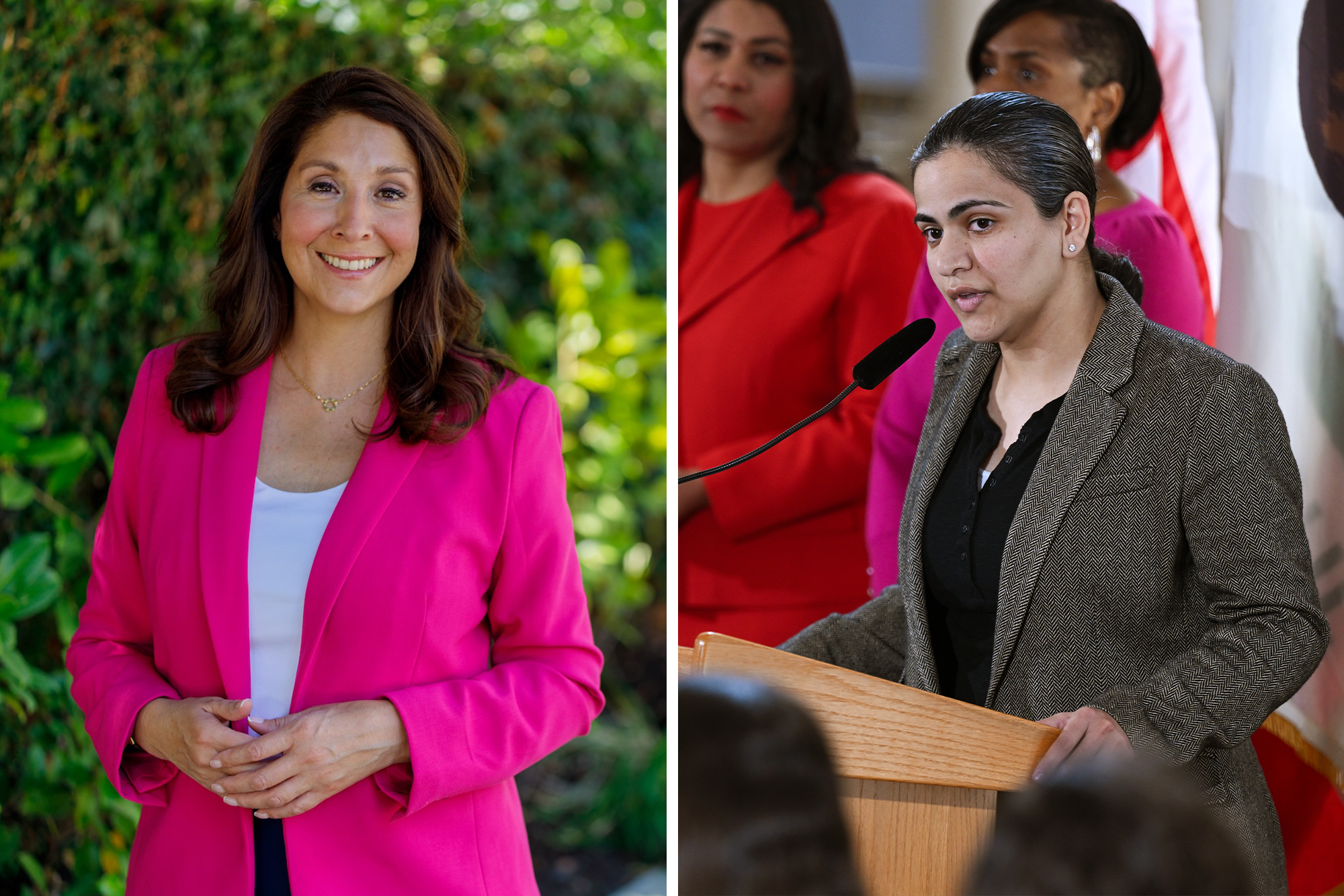
"caption": "BART board director Melissa Hernandez (left) and state Sen. Aisha Wahab (right) are facing off in a special election to fill the House seat vacated by Eric Swalwell.",
"credit": "Courtesy of Melissa Hernandez; Tayfun Coskun/Anadolu Agency via Getty Images",
"altTag": null,
"description": null,
"imgSizes": {
"thumbnail": {
"file": "https://cdn.kqed.org/wp-content/uploads/sites/10/2026/08/260818-Hernandez-Wahab-MD-01-KQED-160x107.jpg",
"width": 160,
"height": 107,
"mimeType": "image/jpeg"
},
"1536x1536": {
"file": "https://cdn.kqed.org/wp-content/uploads/sites/10/2026/08/260818-Hernandez-Wahab-MD-01-KQED-1536x1025.jpg",
"width": 1536,
"height": 1025,
"mimeType": "image/jpeg"
},
"post-thumbnail": {
"file": "https://cdn.kqed.org/wp-content/uploads/sites/10/2026/08/260818-Hernandez-Wahab-MD-01-KQED-672x372.jpg",
"width": 672,
"height": 372,
"mimeType": "image/jpeg"
},
"twentyfourteen-full-width": {
"file": "https://cdn.kqed.org/wp-content/uploads/sites/10/2026/08/260818-Hernandez-Wahab-MD-01-KQED-1038x576.jpg",
"width": 1038,
"height": 576,
"mimeType": "image/jpeg"
},
"npr-cds-wide": {
"file": "https://cdn.kqed.org/wp-content/uploads/sites/10/2026/08/260818-Hernandez-Wahab-MD-01-KQED-1200x675.jpg",
"width": 1200,
"height": 675,
"mimeType": "image/jpeg"
},
"npr-cds-square": {
"file": "https://cdn.kqed.org/wp-content/uploads/sites/10/2026/08/260818-Hernandez-Wahab-MD-01-KQED-600x600.jpg",
"width": 600,
"height": 600,
"mimeType": "image/jpeg"
},
"kqedFullSize": {
"file": "https://cdn.kqed.org/wp-content/uploads/sites/10/2026/08/260818-Hernandez-Wahab-MD-01-KQED.jpg",
"width": 2000,
"height": 1334
}
},
"isLoading": false,
"fetchFailed": false
},
"news_12095619": {
"type": "attachments",
"id": "news_12095619",
"meta": {
"index": "attachments_1716263798",
"site": "news",
"id": "12095619",
"found": true
},
"title": "003_KQED_SanFrancisco_Muni_04062020_qed",
"publishDate": 1787001340,
"status": "inherit",
"parent": 12095616,
"modified": 1787001353,
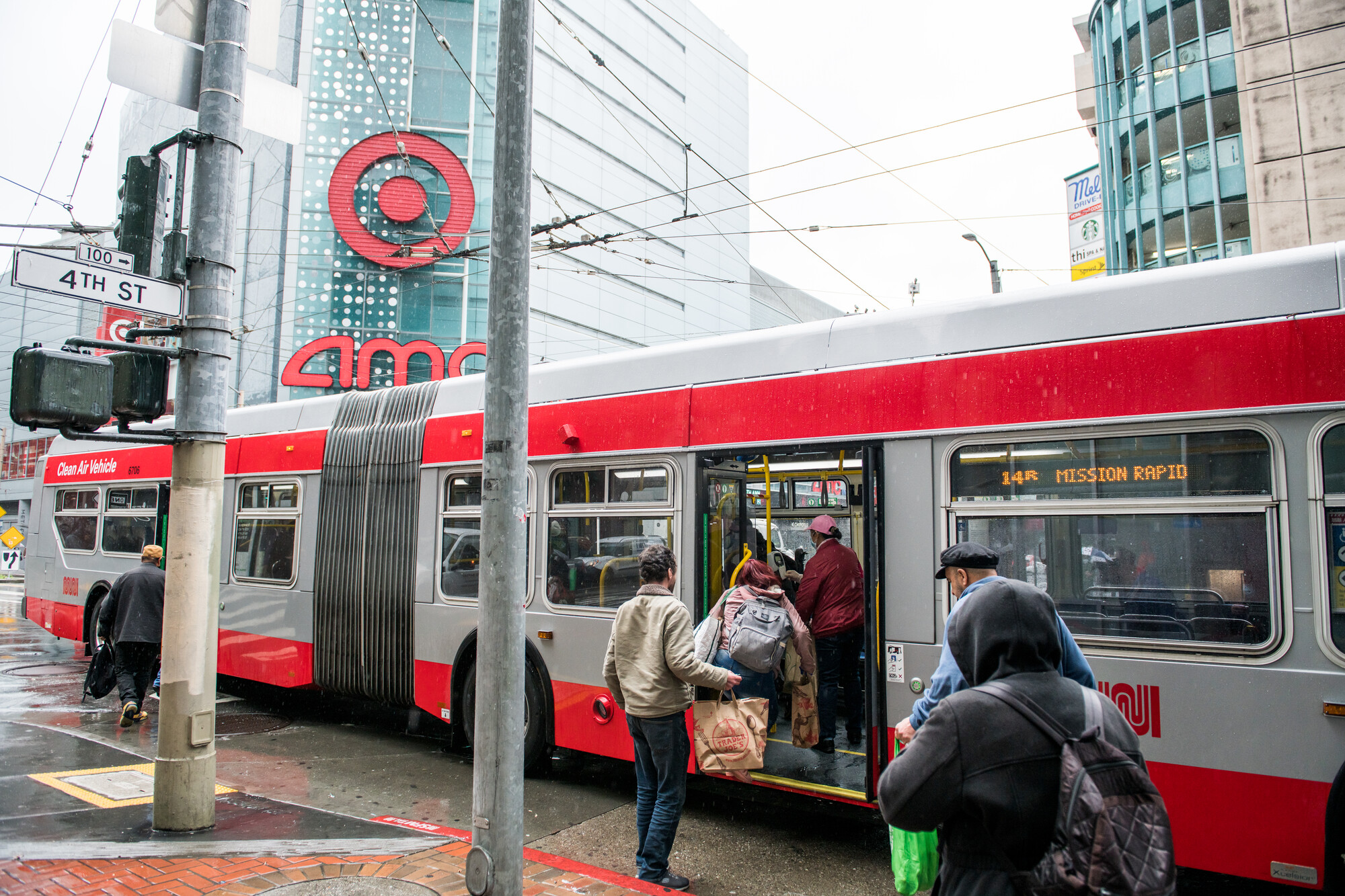
"caption": "Passengers board the 14R-Mission on 4th and Mission Streets in San Francisco on April 6, 2020.",
"credit": "Beth LaBerge/KQED",
"altTag": null,
"description": null,
"imgSizes": {
"thumbnail": {
"file": "https://cdn.kqed.org/wp-content/uploads/sites/10/2026/08/003_KQED_SanFrancisco_Muni_04062020_qed-160x107.jpg",
"width": 160,
"height": 107,
"mimeType": "image/jpeg"
},
"1536x1536": {
"file": "https://cdn.kqed.org/wp-content/uploads/sites/10/2026/08/003_KQED_SanFrancisco_Muni_04062020_qed-1536x1024.jpg",
"width": 1536,
"height": 1024,
"mimeType": "image/jpeg"
},
"post-thumbnail": {
"file": "https://cdn.kqed.org/wp-content/uploads/sites/10/2026/08/003_KQED_SanFrancisco_Muni_04062020_qed-672x372.jpg",
"width": 672,
"height": 372,
"mimeType": "image/jpeg"
},
"twentyfourteen-full-width": {
"file": "https://cdn.kqed.org/wp-content/uploads/sites/10/2026/08/003_KQED_SanFrancisco_Muni_04062020_qed-1038x576.jpg",
"width": 1038,
"height": 576,
"mimeType": "image/jpeg"
},
"npr-cds-wide": {
"file": "https://cdn.kqed.org/wp-content/uploads/sites/10/2026/08/003_KQED_SanFrancisco_Muni_04062020_qed-1200x675.jpg",
"width": 1200,
"height": 675,
"mimeType": "image/jpeg"
},
"npr-cds-square": {
"file": "https://cdn.kqed.org/wp-content/uploads/sites/10/2026/08/003_KQED_SanFrancisco_Muni_04062020_qed-600x600.jpg",
"width": 600,
"height": 600,
"mimeType": "image/jpeg"
},
"kqedFullSize": {
"file": "https://cdn.kqed.org/wp-content/uploads/sites/10/2026/08/003_KQED_SanFrancisco_Muni_04062020_qed.jpg",
"width": 2000,
"height": 1333
}
},
"isLoading": false,
"fetchFailed": false
},
"news_12091833": {
"type": "attachments",
"id": "news_12091833",
"meta": {
"index": "attachments_1716263798",
"site": "news",
"id": "12091833",
"found": true
},
"title": "20260717_FOODBANKSUPDATE_GC-15-KQED",
"publishDate": 1784566264,
"status": "inherit",
"parent": 0,
"modified": 1787005609,
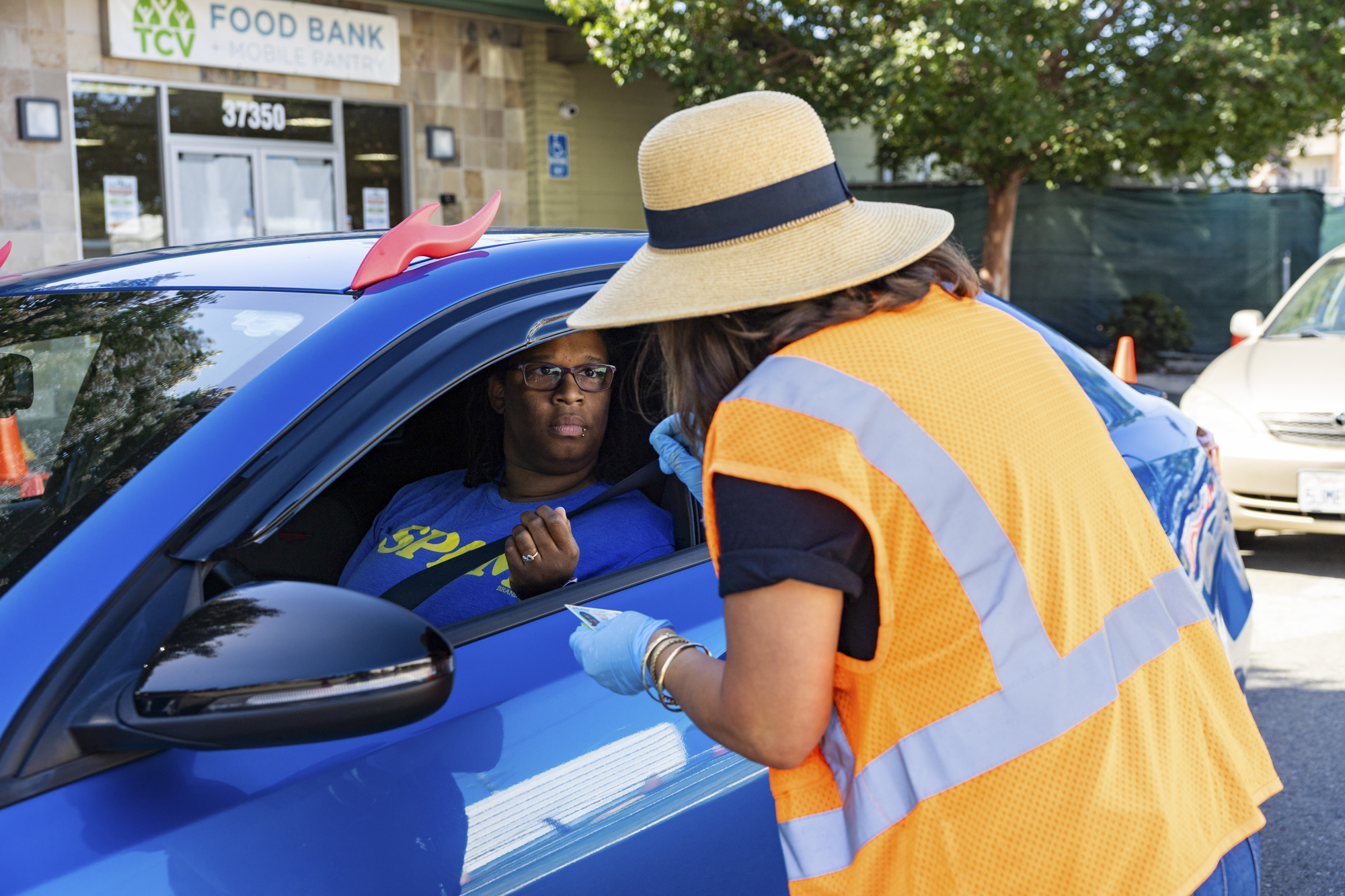
"caption": "Ladonna Johnson receives assistance during a drive-through food distribution at Tri-City Volunteers Food Bank & Mobile Pantry’s main hub in Fremont on July 17, 2026.",
"credit": "Gina Castro for KQED",
"altTag": null,
"description": null,
"imgSizes": {
"thumbnail": {
"file": "https://cdn.kqed.org/wp-content/uploads/sites/10/2026/07/20260717_FOODBANKSUPDATE_GC-15-KQED-160x107.jpg",
"width": 160,
"height": 107,
"mimeType": "image/jpeg"
},
"1536x1536": {
"file": "https://cdn.kqed.org/wp-content/uploads/sites/10/2026/07/20260717_FOODBANKSUPDATE_GC-15-KQED-1536x1024.jpg",
"width": 1536,
"height": 1024,
"mimeType": "image/jpeg"
},
"post-thumbnail": {
"file": "https://cdn.kqed.org/wp-content/uploads/sites/10/2026/07/20260717_FOODBANKSUPDATE_GC-15-KQED-672x372.jpg",
"width": 672,
"height": 372,
"mimeType": "image/jpeg"
},
"twentyfourteen-full-width": {
"file": "https://cdn.kqed.org/wp-content/uploads/sites/10/2026/07/20260717_FOODBANKSUPDATE_GC-15-KQED-1038x576.jpg",
"width": 1038,
"height": 576,
"mimeType": "image/jpeg"
},
"npr-cds-wide": {
"file": "https://cdn.kqed.org/wp-content/uploads/sites/10/2026/07/20260717_FOODBANKSUPDATE_GC-15-KQED-1200x675.jpg",
"width": 1200,
"height": 675,
"mimeType": "image/jpeg"
},
"npr-cds-square": {
"file": "https://cdn.kqed.org/wp-content/uploads/sites/10/2026/07/20260717_FOODBANKSUPDATE_GC-15-KQED-600x600.jpg",
"width": 600,
"height": 600,
"mimeType": "image/jpeg"
},
"kqedFullSize": {
"file": "https://cdn.kqed.org/wp-content/uploads/sites/10/2026/07/20260717_FOODBANKSUPDATE_GC-15-KQED.jpg",
"width": 2000,
"height": 1333
}
},
"isLoading": false,
"fetchFailed": false
},
"news_12095602": {
"type": "attachments",
"id": "news_12095602",
"meta": {
"index": "attachments_1716263798",
"site": "news",
"id": "12095602",
"found": true
},
"title": "Trump",
"publishDate": 1786996709,
"status": "inherit",
"parent": 12095601,
"modified": 1786996752,
"caption": "President Donald Trump speaks as he meets with lifeguard Ryder Williams in the Oval Office of the White House, Monday, Aug. 17, 2026, in Washington. ",
"credit": "Manuel Balce Ceneta/AP Photo",
"altTag": null,
"description": null,
"imgSizes": {
"medium": {
"file": "https://cdn.kqed.org/wp-content/uploads/sites/10/2026/08/AP26229648494874-2000x1333.jpg",
"width": 2000,
"height": 1333,
"mimeType": "image/jpeg"
},
"large": {
"file": "https://cdn.kqed.org/wp-content/uploads/sites/10/2026/08/AP26229648494874-2000x1333.jpg",
"width": 2000,
"height": 1333,
"mimeType": "image/jpeg"
},
"thumbnail": {
"file": "https://cdn.kqed.org/wp-content/uploads/sites/10/2026/08/AP26229648494874-160x107.jpg",
"width": 160,
"height": 107,
"mimeType": "image/jpeg"
},
"1536x1536": {
"file": "https://cdn.kqed.org/wp-content/uploads/sites/10/2026/08/AP26229648494874-1536x1024.jpg",
"width": 1536,
"height": 1024,
"mimeType": "image/jpeg"
},
"2048x2048": {
"file": "https://cdn.kqed.org/wp-content/uploads/sites/10/2026/08/AP26229648494874-2048x1365.jpg",
"width": 2048,
"height": 1365,
"mimeType": "image/jpeg"
},
"post-thumbnail": {
"file": "https://cdn.kqed.org/wp-content/uploads/sites/10/2026/08/AP26229648494874-672x372.jpg",
"width": 672,
"height": 372,
"mimeType": "image/jpeg"
},
"twentyfourteen-full-width": {
"file": "https://cdn.kqed.org/wp-content/uploads/sites/10/2026/08/AP26229648494874-1038x576.jpg",
"width": 1038,
"height": 576,
"mimeType": "image/jpeg"
},
"full-width": {
"file": "https://cdn.kqed.org/wp-content/uploads/sites/10/2026/08/AP26229648494874-2000x1333.jpg",
"width": 2000,
"height": 1333,
"mimeType": "image/jpeg"
},
"npr-cds-wide": {
"file": "https://cdn.kqed.org/wp-content/uploads/sites/10/2026/08/AP26229648494874-1200x675.jpg",
"width": 1200,
"height": 675,
"mimeType": "image/jpeg"
},
"npr-cds-square": {
"file": "https://cdn.kqed.org/wp-content/uploads/sites/10/2026/08/AP26229648494874-600x600.jpg",
"width": 600,
"height": 600,
"mimeType": "image/jpeg"
},
"kqedFullSize": {
"file": "https://cdn.kqed.org/wp-content/uploads/sites/10/2026/08/AP26229648494874-scaled.jpg",
"width": 2560,
"height": 1707
}
},
"isLoading": false,
"fetchFailed": false
},
"news_12095558": {
"type": "attachments",
"id": "news_12095558",
"meta": {
"index": "attachments_1716263798",
"site": "news",
"id": "12095558",
"found": true
},
"title": "081726-SFUSDFIRSTDAY-02-MC-KQED",
"publishDate": 1786991448,
"status": "inherit",
"parent": 0,
"modified": 1786991564,
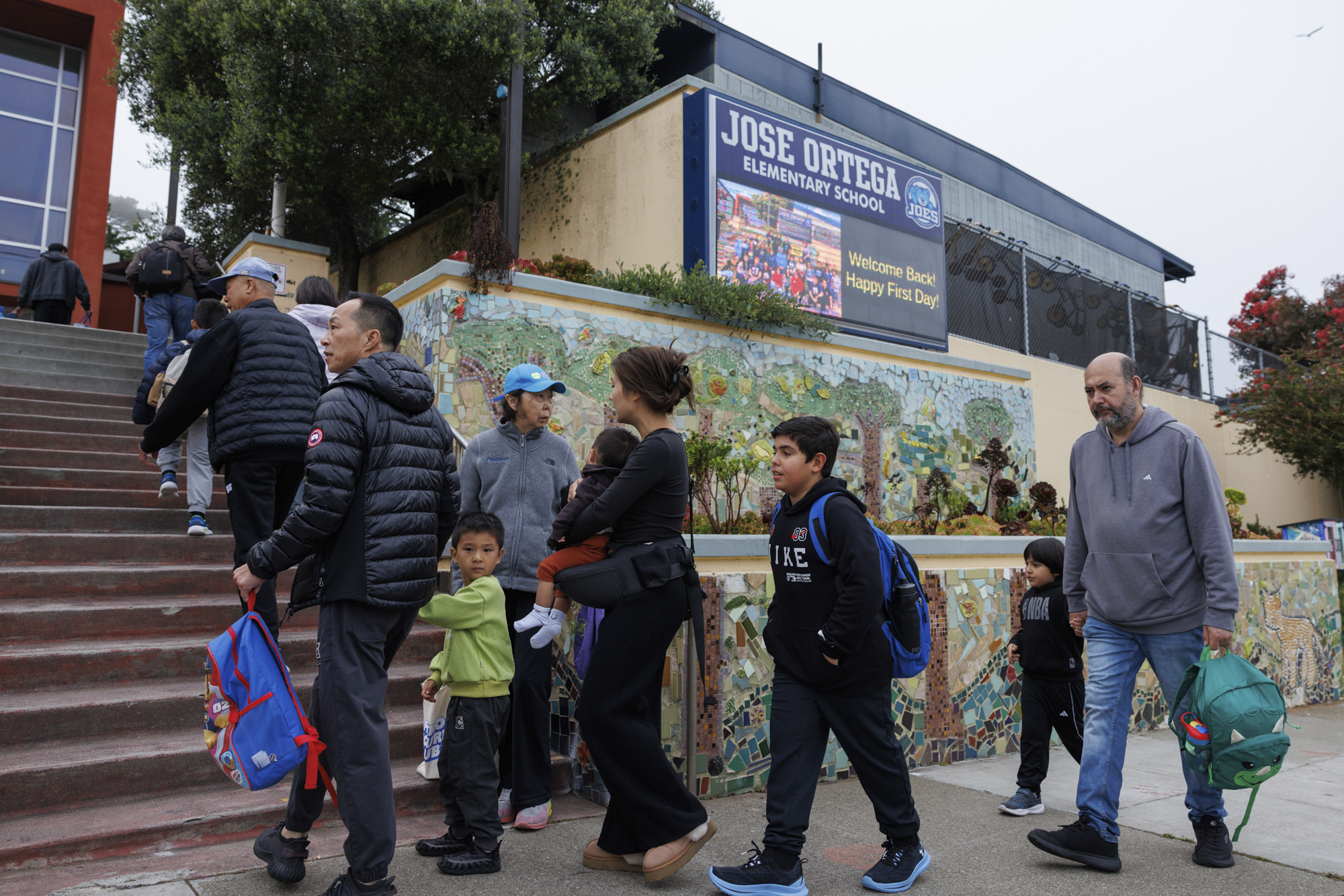
"caption": "Students arrive at Jose Ortega Elementary School for the first day of their school year on August 17, 2026, in San Francisco.",
"credit": "Miles Cull/KQED",
"altTag": null,
"description": null,
"imgSizes": {
"thumbnail": {
"file": "https://cdn.kqed.org/wp-content/uploads/sites/10/2026/08/081726-SFUSDFIRSTDAY-02-MC-KQED-160x107.jpg",
"width": 160,
"height": 107,
"mimeType": "image/jpeg"
},
"1536x1536": {
"file": "https://cdn.kqed.org/wp-content/uploads/sites/10/2026/08/081726-SFUSDFIRSTDAY-02-MC-KQED-1536x1025.jpg",
"width": 1536,
"height": 1025,
"mimeType": "image/jpeg"
},
"post-thumbnail": {
"file": "https://cdn.kqed.org/wp-content/uploads/sites/10/2026/08/081726-SFUSDFIRSTDAY-02-MC-KQED-672x372.jpg",
"width": 672,
"height": 372,
"mimeType": "image/jpeg"
},
"twentyfourteen-full-width": {
"file": "https://cdn.kqed.org/wp-content/uploads/sites/10/2026/08/081726-SFUSDFIRSTDAY-02-MC-KQED-1038x576.jpg",
"width": 1038,
"height": 576,
"mimeType": "image/jpeg"
},
"npr-cds-wide": {
"file": "https://cdn.kqed.org/wp-content/uploads/sites/10/2026/08/081726-SFUSDFIRSTDAY-02-MC-KQED-1200x675.jpg",
"width": 1200,
"height": 675,
"mimeType": "image/jpeg"
},
"npr-cds-square": {
"file": "https://cdn.kqed.org/wp-content/uploads/sites/10/2026/08/081726-SFUSDFIRSTDAY-02-MC-KQED-600x600.jpg",
"width": 600,
"height": 600,
"mimeType": "image/jpeg"
},
"kqedFullSize": {
"file": "https://cdn.kqed.org/wp-content/uploads/sites/10/2026/08/081726-SFUSDFIRSTDAY-02-MC-KQED.jpg",
"width": 2000,
"height": 1334
}
},
"isLoading": false,
"fetchFailed": false
},
"news_12095016": {
"type": "attachments",
"id": "news_12095016",
"meta": {
"index": "attachments_1716263798",
"site": "news",
"id": "12095016",
"found": true
},
"title": "The Alfred Zampa Memorial Bridge is seen from Vallejo on Aug. 12, 2026.",
"publishDate": 1786565884,
"status": "inherit",
"parent": 0,
"modified": 1786565920,
"caption": "The Alfred Zampa Memorial Bridge is seen from Vallejo on Aug. 12, 2026.",
"credit": "Nina Glick/KQED",
"altTag": null,
"description": null,
"imgSizes": {
"thumbnail": {
"file": "https://cdn.kqed.org/wp-content/uploads/sites/10/2026/08/260812-CarquinezBridgeClosure-NG-25-160x107.jpg",
"width": 160,
"height": 107,
"mimeType": "image/jpeg"
},
"1536x1536": {
"file": "https://cdn.kqed.org/wp-content/uploads/sites/10/2026/08/260812-CarquinezBridgeClosure-NG-25-1536x1024.jpg",
"width": 1536,
"height": 1024,
"mimeType": "image/jpeg"
},
"post-thumbnail": {
"file": "https://cdn.kqed.org/wp-content/uploads/sites/10/2026/08/260812-CarquinezBridgeClosure-NG-25-672x372.jpg",
"width": 672,
"height": 372,
"mimeType": "image/jpeg"
},
"twentyfourteen-full-width": {
"file": "https://cdn.kqed.org/wp-content/uploads/sites/10/2026/08/260812-CarquinezBridgeClosure-NG-25-1038x576.jpg",
"width": 1038,
"height": 576,
"mimeType": "image/jpeg"
},
"npr-cds-wide": {
"file": "https://cdn.kqed.org/wp-content/uploads/sites/10/2026/08/260812-CarquinezBridgeClosure-NG-25-1200x675.jpg",
"width": 1200,
"height": 675,
"mimeType": "image/jpeg"
},
"npr-cds-square": {
"file": "https://cdn.kqed.org/wp-content/uploads/sites/10/2026/08/260812-CarquinezBridgeClosure-NG-25-600x600.jpg",
"width": 600,
"height": 600,
"mimeType": "image/jpeg"
},
"kqedFullSize": {
"file": "https://cdn.kqed.org/wp-content/uploads/sites/10/2026/08/260812-CarquinezBridgeClosure-NG-25.jpg",
"width": 1999,
"height": 1333
}
},
"isLoading": false,
"fetchFailed": false
},
"news_11737625": {
"type": "attachments",
"id": "news_11737625",
"meta": {
"index": "attachments_1716263798",
"site": "news",
"id": "11737625",
"found": true
},
"parent": 11737575,
"imgSizes": {
"post-thumbnail": {
"file": "https://ww2.kqed.org/app/uploads/sites/10/2019/04/1110181710a_HDR-672x372.jpg",
"width": 672,
"mimeType": "image/jpeg",
"height": 372
},
"kqedFullSize": {
"file": "https://ww2.kqed.org/app/uploads/sites/10/2019/04/1110181710a_HDR.jpg",
"width": 2048,
"height": 1152
},
"guest-author-50": {
"file": "https://ww2.kqed.org/app/uploads/sites/10/2019/04/1110181710a_HDR-50x50.jpg",
"width": 50,
"mimeType": "image/jpeg",
"height": 50
},
"guest-author-96": {
"file": "https://ww2.kqed.org/app/uploads/sites/10/2019/04/1110181710a_HDR-96x96.jpg",
"width": 96,
"mimeType": "image/jpeg",
"height": 96
},
"apple_news_ca_portrait_12_9": {
"file": "https://ww2.kqed.org/app/uploads/sites/10/2019/04/1110181710a_HDR-1122x1496.jpg",
"width": 1122,
"mimeType": "image/jpeg",
"height": 1496
},
"medium": {
"file": "https://ww2.kqed.org/app/uploads/sites/10/2019/04/1110181710a_HDR-800x450.jpg",
"width": 800,
"mimeType": "image/jpeg",
"height": 450
},
"guest-author-32": {
"file": "https://ww2.kqed.org/app/uploads/sites/10/2019/04/1110181710a_HDR-32x32.jpg",
"width": 32,
"mimeType": "image/jpeg",
"height": 32
},
"apple_news_ca_portrait_9_7": {
"file": "https://ww2.kqed.org/app/uploads/sites/10/2019/04/1110181710a_HDR-840x1120.jpg",
"width": 840,
"mimeType": "image/jpeg",
"height": 1120
},
"apple_news_ca_square_9_7": {
"file": "https://ww2.kqed.org/app/uploads/sites/10/2019/04/1110181710a_HDR-1104x1104.jpg",
"width": 1104,
"mimeType": "image/jpeg",
"height": 1104
},
"apple_news_ca_portrait_4_7": {
"file": "https://ww2.kqed.org/app/uploads/sites/10/2019/04/1110181710a_HDR-414x552.jpg",
"width": 414,
"mimeType": "image/jpeg",
"height": 552
},
"apple_news_ca_square_12_9": {
"file": "https://ww2.kqed.org/app/uploads/sites/10/2019/04/1110181710a_HDR-1472x1472.jpg",
"width": 1472,
"mimeType": "image/jpeg",
"height": 1472
},
"apple_news_ca_portrait_5_5": {
"file": "https://ww2.kqed.org/app/uploads/sites/10/2019/04/1110181710a_HDR-687x916.jpg",
"width": 687,
"mimeType": "image/jpeg",
"height": 916
},
"apple_news_ca_square_4_7": {
"file": "https://ww2.kqed.org/app/uploads/sites/10/2019/04/1110181710a_HDR-550x550.jpg",
"width": 550,
"mimeType": "image/jpeg",
"height": 550
},
"apple_news_ca_square_5_5": {
"file": "https://ww2.kqed.org/app/uploads/sites/10/2019/04/1110181710a_HDR-912x912.jpg",
"width": 912,
"mimeType": "image/jpeg",
"height": 912
},
"apple_news_ca_landscape_5_5": {
"file": "https://ww2.kqed.org/app/uploads/sites/10/2019/04/1110181710a_HDR-1044x783.jpg",
"width": 1044,
"mimeType": "image/jpeg",
"height": 783
},
"apple_news_ca_square_4_0": {
"file": "https://ww2.kqed.org/app/uploads/sites/10/2019/04/1110181710a_HDR-470x470.jpg",
"width": 470,
"mimeType": "image/jpeg",
"height": 470
},
"twentyfourteen-full-width": {
"file": "https://ww2.kqed.org/app/uploads/sites/10/2019/04/1110181710a_HDR-1038x576.jpg",
"width": 1038,
"mimeType": "image/jpeg",
"height": 576
},
"thumbnail": {
"file": "https://ww2.kqed.org/app/uploads/sites/10/2019/04/1110181710a_HDR-160x90.jpg",
"width": 160,
"mimeType": "image/jpeg",
"height": 90
},
"apple_news_ca_landscape_4_7": {
"file": "https://ww2.kqed.org/app/uploads/sites/10/2019/04/1110181710a_HDR-632x474.jpg",
"width": 632,
"mimeType": "image/jpeg",
"height": 474
},
"large": {
"file": "https://ww2.kqed.org/app/uploads/sites/10/2019/04/1110181710a_HDR-1020x574.jpg",
"width": 1020,
"mimeType": "image/jpeg",
"height": 574
},
"complete_open_graph": {
"file": "https://ww2.kqed.org/app/uploads/sites/10/2019/04/1110181710a_HDR-1200x675.jpg",
"width": 1200,
"mimeType": "image/jpeg",
"height": 675
},
"apple_news_ca_landscape_4_0": {
"file": "https://ww2.kqed.org/app/uploads/sites/10/2019/04/1110181710a_HDR-536x402.jpg",
"width": 536,
"mimeType": "image/jpeg",
"height": 402
},
"guest-author-64": {
"file": "https://ww2.kqed.org/app/uploads/sites/10/2019/04/1110181710a_HDR-64x64.jpg",
"width": 64,
"mimeType": "image/jpeg",
"height": 64
},
"apple_news_ca_portrait_4_0": {
"file": "https://ww2.kqed.org/app/uploads/sites/10/2019/04/1110181710a_HDR-354x472.jpg",
"width": 354,
"mimeType": "image/jpeg",
"height": 472
},
"apple_news_ca_landscape_12_9": {
"file": "https://ww2.kqed.org/app/uploads/sites/10/2019/04/1110181710a_HDR-1832x1374.jpg",
"width": 1832,
"mimeType": "image/jpeg",
"height": 1374
},
"full-width": {
"file": "https://ww2.kqed.org/app/uploads/sites/10/2019/04/1110181710a_HDR-1920x1080.jpg",
"width": 1920,
"mimeType": "image/jpeg",
"height": 1080
},
"guest-author-128": {
"file": "https://ww2.kqed.org/app/uploads/sites/10/2019/04/1110181710a_HDR-128x128.jpg",
"width": 128,
"mimeType": "image/jpeg",
"height": 128
},
"apple_news_ca_landscape_9_7": {
"file": "https://ww2.kqed.org/app/uploads/sites/10/2019/04/1110181710a_HDR-1376x1032.jpg",
"width": 1376,
"mimeType": "image/jpeg",
"height": 1032
}
},
"publishDate": 1554329382,
"modified": 1554329437,
"caption": "Oakland librarian, Dorothy Lazard, points out Oakland's various annexations.",
"description": "Oakland librarian, Dorothy Lazard, points out Oakland's various annexations.",
"title": "1110181710a_HDR",
"credit": "Chris Hambrick/KQED",
"status": "inherit",
"isLoading": false,
"fetchFailed": false
},
"news_11905961": {
"type": "attachments",
"id": "news_11905961",
"meta": {
"index": "attachments_1716263798",
"site": "news",
"id": "11905961",
"found": true
},
"parent": 11905959,
"imgSizes": {
"twentyfourteen-full-width": {
"file": "https://ww2.kqed.org/app/uploads/sites/10/2022/02/RS53816_GettyImages-1366036344-qut-1038x576.jpg",
"width": 1038,
"mimeType": "image/jpeg",
"height": 576
},
"thumbnail": {
"file": "https://ww2.kqed.org/app/uploads/sites/10/2022/02/RS53816_GettyImages-1366036344-qut-160x107.jpg",
"width": 160,
"mimeType": "image/jpeg",
"height": 107
},
"post-thumbnail": {
"file": "https://ww2.kqed.org/app/uploads/sites/10/2022/02/RS53816_GettyImages-1366036344-qut-672x372.jpg",
"width": 672,
"mimeType": "image/jpeg",
"height": 372
},
"kqedFullSize": {
"file": "https://ww2.kqed.org/app/uploads/sites/10/2022/02/RS53816_GettyImages-1366036344-qut.jpg",
"width": 1920,
"height": 1278
},
"large": {
"file": "https://ww2.kqed.org/app/uploads/sites/10/2022/02/RS53816_GettyImages-1366036344-qut-1020x679.jpg",
"width": 1020,
"mimeType": "image/jpeg",
"height": 679
},
"1536x1536": {
"file": "https://ww2.kqed.org/app/uploads/sites/10/2022/02/RS53816_GettyImages-1366036344-qut-1536x1022.jpg",
"width": 1536,
"mimeType": "image/jpeg",
"height": 1022
},
"medium": {
"file": "https://ww2.kqed.org/app/uploads/sites/10/2022/02/RS53816_GettyImages-1366036344-qut-800x533.jpg",
"width": 800,
"mimeType": "image/jpeg",
"height": 533
}
},
"publishDate": 1645396337,
"modified": 1645559777,
"caption": "An Afghan woman begs for money from passing cars in the snow, with her child at her feet, on the Kabul road south to Pul-e Alam, Afghanistan, on Jan. 17, 2022. The UN World Food Programme warns that 98% of Afghans are not getting enough to eat, due to a severe drought, the onset of winter, the collapse of the economy and the freezing of Afghan and donor funds after the Taliban takeover of the country in August 2021. The UN has made an emergency appeal for $5 billion to feed the hungry and forestall further economic collapse.",
"description": null,
"title": "Afghans Face Looming Humanitarian Disaster",
"credit": "Scott Peterson/Getty Images",
"status": "inherit",
"altTag": "A woman begs for money from passing cars as a child sits beside her in the snow.",
"isLoading": false,
"fetchFailed": false
},
"news_11992169": {
"type": "attachments",
"id": "news_11992169",
"meta": {
"index": "attachments_1716263798",
"site": "news",
"id": "11992169",
"found": true
},
"title": "SFChronicleVirusDaily",
"publishDate": 1719445125,
"status": "inherit",
"parent": 11992073,
"modified": 1786748730,
"caption": "A California Waste Solutions worker empties recycling bins in the Rockridge neighborhood on April 22, 2020, in Oakland, California. A campaign finance investigation into the city’s curbside recycling contractor has received renewed attention since the FBI raids.",
"credit": "Yalonda M. James/The San Francisco Chronicle via Getty Images",
"altTag": null,
"description": null,
"imgSizes": {
"medium": {
"file": "https://cdn.kqed.org/wp-content/uploads/sites/10/2024/06/CalWasteSolutionsWorker01-800x533.jpg",
"width": 800,
"height": 533,
"mimeType": "image/jpeg"
},
"large": {
"file": "https://cdn.kqed.org/wp-content/uploads/sites/10/2024/06/CalWasteSolutionsWorker01-1020x680.jpg",
"width": 1020,
"height": 680,
"mimeType": "image/jpeg"
},
"thumbnail": {
"file": "https://cdn.kqed.org/wp-content/uploads/sites/10/2024/06/CalWasteSolutionsWorker01-160x107.jpg",
"width": 160,
"height": 107,
"mimeType": "image/jpeg"
},
"1536x1536": {
"file": "https://cdn.kqed.org/wp-content/uploads/sites/10/2024/06/CalWasteSolutionsWorker01-1536x1024.jpg",
"width": 1536,
"height": 1024,
"mimeType": "image/jpeg"
},
"post-thumbnail": {
"file": "https://cdn.kqed.org/wp-content/uploads/sites/10/2024/06/CalWasteSolutionsWorker01-672x372.jpg",
"width": 672,
"height": 372,
"mimeType": "image/jpeg"
},
"twentyfourteen-full-width": {
"file": "https://cdn.kqed.org/wp-content/uploads/sites/10/2024/06/CalWasteSolutionsWorker01-1038x576.jpg",
"width": 1038,
"height": 576,
"mimeType": "image/jpeg"
},
"kqedFullSize": {
"file": "https://cdn.kqed.org/wp-content/uploads/sites/10/2024/06/CalWasteSolutionsWorker01.jpg",
"width": 1920,
"height": 1280
}
},
"isLoading": false,
"fetchFailed": false
},
"news_12095279": {
"type": "attachments",
"id": "news_12095279",
"meta": {
"index": "attachments_1716263798",
"site": "news",
"id": "12095279",
"found": true
},
"title": "260709-FYP-CraftNight-01-BL",
"publishDate": 1786665190,
"status": "inherit",
"parent": 12095250,
"modified": 1786665203,
"caption": "Participants make crafts at an event hosted by Jenny and Cabbage at Alameda Brewing in Alameda on July 9, 2026.",
"credit": "Beth LaBerge/KQED",
"altTag": null,
"description": null,
"imgSizes": {
"thumbnail": {
"file": "https://cdn.kqed.org/wp-content/uploads/sites/10/2026/08/260709-FYP-CraftNight-01-BL-160x107.jpg",
"width": 160,
"height": 107,
"mimeType": "image/jpeg"
},
"1536x1536": {
"file": "https://cdn.kqed.org/wp-content/uploads/sites/10/2026/08/260709-FYP-CraftNight-01-BL-1536x1024.jpg",
"width": 1536,
"height": 1024,
"mimeType": "image/jpeg"
},
"post-thumbnail": {
"file": "https://cdn.kqed.org/wp-content/uploads/sites/10/2026/08/260709-FYP-CraftNight-01-BL-672x372.jpg",
"width": 672,
"height": 372,
"mimeType": "image/jpeg"
},
"twentyfourteen-full-width": {
"file": "https://cdn.kqed.org/wp-content/uploads/sites/10/2026/08/260709-FYP-CraftNight-01-BL-1038x576.jpg",
"width": 1038,
"height": 576,
"mimeType": "image/jpeg"
},
"npr-cds-wide": {
"file": "https://cdn.kqed.org/wp-content/uploads/sites/10/2026/08/260709-FYP-CraftNight-01-BL-1200x675.jpg",
"width": 1200,
"height": 675,
"mimeType": "image/jpeg"
},
"npr-cds-square": {
"file": "https://cdn.kqed.org/wp-content/uploads/sites/10/2026/08/260709-FYP-CraftNight-01-BL-600x600.jpg",
"width": 600,
"height": 600,
"mimeType": "image/jpeg"
},
"kqedFullSize": {
"file": "https://cdn.kqed.org/wp-content/uploads/sites/10/2026/08/260709-FYP-CraftNight-01-BL.jpg",
"width": 2000,
"height": 1333
}
},
"isLoading": false,
"fetchFailed": false
},
"news_12015187": {
"type": "attachments",
"id": "news_12015187",
"meta": {
"index": "attachments_1716263798",
"site": "news",
"id": "12015187",
"found": true
},
"title": "241120-StormHitsBayArea-14-BL",
"publishDate": 1732142133,
"status": "inherit",
"parent": 0,
"modified": 1786661582,
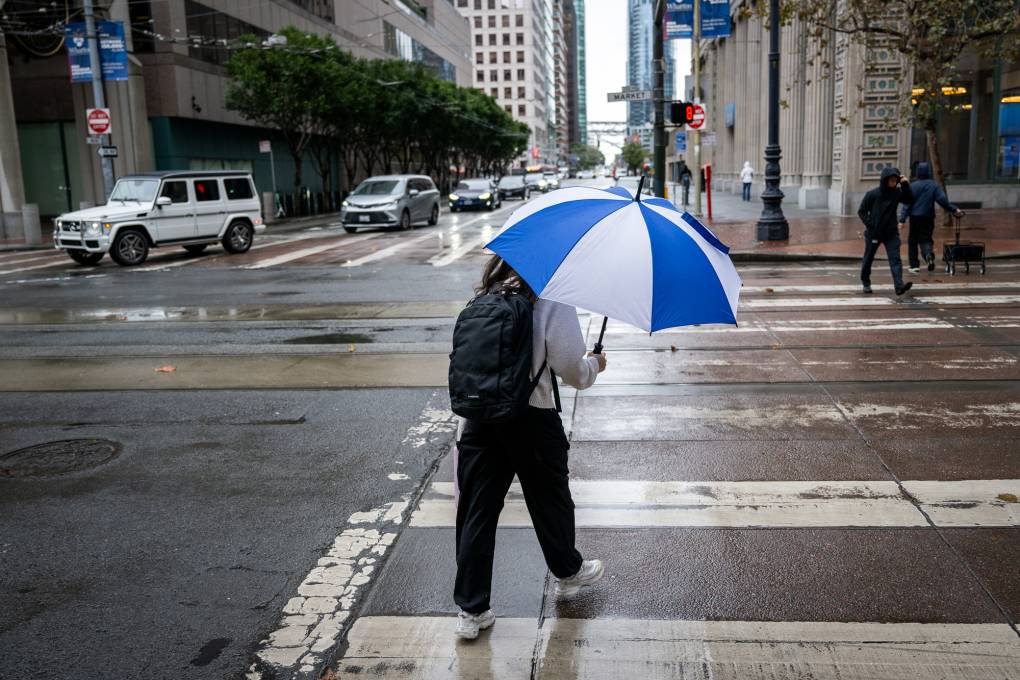
"caption": "A person with an umbrella crosses Market Street in San Francisco on Nov. 20, 2024.",
"credit": "Beth LaBerge/KQED",
"altTag": null,
"description": null,
"imgSizes": {
"medium": {
"file": "https://cdn.kqed.org/wp-content/uploads/sites/10/2024/11/241120-StormHitsBayArea-14-BL-800x533.jpg",
"width": 800,
"height": 533,
"mimeType": "image/jpeg"
},
"large": {
"file": "https://cdn.kqed.org/wp-content/uploads/sites/10/2024/11/241120-StormHitsBayArea-14-BL-1020x680.jpg",
"width": 1020,
"height": 680,
"mimeType": "image/jpeg"
},
"thumbnail": {
"file": "https://cdn.kqed.org/wp-content/uploads/sites/10/2024/11/241120-StormHitsBayArea-14-BL-160x107.jpg",
"width": 160,
"height": 107,
"mimeType": "image/jpeg"
},
"1536x1536": {
"file": "https://cdn.kqed.org/wp-content/uploads/sites/10/2024/11/241120-StormHitsBayArea-14-BL-1536x1024.jpg",
"width": 1536,
"height": 1024,
"mimeType": "image/jpeg"
},
"post-thumbnail": {
"file": "https://cdn.kqed.org/wp-content/uploads/sites/10/2024/11/241120-StormHitsBayArea-14-BL-672x372.jpg",
"width": 672,
"height": 372,
"mimeType": "image/jpeg"
},
"twentyfourteen-full-width": {
"file": "https://cdn.kqed.org/wp-content/uploads/sites/10/2024/11/241120-StormHitsBayArea-14-BL-1038x576.jpg",
"width": 1038,
"height": 576,
"mimeType": "image/jpeg"
},
"full-width": {
"file": "https://cdn.kqed.org/wp-content/uploads/sites/10/2024/11/241120-StormHitsBayArea-14-BL-1920x1280.jpg",
"width": 1920,
"height": 1280,
"mimeType": "image/jpeg"
},
"kqedFullSize": {
"file": "https://cdn.kqed.org/wp-content/uploads/sites/10/2024/11/241120-StormHitsBayArea-14-BL.jpg",
"width": 2000,
"height": 1333
}
},
"isLoading": false,
"fetchFailed": false
},
"news_12095098": {
"type": "attachments",
"id": "news_12095098",
"meta": {
"index": "attachments_1716263798",
"site": "news",
"id": "12095098",
"found": true
},
"title": "260813-Earthquake-01",
"publishDate": 1786638902,
"status": "inherit",
"parent": 0,
"modified": 1786642754,
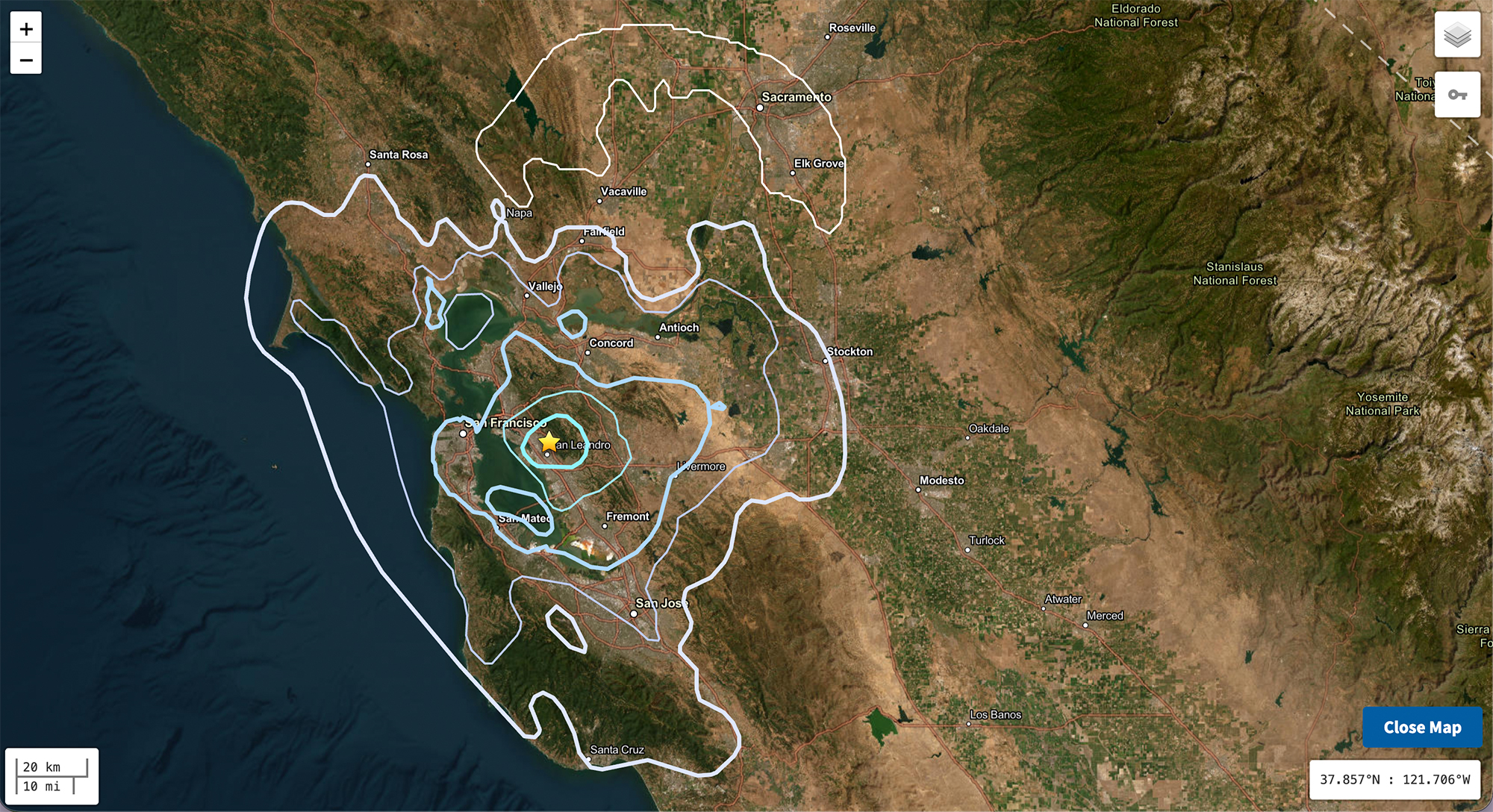
"caption": "A 3.8 magnitude earthquake struck about 2.5 miles north of San Leandro, according to data from the U.S. Geological Survey.",
"credit": "Courtesy of USGS",
"altTag": null,
"description": null,
"imgSizes": {
"thumbnail": {
"file": "https://cdn.kqed.org/wp-content/uploads/sites/10/2026/08/260813-Earthquake-01-160x87.jpg",
"width": 160,
"height": 87,
"mimeType": "image/jpeg"
},
"1536x1536": {
"file": "https://cdn.kqed.org/wp-content/uploads/sites/10/2026/08/260813-Earthquake-01-1536x836.jpg",
"width": 1536,
"height": 836,
"mimeType": "image/jpeg"
},
"post-thumbnail": {
"file": "https://cdn.kqed.org/wp-content/uploads/sites/10/2026/08/260813-Earthquake-01-672x372.jpg",
"width": 672,
"height": 372,
"mimeType": "image/jpeg"
},
"twentyfourteen-full-width": {
"file": "https://cdn.kqed.org/wp-content/uploads/sites/10/2026/08/260813-Earthquake-01-1038x576.jpg",
"width": 1038,
"height": 576,
"mimeType": "image/jpeg"
},
"npr-cds-wide": {
"file": "https://cdn.kqed.org/wp-content/uploads/sites/10/2026/08/260813-Earthquake-01-1200x675.jpg",
"width": 1200,
"height": 675,
"mimeType": "image/jpeg"
},
"npr-cds-square": {
"file": "https://cdn.kqed.org/wp-content/uploads/sites/10/2026/08/260813-Earthquake-01-600x600.jpg",
"width": 600,
"height": 600,
"mimeType": "image/jpeg"
},
"kqedFullSize": {
"file": "https://cdn.kqed.org/wp-content/uploads/sites/10/2026/08/260813-Earthquake-01.jpg",
"width": 2000,
"height": 1088
}
},
"isLoading": false,
"fetchFailed": false
}
},
"audioPlayerReducer": {
"postId": "stream_live",
"isPaused": true,
"isPlaying": false,
"pfsActive": false,
"pledgeModalIsOpen": true,
"playerDrawerIsOpen": false,
"liveAudioPlayStartedAt": 0,
"liveAudioPlayContext": ""
},
"authorsReducer": {
"byline_news_12095108": {
"type": "authors",
"id": "byline_news_12095108",
"meta": {
"override": true
},
"slug": "byline_news_12095108",
"name": "Amina Wase",
"isLoading": false
},
"gmarzorati": {
"type": "authors",
"id": "227",
"meta": {
"index": "authors_1716337520",
"id": "227",
"found": true
},
"name": "Guy Marzorati",
"firstName": "Guy",
"lastName": "Marzorati",
"slug": "gmarzorati",
"email": "gmarzorati@KQED.org",
"display_author_email": true,
"staff_mastheads": [
"news"
],
"title": "Correspondent",
"bio": "Guy Marzorati is a correspondent on KQED's California Politics and Government Desk, based in San Jose. A graduate of Santa Clara University, Guy joined KQED in 2013. He reports on state and local politics and produces KQED's digital voter guide.",
"avatar": "https://secure.gravatar.com/avatar/e7038b8dbfd55b104369b76b1cd0b9de?s=600&d=blank&r=g",
"twitter": "guymarzorati",
"facebook": null,
"instagram": null,
"linkedin": null,
"sites": [
{
"site": "",
"roles": [
"editor"
]
},
{
"site": "news",
"roles": [
"editor"
]
},
{
"site": "science",
"roles": [
"editor"
]
},
{
"site": "forum",
"roles": [
"editor"
]
},
{
"site": "elections",
"roles": [
"editor"
]
},
{
"site": "liveblog",
"roles": [
"editor"
]
}
],
"headData": {
"title": "Guy Marzorati | KQED",
"description": "Correspondent",
"ogImgSrc": "https://secure.gravatar.com/avatar/e7038b8dbfd55b104369b76b1cd0b9de?s=600&d=blank&r=g",
"twImgSrc": "https://secure.gravatar.com/avatar/e7038b8dbfd55b104369b76b1cd0b9de?s=600&d=blank&r=g"
},
"isLoading": false,
"link": "/author/gmarzorati"
},
"carlysevern": {
"type": "authors",
"id": "3243",
"meta": {
"index": "authors_1716337520",
"id": "3243",
"found": true
},
"name": "Carly Severn",
"firstName": "Carly",
"lastName": "Severn",
"slug": "carlysevern",
"email": "csevern@kqed.org",
"display_author_email": false,
"staff_mastheads": [
"news"
],
"title": "Senior Editor, Audience News ",
"bio": "Carly is KQED's Senior Editor of Audience News on the Digital News team, and has reported for the California Report Magazine, Bay Curious and KQED Arts. She's formerly the host of \u003ca href=\"http://ww2.kqed.org/pop/category/the-cooler/\" rel=\"noopener noreferrer\">The Cooler\u003c/a> podcast.",
"avatar": "https://secure.gravatar.com/avatar/54037bf5c128fe678f0ef26cec97a93f2e7f220a22d7285703328f12c42c1b1d?s=600&d=blank&r=g",
"twitter": "teacupinthebay",
"bluesky": null,
"facebook": null,
"instagram": null,
"linkedin": null,
"sites": [
{
"site": "",
"roles": [
"editor"
]
},
{
"site": "arts",
"roles": [
"editor"
]
},
{
"site": "news",
"roles": [
"administrator"
]
},
{
"site": "pop",
"roles": [
"editor"
]
},
{
"site": "futureofyou",
"roles": [
"editor"
]
},
{
"site": "about",
"roles": [
"administrator"
]
},
{
"site": "mindshift",
"roles": [
"editor"
]
},
{
"site": "bayareabites",
"roles": [
"editor"
]
},
{
"site": "stateofhealth",
"roles": [
"editor"
]
},
{
"site": "science",
"roles": [
"editor"
]
},
{
"site": "food",
"roles": [
"contributor"
]
},
{
"site": "forum",
"roles": [
"editor"
]
},
{
"site": "perspectives",
"roles": [
"administrator"
]
},
{
"site": "liveblog",
"roles": [
"editor"
]
}
],
"headData": {
"title": "Carly Severn | KQED",
"description": "Senior Editor, Audience News ",
"ogImgSrc": "https://secure.gravatar.com/avatar/54037bf5c128fe678f0ef26cec97a93f2e7f220a22d7285703328f12c42c1b1d?s=600&d=blank&r=g",
"twImgSrc": "https://secure.gravatar.com/avatar/54037bf5c128fe678f0ef26cec97a93f2e7f220a22d7285703328f12c42c1b1d?s=600&d=blank&r=g"
},
"isLoading": false,
"link": "/author/carlysevern"
},
"ecruzguevarra": {
"type": "authors",
"id": "8654",
"meta": {
"index": "authors_1716337520",
"id": "8654",
"found": true
},
"name": "Ericka Cruz Guevarra",
"firstName": "Ericka",
"lastName": "Cruz Guevarra",
"slug": "ecruzguevarra",
"email": "ecruzguevarra@kqed.org",
"display_author_email": true,
"staff_mastheads": [
"news"
],
"title": "Producer, The Bay Podcast",
"bio": "Ericka Cruz Guevarra is host of \u003ca href=\"https://www.kqed.org/podcasts/thebay\">\u003cem>The Bay\u003c/em>\u003c/a> podcast at KQED. Before host, she was the show’s producer. Her work in that capacity includes a three-part reported series on policing in Vallejo, which won a 2020 excellence in journalism award from the Society of Professional Journalists. Ericka has worked as a breaking news reporter at Oregon Public Broadcasting, helped produce the Code Switch podcast, and was KQED’s inaugural Raul Ramirez Diversity Fund intern. She’s also an alumna of NPR’s Next Generation Radio program. Send her an email if you have strong feelings about whether Fairfield and Suisun City are the Bay. Ericka is represented by SAG-AFTRA.",
"avatar": "https://secure.gravatar.com/avatar/accefc1de4bafc7e234b69bcb9b6f6536c130fd84709bc3069ef11a78787e1bb?s=600&d=blank&r=g",
"twitter": "NotoriousECG",
"bluesky": null,
"facebook": null,
"instagram": null,
"linkedin": null,
"sites": [
{
"site": "arts",
"roles": [
"subscriber"
]
},
{
"site": "news",
"roles": [
"editor",
"manage_categories"
]
},
{
"site": "futureofyou",
"roles": [
"subscriber"
]
},
{
"site": "stateofhealth",
"roles": [
"subscriber"
]
},
{
"site": "science",
"roles": [
"editor"
]
},
{
"site": "forum",
"roles": [
"subscriber"
]
}
],
"headData": {
"title": "Ericka Cruz Guevarra | KQED",
"description": "Producer, The Bay Podcast",
"ogImgSrc": "https://secure.gravatar.com/avatar/accefc1de4bafc7e234b69bcb9b6f6536c130fd84709bc3069ef11a78787e1bb?s=600&d=blank&r=g",
"twImgSrc": "https://secure.gravatar.com/avatar/accefc1de4bafc7e234b69bcb9b6f6536c130fd84709bc3069ef11a78787e1bb?s=600&d=blank&r=g"
},
"isLoading": false,
"link": "/author/ecruzguevarra"
},
"nvoynovskaya": {
"type": "authors",
"id": "11387",
"meta": {
"index": "authors_1716337520",
"id": "11387",
"found": true
},
"name": "Nastia Voynovskaya",
"firstName": "Nastia",
"lastName": "Voynovskaya",
"slug": "nvoynovskaya",
"email": "nvoynovskaya@kqed.org",
"display_author_email": false,
"staff_mastheads": [
"arts"
],
"title": "Editor and reporter",
"bio": "Nastia Voynovskaya is a reporter, editor and host at KQED Arts & Culture. She's been covering the arts in the Bay Area for over a decade, with a focus on music, queer culture, labor issues and grassroots organizing. She has edited KQED story series such as Trans Bay: A History of San Francisco's Gender-Diverse Community, and co-created KQED's Bay Area hip-hop history project, That's My Word. Nastia's work has been recognized by the Society of Professional Journalists and San Francisco Press Club. She regularly appears on podcasts and radio programs, including NPR's All Songs Considered, and hosts live events where music, culture and conversation meet.",
"avatar": "https://secure.gravatar.com/avatar/5025ee460e5a85d69ca20ea6c6f2f80d7e17795c828f61ea3aecfcd924e9042e?s=600&d=blank&r=g",
"twitter": null,
"bluesky": null,
"facebook": null,
"instagram": "https://www.instagram.com/nananastia/",
"linkedin": null,
"sites": [
{
"site": "",
"roles": [
"editor"
]
},
{
"site": "arts",
"roles": [
"administrator"
]
},
{
"site": "news",
"roles": [
"editor"
]
},
{
"site": "pop",
"roles": [
"administrator"
]
},
{
"site": "bayareabites",
"roles": [
"editor"
]
},
{
"site": "podcasts",
"roles": [
"editor"
]
},
{
"site": "hiphop",
"roles": [
"editor"
]
}
],
"headData": {
"title": "Nastia Voynovskaya | KQED",
"description": "Editor and reporter",
"ogImgSrc": "https://secure.gravatar.com/avatar/5025ee460e5a85d69ca20ea6c6f2f80d7e17795c828f61ea3aecfcd924e9042e?s=600&d=blank&r=g",
"twImgSrc": "https://secure.gravatar.com/avatar/5025ee460e5a85d69ca20ea6c6f2f80d7e17795c828f61ea3aecfcd924e9042e?s=600&d=blank&r=g"
},
"isLoading": false,
"link": "/author/nvoynovskaya"
},
"amontecillo": {
"type": "authors",
"id": "11649",
"meta": {
"index": "authors_1716337520",
"id": "11649",
"found": true
},
"name": "Alan Montecillo",
"firstName": "Alan",
"lastName": "Montecillo",
"slug": "amontecillo",
"email": "amontecillo@kqed.org",
"display_author_email": false,
"staff_mastheads": [
"news"
],
"title": "KQED Contributor",
"bio": "Alan Montecillo is the senior editor of \u003cem>\u003ca href=\"http://kqed.org/thebay\">The Bay\u003c/a>, \u003c/em> KQED's local news podcast. Before moving to the Bay Area, he worked as a senior talk show producer for WILL in Champaign-Urbana, Illinois and at Oregon Public Broadcasting in Portland, Oregon. He has won journalism awards from the Society of Professional Journalists Northern California, the Public Media Journalists Association, The Signal Awards, and has also received a regional Edward R. Murrow award. Alan is a Filipino American from Hong Kong and a graduate of Reed College.",
"avatar": "https://secure.gravatar.com/avatar/268f53a2066899ea9efdd8a5900218b17c822d9862cbc9326cccec53ef41d349?s=600&d=blank&r=g",
"twitter": "alanmontecillo",
"bluesky": null,
"facebook": null,
"instagram": null,
"linkedin": null,
"sites": [
{
"site": "",
"roles": [
"editor"
]
},
{
"site": "news",
"roles": [
"editor",
"manage_categories"
]
}
],
"headData": {
"title": "Alan Montecillo | KQED",
"description": "KQED Contributor",
"ogImgSrc": "https://secure.gravatar.com/avatar/268f53a2066899ea9efdd8a5900218b17c822d9862cbc9326cccec53ef41d349?s=600&d=blank&r=g",
"twImgSrc": "https://secure.gravatar.com/avatar/268f53a2066899ea9efdd8a5900218b17c822d9862cbc9326cccec53ef41d349?s=600&d=blank&r=g"
},
"isLoading": false,
"link": "/author/amontecillo"
},
"ccabreralomeli": {
"type": "authors",
"id": "11708",
"meta": {
"index": "authors_1716337520",
"id": "11708",
"found": true
},
"name": "Carlos Cabrera-Lomelí",
"firstName": "Carlos",
"lastName": "Cabrera-Lomelí",
"slug": "ccabreralomeli",
"email": "ccabreralomeli@KQED.org",
"display_author_email": true,
"staff_mastheads": [
"news"
],
"title": "Community Reporter",
"bio": "Carlos Cabrera-Lomelí is a community reporter with KQED's digital engagement team. He also reports and co-produces for KQED's bilingual news hub KQED en Español. He grew up in San Francisco's Mission District and has previously worked with Univision, 48 Hills and REFORMA in Mexico City.",
"avatar": "https://secure.gravatar.com/avatar/c309be9665e484f887b818c89e273ecc673004f426f36b24d00a4d813a2e0518?s=600&d=blank&r=g",
"twitter": "@LomeliCabrera",
"bluesky": null,
"facebook": null,
"instagram": null,
"linkedin": null,
"sites": [
{
"site": "arts",
"roles": [
"editor"
]
},
{
"site": "news",
"roles": [
"editor"
]
},
{
"site": "about",
"roles": [
"editor"
]
},
{
"site": "science",
"roles": [
"editor"
]
},
{
"site": "perspectives",
"roles": [
"editor"
]
},
{
"site": "elections",
"roles": [
"editor"
]
},
{
"site": "liveblog",
"roles": [
"contributor"
]
}
],
"headData": {
"title": "Carlos Cabrera-Lomelí | KQED",
"description": "Community Reporter",
"ogImgSrc": "https://secure.gravatar.com/avatar/c309be9665e484f887b818c89e273ecc673004f426f36b24d00a4d813a2e0518?s=600&d=blank&r=g",
"twImgSrc": "https://secure.gravatar.com/avatar/c309be9665e484f887b818c89e273ecc673004f426f36b24d00a4d813a2e0518?s=600&d=blank&r=g"
},
"isLoading": false,
"link": "/author/ccabreralomeli"
},
"adahlstromeckman": {
"type": "authors",
"id": "11785",
"meta": {
"index": "authors_1716337520",
"id": "11785",
"found": true
},
"name": "Azul Dahlstrom-Eckman",
"firstName": "Azul",
"lastName": "Dahlstrom-Eckman",
"slug": "adahlstromeckman",
"email": "adahlstrom-eckman@kqed.org",
"display_author_email": true,
"staff_mastheads": [],
"title": "Reporter",
"bio": "Azul is a reporter for KQED focusing on transportation and features. He joined KQED in 2021 as an alumna of KALW's Audio Academy radio journalism training program.",
"avatar": "https://secure.gravatar.com/avatar/9cb750298435add7815a777f55bf1f46845c1386bb8452555c60a7b820b5aba3?s=600&d=blank&r=g",
"twitter": "@zuliemann",
"bluesky": "@azul415.bsky.social",
"facebook": null,
"instagram": null,
"linkedin": null,
"sites": [
{
"site": "arts",
"roles": [
"editor"
]
},
{
"site": "news",
"roles": [
"editor"
]
},
{
"site": "science",
"roles": [
"editor"
]
},
{
"site": "liveblog",
"roles": [
"author"
]
}
],
"headData": {
"title": "Azul Dahlstrom-Eckman | KQED",
"description": "Reporter",
"ogImgSrc": "https://secure.gravatar.com/avatar/9cb750298435add7815a777f55bf1f46845c1386bb8452555c60a7b820b5aba3?s=600&d=blank&r=g",
"twImgSrc": "https://secure.gravatar.com/avatar/9cb750298435add7815a777f55bf1f46845c1386bb8452555c60a7b820b5aba3?s=600&d=blank&r=g"
},
"isLoading": false,
"link": "/author/adahlstromeckman"
},
"chambrick": {
"type": "authors",
"id": "11832",
"meta": {
"index": "authors_1716337520",
"id": "11832",
"found": true
},
"name": "Chris Hambrick",
"firstName": "Chris",
"lastName": "Hambrick",
"slug": "chambrick",
"email": "chambrick@kqed.org",
"display_author_email": false,
"staff_mastheads": [],
"title": "KQED Contributor",
"bio": null,
"avatar": "https://secure.gravatar.com/avatar/23cb83888bc440645af5d36d0d1909e8ecb6cef21f2fdb96abf9a55495bb19d8?s=600&d=blank&r=g",
"twitter": null,
"bluesky": null,
"facebook": null,
"instagram": null,
"linkedin": null,
"sites": [
{
"site": "",
"roles": [
"editor"
]
},
{
"site": "arts",
"roles": [
"editor"
]
},
{
"site": "news",
"roles": [
"editor"
]
},
{
"site": "podcasts",
"roles": [
"editor"
]
}
],
"headData": {
"title": "Chris Hambrick | KQED",
"description": "KQED Contributor",
"ogImgSrc": "https://secure.gravatar.com/avatar/23cb83888bc440645af5d36d0d1909e8ecb6cef21f2fdb96abf9a55495bb19d8?s=600&d=blank&r=g",
"twImgSrc": "https://secure.gravatar.com/avatar/23cb83888bc440645af5d36d0d1909e8ecb6cef21f2fdb96abf9a55495bb19d8?s=600&d=blank&r=g"
},
"isLoading": false,
"link": "/author/chambrick"
},
"jgeha": {
"type": "authors",
"id": "11906",
"meta": {
"index": "authors_1716337520",
"id": "11906",
"found": true
},
"name": "Joseph Geha",
"firstName": "Joseph",
"lastName": "Geha",
"slug": "jgeha",
"email": "jgeha@kqed.org",
"display_author_email": false,
"staff_mastheads": [
"news",
"science"
],
"title": "KQED Contributor",
"bio": null,
"avatar": "https://secure.gravatar.com/avatar/ea84d2b6dd93d6369d453edf19dd583f117cd1759d2d9c9c92f9de77017354fe?s=600&d=blank&r=g",
"twitter": null,
"bluesky": null,
"facebook": null,
"instagram": null,
"linkedin": null,
"sites": [
{
"site": "news",
"roles": [
"editor"
]
},
{
"site": "liveblog",
"roles": [
"author"
]
}
],
"headData": {
"title": "Joseph Geha | KQED",
"description": "KQED Contributor",
"ogImgSrc": "https://secure.gravatar.com/avatar/ea84d2b6dd93d6369d453edf19dd583f117cd1759d2d9c9c92f9de77017354fe?s=600&d=blank&r=g",
"twImgSrc": "https://secure.gravatar.com/avatar/ea84d2b6dd93d6369d453edf19dd583f117cd1759d2d9c9c92f9de77017354fe?s=600&d=blank&r=g"
},
"isLoading": false,
"link": "/author/jgeha"
},
"kdebenedetti": {
"type": "authors",
"id": "11913",
"meta": {
"index": "authors_1716337520",
"id": "11913",
"found": true
},
"name": "Katie DeBenedetti",
"firstName": "Katie",
"lastName": "DeBenedetti",
"slug": "kdebenedetti",
"email": "kdebenedetti@kqed.org",
"display_author_email": false,
"staff_mastheads": [
"news",
"science"
],
"title": "KQED Contributor",
"bio": "Katie DeBenedetti is a digital reporter covering daily news for the Express Desk. Prior to joining KQED as a culture reporting intern in January 2024, she covered education and city government for the Napa Valley Register.",
"avatar": "https://secure.gravatar.com/avatar/6e31073cb8f7e4214ab03f42771d0f45?s=600&d=blank&r=g",
"twitter": null,
"facebook": null,
"instagram": null,
"linkedin": null,
"sites": [
{
"site": "news",
"roles": [
"author"
]
},
{
"site": "science",
"roles": [
"author"
]
},
{
"site": "liveblog",
"roles": [
"author"
]
}
],
"headData": {
"title": "Katie DeBenedetti | KQED",
"description": "KQED Contributor",
"ogImgSrc": "https://secure.gravatar.com/avatar/6e31073cb8f7e4214ab03f42771d0f45?s=600&d=blank&r=g",
"twImgSrc": "https://secure.gravatar.com/avatar/6e31073cb8f7e4214ab03f42771d0f45?s=600&d=blank&r=g"
},
"isLoading": false,
"link": "/author/kdebenedetti"
},
"gglueck": {
"type": "authors",
"id": "11946",
"meta": {
"index": "authors_1716337520",
"id": "11946",
"found": true
},
"name": "Gabriela Glueck",
"firstName": "Gabriela",
"lastName": "Glueck",
"slug": "gglueck",
"email": "gglueck@kqed.org",
"display_author_email": false,
"staff_mastheads": [
"news"
],
"title": "KQED Contributor",
"bio": null,
"avatar": "https://secure.gravatar.com/avatar/ec62b7e3f7727ce1070cc7046dde80271d1e63cf2178d6194f68bb8d1440f841?s=600&d=blank&r=g",
"twitter": null,
"bluesky": null,
"facebook": null,
"instagram": null,
"linkedin": null,
"sites": [
{
"site": "news",
"roles": [
"editor"
]
}
],
"headData": {
"title": "Gabriela Glueck | KQED",
"description": "KQED Contributor",
"ogImgSrc": "https://secure.gravatar.com/avatar/ec62b7e3f7727ce1070cc7046dde80271d1e63cf2178d6194f68bb8d1440f841?s=600&d=blank&r=g",
"twImgSrc": "https://secure.gravatar.com/avatar/ec62b7e3f7727ce1070cc7046dde80271d1e63cf2178d6194f68bb8d1440f841?s=600&d=blank&r=g"
},
"isLoading": false,
"link": "/author/gglueck"
},
"aaliahmad": {
"type": "authors",
"id": "11986",
"meta": {
"index": "authors_1716337520",
"id": "11986",
"found": true
},
"name": "Ayah Ali-Ahmad",
"firstName": "Ayah",
"lastName": "Ali-Ahmad",
"slug": "aaliahmad",
"email": "aaliahmad@KQED.org",
"display_author_email": false,
"staff_mastheads": [],
"title": "KQED Contributor",
"bio": null,
"avatar": "https://secure.gravatar.com/avatar/1cf54f187a5e1064b2cfef3f3d2f1e4f93e453395d56912aca6382a6071ec3ed?s=600&d=blank&r=g",
"twitter": "ayahaliahmad",
"bluesky": null,
"facebook": null,
"instagram": null,
"linkedin": null,
"sites": [
{
"site": "news",
"roles": [
"subscriber"
]
}
],
"headData": {
"title": "Ayah Ali-Ahmad | KQED",
"description": "KQED Contributor",
"ogImgSrc": "https://secure.gravatar.com/avatar/1cf54f187a5e1064b2cfef3f3d2f1e4f93e453395d56912aca6382a6071ec3ed?s=600&d=blank&r=g",
"twImgSrc": "https://secure.gravatar.com/avatar/1cf54f187a5e1064b2cfef3f3d2f1e4f93e453395d56912aca6382a6071ec3ed?s=600&d=blank&r=g"
},
"isLoading": false,
"link": "/author/aaliahmad"
},
"ejackson": {
"type": "authors",
"id": "12003",
"meta": {
"index": "authors_1716337520",
"id": "12003",
"found": true
},
"name": "Ella Jackson",
"firstName": "Ella",
"lastName": "Jackson",
"slug": "ejackson",
"email": "ejackson@kqed.org",
"display_author_email": false,
"staff_mastheads": [],
"title": "KQED Contributor",
"bio": null,
"avatar": "https://secure.gravatar.com/avatar/3c688edc62aec1dcae096e1475956d245f72bde99cff316455871c9b22a7205b?s=600&d=blank&r=g",
"twitter": null,
"bluesky": null,
"facebook": null,
"instagram": null,
"linkedin": null,
"sites": [
{
"site": "news",
"roles": [
"author"
]
},
{
"site": "science",
"roles": [
"author"
]
}
],
"headData": {
"title": "Ella Jackson | KQED",
"description": "KQED Contributor",
"ogImgSrc": "https://secure.gravatar.com/avatar/3c688edc62aec1dcae096e1475956d245f72bde99cff316455871c9b22a7205b?s=600&d=blank&r=g",
"twImgSrc": "https://secure.gravatar.com/avatar/3c688edc62aec1dcae096e1475956d245f72bde99cff316455871c9b22a7205b?s=600&d=blank&r=g"
},
"isLoading": false,
"link": "/author/ejackson"
}
},
"pagesReducer": {
"news_tag_bay-area": {
"type": "terms",
"id": "news_1386",
"meta": {
"index": "terms_1716263798",
"site": "news",
"id": "1386",
"score": 7.788373
},
"featImg": null,
"name": "Bay Area",
"description": null,
"taxonomy": "tag",
"headData": {
"twImgId": null,
"twTitle": null,
"ogTitle": null,
"ogImgId": null,
"twDescription": null,
"description": null,
"title": "Bay Area Archives | KQED News",
"ogDescription": null
},
"ttid": 1398,
"slug": "bay-area",
"isLoading": false,
"title": "Bay Area",
"pageMeta": {
"site": "news",
"WpPageTemplate": "page-topic-editorial",
"currentPage": 7
},
"blocks": [
{
"blockName": "kqed/post-list",
"attrs": {
"layout": "cardArticle2",
"query": "posts/news?tag=bay-area",
"seeMore": false,
"paginated": true,
"page": 7
}
},
{
"blockName": "kqed/ad"
}
]
}
},
"pfsSessionReducer": {},
"postsReducer": {
"stream_live": {
"type": "live",
"id": "stream_live",
"audioUrl": "https://streams.kqed.org/kqedradio",
"title": "Live Stream",
"excerpt": "Live Stream information currently unavailable.",
"link": "/radio",
"featImg": "",
"label": {
"name": "KQED Live",
"link": "/"
}
},
"stream_kqedNewscast": {
"type": "posts",
"id": "stream_kqedNewscast",
"audioUrl": "https://www.kqed.org/.stream/anon/radio/RDnews/newscast.mp3?_=1",
"title": "KQED Newscast",
"featImg": "",
"label": {
"name": "88.5 FM",
"link": "/"
}
},
"news_12095863": {
"type": "posts",
"id": "news_12095863",
"meta": {
"index": "posts_1716263798",
"site": "news",
"id": "12095863",
"score": null,
"sort": [
1787100716000
]
},
"guestAuthors": [],
"slug": "contentious-east-bay-special-election-for-congress-comes-to-a-close",
"title": "Wahab Leads Hernandez in Contentious East Bay Special Election for Congress",
"publishDate": 1787100716,
"format": "standard",
"headTitle": "Wahab Leads Hernandez in Contentious East Bay Special Election for Congress | KQED",
"labelTerm": {
"site": "news"
},
"content": "\u003cp>State Sen. Aisha Wahab narrowly leads BART board director Melissa Hernandez in a fractious special election for Congress in the East Bay that will decide who will temporarily fill the seat formerly held by disgraced Rep. \u003ca href=\"https://www.kqed.org/news/tag/eric-swalwell\">Eric Swalwell\u003c/a>. \u003c/p>\n\n\n\n\u003cp>The race between \u003ca href=\"https://www.kqed.org/news/tag/aisha-wahab\">Wahab\u003c/a> and Hernandez, both Democrats, interrupted the typically sleepy summer months for voters in Fremont, Hayward and the Tri-Valley. Though Wahab topped a June primary field by a wide margin, \u003ca href=\"https://www.kqed.org/news/12095020/aisha-wahab-to-file-fec-complaint-over-alleged-election-interference-in-race-for-swalwell-seat\">millions of dollars of outside spending\u003c/a> have poured into the district — throwing Democratic divisions over Israel and party leadership into stark relief.\u003c/p>\n\n\n\n\u003cp>In initial returns on Tuesday night, Wahab was ahead of Hernandez 51% to 49% — a lead of fewer than 2,000 votes.\u003c/p>\n\n\n\n\u003cp>“I’m very proud of this district for not listening to the hate-mongering and really knowing and believing the work that I’ve done,” Wahab told KQED. “We believe that the numbers and the lead will just only grow.” \u003c/p>\n\n\n\n\u003cp>The infighting is unlikely to end with this week’s results. While the winner of the special election will complete Swalwell’s term through the end of the year, Wahab and Hernandez will again face off on the November general election ballot for a full two-year term. \u003c/p>\n\n\n\n\u003cfigure class=\"wp-block-image size-full\">\u003cimg loading=\"lazy\" decoding=\"async\" width=\"1980\" height=\"1393\" src=\"https://cdn.kqed.org/wp-content/uploads/sites/10/2026/08/GettyImages-2263914577.jpg\" alt=\"\" class=\"wp-image-12095858\" srcset=\"https://cdn.kqed.org/wp-content/uploads/sites/10/2026/08/GettyImages-2263914577.jpg 1980w, https://cdn.kqed.org/wp-content/uploads/sites/10/2026/08/GettyImages-2263914577-160x113.jpg 160w, https://cdn.kqed.org/wp-content/uploads/sites/10/2026/08/GettyImages-2263914577-1536x1081.jpg 1536w\" sizes=\"auto, (max-width: 1980px) 100vw, 1980px\">\u003cfigcaption class=\"wp-element-caption\">Sen. Aisha Wahab attends a press conference with Gov. Gavin Newsom about new statewide accountability and funding for homelessness and mental health in Hayward, California, on March 2, 2026. (Tayfun Coskun/Anadolu via Getty Images)\u003c/figcaption>\u003c/figure>\n\n\n\n\u003cp>In an interview, Hernandez said she was still looking forward to seeing more results — and was heartened by the gains she made since finishing well behind Wahab in the special election primary.\u003cbr>\u003cbr>“Initially we had a lot of folks in the race … now it’s only us two,” Hernandez said. “So it’s really folks getting to know who I am.” \u003c/p>\n\n\n\n\u003cp>[ad fullwidth]\u003c/p>\n\u003cp>In the nine-week sprint since the primary, the race has turned into a proxy war for larger divides between moderate and progressive Democrats, said David McCuan, political science professor at Sonoma State University. \u003c/p>\n\n\n\n\u003cp>“You see a lot of outside money, a lot of outside influences, and you see a battle between two seasoned, smart politicians that isn’t settled this week,” McCuan said. \u003c/p>\n\n\n\n\u003cp>Wahab, a former Hayward City Council member, has represented the area in the state Senate since 2023. In her run for Congress, she has the backing of the California Democratic Party, the California Federation of Labor Unions and the progressive advocacy group Our Revolution. \u003c/p>\n\n\n\n\u003cp>Before serving on BART’s board of directors, Hernandez was a councilmember in Dublin and mayor until 2024. She has been endorsed by NewDems, a political group that works to elect moderate Democrats, and nearly a dozen members of California’s Democratic congressional delegation. \u003c/p>\n\n\n\n\n\n\u003cp>The chair of the delegation, Rep. Zoe Lofgren, criticized Wahab this week for her decision not to bow out of the special election in favor of a caretaker candidate. Lofgren said other Democrats had agreed to step aside and back a single candidate — who could have won a majority of votes in the June 16 special election primary and taken office immediately in the closely divided Congress. Wahab has derided the process of picking a caretaker as heavy-handed and out of touch with the district. \u003c/p>\n\n\n\n\u003cp>In the \u003ca href=\"https://www.kqed.org/news/12087582/polls-close-tonight-in-special-election-for-swalwells-former-seat\">special election primary\u003c/a>, Wahab received 43% of the vote, with Hernandez in second at 17%. \u003c/p>\n\n\n\n\u003cp>The runoff is much closer, in part the result of a torrent of outside spending in support of Hernandez, much of it from United Democracy Project, the political arm of the American Israel Public Affairs Committee (AIPAC). \u003c/p>\n\n\n\n\u003cp>The pro-Israel group has become a flashpoint in Democratic primaries throughout the country. Neither Wahab nor Hernandez has focused their campaign on America’s relationship with Israel — although in a candidate forum this spring, Wahab said she believed what was happening to the Palestinian people constituted a genocide. \u003c/p>\n\n\n\n\u003cp>Hernandez responded to the yes-or-no question by saying she believed that Israel had a right to defend itself after Hamas’ attacks on Oct. 7, 2023, but that the subsequent destruction in Gaza has gone too far. \u003c/p>\n\n\n\n\u003cfigure class=\"wp-block-image size-full\">\u003cimg loading=\"lazy\" decoding=\"async\" width=\"2000\" height=\"1333\" src=\"https://cdn.kqed.org/wp-content/uploads/sites/10/2026/08/GH26_95996.jpg\" alt=\"\" class=\"wp-image-12095919\" srcset=\"https://cdn.kqed.org/wp-content/uploads/sites/10/2026/08/GH26_95996.jpg 2000w, https://cdn.kqed.org/wp-content/uploads/sites/10/2026/08/GH26_95996-160x107.jpg 160w, https://cdn.kqed.org/wp-content/uploads/sites/10/2026/08/GH26_95996-1536x1024.jpg 1536w\" sizes=\"auto, (max-width: 2000px) 100vw, 2000px\">\u003cfigcaption class=\"wp-element-caption\">BART board director Melissa Hernandez. (Courtesy of Melissa Hernandez)\u003c/figcaption>\u003c/figure>\n\n\n\n\u003cp>United Democracy Project, which cannot coordinate directly with Hernandez’s campaign, has spent $2.4 million to boost Hernandez and sink Wahab. The group has also sent money to BOLD America, another super PAC that has spent over $2 million to help Hernandez. \u003c/p>\n\n\n\n\u003cp>As she cast her ballot on Tuesday in Castro Valley, Leslie Hall bemoaned the polarizing political moment. \u003c/p>\n\n\n\n\u003cp>“The divisiveness that we have right now is mind-blowing,” Hall said. “What happened to love?”\u003c/p>\n\n\n\n\u003cp>\u003c/p>\n\u003cp>\u003cem>KQED’s Jose Velazquez contributed to this report.\u003c/em>\u003c/p>\n\n",
"blocks": [
{
"blockName": "core/paragraph",
"attrs": {
"dropCap": false
},
"innerHTML": "\n\u003cp>State Sen. Aisha Wahab narrowly leads BART board director Melissa Hernandez in a fractious special election for Congress in the East Bay that will decide who will temporarily fill the seat formerly held by disgraced Rep. \u003ca href=\"https://www.kqed.org/news/tag/eric-swalwell\">Eric Swalwell\u003c/a>. \u003c/p>\n",
"innerContent": [
"\n\u003cp>State Sen. Aisha Wahab narrowly leads BART board director Melissa Hernandez in a fractious special election for Congress in the East Bay that will decide who will temporarily fill the seat formerly held by disgraced Rep. \u003ca href=\"https://www.kqed.org/news/tag/eric-swalwell\">Eric Swalwell\u003c/a>. \u003c/p>\n"
],
"innerBlocks": []
},
{
"blockName": "core/paragraph",
"attrs": {
"dropCap": false
},
"innerHTML": "\n\u003cp>The race between \u003ca href=\"https://www.kqed.org/news/tag/aisha-wahab\">Wahab\u003c/a> and Hernandez, both Democrats, interrupted the typically sleepy summer months for voters in Fremont, Hayward and the Tri-Valley. Though Wahab topped a June primary field by a wide margin, \u003ca href=\"https://www.kqed.org/news/12095020/aisha-wahab-to-file-fec-complaint-over-alleged-election-interference-in-race-for-swalwell-seat\">millions of dollars of outside spending\u003c/a> have poured into the district — throwing Democratic divisions over Israel and party leadership into stark relief.\u003c/p>\n",
"innerContent": [
"\n\u003cp>The race between \u003ca href=\"https://www.kqed.org/news/tag/aisha-wahab\">Wahab\u003c/a> and Hernandez, both Democrats, interrupted the typically sleepy summer months for voters in Fremont, Hayward and the Tri-Valley. Though Wahab topped a June primary field by a wide margin, \u003ca href=\"https://www.kqed.org/news/12095020/aisha-wahab-to-file-fec-complaint-over-alleged-election-interference-in-race-for-swalwell-seat\">millions of dollars of outside spending\u003c/a> have poured into the district — throwing Democratic divisions over Israel and party leadership into stark relief.\u003c/p>\n"
],
"innerBlocks": []
},
{
"blockName": "core/paragraph",
"attrs": {
"dropCap": false
},
"innerHTML": "\n\u003cp>In initial returns on Tuesday night, Wahab was ahead of Hernandez 51% to 49% — a lead of fewer than 2,000 votes.\u003c/p>\n",
"innerContent": [
"\n\u003cp>In initial returns on Tuesday night, Wahab was ahead of Hernandez 51% to 49% — a lead of fewer than 2,000 votes.\u003c/p>\n"
],
"innerBlocks": []
},
{
"blockName": "core/paragraph",
"attrs": {
"dropCap": false
},
"innerHTML": "\n\u003cp>“I’m very proud of this district for not listening to the hate-mongering and really knowing and believing the work that I’ve done,” Wahab told KQED. “We believe that the numbers and the lead will just only grow.” \u003c/p>\n",
"innerContent": [
"\n\u003cp>“I’m very proud of this district for not listening to the hate-mongering and really knowing and believing the work that I’ve done,” Wahab told KQED. “We believe that the numbers and the lead will just only grow.” \u003c/p>\n"
],
"innerBlocks": []
},
{
"blockName": "core/paragraph",
"attrs": {
"dropCap": false
},
"innerHTML": "\n\u003cp>The infighting is unlikely to end with this week’s results. While the winner of the special election will complete Swalwell’s term through the end of the year, Wahab and Hernandez will again face off on the November general election ballot for a full two-year term. \u003c/p>\n",
"innerContent": [
"\n\u003cp>The infighting is unlikely to end with this week’s results. While the winner of the special election will complete Swalwell’s term through the end of the year, Wahab and Hernandez will again face off on the November general election ballot for a full two-year term. \u003c/p>\n"
],
"innerBlocks": []
},
{
"blockName": "core/image",
"attrs": {
"id": 12095858,
"sizeSlug": "full",
"linkDestination": "none",
"imageCredit": "Tayfun Coskun/Anadolu via Getty Images",
"srcset": "https://cdn.kqed.org/wp-content/uploads/sites/10/2026/08/GettyImages-2263914577.jpg 1980w, https://cdn.kqed.org/wp-content/uploads/sites/10/2026/08/GettyImages-2263914577-160x113.jpg 160w, https://cdn.kqed.org/wp-content/uploads/sites/10/2026/08/GettyImages-2263914577-1536x1081.jpg 1536w",
"sizes": "(min-width: 992px) min(100vw, 1536px), (min-width: 768px) min(100vw, 1280px), min(100vw, 1020px)",
"alt": ""
},
"innerHTML": "\n\u003cfigure class=\"wp-block-image size-full\">\u003cimg src=\"https://cdn.kqed.org/wp-content/uploads/sites/10/2026/08/GettyImages-2263914577.jpg\" alt=\"\" class=\"wp-image-12095858\" srcset=\"https://cdn.kqed.org/wp-content/uploads/sites/10/2026/08/GettyImages-2263914577.jpg 1980w, https://cdn.kqed.org/wp-content/uploads/sites/10/2026/08/GettyImages-2263914577-160x113.jpg 160w, https://cdn.kqed.org/wp-content/uploads/sites/10/2026/08/GettyImages-2263914577-1536x1081.jpg 1536w\" sizes=\"(min-width: 992px) min(100vw, 1536px), (min-width: 768px) min(100vw, 1280px), min(100vw, 1020px)\" />\u003cfigcaption class=\"wp-element-caption\">Sen. Aisha Wahab attends a press conference with Gov. Gavin Newsom about new statewide accountability and funding for homelessness and mental health in Hayward, California, on March 2, 2026. \u003c/figcaption>\u003c/figure>\n",
"innerContent": [
"\n\u003cfigure class=\"wp-block-image size-full\">\u003cimg src=\"https://cdn.kqed.org/wp-content/uploads/sites/10/2026/08/GettyImages-2263914577.jpg\" alt=\"\" class=\"wp-image-12095858\" />\u003cfigcaption class=\"wp-element-caption\">Sen. Aisha Wahab attends a press conference with Gov. Gavin Newsom about new statewide accountability and funding for homelessness and mental health in Hayward, California, on March 2, 2026. \u003c/figcaption>\u003c/figure>\n"
],
"innerBlocks": []
},
{
"blockName": "core/paragraph",
"attrs": {
"dropCap": false
},
"innerHTML": "\n\u003cp>In an interview, Hernandez said she was still looking forward to seeing more results — and was heartened by the gains she made since finishing well behind Wahab in the special election primary.\u003cbr>\u003cbr>“Initially we had a lot of folks in the race … now it’s only us two,” Hernandez said. “So it’s really folks getting to know who I am.” \u003c/p>\n",
"innerContent": [
"\n\u003cp>In an interview, Hernandez said she was still looking forward to seeing more results — and was heartened by the gains she made since finishing well behind Wahab in the special election primary.\u003cbr>\u003cbr>“Initially we had a lot of folks in the race … now it’s only us two,” Hernandez said. “So it’s really folks getting to know who I am.” \u003c/p>\n"
],
"innerBlocks": []
},
{
"blockName": "kqed/ad",
"attrs": {
"format": "fullwidth"
},
"innerBlocks": [],
"innerHTML": "",
"innerContent": []
},
{
"blockName": "core/paragraph",
"attrs": {
"dropCap": false
},
"innerHTML": "\n\u003cp>In the nine-week sprint since the primary, the race has turned into a proxy war for larger divides between moderate and progressive Democrats, said David McCuan, political science professor at Sonoma State University. \u003c/p>\n",
"innerContent": [
"\n\u003cp>In the nine-week sprint since the primary, the race has turned into a proxy war for larger divides between moderate and progressive Democrats, said David McCuan, political science professor at Sonoma State University. \u003c/p>\n"
],
"innerBlocks": []
},
{
"blockName": "core/paragraph",
"attrs": {
"dropCap": false
},
"innerHTML": "\n\u003cp>“You see a lot of outside money, a lot of outside influences, and you see a battle between two seasoned, smart politicians that isn’t settled this week,” McCuan said. \u003c/p>\n",
"innerContent": [
"\n\u003cp>“You see a lot of outside money, a lot of outside influences, and you see a battle between two seasoned, smart politicians that isn’t settled this week,” McCuan said. \u003c/p>\n"
],
"innerBlocks": []
},
{
"blockName": "core/paragraph",
"attrs": {
"dropCap": false
},
"innerHTML": "\n\u003cp>Wahab, a former Hayward City Council member, has represented the area in the state Senate since 2023. In her run for Congress, she has the backing of the California Democratic Party, the California Federation of Labor Unions and the progressive advocacy group Our Revolution. \u003c/p>\n",
"innerContent": [
"\n\u003cp>Wahab, a former Hayward City Council member, has represented the area in the state Senate since 2023. In her run for Congress, she has the backing of the California Democratic Party, the California Federation of Labor Unions and the progressive advocacy group Our Revolution. \u003c/p>\n"
],
"innerBlocks": []
},
{
"blockName": "core/paragraph",
"attrs": {
"dropCap": false
},
"innerHTML": "\n\u003cp>Before serving on BART’s board of directors, Hernandez was a councilmember in Dublin and mayor until 2024. She has been endorsed by NewDems, a political group that works to elect moderate Democrats, and nearly a dozen members of California’s Democratic congressional delegation. \u003c/p>\n",
"innerContent": [
"\n\u003cp>Before serving on BART’s board of directors, Hernandez was a councilmember in Dublin and mayor until 2024. She has been endorsed by NewDems, a political group that works to elect moderate Democrats, and nearly a dozen members of California’s Democratic congressional delegation. \u003c/p>\n"
],
"innerBlocks": []
},
{
"blockName": "kqed-v2/related-articles",
"attrs": {
"postIds": [
"news_12095616"
],
"label": "Related Articles",
"maxPosts": 1,
"showImages": false,
"heroImage": "https://cdn.kqed.org/wp-content/uploads/sites/10/2026/08/003_KQED_SanFrancisco_Muni_04062020_qed.jpg",
"query": "",
"labelWasCleared": false,
"heroImageAlt": "",
"heroImageLink": "",
"labelLink": "",
"alignment": "right",
"target": "_self",
"manualLinks": [],
"posts": []
},
"innerHTML": "",
"innerContent": [],
"innerBlocks": []
},
{
"blockName": "core/paragraph",
"attrs": {
"dropCap": false
},
"innerHTML": "\n\u003cp>The chair of the delegation, Rep. Zoe Lofgren, criticized Wahab this week for her decision not to bow out of the special election in favor of a caretaker candidate. Lofgren said other Democrats had agreed to step aside and back a single candidate — who could have won a majority of votes in the June 16 special election primary and taken office immediately in the closely divided Congress. Wahab has derided the process of picking a caretaker as heavy-handed and out of touch with the district. \u003c/p>\n",
"innerContent": [
"\n\u003cp>The chair of the delegation, Rep. Zoe Lofgren, criticized Wahab this week for her decision not to bow out of the special election in favor of a caretaker candidate. Lofgren said other Democrats had agreed to step aside and back a single candidate — who could have won a majority of votes in the June 16 special election primary and taken office immediately in the closely divided Congress. Wahab has derided the process of picking a caretaker as heavy-handed and out of touch with the district. \u003c/p>\n"
],
"innerBlocks": []
},
{
"blockName": "core/paragraph",
"attrs": {
"dropCap": false
},
"innerHTML": "\n\u003cp>In the \u003ca href=\"https://www.kqed.org/news/12087582/polls-close-tonight-in-special-election-for-swalwells-former-seat\">special election primary\u003c/a>, Wahab received 43% of the vote, with Hernandez in second at 17%. \u003c/p>\n",
"innerContent": [
"\n\u003cp>In the \u003ca href=\"https://www.kqed.org/news/12087582/polls-close-tonight-in-special-election-for-swalwells-former-seat\">special election primary\u003c/a>, Wahab received 43% of the vote, with Hernandez in second at 17%. \u003c/p>\n"
],
"innerBlocks": []
},
{
"blockName": "core/paragraph",
"attrs": {
"dropCap": false
},
"innerHTML": "\n\u003cp>The runoff is much closer, in part the result of a torrent of outside spending in support of Hernandez, much of it from United Democracy Project, the political arm of the American Israel Public Affairs Committee (AIPAC). \u003c/p>\n",
"innerContent": [
"\n\u003cp>The runoff is much closer, in part the result of a torrent of outside spending in support of Hernandez, much of it from United Democracy Project, the political arm of the American Israel Public Affairs Committee (AIPAC). \u003c/p>\n"
],
"innerBlocks": []
},
{
"blockName": "core/paragraph",
"attrs": {
"dropCap": false
},
"innerHTML": "\n\u003cp>The pro-Israel group has become a flashpoint in Democratic primaries throughout the country. Neither Wahab nor Hernandez has focused their campaign on America’s relationship with Israel — although in a candidate forum this spring, Wahab said she believed what was happening to the Palestinian people constituted a genocide. \u003c/p>\n",
"innerContent": [
"\n\u003cp>The pro-Israel group has become a flashpoint in Democratic primaries throughout the country. Neither Wahab nor Hernandez has focused their campaign on America’s relationship with Israel — although in a candidate forum this spring, Wahab said she believed what was happening to the Palestinian people constituted a genocide. \u003c/p>\n"
],
"innerBlocks": []
},
{
"blockName": "core/paragraph",
"attrs": {
"dropCap": false
},
"innerHTML": "\n\u003cp>Hernandez responded to the yes-or-no question by saying she believed that Israel had a right to defend itself after Hamas’ attacks on Oct. 7, 2023, but that the subsequent destruction in Gaza has gone too far. \u003c/p>\n",
"innerContent": [
"\n\u003cp>Hernandez responded to the yes-or-no question by saying she believed that Israel had a right to defend itself after Hamas’ attacks on Oct. 7, 2023, but that the subsequent destruction in Gaza has gone too far. \u003c/p>\n"
],
"innerBlocks": []
},
{
"blockName": "core/image",
"attrs": {
"id": 12095919,
"sizeSlug": "full",
"linkDestination": "none",
"imageCredit": "Courtesy of Melissa Hernandez",
"srcset": "https://cdn.kqed.org/wp-content/uploads/sites/10/2026/08/GH26_95996.jpg 2000w, https://cdn.kqed.org/wp-content/uploads/sites/10/2026/08/GH26_95996-160x107.jpg 160w, https://cdn.kqed.org/wp-content/uploads/sites/10/2026/08/GH26_95996-1536x1024.jpg 1536w",
"sizes": "(min-width: 992px) min(100vw, 1536px), (min-width: 768px) min(100vw, 1280px), min(100vw, 1020px)",
"alt": ""
},
"innerHTML": "\n\u003cfigure class=\"wp-block-image size-full\">\u003cimg src=\"https://cdn.kqed.org/wp-content/uploads/sites/10/2026/08/GH26_95996.jpg\" alt=\"\" class=\"wp-image-12095919\" srcset=\"https://cdn.kqed.org/wp-content/uploads/sites/10/2026/08/GH26_95996.jpg 2000w, https://cdn.kqed.org/wp-content/uploads/sites/10/2026/08/GH26_95996-160x107.jpg 160w, https://cdn.kqed.org/wp-content/uploads/sites/10/2026/08/GH26_95996-1536x1024.jpg 1536w\" sizes=\"(min-width: 992px) min(100vw, 1536px), (min-width: 768px) min(100vw, 1280px), min(100vw, 1020px)\" />\u003cfigcaption class=\"wp-element-caption\">BART board director Melissa Hernandez.\u003c/figcaption>\u003c/figure>\n",
"innerContent": [
"\n\u003cfigure class=\"wp-block-image size-full\">\u003cimg src=\"https://cdn.kqed.org/wp-content/uploads/sites/10/2026/08/GH26_95996.jpg\" alt=\"\" class=\"wp-image-12095919\" />\u003cfigcaption class=\"wp-element-caption\">BART board director Melissa Hernandez.\u003c/figcaption>\u003c/figure>\n"
],
"innerBlocks": []
},
{
"blockName": "core/paragraph",
"attrs": {
"dropCap": false
},
"innerHTML": "\n\u003cp>United Democracy Project, which cannot coordinate directly with Hernandez’s campaign, has spent $2.4 million to boost Hernandez and sink Wahab. The group has also sent money to BOLD America, another super PAC that has spent over $2 million to help Hernandez. \u003c/p>\n",
"innerContent": [
"\n\u003cp>United Democracy Project, which cannot coordinate directly with Hernandez’s campaign, has spent $2.4 million to boost Hernandez and sink Wahab. The group has also sent money to BOLD America, another super PAC that has spent over $2 million to help Hernandez. \u003c/p>\n"
],
"innerBlocks": []
},
{
"blockName": "core/paragraph",
"attrs": {
"dropCap": false
},
"innerHTML": "\n\u003cp>As she cast her ballot on Tuesday in Castro Valley, Leslie Hall bemoaned the polarizing political moment. \u003c/p>\n",
"innerContent": [
"\n\u003cp>As she cast her ballot on Tuesday in Castro Valley, Leslie Hall bemoaned the polarizing political moment. \u003c/p>\n"
],
"innerBlocks": []
},
{
"blockName": "core/paragraph",
"attrs": {
"dropCap": false
},
"innerHTML": "\n\u003cp>“The divisiveness that we have right now is mind-blowing,” Hall said. “What happened to love?”\u003c/p>\n",
"innerContent": [
"\n\u003cp>“The divisiveness that we have right now is mind-blowing,” Hall said. “What happened to love?”\u003c/p>\n"
],
"innerBlocks": []
},
{
"blockName": "kqed/ad",
"attrs": {
"format": "floatright"
},
"innerBlocks": [],
"innerHTML": "",
"innerContent": []
},
{
"blockName": "core/paragraph",
"attrs": {
"dropCap": false
},
"innerHTML": "\n\u003cp>\u003cem>KQED’s Jose Velazquez contributed to this report.\u003c/em>\u003c/p>\n",
"innerContent": [
"\n\u003cp>\u003cem>KQED’s Jose Velazquez contributed to this report.\u003c/em>\u003c/p>\n"
],
"innerBlocks": []
}
],
"excerpt": "State Sen. Aisha Wahab and BART board director Melissa Hernandez face off in the 14th District race to complete Eric Swalwell’s term, which has divided Democrats. ",
"status": "publish",
"parent": 0,
"modified": 1787116950,
"stats": {
"hasAudio": false,
"hasVideo": false,
"hasChartOrMap": false,
"iframeSrcs": [],
"hasGoogleForm": false,
"hasGallery": false,
"hasHearkenModule": false,
"hasPolis": false,
"paragraphCount": 21,
"wordCount": 822
},
"headData": {
"title": "Wahab Leads Hernandez in Contentious East Bay Special Election for Congress | KQED",
"description": "State Sen. Aisha Wahab and BART board director Melissa Hernandez face off in the 14th District race to complete Eric Swalwell’s term, which has divided Democrats. ",
"ogTitle": "",
"ogDescription": "",
"ogImgId": "",
"twTitle": "",
"twDescription": "",
"twImgId": "",
"schema": {
"@context": "https://schema.org",
"@type": "NewsArticle",
"headline": "Wahab Leads Hernandez in Contentious East Bay Special Election for Congress",
"datePublished": "2026-08-18T17:51:56-07:00",
"dateModified": "2026-08-18T22:22:30-07:00",
"image": "https://cdn.kqed.org/wp-content/uploads/2020/02/KQED-OG-Image@1x.png",
"isAccessibleForFree": "True",
"publisher": {
"@type": "NewsMediaOrganization",
"@id": "https://www.kqed.org/#organization",
"name": "KQED",
"logo": "https://cdn.kqed.org/wp-content/uploads/2020/02/KQED-OG-Image@1x.png",
"url": "https://www.kqed.org",
"sameAs": [
"https://www.facebook.com/KQED",
"https://twitter.com/KQED",
"https://www.instagram.com/kqed/",
"https://www.tiktok.com/@kqedofficial",
"https://www.linkedin.com/company/kqed",
"https://www.youtube.com/channel/UCeC0IOo7i1P_61zVUWbJ4nw"
]
}
}
},
"primaryCategory": {
"termId": 13,
"slug": "politics",
"name": "Politics"
},
"sticky": false,
"nprStoryId": "kqed-12095863",
"templateType": "standard",
"featuredImageType": "standard",
"excludeFromSiteSearch": "Include",
"articleAge": "0",
"path": "/news/12095863/contentious-east-bay-special-election-for-congress-comes-to-a-close",
"audioTrackLength": null,
"parsedContent": [
{
"type": "contentString",
"content": "\u003cdiv class=\"post-body\">\u003cp>\u003cp>State Sen. Aisha Wahab narrowly leads BART board director Melissa Hernandez in a fractious special election for Congress in the East Bay that will decide who will temporarily fill the seat formerly held by disgraced Rep. \u003ca href=\"https://www.kqed.org/news/tag/eric-swalwell\">Eric Swalwell\u003c/a>. \u003c/p>\n\n\n\n\u003cp>The race between \u003ca href=\"https://www.kqed.org/news/tag/aisha-wahab\">Wahab\u003c/a> and Hernandez, both Democrats, interrupted the typically sleepy summer months for voters in Fremont, Hayward and the Tri-Valley. Though Wahab topped a June primary field by a wide margin, \u003ca href=\"https://www.kqed.org/news/12095020/aisha-wahab-to-file-fec-complaint-over-alleged-election-interference-in-race-for-swalwell-seat\">millions of dollars of outside spending\u003c/a> have poured into the district — throwing Democratic divisions over Israel and party leadership into stark relief.\u003c/p>\n\n\n\n\u003cp>In initial returns on Tuesday night, Wahab was ahead of Hernandez 51% to 49% — a lead of fewer than 2,000 votes.\u003c/p>\n\n\n\n\u003cp>“I’m very proud of this district for not listening to the hate-mongering and really knowing and believing the work that I’ve done,” Wahab told KQED. “We believe that the numbers and the lead will just only grow.” \u003c/p>\n\n\n\n\u003cp>The infighting is unlikely to end with this week’s results. While the winner of the special election will complete Swalwell’s term through the end of the year, Wahab and Hernandez will again face off on the November general election ballot for a full two-year term. \u003c/p>\n\n\n\n\u003cfigure class=\"wp-block-image size-full\">\u003cimg loading=\"lazy\" decoding=\"async\" width=\"1980\" height=\"1393\" src=\"https://cdn.kqed.org/wp-content/uploads/sites/10/2026/08/GettyImages-2263914577.jpg\" alt=\"\" class=\"wp-image-12095858\" srcset=\"https://cdn.kqed.org/wp-content/uploads/sites/10/2026/08/GettyImages-2263914577.jpg 1980w, https://cdn.kqed.org/wp-content/uploads/sites/10/2026/08/GettyImages-2263914577-160x113.jpg 160w, https://cdn.kqed.org/wp-content/uploads/sites/10/2026/08/GettyImages-2263914577-1536x1081.jpg 1536w\" sizes=\"auto, (max-width: 1980px) 100vw, 1980px\">\u003cfigcaption class=\"wp-element-caption\">Sen. Aisha Wahab attends a press conference with Gov. Gavin Newsom about new statewide accountability and funding for homelessness and mental health in Hayward, California, on March 2, 2026. (Tayfun Coskun/Anadolu via Getty Images)\u003c/figcaption>\u003c/figure>\n\n\n\n\u003cp>In an interview, Hernandez said she was still looking forward to seeing more results — and was heartened by the gains she made since finishing well behind Wahab in the special election primary.\u003cbr>\u003cbr>“Initially we had a lot of folks in the race … now it’s only us two,” Hernandez said. “So it’s really folks getting to know who I am.” \u003c/p>\n\n\n\n\u003cp>\u003c/p>\u003c/div>",
"attributes": {
"named": {},
"numeric": []
}
},
{
"type": "component",
"content": "",
"name": "ad",
"attributes": {
"named": {
"label": "fullwidth"
},
"numeric": [
"fullwidth"
]
}
},
{
"type": "contentString",
"content": "\u003cdiv class=\"post-body\">\u003cp>\u003c/p>\n\u003cp>In the nine-week sprint since the primary, the race has turned into a proxy war for larger divides between moderate and progressive Democrats, said David McCuan, political science professor at Sonoma State University. \u003c/p>\n\n\n\n\u003cp>“You see a lot of outside money, a lot of outside influences, and you see a battle between two seasoned, smart politicians that isn’t settled this week,” McCuan said. \u003c/p>\n\n\n\n\u003cp>Wahab, a former Hayward City Council member, has represented the area in the state Senate since 2023. In her run for Congress, she has the backing of the California Democratic Party, the California Federation of Labor Unions and the progressive advocacy group Our Revolution. \u003c/p>\n\n\n\n\u003cp>Before serving on BART’s board of directors, Hernandez was a councilmember in Dublin and mayor until 2024. She has been endorsed by NewDems, a political group that works to elect moderate Democrats, and nearly a dozen members of California’s Democratic congressional delegation. \u003c/p>\n\n\n\n\n\n\u003cp>The chair of the delegation, Rep. Zoe Lofgren, criticized Wahab this week for her decision not to bow out of the special election in favor of a caretaker candidate. Lofgren said other Democrats had agreed to step aside and back a single candidate — who could have won a majority of votes in the June 16 special election primary and taken office immediately in the closely divided Congress. Wahab has derided the process of picking a caretaker as heavy-handed and out of touch with the district. \u003c/p>\n\n\n\n\u003cp>In the \u003ca href=\"https://www.kqed.org/news/12087582/polls-close-tonight-in-special-election-for-swalwells-former-seat\">special election primary\u003c/a>, Wahab received 43% of the vote, with Hernandez in second at 17%. \u003c/p>\n\n\n\n\u003cp>The runoff is much closer, in part the result of a torrent of outside spending in support of Hernandez, much of it from United Democracy Project, the political arm of the American Israel Public Affairs Committee (AIPAC). \u003c/p>\n\n\n\n\u003cp>The pro-Israel group has become a flashpoint in Democratic primaries throughout the country. Neither Wahab nor Hernandez has focused their campaign on America’s relationship with Israel — although in a candidate forum this spring, Wahab said she believed what was happening to the Palestinian people constituted a genocide. \u003c/p>\n\n\n\n\u003cp>Hernandez responded to the yes-or-no question by saying she believed that Israel had a right to defend itself after Hamas’ attacks on Oct. 7, 2023, but that the subsequent destruction in Gaza has gone too far. \u003c/p>\n\n\n\n\u003cfigure class=\"wp-block-image size-full\">\u003cimg loading=\"lazy\" decoding=\"async\" width=\"2000\" height=\"1333\" src=\"https://cdn.kqed.org/wp-content/uploads/sites/10/2026/08/GH26_95996.jpg\" alt=\"\" class=\"wp-image-12095919\" srcset=\"https://cdn.kqed.org/wp-content/uploads/sites/10/2026/08/GH26_95996.jpg 2000w, https://cdn.kqed.org/wp-content/uploads/sites/10/2026/08/GH26_95996-160x107.jpg 160w, https://cdn.kqed.org/wp-content/uploads/sites/10/2026/08/GH26_95996-1536x1024.jpg 1536w\" sizes=\"auto, (max-width: 2000px) 100vw, 2000px\">\u003cfigcaption class=\"wp-element-caption\">BART board director Melissa Hernandez. (Courtesy of Melissa Hernandez)\u003c/figcaption>\u003c/figure>\n\n\n\n\u003cp>United Democracy Project, which cannot coordinate directly with Hernandez’s campaign, has spent $2.4 million to boost Hernandez and sink Wahab. The group has also sent money to BOLD America, another super PAC that has spent over $2 million to help Hernandez. \u003c/p>\n\n\n\n\u003cp>As she cast her ballot on Tuesday in Castro Valley, Leslie Hall bemoaned the polarizing political moment. \u003c/p>\n\n\n\n\u003cp>“The divisiveness that we have right now is mind-blowing,” Hall said. “What happened to love?”\u003c/p>\n\n\n\n\u003cp>\u003c/p>\n\u003cp>\u003cem>KQED’s Jose Velazquez contributed to this report.\u003c/em>\u003c/p>\n\n\u003c/div>\u003c/p>",
"attributes": {
"named": {},
"numeric": []
}
}
],
"link": "/news/12095863/contentious-east-bay-special-election-for-congress-comes-to-a-close",
"authors": [
"227"
],
"categories": [
"news_31795",
"news_8",
"news_13"
],
"tags": [
"news_34056",
"news_24191",
"news_1386",
"news_18538",
"news_20156",
"news_20251",
"news_18352",
"news_20910",
"news_27626",
"news_34377",
"news_17968",
"news_36045"
],
"featImg": "news_12095869",
"label": "news"
},
"news_12095616": {
"type": "posts",
"id": "news_12095616",
"meta": {
"index": "posts_1716263798",
"site": "news",
"id": "12095616",
"score": null,
"sort": [
1787071237000
]
},
"guestAuthors": [],
"slug": "bay-area-group-files-lawsuit-against-transit-funding-measure-says-its-deceptive",
"title": "Bay Area Group Files Lawsuit Against Transit Funding Measure, Says It’s ‘Deceptive’",
"publishDate": 1787071237,
"format": "standard",
"headTitle": "Bay Area Group Files Lawsuit Against Transit Funding Measure, Says It’s ‘Deceptive’ | KQED",
"labelTerm": {
"site": "news"
},
"content": "\u003cp>Ten Bay Area voters called on a judge Monday to change the ballot language of a proposed regional sales tax \u003ca href=\"https://www.kqed.org/news/12084841/campaign-to-fund-bay-area-transit-smashes-signature-gathering-goal\">measure\u003c/a> that transit advocates say is critical to avoid deep service cuts.\u003c/p>\n\n\n\n\u003cp>The challengers filed the petition in Santa Clara County Superior Court, contending that the ballot question about to be printed in five Bay Area counties this November is deceptive and biased in favor of a yes vote, violating election laws.\u003c/p>\n\n\n\n\u003cp>“We want it to be an unbiased statement of what’s going to happen,” said co-petitioner Gregg Dieguez, who is president of the Committee for Affordable Bay Area Transit, a group \u003ca href=\"https://www.kqed.org/news/12090212/opposition-group-says-bay-area-transit-doesnt-deserve-more-money-this-november\">opposed to the regional sales tax measure\u003c/a>. \u003c/p>\n\n\n\n\u003cp>Dieguez said in an interview that he and the other named petitioners are all “ concerned citizens who have longstanding complaints about the amount of money being wasted on traditional transit.” \u003c/p>\n\n\n\n\u003cfigure class=\"wp-block-image size-full\">\u003cimg loading=\"lazy\" decoding=\"async\" width=\"2000\" height=\"1333\" src=\"https://cdn.kqed.org/wp-content/uploads/sites/10/2025/08/20241204-BART-JY-002_qed.jpg\" alt=\"\" class=\"wp-image-12051374\" srcset=\"https://cdn.kqed.org/wp-content/uploads/sites/10/2025/08/20241204-BART-JY-002_qed.jpg 2000w, https://cdn.kqed.org/wp-content/uploads/sites/10/2025/08/20241204-BART-JY-002_qed-160x107.jpg 160w, https://cdn.kqed.org/wp-content/uploads/sites/10/2025/08/20241204-BART-JY-002_qed-1536x1024.jpg 1536w\" sizes=\"auto, (max-width: 2000px) 100vw, 2000px\">\u003cfigcaption class=\"wp-element-caption\">A BART car approaches the platform at Daly City Station in Daly City, on Dec. 4, 2024. (Juliana Yamada/KQED)\u003c/figcaption>\u003c/figure>\n\n\n\n\u003cp>The ballot question, as approved last month by a governing body known as the Public Transit Revenue Measure District, and made up of the Metropolitan Transportation Commission board of directors, is as follows:\u003c/p>\n\n\n\n\u003cp>[ad fullwidth]\u003c/p>\n\u003cp>“To prevent major service cuts to BART and other transit, avoid increased traffic, and reduce pollution by: Preserving BART, Caltrain, VTA, SamTrans, AC Transit, Muni, other transit for everyone, including workers, students, seniors, persons with disabilities; Supporting transit safety, cleanliness, affordability, reliability; Repairing targeted roads/potholes; Requiring financial transparency, oversight, accountability; shall the measure enacting a 0.5% (Alameda, Contra Costa, San Mateo, Santa Clara counties), and 1% (San Francisco) sales tax for 14 years generating approximately $980,000,000 annually, be adopted?”\u003c/p>\n\n\n\n\u003cp>Taking a fine-tooth comb to that wording, the challengers want to hit the delete button on references to service cuts and preservation, among other issues.\u003c/p>\n\n\n\n\u003cp>For Dieguez and his co-petitioners, these details matter. \u003c/p>\n\n\n\n\u003cp>“ Preserving BART implies that it’s at risk in some way, whereas funding it implies what it is, giving it more money to continue to operate,” Dieguez said. \u003c/p>\n\n\n\n\n\n\u003cp>Major Bay Area transit agencies are facing steep budget deficits due to ongoing drops in revenue and ridership related to the COVID-19 pandemic, and are warning of drastic service cuts without passage of the regional measure known as the Connect Bay Area Act. The act would establish a half-cent sales tax in Alameda, Contra Costa, San Mateo and Santa Clara counties, as well as a 1-cent sales tax in San Francisco, for 14 years, generating an estimated $980 million annually, according to Metropolitan Transportation Commission figures. \u003c/p>\n\n\n\n\u003cp>But Dieguez and the Committee for Affordable Bay Area Transit dispute that the agencies would fail without the additional tax revenue. The committee argues that transit operators could utilize existing capital funds to cover operating costs, reduce overtime pay or evaluate contracts with labor unions. \u003c/p>\n\n\n\n\u003cp>Jeff Cretan, spokesperson for the Connect Bay Area campaign, previously told KQED the committee’s claims were “not based in reality.”\u003c/p>\n\n\n\n\u003cp>“Our focus right now is explaining to voters that, if we don’t pass this measure, there will be catastrophic cuts to public transit that will hurt communities in all five counties,” Cretan told KQED on Monday. \u003c/p>\n\n\n\n\u003cp>Rebecca Long, director of legislation and public affairs at MTC, said the district is preparing its response.\u003c/p>\n\n\n\n\u003cfigure class=\"wp-block-image size-full\">\u003cimg loading=\"lazy\" decoding=\"async\" width=\"2000\" height=\"1333\" src=\"https://cdn.kqed.org/wp-content/uploads/sites/10/2026/05/05112629-BUS_GH_014-KQED.jpg\" alt=\"\" class=\"wp-image-12083263\" srcset=\"https://cdn.kqed.org/wp-content/uploads/sites/10/2026/05/05112629-BUS_GH_014-KQED.jpg 2000w, https://cdn.kqed.org/wp-content/uploads/sites/10/2026/05/05112629-BUS_GH_014-KQED-160x107.jpg 160w, https://cdn.kqed.org/wp-content/uploads/sites/10/2026/05/05112629-BUS_GH_014-KQED-1536x1024.jpg 1536w\" sizes=\"auto, (max-width: 2000px) 100vw, 2000px\">\u003cfigcaption class=\"wp-element-caption\">Passengers wait to board the 29 Sunset bus near Lake Merced Boulevard and Middlefield Drive on May 11, 2026, in San Francisco. (Gustavo Hernandez/KQED)\u003c/figcaption>\u003c/figure>\n\n\n\n\u003cp>“Both documents were prepared in accordance with California election law, and the District will defend them on the schedule the court sets. As this is a pending legal matter, the District has no further comment,” Long told KQED in an email. \u003c/p>\n\n\n\n\u003cp>Filed by attorney Jason Bezis of Lafayette, the petition also disputes the amount of money the sales tax would generate, arguing the MTC determined in September 2025 that it would generate about $200,000,000 more annually than currently disclosed. It wants the amount listed on the ballot changed. \u003c/p>\n\n\n\n\u003cp>The petition calls for the question to be trimmed down and amended significantly. If the opposition campaign were to have its way, it would look like this:\u003c/p>\n\n\n\n\u003cp>\u003cem>“\u003c/em>Shall the measure imposing a 0.5% (Alameda, Contra Costa, San Mateo, Santa Clara counties) and 1% (San Francisco) sales and use tax for 14 years generating approximately $1,200,000,000 annually; Funding BART, Caltrain, VTA, SamTrans, AC Transit, Muni, other transit; Supporting transit safety, cleanliness; Repaving transit-serving roads; Requiring financial transparency; be adopted?”\u003c/p>\n\n\n\n\u003cp>The petition quotes Santa Clara County Registrar of Voters Matt Moreles as having said that the petition should be resolved by Aug. 28, “so the Registrar of Voters can meet necessary election deadlines.”\u003c/p>\n\n\n\n\u003cp>\u003c/p>\n\u003cp>\u003cem>Editor’s note: A previous version of the story incorrectly stated that the petition aimed to block the measure, and misstated the difference between the sales tax revenue estimated in the ballot initiative language and the revenue petitioners said the measure would generate. The story has been corrected.\u003c/em>\u003cbr>\u003c/p>\n\n",
"blocks": [
{
"blockName": "core/paragraph",
"attrs": {
"dropCap": false
},
"innerHTML": "\n\u003cp>Ten Bay Area voters called on a judge Monday to change the ballot language of a proposed regional sales tax \u003ca href=\"https://www.kqed.org/news/12084841/campaign-to-fund-bay-area-transit-smashes-signature-gathering-goal\">measure\u003c/a> that transit advocates say is critical to avoid deep service cuts.\u003c/p>\n",
"innerContent": [
"\n\u003cp>Ten Bay Area voters called on a judge Monday to change the ballot language of a proposed regional sales tax \u003ca href=\"https://www.kqed.org/news/12084841/campaign-to-fund-bay-area-transit-smashes-signature-gathering-goal\">measure\u003c/a> that transit advocates say is critical to avoid deep service cuts.\u003c/p>\n"
],
"innerBlocks": []
},
{
"blockName": "core/paragraph",
"attrs": {
"dropCap": false
},
"innerHTML": "\n\u003cp>The challengers filed the petition in Santa Clara County Superior Court, contending that the ballot question about to be printed in five Bay Area counties this November is deceptive and biased in favor of a yes vote, violating election laws.\u003c/p>\n",
"innerContent": [
"\n\u003cp>The challengers filed the petition in Santa Clara County Superior Court, contending that the ballot question about to be printed in five Bay Area counties this November is deceptive and biased in favor of a yes vote, violating election laws.\u003c/p>\n"
],
"innerBlocks": []
},
{
"blockName": "core/paragraph",
"attrs": {
"dropCap": false
},
"innerHTML": "\n\u003cp>“We want it to be an unbiased statement of what’s going to happen,” said co-petitioner Gregg Dieguez, who is president of the Committee for Affordable Bay Area Transit, a group \u003ca href=\"https://www.kqed.org/news/12090212/opposition-group-says-bay-area-transit-doesnt-deserve-more-money-this-november\">opposed to the regional sales tax measure\u003c/a>. \u003c/p>\n",
"innerContent": [
"\n\u003cp>“We want it to be an unbiased statement of what’s going to happen,” said co-petitioner Gregg Dieguez, who is president of the Committee for Affordable Bay Area Transit, a group \u003ca href=\"https://www.kqed.org/news/12090212/opposition-group-says-bay-area-transit-doesnt-deserve-more-money-this-november\">opposed to the regional sales tax measure\u003c/a>. \u003c/p>\n"
],
"innerBlocks": []
},
{
"blockName": "core/paragraph",
"attrs": {
"dropCap": false
},
"innerHTML": "\n\u003cp>Dieguez said in an interview that he and the other named petitioners are all “ concerned citizens who have longstanding complaints about the amount of money being wasted on traditional transit.” \u003c/p>\n",
"innerContent": [
"\n\u003cp>Dieguez said in an interview that he and the other named petitioners are all “ concerned citizens who have longstanding complaints about the amount of money being wasted on traditional transit.” \u003c/p>\n"
],
"innerBlocks": []
},
{
"blockName": "core/image",
"attrs": {
"id": 12051374,
"sizeSlug": "full",
"linkDestination": "none",
"imageCredit": "Juliana Yamada/KQED",
"srcset": "https://cdn.kqed.org/wp-content/uploads/sites/10/2025/08/20241204-BART-JY-002_qed.jpg 2000w, https://cdn.kqed.org/wp-content/uploads/sites/10/2025/08/20241204-BART-JY-002_qed-160x107.jpg 160w, https://cdn.kqed.org/wp-content/uploads/sites/10/2025/08/20241204-BART-JY-002_qed-1536x1024.jpg 1536w",
"sizes": "(min-width: 992px) min(100vw, 1536px), (min-width: 768px) min(100vw, 1280px), min(100vw, 1020px)",
"alt": ""
},
"innerHTML": "\n\u003cfigure class=\"wp-block-image size-full\">\u003cimg src=\"https://cdn.kqed.org/wp-content/uploads/sites/10/2025/08/20241204-BART-JY-002_qed.jpg\" alt=\"\" class=\"wp-image-12051374\" srcset=\"https://cdn.kqed.org/wp-content/uploads/sites/10/2025/08/20241204-BART-JY-002_qed.jpg 2000w, https://cdn.kqed.org/wp-content/uploads/sites/10/2025/08/20241204-BART-JY-002_qed-160x107.jpg 160w, https://cdn.kqed.org/wp-content/uploads/sites/10/2025/08/20241204-BART-JY-002_qed-1536x1024.jpg 1536w\" sizes=\"(min-width: 992px) min(100vw, 1536px), (min-width: 768px) min(100vw, 1280px), min(100vw, 1020px)\"/>\u003cfigcaption class=\"wp-element-caption\">A BART car approaches the platform at Daly City Station in Daly City, on Dec. 4, 2024.\u003c/figcaption>\u003c/figure>\n",
"innerContent": [
"\n\u003cfigure class=\"wp-block-image size-full\">\u003cimg src=\"https://cdn.kqed.org/wp-content/uploads/sites/10/2025/08/20241204-BART-JY-002_qed.jpg\" alt=\"\" class=\"wp-image-12051374\"/>\u003cfigcaption class=\"wp-element-caption\">A BART car approaches the platform at Daly City Station in Daly City, on Dec. 4, 2024.\u003c/figcaption>\u003c/figure>\n"
],
"innerBlocks": []
},
{
"blockName": "core/paragraph",
"attrs": {
"dropCap": false
},
"innerHTML": "\n\u003cp>The ballot question, as approved last month by a governing body known as the Public Transit Revenue Measure District, and made up of the Metropolitan Transportation Commission board of directors, is as follows:\u003c/p>\n",
"innerContent": [
"\n\u003cp>The ballot question, as approved last month by a governing body known as the Public Transit Revenue Measure District, and made up of the Metropolitan Transportation Commission board of directors, is as follows:\u003c/p>\n"
],
"innerBlocks": []
},
{
"blockName": "kqed/ad",
"attrs": {
"format": "fullwidth"
},
"innerBlocks": [],
"innerHTML": "",
"innerContent": []
},
{
"blockName": "core/paragraph",
"attrs": {
"dropCap": false
},
"innerHTML": "\n\u003cp>“To prevent major service cuts to BART and other transit, avoid increased traffic, and reduce pollution by: Preserving BART, Caltrain, VTA, SamTrans, AC Transit, Muni, other transit for everyone, including workers, students, seniors, persons with disabilities; Supporting transit safety, cleanliness, affordability, reliability; Repairing targeted roads/potholes; Requiring financial transparency, oversight, accountability; shall the measure enacting a 0.5% (Alameda, Contra Costa, San Mateo, Santa Clara counties), and 1% (San Francisco) sales tax for 14 years generating approximately $980,000,000 annually, be adopted?”\u003c/p>\n",
"innerContent": [
"\n\u003cp>“To prevent major service cuts to BART and other transit, avoid increased traffic, and reduce pollution by: Preserving BART, Caltrain, VTA, SamTrans, AC Transit, Muni, other transit for everyone, including workers, students, seniors, persons with disabilities; Supporting transit safety, cleanliness, affordability, reliability; Repairing targeted roads/potholes; Requiring financial transparency, oversight, accountability; shall the measure enacting a 0.5% (Alameda, Contra Costa, San Mateo, Santa Clara counties), and 1% (San Francisco) sales tax for 14 years generating approximately $980,000,000 annually, be adopted?”\u003c/p>\n"
],
"innerBlocks": []
},
{
"blockName": "core/paragraph",
"attrs": {
"dropCap": false
},
"innerHTML": "\n\u003cp>Taking a fine-tooth comb to that wording, the challengers want to hit the delete button on references to service cuts and preservation, among other issues.\u003c/p>\n",
"innerContent": [
"\n\u003cp>Taking a fine-tooth comb to that wording, the challengers want to hit the delete button on references to service cuts and preservation, among other issues.\u003c/p>\n"
],
"innerBlocks": []
},
{
"blockName": "core/paragraph",
"attrs": {
"dropCap": false
},
"innerHTML": "\n\u003cp>For Dieguez and his co-petitioners, these details matter. \u003c/p>\n",
"innerContent": [
"\n\u003cp>For Dieguez and his co-petitioners, these details matter. \u003c/p>\n"
],
"innerBlocks": []
},
{
"blockName": "core/paragraph",
"attrs": {
"dropCap": false
},
"innerHTML": "\n\u003cp>“ Preserving BART implies that it’s at risk in some way, whereas funding it implies what it is, giving it more money to continue to operate,” Dieguez said. \u003c/p>\n",
"innerContent": [
"\n\u003cp>“ Preserving BART implies that it’s at risk in some way, whereas funding it implies what it is, giving it more money to continue to operate,” Dieguez said. \u003c/p>\n"
],
"innerBlocks": []
},
{
"blockName": "kqed-v2/related-articles",
"attrs": {
"postIds": [
"news_12095317"
],
"label": "Related Articles",
"maxPosts": 1,
"showImages": false,
"heroImage": "https://cdn.kqed.org/wp-content/uploads/sites/10/2026/08/260814-SF-Street-Safety-ADE-01-KQED.jpg",
"query": "",
"labelWasCleared": false,
"heroImageAlt": "",
"heroImageLink": "",
"labelLink": "",
"alignment": "right",
"target": "_self",
"manualLinks": [],
"posts": []
},
"innerHTML": "",
"innerContent": [],
"innerBlocks": []
},
{
"blockName": "core/paragraph",
"attrs": {
"dropCap": false
},
"innerHTML": "\n\u003cp>Major Bay Area transit agencies are facing steep budget deficits due to ongoing drops in revenue and ridership related to the COVID-19 pandemic, and are warning of drastic service cuts without passage of the regional measure known as the Connect Bay Area Act. The act would establish a half-cent sales tax in Alameda, Contra Costa, San Mateo and Santa Clara counties, as well as a 1-cent sales tax in San Francisco, for 14 years, generating an estimated $980 million annually, according to Metropolitan Transportation Commission figures. \u003c/p>\n",
"innerContent": [
"\n\u003cp>Major Bay Area transit agencies are facing steep budget deficits due to ongoing drops in revenue and ridership related to the COVID-19 pandemic, and are warning of drastic service cuts without passage of the regional measure known as the Connect Bay Area Act. The act would establish a half-cent sales tax in Alameda, Contra Costa, San Mateo and Santa Clara counties, as well as a 1-cent sales tax in San Francisco, for 14 years, generating an estimated $980 million annually, according to Metropolitan Transportation Commission figures. \u003c/p>\n"
],
"innerBlocks": []
},
{
"blockName": "core/paragraph",
"attrs": {
"dropCap": false
},
"innerHTML": "\n\u003cp>But Dieguez and the Committee for Affordable Bay Area Transit dispute that the agencies would fail without the additional tax revenue. The committee argues that transit operators could utilize existing capital funds to cover operating costs, reduce overtime pay or evaluate contracts with labor unions. \u003c/p>\n",
"innerContent": [
"\n\u003cp>But Dieguez and the Committee for Affordable Bay Area Transit dispute that the agencies would fail without the additional tax revenue. The committee argues that transit operators could utilize existing capital funds to cover operating costs, reduce overtime pay or evaluate contracts with labor unions. \u003c/p>\n"
],
"innerBlocks": []
},
{
"blockName": "core/paragraph",
"attrs": {
"dropCap": false
},
"innerHTML": "\n\u003cp>Jeff Cretan, spokesperson for the Connect Bay Area campaign, previously told KQED the committee’s claims were “not based in reality.”\u003c/p>\n",
"innerContent": [
"\n\u003cp>Jeff Cretan, spokesperson for the Connect Bay Area campaign, previously told KQED the committee’s claims were “not based in reality.”\u003c/p>\n"
],
"innerBlocks": []
},
{
"blockName": "core/paragraph",
"attrs": {
"dropCap": false
},
"innerHTML": "\n\u003cp>“Our focus right now is explaining to voters that, if we don’t pass this measure, there will be catastrophic cuts to public transit that will hurt communities in all five counties,” Cretan told KQED on Monday. \u003c/p>\n",
"innerContent": [
"\n\u003cp>“Our focus right now is explaining to voters that, if we don’t pass this measure, there will be catastrophic cuts to public transit that will hurt communities in all five counties,” Cretan told KQED on Monday. \u003c/p>\n"
],
"innerBlocks": []
},
{
"blockName": "core/paragraph",
"attrs": {
"dropCap": false
},
"innerHTML": "\n\u003cp>Rebecca Long, director of legislation and public affairs at MTC, said the district is preparing its response.\u003c/p>\n",
"innerContent": [
"\n\u003cp>Rebecca Long, director of legislation and public affairs at MTC, said the district is preparing its response.\u003c/p>\n"
],
"innerBlocks": []
},
{
"blockName": "core/image",
"attrs": {
"id": 12083263,
"sizeSlug": "full",
"linkDestination": "none",
"imageCredit": "Gustavo Hernandez/KQED",
"srcset": "https://cdn.kqed.org/wp-content/uploads/sites/10/2026/05/05112629-BUS_GH_014-KQED.jpg 2000w, https://cdn.kqed.org/wp-content/uploads/sites/10/2026/05/05112629-BUS_GH_014-KQED-160x107.jpg 160w, https://cdn.kqed.org/wp-content/uploads/sites/10/2026/05/05112629-BUS_GH_014-KQED-1536x1024.jpg 1536w",
"sizes": "(min-width: 992px) min(100vw, 1536px), (min-width: 768px) min(100vw, 1280px), min(100vw, 1020px)",
"alt": ""
},
"innerHTML": "\n\u003cfigure class=\"wp-block-image size-full\">\u003cimg src=\"https://cdn.kqed.org/wp-content/uploads/sites/10/2026/05/05112629-BUS_GH_014-KQED.jpg\" alt=\"\" class=\"wp-image-12083263\" srcset=\"https://cdn.kqed.org/wp-content/uploads/sites/10/2026/05/05112629-BUS_GH_014-KQED.jpg 2000w, https://cdn.kqed.org/wp-content/uploads/sites/10/2026/05/05112629-BUS_GH_014-KQED-160x107.jpg 160w, https://cdn.kqed.org/wp-content/uploads/sites/10/2026/05/05112629-BUS_GH_014-KQED-1536x1024.jpg 1536w\" sizes=\"(min-width: 992px) min(100vw, 1536px), (min-width: 768px) min(100vw, 1280px), min(100vw, 1020px)\"/>\u003cfigcaption class=\"wp-element-caption\">Passengers wait to board the 29 Sunset bus near Lake Merced Boulevard and Middlefield Drive on May 11, 2026, in San Francisco.\u003c/figcaption>\u003c/figure>\n",
"innerContent": [
"\n\u003cfigure class=\"wp-block-image size-full\">\u003cimg src=\"https://cdn.kqed.org/wp-content/uploads/sites/10/2026/05/05112629-BUS_GH_014-KQED.jpg\" alt=\"\" class=\"wp-image-12083263\"/>\u003cfigcaption class=\"wp-element-caption\">Passengers wait to board the 29 Sunset bus near Lake Merced Boulevard and Middlefield Drive on May 11, 2026, in San Francisco.\u003c/figcaption>\u003c/figure>\n"
],
"innerBlocks": []
},
{
"blockName": "core/paragraph",
"attrs": {
"dropCap": false
},
"innerHTML": "\n\u003cp>“Both documents were prepared in accordance with California election law, and the District will defend them on the schedule the court sets. As this is a pending legal matter, the District has no further comment,” Long told KQED in an email. \u003c/p>\n",
"innerContent": [
"\n\u003cp>“Both documents were prepared in accordance with California election law, and the District will defend them on the schedule the court sets. As this is a pending legal matter, the District has no further comment,” Long told KQED in an email. \u003c/p>\n"
],
"innerBlocks": []
},
{
"blockName": "core/paragraph",
"attrs": {
"dropCap": false
},
"innerHTML": "\n\u003cp>Filed by attorney Jason Bezis of Lafayette, the petition also disputes the amount of money the sales tax would generate, arguing the MTC determined in September 2025 that it would generate about $200,000,000 more annually than currently disclosed. It wants the amount listed on the ballot changed. \u003c/p>\n",
"innerContent": [
"\n\u003cp>Filed by attorney Jason Bezis of Lafayette, the petition also disputes the amount of money the sales tax would generate, arguing the MTC determined in September 2025 that it would generate about $200,000,000 more annually than currently disclosed. It wants the amount listed on the ballot changed. \u003c/p>\n"
],
"innerBlocks": []
},
{
"blockName": "core/paragraph",
"attrs": {
"dropCap": false
},
"innerHTML": "\n\u003cp>The petition calls for the question to be trimmed down and amended significantly. If the opposition campaign were to have its way, it would look like this:\u003c/p>\n",
"innerContent": [
"\n\u003cp>The petition calls for the question to be trimmed down and amended significantly. If the opposition campaign were to have its way, it would look like this:\u003c/p>\n"
],
"innerBlocks": []
},
{
"blockName": "core/paragraph",
"attrs": {
"dropCap": false
},
"innerHTML": "\n\u003cp>\u003cem>“\u003c/em>Shall the measure imposing a 0.5% (Alameda, Contra Costa, San Mateo, Santa Clara counties) and 1% (San Francisco) sales and use tax for 14 years generating approximately $1,200,000,000 annually; Funding BART, Caltrain, VTA, SamTrans, AC Transit, Muni, other transit; Supporting transit safety, cleanliness; Repaving transit-serving roads; Requiring financial transparency; be adopted?”\u003c/p>\n",
"innerContent": [
"\n\u003cp>\u003cem>“\u003c/em>Shall the measure imposing a 0.5% (Alameda, Contra Costa, San Mateo, Santa Clara counties) and 1% (San Francisco) sales and use tax for 14 years generating approximately $1,200,000,000 annually; Funding BART, Caltrain, VTA, SamTrans, AC Transit, Muni, other transit; Supporting transit safety, cleanliness; Repaving transit-serving roads; Requiring financial transparency; be adopted?”\u003c/p>\n"
],
"innerBlocks": []
},
{
"blockName": "core/paragraph",
"attrs": {
"dropCap": false
},
"innerHTML": "\n\u003cp>The petition quotes Santa Clara County Registrar of Voters Matt Moreles as having said that the petition should be resolved by Aug. 28, “so the Registrar of Voters can meet necessary election deadlines.”\u003c/p>\n",
"innerContent": [
"\n\u003cp>The petition quotes Santa Clara County Registrar of Voters Matt Moreles as having said that the petition should be resolved by Aug. 28, “so the Registrar of Voters can meet necessary election deadlines.”\u003c/p>\n"
],
"innerBlocks": []
},
{
"blockName": "kqed/ad",
"attrs": {
"format": "floatright"
},
"innerBlocks": [],
"innerHTML": "",
"innerContent": []
},
{
"blockName": "core/paragraph",
"attrs": {
"dropCap": false
},
"innerHTML": "\n\u003cp>\u003cem>Editor’s note: A previous version of the story incorrectly stated that the petition aimed to block the measure, and misstated the difference between the sales tax revenue estimated in the ballot initiative language and the revenue petitioners said the measure would generate. The story has been corrected.\u003c/em>\u003cbr>\u003c/p>\n",
"innerContent": [
"\n\u003cp>\u003cem>Editor’s note: A previous version of the story incorrectly stated that the petition aimed to block the measure, and misstated the difference between the sales tax revenue estimated in the ballot initiative language and the revenue petitioners said the measure would generate. The story has been corrected.\u003c/em>\u003cbr>\u003c/p>\n"
],
"innerBlocks": []
}
],
"excerpt": "Demanding a court injunction, opponents of the proposed November ballot initiative say it is biased and undercounts what the tax will generate. ",
"status": "publish",
"parent": 0,
"modified": 1787158573,
"stats": {
"hasAudio": false,
"hasVideo": false,
"hasChartOrMap": false,
"iframeSrcs": [],
"hasGoogleForm": false,
"hasGallery": false,
"hasHearkenModule": false,
"hasPolis": false,
"paragraphCount": 22,
"wordCount": 862
},
"headData": {
"title": "Bay Area Group Files Lawsuit Against Transit Funding Measure, Says It’s ‘Deceptive’ | KQED",
"description": "Demanding a court injunction, opponents of the proposed November ballot initiative say it is biased and undercounts what the tax will generate. ",
"ogTitle": "",
"ogDescription": "",
"ogImgId": "",
"twTitle": "",
"twDescription": "",
"twImgId": "",
"schema": {
"@context": "https://schema.org",
"@type": "NewsArticle",
"headline": "Bay Area Group Files Lawsuit Against Transit Funding Measure, Says It’s ‘Deceptive’",
"datePublished": "2026-08-18T09:40:37-07:00",
"dateModified": "2026-08-19T09:56:13-07:00",
"image": "https://cdn.kqed.org/wp-content/uploads/2020/02/KQED-OG-Image@1x.png",
"isAccessibleForFree": "True",
"publisher": {
"@type": "NewsMediaOrganization",
"@id": "https://www.kqed.org/#organization",
"name": "KQED",
"logo": "https://cdn.kqed.org/wp-content/uploads/2020/02/KQED-OG-Image@1x.png",
"url": "https://www.kqed.org",
"sameAs": [
"https://www.facebook.com/KQED",
"https://twitter.com/KQED",
"https://www.instagram.com/kqed/",
"https://www.tiktok.com/@kqedofficial",
"https://www.linkedin.com/company/kqed",
"https://www.youtube.com/channel/UCeC0IOo7i1P_61zVUWbJ4nw"
]
}
}
},
"primaryCategory": {
"termId": 1397,
"slug": "transportation",
"name": "Transportation"
},
"sticky": false,
"nprStoryId": "kqed-12095616",
"templateType": "standard",
"featuredImageType": "standard",
"excludeFromSiteSearch": "Include",
"articleAge": "0",
"path": "/news/12095616/bay-area-group-files-lawsuit-against-transit-funding-measure-says-its-deceptive",
"audioTrackLength": null,
"parsedContent": [
{
"type": "contentString",
"content": "\u003cdiv class=\"post-body\">\u003cp>\u003cp>Ten Bay Area voters called on a judge Monday to change the ballot language of a proposed regional sales tax \u003ca href=\"https://www.kqed.org/news/12084841/campaign-to-fund-bay-area-transit-smashes-signature-gathering-goal\">measure\u003c/a> that transit advocates say is critical to avoid deep service cuts.\u003c/p>\n\n\n\n\u003cp>The challengers filed the petition in Santa Clara County Superior Court, contending that the ballot question about to be printed in five Bay Area counties this November is deceptive and biased in favor of a yes vote, violating election laws.\u003c/p>\n\n\n\n\u003cp>“We want it to be an unbiased statement of what’s going to happen,” said co-petitioner Gregg Dieguez, who is president of the Committee for Affordable Bay Area Transit, a group \u003ca href=\"https://www.kqed.org/news/12090212/opposition-group-says-bay-area-transit-doesnt-deserve-more-money-this-november\">opposed to the regional sales tax measure\u003c/a>. \u003c/p>\n\n\n\n\u003cp>Dieguez said in an interview that he and the other named petitioners are all “ concerned citizens who have longstanding complaints about the amount of money being wasted on traditional transit.” \u003c/p>\n\n\n\n\u003cfigure class=\"wp-block-image size-full\">\u003cimg loading=\"lazy\" decoding=\"async\" width=\"2000\" height=\"1333\" src=\"https://cdn.kqed.org/wp-content/uploads/sites/10/2025/08/20241204-BART-JY-002_qed.jpg\" alt=\"\" class=\"wp-image-12051374\" srcset=\"https://cdn.kqed.org/wp-content/uploads/sites/10/2025/08/20241204-BART-JY-002_qed.jpg 2000w, https://cdn.kqed.org/wp-content/uploads/sites/10/2025/08/20241204-BART-JY-002_qed-160x107.jpg 160w, https://cdn.kqed.org/wp-content/uploads/sites/10/2025/08/20241204-BART-JY-002_qed-1536x1024.jpg 1536w\" sizes=\"auto, (max-width: 2000px) 100vw, 2000px\">\u003cfigcaption class=\"wp-element-caption\">A BART car approaches the platform at Daly City Station in Daly City, on Dec. 4, 2024. (Juliana Yamada/KQED)\u003c/figcaption>\u003c/figure>\n\n\n\n\u003cp>The ballot question, as approved last month by a governing body known as the Public Transit Revenue Measure District, and made up of the Metropolitan Transportation Commission board of directors, is as follows:\u003c/p>\n\n\n\n\u003cp>\u003c/p>\u003c/div>",
"attributes": {
"named": {},
"numeric": []
}
},
{
"type": "component",
"content": "",
"name": "ad",
"attributes": {
"named": {
"label": "fullwidth"
},
"numeric": [
"fullwidth"
]
}
},
{
"type": "contentString",
"content": "\u003cdiv class=\"post-body\">\u003cp>\u003c/p>\n\u003cp>“To prevent major service cuts to BART and other transit, avoid increased traffic, and reduce pollution by: Preserving BART, Caltrain, VTA, SamTrans, AC Transit, Muni, other transit for everyone, including workers, students, seniors, persons with disabilities; Supporting transit safety, cleanliness, affordability, reliability; Repairing targeted roads/potholes; Requiring financial transparency, oversight, accountability; shall the measure enacting a 0.5% (Alameda, Contra Costa, San Mateo, Santa Clara counties), and 1% (San Francisco) sales tax for 14 years generating approximately $980,000,000 annually, be adopted?”\u003c/p>\n\n\n\n\u003cp>Taking a fine-tooth comb to that wording, the challengers want to hit the delete button on references to service cuts and preservation, among other issues.\u003c/p>\n\n\n\n\u003cp>For Dieguez and his co-petitioners, these details matter. \u003c/p>\n\n\n\n\u003cp>“ Preserving BART implies that it’s at risk in some way, whereas funding it implies what it is, giving it more money to continue to operate,” Dieguez said. \u003c/p>\n\n\n\n\n\n\u003cp>Major Bay Area transit agencies are facing steep budget deficits due to ongoing drops in revenue and ridership related to the COVID-19 pandemic, and are warning of drastic service cuts without passage of the regional measure known as the Connect Bay Area Act. The act would establish a half-cent sales tax in Alameda, Contra Costa, San Mateo and Santa Clara counties, as well as a 1-cent sales tax in San Francisco, for 14 years, generating an estimated $980 million annually, according to Metropolitan Transportation Commission figures. \u003c/p>\n\n\n\n\u003cp>But Dieguez and the Committee for Affordable Bay Area Transit dispute that the agencies would fail without the additional tax revenue. The committee argues that transit operators could utilize existing capital funds to cover operating costs, reduce overtime pay or evaluate contracts with labor unions. \u003c/p>\n\n\n\n\u003cp>Jeff Cretan, spokesperson for the Connect Bay Area campaign, previously told KQED the committee’s claims were “not based in reality.”\u003c/p>\n\n\n\n\u003cp>“Our focus right now is explaining to voters that, if we don’t pass this measure, there will be catastrophic cuts to public transit that will hurt communities in all five counties,” Cretan told KQED on Monday. \u003c/p>\n\n\n\n\u003cp>Rebecca Long, director of legislation and public affairs at MTC, said the district is preparing its response.\u003c/p>\n\n\n\n\u003cfigure class=\"wp-block-image size-full\">\u003cimg loading=\"lazy\" decoding=\"async\" width=\"2000\" height=\"1333\" src=\"https://cdn.kqed.org/wp-content/uploads/sites/10/2026/05/05112629-BUS_GH_014-KQED.jpg\" alt=\"\" class=\"wp-image-12083263\" srcset=\"https://cdn.kqed.org/wp-content/uploads/sites/10/2026/05/05112629-BUS_GH_014-KQED.jpg 2000w, https://cdn.kqed.org/wp-content/uploads/sites/10/2026/05/05112629-BUS_GH_014-KQED-160x107.jpg 160w, https://cdn.kqed.org/wp-content/uploads/sites/10/2026/05/05112629-BUS_GH_014-KQED-1536x1024.jpg 1536w\" sizes=\"auto, (max-width: 2000px) 100vw, 2000px\">\u003cfigcaption class=\"wp-element-caption\">Passengers wait to board the 29 Sunset bus near Lake Merced Boulevard and Middlefield Drive on May 11, 2026, in San Francisco. (Gustavo Hernandez/KQED)\u003c/figcaption>\u003c/figure>\n\n\n\n\u003cp>“Both documents were prepared in accordance with California election law, and the District will defend them on the schedule the court sets. As this is a pending legal matter, the District has no further comment,” Long told KQED in an email. \u003c/p>\n\n\n\n\u003cp>Filed by attorney Jason Bezis of Lafayette, the petition also disputes the amount of money the sales tax would generate, arguing the MTC determined in September 2025 that it would generate about $200,000,000 more annually than currently disclosed. It wants the amount listed on the ballot changed. \u003c/p>\n\n\n\n\u003cp>The petition calls for the question to be trimmed down and amended significantly. If the opposition campaign were to have its way, it would look like this:\u003c/p>\n\n\n\n\u003cp>\u003cem>“\u003c/em>Shall the measure imposing a 0.5% (Alameda, Contra Costa, San Mateo, Santa Clara counties) and 1% (San Francisco) sales and use tax for 14 years generating approximately $1,200,000,000 annually; Funding BART, Caltrain, VTA, SamTrans, AC Transit, Muni, other transit; Supporting transit safety, cleanliness; Repaving transit-serving roads; Requiring financial transparency; be adopted?”\u003c/p>\n\n\n\n\u003cp>The petition quotes Santa Clara County Registrar of Voters Matt Moreles as having said that the petition should be resolved by Aug. 28, “so the Registrar of Voters can meet necessary election deadlines.”\u003c/p>\n\n\n\n\u003cp>\u003c/p>\n\u003cp>\u003cem>Editor’s note: A previous version of the story incorrectly stated that the petition aimed to block the measure, and misstated the difference between the sales tax revenue estimated in the ballot initiative language and the revenue petitioners said the measure would generate. The story has been corrected.\u003c/em>\u003cbr>\u003c/p>\n\n\u003c/div>\u003c/p>",
"attributes": {
"named": {},
"numeric": []
}
}
],
"link": "/news/12095616/bay-area-group-files-lawsuit-against-transit-funding-measure-says-its-deceptive",
"authors": [
"11785"
],
"categories": [
"news_28250",
"news_8",
"news_13",
"news_1397"
],
"tags": [
"news_269",
"news_1386",
"news_34388",
"news_17968",
"news_1764",
"news_1533",
"news_20517"
],
"featImg": "news_12095619",
"label": "news"
},
"news_12091819": {
"type": "posts",
"id": "news_12091819",
"meta": {
"index": "posts_1716263798",
"site": "news",
"id": "12091819",
"score": null,
"sort": [
1787061600000
]
},
"guestAuthors": [],
"slug": "california-food-banks-brace-for-slow-moving-avalanche-of-snap-cuts",
"title": "California Food Banks Brace for Slow-Moving Avalanche of SNAP Cuts",
"publishDate": 1787061600,
"format": "standard",
"headTitle": "California Food Banks Brace for Slow-Moving Avalanche of SNAP Cuts | KQED",
"labelTerm": {
"site": "news"
},
"content": "\n\u003cp>\u003cem>This story is part of How We Get By, a KQED series exploring how people are coping with rising costs in the Bay Area and California. Find the \u003c/em>\u003ca href=\"https://www.kqed.org/affordability\">\u003cem>full series here\u003c/em>\u003c/a>\u003cem>.\u003c/em> \u003c/p>\n\n\n\n\u003cp>Food banks across California, already strained and serving millions of people each month, are bracing for a rolling crisis of even deeper need as unprecedented federal cuts to food assistance begin to take effect.\u003c/p>\n\n\n\n\u003cp>Rule changes enacted by the Trump administration restricting who is eligible for the federal Supplemental Nutrition Assistance Program are expected to put more than 650,000 people at risk of losing that support in California, where the program is known as CalFresh, over the next several months. \u003c/p>\n\n\n\n\u003cp>The program’s recipients, more than five million in California, receive an average of $190 per person each month, which is loaded onto an electronic benefit transfer card that can be used to buy groceries. \u003c/p>\n\n\n\n\u003cfigure class=\"wp-block-image size-full\">\u003cimg loading=\"lazy\" decoding=\"async\" width=\"2000\" height=\"1333\" src=\"https://cdn.kqed.org/wp-content/uploads/sites/10/2026/07/20260717_FOODBANKSUPDATE_GC-8-KQED.jpg\" alt=\"\" class=\"wp-image-12091827\" srcset=\"https://cdn.kqed.org/wp-content/uploads/sites/10/2026/07/20260717_FOODBANKSUPDATE_GC-8-KQED.jpg 2000w, https://cdn.kqed.org/wp-content/uploads/sites/10/2026/07/20260717_FOODBANKSUPDATE_GC-8-KQED-160x107.jpg 160w, https://cdn.kqed.org/wp-content/uploads/sites/10/2026/07/20260717_FOODBANKSUPDATE_GC-8-KQED-1536x1024.jpg 1536w\" sizes=\"auto, (max-width: 2000px) 100vw, 2000px\" />\u003cfigcaption class=\"wp-element-caption\">Bags full of fresh produce rest on a rolling tray at Tri-City Volunteers Food Bank & Mobile Pantry’s main hub in Fremont on July 17, 2026. (Gina Castro for KQED)\u003c/figcaption>\u003c/figure>\n\n\n\n\u003cp>Without direct monthly payments through SNAP — widely considered the most effective anti-hunger program in the nation — more people are likely to turn to food banks and charities for help, at levels beyond what those systems say they can handle.\u003c/p>\n\n\n\n\u003cp>“We cannot food bank our way out of the problem that is being caused by the dismantling of SNAP. We need policies that are going to work to end hunger. What we have are policies that are creating hunger,” Tanis Crosby, executive director of the San Francisco-Marin Food Bank, said. \u003c/p>\n\n\n\n\u003cp>The $187 billion in SNAP cuts planned over a decade are a major tenet of H.R. 1, the federal tax bill signed into law by President Donald Trump in 2025. They represent one part of what some anti-hunger advocates have described as a broader assault on foundational aid systems that will have devastating impacts on people struggling to make ends meet. \u003c/p>\n\n\n\n\u003cp>In its push to tighten the grip on these lifeline benefits, the Trump administration has claimed there is rampant fraud and waste across the sprawling SNAP program. However, reporting has shown top officials often \u003ca href=\"https://www.cbsnews.com/news/snap-payment-errors-food-stamps-fraud-2026/\">conflate\u003c/a> administrative errors, like overpaying or underpaying a recipient for a variety of reasons, with intentional fraud, and there’s a lack of clear data about how pervasive fraud actually is in the system. The program already has robust checks and quality control measures, and some \u003ca href=\"https://civileats.com/2026/06/15/how-accurate-are-the-usdas-claims-over-snap-fraud/\">reports\u003c/a> say the narratives being built by federal leaders are weakening trust in safety net services, making them easier to pare back.\u003c/p>\n\n\n\n\n\n\u003cp>“It’s not just morally wrong, it’s bad policy,” said Jared Call, the director of public policy and advocacy at California Food Banks, an association of 43 food banks serving all 58 counties in the state. \u003c/p>\n\n\n\n\u003cp>“Food is a basic building block for success and good health. An investment in nutrition is an investment in people’s preventative health. And we’re seeing attacks on the healthcare system and on basic needs like food assistance at the same time. It’s not only causing unnecessary suffering, it’s short-sighted in terms of investing in people and investing in the country’s success,” Call said. \u003c/p>\n\n\n\n\u003cp>Even without factoring in the looming cuts, food bank leaders around California said they’re serving more people than they ever have before, as costs have steadily increased for food, utilities, childcare and healthcare, while the United States’ and Israel’s war with Iran has spiked already-high gas prices. \u003c/p>\n\n\n\n\u003cp>Recent survey data from a partnership between California Food Banks and the \u003ca href=\"https://datacatalog.urban.org/dataset/well-being-and-basic-needs-survey\">Urban Institute\u003c/a> indicates that in 2025, one out of four adults in California experienced food insecurity, and that number increased to one in three adults with children in their home. \u003c/p>\n\n\n\n\u003cp>The survey helped create a baseline of 2025 food insecurity data in the wake of the Trump administration ending a 30-year annual USDA \u003ca href=\"https://www.reuters.com/legal/litigation/trump-cut-food-security-survey-could-make-measuring-us-hunger-harder-2026-07-09/\">food insecurity survey\u003c/a> last year.\u003c/p>\n\n\n\n\u003cp>About 20% of all adults surveyed in the state reported receiving food from the charitable food system, including almost a third of households earning up to 400% of the federal poverty level, which is about $132,000 annually for a family of four.\u003c/p>\n\n\n\n\u003cfigure class=\"wp-block-image size-full\">\u003cimg loading=\"lazy\" decoding=\"async\" width=\"2000\" height=\"1333\" src=\"https://cdn.kqed.org/wp-content/uploads/sites/10/2026/07/20260716_FOODBANKSUPDATE_GC-2-KQED.jpg\" alt=\"\" class=\"wp-image-12091825\" srcset=\"https://cdn.kqed.org/wp-content/uploads/sites/10/2026/07/20260716_FOODBANKSUPDATE_GC-2-KQED.jpg 2000w, https://cdn.kqed.org/wp-content/uploads/sites/10/2026/07/20260716_FOODBANKSUPDATE_GC-2-KQED-160x107.jpg 160w, https://cdn.kqed.org/wp-content/uploads/sites/10/2026/07/20260716_FOODBANKSUPDATE_GC-2-KQED-1536x1024.jpg 1536w\" sizes=\"auto, (max-width: 2000px) 100vw, 2000px\" />\u003cfigcaption class=\"wp-element-caption\">René Campos hugs his wife Carina Moya Martínez Campos at their home in San José on July 16, 2026. René got Valley Fever last year, which he thinks he developed while working as a truck driver, and Carina works part-time as a house cleaner. The couple relies heavily on food banks to alleviate spending costs. (Gina Castro for KQED)\u003c/figcaption>\u003c/figure>\n\n\n\n\u003cp>René Campos has leaned on a local food bank near his home in East San José over the last six months. \u003c/p>\n\n\n\n\u003cp>Campos has been a commercial truck driver for more than 25 years, earning several specialty licenses allowing him to transport larger loads and operate tankers. \u003c/p>\n\n\n\n\u003cp>His most recent job was with FedEx Ground, where he drove daily hauls from the Bay Area to near Bakersfield and back, until he contracted Valley Fever last year, a disease stemming from breathing in fungi in the soil. \u003c/p>\n\n\n\n\u003cp>The illness hit him hard, bringing on pneumonia and other issues that forced him into the hospital for a month and kept him out of work on disability. \u003c/p>\n\n\n\n\u003cp>“It was devastating. I would’ve never thought that something like that would ever happen to me, you know?” Campos said in an interview. “It really changed my life economically, physically and everything.” \u003c/p>\n\n\n\n\u003cfigure class=\"wp-block-image size-full\">\u003cimg loading=\"lazy\" decoding=\"async\" width=\"2000\" height=\"1333\" src=\"https://cdn.kqed.org/wp-content/uploads/sites/10/2026/07/20260717_FOODBANKSUPDATE_GC-12-KQED.jpg\" alt=\"\" class=\"wp-image-12091831\" srcset=\"https://cdn.kqed.org/wp-content/uploads/sites/10/2026/07/20260717_FOODBANKSUPDATE_GC-12-KQED.jpg 2000w, https://cdn.kqed.org/wp-content/uploads/sites/10/2026/07/20260717_FOODBANKSUPDATE_GC-12-KQED-160x107.jpg 160w, https://cdn.kqed.org/wp-content/uploads/sites/10/2026/07/20260717_FOODBANKSUPDATE_GC-12-KQED-1536x1024.jpg 1536w\" sizes=\"auto, (max-width: 2000px) 100vw, 2000px\" />\u003cfigcaption class=\"wp-element-caption\">A Tri-City volunteer checks clients in during a drive-thru food distribution at Tri-City Volunteers Food Bank & Mobile Pantry’s main hub in Fremont on July 17, 2026. (Gina Castro for KQED)\u003c/figcaption>\u003c/figure>\n\n\n\n\u003cp>He and his wife, Carina Moya Martínez Campos, who works about three days a week cleaning homes and businesses, visit a food distribution site at a church around once a week, where they pick up vegetables, chicken, beans and other staples provided by Second Harvest. \u003c/p>\n\n\n\n\u003cp>The lines at their pickup site have been getting longer, something other food bank clients and officials also noted. \u003c/p>\n\n\n\n\u003cp>Together, they earn a little too much for benefits like SNAP, but they need assistance to make ends meet. \u003c/p>\n\n\n\n\u003cp>Martinez Campos said she enjoys her husband’s cooking with the food they receive, including tuna salads with jalapeño, and an occasional carrot cake, his specialty. \u003c/p>\n\n\n\n\u003cp>“I’m grateful that we live in a country where there’s help,” Campos said. “It’s a blessing.”\u003c/p>\n\n\n\n\u003cfigure class=\"wp-block-image size-full\">\u003cimg loading=\"lazy\" decoding=\"async\" width=\"2000\" height=\"1385\" src=\"https://cdn.kqed.org/wp-content/uploads/sites/10/2026/07/20260717_FOODBANKSUPDATE_GC-6-KQED.jpg\" alt=\"\" class=\"wp-image-12091826\" srcset=\"https://cdn.kqed.org/wp-content/uploads/sites/10/2026/07/20260717_FOODBANKSUPDATE_GC-6-KQED.jpg 2000w, https://cdn.kqed.org/wp-content/uploads/sites/10/2026/07/20260717_FOODBANKSUPDATE_GC-6-KQED-160x111.jpg 160w, https://cdn.kqed.org/wp-content/uploads/sites/10/2026/07/20260717_FOODBANKSUPDATE_GC-6-KQED-1536x1064.jpg 1536w\" sizes=\"auto, (max-width: 2000px) 100vw, 2000px\" />\u003cfigcaption class=\"wp-element-caption\">A rack full of snack bags and hygiene products for homeless clients at Tri-City Volunteers Food Bank & Mobile Pantry’s main hub in Fremont on July 17, 2026. (Gina Castro for KQED)\u003c/figcaption>\u003c/figure>\n\n\n\n\u003cp>But the state’s network of food banks is facing increased pressure, in part due to the same challenges affecting residents, such as reduced federal food support and rising costs for transportation and fuel. \u003c/p>\n\n\n\n\u003cp>“And that, combined with the largest SNAP cuts in the history of the program … are combining to really be a perfect storm to cause this surge in need that has started and that we expect to really accelerate over the next few months,” Call said. \u003c/p>\n\n\n\n\u003cp>Those price pressures are particularly acute in the Bay Area, home to some of the widest \u003ca href=\"https://www.svcf.org/about/news-media/blog/state-of-the-valley-great-wealth-flat-job-growth-and-the-wealth-gap-is-worse-than-ever\">income gaps\u003c/a> in the country.\u003c/p>\n\n\n\n\u003cp>Shobana Gubbi, the chief philanthropy officer of Second Harvest of Silicon Valley, a major food bank serving Santa Clara and San Mateo counties, said that as income inequality has grown, the need for food assistance has increased as well. \u003c/p>\n\n\n\n\u003cp>“It affects everyone, but they hit lower-income households especially hard,” Gubbi said of rising costs. “Food becomes the flex item in people’s budget, and it’s a lot of pressure for low-income households on how to make it to the next paycheck,” she said. \u003c/p>\n\n\n\n\u003cfigure class=\"wp-block-image size-full\">\u003cimg loading=\"lazy\" decoding=\"async\" width=\"2000\" height=\"1333\" src=\"https://cdn.kqed.org/wp-content/uploads/sites/10/2026/07/20260717_FOODBANKSUPDATE_GC-19-KQED.jpg\" alt=\"\" class=\"wp-image-12091834\" srcset=\"https://cdn.kqed.org/wp-content/uploads/sites/10/2026/07/20260717_FOODBANKSUPDATE_GC-19-KQED.jpg 2000w, https://cdn.kqed.org/wp-content/uploads/sites/10/2026/07/20260717_FOODBANKSUPDATE_GC-19-KQED-160x107.jpg 160w, https://cdn.kqed.org/wp-content/uploads/sites/10/2026/07/20260717_FOODBANKSUPDATE_GC-19-KQED-1536x1024.jpg 1536w\" sizes=\"auto, (max-width: 2000px) 100vw, 2000px\" />\u003cfigcaption class=\"wp-element-caption\">From left, Tri-City volunteers Arielle Asino, Michelle Nguyen and Michele Sayre load food into a client’s car at Tri-City’s Food Bank & Mobile Pantry main hub in Fremont on July 17, 2026. (Gina Castro for KQED)\u003c/figcaption>\u003c/figure>\n\n\n\n\u003cp>Some changes in the law have already taken effect, including a provision in April that booted certain groups of noncitizens out of CalFresh, including refugees or asylees, parolees and victims of violence or trafficking, according to the state.\u003c/p>\n\n\n\n\u003cp>The bigger proportion of cuts went into effect on paper in June, with work or volunteerism requirements of 20 hours a week expanding to people as old as 64, instead of the previous age of 54. \u003c/p>\n\n\n\n\u003cp>Able-bodied adults caring for dependents were previously exempt from the work requirements until those dependents turned 18. Now, the exemption ends when those dependents are 14 or older. \u003c/p>\n\n\n\n\u003cp>If those work requirements aren’t met, food assistance must be limited to three months during any three-year period. California previously held an exemption, like many other states, from those time-limit restrictions, but the new law has effectively ended that broad cover. The new changes also eliminate exemptions for former foster youth, veterans, and unhoused people. \u003c/p>\n\n\n\n\u003cp>Many of the changes will happen on a rolling basis, as annual recertification deadlines come up for people enrolled. Officials said they expect the impacts to become more visible around October and continue into next year. \u003c/p>\n\n\n\n\u003cfigure class=\"wp-block-image size-full\">\u003cimg loading=\"lazy\" decoding=\"async\" width=\"2000\" height=\"1333\" src=\"https://cdn.kqed.org/wp-content/uploads/sites/10/2026/07/20260717_FOODBANKSUPDATE_GC-11-KQED.jpg\" alt=\"\" class=\"wp-image-12091830\" srcset=\"https://cdn.kqed.org/wp-content/uploads/sites/10/2026/07/20260717_FOODBANKSUPDATE_GC-11-KQED.jpg 2000w, https://cdn.kqed.org/wp-content/uploads/sites/10/2026/07/20260717_FOODBANKSUPDATE_GC-11-KQED-160x107.jpg 160w, https://cdn.kqed.org/wp-content/uploads/sites/10/2026/07/20260717_FOODBANKSUPDATE_GC-11-KQED-1536x1024.jpg 1536w\" sizes=\"auto, (max-width: 2000px) 100vw, 2000px\" />\u003cfigcaption class=\"wp-element-caption\">Billie Kallberg waits in line during a drive-thru food distribution at Tri-City Volunteers Food Bank & Mobile Pantry’s main hub in Fremont on July 17, 2026. (Gina Castro for KQED)\u003c/figcaption>\u003c/figure>\n\n\n\n\u003cp>Food bank officials say the majority of people receiving CalFresh benefits are people who are hard-working, some with multiple jobs, while others are caring for a family member, and others are on fixed incomes.\u003c/p>\n\n\n\n\u003cp>California Food Banks, using a model from the United Way reflecting the true costs of living in the state, created a \u003ca href=\"https://public.tableau.com/app/profile/cafb.research/viz/shared/P5RC7XD88\">new data dashboard\u003c/a> earlier this year that focused on potential need for food assistance. It shows that for roughly 40% of the population, “the cost of basic needs in their community exceeds their income,” which could push them toward food banks. \u003c/p>\n\n\n\n\u003cp>“The design of H.R. 1 is a slow drip, a slow, complicated implementation,” Crosby, with the San Francisco-Marin Food Bank, said. “It will then bury people in paperwork and bury states in new expenses and bury people in rules and requirements and make it much harder to get. So it is a slow-moving avalanche with sharp consequences that will be hidden,” she said. \u003c/p>\n\n\n\n\u003cp>Even in Republican strongholds where President Donald Trump won by significant margins, the cuts have prompted pushback and concern. \u003c/p>\n\n\n\n\u003cp>Kelly Lowery, executive director of the Community Action Partnership Food Bank in reliably red Kern County, said the Trump administration’s aim to change the law to ostensibly reduce waste and fraud is a good goal, but he and other food bank leaders up and down the state say the cuts are wrongheaded. \u003c/p>\n\n\n\n\u003cfigure class=\"wp-block-image size-full\">\u003cimg loading=\"lazy\" decoding=\"async\" width=\"2000\" height=\"1333\" src=\"https://cdn.kqed.org/wp-content/uploads/sites/10/2026/07/20260717_FOODBANKSUPDATE_GC-10-KQED.jpg\" alt=\"\" class=\"wp-image-12091829\" srcset=\"https://cdn.kqed.org/wp-content/uploads/sites/10/2026/07/20260717_FOODBANKSUPDATE_GC-10-KQED.jpg 2000w, https://cdn.kqed.org/wp-content/uploads/sites/10/2026/07/20260717_FOODBANKSUPDATE_GC-10-KQED-160x107.jpg 160w, https://cdn.kqed.org/wp-content/uploads/sites/10/2026/07/20260717_FOODBANKSUPDATE_GC-10-KQED-1536x1024.jpg 1536w\" sizes=\"auto, (max-width: 2000px) 100vw, 2000px\" />\u003cfigcaption class=\"wp-element-caption\">Clients wait in their cars during a drive-thru food distribution at Tri-City Volunteers Food Bank & Mobile Pantry main hub in Fremont on July 17, 2026. (Gina Castro for KQED)\u003c/figcaption>\u003c/figure>\n\n\n\n\u003cp>“This is in some ways a throwing the baby out with the bath water type of situation, where you’re trying to solve an issue and in doing so, we’re creating layers of other issues,” Lowery said. \u003c/p>\n\n\n\n\u003cp>In Lowery’s service area, an 8,000 square-mile county, roughly 100,000 households are enrolled in CalFresh, and county officials expect about 30,000 of them to lose benefits in the coming months. About half already lean on food banks, and will likely need deeper levels of assistance, while the other half are estimated to have never used such services but may soon need them. \u003c/p>\n\n\n\n\u003cp>“The charitable food system is a safety net; it’s not designed to be the tip of the spear in hunger relief,” he said. “We just do not possess the resources that are needed to be able to make up that difference.” \u003c/p>\n\n\n\n\u003cp>But Lowery said his team will keep serving people in need. \u003c/p>\n\n\n\n\u003cp>“There is a Haitian proverb that says, if there’s food for one, there’s food for two,” he said. “It might mean that some families who are used to getting a certain level of support might be getting a little bit less in order to make room for more…But what we’re not going to do is turn people away.”\u003c/p>\n\n\n\n\u003cfigure class=\"wp-block-image size-full\">\u003cimg loading=\"lazy\" decoding=\"async\" width=\"2000\" height=\"1317\" src=\"https://cdn.kqed.org/wp-content/uploads/sites/10/2026/07/20260717_FOODBANKSUPDATE_GC-20-KQED.jpg\" alt=\"\" class=\"wp-image-12091835\" srcset=\"https://cdn.kqed.org/wp-content/uploads/sites/10/2026/07/20260717_FOODBANKSUPDATE_GC-20-KQED.jpg 2000w, https://cdn.kqed.org/wp-content/uploads/sites/10/2026/07/20260717_FOODBANKSUPDATE_GC-20-KQED-160x105.jpg 160w, https://cdn.kqed.org/wp-content/uploads/sites/10/2026/07/20260717_FOODBANKSUPDATE_GC-20-KQED-1536x1011.jpg 1536w\" sizes=\"auto, (max-width: 2000px) 100vw, 2000px\" />\u003cfigcaption class=\"wp-element-caption\">Linda Leu, executive director of Tri-City Volunteers, poses for a photo at Tri-City Volunteers Food Bank & Mobile Pantry’s main hub in Fremont on July 17, 2026. (Gina Castro for KQED)\u003c/figcaption>\u003c/figure>\n\n\n\n\u003cp>In Fremont, one of the wealthier enclaves of the East Bay, Linda Leu runs the Tri-City Volunteers Food Bank, which the Alameda County Community Food Bank supports. \u003c/p>\n\n\n\n\u003cp>The food bank added a sixth day of distribution to its calendar this summer to meet increased need, which Leu attributes in part to the law changes affecting noncitizens that began in April. \u003c/p>\n\n\n\n\u003cp>“We only allow clients to pick up twice a month and there’s been a lot of people that come for a third time or a fourth time saying they just need more food,” she said. “We were never designed to be anyone’s sole source of food, but I think we have sort of become that.” \u003c/p>\n\n\n\n\u003cp>Ladonna Johnson, 33, has lived in Fremont for 12 years. She comes to the food bank often because of the high cost of groceries and rent. \u003c/p>\n\n\n\n\u003cp>“Just the pricing, it’s too high. It’s way too high, and I’m struggling with that. And then my mom’s not doing so well, so I have to take care of her as well, and that’s also digging into my pockets,” Johnson said on a sunny Friday morning after picking up a bag full of vegetables, chicken and eggs. \u003c/p>\n\n\n\n\u003cfigure class=\"wp-block-image size-full\">\u003cimg loading=\"lazy\" decoding=\"async\" width=\"2000\" height=\"1204\" src=\"https://cdn.kqed.org/wp-content/uploads/sites/10/2026/07/20260717_FOODBANKSUPDATE_GC-9-KQED.jpg\" alt=\"\" class=\"wp-image-12091828\" srcset=\"https://cdn.kqed.org/wp-content/uploads/sites/10/2026/07/20260717_FOODBANKSUPDATE_GC-9-KQED.jpg 2000w, https://cdn.kqed.org/wp-content/uploads/sites/10/2026/07/20260717_FOODBANKSUPDATE_GC-9-KQED-160x96.jpg 160w, https://cdn.kqed.org/wp-content/uploads/sites/10/2026/07/20260717_FOODBANKSUPDATE_GC-9-KQED-1536x925.jpg 1536w\" sizes=\"auto, (max-width: 2000px) 100vw, 2000px\" />\u003cfigcaption class=\"wp-element-caption\">A checklist of what clients will receive at Tri-City Volunteers Food Bank & Mobile Pantry’s main hub is posted at the site in Fremont on July 17, 2026. (Gina Castro for KQED)\u003c/figcaption>\u003c/figure>\n\n\n\n\u003cp>Her work as a veterinary technician at a spay and neuter clinic is based on demand, so her hours fluctuate, making it difficult to apply for benefits like SNAP, and even harder to plan a budget. \u003c/p>\n\n\n\n\u003cp>Billie Kallberg, 73, called Tri-City Volunteers “lifesavers,” and said she comes about once a month to ensure there is enough food at home for herself and her 80-year-old husband, who became ill in recent years. \u003c/p>\n\n\n\n\u003cp>“We live on Social Security, and it’s been extremely hard,” Kallberg said, holding back tears. “I don’t know what we would have done without them.” \u003c/p>\n\n\n\n\u003cp>The food bank is located on a small side street in central Fremont, a bit out of sight for many residents who don’t use the service, like the issue of food insecurity itself, Leu said. \u003c/p>\n\n\n\n\u003cp>“I think that most people don’t realize how easy it is to become food insecure,” Leu said. “There is this perception that we don’t have hunger here. And I think people also don’t realize that in a community like this, everything costs more. The cost of living is so much higher here that it’s harder to be poor here, and there are so many fewer resources,” she said. \u003c/p>\n\n\n\n\n\n\u003cp>State leaders have worked to backfill some of the anticipated cuts to the tune of hundreds of millions of dollars in this year’s budget to help food banks buy California-grown food, help counties respond to the new work requirements, and to support some noncitizens who have already been impacted. \u003c/p>\n\n\n\n\u003cp>But food bank leaders, while they are ramping up efforts to increase service, agree pressure must be kept on Congress and other elected officials to undo the cuts to SNAP, saying it is a critical program on a scale that can’t be easily replicated. \u003c/p>\n\n\n\n\u003cp>Last fall, communities big and small caught a glimpse of what a loss of benefits meant for millions around the state, when a federal government shutdown delayed SNAP payments. \u003c/p>\n\n\n\n\u003cp>Michael Flood, CEO of the Los Angeles Regional Food Bank, said it was a “disaster type of event” for about 1.5 million residents in his area. \u003c/p>\n\n\n\n\u003cp>“Arguably some of the most vulnerable people in our community here were cut off of benefits at that time, and we absolutely saw a surge in demand,” Flood said. \u003c/p>\n\n\n\n\u003cp>But even compared to a year like 2025, which saw major fires devastate densely populated swaths of the region, and the delayed SNAP benefits, Flood said the need is still just as high in 2026. \u003c/p>\n\n\n\n\u003cp>“So it gives you a sense that, wow, there is really no letup, and that’s without some of the impacts we’re talking about with regards to H.R. 1 heavily coming,” he said. \u003c/p>\n\n\n\n\u003cfigure class=\"wp-block-image size-full\">\u003cimg loading=\"lazy\" decoding=\"async\" width=\"2000\" height=\"1333\" src=\"https://cdn.kqed.org/wp-content/uploads/sites/10/2026/08/20260717_FoodBanksUpdate_GC-16_qed.jpg\" alt=\"\" class=\"wp-image-12095654\" srcset=\"https://cdn.kqed.org/wp-content/uploads/sites/10/2026/08/20260717_FoodBanksUpdate_GC-16_qed.jpg 2000w, https://cdn.kqed.org/wp-content/uploads/sites/10/2026/08/20260717_FoodBanksUpdate_GC-16_qed-160x107.jpg 160w, https://cdn.kqed.org/wp-content/uploads/sites/10/2026/08/20260717_FoodBanksUpdate_GC-16_qed-1536x1024.jpg 1536w\" sizes=\"auto, (max-width: 2000px) 100vw, 2000px\" />\u003cfigcaption class=\"wp-element-caption\">Tri-City volunteer Hillary Nguyen, right, loads food into Ladonna Johnson’s car at Tri-City Volunteers Food Bank & Mobile Pantry’s main hub in Fremont on July 17, 2026. (Gina Castro for KQED)\u003c/figcaption>\u003c/figure>\n\n\n\n\u003cp>That need is being felt all across California, from its rural pockets to its urban centers. \u003c/p>\n\n\n\n\u003cp>In the farthest northern reaches of the state, Del Norte County has one of the higher CalFresh participation rates in the state, with about one of every four residents enrolled, compared to about one of every seven across the state as a whole, according to a \u003ca href=\"https://ucdavis.app.box.com/s/eplylnar0l5ipuo1133faf8bqk70wzok\">UC Davis research paper\u003c/a>. The paper found that food insecurity in places that have limited job opportunities, like Del Norte, is likely to get worse in the wake of H.R. 1.\u003c/p>\n\n\n\n\u003cp>“It’s not making my life more difficult. It’s making everybody else’s that needs this difficult because they’re already under enough stress,” said Angel Carter, who runs a food bank program in the county. “Our services are very demanding and of high necessity.” \u003c/p>\n\n\n\n\u003cp>She said her clients — including many who are homeless, have disabilities or are elderly — panicked last fall during the shutdown, and she and her small team worked to reassure them there would be food for them.\u003c/p>\n\n\n\n\u003cp>“I honestly think our government needs to come in and work at a food bank for a week,” she said, “and maybe they’ll give us some extra funding instead of just saying, ‘Oh no, we’re going to cut you.’”\u003c/p>\n",
"blocks": [
{
"blockName": "core/paragraph",
"attrs": {
"dropCap": false
},
"innerHTML": "\n\u003cp>\u003cem>This story is part of How We Get By, a KQED series exploring how people are coping with rising costs in the Bay Area and California. Find the \u003c/em>\u003ca href=\"https://www.kqed.org/affordability\">\u003cem>full series here\u003c/em>\u003c/a>\u003cem>.\u003c/em> \u003c/p>\n",
"innerContent": [
"\n\u003cp>\u003cem>This story is part of How We Get By, a KQED series exploring how people are coping with rising costs in the Bay Area and California. Find the \u003c/em>\u003ca href=\"https://www.kqed.org/affordability\">\u003cem>full series here\u003c/em>\u003c/a>\u003cem>.\u003c/em> \u003c/p>\n"
],
"innerBlocks": []
},
{
"blockName": "core/paragraph",
"attrs": {
"dropCap": false
},
"innerHTML": "\n\u003cp>Food banks across California, already strained and serving millions of people each month, are bracing for a rolling crisis of even deeper need as unprecedented federal cuts to food assistance begin to take effect.\u003c/p>\n",
"innerContent": [
"\n\u003cp>Food banks across California, already strained and serving millions of people each month, are bracing for a rolling crisis of even deeper need as unprecedented federal cuts to food assistance begin to take effect.\u003c/p>\n"
],
"innerBlocks": []
},
{
"blockName": "core/paragraph",
"attrs": {
"dropCap": false
},
"innerHTML": "\n\u003cp>Rule changes enacted by the Trump administration restricting who is eligible for the federal Supplemental Nutrition Assistance Program are expected to put more than 650,000 people at risk of losing that support in California, where the program is known as CalFresh, over the next several months. \u003c/p>\n",
"innerContent": [
"\n\u003cp>Rule changes enacted by the Trump administration restricting who is eligible for the federal Supplemental Nutrition Assistance Program are expected to put more than 650,000 people at risk of losing that support in California, where the program is known as CalFresh, over the next several months. \u003c/p>\n"
],
"innerBlocks": []
},
{
"blockName": "core/paragraph",
"attrs": {
"dropCap": false
},
"innerHTML": "\n\u003cp>The program’s recipients, more than five million in California, receive an average of $190 per person each month, which is loaded onto an electronic benefit transfer card that can be used to buy groceries. \u003c/p>\n",
"innerContent": [
"\n\u003cp>The program’s recipients, more than five million in California, receive an average of $190 per person each month, which is loaded onto an electronic benefit transfer card that can be used to buy groceries. \u003c/p>\n"
],
"innerBlocks": []
},
{
"blockName": "core/image",
"attrs": {
"id": 12091827,
"sizeSlug": "full",
"linkDestination": "none",
"alt": "",
"srcset": "https://cdn.kqed.org/wp-content/uploads/sites/10/2026/07/20260717_FOODBANKSUPDATE_GC-8-KQED.jpg 2000w, https://cdn.kqed.org/wp-content/uploads/sites/10/2026/07/20260717_FOODBANKSUPDATE_GC-8-KQED-160x107.jpg 160w, https://cdn.kqed.org/wp-content/uploads/sites/10/2026/07/20260717_FOODBANKSUPDATE_GC-8-KQED-1536x1024.jpg 1536w",
"sizes": "(min-width: 992px) min(100vw, 1536px), (min-width: 768px) min(100vw, 1280px), min(100vw, 1020px)"
},
"innerHTML": "\n\u003cfigure class=\"wp-block-image size-full\">\u003cimg src=\"https://cdn.kqed.org/wp-content/uploads/sites/10/2026/07/20260717_FOODBANKSUPDATE_GC-8-KQED.jpg\" alt=\"\" class=\"wp-image-12091827\" srcset=\"https://cdn.kqed.org/wp-content/uploads/sites/10/2026/07/20260717_FOODBANKSUPDATE_GC-8-KQED.jpg 2000w, https://cdn.kqed.org/wp-content/uploads/sites/10/2026/07/20260717_FOODBANKSUPDATE_GC-8-KQED-160x107.jpg 160w, https://cdn.kqed.org/wp-content/uploads/sites/10/2026/07/20260717_FOODBANKSUPDATE_GC-8-KQED-1536x1024.jpg 1536w\" sizes=\"(min-width: 992px) min(100vw, 1536px), (min-width: 768px) min(100vw, 1280px), min(100vw, 1020px)\"/>\u003cfigcaption class=\"wp-element-caption\">Bags full of fresh produce rest on a rolling tray at Tri-City Volunteers Food Bank & Mobile Pantry’s main hub in Fremont on July 17, 2026.\u003ccite class=\"wp-inline-image-credit\"> (Gina Castro for KQED)\u003c/cite>\u003c/figcaption>\u003c/figure>\n",
"innerContent": [
"\n\u003cfigure class=\"wp-block-image size-full\">\u003cimg src=\"https://cdn.kqed.org/wp-content/uploads/sites/10/2026/07/20260717_FOODBANKSUPDATE_GC-8-KQED.jpg\" alt=\"\" class=\"wp-image-12091827\"/>\u003cfigcaption class=\"wp-element-caption\">Bags full of fresh produce rest on a rolling tray at Tri-City Volunteers Food Bank & Mobile Pantry’s main hub in Fremont on July 17, 2026.\u003ccite class=\"wp-inline-image-credit\"> (Gina Castro for KQED)\u003c/cite>\u003c/figcaption>\u003c/figure>\n"
],
"innerBlocks": []
},
{
"blockName": "core/paragraph",
"attrs": {
"dropCap": false
},
"innerHTML": "\n\u003cp>Without direct monthly payments through SNAP — widely considered the most effective anti-hunger program in the nation — more people are likely to turn to food banks and charities for help, at levels beyond what those systems say they can handle.\u003c/p>\n",
"innerContent": [
"\n\u003cp>Without direct monthly payments through SNAP — widely considered the most effective anti-hunger program in the nation — more people are likely to turn to food banks and charities for help, at levels beyond what those systems say they can handle.\u003c/p>\n"
],
"innerBlocks": []
},
{
"blockName": "core/paragraph",
"attrs": {
"dropCap": false
},
"innerHTML": "\n\u003cp>“We cannot food bank our way out of the problem that is being caused by the dismantling of SNAP. We need policies that are going to work to end hunger. What we have are policies that are creating hunger,” Tanis Crosby, executive director of the San Francisco-Marin Food Bank, said. \u003c/p>\n",
"innerContent": [
"\n\u003cp>“We cannot food bank our way out of the problem that is being caused by the dismantling of SNAP. We need policies that are going to work to end hunger. What we have are policies that are creating hunger,” Tanis Crosby, executive director of the San Francisco-Marin Food Bank, said. \u003c/p>\n"
],
"innerBlocks": []
},
{
"blockName": "core/paragraph",
"attrs": {
"dropCap": false
},
"innerHTML": "\n\u003cp>The $187 billion in SNAP cuts planned over a decade are a major tenet of H.R. 1, the federal tax bill signed into law by President Donald Trump in 2025. They represent one part of what some anti-hunger advocates have described as a broader assault on foundational aid systems that will have devastating impacts on people struggling to make ends meet. \u003c/p>\n",
"innerContent": [
"\n\u003cp>The $187 billion in SNAP cuts planned over a decade are a major tenet of H.R. 1, the federal tax bill signed into law by President Donald Trump in 2025. They represent one part of what some anti-hunger advocates have described as a broader assault on foundational aid systems that will have devastating impacts on people struggling to make ends meet. \u003c/p>\n"
],
"innerBlocks": []
},
{
"blockName": "core/paragraph",
"attrs": {
"dropCap": false
},
"innerHTML": "\n\u003cp>In its push to tighten the grip on these lifeline benefits, the Trump administration has claimed there is rampant fraud and waste across the sprawling SNAP program. However, reporting has shown top officials often \u003ca href=\"https://www.cbsnews.com/news/snap-payment-errors-food-stamps-fraud-2026/\">conflate\u003c/a> administrative errors, like overpaying or underpaying a recipient for a variety of reasons, with intentional fraud, and there’s a lack of clear data about how pervasive fraud actually is in the system. The program already has robust checks and quality control measures, and some \u003ca href=\"https://civileats.com/2026/06/15/how-accurate-are-the-usdas-claims-over-snap-fraud/\">reports\u003c/a> say the narratives being built by federal leaders are weakening trust in safety net services, making them easier to pare back.\u003c/p>\n",
"innerContent": [
"\n\u003cp>In its push to tighten the grip on these lifeline benefits, the Trump administration has claimed there is rampant fraud and waste across the sprawling SNAP program. However, reporting has shown top officials often \u003ca href=\"https://www.cbsnews.com/news/snap-payment-errors-food-stamps-fraud-2026/\">conflate\u003c/a> administrative errors, like overpaying or underpaying a recipient for a variety of reasons, with intentional fraud, and there’s a lack of clear data about how pervasive fraud actually is in the system. The program already has robust checks and quality control measures, and some \u003ca href=\"https://civileats.com/2026/06/15/how-accurate-are-the-usdas-claims-over-snap-fraud/\">reports\u003c/a> say the narratives being built by federal leaders are weakening trust in safety net services, making them easier to pare back.\u003c/p>\n"
],
"innerBlocks": []
},
{
"blockName": "kqed-v2/related-articles",
"attrs": {
"postIds": [
"news_12081761"
],
"label": "Related Articles",
"maxPosts": 1,
"showImages": false,
"heroImage": "https://cdn.kqed.org/wp-content/uploads/sites/10/2026/04/260325-AFFORDIBILTYYOUNGPARENTS00248_TV-KQED.jpg",
"query": "",
"labelWasCleared": false,
"heroImageAlt": "",
"heroImageLink": "",
"labelLink": "",
"alignment": "right",
"target": "_self",
"manualLinks": [],
"posts": []
},
"innerHTML": "",
"innerContent": [],
"innerBlocks": []
},
{
"blockName": "core/paragraph",
"attrs": {
"dropCap": false
},
"innerHTML": "\n\u003cp>“It’s not just morally wrong, it’s bad policy,” said Jared Call, the director of public policy and advocacy at California Food Banks, an association of 43 food banks serving all 58 counties in the state. \u003c/p>\n",
"innerContent": [
"\n\u003cp>“It’s not just morally wrong, it’s bad policy,” said Jared Call, the director of public policy and advocacy at California Food Banks, an association of 43 food banks serving all 58 counties in the state. \u003c/p>\n"
],
"innerBlocks": []
},
{
"blockName": "core/paragraph",
"attrs": {
"dropCap": false
},
"innerHTML": "\n\u003cp>“Food is a basic building block for success and good health. An investment in nutrition is an investment in people’s preventative health. And we’re seeing attacks on the healthcare system and on basic needs like food assistance at the same time. It’s not only causing unnecessary suffering, it’s short-sighted in terms of investing in people and investing in the country’s success,” Call said. \u003c/p>\n",
"innerContent": [
"\n\u003cp>“Food is a basic building block for success and good health. An investment in nutrition is an investment in people’s preventative health. And we’re seeing attacks on the healthcare system and on basic needs like food assistance at the same time. It’s not only causing unnecessary suffering, it’s short-sighted in terms of investing in people and investing in the country’s success,” Call said. \u003c/p>\n"
],
"innerBlocks": []
},
{
"blockName": "core/paragraph",
"attrs": {
"dropCap": false
},
"innerHTML": "\n\u003cp>Even without factoring in the looming cuts, food bank leaders around California said they’re serving more people than they ever have before, as costs have steadily increased for food, utilities, childcare and healthcare, while the United States’ and Israel’s war with Iran has spiked already-high gas prices. \u003c/p>\n",
"innerContent": [
"\n\u003cp>Even without factoring in the looming cuts, food bank leaders around California said they’re serving more people than they ever have before, as costs have steadily increased for food, utilities, childcare and healthcare, while the United States’ and Israel’s war with Iran has spiked already-high gas prices. \u003c/p>\n"
],
"innerBlocks": []
},
{
"blockName": "core/paragraph",
"attrs": {
"dropCap": false
},
"innerHTML": "\n\u003cp>Recent survey data from a partnership between California Food Banks and the \u003ca href=\"https://datacatalog.urban.org/dataset/well-being-and-basic-needs-survey\">Urban Institute\u003c/a> indicates that in 2025, one out of four adults in California experienced food insecurity, and that number increased to one in three adults with children in their home. \u003c/p>\n",
"innerContent": [
"\n\u003cp>Recent survey data from a partnership between California Food Banks and the \u003ca href=\"https://datacatalog.urban.org/dataset/well-being-and-basic-needs-survey\">Urban Institute\u003c/a> indicates that in 2025, one out of four adults in California experienced food insecurity, and that number increased to one in three adults with children in their home. \u003c/p>\n"
],
"innerBlocks": []
},
{
"blockName": "core/paragraph",
"attrs": {
"dropCap": false
},
"innerHTML": "\n\u003cp>The survey helped create a baseline of 2025 food insecurity data in the wake of the Trump administration ending a 30-year annual USDA \u003ca href=\"https://www.reuters.com/legal/litigation/trump-cut-food-security-survey-could-make-measuring-us-hunger-harder-2026-07-09/\">food insecurity survey\u003c/a> last year.\u003c/p>\n",
"innerContent": [
"\n\u003cp>The survey helped create a baseline of 2025 food insecurity data in the wake of the Trump administration ending a 30-year annual USDA \u003ca href=\"https://www.reuters.com/legal/litigation/trump-cut-food-security-survey-could-make-measuring-us-hunger-harder-2026-07-09/\">food insecurity survey\u003c/a> last year.\u003c/p>\n"
],
"innerBlocks": []
},
{
"blockName": "core/paragraph",
"attrs": {
"dropCap": false
},
"innerHTML": "\n\u003cp>About 20% of all adults surveyed in the state reported receiving food from the charitable food system, including almost a third of households earning up to 400% of the federal poverty level, which is about $132,000 annually for a family of four.\u003c/p>\n",
"innerContent": [
"\n\u003cp>About 20% of all adults surveyed in the state reported receiving food from the charitable food system, including almost a third of households earning up to 400% of the federal poverty level, which is about $132,000 annually for a family of four.\u003c/p>\n"
],
"innerBlocks": []
},
{
"blockName": "core/image",
"attrs": {
"id": 12091825,
"sizeSlug": "full",
"linkDestination": "none",
"alt": "",
"srcset": "https://cdn.kqed.org/wp-content/uploads/sites/10/2026/07/20260716_FOODBANKSUPDATE_GC-2-KQED.jpg 2000w, https://cdn.kqed.org/wp-content/uploads/sites/10/2026/07/20260716_FOODBANKSUPDATE_GC-2-KQED-160x107.jpg 160w, https://cdn.kqed.org/wp-content/uploads/sites/10/2026/07/20260716_FOODBANKSUPDATE_GC-2-KQED-1536x1024.jpg 1536w",
"sizes": "(min-width: 992px) min(100vw, 1536px), (min-width: 768px) min(100vw, 1280px), min(100vw, 1020px)"
},
"innerHTML": "\n\u003cfigure class=\"wp-block-image size-full\">\u003cimg src=\"https://cdn.kqed.org/wp-content/uploads/sites/10/2026/07/20260716_FOODBANKSUPDATE_GC-2-KQED.jpg\" alt=\"\" class=\"wp-image-12091825\" srcset=\"https://cdn.kqed.org/wp-content/uploads/sites/10/2026/07/20260716_FOODBANKSUPDATE_GC-2-KQED.jpg 2000w, https://cdn.kqed.org/wp-content/uploads/sites/10/2026/07/20260716_FOODBANKSUPDATE_GC-2-KQED-160x107.jpg 160w, https://cdn.kqed.org/wp-content/uploads/sites/10/2026/07/20260716_FOODBANKSUPDATE_GC-2-KQED-1536x1024.jpg 1536w\" sizes=\"(min-width: 992px) min(100vw, 1536px), (min-width: 768px) min(100vw, 1280px), min(100vw, 1020px)\"/>\u003cfigcaption class=\"wp-element-caption\">René Campos hugs his wife Carina Moya Martínez Campos at their home in San José on July 16, 2026. René got Valley Fever last year, which he thinks he developed while working as a truck driver, and Carina works part-time as a house cleaner. The couple relies heavily on food banks to alleviate spending costs.\u003ccite class=\"wp-inline-image-credit\"> (Gina Castro for KQED)\u003c/cite>\u003c/figcaption>\u003c/figure>\n",
"innerContent": [
"\n\u003cfigure class=\"wp-block-image size-full\">\u003cimg src=\"https://cdn.kqed.org/wp-content/uploads/sites/10/2026/07/20260716_FOODBANKSUPDATE_GC-2-KQED.jpg\" alt=\"\" class=\"wp-image-12091825\"/>\u003cfigcaption class=\"wp-element-caption\">René Campos hugs his wife Carina Moya Martínez Campos at their home in San José on July 16, 2026. René got Valley Fever last year, which he thinks he developed while working as a truck driver, and Carina works part-time as a house cleaner. The couple relies heavily on food banks to alleviate spending costs.\u003ccite class=\"wp-inline-image-credit\"> (Gina Castro for KQED)\u003c/cite>\u003c/figcaption>\u003c/figure>\n"
],
"innerBlocks": []
},
{
"blockName": "core/paragraph",
"attrs": {
"dropCap": false
},
"innerHTML": "\n\u003cp>René Campos has leaned on a local food bank near his home in East San José over the last six months. \u003c/p>\n",
"innerContent": [
"\n\u003cp>René Campos has leaned on a local food bank near his home in East San José over the last six months. \u003c/p>\n"
],
"innerBlocks": []
},
{
"blockName": "core/paragraph",
"attrs": {
"dropCap": false
},
"innerHTML": "\n\u003cp>Campos has been a commercial truck driver for more than 25 years, earning several specialty licenses allowing him to transport larger loads and operate tankers. \u003c/p>\n",
"innerContent": [
"\n\u003cp>Campos has been a commercial truck driver for more than 25 years, earning several specialty licenses allowing him to transport larger loads and operate tankers. \u003c/p>\n"
],
"innerBlocks": []
},
{
"blockName": "core/paragraph",
"attrs": {
"dropCap": false
},
"innerHTML": "\n\u003cp>His most recent job was with FedEx Ground, where he drove daily hauls from the Bay Area to near Bakersfield and back, until he contracted Valley Fever last year, a disease stemming from breathing in fungi in the soil. \u003c/p>\n",
"innerContent": [
"\n\u003cp>His most recent job was with FedEx Ground, where he drove daily hauls from the Bay Area to near Bakersfield and back, until he contracted Valley Fever last year, a disease stemming from breathing in fungi in the soil. \u003c/p>\n"
],
"innerBlocks": []
},
{
"blockName": "core/paragraph",
"attrs": {
"dropCap": false
},
"innerHTML": "\n\u003cp>The illness hit him hard, bringing on pneumonia and other issues that forced him into the hospital for a month and kept him out of work on disability. \u003c/p>\n",
"innerContent": [
"\n\u003cp>The illness hit him hard, bringing on pneumonia and other issues that forced him into the hospital for a month and kept him out of work on disability. \u003c/p>\n"
],
"innerBlocks": []
},
{
"blockName": "core/paragraph",
"attrs": {
"dropCap": false
},
"innerHTML": "\n\u003cp>“It was devastating. I would’ve never thought that something like that would ever happen to me, you know?” Campos said in an interview. “It really changed my life economically, physically and everything.” \u003c/p>\n",
"innerContent": [
"\n\u003cp>“It was devastating. I would’ve never thought that something like that would ever happen to me, you know?” Campos said in an interview. “It really changed my life economically, physically and everything.” \u003c/p>\n"
],
"innerBlocks": []
},
{
"blockName": "core/image",
"attrs": {
"id": 12091831,
"sizeSlug": "full",
"linkDestination": "none",
"alt": "",
"srcset": "https://cdn.kqed.org/wp-content/uploads/sites/10/2026/07/20260717_FOODBANKSUPDATE_GC-12-KQED.jpg 2000w, https://cdn.kqed.org/wp-content/uploads/sites/10/2026/07/20260717_FOODBANKSUPDATE_GC-12-KQED-160x107.jpg 160w, https://cdn.kqed.org/wp-content/uploads/sites/10/2026/07/20260717_FOODBANKSUPDATE_GC-12-KQED-1536x1024.jpg 1536w",
"sizes": "(min-width: 992px) min(100vw, 1536px), (min-width: 768px) min(100vw, 1280px), min(100vw, 1020px)"
},
"innerHTML": "\n\u003cfigure class=\"wp-block-image size-full\">\u003cimg src=\"https://cdn.kqed.org/wp-content/uploads/sites/10/2026/07/20260717_FOODBANKSUPDATE_GC-12-KQED.jpg\" alt=\"\" class=\"wp-image-12091831\" srcset=\"https://cdn.kqed.org/wp-content/uploads/sites/10/2026/07/20260717_FOODBANKSUPDATE_GC-12-KQED.jpg 2000w, https://cdn.kqed.org/wp-content/uploads/sites/10/2026/07/20260717_FOODBANKSUPDATE_GC-12-KQED-160x107.jpg 160w, https://cdn.kqed.org/wp-content/uploads/sites/10/2026/07/20260717_FOODBANKSUPDATE_GC-12-KQED-1536x1024.jpg 1536w\" sizes=\"(min-width: 992px) min(100vw, 1536px), (min-width: 768px) min(100vw, 1280px), min(100vw, 1020px)\"/>\u003cfigcaption class=\"wp-element-caption\">A Tri-City volunteer checks clients in during a drive-thru food distribution at Tri-City Volunteers Food Bank & Mobile Pantry’s main hub in Fremont on July 17, 2026.\u003ccite class=\"wp-inline-image-credit\"> (Gina Castro for KQED)\u003c/cite>\u003c/figcaption>\u003c/figure>\n",
"innerContent": [
"\n\u003cfigure class=\"wp-block-image size-full\">\u003cimg src=\"https://cdn.kqed.org/wp-content/uploads/sites/10/2026/07/20260717_FOODBANKSUPDATE_GC-12-KQED.jpg\" alt=\"\" class=\"wp-image-12091831\"/>\u003cfigcaption class=\"wp-element-caption\">A Tri-City volunteer checks clients in during a drive-thru food distribution at Tri-City Volunteers Food Bank & Mobile Pantry’s main hub in Fremont on July 17, 2026.\u003ccite class=\"wp-inline-image-credit\"> (Gina Castro for KQED)\u003c/cite>\u003c/figcaption>\u003c/figure>\n"
],
"innerBlocks": []
},
{
"blockName": "core/paragraph",
"attrs": {
"dropCap": false
},
"innerHTML": "\n\u003cp>He and his wife, Carina Moya Martínez Campos, who works about three days a week cleaning homes and businesses, visit a food distribution site at a church around once a week, where they pick up vegetables, chicken, beans and other staples provided by Second Harvest. \u003c/p>\n",
"innerContent": [
"\n\u003cp>He and his wife, Carina Moya Martínez Campos, who works about three days a week cleaning homes and businesses, visit a food distribution site at a church around once a week, where they pick up vegetables, chicken, beans and other staples provided by Second Harvest. \u003c/p>\n"
],
"innerBlocks": []
},
{
"blockName": "core/paragraph",
"attrs": {
"dropCap": false
},
"innerHTML": "\n\u003cp>The lines at their pickup site have been getting longer, something other food bank clients and officials also noted. \u003c/p>\n",
"innerContent": [
"\n\u003cp>The lines at their pickup site have been getting longer, something other food bank clients and officials also noted. \u003c/p>\n"
],
"innerBlocks": []
},
{
"blockName": "core/paragraph",
"attrs": {
"dropCap": false
},
"innerHTML": "\n\u003cp>Together, they earn a little too much for benefits like SNAP, but they need assistance to make ends meet. \u003c/p>\n",
"innerContent": [
"\n\u003cp>Together, they earn a little too much for benefits like SNAP, but they need assistance to make ends meet. \u003c/p>\n"
],
"innerBlocks": []
},
{
"blockName": "core/paragraph",
"attrs": {
"dropCap": false
},
"innerHTML": "\n\u003cp>Martinez Campos said she enjoys her husband’s cooking with the food they receive, including tuna salads with jalapeño, and an occasional carrot cake, his specialty. \u003c/p>\n",
"innerContent": [
"\n\u003cp>Martinez Campos said she enjoys her husband’s cooking with the food they receive, including tuna salads with jalapeño, and an occasional carrot cake, his specialty. \u003c/p>\n"
],
"innerBlocks": []
},
{
"blockName": "core/paragraph",
"attrs": {
"dropCap": false
},
"innerHTML": "\n\u003cp>“I’m grateful that we live in a country where there’s help,” Campos said. “It’s a blessing.”\u003c/p>\n",
"innerContent": [
"\n\u003cp>“I’m grateful that we live in a country where there’s help,” Campos said. “It’s a blessing.”\u003c/p>\n"
],
"innerBlocks": []
},
{
"blockName": "core/image",
"attrs": {
"id": 12091826,
"sizeSlug": "full",
"linkDestination": "none",
"alt": "",
"srcset": "https://cdn.kqed.org/wp-content/uploads/sites/10/2026/07/20260717_FOODBANKSUPDATE_GC-6-KQED.jpg 2000w, https://cdn.kqed.org/wp-content/uploads/sites/10/2026/07/20260717_FOODBANKSUPDATE_GC-6-KQED-160x111.jpg 160w, https://cdn.kqed.org/wp-content/uploads/sites/10/2026/07/20260717_FOODBANKSUPDATE_GC-6-KQED-1536x1064.jpg 1536w",
"sizes": "(min-width: 992px) min(100vw, 1536px), (min-width: 768px) min(100vw, 1280px), min(100vw, 1020px)"
},
"innerHTML": "\n\u003cfigure class=\"wp-block-image size-full\">\u003cimg src=\"https://cdn.kqed.org/wp-content/uploads/sites/10/2026/07/20260717_FOODBANKSUPDATE_GC-6-KQED.jpg\" alt=\"\" class=\"wp-image-12091826\" srcset=\"https://cdn.kqed.org/wp-content/uploads/sites/10/2026/07/20260717_FOODBANKSUPDATE_GC-6-KQED.jpg 2000w, https://cdn.kqed.org/wp-content/uploads/sites/10/2026/07/20260717_FOODBANKSUPDATE_GC-6-KQED-160x111.jpg 160w, https://cdn.kqed.org/wp-content/uploads/sites/10/2026/07/20260717_FOODBANKSUPDATE_GC-6-KQED-1536x1064.jpg 1536w\" sizes=\"(min-width: 992px) min(100vw, 1536px), (min-width: 768px) min(100vw, 1280px), min(100vw, 1020px)\"/>\u003cfigcaption class=\"wp-element-caption\">A rack full of snack bags and hygiene products for homeless clients at Tri-City Volunteers Food Bank & Mobile Pantry’s main hub in Fremont on July 17, 2026.\u003ccite class=\"wp-inline-image-credit\"> (Gina Castro for KQED)\u003c/cite>\u003c/figcaption>\u003c/figure>\n",
"innerContent": [
"\n\u003cfigure class=\"wp-block-image size-full\">\u003cimg src=\"https://cdn.kqed.org/wp-content/uploads/sites/10/2026/07/20260717_FOODBANKSUPDATE_GC-6-KQED.jpg\" alt=\"\" class=\"wp-image-12091826\"/>\u003cfigcaption class=\"wp-element-caption\">A rack full of snack bags and hygiene products for homeless clients at Tri-City Volunteers Food Bank & Mobile Pantry’s main hub in Fremont on July 17, 2026.\u003ccite class=\"wp-inline-image-credit\"> (Gina Castro for KQED)\u003c/cite>\u003c/figcaption>\u003c/figure>\n"
],
"innerBlocks": []
},
{
"blockName": "core/paragraph",
"attrs": {
"dropCap": false
},
"innerHTML": "\n\u003cp>But the state’s network of food banks is facing increased pressure, in part due to the same challenges affecting residents, such as reduced federal food support and rising costs for transportation and fuel. \u003c/p>\n",
"innerContent": [
"\n\u003cp>But the state’s network of food banks is facing increased pressure, in part due to the same challenges affecting residents, such as reduced federal food support and rising costs for transportation and fuel. \u003c/p>\n"
],
"innerBlocks": []
},
{
"blockName": "core/paragraph",
"attrs": {
"dropCap": false
},
"innerHTML": "\n\u003cp>“And that, combined with the largest SNAP cuts in the history of the program … are combining to really be a perfect storm to cause this surge in need that has started and that we expect to really accelerate over the next few months,” Call said. \u003c/p>\n",
"innerContent": [
"\n\u003cp>“And that, combined with the largest SNAP cuts in the history of the program … are combining to really be a perfect storm to cause this surge in need that has started and that we expect to really accelerate over the next few months,” Call said. \u003c/p>\n"
],
"innerBlocks": []
},
{
"blockName": "core/paragraph",
"attrs": {
"dropCap": false
},
"innerHTML": "\n\u003cp>Those price pressures are particularly acute in the Bay Area, home to some of the widest \u003ca href=\"https://www.svcf.org/about/news-media/blog/state-of-the-valley-great-wealth-flat-job-growth-and-the-wealth-gap-is-worse-than-ever\">income gaps\u003c/a> in the country.\u003c/p>\n",
"innerContent": [
"\n\u003cp>Those price pressures are particularly acute in the Bay Area, home to some of the widest \u003ca href=\"https://www.svcf.org/about/news-media/blog/state-of-the-valley-great-wealth-flat-job-growth-and-the-wealth-gap-is-worse-than-ever\">income gaps\u003c/a> in the country.\u003c/p>\n"
],
"innerBlocks": []
},
{
"blockName": "core/paragraph",
"attrs": {
"dropCap": false
},
"innerHTML": "\n\u003cp>Shobana Gubbi, the chief philanthropy officer of Second Harvest of Silicon Valley, a major food bank serving Santa Clara and San Mateo counties, said that as income inequality has grown, the need for food assistance has increased as well. \u003c/p>\n",
"innerContent": [
"\n\u003cp>Shobana Gubbi, the chief philanthropy officer of Second Harvest of Silicon Valley, a major food bank serving Santa Clara and San Mateo counties, said that as income inequality has grown, the need for food assistance has increased as well. \u003c/p>\n"
],
"innerBlocks": []
},
{
"blockName": "core/paragraph",
"attrs": {
"dropCap": false
},
"innerHTML": "\n\u003cp>“It affects everyone, but they hit lower-income households especially hard,” Gubbi said of rising costs. “Food becomes the flex item in people’s budget, and it’s a lot of pressure for low-income households on how to make it to the next paycheck,” she said. \u003c/p>\n",
"innerContent": [
"\n\u003cp>“It affects everyone, but they hit lower-income households especially hard,” Gubbi said of rising costs. “Food becomes the flex item in people’s budget, and it’s a lot of pressure for low-income households on how to make it to the next paycheck,” she said. \u003c/p>\n"
],
"innerBlocks": []
},
{
"blockName": "core/image",
"attrs": {
"id": 12091834,
"sizeSlug": "full",
"linkDestination": "none",
"alt": "",
"srcset": "https://cdn.kqed.org/wp-content/uploads/sites/10/2026/07/20260717_FOODBANKSUPDATE_GC-19-KQED.jpg 2000w, https://cdn.kqed.org/wp-content/uploads/sites/10/2026/07/20260717_FOODBANKSUPDATE_GC-19-KQED-160x107.jpg 160w, https://cdn.kqed.org/wp-content/uploads/sites/10/2026/07/20260717_FOODBANKSUPDATE_GC-19-KQED-1536x1024.jpg 1536w",
"sizes": "(min-width: 992px) min(100vw, 1536px), (min-width: 768px) min(100vw, 1280px), min(100vw, 1020px)"
},
"innerHTML": "\n\u003cfigure class=\"wp-block-image size-full\">\u003cimg src=\"https://cdn.kqed.org/wp-content/uploads/sites/10/2026/07/20260717_FOODBANKSUPDATE_GC-19-KQED.jpg\" alt=\"\" class=\"wp-image-12091834\" srcset=\"https://cdn.kqed.org/wp-content/uploads/sites/10/2026/07/20260717_FOODBANKSUPDATE_GC-19-KQED.jpg 2000w, https://cdn.kqed.org/wp-content/uploads/sites/10/2026/07/20260717_FOODBANKSUPDATE_GC-19-KQED-160x107.jpg 160w, https://cdn.kqed.org/wp-content/uploads/sites/10/2026/07/20260717_FOODBANKSUPDATE_GC-19-KQED-1536x1024.jpg 1536w\" sizes=\"(min-width: 992px) min(100vw, 1536px), (min-width: 768px) min(100vw, 1280px), min(100vw, 1020px)\"/>\u003cfigcaption class=\"wp-element-caption\">From left, Tri-City volunteers Arielle Asino, Michelle Nguyen and Michele Sayre load food into a client’s car at Tri-City’s Food Bank & Mobile Pantry main hub in Fremont on July 17, 2026.\u003ccite class=\"wp-inline-image-credit\"> (Gina Castro for KQED)\u003c/cite>\u003c/figcaption>\u003c/figure>\n",
"innerContent": [
"\n\u003cfigure class=\"wp-block-image size-full\">\u003cimg src=\"https://cdn.kqed.org/wp-content/uploads/sites/10/2026/07/20260717_FOODBANKSUPDATE_GC-19-KQED.jpg\" alt=\"\" class=\"wp-image-12091834\"/>\u003cfigcaption class=\"wp-element-caption\">From left, Tri-City volunteers Arielle Asino, Michelle Nguyen and Michele Sayre load food into a client’s car at Tri-City’s Food Bank & Mobile Pantry main hub in Fremont on July 17, 2026.\u003ccite class=\"wp-inline-image-credit\"> (Gina Castro for KQED)\u003c/cite>\u003c/figcaption>\u003c/figure>\n"
],
"innerBlocks": []
},
{
"blockName": "core/paragraph",
"attrs": {
"dropCap": false
},
"innerHTML": "\n\u003cp>Some changes in the law have already taken effect, including a provision in April that booted certain groups of noncitizens out of CalFresh, including refugees or asylees, parolees and victims of violence or trafficking, according to the state.\u003c/p>\n",
"innerContent": [
"\n\u003cp>Some changes in the law have already taken effect, including a provision in April that booted certain groups of noncitizens out of CalFresh, including refugees or asylees, parolees and victims of violence or trafficking, according to the state.\u003c/p>\n"
],
"innerBlocks": []
},
{
"blockName": "core/paragraph",
"attrs": {
"dropCap": false
},
"innerHTML": "\n\u003cp>The bigger proportion of cuts went into effect on paper in June, with work or volunteerism requirements of 20 hours a week expanding to people as old as 64, instead of the previous age of 54. \u003c/p>\n",
"innerContent": [
"\n\u003cp>The bigger proportion of cuts went into effect on paper in June, with work or volunteerism requirements of 20 hours a week expanding to people as old as 64, instead of the previous age of 54. \u003c/p>\n"
],
"innerBlocks": []
},
{
"blockName": "core/paragraph",
"attrs": {
"dropCap": false
},
"innerHTML": "\n\u003cp>Able-bodied adults caring for dependents were previously exempt from the work requirements until those dependents turned 18. Now, the exemption ends when those dependents are 14 or older. \u003c/p>\n",
"innerContent": [
"\n\u003cp>Able-bodied adults caring for dependents were previously exempt from the work requirements until those dependents turned 18. Now, the exemption ends when those dependents are 14 or older. \u003c/p>\n"
],
"innerBlocks": []
},
{
"blockName": "core/paragraph",
"attrs": {
"dropCap": false
},
"innerHTML": "\n\u003cp>If those work requirements aren’t met, food assistance must be limited to three months during any three-year period. California previously held an exemption, like many other states, from those time-limit restrictions, but the new law has effectively ended that broad cover. The new changes also eliminate exemptions for former foster youth, veterans, and unhoused people. \u003c/p>\n",
"innerContent": [
"\n\u003cp>If those work requirements aren’t met, food assistance must be limited to three months during any three-year period. California previously held an exemption, like many other states, from those time-limit restrictions, but the new law has effectively ended that broad cover. The new changes also eliminate exemptions for former foster youth, veterans, and unhoused people. \u003c/p>\n"
],
"innerBlocks": []
},
{
"blockName": "core/paragraph",
"attrs": {
"dropCap": false
},
"innerHTML": "\n\u003cp>Many of the changes will happen on a rolling basis, as annual recertification deadlines come up for people enrolled. Officials said they expect the impacts to become more visible around October and continue into next year. \u003c/p>\n",
"innerContent": [
"\n\u003cp>Many of the changes will happen on a rolling basis, as annual recertification deadlines come up for people enrolled. Officials said they expect the impacts to become more visible around October and continue into next year. \u003c/p>\n"
],
"innerBlocks": []
},
{
"blockName": "core/image",
"attrs": {
"id": 12091830,
"sizeSlug": "full",
"linkDestination": "none",
"alt": "",
"srcset": "https://cdn.kqed.org/wp-content/uploads/sites/10/2026/07/20260717_FOODBANKSUPDATE_GC-11-KQED.jpg 2000w, https://cdn.kqed.org/wp-content/uploads/sites/10/2026/07/20260717_FOODBANKSUPDATE_GC-11-KQED-160x107.jpg 160w, https://cdn.kqed.org/wp-content/uploads/sites/10/2026/07/20260717_FOODBANKSUPDATE_GC-11-KQED-1536x1024.jpg 1536w",
"sizes": "(min-width: 992px) min(100vw, 1536px), (min-width: 768px) min(100vw, 1280px), min(100vw, 1020px)"
},
"innerHTML": "\n\u003cfigure class=\"wp-block-image size-full\">\u003cimg src=\"https://cdn.kqed.org/wp-content/uploads/sites/10/2026/07/20260717_FOODBANKSUPDATE_GC-11-KQED.jpg\" alt=\"\" class=\"wp-image-12091830\" srcset=\"https://cdn.kqed.org/wp-content/uploads/sites/10/2026/07/20260717_FOODBANKSUPDATE_GC-11-KQED.jpg 2000w, https://cdn.kqed.org/wp-content/uploads/sites/10/2026/07/20260717_FOODBANKSUPDATE_GC-11-KQED-160x107.jpg 160w, https://cdn.kqed.org/wp-content/uploads/sites/10/2026/07/20260717_FOODBANKSUPDATE_GC-11-KQED-1536x1024.jpg 1536w\" sizes=\"(min-width: 992px) min(100vw, 1536px), (min-width: 768px) min(100vw, 1280px), min(100vw, 1020px)\"/>\u003cfigcaption class=\"wp-element-caption\">Billie Kallberg waits in line during a drive-thru food distribution at Tri-City Volunteers Food Bank & Mobile Pantry’s main hub in Fremont on July 17, 2026.\u003ccite class=\"wp-inline-image-credit\"> (Gina Castro for KQED)\u003c/cite>\u003c/figcaption>\u003c/figure>\n",
"innerContent": [
"\n\u003cfigure class=\"wp-block-image size-full\">\u003cimg src=\"https://cdn.kqed.org/wp-content/uploads/sites/10/2026/07/20260717_FOODBANKSUPDATE_GC-11-KQED.jpg\" alt=\"\" class=\"wp-image-12091830\"/>\u003cfigcaption class=\"wp-element-caption\">Billie Kallberg waits in line during a drive-thru food distribution at Tri-City Volunteers Food Bank & Mobile Pantry’s main hub in Fremont on July 17, 2026.\u003ccite class=\"wp-inline-image-credit\"> (Gina Castro for KQED)\u003c/cite>\u003c/figcaption>\u003c/figure>\n"
],
"innerBlocks": []
},
{
"blockName": "core/paragraph",
"attrs": {
"dropCap": false
},
"innerHTML": "\n\u003cp>Food bank officials say the majority of people receiving CalFresh benefits are people who are hard-working, some with multiple jobs, while others are caring for a family member, and others are on fixed incomes.\u003c/p>\n",
"innerContent": [
"\n\u003cp>Food bank officials say the majority of people receiving CalFresh benefits are people who are hard-working, some with multiple jobs, while others are caring for a family member, and others are on fixed incomes.\u003c/p>\n"
],
"innerBlocks": []
},
{
"blockName": "core/paragraph",
"attrs": {
"dropCap": false
},
"innerHTML": "\n\u003cp>California Food Banks, using a model from the United Way reflecting the true costs of living in the state, created a \u003ca href=\"https://public.tableau.com/app/profile/cafb.research/viz/shared/P5RC7XD88\">new data dashboard\u003c/a> earlier this year that focused on potential need for food assistance. It shows that for roughly 40% of the population, “the cost of basic needs in their community exceeds their income,” which could push them toward food banks. \u003c/p>\n",
"innerContent": [
"\n\u003cp>California Food Banks, using a model from the United Way reflecting the true costs of living in the state, created a \u003ca href=\"https://public.tableau.com/app/profile/cafb.research/viz/shared/P5RC7XD88\">new data dashboard\u003c/a> earlier this year that focused on potential need for food assistance. It shows that for roughly 40% of the population, “the cost of basic needs in their community exceeds their income,” which could push them toward food banks. \u003c/p>\n"
],
"innerBlocks": []
},
{
"blockName": "core/paragraph",
"attrs": {
"dropCap": false
},
"innerHTML": "\n\u003cp>“The design of H.R. 1 is a slow drip, a slow, complicated implementation,” Crosby, with the San Francisco-Marin Food Bank, said. “It will then bury people in paperwork and bury states in new expenses and bury people in rules and requirements and make it much harder to get. So it is a slow-moving avalanche with sharp consequences that will be hidden,” she said. \u003c/p>\n",
"innerContent": [
"\n\u003cp>“The design of H.R. 1 is a slow drip, a slow, complicated implementation,” Crosby, with the San Francisco-Marin Food Bank, said. “It will then bury people in paperwork and bury states in new expenses and bury people in rules and requirements and make it much harder to get. So it is a slow-moving avalanche with sharp consequences that will be hidden,” she said. \u003c/p>\n"
],
"innerBlocks": []
},
{
"blockName": "core/paragraph",
"attrs": {
"dropCap": false
},
"innerHTML": "\n\u003cp>Even in Republican strongholds where President Donald Trump won by significant margins, the cuts have prompted pushback and concern. \u003c/p>\n",
"innerContent": [
"\n\u003cp>Even in Republican strongholds where President Donald Trump won by significant margins, the cuts have prompted pushback and concern. \u003c/p>\n"
],
"innerBlocks": []
},
{
"blockName": "core/paragraph",
"attrs": {
"dropCap": false
},
"innerHTML": "\n\u003cp>Kelly Lowery, executive director of the Community Action Partnership Food Bank in reliably red Kern County, said the Trump administration’s aim to change the law to ostensibly reduce waste and fraud is a good goal, but he and other food bank leaders up and down the state say the cuts are wrongheaded. \u003c/p>\n",
"innerContent": [
"\n\u003cp>Kelly Lowery, executive director of the Community Action Partnership Food Bank in reliably red Kern County, said the Trump administration’s aim to change the law to ostensibly reduce waste and fraud is a good goal, but he and other food bank leaders up and down the state say the cuts are wrongheaded. \u003c/p>\n"
],
"innerBlocks": []
},
{
"blockName": "core/image",
"attrs": {
"id": 12091829,
"sizeSlug": "full",
"linkDestination": "none",
"alt": "",
"srcset": "https://cdn.kqed.org/wp-content/uploads/sites/10/2026/07/20260717_FOODBANKSUPDATE_GC-10-KQED.jpg 2000w, https://cdn.kqed.org/wp-content/uploads/sites/10/2026/07/20260717_FOODBANKSUPDATE_GC-10-KQED-160x107.jpg 160w, https://cdn.kqed.org/wp-content/uploads/sites/10/2026/07/20260717_FOODBANKSUPDATE_GC-10-KQED-1536x1024.jpg 1536w",
"sizes": "(min-width: 992px) min(100vw, 1536px), (min-width: 768px) min(100vw, 1280px), min(100vw, 1020px)"
},
"innerHTML": "\n\u003cfigure class=\"wp-block-image size-full\">\u003cimg src=\"https://cdn.kqed.org/wp-content/uploads/sites/10/2026/07/20260717_FOODBANKSUPDATE_GC-10-KQED.jpg\" alt=\"\" class=\"wp-image-12091829\" srcset=\"https://cdn.kqed.org/wp-content/uploads/sites/10/2026/07/20260717_FOODBANKSUPDATE_GC-10-KQED.jpg 2000w, https://cdn.kqed.org/wp-content/uploads/sites/10/2026/07/20260717_FOODBANKSUPDATE_GC-10-KQED-160x107.jpg 160w, https://cdn.kqed.org/wp-content/uploads/sites/10/2026/07/20260717_FOODBANKSUPDATE_GC-10-KQED-1536x1024.jpg 1536w\" sizes=\"(min-width: 992px) min(100vw, 1536px), (min-width: 768px) min(100vw, 1280px), min(100vw, 1020px)\"/>\u003cfigcaption class=\"wp-element-caption\">Clients wait in their cars during a drive-thru food distribution at Tri-City Volunteers Food Bank & Mobile Pantry main hub in Fremont on July 17, 2026.\u003ccite class=\"wp-inline-image-credit\"> (Gina Castro for KQED)\u003c/cite>\u003c/figcaption>\u003c/figure>\n",
"innerContent": [
"\n\u003cfigure class=\"wp-block-image size-full\">\u003cimg src=\"https://cdn.kqed.org/wp-content/uploads/sites/10/2026/07/20260717_FOODBANKSUPDATE_GC-10-KQED.jpg\" alt=\"\" class=\"wp-image-12091829\"/>\u003cfigcaption class=\"wp-element-caption\">Clients wait in their cars during a drive-thru food distribution at Tri-City Volunteers Food Bank & Mobile Pantry main hub in Fremont on July 17, 2026.\u003ccite class=\"wp-inline-image-credit\"> (Gina Castro for KQED)\u003c/cite>\u003c/figcaption>\u003c/figure>\n"
],
"innerBlocks": []
},
{
"blockName": "core/paragraph",
"attrs": {
"dropCap": false
},
"innerHTML": "\n\u003cp>“This is in some ways a throwing the baby out with the bath water type of situation, where you’re trying to solve an issue and in doing so, we’re creating layers of other issues,” Lowery said. \u003c/p>\n",
"innerContent": [
"\n\u003cp>“This is in some ways a throwing the baby out with the bath water type of situation, where you’re trying to solve an issue and in doing so, we’re creating layers of other issues,” Lowery said. \u003c/p>\n"
],
"innerBlocks": []
},
{
"blockName": "core/paragraph",
"attrs": {
"dropCap": false
},
"innerHTML": "\n\u003cp>In Lowery’s service area, an 8,000 square-mile county, roughly 100,000 households are enrolled in CalFresh, and county officials expect about 30,000 of them to lose benefits in the coming months. About half already lean on food banks, and will likely need deeper levels of assistance, while the other half are estimated to have never used such services but may soon need them. \u003c/p>\n",
"innerContent": [
"\n\u003cp>In Lowery’s service area, an 8,000 square-mile county, roughly 100,000 households are enrolled in CalFresh, and county officials expect about 30,000 of them to lose benefits in the coming months. About half already lean on food banks, and will likely need deeper levels of assistance, while the other half are estimated to have never used such services but may soon need them. \u003c/p>\n"
],
"innerBlocks": []
},
{
"blockName": "core/paragraph",
"attrs": {
"dropCap": false
},
"innerHTML": "\n\u003cp>“The charitable food system is a safety net; it’s not designed to be the tip of the spear in hunger relief,” he said. “We just do not possess the resources that are needed to be able to make up that difference.” \u003c/p>\n",
"innerContent": [
"\n\u003cp>“The charitable food system is a safety net; it’s not designed to be the tip of the spear in hunger relief,” he said. “We just do not possess the resources that are needed to be able to make up that difference.” \u003c/p>\n"
],
"innerBlocks": []
},
{
"blockName": "core/paragraph",
"attrs": {
"dropCap": false
},
"innerHTML": "\n\u003cp>But Lowery said his team will keep serving people in need. \u003c/p>\n",
"innerContent": [
"\n\u003cp>But Lowery said his team will keep serving people in need. \u003c/p>\n"
],
"innerBlocks": []
},
{
"blockName": "core/paragraph",
"attrs": {
"dropCap": false
},
"innerHTML": "\n\u003cp>“There is a Haitian proverb that says, if there’s food for one, there’s food for two,” he said. “It might mean that some families who are used to getting a certain level of support might be getting a little bit less in order to make room for more…But what we’re not going to do is turn people away.”\u003c/p>\n",
"innerContent": [
"\n\u003cp>“There is a Haitian proverb that says, if there’s food for one, there’s food for two,” he said. “It might mean that some families who are used to getting a certain level of support might be getting a little bit less in order to make room for more…But what we’re not going to do is turn people away.”\u003c/p>\n"
],
"innerBlocks": []
},
{
"blockName": "core/image",
"attrs": {
"id": 12091835,
"sizeSlug": "full",
"linkDestination": "none",
"alt": "",
"srcset": "https://cdn.kqed.org/wp-content/uploads/sites/10/2026/07/20260717_FOODBANKSUPDATE_GC-20-KQED.jpg 2000w, https://cdn.kqed.org/wp-content/uploads/sites/10/2026/07/20260717_FOODBANKSUPDATE_GC-20-KQED-160x105.jpg 160w, https://cdn.kqed.org/wp-content/uploads/sites/10/2026/07/20260717_FOODBANKSUPDATE_GC-20-KQED-1536x1011.jpg 1536w",
"sizes": "(min-width: 992px) min(100vw, 1536px), (min-width: 768px) min(100vw, 1280px), min(100vw, 1020px)"
},
"innerHTML": "\n\u003cfigure class=\"wp-block-image size-full\">\u003cimg src=\"https://cdn.kqed.org/wp-content/uploads/sites/10/2026/07/20260717_FOODBANKSUPDATE_GC-20-KQED.jpg\" alt=\"\" class=\"wp-image-12091835\" srcset=\"https://cdn.kqed.org/wp-content/uploads/sites/10/2026/07/20260717_FOODBANKSUPDATE_GC-20-KQED.jpg 2000w, https://cdn.kqed.org/wp-content/uploads/sites/10/2026/07/20260717_FOODBANKSUPDATE_GC-20-KQED-160x105.jpg 160w, https://cdn.kqed.org/wp-content/uploads/sites/10/2026/07/20260717_FOODBANKSUPDATE_GC-20-KQED-1536x1011.jpg 1536w\" sizes=\"(min-width: 992px) min(100vw, 1536px), (min-width: 768px) min(100vw, 1280px), min(100vw, 1020px)\"/>\u003cfigcaption class=\"wp-element-caption\">Linda Leu, executive director of Tri-City Volunteers, poses for a photo at Tri-City Volunteers Food Bank & Mobile Pantry’s main hub in Fremont on July 17, 2026.\u003ccite class=\"wp-inline-image-credit\"> (Gina Castro for KQED)\u003c/cite>\u003c/figcaption>\u003c/figure>\n",
"innerContent": [
"\n\u003cfigure class=\"wp-block-image size-full\">\u003cimg src=\"https://cdn.kqed.org/wp-content/uploads/sites/10/2026/07/20260717_FOODBANKSUPDATE_GC-20-KQED.jpg\" alt=\"\" class=\"wp-image-12091835\"/>\u003cfigcaption class=\"wp-element-caption\">Linda Leu, executive director of Tri-City Volunteers, poses for a photo at Tri-City Volunteers Food Bank & Mobile Pantry’s main hub in Fremont on July 17, 2026.\u003ccite class=\"wp-inline-image-credit\"> (Gina Castro for KQED)\u003c/cite>\u003c/figcaption>\u003c/figure>\n"
],
"innerBlocks": []
},
{
"blockName": "core/paragraph",
"attrs": {
"dropCap": false
},
"innerHTML": "\n\u003cp>In Fremont, one of the wealthier enclaves of the East Bay, Linda Leu runs the Tri-City Volunteers Food Bank, which the Alameda County Community Food Bank supports. \u003c/p>\n",
"innerContent": [
"\n\u003cp>In Fremont, one of the wealthier enclaves of the East Bay, Linda Leu runs the Tri-City Volunteers Food Bank, which the Alameda County Community Food Bank supports. \u003c/p>\n"
],
"innerBlocks": []
},
{
"blockName": "core/paragraph",
"attrs": {
"dropCap": false
},
"innerHTML": "\n\u003cp>The food bank added a sixth day of distribution to its calendar this summer to meet increased need, which Leu attributes in part to the law changes affecting noncitizens that began in April. \u003c/p>\n",
"innerContent": [
"\n\u003cp>The food bank added a sixth day of distribution to its calendar this summer to meet increased need, which Leu attributes in part to the law changes affecting noncitizens that began in April. \u003c/p>\n"
],
"innerBlocks": []
},
{
"blockName": "core/paragraph",
"attrs": {
"dropCap": false
},
"innerHTML": "\n\u003cp>“We only allow clients to pick up twice a month and there’s been a lot of people that come for a third time or a fourth time saying they just need more food,” she said. “We were never designed to be anyone’s sole source of food, but I think we have sort of become that.” \u003c/p>\n",
"innerContent": [
"\n\u003cp>“We only allow clients to pick up twice a month and there’s been a lot of people that come for a third time or a fourth time saying they just need more food,” she said. “We were never designed to be anyone’s sole source of food, but I think we have sort of become that.” \u003c/p>\n"
],
"innerBlocks": []
},
{
"blockName": "core/paragraph",
"attrs": {
"dropCap": false
},
"innerHTML": "\n\u003cp>Ladonna Johnson, 33, has lived in Fremont for 12 years. She comes to the food bank often because of the high cost of groceries and rent. \u003c/p>\n",
"innerContent": [
"\n\u003cp>Ladonna Johnson, 33, has lived in Fremont for 12 years. She comes to the food bank often because of the high cost of groceries and rent. \u003c/p>\n"
],
"innerBlocks": []
},
{
"blockName": "core/paragraph",
"attrs": {
"dropCap": false
},
"innerHTML": "\n\u003cp>“Just the pricing, it’s too high. It’s way too high, and I’m struggling with that. And then my mom’s not doing so well, so I have to take care of her as well, and that’s also digging into my pockets,” Johnson said on a sunny Friday morning after picking up a bag full of vegetables, chicken and eggs. \u003c/p>\n",
"innerContent": [
"\n\u003cp>“Just the pricing, it’s too high. It’s way too high, and I’m struggling with that. And then my mom’s not doing so well, so I have to take care of her as well, and that’s also digging into my pockets,” Johnson said on a sunny Friday morning after picking up a bag full of vegetables, chicken and eggs. \u003c/p>\n"
],
"innerBlocks": []
},
{
"blockName": "core/image",
"attrs": {
"id": 12091828,
"sizeSlug": "full",
"linkDestination": "none",
"alt": "",
"srcset": "https://cdn.kqed.org/wp-content/uploads/sites/10/2026/07/20260717_FOODBANKSUPDATE_GC-9-KQED.jpg 2000w, https://cdn.kqed.org/wp-content/uploads/sites/10/2026/07/20260717_FOODBANKSUPDATE_GC-9-KQED-160x96.jpg 160w, https://cdn.kqed.org/wp-content/uploads/sites/10/2026/07/20260717_FOODBANKSUPDATE_GC-9-KQED-1536x925.jpg 1536w",
"sizes": "(min-width: 992px) min(100vw, 1536px), (min-width: 768px) min(100vw, 1280px), min(100vw, 1020px)"
},
"innerHTML": "\n\u003cfigure class=\"wp-block-image size-full\">\u003cimg src=\"https://cdn.kqed.org/wp-content/uploads/sites/10/2026/07/20260717_FOODBANKSUPDATE_GC-9-KQED.jpg\" alt=\"\" class=\"wp-image-12091828\" srcset=\"https://cdn.kqed.org/wp-content/uploads/sites/10/2026/07/20260717_FOODBANKSUPDATE_GC-9-KQED.jpg 2000w, https://cdn.kqed.org/wp-content/uploads/sites/10/2026/07/20260717_FOODBANKSUPDATE_GC-9-KQED-160x96.jpg 160w, https://cdn.kqed.org/wp-content/uploads/sites/10/2026/07/20260717_FOODBANKSUPDATE_GC-9-KQED-1536x925.jpg 1536w\" sizes=\"(min-width: 992px) min(100vw, 1536px), (min-width: 768px) min(100vw, 1280px), min(100vw, 1020px)\"/>\u003cfigcaption class=\"wp-element-caption\">A checklist of what clients will receive at Tri-City Volunteers Food Bank & Mobile Pantry’s main hub is posted at the site in Fremont on July 17, 2026.\u003ccite class=\"wp-inline-image-credit\"> (Gina Castro for KQED)\u003c/cite>\u003c/figcaption>\u003c/figure>\n",
"innerContent": [
"\n\u003cfigure class=\"wp-block-image size-full\">\u003cimg src=\"https://cdn.kqed.org/wp-content/uploads/sites/10/2026/07/20260717_FOODBANKSUPDATE_GC-9-KQED.jpg\" alt=\"\" class=\"wp-image-12091828\"/>\u003cfigcaption class=\"wp-element-caption\">A checklist of what clients will receive at Tri-City Volunteers Food Bank & Mobile Pantry’s main hub is posted at the site in Fremont on July 17, 2026.\u003ccite class=\"wp-inline-image-credit\"> (Gina Castro for KQED)\u003c/cite>\u003c/figcaption>\u003c/figure>\n"
],
"innerBlocks": []
},
{
"blockName": "core/paragraph",
"attrs": {
"dropCap": false
},
"innerHTML": "\n\u003cp>Her work as a veterinary technician at a spay and neuter clinic is based on demand, so her hours fluctuate, making it difficult to apply for benefits like SNAP, and even harder to plan a budget. \u003c/p>\n",
"innerContent": [
"\n\u003cp>Her work as a veterinary technician at a spay and neuter clinic is based on demand, so her hours fluctuate, making it difficult to apply for benefits like SNAP, and even harder to plan a budget. \u003c/p>\n"
],
"innerBlocks": []
},
{
"blockName": "core/paragraph",
"attrs": {
"dropCap": false
},
"innerHTML": "\n\u003cp>Billie Kallberg, 73, called Tri-City Volunteers “lifesavers,” and said she comes about once a month to ensure there is enough food at home for herself and her 80-year-old husband, who became ill in recent years. \u003c/p>\n",
"innerContent": [
"\n\u003cp>Billie Kallberg, 73, called Tri-City Volunteers “lifesavers,” and said she comes about once a month to ensure there is enough food at home for herself and her 80-year-old husband, who became ill in recent years. \u003c/p>\n"
],
"innerBlocks": []
},
{
"blockName": "core/paragraph",
"attrs": {
"dropCap": false
},
"innerHTML": "\n\u003cp>“We live on Social Security, and it’s been extremely hard,” Kallberg said, holding back tears. “I don’t know what we would have done without them.” \u003c/p>\n",
"innerContent": [
"\n\u003cp>“We live on Social Security, and it’s been extremely hard,” Kallberg said, holding back tears. “I don’t know what we would have done without them.” \u003c/p>\n"
],
"innerBlocks": []
},
{
"blockName": "core/paragraph",
"attrs": {
"dropCap": false
},
"innerHTML": "\n\u003cp>The food bank is located on a small side street in central Fremont, a bit out of sight for many residents who don’t use the service, like the issue of food insecurity itself, Leu said. \u003c/p>\n",
"innerContent": [
"\n\u003cp>The food bank is located on a small side street in central Fremont, a bit out of sight for many residents who don’t use the service, like the issue of food insecurity itself, Leu said. \u003c/p>\n"
],
"innerBlocks": []
},
{
"blockName": "core/paragraph",
"attrs": {
"dropCap": false
},
"innerHTML": "\n\u003cp>“I think that most people don’t realize how easy it is to become food insecure,” Leu said. “There is this perception that we don’t have hunger here. And I think people also don’t realize that in a community like this, everything costs more. The cost of living is so much higher here that it’s harder to be poor here, and there are so many fewer resources,” she said. \u003c/p>\n",
"innerContent": [
"\n\u003cp>“I think that most people don’t realize how easy it is to become food insecure,” Leu said. “There is this perception that we don’t have hunger here. And I think people also don’t realize that in a community like this, everything costs more. The cost of living is so much higher here that it’s harder to be poor here, and there are so many fewer resources,” she said. \u003c/p>\n"
],
"innerBlocks": []
},
{
"blockName": "kqed-v2/related-articles",
"attrs": {
"postIds": [
"news_12087737"
],
"label": "Related Articles",
"maxPosts": 1,
"showImages": false,
"heroImage": "https://cdn.kqed.org/wp-content/uploads/sites/10/2026/06/260616-SFAffordableGroceries-04-BL-KQED.jpg",
"query": "",
"labelWasCleared": false,
"heroImageAlt": "",
"heroImageLink": "",
"labelLink": "",
"alignment": "right",
"target": "_self",
"manualLinks": [],
"posts": []
},
"innerHTML": "",
"innerContent": [],
"innerBlocks": []
},
{
"blockName": "core/paragraph",
"attrs": {
"dropCap": false
},
"innerHTML": "\n\u003cp>State leaders have worked to backfill some of the anticipated cuts to the tune of hundreds of millions of dollars in this year’s budget to help food banks buy California-grown food, help counties respond to the new work requirements, and to support some noncitizens who have already been impacted. \u003c/p>\n",
"innerContent": [
"\n\u003cp>State leaders have worked to backfill some of the anticipated cuts to the tune of hundreds of millions of dollars in this year’s budget to help food banks buy California-grown food, help counties respond to the new work requirements, and to support some noncitizens who have already been impacted. \u003c/p>\n"
],
"innerBlocks": []
},
{
"blockName": "core/paragraph",
"attrs": {
"dropCap": false
},
"innerHTML": "\n\u003cp>But food bank leaders, while they are ramping up efforts to increase service, agree pressure must be kept on Congress and other elected officials to undo the cuts to SNAP, saying it is a critical program on a scale that can’t be easily replicated. \u003c/p>\n",
"innerContent": [
"\n\u003cp>But food bank leaders, while they are ramping up efforts to increase service, agree pressure must be kept on Congress and other elected officials to undo the cuts to SNAP, saying it is a critical program on a scale that can’t be easily replicated. \u003c/p>\n"
],
"innerBlocks": []
},
{
"blockName": "core/paragraph",
"attrs": {
"dropCap": false
},
"innerHTML": "\n\u003cp>Last fall, communities big and small caught a glimpse of what a loss of benefits meant for millions around the state, when a federal government shutdown delayed SNAP payments. \u003c/p>\n",
"innerContent": [
"\n\u003cp>Last fall, communities big and small caught a glimpse of what a loss of benefits meant for millions around the state, when a federal government shutdown delayed SNAP payments. \u003c/p>\n"
],
"innerBlocks": []
},
{
"blockName": "core/paragraph",
"attrs": {
"dropCap": false
},
"innerHTML": "\n\u003cp>Michael Flood, CEO of the Los Angeles Regional Food Bank, said it was a “disaster type of event” for about 1.5 million residents in his area. \u003c/p>\n",
"innerContent": [
"\n\u003cp>Michael Flood, CEO of the Los Angeles Regional Food Bank, said it was a “disaster type of event” for about 1.5 million residents in his area. \u003c/p>\n"
],
"innerBlocks": []
},
{
"blockName": "core/paragraph",
"attrs": {
"dropCap": false
},
"innerHTML": "\n\u003cp>“Arguably some of the most vulnerable people in our community here were cut off of benefits at that time, and we absolutely saw a surge in demand,” Flood said. \u003c/p>\n",
"innerContent": [
"\n\u003cp>“Arguably some of the most vulnerable people in our community here were cut off of benefits at that time, and we absolutely saw a surge in demand,” Flood said. \u003c/p>\n"
],
"innerBlocks": []
},
{
"blockName": "core/paragraph",
"attrs": {
"dropCap": false
},
"innerHTML": "\n\u003cp>But even compared to a year like 2025, which saw major fires devastate densely populated swaths of the region, and the delayed SNAP benefits, Flood said the need is still just as high in 2026. \u003c/p>\n",
"innerContent": [
"\n\u003cp>But even compared to a year like 2025, which saw major fires devastate densely populated swaths of the region, and the delayed SNAP benefits, Flood said the need is still just as high in 2026. \u003c/p>\n"
],
"innerBlocks": []
},
{
"blockName": "core/paragraph",
"attrs": {
"dropCap": false
},
"innerHTML": "\n\u003cp>“So it gives you a sense that, wow, there is really no letup, and that’s without some of the impacts we’re talking about with regards to H.R. 1 heavily coming,” he said. \u003c/p>\n",
"innerContent": [
"\n\u003cp>“So it gives you a sense that, wow, there is really no letup, and that’s without some of the impacts we’re talking about with regards to H.R. 1 heavily coming,” he said. \u003c/p>\n"
],
"innerBlocks": []
},
{
"blockName": "core/image",
"attrs": {
"id": 12095654,
"sizeSlug": "full",
"linkDestination": "none",
"alt": "",
"srcset": "https://cdn.kqed.org/wp-content/uploads/sites/10/2026/08/20260717_FoodBanksUpdate_GC-16_qed.jpg 2000w, https://cdn.kqed.org/wp-content/uploads/sites/10/2026/08/20260717_FoodBanksUpdate_GC-16_qed-160x107.jpg 160w, https://cdn.kqed.org/wp-content/uploads/sites/10/2026/08/20260717_FoodBanksUpdate_GC-16_qed-1536x1024.jpg 1536w",
"sizes": "(min-width: 992px) min(100vw, 1536px), (min-width: 768px) min(100vw, 1280px), min(100vw, 1020px)"
},
"innerHTML": "\n\u003cfigure class=\"wp-block-image size-full\">\u003cimg src=\"https://cdn.kqed.org/wp-content/uploads/sites/10/2026/08/20260717_FoodBanksUpdate_GC-16_qed.jpg\" alt=\"\" class=\"wp-image-12095654\" srcset=\"https://cdn.kqed.org/wp-content/uploads/sites/10/2026/08/20260717_FoodBanksUpdate_GC-16_qed.jpg 2000w, https://cdn.kqed.org/wp-content/uploads/sites/10/2026/08/20260717_FoodBanksUpdate_GC-16_qed-160x107.jpg 160w, https://cdn.kqed.org/wp-content/uploads/sites/10/2026/08/20260717_FoodBanksUpdate_GC-16_qed-1536x1024.jpg 1536w\" sizes=\"(min-width: 992px) min(100vw, 1536px), (min-width: 768px) min(100vw, 1280px), min(100vw, 1020px)\"/>\u003cfigcaption class=\"wp-element-caption\">Tri-City volunteer Hillary Nguyen, right, loads food into Ladonna Johnson’s car at Tri-City Volunteers Food Bank & Mobile Pantry’s main hub in Fremont on July 17, 2026.\u003ccite class=\"wp-inline-image-credit\"> (Gina Castro for KQED)\u003c/cite>\u003c/figcaption>\u003c/figure>\n",
"innerContent": [
"\n\u003cfigure class=\"wp-block-image size-full\">\u003cimg src=\"https://cdn.kqed.org/wp-content/uploads/sites/10/2026/08/20260717_FoodBanksUpdate_GC-16_qed.jpg\" alt=\"\" class=\"wp-image-12095654\"/>\u003cfigcaption class=\"wp-element-caption\">Tri-City volunteer Hillary Nguyen, right, loads food into Ladonna Johnson’s car at Tri-City Volunteers Food Bank & Mobile Pantry’s main hub in Fremont on July 17, 2026.\u003ccite class=\"wp-inline-image-credit\"> (Gina Castro for KQED)\u003c/cite>\u003c/figcaption>\u003c/figure>\n"
],
"innerBlocks": []
},
{
"blockName": "core/paragraph",
"attrs": {
"dropCap": false
},
"innerHTML": "\n\u003cp>That need is being felt all across California, from its rural pockets to its urban centers. \u003c/p>\n",
"innerContent": [
"\n\u003cp>That need is being felt all across California, from its rural pockets to its urban centers. \u003c/p>\n"
],
"innerBlocks": []
},
{
"blockName": "core/paragraph",
"attrs": {
"dropCap": false
},
"innerHTML": "\n\u003cp>In the farthest northern reaches of the state, Del Norte County has one of the higher CalFresh participation rates in the state, with about one of every four residents enrolled, compared to about one of every seven across the state as a whole, according to a \u003ca href=\"https://ucdavis.app.box.com/s/eplylnar0l5ipuo1133faf8bqk70wzok\">UC Davis research paper\u003c/a>. The paper found that food insecurity in places that have limited job opportunities, like Del Norte, is likely to get worse in the wake of H.R. 1.\u003c/p>\n",
"innerContent": [
"\n\u003cp>In the farthest northern reaches of the state, Del Norte County has one of the higher CalFresh participation rates in the state, with about one of every four residents enrolled, compared to about one of every seven across the state as a whole, according to a \u003ca href=\"https://ucdavis.app.box.com/s/eplylnar0l5ipuo1133faf8bqk70wzok\">UC Davis research paper\u003c/a>. The paper found that food insecurity in places that have limited job opportunities, like Del Norte, is likely to get worse in the wake of H.R. 1.\u003c/p>\n"
],
"innerBlocks": []
},
{
"blockName": "core/paragraph",
"attrs": {
"dropCap": false
},
"innerHTML": "\n\u003cp>“It’s not making my life more difficult. It’s making everybody else’s that needs this difficult because they’re already under enough stress,” said Angel Carter, who runs a food bank program in the county. “Our services are very demanding and of high necessity.” \u003c/p>\n",
"innerContent": [
"\n\u003cp>“It’s not making my life more difficult. It’s making everybody else’s that needs this difficult because they’re already under enough stress,” said Angel Carter, who runs a food bank program in the county. “Our services are very demanding and of high necessity.” \u003c/p>\n"
],
"innerBlocks": []
},
{
"blockName": "core/paragraph",
"attrs": {
"dropCap": false
},
"innerHTML": "\n\u003cp>She said her clients — including many who are homeless, have disabilities or are elderly — panicked last fall during the shutdown, and she and her small team worked to reassure them there would be food for them.\u003c/p>\n",
"innerContent": [
"\n\u003cp>She said her clients — including many who are homeless, have disabilities or are elderly — panicked last fall during the shutdown, and she and her small team worked to reassure them there would be food for them.\u003c/p>\n"
],
"innerBlocks": []
},
{
"blockName": "core/paragraph",
"attrs": {
"dropCap": false
},
"innerHTML": "\n\u003cp>“I honestly think our government needs to come in and work at a food bank for a week,” she said, “and maybe they’ll give us some extra funding instead of just saying, ‘Oh no, we’re going to cut you.’”\u003c/p>\n",
"innerContent": [
"\n\u003cp>“I honestly think our government needs to come in and work at a food bank for a week,” she said, “and maybe they’ll give us some extra funding instead of just saying, ‘Oh no, we’re going to cut you.’”\u003c/p>\n"
],
"innerBlocks": []
}
],
"excerpt": "An already strained network of food banks across California is bracing for even greater need due to federal food assistance cuts. ",
"status": "publish",
"parent": 0,
"modified": 1787865693,
"stats": {
"hasAudio": false,
"hasVideo": false,
"hasChartOrMap": false,
"iframeSrcs": [],
"hasGoogleForm": false,
"hasGallery": false,
"hasHearkenModule": false,
"hasPolis": false,
"paragraphCount": 66,
"wordCount": 3133
},
"headData": {
"title": "California Food Banks Brace for Slow-Moving Avalanche of SNAP Cuts | KQED",
"description": "An already strained network of food banks across California is bracing for even greater need due to federal food assistance cuts. ",
"ogTitle": "",
"ogDescription": "",
"ogImgId": "",
"twTitle": "",
"twDescription": "",
"twImgId": "",
"schema": {
"@context": "https://schema.org",
"@type": "NewsArticle",
"headline": "California Food Banks Brace for Slow-Moving Avalanche of SNAP Cuts",
"datePublished": "2026-08-18T07:00:00-07:00",
"dateModified": "2026-08-27T14:21:33-07:00",
"image": "https://cdn.kqed.org/wp-content/uploads/2020/02/KQED-OG-Image@1x.png",
"isAccessibleForFree": "True",
"publisher": {
"@type": "NewsMediaOrganization",
"@id": "https://www.kqed.org/#organization",
"name": "KQED",
"logo": "https://cdn.kqed.org/wp-content/uploads/2020/02/KQED-OG-Image@1x.png",
"url": "https://www.kqed.org",
"sameAs": [
"https://www.facebook.com/KQED",
"https://twitter.com/KQED",
"https://www.instagram.com/kqed/",
"https://www.tiktok.com/@kqedofficial",
"https://www.linkedin.com/company/kqed",
"https://www.youtube.com/channel/UCeC0IOo7i1P_61zVUWbJ4nw"
]
}
}
},
"primaryCategory": {
"termId": 1758,
"slug": "economy",
"name": "Economy"
},
"audioUrl": "https://traffic.omny.fm/d/clips/0af137ef-751e-4b19-a055-aaef00d2d578/ffca7e9f-6831-41c5-bcaf-aaef00f5a073/1310e61c-dab6-44af-a519-b4b3012aa023/audio.mp3",
"sticky": false,
"nprStoryId": "kqed-12091819",
"templateType": "standard",
"featuredImageType": "standard",
"excludeFromSiteSearch": "Include",
"articleAge": "0",
"path": "/news/12091819/california-food-banks-brace-for-slow-moving-avalanche-of-snap-cuts",
"audioTrackLength": null,
"parsedContent": [
{
"type": "contentString",
"content": "\u003cdiv class=\"post-body\">\u003cp>\n\u003cp>\u003cem>This story is part of How We Get By, a KQED series exploring how people are coping with rising costs in the Bay Area and California. Find the \u003c/em>\u003ca href=\"https://www.kqed.org/affordability\">\u003cem>full series here\u003c/em>\u003c/a>\u003cem>.\u003c/em> \u003c/p>\n\n\n\n\u003cp>Food banks across California, already strained and serving millions of people each month, are bracing for a rolling crisis of even deeper need as unprecedented federal cuts to food assistance begin to take effect.\u003c/p>\n\n\n\n\u003cp>Rule changes enacted by the Trump administration restricting who is eligible for the federal Supplemental Nutrition Assistance Program are expected to put more than 650,000 people at risk of losing that support in California, where the program is known as CalFresh, over the next several months. \u003c/p>\n\n\n\n\u003cp>The program’s recipients, more than five million in California, receive an average of $190 per person each month, which is loaded onto an electronic benefit transfer card that can be used to buy groceries. \u003c/p>\n\n\n\n\u003cfigure class=\"wp-block-image size-full\">\u003cimg loading=\"lazy\" decoding=\"async\" width=\"2000\" height=\"1333\" src=\"https://cdn.kqed.org/wp-content/uploads/sites/10/2026/07/20260717_FOODBANKSUPDATE_GC-8-KQED.jpg\" alt=\"\" class=\"wp-image-12091827\" srcset=\"https://cdn.kqed.org/wp-content/uploads/sites/10/2026/07/20260717_FOODBANKSUPDATE_GC-8-KQED.jpg 2000w, https://cdn.kqed.org/wp-content/uploads/sites/10/2026/07/20260717_FOODBANKSUPDATE_GC-8-KQED-160x107.jpg 160w, https://cdn.kqed.org/wp-content/uploads/sites/10/2026/07/20260717_FOODBANKSUPDATE_GC-8-KQED-1536x1024.jpg 1536w\" sizes=\"auto, (max-width: 2000px) 100vw, 2000px\" />\u003cfigcaption class=\"wp-element-caption\">Bags full of fresh produce rest on a rolling tray at Tri-City Volunteers Food Bank & Mobile Pantry’s main hub in Fremont on July 17, 2026. (Gina Castro for KQED)\u003c/figcaption>\u003c/figure>\n\n\n\n\u003cp>Without direct monthly payments through SNAP — widely considered the most effective anti-hunger program in the nation — more people are likely to turn to food banks and charities for help, at levels beyond what those systems say they can handle.\u003c/p>\n\n\n\n\u003cp>“We cannot food bank our way out of the problem that is being caused by the dismantling of SNAP. We need policies that are going to work to end hunger. What we have are policies that are creating hunger,” Tanis Crosby, executive director of the San Francisco-Marin Food Bank, said. \u003c/p>\n\n\n\n\u003cp>The $187 billion in SNAP cuts planned over a decade are a major tenet of H.R. 1, the federal tax bill signed into law by President Donald Trump in 2025. They represent one part of what some anti-hunger advocates have described as a broader assault on foundational aid systems that will have devastating impacts on people struggling to make ends meet. \u003c/p>\n\n\n\n\u003cp>In its push to tighten the grip on these lifeline benefits, the Trump administration has claimed there is rampant fraud and waste across the sprawling SNAP program. However, reporting has shown top officials often \u003ca href=\"https://www.cbsnews.com/news/snap-payment-errors-food-stamps-fraud-2026/\">conflate\u003c/a> administrative errors, like overpaying or underpaying a recipient for a variety of reasons, with intentional fraud, and there’s a lack of clear data about how pervasive fraud actually is in the system. The program already has robust checks and quality control measures, and some \u003ca href=\"https://civileats.com/2026/06/15/how-accurate-are-the-usdas-claims-over-snap-fraud/\">reports\u003c/a> say the narratives being built by federal leaders are weakening trust in safety net services, making them easier to pare back.\u003c/p>\n\n\n\n\n\n\u003cp>“It’s not just morally wrong, it’s bad policy,” said Jared Call, the director of public policy and advocacy at California Food Banks, an association of 43 food banks serving all 58 counties in the state. \u003c/p>\n\n\n\n\u003cp>“Food is a basic building block for success and good health. An investment in nutrition is an investment in people’s preventative health. And we’re seeing attacks on the healthcare system and on basic needs like food assistance at the same time. It’s not only causing unnecessary suffering, it’s short-sighted in terms of investing in people and investing in the country’s success,” Call said. \u003c/p>\n\n\n\n\u003cp>Even without factoring in the looming cuts, food bank leaders around California said they’re serving more people than they ever have before, as costs have steadily increased for food, utilities, childcare and healthcare, while the United States’ and Israel’s war with Iran has spiked already-high gas prices. \u003c/p>\n\n\n\n\u003cp>Recent survey data from a partnership between California Food Banks and the \u003ca href=\"https://datacatalog.urban.org/dataset/well-being-and-basic-needs-survey\">Urban Institute\u003c/a> indicates that in 2025, one out of four adults in California experienced food insecurity, and that number increased to one in three adults with children in their home. \u003c/p>\n\n\n\n\u003cp>The survey helped create a baseline of 2025 food insecurity data in the wake of the Trump administration ending a 30-year annual USDA \u003ca href=\"https://www.reuters.com/legal/litigation/trump-cut-food-security-survey-could-make-measuring-us-hunger-harder-2026-07-09/\">food insecurity survey\u003c/a> last year.\u003c/p>\n\n\n\n\u003cp>About 20% of all adults surveyed in the state reported receiving food from the charitable food system, including almost a third of households earning up to 400% of the federal poverty level, which is about $132,000 annually for a family of four.\u003c/p>\n\n\n\n\u003cfigure class=\"wp-block-image size-full\">\u003cimg loading=\"lazy\" decoding=\"async\" width=\"2000\" height=\"1333\" src=\"https://cdn.kqed.org/wp-content/uploads/sites/10/2026/07/20260716_FOODBANKSUPDATE_GC-2-KQED.jpg\" alt=\"\" class=\"wp-image-12091825\" srcset=\"https://cdn.kqed.org/wp-content/uploads/sites/10/2026/07/20260716_FOODBANKSUPDATE_GC-2-KQED.jpg 2000w, https://cdn.kqed.org/wp-content/uploads/sites/10/2026/07/20260716_FOODBANKSUPDATE_GC-2-KQED-160x107.jpg 160w, https://cdn.kqed.org/wp-content/uploads/sites/10/2026/07/20260716_FOODBANKSUPDATE_GC-2-KQED-1536x1024.jpg 1536w\" sizes=\"auto, (max-width: 2000px) 100vw, 2000px\" />\u003cfigcaption class=\"wp-element-caption\">René Campos hugs his wife Carina Moya Martínez Campos at their home in San José on July 16, 2026. René got Valley Fever last year, which he thinks he developed while working as a truck driver, and Carina works part-time as a house cleaner. The couple relies heavily on food banks to alleviate spending costs. (Gina Castro for KQED)\u003c/figcaption>\u003c/figure>\n\n\n\n\u003cp>René Campos has leaned on a local food bank near his home in East San José over the last six months. \u003c/p>\n\n\n\n\u003cp>Campos has been a commercial truck driver for more than 25 years, earning several specialty licenses allowing him to transport larger loads and operate tankers. \u003c/p>\n\n\n\n\u003cp>His most recent job was with FedEx Ground, where he drove daily hauls from the Bay Area to near Bakersfield and back, until he contracted Valley Fever last year, a disease stemming from breathing in fungi in the soil. \u003c/p>\n\n\n\n\u003cp>The illness hit him hard, bringing on pneumonia and other issues that forced him into the hospital for a month and kept him out of work on disability. \u003c/p>\n\n\n\n\u003cp>“It was devastating. I would’ve never thought that something like that would ever happen to me, you know?” Campos said in an interview. “It really changed my life economically, physically and everything.” \u003c/p>\n\n\n\n\u003cfigure class=\"wp-block-image size-full\">\u003cimg loading=\"lazy\" decoding=\"async\" width=\"2000\" height=\"1333\" src=\"https://cdn.kqed.org/wp-content/uploads/sites/10/2026/07/20260717_FOODBANKSUPDATE_GC-12-KQED.jpg\" alt=\"\" class=\"wp-image-12091831\" srcset=\"https://cdn.kqed.org/wp-content/uploads/sites/10/2026/07/20260717_FOODBANKSUPDATE_GC-12-KQED.jpg 2000w, https://cdn.kqed.org/wp-content/uploads/sites/10/2026/07/20260717_FOODBANKSUPDATE_GC-12-KQED-160x107.jpg 160w, https://cdn.kqed.org/wp-content/uploads/sites/10/2026/07/20260717_FOODBANKSUPDATE_GC-12-KQED-1536x1024.jpg 1536w\" sizes=\"auto, (max-width: 2000px) 100vw, 2000px\" />\u003cfigcaption class=\"wp-element-caption\">A Tri-City volunteer checks clients in during a drive-thru food distribution at Tri-City Volunteers Food Bank & Mobile Pantry’s main hub in Fremont on July 17, 2026. (Gina Castro for KQED)\u003c/figcaption>\u003c/figure>\n\n\n\n\u003cp>He and his wife, Carina Moya Martínez Campos, who works about three days a week cleaning homes and businesses, visit a food distribution site at a church around once a week, where they pick up vegetables, chicken, beans and other staples provided by Second Harvest. \u003c/p>\n\n\n\n\u003cp>The lines at their pickup site have been getting longer, something other food bank clients and officials also noted. \u003c/p>\n\n\n\n\u003cp>Together, they earn a little too much for benefits like SNAP, but they need assistance to make ends meet. \u003c/p>\n\n\n\n\u003cp>Martinez Campos said she enjoys her husband’s cooking with the food they receive, including tuna salads with jalapeño, and an occasional carrot cake, his specialty. \u003c/p>\n\n\n\n\u003cp>“I’m grateful that we live in a country where there’s help,” Campos said. “It’s a blessing.”\u003c/p>\n\n\n\n\u003cfigure class=\"wp-block-image size-full\">\u003cimg loading=\"lazy\" decoding=\"async\" width=\"2000\" height=\"1385\" src=\"https://cdn.kqed.org/wp-content/uploads/sites/10/2026/07/20260717_FOODBANKSUPDATE_GC-6-KQED.jpg\" alt=\"\" class=\"wp-image-12091826\" srcset=\"https://cdn.kqed.org/wp-content/uploads/sites/10/2026/07/20260717_FOODBANKSUPDATE_GC-6-KQED.jpg 2000w, https://cdn.kqed.org/wp-content/uploads/sites/10/2026/07/20260717_FOODBANKSUPDATE_GC-6-KQED-160x111.jpg 160w, https://cdn.kqed.org/wp-content/uploads/sites/10/2026/07/20260717_FOODBANKSUPDATE_GC-6-KQED-1536x1064.jpg 1536w\" sizes=\"auto, (max-width: 2000px) 100vw, 2000px\" />\u003cfigcaption class=\"wp-element-caption\">A rack full of snack bags and hygiene products for homeless clients at Tri-City Volunteers Food Bank & Mobile Pantry’s main hub in Fremont on July 17, 2026. (Gina Castro for KQED)\u003c/figcaption>\u003c/figure>\n\n\n\n\u003cp>But the state’s network of food banks is facing increased pressure, in part due to the same challenges affecting residents, such as reduced federal food support and rising costs for transportation and fuel. \u003c/p>\n\n\n\n\u003cp>“And that, combined with the largest SNAP cuts in the history of the program … are combining to really be a perfect storm to cause this surge in need that has started and that we expect to really accelerate over the next few months,” Call said. \u003c/p>\n\n\n\n\u003cp>Those price pressures are particularly acute in the Bay Area, home to some of the widest \u003ca href=\"https://www.svcf.org/about/news-media/blog/state-of-the-valley-great-wealth-flat-job-growth-and-the-wealth-gap-is-worse-than-ever\">income gaps\u003c/a> in the country.\u003c/p>\n\n\n\n\u003cp>Shobana Gubbi, the chief philanthropy officer of Second Harvest of Silicon Valley, a major food bank serving Santa Clara and San Mateo counties, said that as income inequality has grown, the need for food assistance has increased as well. \u003c/p>\n\n\n\n\u003cp>“It affects everyone, but they hit lower-income households especially hard,” Gubbi said of rising costs. “Food becomes the flex item in people’s budget, and it’s a lot of pressure for low-income households on how to make it to the next paycheck,” she said. \u003c/p>\n\n\n\n\u003cfigure class=\"wp-block-image size-full\">\u003cimg loading=\"lazy\" decoding=\"async\" width=\"2000\" height=\"1333\" src=\"https://cdn.kqed.org/wp-content/uploads/sites/10/2026/07/20260717_FOODBANKSUPDATE_GC-19-KQED.jpg\" alt=\"\" class=\"wp-image-12091834\" srcset=\"https://cdn.kqed.org/wp-content/uploads/sites/10/2026/07/20260717_FOODBANKSUPDATE_GC-19-KQED.jpg 2000w, https://cdn.kqed.org/wp-content/uploads/sites/10/2026/07/20260717_FOODBANKSUPDATE_GC-19-KQED-160x107.jpg 160w, https://cdn.kqed.org/wp-content/uploads/sites/10/2026/07/20260717_FOODBANKSUPDATE_GC-19-KQED-1536x1024.jpg 1536w\" sizes=\"auto, (max-width: 2000px) 100vw, 2000px\" />\u003cfigcaption class=\"wp-element-caption\">From left, Tri-City volunteers Arielle Asino, Michelle Nguyen and Michele Sayre load food into a client’s car at Tri-City’s Food Bank & Mobile Pantry main hub in Fremont on July 17, 2026. (Gina Castro for KQED)\u003c/figcaption>\u003c/figure>\n\n\n\n\u003cp>Some changes in the law have already taken effect, including a provision in April that booted certain groups of noncitizens out of CalFresh, including refugees or asylees, parolees and victims of violence or trafficking, according to the state.\u003c/p>\n\n\n\n\u003cp>The bigger proportion of cuts went into effect on paper in June, with work or volunteerism requirements of 20 hours a week expanding to people as old as 64, instead of the previous age of 54. \u003c/p>\n\n\n\n\u003cp>Able-bodied adults caring for dependents were previously exempt from the work requirements until those dependents turned 18. Now, the exemption ends when those dependents are 14 or older. \u003c/p>\n\n\n\n\u003cp>If those work requirements aren’t met, food assistance must be limited to three months during any three-year period. California previously held an exemption, like many other states, from those time-limit restrictions, but the new law has effectively ended that broad cover. The new changes also eliminate exemptions for former foster youth, veterans, and unhoused people. \u003c/p>\n\n\n\n\u003cp>Many of the changes will happen on a rolling basis, as annual recertification deadlines come up for people enrolled. Officials said they expect the impacts to become more visible around October and continue into next year. \u003c/p>\n\n\n\n\u003cfigure class=\"wp-block-image size-full\">\u003cimg loading=\"lazy\" decoding=\"async\" width=\"2000\" height=\"1333\" src=\"https://cdn.kqed.org/wp-content/uploads/sites/10/2026/07/20260717_FOODBANKSUPDATE_GC-11-KQED.jpg\" alt=\"\" class=\"wp-image-12091830\" srcset=\"https://cdn.kqed.org/wp-content/uploads/sites/10/2026/07/20260717_FOODBANKSUPDATE_GC-11-KQED.jpg 2000w, https://cdn.kqed.org/wp-content/uploads/sites/10/2026/07/20260717_FOODBANKSUPDATE_GC-11-KQED-160x107.jpg 160w, https://cdn.kqed.org/wp-content/uploads/sites/10/2026/07/20260717_FOODBANKSUPDATE_GC-11-KQED-1536x1024.jpg 1536w\" sizes=\"auto, (max-width: 2000px) 100vw, 2000px\" />\u003cfigcaption class=\"wp-element-caption\">Billie Kallberg waits in line during a drive-thru food distribution at Tri-City Volunteers Food Bank & Mobile Pantry’s main hub in Fremont on July 17, 2026. (Gina Castro for KQED)\u003c/figcaption>\u003c/figure>\n\n\n\n\u003cp>Food bank officials say the majority of people receiving CalFresh benefits are people who are hard-working, some with multiple jobs, while others are caring for a family member, and others are on fixed incomes.\u003c/p>\n\n\n\n\u003cp>California Food Banks, using a model from the United Way reflecting the true costs of living in the state, created a \u003ca href=\"https://public.tableau.com/app/profile/cafb.research/viz/shared/P5RC7XD88\">new data dashboard\u003c/a> earlier this year that focused on potential need for food assistance. It shows that for roughly 40% of the population, “the cost of basic needs in their community exceeds their income,” which could push them toward food banks. \u003c/p>\n\n\n\n\u003cp>“The design of H.R. 1 is a slow drip, a slow, complicated implementation,” Crosby, with the San Francisco-Marin Food Bank, said. “It will then bury people in paperwork and bury states in new expenses and bury people in rules and requirements and make it much harder to get. So it is a slow-moving avalanche with sharp consequences that will be hidden,” she said. \u003c/p>\n\n\n\n\u003cp>Even in Republican strongholds where President Donald Trump won by significant margins, the cuts have prompted pushback and concern. \u003c/p>\n\n\n\n\u003cp>Kelly Lowery, executive director of the Community Action Partnership Food Bank in reliably red Kern County, said the Trump administration’s aim to change the law to ostensibly reduce waste and fraud is a good goal, but he and other food bank leaders up and down the state say the cuts are wrongheaded. \u003c/p>\n\n\n\n\u003cfigure class=\"wp-block-image size-full\">\u003cimg loading=\"lazy\" decoding=\"async\" width=\"2000\" height=\"1333\" src=\"https://cdn.kqed.org/wp-content/uploads/sites/10/2026/07/20260717_FOODBANKSUPDATE_GC-10-KQED.jpg\" alt=\"\" class=\"wp-image-12091829\" srcset=\"https://cdn.kqed.org/wp-content/uploads/sites/10/2026/07/20260717_FOODBANKSUPDATE_GC-10-KQED.jpg 2000w, https://cdn.kqed.org/wp-content/uploads/sites/10/2026/07/20260717_FOODBANKSUPDATE_GC-10-KQED-160x107.jpg 160w, https://cdn.kqed.org/wp-content/uploads/sites/10/2026/07/20260717_FOODBANKSUPDATE_GC-10-KQED-1536x1024.jpg 1536w\" sizes=\"auto, (max-width: 2000px) 100vw, 2000px\" />\u003cfigcaption class=\"wp-element-caption\">Clients wait in their cars during a drive-thru food distribution at Tri-City Volunteers Food Bank & Mobile Pantry main hub in Fremont on July 17, 2026. (Gina Castro for KQED)\u003c/figcaption>\u003c/figure>\n\n\n\n\u003cp>“This is in some ways a throwing the baby out with the bath water type of situation, where you’re trying to solve an issue and in doing so, we’re creating layers of other issues,” Lowery said. \u003c/p>\n\n\n\n\u003cp>In Lowery’s service area, an 8,000 square-mile county, roughly 100,000 households are enrolled in CalFresh, and county officials expect about 30,000 of them to lose benefits in the coming months. About half already lean on food banks, and will likely need deeper levels of assistance, while the other half are estimated to have never used such services but may soon need them. \u003c/p>\n\n\n\n\u003cp>“The charitable food system is a safety net; it’s not designed to be the tip of the spear in hunger relief,” he said. “We just do not possess the resources that are needed to be able to make up that difference.” \u003c/p>\n\n\n\n\u003cp>But Lowery said his team will keep serving people in need. \u003c/p>\n\n\n\n\u003cp>“There is a Haitian proverb that says, if there’s food for one, there’s food for two,” he said. “It might mean that some families who are used to getting a certain level of support might be getting a little bit less in order to make room for more…But what we’re not going to do is turn people away.”\u003c/p>\n\n\n\n\u003cfigure class=\"wp-block-image size-full\">\u003cimg loading=\"lazy\" decoding=\"async\" width=\"2000\" height=\"1317\" src=\"https://cdn.kqed.org/wp-content/uploads/sites/10/2026/07/20260717_FOODBANKSUPDATE_GC-20-KQED.jpg\" alt=\"\" class=\"wp-image-12091835\" srcset=\"https://cdn.kqed.org/wp-content/uploads/sites/10/2026/07/20260717_FOODBANKSUPDATE_GC-20-KQED.jpg 2000w, https://cdn.kqed.org/wp-content/uploads/sites/10/2026/07/20260717_FOODBANKSUPDATE_GC-20-KQED-160x105.jpg 160w, https://cdn.kqed.org/wp-content/uploads/sites/10/2026/07/20260717_FOODBANKSUPDATE_GC-20-KQED-1536x1011.jpg 1536w\" sizes=\"auto, (max-width: 2000px) 100vw, 2000px\" />\u003cfigcaption class=\"wp-element-caption\">Linda Leu, executive director of Tri-City Volunteers, poses for a photo at Tri-City Volunteers Food Bank & Mobile Pantry’s main hub in Fremont on July 17, 2026. (Gina Castro for KQED)\u003c/figcaption>\u003c/figure>\n\n\n\n\u003cp>In Fremont, one of the wealthier enclaves of the East Bay, Linda Leu runs the Tri-City Volunteers Food Bank, which the Alameda County Community Food Bank supports. \u003c/p>\n\n\n\n\u003cp>The food bank added a sixth day of distribution to its calendar this summer to meet increased need, which Leu attributes in part to the law changes affecting noncitizens that began in April. \u003c/p>\n\n\n\n\u003cp>“We only allow clients to pick up twice a month and there’s been a lot of people that come for a third time or a fourth time saying they just need more food,” she said. “We were never designed to be anyone’s sole source of food, but I think we have sort of become that.” \u003c/p>\n\n\n\n\u003cp>Ladonna Johnson, 33, has lived in Fremont for 12 years. She comes to the food bank often because of the high cost of groceries and rent. \u003c/p>\n\n\n\n\u003cp>“Just the pricing, it’s too high. It’s way too high, and I’m struggling with that. And then my mom’s not doing so well, so I have to take care of her as well, and that’s also digging into my pockets,” Johnson said on a sunny Friday morning after picking up a bag full of vegetables, chicken and eggs. \u003c/p>\n\n\n\n\u003cfigure class=\"wp-block-image size-full\">\u003cimg loading=\"lazy\" decoding=\"async\" width=\"2000\" height=\"1204\" src=\"https://cdn.kqed.org/wp-content/uploads/sites/10/2026/07/20260717_FOODBANKSUPDATE_GC-9-KQED.jpg\" alt=\"\" class=\"wp-image-12091828\" srcset=\"https://cdn.kqed.org/wp-content/uploads/sites/10/2026/07/20260717_FOODBANKSUPDATE_GC-9-KQED.jpg 2000w, https://cdn.kqed.org/wp-content/uploads/sites/10/2026/07/20260717_FOODBANKSUPDATE_GC-9-KQED-160x96.jpg 160w, https://cdn.kqed.org/wp-content/uploads/sites/10/2026/07/20260717_FOODBANKSUPDATE_GC-9-KQED-1536x925.jpg 1536w\" sizes=\"auto, (max-width: 2000px) 100vw, 2000px\" />\u003cfigcaption class=\"wp-element-caption\">A checklist of what clients will receive at Tri-City Volunteers Food Bank & Mobile Pantry’s main hub is posted at the site in Fremont on July 17, 2026. (Gina Castro for KQED)\u003c/figcaption>\u003c/figure>\n\n\n\n\u003cp>Her work as a veterinary technician at a spay and neuter clinic is based on demand, so her hours fluctuate, making it difficult to apply for benefits like SNAP, and even harder to plan a budget. \u003c/p>\n\n\n\n\u003cp>Billie Kallberg, 73, called Tri-City Volunteers “lifesavers,” and said she comes about once a month to ensure there is enough food at home for herself and her 80-year-old husband, who became ill in recent years. \u003c/p>\n\n\n\n\u003cp>“We live on Social Security, and it’s been extremely hard,” Kallberg said, holding back tears. “I don’t know what we would have done without them.” \u003c/p>\n\n\n\n\u003cp>The food bank is located on a small side street in central Fremont, a bit out of sight for many residents who don’t use the service, like the issue of food insecurity itself, Leu said. \u003c/p>\n\n\n\n\u003cp>“I think that most people don’t realize how easy it is to become food insecure,” Leu said. “There is this perception that we don’t have hunger here. And I think people also don’t realize that in a community like this, everything costs more. The cost of living is so much higher here that it’s harder to be poor here, and there are so many fewer resources,” she said. \u003c/p>\n\n\n\n\n\n\u003cp>State leaders have worked to backfill some of the anticipated cuts to the tune of hundreds of millions of dollars in this year’s budget to help food banks buy California-grown food, help counties respond to the new work requirements, and to support some noncitizens who have already been impacted. \u003c/p>\n\n\n\n\u003cp>But food bank leaders, while they are ramping up efforts to increase service, agree pressure must be kept on Congress and other elected officials to undo the cuts to SNAP, saying it is a critical program on a scale that can’t be easily replicated. \u003c/p>\n\n\n\n\u003cp>Last fall, communities big and small caught a glimpse of what a loss of benefits meant for millions around the state, when a federal government shutdown delayed SNAP payments. \u003c/p>\n\n\n\n\u003cp>Michael Flood, CEO of the Los Angeles Regional Food Bank, said it was a “disaster type of event” for about 1.5 million residents in his area. \u003c/p>\n\n\n\n\u003cp>“Arguably some of the most vulnerable people in our community here were cut off of benefits at that time, and we absolutely saw a surge in demand,” Flood said. \u003c/p>\n\n\n\n\u003cp>But even compared to a year like 2025, which saw major fires devastate densely populated swaths of the region, and the delayed SNAP benefits, Flood said the need is still just as high in 2026. \u003c/p>\n\n\n\n\u003cp>“So it gives you a sense that, wow, there is really no letup, and that’s without some of the impacts we’re talking about with regards to H.R. 1 heavily coming,” he said. \u003c/p>\n\n\n\n\u003cfigure class=\"wp-block-image size-full\">\u003cimg loading=\"lazy\" decoding=\"async\" width=\"2000\" height=\"1333\" src=\"https://cdn.kqed.org/wp-content/uploads/sites/10/2026/08/20260717_FoodBanksUpdate_GC-16_qed.jpg\" alt=\"\" class=\"wp-image-12095654\" srcset=\"https://cdn.kqed.org/wp-content/uploads/sites/10/2026/08/20260717_FoodBanksUpdate_GC-16_qed.jpg 2000w, https://cdn.kqed.org/wp-content/uploads/sites/10/2026/08/20260717_FoodBanksUpdate_GC-16_qed-160x107.jpg 160w, https://cdn.kqed.org/wp-content/uploads/sites/10/2026/08/20260717_FoodBanksUpdate_GC-16_qed-1536x1024.jpg 1536w\" sizes=\"auto, (max-width: 2000px) 100vw, 2000px\" />\u003cfigcaption class=\"wp-element-caption\">Tri-City volunteer Hillary Nguyen, right, loads food into Ladonna Johnson’s car at Tri-City Volunteers Food Bank & Mobile Pantry’s main hub in Fremont on July 17, 2026. (Gina Castro for KQED)\u003c/figcaption>\u003c/figure>\n\n\n\n\u003cp>That need is being felt all across California, from its rural pockets to its urban centers. \u003c/p>\n\n\n\n\u003cp>In the farthest northern reaches of the state, Del Norte County has one of the higher CalFresh participation rates in the state, with about one of every four residents enrolled, compared to about one of every seven across the state as a whole, according to a \u003ca href=\"https://ucdavis.app.box.com/s/eplylnar0l5ipuo1133faf8bqk70wzok\">UC Davis research paper\u003c/a>. The paper found that food insecurity in places that have limited job opportunities, like Del Norte, is likely to get worse in the wake of H.R. 1.\u003c/p>\n\n\n\n\u003cp>“It’s not making my life more difficult. It’s making everybody else’s that needs this difficult because they’re already under enough stress,” said Angel Carter, who runs a food bank program in the county. “Our services are very demanding and of high necessity.” \u003c/p>\n\n\n\n\u003cp>She said her clients — including many who are homeless, have disabilities or are elderly — panicked last fall during the shutdown, and she and her small team worked to reassure them there would be food for them.\u003c/p>\n\n\n\n\u003cp>“I honestly think our government needs to come in and work at a food bank for a week,” she said, “and maybe they’ll give us some extra funding instead of just saying, ‘Oh no, we’re going to cut you.’”\u003c/p>\n\u003c/div>\u003c/p>",
"attributes": {
"named": {},
"numeric": []
}
}
],
"link": "/news/12091819/california-food-banks-brace-for-slow-moving-avalanche-of-snap-cuts",
"authors": [
"11906"
],
"categories": [
"news_31795",
"news_1758",
"news_6266",
"news_28250",
"news_8"
],
"tags": [
"news_26598",
"news_1386",
"news_3651",
"news_18545",
"news_23333",
"news_36350",
"news_27626",
"news_23122",
"news_20337",
"news_1775",
"news_35718",
"news_36562",
"news_35193",
"news_18188",
"news_21285",
"news_35629"
],
"featImg": "news_12091833",
"label": "news"
},
"news_12095601": {
"type": "posts",
"id": "news_12095601",
"meta": {
"index": "posts_1716263798",
"site": "news",
"id": "12095601",
"score": null,
"sort": [
1787012108000
]
},
"guestAuthors": [],
"slug": "trump-honors-teen-lifeguard-at-white-house-after-daring-santa-cruz-rescue",
"title": "Trump Honors Teen Lifeguard at White House After Daring Santa Cruz Rescue",
"publishDate": 1787012108,
"format": "standard",
"headTitle": "Trump Honors Teen Lifeguard at White House After Daring Santa Cruz Rescue | KQED",
"labelTerm": {
"site": "news"
},
"content": "\u003cp>The 16-year-old California State Parks lifeguard who catapulted to national acclaim after his rescue of a boy from 8-to-10-foot waves at a beach in \u003ca href=\"https://www.kqed.org/news/tag/santa-cruz\">Santa Cruz\u003c/a> sat in the Oval Office on Monday. The 10-year-old boy he saved sat a few feet away.\u003c/p>\n\n\n\n\u003cp>President Donald Trump had \u003ca href=\"https://x.com/realDonaldTrump/status/2082159711852298494?s=20\">invited\u003c/a> lifeguard Ryder Williams and beachgoer Nathaniel Rai after footage of the July 25 rescue at Seabright State Beach garnered millions of views on social media. Both families came, along with several State Parks officials, including Aaron Bohnen, the second State Parks lifeguard who joined the rescue.\u003c/p>\n\n\n\n\u003cp>“This is a great story,” Trump said. “I’ve never seen water that looks so calm, and then every 15 seconds, you know, the violence comes back in.”\u003c/p>\n\n\n\n\u003cfigure class=\"wp-block-image size-full\">\u003cimg loading=\"lazy\" decoding=\"async\" width=\"2000\" height=\"1333\" src=\"https://cdn.kqed.org/wp-content/uploads/sites/10/2026/08/AP26229644537635-scaled-e1787012052664.jpg\" alt=\"\" class=\"wp-image-12095603\">\u003cfigcaption class=\"wp-element-caption\">President Donald Trump gestures to Nathaniel Rai, the boy lifeguard Ryder Williams, left, saved as they meet in the Oval Office of the White House, Monday, Aug. 17, 2026, in Washington. (Manuel Balce Ceneta/AP Photo)\u003c/figcaption>\u003c/figure>\n\n\n\n\u003cp>Williams, who has declined interviews since the rescue, spoke publicly for the first time. Asked what went through his mind, he said lifeguards “always try to fall back on our training.” He said he wants to become a firefighter and go through paramedic school.\u003c/p>\n\n\n\n\u003cp>Fellow lifeguard Bohnen has already taken that path. He told Trump he works full time as a firefighter and paramedic for a California fire department and has stayed on the State Parks rolls anyway, helping train guards like Williams. \u003c/p>\n\n\n\n\u003cp>[ad fullwidth]\u003c/p>\n\u003cp>“I owe this program a lot,” Bohnen said. \u003c/p>\n\n\n\n\n\n\u003cp>Bohnen noted that many of the lifeguards working the beaches around Santa Cruz are 16 or 17.\u003c/p>\n\n\n\n\u003cp>Nathaniel’s father, Sumit Rai, said he was “beyond grateful” to Williams, Bohnen and the bystanders who tried to help, and that it was a privilege to sit beside his son a day before the boy’s birthday.\u003c/p>\n\n\n\n\u003cp>Justin McHenry, an aquatic superintendent with State Parks, told Trump the department trains about 200 lifeguards a year. \u003c/p>\n\n\n\n\u003cp>The work “requires a lot of integrity and resilience,” he said. In conditions like those at Seabright, he added, “losing a victim would be disastrous.”\u003c/p>\n\n\n\n\u003cp>Asked whether more of the California coast needs coverage, McHenry pointed to staffing considerations. In beach towns with million-dollar homes, McHenry noted that lifeguards make a “little more” than minimum wage. Told of a push in Congress to classify open-water lifeguards as first responders, Trump said he would “put my weight behind it.”\u003c/p>\n\n\n\n\u003cp>The conditions at Seabright State Beach were not unusual for late summer on the day 10-year-old Rai was swept out to sea, with swells generated by tropical cyclones thousands of miles away. What makes them particularly dangerous, \u003ca href=\"https://www.kqed.org/news/12093050/a-viral-santa-cruz-beach-rescue-previews-whats-to-come-officials-say\">officials told KQED\u003c/a>, are the disarmingly long lulls between wave sets.\u003c/p>\n\n\n\n\u003cfigure class=\"wp-block-image size-full\">\u003cimg loading=\"lazy\" decoding=\"async\" width=\"2000\" height=\"1334\" src=\"https://cdn.kqed.org/wp-content/uploads/sites/10/2026/08/AP26229646915279-scaled-e1787012030751.jpg\" alt=\"\" class=\"wp-image-12095604\">\u003cfigcaption class=\"wp-element-caption\">Lifeguard Ryder Williams listens as he meets with President Donald Trump in the Oval Office of the White House, Monday, Aug. 17, 2026, in Washington. (Manuel Balce Ceneta/AP Photo)\u003c/figcaption>\u003c/figure>\n\n\n\n\u003cp>“The further the swell comes from, the farther away the waves have time to organize themselves,” David Bodine, marine safety captain for the Santa Cruz City Fire Department, told KQED last month. “And then they’re more powerful when they do hit.”\u003c/p>\n\n\n\n\u003cp>Forecasters had a beach hazards statement in effect for 33 days between June 1 and early August, about three times the average for that window since 2012.\u003c/p>\n\n\n\n\u003cp>\u003c/p>\n\u003cp>“There certainly are unguarded areas within the state and around the nation, and people getting in without the knowledge or ability to recreate in those waters can be extremely dangerous,” McHenry told Trump. \u003c/p>\n\n",
"blocks": [
{
"blockName": "core/paragraph",
"attrs": {
"dropCap": false
},
"innerHTML": "\n\u003cp>The 16-year-old California State Parks lifeguard who catapulted to national acclaim after his rescue of a boy from 8-to-10-foot waves at a beach in \u003ca href=\"https://www.kqed.org/news/tag/santa-cruz\">Santa Cruz\u003c/a> sat in the Oval Office on Monday. The 10-year-old boy he saved sat a few feet away.\u003c/p>\n",
"innerContent": [
"\n\u003cp>The 16-year-old California State Parks lifeguard who catapulted to national acclaim after his rescue of a boy from 8-to-10-foot waves at a beach in \u003ca href=\"https://www.kqed.org/news/tag/santa-cruz\">Santa Cruz\u003c/a> sat in the Oval Office on Monday. The 10-year-old boy he saved sat a few feet away.\u003c/p>\n"
],
"innerBlocks": []
},
{
"blockName": "core/paragraph",
"attrs": {
"dropCap": false
},
"innerHTML": "\n\u003cp>President Donald Trump had \u003ca href=\"https://x.com/realDonaldTrump/status/2082159711852298494?s=20\">invited\u003c/a> lifeguard Ryder Williams and beachgoer Nathaniel Rai after footage of the July 25 rescue at Seabright State Beach garnered millions of views on social media. Both families came, along with several State Parks officials, including Aaron Bohnen, the second State Parks lifeguard who joined the rescue.\u003c/p>\n",
"innerContent": [
"\n\u003cp>President Donald Trump had \u003ca href=\"https://x.com/realDonaldTrump/status/2082159711852298494?s=20\">invited\u003c/a> lifeguard Ryder Williams and beachgoer Nathaniel Rai after footage of the July 25 rescue at Seabright State Beach garnered millions of views on social media. Both families came, along with several State Parks officials, including Aaron Bohnen, the second State Parks lifeguard who joined the rescue.\u003c/p>\n"
],
"innerBlocks": []
},
{
"blockName": "core/paragraph",
"attrs": {
"dropCap": false
},
"innerHTML": "\n\u003cp>“This is a great story,” Trump said. “I’ve never seen water that looks so calm, and then every 15 seconds, you know, the violence comes back in.”\u003c/p>\n",
"innerContent": [
"\n\u003cp>“This is a great story,” Trump said. “I’ve never seen water that looks so calm, and then every 15 seconds, you know, the violence comes back in.”\u003c/p>\n"
],
"innerBlocks": []
},
{
"blockName": "core/image",
"attrs": {
"id": 12095603,
"sizeSlug": "full",
"linkDestination": "none",
"imageCredit": "Manuel Balce Ceneta/AP Photo",
"alt": ""
},
"innerHTML": "\n\u003cfigure class=\"wp-block-image size-full\">\u003cimg src=\"https://cdn.kqed.org/wp-content/uploads/sites/10/2026/08/AP26229644537635-scaled-e1787012052664.jpg\" alt=\"\" class=\"wp-image-12095603\" />\u003cfigcaption class=\"wp-element-caption\">President Donald Trump gestures to Nathaniel Rai, the boy lifeguard Ryder Williams, left, saved as they meet in the Oval Office of the White House, Monday, Aug. 17, 2026, in Washington.\u003c/figcaption>\u003c/figure>\n",
"innerContent": [
"\n\u003cfigure class=\"wp-block-image size-full\">\u003cimg src=\"https://cdn.kqed.org/wp-content/uploads/sites/10/2026/08/AP26229644537635-scaled-e1787012052664.jpg\" alt=\"\" class=\"wp-image-12095603\" />\u003cfigcaption class=\"wp-element-caption\">President Donald Trump gestures to Nathaniel Rai, the boy lifeguard Ryder Williams, left, saved as they meet in the Oval Office of the White House, Monday, Aug. 17, 2026, in Washington.\u003c/figcaption>\u003c/figure>\n"
],
"innerBlocks": []
},
{
"blockName": "core/paragraph",
"attrs": {
"dropCap": false
},
"innerHTML": "\n\u003cp>Williams, who has declined interviews since the rescue, spoke publicly for the first time. Asked what went through his mind, he said lifeguards “always try to fall back on our training.” He said he wants to become a firefighter and go through paramedic school.\u003c/p>\n",
"innerContent": [
"\n\u003cp>Williams, who has declined interviews since the rescue, spoke publicly for the first time. Asked what went through his mind, he said lifeguards “always try to fall back on our training.” He said he wants to become a firefighter and go through paramedic school.\u003c/p>\n"
],
"innerBlocks": []
},
{
"blockName": "core/paragraph",
"attrs": {
"dropCap": false
},
"innerHTML": "\n\u003cp>Fellow lifeguard Bohnen has already taken that path. He told Trump he works full time as a firefighter and paramedic for a California fire department and has stayed on the State Parks rolls anyway, helping train guards like Williams. \u003c/p>\n",
"innerContent": [
"\n\u003cp>Fellow lifeguard Bohnen has already taken that path. He told Trump he works full time as a firefighter and paramedic for a California fire department and has stayed on the State Parks rolls anyway, helping train guards like Williams. \u003c/p>\n"
],
"innerBlocks": []
},
{
"blockName": "kqed/ad",
"attrs": {
"format": "fullwidth"
},
"innerBlocks": [],
"innerHTML": "",
"innerContent": []
},
{
"blockName": "core/paragraph",
"attrs": {
"dropCap": false
},
"innerHTML": "\n\u003cp>“I owe this program a lot,” Bohnen said. \u003c/p>\n",
"innerContent": [
"\n\u003cp>“I owe this program a lot,” Bohnen said. \u003c/p>\n"
],
"innerBlocks": []
},
{
"blockName": "kqed-v2/related-articles",
"attrs": {
"postIds": [
"news_12095281"
],
"label": "Related Articles",
"maxPosts": 1,
"showImages": false,
"heroImage": "https://cdn.kqed.org/wp-content/uploads/sites/10/2026/08/UnaccompaniedMinorsGetty.jpg",
"query": "",
"labelWasCleared": false,
"heroImageAlt": "",
"heroImageLink": "",
"labelLink": "",
"alignment": "right",
"target": "_self",
"manualLinks": [],
"posts": []
},
"innerHTML": "",
"innerContent": [],
"innerBlocks": []
},
{
"blockName": "core/paragraph",
"attrs": {
"dropCap": false
},
"innerHTML": "\n\u003cp>Bohnen noted that many of the lifeguards working the beaches around Santa Cruz are 16 or 17.\u003c/p>\n",
"innerContent": [
"\n\u003cp>Bohnen noted that many of the lifeguards working the beaches around Santa Cruz are 16 or 17.\u003c/p>\n"
],
"innerBlocks": []
},
{
"blockName": "core/paragraph",
"attrs": {
"dropCap": false
},
"innerHTML": "\n\u003cp>Nathaniel’s father, Sumit Rai, said he was “beyond grateful” to Williams, Bohnen and the bystanders who tried to help, and that it was a privilege to sit beside his son a day before the boy’s birthday.\u003c/p>\n",
"innerContent": [
"\n\u003cp>Nathaniel’s father, Sumit Rai, said he was “beyond grateful” to Williams, Bohnen and the bystanders who tried to help, and that it was a privilege to sit beside his son a day before the boy’s birthday.\u003c/p>\n"
],
"innerBlocks": []
},
{
"blockName": "core/paragraph",
"attrs": {
"dropCap": false
},
"innerHTML": "\n\u003cp>Justin McHenry, an aquatic superintendent with State Parks, told Trump the department trains about 200 lifeguards a year. \u003c/p>\n",
"innerContent": [
"\n\u003cp>Justin McHenry, an aquatic superintendent with State Parks, told Trump the department trains about 200 lifeguards a year. \u003c/p>\n"
],
"innerBlocks": []
},
{
"blockName": "core/paragraph",
"attrs": {
"dropCap": false
},
"innerHTML": "\n\u003cp>The work “requires a lot of integrity and resilience,” he said. In conditions like those at Seabright, he added, “losing a victim would be disastrous.”\u003c/p>\n",
"innerContent": [
"\n\u003cp>The work “requires a lot of integrity and resilience,” he said. In conditions like those at Seabright, he added, “losing a victim would be disastrous.”\u003c/p>\n"
],
"innerBlocks": []
},
{
"blockName": "core/paragraph",
"attrs": {
"dropCap": false
},
"innerHTML": "\n\u003cp>Asked whether more of the California coast needs coverage, McHenry pointed to staffing considerations. In beach towns with million-dollar homes, McHenry noted that lifeguards make a “little more” than minimum wage. Told of a push in Congress to classify open-water lifeguards as first responders, Trump said he would “put my weight behind it.”\u003c/p>\n",
"innerContent": [
"\n\u003cp>Asked whether more of the California coast needs coverage, McHenry pointed to staffing considerations. In beach towns with million-dollar homes, McHenry noted that lifeguards make a “little more” than minimum wage. Told of a push in Congress to classify open-water lifeguards as first responders, Trump said he would “put my weight behind it.”\u003c/p>\n"
],
"innerBlocks": []
},
{
"blockName": "core/paragraph",
"attrs": {
"dropCap": false
},
"innerHTML": "\n\u003cp>The conditions at Seabright State Beach were not unusual for late summer on the day 10-year-old Rai was swept out to sea, with swells generated by tropical cyclones thousands of miles away. What makes them particularly dangerous, \u003ca href=\"https://www.kqed.org/news/12093050/a-viral-santa-cruz-beach-rescue-previews-whats-to-come-officials-say\">officials told KQED\u003c/a>, are the disarmingly long lulls between wave sets.\u003c/p>\n",
"innerContent": [
"\n\u003cp>The conditions at Seabright State Beach were not unusual for late summer on the day 10-year-old Rai was swept out to sea, with swells generated by tropical cyclones thousands of miles away. What makes them particularly dangerous, \u003ca href=\"https://www.kqed.org/news/12093050/a-viral-santa-cruz-beach-rescue-previews-whats-to-come-officials-say\">officials told KQED\u003c/a>, are the disarmingly long lulls between wave sets.\u003c/p>\n"
],
"innerBlocks": []
},
{
"blockName": "core/image",
"attrs": {
"id": 12095604,
"sizeSlug": "full",
"linkDestination": "none",
"imageCredit": "Manuel Balce Ceneta/AP Photo",
"alt": ""
},
"innerHTML": "\n\u003cfigure class=\"wp-block-image size-full\">\u003cimg src=\"https://cdn.kqed.org/wp-content/uploads/sites/10/2026/08/AP26229646915279-scaled-e1787012030751.jpg\" alt=\"\" class=\"wp-image-12095604\" />\u003cfigcaption class=\"wp-element-caption\">Lifeguard Ryder Williams listens as he meets with President Donald Trump in the Oval Office of the White House, Monday, Aug. 17, 2026, in Washington. \u003c/figcaption>\u003c/figure>\n",
"innerContent": [
"\n\u003cfigure class=\"wp-block-image size-full\">\u003cimg src=\"https://cdn.kqed.org/wp-content/uploads/sites/10/2026/08/AP26229646915279-scaled-e1787012030751.jpg\" alt=\"\" class=\"wp-image-12095604\" />\u003cfigcaption class=\"wp-element-caption\">Lifeguard Ryder Williams listens as he meets with President Donald Trump in the Oval Office of the White House, Monday, Aug. 17, 2026, in Washington. \u003c/figcaption>\u003c/figure>\n"
],
"innerBlocks": []
},
{
"blockName": "core/paragraph",
"attrs": {
"dropCap": false
},
"innerHTML": "\n\u003cp>“The further the swell comes from, the farther away the waves have time to organize themselves,” David Bodine, marine safety captain for the Santa Cruz City Fire Department, told KQED last month. “And then they’re more powerful when they do hit.”\u003c/p>\n",
"innerContent": [
"\n\u003cp>“The further the swell comes from, the farther away the waves have time to organize themselves,” David Bodine, marine safety captain for the Santa Cruz City Fire Department, told KQED last month. “And then they’re more powerful when they do hit.”\u003c/p>\n"
],
"innerBlocks": []
},
{
"blockName": "core/paragraph",
"attrs": {
"dropCap": false
},
"innerHTML": "\n\u003cp>Forecasters had a beach hazards statement in effect for 33 days between June 1 and early August, about three times the average for that window since 2012.\u003c/p>\n",
"innerContent": [
"\n\u003cp>Forecasters had a beach hazards statement in effect for 33 days between June 1 and early August, about three times the average for that window since 2012.\u003c/p>\n"
],
"innerBlocks": []
},
{
"blockName": "kqed/ad",
"attrs": {
"format": "floatright"
},
"innerBlocks": [],
"innerHTML": "",
"innerContent": []
},
{
"blockName": "core/paragraph",
"attrs": {
"dropCap": false
},
"innerHTML": "\n\u003cp>“There certainly are unguarded areas within the state and around the nation, and people getting in without the knowledge or ability to recreate in those waters can be extremely dangerous,” McHenry told Trump. \u003c/p>\n",
"innerContent": [
"\n\u003cp>“There certainly are unguarded areas within the state and around the nation, and people getting in without the knowledge or ability to recreate in those waters can be extremely dangerous,” McHenry told Trump. \u003c/p>\n"
],
"innerBlocks": []
}
],
"excerpt": "The 16-year-old was joined at the Oval Office on Monday by the 10-year-old he pulled from the surf last month at Seabright State Beach.",
"status": "publish",
"parent": 0,
"modified": 1787013939,
"stats": {
"hasAudio": false,
"hasVideo": false,
"hasChartOrMap": false,
"iframeSrcs": [],
"hasGoogleForm": false,
"hasGallery": false,
"hasHearkenModule": false,
"hasPolis": false,
"paragraphCount": 17,
"wordCount": 625
},
"headData": {
"title": "Trump Honors Teen Lifeguard at White House After Daring Santa Cruz Rescue | KQED",
"description": "The 16-year-old was joined at the Oval Office on Monday by the 10-year-old he pulled from the surf last month at Seabright State Beach.",
"ogTitle": "",
"ogDescription": "",
"ogImgId": "",
"twTitle": "",
"twDescription": "",
"twImgId": "",
"schema": {
"@context": "https://schema.org",
"@type": "NewsArticle",
"headline": "Trump Honors Teen Lifeguard at White House After Daring Santa Cruz Rescue",
"datePublished": "2026-08-17T17:15:08-07:00",
"dateModified": "2026-08-17T17:45:39-07:00",
"image": "https://cdn.kqed.org/wp-content/uploads/2020/02/KQED-OG-Image@1x.png",
"isAccessibleForFree": "True",
"publisher": {
"@type": "NewsMediaOrganization",
"@id": "https://www.kqed.org/#organization",
"name": "KQED",
"logo": "https://cdn.kqed.org/wp-content/uploads/2020/02/KQED-OG-Image@1x.png",
"url": "https://www.kqed.org",
"sameAs": [
"https://www.facebook.com/KQED",
"https://twitter.com/KQED",
"https://www.instagram.com/kqed/",
"https://www.tiktok.com/@kqedofficial",
"https://www.linkedin.com/company/kqed",
"https://www.youtube.com/channel/UCeC0IOo7i1P_61zVUWbJ4nw"
]
}
}
},
"primaryCategory": {
"termId": 31795,
"slug": "california",
"name": "California"
},
"sticky": false,
"nprStoryId": "kqed-12095601",
"templateType": "standard",
"featuredImageType": "standard",
"excludeFromSiteSearch": "Include",
"articleAge": "0",
"path": "/news/12095601/trump-honors-teen-lifeguard-at-white-house-after-daring-santa-cruz-rescue",
"audioTrackLength": null,
"parsedContent": [
{
"type": "contentString",
"content": "\u003cdiv class=\"post-body\">\u003cp>\u003cp>The 16-year-old California State Parks lifeguard who catapulted to national acclaim after his rescue of a boy from 8-to-10-foot waves at a beach in \u003ca href=\"https://www.kqed.org/news/tag/santa-cruz\">Santa Cruz\u003c/a> sat in the Oval Office on Monday. The 10-year-old boy he saved sat a few feet away.\u003c/p>\n\n\n\n\u003cp>President Donald Trump had \u003ca href=\"https://x.com/realDonaldTrump/status/2082159711852298494?s=20\">invited\u003c/a> lifeguard Ryder Williams and beachgoer Nathaniel Rai after footage of the July 25 rescue at Seabright State Beach garnered millions of views on social media. Both families came, along with several State Parks officials, including Aaron Bohnen, the second State Parks lifeguard who joined the rescue.\u003c/p>\n\n\n\n\u003cp>“This is a great story,” Trump said. “I’ve never seen water that looks so calm, and then every 15 seconds, you know, the violence comes back in.”\u003c/p>\n\n\n\n\u003cfigure class=\"wp-block-image size-full\">\u003cimg loading=\"lazy\" decoding=\"async\" width=\"2000\" height=\"1333\" src=\"https://cdn.kqed.org/wp-content/uploads/sites/10/2026/08/AP26229644537635-scaled-e1787012052664.jpg\" alt=\"\" class=\"wp-image-12095603\">\u003cfigcaption class=\"wp-element-caption\">President Donald Trump gestures to Nathaniel Rai, the boy lifeguard Ryder Williams, left, saved as they meet in the Oval Office of the White House, Monday, Aug. 17, 2026, in Washington. (Manuel Balce Ceneta/AP Photo)\u003c/figcaption>\u003c/figure>\n\n\n\n\u003cp>Williams, who has declined interviews since the rescue, spoke publicly for the first time. Asked what went through his mind, he said lifeguards “always try to fall back on our training.” He said he wants to become a firefighter and go through paramedic school.\u003c/p>\n\n\n\n\u003cp>Fellow lifeguard Bohnen has already taken that path. He told Trump he works full time as a firefighter and paramedic for a California fire department and has stayed on the State Parks rolls anyway, helping train guards like Williams. \u003c/p>\n\n\n\n\u003cp>\u003c/p>\u003c/div>",
"attributes": {
"named": {},
"numeric": []
}
},
{
"type": "component",
"content": "",
"name": "ad",
"attributes": {
"named": {
"label": "fullwidth"
},
"numeric": [
"fullwidth"
]
}
},
{
"type": "contentString",
"content": "\u003cdiv class=\"post-body\">\u003cp>\u003c/p>\n\u003cp>“I owe this program a lot,” Bohnen said. \u003c/p>\n\n\n\n\n\n\u003cp>Bohnen noted that many of the lifeguards working the beaches around Santa Cruz are 16 or 17.\u003c/p>\n\n\n\n\u003cp>Nathaniel’s father, Sumit Rai, said he was “beyond grateful” to Williams, Bohnen and the bystanders who tried to help, and that it was a privilege to sit beside his son a day before the boy’s birthday.\u003c/p>\n\n\n\n\u003cp>Justin McHenry, an aquatic superintendent with State Parks, told Trump the department trains about 200 lifeguards a year. \u003c/p>\n\n\n\n\u003cp>The work “requires a lot of integrity and resilience,” he said. In conditions like those at Seabright, he added, “losing a victim would be disastrous.”\u003c/p>\n\n\n\n\u003cp>Asked whether more of the California coast needs coverage, McHenry pointed to staffing considerations. In beach towns with million-dollar homes, McHenry noted that lifeguards make a “little more” than minimum wage. Told of a push in Congress to classify open-water lifeguards as first responders, Trump said he would “put my weight behind it.”\u003c/p>\n\n\n\n\u003cp>The conditions at Seabright State Beach were not unusual for late summer on the day 10-year-old Rai was swept out to sea, with swells generated by tropical cyclones thousands of miles away. What makes them particularly dangerous, \u003ca href=\"https://www.kqed.org/news/12093050/a-viral-santa-cruz-beach-rescue-previews-whats-to-come-officials-say\">officials told KQED\u003c/a>, are the disarmingly long lulls between wave sets.\u003c/p>\n\n\n\n\u003cfigure class=\"wp-block-image size-full\">\u003cimg loading=\"lazy\" decoding=\"async\" width=\"2000\" height=\"1334\" src=\"https://cdn.kqed.org/wp-content/uploads/sites/10/2026/08/AP26229646915279-scaled-e1787012030751.jpg\" alt=\"\" class=\"wp-image-12095604\">\u003cfigcaption class=\"wp-element-caption\">Lifeguard Ryder Williams listens as he meets with President Donald Trump in the Oval Office of the White House, Monday, Aug. 17, 2026, in Washington. (Manuel Balce Ceneta/AP Photo)\u003c/figcaption>\u003c/figure>\n\n\n\n\u003cp>“The further the swell comes from, the farther away the waves have time to organize themselves,” David Bodine, marine safety captain for the Santa Cruz City Fire Department, told KQED last month. “And then they’re more powerful when they do hit.”\u003c/p>\n\n\n\n\u003cp>Forecasters had a beach hazards statement in effect for 33 days between June 1 and early August, about three times the average for that window since 2012.\u003c/p>\n\n\n\n\u003cp>\u003c/p>\n\u003cp>“There certainly are unguarded areas within the state and around the nation, and people getting in without the knowledge or ability to recreate in those waters can be extremely dangerous,” McHenry told Trump. \u003c/p>\n\n\u003c/div>\u003c/p>",
"attributes": {
"named": {},
"numeric": []
}
}
],
"link": "/news/12095601/trump-honors-teen-lifeguard-at-white-house-after-daring-santa-cruz-rescue",
"authors": [
"11986"
],
"categories": [
"news_31795",
"news_8",
"news_13"
],
"tags": [
"news_1386",
"news_1323",
"news_37262",
"news_721",
"news_35336",
"news_20449"
],
"featImg": "news_12095602",
"label": "news"
},
"news_12095382": {
"type": "posts",
"id": "news_12095382",
"meta": {
"index": "posts_1716263798",
"site": "news",
"id": "12095382",
"score": null,
"sort": [
1786992118000
]
},
"guestAuthors": [],
"slug": "as-sfusd-welcomes-back-students-officials-plan-to-revamp-enrollment-consider-closures",
"title": "As SFUSD Welcomes Back Students, Officials Plan to Revamp Enrollment, Consider Closures",
"publishDate": 1786992118,
"format": "standard",
"headTitle": "As SFUSD Welcomes Back Students, Officials Plan to Revamp Enrollment, Consider Closures | KQED",
"labelTerm": {
"site": "news"
},
"content": "\n\u003cp>\u003ca href=\"https://www.kqed.org/news/tag/sfusd\">San Francisco public schools \u003c/a>welcomed students back to school Monday morning, touting high teacher staffing and brand-new gains in literacy and math proficiency districtwide. \u003c/p>\n\n\n\n\u003cp>Jose Ortega Elementary School in Ingleside buzzed with excitement in the early morning fog, as hundreds of young students greeted classmates, found their new teachers on the blacktop, and taught new transitional kindergarteners the “Jose Bears Cheer” — complete with a deafening, and high-pitched, roar.\u003c/p>\n\n\n\n\u003cp>First graders Ellie, Genevieve and Olivia said they were most excited to be reunited with their friends — they waited for each other on the campus’s front steps before making their way to the playground for the morning circle.\u003c/p>\n\n\n\n\u003cfigure class=\"wp-block-image size-full\">\u003cimg loading=\"lazy\" decoding=\"async\" width=\"2000\" height=\"1334\" src=\"https://cdn.kqed.org/wp-content/uploads/sites/10/2026/08/081726-SFUSDFIRSTDAY-03-MC-KQED.jpg\" alt=\"\" class=\"wp-image-12095559\" srcset=\"https://cdn.kqed.org/wp-content/uploads/sites/10/2026/08/081726-SFUSDFIRSTDAY-03-MC-KQED.jpg 2000w, https://cdn.kqed.org/wp-content/uploads/sites/10/2026/08/081726-SFUSDFIRSTDAY-03-MC-KQED-160x107.jpg 160w, https://cdn.kqed.org/wp-content/uploads/sites/10/2026/08/081726-SFUSDFIRSTDAY-03-MC-KQED-1536x1025.jpg 1536w\" sizes=\"auto, (max-width: 2000px) 100vw, 2000px\" />\u003cfigcaption class=\"wp-element-caption\">A student takes a picture on his first day of school at Jose Ortega Elementary School on Aug. 17, 2026, in San Francisco. (Miles Cull/KQED)\u003c/figcaption>\u003c/figure>\n\n\n\n\u003cp>Mom Kathryn Yu said the first day was exciting, but also nerve-wracking for parents. \u003c/p>\n\n\n\n\u003cp>“We see them growing up,” Yu said. “It has been a great summer.”\u003c/p>\n\n\n\n\u003cp>The first day festivities marked the beginning of what Superintendent Maria Su hopes will be a period of stability for SFUSD, after a tumultuous few years,, which saw a \u003ca href=\"https://www.kqed.org/news/12010008/sf-schools-crisis-is-spiraling-with-top-official-to-resign-heres-all-thats-happened\">botched school closure plan\u003c/a>, unexpected superintendent departure, \u003ca href=\"https://www.kqed.org/news/12072729/san-francisco-teachers-walk-out-in-first-strike-in-nearly-50-years\">historic teachers’ strike\u003c/a> and federal inquiries into \u003ca href=\"https://www.kqed.org/news/12086634/white-house-opens-probe-into-san-francisco-schools-over-gender-ideology\">progressive district curriculum and policies\u003c/a>. But \u003ca href=\"https://www.kqed.org/news/tag/san-francisco-unified-school-district\">San Francisco Unified School District\u003c/a> is still far from smooth sailing. \u003c/p>\n\n\n\n\u003cp>Ahead of the first day of classes, the school board laid the groundwork to begin tackling two long-awaited and controversial changes this school year: a new enrollment system to take effect in 2028, and an evaluation of the district’s school portfolio, which could include campus closures and mergers. \u003c/p>\n\n\n\n\n\n\u003cp>“We are building operations and systems that are really meeting the demands of our students, our families and our employees. We’re moving in the right direction,” Superintendent Maria Su said at the district’s first board meeting of the academic year earlier this month. “But we’re not there yet; we’ve got a lot of work to do.”\u003c/p>\n\n\n\n\u003cp>By April, Su is expected to deliver a proposal for a new student assignment method to finally replace the embattled “lottery,” which SFUSD introduced in 2011.\u003c/p>\n\n\n\n\u003cp>The current system, which allows families to seek a spot at any campus, was intended to reduce the number of racially isolated and underenrolled schools, according to \u003ca href=\"https://drive.google.com/file/d/1hfSeb1kMqU6yVS5FNN3-HC3PkSMKP6je/view\">district documents\u003c/a>. \u003c/p>\n\n\n\n\u003cp>Instead, it’s created long waitlists and padded PTA funds at some of the most successful SFUSD campuses, while others suffer from significant underenrollment and limited resources. \u003c/p>\n\n\n\n\u003cp>In 2018, board members first proposed an overhaul after finding that “SFUSD’s choice system has increased inequity and has not provided equitable access to a range of opportunities.” \u003c/p>\n\n\n\n\u003cp>Two years later, district leaders approved a zone-based assignment system focused on elementary schools, slated to go into effect in 2023. That was pushed back to 2026, and later, delayed indefinitely amid leadership upheaval and budget concerns.\u003c/p>\n\n\n\n\u003cfigure class=\"wp-block-image size-full\">\u003cimg loading=\"lazy\" decoding=\"async\" width=\"2000\" height=\"1333\" src=\"https://cdn.kqed.org/wp-content/uploads/sites/10/2026/08/081726-SFUSDFIRSTDAY-14-MC-KQED.jpg\" alt=\"\" class=\"wp-image-12095566\" srcset=\"https://cdn.kqed.org/wp-content/uploads/sites/10/2026/08/081726-SFUSDFIRSTDAY-14-MC-KQED.jpg 2000w, https://cdn.kqed.org/wp-content/uploads/sites/10/2026/08/081726-SFUSDFIRSTDAY-14-MC-KQED-160x107.jpg 160w, https://cdn.kqed.org/wp-content/uploads/sites/10/2026/08/081726-SFUSDFIRSTDAY-14-MC-KQED-1536x1024.jpg 1536w\" sizes=\"auto, (max-width: 2000px) 100vw, 2000px\" />\u003cfigcaption class=\"wp-element-caption\">San Francisco Unified School District superintendent, Dr. Maria Su, speaks during Jose Ortega Elementary School’s first morning circle of the school year on Aug. 17, 2026, in San Francisco. (Miles Cull/KQED)\u003c/figcaption>\u003c/figure>\n\n\n\n\u003cp>Last fall, the school board instructed Su to \u003ca href=\"https://www.kqed.org/news/12064366/sf-school-board-set-to-make-maria-su-the-permanent-superintendent-for-city-schools\">pick back up the project\u003c/a> and introduce a new strategy by the spring, but not all parents and commissioners seem confident that district staff will deliver. \u003c/p>\n\n\n\n\u003cp>“It constantly is coming up and then nothing happens,” said Veronica Gray, who has a second grader at Jose Ortega and an eighth grader who’s been in SFUSD for years. “I’m just going to take it day by day.”\u003c/p>\n\n\n\n\u003cp>In the spring, several board members expressed frustration after Su delayed the school assignment proposal by another two years — announcing her intention to roll out a new system in 2028 — without their input. She also told the board the conversation around whether schools could close or merge would wait until after the enrollment overhaul — by 2030.\u003c/p>\n\n\n\n\u003cp>At their first meeting this fall, the board made it clear that deferring further won’t be an option. \u003c/p>\n\n\n\n\u003cp>“I’ll just name my discomfort … because the board had indicated a timeline of two years and we saw that pushed out to four years. I just don’t want a repeat of what had happened,” Commissioner Parag Gupta said, referring to the spring. “That would be frankly unacceptable.”\u003c/p>\n\n\n\n\u003cp>Su assured the board that her team was on track to recommend an assignment system in April, and told them that developing the new enrollment process will lead to a “a very organic process” on school consolidations.\u003c/p>\n\n\n\n\u003cfigure class=\"wp-block-image size-full\">\u003cimg loading=\"lazy\" decoding=\"async\" width=\"2000\" height=\"1334\" src=\"https://cdn.kqed.org/wp-content/uploads/sites/10/2026/08/081726-SFUSDFIRSTDAY-04-MC-KQED.jpg\" alt=\"\" class=\"wp-image-12095560\" srcset=\"https://cdn.kqed.org/wp-content/uploads/sites/10/2026/08/081726-SFUSDFIRSTDAY-04-MC-KQED.jpg 2000w, https://cdn.kqed.org/wp-content/uploads/sites/10/2026/08/081726-SFUSDFIRSTDAY-04-MC-KQED-160x107.jpg 160w, https://cdn.kqed.org/wp-content/uploads/sites/10/2026/08/081726-SFUSDFIRSTDAY-04-MC-KQED-1536x1025.jpg 1536w\" sizes=\"auto, (max-width: 2000px) 100vw, 2000px\" />\u003cfigcaption class=\"wp-element-caption\">Talya Huntley (left) hugs Jose Ortega Elementary School principal Paula Antram (right) while Shamir Caston waits for his first day of the school year to start on Aug. 17, 2026, in San Francisco. (Miles Cull/KQED)\u003c/figcaption>\u003c/figure>\n\n\n\n\u003cp>“As we start to decide how we are going to assign students to schools, we are going to very quickly see that perhaps there are some neighborhoods in our city that won’t have enough students for the number of schools we currently have in those neighborhoods,” she said. “We as a body will have to figure out what to do with that.”\u003c/p>\n\n\n\n\u003cp>That could mean changing how the district fills schools or uses its school buildings. \u003c/p>\n\n\n\n\u003cp>Su has repeatedly posited that some sites could be reconfigured for new language pathways — including a \u003ca href=\"https://www.kqed.org/news/12048313/san-francisco-unified-plans-new-mandarin-immersion-school-amid-charter-push\">forthcoming K-8 Mandarin Immersion program\u003c/a> — or \u003ca href=\"https://www.kqed.org/news/12085270/sfusd-to-open-new-special-education-program-for-students-with-extensive-needs\">expanded special education services\u003c/a>. \u003c/p>\n\n\n\n\u003cp>“We have committed to our community that number one, we are going to open a K-8 Mandarin school and number two, we will share with the community the temporary site of that school and then go through a community engagement process to identify the long-term site,” Su said. “That in and of itself is a portfolio change that is necessary and required.”\u003c/p>\n\n\n\n\u003cp>Since she took over the district in distress in the fall of 2024, Su focused primarily on balancing a $130 million budget deficit and settling multi-year contracts with the district’s labor partners.\u003c/p>\n\n\n\n\u003cp>Classrooms opening today have the highest rate of permanent teachers in years — with 96% of classrooms staffed — and students will be welcomed to a brand \u003ca href=\"https://www.kqed.org/news/12094176/im-ready-for-kindergarten-san-franciscos-mission-bay-gets-first-public-school-in-20-years\">new campus in Mission Bay\u003c/a>, the neighborhood’s first public school 25 years in the making.\u003c/p>\n\n\n\n\u003cfigure class=\"wp-block-image size-full\">\u003cimg loading=\"lazy\" decoding=\"async\" width=\"1998\" height=\"1333\" src=\"https://cdn.kqed.org/wp-content/uploads/sites/10/2026/08/081726-SFUSDFirstDay-20-MC_qed.jpg\" alt=\"\" class=\"wp-image-12095609\" srcset=\"https://cdn.kqed.org/wp-content/uploads/sites/10/2026/08/081726-SFUSDFirstDay-20-MC_qed.jpg 1998w, https://cdn.kqed.org/wp-content/uploads/sites/10/2026/08/081726-SFUSDFirstDay-20-MC_qed-160x107.jpg 160w, https://cdn.kqed.org/wp-content/uploads/sites/10/2026/08/081726-SFUSDFirstDay-20-MC_qed-1536x1025.jpg 1536w\" sizes=\"auto, (max-width: 1998px) 100vw, 1998px\" />\u003cfigcaption class=\"wp-element-caption\">Students arrive at Jose Ortega Elementary School for the first day of their school year on August 17, 2026, in San Francisco. (Miles Cull/KQED)\u003c/figcaption>\u003c/figure>\n\n\n\n\u003cp>“We’re excited to get this year started,” said Justin Schnieder, whose daughter is now a second grader at Jose Ortega. “I feel confident that we’re going to go through the whole year without any strikes or closures, so that’s all I can say.”\u003c/p>\n\n\n\n\u003cp>Now, major structural changes will be Su’s next target. The school board has also set lofty student achievement benchmarks for 3rd grade literacy rates and 8th grade math proficiency, both of which have slipped across the state since the COVID-19 pandemic. \u003c/p>\n\n\n\n\u003cp>On Tuesday, Su said that new data from the end of last year showed a 2% increase in 3rd grade reading, and a nearly 4% increase in 8th grade math. That data hasn’t been publicly released yet. \u003c/p>\n\n\n\n\u003cp>“The board has set some very audacious goals for us to achieve,” Su said. “They are our North Star.”\u003c/p>\n",
"blocks": [
{
"blockName": "core/paragraph",
"attrs": {
"dropCap": false
},
"innerHTML": "\n\u003cp>\u003ca href=\"https://www.kqed.org/news/tag/sfusd\">San Francisco public schools \u003c/a>welcomed students back to school Monday morning, touting high teacher staffing and brand-new gains in literacy and math proficiency districtwide. \u003c/p>\n",
"innerContent": [
"\n\u003cp>\u003ca href=\"https://www.kqed.org/news/tag/sfusd\">San Francisco public schools \u003c/a>welcomed students back to school Monday morning, touting high teacher staffing and brand-new gains in literacy and math proficiency districtwide. \u003c/p>\n"
],
"innerBlocks": []
},
{
"blockName": "core/paragraph",
"attrs": {
"dropCap": false
},
"innerHTML": "\n\u003cp>Jose Ortega Elementary School in Ingleside buzzed with excitement in the early morning fog, as hundreds of young students greeted classmates, found their new teachers on the blacktop, and taught new transitional kindergarteners the “Jose Bears Cheer” — complete with a deafening, and high-pitched, roar.\u003c/p>\n",
"innerContent": [
"\n\u003cp>Jose Ortega Elementary School in Ingleside buzzed with excitement in the early morning fog, as hundreds of young students greeted classmates, found their new teachers on the blacktop, and taught new transitional kindergarteners the “Jose Bears Cheer” — complete with a deafening, and high-pitched, roar.\u003c/p>\n"
],
"innerBlocks": []
},
{
"blockName": "core/paragraph",
"attrs": {
"dropCap": false
},
"innerHTML": "\n\u003cp>First graders Ellie, Genevieve and Olivia said they were most excited to be reunited with their friends — they waited for each other on the campus’s front steps before making their way to the playground for the morning circle.\u003c/p>\n",
"innerContent": [
"\n\u003cp>First graders Ellie, Genevieve and Olivia said they were most excited to be reunited with their friends — they waited for each other on the campus’s front steps before making their way to the playground for the morning circle.\u003c/p>\n"
],
"innerBlocks": []
},
{
"blockName": "core/image",
"attrs": {
"id": 12095559,
"sizeSlug": "full",
"linkDestination": "none",
"alt": "",
"srcset": "https://cdn.kqed.org/wp-content/uploads/sites/10/2026/08/081726-SFUSDFIRSTDAY-03-MC-KQED.jpg 2000w, https://cdn.kqed.org/wp-content/uploads/sites/10/2026/08/081726-SFUSDFIRSTDAY-03-MC-KQED-160x107.jpg 160w, https://cdn.kqed.org/wp-content/uploads/sites/10/2026/08/081726-SFUSDFIRSTDAY-03-MC-KQED-1536x1025.jpg 1536w",
"sizes": "(min-width: 992px) min(100vw, 1536px), (min-width: 768px) min(100vw, 1280px), min(100vw, 1020px)"
},
"innerHTML": "\n\u003cfigure class=\"wp-block-image size-full\">\u003cimg src=\"https://cdn.kqed.org/wp-content/uploads/sites/10/2026/08/081726-SFUSDFIRSTDAY-03-MC-KQED.jpg\" alt=\"\" class=\"wp-image-12095559\" srcset=\"https://cdn.kqed.org/wp-content/uploads/sites/10/2026/08/081726-SFUSDFIRSTDAY-03-MC-KQED.jpg 2000w, https://cdn.kqed.org/wp-content/uploads/sites/10/2026/08/081726-SFUSDFIRSTDAY-03-MC-KQED-160x107.jpg 160w, https://cdn.kqed.org/wp-content/uploads/sites/10/2026/08/081726-SFUSDFIRSTDAY-03-MC-KQED-1536x1025.jpg 1536w\" sizes=\"(min-width: 992px) min(100vw, 1536px), (min-width: 768px) min(100vw, 1280px), min(100vw, 1020px)\"/>\u003cfigcaption class=\"wp-element-caption\">A student takes a picture on his first day of school at Jose Ortega Elementary School on Aug. 17, 2026, in San Francisco.\u003ccite class=\"wp-inline-image-credit\"> (Miles Cull/KQED)\u003c/cite>\u003c/figcaption>\u003c/figure>\n",
"innerContent": [
"\n\u003cfigure class=\"wp-block-image size-full\">\u003cimg src=\"https://cdn.kqed.org/wp-content/uploads/sites/10/2026/08/081726-SFUSDFIRSTDAY-03-MC-KQED.jpg\" alt=\"\" class=\"wp-image-12095559\"/>\u003cfigcaption class=\"wp-element-caption\">A student takes a picture on his first day of school at Jose Ortega Elementary School on Aug. 17, 2026, in San Francisco.\u003ccite class=\"wp-inline-image-credit\"> (Miles Cull/KQED)\u003c/cite>\u003c/figcaption>\u003c/figure>\n"
],
"innerBlocks": []
},
{
"blockName": "core/paragraph",
"attrs": {
"dropCap": false
},
"innerHTML": "\n\u003cp>Mom Kathryn Yu said the first day was exciting, but also nerve-wracking for parents. \u003c/p>\n",
"innerContent": [
"\n\u003cp>Mom Kathryn Yu said the first day was exciting, but also nerve-wracking for parents. \u003c/p>\n"
],
"innerBlocks": []
},
{
"blockName": "core/paragraph",
"attrs": {
"dropCap": false
},
"innerHTML": "\n\u003cp>“We see them growing up,” Yu said. “It has been a great summer.”\u003c/p>\n",
"innerContent": [
"\n\u003cp>“We see them growing up,” Yu said. “It has been a great summer.”\u003c/p>\n"
],
"innerBlocks": []
},
{
"blockName": "core/paragraph",
"attrs": {
"dropCap": false
},
"innerHTML": "\n\u003cp>The first day festivities marked the beginning of what Superintendent Maria Su hopes will be a period of stability for SFUSD, after a tumultuous few years,, which saw a \u003ca href=\"https://www.kqed.org/news/12010008/sf-schools-crisis-is-spiraling-with-top-official-to-resign-heres-all-thats-happened\">botched school closure plan\u003c/a>, unexpected superintendent departure, \u003ca href=\"https://www.kqed.org/news/12072729/san-francisco-teachers-walk-out-in-first-strike-in-nearly-50-years\">historic teachers’ strike\u003c/a> and federal inquiries into \u003ca href=\"https://www.kqed.org/news/12086634/white-house-opens-probe-into-san-francisco-schools-over-gender-ideology\">progressive district curriculum and policies\u003c/a>. But \u003ca href=\"https://www.kqed.org/news/tag/san-francisco-unified-school-district\">San Francisco Unified School District\u003c/a> is still far from smooth sailing. \u003c/p>\n",
"innerContent": [
"\n\u003cp>The first day festivities marked the beginning of what Superintendent Maria Su hopes will be a period of stability for SFUSD, after a tumultuous few years,, which saw a \u003ca href=\"https://www.kqed.org/news/12010008/sf-schools-crisis-is-spiraling-with-top-official-to-resign-heres-all-thats-happened\">botched school closure plan\u003c/a>, unexpected superintendent departure, \u003ca href=\"https://www.kqed.org/news/12072729/san-francisco-teachers-walk-out-in-first-strike-in-nearly-50-years\">historic teachers’ strike\u003c/a> and federal inquiries into \u003ca href=\"https://www.kqed.org/news/12086634/white-house-opens-probe-into-san-francisco-schools-over-gender-ideology\">progressive district curriculum and policies\u003c/a>. But \u003ca href=\"https://www.kqed.org/news/tag/san-francisco-unified-school-district\">San Francisco Unified School District\u003c/a> is still far from smooth sailing. \u003c/p>\n"
],
"innerBlocks": []
},
{
"blockName": "core/paragraph",
"attrs": {
"dropCap": false
},
"innerHTML": "\n\u003cp>Ahead of the first day of classes, the school board laid the groundwork to begin tackling two long-awaited and controversial changes this school year: a new enrollment system to take effect in 2028, and an evaluation of the district’s school portfolio, which could include campus closures and mergers. \u003c/p>\n",
"innerContent": [
"\n\u003cp>Ahead of the first day of classes, the school board laid the groundwork to begin tackling two long-awaited and controversial changes this school year: a new enrollment system to take effect in 2028, and an evaluation of the district’s school portfolio, which could include campus closures and mergers. \u003c/p>\n"
],
"innerBlocks": []
},
{
"blockName": "kqed-v2/related-articles",
"attrs": {
"postIds": [
"news_12094176"
],
"label": "Related Articles",
"maxPosts": 1,
"showImages": false,
"heroImage": "https://cdn.kqed.org/wp-content/uploads/sites/10/2026/08/20260806_SFUSDNEWSCHOOL_GC-34-KQED.jpg",
"query": "",
"labelWasCleared": false,
"heroImageAlt": "",
"heroImageLink": "",
"labelLink": "",
"alignment": "right",
"target": "_self",
"manualLinks": [],
"posts": []
},
"innerHTML": "",
"innerContent": [],
"innerBlocks": []
},
{
"blockName": "core/paragraph",
"attrs": {
"dropCap": false
},
"innerHTML": "\n\u003cp>“We are building operations and systems that are really meeting the demands of our students, our families and our employees. We’re moving in the right direction,” Superintendent Maria Su said at the district’s first board meeting of the academic year earlier this month. “But we’re not there yet; we’ve got a lot of work to do.”\u003c/p>\n",
"innerContent": [
"\n\u003cp>“We are building operations and systems that are really meeting the demands of our students, our families and our employees. We’re moving in the right direction,” Superintendent Maria Su said at the district’s first board meeting of the academic year earlier this month. “But we’re not there yet; we’ve got a lot of work to do.”\u003c/p>\n"
],
"innerBlocks": []
},
{
"blockName": "core/paragraph",
"attrs": {
"dropCap": false
},
"innerHTML": "\n\u003cp>By April, Su is expected to deliver a proposal for a new student assignment method to finally replace the embattled “lottery,” which SFUSD introduced in 2011.\u003c/p>\n",
"innerContent": [
"\n\u003cp>By April, Su is expected to deliver a proposal for a new student assignment method to finally replace the embattled “lottery,” which SFUSD introduced in 2011.\u003c/p>\n"
],
"innerBlocks": []
},
{
"blockName": "core/paragraph",
"attrs": {
"dropCap": false
},
"innerHTML": "\n\u003cp>The current system, which allows families to seek a spot at any campus, was intended to reduce the number of racially isolated and underenrolled schools, according to \u003ca href=\"https://drive.google.com/file/d/1hfSeb1kMqU6yVS5FNN3-HC3PkSMKP6je/view\">district documents\u003c/a>. \u003c/p>\n",
"innerContent": [
"\n\u003cp>The current system, which allows families to seek a spot at any campus, was intended to reduce the number of racially isolated and underenrolled schools, according to \u003ca href=\"https://drive.google.com/file/d/1hfSeb1kMqU6yVS5FNN3-HC3PkSMKP6je/view\">district documents\u003c/a>. \u003c/p>\n"
],
"innerBlocks": []
},
{
"blockName": "core/paragraph",
"attrs": {
"dropCap": false
},
"innerHTML": "\n\u003cp>Instead, it’s created long waitlists and padded PTA funds at some of the most successful SFUSD campuses, while others suffer from significant underenrollment and limited resources. \u003c/p>\n",
"innerContent": [
"\n\u003cp>Instead, it’s created long waitlists and padded PTA funds at some of the most successful SFUSD campuses, while others suffer from significant underenrollment and limited resources. \u003c/p>\n"
],
"innerBlocks": []
},
{
"blockName": "core/paragraph",
"attrs": {
"dropCap": false
},
"innerHTML": "\n\u003cp>In 2018, board members first proposed an overhaul after finding that “SFUSD’s choice system has increased inequity and has not provided equitable access to a range of opportunities.” \u003c/p>\n",
"innerContent": [
"\n\u003cp>In 2018, board members first proposed an overhaul after finding that “SFUSD’s choice system has increased inequity and has not provided equitable access to a range of opportunities.” \u003c/p>\n"
],
"innerBlocks": []
},
{
"blockName": "core/paragraph",
"attrs": {
"dropCap": false
},
"innerHTML": "\n\u003cp>Two years later, district leaders approved a zone-based assignment system focused on elementary schools, slated to go into effect in 2023. That was pushed back to 2026, and later, delayed indefinitely amid leadership upheaval and budget concerns.\u003c/p>\n",
"innerContent": [
"\n\u003cp>Two years later, district leaders approved a zone-based assignment system focused on elementary schools, slated to go into effect in 2023. That was pushed back to 2026, and later, delayed indefinitely amid leadership upheaval and budget concerns.\u003c/p>\n"
],
"innerBlocks": []
},
{
"blockName": "core/image",
"attrs": {
"id": 12095566,
"sizeSlug": "full",
"linkDestination": "none",
"alt": "",
"srcset": "https://cdn.kqed.org/wp-content/uploads/sites/10/2026/08/081726-SFUSDFIRSTDAY-14-MC-KQED.jpg 2000w, https://cdn.kqed.org/wp-content/uploads/sites/10/2026/08/081726-SFUSDFIRSTDAY-14-MC-KQED-160x107.jpg 160w, https://cdn.kqed.org/wp-content/uploads/sites/10/2026/08/081726-SFUSDFIRSTDAY-14-MC-KQED-1536x1024.jpg 1536w",
"sizes": "(min-width: 992px) min(100vw, 1536px), (min-width: 768px) min(100vw, 1280px), min(100vw, 1020px)"
},
"innerHTML": "\n\u003cfigure class=\"wp-block-image size-full\">\u003cimg src=\"https://cdn.kqed.org/wp-content/uploads/sites/10/2026/08/081726-SFUSDFIRSTDAY-14-MC-KQED.jpg\" alt=\"\" class=\"wp-image-12095566\" srcset=\"https://cdn.kqed.org/wp-content/uploads/sites/10/2026/08/081726-SFUSDFIRSTDAY-14-MC-KQED.jpg 2000w, https://cdn.kqed.org/wp-content/uploads/sites/10/2026/08/081726-SFUSDFIRSTDAY-14-MC-KQED-160x107.jpg 160w, https://cdn.kqed.org/wp-content/uploads/sites/10/2026/08/081726-SFUSDFIRSTDAY-14-MC-KQED-1536x1024.jpg 1536w\" sizes=\"(min-width: 992px) min(100vw, 1536px), (min-width: 768px) min(100vw, 1280px), min(100vw, 1020px)\"/>\u003cfigcaption class=\"wp-element-caption\">San Francisco Unified School District superintendent, Dr. Maria Su, speaks during Jose Ortega Elementary School’s first morning circle of the school year on Aug. 17, 2026, in San Francisco.\u003ccite class=\"wp-inline-image-credit\"> (Miles Cull/KQED)\u003c/cite>\u003c/figcaption>\u003c/figure>\n",
"innerContent": [
"\n\u003cfigure class=\"wp-block-image size-full\">\u003cimg src=\"https://cdn.kqed.org/wp-content/uploads/sites/10/2026/08/081726-SFUSDFIRSTDAY-14-MC-KQED.jpg\" alt=\"\" class=\"wp-image-12095566\"/>\u003cfigcaption class=\"wp-element-caption\">San Francisco Unified School District superintendent, Dr. Maria Su, speaks during Jose Ortega Elementary School’s first morning circle of the school year on Aug. 17, 2026, in San Francisco.\u003ccite class=\"wp-inline-image-credit\"> (Miles Cull/KQED)\u003c/cite>\u003c/figcaption>\u003c/figure>\n"
],
"innerBlocks": []
},
{
"blockName": "core/paragraph",
"attrs": {
"dropCap": false
},
"innerHTML": "\n\u003cp>Last fall, the school board instructed Su to \u003ca href=\"https://www.kqed.org/news/12064366/sf-school-board-set-to-make-maria-su-the-permanent-superintendent-for-city-schools\">pick back up the project\u003c/a> and introduce a new strategy by the spring, but not all parents and commissioners seem confident that district staff will deliver. \u003c/p>\n",
"innerContent": [
"\n\u003cp>Last fall, the school board instructed Su to \u003ca href=\"https://www.kqed.org/news/12064366/sf-school-board-set-to-make-maria-su-the-permanent-superintendent-for-city-schools\">pick back up the project\u003c/a> and introduce a new strategy by the spring, but not all parents and commissioners seem confident that district staff will deliver. \u003c/p>\n"
],
"innerBlocks": []
},
{
"blockName": "core/paragraph",
"attrs": {
"dropCap": false
},
"innerHTML": "\n\u003cp>“It constantly is coming up and then nothing happens,” said Veronica Gray, who has a second grader at Jose Ortega and an eighth grader who’s been in SFUSD for years. “I’m just going to take it day by day.”\u003c/p>\n",
"innerContent": [
"\n\u003cp>“It constantly is coming up and then nothing happens,” said Veronica Gray, who has a second grader at Jose Ortega and an eighth grader who’s been in SFUSD for years. “I’m just going to take it day by day.”\u003c/p>\n"
],
"innerBlocks": []
},
{
"blockName": "core/paragraph",
"attrs": {
"dropCap": false
},
"innerHTML": "\n\u003cp>In the spring, several board members expressed frustration after Su delayed the school assignment proposal by another two years — announcing her intention to roll out a new system in 2028 — without their input. She also told the board the conversation around whether schools could close or merge would wait until after the enrollment overhaul — by 2030.\u003c/p>\n",
"innerContent": [
"\n\u003cp>In the spring, several board members expressed frustration after Su delayed the school assignment proposal by another two years — announcing her intention to roll out a new system in 2028 — without their input. She also told the board the conversation around whether schools could close or merge would wait until after the enrollment overhaul — by 2030.\u003c/p>\n"
],
"innerBlocks": []
},
{
"blockName": "core/paragraph",
"attrs": {
"dropCap": false
},
"innerHTML": "\n\u003cp>At their first meeting this fall, the board made it clear that deferring further won’t be an option. \u003c/p>\n",
"innerContent": [
"\n\u003cp>At their first meeting this fall, the board made it clear that deferring further won’t be an option. \u003c/p>\n"
],
"innerBlocks": []
},
{
"blockName": "core/paragraph",
"attrs": {
"dropCap": false
},
"innerHTML": "\n\u003cp>“I’ll just name my discomfort … because the board had indicated a timeline of two years and we saw that pushed out to four years. I just don’t want a repeat of what had happened,” Commissioner Parag Gupta said, referring to the spring. “That would be frankly unacceptable.”\u003c/p>\n",
"innerContent": [
"\n\u003cp>“I’ll just name my discomfort … because the board had indicated a timeline of two years and we saw that pushed out to four years. I just don’t want a repeat of what had happened,” Commissioner Parag Gupta said, referring to the spring. “That would be frankly unacceptable.”\u003c/p>\n"
],
"innerBlocks": []
},
{
"blockName": "core/paragraph",
"attrs": {
"dropCap": false
},
"innerHTML": "\n\u003cp>Su assured the board that her team was on track to recommend an assignment system in April, and told them that developing the new enrollment process will lead to a “a very organic process” on school consolidations.\u003c/p>\n",
"innerContent": [
"\n\u003cp>Su assured the board that her team was on track to recommend an assignment system in April, and told them that developing the new enrollment process will lead to a “a very organic process” on school consolidations.\u003c/p>\n"
],
"innerBlocks": []
},
{
"blockName": "core/image",
"attrs": {
"id": 12095560,
"sizeSlug": "full",
"linkDestination": "none",
"alt": "",
"srcset": "https://cdn.kqed.org/wp-content/uploads/sites/10/2026/08/081726-SFUSDFIRSTDAY-04-MC-KQED.jpg 2000w, https://cdn.kqed.org/wp-content/uploads/sites/10/2026/08/081726-SFUSDFIRSTDAY-04-MC-KQED-160x107.jpg 160w, https://cdn.kqed.org/wp-content/uploads/sites/10/2026/08/081726-SFUSDFIRSTDAY-04-MC-KQED-1536x1025.jpg 1536w",
"sizes": "(min-width: 992px) min(100vw, 1536px), (min-width: 768px) min(100vw, 1280px), min(100vw, 1020px)"
},
"innerHTML": "\n\u003cfigure class=\"wp-block-image size-full\">\u003cimg src=\"https://cdn.kqed.org/wp-content/uploads/sites/10/2026/08/081726-SFUSDFIRSTDAY-04-MC-KQED.jpg\" alt=\"\" class=\"wp-image-12095560\" srcset=\"https://cdn.kqed.org/wp-content/uploads/sites/10/2026/08/081726-SFUSDFIRSTDAY-04-MC-KQED.jpg 2000w, https://cdn.kqed.org/wp-content/uploads/sites/10/2026/08/081726-SFUSDFIRSTDAY-04-MC-KQED-160x107.jpg 160w, https://cdn.kqed.org/wp-content/uploads/sites/10/2026/08/081726-SFUSDFIRSTDAY-04-MC-KQED-1536x1025.jpg 1536w\" sizes=\"(min-width: 992px) min(100vw, 1536px), (min-width: 768px) min(100vw, 1280px), min(100vw, 1020px)\"/>\u003cfigcaption class=\"wp-element-caption\">Talya Huntley (left) hugs Jose Ortega Elementary School principal Paula Antram (right) while Shamir Caston waits for his first day of the school year to start on Aug. 17, 2026, in San Francisco.\u003ccite class=\"wp-inline-image-credit\"> (Miles Cull/KQED)\u003c/cite>\u003c/figcaption>\u003c/figure>\n",
"innerContent": [
"\n\u003cfigure class=\"wp-block-image size-full\">\u003cimg src=\"https://cdn.kqed.org/wp-content/uploads/sites/10/2026/08/081726-SFUSDFIRSTDAY-04-MC-KQED.jpg\" alt=\"\" class=\"wp-image-12095560\"/>\u003cfigcaption class=\"wp-element-caption\">Talya Huntley (left) hugs Jose Ortega Elementary School principal Paula Antram (right) while Shamir Caston waits for his first day of the school year to start on Aug. 17, 2026, in San Francisco.\u003ccite class=\"wp-inline-image-credit\"> (Miles Cull/KQED)\u003c/cite>\u003c/figcaption>\u003c/figure>\n"
],
"innerBlocks": []
},
{
"blockName": "core/paragraph",
"attrs": {
"dropCap": false
},
"innerHTML": "\n\u003cp>“As we start to decide how we are going to assign students to schools, we are going to very quickly see that perhaps there are some neighborhoods in our city that won’t have enough students for the number of schools we currently have in those neighborhoods,” she said. “We as a body will have to figure out what to do with that.”\u003c/p>\n",
"innerContent": [
"\n\u003cp>“As we start to decide how we are going to assign students to schools, we are going to very quickly see that perhaps there are some neighborhoods in our city that won’t have enough students for the number of schools we currently have in those neighborhoods,” she said. “We as a body will have to figure out what to do with that.”\u003c/p>\n"
],
"innerBlocks": []
},
{
"blockName": "core/paragraph",
"attrs": {
"dropCap": false
},
"innerHTML": "\n\u003cp>That could mean changing how the district fills schools or uses its school buildings. \u003c/p>\n",
"innerContent": [
"\n\u003cp>That could mean changing how the district fills schools or uses its school buildings. \u003c/p>\n"
],
"innerBlocks": []
},
{
"blockName": "core/paragraph",
"attrs": {
"dropCap": false
},
"innerHTML": "\n\u003cp>Su has repeatedly posited that some sites could be reconfigured for new language pathways — including a \u003ca href=\"https://www.kqed.org/news/12048313/san-francisco-unified-plans-new-mandarin-immersion-school-amid-charter-push\">forthcoming K-8 Mandarin Immersion program\u003c/a> — or \u003ca href=\"https://www.kqed.org/news/12085270/sfusd-to-open-new-special-education-program-for-students-with-extensive-needs\">expanded special education services\u003c/a>. \u003c/p>\n",
"innerContent": [
"\n\u003cp>Su has repeatedly posited that some sites could be reconfigured for new language pathways — including a \u003ca href=\"https://www.kqed.org/news/12048313/san-francisco-unified-plans-new-mandarin-immersion-school-amid-charter-push\">forthcoming K-8 Mandarin Immersion program\u003c/a> — or \u003ca href=\"https://www.kqed.org/news/12085270/sfusd-to-open-new-special-education-program-for-students-with-extensive-needs\">expanded special education services\u003c/a>. \u003c/p>\n"
],
"innerBlocks": []
},
{
"blockName": "core/paragraph",
"attrs": {
"dropCap": false
},
"innerHTML": "\n\u003cp>“We have committed to our community that number one, we are going to open a K-8 Mandarin school and number two, we will share with the community the temporary site of that school and then go through a community engagement process to identify the long-term site,” Su said. “That in and of itself is a portfolio change that is necessary and required.”\u003c/p>\n",
"innerContent": [
"\n\u003cp>“We have committed to our community that number one, we are going to open a K-8 Mandarin school and number two, we will share with the community the temporary site of that school and then go through a community engagement process to identify the long-term site,” Su said. “That in and of itself is a portfolio change that is necessary and required.”\u003c/p>\n"
],
"innerBlocks": []
},
{
"blockName": "core/paragraph",
"attrs": {
"dropCap": false
},
"innerHTML": "\n\u003cp>Since she took over the district in distress in the fall of 2024, Su focused primarily on balancing a $130 million budget deficit and settling multi-year contracts with the district’s labor partners.\u003c/p>\n",
"innerContent": [
"\n\u003cp>Since she took over the district in distress in the fall of 2024, Su focused primarily on balancing a $130 million budget deficit and settling multi-year contracts with the district’s labor partners.\u003c/p>\n"
],
"innerBlocks": []
},
{
"blockName": "core/paragraph",
"attrs": {
"dropCap": false
},
"innerHTML": "\n\u003cp>Classrooms opening today have the highest rate of permanent teachers in years — with 96% of classrooms staffed — and students will be welcomed to a brand \u003ca href=\"https://www.kqed.org/news/12094176/im-ready-for-kindergarten-san-franciscos-mission-bay-gets-first-public-school-in-20-years\">new campus in Mission Bay\u003c/a>, the neighborhood’s first public school 25 years in the making.\u003c/p>\n",
"innerContent": [
"\n\u003cp>Classrooms opening today have the highest rate of permanent teachers in years — with 96% of classrooms staffed — and students will be welcomed to a brand \u003ca href=\"https://www.kqed.org/news/12094176/im-ready-for-kindergarten-san-franciscos-mission-bay-gets-first-public-school-in-20-years\">new campus in Mission Bay\u003c/a>, the neighborhood’s first public school 25 years in the making.\u003c/p>\n"
],
"innerBlocks": []
},
{
"blockName": "core/image",
"attrs": {
"id": 12095609,
"sizeSlug": "full",
"linkDestination": "none",
"alt": "",
"srcset": "https://cdn.kqed.org/wp-content/uploads/sites/10/2026/08/081726-SFUSDFirstDay-20-MC_qed.jpg 1998w, https://cdn.kqed.org/wp-content/uploads/sites/10/2026/08/081726-SFUSDFirstDay-20-MC_qed-160x107.jpg 160w, https://cdn.kqed.org/wp-content/uploads/sites/10/2026/08/081726-SFUSDFirstDay-20-MC_qed-1536x1025.jpg 1536w",
"sizes": "(min-width: 992px) min(100vw, 1536px), (min-width: 768px) min(100vw, 1280px), min(100vw, 1020px)"
},
"innerHTML": "\n\u003cfigure class=\"wp-block-image size-full\">\u003cimg src=\"https://cdn.kqed.org/wp-content/uploads/sites/10/2026/08/081726-SFUSDFirstDay-20-MC_qed.jpg\" alt=\"\" class=\"wp-image-12095609\" srcset=\"https://cdn.kqed.org/wp-content/uploads/sites/10/2026/08/081726-SFUSDFirstDay-20-MC_qed.jpg 1998w, https://cdn.kqed.org/wp-content/uploads/sites/10/2026/08/081726-SFUSDFirstDay-20-MC_qed-160x107.jpg 160w, https://cdn.kqed.org/wp-content/uploads/sites/10/2026/08/081726-SFUSDFirstDay-20-MC_qed-1536x1025.jpg 1536w\" sizes=\"(min-width: 992px) min(100vw, 1536px), (min-width: 768px) min(100vw, 1280px), min(100vw, 1020px)\"/>\u003cfigcaption class=\"wp-element-caption\">Students arrive at Jose Ortega Elementary School for the first day of their school year on August 17, 2026, in San Francisco.\u003ccite class=\"wp-inline-image-credit\"> (Miles Cull/KQED)\u003c/cite>\u003c/figcaption>\u003c/figure>\n",
"innerContent": [
"\n\u003cfigure class=\"wp-block-image size-full\">\u003cimg src=\"https://cdn.kqed.org/wp-content/uploads/sites/10/2026/08/081726-SFUSDFirstDay-20-MC_qed.jpg\" alt=\"\" class=\"wp-image-12095609\"/>\u003cfigcaption class=\"wp-element-caption\">Students arrive at Jose Ortega Elementary School for the first day of their school year on August 17, 2026, in San Francisco.\u003ccite class=\"wp-inline-image-credit\"> (Miles Cull/KQED)\u003c/cite>\u003c/figcaption>\u003c/figure>\n"
],
"innerBlocks": []
},
{
"blockName": "core/paragraph",
"attrs": {
"dropCap": false
},
"innerHTML": "\n\u003cp>“We’re excited to get this year started,” said Justin Schnieder, whose daughter is now a second grader at Jose Ortega. “I feel confident that we’re going to go through the whole year without any strikes or closures, so that’s all I can say.”\u003c/p>\n",
"innerContent": [
"\n\u003cp>“We’re excited to get this year started,” said Justin Schnieder, whose daughter is now a second grader at Jose Ortega. “I feel confident that we’re going to go through the whole year without any strikes or closures, so that’s all I can say.”\u003c/p>\n"
],
"innerBlocks": []
},
{
"blockName": "core/paragraph",
"attrs": {
"dropCap": false
},
"innerHTML": "\n\u003cp>Now, major structural changes will be Su’s next target. The school board has also set lofty student achievement benchmarks for 3rd grade literacy rates and 8th grade math proficiency, both of which have slipped across the state since the COVID-19 pandemic. \u003c/p>\n",
"innerContent": [
"\n\u003cp>Now, major structural changes will be Su’s next target. The school board has also set lofty student achievement benchmarks for 3rd grade literacy rates and 8th grade math proficiency, both of which have slipped across the state since the COVID-19 pandemic. \u003c/p>\n"
],
"innerBlocks": []
},
{
"blockName": "core/paragraph",
"attrs": {
"dropCap": false
},
"innerHTML": "\n\u003cp>On Tuesday, Su said that new data from the end of last year showed a 2% increase in 3rd grade reading, and a nearly 4% increase in 8th grade math. That data hasn’t been publicly released yet. \u003c/p>\n",
"innerContent": [
"\n\u003cp>On Tuesday, Su said that new data from the end of last year showed a 2% increase in 3rd grade reading, and a nearly 4% increase in 8th grade math. That data hasn’t been publicly released yet. \u003c/p>\n"
],
"innerBlocks": []
},
{
"blockName": "core/paragraph",
"attrs": {
"dropCap": false
},
"innerHTML": "\n\u003cp>“The board has set some very audacious goals for us to achieve,” Su said. “They are our North Star.”\u003c/p>\n",
"innerContent": [
"\n\u003cp>“The board has set some very audacious goals for us to achieve,” Su said. “They are our North Star.”\u003c/p>\n"
],
"innerBlocks": []
}
],
"excerpt": "Superintendent Maria Su must present a new school assignment system by April; she told the Board of Education that school consolidations could follow.",
"status": "publish",
"parent": 0,
"modified": 1788537668,
"stats": {
"hasAudio": false,
"hasVideo": false,
"hasChartOrMap": false,
"iframeSrcs": [],
"hasGoogleForm": false,
"hasGallery": false,
"hasHearkenModule": false,
"hasPolis": false,
"paragraphCount": 29,
"wordCount": 1218
},
"headData": {
"title": "As SFUSD Welcomes Back Students, Officials Plan to Revamp Enrollment, Consider Closures | KQED",
"description": "Superintendent Maria Su must present a new school assignment system by April; she told the Board of Education that school consolidations could follow.",
"ogTitle": "",
"ogDescription": "",
"ogImgId": "",
"twTitle": "",
"twDescription": "",
"twImgId": "",
"schema": {
"@context": "https://schema.org",
"@type": "NewsArticle",
"headline": "As SFUSD Welcomes Back Students, Officials Plan to Revamp Enrollment, Consider Closures",
"datePublished": "2026-08-17T11:41:58-07:00",
"dateModified": "2026-09-04T09:01:08-07:00",
"image": "https://cdn.kqed.org/wp-content/uploads/2020/02/KQED-OG-Image@1x.png",
"isAccessibleForFree": "True",
"publisher": {
"@type": "NewsMediaOrganization",
"@id": "https://www.kqed.org/#organization",
"name": "KQED",
"logo": "https://cdn.kqed.org/wp-content/uploads/2020/02/KQED-OG-Image@1x.png",
"url": "https://www.kqed.org",
"sameAs": [
"https://www.facebook.com/KQED",
"https://twitter.com/KQED",
"https://www.instagram.com/kqed/",
"https://www.tiktok.com/@kqedofficial",
"https://www.linkedin.com/company/kqed",
"https://www.youtube.com/channel/UCeC0IOo7i1P_61zVUWbJ4nw"
]
}
}
},
"primaryCategory": {
"termId": 18540,
"slug": "education",
"name": "Education"
},
"sticky": false,
"nprStoryId": "kqed-12095382",
"templateType": "standard",
"featuredImageType": "standard",
"excludeFromSiteSearch": "Include",
"articleAge": "0",
"path": "/news/12095382/as-sfusd-welcomes-back-students-officials-plan-to-revamp-enrollment-consider-closures",
"audioTrackLength": null,
"parsedContent": [
{
"type": "contentString",
"content": "\u003cdiv class=\"post-body\">\u003cp>\n\u003cp>\u003ca href=\"https://www.kqed.org/news/tag/sfusd\">San Francisco public schools \u003c/a>welcomed students back to school Monday morning, touting high teacher staffing and brand-new gains in literacy and math proficiency districtwide. \u003c/p>\n\n\n\n\u003cp>Jose Ortega Elementary School in Ingleside buzzed with excitement in the early morning fog, as hundreds of young students greeted classmates, found their new teachers on the blacktop, and taught new transitional kindergarteners the “Jose Bears Cheer” — complete with a deafening, and high-pitched, roar.\u003c/p>\n\n\n\n\u003cp>First graders Ellie, Genevieve and Olivia said they were most excited to be reunited with their friends — they waited for each other on the campus’s front steps before making their way to the playground for the morning circle.\u003c/p>\n\n\n\n\u003cfigure class=\"wp-block-image size-full\">\u003cimg loading=\"lazy\" decoding=\"async\" width=\"2000\" height=\"1334\" src=\"https://cdn.kqed.org/wp-content/uploads/sites/10/2026/08/081726-SFUSDFIRSTDAY-03-MC-KQED.jpg\" alt=\"\" class=\"wp-image-12095559\" srcset=\"https://cdn.kqed.org/wp-content/uploads/sites/10/2026/08/081726-SFUSDFIRSTDAY-03-MC-KQED.jpg 2000w, https://cdn.kqed.org/wp-content/uploads/sites/10/2026/08/081726-SFUSDFIRSTDAY-03-MC-KQED-160x107.jpg 160w, https://cdn.kqed.org/wp-content/uploads/sites/10/2026/08/081726-SFUSDFIRSTDAY-03-MC-KQED-1536x1025.jpg 1536w\" sizes=\"auto, (max-width: 2000px) 100vw, 2000px\" />\u003cfigcaption class=\"wp-element-caption\">A student takes a picture on his first day of school at Jose Ortega Elementary School on Aug. 17, 2026, in San Francisco. (Miles Cull/KQED)\u003c/figcaption>\u003c/figure>\n\n\n\n\u003cp>Mom Kathryn Yu said the first day was exciting, but also nerve-wracking for parents. \u003c/p>\n\n\n\n\u003cp>“We see them growing up,” Yu said. “It has been a great summer.”\u003c/p>\n\n\n\n\u003cp>The first day festivities marked the beginning of what Superintendent Maria Su hopes will be a period of stability for SFUSD, after a tumultuous few years,, which saw a \u003ca href=\"https://www.kqed.org/news/12010008/sf-schools-crisis-is-spiraling-with-top-official-to-resign-heres-all-thats-happened\">botched school closure plan\u003c/a>, unexpected superintendent departure, \u003ca href=\"https://www.kqed.org/news/12072729/san-francisco-teachers-walk-out-in-first-strike-in-nearly-50-years\">historic teachers’ strike\u003c/a> and federal inquiries into \u003ca href=\"https://www.kqed.org/news/12086634/white-house-opens-probe-into-san-francisco-schools-over-gender-ideology\">progressive district curriculum and policies\u003c/a>. But \u003ca href=\"https://www.kqed.org/news/tag/san-francisco-unified-school-district\">San Francisco Unified School District\u003c/a> is still far from smooth sailing. \u003c/p>\n\n\n\n\u003cp>Ahead of the first day of classes, the school board laid the groundwork to begin tackling two long-awaited and controversial changes this school year: a new enrollment system to take effect in 2028, and an evaluation of the district’s school portfolio, which could include campus closures and mergers. \u003c/p>\n\n\n\n\n\n\u003cp>“We are building operations and systems that are really meeting the demands of our students, our families and our employees. We’re moving in the right direction,” Superintendent Maria Su said at the district’s first board meeting of the academic year earlier this month. “But we’re not there yet; we’ve got a lot of work to do.”\u003c/p>\n\n\n\n\u003cp>By April, Su is expected to deliver a proposal for a new student assignment method to finally replace the embattled “lottery,” which SFUSD introduced in 2011.\u003c/p>\n\n\n\n\u003cp>The current system, which allows families to seek a spot at any campus, was intended to reduce the number of racially isolated and underenrolled schools, according to \u003ca href=\"https://drive.google.com/file/d/1hfSeb1kMqU6yVS5FNN3-HC3PkSMKP6je/view\">district documents\u003c/a>. \u003c/p>\n\n\n\n\u003cp>Instead, it’s created long waitlists and padded PTA funds at some of the most successful SFUSD campuses, while others suffer from significant underenrollment and limited resources. \u003c/p>\n\n\n\n\u003cp>In 2018, board members first proposed an overhaul after finding that “SFUSD’s choice system has increased inequity and has not provided equitable access to a range of opportunities.” \u003c/p>\n\n\n\n\u003cp>Two years later, district leaders approved a zone-based assignment system focused on elementary schools, slated to go into effect in 2023. That was pushed back to 2026, and later, delayed indefinitely amid leadership upheaval and budget concerns.\u003c/p>\n\n\n\n\u003cfigure class=\"wp-block-image size-full\">\u003cimg loading=\"lazy\" decoding=\"async\" width=\"2000\" height=\"1333\" src=\"https://cdn.kqed.org/wp-content/uploads/sites/10/2026/08/081726-SFUSDFIRSTDAY-14-MC-KQED.jpg\" alt=\"\" class=\"wp-image-12095566\" srcset=\"https://cdn.kqed.org/wp-content/uploads/sites/10/2026/08/081726-SFUSDFIRSTDAY-14-MC-KQED.jpg 2000w, https://cdn.kqed.org/wp-content/uploads/sites/10/2026/08/081726-SFUSDFIRSTDAY-14-MC-KQED-160x107.jpg 160w, https://cdn.kqed.org/wp-content/uploads/sites/10/2026/08/081726-SFUSDFIRSTDAY-14-MC-KQED-1536x1024.jpg 1536w\" sizes=\"auto, (max-width: 2000px) 100vw, 2000px\" />\u003cfigcaption class=\"wp-element-caption\">San Francisco Unified School District superintendent, Dr. Maria Su, speaks during Jose Ortega Elementary School’s first morning circle of the school year on Aug. 17, 2026, in San Francisco. (Miles Cull/KQED)\u003c/figcaption>\u003c/figure>\n\n\n\n\u003cp>Last fall, the school board instructed Su to \u003ca href=\"https://www.kqed.org/news/12064366/sf-school-board-set-to-make-maria-su-the-permanent-superintendent-for-city-schools\">pick back up the project\u003c/a> and introduce a new strategy by the spring, but not all parents and commissioners seem confident that district staff will deliver. \u003c/p>\n\n\n\n\u003cp>“It constantly is coming up and then nothing happens,” said Veronica Gray, who has a second grader at Jose Ortega and an eighth grader who’s been in SFUSD for years. “I’m just going to take it day by day.”\u003c/p>\n\n\n\n\u003cp>In the spring, several board members expressed frustration after Su delayed the school assignment proposal by another two years — announcing her intention to roll out a new system in 2028 — without their input. She also told the board the conversation around whether schools could close or merge would wait until after the enrollment overhaul — by 2030.\u003c/p>\n\n\n\n\u003cp>At their first meeting this fall, the board made it clear that deferring further won’t be an option. \u003c/p>\n\n\n\n\u003cp>“I’ll just name my discomfort … because the board had indicated a timeline of two years and we saw that pushed out to four years. I just don’t want a repeat of what had happened,” Commissioner Parag Gupta said, referring to the spring. “That would be frankly unacceptable.”\u003c/p>\n\n\n\n\u003cp>Su assured the board that her team was on track to recommend an assignment system in April, and told them that developing the new enrollment process will lead to a “a very organic process” on school consolidations.\u003c/p>\n\n\n\n\u003cfigure class=\"wp-block-image size-full\">\u003cimg loading=\"lazy\" decoding=\"async\" width=\"2000\" height=\"1334\" src=\"https://cdn.kqed.org/wp-content/uploads/sites/10/2026/08/081726-SFUSDFIRSTDAY-04-MC-KQED.jpg\" alt=\"\" class=\"wp-image-12095560\" srcset=\"https://cdn.kqed.org/wp-content/uploads/sites/10/2026/08/081726-SFUSDFIRSTDAY-04-MC-KQED.jpg 2000w, https://cdn.kqed.org/wp-content/uploads/sites/10/2026/08/081726-SFUSDFIRSTDAY-04-MC-KQED-160x107.jpg 160w, https://cdn.kqed.org/wp-content/uploads/sites/10/2026/08/081726-SFUSDFIRSTDAY-04-MC-KQED-1536x1025.jpg 1536w\" sizes=\"auto, (max-width: 2000px) 100vw, 2000px\" />\u003cfigcaption class=\"wp-element-caption\">Talya Huntley (left) hugs Jose Ortega Elementary School principal Paula Antram (right) while Shamir Caston waits for his first day of the school year to start on Aug. 17, 2026, in San Francisco. (Miles Cull/KQED)\u003c/figcaption>\u003c/figure>\n\n\n\n\u003cp>“As we start to decide how we are going to assign students to schools, we are going to very quickly see that perhaps there are some neighborhoods in our city that won’t have enough students for the number of schools we currently have in those neighborhoods,” she said. “We as a body will have to figure out what to do with that.”\u003c/p>\n\n\n\n\u003cp>That could mean changing how the district fills schools or uses its school buildings. \u003c/p>\n\n\n\n\u003cp>Su has repeatedly posited that some sites could be reconfigured for new language pathways — including a \u003ca href=\"https://www.kqed.org/news/12048313/san-francisco-unified-plans-new-mandarin-immersion-school-amid-charter-push\">forthcoming K-8 Mandarin Immersion program\u003c/a> — or \u003ca href=\"https://www.kqed.org/news/12085270/sfusd-to-open-new-special-education-program-for-students-with-extensive-needs\">expanded special education services\u003c/a>. \u003c/p>\n\n\n\n\u003cp>“We have committed to our community that number one, we are going to open a K-8 Mandarin school and number two, we will share with the community the temporary site of that school and then go through a community engagement process to identify the long-term site,” Su said. “That in and of itself is a portfolio change that is necessary and required.”\u003c/p>\n\n\n\n\u003cp>Since she took over the district in distress in the fall of 2024, Su focused primarily on balancing a $130 million budget deficit and settling multi-year contracts with the district’s labor partners.\u003c/p>\n\n\n\n\u003cp>Classrooms opening today have the highest rate of permanent teachers in years — with 96% of classrooms staffed — and students will be welcomed to a brand \u003ca href=\"https://www.kqed.org/news/12094176/im-ready-for-kindergarten-san-franciscos-mission-bay-gets-first-public-school-in-20-years\">new campus in Mission Bay\u003c/a>, the neighborhood’s first public school 25 years in the making.\u003c/p>\n\n\n\n\u003cfigure class=\"wp-block-image size-full\">\u003cimg loading=\"lazy\" decoding=\"async\" width=\"1998\" height=\"1333\" src=\"https://cdn.kqed.org/wp-content/uploads/sites/10/2026/08/081726-SFUSDFirstDay-20-MC_qed.jpg\" alt=\"\" class=\"wp-image-12095609\" srcset=\"https://cdn.kqed.org/wp-content/uploads/sites/10/2026/08/081726-SFUSDFirstDay-20-MC_qed.jpg 1998w, https://cdn.kqed.org/wp-content/uploads/sites/10/2026/08/081726-SFUSDFirstDay-20-MC_qed-160x107.jpg 160w, https://cdn.kqed.org/wp-content/uploads/sites/10/2026/08/081726-SFUSDFirstDay-20-MC_qed-1536x1025.jpg 1536w\" sizes=\"auto, (max-width: 1998px) 100vw, 1998px\" />\u003cfigcaption class=\"wp-element-caption\">Students arrive at Jose Ortega Elementary School for the first day of their school year on August 17, 2026, in San Francisco. (Miles Cull/KQED)\u003c/figcaption>\u003c/figure>\n\n\n\n\u003cp>“We’re excited to get this year started,” said Justin Schnieder, whose daughter is now a second grader at Jose Ortega. “I feel confident that we’re going to go through the whole year without any strikes or closures, so that’s all I can say.”\u003c/p>\n\n\n\n\u003cp>Now, major structural changes will be Su’s next target. The school board has also set lofty student achievement benchmarks for 3rd grade literacy rates and 8th grade math proficiency, both of which have slipped across the state since the COVID-19 pandemic. \u003c/p>\n\n\n\n\u003cp>On Tuesday, Su said that new data from the end of last year showed a 2% increase in 3rd grade reading, and a nearly 4% increase in 8th grade math. That data hasn’t been publicly released yet. \u003c/p>\n\n\n\n\u003cp>“The board has set some very audacious goals for us to achieve,” Su said. “They are our North Star.”\u003c/p>\n\u003c/div>\u003c/p>",
"attributes": {
"named": {},
"numeric": []
}
}
],
"link": "/news/12095382/as-sfusd-welcomes-back-students-officials-plan-to-revamp-enrollment-consider-closures",
"authors": [
"11913"
],
"categories": [
"news_18540",
"news_28250",
"news_8"
],
"tags": [
"news_1386",
"news_20013",
"news_38",
"news_3946",
"news_1290"
],
"featImg": "news_12095558",
"label": "news"
},
"news_12093934": {
"type": "posts",
"id": "news_12093934",
"meta": {
"index": "posts_1716263798",
"site": "news",
"id": "12093934",
"score": null,
"sort": [
1786984320000
]
},
"guestAuthors": [],
"slug": "carquinez-bridge-closure-update-weekend-i-80-westbound-alfred-zampa-memorial-bridge-crockett-vallejo-detours-august-21-24",
"title": "I-80 Weekend Closure: What to Know About August Travel Over the Carquinez Bridge",
"publishDate": 1786984320,
"format": "standard",
"headTitle": "I-80 Weekend Closure: What to Know About August Travel Over the Carquinez Bridge | KQED",
"labelTerm": {
"site": "news"
},
"content": "\u003cp>The Carquinez Bridge, which connects Vallejo in \u003ca href=\"https://www.kqed.org/news/tag/solano-county\">Solano County\u003c/a> to Crockett in \u003ca href=\"https://www.kqed.org/news/tag/contra-costa-county\">Contra Costa County\u003c/a> via Interstate 80, is scheduled for a major weekend closure for maintenance work this weekend.\u003c/p>\n\n\n\n\u003cp>Caltrans told KQED that it’s investing approximately $1.4 million into rehabilitating the suspension bridge that carries traffic along westbound I-80 — also known as the Alfred Zampa Memorial Bridge — in the direction of Crockett.\u003c/p>\n\n\n\n\u003cul class=\"wp-block-list\">\n\u003cli>\u003cstrong>Jump straight to: \u003ca href=\"#alternative-routes\">What detour should I use during the full closure later this month?\u003c/a>\u003c/strong>\u003c/li>\n\u003c/ul>\n\n\n\n\u003cp>The big thing to know: Over the weekend of Aug. 21-24, westbound I-80 over the bridge will be completely closed to all traffic. \u003c/p>\n\n\n\n\u003cp>This closure will impact anyone hoping to travel between the East Bay and places like Napa, Sonoma, Sacramento and the Lake Tahoe region this weekend, as well as weekend commuters. Hundreds of thousands of vehicles \u003ca href=\"https://mtc.ca.gov/tools-resources/data-tools/monthly-transportation-statistics\">cross\u003c/a> the Carquinez Bridge each day, making it one of the Bay Area’s key traffic connectors.\u003c/p>\n\n\n\n\u003cp>Keep reading to learn more about this upcoming closure, what options you have for detours while maintenance work gets underway, expanded ferry service this weekend and why this work is being done now.\u003c/p>\n\n\n\n\u003ch2 class=\"wp-block-heading\">\u003cstrong>What parts of the Carquinez Bridge will be closed this weekend?\u003c/strong>\u003c/h2>\n\n\n\n\u003cp>The Carquinez Bridge is made up of two separate bridges: a cantilever bridge carrying traffic north to Vallejo on eastbound I-80 and the suspension bridge going south to Crockett (westbound I-80), known as the Alfred Zampa Memorial Bridge.\u003c/p>\n\n\n\n\u003cp>[ad fullwidth]\u003c/p>\n\u003cp>It’s important to clarify that this planned maintenance work will only impact the Alfred Zampa Memorial Bridge — one of the two spans that more resembles the Golden Gate Bridge — on I-80 west. Traffic coming from Contra Costa County going north to Vallejo on 1-80 east will not be affected by either closure. \u003c/p>\n\n\n\n\u003cfigure class=\"wp-block-image size-full\">\u003cimg loading=\"lazy\" decoding=\"async\" width=\"1888\" height=\"1170\" src=\"https://cdn.kqed.org/wp-content/uploads/sites/10/2018/11/Screen-Shot-2018-11-07-at-9.46.02-PM.png\" alt=\"\" class=\"wp-image-11704845\" srcset=\"https://cdn.kqed.org/wp-content/uploads/sites/10/2018/11/Screen-Shot-2018-11-07-at-9.46.02-PM.png 1888w, https://cdn.kqed.org/wp-content/uploads/sites/10/2018/11/Screen-Shot-2018-11-07-at-9.46.02-PM-160x99.png 160w, https://cdn.kqed.org/wp-content/uploads/sites/10/2018/11/Screen-Shot-2018-11-07-at-9.46.02-PM-800x496.png 800w, https://cdn.kqed.org/wp-content/uploads/sites/10/2018/11/Screen-Shot-2018-11-07-at-9.46.02-PM-1020x632.png 1020w, https://cdn.kqed.org/wp-content/uploads/sites/10/2018/11/Screen-Shot-2018-11-07-at-9.46.02-PM-1200x744.png 1200w\" sizes=\"auto, (max-width: 1888px) 100vw, 1888px\">\u003cfigcaption class=\"wp-element-caption\">The view of San Pablo Bay from the Alfred Zampa Memorial Bridge, on Interstate 80 between Vallejo and Crockett. (Google Streetview)\u003c/figcaption>\u003c/figure>\n\n\n\n\u003cp>But during the full bridge closure later this weekend, any drivers trying to drive \u003cem>into \u003c/em>the East Bay along I-80 from places like Napa, Sonoma, Fairfield, Vacaville or Sacramento — or returning home from the Sierra Nevada — should plan to take a detour (more below).\u003c/p>\n\n\n\n\u003ch2 class=\"wp-block-heading\">\u003cstrong>When will the Carquinez Bridge be closed?\u003c/strong>\u003c/h2>\n\n\n\n\u003cp>On Friday, Aug. 21 at 10 p.m., Caltrans plans to completely close westbound I-80 on the Carquinez Bridge — for the entire weekend. \u003c/p>\n\n\n\n\u003cp>The bridge will reopen on Monday, Aug. 24 at 3 a.m. \u003c/p>\n\n\n\n\u003cp>During the 53-hour closure, no traffic will be able to move through the bridge, including pedestrians and cyclists.\u003c/p>\n\n\n\n\u003cp>These closures are necessary to make sure the bridge gets the maintenance it needs, said Sabrina Martinez, Caltrans’ public information officer for Solano County. “The asphalt that’s on it right now is good for 20 years, and we’re reaching that age,” she said. “It’s showing signs of wear and tear. This is a preventative work that we’re doing.” \u003c/p>\n\n\n\n\u003cfigure class=\"wp-block-image size-full\">\u003cimg loading=\"lazy\" decoding=\"async\" width=\"2000\" height=\"1333\" src=\"https://cdn.kqed.org/wp-content/uploads/sites/10/2026/08/260812-CarquinezBridgeClosure-NG-35.jpg\" alt=\"\" class=\"wp-image-12095017\" srcset=\"https://cdn.kqed.org/wp-content/uploads/sites/10/2026/08/260812-CarquinezBridgeClosure-NG-35.jpg 2000w, https://cdn.kqed.org/wp-content/uploads/sites/10/2026/08/260812-CarquinezBridgeClosure-NG-35-160x107.jpg 160w, https://cdn.kqed.org/wp-content/uploads/sites/10/2026/08/260812-CarquinezBridgeClosure-NG-35-1536x1024.jpg 1536w\" sizes=\"auto, (max-width: 2000px) 100vw, 2000px\">\u003cfigcaption class=\"wp-element-caption\">The Alfred Zampa Memorial Bridge is seen from Crockett on Aug. 12, 2026. (Nina Glick/KQED)\u003c/figcaption>\u003c/figure>\n\n\n\n\u003cp>Remember: You’ll still be able to use the other span of the Carquinez Bridge to take eastbound I-80 in the direction of Sacramento while the Alfred Zampa Memorial Bridge is closed.\u003c/p>\n\n\n\n\u003cp>On the Vallejo side approaching the bridge, Caltrans will also block off the northern segment of westbound I-80 that weekend, going all the way back to \u003ca href=\"https://www.cahighways.org/ROUTE780.html\">I-780\u003c/a>. The westbound I-80 on-ramps in Vallejo on the following streets will be closed off during this maintenance work:\u003c/p>\n\n\n\n\u003cul class=\"wp-block-list\">\n\u003cli>Sonoma Boulevard\u003c/li>\n\n\n\n\u003cli>Sequoia Avenue\u003c/li>\n\n\n\n\u003cli>Magazine Street\u003c/li>\n\n\n\n\u003cli>Lincoln Road West\u003c/li>\n\u003c/ul>\n\n\n\n\u003cp>“Caltrans maintenance will take advantage of the closure and go on the [I-80] freeway and do any maintenance work that they have scheduled,” Martinez said.\u003c/p>\n\n\n\n\u003cp>The earlier maintenance work on the Carquinez Bridge that was scheduled for this weekend — but has now been cancelled — would have seen Caltrans crews testing out the new kind of asphalt that will be used to repave the entire bridge Aug. 21-24. However, that initial work was “deemed not necessary,” Martinez said.\u003c/p>\n\n\n\n\u003ch2 class=\"wp-block-heading\" id=\"alternative-routes\">What alternative routes are recommended during the Carquinez Bridge closures?\u003c/h2>\n\n\n\n\u003cp>\u003cstrong>Regional detour, for drivers coming back to the Bay Area on westbound I-80 from Sacramento or Tahoe:\u003c/strong>\u003c/p>\n\n\n\n\u003cul class=\"wp-block-list\">\n\u003cli>Take I-80 exit 40 (it’s just after Scandia Golfland) to merge onto I-680\u003c/li>\n\n\n\n\u003cli>Stay on I-680 to cross the Benicia-Martinez Bridge\u003c/li>\n\n\n\n\u003cli>Take exit 53 onto westbound State Route 4 to Hercules;\u003c/li>\n\n\n\n\u003cli>Then, take exit 1B to switch back to westbound I-80 now you’re on the other side of the (closed) Carquinez Bridge\u003c/li>\n\u003c/ul>\n\n\n\n\u003cfigure class=\"wp-block-image size-full\">\u003cimg loading=\"lazy\" decoding=\"async\" width=\"1858\" height=\"2560\" src=\"https://cdn.kqed.org/wp-content/uploads/sites/10/2026/08/Regional-closure-Carquinez-detour-scaled.jpg\" alt=\"\" class=\"wp-image-12095532\" srcset=\"https://cdn.kqed.org/wp-content/uploads/sites/10/2026/08/Regional-closure-Carquinez-detour-scaled.jpg 1858w, https://cdn.kqed.org/wp-content/uploads/sites/10/2026/08/Regional-closure-Carquinez-detour-160x220.jpg 160w, https://cdn.kqed.org/wp-content/uploads/sites/10/2026/08/Regional-closure-Carquinez-detour-1115x1536.jpg 1115w, https://cdn.kqed.org/wp-content/uploads/sites/10/2026/08/Regional-closure-Carquinez-detour-1487x2048.jpg 1487w\" sizes=\"auto, (max-width: 1858px) 100vw, 1858px\">\u003cfigcaption class=\"wp-element-caption\">The recommended regional detour for drivers trying to cross the Carquinez Bridge during this weekend’s closure. (Courtesy of Caltrans)\u003c/figcaption>\u003c/figure>\n\n\n\n\u003cp>\u003cstrong>Local detour, for Solano County drivers on westbound I-80:\u003c/strong>\u003c/p>\n\n\n\n\u003cul class=\"wp-block-list\">\n\u003cli>At exit 30A signposted Benicia/Martinez, take the eastbound I-780 toward the Benicia-Martinez Bridge\u003c/li>\n\n\n\n\u003cli>Stay in the left lane on I-780 and merge onto southbound I-680 to cross the Benicia-Martinez Bridge\u003c/li>\n\n\n\n\u003cli>Take exit 53 onto westbound State Route 4 to Hercules\u003c/li>\n\n\n\n\u003cli>Then, take exit 1B to switch back to westbound I-80 toward San Francisco\u003c/li>\n\u003c/ul>\n\n\n\n\u003cfigure class=\"wp-block-image size-full\">\u003cimg loading=\"lazy\" decoding=\"async\" width=\"2000\" height=\"1444\" src=\"https://cdn.kqed.org/wp-content/uploads/sites/10/2026/08/Local-closure-Carquinez-detour.jpg\" alt=\"\" class=\"wp-image-12095531\" srcset=\"https://cdn.kqed.org/wp-content/uploads/sites/10/2026/08/Local-closure-Carquinez-detour.jpg 2000w, https://cdn.kqed.org/wp-content/uploads/sites/10/2026/08/Local-closure-Carquinez-detour-160x116.jpg 160w, https://cdn.kqed.org/wp-content/uploads/sites/10/2026/08/Local-closure-Carquinez-detour-1536x1109.jpg 1536w\" sizes=\"auto, (max-width: 2000px) 100vw, 2000px\">\u003cfigcaption class=\"wp-element-caption\">The recommended local detour for drivers trying to cross the Carquinez Bridge during this weekend’s closure. (Courtesy of Caltrans)\u003c/figcaption>\u003c/figure>\n\n\n\n\u003cp>Another option that could be more practical for drivers heading to San Francisco itself is to take State Route 37 to Novato and transfer to Highway 101 to cross the Golden Gate Bridge.\u003c/p>\n\n\n\n\u003ch2 class=\"wp-block-heading\">What public transit options are available during the Carquinez Bridge closures?\u003c/h2>\n\n\n\n\u003ch3 class=\"wp-block-heading\">San Francisco Bay Ferry\u003c/h3>\n\n\n\n\u003cp>Caltrans is encouraging commuters in the Vallejo area to consider taking the \u003ca href=\"https://sanfranciscobayferry.com/routes-schedules/vallejo/\">Vallejo-San Francisco ferry\u003c/a> during the full Aug. 21-24 closure — and San Francisco Bay Ferry has announced an expansion in that weekend’s service to accommodate these riders.\u003c/p>\n\n\n\n\u003cp>According to the agency, 21 ferry trips between Vallejo and San Francisco’s Ferry Building will now be running on both Saturday, Aug. 22 and Sunday, Aug. 23 — up from the 16 daily trips that usually run on a weekend. \u003c/p>\n\n\n\n\u003cp>These added southbound trips will depart at 1:20 p.m. and 6:45 p.m, and additional northbound trips will leave at 3:25 p.m, 5:40 p.m. and 7:55 p.m.\u003c/p>\n\n\n\n\u003cfigure class=\"wp-block-image size-full\">\u003cimg loading=\"lazy\" decoding=\"async\" width=\"1999\" height=\"1333\" src=\"https://cdn.kqed.org/wp-content/uploads/sites/10/2026/08/260812-CarquinezBridgeClosure-NG-22.jpg\" alt=\"\" class=\"wp-image-12095015\" srcset=\"https://cdn.kqed.org/wp-content/uploads/sites/10/2026/08/260812-CarquinezBridgeClosure-NG-22.jpg 1999w, https://cdn.kqed.org/wp-content/uploads/sites/10/2026/08/260812-CarquinezBridgeClosure-NG-22-160x107.jpg 160w, https://cdn.kqed.org/wp-content/uploads/sites/10/2026/08/260812-CarquinezBridgeClosure-NG-22-1536x1024.jpg 1536w\" sizes=\"auto, (max-width: 1999px) 100vw, 1999px\">\u003cfigcaption class=\"wp-element-caption\">The Alfred Zampa Memorial Bridge is seen from Vallejo on Aug. 12, 2026. (Nina Glick/KQED)\u003c/figcaption>\u003c/figure>\n\n\n\n\u003ch3 class=\"wp-block-heading\">SolTrans bus service\u003c/h3>\n\n\n\n\u003cp>SolTrans has two bus routes that cross Alfred Zampa Memorial Bridge: the \u003ca href=\"https://www.soltrans.org/routes/60\">60 line\u003c/a> that connects Fairfield to Richmond; and the \u003ca href=\"https://www.soltrans.org/routes/82\">82 line\u003c/a> that connects Fairfield to San Francisco. \u003ca href=\"https://www.soltrans.org/news/service-alert-routes-60-and-82-detours\">Read more from SolTrans on how these services will be rerouted this weekend\u003c/a> — and be aware that SolTrans is warning riders to expect delays of up to 45 minutes this weekend. \u003c/p>\n\n\n\n\u003cp>Alternatively, 60 and 82 bus riders can take these routes to the Vallejo Transit Center, transfer to the 70 bus that goes all the way to the Concord BART station and then take BART to their desired destination.\u003c/p>\n\n\n\n\u003ch2 class=\"wp-block-heading\">\u003cstrong>Why can’t this work on the Carquinez Bridge be done at night?\u003c/strong>\u003cbr>\u003c/h2>\n\n\n\n\u003cp>For this maintenance project, Caltrans will be using a type of asphalt concrete sourced from the largest deposit of natural asphalt in the world: \u003ca href=\"https://whc.unesco.org/en/tentativelists/5645/\">Pitch Lake in Trinidad and Tobago\u003c/a>.\u003c/p>\n\n\n\n\u003cp>Martinez said this asphalt is known to be durable and good for waterproofing. \u003c/p>\n\n\n\n\u003cp>The closure will begin with crews removing the old asphalt on Friday night. The new asphalt can only be applied when temperatures are 70 degrees or higher, Martinez added.\u003c/p>\n\n\n\n\u003cfigure class=\"wp-block-image size-full\">\u003cimg loading=\"lazy\" decoding=\"async\" width=\"2000\" height=\"1333\" src=\"https://cdn.kqed.org/wp-content/uploads/sites/10/2026/08/260812-CarquinezBridgeClosure-NG-18.jpg\" alt=\"\" class=\"wp-image-12095014\" srcset=\"https://cdn.kqed.org/wp-content/uploads/sites/10/2026/08/260812-CarquinezBridgeClosure-NG-18.jpg 2000w, https://cdn.kqed.org/wp-content/uploads/sites/10/2026/08/260812-CarquinezBridgeClosure-NG-18-160x107.jpg 160w, https://cdn.kqed.org/wp-content/uploads/sites/10/2026/08/260812-CarquinezBridgeClosure-NG-18-1536x1024.jpg 1536w\" sizes=\"auto, (max-width: 2000px) 100vw, 2000px\">\u003cfigcaption class=\"wp-element-caption\">The Alfred Zampa Memorial Bridge is seen from Vallejo on Aug. 12, 2026. (Nina Glick/KQED)\u003c/figcaption>\u003c/figure>\n\n\n\n\u003cp>“During the day, once temperature hits, crews can drop down the new asphalt and let it cure for the weekend,” she said.\u003c/p>\n\n\n\n\u003cp>As for why this closure is happening during daytime hours, Caltrans needs those specific temperatures to be able to use this asphalt — and crews expect warmer weather during the daytime, Martinez said.\u003c/p>\n\n\n\n\u003cp>[ad floatright]\u003c/p>\n\u003cp>If the weather is not warm enough during the Aug. 21-24 weekend, Martinez added, “we do have a contingency plan in place.” Maintenance work would be moved to a later date, she said — most likely the following weekend.\u003c/p>\n\n",
"blocks": [
{
"blockName": "core/paragraph",
"attrs": {
"dropCap": false
},
"innerHTML": "\n\u003cp>The Carquinez Bridge, which connects Vallejo in \u003ca href=\"https://www.kqed.org/news/tag/solano-county\">Solano County\u003c/a> to Crockett in \u003ca href=\"https://www.kqed.org/news/tag/contra-costa-county\">Contra Costa County\u003c/a> via Interstate 80, is scheduled for a major weekend closure for maintenance work this weekend.\u003c/p>\n",
"innerContent": [
"\n\u003cp>The Carquinez Bridge, which connects Vallejo in \u003ca href=\"https://www.kqed.org/news/tag/solano-county\">Solano County\u003c/a> to Crockett in \u003ca href=\"https://www.kqed.org/news/tag/contra-costa-county\">Contra Costa County\u003c/a> via Interstate 80, is scheduled for a major weekend closure for maintenance work this weekend.\u003c/p>\n"
],
"innerBlocks": []
},
{
"blockName": "core/paragraph",
"attrs": {
"dropCap": false
},
"innerHTML": "\n\u003cp>Caltrans told KQED that it’s investing approximately $1.4 million into rehabilitating the suspension bridge that carries traffic along westbound I-80 — also known as the Alfred Zampa Memorial Bridge — in the direction of Crockett.\u003c/p>\n",
"innerContent": [
"\n\u003cp>Caltrans told KQED that it’s investing approximately $1.4 million into rehabilitating the suspension bridge that carries traffic along westbound I-80 — also known as the Alfred Zampa Memorial Bridge — in the direction of Crockett.\u003c/p>\n"
],
"innerBlocks": []
},
{
"blockName": "core/list",
"attrs": {
"items": [
"Jump straight to: What detour should I use during the full closure later this month?"
],
"ordered": false,
"values": ""
},
"innerHTML": "\n\u003cul class=\"wp-block-list\">\u003c/ul>\n",
"innerContent": [
"\n\u003cul class=\"wp-block-list\">",
null,
"\u003c/ul>\n"
],
"innerBlocks": [
{
"blockName": "core/list-item",
"attrs": [],
"innerBlocks": [],
"innerHTML": "\n\u003cli>\u003cstrong>Jump straight to: \u003ca href=\"#alternative-routes\">What detour should I use during the full closure later this month?\u003c/a>\u003c/strong>\u003c/li>\n",
"innerContent": [
"\n\u003cli>\u003cstrong>Jump straight to: \u003ca href=\"#alternative-routes\">What detour should I use during the full closure later this month?\u003c/a>\u003c/strong>\u003c/li>\n"
]
}
]
},
{
"blockName": "core/paragraph",
"attrs": {
"dropCap": false
},
"innerHTML": "\n\u003cp>The big thing to know: Over the weekend of Aug. 21-24, westbound I-80 over the bridge will be completely closed to all traffic. \u003c/p>\n",
"innerContent": [
"\n\u003cp>The big thing to know: Over the weekend of Aug. 21-24, westbound I-80 over the bridge will be completely closed to all traffic. \u003c/p>\n"
],
"innerBlocks": []
},
{
"blockName": "core/paragraph",
"attrs": {
"dropCap": false
},
"innerHTML": "\n\u003cp>This closure will impact anyone hoping to travel between the East Bay and places like Napa, Sonoma, Sacramento and the Lake Tahoe region this weekend, as well as weekend commuters. Hundreds of thousands of vehicles \u003ca href=\"https://mtc.ca.gov/tools-resources/data-tools/monthly-transportation-statistics\">cross\u003c/a> the Carquinez Bridge each day, making it one of the Bay Area’s key traffic connectors.\u003c/p>\n",
"innerContent": [
"\n\u003cp>This closure will impact anyone hoping to travel between the East Bay and places like Napa, Sonoma, Sacramento and the Lake Tahoe region this weekend, as well as weekend commuters. Hundreds of thousands of vehicles \u003ca href=\"https://mtc.ca.gov/tools-resources/data-tools/monthly-transportation-statistics\">cross\u003c/a> the Carquinez Bridge each day, making it one of the Bay Area’s key traffic connectors.\u003c/p>\n"
],
"innerBlocks": []
},
{
"blockName": "core/paragraph",
"attrs": {
"dropCap": false
},
"innerHTML": "\n\u003cp>Keep reading to learn more about this upcoming closure, what options you have for detours while maintenance work gets underway, expanded ferry service this weekend and why this work is being done now.\u003c/p>\n",
"innerContent": [
"\n\u003cp>Keep reading to learn more about this upcoming closure, what options you have for detours while maintenance work gets underway, expanded ferry service this weekend and why this work is being done now.\u003c/p>\n"
],
"innerBlocks": []
},
{
"blockName": "core/heading",
"attrs": {
"text": "What parts of the Carquinez Bridge will be closed this weekend?",
"level": 2
},
"innerHTML": "\n\u003ch2 class=\"wp-block-heading\">\u003cstrong>What parts of the Carquinez Bridge will be closed this weekend?\u003c/strong>\u003c/h2>\n",
"innerContent": [
"\n\u003ch2 class=\"wp-block-heading\">\u003cstrong>What parts of the Carquinez Bridge will be closed this weekend?\u003c/strong>\u003c/h2>\n"
],
"innerBlocks": []
},
{
"blockName": "core/paragraph",
"attrs": {
"dropCap": false
},
"innerHTML": "\n\u003cp>The Carquinez Bridge is made up of two separate bridges: a cantilever bridge carrying traffic north to Vallejo on eastbound I-80 and the suspension bridge going south to Crockett (westbound I-80), known as the Alfred Zampa Memorial Bridge.\u003c/p>\n",
"innerContent": [
"\n\u003cp>The Carquinez Bridge is made up of two separate bridges: a cantilever bridge carrying traffic north to Vallejo on eastbound I-80 and the suspension bridge going south to Crockett (westbound I-80), known as the Alfred Zampa Memorial Bridge.\u003c/p>\n"
],
"innerBlocks": []
},
{
"blockName": "kqed/ad",
"attrs": {
"format": "fullwidth"
},
"innerBlocks": [],
"innerHTML": "",
"innerContent": []
},
{
"blockName": "core/paragraph",
"attrs": {
"dropCap": false
},
"innerHTML": "\n\u003cp>It’s important to clarify that this planned maintenance work will only impact the Alfred Zampa Memorial Bridge — one of the two spans that more resembles the Golden Gate Bridge — on I-80 west. Traffic coming from Contra Costa County going north to Vallejo on 1-80 east will not be affected by either closure. \u003c/p>\n",
"innerContent": [
"\n\u003cp>It’s important to clarify that this planned maintenance work will only impact the Alfred Zampa Memorial Bridge — one of the two spans that more resembles the Golden Gate Bridge — on I-80 west. Traffic coming from Contra Costa County going north to Vallejo on 1-80 east will not be affected by either closure. \u003c/p>\n"
],
"innerBlocks": []
},
{
"blockName": "core/image",
"attrs": {
"id": 11704845,
"sizeSlug": "full",
"linkDestination": "none",
"imageCredit": "Google Streetview",
"srcset": "https://cdn.kqed.org/wp-content/uploads/sites/10/2018/11/Screen-Shot-2018-11-07-at-9.46.02-PM.png 1888w, https://cdn.kqed.org/wp-content/uploads/sites/10/2018/11/Screen-Shot-2018-11-07-at-9.46.02-PM-160x99.png 160w, https://cdn.kqed.org/wp-content/uploads/sites/10/2018/11/Screen-Shot-2018-11-07-at-9.46.02-PM-800x496.png 800w, https://cdn.kqed.org/wp-content/uploads/sites/10/2018/11/Screen-Shot-2018-11-07-at-9.46.02-PM-1020x632.png 1020w, https://cdn.kqed.org/wp-content/uploads/sites/10/2018/11/Screen-Shot-2018-11-07-at-9.46.02-PM-1200x744.png 1200w",
"sizes": "(min-width: 992px) min(100vw, 1536px), (min-width: 768px) min(100vw, 1280px), min(100vw, 1020px)",
"alt": ""
},
"innerHTML": "\n\u003cfigure class=\"wp-block-image size-full\">\u003cimg src=\"https://cdn.kqed.org/wp-content/uploads/sites/10/2018/11/Screen-Shot-2018-11-07-at-9.46.02-PM.png\" alt=\"\" class=\"wp-image-11704845\" srcset=\"https://cdn.kqed.org/wp-content/uploads/sites/10/2018/11/Screen-Shot-2018-11-07-at-9.46.02-PM.png 1888w, https://cdn.kqed.org/wp-content/uploads/sites/10/2018/11/Screen-Shot-2018-11-07-at-9.46.02-PM-160x99.png 160w, https://cdn.kqed.org/wp-content/uploads/sites/10/2018/11/Screen-Shot-2018-11-07-at-9.46.02-PM-800x496.png 800w, https://cdn.kqed.org/wp-content/uploads/sites/10/2018/11/Screen-Shot-2018-11-07-at-9.46.02-PM-1020x632.png 1020w, https://cdn.kqed.org/wp-content/uploads/sites/10/2018/11/Screen-Shot-2018-11-07-at-9.46.02-PM-1200x744.png 1200w\" sizes=\"(min-width: 992px) min(100vw, 1536px), (min-width: 768px) min(100vw, 1280px), min(100vw, 1020px)\"/>\u003cfigcaption class=\"wp-element-caption\">The view of San Pablo Bay from the Alfred Zampa Memorial Bridge, on Interstate 80 between Vallejo and Crockett.\u003c/figcaption>\u003c/figure>\n",
"innerContent": [
"\n\u003cfigure class=\"wp-block-image size-full\">\u003cimg src=\"https://cdn.kqed.org/wp-content/uploads/sites/10/2018/11/Screen-Shot-2018-11-07-at-9.46.02-PM.png\" alt=\"\" class=\"wp-image-11704845\"/>\u003cfigcaption class=\"wp-element-caption\">The view of San Pablo Bay from the Alfred Zampa Memorial Bridge, on Interstate 80 between Vallejo and Crockett.\u003c/figcaption>\u003c/figure>\n"
],
"innerBlocks": []
},
{
"blockName": "core/paragraph",
"attrs": {
"dropCap": false
},
"innerHTML": "\n\u003cp>But during the full bridge closure later this weekend, any drivers trying to drive \u003cem>into \u003c/em>the East Bay along I-80 from places like Napa, Sonoma, Fairfield, Vacaville or Sacramento — or returning home from the Sierra Nevada — should plan to take a detour (more below).\u003c/p>\n",
"innerContent": [
"\n\u003cp>But during the full bridge closure later this weekend, any drivers trying to drive \u003cem>into \u003c/em>the East Bay along I-80 from places like Napa, Sonoma, Fairfield, Vacaville or Sacramento — or returning home from the Sierra Nevada — should plan to take a detour (more below).\u003c/p>\n"
],
"innerBlocks": []
},
{
"blockName": "core/heading",
"attrs": {
"text": "When will the Carquinez Bridge be closed?",
"level": 2
},
"innerHTML": "\n\u003ch2 class=\"wp-block-heading\">\u003cstrong>When will the Carquinez Bridge be closed?\u003c/strong>\u003c/h2>\n",
"innerContent": [
"\n\u003ch2 class=\"wp-block-heading\">\u003cstrong>When will the Carquinez Bridge be closed?\u003c/strong>\u003c/h2>\n"
],
"innerBlocks": []
},
{
"blockName": "core/paragraph",
"attrs": {
"dropCap": false
},
"innerHTML": "\n\u003cp>On Friday, Aug. 21 at 10 p.m., Caltrans plans to completely close westbound I-80 on the Carquinez Bridge — for the entire weekend. \u003c/p>\n",
"innerContent": [
"\n\u003cp>On Friday, Aug. 21 at 10 p.m., Caltrans plans to completely close westbound I-80 on the Carquinez Bridge — for the entire weekend. \u003c/p>\n"
],
"innerBlocks": []
},
{
"blockName": "core/paragraph",
"attrs": {
"dropCap": false
},
"innerHTML": "\n\u003cp>The bridge will reopen on Monday, Aug. 24 at 3 a.m. \u003c/p>\n",
"innerContent": [
"\n\u003cp>The bridge will reopen on Monday, Aug. 24 at 3 a.m. \u003c/p>\n"
],
"innerBlocks": []
},
{
"blockName": "core/paragraph",
"attrs": {
"dropCap": false
},
"innerHTML": "\n\u003cp>During the 53-hour closure, no traffic will be able to move through the bridge, including pedestrians and cyclists.\u003c/p>\n",
"innerContent": [
"\n\u003cp>During the 53-hour closure, no traffic will be able to move through the bridge, including pedestrians and cyclists.\u003c/p>\n"
],
"innerBlocks": []
},
{
"blockName": "core/paragraph",
"attrs": {
"dropCap": false
},
"innerHTML": "\n\u003cp>These closures are necessary to make sure the bridge gets the maintenance it needs, said Sabrina Martinez, Caltrans’ public information officer for Solano County. “The asphalt that’s on it right now is good for 20 years, and we’re reaching that age,” she said. “It’s showing signs of wear and tear. This is a preventative work that we’re doing.” \u003c/p>\n",
"innerContent": [
"\n\u003cp>These closures are necessary to make sure the bridge gets the maintenance it needs, said Sabrina Martinez, Caltrans’ public information officer for Solano County. “The asphalt that’s on it right now is good for 20 years, and we’re reaching that age,” she said. “It’s showing signs of wear and tear. This is a preventative work that we’re doing.” \u003c/p>\n"
],
"innerBlocks": []
},
{
"blockName": "core/image",
"attrs": {
"id": 12095017,
"sizeSlug": "full",
"linkDestination": "none",
"imageCredit": "Nina Glick/KQED",
"srcset": "https://cdn.kqed.org/wp-content/uploads/sites/10/2026/08/260812-CarquinezBridgeClosure-NG-35.jpg 2000w, https://cdn.kqed.org/wp-content/uploads/sites/10/2026/08/260812-CarquinezBridgeClosure-NG-35-160x107.jpg 160w, https://cdn.kqed.org/wp-content/uploads/sites/10/2026/08/260812-CarquinezBridgeClosure-NG-35-1536x1024.jpg 1536w",
"sizes": "(min-width: 992px) min(100vw, 1536px), (min-width: 768px) min(100vw, 1280px), min(100vw, 1020px)",
"alt": ""
},
"innerHTML": "\n\u003cfigure class=\"wp-block-image size-full\">\u003cimg src=\"https://cdn.kqed.org/wp-content/uploads/sites/10/2026/08/260812-CarquinezBridgeClosure-NG-35.jpg\" alt=\"\" class=\"wp-image-12095017\" srcset=\"https://cdn.kqed.org/wp-content/uploads/sites/10/2026/08/260812-CarquinezBridgeClosure-NG-35.jpg 2000w, https://cdn.kqed.org/wp-content/uploads/sites/10/2026/08/260812-CarquinezBridgeClosure-NG-35-160x107.jpg 160w, https://cdn.kqed.org/wp-content/uploads/sites/10/2026/08/260812-CarquinezBridgeClosure-NG-35-1536x1024.jpg 1536w\" sizes=\"(min-width: 992px) min(100vw, 1536px), (min-width: 768px) min(100vw, 1280px), min(100vw, 1020px)\"/>\u003cfigcaption class=\"wp-element-caption\">The Alfred Zampa Memorial Bridge is seen from Crockett on Aug. 12, 2026.\u003c/figcaption>\u003c/figure>\n",
"innerContent": [
"\n\u003cfigure class=\"wp-block-image size-full\">\u003cimg src=\"https://cdn.kqed.org/wp-content/uploads/sites/10/2026/08/260812-CarquinezBridgeClosure-NG-35.jpg\" alt=\"\" class=\"wp-image-12095017\"/>\u003cfigcaption class=\"wp-element-caption\">The Alfred Zampa Memorial Bridge is seen from Crockett on Aug. 12, 2026.\u003c/figcaption>\u003c/figure>\n"
],
"innerBlocks": []
},
{
"blockName": "core/paragraph",
"attrs": {
"dropCap": false
},
"innerHTML": "\n\u003cp>Remember: You’ll still be able to use the other span of the Carquinez Bridge to take eastbound I-80 in the direction of Sacramento while the Alfred Zampa Memorial Bridge is closed.\u003c/p>\n",
"innerContent": [
"\n\u003cp>Remember: You’ll still be able to use the other span of the Carquinez Bridge to take eastbound I-80 in the direction of Sacramento while the Alfred Zampa Memorial Bridge is closed.\u003c/p>\n"
],
"innerBlocks": []
},
{
"blockName": "core/paragraph",
"attrs": {
"dropCap": false
},
"innerHTML": "\n\u003cp>On the Vallejo side approaching the bridge, Caltrans will also block off the northern segment of westbound I-80 that weekend, going all the way back to \u003ca href=\"https://www.cahighways.org/ROUTE780.html\">I-780\u003c/a>. The westbound I-80 on-ramps in Vallejo on the following streets will be closed off during this maintenance work:\u003c/p>\n",
"innerContent": [
"\n\u003cp>On the Vallejo side approaching the bridge, Caltrans will also block off the northern segment of westbound I-80 that weekend, going all the way back to \u003ca href=\"https://www.cahighways.org/ROUTE780.html\">I-780\u003c/a>. The westbound I-80 on-ramps in Vallejo on the following streets will be closed off during this maintenance work:\u003c/p>\n"
],
"innerBlocks": []
},
{
"blockName": "core/list",
"attrs": {
"items": [
"Sonoma Boulevard",
"Sequoia Avenue",
"Magazine Street",
"Lincoln Road West"
],
"ordered": false,
"values": ""
},
"innerHTML": "\n\u003cul class=\"wp-block-list\">\n\n\n\n\n\n\u003c/ul>\n",
"innerContent": [
"\n\u003cul class=\"wp-block-list\">",
null,
"\n\n",
null,
"\n\n",
null,
"\n\n",
null,
"\u003c/ul>\n"
],
"innerBlocks": [
{
"blockName": "core/list-item",
"attrs": [],
"innerBlocks": [],
"innerHTML": "\n\u003cli>Sonoma Boulevard\u003c/li>\n",
"innerContent": [
"\n\u003cli>Sonoma Boulevard\u003c/li>\n"
]
},
{
"blockName": "core/list-item",
"attrs": [],
"innerBlocks": [],
"innerHTML": "\n\u003cli>Sequoia Avenue\u003c/li>\n",
"innerContent": [
"\n\u003cli>Sequoia Avenue\u003c/li>\n"
]
},
{
"blockName": "core/list-item",
"attrs": [],
"innerBlocks": [],
"innerHTML": "\n\u003cli>Magazine Street\u003c/li>\n",
"innerContent": [
"\n\u003cli>Magazine Street\u003c/li>\n"
]
},
{
"blockName": "core/list-item",
"attrs": [],
"innerBlocks": [],
"innerHTML": "\n\u003cli>Lincoln Road West\u003c/li>\n",
"innerContent": [
"\n\u003cli>Lincoln Road West\u003c/li>\n"
]
}
]
},
{
"blockName": "core/paragraph",
"attrs": {
"dropCap": false
},
"innerHTML": "\n\u003cp>“Caltrans maintenance will take advantage of the closure and go on the [I-80] freeway and do any maintenance work that they have scheduled,” Martinez said.\u003c/p>\n",
"innerContent": [
"\n\u003cp>“Caltrans maintenance will take advantage of the closure and go on the [I-80] freeway and do any maintenance work that they have scheduled,” Martinez said.\u003c/p>\n"
],
"innerBlocks": []
},
{
"blockName": "core/paragraph",
"attrs": {
"dropCap": false
},
"innerHTML": "\n\u003cp>The earlier maintenance work on the Carquinez Bridge that was scheduled for this weekend — but has now been cancelled — would have seen Caltrans crews testing out the new kind of asphalt that will be used to repave the entire bridge Aug. 21-24. However, that initial work was “deemed not necessary,” Martinez said.\u003c/p>\n",
"innerContent": [
"\n\u003cp>The earlier maintenance work on the Carquinez Bridge that was scheduled for this weekend — but has now been cancelled — would have seen Caltrans crews testing out the new kind of asphalt that will be used to repave the entire bridge Aug. 21-24. However, that initial work was “deemed not necessary,” Martinez said.\u003c/p>\n"
],
"innerBlocks": []
},
{
"blockName": "core/heading",
"attrs": {
"text": "What alternative routes are recommended during the Carquinez Bridge closures?",
"level": 2
},
"innerHTML": "\n\u003ch2 class=\"wp-block-heading\" id=\"alternative-routes\">What alternative routes are recommended during the Carquinez Bridge closures?\u003c/h2>\n",
"innerContent": [
"\n\u003ch2 class=\"wp-block-heading\" id=\"alternative-routes\">What alternative routes are recommended during the Carquinez Bridge closures?\u003c/h2>\n"
],
"innerBlocks": []
},
{
"blockName": "core/paragraph",
"attrs": {
"dropCap": false
},
"innerHTML": "\n\u003cp>\u003cstrong>Regional detour, for drivers coming back to the Bay Area on westbound I-80 from Sacramento or Tahoe:\u003c/strong>\u003c/p>\n",
"innerContent": [
"\n\u003cp>\u003cstrong>Regional detour, for drivers coming back to the Bay Area on westbound I-80 from Sacramento or Tahoe:\u003c/strong>\u003c/p>\n"
],
"innerBlocks": []
},
{
"blockName": "core/list",
"attrs": {
"items": [
"Take I-80 exit 40 (it’s just after Scandia Golfland) to merge onto I-680",
"Stay on I-680 to cross the Benicia-Martinez Bridge",
"Take exit 53 onto westbound State Route 4 to Hercules;",
"Then, take exit 1B to switch back to westbound I-80 now you’re on the other side of the (closed) Carquinez Bridge"
],
"ordered": false,
"values": ""
},
"innerHTML": "\n\u003cul class=\"wp-block-list\">\n\n\n\n\n\n\u003c/ul>\n",
"innerContent": [
"\n\u003cul class=\"wp-block-list\">",
null,
"\n\n",
null,
"\n\n",
null,
"\n\n",
null,
"\u003c/ul>\n"
],
"innerBlocks": [
{
"blockName": "core/list-item",
"attrs": [],
"innerBlocks": [],
"innerHTML": "\n\u003cli>Take I-80 exit 40 (it’s just after Scandia Golfland) to merge onto I-680\u003c/li>\n",
"innerContent": [
"\n\u003cli>Take I-80 exit 40 (it’s just after Scandia Golfland) to merge onto I-680\u003c/li>\n"
]
},
{
"blockName": "core/list-item",
"attrs": [],
"innerBlocks": [],
"innerHTML": "\n\u003cli>Stay on I-680 to cross the Benicia-Martinez Bridge\u003c/li>\n",
"innerContent": [
"\n\u003cli>Stay on I-680 to cross the Benicia-Martinez Bridge\u003c/li>\n"
]
},
{
"blockName": "core/list-item",
"attrs": [],
"innerBlocks": [],
"innerHTML": "\n\u003cli>Take exit 53 onto westbound State Route 4 to Hercules;\u003c/li>\n",
"innerContent": [
"\n\u003cli>Take exit 53 onto westbound State Route 4 to Hercules;\u003c/li>\n"
]
},
{
"blockName": "core/list-item",
"attrs": [],
"innerBlocks": [],
"innerHTML": "\n\u003cli>Then, take exit 1B to switch back to westbound I-80 now you’re on the other side of the (closed) Carquinez Bridge\u003c/li>\n",
"innerContent": [
"\n\u003cli>Then, take exit 1B to switch back to westbound I-80 now you’re on the other side of the (closed) Carquinez Bridge\u003c/li>\n"
]
}
]
},
{
"blockName": "core/image",
"attrs": {
"id": 12095532,
"sizeSlug": "full",
"linkDestination": "none",
"imageCredit": "Courtesy of Caltrans",
"srcset": "https://cdn.kqed.org/wp-content/uploads/sites/10/2026/08/Regional-closure-Carquinez-detour-scaled.jpg 1858w, https://cdn.kqed.org/wp-content/uploads/sites/10/2026/08/Regional-closure-Carquinez-detour-160x220.jpg 160w, https://cdn.kqed.org/wp-content/uploads/sites/10/2026/08/Regional-closure-Carquinez-detour-1115x1536.jpg 1115w, https://cdn.kqed.org/wp-content/uploads/sites/10/2026/08/Regional-closure-Carquinez-detour-1487x2048.jpg 1487w",
"sizes": "(min-width: 992px) min(100vw, 1536px), (min-width: 768px) min(100vw, 1280px), min(100vw, 1020px)",
"alt": ""
},
"innerHTML": "\n\u003cfigure class=\"wp-block-image size-full\">\u003cimg src=\"https://cdn.kqed.org/wp-content/uploads/sites/10/2026/08/Regional-closure-Carquinez-detour-scaled.jpg\" alt=\"\" class=\"wp-image-12095532\" srcset=\"https://cdn.kqed.org/wp-content/uploads/sites/10/2026/08/Regional-closure-Carquinez-detour-scaled.jpg 1858w, https://cdn.kqed.org/wp-content/uploads/sites/10/2026/08/Regional-closure-Carquinez-detour-160x220.jpg 160w, https://cdn.kqed.org/wp-content/uploads/sites/10/2026/08/Regional-closure-Carquinez-detour-1115x1536.jpg 1115w, https://cdn.kqed.org/wp-content/uploads/sites/10/2026/08/Regional-closure-Carquinez-detour-1487x2048.jpg 1487w\" sizes=\"(min-width: 992px) min(100vw, 1536px), (min-width: 768px) min(100vw, 1280px), min(100vw, 1020px)\"/>\u003cfigcaption class=\"wp-element-caption\">The recommended regional detour for drivers trying to cross the Carquinez Bridge during this weekend’s closure.\u003c/figcaption>\u003c/figure>\n",
"innerContent": [
"\n\u003cfigure class=\"wp-block-image size-full\">\u003cimg src=\"https://cdn.kqed.org/wp-content/uploads/sites/10/2026/08/Regional-closure-Carquinez-detour-scaled.jpg\" alt=\"\" class=\"wp-image-12095532\"/>\u003cfigcaption class=\"wp-element-caption\">The recommended regional detour for drivers trying to cross the Carquinez Bridge during this weekend’s closure.\u003c/figcaption>\u003c/figure>\n"
],
"innerBlocks": []
},
{
"blockName": "core/paragraph",
"attrs": {
"dropCap": false
},
"innerHTML": "\n\u003cp>\u003cstrong>Local detour, for Solano County drivers on westbound I-80:\u003c/strong>\u003c/p>\n",
"innerContent": [
"\n\u003cp>\u003cstrong>Local detour, for Solano County drivers on westbound I-80:\u003c/strong>\u003c/p>\n"
],
"innerBlocks": []
},
{
"blockName": "core/list",
"attrs": {
"items": [
"At exit 30A signposted Benicia/Martinez, take the eastbound I-780 toward the Benicia-Martinez Bridge",
"Stay in the left lane on I-780 and merge onto southbound I-680 to cross the Benicia-Martinez Bridge",
"Take exit 53 onto westbound State Route 4 to Hercules",
"Then, take exit 1B to switch back to westbound I-80 toward San Francisco"
],
"ordered": false,
"values": ""
},
"innerHTML": "\n\u003cul class=\"wp-block-list\">\n\n\n\n\n\n\u003c/ul>\n",
"innerContent": [
"\n\u003cul class=\"wp-block-list\">",
null,
"\n\n",
null,
"\n\n",
null,
"\n\n",
null,
"\u003c/ul>\n"
],
"innerBlocks": [
{
"blockName": "core/list-item",
"attrs": [],
"innerBlocks": [],
"innerHTML": "\n\u003cli>At exit 30A signposted Benicia/Martinez, take the eastbound I-780 toward the Benicia-Martinez Bridge\u003c/li>\n",
"innerContent": [
"\n\u003cli>At exit 30A signposted Benicia/Martinez, take the eastbound I-780 toward the Benicia-Martinez Bridge\u003c/li>\n"
]
},
{
"blockName": "core/list-item",
"attrs": [],
"innerBlocks": [],
"innerHTML": "\n\u003cli>Stay in the left lane on I-780 and merge onto southbound I-680 to cross the Benicia-Martinez Bridge\u003c/li>\n",
"innerContent": [
"\n\u003cli>Stay in the left lane on I-780 and merge onto southbound I-680 to cross the Benicia-Martinez Bridge\u003c/li>\n"
]
},
{
"blockName": "core/list-item",
"attrs": [],
"innerBlocks": [],
"innerHTML": "\n\u003cli>Take exit 53 onto westbound State Route 4 to Hercules\u003c/li>\n",
"innerContent": [
"\n\u003cli>Take exit 53 onto westbound State Route 4 to Hercules\u003c/li>\n"
]
},
{
"blockName": "core/list-item",
"attrs": [],
"innerBlocks": [],
"innerHTML": "\n\u003cli>Then, take exit 1B to switch back to westbound I-80 toward San Francisco\u003c/li>\n",
"innerContent": [
"\n\u003cli>Then, take exit 1B to switch back to westbound I-80 toward San Francisco\u003c/li>\n"
]
}
]
},
{
"blockName": "core/image",
"attrs": {
"id": 12095531,
"sizeSlug": "full",
"linkDestination": "none",
"imageCredit": "Courtesy of Caltrans",
"srcset": "https://cdn.kqed.org/wp-content/uploads/sites/10/2026/08/Local-closure-Carquinez-detour.jpg 2000w, https://cdn.kqed.org/wp-content/uploads/sites/10/2026/08/Local-closure-Carquinez-detour-160x116.jpg 160w, https://cdn.kqed.org/wp-content/uploads/sites/10/2026/08/Local-closure-Carquinez-detour-1536x1109.jpg 1536w",
"sizes": "(min-width: 992px) min(100vw, 1536px), (min-width: 768px) min(100vw, 1280px), min(100vw, 1020px)",
"alt": ""
},
"innerHTML": "\n\u003cfigure class=\"wp-block-image size-full\">\u003cimg src=\"https://cdn.kqed.org/wp-content/uploads/sites/10/2026/08/Local-closure-Carquinez-detour.jpg\" alt=\"\" class=\"wp-image-12095531\" srcset=\"https://cdn.kqed.org/wp-content/uploads/sites/10/2026/08/Local-closure-Carquinez-detour.jpg 2000w, https://cdn.kqed.org/wp-content/uploads/sites/10/2026/08/Local-closure-Carquinez-detour-160x116.jpg 160w, https://cdn.kqed.org/wp-content/uploads/sites/10/2026/08/Local-closure-Carquinez-detour-1536x1109.jpg 1536w\" sizes=\"(min-width: 992px) min(100vw, 1536px), (min-width: 768px) min(100vw, 1280px), min(100vw, 1020px)\"/>\u003cfigcaption class=\"wp-element-caption\">The recommended local detour for drivers trying to cross the Carquinez Bridge during this weekend’s closure.\u003c/figcaption>\u003c/figure>\n",
"innerContent": [
"\n\u003cfigure class=\"wp-block-image size-full\">\u003cimg src=\"https://cdn.kqed.org/wp-content/uploads/sites/10/2026/08/Local-closure-Carquinez-detour.jpg\" alt=\"\" class=\"wp-image-12095531\"/>\u003cfigcaption class=\"wp-element-caption\">The recommended local detour for drivers trying to cross the Carquinez Bridge during this weekend’s closure.\u003c/figcaption>\u003c/figure>\n"
],
"innerBlocks": []
},
{
"blockName": "core/paragraph",
"attrs": {
"dropCap": false
},
"innerHTML": "\n\u003cp>Another option that could be more practical for drivers heading to San Francisco itself is to take State Route 37 to Novato and transfer to Highway 101 to cross the Golden Gate Bridge.\u003c/p>\n",
"innerContent": [
"\n\u003cp>Another option that could be more practical for drivers heading to San Francisco itself is to take State Route 37 to Novato and transfer to Highway 101 to cross the Golden Gate Bridge.\u003c/p>\n"
],
"innerBlocks": []
},
{
"blockName": "core/heading",
"attrs": {
"text": "What public transit options are available during the Carquinez Bridge closures?",
"level": 2
},
"innerHTML": "\n\u003ch2 class=\"wp-block-heading\">What public transit options are available during the Carquinez Bridge closures?\u003c/h2>\n",
"innerContent": [
"\n\u003ch2 class=\"wp-block-heading\">What public transit options are available during the Carquinez Bridge closures?\u003c/h2>\n"
],
"innerBlocks": []
},
{
"blockName": "core/heading",
"attrs": {
"level": 3,
"text": "San Francisco Bay Ferry"
},
"innerHTML": "\n\u003ch3 class=\"wp-block-heading\">San Francisco Bay Ferry\u003c/h3>\n",
"innerContent": [
"\n\u003ch3 class=\"wp-block-heading\">San Francisco Bay Ferry\u003c/h3>\n"
],
"innerBlocks": []
},
{
"blockName": "core/paragraph",
"attrs": {
"dropCap": false
},
"innerHTML": "\n\u003cp>Caltrans is encouraging commuters in the Vallejo area to consider taking the \u003ca href=\"https://sanfranciscobayferry.com/routes-schedules/vallejo/\">Vallejo-San Francisco ferry\u003c/a> during the full Aug. 21-24 closure — and San Francisco Bay Ferry has announced an expansion in that weekend’s service to accommodate these riders.\u003c/p>\n",
"innerContent": [
"\n\u003cp>Caltrans is encouraging commuters in the Vallejo area to consider taking the \u003ca href=\"https://sanfranciscobayferry.com/routes-schedules/vallejo/\">Vallejo-San Francisco ferry\u003c/a> during the full Aug. 21-24 closure — and San Francisco Bay Ferry has announced an expansion in that weekend’s service to accommodate these riders.\u003c/p>\n"
],
"innerBlocks": []
},
{
"blockName": "core/paragraph",
"attrs": {
"dropCap": false
},
"innerHTML": "\n\u003cp>According to the agency, 21 ferry trips between Vallejo and San Francisco’s Ferry Building will now be running on both Saturday, Aug. 22 and Sunday, Aug. 23 — up from the 16 daily trips that usually run on a weekend. \u003c/p>\n",
"innerContent": [
"\n\u003cp>According to the agency, 21 ferry trips between Vallejo and San Francisco’s Ferry Building will now be running on both Saturday, Aug. 22 and Sunday, Aug. 23 — up from the 16 daily trips that usually run on a weekend. \u003c/p>\n"
],
"innerBlocks": []
},
{
"blockName": "core/paragraph",
"attrs": {
"dropCap": false
},
"innerHTML": "\n\u003cp>These added southbound trips will depart at 1:20 p.m. and 6:45 p.m, and additional northbound trips will leave at 3:25 p.m, 5:40 p.m. and 7:55 p.m.\u003c/p>\n",
"innerContent": [
"\n\u003cp>These added southbound trips will depart at 1:20 p.m. and 6:45 p.m, and additional northbound trips will leave at 3:25 p.m, 5:40 p.m. and 7:55 p.m.\u003c/p>\n"
],
"innerBlocks": []
},
{
"blockName": "core/image",
"attrs": {
"id": 12095015,
"sizeSlug": "full",
"linkDestination": "none",
"imageCredit": "Nina Glick/KQED",
"srcset": "https://cdn.kqed.org/wp-content/uploads/sites/10/2026/08/260812-CarquinezBridgeClosure-NG-22.jpg 1999w, https://cdn.kqed.org/wp-content/uploads/sites/10/2026/08/260812-CarquinezBridgeClosure-NG-22-160x107.jpg 160w, https://cdn.kqed.org/wp-content/uploads/sites/10/2026/08/260812-CarquinezBridgeClosure-NG-22-1536x1024.jpg 1536w",
"sizes": "(min-width: 992px) min(100vw, 1536px), (min-width: 768px) min(100vw, 1280px), min(100vw, 1020px)",
"alt": ""
},
"innerHTML": "\n\u003cfigure class=\"wp-block-image size-full\">\u003cimg src=\"https://cdn.kqed.org/wp-content/uploads/sites/10/2026/08/260812-CarquinezBridgeClosure-NG-22.jpg\" alt=\"\" class=\"wp-image-12095015\" srcset=\"https://cdn.kqed.org/wp-content/uploads/sites/10/2026/08/260812-CarquinezBridgeClosure-NG-22.jpg 1999w, https://cdn.kqed.org/wp-content/uploads/sites/10/2026/08/260812-CarquinezBridgeClosure-NG-22-160x107.jpg 160w, https://cdn.kqed.org/wp-content/uploads/sites/10/2026/08/260812-CarquinezBridgeClosure-NG-22-1536x1024.jpg 1536w\" sizes=\"(min-width: 992px) min(100vw, 1536px), (min-width: 768px) min(100vw, 1280px), min(100vw, 1020px)\"/>\u003cfigcaption class=\"wp-element-caption\">The Alfred Zampa Memorial Bridge is seen from Vallejo on Aug. 12, 2026.\u003c/figcaption>\u003c/figure>\n",
"innerContent": [
"\n\u003cfigure class=\"wp-block-image size-full\">\u003cimg src=\"https://cdn.kqed.org/wp-content/uploads/sites/10/2026/08/260812-CarquinezBridgeClosure-NG-22.jpg\" alt=\"\" class=\"wp-image-12095015\"/>\u003cfigcaption class=\"wp-element-caption\">The Alfred Zampa Memorial Bridge is seen from Vallejo on Aug. 12, 2026.\u003c/figcaption>\u003c/figure>\n"
],
"innerBlocks": []
},
{
"blockName": "core/heading",
"attrs": {
"level": 3,
"text": "SolTrans bus service"
},
"innerHTML": "\n\u003ch3 class=\"wp-block-heading\">SolTrans bus service\u003c/h3>\n",
"innerContent": [
"\n\u003ch3 class=\"wp-block-heading\">SolTrans bus service\u003c/h3>\n"
],
"innerBlocks": []
},
{
"blockName": "core/paragraph",
"attrs": {
"dropCap": false
},
"innerHTML": "\n\u003cp>SolTrans has two bus routes that cross Alfred Zampa Memorial Bridge: the \u003ca href=\"https://www.soltrans.org/routes/60\">60 line\u003c/a> that connects Fairfield to Richmond; and the \u003ca href=\"https://www.soltrans.org/routes/82\">82 line\u003c/a> that connects Fairfield to San Francisco. \u003ca href=\"https://www.soltrans.org/news/service-alert-routes-60-and-82-detours\">Read more from SolTrans on how these services will be rerouted this weekend\u003c/a> — and be aware that SolTrans is warning riders to expect delays of up to 45 minutes this weekend. \u003c/p>\n",
"innerContent": [
"\n\u003cp>SolTrans has two bus routes that cross Alfred Zampa Memorial Bridge: the \u003ca href=\"https://www.soltrans.org/routes/60\">60 line\u003c/a> that connects Fairfield to Richmond; and the \u003ca href=\"https://www.soltrans.org/routes/82\">82 line\u003c/a> that connects Fairfield to San Francisco. \u003ca href=\"https://www.soltrans.org/news/service-alert-routes-60-and-82-detours\">Read more from SolTrans on how these services will be rerouted this weekend\u003c/a> — and be aware that SolTrans is warning riders to expect delays of up to 45 minutes this weekend. \u003c/p>\n"
],
"innerBlocks": []
},
{
"blockName": "core/paragraph",
"attrs": {
"dropCap": false
},
"innerHTML": "\n\u003cp>Alternatively, 60 and 82 bus riders can take these routes to the Vallejo Transit Center, transfer to the 70 bus that goes all the way to the Concord BART station and then take BART to their desired destination.\u003c/p>\n",
"innerContent": [
"\n\u003cp>Alternatively, 60 and 82 bus riders can take these routes to the Vallejo Transit Center, transfer to the 70 bus that goes all the way to the Concord BART station and then take BART to their desired destination.\u003c/p>\n"
],
"innerBlocks": []
},
{
"blockName": "core/heading",
"attrs": {
"text": "Why can’t this work on the Carquinez Bridge be done at night?",
"level": 2
},
"innerHTML": "\n\u003ch2 class=\"wp-block-heading\">\u003cstrong>Why can’t this work on the Carquinez Bridge be done at night?\u003c/strong>\u003cbr>\u003c/h2>\n",
"innerContent": [
"\n\u003ch2 class=\"wp-block-heading\">\u003cstrong>Why can’t this work on the Carquinez Bridge be done at night?\u003c/strong>\u003cbr>\u003c/h2>\n"
],
"innerBlocks": []
},
{
"blockName": "core/paragraph",
"attrs": {
"dropCap": false
},
"innerHTML": "\n\u003cp>For this maintenance project, Caltrans will be using a type of asphalt concrete sourced from the largest deposit of natural asphalt in the world: \u003ca href=\"https://whc.unesco.org/en/tentativelists/5645/\">Pitch Lake in Trinidad and Tobago\u003c/a>.\u003c/p>\n",
"innerContent": [
"\n\u003cp>For this maintenance project, Caltrans will be using a type of asphalt concrete sourced from the largest deposit of natural asphalt in the world: \u003ca href=\"https://whc.unesco.org/en/tentativelists/5645/\">Pitch Lake in Trinidad and Tobago\u003c/a>.\u003c/p>\n"
],
"innerBlocks": []
},
{
"blockName": "core/paragraph",
"attrs": {
"dropCap": false
},
"innerHTML": "\n\u003cp>Martinez said this asphalt is known to be durable and good for waterproofing. \u003c/p>\n",
"innerContent": [
"\n\u003cp>Martinez said this asphalt is known to be durable and good for waterproofing. \u003c/p>\n"
],
"innerBlocks": []
},
{
"blockName": "core/paragraph",
"attrs": {
"dropCap": false
},
"innerHTML": "\n\u003cp>The closure will begin with crews removing the old asphalt on Friday night. The new asphalt can only be applied when temperatures are 70 degrees or higher, Martinez added.\u003c/p>\n",
"innerContent": [
"\n\u003cp>The closure will begin with crews removing the old asphalt on Friday night. The new asphalt can only be applied when temperatures are 70 degrees or higher, Martinez added.\u003c/p>\n"
],
"innerBlocks": []
},
{
"blockName": "core/image",
"attrs": {
"id": 12095014,
"sizeSlug": "full",
"linkDestination": "none",
"imageCredit": "Nina Glick/KQED",
"srcset": "https://cdn.kqed.org/wp-content/uploads/sites/10/2026/08/260812-CarquinezBridgeClosure-NG-18.jpg 2000w, https://cdn.kqed.org/wp-content/uploads/sites/10/2026/08/260812-CarquinezBridgeClosure-NG-18-160x107.jpg 160w, https://cdn.kqed.org/wp-content/uploads/sites/10/2026/08/260812-CarquinezBridgeClosure-NG-18-1536x1024.jpg 1536w",
"sizes": "(min-width: 992px) min(100vw, 1536px), (min-width: 768px) min(100vw, 1280px), min(100vw, 1020px)",
"alt": ""
},
"innerHTML": "\n\u003cfigure class=\"wp-block-image size-full\">\u003cimg src=\"https://cdn.kqed.org/wp-content/uploads/sites/10/2026/08/260812-CarquinezBridgeClosure-NG-18.jpg\" alt=\"\" class=\"wp-image-12095014\" srcset=\"https://cdn.kqed.org/wp-content/uploads/sites/10/2026/08/260812-CarquinezBridgeClosure-NG-18.jpg 2000w, https://cdn.kqed.org/wp-content/uploads/sites/10/2026/08/260812-CarquinezBridgeClosure-NG-18-160x107.jpg 160w, https://cdn.kqed.org/wp-content/uploads/sites/10/2026/08/260812-CarquinezBridgeClosure-NG-18-1536x1024.jpg 1536w\" sizes=\"(min-width: 992px) min(100vw, 1536px), (min-width: 768px) min(100vw, 1280px), min(100vw, 1020px)\"/>\u003cfigcaption class=\"wp-element-caption\">The Alfred Zampa Memorial Bridge is seen from Vallejo on Aug. 12, 2026.\u003c/figcaption>\u003c/figure>\n",
"innerContent": [
"\n\u003cfigure class=\"wp-block-image size-full\">\u003cimg src=\"https://cdn.kqed.org/wp-content/uploads/sites/10/2026/08/260812-CarquinezBridgeClosure-NG-18.jpg\" alt=\"\" class=\"wp-image-12095014\"/>\u003cfigcaption class=\"wp-element-caption\">The Alfred Zampa Memorial Bridge is seen from Vallejo on Aug. 12, 2026.\u003c/figcaption>\u003c/figure>\n"
],
"innerBlocks": []
},
{
"blockName": "core/paragraph",
"attrs": {
"dropCap": false
},
"innerHTML": "\n\u003cp>“During the day, once temperature hits, crews can drop down the new asphalt and let it cure for the weekend,” she said.\u003c/p>\n",
"innerContent": [
"\n\u003cp>“During the day, once temperature hits, crews can drop down the new asphalt and let it cure for the weekend,” she said.\u003c/p>\n"
],
"innerBlocks": []
},
{
"blockName": "core/paragraph",
"attrs": {
"dropCap": false
},
"innerHTML": "\n\u003cp>As for why this closure is happening during daytime hours, Caltrans needs those specific temperatures to be able to use this asphalt — and crews expect warmer weather during the daytime, Martinez said.\u003c/p>\n",
"innerContent": [
"\n\u003cp>As for why this closure is happening during daytime hours, Caltrans needs those specific temperatures to be able to use this asphalt — and crews expect warmer weather during the daytime, Martinez said.\u003c/p>\n"
],
"innerBlocks": []
},
{
"blockName": "kqed/ad",
"attrs": {
"format": "floatright"
},
"innerBlocks": [],
"innerHTML": "",
"innerContent": []
},
{
"blockName": "core/paragraph",
"attrs": {
"dropCap": false
},
"innerHTML": "\n\u003cp>If the weather is not warm enough during the Aug. 21-24 weekend, Martinez added, “we do have a contingency plan in place.” Maintenance work would be moved to a later date, she said — most likely the following weekend.\u003c/p>\n",
"innerContent": [
"\n\u003cp>If the weather is not warm enough during the Aug. 21-24 weekend, Martinez added, “we do have a contingency plan in place.” Maintenance work would be moved to a later date, she said — most likely the following weekend.\u003c/p>\n"
],
"innerBlocks": []
}
],
"excerpt": "The westbound span of the Carquinez Bridge, known as the Alfred Zampa Memorial Bridge, will fully close to traffic this weekend. Read more about your driving options.",
"status": "publish",
"parent": 0,
"modified": 1787075922,
"stats": {
"hasAudio": false,
"hasVideo": false,
"hasChartOrMap": false,
"iframeSrcs": [],
"hasGoogleForm": false,
"hasGallery": false,
"hasHearkenModule": false,
"hasPolis": false,
"paragraphCount": 32,
"wordCount": 1398
},
"headData": {
"title": "I-80 Weekend Closure: What to Know About August Travel Over the Carquinez Bridge | KQED",
"description": "The westbound span of the Carquinez Bridge, known as the Alfred Zampa Memorial Bridge, will fully close to traffic this weekend. Read more about your driving options.",
"ogTitle": "",
"ogDescription": "",
"ogImgId": "",
"twTitle": "",
"twDescription": "",
"twImgId": "",
"schema": {
"@context": "https://schema.org",
"@type": "NewsArticle",
"headline": "I-80 Weekend Closure: What to Know About August Travel Over the Carquinez Bridge",
"datePublished": "2026-08-17T09:32:00-07:00",
"dateModified": "2026-08-18T10:58:42-07:00",
"image": "https://cdn.kqed.org/wp-content/uploads/2020/02/KQED-OG-Image@1x.png",
"isAccessibleForFree": "True",
"publisher": {
"@type": "NewsMediaOrganization",
"@id": "https://www.kqed.org/#organization",
"name": "KQED",
"logo": "https://cdn.kqed.org/wp-content/uploads/2020/02/KQED-OG-Image@1x.png",
"url": "https://www.kqed.org",
"sameAs": [
"https://www.facebook.com/KQED",
"https://twitter.com/KQED",
"https://www.instagram.com/kqed/",
"https://www.tiktok.com/@kqedofficial",
"https://www.linkedin.com/company/kqed",
"https://www.youtube.com/channel/UCeC0IOo7i1P_61zVUWbJ4nw"
]
}
}
},
"primaryCategory": {
"termId": 34168,
"slug": "guides-and-explainers",
"name": "Guides and Explainers"
},
"sticky": false,
"nprStoryId": "kqed-12093934",
"templateType": "standard",
"featuredImageType": "standard",
"excludeFromSiteSearch": "Include",
"articleAge": "0",
"path": "/news/12093934/carquinez-bridge-closure-update-weekend-i-80-westbound-alfred-zampa-memorial-bridge-crockett-vallejo-detours-august-21-24",
"audioTrackLength": null,
"parsedContent": [
{
"type": "contentString",
"content": "\u003cdiv class=\"post-body\">\u003cp>\u003cp>The Carquinez Bridge, which connects Vallejo in \u003ca href=\"https://www.kqed.org/news/tag/solano-county\">Solano County\u003c/a> to Crockett in \u003ca href=\"https://www.kqed.org/news/tag/contra-costa-county\">Contra Costa County\u003c/a> via Interstate 80, is scheduled for a major weekend closure for maintenance work this weekend.\u003c/p>\n\n\n\n\u003cp>Caltrans told KQED that it’s investing approximately $1.4 million into rehabilitating the suspension bridge that carries traffic along westbound I-80 — also known as the Alfred Zampa Memorial Bridge — in the direction of Crockett.\u003c/p>\n\n\n\n\u003cul class=\"wp-block-list\">\n\u003cli>\u003cstrong>Jump straight to: \u003ca href=\"#alternative-routes\">What detour should I use during the full closure later this month?\u003c/a>\u003c/strong>\u003c/li>\n\u003c/ul>\n\n\n\n\u003cp>The big thing to know: Over the weekend of Aug. 21-24, westbound I-80 over the bridge will be completely closed to all traffic. \u003c/p>\n\n\n\n\u003cp>This closure will impact anyone hoping to travel between the East Bay and places like Napa, Sonoma, Sacramento and the Lake Tahoe region this weekend, as well as weekend commuters. Hundreds of thousands of vehicles \u003ca href=\"https://mtc.ca.gov/tools-resources/data-tools/monthly-transportation-statistics\">cross\u003c/a> the Carquinez Bridge each day, making it one of the Bay Area’s key traffic connectors.\u003c/p>\n\n\n\n\u003cp>Keep reading to learn more about this upcoming closure, what options you have for detours while maintenance work gets underway, expanded ferry service this weekend and why this work is being done now.\u003c/p>\n\n\n\n\u003ch2 class=\"wp-block-heading\">\u003cstrong>What parts of the Carquinez Bridge will be closed this weekend?\u003c/strong>\u003c/h2>\n\n\n\n\u003cp>The Carquinez Bridge is made up of two separate bridges: a cantilever bridge carrying traffic north to Vallejo on eastbound I-80 and the suspension bridge going south to Crockett (westbound I-80), known as the Alfred Zampa Memorial Bridge.\u003c/p>\n\n\n\n\u003cp>\u003c/p>\u003c/div>",
"attributes": {
"named": {},
"numeric": []
}
},
{
"type": "component",
"content": "",
"name": "ad",
"attributes": {
"named": {
"label": "fullwidth"
},
"numeric": [
"fullwidth"
]
}
},
{
"type": "contentString",
"content": "\u003cdiv class=\"post-body\">\u003cp>\u003c/p>\n\u003cp>It’s important to clarify that this planned maintenance work will only impact the Alfred Zampa Memorial Bridge — one of the two spans that more resembles the Golden Gate Bridge — on I-80 west. Traffic coming from Contra Costa County going north to Vallejo on 1-80 east will not be affected by either closure. \u003c/p>\n\n\n\n\u003cfigure class=\"wp-block-image size-full\">\u003cimg loading=\"lazy\" decoding=\"async\" width=\"1888\" height=\"1170\" src=\"https://cdn.kqed.org/wp-content/uploads/sites/10/2018/11/Screen-Shot-2018-11-07-at-9.46.02-PM.png\" alt=\"\" class=\"wp-image-11704845\" srcset=\"https://cdn.kqed.org/wp-content/uploads/sites/10/2018/11/Screen-Shot-2018-11-07-at-9.46.02-PM.png 1888w, https://cdn.kqed.org/wp-content/uploads/sites/10/2018/11/Screen-Shot-2018-11-07-at-9.46.02-PM-160x99.png 160w, https://cdn.kqed.org/wp-content/uploads/sites/10/2018/11/Screen-Shot-2018-11-07-at-9.46.02-PM-800x496.png 800w, https://cdn.kqed.org/wp-content/uploads/sites/10/2018/11/Screen-Shot-2018-11-07-at-9.46.02-PM-1020x632.png 1020w, https://cdn.kqed.org/wp-content/uploads/sites/10/2018/11/Screen-Shot-2018-11-07-at-9.46.02-PM-1200x744.png 1200w\" sizes=\"auto, (max-width: 1888px) 100vw, 1888px\">\u003cfigcaption class=\"wp-element-caption\">The view of San Pablo Bay from the Alfred Zampa Memorial Bridge, on Interstate 80 between Vallejo and Crockett. (Google Streetview)\u003c/figcaption>\u003c/figure>\n\n\n\n\u003cp>But during the full bridge closure later this weekend, any drivers trying to drive \u003cem>into \u003c/em>the East Bay along I-80 from places like Napa, Sonoma, Fairfield, Vacaville or Sacramento — or returning home from the Sierra Nevada — should plan to take a detour (more below).\u003c/p>\n\n\n\n\u003ch2 class=\"wp-block-heading\">\u003cstrong>When will the Carquinez Bridge be closed?\u003c/strong>\u003c/h2>\n\n\n\n\u003cp>On Friday, Aug. 21 at 10 p.m., Caltrans plans to completely close westbound I-80 on the Carquinez Bridge — for the entire weekend. \u003c/p>\n\n\n\n\u003cp>The bridge will reopen on Monday, Aug. 24 at 3 a.m. \u003c/p>\n\n\n\n\u003cp>During the 53-hour closure, no traffic will be able to move through the bridge, including pedestrians and cyclists.\u003c/p>\n\n\n\n\u003cp>These closures are necessary to make sure the bridge gets the maintenance it needs, said Sabrina Martinez, Caltrans’ public information officer for Solano County. “The asphalt that’s on it right now is good for 20 years, and we’re reaching that age,” she said. “It’s showing signs of wear and tear. This is a preventative work that we’re doing.” \u003c/p>\n\n\n\n\u003cfigure class=\"wp-block-image size-full\">\u003cimg loading=\"lazy\" decoding=\"async\" width=\"2000\" height=\"1333\" src=\"https://cdn.kqed.org/wp-content/uploads/sites/10/2026/08/260812-CarquinezBridgeClosure-NG-35.jpg\" alt=\"\" class=\"wp-image-12095017\" srcset=\"https://cdn.kqed.org/wp-content/uploads/sites/10/2026/08/260812-CarquinezBridgeClosure-NG-35.jpg 2000w, https://cdn.kqed.org/wp-content/uploads/sites/10/2026/08/260812-CarquinezBridgeClosure-NG-35-160x107.jpg 160w, https://cdn.kqed.org/wp-content/uploads/sites/10/2026/08/260812-CarquinezBridgeClosure-NG-35-1536x1024.jpg 1536w\" sizes=\"auto, (max-width: 2000px) 100vw, 2000px\">\u003cfigcaption class=\"wp-element-caption\">The Alfred Zampa Memorial Bridge is seen from Crockett on Aug. 12, 2026. (Nina Glick/KQED)\u003c/figcaption>\u003c/figure>\n\n\n\n\u003cp>Remember: You’ll still be able to use the other span of the Carquinez Bridge to take eastbound I-80 in the direction of Sacramento while the Alfred Zampa Memorial Bridge is closed.\u003c/p>\n\n\n\n\u003cp>On the Vallejo side approaching the bridge, Caltrans will also block off the northern segment of westbound I-80 that weekend, going all the way back to \u003ca href=\"https://www.cahighways.org/ROUTE780.html\">I-780\u003c/a>. The westbound I-80 on-ramps in Vallejo on the following streets will be closed off during this maintenance work:\u003c/p>\n\n\n\n\u003cul class=\"wp-block-list\">\n\u003cli>Sonoma Boulevard\u003c/li>\n\n\n\n\u003cli>Sequoia Avenue\u003c/li>\n\n\n\n\u003cli>Magazine Street\u003c/li>\n\n\n\n\u003cli>Lincoln Road West\u003c/li>\n\u003c/ul>\n\n\n\n\u003cp>“Caltrans maintenance will take advantage of the closure and go on the [I-80] freeway and do any maintenance work that they have scheduled,” Martinez said.\u003c/p>\n\n\n\n\u003cp>The earlier maintenance work on the Carquinez Bridge that was scheduled for this weekend — but has now been cancelled — would have seen Caltrans crews testing out the new kind of asphalt that will be used to repave the entire bridge Aug. 21-24. However, that initial work was “deemed not necessary,” Martinez said.\u003c/p>\n\n\n\n\u003ch2 class=\"wp-block-heading\" id=\"alternative-routes\">What alternative routes are recommended during the Carquinez Bridge closures?\u003c/h2>\n\n\n\n\u003cp>\u003cstrong>Regional detour, for drivers coming back to the Bay Area on westbound I-80 from Sacramento or Tahoe:\u003c/strong>\u003c/p>\n\n\n\n\u003cul class=\"wp-block-list\">\n\u003cli>Take I-80 exit 40 (it’s just after Scandia Golfland) to merge onto I-680\u003c/li>\n\n\n\n\u003cli>Stay on I-680 to cross the Benicia-Martinez Bridge\u003c/li>\n\n\n\n\u003cli>Take exit 53 onto westbound State Route 4 to Hercules;\u003c/li>\n\n\n\n\u003cli>Then, take exit 1B to switch back to westbound I-80 now you’re on the other side of the (closed) Carquinez Bridge\u003c/li>\n\u003c/ul>\n\n\n\n\u003cfigure class=\"wp-block-image size-full\">\u003cimg loading=\"lazy\" decoding=\"async\" width=\"1858\" height=\"2560\" src=\"https://cdn.kqed.org/wp-content/uploads/sites/10/2026/08/Regional-closure-Carquinez-detour-scaled.jpg\" alt=\"\" class=\"wp-image-12095532\" srcset=\"https://cdn.kqed.org/wp-content/uploads/sites/10/2026/08/Regional-closure-Carquinez-detour-scaled.jpg 1858w, https://cdn.kqed.org/wp-content/uploads/sites/10/2026/08/Regional-closure-Carquinez-detour-160x220.jpg 160w, https://cdn.kqed.org/wp-content/uploads/sites/10/2026/08/Regional-closure-Carquinez-detour-1115x1536.jpg 1115w, https://cdn.kqed.org/wp-content/uploads/sites/10/2026/08/Regional-closure-Carquinez-detour-1487x2048.jpg 1487w\" sizes=\"auto, (max-width: 1858px) 100vw, 1858px\">\u003cfigcaption class=\"wp-element-caption\">The recommended regional detour for drivers trying to cross the Carquinez Bridge during this weekend’s closure. (Courtesy of Caltrans)\u003c/figcaption>\u003c/figure>\n\n\n\n\u003cp>\u003cstrong>Local detour, for Solano County drivers on westbound I-80:\u003c/strong>\u003c/p>\n\n\n\n\u003cul class=\"wp-block-list\">\n\u003cli>At exit 30A signposted Benicia/Martinez, take the eastbound I-780 toward the Benicia-Martinez Bridge\u003c/li>\n\n\n\n\u003cli>Stay in the left lane on I-780 and merge onto southbound I-680 to cross the Benicia-Martinez Bridge\u003c/li>\n\n\n\n\u003cli>Take exit 53 onto westbound State Route 4 to Hercules\u003c/li>\n\n\n\n\u003cli>Then, take exit 1B to switch back to westbound I-80 toward San Francisco\u003c/li>\n\u003c/ul>\n\n\n\n\u003cfigure class=\"wp-block-image size-full\">\u003cimg loading=\"lazy\" decoding=\"async\" width=\"2000\" height=\"1444\" src=\"https://cdn.kqed.org/wp-content/uploads/sites/10/2026/08/Local-closure-Carquinez-detour.jpg\" alt=\"\" class=\"wp-image-12095531\" srcset=\"https://cdn.kqed.org/wp-content/uploads/sites/10/2026/08/Local-closure-Carquinez-detour.jpg 2000w, https://cdn.kqed.org/wp-content/uploads/sites/10/2026/08/Local-closure-Carquinez-detour-160x116.jpg 160w, https://cdn.kqed.org/wp-content/uploads/sites/10/2026/08/Local-closure-Carquinez-detour-1536x1109.jpg 1536w\" sizes=\"auto, (max-width: 2000px) 100vw, 2000px\">\u003cfigcaption class=\"wp-element-caption\">The recommended local detour for drivers trying to cross the Carquinez Bridge during this weekend’s closure. (Courtesy of Caltrans)\u003c/figcaption>\u003c/figure>\n\n\n\n\u003cp>Another option that could be more practical for drivers heading to San Francisco itself is to take State Route 37 to Novato and transfer to Highway 101 to cross the Golden Gate Bridge.\u003c/p>\n\n\n\n\u003ch2 class=\"wp-block-heading\">What public transit options are available during the Carquinez Bridge closures?\u003c/h2>\n\n\n\n\u003ch3 class=\"wp-block-heading\">San Francisco Bay Ferry\u003c/h3>\n\n\n\n\u003cp>Caltrans is encouraging commuters in the Vallejo area to consider taking the \u003ca href=\"https://sanfranciscobayferry.com/routes-schedules/vallejo/\">Vallejo-San Francisco ferry\u003c/a> during the full Aug. 21-24 closure — and San Francisco Bay Ferry has announced an expansion in that weekend’s service to accommodate these riders.\u003c/p>\n\n\n\n\u003cp>According to the agency, 21 ferry trips between Vallejo and San Francisco’s Ferry Building will now be running on both Saturday, Aug. 22 and Sunday, Aug. 23 — up from the 16 daily trips that usually run on a weekend. \u003c/p>\n\n\n\n\u003cp>These added southbound trips will depart at 1:20 p.m. and 6:45 p.m, and additional northbound trips will leave at 3:25 p.m, 5:40 p.m. and 7:55 p.m.\u003c/p>\n\n\n\n\u003cfigure class=\"wp-block-image size-full\">\u003cimg loading=\"lazy\" decoding=\"async\" width=\"1999\" height=\"1333\" src=\"https://cdn.kqed.org/wp-content/uploads/sites/10/2026/08/260812-CarquinezBridgeClosure-NG-22.jpg\" alt=\"\" class=\"wp-image-12095015\" srcset=\"https://cdn.kqed.org/wp-content/uploads/sites/10/2026/08/260812-CarquinezBridgeClosure-NG-22.jpg 1999w, https://cdn.kqed.org/wp-content/uploads/sites/10/2026/08/260812-CarquinezBridgeClosure-NG-22-160x107.jpg 160w, https://cdn.kqed.org/wp-content/uploads/sites/10/2026/08/260812-CarquinezBridgeClosure-NG-22-1536x1024.jpg 1536w\" sizes=\"auto, (max-width: 1999px) 100vw, 1999px\">\u003cfigcaption class=\"wp-element-caption\">The Alfred Zampa Memorial Bridge is seen from Vallejo on Aug. 12, 2026. (Nina Glick/KQED)\u003c/figcaption>\u003c/figure>\n\n\n\n\u003ch3 class=\"wp-block-heading\">SolTrans bus service\u003c/h3>\n\n\n\n\u003cp>SolTrans has two bus routes that cross Alfred Zampa Memorial Bridge: the \u003ca href=\"https://www.soltrans.org/routes/60\">60 line\u003c/a> that connects Fairfield to Richmond; and the \u003ca href=\"https://www.soltrans.org/routes/82\">82 line\u003c/a> that connects Fairfield to San Francisco. \u003ca href=\"https://www.soltrans.org/news/service-alert-routes-60-and-82-detours\">Read more from SolTrans on how these services will be rerouted this weekend\u003c/a> — and be aware that SolTrans is warning riders to expect delays of up to 45 minutes this weekend. \u003c/p>\n\n\n\n\u003cp>Alternatively, 60 and 82 bus riders can take these routes to the Vallejo Transit Center, transfer to the 70 bus that goes all the way to the Concord BART station and then take BART to their desired destination.\u003c/p>\n\n\n\n\u003ch2 class=\"wp-block-heading\">\u003cstrong>Why can’t this work on the Carquinez Bridge be done at night?\u003c/strong>\u003cbr>\u003c/h2>\n\n\n\n\u003cp>For this maintenance project, Caltrans will be using a type of asphalt concrete sourced from the largest deposit of natural asphalt in the world: \u003ca href=\"https://whc.unesco.org/en/tentativelists/5645/\">Pitch Lake in Trinidad and Tobago\u003c/a>.\u003c/p>\n\n\n\n\u003cp>Martinez said this asphalt is known to be durable and good for waterproofing. \u003c/p>\n\n\n\n\u003cp>The closure will begin with crews removing the old asphalt on Friday night. The new asphalt can only be applied when temperatures are 70 degrees or higher, Martinez added.\u003c/p>\n\n\n\n\u003cfigure class=\"wp-block-image size-full\">\u003cimg loading=\"lazy\" decoding=\"async\" width=\"2000\" height=\"1333\" src=\"https://cdn.kqed.org/wp-content/uploads/sites/10/2026/08/260812-CarquinezBridgeClosure-NG-18.jpg\" alt=\"\" class=\"wp-image-12095014\" srcset=\"https://cdn.kqed.org/wp-content/uploads/sites/10/2026/08/260812-CarquinezBridgeClosure-NG-18.jpg 2000w, https://cdn.kqed.org/wp-content/uploads/sites/10/2026/08/260812-CarquinezBridgeClosure-NG-18-160x107.jpg 160w, https://cdn.kqed.org/wp-content/uploads/sites/10/2026/08/260812-CarquinezBridgeClosure-NG-18-1536x1024.jpg 1536w\" sizes=\"auto, (max-width: 2000px) 100vw, 2000px\">\u003cfigcaption class=\"wp-element-caption\">The Alfred Zampa Memorial Bridge is seen from Vallejo on Aug. 12, 2026. (Nina Glick/KQED)\u003c/figcaption>\u003c/figure>\n\n\n\n\u003cp>“During the day, once temperature hits, crews can drop down the new asphalt and let it cure for the weekend,” she said.\u003c/p>\n\n\n\n\u003cp>As for why this closure is happening during daytime hours, Caltrans needs those specific temperatures to be able to use this asphalt — and crews expect warmer weather during the daytime, Martinez said.\u003c/p>\n\n\n\n\u003cp>\u003c/p>\u003c/div>",
"attributes": {
"named": {},
"numeric": []
}
},
{
"type": "component",
"content": "",
"name": "ad",
"attributes": {
"named": {
"label": "floatright"
},
"numeric": [
"floatright"
]
}
},
{
"type": "contentString",
"content": "\u003cdiv class=\"post-body\">\u003cp>\u003c/p>\n\u003cp>If the weather is not warm enough during the Aug. 21-24 weekend, Martinez added, “we do have a contingency plan in place.” Maintenance work would be moved to a later date, she said — most likely the following weekend.\u003c/p>\n\n\u003c/div>\u003c/p>",
"attributes": {
"named": {},
"numeric": []
}
}
],
"link": "/news/12093934/carquinez-bridge-closure-update-weekend-i-80-westbound-alfred-zampa-memorial-bridge-crockett-vallejo-detours-august-21-24",
"authors": [
"11708",
"3243"
],
"categories": [
"news_34168",
"news_28250",
"news_8",
"news_1397"
],
"tags": [
"news_32707",
"news_1386",
"news_5037",
"news_35888",
"news_1276",
"news_20517",
"news_273"
],
"featImg": "news_12095016",
"label": "news"
},
"news_12095340": {
"type": "posts",
"id": "news_12095340",
"meta": {
"index": "posts_1716263798",
"site": "news",
"id": "12095340",
"score": null,
"sort": [
1786960800000
]
},
"guestAuthors": [],
"slug": "why-piedmont-is-a-separate-city-from-oakland",
"title": "Why Piedmont Isn't Part of Oakland",
"publishDate": 1786960800,
"format": "standard",
"headTitle": "Why Piedmont Isn’t Part of Oakland | KQED",
"labelTerm": {},
"content": "\u003cp>Piedmont in the East Bay is a bit of an oddity: a city less than 2 square miles large in the middle of Oakland — but not part of it. It’s now one of the wealthiest cities in the Bay Area, and some Oakland residents want to ‘\u003ca href=\"https://www.sfchronicle.com/bayarea/article/cancel-piedmont-wealthy-city-22364459.php\">Cancel Piedmont’\u003c/a> in order to confront the region’s inequality.\u003c/p>\n\n\n\n\u003cp>Today, we’re sharing a 2019 episode from our friends at \u003cem>Bay Curious \u003c/em>about the city’s history. It’s a story about Piedmont, but it’s really a story that starts in Oakland.\u003c/p>\n\n\n\n\u003cfigure class=\"wp-block-embed is-type-wp-embed is-provider-megaphone wp-block-embed-megaphone\">\u003cdiv class=\"wp-block-embed__wrapper\">\nhttps://playlist.megaphone.fm/?e=KQINC9429990093&light=true\n\u003c/div>\u003c/figure>\n\n\n\n\u003cp>\u003cstrong>Links:\u003c/strong>\u003c/p>\n\n\n\n\u003cul class=\"wp-block-list\">\n\u003cli>\u003ca href=\"https://www.kqed.org/news/11737575/why-is-piedmont-a-separate-city-from-oakland-2\">Why Is Piedmont a Separate City From Oakland? Bay Curious Explains\u003c/a>\u003c/li>\n\u003c/ul>\n\n\n\n\u003cp>\u003cem>Some members of the KQED podcast team are represented by The Screen Actors Guild, American Federation of Television and Radio Artists, San Francisco-Northern California Local.\u003c/em>\u003cbr>\u003cbr>\u003c/p>\n\n\n\n\u003cp>\u003c/p>\n\u003cp>[ad fullwidth]\u003c/p>\u003cp>\u003c/p>\n",
"blocks": [
{
"blockName": "core/paragraph",
"attrs": {
"dropCap": false
},
"innerHTML": "\n\u003cp>Piedmont in the East Bay is a bit of an oddity: a city less than 2 square miles large in the middle of Oakland — but not part of it. It’s now one of the wealthiest cities in the Bay Area, and some Oakland residents want to ‘\u003ca href=\"https://www.sfchronicle.com/bayarea/article/cancel-piedmont-wealthy-city-22364459.php\">Cancel Piedmont’\u003c/a> in order to confront the region’s inequality.\u003c/p>\n",
"innerContent": [
"\n\u003cp>Piedmont in the East Bay is a bit of an oddity: a city less than 2 square miles large in the middle of Oakland — but not part of it. It’s now one of the wealthiest cities in the Bay Area, and some Oakland residents want to ‘\u003ca href=\"https://www.sfchronicle.com/bayarea/article/cancel-piedmont-wealthy-city-22364459.php\">Cancel Piedmont’\u003c/a> in order to confront the region’s inequality.\u003c/p>\n"
],
"innerBlocks": []
},
{
"blockName": "core/paragraph",
"attrs": {
"dropCap": false
},
"innerHTML": "\n\u003cp>Today, we’re sharing a 2019 episode from our friends at \u003cem>Bay Curious \u003c/em>about the city’s history. It’s a story about Piedmont, but it’s really a story that starts in Oakland.\u003c/p>\n",
"innerContent": [
"\n\u003cp>Today, we’re sharing a 2019 episode from our friends at \u003cem>Bay Curious \u003c/em>about the city’s history. It’s a story about Piedmont, but it’s really a story that starts in Oakland.\u003c/p>\n"
],
"innerBlocks": []
},
{
"blockName": "core/embed",
"attrs": {
"url": "https://playlist.megaphone.fm/?e=KQINC9429990093&light=true",
"type": "wp-embed",
"providerNameSlug": "megaphone",
"allowResponsive": true,
"responsive": false,
"previewable": true
},
"innerHTML": "\n\u003cfigure class=\"wp-block-embed is-type-wp-embed is-provider-megaphone wp-block-embed-megaphone\">\u003cdiv class=\"wp-block-embed__wrapper\">\nhttps://playlist.megaphone.fm/?e=KQINC9429990093&light=true\n\u003c/div>\u003c/figure>\n",
"innerContent": [
"\n\u003cfigure class=\"wp-block-embed is-type-wp-embed is-provider-megaphone wp-block-embed-megaphone\">\u003cdiv class=\"wp-block-embed__wrapper\">\nhttps://playlist.megaphone.fm/?e=KQINC9429990093&light=true\n\u003c/div>\u003c/figure>\n"
],
"innerBlocks": []
},
{
"blockName": "core/paragraph",
"attrs": {
"dropCap": false
},
"innerHTML": "\n\u003cp>\u003cstrong>Links:\u003c/strong>\u003c/p>\n",
"innerContent": [
"\n\u003cp>\u003cstrong>Links:\u003c/strong>\u003c/p>\n"
],
"innerBlocks": []
},
{
"blockName": "core/list",
"attrs": {
"items": [
"Why Is Piedmont a Separate City From Oakland? Bay Curious Explains"
],
"ordered": false,
"values": ""
},
"innerHTML": "\n\u003cul class=\"wp-block-list\">\u003c/ul>\n",
"innerContent": [
"\n\u003cul class=\"wp-block-list\">",
null,
"\u003c/ul>\n"
],
"innerBlocks": [
{
"blockName": "core/list-item",
"attrs": [],
"innerBlocks": [],
"innerHTML": "\n\u003cli>\u003ca href=\"https://www.kqed.org/news/11737575/why-is-piedmont-a-separate-city-from-oakland-2\">Why Is Piedmont a Separate City From Oakland? Bay Curious Explains\u003c/a>\u003c/li>\n",
"innerContent": [
"\n\u003cli>\u003ca href=\"https://www.kqed.org/news/11737575/why-is-piedmont-a-separate-city-from-oakland-2\">Why Is Piedmont a Separate City From Oakland? Bay Curious Explains\u003c/a>\u003c/li>\n"
]
}
]
},
{
"blockName": "core/paragraph",
"attrs": {
"dropCap": false
},
"innerHTML": "\n\u003cp>\u003cem>Some members of the KQED podcast team are represented by The Screen Actors Guild, American Federation of Television and Radio Artists, San Francisco-Northern California Local.\u003c/em>\u003cbr>\u003cbr>\u003c/p>\n",
"innerContent": [
"\n\u003cp>\u003cem>Some members of the KQED podcast team are represented by The Screen Actors Guild, American Federation of Television and Radio Artists, San Francisco-Northern California Local.\u003c/em>\u003cbr>\u003cbr>\u003c/p>\n"
],
"innerBlocks": []
},
{
"blockName": "core/paragraph",
"attrs": {
"dropCap": false
},
"innerHTML": "\n\u003cp>\u003c/p>\n",
"innerContent": [
"\n\u003cp>\u003c/p>\n"
],
"innerBlocks": []
},
{
"blockName": "kqed/ad",
"attrs": {
"format": "fullwidth"
},
"innerBlocks": [],
"innerHTML": "",
"innerContent": []
}
],
"excerpt": "Today, we’re sharing a 2019 episode from our friends at Bay Curious about the city’s history.",
"status": "publish",
"parent": 0,
"modified": 1786730585,
"stats": {
"hasAudio": false,
"hasVideo": false,
"hasChartOrMap": false,
"iframeSrcs": [],
"hasGoogleForm": false,
"hasGallery": false,
"hasHearkenModule": false,
"hasPolis": false,
"paragraphCount": 7,
"wordCount": 149
},
"headData": {
"title": "Why Piedmont Isn't Part of Oakland | KQED",
"description": "Today, we’re sharing a 2019 episode from our friends at Bay Curious about the city’s history.",
"ogTitle": "",
"ogDescription": "",
"ogImgId": "",
"twTitle": "",
"twDescription": "",
"twImgId": "",
"socialDescription": "Today, we’re sharing a 2019 episode from our friends at Bay Curious about the city’s history.",
"schema": {
"@context": "https://schema.org",
"@type": "NewsArticle",
"headline": "Why Piedmont Isn't Part of Oakland",
"datePublished": "2026-08-17T03:00:00-07:00",
"dateModified": "2026-08-14T11:03:05-07:00",
"image": "https://cdn.kqed.org/wp-content/uploads/2020/02/KQED-OG-Image@1x.png",
"isAccessibleForFree": "True",
"publisher": {
"@type": "NewsMediaOrganization",
"@id": "https://www.kqed.org/#organization",
"name": "KQED",
"logo": "https://cdn.kqed.org/wp-content/uploads/2020/02/KQED-OG-Image@1x.png",
"url": "https://www.kqed.org",
"sameAs": [
"https://www.facebook.com/KQED",
"https://twitter.com/KQED",
"https://www.instagram.com/kqed/",
"https://www.tiktok.com/@kqedofficial",
"https://www.linkedin.com/company/kqed",
"https://www.youtube.com/channel/UCeC0IOo7i1P_61zVUWbJ4nw"
]
}
}
},
"primaryCategory": {
"termId": 33520,
"slug": "podcast",
"name": "Podcast"
},
"source": "The Bay",
"sourceUrl": "https://www.kqed.org/podcasts/thebay",
"audioUrl": "https://www.podtrac.com/pts/redirect.mp3/traffic.megaphone.fm/KQINC9429990093.mp3",
"sticky": false,
"nprStoryId": "kqed-12094824",
"templateType": "standard",
"featuredImageType": "standard",
"excludeFromSiteSearch": "Include",
"articleAge": "0",
"path": "/news/12095340/why-piedmont-is-a-separate-city-from-oakland",
"audioTrackLength": null,
"parsedContent": [
{
"type": "contentString",
"content": "\u003cdiv class=\"post-body\">\u003cp>\u003cp>Piedmont in the East Bay is a bit of an oddity: a city less than 2 square miles large in the middle of Oakland — but not part of it. It’s now one of the wealthiest cities in the Bay Area, and some Oakland residents want to ‘\u003ca href=\"https://www.sfchronicle.com/bayarea/article/cancel-piedmont-wealthy-city-22364459.php\">Cancel Piedmont’\u003c/a> in order to confront the region’s inequality.\u003c/p>\n\n\n\n\u003cp>Today, we’re sharing a 2019 episode from our friends at \u003cem>Bay Curious \u003c/em>about the city’s history. It’s a story about Piedmont, but it’s really a story that starts in Oakland.\u003c/p>\n\n\n\n\u003cfigure class=\"wp-block-embed is-type-wp-embed is-provider-megaphone wp-block-embed-megaphone\">\u003cdiv class=\"wp-block-embed__wrapper\">\nhttps://playlist.megaphone.fm/?e=KQINC9429990093&light=true\n\u003c/div>\u003c/figure>\n\n\n\n\u003cp>\u003cstrong>Links:\u003c/strong>\u003c/p>\n\n\n\n\u003cul class=\"wp-block-list\">\n\u003cli>\u003ca href=\"https://www.kqed.org/news/11737575/why-is-piedmont-a-separate-city-from-oakland-2\">Why Is Piedmont a Separate City From Oakland? Bay Curious Explains\u003c/a>\u003c/li>\n\u003c/ul>\n\n\n\n\u003cp>\u003cem>Some members of the KQED podcast team are represented by The Screen Actors Guild, American Federation of Television and Radio Artists, San Francisco-Northern California Local.\u003c/em>\u003cbr>\u003cbr>\u003c/p>\n\n\n\n\u003cp>\u003c/p>\n\u003cp>\u003c/p>\u003c/div>",
"attributes": {
"named": {},
"numeric": []
}
},
{
"type": "component",
"content": "",
"name": "ad",
"attributes": {
"named": {
"label": "fullwidth"
},
"numeric": [
"fullwidth"
]
}
},
{
"type": "contentString",
"content": "\u003cdiv class=\"post-body\">\u003cp>\u003c/p>\u003cp>\u003c/p>\n\u003c/div>\u003c/p>",
"attributes": {
"named": {},
"numeric": []
}
}
],
"link": "/news/12095340/why-piedmont-is-a-separate-city-from-oakland",
"authors": [
"8654",
"11832"
],
"categories": [
"news_8",
"news_33520"
],
"tags": [
"news_1386",
"news_18538",
"news_18352",
"news_33812",
"news_34054",
"news_1573",
"news_17968",
"news_22598"
],
"featImg": "news_11737625",
"label": "source_news_12095340"
},
"news_12095108": {
"type": "posts",
"id": "news_12095108",
"meta": {
"index": "posts_1716263798",
"site": "news",
"id": "12095108",
"score": null,
"sort": [
1786802400000
]
},
"guestAuthors": [],
"slug": "2-afghan-girls-graduated-high-school-together-now-1-studies-in-the-bay-area-the-other-indoors",
"title": "2 Afghan Girls Graduated High School Together. Now, 1 Studies in the Bay Area, the Other Indoors",
"publishDate": 1786802400,
"format": "standard",
"headTitle": "2 Afghan Girls Graduated High School Together. Now, 1 Studies in the Bay Area, the Other Indoors | KQED",
"labelTerm": {
"site": "news"
},
"content": "\u003cp>Saturday, Aug. 15, marks five years since the Taliban retook control of Kabul and returned to power in \u003ca href=\"https://www.kqed.org/news/tag/afghanistan\">Afghanistan\u003c/a>. For Mursal, 24, that meant her college studies needed to be moved online and most of her life, amid the repressive regime’s rules restricting women in public spaces, moved indoors. But even more heartbreaking was not getting to say goodbye to her closest friends and family who managed to flee.\u003c/p>\n\n\n\n\u003cp>One of those friends was Husna.\u003c/p>\n\n\n\n\u003cp>On Aug. 24, 2021, U.S. government officials called Husna’s father, who worked with the U.S. embassy, with a plan to evacuate them if they drove to a designated meet-up spot in two hours.\u003c/p>\n\n\n\n\u003cfigure class=\"wp-block-image size-full\">\u003cimg loading=\"lazy\" decoding=\"async\" width=\"1920\" height=\"1079\" src=\"https://cdn.kqed.org/wp-content/uploads/sites/10/2021/09/ap21235373894167-edit_custom-e2cdf587be4a6ade2cb01de06f4a7d35c7b7f202-scaled-e1630530046511.jpg\" alt=\"line of evacuees at night wait to board a plane, backlight by far off light\" class=\"wp-image-11887274\">\u003cfigcaption class=\"wp-element-caption\">A U.S. Air Force air crew prepares to load evacuees aboard a C-17 aircraft at Hamid Karzai International Airport in Kabul, Afghanistan, on Aug. 31. Several public school students from Sacramento remain in Afghanistan since the U.S. evacuation ended. (Senior Airman Taylor Crul/U.S. Air Force via AP)\u003c/figcaption>\u003c/figure>\n\n\n\n\u003cp>Husna’s father and mother, who witnessed the Taliban’s first time in power 20 years earlier, knew what the fundamentalist group’s takeover meant for the education of their children. They recognized this was their chance to leave and still give their children opportunities. \u003c/p>\n\n\n\n\u003cp>“It was a time when we didn’t know what to expect. No clue how long it would take, no clue if this would be the last goodbye,” Husna said in an in-person interview on Stanford University’s campus.\u003c/p>\n\n\n\n\u003cp>[ad fullwidth]\u003c/p>\n\u003cp>KQED is omitting both Mursal’s and Husna’s surnames because the women fear that speaking publicly could have dangerous repercussions for them and their family members in Afghanistan.\u003c/p>\n\n\n\n\n\n\u003cp>Husna flew out of Hamid Karzai International Airport just one day before a devastating terror attack \u003ca href=\"https://www.washingtonpost.com/national-security/kabul-suicide-bombing-service-members/2021/08/26/8bfe63ac-069e-11ec-ba15-9c4f59a60478_story.html\">killed\u003c/a> 13 U.S. Marines and 169 Afghans, and seven days before the last U.S. evacuation from Afghanistan. Husna and her immediate family members were some of the 124,000 people the U.S. \u003ca href=\"https://www.af.mil/News/Article-Display/Article/3144426/one-year-later-historic-afghan-airlift-inspires-pride-and-reflection-across-the/\">airlifted\u003c/a> out of Afghanistan.\u003c/p>\n\n\n\n\u003cp>Husna traveled from Kabul to Qatar to Frankfurt to Washington, D.C. \u003c/p>\n\n\n\n\u003cp>Then, she spent 44 days in a Texas refugee camp where her family underwent medical checkups and arrival interviews. Finally, they resettled in San Diego in October.\u003c/p>\n\n\n\n\u003cp>Meanwhile, Mursal was spending her days mostly sequestered in her family’s home as the daily realities of the Taliban’s takeover set in. \u003c/p>\n\n\n\n\u003cp>The ramifications of that day five years ago set the girls on two distinct paths. As Mursal enters her senior year at the American University of Afghanistan online, Husna is a pre-med student at Stanford entering her final year of undergraduate studies.\u003c/p>\n\n\n\n\u003cp>Nearly five years after the Taliban takeover, Mursal’s life has fundamentally transformed, just as it did for the 25 million women across Afghanistan.\u003c/p>\n\n\n\n\u003cfigure class=\"wp-block-image size-full\">\u003cimg loading=\"lazy\" decoding=\"async\" width=\"2560\" height=\"1707\" src=\"https://cdn.kqed.org/wp-content/uploads/sites/10/2021/12/GettyImages-1234913233-scaled.jpg\" alt=\"\" class=\"wp-image-11900417\" srcset=\"https://cdn.kqed.org/wp-content/uploads/sites/10/2021/12/GettyImages-1234913233-scaled.jpg 2560w, https://cdn.kqed.org/wp-content/uploads/sites/10/2021/12/GettyImages-1234913233-800x533.jpg 800w, https://cdn.kqed.org/wp-content/uploads/sites/10/2021/12/GettyImages-1234913233-1020x680.jpg 1020w, https://cdn.kqed.org/wp-content/uploads/sites/10/2021/12/GettyImages-1234913233-160x107.jpg 160w, https://cdn.kqed.org/wp-content/uploads/sites/10/2021/12/GettyImages-1234913233-1536x1024.jpg 1536w, https://cdn.kqed.org/wp-content/uploads/sites/10/2021/12/GettyImages-1234913233-2048x1365.jpg 2048w, https://cdn.kqed.org/wp-content/uploads/sites/10/2021/12/GettyImages-1234913233-1920x1280.jpg 1920w\" sizes=\"auto, (max-width: 2560px) 100vw, 2560px\">\u003cfigcaption class=\"wp-element-caption\">Afghans, hoping to leave Afghanistan, queue at the main entrance gate of Kabul airport in Kabul on Aug. 28, 2021, following the Taliban’s stunning military takeover of Afghanistan. (Wakil Kohsar/AFP via Getty Images)\u003c/figcaption>\u003c/figure>\n\n\n\n\u003cp>In August 2024, the Taliban \u003ca href=\"https://www.theguardian.com/global-development/article/2024/aug/26/taliban-bar-on-afghan-women-speaking-in-public-un-afghanistan\">issued\u003c/a> the Law on the Promotion of Virtue and the Prevention of Vice, all-encompassing legislation codifying Afghan life, including criminalizing women’s voices in public and \u003ca href=\"https://giwps.georgetown.edu/wp-content/uploads/2022/08/Mahram-Womens-Mobility-in-Islam.pdf\">implementing\u003c/a> a stricter \u003cem>mahram\u003c/em> requirement that women be accompanied by either their spouse or a male relative outside their homes. These terms are \u003ca href=\"https://www.uscirf.gov/sites/default/files/2025-08/2025%20Issue%20Update%20Afghanistan%20Morality%20Law_0.pdf\">enforced\u003c/a> by “vice and virtue authorities.” \u003c/p>\n\n\n\n\u003cp>These laws now shape Mursal’s daily life. Her family doesn’t permit her to leave the house alone due to concerns about her safety. And while life in Kabul was always full of risk, with an ongoing battle for control between the U.S. and the Taliban, Mursal’s enthusiasm for life was still noticeably higher before the Taliban took over.\u003c/p>\n\n\n\n\u003cp>“Even before this government in Afghanistan, there were a lot of explosions. Your life would be dangerous. Whenever we would go out, we were prepared to face death every day,” Mursal said in an interview from Kabul via Zoom. “Everyone was so happy, [because] despite everything, we wanted to live good lives.”\u003c/p>\n\n\n\n\u003cp>The prospect of an unrestricted good life, however, declined for women after the Taliban takeover, which banned girls from attending school past sixth grade. Mursal takes an active risk by enrolling in university, but said that the Taliban does not monitor Internet usage, which allows her and other women to continue their schooling. Instead, the Taliban has \u003ca href=\"https://www.reuters.com/world/asia-pacific/afghanistans-cellphone-internet-services-down-monitoring-shows-2025-09-30/\">resorted\u003c/a> to multiple Internet shutdowns when concerned about morality.\u003c/p>\n\n\n\n\u003cp>In the immediate aftermath of Aug. 15, Mursal was left reeling as acquaintances and freedoms disappeared.\u003c/p>\n\n\n\n\u003cp>“When these people, when they leave you, it leaves a huge mark on you,” she said. “It is hard to let go of everything at once — the future, education, plans, relatives. Everything was gone in the blink of an eye.”\u003c/p>\n\n\n\n\u003cfigure class=\"wp-block-image size-full\">\u003cimg loading=\"lazy\" decoding=\"async\" width=\"1980\" height=\"1320\" src=\"https://cdn.kqed.org/wp-content/uploads/sites/10/2026/08/GettyImages-2228950108.jpg\" alt=\"\" class=\"wp-image-12095391\" srcset=\"https://cdn.kqed.org/wp-content/uploads/sites/10/2026/08/GettyImages-2228950108.jpg 1980w, https://cdn.kqed.org/wp-content/uploads/sites/10/2026/08/GettyImages-2228950108-160x107.jpg 160w, https://cdn.kqed.org/wp-content/uploads/sites/10/2026/08/GettyImages-2228950108-1536x1024.jpg 1536w\" sizes=\"auto, (max-width: 1980px) 100vw, 1980px\">\u003cfigcaption class=\"wp-element-caption\">This photograph, taken on Dec. 8, 2021, shows a general view of the house where the bodies of two Afghan men, late Fida Mohammad Amir and Shafiullah Hotak, landed on the roof after falling from a U.S. Air Force C-17 aircraft during the August 2021 panic-stricken evacuation to flee Taliban-led Afghanistan, in the Khair Khana neighborhood of Kabul. (Wakil Kohsar/AFP via Getty Images)\u003c/figcaption>\u003c/figure>\n\n\n\n\u003cp>The U.S. withdrew its troops from Afghanistan by the end of August 2021. The year following the U.S. withdrawal was dark for Mursal. She consistently monitored new, more draconian Taliban rulings on the news, all while being unable to leave her home. She took a yearlong leave of absence from school, adjusting to her new, mostly indoor life.\u003c/p>\n\n\n\n\u003cp>She didn’t allow herself to remain depressed for long, though. \u003c/p>\n\n\n\n\u003cp>“After that, I said, this is life. I need to continue,” she said.\u003c/p>\n\n\n\n\u003cp>Each morning, she wakes and prays the post-dawn Islamic \u003cem>Fajr \u003c/em>prayer. Since women are banned from gyms now, Mursal works out using Internet videos. Next, she has breakfast with her family, and then moves on to language study. Since 2021, Mursal has become fluent in Arabic and is now learning Chinese. \u003c/p>\n\n\n\n\n\n\u003cp>In the afternoons, Mursal reads, has lunch and attends required classes online. Next, she completes her homework assignments, and later chats with her family over chai and snacks. Then, she returns to studying and reading books. \u003c/p>\n\n\n\n\u003cp>Mursal ends the night with a family dinner where they share stories of their days. That is where Mursal hears most about the outside world. At times, Mursal finds the transition from her previous life tough to endure.\u003c/p>\n\n\n\n\u003cp>“At one point, I thought I could not continue because it is online and you can’t leave your room. It becomes unbearable,” she said. “I spend the entire day trapped in four walls, doing assignments and everything. So it was hard. You have to build this resilience.”\u003c/p>\n\n\n\n\u003cp>For Husna, integrating into the U.S. put a heavy burden on her as the English-speaker of her family. \u003c/p>\n\n\n\n\u003cp>“I was basically the spokesperson, translator and interpreter of my family,” Husna, who learned English in high school, said.\u003c/p>\n\n\n\n\u003cp>While settling her family in San Diego, Husna became a star student at her community college. Winning a prestigious scholarship to transfer, Husna entered Stanford’s class of 2027 with the hopes of becoming a doctor, and eventually returning to Afghanistan and opening a clinic to train doctors and provide medical services for women. \u003c/p>\n\n\n\n\u003cp>Over time, Husna has lost touch with Mursal and many loved ones in Afghanistan — both she and others got busier, and their lack of reliable Internet, as well as the day-to-night time difference, made communication more difficult. Some of Husna’s last sources of information from the ground in Afghanistan were diminished.\u003c/p>\n\n\n\n\u003cfigure class=\"wp-block-image size-full\">\u003cimg loading=\"lazy\" decoding=\"async\" width=\"2000\" height=\"1333\" src=\"https://cdn.kqed.org/wp-content/uploads/sites/10/2025/12/AfghanRefugeeGetty.jpg\" alt=\"\" class=\"wp-image-12065612\" srcset=\"https://cdn.kqed.org/wp-content/uploads/sites/10/2025/12/AfghanRefugeeGetty.jpg 2000w, https://cdn.kqed.org/wp-content/uploads/sites/10/2025/12/AfghanRefugeeGetty-160x107.jpg 160w, https://cdn.kqed.org/wp-content/uploads/sites/10/2025/12/AfghanRefugeeGetty-1536x1024.jpg 1536w\" sizes=\"auto, (max-width: 2000px) 100vw, 2000px\">\u003cfigcaption class=\"wp-element-caption\">In this photograph taken on Sept. 2, 2025, an Afghan refugee is pictured during an interview with AFP at her residence in Islamabad. Before their scheduled February flight, President Donald Trump indefinitely suspended refugee admissions, stranding around 15,000 Afghans already prepared to fly out from Islamabad. (Farooq Naeem/AFP via Getty Images)\u003c/figcaption>\u003c/figure>\n\n\n\n\u003cp>Still, Husna feels connected. \u003c/p>\n\n\n\n\u003cp>“Over time, we also realized, you don’t have to be in touch every single day to love someone,” Husna said.\u003c/p>\n\n\n\n\u003cp>While Husna will attend her graduation ceremony next year with her friends and family, Mursal will attend hers online and indoors, with a small family celebration to follow.\u003c/p>\n\n\n\n\u003cp>After graduating with a bachelor’s degree in business administration in June, Mursal’s job prospects are likely to be slim. Still, she plans to start and run a business, entrusting her father to be its face on the streets of Kabul, while she remains the organizer behind the scenes. She is now sorting out the type of business to operate.\u003c/p>\n\n\n\n\u003cp>“Despite the difficult situation, there are ways to live a good life — despite being a woman, an Afghan woman.”\u003c/p>\n\n\n\n\u003cp>[ad floatright]\u003c/p>\n\u003cp>\u003cem>Amina Wase is a master’s candidate in the graduate journalism program at Stanford University.\u003c/em>\u003c/p>\n\n",
"blocks": [
{
"blockName": "core/paragraph",
"attrs": {
"dropCap": false
},
"innerHTML": "\n\u003cp>Saturday, Aug. 15, marks five years since the Taliban retook control of Kabul and returned to power in \u003ca href=\"https://www.kqed.org/news/tag/afghanistan\">Afghanistan\u003c/a>. For Mursal, 24, that meant her college studies needed to be moved online and most of her life, amid the repressive regime’s rules restricting women in public spaces, moved indoors. But even more heartbreaking was not getting to say goodbye to her closest friends and family who managed to flee.\u003c/p>\n",
"innerContent": [
"\n\u003cp>Saturday, Aug. 15, marks five years since the Taliban retook control of Kabul and returned to power in \u003ca href=\"https://www.kqed.org/news/tag/afghanistan\">Afghanistan\u003c/a>. For Mursal, 24, that meant her college studies needed to be moved online and most of her life, amid the repressive regime’s rules restricting women in public spaces, moved indoors. But even more heartbreaking was not getting to say goodbye to her closest friends and family who managed to flee.\u003c/p>\n"
],
"innerBlocks": []
},
{
"blockName": "core/paragraph",
"attrs": {
"dropCap": false
},
"innerHTML": "\n\u003cp>One of those friends was Husna.\u003c/p>\n",
"innerContent": [
"\n\u003cp>One of those friends was Husna.\u003c/p>\n"
],
"innerBlocks": []
},
{
"blockName": "core/paragraph",
"attrs": {
"dropCap": false
},
"innerHTML": "\n\u003cp>On Aug. 24, 2021, U.S. government officials called Husna’s father, who worked with the U.S. embassy, with a plan to evacuate them if they drove to a designated meet-up spot in two hours.\u003c/p>\n",
"innerContent": [
"\n\u003cp>On Aug. 24, 2021, U.S. government officials called Husna’s father, who worked with the U.S. embassy, with a plan to evacuate them if they drove to a designated meet-up spot in two hours.\u003c/p>\n"
],
"innerBlocks": []
},
{
"blockName": "core/image",
"attrs": {
"id": 11887274,
"sizeSlug": "full",
"linkDestination": "none",
"imageCredit": "Senior Airman Taylor Crul/U.S. Air Force via AP",
"alt": ""
},
"innerHTML": "\n\u003cfigure class=\"wp-block-image size-full\">\u003cimg src=\"https://cdn.kqed.org/wp-content/uploads/sites/10/2021/09/ap21235373894167-edit_custom-e2cdf587be4a6ade2cb01de06f4a7d35c7b7f202-scaled-e1630530046511.jpg\" alt=\"line of evacuees at night wait to board a plane, backlight by far off light\" class=\"wp-image-11887274\" />\u003cfigcaption class=\"wp-element-caption\">A U.S. Air Force air crew prepares to load evacuees aboard a C-17 aircraft at Hamid Karzai International Airport in Kabul, Afghanistan, on Aug. 31. Several public school students from Sacramento remain in Afghanistan since the U.S. evacuation ended.\u003c/figcaption>\u003c/figure>\n",
"innerContent": [
"\n\u003cfigure class=\"wp-block-image size-full\">\u003cimg src=\"https://cdn.kqed.org/wp-content/uploads/sites/10/2021/09/ap21235373894167-edit_custom-e2cdf587be4a6ade2cb01de06f4a7d35c7b7f202-scaled-e1630530046511.jpg\" alt=\"line of evacuees at night wait to board a plane, backlight by far off light\" class=\"wp-image-11887274\" />\u003cfigcaption class=\"wp-element-caption\">A U.S. Air Force air crew prepares to load evacuees aboard a C-17 aircraft at Hamid Karzai International Airport in Kabul, Afghanistan, on Aug. 31. Several public school students from Sacramento remain in Afghanistan since the U.S. evacuation ended.\u003c/figcaption>\u003c/figure>\n"
],
"innerBlocks": []
},
{
"blockName": "core/paragraph",
"attrs": {
"dropCap": false
},
"innerHTML": "\n\u003cp>Husna’s father and mother, who witnessed the Taliban’s first time in power 20 years earlier, knew what the fundamentalist group’s takeover meant for the education of their children. They recognized this was their chance to leave and still give their children opportunities. \u003c/p>\n",
"innerContent": [
"\n\u003cp>Husna’s father and mother, who witnessed the Taliban’s first time in power 20 years earlier, knew what the fundamentalist group’s takeover meant for the education of their children. They recognized this was their chance to leave and still give their children opportunities. \u003c/p>\n"
],
"innerBlocks": []
},
{
"blockName": "core/paragraph",
"attrs": {
"dropCap": false
},
"innerHTML": "\n\u003cp>“It was a time when we didn’t know what to expect. No clue how long it would take, no clue if this would be the last goodbye,” Husna said in an in-person interview on Stanford University’s campus.\u003c/p>\n",
"innerContent": [
"\n\u003cp>“It was a time when we didn’t know what to expect. No clue how long it would take, no clue if this would be the last goodbye,” Husna said in an in-person interview on Stanford University’s campus.\u003c/p>\n"
],
"innerBlocks": []
},
{
"blockName": "kqed/ad",
"attrs": {
"format": "fullwidth"
},
"innerBlocks": [],
"innerHTML": "",
"innerContent": []
},
{
"blockName": "core/paragraph",
"attrs": {
"dropCap": false
},
"innerHTML": "\n\u003cp>KQED is omitting both Mursal’s and Husna’s surnames because the women fear that speaking publicly could have dangerous repercussions for them and their family members in Afghanistan.\u003c/p>\n",
"innerContent": [
"\n\u003cp>KQED is omitting both Mursal’s and Husna’s surnames because the women fear that speaking publicly could have dangerous repercussions for them and their family members in Afghanistan.\u003c/p>\n"
],
"innerBlocks": []
},
{
"blockName": "kqed-v2/related-articles",
"attrs": {
"postIds": [
"news_12094315"
],
"label": "Related Articles",
"maxPosts": 1,
"showImages": false,
"heroImage": "https://cdn.kqed.org/wp-content/uploads/sites/10/2026/08/260531-californiabudgetchildcare00082_TV_qed.jpg",
"query": "",
"labelWasCleared": false,
"heroImageAlt": "",
"heroImageLink": "",
"labelLink": "",
"alignment": "right",
"target": "_self",
"manualLinks": [],
"posts": []
},
"innerHTML": "",
"innerContent": [],
"innerBlocks": []
},
{
"blockName": "core/paragraph",
"attrs": {
"dropCap": false
},
"innerHTML": "\n\u003cp>Husna flew out of Hamid Karzai International Airport just one day before a devastating terror attack \u003ca href=\"https://www.washingtonpost.com/national-security/kabul-suicide-bombing-service-members/2021/08/26/8bfe63ac-069e-11ec-ba15-9c4f59a60478_story.html\">killed\u003c/a> 13 U.S. Marines and 169 Afghans, and seven days before the last U.S. evacuation from Afghanistan. Husna and her immediate family members were some of the 124,000 people the U.S. \u003ca href=\"https://www.af.mil/News/Article-Display/Article/3144426/one-year-later-historic-afghan-airlift-inspires-pride-and-reflection-across-the/\">airlifted\u003c/a> out of Afghanistan.\u003c/p>\n",
"innerContent": [
"\n\u003cp>Husna flew out of Hamid Karzai International Airport just one day before a devastating terror attack \u003ca href=\"https://www.washingtonpost.com/national-security/kabul-suicide-bombing-service-members/2021/08/26/8bfe63ac-069e-11ec-ba15-9c4f59a60478_story.html\">killed\u003c/a> 13 U.S. Marines and 169 Afghans, and seven days before the last U.S. evacuation from Afghanistan. Husna and her immediate family members were some of the 124,000 people the U.S. \u003ca href=\"https://www.af.mil/News/Article-Display/Article/3144426/one-year-later-historic-afghan-airlift-inspires-pride-and-reflection-across-the/\">airlifted\u003c/a> out of Afghanistan.\u003c/p>\n"
],
"innerBlocks": []
},
{
"blockName": "core/paragraph",
"attrs": {
"dropCap": false
},
"innerHTML": "\n\u003cp>Husna traveled from Kabul to Qatar to Frankfurt to Washington, D.C. \u003c/p>\n",
"innerContent": [
"\n\u003cp>Husna traveled from Kabul to Qatar to Frankfurt to Washington, D.C. \u003c/p>\n"
],
"innerBlocks": []
},
{
"blockName": "core/paragraph",
"attrs": {
"dropCap": false
},
"innerHTML": "\n\u003cp>Then, she spent 44 days in a Texas refugee camp where her family underwent medical checkups and arrival interviews. Finally, they resettled in San Diego in October.\u003c/p>\n",
"innerContent": [
"\n\u003cp>Then, she spent 44 days in a Texas refugee camp where her family underwent medical checkups and arrival interviews. Finally, they resettled in San Diego in October.\u003c/p>\n"
],
"innerBlocks": []
},
{
"blockName": "core/paragraph",
"attrs": {
"dropCap": false
},
"innerHTML": "\n\u003cp>Meanwhile, Mursal was spending her days mostly sequestered in her family’s home as the daily realities of the Taliban’s takeover set in. \u003c/p>\n",
"innerContent": [
"\n\u003cp>Meanwhile, Mursal was spending her days mostly sequestered in her family’s home as the daily realities of the Taliban’s takeover set in. \u003c/p>\n"
],
"innerBlocks": []
},
{
"blockName": "core/paragraph",
"attrs": {
"dropCap": false
},
"innerHTML": "\n\u003cp>The ramifications of that day five years ago set the girls on two distinct paths. As Mursal enters her senior year at the American University of Afghanistan online, Husna is a pre-med student at Stanford entering her final year of undergraduate studies.\u003c/p>\n",
"innerContent": [
"\n\u003cp>The ramifications of that day five years ago set the girls on two distinct paths. As Mursal enters her senior year at the American University of Afghanistan online, Husna is a pre-med student at Stanford entering her final year of undergraduate studies.\u003c/p>\n"
],
"innerBlocks": []
},
{
"blockName": "core/paragraph",
"attrs": {
"dropCap": false
},
"innerHTML": "\n\u003cp>Nearly five years after the Taliban takeover, Mursal’s life has fundamentally transformed, just as it did for the 25 million women across Afghanistan.\u003c/p>\n",
"innerContent": [
"\n\u003cp>Nearly five years after the Taliban takeover, Mursal’s life has fundamentally transformed, just as it did for the 25 million women across Afghanistan.\u003c/p>\n"
],
"innerBlocks": []
},
{
"blockName": "core/image",
"attrs": {
"id": 11900417,
"sizeSlug": "full",
"linkDestination": "none",
"imageCredit": "Wakil Kohsar/AFP via Getty Images",
"srcset": "https://cdn.kqed.org/wp-content/uploads/sites/10/2021/12/GettyImages-1234913233-scaled.jpg 2560w, https://cdn.kqed.org/wp-content/uploads/sites/10/2021/12/GettyImages-1234913233-800x533.jpg 800w, https://cdn.kqed.org/wp-content/uploads/sites/10/2021/12/GettyImages-1234913233-1020x680.jpg 1020w, https://cdn.kqed.org/wp-content/uploads/sites/10/2021/12/GettyImages-1234913233-160x107.jpg 160w, https://cdn.kqed.org/wp-content/uploads/sites/10/2021/12/GettyImages-1234913233-1536x1024.jpg 1536w, https://cdn.kqed.org/wp-content/uploads/sites/10/2021/12/GettyImages-1234913233-2048x1365.jpg 2048w, https://cdn.kqed.org/wp-content/uploads/sites/10/2021/12/GettyImages-1234913233-1920x1280.jpg 1920w",
"sizes": "(min-width: 992px) min(100vw, 1536px), (min-width: 768px) min(100vw, 1280px), min(100vw, 1020px)",
"alt": ""
},
"innerHTML": "\n\u003cfigure class=\"wp-block-image size-full\">\u003cimg src=\"https://cdn.kqed.org/wp-content/uploads/sites/10/2021/12/GettyImages-1234913233-scaled.jpg\" alt=\"\" class=\"wp-image-11900417\" srcset=\"https://cdn.kqed.org/wp-content/uploads/sites/10/2021/12/GettyImages-1234913233-scaled.jpg 2560w, https://cdn.kqed.org/wp-content/uploads/sites/10/2021/12/GettyImages-1234913233-800x533.jpg 800w, https://cdn.kqed.org/wp-content/uploads/sites/10/2021/12/GettyImages-1234913233-1020x680.jpg 1020w, https://cdn.kqed.org/wp-content/uploads/sites/10/2021/12/GettyImages-1234913233-160x107.jpg 160w, https://cdn.kqed.org/wp-content/uploads/sites/10/2021/12/GettyImages-1234913233-1536x1024.jpg 1536w, https://cdn.kqed.org/wp-content/uploads/sites/10/2021/12/GettyImages-1234913233-2048x1365.jpg 2048w, https://cdn.kqed.org/wp-content/uploads/sites/10/2021/12/GettyImages-1234913233-1920x1280.jpg 1920w\" sizes=\"(min-width: 992px) min(100vw, 1536px), (min-width: 768px) min(100vw, 1280px), min(100vw, 1020px)\" />\u003cfigcaption class=\"wp-element-caption\">Afghans, hoping to leave Afghanistan, queue at the main entrance gate of Kabul airport in Kabul on Aug. 28, 2021, following the Taliban’s stunning military takeover of Afghanistan.\u003c/figcaption>\u003c/figure>\n",
"innerContent": [
"\n\u003cfigure class=\"wp-block-image size-full\">\u003cimg src=\"https://cdn.kqed.org/wp-content/uploads/sites/10/2021/12/GettyImages-1234913233-scaled.jpg\" alt=\"\" class=\"wp-image-11900417\" />\u003cfigcaption class=\"wp-element-caption\">Afghans, hoping to leave Afghanistan, queue at the main entrance gate of Kabul airport in Kabul on Aug. 28, 2021, following the Taliban’s stunning military takeover of Afghanistan.\u003c/figcaption>\u003c/figure>\n"
],
"innerBlocks": []
},
{
"blockName": "core/paragraph",
"attrs": {
"dropCap": false
},
"innerHTML": "\n\u003cp>In August 2024, the Taliban \u003ca href=\"https://www.theguardian.com/global-development/article/2024/aug/26/taliban-bar-on-afghan-women-speaking-in-public-un-afghanistan\">issued\u003c/a> the Law on the Promotion of Virtue and the Prevention of Vice, all-encompassing legislation codifying Afghan life, including criminalizing women’s voices in public and \u003ca href=\"https://giwps.georgetown.edu/wp-content/uploads/2022/08/Mahram-Womens-Mobility-in-Islam.pdf\">implementing\u003c/a> a stricter \u003cem>mahram\u003c/em> requirement that women be accompanied by either their spouse or a male relative outside their homes. These terms are \u003ca href=\"https://www.uscirf.gov/sites/default/files/2025-08/2025%20Issue%20Update%20Afghanistan%20Morality%20Law_0.pdf\">enforced\u003c/a> by “vice and virtue authorities.” \u003c/p>\n",
"innerContent": [
"\n\u003cp>In August 2024, the Taliban \u003ca href=\"https://www.theguardian.com/global-development/article/2024/aug/26/taliban-bar-on-afghan-women-speaking-in-public-un-afghanistan\">issued\u003c/a> the Law on the Promotion of Virtue and the Prevention of Vice, all-encompassing legislation codifying Afghan life, including criminalizing women’s voices in public and \u003ca href=\"https://giwps.georgetown.edu/wp-content/uploads/2022/08/Mahram-Womens-Mobility-in-Islam.pdf\">implementing\u003c/a> a stricter \u003cem>mahram\u003c/em> requirement that women be accompanied by either their spouse or a male relative outside their homes. These terms are \u003ca href=\"https://www.uscirf.gov/sites/default/files/2025-08/2025%20Issue%20Update%20Afghanistan%20Morality%20Law_0.pdf\">enforced\u003c/a> by “vice and virtue authorities.” \u003c/p>\n"
],
"innerBlocks": []
},
{
"blockName": "core/paragraph",
"attrs": {
"dropCap": false
},
"innerHTML": "\n\u003cp>These laws now shape Mursal’s daily life. Her family doesn’t permit her to leave the house alone due to concerns about her safety. And while life in Kabul was always full of risk, with an ongoing battle for control between the U.S. and the Taliban, Mursal’s enthusiasm for life was still noticeably higher before the Taliban took over.\u003c/p>\n",
"innerContent": [
"\n\u003cp>These laws now shape Mursal’s daily life. Her family doesn’t permit her to leave the house alone due to concerns about her safety. And while life in Kabul was always full of risk, with an ongoing battle for control between the U.S. and the Taliban, Mursal’s enthusiasm for life was still noticeably higher before the Taliban took over.\u003c/p>\n"
],
"innerBlocks": []
},
{
"blockName": "core/paragraph",
"attrs": {
"dropCap": false
},
"innerHTML": "\n\u003cp>“Even before this government in Afghanistan, there were a lot of explosions. Your life would be dangerous. Whenever we would go out, we were prepared to face death every day,” Mursal said in an interview from Kabul via Zoom. “Everyone was so happy, [because] despite everything, we wanted to live good lives.”\u003c/p>\n",
"innerContent": [
"\n\u003cp>“Even before this government in Afghanistan, there were a lot of explosions. Your life would be dangerous. Whenever we would go out, we were prepared to face death every day,” Mursal said in an interview from Kabul via Zoom. “Everyone was so happy, [because] despite everything, we wanted to live good lives.”\u003c/p>\n"
],
"innerBlocks": []
},
{
"blockName": "core/paragraph",
"attrs": {
"dropCap": false
},
"innerHTML": "\n\u003cp>The prospect of an unrestricted good life, however, declined for women after the Taliban takeover, which banned girls from attending school past sixth grade. Mursal takes an active risk by enrolling in university, but said that the Taliban does not monitor Internet usage, which allows her and other women to continue their schooling. Instead, the Taliban has \u003ca href=\"https://www.reuters.com/world/asia-pacific/afghanistans-cellphone-internet-services-down-monitoring-shows-2025-09-30/\">resorted\u003c/a> to multiple Internet shutdowns when concerned about morality.\u003c/p>\n",
"innerContent": [
"\n\u003cp>The prospect of an unrestricted good life, however, declined for women after the Taliban takeover, which banned girls from attending school past sixth grade. Mursal takes an active risk by enrolling in university, but said that the Taliban does not monitor Internet usage, which allows her and other women to continue their schooling. Instead, the Taliban has \u003ca href=\"https://www.reuters.com/world/asia-pacific/afghanistans-cellphone-internet-services-down-monitoring-shows-2025-09-30/\">resorted\u003c/a> to multiple Internet shutdowns when concerned about morality.\u003c/p>\n"
],
"innerBlocks": []
},
{
"blockName": "core/paragraph",
"attrs": {
"dropCap": false
},
"innerHTML": "\n\u003cp>In the immediate aftermath of Aug. 15, Mursal was left reeling as acquaintances and freedoms disappeared.\u003c/p>\n",
"innerContent": [
"\n\u003cp>In the immediate aftermath of Aug. 15, Mursal was left reeling as acquaintances and freedoms disappeared.\u003c/p>\n"
],
"innerBlocks": []
},
{
"blockName": "core/paragraph",
"attrs": {
"dropCap": false
},
"innerHTML": "\n\u003cp>“When these people, when they leave you, it leaves a huge mark on you,” she said. “It is hard to let go of everything at once — the future, education, plans, relatives. Everything was gone in the blink of an eye.”\u003c/p>\n",
"innerContent": [
"\n\u003cp>“When these people, when they leave you, it leaves a huge mark on you,” she said. “It is hard to let go of everything at once — the future, education, plans, relatives. Everything was gone in the blink of an eye.”\u003c/p>\n"
],
"innerBlocks": []
},
{
"blockName": "core/image",
"attrs": {
"id": 12095391,
"sizeSlug": "full",
"linkDestination": "none",
"imageCredit": "Wakil Kohsar/AFP via Getty Images",
"srcset": "https://cdn.kqed.org/wp-content/uploads/sites/10/2026/08/GettyImages-2228950108.jpg 1980w, https://cdn.kqed.org/wp-content/uploads/sites/10/2026/08/GettyImages-2228950108-160x107.jpg 160w, https://cdn.kqed.org/wp-content/uploads/sites/10/2026/08/GettyImages-2228950108-1536x1024.jpg 1536w",
"sizes": "(min-width: 992px) min(100vw, 1536px), (min-width: 768px) min(100vw, 1280px), min(100vw, 1020px)",
"alt": ""
},
"innerHTML": "\n\u003cfigure class=\"wp-block-image size-full\">\u003cimg src=\"https://cdn.kqed.org/wp-content/uploads/sites/10/2026/08/GettyImages-2228950108.jpg\" alt=\"\" class=\"wp-image-12095391\" srcset=\"https://cdn.kqed.org/wp-content/uploads/sites/10/2026/08/GettyImages-2228950108.jpg 1980w, https://cdn.kqed.org/wp-content/uploads/sites/10/2026/08/GettyImages-2228950108-160x107.jpg 160w, https://cdn.kqed.org/wp-content/uploads/sites/10/2026/08/GettyImages-2228950108-1536x1024.jpg 1536w\" sizes=\"(min-width: 992px) min(100vw, 1536px), (min-width: 768px) min(100vw, 1280px), min(100vw, 1020px)\" />\u003cfigcaption class=\"wp-element-caption\">This photograph, taken on Dec. 8, 2021, shows a general view of the house where the bodies of two Afghan men, late Fida Mohammad Amir and Shafiullah Hotak, landed on the roof after falling from a U.S. Air Force C-17 aircraft during the August 2021 panic-stricken evacuation to flee Taliban-led Afghanistan, in the Khair Khana neighborhood of Kabul.\u003c/figcaption>\u003c/figure>\n",
"innerContent": [
"\n\u003cfigure class=\"wp-block-image size-full\">\u003cimg src=\"https://cdn.kqed.org/wp-content/uploads/sites/10/2026/08/GettyImages-2228950108.jpg\" alt=\"\" class=\"wp-image-12095391\" />\u003cfigcaption class=\"wp-element-caption\">This photograph, taken on Dec. 8, 2021, shows a general view of the house where the bodies of two Afghan men, late Fida Mohammad Amir and Shafiullah Hotak, landed on the roof after falling from a U.S. Air Force C-17 aircraft during the August 2021 panic-stricken evacuation to flee Taliban-led Afghanistan, in the Khair Khana neighborhood of Kabul.\u003c/figcaption>\u003c/figure>\n"
],
"innerBlocks": []
},
{
"blockName": "core/paragraph",
"attrs": {
"dropCap": false
},
"innerHTML": "\n\u003cp>The U.S. withdrew its troops from Afghanistan by the end of August 2021. The year following the U.S. withdrawal was dark for Mursal. She consistently monitored new, more draconian Taliban rulings on the news, all while being unable to leave her home. She took a yearlong leave of absence from school, adjusting to her new, mostly indoor life.\u003c/p>\n",
"innerContent": [
"\n\u003cp>The U.S. withdrew its troops from Afghanistan by the end of August 2021. The year following the U.S. withdrawal was dark for Mursal. She consistently monitored new, more draconian Taliban rulings on the news, all while being unable to leave her home. She took a yearlong leave of absence from school, adjusting to her new, mostly indoor life.\u003c/p>\n"
],
"innerBlocks": []
},
{
"blockName": "core/paragraph",
"attrs": {
"dropCap": false
},
"innerHTML": "\n\u003cp>She didn’t allow herself to remain depressed for long, though. \u003c/p>\n",
"innerContent": [
"\n\u003cp>She didn’t allow herself to remain depressed for long, though. \u003c/p>\n"
],
"innerBlocks": []
},
{
"blockName": "core/paragraph",
"attrs": {
"dropCap": false
},
"innerHTML": "\n\u003cp>“After that, I said, this is life. I need to continue,” she said.\u003c/p>\n",
"innerContent": [
"\n\u003cp>“After that, I said, this is life. I need to continue,” she said.\u003c/p>\n"
],
"innerBlocks": []
},
{
"blockName": "core/paragraph",
"attrs": {
"dropCap": false
},
"innerHTML": "\n\u003cp>Each morning, she wakes and prays the post-dawn Islamic \u003cem>Fajr \u003c/em>prayer. Since women are banned from gyms now, Mursal works out using Internet videos. Next, she has breakfast with her family, and then moves on to language study. Since 2021, Mursal has become fluent in Arabic and is now learning Chinese. \u003c/p>\n",
"innerContent": [
"\n\u003cp>Each morning, she wakes and prays the post-dawn Islamic \u003cem>Fajr \u003c/em>prayer. Since women are banned from gyms now, Mursal works out using Internet videos. Next, she has breakfast with her family, and then moves on to language study. Since 2021, Mursal has become fluent in Arabic and is now learning Chinese. \u003c/p>\n"
],
"innerBlocks": []
},
{
"blockName": "kqed-v2/related-articles",
"attrs": {
"postIds": [
"news_12089920"
],
"label": "Related Articles",
"maxPosts": 1,
"showImages": false,
"heroImage": "https://cdn.kqed.org/wp-content/uploads/sites/10/2026/07/260717-RUSSIANJOURNALISTSEXILE-05-BL-KQED.jpg",
"query": "",
"labelWasCleared": false,
"heroImageAlt": "",
"heroImageLink": "",
"labelLink": "",
"alignment": "right",
"target": "_self",
"manualLinks": [],
"posts": []
},
"innerHTML": "",
"innerContent": [],
"innerBlocks": []
},
{
"blockName": "core/paragraph",
"attrs": {
"dropCap": false
},
"innerHTML": "\n\u003cp>In the afternoons, Mursal reads, has lunch and attends required classes online. Next, she completes her homework assignments, and later chats with her family over chai and snacks. Then, she returns to studying and reading books. \u003c/p>\n",
"innerContent": [
"\n\u003cp>In the afternoons, Mursal reads, has lunch and attends required classes online. Next, she completes her homework assignments, and later chats with her family over chai and snacks. Then, she returns to studying and reading books. \u003c/p>\n"
],
"innerBlocks": []
},
{
"blockName": "core/paragraph",
"attrs": {
"dropCap": false
},
"innerHTML": "\n\u003cp>Mursal ends the night with a family dinner where they share stories of their days. That is where Mursal hears most about the outside world. At times, Mursal finds the transition from her previous life tough to endure.\u003c/p>\n",
"innerContent": [
"\n\u003cp>Mursal ends the night with a family dinner where they share stories of their days. That is where Mursal hears most about the outside world. At times, Mursal finds the transition from her previous life tough to endure.\u003c/p>\n"
],
"innerBlocks": []
},
{
"blockName": "core/paragraph",
"attrs": {
"dropCap": false
},
"innerHTML": "\n\u003cp>“At one point, I thought I could not continue because it is online and you can’t leave your room. It becomes unbearable,” she said. “I spend the entire day trapped in four walls, doing assignments and everything. So it was hard. You have to build this resilience.”\u003c/p>\n",
"innerContent": [
"\n\u003cp>“At one point, I thought I could not continue because it is online and you can’t leave your room. It becomes unbearable,” she said. “I spend the entire day trapped in four walls, doing assignments and everything. So it was hard. You have to build this resilience.”\u003c/p>\n"
],
"innerBlocks": []
},
{
"blockName": "core/paragraph",
"attrs": {
"dropCap": false
},
"innerHTML": "\n\u003cp>For Husna, integrating into the U.S. put a heavy burden on her as the English-speaker of her family. \u003c/p>\n",
"innerContent": [
"\n\u003cp>For Husna, integrating into the U.S. put a heavy burden on her as the English-speaker of her family. \u003c/p>\n"
],
"innerBlocks": []
},
{
"blockName": "core/paragraph",
"attrs": {
"dropCap": false
},
"innerHTML": "\n\u003cp>“I was basically the spokesperson, translator and interpreter of my family,” Husna, who learned English in high school, said.\u003c/p>\n",
"innerContent": [
"\n\u003cp>“I was basically the spokesperson, translator and interpreter of my family,” Husna, who learned English in high school, said.\u003c/p>\n"
],
"innerBlocks": []
},
{
"blockName": "core/paragraph",
"attrs": {
"dropCap": false
},
"innerHTML": "\n\u003cp>While settling her family in San Diego, Husna became a star student at her community college. Winning a prestigious scholarship to transfer, Husna entered Stanford’s class of 2027 with the hopes of becoming a doctor, and eventually returning to Afghanistan and opening a clinic to train doctors and provide medical services for women. \u003c/p>\n",
"innerContent": [
"\n\u003cp>While settling her family in San Diego, Husna became a star student at her community college. Winning a prestigious scholarship to transfer, Husna entered Stanford’s class of 2027 with the hopes of becoming a doctor, and eventually returning to Afghanistan and opening a clinic to train doctors and provide medical services for women. \u003c/p>\n"
],
"innerBlocks": []
},
{
"blockName": "core/paragraph",
"attrs": {
"dropCap": false
},
"innerHTML": "\n\u003cp>Over time, Husna has lost touch with Mursal and many loved ones in Afghanistan — both she and others got busier, and their lack of reliable Internet, as well as the day-to-night time difference, made communication more difficult. Some of Husna’s last sources of information from the ground in Afghanistan were diminished.\u003c/p>\n",
"innerContent": [
"\n\u003cp>Over time, Husna has lost touch with Mursal and many loved ones in Afghanistan — both she and others got busier, and their lack of reliable Internet, as well as the day-to-night time difference, made communication more difficult. Some of Husna’s last sources of information from the ground in Afghanistan were diminished.\u003c/p>\n"
],
"innerBlocks": []
},
{
"blockName": "core/image",
"attrs": {
"id": 12065612,
"sizeSlug": "full",
"linkDestination": "none",
"imageCredit": "Farooq Naeem/AFP via Getty Images",
"srcset": "https://cdn.kqed.org/wp-content/uploads/sites/10/2025/12/AfghanRefugeeGetty.jpg 2000w, https://cdn.kqed.org/wp-content/uploads/sites/10/2025/12/AfghanRefugeeGetty-160x107.jpg 160w, https://cdn.kqed.org/wp-content/uploads/sites/10/2025/12/AfghanRefugeeGetty-1536x1024.jpg 1536w",
"sizes": "(min-width: 992px) min(100vw, 1536px), (min-width: 768px) min(100vw, 1280px), min(100vw, 1020px)",
"alt": ""
},
"innerHTML": "\n\u003cfigure class=\"wp-block-image size-full\">\u003cimg src=\"https://cdn.kqed.org/wp-content/uploads/sites/10/2025/12/AfghanRefugeeGetty.jpg\" alt=\"\" class=\"wp-image-12065612\" srcset=\"https://cdn.kqed.org/wp-content/uploads/sites/10/2025/12/AfghanRefugeeGetty.jpg 2000w, https://cdn.kqed.org/wp-content/uploads/sites/10/2025/12/AfghanRefugeeGetty-160x107.jpg 160w, https://cdn.kqed.org/wp-content/uploads/sites/10/2025/12/AfghanRefugeeGetty-1536x1024.jpg 1536w\" sizes=\"(min-width: 992px) min(100vw, 1536px), (min-width: 768px) min(100vw, 1280px), min(100vw, 1020px)\" />\u003cfigcaption class=\"wp-element-caption\">In this photograph taken on Sept. 2, 2025, an Afghan refugee is pictured during an interview with AFP at her residence in Islamabad. Before their scheduled February flight, President Donald Trump indefinitely suspended refugee admissions, stranding around 15,000 Afghans already prepared to fly out from Islamabad. \u003c/figcaption>\u003c/figure>\n",
"innerContent": [
"\n\u003cfigure class=\"wp-block-image size-full\">\u003cimg src=\"https://cdn.kqed.org/wp-content/uploads/sites/10/2025/12/AfghanRefugeeGetty.jpg\" alt=\"\" class=\"wp-image-12065612\" />\u003cfigcaption class=\"wp-element-caption\">In this photograph taken on Sept. 2, 2025, an Afghan refugee is pictured during an interview with AFP at her residence in Islamabad. Before their scheduled February flight, President Donald Trump indefinitely suspended refugee admissions, stranding around 15,000 Afghans already prepared to fly out from Islamabad. \u003c/figcaption>\u003c/figure>\n"
],
"innerBlocks": []
},
{
"blockName": "core/paragraph",
"attrs": {
"dropCap": false
},
"innerHTML": "\n\u003cp>Still, Husna feels connected. \u003c/p>\n",
"innerContent": [
"\n\u003cp>Still, Husna feels connected. \u003c/p>\n"
],
"innerBlocks": []
},
{
"blockName": "core/paragraph",
"attrs": {
"dropCap": false
},
"innerHTML": "\n\u003cp>“Over time, we also realized, you don’t have to be in touch every single day to love someone,” Husna said.\u003c/p>\n",
"innerContent": [
"\n\u003cp>“Over time, we also realized, you don’t have to be in touch every single day to love someone,” Husna said.\u003c/p>\n"
],
"innerBlocks": []
},
{
"blockName": "core/paragraph",
"attrs": {
"dropCap": false
},
"innerHTML": "\n\u003cp>While Husna will attend her graduation ceremony next year with her friends and family, Mursal will attend hers online and indoors, with a small family celebration to follow.\u003c/p>\n",
"innerContent": [
"\n\u003cp>While Husna will attend her graduation ceremony next year with her friends and family, Mursal will attend hers online and indoors, with a small family celebration to follow.\u003c/p>\n"
],
"innerBlocks": []
},
{
"blockName": "core/paragraph",
"attrs": {
"dropCap": false
},
"innerHTML": "\n\u003cp>After graduating with a bachelor’s degree in business administration in June, Mursal’s job prospects are likely to be slim. Still, she plans to start and run a business, entrusting her father to be its face on the streets of Kabul, while she remains the organizer behind the scenes. She is now sorting out the type of business to operate.\u003c/p>\n",
"innerContent": [
"\n\u003cp>After graduating with a bachelor’s degree in business administration in June, Mursal’s job prospects are likely to be slim. Still, she plans to start and run a business, entrusting her father to be its face on the streets of Kabul, while she remains the organizer behind the scenes. She is now sorting out the type of business to operate.\u003c/p>\n"
],
"innerBlocks": []
},
{
"blockName": "core/paragraph",
"attrs": {
"dropCap": false
},
"innerHTML": "\n\u003cp>“Despite the difficult situation, there are ways to live a good life — despite being a woman, an Afghan woman.”\u003c/p>\n",
"innerContent": [
"\n\u003cp>“Despite the difficult situation, there are ways to live a good life — despite being a woman, an Afghan woman.”\u003c/p>\n"
],
"innerBlocks": []
},
{
"blockName": "kqed/ad",
"attrs": {
"format": "floatright"
},
"innerBlocks": [],
"innerHTML": "",
"innerContent": []
},
{
"blockName": "core/paragraph",
"attrs": {
"dropCap": false
},
"innerHTML": "\n\u003cp>\u003cem>Amina Wase is a master’s candidate in the graduate journalism program at Stanford University.\u003c/em>\u003c/p>\n",
"innerContent": [
"\n\u003cp>\u003cem>Amina Wase is a master’s candidate in the graduate journalism program at Stanford University.\u003c/em>\u003c/p>\n"
],
"innerBlocks": []
}
],
"excerpt": "Saturday, Aug. 15, marks five years since the Taliban took control of Kabul and returned to power, limiting freedoms for women.",
"status": "publish",
"parent": 0,
"modified": 1786739596,
"stats": {
"hasAudio": false,
"hasVideo": false,
"hasChartOrMap": false,
"iframeSrcs": [],
"hasGoogleForm": false,
"hasGallery": false,
"hasHearkenModule": false,
"hasPolis": false,
"paragraphCount": 37,
"wordCount": 1536
},
"headData": {
"title": "2 Afghan Girls Graduated High School Together. Now, 1 Studies in the Bay Area, the Other Indoors | KQED",
"description": "Saturday, Aug. 15, marks five years since the Taliban took control of Kabul and returned to power, limiting freedoms for women.",
"ogTitle": "",
"ogDescription": "",
"ogImgId": "",
"twTitle": "",
"twDescription": "",
"twImgId": "",
"schema": {
"@context": "https://schema.org",
"@type": "NewsArticle",
"headline": "2 Afghan Girls Graduated High School Together. Now, 1 Studies in the Bay Area, the Other Indoors",
"datePublished": "2026-08-15T07:00:00-07:00",
"dateModified": "2026-08-14T13:33:16-07:00",
"image": "https://cdn.kqed.org/wp-content/uploads/2020/02/KQED-OG-Image@1x.png",
"isAccessibleForFree": "True",
"publisher": {
"@type": "NewsMediaOrganization",
"@id": "https://www.kqed.org/#organization",
"name": "KQED",
"logo": "https://cdn.kqed.org/wp-content/uploads/2020/02/KQED-OG-Image@1x.png",
"url": "https://www.kqed.org",
"sameAs": [
"https://www.facebook.com/KQED",
"https://twitter.com/KQED",
"https://www.instagram.com/kqed/",
"https://www.tiktok.com/@kqedofficial",
"https://www.linkedin.com/company/kqed",
"https://www.youtube.com/channel/UCeC0IOo7i1P_61zVUWbJ4nw"
]
}
}
},
"primaryCategory": {
"termId": 18540,
"slug": "education",
"name": "Education"
},
"sticky": false,
"nprByline": "Amina Wase",
"templateType": "standard",
"featuredImageType": "standard",
"excludeFromSiteSearch": "Include",
"showOnAuthorArchivePages": "No",
"articleAge": "0",
"path": "/news/12095108/2-afghan-girls-graduated-high-school-together-now-1-studies-in-the-bay-area-the-other-indoors",
"audioTrackLength": null,
"parsedContent": [
{
"type": "contentString",
"content": "\u003cdiv class=\"post-body\">\u003cp>\u003cp>Saturday, Aug. 15, marks five years since the Taliban retook control of Kabul and returned to power in \u003ca href=\"https://www.kqed.org/news/tag/afghanistan\">Afghanistan\u003c/a>. For Mursal, 24, that meant her college studies needed to be moved online and most of her life, amid the repressive regime’s rules restricting women in public spaces, moved indoors. But even more heartbreaking was not getting to say goodbye to her closest friends and family who managed to flee.\u003c/p>\n\n\n\n\u003cp>One of those friends was Husna.\u003c/p>\n\n\n\n\u003cp>On Aug. 24, 2021, U.S. government officials called Husna’s father, who worked with the U.S. embassy, with a plan to evacuate them if they drove to a designated meet-up spot in two hours.\u003c/p>\n\n\n\n\u003cfigure class=\"wp-block-image size-full\">\u003cimg loading=\"lazy\" decoding=\"async\" width=\"1920\" height=\"1079\" src=\"https://cdn.kqed.org/wp-content/uploads/sites/10/2021/09/ap21235373894167-edit_custom-e2cdf587be4a6ade2cb01de06f4a7d35c7b7f202-scaled-e1630530046511.jpg\" alt=\"line of evacuees at night wait to board a plane, backlight by far off light\" class=\"wp-image-11887274\">\u003cfigcaption class=\"wp-element-caption\">A U.S. Air Force air crew prepares to load evacuees aboard a C-17 aircraft at Hamid Karzai International Airport in Kabul, Afghanistan, on Aug. 31. Several public school students from Sacramento remain in Afghanistan since the U.S. evacuation ended. (Senior Airman Taylor Crul/U.S. Air Force via AP)\u003c/figcaption>\u003c/figure>\n\n\n\n\u003cp>Husna’s father and mother, who witnessed the Taliban’s first time in power 20 years earlier, knew what the fundamentalist group’s takeover meant for the education of their children. They recognized this was their chance to leave and still give their children opportunities. \u003c/p>\n\n\n\n\u003cp>“It was a time when we didn’t know what to expect. No clue how long it would take, no clue if this would be the last goodbye,” Husna said in an in-person interview on Stanford University’s campus.\u003c/p>\n\n\n\n\u003cp>\u003c/p>\u003c/div>",
"attributes": {
"named": {},
"numeric": []
}
},
{
"type": "component",
"content": "",
"name": "ad",
"attributes": {
"named": {
"label": "fullwidth"
},
"numeric": [
"fullwidth"
]
}
},
{
"type": "contentString",
"content": "\u003cdiv class=\"post-body\">\u003cp>\u003c/p>\n\u003cp>KQED is omitting both Mursal’s and Husna’s surnames because the women fear that speaking publicly could have dangerous repercussions for them and their family members in Afghanistan.\u003c/p>\n\n\n\n\n\n\u003cp>Husna flew out of Hamid Karzai International Airport just one day before a devastating terror attack \u003ca href=\"https://www.washingtonpost.com/national-security/kabul-suicide-bombing-service-members/2021/08/26/8bfe63ac-069e-11ec-ba15-9c4f59a60478_story.html\">killed\u003c/a> 13 U.S. Marines and 169 Afghans, and seven days before the last U.S. evacuation from Afghanistan. Husna and her immediate family members were some of the 124,000 people the U.S. \u003ca href=\"https://www.af.mil/News/Article-Display/Article/3144426/one-year-later-historic-afghan-airlift-inspires-pride-and-reflection-across-the/\">airlifted\u003c/a> out of Afghanistan.\u003c/p>\n\n\n\n\u003cp>Husna traveled from Kabul to Qatar to Frankfurt to Washington, D.C. \u003c/p>\n\n\n\n\u003cp>Then, she spent 44 days in a Texas refugee camp where her family underwent medical checkups and arrival interviews. Finally, they resettled in San Diego in October.\u003c/p>\n\n\n\n\u003cp>Meanwhile, Mursal was spending her days mostly sequestered in her family’s home as the daily realities of the Taliban’s takeover set in. \u003c/p>\n\n\n\n\u003cp>The ramifications of that day five years ago set the girls on two distinct paths. As Mursal enters her senior year at the American University of Afghanistan online, Husna is a pre-med student at Stanford entering her final year of undergraduate studies.\u003c/p>\n\n\n\n\u003cp>Nearly five years after the Taliban takeover, Mursal’s life has fundamentally transformed, just as it did for the 25 million women across Afghanistan.\u003c/p>\n\n\n\n\u003cfigure class=\"wp-block-image size-full\">\u003cimg loading=\"lazy\" decoding=\"async\" width=\"2560\" height=\"1707\" src=\"https://cdn.kqed.org/wp-content/uploads/sites/10/2021/12/GettyImages-1234913233-scaled.jpg\" alt=\"\" class=\"wp-image-11900417\" srcset=\"https://cdn.kqed.org/wp-content/uploads/sites/10/2021/12/GettyImages-1234913233-scaled.jpg 2560w, https://cdn.kqed.org/wp-content/uploads/sites/10/2021/12/GettyImages-1234913233-800x533.jpg 800w, https://cdn.kqed.org/wp-content/uploads/sites/10/2021/12/GettyImages-1234913233-1020x680.jpg 1020w, https://cdn.kqed.org/wp-content/uploads/sites/10/2021/12/GettyImages-1234913233-160x107.jpg 160w, https://cdn.kqed.org/wp-content/uploads/sites/10/2021/12/GettyImages-1234913233-1536x1024.jpg 1536w, https://cdn.kqed.org/wp-content/uploads/sites/10/2021/12/GettyImages-1234913233-2048x1365.jpg 2048w, https://cdn.kqed.org/wp-content/uploads/sites/10/2021/12/GettyImages-1234913233-1920x1280.jpg 1920w\" sizes=\"auto, (max-width: 2560px) 100vw, 2560px\">\u003cfigcaption class=\"wp-element-caption\">Afghans, hoping to leave Afghanistan, queue at the main entrance gate of Kabul airport in Kabul on Aug. 28, 2021, following the Taliban’s stunning military takeover of Afghanistan. (Wakil Kohsar/AFP via Getty Images)\u003c/figcaption>\u003c/figure>\n\n\n\n\u003cp>In August 2024, the Taliban \u003ca href=\"https://www.theguardian.com/global-development/article/2024/aug/26/taliban-bar-on-afghan-women-speaking-in-public-un-afghanistan\">issued\u003c/a> the Law on the Promotion of Virtue and the Prevention of Vice, all-encompassing legislation codifying Afghan life, including criminalizing women’s voices in public and \u003ca href=\"https://giwps.georgetown.edu/wp-content/uploads/2022/08/Mahram-Womens-Mobility-in-Islam.pdf\">implementing\u003c/a> a stricter \u003cem>mahram\u003c/em> requirement that women be accompanied by either their spouse or a male relative outside their homes. These terms are \u003ca href=\"https://www.uscirf.gov/sites/default/files/2025-08/2025%20Issue%20Update%20Afghanistan%20Morality%20Law_0.pdf\">enforced\u003c/a> by “vice and virtue authorities.” \u003c/p>\n\n\n\n\u003cp>These laws now shape Mursal’s daily life. Her family doesn’t permit her to leave the house alone due to concerns about her safety. And while life in Kabul was always full of risk, with an ongoing battle for control between the U.S. and the Taliban, Mursal’s enthusiasm for life was still noticeably higher before the Taliban took over.\u003c/p>\n\n\n\n\u003cp>“Even before this government in Afghanistan, there were a lot of explosions. Your life would be dangerous. Whenever we would go out, we were prepared to face death every day,” Mursal said in an interview from Kabul via Zoom. “Everyone was so happy, [because] despite everything, we wanted to live good lives.”\u003c/p>\n\n\n\n\u003cp>The prospect of an unrestricted good life, however, declined for women after the Taliban takeover, which banned girls from attending school past sixth grade. Mursal takes an active risk by enrolling in university, but said that the Taliban does not monitor Internet usage, which allows her and other women to continue their schooling. Instead, the Taliban has \u003ca href=\"https://www.reuters.com/world/asia-pacific/afghanistans-cellphone-internet-services-down-monitoring-shows-2025-09-30/\">resorted\u003c/a> to multiple Internet shutdowns when concerned about morality.\u003c/p>\n\n\n\n\u003cp>In the immediate aftermath of Aug. 15, Mursal was left reeling as acquaintances and freedoms disappeared.\u003c/p>\n\n\n\n\u003cp>“When these people, when they leave you, it leaves a huge mark on you,” she said. “It is hard to let go of everything at once — the future, education, plans, relatives. Everything was gone in the blink of an eye.”\u003c/p>\n\n\n\n\u003cfigure class=\"wp-block-image size-full\">\u003cimg loading=\"lazy\" decoding=\"async\" width=\"1980\" height=\"1320\" src=\"https://cdn.kqed.org/wp-content/uploads/sites/10/2026/08/GettyImages-2228950108.jpg\" alt=\"\" class=\"wp-image-12095391\" srcset=\"https://cdn.kqed.org/wp-content/uploads/sites/10/2026/08/GettyImages-2228950108.jpg 1980w, https://cdn.kqed.org/wp-content/uploads/sites/10/2026/08/GettyImages-2228950108-160x107.jpg 160w, https://cdn.kqed.org/wp-content/uploads/sites/10/2026/08/GettyImages-2228950108-1536x1024.jpg 1536w\" sizes=\"auto, (max-width: 1980px) 100vw, 1980px\">\u003cfigcaption class=\"wp-element-caption\">This photograph, taken on Dec. 8, 2021, shows a general view of the house where the bodies of two Afghan men, late Fida Mohammad Amir and Shafiullah Hotak, landed on the roof after falling from a U.S. Air Force C-17 aircraft during the August 2021 panic-stricken evacuation to flee Taliban-led Afghanistan, in the Khair Khana neighborhood of Kabul. (Wakil Kohsar/AFP via Getty Images)\u003c/figcaption>\u003c/figure>\n\n\n\n\u003cp>The U.S. withdrew its troops from Afghanistan by the end of August 2021. The year following the U.S. withdrawal was dark for Mursal. She consistently monitored new, more draconian Taliban rulings on the news, all while being unable to leave her home. She took a yearlong leave of absence from school, adjusting to her new, mostly indoor life.\u003c/p>\n\n\n\n\u003cp>She didn’t allow herself to remain depressed for long, though. \u003c/p>\n\n\n\n\u003cp>“After that, I said, this is life. I need to continue,” she said.\u003c/p>\n\n\n\n\u003cp>Each morning, she wakes and prays the post-dawn Islamic \u003cem>Fajr \u003c/em>prayer. Since women are banned from gyms now, Mursal works out using Internet videos. Next, she has breakfast with her family, and then moves on to language study. Since 2021, Mursal has become fluent in Arabic and is now learning Chinese. \u003c/p>\n\n\n\n\n\n\u003cp>In the afternoons, Mursal reads, has lunch and attends required classes online. Next, she completes her homework assignments, and later chats with her family over chai and snacks. Then, she returns to studying and reading books. \u003c/p>\n\n\n\n\u003cp>Mursal ends the night with a family dinner where they share stories of their days. That is where Mursal hears most about the outside world. At times, Mursal finds the transition from her previous life tough to endure.\u003c/p>\n\n\n\n\u003cp>“At one point, I thought I could not continue because it is online and you can’t leave your room. It becomes unbearable,” she said. “I spend the entire day trapped in four walls, doing assignments and everything. So it was hard. You have to build this resilience.”\u003c/p>\n\n\n\n\u003cp>For Husna, integrating into the U.S. put a heavy burden on her as the English-speaker of her family. \u003c/p>\n\n\n\n\u003cp>“I was basically the spokesperson, translator and interpreter of my family,” Husna, who learned English in high school, said.\u003c/p>\n\n\n\n\u003cp>While settling her family in San Diego, Husna became a star student at her community college. Winning a prestigious scholarship to transfer, Husna entered Stanford’s class of 2027 with the hopes of becoming a doctor, and eventually returning to Afghanistan and opening a clinic to train doctors and provide medical services for women. \u003c/p>\n\n\n\n\u003cp>Over time, Husna has lost touch with Mursal and many loved ones in Afghanistan — both she and others got busier, and their lack of reliable Internet, as well as the day-to-night time difference, made communication more difficult. Some of Husna’s last sources of information from the ground in Afghanistan were diminished.\u003c/p>\n\n\n\n\u003cfigure class=\"wp-block-image size-full\">\u003cimg loading=\"lazy\" decoding=\"async\" width=\"2000\" height=\"1333\" src=\"https://cdn.kqed.org/wp-content/uploads/sites/10/2025/12/AfghanRefugeeGetty.jpg\" alt=\"\" class=\"wp-image-12065612\" srcset=\"https://cdn.kqed.org/wp-content/uploads/sites/10/2025/12/AfghanRefugeeGetty.jpg 2000w, https://cdn.kqed.org/wp-content/uploads/sites/10/2025/12/AfghanRefugeeGetty-160x107.jpg 160w, https://cdn.kqed.org/wp-content/uploads/sites/10/2025/12/AfghanRefugeeGetty-1536x1024.jpg 1536w\" sizes=\"auto, (max-width: 2000px) 100vw, 2000px\">\u003cfigcaption class=\"wp-element-caption\">In this photograph taken on Sept. 2, 2025, an Afghan refugee is pictured during an interview with AFP at her residence in Islamabad. Before their scheduled February flight, President Donald Trump indefinitely suspended refugee admissions, stranding around 15,000 Afghans already prepared to fly out from Islamabad. (Farooq Naeem/AFP via Getty Images)\u003c/figcaption>\u003c/figure>\n\n\n\n\u003cp>Still, Husna feels connected. \u003c/p>\n\n\n\n\u003cp>“Over time, we also realized, you don’t have to be in touch every single day to love someone,” Husna said.\u003c/p>\n\n\n\n\u003cp>While Husna will attend her graduation ceremony next year with her friends and family, Mursal will attend hers online and indoors, with a small family celebration to follow.\u003c/p>\n\n\n\n\u003cp>After graduating with a bachelor’s degree in business administration in June, Mursal’s job prospects are likely to be slim. Still, she plans to start and run a business, entrusting her father to be its face on the streets of Kabul, while she remains the organizer behind the scenes. She is now sorting out the type of business to operate.\u003c/p>\n\n\n\n\u003cp>“Despite the difficult situation, there are ways to live a good life — despite being a woman, an Afghan woman.”\u003c/p>\n\n\n\n\u003cp>\u003c/p>\u003c/div>",
"attributes": {
"named": {},
"numeric": []
}
},
{
"type": "component",
"content": "",
"name": "ad",
"attributes": {
"named": {
"label": "floatright"
},
"numeric": [
"floatright"
]
}
},
{
"type": "contentString",
"content": "\u003cdiv class=\"post-body\">\u003cp>\u003c/p>\n\u003cp>\u003cem>Amina Wase is a master’s candidate in the graduate journalism program at Stanford University.\u003c/em>\u003c/p>\n\n\u003c/div>\u003c/p>",
"attributes": {
"named": {},
"numeric": []
}
}
],
"link": "/news/12095108/2-afghan-girls-graduated-high-school-together-now-1-studies-in-the-bay-area-the-other-indoors",
"authors": [
"byline_news_12095108"
],
"categories": [
"news_31795",
"news_18540",
"news_8"
],
"tags": [
"news_29803",
"news_19537",
"news_1386",
"news_20013",
"news_27626",
"news_20202",
"news_178",
"news_1917"
],
"featImg": "news_11905961",
"label": "news"
},
"news_12095389": {
"type": "posts",
"id": "news_12095389",
"meta": {
"index": "posts_1716263798",
"site": "news",
"id": "12095389",
"score": null,
"sort": [
1786743916000
]
},
"guestAuthors": [],
"slug": "san-jose-settles-lawsuit-with-duong-family-waste-company",
"title": "San José Settles Lawsuit With Duong Family Waste Company",
"publishDate": 1786743916,
"format": "standard",
"headTitle": "San José Settles Lawsuit With Duong Family Waste Company | KQED",
"labelTerm": {
"site": "news"
},
"content": "\u003cp>San José will spend about $3.3 million to settle a yearslong lawsuit with California Waste Solutions, the city’s main recycling contractor, whose owners, \u003ca href=\"https://www.kqed.org/news/12022612/ex-oakland-mayor-sheng-thao-3-others-charged-with-bribery-sprawling-corruption-probe\">David and Andy Duong\u003c/a>, are charged with bribery and conspiracy in a \u003ca href=\"https://www.kqed.org/news/12081746/sheng-thao-corruption-case-judge-confirms-identity-of-key-fbi-informant\">corruption scheme\u003c/a> centered in Oakland. \u003c/p>\n\n\n\n\u003cp>The payout will end the lengthy litigation and is primarily going toward startup costs for CWS and another small recycling contractor to begin a curbside battery collection service for single-family homes in the city, according to city memos and contract documents. \u003c/p>\n\n\n\n\u003cp>San José will also be on the hook for the ongoing costs of battery collection services through the two contractors for a minimum of five years and potentially as long as a decade as a part of the settlement agreement, the documents said, but an estimate of what the total spend would amount to wasn’t immediately available. The city and the company are both paying for their own legal costs. \u003c/p>\n\n\n\n\u003cfigure class=\"wp-block-image size-full\">\u003cimg loading=\"lazy\" decoding=\"async\" width=\"1999\" height=\"1333\" src=\"https://cdn.kqed.org/wp-content/uploads/sites/10/2025/04/20230801-SJCityHall-04-JY_qed.jpg\" alt=\"\" class=\"wp-image-12037773\" srcset=\"https://cdn.kqed.org/wp-content/uploads/sites/10/2025/04/20230801-SJCityHall-04-JY_qed.jpg 1999w, https://cdn.kqed.org/wp-content/uploads/sites/10/2025/04/20230801-SJCityHall-04-JY_qed-800x533.jpg 800w, https://cdn.kqed.org/wp-content/uploads/sites/10/2025/04/20230801-SJCityHall-04-JY_qed-1020x680.jpg 1020w, https://cdn.kqed.org/wp-content/uploads/sites/10/2025/04/20230801-SJCityHall-04-JY_qed-160x107.jpg 160w, https://cdn.kqed.org/wp-content/uploads/sites/10/2025/04/20230801-SJCityHall-04-JY_qed-1536x1024.jpg 1536w, https://cdn.kqed.org/wp-content/uploads/sites/10/2025/04/20230801-SJCityHall-04-JY_qed-1920x1280.jpg 1920w\" sizes=\"auto, (max-width: 1999px) 100vw, 1999px\">\u003cfigcaption class=\"wp-element-caption\">Flags at City Hall in San José, California, on Aug. 1, 2023. (Juliana Yamada/KQED)\u003c/figcaption>\u003c/figure>\n\n\n\n\u003cp>The San José City Council unanimously approved the settlement agreement in late June. Councilmember Peter Ortiz was absent. \u003c/p>\n\n\n\n\u003cp>“CWS is extremely pleased to have achieved a fair settlement with the City of San José that will benefit the city’s residents,” Douglas Straus, an attorney for the company, told KQED in a text message. “CWS looks forward to providing recycling services in San José for many years to come in a positive, collaborative relationship with the city, its staff and its residents.” \u003c/p>\n\n\n\n\u003cp>[ad fullwidth]\u003c/p>\n\u003cp>Susana Alcala Wood, the city attorney for San José, did not immediately respond to requests for comment about the settlement Friday. \u003c/p>\n\n\n\n\n\n\u003cp>California Waste Solutions filed the lawsuit in January 2023, alleging several wrongs by the city, including breach of contract, unfair dealing, unequal treatment and race discrimination.\u003c/p>\n\n\n\n\u003cp>The company claimed the city was not doing enough to help prevent residents from putting extra trash in their recycling bins, forcing the recycler to “collect and process massive amounts of garbage at an extra cost to [CWS] of tens of millions of dollars,” court filings said.\u003c/p>\n\n\n\n\u003cp>The misplaced garbage made it “impossible” to meet required recycling minimums, leading to millions of dollars worth of diversion penalties on the company, the complaint said. It also claimed the city discriminated against the company because it is an immigrant-owned business, treating it differently than other non-minority waste contractors.\u003c/p>\n\n\n\n\u003cp>San José refuted the claims from the start, contending it did extensive work to support the company and educate residents on proper trash and recycling disposal practices, and claimed CWS was not meeting the standards needed for its role. \u003c/p>\n\n\n\n\u003cp>It also increased the company’s annual compensation and offered financial incentives worth millions, it said in past court filings. \u003c/p>\n\n\n\n\u003cp>“Due to CWS’s historically deficient performance under the contract throughout the years, the city could have re-initiated the competitive [bidding] process and sought out another service provider for residential recycling. But instead, the city decided to give CWS another chance,” the city filings said. \u003c/p>\n\n\n\n\u003cfigure class=\"wp-block-image size-full\">\u003cimg loading=\"lazy\" decoding=\"async\" width=\"2000\" height=\"1334\" src=\"https://cdn.kqed.org/wp-content/uploads/sites/10/2024/11/241105-ELECTION-NIGHT-THAO-PARTY-CC-01-KQED.jpg\" alt=\"\" class=\"wp-image-12012944\" srcset=\"https://cdn.kqed.org/wp-content/uploads/sites/10/2024/11/241105-ELECTION-NIGHT-THAO-PARTY-CC-01-KQED.jpg 2000w, https://cdn.kqed.org/wp-content/uploads/sites/10/2024/11/241105-ELECTION-NIGHT-THAO-PARTY-CC-01-KQED-800x534.jpg 800w, https://cdn.kqed.org/wp-content/uploads/sites/10/2024/11/241105-ELECTION-NIGHT-THAO-PARTY-CC-01-KQED-1020x680.jpg 1020w, https://cdn.kqed.org/wp-content/uploads/sites/10/2024/11/241105-ELECTION-NIGHT-THAO-PARTY-CC-01-KQED-160x107.jpg 160w, https://cdn.kqed.org/wp-content/uploads/sites/10/2024/11/241105-ELECTION-NIGHT-THAO-PARTY-CC-01-KQED-1536x1025.jpg 1536w, https://cdn.kqed.org/wp-content/uploads/sites/10/2024/11/241105-ELECTION-NIGHT-THAO-PARTY-CC-01-KQED-1920x1281.jpg 1920w\" sizes=\"auto, (max-width: 2000px) 100vw, 2000px\">\u003cfigcaption class=\"wp-element-caption\">Then-Oakland Mayor Sheng Thao fields questions from press at the election watch and recall party at Fluid510 in Oakland on election night, Nov. 5, 2024. (Camille Cohen for KQED)\u003c/figcaption>\u003c/figure>\n\n\n\n\u003cp>San José signed a 15-year contract extension with the company in July 2021 that runs through June 2036. The lawsuit’s allegations only applied to CWS’s previous contract with the city, which began in 2010, city reports said. \u003c/p>\n\n\n\n\u003cp>A judge granted the city’s request to throw out the discrimination and unequal treatment allegations in the case due to an expired statute of limitations in late 2025. Following that order, the litigation, including pretrial motions and hearings, as well as settlement discussions, continued. \u003c/p>\n\n\n\n\u003cp>About a year and a half after the San José lawsuit was filed, the powerful, politically connected Duong family was \u003ca href=\"https://www.kqed.org/news/11991426/oakland-fbi-raids-also-targeted-this-powerful-family-heres-what-we-know\">swept up\u003c/a> in the beginnings of what would become a sprawling FBI corruption probe centering on then-Oakland Mayor Sheng Thao. \u003c/p>\n\n\n\n\u003cp>The Oakland waterfront offices CWS occupied were raided by the FBI, along with the homes of CEO David Duong and his son, Andy, in June 2024. Federal authorities alleged a “pay-to-play” corruption scheme involving Thao, her romantic partner Andre Jones and the Duongs, who were all charged with multiple counts of bribery and conspiracy in January 2025. They have all pleaded not guilty. \u003c/p>\n\n\n\n\u003cp>Andy Duong also faces an additional charge of making a false statement to a government agency. \u003c/p>\n\n\n\n\u003cp>Asked if the attention on the federal criminal case in Oakland involving David and Andy Duong affected the company’s lawsuit and settlement negotiations in San José, Straus, the attorney for CWS, said no. \u003c/p>\n\n\n\n\u003cp>“No, they are completely unrelated,” he said. Straus and the firm he works for, Buchalter, are not representing the Duongs in the criminal case. \u003c/p>\n\n\n\n\u003cfigure class=\"wp-block-image size-full\">\u003cimg loading=\"lazy\" decoding=\"async\" width=\"1920\" height=\"1440\" src=\"https://cdn.kqed.org/wp-content/uploads/sites/10/2017/11/RS27955_IMG_8170-qut-1.jpg\" alt=\"\" class=\"wp-image-11629979\" srcset=\"https://cdn.kqed.org/wp-content/uploads/sites/10/2017/11/RS27955_IMG_8170-qut-1.jpg 1920w, https://cdn.kqed.org/wp-content/uploads/sites/10/2017/11/RS27955_IMG_8170-qut-1-160x120.jpg 160w, https://cdn.kqed.org/wp-content/uploads/sites/10/2017/11/RS27955_IMG_8170-qut-1-800x600.jpg 800w, https://cdn.kqed.org/wp-content/uploads/sites/10/2017/11/RS27955_IMG_8170-qut-1-1020x765.jpg 1020w, https://cdn.kqed.org/wp-content/uploads/sites/10/2017/11/RS27955_IMG_8170-qut-1-1180x885.jpg 1180w, https://cdn.kqed.org/wp-content/uploads/sites/10/2017/11/RS27955_IMG_8170-qut-1-960x720.jpg 960w, https://cdn.kqed.org/wp-content/uploads/sites/10/2017/11/RS27955_IMG_8170-qut-1-240x180.jpg 240w, https://cdn.kqed.org/wp-content/uploads/sites/10/2017/11/RS27955_IMG_8170-qut-1-375x281.jpg 375w, https://cdn.kqed.org/wp-content/uploads/sites/10/2017/11/RS27955_IMG_8170-qut-1-520x390.jpg 520w\" sizes=\"auto, (max-width: 1920px) 100vw, 1920px\">\u003cfigcaption class=\"wp-element-caption\">A California Waste Solutions manager at a plant in San José. (Brian Watt/KQED)\u003c/figcaption>\u003c/figure>\n\n\n\n\u003cp>The city said CWS provides recycling services to about 75% of the city’s single-family homes, while the remaining portion is handled by Waste Connections of California, Inc., known as GreenTeam of San José in the city. \u003c/p>\n\n\n\n\u003cp>Under the settlement terms, San José will pay $1 million to CWS and $250,000 to GreenTeam for their respective startup costs for the battery collection program. The city will also spend $750,000 for program outreach to residents. \u003c/p>\n\n\n\n\u003cp>The city will pay the two contractors 82 cents per household per month for the battery collection services, the city reports said. In the first year, San José estimated the costs of collection services to be about $1.29 million. \u003c/p>\n\n\n\n\u003cp>“Ongoing costs will be evaluated after the first full year of program implementation,” city reports said. \u003c/p>\n\n\n\n\u003cp>\u003c/p>\n\u003cp>“Unlike neighboring cities, San José does not currently offer battery collection through its residential garbage and recycling program, and the addition of this service provides a convenient way for residents to safely dispose of used batteries,” city reports said.\u003c/p>\n\n",
"blocks": [
{
"blockName": "core/paragraph",
"attrs": {
"dropCap": false
},
"innerHTML": "\n\u003cp>San José will spend about $3.3 million to settle a yearslong lawsuit with California Waste Solutions, the city’s main recycling contractor, whose owners, \u003ca href=\"https://www.kqed.org/news/12022612/ex-oakland-mayor-sheng-thao-3-others-charged-with-bribery-sprawling-corruption-probe\">David and Andy Duong\u003c/a>, are charged with bribery and conspiracy in a \u003ca href=\"https://www.kqed.org/news/12081746/sheng-thao-corruption-case-judge-confirms-identity-of-key-fbi-informant\">corruption scheme\u003c/a> centered in Oakland. \u003c/p>\n",
"innerContent": [
"\n\u003cp>San José will spend about $3.3 million to settle a yearslong lawsuit with California Waste Solutions, the city’s main recycling contractor, whose owners, \u003ca href=\"https://www.kqed.org/news/12022612/ex-oakland-mayor-sheng-thao-3-others-charged-with-bribery-sprawling-corruption-probe\">David and Andy Duong\u003c/a>, are charged with bribery and conspiracy in a \u003ca href=\"https://www.kqed.org/news/12081746/sheng-thao-corruption-case-judge-confirms-identity-of-key-fbi-informant\">corruption scheme\u003c/a> centered in Oakland. \u003c/p>\n"
],
"innerBlocks": []
},
{
"blockName": "core/paragraph",
"attrs": {
"dropCap": false
},
"innerHTML": "\n\u003cp>The payout will end the lengthy litigation and is primarily going toward startup costs for CWS and another small recycling contractor to begin a curbside battery collection service for single-family homes in the city, according to city memos and contract documents. \u003c/p>\n",
"innerContent": [
"\n\u003cp>The payout will end the lengthy litigation and is primarily going toward startup costs for CWS and another small recycling contractor to begin a curbside battery collection service for single-family homes in the city, according to city memos and contract documents. \u003c/p>\n"
],
"innerBlocks": []
},
{
"blockName": "core/paragraph",
"attrs": {
"dropCap": false
},
"innerHTML": "\n\u003cp>San José will also be on the hook for the ongoing costs of battery collection services through the two contractors for a minimum of five years and potentially as long as a decade as a part of the settlement agreement, the documents said, but an estimate of what the total spend would amount to wasn’t immediately available. The city and the company are both paying for their own legal costs. \u003c/p>\n",
"innerContent": [
"\n\u003cp>San José will also be on the hook for the ongoing costs of battery collection services through the two contractors for a minimum of five years and potentially as long as a decade as a part of the settlement agreement, the documents said, but an estimate of what the total spend would amount to wasn’t immediately available. The city and the company are both paying for their own legal costs. \u003c/p>\n"
],
"innerBlocks": []
},
{
"blockName": "core/image",
"attrs": {
"id": 12037773,
"sizeSlug": "full",
"linkDestination": "none",
"imageCredit": "Juliana Yamada/KQED",
"srcset": "https://cdn.kqed.org/wp-content/uploads/sites/10/2025/04/20230801-SJCityHall-04-JY_qed.jpg 1999w, https://cdn.kqed.org/wp-content/uploads/sites/10/2025/04/20230801-SJCityHall-04-JY_qed-800x533.jpg 800w, https://cdn.kqed.org/wp-content/uploads/sites/10/2025/04/20230801-SJCityHall-04-JY_qed-1020x680.jpg 1020w, https://cdn.kqed.org/wp-content/uploads/sites/10/2025/04/20230801-SJCityHall-04-JY_qed-160x107.jpg 160w, https://cdn.kqed.org/wp-content/uploads/sites/10/2025/04/20230801-SJCityHall-04-JY_qed-1536x1024.jpg 1536w, https://cdn.kqed.org/wp-content/uploads/sites/10/2025/04/20230801-SJCityHall-04-JY_qed-1920x1280.jpg 1920w",
"sizes": "(min-width: 992px) min(100vw, 1536px), (min-width: 768px) min(100vw, 1280px), min(100vw, 1020px)",
"alt": ""
},
"innerHTML": "\n\u003cfigure class=\"wp-block-image size-full\">\u003cimg src=\"https://cdn.kqed.org/wp-content/uploads/sites/10/2025/04/20230801-SJCityHall-04-JY_qed.jpg\" alt=\"\" class=\"wp-image-12037773\" srcset=\"https://cdn.kqed.org/wp-content/uploads/sites/10/2025/04/20230801-SJCityHall-04-JY_qed.jpg 1999w, https://cdn.kqed.org/wp-content/uploads/sites/10/2025/04/20230801-SJCityHall-04-JY_qed-800x533.jpg 800w, https://cdn.kqed.org/wp-content/uploads/sites/10/2025/04/20230801-SJCityHall-04-JY_qed-1020x680.jpg 1020w, https://cdn.kqed.org/wp-content/uploads/sites/10/2025/04/20230801-SJCityHall-04-JY_qed-160x107.jpg 160w, https://cdn.kqed.org/wp-content/uploads/sites/10/2025/04/20230801-SJCityHall-04-JY_qed-1536x1024.jpg 1536w, https://cdn.kqed.org/wp-content/uploads/sites/10/2025/04/20230801-SJCityHall-04-JY_qed-1920x1280.jpg 1920w\" sizes=\"(min-width: 992px) min(100vw, 1536px), (min-width: 768px) min(100vw, 1280px), min(100vw, 1020px)\" />\u003cfigcaption class=\"wp-element-caption\">Flags at City Hall in San José, California, on Aug. 1, 2023.\u003c/figcaption>\u003c/figure>\n",
"innerContent": [
"\n\u003cfigure class=\"wp-block-image size-full\">\u003cimg src=\"https://cdn.kqed.org/wp-content/uploads/sites/10/2025/04/20230801-SJCityHall-04-JY_qed.jpg\" alt=\"\" class=\"wp-image-12037773\" />\u003cfigcaption class=\"wp-element-caption\">Flags at City Hall in San José, California, on Aug. 1, 2023.\u003c/figcaption>\u003c/figure>\n"
],
"innerBlocks": []
},
{
"blockName": "core/paragraph",
"attrs": {
"dropCap": false
},
"innerHTML": "\n\u003cp>The San José City Council unanimously approved the settlement agreement in late June. Councilmember Peter Ortiz was absent. \u003c/p>\n",
"innerContent": [
"\n\u003cp>The San José City Council unanimously approved the settlement agreement in late June. Councilmember Peter Ortiz was absent. \u003c/p>\n"
],
"innerBlocks": []
},
{
"blockName": "core/paragraph",
"attrs": {
"dropCap": false
},
"innerHTML": "\n\u003cp>“CWS is extremely pleased to have achieved a fair settlement with the City of San José that will benefit the city’s residents,” Douglas Straus, an attorney for the company, told KQED in a text message. “CWS looks forward to providing recycling services in San José for many years to come in a positive, collaborative relationship with the city, its staff and its residents.” \u003c/p>\n",
"innerContent": [
"\n\u003cp>“CWS is extremely pleased to have achieved a fair settlement with the City of San José that will benefit the city’s residents,” Douglas Straus, an attorney for the company, told KQED in a text message. “CWS looks forward to providing recycling services in San José for many years to come in a positive, collaborative relationship with the city, its staff and its residents.” \u003c/p>\n"
],
"innerBlocks": []
},
{
"blockName": "kqed/ad",
"attrs": {
"format": "fullwidth"
},
"innerBlocks": [],
"innerHTML": "",
"innerContent": []
},
{
"blockName": "core/paragraph",
"attrs": {
"dropCap": false
},
"innerHTML": "\n\u003cp>Susana Alcala Wood, the city attorney for San José, did not immediately respond to requests for comment about the settlement Friday. \u003c/p>\n",
"innerContent": [
"\n\u003cp>Susana Alcala Wood, the city attorney for San José, did not immediately respond to requests for comment about the settlement Friday. \u003c/p>\n"
],
"innerBlocks": []
},
{
"blockName": "kqed-v2/related-articles",
"attrs": {
"postIds": [
"news_12081746"
],
"label": "Related Articles",
"maxPosts": 1,
"showImages": false,
"heroImage": "https://cdn.kqed.org/wp-content/uploads/sites/10/2026/04/240624-THAO-FBI-PRESSER-MD-05_qed.jpg",
"query": "",
"labelWasCleared": false,
"heroImageAlt": "",
"heroImageLink": "",
"labelLink": "",
"alignment": "right",
"target": "_self",
"manualLinks": [],
"posts": []
},
"innerHTML": "",
"innerContent": [],
"innerBlocks": []
},
{
"blockName": "core/paragraph",
"attrs": {
"dropCap": false
},
"innerHTML": "\n\u003cp>California Waste Solutions filed the lawsuit in January 2023, alleging several wrongs by the city, including breach of contract, unfair dealing, unequal treatment and race discrimination.\u003c/p>\n",
"innerContent": [
"\n\u003cp>California Waste Solutions filed the lawsuit in January 2023, alleging several wrongs by the city, including breach of contract, unfair dealing, unequal treatment and race discrimination.\u003c/p>\n"
],
"innerBlocks": []
},
{
"blockName": "core/paragraph",
"attrs": {
"dropCap": false
},
"innerHTML": "\n\u003cp>The company claimed the city was not doing enough to help prevent residents from putting extra trash in their recycling bins, forcing the recycler to “collect and process massive amounts of garbage at an extra cost to [CWS] of tens of millions of dollars,” court filings said.\u003c/p>\n",
"innerContent": [
"\n\u003cp>The company claimed the city was not doing enough to help prevent residents from putting extra trash in their recycling bins, forcing the recycler to “collect and process massive amounts of garbage at an extra cost to [CWS] of tens of millions of dollars,” court filings said.\u003c/p>\n"
],
"innerBlocks": []
},
{
"blockName": "core/paragraph",
"attrs": {
"dropCap": false
},
"innerHTML": "\n\u003cp>The misplaced garbage made it “impossible” to meet required recycling minimums, leading to millions of dollars worth of diversion penalties on the company, the complaint said. It also claimed the city discriminated against the company because it is an immigrant-owned business, treating it differently than other non-minority waste contractors.\u003c/p>\n",
"innerContent": [
"\n\u003cp>The misplaced garbage made it “impossible” to meet required recycling minimums, leading to millions of dollars worth of diversion penalties on the company, the complaint said. It also claimed the city discriminated against the company because it is an immigrant-owned business, treating it differently than other non-minority waste contractors.\u003c/p>\n"
],
"innerBlocks": []
},
{
"blockName": "core/paragraph",
"attrs": {
"dropCap": false
},
"innerHTML": "\n\u003cp>San José refuted the claims from the start, contending it did extensive work to support the company and educate residents on proper trash and recycling disposal practices, and claimed CWS was not meeting the standards needed for its role. \u003c/p>\n",
"innerContent": [
"\n\u003cp>San José refuted the claims from the start, contending it did extensive work to support the company and educate residents on proper trash and recycling disposal practices, and claimed CWS was not meeting the standards needed for its role. \u003c/p>\n"
],
"innerBlocks": []
},
{
"blockName": "core/paragraph",
"attrs": {
"dropCap": false
},
"innerHTML": "\n\u003cp>It also increased the company’s annual compensation and offered financial incentives worth millions, it said in past court filings. \u003c/p>\n",
"innerContent": [
"\n\u003cp>It also increased the company’s annual compensation and offered financial incentives worth millions, it said in past court filings. \u003c/p>\n"
],
"innerBlocks": []
},
{
"blockName": "core/paragraph",
"attrs": {
"dropCap": false
},
"innerHTML": "\n\u003cp>“Due to CWS’s historically deficient performance under the contract throughout the years, the city could have re-initiated the competitive [bidding] process and sought out another service provider for residential recycling. But instead, the city decided to give CWS another chance,” the city filings said. \u003c/p>\n",
"innerContent": [
"\n\u003cp>“Due to CWS’s historically deficient performance under the contract throughout the years, the city could have re-initiated the competitive [bidding] process and sought out another service provider for residential recycling. But instead, the city decided to give CWS another chance,” the city filings said. \u003c/p>\n"
],
"innerBlocks": []
},
{
"blockName": "core/image",
"attrs": {
"id": 12012944,
"sizeSlug": "full",
"linkDestination": "none",
"imageCredit": "Camille Cohen for KQED",
"srcset": "https://cdn.kqed.org/wp-content/uploads/sites/10/2024/11/241105-ELECTION-NIGHT-THAO-PARTY-CC-01-KQED.jpg 2000w, https://cdn.kqed.org/wp-content/uploads/sites/10/2024/11/241105-ELECTION-NIGHT-THAO-PARTY-CC-01-KQED-800x534.jpg 800w, https://cdn.kqed.org/wp-content/uploads/sites/10/2024/11/241105-ELECTION-NIGHT-THAO-PARTY-CC-01-KQED-1020x680.jpg 1020w, https://cdn.kqed.org/wp-content/uploads/sites/10/2024/11/241105-ELECTION-NIGHT-THAO-PARTY-CC-01-KQED-160x107.jpg 160w, https://cdn.kqed.org/wp-content/uploads/sites/10/2024/11/241105-ELECTION-NIGHT-THAO-PARTY-CC-01-KQED-1536x1025.jpg 1536w, https://cdn.kqed.org/wp-content/uploads/sites/10/2024/11/241105-ELECTION-NIGHT-THAO-PARTY-CC-01-KQED-1920x1281.jpg 1920w",
"sizes": "(min-width: 992px) min(100vw, 1536px), (min-width: 768px) min(100vw, 1280px), min(100vw, 1020px)",
"alt": ""
},
"innerHTML": "\n\u003cfigure class=\"wp-block-image size-full\">\u003cimg src=\"https://cdn.kqed.org/wp-content/uploads/sites/10/2024/11/241105-ELECTION-NIGHT-THAO-PARTY-CC-01-KQED.jpg\" alt=\"\" class=\"wp-image-12012944\" srcset=\"https://cdn.kqed.org/wp-content/uploads/sites/10/2024/11/241105-ELECTION-NIGHT-THAO-PARTY-CC-01-KQED.jpg 2000w, https://cdn.kqed.org/wp-content/uploads/sites/10/2024/11/241105-ELECTION-NIGHT-THAO-PARTY-CC-01-KQED-800x534.jpg 800w, https://cdn.kqed.org/wp-content/uploads/sites/10/2024/11/241105-ELECTION-NIGHT-THAO-PARTY-CC-01-KQED-1020x680.jpg 1020w, https://cdn.kqed.org/wp-content/uploads/sites/10/2024/11/241105-ELECTION-NIGHT-THAO-PARTY-CC-01-KQED-160x107.jpg 160w, https://cdn.kqed.org/wp-content/uploads/sites/10/2024/11/241105-ELECTION-NIGHT-THAO-PARTY-CC-01-KQED-1536x1025.jpg 1536w, https://cdn.kqed.org/wp-content/uploads/sites/10/2024/11/241105-ELECTION-NIGHT-THAO-PARTY-CC-01-KQED-1920x1281.jpg 1920w\" sizes=\"(min-width: 992px) min(100vw, 1536px), (min-width: 768px) min(100vw, 1280px), min(100vw, 1020px)\" />\u003cfigcaption class=\"wp-element-caption\">Then-Oakland Mayor Sheng Thao fields questions from press at the election watch and recall party at Fluid510 in Oakland on election night, Nov. 5, 2024.\u003c/figcaption>\u003c/figure>\n",
"innerContent": [
"\n\u003cfigure class=\"wp-block-image size-full\">\u003cimg src=\"https://cdn.kqed.org/wp-content/uploads/sites/10/2024/11/241105-ELECTION-NIGHT-THAO-PARTY-CC-01-KQED.jpg\" alt=\"\" class=\"wp-image-12012944\" />\u003cfigcaption class=\"wp-element-caption\">Then-Oakland Mayor Sheng Thao fields questions from press at the election watch and recall party at Fluid510 in Oakland on election night, Nov. 5, 2024.\u003c/figcaption>\u003c/figure>\n"
],
"innerBlocks": []
},
{
"blockName": "core/paragraph",
"attrs": {
"dropCap": false
},
"innerHTML": "\n\u003cp>San José signed a 15-year contract extension with the company in July 2021 that runs through June 2036. The lawsuit’s allegations only applied to CWS’s previous contract with the city, which began in 2010, city reports said. \u003c/p>\n",
"innerContent": [
"\n\u003cp>San José signed a 15-year contract extension with the company in July 2021 that runs through June 2036. The lawsuit’s allegations only applied to CWS’s previous contract with the city, which began in 2010, city reports said. \u003c/p>\n"
],
"innerBlocks": []
},
{
"blockName": "core/paragraph",
"attrs": {
"dropCap": false
},
"innerHTML": "\n\u003cp>A judge granted the city’s request to throw out the discrimination and unequal treatment allegations in the case due to an expired statute of limitations in late 2025. Following that order, the litigation, including pretrial motions and hearings, as well as settlement discussions, continued. \u003c/p>\n",
"innerContent": [
"\n\u003cp>A judge granted the city’s request to throw out the discrimination and unequal treatment allegations in the case due to an expired statute of limitations in late 2025. Following that order, the litigation, including pretrial motions and hearings, as well as settlement discussions, continued. \u003c/p>\n"
],
"innerBlocks": []
},
{
"blockName": "core/paragraph",
"attrs": {
"dropCap": false
},
"innerHTML": "\n\u003cp>About a year and a half after the San José lawsuit was filed, the powerful, politically connected Duong family was \u003ca href=\"https://www.kqed.org/news/11991426/oakland-fbi-raids-also-targeted-this-powerful-family-heres-what-we-know\">swept up\u003c/a> in the beginnings of what would become a sprawling FBI corruption probe centering on then-Oakland Mayor Sheng Thao. \u003c/p>\n",
"innerContent": [
"\n\u003cp>About a year and a half after the San José lawsuit was filed, the powerful, politically connected Duong family was \u003ca href=\"https://www.kqed.org/news/11991426/oakland-fbi-raids-also-targeted-this-powerful-family-heres-what-we-know\">swept up\u003c/a> in the beginnings of what would become a sprawling FBI corruption probe centering on then-Oakland Mayor Sheng Thao. \u003c/p>\n"
],
"innerBlocks": []
},
{
"blockName": "core/paragraph",
"attrs": {
"dropCap": false
},
"innerHTML": "\n\u003cp>The Oakland waterfront offices CWS occupied were raided by the FBI, along with the homes of CEO David Duong and his son, Andy, in June 2024. Federal authorities alleged a “pay-to-play” corruption scheme involving Thao, her romantic partner Andre Jones and the Duongs, who were all charged with multiple counts of bribery and conspiracy in January 2025. They have all pleaded not guilty. \u003c/p>\n",
"innerContent": [
"\n\u003cp>The Oakland waterfront offices CWS occupied were raided by the FBI, along with the homes of CEO David Duong and his son, Andy, in June 2024. Federal authorities alleged a “pay-to-play” corruption scheme involving Thao, her romantic partner Andre Jones and the Duongs, who were all charged with multiple counts of bribery and conspiracy in January 2025. They have all pleaded not guilty. \u003c/p>\n"
],
"innerBlocks": []
},
{
"blockName": "core/paragraph",
"attrs": {
"dropCap": false
},
"innerHTML": "\n\u003cp>Andy Duong also faces an additional charge of making a false statement to a government agency. \u003c/p>\n",
"innerContent": [
"\n\u003cp>Andy Duong also faces an additional charge of making a false statement to a government agency. \u003c/p>\n"
],
"innerBlocks": []
},
{
"blockName": "core/paragraph",
"attrs": {
"dropCap": false
},
"innerHTML": "\n\u003cp>Asked if the attention on the federal criminal case in Oakland involving David and Andy Duong affected the company’s lawsuit and settlement negotiations in San José, Straus, the attorney for CWS, said no. \u003c/p>\n",
"innerContent": [
"\n\u003cp>Asked if the attention on the federal criminal case in Oakland involving David and Andy Duong affected the company’s lawsuit and settlement negotiations in San José, Straus, the attorney for CWS, said no. \u003c/p>\n"
],
"innerBlocks": []
},
{
"blockName": "core/paragraph",
"attrs": {
"dropCap": false
},
"innerHTML": "\n\u003cp>“No, they are completely unrelated,” he said. Straus and the firm he works for, Buchalter, are not representing the Duongs in the criminal case. \u003c/p>\n",
"innerContent": [
"\n\u003cp>“No, they are completely unrelated,” he said. Straus and the firm he works for, Buchalter, are not representing the Duongs in the criminal case. \u003c/p>\n"
],
"innerBlocks": []
},
{
"blockName": "core/image",
"attrs": {
"id": 11629979,
"sizeSlug": "full",
"linkDestination": "none",
"imageCredit": "Brian Watt/KQED",
"srcset": "https://cdn.kqed.org/wp-content/uploads/sites/10/2017/11/RS27955_IMG_8170-qut-1.jpg 1920w, https://cdn.kqed.org/wp-content/uploads/sites/10/2017/11/RS27955_IMG_8170-qut-1-160x120.jpg 160w, https://cdn.kqed.org/wp-content/uploads/sites/10/2017/11/RS27955_IMG_8170-qut-1-800x600.jpg 800w, https://cdn.kqed.org/wp-content/uploads/sites/10/2017/11/RS27955_IMG_8170-qut-1-1020x765.jpg 1020w, https://cdn.kqed.org/wp-content/uploads/sites/10/2017/11/RS27955_IMG_8170-qut-1-1180x885.jpg 1180w, https://cdn.kqed.org/wp-content/uploads/sites/10/2017/11/RS27955_IMG_8170-qut-1-960x720.jpg 960w, https://cdn.kqed.org/wp-content/uploads/sites/10/2017/11/RS27955_IMG_8170-qut-1-240x180.jpg 240w, https://cdn.kqed.org/wp-content/uploads/sites/10/2017/11/RS27955_IMG_8170-qut-1-375x281.jpg 375w, https://cdn.kqed.org/wp-content/uploads/sites/10/2017/11/RS27955_IMG_8170-qut-1-520x390.jpg 520w",
"sizes": "(min-width: 992px) min(100vw, 1536px), (min-width: 768px) min(100vw, 1280px), min(100vw, 1020px)",
"alt": ""
},
"innerHTML": "\n\u003cfigure class=\"wp-block-image size-full\">\u003cimg src=\"https://cdn.kqed.org/wp-content/uploads/sites/10/2017/11/RS27955_IMG_8170-qut-1.jpg\" alt=\"\" class=\"wp-image-11629979\" srcset=\"https://cdn.kqed.org/wp-content/uploads/sites/10/2017/11/RS27955_IMG_8170-qut-1.jpg 1920w, https://cdn.kqed.org/wp-content/uploads/sites/10/2017/11/RS27955_IMG_8170-qut-1-160x120.jpg 160w, https://cdn.kqed.org/wp-content/uploads/sites/10/2017/11/RS27955_IMG_8170-qut-1-800x600.jpg 800w, https://cdn.kqed.org/wp-content/uploads/sites/10/2017/11/RS27955_IMG_8170-qut-1-1020x765.jpg 1020w, https://cdn.kqed.org/wp-content/uploads/sites/10/2017/11/RS27955_IMG_8170-qut-1-1180x885.jpg 1180w, https://cdn.kqed.org/wp-content/uploads/sites/10/2017/11/RS27955_IMG_8170-qut-1-960x720.jpg 960w, https://cdn.kqed.org/wp-content/uploads/sites/10/2017/11/RS27955_IMG_8170-qut-1-240x180.jpg 240w, https://cdn.kqed.org/wp-content/uploads/sites/10/2017/11/RS27955_IMG_8170-qut-1-375x281.jpg 375w, https://cdn.kqed.org/wp-content/uploads/sites/10/2017/11/RS27955_IMG_8170-qut-1-520x390.jpg 520w\" sizes=\"(min-width: 992px) min(100vw, 1536px), (min-width: 768px) min(100vw, 1280px), min(100vw, 1020px)\" />\u003cfigcaption class=\"wp-element-caption\">A California Waste Solutions manager at a plant in San José.\u003c/figcaption>\u003c/figure>\n",
"innerContent": [
"\n\u003cfigure class=\"wp-block-image size-full\">\u003cimg src=\"https://cdn.kqed.org/wp-content/uploads/sites/10/2017/11/RS27955_IMG_8170-qut-1.jpg\" alt=\"\" class=\"wp-image-11629979\" />\u003cfigcaption class=\"wp-element-caption\">A California Waste Solutions manager at a plant in San José.\u003c/figcaption>\u003c/figure>\n"
],
"innerBlocks": []
},
{
"blockName": "core/paragraph",
"attrs": {
"dropCap": false
},
"innerHTML": "\n\u003cp>The city said CWS provides recycling services to about 75% of the city’s single-family homes, while the remaining portion is handled by Waste Connections of California, Inc., known as GreenTeam of San José in the city. \u003c/p>\n",
"innerContent": [
"\n\u003cp>The city said CWS provides recycling services to about 75% of the city’s single-family homes, while the remaining portion is handled by Waste Connections of California, Inc., known as GreenTeam of San José in the city. \u003c/p>\n"
],
"innerBlocks": []
},
{
"blockName": "core/paragraph",
"attrs": {
"dropCap": false
},
"innerHTML": "\n\u003cp>Under the settlement terms, San José will pay $1 million to CWS and $250,000 to GreenTeam for their respective startup costs for the battery collection program. The city will also spend $750,000 for program outreach to residents. \u003c/p>\n",
"innerContent": [
"\n\u003cp>Under the settlement terms, San José will pay $1 million to CWS and $250,000 to GreenTeam for their respective startup costs for the battery collection program. The city will also spend $750,000 for program outreach to residents. \u003c/p>\n"
],
"innerBlocks": []
},
{
"blockName": "core/paragraph",
"attrs": {
"dropCap": false
},
"innerHTML": "\n\u003cp>The city will pay the two contractors 82 cents per household per month for the battery collection services, the city reports said. In the first year, San José estimated the costs of collection services to be about $1.29 million. \u003c/p>\n",
"innerContent": [
"\n\u003cp>The city will pay the two contractors 82 cents per household per month for the battery collection services, the city reports said. In the first year, San José estimated the costs of collection services to be about $1.29 million. \u003c/p>\n"
],
"innerBlocks": []
},
{
"blockName": "core/paragraph",
"attrs": {
"dropCap": false
},
"innerHTML": "\n\u003cp>“Ongoing costs will be evaluated after the first full year of program implementation,” city reports said. \u003c/p>\n",
"innerContent": [
"\n\u003cp>“Ongoing costs will be evaluated after the first full year of program implementation,” city reports said. \u003c/p>\n"
],
"innerBlocks": []
},
{
"blockName": "kqed/ad",
"attrs": {
"format": "floatright"
},
"innerBlocks": [],
"innerHTML": "",
"innerContent": []
},
{
"blockName": "core/paragraph",
"attrs": {
"dropCap": false
},
"innerHTML": "\n\u003cp>“Unlike neighboring cities, San José does not currently offer battery collection through its residential garbage and recycling program, and the addition of this service provides a convenient way for residents to safely dispose of used batteries,” city reports said.\u003c/p>\n",
"innerContent": [
"\n\u003cp>“Unlike neighboring cities, San José does not currently offer battery collection through its residential garbage and recycling program, and the addition of this service provides a convenient way for residents to safely dispose of used batteries,” city reports said.\u003c/p>\n"
],
"innerBlocks": []
}
],
"excerpt": "San José and its main recycling contractor, California Waste Solutions, are settling a yearslong lawsuit.",
"status": "publish",
"parent": 0,
"modified": 1786748958,
"stats": {
"hasAudio": false,
"hasVideo": false,
"hasChartOrMap": false,
"iframeSrcs": [],
"hasGoogleForm": false,
"hasGallery": false,
"hasHearkenModule": false,
"hasPolis": false,
"paragraphCount": 26,
"wordCount": 1049
},
"headData": {
"title": "San José Settles Lawsuit With Duong Family Waste Company | KQED",
"description": "San José and its main recycling contractor, California Waste Solutions, are settling a yearslong lawsuit.",
"ogTitle": "",
"ogDescription": "",
"ogImgId": "",
"twTitle": "",
"twDescription": "",
"twImgId": "",
"schema": {
"@context": "https://schema.org",
"@type": "NewsArticle",
"headline": "San José Settles Lawsuit With Duong Family Waste Company",
"datePublished": "2026-08-14T14:45:16-07:00",
"dateModified": "2026-08-14T16:09:18-07:00",
"image": "https://cdn.kqed.org/wp-content/uploads/2020/02/KQED-OG-Image@1x.png",
"isAccessibleForFree": "True",
"publisher": {
"@type": "NewsMediaOrganization",
"@id": "https://www.kqed.org/#organization",
"name": "KQED",
"logo": "https://cdn.kqed.org/wp-content/uploads/2020/02/KQED-OG-Image@1x.png",
"url": "https://www.kqed.org",
"sameAs": [
"https://www.facebook.com/KQED",
"https://twitter.com/KQED",
"https://www.instagram.com/kqed/",
"https://www.tiktok.com/@kqedofficial",
"https://www.linkedin.com/company/kqed",
"https://www.youtube.com/channel/UCeC0IOo7i1P_61zVUWbJ4nw"
]
}
}
},
"primaryCategory": {
"termId": 6188,
"slug": "law-and-justice",
"name": "Law and Justice"
},
"sticky": false,
"nprStoryId": "kqed-12095389",
"templateType": "standard",
"featuredImageType": "standard",
"excludeFromSiteSearch": "Include",
"articleAge": "0",
"path": "/news/12095389/san-jose-settles-lawsuit-with-duong-family-waste-company",
"audioTrackLength": null,
"parsedContent": [
{
"type": "contentString",
"content": "\u003cdiv class=\"post-body\">\u003cp>\u003cp>San José will spend about $3.3 million to settle a yearslong lawsuit with California Waste Solutions, the city’s main recycling contractor, whose owners, \u003ca href=\"https://www.kqed.org/news/12022612/ex-oakland-mayor-sheng-thao-3-others-charged-with-bribery-sprawling-corruption-probe\">David and Andy Duong\u003c/a>, are charged with bribery and conspiracy in a \u003ca href=\"https://www.kqed.org/news/12081746/sheng-thao-corruption-case-judge-confirms-identity-of-key-fbi-informant\">corruption scheme\u003c/a> centered in Oakland. \u003c/p>\n\n\n\n\u003cp>The payout will end the lengthy litigation and is primarily going toward startup costs for CWS and another small recycling contractor to begin a curbside battery collection service for single-family homes in the city, according to city memos and contract documents. \u003c/p>\n\n\n\n\u003cp>San José will also be on the hook for the ongoing costs of battery collection services through the two contractors for a minimum of five years and potentially as long as a decade as a part of the settlement agreement, the documents said, but an estimate of what the total spend would amount to wasn’t immediately available. The city and the company are both paying for their own legal costs. \u003c/p>\n\n\n\n\u003cfigure class=\"wp-block-image size-full\">\u003cimg loading=\"lazy\" decoding=\"async\" width=\"1999\" height=\"1333\" src=\"https://cdn.kqed.org/wp-content/uploads/sites/10/2025/04/20230801-SJCityHall-04-JY_qed.jpg\" alt=\"\" class=\"wp-image-12037773\" srcset=\"https://cdn.kqed.org/wp-content/uploads/sites/10/2025/04/20230801-SJCityHall-04-JY_qed.jpg 1999w, https://cdn.kqed.org/wp-content/uploads/sites/10/2025/04/20230801-SJCityHall-04-JY_qed-800x533.jpg 800w, https://cdn.kqed.org/wp-content/uploads/sites/10/2025/04/20230801-SJCityHall-04-JY_qed-1020x680.jpg 1020w, https://cdn.kqed.org/wp-content/uploads/sites/10/2025/04/20230801-SJCityHall-04-JY_qed-160x107.jpg 160w, https://cdn.kqed.org/wp-content/uploads/sites/10/2025/04/20230801-SJCityHall-04-JY_qed-1536x1024.jpg 1536w, https://cdn.kqed.org/wp-content/uploads/sites/10/2025/04/20230801-SJCityHall-04-JY_qed-1920x1280.jpg 1920w\" sizes=\"auto, (max-width: 1999px) 100vw, 1999px\">\u003cfigcaption class=\"wp-element-caption\">Flags at City Hall in San José, California, on Aug. 1, 2023. (Juliana Yamada/KQED)\u003c/figcaption>\u003c/figure>\n\n\n\n\u003cp>The San José City Council unanimously approved the settlement agreement in late June. Councilmember Peter Ortiz was absent. \u003c/p>\n\n\n\n\u003cp>“CWS is extremely pleased to have achieved a fair settlement with the City of San José that will benefit the city’s residents,” Douglas Straus, an attorney for the company, told KQED in a text message. “CWS looks forward to providing recycling services in San José for many years to come in a positive, collaborative relationship with the city, its staff and its residents.” \u003c/p>\n\n\n\n\u003cp>\u003c/p>\u003c/div>",
"attributes": {
"named": {},
"numeric": []
}
},
{
"type": "component",
"content": "",
"name": "ad",
"attributes": {
"named": {
"label": "fullwidth"
},
"numeric": [
"fullwidth"
]
}
},
{
"type": "contentString",
"content": "\u003cdiv class=\"post-body\">\u003cp>\u003c/p>\n\u003cp>Susana Alcala Wood, the city attorney for San José, did not immediately respond to requests for comment about the settlement Friday. \u003c/p>\n\n\n\n\n\n\u003cp>California Waste Solutions filed the lawsuit in January 2023, alleging several wrongs by the city, including breach of contract, unfair dealing, unequal treatment and race discrimination.\u003c/p>\n\n\n\n\u003cp>The company claimed the city was not doing enough to help prevent residents from putting extra trash in their recycling bins, forcing the recycler to “collect and process massive amounts of garbage at an extra cost to [CWS] of tens of millions of dollars,” court filings said.\u003c/p>\n\n\n\n\u003cp>The misplaced garbage made it “impossible” to meet required recycling minimums, leading to millions of dollars worth of diversion penalties on the company, the complaint said. It also claimed the city discriminated against the company because it is an immigrant-owned business, treating it differently than other non-minority waste contractors.\u003c/p>\n\n\n\n\u003cp>San José refuted the claims from the start, contending it did extensive work to support the company and educate residents on proper trash and recycling disposal practices, and claimed CWS was not meeting the standards needed for its role. \u003c/p>\n\n\n\n\u003cp>It also increased the company’s annual compensation and offered financial incentives worth millions, it said in past court filings. \u003c/p>\n\n\n\n\u003cp>“Due to CWS’s historically deficient performance under the contract throughout the years, the city could have re-initiated the competitive [bidding] process and sought out another service provider for residential recycling. But instead, the city decided to give CWS another chance,” the city filings said. \u003c/p>\n\n\n\n\u003cfigure class=\"wp-block-image size-full\">\u003cimg loading=\"lazy\" decoding=\"async\" width=\"2000\" height=\"1334\" src=\"https://cdn.kqed.org/wp-content/uploads/sites/10/2024/11/241105-ELECTION-NIGHT-THAO-PARTY-CC-01-KQED.jpg\" alt=\"\" class=\"wp-image-12012944\" srcset=\"https://cdn.kqed.org/wp-content/uploads/sites/10/2024/11/241105-ELECTION-NIGHT-THAO-PARTY-CC-01-KQED.jpg 2000w, https://cdn.kqed.org/wp-content/uploads/sites/10/2024/11/241105-ELECTION-NIGHT-THAO-PARTY-CC-01-KQED-800x534.jpg 800w, https://cdn.kqed.org/wp-content/uploads/sites/10/2024/11/241105-ELECTION-NIGHT-THAO-PARTY-CC-01-KQED-1020x680.jpg 1020w, https://cdn.kqed.org/wp-content/uploads/sites/10/2024/11/241105-ELECTION-NIGHT-THAO-PARTY-CC-01-KQED-160x107.jpg 160w, https://cdn.kqed.org/wp-content/uploads/sites/10/2024/11/241105-ELECTION-NIGHT-THAO-PARTY-CC-01-KQED-1536x1025.jpg 1536w, https://cdn.kqed.org/wp-content/uploads/sites/10/2024/11/241105-ELECTION-NIGHT-THAO-PARTY-CC-01-KQED-1920x1281.jpg 1920w\" sizes=\"auto, (max-width: 2000px) 100vw, 2000px\">\u003cfigcaption class=\"wp-element-caption\">Then-Oakland Mayor Sheng Thao fields questions from press at the election watch and recall party at Fluid510 in Oakland on election night, Nov. 5, 2024. (Camille Cohen for KQED)\u003c/figcaption>\u003c/figure>\n\n\n\n\u003cp>San José signed a 15-year contract extension with the company in July 2021 that runs through June 2036. The lawsuit’s allegations only applied to CWS’s previous contract with the city, which began in 2010, city reports said. \u003c/p>\n\n\n\n\u003cp>A judge granted the city’s request to throw out the discrimination and unequal treatment allegations in the case due to an expired statute of limitations in late 2025. Following that order, the litigation, including pretrial motions and hearings, as well as settlement discussions, continued. \u003c/p>\n\n\n\n\u003cp>About a year and a half after the San José lawsuit was filed, the powerful, politically connected Duong family was \u003ca href=\"https://www.kqed.org/news/11991426/oakland-fbi-raids-also-targeted-this-powerful-family-heres-what-we-know\">swept up\u003c/a> in the beginnings of what would become a sprawling FBI corruption probe centering on then-Oakland Mayor Sheng Thao. \u003c/p>\n\n\n\n\u003cp>The Oakland waterfront offices CWS occupied were raided by the FBI, along with the homes of CEO David Duong and his son, Andy, in June 2024. Federal authorities alleged a “pay-to-play” corruption scheme involving Thao, her romantic partner Andre Jones and the Duongs, who were all charged with multiple counts of bribery and conspiracy in January 2025. They have all pleaded not guilty. \u003c/p>\n\n\n\n\u003cp>Andy Duong also faces an additional charge of making a false statement to a government agency. \u003c/p>\n\n\n\n\u003cp>Asked if the attention on the federal criminal case in Oakland involving David and Andy Duong affected the company’s lawsuit and settlement negotiations in San José, Straus, the attorney for CWS, said no. \u003c/p>\n\n\n\n\u003cp>“No, they are completely unrelated,” he said. Straus and the firm he works for, Buchalter, are not representing the Duongs in the criminal case. \u003c/p>\n\n\n\n\u003cfigure class=\"wp-block-image size-full\">\u003cimg loading=\"lazy\" decoding=\"async\" width=\"1920\" height=\"1440\" src=\"https://cdn.kqed.org/wp-content/uploads/sites/10/2017/11/RS27955_IMG_8170-qut-1.jpg\" alt=\"\" class=\"wp-image-11629979\" srcset=\"https://cdn.kqed.org/wp-content/uploads/sites/10/2017/11/RS27955_IMG_8170-qut-1.jpg 1920w, https://cdn.kqed.org/wp-content/uploads/sites/10/2017/11/RS27955_IMG_8170-qut-1-160x120.jpg 160w, https://cdn.kqed.org/wp-content/uploads/sites/10/2017/11/RS27955_IMG_8170-qut-1-800x600.jpg 800w, https://cdn.kqed.org/wp-content/uploads/sites/10/2017/11/RS27955_IMG_8170-qut-1-1020x765.jpg 1020w, https://cdn.kqed.org/wp-content/uploads/sites/10/2017/11/RS27955_IMG_8170-qut-1-1180x885.jpg 1180w, https://cdn.kqed.org/wp-content/uploads/sites/10/2017/11/RS27955_IMG_8170-qut-1-960x720.jpg 960w, https://cdn.kqed.org/wp-content/uploads/sites/10/2017/11/RS27955_IMG_8170-qut-1-240x180.jpg 240w, https://cdn.kqed.org/wp-content/uploads/sites/10/2017/11/RS27955_IMG_8170-qut-1-375x281.jpg 375w, https://cdn.kqed.org/wp-content/uploads/sites/10/2017/11/RS27955_IMG_8170-qut-1-520x390.jpg 520w\" sizes=\"auto, (max-width: 1920px) 100vw, 1920px\">\u003cfigcaption class=\"wp-element-caption\">A California Waste Solutions manager at a plant in San José. (Brian Watt/KQED)\u003c/figcaption>\u003c/figure>\n\n\n\n\u003cp>The city said CWS provides recycling services to about 75% of the city’s single-family homes, while the remaining portion is handled by Waste Connections of California, Inc., known as GreenTeam of San José in the city. \u003c/p>\n\n\n\n\u003cp>Under the settlement terms, San José will pay $1 million to CWS and $250,000 to GreenTeam for their respective startup costs for the battery collection program. The city will also spend $750,000 for program outreach to residents. \u003c/p>\n\n\n\n\u003cp>The city will pay the two contractors 82 cents per household per month for the battery collection services, the city reports said. In the first year, San José estimated the costs of collection services to be about $1.29 million. \u003c/p>\n\n\n\n\u003cp>“Ongoing costs will be evaluated after the first full year of program implementation,” city reports said. \u003c/p>\n\n\n\n\u003cp>\u003c/p>\n\u003cp>“Unlike neighboring cities, San José does not currently offer battery collection through its residential garbage and recycling program, and the addition of this service provides a convenient way for residents to safely dispose of used batteries,” city reports said.\u003c/p>\n\n\u003c/div>\u003c/p>",
"attributes": {
"named": {},
"numeric": []
}
}
],
"link": "/news/12095389/san-jose-settles-lawsuit-with-duong-family-waste-company",
"authors": [
"11906"
],
"categories": [
"news_6188",
"news_8"
],
"tags": [
"news_1386",
"news_19954",
"news_21891",
"news_34054",
"news_18541",
"news_31962",
"news_21285"
],
"featImg": "news_11992169",
"label": "news"
},
"news_12095250": {
"type": "posts",
"id": "news_12095250",
"meta": {
"index": "posts_1716263798",
"site": "news",
"id": "12095250",
"score": null,
"sort": [
1786701600000
]
},
"guestAuthors": [],
"slug": "is-this-craft-night-the-hottest-party-in-alameda",
"title": "Is This Craft Night the Hottest Party in Alameda?",
"publishDate": 1786701600,
"format": "standard",
"headTitle": "Is This Craft Night the Hottest Party in Alameda? | KQED",
"labelTerm": {},
"content": "\u003cp>The Bay Area’s full of subcultures and meetups for just about everyone. So as part of a new series from KQED Arts & Culture called “Finding Your People,” Arts and Culture Editor Nastia Voynovskaya takes us inside a craft night in Alameda that’s quickly become one of the hottest events in town.\u003c/p>\n\n\n\n\u003cfigure class=\"wp-block-embed is-type-wp-embed is-provider-megaphone wp-block-embed-megaphone\">\u003cdiv class=\"wp-block-embed__wrapper\">\nhttps://playlist.megaphone.fm/?e=KQINC2402901863&light=true\n\u003c/div>\u003c/figure>\n\n\n\n\u003cp>\u003cstrong>Links:\u003c/strong>\u003c/p>\n\n\n\n\u003cul class=\"wp-block-list\">\n\u003cli>\u003ca href=\"https://www.kqed.org/arts/13992702/jenny-cabbage-craft-night-alameda-oakland-free-events\">This Craft Night Might Be the Hottest Party in Alameda\u003c/a>\u003c/li>\n\n\n\n\u003cli>\u003ca href=\"https://www.kqed.org/findingyourpeople\">KQED Arts’ ‘Finding Your People’ Series\u003c/a>\u003c/li>\n\u003c/ul>\n\n\n\n\u003cp>\u003cstrong>Episode transcript\u003c/strong>\u003c/p>\n\n\n\n\u003cp>\u003cem>This transcript is computer-generated. While our team has reviewed it, there may be errors.\u003c/em>\u003c/p>\n\n\n\n\u003cp>\u003cstrong>Ericka Cruz Guevarra: \u003c/strong>I’m Ericka Cruz Guevara and welcome to The Bay, local news to keep you rooted. During the pandemic, KQED arts and culture editor, Nastia Voynovskaya had a little bit of a wake up call. A lot of you can probably relate to this, but Nastia says that after lockdown, her social circle totally shrank. She had her close friends, but was missing this sense of belonging to a wider community.\u003c/p>\n\n\n\n\u003cp>[ad fullwidth]\u003c/p>\n\u003cp>\u003cstrong>Nastia Voynovskaya: \u003c/strong>And then not only that, but I became so consumed with my work. It was hard not to working in news when there was so much bad news happening at that time and I was just spending a lot of time doom scrolling and it just contributed to this overall sense of pessimism about the world.\u003c/p>\n\n\n\n\u003cp>\u003cstrong>Ericka Cruz Guevarra: \u003c/strong>So in 2023, once it was safer to get out there, Nastya made a concerted effort to find her people. She joined a queer surf group and a DJ class for women and non-binary people. And it’s these hobbies that got Nastya thinking about the Bay Area subcultures that are getting people offline and out into the real world.\u003c/p>\n\n\n\n\u003cp>\u003cstrong>Nastia Voynovskaya: \u003c/strong>I started thinking about hobbies in a deeper sense about how through our passions we can connect with other people through really profound ways and that restored my faith in humanity and I know it’s doing the same for others so I really wanted to uplift the other folks creating spaces like that in the Bay.\u003c/p>\n\n\n\n\u003cp>\u003cstrong>Ericka Cruz Guevarra: \u003c/strong>So as part of a new series from KQED’s Arts and Culture Desk called Finding Your People, Nastia and the team are celebrating the meetups and subcultures that are bringing the Bay Area together in our increasingly online world. And today Nastia is taking us inside a craft night in Alameda that just might be the hottest club in town. And so for this series, you went to a craft night in Alameda. How did you hear about it?\u003c/p>\n\n\n\n\u003cp>\u003cstrong>Nastia Voynovskaya: \u003c/strong>I found it on social media, so Jenny Baquing, the founder, she has an account called Jenny and Cabbage where she posts all her events.\u003c/p>\n\n\n\n\u003cp>\u003cstrong>Jenny Baquing: \u003c/strong>Hi Bay Area friends! I’m hosting a free craft night in Alameda and you’re invited. We’re making stickers!\u003c/p>\n\n\n\n\u003cp>\u003cstrong>Nastia Voynovskaya: \u003c/strong>It’s named after Jenny and her dog, Cabbage, who is a fluffy brown poodle. And she had a video of a crochet and knitting meetup that she threw at a coffee shop that’s open late. And it was like 9, 10 p.m. Over a hundred young women were there, not at the club, but at the coffee shop knitting and hanging out. And I just thought that was so cool.\u003c/p>\n\n\n\n\u003cp>\u003cstrong>Ericka Cruz Guevarra: \u003c/strong>And tell me a little bit more about Jenny, and who is she, where is she from, and what is her vibe?\u003c/p>\n\n\n\n\u003cp>\u003cstrong>Nastia Voynovskaya: \u003c/strong>Jenny is a 38-year-old photographer that grew up in the Bay Area.\u003c/p>\n\n\n\n\u003cp>\u003cstrong>Jenny Baquing: \u003c/strong>Okay, so I was born in Oakland and I grew up in Antioch and I was raised in the East Bay and I lived here until I went to college.\u003c/p>\n\n\n\n\u003cp>\u003cstrong>Nastia Voynovskaya: \u003c/strong>She had lived in a few other cities before coming back to the Bay a couple of years ago and just realized she needed to make friends herself. That was where this whole endeavor started.\u003c/p>\n\n\n\n\u003cp>\u003cstrong>Jenny Baquing: \u003c/strong>I was in a transition period of my life and I do have like good friends who are in the Bay Area but they weren’t like they didn’t have the same like creative like hobbies as me so I was like okay like I think that I could start hosting creative…\u003c/p>\n\n\n\n\u003cp>\u003cstrong>Nastia Voynovskaya: \u003c/strong>And she describes herself as queer and neurodivergent. She said that growing up, she often struggled to socialize. So crafting is just a convenient icebreaker, but the real purpose of Jenny and Cabbage Craft Nights is just for folks to make friends.\u003c/p>\n\n\n\n\u003cp>\u003cstrong>Jenny Baquing: \u003c/strong>I hosted my first creative event last June and it was rock painting and 75 people came.\u003c/p>\n\n\n\n\u003cp>\u003cstrong>Nastia Voynovskaya: \u003c/strong>And it was really exciting and that definitely showed in the kinds of people I met that showed up a lot of the folks were shyer more introverted some of them identify as neurodivergent like her and an activity like making stickers or purse charms or painting rocks or drawing a pet portrait is really just a reason to spark up conversation\u003c/p>\n\n\n\n\u003cp>\u003cstrong>Ericka Cruz Guevarra: \u003c/strong>For people who aren’t super familiar with craft nights, is everyone working on one craft, or are you showing up with your own idea for a craft and just doing it around other people?\u003c/p>\n\n\n\n\u003cp>\u003cstrong>Nastia Voynovskaya: \u003c/strong>Jenny posts what the theme of each night is on her social media, and all people have to do is show up. There is no RSVP, she provides all the supplies, and you can come by yourself and there are collective tables where everyone is just working on the activity, sharing tips, and just chatting about life.\u003c/p>\n\n\n\n\u003cp>\u003cstrong>Jenny Baquing: \u003c/strong>Hi, are you guys here for craft day? Oh my gosh, you are the first ones here. So the line starts right up there and you’ll…\u003c/p>\n\n\n\n\u003cp>\u003cstrong>Ericka Cruz Guevarra: \u003c/strong>Let’s talk about the vibes a little bit, because you actually went to a craft night. Can you paint the picture for me? I mean, were you doing crafts yourself?\u003c/p>\n\n\n\n\u003cp>\u003cstrong>Nastia Voynovskaya: \u003c/strong>I showed up on sticker making night and so she had purchased sticker designs from an independent artist on Etsy that people could color in. So it was honestly like going to the club. Like it was, it was a Thursday night. There was a line outside of like 50 people. Jenny was going up and down the line, personally greeting everybody.\u003c/p>\n\n\n\n\u003cp>\u003cstrong>Jenny Baquing: \u003c/strong>Oh, hi! Oh my gosh! Yay, so good to see you!\u003c/p>\n\n\n\n\u003cp>\u003cstrong>Nastia Voynovskaya: \u003c/strong>It was in the warehouse space of Alameda Brewing, so where they actually make all the beer. So it’s this big cavernous brick warehouse and it was just filled with the laughter and chatter of people of all different ages hanging out and making these crafts.\u003c/p>\n\n\n\n\u003cp>\u003cstrong>Tamia Manning: \u003c/strong>Okay, if you have any questions, I’ll be here.\u003c/p>\n\n\n\n\u003cp>\u003cstrong>Nastia Voynovskaya: \u003c/strong>So one of the folks I talked to is Natalie Vega, and she is a 30-year-old that works from home for a tech company. She mentioned that she felt really isolated with her remote job.\u003c/p>\n\n\n\n\u003cp>\u003cstrong>Natalie Vega: \u003c/strong>Any social time, I would really have to be intentional about it, but I also wasn’t really getting an opportunity to meet new people, and it just took me a long time to work up the courage to come.\u003c/p>\n\n\n\n\u003cp>\u003cstrong>Nastia Voynovskaya: \u003c/strong>She psyched herself up to attend one of these craft nights for the first time.\u003c/p>\n\n\n\n\u003cp>\u003cstrong>Natalie Vega: \u003c/strong>I was a little nervous at first, but very quickly that went away.\u003c/p>\n\n\n\n\u003cp>\u003cstrong>Nastia Voynovskaya: \u003c/strong>But she ended up making a bunch of friends, so it was just super sweet.\u003c/p>\n\n\n\n\u003cp>\u003cstrong>Ericka Cruz Guevarra: \u003c/strong>I like also resonate with that feeling of just like having to hype yourself up a little bit before like walking into a new thing, but it sounds like she has no regrets.\u003c/p>\n\n\n\n\u003cp>\u003cstrong>Nastia Voynovskaya: \u003c/strong>No, yeah, she said that she’s been coming back over and over and now she and Jenny are good friends, which was the whole goal of this night.\u003c/p>\n\n\n\n\u003cp>\u003cstrong>Ericka Cruz Guevarra: \u003c/strong>We’ll have more with KQED’s Nastia Voynovskaya right after this break. By the way, if you like the local deep dives that we bring you here on The Bay, consider becoming a sustaining KQED member. That is one of the most direct ways that you can help our show keep doing what we’re doing. Join the thousands of KQED members who make shows like The Bay possible. Just go to donate.kqed.org/podcasts. We’ll be right back.\u003c/p>\n\n\n\n\u003cp>\u003cstrong>Ericka Cruz Guevarra: \u003c/strong>And it also seems like, I mean, you’re talking about a line outside the door, a massive warehouse of people crafting together. It seems like a lot of work to put something like this together. Like, how is Jenny doing that? Is she doing it by herself?\u003c/p>\n\n\n\n\u003cp>\u003cstrong>Nastia Voynovskaya: \u003c/strong>No, it is a team effort. She has a whole team of volunteers and the volunteers all started out as attendees and they just really believe in this mission and this vision because it’s a free event. There’s no intent to profit from it. It’s all just for the love of making new friends. Jenny’s husband, Chris O’Brien, described himself as her roadie. He fills out the spreadsheets and he kind of frees her up so she can focus on the creativity in the activities. One of the other volunteers I talked to, Tamia Manning, she was helping check folks in at the door.\u003c/p>\n\n\n\n\u003cp>\u003cstrong>Tamia Manning: \u003c/strong>I’m from Chicago and so I came very far away. And I came here knowing only two people…\u003c/p>\n\n\n\n\u003cp>\u003cstrong>Nastia Voynovskaya: \u003c/strong>She told me that she’s kind of been a lifelong student. So she told me she was a bit out of practice making friends outside the campus setting. Going to Jenny and Cabbage was one way for her to do that.\u003c/p>\n\n\n\n\u003cp>\u003cstrong>Tamia Manning: \u003c/strong>Honestly it’s a process of relearning what my hobbies are, what my passions are, and I honestly connect with at least one person every single time that I volunteer.\u003c/p>\n\n\n\n\u003cp>\u003cstrong>Ericka Cruz Guevarra: \u003c/strong>I mean, we did an episode with our previous producer, Jessica Kariisa on just making friends in the Bay Area, and so much of that episode is about picking a hobby and then showing up consistently. When you were trying to find a community, were there any Bay Area-specific challenges that you found to that, or also maybe Bay Area specific opportunities?\u003c/p>\n\n\n\n\u003cp>\u003cstrong>Nastia Voynovskaya: \u003c/strong>I think when it comes to starting out with a new hobby, you really do have to be okay with embracing the discomfort and maybe give yourself a pep talk. First of all, you may not be good at the thing right away and you have to kind of work past that friction and just tell yourself it’s okay if you’re not perfect at whatever it may be. Another thing is definitely traffic and commuting. For my hobby, surfing, I live in Oakland, so I have to get all the way out to the Pacifica to make it happen. So you do really have to prioritize the time to do it. Also just knowing that you may not become besties with the people right away, but you do have to make an effort to show up. I do know that it is scientifically proven that to make new friends, you have to have repeated spontaneous and positive exposure to the people. So you really have to put yourself in the setting where you can run into people over and over and then over time, you know, some of them might become friends.\u003c/p>\n\n\n\n\u003cp>\u003cstrong>Ericka Cruz Guevarra: \u003c/strong>So Nastia, it sounds like you found a bunch of different hobbies. How have they improved your life?\u003c/p>\n\n\n\n\u003cp>\u003cstrong>Nastia Voynovskaya: \u003c/strong>I just feel so much more well-rounded as a person being part of these different communities and it’s also just been so rewarding to cultivate relationships that I didn’t expect. When you go out and do a hobby and you spontaneously connect with people, it might lead you to more new experiences that then kind of leave me with this sense that life is actually so vast, so interesting, so full of possibilities. So I think overall it’s just been a huge improvement to my life and my mental health.\u003c/p>\n\n\n\n\u003cp>\u003cstrong>Ericka Cruz Guevarra: \u003c/strong>Nastia, thank you so much for sharing your reporting with us, I appreciate it.\u003c/p>\n\n\n\n\u003cp>\u003cstrong>Nastia Voynovskaya: \u003c/strong>Thank you so much for having me, Ericka, and I hope everyone gets out there and joins some new hobbies.\u003c/p>\n\n\n\n\u003cp>\u003cstrong>Ericka Cruz Guevarra: \u003c/strong>That was Nastia Voynovskaya, an Arts & Culture editor for KQED. This conversation with Nastia was cut down and edited by producer Gabriela Glueck. Alan Montecillo is our senior editor. He scored this episode and added all the tape, music courtesy of Audio Network and APM Music. The Bay is made every week by me and…\u003c/p>\n\n\n\n\u003cp>\u003cstrong>Alan Montecillo:\u003c/strong> Alan Montecillo\u003c/p>\n\n\n\n\u003cp>\u003cstrong>Gabriela Glueck: \u003c/strong>Gabriela Glueck\u003c/p>\n\n\n\n\u003cp>\u003cstrong>Ericka Cruz Guevarra: \u003c/strong>With support from Jen Chien, Katie Springer, Maha Sanad, Ethan Toven-Lindsey.\u003c/p>\n\n\n\n\u003cp>\u003cstrong>Ericka Cruz Guevarra: \u003c/strong>If you want to get in touch with us here at The Bay, feel free to send us an email. We’re at thebay.kqed.org, and we always love hearing from you. Support for The Bay is provided in part by the Osher Production Fund. Some members of the KQED podcast team are represented by the Screen Actors Guild, American Federation of Television and Radio Artists, San Francisco, Northern California Local. And I’m Ericka Cruz Guevarra. Thanks so much for listening to The Bay. Talk to you next week.\u003c/p>\n\n\n\n\u003cp>\u003cem>Some members of the KQED podcast team are represented by The Screen Actors Guild, American Federation of Television and Radio Artists, San Francisco-Northern California Local.\u003c/em>\u003cbr>\u003c/p>\n\n\n\n\u003cp>[ad floatright]\u003c/p>\n\u003cp>\u003c/p>\n\n",
"blocks": [
{
"blockName": "core/paragraph",
"attrs": {
"dropCap": false
},
"innerHTML": "\n\u003cp>The Bay Area’s full of subcultures and meetups for just about everyone. So as part of a new series from KQED Arts & Culture called “Finding Your People,” Arts and Culture Editor Nastia Voynovskaya takes us inside a craft night in Alameda that’s quickly become one of the hottest events in town.\u003c/p>\n",
"innerContent": [
"\n\u003cp>The Bay Area’s full of subcultures and meetups for just about everyone. So as part of a new series from KQED Arts & Culture called “Finding Your People,” Arts and Culture Editor Nastia Voynovskaya takes us inside a craft night in Alameda that’s quickly become one of the hottest events in town.\u003c/p>\n"
],
"innerBlocks": []
},
{
"blockName": "core/embed",
"attrs": {
"url": "https://playlist.megaphone.fm/?e=KQINC2402901863&light=true",
"type": "wp-embed",
"providerNameSlug": "megaphone",
"allowResponsive": true,
"responsive": false,
"previewable": true
},
"innerHTML": "\n\u003cfigure class=\"wp-block-embed is-type-wp-embed is-provider-megaphone wp-block-embed-megaphone\">\u003cdiv class=\"wp-block-embed__wrapper\">\nhttps://playlist.megaphone.fm/?e=KQINC2402901863&light=true\n\u003c/div>\u003c/figure>\n",
"innerContent": [
"\n\u003cfigure class=\"wp-block-embed is-type-wp-embed is-provider-megaphone wp-block-embed-megaphone\">\u003cdiv class=\"wp-block-embed__wrapper\">\nhttps://playlist.megaphone.fm/?e=KQINC2402901863&light=true\n\u003c/div>\u003c/figure>\n"
],
"innerBlocks": []
},
{
"blockName": "core/paragraph",
"attrs": {
"dropCap": false
},
"innerHTML": "\n\u003cp>\u003cstrong>Links:\u003c/strong>\u003c/p>\n",
"innerContent": [
"\n\u003cp>\u003cstrong>Links:\u003c/strong>\u003c/p>\n"
],
"innerBlocks": []
},
{
"blockName": "core/list",
"attrs": {
"items": [
"This Craft Night Might Be the Hottest Party in Alameda",
"KQED Arts’ ‘Finding Your People’ Series"
],
"ordered": false,
"values": ""
},
"innerHTML": "\n\u003cul class=\"wp-block-list\">\n\n\u003c/ul>\n",
"innerContent": [
"\n\u003cul class=\"wp-block-list\">",
null,
"\n\n",
null,
"\u003c/ul>\n"
],
"innerBlocks": [
{
"blockName": "core/list-item",
"attrs": [],
"innerBlocks": [],
"innerHTML": "\n\u003cli>\u003ca href=\"https://www.kqed.org/arts/13992702/jenny-cabbage-craft-night-alameda-oakland-free-events\">This Craft Night Might Be the Hottest Party in Alameda\u003c/a>\u003c/li>\n",
"innerContent": [
"\n\u003cli>\u003ca href=\"https://www.kqed.org/arts/13992702/jenny-cabbage-craft-night-alameda-oakland-free-events\">This Craft Night Might Be the Hottest Party in Alameda\u003c/a>\u003c/li>\n"
]
},
{
"blockName": "core/list-item",
"attrs": [],
"innerBlocks": [],
"innerHTML": "\n\u003cli>\u003ca href=\"https://www.kqed.org/findingyourpeople\">KQED Arts’ ‘Finding Your People’ Series\u003c/a>\u003c/li>\n",
"innerContent": [
"\n\u003cli>\u003ca href=\"https://www.kqed.org/findingyourpeople\">KQED Arts’ ‘Finding Your People’ Series\u003c/a>\u003c/li>\n"
]
}
]
},
{
"blockName": "core/paragraph",
"attrs": {
"dropCap": false
},
"innerHTML": "\n\u003cp>\u003cstrong>Episode transcript\u003c/strong>\u003c/p>\n",
"innerContent": [
"\n\u003cp>\u003cstrong>Episode transcript\u003c/strong>\u003c/p>\n"
],
"innerBlocks": []
},
{
"blockName": "core/paragraph",
"attrs": {
"dropCap": false
},
"innerHTML": "\n\u003cp>\u003cem>This transcript is computer-generated. While our team has reviewed it, there may be errors.\u003c/em>\u003c/p>\n",
"innerContent": [
"\n\u003cp>\u003cem>This transcript is computer-generated. While our team has reviewed it, there may be errors.\u003c/em>\u003c/p>\n"
],
"innerBlocks": []
},
{
"blockName": "core/paragraph",
"attrs": {
"dropCap": false
},
"innerHTML": "\n\u003cp>\u003cstrong>Ericka Cruz Guevarra: \u003c/strong>I’m Ericka Cruz Guevara and welcome to The Bay, local news to keep you rooted. During the pandemic, KQED arts and culture editor, Nastia Voynovskaya had a little bit of a wake up call. A lot of you can probably relate to this, but Nastia says that after lockdown, her social circle totally shrank. She had her close friends, but was missing this sense of belonging to a wider community.\u003c/p>\n",
"innerContent": [
"\n\u003cp>\u003cstrong>Ericka Cruz Guevarra: \u003c/strong>I’m Ericka Cruz Guevara and welcome to The Bay, local news to keep you rooted. During the pandemic, KQED arts and culture editor, Nastia Voynovskaya had a little bit of a wake up call. A lot of you can probably relate to this, but Nastia says that after lockdown, her social circle totally shrank. She had her close friends, but was missing this sense of belonging to a wider community.\u003c/p>\n"
],
"innerBlocks": []
},
{
"blockName": "kqed/ad",
"attrs": {
"format": "fullwidth"
},
"innerBlocks": [],
"innerHTML": "",
"innerContent": []
},
{
"blockName": "core/paragraph",
"attrs": {
"dropCap": false
},
"innerHTML": "\n\u003cp>\u003cstrong>Nastia Voynovskaya: \u003c/strong>And then not only that, but I became so consumed with my work. It was hard not to working in news when there was so much bad news happening at that time and I was just spending a lot of time doom scrolling and it just contributed to this overall sense of pessimism about the world.\u003c/p>\n",
"innerContent": [
"\n\u003cp>\u003cstrong>Nastia Voynovskaya: \u003c/strong>And then not only that, but I became so consumed with my work. It was hard not to working in news when there was so much bad news happening at that time and I was just spending a lot of time doom scrolling and it just contributed to this overall sense of pessimism about the world.\u003c/p>\n"
],
"innerBlocks": []
},
{
"blockName": "core/paragraph",
"attrs": {
"dropCap": false
},
"innerHTML": "\n\u003cp>\u003cstrong>Ericka Cruz Guevarra: \u003c/strong>So in 2023, once it was safer to get out there, Nastya made a concerted effort to find her people. She joined a queer surf group and a DJ class for women and non-binary people. And it’s these hobbies that got Nastya thinking about the Bay Area subcultures that are getting people offline and out into the real world.\u003c/p>\n",
"innerContent": [
"\n\u003cp>\u003cstrong>Ericka Cruz Guevarra: \u003c/strong>So in 2023, once it was safer to get out there, Nastya made a concerted effort to find her people. She joined a queer surf group and a DJ class for women and non-binary people. And it’s these hobbies that got Nastya thinking about the Bay Area subcultures that are getting people offline and out into the real world.\u003c/p>\n"
],
"innerBlocks": []
},
{
"blockName": "core/paragraph",
"attrs": {
"dropCap": false
},
"innerHTML": "\n\u003cp>\u003cstrong>Nastia Voynovskaya: \u003c/strong>I started thinking about hobbies in a deeper sense about how through our passions we can connect with other people through really profound ways and that restored my faith in humanity and I know it’s doing the same for others so I really wanted to uplift the other folks creating spaces like that in the Bay.\u003c/p>\n",
"innerContent": [
"\n\u003cp>\u003cstrong>Nastia Voynovskaya: \u003c/strong>I started thinking about hobbies in a deeper sense about how through our passions we can connect with other people through really profound ways and that restored my faith in humanity and I know it’s doing the same for others so I really wanted to uplift the other folks creating spaces like that in the Bay.\u003c/p>\n"
],
"innerBlocks": []
},
{
"blockName": "core/paragraph",
"attrs": {
"dropCap": false
},
"innerHTML": "\n\u003cp>\u003cstrong>Ericka Cruz Guevarra: \u003c/strong>So as part of a new series from KQED’s Arts and Culture Desk called Finding Your People, Nastia and the team are celebrating the meetups and subcultures that are bringing the Bay Area together in our increasingly online world. And today Nastia is taking us inside a craft night in Alameda that just might be the hottest club in town. And so for this series, you went to a craft night in Alameda. How did you hear about it?\u003c/p>\n",
"innerContent": [
"\n\u003cp>\u003cstrong>Ericka Cruz Guevarra: \u003c/strong>So as part of a new series from KQED’s Arts and Culture Desk called Finding Your People, Nastia and the team are celebrating the meetups and subcultures that are bringing the Bay Area together in our increasingly online world. And today Nastia is taking us inside a craft night in Alameda that just might be the hottest club in town. And so for this series, you went to a craft night in Alameda. How did you hear about it?\u003c/p>\n"
],
"innerBlocks": []
},
{
"blockName": "core/paragraph",
"attrs": {
"dropCap": false
},
"innerHTML": "\n\u003cp>\u003cstrong>Nastia Voynovskaya: \u003c/strong>I found it on social media, so Jenny Baquing, the founder, she has an account called Jenny and Cabbage where she posts all her events.\u003c/p>\n",
"innerContent": [
"\n\u003cp>\u003cstrong>Nastia Voynovskaya: \u003c/strong>I found it on social media, so Jenny Baquing, the founder, she has an account called Jenny and Cabbage where she posts all her events.\u003c/p>\n"
],
"innerBlocks": []
},
{
"blockName": "core/paragraph",
"attrs": {
"dropCap": false
},
"innerHTML": "\n\u003cp>\u003cstrong>Jenny Baquing: \u003c/strong>Hi Bay Area friends! I’m hosting a free craft night in Alameda and you’re invited. We’re making stickers!\u003c/p>\n",
"innerContent": [
"\n\u003cp>\u003cstrong>Jenny Baquing: \u003c/strong>Hi Bay Area friends! I’m hosting a free craft night in Alameda and you’re invited. We’re making stickers!\u003c/p>\n"
],
"innerBlocks": []
},
{
"blockName": "core/paragraph",
"attrs": {
"dropCap": false
},
"innerHTML": "\n\u003cp>\u003cstrong>Nastia Voynovskaya: \u003c/strong>It’s named after Jenny and her dog, Cabbage, who is a fluffy brown poodle. And she had a video of a crochet and knitting meetup that she threw at a coffee shop that’s open late. And it was like 9, 10 p.m. Over a hundred young women were there, not at the club, but at the coffee shop knitting and hanging out. And I just thought that was so cool.\u003c/p>\n",
"innerContent": [
"\n\u003cp>\u003cstrong>Nastia Voynovskaya: \u003c/strong>It’s named after Jenny and her dog, Cabbage, who is a fluffy brown poodle. And she had a video of a crochet and knitting meetup that she threw at a coffee shop that’s open late. And it was like 9, 10 p.m. Over a hundred young women were there, not at the club, but at the coffee shop knitting and hanging out. And I just thought that was so cool.\u003c/p>\n"
],
"innerBlocks": []
},
{
"blockName": "core/paragraph",
"attrs": {
"dropCap": false
},
"innerHTML": "\n\u003cp>\u003cstrong>Ericka Cruz Guevarra: \u003c/strong>And tell me a little bit more about Jenny, and who is she, where is she from, and what is her vibe?\u003c/p>\n",
"innerContent": [
"\n\u003cp>\u003cstrong>Ericka Cruz Guevarra: \u003c/strong>And tell me a little bit more about Jenny, and who is she, where is she from, and what is her vibe?\u003c/p>\n"
],
"innerBlocks": []
},
{
"blockName": "core/paragraph",
"attrs": {
"dropCap": false
},
"innerHTML": "\n\u003cp>\u003cstrong>Nastia Voynovskaya: \u003c/strong>Jenny is a 38-year-old photographer that grew up in the Bay Area.\u003c/p>\n",
"innerContent": [
"\n\u003cp>\u003cstrong>Nastia Voynovskaya: \u003c/strong>Jenny is a 38-year-old photographer that grew up in the Bay Area.\u003c/p>\n"
],
"innerBlocks": []
},
{
"blockName": "core/paragraph",
"attrs": {
"dropCap": false
},
"innerHTML": "\n\u003cp>\u003cstrong>Jenny Baquing: \u003c/strong>Okay, so I was born in Oakland and I grew up in Antioch and I was raised in the East Bay and I lived here until I went to college.\u003c/p>\n",
"innerContent": [
"\n\u003cp>\u003cstrong>Jenny Baquing: \u003c/strong>Okay, so I was born in Oakland and I grew up in Antioch and I was raised in the East Bay and I lived here until I went to college.\u003c/p>\n"
],
"innerBlocks": []
},
{
"blockName": "core/paragraph",
"attrs": {
"dropCap": false
},
"innerHTML": "\n\u003cp>\u003cstrong>Nastia Voynovskaya: \u003c/strong>She had lived in a few other cities before coming back to the Bay a couple of years ago and just realized she needed to make friends herself. That was where this whole endeavor started.\u003c/p>\n",
"innerContent": [
"\n\u003cp>\u003cstrong>Nastia Voynovskaya: \u003c/strong>She had lived in a few other cities before coming back to the Bay a couple of years ago and just realized she needed to make friends herself. That was where this whole endeavor started.\u003c/p>\n"
],
"innerBlocks": []
},
{
"blockName": "core/paragraph",
"attrs": {
"dropCap": false
},
"innerHTML": "\n\u003cp>\u003cstrong>Jenny Baquing: \u003c/strong>I was in a transition period of my life and I do have like good friends who are in the Bay Area but they weren’t like they didn’t have the same like creative like hobbies as me so I was like okay like I think that I could start hosting creative…\u003c/p>\n",
"innerContent": [
"\n\u003cp>\u003cstrong>Jenny Baquing: \u003c/strong>I was in a transition period of my life and I do have like good friends who are in the Bay Area but they weren’t like they didn’t have the same like creative like hobbies as me so I was like okay like I think that I could start hosting creative…\u003c/p>\n"
],
"innerBlocks": []
},
{
"blockName": "core/paragraph",
"attrs": {
"dropCap": false
},
"innerHTML": "\n\u003cp>\u003cstrong>Nastia Voynovskaya: \u003c/strong>And she describes herself as queer and neurodivergent. She said that growing up, she often struggled to socialize. So crafting is just a convenient icebreaker, but the real purpose of Jenny and Cabbage Craft Nights is just for folks to make friends.\u003c/p>\n",
"innerContent": [
"\n\u003cp>\u003cstrong>Nastia Voynovskaya: \u003c/strong>And she describes herself as queer and neurodivergent. She said that growing up, she often struggled to socialize. So crafting is just a convenient icebreaker, but the real purpose of Jenny and Cabbage Craft Nights is just for folks to make friends.\u003c/p>\n"
],
"innerBlocks": []
},
{
"blockName": "core/paragraph",
"attrs": {
"dropCap": false
},
"innerHTML": "\n\u003cp>\u003cstrong>Jenny Baquing: \u003c/strong>I hosted my first creative event last June and it was rock painting and 75 people came.\u003c/p>\n",
"innerContent": [
"\n\u003cp>\u003cstrong>Jenny Baquing: \u003c/strong>I hosted my first creative event last June and it was rock painting and 75 people came.\u003c/p>\n"
],
"innerBlocks": []
},
{
"blockName": "core/paragraph",
"attrs": {
"dropCap": false
},
"innerHTML": "\n\u003cp>\u003cstrong>Nastia Voynovskaya: \u003c/strong>And it was really exciting and that definitely showed in the kinds of people I met that showed up a lot of the folks were shyer more introverted some of them identify as neurodivergent like her and an activity like making stickers or purse charms or painting rocks or drawing a pet portrait is really just a reason to spark up conversation\u003c/p>\n",
"innerContent": [
"\n\u003cp>\u003cstrong>Nastia Voynovskaya: \u003c/strong>And it was really exciting and that definitely showed in the kinds of people I met that showed up a lot of the folks were shyer more introverted some of them identify as neurodivergent like her and an activity like making stickers or purse charms or painting rocks or drawing a pet portrait is really just a reason to spark up conversation\u003c/p>\n"
],
"innerBlocks": []
},
{
"blockName": "core/paragraph",
"attrs": {
"dropCap": false
},
"innerHTML": "\n\u003cp>\u003cstrong>Ericka Cruz Guevarra: \u003c/strong>For people who aren’t super familiar with craft nights, is everyone working on one craft, or are you showing up with your own idea for a craft and just doing it around other people?\u003c/p>\n",
"innerContent": [
"\n\u003cp>\u003cstrong>Ericka Cruz Guevarra: \u003c/strong>For people who aren’t super familiar with craft nights, is everyone working on one craft, or are you showing up with your own idea for a craft and just doing it around other people?\u003c/p>\n"
],
"innerBlocks": []
},
{
"blockName": "core/paragraph",
"attrs": {
"dropCap": false
},
"innerHTML": "\n\u003cp>\u003cstrong>Nastia Voynovskaya: \u003c/strong>Jenny posts what the theme of each night is on her social media, and all people have to do is show up. There is no RSVP, she provides all the supplies, and you can come by yourself and there are collective tables where everyone is just working on the activity, sharing tips, and just chatting about life.\u003c/p>\n",
"innerContent": [
"\n\u003cp>\u003cstrong>Nastia Voynovskaya: \u003c/strong>Jenny posts what the theme of each night is on her social media, and all people have to do is show up. There is no RSVP, she provides all the supplies, and you can come by yourself and there are collective tables where everyone is just working on the activity, sharing tips, and just chatting about life.\u003c/p>\n"
],
"innerBlocks": []
},
{
"blockName": "core/paragraph",
"attrs": {
"dropCap": false
},
"innerHTML": "\n\u003cp>\u003cstrong>Jenny Baquing: \u003c/strong>Hi, are you guys here for craft day? Oh my gosh, you are the first ones here. So the line starts right up there and you’ll…\u003c/p>\n",
"innerContent": [
"\n\u003cp>\u003cstrong>Jenny Baquing: \u003c/strong>Hi, are you guys here for craft day? Oh my gosh, you are the first ones here. So the line starts right up there and you’ll…\u003c/p>\n"
],
"innerBlocks": []
},
{
"blockName": "core/paragraph",
"attrs": {
"dropCap": false
},
"innerHTML": "\n\u003cp>\u003cstrong>Ericka Cruz Guevarra: \u003c/strong>Let’s talk about the vibes a little bit, because you actually went to a craft night. Can you paint the picture for me? I mean, were you doing crafts yourself?\u003c/p>\n",
"innerContent": [
"\n\u003cp>\u003cstrong>Ericka Cruz Guevarra: \u003c/strong>Let’s talk about the vibes a little bit, because you actually went to a craft night. Can you paint the picture for me? I mean, were you doing crafts yourself?\u003c/p>\n"
],
"innerBlocks": []
},
{
"blockName": "core/paragraph",
"attrs": {
"dropCap": false
},
"innerHTML": "\n\u003cp>\u003cstrong>Nastia Voynovskaya: \u003c/strong>I showed up on sticker making night and so she had purchased sticker designs from an independent artist on Etsy that people could color in. So it was honestly like going to the club. Like it was, it was a Thursday night. There was a line outside of like 50 people. Jenny was going up and down the line, personally greeting everybody.\u003c/p>\n",
"innerContent": [
"\n\u003cp>\u003cstrong>Nastia Voynovskaya: \u003c/strong>I showed up on sticker making night and so she had purchased sticker designs from an independent artist on Etsy that people could color in. So it was honestly like going to the club. Like it was, it was a Thursday night. There was a line outside of like 50 people. Jenny was going up and down the line, personally greeting everybody.\u003c/p>\n"
],
"innerBlocks": []
},
{
"blockName": "core/paragraph",
"attrs": {
"dropCap": false
},
"innerHTML": "\n\u003cp>\u003cstrong>Jenny Baquing: \u003c/strong>Oh, hi! Oh my gosh! Yay, so good to see you!\u003c/p>\n",
"innerContent": [
"\n\u003cp>\u003cstrong>Jenny Baquing: \u003c/strong>Oh, hi! Oh my gosh! Yay, so good to see you!\u003c/p>\n"
],
"innerBlocks": []
},
{
"blockName": "core/paragraph",
"attrs": {
"dropCap": false
},
"innerHTML": "\n\u003cp>\u003cstrong>Nastia Voynovskaya: \u003c/strong>It was in the warehouse space of Alameda Brewing, so where they actually make all the beer. So it’s this big cavernous brick warehouse and it was just filled with the laughter and chatter of people of all different ages hanging out and making these crafts.\u003c/p>\n",
"innerContent": [
"\n\u003cp>\u003cstrong>Nastia Voynovskaya: \u003c/strong>It was in the warehouse space of Alameda Brewing, so where they actually make all the beer. So it’s this big cavernous brick warehouse and it was just filled with the laughter and chatter of people of all different ages hanging out and making these crafts.\u003c/p>\n"
],
"innerBlocks": []
},
{
"blockName": "core/paragraph",
"attrs": {
"dropCap": false
},
"innerHTML": "\n\u003cp>\u003cstrong>Tamia Manning: \u003c/strong>Okay, if you have any questions, I’ll be here.\u003c/p>\n",
"innerContent": [
"\n\u003cp>\u003cstrong>Tamia Manning: \u003c/strong>Okay, if you have any questions, I’ll be here.\u003c/p>\n"
],
"innerBlocks": []
},
{
"blockName": "core/paragraph",
"attrs": {
"dropCap": false
},
"innerHTML": "\n\u003cp>\u003cstrong>Nastia Voynovskaya: \u003c/strong>So one of the folks I talked to is Natalie Vega, and she is a 30-year-old that works from home for a tech company. She mentioned that she felt really isolated with her remote job.\u003c/p>\n",
"innerContent": [
"\n\u003cp>\u003cstrong>Nastia Voynovskaya: \u003c/strong>So one of the folks I talked to is Natalie Vega, and she is a 30-year-old that works from home for a tech company. She mentioned that she felt really isolated with her remote job.\u003c/p>\n"
],
"innerBlocks": []
},
{
"blockName": "core/paragraph",
"attrs": {
"dropCap": false
},
"innerHTML": "\n\u003cp>\u003cstrong>Natalie Vega: \u003c/strong>Any social time, I would really have to be intentional about it, but I also wasn’t really getting an opportunity to meet new people, and it just took me a long time to work up the courage to come.\u003c/p>\n",
"innerContent": [
"\n\u003cp>\u003cstrong>Natalie Vega: \u003c/strong>Any social time, I would really have to be intentional about it, but I also wasn’t really getting an opportunity to meet new people, and it just took me a long time to work up the courage to come.\u003c/p>\n"
],
"innerBlocks": []
},
{
"blockName": "core/paragraph",
"attrs": {
"dropCap": false
},
"innerHTML": "\n\u003cp>\u003cstrong>Nastia Voynovskaya: \u003c/strong>She psyched herself up to attend one of these craft nights for the first time.\u003c/p>\n",
"innerContent": [
"\n\u003cp>\u003cstrong>Nastia Voynovskaya: \u003c/strong>She psyched herself up to attend one of these craft nights for the first time.\u003c/p>\n"
],
"innerBlocks": []
},
{
"blockName": "core/paragraph",
"attrs": {
"dropCap": false
},
"innerHTML": "\n\u003cp>\u003cstrong>Natalie Vega: \u003c/strong>I was a little nervous at first, but very quickly that went away.\u003c/p>\n",
"innerContent": [
"\n\u003cp>\u003cstrong>Natalie Vega: \u003c/strong>I was a little nervous at first, but very quickly that went away.\u003c/p>\n"
],
"innerBlocks": []
},
{
"blockName": "core/paragraph",
"attrs": {
"dropCap": false
},
"innerHTML": "\n\u003cp>\u003cstrong>Nastia Voynovskaya: \u003c/strong>But she ended up making a bunch of friends, so it was just super sweet.\u003c/p>\n",
"innerContent": [
"\n\u003cp>\u003cstrong>Nastia Voynovskaya: \u003c/strong>But she ended up making a bunch of friends, so it was just super sweet.\u003c/p>\n"
],
"innerBlocks": []
},
{
"blockName": "core/paragraph",
"attrs": {
"dropCap": false
},
"innerHTML": "\n\u003cp>\u003cstrong>Ericka Cruz Guevarra: \u003c/strong>I like also resonate with that feeling of just like having to hype yourself up a little bit before like walking into a new thing, but it sounds like she has no regrets.\u003c/p>\n",
"innerContent": [
"\n\u003cp>\u003cstrong>Ericka Cruz Guevarra: \u003c/strong>I like also resonate with that feeling of just like having to hype yourself up a little bit before like walking into a new thing, but it sounds like she has no regrets.\u003c/p>\n"
],
"innerBlocks": []
},
{
"blockName": "core/paragraph",
"attrs": {
"dropCap": false
},
"innerHTML": "\n\u003cp>\u003cstrong>Nastia Voynovskaya: \u003c/strong>No, yeah, she said that she’s been coming back over and over and now she and Jenny are good friends, which was the whole goal of this night.\u003c/p>\n",
"innerContent": [
"\n\u003cp>\u003cstrong>Nastia Voynovskaya: \u003c/strong>No, yeah, she said that she’s been coming back over and over and now she and Jenny are good friends, which was the whole goal of this night.\u003c/p>\n"
],
"innerBlocks": []
},
{
"blockName": "core/paragraph",
"attrs": {
"dropCap": false
},
"innerHTML": "\n\u003cp>\u003cstrong>Ericka Cruz Guevarra: \u003c/strong>We’ll have more with KQED’s Nastia Voynovskaya right after this break. By the way, if you like the local deep dives that we bring you here on The Bay, consider becoming a sustaining KQED member. That is one of the most direct ways that you can help our show keep doing what we’re doing. Join the thousands of KQED members who make shows like The Bay possible. Just go to donate.kqed.org/podcasts. We’ll be right back.\u003c/p>\n",
"innerContent": [
"\n\u003cp>\u003cstrong>Ericka Cruz Guevarra: \u003c/strong>We’ll have more with KQED’s Nastia Voynovskaya right after this break. By the way, if you like the local deep dives that we bring you here on The Bay, consider becoming a sustaining KQED member. That is one of the most direct ways that you can help our show keep doing what we’re doing. Join the thousands of KQED members who make shows like The Bay possible. Just go to donate.kqed.org/podcasts. We’ll be right back.\u003c/p>\n"
],
"innerBlocks": []
},
{
"blockName": "core/paragraph",
"attrs": {
"dropCap": false
},
"innerHTML": "\n\u003cp>\u003cstrong>Ericka Cruz Guevarra: \u003c/strong>And it also seems like, I mean, you’re talking about a line outside the door, a massive warehouse of people crafting together. It seems like a lot of work to put something like this together. Like, how is Jenny doing that? Is she doing it by herself?\u003c/p>\n",
"innerContent": [
"\n\u003cp>\u003cstrong>Ericka Cruz Guevarra: \u003c/strong>And it also seems like, I mean, you’re talking about a line outside the door, a massive warehouse of people crafting together. It seems like a lot of work to put something like this together. Like, how is Jenny doing that? Is she doing it by herself?\u003c/p>\n"
],
"innerBlocks": []
},
{
"blockName": "core/paragraph",
"attrs": {
"dropCap": false
},
"innerHTML": "\n\u003cp>\u003cstrong>Nastia Voynovskaya: \u003c/strong>No, it is a team effort. She has a whole team of volunteers and the volunteers all started out as attendees and they just really believe in this mission and this vision because it’s a free event. There’s no intent to profit from it. It’s all just for the love of making new friends. Jenny’s husband, Chris O’Brien, described himself as her roadie. He fills out the spreadsheets and he kind of frees her up so she can focus on the creativity in the activities. One of the other volunteers I talked to, Tamia Manning, she was helping check folks in at the door.\u003c/p>\n",
"innerContent": [
"\n\u003cp>\u003cstrong>Nastia Voynovskaya: \u003c/strong>No, it is a team effort. She has a whole team of volunteers and the volunteers all started out as attendees and they just really believe in this mission and this vision because it’s a free event. There’s no intent to profit from it. It’s all just for the love of making new friends. Jenny’s husband, Chris O’Brien, described himself as her roadie. He fills out the spreadsheets and he kind of frees her up so she can focus on the creativity in the activities. One of the other volunteers I talked to, Tamia Manning, she was helping check folks in at the door.\u003c/p>\n"
],
"innerBlocks": []
},
{
"blockName": "core/paragraph",
"attrs": {
"dropCap": false
},
"innerHTML": "\n\u003cp>\u003cstrong>Tamia Manning: \u003c/strong>I’m from Chicago and so I came very far away. And I came here knowing only two people…\u003c/p>\n",
"innerContent": [
"\n\u003cp>\u003cstrong>Tamia Manning: \u003c/strong>I’m from Chicago and so I came very far away. And I came here knowing only two people…\u003c/p>\n"
],
"innerBlocks": []
},
{
"blockName": "core/paragraph",
"attrs": {
"dropCap": false
},
"innerHTML": "\n\u003cp>\u003cstrong>Nastia Voynovskaya: \u003c/strong>She told me that she’s kind of been a lifelong student. So she told me she was a bit out of practice making friends outside the campus setting. Going to Jenny and Cabbage was one way for her to do that.\u003c/p>\n",
"innerContent": [
"\n\u003cp>\u003cstrong>Nastia Voynovskaya: \u003c/strong>She told me that she’s kind of been a lifelong student. So she told me she was a bit out of practice making friends outside the campus setting. Going to Jenny and Cabbage was one way for her to do that.\u003c/p>\n"
],
"innerBlocks": []
},
{
"blockName": "core/paragraph",
"attrs": {
"dropCap": false
},
"innerHTML": "\n\u003cp>\u003cstrong>Tamia Manning: \u003c/strong>Honestly it’s a process of relearning what my hobbies are, what my passions are, and I honestly connect with at least one person every single time that I volunteer.\u003c/p>\n",
"innerContent": [
"\n\u003cp>\u003cstrong>Tamia Manning: \u003c/strong>Honestly it’s a process of relearning what my hobbies are, what my passions are, and I honestly connect with at least one person every single time that I volunteer.\u003c/p>\n"
],
"innerBlocks": []
},
{
"blockName": "core/paragraph",
"attrs": {
"dropCap": false
},
"innerHTML": "\n\u003cp>\u003cstrong>Ericka Cruz Guevarra: \u003c/strong>I mean, we did an episode with our previous producer, Jessica Kariisa on just making friends in the Bay Area, and so much of that episode is about picking a hobby and then showing up consistently. When you were trying to find a community, were there any Bay Area-specific challenges that you found to that, or also maybe Bay Area specific opportunities?\u003c/p>\n",
"innerContent": [
"\n\u003cp>\u003cstrong>Ericka Cruz Guevarra: \u003c/strong>I mean, we did an episode with our previous producer, Jessica Kariisa on just making friends in the Bay Area, and so much of that episode is about picking a hobby and then showing up consistently. When you were trying to find a community, were there any Bay Area-specific challenges that you found to that, or also maybe Bay Area specific opportunities?\u003c/p>\n"
],
"innerBlocks": []
},
{
"blockName": "core/paragraph",
"attrs": {
"dropCap": false
},
"innerHTML": "\n\u003cp>\u003cstrong>Nastia Voynovskaya: \u003c/strong>I think when it comes to starting out with a new hobby, you really do have to be okay with embracing the discomfort and maybe give yourself a pep talk. First of all, you may not be good at the thing right away and you have to kind of work past that friction and just tell yourself it’s okay if you’re not perfect at whatever it may be. Another thing is definitely traffic and commuting. For my hobby, surfing, I live in Oakland, so I have to get all the way out to the Pacifica to make it happen. So you do really have to prioritize the time to do it. Also just knowing that you may not become besties with the people right away, but you do have to make an effort to show up. I do know that it is scientifically proven that to make new friends, you have to have repeated spontaneous and positive exposure to the people. So you really have to put yourself in the setting where you can run into people over and over and then over time, you know, some of them might become friends.\u003c/p>\n",
"innerContent": [
"\n\u003cp>\u003cstrong>Nastia Voynovskaya: \u003c/strong>I think when it comes to starting out with a new hobby, you really do have to be okay with embracing the discomfort and maybe give yourself a pep talk. First of all, you may not be good at the thing right away and you have to kind of work past that friction and just tell yourself it’s okay if you’re not perfect at whatever it may be. Another thing is definitely traffic and commuting. For my hobby, surfing, I live in Oakland, so I have to get all the way out to the Pacifica to make it happen. So you do really have to prioritize the time to do it. Also just knowing that you may not become besties with the people right away, but you do have to make an effort to show up. I do know that it is scientifically proven that to make new friends, you have to have repeated spontaneous and positive exposure to the people. So you really have to put yourself in the setting where you can run into people over and over and then over time, you know, some of them might become friends.\u003c/p>\n"
],
"innerBlocks": []
},
{
"blockName": "core/paragraph",
"attrs": {
"dropCap": false
},
"innerHTML": "\n\u003cp>\u003cstrong>Ericka Cruz Guevarra: \u003c/strong>So Nastia, it sounds like you found a bunch of different hobbies. How have they improved your life?\u003c/p>\n",
"innerContent": [
"\n\u003cp>\u003cstrong>Ericka Cruz Guevarra: \u003c/strong>So Nastia, it sounds like you found a bunch of different hobbies. How have they improved your life?\u003c/p>\n"
],
"innerBlocks": []
},
{
"blockName": "core/paragraph",
"attrs": {
"dropCap": false
},
"innerHTML": "\n\u003cp>\u003cstrong>Nastia Voynovskaya: \u003c/strong>I just feel so much more well-rounded as a person being part of these different communities and it’s also just been so rewarding to cultivate relationships that I didn’t expect. When you go out and do a hobby and you spontaneously connect with people, it might lead you to more new experiences that then kind of leave me with this sense that life is actually so vast, so interesting, so full of possibilities. So I think overall it’s just been a huge improvement to my life and my mental health.\u003c/p>\n",
"innerContent": [
"\n\u003cp>\u003cstrong>Nastia Voynovskaya: \u003c/strong>I just feel so much more well-rounded as a person being part of these different communities and it’s also just been so rewarding to cultivate relationships that I didn’t expect. When you go out and do a hobby and you spontaneously connect with people, it might lead you to more new experiences that then kind of leave me with this sense that life is actually so vast, so interesting, so full of possibilities. So I think overall it’s just been a huge improvement to my life and my mental health.\u003c/p>\n"
],
"innerBlocks": []
},
{
"blockName": "core/paragraph",
"attrs": {
"dropCap": false
},
"innerHTML": "\n\u003cp>\u003cstrong>Ericka Cruz Guevarra: \u003c/strong>Nastia, thank you so much for sharing your reporting with us, I appreciate it.\u003c/p>\n",
"innerContent": [
"\n\u003cp>\u003cstrong>Ericka Cruz Guevarra: \u003c/strong>Nastia, thank you so much for sharing your reporting with us, I appreciate it.\u003c/p>\n"
],
"innerBlocks": []
},
{
"blockName": "core/paragraph",
"attrs": {
"dropCap": false
},
"innerHTML": "\n\u003cp>\u003cstrong>Nastia Voynovskaya: \u003c/strong>Thank you so much for having me, Ericka, and I hope everyone gets out there and joins some new hobbies.\u003c/p>\n",
"innerContent": [
"\n\u003cp>\u003cstrong>Nastia Voynovskaya: \u003c/strong>Thank you so much for having me, Ericka, and I hope everyone gets out there and joins some new hobbies.\u003c/p>\n"
],
"innerBlocks": []
},
{
"blockName": "core/paragraph",
"attrs": {
"dropCap": false
},
"innerHTML": "\n\u003cp>\u003cstrong>Ericka Cruz Guevarra: \u003c/strong>That was Nastia Voynovskaya, an Arts & Culture editor for KQED. This conversation with Nastia was cut down and edited by producer Gabriela Glueck. Alan Montecillo is our senior editor. He scored this episode and added all the tape, music courtesy of Audio Network and APM Music. The Bay is made every week by me and…\u003c/p>\n",
"innerContent": [
"\n\u003cp>\u003cstrong>Ericka Cruz Guevarra: \u003c/strong>That was Nastia Voynovskaya, an Arts & Culture editor for KQED. This conversation with Nastia was cut down and edited by producer Gabriela Glueck. Alan Montecillo is our senior editor. He scored this episode and added all the tape, music courtesy of Audio Network and APM Music. The Bay is made every week by me and…\u003c/p>\n"
],
"innerBlocks": []
},
{
"blockName": "core/paragraph",
"attrs": {
"dropCap": false
},
"innerHTML": "\n\u003cp>\u003cstrong>Alan Montecillo:\u003c/strong> Alan Montecillo\u003c/p>\n",
"innerContent": [
"\n\u003cp>\u003cstrong>Alan Montecillo:\u003c/strong> Alan Montecillo\u003c/p>\n"
],
"innerBlocks": []
},
{
"blockName": "core/paragraph",
"attrs": {
"dropCap": false
},
"innerHTML": "\n\u003cp>\u003cstrong>Gabriela Glueck: \u003c/strong>Gabriela Glueck\u003c/p>\n",
"innerContent": [
"\n\u003cp>\u003cstrong>Gabriela Glueck: \u003c/strong>Gabriela Glueck\u003c/p>\n"
],
"innerBlocks": []
},
{
"blockName": "core/paragraph",
"attrs": {
"dropCap": false
},
"innerHTML": "\n\u003cp>\u003cstrong>Ericka Cruz Guevarra: \u003c/strong>With support from Jen Chien, Katie Springer, Maha Sanad, Ethan Toven-Lindsey.\u003c/p>\n",
"innerContent": [
"\n\u003cp>\u003cstrong>Ericka Cruz Guevarra: \u003c/strong>With support from Jen Chien, Katie Springer, Maha Sanad, Ethan Toven-Lindsey.\u003c/p>\n"
],
"innerBlocks": []
},
{
"blockName": "core/paragraph",
"attrs": {
"dropCap": false
},
"innerHTML": "\n\u003cp>\u003cstrong>Ericka Cruz Guevarra: \u003c/strong>If you want to get in touch with us here at The Bay, feel free to send us an email. We’re at thebay.kqed.org, and we always love hearing from you. Support for The Bay is provided in part by the Osher Production Fund. Some members of the KQED podcast team are represented by the Screen Actors Guild, American Federation of Television and Radio Artists, San Francisco, Northern California Local. And I’m Ericka Cruz Guevarra. Thanks so much for listening to The Bay. Talk to you next week.\u003c/p>\n",
"innerContent": [
"\n\u003cp>\u003cstrong>Ericka Cruz Guevarra: \u003c/strong>If you want to get in touch with us here at The Bay, feel free to send us an email. We’re at thebay.kqed.org, and we always love hearing from you. Support for The Bay is provided in part by the Osher Production Fund. Some members of the KQED podcast team are represented by the Screen Actors Guild, American Federation of Television and Radio Artists, San Francisco, Northern California Local. And I’m Ericka Cruz Guevarra. Thanks so much for listening to The Bay. Talk to you next week.\u003c/p>\n"
],
"innerBlocks": []
},
{
"blockName": "core/paragraph",
"attrs": {
"dropCap": false
},
"innerHTML": "\n\u003cp>\u003cem>Some members of the KQED podcast team are represented by The Screen Actors Guild, American Federation of Television and Radio Artists, San Francisco-Northern California Local.\u003c/em>\u003cbr>\u003c/p>\n",
"innerContent": [
"\n\u003cp>\u003cem>Some members of the KQED podcast team are represented by The Screen Actors Guild, American Federation of Television and Radio Artists, San Francisco-Northern California Local.\u003c/em>\u003cbr>\u003c/p>\n"
],
"innerBlocks": []
},
{
"blockName": "kqed/ad",
"attrs": {
"format": "floatright"
},
"innerBlocks": [],
"innerHTML": "",
"innerContent": []
},
{
"blockName": "core/paragraph",
"attrs": {
"dropCap": false
},
"innerHTML": "\n\u003cp>\u003c/p>\n",
"innerContent": [
"\n\u003cp>\u003c/p>\n"
],
"innerBlocks": []
}
],
"excerpt": "A cozy craft night offers Bay Area residents a new way to belong.",
"status": "publish",
"parent": 0,
"modified": 1786731574,
"stats": {
"hasAudio": false,
"hasVideo": false,
"hasChartOrMap": false,
"iframeSrcs": [],
"hasGoogleForm": false,
"hasGallery": false,
"hasHearkenModule": false,
"hasPolis": false,
"paragraphCount": 56,
"wordCount": 2364
},
"headData": {
"title": "Is This Craft Night the Hottest Party in Alameda? | KQED",
"description": "A cozy craft night offers Bay Area residents a new way to belong.",
"ogTitle": "",
"ogDescription": "",
"ogImgId": "",
"twTitle": "",
"twDescription": "",
"twImgId": "",
"socialDescription": "A cozy craft night offers Bay Area residents a new way to belong.",
"schema": {
"@context": "https://schema.org",
"@type": "NewsArticle",
"headline": "Is This Craft Night the Hottest Party in Alameda?",
"datePublished": "2026-08-14T03:00:00-07:00",
"dateModified": "2026-08-14T11:19:34-07:00",
"image": "https://cdn.kqed.org/wp-content/uploads/2020/02/KQED-OG-Image@1x.png",
"isAccessibleForFree": "True",
"publisher": {
"@type": "NewsMediaOrganization",
"@id": "https://www.kqed.org/#organization",
"name": "KQED",
"logo": "https://cdn.kqed.org/wp-content/uploads/2020/02/KQED-OG-Image@1x.png",
"url": "https://www.kqed.org",
"sameAs": [
"https://www.facebook.com/KQED",
"https://twitter.com/KQED",
"https://www.instagram.com/kqed/",
"https://www.tiktok.com/@kqedofficial",
"https://www.linkedin.com/company/kqed",
"https://www.youtube.com/channel/UCeC0IOo7i1P_61zVUWbJ4nw"
]
}
}
},
"primaryCategory": {
"termId": 33520,
"slug": "podcast",
"name": "Podcast"
},
"source": "The Bay",
"sourceUrl": "https://www.kqed.org/podcasts/thebay",
"audioUrl": "https://www.podtrac.com/pts/redirect.mp3/traffic.megaphone.fm/KQINC2402901863.mp3",
"sticky": false,
"nprStoryId": "kqed-12095250",
"templateType": "standard",
"featuredImageType": "standard",
"excludeFromSiteSearch": "Include",
"articleAge": "0",
"path": "/news/12095250/is-this-craft-night-the-hottest-party-in-alameda",
"audioTrackLength": null,
"parsedContent": [
{
"type": "contentString",
"content": "\u003cdiv class=\"post-body\">\u003cp>\u003cp>The Bay Area’s full of subcultures and meetups for just about everyone. So as part of a new series from KQED Arts & Culture called “Finding Your People,” Arts and Culture Editor Nastia Voynovskaya takes us inside a craft night in Alameda that’s quickly become one of the hottest events in town.\u003c/p>\n\n\n\n\u003cfigure class=\"wp-block-embed is-type-wp-embed is-provider-megaphone wp-block-embed-megaphone\">\u003cdiv class=\"wp-block-embed__wrapper\">\nhttps://playlist.megaphone.fm/?e=KQINC2402901863&light=true\n\u003c/div>\u003c/figure>\n\n\n\n\u003cp>\u003cstrong>Links:\u003c/strong>\u003c/p>\n\n\n\n\u003cul class=\"wp-block-list\">\n\u003cli>\u003ca href=\"https://www.kqed.org/arts/13992702/jenny-cabbage-craft-night-alameda-oakland-free-events\">This Craft Night Might Be the Hottest Party in Alameda\u003c/a>\u003c/li>\n\n\n\n\u003cli>\u003ca href=\"https://www.kqed.org/findingyourpeople\">KQED Arts’ ‘Finding Your People’ Series\u003c/a>\u003c/li>\n\u003c/ul>\n\n\n\n\u003cp>\u003cstrong>Episode transcript\u003c/strong>\u003c/p>\n\n\n\n\u003cp>\u003cem>This transcript is computer-generated. While our team has reviewed it, there may be errors.\u003c/em>\u003c/p>\n\n\n\n\u003cp>\u003cstrong>Ericka Cruz Guevarra: \u003c/strong>I’m Ericka Cruz Guevara and welcome to The Bay, local news to keep you rooted. During the pandemic, KQED arts and culture editor, Nastia Voynovskaya had a little bit of a wake up call. A lot of you can probably relate to this, but Nastia says that after lockdown, her social circle totally shrank. She had her close friends, but was missing this sense of belonging to a wider community.\u003c/p>\n\n\n\n\u003cp>\u003c/p>\u003c/div>",
"attributes": {
"named": {},
"numeric": []
}
},
{
"type": "component",
"content": "",
"name": "ad",
"attributes": {
"named": {
"label": "fullwidth"
},
"numeric": [
"fullwidth"
]
}
},
{
"type": "contentString",
"content": "\u003cdiv class=\"post-body\">\u003cp>\u003c/p>\n\u003cp>\u003cstrong>Nastia Voynovskaya: \u003c/strong>And then not only that, but I became so consumed with my work. It was hard not to working in news when there was so much bad news happening at that time and I was just spending a lot of time doom scrolling and it just contributed to this overall sense of pessimism about the world.\u003c/p>\n\n\n\n\u003cp>\u003cstrong>Ericka Cruz Guevarra: \u003c/strong>So in 2023, once it was safer to get out there, Nastya made a concerted effort to find her people. She joined a queer surf group and a DJ class for women and non-binary people. And it’s these hobbies that got Nastya thinking about the Bay Area subcultures that are getting people offline and out into the real world.\u003c/p>\n\n\n\n\u003cp>\u003cstrong>Nastia Voynovskaya: \u003c/strong>I started thinking about hobbies in a deeper sense about how through our passions we can connect with other people through really profound ways and that restored my faith in humanity and I know it’s doing the same for others so I really wanted to uplift the other folks creating spaces like that in the Bay.\u003c/p>\n\n\n\n\u003cp>\u003cstrong>Ericka Cruz Guevarra: \u003c/strong>So as part of a new series from KQED’s Arts and Culture Desk called Finding Your People, Nastia and the team are celebrating the meetups and subcultures that are bringing the Bay Area together in our increasingly online world. And today Nastia is taking us inside a craft night in Alameda that just might be the hottest club in town. And so for this series, you went to a craft night in Alameda. How did you hear about it?\u003c/p>\n\n\n\n\u003cp>\u003cstrong>Nastia Voynovskaya: \u003c/strong>I found it on social media, so Jenny Baquing, the founder, she has an account called Jenny and Cabbage where she posts all her events.\u003c/p>\n\n\n\n\u003cp>\u003cstrong>Jenny Baquing: \u003c/strong>Hi Bay Area friends! I’m hosting a free craft night in Alameda and you’re invited. We’re making stickers!\u003c/p>\n\n\n\n\u003cp>\u003cstrong>Nastia Voynovskaya: \u003c/strong>It’s named after Jenny and her dog, Cabbage, who is a fluffy brown poodle. And she had a video of a crochet and knitting meetup that she threw at a coffee shop that’s open late. And it was like 9, 10 p.m. Over a hundred young women were there, not at the club, but at the coffee shop knitting and hanging out. And I just thought that was so cool.\u003c/p>\n\n\n\n\u003cp>\u003cstrong>Ericka Cruz Guevarra: \u003c/strong>And tell me a little bit more about Jenny, and who is she, where is she from, and what is her vibe?\u003c/p>\n\n\n\n\u003cp>\u003cstrong>Nastia Voynovskaya: \u003c/strong>Jenny is a 38-year-old photographer that grew up in the Bay Area.\u003c/p>\n\n\n\n\u003cp>\u003cstrong>Jenny Baquing: \u003c/strong>Okay, so I was born in Oakland and I grew up in Antioch and I was raised in the East Bay and I lived here until I went to college.\u003c/p>\n\n\n\n\u003cp>\u003cstrong>Nastia Voynovskaya: \u003c/strong>She had lived in a few other cities before coming back to the Bay a couple of years ago and just realized she needed to make friends herself. That was where this whole endeavor started.\u003c/p>\n\n\n\n\u003cp>\u003cstrong>Jenny Baquing: \u003c/strong>I was in a transition period of my life and I do have like good friends who are in the Bay Area but they weren’t like they didn’t have the same like creative like hobbies as me so I was like okay like I think that I could start hosting creative…\u003c/p>\n\n\n\n\u003cp>\u003cstrong>Nastia Voynovskaya: \u003c/strong>And she describes herself as queer and neurodivergent. She said that growing up, she often struggled to socialize. So crafting is just a convenient icebreaker, but the real purpose of Jenny and Cabbage Craft Nights is just for folks to make friends.\u003c/p>\n\n\n\n\u003cp>\u003cstrong>Jenny Baquing: \u003c/strong>I hosted my first creative event last June and it was rock painting and 75 people came.\u003c/p>\n\n\n\n\u003cp>\u003cstrong>Nastia Voynovskaya: \u003c/strong>And it was really exciting and that definitely showed in the kinds of people I met that showed up a lot of the folks were shyer more introverted some of them identify as neurodivergent like her and an activity like making stickers or purse charms or painting rocks or drawing a pet portrait is really just a reason to spark up conversation\u003c/p>\n\n\n\n\u003cp>\u003cstrong>Ericka Cruz Guevarra: \u003c/strong>For people who aren’t super familiar with craft nights, is everyone working on one craft, or are you showing up with your own idea for a craft and just doing it around other people?\u003c/p>\n\n\n\n\u003cp>\u003cstrong>Nastia Voynovskaya: \u003c/strong>Jenny posts what the theme of each night is on her social media, and all people have to do is show up. There is no RSVP, she provides all the supplies, and you can come by yourself and there are collective tables where everyone is just working on the activity, sharing tips, and just chatting about life.\u003c/p>\n\n\n\n\u003cp>\u003cstrong>Jenny Baquing: \u003c/strong>Hi, are you guys here for craft day? Oh my gosh, you are the first ones here. So the line starts right up there and you’ll…\u003c/p>\n\n\n\n\u003cp>\u003cstrong>Ericka Cruz Guevarra: \u003c/strong>Let’s talk about the vibes a little bit, because you actually went to a craft night. Can you paint the picture for me? I mean, were you doing crafts yourself?\u003c/p>\n\n\n\n\u003cp>\u003cstrong>Nastia Voynovskaya: \u003c/strong>I showed up on sticker making night and so she had purchased sticker designs from an independent artist on Etsy that people could color in. So it was honestly like going to the club. Like it was, it was a Thursday night. There was a line outside of like 50 people. Jenny was going up and down the line, personally greeting everybody.\u003c/p>\n\n\n\n\u003cp>\u003cstrong>Jenny Baquing: \u003c/strong>Oh, hi! Oh my gosh! Yay, so good to see you!\u003c/p>\n\n\n\n\u003cp>\u003cstrong>Nastia Voynovskaya: \u003c/strong>It was in the warehouse space of Alameda Brewing, so where they actually make all the beer. So it’s this big cavernous brick warehouse and it was just filled with the laughter and chatter of people of all different ages hanging out and making these crafts.\u003c/p>\n\n\n\n\u003cp>\u003cstrong>Tamia Manning: \u003c/strong>Okay, if you have any questions, I’ll be here.\u003c/p>\n\n\n\n\u003cp>\u003cstrong>Nastia Voynovskaya: \u003c/strong>So one of the folks I talked to is Natalie Vega, and she is a 30-year-old that works from home for a tech company. She mentioned that she felt really isolated with her remote job.\u003c/p>\n\n\n\n\u003cp>\u003cstrong>Natalie Vega: \u003c/strong>Any social time, I would really have to be intentional about it, but I also wasn’t really getting an opportunity to meet new people, and it just took me a long time to work up the courage to come.\u003c/p>\n\n\n\n\u003cp>\u003cstrong>Nastia Voynovskaya: \u003c/strong>She psyched herself up to attend one of these craft nights for the first time.\u003c/p>\n\n\n\n\u003cp>\u003cstrong>Natalie Vega: \u003c/strong>I was a little nervous at first, but very quickly that went away.\u003c/p>\n\n\n\n\u003cp>\u003cstrong>Nastia Voynovskaya: \u003c/strong>But she ended up making a bunch of friends, so it was just super sweet.\u003c/p>\n\n\n\n\u003cp>\u003cstrong>Ericka Cruz Guevarra: \u003c/strong>I like also resonate with that feeling of just like having to hype yourself up a little bit before like walking into a new thing, but it sounds like she has no regrets.\u003c/p>\n\n\n\n\u003cp>\u003cstrong>Nastia Voynovskaya: \u003c/strong>No, yeah, she said that she’s been coming back over and over and now she and Jenny are good friends, which was the whole goal of this night.\u003c/p>\n\n\n\n\u003cp>\u003cstrong>Ericka Cruz Guevarra: \u003c/strong>We’ll have more with KQED’s Nastia Voynovskaya right after this break. By the way, if you like the local deep dives that we bring you here on The Bay, consider becoming a sustaining KQED member. That is one of the most direct ways that you can help our show keep doing what we’re doing. Join the thousands of KQED members who make shows like The Bay possible. Just go to donate.kqed.org/podcasts. We’ll be right back.\u003c/p>\n\n\n\n\u003cp>\u003cstrong>Ericka Cruz Guevarra: \u003c/strong>And it also seems like, I mean, you’re talking about a line outside the door, a massive warehouse of people crafting together. It seems like a lot of work to put something like this together. Like, how is Jenny doing that? Is she doing it by herself?\u003c/p>\n\n\n\n\u003cp>\u003cstrong>Nastia Voynovskaya: \u003c/strong>No, it is a team effort. She has a whole team of volunteers and the volunteers all started out as attendees and they just really believe in this mission and this vision because it’s a free event. There’s no intent to profit from it. It’s all just for the love of making new friends. Jenny’s husband, Chris O’Brien, described himself as her roadie. He fills out the spreadsheets and he kind of frees her up so she can focus on the creativity in the activities. One of the other volunteers I talked to, Tamia Manning, she was helping check folks in at the door.\u003c/p>\n\n\n\n\u003cp>\u003cstrong>Tamia Manning: \u003c/strong>I’m from Chicago and so I came very far away. And I came here knowing only two people…\u003c/p>\n\n\n\n\u003cp>\u003cstrong>Nastia Voynovskaya: \u003c/strong>She told me that she’s kind of been a lifelong student. So she told me she was a bit out of practice making friends outside the campus setting. Going to Jenny and Cabbage was one way for her to do that.\u003c/p>\n\n\n\n\u003cp>\u003cstrong>Tamia Manning: \u003c/strong>Honestly it’s a process of relearning what my hobbies are, what my passions are, and I honestly connect with at least one person every single time that I volunteer.\u003c/p>\n\n\n\n\u003cp>\u003cstrong>Ericka Cruz Guevarra: \u003c/strong>I mean, we did an episode with our previous producer, Jessica Kariisa on just making friends in the Bay Area, and so much of that episode is about picking a hobby and then showing up consistently. When you were trying to find a community, were there any Bay Area-specific challenges that you found to that, or also maybe Bay Area specific opportunities?\u003c/p>\n\n\n\n\u003cp>\u003cstrong>Nastia Voynovskaya: \u003c/strong>I think when it comes to starting out with a new hobby, you really do have to be okay with embracing the discomfort and maybe give yourself a pep talk. First of all, you may not be good at the thing right away and you have to kind of work past that friction and just tell yourself it’s okay if you’re not perfect at whatever it may be. Another thing is definitely traffic and commuting. For my hobby, surfing, I live in Oakland, so I have to get all the way out to the Pacifica to make it happen. So you do really have to prioritize the time to do it. Also just knowing that you may not become besties with the people right away, but you do have to make an effort to show up. I do know that it is scientifically proven that to make new friends, you have to have repeated spontaneous and positive exposure to the people. So you really have to put yourself in the setting where you can run into people over and over and then over time, you know, some of them might become friends.\u003c/p>\n\n\n\n\u003cp>\u003cstrong>Ericka Cruz Guevarra: \u003c/strong>So Nastia, it sounds like you found a bunch of different hobbies. How have they improved your life?\u003c/p>\n\n\n\n\u003cp>\u003cstrong>Nastia Voynovskaya: \u003c/strong>I just feel so much more well-rounded as a person being part of these different communities and it’s also just been so rewarding to cultivate relationships that I didn’t expect. When you go out and do a hobby and you spontaneously connect with people, it might lead you to more new experiences that then kind of leave me with this sense that life is actually so vast, so interesting, so full of possibilities. So I think overall it’s just been a huge improvement to my life and my mental health.\u003c/p>\n\n\n\n\u003cp>\u003cstrong>Ericka Cruz Guevarra: \u003c/strong>Nastia, thank you so much for sharing your reporting with us, I appreciate it.\u003c/p>\n\n\n\n\u003cp>\u003cstrong>Nastia Voynovskaya: \u003c/strong>Thank you so much for having me, Ericka, and I hope everyone gets out there and joins some new hobbies.\u003c/p>\n\n\n\n\u003cp>\u003cstrong>Ericka Cruz Guevarra: \u003c/strong>That was Nastia Voynovskaya, an Arts & Culture editor for KQED. This conversation with Nastia was cut down and edited by producer Gabriela Glueck. Alan Montecillo is our senior editor. He scored this episode and added all the tape, music courtesy of Audio Network and APM Music. The Bay is made every week by me and…\u003c/p>\n\n\n\n\u003cp>\u003cstrong>Alan Montecillo:\u003c/strong> Alan Montecillo\u003c/p>\n\n\n\n\u003cp>\u003cstrong>Gabriela Glueck: \u003c/strong>Gabriela Glueck\u003c/p>\n\n\n\n\u003cp>\u003cstrong>Ericka Cruz Guevarra: \u003c/strong>With support from Jen Chien, Katie Springer, Maha Sanad, Ethan Toven-Lindsey.\u003c/p>\n\n\n\n\u003cp>\u003cstrong>Ericka Cruz Guevarra: \u003c/strong>If you want to get in touch with us here at The Bay, feel free to send us an email. We’re at thebay.kqed.org, and we always love hearing from you. Support for The Bay is provided in part by the Osher Production Fund. Some members of the KQED podcast team are represented by the Screen Actors Guild, American Federation of Television and Radio Artists, San Francisco, Northern California Local. And I’m Ericka Cruz Guevarra. Thanks so much for listening to The Bay. Talk to you next week.\u003c/p>\n\n\n\n\u003cp>\u003cem>Some members of the KQED podcast team are represented by The Screen Actors Guild, American Federation of Television and Radio Artists, San Francisco-Northern California Local.\u003c/em>\u003cbr>\u003c/p>\n\n\n\n\u003cp>\u003c/p>\u003c/div>",
"attributes": {
"named": {},
"numeric": []
}
},
{
"type": "component",
"content": "",
"name": "ad",
"attributes": {
"named": {
"label": "floatright"
},
"numeric": [
"floatright"
]
}
},
{
"type": "contentString",
"content": "\u003cdiv class=\"post-body\">\u003cp>\u003c/p>\n\u003cp>\u003c/p>\n\n\u003c/div>\u003c/p>",
"attributes": {
"named": {},
"numeric": []
}
}
],
"link": "/news/12095250/is-this-craft-night-the-hottest-party-in-alameda",
"authors": [
"8654",
"11387",
"11946",
"11649"
],
"categories": [
"news_29992",
"news_223",
"news_33520"
],
"tags": [
"news_32662",
"news_1386",
"news_22960",
"news_33812",
"news_22598"
],
"featImg": "news_12095279",
"label": "source_news_12095250"
},
"news_12095110": {
"type": "posts",
"id": "news_12095110",
"meta": {
"index": "posts_1716263798",
"site": "news",
"id": "12095110",
"score": null,
"sort": [
1786661729000
]
},
"guestAuthors": [],
"slug": "after-san-francisco-scooter-victim-identified-advocates-call-for-safer-market-street",
"title": "After San Francisco Scooter Victim Identified, Advocates Call for Safer Market Street",
"publishDate": 1786661729,
"format": "standard",
"headTitle": "After San Francisco Scooter Victim Identified, Advocates Call for Safer Market Street | KQED",
"labelTerm": {
"site": "news"
},
"content": "\u003cp>Advocates for safer streets are renewing calls for changes along San Francisco’s Market Street after a 32-year-old \u003ca href=\"https://www.kqed.org/news/12094311/fatal-collision-in-downtown-san-francisco-closes-down-market-street-intersection\">woman was struck and killed\u003c/a> while riding an electric scooter last week, saying the fatal crash highlights longstanding safety concerns along the busy corridor. \u003c/p>\n\n\n\n\u003cp>Yebin Kim, a San Francisco resident, was riding near Powell and Market streets downtown when she was struck by a commercial truck, San Francisco police said. At 8:18 a.m., officers found Kim in the street with life-threatening injuries. Medics attempted to save her, but ultimately pronounced her dead at the scene, police said. \u003c/p>\n\n\n\n\u003cp>Both the vehicle and the driver have been located, but the police said they are not providing additional comment at this time due to an open and active investigation. \u003c/p>\n\n\n\n\u003cfigure class=\"wp-block-image size-full\">\u003cimg loading=\"lazy\" decoding=\"async\" width=\"2000\" height=\"1333\" src=\"https://cdn.kqed.org/wp-content/uploads/sites/10/2025/03/005_KQED_CarFreeMarketSt_01222020_8366_qed.jpg\" alt=\"\" class=\"wp-image-12033116\" srcset=\"https://cdn.kqed.org/wp-content/uploads/sites/10/2025/03/005_KQED_CarFreeMarketSt_01222020_8366_qed.jpg 2000w, https://cdn.kqed.org/wp-content/uploads/sites/10/2025/03/005_KQED_CarFreeMarketSt_01222020_8366_qed-800x533.jpg 800w, https://cdn.kqed.org/wp-content/uploads/sites/10/2025/03/005_KQED_CarFreeMarketSt_01222020_8366_qed-1020x680.jpg 1020w, https://cdn.kqed.org/wp-content/uploads/sites/10/2025/03/005_KQED_CarFreeMarketSt_01222020_8366_qed-160x107.jpg 160w, https://cdn.kqed.org/wp-content/uploads/sites/10/2025/03/005_KQED_CarFreeMarketSt_01222020_8366_qed-1536x1024.jpg 1536w, https://cdn.kqed.org/wp-content/uploads/sites/10/2025/03/005_KQED_CarFreeMarketSt_01222020_8366_qed-1920x1280.jpg 1920w\" sizes=\"auto, (max-width: 2000px) 100vw, 2000px\">\u003cfigcaption class=\"wp-element-caption\">Cars drive down Market Street in San Francisco on Jan. 20, 2022. (Beth LaBerge/KQED)\u003c/figcaption>\u003c/figure>\n\n\n\n\u003cp>Claire Amable, spokesperson for the San Francisco Bicycle Coalition, said Kim’s death is the second crash this summer involving a \u003ca href=\"https://sfbike.org/news/our-statement-on-the-death-of-yebin-kim-on-market-street/\">wheel\u003c/a> stuck in a Muni rail. \u003c/p>\n\n\n\n\u003cp>The group is holding a vigil to honor Kim at 4:30 p.m. on Friday at the intersection where she died. They’re also calling for changes along the busy stretch — including shifting transit stops to center lanes so that they mix less with bikes and scooters, installing strips of rubber that make it harder for wheels to get stuck along rail crossings and making Market Street completely car-free again. \u003c/p>\n\n\n\n\u003cp>[ad fullwidth]\u003c/p>\n\u003cp>“We’re in a place where people aren’t feeling as safe as they once did on Market Street,” Amable said. \u003c/p>\n\n\n\n\n\n\u003cp>For nearly five years, cars could not \u003ca href=\"https://www.kqed.org/news/11797529/san-franciscos-market-street-is-going-car-free-next-week-7-things-you-need-to-know\">drive\u003c/a> down Market Street following advocacy from groups like the Bicycle Coalition. \u003c/p>\n\n\n\n\u003cp>Last April, Mayor Daniel Lurie \u003ca href=\"https://www.kqed.org/news/12065918/waymo-uber-lyft-to-expand-on-sfs-market-street-despite-pushback-from-transit-groups\">opened\u003c/a> Market Street to select ride-hailing vehicles, including Waymo, Lyft Black and Uber Black as part of his downtown revitalization plan. \u003c/p>\n\n\n\n\u003cp>Amable said that it’s unclear whether or not reopening the street to these vehicles has had any positive economic benefits but said that it has had an impact on safety. \u003c/p>\n\n\n\n\u003cp>Though ride-hailing was not involved in this crash, Amable said, “Opening the street to luxury ride-hail last year has created so much confusion about who’s allowed to be on Market Street, and that is leading to unsafe street conditions on the corridor.” \u003c/p>\n\n\n\n\u003cp>In a statement to KQED, Mayor Daniel Lurie said his top priority is resident safety. \u003c/p>\n\n\n\n\u003cp>“The tragedy on Market Street is heartbreaking, and my condolences go out to Yebin’s family and friends,” Lurie said. “As the city investigates the incident on Market Street, we will continue to move the work forward to create safer streets for all San Franciscans.”\u003c/p>\n\n\n\n\u003cp>\u003c/p>\n\u003cp>Amable invited anyone who is concerned about “wrongful deaths on our streets, to come and to just be in community” at Friday’s vigil.\u003c/p>\n\n",
"blocks": [
{
"blockName": "core/paragraph",
"attrs": [],
"innerHTML": "\n\u003cp>Advocates for safer streets are renewing calls for changes along San Francisco’s Market Street after a 32-year-old \u003ca href=\"https://www.kqed.org/news/12094311/fatal-collision-in-downtown-san-francisco-closes-down-market-street-intersection\">woman was struck and killed\u003c/a> while riding an electric scooter last week, saying the fatal crash highlights longstanding safety concerns along the busy corridor. \u003c/p>\n",
"innerContent": [
"\n\u003cp>Advocates for safer streets are renewing calls for changes along San Francisco’s Market Street after a 32-year-old \u003ca href=\"https://www.kqed.org/news/12094311/fatal-collision-in-downtown-san-francisco-closes-down-market-street-intersection\">woman was struck and killed\u003c/a> while riding an electric scooter last week, saying the fatal crash highlights longstanding safety concerns along the busy corridor. \u003c/p>\n"
],
"innerBlocks": []
},
{
"blockName": "core/paragraph",
"attrs": [],
"innerHTML": "\n\u003cp>Yebin Kim, a San Francisco resident, was riding near Powell and Market streets downtown when she was struck by a commercial truck, San Francisco police said. At 8:18 a.m., officers found Kim in the street with life-threatening injuries. Medics attempted to save her, but ultimately pronounced her dead at the scene, police said. \u003c/p>\n",
"innerContent": [
"\n\u003cp>Yebin Kim, a San Francisco resident, was riding near Powell and Market streets downtown when she was struck by a commercial truck, San Francisco police said. At 8:18 a.m., officers found Kim in the street with life-threatening injuries. Medics attempted to save her, but ultimately pronounced her dead at the scene, police said. \u003c/p>\n"
],
"innerBlocks": []
},
{
"blockName": "core/paragraph",
"attrs": [],
"innerHTML": "\n\u003cp>Both the vehicle and the driver have been located, but the police said they are not providing additional comment at this time due to an open and active investigation. \u003c/p>\n",
"innerContent": [
"\n\u003cp>Both the vehicle and the driver have been located, but the police said they are not providing additional comment at this time due to an open and active investigation. \u003c/p>\n"
],
"innerBlocks": []
},
{
"blockName": "core/image",
"attrs": {
"id": 12033116,
"sizeSlug": "full",
"linkDestination": "none",
"imageCredit": "Beth LaBerge/KQED",
"srcset": "https://cdn.kqed.org/wp-content/uploads/sites/10/2025/03/005_KQED_CarFreeMarketSt_01222020_8366_qed.jpg 2000w, https://cdn.kqed.org/wp-content/uploads/sites/10/2025/03/005_KQED_CarFreeMarketSt_01222020_8366_qed-800x533.jpg 800w, https://cdn.kqed.org/wp-content/uploads/sites/10/2025/03/005_KQED_CarFreeMarketSt_01222020_8366_qed-1020x680.jpg 1020w, https://cdn.kqed.org/wp-content/uploads/sites/10/2025/03/005_KQED_CarFreeMarketSt_01222020_8366_qed-160x107.jpg 160w, https://cdn.kqed.org/wp-content/uploads/sites/10/2025/03/005_KQED_CarFreeMarketSt_01222020_8366_qed-1536x1024.jpg 1536w, https://cdn.kqed.org/wp-content/uploads/sites/10/2025/03/005_KQED_CarFreeMarketSt_01222020_8366_qed-1920x1280.jpg 1920w",
"sizes": "(min-width: 992px) min(100vw, 1536px), (min-width: 768px) min(100vw, 1280px), min(100vw, 1020px)"
},
"innerHTML": "\n\u003cfigure class=\"wp-block-image size-full\">\u003cimg src=\"https://cdn.kqed.org/wp-content/uploads/sites/10/2025/03/005_KQED_CarFreeMarketSt_01222020_8366_qed.jpg\" alt=\"\" class=\"wp-image-12033116\" srcset=\"https://cdn.kqed.org/wp-content/uploads/sites/10/2025/03/005_KQED_CarFreeMarketSt_01222020_8366_qed.jpg 2000w, https://cdn.kqed.org/wp-content/uploads/sites/10/2025/03/005_KQED_CarFreeMarketSt_01222020_8366_qed-800x533.jpg 800w, https://cdn.kqed.org/wp-content/uploads/sites/10/2025/03/005_KQED_CarFreeMarketSt_01222020_8366_qed-1020x680.jpg 1020w, https://cdn.kqed.org/wp-content/uploads/sites/10/2025/03/005_KQED_CarFreeMarketSt_01222020_8366_qed-160x107.jpg 160w, https://cdn.kqed.org/wp-content/uploads/sites/10/2025/03/005_KQED_CarFreeMarketSt_01222020_8366_qed-1536x1024.jpg 1536w, https://cdn.kqed.org/wp-content/uploads/sites/10/2025/03/005_KQED_CarFreeMarketSt_01222020_8366_qed-1920x1280.jpg 1920w\" sizes=\"(min-width: 992px) min(100vw, 1536px), (min-width: 768px) min(100vw, 1280px), min(100vw, 1020px)\" />\u003cfigcaption class=\"wp-element-caption\">Cars drive down Market Street in San Francisco on Jan. 20, 2022.\u003c/figcaption>\u003c/figure>\n",
"innerContent": [
"\n\u003cfigure class=\"wp-block-image size-full\">\u003cimg src=\"https://cdn.kqed.org/wp-content/uploads/sites/10/2025/03/005_KQED_CarFreeMarketSt_01222020_8366_qed.jpg\" alt=\"\" class=\"wp-image-12033116\" />\u003cfigcaption class=\"wp-element-caption\">Cars drive down Market Street in San Francisco on Jan. 20, 2022.\u003c/figcaption>\u003c/figure>\n"
],
"innerBlocks": []
},
{
"blockName": "core/paragraph",
"attrs": [],
"innerHTML": "\n\u003cp>Claire Amable, spokesperson for the San Francisco Bicycle Coalition, said Kim’s death is the second crash this summer involving a \u003ca href=\"https://sfbike.org/news/our-statement-on-the-death-of-yebin-kim-on-market-street/\">wheel\u003c/a> stuck in a Muni rail. \u003c/p>\n",
"innerContent": [
"\n\u003cp>Claire Amable, spokesperson for the San Francisco Bicycle Coalition, said Kim’s death is the second crash this summer involving a \u003ca href=\"https://sfbike.org/news/our-statement-on-the-death-of-yebin-kim-on-market-street/\">wheel\u003c/a> stuck in a Muni rail. \u003c/p>\n"
],
"innerBlocks": []
},
{
"blockName": "core/paragraph",
"attrs": [],
"innerHTML": "\n\u003cp>The group is holding a vigil to honor Kim at 4:30 p.m. on Friday at the intersection where she died. They’re also calling for changes along the busy stretch — including shifting transit stops to center lanes so that they mix less with bikes and scooters, installing strips of rubber that make it harder for wheels to get stuck along rail crossings and making Market Street completely car-free again. \u003c/p>\n",
"innerContent": [
"\n\u003cp>The group is holding a vigil to honor Kim at 4:30 p.m. on Friday at the intersection where she died. They’re also calling for changes along the busy stretch — including shifting transit stops to center lanes so that they mix less with bikes and scooters, installing strips of rubber that make it harder for wheels to get stuck along rail crossings and making Market Street completely car-free again. \u003c/p>\n"
],
"innerBlocks": []
},
{
"blockName": "kqed/ad",
"attrs": {
"format": "fullwidth"
},
"innerBlocks": [],
"innerHTML": "",
"innerContent": []
},
{
"blockName": "core/paragraph",
"attrs": [],
"innerHTML": "\n\u003cp>“We’re in a place where people aren’t feeling as safe as they once did on Market Street,” Amable said. \u003c/p>\n",
"innerContent": [
"\n\u003cp>“We’re in a place where people aren’t feeling as safe as they once did on Market Street,” Amable said. \u003c/p>\n"
],
"innerBlocks": []
},
{
"blockName": "kqed-v2/related-articles",
"attrs": {
"postIds": [
"news_12089729"
],
"label": "Related Articles",
"maxPosts": 1,
"showImages": false,
"heroImage": "https://cdn.kqed.org/wp-content/uploads/sites/10/2026/06/260630-MUNI-30-FOOT-BUSES-MD-02-KQED.jpg"
},
"innerHTML": "",
"innerContent": [],
"innerBlocks": []
},
{
"blockName": "core/paragraph",
"attrs": [],
"innerHTML": "\n\u003cp>For nearly five years, cars could not \u003ca href=\"https://www.kqed.org/news/11797529/san-franciscos-market-street-is-going-car-free-next-week-7-things-you-need-to-know\">drive\u003c/a> down Market Street following advocacy from groups like the Bicycle Coalition. \u003c/p>\n",
"innerContent": [
"\n\u003cp>For nearly five years, cars could not \u003ca href=\"https://www.kqed.org/news/11797529/san-franciscos-market-street-is-going-car-free-next-week-7-things-you-need-to-know\">drive\u003c/a> down Market Street following advocacy from groups like the Bicycle Coalition. \u003c/p>\n"
],
"innerBlocks": []
},
{
"blockName": "core/paragraph",
"attrs": [],
"innerHTML": "\n\u003cp>Last April, Mayor Daniel Lurie \u003ca href=\"https://www.kqed.org/news/12065918/waymo-uber-lyft-to-expand-on-sfs-market-street-despite-pushback-from-transit-groups\">opened\u003c/a> Market Street to select ride-hailing vehicles, including Waymo, Lyft Black and Uber Black as part of his downtown revitalization plan. \u003c/p>\n",
"innerContent": [
"\n\u003cp>Last April, Mayor Daniel Lurie \u003ca href=\"https://www.kqed.org/news/12065918/waymo-uber-lyft-to-expand-on-sfs-market-street-despite-pushback-from-transit-groups\">opened\u003c/a> Market Street to select ride-hailing vehicles, including Waymo, Lyft Black and Uber Black as part of his downtown revitalization plan. \u003c/p>\n"
],
"innerBlocks": []
},
{
"blockName": "core/paragraph",
"attrs": [],
"innerHTML": "\n\u003cp>Amable said that it’s unclear whether or not reopening the street to these vehicles has had any positive economic benefits but said that it has had an impact on safety. \u003c/p>\n",
"innerContent": [
"\n\u003cp>Amable said that it’s unclear whether or not reopening the street to these vehicles has had any positive economic benefits but said that it has had an impact on safety. \u003c/p>\n"
],
"innerBlocks": []
},
{
"blockName": "core/paragraph",
"attrs": [],
"innerHTML": "\n\u003cp>Though ride-hailing was not involved in this crash, Amable said, “Opening the street to luxury ride-hail last year has created so much confusion about who’s allowed to be on Market Street, and that is leading to unsafe street conditions on the corridor.” \u003c/p>\n",
"innerContent": [
"\n\u003cp>Though ride-hailing was not involved in this crash, Amable said, “Opening the street to luxury ride-hail last year has created so much confusion about who’s allowed to be on Market Street, and that is leading to unsafe street conditions on the corridor.” \u003c/p>\n"
],
"innerBlocks": []
},
{
"blockName": "core/paragraph",
"attrs": [],
"innerHTML": "\n\u003cp>In a statement to KQED, Mayor Daniel Lurie said his top priority is resident safety. \u003c/p>\n",
"innerContent": [
"\n\u003cp>In a statement to KQED, Mayor Daniel Lurie said his top priority is resident safety. \u003c/p>\n"
],
"innerBlocks": []
},
{
"blockName": "core/paragraph",
"attrs": [],
"innerHTML": "\n\u003cp>“The tragedy on Market Street is heartbreaking, and my condolences go out to Yebin’s family and friends,” Lurie said. “As the city investigates the incident on Market Street, we will continue to move the work forward to create safer streets for all San Franciscans.”\u003c/p>\n",
"innerContent": [
"\n\u003cp>“The tragedy on Market Street is heartbreaking, and my condolences go out to Yebin’s family and friends,” Lurie said. “As the city investigates the incident on Market Street, we will continue to move the work forward to create safer streets for all San Franciscans.”\u003c/p>\n"
],
"innerBlocks": []
},
{
"blockName": "core/paragraph",
"attrs": [],
"innerHTML": "\n\u003cp>Amable invited anyone who is concerned about “wrongful deaths on our streets, to come and to just be in community” at Friday’s vigil.\u003c/p>\n",
"innerContent": [
"\n\u003cp>Amable invited anyone who is concerned about “wrongful deaths on our streets, to come and to just be in community” at Friday’s vigil.\u003c/p>\n"
],
"innerBlocks": []
}
],
"excerpt": "Advocates seek safer Muni rail crossings and traffic changes as debate continues over Market Street access and downtown road safety.",
"status": "publish",
"parent": 0,
"modified": 1786664742,
"stats": {
"hasAudio": false,
"hasVideo": false,
"hasChartOrMap": false,
"iframeSrcs": [],
"hasGoogleForm": false,
"hasGallery": false,
"hasHearkenModule": false,
"hasPolis": false,
"paragraphCount": 15,
"wordCount": 503
},
"headData": {
"title": "After San Francisco Scooter Victim Identified, Advocates Call for Safer Market Street | KQED",
"description": "Advocates seek safer Muni rail crossings and traffic changes as debate continues over Market Street access and downtown road safety.",
"ogTitle": "",
"ogDescription": "",
"ogImgId": "",
"twTitle": "",
"twDescription": "",
"twImgId": "",
"schema": {
"@context": "https://schema.org",
"@type": "NewsArticle",
"headline": "After San Francisco Scooter Victim Identified, Advocates Call for Safer Market Street",
"datePublished": "2026-08-13T15:55:29-07:00",
"dateModified": "2026-08-13T16:45:42-07:00",
"image": "https://cdn.kqed.org/wp-content/uploads/2020/02/KQED-OG-Image@1x.png",
"isAccessibleForFree": "True",
"publisher": {
"@type": "NewsMediaOrganization",
"@id": "https://www.kqed.org/#organization",
"name": "KQED",
"logo": "https://cdn.kqed.org/wp-content/uploads/2020/02/KQED-OG-Image@1x.png",
"url": "https://www.kqed.org",
"sameAs": [
"https://www.facebook.com/KQED",
"https://twitter.com/KQED",
"https://www.instagram.com/kqed/",
"https://www.tiktok.com/@kqedofficial",
"https://www.linkedin.com/company/kqed",
"https://www.youtube.com/channel/UCeC0IOo7i1P_61zVUWbJ4nw"
]
}
}
},
"primaryCategory": {
"termId": 28250,
"slug": "local",
"name": "Local"
},
"sticky": false,
"nprStoryId": "kqed-12095110",
"templateType": "standard",
"featuredImageType": "standard",
"excludeFromSiteSearch": "Include",
"articleAge": "0",
"path": "/news/12095110/after-san-francisco-scooter-victim-identified-advocates-call-for-safer-market-street",
"audioTrackLength": null,
"parsedContent": [
{
"type": "contentString",
"content": "\u003cdiv class=\"post-body\">\u003cp>\u003cp>Advocates for safer streets are renewing calls for changes along San Francisco’s Market Street after a 32-year-old \u003ca href=\"https://www.kqed.org/news/12094311/fatal-collision-in-downtown-san-francisco-closes-down-market-street-intersection\">woman was struck and killed\u003c/a> while riding an electric scooter last week, saying the fatal crash highlights longstanding safety concerns along the busy corridor. \u003c/p>\n\n\n\n\u003cp>Yebin Kim, a San Francisco resident, was riding near Powell and Market streets downtown when she was struck by a commercial truck, San Francisco police said. At 8:18 a.m., officers found Kim in the street with life-threatening injuries. Medics attempted to save her, but ultimately pronounced her dead at the scene, police said. \u003c/p>\n\n\n\n\u003cp>Both the vehicle and the driver have been located, but the police said they are not providing additional comment at this time due to an open and active investigation. \u003c/p>\n\n\n\n\u003cfigure class=\"wp-block-image size-full\">\u003cimg loading=\"lazy\" decoding=\"async\" width=\"2000\" height=\"1333\" src=\"https://cdn.kqed.org/wp-content/uploads/sites/10/2025/03/005_KQED_CarFreeMarketSt_01222020_8366_qed.jpg\" alt=\"\" class=\"wp-image-12033116\" srcset=\"https://cdn.kqed.org/wp-content/uploads/sites/10/2025/03/005_KQED_CarFreeMarketSt_01222020_8366_qed.jpg 2000w, https://cdn.kqed.org/wp-content/uploads/sites/10/2025/03/005_KQED_CarFreeMarketSt_01222020_8366_qed-800x533.jpg 800w, https://cdn.kqed.org/wp-content/uploads/sites/10/2025/03/005_KQED_CarFreeMarketSt_01222020_8366_qed-1020x680.jpg 1020w, https://cdn.kqed.org/wp-content/uploads/sites/10/2025/03/005_KQED_CarFreeMarketSt_01222020_8366_qed-160x107.jpg 160w, https://cdn.kqed.org/wp-content/uploads/sites/10/2025/03/005_KQED_CarFreeMarketSt_01222020_8366_qed-1536x1024.jpg 1536w, https://cdn.kqed.org/wp-content/uploads/sites/10/2025/03/005_KQED_CarFreeMarketSt_01222020_8366_qed-1920x1280.jpg 1920w\" sizes=\"auto, (max-width: 2000px) 100vw, 2000px\">\u003cfigcaption class=\"wp-element-caption\">Cars drive down Market Street in San Francisco on Jan. 20, 2022. (Beth LaBerge/KQED)\u003c/figcaption>\u003c/figure>\n\n\n\n\u003cp>Claire Amable, spokesperson for the San Francisco Bicycle Coalition, said Kim’s death is the second crash this summer involving a \u003ca href=\"https://sfbike.org/news/our-statement-on-the-death-of-yebin-kim-on-market-street/\">wheel\u003c/a> stuck in a Muni rail. \u003c/p>\n\n\n\n\u003cp>The group is holding a vigil to honor Kim at 4:30 p.m. on Friday at the intersection where she died. They’re also calling for changes along the busy stretch — including shifting transit stops to center lanes so that they mix less with bikes and scooters, installing strips of rubber that make it harder for wheels to get stuck along rail crossings and making Market Street completely car-free again. \u003c/p>\n\n\n\n\u003cp>\u003c/p>\u003c/div>",
"attributes": {
"named": {},
"numeric": []
}
},
{
"type": "component",
"content": "",
"name": "ad",
"attributes": {
"named": {
"label": "fullwidth"
},
"numeric": [
"fullwidth"
]
}
},
{
"type": "contentString",
"content": "\u003cdiv class=\"post-body\">\u003cp>\u003c/p>\n\u003cp>“We’re in a place where people aren’t feeling as safe as they once did on Market Street,” Amable said. \u003c/p>\n\n\n\n\n\n\u003cp>For nearly five years, cars could not \u003ca href=\"https://www.kqed.org/news/11797529/san-franciscos-market-street-is-going-car-free-next-week-7-things-you-need-to-know\">drive\u003c/a> down Market Street following advocacy from groups like the Bicycle Coalition. \u003c/p>\n\n\n\n\u003cp>Last April, Mayor Daniel Lurie \u003ca href=\"https://www.kqed.org/news/12065918/waymo-uber-lyft-to-expand-on-sfs-market-street-despite-pushback-from-transit-groups\">opened\u003c/a> Market Street to select ride-hailing vehicles, including Waymo, Lyft Black and Uber Black as part of his downtown revitalization plan. \u003c/p>\n\n\n\n\u003cp>Amable said that it’s unclear whether or not reopening the street to these vehicles has had any positive economic benefits but said that it has had an impact on safety. \u003c/p>\n\n\n\n\u003cp>Though ride-hailing was not involved in this crash, Amable said, “Opening the street to luxury ride-hail last year has created so much confusion about who’s allowed to be on Market Street, and that is leading to unsafe street conditions on the corridor.” \u003c/p>\n\n\n\n\u003cp>In a statement to KQED, Mayor Daniel Lurie said his top priority is resident safety. \u003c/p>\n\n\n\n\u003cp>“The tragedy on Market Street is heartbreaking, and my condolences go out to Yebin’s family and friends,” Lurie said. “As the city investigates the incident on Market Street, we will continue to move the work forward to create safer streets for all San Franciscans.”\u003c/p>\n\n\n\n\u003cp>\u003c/p>\n\u003cp>Amable invited anyone who is concerned about “wrongful deaths on our streets, to come and to just be in community” at Friday’s vigil.\u003c/p>\n\n\u003c/div>\u003c/p>",
"attributes": {
"named": {},
"numeric": []
}
}
],
"link": "/news/12095110/after-san-francisco-scooter-victim-identified-advocates-call-for-safer-market-street",
"authors": [
"12003"
],
"categories": [
"news_34167",
"news_6188",
"news_28250",
"news_8"
],
"tags": [
"news_1386",
"news_17725",
"news_22434",
"news_19954",
"news_22456",
"news_38",
"news_22983",
"news_20517"
],
"featImg": "news_12015187",
"label": "news"
},
"news_12095090": {
"type": "posts",
"id": "news_12095090",
"meta": {
"index": "posts_1716263798",
"site": "news",
"id": "12095090",
"score": null,
"sort": [
1786639920000
]
},
"guestAuthors": [],
"slug": "3-8-magnitude-earthquake-rattles-san-francisco-and-the-east-bay",
"title": "3.8 Magnitude Earthquake Rattles San Francisco and the East Bay",
"publishDate": 1786639920,
"format": "standard",
"headTitle": "3.8 Magnitude Earthquake Rattles San Francisco and the East Bay | KQED",
"labelTerm": {
"site": "news"
},
"content": "\u003cp>A series of \u003ca href=\"https://www.kqed.org/earthquakes\">earthquakes\u003c/a> struck the Bay Area on Thursday morning.\u003c/p>\n\n\n\n\u003cp>The first and largest hit at 8:30 a.m., centered about \u003ca href=\"https://earthquake.usgs.gov/earthquakes/eventpage/nc75417557/executive\">2.4 miles north of San Leandro\u003c/a>, according to the U.S. Geological Survey. The agency initially put it at magnitude 4.1, then revised it down to 3.9 and later to 3.8.\u003c/p>\n\n\n\n\u003cp>Residents reported feeling strong shaking in the East Bay, with rumblings across the water into San Francisco, according to social media \u003ca href=\"https://www.reddit.com/r/bayarea/comments/1vne0os/that_was_a_big_earthquake/\">posts\u003c/a> on Reddit. \u003c/p>\n\n\n\n\n\n\u003cp>Two smaller quakes followed at 9:07 a.m., four seconds apart. The USGS recorded one at \u003ca href=\"https://earthquake.usgs.gov/earthquakes/eventpage/nc75417577/executive\">magnitude 3.0\u003c/a> and a \u003ca href=\"https://earthquake.usgs.gov/earthquakes/eventpage/nc75417582/executive\">second at 2.8\u003c/a>, also centered about 2 miles north of San Leandro.\u003c/p>\n\n\n\n\u003cp>There were no immediate reports of damage or injuries.\u003c/p>\n\n\n\n\u003cp>[ad fullwidth]\u003c/p>\n\u003cp>BART slowed service systemwide. The agency said trains were running at reduced speeds while crews completed safety track inspections and told riders to expect residual delays of up to 20 minutes.\u003c/p>\n\n\n\n\u003cp>The Hayward Fault runs through the area, from San Pablo Bay south to Fremont. The USGS said the initial quake was strong enough to trigger ShakeAlert, the West Coast early warning system, which issued its first message 3.7 seconds after the quake began. \u003c/p>\n\n\n\n\u003cp>\u003c/p>\n\u003cp>No wireless emergency alerts went out to phones because the system only sends those when a quake is estimated at magnitude 5.0 or higher.\u003c/p>\n\n",
"blocks": [
{
"blockName": "core/paragraph",
"attrs": [],
"innerHTML": "\n\u003cp>A series of \u003ca href=\"https://www.kqed.org/earthquakes\">earthquakes\u003c/a> struck the Bay Area on Thursday morning.\u003c/p>\n",
"innerContent": [
"\n\u003cp>A series of \u003ca href=\"https://www.kqed.org/earthquakes\">earthquakes\u003c/a> struck the Bay Area on Thursday morning.\u003c/p>\n"
],
"innerBlocks": []
},
{
"blockName": "core/paragraph",
"attrs": [],
"innerHTML": "\n\u003cp>The first and largest hit at 8:30 a.m., centered about \u003ca href=\"https://earthquake.usgs.gov/earthquakes/eventpage/nc75417557/executive\">2.4 miles north of San Leandro\u003c/a>, according to the U.S. Geological Survey. The agency initially put it at magnitude 4.1, then revised it down to 3.9 and later to 3.8.\u003c/p>\n",
"innerContent": [
"\n\u003cp>The first and largest hit at 8:30 a.m., centered about \u003ca href=\"https://earthquake.usgs.gov/earthquakes/eventpage/nc75417557/executive\">2.4 miles north of San Leandro\u003c/a>, according to the U.S. Geological Survey. The agency initially put it at magnitude 4.1, then revised it down to 3.9 and later to 3.8.\u003c/p>\n"
],
"innerBlocks": []
},
{
"blockName": "core/paragraph",
"attrs": [],
"innerHTML": "\n\u003cp>Residents reported feeling strong shaking in the East Bay, with rumblings across the water into San Francisco, according to social media \u003ca href=\"https://www.reddit.com/r/bayarea/comments/1vne0os/that_was_a_big_earthquake/\">posts\u003c/a> on Reddit. \u003c/p>\n",
"innerContent": [
"\n\u003cp>Residents reported feeling strong shaking in the East Bay, with rumblings across the water into San Francisco, according to social media \u003ca href=\"https://www.reddit.com/r/bayarea/comments/1vne0os/that_was_a_big_earthquake/\">posts\u003c/a> on Reddit. \u003c/p>\n"
],
"innerBlocks": []
},
{
"blockName": "kqed-v2/related-articles",
"attrs": {
"postIds": [
"news_12080455"
],
"label": "Related Articles",
"maxPosts": 1,
"showImages": false,
"heroImage": "https://cdn.kqed.org/wp-content/uploads/sites/10/2026/04/260415-SPUREARTHQUAKE-06-BL-KQED.jpg"
},
"innerHTML": "",
"innerContent": [],
"innerBlocks": []
},
{
"blockName": "core/paragraph",
"attrs": [],
"innerHTML": "\n\u003cp>Two smaller quakes followed at 9:07 a.m., four seconds apart. The USGS recorded one at \u003ca href=\"https://earthquake.usgs.gov/earthquakes/eventpage/nc75417577/executive\">magnitude 3.0\u003c/a> and a \u003ca href=\"https://earthquake.usgs.gov/earthquakes/eventpage/nc75417582/executive\">second at 2.8\u003c/a>, also centered about 2 miles north of San Leandro.\u003c/p>\n",
"innerContent": [
"\n\u003cp>Two smaller quakes followed at 9:07 a.m., four seconds apart. The USGS recorded one at \u003ca href=\"https://earthquake.usgs.gov/earthquakes/eventpage/nc75417577/executive\">magnitude 3.0\u003c/a> and a \u003ca href=\"https://earthquake.usgs.gov/earthquakes/eventpage/nc75417582/executive\">second at 2.8\u003c/a>, also centered about 2 miles north of San Leandro.\u003c/p>\n"
],
"innerBlocks": []
},
{
"blockName": "core/paragraph",
"attrs": [],
"innerHTML": "\n\u003cp>There were no immediate reports of damage or injuries.\u003c/p>\n",
"innerContent": [
"\n\u003cp>There were no immediate reports of damage or injuries.\u003c/p>\n"
],
"innerBlocks": []
},
{
"blockName": "kqed/ad",
"attrs": {
"format": "fullwidth"
},
"innerBlocks": [],
"innerHTML": "",
"innerContent": []
},
{
"blockName": "core/paragraph",
"attrs": [],
"innerHTML": "\n\u003cp>BART slowed service systemwide. The agency said trains were running at reduced speeds while crews completed safety track inspections and told riders to expect residual delays of up to 20 minutes.\u003c/p>\n",
"innerContent": [
"\n\u003cp>BART slowed service systemwide. The agency said trains were running at reduced speeds while crews completed safety track inspections and told riders to expect residual delays of up to 20 minutes.\u003c/p>\n"
],
"innerBlocks": []
},
{
"blockName": "core/paragraph",
"attrs": [],
"innerHTML": "\n\u003cp>The Hayward Fault runs through the area, from San Pablo Bay south to Fremont. The USGS said the initial quake was strong enough to trigger ShakeAlert, the West Coast early warning system, which issued its first message 3.7 seconds after the quake began. \u003c/p>\n",
"innerContent": [
"\n\u003cp>The Hayward Fault runs through the area, from San Pablo Bay south to Fremont. The USGS said the initial quake was strong enough to trigger ShakeAlert, the West Coast early warning system, which issued its first message 3.7 seconds after the quake began. \u003c/p>\n"
],
"innerBlocks": []
},
{
"blockName": "core/paragraph",
"attrs": [],
"innerHTML": "\n\u003cp>No wireless emergency alerts went out to phones because the system only sends those when a quake is estimated at magnitude 5.0 or higher.\u003c/p>\n",
"innerContent": [
"\n\u003cp>No wireless emergency alerts went out to phones because the system only sends those when a quake is estimated at magnitude 5.0 or higher.\u003c/p>\n"
],
"innerBlocks": []
}
],
"excerpt": "The quake, which struck near San Leandro Thursday morning, was followed by two smaller ones about 37 minutes later. BART slowed trains for track inspections.",
"status": "publish",
"parent": 0,
"modified": 1786643049,
"stats": {
"hasAudio": false,
"hasVideo": false,
"hasChartOrMap": false,
"iframeSrcs": [],
"hasGoogleForm": false,
"hasGallery": false,
"hasHearkenModule": false,
"hasPolis": false,
"paragraphCount": 10,
"wordCount": 228
},
"headData": {
"title": "3.8 Magnitude Earthquake Rattles San Francisco and the East Bay | KQED",
"description": "The quake, which struck near San Leandro Thursday morning, was followed by two smaller ones about 37 minutes later. BART slowed trains for track inspections.",
"ogTitle": "",
"ogDescription": "",
"ogImgId": "",
"twTitle": "",
"twDescription": "",
"twImgId": "",
"schema": {
"@context": "https://schema.org",
"@type": "NewsArticle",
"headline": "3.8 Magnitude Earthquake Rattles San Francisco and the East Bay",
"datePublished": "2026-08-13T09:52:00-07:00",
"dateModified": "2026-08-13T10:44:09-07:00",
"image": "https://cdn.kqed.org/wp-content/uploads/2020/02/KQED-OG-Image@1x.png",
"isAccessibleForFree": "True",
"publisher": {
"@type": "NewsMediaOrganization",
"@id": "https://www.kqed.org/#organization",
"name": "KQED",
"logo": "https://cdn.kqed.org/wp-content/uploads/2020/02/KQED-OG-Image@1x.png",
"url": "https://www.kqed.org",
"sameAs": [
"https://www.facebook.com/KQED",
"https://twitter.com/KQED",
"https://www.instagram.com/kqed/",
"https://www.tiktok.com/@kqedofficial",
"https://www.linkedin.com/company/kqed",
"https://www.youtube.com/channel/UCeC0IOo7i1P_61zVUWbJ4nw"
]
}
}
},
"primaryCategory": {
"termId": 28250,
"slug": "local",
"name": "Local"
},
"sticky": false,
"nprStoryId": "kqed-12095090",
"templateType": "standard",
"featuredImageType": "standard",
"excludeFromSiteSearch": "Include",
"articleAge": "0",
"path": "/news/12095090/3-8-magnitude-earthquake-rattles-san-francisco-and-the-east-bay",
"audioTrackLength": null,
"parsedContent": [
{
"type": "contentString",
"content": "\u003cdiv class=\"post-body\">\u003cp>\u003cp>A series of \u003ca href=\"https://www.kqed.org/earthquakes\">earthquakes\u003c/a> struck the Bay Area on Thursday morning.\u003c/p>\n\n\n\n\u003cp>The first and largest hit at 8:30 a.m., centered about \u003ca href=\"https://earthquake.usgs.gov/earthquakes/eventpage/nc75417557/executive\">2.4 miles north of San Leandro\u003c/a>, according to the U.S. Geological Survey. The agency initially put it at magnitude 4.1, then revised it down to 3.9 and later to 3.8.\u003c/p>\n\n\n\n\u003cp>Residents reported feeling strong shaking in the East Bay, with rumblings across the water into San Francisco, according to social media \u003ca href=\"https://www.reddit.com/r/bayarea/comments/1vne0os/that_was_a_big_earthquake/\">posts\u003c/a> on Reddit. \u003c/p>\n\n\n\n\n\n\u003cp>Two smaller quakes followed at 9:07 a.m., four seconds apart. The USGS recorded one at \u003ca href=\"https://earthquake.usgs.gov/earthquakes/eventpage/nc75417577/executive\">magnitude 3.0\u003c/a> and a \u003ca href=\"https://earthquake.usgs.gov/earthquakes/eventpage/nc75417582/executive\">second at 2.8\u003c/a>, also centered about 2 miles north of San Leandro.\u003c/p>\n\n\n\n\u003cp>There were no immediate reports of damage or injuries.\u003c/p>\n\n\n\n\u003cp>\u003c/p>\u003c/div>",
"attributes": {
"named": {},
"numeric": []
}
},
{
"type": "component",
"content": "",
"name": "ad",
"attributes": {
"named": {
"label": "fullwidth"
},
"numeric": [
"fullwidth"
]
}
},
{
"type": "contentString",
"content": "\u003cdiv class=\"post-body\">\u003cp>\u003c/p>\n\u003cp>BART slowed service systemwide. The agency said trains were running at reduced speeds while crews completed safety track inspections and told riders to expect residual delays of up to 20 minutes.\u003c/p>\n\n\n\n\u003cp>The Hayward Fault runs through the area, from San Pablo Bay south to Fremont. The USGS said the initial quake was strong enough to trigger ShakeAlert, the West Coast early warning system, which issued its first message 3.7 seconds after the quake began. \u003c/p>\n\n\n\n\u003cp>\u003c/p>\n\u003cp>No wireless emergency alerts went out to phones because the system only sends those when a quake is estimated at magnitude 5.0 or higher.\u003c/p>\n\n\u003c/div>\u003c/p>",
"attributes": {
"named": {},
"numeric": []
}
}
],
"link": "/news/12095090/3-8-magnitude-earthquake-rattles-san-francisco-and-the-east-bay",
"authors": [
"11986"
],
"categories": [
"news_31795",
"news_34165",
"news_28250",
"news_8",
"news_356"
],
"tags": [
"news_1386",
"news_18538",
"news_17826",
"news_18352",
"news_20023",
"news_27626",
"news_38",
"news_23276",
"news_3187"
],
"featImg": "news_12095098",
"label": "news"
}
},
"podcastsReducer": {
"isFetching": false,
"fetchFailed": false,
"hasFetched": false,
"podcasts": {}
},
"radioProgramsReducer": {
"isFetching": false,
"fetchFailed": false,
"hasFetched": false,
"radioPrograms": {}
},
"radioSearchSegmentsReducer": {},
"programsReducer": {
"all-things-considered": {
"id": "all-things-considered",
"title": "All Things Considered",
"info": "Every weekday, \u003cem>All Things Considered\u003c/em> hosts Robert Siegel, Audie Cornish, Ari Shapiro, and Kelly McEvers present the program's trademark mix of news, interviews, commentaries, reviews, and offbeat features. Michel Martin hosts on the weekends.",
"airtime": "MON-FRI 1pm-2pm, 4:30pm-6:30pm\u003cbr />SAT-SUN 5pm-6pm",
"imageSrc": "https://cdn.kqed.org/wp-content/uploads/2024/04/All-Things-Considered-Podcast-Tile-360x360-1.jpg",
"officialWebsiteLink": "https://www.npr.org/programs/all-things-considered/",
"meta": {
"site": "news",
"source": "npr"
},
"link": "/radio/program/all-things-considered"
},
"american-suburb-podcast": {
"id": "american-suburb-podcast",
"title": "American Suburb: The Podcast",
"tagline": "The flip side of gentrification, told through one town",
"info": "Gentrification is changing cities across America, forcing people from neighborhoods they have long called home. Call them the displaced. Now those priced out of the Bay Area are looking for a better life in an unlikely place. American Suburb follows this migration to one California town along the Delta, 45 miles from San Francisco. But is this once sleepy suburb ready for them?",
"imageSrc": "https://cdn.kqed.org/wp-content/uploads/2024/04/American-Suburb-Podcast-Tile-703x703-1.jpg",
"officialWebsiteLink": "/news/series/american-suburb-podcast",
"meta": {
"site": "news",
"source": "kqed",
"order": 19
},
"link": "/news/series/american-suburb-podcast/",
"subscribe": {
"npr": "https://rpb3r.app.goo.gl/RBrW",
"apple": "https://itunes.apple.com/WebObjects/MZStore.woa/wa/viewPodcast?mt=2&id=1287748328",
"tuneIn": "https://tunein.com/radio/American-Suburb-p1086805/",
"rss": "https://ww2.kqed.org/news/series/american-suburb-podcast/feed/podcast",
"google": "https://podcasts.google.com/feed/aHR0cHM6Ly9mZWVkcy5tZWdhcGhvbmUuZm0vS1FJTkMzMDExODgxNjA5"
}
},
"baycurious": {
"id": "baycurious",
"title": "Bay Curious",
"tagline": "Exploring the Bay Area, one question at a time",
"info": "KQED’s new podcast, Bay Curious, gets to the bottom of the mysteries — both profound and peculiar — that give the Bay Area its unique identity. And we’ll do it with your help! You ask the questions. You decide what Bay Curious investigates. And you join us on the journey to find the answers.",
"imageSrc": "https://cdn.kqed.org/wp-content/uploads/2024/04/Bay-Curious-Podcast-Tile-703x703-1.jpg",
"imageAlt": "KQED Bay Curious",
"officialWebsiteLink": "/news/series/baycurious",
"meta": {
"site": "news",
"source": "kqed",
"order": 3
},
"link": "/podcasts/baycurious",
"subscribe": {
"apple": "https://podcasts.apple.com/us/podcast/bay-curious/id1172473406",
"npr": "https://www.npr.org/podcasts/500557090/bay-curious",
"rss": "https://ww2.kqed.org/news/category/bay-curious-podcast/feed/podcast",
"amazon": "https://music.amazon.com/podcasts/9a90d476-aa04-455d-9a4c-0871ed6216d4/bay-curious",
"stitcher": "https://www.stitcher.com/podcast/kqed/bay-curious",
"spotify": "https://open.spotify.com/show/6O76IdmhixfijmhTZLIJ8k"
}
},
"bbc-world-service": {
"id": "bbc-world-service",
"title": "BBC World Service",
"info": "The day's top stories from BBC News compiled twice daily in the week, once at weekends.",
"airtime": "MON-FRI 9pm-10pm, TUE-FRI 1am-2am",
"imageSrc": "https://cdn.kqed.org/wp-content/uploads/2024/04/BBC-World-Service-Podcast-Tile-360x360-1.jpg",
"officialWebsiteLink": "https://www.bbc.co.uk/sounds/play/live:bbc_world_service",
"meta": {
"site": "news",
"source": "BBC World Service"
},
"link": "/radio/program/bbc-world-service",
"subscribe": {
"apple": "https://itunes.apple.com/us/podcast/global-news-podcast/id135067274?mt=2",
"tuneIn": "https://tunein.com/radio/BBC-World-Service-p455581/",
"rss": "https://podcasts.files.bbci.co.uk/p02nq0gn.rss"
}
},
"californiareport": {
"id": "californiareport",
"title": "The California Report",
"tagline": "California, day by day",
"info": "KQED’s statewide radio news program providing daily coverage of issues, trends and public policy decisions.",
"imageSrc": "https://cdn.kqed.org/wp-content/uploads/2024/04/The-California-Report-Podcast-Tile-703x703-1.jpg",
"imageAlt": "KQED The California Report",
"officialWebsiteLink": "/californiareport",
"meta": {
"site": "news",
"source": "kqed",
"order": 8
},
"link": "/californiareport",
"subscribe": {
"apple": "https://podcasts.apple.com/us/podcast/kqeds-the-california-report/id79681292",
"amazon": "https://music.amazon.com/podcasts/26099305-72af-4542-9dde-ac1807fe36d5/kqed-s-the-california-report",
"npr": "https://www.npr.org/podcasts/432285393/the-california-report",
"stitcher": "https://www.stitcher.com/podcast/kqedfm-kqeds-the-california-report-podcast-8838",
"rss": "https://ww2.kqed.org/news/tag/tcram/feed/podcast"
}
},
"californiareportmagazine": {
"id": "californiareportmagazine",
"title": "The California Report Magazine",
"tagline": "Your state, your stories",
"info": "Every week, The California Report Magazine takes you on a road trip for the ears: to visit the places and meet the people who make California unique. The in-depth storytelling podcast from the California Report.",
"airtime": "FRI 4:30pm-5pm, 6:30pm-7pm, 11pm-11:30pm",
"imageSrc": "https://cdn.kqed.org/wp-content/uploads/2024/04/The-California-Report-Magazine-Podcast-Tile-703x703-1.jpg",
"imageAlt": "KQED The California Report Magazine",
"officialWebsiteLink": "/californiareportmagazine",
"meta": {
"site": "news",
"source": "kqed",
"order": 10
},
"link": "/californiareportmagazine",
"subscribe": {
"apple": "https://podcasts.apple.com/us/podcast/the-california-report-magazine/id1314750545",
"google": "https://podcasts.google.com/feed/aHR0cHM6Ly9mZWVkcy5tZWdhcGhvbmUuZm0vS1FJTkM3NjkwNjk1OTAz",
"npr": "https://www.npr.org/podcasts/564733126/the-california-report-magazine",
"stitcher": "https://www.stitcher.com/podcast/kqed/the-california-report-magazine",
"rss": "https://ww2.kqed.org/news/tag/tcrmag/feed/podcast"
}
},
"city-arts": {
"id": "city-arts",
"title": "City Arts & Lectures",
"info": "A one-hour radio program to hear celebrated writers, artists and thinkers address contemporary ideas and values, often discussing the creative process. Please note: tapes or transcripts are not available",
"imageSrc": "https://ww2.kqed.org/radio/wp-content/uploads/sites/50/2018/05/cityartsandlecture-300x300.jpg",
"officialWebsiteLink": "https://www.cityarts.net/",
"airtime": "SUN 1pm-2pm, TUE 10pm, WED 1am",
"meta": {
"site": "news",
"source": "City Arts & Lectures"
},
"link": "https://www.cityarts.net",
"subscribe": {
"tuneIn": "https://tunein.com/radio/City-Arts-and-Lectures-p692/",
"rss": "https://www.cityarts.net/feed/"
}
},
"closealltabs": {
"id": "closealltabs",
"title": "Close All Tabs",
"tagline": "Your irreverent guide to the trends redefining our world",
"info": "Close All Tabs breaks down how digital culture shapes our world through thoughtful insights and irreverent humor.",
"imageSrc": "https://cdn.kqed.org/wp-content/uploads/2025/02/CAT_2_Tile-scaled.jpg",
"imageAlt": "KQED Close All Tabs",
"officialWebsiteLink": "/podcasts/closealltabs",
"meta": {
"site": "news",
"source": "kqed",
"order": 1
},
"link": "/podcasts/closealltabs",
"subscribe": {
"apple": "https://podcasts.apple.com/us/podcast/close-all-tabs/id214663465",
"rss": "https://feeds.megaphone.fm/KQINC6993880386",
"amazon": "https://music.amazon.com/podcasts/92d9d4ac-67a3-4eed-b10a-fb45d45b1ef2/close-all-tabs",
"spotify": "https://open.spotify.com/show/6LAJFHnGK1pYXYzv6SIol6?si=deb0cae19813417c"
}
},
"code-switch-life-kit": {
"id": "code-switch-life-kit",
"title": "Code Switch / Life Kit",
"info": "\u003cem>Code Switch\u003c/em>, which listeners will hear in the first part of the hour, has fearless and much-needed conversations about race. Hosted by journalists of color, the show tackles the subject of race head-on, exploring how it impacts every part of society — from politics and pop culture to history, sports and more.\u003cbr />\u003cbr />\u003cem>Life Kit\u003c/em>, which will be in the second part of the hour, guides you through spaces and feelings no one prepares you for — from finances to mental health, from workplace microaggressions to imposter syndrome, from relationships to parenting. The show features experts with real world experience and shares their knowledge. Because everyone needs a little help being human.\u003cbr />\u003cbr />\u003ca href=\"https://www.npr.org/podcasts/510312/codeswitch\">\u003cem>Code Switch\u003c/em> offical site and podcast\u003c/a>\u003cbr />\u003ca href=\"https://www.npr.org/lifekit\">\u003cem>Life Kit\u003c/em> offical site and podcast\u003c/a>\u003cbr />",
"airtime": "SUN 9pm-10pm",
"imageSrc": "https://cdn.kqed.org/wp-content/uploads/2024/04/Code-Switch-Life-Kit-Podcast-Tile-360x360-1.jpg",
"meta": {
"site": "radio",
"source": "npr"
},
"link": "/radio/program/code-switch-life-kit",
"subscribe": {
"apple": "https://podcasts.apple.com/podcast/1112190608?mt=2&at=11l79Y&ct=nprdirectory",
"google": "https://podcasts.google.com/feed/aHR0cHM6Ly93d3cubnByLm9yZy9yc3MvcG9kY2FzdC5waHA_aWQ9NTEwMzEy",
"spotify": "https://open.spotify.com/show/3bExJ9JQpkwNhoHvaIIuyV",
"rss": "https://feeds.npr.org/510312/podcast.xml"
}
},
"commonwealth-club": {
"id": "commonwealth-club",
"title": "Commonwealth Club of California Podcast",
"info": "The Commonwealth Club of California is the nation's oldest and largest public affairs forum. As a non-partisan forum, The Club brings to the public airwaves diverse viewpoints on important topics. The Club's weekly radio broadcast - the oldest in the U.S., dating back to 1924 - is carried across the nation on public radio stations and is now podcasting. Our website archive features audio of our recent programs, as well as selected speeches from our long and distinguished history. This podcast feed is usually updated twice a week and is always un-edited.",
"airtime": "THU 10pm, FRI 1am",
"imageSrc": "https://cdn.kqed.org/wp-content/uploads/2024/04/Commonwealth-Club-Podcast-Tile-360x360-1.jpg",
"officialWebsiteLink": "https://www.commonwealthclub.org/podcasts",
"meta": {
"site": "news",
"source": "Commonwealth Club of California"
},
"link": "/radio/program/commonwealth-club",
"subscribe": {
"apple": "https://itunes.apple.com/us/podcast/commonwealth-club-of-california-podcast/id976334034?mt=2",
"google": "https://podcasts.google.com/feed/aHR0cDovL3d3dy5jb21tb253ZWFsdGhjbHViLm9yZy9hdWRpby9wb2RjYXN0L3dlZWtseS54bWw",
"tuneIn": "https://tunein.com/radio/Commonwealth-Club-of-California-p1060/"
}
},
"forum": {
"id": "forum",
"title": "Forum",
"tagline": "The conversation starts here",
"info": "KQED’s live call-in program discussing local, state, national and international issues, as well as in-depth interviews.",
"airtime": "MON-FRI 9am-11am, 10pm-11pm",
"imageSrc": "https://cdn.kqed.org/wp-content/uploads/2024/04/Forum-Podcast-Tile-703x703-1.jpg",
"imageAlt": "KQED Forum with Mina Kim and Alexis Madrigal",
"officialWebsiteLink": "/forum",
"meta": {
"site": "news",
"source": "kqed",
"order": 9
},
"link": "/forum",
"subscribe": {
"apple": "https://podcasts.apple.com/us/podcast/kqeds-forum/id73329719",
"google": "https://podcasts.google.com/feed/aHR0cHM6Ly9mZWVkcy5tZWdhcGhvbmUuZm0vS1FJTkM5NTU3MzgxNjMz",
"npr": "https://www.npr.org/podcasts/432307980/forum",
"stitcher": "https://www.stitcher.com/podcast/kqedfm-kqeds-forum-podcast",
"rss": "https://feeds.megaphone.fm/KQINC9557381633"
}
},
"freakonomics-radio": {
"id": "freakonomics-radio",
"title": "Freakonomics Radio",
"info": "Freakonomics Radio is a one-hour award-winning podcast and public-radio project hosted by Stephen Dubner, with co-author Steve Levitt as a regular guest. It is produced in partnership with WNYC.",
"imageSrc": "https://ww2.kqed.org/news/wp-content/uploads/sites/10/2018/05/freakonomicsRadio.png",
"officialWebsiteLink": "http://freakonomics.com/",
"airtime": "SUN 1am-2am, SAT 3pm-4pm",
"meta": {
"site": "radio",
"source": "WNYC"
},
"link": "/radio/program/freakonomics-radio",
"subscribe": {
"npr": "https://rpb3r.app.goo.gl/4s8b",
"apple": "https://itunes.apple.com/us/podcast/freakonomics-radio/id354668519",
"tuneIn": "https://tunein.com/podcasts/WNYC-Podcasts/Freakonomics-Radio-p272293/",
"rss": "https://feeds.feedburner.com/freakonomicsradio"
}
},
"fresh-air": {
"id": "fresh-air",
"title": "Fresh Air",
"info": "Hosted by Terry Gross, \u003cem>Fresh Air from WHYY\u003c/em> is the Peabody Award-winning weekday magazine of contemporary arts and issues. One of public radio's most popular programs, Fresh Air features intimate conversations with today's biggest luminaries.",
"airtime": "MON-FRI 7pm-8pm",
"imageSrc": "https://cdn.kqed.org/wp-content/uploads/2024/04/Fresh-Air-Podcast-Tile-360x360-1.jpg",
"officialWebsiteLink": "https://www.npr.org/programs/fresh-air/",
"meta": {
"site": "radio",
"source": "npr"
},
"link": "/radio/program/fresh-air",
"subscribe": {
"npr": "https://rpb3r.app.goo.gl/4s8b",
"apple": "https://itunes.apple.com/WebObjects/MZStore.woa/wa/viewPodcast?s=143441&mt=2&id=214089682&at=11l79Y&ct=nprdirectory",
"tuneIn": "https://tunein.com/radio/Fresh-Air-p17/",
"rss": "https://feeds.npr.org/381444908/podcast.xml"
}
},
"here-and-now": {
"id": "here-and-now",
"title": "Here & Now",
"info": "A live production of NPR and WBUR Boston, in collaboration with stations across the country, Here & Now reflects the fluid world of news as it's happening in the middle of the day, with timely, in-depth news, interviews and conversation. Hosted by Robin Young, Jeremy Hobson and Tonya Mosley.",
"airtime": "MON-THU 11am-12pm",
"imageSrc": "https://cdn.kqed.org/wp-content/uploads/2024/04/Here-And-Now-Podcast-Tile-360x360-1.jpg",
"officialWebsiteLink": "http://www.wbur.org/hereandnow",
"meta": {
"site": "news",
"source": "npr"
},
"link": "/radio/program/here-and-now",
"subsdcribe": {
"apple": "https://itunes.apple.com/WebObjects/MZStore.woa/wa/viewPodcast?mt=2&id=426698661",
"tuneIn": "https://tunein.com/radio/Here--Now-p211/",
"rss": "https://feeds.npr.org/510051/podcast.xml"
}
},
"hidden-brain": {
"id": "hidden-brain",
"title": "Hidden Brain",
"info": "Shankar Vedantam uses science and storytelling to reveal the unconscious patterns that drive human behavior, shape our choices and direct our relationships.",
"imageSrc": "https://ww2.kqed.org/radio/wp-content/uploads/sites/50/2018/05/hiddenbrain.jpg",
"officialWebsiteLink": "https://www.npr.org/series/423302056/hidden-brain",
"airtime": "SUN 7pm-8pm",
"meta": {
"site": "news",
"source": "NPR"
},
"link": "/radio/program/hidden-brain",
"subscribe": {
"apple": "https://itunes.apple.com/us/podcast/hidden-brain/id1028908750?mt=2",
"tuneIn": "https://tunein.com/podcasts/Science-Podcasts/Hidden-Brain-p787503/",
"rss": "https://feeds.npr.org/510308/podcast.xml"
}
},
"how-i-built-this": {
"id": "how-i-built-this",
"title": "How I Built This with Guy Raz",
"info": "Guy Raz dives into the stories behind some of the world's best known companies. How I Built This weaves a narrative journey about innovators, entrepreneurs and idealists—and the movements they built.",
"imageSrc": "https://ww2.kqed.org/news/wp-content/uploads/sites/10/2018/05/howIBuiltThis.png",
"officialWebsiteLink": "https://www.npr.org/podcasts/510313/how-i-built-this",
"airtime": "SUN 7:30pm-8pm",
"meta": {
"site": "news",
"source": "npr"
},
"link": "/radio/program/how-i-built-this",
"subscribe": {
"npr": "https://rpb3r.app.goo.gl/3zxy",
"apple": "https://itunes.apple.com/us/podcast/how-i-built-this-with-guy-raz/id1150510297?mt=2",
"tuneIn": "https://tunein.com/podcasts/Arts--Culture-Podcasts/How-I-Built-This-p910896/",
"rss": "https://feeds.npr.org/510313/podcast.xml"
}
},
"hyphenacion": {
"id": "hyphenacion",
"title": "Hyphenación",
"tagline": "Where conversation and cultura meet",
"info": "What kind of no sabo word is Hyphenación? For us, it’s about living within a hyphenation. Like being a third-gen Mexican-American from the Texas border now living that Bay Area Chicano life. Like Xorje! Each week we bring together a couple of hyphenated Latinos to talk all about personal life choices: family, careers, relationships, belonging … everything is on the table. ",
"imageSrc": "https://cdn.kqed.org/wp-content/uploads/2025/03/Hyphenacion_FinalAssets_PodcastTile.png",
"imageAlt": "KQED Hyphenación",
"officialWebsiteLink": "/podcasts/hyphenacion",
"meta": {
"site": "news",
"source": "kqed",
"order": 15
},
"link": "/podcasts/hyphenacion",
"subscribe": {
"apple": "https://podcasts.apple.com/us/podcast/hyphenaci%C3%B3n/id1191591838",
"spotify": "https://open.spotify.com/show/2p3Fifq96nw9BPcmFdIq0o?si=39209f7b25774f38",
"youtube": "https://www.youtube.com/c/kqedarts",
"amazon": "https://music.amazon.com/podcasts/6c3dd23c-93fb-4aab-97ba-1725fa6315f1/hyphenaci%C3%B3n",
"rss": "https://feeds.megaphone.fm/KQINC2275451163"
}
},
"jerrybrown": {
"id": "jerrybrown",
"title": "The Political Mind of Jerry Brown",
"tagline": "Lessons from a lifetime in politics",
"info": "The Political Mind of Jerry Brown brings listeners the wisdom of the former Governor, Mayor, and presidential candidate. Scott Shafer interviewed Brown for more than 40 hours, covering the former governor's life and half-century in the political game – and Brown has some lessons he'd like to share. ",
"imageSrc": "https://cdn.kqed.org/wp-content/uploads/2024/04/The-Political-Mind-of-Jerry-Brown-Podcast-Tile-703x703-1.jpg",
"imageAlt": "KQED The Political Mind of Jerry Brown",
"officialWebsiteLink": "/podcasts/jerrybrown",
"meta": {
"site": "news",
"source": "kqed",
"order": 18
},
"link": "/podcasts/jerrybrown",
"subscribe": {
"npr": "https://www.npr.org/podcasts/790253322/the-political-mind-of-jerry-brown",
"apple": "https://itunes.apple.com/us/podcast/id1492194549",
"rss": "https://ww2.kqed.org/news/series/jerrybrown/feed/podcast/",
"tuneIn": "http://tun.in/pjGcK",
"stitcher": "https://www.stitcher.com/podcast/kqed/the-political-mind-of-jerry-brown",
"spotify": "https://open.spotify.com/show/54C1dmuyFyKMFttY6X2j6r?si=K8SgRCoISNK6ZbjpXrX5-w",
"amazon": "https://music.amazon.com/podcasts/44420f75-3b0e-4301-ab3b-16da6b09e543/the-political-mind-of-jerry-brown"
}
},
"latino-usa": {
"id": "latino-usa",
"title": "Latino USA",
"airtime": "MON 1am-2am, SUN 6pm-7pm",
"info": "Latino USA, the radio journal of news and culture, is the only national, English-language radio program produced from a Latino perspective.",
"imageSrc": "https://ww2.kqed.org/radio/wp-content/uploads/sites/50/2018/04/latinoUsa.jpg",
"officialWebsiteLink": "http://latinousa.org/",
"meta": {
"site": "news",
"source": "npr"
},
"link": "/radio/program/latino-usa",
"subscribe": {
"npr": "https://rpb3r.app.goo.gl/xtTd",
"apple": "https://itunes.apple.com/WebObjects/MZStore.woa/wa/viewPodcast?s=143441&mt=2&id=79681317&at=11l79Y&ct=nprdirectory",
"tuneIn": "https://tunein.com/radio/Latino-USA-p621/",
"rss": "https://feeds.npr.org/510016/podcast.xml"
}
},
"marketplace": {
"id": "marketplace",
"title": "Marketplace",
"info": "Our flagship program, helmed by Kai Ryssdal, examines what the day in money delivered, through stories, conversations, newsworthy numbers and more. Updated Monday through Friday at about 3:30 p.m. PT.",
"airtime": "MON-FRI 4pm-4:30pm, MON-WED 6:30pm-7pm",
"imageSrc": "https://cdn.kqed.org/wp-content/uploads/2024/04/Marketplace-Podcast-Tile-360x360-1.jpg",
"officialWebsiteLink": "https://www.marketplace.org/",
"meta": {
"site": "news",
"source": "American Public Media"
},
"link": "/radio/program/marketplace",
"subscribe": {
"apple": "https://itunes.apple.com/WebObjects/MZStore.woa/wa/viewPodcast?s=143441&mt=2&id=201853034&at=11l79Y&ct=nprdirectory",
"tuneIn": "https://tunein.com/radio/APM-Marketplace-p88/",
"rss": "https://feeds.publicradio.org/public_feeds/marketplace-pm/rss/rss"
}
},
"masters-of-scale": {
"id": "masters-of-scale",
"title": "Masters of Scale",
"info": "Masters of Scale is an original podcast in which LinkedIn co-founder and Greylock Partner Reid Hoffman sets out to describe and prove theories that explain how great entrepreneurs take their companies from zero to a gazillion in ingenious fashion.",
"airtime": "Every other Wednesday June 12 through October 16 at 8pm (repeats Thursdays at 2am)",
"imageSrc": "https://cdn.kqed.org/wp-content/uploads/2024/04/Masters-of-Scale-Podcast-Tile-360x360-1.jpg",
"officialWebsiteLink": "https://mastersofscale.com/",
"meta": {
"site": "radio",
"source": "WaitWhat"
},
"link": "/radio/program/masters-of-scale",
"subscribe": {
"apple": "http://mastersofscale.app.link/",
"rss": "https://rss.art19.com/masters-of-scale"
}
},
"mindshift": {
"id": "mindshift",
"title": "MindShift",
"tagline": "A podcast about the future of learning and how we raise our kids",
"info": "The MindShift podcast explores the innovations in education that are shaping how kids learn. Hosts Ki Sung and Katrina Schwartz introduce listeners to educators, researchers, parents and students who are developing effective ways to improve how kids learn. We cover topics like how fed-up administrators are developing surprising tactics to deal with classroom disruptions; how listening to podcasts are helping kids develop reading skills; the consequences of overparenting; and why interdisciplinary learning can engage students on all ends of the traditional achievement spectrum. This podcast is part of the MindShift education site, a division of KQED News. KQED is an NPR/PBS member station based in San Francisco. You can also visit the MindShift website for episodes and supplemental blog posts or tweet us \u003ca href=\"https://twitter.com/MindShiftKQED\">@MindShiftKQED\u003c/a> or visit us at \u003ca href=\"/mindshift\">MindShift.KQED.org\u003c/a>",
"imageSrc": "https://cdn.kqed.org/wp-content/uploads/2024/04/Mindshift-Podcast-Tile-703x703-1.jpg",
"imageAlt": "KQED MindShift: How We Will Learn",
"officialWebsiteLink": "/mindshift/",
"meta": {
"site": "news",
"source": "kqed",
"order": 12
},
"link": "/podcasts/mindshift",
"subscribe": {
"apple": "https://podcasts.apple.com/us/podcast/mindshift-podcast/id1078765985",
"google": "https://podcasts.google.com/feed/aHR0cHM6Ly9mZWVkcy5tZWdhcGhvbmUuZm0vS1FJTkM1NzY0NjAwNDI5",
"npr": "https://www.npr.org/podcasts/464615685/mind-shift-podcast",
"stitcher": "https://www.stitcher.com/podcast/kqed/stories-teachers-share",
"spotify": "https://open.spotify.com/show/0MxSpNYZKNprFLCl7eEtyx"
}
},
"morning-edition": {
"id": "morning-edition",
"title": "Morning Edition",
"info": "\u003cem>Morning Edition\u003c/em> takes listeners around the country and the world with multi-faceted stories and commentaries every weekday. Hosts Steve Inskeep, David Greene and Rachel Martin bring you the latest breaking news and features to prepare you for the day.",
"airtime": "MON-FRI 3am-9am",
"imageSrc": "https://cdn.kqed.org/wp-content/uploads/2024/04/Morning-Edition-Podcast-Tile-360x360-1.jpg",
"officialWebsiteLink": "https://www.npr.org/programs/morning-edition/",
"meta": {
"site": "news",
"source": "npr"
},
"link": "/radio/program/morning-edition"
},
"onourwatch": {
"id": "onourwatch",
"title": "On Our Watch",
"tagline": "Deeply-reported investigative journalism",
"info": "For decades, the process for how police police themselves has been inconsistent – if not opaque. In some states, like California, these proceedings were completely hidden. After a new police transparency law unsealed scores of internal affairs files, our reporters set out to examine these cases and the shadow world of police discipline. On Our Watch brings listeners into the rooms where officers are questioned and witnesses are interrogated to find out who this system is really protecting. Is it the officers, or the public they've sworn to serve?",
"imageSrc": "https://cdn.kqed.org/wp-content/uploads/2024/04/On-Our-Watch-Podcast-Tile-703x703-1.jpg",
"imageAlt": "On Our Watch from NPR and KQED",
"officialWebsiteLink": "/podcasts/onourwatch",
"meta": {
"site": "news",
"source": "kqed",
"order": 11
},
"link": "/podcasts/onourwatch",
"subscribe": {
"apple": "https://podcasts.apple.com/podcast/id1567098962",
"google": "https://podcasts.google.com/feed/aHR0cHM6Ly9mZWVkcy5ucHIub3JnLzUxMDM2MC9wb2RjYXN0LnhtbD9zYz1nb29nbGVwb2RjYXN0cw",
"npr": "https://rpb3r.app.goo.gl/onourwatch",
"spotify": "https://open.spotify.com/show/0OLWoyizopu6tY1XiuX70x",
"tuneIn": "https://tunein.com/radio/On-Our-Watch-p1436229/",
"stitcher": "https://www.stitcher.com/show/on-our-watch",
"rss": "https://feeds.npr.org/510360/podcast.xml"
}
},
"on-the-media": {
"id": "on-the-media",
"title": "On The Media",
"info": "Our weekly podcast explores how the media 'sausage' is made, casts an incisive eye on fluctuations in the marketplace of ideas, and examines threats to the freedom of information and expression in America and abroad. For one hour a week, the show tries to lift the veil from the process of \"making media,\" especially news media, because it's through that lens that we see the world and the world sees us",
"airtime": "SUN 2pm-3pm, MON 12am-1am",
"imageSrc": "https://ww2.kqed.org/radio/wp-content/uploads/sites/50/2018/04/onTheMedia.png",
"officialWebsiteLink": "https://www.wnycstudios.org/shows/otm",
"meta": {
"site": "news",
"source": "wnyc"
},
"link": "/radio/program/on-the-media",
"subscribe": {
"apple": "https://itunes.apple.com/us/podcast/on-the-media/id73330715?mt=2",
"tuneIn": "https://tunein.com/radio/On-the-Media-p69/",
"rss": "http://feeds.wnyc.org/onthemedia"
}
},
"pbs-newshour": {
"id": "pbs-newshour",
"title": "PBS NewsHour",
"info": "Analysis, background reports and updates from the PBS NewsHour putting today's news in context.",
"airtime": "MON-FRI 3pm-4pm",
"imageSrc": "https://cdn.kqed.org/wp-content/uploads/2024/04/PBS-News-Hour-Podcast-Tile-360x360-1.jpg",
"officialWebsiteLink": "https://www.pbs.org/newshour/",
"meta": {
"site": "news",
"source": "pbs"
},
"link": "/radio/program/pbs-newshour",
"subscribe": {
"apple": "https://itunes.apple.com/us/podcast/pbs-newshour-full-show/id394432287?mt=2",
"tuneIn": "https://tunein.com/radio/PBS-NewsHour---Full-Show-p425698/",
"rss": "https://www.pbs.org/newshour/feeds/rss/podcasts/show"
}
},
"perspectives": {
"id": "perspectives",
"title": "Perspectives",
"tagline": "KQED's series of daily listener commentaries since 1991",
"info": "KQED's series of daily listener commentaries since 1991.",
"imageSrc": "https://cdn.kqed.org/wp-content/uploads/2025/01/Perspectives_Tile_Final.jpg",
"imageAlt": "KQED Perspectives",
"officialWebsiteLink": "/perspectives/",
"meta": {
"site": "radio",
"source": "kqed",
"order": 14
},
"link": "/perspectives",
"subscribe": {
"apple": "https://podcasts.apple.com/us/podcast/id73801135",
"npr": "https://www.npr.org/podcasts/432309616/perspectives",
"rss": "https://ww2.kqed.org/perspectives/category/perspectives/feed/",
"google": "https://podcasts.google.com/feed/aHR0cHM6Ly93dzIua3FlZC5vcmcvcGVyc3BlY3RpdmVzL2NhdGVnb3J5L3BlcnNwZWN0aXZlcy9mZWVkLw"
}
},
"planet-money": {
"id": "planet-money",
"title": "Planet Money",
"info": "The economy explained. Imagine you could call up a friend and say, Meet me at the bar and tell me what's going on with the economy. Now imagine that's actually a fun evening.",
"airtime": "SUN 3pm-4pm",
"imageSrc": "https://ww2.kqed.org/radio/wp-content/uploads/sites/50/2018/04/planetmoney.jpg",
"officialWebsiteLink": "https://www.npr.org/sections/money/",
"meta": {
"site": "news",
"source": "npr"
},
"link": "/radio/program/planet-money",
"subscribe": {
"npr": "https://rpb3r.app.goo.gl/M4f5",
"apple": "https://itunes.apple.com/us/podcast/planet-money/id290783428?mt=2",
"tuneIn": "https://tunein.com/podcasts/Business--Economics-Podcasts/Planet-Money-p164680/",
"rss": "https://feeds.npr.org/510289/podcast.xml"
}
},
"politicalbreakdown": {
"id": "politicalbreakdown",
"title": "Political Breakdown",
"tagline": "Politics from a personal perspective",
"info": "Political Breakdown is a new series that explores the political intersection of California and the nation. Each week hosts Scott Shafer and Marisa Lagos are joined with a new special guest to unpack politics -- with personality — and offer an insider’s glimpse at how politics happens.",
"airtime": "THU 6:30pm-7pm",
"imageSrc": "https://cdn.kqed.org/wp-content/uploads/2024/04/Political-Breakdown-2024-Podcast-Tile-703x703-1.jpg",
"imageAlt": "KQED Political Breakdown",
"officialWebsiteLink": "/podcasts/politicalbreakdown",
"meta": {
"site": "radio",
"source": "kqed",
"order": 5
},
"link": "/podcasts/politicalbreakdown",
"subscribe": {
"apple": "https://podcasts.apple.com/us/podcast/political-breakdown/id1327641087",
"amazon": "https://music.amazon.com/podcasts/e0c2d153-ad36-4c8d-901d-f1da6a724824/political-breakdown",
"npr": "https://www.npr.org/podcasts/572155894/political-breakdown",
"stitcher": "https://www.stitcher.com/podcast/kqed/political-breakdown",
"spotify": "https://open.spotify.com/show/07RVyIjIdk2WDuVehvBMoN",
"rss": "https://ww2.kqed.org/news/tag/political-breakdown/feed/podcast"
}
},
"possible": {
"id": "possible",
"title": "Possible",
"info": "Possible is hosted by entrepreneur Reid Hoffman and writer Aria Finger. Together in Possible, Hoffman and Finger lead enlightening discussions about building a brighter collective future. The show features interviews with visionary guests like Trevor Noah, Sam Altman and Janette Sadik-Khan. Possible paints an optimistic portrait of the world we can create through science, policy, business, art and our shared humanity. It asks: What if everything goes right for once? How can we get there? Each episode also includes a short fiction story generated by advanced AI GPT-4, serving as a thought-provoking springboard to speculate how humanity could leverage technology for good.",
"airtime": "SUN 2pm",
"imageSrc": "https://cdn.kqed.org/wp-content/uploads/2024/04/Possible-Podcast-Tile-360x360-1.jpg",
"officialWebsiteLink": "https://www.possible.fm/",
"meta": {
"site": "news",
"source": "Possible"
},
"link": "/radio/program/possible",
"subscribe": {
"apple": "https://podcasts.apple.com/us/podcast/possible/id1677184070",
"spotify": "https://open.spotify.com/show/730YpdUSNlMyPQwNnyjp4k"
}
},
"pri-the-world": {
"id": "pri-the-world",
"title": "PRI's The World: Latest Edition",
"info": "Each weekday, host Marco Werman and his team of producers bring you the world's most interesting stories in an hour of radio that reminds us just how small our planet really is.",
"airtime": "MON-FRI 2pm-3pm",
"imageSrc": "https://cdn.kqed.org/wp-content/uploads/2024/04/The-World-Podcast-Tile-360x360-1.jpg",
"officialWebsiteLink": "https://www.pri.org/programs/the-world",
"meta": {
"site": "news",
"source": "PRI"
},
"link": "/radio/program/pri-the-world",
"subscribe": {
"apple": "https://itunes.apple.com/us/podcast/pris-the-world-latest-edition/id278196007?mt=2",
"tuneIn": "https://tunein.com/podcasts/News--Politics-Podcasts/PRIs-The-World-p24/",
"rss": "http://feeds.feedburner.com/pri/theworld"
}
},
"radiolab": {
"id": "radiolab",
"title": "Radiolab",
"info": "A two-time Peabody Award-winner, Radiolab is an investigation told through sounds and stories, and centered around one big idea. In the Radiolab world, information sounds like music and science and culture collide. Hosted by Jad Abumrad and Robert Krulwich, the show is designed for listeners who demand skepticism, but appreciate wonder. WNYC Studios is the producer of other leading podcasts including Freakonomics Radio, Death, Sex & Money, On the Media and many more.",
"airtime": "SUN 12am-1am, SAT 2pm-3pm",
"imageSrc": "https://ww2.kqed.org/radio/wp-content/uploads/sites/50/2018/04/radiolab1400.png",
"officialWebsiteLink": "https://www.wnycstudios.org/shows/radiolab/",
"meta": {
"site": "science",
"source": "WNYC"
},
"link": "/radio/program/radiolab",
"subscribe": {
"apple": "https://itunes.apple.com/us/podcast/radiolab/id152249110?mt=2",
"tuneIn": "https://tunein.com/radio/RadioLab-p68032/",
"rss": "https://feeds.wnyc.org/radiolab"
}
},
"reveal": {
"id": "reveal",
"title": "Reveal",
"info": "Created by The Center for Investigative Reporting and PRX, Reveal is public radios first one-hour weekly radio show and podcast dedicated to investigative reporting. Credible, fact based and without a partisan agenda, Reveal combines the power and artistry of driveway moment storytelling with data-rich reporting on critically important issues. The result is stories that inform and inspire, arming our listeners with information to right injustices, hold the powerful accountable and improve lives.Reveal is hosted by Al Letson and showcases the award-winning work of CIR and newsrooms large and small across the nation. In a radio and podcast market crowded with choices, Reveal focuses on important and often surprising stories that illuminate the world for our listeners.",
"airtime": "SAT 4pm-5pm",
"imageSrc": "https://ww2.kqed.org/radio/wp-content/uploads/sites/50/2018/04/reveal300px.png",
"officialWebsiteLink": "https://www.revealnews.org/episodes/",
"meta": {
"site": "news",
"source": "npr"
},
"link": "/radio/program/reveal",
"subscribe": {
"apple": "https://itunes.apple.com/us/podcast/reveal/id886009669",
"tuneIn": "https://tunein.com/radio/Reveal-p679597/",
"rss": "http://feeds.revealradio.org/revealpodcast"
}
},
"rightnowish": {
"id": "rightnowish",
"title": "Rightnowish",
"tagline": "Art is where you find it",
"info": "Rightnowish digs into life in the Bay Area right now… ish. Journalist Pendarvis Harshaw takes us to galleries painted on the sides of liquor stores in West Oakland. We'll dance in warehouses in the Bayview, make smoothies with kids in South Berkeley, and listen to classical music in a 1984 Cutlass Supreme in Richmond. Every week, Pen talks to movers and shakers about how the Bay Area shapes what they create, and how they shape the place we call home.",
"imageSrc": "https://cdn.kqed.org/wp-content/uploads/2024/04/Rightnowish-Podcast-Tile-500x500-1.jpg",
"imageAlt": "KQED Rightnowish with Pendarvis Harshaw",
"officialWebsiteLink": "/podcasts/rightnowish",
"meta": {
"site": "arts",
"source": "kqed",
"order": 16
},
"link": "/podcasts/rightnowish",
"subscribe": {
"npr": "https://www.npr.org/podcasts/721590300/rightnowish",
"rss": "https://ww2.kqed.org/arts/programs/rightnowish/feed/podcast",
"apple": "https://podcasts.apple.com/us/podcast/rightnowish/id1482187648",
"stitcher": "https://www.stitcher.com/podcast/kqed/rightnowish",
"google": "https://podcasts.google.com/feed/aHR0cHM6Ly9mZWVkcy5tZWdhcGhvbmUuZm0vS1FJTkMxMjU5MTY3NDc4",
"spotify": "https://open.spotify.com/show/7kEJuafTzTVan7B78ttz1I"
}
},
"science-friday": {
"id": "science-friday",
"title": "Science Friday",
"info": "Science Friday is a weekly science talk show, broadcast live over public radio stations nationwide. Each week, the show focuses on science topics that are in the news and tries to bring an educated, balanced discussion to bear on the scientific issues at hand. Panels of expert guests join host Ira Flatow, a veteran science journalist, to discuss science and to take questions from listeners during the call-in portion of the program.",
"airtime": "FRI 11am-1pm",
"imageSrc": "https://cdn.kqed.org/wp-content/uploads/2024/04/Science-Friday-Podcast-Tile-360x360-1.jpg",
"officialWebsiteLink": "https://www.wnycstudios.org/shows/science-friday",
"meta": {
"site": "news",
"source": "npr"
},
"link": "/radio/program/science-friday",
"subscribe": {
"apple": "https://itunes.apple.com/WebObjects/MZStore.woa/wa/viewPodcast?s=143441&mt=2&id=73329284&at=11l79Y&ct=nprdirectory",
"tuneIn": "https://tunein.com/radio/Science-Friday-p394/",
"rss": "http://feeds.wnyc.org/science-friday"
}
},
"snap-judgment": {
"id": "snap-judgment",
"title": "Snap Judgment",
"tagline": "Real stories with killer beats",
"info": "The Snap Judgment radio show and podcast mixes real stories with killer beats to produce cinematic, dramatic radio. Snap's musical brand of storytelling dares listeners to see the world through the eyes of another. This is storytelling... with a BEAT!! Snap first aired on public radio stations nationwide in July 2010. Today, Snap Judgment airs on over 450 public radio stations and is brought to the airwaves by KQED & PRX.",
"airtime": "SAT 1pm-2pm, 9pm-10pm",
"imageSrc": "https://cdn.kqed.org/wp-content/uploads/2024/05/Snap-Judgment-Podcast-Tile-703x703-1.jpg",
"imageAlt": "KQED Snap Judgment",
"officialWebsiteLink": "https://snapjudgment.org",
"meta": {
"site": "arts",
"source": "kqed",
"order": 4
},
"link": "https://snapjudgment.org",
"subscribe": {
"apple": "https://podcasts.apple.com/us/podcast/snap-judgment/id283657561",
"npr": "https://www.npr.org/podcasts/449018144/snap-judgment",
"stitcher": "https://www.pandora.com/podcast/snap-judgment/PC:241?source=stitcher-sunset",
"spotify": "https://open.spotify.com/show/3Cct7ZWmxHNAtLgBTqjC5v",
"rss": "https://snap.feed.snapjudgment.org/"
}
},
"soldout": {
"id": "soldout",
"title": "SOLD OUT: Rethinking Housing in America",
"tagline": "A new future for housing",
"info": "Sold Out: Rethinking Housing in America",
"imageSrc": "https://cdn.kqed.org/wp-content/uploads/2024/04/Sold-Out-Podcast-Tile-703x703-1.jpg",
"imageAlt": "KQED Sold Out: Rethinking Housing in America",
"officialWebsiteLink": "/podcasts/soldout",
"meta": {
"site": "news",
"source": "kqed",
"order": 13
},
"link": "/podcasts/soldout",
"subscribe": {
"npr": "https://www.npr.org/podcasts/911586047/s-o-l-d-o-u-t-a-new-future-for-housing",
"apple": "https://podcasts.apple.com/us/podcast/introducing-sold-out-rethinking-housing-in-america/id1531354937",
"rss": "https://feeds.megaphone.fm/soldout",
"spotify": "https://open.spotify.com/show/38dTBSk2ISFoPiyYNoKn1X",
"stitcher": "https://www.stitcher.com/podcast/kqed/sold-out-rethinking-housing-in-america",
"tunein": "https://tunein.com/radio/SOLD-OUT-Rethinking-Housing-in-America-p1365871/"
}
},
"spooked": {
"id": "spooked",
"title": "Spooked",
"tagline": "True-life supernatural stories",
"info": "",
"imageSrc": "https://cdn.kqed.org/wp-content/uploads/2024/10/Spooked-Podcast-Tile-703x703-1.jpg",
"imageAlt": "KQED Spooked",
"officialWebsiteLink": "https://spookedpodcast.org/",
"meta": {
"site": "news",
"source": "kqed",
"order": 7
},
"link": "https://spookedpodcast.org/",
"subscribe": {
"apple": "https://podcasts.apple.com/us/podcast/spooked/id1279361017",
"npr": "https://www.npr.org/podcasts/549547848/snap-judgment-presents-spooked",
"spotify": "https://open.spotify.com/show/76571Rfl3m7PLJQZKQIGCT",
"rss": "https://feeds.simplecast.com/TBotaapn"
}
},
"tech-nation": {
"id": "tech-nation",
"title": "Tech Nation Radio Podcast",
"info": "Tech Nation is a weekly public radio program, hosted by Dr. Moira Gunn. Founded in 1993, it has grown from a simple interview show to a multi-faceted production, featuring conversations with noted technology and science leaders, and a weekly science and technology-related commentary.",
"airtime": "FRI 10pm",
"imageSrc": "https://cdn.kqed.org/wp-content/uploads/2024/04/Tech-Nation-Radio-Podcast-Tile-360x360-1.jpg",
"officialWebsiteLink": "http://technation.podomatic.com/",
"meta": {
"site": "science",
"source": "Tech Nation Media"
},
"link": "/radio/program/tech-nation",
"subscribe": {
"rss": "https://technation.podomatic.com/rss2.xml"
}
},
"ted-radio-hour": {
"id": "ted-radio-hour",
"title": "TED Radio Hour",
"info": "The TED Radio Hour is a journey through fascinating ideas, astonishing inventions, fresh approaches to old problems, and new ways to think and create.",
"airtime": "SUN 3pm-4pm, SAT 10pm-11pm",
"imageSrc": "https://ww2.kqed.org/radio/wp-content/uploads/sites/50/2018/04/tedRadioHour.jpg",
"officialWebsiteLink": "https://www.npr.org/programs/ted-radio-hour/?showDate=2018-06-22",
"meta": {
"site": "news",
"source": "npr"
},
"link": "/radio/program/ted-radio-hour",
"subscribe": {
"npr": "https://rpb3r.app.goo.gl/8vsS",
"apple": "https://itunes.apple.com/WebObjects/MZStore.woa/wa/viewPodcast?s=143441&mt=2&id=523121474&at=11l79Y&ct=nprdirectory",
"tuneIn": "https://tunein.com/radio/TED-Radio-Hour-p418021/",
"rss": "https://feeds.npr.org/510298/podcast.xml"
}
},
"thebay": {
"id": "thebay",
"title": "The Bay",
"tagline": "Local news to keep you rooted",
"info": "Host Devin Katayama walks you through the biggest story of the day with reporters and newsmakers.",
"imageSrc": "https://cdn.kqed.org/wp-content/uploads/2024/04/The-Bay-Podcast-Tile-703x703-1.jpg",
"imageAlt": "KQED The Bay",
"officialWebsiteLink": "/podcasts/thebay",
"meta": {
"site": "radio",
"source": "kqed",
"order": 2
},
"link": "/podcasts/thebay",
"subscribe": {
"apple": "https://podcasts.apple.com/us/podcast/the-bay/id1350043452",
"amazon": "https://music.amazon.com/podcasts/d800ea4c-7a2c-42f2-b861-edaf78a5db0b/the-bay",
"npr": "https://www.npr.org/podcasts/586725995/the-bay",
"stitcher": "https://www.stitcher.com/podcast/kqed/the-bay",
"spotify": "https://open.spotify.com/show/4BIKBKIujizLHlIlBNaAqQ",
"rss": "https://feeds.megaphone.fm/KQINC8259786327"
}
},
"thelatest": {
"id": "thelatest",
"title": "The Latest",
"tagline": "Trusted local news in real time",
"info": "",
"imageSrc": "https://cdn.kqed.org/wp-content/uploads/2025/05/The-Latest-2025-Podcast-Tile-703x703-1.jpg",
"imageAlt": "KQED The Latest",
"officialWebsiteLink": "/thelatest",
"meta": {
"site": "news",
"source": "kqed",
"order": 6
},
"link": "/thelatest",
"subscribe": {
"apple": "https://podcasts.apple.com/us/podcast/the-latest-from-kqed/id1197721799",
"npr": "https://www.npr.org/podcasts/1257949365/the-latest-from-k-q-e-d",
"spotify": "https://open.spotify.com/show/5KIIXMgM9GTi5AepwOYvIZ?si=bd3053fec7244dba",
"rss": "https://feeds.megaphone.fm/KQINC9137121918"
}
},
"theleap": {
"id": "theleap",
"title": "The Leap",
"tagline": "What if you closed your eyes, and jumped?",
"info": "Stories about people making dramatic, risky changes, told by award-winning public radio reporter Judy Campbell.",
"imageSrc": "https://cdn.kqed.org/wp-content/uploads/2024/04/The-Leap-Podcast-Tile-703x703-1.jpg",
"imageAlt": "KQED The Leap",
"officialWebsiteLink": "/podcasts/theleap",
"meta": {
"site": "news",
"source": "kqed",
"order": 17
},
"link": "/podcasts/theleap",
"subscribe": {
"apple": "https://podcasts.apple.com/us/podcast/the-leap/id1046668171",
"npr": "https://www.npr.org/podcasts/447248267/the-leap",
"stitcher": "https://www.stitcher.com/podcast/kqed/the-leap",
"spotify": "https://open.spotify.com/show/3sSlVHHzU0ytLwuGs1SD1U",
"rss": "https://ww2.kqed.org/news/programs/the-leap/feed/podcast"
}
},
"the-moth-radio-hour": {
"id": "the-moth-radio-hour",
"title": "The Moth Radio Hour",
"info": "Since its launch in 1997, The Moth has presented thousands of true stories, told live and without notes, to standing-room-only crowds worldwide. Moth storytellers stand alone, under a spotlight, with only a microphone and a roomful of strangers. The storyteller and the audience embark on a high-wire act of shared experience which is both terrifying and exhilarating. Since 2008, The Moth podcast has featured many of our favorite stories told live on Moth stages around the country. For information on all of our programs and live events, visit themoth.org.",
"airtime": "SAT 8pm-9pm and SUN 11am-12pm",
"imageSrc": "https://ww2.kqed.org/radio/wp-content/uploads/sites/50/2018/04/theMoth.jpg",
"officialWebsiteLink": "https://themoth.org/",
"meta": {
"site": "arts",
"source": "prx"
},
"link": "/radio/program/the-moth-radio-hour",
"subscribe": {
"apple": "https://itunes.apple.com/us/podcast/the-moth-podcast/id275699983?mt=2",
"tuneIn": "https://tunein.com/radio/The-Moth-p273888/",
"rss": "http://feeds.themoth.org/themothpodcast"
}
},
"the-new-yorker-radio-hour": {
"id": "the-new-yorker-radio-hour",
"title": "The New Yorker Radio Hour",
"info": "The New Yorker Radio Hour is a weekly program presented by the magazine's editor, David Remnick, and produced by WNYC Studios and The New Yorker. Each episode features a diverse mix of interviews, profiles, storytelling, and an occasional burst of humor inspired by the magazine, and shaped by its writers, artists, and editors. This isn't a radio version of a magazine, but something all its own, reflecting the rich possibilities of audio storytelling and conversation. Theme music for the show was composed and performed by Merrill Garbus of tUnE-YArDs.",
"airtime": "SAT 10am-11am",
"imageSrc": "https://cdn.kqed.org/wp-content/uploads/2024/04/The-New-Yorker-Podcast-Tile-360x360-1.jpg",
"officialWebsiteLink": "https://www.wnycstudios.org/shows/tnyradiohour",
"meta": {
"site": "arts",
"source": "WNYC"
},
"link": "/radio/program/the-new-yorker-radio-hour",
"subscribe": {
"apple": "https://itunes.apple.com/us/podcast/id1050430296",
"tuneIn": "https://tunein.com/podcasts/WNYC-Podcasts/New-Yorker-Radio-Hour-p803804/",
"rss": "https://feeds.feedburner.com/newyorkerradiohour"
}
},
"the-sam-sanders-show": {
"id": "the-sam-sanders-show",
"title": "The Sam Sanders Show",
"info": "One of public radio's most dynamic voices, Sam Sanders helped launch The NPR Politics Podcast and hosted NPR's hit show It's Been A Minute. Now, the award-winning host returns with something brand new, The Sam Sanders Show. Every week, Sam Sanders and friends dig into the culture that shapes our lives: what's driving the biggest trends, how artists really think, and even the memes you can't stop scrolling past. Sam is beloved for his way of unpacking the world and bringing you up close to fresh currents and engaging conversations. The Sam Sanders Show is smart, funny and always a good time.",
"airtime": "FRI 12-1pm AND SAT 11am-12pm",
"imageSrc": "https://cdn.kqed.org/wp-content/uploads/2025/11/The-Sam-Sanders-Show-Podcast-Tile-400x400-1.jpg",
"officialWebsiteLink": "https://www.kcrw.com/shows/the-sam-sanders-show/latest",
"meta": {
"site": "arts",
"source": "KCRW"
},
"link": "https://www.kcrw.com/shows/the-sam-sanders-show/latest",
"subscribe": {
"rss": "https://feed.cdnstream1.com/zjb/feed/download/ac/28/59/ac28594c-e1d0-4231-8728-61865cdc80e8.xml"
}
},
"the-splendid-table": {
"id": "the-splendid-table",
"title": "The Splendid Table",
"info": "\u003cem>The Splendid Table\u003c/em> hosts our nation's conversations about cooking, sustainability and food culture.",
"imageSrc": "https://cdn.kqed.org/wp-content/uploads/2024/04/The-Splendid-Table-Podcast-Tile-360x360-1.jpg",
"officialWebsiteLink": "https://www.splendidtable.org/",
"airtime": "SUN 10-11 pm",
"meta": {
"site": "radio",
"source": "npr"
},
"link": "/radio/program/the-splendid-table"
},
"this-american-life": {
"id": "this-american-life",
"title": "This American Life",
"info": "This American Life is a weekly public radio show, heard by 2.2 million people on more than 500 stations. Another 2.5 million people download the weekly podcast. It is hosted by Ira Glass, produced in collaboration with Chicago Public Media, delivered to stations by PRX The Public Radio Exchange, and has won all of the major broadcasting awards.",
"airtime": "SAT 12pm-1pm, 7pm-8pm",
"imageSrc": "https://ww2.kqed.org/radio/wp-content/uploads/sites/50/2018/04/thisAmericanLife.png",
"officialWebsiteLink": "https://www.thisamericanlife.org/",
"meta": {
"site": "news",
"source": "wbez"
},
"link": "/radio/program/this-american-life",
"subscribe": {
"apple": "https://itunes.apple.com/WebObjects/MZStore.woa/wa/viewPodcast?s=143441&mt=2&id=201671138&at=11l79Y&ct=nprdirectory",
"rss": "https://www.thisamericanlife.org/podcast/rss.xml"
}
},
"tinydeskradio": {
"id": "tinydeskradio",
"title": "Tiny Desk Radio",
"info": "We're bringing the best of Tiny Desk to the airwaves, only on public radio.",
"airtime": "SUN 8pm and SAT 9pm",
"imageSrc": "https://cdn.kqed.org/wp-content/uploads/2025/04/300x300-For-Member-Station-Logo-Tiny-Desk-Radio-@2x.png",
"officialWebsiteLink": "https://www.npr.org/series/g-s1-52030/tiny-desk-radio",
"meta": {
"site": "news",
"source": "npr"
},
"link": "/radio/program/tinydeskradio",
"subscribe": {
"rss": "https://feeds.npr.org/g-s1-52030/rss.xml"
}
},
"wait-wait-dont-tell-me": {
"id": "wait-wait-dont-tell-me",
"title": "Wait Wait... Don't Tell Me!",
"info": "Peter Sagal and Bill Kurtis host the weekly NPR News quiz show alongside some of the best and brightest news and entertainment personalities.",
"airtime": "SUN 10am-11am, SAT 11am-12pm, SAT 6pm-7pm",
"imageSrc": "https://cdn.kqed.org/wp-content/uploads/2024/04/Wait-Wait-Podcast-Tile-300x300-1.jpg",
"officialWebsiteLink": "https://www.npr.org/programs/wait-wait-dont-tell-me/",
"meta": {
"site": "news",
"source": "npr"
},
"link": "/radio/program/wait-wait-dont-tell-me",
"subscribe": {
"npr": "https://rpb3r.app.goo.gl/Xogv",
"apple": "https://itunes.apple.com/WebObjects/MZStore.woa/wa/viewPodcast?s=143441&mt=2&id=121493804&at=11l79Y&ct=nprdirectory",
"tuneIn": "https://tunein.com/radio/Wait-Wait-Dont-Tell-Me-p46/",
"rss": "https://feeds.npr.org/344098539/podcast.xml"
}
},
"weekend-edition-saturday": {
"id": "weekend-edition-saturday",
"title": "Weekend Edition Saturday",
"info": "Weekend Edition Saturday wraps up the week's news and offers a mix of analysis and features on a wide range of topics, including arts, sports, entertainment, and human interest stories. The two-hour program is hosted by NPR's Peabody Award-winning Scott Simon.",
"airtime": "SAT 5am-10am",
"imageSrc": "https://cdn.kqed.org/wp-content/uploads/2024/04/Weekend-Edition-Podcast-Tile-360x360-1.jpg",
"officialWebsiteLink": "https://www.npr.org/programs/weekend-edition-saturday/",
"meta": {
"site": "news",
"source": "npr"
},
"link": "/radio/program/weekend-edition-saturday"
},
"weekend-edition-sunday": {
"id": "weekend-edition-sunday",
"title": "Weekend Edition Sunday",
"info": "Weekend Edition Sunday features interviews with newsmakers, artists, scientists, politicians, musicians, writers, theologians and historians. The program has covered news events from Nelson Mandela's 1990 release from a South African prison to the capture of Saddam Hussein.",
"airtime": "SUN 5am-10am",
"imageSrc": "https://cdn.kqed.org/wp-content/uploads/2024/04/Weekend-Edition-Podcast-Tile-360x360-1.jpg",
"officialWebsiteLink": "https://www.npr.org/programs/weekend-edition-sunday/",
"meta": {
"site": "news",
"source": "npr"
},
"link": "/radio/program/weekend-edition-sunday"
}
},
"racesReducer": {},
"racesGenElectionReducer": {},
"racesGenElection2026Reducer": {},
"radioSchedulesReducer": {},
"listsReducer": {
"posts/news?tag=bay-area": {
"isFetching": false,
"latestQuery": {
"from": 72,
"size": 12
},
"vitalsOnly": false,
"totalRequested": 12,
"isLoading": false,
"isLoadingMore": true,
"total": {
"value": 1212,
"relation": "eq"
},
"items": [
"news_12095863",
"news_12095616",
"news_12091819",
"news_12095601",
"news_12095382",
"news_12093934",
"news_12095340",
"news_12095108",
"news_12095389",
"news_12095250",
"news_12095110",
"news_12095090"
],
"complete": true
}
},
"recallGuideReducer": {
"intros": {},
"policy": {},
"candidates": {}
},
"savedArticleReducer": {
"articles": [],
"status": {}
},
"newslettersReducer": {
"isFetching": false,
"fetchFailed": false,
"hasFetched": false,
"newsletters": {},
"isSubscribing": false,
"isUnsubscribing": false,
"subscribedNewsletters": {}
},
"termsReducer": {
"about": {
"name": "About",
"type": "terms",
"id": "about",
"slug": "about",
"link": "/about",
"taxonomy": "site"
},
"arts": {
"name": "Arts & Culture",
"grouping": [
"arts",
"pop",
"trulyca"
],
"description": "KQED Arts provides daily in-depth coverage of the Bay Area's music, art, film, performing arts, literature and arts news, as well as cultural commentary and criticism.",
"type": "terms",
"id": "arts",
"slug": "arts",
"link": "/arts",
"taxonomy": "site"
},
"artschool": {
"name": "Art School",
"parent": "arts",
"type": "terms",
"id": "artschool",
"slug": "artschool",
"link": "/artschool",
"taxonomy": "site"
},
"bayareabites": {
"name": "KQED food",
"grouping": [
"food",
"bayareabites",
"checkplease"
],
"parent": "food",
"type": "terms",
"id": "bayareabites",
"slug": "bayareabites",
"link": "/food",
"taxonomy": "site"
},
"bayareahiphop": {
"name": "Bay Area Hiphop",
"type": "terms",
"id": "bayareahiphop",
"slug": "bayareahiphop",
"link": "/bayareahiphop",
"taxonomy": "site"
},
"campaign21": {
"name": "Campaign 21",
"type": "terms",
"id": "campaign21",
"slug": "campaign21",
"link": "/campaign21",
"taxonomy": "site"
},
"careers": {
"name": "Careers",
"type": "terms",
"id": "careers",
"slug": "careers",
"link": "/careers",
"taxonomy": "site"
},
"checkplease": {
"name": "KQED food",
"grouping": [
"food",
"bayareabites",
"checkplease"
],
"parent": "food",
"type": "terms",
"id": "checkplease",
"slug": "checkplease",
"link": "/food",
"taxonomy": "site"
},
"education": {
"name": "Education",
"grouping": [
"education"
],
"type": "terms",
"id": "education",
"slug": "education",
"link": "/education",
"taxonomy": "site"
},
"elections": {
"name": "Elections",
"type": "terms",
"id": "elections",
"slug": "elections",
"link": "/elections",
"taxonomy": "site"
},
"events": {
"name": "Events",
"type": "terms",
"id": "events",
"slug": "events",
"link": "/events",
"taxonomy": "site"
},
"event": {
"name": "Event",
"alias": "events",
"type": "terms",
"id": "event",
"slug": "event",
"link": "/event",
"taxonomy": "site"
},
"filmschoolshorts": {
"name": "Film School Shorts",
"type": "terms",
"id": "filmschoolshorts",
"slug": "filmschoolshorts",
"link": "/filmschoolshorts",
"taxonomy": "site"
},
"food": {
"name": "KQED food",
"grouping": [
"food",
"bayareabites",
"checkplease"
],
"type": "terms",
"id": "food",
"slug": "food",
"link": "/food",
"taxonomy": "site"
},
"forum": {
"name": "Forum",
"relatedContentQuery": "posts/forum?",
"parent": "news",
"type": "terms",
"id": "forum",
"slug": "forum",
"link": "/forum",
"taxonomy": "site"
},
"futureofyou": {
"name": "Future of You",
"grouping": [
"science",
"futureofyou"
],
"parent": "science",
"type": "terms",
"id": "futureofyou",
"slug": "futureofyou",
"link": "/futureofyou",
"taxonomy": "site"
},
"jpepinheart": {
"name": "KQED food",
"relatedContentQuery": "posts/food,bayareabites,checkplease",
"parent": "food",
"type": "terms",
"id": "jpepinheart",
"slug": "jpepinheart",
"link": "/food",
"taxonomy": "site"
},
"liveblog": {
"name": "Live Blog",
"type": "terms",
"id": "liveblog",
"slug": "liveblog",
"link": "/liveblog",
"taxonomy": "site"
},
"livetv": {
"name": "Live TV",
"parent": "tv",
"type": "terms",
"id": "livetv",
"slug": "livetv",
"link": "/livetv",
"taxonomy": "site"
},
"lowdown": {
"name": "The Lowdown",
"relatedContentQuery": "posts/lowdown?",
"parent": "news",
"type": "terms",
"id": "lowdown",
"slug": "lowdown",
"link": "/lowdown",
"taxonomy": "site"
},
"mindshift": {
"name": "Mindshift",
"parent": "news",
"description": "MindShift explores the future of education by highlighting the innovative – and sometimes counterintuitive – ways educators and parents are helping all children succeed.",
"type": "terms",
"id": "mindshift",
"slug": "mindshift",
"link": "/mindshift",
"taxonomy": "site"
},
"news": {
"name": "News",
"grouping": [
"news",
"forum"
],
"type": "terms",
"id": "news",
"slug": "news",
"link": "/news",
"taxonomy": "site"
},
"newsletters": {
"name": "newsletters",
"type": "terms",
"id": "newsletters",
"slug": "newsletters",
"link": "/newsletters",
"taxonomy": "site"
},
"perspectives": {
"name": "Perspectives",
"parent": "radio",
"type": "terms",
"id": "perspectives",
"slug": "perspectives",
"link": "/perspectives",
"taxonomy": "site"
},
"podcasts": {
"name": "Podcasts",
"type": "terms",
"id": "podcasts",
"slug": "podcasts",
"link": "/podcasts",
"taxonomy": "site"
},
"pop": {
"name": "Pop",
"parent": "arts",
"type": "terms",
"id": "pop",
"slug": "pop",
"link": "/pop",
"taxonomy": "site"
},
"pressroom": {
"name": "Pressroom",
"type": "terms",
"id": "pressroom",
"slug": "pressroom",
"link": "/pressroom",
"taxonomy": "site"
},
"quest": {
"name": "Quest",
"parent": "science",
"type": "terms",
"id": "quest",
"slug": "quest",
"link": "/quest",
"taxonomy": "site"
},
"radio": {
"name": "Radio",
"grouping": [
"forum",
"perspectives"
],
"description": "Listen to KQED Public Radio – home of Forum and The California Report – on 88.5 FM in San Francisco, 89.3 FM in Sacramento, 88.3 FM in Santa Rosa and 88.1 FM in Martinez.",
"type": "terms",
"id": "radio",
"slug": "radio",
"link": "/radio",
"taxonomy": "site"
},
"root": {
"name": "KQED",
"image": "https://ww2.kqed.org/app/uploads/2020/02/KQED-OG-Image@1x.png",
"imageWidth": 1200,
"imageHeight": 630,
"headData": {
"title": "KQED | News, Radio, Podcasts, TV | Public Media for Northern California",
"description": "KQED provides public radio, television, and independent reporting on issues that matter to the Bay Area. We’re the NPR and PBS member station for Northern California."
},
"type": "terms",
"id": "root",
"slug": "root",
"link": "/root",
"taxonomy": "site"
},
"science": {
"name": "Science",
"grouping": [
"science",
"futureofyou"
],
"description": "KQED Science brings you award-winning science and environment coverage from the Bay Area and beyond.",
"type": "terms",
"id": "science",
"slug": "science",
"link": "/science",
"taxonomy": "site"
},
"stateofhealth": {
"name": "State of Health",
"parent": "science",
"type": "terms",
"id": "stateofhealth",
"slug": "stateofhealth",
"link": "/stateofhealth",
"taxonomy": "site"
},
"support": {
"name": "Support",
"type": "terms",
"id": "support",
"slug": "support",
"link": "/support",
"taxonomy": "site"
},
"thedolist": {
"name": "The Do List",
"parent": "arts",
"type": "terms",
"id": "thedolist",
"slug": "thedolist",
"link": "/thedolist",
"taxonomy": "site"
},
"trulyca": {
"name": "Truly CA",
"grouping": [
"arts",
"pop",
"trulyca"
],
"parent": "arts",
"type": "terms",
"id": "trulyca",
"slug": "trulyca",
"link": "/trulyca",
"taxonomy": "site"
},
"tv": {
"name": "TV",
"type": "terms",
"id": "tv",
"slug": "tv",
"link": "/tv",
"taxonomy": "site"
},
"voterguide": {
"name": "Voter Guide",
"parent": "elections",
"alias": "elections",
"type": "terms",
"id": "voterguide",
"slug": "voterguide",
"link": "/voterguide",
"taxonomy": "site"
},
"guiaelectoral": {
"name": "Guia Electoral",
"parent": "elections",
"alias": "elections",
"type": "terms",
"id": "guiaelectoral",
"slug": "guiaelectoral",
"link": "/guiaelectoral",
"taxonomy": "site"
},
"news_tag_bay-area": {
"isLoading": true
},
"news_1386": {
"type": "terms",
"id": "news_1386",
"meta": {
"index": "terms_1716263798",
"site": "news",
"id": "1386",
"found": true
},
"relationships": {},
"featImg": null,
"name": "Bay Area",
"description": null,
"taxonomy": "tag",
"headData": {
"twImgId": null,
"twTitle": null,
"ogTitle": null,
"ogImgId": null,
"twDescription": null,
"description": null,
"title": "Bay Area Archives | KQED News",
"ogDescription": null
},
"ttid": 1398,
"slug": "bay-area",
"isLoading": false,
"link": "/news/tag/bay-area"
},
"source_news_12095340": {
"type": "terms",
"id": "source_news_12095340",
"meta": {
"override": true
},
"name": "The Bay",
"link": "https://www.kqed.org/podcasts/thebay",
"isLoading": false
},
"source_news_12095250": {
"type": "terms",
"id": "source_news_12095250",
"meta": {
"override": true
},
"name": "The Bay",
"link": "https://www.kqed.org/podcasts/thebay",
"isLoading": false
},
"news_31795": {
"type": "terms",
"id": "news_31795",
"meta": {
"index": "terms_1716263798",
"site": "news",
"id": "31795",
"found": true
},
"relationships": {},
"featImg": null,
"name": "California",
"description": null,
"taxonomy": "category",
"headData": {
"twImgId": null,
"twTitle": null,
"ogTitle": null,
"ogImgId": null,
"twDescription": null,
"description": null,
"title": "California Archives | KQED News",
"ogDescription": null
},
"ttid": 31812,
"slug": "california",
"isLoading": false,
"link": "/news/category/california"
},
"news_8": {
"type": "terms",
"id": "news_8",
"meta": {
"index": "terms_1716263798",
"site": "news",
"id": "8",
"found": true
},
"relationships": {},
"featImg": null,
"name": "News",
"description": null,
"taxonomy": "category",
"headData": {
"twImgId": null,
"twTitle": null,
"ogTitle": null,
"ogImgId": null,
"twDescription": null,
"description": null,
"title": "News Archives | KQED News",
"ogDescription": null
},
"ttid": 8,
"slug": "news",
"isLoading": false,
"link": "/news/category/news"
},
"news_13": {
"type": "terms",
"id": "news_13",
"meta": {
"index": "terms_1716263798",
"site": "news",
"id": "13",
"found": true
},
"relationships": {},
"name": "Politics",
"slug": "politics",
"taxonomy": "category",
"description": null,
"featImg": null,
"headData": {
"title": "Politics | KQED News",
"description": null,
"ogTitle": null,
"ogDescription": null,
"ogImgId": null,
"twTitle": null,
"twDescription": null,
"twImgId": null
},
"ttid": 13,
"isLoading": false,
"link": "/news/category/politics"
},
"news_34056": {
"type": "terms",
"id": "news_34056",
"meta": {
"index": "terms_1716263798",
"site": "news",
"id": "34056",
"found": true
},
"relationships": {},
"name": "AIPAC",
"slug": "aipac",
"taxonomy": "tag",
"description": null,
"featImg": null,
"headData": {
"title": "AIPAC | KQED News",
"description": null,
"ogTitle": null,
"ogDescription": null,
"ogImgId": null,
"twTitle": null,
"twDescription": null,
"twImgId": null,
"metaRobotsNoIndex": "noindex"
},
"ttid": 34073,
"isLoading": false,
"link": "/news/tag/aipac"
},
"news_24191": {
"type": "terms",
"id": "news_24191",
"meta": {
"index": "terms_1716263798",
"site": "news",
"id": "24191",
"found": true
},
"relationships": {},
"name": "Aisha Wahab",
"slug": "aisha-wahab",
"taxonomy": "tag",
"description": null,
"featImg": null,
"headData": {
"title": "Aisha Wahab | KQED News",
"description": null,
"ogTitle": null,
"ogDescription": null,
"ogImgId": null,
"twTitle": null,
"twDescription": null,
"twImgId": null,
"metaRobotsNoIndex": "noindex"
},
"ttid": 24208,
"isLoading": false,
"link": "/news/tag/aisha-wahab"
},
"news_18538": {
"type": "terms",
"id": "news_18538",
"meta": {
"index": "terms_1716263798",
"site": "news",
"id": "18538",
"found": true
},
"relationships": {},
"featImg": null,
"name": "California",
"description": null,
"taxonomy": "tag",
"headData": {
"twImgId": null,
"twTitle": null,
"ogTitle": null,
"ogImgId": null,
"twDescription": null,
"description": null,
"title": "California Archives | KQED News",
"ogDescription": null
},
"ttid": 31,
"slug": "california",
"isLoading": false,
"link": "/news/tag/california"
},
"news_20156": {
"type": "terms",
"id": "news_20156",
"meta": {
"index": "terms_1716263798",
"site": "news",
"id": "20156",
"found": true
},
"relationships": {},
"featImg": null,
"name": "California Democratic Party",
"description": null,
"taxonomy": "tag",
"headData": {
"twImgId": null,
"twTitle": null,
"ogTitle": null,
"ogImgId": null,
"twDescription": null,
"description": null,
"title": "California Democratic Party Archives | KQED News",
"ogDescription": null
},
"ttid": 20173,
"slug": "california-democratic-party",
"isLoading": false,
"link": "/news/tag/california-democratic-party"
},
"news_20251": {
"type": "terms",
"id": "news_20251",
"meta": {
"index": "terms_1716263798",
"site": "news",
"id": "20251",
"found": true
},
"relationships": {},
"featImg": null,
"name": "California Democrats",
"description": null,
"taxonomy": "tag",
"headData": {
"twImgId": null,
"twTitle": null,
"ogTitle": null,
"ogImgId": null,
"twDescription": null,
"description": null,
"title": "California Democrats Archives | KQED News",
"ogDescription": null
},
"ttid": 20268,
"slug": "california-democrats",
"isLoading": false,
"link": "/news/tag/california-democrats"
},
"news_18352": {
"type": "terms",
"id": "news_18352",
"meta": {
"index": "terms_1716263798",
"site": "news",
"id": "18352",
"found": true
},
"relationships": {},
"featImg": null,
"name": "East Bay",
"description": null,
"taxonomy": "tag",
"headData": {
"twImgId": null,
"twTitle": null,
"ogTitle": null,
"ogImgId": null,
"twDescription": null,
"description": null,
"title": "East Bay Archives | KQED News",
"ogDescription": null
},
"ttid": 18386,
"slug": "east-bay",
"isLoading": false,
"link": "/news/tag/east-bay"
},
"news_20910": {
"type": "terms",
"id": "news_20910",
"meta": {
"index": "terms_1716263798",
"site": "news",
"id": "20910",
"found": true
},
"relationships": {},
"featImg": null,
"name": "Eric Swalwell",
"description": null,
"taxonomy": "tag",
"headData": {
"twImgId": null,
"twTitle": null,
"ogTitle": null,
"ogImgId": null,
"twDescription": null,
"description": null,
"title": "Eric Swalwell Archives | KQED News",
"ogDescription": null
},
"ttid": 20927,
"slug": "eric-swalwell",
"isLoading": false,
"link": "/news/tag/eric-swalwell"
},
"news_27626": {
"type": "terms",
"id": "news_27626",
"meta": {
"index": "terms_1716263798",
"site": "news",
"id": "27626",
"found": true
},
"relationships": {},
"featImg": null,
"name": "featured-news",
"description": null,
"taxonomy": "tag",
"headData": {
"twImgId": null,
"twTitle": null,
"ogTitle": null,
"ogImgId": null,
"twDescription": null,
"description": null,
"title": "featured-news Archives | KQED News",
"ogDescription": null
},
"ttid": 27643,
"slug": "featured-news",
"isLoading": false,
"link": "/news/tag/featured-news"
},
"news_34377": {
"type": "terms",
"id": "news_34377",
"meta": {
"index": "terms_1716263798",
"site": "news",
"id": "34377",
"found": true
},
"relationships": {},
"name": "featured-politics",
"slug": "featured-politics",
"taxonomy": "tag",
"description": null,
"featImg": null,
"headData": {
"title": "featured-politics Archives | KQED News",
"description": null,
"ogTitle": null,
"ogDescription": null,
"ogImgId": null,
"twTitle": null,
"twDescription": null,
"twImgId": null
},
"ttid": 34394,
"isLoading": false,
"link": "/news/tag/featured-politics"
},
"news_17968": {
"type": "terms",
"id": "news_17968",
"meta": {
"index": "terms_1716263798",
"site": "news",
"id": "17968",
"found": true
},
"relationships": {},
"name": "Politics",
"slug": "politics",
"taxonomy": "tag",
"description": null,
"featImg": null,
"headData": {
"title": "Politics | KQED News",
"description": null,
"ogTitle": null,
"ogDescription": null,
"ogImgId": null,
"twTitle": null,
"twDescription": null,
"twImgId": null
},
"ttid": 18002,
"isLoading": false,
"link": "/news/tag/politics"
},
"news_36045": {
"type": "terms",
"id": "news_36045",
"meta": {
"index": "terms_1716263798",
"site": "news",
"id": "36045",
"found": true
},
"relationships": {},
"name": "Special Election",
"slug": "special-election",
"taxonomy": "tag",
"description": null,
"featImg": null,
"headData": {
"title": "Special Election | KQED News",
"description": null,
"ogTitle": null,
"ogDescription": null,
"ogImgId": null,
"twTitle": null,
"twDescription": null,
"twImgId": null
},
"ttid": 36062,
"isLoading": false,
"link": "/news/tag/special-election"
},
"news_33738": {
"type": "terms",
"id": "news_33738",
"meta": {
"index": "terms_1716263798",
"site": "news",
"id": "33738",
"found": true
},
"relationships": {},
"featImg": null,
"name": "California",
"description": null,
"taxonomy": "interest",
"headData": {
"twImgId": null,
"twTitle": null,
"ogTitle": null,
"ogImgId": null,
"twDescription": null,
"description": null,
"title": "California Archives | KQED News",
"ogDescription": null
},
"ttid": 33755,
"slug": "california",
"isLoading": false,
"link": "/news/interest/california"
},
"news_33734": {
"type": "terms",
"id": "news_33734",
"meta": {
"index": "terms_1716263798",
"site": "news",
"id": "33734",
"found": true
},
"relationships": {},
"featImg": null,
"name": "Local Politics",
"description": null,
"taxonomy": "interest",
"headData": {
"twImgId": null,
"twTitle": null,
"ogTitle": null,
"ogImgId": null,
"twDescription": null,
"description": null,
"title": "Local Politics Archives | KQED News",
"ogDescription": null
},
"ttid": 33751,
"slug": "local-politics",
"isLoading": false,
"link": "/news/interest/local-politics"
},
"news_33733": {
"type": "terms",
"id": "news_33733",
"meta": {
"index": "terms_1716263798",
"site": "news",
"id": "33733",
"found": true
},
"relationships": {},
"featImg": null,
"name": "News",
"description": null,
"taxonomy": "interest",
"headData": {
"twImgId": null,
"twTitle": null,
"ogTitle": null,
"ogImgId": null,
"twDescription": null,
"description": null,
"title": "News Archives | KQED News",
"ogDescription": null
},
"ttid": 33750,
"slug": "news",
"isLoading": false,
"link": "/news/interest/news"
},
"news_28250": {
"type": "terms",
"id": "news_28250",
"meta": {
"index": "terms_1716263798",
"site": "news",
"id": "28250",
"found": true
},
"relationships": {},
"featImg": null,
"name": "Local",
"description": null,
"taxonomy": "category",
"headData": {
"twImgId": null,
"twTitle": null,
"ogTitle": null,
"ogImgId": null,
"twDescription": null,
"description": null,
"title": "Local Archives | KQED News",
"ogDescription": null
},
"ttid": 28267,
"slug": "local",
"isLoading": false,
"link": "/news/category/local"
},
"news_1397": {
"type": "terms",
"id": "news_1397",
"meta": {
"index": "terms_1716263798",
"site": "news",
"id": "1397",
"found": true
},
"relationships": {},
"featImg": null,
"name": "Transportation",
"description": null,
"taxonomy": "category",
"headData": {
"twImgId": null,
"twTitle": null,
"ogTitle": null,
"ogImgId": null,
"twDescription": null,
"description": null,
"title": "Transportation Archives | KQED News",
"ogDescription": null
},
"ttid": 1409,
"slug": "transportation",
"isLoading": false,
"link": "/news/category/transportation"
},
"news_269": {
"type": "terms",
"id": "news_269",
"meta": {
"index": "terms_1716263798",
"site": "news",
"id": "269",
"found": true
},
"relationships": {},
"featImg": null,
"name": "BART",
"description": null,
"taxonomy": "tag",
"headData": {
"twImgId": null,
"twTitle": null,
"ogTitle": null,
"ogImgId": null,
"twDescription": null,
"description": null,
"title": "BART Archives | KQED News",
"ogDescription": null
},
"ttid": 277,
"slug": "bart",
"isLoading": false,
"link": "/news/tag/bart"
},
"news_34388": {
"type": "terms",
"id": "news_34388",
"meta": {
"index": "terms_1716263798",
"site": "news",
"id": "34388",
"found": true
},
"relationships": {},
"name": "funding",
"slug": "funding",
"taxonomy": "tag",
"description": null,
"featImg": null,
"headData": {
"title": "funding Archives | KQED News",
"description": null,
"ogTitle": null,
"ogDescription": null,
"ogImgId": null,
"twTitle": null,
"twDescription": null,
"twImgId": null
},
"ttid": 34405,
"isLoading": false,
"link": "/news/tag/funding"
},
"news_1764": {
"type": "terms",
"id": "news_1764",
"meta": {
"index": "terms_1716263798",
"site": "news",
"id": "1764",
"found": true
},
"relationships": {},
"featImg": null,
"name": "public transit",
"description": null,
"taxonomy": "tag",
"headData": {
"twImgId": null,
"twTitle": null,
"ogTitle": null,
"ogImgId": null,
"twDescription": null,
"description": null,
"title": "public transit Archives | KQED News",
"ogDescription": null
},
"ttid": 1777,
"slug": "public-transit",
"isLoading": false,
"link": "/news/tag/public-transit"
},
"news_1533": {
"type": "terms",
"id": "news_1533",
"meta": {
"index": "terms_1716263798",
"site": "news",
"id": "1533",
"found": true
},
"relationships": {},
"featImg": null,
"name": "public transportation",
"description": null,
"taxonomy": "tag",
"headData": {
"twImgId": null,
"twTitle": null,
"ogTitle": null,
"ogImgId": null,
"twDescription": null,
"description": null,
"title": "public transportation Archives | KQED News",
"ogDescription": null
},
"ttid": 1545,
"slug": "public-transportation",
"isLoading": false,
"link": "/news/tag/public-transportation"
},
"news_20517": {
"type": "terms",
"id": "news_20517",
"meta": {
"index": "terms_1716263798",
"site": "news",
"id": "20517",
"found": true
},
"relationships": {},
"featImg": null,
"name": "transportation",
"description": null,
"taxonomy": "tag",
"headData": {
"twImgId": null,
"twTitle": null,
"ogTitle": null,
"ogImgId": null,
"twDescription": null,
"description": null,
"title": "transportation Archives | KQED News",
"ogDescription": null
},
"ttid": 20534,
"slug": "transportation",
"isLoading": false,
"link": "/news/tag/transportation"
},
"news_33729": {
"type": "terms",
"id": "news_33729",
"meta": {
"index": "terms_1716263798",
"site": "news",
"id": "33729",
"found": true
},
"relationships": {},
"featImg": null,
"name": "San Francisco",
"description": null,
"taxonomy": "interest",
"headData": {
"twImgId": null,
"twTitle": null,
"ogTitle": null,
"ogImgId": null,
"twDescription": null,
"description": null,
"title": "San Francisco Archives | KQED News",
"ogDescription": null
},
"ttid": 33746,
"slug": "san-francisco",
"isLoading": false,
"link": "/news/interest/san-francisco"
},
"news_1758": {
"type": "terms",
"id": "news_1758",
"meta": {
"index": "terms_1716263798",
"site": "news",
"id": "1758",
"found": true
},
"relationships": {},
"featImg": null,
"name": "Economy",
"description": null,
"taxonomy": "category",
"headData": {
"twImgId": null,
"twTitle": null,
"ogTitle": null,
"ogImgId": null,
"twDescription": null,
"description": "Full coverage of the economy",
"title": "Economy Archives | KQED News",
"ogDescription": null
},
"ttid": 2648,
"slug": "economy",
"isLoading": false,
"link": "/news/category/economy"
},
"news_6266": {
"type": "terms",
"id": "news_6266",
"meta": {
"index": "terms_1716263798",
"site": "news",
"id": "6266",
"found": true
},
"relationships": {},
"featImg": null,
"name": "Housing",
"description": null,
"taxonomy": "category",
"headData": {
"twImgId": null,
"twTitle": null,
"ogTitle": null,
"ogImgId": null,
"twDescription": null,
"description": null,
"title": "Housing Archives | KQED News",
"ogDescription": null
},
"ttid": 6290,
"slug": "housing",
"isLoading": false,
"link": "/news/category/housing"
},
"news_26598": {
"type": "terms",
"id": "news_26598",
"meta": {
"index": "terms_1716263798",
"site": "news",
"id": "26598",
"found": true
},
"relationships": {},
"name": "affordability",
"slug": "affordability",
"taxonomy": "tag",
"description": null,
"featImg": null,
"headData": {
"title": "affordability | KQED News",
"description": null,
"ogTitle": null,
"ogDescription": null,
"ogImgId": null,
"twTitle": null,
"twDescription": null,
"twImgId": null,
"metaRobotsNoIndex": "noindex"
},
"ttid": 26615,
"isLoading": false,
"link": "/news/tag/affordability"
},
"news_3651": {
"type": "terms",
"id": "news_3651",
"meta": {
"index": "terms_1716263798",
"site": "news",
"id": "3651",
"found": true
},
"relationships": {},
"featImg": null,
"name": "California economy",
"description": null,
"taxonomy": "tag",
"headData": {
"twImgId": null,
"twTitle": null,
"ogTitle": null,
"ogImgId": null,
"twDescription": null,
"description": null,
"title": "California economy Archives | KQED News",
"ogDescription": null
},
"ttid": 3669,
"slug": "california-economy",
"isLoading": false,
"link": "/news/tag/california-economy"
},
"news_18545": {
"type": "terms",
"id": "news_18545",
"meta": {
"index": "terms_1716263798",
"site": "news",
"id": "18545",
"found": true
},
"relationships": {},
"featImg": null,
"name": "Economy",
"description": null,
"taxonomy": "tag",
"headData": {
"twImgId": null,
"twTitle": null,
"ogTitle": null,
"ogImgId": null,
"twDescription": null,
"description": null,
"title": "Economy Archives | KQED News",
"ogDescription": null
},
"ttid": 1771,
"slug": "economy",
"isLoading": false,
"link": "/news/tag/economy"
},
"news_23333": {
"type": "terms",
"id": "news_23333",
"meta": {
"index": "terms_1716263798",
"site": "news",
"id": "23333",
"found": true
},
"relationships": {},
"featImg": null,
"name": "families",
"description": null,
"taxonomy": "tag",
"headData": {
"twImgId": null,
"twTitle": null,
"ogTitle": null,
"ogImgId": null,
"twDescription": null,
"description": null,
"title": "families Archives | KQED News",
"ogDescription": null
},
"ttid": 23350,
"slug": "families",
"isLoading": false,
"link": "/news/tag/families"
},
"news_36350": {
"type": "terms",
"id": "news_36350",
"meta": {
"index": "terms_1716263798",
"site": "news",
"id": "36350",
"found": true
},
"relationships": {},
"name": "featured-affordability",
"slug": "featured-affordability",
"taxonomy": "tag",
"description": null,
"featImg": null,
"headData": {
"title": "featured-affordability | KQED News",
"description": null,
"ogTitle": null,
"ogDescription": null,
"ogImgId": null,
"twTitle": null,
"twDescription": null,
"twImgId": null
},
"ttid": 36367,
"isLoading": false,
"link": "/news/tag/featured-affordability"
},
"news_23122": {
"type": "terms",
"id": "news_23122",
"meta": {
"index": "terms_1716263798",
"site": "news",
"id": "23122",
"found": true
},
"relationships": {},
"featImg": null,
"name": "food assistance",
"description": null,
"taxonomy": "tag",
"headData": {
"twImgId": null,
"twTitle": null,
"ogTitle": null,
"ogImgId": null,
"twDescription": null,
"description": null,
"title": "food assistance Archives | KQED News",
"ogDescription": null
},
"ttid": 23139,
"slug": "food-assistance",
"isLoading": false,
"link": "/news/tag/food-assistance"
},
"news_20337": {
"type": "terms",
"id": "news_20337",
"meta": {
"index": "terms_1716263798",
"site": "news",
"id": "20337",
"found": true
},
"relationships": {},
"featImg": null,
"name": "food banks",
"description": null,
"taxonomy": "tag",
"headData": {
"twImgId": null,
"twTitle": null,
"ogTitle": null,
"ogImgId": null,
"twDescription": null,
"description": null,
"title": "food banks Archives | KQED News",
"ogDescription": null
},
"ttid": 20354,
"slug": "food-banks",
"isLoading": false,
"link": "/news/tag/food-banks"
},
"news_1775": {
"type": "terms",
"id": "news_1775",
"meta": {
"index": "terms_1716263798",
"site": "news",
"id": "1775",
"found": true
},
"relationships": {},
"featImg": null,
"name": "housing",
"description": null,
"taxonomy": "tag",
"headData": {
"twImgId": null,
"twTitle": null,
"ogTitle": null,
"ogImgId": null,
"twDescription": null,
"description": null,
"title": "housing Archives | KQED News",
"ogDescription": null
},
"ttid": 1790,
"slug": "housing",
"isLoading": false,
"link": "/news/tag/housing"
},
"news_35718": {
"type": "terms",
"id": "news_35718",
"meta": {
"index": "terms_1716263798",
"site": "news",
"id": "35718",
"found": true
},
"relationships": {},
"name": "housing assistance",
"slug": "housing-assistance",
"taxonomy": "tag",
"description": null,
"featImg": null,
"headData": {
"title": "housing assistance | KQED News",
"description": null,
"ogTitle": null,
"ogDescription": null,
"ogImgId": null,
"twTitle": null,
"twDescription": null,
"twImgId": null
},
"ttid": 35735,
"isLoading": false,
"link": "/news/tag/housing-assistance"
},
"news_36562": {
"type": "terms",
"id": "news_36562",
"meta": {
"index": "terms_1716263798",
"site": "news",
"id": "36562",
"found": true
},
"relationships": {},
"name": "rent aid",
"slug": "rent-aid",
"taxonomy": "tag",
"description": null,
"featImg": null,
"headData": {
"title": "rent aid | KQED News",
"description": null,
"ogTitle": null,
"ogDescription": null,
"ogImgId": null,
"twTitle": null,
"twDescription": null,
"twImgId": null
},
"ttid": 36579,
"isLoading": false,
"link": "/news/tag/rent-aid"
},
"news_35193": {
"type": "terms",
"id": "news_35193",
"meta": {
"index": "terms_1716263798",
"site": "news",
"id": "35193",
"found": true
},
"relationships": {},
"name": "rental assistance",
"slug": "rental-assistance",
"taxonomy": "tag",
"description": null,
"featImg": null,
"headData": {
"title": "rental assistance | KQED News",
"description": null,
"ogTitle": null,
"ogDescription": null,
"ogImgId": null,
"twTitle": null,
"twDescription": null,
"twImgId": null
},
"ttid": 35210,
"isLoading": false,
"link": "/news/tag/rental-assistance"
},
"news_18188": {
"type": "terms",
"id": "news_18188",
"meta": {
"index": "terms_1716263798",
"site": "news",
"id": "18188",
"found": true
},
"relationships": {},
"featImg": null,
"name": "Santa Clara County",
"description": null,
"taxonomy": "tag",
"headData": {
"twImgId": null,
"twTitle": null,
"ogTitle": null,
"ogImgId": null,
"twDescription": null,
"description": null,
"title": "Santa Clara County Archives | KQED News",
"ogDescription": null
},
"ttid": 18222,
"slug": "santa-clara-county",
"isLoading": false,
"link": "/news/tag/santa-clara-county"
},
"news_21285": {
"type": "terms",
"id": "news_21285",
"meta": {
"index": "terms_1716263798",
"site": "news",
"id": "21285",
"found": true
},
"relationships": {},
"featImg": null,
"name": "South Bay",
"description": null,
"taxonomy": "tag",
"headData": {
"twImgId": null,
"twTitle": null,
"ogTitle": null,
"ogImgId": null,
"twDescription": null,
"description": null,
"title": "South Bay Archives | KQED News",
"ogDescription": null
},
"ttid": 21302,
"slug": "south-bay",
"isLoading": false,
"link": "/news/tag/south-bay"
},
"news_35629": {
"type": "terms",
"id": "news_35629",
"meta": {
"index": "terms_1716263798",
"site": "news",
"id": "35629",
"found": true
},
"relationships": {},
"name": "working class",
"slug": "working-class",
"taxonomy": "tag",
"description": null,
"featImg": null,
"headData": {
"title": "working class | KQED News",
"description": null,
"ogTitle": null,
"ogDescription": null,
"ogImgId": null,
"twTitle": null,
"twDescription": null,
"twImgId": null
},
"ttid": 35646,
"isLoading": false,
"link": "/news/tag/working-class"
},
"news_33739": {
"type": "terms",
"id": "news_33739",
"meta": {
"index": "terms_1716263798",
"site": "news",
"id": "33739",
"found": true
},
"relationships": {},
"featImg": null,
"name": "Housing",
"description": null,
"taxonomy": "interest",
"headData": {
"twImgId": null,
"twTitle": null,
"ogTitle": null,
"ogImgId": null,
"twDescription": null,
"description": null,
"title": "Housing Archives | KQED News",
"ogDescription": null
},
"ttid": 33756,
"slug": "housing",
"isLoading": false,
"link": "/news/interest/housing"
},
"news_33731": {
"type": "terms",
"id": "news_33731",
"meta": {
"index": "terms_1716263798",
"site": "news",
"id": "33731",
"found": true
},
"relationships": {},
"featImg": null,
"name": "South Bay",
"description": null,
"taxonomy": "interest",
"headData": {
"twImgId": null,
"twTitle": null,
"ogTitle": null,
"ogImgId": null,
"twDescription": null,
"description": null,
"title": "South Bay Archives | KQED News",
"ogDescription": null
},
"ttid": 33748,
"slug": "south-bay",
"isLoading": false,
"link": "/news/interest/south-bay"
},
"news_1323": {
"type": "terms",
"id": "news_1323",
"meta": {
"index": "terms_1716263798",
"site": "news",
"id": "1323",
"found": true
},
"relationships": {},
"featImg": null,
"name": "Donald Trump",
"description": null,
"taxonomy": "tag",
"headData": {
"twImgId": null,
"twTitle": null,
"ogTitle": null,
"ogImgId": null,
"twDescription": null,
"description": null,
"title": "Donald Trump Archives | KQED News",
"ogDescription": null
},
"ttid": 1335,
"slug": "donald-trump",
"isLoading": false,
"link": "/news/tag/donald-trump"
},
"news_37262": {
"type": "terms",
"id": "news_37262",
"meta": {
"index": "terms_1716263798",
"site": "news",
"id": "37262",
"found": true
},
"relationships": {},
"name": "lifeguards",
"slug": "lifeguards",
"taxonomy": "tag",
"description": null,
"featImg": null,
"headData": {
"title": "lifeguards | KQED News",
"description": null,
"ogTitle": null,
"ogDescription": null,
"ogImgId": null,
"twTitle": null,
"twDescription": null,
"twImgId": null
},
"ttid": 37279,
"isLoading": false,
"link": "/news/tag/lifeguards"
},
"news_721": {
"type": "terms",
"id": "news_721",
"meta": {
"index": "terms_1716263798",
"site": "news",
"id": "721",
"found": true
},
"relationships": {},
"featImg": null,
"name": "Santa Cruz",
"description": null,
"taxonomy": "tag",
"headData": {
"twImgId": null,
"twTitle": null,
"ogTitle": null,
"ogImgId": null,
"twDescription": null,
"description": null,
"title": "Santa Cruz Archives | KQED News",
"ogDescription": null
},
"ttid": 730,
"slug": "santa-cruz",
"isLoading": false,
"link": "/news/tag/santa-cruz"
},
"news_35336": {
"type": "terms",
"id": "news_35336",
"meta": {
"index": "terms_1716263798",
"site": "news",
"id": "35336",
"found": true
},
"relationships": {},
"name": "Trump",
"slug": "trump",
"taxonomy": "tag",
"description": null,
"featImg": null,
"headData": {
"title": "Trump | KQED News",
"description": null,
"ogTitle": null,
"ogDescription": null,
"ogImgId": null,
"twTitle": null,
"twDescription": null,
"twImgId": null
},
"ttid": 35353,
"isLoading": false,
"link": "/news/tag/trump"
},
"news_20449": {
"type": "terms",
"id": "news_20449",
"meta": {
"index": "terms_1716263798",
"site": "news",
"id": "20449",
"found": true
},
"relationships": {},
"featImg": null,
"name": "White House",
"description": null,
"taxonomy": "tag",
"headData": {
"twImgId": null,
"twTitle": null,
"ogTitle": null,
"ogImgId": null,
"twDescription": null,
"description": null,
"title": "White House Archives | KQED News",
"ogDescription": null
},
"ttid": 20466,
"slug": "white-house",
"isLoading": false,
"link": "/news/tag/white-house"
},
"news_18540": {
"type": "terms",
"id": "news_18540",
"meta": {
"index": "terms_1716263798",
"site": "news",
"id": "18540",
"found": true
},
"relationships": {},
"featImg": null,
"name": "Education",
"description": null,
"taxonomy": "category",
"headData": {
"twImgId": null,
"twTitle": null,
"ogTitle": null,
"ogImgId": null,
"twDescription": null,
"description": null,
"title": "Education Archives | KQED News",
"ogDescription": null
},
"ttid": 2595,
"slug": "education",
"isLoading": false,
"link": "/news/category/education"
},
"news_20013": {
"type": "terms",
"id": "news_20013",
"meta": {
"index": "terms_1716263798",
"site": "news",
"id": "20013",
"found": true
},
"relationships": {},
"featImg": null,
"name": "education",
"description": null,
"taxonomy": "tag",
"headData": {
"twImgId": null,
"twTitle": null,
"ogTitle": null,
"ogImgId": null,
"twDescription": null,
"description": null,
"title": "education Archives | KQED News",
"ogDescription": null
},
"ttid": 20030,
"slug": "education",
"isLoading": false,
"link": "/news/tag/education"
},
"news_38": {
"type": "terms",
"id": "news_38",
"meta": {
"index": "terms_1716263798",
"site": "news",
"id": "38",
"found": true
},
"relationships": {},
"featImg": null,
"name": "San Francisco",
"description": null,
"taxonomy": "tag",
"headData": {
"twImgId": null,
"twTitle": null,
"ogTitle": null,
"ogImgId": null,
"twDescription": null,
"description": null,
"title": "San Francisco Archives | KQED News",
"ogDescription": null
},
"ttid": 58,
"slug": "san-francisco",
"isLoading": false,
"link": "/news/tag/san-francisco"
},
"news_3946": {
"type": "terms",
"id": "news_3946",
"meta": {
"index": "terms_1716263798",
"site": "news",
"id": "3946",
"found": true
},
"relationships": {},
"featImg": null,
"name": "San Francisco Unified School District",
"description": null,
"taxonomy": "tag",
"headData": {
"twImgId": null,
"twTitle": null,
"ogTitle": null,
"ogImgId": null,
"twDescription": null,
"description": null,
"title": "San Francisco Unified School District Archives | KQED News",
"ogDescription": null
},
"ttid": 3965,
"slug": "san-francisco-unified-school-district",
"isLoading": false,
"link": "/news/tag/san-francisco-unified-school-district"
},
"news_1290": {
"type": "terms",
"id": "news_1290",
"meta": {
"index": "terms_1716263798",
"site": "news",
"id": "1290",
"found": true
},
"relationships": {},
"featImg": null,
"name": "SFUSD",
"description": null,
"taxonomy": "tag",
"headData": {
"twImgId": null,
"twTitle": null,
"ogTitle": null,
"ogImgId": null,
"twDescription": null,
"description": null,
"title": "SFUSD Archives | KQED News",
"ogDescription": null
},
"ttid": 1302,
"slug": "sfusd",
"isLoading": false,
"link": "/news/tag/sfusd"
},
"news_33746": {
"type": "terms",
"id": "news_33746",
"meta": {
"index": "terms_1716263798",
"site": "news",
"id": "33746",
"found": true
},
"relationships": {},
"featImg": null,
"name": "Education",
"description": null,
"taxonomy": "interest",
"headData": {
"twImgId": null,
"twTitle": null,
"ogTitle": null,
"ogImgId": null,
"twDescription": null,
"description": null,
"title": "Education Archives | KQED News",
"ogDescription": null
},
"ttid": 33763,
"slug": "education",
"isLoading": false,
"link": "/news/interest/education"
},
"news_34168": {
"type": "terms",
"id": "news_34168",
"meta": {
"index": "terms_1716263798",
"site": "news",
"id": "34168",
"found": true
},
"relationships": {},
"name": "Guides and Explainers",
"slug": "guides-and-explainers",
"taxonomy": "category",
"description": null,
"featImg": null,
"headData": {
"title": "Guides and Explainers Archives | KQED News",
"description": null,
"ogTitle": null,
"ogDescription": null,
"ogImgId": null,
"twTitle": null,
"twDescription": null,
"twImgId": null
},
"ttid": 34185,
"isLoading": false,
"link": "/news/category/guides-and-explainers"
},
"news_32707": {
"type": "terms",
"id": "news_32707",
"meta": {
"index": "terms_1716263798",
"site": "news",
"id": "32707",
"found": true
},
"relationships": {},
"featImg": null,
"name": "audience-news",
"description": null,
"taxonomy": "tag",
"headData": {
"twImgId": null,
"twTitle": null,
"ogTitle": null,
"ogImgId": null,
"twDescription": null,
"description": null,
"title": "audience-news Archives | KQED News",
"ogDescription": null
},
"ttid": 32724,
"slug": "audience-news",
"isLoading": false,
"link": "/news/tag/audience-news"
},
"news_5037": {
"type": "terms",
"id": "news_5037",
"meta": {
"index": "terms_1716263798",
"site": "news",
"id": "5037",
"found": true
},
"relationships": {},
"name": "Carquinez Bridge",
"slug": "carquinez-bridge",
"taxonomy": "tag",
"description": null,
"featImg": null,
"headData": {
"title": "Carquinez Bridge | KQED News",
"description": null,
"ogTitle": null,
"ogDescription": null,
"ogImgId": null,
"twTitle": null,
"twDescription": null,
"twImgId": null,
"metaRobotsNoIndex": "noindex"
},
"ttid": 5056,
"isLoading": false,
"link": "/news/tag/carquinez-bridge"
},
"news_35888": {
"type": "terms",
"id": "news_35888",
"meta": {
"index": "terms_1716263798",
"site": "news",
"id": "35888",
"found": true
},
"relationships": {},
"name": "featured-audience-news",
"slug": "featured-audience-news",
"taxonomy": "tag",
"description": null,
"featImg": null,
"headData": {
"title": "featured-audience-news | KQED News",
"description": null,
"ogTitle": null,
"ogDescription": null,
"ogImgId": null,
"twTitle": null,
"twDescription": null,
"twImgId": null
},
"ttid": 35905,
"isLoading": false,
"link": "/news/tag/featured-audience-news"
},
"news_1276": {
"type": "terms",
"id": "news_1276",
"meta": {
"index": "terms_1716263798",
"site": "news",
"id": "1276",
"found": true
},
"relationships": {},
"featImg": null,
"name": "Golden Gate Bridge",
"description": null,
"taxonomy": "tag",
"headData": {
"twImgId": null,
"twTitle": null,
"ogTitle": null,
"ogImgId": null,
"twDescription": null,
"description": null,
"title": "Golden Gate Bridge Archives | KQED News",
"ogDescription": null
},
"ttid": 1288,
"slug": "golden-gate-bridge",
"isLoading": false,
"link": "/news/tag/golden-gate-bridge"
},
"news_273": {
"type": "terms",
"id": "news_273",
"meta": {
"index": "terms_1716263798",
"site": "news",
"id": "273",
"found": true
},
"relationships": {},
"featImg": null,
"name": "Vallejo",
"description": null,
"taxonomy": "tag",
"headData": {
"twImgId": null,
"twTitle": null,
"ogTitle": null,
"ogImgId": null,
"twDescription": null,
"description": null,
"title": "Vallejo Archives | KQED News",
"ogDescription": null
},
"ttid": 281,
"slug": "vallejo",
"isLoading": false,
"link": "/news/tag/vallejo"
},
"news_33741": {
"type": "terms",
"id": "news_33741",
"meta": {
"index": "terms_1716263798",
"site": "news",
"id": "33741",
"found": true
},
"relationships": {},
"featImg": null,
"name": "East Bay",
"description": null,
"taxonomy": "interest",
"headData": {
"twImgId": null,
"twTitle": null,
"ogTitle": null,
"ogImgId": null,
"twDescription": null,
"description": null,
"title": "East Bay Archives | KQED News",
"ogDescription": null
},
"ttid": 33758,
"slug": "east-bay",
"isLoading": false,
"link": "/news/interest/east-bay"
},
"news_33520": {
"type": "terms",
"id": "news_33520",
"meta": {
"index": "terms_1716263798",
"site": "news",
"id": "33520",
"found": true
},
"relationships": {},
"featImg": null,
"name": "Podcast",
"description": null,
"taxonomy": "category",
"headData": {
"twImgId": null,
"twTitle": null,
"ogTitle": null,
"ogImgId": null,
"twDescription": null,
"description": null,
"title": "Podcast Archives | KQED News",
"ogDescription": null
},
"ttid": 33537,
"slug": "podcast",
"isLoading": false,
"link": "/news/category/podcast"
},
"news_33812": {
"type": "terms",
"id": "news_33812",
"meta": {
"index": "terms_1716263798",
"site": "news",
"id": "33812",
"found": true
},
"relationships": {},
"featImg": null,
"name": "Interests",
"description": null,
"taxonomy": "tag",
"headData": {
"twImgId": null,
"twTitle": null,
"ogTitle": null,
"ogImgId": null,
"twDescription": null,
"description": null,
"title": "Interests Archives | KQED News",
"ogDescription": null
},
"ttid": 33829,
"slug": "interests",
"isLoading": false,
"link": "/news/tag/interests"
},
"news_34054": {
"type": "terms",
"id": "news_34054",
"meta": {
"index": "terms_1716263798",
"site": "news",
"id": "34054",
"found": true
},
"relationships": {},
"featImg": null,
"name": "oakland",
"description": null,
"taxonomy": "tag",
"headData": {
"twImgId": null,
"twTitle": null,
"ogTitle": null,
"ogImgId": null,
"twDescription": null,
"description": null,
"title": "oakland Archives | KQED News",
"ogDescription": null
},
"ttid": 34071,
"slug": "oakland",
"isLoading": false,
"link": "/news/tag/oakland"
},
"news_1573": {
"type": "terms",
"id": "news_1573",
"meta": {
"index": "terms_1716263798",
"site": "news",
"id": "1573",
"found": true
},
"relationships": {},
"name": "Piedmont",
"slug": "piedmont",
"taxonomy": "tag",
"description": null,
"featImg": null,
"headData": {
"title": "Piedmont | KQED News",
"description": null,
"ogTitle": null,
"ogDescription": null,
"ogImgId": null,
"twTitle": null,
"twDescription": null,
"twImgId": null,
"metaRobotsNoIndex": "noindex"
},
"ttid": 1585,
"isLoading": false,
"link": "/news/tag/piedmont"
},
"news_22598": {
"type": "terms",
"id": "news_22598",
"meta": {
"index": "terms_1716263798",
"site": "news",
"id": "22598",
"found": true
},
"relationships": {},
"featImg": null,
"name": "The Bay",
"description": "\u003cimg class=\"alignnone size-medium wp-image-11638190\" src=\"https://ww2.kqed.org/news/wp-content/uploads/sites/10/2018/02/TheBay_1200x6301.png\" alt=\"\" />\r\n\u003cbr/>\r\n\r\nEvery good story starts local. So that’s where we start. \u003ci>The Bay\u003c/i> is storytelling for daily news. KQED host Devin Katayama talks with reporters to help us make sense of what’s happening in the Bay Area. One story. One conversation. One idea.\r\n\r\n\u003cstrong>Subscribe to The Bay:\u003c/strong>\r\n\r\n\u003ca href=\"https://itunes.apple.com/us/podcast/the-bay/id1350043452?mt=2\">\u003cimg src=\"https://ww2.kqed.org/news/wp-content/uploads/sites/10/2018/01/Listen_on_Apple_Podcasts_sRGB_US-e1515635079510.png\" />\u003c/a>",
"taxonomy": "tag",
"headData": {
"twImgId": null,
"twTitle": null,
"ogTitle": null,
"ogImgId": null,
"twDescription": null,
"description": "Every good story starts local. So that’s where we start. The Bay is storytelling for daily news. KQED host Devin Katayama talks with reporters to help us make sense of what’s happening in the Bay Area. One story. One conversation. One idea. Subscribe to The Bay:",
"title": "The Bay Archives | KQED News",
"ogDescription": null
},
"ttid": 22615,
"slug": "the-bay",
"isLoading": false,
"link": "/news/tag/the-bay"
},
"news_29803": {
"type": "terms",
"id": "news_29803",
"meta": {
"index": "terms_1716263798",
"site": "news",
"id": "29803",
"found": true
},
"relationships": {},
"featImg": null,
"name": "Afghan refugees",
"description": null,
"taxonomy": "tag",
"headData": {
"twImgId": null,
"twTitle": null,
"ogTitle": null,
"ogImgId": null,
"twDescription": null,
"description": null,
"title": "Afghan refugees Archives | KQED News",
"ogDescription": null
},
"ttid": 29820,
"slug": "afghan-refugees",
"isLoading": false,
"link": "/news/tag/afghan-refugees"
},
"news_19537": {
"type": "terms",
"id": "news_19537",
"meta": {
"index": "terms_1716263798",
"site": "news",
"id": "19537",
"found": true
},
"relationships": {},
"featImg": null,
"name": "Afghanistan",
"description": null,
"taxonomy": "tag",
"headData": {
"twImgId": null,
"twTitle": null,
"ogTitle": null,
"ogImgId": null,
"twDescription": null,
"description": null,
"title": "Afghanistan Archives | KQED News",
"ogDescription": null
},
"ttid": 19554,
"slug": "afghanistan",
"isLoading": false,
"link": "/news/tag/afghanistan"
},
"news_20202": {
"type": "terms",
"id": "news_20202",
"meta": {
"index": "terms_1716263798",
"site": "news",
"id": "20202",
"found": true
},
"relationships": {},
"featImg": null,
"name": "immigration",
"description": null,
"taxonomy": "tag",
"headData": {
"twImgId": null,
"twTitle": null,
"ogTitle": null,
"ogImgId": null,
"twDescription": null,
"description": null,
"title": "immigration Archives | KQED News",
"ogDescription": null
},
"ttid": 20219,
"slug": "immigration",
"isLoading": false,
"link": "/news/tag/immigration"
},
"news_178": {
"type": "terms",
"id": "news_178",
"meta": {
"index": "terms_1716263798",
"site": "news",
"id": "178",
"found": true
},
"relationships": {},
"featImg": null,
"name": "Stanford",
"description": null,
"taxonomy": "tag",
"headData": {
"twImgId": null,
"twTitle": null,
"ogTitle": null,
"ogImgId": null,
"twDescription": null,
"description": null,
"title": "Stanford Archives | KQED News",
"ogDescription": null
},
"ttid": 185,
"slug": "stanford",
"isLoading": false,
"link": "/news/tag/stanford"
},
"news_1917": {
"type": "terms",
"id": "news_1917",
"meta": {
"index": "terms_1716263798",
"site": "news",
"id": "1917",
"found": true
},
"relationships": {},
"featImg": null,
"name": "women's rights",
"description": null,
"taxonomy": "tag",
"headData": {
"twImgId": null,
"twTitle": null,
"ogTitle": null,
"ogImgId": null,
"twDescription": null,
"description": null,
"title": "women's rights Archives | KQED News",
"ogDescription": null
},
"ttid": 1932,
"slug": "womens-rights",
"isLoading": false,
"link": "/news/tag/womens-rights"
},
"news_6188": {
"type": "terms",
"id": "news_6188",
"meta": {
"index": "terms_1716263798",
"site": "news",
"id": "6188",
"found": true
},
"relationships": {},
"featImg": null,
"name": "Law and Justice",
"description": null,
"taxonomy": "category",
"headData": {
"twImgId": null,
"twTitle": null,
"ogTitle": null,
"ogImgId": null,
"twDescription": null,
"description": null,
"title": "Law and Justice Archives | KQED News",
"ogDescription": null
},
"ttid": 6212,
"slug": "law-and-justice",
"isLoading": false,
"link": "/news/category/law-and-justice"
},
"news_19954": {
"type": "terms",
"id": "news_19954",
"meta": {
"index": "terms_1716263798",
"site": "news",
"id": "19954",
"found": true
},
"relationships": {},
"featImg": null,
"name": "Law and Justice",
"description": null,
"taxonomy": "tag",
"headData": {
"twImgId": null,
"twTitle": null,
"ogTitle": null,
"ogImgId": null,
"twDescription": null,
"description": null,
"title": "Law and Justice Archives | KQED News",
"ogDescription": null
},
"ttid": 19971,
"slug": "law-and-justice",
"isLoading": false,
"link": "/news/tag/law-and-justice"
},
"news_21891": {
"type": "terms",
"id": "news_21891",
"meta": {
"index": "terms_1716263798",
"site": "news",
"id": "21891",
"found": true
},
"relationships": {},
"featImg": null,
"name": "lawsuits",
"description": null,
"taxonomy": "tag",
"headData": {
"twImgId": null,
"twTitle": null,
"ogTitle": null,
"ogImgId": null,
"twDescription": null,
"description": null,
"title": "lawsuits Archives | KQED News",
"ogDescription": null
},
"ttid": 21908,
"slug": "lawsuits",
"isLoading": false,
"link": "/news/tag/lawsuits"
},
"news_18541": {
"type": "terms",
"id": "news_18541",
"meta": {
"index": "terms_1716263798",
"site": "news",
"id": "18541",
"found": true
},
"relationships": {},
"featImg": null,
"name": "San Jose",
"description": null,
"taxonomy": "tag",
"headData": {
"twImgId": null,
"twTitle": null,
"ogTitle": null,
"ogImgId": null,
"twDescription": null,
"description": null,
"title": "San Jose Archives | KQED News",
"ogDescription": null
},
"ttid": 91,
"slug": "san-jose",
"isLoading": false,
"link": "/news/tag/san-jose"
},
"news_31962": {
"type": "terms",
"id": "news_31962",
"meta": {
"index": "terms_1716263798",
"site": "news",
"id": "31962",
"found": true
},
"relationships": {},
"name": "Sheng Thao",
"slug": "sheng-thao",
"taxonomy": "tag",
"description": null,
"featImg": null,
"headData": {
"title": "Sheng Thao Archives | KQED News",
"description": null,
"ogTitle": null,
"ogDescription": null,
"ogImgId": null,
"twTitle": null,
"twDescription": null,
"twImgId": null
},
"ttid": 31979,
"isLoading": false,
"link": "/news/tag/sheng-thao"
},
"news_29992": {
"type": "terms",
"id": "news_29992",
"meta": {
"index": "terms_1716263798",
"site": "news",
"id": "29992",
"found": true
},
"relationships": {},
"featImg": null,
"name": "Arts",
"description": null,
"taxonomy": "category",
"headData": {
"twImgId": null,
"twTitle": null,
"ogTitle": null,
"ogImgId": null,
"twDescription": null,
"description": null,
"title": "Arts Archives | KQED News",
"ogDescription": null
},
"ttid": 30009,
"slug": "arts",
"isLoading": false,
"link": "/news/category/arts"
},
"news_223": {
"type": "terms",
"id": "news_223",
"meta": {
"index": "terms_1716263798",
"site": "news",
"id": "223",
"found": true
},
"relationships": {},
"featImg": null,
"name": "Arts and Culture",
"description": null,
"taxonomy": "category",
"headData": {
"twImgId": null,
"twTitle": null,
"ogTitle": null,
"ogImgId": null,
"twDescription": null,
"description": null,
"title": "Arts and Culture Archives | KQED News",
"ogDescription": null
},
"ttid": 231,
"slug": "arts-and-culture",
"isLoading": false,
"link": "/news/category/arts-and-culture"
},
"news_32662": {
"type": "terms",
"id": "news_32662",
"meta": {
"index": "terms_1716263798",
"site": "news",
"id": "32662",
"found": true
},
"relationships": {},
"featImg": null,
"name": "arts and culture",
"description": null,
"taxonomy": "tag",
"headData": {
"twImgId": null,
"twTitle": null,
"ogTitle": null,
"ogImgId": null,
"twDescription": null,
"description": null,
"title": "arts and culture Archives | KQED News",
"ogDescription": null
},
"ttid": 32679,
"slug": "arts-and-culture",
"isLoading": false,
"link": "/news/tag/arts-and-culture"
},
"news_22960": {
"type": "terms",
"id": "news_22960",
"meta": {
"index": "terms_1716263798",
"site": "news",
"id": "22960",
"found": true
},
"relationships": {},
"featImg": null,
"name": "community",
"description": null,
"taxonomy": "tag",
"headData": {
"twImgId": null,
"twTitle": null,
"ogTitle": null,
"ogImgId": null,
"twDescription": null,
"description": null,
"title": "community Archives | KQED News",
"ogDescription": null
},
"ttid": 22977,
"slug": "community",
"isLoading": false,
"link": "/news/tag/community"
},
"news_34167": {
"type": "terms",
"id": "news_34167",
"meta": {
"index": "terms_1716263798",
"site": "news",
"id": "34167",
"found": true
},
"relationships": {},
"name": "Criminal Justice",
"slug": "criminal-justice",
"taxonomy": "category",
"description": null,
"featImg": null,
"headData": {
"title": "Criminal Justice Archives | KQED News",
"description": null,
"ogTitle": null,
"ogDescription": null,
"ogImgId": null,
"twTitle": null,
"twDescription": null,
"twImgId": null
},
"ttid": 34184,
"isLoading": false,
"link": "/news/category/criminal-justice"
},
"news_17725": {
"type": "terms",
"id": "news_17725",
"meta": {
"index": "terms_1716263798",
"site": "news",
"id": "17725",
"found": true
},
"relationships": {},
"featImg": null,
"name": "criminal justice",
"description": null,
"taxonomy": "tag",
"headData": {
"twImgId": null,
"twTitle": null,
"ogTitle": null,
"ogImgId": null,
"twDescription": null,
"description": null,
"title": "criminal justice Archives | KQED News",
"ogDescription": null
},
"ttid": 17759,
"slug": "criminal-justice",
"isLoading": false,
"link": "/news/tag/criminal-justice"
},
"news_22434": {
"type": "terms",
"id": "news_22434",
"meta": {
"index": "terms_1716263798",
"site": "news",
"id": "22434",
"found": true
},
"relationships": {},
"featImg": null,
"name": "death",
"description": null,
"taxonomy": "tag",
"headData": {
"twImgId": null,
"twTitle": null,
"ogTitle": null,
"ogImgId": null,
"twDescription": null,
"description": null,
"title": "death Archives | KQED News",
"ogDescription": null
},
"ttid": 22451,
"slug": "death",
"isLoading": false,
"link": "/news/tag/death"
},
"news_22456": {
"type": "terms",
"id": "news_22456",
"meta": {
"index": "terms_1716263798",
"site": "news",
"id": "22456",
"found": true
},
"relationships": {},
"featImg": null,
"name": "public safety",
"description": null,
"taxonomy": "tag",
"headData": {
"twImgId": null,
"twTitle": null,
"ogTitle": null,
"ogImgId": null,
"twDescription": null,
"description": null,
"title": "public safety Archives | KQED News",
"ogDescription": null
},
"ttid": 22473,
"slug": "public-safety",
"isLoading": false,
"link": "/news/tag/public-safety"
},
"news_22983": {
"type": "terms",
"id": "news_22983",
"meta": {
"index": "terms_1716263798",
"site": "news",
"id": "22983",
"found": true
},
"relationships": {},
"featImg": null,
"name": "scooters",
"description": null,
"taxonomy": "tag",
"headData": {
"twImgId": null,
"twTitle": null,
"ogTitle": null,
"ogImgId": null,
"twDescription": null,
"description": null,
"title": "scooters Archives | KQED News",
"ogDescription": null
},
"ttid": 23000,
"slug": "scooters",
"isLoading": false,
"link": "/news/tag/scooters"
},
"news_33745": {
"type": "terms",
"id": "news_33745",
"meta": {
"index": "terms_1716263798",
"site": "news",
"id": "33745",
"found": true
},
"relationships": {},
"featImg": null,
"name": "Criminal Justice",
"description": null,
"taxonomy": "interest",
"headData": {
"twImgId": null,
"twTitle": null,
"ogTitle": null,
"ogImgId": null,
"twDescription": null,
"description": null,
"title": "Criminal Justice Archives | KQED News",
"ogDescription": null
},
"ttid": 33762,
"slug": "criminal-justice",
"isLoading": false,
"link": "/news/interest/criminal-justice"
},
"news_34165": {
"type": "terms",
"id": "news_34165",
"meta": {
"index": "terms_1716263798",
"site": "news",
"id": "34165",
"found": true
},
"relationships": {},
"name": "Climate",
"slug": "climate",
"taxonomy": "category",
"description": null,
"featImg": null,
"headData": {
"title": "Climate Archives | KQED News",
"description": null,
"ogTitle": null,
"ogDescription": null,
"ogImgId": null,
"twTitle": null,
"twDescription": null,
"twImgId": null
},
"ttid": 34182,
"isLoading": false,
"link": "/news/category/climate"
},
"news_356": {
"type": "terms",
"id": "news_356",
"meta": {
"index": "terms_1716263798",
"site": "news",
"id": "356",
"found": true
},
"relationships": {},
"featImg": null,
"name": "Science",
"description": null,
"taxonomy": "category",
"headData": {
"twImgId": null,
"twTitle": null,
"ogTitle": null,
"ogImgId": null,
"twDescription": null,
"description": null,
"title": "Science Archives | KQED News",
"ogDescription": null
},
"ttid": 364,
"slug": "science",
"isLoading": false,
"link": "/news/category/science"
},
"news_17826": {
"type": "terms",
"id": "news_17826",
"meta": {
"index": "terms_1716263798",
"site": "news",
"id": "17826",
"found": true
},
"relationships": {},
"featImg": null,
"name": "earthquakes",
"description": null,
"taxonomy": "tag",
"headData": {
"twImgId": null,
"twTitle": null,
"ogTitle": null,
"ogImgId": null,
"twDescription": null,
"description": null,
"title": "earthquakes Archives | KQED News",
"ogDescription": null
},
"ttid": 17860,
"slug": "earthquakes",
"isLoading": false,
"link": "/news/tag/earthquakes"
},
"news_20023": {
"type": "terms",
"id": "news_20023",
"meta": {
"index": "terms_1716263798",
"site": "news",
"id": "20023",
"found": true
},
"relationships": {},
"featImg": null,
"name": "environment",
"description": null,
"taxonomy": "tag",
"headData": {
"twImgId": null,
"twTitle": null,
"ogTitle": null,
"ogImgId": null,
"twDescription": null,
"description": null,
"title": "environment Archives | KQED News",
"ogDescription": null
},
"ttid": 20040,
"slug": "environment",
"isLoading": false,
"link": "/news/tag/environment"
},
"news_23276": {
"type": "terms",
"id": "news_23276",
"meta": {
"index": "terms_1716263798",
"site": "news",
"id": "23276",
"found": true
},
"relationships": {},
"featImg": null,
"name": "San Leandro",
"description": null,
"taxonomy": "tag",
"headData": {
"twImgId": null,
"twTitle": null,
"ogTitle": null,
"ogImgId": null,
"twDescription": null,
"description": null,
"title": "San Leandro Archives | KQED News",
"ogDescription": null
},
"ttid": 23293,
"slug": "san-leandro",
"isLoading": false,
"link": "/news/tag/san-leandro"
},
"news_3187": {
"type": "terms",
"id": "news_3187",
"meta": {
"index": "terms_1716263798",
"site": "news",
"id": "3187",
"found": true
},
"relationships": {},
"featImg": null,
"name": "science",
"description": null,
"taxonomy": "tag",
"headData": {
"twImgId": null,
"twTitle": null,
"ogTitle": null,
"ogImgId": null,
"twDescription": null,
"description": null,
"title": "science Archives | KQED News",
"ogDescription": null
},
"ttid": 3205,
"slug": "science-2",
"isLoading": false,
"link": "/news/tag/science-2"
}
},
"userPermissionsReducer": {
"wpLoggedIn": false
},
"eventsReducer": {},
"fssReducer": {},
"tvDailyScheduleReducer": {},
"tvWeeklyScheduleReducer": {},
"tvPrimetimeScheduleReducer": {},
"tvMonthlyScheduleReducer": {},
"userAccountReducer": {
"user": {
"email": null,
"emailStatus": "EMAIL_UNVALIDATED",
"loggedStatus": "LOGGED_OUT",
"loggingChecked": false,
"articles": [],
"firstName": null,
"lastName": null,
"phoneNumber": null,
"fetchingMembership": false,
"membershipError": false,
"memberships": [
{
"id": null,
"startDate": null,
"firstName": null,
"lastName": null,
"familyNumber": null,
"memberNumber": null,
"memberSince": null,
"expirationDate": null,
"pfsEligible": false,
"isSustaining": false,
"membershipLevel": "Prospect",
"membershipStatus": "Non Member",
"lastGiftDate": null,
"renewalDate": null,
"lastDonationAmount": null
}
]
},
"authModal": {
"isOpen": false,
"view": "LANDING_VIEW"
},
"error": null
},
"youthMediaReducer": {},
"checkPleaseReducer": {
"filterData": {
"region": {
"key": "Restaurant Region",
"filters": [
"Any Region"
]
},
"cuisine": {
"key": "Restaurant Cuisine",
"filters": [
"Any Cuisine"
]
}
},
"restaurantDataById": {},
"restaurantIdsSorted": [],
"error": null
},
"userAgentReducer": {
"userAgent": "Mozilla/5.0 AppleWebKit/537.36 (KHTML, like Gecko; compatible; ClaudeBot/1.0; +claudebot@anthropic.com)",
"isBot": true
},
"requestOutcomesReducer": {
"notFound": []
}
}