Episode transcript
Sounds water lapping
Olivia Allen-Price: Every time I ride a ferry across San Francisco Bay I feel a little fizz of excitement.
Ferry engine sounds along with lapping water
Olivia Allen-Price: Part of me knows that ferries are practical. A way a lot of people commute to work. But I mean look around – it’s hard not to get caught up in the romance of being on the water in such a gorgeous place.
Some people even ride them just for fun. Like Peggy Gallagher who was riding the Larkspur ferry with her sister, in from out of town.
Peggy Gallegher: I mean, we live in the Bay Area, the most beautiful area in the world. And you just kind of forget your troubles because everywhere you look is just another view.
Olivia Allen-Price: From the deck of the ferry there’s a great view of downtown San Francisco, Alcatraz and Angel Island, the Golden Gate Bridge…even Mount Tam. When you’re riding one, you can really appreciate the bay itself…the water at the heart of our region.
Kristen Breck: I think ferries really are emblematic of where we live and I love where we live.
Olivia Allen-Price: Kristen Breck, our question asker today, doesn’t get to ride ferries as often as she’d like. But she sees them when she’s driving around. One day she was on the Richmond bridge looking out over the water when she saw a Vallejo ferry.
Kristen Breck: And I just thought, there’s just so beautiful. What happens if they get injured? I’d like to know how and where the Golden Gate ferries around the bay are serviced and fixed. What does it take to fix a ferry? Where does that work get done, and who does it?
Olivia Allen-Price: Ferries have long been an important mode of transportation in our region. Before the Golden Gate and Bay Bridges were built in the 1930s, ferries were the primary way to get to and from The City from the North and East Bay.
Now, more people drive than take ferries of course, but we still have two major public ferry services that together carry about 3 to 4 million passengers a year. SF Bay Ferry services the East Bay and Golden Gate Ferries serve the North Bay. KQED’s housing and transportation reporter Adhiti Bandlamudi checked in with both ferry agencies about how they manage and repair their vessels.
Sound of ferry commuters boarding
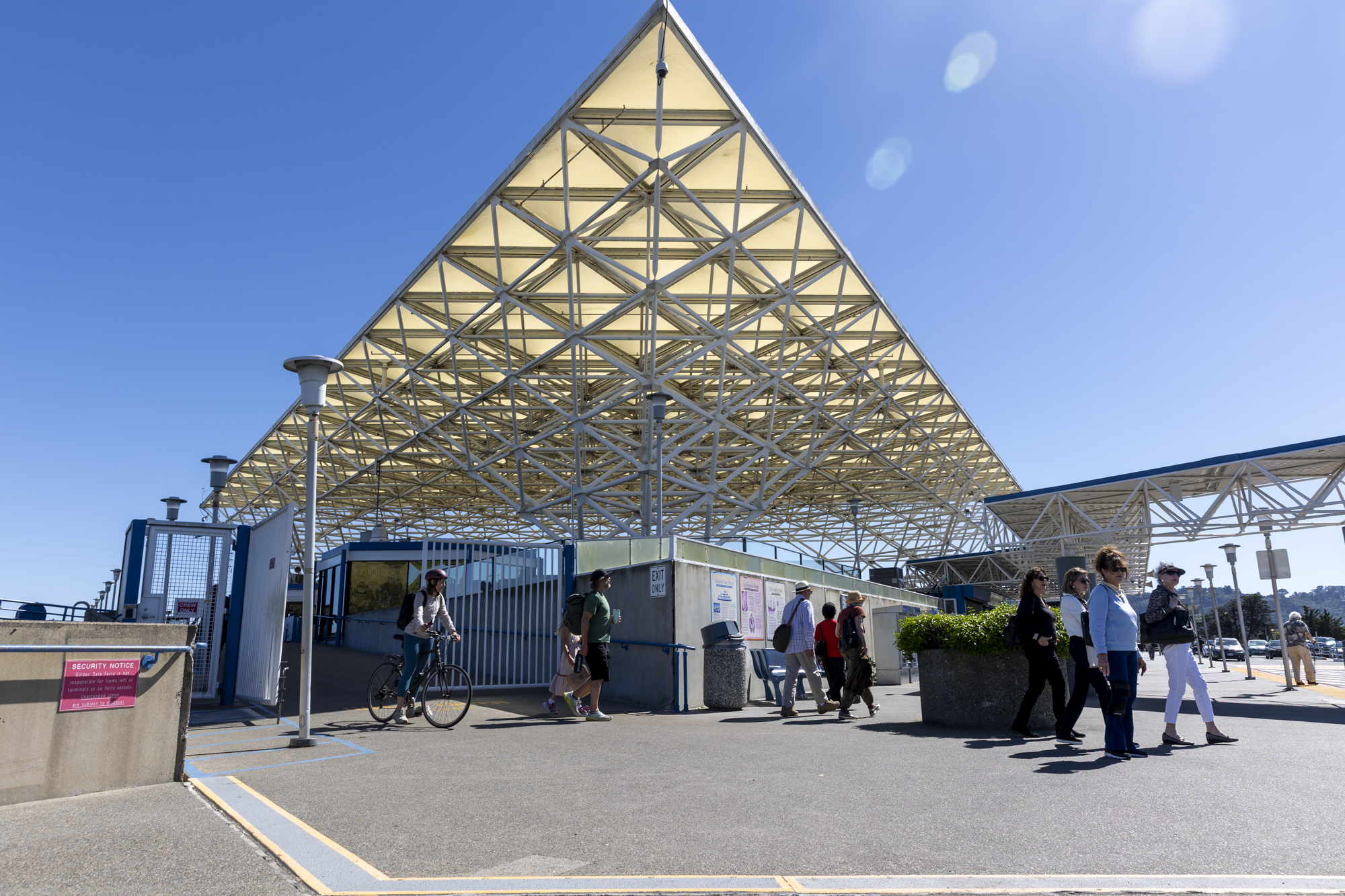
Adhiti Bandlamudi: I join a group of commuters and tourists headed from the San Francisco Ferry building to Larkspur on a beautiful sunny day.
Adhiti Bandlamudi in scene : That was so easy, I could use my clipper card.
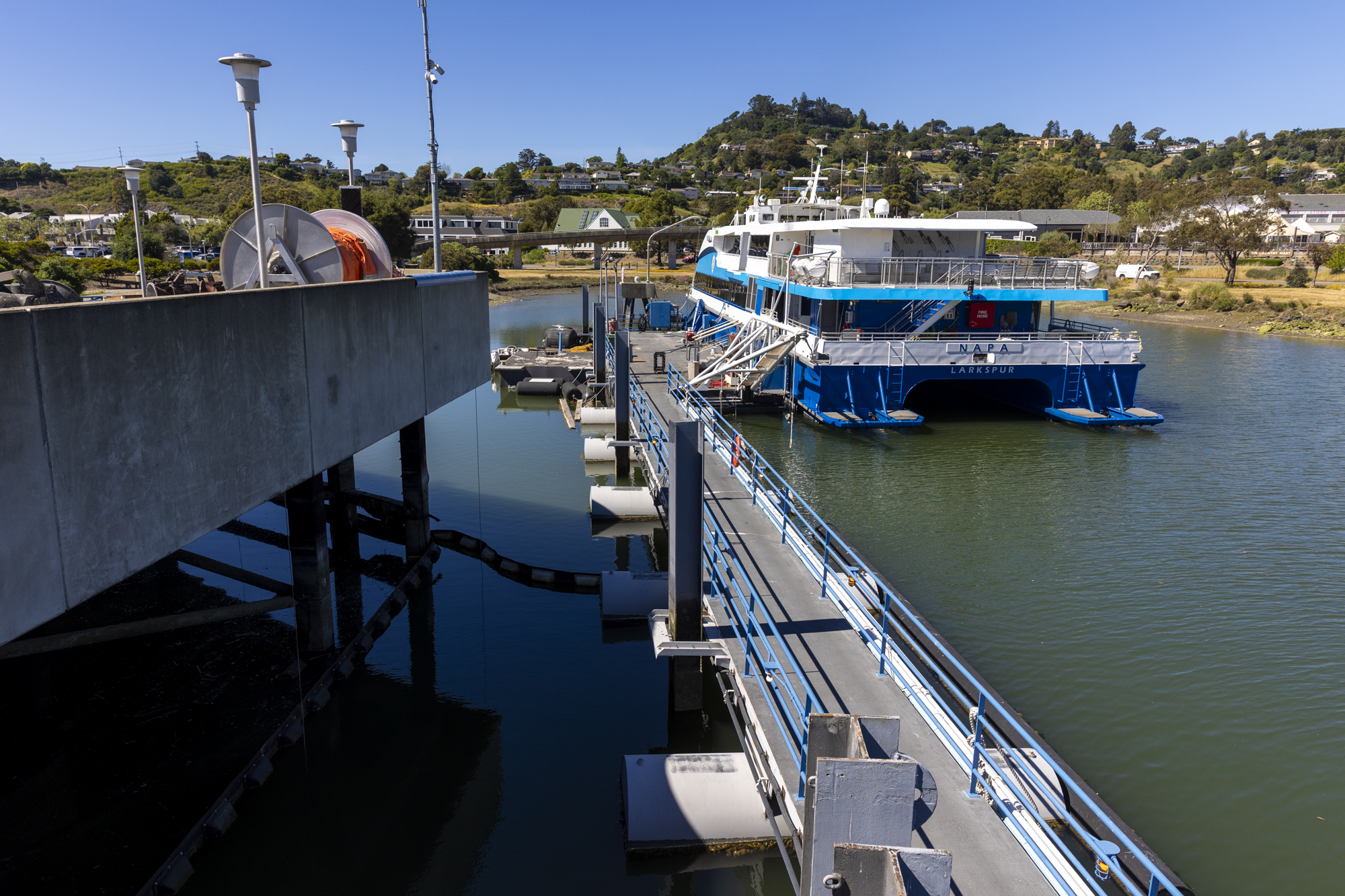
Adhiti Bandlamudi: I’m on my way to the maintenance shop housed at the Larkspur Ferry Terminal, where a lot of the Golden Gate Ferries get repairs.
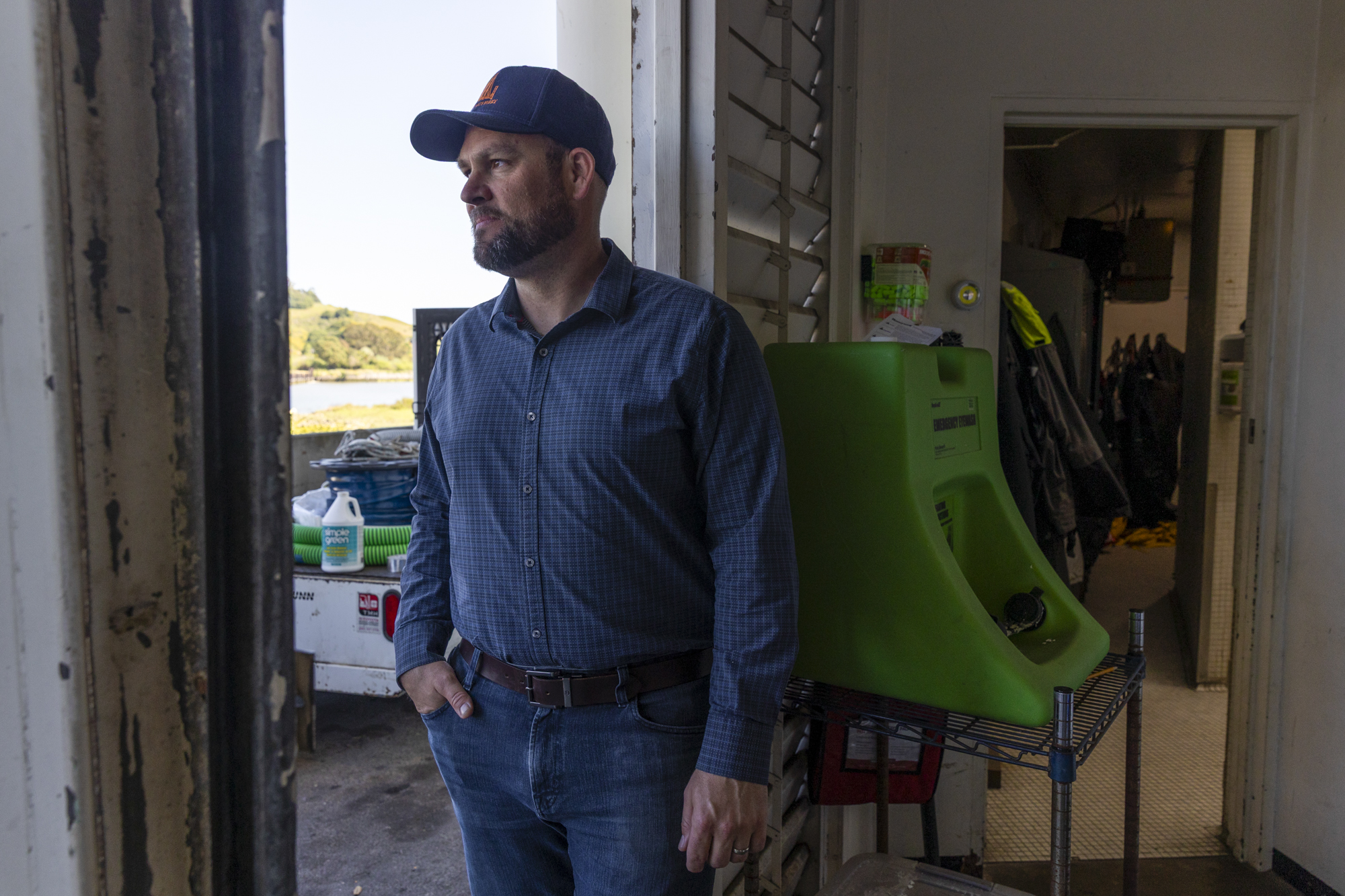
Mike Hoffman: These ferry vessels go back and forth from San Francisco to Marin County all day long and they go full speed.
Adhiti Bandlamudi: Mike Hoffman is the Deputy General Manager of Golden Gate Ferry.
Mike Hoffman: So imagine driving your vehicle to and from work all day along and doing it full speed, you’re probably going to have a decent amount of maintenance that needs to be required to keep your car running. It’s no different for our ferry vessels.
Adhiti Bandlamudi: The average ferry has a lifespan of about 25 years. And it’s mechanic Ray Garibaldi’s job to keep them running smoothly throughout.
Ray Garibaldi: Wow, okay. What is this?
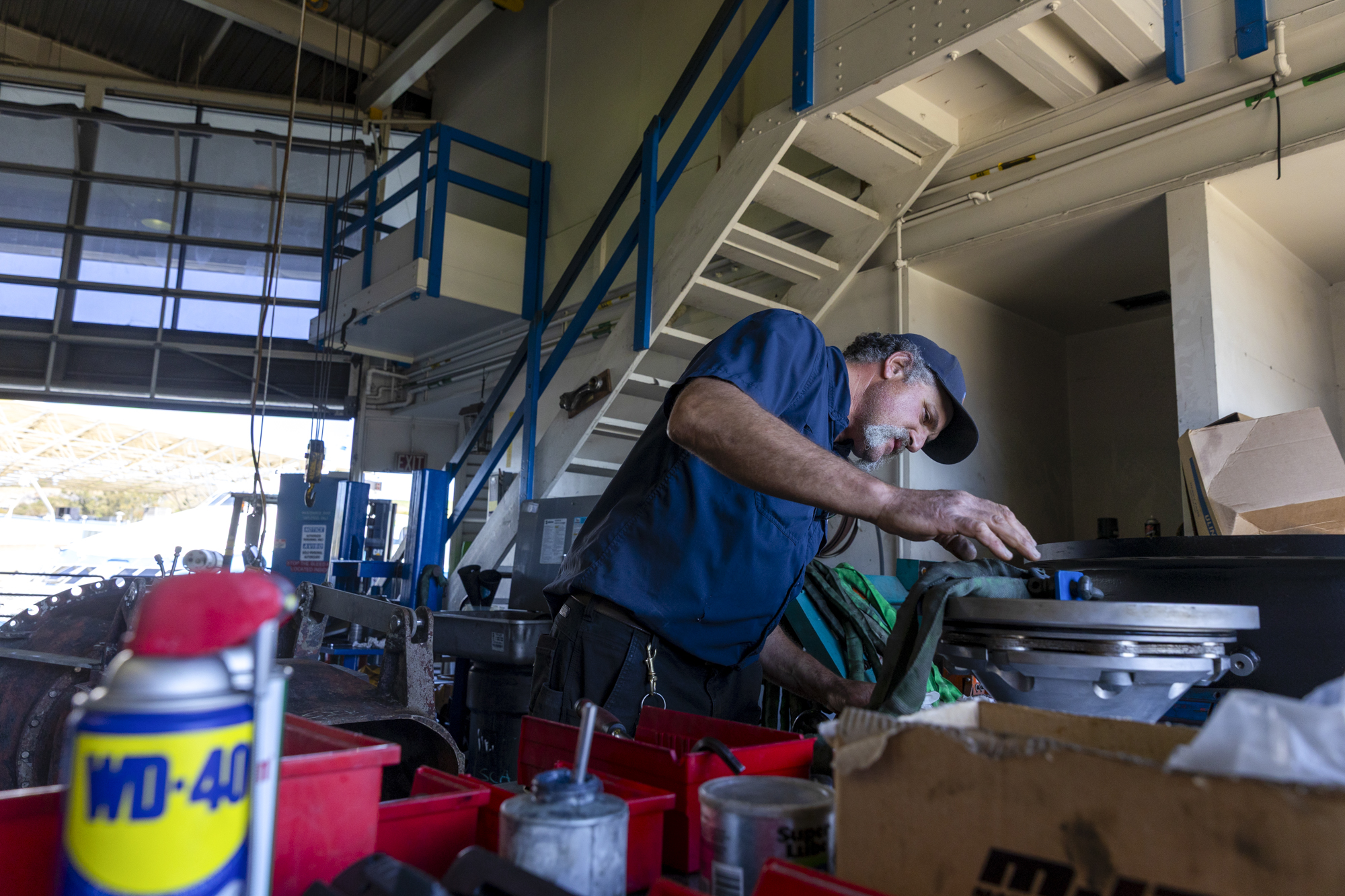
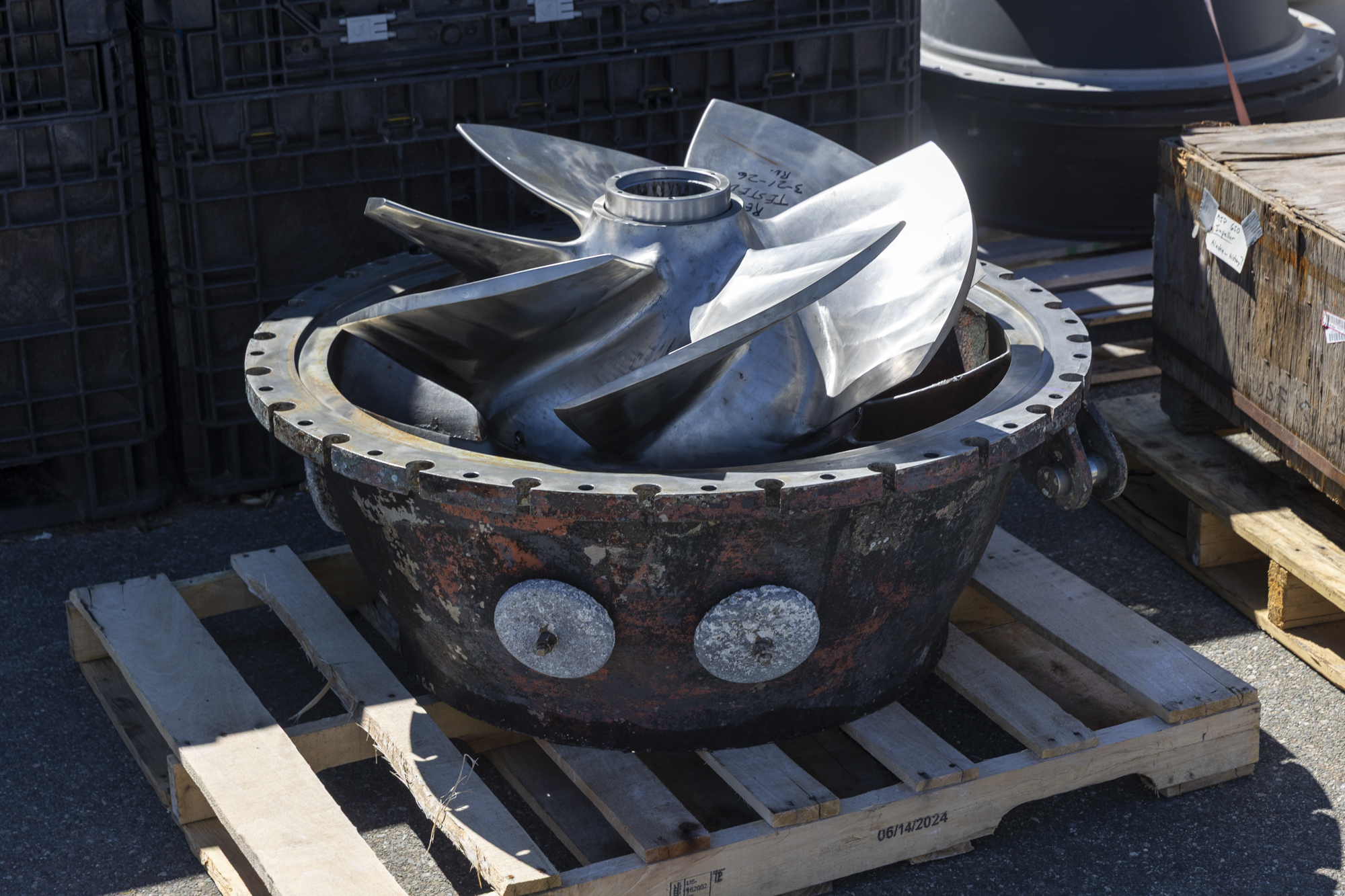
Adhiti Bandlamudi: Ray and I are looking at a ferry jet that has a fishing line and other debris caught in the rotors. It looks like the metal blade at the bottom of a blender…just much larger. All seven of Golden Gate Ferry’s vessels cycle through this shop at the Larkspur terminal at one time or another.
Ray Garibaldi: We can be fabricating parts, welding, rebuilding water jets, working on the main engines, repairing the control systems. So every day is a little bit different.
Adhiti Bandlamudi: There are big machines all over the place– a bandsaw that cuts metal, a big crane and a huge workbench. The walls are lined with nuts and bolts organized into little cubbies.
Ray has been a ferry mechanic for the past 25 years.
Ray Garibaldi: Back in 2001, there was a tech boom going on and a lot of friends and family were getting into the tech industry and I decided to stick with mechanical welding, fabricating, and it’s been a great career for me.
Adhiti Bandlamudi: He and his colleagues at the Larkspur shop handle all the routine maintenance issues that come up. Everything from changing lightbulbs to fixing the main engine.
If the team can’t get a boat running safely, that will cause service delays.
Ray Garibaldi: We have three shifts, seven days a week.
Adhiti Bandlamudi: There are usually four mechanics on each shift.
Ray Garibaldi: And each shift kind of does things a little different. You know, day shift takes care of the terminals and rebuilding some of the major components and swing shift starts doing the maintenance and repairs and then graveyard kind of gets scheduled for. Get the boats ready to go out again in the morning if there’s any issues that need to be taken care of.
Adhiti Bandlamudi: Ray says, when he travels on a ferry now, he pays attention in a different way..
Ray Garibaldi: Boats are like a big tuning fork you could have you know a problem in one part of the boat and the sound will travel through the boat and end up in a different spot.
Adhiti Bandlamudi: In addition to these routine maintenance needs, every ferry boat goes through inspections every 2-3 years…and major refurbishments every 5-6 years.
Olivia Allen-Price: More on that after this quick break.
Sponsor message
Olivia Allen-Price: We’ve learned what happens when one of our ferries needs day to day repairs, but where do they go when they need more intense repairs? KQED reporter Adhiti Bandlamudi takes us into a ferry’s engine room to find out.
Adhiti Bandlamudi: Look closely next time you’re on a ferry, and you might notice a hatch on the floor.
Adhiti Bandlamudi in scene: Oh, this is where we’re going.
Adhiti Bandlamudi: Ray Garibaldi leads me down a narrow ladder into the belly of the vessel.
Adhiti Bandlamudi in scene: Okay, so, uh, where, where are we, Ray?
Ray Garibaldi: Oh, we’re in the main engine room.
Adhiti Bandlamudi in scene: Oh man, okay, we’re like basically surrounded by pipes and ducts and nice and toasty in here.
Ray Garibaldi: Yeah, it always stays warm in the engine room.
Adhiti Bandlamudi in scene: When things break in this room, Ray is looking at a longer repair. Changing fuel pumps and other machinery can be week-long fixes. It’s warm in here… I’m starting to sweat.
Adhiti Bandlamudi in scene: I would imagine if it’s like cold outside then it would be really nice to work in the engine.
Ray Garibaldi: Yes, it is.
Adhiti Bandlamudi: Every two years, the U.S. Coast Guard inspects the engine room to make sure everything is up to code. They also look for signs of weakness in the hull of the boat.
Tom Hall is the Director of Operations and Customer Experience of SF Bay Ferry serving the East Bay. He explains the aluminum boats are light and strong, but susceptible to water damage.
Tom Hall: So what they’re inspecting for is any intrusions, which kind of looks like little holes cropping up.
Adhiti Bandlamudi: If they find any, those get patched.
Tom says, after the Golden Gate and Bay Bridges were built, ferry ridership dropped dramatically. But when the 1989 Loma Prieta earthquake damaged the Bay Bridge, lawmakers realized people needed an alternative way to evacuate in an emergency.
Immediately following the earthquake, smaller ferry services picked up the slack. And in 2011, SF Bay Ferry was born.
Tom Hall: Our core mission is emergency water transit in the event of a natural disaster or another event that disrupts the existing transportation system in the Bay area. Since we have all the boats and terminals to be ready for that, we might as well, you known, moonlight as a ferry operator in the interim.
Adhiti Bandlamudi: It’s now grown to be the largest ferry operator in the region, carrying three quarters of passengers on its routes to San Francisco, South San Francisco,Vallejo, Richmond, Alameda and Oakland.
Every five or six years, all ferries need a little bit of extra maintenance love. That means using a lift to hoist the vessel out of the water. Then, maintenance crews get to work replacing stuff like the carpets, electronics and other technology.
Much of that more intensive maintenance also happens here in the bay.
Tom Hall: At our two maintenance facilities, we have one in Alameda, our Central Bay facility, and the second one is in Vallejo on Mare Island. They’re both on decommissioned military bases.
Adhiti Bandlamudi: After 25 years of service, vessels often have to be decommissioned because they no longer meet state emissions standards. So, they get sold to other states.
Tom Hall: We have a couple of boats in Alaska that are serving as whale watching boats and so yeah, they always seem to have a second life.
Music transition
Olivia Allen-Price: I know a lot more about how ferries get fixed, Adhiti, but I’m wondering about their future. So many transit agencies have really been struggling these past few years. So, how is the ferry system doing?
Adhiti Bandlamudi: SF Bay Ferry is actually seeing more people use its service now than it did before the pandemic. But like other transit agencies, they took a huge hit when commuters were told to stay home and shelter in place. Tom Hall said, when people started coming back, they saw different patterns emerging. With people working from home some days of the week, they can’t rely on consistent weekday ridership. But–
Tom Hall: We’ve seen a tremendous amount of growth in our weekend ridership, which is why we have so much weekend service now.
Adhiti Bandlamudi: Even though ridership is up now, they haven’t fully recovered. Both ferry services get some money from bridge tolls and local governments, but both still rely on fares. In fact, there’s a bond initiative making its way to the November ballot which could provide funding for BART and other transit agencies. If it passes, the two ferry agencies could get some money out of it.
Olivia Allen-Price: Since people really like ferries, we often get questions about whether service will expand in the future. Can you tell us anything about that?
Adhiti Bandlamudi: Well, SF Bay Ferry, which serves the East Bay, has long wanted to expand its service to Treasure Island and Mission Bay. And eventually, it could even run vessels to Berkeley and Redwood City too.
But something that’s happening sooner– Golden Gate Ferry, which operates in the North Bay, is slowly replacing their fleet of vessels with brand new ships, thanks to some federal dollars that came through. The first vessel hits the water next year. The new ships will have elevators, which will make the ships more accessible. They’ll also be more fuel efficient, and will have more bike parking.
Olivia Allen-Price: Adhiti Bandlamudi covers housing and transit for KQED. Thanks so much for diving into this topic!
Adhiti Bandlamudi: My pleasure! It was a wild, but mostly pleasant ride!
Olivia Allen-Price: Just like the ferries – KQED also needs some funding! Help us out by becoming a sustaining member. It’s an ongoing monthly donation that happens automatically – and you can change or cancel at any time. Learn more at KQED.org/donate. Thanks!
Olivia: Bay Curious is made by Katrina Schwartz, Christopher Beale and me Olivia Allen-Price.
We get extra support from Maha Sanad, Katie Sprenger, Jen Chien, Ethan Toven-Lindsey and everyone on Team KQED.
Some members of the KQED podcast team are represented by The Screen Actors Guild, American Federation of Television and Radio Artists, San Francisco Northern California Local.
I’m Olivia Allen-Price. Have a wonderful week.