window.__IS_SSR__=true
window.__INITIAL_STATE__={
"attachmentsReducer": {
"audio_0": {
"type": "attachments",
"id": "audio_0",
"imgSizes": {
"kqedFullSize": {
"file": "https://ww2.kqed.org/news/wp-content/themes/KQED-unified/img/audio_bgs/background0.jpg"
}
}
},
"audio_1": {
"type": "attachments",
"id": "audio_1",
"imgSizes": {
"kqedFullSize": {
"file": "https://ww2.kqed.org/news/wp-content/themes/KQED-unified/img/audio_bgs/background1.jpg"
}
}
},
"audio_2": {
"type": "attachments",
"id": "audio_2",
"imgSizes": {
"kqedFullSize": {
"file": "https://ww2.kqed.org/news/wp-content/themes/KQED-unified/img/audio_bgs/background2.jpg"
}
}
},
"audio_3": {
"type": "attachments",
"id": "audio_3",
"imgSizes": {
"kqedFullSize": {
"file": "https://ww2.kqed.org/news/wp-content/themes/KQED-unified/img/audio_bgs/background3.jpg"
}
}
},
"audio_4": {
"type": "attachments",
"id": "audio_4",
"imgSizes": {
"kqedFullSize": {
"file": "https://ww2.kqed.org/news/wp-content/themes/KQED-unified/img/audio_bgs/background4.jpg"
}
}
},
"placeholder": {
"type": "attachments",
"id": "placeholder",
"imgSizes": {
"thumbnail": {
"file": "https://cdn.kqed.org/wp-content/uploads/2024/12/KQED-Default-Image-816638274-2000x1333-1-160x107.jpg",
"width": 160,
"height": 107,
"mimeType": "image/jpeg"
},
"medium": {
"file": "https://cdn.kqed.org/wp-content/uploads/2024/12/KQED-Default-Image-816638274-2000x1333-1-800x533.jpg",
"width": 800,
"height": 533,
"mimeType": "image/jpeg"
},
"medium_large": {
"file": "https://cdn.kqed.org/wp-content/uploads/2024/12/KQED-Default-Image-816638274-2000x1333-1-768x512.jpg",
"width": 768,
"height": 512,
"mimeType": "image/jpeg"
},
"large": {
"file": "https://cdn.kqed.org/wp-content/uploads/2024/12/KQED-Default-Image-816638274-2000x1333-1-1020x680.jpg",
"width": 1020,
"height": 680,
"mimeType": "image/jpeg"
},
"1536x1536": {
"file": "https://cdn.kqed.org/wp-content/uploads/2024/12/KQED-Default-Image-816638274-2000x1333-1-1536x1024.jpg",
"width": 1536,
"height": 1024,
"mimeType": "image/jpeg"
},
"fd-lrg": {
"file": "https://cdn.kqed.org/wp-content/uploads/2024/12/KQED-Default-Image-816638274-2000x1333-1-1536x1024.jpg",
"width": 1536,
"height": 1024,
"mimeType": "image/jpeg"
},
"fd-med": {
"file": "https://cdn.kqed.org/wp-content/uploads/2024/12/KQED-Default-Image-816638274-2000x1333-1-1020x680.jpg",
"width": 1020,
"height": 680,
"mimeType": "image/jpeg"
},
"fd-sm": {
"file": "https://cdn.kqed.org/wp-content/uploads/2024/12/KQED-Default-Image-816638274-2000x1333-1-800x533.jpg",
"width": 800,
"height": 533,
"mimeType": "image/jpeg"
},
"post-thumbnail": {
"file": "https://cdn.kqed.org/wp-content/uploads/2024/12/KQED-Default-Image-816638274-2000x1333-1-672x372.jpg",
"width": 672,
"height": 372,
"mimeType": "image/jpeg"
},
"twentyfourteen-full-width": {
"file": "https://cdn.kqed.org/wp-content/uploads/2024/12/KQED-Default-Image-816638274-2000x1333-1-1038x576.jpg",
"width": 1038,
"height": 576,
"mimeType": "image/jpeg"
},
"xxsmall": {
"file": "https://cdn.kqed.org/wp-content/uploads/2024/12/KQED-Default-Image-816638274-2000x1333-1-160x107.jpg",
"width": 160,
"height": 107,
"mimeType": "image/jpeg"
},
"xsmall": {
"file": "https://cdn.kqed.org/wp-content/uploads/2024/12/KQED-Default-Image-816638274-2000x1333-1-672x372.jpg",
"width": 672,
"height": 372,
"mimeType": "image/jpeg"
},
"small": {
"file": "https://cdn.kqed.org/wp-content/uploads/2024/12/KQED-Default-Image-816638274-2000x1333-1-672x372.jpg",
"width": 672,
"height": 372,
"mimeType": "image/jpeg"
},
"xlarge": {
"file": "https://cdn.kqed.org/wp-content/uploads/2024/12/KQED-Default-Image-816638274-2000x1333-1-1020x680.jpg",
"width": 1020,
"height": 680,
"mimeType": "image/jpeg"
},
"full-width": {
"file": "https://cdn.kqed.org/wp-content/uploads/2024/12/KQED-Default-Image-816638274-2000x1333-1-1920x1280.jpg",
"width": 1920,
"height": 1280,
"mimeType": "image/jpeg"
},
"guest-author-32": {
"file": "https://cdn.kqed.org/wp-content/uploads/2025/01/KQED-Default-Image-816638274-1333x1333-1-160x160.jpg",
"width": 32,
"height": 32,
"mimeType": "image/jpeg"
},
"guest-author-50": {
"file": "https://cdn.kqed.org/wp-content/uploads/2025/01/KQED-Default-Image-816638274-1333x1333-1-160x160.jpg",
"width": 50,
"height": 50,
"mimeType": "image/jpeg"
},
"guest-author-64": {
"file": "https://cdn.kqed.org/wp-content/uploads/2025/01/KQED-Default-Image-816638274-1333x1333-1-160x160.jpg",
"width": 64,
"height": 64,
"mimeType": "image/jpeg"
},
"guest-author-96": {
"file": "https://cdn.kqed.org/wp-content/uploads/2025/01/KQED-Default-Image-816638274-1333x1333-1-160x160.jpg",
"width": 96,
"height": 96,
"mimeType": "image/jpeg"
},
"guest-author-128": {
"file": "https://cdn.kqed.org/wp-content/uploads/2025/01/KQED-Default-Image-816638274-1333x1333-1-160x160.jpg",
"width": 128,
"height": 128,
"mimeType": "image/jpeg"
},
"detail": {
"file": "https://cdn.kqed.org/wp-content/uploads/2025/01/KQED-Default-Image-816638274-1333x1333-1-160x160.jpg",
"width": 160,
"height": 160,
"mimeType": "image/jpeg"
},
"kqedFullSize": {
"file": "https://cdn.kqed.org/wp-content/uploads/2024/12/KQED-Default-Image-816638274-2000x1333-1.jpg",
"width": 2000,
"height": 1333
}
}
},
"news_12015604": {
"type": "attachments",
"id": "news_12015604",
"meta": {
"index": "attachments_1716263798",
"site": "news",
"id": "12015604",
"found": true
},
"title": "241122-StormHitsBayArea-06-BL",
"publishDate": 1732310299,
"status": "inherit",
"parent": 0,
"modified": 1738615970,
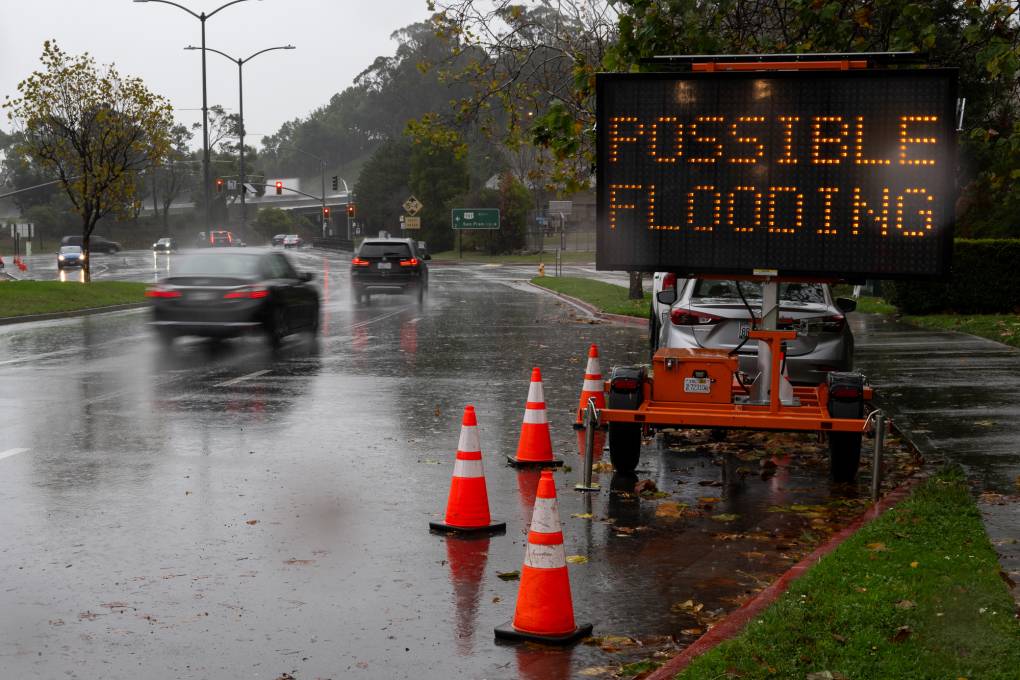
"caption": "A sign says, \"Possible Flooding\" in Marin City on Nov. 22, 2024, during a storm bringing heavy rain and strong winds to the Bay Area. After days of wet weather, two more atmospheric rivers are forecast to drop heavy rain on Northern California this week, increasing flood potential and bringing snow to the mountains.",
"credit": "Beth LaBerge/KQED",
"altTag": null,
"description": null,
"imgSizes": {
"medium": {
"file": "https://cdn.kqed.org/wp-content/uploads/sites/10/2024/11/241122-StormHitsBayArea-06-BL-800x533.jpg",
"width": 800,
"height": 533,
"mimeType": "image/jpeg"
},
"large": {
"file": "https://cdn.kqed.org/wp-content/uploads/sites/10/2024/11/241122-StormHitsBayArea-06-BL-1020x680.jpg",
"width": 1020,
"height": 680,
"mimeType": "image/jpeg"
},
"thumbnail": {
"file": "https://cdn.kqed.org/wp-content/uploads/sites/10/2024/11/241122-StormHitsBayArea-06-BL-160x107.jpg",
"width": 160,
"height": 107,
"mimeType": "image/jpeg"
},
"1536x1536": {
"file": "https://cdn.kqed.org/wp-content/uploads/sites/10/2024/11/241122-StormHitsBayArea-06-BL-1536x1024.jpg",
"width": 1536,
"height": 1024,
"mimeType": "image/jpeg"
},
"post-thumbnail": {
"file": "https://cdn.kqed.org/wp-content/uploads/sites/10/2024/11/241122-StormHitsBayArea-06-BL-672x372.jpg",
"width": 672,
"height": 372,
"mimeType": "image/jpeg"
},
"twentyfourteen-full-width": {
"file": "https://cdn.kqed.org/wp-content/uploads/sites/10/2024/11/241122-StormHitsBayArea-06-BL-1038x576.jpg",
"width": 1038,
"height": 576,
"mimeType": "image/jpeg"
},
"full-width": {
"file": "https://cdn.kqed.org/wp-content/uploads/sites/10/2024/11/241122-StormHitsBayArea-06-BL-1920x1280.jpg",
"width": 1920,
"height": 1280,
"mimeType": "image/jpeg"
},
"kqedFullSize": {
"file": "https://cdn.kqed.org/wp-content/uploads/sites/10/2024/11/241122-StormHitsBayArea-06-BL.jpg",
"width": 2000,
"height": 1333
}
},
"isLoading": false,
"fetchFailed": false
},
"news_12020771": {
"type": "attachments",
"id": "news_12020771",
"meta": {
"index": "attachments_1716263798",
"site": "news",
"id": "12020771",
"found": true
},
"title": "112124_Santa-Rosa-Flooding_AP_CM_01 copy",
"publishDate": 1736359626,
"status": "inherit",
"parent": 12020768,
"modified": 1736359712,
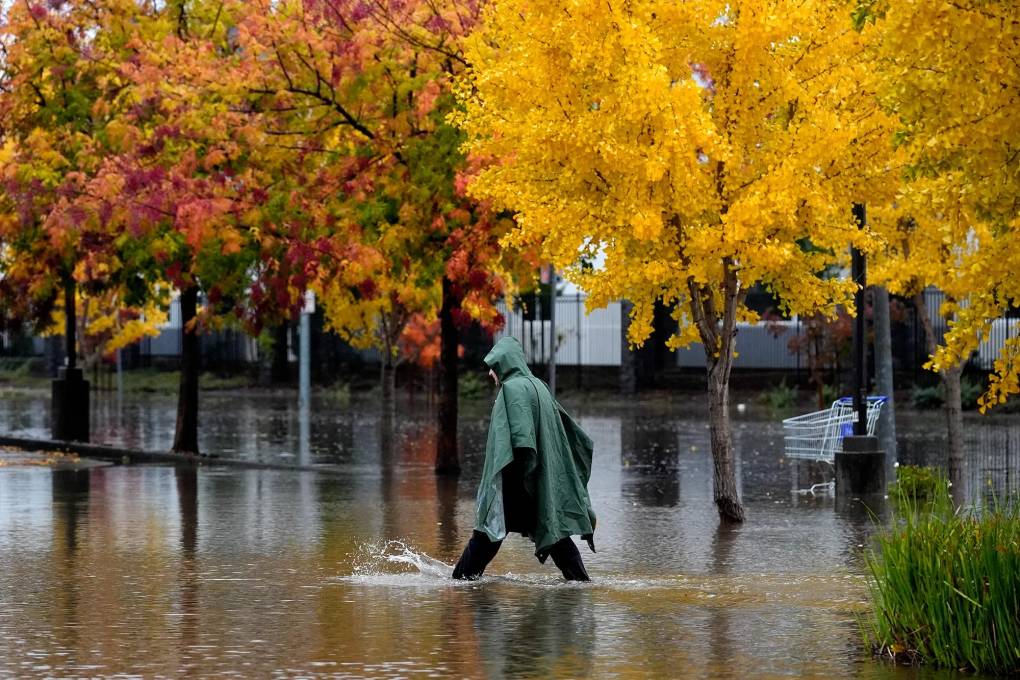
"caption": "A pedestrian walks along a flooded street during a storm in Santa Rosa on Nov. 21, 2024.",
"credit": "Jeff Chiu/AP Photo",
"altTag": "A person in full rain gear walks through a flooded street with trees and some traffic signs in the background, and reflected off the water. It is not raining.",
"description": null,
"imgSizes": {
"medium": {
"file": "https://cdn.kqed.org/wp-content/uploads/sites/10/2025/01/112124_Santa-Rosa-Flooding_AP_CM_01-copy-800x533.jpg",
"width": 800,
"height": 533,
"mimeType": "image/jpeg"
},
"large": {
"file": "https://cdn.kqed.org/wp-content/uploads/sites/10/2025/01/112124_Santa-Rosa-Flooding_AP_CM_01-copy-1020x680.jpg",
"width": 1020,
"height": 680,
"mimeType": "image/jpeg"
},
"thumbnail": {
"file": "https://cdn.kqed.org/wp-content/uploads/sites/10/2025/01/112124_Santa-Rosa-Flooding_AP_CM_01-copy-160x107.jpg",
"width": 160,
"height": 107,
"mimeType": "image/jpeg"
},
"1536x1536": {
"file": "https://cdn.kqed.org/wp-content/uploads/sites/10/2025/01/112124_Santa-Rosa-Flooding_AP_CM_01-copy-1536x1024.jpg",
"width": 1536,
"height": 1024,
"mimeType": "image/jpeg"
},
"post-thumbnail": {
"file": "https://cdn.kqed.org/wp-content/uploads/sites/10/2025/01/112124_Santa-Rosa-Flooding_AP_CM_01-copy-672x372.jpg",
"width": 672,
"height": 372,
"mimeType": "image/jpeg"
},
"twentyfourteen-full-width": {
"file": "https://cdn.kqed.org/wp-content/uploads/sites/10/2025/01/112124_Santa-Rosa-Flooding_AP_CM_01-copy-1038x576.jpg",
"width": 1038,
"height": 576,
"mimeType": "image/jpeg"
},
"full-width": {
"file": "https://cdn.kqed.org/wp-content/uploads/sites/10/2025/01/112124_Santa-Rosa-Flooding_AP_CM_01-copy-1920x1280.jpg",
"width": 1920,
"height": 1280,
"mimeType": "image/jpeg"
},
"kqedFullSize": {
"file": "https://cdn.kqed.org/wp-content/uploads/sites/10/2025/01/112124_Santa-Rosa-Flooding_AP_CM_01-copy.jpg",
"width": 2000,
"height": 1333
}
},
"isLoading": false,
"fetchFailed": false
},
"news_12015605": {
"type": "attachments",
"id": "news_12015605",
"meta": {
"index": "attachments_1716263798",
"site": "news",
"id": "12015605",
"found": true
},
"title": "241122-StormHitsBayArea-10-BL",
"publishDate": 1732310310,
"status": "inherit",
"parent": 0,
"modified": 1738258421,
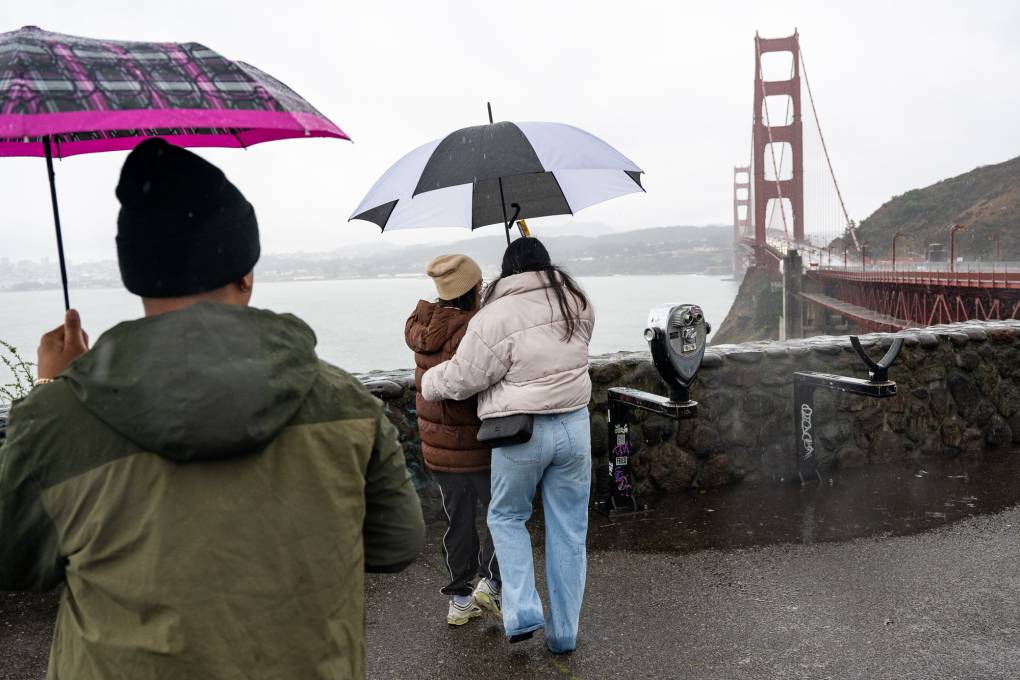
"caption": "(From left) Matthew Macale, Jasmin Macaraeg and Keizha Macale take photos at the Vista Point overlook near Golden Gate Bridge north of San Francisco on Nov. 22, 2024.",
"credit": "Beth LaBerge/KQED",
"altTag": null,
"description": null,
"imgSizes": {
"medium": {
"file": "https://cdn.kqed.org/wp-content/uploads/sites/10/2024/11/241122-StormHitsBayArea-10-BL-800x533.jpg",
"width": 800,
"height": 533,
"mimeType": "image/jpeg"
},
"large": {
"file": "https://cdn.kqed.org/wp-content/uploads/sites/10/2024/11/241122-StormHitsBayArea-10-BL-1020x680.jpg",
"width": 1020,
"height": 680,
"mimeType": "image/jpeg"
},
"thumbnail": {
"file": "https://cdn.kqed.org/wp-content/uploads/sites/10/2024/11/241122-StormHitsBayArea-10-BL-160x107.jpg",
"width": 160,
"height": 107,
"mimeType": "image/jpeg"
},
"1536x1536": {
"file": "https://cdn.kqed.org/wp-content/uploads/sites/10/2024/11/241122-StormHitsBayArea-10-BL-1536x1024.jpg",
"width": 1536,
"height": 1024,
"mimeType": "image/jpeg"
},
"post-thumbnail": {
"file": "https://cdn.kqed.org/wp-content/uploads/sites/10/2024/11/241122-StormHitsBayArea-10-BL-672x372.jpg",
"width": 672,
"height": 372,
"mimeType": "image/jpeg"
},
"twentyfourteen-full-width": {
"file": "https://cdn.kqed.org/wp-content/uploads/sites/10/2024/11/241122-StormHitsBayArea-10-BL-1038x576.jpg",
"width": 1038,
"height": 576,
"mimeType": "image/jpeg"
},
"full-width": {
"file": "https://cdn.kqed.org/wp-content/uploads/sites/10/2024/11/241122-StormHitsBayArea-10-BL-1920x1280.jpg",
"width": 1920,
"height": 1280,
"mimeType": "image/jpeg"
},
"kqedFullSize": {
"file": "https://cdn.kqed.org/wp-content/uploads/sites/10/2024/11/241122-StormHitsBayArea-10-BL.jpg",
"width": 2000,
"height": 1333
}
},
"isLoading": false,
"fetchFailed": false
},
"news_12018591": {
"type": "attachments",
"id": "news_12018591",
"meta": {
"index": "attachments_1716263798",
"site": "news",
"id": "12018591",
"found": true
},
"title": "20241216_SFStormCleanup_GC-17",
"publishDate": 1734399275,
"status": "inherit",
"parent": 0,
"modified": 1734437888,
"caption": "Dianna Stammerjohn searches for an owl’s nest at the site of a fallen pine tree, caused by last weekend’s storm, by the Bison Paddock, in the Outter Richmond neighborhood of San Francisco’s Golden Gate Park on Dec. 16, 2024. Stammerjohn said the owls had been nesting there for years.",
"credit": "Gina Castro/KQED",
"altTag": null,
"description": null,
"imgSizes": {
"medium": {
"file": "https://cdn.kqed.org/wp-content/uploads/sites/10/2024/12/20241216_SFStormCleanup_GC-17-800x533.jpg",
"width": 800,
"height": 533,
"mimeType": "image/jpeg"
},
"large": {
"file": "https://cdn.kqed.org/wp-content/uploads/sites/10/2024/12/20241216_SFStormCleanup_GC-17-1020x679.jpg",
"width": 1020,
"height": 679,
"mimeType": "image/jpeg"
},
"thumbnail": {
"file": "https://cdn.kqed.org/wp-content/uploads/sites/10/2024/12/20241216_SFStormCleanup_GC-17-160x107.jpg",
"width": 160,
"height": 107,
"mimeType": "image/jpeg"
},
"1536x1536": {
"file": "https://cdn.kqed.org/wp-content/uploads/sites/10/2024/12/20241216_SFStormCleanup_GC-17-1536x1023.jpg",
"width": 1536,
"height": 1023,
"mimeType": "image/jpeg"
},
"post-thumbnail": {
"file": "https://cdn.kqed.org/wp-content/uploads/sites/10/2024/12/20241216_SFStormCleanup_GC-17-672x372.jpg",
"width": 672,
"height": 372,
"mimeType": "image/jpeg"
},
"twentyfourteen-full-width": {
"file": "https://cdn.kqed.org/wp-content/uploads/sites/10/2024/12/20241216_SFStormCleanup_GC-17-1038x576.jpg",
"width": 1038,
"height": 576,
"mimeType": "image/jpeg"
},
"full-width": {
"file": "https://cdn.kqed.org/wp-content/uploads/sites/10/2024/12/20241216_SFStormCleanup_GC-17-1920x1279.jpg",
"width": 1920,
"height": 1279,
"mimeType": "image/jpeg"
},
"kqedFullSize": {
"file": "https://cdn.kqed.org/wp-content/uploads/sites/10/2024/12/20241216_SFStormCleanup_GC-17.jpg",
"width": 2000,
"height": 1332
}
},
"isLoading": false,
"fetchFailed": false
},
"news_12015569": {
"type": "attachments",
"id": "news_12015569",
"meta": {
"index": "attachments_1716263798",
"site": "news",
"id": "12015569",
"found": true
},
"title": "241122-StormHitsBayArea-04-BL",
"publishDate": 1732303370,
"status": "inherit",
"parent": 0,
"modified": 1732303410,
"caption": "A vehicle drives through a flooded parking lot in Marin City on Nov. 22, 2024, during a storm bringing heavy rain and strong winds to the Bay Area.",
"credit": "Beth LaBerge/KQED",
"altTag": null,
"description": null,
"imgSizes": {
"medium": {
"file": "https://cdn.kqed.org/wp-content/uploads/sites/10/2024/11/241122-StormHitsBayArea-04-BL-800x533.jpg",
"width": 800,
"height": 533,
"mimeType": "image/jpeg"
},
"large": {
"file": "https://cdn.kqed.org/wp-content/uploads/sites/10/2024/11/241122-StormHitsBayArea-04-BL-1020x680.jpg",
"width": 1020,
"height": 680,
"mimeType": "image/jpeg"
},
"thumbnail": {
"file": "https://cdn.kqed.org/wp-content/uploads/sites/10/2024/11/241122-StormHitsBayArea-04-BL-160x107.jpg",
"width": 160,
"height": 107,
"mimeType": "image/jpeg"
},
"1536x1536": {
"file": "https://cdn.kqed.org/wp-content/uploads/sites/10/2024/11/241122-StormHitsBayArea-04-BL-1536x1024.jpg",
"width": 1536,
"height": 1024,
"mimeType": "image/jpeg"
},
"post-thumbnail": {
"file": "https://cdn.kqed.org/wp-content/uploads/sites/10/2024/11/241122-StormHitsBayArea-04-BL-672x372.jpg",
"width": 672,
"height": 372,
"mimeType": "image/jpeg"
},
"twentyfourteen-full-width": {
"file": "https://cdn.kqed.org/wp-content/uploads/sites/10/2024/11/241122-StormHitsBayArea-04-BL-1038x576.jpg",
"width": 1038,
"height": 576,
"mimeType": "image/jpeg"
},
"full-width": {
"file": "https://cdn.kqed.org/wp-content/uploads/sites/10/2024/11/241122-StormHitsBayArea-04-BL-1920x1280.jpg",
"width": 1920,
"height": 1280,
"mimeType": "image/jpeg"
},
"kqedFullSize": {
"file": "https://cdn.kqed.org/wp-content/uploads/sites/10/2024/11/241122-StormHitsBayArea-04-BL.jpg",
"width": 2000,
"height": 1333
}
},
"isLoading": false,
"fetchFailed": false
},
"news_11938286": {
"type": "attachments",
"id": "news_11938286",
"meta": {
"index": "attachments_1716263798",
"site": "news",
"id": "11938286",
"found": true
},
"parent": 11938251,
"imgSizes": {
"twentyfourteen-full-width": {
"file": "https://ww2.kqed.org/app/uploads/sites/10/2023/01/RS62026_GettyImages-1455813510-qut-1038x576.jpg",
"width": 1038,
"mimeType": "image/jpeg",
"height": 576
},
"thumbnail": {
"file": "https://ww2.kqed.org/app/uploads/sites/10/2023/01/RS62026_GettyImages-1455813510-qut-160x107.jpg",
"width": 160,
"mimeType": "image/jpeg",
"height": 107
},
"post-thumbnail": {
"file": "https://ww2.kqed.org/app/uploads/sites/10/2023/01/RS62026_GettyImages-1455813510-qut-672x372.jpg",
"width": 672,
"mimeType": "image/jpeg",
"height": 372
},
"kqedFullSize": {
"file": "https://ww2.kqed.org/app/uploads/sites/10/2023/01/RS62026_GettyImages-1455813510-qut.jpg",
"width": 1920,
"height": 1280
},
"large": {
"file": "https://ww2.kqed.org/app/uploads/sites/10/2023/01/RS62026_GettyImages-1455813510-qut-1020x680.jpg",
"width": 1020,
"mimeType": "image/jpeg",
"height": 680
},
"1536x1536": {
"file": "https://ww2.kqed.org/app/uploads/sites/10/2023/01/RS62026_GettyImages-1455813510-qut-1536x1024.jpg",
"width": 1536,
"mimeType": "image/jpeg",
"height": 1024
},
"medium": {
"file": "https://ww2.kqed.org/app/uploads/sites/10/2023/01/RS62026_GettyImages-1455813510-qut-800x533.jpg",
"width": 800,
"mimeType": "image/jpeg",
"height": 533
}
},
"publishDate": 1673984678,
"modified": 1673992229,
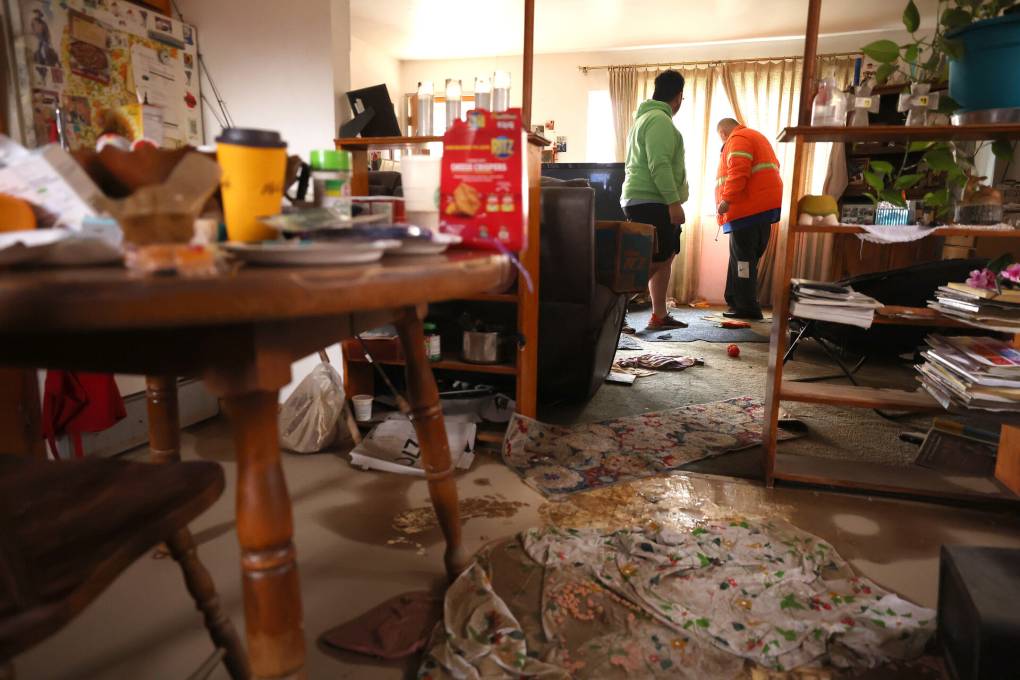
"caption": "Donnie Young (right) and Alex Munoz (left) inspect their flooded home on Jan. 11, 2023, in Planada. The Central Valley town was devastated by widespread flooding after a severe atmospheric river event moved through the area earlier in the week.",
"description": null,
"title": "Multiple Storms Batter California With Flooding Rains",
"credit": "Justin Sullivan/Getty Images",
"status": "inherit",
"altTag": "A photograph showing the interior of a home, probably a living room, that has been damaged by flooding. Two people are in the back of the photo, examining the damage.",
"isLoading": false,
"fetchFailed": false
},
"news_12015626": {
"type": "attachments",
"id": "news_12015626",
"meta": {
"index": "attachments_1716263798",
"site": "news",
"id": "12015626",
"found": true
},
"title": "241122-StormHitsBayArea-28-BL",
"publishDate": 1732312949,
"status": "inherit",
"parent": 0,
"modified": 1732312986,
"caption": "A person runs through a flooded area in the Upper Haight neighborhood in San Francisco on Nov. 22, 2024, during a storm bringing heavy rain and strong winds to the Bay Area.",
"credit": "Beth LaBerge/KQED",
"altTag": null,
"description": null,
"imgSizes": {
"medium": {
"file": "https://cdn.kqed.org/wp-content/uploads/sites/10/2024/11/241122-StormHitsBayArea-28-BL-800x533.jpg",
"width": 800,
"height": 533,
"mimeType": "image/jpeg"
},
"large": {
"file": "https://cdn.kqed.org/wp-content/uploads/sites/10/2024/11/241122-StormHitsBayArea-28-BL-1020x680.jpg",
"width": 1020,
"height": 680,
"mimeType": "image/jpeg"
},
"thumbnail": {
"file": "https://cdn.kqed.org/wp-content/uploads/sites/10/2024/11/241122-StormHitsBayArea-28-BL-160x107.jpg",
"width": 160,
"height": 107,
"mimeType": "image/jpeg"
},
"1536x1536": {
"file": "https://cdn.kqed.org/wp-content/uploads/sites/10/2024/11/241122-StormHitsBayArea-28-BL-1536x1024.jpg",
"width": 1536,
"height": 1024,
"mimeType": "image/jpeg"
},
"post-thumbnail": {
"file": "https://cdn.kqed.org/wp-content/uploads/sites/10/2024/11/241122-StormHitsBayArea-28-BL-672x372.jpg",
"width": 672,
"height": 372,
"mimeType": "image/jpeg"
},
"twentyfourteen-full-width": {
"file": "https://cdn.kqed.org/wp-content/uploads/sites/10/2024/11/241122-StormHitsBayArea-28-BL-1038x576.jpg",
"width": 1038,
"height": 576,
"mimeType": "image/jpeg"
},
"full-width": {
"file": "https://cdn.kqed.org/wp-content/uploads/sites/10/2024/11/241122-StormHitsBayArea-28-BL-1920x1280.jpg",
"width": 1920,
"height": 1280,
"mimeType": "image/jpeg"
},
"kqedFullSize": {
"file": "https://cdn.kqed.org/wp-content/uploads/sites/10/2024/11/241122-StormHitsBayArea-28-BL.jpg",
"width": 2000,
"height": 1333
}
},
"isLoading": false,
"fetchFailed": false
},
"news_12015687": {
"type": "attachments",
"id": "news_12015687",
"meta": {
"index": "attachments_1716263798",
"site": "news",
"id": "12015687",
"found": true
},
"title": "241122-StormHitsBayArea-28-BL_qed",
"publishDate": 1732322171,
"status": "inherit",
"parent": 12015679,
"modified": 1732322265,
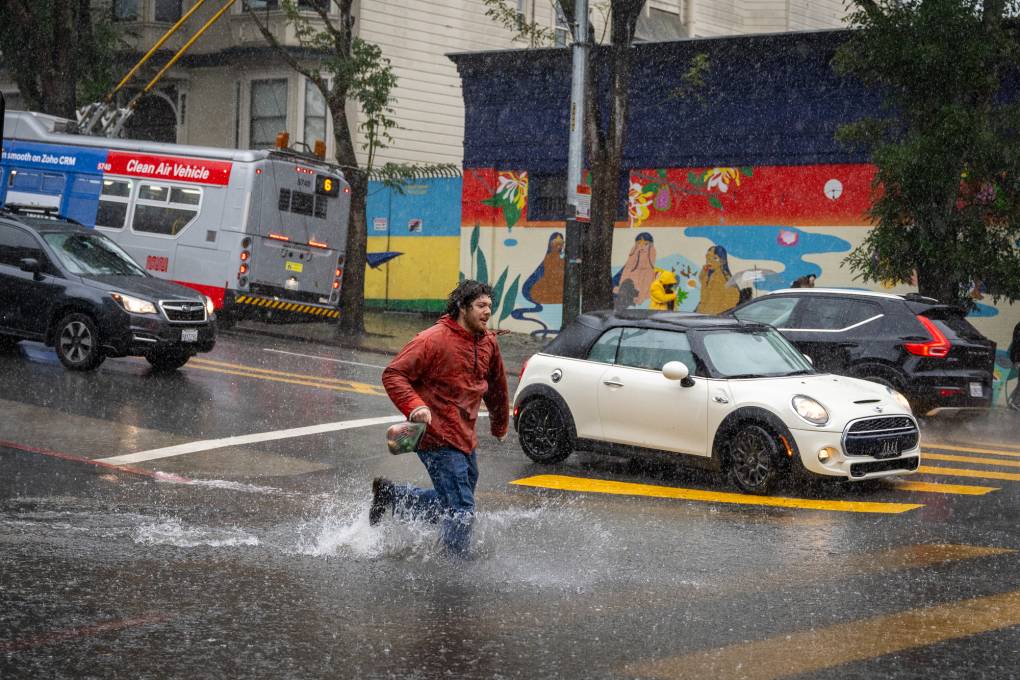
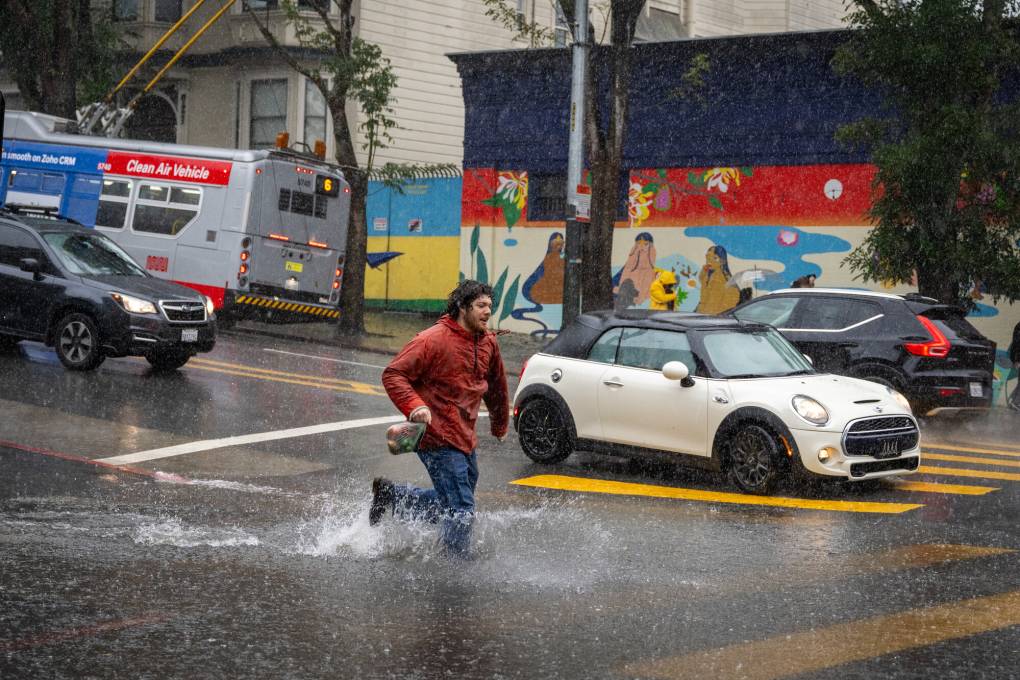
"caption": "A man runs through a flooded street in San Francisco's Upper Haight neighborhood on Nov. 22, 2024.",
"credit": "Beth LaBerge/KQED",
"altTag": "A man runs through a flooded road.",
"description": null,
"imgSizes": {
"medium": {
"file": "https://cdn.kqed.org/wp-content/uploads/sites/10/2024/11/241122-StormHitsBayArea-28-BL_qed-800x533.jpg",
"width": 800,
"height": 533,
"mimeType": "image/jpeg"
},
"large": {
"file": "https://cdn.kqed.org/wp-content/uploads/sites/10/2024/11/241122-StormHitsBayArea-28-BL_qed-1020x680.jpg",
"width": 1020,
"height": 680,
"mimeType": "image/jpeg"
},
"thumbnail": {
"file": "https://cdn.kqed.org/wp-content/uploads/sites/10/2024/11/241122-StormHitsBayArea-28-BL_qed-160x107.jpg",
"width": 160,
"height": 107,
"mimeType": "image/jpeg"
},
"1536x1536": {
"file": "https://cdn.kqed.org/wp-content/uploads/sites/10/2024/11/241122-StormHitsBayArea-28-BL_qed-1536x1024.jpg",
"width": 1536,
"height": 1024,
"mimeType": "image/jpeg"
},
"post-thumbnail": {
"file": "https://cdn.kqed.org/wp-content/uploads/sites/10/2024/11/241122-StormHitsBayArea-28-BL_qed-672x372.jpg",
"width": 672,
"height": 372,
"mimeType": "image/jpeg"
},
"twentyfourteen-full-width": {
"file": "https://cdn.kqed.org/wp-content/uploads/sites/10/2024/11/241122-StormHitsBayArea-28-BL_qed-1038x576.jpg",
"width": 1038,
"height": 576,
"mimeType": "image/jpeg"
},
"full-width": {
"file": "https://cdn.kqed.org/wp-content/uploads/sites/10/2024/11/241122-StormHitsBayArea-28-BL_qed-1920x1280.jpg",
"width": 1920,
"height": 1280,
"mimeType": "image/jpeg"
},
"kqedFullSize": {
"file": "https://cdn.kqed.org/wp-content/uploads/sites/10/2024/11/241122-StormHitsBayArea-28-BL_qed.jpg",
"width": 1999,
"height": 1333
}
},
"isLoading": false,
"fetchFailed": false
},
"news_12015508": {
"type": "attachments",
"id": "news_12015508",
"meta": {
"index": "attachments_1716263798",
"site": "news",
"id": "12015508",
"found": true
},
"title": "pajaro-residents-674096e98096f",
"publishDate": 1732286219,
"status": "inherit",
"parent": 12015507,
"modified": 1732286404,
"caption": null,
"credit": "Erin Malsbury/KAZU News",
"altTag": "pajaro",
"description": null,
"imgSizes": {
"medium": {
"file": "https://cdn.kqed.org/wp-content/uploads/sites/10/2024/11/pajaro-residents-674096e98096f-800x534.jpg",
"width": 800,
"height": 534,
"mimeType": "image/jpeg"
},
"large": {
"file": "https://cdn.kqed.org/wp-content/uploads/sites/10/2024/11/pajaro-residents-674096e98096f-1020x680.jpg",
"width": 1020,
"height": 680,
"mimeType": "image/jpeg"
},
"thumbnail": {
"file": "https://cdn.kqed.org/wp-content/uploads/sites/10/2024/11/pajaro-residents-674096e98096f-160x107.jpg",
"width": 160,
"height": 107,
"mimeType": "image/jpeg"
},
"1536x1536": {
"file": "https://cdn.kqed.org/wp-content/uploads/sites/10/2024/11/pajaro-residents-674096e98096f-1536x1025.jpg",
"width": 1536,
"height": 1025,
"mimeType": "image/jpeg"
},
"post-thumbnail": {
"file": "https://cdn.kqed.org/wp-content/uploads/sites/10/2024/11/pajaro-residents-674096e98096f-672x372.jpg",
"width": 672,
"height": 372,
"mimeType": "image/jpeg"
},
"twentyfourteen-full-width": {
"file": "https://cdn.kqed.org/wp-content/uploads/sites/10/2024/11/pajaro-residents-674096e98096f-1038x576.jpg",
"width": 1038,
"height": 576,
"mimeType": "image/jpeg"
},
"kqedFullSize": {
"file": "https://cdn.kqed.org/wp-content/uploads/sites/10/2024/11/pajaro-residents-674096e98096f.jpg",
"width": 1760,
"height": 1174
}
},
"isLoading": false,
"fetchFailed": false
},
"news_12014999": {
"type": "attachments",
"id": "news_12014999",
"meta": {
"index": "attachments_1716263798",
"site": "news",
"id": "12014999",
"found": true
},
"title": "03292023_kqed_marchrain 058_qed",
"publishDate": 1732046360,
"status": "inherit",
"parent": 0,
"modified": 1732046417,
"caption": "A pedestrian walks through a pillar of steam as they cross the street in downtown San Francisco on March 29, 2023. ",
"credit": "Kori Suzuki/KQED News",
"altTag": null,
"description": null,
"imgSizes": {
"medium": {
"file": "https://cdn.kqed.org/wp-content/uploads/sites/10/2024/11/03292023_kqed_marchrain-058_qed-800x532.jpg",
"width": 800,
"height": 532,
"mimeType": "image/jpeg"
},
"large": {
"file": "https://cdn.kqed.org/wp-content/uploads/sites/10/2024/11/03292023_kqed_marchrain-058_qed-1020x679.jpg",
"width": 1020,
"height": 679,
"mimeType": "image/jpeg"
},
"thumbnail": {
"file": "https://cdn.kqed.org/wp-content/uploads/sites/10/2024/11/03292023_kqed_marchrain-058_qed-160x106.jpg",
"width": 160,
"height": 106,
"mimeType": "image/jpeg"
},
"1536x1536": {
"file": "https://cdn.kqed.org/wp-content/uploads/sites/10/2024/11/03292023_kqed_marchrain-058_qed-1536x1022.jpg",
"width": 1536,
"height": 1022,
"mimeType": "image/jpeg"
},
"post-thumbnail": {
"file": "https://cdn.kqed.org/wp-content/uploads/sites/10/2024/11/03292023_kqed_marchrain-058_qed-672x372.jpg",
"width": 672,
"height": 372,
"mimeType": "image/jpeg"
},
"twentyfourteen-full-width": {
"file": "https://cdn.kqed.org/wp-content/uploads/sites/10/2024/11/03292023_kqed_marchrain-058_qed-1038x576.jpg",
"width": 1038,
"height": 576,
"mimeType": "image/jpeg"
},
"full-width": {
"file": "https://cdn.kqed.org/wp-content/uploads/sites/10/2024/11/03292023_kqed_marchrain-058_qed-1920x1278.jpg",
"width": 1920,
"height": 1278,
"mimeType": "image/jpeg"
},
"kqedFullSize": {
"file": "https://cdn.kqed.org/wp-content/uploads/sites/10/2024/11/03292023_kqed_marchrain-058_qed.jpg",
"width": 2000,
"height": 1331
}
},
"isLoading": false,
"fetchFailed": false
},
"news_11974721": {
"type": "attachments",
"id": "news_11974721",
"meta": {
"index": "attachments_1716263798",
"site": "news",
"id": "11974721",
"found": true
},
"parent": 11974714,
"imgSizes": {
"twentyfourteen-full-width": {
"file": "https://cdn.kqed.org/wp-content/uploads/sites/10/2024/02/AP24036055261233-1038x576.jpg",
"width": 1038,
"mimeType": "image/jpeg",
"height": 576
},
"thumbnail": {
"file": "https://cdn.kqed.org/wp-content/uploads/sites/10/2024/02/AP24036055261233-160x106.jpg",
"width": 160,
"mimeType": "image/jpeg",
"height": 106
},
"post-thumbnail": {
"file": "https://cdn.kqed.org/wp-content/uploads/sites/10/2024/02/AP24036055261233-672x372.jpg",
"width": 672,
"mimeType": "image/jpeg",
"height": 372
},
"kqedFullSize": {
"file": "https://cdn.kqed.org/wp-content/uploads/sites/10/2024/02/AP24036055261233-scaled.jpg",
"width": 2560,
"height": 1703
},
"2048x2048": {
"file": "https://cdn.kqed.org/wp-content/uploads/sites/10/2024/02/AP24036055261233-2048x1363.jpg",
"width": 2048,
"mimeType": "image/jpeg",
"height": 1363
},
"large": {
"file": "https://cdn.kqed.org/wp-content/uploads/sites/10/2024/02/AP24036055261233-1020x679.jpg",
"width": 1020,
"mimeType": "image/jpeg",
"height": 679
},
"1536x1536": {
"file": "https://cdn.kqed.org/wp-content/uploads/sites/10/2024/02/AP24036055261233-1536x1022.jpg",
"width": 1536,
"mimeType": "image/jpeg",
"height": 1022
},
"full-width": {
"file": "https://cdn.kqed.org/wp-content/uploads/sites/10/2024/02/AP24036055261233-1920x1278.jpg",
"width": 1920,
"mimeType": "image/jpeg",
"height": 1278
},
"medium": {
"file": "https://cdn.kqed.org/wp-content/uploads/sites/10/2024/02/AP24036055261233-800x532.jpg",
"width": 800,
"mimeType": "image/jpeg",
"height": 532
}
},
"publishDate": 1707161293,
"modified": 1707163743,
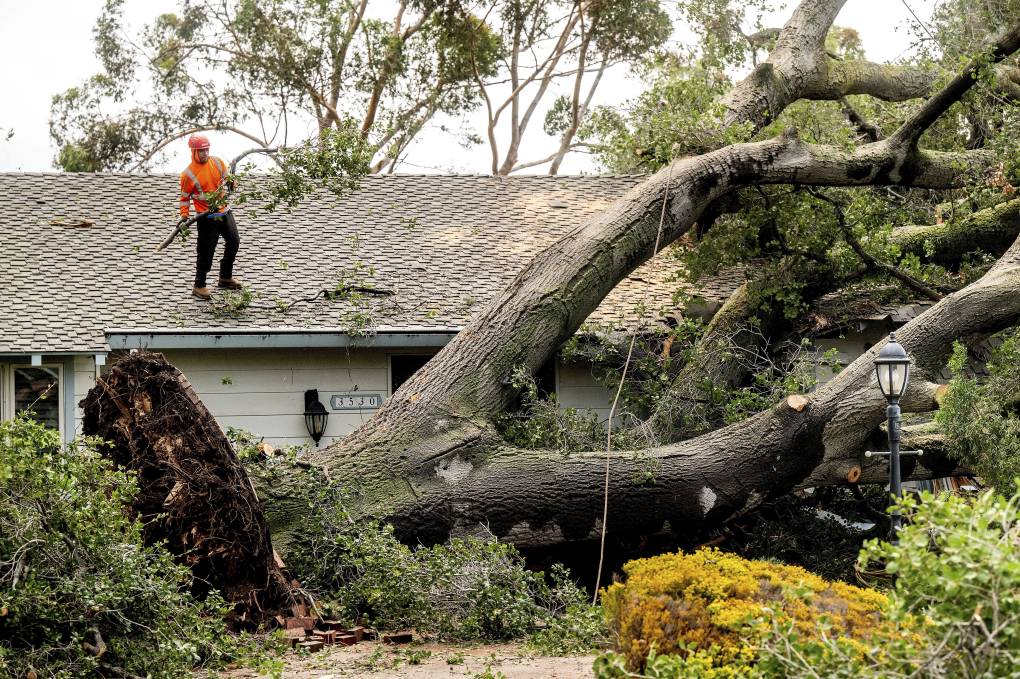
"caption": "Workers clear a tree that fell onto a home during heavy wind and rain on Sunday, Feb. 4, 2024, in San Jose, California.",
"description": null,
"title": "California Storms",
"credit": "Noah Berger/AP Photo",
"status": "inherit",
"altTag": "Workers clear a tree that fell onto a home",
"isLoading": false,
"fetchFailed": false
},
"news_11945907": {
"type": "attachments",
"id": "news_11945907",
"meta": {
"index": "attachments_1716263798",
"site": "news",
"id": "11945907",
"found": true
},
"parent": 11945840,
"imgSizes": {
"twentyfourteen-full-width": {
"file": "https://ww2.kqed.org/app/uploads/sites/10/2023/04/RS64302_AP23091610632620-qut-1-1038x576.jpg",
"width": 1038,
"mimeType": "image/jpeg",
"height": 576
},
"thumbnail": {
"file": "https://ww2.kqed.org/app/uploads/sites/10/2023/04/RS64302_AP23091610632620-qut-1-160x80.jpg",
"width": 160,
"mimeType": "image/jpeg",
"height": 80
},
"post-thumbnail": {
"file": "https://ww2.kqed.org/app/uploads/sites/10/2023/04/RS64302_AP23091610632620-qut-1-672x372.jpg",
"width": 672,
"mimeType": "image/jpeg",
"height": 372
},
"kqedFullSize": {
"file": "https://ww2.kqed.org/app/uploads/sites/10/2023/04/RS64302_AP23091610632620-qut-1.jpg",
"width": 1920,
"height": 954
},
"large": {
"file": "https://ww2.kqed.org/app/uploads/sites/10/2023/04/RS64302_AP23091610632620-qut-1-1020x507.jpg",
"width": 1020,
"mimeType": "image/jpeg",
"height": 507
},
"1536x1536": {
"file": "https://ww2.kqed.org/app/uploads/sites/10/2023/04/RS64302_AP23091610632620-qut-1-1536x763.jpg",
"width": 1536,
"mimeType": "image/jpeg",
"height": 763
},
"medium": {
"file": "https://ww2.kqed.org/app/uploads/sites/10/2023/04/RS64302_AP23091610632620-qut-1-800x398.jpg",
"width": 800,
"mimeType": "image/jpeg",
"height": 398
}
},
"publishDate": 1680814935,
"modified": 1680891071,
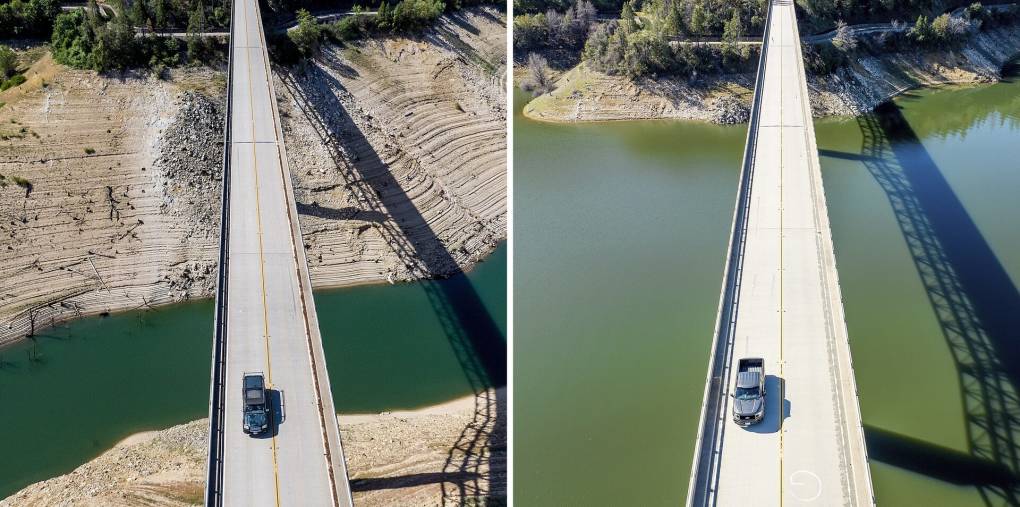
"caption": "A car crosses Enterprise Bridge over Lake Oroville's dry banks (left) on May 23, 2021, and the same location (right), on March 26, 2023, in Butte County. ",
"description": null,
"title": "California Drought Refilled Reservoirs",
"credit": "Noah Berger/AP",
"status": "inherit",
"altTag": "The photo on the left shows more land and a bit of water under a bridge. The photo on the right shows more water under the bridge.",
"isLoading": false,
"fetchFailed": false
}
},
"audioPlayerReducer": {
"postId": "stream_live",
"isPaused": true,
"isPlaying": false,
"pfsActive": false,
"pledgeModalIsOpen": true,
"playerDrawerIsOpen": false,
"liveAudioPlayStartedAt": 0,
"liveAudioPlayContext": ""
},
"authorsReducer": {
"byline_news_11974714": {
"type": "authors",
"id": "byline_news_11974714",
"meta": {
"override": true
},
"slug": "byline_news_11974714",
"name": "Christopher Weber \u003cbr> Associated Press",
"isLoading": false
},
"byline_news_11945840": {
"type": "authors",
"id": "byline_news_11945840",
"meta": {
"override": true
},
"slug": "byline_news_11945840",
"name": "Terry Chea, Noah Berger and Josh Edelson \u003cbr>Associated Press",
"isLoading": false
},
"ccabreralomeli": {
"type": "authors",
"id": "11708",
"meta": {
"index": "authors_1716337520",
"id": "11708",
"found": true
},
"name": "Carlos Cabrera-Lomelí",
"firstName": "Carlos",
"lastName": "Cabrera-Lomelí",
"slug": "ccabreralomeli",
"email": "ccabreralomeli@KQED.org",
"display_author_email": true,
"staff_mastheads": [
"news"
],
"title": "Community Reporter",
"bio": "Carlos Cabrera-Lomelí is a community reporter with KQED's digital engagement team. He also reports and co-produces for KQED's bilingual news hub KQED en Español. He grew up in San Francisco's Mission District and has previously worked with Univision, 48 Hills and REFORMA in Mexico City.",
"avatar": "https://secure.gravatar.com/avatar/e95ff80bb2eaf18a8f2af4dcf7ffb54b?s=600&d=mm&r=g",
"twitter": "@LomeliCabrera",
"facebook": null,
"instagram": null,
"linkedin": null,
"sites": [
{
"site": "arts",
"roles": [
"editor"
]
},
{
"site": "news",
"roles": [
"editor"
]
},
{
"site": "about",
"roles": [
"editor"
]
},
{
"site": "science",
"roles": [
"editor"
]
},
{
"site": "perspectives",
"roles": [
"editor"
]
},
{
"site": "elections",
"roles": [
"editor"
]
},
{
"site": "liveblog",
"roles": [
"contributor"
]
}
],
"headData": {
"title": "Carlos Cabrera-Lomelí | KQED",
"description": "Community Reporter",
"ogImgSrc": "https://secure.gravatar.com/avatar/e95ff80bb2eaf18a8f2af4dcf7ffb54b?s=600&d=mm&r=g",
"twImgSrc": "https://secure.gravatar.com/avatar/e95ff80bb2eaf18a8f2af4dcf7ffb54b?s=600&d=mm&r=g"
},
"isLoading": false,
"link": "/author/ccabreralomeli"
},
"kmizuguchi": {
"type": "authors",
"id": "11739",
"meta": {
"index": "authors_1716337520",
"id": "11739",
"found": true
},
"name": "Keith Mizuguchi",
"firstName": "Keith",
"lastName": "Mizuguchi",
"slug": "kmizuguchi",
"email": "kmizuguchi@kqed.org",
"display_author_email": false,
"staff_mastheads": [],
"title": "KQED Contributor",
"bio": null,
"avatar": "https://secure.gravatar.com/avatar/64d8a7de0723d4099b9fe4e915136103febcc20809abce228ee4415bcb237023?s=600&d=blank&r=g",
"twitter": null,
"bluesky": null,
"facebook": null,
"instagram": null,
"linkedin": null,
"sites": [
{
"site": "news",
"roles": [
"editor"
]
},
{
"site": "science",
"roles": [
"editor"
]
}
],
"headData": {
"title": "Keith Mizuguchi | KQED",
"description": "KQED Contributor",
"ogImgSrc": "https://secure.gravatar.com/avatar/64d8a7de0723d4099b9fe4e915136103febcc20809abce228ee4415bcb237023?s=600&d=blank&r=g",
"twImgSrc": "https://secure.gravatar.com/avatar/64d8a7de0723d4099b9fe4e915136103febcc20809abce228ee4415bcb237023?s=600&d=blank&r=g"
},
"isLoading": false,
"link": "/author/kmizuguchi"
},
"eromero": {
"type": "authors",
"id": "11746",
"meta": {
"index": "authors_1716337520",
"id": "11746",
"found": true
},
"name": "Ezra David Romero",
"firstName": "Ezra David",
"lastName": "Romero",
"slug": "eromero",
"email": "eromero@kqed.org",
"display_author_email": true,
"staff_mastheads": [
"news",
"science"
],
"title": "Climate Reporter",
"bio": "Ezra David Romero is a climate reporter for KQED News. He covers the absence and excess of water in the Bay Area — think sea level rise, flooding and drought. For nearly a decade he’s covered how warming temperatures are altering the lives of Californians. He’s reported on farmers worried their pistachio trees aren’t getting enough sleep, families desperate for water, scientists studying dying giant sequoias, and alongside firefighters containing wildfires. His work has appeared on local stations across California and nationally on public radio shows like Morning Edition, Here and Now, All Things Considered and Science Friday. ",
"avatar": "https://secure.gravatar.com/avatar/9c15bb8bab267e058708a9eeaeef16bf?s=600&d=blank&r=g",
"twitter": "ezraromero",
"bluesky": null,
"facebook": null,
"instagram": null,
"linkedin": null,
"sites": [
{
"site": "arts",
"roles": [
"editor"
]
},
{
"site": "news",
"roles": [
"editor"
]
},
{
"site": "science",
"roles": [
"editor"
]
},
{
"site": "liveblog",
"roles": [
"author"
]
}
],
"headData": {
"title": "Ezra David Romero | KQED",
"description": "Climate Reporter",
"ogImgSrc": "https://secure.gravatar.com/avatar/9c15bb8bab267e058708a9eeaeef16bf?s=600&d=blank&r=g",
"twImgSrc": "https://secure.gravatar.com/avatar/9c15bb8bab267e058708a9eeaeef16bf?s=600&d=blank&r=g"
},
"isLoading": false,
"link": "/author/eromero"
},
"kdebenedetti": {
"type": "authors",
"id": "11913",
"meta": {
"index": "authors_1716337520",
"id": "11913",
"found": true
},
"name": "Katie DeBenedetti",
"firstName": "Katie",
"lastName": "DeBenedetti",
"slug": "kdebenedetti",
"email": "kdebenedetti@kqed.org",
"display_author_email": false,
"staff_mastheads": [
"news",
"science"
],
"title": "KQED Contributor",
"bio": "Katie DeBenedetti is a digital reporter covering daily news for the Express Desk. Prior to joining KQED as a culture reporting intern in January 2024, she covered education and city government for the Napa Valley Register.",
"avatar": "https://secure.gravatar.com/avatar/6e31073cb8f7e4214ab03f42771d0f45?s=600&d=blank&r=g",
"twitter": null,
"facebook": null,
"instagram": null,
"linkedin": null,
"sites": [
{
"site": "news",
"roles": [
"author"
]
},
{
"site": "science",
"roles": [
"author"
]
},
{
"site": "liveblog",
"roles": [
"author"
]
}
],
"headData": {
"title": "Katie DeBenedetti | KQED",
"description": "KQED Contributor",
"ogImgSrc": "https://secure.gravatar.com/avatar/6e31073cb8f7e4214ab03f42771d0f45?s=600&d=blank&r=g",
"twImgSrc": "https://secure.gravatar.com/avatar/6e31073cb8f7e4214ab03f42771d0f45?s=600&d=blank&r=g"
},
"isLoading": false,
"link": "/author/kdebenedetti"
},
"slim": {
"type": "authors",
"id": "11920",
"meta": {
"index": "authors_1716337520",
"id": "11920",
"found": true
},
"name": "Samantha Lim",
"firstName": "Samantha",
"lastName": "Lim",
"slug": "slim",
"email": "slim@KQED.org",
"display_author_email": false,
"staff_mastheads": [],
"title": "KQED Contributor",
"bio": null,
"avatar": "https://secure.gravatar.com/avatar/82e592e6c15fe1a04d385e8ad0fb0b4e?s=600&d=blank&r=g",
"twitter": null,
"facebook": null,
"instagram": null,
"linkedin": null,
"sites": [
{
"site": "news",
"roles": []
}
],
"headData": {
"title": "Samantha Lim | KQED",
"description": "KQED Contributor",
"ogImgSrc": "https://secure.gravatar.com/avatar/82e592e6c15fe1a04d385e8ad0fb0b4e?s=600&d=blank&r=g",
"twImgSrc": "https://secure.gravatar.com/avatar/82e592e6c15fe1a04d385e8ad0fb0b4e?s=600&d=blank&r=g"
},
"isLoading": false,
"link": "/author/slim"
}
},
"pagesReducer": {
"news_tag_atmospheric-river": {
"type": "terms",
"id": "news_20061",
"meta": {
"index": "terms_1716263798",
"site": "news",
"id": "20061",
"score": 9.553679
},
"featImg": null,
"name": "Atmospheric River",
"description": null,
"taxonomy": "tag",
"headData": {
"twImgId": null,
"twTitle": null,
"ogTitle": null,
"ogImgId": null,
"twDescription": null,
"description": null,
"title": "Atmospheric River Archives | KQED News",
"ogDescription": null
},
"ttid": 20078,
"slug": "atmospheric-river",
"isLoading": false,
"title": "Atmospheric River",
"pageMeta": {
"site": "news",
"WpPageTemplate": "page-topic-editorial",
"currentPage": 2
},
"blocks": [
{
"blockName": "kqed/post-list",
"attrs": {
"layout": "cardArticle2",
"query": "posts/news?tag=atmospheric-river",
"seeMore": false,
"paginated": true,
"page": 2
}
},
{
"blockName": "kqed/ad"
}
]
}
},
"pfsSessionReducer": {},
"postsReducer": {
"stream_live": {
"type": "live",
"id": "stream_live",
"audioUrl": "https://streams.kqed.org/kqedradio",
"title": "Live Stream",
"excerpt": "Live Stream information currently unavailable.",
"link": "/radio",
"featImg": "",
"label": {
"name": "KQED Live",
"link": "/"
}
},
"stream_kqedNewscast": {
"type": "posts",
"id": "stream_kqedNewscast",
"audioUrl": "https://www.kqed.org/.stream/anon/radio/RDnews/newscast.mp3?_=1",
"title": "KQED Newscast",
"featImg": "",
"label": {
"name": "88.5 FM",
"link": "/"
}
},
"news_12025352": {
"type": "posts",
"id": "news_12025352",
"meta": {
"index": "posts_1716263798",
"site": "news",
"id": "12025352",
"score": null,
"sort": [
1738616481000
]
},
"guestAuthors": [],
"slug": "atmospheric-rivers-deliver-strong-bay-area-rain-sierra-snow",
"title": "Atmospheric Rivers to Deliver ‘One-Two Punch’ of Strong Bay Area Rain, Sierra Snow",
"publishDate": 1738616481,
"format": "standard",
"headTitle": "Atmospheric Rivers to Deliver ‘One-Two Punch’ of Strong Bay Area Rain, Sierra Snow | KQED",
"labelTerm": {
"site": "news"
},
"content": "\u003cp>\u003cem>Updated 1:25 p.m. Monday\u003c/em>\u003c/p>\n\u003cp>After days of wet weather, two more \u003ca href=\"https://www.kqed.org/news/12025049/bay-area-flood-watch-as-atmospheric-rivers-bring-heavy-rain-and-rising-river-levels\">atmospheric rivers\u003c/a> are forecast to drop heavy rain on Northern California this week, increasing flood potential in the Bay Area starting Monday and blanketing the Sierra Nevada with several feet of snow.\u003c/p>\n\u003cp>Meteorologists expect the first storm to deliver two rounds of rain starting Monday afternoon and potentially stalling over the Bay Area on Tuesday morning. The \u003ca href=\"https://www.kqed.org/news/tag/national-weather-service\">National Weather Service\u003c/a> has issued a flood watch from 4 p.m. Monday to 4 a.m. Wednesday and a flood advisory is also in effect until 8:45 p.m. Monday for the area west of Santa Rosa.\u003c/p>\n\u003cp>There’s a 15% chance that excessive rainfall could cause flash flooding in the North Bay and a 5% chance for the rest of the Bay Area.\u003c/p>\n\u003cp>[ad fullwidth]\u003c/p>\n\u003cp>“Now that the soils are saturated from this weekend’s rain event, we will probably get some flooding on roadway systems,” said Ryan Walbrun, a meteorologist with the weather service’s Bay Area office.\u003c/p>\n\u003cp>The storm could bring gusts up to 50 mph at higher elevations and along the coast, especially around Marin and the San Francisco peninsula. The weather service’s morning memo suggests the winds will “be more isolated in nature” and “short-lived.”\u003c/p>\n\u003cfigure id=\"attachment_12016881\" class=\"wp-caption aligncenter\" style=\"max-width: 2000px\">\u003cimg loading=\"lazy\" decoding=\"async\" class=\"size-full wp-image-12016881\" src=\"https://cdn.kqed.org/wp-content/uploads/sites/10/2024/12/20241205-Tsunami-JY-001.jpg\" alt=\"People look out over the ocean.\" width=\"2000\" height=\"1332\" srcset=\"https://cdn.kqed.org/wp-content/uploads/sites/10/2024/12/20241205-Tsunami-JY-001.jpg 2000w, https://cdn.kqed.org/wp-content/uploads/sites/10/2024/12/20241205-Tsunami-JY-001-800x533.jpg 800w, https://cdn.kqed.org/wp-content/uploads/sites/10/2024/12/20241205-Tsunami-JY-001-1020x679.jpg 1020w, https://cdn.kqed.org/wp-content/uploads/sites/10/2024/12/20241205-Tsunami-JY-001-160x107.jpg 160w, https://cdn.kqed.org/wp-content/uploads/sites/10/2024/12/20241205-Tsunami-JY-001-1536x1023.jpg 1536w, https://cdn.kqed.org/wp-content/uploads/sites/10/2024/12/20241205-Tsunami-JY-001-1920x1279.jpg 1920w\" sizes=\"auto, (max-width: 2000px) 100vw, 2000px\">\u003cfigcaption class=\"wp-caption-text\">People watch for a tsunami at Ocean Beach in San Francisco on Thursday, Dec. 5, 2024. \u003ccite>(Juliana Yamada/KQED)\u003c/cite>\u003c/figcaption>\u003c/figure>\n\u003cp>“It looks like the winds are going to be strongest in [locations like] Ocean Beach in San Francisco along the Great Highway all the way down south through Santa Cruz and Monterey,” Walbrun said. “Those places would be most prone to power outages.”\u003c/p>\n\u003cp>The next atmospheric river is expected to bring a weaker storm by Thursday and Friday before drier conditions return this weekend.\u003c/p>\n\u003cp>Forecasters said the North Bay could receive as much as 6 inches of rain by the end of the week, and the rest of the Bay Area could expect up to 4 inches. The highest elevations in Sonoma County and Santa Cruz mountain areas could see up to 10 inches of rain in locations like Venado north of Guerneville.\u003c/p>\n\u003cp>[aside postID=news_12023983 hero='https://cdn.kqed.org/wp-content/uploads/sites/10/2025/01/250120-YouthClimateProtest-09-BL_qed-1020x680.jpg']\u003c/p>\n\u003cp>“The biggest risk right now would probably be in the North Bay in places that are typically pretty flood-prone,” Walbrun said. “The atmospheric river will spend more time over the North Bay, but the system is not nearly as wet or strong as the November event,” which caused record-breaking flooding in parts of Sonoma County.\u003c/p>\n\u003cp>Will Powers, fire inspector for the city of Santa Rosa, said the city is prepared with sandbags for residents in low-lying areas, but the larger concern is downed trees.\u003c/p>\n\u003cp>“With the soil saturation that we’ve had, the big worry is with the wind coming in and downed trees,” Powers said. “As of right now, we’re not worried about major flooding, but more nuisance flooding and stuff like that.”\u003c/p>\n\u003cp>Anyone who lives in a flood-prone area should prepare to take action in case flooding occurs, Walbrun said. The weather service is monitoring several waterways that could reach flood thresholds this week: the Russian River, the Napa River, the San Lorenzo River, the Laguna de Santa Rosa, and Mark West Creek.\u003c/p>\n\u003cp>“Right now, they aren’t forecast to go into flood stages because I don’t think the rain rates are there,” Walbrun said.\u003c/p>\n\u003ch2>‘A one-two punch of winter weather’\u003c/h2>\n\u003cp>Forecasters say the cold systems will also bring rain and moderate to heavy snow across the Sierra Nevada.\u003c/p>\n\u003cp>“We’re expecting a one-two punch of winter weather,” said Matthew Chyba, a meteorologist with the weather service’s Reno office. “If you’re \u003ca href=\"https://www.kqed.org/news/11937204/lake-tahoe-weather-forecast-road-conditions-snow-chains\">traveling to the Tahoe area\u003c/a>, Wednesday might be your best bet, or wait until the weekend.”\u003c/p>\n\u003cfigure id=\"attachment_12018143\" class=\"wp-caption aligncenter\" style=\"max-width: 2000px\">\u003cimg loading=\"lazy\" decoding=\"async\" class=\"size-full wp-image-12018143\" src=\"https://cdn.kqed.org/wp-content/uploads/sites/10/2024/12/SouthLakeTahoeHeavenlySkiGetty.jpg\" alt=\"\" width=\"2000\" height=\"1333\" srcset=\"https://cdn.kqed.org/wp-content/uploads/sites/10/2024/12/SouthLakeTahoeHeavenlySkiGetty.jpg 2000w, https://cdn.kqed.org/wp-content/uploads/sites/10/2024/12/SouthLakeTahoeHeavenlySkiGetty-800x533.jpg 800w, https://cdn.kqed.org/wp-content/uploads/sites/10/2024/12/SouthLakeTahoeHeavenlySkiGetty-1020x680.jpg 1020w, https://cdn.kqed.org/wp-content/uploads/sites/10/2024/12/SouthLakeTahoeHeavenlySkiGetty-160x107.jpg 160w, https://cdn.kqed.org/wp-content/uploads/sites/10/2024/12/SouthLakeTahoeHeavenlySkiGetty-1536x1024.jpg 1536w, https://cdn.kqed.org/wp-content/uploads/sites/10/2024/12/SouthLakeTahoeHeavenlySkiGetty-1920x1280.jpg 1920w\" sizes=\"auto, (max-width: 2000px) 100vw, 2000px\">\u003cfigcaption class=\"wp-caption-text\">A view of Heavenly gondola of Heavenly ski resort in South Lake Tahoe, California, on Jan. 14, 2024. \u003ccite>(Tayfun Coskun/Anadolu via Getty Images)\u003c/cite>\u003c/figcaption>\u003c/figure>\n\u003cp>The highest peaks in the Sierra Nevada could see up to 5 feet of snow by the end of the week. The National Weather Service has issued winter storm warnings for the Sierra Nevada from Shasta County to Tahoe. The warnings vary slightly, but most start Monday at 10 a.m. and last through Wednesday at 10 p.m.\u003c/p>\n\u003cp>“We are expecting near whiteout conditions, and we are highly discouraging travel during the time of the warning,” said Sara Purdue, a meteorologist at the weather service’s Sacramento office.\u003c/p>\n\u003cp>After around a month without snow, ski resorts like Palisades Tahoe are ecstatic about the back-to-back storms. Maddy Condon, senior communications specialist at Palisades Tahoe, said nearly 4 feet of snow could fall on the resort west of Lake Tahoe.\u003c/p>\n\u003cp>“It was a bit like Groundhog Day here in January,” Condon said. “It’s a playground out there. So when fresh snow comes, all the features and everything you can usually ride changes, creating a different experience every time. That’s why it’s always so fun to have dynamic weather come in.”\u003c/p>\n\u003cp>Forecasters expect a drying-out period this weekend but said there are signals that the second half of February could return to wet weather.\u003c/p>\n\u003cp>“Towards the end of the month, we could get more storms, which is what we expect in February, especially \u003ca href=\"https://www.kqed.org/news/12024774/bay-areas-dry-january-ending-with-pair-atmospheric-river-storms\">after a very dry January\u003c/a>,” Walbrun said. “We’re at the point where we want to get a little bit of rain here, too.”\u003c/p>\n\u003cp>\u003c/p>\n",
"blocks": [],
"excerpt": "After days of wet weather, two more atmospheric rivers are forecast to drop heavy rain on Northern California this week, increasing flood potential and bringing snow to the mountains.",
"status": "publish",
"parent": 0,
"modified": 1738618065,
"stats": {
"hasAudio": false,
"hasVideo": false,
"hasChartOrMap": false,
"iframeSrcs": [],
"hasGoogleForm": false,
"hasGallery": false,
"hasHearkenModule": false,
"hasPolis": false,
"paragraphCount": 25,
"wordCount": 973
},
"headData": {
"title": "Atmospheric Rivers to Deliver ‘One-Two Punch’ of Strong Bay Area Rain, Sierra Snow | KQED",
"description": "After days of wet weather, two more atmospheric rivers are forecast to drop heavy rain on Northern California this week, increasing flood potential and bringing snow to the mountains.",
"ogTitle": "",
"ogDescription": "",
"ogImgId": "",
"twTitle": "",
"twDescription": "",
"twImgId": "",
"schema": {
"@context": "https://schema.org",
"@type": "NewsArticle",
"headline": "Atmospheric Rivers to Deliver ‘One-Two Punch’ of Strong Bay Area Rain, Sierra Snow",
"datePublished": "2025-02-03T13:01:21-08:00",
"dateModified": "2025-02-03T13:27:45-08:00",
"image": "https://cdn.kqed.org/wp-content/uploads/2020/02/KQED-OG-Image@1x.png",
"isAccessibleForFree": "True",
"publisher": {
"@type": "NewsMediaOrganization",
"@id": "https://www.kqed.org/#organization",
"name": "KQED",
"logo": "https://cdn.kqed.org/wp-content/uploads/2020/02/KQED-OG-Image@1x.png",
"url": "https://www.kqed.org",
"sameAs": [
"https://www.facebook.com/KQED",
"https://twitter.com/KQED",
"https://www.instagram.com/kqed/",
"https://www.tiktok.com/@kqedofficial",
"https://www.linkedin.com/company/kqed",
"https://www.youtube.com/channel/UCeC0IOo7i1P_61zVUWbJ4nw"
]
}
}
},
"sticky": false,
"nprStoryId": "kqed-12025352",
"excludeFromSiteSearch": "Include",
"articleAge": "0",
"path": "/news/12025352/atmospheric-rivers-deliver-strong-bay-area-rain-sierra-snow",
"audioTrackLength": null,
"parsedContent": [
{
"type": "contentString",
"content": "\u003cdiv class=\"post-body\">\u003cp>\u003cp>\u003cem>Updated 1:25 p.m. Monday\u003c/em>\u003c/p>\n\u003cp>After days of wet weather, two more \u003ca href=\"https://www.kqed.org/news/12025049/bay-area-flood-watch-as-atmospheric-rivers-bring-heavy-rain-and-rising-river-levels\">atmospheric rivers\u003c/a> are forecast to drop heavy rain on Northern California this week, increasing flood potential in the Bay Area starting Monday and blanketing the Sierra Nevada with several feet of snow.\u003c/p>\n\u003cp>Meteorologists expect the first storm to deliver two rounds of rain starting Monday afternoon and potentially stalling over the Bay Area on Tuesday morning. The \u003ca href=\"https://www.kqed.org/news/tag/national-weather-service\">National Weather Service\u003c/a> has issued a flood watch from 4 p.m. Monday to 4 a.m. Wednesday and a flood advisory is also in effect until 8:45 p.m. Monday for the area west of Santa Rosa.\u003c/p>\n\u003cp>There’s a 15% chance that excessive rainfall could cause flash flooding in the North Bay and a 5% chance for the rest of the Bay Area.\u003c/p>\n\u003cp>\u003c/p>\u003c/div>",
"attributes": {
"named": {},
"numeric": []
}
},
{
"type": "component",
"content": "",
"name": "ad",
"attributes": {
"named": {
"label": "fullwidth"
},
"numeric": [
"fullwidth"
]
}
},
{
"type": "contentString",
"content": "\u003cdiv class=\"post-body\">\u003cp>\u003c/p>\n\u003cp>“Now that the soils are saturated from this weekend’s rain event, we will probably get some flooding on roadway systems,” said Ryan Walbrun, a meteorologist with the weather service’s Bay Area office.\u003c/p>\n\u003cp>The storm could bring gusts up to 50 mph at higher elevations and along the coast, especially around Marin and the San Francisco peninsula. The weather service’s morning memo suggests the winds will “be more isolated in nature” and “short-lived.”\u003c/p>\n\u003cfigure id=\"attachment_12016881\" class=\"wp-caption aligncenter\" style=\"max-width: 2000px\">\u003cimg loading=\"lazy\" decoding=\"async\" class=\"size-full wp-image-12016881\" src=\"https://cdn.kqed.org/wp-content/uploads/sites/10/2024/12/20241205-Tsunami-JY-001.jpg\" alt=\"People look out over the ocean.\" width=\"2000\" height=\"1332\" srcset=\"https://cdn.kqed.org/wp-content/uploads/sites/10/2024/12/20241205-Tsunami-JY-001.jpg 2000w, https://cdn.kqed.org/wp-content/uploads/sites/10/2024/12/20241205-Tsunami-JY-001-800x533.jpg 800w, https://cdn.kqed.org/wp-content/uploads/sites/10/2024/12/20241205-Tsunami-JY-001-1020x679.jpg 1020w, https://cdn.kqed.org/wp-content/uploads/sites/10/2024/12/20241205-Tsunami-JY-001-160x107.jpg 160w, https://cdn.kqed.org/wp-content/uploads/sites/10/2024/12/20241205-Tsunami-JY-001-1536x1023.jpg 1536w, https://cdn.kqed.org/wp-content/uploads/sites/10/2024/12/20241205-Tsunami-JY-001-1920x1279.jpg 1920w\" sizes=\"auto, (max-width: 2000px) 100vw, 2000px\">\u003cfigcaption class=\"wp-caption-text\">People watch for a tsunami at Ocean Beach in San Francisco on Thursday, Dec. 5, 2024. \u003ccite>(Juliana Yamada/KQED)\u003c/cite>\u003c/figcaption>\u003c/figure>\n\u003cp>“It looks like the winds are going to be strongest in [locations like] Ocean Beach in San Francisco along the Great Highway all the way down south through Santa Cruz and Monterey,” Walbrun said. “Those places would be most prone to power outages.”\u003c/p>\n\u003cp>The next atmospheric river is expected to bring a weaker storm by Thursday and Friday before drier conditions return this weekend.\u003c/p>\n\u003cp>Forecasters said the North Bay could receive as much as 6 inches of rain by the end of the week, and the rest of the Bay Area could expect up to 4 inches. The highest elevations in Sonoma County and Santa Cruz mountain areas could see up to 10 inches of rain in locations like Venado north of Guerneville.\u003c/p>\n\u003cp>\u003c/p>\u003c/div>",
"attributes": {
"named": {},
"numeric": []
}
},
{
"type": "component",
"content": "",
"name": "aside",
"attributes": {
"named": {
"postid": "news_12023983",
"hero": "https://cdn.kqed.org/wp-content/uploads/sites/10/2025/01/250120-YouthClimateProtest-09-BL_qed-1020x680.jpg",
"label": ""
},
"numeric": []
}
},
{
"type": "contentString",
"content": "\u003cdiv class=\"post-body\">\u003cp>\u003c/p>\n\u003cp>“The biggest risk right now would probably be in the North Bay in places that are typically pretty flood-prone,” Walbrun said. “The atmospheric river will spend more time over the North Bay, but the system is not nearly as wet or strong as the November event,” which caused record-breaking flooding in parts of Sonoma County.\u003c/p>\n\u003cp>Will Powers, fire inspector for the city of Santa Rosa, said the city is prepared with sandbags for residents in low-lying areas, but the larger concern is downed trees.\u003c/p>\n\u003cp>“With the soil saturation that we’ve had, the big worry is with the wind coming in and downed trees,” Powers said. “As of right now, we’re not worried about major flooding, but more nuisance flooding and stuff like that.”\u003c/p>\n\u003cp>Anyone who lives in a flood-prone area should prepare to take action in case flooding occurs, Walbrun said. The weather service is monitoring several waterways that could reach flood thresholds this week: the Russian River, the Napa River, the San Lorenzo River, the Laguna de Santa Rosa, and Mark West Creek.\u003c/p>\n\u003cp>“Right now, they aren’t forecast to go into flood stages because I don’t think the rain rates are there,” Walbrun said.\u003c/p>\n\u003ch2>‘A one-two punch of winter weather’\u003c/h2>\n\u003cp>Forecasters say the cold systems will also bring rain and moderate to heavy snow across the Sierra Nevada.\u003c/p>\n\u003cp>“We’re expecting a one-two punch of winter weather,” said Matthew Chyba, a meteorologist with the weather service’s Reno office. “If you’re \u003ca href=\"https://www.kqed.org/news/11937204/lake-tahoe-weather-forecast-road-conditions-snow-chains\">traveling to the Tahoe area\u003c/a>, Wednesday might be your best bet, or wait until the weekend.”\u003c/p>\n\u003cfigure id=\"attachment_12018143\" class=\"wp-caption aligncenter\" style=\"max-width: 2000px\">\u003cimg loading=\"lazy\" decoding=\"async\" class=\"size-full wp-image-12018143\" src=\"https://cdn.kqed.org/wp-content/uploads/sites/10/2024/12/SouthLakeTahoeHeavenlySkiGetty.jpg\" alt=\"\" width=\"2000\" height=\"1333\" srcset=\"https://cdn.kqed.org/wp-content/uploads/sites/10/2024/12/SouthLakeTahoeHeavenlySkiGetty.jpg 2000w, https://cdn.kqed.org/wp-content/uploads/sites/10/2024/12/SouthLakeTahoeHeavenlySkiGetty-800x533.jpg 800w, https://cdn.kqed.org/wp-content/uploads/sites/10/2024/12/SouthLakeTahoeHeavenlySkiGetty-1020x680.jpg 1020w, https://cdn.kqed.org/wp-content/uploads/sites/10/2024/12/SouthLakeTahoeHeavenlySkiGetty-160x107.jpg 160w, https://cdn.kqed.org/wp-content/uploads/sites/10/2024/12/SouthLakeTahoeHeavenlySkiGetty-1536x1024.jpg 1536w, https://cdn.kqed.org/wp-content/uploads/sites/10/2024/12/SouthLakeTahoeHeavenlySkiGetty-1920x1280.jpg 1920w\" sizes=\"auto, (max-width: 2000px) 100vw, 2000px\">\u003cfigcaption class=\"wp-caption-text\">A view of Heavenly gondola of Heavenly ski resort in South Lake Tahoe, California, on Jan. 14, 2024. \u003ccite>(Tayfun Coskun/Anadolu via Getty Images)\u003c/cite>\u003c/figcaption>\u003c/figure>\n\u003cp>The highest peaks in the Sierra Nevada could see up to 5 feet of snow by the end of the week. The National Weather Service has issued winter storm warnings for the Sierra Nevada from Shasta County to Tahoe. The warnings vary slightly, but most start Monday at 10 a.m. and last through Wednesday at 10 p.m.\u003c/p>\n\u003cp>“We are expecting near whiteout conditions, and we are highly discouraging travel during the time of the warning,” said Sara Purdue, a meteorologist at the weather service’s Sacramento office.\u003c/p>\n\u003cp>After around a month without snow, ski resorts like Palisades Tahoe are ecstatic about the back-to-back storms. Maddy Condon, senior communications specialist at Palisades Tahoe, said nearly 4 feet of snow could fall on the resort west of Lake Tahoe.\u003c/p>\n\u003cp>“It was a bit like Groundhog Day here in January,” Condon said. “It’s a playground out there. So when fresh snow comes, all the features and everything you can usually ride changes, creating a different experience every time. That’s why it’s always so fun to have dynamic weather come in.”\u003c/p>\n\u003cp>Forecasters expect a drying-out period this weekend but said there are signals that the second half of February could return to wet weather.\u003c/p>\n\u003cp>“Towards the end of the month, we could get more storms, which is what we expect in February, especially \u003ca href=\"https://www.kqed.org/news/12024774/bay-areas-dry-january-ending-with-pair-atmospheric-river-storms\">after a very dry January\u003c/a>,” Walbrun said. “We’re at the point where we want to get a little bit of rain here, too.”\u003c/p>\n\u003cp>\u003c/p>\n\u003c/div>\u003c/p>",
"attributes": {
"named": {},
"numeric": []
}
}
],
"link": "/news/12025352/atmospheric-rivers-deliver-strong-bay-area-rain-sierra-snow",
"authors": [
"11746"
],
"categories": [
"news_31795",
"news_34165",
"news_8",
"news_356"
],
"tags": [
"news_20061",
"news_1386",
"news_34945",
"news_18538",
"news_19204",
"news_255",
"news_27626",
"news_28199",
"news_3431",
"news_30125",
"news_3"
],
"featImg": "news_12015604",
"label": "news"
},
"news_12025049": {
"type": "posts",
"id": "news_12025049",
"meta": {
"index": "posts_1716263798",
"site": "news",
"id": "12025049",
"score": null,
"sort": [
1738352735000
]
},
"guestAuthors": [],
"slug": "bay-area-flood-watch-as-atmospheric-rivers-bring-heavy-rain-and-rising-river-levels",
"title": "Bay Area Flood Watch as Atmospheric Rivers Bring Heavy Rain and Rising River Levels",
"publishDate": 1738352735,
"format": "standard",
"headTitle": "Bay Area Flood Watch as Atmospheric Rivers Bring Heavy Rain and Rising River Levels | KQED",
"labelTerm": {
"site": "news"
},
"content": "\u003cp>The entire Bay Area — from Santa Rosa to San José — is under flood watch until 10 p.m. Sunday as the first of \u003ca href=\"https://www.kqed.org/news/12024774/bay-areas-dry-january-ending-with-pair-atmospheric-river-storms\">two atmospheric rivers\u003c/a> sweeps through the region, the National Weather Service’s Bay Area office warns.\u003c/p>\n\u003cp>The good news is that initial flooding concerns remain low for the first few days of rain as the dry month prior will help buffer the impact of the upcoming rain.\u003c/p>\n\u003cp>Flooding concerns escalate later this weekend and into next week, as consecutive days of heavy rain could bring up to 8 inches to the North Bay, 5 inches to San Francisco and 2 inches to the South Bay.\u003c/p>\n\u003cp>[ad fullwidth]\u003c/p>\n\u003cp>The weather service is closely monitoring North Bay rivers and streams, where the highest flood risk exists due to heavy rainfall, while the rest of the Bay Area faces potential nuisance flooding.\u003c/p>\n\u003cp>“We’re not looking much in the way of flash flood conditions, but we are looking at more long-term flooding issues,” said Brayden Murdock, a meteorologist with the weather service’s Bay Area office. “That could be road closures, situations where you need to turn around, don’t drown because of some of these really low-lying spots.”\u003c/p>\n\u003cp>Friday’s storm originating from the Gulf of Alaska is merging with a Pacific system, intensifying into an atmospheric river. By Sunday, the system may weaken, primarily impacting the North Bay.\u003c/p>\n\u003cp>[aside postID=news_12023983 hero='https://cdn.kqed.org/wp-content/uploads/sites/10/2025/01/250120-YouthClimateProtest-09-BL_qed.jpg']\u003c/p>\n\u003cp>“It’s kind of a saving grace that this one is moving around and we can spread those rainfall amounts around the region versus it staying in one spot and accumulating big time for just a few areas,” he said.\u003c/p>\n\u003cp>Forecasters predict the heaviest showers on Saturday, with a 15% chance of excessive rainfall in the North Bay and San Francisco. As the moisture plume shifts north on Sunday, lighter rain is expected, focusing on the North Bay. A third round of moderate showers arrives on Monday, bringing the potential for excessive rainfall in the northern region as another system moves through.\u003c/p>\n\u003cp>By Tuesday, the entire region faces a widespread “marginal” risk of excessive rainfall, accompanied by cold nighttime lows and strong winds. The weather service warns this combination could pose issues for residents “without adequate heat or shelter mid to late next week.”\u003c/p>\n\u003cp>“It’s going to be much more of a marathon than a sprint as far as the rain comes through,” Murdock said. “But over eight days, those rainfall numbers add up. The fact that this will be prolonged could cause additional issues later.”\u003c/p>\n\u003cp>Paul Lowenthal, division chief fire marshal for the Santa Rosa Fire Department, doesn’t anticipate the extreme flooding seen in November when at least \u003ca href=\"https://www.kqed.org/news/12015534/bay-area-record-breaking-rainfall-deluge-surprises-forecasters\">two people died in Sonoma County\u003c/a> during a record-breaking storm. As the atmospheric river strikes next week, however, Lowenthal said the greatest flooding risk will emerge then.\u003c/p>\n\u003cfigure id=\"attachment_12015556\" class=\"wp-caption alignnone\" style=\"max-width: 2000px\">\u003ca href=\"https://cdn.kqed.org/wp-content/uploads/sites/10/2024/11/SantaRosaStormGetty.jpg\">\u003cimg loading=\"lazy\" decoding=\"async\" class=\"size-full wp-image-12015556\" src=\"https://cdn.kqed.org/wp-content/uploads/sites/10/2024/11/SantaRosaStormGetty.jpg\" alt=\"\" width=\"2000\" height=\"1334\" srcset=\"https://cdn.kqed.org/wp-content/uploads/sites/10/2024/11/SantaRosaStormGetty.jpg 2000w, https://cdn.kqed.org/wp-content/uploads/sites/10/2024/11/SantaRosaStormGetty-800x534.jpg 800w, https://cdn.kqed.org/wp-content/uploads/sites/10/2024/11/SantaRosaStormGetty-1020x680.jpg 1020w, https://cdn.kqed.org/wp-content/uploads/sites/10/2024/11/SantaRosaStormGetty-160x107.jpg 160w, https://cdn.kqed.org/wp-content/uploads/sites/10/2024/11/SantaRosaStormGetty-1536x1025.jpg 1536w, https://cdn.kqed.org/wp-content/uploads/sites/10/2024/11/SantaRosaStormGetty-1920x1281.jpg 1920w\" sizes=\"auto, (max-width: 2000px) 100vw, 2000px\">\u003c/a>\u003cfigcaption class=\"wp-caption-text\">Santa Rosa firefighters monitor flooding from Piner Creek with a stalled car still sitting in the water in the driveway to the Sutter North Bay Medical Plaza in Santa Rosa, California, on Thursday, Nov. 21, 2024. \u003ccite>(Alvin A.H. Jornada/San Francisco Chronicle via Getty Images)\u003c/cite>\u003c/figcaption>\u003c/figure>\n\u003cp>“There’s always potential for events like last November when we get back-to-back systems with heavy rainfall,” he said. “Fortunately, the soils aren’t completely saturated like they were during our last storm, but we anticipate a lot of localized nuisance flooding at a minimum.”\u003c/p>\n\u003cp>Lowenthal said North Bay residents should prepare by clearing gutters of debris, surveying their properties for risks and paying close attention to trees as winds pick up next week.\u003c/p>\n\u003cp>“A lot of the excessive runoff will end up likely causing rapid rises of our streams and creeks,” he said.\u003c/p>\n\u003cp>Andrea Rodriguez, communications manager for Sonoma Water, agrees that smaller streams and urban areas are at a higher risk of flooding, but “due to how dry the past month has been, flooding is not expected on the Russian River this weekend.”\u003c/p>\n\u003cp>While January was unusually dry compared to the past two years, Murdock predicts a wetter February. He advised that it’s still too early to determine if the storm door will remain open for the rest of winter.\u003c/p>\n\u003cp>But, at least, “it’s open for this week,” he said.\u003c/p>\n\u003cp>\u003c/p>\n",
"blocks": [],
"excerpt": "The entire Bay Area — from Santa Rosa to San José — is under a flood watch through Sunday evening as the first of two atmospheric rivers move over the region.",
"status": "publish",
"parent": 0,
"modified": 1738793638,
"stats": {
"hasAudio": false,
"hasVideo": false,
"hasChartOrMap": false,
"iframeSrcs": [],
"hasGoogleForm": false,
"hasGallery": false,
"hasHearkenModule": false,
"hasPolis": false,
"paragraphCount": 20,
"wordCount": 762
},
"headData": {
"title": "Bay Area Flood Watch as Atmospheric Rivers Bring Heavy Rain and Rising River Levels | KQED",
"description": "The entire Bay Area — from Santa Rosa to San José — is under a flood watch through Sunday evening as the first of two atmospheric rivers move over the region.",
"ogTitle": "",
"ogDescription": "",
"ogImgId": "",
"twTitle": "",
"twDescription": "",
"twImgId": "",
"schema": {
"@context": "https://schema.org",
"@type": "NewsArticle",
"headline": "Bay Area Flood Watch as Atmospheric Rivers Bring Heavy Rain and Rising River Levels",
"datePublished": "2025-01-31T11:45:35-08:00",
"dateModified": "2025-02-05T14:13:58-08:00",
"image": "https://cdn.kqed.org/wp-content/uploads/2020/02/KQED-OG-Image@1x.png",
"isAccessibleForFree": "True",
"publisher": {
"@type": "NewsMediaOrganization",
"@id": "https://www.kqed.org/#organization",
"name": "KQED",
"logo": "https://cdn.kqed.org/wp-content/uploads/2020/02/KQED-OG-Image@1x.png",
"url": "https://www.kqed.org",
"sameAs": [
"https://www.facebook.com/KQED",
"https://twitter.com/KQED",
"https://www.instagram.com/kqed/",
"https://www.tiktok.com/@kqedofficial",
"https://www.linkedin.com/company/kqed",
"https://www.youtube.com/channel/UCeC0IOo7i1P_61zVUWbJ4nw"
]
}
}
},
"sticky": false,
"nprStoryId": "kqed-12025049",
"excludeFromSiteSearch": "Include",
"articleAge": "0",
"path": "/news/12025049/bay-area-flood-watch-as-atmospheric-rivers-bring-heavy-rain-and-rising-river-levels",
"audioTrackLength": null,
"parsedContent": [
{
"type": "contentString",
"content": "\u003cdiv class=\"post-body\">\u003cp>\u003cp>The entire Bay Area — from Santa Rosa to San José — is under flood watch until 10 p.m. Sunday as the first of \u003ca href=\"https://www.kqed.org/news/12024774/bay-areas-dry-january-ending-with-pair-atmospheric-river-storms\">two atmospheric rivers\u003c/a> sweeps through the region, the National Weather Service’s Bay Area office warns.\u003c/p>\n\u003cp>The good news is that initial flooding concerns remain low for the first few days of rain as the dry month prior will help buffer the impact of the upcoming rain.\u003c/p>\n\u003cp>Flooding concerns escalate later this weekend and into next week, as consecutive days of heavy rain could bring up to 8 inches to the North Bay, 5 inches to San Francisco and 2 inches to the South Bay.\u003c/p>\n\u003cp>\u003c/p>\u003c/div>",
"attributes": {
"named": {},
"numeric": []
}
},
{
"type": "component",
"content": "",
"name": "ad",
"attributes": {
"named": {
"label": "fullwidth"
},
"numeric": [
"fullwidth"
]
}
},
{
"type": "contentString",
"content": "\u003cdiv class=\"post-body\">\u003cp>\u003c/p>\n\u003cp>The weather service is closely monitoring North Bay rivers and streams, where the highest flood risk exists due to heavy rainfall, while the rest of the Bay Area faces potential nuisance flooding.\u003c/p>\n\u003cp>“We’re not looking much in the way of flash flood conditions, but we are looking at more long-term flooding issues,” said Brayden Murdock, a meteorologist with the weather service’s Bay Area office. “That could be road closures, situations where you need to turn around, don’t drown because of some of these really low-lying spots.”\u003c/p>\n\u003cp>Friday’s storm originating from the Gulf of Alaska is merging with a Pacific system, intensifying into an atmospheric river. By Sunday, the system may weaken, primarily impacting the North Bay.\u003c/p>\n\u003cp>\u003c/p>\u003c/div>",
"attributes": {
"named": {},
"numeric": []
}
},
{
"type": "component",
"content": "",
"name": "aside",
"attributes": {
"named": {
"postid": "news_12023983",
"hero": "https://cdn.kqed.org/wp-content/uploads/sites/10/2025/01/250120-YouthClimateProtest-09-BL_qed.jpg",
"label": ""
},
"numeric": []
}
},
{
"type": "contentString",
"content": "\u003cdiv class=\"post-body\">\u003cp>\u003c/p>\n\u003cp>“It’s kind of a saving grace that this one is moving around and we can spread those rainfall amounts around the region versus it staying in one spot and accumulating big time for just a few areas,” he said.\u003c/p>\n\u003cp>Forecasters predict the heaviest showers on Saturday, with a 15% chance of excessive rainfall in the North Bay and San Francisco. As the moisture plume shifts north on Sunday, lighter rain is expected, focusing on the North Bay. A third round of moderate showers arrives on Monday, bringing the potential for excessive rainfall in the northern region as another system moves through.\u003c/p>\n\u003cp>By Tuesday, the entire region faces a widespread “marginal” risk of excessive rainfall, accompanied by cold nighttime lows and strong winds. The weather service warns this combination could pose issues for residents “without adequate heat or shelter mid to late next week.”\u003c/p>\n\u003cp>“It’s going to be much more of a marathon than a sprint as far as the rain comes through,” Murdock said. “But over eight days, those rainfall numbers add up. The fact that this will be prolonged could cause additional issues later.”\u003c/p>\n\u003cp>Paul Lowenthal, division chief fire marshal for the Santa Rosa Fire Department, doesn’t anticipate the extreme flooding seen in November when at least \u003ca href=\"https://www.kqed.org/news/12015534/bay-area-record-breaking-rainfall-deluge-surprises-forecasters\">two people died in Sonoma County\u003c/a> during a record-breaking storm. As the atmospheric river strikes next week, however, Lowenthal said the greatest flooding risk will emerge then.\u003c/p>\n\u003cfigure id=\"attachment_12015556\" class=\"wp-caption alignnone\" style=\"max-width: 2000px\">\u003ca href=\"https://cdn.kqed.org/wp-content/uploads/sites/10/2024/11/SantaRosaStormGetty.jpg\">\u003cimg loading=\"lazy\" decoding=\"async\" class=\"size-full wp-image-12015556\" src=\"https://cdn.kqed.org/wp-content/uploads/sites/10/2024/11/SantaRosaStormGetty.jpg\" alt=\"\" width=\"2000\" height=\"1334\" srcset=\"https://cdn.kqed.org/wp-content/uploads/sites/10/2024/11/SantaRosaStormGetty.jpg 2000w, https://cdn.kqed.org/wp-content/uploads/sites/10/2024/11/SantaRosaStormGetty-800x534.jpg 800w, https://cdn.kqed.org/wp-content/uploads/sites/10/2024/11/SantaRosaStormGetty-1020x680.jpg 1020w, https://cdn.kqed.org/wp-content/uploads/sites/10/2024/11/SantaRosaStormGetty-160x107.jpg 160w, https://cdn.kqed.org/wp-content/uploads/sites/10/2024/11/SantaRosaStormGetty-1536x1025.jpg 1536w, https://cdn.kqed.org/wp-content/uploads/sites/10/2024/11/SantaRosaStormGetty-1920x1281.jpg 1920w\" sizes=\"auto, (max-width: 2000px) 100vw, 2000px\">\u003c/a>\u003cfigcaption class=\"wp-caption-text\">Santa Rosa firefighters monitor flooding from Piner Creek with a stalled car still sitting in the water in the driveway to the Sutter North Bay Medical Plaza in Santa Rosa, California, on Thursday, Nov. 21, 2024. \u003ccite>(Alvin A.H. Jornada/San Francisco Chronicle via Getty Images)\u003c/cite>\u003c/figcaption>\u003c/figure>\n\u003cp>“There’s always potential for events like last November when we get back-to-back systems with heavy rainfall,” he said. “Fortunately, the soils aren’t completely saturated like they were during our last storm, but we anticipate a lot of localized nuisance flooding at a minimum.”\u003c/p>\n\u003cp>Lowenthal said North Bay residents should prepare by clearing gutters of debris, surveying their properties for risks and paying close attention to trees as winds pick up next week.\u003c/p>\n\u003cp>“A lot of the excessive runoff will end up likely causing rapid rises of our streams and creeks,” he said.\u003c/p>\n\u003cp>Andrea Rodriguez, communications manager for Sonoma Water, agrees that smaller streams and urban areas are at a higher risk of flooding, but “due to how dry the past month has been, flooding is not expected on the Russian River this weekend.”\u003c/p>\n\u003cp>While January was unusually dry compared to the past two years, Murdock predicts a wetter February. He advised that it’s still too early to determine if the storm door will remain open for the rest of winter.\u003c/p>\n\u003cp>But, at least, “it’s open for this week,” he said.\u003c/p>\n\u003cp>\u003c/p>\n\u003c/div>\u003c/p>",
"attributes": {
"named": {},
"numeric": []
}
}
],
"link": "/news/12025049/bay-area-flood-watch-as-atmospheric-rivers-bring-heavy-rain-and-rising-river-levels",
"authors": [
"11746"
],
"categories": [
"news_34165",
"news_8"
],
"tags": [
"news_20061",
"news_34945",
"news_18538",
"news_255",
"news_20023",
"news_28199",
"news_3431",
"news_6615",
"news_465",
"news_4981"
],
"featImg": "news_12020771",
"label": "news"
},
"news_12024774": {
"type": "posts",
"id": "news_12024774",
"meta": {
"index": "posts_1716263798",
"site": "news",
"id": "12024774",
"score": null,
"sort": [
1738262912000
]
},
"guestAuthors": [],
"slug": "bay-areas-dry-january-ending-with-pair-atmospheric-river-storms",
"title": "Bay Area’s Dry January Is Ending With a Pair of Atmospheric River Storms",
"publishDate": 1738262912,
"format": "standard",
"headTitle": "Bay Area’s Dry January Is Ending With a Pair of Atmospheric River Storms | KQED",
"labelTerm": {
"site": "news"
},
"content": "\u003cp>The Bay Area’s dry spell is coming to an end as soon as Thursday night, with \u003ca href=\"https://www.kqed.org/news/12024274/bay-area-weather-rain-likely-to-return-friday-along-with-sierra-snow\">days of wet weather\u003c/a> expected through the weekend and into next week.\u003c/p>\n\u003cp>According to the \u003ca href=\"https://www.kqed.org/news/tag/national-weather-service\">National Weather Service\u003c/a>, two atmospheric river-fueled storms are set to pass through the region over the next six days, first bringing moderate to heavy rain to the North Bay and San Francisco areas by Friday morning, then extending farther south into Santa Cruz and Monterey next week.\u003c/p>\n\u003cp>“We’re just seeing an overall pattern change from the persistent ridging over the West Coast that kept us dry for so long,” said Joe Merchant, a weather service meteorologist. “We’re seeing a shift in that pattern back to a much more unsettled pattern across our area. As a result, we’re seeing storms, instead of being steered around our area to the north, they’re able to move inland farther south across our area.”\u003c/p>\n\u003cp>[ad fullwidth]\u003c/p>\n\u003cp>The first of the disturbances is set to hit the Bay Area on Thursday night or early Friday morning, coming from the Pacific Northwest. The North Bay, San Francisco and East Bay will be hit by spurts of moderate to heavy rainfall through the weekend, totaling about 4 to 6 inches in the north and between 2 and 3 elsewhere. San José could see 1 to 3 inches as well.\u003c/p>\n\u003cp>After a short reprieve late in the weekend, a second atmospheric river bringing more rain to the whole Bay Area will hit Monday through at least mid-week.\u003c/p>\n\u003cfigure id=\"attachment_12018588\" class=\"wp-caption aligncenter\" style=\"max-width: 2000px\">\u003cimg loading=\"lazy\" decoding=\"async\" class=\"wp-image-12018588 size-full\" src=\"https://cdn.kqed.org/wp-content/uploads/sites/10/2024/12/20241216_SFStormCleanup_GC-42.jpg\" alt=\"\" width=\"2000\" height=\"1333\" srcset=\"https://cdn.kqed.org/wp-content/uploads/sites/10/2024/12/20241216_SFStormCleanup_GC-42.jpg 2000w, https://cdn.kqed.org/wp-content/uploads/sites/10/2024/12/20241216_SFStormCleanup_GC-42-800x533.jpg 800w, https://cdn.kqed.org/wp-content/uploads/sites/10/2024/12/20241216_SFStormCleanup_GC-42-1020x680.jpg 1020w, https://cdn.kqed.org/wp-content/uploads/sites/10/2024/12/20241216_SFStormCleanup_GC-42-160x107.jpg 160w, https://cdn.kqed.org/wp-content/uploads/sites/10/2024/12/20241216_SFStormCleanup_GC-42-1536x1024.jpg 1536w, https://cdn.kqed.org/wp-content/uploads/sites/10/2024/12/20241216_SFStormCleanup_GC-42-1920x1280.jpg 1920w\" sizes=\"auto, (max-width: 2000px) 100vw, 2000px\">\u003cfigcaption class=\"wp-caption-text\">Dean Levy and his 1-year-old son, Owen, look at fallen Eucalyptus trees caused by last weekend’s storm, which brought heavy rain and wind, in the Outer Richmond neighborhood of Golden Gate Park, in San Francisco on Dec. 16, 2024. \u003ccite>(Gina Castro/KQED)\u003c/cite>\u003c/figcaption>\u003c/figure>\n\u003cp>Sunday will be less rainy, Merchant said, though there could still be spotty showers before heavy rain resumes with the workweek. So far, high winds don’t appear to be a concern throughout the storms, but as the days go on, he said the risk of local flooding will increase.\u003c/p>\n\u003cp>“The first round may not bring enough moderate to heavy rain for flooding concerns, but once we start piling up day after day of half-inch rain over a six-hour time period, flooding is going to ultimately be a concern,” Merchant said. “By the end of the week and into the beginning of next week, we’re not sure exactly where that will occur yet, but especially in the North Bay, we are expecting to see some issues with swollen rivers and streams.”\u003c/p>\n\u003cp>https://twitter.com/NWSBayArea/status/1885015839214391390\u003c/p>\n\u003cp>The timing of rainfall in the Bay Area this weekend is still coming into focus, Merchant said, adding that people should check local forecasts for updates in the next few days, especially in flood-prone areas.\u003c/p>\n\u003cp>It isn’t clear whether the wet week will usher in a rainy February, but he said the weather pattern in the Bay Area is certainly shifting that direction.\u003c/p>\n\u003cp>[aside postID=news_12023983 hero='https://cdn.kqed.org/wp-content/uploads/sites/10/2025/01/250120-YouthClimateProtest-09-BL_qed-1020x680.jpg']\u003c/p>\n\u003cp>“We’re pretty confident that our entire region, through the [end of the] extended forecast, is going to get some meaningful rainfall,” he told KQED. “Right now, we’re still not exactly sure on the timing of when those periods of moderate to heavy rain will occur.”\u003c/p>\n\u003cp>The series of storms is good news for skiers and snowboarders, as snowfall totals in the Sierra could hit double digits by Wednesday.\u003c/p>\n\u003cp>The National Weather Service is predicting up to a 70% chance of more than 4 inches of snow in Donner Pass before Saturday night, and at the top peaks of the Tahoe-area mountains, there is at least an 80% chance of 12 to 24 inches of snow during the second storm early next week.\u003c/p>\n\u003cp>Southern California could also see some much-needed rain during the second atmospheric river as it continues to recover from the deadly Palisades and Eaton fires.\u003c/p>\n\u003cp>\u003c/p>\n",
"blocks": [],
"excerpt": "Rain is coming to Northern California starting as early as Thursday night, with days of wet weather expected through the weekend and into next week.",
"status": "publish",
"parent": 0,
"modified": 1738265850,
"stats": {
"hasAudio": false,
"hasVideo": false,
"hasChartOrMap": false,
"iframeSrcs": [],
"hasGoogleForm": false,
"hasGallery": false,
"hasHearkenModule": false,
"hasPolis": false,
"paragraphCount": 16,
"wordCount": 702
},
"headData": {
"title": "Bay Area’s Dry January Is Ending With a Pair of Atmospheric River Storms | KQED",
"description": "Rain is coming to Northern California starting as early as Thursday night, with days of wet weather expected through the weekend and into next week.",
"ogTitle": "",
"ogDescription": "",
"ogImgId": "",
"twTitle": "",
"twDescription": "",
"twImgId": "",
"schema": {
"@context": "https://schema.org",
"@type": "NewsArticle",
"headline": "Bay Area’s Dry January Is Ending With a Pair of Atmospheric River Storms",
"datePublished": "2025-01-30T10:48:32-08:00",
"dateModified": "2025-01-30T11:37:30-08:00",
"image": "https://cdn.kqed.org/wp-content/uploads/2020/02/KQED-OG-Image@1x.png",
"isAccessibleForFree": "True",
"publisher": {
"@type": "NewsMediaOrganization",
"@id": "https://www.kqed.org/#organization",
"name": "KQED",
"logo": "https://cdn.kqed.org/wp-content/uploads/2020/02/KQED-OG-Image@1x.png",
"url": "https://www.kqed.org",
"sameAs": [
"https://www.facebook.com/KQED",
"https://twitter.com/KQED",
"https://www.instagram.com/kqed/",
"https://www.tiktok.com/@kqedofficial",
"https://www.linkedin.com/company/kqed",
"https://www.youtube.com/channel/UCeC0IOo7i1P_61zVUWbJ4nw"
]
}
}
},
"sticky": false,
"nprStoryId": "kqed-12024774",
"excludeFromSiteSearch": "Include",
"articleAge": "0",
"path": "/news/12024774/bay-areas-dry-january-ending-with-pair-atmospheric-river-storms",
"audioTrackLength": null,
"parsedContent": [
{
"type": "contentString",
"content": "\u003cdiv class=\"post-body\">\u003cp>\u003cp>The Bay Area’s dry spell is coming to an end as soon as Thursday night, with \u003ca href=\"https://www.kqed.org/news/12024274/bay-area-weather-rain-likely-to-return-friday-along-with-sierra-snow\">days of wet weather\u003c/a> expected through the weekend and into next week.\u003c/p>\n\u003cp>According to the \u003ca href=\"https://www.kqed.org/news/tag/national-weather-service\">National Weather Service\u003c/a>, two atmospheric river-fueled storms are set to pass through the region over the next six days, first bringing moderate to heavy rain to the North Bay and San Francisco areas by Friday morning, then extending farther south into Santa Cruz and Monterey next week.\u003c/p>\n\u003cp>“We’re just seeing an overall pattern change from the persistent ridging over the West Coast that kept us dry for so long,” said Joe Merchant, a weather service meteorologist. “We’re seeing a shift in that pattern back to a much more unsettled pattern across our area. As a result, we’re seeing storms, instead of being steered around our area to the north, they’re able to move inland farther south across our area.”\u003c/p>\n\u003cp>\u003c/p>\u003c/div>",
"attributes": {
"named": {},
"numeric": []
}
},
{
"type": "component",
"content": "",
"name": "ad",
"attributes": {
"named": {
"label": "fullwidth"
},
"numeric": [
"fullwidth"
]
}
},
{
"type": "contentString",
"content": "\u003cdiv class=\"post-body\">\u003cp>\u003c/p>\n\u003cp>The first of the disturbances is set to hit the Bay Area on Thursday night or early Friday morning, coming from the Pacific Northwest. The North Bay, San Francisco and East Bay will be hit by spurts of moderate to heavy rainfall through the weekend, totaling about 4 to 6 inches in the north and between 2 and 3 elsewhere. San José could see 1 to 3 inches as well.\u003c/p>\n\u003cp>After a short reprieve late in the weekend, a second atmospheric river bringing more rain to the whole Bay Area will hit Monday through at least mid-week.\u003c/p>\n\u003cfigure id=\"attachment_12018588\" class=\"wp-caption aligncenter\" style=\"max-width: 2000px\">\u003cimg loading=\"lazy\" decoding=\"async\" class=\"wp-image-12018588 size-full\" src=\"https://cdn.kqed.org/wp-content/uploads/sites/10/2024/12/20241216_SFStormCleanup_GC-42.jpg\" alt=\"\" width=\"2000\" height=\"1333\" srcset=\"https://cdn.kqed.org/wp-content/uploads/sites/10/2024/12/20241216_SFStormCleanup_GC-42.jpg 2000w, https://cdn.kqed.org/wp-content/uploads/sites/10/2024/12/20241216_SFStormCleanup_GC-42-800x533.jpg 800w, https://cdn.kqed.org/wp-content/uploads/sites/10/2024/12/20241216_SFStormCleanup_GC-42-1020x680.jpg 1020w, https://cdn.kqed.org/wp-content/uploads/sites/10/2024/12/20241216_SFStormCleanup_GC-42-160x107.jpg 160w, https://cdn.kqed.org/wp-content/uploads/sites/10/2024/12/20241216_SFStormCleanup_GC-42-1536x1024.jpg 1536w, https://cdn.kqed.org/wp-content/uploads/sites/10/2024/12/20241216_SFStormCleanup_GC-42-1920x1280.jpg 1920w\" sizes=\"auto, (max-width: 2000px) 100vw, 2000px\">\u003cfigcaption class=\"wp-caption-text\">Dean Levy and his 1-year-old son, Owen, look at fallen Eucalyptus trees caused by last weekend’s storm, which brought heavy rain and wind, in the Outer Richmond neighborhood of Golden Gate Park, in San Francisco on Dec. 16, 2024. \u003ccite>(Gina Castro/KQED)\u003c/cite>\u003c/figcaption>\u003c/figure>\n\u003cp>Sunday will be less rainy, Merchant said, though there could still be spotty showers before heavy rain resumes with the workweek. So far, high winds don’t appear to be a concern throughout the storms, but as the days go on, he said the risk of local flooding will increase.\u003c/p>\n\u003cp>“The first round may not bring enough moderate to heavy rain for flooding concerns, but once we start piling up day after day of half-inch rain over a six-hour time period, flooding is going to ultimately be a concern,” Merchant said. “By the end of the week and into the beginning of next week, we’re not sure exactly where that will occur yet, but especially in the North Bay, we are expecting to see some issues with swollen rivers and streams.”\u003c/p>\u003c/p>\u003c/div>",
"attributes": {
"named": {},
"numeric": []
}
},
{
"type": "component",
"content": "",
"name": "singleTwitterStatus",
"attributes": {
"named": {
"id": "1885015839214391390"
},
"numeric": []
}
},
{
"type": "contentString",
"content": "\u003cdiv class=\"post-body\">\u003cp>\n\u003cp>The timing of rainfall in the Bay Area this weekend is still coming into focus, Merchant said, adding that people should check local forecasts for updates in the next few days, especially in flood-prone areas.\u003c/p>\n\u003cp>It isn’t clear whether the wet week will usher in a rainy February, but he said the weather pattern in the Bay Area is certainly shifting that direction.\u003c/p>\n\u003cp>\u003c/p>\u003c/div>",
"attributes": {
"named": {},
"numeric": []
}
},
{
"type": "component",
"content": "",
"name": "aside",
"attributes": {
"named": {
"postid": "news_12023983",
"hero": "https://cdn.kqed.org/wp-content/uploads/sites/10/2025/01/250120-YouthClimateProtest-09-BL_qed-1020x680.jpg",
"label": ""
},
"numeric": []
}
},
{
"type": "contentString",
"content": "\u003cdiv class=\"post-body\">\u003cp>\u003c/p>\n\u003cp>“We’re pretty confident that our entire region, through the [end of the] extended forecast, is going to get some meaningful rainfall,” he told KQED. “Right now, we’re still not exactly sure on the timing of when those periods of moderate to heavy rain will occur.”\u003c/p>\n\u003cp>The series of storms is good news for skiers and snowboarders, as snowfall totals in the Sierra could hit double digits by Wednesday.\u003c/p>\n\u003cp>The National Weather Service is predicting up to a 70% chance of more than 4 inches of snow in Donner Pass before Saturday night, and at the top peaks of the Tahoe-area mountains, there is at least an 80% chance of 12 to 24 inches of snow during the second storm early next week.\u003c/p>\n\u003cp>Southern California could also see some much-needed rain during the second atmospheric river as it continues to recover from the deadly Palisades and Eaton fires.\u003c/p>\n\u003cp>\u003c/p>\n\u003c/div>\u003c/p>",
"attributes": {
"named": {},
"numeric": []
}
}
],
"link": "/news/12024774/bay-areas-dry-january-ending-with-pair-atmospheric-river-storms",
"authors": [
"11913"
],
"categories": [
"news_31795",
"news_34165",
"news_8"
],
"tags": [
"news_20061",
"news_1386",
"news_129",
"news_23064",
"news_19204",
"news_255",
"news_27626",
"news_28199",
"news_34054",
"news_30125",
"news_38",
"news_18541",
"news_3"
],
"featImg": "news_12015605",
"label": "news"
},
"news_12018475": {
"type": "posts",
"id": "news_12018475",
"meta": {
"index": "posts_1716263798",
"site": "news",
"id": "12018475",
"score": null,
"sort": [
1734449421000
]
},
"guestAuthors": [],
"slug": "no-tornado-sf-crews-still-working-clear-hundreds-downed-trees",
"title": "No Tornado in SF, But Crews Are Still Working to Clear Hundreds of Downed Trees",
"publishDate": 1734449421,
"format": "standard",
"headTitle": "No Tornado in SF, But Crews Are Still Working to Clear Hundreds of Downed Trees | KQED",
"labelTerm": {
"site": "news"
},
"content": "\u003cp>San Franciscans woken up early Saturday by \u003ca href=\"https://www.kqed.org/news/12018356/the-tornado-warning-is-over-heres-why-it-was-issued\">a tornado warning\u003c/a> might have hoped it was just a bad dream, but even though a twister never touched down in the city, destructive winds and rain weren’t a passing nightmare.\u003c/p>\n\u003cp>Crews are still clearing downed trees and repairing damage after the storm, which produced gusts of up to 80 mph through Golden Gate Park and the Richmond District, according to the National Weather Service. The Department of Public Works is fielding more than 350 reports of fallen and damaged trees on city streets, and the Recreation and Parks Department estimates that up to 100 more were downed throughout its parks.\u003c/p>\n\u003cp>Golden Gate Park and the Mission District were hit particularly hard, according to department spokespeople.\u003c/p>\n\u003cp>[ad fullwidth]\u003c/p>\n\u003cp>“About 50 to 100 trees fell across the whole park system, and about half of those at least were in the west end of Golden Gate Park,” said Tamara Aparton, the parks department’s communications director. “It was a really violent storm in the west end, and it knocked down a lot of really big trees.”\u003c/p>\n\u003cp>There was some damage to the outer paddock of the park’s \u003ca href=\"https://www.kqed.org/news/11495697/whats-with-the-bison-in-golden-gate-park\">beloved bison pasture\u003c/a>, but Aparton said the inner paddock remained intact, and all of the bison were safe.\u003c/p>\n\u003cp>In the Richmond District, water seeped into the gym at George Washington High School after a rooftop skylight was damaged, according to San Francisco school district spokesperson Laura Dudnick. On Monday, she said the facilities team was working to repair and clean the space.\u003c/p>\n\u003cfigure id=\"attachment_12018590\" class=\"wp-caption aligncenter\" style=\"max-width: 2000px\">\u003cimg loading=\"lazy\" decoding=\"async\" class=\"size-full wp-image-12018590\" src=\"https://cdn.kqed.org/wp-content/uploads/sites/10/2024/12/20241216_SFStormCleanup_GC-9.jpg\" alt=\"\" width=\"2000\" height=\"1333\" srcset=\"https://cdn.kqed.org/wp-content/uploads/sites/10/2024/12/20241216_SFStormCleanup_GC-9.jpg 2000w, https://cdn.kqed.org/wp-content/uploads/sites/10/2024/12/20241216_SFStormCleanup_GC-9-800x533.jpg 800w, https://cdn.kqed.org/wp-content/uploads/sites/10/2024/12/20241216_SFStormCleanup_GC-9-1020x680.jpg 1020w, https://cdn.kqed.org/wp-content/uploads/sites/10/2024/12/20241216_SFStormCleanup_GC-9-160x107.jpg 160w, https://cdn.kqed.org/wp-content/uploads/sites/10/2024/12/20241216_SFStormCleanup_GC-9-1536x1024.jpg 1536w, https://cdn.kqed.org/wp-content/uploads/sites/10/2024/12/20241216_SFStormCleanup_GC-9-1920x1280.jpg 1920w\" sizes=\"auto, (max-width: 2000px) 100vw, 2000px\">\u003cfigcaption class=\"wp-caption-text\">A San Francisco Parks and Recreation worker wraps red caution tape around a tree stump by the bison paddock in Golden Gate Park in San Francisco on Dec. 16, 2024. \u003ccite>(Gina Castro/KQED)\u003c/cite>\u003c/figcaption>\u003c/figure>\n\u003cp>On the other side of the city, crews have been clearing hard-hit streets and sidewalks in the Mission District. Fallen street trees broke windows, wrecked cars and landed on some buildings, and the Department of Public Works is also handling damaged fencing and pavement, spokesperson Rachel Gordon said.\u003c/p>\n\u003cp>Utility infrastructure was also damaged in the storm, which had 100,000 customers without power at its peak, according to PG&E. The company did not yet have a tally of the damage on Monday.\u003c/p>\n\u003cp>No injuries have been reported to either the public works or parks department.\u003c/p>\n\u003cp>[aside postID=news_12018025 hero='https://cdn.kqed.org/wp-content/uploads/sites/10/2024/12/20241205_Tsunami-Warning_DMB_0666-1020x679.jpg']\u003c/p>\n\u003cp>In addition to many downed trees in the Mission, an entire cluster near San Jose Avenue between Noe Valley and Bernal Heights came down at once, causing a road closure on Saturday.\u003c/p>\n\u003cp>“The big culprit really is wind and then saturated ground,” she said. “If the ground is really wet, there’s not a lot for the roots to grip onto, so they’re more vulnerable to damage, and [that’s] when large limbs come down.”\u003c/p>\n\u003cp>While the total number of downed trees in this storm wasn’t unusually high, city officials said their cleanup would take at least a few more days.\u003c/p>\n\u003cp>“We have no magic wand to make the fallen trees and the branches disappear,” Gordon told KQED. “There are real people who are going out to pick them up and move them away.”\u003c/p>\n\u003cp>She said crews had been out before dawn and late into the night clearing trees. When a full tree falls, it needs to be chopped into smaller pieces before it can be moved, while trees that are still partially standing have to be chipped away.\u003c/p>\n\u003cp>“We have gotten the major incidents cleared, but we still have asked for a little bit of patience,” Gordon said. “It might take several more days at least to get all of the green waste picked up and cleared away.”\u003c/p>\n\u003cp>\u003cem>KQED’s \u003c/em>\u003ca href=\"https://www.kqed.org/author/shossaini\">\u003cem>Sara Hossaini\u003c/em>\u003c/a>\u003cem> contributed to this report.\u003c/em>\u003c/p>\n\u003cp>\u003c/p>\n",
"blocks": [],
"excerpt": "San Francisco parks and public works officials combined said they’re dealing with at least 450 downed and damaged trees, especially in Golden Gate Park and the Mission District.",
"status": "publish",
"parent": 0,
"modified": 1734460086,
"stats": {
"hasAudio": false,
"hasVideo": false,
"hasChartOrMap": false,
"iframeSrcs": [],
"hasGoogleForm": false,
"hasGallery": false,
"hasHearkenModule": false,
"hasPolis": false,
"paragraphCount": 19,
"wordCount": 659
},
"headData": {
"title": "No Tornado in SF, But Crews Are Still Working to Clear Hundreds of Downed Trees | KQED",
"description": "San Francisco parks and public works officials combined said they’re dealing with at least 450 downed and damaged trees, especially in Golden Gate Park and the Mission District.",
"ogTitle": "",
"ogDescription": "",
"ogImgId": "",
"twTitle": "",
"twDescription": "",
"twImgId": "",
"schema": {
"@context": "https://schema.org",
"@type": "NewsArticle",
"headline": "No Tornado in SF, But Crews Are Still Working to Clear Hundreds of Downed Trees",
"datePublished": "2024-12-17T07:30:21-08:00",
"dateModified": "2024-12-17T10:28:06-08:00",
"image": "https://cdn.kqed.org/wp-content/uploads/2020/02/KQED-OG-Image@1x.png",
"isAccessibleForFree": "True",
"publisher": {
"@type": "NewsMediaOrganization",
"@id": "https://www.kqed.org/#organization",
"name": "KQED",
"logo": "https://cdn.kqed.org/wp-content/uploads/2020/02/KQED-OG-Image@1x.png",
"url": "https://www.kqed.org",
"sameAs": [
"https://www.facebook.com/KQED",
"https://twitter.com/KQED",
"https://www.instagram.com/kqed/",
"https://www.tiktok.com/@kqedofficial",
"https://www.linkedin.com/company/kqed",
"https://www.youtube.com/channel/UCeC0IOo7i1P_61zVUWbJ4nw"
]
}
}
},
"sticky": false,
"nprStoryId": "kqed-12018475",
"excludeFromSiteSearch": "Include",
"articleAge": "0",
"path": "/news/12018475/no-tornado-sf-crews-still-working-clear-hundreds-downed-trees",
"audioTrackLength": null,
"parsedContent": [
{
"type": "contentString",
"content": "\u003cdiv class=\"post-body\">\u003cp>\u003cp>San Franciscans woken up early Saturday by \u003ca href=\"https://www.kqed.org/news/12018356/the-tornado-warning-is-over-heres-why-it-was-issued\">a tornado warning\u003c/a> might have hoped it was just a bad dream, but even though a twister never touched down in the city, destructive winds and rain weren’t a passing nightmare.\u003c/p>\n\u003cp>Crews are still clearing downed trees and repairing damage after the storm, which produced gusts of up to 80 mph through Golden Gate Park and the Richmond District, according to the National Weather Service. The Department of Public Works is fielding more than 350 reports of fallen and damaged trees on city streets, and the Recreation and Parks Department estimates that up to 100 more were downed throughout its parks.\u003c/p>\n\u003cp>Golden Gate Park and the Mission District were hit particularly hard, according to department spokespeople.\u003c/p>\n\u003cp>\u003c/p>\u003c/div>",
"attributes": {
"named": {},
"numeric": []
}
},
{
"type": "component",
"content": "",
"name": "ad",
"attributes": {
"named": {
"label": "fullwidth"
},
"numeric": [
"fullwidth"
]
}
},
{
"type": "contentString",
"content": "\u003cdiv class=\"post-body\">\u003cp>\u003c/p>\n\u003cp>“About 50 to 100 trees fell across the whole park system, and about half of those at least were in the west end of Golden Gate Park,” said Tamara Aparton, the parks department’s communications director. “It was a really violent storm in the west end, and it knocked down a lot of really big trees.”\u003c/p>\n\u003cp>There was some damage to the outer paddock of the park’s \u003ca href=\"https://www.kqed.org/news/11495697/whats-with-the-bison-in-golden-gate-park\">beloved bison pasture\u003c/a>, but Aparton said the inner paddock remained intact, and all of the bison were safe.\u003c/p>\n\u003cp>In the Richmond District, water seeped into the gym at George Washington High School after a rooftop skylight was damaged, according to San Francisco school district spokesperson Laura Dudnick. On Monday, she said the facilities team was working to repair and clean the space.\u003c/p>\n\u003cfigure id=\"attachment_12018590\" class=\"wp-caption aligncenter\" style=\"max-width: 2000px\">\u003cimg loading=\"lazy\" decoding=\"async\" class=\"size-full wp-image-12018590\" src=\"https://cdn.kqed.org/wp-content/uploads/sites/10/2024/12/20241216_SFStormCleanup_GC-9.jpg\" alt=\"\" width=\"2000\" height=\"1333\" srcset=\"https://cdn.kqed.org/wp-content/uploads/sites/10/2024/12/20241216_SFStormCleanup_GC-9.jpg 2000w, https://cdn.kqed.org/wp-content/uploads/sites/10/2024/12/20241216_SFStormCleanup_GC-9-800x533.jpg 800w, https://cdn.kqed.org/wp-content/uploads/sites/10/2024/12/20241216_SFStormCleanup_GC-9-1020x680.jpg 1020w, https://cdn.kqed.org/wp-content/uploads/sites/10/2024/12/20241216_SFStormCleanup_GC-9-160x107.jpg 160w, https://cdn.kqed.org/wp-content/uploads/sites/10/2024/12/20241216_SFStormCleanup_GC-9-1536x1024.jpg 1536w, https://cdn.kqed.org/wp-content/uploads/sites/10/2024/12/20241216_SFStormCleanup_GC-9-1920x1280.jpg 1920w\" sizes=\"auto, (max-width: 2000px) 100vw, 2000px\">\u003cfigcaption class=\"wp-caption-text\">A San Francisco Parks and Recreation worker wraps red caution tape around a tree stump by the bison paddock in Golden Gate Park in San Francisco on Dec. 16, 2024. \u003ccite>(Gina Castro/KQED)\u003c/cite>\u003c/figcaption>\u003c/figure>\n\u003cp>On the other side of the city, crews have been clearing hard-hit streets and sidewalks in the Mission District. Fallen street trees broke windows, wrecked cars and landed on some buildings, and the Department of Public Works is also handling damaged fencing and pavement, spokesperson Rachel Gordon said.\u003c/p>\n\u003cp>Utility infrastructure was also damaged in the storm, which had 100,000 customers without power at its peak, according to PG&E. The company did not yet have a tally of the damage on Monday.\u003c/p>\n\u003cp>No injuries have been reported to either the public works or parks department.\u003c/p>\n\u003cp>\u003c/p>\u003c/div>",
"attributes": {
"named": {},
"numeric": []
}
},
{
"type": "component",
"content": "",
"name": "aside",
"attributes": {
"named": {
"postid": "news_12018025",
"hero": "https://cdn.kqed.org/wp-content/uploads/sites/10/2024/12/20241205_Tsunami-Warning_DMB_0666-1020x679.jpg",
"label": ""
},
"numeric": []
}
},
{
"type": "contentString",
"content": "\u003cdiv class=\"post-body\">\u003cp>\u003c/p>\n\u003cp>In addition to many downed trees in the Mission, an entire cluster near San Jose Avenue between Noe Valley and Bernal Heights came down at once, causing a road closure on Saturday.\u003c/p>\n\u003cp>“The big culprit really is wind and then saturated ground,” she said. “If the ground is really wet, there’s not a lot for the roots to grip onto, so they’re more vulnerable to damage, and [that’s] when large limbs come down.”\u003c/p>\n\u003cp>While the total number of downed trees in this storm wasn’t unusually high, city officials said their cleanup would take at least a few more days.\u003c/p>\n\u003cp>“We have no magic wand to make the fallen trees and the branches disappear,” Gordon told KQED. “There are real people who are going out to pick them up and move them away.”\u003c/p>\n\u003cp>She said crews had been out before dawn and late into the night clearing trees. When a full tree falls, it needs to be chopped into smaller pieces before it can be moved, while trees that are still partially standing have to be chipped away.\u003c/p>\n\u003cp>“We have gotten the major incidents cleared, but we still have asked for a little bit of patience,” Gordon said. “It might take several more days at least to get all of the green waste picked up and cleared away.”\u003c/p>\n\u003cp>\u003cem>KQED’s \u003c/em>\u003ca href=\"https://www.kqed.org/author/shossaini\">\u003cem>Sara Hossaini\u003c/em>\u003c/a>\u003cem> contributed to this report.\u003c/em>\u003c/p>\n\u003cp>\u003c/p>\n\u003c/div>\u003c/p>",
"attributes": {
"named": {},
"numeric": []
}
}
],
"link": "/news/12018475/no-tornado-sf-crews-still-working-clear-hundreds-downed-trees",
"authors": [
"11913"
],
"categories": [
"news_31795",
"news_34165",
"news_8"
],
"tags": [
"news_20061",
"news_1386",
"news_18538",
"news_19204",
"news_255",
"news_3431",
"news_823",
"news_5270",
"news_30125",
"news_38",
"news_2595",
"news_3"
],
"featImg": "news_12018591",
"label": "news"
},
"news_12018468": {
"type": "posts",
"id": "news_12018468",
"meta": {
"index": "posts_1716263798",
"site": "news",
"id": "12018468",
"score": null,
"sort": [
1734376394000
]
},
"guestAuthors": [],
"slug": "more-rain-passes-through-bay-area-stronger-storm-coming-by-weekend",
"title": "More Rain Passes Through Bay Area, With a Stronger Storm Coming by Weekend",
"publishDate": 1734376394,
"format": "standard",
"headTitle": "More Rain Passes Through Bay Area, With a Stronger Storm Coming by Weekend | KQED",
"labelTerm": {
"site": "news"
},
"content": "\u003cp>Though it might not look like it based on the gray rain clouds gathering outside your window Monday morning, this week’s weather is expected to be a brief reprieve from \u003ca href=\"https://www.kqed.org/news/12017880/bay-area-braces-quadruple-threat-rain-wind-surf-king-tides\">the Bay Area’s rainy fall\u003c/a>.\u003c/p>\n\u003cp>After a fairly weak storm passes through on Monday, the Bay Area will have dry, and even some sunny, weather through the end of the work week. This weekend, a stronger rain system is on the horizon, threatening to complicate last-minute holiday shopping and travel.\u003c/p>\n\u003cp>Light rain began in the North Bay early Monday and is traveling south to San Francisco and the South Bay. Meteorologists say it won’t bring rainfall totals anywhere near the records broken last month.\u003c/p>\n\u003cp>[ad fullwidth]\u003c/p>\n\u003cp>Higher-elevation areas of the North Bay could get up to three-quarters of an inch, while just up to a quarter of an inch is expected elsewhere.\u003c/p>\n\u003cp>Showers should start to taper off in the evening, according to National Weather Service meteorologist Crystal Oudit. Enjoy the week of dry, slightly warmer weather, she recommended, since the Bay Area could be getting a gray, wet Christmas this year.\u003c/p>\n\u003cp>https://twitter.com/NWSBayArea/status/1868525828914794860\u003c/p>\n\u003cp>“It does look like rain’s going to return, possibly Saturday into the weekend, and then we do see a signal for a chance for wet weather for the week of Christmas,” she told KQED.\u003c/p>\n\u003cp>It’s too soon to make out many specifics about this weekend’s storm, Oudit said.\u003c/p>\n\u003cp>[aside postID=news_12018406 hero='https://cdn.kqed.org/wp-content/uploads/sites/10/2024/12/470133176_916398103956314_89174337297673206_n-1020x765.jpg']\u003c/p>\n\u003cp>So far, the incoming system looks stronger than Monday’s scattered showers, but it doesn’t look set up to rival last weekend’s heavy rain and strong winds — including a \u003ca href=\"https://www.kqed.org/news/12018406/tornado-hits-santa-cruz-county\">tornado in Santa Cruz County\u003c/a> and San Francisco’s \u003ca href=\"https://www.kqed.org/news/12018356/the-tornado-warning-is-over-heres-why-it-was-issued\">first citywide tornado warning\u003c/a> — or November’s \u003ca href=\"https://www.kqed.org/news/12015275/another-strong-storm-to-slam-california-raising-flood-risk-in-north-bay\">double atmospheric rivers\u003c/a>.\u003c/p>\n\u003cp>The National Weather Service is forecasting “unsettled and wet weather,” and although Oudit said it’s not yet being categorized as an atmospheric river, this is the season for those particularly wet events.\u003c/p>\n\u003cp>“For the North Bay, what we have in our forecast from Saturday to Monday [is] anywhere between 2 to 3 1/2 inches,” she said. “At higher terrain, you can see up to 4 inches.”\u003c/p>\n\u003cp>There could be some gusty winds, but no concerning speeds are expected so far.\u003c/p>\n\u003cp>\u003c/p>\n",
"blocks": [],
"excerpt": "After Northern California was slammed by an intense storm last weekend, Monday’s light rain will be followed by dry, even sunny, weather until a stronger rain system on the horizon.",
"status": "publish",
"parent": 0,
"modified": 1734378350,
"stats": {
"hasAudio": false,
"hasVideo": false,
"hasChartOrMap": false,
"iframeSrcs": [],
"hasGoogleForm": false,
"hasGallery": false,
"hasHearkenModule": false,
"hasPolis": false,
"paragraphCount": 14,
"wordCount": 417
},
"headData": {
"title": "More Rain Passes Through Bay Area, With a Stronger Storm Coming by Weekend | KQED",
"description": "After Northern California was slammed by an intense storm last weekend, Monday’s light rain will be followed by dry, even sunny, weather until a stronger rain system on the horizon.",
"ogTitle": "",
"ogDescription": "",
"ogImgId": "",
"twTitle": "",
"twDescription": "",
"twImgId": "",
"schema": {
"@context": "https://schema.org",
"@type": "NewsArticle",
"headline": "More Rain Passes Through Bay Area, With a Stronger Storm Coming by Weekend",
"datePublished": "2024-12-16T11:13:14-08:00",
"dateModified": "2024-12-16T11:45:50-08:00",
"image": "https://cdn.kqed.org/wp-content/uploads/2020/02/KQED-OG-Image@1x.png",
"isAccessibleForFree": "True",
"publisher": {
"@type": "NewsMediaOrganization",
"@id": "https://www.kqed.org/#organization",
"name": "KQED",
"logo": "https://cdn.kqed.org/wp-content/uploads/2020/02/KQED-OG-Image@1x.png",
"url": "https://www.kqed.org",
"sameAs": [
"https://www.facebook.com/KQED",
"https://twitter.com/KQED",
"https://www.instagram.com/kqed/",
"https://www.tiktok.com/@kqedofficial",
"https://www.linkedin.com/company/kqed",
"https://www.youtube.com/channel/UCeC0IOo7i1P_61zVUWbJ4nw"
]
}
}
},
"sticky": false,
"nprStoryId": "kqed-12018468",
"excludeFromSiteSearch": "Include",
"articleAge": "0",
"path": "/news/12018468/more-rain-passes-through-bay-area-stronger-storm-coming-by-weekend",
"audioTrackLength": null,
"parsedContent": [
{
"type": "contentString",
"content": "\u003cdiv class=\"post-body\">\u003cp>\u003cp>Though it might not look like it based on the gray rain clouds gathering outside your window Monday morning, this week’s weather is expected to be a brief reprieve from \u003ca href=\"https://www.kqed.org/news/12017880/bay-area-braces-quadruple-threat-rain-wind-surf-king-tides\">the Bay Area’s rainy fall\u003c/a>.\u003c/p>\n\u003cp>After a fairly weak storm passes through on Monday, the Bay Area will have dry, and even some sunny, weather through the end of the work week. This weekend, a stronger rain system is on the horizon, threatening to complicate last-minute holiday shopping and travel.\u003c/p>\n\u003cp>Light rain began in the North Bay early Monday and is traveling south to San Francisco and the South Bay. Meteorologists say it won’t bring rainfall totals anywhere near the records broken last month.\u003c/p>\n\u003cp>\u003c/p>\u003c/div>",
"attributes": {
"named": {},
"numeric": []
}
},
{
"type": "component",
"content": "",
"name": "ad",
"attributes": {
"named": {
"label": "fullwidth"
},
"numeric": [
"fullwidth"
]
}
},
{
"type": "contentString",
"content": "\u003cdiv class=\"post-body\">\u003cp>\u003c/p>\n\u003cp>Higher-elevation areas of the North Bay could get up to three-quarters of an inch, while just up to a quarter of an inch is expected elsewhere.\u003c/p>\n\u003cp>Showers should start to taper off in the evening, according to National Weather Service meteorologist Crystal Oudit. Enjoy the week of dry, slightly warmer weather, she recommended, since the Bay Area could be getting a gray, wet Christmas this year.\u003c/p>\u003c/p>\u003c/div>",
"attributes": {
"named": {},
"numeric": []
}
},
{
"type": "component",
"content": "",
"name": "singleTwitterStatus",
"attributes": {
"named": {
"id": "1868525828914794860"
},
"numeric": []
}
},
{
"type": "contentString",
"content": "\u003cdiv class=\"post-body\">\u003cp>\n\u003cp>“It does look like rain’s going to return, possibly Saturday into the weekend, and then we do see a signal for a chance for wet weather for the week of Christmas,” she told KQED.\u003c/p>\n\u003cp>It’s too soon to make out many specifics about this weekend’s storm, Oudit said.\u003c/p>\n\u003cp>\u003c/p>\u003c/div>",
"attributes": {
"named": {},
"numeric": []
}
},
{
"type": "component",
"content": "",
"name": "aside",
"attributes": {
"named": {
"postid": "news_12018406",
"hero": "https://cdn.kqed.org/wp-content/uploads/sites/10/2024/12/470133176_916398103956314_89174337297673206_n-1020x765.jpg",
"label": ""
},
"numeric": []
}
},
{
"type": "contentString",
"content": "\u003cdiv class=\"post-body\">\u003cp>\u003c/p>\n\u003cp>So far, the incoming system looks stronger than Monday’s scattered showers, but it doesn’t look set up to rival last weekend’s heavy rain and strong winds — including a \u003ca href=\"https://www.kqed.org/news/12018406/tornado-hits-santa-cruz-county\">tornado in Santa Cruz County\u003c/a> and San Francisco’s \u003ca href=\"https://www.kqed.org/news/12018356/the-tornado-warning-is-over-heres-why-it-was-issued\">first citywide tornado warning\u003c/a> — or November’s \u003ca href=\"https://www.kqed.org/news/12015275/another-strong-storm-to-slam-california-raising-flood-risk-in-north-bay\">double atmospheric rivers\u003c/a>.\u003c/p>\n\u003cp>The National Weather Service is forecasting “unsettled and wet weather,” and although Oudit said it’s not yet being categorized as an atmospheric river, this is the season for those particularly wet events.\u003c/p>\n\u003cp>“For the North Bay, what we have in our forecast from Saturday to Monday [is] anywhere between 2 to 3 1/2 inches,” she said. “At higher terrain, you can see up to 4 inches.”\u003c/p>\n\u003cp>There could be some gusty winds, but no concerning speeds are expected so far.\u003c/p>\n\u003cp>\u003c/p>\n\u003c/div>\u003c/p>",
"attributes": {
"named": {},
"numeric": []
}
}
],
"link": "/news/12018468/more-rain-passes-through-bay-area-stronger-storm-coming-by-weekend",
"authors": [
"11913"
],
"categories": [
"news_31795",
"news_34165",
"news_8"
],
"tags": [
"news_20061",
"news_1386",
"news_19204",
"news_255",
"news_18352",
"news_27626",
"news_28199",
"news_3431",
"news_34054",
"news_30125",
"news_38",
"news_1083",
"news_3"
],
"featImg": "news_12015569",
"label": "news"
},
"news_11938251": {
"type": "posts",
"id": "news_11938251",
"meta": {
"index": "posts_1716263798",
"site": "news",
"id": "11938251",
"score": null,
"sort": [
1732572049000
]
},
"guestAuthors": [],
"slug": "renters-was-your-home-damaged-by-rain-or-floods-heres-what-to-do",
"title": "Renters’ Guide: What to Do If Your Home Is Damaged by Floods",
"publishDate": 1732572049,
"format": "image",
"headTitle": "Renters’ Guide: What to Do If Your Home Is Damaged by Floods | KQED",
"labelTerm": {
"site": "news"
},
"content": "\u003cp>\u003ca href=\"https://www.kqed.org/news/11943887/que-hacer-si-su-hogar-sufrio-danos-por-las-tormentas-de-california\">\u003cem>Leer en español.\u003c/em>\u003c/a>\u003c/p>\n\u003cp>\u003ca href=\"https://www.kqed.org/news/12015754/more-bay-area-rain-could-spell-a-wet-thanksgiving-after-record-breaking-storm\">Yet another atmospheric river is set to hit California,\u003c/a> lasting into Thanksgiving.\u003c/p>\n\u003cp>It’s coming on the heels of last week’s \u003ca href=\"https://www.kqed.org/news/12015534/bay-area-record-breaking-rainfall-deluge-surprises-forecasters\">record-breaking rain\u003c/a>, which hit the North Bay the hardest, where mountain areas saw more than 20 inches. The foot of rain that fell in downtown Santa Rosa was \u003ca href=\"https://x.com/nwsbayarea/status/1860380861675503931?s=46&t=8L9OHVE58oUXKjH2wCBDtA\">a 1,000-year event\u003c/a>, according to the National Weather Service\u003c/p>\n\u003cdiv class=\"post-body\">\u003c/div>\n\u003cp>Local officials are getting ready for strong winds to bring down trees and power lines and are recommending residents to \u003ca href=\"https://www.kqed.org/news/11936674/how-to-prepare-for-this-weeks-atmospheric-river-storm-sandbags-emergency-kits-and-more\">prepare their homes\u003c/a> as well. \u003ca href=\"https://www.kqed.org/news/11936674/how-to-prepare-for-this-weeks-atmospheric-river-storm-sandbags-emergency-kits-and-more\">Read our guide on how protect yourself and your home against winter storms.\u003c/a>\u003c/p>\n\u003cp>Some good news: If you are a tenant and your home has experienced damages, California requires that your landlord provides repairs as soon as possible, regardless of whether you have a formal lease contract or not.\u003c/p>\n\u003cp>The bad news: For some tenants, it could be difficult to contact your landlord or make sure they move quickly to make the repairs your home needs.\u003c/p>\n\u003cp>KQED spoke to Leah Simon-Weisberg, legal director for tenants rights group \u003ca href=\"https://www.acceaction.org/renterhelp\">Alliance of Californians for Community Empowerment (ACCE)\u003c/a>, to better understand what rights tenants have during and after winter storms and how best to communicate with your landlord.\u003c/p>\n\u003cp>\u003cstrong>Jump straight to:\u003c/strong>\u003c/p>\n\u003cul>\n\u003cli>\u003cstrong>\u003ca href=\"#landlorddamage\">What do I do if my landlord isn’t responding?\u003c/a>\u003c/strong>\u003c/li>\n\u003cli>\u003cstrong>\u003ca href=\"#flooddamage\">The damage is very serious and I don’t think we can keep living here (at least for now). What can we do?\u003c/a>\u003c/strong>\u003c/li>\n\u003cli>\u003cstrong>\u003ca href=\"#nolease\">How does my situation change if I don’t have a lease?\u003c/a>\u003c/strong>\u003c/li>\n\u003cli>\u003cstrong>\u003ca href=\"#belongingsdamage\">What about my belongings — and what does renters insurance even cover?\u003c/a>\u003c/strong>\u003c/li>\n\u003cli>\u003cstrong>\u003ca href=\"#FEMA\">Can I apply for FEMA aid?\u003c/a>\u003c/strong>\u003c/li>\n\u003c/ul>\n\u003ch2>Storm damage: When and how should I report it?\u003c/h2>\n\u003cp>Regardless of where you live in California, \u003ca href=\"https://nchh.org/resource-library/HH_Codes_CA_9-9-07.pdf\">tenants are protected by a health and safety code (PDF)\u003c/a> in the state’s housing law that lays out how a home should be maintained.[pullquote size='medium' align='right' citation=\"Leah Simon-Weisberg, legal director, Alliance of Californians for Community Empowerment\"]‘A landlord is always responsible for maintaining a unit so that it is healthy and safe for the tenant.’[/pullquote]This regulation requires landlords to ensure their properties have things like working toilets and sinks, but it also prohibits homes from having walls, ceilings and floors that are deteriorating or damaged, along with leaks, mold and lack of heating. “Those are all things that have impacts on people’s health and are not considered lawful in California,” said Simon-Weisberg.\u003c/p>\n\u003cp>If you believe the conditions in your home have become unsafe after the storms and your life could be in danger, leave the house immediately and call 911, said Simon-Weisberg.\u003c/p>\n\u003cp>After that, call your landlord and explain the situation. She specifies you should only call 911 in extreme circumstances — your roof has fallen in, for example — echoing \u003ca href=\"https://www.kqed.org/news/11936674/how-to-prepare-for-this-weeks-atmospheric-river-storm-sandbags-emergency-kits-and-more\">what San Francisco officials have advised the public about when to call 911\u003c/a>: during 2023’s storms, Fire Chief Jeanine Nicholson asked city residents to only call 911 when there are life-threatening emergencies. “So if you have a little bit of flooding in your home, call 311. If someone is having a heart attack or if someone is being swept by water, call 911,” she said.\u003c/p>\n\u003cp>But if it’s something smaller, Simon-Weisberg said, “something you can contain with towels or a pot, call your landlord” — not 911.\u003c/p>\n\u003ch2>\u003ca id=\"nolease\">\u003c/a>How should I talk to my landlord about flood damage?\u003c/h2>\n\u003cp>“I really want to encourage people to have the courage to call their landlords,” Simon-Weisberg said, adding that it’s understandable that some tenants may feel nervous about these conversations, especially if they do not have a lease contract — or are afraid of some sort of ramification for speaking up.\u003c/p>\n\u003cp>“First off, \u003ca href=\"https://leginfo.legislature.ca.gov/faces/codes_displaySection.xhtml?sectionNum=1942.5.&lawCode=CIV\">it’s against the law to retaliate against a tenant\u003c/a> for speaking about repairs,” she said. “A landlord is always responsible for maintaining a unit so that it is healthy and safe for the tenant.”\u003c/p>\n\u003cp>These tenant protections apply even if you currently do not have a written lease contract. \u003ca href=\"https://www.dre.ca.gov/files/pdf/refbook/ref09.pdf\">California recognizes verbal agreements (PDF)\u003c/a>, and property owners cannot use damages caused by the storm as an excuse to evict tenants. “Once the landlord has accepted a dollar for rent, then you have a tenancy and [tenants] can’t be evicted without using the legal process,” Simon-Weisberg said.\u003c/p>\n\u003cp>Once you are ready to contact your landlord, keep in mind that a phone call works — but it’s best to accompany such a call with written communication, like email or text message, to have a record of what you talked about. In that written correspondence, make sure to include photos of the damage, the time it occurred and details on your personal belongings that may also have been damaged. \u003ca href=\"https://www.acceaction.org/flooding\">ACCE has created a sample email\u003c/a> that shows one way to document when you contacted your landlord.\u003c/p>\n\u003cp>As these storms have shown us, water can do an incredible amount of damage very quickly — so make it clear to your landlord that repairs are urgently needed.\u003c/p>\n\u003cp>“The sooner someone is in there to make repairs,” Simon-Weisberg said, “the safer you are and the less damage that’s going to happen both to where you’re living, but also to your belongings.”\u003c/p>\n\u003cfigure id=\"attachment_11974720\" class=\"wp-caption aligncenter\" style=\"max-width: 2560px\">\u003cimg loading=\"lazy\" decoding=\"async\" class=\"wp-image-11974720 size-full\" src=\"https://cdn.kqed.org/wp-content/uploads/sites/10/2024/02/AP24035841785066-scaled.jpg\" alt=\"Search and rescue workers investigate a car surrounded by floodwater\" width=\"2560\" height=\"1707\" srcset=\"https://cdn.kqed.org/wp-content/uploads/sites/10/2024/02/AP24035841785066-scaled.jpg 2560w, https://cdn.kqed.org/wp-content/uploads/sites/10/2024/02/AP24035841785066-800x533.jpg 800w, https://cdn.kqed.org/wp-content/uploads/sites/10/2024/02/AP24035841785066-1020x680.jpg 1020w, https://cdn.kqed.org/wp-content/uploads/sites/10/2024/02/AP24035841785066-160x107.jpg 160w, https://cdn.kqed.org/wp-content/uploads/sites/10/2024/02/AP24035841785066-1536x1024.jpg 1536w, https://cdn.kqed.org/wp-content/uploads/sites/10/2024/02/AP24035841785066-2048x1365.jpg 2048w, https://cdn.kqed.org/wp-content/uploads/sites/10/2024/02/AP24035841785066-1920x1280.jpg 1920w\" sizes=\"auto, (max-width: 2560px) 100vw, 2560px\">\u003cfigcaption class=\"wp-caption-text\">Search and rescue workers investigate a car surrounded by floodwater as heavy rains caused the Guadalupe River to swell, Sunday, Feb. 4, 2024, in San Jose, Calif. The vehicle was uninhabited. \u003ccite>(Noah Berger/AP Photo)\u003c/cite>\u003c/figcaption>\u003c/figure>\n\u003ch2>\u003ca id=\"landlorddamage\">\u003c/a>I’m having problems getting my landlord to make repairs\u003c/h2>\n\u003cp>What to do if your landlord pushes back and refuses to fix the damage caused by a storm?\u003c/p>\n\u003cp>In some instances, Simon-Weisberg said, landlords do push back and argue that it is not their responsibility to make repairs, claiming a natural disaster exemption. She rejects this argument and affirms that “what we’re experiencing right now is \u003cem>not\u003c/em> a natural disaster.” The natural disaster exemption can only be used when a natural phenomenon, like an earthquake or a tsunami, affects all houses in a city or region.[pullquote size='medium' align='right' citation=\"Leah Simon-Weisberg, legal director, ACCE\"]‘If people’s houses are flooding, it’s because they’re not being properly maintained.’[/pullquote]“If people’s houses are flooding, it’s because they’re not being properly maintained,” she said.\u003c/p>\n\u003cp>A landlord should let you know what repairs will be made and give you a time frame. If you’re still being rejected or not hearing back at all, that’s when you call the government, Simon-Weisberg said.\u003c/p>\n\u003cp>\u003cstrong>Option: Call your city’s code enforcement agency\u003c/strong>\u003c/p>\n\u003cp>Your city’s code enforcement agency is the office responsible for making sure all homes follow the state’s housing law. You can let them know about your situation and that your landlord has failed to resolve it.\u003c/p>\n\u003cp>A code enforcement team should visit your home and then contact the landlord if they find a safety code violation. Simon-Weisberg adds that this will put pressure on your landlord to make the repairs as soon as possible.\u003c/p>\n\u003cp>Below is the contact information for code enforcement agencies for several Bay Area cities. We’ll be constantly updating this list to add the contact information for more cities in the region. If the situation in your home has worsened and your life is in immediate danger, call 911.\u003c/p>\n\u003cul>\n\u003cli>San Francisco: Call 311 or \u003ca href=\"https://dbiweb02.sfgov.org/dbi_complaints/default.aspx?page=AddressQuery\">file a complaint about a San Francisco rental online\u003c/a>.\u003c/li>\n\u003cli>San José: Call (408) 535-7770 or \u003ca href=\"https://www.sanjoseca.gov/your-government/departments-offices/planning-building-code-enforcement/code-enforcement/request-service-check-status/code-service-request-form\">file a complaint about a San José rental online\u003c/a>.\u003c/li>\n\u003cli>Oakland: Call (510) 238-3444 or \u003ca href=\"https://aca-prod.accela.com/OAKLAND/Cap/CapApplyDisclaimer.aspx?module=Enforcement&TabName=Enforcement\">file a complaint about an Oakland rental online\u003c/a>.\u003c/li>\n\u003cli>Redwood City: Call (650) 780-7577\u003c/li>\n\u003cli>Santa Rosa: Email code@srcity.org or \u003ca href=\"https://www.srcity.org/DocumentCenter/View/21358\">file a complaint about a Santa Rosa rental online\u003c/a>.\u003c/li>\n\u003cli>Richmond: Call 311 or (804) 646-6398.\u003c/li>\n\u003cli>Vallejo: Call the city’s Building Division at (707) 648-4374.\u003c/li>\n\u003c/ul>\n\u003cp>\u003cstrong>Option: Take legal action\u003c/strong>\u003c/p>\n\u003cp>If code enforcement has already come over but your landlord is still not getting back to you, Simon-Weisberg said the next step is to take legal action. If you live in the Bay Area, there are several tenants rights groups that can help you in these situations:\u003c/p>\n\u003cul>\n\u003cli>ACCE hosts \u003ca href=\"https://www.acceaction.org/dyh\">bilingual English/Spanish statewide tenant clinics\u003c/a> every Thursday at 6:30 p.m. (\u003ca href=\"https://www.acceaction.org/dyh\">here’s how to register\u003c/a>).\u003c/li>\n\u003cli>There’s also an additional \u003ca href=\"https://calorganize-org.zoom.us/meeting/register/tZAtcuuppjstGd1rkLGgBX1wgoiyMLpX5ADj\">tenant clinic for Contra Costa County residents\u003c/a> every third Wednesday of the month at 6 p.m. (\u003ca href=\"https://calorganize-org.zoom.us/meeting/register/tZAtcuuppjstGd1rkLGgBX1wgoiyMLpX5ADj\">here’s how to register\u003c/a>).\u003c/li>\n\u003cli>In Oakland, \u003ca href=\"https://cjjc.org/\">Causa Justa/Just Cause\u003c/a> offers a website that \u003ca href=\"https://oaklandtenantrights.org/tenant-rights/repairs/\">walks you step-by-step on how to talk to your landlord\u003c/a>, how to file a complaint with city code enforcement and how to take legal action if needed.\u003c/li>\n\u003cli>\u003ca href=\"https://legalaidsc.org/\">Legal Aid of Sonoma County\u003c/a> has a housing hotline for tenants seeking legal assistance. Call them directly at (707) 843-4432.\u003c/li>\n\u003c/ul>\n\u003cp>[ad fullwidth]\u003c/p>\n\u003ch2>\u003ca id=\"flooddamage\">\u003c/a>I can no longer live in my home because of the damages. What can I do?\u003c/h2>\n\u003cp>If your landlord has scheduled repairs that require you to live somewhere else in the meantime, they are required to pay for your housing, which could be a hotel or another property.\u003c/p>\n\u003cp>“That being said,” Simon-Weisberg added, “you will probably need to be paying rent while they pay for those other things. You can’t both withhold rent \u003cem>and\u003c/em> have your hotel paid.”\u003c/p>\n\u003cp>However, cities and counties can differ on how long a landlord has to pay for this temporary accommodation. ACCE has partnered with the group TechEquity Collaborative to create \u003ca href=\"https://tenantprotections.org/eligibility\">TenantProtections.org\u003c/a>, a website where you can input your ZIP code and learn which additional local- and county-wide protections you have available.\u003c/p>\n\u003cp>Simon-Weisberg does note that there’s a loophole in many California cities that allows landlords to evict tenants if they have to make substantial repairs and the tenant cannot live on the property while these repairs are being made. In these instances, \u003ca href=\"https://www.kqed.org/news/11790591/new-sf-eviction-law-extends-protections-to-nearly-all-privately-owned-rental-units\">many Bay Area cities with protections against no-fault evictions, like San Francisco\u003c/a> and \u003ca href=\"http://www.oaklandtenantsunion.org/just-cause-for-eviction.html\">Oakland\u003c/a>, require landlords to offer tenants relocation payments.\u003c/p>\n\u003cp>If you are afraid this could happen to you, reach out to a tenants group for legal advice.\u003c/p>\n\u003ch2>\u003ca id=\"belongingsdamage\">\u003c/a>What if my belongings also were damaged by water?\u003c/h2>\n\u003cp>Is your landlord responsible for damage to your belongings if you’re a tenant? The answer is not always cut and dried.\u003c/p>\n\u003cp>Janet Ruiz, director of strategic communication for the \u003ca href=\"https://www.iii.org/\">Insurance Information Institute\u003c/a>, an industry group, told KQED that “\u003ca href=\"https://www.kqed.org/news/11937459/does-your-insurance-plan-cover-flood-and-storm-damage\">your landlord is not responsible for your belongings\u003c/a>” and that instead, “renters insurance or flood-renters insurance … would cover your belongings.”\u003c/p>\n\u003cp>But Simon-Weisberg says that property owners can be held responsible for damages of tenants’ belongings — and that your landlord may push back on this depending on the situation.\u003c/p>\n\u003cp>So what should you do? First of all, if water damage has destroyed your belongings, like a computer or furniture, make sure to document this and include the information when communicating with your landlord.\u003c/p>\n\u003cp>\u003cb>If you have renters insurance\u003c/b>\u003c/p>\n\u003cp>Check in with your agent to understand what your policy covers and what costs you (or your landlord) may have to cover.\u003c/p>\n\u003cp>\u003cb>If you don’t have renters insurance\u003c/b>\u003c/p>\n\u003cp>If you believe that your belongings were damaged due to your home not receiving necessary repairs prior to the storms, whether or not you have renters insurance, this may be something you bring up when talking to a renters rights group or legal aid clinic.\u003c/p>\n\u003cp>(If your heating, electricity or plumbing broke down and your rent payment includes any of these utilities, let them know this as well, including how long this happened for. You may be able to negotiate a temporary discount on your utilities payment.)\u003c/p>\n\u003cp>If you don’t have renters insurance and you are considering getting it after the storms, it’s important to mention that most policies come with a 30-day wait period for the benefits to begin — so a policy would not cover damages caused by past storms. Additionally, \u003ca href=\"https://www.fema.gov/press-release/20210318/yes-renters-can-buy-flood-insurance\">some tenants may have to pay higher premiums\u003c/a> due to where they live, how old their home is and even how many floors there are in their building.\u003c/p>\n\u003ch2>What if I lost food during a blackout?\u003c/h2>\n\u003cp>For families who receive CalFresh benefits, you can \u003ca href=\"https://www.cdss.ca.gov/Portals/9/Additional-Resources/Letters-and-Notices/ACLs/2019/19-95_ES.pdf\">receive replacement funds on your EBT card (PDF)\u003c/a> if you lost food due to flooding or a blackout.\u003c/p>\n\u003cp>To do this, contact the case manager or social worker who’s managing your CalFresh benefits within 10 days of losing your food to let them know.\u003c/p>\n\u003cp>KQED has confirmed with California’s Department of Social Services that this \u003cem>does\u003c/em> include having food spoiled or destroyed due to the winter storms.\u003c/p>\n\u003cp>\u003cem>A version of this story was originally published on March 10, 2023\u003c/em>.\u003c/p>\n\u003cp>[ad floatright]\u003c/p>\n",
"blocks": [],
"excerpt": "After the recent winter storms, what can tenants do if their rental home or belongings have been damaged? Here's our guide to communicating about your rights with your landlord.",
"status": "publish",
"parent": 0,
"modified": 1746516237,
"stats": {
"hasAudio": false,
"hasVideo": false,
"hasChartOrMap": false,
"iframeSrcs": [],
"hasGoogleForm": false,
"hasGallery": false,
"hasHearkenModule": false,
"hasPolis": false,
"paragraphCount": 48,
"wordCount": 2198
},
"headData": {
"title": "Flood Damage in Rentals: Essential Steps for Renters | KQED",
"description": "Identify crucial steps renters should take if their home is damaged by rain or floods. Protect your rights and manage repairs effectively.",
"ogTitle": "",
"ogDescription": "",
"ogImgId": "",
"twTitle": "",
"twDescription": "",
"twImgId": "",
"socialTitle": "Flood Damage in Rentals: Essential Steps for Renters | KQED",
"socialDescription": "Identify crucial steps renters should take if their home is damaged by rain or floods. Protect your rights and manage repairs effectively.",
"schema": {
"@context": "https://schema.org",
"@type": "NewsArticle",
"headline": "Renters’ Guide: What to Do If Your Home Is Damaged by Floods",
"datePublished": "2024-11-25T14:00:49-08:00",
"dateModified": "2025-05-06T00:23:57-07:00",
"image": "https://cdn.kqed.org/wp-content/uploads/2020/02/KQED-OG-Image@1x.png",
"isAccessibleForFree": "True",
"publisher": {
"@type": "NewsMediaOrganization",
"@id": "https://www.kqed.org/#organization",
"name": "KQED",
"logo": "https://cdn.kqed.org/wp-content/uploads/2020/02/KQED-OG-Image@1x.png",
"url": "https://www.kqed.org",
"sameAs": [
"https://www.facebook.com/KQED",
"https://twitter.com/KQED",
"https://www.instagram.com/kqed/",
"https://www.tiktok.com/@kqedofficial",
"https://www.linkedin.com/company/kqed",
"https://www.youtube.com/channel/UCeC0IOo7i1P_61zVUWbJ4nw"
]
}
}
},
"sticky": false,
"templateType": "standard",
"featuredImageType": "standard",
"excludeFromSiteSearch": "Include",
"articleAge": "0",
"path": "/news/11938251/renters-was-your-home-damaged-by-rain-or-floods-heres-what-to-do",
"audioTrackLength": null,
"parsedContent": [
{
"type": "contentString",
"content": "\u003cdiv class=\"post-body\">\u003cp>\u003cp>\u003ca href=\"https://www.kqed.org/news/11943887/que-hacer-si-su-hogar-sufrio-danos-por-las-tormentas-de-california\">\u003cem>Leer en español.\u003c/em>\u003c/a>\u003c/p>\n\u003cp>\u003ca href=\"https://www.kqed.org/news/12015754/more-bay-area-rain-could-spell-a-wet-thanksgiving-after-record-breaking-storm\">Yet another atmospheric river is set to hit California,\u003c/a> lasting into Thanksgiving.\u003c/p>\n\u003cp>It’s coming on the heels of last week’s \u003ca href=\"https://www.kqed.org/news/12015534/bay-area-record-breaking-rainfall-deluge-surprises-forecasters\">record-breaking rain\u003c/a>, which hit the North Bay the hardest, where mountain areas saw more than 20 inches. The foot of rain that fell in downtown Santa Rosa was \u003ca href=\"https://x.com/nwsbayarea/status/1860380861675503931?s=46&t=8L9OHVE58oUXKjH2wCBDtA\">a 1,000-year event\u003c/a>, according to the National Weather Service\u003c/p>\n\u003cdiv class=\"post-body\">\u003c/div>\n\u003cp>Local officials are getting ready for strong winds to bring down trees and power lines and are recommending residents to \u003ca href=\"https://www.kqed.org/news/11936674/how-to-prepare-for-this-weeks-atmospheric-river-storm-sandbags-emergency-kits-and-more\">prepare their homes\u003c/a> as well. \u003ca href=\"https://www.kqed.org/news/11936674/how-to-prepare-for-this-weeks-atmospheric-river-storm-sandbags-emergency-kits-and-more\">Read our guide on how protect yourself and your home against winter storms.\u003c/a>\u003c/p>\n\u003cp>Some good news: If you are a tenant and your home has experienced damages, California requires that your landlord provides repairs as soon as possible, regardless of whether you have a formal lease contract or not.\u003c/p>\n\u003cp>The bad news: For some tenants, it could be difficult to contact your landlord or make sure they move quickly to make the repairs your home needs.\u003c/p>\n\u003cp>KQED spoke to Leah Simon-Weisberg, legal director for tenants rights group \u003ca href=\"https://www.acceaction.org/renterhelp\">Alliance of Californians for Community Empowerment (ACCE)\u003c/a>, to better understand what rights tenants have during and after winter storms and how best to communicate with your landlord.\u003c/p>\n\u003cp>\u003cstrong>Jump straight to:\u003c/strong>\u003c/p>\n\u003cul>\n\u003cli>\u003cstrong>\u003ca href=\"#landlorddamage\">What do I do if my landlord isn’t responding?\u003c/a>\u003c/strong>\u003c/li>\n\u003cli>\u003cstrong>\u003ca href=\"#flooddamage\">The damage is very serious and I don’t think we can keep living here (at least for now). What can we do?\u003c/a>\u003c/strong>\u003c/li>\n\u003cli>\u003cstrong>\u003ca href=\"#nolease\">How does my situation change if I don’t have a lease?\u003c/a>\u003c/strong>\u003c/li>\n\u003cli>\u003cstrong>\u003ca href=\"#belongingsdamage\">What about my belongings — and what does renters insurance even cover?\u003c/a>\u003c/strong>\u003c/li>\n\u003cli>\u003cstrong>\u003ca href=\"#FEMA\">Can I apply for FEMA aid?\u003c/a>\u003c/strong>\u003c/li>\n\u003c/ul>\n\u003ch2>Storm damage: When and how should I report it?\u003c/h2>\n\u003cp>Regardless of where you live in California, \u003ca href=\"https://nchh.org/resource-library/HH_Codes_CA_9-9-07.pdf\">tenants are protected by a health and safety code (PDF)\u003c/a> in the state’s housing law that lays out how a home should be maintained.\u003c/p>\u003c/div>",
"attributes": {
"named": {},
"numeric": []
}
},
{
"type": "component",
"content": "‘A landlord is always responsible for maintaining a unit so that it is healthy and safe for the tenant.’",
"name": "pullquote",
"attributes": {
"named": {
"size": "medium",
"align": "right",
"citation": "Leah Simon-Weisberg, legal director, Alliance of Californians for Community Empowerment",
"label": ""
},
"numeric": []
}
},
{
"type": "contentString",
"content": "\u003cdiv class=\"post-body\">\u003cp>This regulation requires landlords to ensure their properties have things like working toilets and sinks, but it also prohibits homes from having walls, ceilings and floors that are deteriorating or damaged, along with leaks, mold and lack of heating. “Those are all things that have impacts on people’s health and are not considered lawful in California,” said Simon-Weisberg.\u003c/p>\n\u003cp>If you believe the conditions in your home have become unsafe after the storms and your life could be in danger, leave the house immediately and call 911, said Simon-Weisberg.\u003c/p>\n\u003cp>After that, call your landlord and explain the situation. She specifies you should only call 911 in extreme circumstances — your roof has fallen in, for example — echoing \u003ca href=\"https://www.kqed.org/news/11936674/how-to-prepare-for-this-weeks-atmospheric-river-storm-sandbags-emergency-kits-and-more\">what San Francisco officials have advised the public about when to call 911\u003c/a>: during 2023’s storms, Fire Chief Jeanine Nicholson asked city residents to only call 911 when there are life-threatening emergencies. “So if you have a little bit of flooding in your home, call 311. If someone is having a heart attack or if someone is being swept by water, call 911,” she said.\u003c/p>\n\u003cp>But if it’s something smaller, Simon-Weisberg said, “something you can contain with towels or a pot, call your landlord” — not 911.\u003c/p>\n\u003ch2>\u003ca id=\"nolease\">\u003c/a>How should I talk to my landlord about flood damage?\u003c/h2>\n\u003cp>“I really want to encourage people to have the courage to call their landlords,” Simon-Weisberg said, adding that it’s understandable that some tenants may feel nervous about these conversations, especially if they do not have a lease contract — or are afraid of some sort of ramification for speaking up.\u003c/p>\n\u003cp>“First off, \u003ca href=\"https://leginfo.legislature.ca.gov/faces/codes_displaySection.xhtml?sectionNum=1942.5.&lawCode=CIV\">it’s against the law to retaliate against a tenant\u003c/a> for speaking about repairs,” she said. “A landlord is always responsible for maintaining a unit so that it is healthy and safe for the tenant.”\u003c/p>\n\u003cp>These tenant protections apply even if you currently do not have a written lease contract. \u003ca href=\"https://www.dre.ca.gov/files/pdf/refbook/ref09.pdf\">California recognizes verbal agreements (PDF)\u003c/a>, and property owners cannot use damages caused by the storm as an excuse to evict tenants. “Once the landlord has accepted a dollar for rent, then you have a tenancy and [tenants] can’t be evicted without using the legal process,” Simon-Weisberg said.\u003c/p>\n\u003cp>Once you are ready to contact your landlord, keep in mind that a phone call works — but it’s best to accompany such a call with written communication, like email or text message, to have a record of what you talked about. In that written correspondence, make sure to include photos of the damage, the time it occurred and details on your personal belongings that may also have been damaged. \u003ca href=\"https://www.acceaction.org/flooding\">ACCE has created a sample email\u003c/a> that shows one way to document when you contacted your landlord.\u003c/p>\n\u003cp>As these storms have shown us, water can do an incredible amount of damage very quickly — so make it clear to your landlord that repairs are urgently needed.\u003c/p>\n\u003cp>“The sooner someone is in there to make repairs,” Simon-Weisberg said, “the safer you are and the less damage that’s going to happen both to where you’re living, but also to your belongings.”\u003c/p>\n\u003cfigure id=\"attachment_11974720\" class=\"wp-caption aligncenter\" style=\"max-width: 2560px\">\u003cimg loading=\"lazy\" decoding=\"async\" class=\"wp-image-11974720 size-full\" src=\"https://cdn.kqed.org/wp-content/uploads/sites/10/2024/02/AP24035841785066-scaled.jpg\" alt=\"Search and rescue workers investigate a car surrounded by floodwater\" width=\"2560\" height=\"1707\" srcset=\"https://cdn.kqed.org/wp-content/uploads/sites/10/2024/02/AP24035841785066-scaled.jpg 2560w, https://cdn.kqed.org/wp-content/uploads/sites/10/2024/02/AP24035841785066-800x533.jpg 800w, https://cdn.kqed.org/wp-content/uploads/sites/10/2024/02/AP24035841785066-1020x680.jpg 1020w, https://cdn.kqed.org/wp-content/uploads/sites/10/2024/02/AP24035841785066-160x107.jpg 160w, https://cdn.kqed.org/wp-content/uploads/sites/10/2024/02/AP24035841785066-1536x1024.jpg 1536w, https://cdn.kqed.org/wp-content/uploads/sites/10/2024/02/AP24035841785066-2048x1365.jpg 2048w, https://cdn.kqed.org/wp-content/uploads/sites/10/2024/02/AP24035841785066-1920x1280.jpg 1920w\" sizes=\"auto, (max-width: 2560px) 100vw, 2560px\">\u003cfigcaption class=\"wp-caption-text\">Search and rescue workers investigate a car surrounded by floodwater as heavy rains caused the Guadalupe River to swell, Sunday, Feb. 4, 2024, in San Jose, Calif. The vehicle was uninhabited. \u003ccite>(Noah Berger/AP Photo)\u003c/cite>\u003c/figcaption>\u003c/figure>\n\u003ch2>\u003ca id=\"landlorddamage\">\u003c/a>I’m having problems getting my landlord to make repairs\u003c/h2>\n\u003cp>What to do if your landlord pushes back and refuses to fix the damage caused by a storm?\u003c/p>\n\u003cp>In some instances, Simon-Weisberg said, landlords do push back and argue that it is not their responsibility to make repairs, claiming a natural disaster exemption. She rejects this argument and affirms that “what we’re experiencing right now is \u003cem>not\u003c/em> a natural disaster.” The natural disaster exemption can only be used when a natural phenomenon, like an earthquake or a tsunami, affects all houses in a city or region.\u003c/p>\u003c/div>",
"attributes": {
"named": {},
"numeric": []
}
},
{
"type": "component",
"content": "‘If people’s houses are flooding, it’s because they’re not being properly maintained.’",
"name": "pullquote",
"attributes": {
"named": {
"size": "medium",
"align": "right",
"citation": "Leah Simon-Weisberg, legal director, ACCE",
"label": ""
},
"numeric": []
}
},
{
"type": "contentString",
"content": "\u003cdiv class=\"post-body\">\u003cp>“If people’s houses are flooding, it’s because they’re not being properly maintained,” she said.\u003c/p>\n\u003cp>A landlord should let you know what repairs will be made and give you a time frame. If you’re still being rejected or not hearing back at all, that’s when you call the government, Simon-Weisberg said.\u003c/p>\n\u003cp>\u003cstrong>Option: Call your city’s code enforcement agency\u003c/strong>\u003c/p>\n\u003cp>Your city’s code enforcement agency is the office responsible for making sure all homes follow the state’s housing law. You can let them know about your situation and that your landlord has failed to resolve it.\u003c/p>\n\u003cp>A code enforcement team should visit your home and then contact the landlord if they find a safety code violation. Simon-Weisberg adds that this will put pressure on your landlord to make the repairs as soon as possible.\u003c/p>\n\u003cp>Below is the contact information for code enforcement agencies for several Bay Area cities. We’ll be constantly updating this list to add the contact information for more cities in the region. If the situation in your home has worsened and your life is in immediate danger, call 911.\u003c/p>\n\u003cul>\n\u003cli>San Francisco: Call 311 or \u003ca href=\"https://dbiweb02.sfgov.org/dbi_complaints/default.aspx?page=AddressQuery\">file a complaint about a San Francisco rental online\u003c/a>.\u003c/li>\n\u003cli>San José: Call (408) 535-7770 or \u003ca href=\"https://www.sanjoseca.gov/your-government/departments-offices/planning-building-code-enforcement/code-enforcement/request-service-check-status/code-service-request-form\">file a complaint about a San José rental online\u003c/a>.\u003c/li>\n\u003cli>Oakland: Call (510) 238-3444 or \u003ca href=\"https://aca-prod.accela.com/OAKLAND/Cap/CapApplyDisclaimer.aspx?module=Enforcement&TabName=Enforcement\">file a complaint about an Oakland rental online\u003c/a>.\u003c/li>\n\u003cli>Redwood City: Call (650) 780-7577\u003c/li>\n\u003cli>Santa Rosa: Email code@srcity.org or \u003ca href=\"https://www.srcity.org/DocumentCenter/View/21358\">file a complaint about a Santa Rosa rental online\u003c/a>.\u003c/li>\n\u003cli>Richmond: Call 311 or (804) 646-6398.\u003c/li>\n\u003cli>Vallejo: Call the city’s Building Division at (707) 648-4374.\u003c/li>\n\u003c/ul>\n\u003cp>\u003cstrong>Option: Take legal action\u003c/strong>\u003c/p>\n\u003cp>If code enforcement has already come over but your landlord is still not getting back to you, Simon-Weisberg said the next step is to take legal action. If you live in the Bay Area, there are several tenants rights groups that can help you in these situations:\u003c/p>\n\u003cul>\n\u003cli>ACCE hosts \u003ca href=\"https://www.acceaction.org/dyh\">bilingual English/Spanish statewide tenant clinics\u003c/a> every Thursday at 6:30 p.m. (\u003ca href=\"https://www.acceaction.org/dyh\">here’s how to register\u003c/a>).\u003c/li>\n\u003cli>There’s also an additional \u003ca href=\"https://calorganize-org.zoom.us/meeting/register/tZAtcuuppjstGd1rkLGgBX1wgoiyMLpX5ADj\">tenant clinic for Contra Costa County residents\u003c/a> every third Wednesday of the month at 6 p.m. (\u003ca href=\"https://calorganize-org.zoom.us/meeting/register/tZAtcuuppjstGd1rkLGgBX1wgoiyMLpX5ADj\">here’s how to register\u003c/a>).\u003c/li>\n\u003cli>In Oakland, \u003ca href=\"https://cjjc.org/\">Causa Justa/Just Cause\u003c/a> offers a website that \u003ca href=\"https://oaklandtenantrights.org/tenant-rights/repairs/\">walks you step-by-step on how to talk to your landlord\u003c/a>, how to file a complaint with city code enforcement and how to take legal action if needed.\u003c/li>\n\u003cli>\u003ca href=\"https://legalaidsc.org/\">Legal Aid of Sonoma County\u003c/a> has a housing hotline for tenants seeking legal assistance. Call them directly at (707) 843-4432.\u003c/li>\n\u003c/ul>\n\u003cp>\u003c/p>\u003c/div>",
"attributes": {
"named": {},
"numeric": []
}
},
{
"type": "component",
"content": "",
"name": "ad",
"attributes": {
"named": {
"label": "fullwidth"
},
"numeric": [
"fullwidth"
]
}
},
{
"type": "contentString",
"content": "\u003cdiv class=\"post-body\">\u003cp>\u003c/p>\n\u003ch2>\u003ca id=\"flooddamage\">\u003c/a>I can no longer live in my home because of the damages. What can I do?\u003c/h2>\n\u003cp>If your landlord has scheduled repairs that require you to live somewhere else in the meantime, they are required to pay for your housing, which could be a hotel or another property.\u003c/p>\n\u003cp>“That being said,” Simon-Weisberg added, “you will probably need to be paying rent while they pay for those other things. You can’t both withhold rent \u003cem>and\u003c/em> have your hotel paid.”\u003c/p>\n\u003cp>However, cities and counties can differ on how long a landlord has to pay for this temporary accommodation. ACCE has partnered with the group TechEquity Collaborative to create \u003ca href=\"https://tenantprotections.org/eligibility\">TenantProtections.org\u003c/a>, a website where you can input your ZIP code and learn which additional local- and county-wide protections you have available.\u003c/p>\n\u003cp>Simon-Weisberg does note that there’s a loophole in many California cities that allows landlords to evict tenants if they have to make substantial repairs and the tenant cannot live on the property while these repairs are being made. In these instances, \u003ca href=\"https://www.kqed.org/news/11790591/new-sf-eviction-law-extends-protections-to-nearly-all-privately-owned-rental-units\">many Bay Area cities with protections against no-fault evictions, like San Francisco\u003c/a> and \u003ca href=\"http://www.oaklandtenantsunion.org/just-cause-for-eviction.html\">Oakland\u003c/a>, require landlords to offer tenants relocation payments.\u003c/p>\n\u003cp>If you are afraid this could happen to you, reach out to a tenants group for legal advice.\u003c/p>\n\u003ch2>\u003ca id=\"belongingsdamage\">\u003c/a>What if my belongings also were damaged by water?\u003c/h2>\n\u003cp>Is your landlord responsible for damage to your belongings if you’re a tenant? The answer is not always cut and dried.\u003c/p>\n\u003cp>Janet Ruiz, director of strategic communication for the \u003ca href=\"https://www.iii.org/\">Insurance Information Institute\u003c/a>, an industry group, told KQED that “\u003ca href=\"https://www.kqed.org/news/11937459/does-your-insurance-plan-cover-flood-and-storm-damage\">your landlord is not responsible for your belongings\u003c/a>” and that instead, “renters insurance or flood-renters insurance … would cover your belongings.”\u003c/p>\n\u003cp>But Simon-Weisberg says that property owners can be held responsible for damages of tenants’ belongings — and that your landlord may push back on this depending on the situation.\u003c/p>\n\u003cp>So what should you do? First of all, if water damage has destroyed your belongings, like a computer or furniture, make sure to document this and include the information when communicating with your landlord.\u003c/p>\n\u003cp>\u003cb>If you have renters insurance\u003c/b>\u003c/p>\n\u003cp>Check in with your agent to understand what your policy covers and what costs you (or your landlord) may have to cover.\u003c/p>\n\u003cp>\u003cb>If you don’t have renters insurance\u003c/b>\u003c/p>\n\u003cp>If you believe that your belongings were damaged due to your home not receiving necessary repairs prior to the storms, whether or not you have renters insurance, this may be something you bring up when talking to a renters rights group or legal aid clinic.\u003c/p>\n\u003cp>(If your heating, electricity or plumbing broke down and your rent payment includes any of these utilities, let them know this as well, including how long this happened for. You may be able to negotiate a temporary discount on your utilities payment.)\u003c/p>\n\u003cp>If you don’t have renters insurance and you are considering getting it after the storms, it’s important to mention that most policies come with a 30-day wait period for the benefits to begin — so a policy would not cover damages caused by past storms. Additionally, \u003ca href=\"https://www.fema.gov/press-release/20210318/yes-renters-can-buy-flood-insurance\">some tenants may have to pay higher premiums\u003c/a> due to where they live, how old their home is and even how many floors there are in their building.\u003c/p>\n\u003ch2>What if I lost food during a blackout?\u003c/h2>\n\u003cp>For families who receive CalFresh benefits, you can \u003ca href=\"https://www.cdss.ca.gov/Portals/9/Additional-Resources/Letters-and-Notices/ACLs/2019/19-95_ES.pdf\">receive replacement funds on your EBT card (PDF)\u003c/a> if you lost food due to flooding or a blackout.\u003c/p>\n\u003cp>To do this, contact the case manager or social worker who’s managing your CalFresh benefits within 10 days of losing your food to let them know.\u003c/p>\n\u003cp>KQED has confirmed with California’s Department of Social Services that this \u003cem>does\u003c/em> include having food spoiled or destroyed due to the winter storms.\u003c/p>\n\u003cp>\u003cem>A version of this story was originally published on March 10, 2023\u003c/em>.\u003c/p>\n\u003cp>\u003c/p>\u003c/div>",
"attributes": {
"named": {},
"numeric": []
}
},
{
"type": "component",
"content": "",
"name": "ad",
"attributes": {
"named": {
"label": "floatright"
},
"numeric": [
"floatright"
]
}
},
{
"type": "contentString",
"content": "\u003cdiv class=\"post-body\">\u003cp>\u003c/p>\n\u003c/div>\u003c/p>",
"attributes": {
"named": {},
"numeric": []
}
}
],
"link": "/news/11938251/renters-was-your-home-damaged-by-rain-or-floods-heres-what-to-do",
"authors": [
"11708"
],
"categories": [
"news_19906",
"news_6266",
"news_8"
],
"tags": [
"news_20061",
"news_32707",
"news_30126",
"news_31961",
"news_27626",
"news_3431",
"news_18159",
"news_26702",
"news_20967",
"news_27707"
],
"featImg": "news_11938286",
"label": "news"
},
"news_12015754": {
"type": "posts",
"id": "news_12015754",
"meta": {
"index": "posts_1716263798",
"site": "news",
"id": "12015754",
"score": null,
"sort": [
1732562149000
]
},
"guestAuthors": [],
"slug": "more-bay-area-rain-could-spell-a-wet-thanksgiving-after-record-breaking-storm",
"title": "More Bay Area Rain Could Spell a Wet Thanksgiving After Record-Breaking Storm",
"publishDate": 1732562149,
"format": "standard",
"headTitle": "More Bay Area Rain Could Spell a Wet Thanksgiving After Record-Breaking Storm | KQED",
"labelTerm": {
"site": "news"
},
"content": "\u003cp>After \u003ca href=\"https://www.kqed.org/news/12015534/bay-area-record-breaking-rainfall-deluge-surprises-forecasters\">record-breaking rain\u003c/a> last week, another atmospheric river is set to hit California on Monday, bringing a chance of rain to the Bay Area every day until Thanksgiving.\u003c/p>\n\u003cp>This time, the storm will be focused on the Central Coast, and rainfall will be much less significant than last week’s deluge, according to National Weather Service meteorologist Rick Canepa.\u003c/p>\n\u003cp>The top-end forecast for the San Francisco Peninsula is only about half an inch of rain and 2 inches in the North Bay, while the Central Coast could see up to 4 inches through Tuesday night. Canepa said the heaviest rainfall is expected to hit the Santa Cruz Mountains and south through Big Sur and San Luis Obispo.\u003c/p>\n\u003cp>[ad fullwidth]\u003c/p>\n\u003cp>“There’ll be a little bit greater rain rates in the mountains, but it’s not terribly moderate or heavy like what we saw last week,” he told KQED.\u003c/p>\n\u003cp>The Sierra Nevada could see up to 6 inches of snowpack in the mountains higher than 5,500 feet by Tuesday and up to 3 inches around the base and lower elevation areas.\u003c/p>\n\u003cfigure id=\"attachment_11977888\" class=\"wp-caption aligncenter\" style=\"max-width: 1024px\">\u003cimg loading=\"lazy\" decoding=\"async\" class=\"wp-image-11977888 size-full\" src=\"https://cdn.kqed.org/wp-content/uploads/sites/10/2024/03/GettyImages-2053478673.jpg\" alt=\"\" width=\"1024\" height=\"723\" srcset=\"https://cdn.kqed.org/wp-content/uploads/sites/10/2024/03/GettyImages-2053478673.jpg 1024w, https://cdn.kqed.org/wp-content/uploads/sites/10/2024/03/GettyImages-2053478673-800x565.jpg 800w, https://cdn.kqed.org/wp-content/uploads/sites/10/2024/03/GettyImages-2053478673-1020x720.jpg 1020w, https://cdn.kqed.org/wp-content/uploads/sites/10/2024/03/GettyImages-2053478673-160x113.jpg 160w\" sizes=\"(max-width: 1024px) 100vw, 1024px\">\u003cfigcaption class=\"wp-caption-text\">Employee Juan Manuel clears snow from in front of Bar of America in downtown Truckee, Nevada County, on Saturday, March 2, 2024. By Tuesday, the Sierra Nevada could accumulate up to 6 inches of snow at elevations above 5,500 feet, with up to 3 inches expected at lower elevations and around the base. \u003ccite>(Jane Tyska/Digital First Media/East Bay Times via Getty Images)\u003c/cite>\u003c/figcaption>\u003c/figure>\n\u003cp>Showers should taper off Wednesday morning across the Bay Area, but forecasters warn that turkey trotters could get wet. The NWS is estimating a 15% to 30% chance of rain on Thursday — though it’s possible those chances will diminish.\u003c/p>\n\u003cp>It’s more likely that there’ll be light rain on Friday before drier weather sweeps in through the end of the month and into December.\u003c/p>\n\u003cp>The latest storm comes on the heels of a much larger \u003ca href=\"https://www.kqed.org/science/1935067/rivers-in-the-sky-what-you-need-to-know-about-atmospheric-river-storms\">atmospheric river\u003c/a> that hit the Bay Area in two waves last week. Originally forecast to be lighter, the second wave of the storm dropped record-breaking rain on the North Bay and shot San Francisco far past its average annual rainfall on Friday. Hundreds of flights out of San Francisco International Airport were delayed or canceled. Flooding occurred across the city, and two lanes of Highway 101 and Interstate 280 were even closed down.\u003c/p>\n\u003cp>[aside postID=news_12015527 hero='https://cdn.kqed.org/wp-content/uploads/sites/10/2021/11/crabs-sized-1020x680.jpg']\u003c/p>\n\u003cp>In North Bay, which took the brunt of the storm, mountainous areas got more than 20 inches of rain, while about a foot fell in downtown Santa Rosa — \u003ca href=\"https://x.com/nwsbayarea/status/1860380861675503931?s=46&t=8L9OHVE58oUXKjH2wCBDtA\">making it a 1,000-year event\u003c/a>, according to the NWS.\u003c/p>\n\u003cp>After early rains saturated the soil and filled creeks, significant flooding hit Sonoma County on Thursday and Friday. At least 30 roads were closed Thursday due to flooding or downed power lines. All lanes of Highway 121 had to be closed for hours on Friday, and water pooled on Santa Rosa streets.\u003c/p>\n\u003cp>Floodwater trapped one person in a car, while 150 people had to shelter in place at a Santa Rosa medical center and Hampton Inn when floodwaters cut off access to the buildings, according to Santa Rosa Fire Department division chief Paul Lowenthal.\u003c/p>\n\u003cp>Sonoma County has recorded two deaths that could be related to the storm. Around noon on Saturday, police discovered a person in a submerged car in Guerneville near Highway 116, where a flood warning was in effect.\u003c/p>\n\u003cp>The Santa Rosa Police Department also said it recovered a 60-year-old man’s body in Piner Creek at Guerneville Road. Santa Rosa spokesperson Patti Seffens said that the city hadn’t confirmed the circumstances surrounding the death since there were no witnesses to say how the man got into the creek, though the water was at a very high level. She told KQED that she was waiting on more information from the county coroner before declaring any storm-related deaths.\u003c/p>\n\u003cp>Neither victim has been identified.\u003c/p>\n\u003cp>\u003cem>KQED’s \u003ca href=\"https://www.kqed.org/author/shossaini\">Sara Hossaini\u003c/a> contributed to this report.\u003c/em>\u003c/p>\n\u003cp>\u003c/p>\n",
"blocks": [],
"excerpt": "Another atmospheric river is set to hit California, but it will be focused on the Central Coast, and rainfall will be much lighter than last week.",
"status": "publish",
"parent": 0,
"modified": 1732562779,
"stats": {
"hasAudio": false,
"hasVideo": false,
"hasChartOrMap": false,
"iframeSrcs": [],
"hasGoogleForm": false,
"hasGallery": false,
"hasHearkenModule": false,
"hasPolis": false,
"paragraphCount": 18,
"wordCount": 696
},
"headData": {
"title": "More Bay Area Rain Could Spell a Wet Thanksgiving After Record-Breaking Storm | KQED",
"description": "Another atmospheric river is set to hit California, but it will be focused on the Central Coast, and rainfall will be much lighter than last week.",
"ogTitle": "",
"ogDescription": "",
"ogImgId": "",
"twTitle": "",
"twDescription": "",
"twImgId": "",
"schema": {
"@context": "https://schema.org",
"@type": "NewsArticle",
"headline": "More Bay Area Rain Could Spell a Wet Thanksgiving After Record-Breaking Storm",
"datePublished": "2024-11-25T11:15:49-08:00",
"dateModified": "2024-11-25T11:26:19-08:00",
"image": "https://cdn.kqed.org/wp-content/uploads/2020/02/KQED-OG-Image@1x.png",
"isAccessibleForFree": "True",
"publisher": {
"@type": "NewsMediaOrganization",
"@id": "https://www.kqed.org/#organization",
"name": "KQED",
"logo": "https://cdn.kqed.org/wp-content/uploads/2020/02/KQED-OG-Image@1x.png",
"url": "https://www.kqed.org",
"sameAs": [
"https://www.facebook.com/KQED",
"https://twitter.com/KQED",
"https://www.instagram.com/kqed/",
"https://www.tiktok.com/@kqedofficial",
"https://www.linkedin.com/company/kqed",
"https://www.youtube.com/channel/UCeC0IOo7i1P_61zVUWbJ4nw"
]
}
}
},
"sticky": false,
"nprStoryId": "kqed-12015754",
"excludeFromSiteSearch": "Include",
"articleAge": "0",
"path": "/news/12015754/more-bay-area-rain-could-spell-a-wet-thanksgiving-after-record-breaking-storm",
"audioTrackLength": null,
"parsedContent": [
{
"type": "contentString",
"content": "\u003cdiv class=\"post-body\">\u003cp>\u003cp>After \u003ca href=\"https://www.kqed.org/news/12015534/bay-area-record-breaking-rainfall-deluge-surprises-forecasters\">record-breaking rain\u003c/a> last week, another atmospheric river is set to hit California on Monday, bringing a chance of rain to the Bay Area every day until Thanksgiving.\u003c/p>\n\u003cp>This time, the storm will be focused on the Central Coast, and rainfall will be much less significant than last week’s deluge, according to National Weather Service meteorologist Rick Canepa.\u003c/p>\n\u003cp>The top-end forecast for the San Francisco Peninsula is only about half an inch of rain and 2 inches in the North Bay, while the Central Coast could see up to 4 inches through Tuesday night. Canepa said the heaviest rainfall is expected to hit the Santa Cruz Mountains and south through Big Sur and San Luis Obispo.\u003c/p>\n\u003cp>\u003c/p>\u003c/div>",
"attributes": {
"named": {},
"numeric": []
}
},
{
"type": "component",
"content": "",
"name": "ad",
"attributes": {
"named": {
"label": "fullwidth"
},
"numeric": [
"fullwidth"
]
}
},
{
"type": "contentString",
"content": "\u003cdiv class=\"post-body\">\u003cp>\u003c/p>\n\u003cp>“There’ll be a little bit greater rain rates in the mountains, but it’s not terribly moderate or heavy like what we saw last week,” he told KQED.\u003c/p>\n\u003cp>The Sierra Nevada could see up to 6 inches of snowpack in the mountains higher than 5,500 feet by Tuesday and up to 3 inches around the base and lower elevation areas.\u003c/p>\n\u003cfigure id=\"attachment_11977888\" class=\"wp-caption aligncenter\" style=\"max-width: 1024px\">\u003cimg loading=\"lazy\" decoding=\"async\" class=\"wp-image-11977888 size-full\" src=\"https://cdn.kqed.org/wp-content/uploads/sites/10/2024/03/GettyImages-2053478673.jpg\" alt=\"\" width=\"1024\" height=\"723\" srcset=\"https://cdn.kqed.org/wp-content/uploads/sites/10/2024/03/GettyImages-2053478673.jpg 1024w, https://cdn.kqed.org/wp-content/uploads/sites/10/2024/03/GettyImages-2053478673-800x565.jpg 800w, https://cdn.kqed.org/wp-content/uploads/sites/10/2024/03/GettyImages-2053478673-1020x720.jpg 1020w, https://cdn.kqed.org/wp-content/uploads/sites/10/2024/03/GettyImages-2053478673-160x113.jpg 160w\" sizes=\"(max-width: 1024px) 100vw, 1024px\">\u003cfigcaption class=\"wp-caption-text\">Employee Juan Manuel clears snow from in front of Bar of America in downtown Truckee, Nevada County, on Saturday, March 2, 2024. By Tuesday, the Sierra Nevada could accumulate up to 6 inches of snow at elevations above 5,500 feet, with up to 3 inches expected at lower elevations and around the base. \u003ccite>(Jane Tyska/Digital First Media/East Bay Times via Getty Images)\u003c/cite>\u003c/figcaption>\u003c/figure>\n\u003cp>Showers should taper off Wednesday morning across the Bay Area, but forecasters warn that turkey trotters could get wet. The NWS is estimating a 15% to 30% chance of rain on Thursday — though it’s possible those chances will diminish.\u003c/p>\n\u003cp>It’s more likely that there’ll be light rain on Friday before drier weather sweeps in through the end of the month and into December.\u003c/p>\n\u003cp>The latest storm comes on the heels of a much larger \u003ca href=\"https://www.kqed.org/science/1935067/rivers-in-the-sky-what-you-need-to-know-about-atmospheric-river-storms\">atmospheric river\u003c/a> that hit the Bay Area in two waves last week. Originally forecast to be lighter, the second wave of the storm dropped record-breaking rain on the North Bay and shot San Francisco far past its average annual rainfall on Friday. Hundreds of flights out of San Francisco International Airport were delayed or canceled. Flooding occurred across the city, and two lanes of Highway 101 and Interstate 280 were even closed down.\u003c/p>\n\u003cp>\u003c/p>\u003c/div>",
"attributes": {
"named": {},
"numeric": []
}
},
{
"type": "component",
"content": "",
"name": "aside",
"attributes": {
"named": {
"postid": "news_12015527",
"hero": "https://cdn.kqed.org/wp-content/uploads/sites/10/2021/11/crabs-sized-1020x680.jpg",
"label": ""
},
"numeric": []
}
},
{
"type": "contentString",
"content": "\u003cdiv class=\"post-body\">\u003cp>\u003c/p>\n\u003cp>In North Bay, which took the brunt of the storm, mountainous areas got more than 20 inches of rain, while about a foot fell in downtown Santa Rosa — \u003ca href=\"https://x.com/nwsbayarea/status/1860380861675503931?s=46&t=8L9OHVE58oUXKjH2wCBDtA\">making it a 1,000-year event\u003c/a>, according to the NWS.\u003c/p>\n\u003cp>After early rains saturated the soil and filled creeks, significant flooding hit Sonoma County on Thursday and Friday. At least 30 roads were closed Thursday due to flooding or downed power lines. All lanes of Highway 121 had to be closed for hours on Friday, and water pooled on Santa Rosa streets.\u003c/p>\n\u003cp>Floodwater trapped one person in a car, while 150 people had to shelter in place at a Santa Rosa medical center and Hampton Inn when floodwaters cut off access to the buildings, according to Santa Rosa Fire Department division chief Paul Lowenthal.\u003c/p>\n\u003cp>Sonoma County has recorded two deaths that could be related to the storm. Around noon on Saturday, police discovered a person in a submerged car in Guerneville near Highway 116, where a flood warning was in effect.\u003c/p>\n\u003cp>The Santa Rosa Police Department also said it recovered a 60-year-old man’s body in Piner Creek at Guerneville Road. Santa Rosa spokesperson Patti Seffens said that the city hadn’t confirmed the circumstances surrounding the death since there were no witnesses to say how the man got into the creek, though the water was at a very high level. She told KQED that she was waiting on more information from the county coroner before declaring any storm-related deaths.\u003c/p>\n\u003cp>Neither victim has been identified.\u003c/p>\n\u003cp>\u003cem>KQED’s \u003ca href=\"https://www.kqed.org/author/shossaini\">Sara Hossaini\u003c/a> contributed to this report.\u003c/em>\u003c/p>\n\u003cp>\u003c/p>\n\u003c/div>\u003c/p>",
"attributes": {
"named": {},
"numeric": []
}
}
],
"link": "/news/12015754/more-bay-area-rain-could-spell-a-wet-thanksgiving-after-record-breaking-storm",
"authors": [
"11913"
],
"categories": [
"news_34165",
"news_8",
"news_356"
],
"tags": [
"news_20061",
"news_1386",
"news_19204",
"news_255",
"news_28199",
"news_3431",
"news_30125",
"news_3958"
],
"featImg": "news_12015626",
"label": "news"
},
"news_12015679": {
"type": "posts",
"id": "news_12015679",
"meta": {
"index": "posts_1716263798",
"site": "news",
"id": "12015679",
"score": null,
"sort": [
1732322954000
]
},
"guestAuthors": [],
"slug": "thousands-of-bay-area-residents-lose-power-as-storm-intensifies",
"title": "Thousands of Bay Area Residents Lose Power as Storm Pummels Region",
"publishDate": 1732322954,
"format": "standard",
"headTitle": "Thousands of Bay Area Residents Lose Power as Storm Pummels Region | KQED",
"labelTerm": {
"site": "news"
},
"content": "\u003cp>\u003cstrong>\u003ca href=\"#map\">Jump to outage map\u003c/a>\u003c/strong>\u003c/p>\n\u003cp>As an atmospheric river continues to move south toward the Bay Area, delivering heavy rainfall and strong winds, thousands of PG&E customers are experiencing sudden power outages related to the torrential downpour and strong winds.\u003c/p>\n\u003cp>The number of outages across the region has significantly wavered throughout the day, according to reports from PG&E. As of late Friday afternoon, over 5,000 customers in the region were without power, down from more than 9,000 earlier in the day, the company said.\u003c/p>\n\u003cp>“It really has to do with vegetation and the wind,” PG&E spokesperson Tamar Sarkissian said. “Power outages during storms can happen in a lot of ways. It can be lines that slap together or debris blowing through the wind that makes contact with our equipment and our lines.”\u003c/p>\n\u003cp>[aside label=\"more storm coverage\" tag=\"weather\"]But the vast majority of outages are caused by broken branches or vegetation that have broken and fallen on power-line equipment, she said.\u003c/p>\n\u003cp>During a massive weekend storm earlier this year, in February, an estimated \u003ca href=\"https://www.kqed.org/news/11974886/why-do-storms-cause-so-many-power-outages-in-the-bay\">1.5 million PG&E customers were without electricity\u003c/a> across the company’s vast service area — including hundreds of thousands in the Bay Area — marking the third-largest single-day outage in PG&E’s history.\u003c/p>\n\u003cp>Sarkissian noted that more power outages may occur as the storm continues to move throughout the area and said that PG&E personnel will work to restore service as soon as possible.\u003c/p>\n\u003cp>Sarkissian encouraged residents to prepare flashlights with fresh batteries and charge all electronic devices in case their power does go out.\u003c/p>\n\u003cp>She also strongly advised people in storm-affected areas to stay home and carefully clear any outdoor debris or furniture that could get stuck in power lines. And she said it’s crucial to steer clear of any downed lines.\u003c/p>\n\u003cp>“Our number one safety tip is if you see any low or downed power lines, always assume they’re live,” Sarkissian said. “Keep yourself and others away, and call 911 and PG&E immediately.”\u003c/p>\n\u003cp>\u003ca id=\"map\">\u003c/a>\u003c/p>\n\u003cp>Mouse over or click points on the map below to see all of PG&E’s current power outages, planned or otherwise, along with the number of customers impacted, the cause (if listed), and estimated time of restoration. Zoom in on each location to see a rough approximation of power outage areas.\u003c/p>\n\u003cp>Click the layers button at the top left of the map to see total number of outages per county.\u003c/p>\n\u003cp>All data \u003ca href=\"https://pgealerts.alerts.pge.com/outages/map/\">comes from PG&E\u003c/a>, via the \u003ca href=\"https://gis.data.ca.gov/datasets/CalEMA::power-outage-incidents/about\">California Governor’s Office of Emergency Services (Cal OES)\u003c/a>, and is updated every 15 minutes. Any planned safety outages, known as Public Safety Power Outages (PSPS), will be specifically labeled on the map when they occur.\u003c/p>\n\u003cp>The map also includes current power outage incidents reported by the state’s other major utilities, including Southern California Edison, San Diego Gas and Electric, Sacramento Municipal Utility District (SMUD) and the Los Angeles Department of Water & Power. The map does not include smaller, \u003ca href=\"https://www.kqed.org/news/11747148/map-public-power-providers-in-california\">locally owned utilities\u003c/a> such as those in Palo Alto and Alameda.\u003c/p>\n\u003cdiv style=\"width: 100%;height: 100%\" align=\"center\">\n\u003c!-- iframe plugin v.4.3 wordpress.org/plugins/iframe/ -->\u003cbr>\n\u003ciframe loading=\"lazy\" src=\"https://kqednews.maps.arcgis.com/apps/instant/basic/index.html?appid=a04a97b02e764b5e94905acaaecf2edc\" width=\"1200\" height=\"900\" frameborder=\"0\" style=\"border:0\" scrolling=\"yes\" class=\"iframe-class\">\u003c/iframe>\n\u003c/div>\n\u003cp>[ad fullwidth]\u003c/p>\n\u003cp>\u003c/p>\n",
"blocks": [],
"excerpt": "The number of outages across the region has significantly wavered throughout the day, according to reports from PG&E. As of late Friday afternoon, over 5,000 customers in the region were without power, down from more than 9,000 earlier in the day, the company said.",
"status": "publish",
"parent": 0,
"modified": 1732336529,
"stats": {
"hasAudio": false,
"hasVideo": false,
"hasChartOrMap": true,
"iframeSrcs": [
"https://kqednews.maps.arcgis.com/apps/instant/basic/index.html"
],
"hasGoogleForm": false,
"hasGallery": false,
"hasHearkenModule": false,
"hasPolis": false,
"paragraphCount": 17,
"wordCount": 542
},
"headData": {
"title": "Thousands of Bay Area Residents Lose Power as Storm Pummels Region | KQED",
"description": "The number of outages across the region has significantly wavered throughout the day, according to reports from PG&E. As of late Friday afternoon, over 5,000 customers in the region were without power, down from more than 9,000 earlier in the day, the company said.",
"ogTitle": "",
"ogDescription": "",
"ogImgId": "",
"twTitle": "",
"twDescription": "",
"twImgId": "",
"schema": {
"@context": "https://schema.org",
"@type": "NewsArticle",
"headline": "Thousands of Bay Area Residents Lose Power as Storm Pummels Region",
"datePublished": "2024-11-22T16:49:14-08:00",
"dateModified": "2024-11-22T20:35:29-08:00",
"image": "https://cdn.kqed.org/wp-content/uploads/2020/02/KQED-OG-Image@1x.png",
"isAccessibleForFree": "True",
"publisher": {
"@type": "NewsMediaOrganization",
"@id": "https://www.kqed.org/#organization",
"name": "KQED",
"logo": "https://cdn.kqed.org/wp-content/uploads/2020/02/KQED-OG-Image@1x.png",
"url": "https://www.kqed.org",
"sameAs": [
"https://www.facebook.com/KQED",
"https://twitter.com/KQED",
"https://www.instagram.com/kqed/",
"https://www.tiktok.com/@kqedofficial",
"https://www.linkedin.com/company/kqed",
"https://www.youtube.com/channel/UCeC0IOo7i1P_61zVUWbJ4nw"
]
}
}
},
"sticky": false,
"nprStoryId": "kqed-12015679",
"excludeFromSiteSearch": "Include",
"articleAge": "0",
"path": "/news/12015679/thousands-of-bay-area-residents-lose-power-as-storm-intensifies",
"audioTrackLength": null,
"parsedContent": [
{
"type": "contentString",
"content": "\u003cdiv class=\"post-body\">\u003cp>\u003cp>\u003cstrong>\u003ca href=\"#map\">Jump to outage map\u003c/a>\u003c/strong>\u003c/p>\n\u003cp>As an atmospheric river continues to move south toward the Bay Area, delivering heavy rainfall and strong winds, thousands of PG&E customers are experiencing sudden power outages related to the torrential downpour and strong winds.\u003c/p>\n\u003cp>The number of outages across the region has significantly wavered throughout the day, according to reports from PG&E. As of late Friday afternoon, over 5,000 customers in the region were without power, down from more than 9,000 earlier in the day, the company said.\u003c/p>\n\u003cp>“It really has to do with vegetation and the wind,” PG&E spokesperson Tamar Sarkissian said. “Power outages during storms can happen in a lot of ways. It can be lines that slap together or debris blowing through the wind that makes contact with our equipment and our lines.”\u003c/p>\n\u003cp>\u003c/p>\u003c/div>",
"attributes": {
"named": {},
"numeric": []
}
},
{
"type": "component",
"content": "",
"name": "aside",
"attributes": {
"named": {
"label": "more storm coverage ",
"tag": "weather"
},
"numeric": []
}
},
{
"type": "contentString",
"content": "\u003cdiv class=\"post-body\">\u003cp>But the vast majority of outages are caused by broken branches or vegetation that have broken and fallen on power-line equipment, she said.\u003c/p>\n\u003cp>During a massive weekend storm earlier this year, in February, an estimated \u003ca href=\"https://www.kqed.org/news/11974886/why-do-storms-cause-so-many-power-outages-in-the-bay\">1.5 million PG&E customers were without electricity\u003c/a> across the company’s vast service area — including hundreds of thousands in the Bay Area — marking the third-largest single-day outage in PG&E’s history.\u003c/p>\n\u003cp>Sarkissian noted that more power outages may occur as the storm continues to move throughout the area and said that PG&E personnel will work to restore service as soon as possible.\u003c/p>\n\u003cp>Sarkissian encouraged residents to prepare flashlights with fresh batteries and charge all electronic devices in case their power does go out.\u003c/p>\n\u003cp>She also strongly advised people in storm-affected areas to stay home and carefully clear any outdoor debris or furniture that could get stuck in power lines. And she said it’s crucial to steer clear of any downed lines.\u003c/p>\n\u003cp>“Our number one safety tip is if you see any low or downed power lines, always assume they’re live,” Sarkissian said. “Keep yourself and others away, and call 911 and PG&E immediately.”\u003c/p>\n\u003cp>\u003ca id=\"map\">\u003c/a>\u003c/p>\n\u003cp>Mouse over or click points on the map below to see all of PG&E’s current power outages, planned or otherwise, along with the number of customers impacted, the cause (if listed), and estimated time of restoration. Zoom in on each location to see a rough approximation of power outage areas.\u003c/p>\n\u003cp>Click the layers button at the top left of the map to see total number of outages per county.\u003c/p>\n\u003cp>All data \u003ca href=\"https://pgealerts.alerts.pge.com/outages/map/\">comes from PG&E\u003c/a>, via the \u003ca href=\"https://gis.data.ca.gov/datasets/CalEMA::power-outage-incidents/about\">California Governor’s Office of Emergency Services (Cal OES)\u003c/a>, and is updated every 15 minutes. Any planned safety outages, known as Public Safety Power Outages (PSPS), will be specifically labeled on the map when they occur.\u003c/p>\n\u003cp>The map also includes current power outage incidents reported by the state’s other major utilities, including Southern California Edison, San Diego Gas and Electric, Sacramento Municipal Utility District (SMUD) and the Los Angeles Department of Water & Power. The map does not include smaller, \u003ca href=\"https://www.kqed.org/news/11747148/map-public-power-providers-in-california\">locally owned utilities\u003c/a> such as those in Palo Alto and Alameda.\u003c/p>\n\u003cdiv style=\"width: 100%;height: 100%\" align=\"center\">\n\u003c!-- iframe plugin v.4.3 wordpress.org/plugins/iframe/ -->\u003cbr>\n\u003ciframe loading=\"lazy\" src=\"https://kqednews.maps.arcgis.com/apps/instant/basic/index.html?appid=a04a97b02e764b5e94905acaaecf2edc\" width=\"1200\" height=\"900\" frameborder=\"0\" style=\"border:0\" scrolling=\"yes\" class=\"iframe-class\">\u003c/iframe>\n\u003c/div>\n\u003cp>\u003c/p>\u003c/div>",
"attributes": {
"named": {},
"numeric": []
}
},
{
"type": "component",
"content": "",
"name": "ad",
"attributes": {
"named": {
"label": "fullwidth"
},
"numeric": [
"fullwidth"
]
}
},
{
"type": "contentString",
"content": "\u003cdiv class=\"post-body\">\u003cp>\u003c/p>\n\u003cp>\u003c/p>\n\u003c/div>\u003c/p>",
"attributes": {
"named": {},
"numeric": []
}
}
],
"link": "/news/12015679/thousands-of-bay-area-residents-lose-power-as-storm-intensifies",
"authors": [
"11920"
],
"categories": [
"news_8"
],
"tags": [
"news_20061",
"news_31961",
"news_26823"
],
"featImg": "news_12015687",
"label": "news"
},
"news_12015507": {
"type": "posts",
"id": "news_12015507",
"meta": {
"index": "posts_1716263798",
"site": "news",
"id": "12015507",
"score": null,
"sort": [
1732295798000
]
},
"guestAuthors": [],
"slug": "residents-in-pajaro-still-waiting-for-relief-funds",
"title": "Residents In Pajaro Still Waiting For Relief Funds",
"publishDate": 1732295798,
"format": "audio",
"headTitle": "Residents In Pajaro Still Waiting For Relief Funds | KQED",
"labelTerm": {},
"content": "\u003cp>\u003cb>Here are the morning’s top stories on Friday, November 22, 2024…\u003c/b>\u003c/p>\n\u003cul>\n\u003cli style=\"font-weight: 400\">\u003cspan style=\"font-weight: 400\">It’s been more than a year and a half since a levee breach flooded the community of Pajaro. The state of California gave Monterey County $20 million for recovery, with $10 million earmarked for direct aid to residents and businesses. But Pajaro residents \u003c/span>\u003ca href=\"https://www.kazu.org/kazu-news/2024-11-20/pajaro-residents-are-still-waiting-for-millions-in-flood-relief-funds\">\u003cspan style=\"font-weight: 400\">are still waiting on most of that money.\u003c/span>\u003c/a>\u003c/li>\n\u003cli style=\"font-weight: 400\">\u003cspan style=\"font-weight: 400\">A \u003c/span>\u003ca href=\"https://www.kqed.org/news/12015275/another-strong-storm-to-slam-california-raising-flood-risk-in-north-bay\">\u003cspan style=\"font-weight: 400\">powerful atmospheric river\u003c/span>\u003c/a>\u003cspan style=\"font-weight: 400\"> continues to slam Northern California. Weather conditions have toppled trees, flooded roads, left thousands without power, and forced the closure of some schools as a precautionary measure. The National Weather Service warns Eureka and Humboldt County could see extensive flooding. \u003c/span>\u003c/li>\n\u003cli>Phillips 66 is facing a \u003ca href=\"https://laist.com/news/climate-environment/phillips-66-faces-federal-charges-after-carson-refinery-allegedly-dumped-wastewater-into-la-sewer-system\">six count federal indictmen\u003c/a>t over allegations the company’s LA County refinery violated the Clean Water Act.\u003c/li>\n\u003c/ul>\n\u003ch2 class=\"ArtP-headline\">\u003ca href=\"https://www.kazu.org/kazu-news/2024-11-20/pajaro-residents-are-still-waiting-for-millions-in-flood-relief-funds\">\u003cstrong>Pajaro Residents Are Still Waiting For Millions In Flood Relief Funds\u003c/strong>\u003c/a>\u003c/h2>\n\u003cp>The State of California gave Monterey County $20 million for recovery following the levee breach in Pajaro in 2023, with $10 million earmarked for \u003ca class=\"Link\" href=\"https://www.kazu.org/kazu-news/2024-03-27/pajaro-residents-businesses-can-now-apply-for-aid-to-cover-last-years-flood-damages\" target=\"_blank\" rel=\"noopener\" data-cms-ai=\"0\">\u003cu>direct aid to residents and businesses\u003c/u>\u003c/a>. But the relief dollars have only trickled in from the county.\u003c/p>\n\u003cp>More than 50 Pajaro residents, business owners, and philanthropists gathered in the community room at Sun Ridge Farms on Nov. 15 for an event called Proudly Pajaro. They were there to discuss the current state of post-flood recovery efforts and to learn about the work that members of the community are doing to build greater economic stability in Pajaro.\u003c/p>\n\u003cp>Sister Rosa Dolores is a longtime Pajaro resident and executive director of \u003ca class=\"Link\" href=\"https://www.casadelaculturacenter.org/\" target=\"_blank\" rel=\"noopener\" data-cms-ai=\"0\">\u003cu>Casa de la Cultura\u003c/u>\u003c/a>—a local nonprofit that supports migrant farm workers. “We’re meeting every Friday, and we talk about, what can we do?” said Sister Dolores. “What can each family do to prepare for if we have another disaster, not only a flood, but earthquake and all those other things.”\u003c/p>\n\u003cp>The most recent status report from Monterey County came out in late September. At that time, just under $1.4 million out of $10 million had been distributed to residents and businesses. A county spokesman said on Nov. 19 that he didn’t have a more recent figure, but applications are constantly being processed. The next formal update on the spending is scheduled for the January board of supervisors meeting. Many residents think it’s taking too long.\u003c/p>\n\u003ch2>\u003ca href=\"https://www.kqed.org/news/12015275/another-strong-storm-to-slam-california-raising-flood-risk-in-north-bay\">\u003cstrong>Storm Drenches Much Of Northern California, Bay Area\u003c/strong>\u003c/a>\u003c/h2>\n\u003cp>\u003ca href=\"https://www.kqed.org/news/12015108/bomb-cyclone-fuels-heavy-storm-slamming-northern-california-echoing-2021-deluge\">An atmospheric river storm\u003c/a> has dumped heavy rainfall on Northern California for two straight days, and is expected to continue into Friday, before another storm will move into the region.\u003c/p>\n\u003cp>[ad fullwidth]\u003c/p>\n\u003cp>Between Wednesday and Thursday, parts of the North Bay could receive 20 inches of rain, elevating the risk from the next round of rain, UCLA climate scientist Daniel Swain said Thursday. The deluge is prompting major flood concerns in counties north of the Golden Gate Bridge to the Oregon border.\u003c/p>\n\u003cp>The National Weather Service warns Eureka and Humboldt County could see extensive flooding. The biggest area of concern is the Eel River. “As it reaches major flood stage, it’s going to cut off a lot of roads, said James White with the National Weather Service in Eureka. “A lot of those farmers need to move their livestock as the river rises, and so that can always be a dangerous situation if people get trapped out there.”\u003c/p>\n\u003ch2 class=\"ArticlePage-headline\">\u003cstrong>\u003ca href=\"https://laist.com/news/climate-environment/phillips-66-faces-federal-charges-after-carson-refinery-allegedly-dumped-wastewater-into-la-sewer-system\">Phillips 66 Faces Federal Charges After Carson Refinery Allegedly Dumped Wastewater Into LA Sewer System\u003c/a>\u003c/strong>\u003c/h2>\n\u003cp>Oil and gas company Phillips 66 \u003ca href=\"https://www.justice.gov/usao-cdca/pr/texas-based-oil-and-gas-company-phillips-66-indicted-alleged-violations-clean-water\">has been charged\u003c/a> with allegedly dumping hundreds of thousands of gallons of wastewater into L.A.’s sewer system.\u003c/p>\n\u003cp>A grand jury handed down a six-count indictment Wednesday, alleging the company’s Carson refinery twice released non-compliant wastewater into the sewers and then failed to alert L.A. County officials, violating the Clean Water Act.\u003c/p>\n\u003cp>\u003c/p>\n\u003cp>According to the indictment, the incidents occurred in 2020 and again in 2021. The first time, the wastewater allegedly contained more than 300 times the allowed concentration of oil and grease.\u003c/p>\n\n",
"blocks": [],
"excerpt": "When powerful winter storms overwhelmed Pajaro’s aging levee system in March 2023, it caused massive flooding.",
"status": "publish",
"parent": 0,
"modified": 1732295798,
"stats": {
"hasAudio": false,
"hasVideo": false,
"hasChartOrMap": false,
"iframeSrcs": [],
"hasGoogleForm": false,
"hasGallery": false,
"hasHearkenModule": false,
"hasPolis": false,
"paragraphCount": 13,
"wordCount": 683
},
"headData": {
"title": "Residents In Pajaro Still Waiting For Relief Funds | KQED",
"description": "When powerful winter storms overwhelmed Pajaro’s aging levee system in March 2023, it caused massive flooding.",
"ogTitle": "",
"ogDescription": "",
"ogImgId": "",
"twTitle": "",
"twDescription": "",
"twImgId": "",
"schema": {
"@context": "https://schema.org",
"@type": "NewsArticle",
"headline": "Residents In Pajaro Still Waiting For Relief Funds",
"datePublished": "2024-11-22T09:16:38-08:00",
"dateModified": "2024-11-22T09:16:38-08:00",
"image": "https://cdn.kqed.org/wp-content/uploads/2020/02/KQED-OG-Image@1x.png",
"isAccessibleForFree": "True",
"publisher": {
"@type": "NewsMediaOrganization",
"@id": "https://www.kqed.org/#organization",
"name": "KQED",
"logo": "https://cdn.kqed.org/wp-content/uploads/2020/02/KQED-OG-Image@1x.png",
"url": "https://www.kqed.org",
"sameAs": [
"https://www.facebook.com/KQED",
"https://twitter.com/KQED",
"https://www.instagram.com/kqed/",
"https://www.tiktok.com/@kqedofficial",
"https://www.linkedin.com/company/kqed",
"https://www.youtube.com/channel/UCeC0IOo7i1P_61zVUWbJ4nw"
]
}
}
},
"source": "The California Report",
"sourceUrl": "https://www.kqed.org/news/tag/tcrarchive/",
"audioUrl": "https://www.podtrac.com/pts/redirect.mp3/chrt.fm/track/G6C7C3/traffic.megaphone.fm/KQINC6221262295.mp3?updated=1732286990",
"sticky": false,
"nprStoryId": "kqed-12015507",
"excludeFromSiteSearch": "Include",
"articleAge": "0",
"path": "/news/12015507/residents-in-pajaro-still-waiting-for-relief-funds",
"audioTrackLength": null,
"parsedContent": [
{
"type": "contentString",
"content": "\u003cdiv class=\"post-body\">\u003cp>\u003cp>\u003cb>Here are the morning’s top stories on Friday, November 22, 2024…\u003c/b>\u003c/p>\n\u003cul>\n\u003cli style=\"font-weight: 400\">\u003cspan style=\"font-weight: 400\">It’s been more than a year and a half since a levee breach flooded the community of Pajaro. The state of California gave Monterey County $20 million for recovery, with $10 million earmarked for direct aid to residents and businesses. But Pajaro residents \u003c/span>\u003ca href=\"https://www.kazu.org/kazu-news/2024-11-20/pajaro-residents-are-still-waiting-for-millions-in-flood-relief-funds\">\u003cspan style=\"font-weight: 400\">are still waiting on most of that money.\u003c/span>\u003c/a>\u003c/li>\n\u003cli style=\"font-weight: 400\">\u003cspan style=\"font-weight: 400\">A \u003c/span>\u003ca href=\"https://www.kqed.org/news/12015275/another-strong-storm-to-slam-california-raising-flood-risk-in-north-bay\">\u003cspan style=\"font-weight: 400\">powerful atmospheric river\u003c/span>\u003c/a>\u003cspan style=\"font-weight: 400\"> continues to slam Northern California. Weather conditions have toppled trees, flooded roads, left thousands without power, and forced the closure of some schools as a precautionary measure. The National Weather Service warns Eureka and Humboldt County could see extensive flooding. \u003c/span>\u003c/li>\n\u003cli>Phillips 66 is facing a \u003ca href=\"https://laist.com/news/climate-environment/phillips-66-faces-federal-charges-after-carson-refinery-allegedly-dumped-wastewater-into-la-sewer-system\">six count federal indictmen\u003c/a>t over allegations the company’s LA County refinery violated the Clean Water Act.\u003c/li>\n\u003c/ul>\n\u003ch2 class=\"ArtP-headline\">\u003ca href=\"https://www.kazu.org/kazu-news/2024-11-20/pajaro-residents-are-still-waiting-for-millions-in-flood-relief-funds\">\u003cstrong>Pajaro Residents Are Still Waiting For Millions In Flood Relief Funds\u003c/strong>\u003c/a>\u003c/h2>\n\u003cp>The State of California gave Monterey County $20 million for recovery following the levee breach in Pajaro in 2023, with $10 million earmarked for \u003ca class=\"Link\" href=\"https://www.kazu.org/kazu-news/2024-03-27/pajaro-residents-businesses-can-now-apply-for-aid-to-cover-last-years-flood-damages\" target=\"_blank\" rel=\"noopener\" data-cms-ai=\"0\">\u003cu>direct aid to residents and businesses\u003c/u>\u003c/a>. But the relief dollars have only trickled in from the county.\u003c/p>\n\u003cp>More than 50 Pajaro residents, business owners, and philanthropists gathered in the community room at Sun Ridge Farms on Nov. 15 for an event called Proudly Pajaro. They were there to discuss the current state of post-flood recovery efforts and to learn about the work that members of the community are doing to build greater economic stability in Pajaro.\u003c/p>\n\u003cp>Sister Rosa Dolores is a longtime Pajaro resident and executive director of \u003ca class=\"Link\" href=\"https://www.casadelaculturacenter.org/\" target=\"_blank\" rel=\"noopener\" data-cms-ai=\"0\">\u003cu>Casa de la Cultura\u003c/u>\u003c/a>—a local nonprofit that supports migrant farm workers. “We’re meeting every Friday, and we talk about, what can we do?” said Sister Dolores. “What can each family do to prepare for if we have another disaster, not only a flood, but earthquake and all those other things.”\u003c/p>\n\u003cp>The most recent status report from Monterey County came out in late September. At that time, just under $1.4 million out of $10 million had been distributed to residents and businesses. A county spokesman said on Nov. 19 that he didn’t have a more recent figure, but applications are constantly being processed. The next formal update on the spending is scheduled for the January board of supervisors meeting. Many residents think it’s taking too long.\u003c/p>\n\u003ch2>\u003ca href=\"https://www.kqed.org/news/12015275/another-strong-storm-to-slam-california-raising-flood-risk-in-north-bay\">\u003cstrong>Storm Drenches Much Of Northern California, Bay Area\u003c/strong>\u003c/a>\u003c/h2>\n\u003cp>\u003ca href=\"https://www.kqed.org/news/12015108/bomb-cyclone-fuels-heavy-storm-slamming-northern-california-echoing-2021-deluge\">An atmospheric river storm\u003c/a> has dumped heavy rainfall on Northern California for two straight days, and is expected to continue into Friday, before another storm will move into the region.\u003c/p>\n\u003cp>\u003c/p>\u003c/div>",
"attributes": {
"named": {},
"numeric": []
}
},
{
"type": "component",
"content": "",
"name": "ad",
"attributes": {
"named": {
"label": "fullwidth"
},
"numeric": [
"fullwidth"
]
}
},
{
"type": "contentString",
"content": "\u003cdiv class=\"post-body\">\u003cp>\u003c/p>\n\u003cp>Between Wednesday and Thursday, parts of the North Bay could receive 20 inches of rain, elevating the risk from the next round of rain, UCLA climate scientist Daniel Swain said Thursday. The deluge is prompting major flood concerns in counties north of the Golden Gate Bridge to the Oregon border.\u003c/p>\n\u003cp>The National Weather Service warns Eureka and Humboldt County could see extensive flooding. The biggest area of concern is the Eel River. “As it reaches major flood stage, it’s going to cut off a lot of roads, said James White with the National Weather Service in Eureka. “A lot of those farmers need to move their livestock as the river rises, and so that can always be a dangerous situation if people get trapped out there.”\u003c/p>\n\u003ch2 class=\"ArticlePage-headline\">\u003cstrong>\u003ca href=\"https://laist.com/news/climate-environment/phillips-66-faces-federal-charges-after-carson-refinery-allegedly-dumped-wastewater-into-la-sewer-system\">Phillips 66 Faces Federal Charges After Carson Refinery Allegedly Dumped Wastewater Into LA Sewer System\u003c/a>\u003c/strong>\u003c/h2>\n\u003cp>Oil and gas company Phillips 66 \u003ca href=\"https://www.justice.gov/usao-cdca/pr/texas-based-oil-and-gas-company-phillips-66-indicted-alleged-violations-clean-water\">has been charged\u003c/a> with allegedly dumping hundreds of thousands of gallons of wastewater into L.A.’s sewer system.\u003c/p>\n\u003cp>A grand jury handed down a six-count indictment Wednesday, alleging the company’s Carson refinery twice released non-compliant wastewater into the sewers and then failed to alert L.A. County officials, violating the Clean Water Act.\u003c/p>\n\u003cp>\u003c/p>\n\u003cp>According to the indictment, the incidents occurred in 2020 and again in 2021. The first time, the wastewater allegedly contained more than 300 times the allowed concentration of oil and grease.\u003c/p>\n\n\u003c/div>\u003c/p>",
"attributes": {
"named": {},
"numeric": []
}
}
],
"link": "/news/12015507/residents-in-pajaro-still-waiting-for-relief-funds",
"authors": [
"11739"
],
"programs": [
"news_72"
],
"categories": [
"news_33520",
"news_34018"
],
"tags": [
"news_20061",
"news_3431",
"news_32519",
"news_20084",
"news_2920",
"news_21998",
"news_21268"
],
"featImg": "news_12015508",
"label": "source_news_12015507"
},
"news_12014852": {
"type": "posts",
"id": "news_12014852",
"meta": {
"index": "posts_1716263798",
"site": "news",
"id": "12014852",
"score": null,
"sort": [
1732048016000
]
},
"guestAuthors": [],
"slug": "bay-area-5-days-rain-atmospheric-river-storm",
"title": "Bay Area Braces for 5 Days of Rain, Possible Flooding From Atmospheric River Storm",
"publishDate": 1732048016,
"format": "standard",
"headTitle": "Bay Area Braces for 5 Days of Rain, Possible Flooding From Atmospheric River Storm | KQED",
"labelTerm": {
"site": "news"
},
"content": "\u003cp>\u003cem>Updated 12:25 p.m. Tuesday\u003c/em>\u003c/p>\n\u003cp>After a dry fall, the Bay Area is bracing for heavy rain this week, raising the risk of flooding in parts of the North Bay and pushing much of Northern California ahead of its seasonal average rainfall for this time of year.\u003c/p>\n\u003cp>The season’s first \u003ca href=\"https://www.kqed.org/science/1935067/rivers-in-the-sky-what-you-need-to-know-about-atmospheric-river-storms\">atmospheric river\u003c/a> will arrive Tuesday night, bringing five days of fairly continuous rain to the Bay Area, according to National Weather Service meteorologist Nicole Sarment. The North Bay will be hit hardest and first, with Napa and Sonoma expected to get 4–6 inches of rain inland and 7 inches on the coast between Wednesday and Thursday night. Up to 10 inches could fall in areas north of Healdsburg.\u003c/p>\n\u003cp>San Francisco could also be hit with up to an inch and a half of rainfall during the first wave of the storm, which is made up of two low-pressure systems, according to Sarment.\u003c/p>\n\u003cp>She said that after the first sweeps through midweek, the second is expected to begin Friday and extend through the weekend, reaching farther south and inland.\u003c/p>\n\u003cp>[ad fullwidth]\u003c/p>\n\u003cp>Significant rainfall is again likely in the North Bay and San Francisco this weekend. Both regions are forecast to get about the same amount of rain as earlier in the week, if not slightly less. As the storm pushes south, it’s expected to lose steam, with total rainfall predictions under an inch in the South Bay, except for the Santa Cruz Mountains.\u003c/p>\n\u003cp>Despite early forecasts that flooding risk was low, a flood watch has been put in place in Napa, Sonoma and Marin counties for Wednesday through Friday morning. Dial Hoang, a meteorologist with the National Weather Service, said that risk will increase in the latter days of the storm since soil that has been dried during the summer season will become wetter.\u003c/p>\n\u003cp>“As we go through Wednesday and Thursday, the soils will begin to saturate and small creeks and streams will begin to fill up,” Hoang said. “So we really see the flooding concerns increase through Friday and the weekend, even after the intensity of the rain begins to drop off.”\u003c/p>\n\u003cp>The storm could set Northern California ahead of its seasonal rainfall average for mid-November — which had appeared unlikely after a \u003ca href=\"https://www.kqed.org/news/tag/weather\">drier-than-usual fall\u003c/a>.\u003c/p>\n\u003cp>“It would definitely put us above normal,” Sarment said.\u003c/p>\n\u003cp>San Francisco usually sees about 2.4 inches of rain by this point in the year but has only gotten about 0.6 inches since the water year began on Oct. 1. After the storm, the city is predicted to be at about 3.6 inches.\u003c/p>\n\u003cp>[aside postID=news_12014470 hero='https://cdn.kqed.org/wp-content/uploads/sites/10/2024/11/WhoopingCoughGetty-1020x680.jpg']\u003c/p>\n\u003cp>The North Bay could also shoot past its seasonal averages, which are about 3.5 inches in Sonoma and 1.7 inches in Napa.\u003c/p>\n\u003cp>“Our winter and our rainy season is definitely early here in Sonoma County,” said Jeff DuVall, the county’s director of emergency management.\u003c/p>\n\u003cp>While urban and small spring flooding could occur, officials do not expect major rivers like the Russian River to approach the monitor stage, at which preparations for potential flooding would be recommended.\u003c/p>\n\u003cp>San Francisco tends to see higher risk when rain falls at a rate above an inch at a time, making it unlikely this week will see flooding there, barring blocked drains or an unexpected road obstruction.\u003c/p>\n\u003cp>“I’m not trying to undercut what we’re expecting, but [that’s] the good news,” Sarment told KQED.\u003c/p>\n\u003cp>Still, people should prepare for rainy, windy conditions as much as they can. Sarment advised people to clean out gutters, identify any trees that might have loose branches or roots on their property, and secure outdoor furniture that could be blown away.\u003c/p>\n\u003cp>Once the storm starts, it’s important to look out for downed power lines that could be active and avoid driving into flooded areas.\u003c/p>\n\u003cp>“Honestly, it would just be a good weekend to stay home and just stay out of the way,” she said. “I’m sure there’ll be trees down, power lines down, and all that kind of stuff.”\u003c/p>\n\u003cp>\u003cem>KQED’s \u003ca href=\"https://www.kqed.org/author/eromero\">Ezra David Romero\u003c/a> contributed to this report.\u003c/em>\u003c/p>\n\u003cp>\u003c/p>\n",
"blocks": [],
"excerpt": "Heavy rainfall from the season’s first atmospheric river is forecast to turn Northern California’s dry fall into a wetter-than-average start to the rainy season.",
"status": "publish",
"parent": 0,
"modified": 1732051336,
"stats": {
"hasAudio": false,
"hasVideo": false,
"hasChartOrMap": false,
"iframeSrcs": [],
"hasGoogleForm": false,
"hasGallery": false,
"hasHearkenModule": false,
"hasPolis": false,
"paragraphCount": 23,
"wordCount": 726
},
"headData": {
"title": "Bay Area Braces for 5 Days of Rain, Possible Flooding From Atmospheric River Storm | KQED",
"description": "Heavy rainfall from the season’s first atmospheric river is forecast to turn Northern California’s dry fall into a wetter-than-average start to the rainy season.",
"ogTitle": "",
"ogDescription": "",
"ogImgId": "",
"twTitle": "",
"twDescription": "",
"twImgId": "",
"schema": {
"@context": "https://schema.org",
"@type": "NewsArticle",
"headline": "Bay Area Braces for 5 Days of Rain, Possible Flooding From Atmospheric River Storm",
"datePublished": "2024-11-19T12:26:56-08:00",
"dateModified": "2024-11-19T13:22:16-08:00",
"image": "https://cdn.kqed.org/wp-content/uploads/2020/02/KQED-OG-Image@1x.png",
"isAccessibleForFree": "True",
"publisher": {
"@type": "NewsMediaOrganization",
"@id": "https://www.kqed.org/#organization",
"name": "KQED",
"logo": "https://cdn.kqed.org/wp-content/uploads/2020/02/KQED-OG-Image@1x.png",
"url": "https://www.kqed.org",
"sameAs": [
"https://www.facebook.com/KQED",
"https://twitter.com/KQED",
"https://www.instagram.com/kqed/",
"https://www.tiktok.com/@kqedofficial",
"https://www.linkedin.com/company/kqed",
"https://www.youtube.com/channel/UCeC0IOo7i1P_61zVUWbJ4nw"
]
}
}
},
"sticky": false,
"nprStoryId": "kqed-12014852",
"excludeFromSiteSearch": "Include",
"articleAge": "0",
"path": "/news/12014852/bay-area-5-days-rain-atmospheric-river-storm",
"audioTrackLength": null,
"parsedContent": [
{
"type": "contentString",
"content": "\u003cdiv class=\"post-body\">\u003cp>\u003cp>\u003cem>Updated 12:25 p.m. Tuesday\u003c/em>\u003c/p>\n\u003cp>After a dry fall, the Bay Area is bracing for heavy rain this week, raising the risk of flooding in parts of the North Bay and pushing much of Northern California ahead of its seasonal average rainfall for this time of year.\u003c/p>\n\u003cp>The season’s first \u003ca href=\"https://www.kqed.org/science/1935067/rivers-in-the-sky-what-you-need-to-know-about-atmospheric-river-storms\">atmospheric river\u003c/a> will arrive Tuesday night, bringing five days of fairly continuous rain to the Bay Area, according to National Weather Service meteorologist Nicole Sarment. The North Bay will be hit hardest and first, with Napa and Sonoma expected to get 4–6 inches of rain inland and 7 inches on the coast between Wednesday and Thursday night. Up to 10 inches could fall in areas north of Healdsburg.\u003c/p>\n\u003cp>San Francisco could also be hit with up to an inch and a half of rainfall during the first wave of the storm, which is made up of two low-pressure systems, according to Sarment.\u003c/p>\n\u003cp>She said that after the first sweeps through midweek, the second is expected to begin Friday and extend through the weekend, reaching farther south and inland.\u003c/p>\n\u003cp>\u003c/p>\u003c/div>",
"attributes": {
"named": {},
"numeric": []
}
},
{
"type": "component",
"content": "",
"name": "ad",
"attributes": {
"named": {
"label": "fullwidth"
},
"numeric": [
"fullwidth"
]
}
},
{
"type": "contentString",
"content": "\u003cdiv class=\"post-body\">\u003cp>\u003c/p>\n\u003cp>Significant rainfall is again likely in the North Bay and San Francisco this weekend. Both regions are forecast to get about the same amount of rain as earlier in the week, if not slightly less. As the storm pushes south, it’s expected to lose steam, with total rainfall predictions under an inch in the South Bay, except for the Santa Cruz Mountains.\u003c/p>\n\u003cp>Despite early forecasts that flooding risk was low, a flood watch has been put in place in Napa, Sonoma and Marin counties for Wednesday through Friday morning. Dial Hoang, a meteorologist with the National Weather Service, said that risk will increase in the latter days of the storm since soil that has been dried during the summer season will become wetter.\u003c/p>\n\u003cp>“As we go through Wednesday and Thursday, the soils will begin to saturate and small creeks and streams will begin to fill up,” Hoang said. “So we really see the flooding concerns increase through Friday and the weekend, even after the intensity of the rain begins to drop off.”\u003c/p>\n\u003cp>The storm could set Northern California ahead of its seasonal rainfall average for mid-November — which had appeared unlikely after a \u003ca href=\"https://www.kqed.org/news/tag/weather\">drier-than-usual fall\u003c/a>.\u003c/p>\n\u003cp>“It would definitely put us above normal,” Sarment said.\u003c/p>\n\u003cp>San Francisco usually sees about 2.4 inches of rain by this point in the year but has only gotten about 0.6 inches since the water year began on Oct. 1. After the storm, the city is predicted to be at about 3.6 inches.\u003c/p>\n\u003cp>\u003c/p>\u003c/div>",
"attributes": {
"named": {},
"numeric": []
}
},
{
"type": "component",
"content": "",
"name": "aside",
"attributes": {
"named": {
"postid": "news_12014470",
"hero": "https://cdn.kqed.org/wp-content/uploads/sites/10/2024/11/WhoopingCoughGetty-1020x680.jpg",
"label": ""
},
"numeric": []
}
},
{
"type": "contentString",
"content": "\u003cdiv class=\"post-body\">\u003cp>\u003c/p>\n\u003cp>The North Bay could also shoot past its seasonal averages, which are about 3.5 inches in Sonoma and 1.7 inches in Napa.\u003c/p>\n\u003cp>“Our winter and our rainy season is definitely early here in Sonoma County,” said Jeff DuVall, the county’s director of emergency management.\u003c/p>\n\u003cp>While urban and small spring flooding could occur, officials do not expect major rivers like the Russian River to approach the monitor stage, at which preparations for potential flooding would be recommended.\u003c/p>\n\u003cp>San Francisco tends to see higher risk when rain falls at a rate above an inch at a time, making it unlikely this week will see flooding there, barring blocked drains or an unexpected road obstruction.\u003c/p>\n\u003cp>“I’m not trying to undercut what we’re expecting, but [that’s] the good news,” Sarment told KQED.\u003c/p>\n\u003cp>Still, people should prepare for rainy, windy conditions as much as they can. Sarment advised people to clean out gutters, identify any trees that might have loose branches or roots on their property, and secure outdoor furniture that could be blown away.\u003c/p>\n\u003cp>Once the storm starts, it’s important to look out for downed power lines that could be active and avoid driving into flooded areas.\u003c/p>\n\u003cp>“Honestly, it would just be a good weekend to stay home and just stay out of the way,” she said. “I’m sure there’ll be trees down, power lines down, and all that kind of stuff.”\u003c/p>\n\u003cp>\u003cem>KQED’s \u003ca href=\"https://www.kqed.org/author/eromero\">Ezra David Romero\u003c/a> contributed to this report.\u003c/em>\u003c/p>\n\u003cp>\u003c/p>\n\u003c/div>\u003c/p>",
"attributes": {
"named": {},
"numeric": []
}
}
],
"link": "/news/12014852/bay-area-5-days-rain-atmospheric-river-storm",
"authors": [
"11913"
],
"categories": [
"news_31795",
"news_34165",
"news_8"
],
"tags": [
"news_20061",
"news_1386",
"news_19204",
"news_27626",
"news_28199",
"news_34054",
"news_465",
"news_38",
"news_3187",
"news_3"
],
"featImg": "news_12014999",
"label": "news"
},
"news_11974714": {
"type": "posts",
"id": "news_11974714",
"meta": {
"index": "posts_1716263798",
"site": "news",
"id": "11974714",
"score": null,
"sort": [
1707163142000
]
},
"parent": 0,
"labelTerm": {
"site": "news"
},
"blocks": [],
"publishDate": 1707163142,
"format": "standard",
"title": "California Storm Brings Flooding, Mudslides and Power Outages",
"headTitle": "California Storm Brings Flooding, Mudslides and Power Outages | KQED",
"content": "\u003cp>A powerful storm fueled by an \u003ca href=\"https://apnews.com/article/atmospheric-rivers-explainer-pineapple-express-pacific-california-8ab9a1f5bcda656055f11b71ed5b31c0\">atmospheric river\u003c/a> pounded Southern California on Monday, causing widespread flooding, turning hillsides into rivers of mud and rocks, knocking out power to many and leading to evacuation orders in some areas.\u003c/p>\n\u003cp>About 1.4 million people in the Los Angeles area, including the Hollywood Hills and Beverly Hills, were under a flash flood warning Monday morning. Up to 9 inches of rain had already fallen in the area, with more expected, according to the National Weather Service, which called the flash flooding and threat of mudslides “a particularly dangerous situation.”\u003cbr>\n[pullquote size=\"medium\" align=\"right\" citation=\"Keki Mingus, resident of Studio City, Los Angeles\"]‘I can’t believe it. It looks like a river that’s been here for years. I’ve never seen anything like it.’[/pullquote]\u003c/p>\n\u003cp>A text late Sunday alerted Keki Mingus, who lives in the Studio City section of Los Angeles, that a neighbor’s house at the top of a hill was in trouble.\u003c/p>\n\u003cp>“Mud, rocks and water came rushing down through their house and another neighbor’s house and into our street,” Mingus said as water continued to rush down the road around dawn on Monday. “I can’t believe it. It looks like a river that’s been here for years. I’ve never seen anything like it.”\u003c/p>\n\u003cp>A record 4.1 inches of rain fell Sunday in downtown Los Angeles, blowing past the previous record of 2.55 inches set in 1927, the National Weather Service said. Sunday was also the third-wettest February day ever recorded for the city’s downtown and was tied for its 10th-wettest day ever since records began in 1877.\u003c/p>\n\u003cfigure id=\"attachment_11974719\" class=\"wp-caption alignnone\" style=\"max-width: 800px\">\u003cimg loading=\"lazy\" decoding=\"async\" class=\"size-medium wp-image-11974719\" src=\"https://cdn.kqed.org/wp-content/uploads/sites/10/2024/02/AP24036658778995-800x533.jpg\" alt=\"People walk in the rain as a storm moves through with the Golden Gate Bridge in the background\" width=\"800\" height=\"533\" srcset=\"https://cdn.kqed.org/wp-content/uploads/sites/10/2024/02/AP24036658778995-800x533.jpg 800w, https://cdn.kqed.org/wp-content/uploads/sites/10/2024/02/AP24036658778995-1020x680.jpg 1020w, https://cdn.kqed.org/wp-content/uploads/sites/10/2024/02/AP24036658778995-160x107.jpg 160w, https://cdn.kqed.org/wp-content/uploads/sites/10/2024/02/AP24036658778995-1536x1024.jpg 1536w, https://cdn.kqed.org/wp-content/uploads/sites/10/2024/02/AP24036658778995-2048x1365.jpg 2048w, https://cdn.kqed.org/wp-content/uploads/sites/10/2024/02/AP24036658778995-1920x1280.jpg 1920w\" sizes=\"(max-width: 800px) 100vw, 800px\">\u003cfigcaption class=\"wp-caption-text\">People walk in the rain as a storm moves through with the Golden Gate Bridge in the background near Sausalito, California, on Monday, Feb. 5, 2024. \u003ccite>(Eric Risberg/AP Photo)\u003c/cite>\u003c/figcaption>\u003c/figure>\n\u003cp>In Northern California, the storm inundated streets and brought down trees and electrical lines Sunday throughout the San Francisco Bay Area, where winds topped 60 mph in some areas. Gusts exceeding 80 mph were recorded in the mountains.\u003c/p>\n\u003cp>Just to the south in San Jose, emergency crews pulled occupants out of the windows of a car that was stranded by flooding and rescued people from a homeless encampment alongside a rising river.\u003c/p>\n\u003cfigure id=\"attachment_11974720\" class=\"wp-caption alignnone\" style=\"max-width: 800px\">\u003cimg loading=\"lazy\" decoding=\"async\" class=\"size-medium wp-image-11974720\" src=\"https://cdn.kqed.org/wp-content/uploads/sites/10/2024/02/AP24035841785066-800x533.jpg\" alt=\"Search and rescue workers investigate a car surrounded by floodwater\" width=\"800\" height=\"533\" srcset=\"https://cdn.kqed.org/wp-content/uploads/sites/10/2024/02/AP24035841785066-800x533.jpg 800w, https://cdn.kqed.org/wp-content/uploads/sites/10/2024/02/AP24035841785066-1020x680.jpg 1020w, https://cdn.kqed.org/wp-content/uploads/sites/10/2024/02/AP24035841785066-160x107.jpg 160w, https://cdn.kqed.org/wp-content/uploads/sites/10/2024/02/AP24035841785066-1536x1024.jpg 1536w, https://cdn.kqed.org/wp-content/uploads/sites/10/2024/02/AP24035841785066-2048x1365.jpg 2048w, https://cdn.kqed.org/wp-content/uploads/sites/10/2024/02/AP24035841785066-1920x1280.jpg 1920w\" sizes=\"(max-width: 800px) 100vw, 800px\">\u003cfigcaption class=\"wp-caption-text\">Search and rescue workers investigate a car surrounded by floodwater as heavy rains caused the Guadalupe River to swell on Sunday, Feb. 4, 2024, in San Jose, California. The vehicle was uninhabited. \u003ccite>(Noah Berger/AP Photo)\u003c/cite>\u003c/figcaption>\u003c/figure>\n\u003cp>In Yuba City, about 100 miles northeast of San Francisco, police said they were investigating the death of a man found under a big redwood tree in his backyard Sunday evening. A neighbor heard the tree fall, and it was possible the man was using a ladder to try and clear the redwood when he was killed, police said on Facebook.\u003c/p>\n\u003cp>The storm then moved into Southern California, where officials warned of potentially devastating flooding and ordered evacuations for canyons that burned in recent wildfires and are at high risk for mud and debris flows.\u003c/p>\n\u003cp>“We’ve had flooding. We’ve had gusty winds. We’ve had the whole gamut here,” said Todd Hall, a meteorologist with the National Weather Service near Los Angeles.\u003c/p>\n\u003cp>“I’ve been doing damage reports all night, so I’ve seen a fair amount of damage and of people being evacuated from homes due to mudslides,” Hall said.\u003c/p>\n\u003cp>Classes were canceled Monday for schools throughout Santa Barbara County, which was \u003ca href=\"https://apnews.com/article/60bdabd547a540b0b72da785739a9033\">devastated by mudslides\u003c/a> caused by 2018 storms.\u003c/p>\n\u003cp>Further down the coast, strong winds and heavy rain brought treacherous conditions to the city of Ventura, said Alexis Herrera, who was trying to bail out his flooded sedan. “All the freeways are flooded around here,” Herrera said in Spanish. “I don’t know how I’m going to move my car.”\u003c/p>\n\u003cp>More than 543,000 customers were without electricity statewide on Monday morning, according to \u003ca href=\"https://poweroutage.us/area/state/california\">poweroutage.us\u003c/a>.\u003c/p>\n\u003cp>Palisades Tahoe, a ski resort about 200 miles northeast of San Francisco, said Sunday it was anticipating the heaviest snowfall yet this season, with accumulations of 6 inches per hour for a total of up to 2 feet. Heavy snow was expected into Monday throughout the Sierra Nevada and motorists were urged to avoid mountain roads.\u003c/p>\n\u003cp>Much of the state had been drying out from the initial atmospheric river-powered storm that blew in last week. The latest one, also called a “Pineapple Express” because its plume of moisture stretches back across the Pacific to near Hawaii, arrived offshore in Northern California on Saturday, when most of the state was under some sort of wind, surf or flood watch.\u003c/p>\n\u003cp>Atmospheric rivers are relatively narrow plumes of moisture that form over an ocean and can produce torrential amounts of rain as they move over land.\u003c/p>\n\u003cp>The weather service issued a rare “\u003ca href=\"https://twitter.com/NWSBayArea/status/1754043469067387013?s=20\">hurricane force wind warning\u003c/a>” for the Central Coast, with wind gusts of up to 92 mph possible from the Monterey Peninsula to the northern section of San Luis Obispo County.\u003c/p>\n\u003cp>Evacuation orders and warnings were in effect for mountain and canyon areas of Monterey, Santa Barbara, Ventura and Los Angeles counties. Los Angeles County Supervisor Lindsay Horvath urged residents near wildfire burn areas of Topanga and Soledad canyons to heed orders to get out ahead of possible mudslides.\u003c/p>\n\u003cp>“If you have not already left, please gather your family, your pets, your medications and leave immediately,” Horvath said at a Sunday briefing. The county set up shelters where evacuees could spend the night.\u003c/p>\n\u003cp>Gov. Gavin Newsom declared a state of emergency for Los Angeles, Orange, Riverside, San Bernardino, San Diego, San Luis Obispo, Santa Barbara and Ventura counties. The Governor’s Office of Emergency Services activated its operations center and positioned personnel and equipment in areas most at risk.[aside tag=\"weather,storm\" label=\"More Related Stories\"]\u003c/p>\n\u003cp>The Los Angeles Unified School District, the nation’s second-largest, said its schools would be open Monday, with the exception of Topanga Elementary Charter School and Vinedale College Preparatory Academy.\u003c/p>\n\u003cp>The weather service forecast up to 8 inches of rainfall across Southern California’s coastal and valley areas, with 14 inches possible in the foothills and mountains. Heavy to moderate rain is expected in Southern California until Tuesday.\u003c/p>\n\u003cp>“The storm will actually sit on top of us for today,” Hall said. “There’s really no relief, unfortunately, because this band is just stalled right over us, and it’s going to dump moderate to heavy rain on us all day.”\u003c/p>\n\u003cp>[ad fullwidth]\u003c/p>\n\u003cp>___\u003c/p>\n\u003cp>\u003cem>Associated Press videographer Eugene Garcia in Ventura, California, and radio reporter Julie Walker in New York contributed to this report.\u003c/em>\u003c/p>\n\u003cp>[ad floatright]\u003c/p>\n",
"stats": {
"hasVideo": false,
"hasChartOrMap": false,
"hasAudio": false,
"hasPolis": false,
"wordCount": 1158,
"hasGoogleForm": false,
"hasGallery": false,
"hasHearkenModule": false,
"iframeSrcs": [],
"paragraphCount": 28
},
"modified": 1707163746,
"excerpt": "A powerful storm fueled by an atmospheric river pounded California.",
"headData": {
"twImgId": "",
"twTitle": "",
"ogTitle": "",
"ogImgId": "",
"twDescription": "",
"description": "A powerful storm fueled by an atmospheric river pounded California.",
"title": "California Storm Brings Flooding, Mudslides and Power Outages | KQED",
"ogDescription": "",
"schema": {
"@context": "https://schema.org",
"@type": "NewsArticle",
"headline": "California Storm Brings Flooding, Mudslides and Power Outages",
"datePublished": "2024-02-05T11:59:02-08:00",
"dateModified": "2024-02-05T12:09:06-08:00",
"image": "https://cdn.kqed.org/wp-content/uploads/2020/02/KQED-OG-Image@1x.png",
"isAccessibleForFree": "True",
"publisher": {
"@type": "NewsMediaOrganization",
"@id": "https://www.kqed.org/#organization",
"name": "KQED",
"logo": "https://cdn.kqed.org/wp-content/uploads/2020/02/KQED-OG-Image@1x.png",
"url": "https://www.kqed.org",
"sameAs": [
"https://www.facebook.com/KQED",
"https://twitter.com/KQED",
"https://www.instagram.com/kqed/",
"https://www.tiktok.com/@kqedofficial",
"https://www.linkedin.com/company/kqed",
"https://www.youtube.com/channel/UCeC0IOo7i1P_61zVUWbJ4nw"
]
}
}
},
"guestAuthors": [],
"slug": "california-storm-brings-flooding-mudslides-and-power-outages",
"status": "publish",
"nprByline": "Christopher Weber \u003cbr> Associated Press",
"excludeFromSiteSearch": "Include",
"sticky": false,
"showOnAuthorArchivePages": "No",
"articleAge": "0",
"path": "/news/11974714/california-storm-brings-flooding-mudslides-and-power-outages",
"audioTrackLength": null,
"parsedContent": [
{
"type": "contentString",
"content": "\u003cdiv class=\"post-body\">\u003cp>\u003cp>A powerful storm fueled by an \u003ca href=\"https://apnews.com/article/atmospheric-rivers-explainer-pineapple-express-pacific-california-8ab9a1f5bcda656055f11b71ed5b31c0\">atmospheric river\u003c/a> pounded Southern California on Monday, causing widespread flooding, turning hillsides into rivers of mud and rocks, knocking out power to many and leading to evacuation orders in some areas.\u003c/p>\n\u003cp>About 1.4 million people in the Los Angeles area, including the Hollywood Hills and Beverly Hills, were under a flash flood warning Monday morning. Up to 9 inches of rain had already fallen in the area, with more expected, according to the National Weather Service, which called the flash flooding and threat of mudslides “a particularly dangerous situation.”\u003cbr>\n\u003c/p>\u003c/div>",
"attributes": {
"named": {},
"numeric": []
}
},
{
"type": "component",
"content": "‘I can’t believe it. It looks like a river that’s been here for years. I’ve never seen anything like it.’",
"name": "pullquote",
"attributes": {
"named": {
"size": "medium",
"align": "right",
"citation": "Keki Mingus, resident of Studio City, Los Angeles",
"label": ""
},
"numeric": []
}
},
{
"type": "contentString",
"content": "\u003cdiv class=\"post-body\">\u003cp>\u003c/p>\n\u003cp>A text late Sunday alerted Keki Mingus, who lives in the Studio City section of Los Angeles, that a neighbor’s house at the top of a hill was in trouble.\u003c/p>\n\u003cp>“Mud, rocks and water came rushing down through their house and another neighbor’s house and into our street,” Mingus said as water continued to rush down the road around dawn on Monday. “I can’t believe it. It looks like a river that’s been here for years. I’ve never seen anything like it.”\u003c/p>\n\u003cp>A record 4.1 inches of rain fell Sunday in downtown Los Angeles, blowing past the previous record of 2.55 inches set in 1927, the National Weather Service said. Sunday was also the third-wettest February day ever recorded for the city’s downtown and was tied for its 10th-wettest day ever since records began in 1877.\u003c/p>\n\u003cfigure id=\"attachment_11974719\" class=\"wp-caption alignnone\" style=\"max-width: 800px\">\u003cimg loading=\"lazy\" decoding=\"async\" class=\"size-medium wp-image-11974719\" src=\"https://cdn.kqed.org/wp-content/uploads/sites/10/2024/02/AP24036658778995-800x533.jpg\" alt=\"People walk in the rain as a storm moves through with the Golden Gate Bridge in the background\" width=\"800\" height=\"533\" srcset=\"https://cdn.kqed.org/wp-content/uploads/sites/10/2024/02/AP24036658778995-800x533.jpg 800w, https://cdn.kqed.org/wp-content/uploads/sites/10/2024/02/AP24036658778995-1020x680.jpg 1020w, https://cdn.kqed.org/wp-content/uploads/sites/10/2024/02/AP24036658778995-160x107.jpg 160w, https://cdn.kqed.org/wp-content/uploads/sites/10/2024/02/AP24036658778995-1536x1024.jpg 1536w, https://cdn.kqed.org/wp-content/uploads/sites/10/2024/02/AP24036658778995-2048x1365.jpg 2048w, https://cdn.kqed.org/wp-content/uploads/sites/10/2024/02/AP24036658778995-1920x1280.jpg 1920w\" sizes=\"(max-width: 800px) 100vw, 800px\">\u003cfigcaption class=\"wp-caption-text\">People walk in the rain as a storm moves through with the Golden Gate Bridge in the background near Sausalito, California, on Monday, Feb. 5, 2024. \u003ccite>(Eric Risberg/AP Photo)\u003c/cite>\u003c/figcaption>\u003c/figure>\n\u003cp>In Northern California, the storm inundated streets and brought down trees and electrical lines Sunday throughout the San Francisco Bay Area, where winds topped 60 mph in some areas. Gusts exceeding 80 mph were recorded in the mountains.\u003c/p>\n\u003cp>Just to the south in San Jose, emergency crews pulled occupants out of the windows of a car that was stranded by flooding and rescued people from a homeless encampment alongside a rising river.\u003c/p>\n\u003cfigure id=\"attachment_11974720\" class=\"wp-caption alignnone\" style=\"max-width: 800px\">\u003cimg loading=\"lazy\" decoding=\"async\" class=\"size-medium wp-image-11974720\" src=\"https://cdn.kqed.org/wp-content/uploads/sites/10/2024/02/AP24035841785066-800x533.jpg\" alt=\"Search and rescue workers investigate a car surrounded by floodwater\" width=\"800\" height=\"533\" srcset=\"https://cdn.kqed.org/wp-content/uploads/sites/10/2024/02/AP24035841785066-800x533.jpg 800w, https://cdn.kqed.org/wp-content/uploads/sites/10/2024/02/AP24035841785066-1020x680.jpg 1020w, https://cdn.kqed.org/wp-content/uploads/sites/10/2024/02/AP24035841785066-160x107.jpg 160w, https://cdn.kqed.org/wp-content/uploads/sites/10/2024/02/AP24035841785066-1536x1024.jpg 1536w, https://cdn.kqed.org/wp-content/uploads/sites/10/2024/02/AP24035841785066-2048x1365.jpg 2048w, https://cdn.kqed.org/wp-content/uploads/sites/10/2024/02/AP24035841785066-1920x1280.jpg 1920w\" sizes=\"(max-width: 800px) 100vw, 800px\">\u003cfigcaption class=\"wp-caption-text\">Search and rescue workers investigate a car surrounded by floodwater as heavy rains caused the Guadalupe River to swell on Sunday, Feb. 4, 2024, in San Jose, California. The vehicle was uninhabited. \u003ccite>(Noah Berger/AP Photo)\u003c/cite>\u003c/figcaption>\u003c/figure>\n\u003cp>In Yuba City, about 100 miles northeast of San Francisco, police said they were investigating the death of a man found under a big redwood tree in his backyard Sunday evening. A neighbor heard the tree fall, and it was possible the man was using a ladder to try and clear the redwood when he was killed, police said on Facebook.\u003c/p>\n\u003cp>The storm then moved into Southern California, where officials warned of potentially devastating flooding and ordered evacuations for canyons that burned in recent wildfires and are at high risk for mud and debris flows.\u003c/p>\n\u003cp>“We’ve had flooding. We’ve had gusty winds. We’ve had the whole gamut here,” said Todd Hall, a meteorologist with the National Weather Service near Los Angeles.\u003c/p>\n\u003cp>“I’ve been doing damage reports all night, so I’ve seen a fair amount of damage and of people being evacuated from homes due to mudslides,” Hall said.\u003c/p>\n\u003cp>Classes were canceled Monday for schools throughout Santa Barbara County, which was \u003ca href=\"https://apnews.com/article/60bdabd547a540b0b72da785739a9033\">devastated by mudslides\u003c/a> caused by 2018 storms.\u003c/p>\n\u003cp>Further down the coast, strong winds and heavy rain brought treacherous conditions to the city of Ventura, said Alexis Herrera, who was trying to bail out his flooded sedan. “All the freeways are flooded around here,” Herrera said in Spanish. “I don’t know how I’m going to move my car.”\u003c/p>\n\u003cp>More than 543,000 customers were without electricity statewide on Monday morning, according to \u003ca href=\"https://poweroutage.us/area/state/california\">poweroutage.us\u003c/a>.\u003c/p>\n\u003cp>Palisades Tahoe, a ski resort about 200 miles northeast of San Francisco, said Sunday it was anticipating the heaviest snowfall yet this season, with accumulations of 6 inches per hour for a total of up to 2 feet. Heavy snow was expected into Monday throughout the Sierra Nevada and motorists were urged to avoid mountain roads.\u003c/p>\n\u003cp>Much of the state had been drying out from the initial atmospheric river-powered storm that blew in last week. The latest one, also called a “Pineapple Express” because its plume of moisture stretches back across the Pacific to near Hawaii, arrived offshore in Northern California on Saturday, when most of the state was under some sort of wind, surf or flood watch.\u003c/p>\n\u003cp>Atmospheric rivers are relatively narrow plumes of moisture that form over an ocean and can produce torrential amounts of rain as they move over land.\u003c/p>\n\u003cp>The weather service issued a rare “\u003ca href=\"https://twitter.com/NWSBayArea/status/1754043469067387013?s=20\">hurricane force wind warning\u003c/a>” for the Central Coast, with wind gusts of up to 92 mph possible from the Monterey Peninsula to the northern section of San Luis Obispo County.\u003c/p>\n\u003cp>Evacuation orders and warnings were in effect for mountain and canyon areas of Monterey, Santa Barbara, Ventura and Los Angeles counties. Los Angeles County Supervisor Lindsay Horvath urged residents near wildfire burn areas of Topanga and Soledad canyons to heed orders to get out ahead of possible mudslides.\u003c/p>\n\u003cp>“If you have not already left, please gather your family, your pets, your medications and leave immediately,” Horvath said at a Sunday briefing. The county set up shelters where evacuees could spend the night.\u003c/p>\n\u003cp>Gov. Gavin Newsom declared a state of emergency for Los Angeles, Orange, Riverside, San Bernardino, San Diego, San Luis Obispo, Santa Barbara and Ventura counties. The Governor’s Office of Emergency Services activated its operations center and positioned personnel and equipment in areas most at risk.\u003c/p>\u003c/div>",
"attributes": {
"named": {},
"numeric": []
}
},
{
"type": "component",
"content": "",
"name": "aside",
"attributes": {
"named": {
"tag": "weather,storm",
"label": "More Related Stories "
},
"numeric": []
}
},
{
"type": "contentString",
"content": "\u003cdiv class=\"post-body\">\u003cp>\u003c/p>\n\u003cp>The Los Angeles Unified School District, the nation’s second-largest, said its schools would be open Monday, with the exception of Topanga Elementary Charter School and Vinedale College Preparatory Academy.\u003c/p>\n\u003cp>The weather service forecast up to 8 inches of rainfall across Southern California’s coastal and valley areas, with 14 inches possible in the foothills and mountains. Heavy to moderate rain is expected in Southern California until Tuesday.\u003c/p>\n\u003cp>“The storm will actually sit on top of us for today,” Hall said. “There’s really no relief, unfortunately, because this band is just stalled right over us, and it’s going to dump moderate to heavy rain on us all day.”\u003c/p>\n\u003cp>\u003c/p>\u003c/div>",
"attributes": {
"named": {},
"numeric": []
}
},
{
"type": "component",
"content": "",
"name": "ad",
"attributes": {
"named": {
"label": "fullwidth"
},
"numeric": [
"fullwidth"
]
}
},
{
"type": "contentString",
"content": "\u003cdiv class=\"post-body\">\u003cp>\u003c/p>\n\u003cp>___\u003c/p>\n\u003cp>\u003cem>Associated Press videographer Eugene Garcia in Ventura, California, and radio reporter Julie Walker in New York contributed to this report.\u003c/em>\u003c/p>\n\u003cp>\u003c/p>\u003c/div>",
"attributes": {
"named": {},
"numeric": []
}
},
{
"type": "component",
"content": "",
"name": "ad",
"attributes": {
"named": {
"label": "floatright"
},
"numeric": [
"floatright"
]
}
},
{
"type": "contentString",
"content": "\u003cdiv class=\"post-body\">\u003cp>\u003c/p>\n\u003c/div>\u003c/p>",
"attributes": {
"named": {},
"numeric": []
}
}
],
"link": "/news/11974714/california-storm-brings-flooding-mudslides-and-power-outages",
"authors": [
"byline_news_11974714"
],
"categories": [
"news_31795",
"news_19906",
"news_8",
"news_356"
],
"tags": [
"news_20061",
"news_31961"
],
"featImg": "news_11974721",
"label": "news"
},
"news_11945840": {
"type": "posts",
"id": "news_11945840",
"meta": {
"index": "posts_1716263798",
"site": "news",
"id": "11945840",
"score": null,
"sort": [
1680868851000
]
},
"guestAuthors": [],
"slug": "photos-see-how-storms-have-refilled-california-reservoirs",
"title": "PHOTOS: See How Storms Have Refilled California Reservoirs",
"publishDate": 1680868851,
"format": "standard",
"headTitle": "PHOTOS: See How Storms Have Refilled California Reservoirs | KQED",
"labelTerm": {
"site": "news"
},
"content": "\u003cp>Water levels fell so low in key reservoirs during \u003ca href=\"https://apnews.com/article/california-droughts-government-and-politics-science-business-76709d5854394905e0f46880ed6dab9c\">the depth of California’s drought\u003c/a> that boat docks sat on dry, cracked land and cars drove into the center of what should have been Folsom Lake.\u003c/p>\n\u003cp>Those scenes are no more after a series of powerful storms dumped record amounts of rain and snow across California, replenishing reservoirs and bringing an end — mostly — to the state’s three-year drought.\u003c/p>\n\u003cp>Now, 12 of California’s 17 major reservoirs are filled above their historical averages for the start of spring. That includes Folsom Lake, which controls water flows along the American River, as well as Lake Oroville, the state’s second-largest reservoir and home to the nation’s tallest dam.\u003c/p>\n\u003cfigure id=\"attachment_11945905\" class=\"wp-caption aligncenter\" style=\"max-width: 1920px\">\u003cimg loading=\"lazy\" decoding=\"async\" class=\"size-full wp-image-11945905\" src=\"https://ww2.kqed.org/app/uploads/sites/10/2023/04/RS64309_AP23090818295886-qut-1.jpg\" alt=\"The photo on the left shows boats surrounded by water, while the photo on the right shows little water in Lake Oroville.\" width=\"1920\" height=\"627\" srcset=\"https://cdn.kqed.org/wp-content/uploads/sites/10/2023/04/RS64309_AP23090818295886-qut-1.jpg 1920w, https://cdn.kqed.org/wp-content/uploads/sites/10/2023/04/RS64309_AP23090818295886-qut-1-800x261.jpg 800w, https://cdn.kqed.org/wp-content/uploads/sites/10/2023/04/RS64309_AP23090818295886-qut-1-1020x333.jpg 1020w, https://cdn.kqed.org/wp-content/uploads/sites/10/2023/04/RS64309_AP23090818295886-qut-1-160x52.jpg 160w, https://cdn.kqed.org/wp-content/uploads/sites/10/2023/04/RS64309_AP23090818295886-qut-1-1536x502.jpg 1536w\" sizes=\"auto, (max-width: 1920px) 100vw, 1920px\">\u003cfigcaption class=\"wp-caption-text\">Houseboats rest in a channel at Lake Oroville State Recreation Area (left) on March 26, 2023, and the same location (right) on Aug. 14, 2021, in Butte County. \u003ccite>(Noah Berger/AP)\u003c/cite>\u003c/figcaption>\u003c/figure>\n\u003cfigure id=\"attachment_11945909\" class=\"wp-caption aligncenter\" style=\"max-width: 1920px\">\u003cimg loading=\"lazy\" decoding=\"async\" class=\"size-full wp-image-11945909\" src=\"https://ww2.kqed.org/app/uploads/sites/10/2023/04/RS64300_AP23090818310865-qut-1.jpg\" alt=\"The photo on the left is the docks float in Folsom Lake filled with water. The photo on the right shows now water at all above the docks.\" width=\"1920\" height=\"535\" srcset=\"https://cdn.kqed.org/wp-content/uploads/sites/10/2023/04/RS64300_AP23090818310865-qut-1.jpg 1920w, https://cdn.kqed.org/wp-content/uploads/sites/10/2023/04/RS64300_AP23090818310865-qut-1-800x223.jpg 800w, https://cdn.kqed.org/wp-content/uploads/sites/10/2023/04/RS64300_AP23090818310865-qut-1-1020x284.jpg 1020w, https://cdn.kqed.org/wp-content/uploads/sites/10/2023/04/RS64300_AP23090818310865-qut-1-160x45.jpg 160w, https://cdn.kqed.org/wp-content/uploads/sites/10/2023/04/RS64300_AP23090818310865-qut-1-1536x428.jpg 1536w\" sizes=\"auto, (max-width: 1920px) 100vw, 1920px\">\u003cfigcaption class=\"wp-caption-text\">Boat docks float in the Browns Ravine Cove area of Folsom Lake (left) on March 26, 2023; in the same location (right), docks sit on dry land on May 22, 2021. \u003ccite>(Josh Edelson/AP)\u003c/cite>\u003c/figcaption>\u003c/figure>\n\u003cp>It’s a stunning turnaround of water availability in the nation’s most populous state. Late last year nearly all of California was in drought, including at extreme and exceptional levels. \u003ca href=\"https://apnews.com/article/california-droughts-climate-and-environment-e49c8c5c34ead7ef7f83b770082f20bc\">Wells ran dry\u003c/a>, farmers fallowed fields and \u003ca href=\"https://apnews.com/article/california-government-and-politics-gavin-newsom-water-use-3a2c46fc2de40023f14ccc906106cea0\">cities restricted watering grass\u003c/a>.\u003c/p>\n\u003cp>The water picture changed dramatically starting in December, when the first of a dozen “\u003ca href=\"https://apnews.com/article/floods-weather-storms-natural-disasters-california-4f9ac9733888a349bee3c38b44e0bfb3\">atmospheric river storms\u003c/a>” hit, causing widespread flooding, damaging homes and infrastructure, and dumping as many as 700 inches of snow in the Sierra Nevada.\u003c/p>\n\u003cfigure id=\"attachment_11945910\" class=\"wp-caption aligncenter\" style=\"max-width: 1920px\">\u003cimg loading=\"lazy\" decoding=\"async\" class=\"size-full wp-image-11945910\" src=\"https://ww2.kqed.org/app/uploads/sites/10/2023/04/RS64305_AP23090818224363-qut-1.jpg\" alt=\"To the left is a photo of Lake Oroville filled with water and to the right is at the same location with much less water.\" width=\"1920\" height=\"534\" srcset=\"https://cdn.kqed.org/wp-content/uploads/sites/10/2023/04/RS64305_AP23090818224363-qut-1.jpg 1920w, https://cdn.kqed.org/wp-content/uploads/sites/10/2023/04/RS64305_AP23090818224363-qut-1-800x223.jpg 800w, https://cdn.kqed.org/wp-content/uploads/sites/10/2023/04/RS64305_AP23090818224363-qut-1-1020x284.jpg 1020w, https://cdn.kqed.org/wp-content/uploads/sites/10/2023/04/RS64305_AP23090818224363-qut-1-160x45.jpg 160w, https://cdn.kqed.org/wp-content/uploads/sites/10/2023/04/RS64305_AP23090818224363-qut-1-1536x427.jpg 1536w\" sizes=\"auto, (max-width: 1920px) 100vw, 1920px\">\u003cfigcaption class=\"wp-caption-text\">A car crosses Enterprise Bridge over Lake Oroville (left) on March 26, 2023, and the same location on May 23, 2021, in Butte County. \u003ccite>(Noah Berger/AP)\u003c/cite>\u003c/figcaption>\u003c/figure>\n\u003cfigure id=\"attachment_11945906\" class=\"wp-caption aligncenter\" style=\"max-width: 1920px\">\u003cimg loading=\"lazy\" decoding=\"async\" class=\"size-full wp-image-11945906\" src=\"https://ww2.kqed.org/app/uploads/sites/10/2023/04/RS64303_AP23090818347949-qut-1.jpg\" alt=\"The photo on the left shows a lot of water in Lake Oroville in the background. The photo on the right shows little water in Lake Oroville in the background.\" width=\"1920\" height=\"534\" srcset=\"https://cdn.kqed.org/wp-content/uploads/sites/10/2023/04/RS64303_AP23090818347949-qut-1.jpg 1920w, https://cdn.kqed.org/wp-content/uploads/sites/10/2023/04/RS64303_AP23090818347949-qut-1-800x223.jpg 800w, https://cdn.kqed.org/wp-content/uploads/sites/10/2023/04/RS64303_AP23090818347949-qut-1-1020x284.jpg 1020w, https://cdn.kqed.org/wp-content/uploads/sites/10/2023/04/RS64303_AP23090818347949-qut-1-160x45.jpg 160w, https://cdn.kqed.org/wp-content/uploads/sites/10/2023/04/RS64303_AP23090818347949-qut-1-1536x427.jpg 1536w\" sizes=\"auto, (max-width: 1920px) 100vw, 1920px\">\u003cfigcaption class=\"wp-caption-text\">A trailer stands at a property that was scorched in the 2020 North Complex Fire above Lake Oroville (left) on March 26, 2023, and the same location (right) on May 23, 2021, in Oroville. \u003ccite>(Noah Berger/AP)\u003c/cite>\u003c/figcaption>\u003c/figure>\n\u003cp>“California went from the three driest years on record to the three wettest weeks on record when we were catapulted into our rainy season in January,” said Karla Nemeth, director of the California Department of Water Resources. “So, hydrologically, California is no longer in a drought except for very small portions of the state.”\u003c/p>\n\u003cp>All the rain and snow, while drought-busting, may bring new challenges. Some reservoirs are so full that water is being released to make room for storm runoff and snowmelt that could cause flooding this spring and summer, a new problem for weary water managers and emergency responders.\u003c/p>\n\u003cfigure id=\"attachment_11945862\" class=\"wp-caption aligncenter\" style=\"max-width: 1920px\">\u003cimg loading=\"lazy\" decoding=\"async\" class=\"size-full wp-image-11945862\" src=\"https://ww2.kqed.org/app/uploads/sites/10/2023/04/RS64304_AP23095016901641-qut.jpg\" alt=\"An aerial view of Folsom Lake with very little water. Vehicles are parked on patches of land where water should be.\" width=\"1920\" height=\"1280\" srcset=\"https://cdn.kqed.org/wp-content/uploads/sites/10/2023/04/RS64304_AP23095016901641-qut.jpg 1920w, https://cdn.kqed.org/wp-content/uploads/sites/10/2023/04/RS64304_AP23095016901641-qut-800x533.jpg 800w, https://cdn.kqed.org/wp-content/uploads/sites/10/2023/04/RS64304_AP23095016901641-qut-1020x680.jpg 1020w, https://cdn.kqed.org/wp-content/uploads/sites/10/2023/04/RS64304_AP23095016901641-qut-160x107.jpg 160w, https://cdn.kqed.org/wp-content/uploads/sites/10/2023/04/RS64304_AP23095016901641-qut-1536x1024.jpg 1536w\" sizes=\"auto, (max-width: 1920px) 100vw, 1920px\">\u003cfigcaption class=\"wp-caption-text\">A vehicle is parked on a newly revealed piece of land due to receding waters at the drought-stricken Folsom Lake in Granite Bay (left), on Saturday, May 22, 2021. \u003ccite>(Josh Edelson/File/AP)\u003c/cite>\u003c/figcaption>\u003c/figure>\n\u003cfigure id=\"attachment_11945861\" class=\"wp-caption aligncenter\" style=\"max-width: 1920px\">\u003cimg loading=\"lazy\" decoding=\"async\" class=\"size-full wp-image-11945861\" src=\"https://ww2.kqed.org/app/uploads/sites/10/2023/04/RS64306_AP23095016921415-qut.jpg\" alt=\"Aerial view of Folsom Lake with mostly water filling the frame.\" width=\"1920\" height=\"1280\" srcset=\"https://cdn.kqed.org/wp-content/uploads/sites/10/2023/04/RS64306_AP23095016921415-qut.jpg 1920w, https://cdn.kqed.org/wp-content/uploads/sites/10/2023/04/RS64306_AP23095016921415-qut-800x533.jpg 800w, https://cdn.kqed.org/wp-content/uploads/sites/10/2023/04/RS64306_AP23095016921415-qut-1020x680.jpg 1020w, https://cdn.kqed.org/wp-content/uploads/sites/10/2023/04/RS64306_AP23095016921415-qut-160x107.jpg 160w, https://cdn.kqed.org/wp-content/uploads/sites/10/2023/04/RS64306_AP23095016921415-qut-1536x1024.jpg 1536w\" sizes=\"auto, (max-width: 1920px) 100vw, 1920px\">\u003cfigcaption class=\"wp-caption-text\">In an aerial view, a boat floats in the Granite Bay area of Folsom Lake, on Sunday, March 26, 2023. \u003ccite>(Josh Edelson/AP)\u003c/cite>\u003c/figcaption>\u003c/figure>\n\u003cp>\u003ca href=\"https://apnews.com/article/california-snowpack-flooding-threat-65919716df94054d3ff7c849bf60f142\">The storms have created one of the biggest snowpacks on record in the Sierra Nevada.\u003c/a> The snowpack’s water content is 239% of its normal average and nearly triple in the southern Sierra, according to state data. Now, as the weather warms up, water managers are preparing for all that snow to melt, unleashing a torrent of water that’s expected to cause flooding in the Sierra foothills and Central Valley.\u003c/p>\n\u003cp>“We know there will be flooding as a result of the snowmelt,” Nemeth said. “There’s just too much snowmelt to be accommodated in our rivers and channels and keeping things between levees.”\u003c/p>\n\u003cp>Managers are now releasing water from the \u003ca href=\"https://apnews.com/article/dams-oroville-ap-top-news-us-news-evacuations-0a4b46c359444c58918ad374f7cd3d28\">Oroville Dam spillway, which was rebuilt after it broke apart during heavy rains in February 2017\u003c/a> and forced the evacuation of more than 180,000 people downstream along the Feather River.\u003c/p>\n\u003cfigure id=\"attachment_11945860\" class=\"wp-caption aligncenter\" style=\"max-width: 1920px\">\u003cimg loading=\"lazy\" decoding=\"async\" class=\"size-full wp-image-11945860\" src=\"https://ww2.kqed.org/app/uploads/sites/10/2023/04/RS64307_AP23095017105503-qut.jpg\" alt=\"A high view of Lake Oroville with very little water surrounded mostly by land.\" width=\"1920\" height=\"1280\" srcset=\"https://cdn.kqed.org/wp-content/uploads/sites/10/2023/04/RS64307_AP23095017105503-qut.jpg 1920w, https://cdn.kqed.org/wp-content/uploads/sites/10/2023/04/RS64307_AP23095017105503-qut-800x533.jpg 800w, https://cdn.kqed.org/wp-content/uploads/sites/10/2023/04/RS64307_AP23095017105503-qut-1020x680.jpg 1020w, https://cdn.kqed.org/wp-content/uploads/sites/10/2023/04/RS64307_AP23095017105503-qut-160x107.jpg 160w, https://cdn.kqed.org/wp-content/uploads/sites/10/2023/04/RS64307_AP23095017105503-qut-1536x1024.jpg 1536w\" sizes=\"auto, (max-width: 1920px) 100vw, 1920px\">\u003cfigcaption class=\"wp-caption-text\">A boat crosses Lake Oroville below trees scorched in the 2020 North Complex Fire on May 23, 2021, in Oroville. \u003ccite>(Noah Berger/AP)\u003c/cite>\u003c/figcaption>\u003c/figure>\n\u003cfigure id=\"attachment_11945857\" class=\"wp-caption aligncenter\" style=\"max-width: 1920px\">\u003cimg loading=\"lazy\" decoding=\"async\" class=\"size-full wp-image-11945857\" src=\"https://ww2.kqed.org/app/uploads/sites/10/2023/04/RS64312_AP23095017106967-qut.jpg\" alt=\"High view of a lake with mountains in the background. A small patch of land can be seen in the middle of the water.\" width=\"1920\" height=\"1280\" srcset=\"https://cdn.kqed.org/wp-content/uploads/sites/10/2023/04/RS64312_AP23095017106967-qut.jpg 1920w, https://cdn.kqed.org/wp-content/uploads/sites/10/2023/04/RS64312_AP23095017106967-qut-800x533.jpg 800w, https://cdn.kqed.org/wp-content/uploads/sites/10/2023/04/RS64312_AP23095017106967-qut-1020x680.jpg 1020w, https://cdn.kqed.org/wp-content/uploads/sites/10/2023/04/RS64312_AP23095017106967-qut-160x107.jpg 160w, https://cdn.kqed.org/wp-content/uploads/sites/10/2023/04/RS64312_AP23095017106967-qut-1536x1024.jpg 1536w\" sizes=\"auto, (max-width: 1920px) 100vw, 1920px\">\u003cfigcaption class=\"wp-caption-text\">A boat crosses Lake Oroville on Sunday, March 26, 2023, in Butte County. \u003ccite>(Noah Berger/AP)\u003c/cite>\u003c/figcaption>\u003c/figure>\n\u003cp>The reservoir is 16% above its historic average. That’s compared to \u003ca href=\"https://apnews.com/article/business-environment-and-nature-california-e1ba2e38caafb44bf893a2f05a18edb7\">2021, when water levels dropped so low that its hydroelectric dams stopped generating power\u003c/a>.\u003c/p>\n\u003cp>That year the Bidwell Canyon and Lime Saddle marinas had to pull most recreational boats out of Lake Oroville and shut down their boat rental business because water levels were too low and it was too hard to get to the marinas, said Jared Rael, who manages the marinas.\u003c/p>\n\u003cp>In late March, the water at Lake Oroville rose to 859 feet above sea level, about 230 feet higher than its low point in 2021, according to state data.\u003c/p>\n\u003cp>“The public is going to benefit with the water being higher. Everything is easier to get to. They can just jump on the lake and have fun,” Rael said. “Right now we have tons of water. We have a high lake with a bunch of snowpack. We’re going to have a great year.”\u003c/p>\n\u003cp>The abundant precipitation has \u003ca href=\"https://apnews.com/article/california-drought-water-restrictions-ending-f105039dadeab29e03edbe91cb630dbc\">prompted Gov. Gavin Newsom to lift some of the state’s water restrictions\u003c/a> and stop asking people to voluntarily reduce their water use by 15%.\u003c/p>\n\u003cp>Newsom has not declared the drought over because there are still water shortages along the California-Oregon border and parts of Southern California that rely on the struggling Colorado River.\u003c/p>\n\u003cfigure id=\"attachment_11945859\" class=\"wp-caption aligncenter\" style=\"max-width: 1920px\">\u003cimg loading=\"lazy\" decoding=\"async\" class=\"size-full wp-image-11945859\" src=\"https://ww2.kqed.org/app/uploads/sites/10/2023/04/RS64308_AP23095017110056-qut.jpg\" alt=\"Areal view of water being held back by a dam.\" width=\"1920\" height=\"1280\" srcset=\"https://cdn.kqed.org/wp-content/uploads/sites/10/2023/04/RS64308_AP23095017110056-qut.jpg 1920w, https://cdn.kqed.org/wp-content/uploads/sites/10/2023/04/RS64308_AP23095017110056-qut-800x533.jpg 800w, https://cdn.kqed.org/wp-content/uploads/sites/10/2023/04/RS64308_AP23095017110056-qut-1020x680.jpg 1020w, https://cdn.kqed.org/wp-content/uploads/sites/10/2023/04/RS64308_AP23095017110056-qut-160x107.jpg 160w, https://cdn.kqed.org/wp-content/uploads/sites/10/2023/04/RS64308_AP23095017110056-qut-1536x1024.jpg 1536w\" sizes=\"auto, (max-width: 1920px) 100vw, 1920px\">\u003cfigcaption class=\"wp-caption-text\">The Oroville Dam (top right) holds back water at Lake Oroville on Saturday, March 25, 2023, in Butte County. \u003ccite>(Noah Berger/AP)\u003c/cite>\u003c/figcaption>\u003c/figure>\n\u003cp>Cities and irrigation districts that provide water to farms will receive a big boost in water supplies from the State Water Project and the Central Valley Project, networks of reservoirs and canals that supply water across California. Some farmers are using the stormwater to replenish underground aquifers that had become depleted after years of pumping and drought left wells dry.\u003c/p>\n\u003cp>State officials are warning residents not to let the current abundance let them revert to wasting water. In the era of climate change, one extremely wet year could be followed by several dry years, returning the state to drought.\u003c/p>\n\u003cp>“Given weather whiplash, we know the return of dry conditions and the intensity of the dry conditions that are likely to return means we have to be using water more efficiently,” Nemeth said. “We have to be adopting conservation as a way of life.”\u003c/p>\n\u003cfigure id=\"attachment_11945858\" class=\"wp-caption aligncenter\" style=\"max-width: 1920px\">\u003cimg loading=\"lazy\" decoding=\"async\" class=\"size-full wp-image-11945858\" src=\"https://ww2.kqed.org/app/uploads/sites/10/2023/04/RS64311_AP23095017213207-qut.jpg\" alt=\"Boats on a leak with a bridge in the background.\" width=\"1920\" height=\"1280\" srcset=\"https://cdn.kqed.org/wp-content/uploads/sites/10/2023/04/RS64311_AP23095017213207-qut.jpg 1920w, https://cdn.kqed.org/wp-content/uploads/sites/10/2023/04/RS64311_AP23095017213207-qut-800x533.jpg 800w, https://cdn.kqed.org/wp-content/uploads/sites/10/2023/04/RS64311_AP23095017213207-qut-1020x680.jpg 1020w, https://cdn.kqed.org/wp-content/uploads/sites/10/2023/04/RS64311_AP23095017213207-qut-160x107.jpg 160w, https://cdn.kqed.org/wp-content/uploads/sites/10/2023/04/RS64311_AP23095017213207-qut-1536x1024.jpg 1536w\" sizes=\"auto, (max-width: 1920px) 100vw, 1920px\">\u003cfigcaption class=\"wp-caption-text\">Houseboats float near Lake Oroville’s Bidwell Bar Bridge on Sunday, March 26, 2023, in Butte County. Months of winter storms have replenished California’s key reservoirs after three years of punishing drought. \u003ccite>(Noah Berger/AP)\u003c/cite>\u003c/figcaption>\u003c/figure>\n\u003cp>[ad fullwidth]\u003c/p>\n\u003cp>[ad floatright]\u003c/p>\n",
"blocks": [],
"excerpt": "Twelve of California’s 17 major reservoirs are filled above their historical averages for the start of spring. That includes Folsom Lake, which controls water flows along the American River, as well as Lake Oroville, the state's second-largest reservoir and home to the nation's tallest dam.",
"status": "publish",
"parent": 0,
"modified": 1738792463,
"stats": {
"hasAudio": false,
"hasVideo": false,
"hasChartOrMap": false,
"iframeSrcs": [],
"hasGoogleForm": false,
"hasGallery": false,
"hasHearkenModule": false,
"hasPolis": false,
"paragraphCount": 21,
"wordCount": 1126
},
"headData": {
"title": "PHOTOS: See How Storms Have Refilled California Reservoirs | KQED",
"description": "Twelve of California’s 17 major reservoirs are filled above their historical averages for the start of spring. That includes Folsom Lake, which controls water flows along the American River, as well as Lake Oroville, the state's second-largest reservoir and home to the nation's tallest dam.",
"ogTitle": "",
"ogDescription": "",
"ogImgId": "",
"twTitle": "",
"twDescription": "",
"twImgId": "",
"schema": {
"@context": "https://schema.org",
"@type": "NewsArticle",
"headline": "PHOTOS: See How Storms Have Refilled California Reservoirs",
"datePublished": "2023-04-07T05:00:51-07:00",
"dateModified": "2025-02-05T13:54:23-08:00",
"image": "https://cdn.kqed.org/wp-content/uploads/2020/02/KQED-OG-Image@1x.png",
"isAccessibleForFree": "True",
"publisher": {
"@type": "NewsMediaOrganization",
"@id": "https://www.kqed.org/#organization",
"name": "KQED",
"logo": "https://cdn.kqed.org/wp-content/uploads/2020/02/KQED-OG-Image@1x.png",
"url": "https://www.kqed.org",
"sameAs": [
"https://www.facebook.com/KQED",
"https://twitter.com/KQED",
"https://www.instagram.com/kqed/",
"https://www.tiktok.com/@kqedofficial",
"https://www.linkedin.com/company/kqed",
"https://www.youtube.com/channel/UCeC0IOo7i1P_61zVUWbJ4nw"
]
}
}
},
"sticky": false,
"nprByline": "Terry Chea, Noah Berger and Josh Edelson \u003cbr>Associated Press",
"excludeFromSiteSearch": "Include",
"showOnAuthorArchivePages": "No",
"articleAge": "0",
"path": "/news/11945840/photos-see-how-storms-have-refilled-california-reservoirs",
"audioTrackLength": null,
"parsedContent": [
{
"type": "contentString",
"content": "\u003cdiv class=\"post-body\">\u003cp>\u003cp>Water levels fell so low in key reservoirs during \u003ca href=\"https://apnews.com/article/california-droughts-government-and-politics-science-business-76709d5854394905e0f46880ed6dab9c\">the depth of California’s drought\u003c/a> that boat docks sat on dry, cracked land and cars drove into the center of what should have been Folsom Lake.\u003c/p>\n\u003cp>Those scenes are no more after a series of powerful storms dumped record amounts of rain and snow across California, replenishing reservoirs and bringing an end — mostly — to the state’s three-year drought.\u003c/p>\n\u003cp>Now, 12 of California’s 17 major reservoirs are filled above their historical averages for the start of spring. That includes Folsom Lake, which controls water flows along the American River, as well as Lake Oroville, the state’s second-largest reservoir and home to the nation’s tallest dam.\u003c/p>\n\u003cfigure id=\"attachment_11945905\" class=\"wp-caption aligncenter\" style=\"max-width: 1920px\">\u003cimg loading=\"lazy\" decoding=\"async\" class=\"size-full wp-image-11945905\" src=\"https://ww2.kqed.org/app/uploads/sites/10/2023/04/RS64309_AP23090818295886-qut-1.jpg\" alt=\"The photo on the left shows boats surrounded by water, while the photo on the right shows little water in Lake Oroville.\" width=\"1920\" height=\"627\" srcset=\"https://cdn.kqed.org/wp-content/uploads/sites/10/2023/04/RS64309_AP23090818295886-qut-1.jpg 1920w, https://cdn.kqed.org/wp-content/uploads/sites/10/2023/04/RS64309_AP23090818295886-qut-1-800x261.jpg 800w, https://cdn.kqed.org/wp-content/uploads/sites/10/2023/04/RS64309_AP23090818295886-qut-1-1020x333.jpg 1020w, https://cdn.kqed.org/wp-content/uploads/sites/10/2023/04/RS64309_AP23090818295886-qut-1-160x52.jpg 160w, https://cdn.kqed.org/wp-content/uploads/sites/10/2023/04/RS64309_AP23090818295886-qut-1-1536x502.jpg 1536w\" sizes=\"auto, (max-width: 1920px) 100vw, 1920px\">\u003cfigcaption class=\"wp-caption-text\">Houseboats rest in a channel at Lake Oroville State Recreation Area (left) on March 26, 2023, and the same location (right) on Aug. 14, 2021, in Butte County. \u003ccite>(Noah Berger/AP)\u003c/cite>\u003c/figcaption>\u003c/figure>\n\u003cfigure id=\"attachment_11945909\" class=\"wp-caption aligncenter\" style=\"max-width: 1920px\">\u003cimg loading=\"lazy\" decoding=\"async\" class=\"size-full wp-image-11945909\" src=\"https://ww2.kqed.org/app/uploads/sites/10/2023/04/RS64300_AP23090818310865-qut-1.jpg\" alt=\"The photo on the left is the docks float in Folsom Lake filled with water. The photo on the right shows now water at all above the docks.\" width=\"1920\" height=\"535\" srcset=\"https://cdn.kqed.org/wp-content/uploads/sites/10/2023/04/RS64300_AP23090818310865-qut-1.jpg 1920w, https://cdn.kqed.org/wp-content/uploads/sites/10/2023/04/RS64300_AP23090818310865-qut-1-800x223.jpg 800w, https://cdn.kqed.org/wp-content/uploads/sites/10/2023/04/RS64300_AP23090818310865-qut-1-1020x284.jpg 1020w, https://cdn.kqed.org/wp-content/uploads/sites/10/2023/04/RS64300_AP23090818310865-qut-1-160x45.jpg 160w, https://cdn.kqed.org/wp-content/uploads/sites/10/2023/04/RS64300_AP23090818310865-qut-1-1536x428.jpg 1536w\" sizes=\"auto, (max-width: 1920px) 100vw, 1920px\">\u003cfigcaption class=\"wp-caption-text\">Boat docks float in the Browns Ravine Cove area of Folsom Lake (left) on March 26, 2023; in the same location (right), docks sit on dry land on May 22, 2021. \u003ccite>(Josh Edelson/AP)\u003c/cite>\u003c/figcaption>\u003c/figure>\n\u003cp>It’s a stunning turnaround of water availability in the nation’s most populous state. Late last year nearly all of California was in drought, including at extreme and exceptional levels. \u003ca href=\"https://apnews.com/article/california-droughts-climate-and-environment-e49c8c5c34ead7ef7f83b770082f20bc\">Wells ran dry\u003c/a>, farmers fallowed fields and \u003ca href=\"https://apnews.com/article/california-government-and-politics-gavin-newsom-water-use-3a2c46fc2de40023f14ccc906106cea0\">cities restricted watering grass\u003c/a>.\u003c/p>\n\u003cp>The water picture changed dramatically starting in December, when the first of a dozen “\u003ca href=\"https://apnews.com/article/floods-weather-storms-natural-disasters-california-4f9ac9733888a349bee3c38b44e0bfb3\">atmospheric river storms\u003c/a>” hit, causing widespread flooding, damaging homes and infrastructure, and dumping as many as 700 inches of snow in the Sierra Nevada.\u003c/p>\n\u003cfigure id=\"attachment_11945910\" class=\"wp-caption aligncenter\" style=\"max-width: 1920px\">\u003cimg loading=\"lazy\" decoding=\"async\" class=\"size-full wp-image-11945910\" src=\"https://ww2.kqed.org/app/uploads/sites/10/2023/04/RS64305_AP23090818224363-qut-1.jpg\" alt=\"To the left is a photo of Lake Oroville filled with water and to the right is at the same location with much less water.\" width=\"1920\" height=\"534\" srcset=\"https://cdn.kqed.org/wp-content/uploads/sites/10/2023/04/RS64305_AP23090818224363-qut-1.jpg 1920w, https://cdn.kqed.org/wp-content/uploads/sites/10/2023/04/RS64305_AP23090818224363-qut-1-800x223.jpg 800w, https://cdn.kqed.org/wp-content/uploads/sites/10/2023/04/RS64305_AP23090818224363-qut-1-1020x284.jpg 1020w, https://cdn.kqed.org/wp-content/uploads/sites/10/2023/04/RS64305_AP23090818224363-qut-1-160x45.jpg 160w, https://cdn.kqed.org/wp-content/uploads/sites/10/2023/04/RS64305_AP23090818224363-qut-1-1536x427.jpg 1536w\" sizes=\"auto, (max-width: 1920px) 100vw, 1920px\">\u003cfigcaption class=\"wp-caption-text\">A car crosses Enterprise Bridge over Lake Oroville (left) on March 26, 2023, and the same location on May 23, 2021, in Butte County. \u003ccite>(Noah Berger/AP)\u003c/cite>\u003c/figcaption>\u003c/figure>\n\u003cfigure id=\"attachment_11945906\" class=\"wp-caption aligncenter\" style=\"max-width: 1920px\">\u003cimg loading=\"lazy\" decoding=\"async\" class=\"size-full wp-image-11945906\" src=\"https://ww2.kqed.org/app/uploads/sites/10/2023/04/RS64303_AP23090818347949-qut-1.jpg\" alt=\"The photo on the left shows a lot of water in Lake Oroville in the background. The photo on the right shows little water in Lake Oroville in the background.\" width=\"1920\" height=\"534\" srcset=\"https://cdn.kqed.org/wp-content/uploads/sites/10/2023/04/RS64303_AP23090818347949-qut-1.jpg 1920w, https://cdn.kqed.org/wp-content/uploads/sites/10/2023/04/RS64303_AP23090818347949-qut-1-800x223.jpg 800w, https://cdn.kqed.org/wp-content/uploads/sites/10/2023/04/RS64303_AP23090818347949-qut-1-1020x284.jpg 1020w, https://cdn.kqed.org/wp-content/uploads/sites/10/2023/04/RS64303_AP23090818347949-qut-1-160x45.jpg 160w, https://cdn.kqed.org/wp-content/uploads/sites/10/2023/04/RS64303_AP23090818347949-qut-1-1536x427.jpg 1536w\" sizes=\"auto, (max-width: 1920px) 100vw, 1920px\">\u003cfigcaption class=\"wp-caption-text\">A trailer stands at a property that was scorched in the 2020 North Complex Fire above Lake Oroville (left) on March 26, 2023, and the same location (right) on May 23, 2021, in Oroville. \u003ccite>(Noah Berger/AP)\u003c/cite>\u003c/figcaption>\u003c/figure>\n\u003cp>“California went from the three driest years on record to the three wettest weeks on record when we were catapulted into our rainy season in January,” said Karla Nemeth, director of the California Department of Water Resources. “So, hydrologically, California is no longer in a drought except for very small portions of the state.”\u003c/p>\n\u003cp>All the rain and snow, while drought-busting, may bring new challenges. Some reservoirs are so full that water is being released to make room for storm runoff and snowmelt that could cause flooding this spring and summer, a new problem for weary water managers and emergency responders.\u003c/p>\n\u003cfigure id=\"attachment_11945862\" class=\"wp-caption aligncenter\" style=\"max-width: 1920px\">\u003cimg loading=\"lazy\" decoding=\"async\" class=\"size-full wp-image-11945862\" src=\"https://ww2.kqed.org/app/uploads/sites/10/2023/04/RS64304_AP23095016901641-qut.jpg\" alt=\"An aerial view of Folsom Lake with very little water. Vehicles are parked on patches of land where water should be.\" width=\"1920\" height=\"1280\" srcset=\"https://cdn.kqed.org/wp-content/uploads/sites/10/2023/04/RS64304_AP23095016901641-qut.jpg 1920w, https://cdn.kqed.org/wp-content/uploads/sites/10/2023/04/RS64304_AP23095016901641-qut-800x533.jpg 800w, https://cdn.kqed.org/wp-content/uploads/sites/10/2023/04/RS64304_AP23095016901641-qut-1020x680.jpg 1020w, https://cdn.kqed.org/wp-content/uploads/sites/10/2023/04/RS64304_AP23095016901641-qut-160x107.jpg 160w, https://cdn.kqed.org/wp-content/uploads/sites/10/2023/04/RS64304_AP23095016901641-qut-1536x1024.jpg 1536w\" sizes=\"auto, (max-width: 1920px) 100vw, 1920px\">\u003cfigcaption class=\"wp-caption-text\">A vehicle is parked on a newly revealed piece of land due to receding waters at the drought-stricken Folsom Lake in Granite Bay (left), on Saturday, May 22, 2021. \u003ccite>(Josh Edelson/File/AP)\u003c/cite>\u003c/figcaption>\u003c/figure>\n\u003cfigure id=\"attachment_11945861\" class=\"wp-caption aligncenter\" style=\"max-width: 1920px\">\u003cimg loading=\"lazy\" decoding=\"async\" class=\"size-full wp-image-11945861\" src=\"https://ww2.kqed.org/app/uploads/sites/10/2023/04/RS64306_AP23095016921415-qut.jpg\" alt=\"Aerial view of Folsom Lake with mostly water filling the frame.\" width=\"1920\" height=\"1280\" srcset=\"https://cdn.kqed.org/wp-content/uploads/sites/10/2023/04/RS64306_AP23095016921415-qut.jpg 1920w, https://cdn.kqed.org/wp-content/uploads/sites/10/2023/04/RS64306_AP23095016921415-qut-800x533.jpg 800w, https://cdn.kqed.org/wp-content/uploads/sites/10/2023/04/RS64306_AP23095016921415-qut-1020x680.jpg 1020w, https://cdn.kqed.org/wp-content/uploads/sites/10/2023/04/RS64306_AP23095016921415-qut-160x107.jpg 160w, https://cdn.kqed.org/wp-content/uploads/sites/10/2023/04/RS64306_AP23095016921415-qut-1536x1024.jpg 1536w\" sizes=\"auto, (max-width: 1920px) 100vw, 1920px\">\u003cfigcaption class=\"wp-caption-text\">In an aerial view, a boat floats in the Granite Bay area of Folsom Lake, on Sunday, March 26, 2023. \u003ccite>(Josh Edelson/AP)\u003c/cite>\u003c/figcaption>\u003c/figure>\n\u003cp>\u003ca href=\"https://apnews.com/article/california-snowpack-flooding-threat-65919716df94054d3ff7c849bf60f142\">The storms have created one of the biggest snowpacks on record in the Sierra Nevada.\u003c/a> The snowpack’s water content is 239% of its normal average and nearly triple in the southern Sierra, according to state data. Now, as the weather warms up, water managers are preparing for all that snow to melt, unleashing a torrent of water that’s expected to cause flooding in the Sierra foothills and Central Valley.\u003c/p>\n\u003cp>“We know there will be flooding as a result of the snowmelt,” Nemeth said. “There’s just too much snowmelt to be accommodated in our rivers and channels and keeping things between levees.”\u003c/p>\n\u003cp>Managers are now releasing water from the \u003ca href=\"https://apnews.com/article/dams-oroville-ap-top-news-us-news-evacuations-0a4b46c359444c58918ad374f7cd3d28\">Oroville Dam spillway, which was rebuilt after it broke apart during heavy rains in February 2017\u003c/a> and forced the evacuation of more than 180,000 people downstream along the Feather River.\u003c/p>\n\u003cfigure id=\"attachment_11945860\" class=\"wp-caption aligncenter\" style=\"max-width: 1920px\">\u003cimg loading=\"lazy\" decoding=\"async\" class=\"size-full wp-image-11945860\" src=\"https://ww2.kqed.org/app/uploads/sites/10/2023/04/RS64307_AP23095017105503-qut.jpg\" alt=\"A high view of Lake Oroville with very little water surrounded mostly by land.\" width=\"1920\" height=\"1280\" srcset=\"https://cdn.kqed.org/wp-content/uploads/sites/10/2023/04/RS64307_AP23095017105503-qut.jpg 1920w, https://cdn.kqed.org/wp-content/uploads/sites/10/2023/04/RS64307_AP23095017105503-qut-800x533.jpg 800w, https://cdn.kqed.org/wp-content/uploads/sites/10/2023/04/RS64307_AP23095017105503-qut-1020x680.jpg 1020w, https://cdn.kqed.org/wp-content/uploads/sites/10/2023/04/RS64307_AP23095017105503-qut-160x107.jpg 160w, https://cdn.kqed.org/wp-content/uploads/sites/10/2023/04/RS64307_AP23095017105503-qut-1536x1024.jpg 1536w\" sizes=\"auto, (max-width: 1920px) 100vw, 1920px\">\u003cfigcaption class=\"wp-caption-text\">A boat crosses Lake Oroville below trees scorched in the 2020 North Complex Fire on May 23, 2021, in Oroville. \u003ccite>(Noah Berger/AP)\u003c/cite>\u003c/figcaption>\u003c/figure>\n\u003cfigure id=\"attachment_11945857\" class=\"wp-caption aligncenter\" style=\"max-width: 1920px\">\u003cimg loading=\"lazy\" decoding=\"async\" class=\"size-full wp-image-11945857\" src=\"https://ww2.kqed.org/app/uploads/sites/10/2023/04/RS64312_AP23095017106967-qut.jpg\" alt=\"High view of a lake with mountains in the background. A small patch of land can be seen in the middle of the water.\" width=\"1920\" height=\"1280\" srcset=\"https://cdn.kqed.org/wp-content/uploads/sites/10/2023/04/RS64312_AP23095017106967-qut.jpg 1920w, https://cdn.kqed.org/wp-content/uploads/sites/10/2023/04/RS64312_AP23095017106967-qut-800x533.jpg 800w, https://cdn.kqed.org/wp-content/uploads/sites/10/2023/04/RS64312_AP23095017106967-qut-1020x680.jpg 1020w, https://cdn.kqed.org/wp-content/uploads/sites/10/2023/04/RS64312_AP23095017106967-qut-160x107.jpg 160w, https://cdn.kqed.org/wp-content/uploads/sites/10/2023/04/RS64312_AP23095017106967-qut-1536x1024.jpg 1536w\" sizes=\"auto, (max-width: 1920px) 100vw, 1920px\">\u003cfigcaption class=\"wp-caption-text\">A boat crosses Lake Oroville on Sunday, March 26, 2023, in Butte County. \u003ccite>(Noah Berger/AP)\u003c/cite>\u003c/figcaption>\u003c/figure>\n\u003cp>The reservoir is 16% above its historic average. That’s compared to \u003ca href=\"https://apnews.com/article/business-environment-and-nature-california-e1ba2e38caafb44bf893a2f05a18edb7\">2021, when water levels dropped so low that its hydroelectric dams stopped generating power\u003c/a>.\u003c/p>\n\u003cp>That year the Bidwell Canyon and Lime Saddle marinas had to pull most recreational boats out of Lake Oroville and shut down their boat rental business because water levels were too low and it was too hard to get to the marinas, said Jared Rael, who manages the marinas.\u003c/p>\n\u003cp>In late March, the water at Lake Oroville rose to 859 feet above sea level, about 230 feet higher than its low point in 2021, according to state data.\u003c/p>\n\u003cp>“The public is going to benefit with the water being higher. Everything is easier to get to. They can just jump on the lake and have fun,” Rael said. “Right now we have tons of water. We have a high lake with a bunch of snowpack. We’re going to have a great year.”\u003c/p>\n\u003cp>The abundant precipitation has \u003ca href=\"https://apnews.com/article/california-drought-water-restrictions-ending-f105039dadeab29e03edbe91cb630dbc\">prompted Gov. Gavin Newsom to lift some of the state’s water restrictions\u003c/a> and stop asking people to voluntarily reduce their water use by 15%.\u003c/p>\n\u003cp>Newsom has not declared the drought over because there are still water shortages along the California-Oregon border and parts of Southern California that rely on the struggling Colorado River.\u003c/p>\n\u003cfigure id=\"attachment_11945859\" class=\"wp-caption aligncenter\" style=\"max-width: 1920px\">\u003cimg loading=\"lazy\" decoding=\"async\" class=\"size-full wp-image-11945859\" src=\"https://ww2.kqed.org/app/uploads/sites/10/2023/04/RS64308_AP23095017110056-qut.jpg\" alt=\"Areal view of water being held back by a dam.\" width=\"1920\" height=\"1280\" srcset=\"https://cdn.kqed.org/wp-content/uploads/sites/10/2023/04/RS64308_AP23095017110056-qut.jpg 1920w, https://cdn.kqed.org/wp-content/uploads/sites/10/2023/04/RS64308_AP23095017110056-qut-800x533.jpg 800w, https://cdn.kqed.org/wp-content/uploads/sites/10/2023/04/RS64308_AP23095017110056-qut-1020x680.jpg 1020w, https://cdn.kqed.org/wp-content/uploads/sites/10/2023/04/RS64308_AP23095017110056-qut-160x107.jpg 160w, https://cdn.kqed.org/wp-content/uploads/sites/10/2023/04/RS64308_AP23095017110056-qut-1536x1024.jpg 1536w\" sizes=\"auto, (max-width: 1920px) 100vw, 1920px\">\u003cfigcaption class=\"wp-caption-text\">The Oroville Dam (top right) holds back water at Lake Oroville on Saturday, March 25, 2023, in Butte County. \u003ccite>(Noah Berger/AP)\u003c/cite>\u003c/figcaption>\u003c/figure>\n\u003cp>Cities and irrigation districts that provide water to farms will receive a big boost in water supplies from the State Water Project and the Central Valley Project, networks of reservoirs and canals that supply water across California. Some farmers are using the stormwater to replenish underground aquifers that had become depleted after years of pumping and drought left wells dry.\u003c/p>\n\u003cp>State officials are warning residents not to let the current abundance let them revert to wasting water. In the era of climate change, one extremely wet year could be followed by several dry years, returning the state to drought.\u003c/p>\n\u003cp>“Given weather whiplash, we know the return of dry conditions and the intensity of the dry conditions that are likely to return means we have to be using water more efficiently,” Nemeth said. “We have to be adopting conservation as a way of life.”\u003c/p>\n\u003cfigure id=\"attachment_11945858\" class=\"wp-caption aligncenter\" style=\"max-width: 1920px\">\u003cimg loading=\"lazy\" decoding=\"async\" class=\"size-full wp-image-11945858\" src=\"https://ww2.kqed.org/app/uploads/sites/10/2023/04/RS64311_AP23095017213207-qut.jpg\" alt=\"Boats on a leak with a bridge in the background.\" width=\"1920\" height=\"1280\" srcset=\"https://cdn.kqed.org/wp-content/uploads/sites/10/2023/04/RS64311_AP23095017213207-qut.jpg 1920w, https://cdn.kqed.org/wp-content/uploads/sites/10/2023/04/RS64311_AP23095017213207-qut-800x533.jpg 800w, https://cdn.kqed.org/wp-content/uploads/sites/10/2023/04/RS64311_AP23095017213207-qut-1020x680.jpg 1020w, https://cdn.kqed.org/wp-content/uploads/sites/10/2023/04/RS64311_AP23095017213207-qut-160x107.jpg 160w, https://cdn.kqed.org/wp-content/uploads/sites/10/2023/04/RS64311_AP23095017213207-qut-1536x1024.jpg 1536w\" sizes=\"auto, (max-width: 1920px) 100vw, 1920px\">\u003cfigcaption class=\"wp-caption-text\">Houseboats float near Lake Oroville’s Bidwell Bar Bridge on Sunday, March 26, 2023, in Butte County. Months of winter storms have replenished California’s key reservoirs after three years of punishing drought. \u003ccite>(Noah Berger/AP)\u003c/cite>\u003c/figcaption>\u003c/figure>\n\u003cp>\u003c/p>\u003c/div>",
"attributes": {
"named": {},
"numeric": []
}
},
{
"type": "component",
"content": "",
"name": "ad",
"attributes": {
"named": {
"label": "fullwidth"
},
"numeric": [
"fullwidth"
]
}
},
{
"type": "contentString",
"content": "\u003cdiv class=\"post-body\">\u003cp>\u003c/p>\n\u003cp>\u003c/p>\u003c/div>",
"attributes": {
"named": {},
"numeric": []
}
},
{
"type": "component",
"content": "",
"name": "ad",
"attributes": {
"named": {
"label": "floatright"
},
"numeric": [
"floatright"
]
}
},
{
"type": "contentString",
"content": "\u003cdiv class=\"post-body\">\u003cp>\u003c/p>\n\u003c/div>\u003c/p>",
"attributes": {
"named": {},
"numeric": []
}
}
],
"link": "/news/11945840/photos-see-how-storms-have-refilled-california-reservoirs",
"authors": [
"byline_news_11945840"
],
"categories": [
"news_8"
],
"tags": [
"news_5725",
"news_20061",
"news_18022",
"news_18823",
"news_4175",
"news_20509"
],
"featImg": "news_11945907",
"label": "news"
}
},
"podcastsReducer": {
"isFetching": false,
"fetchFailed": false,
"hasFetched": false,
"podcasts": {}
},
"radioProgramsReducer": {
"isFetching": false,
"fetchFailed": false,
"hasFetched": false,
"radioPrograms": {}
},
"programsReducer": {
"all-things-considered": {
"id": "all-things-considered",
"title": "All Things Considered",
"info": "Every weekday, \u003cem>All Things Considered\u003c/em> hosts Robert Siegel, Audie Cornish, Ari Shapiro, and Kelly McEvers present the program's trademark mix of news, interviews, commentaries, reviews, and offbeat features. Michel Martin hosts on the weekends.",
"airtime": "MON-FRI 1pm-2pm, 4:30pm-6:30pm\u003cbr />SAT-SUN 5pm-6pm",
"imageSrc": "https://cdn.kqed.org/wp-content/uploads/2024/04/All-Things-Considered-Podcast-Tile-360x360-1.jpg",
"officialWebsiteLink": "https://www.npr.org/programs/all-things-considered/",
"meta": {
"site": "news",
"source": "npr"
},
"link": "/radio/program/all-things-considered"
},
"american-suburb-podcast": {
"id": "american-suburb-podcast",
"title": "American Suburb: The Podcast",
"tagline": "The flip side of gentrification, told through one town",
"info": "Gentrification is changing cities across America, forcing people from neighborhoods they have long called home. Call them the displaced. Now those priced out of the Bay Area are looking for a better life in an unlikely place. American Suburb follows this migration to one California town along the Delta, 45 miles from San Francisco. But is this once sleepy suburb ready for them?",
"imageSrc": "https://cdn.kqed.org/wp-content/uploads/2024/04/American-Suburb-Podcast-Tile-703x703-1.jpg",
"officialWebsiteLink": "/news/series/american-suburb-podcast",
"meta": {
"site": "news",
"source": "kqed",
"order": 19
},
"link": "/news/series/american-suburb-podcast/",
"subscribe": {
"npr": "https://rpb3r.app.goo.gl/RBrW",
"apple": "https://itunes.apple.com/WebObjects/MZStore.woa/wa/viewPodcast?mt=2&id=1287748328",
"tuneIn": "https://tunein.com/radio/American-Suburb-p1086805/",
"rss": "https://ww2.kqed.org/news/series/american-suburb-podcast/feed/podcast",
"google": "https://podcasts.google.com/feed/aHR0cHM6Ly9mZWVkcy5tZWdhcGhvbmUuZm0vS1FJTkMzMDExODgxNjA5"
}
},
"baycurious": {
"id": "baycurious",
"title": "Bay Curious",
"tagline": "Exploring the Bay Area, one question at a time",
"info": "KQED’s new podcast, Bay Curious, gets to the bottom of the mysteries — both profound and peculiar — that give the Bay Area its unique identity. And we’ll do it with your help! You ask the questions. You decide what Bay Curious investigates. And you join us on the journey to find the answers.",
"imageSrc": "https://cdn.kqed.org/wp-content/uploads/2024/04/Bay-Curious-Podcast-Tile-703x703-1.jpg",
"imageAlt": "KQED Bay Curious",
"officialWebsiteLink": "/news/series/baycurious",
"meta": {
"site": "news",
"source": "kqed",
"order": 3
},
"link": "/podcasts/baycurious",
"subscribe": {
"apple": "https://podcasts.apple.com/us/podcast/bay-curious/id1172473406",
"npr": "https://www.npr.org/podcasts/500557090/bay-curious",
"rss": "https://ww2.kqed.org/news/category/bay-curious-podcast/feed/podcast",
"amazon": "https://music.amazon.com/podcasts/9a90d476-aa04-455d-9a4c-0871ed6216d4/bay-curious",
"stitcher": "https://www.stitcher.com/podcast/kqed/bay-curious",
"spotify": "https://open.spotify.com/show/6O76IdmhixfijmhTZLIJ8k"
}
},
"bbc-world-service": {
"id": "bbc-world-service",
"title": "BBC World Service",
"info": "The day's top stories from BBC News compiled twice daily in the week, once at weekends.",
"airtime": "MON-FRI 9pm-10pm, TUE-FRI 1am-2am",
"imageSrc": "https://cdn.kqed.org/wp-content/uploads/2024/04/BBC-World-Service-Podcast-Tile-360x360-1.jpg",
"officialWebsiteLink": "https://www.bbc.co.uk/sounds/play/live:bbc_world_service",
"meta": {
"site": "news",
"source": "BBC World Service"
},
"link": "/radio/program/bbc-world-service",
"subscribe": {
"apple": "https://itunes.apple.com/us/podcast/global-news-podcast/id135067274?mt=2",
"tuneIn": "https://tunein.com/radio/BBC-World-Service-p455581/",
"rss": "https://podcasts.files.bbci.co.uk/p02nq0gn.rss"
}
},
"californiareport": {
"id": "californiareport",
"title": "The California Report",
"tagline": "California, day by day",
"info": "KQED’s statewide radio news program providing daily coverage of issues, trends and public policy decisions.",
"imageSrc": "https://cdn.kqed.org/wp-content/uploads/2024/04/The-California-Report-Podcast-Tile-703x703-1.jpg",
"imageAlt": "KQED The California Report",
"officialWebsiteLink": "/californiareport",
"meta": {
"site": "news",
"source": "kqed",
"order": 8
},
"link": "/californiareport",
"subscribe": {
"apple": "https://podcasts.apple.com/us/podcast/kqeds-the-california-report/id79681292",
"amazon": "https://music.amazon.com/podcasts/26099305-72af-4542-9dde-ac1807fe36d5/kqed-s-the-california-report",
"npr": "https://www.npr.org/podcasts/432285393/the-california-report",
"stitcher": "https://www.stitcher.com/podcast/kqedfm-kqeds-the-california-report-podcast-8838",
"rss": "https://ww2.kqed.org/news/tag/tcram/feed/podcast"
}
},
"californiareportmagazine": {
"id": "californiareportmagazine",
"title": "The California Report Magazine",
"tagline": "Your state, your stories",
"info": "Every week, The California Report Magazine takes you on a road trip for the ears: to visit the places and meet the people who make California unique. The in-depth storytelling podcast from the California Report.",
"airtime": "FRI 4:30pm-5pm, 6:30pm-7pm, 11pm-11:30pm",
"imageSrc": "https://cdn.kqed.org/wp-content/uploads/2024/04/The-California-Report-Magazine-Podcast-Tile-703x703-1.jpg",
"imageAlt": "KQED The California Report Magazine",
"officialWebsiteLink": "/californiareportmagazine",
"meta": {
"site": "news",
"source": "kqed",
"order": 10
},
"link": "/californiareportmagazine",
"subscribe": {
"apple": "https://podcasts.apple.com/us/podcast/the-california-report-magazine/id1314750545",
"google": "https://podcasts.google.com/feed/aHR0cHM6Ly9mZWVkcy5tZWdhcGhvbmUuZm0vS1FJTkM3NjkwNjk1OTAz",
"npr": "https://www.npr.org/podcasts/564733126/the-california-report-magazine",
"stitcher": "https://www.stitcher.com/podcast/kqed/the-california-report-magazine",
"rss": "https://ww2.kqed.org/news/tag/tcrmag/feed/podcast"
}
},
"city-arts": {
"id": "city-arts",
"title": "City Arts & Lectures",
"info": "A one-hour radio program to hear celebrated writers, artists and thinkers address contemporary ideas and values, often discussing the creative process. Please note: tapes or transcripts are not available",
"imageSrc": "https://ww2.kqed.org/radio/wp-content/uploads/sites/50/2018/05/cityartsandlecture-300x300.jpg",
"officialWebsiteLink": "https://www.cityarts.net/",
"airtime": "SUN 1pm-2pm, TUE 10pm, WED 1am",
"meta": {
"site": "news",
"source": "City Arts & Lectures"
},
"link": "https://www.cityarts.net",
"subscribe": {
"tuneIn": "https://tunein.com/radio/City-Arts-and-Lectures-p692/",
"rss": "https://www.cityarts.net/feed/"
}
},
"closealltabs": {
"id": "closealltabs",
"title": "Close All Tabs",
"tagline": "Your irreverent guide to the trends redefining our world",
"info": "Close All Tabs breaks down how digital culture shapes our world through thoughtful insights and irreverent humor.",
"imageSrc": "https://cdn.kqed.org/wp-content/uploads/2025/02/CAT_2_Tile-scaled.jpg",
"imageAlt": "KQED Close All Tabs",
"officialWebsiteLink": "/podcasts/closealltabs",
"meta": {
"site": "news",
"source": "kqed",
"order": 1
},
"link": "/podcasts/closealltabs",
"subscribe": {
"apple": "https://podcasts.apple.com/us/podcast/close-all-tabs/id214663465",
"rss": "https://feeds.megaphone.fm/KQINC6993880386",
"amazon": "https://music.amazon.com/podcasts/92d9d4ac-67a3-4eed-b10a-fb45d45b1ef2/close-all-tabs",
"spotify": "https://open.spotify.com/show/6LAJFHnGK1pYXYzv6SIol6?si=deb0cae19813417c"
}
},
"code-switch-life-kit": {
"id": "code-switch-life-kit",
"title": "Code Switch / Life Kit",
"info": "\u003cem>Code Switch\u003c/em>, which listeners will hear in the first part of the hour, has fearless and much-needed conversations about race. Hosted by journalists of color, the show tackles the subject of race head-on, exploring how it impacts every part of society — from politics and pop culture to history, sports and more.\u003cbr />\u003cbr />\u003cem>Life Kit\u003c/em>, which will be in the second part of the hour, guides you through spaces and feelings no one prepares you for — from finances to mental health, from workplace microaggressions to imposter syndrome, from relationships to parenting. The show features experts with real world experience and shares their knowledge. Because everyone needs a little help being human.\u003cbr />\u003cbr />\u003ca href=\"https://www.npr.org/podcasts/510312/codeswitch\">\u003cem>Code Switch\u003c/em> offical site and podcast\u003c/a>\u003cbr />\u003ca href=\"https://www.npr.org/lifekit\">\u003cem>Life Kit\u003c/em> offical site and podcast\u003c/a>\u003cbr />",
"airtime": "SUN 9pm-10pm",
"imageSrc": "https://cdn.kqed.org/wp-content/uploads/2024/04/Code-Switch-Life-Kit-Podcast-Tile-360x360-1.jpg",
"meta": {
"site": "radio",
"source": "npr"
},
"link": "/radio/program/code-switch-life-kit",
"subscribe": {
"apple": "https://podcasts.apple.com/podcast/1112190608?mt=2&at=11l79Y&ct=nprdirectory",
"google": "https://podcasts.google.com/feed/aHR0cHM6Ly93d3cubnByLm9yZy9yc3MvcG9kY2FzdC5waHA_aWQ9NTEwMzEy",
"spotify": "https://open.spotify.com/show/3bExJ9JQpkwNhoHvaIIuyV",
"rss": "https://feeds.npr.org/510312/podcast.xml"
}
},
"commonwealth-club": {
"id": "commonwealth-club",
"title": "Commonwealth Club of California Podcast",
"info": "The Commonwealth Club of California is the nation's oldest and largest public affairs forum. As a non-partisan forum, The Club brings to the public airwaves diverse viewpoints on important topics. The Club's weekly radio broadcast - the oldest in the U.S., dating back to 1924 - is carried across the nation on public radio stations and is now podcasting. Our website archive features audio of our recent programs, as well as selected speeches from our long and distinguished history. This podcast feed is usually updated twice a week and is always un-edited.",
"airtime": "THU 10pm, FRI 1am",
"imageSrc": "https://cdn.kqed.org/wp-content/uploads/2024/04/Commonwealth-Club-Podcast-Tile-360x360-1.jpg",
"officialWebsiteLink": "https://www.commonwealthclub.org/podcasts",
"meta": {
"site": "news",
"source": "Commonwealth Club of California"
},
"link": "/radio/program/commonwealth-club",
"subscribe": {
"apple": "https://itunes.apple.com/us/podcast/commonwealth-club-of-california-podcast/id976334034?mt=2",
"google": "https://podcasts.google.com/feed/aHR0cDovL3d3dy5jb21tb253ZWFsdGhjbHViLm9yZy9hdWRpby9wb2RjYXN0L3dlZWtseS54bWw",
"tuneIn": "https://tunein.com/radio/Commonwealth-Club-of-California-p1060/"
}
},
"forum": {
"id": "forum",
"title": "Forum",
"tagline": "The conversation starts here",
"info": "KQED’s live call-in program discussing local, state, national and international issues, as well as in-depth interviews.",
"airtime": "MON-FRI 9am-11am, 10pm-11pm",
"imageSrc": "https://cdn.kqed.org/wp-content/uploads/2024/04/Forum-Podcast-Tile-703x703-1.jpg",
"imageAlt": "KQED Forum with Mina Kim and Alexis Madrigal",
"officialWebsiteLink": "/forum",
"meta": {
"site": "news",
"source": "kqed",
"order": 9
},
"link": "/forum",
"subscribe": {
"apple": "https://podcasts.apple.com/us/podcast/kqeds-forum/id73329719",
"google": "https://podcasts.google.com/feed/aHR0cHM6Ly9mZWVkcy5tZWdhcGhvbmUuZm0vS1FJTkM5NTU3MzgxNjMz",
"npr": "https://www.npr.org/podcasts/432307980/forum",
"stitcher": "https://www.stitcher.com/podcast/kqedfm-kqeds-forum-podcast",
"rss": "https://feeds.megaphone.fm/KQINC9557381633"
}
},
"freakonomics-radio": {
"id": "freakonomics-radio",
"title": "Freakonomics Radio",
"info": "Freakonomics Radio is a one-hour award-winning podcast and public-radio project hosted by Stephen Dubner, with co-author Steve Levitt as a regular guest. It is produced in partnership with WNYC.",
"imageSrc": "https://ww2.kqed.org/news/wp-content/uploads/sites/10/2018/05/freakonomicsRadio.png",
"officialWebsiteLink": "http://freakonomics.com/",
"airtime": "SUN 1am-2am, SAT 3pm-4pm",
"meta": {
"site": "radio",
"source": "WNYC"
},
"link": "/radio/program/freakonomics-radio",
"subscribe": {
"npr": "https://rpb3r.app.goo.gl/4s8b",
"apple": "https://itunes.apple.com/us/podcast/freakonomics-radio/id354668519",
"tuneIn": "https://tunein.com/podcasts/WNYC-Podcasts/Freakonomics-Radio-p272293/",
"rss": "https://feeds.feedburner.com/freakonomicsradio"
}
},
"fresh-air": {
"id": "fresh-air",
"title": "Fresh Air",
"info": "Hosted by Terry Gross, \u003cem>Fresh Air from WHYY\u003c/em> is the Peabody Award-winning weekday magazine of contemporary arts and issues. One of public radio's most popular programs, Fresh Air features intimate conversations with today's biggest luminaries.",
"airtime": "MON-FRI 7pm-8pm",
"imageSrc": "https://cdn.kqed.org/wp-content/uploads/2024/04/Fresh-Air-Podcast-Tile-360x360-1.jpg",
"officialWebsiteLink": "https://www.npr.org/programs/fresh-air/",
"meta": {
"site": "radio",
"source": "npr"
},
"link": "/radio/program/fresh-air",
"subscribe": {
"npr": "https://rpb3r.app.goo.gl/4s8b",
"apple": "https://itunes.apple.com/WebObjects/MZStore.woa/wa/viewPodcast?s=143441&mt=2&id=214089682&at=11l79Y&ct=nprdirectory",
"tuneIn": "https://tunein.com/radio/Fresh-Air-p17/",
"rss": "https://feeds.npr.org/381444908/podcast.xml"
}
},
"here-and-now": {
"id": "here-and-now",
"title": "Here & Now",
"info": "A live production of NPR and WBUR Boston, in collaboration with stations across the country, Here & Now reflects the fluid world of news as it's happening in the middle of the day, with timely, in-depth news, interviews and conversation. Hosted by Robin Young, Jeremy Hobson and Tonya Mosley.",
"airtime": "MON-THU 11am-12pm",
"imageSrc": "https://cdn.kqed.org/wp-content/uploads/2024/04/Here-And-Now-Podcast-Tile-360x360-1.jpg",
"officialWebsiteLink": "http://www.wbur.org/hereandnow",
"meta": {
"site": "news",
"source": "npr"
},
"link": "/radio/program/here-and-now",
"subsdcribe": {
"apple": "https://itunes.apple.com/WebObjects/MZStore.woa/wa/viewPodcast?mt=2&id=426698661",
"tuneIn": "https://tunein.com/radio/Here--Now-p211/",
"rss": "https://feeds.npr.org/510051/podcast.xml"
}
},
"hidden-brain": {
"id": "hidden-brain",
"title": "Hidden Brain",
"info": "Shankar Vedantam uses science and storytelling to reveal the unconscious patterns that drive human behavior, shape our choices and direct our relationships.",
"imageSrc": "https://ww2.kqed.org/radio/wp-content/uploads/sites/50/2018/05/hiddenbrain.jpg",
"officialWebsiteLink": "https://www.npr.org/series/423302056/hidden-brain",
"airtime": "SUN 7pm-8pm",
"meta": {
"site": "news",
"source": "NPR"
},
"link": "/radio/program/hidden-brain",
"subscribe": {
"apple": "https://itunes.apple.com/us/podcast/hidden-brain/id1028908750?mt=2",
"tuneIn": "https://tunein.com/podcasts/Science-Podcasts/Hidden-Brain-p787503/",
"rss": "https://feeds.npr.org/510308/podcast.xml"
}
},
"how-i-built-this": {
"id": "how-i-built-this",
"title": "How I Built This with Guy Raz",
"info": "Guy Raz dives into the stories behind some of the world's best known companies. How I Built This weaves a narrative journey about innovators, entrepreneurs and idealists—and the movements they built.",
"imageSrc": "https://ww2.kqed.org/news/wp-content/uploads/sites/10/2018/05/howIBuiltThis.png",
"officialWebsiteLink": "https://www.npr.org/podcasts/510313/how-i-built-this",
"airtime": "SUN 7:30pm-8pm",
"meta": {
"site": "news",
"source": "npr"
},
"link": "/radio/program/how-i-built-this",
"subscribe": {
"npr": "https://rpb3r.app.goo.gl/3zxy",
"apple": "https://itunes.apple.com/us/podcast/how-i-built-this-with-guy-raz/id1150510297?mt=2",
"tuneIn": "https://tunein.com/podcasts/Arts--Culture-Podcasts/How-I-Built-This-p910896/",
"rss": "https://feeds.npr.org/510313/podcast.xml"
}
},
"hyphenacion": {
"id": "hyphenacion",
"title": "Hyphenación",
"tagline": "Where conversation and cultura meet",
"info": "What kind of no sabo word is Hyphenación? For us, it’s about living within a hyphenation. Like being a third-gen Mexican-American from the Texas border now living that Bay Area Chicano life. Like Xorje! Each week we bring together a couple of hyphenated Latinos to talk all about personal life choices: family, careers, relationships, belonging … everything is on the table. ",
"imageSrc": "https://cdn.kqed.org/wp-content/uploads/2025/03/Hyphenacion_FinalAssets_PodcastTile.png",
"imageAlt": "KQED Hyphenación",
"officialWebsiteLink": "/podcasts/hyphenacion",
"meta": {
"site": "news",
"source": "kqed",
"order": 15
},
"link": "/podcasts/hyphenacion",
"subscribe": {
"apple": "https://podcasts.apple.com/us/podcast/hyphenaci%C3%B3n/id1191591838",
"spotify": "https://open.spotify.com/show/2p3Fifq96nw9BPcmFdIq0o?si=39209f7b25774f38",
"youtube": "https://www.youtube.com/c/kqedarts",
"amazon": "https://music.amazon.com/podcasts/6c3dd23c-93fb-4aab-97ba-1725fa6315f1/hyphenaci%C3%B3n",
"rss": "https://feeds.megaphone.fm/KQINC2275451163"
}
},
"jerrybrown": {
"id": "jerrybrown",
"title": "The Political Mind of Jerry Brown",
"tagline": "Lessons from a lifetime in politics",
"info": "The Political Mind of Jerry Brown brings listeners the wisdom of the former Governor, Mayor, and presidential candidate. Scott Shafer interviewed Brown for more than 40 hours, covering the former governor's life and half-century in the political game – and Brown has some lessons he'd like to share. ",
"imageSrc": "https://cdn.kqed.org/wp-content/uploads/2024/04/The-Political-Mind-of-Jerry-Brown-Podcast-Tile-703x703-1.jpg",
"imageAlt": "KQED The Political Mind of Jerry Brown",
"officialWebsiteLink": "/podcasts/jerrybrown",
"meta": {
"site": "news",
"source": "kqed",
"order": 18
},
"link": "/podcasts/jerrybrown",
"subscribe": {
"npr": "https://www.npr.org/podcasts/790253322/the-political-mind-of-jerry-brown",
"apple": "https://itunes.apple.com/us/podcast/id1492194549",
"rss": "https://ww2.kqed.org/news/series/jerrybrown/feed/podcast/",
"tuneIn": "http://tun.in/pjGcK",
"stitcher": "https://www.stitcher.com/podcast/kqed/the-political-mind-of-jerry-brown",
"spotify": "https://open.spotify.com/show/54C1dmuyFyKMFttY6X2j6r?si=K8SgRCoISNK6ZbjpXrX5-w",
"amazon": "https://music.amazon.com/podcasts/44420f75-3b0e-4301-ab3b-16da6b09e543/the-political-mind-of-jerry-brown"
}
},
"latino-usa": {
"id": "latino-usa",
"title": "Latino USA",
"airtime": "MON 1am-2am, SUN 6pm-7pm",
"info": "Latino USA, the radio journal of news and culture, is the only national, English-language radio program produced from a Latino perspective.",
"imageSrc": "https://ww2.kqed.org/radio/wp-content/uploads/sites/50/2018/04/latinoUsa.jpg",
"officialWebsiteLink": "http://latinousa.org/",
"meta": {
"site": "news",
"source": "npr"
},
"link": "/radio/program/latino-usa",
"subscribe": {
"npr": "https://rpb3r.app.goo.gl/xtTd",
"apple": "https://itunes.apple.com/WebObjects/MZStore.woa/wa/viewPodcast?s=143441&mt=2&id=79681317&at=11l79Y&ct=nprdirectory",
"tuneIn": "https://tunein.com/radio/Latino-USA-p621/",
"rss": "https://feeds.npr.org/510016/podcast.xml"
}
},
"marketplace": {
"id": "marketplace",
"title": "Marketplace",
"info": "Our flagship program, helmed by Kai Ryssdal, examines what the day in money delivered, through stories, conversations, newsworthy numbers and more. Updated Monday through Friday at about 3:30 p.m. PT.",
"airtime": "MON-FRI 4pm-4:30pm, MON-WED 6:30pm-7pm",
"imageSrc": "https://cdn.kqed.org/wp-content/uploads/2024/04/Marketplace-Podcast-Tile-360x360-1.jpg",
"officialWebsiteLink": "https://www.marketplace.org/",
"meta": {
"site": "news",
"source": "American Public Media"
},
"link": "/radio/program/marketplace",
"subscribe": {
"apple": "https://itunes.apple.com/WebObjects/MZStore.woa/wa/viewPodcast?s=143441&mt=2&id=201853034&at=11l79Y&ct=nprdirectory",
"tuneIn": "https://tunein.com/radio/APM-Marketplace-p88/",
"rss": "https://feeds.publicradio.org/public_feeds/marketplace-pm/rss/rss"
}
},
"masters-of-scale": {
"id": "masters-of-scale",
"title": "Masters of Scale",
"info": "Masters of Scale is an original podcast in which LinkedIn co-founder and Greylock Partner Reid Hoffman sets out to describe and prove theories that explain how great entrepreneurs take their companies from zero to a gazillion in ingenious fashion.",
"airtime": "Every other Wednesday June 12 through October 16 at 8pm (repeats Thursdays at 2am)",
"imageSrc": "https://cdn.kqed.org/wp-content/uploads/2024/04/Masters-of-Scale-Podcast-Tile-360x360-1.jpg",
"officialWebsiteLink": "https://mastersofscale.com/",
"meta": {
"site": "radio",
"source": "WaitWhat"
},
"link": "/radio/program/masters-of-scale",
"subscribe": {
"apple": "http://mastersofscale.app.link/",
"rss": "https://rss.art19.com/masters-of-scale"
}
},
"mindshift": {
"id": "mindshift",
"title": "MindShift",
"tagline": "A podcast about the future of learning and how we raise our kids",
"info": "The MindShift podcast explores the innovations in education that are shaping how kids learn. Hosts Ki Sung and Katrina Schwartz introduce listeners to educators, researchers, parents and students who are developing effective ways to improve how kids learn. We cover topics like how fed-up administrators are developing surprising tactics to deal with classroom disruptions; how listening to podcasts are helping kids develop reading skills; the consequences of overparenting; and why interdisciplinary learning can engage students on all ends of the traditional achievement spectrum. This podcast is part of the MindShift education site, a division of KQED News. KQED is an NPR/PBS member station based in San Francisco. You can also visit the MindShift website for episodes and supplemental blog posts or tweet us \u003ca href=\"https://twitter.com/MindShiftKQED\">@MindShiftKQED\u003c/a> or visit us at \u003ca href=\"/mindshift\">MindShift.KQED.org\u003c/a>",
"imageSrc": "https://cdn.kqed.org/wp-content/uploads/2024/04/Mindshift-Podcast-Tile-703x703-1.jpg",
"imageAlt": "KQED MindShift: How We Will Learn",
"officialWebsiteLink": "/mindshift/",
"meta": {
"site": "news",
"source": "kqed",
"order": 12
},
"link": "/podcasts/mindshift",
"subscribe": {
"apple": "https://podcasts.apple.com/us/podcast/mindshift-podcast/id1078765985",
"google": "https://podcasts.google.com/feed/aHR0cHM6Ly9mZWVkcy5tZWdhcGhvbmUuZm0vS1FJTkM1NzY0NjAwNDI5",
"npr": "https://www.npr.org/podcasts/464615685/mind-shift-podcast",
"stitcher": "https://www.stitcher.com/podcast/kqed/stories-teachers-share",
"spotify": "https://open.spotify.com/show/0MxSpNYZKNprFLCl7eEtyx"
}
},
"morning-edition": {
"id": "morning-edition",
"title": "Morning Edition",
"info": "\u003cem>Morning Edition\u003c/em> takes listeners around the country and the world with multi-faceted stories and commentaries every weekday. Hosts Steve Inskeep, David Greene and Rachel Martin bring you the latest breaking news and features to prepare you for the day.",
"airtime": "MON-FRI 3am-9am",
"imageSrc": "https://cdn.kqed.org/wp-content/uploads/2024/04/Morning-Edition-Podcast-Tile-360x360-1.jpg",
"officialWebsiteLink": "https://www.npr.org/programs/morning-edition/",
"meta": {
"site": "news",
"source": "npr"
},
"link": "/radio/program/morning-edition"
},
"onourwatch": {
"id": "onourwatch",
"title": "On Our Watch",
"tagline": "Deeply-reported investigative journalism",
"info": "For decades, the process for how police police themselves has been inconsistent – if not opaque. In some states, like California, these proceedings were completely hidden. After a new police transparency law unsealed scores of internal affairs files, our reporters set out to examine these cases and the shadow world of police discipline. On Our Watch brings listeners into the rooms where officers are questioned and witnesses are interrogated to find out who this system is really protecting. Is it the officers, or the public they've sworn to serve?",
"imageSrc": "https://cdn.kqed.org/wp-content/uploads/2024/04/On-Our-Watch-Podcast-Tile-703x703-1.jpg",
"imageAlt": "On Our Watch from NPR and KQED",
"officialWebsiteLink": "/podcasts/onourwatch",
"meta": {
"site": "news",
"source": "kqed",
"order": 11
},
"link": "/podcasts/onourwatch",
"subscribe": {
"apple": "https://podcasts.apple.com/podcast/id1567098962",
"google": "https://podcasts.google.com/feed/aHR0cHM6Ly9mZWVkcy5ucHIub3JnLzUxMDM2MC9wb2RjYXN0LnhtbD9zYz1nb29nbGVwb2RjYXN0cw",
"npr": "https://rpb3r.app.goo.gl/onourwatch",
"spotify": "https://open.spotify.com/show/0OLWoyizopu6tY1XiuX70x",
"tuneIn": "https://tunein.com/radio/On-Our-Watch-p1436229/",
"stitcher": "https://www.stitcher.com/show/on-our-watch",
"rss": "https://feeds.npr.org/510360/podcast.xml"
}
},
"on-the-media": {
"id": "on-the-media",
"title": "On The Media",
"info": "Our weekly podcast explores how the media 'sausage' is made, casts an incisive eye on fluctuations in the marketplace of ideas, and examines threats to the freedom of information and expression in America and abroad. For one hour a week, the show tries to lift the veil from the process of \"making media,\" especially news media, because it's through that lens that we see the world and the world sees us",
"airtime": "SUN 2pm-3pm, MON 12am-1am",
"imageSrc": "https://ww2.kqed.org/radio/wp-content/uploads/sites/50/2018/04/onTheMedia.png",
"officialWebsiteLink": "https://www.wnycstudios.org/shows/otm",
"meta": {
"site": "news",
"source": "wnyc"
},
"link": "/radio/program/on-the-media",
"subscribe": {
"apple": "https://itunes.apple.com/us/podcast/on-the-media/id73330715?mt=2",
"tuneIn": "https://tunein.com/radio/On-the-Media-p69/",
"rss": "http://feeds.wnyc.org/onthemedia"
}
},
"pbs-newshour": {
"id": "pbs-newshour",
"title": "PBS NewsHour",
"info": "Analysis, background reports and updates from the PBS NewsHour putting today's news in context.",
"airtime": "MON-FRI 3pm-4pm",
"imageSrc": "https://cdn.kqed.org/wp-content/uploads/2024/04/PBS-News-Hour-Podcast-Tile-360x360-1.jpg",
"officialWebsiteLink": "https://www.pbs.org/newshour/",
"meta": {
"site": "news",
"source": "pbs"
},
"link": "/radio/program/pbs-newshour",
"subscribe": {
"apple": "https://itunes.apple.com/us/podcast/pbs-newshour-full-show/id394432287?mt=2",
"tuneIn": "https://tunein.com/radio/PBS-NewsHour---Full-Show-p425698/",
"rss": "https://www.pbs.org/newshour/feeds/rss/podcasts/show"
}
},
"perspectives": {
"id": "perspectives",
"title": "Perspectives",
"tagline": "KQED's series of daily listener commentaries since 1991",
"info": "KQED's series of daily listener commentaries since 1991.",
"imageSrc": "https://cdn.kqed.org/wp-content/uploads/2025/01/Perspectives_Tile_Final.jpg",
"imageAlt": "KQED Perspectives",
"officialWebsiteLink": "/perspectives/",
"meta": {
"site": "radio",
"source": "kqed",
"order": 14
},
"link": "/perspectives",
"subscribe": {
"apple": "https://podcasts.apple.com/us/podcast/id73801135",
"npr": "https://www.npr.org/podcasts/432309616/perspectives",
"rss": "https://ww2.kqed.org/perspectives/category/perspectives/feed/",
"google": "https://podcasts.google.com/feed/aHR0cHM6Ly93dzIua3FlZC5vcmcvcGVyc3BlY3RpdmVzL2NhdGVnb3J5L3BlcnNwZWN0aXZlcy9mZWVkLw"
}
},
"planet-money": {
"id": "planet-money",
"title": "Planet Money",
"info": "The economy explained. Imagine you could call up a friend and say, Meet me at the bar and tell me what's going on with the economy. Now imagine that's actually a fun evening.",
"airtime": "SUN 3pm-4pm",
"imageSrc": "https://ww2.kqed.org/radio/wp-content/uploads/sites/50/2018/04/planetmoney.jpg",
"officialWebsiteLink": "https://www.npr.org/sections/money/",
"meta": {
"site": "news",
"source": "npr"
},
"link": "/radio/program/planet-money",
"subscribe": {
"npr": "https://rpb3r.app.goo.gl/M4f5",
"apple": "https://itunes.apple.com/us/podcast/planet-money/id290783428?mt=2",
"tuneIn": "https://tunein.com/podcasts/Business--Economics-Podcasts/Planet-Money-p164680/",
"rss": "https://feeds.npr.org/510289/podcast.xml"
}
},
"politicalbreakdown": {
"id": "politicalbreakdown",
"title": "Political Breakdown",
"tagline": "Politics from a personal perspective",
"info": "Political Breakdown is a new series that explores the political intersection of California and the nation. Each week hosts Scott Shafer and Marisa Lagos are joined with a new special guest to unpack politics -- with personality — and offer an insider’s glimpse at how politics happens.",
"airtime": "THU 6:30pm-7pm",
"imageSrc": "https://cdn.kqed.org/wp-content/uploads/2024/04/Political-Breakdown-2024-Podcast-Tile-703x703-1.jpg",
"imageAlt": "KQED Political Breakdown",
"officialWebsiteLink": "/podcasts/politicalbreakdown",
"meta": {
"site": "radio",
"source": "kqed",
"order": 5
},
"link": "/podcasts/politicalbreakdown",
"subscribe": {
"apple": "https://podcasts.apple.com/us/podcast/political-breakdown/id1327641087",
"amazon": "https://music.amazon.com/podcasts/e0c2d153-ad36-4c8d-901d-f1da6a724824/political-breakdown",
"npr": "https://www.npr.org/podcasts/572155894/political-breakdown",
"stitcher": "https://www.stitcher.com/podcast/kqed/political-breakdown",
"spotify": "https://open.spotify.com/show/07RVyIjIdk2WDuVehvBMoN",
"rss": "https://ww2.kqed.org/news/tag/political-breakdown/feed/podcast"
}
},
"possible": {
"id": "possible",
"title": "Possible",
"info": "Possible is hosted by entrepreneur Reid Hoffman and writer Aria Finger. Together in Possible, Hoffman and Finger lead enlightening discussions about building a brighter collective future. The show features interviews with visionary guests like Trevor Noah, Sam Altman and Janette Sadik-Khan. Possible paints an optimistic portrait of the world we can create through science, policy, business, art and our shared humanity. It asks: What if everything goes right for once? How can we get there? Each episode also includes a short fiction story generated by advanced AI GPT-4, serving as a thought-provoking springboard to speculate how humanity could leverage technology for good.",
"airtime": "SUN 2pm",
"imageSrc": "https://cdn.kqed.org/wp-content/uploads/2024/04/Possible-Podcast-Tile-360x360-1.jpg",
"officialWebsiteLink": "https://www.possible.fm/",
"meta": {
"site": "news",
"source": "Possible"
},
"link": "/radio/program/possible",
"subscribe": {
"apple": "https://podcasts.apple.com/us/podcast/possible/id1677184070",
"spotify": "https://open.spotify.com/show/730YpdUSNlMyPQwNnyjp4k"
}
},
"pri-the-world": {
"id": "pri-the-world",
"title": "PRI's The World: Latest Edition",
"info": "Each weekday, host Marco Werman and his team of producers bring you the world's most interesting stories in an hour of radio that reminds us just how small our planet really is.",
"airtime": "MON-FRI 2pm-3pm",
"imageSrc": "https://cdn.kqed.org/wp-content/uploads/2024/04/The-World-Podcast-Tile-360x360-1.jpg",
"officialWebsiteLink": "https://www.pri.org/programs/the-world",
"meta": {
"site": "news",
"source": "PRI"
},
"link": "/radio/program/pri-the-world",
"subscribe": {
"apple": "https://itunes.apple.com/us/podcast/pris-the-world-latest-edition/id278196007?mt=2",
"tuneIn": "https://tunein.com/podcasts/News--Politics-Podcasts/PRIs-The-World-p24/",
"rss": "http://feeds.feedburner.com/pri/theworld"
}
},
"radiolab": {
"id": "radiolab",
"title": "Radiolab",
"info": "A two-time Peabody Award-winner, Radiolab is an investigation told through sounds and stories, and centered around one big idea. In the Radiolab world, information sounds like music and science and culture collide. Hosted by Jad Abumrad and Robert Krulwich, the show is designed for listeners who demand skepticism, but appreciate wonder. WNYC Studios is the producer of other leading podcasts including Freakonomics Radio, Death, Sex & Money, On the Media and many more.",
"airtime": "SUN 12am-1am, SAT 2pm-3pm",
"imageSrc": "https://ww2.kqed.org/radio/wp-content/uploads/sites/50/2018/04/radiolab1400.png",
"officialWebsiteLink": "https://www.wnycstudios.org/shows/radiolab/",
"meta": {
"site": "science",
"source": "WNYC"
},
"link": "/radio/program/radiolab",
"subscribe": {
"apple": "https://itunes.apple.com/us/podcast/radiolab/id152249110?mt=2",
"tuneIn": "https://tunein.com/radio/RadioLab-p68032/",
"rss": "https://feeds.wnyc.org/radiolab"
}
},
"reveal": {
"id": "reveal",
"title": "Reveal",
"info": "Created by The Center for Investigative Reporting and PRX, Reveal is public radios first one-hour weekly radio show and podcast dedicated to investigative reporting. Credible, fact based and without a partisan agenda, Reveal combines the power and artistry of driveway moment storytelling with data-rich reporting on critically important issues. The result is stories that inform and inspire, arming our listeners with information to right injustices, hold the powerful accountable and improve lives.Reveal is hosted by Al Letson and showcases the award-winning work of CIR and newsrooms large and small across the nation. In a radio and podcast market crowded with choices, Reveal focuses on important and often surprising stories that illuminate the world for our listeners.",
"airtime": "SAT 4pm-5pm",
"imageSrc": "https://ww2.kqed.org/radio/wp-content/uploads/sites/50/2018/04/reveal300px.png",
"officialWebsiteLink": "https://www.revealnews.org/episodes/",
"meta": {
"site": "news",
"source": "npr"
},
"link": "/radio/program/reveal",
"subscribe": {
"apple": "https://itunes.apple.com/us/podcast/reveal/id886009669",
"tuneIn": "https://tunein.com/radio/Reveal-p679597/",
"rss": "http://feeds.revealradio.org/revealpodcast"
}
},
"rightnowish": {
"id": "rightnowish",
"title": "Rightnowish",
"tagline": "Art is where you find it",
"info": "Rightnowish digs into life in the Bay Area right now… ish. Journalist Pendarvis Harshaw takes us to galleries painted on the sides of liquor stores in West Oakland. We'll dance in warehouses in the Bayview, make smoothies with kids in South Berkeley, and listen to classical music in a 1984 Cutlass Supreme in Richmond. Every week, Pen talks to movers and shakers about how the Bay Area shapes what they create, and how they shape the place we call home.",
"imageSrc": "https://cdn.kqed.org/wp-content/uploads/2024/04/Rightnowish-Podcast-Tile-500x500-1.jpg",
"imageAlt": "KQED Rightnowish with Pendarvis Harshaw",
"officialWebsiteLink": "/podcasts/rightnowish",
"meta": {
"site": "arts",
"source": "kqed",
"order": 16
},
"link": "/podcasts/rightnowish",
"subscribe": {
"npr": "https://www.npr.org/podcasts/721590300/rightnowish",
"rss": "https://ww2.kqed.org/arts/programs/rightnowish/feed/podcast",
"apple": "https://podcasts.apple.com/us/podcast/rightnowish/id1482187648",
"stitcher": "https://www.stitcher.com/podcast/kqed/rightnowish",
"google": "https://podcasts.google.com/feed/aHR0cHM6Ly9mZWVkcy5tZWdhcGhvbmUuZm0vS1FJTkMxMjU5MTY3NDc4",
"spotify": "https://open.spotify.com/show/7kEJuafTzTVan7B78ttz1I"
}
},
"science-friday": {
"id": "science-friday",
"title": "Science Friday",
"info": "Science Friday is a weekly science talk show, broadcast live over public radio stations nationwide. Each week, the show focuses on science topics that are in the news and tries to bring an educated, balanced discussion to bear on the scientific issues at hand. Panels of expert guests join host Ira Flatow, a veteran science journalist, to discuss science and to take questions from listeners during the call-in portion of the program.",
"airtime": "FRI 11am-1pm",
"imageSrc": "https://cdn.kqed.org/wp-content/uploads/2024/04/Science-Friday-Podcast-Tile-360x360-1.jpg",
"officialWebsiteLink": "https://www.wnycstudios.org/shows/science-friday",
"meta": {
"site": "news",
"source": "npr"
},
"link": "/radio/program/science-friday",
"subscribe": {
"apple": "https://itunes.apple.com/WebObjects/MZStore.woa/wa/viewPodcast?s=143441&mt=2&id=73329284&at=11l79Y&ct=nprdirectory",
"tuneIn": "https://tunein.com/radio/Science-Friday-p394/",
"rss": "http://feeds.wnyc.org/science-friday"
}
},
"snap-judgment": {
"id": "snap-judgment",
"title": "Snap Judgment",
"tagline": "Real stories with killer beats",
"info": "The Snap Judgment radio show and podcast mixes real stories with killer beats to produce cinematic, dramatic radio. Snap's musical brand of storytelling dares listeners to see the world through the eyes of another. This is storytelling... with a BEAT!! Snap first aired on public radio stations nationwide in July 2010. Today, Snap Judgment airs on over 450 public radio stations and is brought to the airwaves by KQED & PRX.",
"airtime": "SAT 1pm-2pm, 9pm-10pm",
"imageSrc": "https://cdn.kqed.org/wp-content/uploads/2024/05/Snap-Judgment-Podcast-Tile-703x703-1.jpg",
"imageAlt": "KQED Snap Judgment",
"officialWebsiteLink": "https://snapjudgment.org",
"meta": {
"site": "arts",
"source": "kqed",
"order": 4
},
"link": "https://snapjudgment.org",
"subscribe": {
"apple": "https://podcasts.apple.com/us/podcast/snap-judgment/id283657561",
"npr": "https://www.npr.org/podcasts/449018144/snap-judgment",
"stitcher": "https://www.pandora.com/podcast/snap-judgment/PC:241?source=stitcher-sunset",
"spotify": "https://open.spotify.com/show/3Cct7ZWmxHNAtLgBTqjC5v",
"rss": "https://snap.feed.snapjudgment.org/"
}
},
"soldout": {
"id": "soldout",
"title": "SOLD OUT: Rethinking Housing in America",
"tagline": "A new future for housing",
"info": "Sold Out: Rethinking Housing in America",
"imageSrc": "https://cdn.kqed.org/wp-content/uploads/2024/04/Sold-Out-Podcast-Tile-703x703-1.jpg",
"imageAlt": "KQED Sold Out: Rethinking Housing in America",
"officialWebsiteLink": "/podcasts/soldout",
"meta": {
"site": "news",
"source": "kqed",
"order": 13
},
"link": "/podcasts/soldout",
"subscribe": {
"npr": "https://www.npr.org/podcasts/911586047/s-o-l-d-o-u-t-a-new-future-for-housing",
"apple": "https://podcasts.apple.com/us/podcast/introducing-sold-out-rethinking-housing-in-america/id1531354937",
"rss": "https://feeds.megaphone.fm/soldout",
"spotify": "https://open.spotify.com/show/38dTBSk2ISFoPiyYNoKn1X",
"stitcher": "https://www.stitcher.com/podcast/kqed/sold-out-rethinking-housing-in-america",
"tunein": "https://tunein.com/radio/SOLD-OUT-Rethinking-Housing-in-America-p1365871/"
}
},
"spooked": {
"id": "spooked",
"title": "Spooked",
"tagline": "True-life supernatural stories",
"info": "",
"imageSrc": "https://cdn.kqed.org/wp-content/uploads/2024/10/Spooked-Podcast-Tile-703x703-1.jpg",
"imageAlt": "KQED Spooked",
"officialWebsiteLink": "https://spookedpodcast.org/",
"meta": {
"site": "news",
"source": "kqed",
"order": 7
},
"link": "https://spookedpodcast.org/",
"subscribe": {
"apple": "https://podcasts.apple.com/us/podcast/spooked/id1279361017",
"npr": "https://www.npr.org/podcasts/549547848/snap-judgment-presents-spooked",
"spotify": "https://open.spotify.com/show/76571Rfl3m7PLJQZKQIGCT",
"rss": "https://feeds.simplecast.com/TBotaapn"
}
},
"tech-nation": {
"id": "tech-nation",
"title": "Tech Nation Radio Podcast",
"info": "Tech Nation is a weekly public radio program, hosted by Dr. Moira Gunn. Founded in 1993, it has grown from a simple interview show to a multi-faceted production, featuring conversations with noted technology and science leaders, and a weekly science and technology-related commentary.",
"airtime": "FRI 10pm",
"imageSrc": "https://cdn.kqed.org/wp-content/uploads/2024/04/Tech-Nation-Radio-Podcast-Tile-360x360-1.jpg",
"officialWebsiteLink": "http://technation.podomatic.com/",
"meta": {
"site": "science",
"source": "Tech Nation Media"
},
"link": "/radio/program/tech-nation",
"subscribe": {
"rss": "https://technation.podomatic.com/rss2.xml"
}
},
"ted-radio-hour": {
"id": "ted-radio-hour",
"title": "TED Radio Hour",
"info": "The TED Radio Hour is a journey through fascinating ideas, astonishing inventions, fresh approaches to old problems, and new ways to think and create.",
"airtime": "SUN 3pm-4pm, SAT 10pm-11pm",
"imageSrc": "https://ww2.kqed.org/radio/wp-content/uploads/sites/50/2018/04/tedRadioHour.jpg",
"officialWebsiteLink": "https://www.npr.org/programs/ted-radio-hour/?showDate=2018-06-22",
"meta": {
"site": "news",
"source": "npr"
},
"link": "/radio/program/ted-radio-hour",
"subscribe": {
"npr": "https://rpb3r.app.goo.gl/8vsS",
"apple": "https://itunes.apple.com/WebObjects/MZStore.woa/wa/viewPodcast?s=143441&mt=2&id=523121474&at=11l79Y&ct=nprdirectory",
"tuneIn": "https://tunein.com/radio/TED-Radio-Hour-p418021/",
"rss": "https://feeds.npr.org/510298/podcast.xml"
}
},
"thebay": {
"id": "thebay",
"title": "The Bay",
"tagline": "Local news to keep you rooted",
"info": "Host Devin Katayama walks you through the biggest story of the day with reporters and newsmakers.",
"imageSrc": "https://cdn.kqed.org/wp-content/uploads/2024/04/The-Bay-Podcast-Tile-703x703-1.jpg",
"imageAlt": "KQED The Bay",
"officialWebsiteLink": "/podcasts/thebay",
"meta": {
"site": "radio",
"source": "kqed",
"order": 2
},
"link": "/podcasts/thebay",
"subscribe": {
"apple": "https://podcasts.apple.com/us/podcast/the-bay/id1350043452",
"amazon": "https://music.amazon.com/podcasts/d800ea4c-7a2c-42f2-b861-edaf78a5db0b/the-bay",
"npr": "https://www.npr.org/podcasts/586725995/the-bay",
"stitcher": "https://www.stitcher.com/podcast/kqed/the-bay",
"spotify": "https://open.spotify.com/show/4BIKBKIujizLHlIlBNaAqQ",
"rss": "https://feeds.megaphone.fm/KQINC8259786327"
}
},
"thelatest": {
"id": "thelatest",
"title": "The Latest",
"tagline": "Trusted local news in real time",
"info": "",
"imageSrc": "https://cdn.kqed.org/wp-content/uploads/2025/05/The-Latest-2025-Podcast-Tile-703x703-1.jpg",
"imageAlt": "KQED The Latest",
"officialWebsiteLink": "/thelatest",
"meta": {
"site": "news",
"source": "kqed",
"order": 6
},
"link": "/thelatest",
"subscribe": {
"apple": "https://podcasts.apple.com/us/podcast/the-latest-from-kqed/id1197721799",
"npr": "https://www.npr.org/podcasts/1257949365/the-latest-from-k-q-e-d",
"spotify": "https://open.spotify.com/show/5KIIXMgM9GTi5AepwOYvIZ?si=bd3053fec7244dba",
"rss": "https://feeds.megaphone.fm/KQINC9137121918"
}
},
"theleap": {
"id": "theleap",
"title": "The Leap",
"tagline": "What if you closed your eyes, and jumped?",
"info": "Stories about people making dramatic, risky changes, told by award-winning public radio reporter Judy Campbell.",
"imageSrc": "https://cdn.kqed.org/wp-content/uploads/2024/04/The-Leap-Podcast-Tile-703x703-1.jpg",
"imageAlt": "KQED The Leap",
"officialWebsiteLink": "/podcasts/theleap",
"meta": {
"site": "news",
"source": "kqed",
"order": 17
},
"link": "/podcasts/theleap",
"subscribe": {
"apple": "https://podcasts.apple.com/us/podcast/the-leap/id1046668171",
"npr": "https://www.npr.org/podcasts/447248267/the-leap",
"stitcher": "https://www.stitcher.com/podcast/kqed/the-leap",
"spotify": "https://open.spotify.com/show/3sSlVHHzU0ytLwuGs1SD1U",
"rss": "https://ww2.kqed.org/news/programs/the-leap/feed/podcast"
}
},
"the-moth-radio-hour": {
"id": "the-moth-radio-hour",
"title": "The Moth Radio Hour",
"info": "Since its launch in 1997, The Moth has presented thousands of true stories, told live and without notes, to standing-room-only crowds worldwide. Moth storytellers stand alone, under a spotlight, with only a microphone and a roomful of strangers. The storyteller and the audience embark on a high-wire act of shared experience which is both terrifying and exhilarating. Since 2008, The Moth podcast has featured many of our favorite stories told live on Moth stages around the country. For information on all of our programs and live events, visit themoth.org.",
"airtime": "SAT 8pm-9pm and SUN 11am-12pm",
"imageSrc": "https://ww2.kqed.org/radio/wp-content/uploads/sites/50/2018/04/theMoth.jpg",
"officialWebsiteLink": "https://themoth.org/",
"meta": {
"site": "arts",
"source": "prx"
},
"link": "/radio/program/the-moth-radio-hour",
"subscribe": {
"apple": "https://itunes.apple.com/us/podcast/the-moth-podcast/id275699983?mt=2",
"tuneIn": "https://tunein.com/radio/The-Moth-p273888/",
"rss": "http://feeds.themoth.org/themothpodcast"
}
},
"the-new-yorker-radio-hour": {
"id": "the-new-yorker-radio-hour",
"title": "The New Yorker Radio Hour",
"info": "The New Yorker Radio Hour is a weekly program presented by the magazine's editor, David Remnick, and produced by WNYC Studios and The New Yorker. Each episode features a diverse mix of interviews, profiles, storytelling, and an occasional burst of humor inspired by the magazine, and shaped by its writers, artists, and editors. This isn't a radio version of a magazine, but something all its own, reflecting the rich possibilities of audio storytelling and conversation. Theme music for the show was composed and performed by Merrill Garbus of tUnE-YArDs.",
"airtime": "SAT 10am-11am",
"imageSrc": "https://cdn.kqed.org/wp-content/uploads/2024/04/The-New-Yorker-Podcast-Tile-360x360-1.jpg",
"officialWebsiteLink": "https://www.wnycstudios.org/shows/tnyradiohour",
"meta": {
"site": "arts",
"source": "WNYC"
},
"link": "/radio/program/the-new-yorker-radio-hour",
"subscribe": {
"apple": "https://itunes.apple.com/us/podcast/id1050430296",
"tuneIn": "https://tunein.com/podcasts/WNYC-Podcasts/New-Yorker-Radio-Hour-p803804/",
"rss": "https://feeds.feedburner.com/newyorkerradiohour"
}
},
"the-sam-sanders-show": {
"id": "the-sam-sanders-show",
"title": "The Sam Sanders Show",
"info": "One of public radio's most dynamic voices, Sam Sanders helped launch The NPR Politics Podcast and hosted NPR's hit show It's Been A Minute. Now, the award-winning host returns with something brand new, The Sam Sanders Show. Every week, Sam Sanders and friends dig into the culture that shapes our lives: what's driving the biggest trends, how artists really think, and even the memes you can't stop scrolling past. Sam is beloved for his way of unpacking the world and bringing you up close to fresh currents and engaging conversations. The Sam Sanders Show is smart, funny and always a good time.",
"airtime": "FRI 12-1pm AND SAT 11am-12pm",
"imageSrc": "https://cdn.kqed.org/wp-content/uploads/2025/11/The-Sam-Sanders-Show-Podcast-Tile-400x400-1.jpg",
"officialWebsiteLink": "https://www.kcrw.com/shows/the-sam-sanders-show/latest",
"meta": {
"site": "arts",
"source": "KCRW"
},
"link": "https://www.kcrw.com/shows/the-sam-sanders-show/latest",
"subscribe": {
"rss": "https://feed.cdnstream1.com/zjb/feed/download/ac/28/59/ac28594c-e1d0-4231-8728-61865cdc80e8.xml"
}
},
"the-splendid-table": {
"id": "the-splendid-table",
"title": "The Splendid Table",
"info": "\u003cem>The Splendid Table\u003c/em> hosts our nation's conversations about cooking, sustainability and food culture.",
"imageSrc": "https://cdn.kqed.org/wp-content/uploads/2024/04/The-Splendid-Table-Podcast-Tile-360x360-1.jpg",
"officialWebsiteLink": "https://www.splendidtable.org/",
"airtime": "SUN 10-11 pm",
"meta": {
"site": "radio",
"source": "npr"
},
"link": "/radio/program/the-splendid-table"
},
"this-american-life": {
"id": "this-american-life",
"title": "This American Life",
"info": "This American Life is a weekly public radio show, heard by 2.2 million people on more than 500 stations. Another 2.5 million people download the weekly podcast. It is hosted by Ira Glass, produced in collaboration with Chicago Public Media, delivered to stations by PRX The Public Radio Exchange, and has won all of the major broadcasting awards.",
"airtime": "SAT 12pm-1pm, 7pm-8pm",
"imageSrc": "https://ww2.kqed.org/radio/wp-content/uploads/sites/50/2018/04/thisAmericanLife.png",
"officialWebsiteLink": "https://www.thisamericanlife.org/",
"meta": {
"site": "news",
"source": "wbez"
},
"link": "/radio/program/this-american-life",
"subscribe": {
"apple": "https://itunes.apple.com/WebObjects/MZStore.woa/wa/viewPodcast?s=143441&mt=2&id=201671138&at=11l79Y&ct=nprdirectory",
"rss": "https://www.thisamericanlife.org/podcast/rss.xml"
}
},
"tinydeskradio": {
"id": "tinydeskradio",
"title": "Tiny Desk Radio",
"info": "We're bringing the best of Tiny Desk to the airwaves, only on public radio.",
"airtime": "SUN 8pm and SAT 9pm",
"imageSrc": "https://cdn.kqed.org/wp-content/uploads/2025/04/300x300-For-Member-Station-Logo-Tiny-Desk-Radio-@2x.png",
"officialWebsiteLink": "https://www.npr.org/series/g-s1-52030/tiny-desk-radio",
"meta": {
"site": "news",
"source": "npr"
},
"link": "/radio/program/tinydeskradio",
"subscribe": {
"rss": "https://feeds.npr.org/g-s1-52030/rss.xml"
}
},
"wait-wait-dont-tell-me": {
"id": "wait-wait-dont-tell-me",
"title": "Wait Wait... Don't Tell Me!",
"info": "Peter Sagal and Bill Kurtis host the weekly NPR News quiz show alongside some of the best and brightest news and entertainment personalities.",
"airtime": "SUN 10am-11am, SAT 11am-12pm, SAT 6pm-7pm",
"imageSrc": "https://cdn.kqed.org/wp-content/uploads/2024/04/Wait-Wait-Podcast-Tile-300x300-1.jpg",
"officialWebsiteLink": "https://www.npr.org/programs/wait-wait-dont-tell-me/",
"meta": {
"site": "news",
"source": "npr"
},
"link": "/radio/program/wait-wait-dont-tell-me",
"subscribe": {
"npr": "https://rpb3r.app.goo.gl/Xogv",
"apple": "https://itunes.apple.com/WebObjects/MZStore.woa/wa/viewPodcast?s=143441&mt=2&id=121493804&at=11l79Y&ct=nprdirectory",
"tuneIn": "https://tunein.com/radio/Wait-Wait-Dont-Tell-Me-p46/",
"rss": "https://feeds.npr.org/344098539/podcast.xml"
}
},
"weekend-edition-saturday": {
"id": "weekend-edition-saturday",
"title": "Weekend Edition Saturday",
"info": "Weekend Edition Saturday wraps up the week's news and offers a mix of analysis and features on a wide range of topics, including arts, sports, entertainment, and human interest stories. The two-hour program is hosted by NPR's Peabody Award-winning Scott Simon.",
"airtime": "SAT 5am-10am",
"imageSrc": "https://cdn.kqed.org/wp-content/uploads/2024/04/Weekend-Edition-Podcast-Tile-360x360-1.jpg",
"officialWebsiteLink": "https://www.npr.org/programs/weekend-edition-saturday/",
"meta": {
"site": "news",
"source": "npr"
},
"link": "/radio/program/weekend-edition-saturday"
},
"weekend-edition-sunday": {
"id": "weekend-edition-sunday",
"title": "Weekend Edition Sunday",
"info": "Weekend Edition Sunday features interviews with newsmakers, artists, scientists, politicians, musicians, writers, theologians and historians. The program has covered news events from Nelson Mandela's 1990 release from a South African prison to the capture of Saddam Hussein.",
"airtime": "SUN 5am-10am",
"imageSrc": "https://cdn.kqed.org/wp-content/uploads/2024/04/Weekend-Edition-Podcast-Tile-360x360-1.jpg",
"officialWebsiteLink": "https://www.npr.org/programs/weekend-edition-sunday/",
"meta": {
"site": "news",
"source": "npr"
},
"link": "/radio/program/weekend-edition-sunday"
}
},
"racesReducer": {},
"racesGenElectionReducer": {},
"racesGenElection2026Reducer": {},
"radioSchedulesReducer": {},
"listsReducer": {
"posts/news?tag=atmospheric-river": {
"isFetching": false,
"latestQuery": {
"from": 12,
"size": 12
},
"vitalsOnly": false,
"totalRequested": 12,
"isLoading": false,
"isLoadingMore": true,
"total": {
"value": 59,
"relation": "eq"
},
"items": [
"news_12025352",
"news_12025049",
"news_12024774",
"news_12018475",
"news_12018468",
"news_11938251",
"news_12015754",
"news_12015679",
"news_12015507",
"news_12014852",
"news_11974714",
"news_11945840"
],
"complete": true
}
},
"recallGuideReducer": {
"intros": {},
"policy": {},
"candidates": {}
},
"savedArticleReducer": {
"articles": [],
"status": {}
},
"newslettersReducer": {
"isFetching": false,
"fetchFailed": false,
"hasFetched": false,
"newsletters": {},
"isSubscribing": false,
"isUnsubscribing": false,
"subscribedNewsletters": {}
},
"termsReducer": {
"about": {
"name": "About",
"type": "terms",
"id": "about",
"slug": "about",
"link": "/about",
"taxonomy": "site"
},
"arts": {
"name": "Arts & Culture",
"grouping": [
"arts",
"pop",
"trulyca"
],
"description": "KQED Arts provides daily in-depth coverage of the Bay Area's music, art, film, performing arts, literature and arts news, as well as cultural commentary and criticism.",
"type": "terms",
"id": "arts",
"slug": "arts",
"link": "/arts",
"taxonomy": "site"
},
"artschool": {
"name": "Art School",
"parent": "arts",
"type": "terms",
"id": "artschool",
"slug": "artschool",
"link": "/artschool",
"taxonomy": "site"
},
"bayareabites": {
"name": "KQED food",
"grouping": [
"food",
"bayareabites",
"checkplease"
],
"parent": "food",
"type": "terms",
"id": "bayareabites",
"slug": "bayareabites",
"link": "/food",
"taxonomy": "site"
},
"bayareahiphop": {
"name": "Bay Area Hiphop",
"type": "terms",
"id": "bayareahiphop",
"slug": "bayareahiphop",
"link": "/bayareahiphop",
"taxonomy": "site"
},
"campaign21": {
"name": "Campaign 21",
"type": "terms",
"id": "campaign21",
"slug": "campaign21",
"link": "/campaign21",
"taxonomy": "site"
},
"careers": {
"name": "Careers",
"type": "terms",
"id": "careers",
"slug": "careers",
"link": "/careers",
"taxonomy": "site"
},
"checkplease": {
"name": "KQED food",
"grouping": [
"food",
"bayareabites",
"checkplease"
],
"parent": "food",
"type": "terms",
"id": "checkplease",
"slug": "checkplease",
"link": "/food",
"taxonomy": "site"
},
"education": {
"name": "Education",
"grouping": [
"education"
],
"type": "terms",
"id": "education",
"slug": "education",
"link": "/education",
"taxonomy": "site"
},
"elections": {
"name": "Elections",
"type": "terms",
"id": "elections",
"slug": "elections",
"link": "/elections",
"taxonomy": "site"
},
"events": {
"name": "Events",
"type": "terms",
"id": "events",
"slug": "events",
"link": "/events",
"taxonomy": "site"
},
"event": {
"name": "Event",
"alias": "events",
"type": "terms",
"id": "event",
"slug": "event",
"link": "/event",
"taxonomy": "site"
},
"filmschoolshorts": {
"name": "Film School Shorts",
"type": "terms",
"id": "filmschoolshorts",
"slug": "filmschoolshorts",
"link": "/filmschoolshorts",
"taxonomy": "site"
},
"food": {
"name": "KQED food",
"grouping": [
"food",
"bayareabites",
"checkplease"
],
"type": "terms",
"id": "food",
"slug": "food",
"link": "/food",
"taxonomy": "site"
},
"forum": {
"name": "Forum",
"relatedContentQuery": "posts/forum?",
"parent": "news",
"type": "terms",
"id": "forum",
"slug": "forum",
"link": "/forum",
"taxonomy": "site"
},
"futureofyou": {
"name": "Future of You",
"grouping": [
"science",
"futureofyou"
],
"parent": "science",
"type": "terms",
"id": "futureofyou",
"slug": "futureofyou",
"link": "/futureofyou",
"taxonomy": "site"
},
"jpepinheart": {
"name": "KQED food",
"relatedContentQuery": "posts/food,bayareabites,checkplease",
"parent": "food",
"type": "terms",
"id": "jpepinheart",
"slug": "jpepinheart",
"link": "/food",
"taxonomy": "site"
},
"liveblog": {
"name": "Live Blog",
"type": "terms",
"id": "liveblog",
"slug": "liveblog",
"link": "/liveblog",
"taxonomy": "site"
},
"livetv": {
"name": "Live TV",
"parent": "tv",
"type": "terms",
"id": "livetv",
"slug": "livetv",
"link": "/livetv",
"taxonomy": "site"
},
"lowdown": {
"name": "The Lowdown",
"relatedContentQuery": "posts/lowdown?",
"parent": "news",
"type": "terms",
"id": "lowdown",
"slug": "lowdown",
"link": "/lowdown",
"taxonomy": "site"
},
"mindshift": {
"name": "Mindshift",
"parent": "news",
"description": "MindShift explores the future of education by highlighting the innovative – and sometimes counterintuitive – ways educators and parents are helping all children succeed.",
"type": "terms",
"id": "mindshift",
"slug": "mindshift",
"link": "/mindshift",
"taxonomy": "site"
},
"news": {
"name": "News",
"grouping": [
"news",
"forum"
],
"type": "terms",
"id": "news",
"slug": "news",
"link": "/news",
"taxonomy": "site"
},
"newsletters": {
"name": "newsletters",
"type": "terms",
"id": "newsletters",
"slug": "newsletters",
"link": "/newsletters",
"taxonomy": "site"
},
"perspectives": {
"name": "Perspectives",
"parent": "radio",
"type": "terms",
"id": "perspectives",
"slug": "perspectives",
"link": "/perspectives",
"taxonomy": "site"
},
"podcasts": {
"name": "Podcasts",
"type": "terms",
"id": "podcasts",
"slug": "podcasts",
"link": "/podcasts",
"taxonomy": "site"
},
"pop": {
"name": "Pop",
"parent": "arts",
"type": "terms",
"id": "pop",
"slug": "pop",
"link": "/pop",
"taxonomy": "site"
},
"pressroom": {
"name": "Pressroom",
"type": "terms",
"id": "pressroom",
"slug": "pressroom",
"link": "/pressroom",
"taxonomy": "site"
},
"quest": {
"name": "Quest",
"parent": "science",
"type": "terms",
"id": "quest",
"slug": "quest",
"link": "/quest",
"taxonomy": "site"
},
"radio": {
"name": "Radio",
"grouping": [
"forum",
"perspectives"
],
"description": "Listen to KQED Public Radio – home of Forum and The California Report – on 88.5 FM in San Francisco, 89.3 FM in Sacramento, 88.3 FM in Santa Rosa and 88.1 FM in Martinez.",
"type": "terms",
"id": "radio",
"slug": "radio",
"link": "/radio",
"taxonomy": "site"
},
"root": {
"name": "KQED",
"image": "https://ww2.kqed.org/app/uploads/2020/02/KQED-OG-Image@1x.png",
"imageWidth": 1200,
"imageHeight": 630,
"headData": {
"title": "KQED | News, Radio, Podcasts, TV | Public Media for Northern California",
"description": "KQED provides public radio, television, and independent reporting on issues that matter to the Bay Area. We’re the NPR and PBS member station for Northern California."
},
"type": "terms",
"id": "root",
"slug": "root",
"link": "/root",
"taxonomy": "site"
},
"science": {
"name": "Science",
"grouping": [
"science",
"futureofyou"
],
"description": "KQED Science brings you award-winning science and environment coverage from the Bay Area and beyond.",
"type": "terms",
"id": "science",
"slug": "science",
"link": "/science",
"taxonomy": "site"
},
"stateofhealth": {
"name": "State of Health",
"parent": "science",
"type": "terms",
"id": "stateofhealth",
"slug": "stateofhealth",
"link": "/stateofhealth",
"taxonomy": "site"
},
"support": {
"name": "Support",
"type": "terms",
"id": "support",
"slug": "support",
"link": "/support",
"taxonomy": "site"
},
"thedolist": {
"name": "The Do List",
"parent": "arts",
"type": "terms",
"id": "thedolist",
"slug": "thedolist",
"link": "/thedolist",
"taxonomy": "site"
},
"trulyca": {
"name": "Truly CA",
"grouping": [
"arts",
"pop",
"trulyca"
],
"parent": "arts",
"type": "terms",
"id": "trulyca",
"slug": "trulyca",
"link": "/trulyca",
"taxonomy": "site"
},
"tv": {
"name": "TV",
"type": "terms",
"id": "tv",
"slug": "tv",
"link": "/tv",
"taxonomy": "site"
},
"voterguide": {
"name": "Voter Guide",
"parent": "elections",
"alias": "elections",
"type": "terms",
"id": "voterguide",
"slug": "voterguide",
"link": "/voterguide",
"taxonomy": "site"
},
"guiaelectoral": {
"name": "Guia Electoral",
"parent": "elections",
"alias": "elections",
"type": "terms",
"id": "guiaelectoral",
"slug": "guiaelectoral",
"link": "/guiaelectoral",
"taxonomy": "site"
},
"news_tag_atmospheric-river": {
"isLoading": true
},
"news_20061": {
"type": "terms",
"id": "news_20061",
"meta": {
"index": "terms_1716263798",
"site": "news",
"id": "20061",
"found": true
},
"relationships": {},
"featImg": null,
"name": "Atmospheric River",
"description": null,
"taxonomy": "tag",
"headData": {
"twImgId": null,
"twTitle": null,
"ogTitle": null,
"ogImgId": null,
"twDescription": null,
"description": null,
"title": "Atmospheric River Archives | KQED News",
"ogDescription": null
},
"ttid": 20078,
"slug": "atmospheric-river",
"isLoading": false,
"link": "/news/tag/atmospheric-river"
},
"source_news_12015507": {
"type": "terms",
"id": "source_news_12015507",
"meta": {
"override": true
},
"name": "The California Report",
"link": "https://www.kqed.org/news/tag/tcrarchive/",
"isLoading": false
},
"news_31795": {
"type": "terms",
"id": "news_31795",
"meta": {
"index": "terms_1716263798",
"site": "news",
"id": "31795",
"found": true
},
"relationships": {},
"featImg": null,
"name": "California",
"description": null,
"taxonomy": "category",
"headData": {
"twImgId": null,
"twTitle": null,
"ogTitle": null,
"ogImgId": null,
"twDescription": null,
"description": null,
"title": "California Archives | KQED News",
"ogDescription": null
},
"ttid": 31812,
"slug": "california",
"isLoading": false,
"link": "/news/category/california"
},
"news_34165": {
"type": "terms",
"id": "news_34165",
"meta": {
"index": "terms_1716263798",
"site": "news",
"id": "34165",
"found": true
},
"relationships": {},
"name": "Climate",
"slug": "climate",
"taxonomy": "category",
"description": null,
"featImg": null,
"headData": {
"title": "Climate Archives | KQED News",
"description": null,
"ogTitle": null,
"ogDescription": null,
"ogImgId": null,
"twTitle": null,
"twDescription": null,
"twImgId": null
},
"ttid": 34182,
"isLoading": false,
"link": "/news/category/climate"
},
"news_8": {
"type": "terms",
"id": "news_8",
"meta": {
"index": "terms_1716263798",
"site": "news",
"id": "8",
"found": true
},
"relationships": {},
"featImg": null,
"name": "News",
"description": null,
"taxonomy": "category",
"headData": {
"twImgId": null,
"twTitle": null,
"ogTitle": null,
"ogImgId": null,
"twDescription": null,
"description": null,
"title": "News Archives | KQED News",
"ogDescription": null
},
"ttid": 8,
"slug": "news",
"isLoading": false,
"link": "/news/category/news"
},
"news_356": {
"type": "terms",
"id": "news_356",
"meta": {
"index": "terms_1716263798",
"site": "news",
"id": "356",
"found": true
},
"relationships": {},
"featImg": null,
"name": "Science",
"description": null,
"taxonomy": "category",
"headData": {
"twImgId": null,
"twTitle": null,
"ogTitle": null,
"ogImgId": null,
"twDescription": null,
"description": null,
"title": "Science Archives | KQED News",
"ogDescription": null
},
"ttid": 364,
"slug": "science",
"isLoading": false,
"link": "/news/category/science"
},
"news_1386": {
"type": "terms",
"id": "news_1386",
"meta": {
"index": "terms_1716263798",
"site": "news",
"id": "1386",
"found": true
},
"relationships": {},
"featImg": null,
"name": "Bay Area",
"description": null,
"taxonomy": "tag",
"headData": {
"twImgId": null,
"twTitle": null,
"ogTitle": null,
"ogImgId": null,
"twDescription": null,
"description": null,
"title": "Bay Area Archives | KQED News",
"ogDescription": null
},
"ttid": 1398,
"slug": "bay-area",
"isLoading": false,
"link": "/news/tag/bay-area"
},
"news_34945": {
"type": "terms",
"id": "news_34945",
"meta": {
"index": "terms_1716263798",
"site": "news",
"id": "34945",
"found": true
},
"relationships": {},
"name": "bay area weather",
"slug": "bay-area-weather",
"taxonomy": "tag",
"description": null,
"featImg": null,
"headData": {
"title": "bay area weather | KQED News",
"description": null,
"ogTitle": null,
"ogDescription": null,
"ogImgId": null,
"twTitle": null,
"twDescription": null,
"twImgId": null
},
"ttid": 34962,
"isLoading": false,
"link": "/news/tag/bay-area-weather"
},
"news_18538": {
"type": "terms",
"id": "news_18538",
"meta": {
"index": "terms_1716263798",
"site": "news",
"id": "18538",
"found": true
},
"relationships": {},
"featImg": null,
"name": "California",
"description": null,
"taxonomy": "tag",
"headData": {
"twImgId": null,
"twTitle": null,
"ogTitle": null,
"ogImgId": null,
"twDescription": null,
"description": null,
"title": "California Archives | KQED News",
"ogDescription": null
},
"ttid": 31,
"slug": "california",
"isLoading": false,
"link": "/news/tag/california"
},
"news_19204": {
"type": "terms",
"id": "news_19204",
"meta": {
"index": "terms_1716263798",
"site": "news",
"id": "19204",
"found": true
},
"relationships": {},
"featImg": null,
"name": "climate",
"description": null,
"taxonomy": "tag",
"headData": {
"twImgId": null,
"twTitle": null,
"ogTitle": null,
"ogImgId": null,
"twDescription": null,
"description": null,
"title": "climate Archives | KQED News",
"ogDescription": null
},
"ttid": 19221,
"slug": "climate",
"isLoading": false,
"link": "/news/tag/climate"
},
"news_255": {
"type": "terms",
"id": "news_255",
"meta": {
"index": "terms_1716263798",
"site": "news",
"id": "255",
"found": true
},
"relationships": {},
"featImg": null,
"name": "climate change",
"description": null,
"taxonomy": "tag",
"headData": {
"twImgId": null,
"twTitle": null,
"ogTitle": null,
"ogImgId": null,
"twDescription": null,
"description": null,
"title": "climate change Archives | KQED News",
"ogDescription": null
},
"ttid": 263,
"slug": "climate-change",
"isLoading": false,
"link": "/news/tag/climate-change"
},
"news_27626": {
"type": "terms",
"id": "news_27626",
"meta": {
"index": "terms_1716263798",
"site": "news",
"id": "27626",
"found": true
},
"relationships": {},
"featImg": null,
"name": "featured-news",
"description": null,
"taxonomy": "tag",
"headData": {
"twImgId": null,
"twTitle": null,
"ogTitle": null,
"ogImgId": null,
"twDescription": null,
"description": null,
"title": "featured-news Archives | KQED News",
"ogDescription": null
},
"ttid": 27643,
"slug": "featured-news",
"isLoading": false,
"link": "/news/tag/featured-news"
},
"news_28199": {
"type": "terms",
"id": "news_28199",
"meta": {
"index": "terms_1716263798",
"site": "news",
"id": "28199",
"found": true
},
"relationships": {},
"featImg": null,
"name": "featured-science",
"description": null,
"taxonomy": "tag",
"headData": {
"twImgId": null,
"twTitle": null,
"ogTitle": null,
"ogImgId": null,
"twDescription": null,
"description": null,
"title": "featured-science Archives | KQED News",
"ogDescription": null
},
"ttid": 28216,
"slug": "featured-science",
"isLoading": false,
"link": "/news/tag/featured-science"
},
"news_3431": {
"type": "terms",
"id": "news_3431",
"meta": {
"index": "terms_1716263798",
"site": "news",
"id": "3431",
"found": true
},
"relationships": {},
"name": "Flooding",
"slug": "flooding",
"taxonomy": "tag",
"description": null,
"featImg": null,
"headData": {
"title": "Flooding | KQED News",
"description": null,
"ogTitle": null,
"ogDescription": null,
"ogImgId": null,
"twTitle": null,
"twDescription": null,
"twImgId": null
},
"ttid": 3449,
"isLoading": false,
"link": "/news/tag/flooding"
},
"news_30125": {
"type": "terms",
"id": "news_30125",
"meta": {
"index": "terms_1716263798",
"site": "news",
"id": "30125",
"found": true
},
"relationships": {},
"featImg": null,
"name": "rain storm",
"description": null,
"taxonomy": "tag",
"headData": {
"twImgId": null,
"twTitle": null,
"ogTitle": null,
"ogImgId": null,
"twDescription": null,
"description": null,
"title": "rain storm Archives | KQED News",
"ogDescription": null
},
"ttid": 30142,
"slug": "rain-storm",
"isLoading": false,
"link": "/news/tag/rain-storm"
},
"news_3": {
"type": "terms",
"id": "news_3",
"meta": {
"index": "terms_1716263798",
"site": "news",
"id": "3",
"found": true
},
"relationships": {},
"featImg": null,
"name": "weather",
"description": null,
"taxonomy": "tag",
"headData": {
"twImgId": null,
"twTitle": null,
"ogTitle": null,
"ogImgId": null,
"twDescription": null,
"description": null,
"title": "weather Archives | KQED News",
"ogDescription": null
},
"ttid": 3,
"slug": "weather",
"isLoading": false,
"link": "/news/tag/weather"
},
"news_33738": {
"type": "terms",
"id": "news_33738",
"meta": {
"index": "terms_1716263798",
"site": "news",
"id": "33738",
"found": true
},
"relationships": {},
"featImg": null,
"name": "California",
"description": null,
"taxonomy": "interest",
"headData": {
"twImgId": null,
"twTitle": null,
"ogTitle": null,
"ogImgId": null,
"twDescription": null,
"description": null,
"title": "California Archives | KQED News",
"ogDescription": null
},
"ttid": 33755,
"slug": "california",
"isLoading": false,
"link": "/news/interest/california"
},
"news_33750": {
"type": "terms",
"id": "news_33750",
"meta": {
"index": "terms_1716263798",
"site": "news",
"id": "33750",
"found": true
},
"relationships": {},
"featImg": null,
"name": "Climate",
"description": null,
"taxonomy": "interest",
"headData": {
"twImgId": null,
"twTitle": null,
"ogTitle": null,
"ogImgId": null,
"twDescription": null,
"description": null,
"title": "Climate Archives | KQED News",
"ogDescription": null
},
"ttid": 33767,
"slug": "climate",
"isLoading": false,
"link": "/news/interest/climate"
},
"news_33733": {
"type": "terms",
"id": "news_33733",
"meta": {
"index": "terms_1716263798",
"site": "news",
"id": "33733",
"found": true
},
"relationships": {},
"featImg": null,
"name": "News",
"description": null,
"taxonomy": "interest",
"headData": {
"twImgId": null,
"twTitle": null,
"ogTitle": null,
"ogImgId": null,
"twDescription": null,
"description": null,
"title": "News Archives | KQED News",
"ogDescription": null
},
"ttid": 33750,
"slug": "news",
"isLoading": false,
"link": "/news/interest/news"
},
"news_20023": {
"type": "terms",
"id": "news_20023",
"meta": {
"index": "terms_1716263798",
"site": "news",
"id": "20023",
"found": true
},
"relationships": {},
"featImg": null,
"name": "environment",
"description": null,
"taxonomy": "tag",
"headData": {
"twImgId": null,
"twTitle": null,
"ogTitle": null,
"ogImgId": null,
"twDescription": null,
"description": null,
"title": "environment Archives | KQED News",
"ogDescription": null
},
"ttid": 20040,
"slug": "environment",
"isLoading": false,
"link": "/news/tag/environment"
},
"news_6615": {
"type": "terms",
"id": "news_6615",
"meta": {
"index": "terms_1716263798",
"site": "news",
"id": "6615",
"found": true
},
"relationships": {},
"featImg": null,
"name": "North Bay",
"description": null,
"taxonomy": "tag",
"headData": {
"twImgId": null,
"twTitle": null,
"ogTitle": null,
"ogImgId": null,
"twDescription": null,
"description": null,
"title": "North Bay Archives | KQED News",
"ogDescription": null
},
"ttid": 6639,
"slug": "north-bay",
"isLoading": false,
"link": "/news/tag/north-bay"
},
"news_465": {
"type": "terms",
"id": "news_465",
"meta": {
"index": "terms_1716263798",
"site": "news",
"id": "465",
"found": true
},
"relationships": {},
"featImg": null,
"name": "rain",
"description": null,
"taxonomy": "tag",
"headData": {
"twImgId": null,
"twTitle": null,
"ogTitle": null,
"ogImgId": null,
"twDescription": null,
"description": null,
"title": "rain Archives | KQED News",
"ogDescription": null
},
"ttid": 474,
"slug": "rain",
"isLoading": false,
"link": "/news/tag/rain"
},
"news_4981": {
"type": "terms",
"id": "news_4981",
"meta": {
"index": "terms_1716263798",
"site": "news",
"id": "4981",
"found": true
},
"relationships": {},
"featImg": null,
"name": "Sonoma County",
"description": null,
"taxonomy": "tag",
"headData": {
"twImgId": null,
"twTitle": null,
"ogTitle": null,
"ogImgId": null,
"twDescription": null,
"description": null,
"title": "Sonoma County Archives | KQED News",
"ogDescription": null
},
"ttid": 5000,
"slug": "sonoma-county",
"isLoading": false,
"link": "/news/tag/sonoma-county"
},
"news_33743": {
"type": "terms",
"id": "news_33743",
"meta": {
"index": "terms_1716263798",
"site": "news",
"id": "33743",
"found": true
},
"relationships": {},
"featImg": null,
"name": "North Bay",
"description": null,
"taxonomy": "interest",
"headData": {
"twImgId": null,
"twTitle": null,
"ogTitle": null,
"ogImgId": null,
"twDescription": null,
"description": null,
"title": "North Bay Archives | KQED News",
"ogDescription": null
},
"ttid": 33760,
"slug": "north-bay",
"isLoading": false,
"link": "/news/interest/north-bay"
},
"news_129": {
"type": "terms",
"id": "news_129",
"meta": {
"index": "terms_1716263798",
"site": "news",
"id": "129",
"found": true
},
"relationships": {},
"featImg": null,
"name": "Berkeley",
"description": null,
"taxonomy": "tag",
"headData": {
"twImgId": null,
"twTitle": null,
"ogTitle": null,
"ogImgId": null,
"twDescription": null,
"description": null,
"title": "Berkeley Archives | KQED News",
"ogDescription": null
},
"ttid": 133,
"slug": "berkeley",
"isLoading": false,
"link": "/news/tag/berkeley"
},
"news_23064": {
"type": "terms",
"id": "news_23064",
"meta": {
"index": "terms_1716263798",
"site": "news",
"id": "23064",
"found": true
},
"relationships": {},
"featImg": null,
"name": "California weather",
"description": null,
"taxonomy": "tag",
"headData": {
"twImgId": null,
"twTitle": null,
"ogTitle": null,
"ogImgId": null,
"twDescription": null,
"description": null,
"title": "California weather Archives | KQED News",
"ogDescription": null
},
"ttid": 23081,
"slug": "california-weather",
"isLoading": false,
"link": "/news/tag/california-weather"
},
"news_34054": {
"type": "terms",
"id": "news_34054",
"meta": {
"index": "terms_1716263798",
"site": "news",
"id": "34054",
"found": true
},
"relationships": {},
"featImg": null,
"name": "oakland",
"description": null,
"taxonomy": "tag",
"headData": {
"twImgId": null,
"twTitle": null,
"ogTitle": null,
"ogImgId": null,
"twDescription": null,
"description": null,
"title": "oakland Archives | KQED News",
"ogDescription": null
},
"ttid": 34071,
"slug": "oakland",
"isLoading": false,
"link": "/news/tag/oakland"
},
"news_38": {
"type": "terms",
"id": "news_38",
"meta": {
"index": "terms_1716263798",
"site": "news",
"id": "38",
"found": true
},
"relationships": {},
"featImg": null,
"name": "San Francisco",
"description": null,
"taxonomy": "tag",
"headData": {
"twImgId": null,
"twTitle": null,
"ogTitle": null,
"ogImgId": null,
"twDescription": null,
"description": null,
"title": "San Francisco Archives | KQED News",
"ogDescription": null
},
"ttid": 58,
"slug": "san-francisco",
"isLoading": false,
"link": "/news/tag/san-francisco"
},
"news_18541": {
"type": "terms",
"id": "news_18541",
"meta": {
"index": "terms_1716263798",
"site": "news",
"id": "18541",
"found": true
},
"relationships": {},
"featImg": null,
"name": "San Jose",
"description": null,
"taxonomy": "tag",
"headData": {
"twImgId": null,
"twTitle": null,
"ogTitle": null,
"ogImgId": null,
"twDescription": null,
"description": null,
"title": "San Jose Archives | KQED News",
"ogDescription": null
},
"ttid": 91,
"slug": "san-jose",
"isLoading": false,
"link": "/news/tag/san-jose"
},
"news_823": {
"type": "terms",
"id": "news_823",
"meta": {
"index": "terms_1716263798",
"site": "news",
"id": "823",
"found": true
},
"relationships": {},
"featImg": null,
"name": "Golden Gate Park",
"description": null,
"taxonomy": "tag",
"headData": {
"twImgId": null,
"twTitle": null,
"ogTitle": null,
"ogImgId": null,
"twDescription": null,
"description": null,
"title": "Golden Gate Park Archives | KQED News",
"ogDescription": null
},
"ttid": 833,
"slug": "golden-gate-park",
"isLoading": false,
"link": "/news/tag/golden-gate-park"
},
"news_5270": {
"type": "terms",
"id": "news_5270",
"meta": {
"index": "terms_1716263798",
"site": "news",
"id": "5270",
"found": true
},
"relationships": {},
"featImg": null,
"name": "Mission District",
"description": null,
"taxonomy": "tag",
"headData": {
"twImgId": null,
"twTitle": null,
"ogTitle": null,
"ogImgId": null,
"twDescription": null,
"description": null,
"title": "Mission District Archives | KQED News",
"ogDescription": null
},
"ttid": 5292,
"slug": "mission-district",
"isLoading": false,
"link": "/news/tag/mission-district"
},
"news_2595": {
"type": "terms",
"id": "news_2595",
"meta": {
"index": "terms_1716263798",
"site": "news",
"id": "2595",
"found": true
},
"relationships": {},
"featImg": null,
"name": "trees",
"description": null,
"taxonomy": "tag",
"headData": {
"twImgId": null,
"twTitle": null,
"ogTitle": null,
"ogImgId": null,
"twDescription": null,
"description": null,
"title": "trees Archives | KQED News",
"ogDescription": null
},
"ttid": 2611,
"slug": "trees",
"isLoading": false,
"link": "/news/tag/trees"
},
"news_18352": {
"type": "terms",
"id": "news_18352",
"meta": {
"index": "terms_1716263798",
"site": "news",
"id": "18352",
"found": true
},
"relationships": {},
"featImg": null,
"name": "East Bay",
"description": null,
"taxonomy": "tag",
"headData": {
"twImgId": null,
"twTitle": null,
"ogTitle": null,
"ogImgId": null,
"twDescription": null,
"description": null,
"title": "East Bay Archives | KQED News",
"ogDescription": null
},
"ttid": 18386,
"slug": "east-bay",
"isLoading": false,
"link": "/news/tag/east-bay"
},
"news_1083": {
"type": "terms",
"id": "news_1083",
"meta": {
"index": "terms_1716263798",
"site": "news",
"id": "1083",
"found": true
},
"relationships": {},
"featImg": null,
"name": "storm",
"description": null,
"taxonomy": "tag",
"headData": {
"twImgId": null,
"twTitle": null,
"ogTitle": null,
"ogImgId": null,
"twDescription": null,
"description": null,
"title": "storm Archives | KQED News",
"ogDescription": null
},
"ttid": 1094,
"slug": "storm",
"isLoading": false,
"link": "/news/tag/storm"
},
"news_19906": {
"type": "terms",
"id": "news_19906",
"meta": {
"index": "terms_1716263798",
"site": "news",
"id": "19906",
"found": true
},
"relationships": {},
"featImg": null,
"name": "Environment",
"description": null,
"taxonomy": "category",
"headData": {
"twImgId": null,
"twTitle": null,
"ogTitle": null,
"ogImgId": null,
"twDescription": null,
"description": null,
"title": "Environment Archives | KQED News",
"ogDescription": null
},
"ttid": 19923,
"slug": "environment",
"isLoading": false,
"link": "/news/category/environment"
},
"news_6266": {
"type": "terms",
"id": "news_6266",
"meta": {
"index": "terms_1716263798",
"site": "news",
"id": "6266",
"found": true
},
"relationships": {},
"featImg": null,
"name": "Housing",
"description": null,
"taxonomy": "category",
"headData": {
"twImgId": null,
"twTitle": null,
"ogTitle": null,
"ogImgId": null,
"twDescription": null,
"description": null,
"title": "Housing Archives | KQED News",
"ogDescription": null
},
"ttid": 6290,
"slug": "housing",
"isLoading": false,
"link": "/news/category/housing"
},
"news_32707": {
"type": "terms",
"id": "news_32707",
"meta": {
"index": "terms_1716263798",
"site": "news",
"id": "32707",
"found": true
},
"relationships": {},
"featImg": null,
"name": "audience-news",
"description": null,
"taxonomy": "tag",
"headData": {
"twImgId": null,
"twTitle": null,
"ogTitle": null,
"ogImgId": null,
"twDescription": null,
"description": null,
"title": "audience-news Archives | KQED News",
"ogDescription": null
},
"ttid": 32724,
"slug": "audience-news",
"isLoading": false,
"link": "/news/tag/audience-news"
},
"news_30126": {
"type": "terms",
"id": "news_30126",
"meta": {
"index": "terms_1716263798",
"site": "news",
"id": "30126",
"found": true
},
"relationships": {},
"featImg": null,
"name": "bomb cyclone",
"description": null,
"taxonomy": "tag",
"headData": {
"twImgId": null,
"twTitle": null,
"ogTitle": null,
"ogImgId": null,
"twDescription": null,
"description": null,
"title": "bomb cyclone Archives | KQED News",
"ogDescription": null
},
"ttid": 30143,
"slug": "bomb-cyclone",
"isLoading": false,
"link": "/news/tag/bomb-cyclone"
},
"news_31961": {
"type": "terms",
"id": "news_31961",
"meta": {
"index": "terms_1716263798",
"site": "news",
"id": "31961",
"found": true
},
"relationships": {},
"featImg": null,
"name": "California storm",
"description": null,
"taxonomy": "tag",
"headData": {
"twImgId": null,
"twTitle": null,
"ogTitle": null,
"ogImgId": null,
"twDescription": null,
"description": null,
"title": "California storm Archives | KQED News",
"ogDescription": null
},
"ttid": 31978,
"slug": "california-storm",
"isLoading": false,
"link": "/news/tag/california-storm"
},
"news_18159": {
"type": "terms",
"id": "news_18159",
"meta": {
"index": "terms_1716263798",
"site": "news",
"id": "18159",
"found": true
},
"relationships": {},
"featImg": null,
"name": "insurance",
"description": null,
"taxonomy": "tag",
"headData": {
"twImgId": null,
"twTitle": null,
"ogTitle": null,
"ogImgId": null,
"twDescription": null,
"description": null,
"title": "insurance Archives | KQED News",
"ogDescription": null
},
"ttid": 18193,
"slug": "insurance",
"isLoading": false,
"link": "/news/tag/insurance"
},
"news_26702": {
"type": "terms",
"id": "news_26702",
"meta": {
"index": "terms_1716263798",
"site": "news",
"id": "26702",
"found": true
},
"relationships": {},
"featImg": null,
"name": "KQED guides",
"description": null,
"taxonomy": "tag",
"headData": {
"twImgId": null,
"twTitle": null,
"ogTitle": null,
"ogImgId": null,
"twDescription": null,
"description": null,
"title": "KQED guides Archives | KQED News",
"ogDescription": null
},
"ttid": 26719,
"slug": "kqed-guides",
"isLoading": false,
"link": "/news/tag/kqed-guides"
},
"news_20967": {
"type": "terms",
"id": "news_20967",
"meta": {
"index": "terms_1716263798",
"site": "news",
"id": "20967",
"found": true
},
"relationships": {},
"featImg": null,
"name": "Rent",
"description": null,
"taxonomy": "tag",
"headData": {
"twImgId": null,
"twTitle": null,
"ogTitle": null,
"ogImgId": null,
"twDescription": null,
"description": null,
"title": "Rent Archives | KQED News",
"ogDescription": null
},
"ttid": 20984,
"slug": "rent",
"isLoading": false,
"link": "/news/tag/rent"
},
"news_27707": {
"type": "terms",
"id": "news_27707",
"meta": {
"index": "terms_1716263798",
"site": "news",
"id": "27707",
"found": true
},
"relationships": {},
"featImg": null,
"name": "tenants",
"description": null,
"taxonomy": "tag",
"headData": {
"twImgId": null,
"twTitle": null,
"ogTitle": null,
"ogImgId": null,
"twDescription": null,
"description": null,
"title": "tenants Archives | KQED News",
"ogDescription": null
},
"ttid": 27724,
"slug": "tenants",
"isLoading": false,
"link": "/news/tag/tenants"
},
"news_3958": {
"type": "terms",
"id": "news_3958",
"meta": {
"index": "terms_1716263798",
"site": "news",
"id": "3958",
"found": true
},
"relationships": {},
"featImg": null,
"name": "rainfall",
"description": null,
"taxonomy": "tag",
"headData": {
"twImgId": null,
"twTitle": null,
"ogTitle": null,
"ogImgId": null,
"twDescription": null,
"description": null,
"title": "rainfall Archives | KQED News",
"ogDescription": null
},
"ttid": 3977,
"slug": "rainfall",
"isLoading": false,
"link": "/news/tag/rainfall"
},
"news_33737": {
"type": "terms",
"id": "news_33737",
"meta": {
"index": "terms_1716263798",
"site": "news",
"id": "33737",
"found": true
},
"relationships": {},
"featImg": null,
"name": "Science",
"description": null,
"taxonomy": "interest",
"headData": {
"twImgId": null,
"twTitle": null,
"ogTitle": null,
"ogImgId": null,
"twDescription": null,
"description": null,
"title": "Science Archives | KQED News",
"ogDescription": null
},
"ttid": 33754,
"slug": "science",
"isLoading": false,
"link": "/news/interest/science"
},
"news_26823": {
"type": "terms",
"id": "news_26823",
"meta": {
"index": "terms_1716263798",
"site": "news",
"id": "26823",
"found": true
},
"relationships": {},
"featImg": null,
"name": "power outages",
"description": null,
"taxonomy": "tag",
"headData": {
"twImgId": null,
"twTitle": null,
"ogTitle": null,
"ogImgId": null,
"twDescription": null,
"description": null,
"title": "power outages Archives | KQED News",
"ogDescription": null
},
"ttid": 26840,
"slug": "power-outages",
"isLoading": false,
"link": "/news/tag/power-outages"
},
"news_33741": {
"type": "terms",
"id": "news_33741",
"meta": {
"index": "terms_1716263798",
"site": "news",
"id": "33741",
"found": true
},
"relationships": {},
"featImg": null,
"name": "East Bay",
"description": null,
"taxonomy": "interest",
"headData": {
"twImgId": null,
"twTitle": null,
"ogTitle": null,
"ogImgId": null,
"twDescription": null,
"description": null,
"title": "East Bay Archives | KQED News",
"ogDescription": null
},
"ttid": 33758,
"slug": "east-bay",
"isLoading": false,
"link": "/news/interest/east-bay"
},
"news_33744": {
"type": "terms",
"id": "news_33744",
"meta": {
"index": "terms_1716263798",
"site": "news",
"id": "33744",
"found": true
},
"relationships": {},
"featImg": null,
"name": "Peninsula",
"description": null,
"taxonomy": "interest",
"headData": {
"twImgId": null,
"twTitle": null,
"ogTitle": null,
"ogImgId": null,
"twDescription": null,
"description": null,
"title": "Peninsula Archives | KQED News",
"ogDescription": null
},
"ttid": 33761,
"slug": "peninsula",
"isLoading": false,
"link": "/news/interest/peninsula"
},
"news_33729": {
"type": "terms",
"id": "news_33729",
"meta": {
"index": "terms_1716263798",
"site": "news",
"id": "33729",
"found": true
},
"relationships": {},
"featImg": null,
"name": "San Francisco",
"description": null,
"taxonomy": "interest",
"headData": {
"twImgId": null,
"twTitle": null,
"ogTitle": null,
"ogImgId": null,
"twDescription": null,
"description": null,
"title": "San Francisco Archives | KQED News",
"ogDescription": null
},
"ttid": 33746,
"slug": "san-francisco",
"isLoading": false,
"link": "/news/interest/san-francisco"
},
"news_33731": {
"type": "terms",
"id": "news_33731",
"meta": {
"index": "terms_1716263798",
"site": "news",
"id": "33731",
"found": true
},
"relationships": {},
"featImg": null,
"name": "South Bay",
"description": null,
"taxonomy": "interest",
"headData": {
"twImgId": null,
"twTitle": null,
"ogTitle": null,
"ogImgId": null,
"twDescription": null,
"description": null,
"title": "South Bay Archives | KQED News",
"ogDescription": null
},
"ttid": 33748,
"slug": "south-bay",
"isLoading": false,
"link": "/news/interest/south-bay"
},
"news_72": {
"type": "terms",
"id": "news_72",
"meta": {
"index": "terms_1716263798",
"site": "news",
"id": "72",
"found": true
},
"relationships": {},
"featImg": "https://ww2.kqed.org/app/uploads/sites/10/2014/10/TCR-2-Logo-Web-Banners-03.png",
"name": "The California Report",
"description": null,
"taxonomy": "program",
"headData": {
"twImgId": null,
"twTitle": null,
"ogTitle": null,
"ogImgId": null,
"twDescription": null,
"description": null,
"title": "The California Report Archives | KQED News",
"ogDescription": null
},
"ttid": 6969,
"slug": "the-california-report",
"isLoading": false,
"link": "/news/program/the-california-report"
},
"news_33520": {
"type": "terms",
"id": "news_33520",
"meta": {
"index": "terms_1716263798",
"site": "news",
"id": "33520",
"found": true
},
"relationships": {},
"featImg": null,
"name": "Podcast",
"description": null,
"taxonomy": "category",
"headData": {
"twImgId": null,
"twTitle": null,
"ogTitle": null,
"ogImgId": null,
"twDescription": null,
"description": null,
"title": "Podcast Archives | KQED News",
"ogDescription": null
},
"ttid": 33537,
"slug": "podcast",
"isLoading": false,
"link": "/news/category/podcast"
},
"news_34018": {
"type": "terms",
"id": "news_34018",
"meta": {
"index": "terms_1716263798",
"site": "news",
"id": "34018",
"found": true
},
"relationships": {},
"featImg": null,
"name": "tcr",
"description": null,
"taxonomy": "category",
"headData": {
"twImgId": null,
"twTitle": null,
"ogTitle": null,
"ogImgId": null,
"twDescription": null,
"description": null,
"title": "tcr Archives | KQED News",
"ogDescription": null
},
"ttid": 34035,
"slug": "tcr",
"isLoading": false,
"link": "/news/category/tcr"
},
"news_32519": {
"type": "terms",
"id": "news_32519",
"meta": {
"index": "terms_1716263798",
"site": "news",
"id": "32519",
"found": true
},
"relationships": {},
"featImg": null,
"name": "pajaro",
"description": null,
"taxonomy": "tag",
"headData": {
"twImgId": null,
"twTitle": null,
"ogTitle": null,
"ogImgId": null,
"twDescription": null,
"description": null,
"title": "pajaro Archives | KQED News",
"ogDescription": null
},
"ttid": 32536,
"slug": "pajaro",
"isLoading": false,
"link": "/news/tag/pajaro"
},
"news_20084": {
"type": "terms",
"id": "news_20084",
"meta": {
"index": "terms_1716263798",
"site": "news",
"id": "20084",
"found": true
},
"relationships": {},
"featImg": null,
"name": "Phillips 66",
"description": null,
"taxonomy": "tag",
"headData": {
"twImgId": null,
"twTitle": null,
"ogTitle": null,
"ogImgId": null,
"twDescription": null,
"description": null,
"title": "Phillips 66 Archives | KQED News",
"ogDescription": null
},
"ttid": 20101,
"slug": "phillips-66",
"isLoading": false,
"link": "/news/tag/phillips-66"
},
"news_2920": {
"type": "terms",
"id": "news_2920",
"meta": {
"index": "terms_1716263798",
"site": "news",
"id": "2920",
"found": true
},
"relationships": {},
"featImg": null,
"name": "pollution",
"description": null,
"taxonomy": "tag",
"headData": {
"twImgId": null,
"twTitle": null,
"ogTitle": null,
"ogImgId": null,
"twDescription": null,
"description": null,
"title": "pollution Archives | KQED News",
"ogDescription": null
},
"ttid": 2938,
"slug": "pollution",
"isLoading": false,
"link": "/news/tag/pollution"
},
"news_21998": {
"type": "terms",
"id": "news_21998",
"meta": {
"index": "terms_1716263798",
"site": "news",
"id": "21998",
"found": true
},
"relationships": {},
"featImg": null,
"name": "TCRAM",
"description": null,
"taxonomy": "tag",
"headData": {
"twImgId": null,
"twTitle": null,
"ogTitle": null,
"ogImgId": null,
"twDescription": null,
"description": null,
"title": "TCRAM Archives | KQED News",
"ogDescription": null
},
"ttid": 22015,
"slug": "tcram",
"isLoading": false,
"link": "/news/tag/tcram"
},
"news_21268": {
"type": "terms",
"id": "news_21268",
"meta": {
"index": "terms_1716263798",
"site": "news",
"id": "21268",
"found": true
},
"relationships": {},
"featImg": null,
"name": "tcrarchive",
"description": null,
"taxonomy": "tag",
"headData": {
"twImgId": null,
"twTitle": null,
"ogTitle": null,
"ogImgId": null,
"twDescription": null,
"description": null,
"title": "tcrarchive Archives | KQED News",
"ogDescription": null
},
"ttid": 21285,
"slug": "tcrarchive",
"isLoading": false,
"link": "/news/tag/tcrarchive"
},
"news_3187": {
"type": "terms",
"id": "news_3187",
"meta": {
"index": "terms_1716263798",
"site": "news",
"id": "3187",
"found": true
},
"relationships": {},
"featImg": null,
"name": "science",
"description": null,
"taxonomy": "tag",
"headData": {
"twImgId": null,
"twTitle": null,
"ogTitle": null,
"ogImgId": null,
"twDescription": null,
"description": null,
"title": "science Archives | KQED News",
"ogDescription": null
},
"ttid": 3205,
"slug": "science-2",
"isLoading": false,
"link": "/news/tag/science-2"
},
"news_5725": {
"type": "terms",
"id": "news_5725",
"meta": {
"index": "terms_1716263798",
"site": "news",
"id": "5725",
"found": true
},
"relationships": {},
"featImg": null,
"name": "American River",
"description": null,
"taxonomy": "tag",
"headData": {
"twImgId": null,
"twTitle": null,
"ogTitle": null,
"ogImgId": null,
"twDescription": null,
"description": null,
"title": "American River Archives | KQED News",
"ogDescription": null
},
"ttid": 5749,
"slug": "american-river",
"isLoading": false,
"link": "/news/tag/american-river"
},
"news_18022": {
"type": "terms",
"id": "news_18022",
"meta": {
"index": "terms_1716263798",
"site": "news",
"id": "18022",
"found": true
},
"relationships": {},
"featImg": null,
"name": "California Drought",
"description": null,
"taxonomy": "tag",
"headData": {
"twImgId": null,
"twTitle": null,
"ogTitle": null,
"ogImgId": null,
"twDescription": null,
"description": null,
"title": "California Drought Archives | KQED News",
"ogDescription": null
},
"ttid": 18056,
"slug": "california-drought",
"isLoading": false,
"link": "/news/tag/california-drought"
},
"news_18823": {
"type": "terms",
"id": "news_18823",
"meta": {
"index": "terms_1716263798",
"site": "news",
"id": "18823",
"found": true
},
"relationships": {},
"name": "Folsom Lake",
"slug": "folsom-lake",
"taxonomy": "tag",
"description": null,
"featImg": null,
"headData": {
"title": "Folsom Lake | KQED News",
"description": null,
"ogTitle": null,
"ogDescription": null,
"ogImgId": null,
"twTitle": null,
"twDescription": null,
"twImgId": null,
"metaRobotsNoIndex": "noindex"
},
"ttid": 18840,
"isLoading": false,
"link": "/news/tag/folsom-lake"
},
"news_4175": {
"type": "terms",
"id": "news_4175",
"meta": {
"index": "terms_1716263798",
"site": "news",
"id": "4175",
"found": true
},
"relationships": {},
"featImg": null,
"name": "Lake Oroville",
"description": null,
"taxonomy": "tag",
"headData": {
"twImgId": null,
"twTitle": null,
"ogTitle": null,
"ogImgId": null,
"twDescription": null,
"description": null,
"title": "Lake Oroville Archives | KQED News",
"ogDescription": null
},
"ttid": 4194,
"slug": "lake-oroville",
"isLoading": false,
"link": "/news/tag/lake-oroville"
},
"news_20509": {
"type": "terms",
"id": "news_20509",
"meta": {
"index": "terms_1716263798",
"site": "news",
"id": "20509",
"found": true
},
"relationships": {},
"featImg": null,
"name": "Oroville Dam",
"description": null,
"taxonomy": "tag",
"headData": {
"twImgId": null,
"twTitle": null,
"ogTitle": null,
"ogImgId": null,
"twDescription": null,
"description": null,
"title": "Oroville Dam Archives | KQED News",
"ogDescription": null
},
"ttid": 20526,
"slug": "oroville-dam",
"isLoading": false,
"link": "/news/tag/oroville-dam"
}
},
"userPermissionsReducer": {
"wpLoggedIn": false
},
"eventsReducer": {},
"fssReducer": {},
"tvDailyScheduleReducer": {},
"tvWeeklyScheduleReducer": {},
"tvPrimetimeScheduleReducer": {},
"tvMonthlyScheduleReducer": {},
"userAccountReducer": {
"user": {
"email": null,
"emailStatus": "EMAIL_UNVALIDATED",
"loggedStatus": "LOGGED_OUT",
"loggingChecked": false,
"articles": [],
"firstName": null,
"lastName": null,
"phoneNumber": null,
"fetchingMembership": false,
"membershipError": false,
"memberships": [
{
"id": null,
"startDate": null,
"firstName": null,
"lastName": null,
"familyNumber": null,
"memberNumber": null,
"memberSince": null,
"expirationDate": null,
"pfsEligible": false,
"isSustaining": false,
"membershipLevel": "Prospect",
"membershipStatus": "Non Member",
"lastGiftDate": null,
"renewalDate": null,
"lastDonationAmount": null
}
]
},
"authModal": {
"isOpen": false,
"view": "LANDING_VIEW"
},
"error": null
},
"youthMediaReducer": {},
"checkPleaseReducer": {
"filterData": {
"region": {
"key": "Restaurant Region",
"filters": [
"Any Region"
]
},
"cuisine": {
"key": "Restaurant Cuisine",
"filters": [
"Any Cuisine"
]
}
},
"restaurantDataById": {},
"restaurantIdsSorted": [],
"error": null
},
"userAgentReducer": {
"userAgent": "Mozilla/5.0 AppleWebKit/537.36 (KHTML, like Gecko; compatible; ClaudeBot/1.0; +claudebot@anthropic.com)",
"isBot": true
}
}