window.__IS_SSR__=true
window.__INITIAL_STATE__={
"attachmentsReducer": {
"audio_0": {
"type": "attachments",
"id": "audio_0",
"imgSizes": {
"kqedFullSize": {
"file": "https://ww2.kqed.org/news/wp-content/themes/KQED-unified/img/audio_bgs/background0.jpg"
}
}
},
"audio_1": {
"type": "attachments",
"id": "audio_1",
"imgSizes": {
"kqedFullSize": {
"file": "https://ww2.kqed.org/news/wp-content/themes/KQED-unified/img/audio_bgs/background1.jpg"
}
}
},
"audio_2": {
"type": "attachments",
"id": "audio_2",
"imgSizes": {
"kqedFullSize": {
"file": "https://ww2.kqed.org/news/wp-content/themes/KQED-unified/img/audio_bgs/background2.jpg"
}
}
},
"audio_3": {
"type": "attachments",
"id": "audio_3",
"imgSizes": {
"kqedFullSize": {
"file": "https://ww2.kqed.org/news/wp-content/themes/KQED-unified/img/audio_bgs/background3.jpg"
}
}
},
"audio_4": {
"type": "attachments",
"id": "audio_4",
"imgSizes": {
"kqedFullSize": {
"file": "https://ww2.kqed.org/news/wp-content/themes/KQED-unified/img/audio_bgs/background4.jpg"
}
}
},
"placeholder": {
"type": "attachments",
"id": "placeholder",
"imgSizes": {
"thumbnail": {
"file": "https://cdn.kqed.org/wp-content/uploads/2024/12/KQED-Default-Image-816638274-2000x1333-1-160x107.jpg",
"width": 160,
"height": 107,
"mimeType": "image/jpeg"
},
"medium": {
"file": "https://cdn.kqed.org/wp-content/uploads/2024/12/KQED-Default-Image-816638274-2000x1333-1-800x533.jpg",
"width": 800,
"height": 533,
"mimeType": "image/jpeg"
},
"medium_large": {
"file": "https://cdn.kqed.org/wp-content/uploads/2024/12/KQED-Default-Image-816638274-2000x1333-1-768x512.jpg",
"width": 768,
"height": 512,
"mimeType": "image/jpeg"
},
"large": {
"file": "https://cdn.kqed.org/wp-content/uploads/2024/12/KQED-Default-Image-816638274-2000x1333-1-1020x680.jpg",
"width": 1020,
"height": 680,
"mimeType": "image/jpeg"
},
"1536x1536": {
"file": "https://cdn.kqed.org/wp-content/uploads/2024/12/KQED-Default-Image-816638274-2000x1333-1-1536x1024.jpg",
"width": 1536,
"height": 1024,
"mimeType": "image/jpeg"
},
"fd-lrg": {
"file": "https://cdn.kqed.org/wp-content/uploads/2024/12/KQED-Default-Image-816638274-2000x1333-1-1536x1024.jpg",
"width": 1536,
"height": 1024,
"mimeType": "image/jpeg"
},
"fd-med": {
"file": "https://cdn.kqed.org/wp-content/uploads/2024/12/KQED-Default-Image-816638274-2000x1333-1-1020x680.jpg",
"width": 1020,
"height": 680,
"mimeType": "image/jpeg"
},
"fd-sm": {
"file": "https://cdn.kqed.org/wp-content/uploads/2024/12/KQED-Default-Image-816638274-2000x1333-1-800x533.jpg",
"width": 800,
"height": 533,
"mimeType": "image/jpeg"
},
"post-thumbnail": {
"file": "https://cdn.kqed.org/wp-content/uploads/2024/12/KQED-Default-Image-816638274-2000x1333-1-672x372.jpg",
"width": 672,
"height": 372,
"mimeType": "image/jpeg"
},
"twentyfourteen-full-width": {
"file": "https://cdn.kqed.org/wp-content/uploads/2024/12/KQED-Default-Image-816638274-2000x1333-1-1038x576.jpg",
"width": 1038,
"height": 576,
"mimeType": "image/jpeg"
},
"xxsmall": {
"file": "https://cdn.kqed.org/wp-content/uploads/2024/12/KQED-Default-Image-816638274-2000x1333-1-160x107.jpg",
"width": 160,
"height": 107,
"mimeType": "image/jpeg"
},
"xsmall": {
"file": "https://cdn.kqed.org/wp-content/uploads/2024/12/KQED-Default-Image-816638274-2000x1333-1-672x372.jpg",
"width": 672,
"height": 372,
"mimeType": "image/jpeg"
},
"small": {
"file": "https://cdn.kqed.org/wp-content/uploads/2024/12/KQED-Default-Image-816638274-2000x1333-1-672x372.jpg",
"width": 672,
"height": 372,
"mimeType": "image/jpeg"
},
"xlarge": {
"file": "https://cdn.kqed.org/wp-content/uploads/2024/12/KQED-Default-Image-816638274-2000x1333-1-1020x680.jpg",
"width": 1020,
"height": 680,
"mimeType": "image/jpeg"
},
"full-width": {
"file": "https://cdn.kqed.org/wp-content/uploads/2024/12/KQED-Default-Image-816638274-2000x1333-1-1920x1280.jpg",
"width": 1920,
"height": 1280,
"mimeType": "image/jpeg"
},
"guest-author-32": {
"file": "https://cdn.kqed.org/wp-content/uploads/2025/01/KQED-Default-Image-816638274-1333x1333-1-160x160.jpg",
"width": 32,
"height": 32,
"mimeType": "image/jpeg"
},
"guest-author-50": {
"file": "https://cdn.kqed.org/wp-content/uploads/2025/01/KQED-Default-Image-816638274-1333x1333-1-160x160.jpg",
"width": 50,
"height": 50,
"mimeType": "image/jpeg"
},
"guest-author-64": {
"file": "https://cdn.kqed.org/wp-content/uploads/2025/01/KQED-Default-Image-816638274-1333x1333-1-160x160.jpg",
"width": 64,
"height": 64,
"mimeType": "image/jpeg"
},
"guest-author-96": {
"file": "https://cdn.kqed.org/wp-content/uploads/2025/01/KQED-Default-Image-816638274-1333x1333-1-160x160.jpg",
"width": 96,
"height": 96,
"mimeType": "image/jpeg"
},
"guest-author-128": {
"file": "https://cdn.kqed.org/wp-content/uploads/2025/01/KQED-Default-Image-816638274-1333x1333-1-160x160.jpg",
"width": 128,
"height": 128,
"mimeType": "image/jpeg"
},
"detail": {
"file": "https://cdn.kqed.org/wp-content/uploads/2025/01/KQED-Default-Image-816638274-1333x1333-1-160x160.jpg",
"width": 160,
"height": 160,
"mimeType": "image/jpeg"
},
"kqedFullSize": {
"file": "https://cdn.kqed.org/wp-content/uploads/2024/12/KQED-Default-Image-816638274-2000x1333-1.jpg",
"width": 2000,
"height": 1333
}
}
},
"news_12007088": {
"type": "attachments",
"id": "news_12007088",
"meta": {
"index": "attachments_1716263798",
"site": "news",
"id": "12007088",
"found": true
},
"title": "ABC News Hosts Presidential Debate Between Donald Trump And VP Kamala Harris At The National Constitution Center In Philadelphia",
"publishDate": 1727660065,
"status": "inherit",
"parent": 12007087,
"modified": 1727660138,
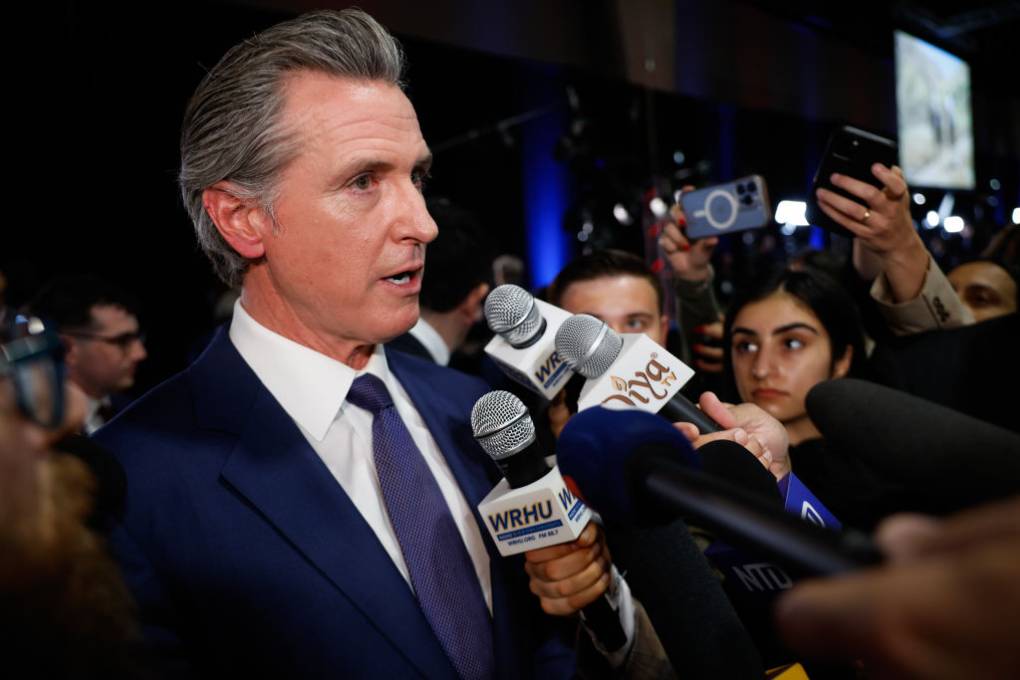
"caption": "Gov. Gavin Newsom speaks to reporters in the spin room following the presidential debate between Republican presidential nominee, former US President Donald Trump and Democratic presidential nominee, U.S. Vice President Kamala Harris at The National Constitution Center on Sept. 10, 2024 in Philadelphia, Pennsylvania. ",
"credit": "Chip Somodevilla/Getty Images",
"altTag": null,
"description": null,
"imgSizes": {
"medium": {
"file": "https://cdn.kqed.org/wp-content/uploads/sites/10/2024/09/GettyImages-2171266139-800x534.jpg",
"width": 800,
"height": 534,
"mimeType": "image/jpeg"
},
"large": {
"file": "https://cdn.kqed.org/wp-content/uploads/sites/10/2024/09/GettyImages-2171266139-1020x680.jpg",
"width": 1020,
"height": 680,
"mimeType": "image/jpeg"
},
"thumbnail": {
"file": "https://cdn.kqed.org/wp-content/uploads/sites/10/2024/09/GettyImages-2171266139-160x107.jpg",
"width": 160,
"height": 107,
"mimeType": "image/jpeg"
},
"post-thumbnail": {
"file": "https://cdn.kqed.org/wp-content/uploads/sites/10/2024/09/GettyImages-2171266139-672x372.jpg",
"width": 672,
"height": 372,
"mimeType": "image/jpeg"
},
"twentyfourteen-full-width": {
"file": "https://cdn.kqed.org/wp-content/uploads/sites/10/2024/09/GettyImages-2171266139-1024x576.jpg",
"width": 1024,
"height": 576,
"mimeType": "image/jpeg"
},
"kqedFullSize": {
"file": "https://cdn.kqed.org/wp-content/uploads/sites/10/2024/09/GettyImages-2171266139.jpg",
"width": 1024,
"height": 683
}
},
"isLoading": false,
"fetchFailed": false
},
"news_12007063": {
"type": "attachments",
"id": "news_12007063",
"meta": {
"index": "attachments_1716263798",
"site": "news",
"id": "12007063",
"found": true
},
"title": "\"The ABC News Presidential Debate: Race for the White House\"",
"publishDate": 1727644834,
"status": "inherit",
"parent": 12007061,
"modified": 1727644918,
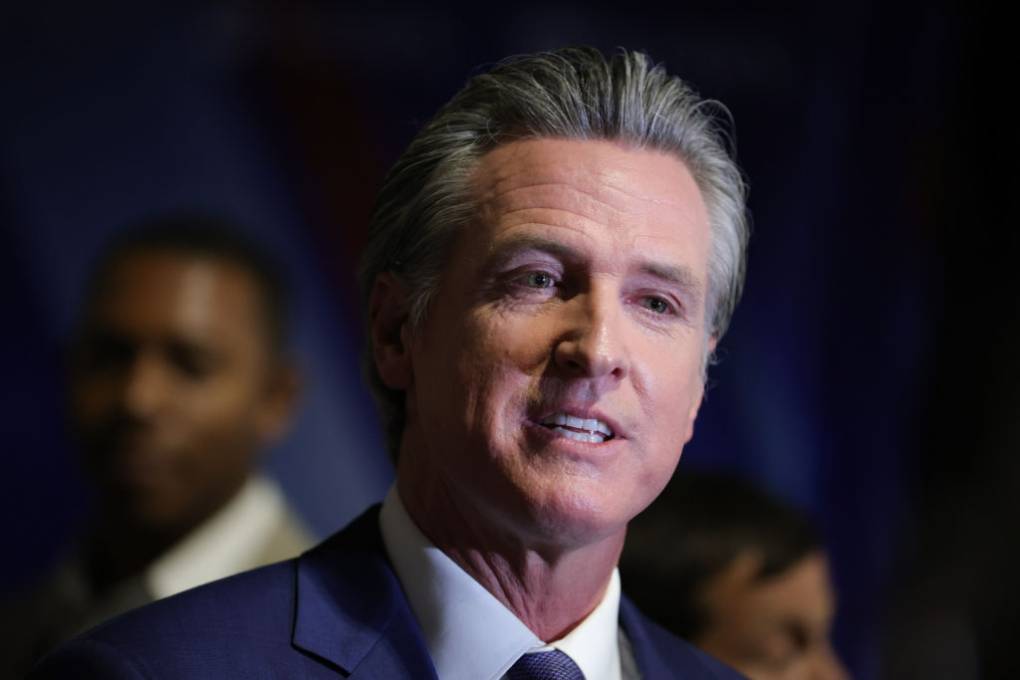
"caption": "California Gov. Gavin Newsom speaks during a live debate held at the National Constitution Center on Sept. 10, 2024 in Philadelphia, Pennsylvania. ",
"credit": "Bryan Dozier/Variety via Getty Images",
"altTag": null,
"description": null,
"imgSizes": {
"medium": {
"file": "https://cdn.kqed.org/wp-content/uploads/sites/10/2024/09/GettyImages-2170580015-800x534.jpg",
"width": 800,
"height": 534,
"mimeType": "image/jpeg"
},
"large": {
"file": "https://cdn.kqed.org/wp-content/uploads/sites/10/2024/09/GettyImages-2170580015-1020x680.jpg",
"width": 1020,
"height": 680,
"mimeType": "image/jpeg"
},
"thumbnail": {
"file": "https://cdn.kqed.org/wp-content/uploads/sites/10/2024/09/GettyImages-2170580015-160x107.jpg",
"width": 160,
"height": 107,
"mimeType": "image/jpeg"
},
"post-thumbnail": {
"file": "https://cdn.kqed.org/wp-content/uploads/sites/10/2024/09/GettyImages-2170580015-672x372.jpg",
"width": 672,
"height": 372,
"mimeType": "image/jpeg"
},
"twentyfourteen-full-width": {
"file": "https://cdn.kqed.org/wp-content/uploads/sites/10/2024/09/GettyImages-2170580015-1024x576.jpg",
"width": 1024,
"height": 576,
"mimeType": "image/jpeg"
},
"kqedFullSize": {
"file": "https://cdn.kqed.org/wp-content/uploads/sites/10/2024/09/GettyImages-2170580015.jpg",
"width": 1024,
"height": 683
}
},
"isLoading": false,
"fetchFailed": false
},
"news_12005278": {
"type": "attachments",
"id": "news_12005278",
"meta": {
"index": "attachments_1716263798",
"site": "news",
"id": "12005278",
"found": true
},
"title": "Close up female hands with blue manicure using pink smartphone outdoors",
"publishDate": 1726690637,
"status": "inherit",
"parent": 12005269,
"modified": 1726694263,
"caption": "Research shows that about 70% of teens use at least one kind of AI tool.",
"credit": "Tatiana Meteleva/Getty Images",
"altTag": "Close-up female hands with a blue manicure using pink smartphone outdoors.",
"description": null,
"imgSizes": {
"medium": {
"file": "https://cdn.kqed.org/wp-content/uploads/sites/10/2024/09/GettyImages-1460098524-800x533.jpg",
"width": 800,
"height": 533,
"mimeType": "image/jpeg"
},
"large": {
"file": "https://cdn.kqed.org/wp-content/uploads/sites/10/2024/09/GettyImages-1460098524-1020x680.jpg",
"width": 1020,
"height": 680,
"mimeType": "image/jpeg"
},
"thumbnail": {
"file": "https://cdn.kqed.org/wp-content/uploads/sites/10/2024/09/GettyImages-1460098524-160x107.jpg",
"width": 160,
"height": 107,
"mimeType": "image/jpeg"
},
"1536x1536": {
"file": "https://cdn.kqed.org/wp-content/uploads/sites/10/2024/09/GettyImages-1460098524-1536x1024.jpg",
"width": 1536,
"height": 1024,
"mimeType": "image/jpeg"
},
"2048x2048": {
"file": "https://cdn.kqed.org/wp-content/uploads/sites/10/2024/09/GettyImages-1460098524-2048x1365.jpg",
"width": 2048,
"height": 1365,
"mimeType": "image/jpeg"
},
"post-thumbnail": {
"file": "https://cdn.kqed.org/wp-content/uploads/sites/10/2024/09/GettyImages-1460098524-672x372.jpg",
"width": 672,
"height": 372,
"mimeType": "image/jpeg"
},
"twentyfourteen-full-width": {
"file": "https://cdn.kqed.org/wp-content/uploads/sites/10/2024/09/GettyImages-1460098524-1038x576.jpg",
"width": 1038,
"height": 576,
"mimeType": "image/jpeg"
},
"full-width": {
"file": "https://cdn.kqed.org/wp-content/uploads/sites/10/2024/09/GettyImages-1460098524-1920x1280.jpg",
"width": 1920,
"height": 1280,
"mimeType": "image/jpeg"
},
"kqedFullSize": {
"file": "https://cdn.kqed.org/wp-content/uploads/sites/10/2024/09/GettyImages-1460098524.jpg",
"width": 2121,
"height": 1414
}
},
"isLoading": false,
"fetchFailed": false
},
"news_12005196": {
"type": "attachments",
"id": "news_12005196",
"meta": {
"index": "attachments_1716263798",
"site": "news",
"id": "12005196",
"found": true
},
"title": "US-EU-POLITICS-TRADE-TECHNOLOGY",
"publishDate": 1726680451,
"status": "inherit",
"parent": 12005186,
"modified": 1726680515,
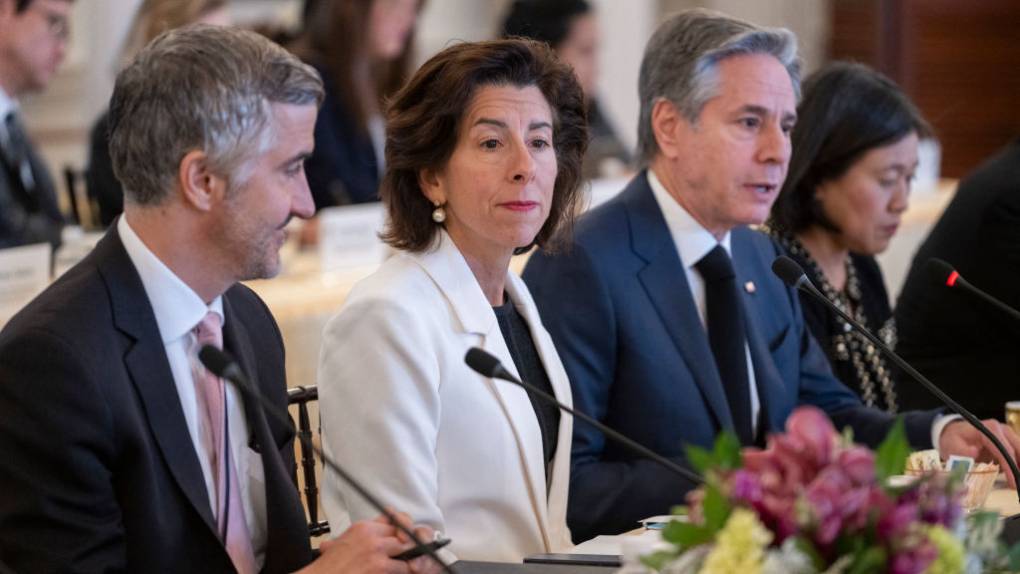
"caption": "US Secretary of Commerce Gina Raimondo (second from left)), with Secretary of State Antony Blinken (third from left)), at the 5th US-EU Trade and Technology Council Ministerial Meeting at the US State Department in Washington, DC, Jan. 30, 2024. ",
"credit": null,
"altTag": null,
"description": null,
"imgSizes": {
"medium": {
"file": "https://cdn.kqed.org/wp-content/uploads/sites/10/2024/09/GettyImages-1965911310-800x450.jpg",
"width": 800,
"height": 450,
"mimeType": "image/jpeg"
},
"large": {
"file": "https://cdn.kqed.org/wp-content/uploads/sites/10/2024/09/GettyImages-1965911310-1020x574.jpg",
"width": 1020,
"height": 574,
"mimeType": "image/jpeg"
},
"thumbnail": {
"file": "https://cdn.kqed.org/wp-content/uploads/sites/10/2024/09/GettyImages-1965911310-160x90.jpg",
"width": 160,
"height": 90,
"mimeType": "image/jpeg"
},
"post-thumbnail": {
"file": "https://cdn.kqed.org/wp-content/uploads/sites/10/2024/09/GettyImages-1965911310-672x372.jpg",
"width": 672,
"height": 372,
"mimeType": "image/jpeg"
},
"kqedFullSize": {
"file": "https://cdn.kqed.org/wp-content/uploads/sites/10/2024/09/GettyImages-1965911310.jpg",
"width": 1024,
"height": 576
}
},
"isLoading": false,
"fetchFailed": false
},
"news_12004622": {
"type": "attachments",
"id": "news_12004622",
"meta": {
"index": "attachments_1716263798",
"site": "news",
"id": "12004622",
"found": true
},
"title": "Illustration Sora",
"publishDate": 1726186123,
"status": "inherit",
"parent": 12004542,
"modified": 1726186206,
"caption": "Archival producers, who play a crucial role in documentary filmmaking, warn that using Sora and similar generative AI programs could muddy the historical record irrevocably. The Archival Producers Alliance released a set of “best practices” to keep generative AI from destroying the integrity and authenticity of documentaries on Sept. 13, 2024.",
"credit": "Photo Illustration by Costfoto/NurPhoto via Getty Images",
"altTag": "A hand holds a tablet with an image of a woman walking through a city street at night with the Open AI logo in the background.",
"description": null,
"imgSizes": {
"medium": {
"file": "https://cdn.kqed.org/wp-content/uploads/sites/10/2024/09/GettyImages-2013768377-800x600.jpg",
"width": 800,
"height": 600,
"mimeType": "image/jpeg"
},
"large": {
"file": "https://cdn.kqed.org/wp-content/uploads/sites/10/2024/09/GettyImages-2013768377-1020x765.jpg",
"width": 1020,
"height": 765,
"mimeType": "image/jpeg"
},
"thumbnail": {
"file": "https://cdn.kqed.org/wp-content/uploads/sites/10/2024/09/GettyImages-2013768377-160x120.jpg",
"width": 160,
"height": 120,
"mimeType": "image/jpeg"
},
"post-thumbnail": {
"file": "https://cdn.kqed.org/wp-content/uploads/sites/10/2024/09/GettyImages-2013768377-672x372.jpg",
"width": 672,
"height": 372,
"mimeType": "image/jpeg"
},
"twentyfourteen-full-width": {
"file": "https://cdn.kqed.org/wp-content/uploads/sites/10/2024/09/GettyImages-2013768377-1024x576.jpg",
"width": 1024,
"height": 576,
"mimeType": "image/jpeg"
},
"kqedFullSize": {
"file": "https://cdn.kqed.org/wp-content/uploads/sites/10/2024/09/GettyImages-2013768377.jpg",
"width": 1024,
"height": 768
}
},
"isLoading": false,
"fetchFailed": false
},
"news_11628746": {
"type": "attachments",
"id": "news_11628746",
"meta": {
"index": "attachments_1716263798",
"site": "news",
"id": "11628746",
"found": true
},
"parent": 11628745,
"imgSizes": {
"small": {
"file": "https://ww2.kqed.org/app/uploads/sites/10/2017/11/gettyimages-633867894_wide-e7e50676b602d043d45f3b34ff18568758f6cebe-520x293.jpg",
"width": 520,
"mimeType": "image/jpeg",
"height": 293
},
"twentyfourteen-full-width": {
"file": "https://ww2.kqed.org/app/uploads/sites/10/2017/11/gettyimages-633867894_wide-e7e50676b602d043d45f3b34ff18568758f6cebe-1038x576.jpg",
"width": 1038,
"mimeType": "image/jpeg",
"height": 576
},
"thumbnail": {
"file": "https://ww2.kqed.org/app/uploads/sites/10/2017/11/gettyimages-633867894_wide-e7e50676b602d043d45f3b34ff18568758f6cebe-160x90.jpg",
"width": 160,
"mimeType": "image/jpeg",
"height": 90
},
"fd-sm": {
"file": "https://ww2.kqed.org/app/uploads/sites/10/2017/11/gettyimages-633867894_wide-e7e50676b602d043d45f3b34ff18568758f6cebe-960x540.jpg",
"width": 960,
"mimeType": "image/jpeg",
"height": 540
},
"post-thumbnail": {
"file": "https://ww2.kqed.org/app/uploads/sites/10/2017/11/gettyimages-633867894_wide-e7e50676b602d043d45f3b34ff18568758f6cebe-672x372.jpg",
"width": 672,
"mimeType": "image/jpeg",
"height": 372
},
"xsmall": {
"file": "https://ww2.kqed.org/app/uploads/sites/10/2017/11/gettyimages-633867894_wide-e7e50676b602d043d45f3b34ff18568758f6cebe-375x211.jpg",
"width": 375,
"mimeType": "image/jpeg",
"height": 211
},
"kqedFullSize": {
"file": "https://ww2.kqed.org/app/uploads/sites/10/2017/11/gettyimages-633867894_wide-e7e50676b602d043d45f3b34ff18568758f6cebe-e1510069404712.jpg",
"width": 1920,
"height": 1080
},
"large": {
"file": "https://ww2.kqed.org/app/uploads/sites/10/2017/11/gettyimages-633867894_wide-e7e50676b602d043d45f3b34ff18568758f6cebe-1020x574.jpg",
"width": 1020,
"mimeType": "image/jpeg",
"height": 574
},
"xlarge": {
"file": "https://ww2.kqed.org/app/uploads/sites/10/2017/11/gettyimages-633867894_wide-e7e50676b602d043d45f3b34ff18568758f6cebe-1180x664.jpg",
"width": 1180,
"mimeType": "image/jpeg",
"height": 664
},
"guest-author-50": {
"file": "https://ww2.kqed.org/app/uploads/sites/10/2017/11/gettyimages-633867894_wide-e7e50676b602d043d45f3b34ff18568758f6cebe-50x50.jpg",
"width": 50,
"mimeType": "image/jpeg",
"height": 50
},
"guest-author-96": {
"file": "https://ww2.kqed.org/app/uploads/sites/10/2017/11/gettyimages-633867894_wide-e7e50676b602d043d45f3b34ff18568758f6cebe-96x96.jpg",
"width": 96,
"mimeType": "image/jpeg",
"height": 96
},
"medium": {
"file": "https://ww2.kqed.org/app/uploads/sites/10/2017/11/gettyimages-633867894_wide-e7e50676b602d043d45f3b34ff18568758f6cebe-800x450.jpg",
"width": 800,
"mimeType": "image/jpeg",
"height": 450
},
"guest-author-64": {
"file": "https://ww2.kqed.org/app/uploads/sites/10/2017/11/gettyimages-633867894_wide-e7e50676b602d043d45f3b34ff18568758f6cebe-64x64.jpg",
"width": 64,
"mimeType": "image/jpeg",
"height": 64
},
"guest-author-32": {
"file": "https://ww2.kqed.org/app/uploads/sites/10/2017/11/gettyimages-633867894_wide-e7e50676b602d043d45f3b34ff18568758f6cebe-32x32.jpg",
"width": 32,
"mimeType": "image/jpeg",
"height": 32
},
"fd-lrg": {
"file": "https://ww2.kqed.org/app/uploads/sites/10/2017/11/gettyimages-633867894_wide-e7e50676b602d043d45f3b34ff18568758f6cebe-1920x1080.jpg",
"width": 1920,
"mimeType": "image/jpeg",
"height": 1080
},
"fd-med": {
"file": "https://ww2.kqed.org/app/uploads/sites/10/2017/11/gettyimages-633867894_wide-e7e50676b602d043d45f3b34ff18568758f6cebe-1180x664.jpg",
"width": 1180,
"mimeType": "image/jpeg",
"height": 664
},
"full-width": {
"file": "https://ww2.kqed.org/app/uploads/sites/10/2017/11/gettyimages-633867894_wide-e7e50676b602d043d45f3b34ff18568758f6cebe-1920x1080.jpg",
"width": 1920,
"mimeType": "image/jpeg",
"height": 1080
},
"detail": {
"file": "https://ww2.kqed.org/app/uploads/sites/10/2017/11/gettyimages-633867894_wide-e7e50676b602d043d45f3b34ff18568758f6cebe-150x150.jpg",
"width": 150,
"mimeType": "image/jpeg",
"height": 150
},
"guest-author-128": {
"file": "https://ww2.kqed.org/app/uploads/sites/10/2017/11/gettyimages-633867894_wide-e7e50676b602d043d45f3b34ff18568758f6cebe-128x128.jpg",
"width": 128,
"mimeType": "image/jpeg",
"height": 128
},
"xxsmall": {
"file": "https://ww2.kqed.org/app/uploads/sites/10/2017/11/gettyimages-633867894_wide-e7e50676b602d043d45f3b34ff18568758f6cebe-240x135.jpg",
"width": 240,
"mimeType": "image/jpeg",
"height": 135
}
},
"publishDate": 1510069197,
"modified": 1510069428,
"caption": "Taylor Swift performing in February in Houston.",
"description": "Taylor Swift performing in February in Houston.",
"title": "gettyimages-633867894_wide-e7e50676b602d043d45f3b34ff18568758f6cebe",
"credit": "John Shearer/Getty Images for DIRECTV",
"status": "inherit",
"isLoading": false,
"fetchFailed": false
},
"news_12002257": {
"type": "attachments",
"id": "news_12002257",
"meta": {
"index": "attachments_1716263798",
"site": "news",
"id": "12002257",
"found": true
},
"title": "California AI Regulations",
"publishDate": 1724886851,
"status": "inherit",
"parent": 12002254,
"modified": 1724960738,
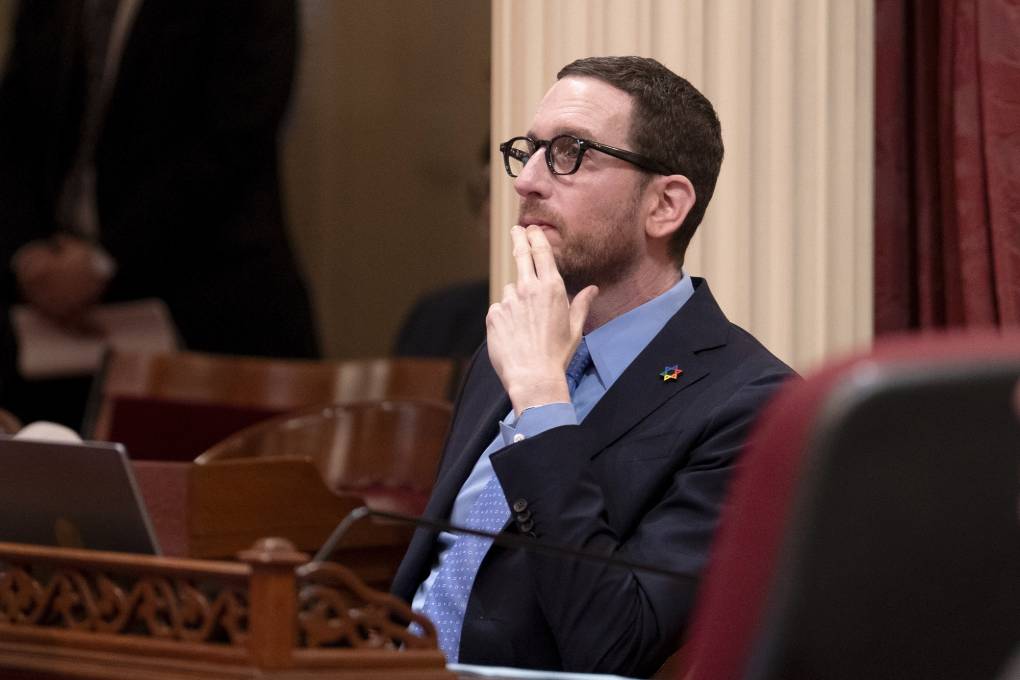
"caption": "Sen. Scott Wiener watches as the Senate votes on a measure at the Capitol in Sacramento, California, on April 11, 2024. On Wednesday, SB 1047, a bill he authored, passed 41–9.",
"credit": "Rich Pedroncelli/AP Photo",
"altTag": null,
"description": null,
"imgSizes": {
"medium": {
"file": "https://cdn.kqed.org/wp-content/uploads/sites/10/2024/08/ScottWienerAP1-800x533.jpg",
"width": 800,
"height": 533,
"mimeType": "image/jpeg"
},
"large": {
"file": "https://cdn.kqed.org/wp-content/uploads/sites/10/2024/08/ScottWienerAP1-1020x680.jpg",
"width": 1020,
"height": 680,
"mimeType": "image/jpeg"
},
"thumbnail": {
"file": "https://cdn.kqed.org/wp-content/uploads/sites/10/2024/08/ScottWienerAP1-160x107.jpg",
"width": 160,
"height": 107,
"mimeType": "image/jpeg"
},
"1536x1536": {
"file": "https://cdn.kqed.org/wp-content/uploads/sites/10/2024/08/ScottWienerAP1-1536x1024.jpg",
"width": 1536,
"height": 1024,
"mimeType": "image/jpeg"
},
"post-thumbnail": {
"file": "https://cdn.kqed.org/wp-content/uploads/sites/10/2024/08/ScottWienerAP1-672x372.jpg",
"width": 672,
"height": 372,
"mimeType": "image/jpeg"
},
"twentyfourteen-full-width": {
"file": "https://cdn.kqed.org/wp-content/uploads/sites/10/2024/08/ScottWienerAP1-1038x576.jpg",
"width": 1038,
"height": 576,
"mimeType": "image/jpeg"
},
"full-width": {
"file": "https://cdn.kqed.org/wp-content/uploads/sites/10/2024/08/ScottWienerAP1-1920x1280.jpg",
"width": 1920,
"height": 1280,
"mimeType": "image/jpeg"
},
"kqedFullSize": {
"file": "https://cdn.kqed.org/wp-content/uploads/sites/10/2024/08/ScottWienerAP1.jpg",
"width": 2000,
"height": 1333
}
},
"isLoading": false,
"fetchFailed": false
},
"news_12001694": {
"type": "attachments",
"id": "news_12001694",
"meta": {
"index": "attachments_1716263798",
"site": "news",
"id": "12001694",
"found": true
},
"title": "Merrick Garland",
"publishDate": 1724447235,
"status": "inherit",
"parent": 12001652,
"modified": 1724452577,
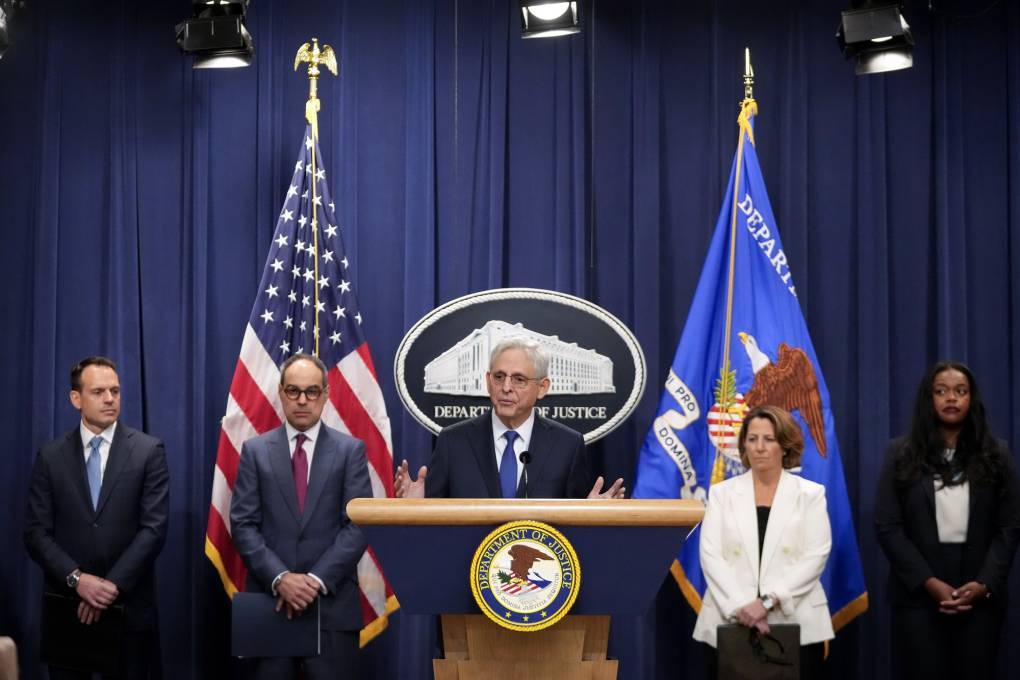
"caption": "Attorney General Merrick Garland, center, speaks with reporters about an antitrust lawsuit against real estate software company RealPage during a news conference at the Department of Justice, Friday, Aug. 23, 2024, in Washington, D.C.",
"credit": "Mark Schiefelbein/AP Photo",
"altTag": null,
"description": null,
"imgSizes": {
"medium": {
"file": "https://cdn.kqed.org/wp-content/uploads/sites/10/2024/08/MerrickGarlandAntiTrustLawsuitAP-800x533.jpg",
"width": 800,
"height": 533,
"mimeType": "image/jpeg"
},
"large": {
"file": "https://cdn.kqed.org/wp-content/uploads/sites/10/2024/08/MerrickGarlandAntiTrustLawsuitAP-1020x680.jpg",
"width": 1020,
"height": 680,
"mimeType": "image/jpeg"
},
"thumbnail": {
"file": "https://cdn.kqed.org/wp-content/uploads/sites/10/2024/08/MerrickGarlandAntiTrustLawsuitAP-160x107.jpg",
"width": 160,
"height": 107,
"mimeType": "image/jpeg"
},
"1536x1536": {
"file": "https://cdn.kqed.org/wp-content/uploads/sites/10/2024/08/MerrickGarlandAntiTrustLawsuitAP-1536x1024.jpg",
"width": 1536,
"height": 1024,
"mimeType": "image/jpeg"
},
"post-thumbnail": {
"file": "https://cdn.kqed.org/wp-content/uploads/sites/10/2024/08/MerrickGarlandAntiTrustLawsuitAP-672x372.jpg",
"width": 672,
"height": 372,
"mimeType": "image/jpeg"
},
"twentyfourteen-full-width": {
"file": "https://cdn.kqed.org/wp-content/uploads/sites/10/2024/08/MerrickGarlandAntiTrustLawsuitAP-1038x576.jpg",
"width": 1038,
"height": 576,
"mimeType": "image/jpeg"
},
"full-width": {
"file": "https://cdn.kqed.org/wp-content/uploads/sites/10/2024/08/MerrickGarlandAntiTrustLawsuitAP-1920x1280.jpg",
"width": 1920,
"height": 1280,
"mimeType": "image/jpeg"
},
"kqedFullSize": {
"file": "https://cdn.kqed.org/wp-content/uploads/sites/10/2024/08/MerrickGarlandAntiTrustLawsuitAP.jpg",
"width": 2000,
"height": 1333
}
},
"isLoading": false,
"fetchFailed": false
},
"news_12001180": {
"type": "attachments",
"id": "news_12001180",
"meta": {
"index": "attachments_1716263798",
"site": "news",
"id": "12001180",
"found": true
},
"title": "California State Senator Scott Wiener adddresses the SF Chronicle Editorial Board on Thursday, Jan. 18, 2018 in San Francisco, Calif.",
"publishDate": 1724269970,
"status": "inherit",
"parent": 0,
"modified": 1724270090,
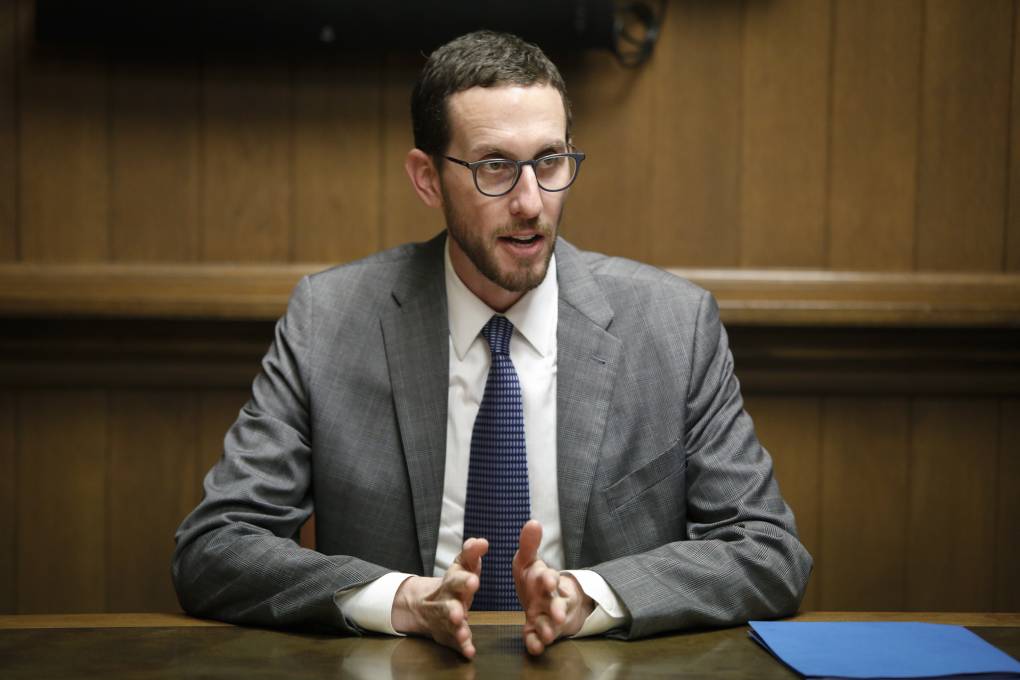
"caption": "Senator Scott Wiener introduced SB 1047, a bill that would mandate safety testing for developers of the largest AI models.",
"credit": "Russell Yip/San Francisco Chronicle via Getty Images",
"altTag": null,
"description": null,
"imgSizes": {
"medium": {
"file": "https://cdn.kqed.org/wp-content/uploads/sites/10/2024/08/GETTYIMAGES-1298883374-KQED-800x533.jpg",
"width": 800,
"height": 533,
"mimeType": "image/jpeg"
},
"large": {
"file": "https://cdn.kqed.org/wp-content/uploads/sites/10/2024/08/GETTYIMAGES-1298883374-KQED-1020x680.jpg",
"width": 1020,
"height": 680,
"mimeType": "image/jpeg"
},
"thumbnail": {
"file": "https://cdn.kqed.org/wp-content/uploads/sites/10/2024/08/GETTYIMAGES-1298883374-KQED-160x107.jpg",
"width": 160,
"height": 107,
"mimeType": "image/jpeg"
},
"1536x1536": {
"file": "https://cdn.kqed.org/wp-content/uploads/sites/10/2024/08/GETTYIMAGES-1298883374-KQED-1536x1024.jpg",
"width": 1536,
"height": 1024,
"mimeType": "image/jpeg"
},
"post-thumbnail": {
"file": "https://cdn.kqed.org/wp-content/uploads/sites/10/2024/08/GETTYIMAGES-1298883374-KQED-672x372.jpg",
"width": 672,
"height": 372,
"mimeType": "image/jpeg"
},
"twentyfourteen-full-width": {
"file": "https://cdn.kqed.org/wp-content/uploads/sites/10/2024/08/GETTYIMAGES-1298883374-KQED-1038x576.jpg",
"width": 1038,
"height": 576,
"mimeType": "image/jpeg"
},
"full-width": {
"file": "https://cdn.kqed.org/wp-content/uploads/sites/10/2024/08/GETTYIMAGES-1298883374-KQED-1920x1280.jpg",
"width": 1920,
"height": 1280,
"mimeType": "image/jpeg"
},
"kqedFullSize": {
"file": "https://cdn.kqed.org/wp-content/uploads/sites/10/2024/08/GETTYIMAGES-1298883374-KQED.jpg",
"width": 2000,
"height": 1333
}
},
"isLoading": false,
"fetchFailed": false
},
"news_12000413": {
"type": "attachments",
"id": "news_12000413",
"meta": {
"index": "attachments_1716263798",
"site": "news",
"id": "12000413",
"found": true
},
"title": "240815-CITYATTORNEYDEEPFAKES-06-BL-KQED",
"publishDate": 1723748842,
"status": "inherit",
"parent": 12046379,
"modified": 1751062554,
"caption": "City Attorney David Chiu speaks during a press conference at City Hall in San Francisco on Aug. 15, 2024.",
"credit": "Beth LaBerge/KQED",
"altTag": null,
"description": null,
"imgSizes": {
"medium": {
"file": "https://cdn.kqed.org/wp-content/uploads/sites/10/2024/08/240815-CITYATTORNEYDEEPFAKES-06-BL-KQED-800x533.jpg",
"width": 800,
"height": 533,
"mimeType": "image/jpeg"
},
"large": {
"file": "https://cdn.kqed.org/wp-content/uploads/sites/10/2024/08/240815-CITYATTORNEYDEEPFAKES-06-BL-KQED-1020x680.jpg",
"width": 1020,
"height": 680,
"mimeType": "image/jpeg"
},
"thumbnail": {
"file": "https://cdn.kqed.org/wp-content/uploads/sites/10/2024/08/240815-CITYATTORNEYDEEPFAKES-06-BL-KQED-160x107.jpg",
"width": 160,
"height": 107,
"mimeType": "image/jpeg"
},
"1536x1536": {
"file": "https://cdn.kqed.org/wp-content/uploads/sites/10/2024/08/240815-CITYATTORNEYDEEPFAKES-06-BL-KQED-1536x1024.jpg",
"width": 1536,
"height": 1024,
"mimeType": "image/jpeg"
},
"post-thumbnail": {
"file": "https://cdn.kqed.org/wp-content/uploads/sites/10/2024/08/240815-CITYATTORNEYDEEPFAKES-06-BL-KQED-672x372.jpg",
"width": 672,
"height": 372,
"mimeType": "image/jpeg"
},
"twentyfourteen-full-width": {
"file": "https://cdn.kqed.org/wp-content/uploads/sites/10/2024/08/240815-CITYATTORNEYDEEPFAKES-06-BL-KQED-1038x576.jpg",
"width": 1038,
"height": 576,
"mimeType": "image/jpeg"
},
"full-width": {
"file": "https://cdn.kqed.org/wp-content/uploads/sites/10/2024/08/240815-CITYATTORNEYDEEPFAKES-06-BL-KQED-1920x1280.jpg",
"width": 1920,
"height": 1280,
"mimeType": "image/jpeg"
},
"kqedFullSize": {
"file": "https://cdn.kqed.org/wp-content/uploads/sites/10/2024/08/240815-CITYATTORNEYDEEPFAKES-06-BL-KQED.jpg",
"width": 2000,
"height": 1333
}
},
"isLoading": false,
"fetchFailed": false
},
"news_11998856": {
"type": "attachments",
"id": "news_11998856",
"meta": {
"index": "attachments_1716263798",
"site": "news",
"id": "11998856",
"found": true
},
"title": "In this photo illustration, the ChatGPT logo is displayed on",
"publishDate": 1722890738,
"status": "inherit",
"parent": 11998817,
"modified": 1722890828,
"caption": "Several bills addressing generative artificial intelligence are moving through the state Legislature in California’s piecemeal approach to regulation.",
"credit": "Jaque Silva/SOPA Images/LightRocket via Getty Images",
"altTag": null,
"description": null,
"imgSizes": {
"medium": {
"file": "https://cdn.kqed.org/wp-content/uploads/sites/10/2024/08/ChatGPTGetty-800x533.jpg",
"width": 800,
"height": 533,
"mimeType": "image/jpeg"
},
"large": {
"file": "https://cdn.kqed.org/wp-content/uploads/sites/10/2024/08/ChatGPTGetty-1020x680.jpg",
"width": 1020,
"height": 680,
"mimeType": "image/jpeg"
},
"thumbnail": {
"file": "https://cdn.kqed.org/wp-content/uploads/sites/10/2024/08/ChatGPTGetty-160x107.jpg",
"width": 160,
"height": 107,
"mimeType": "image/jpeg"
},
"1536x1536": {
"file": "https://cdn.kqed.org/wp-content/uploads/sites/10/2024/08/ChatGPTGetty-1536x1024.jpg",
"width": 1536,
"height": 1024,
"mimeType": "image/jpeg"
},
"post-thumbnail": {
"file": "https://cdn.kqed.org/wp-content/uploads/sites/10/2024/08/ChatGPTGetty-672x372.jpg",
"width": 672,
"height": 372,
"mimeType": "image/jpeg"
},
"twentyfourteen-full-width": {
"file": "https://cdn.kqed.org/wp-content/uploads/sites/10/2024/08/ChatGPTGetty-1038x576.jpg",
"width": 1038,
"height": 576,
"mimeType": "image/jpeg"
},
"full-width": {
"file": "https://cdn.kqed.org/wp-content/uploads/sites/10/2024/08/ChatGPTGetty-1920x1280.jpg",
"width": 1920,
"height": 1280,
"mimeType": "image/jpeg"
},
"kqedFullSize": {
"file": "https://cdn.kqed.org/wp-content/uploads/sites/10/2024/08/ChatGPTGetty.jpg",
"width": 2000,
"height": 1333
}
},
"isLoading": false,
"fetchFailed": false
},
"news_11981873": {
"type": "attachments",
"id": "news_11981873",
"meta": {
"index": "attachments_1716263798",
"site": "news",
"id": "11981873",
"found": true
},
"title": "240403-AARONPESKIN-003-BL-KQED",
"publishDate": 1712247440,
"status": "inherit",
"parent": 0,
"modified": 1722383571,
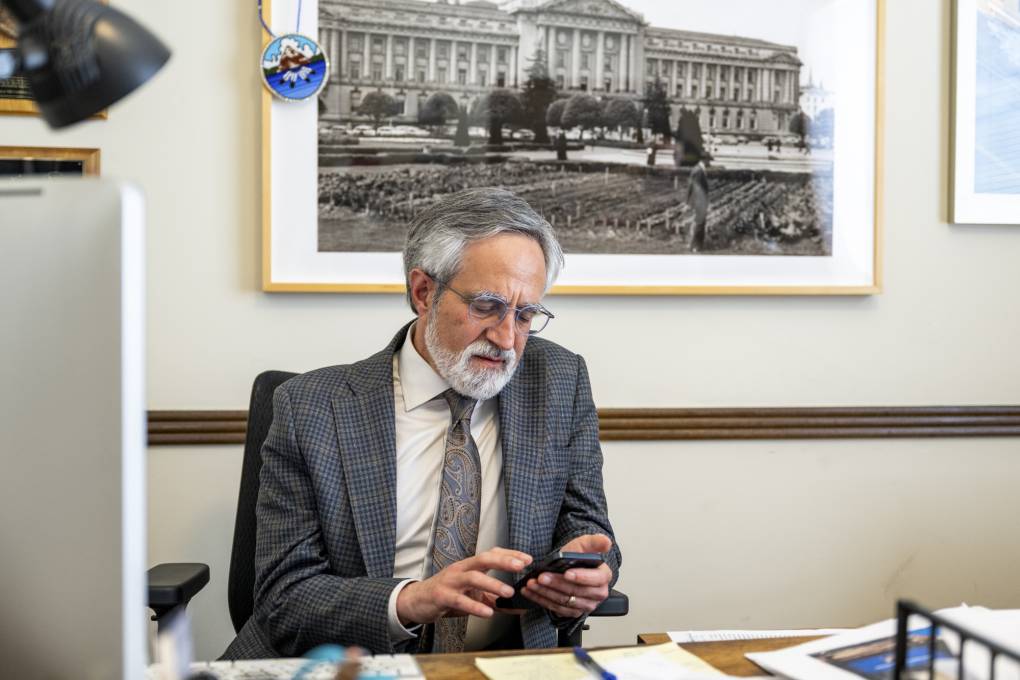
"caption": "Aaron Peskin, President of the Board of Supervisors, sits in his office in San Francisco on April 3, 2024.",
"credit": "Beth LaBerge/KQED",
"altTag": null,
"description": null,
"imgSizes": {
"medium": {
"file": "https://cdn.kqed.org/wp-content/uploads/sites/10/2024/04/240403-AARONPESKIN-003-BL-KQED-800x533.jpg",
"width": 800,
"height": 533,
"mimeType": "image/jpeg"
},
"large": {
"file": "https://cdn.kqed.org/wp-content/uploads/sites/10/2024/04/240403-AARONPESKIN-003-BL-KQED-1020x680.jpg",
"width": 1020,
"height": 680,
"mimeType": "image/jpeg"
},
"thumbnail": {
"file": "https://cdn.kqed.org/wp-content/uploads/sites/10/2024/04/240403-AARONPESKIN-003-BL-KQED-160x107.jpg",
"width": 160,
"height": 107,
"mimeType": "image/jpeg"
},
"1536x1536": {
"file": "https://cdn.kqed.org/wp-content/uploads/sites/10/2024/04/240403-AARONPESKIN-003-BL-KQED-1536x1024.jpg",
"width": 1536,
"height": 1024,
"mimeType": "image/jpeg"
},
"post-thumbnail": {
"file": "https://cdn.kqed.org/wp-content/uploads/sites/10/2024/04/240403-AARONPESKIN-003-BL-KQED-672x372.jpg",
"width": 672,
"height": 372,
"mimeType": "image/jpeg"
},
"twentyfourteen-full-width": {
"file": "https://cdn.kqed.org/wp-content/uploads/sites/10/2024/04/240403-AARONPESKIN-003-BL-KQED-1038x576.jpg",
"width": 1038,
"height": 576,
"mimeType": "image/jpeg"
},
"full-width": {
"file": "https://cdn.kqed.org/wp-content/uploads/sites/10/2024/04/240403-AARONPESKIN-003-BL-KQED-1920x1280.jpg",
"width": 1920,
"height": 1280,
"mimeType": "image/jpeg"
},
"kqedFullSize": {
"file": "https://cdn.kqed.org/wp-content/uploads/sites/10/2024/04/240403-AARONPESKIN-003-BL-KQED.jpg",
"width": 2000,
"height": 1333
}
},
"isLoading": false,
"fetchFailed": false
}
},
"audioPlayerReducer": {
"postId": "stream_live",
"isPaused": true,
"isPlaying": false,
"pfsActive": false,
"pledgeModalIsOpen": true,
"playerDrawerIsOpen": false,
"liveAudioPlayStartedAt": 0,
"liveAudioPlayContext": ""
},
"authorsReducer": {
"byline_news_12007061": {
"type": "authors",
"id": "byline_news_12007061",
"meta": {
"override": true
},
"slug": "byline_news_12007061",
"name": "Trân Nguyễn, Associated Press",
"isLoading": false
},
"byline_news_12005186": {
"type": "authors",
"id": "byline_news_12005186",
"meta": {
"override": true
},
"slug": "byline_news_12005186",
"name": "Matt O'Brien, Associated Press",
"isLoading": false
},
"rachael-myrow": {
"type": "authors",
"id": "251",
"meta": {
"index": "authors_1716337520",
"id": "251",
"found": true
},
"name": "Rachael Myrow",
"firstName": "Rachael",
"lastName": "Myrow",
"slug": "rachael-myrow",
"email": "rmyrow@kqed.org",
"display_author_email": true,
"staff_mastheads": [
"news"
],
"title": "Senior Editor of KQED's Silicon Valley News Desk",
"bio": "• I write and edit stories about how Silicon Valley power and policies shape everyday life in California. I’m also passionate about making Bay Area history and culture more accessible to a broad public. • I’ve been a journalist for most of my life, starting in high school with The Franklin Press in Los Angeles, where I grew up. While earning my first degree in English at UC Berkeley, I got my start in public radio at KALX-FM. After completing a second degree in journalism at Cal, I landed my first professional job at Marketplace, then moved on to KPCC (now LAist), and then KQED, where I hosted The California Report for more than seven years. • My reporting has appeared on NPR, The World, WBUR’s \u003ci>Here & Now\u003c/i>, and the BBC. I also guest host for KQED’s \u003ci>Forum\u003c/i>, as well as the Commonwealth Club in San Francisco. • I speak periodically on media, democracy and technology issues, and do voiceover work for documentaries and educational video projects. • Outside of the studio, you'll find me hiking Bay Area trails and whipping up Insta-ready meals in my kitchen. • I do not accept gifts, money, or favors from anyone connected to my reporting, I don't pay people for information, and I do not support or donate to political causes. • I strive to treat the people I report on with fairness, honesty, and respect. I also recognize there are often multiple sides to a story and work to verify information through multiple sources and documentation. If I get something wrong, I correct it.",
"avatar": "https://secure.gravatar.com/avatar/3ed8a3c5f26025e4a805ba634cda8cd764906b97438a6d9ce216b044e340da4e?s=600&d=blank&r=g",
"twitter": "rachaelmyrow",
"bluesky": null,
"facebook": null,
"instagram": null,
"linkedin": "https://www.linkedin.com/in/rachaelmyrow/",
"sites": [
{
"site": "arts",
"roles": [
"administrator"
]
},
{
"site": "news",
"roles": [
"edit_others_posts",
"editor"
]
},
{
"site": "futureofyou",
"roles": [
"editor"
]
},
{
"site": "bayareabites",
"roles": [
"editor"
]
},
{
"site": "stateofhealth",
"roles": [
"editor"
]
},
{
"site": "science",
"roles": [
"editor"
]
},
{
"site": "food",
"roles": [
"editor"
]
},
{
"site": "forum",
"roles": [
"editor"
]
},
{
"site": "liveblog",
"roles": [
"author"
]
}
],
"headData": {
"title": "Rachael Myrow | KQED",
"description": "Senior Editor of KQED's Silicon Valley News Desk",
"ogImgSrc": "https://secure.gravatar.com/avatar/3ed8a3c5f26025e4a805ba634cda8cd764906b97438a6d9ce216b044e340da4e?s=600&d=blank&r=g",
"twImgSrc": "https://secure.gravatar.com/avatar/3ed8a3c5f26025e4a805ba634cda8cd764906b97438a6d9ce216b044e340da4e?s=600&d=blank&r=g"
},
"isLoading": false,
"link": "/author/rachael-myrow"
},
"ebaldassari": {
"type": "authors",
"id": "11652",
"meta": {
"index": "authors_1716337520",
"id": "11652",
"found": true
},
"name": "Erin Baldassari",
"firstName": "Erin",
"lastName": "Baldassari",
"slug": "ebaldassari",
"email": "ebaldassari@KQED.org",
"display_author_email": true,
"staff_mastheads": [
"news"
],
"title": "Staff Writer",
"bio": "Erin Baldassari covers housing for KQED. She's a former print journalist and most recently worked as the transportation reporter for the \u003cem>Mercury News\u003c/em> and \u003cem>East Bay Times. \u003c/em>There, she focused on how the Bay Area’s housing shortage has changed the way people move around the region. She also served on the \u003cem>East Bay Times\u003c/em>’ 2017 Pulitzer Prize-winning team for coverage of the Ghost Ship Fire in Oakland. Prior to that, Erin worked as a breaking news and general assignment reporter for a variety of outlets in the Bay Area and the greater Boston area. A Tufts University alumna, Erin grew up in the foothills of the Sierra Nevada mountains and in Sonoma County. She is a life-long KQED listener.",
"avatar": "https://secure.gravatar.com/avatar/5e95cad64a8ca08288082212e199d2b0cbeb4fd8e8ef5339395f361032bbe005?s=600&d=blank&r=g",
"twitter": "e_baldi",
"bluesky": null,
"facebook": null,
"instagram": null,
"linkedin": null,
"sites": [
{
"site": "news",
"roles": [
"edit_others_posts",
"editor"
]
},
{
"site": "science",
"roles": [
"editor"
]
},
{
"site": "liveblog",
"roles": [
"editor"
]
}
],
"headData": {
"title": "Erin Baldassari | KQED",
"description": "Staff Writer",
"ogImgSrc": "https://secure.gravatar.com/avatar/5e95cad64a8ca08288082212e199d2b0cbeb4fd8e8ef5339395f361032bbe005?s=600&d=blank&r=g",
"twImgSrc": "https://secure.gravatar.com/avatar/5e95cad64a8ca08288082212e199d2b0cbeb4fd8e8ef5339395f361032bbe005?s=600&d=blank&r=g"
},
"isLoading": false,
"link": "/author/ebaldassari"
},
"sjohnson": {
"type": "authors",
"id": "11840",
"meta": {
"index": "authors_1716337520",
"id": "11840",
"found": true
},
"name": "Sydney Johnson",
"firstName": "Sydney",
"lastName": "Johnson",
"slug": "sjohnson",
"email": "sjohnson@kqed.org",
"display_author_email": false,
"staff_mastheads": [
"news"
],
"title": "KQED Reporter",
"bio": "Sydney Johnson is a general assignment reporter at KQED. She previously reported on public health and city government at the San Francisco Examiner, and before that, she covered statewide education policy for EdSource. Her reporting has won multiple local, state and national awards. Sydney is a graduate of the University of California, Berkeley and lives in San Francisco.",
"avatar": "https://secure.gravatar.com/avatar/97855f2719b72ad6190b7c535fe642c8?s=600&d=blank&r=g",
"twitter": "sydneyfjohnson",
"facebook": null,
"instagram": null,
"linkedin": null,
"sites": [
{
"site": "news",
"roles": [
"editor"
]
}
],
"headData": {
"title": "Sydney Johnson | KQED",
"description": "KQED Reporter",
"ogImgSrc": "https://secure.gravatar.com/avatar/97855f2719b72ad6190b7c535fe642c8?s=600&d=blank&r=g",
"twImgSrc": "https://secure.gravatar.com/avatar/97855f2719b72ad6190b7c535fe642c8?s=600&d=blank&r=g"
},
"isLoading": false,
"link": "/author/sjohnson"
},
"kdebenedetti": {
"type": "authors",
"id": "11913",
"meta": {
"index": "authors_1716337520",
"id": "11913",
"found": true
},
"name": "Katie DeBenedetti",
"firstName": "Katie",
"lastName": "DeBenedetti",
"slug": "kdebenedetti",
"email": "kdebenedetti@kqed.org",
"display_author_email": false,
"staff_mastheads": [
"news",
"science"
],
"title": "KQED Contributor",
"bio": "Katie DeBenedetti is a digital reporter covering daily news for the Express Desk. Prior to joining KQED as a culture reporting intern in January 2024, she covered education and city government for the Napa Valley Register.",
"avatar": "https://secure.gravatar.com/avatar/6e31073cb8f7e4214ab03f42771d0f45?s=600&d=blank&r=g",
"twitter": null,
"facebook": null,
"instagram": null,
"linkedin": null,
"sites": [
{
"site": "news",
"roles": [
"author"
]
},
{
"site": "science",
"roles": [
"author"
]
},
{
"site": "liveblog",
"roles": [
"author"
]
}
],
"headData": {
"title": "Katie DeBenedetti | KQED",
"description": "KQED Contributor",
"ogImgSrc": "https://secure.gravatar.com/avatar/6e31073cb8f7e4214ab03f42771d0f45?s=600&d=blank&r=g",
"twImgSrc": "https://secure.gravatar.com/avatar/6e31073cb8f7e4214ab03f42771d0f45?s=600&d=blank&r=g"
},
"isLoading": false,
"link": "/author/kdebenedetti"
}
},
"pagesReducer": {
"news_tag_ai": {
"type": "terms",
"id": "news_25184",
"meta": {
"index": "terms_1716263798",
"site": "news",
"id": "25184",
"score": 9.304801
},
"featImg": null,
"name": "AI",
"description": null,
"taxonomy": "tag",
"headData": {
"twImgId": null,
"twTitle": null,
"ogTitle": null,
"ogImgId": null,
"twDescription": null,
"description": null,
"title": "AI Archives | KQED News",
"ogDescription": null
},
"ttid": 25201,
"slug": "ai",
"isLoading": false,
"title": "AI",
"pageMeta": {
"site": "news",
"WpPageTemplate": "page-topic-editorial",
"currentPage": 12
},
"blocks": [
{
"blockName": "kqed/post-list",
"attrs": {
"layout": "cardArticle2",
"query": "posts/news?tag=ai",
"seeMore": false,
"paginated": true,
"page": 12
}
},
{
"blockName": "kqed/ad"
}
]
}
},
"pfsSessionReducer": {},
"postsReducer": {
"stream_live": {
"type": "live",
"id": "stream_live",
"audioUrl": "https://streams.kqed.org/kqedradio",
"title": "Live Stream",
"excerpt": "Live Stream information currently unavailable.",
"link": "/radio",
"featImg": "",
"label": {
"name": "KQED Live",
"link": "/"
}
},
"stream_kqedNewscast": {
"type": "posts",
"id": "stream_kqedNewscast",
"audioUrl": "https://www.kqed.org/.stream/anon/radio/RDnews/newscast.mp3?_=1",
"title": "KQED Newscast",
"featImg": "",
"label": {
"name": "88.5 FM",
"link": "/"
}
},
"news_12007087": {
"type": "posts",
"id": "news_12007087",
"meta": {
"index": "posts_1716263798",
"site": "news",
"id": "12007087",
"score": null,
"sort": [
1727667351000
]
},
"guestAuthors": [],
"slug": "california-blinks-governor-newsom-vetoes-ai-bill-aimed-at-catastrophic-harms",
"title": "California Blinks: Governor Newsom Vetoes AI Bill Aimed at Catastrophic Harms",
"publishDate": 1727667351,
"format": "standard",
"headTitle": "California Blinks: Governor Newsom Vetoes AI Bill Aimed at Catastrophic Harms | KQED",
"labelTerm": {
"site": "news"
},
"content": "\u003cp>In an 11th hour decision, Governor Gavin Newsom has vetoed a bill widely seen as one of the most ambitious efforts to regulate the generative AI industry. SB 1047 was one of hundreds of bills floated around the country in the absence of meaningful action from Congress to address potentially catastrophic impacts of the software.\u003c/p>\n\u003cp>SB 1047 would have required developers to submit their safety plans to the state attorney general, who could hold them liable if AI models they directly control were to cause harm or imminent threats to public safety.\u003c/p>\n\u003cp>“The harms at issue in SB 1047 are harms that people are trying to perpetrate today,” state Senator Scott Wiener (D-San Francisco) told KQED. “The question is, are we going to allow large AI models to make it even easier and smoother for people to do things like shut down the electric grid or build a chemical weapon? It’s not science fiction at all.”\u003c/p>\n\u003cp>In his \u003ca href=\"http://chrome-extension://efaidnbmnnnibpcajpcglclefindmkaj/https://s3.documentcloud.org/documents/25178071/sb-1047-veto-message.pdf\">veto message\u003c/a> on the \u003ca href=\"https://leginfo.legislature.ca.gov/faces/billNavClient.xhtml?bill_id=202320240SB1047\">Safe and Secure Innovation for Frontier Artificial Intelligence Models Act\u003c/a>, Newsom made it clear that he’s not averse to regulating AI companies, noting that he’s already approved more than a dozen bills around specific risks of harm to democracy, online privacy, and critical infrastructure. But he criticized SB 1047’s limited focus on the most expensive and large-scale models, saying it “establishes a regulatory framework that could give the public a false sense of security about controlling this fast-moving technology.”\u003c/p>\n\u003cp>Wiener spent the last year in a \u003ca href=\"https://www.kqed.org/news/12000892/ai-safety-testing-bill-heads-for-a-floor-vote-in-sacramento-taking-heavy-fire-from-silicon-valley\">pitched battle\u003c/a> with some of the most prominent figures in the AI industry, including many who warned the measure could stifle the growth of the technology in California. Wiener said he amended the measure to reflect counsel from leaders in the AI space, including safety groups, academics, startups and developers like Amazon-backed Anthropic.\u003c/p>\n\u003cp>[ad fullwidth]\u003c/p>\n\u003cp>Jack Clark, co-founder of Anthropic, tweeted Sunday that, “While the final version of SB 1047 was not perfect, it was a promising first step towards mitigating potentially severe and far reaching risks associated with AI development.”\u003c/p>\n\u003cp>https://twitter.com/jackclarkSF/status/1840509202352984550\u003c/p>\n\u003cp>Wiener eliminated text that would have allowed California’s attorney general to sue AI companies for negligent safety practices before a catastrophic event has occurred, along with plans to establish a division within the California Department of Technology that would have provided oversight and enforcement.\u003c/p>\n\u003cp>Compared to the original language of the bill, what landed on the governor’s desk was substantially weaker, according to Gary Marcus, a scientist, entrepreneur and author of \u003ca href=\"https://www.amazon.com/Taming-Silicon-Valley-Ensure-Works/dp/0262551063/ref=sr_1_1?crid=3A88EX2BVWA8H&dib=eyJ2IjoiMSJ9.F31swn2jM8u95GwAae9mH9FtgLBwUwaWK0GYU8T73IeQzBQQZgNmHvqkTzpmOdLL3Cl3xGckiQPC0QdJAKKOYoriPQEYkLaDfuMKFNOAOAYq85KJ5JOQU8s7XYTGk5qGUWMGp2mOorCYamVYxtwjzw.F1IisiErR1kWYZw0nuDn_CLFRvoRFMUlti7pxm2y61Q&dib_tag=se&keywords=Taming+Silicon+Valley&qid=1727652464&sprefix=taming+silicon+valley%2Caps%2C145&sr=8-1\">Taming Silicon Valley\u003c/a>, a book highly critical of generative AI. “The bill was watered down,” Marcus said, adding he feels its value was primarily symbolic, and that Newsom’s decision signaled to Silicon Valley that it can “cause enormous chaos, and probably nobody’s going to make them fix it.”\u003c/p>\n\u003cp>As with other measures before Newsom, the governor had a month to consider whether to sign SB 1047 or veto it, and during that time, his office was lobbied heavily by industry insiders on both sides, as well as local \u003ca href=\"https://www.kqed.org/news/12002254/california-bill-to-regulate-catastrophic-effects-of-ai-heads-to-newsoms-desk\">congressional representatives\u003c/a> and \u003ca href=\"https://www.latimes.com/entertainment-arts/business/story/2024-09-24/mark-hamill-jane-fonda-joseph-gordon-levitt-sign-letter-in-support-of-ai-safety-bill-sb-1047\">Hollywood celebrities\u003c/a>.\u003c/p>\n\u003cp>“I don’t have the technical capacity to perfectly predict how [SB 1047] would have affected the AI industry,” said Thad Kousser, a political science professor at UC San Diego. “Many people in Sacramento don’t have that ability. Maybe they just decided to err on the side of caution, thinking, ‘Wow, there’s so many industry voices saying this particular bill is dangerous and could have a chilling effect.’ Not really knowing 100%, maybe the safer step is just vetoing,” Kousser said.\u003c/p>\n\u003cp>Wiener said the governor’s office did not engage with his office as the bill made its way through the state Assembly and Senate. “I personally met with some of the most vocal opponents of the bill, with the Andreessen Horowitz firm, with several of the Stanford professors who were opposing the bill, with the large tech companies that were opposing the bill. I also met with individuals and businesses that had constructive criticism of the bill. And we made significant changes to the bill in response to those constructive critiques.”\u003c/p>\n\u003cp>Those changes were not enough for many critics, including Congresswoman Zoe Lofgren of San José, who wrote, “Any AI risk framework should be based on empirical data and fit for purpose. I also believe this is an issue that should be handled at the federal level. Congress and the Administration are both moving on AI governance. I look forward to working with the Governor as we move forward.”\u003c/p>\n\u003cp>Lofgren is the ranking member of the \u003ca href=\"https://science.house.gov/committee-members\">House Science, Space and Technology Committee\u003c/a>, which has in recent weeks moved nine bills forward, but all \u003ca href=\"https://www.dlapiper.com/en-us/insights/publications/ai-outlook/2024/ai-legislation-advances-in-us-house-of-representatives\">face an uncertain future\u003c/a> in the House of Representatives. Nothing addressing the scope and scale of SB 1047 has passed out of any committee. But Lina Khan of the Federal Trade Commission has said that federal regulators are keen to use \u003ca href=\"http://chrome-extension://efaidnbmnnnibpcajpcglclefindmkaj/https://www.ftc.gov/system/files/ftc_gov/pdf/remarks-of-chair-lina-m-khan-re-joint-interagency-statement-on-ai.pdf\">existing laws (PDF)\u003c/a> to go after bad behavior in Silicon Valley and elsewhere.\u003c/p>\n\u003cp>Unlike the \u003ca href=\"https://www.kqed.org/news/11987803/how-california-and-the-eu-work-together-to-regulate-artificial-intelligence\">European Union\u003c/a> and Colorado, both of which passed comprehensive laws, California lawmakers have largely focused on discrete bills addressing specific issues with generative AI. Gov. Newsom signed 17 of these bills this year, as he noted in his veto message, and California is among a host of states taking steps to regulate generative AI.\u003c/p>\n\u003cp>Given the inertia in Washington, D.C., most political analysts see the state level as the only hope for aggressive regulation of technology.\u003c/p>\n\u003cp>In the race for the White House this year, both Kamala Harris and Donald Trump have sought the support of Silicon Valley’s most powerful players. Newsom’s presidential ambitions are presumably on hold for the foreseeable future, but given the national profile of SB 1047, some have wondered if he might be loath to make enemies among those profiting from the rise of generative artificial intelligence.\u003c/p>\n\u003cp>“I think, like any good politician who’s ascended to the heights Gavin Newsom has, you’ve got to be thinking about ‘How will I be judged today, tomorrow, in 5 or 10 years,” said Professor Kousser. “That forward thinking has guided his decisions on many bills throughout his governorship. He’s been on the right side of history in many of the strong policy stands he has taken, as mayor and as governor — and he’s hoping that he’ll be on the right side of history on this one.”\u003c/p>\n\u003cp>[ad floatright]\u003c/p>\n\u003cp>Industry critics like Marcus argue something much more cynical: that the biggest of the big Silicon Valley companies have become so wealthy and powerful that few U.S. politicians appear willing to go up against them. “Existing laws didn’t anticipate the AI era, and so there are lots of gaps in those laws. We don’t really have clarity about what to do about copyright. We don’t have clarity about what to do with machines when they go out of control in some way.”\u003c/p>\n\n",
"blocks": [],
"excerpt": "SB 1047 was widely considered weakened by the time it hit Newsom’s desk, but many saw it as an indicator of whether he was keen to lead in regulating generative AI.",
"status": "publish",
"parent": 0,
"modified": 1729026974,
"stats": {
"hasAudio": false,
"hasVideo": false,
"hasChartOrMap": false,
"iframeSrcs": [],
"hasGoogleForm": false,
"hasGallery": false,
"hasHearkenModule": false,
"hasPolis": false,
"paragraphCount": 20,
"wordCount": 1220
},
"headData": {
"title": "California Blinks: Governor Newsom Vetoes AI Bill Aimed at Catastrophic Harms | KQED",
"description": "SB 1047 was widely considered weakened by the time it hit Newsom’s desk, but many saw it as an indicator of whether he was keen to lead in regulating generative AI.",
"ogTitle": "",
"ogDescription": "",
"ogImgId": "",
"twTitle": "",
"twDescription": "",
"twImgId": "",
"schema": {
"@context": "https://schema.org",
"@type": "NewsArticle",
"headline": "California Blinks: Governor Newsom Vetoes AI Bill Aimed at Catastrophic Harms",
"datePublished": "2024-09-29T20:35:51-07:00",
"dateModified": "2024-10-15T14:16:14-07:00",
"image": "https://cdn.kqed.org/wp-content/uploads/2020/02/KQED-OG-Image@1x.png",
"isAccessibleForFree": "True",
"publisher": {
"@type": "NewsMediaOrganization",
"@id": "https://www.kqed.org/#organization",
"name": "KQED",
"logo": "https://cdn.kqed.org/wp-content/uploads/2020/02/KQED-OG-Image@1x.png",
"url": "https://www.kqed.org",
"sameAs": [
"https://www.facebook.com/KQED",
"https://twitter.com/KQED",
"https://www.instagram.com/kqed/",
"https://www.tiktok.com/@kqedofficial",
"https://www.linkedin.com/company/kqed",
"https://www.youtube.com/channel/UCeC0IOo7i1P_61zVUWbJ4nw"
]
}
}
},
"sticky": false,
"nprStoryId": "kqed-12007087",
"excludeFromSiteSearch": "Include",
"articleAge": "0",
"path": "/news/12007087/california-blinks-governor-newsom-vetoes-ai-bill-aimed-at-catastrophic-harms",
"audioTrackLength": null,
"parsedContent": [
{
"type": "contentString",
"content": "\u003cdiv class=\"post-body\">\u003cp>\u003cp>In an 11th hour decision, Governor Gavin Newsom has vetoed a bill widely seen as one of the most ambitious efforts to regulate the generative AI industry. SB 1047 was one of hundreds of bills floated around the country in the absence of meaningful action from Congress to address potentially catastrophic impacts of the software.\u003c/p>\n\u003cp>SB 1047 would have required developers to submit their safety plans to the state attorney general, who could hold them liable if AI models they directly control were to cause harm or imminent threats to public safety.\u003c/p>\n\u003cp>“The harms at issue in SB 1047 are harms that people are trying to perpetrate today,” state Senator Scott Wiener (D-San Francisco) told KQED. “The question is, are we going to allow large AI models to make it even easier and smoother for people to do things like shut down the electric grid or build a chemical weapon? It’s not science fiction at all.”\u003c/p>\n\u003cp>In his \u003ca href=\"http://chrome-extension://efaidnbmnnnibpcajpcglclefindmkaj/https://s3.documentcloud.org/documents/25178071/sb-1047-veto-message.pdf\">veto message\u003c/a> on the \u003ca href=\"https://leginfo.legislature.ca.gov/faces/billNavClient.xhtml?bill_id=202320240SB1047\">Safe and Secure Innovation for Frontier Artificial Intelligence Models Act\u003c/a>, Newsom made it clear that he’s not averse to regulating AI companies, noting that he’s already approved more than a dozen bills around specific risks of harm to democracy, online privacy, and critical infrastructure. But he criticized SB 1047’s limited focus on the most expensive and large-scale models, saying it “establishes a regulatory framework that could give the public a false sense of security about controlling this fast-moving technology.”\u003c/p>\n\u003cp>Wiener spent the last year in a \u003ca href=\"https://www.kqed.org/news/12000892/ai-safety-testing-bill-heads-for-a-floor-vote-in-sacramento-taking-heavy-fire-from-silicon-valley\">pitched battle\u003c/a> with some of the most prominent figures in the AI industry, including many who warned the measure could stifle the growth of the technology in California. Wiener said he amended the measure to reflect counsel from leaders in the AI space, including safety groups, academics, startups and developers like Amazon-backed Anthropic.\u003c/p>\n\u003cp>\u003c/p>\u003c/div>",
"attributes": {
"named": {},
"numeric": []
}
},
{
"type": "component",
"content": "",
"name": "ad",
"attributes": {
"named": {
"label": "fullwidth"
},
"numeric": [
"fullwidth"
]
}
},
{
"type": "contentString",
"content": "\u003cdiv class=\"post-body\">\u003cp>\u003c/p>\n\u003cp>Jack Clark, co-founder of Anthropic, tweeted Sunday that, “While the final version of SB 1047 was not perfect, it was a promising first step towards mitigating potentially severe and far reaching risks associated with AI development.”\u003c/p>\u003c/p>\u003c/div>",
"attributes": {
"named": {},
"numeric": []
}
},
{
"type": "component",
"content": "",
"name": "singleTwitterStatus",
"attributes": {
"named": {
"id": "1840509202352984550"
},
"numeric": []
}
},
{
"type": "contentString",
"content": "\u003cdiv class=\"post-body\">\u003cp>\n\u003cp>Wiener eliminated text that would have allowed California’s attorney general to sue AI companies for negligent safety practices before a catastrophic event has occurred, along with plans to establish a division within the California Department of Technology that would have provided oversight and enforcement.\u003c/p>\n\u003cp>Compared to the original language of the bill, what landed on the governor’s desk was substantially weaker, according to Gary Marcus, a scientist, entrepreneur and author of \u003ca href=\"https://www.amazon.com/Taming-Silicon-Valley-Ensure-Works/dp/0262551063/ref=sr_1_1?crid=3A88EX2BVWA8H&dib=eyJ2IjoiMSJ9.F31swn2jM8u95GwAae9mH9FtgLBwUwaWK0GYU8T73IeQzBQQZgNmHvqkTzpmOdLL3Cl3xGckiQPC0QdJAKKOYoriPQEYkLaDfuMKFNOAOAYq85KJ5JOQU8s7XYTGk5qGUWMGp2mOorCYamVYxtwjzw.F1IisiErR1kWYZw0nuDn_CLFRvoRFMUlti7pxm2y61Q&dib_tag=se&keywords=Taming+Silicon+Valley&qid=1727652464&sprefix=taming+silicon+valley%2Caps%2C145&sr=8-1\">Taming Silicon Valley\u003c/a>, a book highly critical of generative AI. “The bill was watered down,” Marcus said, adding he feels its value was primarily symbolic, and that Newsom’s decision signaled to Silicon Valley that it can “cause enormous chaos, and probably nobody’s going to make them fix it.”\u003c/p>\n\u003cp>As with other measures before Newsom, the governor had a month to consider whether to sign SB 1047 or veto it, and during that time, his office was lobbied heavily by industry insiders on both sides, as well as local \u003ca href=\"https://www.kqed.org/news/12002254/california-bill-to-regulate-catastrophic-effects-of-ai-heads-to-newsoms-desk\">congressional representatives\u003c/a> and \u003ca href=\"https://www.latimes.com/entertainment-arts/business/story/2024-09-24/mark-hamill-jane-fonda-joseph-gordon-levitt-sign-letter-in-support-of-ai-safety-bill-sb-1047\">Hollywood celebrities\u003c/a>.\u003c/p>\n\u003cp>“I don’t have the technical capacity to perfectly predict how [SB 1047] would have affected the AI industry,” said Thad Kousser, a political science professor at UC San Diego. “Many people in Sacramento don’t have that ability. Maybe they just decided to err on the side of caution, thinking, ‘Wow, there’s so many industry voices saying this particular bill is dangerous and could have a chilling effect.’ Not really knowing 100%, maybe the safer step is just vetoing,” Kousser said.\u003c/p>\n\u003cp>Wiener said the governor’s office did not engage with his office as the bill made its way through the state Assembly and Senate. “I personally met with some of the most vocal opponents of the bill, with the Andreessen Horowitz firm, with several of the Stanford professors who were opposing the bill, with the large tech companies that were opposing the bill. I also met with individuals and businesses that had constructive criticism of the bill. And we made significant changes to the bill in response to those constructive critiques.”\u003c/p>\n\u003cp>Those changes were not enough for many critics, including Congresswoman Zoe Lofgren of San José, who wrote, “Any AI risk framework should be based on empirical data and fit for purpose. I also believe this is an issue that should be handled at the federal level. Congress and the Administration are both moving on AI governance. I look forward to working with the Governor as we move forward.”\u003c/p>\n\u003cp>Lofgren is the ranking member of the \u003ca href=\"https://science.house.gov/committee-members\">House Science, Space and Technology Committee\u003c/a>, which has in recent weeks moved nine bills forward, but all \u003ca href=\"https://www.dlapiper.com/en-us/insights/publications/ai-outlook/2024/ai-legislation-advances-in-us-house-of-representatives\">face an uncertain future\u003c/a> in the House of Representatives. Nothing addressing the scope and scale of SB 1047 has passed out of any committee. But Lina Khan of the Federal Trade Commission has said that federal regulators are keen to use \u003ca href=\"http://chrome-extension://efaidnbmnnnibpcajpcglclefindmkaj/https://www.ftc.gov/system/files/ftc_gov/pdf/remarks-of-chair-lina-m-khan-re-joint-interagency-statement-on-ai.pdf\">existing laws (PDF)\u003c/a> to go after bad behavior in Silicon Valley and elsewhere.\u003c/p>\n\u003cp>Unlike the \u003ca href=\"https://www.kqed.org/news/11987803/how-california-and-the-eu-work-together-to-regulate-artificial-intelligence\">European Union\u003c/a> and Colorado, both of which passed comprehensive laws, California lawmakers have largely focused on discrete bills addressing specific issues with generative AI. Gov. Newsom signed 17 of these bills this year, as he noted in his veto message, and California is among a host of states taking steps to regulate generative AI.\u003c/p>\n\u003cp>Given the inertia in Washington, D.C., most political analysts see the state level as the only hope for aggressive regulation of technology.\u003c/p>\n\u003cp>In the race for the White House this year, both Kamala Harris and Donald Trump have sought the support of Silicon Valley’s most powerful players. Newsom’s presidential ambitions are presumably on hold for the foreseeable future, but given the national profile of SB 1047, some have wondered if he might be loath to make enemies among those profiting from the rise of generative artificial intelligence.\u003c/p>\n\u003cp>“I think, like any good politician who’s ascended to the heights Gavin Newsom has, you’ve got to be thinking about ‘How will I be judged today, tomorrow, in 5 or 10 years,” said Professor Kousser. “That forward thinking has guided his decisions on many bills throughout his governorship. He’s been on the right side of history in many of the strong policy stands he has taken, as mayor and as governor — and he’s hoping that he’ll be on the right side of history on this one.”\u003c/p>\n\u003cp>\u003c/p>\u003c/div>",
"attributes": {
"named": {},
"numeric": []
}
},
{
"type": "component",
"content": "",
"name": "ad",
"attributes": {
"named": {
"label": "floatright"
},
"numeric": [
"floatright"
]
}
},
{
"type": "contentString",
"content": "\u003cdiv class=\"post-body\">\u003cp>\u003c/p>\n\u003cp>Industry critics like Marcus argue something much more cynical: that the biggest of the big Silicon Valley companies have become so wealthy and powerful that few U.S. politicians appear willing to go up against them. “Existing laws didn’t anticipate the AI era, and so there are lots of gaps in those laws. We don’t really have clarity about what to do about copyright. We don’t have clarity about what to do with machines when they go out of control in some way.”\u003c/p>\n\n\u003c/div>\u003c/p>",
"attributes": {
"named": {},
"numeric": []
}
}
],
"link": "/news/12007087/california-blinks-governor-newsom-vetoes-ai-bill-aimed-at-catastrophic-harms",
"authors": [
"251"
],
"categories": [
"news_8",
"news_13",
"news_248"
],
"tags": [
"news_25184"
],
"featImg": "news_12007088",
"label": "news"
},
"news_12007061": {
"type": "posts",
"id": "news_12007061",
"meta": {
"index": "posts_1716263798",
"site": "news",
"id": "12007061",
"score": null,
"sort": [
1727644986000
]
},
"guestAuthors": [],
"slug": "newsom-vetoes-bill-to-create-first-in-nation-ai-safety-measures",
"title": "Newsom Vetoes Bill to Create First-in-Nation AI Safety Measures",
"publishDate": 1727644986,
"format": "standard",
"headTitle": "Newsom Vetoes Bill to Create First-in-Nation AI Safety Measures | KQED",
"labelTerm": {
"site": "news"
},
"content": "\u003cp>\u003cem>Updated 4:30 p.m. Sunday\u003c/em>\u003c/p>\n\u003cp>Gov. Gavin Newsom vetoed a landmark bill aimed at establishing first-in-the-nation \u003ca href=\"https://apnews.com/article/california-ai-regulation-bill-vote-cf581ef29fe47df8ce2ae3b979e07f73\">safety measures\u003c/a> for large artificial intelligence models Sunday.\u003c/p>\n\u003cp>The decision is a major blow to efforts attempting to rein in the homegrown industry that is rapidly evolving with little oversight. The bill would have established some of the first regulations on large-scale AI models in the nation and paved the way for AI safety regulations across the country, supporters said.\u003c/p>\n\u003cp>Earlier this month, the Democratic governor told an audience at Dreamforce, an annual conference hosted by software giant Salesforce, that California must lead in regulating AI in the face of federal inaction but that \u003ca href=\"https://apnews.com/article/california-meta-google-ai-regulation-fight-e3a9c25b597b5f469fe0de149572f87e\">the proposal\u003c/a> “can have a chilling effect on the industry.”\u003c/p>\n\u003cp>[ad fullwidth]\u003c/p>\n\u003cp>The proposal, which drew fierce opposition from startups, tech giants and several Democratic House members, could have hurt the homegrown industry by establishing rigid requirements, Newsom said.\u003c/p>\n\u003cp>“While well-intentioned, SB 1047 does not take into account whether an AI system is deployed in high-risk environments, involves critical decision-making or the use of sensitive data,” Newsom said in a statement. “Instead, the bill applies stringent standards to even the most basic functions — so long as a large system deploys it. I do not believe this is the best approach to protecting the public from real threats posed by the technology.”\u003c/p>\n\u003cp>Newsom on Sunday instead announced that the state will partner with several industry experts, including AI pioneer \u003ca href=\"https://apnews.com/article/ai-pioneer-feifei-li-stanford-computer-vision-imagenet-702717c10defd89feabf01e6c1566a4b\">Fei-Fei Li\u003c/a>, to develop guardrails around powerful AI models. Li opposed the AI safety proposal.\u003c/p>\n\u003cp>The author of SB 1047, state Sen. Scott Wiener of San Francisco, told KQED Sunday said it was a major missed opportunity for California to lead on tech regulation and on AI safety.\u003c/p>\n\u003cp>“\u003cb>\u003c/b>This bill was meticulously put together. We worked with some of the most brilliant AI experts in the world. We worked with technology companies. We we worked with a huge coalition on this bill and it deserved to be signed,” Wiener said. “The governor obviously disagreed, and it’s a missed opportunity.”\u003c/p>\n\u003cp>The measure, aimed at reducing potential risks created by AI, would have required companies to test their models and publicly disclose their safety protocols to prevent the models from being manipulated to, for example, wipe out the state’s electric grid or help build chemical weapons. Experts say those scenarios could be possible in the future as the industry continues to rapidly advance. It also would have provided whistleblower protections to workers.\u003c/p>\n\u003cp>The legislation is among \u003ca href=\"https://apnews.com/article/california-ai-election-deepfakes-safety-regulations-eb6bbc80e346744dbb250f931ebca9f3\">a host of bills\u003c/a> passed by the Legislature this year to regulate AI, \u003ca href=\"https://apnews.com/article/california-artificial-intelligence-deepfakes-election-0e70cb32b06d9187eaef5bdacaba6d77\">fight deepfakes\u003c/a> and \u003ca href=\"https://apnews.com/article/california-hollywood-actors-ai-protections-artificial-intelligence-d3d53135ee76849c2da1388efcfc8975\">protect workers\u003c/a>. State lawmakers said California must take actions this year, citing hard lessons they learned from failing to rein in social media companies when they might have had a chance.\u003c/p>\n\u003cp>Proponents of the measure, including Elon Musk and Anthropic, said the proposal could have injected some levels of transparency and accountability around large-scale AI models, as developers and experts say they still don’t have a full understanding of how AI models behave and why.\u003c/p>\n\u003cp>The bill targeted systems that require \u003ca href=\"https://apnews.com/article/measuring-ai-safety-risk-flops-california-1047-6d556799683b02aa192b821462422aa2\">more than $100 million\u003c/a> to build. No current AI models have hit that threshold, but some experts said that could change within the next year.\u003c/p>\n\u003cp>“This is because of the massive investment scale-up within the industry,” said Daniel Kokotajlo, a former OpenAI researcher who resigned in April over what he saw as the company’s disregard for AI risks. “This is a crazy amount of power to have any private company control unaccountably, and it’s also incredibly risky.”\u003c/p>\n\u003cp>The United States is already behind \u003ca href=\"https://apnews.com/article/european-union-artificial-intelligence-8ed875df104fbc254b3dd09f348255e8\">Europe in regulating AI\u003c/a> to limit risks. The California proposal wasn’t as comprehensive as regulations in Europe, but it would have been a good first step to set guardrails around the rapidly growing technology that is raising concerns about job loss, misinformation, invasions of privacy and \u003ca href=\"https://apnews.com/article/artificial-intelligence-ai-explained-policy-technology-regulations-discrimination-d3226c9139d3d06af263e7ff467d0666\">automation bias\u003c/a>, supporters said.\u003c/p>\n\u003cp>A number of leading AI companies last year \u003ca href=\"https://apnews.com/article/artificial-intelligence-safeguards-joe-biden-kamala-harris-4caf02b94275429f764b06840897436c\">voluntarily agreed\u003c/a> to follow safeguards set by the White House, such as testing and sharing information about their models. The California bill would have mandated AI developers to follow requirements similar to those commitments, said the measure’s supporters.\u003c/p>\n\u003cp>[aside label=\"Related Stories\" postID=\"news_12002254,news_12003542,forum_2010101906887,news_12005269\"]\u003c/p>\n\u003cp>But critics, including former U.S. House Speaker Nancy Pelosi, argued that the bill would “kill California tech” and stifle innovation. It would have discouraged AI developers from investing in large models or sharing open-source software, they said.\u003c/p>\n\u003cp>Newsom’s decision to veto the bill marks another win in California for big tech companies and AI developers, many of whom spent the past year lobbying alongside the California Chamber of Commerce to sway the governor and lawmakers from advancing AI regulations.\u003c/p>\n\u003cp>Two other sweeping AI proposals, which also faced mounting opposition from the tech industry and others, died ahead of a legislative deadline last month. The bills would have required AI developers to label AI-generated content and \u003ca href=\"https://apnews.com/article/artificial-intelligence-bias-discrimination-regulation-ai-ff1d0860663723079aac3666b38f2320\">ban discrimination from AI tools\u003c/a> used to make employment decisions.\u003c/p>\n\u003cp>The governor said earlier this summer he wanted to protect California’s status as a global leader in AI, noting that 32 of the world’s top 50 AI companies are located in the state.\u003c/p>\n\u003cp>He has promoted California as an early adopter as the state \u003ca href=\"https://apnews.com/article/california-ai-generative-artificial-intelligence-contracts-c178a60b679193ca03168d053f3b811b\">could soon deploy generative AI tools\u003c/a> to address highway congestion, provide tax guidance and streamline homelessness programs. The state also announced last month \u003ca href=\"https://apnews.com/article/nvidia-artificial-intelligence-ai-california-0958f43b6aecbdb7617dfcb78bad7319\">a voluntary partnership\u003c/a> with AI giant Nvidia to help train students, college faculty, developers and data scientists. California is also considering new rules against AI discrimination in hiring practices.\u003c/p>\n\u003cp>Earlier this month, Newsom signed some of the toughest laws in the country to crack down on \u003ca href=\"https://apnews.com/article/california-artificial-intelligence-deepfakes-election-0e70cb32b06d9187eaef5bdacaba6d77\">election deepfakes\u003c/a> and measures to \u003ca href=\"https://apnews.com/article/california-hollywood-actors-ai-protections-artificial-intelligence-d3d53135ee76849c2da1388efcfc8975\">protect Hollywood workers\u003c/a> from unauthorized AI use.\u003c/p>\n\u003cp>But even with Newsom’s veto, the California safety proposal is inspiring lawmakers in other states to take up similar measures, said Tatiana Rice, deputy director of the Future of Privacy Forum, a nonprofit that works with lawmakers on technology and privacy proposals.\u003c/p>\n\u003cp>“They are going to potentially either copy it or do something similar next legislative session,” Rice said. “So it’s not going away.”\u003c/p>\n\u003cp>\u003cem>KQED’s Nik Altenberg contributed reporting to this story. The Associated Press and OpenAI have \u003ca href=\"https://apnews.com/article/openai-chatgpt-associated-press-ap-f86f84c5bcc2f3b98074b38521f5f75a\">a licensing and technology agreement\u003c/a> that allows OpenAI access to part of AP’s text archives.\u003c/em>\u003c/p>\n\u003cp>[ad floatright]\u003c/p>\n",
"blocks": [],
"excerpt": "In an interview with KQED, state Sen. Scott Wiener — who authored the bill — said Gov. Newsom's veto is 'a major missed opportunity for California.'",
"status": "publish",
"parent": 0,
"modified": 1729026984,
"stats": {
"hasAudio": false,
"hasVideo": false,
"hasChartOrMap": false,
"iframeSrcs": [],
"hasGoogleForm": false,
"hasGallery": false,
"hasHearkenModule": false,
"hasPolis": false,
"paragraphCount": 28,
"wordCount": 1132
},
"headData": {
"title": "Newsom Vetoes Bill to Create First-in-Nation AI Safety Measures | KQED",
"description": "In an interview with KQED, state Sen. Scott Wiener — who authored the bill — said Gov. Newsom's veto is 'a major missed opportunity for California.'",
"ogTitle": "",
"ogDescription": "",
"ogImgId": "",
"twTitle": "",
"twDescription": "",
"twImgId": "",
"schema": {
"@context": "https://schema.org",
"@type": "NewsArticle",
"headline": "Newsom Vetoes Bill to Create First-in-Nation AI Safety Measures",
"datePublished": "2024-09-29T14:23:06-07:00",
"dateModified": "2024-10-15T14:16:24-07:00",
"image": "https://cdn.kqed.org/wp-content/uploads/2020/02/KQED-OG-Image@1x.png",
"isAccessibleForFree": "True",
"publisher": {
"@type": "NewsMediaOrganization",
"@id": "https://www.kqed.org/#organization",
"name": "KQED",
"logo": "https://cdn.kqed.org/wp-content/uploads/2020/02/KQED-OG-Image@1x.png",
"url": "https://www.kqed.org",
"sameAs": [
"https://www.facebook.com/KQED",
"https://twitter.com/KQED",
"https://www.instagram.com/kqed/",
"https://www.tiktok.com/@kqedofficial",
"https://www.linkedin.com/company/kqed",
"https://www.youtube.com/channel/UCeC0IOo7i1P_61zVUWbJ4nw"
]
}
}
},
"sticky": false,
"nprByline": "Trân Nguyễn, Associated Press",
"nprStoryId": "kqed-12007061",
"excludeFromSiteSearch": "Include",
"showOnAuthorArchivePages": "No",
"articleAge": "0",
"path": "/news/12007061/newsom-vetoes-bill-to-create-first-in-nation-ai-safety-measures",
"audioTrackLength": null,
"parsedContent": [
{
"type": "contentString",
"content": "\u003cdiv class=\"post-body\">\u003cp>\u003cp>\u003cem>Updated 4:30 p.m. Sunday\u003c/em>\u003c/p>\n\u003cp>Gov. Gavin Newsom vetoed a landmark bill aimed at establishing first-in-the-nation \u003ca href=\"https://apnews.com/article/california-ai-regulation-bill-vote-cf581ef29fe47df8ce2ae3b979e07f73\">safety measures\u003c/a> for large artificial intelligence models Sunday.\u003c/p>\n\u003cp>The decision is a major blow to efforts attempting to rein in the homegrown industry that is rapidly evolving with little oversight. The bill would have established some of the first regulations on large-scale AI models in the nation and paved the way for AI safety regulations across the country, supporters said.\u003c/p>\n\u003cp>Earlier this month, the Democratic governor told an audience at Dreamforce, an annual conference hosted by software giant Salesforce, that California must lead in regulating AI in the face of federal inaction but that \u003ca href=\"https://apnews.com/article/california-meta-google-ai-regulation-fight-e3a9c25b597b5f469fe0de149572f87e\">the proposal\u003c/a> “can have a chilling effect on the industry.”\u003c/p>\n\u003cp>\u003c/p>\u003c/div>",
"attributes": {
"named": {},
"numeric": []
}
},
{
"type": "component",
"content": "",
"name": "ad",
"attributes": {
"named": {
"label": "fullwidth"
},
"numeric": [
"fullwidth"
]
}
},
{
"type": "contentString",
"content": "\u003cdiv class=\"post-body\">\u003cp>\u003c/p>\n\u003cp>The proposal, which drew fierce opposition from startups, tech giants and several Democratic House members, could have hurt the homegrown industry by establishing rigid requirements, Newsom said.\u003c/p>\n\u003cp>“While well-intentioned, SB 1047 does not take into account whether an AI system is deployed in high-risk environments, involves critical decision-making or the use of sensitive data,” Newsom said in a statement. “Instead, the bill applies stringent standards to even the most basic functions — so long as a large system deploys it. I do not believe this is the best approach to protecting the public from real threats posed by the technology.”\u003c/p>\n\u003cp>Newsom on Sunday instead announced that the state will partner with several industry experts, including AI pioneer \u003ca href=\"https://apnews.com/article/ai-pioneer-feifei-li-stanford-computer-vision-imagenet-702717c10defd89feabf01e6c1566a4b\">Fei-Fei Li\u003c/a>, to develop guardrails around powerful AI models. Li opposed the AI safety proposal.\u003c/p>\n\u003cp>The author of SB 1047, state Sen. Scott Wiener of San Francisco, told KQED Sunday said it was a major missed opportunity for California to lead on tech regulation and on AI safety.\u003c/p>\n\u003cp>“\u003cb>\u003c/b>This bill was meticulously put together. We worked with some of the most brilliant AI experts in the world. We worked with technology companies. We we worked with a huge coalition on this bill and it deserved to be signed,” Wiener said. “The governor obviously disagreed, and it’s a missed opportunity.”\u003c/p>\n\u003cp>The measure, aimed at reducing potential risks created by AI, would have required companies to test their models and publicly disclose their safety protocols to prevent the models from being manipulated to, for example, wipe out the state’s electric grid or help build chemical weapons. Experts say those scenarios could be possible in the future as the industry continues to rapidly advance. It also would have provided whistleblower protections to workers.\u003c/p>\n\u003cp>The legislation is among \u003ca href=\"https://apnews.com/article/california-ai-election-deepfakes-safety-regulations-eb6bbc80e346744dbb250f931ebca9f3\">a host of bills\u003c/a> passed by the Legislature this year to regulate AI, \u003ca href=\"https://apnews.com/article/california-artificial-intelligence-deepfakes-election-0e70cb32b06d9187eaef5bdacaba6d77\">fight deepfakes\u003c/a> and \u003ca href=\"https://apnews.com/article/california-hollywood-actors-ai-protections-artificial-intelligence-d3d53135ee76849c2da1388efcfc8975\">protect workers\u003c/a>. State lawmakers said California must take actions this year, citing hard lessons they learned from failing to rein in social media companies when they might have had a chance.\u003c/p>\n\u003cp>Proponents of the measure, including Elon Musk and Anthropic, said the proposal could have injected some levels of transparency and accountability around large-scale AI models, as developers and experts say they still don’t have a full understanding of how AI models behave and why.\u003c/p>\n\u003cp>The bill targeted systems that require \u003ca href=\"https://apnews.com/article/measuring-ai-safety-risk-flops-california-1047-6d556799683b02aa192b821462422aa2\">more than $100 million\u003c/a> to build. No current AI models have hit that threshold, but some experts said that could change within the next year.\u003c/p>\n\u003cp>“This is because of the massive investment scale-up within the industry,” said Daniel Kokotajlo, a former OpenAI researcher who resigned in April over what he saw as the company’s disregard for AI risks. “This is a crazy amount of power to have any private company control unaccountably, and it’s also incredibly risky.”\u003c/p>\n\u003cp>The United States is already behind \u003ca href=\"https://apnews.com/article/european-union-artificial-intelligence-8ed875df104fbc254b3dd09f348255e8\">Europe in regulating AI\u003c/a> to limit risks. The California proposal wasn’t as comprehensive as regulations in Europe, but it would have been a good first step to set guardrails around the rapidly growing technology that is raising concerns about job loss, misinformation, invasions of privacy and \u003ca href=\"https://apnews.com/article/artificial-intelligence-ai-explained-policy-technology-regulations-discrimination-d3226c9139d3d06af263e7ff467d0666\">automation bias\u003c/a>, supporters said.\u003c/p>\n\u003cp>A number of leading AI companies last year \u003ca href=\"https://apnews.com/article/artificial-intelligence-safeguards-joe-biden-kamala-harris-4caf02b94275429f764b06840897436c\">voluntarily agreed\u003c/a> to follow safeguards set by the White House, such as testing and sharing information about their models. The California bill would have mandated AI developers to follow requirements similar to those commitments, said the measure’s supporters.\u003c/p>\n\u003cp>\u003c/p>\u003c/div>",
"attributes": {
"named": {},
"numeric": []
}
},
{
"type": "component",
"content": "",
"name": "aside",
"attributes": {
"named": {
"label": "Related Stories ",
"postid": "news_12002254,news_12003542,forum_2010101906887,news_12005269"
},
"numeric": []
}
},
{
"type": "contentString",
"content": "\u003cdiv class=\"post-body\">\u003cp>\u003c/p>\n\u003cp>But critics, including former U.S. House Speaker Nancy Pelosi, argued that the bill would “kill California tech” and stifle innovation. It would have discouraged AI developers from investing in large models or sharing open-source software, they said.\u003c/p>\n\u003cp>Newsom’s decision to veto the bill marks another win in California for big tech companies and AI developers, many of whom spent the past year lobbying alongside the California Chamber of Commerce to sway the governor and lawmakers from advancing AI regulations.\u003c/p>\n\u003cp>Two other sweeping AI proposals, which also faced mounting opposition from the tech industry and others, died ahead of a legislative deadline last month. The bills would have required AI developers to label AI-generated content and \u003ca href=\"https://apnews.com/article/artificial-intelligence-bias-discrimination-regulation-ai-ff1d0860663723079aac3666b38f2320\">ban discrimination from AI tools\u003c/a> used to make employment decisions.\u003c/p>\n\u003cp>The governor said earlier this summer he wanted to protect California’s status as a global leader in AI, noting that 32 of the world’s top 50 AI companies are located in the state.\u003c/p>\n\u003cp>He has promoted California as an early adopter as the state \u003ca href=\"https://apnews.com/article/california-ai-generative-artificial-intelligence-contracts-c178a60b679193ca03168d053f3b811b\">could soon deploy generative AI tools\u003c/a> to address highway congestion, provide tax guidance and streamline homelessness programs. The state also announced last month \u003ca href=\"https://apnews.com/article/nvidia-artificial-intelligence-ai-california-0958f43b6aecbdb7617dfcb78bad7319\">a voluntary partnership\u003c/a> with AI giant Nvidia to help train students, college faculty, developers and data scientists. California is also considering new rules against AI discrimination in hiring practices.\u003c/p>\n\u003cp>Earlier this month, Newsom signed some of the toughest laws in the country to crack down on \u003ca href=\"https://apnews.com/article/california-artificial-intelligence-deepfakes-election-0e70cb32b06d9187eaef5bdacaba6d77\">election deepfakes\u003c/a> and measures to \u003ca href=\"https://apnews.com/article/california-hollywood-actors-ai-protections-artificial-intelligence-d3d53135ee76849c2da1388efcfc8975\">protect Hollywood workers\u003c/a> from unauthorized AI use.\u003c/p>\n\u003cp>But even with Newsom’s veto, the California safety proposal is inspiring lawmakers in other states to take up similar measures, said Tatiana Rice, deputy director of the Future of Privacy Forum, a nonprofit that works with lawmakers on technology and privacy proposals.\u003c/p>\n\u003cp>“They are going to potentially either copy it or do something similar next legislative session,” Rice said. “So it’s not going away.”\u003c/p>\n\u003cp>\u003cem>KQED’s Nik Altenberg contributed reporting to this story. The Associated Press and OpenAI have \u003ca href=\"https://apnews.com/article/openai-chatgpt-associated-press-ap-f86f84c5bcc2f3b98074b38521f5f75a\">a licensing and technology agreement\u003c/a> that allows OpenAI access to part of AP’s text archives.\u003c/em>\u003c/p>\n\u003cp>\u003c/p>\u003c/div>",
"attributes": {
"named": {},
"numeric": []
}
},
{
"type": "component",
"content": "",
"name": "ad",
"attributes": {
"named": {
"label": "floatright"
},
"numeric": [
"floatright"
]
}
},
{
"type": "contentString",
"content": "\u003cdiv class=\"post-body\">\u003cp>\u003c/p>\n\u003c/div>\u003c/p>",
"attributes": {
"named": {},
"numeric": []
}
}
],
"link": "/news/12007061/newsom-vetoes-bill-to-create-first-in-nation-ai-safety-measures",
"authors": [
"byline_news_12007061"
],
"categories": [
"news_31795",
"news_8",
"news_13",
"news_356",
"news_248"
],
"tags": [
"news_25184",
"news_27626"
],
"featImg": "news_12007063",
"label": "news"
},
"news_12005269": {
"type": "posts",
"id": "news_12005269",
"meta": {
"index": "posts_1716263798",
"site": "news",
"id": "12005269",
"score": null,
"sort": [
1726696844000
]
},
"guestAuthors": [],
"slug": "us-parents-educators-out-of-the-loop-as-teens-experiment-with-gen-ai-study-finds",
"title": "Parents, Educators 'Out of the Loop' as Teens Experiment With Generative AI, Study Finds",
"publishDate": 1726696844,
"format": "standard",
"headTitle": "Parents, Educators ‘Out of the Loop’ as Teens Experiment With Generative AI, Study Finds | KQED",
"labelTerm": {
"site": "news"
},
"content": "\u003cp>New research from the nonprofit Common Sense Media reveals that teenagers are using a wide range of AI tools to study and help with their homework, whether or not the grown-ups in their lives are aware of it. However, the research also finds that when schools and parents engage with children and educate them about the benefits and risks of AI, those children take note.\u003c/p>\n\u003cp>The report, \u003cem>\u003ca href=\"https://www.commonsensemedia.org/research/the-dawn-of-the-ai-era-teens-parents-and-the-adoption-of-generative-ai-at-home-and-school\">The Dawn of the AI Era: Teens, Parents, and the Adoption of Generative AI at Home and School\u003c/a>\u003c/em>, is based on a nationwide survey conducted from March to May of 1,045 adults who are parents or guardians of one or more teens aged 13 to 18, as well as responses from 1,045 teens.\u003c/p>\n\u003cp>[ad fullwidth]\u003c/p>\n\u003cp>“We really wanted to first start with the landscape, which is, what are adolescents doing? What platforms are they using, and what is the purpose to which they put them?” said Amanda Lenhart, head of research at Common Sense, which examines the impact of technology on young people. “Then we wanted to drill a little bit more specifically into educational uses. So how are they using it for school? How are teachers talking about it? How are schools talking about it with parents?”\u003c/p>\n\u003cp>This study did not talk to educators, but it sheds refracted light on several key educational questions through the experiences of parents and teenagers.\u003cimg loading=\"lazy\" decoding=\"async\" class=\"aligncenter size-full wp-image-12005292\" src=\"https://cdn.kqed.org/wp-content/uploads/sites/10/2024/09/2024-the-dawn-of-the-ai-era_chart-pg-7-3.jpg\" alt=\"\" width=\"2000\" height=\"1277\" srcset=\"https://cdn.kqed.org/wp-content/uploads/sites/10/2024/09/2024-the-dawn-of-the-ai-era_chart-pg-7-3.jpg 2000w, https://cdn.kqed.org/wp-content/uploads/sites/10/2024/09/2024-the-dawn-of-the-ai-era_chart-pg-7-3-800x511.jpg 800w, https://cdn.kqed.org/wp-content/uploads/sites/10/2024/09/2024-the-dawn-of-the-ai-era_chart-pg-7-3-1020x651.jpg 1020w, https://cdn.kqed.org/wp-content/uploads/sites/10/2024/09/2024-the-dawn-of-the-ai-era_chart-pg-7-3-160x102.jpg 160w, https://cdn.kqed.org/wp-content/uploads/sites/10/2024/09/2024-the-dawn-of-the-ai-era_chart-pg-7-3-1536x981.jpg 1536w, https://cdn.kqed.org/wp-content/uploads/sites/10/2024/09/2024-the-dawn-of-the-ai-era_chart-pg-7-3-1920x1226.jpg 1920w\" sizes=\"(max-width: 2000px) 100vw, 2000px\">\u003c/p>\n\u003cp>About 70% of teens have used at least one kind of AI tool. A little over half — 51% — have used chatbots or text generators like ChatGPT, Microsoft Copilot and Google’s Gemini, Common Sense found. More than half (53%) of students say they use AI for homework.\u003c/p>\n\u003cp>“They don’t have the guidance to know what it is they’re supposed to be doing,” Lenhart said. “Thirty-seven percent say they don’t even know if there are rules at their school. That leaves parents who are starting to walk into experimenting and using AI in their own lives really at sea about what their kids are doing.” She added that about a quarter of parents don’t think their kids are using AI, even though those very same children told Common Sense that they are.\u003c/p>\n\u003cp>“I’m super sympathetic to the challenges that teachers and administrators find themselves in. But we need to talk about this.”\u003cimg loading=\"lazy\" decoding=\"async\" class=\"aligncenter size-full wp-image-12005293\" src=\"https://cdn.kqed.org/wp-content/uploads/sites/10/2024/09/2024-the-dawn-of-the-ai-era_chart-pg-7-horizontal.jpg\" alt=\"\" width=\"2000\" height=\"1024\" srcset=\"https://cdn.kqed.org/wp-content/uploads/sites/10/2024/09/2024-the-dawn-of-the-ai-era_chart-pg-7-horizontal.jpg 2000w, https://cdn.kqed.org/wp-content/uploads/sites/10/2024/09/2024-the-dawn-of-the-ai-era_chart-pg-7-horizontal-800x410.jpg 800w, https://cdn.kqed.org/wp-content/uploads/sites/10/2024/09/2024-the-dawn-of-the-ai-era_chart-pg-7-horizontal-1020x522.jpg 1020w, https://cdn.kqed.org/wp-content/uploads/sites/10/2024/09/2024-the-dawn-of-the-ai-era_chart-pg-7-horizontal-160x82.jpg 160w, https://cdn.kqed.org/wp-content/uploads/sites/10/2024/09/2024-the-dawn-of-the-ai-era_chart-pg-7-horizontal-1536x786.jpg 1536w, https://cdn.kqed.org/wp-content/uploads/sites/10/2024/09/2024-the-dawn-of-the-ai-era_chart-pg-7-horizontal-1920x983.jpg 1920w\" sizes=\"(max-width: 2000px) 100vw, 2000px\">In response to the Common Sense Media study, teacher Melissa Donnelly-Gowdy, who is currently at River City High School in West Sacramento, wrote KQED that she may be referencing it during her English 11 rhetoric unit next term.\u003c/p>\n\u003cp>“I use AI everyday — mainly ChatGPT or Google Search AI in class with students and to prepare lesson plans, differentiate instruction, or get sample writing based on my assignments,” wrote Donnelly-Gowdy, who has been teaching for more than 15 years. “I want students to use AI because it’s not going away, but I also want them to grow in their integrity and critical thinking skills.”\u003c/p>\n\u003cp>Donnelly-Gowdy said earlier this week students could use ChatGPT if they wanted or needed to in a hybrid assignment for a Modern Barbie Doll Pitch. She said most of the students used AI, but that a few “more storyteller-inclined” students created their own stories. She explained to them this was one example of how AI could be used as a tool and a starting point for assignments.\u003c/p>\n\u003cp>Addressing concerns about AI being used to cheat, Donnelly-Gowdy said, “I have graded AI work and passed it through because I couldn’t find a way to prove it, but for the most part AI work is easy for me to identify. Students are going to use it to cheat, just like they have been using other things to cheat.”\u003c/p>\n\u003cp>[aside label=\"Related Stories\" postID=\"mindshift_64014,arts_13819045,forum_2010101893064\"]\u003c/p>\n\u003cp>Students who did have guidance reported that they approached AI tools with more skepticism. \u003cspan style=\"margin: 0px;padding: 0px\">Fifty-five percent of the teens who reported they talked about AI’s benefits and pitfalls in school fact-checked the information they received because they learned about generative AI’s tendency to “\u003ca href=\"https://www.kqed.org/mindshift/64532/researchers-combat-ai-hallucinations-in-math\" target=\"_blank\" rel=\"noopener\">hallucinate\u003c/a>” or deliver inaccurate or biased information.\u003c/span> That compares with 43% of teens who had not discussed AI’s strengths and weaknesses.\u003c/p>\n\u003cp>Another pair of surprising insights: Black students are substantially more likely than their white or Latinx peers to have their writing incorrectly flagged as the work of AI, but parents of Black teens are also more optimistic about the potential for generative AI to soften systemic inequalities in education.\u003c/p>\n\u003cp>Black teens were \u003cem>more than twice as likely\u003c/em> as white or Latino teens to say that teachers flagged their schoolwork as being created by generative AI when it was not (20% vs. 7% and 10%), according to the study.\u003c/p>\n\u003cp>Despite this clear indicator of bias, “A larger percentage of Black parents are more likely to say, ‘I think this is going to help my child with skill acquisition. I think it’s going to help them in their future career paths.’ They just generally have a more positive sense of what AI can do,” Lenhart said.\u003c/p>\n\u003cp>\u003c/p>\n",
"blocks": [],
"excerpt": "San Francisco-based Common Sense Media has released a national survey of 1,045 teens and their parents, asking about their use of generative AI at home and school. Nearly three-quarters of teens have used at least one type of generative AI tool, typically for homework.",
"status": "publish",
"parent": 0,
"modified": 1729026989,
"stats": {
"hasAudio": false,
"hasVideo": false,
"hasChartOrMap": false,
"iframeSrcs": [],
"hasGoogleForm": false,
"hasGallery": false,
"hasHearkenModule": false,
"hasPolis": false,
"paragraphCount": 17,
"wordCount": 888
},
"headData": {
"title": "Parents, Educators 'Out of the Loop' as Teens Experiment With Generative AI, Study Finds | KQED",
"description": "San Francisco-based Common Sense Media has released a national survey of 1,045 teens and their parents, asking about their use of generative AI at home and school. Nearly three-quarters of teens have used at least one type of generative AI tool, typically for homework.",
"ogTitle": "",
"ogDescription": "",
"ogImgId": "",
"twTitle": "",
"twDescription": "",
"twImgId": "",
"schema": {
"@context": "https://schema.org",
"@type": "NewsArticle",
"headline": "Parents, Educators 'Out of the Loop' as Teens Experiment With Generative AI, Study Finds",
"datePublished": "2024-09-18T15:00:44-07:00",
"dateModified": "2024-10-15T14:16:29-07:00",
"image": "https://cdn.kqed.org/wp-content/uploads/2020/02/KQED-OG-Image@1x.png",
"isAccessibleForFree": "True",
"publisher": {
"@type": "NewsMediaOrganization",
"@id": "https://www.kqed.org/#organization",
"name": "KQED",
"logo": "https://cdn.kqed.org/wp-content/uploads/2020/02/KQED-OG-Image@1x.png",
"url": "https://www.kqed.org",
"sameAs": [
"https://www.facebook.com/KQED",
"https://twitter.com/KQED",
"https://www.instagram.com/kqed/",
"https://www.tiktok.com/@kqedofficial",
"https://www.linkedin.com/company/kqed",
"https://www.youtube.com/channel/UCeC0IOo7i1P_61zVUWbJ4nw"
]
}
}
},
"sticky": false,
"nprStoryId": "kqed-12005269",
"excludeFromSiteSearch": "Include",
"articleAge": "0",
"path": "/news/12005269/us-parents-educators-out-of-the-loop-as-teens-experiment-with-gen-ai-study-finds",
"audioTrackLength": null,
"parsedContent": [
{
"type": "contentString",
"content": "\u003cdiv class=\"post-body\">\u003cp>\u003cp>New research from the nonprofit Common Sense Media reveals that teenagers are using a wide range of AI tools to study and help with their homework, whether or not the grown-ups in their lives are aware of it. However, the research also finds that when schools and parents engage with children and educate them about the benefits and risks of AI, those children take note.\u003c/p>\n\u003cp>The report, \u003cem>\u003ca href=\"https://www.commonsensemedia.org/research/the-dawn-of-the-ai-era-teens-parents-and-the-adoption-of-generative-ai-at-home-and-school\">The Dawn of the AI Era: Teens, Parents, and the Adoption of Generative AI at Home and School\u003c/a>\u003c/em>, is based on a nationwide survey conducted from March to May of 1,045 adults who are parents or guardians of one or more teens aged 13 to 18, as well as responses from 1,045 teens.\u003c/p>\n\u003cp>\u003c/p>\u003c/div>",
"attributes": {
"named": {},
"numeric": []
}
},
{
"type": "component",
"content": "",
"name": "ad",
"attributes": {
"named": {
"label": "fullwidth"
},
"numeric": [
"fullwidth"
]
}
},
{
"type": "contentString",
"content": "\u003cdiv class=\"post-body\">\u003cp>\u003c/p>\n\u003cp>“We really wanted to first start with the landscape, which is, what are adolescents doing? What platforms are they using, and what is the purpose to which they put them?” said Amanda Lenhart, head of research at Common Sense, which examines the impact of technology on young people. “Then we wanted to drill a little bit more specifically into educational uses. So how are they using it for school? How are teachers talking about it? How are schools talking about it with parents?”\u003c/p>\n\u003cp>This study did not talk to educators, but it sheds refracted light on several key educational questions through the experiences of parents and teenagers.\u003cimg loading=\"lazy\" decoding=\"async\" class=\"aligncenter size-full wp-image-12005292\" src=\"https://cdn.kqed.org/wp-content/uploads/sites/10/2024/09/2024-the-dawn-of-the-ai-era_chart-pg-7-3.jpg\" alt=\"\" width=\"2000\" height=\"1277\" srcset=\"https://cdn.kqed.org/wp-content/uploads/sites/10/2024/09/2024-the-dawn-of-the-ai-era_chart-pg-7-3.jpg 2000w, https://cdn.kqed.org/wp-content/uploads/sites/10/2024/09/2024-the-dawn-of-the-ai-era_chart-pg-7-3-800x511.jpg 800w, https://cdn.kqed.org/wp-content/uploads/sites/10/2024/09/2024-the-dawn-of-the-ai-era_chart-pg-7-3-1020x651.jpg 1020w, https://cdn.kqed.org/wp-content/uploads/sites/10/2024/09/2024-the-dawn-of-the-ai-era_chart-pg-7-3-160x102.jpg 160w, https://cdn.kqed.org/wp-content/uploads/sites/10/2024/09/2024-the-dawn-of-the-ai-era_chart-pg-7-3-1536x981.jpg 1536w, https://cdn.kqed.org/wp-content/uploads/sites/10/2024/09/2024-the-dawn-of-the-ai-era_chart-pg-7-3-1920x1226.jpg 1920w\" sizes=\"(max-width: 2000px) 100vw, 2000px\">\u003c/p>\n\u003cp>About 70% of teens have used at least one kind of AI tool. A little over half — 51% — have used chatbots or text generators like ChatGPT, Microsoft Copilot and Google’s Gemini, Common Sense found. More than half (53%) of students say they use AI for homework.\u003c/p>\n\u003cp>“They don’t have the guidance to know what it is they’re supposed to be doing,” Lenhart said. “Thirty-seven percent say they don’t even know if there are rules at their school. That leaves parents who are starting to walk into experimenting and using AI in their own lives really at sea about what their kids are doing.” She added that about a quarter of parents don’t think their kids are using AI, even though those very same children told Common Sense that they are.\u003c/p>\n\u003cp>“I’m super sympathetic to the challenges that teachers and administrators find themselves in. But we need to talk about this.”\u003cimg loading=\"lazy\" decoding=\"async\" class=\"aligncenter size-full wp-image-12005293\" src=\"https://cdn.kqed.org/wp-content/uploads/sites/10/2024/09/2024-the-dawn-of-the-ai-era_chart-pg-7-horizontal.jpg\" alt=\"\" width=\"2000\" height=\"1024\" srcset=\"https://cdn.kqed.org/wp-content/uploads/sites/10/2024/09/2024-the-dawn-of-the-ai-era_chart-pg-7-horizontal.jpg 2000w, https://cdn.kqed.org/wp-content/uploads/sites/10/2024/09/2024-the-dawn-of-the-ai-era_chart-pg-7-horizontal-800x410.jpg 800w, https://cdn.kqed.org/wp-content/uploads/sites/10/2024/09/2024-the-dawn-of-the-ai-era_chart-pg-7-horizontal-1020x522.jpg 1020w, https://cdn.kqed.org/wp-content/uploads/sites/10/2024/09/2024-the-dawn-of-the-ai-era_chart-pg-7-horizontal-160x82.jpg 160w, https://cdn.kqed.org/wp-content/uploads/sites/10/2024/09/2024-the-dawn-of-the-ai-era_chart-pg-7-horizontal-1536x786.jpg 1536w, https://cdn.kqed.org/wp-content/uploads/sites/10/2024/09/2024-the-dawn-of-the-ai-era_chart-pg-7-horizontal-1920x983.jpg 1920w\" sizes=\"(max-width: 2000px) 100vw, 2000px\">In response to the Common Sense Media study, teacher Melissa Donnelly-Gowdy, who is currently at River City High School in West Sacramento, wrote KQED that she may be referencing it during her English 11 rhetoric unit next term.\u003c/p>\n\u003cp>“I use AI everyday — mainly ChatGPT or Google Search AI in class with students and to prepare lesson plans, differentiate instruction, or get sample writing based on my assignments,” wrote Donnelly-Gowdy, who has been teaching for more than 15 years. “I want students to use AI because it’s not going away, but I also want them to grow in their integrity and critical thinking skills.”\u003c/p>\n\u003cp>Donnelly-Gowdy said earlier this week students could use ChatGPT if they wanted or needed to in a hybrid assignment for a Modern Barbie Doll Pitch. She said most of the students used AI, but that a few “more storyteller-inclined” students created their own stories. She explained to them this was one example of how AI could be used as a tool and a starting point for assignments.\u003c/p>\n\u003cp>Addressing concerns about AI being used to cheat, Donnelly-Gowdy said, “I have graded AI work and passed it through because I couldn’t find a way to prove it, but for the most part AI work is easy for me to identify. Students are going to use it to cheat, just like they have been using other things to cheat.”\u003c/p>\n\u003cp>\u003c/p>\u003c/div>",
"attributes": {
"named": {},
"numeric": []
}
},
{
"type": "component",
"content": "",
"name": "aside",
"attributes": {
"named": {
"label": "Related Stories ",
"postid": "mindshift_64014,arts_13819045,forum_2010101893064"
},
"numeric": []
}
},
{
"type": "contentString",
"content": "\u003cdiv class=\"post-body\">\u003cp>\u003c/p>\n\u003cp>Students who did have guidance reported that they approached AI tools with more skepticism. \u003cspan style=\"margin: 0px;padding: 0px\">Fifty-five percent of the teens who reported they talked about AI’s benefits and pitfalls in school fact-checked the information they received because they learned about generative AI’s tendency to “\u003ca href=\"https://www.kqed.org/mindshift/64532/researchers-combat-ai-hallucinations-in-math\" target=\"_blank\" rel=\"noopener\">hallucinate\u003c/a>” or deliver inaccurate or biased information.\u003c/span> That compares with 43% of teens who had not discussed AI’s strengths and weaknesses.\u003c/p>\n\u003cp>Another pair of surprising insights: Black students are substantially more likely than their white or Latinx peers to have their writing incorrectly flagged as the work of AI, but parents of Black teens are also more optimistic about the potential for generative AI to soften systemic inequalities in education.\u003c/p>\n\u003cp>Black teens were \u003cem>more than twice as likely\u003c/em> as white or Latino teens to say that teachers flagged their schoolwork as being created by generative AI when it was not (20% vs. 7% and 10%), according to the study.\u003c/p>\n\u003cp>Despite this clear indicator of bias, “A larger percentage of Black parents are more likely to say, ‘I think this is going to help my child with skill acquisition. I think it’s going to help them in their future career paths.’ They just generally have a more positive sense of what AI can do,” Lenhart said.\u003c/p>\n\u003cp>\u003c/p>\n\u003c/div>\u003c/p>",
"attributes": {
"named": {},
"numeric": []
}
}
],
"link": "/news/12005269/us-parents-educators-out-of-the-loop-as-teens-experiment-with-gen-ai-study-finds",
"authors": [
"251"
],
"categories": [
"news_8",
"news_356",
"news_248"
],
"tags": [
"news_25184",
"news_1631"
],
"featImg": "news_12005278",
"label": "news"
},
"news_12005186": {
"type": "posts",
"id": "news_12005186",
"meta": {
"index": "posts_1716263798",
"site": "news",
"id": "12005186",
"score": null,
"sort": [
1726684226000
]
},
"guestAuthors": [],
"slug": "biden-administration-to-host-international-ai-safety-meeting-in-san-francisco-after-election",
"title": "San Francisco to Host International AI Safety Summit After Election, Biden Administration Says",
"publishDate": 1726684226,
"format": "standard",
"headTitle": "San Francisco to Host International AI Safety Summit After Election, Biden Administration Says | KQED",
"labelTerm": {
"site": "news"
},
"content": "\u003cp>Government scientists and artificial intelligence experts from at least nine countries and the European Union will meet in San Francisco after the U.S. elections to coordinate on safely developing AI technology and averting its dangers.\u003c/p>\n\u003cp>President Joe Biden’s administration on Wednesday announced a two-day international AI safety gathering planned for Nov. 20 and 21. It will happen just over a year after delegates at an \u003ca href=\"https://apnews.com/article/artificial-intelligence-risks-uk-summit-kamala-harris-885d09550b0ad19f7a1cdfbd6e2b910b\">AI Safety Summit\u003c/a> in the United Kingdom pledged to work together to contain the potentially catastrophic risks posed by AI advances.\u003c/p>\n\u003cp>U.S. Commerce Secretary Gina Raimondo told The Associated Press it will be the “first get-down-to-work meeting” after the UK summit and a May \u003ca href=\"https://apnews.com/article/south-korea-seoul-ai-summit-uk-2cc2b297872d860edc60545d5a5cf598\">follow-up in South Korea\u003c/a> that sparked a network of publicly backed safety institutes to advance research and testing of the technology.\u003c/p>\n\u003cp>[ad fullwidth]\u003c/p>\n\u003cp>Among the urgent topics likely to confront experts is the steady rise of AI-generated fakery but also the tricky problem of knowing when an AI system is so widely capable or dangerous that it needs guardrails.\u003c/p>\n\u003cp>“We’re going to think about how do we work with countries to set standards as it relates to the risks of synthetic content, the risks of AI being used maliciously by malicious actors,” Raimondo said in an interview. “Because if we keep a lid on the risks, it’s incredible to think about what we could achieve.”\u003c/p>\n\u003cp>Situated in a city that’s become a hub of the current wave of \u003ca href=\"https://apnews.com/hub/generative-ai\">generative AI technology\u003c/a>, the San Francisco meetings are designed as a technical collaboration on safety measures ahead of a broader AI summit set for February in Paris. It will occur about two weeks after a presidential election between Vice President Kamala Harris — \u003ca href=\"https://apnews.com/article/ai-artificial-intelligence-kamala-harris-trump-vance-1c94ba2ee6a1410e61d980faa51b19e4\">who helped craft the\u003c/a> U.S. stance on AI risks — and former President Donald Trump, who \u003ca href=\"https://apnews.com/article/ai-artificial-intelligence-kamala-harris-trump-vance-1c94ba2ee6a1410e61d980faa51b19e4\">has vowed to undo\u003c/a> Biden’s signature AI policy.\u003c/p>\n\u003cp>Raimondo and Secretary of State Antony Blinken announced that their agencies would co-host the convening, which taps into a network of newly formed national AI safety \u003ca href=\"https://apnews.com/article/biden-ai-artificial-intelligence-safety-057831b8dfb72ce6c52f5e3490f49070\">institutes in the U.S.\u003c/a> and UK, as well as Australia, Canada, France, Japan, Kenya, South Korea, Singapore and the 27-nation European Union.\u003c/p>\n\u003cp>The biggest AI powerhouse missing from the list of participants is China, which isn’t part of the network, though Raimondo said, “We’re still trying to figure out exactly who else might come in terms of scientists.”\u003c/p>\n\u003cp>“I think that there are certain risks that we are aligned in wanting to avoid, like AIs applied to nuclear weapons, AIs applied to bioterrorism,” she said. “Every country in the world ought to be able to agree that those are bad things, and we ought to be able to work together to prevent them.”\u003c/p>\n\u003cp>Many governments have pledged to safeguard AI technology, but they’ve taken different approaches, with the EU the first to \u003ca href=\"https://apnews.com/article/ai-act-european-union-chatbots-155157e2be2e42d0f1acca33983d8c82\">enact a sweeping AI law\u003c/a> that sets the strongest restrictions on the riskiest applications.\u003c/p>\n\u003cp>[aside label=\"Related Stories\" postID=\"forum_2010101906887,news_12004542,news_12003542\"]\u003c/p>\n\u003cp>Biden last October signed an executive order on AI requiring developers of the \u003ca href=\"https://apnews.com/article/measuring-ai-safety-risk-flops-california-1047-6d556799683b02aa192b821462422aa2\">most powerful AI systems\u003c/a> to share safety test results and other information with the government. It also delegated the Commerce Department to create standards to ensure AI tools are safe and secure before public release.\u003c/p>\n\u003cp>San Francisco-based OpenAI, maker of ChatGPT, said last week that before releasing its latest model, called o1, it granted early access to the U.S. and UK national AI safety institutes. The new product goes beyond the company’s famous chatbot in being able to “perform complex reasoning” and produce a “long internal chain of thought” when answering a query and poses a “medium risk” in the category of weapons of mass destruction, the company has said.\u003c/p>\n\u003cp>Since generative AI tools began captivating the world in late 2022, the Biden administration has been pushing AI companies to commit to testing their most sophisticated models before they’re let out into the world.\u003c/p>\n\u003cp>“That is the right model,” Raimondo said. “That being said, right now, it’s all voluntary. I think we probably need to move beyond a voluntary system. And we need Congress to take action.”\u003c/p>\n\u003cp>Tech companies have mostly agreed, in principle, on the need for AI regulation, but some have chafed at proposals they argue could stifle innovation. In California, Gov. Gavin Newsom on Tuesday \u003ca href=\"https://apnews.com/article/california-artificial-intelligence-deepfakes-election-0e70cb32b06d9187eaef5bdacaba6d77\">signed three landmark bills\u003c/a> to crack down on political deepfakes ahead of the 2024 election but has yet to sign or veto a more controversial measure that would regulate extremely powerful AI models that don’t yet exist but could pose grave risks if they’re built.\u003c/p>\n\u003cp>\u003c/p>\n",
"blocks": [],
"excerpt": "President Biden’s administration on Wednesday announced a two-day international AI safety gathering planned for Nov. 20 and 21. ",
"status": "publish",
"parent": 0,
"modified": 1729026997,
"stats": {
"hasAudio": false,
"hasVideo": false,
"hasChartOrMap": false,
"iframeSrcs": [],
"hasGoogleForm": false,
"hasGallery": false,
"hasHearkenModule": false,
"hasPolis": false,
"paragraphCount": 18,
"wordCount": 824
},
"headData": {
"title": "San Francisco to Host International AI Safety Summit After Election, Biden Administration Says | KQED",
"description": "President Biden’s administration on Wednesday announced a two-day international AI safety gathering planned for Nov. 20 and 21. ",
"ogTitle": "",
"ogDescription": "",
"ogImgId": "",
"twTitle": "",
"twDescription": "",
"twImgId": "",
"schema": {
"@context": "https://schema.org",
"@type": "NewsArticle",
"headline": "San Francisco to Host International AI Safety Summit After Election, Biden Administration Says",
"datePublished": "2024-09-18T11:30:26-07:00",
"dateModified": "2024-10-15T14:16:37-07:00",
"image": "https://cdn.kqed.org/wp-content/uploads/2020/02/KQED-OG-Image@1x.png",
"isAccessibleForFree": "True",
"publisher": {
"@type": "NewsMediaOrganization",
"@id": "https://www.kqed.org/#organization",
"name": "KQED",
"logo": "https://cdn.kqed.org/wp-content/uploads/2020/02/KQED-OG-Image@1x.png",
"url": "https://www.kqed.org",
"sameAs": [
"https://www.facebook.com/KQED",
"https://twitter.com/KQED",
"https://www.instagram.com/kqed/",
"https://www.tiktok.com/@kqedofficial",
"https://www.linkedin.com/company/kqed",
"https://www.youtube.com/channel/UCeC0IOo7i1P_61zVUWbJ4nw"
]
}
}
},
"sticky": false,
"nprByline": "Matt O'Brien, Associated Press",
"nprStoryId": "kqed-12005186",
"excludeFromSiteSearch": "Include",
"showOnAuthorArchivePages": "No",
"articleAge": "0",
"path": "/news/12005186/biden-administration-to-host-international-ai-safety-meeting-in-san-francisco-after-election",
"audioTrackLength": null,
"parsedContent": [
{
"type": "contentString",
"content": "\u003cdiv class=\"post-body\">\u003cp>\u003cp>Government scientists and artificial intelligence experts from at least nine countries and the European Union will meet in San Francisco after the U.S. elections to coordinate on safely developing AI technology and averting its dangers.\u003c/p>\n\u003cp>President Joe Biden’s administration on Wednesday announced a two-day international AI safety gathering planned for Nov. 20 and 21. It will happen just over a year after delegates at an \u003ca href=\"https://apnews.com/article/artificial-intelligence-risks-uk-summit-kamala-harris-885d09550b0ad19f7a1cdfbd6e2b910b\">AI Safety Summit\u003c/a> in the United Kingdom pledged to work together to contain the potentially catastrophic risks posed by AI advances.\u003c/p>\n\u003cp>U.S. Commerce Secretary Gina Raimondo told The Associated Press it will be the “first get-down-to-work meeting” after the UK summit and a May \u003ca href=\"https://apnews.com/article/south-korea-seoul-ai-summit-uk-2cc2b297872d860edc60545d5a5cf598\">follow-up in South Korea\u003c/a> that sparked a network of publicly backed safety institutes to advance research and testing of the technology.\u003c/p>\n\u003cp>\u003c/p>\u003c/div>",
"attributes": {
"named": {},
"numeric": []
}
},
{
"type": "component",
"content": "",
"name": "ad",
"attributes": {
"named": {
"label": "fullwidth"
},
"numeric": [
"fullwidth"
]
}
},
{
"type": "contentString",
"content": "\u003cdiv class=\"post-body\">\u003cp>\u003c/p>\n\u003cp>Among the urgent topics likely to confront experts is the steady rise of AI-generated fakery but also the tricky problem of knowing when an AI system is so widely capable or dangerous that it needs guardrails.\u003c/p>\n\u003cp>“We’re going to think about how do we work with countries to set standards as it relates to the risks of synthetic content, the risks of AI being used maliciously by malicious actors,” Raimondo said in an interview. “Because if we keep a lid on the risks, it’s incredible to think about what we could achieve.”\u003c/p>\n\u003cp>Situated in a city that’s become a hub of the current wave of \u003ca href=\"https://apnews.com/hub/generative-ai\">generative AI technology\u003c/a>, the San Francisco meetings are designed as a technical collaboration on safety measures ahead of a broader AI summit set for February in Paris. It will occur about two weeks after a presidential election between Vice President Kamala Harris — \u003ca href=\"https://apnews.com/article/ai-artificial-intelligence-kamala-harris-trump-vance-1c94ba2ee6a1410e61d980faa51b19e4\">who helped craft the\u003c/a> U.S. stance on AI risks — and former President Donald Trump, who \u003ca href=\"https://apnews.com/article/ai-artificial-intelligence-kamala-harris-trump-vance-1c94ba2ee6a1410e61d980faa51b19e4\">has vowed to undo\u003c/a> Biden’s signature AI policy.\u003c/p>\n\u003cp>Raimondo and Secretary of State Antony Blinken announced that their agencies would co-host the convening, which taps into a network of newly formed national AI safety \u003ca href=\"https://apnews.com/article/biden-ai-artificial-intelligence-safety-057831b8dfb72ce6c52f5e3490f49070\">institutes in the U.S.\u003c/a> and UK, as well as Australia, Canada, France, Japan, Kenya, South Korea, Singapore and the 27-nation European Union.\u003c/p>\n\u003cp>The biggest AI powerhouse missing from the list of participants is China, which isn’t part of the network, though Raimondo said, “We’re still trying to figure out exactly who else might come in terms of scientists.”\u003c/p>\n\u003cp>“I think that there are certain risks that we are aligned in wanting to avoid, like AIs applied to nuclear weapons, AIs applied to bioterrorism,” she said. “Every country in the world ought to be able to agree that those are bad things, and we ought to be able to work together to prevent them.”\u003c/p>\n\u003cp>Many governments have pledged to safeguard AI technology, but they’ve taken different approaches, with the EU the first to \u003ca href=\"https://apnews.com/article/ai-act-european-union-chatbots-155157e2be2e42d0f1acca33983d8c82\">enact a sweeping AI law\u003c/a> that sets the strongest restrictions on the riskiest applications.\u003c/p>\n\u003cp>\u003c/p>\u003c/div>",
"attributes": {
"named": {},
"numeric": []
}
},
{
"type": "component",
"content": "",
"name": "aside",
"attributes": {
"named": {
"label": "Related Stories ",
"postid": "forum_2010101906887,news_12004542,news_12003542"
},
"numeric": []
}
},
{
"type": "contentString",
"content": "\u003cdiv class=\"post-body\">\u003cp>\u003c/p>\n\u003cp>Biden last October signed an executive order on AI requiring developers of the \u003ca href=\"https://apnews.com/article/measuring-ai-safety-risk-flops-california-1047-6d556799683b02aa192b821462422aa2\">most powerful AI systems\u003c/a> to share safety test results and other information with the government. It also delegated the Commerce Department to create standards to ensure AI tools are safe and secure before public release.\u003c/p>\n\u003cp>San Francisco-based OpenAI, maker of ChatGPT, said last week that before releasing its latest model, called o1, it granted early access to the U.S. and UK national AI safety institutes. The new product goes beyond the company’s famous chatbot in being able to “perform complex reasoning” and produce a “long internal chain of thought” when answering a query and poses a “medium risk” in the category of weapons of mass destruction, the company has said.\u003c/p>\n\u003cp>Since generative AI tools began captivating the world in late 2022, the Biden administration has been pushing AI companies to commit to testing their most sophisticated models before they’re let out into the world.\u003c/p>\n\u003cp>“That is the right model,” Raimondo said. “That being said, right now, it’s all voluntary. I think we probably need to move beyond a voluntary system. And we need Congress to take action.”\u003c/p>\n\u003cp>Tech companies have mostly agreed, in principle, on the need for AI regulation, but some have chafed at proposals they argue could stifle innovation. In California, Gov. Gavin Newsom on Tuesday \u003ca href=\"https://apnews.com/article/california-artificial-intelligence-deepfakes-election-0e70cb32b06d9187eaef5bdacaba6d77\">signed three landmark bills\u003c/a> to crack down on political deepfakes ahead of the 2024 election but has yet to sign or veto a more controversial measure that would regulate extremely powerful AI models that don’t yet exist but could pose grave risks if they’re built.\u003c/p>\n\u003cp>\u003c/p>\n\u003c/div>\u003c/p>",
"attributes": {
"named": {},
"numeric": []
}
}
],
"link": "/news/12005186/biden-administration-to-host-international-ai-safety-meeting-in-san-francisco-after-election",
"authors": [
"byline_news_12005186"
],
"categories": [
"news_8",
"news_356",
"news_248"
],
"tags": [
"news_25184",
"news_717",
"news_38",
"news_1631"
],
"featImg": "news_12005196",
"label": "news"
},
"news_12004542": {
"type": "posts",
"id": "news_12004542",
"meta": {
"index": "posts_1716263798",
"site": "news",
"id": "12004542",
"score": null,
"sort": [
1726225245000
]
},
"guestAuthors": [],
"slug": "how-ai-could-ruin-documentary-film-by-polluting-the-truth",
"title": "How AI Could Ruin Documentary Film by Polluting the Truth",
"publishDate": 1726225245,
"format": "standard",
"headTitle": "How AI Could Ruin Documentary Film by Polluting the Truth | KQED",
"labelTerm": {
"site": "news"
},
"content": "\u003cp>Most of us expect documentaries to deliver facts about the past or present, even if the truth is delivered with a point of view. Most of us expect documentary filmmakers to be transparent about their source material, like videos, photos and newspapers.\u003c/p>\n\u003cp>Before generative AI came on the scene, it was fairly obvious when a documentary delivered a re-creation of something that happened or might have happened. Post-generative AI, nothing is necessarily obvious, and as the technology improves, it’s near-certain that fake bits in documentaries will proliferate.\u003c/p>\n\u003cp>Archival producers, who play a crucial role in documentary filmmaking, warn there’s a clear and present danger that the fakery will muddy the historical record irrevocably. On Friday, the \u003ca href=\"https://www.archivalproducersalliance.com/\">Archival Producers Alliance\u003c/a> is releasing a set of “best practices” to keep generative AI from destroying the integrity and authenticity of documentaries.\u003c/p>\n\u003cp>The collective of more than 400 people from 25 countries specializes in archives. Many of them help filmmakers put together stories, and some are documentary filmmakers themselves.\u003c/p>\n\u003cp>Alliance co-director Rachel Antell of Berkeley said she hopes the new, voluntary guidelines will get Hollywood and Silicon Valley talking in a serious way about the integrity of history that belongs to all of us.\u003c/p>\n\u003cp>[ad fullwidth]\u003c/p>\n\u003cp>“The two things we always struggle with are not enough money and not enough time, and especially not enough money. AI comes in and seemingly offers solutions to both those existential issues, but really, it doesn’t. I think the question that we always need to be asking is ‘At what cost?’” said Antell, who has worked in documentary film for about 25 years, producing work that’s run on HBO, Netflix and Hulu.\u003c/p>\n\u003cp>Antell and others in the Alliance say they already see documentaries using AI-generated voices of dead people, often to read something they wrote but never recorded. Consider the 2021 documentary \u003ca href=\"https://www.google.com/search?client=safari&sca_esv=7301607fefdb0770&rls=en&q=Anthony+Bourdain+doc+Roadrunner&tbm=vid&source=lnms&fbs=AEQNm0Aa4sjWe7Rqy32pFwRj0UkWd8nbOJfsBGGB5IQQO6L3J_86uWOeqwdnV0yaSF-x2jrJh7Dt5wV71ckxEPe_0GQyc61_Jkg5ZI9z4zNW20fWd2tUn_HrTAULuFP7u75dytEkiWC15l7moHi_nYsx6bYU7gYxjHncfuRcjwgxByi-2dbm91Px5JKg1Jotj8vdUSEMemJ8XA6RB42LqHkYBEFrl5n20w&sa=X&ved=2ahUKEwjDsYLcxbuIAxX3D1kFHVl9BMsQ0pQJegQIExAB&biw=526&bih=680&dpr=2#fpstate=ive&vld=cid:cec62118,vid:ihEEjwRlghQ,st:0\">Roadrunner\u003c/a>, featuring an AI-generated Anthony Bourdain reading his email without disclosing it to viewers. “We can have a documentary-ethics panel about it later,” the filmmaker Morgan Neville told the\u003cem> \u003ca href=\"https://www.newyorker.com/culture/annals-of-gastronomy/the-haunting-afterlife-of-anthony-bourdain\" target=\"_blank\" rel=\"noopener\">New Yorker\u003c/a>\u003c/em>, prompting Bourdain’s second wife, Ottavia Busia-Bourdain, to \u003ca href=\"https://x.com/OttaviaBourdain/status/1415889455005716485?s=20\" target=\"_blank\" rel=\"noopener\">tweet\u003c/a> at the time, “I certainly was NOT the one who said Tony would have been cool with that.”\u003c/p>\n\u003cp>Documentaries have long used recreations or animations to cinematically evoke historical people, places or things. However, a number of people in the industry cringed when OpenAI introduced its video generation model Sora with clips, including “Historical Footage” of a \u003ca href=\"https://www.youtube.com/watch?v=luFoA1Qg5qw\">California Gold Rush Era town\u003c/a>.\u003c/p>\n\u003cp>It looks like a blurry, color drone shot of a Hollywood set for a Western town, inexplicably free of women and children, or any non-white people, sitting alongside a brook free of garbage and gold mining pollution common in the mid-19th century. Such a clip might add a vaguely evocative touch to a documentary, but this AI-generated vision veers quite far from what an actual California Gold Rush town would look like.\u003c/p>\n\u003cp>“Some things that are legal are not necessarily ethical,” said Alliance Co-Director Stephanie Jenkins, a documentary and archival producer in Hudson, New York, who’s primarily worked on historical documentaries for PBS, as well as the New York Times series Op-Docs and WNYC’s Radiolab. “Some things that are ethical aren’t necessarily legal. Part of our work is educating documentary filmmakers about where those lines are currently and how they may change.”\u003c/p>\n\u003cp>The guidelines are not concerned with minor alterations, like retouching, restoration, or playing with the resolution of individual items. Rather, the Alliance is concerned with alterations that could “mislead the audience” and introduce noise into the historical record.\u003c/p>\n\u003cp>The Alliance is also concerned with the potential for a massive data grab, similar to what’s happening to the field of journalism.\u003c/p>\n\u003cp>“Most of what archives have is not digitally accessible,” Antell said, noting that companies developing the large language models are “going to the archives and saying, ‘We’ll digitize your material for free in exchange for being able to scrape it.’ It’s an immediate gain for the archives, which are mainly small and struggling for their survival. But it’s very shortsighted. It’s a Faustian bargain. Their metadata, that’s much more valuable than the actual material, and so, their long-term ability to survive is really compromised.”\u003c/p>\n\u003cp>[aside label='Related Coverage' tag='ai']\u003c/p>\n\u003cp>Others are less concerned about generative AI’s incursion into archival materials. “I’ve found that sometimes, the gatekeepers of archival collections protect their domain of archival material so tightly that they forget that the goal is the public \u003ci>see \u003c/i>the footage or images, that it is re-surfaced as often as possible and discussed; that it is \u003ci>accessible,” \u003c/i>Oakland producer Charlotte Buchen Khadra said. “Perhaps AI can help make various archives easier to search, for example. I’m hopeful.”\u003c/p>\n\u003cp>The Alliance is not calling for documentary filmmakers to stop using generative AI altogether. They say there are plenty of examples of beneficial uses, like in the HBO doc \u003ca href=\"https://www.youtube.com/watch?v=_2KMm49B6pE\">Welcome to Chechnya\u003c/a>, which overlaid the faces of volunteers on top of people facing anti-LGBTQ persecution in Russia to protect them from identification.\u003c/p>\n\u003cp>Primarily, the Alliance guidelines beg for transparency. That message is being received with open arms by many old-timers in the field.\u003c/p>\n\u003cp>“My students have said it is a wonderfully economical way to deal with the expense of animation, and assuming that the prompts are accurate, which is a big if, it can be very helpful,” wrote June Cross, at Columbia University’s Graduate School of Journalism. “What troubles me about it is that people can take orphan photos or even copyrighted photos and make animation out of them, thereby stealing the work of the original creator and also making people think that this is an accurate representation…I know that a lot of people don’t give a darn about accuracy these days, but some of us still care about whether the picture shows a ‘58 or ‘64 Cadillac.”\u003c/p>\n\u003cp>“Documentary filmmakers don’t follow a single code of ethics,” wrote Stacey Woelfel, director of the Documentary Journalism Center at the Missouri School of Journalism. “So there’s no set of commandments to be handed down to tell filmmakers what they can and cannot do.”\u003c/p>\n\u003cp>[ad floatright]\u003c/p>\n\u003cp>Given that, the Alliance plans to host a series of talks, \u003ca href=\"https://pointsnorthinstitute.org/ciff/forum-pitch/\">panels\u003c/a> and workshops in the coming months to spread the word about its findings and concerns. The group also plans to develop a tool kit to provide filmmakers with things like AI crediting guidelines and a cue sheet, insider lingo for a detailed outline of everything in a program, including, in this instance, software versions, prompts used, and the like. Otherwise, Antell and Jenkins warn that public trust in documentaries will be lost forever.\u003c/p>\n\n",
"blocks": [],
"excerpt": "With generative AI evolving at an exponential pace, the Archival Producers Alliance is releasing a set of “best practices” on Friday … to keep AI from destroying the credibility of documentaries. ",
"status": "publish",
"parent": 0,
"modified": 1727136395,
"stats": {
"hasAudio": false,
"hasVideo": false,
"hasChartOrMap": false,
"iframeSrcs": [],
"hasGoogleForm": false,
"hasGallery": false,
"hasHearkenModule": false,
"hasPolis": false,
"paragraphCount": 22,
"wordCount": 1191
},
"headData": {
"title": "How AI Could Ruin Documentary Film by Polluting the Truth | KQED",
"description": "With generative AI evolving at an exponential pace, the Archival Producers Alliance is releasing a set of “best practices” on Friday … to keep AI from destroying the credibility of documentaries. ",
"ogTitle": "",
"ogDescription": "",
"ogImgId": "",
"twTitle": "",
"twDescription": "",
"twImgId": "",
"schema": {
"@context": "https://schema.org",
"@type": "NewsArticle",
"headline": "How AI Could Ruin Documentary Film by Polluting the Truth",
"datePublished": "2024-09-13T04:00:45-07:00",
"dateModified": "2024-09-23T17:06:35-07:00",
"image": "https://cdn.kqed.org/wp-content/uploads/2020/02/KQED-OG-Image@1x.png",
"isAccessibleForFree": "True",
"publisher": {
"@type": "NewsMediaOrganization",
"@id": "https://www.kqed.org/#organization",
"name": "KQED",
"logo": "https://cdn.kqed.org/wp-content/uploads/2020/02/KQED-OG-Image@1x.png",
"url": "https://www.kqed.org",
"sameAs": [
"https://www.facebook.com/KQED",
"https://twitter.com/KQED",
"https://www.instagram.com/kqed/",
"https://www.tiktok.com/@kqedofficial",
"https://www.linkedin.com/company/kqed",
"https://www.youtube.com/channel/UCeC0IOo7i1P_61zVUWbJ4nw"
]
}
}
},
"audioUrl": "https://traffic.omny.fm/d/clips/0af137ef-751e-4b19-a055-aaef00d2d578/ffca7e9f-6831-41c5-bcaf-aaef00f5a073/5837834e-12d8-4c66-ab73-b1ea010e6480/audio.mp3",
"sticky": false,
"nprStoryId": "kqed-12004542",
"excludeFromSiteSearch": "Include",
"articleAge": "0",
"path": "/news/12004542/how-ai-could-ruin-documentary-film-by-polluting-the-truth",
"audioTrackLength": null,
"parsedContent": [
{
"type": "contentString",
"content": "\u003cdiv class=\"post-body\">\u003cp>\u003cp>Most of us expect documentaries to deliver facts about the past or present, even if the truth is delivered with a point of view. Most of us expect documentary filmmakers to be transparent about their source material, like videos, photos and newspapers.\u003c/p>\n\u003cp>Before generative AI came on the scene, it was fairly obvious when a documentary delivered a re-creation of something that happened or might have happened. Post-generative AI, nothing is necessarily obvious, and as the technology improves, it’s near-certain that fake bits in documentaries will proliferate.\u003c/p>\n\u003cp>Archival producers, who play a crucial role in documentary filmmaking, warn there’s a clear and present danger that the fakery will muddy the historical record irrevocably. On Friday, the \u003ca href=\"https://www.archivalproducersalliance.com/\">Archival Producers Alliance\u003c/a> is releasing a set of “best practices” to keep generative AI from destroying the integrity and authenticity of documentaries.\u003c/p>\n\u003cp>The collective of more than 400 people from 25 countries specializes in archives. Many of them help filmmakers put together stories, and some are documentary filmmakers themselves.\u003c/p>\n\u003cp>Alliance co-director Rachel Antell of Berkeley said she hopes the new, voluntary guidelines will get Hollywood and Silicon Valley talking in a serious way about the integrity of history that belongs to all of us.\u003c/p>\n\u003cp>\u003c/p>\u003c/div>",
"attributes": {
"named": {},
"numeric": []
}
},
{
"type": "component",
"content": "",
"name": "ad",
"attributes": {
"named": {
"label": "fullwidth"
},
"numeric": [
"fullwidth"
]
}
},
{
"type": "contentString",
"content": "\u003cdiv class=\"post-body\">\u003cp>\u003c/p>\n\u003cp>“The two things we always struggle with are not enough money and not enough time, and especially not enough money. AI comes in and seemingly offers solutions to both those existential issues, but really, it doesn’t. I think the question that we always need to be asking is ‘At what cost?’” said Antell, who has worked in documentary film for about 25 years, producing work that’s run on HBO, Netflix and Hulu.\u003c/p>\n\u003cp>Antell and others in the Alliance say they already see documentaries using AI-generated voices of dead people, often to read something they wrote but never recorded. Consider the 2021 documentary \u003ca href=\"https://www.google.com/search?client=safari&sca_esv=7301607fefdb0770&rls=en&q=Anthony+Bourdain+doc+Roadrunner&tbm=vid&source=lnms&fbs=AEQNm0Aa4sjWe7Rqy32pFwRj0UkWd8nbOJfsBGGB5IQQO6L3J_86uWOeqwdnV0yaSF-x2jrJh7Dt5wV71ckxEPe_0GQyc61_Jkg5ZI9z4zNW20fWd2tUn_HrTAULuFP7u75dytEkiWC15l7moHi_nYsx6bYU7gYxjHncfuRcjwgxByi-2dbm91Px5JKg1Jotj8vdUSEMemJ8XA6RB42LqHkYBEFrl5n20w&sa=X&ved=2ahUKEwjDsYLcxbuIAxX3D1kFHVl9BMsQ0pQJegQIExAB&biw=526&bih=680&dpr=2#fpstate=ive&vld=cid:cec62118,vid:ihEEjwRlghQ,st:0\">Roadrunner\u003c/a>, featuring an AI-generated Anthony Bourdain reading his email without disclosing it to viewers. “We can have a documentary-ethics panel about it later,” the filmmaker Morgan Neville told the\u003cem> \u003ca href=\"https://www.newyorker.com/culture/annals-of-gastronomy/the-haunting-afterlife-of-anthony-bourdain\" target=\"_blank\" rel=\"noopener\">New Yorker\u003c/a>\u003c/em>, prompting Bourdain’s second wife, Ottavia Busia-Bourdain, to \u003ca href=\"https://x.com/OttaviaBourdain/status/1415889455005716485?s=20\" target=\"_blank\" rel=\"noopener\">tweet\u003c/a> at the time, “I certainly was NOT the one who said Tony would have been cool with that.”\u003c/p>\n\u003cp>Documentaries have long used recreations or animations to cinematically evoke historical people, places or things. However, a number of people in the industry cringed when OpenAI introduced its video generation model Sora with clips, including “Historical Footage” of a \u003ca href=\"https://www.youtube.com/watch?v=luFoA1Qg5qw\">California Gold Rush Era town\u003c/a>.\u003c/p>\n\u003cp>It looks like a blurry, color drone shot of a Hollywood set for a Western town, inexplicably free of women and children, or any non-white people, sitting alongside a brook free of garbage and gold mining pollution common in the mid-19th century. Such a clip might add a vaguely evocative touch to a documentary, but this AI-generated vision veers quite far from what an actual California Gold Rush town would look like.\u003c/p>\n\u003cp>“Some things that are legal are not necessarily ethical,” said Alliance Co-Director Stephanie Jenkins, a documentary and archival producer in Hudson, New York, who’s primarily worked on historical documentaries for PBS, as well as the New York Times series Op-Docs and WNYC’s Radiolab. “Some things that are ethical aren’t necessarily legal. Part of our work is educating documentary filmmakers about where those lines are currently and how they may change.”\u003c/p>\n\u003cp>The guidelines are not concerned with minor alterations, like retouching, restoration, or playing with the resolution of individual items. Rather, the Alliance is concerned with alterations that could “mislead the audience” and introduce noise into the historical record.\u003c/p>\n\u003cp>The Alliance is also concerned with the potential for a massive data grab, similar to what’s happening to the field of journalism.\u003c/p>\n\u003cp>“Most of what archives have is not digitally accessible,” Antell said, noting that companies developing the large language models are “going to the archives and saying, ‘We’ll digitize your material for free in exchange for being able to scrape it.’ It’s an immediate gain for the archives, which are mainly small and struggling for their survival. But it’s very shortsighted. It’s a Faustian bargain. Their metadata, that’s much more valuable than the actual material, and so, their long-term ability to survive is really compromised.”\u003c/p>\n\u003cp>\u003c/p>\u003c/div>",
"attributes": {
"named": {},
"numeric": []
}
},
{
"type": "component",
"content": "",
"name": "aside",
"attributes": {
"named": {
"label": "Related Coverage ",
"tag": "ai"
},
"numeric": []
}
},
{
"type": "contentString",
"content": "\u003cdiv class=\"post-body\">\u003cp>\u003c/p>\n\u003cp>Others are less concerned about generative AI’s incursion into archival materials. “I’ve found that sometimes, the gatekeepers of archival collections protect their domain of archival material so tightly that they forget that the goal is the public \u003ci>see \u003c/i>the footage or images, that it is re-surfaced as often as possible and discussed; that it is \u003ci>accessible,” \u003c/i>Oakland producer Charlotte Buchen Khadra said. “Perhaps AI can help make various archives easier to search, for example. I’m hopeful.”\u003c/p>\n\u003cp>The Alliance is not calling for documentary filmmakers to stop using generative AI altogether. They say there are plenty of examples of beneficial uses, like in the HBO doc \u003ca href=\"https://www.youtube.com/watch?v=_2KMm49B6pE\">Welcome to Chechnya\u003c/a>, which overlaid the faces of volunteers on top of people facing anti-LGBTQ persecution in Russia to protect them from identification.\u003c/p>\n\u003cp>Primarily, the Alliance guidelines beg for transparency. That message is being received with open arms by many old-timers in the field.\u003c/p>\n\u003cp>“My students have said it is a wonderfully economical way to deal with the expense of animation, and assuming that the prompts are accurate, which is a big if, it can be very helpful,” wrote June Cross, at Columbia University’s Graduate School of Journalism. “What troubles me about it is that people can take orphan photos or even copyrighted photos and make animation out of them, thereby stealing the work of the original creator and also making people think that this is an accurate representation…I know that a lot of people don’t give a darn about accuracy these days, but some of us still care about whether the picture shows a ‘58 or ‘64 Cadillac.”\u003c/p>\n\u003cp>“Documentary filmmakers don’t follow a single code of ethics,” wrote Stacey Woelfel, director of the Documentary Journalism Center at the Missouri School of Journalism. “So there’s no set of commandments to be handed down to tell filmmakers what they can and cannot do.”\u003c/p>\n\u003cp>\u003c/p>\u003c/div>",
"attributes": {
"named": {},
"numeric": []
}
},
{
"type": "component",
"content": "",
"name": "ad",
"attributes": {
"named": {
"label": "floatright"
},
"numeric": [
"floatright"
]
}
},
{
"type": "contentString",
"content": "\u003cdiv class=\"post-body\">\u003cp>\u003c/p>\n\u003cp>Given that, the Alliance plans to host a series of talks, \u003ca href=\"https://pointsnorthinstitute.org/ciff/forum-pitch/\">panels\u003c/a> and workshops in the coming months to spread the word about its findings and concerns. The group also plans to develop a tool kit to provide filmmakers with things like AI crediting guidelines and a cue sheet, insider lingo for a detailed outline of everything in a program, including, in this instance, software versions, prompts used, and the like. Otherwise, Antell and Jenkins warn that public trust in documentaries will be lost forever.\u003c/p>\n\n\u003c/div>\u003c/p>",
"attributes": {
"named": {},
"numeric": []
}
}
],
"link": "/news/12004542/how-ai-could-ruin-documentary-film-by-polluting-the-truth",
"authors": [
"251"
],
"categories": [
"news_223",
"news_8",
"news_248"
],
"tags": [
"news_25184",
"news_1631"
],
"featImg": "news_12004622",
"label": "news"
},
"news_12004374": {
"type": "posts",
"id": "news_12004374",
"meta": {
"index": "posts_1716263798",
"site": "news",
"id": "12004374",
"score": null,
"sort": [
1726092272000
]
},
"guestAuthors": [],
"slug": "taylor-swift-endorses-kamala-harris-and-raises-fears-of-ai-election-misinformation",
"title": "Taylor Swift Endorses Kamala Harris — and Raises Fears of AI Election Misinformation",
"publishDate": 1726092272,
"format": "standard",
"headTitle": "Taylor Swift Endorses Kamala Harris — and Raises Fears of AI Election Misinformation | KQED",
"labelTerm": {
"site": "news"
},
"content": "\u003cp>Taylor Swift’s much-anticipated \u003ca href=\"https://www.kqed.org/arts/13964057/taylor-swift-endorses-kamala-harris-for-president-after-debate\">endorsement of Vice President Kamala Harris\u003c/a> also called out an \u003ca href=\"https://www.kqed.org/news/tag/ai\">AI\u003c/a>-generated image of the pop superstar shared by former President Donald Trump. In doing so, she added her voice to a chorus of concerns over the technology and its potential for election-related misinformation.\u003c/p>\n\u003cp>The image \u003ca href=\"https://truthsocial.com/@realDonaldTrump/posts/112984762512136574\">reposted by Trump\u003c/a> last month on Truth Social, his right-wing social media platform, shows Swift posing Uncle Sam-style and saying she “wants YOU” to vote for Trump. The former president added a message: “I accept!”\u003c/p>\n\u003cp>After Tuesday’s debate, Swift expressed alarm over the doctored image in \u003ca href=\"https://www.instagram.com/p/C_wtAOKOW1z/\">her Instagram post\u003c/a> endorsing Harris.\u003c/p>\n\u003cp>“Recently I was made aware that AI of ‘me’ falsely endorsing Donald Trump’s presidential run was posted to his site. It really conjured up my fears around AI and the dangers of spreading misinformation,” she wrote. “It brought me to the conclusion that I need to be very transparent about my actual plans for this election as a voter. The simplest way to combat misinformation is with the truth.”\u003c/p>\n\u003cp>[ad fullwidth]\u003c/p>\n\u003cp>As much as \u003ca href=\"https://www.kqed.org/arts/13963687/taylor-swift-fans-election-kamala-harris-trump-swifties\">Swift’s fans\u003c/a> were outraged by the photo — and some called on her to denounce it sooner — one AI expert says that a less partisan and provocative use of AI could pose a bigger threat to election integrity.\u003c/p>\n\u003cp>Lucas Hansen, a co-founder of the Berkeley-based AI knowledge nonprofit CivAI, said two kinds of AI content are at play in the election: inflammatory posts, like the one of Swift, as well as a post on social media site, X from Elon Musk that shows Harris donning a red suit with a communist hammer and sickle symbol, and other content that’s aimed less at angering voters and more at affecting their behavior.\u003c/p>\n\u003cp>In New Hampshire, for example, some voters received robocalls ahead of the March primary election using an assumed AI-generated voice resembling that of President Joe Biden. The calls told voters to “save their vote” for the November general election.\u003c/p>\n\u003cp>[aside postID=news_12000310 hero='https://cdn.kqed.org/wp-content/uploads/sites/10/2024/08/240815-CITYATTORNEYDEEPFAKES-06-BL-KQED-1020x680.jpg']\u003c/p>\n\u003cp>“That was discouraging people from turning out to the primary in New Hampshire, and that’s not inflammatory, but it can be substantially more effective,” Hansen said. “I think a lot of the highest impact things that we’ll see before and during the election are of that type.”\u003c/p>\n\u003cp>To show what AI is capable of, CivAI has been modeling other ways that it could be used to impact voting in the run-up to election day. Hansen said that could look like doctored news articles that resemble real publications publicizing a fake suspected shooting near a polling place or misinformation telling voters that they can avoid paying to park at a polling place by showing up to a certain location during a very tight time frame, “close to when polls close and not a legitimate place.”\u003c/p>\n\u003cp>It’s more likely that voters will be tricked by this kind of AI-generated content than by deepfakes of the candidates or celebrities like Swift, according to Hansen, who expects to see production of this kind of content ramp up — especially in swing states and targeting swing voters.\u003c/p>\n\u003cp>Another CivAI model shows how AI might use highly personalized content to target voters. One of its demos uses LinkedIn to find out a person’s top concerns and writes them an email about a fake, plausible-sounding tax or regulation supposedly proposed by a candidate on one of those issues.\u003c/p>\n\u003cp>Hansen tried it out on his sister, a freelance artist. The email to her said Biden planned to impose additional taxes on freelancers.\u003c/p>\n\u003cp>“That’s so targeted and so specific that a lot of people just wouldn’t think that’s possible to do right now at any sort of automated level,” Hansen said.\u003c/p>\n\u003cp>Jonathan Mehta Stein, the executive director of the nonpartisan watchdog group Common Cause, said that conspiracy theorists who believe election fraud is rampant could also use AI to mimic the sophisticated systems that elections officials run to detect duplicate voters.\u003c/p>\n\u003cp>“You can use AI to mimic that work, but with none of the controls and none of the safeguards” that elections officials use, he said. “You can create hugely erroneous lists of voters that you want to challenge.”\u003c/p>\n\u003cp>Inflammatory content is also still a concern, especially as high-performing AI tools become more accessible. About a month ago, X added a beta version of Grok 2.0 for its premium members, which is an AI image generation feature using a tool from Black Forest Labs.\u003c/p>\n\u003cp>“It’s the first extremely easily available image generation tool that’s high quality,” Hansen told KQED.\u003c/p>\n\u003cp>[aside postID=news_12002254 hero='https://cdn.kqed.org/wp-content/uploads/sites/10/2024/08/ScottWienerAP1-1020x680.jpg']\u003c/p>\n\u003cp>Though many people can detect such deepfakes, some are tougher to spot, he said — like one photo posted on X of Trump giving a thumbs up, surrounded by people wearing shirts that say “Walz’s for Trump.” It was captioned, “The *entire* Tim Walz Family just endorsed Donald J. TRUMP for President 2024!”\u003c/p>\n\u003cp>Although the \u003ca href=\"https://apnews.com/article/walz-family-nebraska-trump-elelction-2f2e29586b0e9ebe094ff2cf546e1ae4\">\u003cem>Associated Press\u003c/em>\u003c/a> confirmed that some distant cousins of the Democratic vice presidential nominee did pose for a separate photo in Trump shirts, the image that showed Trump surrounded by supposed Walz relatives was AI-generated.\u003c/p>\n\u003cp>Hansen said that even as someone with a lot of experience detecting deepfake images, this one didn’t have any of the normal “tells,” like messed up hands or background blurring.\u003c/p>\n\u003cp>Though he said these images are often debunked and mostly sow division, he “expect[s] that we’ll see a large increase in the volume of those sorts of debates as a result of how accessible Grok is.”\u003c/p>\n\u003cp>Stein said the most significant risk could be how this content affects voters’ trust in politics.\u003c/p>\n\u003cp>“The danger is not that 10,000 voters will be deceived by a deepfake and change who they’re voting for,” though it’s possible, he said. “The danger is that 10 million voters who are awash in disinformation between now and Election Day throw up their hands and say, ‘Forget it, I’m not voting at all.’”\u003c/p>\n\u003cp>A bigger impact of the fake photos of Swift might be her response itself — since her post pointing people to vote.gov, the site has received more than 337,000 visits as of Wednesday afternoon, \u003ca href=\"https://x.com/elenammoore/status/1833936170301960507?s=46&t=7BBzFwo6eYLzJIVfAlumEQ\">according to \u003cem>NPR\u003c/em>\u003c/a>.\u003c/p>\n\u003cp>[ad floatright]\u003c/p>\n",
"blocks": [],
"excerpt": "The pop superstar called out an AI-generated image of her that former President Trump shared. Such “deepfakes” are only a slice of the content experts are worried about.",
"status": "publish",
"parent": 0,
"modified": 1766016028,
"stats": {
"hasAudio": false,
"hasVideo": false,
"hasChartOrMap": false,
"iframeSrcs": [],
"hasGoogleForm": false,
"hasGallery": false,
"hasHearkenModule": false,
"hasPolis": false,
"paragraphCount": 28,
"wordCount": 1145
},
"headData": {
"title": "Taylor Swift Endorses Kamala Harris — and Raises Fears of AI Election Misinformation | KQED",
"description": "The pop superstar called out an AI-generated image of her that former President Trump shared. Such “deepfakes” are only a slice of the content experts are worried about.",
"ogTitle": "",
"ogDescription": "",
"ogImgId": "",
"twTitle": "",
"twDescription": "",
"twImgId": "",
"schema": {
"@context": "https://schema.org",
"@type": "NewsArticle",
"headline": "Taylor Swift Endorses Kamala Harris — and Raises Fears of AI Election Misinformation",
"datePublished": "2024-09-11T15:04:32-07:00",
"dateModified": "2025-12-17T16:00:28-08:00",
"image": "https://cdn.kqed.org/wp-content/uploads/2020/02/KQED-OG-Image@1x.png",
"isAccessibleForFree": "True",
"publisher": {
"@type": "NewsMediaOrganization",
"@id": "https://www.kqed.org/#organization",
"name": "KQED",
"logo": "https://cdn.kqed.org/wp-content/uploads/2020/02/KQED-OG-Image@1x.png",
"url": "https://www.kqed.org",
"sameAs": [
"https://www.facebook.com/KQED",
"https://twitter.com/KQED",
"https://www.instagram.com/kqed/",
"https://www.tiktok.com/@kqedofficial",
"https://www.linkedin.com/company/kqed",
"https://www.youtube.com/channel/UCeC0IOo7i1P_61zVUWbJ4nw"
]
}
}
},
"primaryCategory": {
"termId": 8,
"slug": "news",
"name": "News"
},
"sticky": false,
"nprStoryId": "kqed-12004374",
"templateType": "standard",
"featuredImageType": "standard",
"excludeFromSiteSearch": "Include",
"articleAge": "0",
"path": "/news/12004374/taylor-swift-endorses-kamala-harris-and-raises-fears-of-ai-election-misinformation",
"audioTrackLength": null,
"parsedContent": [
{
"type": "contentString",
"content": "\u003cdiv class=\"post-body\">\u003cp>\u003cp>Taylor Swift’s much-anticipated \u003ca href=\"https://www.kqed.org/arts/13964057/taylor-swift-endorses-kamala-harris-for-president-after-debate\">endorsement of Vice President Kamala Harris\u003c/a> also called out an \u003ca href=\"https://www.kqed.org/news/tag/ai\">AI\u003c/a>-generated image of the pop superstar shared by former President Donald Trump. In doing so, she added her voice to a chorus of concerns over the technology and its potential for election-related misinformation.\u003c/p>\n\u003cp>The image \u003ca href=\"https://truthsocial.com/@realDonaldTrump/posts/112984762512136574\">reposted by Trump\u003c/a> last month on Truth Social, his right-wing social media platform, shows Swift posing Uncle Sam-style and saying she “wants YOU” to vote for Trump. The former president added a message: “I accept!”\u003c/p>\n\u003cp>After Tuesday’s debate, Swift expressed alarm over the doctored image in \u003ca href=\"https://www.instagram.com/p/C_wtAOKOW1z/\">her Instagram post\u003c/a> endorsing Harris.\u003c/p>\n\u003cp>“Recently I was made aware that AI of ‘me’ falsely endorsing Donald Trump’s presidential run was posted to his site. It really conjured up my fears around AI and the dangers of spreading misinformation,” she wrote. “It brought me to the conclusion that I need to be very transparent about my actual plans for this election as a voter. The simplest way to combat misinformation is with the truth.”\u003c/p>\n\u003cp>\u003c/p>\u003c/div>",
"attributes": {
"named": {},
"numeric": []
}
},
{
"type": "component",
"content": "",
"name": "ad",
"attributes": {
"named": {
"label": "fullwidth"
},
"numeric": [
"fullwidth"
]
}
},
{
"type": "contentString",
"content": "\u003cdiv class=\"post-body\">\u003cp>\u003c/p>\n\u003cp>As much as \u003ca href=\"https://www.kqed.org/arts/13963687/taylor-swift-fans-election-kamala-harris-trump-swifties\">Swift’s fans\u003c/a> were outraged by the photo — and some called on her to denounce it sooner — one AI expert says that a less partisan and provocative use of AI could pose a bigger threat to election integrity.\u003c/p>\n\u003cp>Lucas Hansen, a co-founder of the Berkeley-based AI knowledge nonprofit CivAI, said two kinds of AI content are at play in the election: inflammatory posts, like the one of Swift, as well as a post on social media site, X from Elon Musk that shows Harris donning a red suit with a communist hammer and sickle symbol, and other content that’s aimed less at angering voters and more at affecting their behavior.\u003c/p>\n\u003cp>In New Hampshire, for example, some voters received robocalls ahead of the March primary election using an assumed AI-generated voice resembling that of President Joe Biden. The calls told voters to “save their vote” for the November general election.\u003c/p>\n\u003cp>\u003c/p>\u003c/div>",
"attributes": {
"named": {},
"numeric": []
}
},
{
"type": "component",
"content": "",
"name": "aside",
"attributes": {
"named": {
"postid": "news_12000310",
"hero": "https://cdn.kqed.org/wp-content/uploads/sites/10/2024/08/240815-CITYATTORNEYDEEPFAKES-06-BL-KQED-1020x680.jpg",
"label": ""
},
"numeric": []
}
},
{
"type": "contentString",
"content": "\u003cdiv class=\"post-body\">\u003cp>\u003c/p>\n\u003cp>“That was discouraging people from turning out to the primary in New Hampshire, and that’s not inflammatory, but it can be substantially more effective,” Hansen said. “I think a lot of the highest impact things that we’ll see before and during the election are of that type.”\u003c/p>\n\u003cp>To show what AI is capable of, CivAI has been modeling other ways that it could be used to impact voting in the run-up to election day. Hansen said that could look like doctored news articles that resemble real publications publicizing a fake suspected shooting near a polling place or misinformation telling voters that they can avoid paying to park at a polling place by showing up to a certain location during a very tight time frame, “close to when polls close and not a legitimate place.”\u003c/p>\n\u003cp>It’s more likely that voters will be tricked by this kind of AI-generated content than by deepfakes of the candidates or celebrities like Swift, according to Hansen, who expects to see production of this kind of content ramp up — especially in swing states and targeting swing voters.\u003c/p>\n\u003cp>Another CivAI model shows how AI might use highly personalized content to target voters. One of its demos uses LinkedIn to find out a person’s top concerns and writes them an email about a fake, plausible-sounding tax or regulation supposedly proposed by a candidate on one of those issues.\u003c/p>\n\u003cp>Hansen tried it out on his sister, a freelance artist. The email to her said Biden planned to impose additional taxes on freelancers.\u003c/p>\n\u003cp>“That’s so targeted and so specific that a lot of people just wouldn’t think that’s possible to do right now at any sort of automated level,” Hansen said.\u003c/p>\n\u003cp>Jonathan Mehta Stein, the executive director of the nonpartisan watchdog group Common Cause, said that conspiracy theorists who believe election fraud is rampant could also use AI to mimic the sophisticated systems that elections officials run to detect duplicate voters.\u003c/p>\n\u003cp>“You can use AI to mimic that work, but with none of the controls and none of the safeguards” that elections officials use, he said. “You can create hugely erroneous lists of voters that you want to challenge.”\u003c/p>\n\u003cp>Inflammatory content is also still a concern, especially as high-performing AI tools become more accessible. About a month ago, X added a beta version of Grok 2.0 for its premium members, which is an AI image generation feature using a tool from Black Forest Labs.\u003c/p>\n\u003cp>“It’s the first extremely easily available image generation tool that’s high quality,” Hansen told KQED.\u003c/p>\n\u003cp>\u003c/p>\u003c/div>",
"attributes": {
"named": {},
"numeric": []
}
},
{
"type": "component",
"content": "",
"name": "aside",
"attributes": {
"named": {
"postid": "news_12002254",
"hero": "https://cdn.kqed.org/wp-content/uploads/sites/10/2024/08/ScottWienerAP1-1020x680.jpg",
"label": ""
},
"numeric": []
}
},
{
"type": "contentString",
"content": "\u003cdiv class=\"post-body\">\u003cp>\u003c/p>\n\u003cp>Though many people can detect such deepfakes, some are tougher to spot, he said — like one photo posted on X of Trump giving a thumbs up, surrounded by people wearing shirts that say “Walz’s for Trump.” It was captioned, “The *entire* Tim Walz Family just endorsed Donald J. TRUMP for President 2024!”\u003c/p>\n\u003cp>Although the \u003ca href=\"https://apnews.com/article/walz-family-nebraska-trump-elelction-2f2e29586b0e9ebe094ff2cf546e1ae4\">\u003cem>Associated Press\u003c/em>\u003c/a> confirmed that some distant cousins of the Democratic vice presidential nominee did pose for a separate photo in Trump shirts, the image that showed Trump surrounded by supposed Walz relatives was AI-generated.\u003c/p>\n\u003cp>Hansen said that even as someone with a lot of experience detecting deepfake images, this one didn’t have any of the normal “tells,” like messed up hands or background blurring.\u003c/p>\n\u003cp>Though he said these images are often debunked and mostly sow division, he “expect[s] that we’ll see a large increase in the volume of those sorts of debates as a result of how accessible Grok is.”\u003c/p>\n\u003cp>Stein said the most significant risk could be how this content affects voters’ trust in politics.\u003c/p>\n\u003cp>“The danger is not that 10,000 voters will be deceived by a deepfake and change who they’re voting for,” though it’s possible, he said. “The danger is that 10 million voters who are awash in disinformation between now and Election Day throw up their hands and say, ‘Forget it, I’m not voting at all.’”\u003c/p>\n\u003cp>A bigger impact of the fake photos of Swift might be her response itself — since her post pointing people to vote.gov, the site has received more than 337,000 visits as of Wednesday afternoon, \u003ca href=\"https://x.com/elenammoore/status/1833936170301960507?s=46&t=7BBzFwo6eYLzJIVfAlumEQ\">according to \u003cem>NPR\u003c/em>\u003c/a>.\u003c/p>\n\u003cp>\u003c/p>\u003c/div>",
"attributes": {
"named": {},
"numeric": []
}
},
{
"type": "component",
"content": "",
"name": "ad",
"attributes": {
"named": {
"label": "floatright"
},
"numeric": [
"floatright"
]
}
},
{
"type": "contentString",
"content": "\u003cdiv class=\"post-body\">\u003cp>\u003c/p>\n\u003c/div>\u003c/p>",
"attributes": {
"named": {},
"numeric": []
}
}
],
"link": "/news/12004374/taylor-swift-endorses-kamala-harris-and-raises-fears-of-ai-election-misinformation",
"authors": [
"11913"
],
"categories": [
"news_29992",
"news_8",
"news_13"
],
"tags": [
"news_25184",
"news_32664",
"news_19133",
"news_22973",
"news_1323",
"news_34377",
"news_61",
"news_1425",
"news_17968",
"news_29111",
"news_32936",
"news_1631",
"news_20572",
"news_20147"
],
"featImg": "news_11628746",
"label": "news"
},
"news_12002254": {
"type": "posts",
"id": "news_12002254",
"meta": {
"index": "posts_1716263798",
"site": "news",
"id": "12002254",
"score": null,
"sort": [
1724957580000
]
},
"guestAuthors": [],
"slug": "california-bill-to-regulate-catastrophic-effects-of-ai-heads-to-newsoms-desk",
"title": "Pelosi Blasts California AI Bill Heading to Newsom’s Desk as ‘Ill-Informed’",
"publishDate": 1724957580,
"format": "standard",
"headTitle": "Pelosi Blasts California AI Bill Heading to Newsom’s Desk as ‘Ill-Informed’ | KQED",
"labelTerm": {
"site": "news"
},
"content": "\u003cp>\u003cem>Updated 11:50 a.m. Thursday\u003c/em>\u003c/p>\n\u003cp>A bill that would mandate safety testing for companies that develop the largest generative AI models has passed the state Assembly by a \u003ca href=\"https://leginfo.legislature.ca.gov/faces/billVotesClient.xhtml?bill_id=202320240SB1047\">vote of 41 to 16\u003c/a>. \u003cspan style=\"font-weight: 400\">But critics, including Speaker Emerita Nancy Pelosi, continue to raise objections as the bill makes its way to Gov. Gavin Newsom’s desk.\u003c/span>\u003c/p>\n\u003cp>“It’s been an enormous amount of work and collaboration and working with people who like the bill and people who don’t like the bill,” said state Sen. Scott Wiener (D-San Francisco), who introduced \u003ca href=\"https://leginfo.legislature.ca.gov/faces/billNavClient.xhtml?bill_id=202320240SB1047\">SB 1047\u003c/a>. “I’m really, really proud of our coalition and grateful to my colleagues for understanding that, when it comes to technology, innovation and safety are not mutually exclusive. They complement each other.”\u003c/p>\n\u003cp>\u003cspan style=\"font-weight: 400\">The bill would enact safeguards to prevent AI from being used to conduct cyberattacks on critical infrastructure or develop chemical, nuclear or biological weapons. After passing the assembly and getting another stamp of approval from the senate, the bill goes to Gov. Gavin Newsom, who has until Sept. 30 to sign or veto it. \u003c/span>\u003c/p>\n\u003cp>Wiener has spent the last year in a \u003ca href=\"https://www.kqed.org/news/12000892/ai-safety-testing-bill-heads-for-a-floor-vote-in-sacramento-taking-heavy-fire-from-silicon-valley\">pitched battle\u003c/a> with some of the most prominent figures in the AI industry, including many who warned the measure could stifle the growth of the technology in California.\u003c/p>\n\u003cp>[ad fullwidth]\u003c/p>\n\u003cp>Three Silicon Valley Congress members — Rep. Zoe Lofgren, Rep. Ro Khanna and Pelosi — also spoke out in an effort to kill the bill. Even Wiener’s longtime ally, San Francisco Mayor London Breed, wrote in an \u003ca href=\"https://x.com/martin_casado/status/1828467847720509652\">open letter\u003c/a> that “more work needs to be done to bring together industry, government, and community stakeholders before moving forward with a legislative solution that doesn’t add unnecessary bureaucracy.”\u003c/p>\n\u003cp>\u003cspan style=\"font-weight: 400\">Speaking on \u003c/span>\u003ca href=\"https://www.kqed.org/forum/2010101906876/nancy-pelosi-explains-the-art-of-power\">\u003cspan style=\"font-weight: 400\">KQED’s Forum\u003c/span>\u003c/a>\u003cspan style=\"font-weight: 400\"> on Thursday, Pelosi criticized the bill again.\u003c/span>\u003c/p>\n\u003cp>\u003cspan style=\"font-weight: 400\">“California is the home, the birthplace of AI. In our view. It has the knowledge, the technological knowledge, it has the entrepreneurship, and it has the responsibility to do the right thing, not to pass a bill that does not do the job because it is as well-intentioned as it is ill-informed.”\u003c/span>\u003c/p>\n\u003cp>\u003cspan style=\"font-weight: 400\">She also pushed back against the idea that she was speaking out against Wiener’s bill because he might face Pelosi’s daughter in a run for her seat once she leaves office. \u003c/span>\u003c/p>\n\u003cp>\u003cspan style=\"font-weight: 400\">“They don’t know what they’re talking about,” she said about \u003c/span>\u003ca href=\"https://www.politico.com/newsletters/california-playbook/2024/08/19/ai-pelosi-house-seat-00174542\">\u003cspan style=\"font-weight: 400\">Politico\u003c/span>\u003c/a>\u003cspan style=\"font-weight: 400\">, which first reported the story. “I don’t want California going down a bad path on something this serious and has nothing to do with elections.\u003c/span>\u003ci>\u003cspan style=\"font-weight: 400\">”\u003c/span>\u003c/i>\u003c/p>\n\u003cp>SB 1047 has also attracted high-profile supporters, including Elon Musk, who on Monday \u003ca href=\"https://x.com/elonmusk/status/1828205685386936567?ref_src=twsrc%5Etfw%7Ctwcamp%5Etweetembed%7Ctwterm%5E1828205685386936567%7Ctwgr%5Eefeda0f975043ebdda2707011f803c34424e4ba0%7Ctwcon%5Es1_&ref_url=https%3A%2F%2Fsfstandard.com%2F2024%2F08%2F26%2Felon-musk-openai-scott-wiener-sb1046%2F\">posted on social media site X,\u003c/a> “This is a tough call and will make some people upset, but, all things considered, I think California should probably pass the SB 1047 AI safety bill. For over 20 years, I have been an advocate for AI regulation, just as we regulate any product/technology that is a potential risk to the public.”\u003c/p>\n\u003cp>Wiener acknowledged his unlikely ally. “Elon Musk is not a fan of me, and I’m not a fan of Elon Musk,” Wiener said. “But even people who have very strong disagreements can still find common ground. And, in this area, Elon and I have common ground. He has long, long been an advocate for AI safety. And so this position is very consistent with his long history.”\u003c/p>\n\u003cp>Wiener said he amended the measure to reflect counsel from leaders in the AI space, including safety groups, academics, startups and developers like Amazon-backed Anthropic. The bill no longer allows California’s attorney general to sue AI companies for negligent safety practices before a catastrophic event has occurred. Also, the original text, which would have established a division within the California Department of Technology “to ensure continuous oversight and enforcement,” is gone.\u003c/p>\n\u003cp>Wiener, who heads the Senate Budget Committee, told KQED the changes were made in large part to improve the bill’s chances with lawmakers and Gov. Gavin Newsom, given that California is facing a \u003ca href=\"https://www.kqed.org/news/11985932/newsoms-solution-to-a-45-billion-budget-deficit\">massive budget deficit\u003c/a>. “My experience with Gov. Newsom is he gives bills a fair shake and he listens to arguments. He speaks to people who support and people who oppose, and he makes an informed choice. And I’m confident he will do that here.”\u003c/p>\n\u003cp>SB 1047 would only affect companies building AI systems that cost more than $100 million to train. However, critics argue the mere threat of legal action from the state attorney general will stifle innovation by discouraging big tech companies from sharing open-source software with smaller ones.\u003c/p>\n\u003cp>Last month, Anthropic warned in an open letter addressed to Wiener that it could not support the bill unless it was amended to “respect the evolving nature of risk reduction practices while minimizing rigid, ambiguous, or burdensome rules.” Anthropic was the first major generative AI developer to publicly signal a willingness to work with Wiener on SB 1047.\u003c/p>\n\u003cp>“SB 1047 establishes clear, predictable, common sense legal standards for the developers of the biggest, most powerful AI systems to efficiently build in safety across the AI ecosystem startups build on,” wrote Nathan Calvin, Senior Policy Counsel at the Center for AI Safety Action Fund, the lobbying arm of the Center for AI Safety, which is one of SB 1047’s co-sponsors.\u003c/p>\n\u003cp>Critics of the bill, however, sounded another alarm, including Andrew Ng, the Stanford professor and former Google executive who detailed his concerns in a \u003ca href=\"https://www.deeplearning.ai/the-batch/issue-252/\">post\u003c/a> viewed by more than 1 million people on \u003ca href=\"https://x.com/andrewyng/status/1798753608974139779?s=61\">X\u003c/a>. “SB 1047 will stifle open source AI and hinder AI innovation,” Ng wrote KQED. “It makes a fundamental mistake of trying to regulate AI technology rather than address harmful applications. Worse, by making it harder for developers to release open AI models, it will hamper researchers’ ability to study cutting-edge AI and spot problems, and therefore will make AI less safe.”\u003c/p>\n\u003cp>When asked why California lawmakers have pursued dozens of AI bills focused on discrete issues, compared to the European Union and the state of Colorado, which opted for comprehensive legislation, Wiener said, “California’s system is different than these other jurisdictions. We don’t tend to pick a subject matter and do ten different issues combined. We introduce individual bills. We work very hard to harmonize them,”\u003c/p>\n\u003cp>He acknowledged the pros and cons of this approach.\u003c/p>\n\u003cp>[ad floatright]\u003c/p>\n\u003cp>“But doing it this way does allow us to take a more methodical approach, in terms of not having to solve everything all at once, but addressing specific issues.”\u003c/p>\n\n",
"blocks": [],
"excerpt": "The AI safety bill, authored by state Sen. Scott Wiener, has divided tech leaders and high-profile California politicians, including Pelosi.",
"status": "publish",
"parent": 0,
"modified": 1729027010,
"stats": {
"hasAudio": false,
"hasVideo": false,
"hasChartOrMap": false,
"iframeSrcs": [],
"hasGoogleForm": false,
"hasGallery": false,
"hasHearkenModule": false,
"hasPolis": false,
"paragraphCount": 23,
"wordCount": 1145
},
"headData": {
"title": "Pelosi Blasts California AI Bill Heading to Newsom’s Desk as ‘Ill-Informed’ | KQED",
"description": "The AI safety bill, authored by state Sen. Scott Wiener, has divided tech leaders and high-profile California politicians, including Pelosi.",
"ogTitle": "",
"ogDescription": "",
"ogImgId": "",
"twTitle": "",
"twDescription": "",
"twImgId": "",
"schema": {
"@context": "https://schema.org",
"@type": "NewsArticle",
"headline": "Pelosi Blasts California AI Bill Heading to Newsom’s Desk as ‘Ill-Informed’",
"datePublished": "2024-08-29T11:53:00-07:00",
"dateModified": "2024-10-15T14:16:50-07:00",
"image": "https://cdn.kqed.org/wp-content/uploads/2020/02/KQED-OG-Image@1x.png",
"isAccessibleForFree": "True",
"publisher": {
"@type": "NewsMediaOrganization",
"@id": "https://www.kqed.org/#organization",
"name": "KQED",
"logo": "https://cdn.kqed.org/wp-content/uploads/2020/02/KQED-OG-Image@1x.png",
"url": "https://www.kqed.org",
"sameAs": [
"https://www.facebook.com/KQED",
"https://twitter.com/KQED",
"https://www.instagram.com/kqed/",
"https://www.tiktok.com/@kqedofficial",
"https://www.linkedin.com/company/kqed",
"https://www.youtube.com/channel/UCeC0IOo7i1P_61zVUWbJ4nw"
]
}
}
},
"sticky": false,
"nprStoryId": "kqed-12002254",
"excludeFromSiteSearch": "Include",
"articleAge": "0",
"path": "/news/12002254/california-bill-to-regulate-catastrophic-effects-of-ai-heads-to-newsoms-desk",
"audioTrackLength": null,
"parsedContent": [
{
"type": "contentString",
"content": "\u003cdiv class=\"post-body\">\u003cp>\u003cp>\u003cem>Updated 11:50 a.m. Thursday\u003c/em>\u003c/p>\n\u003cp>A bill that would mandate safety testing for companies that develop the largest generative AI models has passed the state Assembly by a \u003ca href=\"https://leginfo.legislature.ca.gov/faces/billVotesClient.xhtml?bill_id=202320240SB1047\">vote of 41 to 16\u003c/a>. \u003cspan style=\"font-weight: 400\">But critics, including Speaker Emerita Nancy Pelosi, continue to raise objections as the bill makes its way to Gov. Gavin Newsom’s desk.\u003c/span>\u003c/p>\n\u003cp>“It’s been an enormous amount of work and collaboration and working with people who like the bill and people who don’t like the bill,” said state Sen. Scott Wiener (D-San Francisco), who introduced \u003ca href=\"https://leginfo.legislature.ca.gov/faces/billNavClient.xhtml?bill_id=202320240SB1047\">SB 1047\u003c/a>. “I’m really, really proud of our coalition and grateful to my colleagues for understanding that, when it comes to technology, innovation and safety are not mutually exclusive. They complement each other.”\u003c/p>\n\u003cp>\u003cspan style=\"font-weight: 400\">The bill would enact safeguards to prevent AI from being used to conduct cyberattacks on critical infrastructure or develop chemical, nuclear or biological weapons. After passing the assembly and getting another stamp of approval from the senate, the bill goes to Gov. Gavin Newsom, who has until Sept. 30 to sign or veto it. \u003c/span>\u003c/p>\n\u003cp>Wiener has spent the last year in a \u003ca href=\"https://www.kqed.org/news/12000892/ai-safety-testing-bill-heads-for-a-floor-vote-in-sacramento-taking-heavy-fire-from-silicon-valley\">pitched battle\u003c/a> with some of the most prominent figures in the AI industry, including many who warned the measure could stifle the growth of the technology in California.\u003c/p>\n\u003cp>\u003c/p>\u003c/div>",
"attributes": {
"named": {},
"numeric": []
}
},
{
"type": "component",
"content": "",
"name": "ad",
"attributes": {
"named": {
"label": "fullwidth"
},
"numeric": [
"fullwidth"
]
}
},
{
"type": "contentString",
"content": "\u003cdiv class=\"post-body\">\u003cp>\u003c/p>\n\u003cp>Three Silicon Valley Congress members — Rep. Zoe Lofgren, Rep. Ro Khanna and Pelosi — also spoke out in an effort to kill the bill. Even Wiener’s longtime ally, San Francisco Mayor London Breed, wrote in an \u003ca href=\"https://x.com/martin_casado/status/1828467847720509652\">open letter\u003c/a> that “more work needs to be done to bring together industry, government, and community stakeholders before moving forward with a legislative solution that doesn’t add unnecessary bureaucracy.”\u003c/p>\n\u003cp>\u003cspan style=\"font-weight: 400\">Speaking on \u003c/span>\u003ca href=\"https://www.kqed.org/forum/2010101906876/nancy-pelosi-explains-the-art-of-power\">\u003cspan style=\"font-weight: 400\">KQED’s Forum\u003c/span>\u003c/a>\u003cspan style=\"font-weight: 400\"> on Thursday, Pelosi criticized the bill again.\u003c/span>\u003c/p>\n\u003cp>\u003cspan style=\"font-weight: 400\">“California is the home, the birthplace of AI. In our view. It has the knowledge, the technological knowledge, it has the entrepreneurship, and it has the responsibility to do the right thing, not to pass a bill that does not do the job because it is as well-intentioned as it is ill-informed.”\u003c/span>\u003c/p>\n\u003cp>\u003cspan style=\"font-weight: 400\">She also pushed back against the idea that she was speaking out against Wiener’s bill because he might face Pelosi’s daughter in a run for her seat once she leaves office. \u003c/span>\u003c/p>\n\u003cp>\u003cspan style=\"font-weight: 400\">“They don’t know what they’re talking about,” she said about \u003c/span>\u003ca href=\"https://www.politico.com/newsletters/california-playbook/2024/08/19/ai-pelosi-house-seat-00174542\">\u003cspan style=\"font-weight: 400\">Politico\u003c/span>\u003c/a>\u003cspan style=\"font-weight: 400\">, which first reported the story. “I don’t want California going down a bad path on something this serious and has nothing to do with elections.\u003c/span>\u003ci>\u003cspan style=\"font-weight: 400\">”\u003c/span>\u003c/i>\u003c/p>\n\u003cp>SB 1047 has also attracted high-profile supporters, including Elon Musk, who on Monday \u003ca href=\"https://x.com/elonmusk/status/1828205685386936567?ref_src=twsrc%5Etfw%7Ctwcamp%5Etweetembed%7Ctwterm%5E1828205685386936567%7Ctwgr%5Eefeda0f975043ebdda2707011f803c34424e4ba0%7Ctwcon%5Es1_&ref_url=https%3A%2F%2Fsfstandard.com%2F2024%2F08%2F26%2Felon-musk-openai-scott-wiener-sb1046%2F\">posted on social media site X,\u003c/a> “This is a tough call and will make some people upset, but, all things considered, I think California should probably pass the SB 1047 AI safety bill. For over 20 years, I have been an advocate for AI regulation, just as we regulate any product/technology that is a potential risk to the public.”\u003c/p>\n\u003cp>Wiener acknowledged his unlikely ally. “Elon Musk is not a fan of me, and I’m not a fan of Elon Musk,” Wiener said. “But even people who have very strong disagreements can still find common ground. And, in this area, Elon and I have common ground. He has long, long been an advocate for AI safety. And so this position is very consistent with his long history.”\u003c/p>\n\u003cp>Wiener said he amended the measure to reflect counsel from leaders in the AI space, including safety groups, academics, startups and developers like Amazon-backed Anthropic. The bill no longer allows California’s attorney general to sue AI companies for negligent safety practices before a catastrophic event has occurred. Also, the original text, which would have established a division within the California Department of Technology “to ensure continuous oversight and enforcement,” is gone.\u003c/p>\n\u003cp>Wiener, who heads the Senate Budget Committee, told KQED the changes were made in large part to improve the bill’s chances with lawmakers and Gov. Gavin Newsom, given that California is facing a \u003ca href=\"https://www.kqed.org/news/11985932/newsoms-solution-to-a-45-billion-budget-deficit\">massive budget deficit\u003c/a>. “My experience with Gov. Newsom is he gives bills a fair shake and he listens to arguments. He speaks to people who support and people who oppose, and he makes an informed choice. And I’m confident he will do that here.”\u003c/p>\n\u003cp>SB 1047 would only affect companies building AI systems that cost more than $100 million to train. However, critics argue the mere threat of legal action from the state attorney general will stifle innovation by discouraging big tech companies from sharing open-source software with smaller ones.\u003c/p>\n\u003cp>Last month, Anthropic warned in an open letter addressed to Wiener that it could not support the bill unless it was amended to “respect the evolving nature of risk reduction practices while minimizing rigid, ambiguous, or burdensome rules.” Anthropic was the first major generative AI developer to publicly signal a willingness to work with Wiener on SB 1047.\u003c/p>\n\u003cp>“SB 1047 establishes clear, predictable, common sense legal standards for the developers of the biggest, most powerful AI systems to efficiently build in safety across the AI ecosystem startups build on,” wrote Nathan Calvin, Senior Policy Counsel at the Center for AI Safety Action Fund, the lobbying arm of the Center for AI Safety, which is one of SB 1047’s co-sponsors.\u003c/p>\n\u003cp>Critics of the bill, however, sounded another alarm, including Andrew Ng, the Stanford professor and former Google executive who detailed his concerns in a \u003ca href=\"https://www.deeplearning.ai/the-batch/issue-252/\">post\u003c/a> viewed by more than 1 million people on \u003ca href=\"https://x.com/andrewyng/status/1798753608974139779?s=61\">X\u003c/a>. “SB 1047 will stifle open source AI and hinder AI innovation,” Ng wrote KQED. “It makes a fundamental mistake of trying to regulate AI technology rather than address harmful applications. Worse, by making it harder for developers to release open AI models, it will hamper researchers’ ability to study cutting-edge AI and spot problems, and therefore will make AI less safe.”\u003c/p>\n\u003cp>When asked why California lawmakers have pursued dozens of AI bills focused on discrete issues, compared to the European Union and the state of Colorado, which opted for comprehensive legislation, Wiener said, “California’s system is different than these other jurisdictions. We don’t tend to pick a subject matter and do ten different issues combined. We introduce individual bills. We work very hard to harmonize them,”\u003c/p>\n\u003cp>He acknowledged the pros and cons of this approach.\u003c/p>\n\u003cp>\u003c/p>\u003c/div>",
"attributes": {
"named": {},
"numeric": []
}
},
{
"type": "component",
"content": "",
"name": "ad",
"attributes": {
"named": {
"label": "floatright"
},
"numeric": [
"floatright"
]
}
},
{
"type": "contentString",
"content": "\u003cdiv class=\"post-body\">\u003cp>\u003c/p>\n\u003cp>“But doing it this way does allow us to take a more methodical approach, in terms of not having to solve everything all at once, but addressing specific issues.”\u003c/p>\n\n\u003c/div>\u003c/p>",
"attributes": {
"named": {},
"numeric": []
}
}
],
"link": "/news/12002254/california-bill-to-regulate-catastrophic-effects-of-ai-heads-to-newsoms-desk",
"authors": [
"251"
],
"categories": [
"news_31795",
"news_8",
"news_248"
],
"tags": [
"news_25184",
"news_32664",
"news_18538",
"news_22307",
"news_6931",
"news_177",
"news_1217",
"news_1631"
],
"featImg": "news_12002257",
"label": "news"
},
"news_12001652": {
"type": "posts",
"id": "news_12001652",
"meta": {
"index": "posts_1716263798",
"site": "news",
"id": "12001652",
"score": null,
"sort": [
1724447499000
]
},
"guestAuthors": [],
"slug": "california-joins-doj-antitrust-lawsuit-alleges-price-fixing-software-drives-up-rent",
"title": "California Joins DOJ Antitrust Lawsuit, Alleges Price-Fixing Software Drives Up Rent",
"publishDate": 1724447499,
"format": "standard",
"headTitle": "California Joins DOJ Antitrust Lawsuit, Alleges Price-Fixing Software Drives Up Rent | KQED",
"labelTerm": {
"site": "news"
},
"content": "\u003cp>California joined seven other states and the U.S. Department of Justice on Friday in a federal antitrust lawsuit against the real estate software company, RealPage Inc., accusing it of enabling landlords to illegally drive up rents.\u003c/p>\n\u003cp>The software lets property management companies and landlords voluntarily input rent prices and other lease terms and then provides “recommendations” for how much to charge tenants, \u003ca href=\"https://www.justice.gov/opa/media/1364976/dl?inline\">according to the complaint\u003c/a>. That allows landlords to “move in unison versus against each other,” as RealPage’s vice president of Revenue Management Advisory Services allegedly described it, according to the suit, which stifles competition and artificially inflates prices.\u003c/p>\n\u003cp>“Americans should not have to pay more in rent because a company has found a new way to scheme with landlords to break the law,” Attorney General Merrick Garland \u003ca href=\"https://www.justice.gov/opa/pr/justice-department-sues-realpage-algorithmic-pricing-scheme-harms-millions-american-renters\">said in a statement\u003c/a> on Friday.\u003c/p>\n\u003cp>[ad fullwidth]\u003c/p>\n\u003cp>RealPage did not respond to KQED’s request for comment, but it has \u003ca href=\"https://www.reuters.com/legal/litigation/first-settlements-reached-realpage-rental-price-fixing-lawsuits-2024-02-05/\">denied wrongdoing\u003c/a> in other class action suits.\u003c/p>\n\u003cp>Nationally, some 16 million renters live in properties controlled by companies that use RealPage’s software, according to RealPage’s own estimates, as detailed in the lawsuit. The suit comes as shelter costs have continued to drive up total household costs, contributing to nearly \u003ca href=\"https://www.bls.gov/news.release/cpi.nr0.htm\">90% of the increase\u003c/a> last month, even as \u003ca href=\"https://ycharts.com/indicators/us_inflation_rate#:~:text=US%20Inflation%20Rate%20(I%3AUSIR)&text=US%20Inflation%20Rate%20is%20at,in%20price%20over%20a%20year.\">inflation overall has ebbed\u003c/a>, according to the U.S. Bureau of Labor Statistics.\u003c/p>\n\u003cp>[aside postID=news_11999481 hero='https://cdn.kqed.org/wp-content/uploads/sites/10/2024/08/020_KQED_OneLoveBlackCommunity_11132022_qed-1020x680.jpg']\u003c/p>\n\u003cp>Meanwhile, corporate landlords are under pressure to lower rents nationally. Last month, President Joe Biden called on Congress to pass new legislation to force landlords with 50 or more units to \u003ca href=\"https://www.whitehouse.gov/briefing-room/statements-releases/2024/07/16/fact-sheet-president-biden-announces-major-new-actions-to-lower-housing-costs-by-limiting-rent-increases-and-building-more-homes/\">cap annual rent increases at 5%\u003c/a> or risk losing certain federal tax breaks. In her first major campaign event, Vice President and Democratic presidential nominee Kamala Harris \u003ca href=\"https://x.com/KamalaHQ/status/1818428966559944924\">pledged\u003c/a> to “take on corporate landlords and cap unfair rent increases.”\u003c/p>\n\u003cp>Liz Zelnick, director of the Economic Security & Corporate Power Program at the consumer watchdog group, Accountable.us, said her organization \u003ca href=\"https://accountable.us/report-top-corporate-landlords-see-profits-soar-amid-rent-hikes-and-fees/\">has been investigating\u003c/a> RealPage for years after it began noticing a pattern: Corporate landlords were posting record profits while raising rents, not just in high-priced cities like Boston and San Francisco, but across the country.\u003c/p>\n\u003cp>“We recognized that it wasn’t just plain corporate greed; it was corporate greed meets price fixing,” she said. “This is really artificially raising rates across the country in different cities and towns and making it nearly impossible for tenants to find a cheaper building in the city in which they were looking because a lot of these landlords were colluding with one another, within those same cities.”\u003c/p>\n\u003cp>In California, Attorney General Rob Bonta said in a statement on Friday that renters in Southern California are particularly impacted by companies that use RealPage. As home prices and rents rise, he said, renters have “no other choice” but to pay.\u003c/p>\n\u003cp>“This means that even if rental home supply was high, rent prices stayed the same, and in some cases, rents went up,” Bonta said. “This conduct is unacceptable and illegal.”\u003c/p>\n\u003cp>The National Apartment Association declined to comment on the case, citing the pending litigation. For its part, the California Apartment Association said it remains committed to educating its members “about compliance with all relevant laws and regulations.”\u003c/p>\n\u003cp>[aside postID=news_11998121 hero='https://cdn.kqed.org/wp-content/uploads/sites/10/2024/04/240403-AARONPESKIN-003-BL-KQED-1020x680.jpg']\u003c/p>\n\u003cp>“We believe in fair competition and responsible practices in the rental market,” Mike Nemeth, a spokesperson for the association, said in an email to KQED. “We’re aware of the lawsuit filed by the DOJ and Attorney General Bonta against RealPage, and we’ll be monitoring the case closely to assess its impact on California’s housing providers and renters.”\u003c/p>\n\u003cp>In the Bay Area, a \u003ca href=\"https://accountable.us/report-top-corporate-landlords-see-profits-soar-amid-rent-hikes-and-fees/\">study\u003c/a> by Accountable.us \u003ca href=\"https://accountable.us/wp-content/uploads/2024/06/2024-06-13-Housing-Location-Tracking-Spreadsheet-Sheet1.pdf\">found\u003c/a> that six real estate companies that use RealPage’s software controlled more than 18,300 units in San Francisco; over 8,600 units in Santa Clara County; nearly 4,000 units in Alameda County; and more than 2,600 units in Contra Costa County.\u003c/p>\n\u003cp>San Francisco Board of Supervisors President and mayoral candidate Aaron Peskin \u003ca href=\"https://www.kqed.org/news/11995878/ai-raising-the-rent-san-francisco-could-be-the-first-city-to-ban-the-practice\">recently introduced legislation\u003c/a> prohibiting property owners and managers from using algorithm-based tools. In a statement Friday to KQED, he lauded the federal antitrust lawsuit.\u003c/p>\n\u003cp>“Once again, San Francisco is a model for the nation,” he said. “The rent’s too high, and that’s why I’m banning the corporate software that enables tenant price gouging here in San Francisco.”\u003c/p>\n\u003cp>While California has its \u003ca href=\"https://www.kqed.org/news/11773508/california-senate-approves-bill-to-cap-rent-increases\">own laws\u003c/a> prohibiting rental increases of more than 10% annually, Leah Simon-Weisberg, an attorney with the nonprofit California Center for Movement Legal Services, said this suit is evidence more regulation is needed. Her organization is advocating for a measure on the Berkeley ballot that would \u003ca href=\"https://www.kqed.org/news/11980492/berkeley-voters-could-face-competing-tenant-protection-measures-in-november\">strengthen tenant protections\u003c/a>.\u003c/p>\n\u003cp>“We need to stop pretending that there is a free market and stop pretending that a free market is going to solve anything,” she said. “We need regulation.”\u003c/p>\n\u003cp>\u003c/p>\n",
"blocks": [],
"excerpt": "In a federal antitrust lawsuit filed Friday, attorneys from the U.S. Department of Justice allege RealPage and its software, YieldStar, allow landlords to indirectly cooperate to maintain high rents and maximize profits.",
"status": "publish",
"parent": 0,
"modified": 1738787233,
"stats": {
"hasAudio": false,
"hasVideo": false,
"hasChartOrMap": false,
"iframeSrcs": [],
"hasGoogleForm": false,
"hasGallery": false,
"hasHearkenModule": false,
"hasPolis": false,
"paragraphCount": 21,
"wordCount": 877
},
"headData": {
"title": "California Joins DOJ Antitrust Lawsuit, Alleges Price-Fixing Software Drives Up Rent | KQED",
"description": "In a federal antitrust lawsuit filed Friday, attorneys from the U.S. Department of Justice allege RealPage and its software, YieldStar, allow landlords to indirectly cooperate to maintain high rents and maximize profits.",
"ogTitle": "",
"ogDescription": "",
"ogImgId": "",
"twTitle": "",
"twDescription": "",
"twImgId": "",
"schema": {
"@context": "https://schema.org",
"@type": "NewsArticle",
"headline": "California Joins DOJ Antitrust Lawsuit, Alleges Price-Fixing Software Drives Up Rent",
"datePublished": "2024-08-23T14:11:39-07:00",
"dateModified": "2025-02-05T12:27:13-08:00",
"image": "https://cdn.kqed.org/wp-content/uploads/2020/02/KQED-OG-Image@1x.png",
"isAccessibleForFree": "True",
"publisher": {
"@type": "NewsMediaOrganization",
"@id": "https://www.kqed.org/#organization",
"name": "KQED",
"logo": "https://cdn.kqed.org/wp-content/uploads/2020/02/KQED-OG-Image@1x.png",
"url": "https://www.kqed.org",
"sameAs": [
"https://www.facebook.com/KQED",
"https://twitter.com/KQED",
"https://www.instagram.com/kqed/",
"https://www.tiktok.com/@kqedofficial",
"https://www.linkedin.com/company/kqed",
"https://www.youtube.com/channel/UCeC0IOo7i1P_61zVUWbJ4nw"
]
}
}
},
"sticky": false,
"nprStoryId": "kqed-12001652",
"excludeFromSiteSearch": "Include",
"articleAge": "0",
"path": "/news/12001652/california-joins-doj-antitrust-lawsuit-alleges-price-fixing-software-drives-up-rent",
"audioTrackLength": null,
"parsedContent": [
{
"type": "contentString",
"content": "\u003cdiv class=\"post-body\">\u003cp>\u003cp>California joined seven other states and the U.S. Department of Justice on Friday in a federal antitrust lawsuit against the real estate software company, RealPage Inc., accusing it of enabling landlords to illegally drive up rents.\u003c/p>\n\u003cp>The software lets property management companies and landlords voluntarily input rent prices and other lease terms and then provides “recommendations” for how much to charge tenants, \u003ca href=\"https://www.justice.gov/opa/media/1364976/dl?inline\">according to the complaint\u003c/a>. That allows landlords to “move in unison versus against each other,” as RealPage’s vice president of Revenue Management Advisory Services allegedly described it, according to the suit, which stifles competition and artificially inflates prices.\u003c/p>\n\u003cp>“Americans should not have to pay more in rent because a company has found a new way to scheme with landlords to break the law,” Attorney General Merrick Garland \u003ca href=\"https://www.justice.gov/opa/pr/justice-department-sues-realpage-algorithmic-pricing-scheme-harms-millions-american-renters\">said in a statement\u003c/a> on Friday.\u003c/p>\n\u003cp>\u003c/p>\u003c/div>",
"attributes": {
"named": {},
"numeric": []
}
},
{
"type": "component",
"content": "",
"name": "ad",
"attributes": {
"named": {
"label": "fullwidth"
},
"numeric": [
"fullwidth"
]
}
},
{
"type": "contentString",
"content": "\u003cdiv class=\"post-body\">\u003cp>\u003c/p>\n\u003cp>RealPage did not respond to KQED’s request for comment, but it has \u003ca href=\"https://www.reuters.com/legal/litigation/first-settlements-reached-realpage-rental-price-fixing-lawsuits-2024-02-05/\">denied wrongdoing\u003c/a> in other class action suits.\u003c/p>\n\u003cp>Nationally, some 16 million renters live in properties controlled by companies that use RealPage’s software, according to RealPage’s own estimates, as detailed in the lawsuit. The suit comes as shelter costs have continued to drive up total household costs, contributing to nearly \u003ca href=\"https://www.bls.gov/news.release/cpi.nr0.htm\">90% of the increase\u003c/a> last month, even as \u003ca href=\"https://ycharts.com/indicators/us_inflation_rate#:~:text=US%20Inflation%20Rate%20(I%3AUSIR)&text=US%20Inflation%20Rate%20is%20at,in%20price%20over%20a%20year.\">inflation overall has ebbed\u003c/a>, according to the U.S. Bureau of Labor Statistics.\u003c/p>\n\u003cp>\u003c/p>\u003c/div>",
"attributes": {
"named": {},
"numeric": []
}
},
{
"type": "component",
"content": "",
"name": "aside",
"attributes": {
"named": {
"postid": "news_11999481",
"hero": "https://cdn.kqed.org/wp-content/uploads/sites/10/2024/08/020_KQED_OneLoveBlackCommunity_11132022_qed-1020x680.jpg",
"label": ""
},
"numeric": []
}
},
{
"type": "contentString",
"content": "\u003cdiv class=\"post-body\">\u003cp>\u003c/p>\n\u003cp>Meanwhile, corporate landlords are under pressure to lower rents nationally. Last month, President Joe Biden called on Congress to pass new legislation to force landlords with 50 or more units to \u003ca href=\"https://www.whitehouse.gov/briefing-room/statements-releases/2024/07/16/fact-sheet-president-biden-announces-major-new-actions-to-lower-housing-costs-by-limiting-rent-increases-and-building-more-homes/\">cap annual rent increases at 5%\u003c/a> or risk losing certain federal tax breaks. In her first major campaign event, Vice President and Democratic presidential nominee Kamala Harris \u003ca href=\"https://x.com/KamalaHQ/status/1818428966559944924\">pledged\u003c/a> to “take on corporate landlords and cap unfair rent increases.”\u003c/p>\n\u003cp>Liz Zelnick, director of the Economic Security & Corporate Power Program at the consumer watchdog group, Accountable.us, said her organization \u003ca href=\"https://accountable.us/report-top-corporate-landlords-see-profits-soar-amid-rent-hikes-and-fees/\">has been investigating\u003c/a> RealPage for years after it began noticing a pattern: Corporate landlords were posting record profits while raising rents, not just in high-priced cities like Boston and San Francisco, but across the country.\u003c/p>\n\u003cp>“We recognized that it wasn’t just plain corporate greed; it was corporate greed meets price fixing,” she said. “This is really artificially raising rates across the country in different cities and towns and making it nearly impossible for tenants to find a cheaper building in the city in which they were looking because a lot of these landlords were colluding with one another, within those same cities.”\u003c/p>\n\u003cp>In California, Attorney General Rob Bonta said in a statement on Friday that renters in Southern California are particularly impacted by companies that use RealPage. As home prices and rents rise, he said, renters have “no other choice” but to pay.\u003c/p>\n\u003cp>“This means that even if rental home supply was high, rent prices stayed the same, and in some cases, rents went up,” Bonta said. “This conduct is unacceptable and illegal.”\u003c/p>\n\u003cp>The National Apartment Association declined to comment on the case, citing the pending litigation. For its part, the California Apartment Association said it remains committed to educating its members “about compliance with all relevant laws and regulations.”\u003c/p>\n\u003cp>\u003c/p>\u003c/div>",
"attributes": {
"named": {},
"numeric": []
}
},
{
"type": "component",
"content": "",
"name": "aside",
"attributes": {
"named": {
"postid": "news_11998121",
"hero": "https://cdn.kqed.org/wp-content/uploads/sites/10/2024/04/240403-AARONPESKIN-003-BL-KQED-1020x680.jpg",
"label": ""
},
"numeric": []
}
},
{
"type": "contentString",
"content": "\u003cdiv class=\"post-body\">\u003cp>\u003c/p>\n\u003cp>“We believe in fair competition and responsible practices in the rental market,” Mike Nemeth, a spokesperson for the association, said in an email to KQED. “We’re aware of the lawsuit filed by the DOJ and Attorney General Bonta against RealPage, and we’ll be monitoring the case closely to assess its impact on California’s housing providers and renters.”\u003c/p>\n\u003cp>In the Bay Area, a \u003ca href=\"https://accountable.us/report-top-corporate-landlords-see-profits-soar-amid-rent-hikes-and-fees/\">study\u003c/a> by Accountable.us \u003ca href=\"https://accountable.us/wp-content/uploads/2024/06/2024-06-13-Housing-Location-Tracking-Spreadsheet-Sheet1.pdf\">found\u003c/a> that six real estate companies that use RealPage’s software controlled more than 18,300 units in San Francisco; over 8,600 units in Santa Clara County; nearly 4,000 units in Alameda County; and more than 2,600 units in Contra Costa County.\u003c/p>\n\u003cp>San Francisco Board of Supervisors President and mayoral candidate Aaron Peskin \u003ca href=\"https://www.kqed.org/news/11995878/ai-raising-the-rent-san-francisco-could-be-the-first-city-to-ban-the-practice\">recently introduced legislation\u003c/a> prohibiting property owners and managers from using algorithm-based tools. In a statement Friday to KQED, he lauded the federal antitrust lawsuit.\u003c/p>\n\u003cp>“Once again, San Francisco is a model for the nation,” he said. “The rent’s too high, and that’s why I’m banning the corporate software that enables tenant price gouging here in San Francisco.”\u003c/p>\n\u003cp>While California has its \u003ca href=\"https://www.kqed.org/news/11773508/california-senate-approves-bill-to-cap-rent-increases\">own laws\u003c/a> prohibiting rental increases of more than 10% annually, Leah Simon-Weisberg, an attorney with the nonprofit California Center for Movement Legal Services, said this suit is evidence more regulation is needed. Her organization is advocating for a measure on the Berkeley ballot that would \u003ca href=\"https://www.kqed.org/news/11980492/berkeley-voters-could-face-competing-tenant-protection-measures-in-november\">strengthen tenant protections\u003c/a>.\u003c/p>\n\u003cp>“We need to stop pretending that there is a free market and stop pretending that a free market is going to solve anything,” she said. “We need regulation.”\u003c/p>\n\u003cp>\u003c/p>\n\u003c/div>\u003c/p>",
"attributes": {
"named": {},
"numeric": []
}
}
],
"link": "/news/12001652/california-joins-doj-antitrust-lawsuit-alleges-price-fixing-software-drives-up-rent",
"authors": [
"11652"
],
"categories": [
"news_6266",
"news_8"
],
"tags": [
"news_3921",
"news_25184",
"news_32664",
"news_1386",
"news_18538",
"news_1775",
"news_20967",
"news_3924",
"news_38",
"news_1631"
],
"featImg": "news_12001694",
"label": "news"
},
"news_12000892": {
"type": "posts",
"id": "news_12000892",
"meta": {
"index": "posts_1716263798",
"site": "news",
"id": "12000892",
"score": null,
"sort": [
1724250640000
]
},
"guestAuthors": [],
"slug": "ai-safety-testing-bill-heads-for-a-floor-vote-in-sacramento-taking-heavy-fire-from-silicon-valley",
"title": "California's Most Contested AI Bill Is Up for a Vote",
"publishDate": 1724250640,
"format": "standard",
"headTitle": "California’s Most Contested AI Bill Is Up for a Vote | KQED",
"labelTerm": {
"site": "news"
},
"content": "\u003cp>Remember when, in March of 2023, more than a thousand technology leaders and researchers warned that generative AI could pose “profound risks to society and humanity”? Two months later, some of the industry’s biggest backers promised international leaders they’d be game to build necessary safeguards. A similar pledge was made last month at the White House.\u003c/p>\n\u003cp>Now, some prominent figures in the AI industry, including many who have raised safety concerns, are dismissing those worries as science fiction as they pitch an open battle against \u003ca href=\"https://leginfo.legislature.ca.gov/faces/billNavClient.xhtml?bill_id=202320240SB1047\">SB 1047\u003c/a>, a bill that would mandate safety testing for developers of the largest AI models. That measure is on the state Assembly floor for a vote after passing through the Assembly Appropriations Committee along party lines.\u003c/p>\n\u003cp>Proponents of AI have warned that SB 1047 could stifle the growth of the technology in California. And they’ve rallied three Silicon Valley Congress members — Rep. Zoe Lofgren, Rep. Ro Khanna and Speaker Emerita Nancy Pelosi — to aid their efforts to kill the bill.\u003c/p>\n\u003cp>“The view of many of us in Congress is that SB 1047 is well-intentioned but ill informed,” Pelosi wrote in an \u003ca href=\"https://pelosi.house.gov/news/press-releases/pelosi-statement-opposition-california-senate-bill-1047\">open letter\u003c/a> published last week.\u003c/p>\n\u003cp>“We’re simply requiring these labs to perform the safety testing that they have repeatedly and publicly committed to perform,” said state Sen. Scott Wiener (D-San Francisco), who\u003ca href=\"https://www.kqed.org/news/11976097/california-lawmakers-take-on-ai-regulation-with-a-host-of-bills\"> introduced\u003c/a> the bill and is expected to run to fill Pelosi’s seat once she retires, possibly against her daughter Christine Pelosi.\u003c/p>\n\u003cp>[ad fullwidth]\u003c/p>\n\u003cp>Wiener said he amended the measure to reflect counsel from leaders in the AI space, including safety groups, academics, startups and developers like Amazon-backed Anthropic. A key amendment is that the bill no longer allows California’s attorney general to sue AI companies for negligent safety practices before a catastrophic event has occurred. Also, the original text, which would have established a division within the California Department of Technology “to ensure continuous oversight and enforcement,” is gone.\u003c/p>\n\u003cp>Wiener, who heads the Senate Budget Committee, told KQED the changes were made in large part to improve the bill’s chances with lawmakers and Gov. Gavin Newsom, given that California is facing a\u003ca href=\"https://www.kqed.org/news/11985932/newsoms-solution-to-a-45-billion-budget-deficit\"> massive budget deficit\u003c/a>.\u003c/p>\n\u003cp>But, he added, “I’m not interested in passing a symbolic bill. I would not agree to amendments that would make it weak.”\u003c/p>\n\u003cp>Last month, Anthropic warned in an open letter addressed to Wiener that it could not support the bill unless it was amended to “respect the evolving nature of risk reduction practices while minimizing rigid, ambiguous, or burdensome rules.” Anthropic is the first major generative AI developer to publicly signal a willingness to work with Wiener on SB 1047.[aside label=\"Related Stories\" tag=\"ai\"]\u003c/p>\n\u003cp>Microsoft told KQED it has not taken a position on the bill. Robyn Hines, senior director of state government affairs, wrote that the company would prefer federal legislation but “will continue to work with Senator Wiener and others on legislation that will help harness AI’s full potential and advance sensible safety and security protections.”\u003c/p>\n\u003cp>In recent months, Wiener’s measure has received public criticism from respected industry voices like Andrew Ng, the Stanford professor and former Google executive who detailed his concerns in a\u003ca href=\"https://www.deeplearning.ai/the-batch/issue-252/\"> post\u003c/a> viewed by more than 1 million people\u003ca href=\"https://x.com/andrewyng/status/1798753608974139779?s=61\"> on X\u003c/a>, the social media app formerly known as Twitter.\u003c/p>\n\u003cp>“I’m glad that we’re exploring paths to the make the bill less bad because a bad bill is better than a very bad bill, but I feel that fundamentally, by regulating hypothetical risks of the technology rather than concrete risks of actual applications, I don’t think this bill will make AI safer,” Ng told KQED.\u003c/p>\n\u003cp>SB 1047 would only affect companies building the next generation of AI systems that cost more than $100 million to train. However, critics like Ng, who is the managing general partner of AI Funds, argue the mere threat of legal action from the state attorney general will discourage big tech companies from sharing open-source software with smaller ones.\u003c/p>\n\u003cp>“Here in Silicon Valley, do we want startups spending money to write code and build products for people? Or do we want those startups hiring lawyers and hiring auditors and hiring consultants to clarify legal ambiguity to guard against purely hypothetical risks?” Ng said.\u003c/p>\n\u003cp>There is a substantial faction of the AI community, though, that is concerned about hypothetical risks. In an\u003ca href=\"https://safesecureai.org/experts\"> open letter\u003c/a>, four prominent tech policy thinkers praised SB 1047. “Relative to the scale of risks we are facing, this is a remarkably light-touch piece of legislation,” they wrote.[aside label=\"Technology Coverage\" tag=\"technology\"]\u003c/p>\n\u003cp>“We have a lot of really eminent scientists who are worried and are taking these risks seriously,” said Nathan Calvin, senior policy counsel at the Center for AI Safety Action Fund, the lobbying arm of the Center for AI Safety, which is one of SB 1047’s co-sponsors.\u003c/p>\n\u003cp>People don’t need to believe the “AI-terminator-wakes-up-and-kills-everyone scenarios are plausible in order to support this bill,” Calvin said, adding that generative AI is capable of relatively banal catastrophic impacts, like enabling hackers and foreign states to take down critical infrastructure or designing and deploying bio-weapons.\u003c/p>\n\u003cp>Supporters of Wiener’s bill say opponents are asking Californians to trust Silicon Valley to self-regulate despite a demonstrated history of failing to do so, especially in regard to \u003ca href=\"https://www.kqed.org/news/11844163/proposition-24-californians-say-yes-to-expanding-on-nations-toughest-data-privacy-law\" target=\"_blank\" rel=\"noopener\">data privacy\u003c/a> and monitoring hate speech on \u003ca href=\"https://www.kqed.org/news/11702239/why-its-so-hard-to-scrub-hate-speech-off-social-media\" target=\"_blank\" rel=\"noopener\">social media\u003c/a>.\u003c/p>\n\u003cp>\u003c/p>\n\u003cp>“Innovation and safety are not mutually exclusive,” Wiener said. “We can do both, and the public wants us to do both. The public wants the benefits of AI and wants to reduce the risks of AI, and that is exactly what SB 1047 does.”\u003c/p>\n\n",
"blocks": [],
"excerpt": "As the state Assembly prepares to weigh a bill that would require safety training for AI models, prominent industry figures warn it could stifle growth.\r\n",
"status": "publish",
"parent": 0,
"modified": 1729027026,
"stats": {
"hasAudio": false,
"hasVideo": false,
"hasChartOrMap": false,
"iframeSrcs": [],
"hasGoogleForm": false,
"hasGallery": false,
"hasHearkenModule": false,
"hasPolis": false,
"paragraphCount": 21,
"wordCount": 1003
},
"headData": {
"title": "California's Most Contested AI Bill Is Up for a Vote | KQED",
"description": "As the state Assembly prepares to weigh a bill that would require safety training for AI models, prominent industry figures warn it could stifle growth.\r\n",
"ogTitle": "",
"ogDescription": "",
"ogImgId": "",
"twTitle": "",
"twDescription": "",
"twImgId": "",
"schema": {
"@context": "https://schema.org",
"@type": "NewsArticle",
"headline": "California's Most Contested AI Bill Is Up for a Vote",
"datePublished": "2024-08-21T07:30:40-07:00",
"dateModified": "2024-10-15T14:17:06-07:00",
"image": "https://cdn.kqed.org/wp-content/uploads/2020/02/KQED-OG-Image@1x.png",
"isAccessibleForFree": "True",
"publisher": {
"@type": "NewsMediaOrganization",
"@id": "https://www.kqed.org/#organization",
"name": "KQED",
"logo": "https://cdn.kqed.org/wp-content/uploads/2020/02/KQED-OG-Image@1x.png",
"url": "https://www.kqed.org",
"sameAs": [
"https://www.facebook.com/KQED",
"https://twitter.com/KQED",
"https://www.instagram.com/kqed/",
"https://www.tiktok.com/@kqedofficial",
"https://www.linkedin.com/company/kqed",
"https://www.youtube.com/channel/UCeC0IOo7i1P_61zVUWbJ4nw"
]
}
}
},
"sticky": false,
"nprStoryId": "kqed-12000892",
"excludeFromSiteSearch": "Include",
"articleAge": "0",
"path": "/news/12000892/ai-safety-testing-bill-heads-for-a-floor-vote-in-sacramento-taking-heavy-fire-from-silicon-valley",
"audioTrackLength": null,
"parsedContent": [
{
"type": "contentString",
"content": "\u003cdiv class=\"post-body\">\u003cp>\u003cp>Remember when, in March of 2023, more than a thousand technology leaders and researchers warned that generative AI could pose “profound risks to society and humanity”? Two months later, some of the industry’s biggest backers promised international leaders they’d be game to build necessary safeguards. A similar pledge was made last month at the White House.\u003c/p>\n\u003cp>Now, some prominent figures in the AI industry, including many who have raised safety concerns, are dismissing those worries as science fiction as they pitch an open battle against \u003ca href=\"https://leginfo.legislature.ca.gov/faces/billNavClient.xhtml?bill_id=202320240SB1047\">SB 1047\u003c/a>, a bill that would mandate safety testing for developers of the largest AI models. That measure is on the state Assembly floor for a vote after passing through the Assembly Appropriations Committee along party lines.\u003c/p>\n\u003cp>Proponents of AI have warned that SB 1047 could stifle the growth of the technology in California. And they’ve rallied three Silicon Valley Congress members — Rep. Zoe Lofgren, Rep. Ro Khanna and Speaker Emerita Nancy Pelosi — to aid their efforts to kill the bill.\u003c/p>\n\u003cp>“The view of many of us in Congress is that SB 1047 is well-intentioned but ill informed,” Pelosi wrote in an \u003ca href=\"https://pelosi.house.gov/news/press-releases/pelosi-statement-opposition-california-senate-bill-1047\">open letter\u003c/a> published last week.\u003c/p>\n\u003cp>“We’re simply requiring these labs to perform the safety testing that they have repeatedly and publicly committed to perform,” said state Sen. Scott Wiener (D-San Francisco), who\u003ca href=\"https://www.kqed.org/news/11976097/california-lawmakers-take-on-ai-regulation-with-a-host-of-bills\"> introduced\u003c/a> the bill and is expected to run to fill Pelosi’s seat once she retires, possibly against her daughter Christine Pelosi.\u003c/p>\n\u003cp>\u003c/p>\u003c/div>",
"attributes": {
"named": {},
"numeric": []
}
},
{
"type": "component",
"content": "",
"name": "ad",
"attributes": {
"named": {
"label": "fullwidth"
},
"numeric": [
"fullwidth"
]
}
},
{
"type": "contentString",
"content": "\u003cdiv class=\"post-body\">\u003cp>\u003c/p>\n\u003cp>Wiener said he amended the measure to reflect counsel from leaders in the AI space, including safety groups, academics, startups and developers like Amazon-backed Anthropic. A key amendment is that the bill no longer allows California’s attorney general to sue AI companies for negligent safety practices before a catastrophic event has occurred. Also, the original text, which would have established a division within the California Department of Technology “to ensure continuous oversight and enforcement,” is gone.\u003c/p>\n\u003cp>Wiener, who heads the Senate Budget Committee, told KQED the changes were made in large part to improve the bill’s chances with lawmakers and Gov. Gavin Newsom, given that California is facing a\u003ca href=\"https://www.kqed.org/news/11985932/newsoms-solution-to-a-45-billion-budget-deficit\"> massive budget deficit\u003c/a>.\u003c/p>\n\u003cp>But, he added, “I’m not interested in passing a symbolic bill. I would not agree to amendments that would make it weak.”\u003c/p>\n\u003cp>Last month, Anthropic warned in an open letter addressed to Wiener that it could not support the bill unless it was amended to “respect the evolving nature of risk reduction practices while minimizing rigid, ambiguous, or burdensome rules.” Anthropic is the first major generative AI developer to publicly signal a willingness to work with Wiener on SB 1047.\u003c/p>\u003c/div>",
"attributes": {
"named": {},
"numeric": []
}
},
{
"type": "component",
"content": "",
"name": "aside",
"attributes": {
"named": {
"label": "Related Stories ",
"tag": "ai"
},
"numeric": []
}
},
{
"type": "contentString",
"content": "\u003cdiv class=\"post-body\">\u003cp>\u003c/p>\n\u003cp>Microsoft told KQED it has not taken a position on the bill. Robyn Hines, senior director of state government affairs, wrote that the company would prefer federal legislation but “will continue to work with Senator Wiener and others on legislation that will help harness AI’s full potential and advance sensible safety and security protections.”\u003c/p>\n\u003cp>In recent months, Wiener’s measure has received public criticism from respected industry voices like Andrew Ng, the Stanford professor and former Google executive who detailed his concerns in a\u003ca href=\"https://www.deeplearning.ai/the-batch/issue-252/\"> post\u003c/a> viewed by more than 1 million people\u003ca href=\"https://x.com/andrewyng/status/1798753608974139779?s=61\"> on X\u003c/a>, the social media app formerly known as Twitter.\u003c/p>\n\u003cp>“I’m glad that we’re exploring paths to the make the bill less bad because a bad bill is better than a very bad bill, but I feel that fundamentally, by regulating hypothetical risks of the technology rather than concrete risks of actual applications, I don’t think this bill will make AI safer,” Ng told KQED.\u003c/p>\n\u003cp>SB 1047 would only affect companies building the next generation of AI systems that cost more than $100 million to train. However, critics like Ng, who is the managing general partner of AI Funds, argue the mere threat of legal action from the state attorney general will discourage big tech companies from sharing open-source software with smaller ones.\u003c/p>\n\u003cp>“Here in Silicon Valley, do we want startups spending money to write code and build products for people? Or do we want those startups hiring lawyers and hiring auditors and hiring consultants to clarify legal ambiguity to guard against purely hypothetical risks?” Ng said.\u003c/p>\n\u003cp>There is a substantial faction of the AI community, though, that is concerned about hypothetical risks. In an\u003ca href=\"https://safesecureai.org/experts\"> open letter\u003c/a>, four prominent tech policy thinkers praised SB 1047. “Relative to the scale of risks we are facing, this is a remarkably light-touch piece of legislation,” they wrote.\u003c/p>\u003c/div>",
"attributes": {
"named": {},
"numeric": []
}
},
{
"type": "component",
"content": "",
"name": "aside",
"attributes": {
"named": {
"label": "Technology Coverage ",
"tag": "technology"
},
"numeric": []
}
},
{
"type": "contentString",
"content": "\u003cdiv class=\"post-body\">\u003cp>\u003c/p>\n\u003cp>“We have a lot of really eminent scientists who are worried and are taking these risks seriously,” said Nathan Calvin, senior policy counsel at the Center for AI Safety Action Fund, the lobbying arm of the Center for AI Safety, which is one of SB 1047’s co-sponsors.\u003c/p>\n\u003cp>People don’t need to believe the “AI-terminator-wakes-up-and-kills-everyone scenarios are plausible in order to support this bill,” Calvin said, adding that generative AI is capable of relatively banal catastrophic impacts, like enabling hackers and foreign states to take down critical infrastructure or designing and deploying bio-weapons.\u003c/p>\n\u003cp>Supporters of Wiener’s bill say opponents are asking Californians to trust Silicon Valley to self-regulate despite a demonstrated history of failing to do so, especially in regard to \u003ca href=\"https://www.kqed.org/news/11844163/proposition-24-californians-say-yes-to-expanding-on-nations-toughest-data-privacy-law\" target=\"_blank\" rel=\"noopener\">data privacy\u003c/a> and monitoring hate speech on \u003ca href=\"https://www.kqed.org/news/11702239/why-its-so-hard-to-scrub-hate-speech-off-social-media\" target=\"_blank\" rel=\"noopener\">social media\u003c/a>.\u003c/p>\n\u003cp>\u003c/p>\n\u003cp>“Innovation and safety are not mutually exclusive,” Wiener said. “We can do both, and the public wants us to do both. The public wants the benefits of AI and wants to reduce the risks of AI, and that is exactly what SB 1047 does.”\u003c/p>\n\n\u003c/div>\u003c/p>",
"attributes": {
"named": {},
"numeric": []
}
}
],
"link": "/news/12000892/ai-safety-testing-bill-heads-for-a-floor-vote-in-sacramento-taking-heavy-fire-from-silicon-valley",
"authors": [
"251"
],
"categories": [
"news_31795",
"news_8",
"news_248"
],
"tags": [
"news_25184",
"news_27626",
"news_177",
"news_1217",
"news_1631",
"news_2013"
],
"featImg": "news_12001180",
"label": "news"
},
"news_12000310": {
"type": "posts",
"id": "news_12000310",
"meta": {
"index": "posts_1716263798",
"site": "news",
"id": "12000310",
"score": null,
"sort": [
1723736193000
]
},
"guestAuthors": [],
"slug": "san-francisco-takes-on-makers-ai-generated-deepfake-pornography-landmark-lawsuit",
"title": "San Francisco Takes on Makers of AI-Generated ‘Deepfake’ Pornography in Landmark Lawsuit",
"publishDate": 1723736193,
"format": "standard",
"headTitle": "San Francisco Takes on Makers of AI-Generated ‘Deepfake’ Pornography in Landmark Lawsuit | KQED",
"labelTerm": {
"site": "news"
},
"content": "\u003cp>\u003cem>Updated 1:55 p.m. Thursday\u003c/em>\u003c/p>\n\u003cp>As \u003ca href=\"https://www.kqed.org/news/tag/artificial-intelligence\">artificial intelligence\u003c/a> booms, the technology has also given rise to “deepfake” pictures, including manipulated images of young, nude women and children.\u003c/p>\n\u003cp>Nonconsensual pornographic photos of anyone, including celebrities like Taylor Swift and pre-teens in California, can be generated in a few clicks. In February, faked nude pictures of 16 eighth-grade girls went around a Beverly Hills middle school, prompting expulsions of five fellow students accused of making them.\u003c/p>\n\u003cp>The movement has left many people, including San Francisco City Attorney David Chiu, “horrified.” On Wednesday, he announced that his office had filed a groundbreaking lawsuit against 16 of the largest websites that create and distribute nonconsensual AI-generated pornography, setting up a major test of the laws that currently govern the burgeoning technology.\u003c/p>\n\u003cp>[ad fullwidth]\u003c/p>\n\u003cp>“We have to be very clear that this is not innovation — this is sexual abuse,” Chiu said in a statement shared with KQED. “This is a big, multi-faceted problem that we, as a society, need to solve as soon as possible. We all need to do our part to crack down on bad actors using AI to exploit and abuse real people, including children.”\u003c/p>\n\u003cp>Chief Deputy City Attorney Yvonne Meré first brought the issue to Chiu this year after seeing news coverage of young girls who were targeted by these deepfake images.\u003c/p>\n\u003cp>She was “horrified and fearful thinking of my own 15-year-old daughter and how she would feel if her autonomy was stripped from her, her image distorted, her privacy wholly disregarded,” Meré said during a press conference Wednesday. “And as a lawyer I was frustrated. How can it be that this pernicious practice can go on?”\u003c/p>\n\u003cfigure id=\"attachment_12000417\" class=\"wp-caption aligncenter\" style=\"max-width: 2000px\">\u003cimg loading=\"lazy\" decoding=\"async\" class=\"size-full wp-image-12000417\" src=\"https://cdn.kqed.org/wp-content/uploads/sites/10/2024/08/240815-CityAttorneyDeepfakes-13-BL_qed.jpg\" alt=\"\" width=\"2000\" height=\"1333\" srcset=\"https://cdn.kqed.org/wp-content/uploads/sites/10/2024/08/240815-CityAttorneyDeepfakes-13-BL_qed.jpg 2000w, https://cdn.kqed.org/wp-content/uploads/sites/10/2024/08/240815-CityAttorneyDeepfakes-13-BL_qed-800x533.jpg 800w, https://cdn.kqed.org/wp-content/uploads/sites/10/2024/08/240815-CityAttorneyDeepfakes-13-BL_qed-1020x680.jpg 1020w, https://cdn.kqed.org/wp-content/uploads/sites/10/2024/08/240815-CityAttorneyDeepfakes-13-BL_qed-160x107.jpg 160w, https://cdn.kqed.org/wp-content/uploads/sites/10/2024/08/240815-CityAttorneyDeepfakes-13-BL_qed-1536x1024.jpg 1536w, https://cdn.kqed.org/wp-content/uploads/sites/10/2024/08/240815-CityAttorneyDeepfakes-13-BL_qed-1920x1280.jpg 1920w\" sizes=\"(max-width: 2000px) 100vw, 2000px\">\u003cfigcaption class=\"wp-caption-text\">Deputy City Attorney Yvonne Meré speaks during a press conference at City Hall in San Francisco on Aug. 15, 2024, about a lawsuit against websites that create and distribute nonconsensual AI-generated pornography. \u003ccite>(Beth LaBerge/KQED)\u003c/cite>\u003c/figcaption>\u003c/figure>\n\u003cp>The suit, which Chiu’s team believes is the first government lawsuit of its kind, hopes to stamp out websites that allow users to create “nonconsensual sexually explicit images” or “undress” women — and, in some cases, children.\u003c/p>\n\u003cp>“The real novelty here is that they’re focusing on the companies that create this stuff and not individuals,” Jennifer King, the privacy and data policy fellow at the Stanford Institute for Human-Centered Artificial Intelligence, told KQED.\u003c/p>\n\u003cp>While individuals targeted by falsified nude images have pursued legal action before, the goal is generally to get the images scrubbed from the internet or hold the person who created them accountable.\u003c/p>\n\u003cp>“The real difference here is that San Francisco’s going after the actual companies that enable the creation of the material,” King said.\u003c/p>\n\u003cp>The companies being sued by San Francisco took no effort to hide the nonconsensual nature of the explicit material their users could create, according to the city attorney’s office. One of the websites says: “Imagine wasting time taking her out on dates when you can just use [website] to get her nudes.” Another asks users: “Have someone to undress?”\u003c/p>\n\u003cp>The sites make use of open-source generative AI models that are available to the public to adapt and train on specific content, according to the city attorney’s office.\u003c/p>\n\u003cp>“Even where the creators of these open-source models subsequently incorporate safeguards into new releases of the model, earlier releases — and fine-tuned versions trained to generate pornographic content — continue to circulate online,” the complaint reads.\u003c/p>\n\u003cp>Chiu’s office alleges the companies violate state and federal laws against deepfake, revenge and child pornography. While several states have proposed or enacted legislation to criminalize such nonconsensual AI-generated images, the lawsuit asks the San Francisco Superior Court to order the sites to shut down.\u003c/p>\n\u003cp>[aside postID=news_11998817 hero='https://cdn.kqed.org/wp-content/uploads/sites/10/2024/08/ChatGPTGetty-1020x680.jpg']\u003c/p>\n\u003cp>Whether this is possible remains to be seen, said professor Colleen Chien, co-director of the Berkeley Center for Law and Technology.\u003c/p>\n\u003cp>In bringing the complaint in state court, the city attorney’s office alleges that the website operators engaged in unlawful and unfair business practices in San Francisco and elsewhere in California. Chien expects the defendants to fight the notion that their violation of laws in San Francisco’s jurisdiction can force them to shutter worldwide.\u003c/p>\n\u003cp>Even if the suit is successful, King said, it likely cannot prevent the creation of this kind of material by private users, since the technology already exists. But it could set a new legal framework for fighting the issue. The design of the suit will test how effective existing laws surrounding AI are at blocking the companies that make this technology.\u003c/p>\n\u003cp>“What this highlights is that though there have been a flurry of new laws, what it might actually need is more law enforcement,” Chien said. “These laws that they’re drawing upon have been out there, but it’s not proven how much they will actually provide protection.”\u003c/p>\n\u003cp>California was one of the first states to pass anti-deepfake legislation in 2019, before the current frenzy over AI: one bill dealing with pornography and the other with political elections. Currently, state lawmakers are set to decide Thursday whether \u003ca href=\"https://leginfo.legislature.ca.gov/faces/billTextClient.xhtml?bill_id=202320240AB1831\">Assembly Bill 1831\u003c/a>, which would expand the scope of these provisions to include material altered or generated with AI, lives to face a floor vote in the Senate or dies. They’ll also decide if Senate Bill 1047, a far-reaching proposal that would require developers of the largest AI models to safety test their technology, will go to an Assembly floor vote or be killed.\u003c/p>\n\u003cp>The San Francisco complaint targets two U.S. companies, one based in England and two based in Estonia, as well as a resident of Estonia and 50 unnamed John Doe defendants whose true identities are not yet known. All operate websites that produce nonconsensual AI-generated images; the entities have been visited a combined 200 million times through the end of June, according to the city attorney’s office.\u003c/p>\n\u003cp>“While the defendants are all over the place — they’re in England, they’re in Estonia and they’re in other places — the plaintiffs are in California,” Chien said. “And you also obviously have the biggest platforms sort of releasing the open source tools that are underlying these businesses in California.”\u003c/p>\n\u003cp>In addition to shutting down the sites, the city attorney’s office is seeking a court order for the defendants to pay the cost of the lawsuit and a civil penalty of $2,500 for each violation of state law against unfair business acts and practices.\u003c/p>\n\u003cp>“It’s really tough and it’s really unfair. It just shouldn’t be possible,” King said. “This is being done to teenage girls at school. … It impacts them in real life in a very focused way. It’s not just like, ‘random people think I’m naked on the internet.’ It’s my entire peer group.”\u003c/p>\n\u003cp>\u003cem>KQED’s \u003ca href=\"https://www.kqed.org/author/rachael-myrow\">Rachael Myrow\u003c/a> contributed to this report.\u003c/em>\u003c/p>\n\u003cp>[ad floatright]\u003c/p>\n",
"blocks": [],
"excerpt": "The lawsuit, believed to be the first of its kind, targets websites that have been used to make nonconsensual images of women and young girls.",
"status": "publish",
"parent": 0,
"modified": 1726245009,
"stats": {
"hasAudio": false,
"hasVideo": false,
"hasChartOrMap": false,
"iframeSrcs": [],
"hasGoogleForm": false,
"hasGallery": false,
"hasHearkenModule": false,
"hasPolis": false,
"paragraphCount": 28,
"wordCount": 1238
},
"headData": {
"title": "San Francisco Takes on Makers of AI-Generated ‘Deepfake’ Pornography in Landmark Lawsuit | KQED",
"description": "The lawsuit, believed to be the first of its kind, targets websites that have been used to make nonconsensual images of women and young girls.",
"ogTitle": "",
"ogDescription": "",
"ogImgId": "",
"twTitle": "",
"twDescription": "",
"twImgId": "",
"schema": {
"@context": "https://schema.org",
"@type": "NewsArticle",
"headline": "San Francisco Takes on Makers of AI-Generated ‘Deepfake’ Pornography in Landmark Lawsuit",
"datePublished": "2024-08-15T08:36:33-07:00",
"dateModified": "2024-09-13T09:30:09-07:00",
"image": "https://cdn.kqed.org/wp-content/uploads/2020/02/KQED-OG-Image@1x.png",
"isAccessibleForFree": "True",
"publisher": {
"@type": "NewsMediaOrganization",
"@id": "https://www.kqed.org/#organization",
"name": "KQED",
"logo": "https://cdn.kqed.org/wp-content/uploads/2020/02/KQED-OG-Image@1x.png",
"url": "https://www.kqed.org",
"sameAs": [
"https://www.facebook.com/KQED",
"https://twitter.com/KQED",
"https://www.instagram.com/kqed/",
"https://www.tiktok.com/@kqedofficial",
"https://www.linkedin.com/company/kqed",
"https://www.youtube.com/channel/UCeC0IOo7i1P_61zVUWbJ4nw"
]
}
}
},
"sticky": false,
"WpOldSlug": "san-francisco-sues-makers-of-ai-generated-deepfake-pornography",
"nprStoryId": "kqed-12000310",
"excludeFromSiteSearch": "Include",
"articleAge": "0",
"path": "/news/12000310/san-francisco-takes-on-makers-ai-generated-deepfake-pornography-landmark-lawsuit",
"audioTrackLength": null,
"parsedContent": [
{
"type": "contentString",
"content": "\u003cdiv class=\"post-body\">\u003cp>\u003cp>\u003cem>Updated 1:55 p.m. Thursday\u003c/em>\u003c/p>\n\u003cp>As \u003ca href=\"https://www.kqed.org/news/tag/artificial-intelligence\">artificial intelligence\u003c/a> booms, the technology has also given rise to “deepfake” pictures, including manipulated images of young, nude women and children.\u003c/p>\n\u003cp>Nonconsensual pornographic photos of anyone, including celebrities like Taylor Swift and pre-teens in California, can be generated in a few clicks. In February, faked nude pictures of 16 eighth-grade girls went around a Beverly Hills middle school, prompting expulsions of five fellow students accused of making them.\u003c/p>\n\u003cp>The movement has left many people, including San Francisco City Attorney David Chiu, “horrified.” On Wednesday, he announced that his office had filed a groundbreaking lawsuit against 16 of the largest websites that create and distribute nonconsensual AI-generated pornography, setting up a major test of the laws that currently govern the burgeoning technology.\u003c/p>\n\u003cp>\u003c/p>\u003c/div>",
"attributes": {
"named": {},
"numeric": []
}
},
{
"type": "component",
"content": "",
"name": "ad",
"attributes": {
"named": {
"label": "fullwidth"
},
"numeric": [
"fullwidth"
]
}
},
{
"type": "contentString",
"content": "\u003cdiv class=\"post-body\">\u003cp>\u003c/p>\n\u003cp>“We have to be very clear that this is not innovation — this is sexual abuse,” Chiu said in a statement shared with KQED. “This is a big, multi-faceted problem that we, as a society, need to solve as soon as possible. We all need to do our part to crack down on bad actors using AI to exploit and abuse real people, including children.”\u003c/p>\n\u003cp>Chief Deputy City Attorney Yvonne Meré first brought the issue to Chiu this year after seeing news coverage of young girls who were targeted by these deepfake images.\u003c/p>\n\u003cp>She was “horrified and fearful thinking of my own 15-year-old daughter and how she would feel if her autonomy was stripped from her, her image distorted, her privacy wholly disregarded,” Meré said during a press conference Wednesday. “And as a lawyer I was frustrated. How can it be that this pernicious practice can go on?”\u003c/p>\n\u003cfigure id=\"attachment_12000417\" class=\"wp-caption aligncenter\" style=\"max-width: 2000px\">\u003cimg loading=\"lazy\" decoding=\"async\" class=\"size-full wp-image-12000417\" src=\"https://cdn.kqed.org/wp-content/uploads/sites/10/2024/08/240815-CityAttorneyDeepfakes-13-BL_qed.jpg\" alt=\"\" width=\"2000\" height=\"1333\" srcset=\"https://cdn.kqed.org/wp-content/uploads/sites/10/2024/08/240815-CityAttorneyDeepfakes-13-BL_qed.jpg 2000w, https://cdn.kqed.org/wp-content/uploads/sites/10/2024/08/240815-CityAttorneyDeepfakes-13-BL_qed-800x533.jpg 800w, https://cdn.kqed.org/wp-content/uploads/sites/10/2024/08/240815-CityAttorneyDeepfakes-13-BL_qed-1020x680.jpg 1020w, https://cdn.kqed.org/wp-content/uploads/sites/10/2024/08/240815-CityAttorneyDeepfakes-13-BL_qed-160x107.jpg 160w, https://cdn.kqed.org/wp-content/uploads/sites/10/2024/08/240815-CityAttorneyDeepfakes-13-BL_qed-1536x1024.jpg 1536w, https://cdn.kqed.org/wp-content/uploads/sites/10/2024/08/240815-CityAttorneyDeepfakes-13-BL_qed-1920x1280.jpg 1920w\" sizes=\"(max-width: 2000px) 100vw, 2000px\">\u003cfigcaption class=\"wp-caption-text\">Deputy City Attorney Yvonne Meré speaks during a press conference at City Hall in San Francisco on Aug. 15, 2024, about a lawsuit against websites that create and distribute nonconsensual AI-generated pornography. \u003ccite>(Beth LaBerge/KQED)\u003c/cite>\u003c/figcaption>\u003c/figure>\n\u003cp>The suit, which Chiu’s team believes is the first government lawsuit of its kind, hopes to stamp out websites that allow users to create “nonconsensual sexually explicit images” or “undress” women — and, in some cases, children.\u003c/p>\n\u003cp>“The real novelty here is that they’re focusing on the companies that create this stuff and not individuals,” Jennifer King, the privacy and data policy fellow at the Stanford Institute for Human-Centered Artificial Intelligence, told KQED.\u003c/p>\n\u003cp>While individuals targeted by falsified nude images have pursued legal action before, the goal is generally to get the images scrubbed from the internet or hold the person who created them accountable.\u003c/p>\n\u003cp>“The real difference here is that San Francisco’s going after the actual companies that enable the creation of the material,” King said.\u003c/p>\n\u003cp>The companies being sued by San Francisco took no effort to hide the nonconsensual nature of the explicit material their users could create, according to the city attorney’s office. One of the websites says: “Imagine wasting time taking her out on dates when you can just use [website] to get her nudes.” Another asks users: “Have someone to undress?”\u003c/p>\n\u003cp>The sites make use of open-source generative AI models that are available to the public to adapt and train on specific content, according to the city attorney’s office.\u003c/p>\n\u003cp>“Even where the creators of these open-source models subsequently incorporate safeguards into new releases of the model, earlier releases — and fine-tuned versions trained to generate pornographic content — continue to circulate online,” the complaint reads.\u003c/p>\n\u003cp>Chiu’s office alleges the companies violate state and federal laws against deepfake, revenge and child pornography. While several states have proposed or enacted legislation to criminalize such nonconsensual AI-generated images, the lawsuit asks the San Francisco Superior Court to order the sites to shut down.\u003c/p>\n\u003cp>\u003c/p>\u003c/div>",
"attributes": {
"named": {},
"numeric": []
}
},
{
"type": "component",
"content": "",
"name": "aside",
"attributes": {
"named": {
"postid": "news_11998817",
"hero": "https://cdn.kqed.org/wp-content/uploads/sites/10/2024/08/ChatGPTGetty-1020x680.jpg",
"label": ""
},
"numeric": []
}
},
{
"type": "contentString",
"content": "\u003cdiv class=\"post-body\">\u003cp>\u003c/p>\n\u003cp>Whether this is possible remains to be seen, said professor Colleen Chien, co-director of the Berkeley Center for Law and Technology.\u003c/p>\n\u003cp>In bringing the complaint in state court, the city attorney’s office alleges that the website operators engaged in unlawful and unfair business practices in San Francisco and elsewhere in California. Chien expects the defendants to fight the notion that their violation of laws in San Francisco’s jurisdiction can force them to shutter worldwide.\u003c/p>\n\u003cp>Even if the suit is successful, King said, it likely cannot prevent the creation of this kind of material by private users, since the technology already exists. But it could set a new legal framework for fighting the issue. The design of the suit will test how effective existing laws surrounding AI are at blocking the companies that make this technology.\u003c/p>\n\u003cp>“What this highlights is that though there have been a flurry of new laws, what it might actually need is more law enforcement,” Chien said. “These laws that they’re drawing upon have been out there, but it’s not proven how much they will actually provide protection.”\u003c/p>\n\u003cp>California was one of the first states to pass anti-deepfake legislation in 2019, before the current frenzy over AI: one bill dealing with pornography and the other with political elections. Currently, state lawmakers are set to decide Thursday whether \u003ca href=\"https://leginfo.legislature.ca.gov/faces/billTextClient.xhtml?bill_id=202320240AB1831\">Assembly Bill 1831\u003c/a>, which would expand the scope of these provisions to include material altered or generated with AI, lives to face a floor vote in the Senate or dies. They’ll also decide if Senate Bill 1047, a far-reaching proposal that would require developers of the largest AI models to safety test their technology, will go to an Assembly floor vote or be killed.\u003c/p>\n\u003cp>The San Francisco complaint targets two U.S. companies, one based in England and two based in Estonia, as well as a resident of Estonia and 50 unnamed John Doe defendants whose true identities are not yet known. All operate websites that produce nonconsensual AI-generated images; the entities have been visited a combined 200 million times through the end of June, according to the city attorney’s office.\u003c/p>\n\u003cp>“While the defendants are all over the place — they’re in England, they’re in Estonia and they’re in other places — the plaintiffs are in California,” Chien said. “And you also obviously have the biggest platforms sort of releasing the open source tools that are underlying these businesses in California.”\u003c/p>\n\u003cp>In addition to shutting down the sites, the city attorney’s office is seeking a court order for the defendants to pay the cost of the lawsuit and a civil penalty of $2,500 for each violation of state law against unfair business acts and practices.\u003c/p>\n\u003cp>“It’s really tough and it’s really unfair. It just shouldn’t be possible,” King said. “This is being done to teenage girls at school. … It impacts them in real life in a very focused way. It’s not just like, ‘random people think I’m naked on the internet.’ It’s my entire peer group.”\u003c/p>\n\u003cp>\u003cem>KQED’s \u003ca href=\"https://www.kqed.org/author/rachael-myrow\">Rachael Myrow\u003c/a> contributed to this report.\u003c/em>\u003c/p>\n\u003cp>\u003c/p>\u003c/div>",
"attributes": {
"named": {},
"numeric": []
}
},
{
"type": "component",
"content": "",
"name": "ad",
"attributes": {
"named": {
"label": "floatright"
},
"numeric": [
"floatright"
]
}
},
{
"type": "contentString",
"content": "\u003cdiv class=\"post-body\">\u003cp>\u003c/p>\n\u003c/div>\u003c/p>",
"attributes": {
"named": {},
"numeric": []
}
}
],
"link": "/news/12000310/san-francisco-takes-on-makers-ai-generated-deepfake-pornography-landmark-lawsuit",
"authors": [
"11913"
],
"categories": [
"news_34167",
"news_8",
"news_248"
],
"tags": [
"news_25184",
"news_17725",
"news_167",
"news_4837",
"news_38",
"news_1631"
],
"featImg": "news_12000413",
"label": "news"
},
"news_11998817": {
"type": "posts",
"id": "news_11998817",
"meta": {
"index": "posts_1716263798",
"site": "news",
"id": "11998817",
"score": null,
"sort": [
1722891175000
]
},
"guestAuthors": [],
"slug": "ai-regulation-still-in-the-mix-as-california-legislature-returns-to-session",
"title": "AI Regulation Still in the Mix as California Legislature Returns to Session",
"publishDate": 1722891175,
"format": "standard",
"headTitle": "AI Regulation Still in the Mix as California Legislature Returns to Session | KQED",
"labelTerm": {
"site": "news"
},
"content": "\u003cp>California legislators return from summer recess on Monday, and among the bills they’re considering are several that, piece by piece, aim to regulate generative \u003ca href=\"https://www.kqed.org/news/tag/artificial-intelligence\">artificial intelligence\u003c/a>.\u003c/p>\n\u003cp>Six such bills go before the crucial \u003ca href=\"https://sapro.senate.ca.gov/agenda\">Senate Appropriations Committee\u003c/a> on Monday, and all are expected to be moved to the “suspense file,” meaning the committee will take up their fates on Aug. 15. Lawmakers are optimistic about their chances; none have inspired the same level of industry backlash as SB 1047 by Sen. Scott Wiener (D-San Francisco), which is headed to the Assembly Appropriations Committee later this week.\u003c/p>\n\u003cp>“We just need to do the right thing,” said \u003ca href=\"https://a16.asmdc.org/2024-legislation\">Assemblymember Rebecca Bauer-Kahan\u003c/a> (D-Orinda), who chairs the Assembly’s Privacy and Consumer Protection Committee. She is pushing four AI bills this year, including \u003ca href=\"https://leginfo.legislature.ca.gov/faces/billNavClient.xhtml?bill_id=202320240AB1836\">AB 1836\u003c/a>, which would prohibit using “digital replicas” of a dead person in an expressive audiovisual work or sound recording without prior consent, and \u003ca href=\"https://leginfo.legislature.ca.gov/faces/billNavClient.xhtml?bill_id=202320240AB2930\">AB 2930\u003c/a>, which would prohibit the use of automated decision tools that pose a “reasonable risk” of algorithmic discrimination.\u003c/p>\n\u003cp>“I think the lawmakers are there. The public is there. This is polling at astronomical rates. Communities want to be protected from the risks of AI. And so we’re going to do it,” Bauer-Kahan said.\u003c/p>\n\u003cp>[ad fullwidth]\u003c/p>\n\u003cp>A recent poll by the Pew Research Center found\u003ca href=\"https://www.pewresearch.org/short-reads/2023/08/28/most-americans-havent-used-chatgpt-few-think-it-will-have-a-major-impact-on-their-job/\"> that 67% of Americans familiar with chatbots like ChatGPT\u003c/a> are more worried that government regulations will not go far enough than that they will go too far.\u003c/p>\n\u003cp>Bauer-Kahan added that California lawmakers are open to industry input on their bills and that Silicon Valley knows \u003cem>something\u003c/em> is likely to hit Gov. Gavin Newsom’s desk before this legislative session is over. It’s just a question of what, exactly.\u003c/p>\n\u003cp>“I think they understand that the public and lawmakers are not going to go for another go-round of no regulation,” Bauer-Kahan said.\u003c/p>\n\u003ch2>Industry responses to California bills are all over the place\u003c/h2>\n\u003cp>California dominates the\u003ca href=\"https://www.forbes.com/lists/ai50/?sh=555db8aa290f\"> Forbes AI 50 list\u003c/a>. San Francisco alone is home to 20 of what Forbes considers the most promising privately held AI companies.\u003c/p>\n\u003cp>For the most part, Silicon Valley lobbying groups have not aired their concerns about the California bills outside of Sacramento — with one notable exception: Wiener’s \u003ca href=\"https://www.kqed.org/news/11976097/california-lawmakers-take-on-ai-regulation-with-a-host-of-bills\">SB 1047\u003c/a>, which has inspired\u003ca href=\"https://static.politico.com/95/0a/a317efe44616af436ce6a4f32647/founder-led-statement-on-sb1047-june-20-2024-2.pdf\"> open letters\u003c/a> warning gravely that it “could inadvertently threaten the vibrancy of California’s technology economy.” Regardless, that bill is still in the running.\u003c/p>\n\u003cp>Some of the bills enjoy strong or qualified tech industry group support, including \u003ca href=\"https://leginfo.legislature.ca.gov/faces/billNavClient.xhtml?bill_id=202320240AB2355\">AB 2355\u003c/a>, which would require labeling of political ads made with generative AI, and \u003ca href=\"https://leginfo.legislature.ca.gov/faces/billNavClient.xhtml?bill_id=202320240AB2839\">AB 2839\u003c/a>, which would prohibit misleading election season communications.\u003c/p>\n\u003cp>Big-name venture capitalists fighting AI regulation at the state and national levels have claimed they’re\u003ca href=\"https://www.politico.com/news/2024/05/30/little-tech-startup-washington-00160815\"> worried about the little guys\u003c/a> in the AI ecosystem. But AI Tech is not a monolith.\u003c/p>\n\u003cp>“The AI revolution is already underway, and it’s as likely to be happening at your local bike store as it is with the Microsoft products on your desk,” said Morgan Reed, president of the App Association, which represents the companies that make smartphone apps.\u003c/p>\n\u003cp>In the absence of federal regulation, Reed said state lawmakers are attempting to flood the field. Something on the order of 500 bills is pending across the country, he estimated, and he said lawmakers of all stripes need to think about the tiny AI tech deployers as well as the big developers like Google, Apple and Meta.\u003c/p>\n\u003cp>“Tiny companies can have millions of records. And in that case, they’re handling millions of Californians’ data. And they need to take that just as seriously as a really large company,” Reed added.\u003c/p>\n\u003ch2>California is not in the lead vis-a-vis AI legislation\u003c/h2>\n\u003cp>While California has historically taken the global lead in some forms of comprehensive regulation, such as with air pollution and privacy, the same can’t be said when it comes to AI regulation. Other states, like Colorado, and regions, like the European Union, have moved ahead.\u003c/p>\n\u003cp>\u003cspan style=\"font-weight: 400\">[aside postID=news_11995878 hero='https://cdn.kqed.org/wp-content/uploads/sites/10/2024/07/008_SanFrancisco_Housing_07292021_qed-1020x680.jpg']\u003c/span>\u003c/p>\n\u003cp>“In light of federal inaction, we have a piecemeal approach because each state is moving legislation along separately,” said Stanford professor Daniel Ho, who focuses on the intersection of law, political science and computer science. Even at the state level in California, he said, the “attempts to plug all sorts of different holes … are not quite the kind of comprehensive approach that you’re seeing in something like the EU AI act.”\u003c/p>\n\u003cp>Colorado, experts say, tried to model its state legislation after the European Union’s AI Act. The state’s new law, which is set to go into effect in 2026, aims to protect the public from bias or discrimination embedded in AI systems and to set guardrails to make sure the technology is used ethically. The law also addresses many of the issues individual bills in California attempt to address one by one.\u003c/p>\n\u003ch2>The philosophical approach underpinning most attempts at regulation\u003c/h2>\n\u003cp>“AI is not a thing like a train or even a railway system, right?” said Ryan Calo, a professor at the University of Washington School of Law who is co-director of the UW Tech Policy Lab. “It’s best understood as a set of techniques that are aimed at approximating some aspect of human or animal cognition using machines. So you can’t regulate AI as such.”\u003c/p>\n\u003cp>Whether the legislation is comprehensive, like Colorado’s, or piecemeal, like California’s, Calo explained, lawmakers are looking to dial in on how the use of the software impacts consumers and citizens.\u003c/p>\n\u003cp>“So there may be certain things like \u003ca href=\"https://www.digitalinformationworld.com/2024/05/researchers-from-google-deepmind-found.html\">emotional manipulation\u003c/a>, or trampling on human rights, that are just not allowed,” Calo said, explaining the kind of harm or impact that lawmakers could explicitly prohibit. A second tier of legislation could focus on closely regulating software uses that have the potential to damage consumers, perhaps reducing their access to employment or healthcare.\u003c/p>\n\u003cp>Finally, Calo said, “There may be a third tier of things like spell check, Spotify playlists that may be subject to very little regulation at all.”\u003c/p>\n\u003cp>[ad floatright]\u003c/p>\n",
"blocks": [],
"excerpt": "Several bills addressing generative artificial intelligence are moving through the state Legislature in California’s piecemeal approach to regulation.",
"status": "publish",
"parent": 0,
"modified": 1729027071,
"stats": {
"hasAudio": false,
"hasVideo": false,
"hasChartOrMap": false,
"iframeSrcs": [],
"hasGoogleForm": false,
"hasGallery": false,
"hasHearkenModule": false,
"hasPolis": false,
"paragraphCount": 24,
"wordCount": 1078
},
"headData": {
"title": "AI Regulation Still in the Mix as California Legislature Returns to Session | KQED",
"description": "Several bills addressing generative artificial intelligence are moving through the state Legislature in California’s piecemeal approach to regulation.",
"ogTitle": "",
"ogDescription": "",
"ogImgId": "",
"twTitle": "",
"twDescription": "",
"twImgId": "",
"schema": {
"@context": "https://schema.org",
"@type": "NewsArticle",
"headline": "AI Regulation Still in the Mix as California Legislature Returns to Session",
"datePublished": "2024-08-05T13:52:55-07:00",
"dateModified": "2024-10-15T14:17:51-07:00",
"image": "https://cdn.kqed.org/wp-content/uploads/2020/02/KQED-OG-Image@1x.png",
"isAccessibleForFree": "True",
"publisher": {
"@type": "NewsMediaOrganization",
"@id": "https://www.kqed.org/#organization",
"name": "KQED",
"logo": "https://cdn.kqed.org/wp-content/uploads/2020/02/KQED-OG-Image@1x.png",
"url": "https://www.kqed.org",
"sameAs": [
"https://www.facebook.com/KQED",
"https://twitter.com/KQED",
"https://www.instagram.com/kqed/",
"https://www.tiktok.com/@kqedofficial",
"https://www.linkedin.com/company/kqed",
"https://www.youtube.com/channel/UCeC0IOo7i1P_61zVUWbJ4nw"
]
}
}
},
"sticky": false,
"nprStoryId": "kqed-11998817",
"excludeFromSiteSearch": "Include",
"articleAge": "0",
"path": "/news/11998817/ai-regulation-still-in-the-mix-as-california-legislature-returns-to-session",
"audioTrackLength": null,
"parsedContent": [
{
"type": "contentString",
"content": "\u003cdiv class=\"post-body\">\u003cp>\u003cp>California legislators return from summer recess on Monday, and among the bills they’re considering are several that, piece by piece, aim to regulate generative \u003ca href=\"https://www.kqed.org/news/tag/artificial-intelligence\">artificial intelligence\u003c/a>.\u003c/p>\n\u003cp>Six such bills go before the crucial \u003ca href=\"https://sapro.senate.ca.gov/agenda\">Senate Appropriations Committee\u003c/a> on Monday, and all are expected to be moved to the “suspense file,” meaning the committee will take up their fates on Aug. 15. Lawmakers are optimistic about their chances; none have inspired the same level of industry backlash as SB 1047 by Sen. Scott Wiener (D-San Francisco), which is headed to the Assembly Appropriations Committee later this week.\u003c/p>\n\u003cp>“We just need to do the right thing,” said \u003ca href=\"https://a16.asmdc.org/2024-legislation\">Assemblymember Rebecca Bauer-Kahan\u003c/a> (D-Orinda), who chairs the Assembly’s Privacy and Consumer Protection Committee. She is pushing four AI bills this year, including \u003ca href=\"https://leginfo.legislature.ca.gov/faces/billNavClient.xhtml?bill_id=202320240AB1836\">AB 1836\u003c/a>, which would prohibit using “digital replicas” of a dead person in an expressive audiovisual work or sound recording without prior consent, and \u003ca href=\"https://leginfo.legislature.ca.gov/faces/billNavClient.xhtml?bill_id=202320240AB2930\">AB 2930\u003c/a>, which would prohibit the use of automated decision tools that pose a “reasonable risk” of algorithmic discrimination.\u003c/p>\n\u003cp>“I think the lawmakers are there. The public is there. This is polling at astronomical rates. Communities want to be protected from the risks of AI. And so we’re going to do it,” Bauer-Kahan said.\u003c/p>\n\u003cp>\u003c/p>\u003c/div>",
"attributes": {
"named": {},
"numeric": []
}
},
{
"type": "component",
"content": "",
"name": "ad",
"attributes": {
"named": {
"label": "fullwidth"
},
"numeric": [
"fullwidth"
]
}
},
{
"type": "contentString",
"content": "\u003cdiv class=\"post-body\">\u003cp>\u003c/p>\n\u003cp>A recent poll by the Pew Research Center found\u003ca href=\"https://www.pewresearch.org/short-reads/2023/08/28/most-americans-havent-used-chatgpt-few-think-it-will-have-a-major-impact-on-their-job/\"> that 67% of Americans familiar with chatbots like ChatGPT\u003c/a> are more worried that government regulations will not go far enough than that they will go too far.\u003c/p>\n\u003cp>Bauer-Kahan added that California lawmakers are open to industry input on their bills and that Silicon Valley knows \u003cem>something\u003c/em> is likely to hit Gov. Gavin Newsom’s desk before this legislative session is over. It’s just a question of what, exactly.\u003c/p>\n\u003cp>“I think they understand that the public and lawmakers are not going to go for another go-round of no regulation,” Bauer-Kahan said.\u003c/p>\n\u003ch2>Industry responses to California bills are all over the place\u003c/h2>\n\u003cp>California dominates the\u003ca href=\"https://www.forbes.com/lists/ai50/?sh=555db8aa290f\"> Forbes AI 50 list\u003c/a>. San Francisco alone is home to 20 of what Forbes considers the most promising privately held AI companies.\u003c/p>\n\u003cp>For the most part, Silicon Valley lobbying groups have not aired their concerns about the California bills outside of Sacramento — with one notable exception: Wiener’s \u003ca href=\"https://www.kqed.org/news/11976097/california-lawmakers-take-on-ai-regulation-with-a-host-of-bills\">SB 1047\u003c/a>, which has inspired\u003ca href=\"https://static.politico.com/95/0a/a317efe44616af436ce6a4f32647/founder-led-statement-on-sb1047-june-20-2024-2.pdf\"> open letters\u003c/a> warning gravely that it “could inadvertently threaten the vibrancy of California’s technology economy.” Regardless, that bill is still in the running.\u003c/p>\n\u003cp>Some of the bills enjoy strong or qualified tech industry group support, including \u003ca href=\"https://leginfo.legislature.ca.gov/faces/billNavClient.xhtml?bill_id=202320240AB2355\">AB 2355\u003c/a>, which would require labeling of political ads made with generative AI, and \u003ca href=\"https://leginfo.legislature.ca.gov/faces/billNavClient.xhtml?bill_id=202320240AB2839\">AB 2839\u003c/a>, which would prohibit misleading election season communications.\u003c/p>\n\u003cp>Big-name venture capitalists fighting AI regulation at the state and national levels have claimed they’re\u003ca href=\"https://www.politico.com/news/2024/05/30/little-tech-startup-washington-00160815\"> worried about the little guys\u003c/a> in the AI ecosystem. But AI Tech is not a monolith.\u003c/p>\n\u003cp>“The AI revolution is already underway, and it’s as likely to be happening at your local bike store as it is with the Microsoft products on your desk,” said Morgan Reed, president of the App Association, which represents the companies that make smartphone apps.\u003c/p>\n\u003cp>In the absence of federal regulation, Reed said state lawmakers are attempting to flood the field. Something on the order of 500 bills is pending across the country, he estimated, and he said lawmakers of all stripes need to think about the tiny AI tech deployers as well as the big developers like Google, Apple and Meta.\u003c/p>\n\u003cp>“Tiny companies can have millions of records. And in that case, they’re handling millions of Californians’ data. And they need to take that just as seriously as a really large company,” Reed added.\u003c/p>\n\u003ch2>California is not in the lead vis-a-vis AI legislation\u003c/h2>\n\u003cp>While California has historically taken the global lead in some forms of comprehensive regulation, such as with air pollution and privacy, the same can’t be said when it comes to AI regulation. Other states, like Colorado, and regions, like the European Union, have moved ahead.\u003c/p>\n\u003cp>\u003cspan style=\"font-weight: 400\">\u003c/p>\u003c/div>",
"attributes": {
"named": {},
"numeric": []
}
},
{
"type": "component",
"content": "",
"name": "aside",
"attributes": {
"named": {
"postid": "news_11995878",
"hero": "https://cdn.kqed.org/wp-content/uploads/sites/10/2024/07/008_SanFrancisco_Housing_07292021_qed-1020x680.jpg",
"label": ""
},
"numeric": []
}
},
{
"type": "contentString",
"content": "\u003cdiv class=\"post-body\">\u003cp>\u003c/span>\u003c/p>\n\u003cp>“In light of federal inaction, we have a piecemeal approach because each state is moving legislation along separately,” said Stanford professor Daniel Ho, who focuses on the intersection of law, political science and computer science. Even at the state level in California, he said, the “attempts to plug all sorts of different holes … are not quite the kind of comprehensive approach that you’re seeing in something like the EU AI act.”\u003c/p>\n\u003cp>Colorado, experts say, tried to model its state legislation after the European Union’s AI Act. The state’s new law, which is set to go into effect in 2026, aims to protect the public from bias or discrimination embedded in AI systems and to set guardrails to make sure the technology is used ethically. The law also addresses many of the issues individual bills in California attempt to address one by one.\u003c/p>\n\u003ch2>The philosophical approach underpinning most attempts at regulation\u003c/h2>\n\u003cp>“AI is not a thing like a train or even a railway system, right?” said Ryan Calo, a professor at the University of Washington School of Law who is co-director of the UW Tech Policy Lab. “It’s best understood as a set of techniques that are aimed at approximating some aspect of human or animal cognition using machines. So you can’t regulate AI as such.”\u003c/p>\n\u003cp>Whether the legislation is comprehensive, like Colorado’s, or piecemeal, like California’s, Calo explained, lawmakers are looking to dial in on how the use of the software impacts consumers and citizens.\u003c/p>\n\u003cp>“So there may be certain things like \u003ca href=\"https://www.digitalinformationworld.com/2024/05/researchers-from-google-deepmind-found.html\">emotional manipulation\u003c/a>, or trampling on human rights, that are just not allowed,” Calo said, explaining the kind of harm or impact that lawmakers could explicitly prohibit. A second tier of legislation could focus on closely regulating software uses that have the potential to damage consumers, perhaps reducing their access to employment or healthcare.\u003c/p>\n\u003cp>Finally, Calo said, “There may be a third tier of things like spell check, Spotify playlists that may be subject to very little regulation at all.”\u003c/p>\n\u003cp>\u003c/p>\u003c/div>",
"attributes": {
"named": {},
"numeric": []
}
},
{
"type": "component",
"content": "",
"name": "ad",
"attributes": {
"named": {
"label": "floatright"
},
"numeric": [
"floatright"
]
}
},
{
"type": "contentString",
"content": "\u003cdiv class=\"post-body\">\u003cp>\u003c/p>\n\u003c/div>\u003c/p>",
"attributes": {
"named": {},
"numeric": []
}
}
],
"link": "/news/11998817/ai-regulation-still-in-the-mix-as-california-legislature-returns-to-session",
"authors": [
"251"
],
"categories": [
"news_8",
"news_248"
],
"tags": [
"news_25184",
"news_32664",
"news_1386",
"news_1631"
],
"featImg": "news_11998856",
"label": "news"
},
"news_11998121": {
"type": "posts",
"id": "news_11998121",
"meta": {
"index": "posts_1716263798",
"site": "news",
"id": "11998121",
"score": null,
"sort": [
1722434448000
]
},
"guestAuthors": [],
"slug": "sf-moves-to-ban-ai-housing-tools-linked-to-price-fixing-in-thousands-of-rentals",
"title": "SF Moves to Ban AI Housing Tools Linked to Price Fixing in Thousands of Rentals",
"publishDate": 1722434448,
"format": "standard",
"headTitle": "SF Moves to Ban AI Housing Tools Linked to Price Fixing in Thousands of Rentals | KQED",
"labelTerm": {
"site": "news"
},
"content": "\u003cp>San Francisco is poised to become the first city in the country to \u003ca href=\"https://www.kqed.org/news/11995878/ai-raising-the-rent-san-francisco-could-be-the-first-city-to-ban-the-practice\">ban algorithmic software\u003c/a> used to set and raise rental prices.\u003c/p>\n\u003cp>The Board of Supervisors on Tuesday unanimously adopted an ordinance blocking the use and sale of artificial intelligence tools that allegedly enable price fixing by large corporate landlords.\u003c/p>\n\u003cp>The city’s ordinance comes as the U.S. Department of Justice is \u003ca href=\"https://www.politico.com/news/2024/03/20/rental-housing-market-doj-investigation-00147333\">investigating RealPage\u003c/a>, a revenue management company whose software is used by landlords to maximize rents. Attorney generals across the country have filed \u003ca href=\"https://url.us.m.mimecastprotect.com/s/wPwFCwpkPvsy6WkvSKomPN?domain=reuters.com\">lawsuits\u003c/a> alleging RealPage’s tools empower collusion and price-gouging among large corporate property owners.\u003c/p>\n\u003cp>“Banning algorithmic price gouging is pro-housing policy, and it’s entirely consistent with our shared goal of a functioning housing market that meets our real housing needs,” Board President Aaron Peskin, who introduced the legislation, said at Tuesday’s meeting. “Wall Street has gotten into the housing business, and it’s a phenomenon we have seen here locally.”\u003c/p>\n\u003cp>Tens of thousands of units in San Francisco are estimated to be owned by companies that use AI technology, according to Lee Hepner, senior legal counsel at the American Economic Liberties Project.\u003c/p>\n\u003cp>[ad fullwidth]\u003c/p>\n\u003cp>“Landlords, who should be ordinarily competing against each other, are instead adopting the price recommendations of this third-party revenue management software. And the effect of that is an old-fashioned price-fixing scheme,” Hepner said. “It is not unlike the kind of price fixing that antitrust laws have addressed for well over a century.”\u003c/p>\n\u003cp>Tenant advocates have similarly raised concerns about rent hikes coordinated by property owners using software to artificially inflate rents and vacancy rates.\u003c/p>\n\u003cp>“Tenants experience the effects of RealPage in the form of rent hikes, miscellaneous fees to get around rent control and arbitrary evictions. It’s a dangerous tool in the hands of well-resourced corporate landlords,” Lenea Maibaum, a tenant organizer for the Housing Rights Committee and a member of the Veritas Tenants Association, said in a statement. “Since Veritas, then Brookfield (Properties), took over my apartment building and the management of thousands of other rental units in San Francisco, we’ve noticed dramatic increases in rent for new tenants and new tactics to harass and displace long-term tenants.”\u003c/p>\n\u003cp>The legislation will go before the board for final approval on Sept. 3.\u003c/p>\n\u003cp>Peskin said he hopes the legislation will be a model for other local governments around the country, comparing the urgency around the ordinance to the city’s early regulation of Airbnb.\u003c/p>\n\u003cp>\u003c/p>\n\u003cp>“Let’s build housing for renters, not real estate investors,” he said.\u003c/p>\n\n",
"blocks": [],
"excerpt": "Thousands of homes in San Francisco are estimated to be owned by landlords who use artificial intelligence-based revenue management companies. ",
"status": "publish",
"parent": 0,
"modified": 1726245023,
"stats": {
"hasAudio": false,
"hasVideo": false,
"hasChartOrMap": false,
"iframeSrcs": [],
"hasGoogleForm": false,
"hasGallery": false,
"hasHearkenModule": false,
"hasPolis": false,
"paragraphCount": 13,
"wordCount": 449
},
"headData": {
"title": "SF Moves to Ban AI Housing Tools Linked to Price Fixing in Thousands of Rentals | KQED",
"description": "Thousands of homes in San Francisco are estimated to be owned by landlords who use artificial intelligence-based revenue management companies. ",
"ogTitle": "",
"ogDescription": "",
"ogImgId": "",
"twTitle": "",
"twDescription": "",
"twImgId": "",
"schema": {
"@context": "https://schema.org",
"@type": "NewsArticle",
"headline": "SF Moves to Ban AI Housing Tools Linked to Price Fixing in Thousands of Rentals",
"datePublished": "2024-07-31T07:00:48-07:00",
"dateModified": "2024-09-13T09:30:23-07:00",
"image": "https://cdn.kqed.org/wp-content/uploads/2020/02/KQED-OG-Image@1x.png",
"isAccessibleForFree": "True",
"publisher": {
"@type": "NewsMediaOrganization",
"@id": "https://www.kqed.org/#organization",
"name": "KQED",
"logo": "https://cdn.kqed.org/wp-content/uploads/2020/02/KQED-OG-Image@1x.png",
"url": "https://www.kqed.org",
"sameAs": [
"https://www.facebook.com/KQED",
"https://twitter.com/KQED",
"https://www.instagram.com/kqed/",
"https://www.tiktok.com/@kqedofficial",
"https://www.linkedin.com/company/kqed",
"https://www.youtube.com/channel/UCeC0IOo7i1P_61zVUWbJ4nw"
]
}
}
},
"sticky": false,
"excludeFromSiteSearch": "Include",
"articleAge": "0",
"path": "/news/11998121/sf-moves-to-ban-ai-housing-tools-linked-to-price-fixing-in-thousands-of-rentals",
"audioTrackLength": null,
"parsedContent": [
{
"type": "contentString",
"content": "\u003cdiv class=\"post-body\">\u003cp>\u003cp>San Francisco is poised to become the first city in the country to \u003ca href=\"https://www.kqed.org/news/11995878/ai-raising-the-rent-san-francisco-could-be-the-first-city-to-ban-the-practice\">ban algorithmic software\u003c/a> used to set and raise rental prices.\u003c/p>\n\u003cp>The Board of Supervisors on Tuesday unanimously adopted an ordinance blocking the use and sale of artificial intelligence tools that allegedly enable price fixing by large corporate landlords.\u003c/p>\n\u003cp>The city’s ordinance comes as the U.S. Department of Justice is \u003ca href=\"https://www.politico.com/news/2024/03/20/rental-housing-market-doj-investigation-00147333\">investigating RealPage\u003c/a>, a revenue management company whose software is used by landlords to maximize rents. Attorney generals across the country have filed \u003ca href=\"https://url.us.m.mimecastprotect.com/s/wPwFCwpkPvsy6WkvSKomPN?domain=reuters.com\">lawsuits\u003c/a> alleging RealPage’s tools empower collusion and price-gouging among large corporate property owners.\u003c/p>\n\u003cp>“Banning algorithmic price gouging is pro-housing policy, and it’s entirely consistent with our shared goal of a functioning housing market that meets our real housing needs,” Board President Aaron Peskin, who introduced the legislation, said at Tuesday’s meeting. “Wall Street has gotten into the housing business, and it’s a phenomenon we have seen here locally.”\u003c/p>\n\u003cp>Tens of thousands of units in San Francisco are estimated to be owned by companies that use AI technology, according to Lee Hepner, senior legal counsel at the American Economic Liberties Project.\u003c/p>\n\u003cp>\u003c/p>\u003c/div>",
"attributes": {
"named": {},
"numeric": []
}
},
{
"type": "component",
"content": "",
"name": "ad",
"attributes": {
"named": {
"label": "fullwidth"
},
"numeric": [
"fullwidth"
]
}
},
{
"type": "contentString",
"content": "\u003cdiv class=\"post-body\">\u003cp>\u003c/p>\n\u003cp>“Landlords, who should be ordinarily competing against each other, are instead adopting the price recommendations of this third-party revenue management software. And the effect of that is an old-fashioned price-fixing scheme,” Hepner said. “It is not unlike the kind of price fixing that antitrust laws have addressed for well over a century.”\u003c/p>\n\u003cp>Tenant advocates have similarly raised concerns about rent hikes coordinated by property owners using software to artificially inflate rents and vacancy rates.\u003c/p>\n\u003cp>“Tenants experience the effects of RealPage in the form of rent hikes, miscellaneous fees to get around rent control and arbitrary evictions. It’s a dangerous tool in the hands of well-resourced corporate landlords,” Lenea Maibaum, a tenant organizer for the Housing Rights Committee and a member of the Veritas Tenants Association, said in a statement. “Since Veritas, then Brookfield (Properties), took over my apartment building and the management of thousands of other rental units in San Francisco, we’ve noticed dramatic increases in rent for new tenants and new tactics to harass and displace long-term tenants.”\u003c/p>\n\u003cp>The legislation will go before the board for final approval on Sept. 3.\u003c/p>\n\u003cp>Peskin said he hopes the legislation will be a model for other local governments around the country, comparing the urgency around the ordinance to the city’s early regulation of Airbnb.\u003c/p>\n\u003cp>\u003c/p>\n\u003cp>“Let’s build housing for renters, not real estate investors,” he said.\u003c/p>\n\n\u003c/div>\u003c/p>",
"attributes": {
"named": {},
"numeric": []
}
}
],
"link": "/news/11998121/sf-moves-to-ban-ai-housing-tools-linked-to-price-fixing-in-thousands-of-rentals",
"authors": [
"11840"
],
"categories": [
"news_6266",
"news_28250",
"news_8",
"news_13"
],
"tags": [
"news_195",
"news_3921",
"news_25184",
"news_1775",
"news_38"
],
"featImg": "news_11981873",
"label": "news"
}
},
"podcastsReducer": {
"isFetching": false,
"fetchFailed": false,
"hasFetched": false,
"podcasts": {}
},
"radioProgramsReducer": {
"isFetching": false,
"fetchFailed": false,
"hasFetched": false,
"radioPrograms": {}
},
"radioSearchSegmentsReducer": {},
"programsReducer": {
"all-things-considered": {
"id": "all-things-considered",
"title": "All Things Considered",
"info": "Every weekday, \u003cem>All Things Considered\u003c/em> hosts Robert Siegel, Audie Cornish, Ari Shapiro, and Kelly McEvers present the program's trademark mix of news, interviews, commentaries, reviews, and offbeat features. Michel Martin hosts on the weekends.",
"airtime": "MON-FRI 1pm-2pm, 4:30pm-6:30pm\u003cbr />SAT-SUN 5pm-6pm",
"imageSrc": "https://cdn.kqed.org/wp-content/uploads/2024/04/All-Things-Considered-Podcast-Tile-360x360-1.jpg",
"officialWebsiteLink": "https://www.npr.org/programs/all-things-considered/",
"meta": {
"site": "news",
"source": "npr"
},
"link": "/radio/program/all-things-considered"
},
"american-suburb-podcast": {
"id": "american-suburb-podcast",
"title": "American Suburb: The Podcast",
"tagline": "The flip side of gentrification, told through one town",
"info": "Gentrification is changing cities across America, forcing people from neighborhoods they have long called home. Call them the displaced. Now those priced out of the Bay Area are looking for a better life in an unlikely place. American Suburb follows this migration to one California town along the Delta, 45 miles from San Francisco. But is this once sleepy suburb ready for them?",
"imageSrc": "https://cdn.kqed.org/wp-content/uploads/2024/04/American-Suburb-Podcast-Tile-703x703-1.jpg",
"officialWebsiteLink": "/news/series/american-suburb-podcast",
"meta": {
"site": "news",
"source": "kqed",
"order": 19
},
"link": "/news/series/american-suburb-podcast/",
"subscribe": {
"npr": "https://rpb3r.app.goo.gl/RBrW",
"apple": "https://itunes.apple.com/WebObjects/MZStore.woa/wa/viewPodcast?mt=2&id=1287748328",
"tuneIn": "https://tunein.com/radio/American-Suburb-p1086805/",
"rss": "https://ww2.kqed.org/news/series/american-suburb-podcast/feed/podcast",
"google": "https://podcasts.google.com/feed/aHR0cHM6Ly9mZWVkcy5tZWdhcGhvbmUuZm0vS1FJTkMzMDExODgxNjA5"
}
},
"baycurious": {
"id": "baycurious",
"title": "Bay Curious",
"tagline": "Exploring the Bay Area, one question at a time",
"info": "KQED’s new podcast, Bay Curious, gets to the bottom of the mysteries — both profound and peculiar — that give the Bay Area its unique identity. And we’ll do it with your help! You ask the questions. You decide what Bay Curious investigates. And you join us on the journey to find the answers.",
"imageSrc": "https://cdn.kqed.org/wp-content/uploads/2024/04/Bay-Curious-Podcast-Tile-703x703-1.jpg",
"imageAlt": "KQED Bay Curious",
"officialWebsiteLink": "/news/series/baycurious",
"meta": {
"site": "news",
"source": "kqed",
"order": 3
},
"link": "/podcasts/baycurious",
"subscribe": {
"apple": "https://podcasts.apple.com/us/podcast/bay-curious/id1172473406",
"npr": "https://www.npr.org/podcasts/500557090/bay-curious",
"rss": "https://ww2.kqed.org/news/category/bay-curious-podcast/feed/podcast",
"amazon": "https://music.amazon.com/podcasts/9a90d476-aa04-455d-9a4c-0871ed6216d4/bay-curious",
"stitcher": "https://www.stitcher.com/podcast/kqed/bay-curious",
"spotify": "https://open.spotify.com/show/6O76IdmhixfijmhTZLIJ8k"
}
},
"bbc-world-service": {
"id": "bbc-world-service",
"title": "BBC World Service",
"info": "The day's top stories from BBC News compiled twice daily in the week, once at weekends.",
"airtime": "MON-FRI 9pm-10pm, TUE-FRI 1am-2am",
"imageSrc": "https://cdn.kqed.org/wp-content/uploads/2024/04/BBC-World-Service-Podcast-Tile-360x360-1.jpg",
"officialWebsiteLink": "https://www.bbc.co.uk/sounds/play/live:bbc_world_service",
"meta": {
"site": "news",
"source": "BBC World Service"
},
"link": "/radio/program/bbc-world-service",
"subscribe": {
"apple": "https://itunes.apple.com/us/podcast/global-news-podcast/id135067274?mt=2",
"tuneIn": "https://tunein.com/radio/BBC-World-Service-p455581/",
"rss": "https://podcasts.files.bbci.co.uk/p02nq0gn.rss"
}
},
"californiareport": {
"id": "californiareport",
"title": "The California Report",
"tagline": "California, day by day",
"info": "KQED’s statewide radio news program providing daily coverage of issues, trends and public policy decisions.",
"imageSrc": "https://cdn.kqed.org/wp-content/uploads/2024/04/The-California-Report-Podcast-Tile-703x703-1.jpg",
"imageAlt": "KQED The California Report",
"officialWebsiteLink": "/californiareport",
"meta": {
"site": "news",
"source": "kqed",
"order": 8
},
"link": "/californiareport",
"subscribe": {
"apple": "https://podcasts.apple.com/us/podcast/kqeds-the-california-report/id79681292",
"amazon": "https://music.amazon.com/podcasts/26099305-72af-4542-9dde-ac1807fe36d5/kqed-s-the-california-report",
"npr": "https://www.npr.org/podcasts/432285393/the-california-report",
"stitcher": "https://www.stitcher.com/podcast/kqedfm-kqeds-the-california-report-podcast-8838",
"rss": "https://ww2.kqed.org/news/tag/tcram/feed/podcast"
}
},
"californiareportmagazine": {
"id": "californiareportmagazine",
"title": "The California Report Magazine",
"tagline": "Your state, your stories",
"info": "Every week, The California Report Magazine takes you on a road trip for the ears: to visit the places and meet the people who make California unique. The in-depth storytelling podcast from the California Report.",
"airtime": "FRI 4:30pm-5pm, 6:30pm-7pm, 11pm-11:30pm",
"imageSrc": "https://cdn.kqed.org/wp-content/uploads/2024/04/The-California-Report-Magazine-Podcast-Tile-703x703-1.jpg",
"imageAlt": "KQED The California Report Magazine",
"officialWebsiteLink": "/californiareportmagazine",
"meta": {
"site": "news",
"source": "kqed",
"order": 10
},
"link": "/californiareportmagazine",
"subscribe": {
"apple": "https://podcasts.apple.com/us/podcast/the-california-report-magazine/id1314750545",
"google": "https://podcasts.google.com/feed/aHR0cHM6Ly9mZWVkcy5tZWdhcGhvbmUuZm0vS1FJTkM3NjkwNjk1OTAz",
"npr": "https://www.npr.org/podcasts/564733126/the-california-report-magazine",
"stitcher": "https://www.stitcher.com/podcast/kqed/the-california-report-magazine",
"rss": "https://ww2.kqed.org/news/tag/tcrmag/feed/podcast"
}
},
"city-arts": {
"id": "city-arts",
"title": "City Arts & Lectures",
"info": "A one-hour radio program to hear celebrated writers, artists and thinkers address contemporary ideas and values, often discussing the creative process. Please note: tapes or transcripts are not available",
"imageSrc": "https://ww2.kqed.org/radio/wp-content/uploads/sites/50/2018/05/cityartsandlecture-300x300.jpg",
"officialWebsiteLink": "https://www.cityarts.net/",
"airtime": "SUN 1pm-2pm, TUE 10pm, WED 1am",
"meta": {
"site": "news",
"source": "City Arts & Lectures"
},
"link": "https://www.cityarts.net",
"subscribe": {
"tuneIn": "https://tunein.com/radio/City-Arts-and-Lectures-p692/",
"rss": "https://www.cityarts.net/feed/"
}
},
"closealltabs": {
"id": "closealltabs",
"title": "Close All Tabs",
"tagline": "Your irreverent guide to the trends redefining our world",
"info": "Close All Tabs breaks down how digital culture shapes our world through thoughtful insights and irreverent humor.",
"imageSrc": "https://cdn.kqed.org/wp-content/uploads/2025/02/CAT_2_Tile-scaled.jpg",
"imageAlt": "KQED Close All Tabs",
"officialWebsiteLink": "/podcasts/closealltabs",
"meta": {
"site": "news",
"source": "kqed",
"order": 1
},
"link": "/podcasts/closealltabs",
"subscribe": {
"apple": "https://podcasts.apple.com/us/podcast/close-all-tabs/id214663465",
"rss": "https://feeds.megaphone.fm/KQINC6993880386",
"amazon": "https://music.amazon.com/podcasts/92d9d4ac-67a3-4eed-b10a-fb45d45b1ef2/close-all-tabs",
"spotify": "https://open.spotify.com/show/6LAJFHnGK1pYXYzv6SIol6?si=deb0cae19813417c"
}
},
"code-switch-life-kit": {
"id": "code-switch-life-kit",
"title": "Code Switch / Life Kit",
"info": "\u003cem>Code Switch\u003c/em>, which listeners will hear in the first part of the hour, has fearless and much-needed conversations about race. Hosted by journalists of color, the show tackles the subject of race head-on, exploring how it impacts every part of society — from politics and pop culture to history, sports and more.\u003cbr />\u003cbr />\u003cem>Life Kit\u003c/em>, which will be in the second part of the hour, guides you through spaces and feelings no one prepares you for — from finances to mental health, from workplace microaggressions to imposter syndrome, from relationships to parenting. The show features experts with real world experience and shares their knowledge. Because everyone needs a little help being human.\u003cbr />\u003cbr />\u003ca href=\"https://www.npr.org/podcasts/510312/codeswitch\">\u003cem>Code Switch\u003c/em> offical site and podcast\u003c/a>\u003cbr />\u003ca href=\"https://www.npr.org/lifekit\">\u003cem>Life Kit\u003c/em> offical site and podcast\u003c/a>\u003cbr />",
"airtime": "SUN 9pm-10pm",
"imageSrc": "https://cdn.kqed.org/wp-content/uploads/2024/04/Code-Switch-Life-Kit-Podcast-Tile-360x360-1.jpg",
"meta": {
"site": "radio",
"source": "npr"
},
"link": "/radio/program/code-switch-life-kit",
"subscribe": {
"apple": "https://podcasts.apple.com/podcast/1112190608?mt=2&at=11l79Y&ct=nprdirectory",
"google": "https://podcasts.google.com/feed/aHR0cHM6Ly93d3cubnByLm9yZy9yc3MvcG9kY2FzdC5waHA_aWQ9NTEwMzEy",
"spotify": "https://open.spotify.com/show/3bExJ9JQpkwNhoHvaIIuyV",
"rss": "https://feeds.npr.org/510312/podcast.xml"
}
},
"commonwealth-club": {
"id": "commonwealth-club",
"title": "Commonwealth Club of California Podcast",
"info": "The Commonwealth Club of California is the nation's oldest and largest public affairs forum. As a non-partisan forum, The Club brings to the public airwaves diverse viewpoints on important topics. The Club's weekly radio broadcast - the oldest in the U.S., dating back to 1924 - is carried across the nation on public radio stations and is now podcasting. Our website archive features audio of our recent programs, as well as selected speeches from our long and distinguished history. This podcast feed is usually updated twice a week and is always un-edited.",
"airtime": "THU 10pm, FRI 1am",
"imageSrc": "https://cdn.kqed.org/wp-content/uploads/2024/04/Commonwealth-Club-Podcast-Tile-360x360-1.jpg",
"officialWebsiteLink": "https://www.commonwealthclub.org/podcasts",
"meta": {
"site": "news",
"source": "Commonwealth Club of California"
},
"link": "/radio/program/commonwealth-club",
"subscribe": {
"apple": "https://itunes.apple.com/us/podcast/commonwealth-club-of-california-podcast/id976334034?mt=2",
"google": "https://podcasts.google.com/feed/aHR0cDovL3d3dy5jb21tb253ZWFsdGhjbHViLm9yZy9hdWRpby9wb2RjYXN0L3dlZWtseS54bWw",
"tuneIn": "https://tunein.com/radio/Commonwealth-Club-of-California-p1060/"
}
},
"forum": {
"id": "forum",
"title": "Forum",
"tagline": "The conversation starts here",
"info": "KQED’s live call-in program discussing local, state, national and international issues, as well as in-depth interviews.",
"airtime": "MON-FRI 9am-11am, 10pm-11pm",
"imageSrc": "https://cdn.kqed.org/wp-content/uploads/2024/04/Forum-Podcast-Tile-703x703-1.jpg",
"imageAlt": "KQED Forum with Mina Kim and Alexis Madrigal",
"officialWebsiteLink": "/forum",
"meta": {
"site": "news",
"source": "kqed",
"order": 9
},
"link": "/forum",
"subscribe": {
"apple": "https://podcasts.apple.com/us/podcast/kqeds-forum/id73329719",
"google": "https://podcasts.google.com/feed/aHR0cHM6Ly9mZWVkcy5tZWdhcGhvbmUuZm0vS1FJTkM5NTU3MzgxNjMz",
"npr": "https://www.npr.org/podcasts/432307980/forum",
"stitcher": "https://www.stitcher.com/podcast/kqedfm-kqeds-forum-podcast",
"rss": "https://feeds.megaphone.fm/KQINC9557381633"
}
},
"freakonomics-radio": {
"id": "freakonomics-radio",
"title": "Freakonomics Radio",
"info": "Freakonomics Radio is a one-hour award-winning podcast and public-radio project hosted by Stephen Dubner, with co-author Steve Levitt as a regular guest. It is produced in partnership with WNYC.",
"imageSrc": "https://ww2.kqed.org/news/wp-content/uploads/sites/10/2018/05/freakonomicsRadio.png",
"officialWebsiteLink": "http://freakonomics.com/",
"airtime": "SUN 1am-2am, SAT 3pm-4pm",
"meta": {
"site": "radio",
"source": "WNYC"
},
"link": "/radio/program/freakonomics-radio",
"subscribe": {
"npr": "https://rpb3r.app.goo.gl/4s8b",
"apple": "https://itunes.apple.com/us/podcast/freakonomics-radio/id354668519",
"tuneIn": "https://tunein.com/podcasts/WNYC-Podcasts/Freakonomics-Radio-p272293/",
"rss": "https://feeds.feedburner.com/freakonomicsradio"
}
},
"fresh-air": {
"id": "fresh-air",
"title": "Fresh Air",
"info": "Hosted by Terry Gross, \u003cem>Fresh Air from WHYY\u003c/em> is the Peabody Award-winning weekday magazine of contemporary arts and issues. One of public radio's most popular programs, Fresh Air features intimate conversations with today's biggest luminaries.",
"airtime": "MON-FRI 7pm-8pm",
"imageSrc": "https://cdn.kqed.org/wp-content/uploads/2024/04/Fresh-Air-Podcast-Tile-360x360-1.jpg",
"officialWebsiteLink": "https://www.npr.org/programs/fresh-air/",
"meta": {
"site": "radio",
"source": "npr"
},
"link": "/radio/program/fresh-air",
"subscribe": {
"npr": "https://rpb3r.app.goo.gl/4s8b",
"apple": "https://itunes.apple.com/WebObjects/MZStore.woa/wa/viewPodcast?s=143441&mt=2&id=214089682&at=11l79Y&ct=nprdirectory",
"tuneIn": "https://tunein.com/radio/Fresh-Air-p17/",
"rss": "https://feeds.npr.org/381444908/podcast.xml"
}
},
"here-and-now": {
"id": "here-and-now",
"title": "Here & Now",
"info": "A live production of NPR and WBUR Boston, in collaboration with stations across the country, Here & Now reflects the fluid world of news as it's happening in the middle of the day, with timely, in-depth news, interviews and conversation. Hosted by Robin Young, Jeremy Hobson and Tonya Mosley.",
"airtime": "MON-THU 11am-12pm",
"imageSrc": "https://cdn.kqed.org/wp-content/uploads/2024/04/Here-And-Now-Podcast-Tile-360x360-1.jpg",
"officialWebsiteLink": "http://www.wbur.org/hereandnow",
"meta": {
"site": "news",
"source": "npr"
},
"link": "/radio/program/here-and-now",
"subsdcribe": {
"apple": "https://itunes.apple.com/WebObjects/MZStore.woa/wa/viewPodcast?mt=2&id=426698661",
"tuneIn": "https://tunein.com/radio/Here--Now-p211/",
"rss": "https://feeds.npr.org/510051/podcast.xml"
}
},
"hidden-brain": {
"id": "hidden-brain",
"title": "Hidden Brain",
"info": "Shankar Vedantam uses science and storytelling to reveal the unconscious patterns that drive human behavior, shape our choices and direct our relationships.",
"imageSrc": "https://ww2.kqed.org/radio/wp-content/uploads/sites/50/2018/05/hiddenbrain.jpg",
"officialWebsiteLink": "https://www.npr.org/series/423302056/hidden-brain",
"airtime": "SUN 7pm-8pm",
"meta": {
"site": "news",
"source": "NPR"
},
"link": "/radio/program/hidden-brain",
"subscribe": {
"apple": "https://itunes.apple.com/us/podcast/hidden-brain/id1028908750?mt=2",
"tuneIn": "https://tunein.com/podcasts/Science-Podcasts/Hidden-Brain-p787503/",
"rss": "https://feeds.npr.org/510308/podcast.xml"
}
},
"how-i-built-this": {
"id": "how-i-built-this",
"title": "How I Built This with Guy Raz",
"info": "Guy Raz dives into the stories behind some of the world's best known companies. How I Built This weaves a narrative journey about innovators, entrepreneurs and idealists—and the movements they built.",
"imageSrc": "https://ww2.kqed.org/news/wp-content/uploads/sites/10/2018/05/howIBuiltThis.png",
"officialWebsiteLink": "https://www.npr.org/podcasts/510313/how-i-built-this",
"airtime": "SUN 7:30pm-8pm",
"meta": {
"site": "news",
"source": "npr"
},
"link": "/radio/program/how-i-built-this",
"subscribe": {
"npr": "https://rpb3r.app.goo.gl/3zxy",
"apple": "https://itunes.apple.com/us/podcast/how-i-built-this-with-guy-raz/id1150510297?mt=2",
"tuneIn": "https://tunein.com/podcasts/Arts--Culture-Podcasts/How-I-Built-This-p910896/",
"rss": "https://feeds.npr.org/510313/podcast.xml"
}
},
"hyphenacion": {
"id": "hyphenacion",
"title": "Hyphenación",
"tagline": "Where conversation and cultura meet",
"info": "What kind of no sabo word is Hyphenación? For us, it’s about living within a hyphenation. Like being a third-gen Mexican-American from the Texas border now living that Bay Area Chicano life. Like Xorje! Each week we bring together a couple of hyphenated Latinos to talk all about personal life choices: family, careers, relationships, belonging … everything is on the table. ",
"imageSrc": "https://cdn.kqed.org/wp-content/uploads/2025/03/Hyphenacion_FinalAssets_PodcastTile.png",
"imageAlt": "KQED Hyphenación",
"officialWebsiteLink": "/podcasts/hyphenacion",
"meta": {
"site": "news",
"source": "kqed",
"order": 15
},
"link": "/podcasts/hyphenacion",
"subscribe": {
"apple": "https://podcasts.apple.com/us/podcast/hyphenaci%C3%B3n/id1191591838",
"spotify": "https://open.spotify.com/show/2p3Fifq96nw9BPcmFdIq0o?si=39209f7b25774f38",
"youtube": "https://www.youtube.com/c/kqedarts",
"amazon": "https://music.amazon.com/podcasts/6c3dd23c-93fb-4aab-97ba-1725fa6315f1/hyphenaci%C3%B3n",
"rss": "https://feeds.megaphone.fm/KQINC2275451163"
}
},
"jerrybrown": {
"id": "jerrybrown",
"title": "The Political Mind of Jerry Brown",
"tagline": "Lessons from a lifetime in politics",
"info": "The Political Mind of Jerry Brown brings listeners the wisdom of the former Governor, Mayor, and presidential candidate. Scott Shafer interviewed Brown for more than 40 hours, covering the former governor's life and half-century in the political game – and Brown has some lessons he'd like to share. ",
"imageSrc": "https://cdn.kqed.org/wp-content/uploads/2024/04/The-Political-Mind-of-Jerry-Brown-Podcast-Tile-703x703-1.jpg",
"imageAlt": "KQED The Political Mind of Jerry Brown",
"officialWebsiteLink": "/podcasts/jerrybrown",
"meta": {
"site": "news",
"source": "kqed",
"order": 18
},
"link": "/podcasts/jerrybrown",
"subscribe": {
"npr": "https://www.npr.org/podcasts/790253322/the-political-mind-of-jerry-brown",
"apple": "https://itunes.apple.com/us/podcast/id1492194549",
"rss": "https://ww2.kqed.org/news/series/jerrybrown/feed/podcast/",
"tuneIn": "http://tun.in/pjGcK",
"stitcher": "https://www.stitcher.com/podcast/kqed/the-political-mind-of-jerry-brown",
"spotify": "https://open.spotify.com/show/54C1dmuyFyKMFttY6X2j6r?si=K8SgRCoISNK6ZbjpXrX5-w",
"amazon": "https://music.amazon.com/podcasts/44420f75-3b0e-4301-ab3b-16da6b09e543/the-political-mind-of-jerry-brown"
}
},
"latino-usa": {
"id": "latino-usa",
"title": "Latino USA",
"airtime": "MON 1am-2am, SUN 6pm-7pm",
"info": "Latino USA, the radio journal of news and culture, is the only national, English-language radio program produced from a Latino perspective.",
"imageSrc": "https://ww2.kqed.org/radio/wp-content/uploads/sites/50/2018/04/latinoUsa.jpg",
"officialWebsiteLink": "http://latinousa.org/",
"meta": {
"site": "news",
"source": "npr"
},
"link": "/radio/program/latino-usa",
"subscribe": {
"npr": "https://rpb3r.app.goo.gl/xtTd",
"apple": "https://itunes.apple.com/WebObjects/MZStore.woa/wa/viewPodcast?s=143441&mt=2&id=79681317&at=11l79Y&ct=nprdirectory",
"tuneIn": "https://tunein.com/radio/Latino-USA-p621/",
"rss": "https://feeds.npr.org/510016/podcast.xml"
}
},
"marketplace": {
"id": "marketplace",
"title": "Marketplace",
"info": "Our flagship program, helmed by Kai Ryssdal, examines what the day in money delivered, through stories, conversations, newsworthy numbers and more. Updated Monday through Friday at about 3:30 p.m. PT.",
"airtime": "MON-FRI 4pm-4:30pm, MON-WED 6:30pm-7pm",
"imageSrc": "https://cdn.kqed.org/wp-content/uploads/2024/04/Marketplace-Podcast-Tile-360x360-1.jpg",
"officialWebsiteLink": "https://www.marketplace.org/",
"meta": {
"site": "news",
"source": "American Public Media"
},
"link": "/radio/program/marketplace",
"subscribe": {
"apple": "https://itunes.apple.com/WebObjects/MZStore.woa/wa/viewPodcast?s=143441&mt=2&id=201853034&at=11l79Y&ct=nprdirectory",
"tuneIn": "https://tunein.com/radio/APM-Marketplace-p88/",
"rss": "https://feeds.publicradio.org/public_feeds/marketplace-pm/rss/rss"
}
},
"masters-of-scale": {
"id": "masters-of-scale",
"title": "Masters of Scale",
"info": "Masters of Scale is an original podcast in which LinkedIn co-founder and Greylock Partner Reid Hoffman sets out to describe and prove theories that explain how great entrepreneurs take their companies from zero to a gazillion in ingenious fashion.",
"airtime": "Every other Wednesday June 12 through October 16 at 8pm (repeats Thursdays at 2am)",
"imageSrc": "https://cdn.kqed.org/wp-content/uploads/2024/04/Masters-of-Scale-Podcast-Tile-360x360-1.jpg",
"officialWebsiteLink": "https://mastersofscale.com/",
"meta": {
"site": "radio",
"source": "WaitWhat"
},
"link": "/radio/program/masters-of-scale",
"subscribe": {
"apple": "http://mastersofscale.app.link/",
"rss": "https://rss.art19.com/masters-of-scale"
}
},
"mindshift": {
"id": "mindshift",
"title": "MindShift",
"tagline": "A podcast about the future of learning and how we raise our kids",
"info": "The MindShift podcast explores the innovations in education that are shaping how kids learn. Hosts Ki Sung and Katrina Schwartz introduce listeners to educators, researchers, parents and students who are developing effective ways to improve how kids learn. We cover topics like how fed-up administrators are developing surprising tactics to deal with classroom disruptions; how listening to podcasts are helping kids develop reading skills; the consequences of overparenting; and why interdisciplinary learning can engage students on all ends of the traditional achievement spectrum. This podcast is part of the MindShift education site, a division of KQED News. KQED is an NPR/PBS member station based in San Francisco. You can also visit the MindShift website for episodes and supplemental blog posts or tweet us \u003ca href=\"https://twitter.com/MindShiftKQED\">@MindShiftKQED\u003c/a> or visit us at \u003ca href=\"/mindshift\">MindShift.KQED.org\u003c/a>",
"imageSrc": "https://cdn.kqed.org/wp-content/uploads/2024/04/Mindshift-Podcast-Tile-703x703-1.jpg",
"imageAlt": "KQED MindShift: How We Will Learn",
"officialWebsiteLink": "/mindshift/",
"meta": {
"site": "news",
"source": "kqed",
"order": 12
},
"link": "/podcasts/mindshift",
"subscribe": {
"apple": "https://podcasts.apple.com/us/podcast/mindshift-podcast/id1078765985",
"google": "https://podcasts.google.com/feed/aHR0cHM6Ly9mZWVkcy5tZWdhcGhvbmUuZm0vS1FJTkM1NzY0NjAwNDI5",
"npr": "https://www.npr.org/podcasts/464615685/mind-shift-podcast",
"stitcher": "https://www.stitcher.com/podcast/kqed/stories-teachers-share",
"spotify": "https://open.spotify.com/show/0MxSpNYZKNprFLCl7eEtyx"
}
},
"morning-edition": {
"id": "morning-edition",
"title": "Morning Edition",
"info": "\u003cem>Morning Edition\u003c/em> takes listeners around the country and the world with multi-faceted stories and commentaries every weekday. Hosts Steve Inskeep, David Greene and Rachel Martin bring you the latest breaking news and features to prepare you for the day.",
"airtime": "MON-FRI 3am-9am",
"imageSrc": "https://cdn.kqed.org/wp-content/uploads/2024/04/Morning-Edition-Podcast-Tile-360x360-1.jpg",
"officialWebsiteLink": "https://www.npr.org/programs/morning-edition/",
"meta": {
"site": "news",
"source": "npr"
},
"link": "/radio/program/morning-edition"
},
"onourwatch": {
"id": "onourwatch",
"title": "On Our Watch",
"tagline": "Deeply-reported investigative journalism",
"info": "For decades, the process for how police police themselves has been inconsistent – if not opaque. In some states, like California, these proceedings were completely hidden. After a new police transparency law unsealed scores of internal affairs files, our reporters set out to examine these cases and the shadow world of police discipline. On Our Watch brings listeners into the rooms where officers are questioned and witnesses are interrogated to find out who this system is really protecting. Is it the officers, or the public they've sworn to serve?",
"imageSrc": "https://cdn.kqed.org/wp-content/uploads/2024/04/On-Our-Watch-Podcast-Tile-703x703-1.jpg",
"imageAlt": "On Our Watch from NPR and KQED",
"officialWebsiteLink": "/podcasts/onourwatch",
"meta": {
"site": "news",
"source": "kqed",
"order": 11
},
"link": "/podcasts/onourwatch",
"subscribe": {
"apple": "https://podcasts.apple.com/podcast/id1567098962",
"google": "https://podcasts.google.com/feed/aHR0cHM6Ly9mZWVkcy5ucHIub3JnLzUxMDM2MC9wb2RjYXN0LnhtbD9zYz1nb29nbGVwb2RjYXN0cw",
"npr": "https://rpb3r.app.goo.gl/onourwatch",
"spotify": "https://open.spotify.com/show/0OLWoyizopu6tY1XiuX70x",
"tuneIn": "https://tunein.com/radio/On-Our-Watch-p1436229/",
"stitcher": "https://www.stitcher.com/show/on-our-watch",
"rss": "https://feeds.npr.org/510360/podcast.xml"
}
},
"on-the-media": {
"id": "on-the-media",
"title": "On The Media",
"info": "Our weekly podcast explores how the media 'sausage' is made, casts an incisive eye on fluctuations in the marketplace of ideas, and examines threats to the freedom of information and expression in America and abroad. For one hour a week, the show tries to lift the veil from the process of \"making media,\" especially news media, because it's through that lens that we see the world and the world sees us",
"airtime": "SUN 2pm-3pm, MON 12am-1am",
"imageSrc": "https://ww2.kqed.org/radio/wp-content/uploads/sites/50/2018/04/onTheMedia.png",
"officialWebsiteLink": "https://www.wnycstudios.org/shows/otm",
"meta": {
"site": "news",
"source": "wnyc"
},
"link": "/radio/program/on-the-media",
"subscribe": {
"apple": "https://itunes.apple.com/us/podcast/on-the-media/id73330715?mt=2",
"tuneIn": "https://tunein.com/radio/On-the-Media-p69/",
"rss": "http://feeds.wnyc.org/onthemedia"
}
},
"pbs-newshour": {
"id": "pbs-newshour",
"title": "PBS NewsHour",
"info": "Analysis, background reports and updates from the PBS NewsHour putting today's news in context.",
"airtime": "MON-FRI 3pm-4pm",
"imageSrc": "https://cdn.kqed.org/wp-content/uploads/2024/04/PBS-News-Hour-Podcast-Tile-360x360-1.jpg",
"officialWebsiteLink": "https://www.pbs.org/newshour/",
"meta": {
"site": "news",
"source": "pbs"
},
"link": "/radio/program/pbs-newshour",
"subscribe": {
"apple": "https://itunes.apple.com/us/podcast/pbs-newshour-full-show/id394432287?mt=2",
"tuneIn": "https://tunein.com/radio/PBS-NewsHour---Full-Show-p425698/",
"rss": "https://www.pbs.org/newshour/feeds/rss/podcasts/show"
}
},
"perspectives": {
"id": "perspectives",
"title": "Perspectives",
"tagline": "KQED's series of daily listener commentaries since 1991",
"info": "KQED's series of daily listener commentaries since 1991.",
"imageSrc": "https://cdn.kqed.org/wp-content/uploads/2025/01/Perspectives_Tile_Final.jpg",
"imageAlt": "KQED Perspectives",
"officialWebsiteLink": "/perspectives/",
"meta": {
"site": "radio",
"source": "kqed",
"order": 14
},
"link": "/perspectives",
"subscribe": {
"apple": "https://podcasts.apple.com/us/podcast/id73801135",
"npr": "https://www.npr.org/podcasts/432309616/perspectives",
"rss": "https://ww2.kqed.org/perspectives/category/perspectives/feed/",
"google": "https://podcasts.google.com/feed/aHR0cHM6Ly93dzIua3FlZC5vcmcvcGVyc3BlY3RpdmVzL2NhdGVnb3J5L3BlcnNwZWN0aXZlcy9mZWVkLw"
}
},
"planet-money": {
"id": "planet-money",
"title": "Planet Money",
"info": "The economy explained. Imagine you could call up a friend and say, Meet me at the bar and tell me what's going on with the economy. Now imagine that's actually a fun evening.",
"airtime": "SUN 3pm-4pm",
"imageSrc": "https://ww2.kqed.org/radio/wp-content/uploads/sites/50/2018/04/planetmoney.jpg",
"officialWebsiteLink": "https://www.npr.org/sections/money/",
"meta": {
"site": "news",
"source": "npr"
},
"link": "/radio/program/planet-money",
"subscribe": {
"npr": "https://rpb3r.app.goo.gl/M4f5",
"apple": "https://itunes.apple.com/us/podcast/planet-money/id290783428?mt=2",
"tuneIn": "https://tunein.com/podcasts/Business--Economics-Podcasts/Planet-Money-p164680/",
"rss": "https://feeds.npr.org/510289/podcast.xml"
}
},
"politicalbreakdown": {
"id": "politicalbreakdown",
"title": "Political Breakdown",
"tagline": "Politics from a personal perspective",
"info": "Political Breakdown is a new series that explores the political intersection of California and the nation. Each week hosts Scott Shafer and Marisa Lagos are joined with a new special guest to unpack politics -- with personality — and offer an insider’s glimpse at how politics happens.",
"airtime": "THU 6:30pm-7pm",
"imageSrc": "https://cdn.kqed.org/wp-content/uploads/2024/04/Political-Breakdown-2024-Podcast-Tile-703x703-1.jpg",
"imageAlt": "KQED Political Breakdown",
"officialWebsiteLink": "/podcasts/politicalbreakdown",
"meta": {
"site": "radio",
"source": "kqed",
"order": 5
},
"link": "/podcasts/politicalbreakdown",
"subscribe": {
"apple": "https://podcasts.apple.com/us/podcast/political-breakdown/id1327641087",
"amazon": "https://music.amazon.com/podcasts/e0c2d153-ad36-4c8d-901d-f1da6a724824/political-breakdown",
"npr": "https://www.npr.org/podcasts/572155894/political-breakdown",
"stitcher": "https://www.stitcher.com/podcast/kqed/political-breakdown",
"spotify": "https://open.spotify.com/show/07RVyIjIdk2WDuVehvBMoN",
"rss": "https://ww2.kqed.org/news/tag/political-breakdown/feed/podcast"
}
},
"possible": {
"id": "possible",
"title": "Possible",
"info": "Possible is hosted by entrepreneur Reid Hoffman and writer Aria Finger. Together in Possible, Hoffman and Finger lead enlightening discussions about building a brighter collective future. The show features interviews with visionary guests like Trevor Noah, Sam Altman and Janette Sadik-Khan. Possible paints an optimistic portrait of the world we can create through science, policy, business, art and our shared humanity. It asks: What if everything goes right for once? How can we get there? Each episode also includes a short fiction story generated by advanced AI GPT-4, serving as a thought-provoking springboard to speculate how humanity could leverage technology for good.",
"airtime": "SUN 2pm",
"imageSrc": "https://cdn.kqed.org/wp-content/uploads/2024/04/Possible-Podcast-Tile-360x360-1.jpg",
"officialWebsiteLink": "https://www.possible.fm/",
"meta": {
"site": "news",
"source": "Possible"
},
"link": "/radio/program/possible",
"subscribe": {
"apple": "https://podcasts.apple.com/us/podcast/possible/id1677184070",
"spotify": "https://open.spotify.com/show/730YpdUSNlMyPQwNnyjp4k"
}
},
"pri-the-world": {
"id": "pri-the-world",
"title": "PRI's The World: Latest Edition",
"info": "Each weekday, host Marco Werman and his team of producers bring you the world's most interesting stories in an hour of radio that reminds us just how small our planet really is.",
"airtime": "MON-FRI 2pm-3pm",
"imageSrc": "https://cdn.kqed.org/wp-content/uploads/2024/04/The-World-Podcast-Tile-360x360-1.jpg",
"officialWebsiteLink": "https://www.pri.org/programs/the-world",
"meta": {
"site": "news",
"source": "PRI"
},
"link": "/radio/program/pri-the-world",
"subscribe": {
"apple": "https://itunes.apple.com/us/podcast/pris-the-world-latest-edition/id278196007?mt=2",
"tuneIn": "https://tunein.com/podcasts/News--Politics-Podcasts/PRIs-The-World-p24/",
"rss": "http://feeds.feedburner.com/pri/theworld"
}
},
"radiolab": {
"id": "radiolab",
"title": "Radiolab",
"info": "A two-time Peabody Award-winner, Radiolab is an investigation told through sounds and stories, and centered around one big idea. In the Radiolab world, information sounds like music and science and culture collide. Hosted by Jad Abumrad and Robert Krulwich, the show is designed for listeners who demand skepticism, but appreciate wonder. WNYC Studios is the producer of other leading podcasts including Freakonomics Radio, Death, Sex & Money, On the Media and many more.",
"airtime": "SUN 12am-1am, SAT 2pm-3pm",
"imageSrc": "https://ww2.kqed.org/radio/wp-content/uploads/sites/50/2018/04/radiolab1400.png",
"officialWebsiteLink": "https://www.wnycstudios.org/shows/radiolab/",
"meta": {
"site": "science",
"source": "WNYC"
},
"link": "/radio/program/radiolab",
"subscribe": {
"apple": "https://itunes.apple.com/us/podcast/radiolab/id152249110?mt=2",
"tuneIn": "https://tunein.com/radio/RadioLab-p68032/",
"rss": "https://feeds.wnyc.org/radiolab"
}
},
"reveal": {
"id": "reveal",
"title": "Reveal",
"info": "Created by The Center for Investigative Reporting and PRX, Reveal is public radios first one-hour weekly radio show and podcast dedicated to investigative reporting. Credible, fact based and without a partisan agenda, Reveal combines the power and artistry of driveway moment storytelling with data-rich reporting on critically important issues. The result is stories that inform and inspire, arming our listeners with information to right injustices, hold the powerful accountable and improve lives.Reveal is hosted by Al Letson and showcases the award-winning work of CIR and newsrooms large and small across the nation. In a radio and podcast market crowded with choices, Reveal focuses on important and often surprising stories that illuminate the world for our listeners.",
"airtime": "SAT 4pm-5pm",
"imageSrc": "https://ww2.kqed.org/radio/wp-content/uploads/sites/50/2018/04/reveal300px.png",
"officialWebsiteLink": "https://www.revealnews.org/episodes/",
"meta": {
"site": "news",
"source": "npr"
},
"link": "/radio/program/reveal",
"subscribe": {
"apple": "https://itunes.apple.com/us/podcast/reveal/id886009669",
"tuneIn": "https://tunein.com/radio/Reveal-p679597/",
"rss": "http://feeds.revealradio.org/revealpodcast"
}
},
"rightnowish": {
"id": "rightnowish",
"title": "Rightnowish",
"tagline": "Art is where you find it",
"info": "Rightnowish digs into life in the Bay Area right now… ish. Journalist Pendarvis Harshaw takes us to galleries painted on the sides of liquor stores in West Oakland. We'll dance in warehouses in the Bayview, make smoothies with kids in South Berkeley, and listen to classical music in a 1984 Cutlass Supreme in Richmond. Every week, Pen talks to movers and shakers about how the Bay Area shapes what they create, and how they shape the place we call home.",
"imageSrc": "https://cdn.kqed.org/wp-content/uploads/2024/04/Rightnowish-Podcast-Tile-500x500-1.jpg",
"imageAlt": "KQED Rightnowish with Pendarvis Harshaw",
"officialWebsiteLink": "/podcasts/rightnowish",
"meta": {
"site": "arts",
"source": "kqed",
"order": 16
},
"link": "/podcasts/rightnowish",
"subscribe": {
"npr": "https://www.npr.org/podcasts/721590300/rightnowish",
"rss": "https://ww2.kqed.org/arts/programs/rightnowish/feed/podcast",
"apple": "https://podcasts.apple.com/us/podcast/rightnowish/id1482187648",
"stitcher": "https://www.stitcher.com/podcast/kqed/rightnowish",
"google": "https://podcasts.google.com/feed/aHR0cHM6Ly9mZWVkcy5tZWdhcGhvbmUuZm0vS1FJTkMxMjU5MTY3NDc4",
"spotify": "https://open.spotify.com/show/7kEJuafTzTVan7B78ttz1I"
}
},
"science-friday": {
"id": "science-friday",
"title": "Science Friday",
"info": "Science Friday is a weekly science talk show, broadcast live over public radio stations nationwide. Each week, the show focuses on science topics that are in the news and tries to bring an educated, balanced discussion to bear on the scientific issues at hand. Panels of expert guests join host Ira Flatow, a veteran science journalist, to discuss science and to take questions from listeners during the call-in portion of the program.",
"airtime": "FRI 11am-1pm",
"imageSrc": "https://cdn.kqed.org/wp-content/uploads/2024/04/Science-Friday-Podcast-Tile-360x360-1.jpg",
"officialWebsiteLink": "https://www.wnycstudios.org/shows/science-friday",
"meta": {
"site": "news",
"source": "npr"
},
"link": "/radio/program/science-friday",
"subscribe": {
"apple": "https://itunes.apple.com/WebObjects/MZStore.woa/wa/viewPodcast?s=143441&mt=2&id=73329284&at=11l79Y&ct=nprdirectory",
"tuneIn": "https://tunein.com/radio/Science-Friday-p394/",
"rss": "http://feeds.wnyc.org/science-friday"
}
},
"snap-judgment": {
"id": "snap-judgment",
"title": "Snap Judgment",
"tagline": "Real stories with killer beats",
"info": "The Snap Judgment radio show and podcast mixes real stories with killer beats to produce cinematic, dramatic radio. Snap's musical brand of storytelling dares listeners to see the world through the eyes of another. This is storytelling... with a BEAT!! Snap first aired on public radio stations nationwide in July 2010. Today, Snap Judgment airs on over 450 public radio stations and is brought to the airwaves by KQED & PRX.",
"airtime": "SAT 1pm-2pm, 9pm-10pm",
"imageSrc": "https://cdn.kqed.org/wp-content/uploads/2024/05/Snap-Judgment-Podcast-Tile-703x703-1.jpg",
"imageAlt": "KQED Snap Judgment",
"officialWebsiteLink": "https://snapjudgment.org",
"meta": {
"site": "arts",
"source": "kqed",
"order": 4
},
"link": "https://snapjudgment.org",
"subscribe": {
"apple": "https://podcasts.apple.com/us/podcast/snap-judgment/id283657561",
"npr": "https://www.npr.org/podcasts/449018144/snap-judgment",
"stitcher": "https://www.pandora.com/podcast/snap-judgment/PC:241?source=stitcher-sunset",
"spotify": "https://open.spotify.com/show/3Cct7ZWmxHNAtLgBTqjC5v",
"rss": "https://snap.feed.snapjudgment.org/"
}
},
"soldout": {
"id": "soldout",
"title": "SOLD OUT: Rethinking Housing in America",
"tagline": "A new future for housing",
"info": "Sold Out: Rethinking Housing in America",
"imageSrc": "https://cdn.kqed.org/wp-content/uploads/2024/04/Sold-Out-Podcast-Tile-703x703-1.jpg",
"imageAlt": "KQED Sold Out: Rethinking Housing in America",
"officialWebsiteLink": "/podcasts/soldout",
"meta": {
"site": "news",
"source": "kqed",
"order": 13
},
"link": "/podcasts/soldout",
"subscribe": {
"npr": "https://www.npr.org/podcasts/911586047/s-o-l-d-o-u-t-a-new-future-for-housing",
"apple": "https://podcasts.apple.com/us/podcast/introducing-sold-out-rethinking-housing-in-america/id1531354937",
"rss": "https://feeds.megaphone.fm/soldout",
"spotify": "https://open.spotify.com/show/38dTBSk2ISFoPiyYNoKn1X",
"stitcher": "https://www.stitcher.com/podcast/kqed/sold-out-rethinking-housing-in-america",
"tunein": "https://tunein.com/radio/SOLD-OUT-Rethinking-Housing-in-America-p1365871/"
}
},
"spooked": {
"id": "spooked",
"title": "Spooked",
"tagline": "True-life supernatural stories",
"info": "",
"imageSrc": "https://cdn.kqed.org/wp-content/uploads/2024/10/Spooked-Podcast-Tile-703x703-1.jpg",
"imageAlt": "KQED Spooked",
"officialWebsiteLink": "https://spookedpodcast.org/",
"meta": {
"site": "news",
"source": "kqed",
"order": 7
},
"link": "https://spookedpodcast.org/",
"subscribe": {
"apple": "https://podcasts.apple.com/us/podcast/spooked/id1279361017",
"npr": "https://www.npr.org/podcasts/549547848/snap-judgment-presents-spooked",
"spotify": "https://open.spotify.com/show/76571Rfl3m7PLJQZKQIGCT",
"rss": "https://feeds.simplecast.com/TBotaapn"
}
},
"tech-nation": {
"id": "tech-nation",
"title": "Tech Nation Radio Podcast",
"info": "Tech Nation is a weekly public radio program, hosted by Dr. Moira Gunn. Founded in 1993, it has grown from a simple interview show to a multi-faceted production, featuring conversations with noted technology and science leaders, and a weekly science and technology-related commentary.",
"airtime": "FRI 10pm",
"imageSrc": "https://cdn.kqed.org/wp-content/uploads/2024/04/Tech-Nation-Radio-Podcast-Tile-360x360-1.jpg",
"officialWebsiteLink": "http://technation.podomatic.com/",
"meta": {
"site": "science",
"source": "Tech Nation Media"
},
"link": "/radio/program/tech-nation",
"subscribe": {
"rss": "https://technation.podomatic.com/rss2.xml"
}
},
"ted-radio-hour": {
"id": "ted-radio-hour",
"title": "TED Radio Hour",
"info": "The TED Radio Hour is a journey through fascinating ideas, astonishing inventions, fresh approaches to old problems, and new ways to think and create.",
"airtime": "SUN 3pm-4pm, SAT 10pm-11pm",
"imageSrc": "https://ww2.kqed.org/radio/wp-content/uploads/sites/50/2018/04/tedRadioHour.jpg",
"officialWebsiteLink": "https://www.npr.org/programs/ted-radio-hour/?showDate=2018-06-22",
"meta": {
"site": "news",
"source": "npr"
},
"link": "/radio/program/ted-radio-hour",
"subscribe": {
"npr": "https://rpb3r.app.goo.gl/8vsS",
"apple": "https://itunes.apple.com/WebObjects/MZStore.woa/wa/viewPodcast?s=143441&mt=2&id=523121474&at=11l79Y&ct=nprdirectory",
"tuneIn": "https://tunein.com/radio/TED-Radio-Hour-p418021/",
"rss": "https://feeds.npr.org/510298/podcast.xml"
}
},
"thebay": {
"id": "thebay",
"title": "The Bay",
"tagline": "Local news to keep you rooted",
"info": "Host Devin Katayama walks you through the biggest story of the day with reporters and newsmakers.",
"imageSrc": "https://cdn.kqed.org/wp-content/uploads/2024/04/The-Bay-Podcast-Tile-703x703-1.jpg",
"imageAlt": "KQED The Bay",
"officialWebsiteLink": "/podcasts/thebay",
"meta": {
"site": "radio",
"source": "kqed",
"order": 2
},
"link": "/podcasts/thebay",
"subscribe": {
"apple": "https://podcasts.apple.com/us/podcast/the-bay/id1350043452",
"amazon": "https://music.amazon.com/podcasts/d800ea4c-7a2c-42f2-b861-edaf78a5db0b/the-bay",
"npr": "https://www.npr.org/podcasts/586725995/the-bay",
"stitcher": "https://www.stitcher.com/podcast/kqed/the-bay",
"spotify": "https://open.spotify.com/show/4BIKBKIujizLHlIlBNaAqQ",
"rss": "https://feeds.megaphone.fm/KQINC8259786327"
}
},
"thelatest": {
"id": "thelatest",
"title": "The Latest",
"tagline": "Trusted local news in real time",
"info": "",
"imageSrc": "https://cdn.kqed.org/wp-content/uploads/2025/05/The-Latest-2025-Podcast-Tile-703x703-1.jpg",
"imageAlt": "KQED The Latest",
"officialWebsiteLink": "/thelatest",
"meta": {
"site": "news",
"source": "kqed",
"order": 6
},
"link": "/thelatest",
"subscribe": {
"apple": "https://podcasts.apple.com/us/podcast/the-latest-from-kqed/id1197721799",
"npr": "https://www.npr.org/podcasts/1257949365/the-latest-from-k-q-e-d",
"spotify": "https://open.spotify.com/show/5KIIXMgM9GTi5AepwOYvIZ?si=bd3053fec7244dba",
"rss": "https://feeds.megaphone.fm/KQINC9137121918"
}
},
"theleap": {
"id": "theleap",
"title": "The Leap",
"tagline": "What if you closed your eyes, and jumped?",
"info": "Stories about people making dramatic, risky changes, told by award-winning public radio reporter Judy Campbell.",
"imageSrc": "https://cdn.kqed.org/wp-content/uploads/2024/04/The-Leap-Podcast-Tile-703x703-1.jpg",
"imageAlt": "KQED The Leap",
"officialWebsiteLink": "/podcasts/theleap",
"meta": {
"site": "news",
"source": "kqed",
"order": 17
},
"link": "/podcasts/theleap",
"subscribe": {
"apple": "https://podcasts.apple.com/us/podcast/the-leap/id1046668171",
"npr": "https://www.npr.org/podcasts/447248267/the-leap",
"stitcher": "https://www.stitcher.com/podcast/kqed/the-leap",
"spotify": "https://open.spotify.com/show/3sSlVHHzU0ytLwuGs1SD1U",
"rss": "https://ww2.kqed.org/news/programs/the-leap/feed/podcast"
}
},
"the-moth-radio-hour": {
"id": "the-moth-radio-hour",
"title": "The Moth Radio Hour",
"info": "Since its launch in 1997, The Moth has presented thousands of true stories, told live and without notes, to standing-room-only crowds worldwide. Moth storytellers stand alone, under a spotlight, with only a microphone and a roomful of strangers. The storyteller and the audience embark on a high-wire act of shared experience which is both terrifying and exhilarating. Since 2008, The Moth podcast has featured many of our favorite stories told live on Moth stages around the country. For information on all of our programs and live events, visit themoth.org.",
"airtime": "SAT 8pm-9pm and SUN 11am-12pm",
"imageSrc": "https://ww2.kqed.org/radio/wp-content/uploads/sites/50/2018/04/theMoth.jpg",
"officialWebsiteLink": "https://themoth.org/",
"meta": {
"site": "arts",
"source": "prx"
},
"link": "/radio/program/the-moth-radio-hour",
"subscribe": {
"apple": "https://itunes.apple.com/us/podcast/the-moth-podcast/id275699983?mt=2",
"tuneIn": "https://tunein.com/radio/The-Moth-p273888/",
"rss": "http://feeds.themoth.org/themothpodcast"
}
},
"the-new-yorker-radio-hour": {
"id": "the-new-yorker-radio-hour",
"title": "The New Yorker Radio Hour",
"info": "The New Yorker Radio Hour is a weekly program presented by the magazine's editor, David Remnick, and produced by WNYC Studios and The New Yorker. Each episode features a diverse mix of interviews, profiles, storytelling, and an occasional burst of humor inspired by the magazine, and shaped by its writers, artists, and editors. This isn't a radio version of a magazine, but something all its own, reflecting the rich possibilities of audio storytelling and conversation. Theme music for the show was composed and performed by Merrill Garbus of tUnE-YArDs.",
"airtime": "SAT 10am-11am",
"imageSrc": "https://cdn.kqed.org/wp-content/uploads/2024/04/The-New-Yorker-Podcast-Tile-360x360-1.jpg",
"officialWebsiteLink": "https://www.wnycstudios.org/shows/tnyradiohour",
"meta": {
"site": "arts",
"source": "WNYC"
},
"link": "/radio/program/the-new-yorker-radio-hour",
"subscribe": {
"apple": "https://itunes.apple.com/us/podcast/id1050430296",
"tuneIn": "https://tunein.com/podcasts/WNYC-Podcasts/New-Yorker-Radio-Hour-p803804/",
"rss": "https://feeds.feedburner.com/newyorkerradiohour"
}
},
"the-sam-sanders-show": {
"id": "the-sam-sanders-show",
"title": "The Sam Sanders Show",
"info": "One of public radio's most dynamic voices, Sam Sanders helped launch The NPR Politics Podcast and hosted NPR's hit show It's Been A Minute. Now, the award-winning host returns with something brand new, The Sam Sanders Show. Every week, Sam Sanders and friends dig into the culture that shapes our lives: what's driving the biggest trends, how artists really think, and even the memes you can't stop scrolling past. Sam is beloved for his way of unpacking the world and bringing you up close to fresh currents and engaging conversations. The Sam Sanders Show is smart, funny and always a good time.",
"airtime": "FRI 12-1pm AND SAT 11am-12pm",
"imageSrc": "https://cdn.kqed.org/wp-content/uploads/2025/11/The-Sam-Sanders-Show-Podcast-Tile-400x400-1.jpg",
"officialWebsiteLink": "https://www.kcrw.com/shows/the-sam-sanders-show/latest",
"meta": {
"site": "arts",
"source": "KCRW"
},
"link": "https://www.kcrw.com/shows/the-sam-sanders-show/latest",
"subscribe": {
"rss": "https://feed.cdnstream1.com/zjb/feed/download/ac/28/59/ac28594c-e1d0-4231-8728-61865cdc80e8.xml"
}
},
"the-splendid-table": {
"id": "the-splendid-table",
"title": "The Splendid Table",
"info": "\u003cem>The Splendid Table\u003c/em> hosts our nation's conversations about cooking, sustainability and food culture.",
"imageSrc": "https://cdn.kqed.org/wp-content/uploads/2024/04/The-Splendid-Table-Podcast-Tile-360x360-1.jpg",
"officialWebsiteLink": "https://www.splendidtable.org/",
"airtime": "SUN 10-11 pm",
"meta": {
"site": "radio",
"source": "npr"
},
"link": "/radio/program/the-splendid-table"
},
"this-american-life": {
"id": "this-american-life",
"title": "This American Life",
"info": "This American Life is a weekly public radio show, heard by 2.2 million people on more than 500 stations. Another 2.5 million people download the weekly podcast. It is hosted by Ira Glass, produced in collaboration with Chicago Public Media, delivered to stations by PRX The Public Radio Exchange, and has won all of the major broadcasting awards.",
"airtime": "SAT 12pm-1pm, 7pm-8pm",
"imageSrc": "https://ww2.kqed.org/radio/wp-content/uploads/sites/50/2018/04/thisAmericanLife.png",
"officialWebsiteLink": "https://www.thisamericanlife.org/",
"meta": {
"site": "news",
"source": "wbez"
},
"link": "/radio/program/this-american-life",
"subscribe": {
"apple": "https://itunes.apple.com/WebObjects/MZStore.woa/wa/viewPodcast?s=143441&mt=2&id=201671138&at=11l79Y&ct=nprdirectory",
"rss": "https://www.thisamericanlife.org/podcast/rss.xml"
}
},
"tinydeskradio": {
"id": "tinydeskradio",
"title": "Tiny Desk Radio",
"info": "We're bringing the best of Tiny Desk to the airwaves, only on public radio.",
"airtime": "SUN 8pm and SAT 9pm",
"imageSrc": "https://cdn.kqed.org/wp-content/uploads/2025/04/300x300-For-Member-Station-Logo-Tiny-Desk-Radio-@2x.png",
"officialWebsiteLink": "https://www.npr.org/series/g-s1-52030/tiny-desk-radio",
"meta": {
"site": "news",
"source": "npr"
},
"link": "/radio/program/tinydeskradio",
"subscribe": {
"rss": "https://feeds.npr.org/g-s1-52030/rss.xml"
}
},
"wait-wait-dont-tell-me": {
"id": "wait-wait-dont-tell-me",
"title": "Wait Wait... Don't Tell Me!",
"info": "Peter Sagal and Bill Kurtis host the weekly NPR News quiz show alongside some of the best and brightest news and entertainment personalities.",
"airtime": "SUN 10am-11am, SAT 11am-12pm, SAT 6pm-7pm",
"imageSrc": "https://cdn.kqed.org/wp-content/uploads/2024/04/Wait-Wait-Podcast-Tile-300x300-1.jpg",
"officialWebsiteLink": "https://www.npr.org/programs/wait-wait-dont-tell-me/",
"meta": {
"site": "news",
"source": "npr"
},
"link": "/radio/program/wait-wait-dont-tell-me",
"subscribe": {
"npr": "https://rpb3r.app.goo.gl/Xogv",
"apple": "https://itunes.apple.com/WebObjects/MZStore.woa/wa/viewPodcast?s=143441&mt=2&id=121493804&at=11l79Y&ct=nprdirectory",
"tuneIn": "https://tunein.com/radio/Wait-Wait-Dont-Tell-Me-p46/",
"rss": "https://feeds.npr.org/344098539/podcast.xml"
}
},
"weekend-edition-saturday": {
"id": "weekend-edition-saturday",
"title": "Weekend Edition Saturday",
"info": "Weekend Edition Saturday wraps up the week's news and offers a mix of analysis and features on a wide range of topics, including arts, sports, entertainment, and human interest stories. The two-hour program is hosted by NPR's Peabody Award-winning Scott Simon.",
"airtime": "SAT 5am-10am",
"imageSrc": "https://cdn.kqed.org/wp-content/uploads/2024/04/Weekend-Edition-Podcast-Tile-360x360-1.jpg",
"officialWebsiteLink": "https://www.npr.org/programs/weekend-edition-saturday/",
"meta": {
"site": "news",
"source": "npr"
},
"link": "/radio/program/weekend-edition-saturday"
},
"weekend-edition-sunday": {
"id": "weekend-edition-sunday",
"title": "Weekend Edition Sunday",
"info": "Weekend Edition Sunday features interviews with newsmakers, artists, scientists, politicians, musicians, writers, theologians and historians. The program has covered news events from Nelson Mandela's 1990 release from a South African prison to the capture of Saddam Hussein.",
"airtime": "SUN 5am-10am",
"imageSrc": "https://cdn.kqed.org/wp-content/uploads/2024/04/Weekend-Edition-Podcast-Tile-360x360-1.jpg",
"officialWebsiteLink": "https://www.npr.org/programs/weekend-edition-sunday/",
"meta": {
"site": "news",
"source": "npr"
},
"link": "/radio/program/weekend-edition-sunday"
}
},
"racesReducer": {},
"racesGenElectionReducer": {},
"racesGenElection2026Reducer": {},
"radioSchedulesReducer": {},
"listsReducer": {
"posts/news?tag=ai": {
"isFetching": false,
"latestQuery": {
"from": 132,
"size": 12
},
"vitalsOnly": false,
"totalRequested": 12,
"isLoading": false,
"isLoadingMore": true,
"total": {
"value": 186,
"relation": "eq"
},
"items": [
"news_12007087",
"news_12007061",
"news_12005269",
"news_12005186",
"news_12004542",
"news_12004374",
"news_12002254",
"news_12001652",
"news_12000892",
"news_12000310",
"news_11998817",
"news_11998121"
],
"complete": true
}
},
"recallGuideReducer": {
"intros": {},
"policy": {},
"candidates": {}
},
"savedArticleReducer": {
"articles": [],
"status": {}
},
"newslettersReducer": {
"isFetching": false,
"fetchFailed": false,
"hasFetched": false,
"newsletters": {},
"isSubscribing": false,
"isUnsubscribing": false,
"subscribedNewsletters": {}
},
"termsReducer": {
"about": {
"name": "About",
"type": "terms",
"id": "about",
"slug": "about",
"link": "/about",
"taxonomy": "site"
},
"arts": {
"name": "Arts & Culture",
"grouping": [
"arts",
"pop",
"trulyca"
],
"description": "KQED Arts provides daily in-depth coverage of the Bay Area's music, art, film, performing arts, literature and arts news, as well as cultural commentary and criticism.",
"type": "terms",
"id": "arts",
"slug": "arts",
"link": "/arts",
"taxonomy": "site"
},
"artschool": {
"name": "Art School",
"parent": "arts",
"type": "terms",
"id": "artschool",
"slug": "artschool",
"link": "/artschool",
"taxonomy": "site"
},
"bayareabites": {
"name": "KQED food",
"grouping": [
"food",
"bayareabites",
"checkplease"
],
"parent": "food",
"type": "terms",
"id": "bayareabites",
"slug": "bayareabites",
"link": "/food",
"taxonomy": "site"
},
"bayareahiphop": {
"name": "Bay Area Hiphop",
"type": "terms",
"id": "bayareahiphop",
"slug": "bayareahiphop",
"link": "/bayareahiphop",
"taxonomy": "site"
},
"campaign21": {
"name": "Campaign 21",
"type": "terms",
"id": "campaign21",
"slug": "campaign21",
"link": "/campaign21",
"taxonomy": "site"
},
"careers": {
"name": "Careers",
"type": "terms",
"id": "careers",
"slug": "careers",
"link": "/careers",
"taxonomy": "site"
},
"checkplease": {
"name": "KQED food",
"grouping": [
"food",
"bayareabites",
"checkplease"
],
"parent": "food",
"type": "terms",
"id": "checkplease",
"slug": "checkplease",
"link": "/food",
"taxonomy": "site"
},
"education": {
"name": "Education",
"grouping": [
"education"
],
"type": "terms",
"id": "education",
"slug": "education",
"link": "/education",
"taxonomy": "site"
},
"elections": {
"name": "Elections",
"type": "terms",
"id": "elections",
"slug": "elections",
"link": "/elections",
"taxonomy": "site"
},
"events": {
"name": "Events",
"type": "terms",
"id": "events",
"slug": "events",
"link": "/events",
"taxonomy": "site"
},
"event": {
"name": "Event",
"alias": "events",
"type": "terms",
"id": "event",
"slug": "event",
"link": "/event",
"taxonomy": "site"
},
"filmschoolshorts": {
"name": "Film School Shorts",
"type": "terms",
"id": "filmschoolshorts",
"slug": "filmschoolshorts",
"link": "/filmschoolshorts",
"taxonomy": "site"
},
"food": {
"name": "KQED food",
"grouping": [
"food",
"bayareabites",
"checkplease"
],
"type": "terms",
"id": "food",
"slug": "food",
"link": "/food",
"taxonomy": "site"
},
"forum": {
"name": "Forum",
"relatedContentQuery": "posts/forum?",
"parent": "news",
"type": "terms",
"id": "forum",
"slug": "forum",
"link": "/forum",
"taxonomy": "site"
},
"futureofyou": {
"name": "Future of You",
"grouping": [
"science",
"futureofyou"
],
"parent": "science",
"type": "terms",
"id": "futureofyou",
"slug": "futureofyou",
"link": "/futureofyou",
"taxonomy": "site"
},
"jpepinheart": {
"name": "KQED food",
"relatedContentQuery": "posts/food,bayareabites,checkplease",
"parent": "food",
"type": "terms",
"id": "jpepinheart",
"slug": "jpepinheart",
"link": "/food",
"taxonomy": "site"
},
"liveblog": {
"name": "Live Blog",
"type": "terms",
"id": "liveblog",
"slug": "liveblog",
"link": "/liveblog",
"taxonomy": "site"
},
"livetv": {
"name": "Live TV",
"parent": "tv",
"type": "terms",
"id": "livetv",
"slug": "livetv",
"link": "/livetv",
"taxonomy": "site"
},
"lowdown": {
"name": "The Lowdown",
"relatedContentQuery": "posts/lowdown?",
"parent": "news",
"type": "terms",
"id": "lowdown",
"slug": "lowdown",
"link": "/lowdown",
"taxonomy": "site"
},
"mindshift": {
"name": "Mindshift",
"parent": "news",
"description": "MindShift explores the future of education by highlighting the innovative – and sometimes counterintuitive – ways educators and parents are helping all children succeed.",
"type": "terms",
"id": "mindshift",
"slug": "mindshift",
"link": "/mindshift",
"taxonomy": "site"
},
"news": {
"name": "News",
"grouping": [
"news",
"forum"
],
"type": "terms",
"id": "news",
"slug": "news",
"link": "/news",
"taxonomy": "site"
},
"newsletters": {
"name": "newsletters",
"type": "terms",
"id": "newsletters",
"slug": "newsletters",
"link": "/newsletters",
"taxonomy": "site"
},
"perspectives": {
"name": "Perspectives",
"parent": "radio",
"type": "terms",
"id": "perspectives",
"slug": "perspectives",
"link": "/perspectives",
"taxonomy": "site"
},
"podcasts": {
"name": "Podcasts",
"type": "terms",
"id": "podcasts",
"slug": "podcasts",
"link": "/podcasts",
"taxonomy": "site"
},
"pop": {
"name": "Pop",
"parent": "arts",
"type": "terms",
"id": "pop",
"slug": "pop",
"link": "/pop",
"taxonomy": "site"
},
"pressroom": {
"name": "Pressroom",
"type": "terms",
"id": "pressroom",
"slug": "pressroom",
"link": "/pressroom",
"taxonomy": "site"
},
"quest": {
"name": "Quest",
"parent": "science",
"type": "terms",
"id": "quest",
"slug": "quest",
"link": "/quest",
"taxonomy": "site"
},
"radio": {
"name": "Radio",
"grouping": [
"forum",
"perspectives"
],
"description": "Listen to KQED Public Radio – home of Forum and The California Report – on 88.5 FM in San Francisco, 89.3 FM in Sacramento, 88.3 FM in Santa Rosa and 88.1 FM in Martinez.",
"type": "terms",
"id": "radio",
"slug": "radio",
"link": "/radio",
"taxonomy": "site"
},
"root": {
"name": "KQED",
"image": "https://ww2.kqed.org/app/uploads/2020/02/KQED-OG-Image@1x.png",
"imageWidth": 1200,
"imageHeight": 630,
"headData": {
"title": "KQED | News, Radio, Podcasts, TV | Public Media for Northern California",
"description": "KQED provides public radio, television, and independent reporting on issues that matter to the Bay Area. We’re the NPR and PBS member station for Northern California."
},
"type": "terms",
"id": "root",
"slug": "root",
"link": "/root",
"taxonomy": "site"
},
"science": {
"name": "Science",
"grouping": [
"science",
"futureofyou"
],
"description": "KQED Science brings you award-winning science and environment coverage from the Bay Area and beyond.",
"type": "terms",
"id": "science",
"slug": "science",
"link": "/science",
"taxonomy": "site"
},
"stateofhealth": {
"name": "State of Health",
"parent": "science",
"type": "terms",
"id": "stateofhealth",
"slug": "stateofhealth",
"link": "/stateofhealth",
"taxonomy": "site"
},
"support": {
"name": "Support",
"type": "terms",
"id": "support",
"slug": "support",
"link": "/support",
"taxonomy": "site"
},
"thedolist": {
"name": "The Do List",
"parent": "arts",
"type": "terms",
"id": "thedolist",
"slug": "thedolist",
"link": "/thedolist",
"taxonomy": "site"
},
"trulyca": {
"name": "Truly CA",
"grouping": [
"arts",
"pop",
"trulyca"
],
"parent": "arts",
"type": "terms",
"id": "trulyca",
"slug": "trulyca",
"link": "/trulyca",
"taxonomy": "site"
},
"tv": {
"name": "TV",
"type": "terms",
"id": "tv",
"slug": "tv",
"link": "/tv",
"taxonomy": "site"
},
"voterguide": {
"name": "Voter Guide",
"parent": "elections",
"alias": "elections",
"type": "terms",
"id": "voterguide",
"slug": "voterguide",
"link": "/voterguide",
"taxonomy": "site"
},
"guiaelectoral": {
"name": "Guia Electoral",
"parent": "elections",
"alias": "elections",
"type": "terms",
"id": "guiaelectoral",
"slug": "guiaelectoral",
"link": "/guiaelectoral",
"taxonomy": "site"
},
"news_tag_ai": {
"isLoading": true
},
"news_25184": {
"type": "terms",
"id": "news_25184",
"meta": {
"index": "terms_1716263798",
"site": "news",
"id": "25184",
"found": true
},
"relationships": {},
"featImg": null,
"name": "AI",
"description": null,
"taxonomy": "tag",
"headData": {
"twImgId": null,
"twTitle": null,
"ogTitle": null,
"ogImgId": null,
"twDescription": null,
"description": null,
"title": "AI Archives | KQED News",
"ogDescription": null
},
"ttid": 25201,
"slug": "ai",
"isLoading": false,
"link": "/news/tag/ai"
},
"news_8": {
"type": "terms",
"id": "news_8",
"meta": {
"index": "terms_1716263798",
"site": "news",
"id": "8",
"found": true
},
"relationships": {},
"featImg": null,
"name": "News",
"description": null,
"taxonomy": "category",
"headData": {
"twImgId": null,
"twTitle": null,
"ogTitle": null,
"ogImgId": null,
"twDescription": null,
"description": null,
"title": "News Archives | KQED News",
"ogDescription": null
},
"ttid": 8,
"slug": "news",
"isLoading": false,
"link": "/news/category/news"
},
"news_13": {
"type": "terms",
"id": "news_13",
"meta": {
"index": "terms_1716263798",
"site": "news",
"id": "13",
"found": true
},
"relationships": {},
"name": "Politics",
"slug": "politics",
"taxonomy": "category",
"description": null,
"featImg": null,
"headData": {
"title": "Politics | KQED News",
"description": null,
"ogTitle": null,
"ogDescription": null,
"ogImgId": null,
"twTitle": null,
"twDescription": null,
"twImgId": null
},
"ttid": 13,
"isLoading": false,
"link": "/news/category/politics"
},
"news_248": {
"type": "terms",
"id": "news_248",
"meta": {
"index": "terms_1716263798",
"site": "news",
"id": "248",
"found": true
},
"relationships": {},
"featImg": null,
"name": "Technology",
"description": null,
"taxonomy": "category",
"headData": {
"twImgId": null,
"twTitle": null,
"ogTitle": null,
"ogImgId": null,
"twDescription": null,
"description": null,
"title": "Technology Archives | KQED News",
"ogDescription": null
},
"ttid": 256,
"slug": "technology",
"isLoading": false,
"link": "/news/category/technology"
},
"news_33733": {
"type": "terms",
"id": "news_33733",
"meta": {
"index": "terms_1716263798",
"site": "news",
"id": "33733",
"found": true
},
"relationships": {},
"featImg": null,
"name": "News",
"description": null,
"taxonomy": "interest",
"headData": {
"twImgId": null,
"twTitle": null,
"ogTitle": null,
"ogImgId": null,
"twDescription": null,
"description": null,
"title": "News Archives | KQED News",
"ogDescription": null
},
"ttid": 33750,
"slug": "news",
"isLoading": false,
"link": "/news/interest/news"
},
"news_33737": {
"type": "terms",
"id": "news_33737",
"meta": {
"index": "terms_1716263798",
"site": "news",
"id": "33737",
"found": true
},
"relationships": {},
"featImg": null,
"name": "Science",
"description": null,
"taxonomy": "interest",
"headData": {
"twImgId": null,
"twTitle": null,
"ogTitle": null,
"ogImgId": null,
"twDescription": null,
"description": null,
"title": "Science Archives | KQED News",
"ogDescription": null
},
"ttid": 33754,
"slug": "science",
"isLoading": false,
"link": "/news/interest/science"
},
"news_33732": {
"type": "terms",
"id": "news_33732",
"meta": {
"index": "terms_1716263798",
"site": "news",
"id": "33732",
"found": true
},
"relationships": {},
"featImg": null,
"name": "Technology",
"description": null,
"taxonomy": "interest",
"headData": {
"twImgId": null,
"twTitle": null,
"ogTitle": null,
"ogImgId": null,
"twDescription": null,
"description": null,
"title": "Technology Archives | KQED News",
"ogDescription": null
},
"ttid": 33749,
"slug": "technology",
"isLoading": false,
"link": "/news/interest/technology"
},
"news_31795": {
"type": "terms",
"id": "news_31795",
"meta": {
"index": "terms_1716263798",
"site": "news",
"id": "31795",
"found": true
},
"relationships": {},
"featImg": null,
"name": "California",
"description": null,
"taxonomy": "category",
"headData": {
"twImgId": null,
"twTitle": null,
"ogTitle": null,
"ogImgId": null,
"twDescription": null,
"description": null,
"title": "California Archives | KQED News",
"ogDescription": null
},
"ttid": 31812,
"slug": "california",
"isLoading": false,
"link": "/news/category/california"
},
"news_356": {
"type": "terms",
"id": "news_356",
"meta": {
"index": "terms_1716263798",
"site": "news",
"id": "356",
"found": true
},
"relationships": {},
"featImg": null,
"name": "Science",
"description": null,
"taxonomy": "category",
"headData": {
"twImgId": null,
"twTitle": null,
"ogTitle": null,
"ogImgId": null,
"twDescription": null,
"description": null,
"title": "Science Archives | KQED News",
"ogDescription": null
},
"ttid": 364,
"slug": "science",
"isLoading": false,
"link": "/news/category/science"
},
"news_27626": {
"type": "terms",
"id": "news_27626",
"meta": {
"index": "terms_1716263798",
"site": "news",
"id": "27626",
"found": true
},
"relationships": {},
"featImg": null,
"name": "featured-news",
"description": null,
"taxonomy": "tag",
"headData": {
"twImgId": null,
"twTitle": null,
"ogTitle": null,
"ogImgId": null,
"twDescription": null,
"description": null,
"title": "featured-news Archives | KQED News",
"ogDescription": null
},
"ttid": 27643,
"slug": "featured-news",
"isLoading": false,
"link": "/news/tag/featured-news"
},
"news_33738": {
"type": "terms",
"id": "news_33738",
"meta": {
"index": "terms_1716263798",
"site": "news",
"id": "33738",
"found": true
},
"relationships": {},
"featImg": null,
"name": "California",
"description": null,
"taxonomy": "interest",
"headData": {
"twImgId": null,
"twTitle": null,
"ogTitle": null,
"ogImgId": null,
"twDescription": null,
"description": null,
"title": "California Archives | KQED News",
"ogDescription": null
},
"ttid": 33755,
"slug": "california",
"isLoading": false,
"link": "/news/interest/california"
},
"news_1631": {
"type": "terms",
"id": "news_1631",
"meta": {
"index": "terms_1716263798",
"site": "news",
"id": "1631",
"found": true
},
"relationships": {},
"name": "Technology",
"slug": "technology",
"taxonomy": "tag",
"description": null,
"featImg": null,
"headData": {
"title": "Technology | KQED News",
"description": null,
"ogTitle": null,
"ogDescription": null,
"ogImgId": null,
"twTitle": null,
"twDescription": null,
"twImgId": null
},
"ttid": 1643,
"isLoading": false,
"link": "/news/tag/technology"
},
"news_717": {
"type": "terms",
"id": "news_717",
"meta": {
"index": "terms_1716263798",
"site": "news",
"id": "717",
"found": true
},
"relationships": {},
"featImg": null,
"name": "Joe Biden",
"description": null,
"taxonomy": "tag",
"headData": {
"twImgId": null,
"twTitle": null,
"ogTitle": null,
"ogImgId": null,
"twDescription": null,
"description": null,
"title": "Joe Biden Archives | KQED News",
"ogDescription": null
},
"ttid": 726,
"slug": "joe-biden",
"isLoading": false,
"link": "/news/tag/joe-biden"
},
"news_38": {
"type": "terms",
"id": "news_38",
"meta": {
"index": "terms_1716263798",
"site": "news",
"id": "38",
"found": true
},
"relationships": {},
"featImg": null,
"name": "San Francisco",
"description": null,
"taxonomy": "tag",
"headData": {
"twImgId": null,
"twTitle": null,
"ogTitle": null,
"ogImgId": null,
"twDescription": null,
"description": null,
"title": "San Francisco Archives | KQED News",
"ogDescription": null
},
"ttid": 58,
"slug": "san-francisco",
"isLoading": false,
"link": "/news/tag/san-francisco"
},
"news_33729": {
"type": "terms",
"id": "news_33729",
"meta": {
"index": "terms_1716263798",
"site": "news",
"id": "33729",
"found": true
},
"relationships": {},
"featImg": null,
"name": "San Francisco",
"description": null,
"taxonomy": "interest",
"headData": {
"twImgId": null,
"twTitle": null,
"ogTitle": null,
"ogImgId": null,
"twDescription": null,
"description": null,
"title": "San Francisco Archives | KQED News",
"ogDescription": null
},
"ttid": 33746,
"slug": "san-francisco",
"isLoading": false,
"link": "/news/interest/san-francisco"
},
"news_223": {
"type": "terms",
"id": "news_223",
"meta": {
"index": "terms_1716263798",
"site": "news",
"id": "223",
"found": true
},
"relationships": {},
"featImg": null,
"name": "Arts and Culture",
"description": null,
"taxonomy": "category",
"headData": {
"twImgId": null,
"twTitle": null,
"ogTitle": null,
"ogImgId": null,
"twDescription": null,
"description": null,
"title": "Arts and Culture Archives | KQED News",
"ogDescription": null
},
"ttid": 231,
"slug": "arts-and-culture",
"isLoading": false,
"link": "/news/category/arts-and-culture"
},
"news_33736": {
"type": "terms",
"id": "news_33736",
"meta": {
"index": "terms_1716263798",
"site": "news",
"id": "33736",
"found": true
},
"relationships": {},
"featImg": null,
"name": "Arts and Culture",
"description": null,
"taxonomy": "interest",
"headData": {
"twImgId": null,
"twTitle": null,
"ogTitle": null,
"ogImgId": null,
"twDescription": null,
"description": null,
"title": "Arts and Culture Archives | KQED News",
"ogDescription": null
},
"ttid": 33753,
"slug": "arts-and-culture",
"isLoading": false,
"link": "/news/interest/arts-and-culture"
},
"news_29992": {
"type": "terms",
"id": "news_29992",
"meta": {
"index": "terms_1716263798",
"site": "news",
"id": "29992",
"found": true
},
"relationships": {},
"featImg": null,
"name": "Arts",
"description": null,
"taxonomy": "category",
"headData": {
"twImgId": null,
"twTitle": null,
"ogTitle": null,
"ogImgId": null,
"twDescription": null,
"description": null,
"title": "Arts Archives | KQED News",
"ogDescription": null
},
"ttid": 30009,
"slug": "arts",
"isLoading": false,
"link": "/news/category/arts"
},
"news_32664": {
"type": "terms",
"id": "news_32664",
"meta": {
"index": "terms_1716263798",
"site": "news",
"id": "32664",
"found": true
},
"relationships": {},
"name": "AI software",
"slug": "ai-software",
"taxonomy": "tag",
"description": null,
"featImg": null,
"headData": {
"title": "AI software | KQED News",
"description": null,
"ogTitle": null,
"ogDescription": null,
"ogImgId": null,
"twTitle": null,
"twDescription": null,
"twImgId": null
},
"ttid": 32681,
"isLoading": false,
"link": "/news/tag/ai-software"
},
"news_19133": {
"type": "terms",
"id": "news_19133",
"meta": {
"index": "terms_1716263798",
"site": "news",
"id": "19133",
"found": true
},
"relationships": {},
"featImg": null,
"name": "Arts",
"description": null,
"taxonomy": "tag",
"headData": {
"twImgId": null,
"twTitle": null,
"ogTitle": null,
"ogImgId": null,
"twDescription": null,
"description": null,
"title": "Arts Archives | KQED News",
"ogDescription": null
},
"ttid": 19150,
"slug": "arts",
"isLoading": false,
"link": "/news/tag/arts"
},
"news_22973": {
"type": "terms",
"id": "news_22973",
"meta": {
"index": "terms_1716263798",
"site": "news",
"id": "22973",
"found": true
},
"relationships": {},
"featImg": null,
"name": "culture",
"description": null,
"taxonomy": "tag",
"headData": {
"twImgId": null,
"twTitle": null,
"ogTitle": null,
"ogImgId": null,
"twDescription": null,
"description": null,
"title": "culture Archives | KQED News",
"ogDescription": null
},
"ttid": 22990,
"slug": "culture",
"isLoading": false,
"link": "/news/tag/culture"
},
"news_1323": {
"type": "terms",
"id": "news_1323",
"meta": {
"index": "terms_1716263798",
"site": "news",
"id": "1323",
"found": true
},
"relationships": {},
"featImg": null,
"name": "Donald Trump",
"description": null,
"taxonomy": "tag",
"headData": {
"twImgId": null,
"twTitle": null,
"ogTitle": null,
"ogImgId": null,
"twDescription": null,
"description": null,
"title": "Donald Trump Archives | KQED News",
"ogDescription": null
},
"ttid": 1335,
"slug": "donald-trump",
"isLoading": false,
"link": "/news/tag/donald-trump"
},
"news_34377": {
"type": "terms",
"id": "news_34377",
"meta": {
"index": "terms_1716263798",
"site": "news",
"id": "34377",
"found": true
},
"relationships": {},
"name": "featured-politics",
"slug": "featured-politics",
"taxonomy": "tag",
"description": null,
"featImg": null,
"headData": {
"title": "featured-politics Archives | KQED News",
"description": null,
"ogTitle": null,
"ogDescription": null,
"ogImgId": null,
"twTitle": null,
"twDescription": null,
"twImgId": null
},
"ttid": 34394,
"isLoading": false,
"link": "/news/tag/featured-politics"
},
"news_61": {
"type": "terms",
"id": "news_61",
"meta": {
"index": "terms_1716263798",
"site": "news",
"id": "61",
"found": true
},
"relationships": {},
"name": "Kamala Harris",
"slug": "kamala-harris",
"taxonomy": "tag",
"description": "Browse all our stories on Vice President Kamala Harris, including archive coverage of her accomplishments — and controversies — during her time in Bay Area and California politics before 2020.\r\n\r\nThe Oakland-born, Berkeley-raised Harris was San Francisco district attorney from 2004–10, California attorney general from 2011–17 and United States senator for California from 2017–21. In 2020, she became the first woman, the first Black woman and the first South Asian woman to be elected to vice president.",
"featImg": null,
"headData": {
"title": "Kamala Harris Archives | KQED News",
"description": "Browse all our stories on Vice President Kamala Harris, including archive coverage of her accomplishments — and controversies — during her time in Bay Area and California politics before 2020. The Oakland-born, Berkeley-raised Harris was San Francisco district attorney from 2004–10, California attorney general from 2011–17 and United States senator for California from 2017–21. In 2020, she became the first woman, the first Black woman and the first South Asian woman to be elected to vice president.",
"ogTitle": null,
"ogDescription": null,
"ogImgId": null,
"twTitle": null,
"twDescription": null,
"twImgId": null
},
"ttid": 62,
"isLoading": false,
"link": "/news/tag/kamala-harris"
},
"news_1425": {
"type": "terms",
"id": "news_1425",
"meta": {
"index": "terms_1716263798",
"site": "news",
"id": "1425",
"found": true
},
"relationships": {},
"featImg": null,
"name": "music",
"description": null,
"taxonomy": "tag",
"headData": {
"twImgId": null,
"twTitle": null,
"ogTitle": null,
"ogImgId": null,
"twDescription": null,
"description": null,
"title": "music Archives | KQED News",
"ogDescription": null
},
"ttid": 1437,
"slug": "music",
"isLoading": false,
"link": "/news/tag/music"
},
"news_17968": {
"type": "terms",
"id": "news_17968",
"meta": {
"index": "terms_1716263798",
"site": "news",
"id": "17968",
"found": true
},
"relationships": {},
"name": "Politics",
"slug": "politics",
"taxonomy": "tag",
"description": null,
"featImg": null,
"headData": {
"title": "Politics | KQED News",
"description": null,
"ogTitle": null,
"ogDescription": null,
"ogImgId": null,
"twTitle": null,
"twDescription": null,
"twImgId": null
},
"ttid": 18002,
"isLoading": false,
"link": "/news/tag/politics"
},
"news_29111": {
"type": "terms",
"id": "news_29111",
"meta": {
"index": "terms_1716263798",
"site": "news",
"id": "29111",
"found": true
},
"relationships": {},
"name": "Presidential Election",
"slug": "presidential-election",
"taxonomy": "tag",
"description": null,
"featImg": null,
"headData": {
"title": "Presidential Election Archives | KQED News",
"description": null,
"ogTitle": null,
"ogDescription": null,
"ogImgId": null,
"twTitle": null,
"twDescription": null,
"twImgId": null
},
"ttid": 29128,
"isLoading": false,
"link": "/news/tag/presidential-election"
},
"news_32936": {
"type": "terms",
"id": "news_32936",
"meta": {
"index": "terms_1716263798",
"site": "news",
"id": "32936",
"found": true
},
"relationships": {},
"name": "taylor swift",
"slug": "taylor-swift",
"taxonomy": "tag",
"description": null,
"featImg": null,
"headData": {
"title": "taylor swift | KQED News",
"description": null,
"ogTitle": null,
"ogDescription": null,
"ogImgId": null,
"twTitle": null,
"twDescription": null,
"twImgId": null,
"metaRobotsNoIndex": "noindex"
},
"ttid": 32953,
"isLoading": false,
"link": "/news/tag/taylor-swift"
},
"news_20572": {
"type": "terms",
"id": "news_20572",
"meta": {
"index": "terms_1716263798",
"site": "news",
"id": "20572",
"found": true
},
"relationships": {},
"featImg": null,
"name": "voter registration",
"description": null,
"taxonomy": "tag",
"headData": {
"twImgId": null,
"twTitle": null,
"ogTitle": null,
"ogImgId": null,
"twDescription": null,
"description": null,
"title": "voter registration Archives | KQED News",
"ogDescription": null
},
"ttid": 20589,
"slug": "voter-registration",
"isLoading": false,
"link": "/news/tag/voter-registration"
},
"news_20147": {
"type": "terms",
"id": "news_20147",
"meta": {
"index": "terms_1716263798",
"site": "news",
"id": "20147",
"found": true
},
"relationships": {},
"featImg": null,
"name": "voters",
"description": null,
"taxonomy": "tag",
"headData": {
"twImgId": null,
"twTitle": null,
"ogTitle": null,
"ogImgId": null,
"twDescription": null,
"description": null,
"title": "voters Archives | KQED News",
"ogDescription": null
},
"ttid": 20164,
"slug": "voters",
"isLoading": false,
"link": "/news/tag/voters"
},
"news_33734": {
"type": "terms",
"id": "news_33734",
"meta": {
"index": "terms_1716263798",
"site": "news",
"id": "33734",
"found": true
},
"relationships": {},
"featImg": null,
"name": "Local Politics",
"description": null,
"taxonomy": "interest",
"headData": {
"twImgId": null,
"twTitle": null,
"ogTitle": null,
"ogImgId": null,
"twDescription": null,
"description": null,
"title": "Local Politics Archives | KQED News",
"ogDescription": null
},
"ttid": 33751,
"slug": "local-politics",
"isLoading": false,
"link": "/news/interest/local-politics"
},
"news_18538": {
"type": "terms",
"id": "news_18538",
"meta": {
"index": "terms_1716263798",
"site": "news",
"id": "18538",
"found": true
},
"relationships": {},
"featImg": null,
"name": "California",
"description": null,
"taxonomy": "tag",
"headData": {
"twImgId": null,
"twTitle": null,
"ogTitle": null,
"ogImgId": null,
"twDescription": null,
"description": null,
"title": "California Archives | KQED News",
"ogDescription": null
},
"ttid": 31,
"slug": "california",
"isLoading": false,
"link": "/news/tag/california"
},
"news_22307": {
"type": "terms",
"id": "news_22307",
"meta": {
"index": "terms_1716263798",
"site": "news",
"id": "22307",
"found": true
},
"relationships": {},
"featImg": null,
"name": "california laws",
"description": null,
"taxonomy": "tag",
"headData": {
"twImgId": null,
"twTitle": null,
"ogTitle": null,
"ogImgId": null,
"twDescription": null,
"description": null,
"title": "california laws Archives | KQED News",
"ogDescription": null
},
"ttid": 22324,
"slug": "california-laws",
"isLoading": false,
"link": "/news/tag/california-laws"
},
"news_6931": {
"type": "terms",
"id": "news_6931",
"meta": {
"index": "terms_1716263798",
"site": "news",
"id": "6931",
"found": true
},
"relationships": {},
"featImg": null,
"name": "London Breed",
"description": null,
"taxonomy": "tag",
"headData": {
"twImgId": null,
"twTitle": null,
"ogTitle": null,
"ogImgId": null,
"twDescription": null,
"description": null,
"title": "London Breed Archives | KQED News",
"ogDescription": null
},
"ttid": 6955,
"slug": "london-breed",
"isLoading": false,
"link": "/news/tag/london-breed"
},
"news_177": {
"type": "terms",
"id": "news_177",
"meta": {
"index": "terms_1716263798",
"site": "news",
"id": "177",
"found": true
},
"relationships": {},
"featImg": null,
"name": "Nancy Pelosi",
"description": null,
"taxonomy": "tag",
"headData": {
"twImgId": null,
"twTitle": null,
"ogTitle": null,
"ogImgId": null,
"twDescription": null,
"description": null,
"title": "Nancy Pelosi Archives | KQED News",
"ogDescription": null
},
"ttid": 184,
"slug": "nancy-pelosi",
"isLoading": false,
"link": "/news/tag/nancy-pelosi"
},
"news_1217": {
"type": "terms",
"id": "news_1217",
"meta": {
"index": "terms_1716263798",
"site": "news",
"id": "1217",
"found": true
},
"relationships": {},
"featImg": null,
"name": "Scott Wiener",
"description": null,
"taxonomy": "tag",
"headData": {
"twImgId": null,
"twTitle": null,
"ogTitle": null,
"ogImgId": null,
"twDescription": null,
"description": null,
"title": "Scott Wiener Archives | KQED News",
"ogDescription": null
},
"ttid": 1229,
"slug": "scott-wiener",
"isLoading": false,
"link": "/news/tag/scott-wiener"
},
"news_6266": {
"type": "terms",
"id": "news_6266",
"meta": {
"index": "terms_1716263798",
"site": "news",
"id": "6266",
"found": true
},
"relationships": {},
"featImg": null,
"name": "Housing",
"description": null,
"taxonomy": "category",
"headData": {
"twImgId": null,
"twTitle": null,
"ogTitle": null,
"ogImgId": null,
"twDescription": null,
"description": null,
"title": "Housing Archives | KQED News",
"ogDescription": null
},
"ttid": 6290,
"slug": "housing",
"isLoading": false,
"link": "/news/category/housing"
},
"news_3921": {
"type": "terms",
"id": "news_3921",
"meta": {
"index": "terms_1716263798",
"site": "news",
"id": "3921",
"found": true
},
"relationships": {},
"featImg": null,
"name": "affordable housing",
"description": null,
"taxonomy": "tag",
"headData": {
"twImgId": null,
"twTitle": null,
"ogTitle": null,
"ogImgId": null,
"twDescription": null,
"description": null,
"title": "affordable housing Archives | KQED News",
"ogDescription": null
},
"ttid": 3940,
"slug": "affordable-housing",
"isLoading": false,
"link": "/news/tag/affordable-housing"
},
"news_1386": {
"type": "terms",
"id": "news_1386",
"meta": {
"index": "terms_1716263798",
"site": "news",
"id": "1386",
"found": true
},
"relationships": {},
"featImg": null,
"name": "Bay Area",
"description": null,
"taxonomy": "tag",
"headData": {
"twImgId": null,
"twTitle": null,
"ogTitle": null,
"ogImgId": null,
"twDescription": null,
"description": null,
"title": "Bay Area Archives | KQED News",
"ogDescription": null
},
"ttid": 1398,
"slug": "bay-area",
"isLoading": false,
"link": "/news/tag/bay-area"
},
"news_1775": {
"type": "terms",
"id": "news_1775",
"meta": {
"index": "terms_1716263798",
"site": "news",
"id": "1775",
"found": true
},
"relationships": {},
"featImg": null,
"name": "housing",
"description": null,
"taxonomy": "tag",
"headData": {
"twImgId": null,
"twTitle": null,
"ogTitle": null,
"ogImgId": null,
"twDescription": null,
"description": null,
"title": "housing Archives | KQED News",
"ogDescription": null
},
"ttid": 1790,
"slug": "housing",
"isLoading": false,
"link": "/news/tag/housing"
},
"news_20967": {
"type": "terms",
"id": "news_20967",
"meta": {
"index": "terms_1716263798",
"site": "news",
"id": "20967",
"found": true
},
"relationships": {},
"featImg": null,
"name": "Rent",
"description": null,
"taxonomy": "tag",
"headData": {
"twImgId": null,
"twTitle": null,
"ogTitle": null,
"ogImgId": null,
"twDescription": null,
"description": null,
"title": "Rent Archives | KQED News",
"ogDescription": null
},
"ttid": 20984,
"slug": "rent",
"isLoading": false,
"link": "/news/tag/rent"
},
"news_3924": {
"type": "terms",
"id": "news_3924",
"meta": {
"index": "terms_1716263798",
"site": "news",
"id": "3924",
"found": true
},
"relationships": {},
"name": "Rent Control",
"slug": "rent-control",
"taxonomy": "tag",
"description": null,
"featImg": null,
"headData": {
"title": "Rent Control | KQED News",
"description": null,
"ogTitle": null,
"ogDescription": null,
"ogImgId": null,
"twTitle": null,
"twDescription": null,
"twImgId": null
},
"ttid": 3943,
"isLoading": false,
"link": "/news/tag/rent-control"
},
"news_33739": {
"type": "terms",
"id": "news_33739",
"meta": {
"index": "terms_1716263798",
"site": "news",
"id": "33739",
"found": true
},
"relationships": {},
"featImg": null,
"name": "Housing",
"description": null,
"taxonomy": "interest",
"headData": {
"twImgId": null,
"twTitle": null,
"ogTitle": null,
"ogImgId": null,
"twDescription": null,
"description": null,
"title": "Housing Archives | KQED News",
"ogDescription": null
},
"ttid": 33756,
"slug": "housing",
"isLoading": false,
"link": "/news/interest/housing"
},
"news_2013": {
"type": "terms",
"id": "news_2013",
"meta": {
"index": "terms_1716263798",
"site": "news",
"id": "2013",
"found": true
},
"relationships": {},
"featImg": null,
"name": "Zoe Lofgren",
"description": null,
"taxonomy": "tag",
"headData": {
"twImgId": null,
"twTitle": null,
"ogTitle": null,
"ogImgId": null,
"twDescription": null,
"description": null,
"title": "Zoe Lofgren Archives | KQED News",
"ogDescription": null
},
"ttid": 2028,
"slug": "zoe-lofgren",
"isLoading": false,
"link": "/news/tag/zoe-lofgren"
},
"news_34167": {
"type": "terms",
"id": "news_34167",
"meta": {
"index": "terms_1716263798",
"site": "news",
"id": "34167",
"found": true
},
"relationships": {},
"name": "Criminal Justice",
"slug": "criminal-justice",
"taxonomy": "category",
"description": null,
"featImg": null,
"headData": {
"title": "Criminal Justice Archives | KQED News",
"description": null,
"ogTitle": null,
"ogDescription": null,
"ogImgId": null,
"twTitle": null,
"twDescription": null,
"twImgId": null
},
"ttid": 34184,
"isLoading": false,
"link": "/news/category/criminal-justice"
},
"news_17725": {
"type": "terms",
"id": "news_17725",
"meta": {
"index": "terms_1716263798",
"site": "news",
"id": "17725",
"found": true
},
"relationships": {},
"featImg": null,
"name": "criminal justice",
"description": null,
"taxonomy": "tag",
"headData": {
"twImgId": null,
"twTitle": null,
"ogTitle": null,
"ogImgId": null,
"twDescription": null,
"description": null,
"title": "criminal justice Archives | KQED News",
"ogDescription": null
},
"ttid": 17759,
"slug": "criminal-justice",
"isLoading": false,
"link": "/news/tag/criminal-justice"
},
"news_167": {
"type": "terms",
"id": "news_167",
"meta": {
"index": "terms_1716263798",
"site": "news",
"id": "167",
"found": true
},
"relationships": {},
"featImg": null,
"name": "David Chiu",
"description": null,
"taxonomy": "tag",
"headData": {
"twImgId": null,
"twTitle": null,
"ogTitle": null,
"ogImgId": null,
"twDescription": null,
"description": null,
"title": "David Chiu Archives | KQED News",
"ogDescription": null
},
"ttid": 174,
"slug": "david-chiu",
"isLoading": false,
"link": "/news/tag/david-chiu"
},
"news_4837": {
"type": "terms",
"id": "news_4837",
"meta": {
"index": "terms_1716263798",
"site": "news",
"id": "4837",
"found": true
},
"relationships": {},
"featImg": null,
"name": "revenge porn",
"description": null,
"taxonomy": "tag",
"headData": {
"twImgId": null,
"twTitle": null,
"ogTitle": null,
"ogImgId": null,
"twDescription": null,
"description": null,
"title": "revenge porn Archives | KQED News",
"ogDescription": null
},
"ttid": 4856,
"slug": "revenge-porn",
"isLoading": false,
"link": "/news/tag/revenge-porn"
},
"news_28250": {
"type": "terms",
"id": "news_28250",
"meta": {
"index": "terms_1716263798",
"site": "news",
"id": "28250",
"found": true
},
"relationships": {},
"featImg": null,
"name": "Local",
"description": null,
"taxonomy": "category",
"headData": {
"twImgId": null,
"twTitle": null,
"ogTitle": null,
"ogImgId": null,
"twDescription": null,
"description": null,
"title": "Local Archives | KQED News",
"ogDescription": null
},
"ttid": 28267,
"slug": "local",
"isLoading": false,
"link": "/news/category/local"
},
"news_195": {
"type": "terms",
"id": "news_195",
"meta": {
"index": "terms_1716263798",
"site": "news",
"id": "195",
"found": true
},
"relationships": {},
"featImg": null,
"name": "Aaron Peskin",
"description": null,
"taxonomy": "tag",
"headData": {
"twImgId": null,
"twTitle": null,
"ogTitle": null,
"ogImgId": null,
"twDescription": null,
"description": null,
"title": "Aaron Peskin Archives | KQED News",
"ogDescription": null
},
"ttid": 203,
"slug": "aaron-peskin",
"isLoading": false,
"link": "/news/tag/aaron-peskin"
}
},
"userPermissionsReducer": {
"wpLoggedIn": false
},
"eventsReducer": {},
"fssReducer": {},
"tvDailyScheduleReducer": {},
"tvWeeklyScheduleReducer": {},
"tvPrimetimeScheduleReducer": {},
"tvMonthlyScheduleReducer": {},
"userAccountReducer": {
"user": {
"email": null,
"emailStatus": "EMAIL_UNVALIDATED",
"loggedStatus": "LOGGED_OUT",
"loggingChecked": false,
"articles": [],
"firstName": null,
"lastName": null,
"phoneNumber": null,
"fetchingMembership": false,
"membershipError": false,
"memberships": [
{
"id": null,
"startDate": null,
"firstName": null,
"lastName": null,
"familyNumber": null,
"memberNumber": null,
"memberSince": null,
"expirationDate": null,
"pfsEligible": false,
"isSustaining": false,
"membershipLevel": "Prospect",
"membershipStatus": "Non Member",
"lastGiftDate": null,
"renewalDate": null,
"lastDonationAmount": null
}
]
},
"authModal": {
"isOpen": false,
"view": "LANDING_VIEW"
},
"error": null
},
"youthMediaReducer": {},
"checkPleaseReducer": {
"filterData": {
"region": {
"key": "Restaurant Region",
"filters": [
"Any Region"
]
},
"cuisine": {
"key": "Restaurant Cuisine",
"filters": [
"Any Cuisine"
]
}
},
"restaurantDataById": {},
"restaurantIdsSorted": [],
"error": null
},
"userAgentReducer": {
"userAgent": "Mozilla/5.0 AppleWebKit/537.36 (KHTML, like Gecko; compatible; ClaudeBot/1.0; +claudebot@anthropic.com)",
"isBot": true
},
"requestOutcomesReducer": {
"notFound": []
}
}