window.__IS_SSR__=true
window.__INITIAL_STATE__={
"attachmentsReducer": {
"audio_0": {
"type": "attachments",
"id": "audio_0",
"imgSizes": {
"kqedFullSize": {
"file": "https://ww2.kqed.org/news/wp-content/themes/KQED-unified/img/audio_bgs/background0.jpg"
}
}
},
"audio_1": {
"type": "attachments",
"id": "audio_1",
"imgSizes": {
"kqedFullSize": {
"file": "https://ww2.kqed.org/news/wp-content/themes/KQED-unified/img/audio_bgs/background1.jpg"
}
}
},
"audio_2": {
"type": "attachments",
"id": "audio_2",
"imgSizes": {
"kqedFullSize": {
"file": "https://ww2.kqed.org/news/wp-content/themes/KQED-unified/img/audio_bgs/background2.jpg"
}
}
},
"audio_3": {
"type": "attachments",
"id": "audio_3",
"imgSizes": {
"kqedFullSize": {
"file": "https://ww2.kqed.org/news/wp-content/themes/KQED-unified/img/audio_bgs/background3.jpg"
}
}
},
"audio_4": {
"type": "attachments",
"id": "audio_4",
"imgSizes": {
"kqedFullSize": {
"file": "https://ww2.kqed.org/news/wp-content/themes/KQED-unified/img/audio_bgs/background4.jpg"
}
}
},
"placeholder": {
"type": "attachments",
"id": "placeholder",
"imgSizes": {
"thumbnail": {
"file": "https://cdn.kqed.org/wp-content/uploads/2024/12/KQED-Default-Image-816638274-2000x1333-1-160x107.jpg",
"width": 160,
"height": 107,
"mimeType": "image/jpeg"
},
"medium": {
"file": "https://cdn.kqed.org/wp-content/uploads/2024/12/KQED-Default-Image-816638274-2000x1333-1-800x533.jpg",
"width": 800,
"height": 533,
"mimeType": "image/jpeg"
},
"medium_large": {
"file": "https://cdn.kqed.org/wp-content/uploads/2024/12/KQED-Default-Image-816638274-2000x1333-1-768x512.jpg",
"width": 768,
"height": 512,
"mimeType": "image/jpeg"
},
"large": {
"file": "https://cdn.kqed.org/wp-content/uploads/2024/12/KQED-Default-Image-816638274-2000x1333-1-1020x680.jpg",
"width": 1020,
"height": 680,
"mimeType": "image/jpeg"
},
"1536x1536": {
"file": "https://cdn.kqed.org/wp-content/uploads/2024/12/KQED-Default-Image-816638274-2000x1333-1-1536x1024.jpg",
"width": 1536,
"height": 1024,
"mimeType": "image/jpeg"
},
"fd-lrg": {
"file": "https://cdn.kqed.org/wp-content/uploads/2024/12/KQED-Default-Image-816638274-2000x1333-1-1536x1024.jpg",
"width": 1536,
"height": 1024,
"mimeType": "image/jpeg"
},
"fd-med": {
"file": "https://cdn.kqed.org/wp-content/uploads/2024/12/KQED-Default-Image-816638274-2000x1333-1-1020x680.jpg",
"width": 1020,
"height": 680,
"mimeType": "image/jpeg"
},
"fd-sm": {
"file": "https://cdn.kqed.org/wp-content/uploads/2024/12/KQED-Default-Image-816638274-2000x1333-1-800x533.jpg",
"width": 800,
"height": 533,
"mimeType": "image/jpeg"
},
"post-thumbnail": {
"file": "https://cdn.kqed.org/wp-content/uploads/2024/12/KQED-Default-Image-816638274-2000x1333-1-672x372.jpg",
"width": 672,
"height": 372,
"mimeType": "image/jpeg"
},
"twentyfourteen-full-width": {
"file": "https://cdn.kqed.org/wp-content/uploads/2024/12/KQED-Default-Image-816638274-2000x1333-1-1038x576.jpg",
"width": 1038,
"height": 576,
"mimeType": "image/jpeg"
},
"xxsmall": {
"file": "https://cdn.kqed.org/wp-content/uploads/2024/12/KQED-Default-Image-816638274-2000x1333-1-160x107.jpg",
"width": 160,
"height": 107,
"mimeType": "image/jpeg"
},
"xsmall": {
"file": "https://cdn.kqed.org/wp-content/uploads/2024/12/KQED-Default-Image-816638274-2000x1333-1-672x372.jpg",
"width": 672,
"height": 372,
"mimeType": "image/jpeg"
},
"small": {
"file": "https://cdn.kqed.org/wp-content/uploads/2024/12/KQED-Default-Image-816638274-2000x1333-1-672x372.jpg",
"width": 672,
"height": 372,
"mimeType": "image/jpeg"
},
"xlarge": {
"file": "https://cdn.kqed.org/wp-content/uploads/2024/12/KQED-Default-Image-816638274-2000x1333-1-1020x680.jpg",
"width": 1020,
"height": 680,
"mimeType": "image/jpeg"
},
"full-width": {
"file": "https://cdn.kqed.org/wp-content/uploads/2024/12/KQED-Default-Image-816638274-2000x1333-1-1920x1280.jpg",
"width": 1920,
"height": 1280,
"mimeType": "image/jpeg"
},
"guest-author-32": {
"file": "https://cdn.kqed.org/wp-content/uploads/2025/01/KQED-Default-Image-816638274-1333x1333-1-160x160.jpg",
"width": 32,
"height": 32,
"mimeType": "image/jpeg"
},
"guest-author-50": {
"file": "https://cdn.kqed.org/wp-content/uploads/2025/01/KQED-Default-Image-816638274-1333x1333-1-160x160.jpg",
"width": 50,
"height": 50,
"mimeType": "image/jpeg"
},
"guest-author-64": {
"file": "https://cdn.kqed.org/wp-content/uploads/2025/01/KQED-Default-Image-816638274-1333x1333-1-160x160.jpg",
"width": 64,
"height": 64,
"mimeType": "image/jpeg"
},
"guest-author-96": {
"file": "https://cdn.kqed.org/wp-content/uploads/2025/01/KQED-Default-Image-816638274-1333x1333-1-160x160.jpg",
"width": 96,
"height": 96,
"mimeType": "image/jpeg"
},
"guest-author-128": {
"file": "https://cdn.kqed.org/wp-content/uploads/2025/01/KQED-Default-Image-816638274-1333x1333-1-160x160.jpg",
"width": 128,
"height": 128,
"mimeType": "image/jpeg"
},
"detail": {
"file": "https://cdn.kqed.org/wp-content/uploads/2025/01/KQED-Default-Image-816638274-1333x1333-1-160x160.jpg",
"width": 160,
"height": 160,
"mimeType": "image/jpeg"
},
"kqedFullSize": {
"file": "https://cdn.kqed.org/wp-content/uploads/2024/12/KQED-Default-Image-816638274-2000x1333-1.jpg",
"width": 2000,
"height": 1333
}
}
},
"arts_13888209": {
"type": "attachments",
"id": "arts_13888209",
"meta": {
"index": "attachments_1716263798",
"site": "arts",
"id": "13888209",
"found": true
},
"parent": 13888192,
"imgSizes": {
"twentyfourteen-full-width": {
"file": "https://ww2.kqed.org/app/uploads/sites/2/2020/10/stagecoach-1038x576.jpg",
"width": 1038,
"mimeType": "image/jpeg",
"height": 576
},
"thumbnail": {
"file": "https://ww2.kqed.org/app/uploads/sites/2/2020/10/stagecoach-160x99.jpg",
"width": 160,
"mimeType": "image/jpeg",
"height": 99
},
"post-thumbnail": {
"file": "https://ww2.kqed.org/app/uploads/sites/2/2020/10/stagecoach-672x372.jpg",
"width": 672,
"mimeType": "image/jpeg",
"height": 372
},
"kqedFullSize": {
"file": "https://ww2.kqed.org/app/uploads/sites/2/2020/10/stagecoach-scaled-e1603233668810.jpg",
"width": 1920,
"height": 1188
},
"2048x2048": {
"file": "https://ww2.kqed.org/app/uploads/sites/2/2020/10/stagecoach-2048x1267.jpg",
"width": 2048,
"mimeType": "image/jpeg",
"height": 1267
},
"large": {
"file": "https://ww2.kqed.org/app/uploads/sites/2/2020/10/stagecoach-1020x631.jpg",
"width": 1020,
"mimeType": "image/jpeg",
"height": 631
},
"1536x1536": {
"file": "https://ww2.kqed.org/app/uploads/sites/2/2020/10/stagecoach-1536x951.jpg",
"width": 1536,
"mimeType": "image/jpeg",
"height": 951
},
"full-width": {
"file": "https://ww2.kqed.org/app/uploads/sites/2/2020/10/stagecoach-1920x1188.jpg",
"width": 1920,
"mimeType": "image/jpeg",
"height": 1188
},
"medium": {
"file": "https://ww2.kqed.org/app/uploads/sites/2/2020/10/stagecoach-800x495.jpg",
"width": 800,
"mimeType": "image/jpeg",
"height": 495
},
"medium_large": {
"file": "https://ww2.kqed.org/app/uploads/sites/2/2020/10/stagecoach-768x475.jpg",
"width": 768,
"mimeType": "image/jpeg",
"height": 475
}
},
"publishDate": 1603233622,
"modified": 1603233835,
"caption": "Stagecoach Greens wants to scare you this Halloween.",
"description": "Stagecoach Greens wants to scare you this Halloween.",
"title": "Stagecoach Greens wants to scare you this Halloween.",
"credit": "Courtesy of Stagecoach Greens/ Rachel Rapaport",
"status": "inherit",
"isLoading": false,
"fetchFailed": false
},
"arts_13886921": {
"type": "attachments",
"id": "arts_13886921",
"meta": {
"index": "attachments_1716263798",
"site": "arts",
"id": "13886921",
"found": true
},
"parent": 13886812,
"imgSizes": {
"twentyfourteen-full-width": {
"file": "https://ww2.kqed.org/app/uploads/sites/2/2020/09/chapel-outdoor-concert-2-1038x576.jpg",
"width": 1038,
"mimeType": "image/jpeg",
"height": 576
},
"thumbnail": {
"file": "https://ww2.kqed.org/app/uploads/sites/2/2020/09/chapel-outdoor-concert-2-160x90.jpg",
"width": 160,
"mimeType": "image/jpeg",
"height": 90
},
"post-thumbnail": {
"file": "https://ww2.kqed.org/app/uploads/sites/2/2020/09/chapel-outdoor-concert-2-672x372.jpg",
"width": 672,
"mimeType": "image/jpeg",
"height": 372
},
"kqedFullSize": {
"file": "https://ww2.kqed.org/app/uploads/sites/2/2020/09/chapel-outdoor-concert-2-scaled.jpg",
"width": 2560,
"height": 1440
},
"2048x2048": {
"file": "https://ww2.kqed.org/app/uploads/sites/2/2020/09/chapel-outdoor-concert-2-2048x1152.jpg",
"width": 2048,
"mimeType": "image/jpeg",
"height": 1152
},
"large": {
"file": "https://ww2.kqed.org/app/uploads/sites/2/2020/09/chapel-outdoor-concert-2-1020x574.jpg",
"width": 1020,
"mimeType": "image/jpeg",
"height": 574
},
"1536x1536": {
"file": "https://ww2.kqed.org/app/uploads/sites/2/2020/09/chapel-outdoor-concert-2-1536x864.jpg",
"width": 1536,
"mimeType": "image/jpeg",
"height": 864
},
"full-width": {
"file": "https://ww2.kqed.org/app/uploads/sites/2/2020/09/chapel-outdoor-concert-2-1920x1080.jpg",
"width": 1920,
"mimeType": "image/jpeg",
"height": 1080
},
"medium": {
"file": "https://ww2.kqed.org/app/uploads/sites/2/2020/09/chapel-outdoor-concert-2-800x450.jpg",
"width": 800,
"mimeType": "image/jpeg",
"height": 450
},
"medium_large": {
"file": "https://ww2.kqed.org/app/uploads/sites/2/2020/09/chapel-outdoor-concert-2-768x432.jpg",
"width": 768,
"mimeType": "image/jpeg",
"height": 432
}
},
"publishDate": 1601056191,
"modified": 1601056286,
"caption": "The Chapel piloted a socially distanced, outdoor concert in its parking lot on Aug. 15. A new program allows other San Francisco venues to throw similar events in the city’s permitted Shared Spaces.",
"description": "The Chapel piloted a socially distanced, outdoor concert in its parking lot on Aug. 15. A new program allows other San Francisco venues to throw similar events in the city’s permitted Shared Spaces.",
"title": "chapel outdoor concert 2",
"credit": "BG",
"status": "inherit",
"isLoading": false,
"fetchFailed": false
},
"arts_13886298": {
"type": "attachments",
"id": "arts_13886298",
"meta": {
"index": "attachments_1716263798",
"site": "arts",
"id": "13886298",
"found": true
},
"parent": 13886293,
"imgSizes": {
"twentyfourteen-full-width": {
"file": "https://ww2.kqed.org/app/uploads/sites/2/2020/09/BUILD_Kristina-Wong.-Photo-by-Annie-Lesser-1038x576.jpg",
"width": 1038,
"mimeType": "image/jpeg",
"height": 576
},
"thumbnail": {
"file": "https://ww2.kqed.org/app/uploads/sites/2/2020/09/BUILD_Kristina-Wong.-Photo-by-Annie-Lesser-160x107.jpg",
"width": 160,
"mimeType": "image/jpeg",
"height": 107
},
"post-thumbnail": {
"file": "https://ww2.kqed.org/app/uploads/sites/2/2020/09/BUILD_Kristina-Wong.-Photo-by-Annie-Lesser-672x372.jpg",
"width": 672,
"mimeType": "image/jpeg",
"height": 372
},
"kqedFullSize": {
"file": "https://ww2.kqed.org/app/uploads/sites/2/2020/09/BUILD_Kristina-Wong.-Photo-by-Annie-Lesser.jpg",
"width": 1620,
"height": 1080
},
"large": {
"file": "https://ww2.kqed.org/app/uploads/sites/2/2020/09/BUILD_Kristina-Wong.-Photo-by-Annie-Lesser-1020x680.jpg",
"width": 1020,
"mimeType": "image/jpeg",
"height": 680
},
"1536x1536": {
"file": "https://ww2.kqed.org/app/uploads/sites/2/2020/09/BUILD_Kristina-Wong.-Photo-by-Annie-Lesser-1536x1024.jpg",
"width": 1536,
"mimeType": "image/jpeg",
"height": 1024
},
"medium": {
"file": "https://ww2.kqed.org/app/uploads/sites/2/2020/09/BUILD_Kristina-Wong.-Photo-by-Annie-Lesser-800x533.jpg",
"width": 800,
"mimeType": "image/jpeg",
"height": 533
},
"medium_large": {
"file": "https://ww2.kqed.org/app/uploads/sites/2/2020/09/BUILD_Kristina-Wong.-Photo-by-Annie-Lesser-768x512.jpg",
"width": 768,
"mimeType": "image/jpeg",
"height": 512
}
},
"publishDate": 1600124853,
"modified": 1600124912,
"caption": "Kristina Wong on the campaign trail.",
"description": "Kristina Wong on the campaign trail.",
"title": "BUILD_Kristina Wong. Photo by Annie Lesser",
"credit": "Annie Lesser",
"status": "inherit",
"isLoading": false,
"fetchFailed": false
},
"arts_13886049": {
"type": "attachments",
"id": "arts_13886049",
"meta": {
"index": "attachments_1716263798",
"site": "arts",
"id": "13886049",
"found": true
},
"parent": 13886045,
"imgSizes": {
"twentyfourteen-full-width": {
"file": "https://ww2.kqed.org/app/uploads/sites/2/2020/09/Beth-LaBerge-KQED-News-2-1038x576.png",
"width": 1038,
"mimeType": "image/png",
"height": 576
},
"thumbnail": {
"file": "https://ww2.kqed.org/app/uploads/sites/2/2020/09/Beth-LaBerge-KQED-News-2-160x107.png",
"width": 160,
"mimeType": "image/png",
"height": 107
},
"post-thumbnail": {
"file": "https://ww2.kqed.org/app/uploads/sites/2/2020/09/Beth-LaBerge-KQED-News-2-672x372.png",
"width": 672,
"mimeType": "image/png",
"height": 372
},
"kqedFullSize": {
"file": "https://ww2.kqed.org/app/uploads/sites/2/2020/09/Beth-LaBerge-KQED-News-2.png",
"width": 1620,
"height": 1080
},
"large": {
"file": "https://ww2.kqed.org/app/uploads/sites/2/2020/09/Beth-LaBerge-KQED-News-2-1020x680.png",
"width": 1020,
"mimeType": "image/png",
"height": 680
},
"1536x1536": {
"file": "https://ww2.kqed.org/app/uploads/sites/2/2020/09/Beth-LaBerge-KQED-News-2-1536x1024.png",
"width": 1536,
"mimeType": "image/png",
"height": 1024
},
"medium": {
"file": "https://ww2.kqed.org/app/uploads/sites/2/2020/09/Beth-LaBerge-KQED-News-2-800x533.png",
"width": 800,
"mimeType": "image/png",
"height": 533
},
"medium_large": {
"file": "https://ww2.kqed.org/app/uploads/sites/2/2020/09/Beth-LaBerge-KQED-News-2-768x512.png",
"width": 768,
"mimeType": "image/png",
"height": 512
}
},
"publishDate": 1599684449,
"modified": 1599684588,
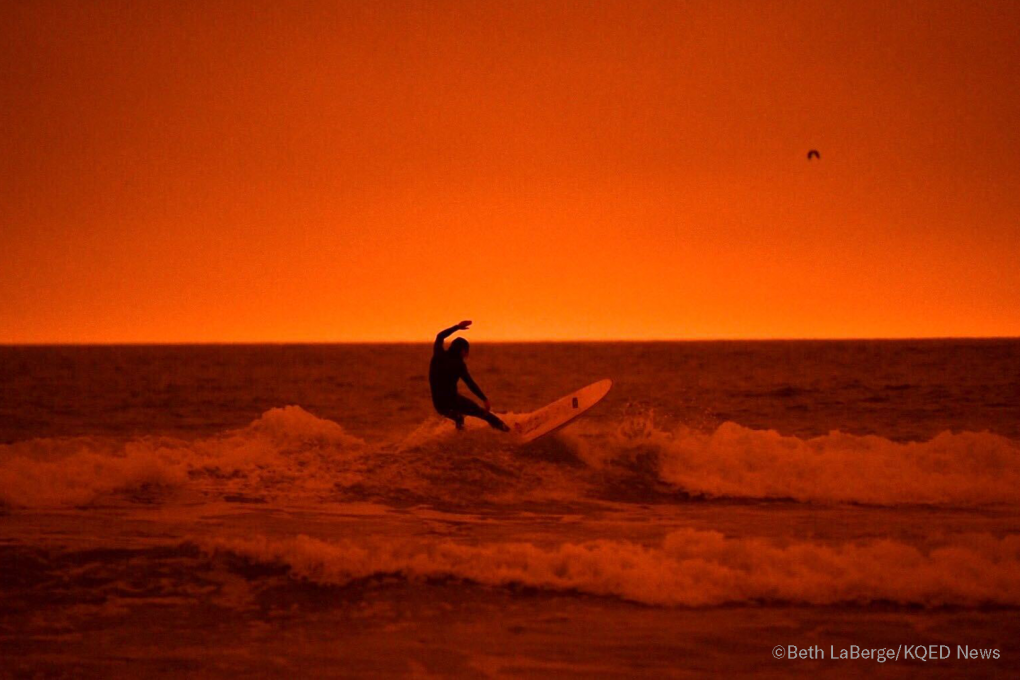
"caption": "A surfer at Ocean Beach in San Francisco under smoke-filled orange skies, on Sept. 9, 2020. ",
"description": "A surfer at Ocean Beach in San Francisco under smoke-filled orange skies, on Sept. 9, 2020. ",
"title": "Beth-LaBerge-KQED-News-2",
"credit": "Beth LaBerge/KQED",
"status": "inherit",
"isLoading": false,
"fetchFailed": false
},
"arts_13885744": {
"type": "attachments",
"id": "arts_13885744",
"meta": {
"index": "attachments_1716263798",
"site": "arts",
"id": "13885744",
"found": true
},
"parent": 13885733,
"imgSizes": {
"twentyfourteen-full-width": {
"file": "https://ww2.kqed.org/app/uploads/sites/2/2020/09/Alejo-by-Evelyn-Anderson-1038x576.jpg",
"width": 1038,
"mimeType": "image/jpeg",
"height": 576
},
"thumbnail": {
"file": "https://ww2.kqed.org/app/uploads/sites/2/2020/09/Alejo-by-Evelyn-Anderson-160x107.jpg",
"width": 160,
"mimeType": "image/jpeg",
"height": 107
},
"post-thumbnail": {
"file": "https://ww2.kqed.org/app/uploads/sites/2/2020/09/Alejo-by-Evelyn-Anderson-672x372.jpg",
"width": 672,
"mimeType": "image/jpeg",
"height": 372
},
"kqedFullSize": {
"file": "https://ww2.kqed.org/app/uploads/sites/2/2020/09/Alejo-by-Evelyn-Anderson-scaled.jpg",
"width": 2560,
"height": 1707
},
"2048x2048": {
"file": "https://ww2.kqed.org/app/uploads/sites/2/2020/09/Alejo-by-Evelyn-Anderson-2048x1365.jpg",
"width": 2048,
"mimeType": "image/jpeg",
"height": 1365
},
"large": {
"file": "https://ww2.kqed.org/app/uploads/sites/2/2020/09/Alejo-by-Evelyn-Anderson-1020x680.jpg",
"width": 1020,
"mimeType": "image/jpeg",
"height": 680
},
"1536x1536": {
"file": "https://ww2.kqed.org/app/uploads/sites/2/2020/09/Alejo-by-Evelyn-Anderson-1536x1024.jpg",
"width": 1536,
"mimeType": "image/jpeg",
"height": 1024
},
"full-width": {
"file": "https://ww2.kqed.org/app/uploads/sites/2/2020/09/Alejo-by-Evelyn-Anderson-1920x1280.jpg",
"width": 1920,
"mimeType": "image/jpeg",
"height": 1280
},
"medium": {
"file": "https://ww2.kqed.org/app/uploads/sites/2/2020/09/Alejo-by-Evelyn-Anderson-800x533.jpg",
"width": 800,
"mimeType": "image/jpeg",
"height": 533
},
"medium_large": {
"file": "https://ww2.kqed.org/app/uploads/sites/2/2020/09/Alejo-by-Evelyn-Anderson-768x512.jpg",
"width": 768,
"mimeType": "image/jpeg",
"height": 512
}
},
"publishDate": 1599153018,
"modified": 1599166839,
"caption": "Erina Alejo uses their art to take a critical look at San Francisco, the city they grew up in. \n",
"description": "Erina Alejo",
"title": "Erina Alejo",
"credit": "Evelyn Anderson",
"status": "inherit",
"isLoading": false,
"fetchFailed": false
},
"arts_13885322": {
"type": "attachments",
"id": "arts_13885322",
"meta": {
"index": "attachments_1716263798",
"site": "arts",
"id": "13885322",
"found": true
},
"parent": 13885287,
"imgSizes": {
"twentyfourteen-full-width": {
"file": "https://ww2.kqed.org/app/uploads/sites/2/2020/08/PrecitaEyes.crop_-1038x576.jpg",
"width": 1038,
"mimeType": "image/jpeg",
"height": 576
},
"thumbnail": {
"file": "https://ww2.kqed.org/app/uploads/sites/2/2020/08/PrecitaEyes.crop_-160x90.jpg",
"width": 160,
"mimeType": "image/jpeg",
"height": 90
},
"post-thumbnail": {
"file": "https://ww2.kqed.org/app/uploads/sites/2/2020/08/PrecitaEyes.crop_-672x372.jpg",
"width": 672,
"mimeType": "image/jpeg",
"height": 372
},
"kqedFullSize": {
"file": "https://ww2.kqed.org/app/uploads/sites/2/2020/08/PrecitaEyes.crop_.jpg",
"width": 1400,
"height": 788
},
"large": {
"file": "https://ww2.kqed.org/app/uploads/sites/2/2020/08/PrecitaEyes.crop_-1020x574.jpg",
"width": 1020,
"mimeType": "image/jpeg",
"height": 574
},
"medium": {
"file": "https://ww2.kqed.org/app/uploads/sites/2/2020/08/PrecitaEyes.crop_-800x450.jpg",
"width": 800,
"mimeType": "image/jpeg",
"height": 450
},
"medium_large": {
"file": "https://ww2.kqed.org/app/uploads/sites/2/2020/08/PrecitaEyes.crop_-768x432.jpg",
"width": 768,
"mimeType": "image/jpeg",
"height": 432
}
},
"publishDate": 1598400711,
"modified": 1598400728,
"caption": "Precita Eyes Murals received a slight grant increase from the City of San Francisco this year.",
"description": "Precita Eyes Murals received a slight grant increase from the City of San Francisco this year.",
"title": "PrecitaEyes.crop",
"credit": "Sarah Hotchkiss/KQED",
"status": "inherit",
"isLoading": false,
"fetchFailed": false
},
"arts_13884735": {
"type": "attachments",
"id": "arts_13884735",
"meta": {
"index": "attachments_1716263798",
"site": "arts",
"id": "13884735",
"found": true
},
"parent": 13884700,
"imgSizes": {
"thumbnail": {
"file": "https://ww2.kqed.org/app/uploads/sites/2/2020/08/Slims.FB_-160x90.jpg",
"width": 160,
"mimeType": "image/jpeg",
"height": 90
},
"post-thumbnail": {
"file": "https://ww2.kqed.org/app/uploads/sites/2/2020/08/Slims.FB_-672x372.jpg",
"width": 672,
"mimeType": "image/jpeg",
"height": 372
},
"kqedFullSize": {
"file": "https://ww2.kqed.org/app/uploads/sites/2/2020/08/Slims.FB_.jpg",
"width": 1000,
"height": 563
},
"medium": {
"file": "https://ww2.kqed.org/app/uploads/sites/2/2020/08/Slims.FB_-800x450.jpg",
"width": 800,
"mimeType": "image/jpeg",
"height": 450
},
"medium_large": {
"file": "https://ww2.kqed.org/app/uploads/sites/2/2020/08/Slims.FB_-768x432.jpg",
"width": 768,
"mimeType": "image/jpeg",
"height": 432
}
},
"publishDate": 1597263186,
"modified": 1597263248,
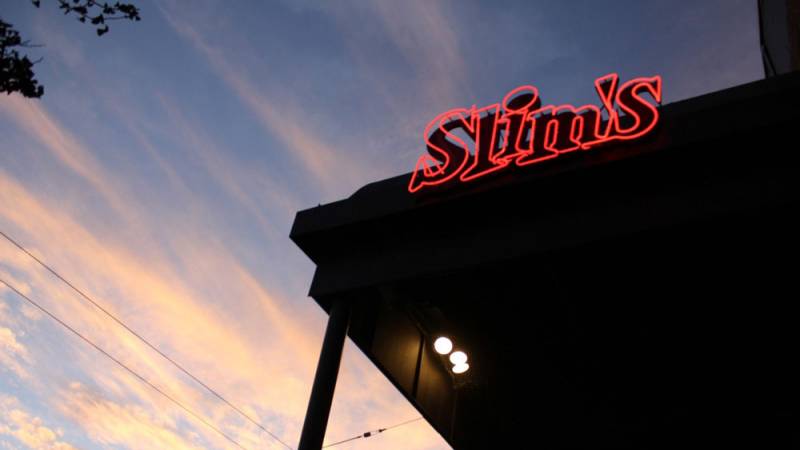
"caption": "Slim's, the long-running nightclub on 11th Street in San Francisco, closed in March 2020. Owner Boz Scaggs said that the closure was planned before the COVID-19 pandemic. ",
"description": "Slim's, the long-running nightclub on 11th Street in San Francisco, closed in March 2020. Owner Boz Scaggs said that the closure was planned before the COVID-19 pandemic. ",
"title": "Slim's.FB",
"credit": "Slim's/Facebook",
"status": "inherit",
"isLoading": false,
"fetchFailed": false
},
"arts_13883451": {
"type": "attachments",
"id": "arts_13883451",
"meta": {
"index": "attachments_1716263798",
"site": "arts",
"id": "13883451",
"found": true
},
"parent": 13864714,
"imgSizes": {
"twentyfourteen-full-width": {
"file": "https://ww2.kqed.org/app/uploads/sites/2/2020/07/Image-from-iOS-12-1-1038x576.jpg",
"width": 1038,
"mimeType": "image/jpeg",
"height": 576
},
"thumbnail": {
"file": "https://ww2.kqed.org/app/uploads/sites/2/2020/07/Image-from-iOS-12-1-160x107.jpg",
"width": 160,
"mimeType": "image/jpeg",
"height": 107
},
"post-thumbnail": {
"file": "https://ww2.kqed.org/app/uploads/sites/2/2020/07/Image-from-iOS-12-1-672x372.jpg",
"width": 672,
"mimeType": "image/jpeg",
"height": 372
},
"kqedFullSize": {
"file": "https://ww2.kqed.org/app/uploads/sites/2/2020/07/Image-from-iOS-12-1.jpg",
"width": 2560,
"height": 1706
},
"2048x2048": {
"file": "https://ww2.kqed.org/app/uploads/sites/2/2020/07/Image-from-iOS-12-1-2048x1365.jpg",
"width": 2048,
"mimeType": "image/jpeg",
"height": 1365
},
"large": {
"file": "https://ww2.kqed.org/app/uploads/sites/2/2020/07/Image-from-iOS-12-1-1020x680.jpg",
"width": 1020,
"mimeType": "image/jpeg",
"height": 680
},
"1536x1536": {
"file": "https://ww2.kqed.org/app/uploads/sites/2/2020/07/Image-from-iOS-12-1-1536x1024.jpg",
"width": 1536,
"mimeType": "image/jpeg",
"height": 1024
},
"full-width": {
"file": "https://ww2.kqed.org/app/uploads/sites/2/2020/07/Image-from-iOS-12-1-1920x1280.jpg",
"width": 1920,
"mimeType": "image/jpeg",
"height": 1280
},
"medium": {
"file": "https://ww2.kqed.org/app/uploads/sites/2/2020/07/Image-from-iOS-12-1-800x533.jpg",
"width": 800,
"mimeType": "image/jpeg",
"height": 533
},
"medium_large": {
"file": "https://ww2.kqed.org/app/uploads/sites/2/2020/07/Image-from-iOS-12-1-768x512.jpg",
"width": 768,
"mimeType": "image/jpeg",
"height": 512
}
},
"publishDate": 1594920100,
"modified": 1594920146,
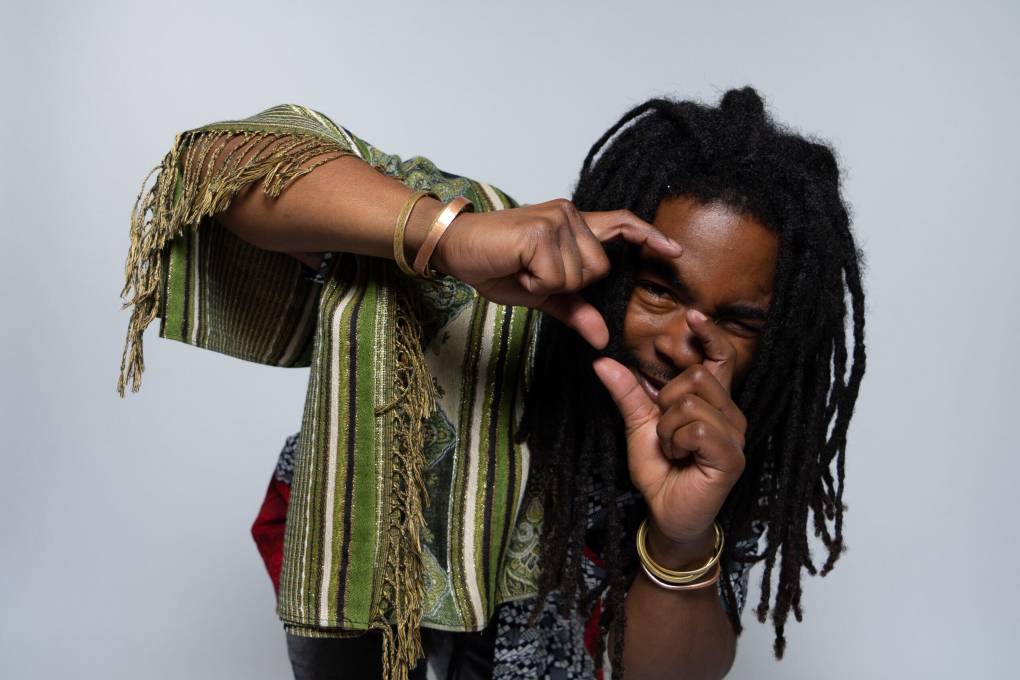
"caption": "Jarrel Phillips",
"description": "Jarrel Phillips",
"title": "Jarrel Phillips",
"credit": "Jarrel Phillips",
"status": "inherit",
"isLoading": false,
"fetchFailed": false
},
"arts_13883061": {
"type": "attachments",
"id": "arts_13883061",
"meta": {
"index": "attachments_1716263798",
"site": "arts",
"id": "13883061",
"found": true
},
"parent": 13883032,
"imgSizes": {
"twentyfourteen-full-width": {
"file": "https://ww2.kqed.org/app/uploads/sites/2/2020/07/Peace_Alvarez_Hengst_COVER-1038x576.jpg",
"width": 1038,
"mimeType": "image/jpeg",
"height": 576
},
"thumbnail": {
"file": "https://ww2.kqed.org/app/uploads/sites/2/2020/07/Peace_Alvarez_Hengst_COVER-160x90.jpg",
"width": 160,
"mimeType": "image/jpeg",
"height": 90
},
"post-thumbnail": {
"file": "https://ww2.kqed.org/app/uploads/sites/2/2020/07/Peace_Alvarez_Hengst_COVER-672x372.jpg",
"width": 672,
"mimeType": "image/jpeg",
"height": 372
},
"kqedFullSize": {
"file": "https://ww2.kqed.org/app/uploads/sites/2/2020/07/Peace_Alvarez_Hengst_COVER.jpg",
"width": 1920,
"height": 1080
},
"large": {
"file": "https://ww2.kqed.org/app/uploads/sites/2/2020/07/Peace_Alvarez_Hengst_COVER-1020x574.jpg",
"width": 1020,
"mimeType": "image/jpeg",
"height": 574
},
"1536x1536": {
"file": "https://ww2.kqed.org/app/uploads/sites/2/2020/07/Peace_Alvarez_Hengst_COVER-1536x864.jpg",
"width": 1536,
"mimeType": "image/jpeg",
"height": 864
},
"medium": {
"file": "https://ww2.kqed.org/app/uploads/sites/2/2020/07/Peace_Alvarez_Hengst_COVER-800x450.jpg",
"width": 800,
"mimeType": "image/jpeg",
"height": 450
},
"medium_large": {
"file": "https://ww2.kqed.org/app/uploads/sites/2/2020/07/Peace_Alvarez_Hengst_COVER-768x432.jpg",
"width": 768,
"mimeType": "image/jpeg",
"height": 432
}
},
"publishDate": 1594168915,
"modified": 1594257947,
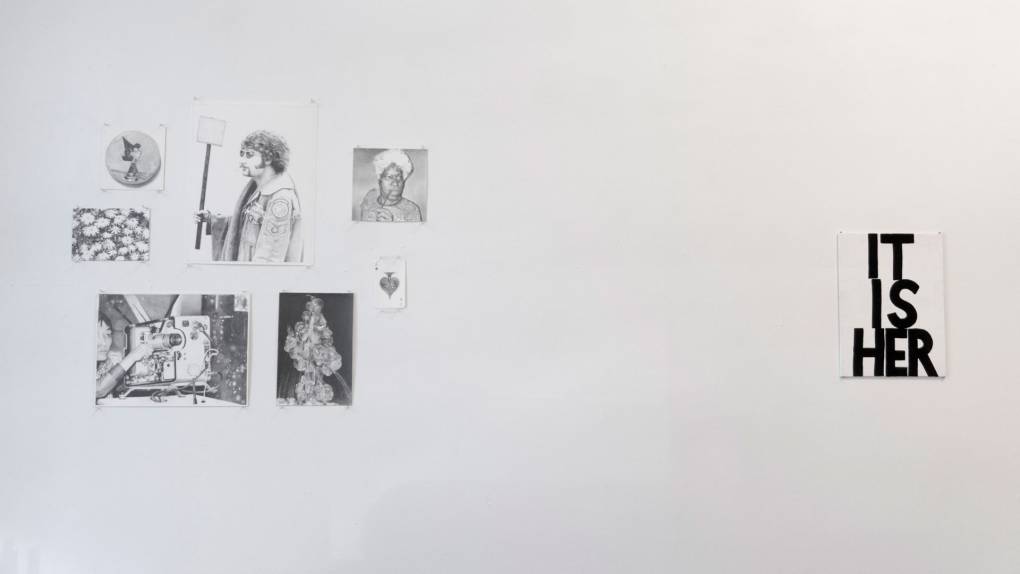
"caption": "Installation view of 'Peace: Nine Artists Consider Kiki Gallery,' with D-L Alvarez, 'Peanut' (left) and Cliff Hengst, 'Untitled' (right).",
"description": "Installation view of 'Peace: Nine Artists Consider Kiki Gallery,' with D-L Alvarez, 'Peanut' (left) and Cliff Hengst, 'Untitled' (right).",
"title": "Peace_Alvarez_Hengst_COVER",
"credit": "Delaplane",
"status": "inherit",
"isLoading": false,
"fetchFailed": false
},
"arts_13882304": {
"type": "attachments",
"id": "arts_13882304",
"meta": {
"index": "attachments_1716263798",
"site": "arts",
"id": "13882304",
"found": true
},
"parent": 13882302,
"imgSizes": {
"twentyfourteen-full-width": {
"file": "https://ww2.kqed.org/app/uploads/sites/2/2020/06/8778871204_73dab056f3_k-1020x738-1020x576.jpg",
"width": 1020,
"mimeType": "image/jpeg",
"height": 576
},
"thumbnail": {
"file": "https://ww2.kqed.org/app/uploads/sites/2/2020/06/8778871204_73dab056f3_k-1020x738-160x116.jpg",
"width": 160,
"mimeType": "image/jpeg",
"height": 116
},
"post-thumbnail": {
"file": "https://ww2.kqed.org/app/uploads/sites/2/2020/06/8778871204_73dab056f3_k-1020x738-672x372.jpg",
"width": 672,
"mimeType": "image/jpeg",
"height": 372
},
"kqedFullSize": {
"file": "https://ww2.kqed.org/app/uploads/sites/2/2020/06/8778871204_73dab056f3_k-1020x738.jpg",
"width": 1020,
"height": 738
},
"large": {
"file": "https://ww2.kqed.org/app/uploads/sites/2/2020/06/8778871204_73dab056f3_k-1020x738-1020x738.jpg",
"width": 1020,
"mimeType": "image/jpeg",
"height": 738
},
"medium": {
"file": "https://ww2.kqed.org/app/uploads/sites/2/2020/06/8778871204_73dab056f3_k-1020x738-800x579.jpg",
"width": 800,
"mimeType": "image/jpeg",
"height": 579
},
"medium_large": {
"file": "https://ww2.kqed.org/app/uploads/sites/2/2020/06/8778871204_73dab056f3_k-1020x738-768x556.jpg",
"width": 768,
"mimeType": "image/jpeg",
"height": 556
}
},
"publishDate": 1592599317,
"modified": 1592599353,
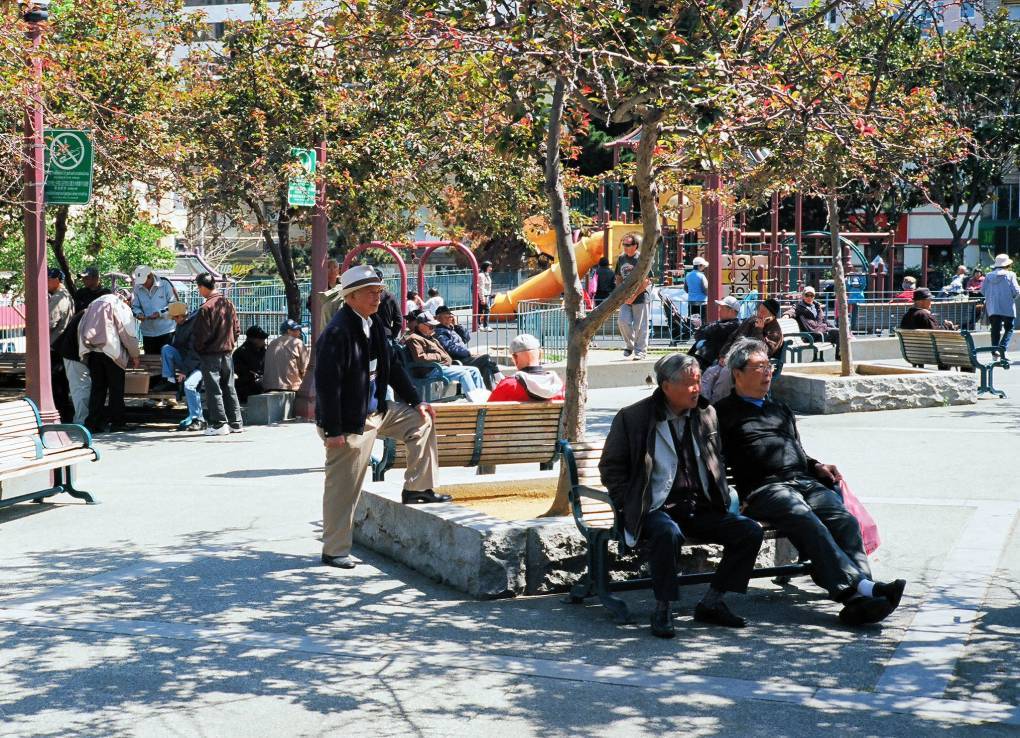
"caption": "Portsmouth Square is a community hub for San Francisco's Chinatown.",
"description": "Portsmouth Square is a community hub for San Francisco's Chinatown.",
"title": "8778871204_73dab056f3_k-1020x738",
"credit": "Michael Fraley/Flickr",
"status": "inherit",
"isLoading": false,
"fetchFailed": false
},
"arts_13882071": {
"type": "attachments",
"id": "arts_13882071",
"meta": {
"index": "attachments_1716263798",
"site": "arts",
"id": "13882071",
"found": true
},
"parent": 13881990,
"imgSizes": {
"twentyfourteen-full-width": {
"file": "https://ww2.kqed.org/app/uploads/sites/2/2020/06/Screenshot_20200616-151557-1038x576.jpg",
"width": 1038,
"mimeType": "image/jpeg",
"height": 576
},
"thumbnail": {
"file": "https://ww2.kqed.org/app/uploads/sites/2/2020/06/Screenshot_20200616-151557-160x119.jpg",
"width": 160,
"mimeType": "image/jpeg",
"height": 119
},
"post-thumbnail": {
"file": "https://ww2.kqed.org/app/uploads/sites/2/2020/06/Screenshot_20200616-151557-672x372.jpg",
"width": 672,
"mimeType": "image/jpeg",
"height": 372
},
"kqedFullSize": {
"file": "https://ww2.kqed.org/app/uploads/sites/2/2020/06/Screenshot_20200616-151557.jpg",
"width": 1440,
"height": 1069
},
"large": {
"file": "https://ww2.kqed.org/app/uploads/sites/2/2020/06/Screenshot_20200616-151557-1020x757.jpg",
"width": 1020,
"mimeType": "image/jpeg",
"height": 757
},
"medium": {
"file": "https://ww2.kqed.org/app/uploads/sites/2/2020/06/Screenshot_20200616-151557-800x594.jpg",
"width": 800,
"mimeType": "image/jpeg",
"height": 594
},
"medium_large": {
"file": "https://ww2.kqed.org/app/uploads/sites/2/2020/06/Screenshot_20200616-151557-768x570.jpg",
"width": 768,
"mimeType": "image/jpeg",
"height": 570
}
},
"publishDate": 1592345960,
"modified": 1622586553,
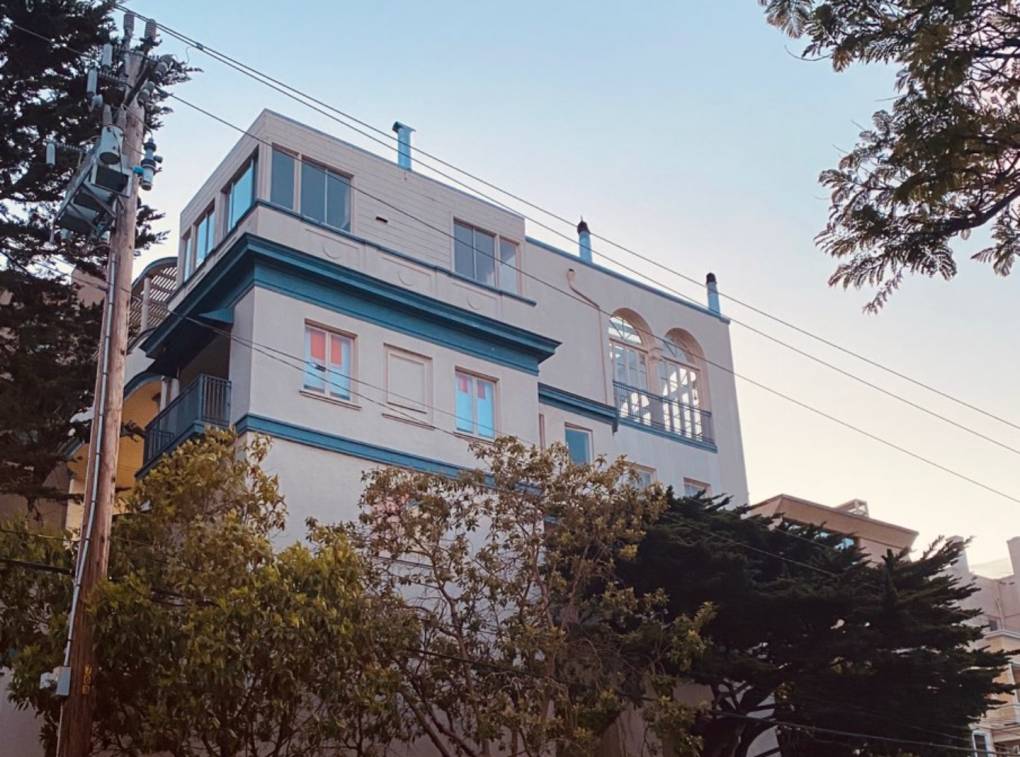
"caption": "The house at 1000 Lombard Street, June 2020.",
"description": "The house at 1000 Lombard Street, June 2020.",
"title": "The house at 1000 Lombard Street, June 2020.",
"credit": "Johnny Dismal",
"status": "inherit",
"altTag": "The house at 1000 Lombard Street, June 2020.",
"isLoading": false,
"fetchFailed": false
},
"arts_13881457": {
"type": "attachments",
"id": "arts_13881457",
"meta": {
"index": "attachments_1716263798",
"site": "arts",
"id": "13881457",
"found": true
},
"parent": 13881451,
"imgSizes": {
"twentyfourteen-full-width": {
"file": "https://ww2.kqed.org/app/uploads/sites/2/2020/06/GoldenGateBridge.Sound_-1038x576.jpg",
"width": 1038,
"mimeType": "image/jpeg",
"height": 576
},
"thumbnail": {
"file": "https://ww2.kqed.org/app/uploads/sites/2/2020/06/GoldenGateBridge.Sound_-160x96.jpg",
"width": 160,
"mimeType": "image/jpeg",
"height": 96
},
"post-thumbnail": {
"file": "https://ww2.kqed.org/app/uploads/sites/2/2020/06/GoldenGateBridge.Sound_-672x372.jpg",
"width": 672,
"mimeType": "image/jpeg",
"height": 372
},
"kqedFullSize": {
"file": "https://ww2.kqed.org/app/uploads/sites/2/2020/06/GoldenGateBridge.Sound_.jpg",
"width": 1142,
"height": 687
},
"large": {
"file": "https://ww2.kqed.org/app/uploads/sites/2/2020/06/GoldenGateBridge.Sound_-1020x614.jpg",
"width": 1020,
"mimeType": "image/jpeg",
"height": 614
},
"medium": {
"file": "https://ww2.kqed.org/app/uploads/sites/2/2020/06/GoldenGateBridge.Sound_-800x481.jpg",
"width": 800,
"mimeType": "image/jpeg",
"height": 481
},
"medium_large": {
"file": "https://ww2.kqed.org/app/uploads/sites/2/2020/06/GoldenGateBridge.Sound_-768x462.jpg",
"width": 768,
"mimeType": "image/jpeg",
"height": 462
}
},
"publishDate": 1591435680,
"modified": 1591436030,
"caption": "The Golden Gate Bridge has been turned into the world's largest reed instrument.",
"description": "The Golden Gate Bridge has been turned into the world's largest reed instrument.",
"title": "GoldenGateBridge.Sound",
"credit": "Wiki Commons",
"status": "inherit",
"isLoading": false,
"fetchFailed": false
}
},
"audioPlayerReducer": {
"postId": "stream_live",
"isPaused": true,
"isPlaying": false,
"pfsActive": false,
"pledgeModalIsOpen": true,
"playerDrawerIsOpen": false,
"liveAudioPlayStartedAt": 0,
"liveAudioPlayContext": ""
},
"authorsReducer": {
"shotchkiss": {
"type": "authors",
"id": "61",
"meta": {
"index": "authors_1716337520",
"id": "61",
"found": true
},
"name": "Sarah Hotchkiss",
"firstName": "Sarah",
"lastName": "Hotchkiss",
"slug": "shotchkiss",
"email": "shotchkiss@kqed.org",
"display_author_email": true,
"staff_mastheads": [
"arts"
],
"title": "Senior Editor",
"bio": "Sarah Hotchkiss is a San Francisco \u003ca href=\"http://www.sarahhotchkiss.com\">artist\u003c/a> and arts writer. In 2019, she received the Dorothea & Leo Rabkin Foundation grant for visual art journalism and in 2020 she received a Society of Professional Journalists, Northern California award for excellence in arts and culture reporting.",
"avatar": "https://secure.gravatar.com/avatar/bc662df144b3d27fd8b1b6f1c2a420d34e91e53154d411bb7ad353cc8b6cea8d?s=600&d=blank&r=g",
"twitter": null,
"bluesky": null,
"facebook": null,
"instagram": null,
"linkedin": null,
"sites": [
{
"site": "",
"roles": [
"editor"
]
},
{
"site": "arts",
"roles": [
"Contributor",
"administrator"
]
},
{
"site": "artschool",
"roles": [
"administrator"
]
},
{
"site": "news",
"roles": [
"editor"
]
},
{
"site": "pop",
"roles": [
"administrator"
]
},
{
"site": "bayareabites",
"roles": [
"editor"
]
},
{
"site": "spark",
"roles": [
"editor"
]
},
{
"site": "checkplease",
"roles": [
"editor"
]
}
],
"headData": {
"title": "Sarah Hotchkiss | KQED",
"description": "Senior Editor",
"ogImgSrc": "https://secure.gravatar.com/avatar/bc662df144b3d27fd8b1b6f1c2a420d34e91e53154d411bb7ad353cc8b6cea8d?s=600&d=blank&r=g",
"twImgSrc": "https://secure.gravatar.com/avatar/bc662df144b3d27fd8b1b6f1c2a420d34e91e53154d411bb7ad353cc8b6cea8d?s=600&d=blank&r=g"
},
"isLoading": false,
"link": "/author/shotchkiss"
},
"gmeline": {
"type": "authors",
"id": "185",
"meta": {
"index": "authors_1716337520",
"id": "185",
"found": true
},
"name": "Gabe Meline",
"firstName": "Gabe",
"lastName": "Meline",
"slug": "gmeline",
"email": "gmeline@kqed.org",
"display_author_email": true,
"staff_mastheads": [
"arts"
],
"title": "Senior Editor, KQED Arts & Culture",
"bio": "Gabe Meline entered journalism at age 15 making photocopied zines, and has since earned awards from the Edward R. Murrow Awards, the Society for Professional Journalists, the Online Journalism Awards, the Association of Alternative Newsweeklies and the California Newspaper Publishers Association. Prior to KQED, he was the editor of the \u003cem>North Bay Bohemian\u003c/em> and a touring musician. He lives with his wife and daughter in his hometown of Santa Rosa, CA.",
"avatar": "https://secure.gravatar.com/avatar/5bebe57be0d8bc2dd318934feb47299e2d2d10cba28d09d8d7afb389a2ce2bdd?s=600&d=blank&r=g",
"twitter": null,
"bluesky": null,
"facebook": null,
"instagram": null,
"linkedin": null,
"sites": [
{
"site": "",
"roles": [
"editor"
]
},
{
"site": "arts",
"roles": [
"administrator"
]
},
{
"site": "artschool",
"roles": [
"editor"
]
},
{
"site": "news",
"roles": [
"author"
]
},
{
"site": "pop",
"roles": [
"editor"
]
},
{
"site": "bayareabites",
"roles": [
"editor"
]
},
{
"site": "food",
"roles": [
"editor"
]
},
{
"site": "forum",
"roles": [
"administrator"
]
},
{
"site": "liveblog",
"roles": [
"editor"
]
},
{
"site": "hiphop",
"roles": [
"editor"
]
}
],
"headData": {
"title": "Gabe Meline | KQED",
"description": "Senior Editor, KQED Arts & Culture",
"ogImgSrc": "https://secure.gravatar.com/avatar/5bebe57be0d8bc2dd318934feb47299e2d2d10cba28d09d8d7afb389a2ce2bdd?s=600&d=blank&r=g",
"twImgSrc": "https://secure.gravatar.com/avatar/5bebe57be0d8bc2dd318934feb47299e2d2d10cba28d09d8d7afb389a2ce2bdd?s=600&d=blank&r=g"
},
"isLoading": false,
"link": "/author/gmeline"
},
"cveltman": {
"type": "authors",
"id": "8608",
"meta": {
"index": "authors_1716337520",
"id": "8608",
"found": true
},
"name": "Chloe Veltman",
"firstName": "Chloe",
"lastName": "Veltman",
"slug": "cveltman",
"email": "cveltman@kqed.org",
"display_author_email": true,
"staff_mastheads": [],
"title": "Arts and Culture Reporter",
"bio": "Chloe Veltman is a former arts and culture reporter for KQED. Prior to joining the organization, she launched and led the arts bureau at Colorado Public Radio, served as the Bay Area's culture columnist for the New York Times, and was the founder, host and executive producer of VoiceBox, a national award-winning weekly podcast/radio show and live events series all about the human voice. Chloe is the recipient of numerous prizes, grants and fellowships including a Webby Award for her work on interactive storytelling, both the John S Knight Journalism Fellowship and Humanities Center Fellowship at Stanford University, the Sundance Arts Writing Fellowship and a Library of Congress Research Fellowship. She is the author of the book \"On Acting\" and has appeared as a guest lecturer at Yale University and the San Francisco Conservatory of Music among other institutions. She holds a BA in english literature from King's College, Cambridge, and a Masters in Dramaturgy from the Central School of Speech and Drama/Harvard Institute for Advanced Theater Training.\r\n\u003ca href=\"https://www.chloeveltman.com\">www.chloeveltman.com\u003c/a>",
"avatar": "https://secure.gravatar.com/avatar/55403394b00a1ddab683952c2eb2cf85?s=600&d=blank&r=g",
"twitter": "chloeveltman",
"facebook": null,
"instagram": null,
"linkedin": null,
"sites": [
{
"site": "arts",
"roles": []
},
{
"site": "news",
"roles": [
"author"
]
},
{
"site": "pop",
"roles": [
"editor"
]
},
{
"site": "science",
"roles": []
}
],
"headData": {
"title": "Chloe Veltman | KQED",
"description": "Arts and Culture Reporter",
"ogImgSrc": "https://secure.gravatar.com/avatar/55403394b00a1ddab683952c2eb2cf85?s=600&d=blank&r=g",
"twImgSrc": "https://secure.gravatar.com/avatar/55403394b00a1ddab683952c2eb2cf85?s=600&d=blank&r=g"
},
"isLoading": false,
"link": "/author/cveltman"
},
"ralexandra": {
"type": "authors",
"id": "11242",
"meta": {
"index": "authors_1716337520",
"id": "11242",
"found": true
},
"name": "Rae Alexandra",
"firstName": "Rae",
"lastName": "Alexandra",
"slug": "ralexandra",
"email": "ralexandra@kqed.org",
"display_author_email": true,
"staff_mastheads": [],
"title": "Reporter/Producer",
"bio": "Rae Alexandra is a Reporter/Producer for KQED Arts & Culture, and the creator/author of the \u003ca href=\"https://www.kqed.org/arts/program/rebel-girls-from-bay-area-history\">Rebel Girls From Bay Area History\u003c/a> and \u003ca href=\"https://www.kqed.org/bizarrebayarea\">Bizarre Bay Area\u003c/a> series. Her debut book, \u003ca href=\"https://citylights.com/politics-current-events-history/unsung-heroines35-women-who-changed/\">Unsung Heroines: 35 Women Who Changed the Bay Area\u003c/a> was published by City Lights in March 2026. In 2023, Rae was awarded an SPJ Excellence in Journalism Award for Arts & Culture. Rae was born and raised in Wales and subsequently — even after two decades in Northern California — still uses phrases that regularly baffle her coworkers.",
"avatar": "https://secure.gravatar.com/avatar/edfee8176c80cc0a382b051190f5341997df378a934a5774dcb0977732dfd401?s=600&d=blank&r=g",
"twitter": null,
"bluesky": null,
"facebook": null,
"instagram": null,
"linkedin": null,
"sites": [
{
"site": "arts",
"roles": [
"subscriber"
]
},
{
"site": "news",
"roles": [
"subscriber"
]
},
{
"site": "pop",
"roles": [
"subscriber"
]
},
{
"site": "bayareabites",
"roles": [
"subscriber"
]
},
{
"site": "science",
"roles": [
"subscriber"
]
}
],
"headData": {
"title": "Rae Alexandra | KQED",
"description": "Reporter/Producer",
"ogImgSrc": "https://secure.gravatar.com/avatar/edfee8176c80cc0a382b051190f5341997df378a934a5774dcb0977732dfd401?s=600&d=blank&r=g",
"twImgSrc": "https://secure.gravatar.com/avatar/edfee8176c80cc0a382b051190f5341997df378a934a5774dcb0977732dfd401?s=600&d=blank&r=g"
},
"isLoading": false,
"link": "/author/ralexandra"
},
"nvoynovskaya": {
"type": "authors",
"id": "11387",
"meta": {
"index": "authors_1716337520",
"id": "11387",
"found": true
},
"name": "Nastia Voynovskaya",
"firstName": "Nastia",
"lastName": "Voynovskaya",
"slug": "nvoynovskaya",
"email": "nvoynovskaya@kqed.org",
"display_author_email": false,
"staff_mastheads": [
"arts"
],
"title": "Editor and reporter",
"bio": "Nastia Voynovskaya is a reporter, editor and host at KQED Arts & Culture. She's been covering the arts in the Bay Area for over a decade, with a focus on music, queer culture, labor issues and grassroots organizing. She has edited KQED story series such as Trans Bay: A History of San Francisco's Gender-Diverse Community, and co-created KQED's Bay Area hip-hop history project, That's My Word. Nastia's work has been recognized by the Society of Professional Journalists and San Francisco Press Club. She regularly appears on podcasts and radio programs, including NPR's All Songs Considered, and hosts live events where music, culture and conversation meet.",
"avatar": "https://secure.gravatar.com/avatar/5025ee460e5a85d69ca20ea6c6f2f80d7e17795c828f61ea3aecfcd924e9042e?s=600&d=blank&r=g",
"twitter": null,
"bluesky": null,
"facebook": null,
"instagram": "https://www.instagram.com/nananastia/",
"linkedin": null,
"sites": [
{
"site": "",
"roles": [
"editor"
]
},
{
"site": "arts",
"roles": [
"administrator"
]
},
{
"site": "news",
"roles": [
"editor"
]
},
{
"site": "pop",
"roles": [
"administrator"
]
},
{
"site": "bayareabites",
"roles": [
"editor"
]
},
{
"site": "podcasts",
"roles": [
"editor"
]
},
{
"site": "hiphop",
"roles": [
"editor"
]
}
],
"headData": {
"title": "Nastia Voynovskaya | KQED",
"description": "Editor and reporter",
"ogImgSrc": "https://secure.gravatar.com/avatar/5025ee460e5a85d69ca20ea6c6f2f80d7e17795c828f61ea3aecfcd924e9042e?s=600&d=blank&r=g",
"twImgSrc": "https://secure.gravatar.com/avatar/5025ee460e5a85d69ca20ea6c6f2f80d7e17795c828f61ea3aecfcd924e9042e?s=600&d=blank&r=g"
},
"isLoading": false,
"link": "/author/nvoynovskaya"
},
"ogpenn": {
"type": "authors",
"id": "11491",
"meta": {
"index": "authors_1716337520",
"id": "11491",
"found": true
},
"name": "Pendarvis Harshaw",
"firstName": "Pendarvis",
"lastName": "Harshaw",
"slug": "ogpenn",
"email": "ogpenn@gmail.com",
"display_author_email": false,
"staff_mastheads": [
"arts"
],
"title": "Community Engagement Reporter",
"bio": "Pendarvis Harshaw is an educator, host and writer with KQED Arts.",
"avatar": "https://secure.gravatar.com/avatar/972b77ee8e3f346ae2b00622661187fbfabd059b5693bbdc1475ea7a722fd4cd?s=600&d=blank&r=g",
"twitter": null,
"bluesky": null,
"facebook": null,
"instagram": "ogpenn",
"linkedin": null,
"sites": [
{
"site": "arts",
"roles": [
"administrator"
]
},
{
"site": "news",
"roles": [
"editor"
]
},
{
"site": "bayareabites",
"roles": [
"author"
]
},
{
"site": "hiphop",
"roles": [
"editor"
]
}
],
"headData": {
"title": "Pendarvis Harshaw | KQED",
"description": "Community Engagement Reporter",
"ogImgSrc": "https://secure.gravatar.com/avatar/972b77ee8e3f346ae2b00622661187fbfabd059b5693bbdc1475ea7a722fd4cd?s=600&d=blank&r=g",
"twImgSrc": "https://secure.gravatar.com/avatar/972b77ee8e3f346ae2b00622661187fbfabd059b5693bbdc1475ea7a722fd4cd?s=600&d=blank&r=g"
},
"isLoading": false,
"link": "/author/ogpenn"
},
"ngluckstern": {
"type": "authors",
"id": "11497",
"meta": {
"index": "authors_1716337520",
"id": "11497",
"found": true
},
"name": "Nicole Gluckstern",
"firstName": "Nicole",
"lastName": "Gluckstern",
"slug": "ngluckstern",
"email": "gluckstern.nicole@gmail.com",
"display_author_email": false,
"staff_mastheads": [],
"title": "KQED Contributor",
"bio": null,
"avatar": "https://secure.gravatar.com/avatar/2c3d593194017bfe811a998ad03140909de330b22abebf4889e1a564ce5b3495?s=600&d=blank&r=g",
"twitter": null,
"bluesky": null,
"facebook": null,
"instagram": null,
"linkedin": null,
"sites": [
{
"site": "arts",
"roles": [
"contributor"
]
}
],
"headData": {
"title": "Nicole Gluckstern | KQED",
"description": "KQED Contributor",
"ogImgSrc": "https://secure.gravatar.com/avatar/2c3d593194017bfe811a998ad03140909de330b22abebf4889e1a564ce5b3495?s=600&d=blank&r=g",
"twImgSrc": "https://secure.gravatar.com/avatar/2c3d593194017bfe811a998ad03140909de330b22abebf4889e1a564ce5b3495?s=600&d=blank&r=g"
},
"isLoading": false,
"link": "/author/ngluckstern"
},
"blaberge": {
"type": "authors",
"id": "11667",
"meta": {
"index": "authors_1716337520",
"id": "11667",
"found": true
},
"name": "Beth LaBerge",
"firstName": "Beth",
"lastName": "LaBerge",
"slug": "blaberge",
"email": "blaberge@KQED.org",
"display_author_email": true,
"staff_mastheads": [
"news"
],
"title": "Photographer, News",
"bio": "Beth LaBerge is a visual journalist for \u003ca href=\"https://www.kqed.org/news\">KQED News\u003c/a>.",
"avatar": "https://secure.gravatar.com/avatar/ce49ecd7a1306685637b45a1f6f5dedfc4ae9481966eb596fea5160466dd6319?s=600&d=blank&r=g",
"twitter": null,
"bluesky": null,
"facebook": null,
"instagram": "https://www.instagram.com/bethlaberge/",
"linkedin": null,
"sites": [
{
"site": "arts",
"roles": [
"editor",
"manage_categories"
]
},
{
"site": "news",
"roles": [
"editor",
"edit_plugins",
"manage_categories"
]
},
{
"site": "science",
"roles": [
"editor",
"contributor",
"author",
"manage_categories"
]
},
{
"site": "perspectives",
"roles": [
"editor"
]
},
{
"site": "liveblog",
"roles": [
"editor"
]
}
],
"headData": {
"title": "Beth LaBerge | KQED",
"description": "Photographer, News",
"ogImgSrc": "https://secure.gravatar.com/avatar/ce49ecd7a1306685637b45a1f6f5dedfc4ae9481966eb596fea5160466dd6319?s=600&d=blank&r=g",
"twImgSrc": "https://secure.gravatar.com/avatar/ce49ecd7a1306685637b45a1f6f5dedfc4ae9481966eb596fea5160466dd6319?s=600&d=blank&r=g"
},
"isLoading": false,
"link": "/author/blaberge"
}
},
"pagesReducer": {
"arts_tag_san-francisco": {
"type": "terms",
"id": "arts_1146",
"meta": {
"index": "terms_1716263798",
"site": "arts",
"id": "1146",
"score": 6.722821
},
"featImg": null,
"name": "San Francisco",
"description": null,
"taxonomy": "tag",
"headData": {
"twImgId": null,
"twTitle": null,
"ogTitle": null,
"ogImgId": null,
"twDescription": null,
"description": null,
"title": "San Francisco Archives | KQED Arts",
"ogDescription": null
},
"ttid": 701,
"slug": "san-francisco",
"isLoading": false,
"title": "San Francisco",
"pageMeta": {
"site": "arts",
"WpPageTemplate": "page-topic-editorial",
"currentPage": 46
},
"blocks": [
{
"blockName": "kqed/post-list",
"attrs": {
"layout": "cardArticle2",
"query": "posts/arts?tag=san-francisco",
"seeMore": false,
"paginated": true,
"page": 46
}
},
{
"blockName": "kqed/ad"
}
]
}
},
"pfsSessionReducer": {},
"postsReducer": {
"stream_live": {
"type": "live",
"id": "stream_live",
"audioUrl": "https://streams.kqed.org/kqedradio",
"title": "Live Stream",
"excerpt": "Live Stream information currently unavailable.",
"link": "/radio",
"featImg": "",
"label": {
"name": "KQED Live",
"link": "/"
}
},
"stream_kqedNewscast": {
"type": "posts",
"id": "stream_kqedNewscast",
"audioUrl": "https://www.kqed.org/.stream/anon/radio/RDnews/newscast.mp3?_=1",
"title": "KQED Newscast",
"featImg": "",
"label": {
"name": "88.5 FM",
"link": "/"
}
},
"arts_13888192": {
"type": "posts",
"id": "arts_13888192",
"meta": {
"index": "posts_1716263798",
"site": "arts",
"id": "13888192",
"score": null,
"sort": [
1603236506000
]
},
"guestAuthors": [],
"slug": "celebrate-halloween-with-bay-area-ghost-stories-and-gory-mini-golf",
"title": "Celebrate Halloween With Bay Area Ghost Stories and ... Gory Mini Golf?",
"publishDate": 1603236506,
"format": "standard",
"headTitle": "Celebrate Halloween With Bay Area Ghost Stories and … Gory Mini Golf? | KQED",
"labelTerm": {
"term": 140,
"site": "arts"
},
"content": "\u003cp>In any other year, mini golf would definitely rank pretty low on the list of fright-fueled Halloween activities. But 2020 isn’t a normal year. In the absence of costume parties, movie theater horror marathons, and trick or treating, \u003ca href=\"https://www.stagecoachgreens.com/\" target=\"_blank\" rel=\"noopener noreferrer\">Stagecoach Greens\u003c/a> in San Francisco has stepped up and put together a surprisingly perfect way to celebrate the season at a safe social distance.\u003c/p>\n\u003cp>The 18-hole, outdoor attraction in Mission Bay has combined mini golf with Bay Area history ever since it opened in 2018. Ordinarily, the course takes you on a journey from stagecoach to gold rush graveyard, then on through quaking Victorian houses up to modern city landmarks. (Including, brilliantly, the Transamerica Pyramid playing Rock ’Em Sock ’Em with the Salesforce Tower.)\u003c/p>\n\u003cp>Now, inspired by the season, not only has the mini golf course been decked out in Halloween finery (think: witches, ghouls, gravestones and skeletons), it’s sharing \u003ca href=\"https://www.stagecoachgreens.com/cms/boom-and-bust-18-real-sf-ghost-stories/\" target=\"_blank\" rel=\"noopener noreferrer\">real-life horror stories from Bay Area history\u003c/a>. Each tale corresponds with a specific hole on the course—and the attention to detail is magnificent.\u003c/p>\n\u003cfigure id=\"attachment_13888195\" class=\"wp-caption aligncenter\" style=\"max-width: 800px\">\u003cimg loading=\"lazy\" decoding=\"async\" class=\"size-medium wp-image-13888195\" src=\"https://ww2.kqed.org/app/uploads/sites/2/2020/10/Stagecoach-Tavern-800x534.jpg\" alt=\"The Barbary Coast Saloon, Hole 2 at San Francisco's Stagecoach Greens.\" width=\"800\" height=\"534\" srcset=\"https://cdn.kqed.org/wp-content/uploads/sites/2/2020/10/Stagecoach-Tavern-800x534.jpg 800w, https://cdn.kqed.org/wp-content/uploads/sites/2/2020/10/Stagecoach-Tavern-1020x681.jpg 1020w, https://cdn.kqed.org/wp-content/uploads/sites/2/2020/10/Stagecoach-Tavern-160x107.jpg 160w, https://cdn.kqed.org/wp-content/uploads/sites/2/2020/10/Stagecoach-Tavern-768x513.jpg 768w, https://cdn.kqed.org/wp-content/uploads/sites/2/2020/10/Stagecoach-Tavern-1536x1026.jpg 1536w, https://cdn.kqed.org/wp-content/uploads/sites/2/2020/10/Stagecoach-Tavern-2048x1368.jpg 2048w, https://cdn.kqed.org/wp-content/uploads/sites/2/2020/10/Stagecoach-Tavern-1920x1282.jpg 1920w\" sizes=\"(max-width: 800px) 100vw, 800px\" />\u003cfigcaption class=\"wp-caption-text\">The Barbary Coast Saloon, Hole 2 at San Francisco’s Stagecoach Greens. \u003ccite>(Courtesy of Rachel Rapaport, Stagecoach Greens)\u003c/cite>\u003c/figcaption>\u003c/figure>\n\u003cp>For example, at the Barbary Coast Saloon (Hole 2), there’s the tale of Miss Piggott. Legend has it, the gold rush saloon owner would drug young men, hit them over the head, send them through a trap door and then out to sea. At the Sutro Tower (Hole 12), you can read about the suicides that haunted the Sutro Forest early in the 1900s. At the Ocean Beach Bonfire (Hole 15), learn about the \u003ca href=\"https://www.kqed.org/pop/103040/are-the-cliff-house-and-the-sutro-baths-cursed\" target=\"_blank\" rel=\"noopener noreferrer\">ghostly figures\u003c/a> seen within the remains of the Sutro Baths.\u003c/p>\n\u003cp>Since reopening after shelter-in-place restrictions, Stagecoach Greens has been operating at limited capacity and by \u003ca href=\"https://www.stagecoachgreens.com/purchase/index/\" target=\"_blank\" rel=\"noopener noreferrer\">reservation\u003c/a> only, in order to ensure safe, socially distant play. This means booking in advance if you want to partake in the ghostly golf. Handily, this also gives you plenty of time to come up with a costume that corresponds with the course. Think: ghostly gold miners, tricky tavern keepers, or perhaps the White Lady of Stow Lake, currently residing at Hole 13—the Golden Gate Park windmill.\u003c/p>\n\u003cp>Stagecoach Greens resumes normal (non-haunted) activity on Nov. 2. \u003ca href=\"https://www.stagecoachgreens.com/\" target=\"_blank\" rel=\"noopener noreferrer\">Details here\u003c/a>.\u003c/p>\n",
"blocks": [],
"excerpt": "Stagecoach Greens has come up with the perfect way to spend a socially distant Halloween.",
"status": "publish",
"parent": 0,
"modified": 1726771286,
"stats": {
"hasAudio": false,
"hasVideo": false,
"hasChartOrMap": false,
"iframeSrcs": [],
"hasGoogleForm": false,
"hasGallery": false,
"hasHearkenModule": false,
"hasPolis": false,
"paragraphCount": 6,
"wordCount": 378
},
"headData": {
"title": "Celebrate Halloween With Bay Area Ghost Stories and ... Gory Mini Golf? | KQED",
"description": "Stagecoach Greens has come up with the perfect way to spend a socially distant Halloween.",
"ogTitle": "",
"ogDescription": "",
"ogImgId": "",
"twTitle": "",
"twDescription": "",
"twImgId": "",
"schema": {
"@context": "https://schema.org",
"@type": "Article",
"headline": "Celebrate Halloween With Bay Area Ghost Stories and ... Gory Mini Golf?",
"datePublished": "2020-10-20T16:28:26-07:00",
"dateModified": "2024-09-19T11:41:26-07:00",
"image": "https://cdn.kqed.org/wp-content/uploads/2020/02/KQED-OG-Image@1x.png"
}
},
"sticky": false,
"templateType": "standard",
"featuredImageType": "standard",
"eventPrice": "$10-16",
"venueName": "Stagecoach Greens",
"venueAddress": "1379 4th Street, San Francisco, CA. 94158",
"eventLink": "https://www.stagecoachgreens.com/",
"path": "/arts/13888192/celebrate-halloween-with-bay-area-ghost-stories-and-gory-mini-golf",
"audioTrackLength": null,
"parsedContent": [
{
"type": "contentString",
"content": "\u003cdiv class=\"post-body\">\u003cp>\u003cp>In any other year, mini golf would definitely rank pretty low on the list of fright-fueled Halloween activities. But 2020 isn’t a normal year. In the absence of costume parties, movie theater horror marathons, and trick or treating, \u003ca href=\"https://www.stagecoachgreens.com/\" target=\"_blank\" rel=\"noopener noreferrer\">Stagecoach Greens\u003c/a> in San Francisco has stepped up and put together a surprisingly perfect way to celebrate the season at a safe social distance.\u003c/p>\n\u003cp>The 18-hole, outdoor attraction in Mission Bay has combined mini golf with Bay Area history ever since it opened in 2018. Ordinarily, the course takes you on a journey from stagecoach to gold rush graveyard, then on through quaking Victorian houses up to modern city landmarks. (Including, brilliantly, the Transamerica Pyramid playing Rock ’Em Sock ’Em with the Salesforce Tower.)\u003c/p>\n\u003cp>Now, inspired by the season, not only has the mini golf course been decked out in Halloween finery (think: witches, ghouls, gravestones and skeletons), it’s sharing \u003ca href=\"https://www.stagecoachgreens.com/cms/boom-and-bust-18-real-sf-ghost-stories/\" target=\"_blank\" rel=\"noopener noreferrer\">real-life horror stories from Bay Area history\u003c/a>. Each tale corresponds with a specific hole on the course—and the attention to detail is magnificent.\u003c/p>\n\u003cfigure id=\"attachment_13888195\" class=\"wp-caption aligncenter\" style=\"max-width: 800px\">\u003cimg loading=\"lazy\" decoding=\"async\" class=\"size-medium wp-image-13888195\" src=\"https://ww2.kqed.org/app/uploads/sites/2/2020/10/Stagecoach-Tavern-800x534.jpg\" alt=\"The Barbary Coast Saloon, Hole 2 at San Francisco's Stagecoach Greens.\" width=\"800\" height=\"534\" srcset=\"https://cdn.kqed.org/wp-content/uploads/sites/2/2020/10/Stagecoach-Tavern-800x534.jpg 800w, https://cdn.kqed.org/wp-content/uploads/sites/2/2020/10/Stagecoach-Tavern-1020x681.jpg 1020w, https://cdn.kqed.org/wp-content/uploads/sites/2/2020/10/Stagecoach-Tavern-160x107.jpg 160w, https://cdn.kqed.org/wp-content/uploads/sites/2/2020/10/Stagecoach-Tavern-768x513.jpg 768w, https://cdn.kqed.org/wp-content/uploads/sites/2/2020/10/Stagecoach-Tavern-1536x1026.jpg 1536w, https://cdn.kqed.org/wp-content/uploads/sites/2/2020/10/Stagecoach-Tavern-2048x1368.jpg 2048w, https://cdn.kqed.org/wp-content/uploads/sites/2/2020/10/Stagecoach-Tavern-1920x1282.jpg 1920w\" sizes=\"(max-width: 800px) 100vw, 800px\" />\u003cfigcaption class=\"wp-caption-text\">The Barbary Coast Saloon, Hole 2 at San Francisco’s Stagecoach Greens. \u003ccite>(Courtesy of Rachel Rapaport, Stagecoach Greens)\u003c/cite>\u003c/figcaption>\u003c/figure>\n\u003cp>For example, at the Barbary Coast Saloon (Hole 2), there’s the tale of Miss Piggott. Legend has it, the gold rush saloon owner would drug young men, hit them over the head, send them through a trap door and then out to sea. At the Sutro Tower (Hole 12), you can read about the suicides that haunted the Sutro Forest early in the 1900s. At the Ocean Beach Bonfire (Hole 15), learn about the \u003ca href=\"https://www.kqed.org/pop/103040/are-the-cliff-house-and-the-sutro-baths-cursed\" target=\"_blank\" rel=\"noopener noreferrer\">ghostly figures\u003c/a> seen within the remains of the Sutro Baths.\u003c/p>\n\u003cp>Since reopening after shelter-in-place restrictions, Stagecoach Greens has been operating at limited capacity and by \u003ca href=\"https://www.stagecoachgreens.com/purchase/index/\" target=\"_blank\" rel=\"noopener noreferrer\">reservation\u003c/a> only, in order to ensure safe, socially distant play. This means booking in advance if you want to partake in the ghostly golf. Handily, this also gives you plenty of time to come up with a costume that corresponds with the course. Think: ghostly gold miners, tricky tavern keepers, or perhaps the White Lady of Stow Lake, currently residing at Hole 13—the Golden Gate Park windmill.\u003c/p>\n\u003cp>Stagecoach Greens resumes normal (non-haunted) activity on Nov. 2. \u003ca href=\"https://www.stagecoachgreens.com/\" target=\"_blank\" rel=\"noopener noreferrer\">Details here\u003c/a>.\u003c/p>\n\u003c/div>\u003c/p>",
"attributes": {
"named": {},
"numeric": []
}
}
],
"link": "/arts/13888192/celebrate-halloween-with-bay-area-ghost-stories-and-gory-mini-golf",
"authors": [
"11242"
],
"programs": [
"arts_140"
],
"categories": [
"arts_1",
"arts_7862"
],
"tags": [
"arts_12528",
"arts_2640",
"arts_1146",
"arts_585"
],
"featImg": "arts_13888209",
"label": "arts_140"
},
"arts_13886812": {
"type": "posts",
"id": "arts_13886812",
"meta": {
"index": "posts_1716263798",
"site": "arts",
"id": "13886812",
"score": null,
"sort": [
1601056849000
]
},
"parent": 0,
"labelTerm": {
"site": "arts"
},
"blocks": [],
"publishDate": 1601056849,
"format": "standard",
"title": "San Francisco Moves Forward with Outdoor Live Music, Entertainment in Shared Spaces",
"headTitle": "San Francisco Moves Forward with Outdoor Live Music, Entertainment in Shared Spaces | KQED",
"content": "\u003cp>San Francisco’s live music scene has technically been on pause since the start of shelter-in-place orders in March, but unofficial concerts and DJ sets have popped up all over the city in parks, beaches and street corners.\u003c/p>\n\u003cp>Over the past several weeks, musicians, theater artists and event presenters have \u003ca href=\"https://www.kqed.org/arts/13885038/sf-venue-owners-musicians-ask-city-to-allow-outdoor-performances\" target=\"_blank\" rel=\"noopener noreferrer\">asked local government\u003c/a> to allow for socially distanced, outdoor performances, arguing that regulated shows would be safer than guerilla-style ones with no rules or guidelines. Not to mention it would provide an economic boost for an industry that’s completely ground to a halt during the pandemic, during which many artists and businesses \u003ca href=\"https://www.kqed.org/arts/13883952/three-congressional-bills-could-help-save-independent-music-venues\" target=\"_blank\" rel=\"noopener noreferrer\">haven’t qualified for government aid\u003c/a>.\u003c/p>\n\u003cp>Today, Mayor London Breed’s office announced a new permit through the Entertainment Commission that aims to allow live, outdoor music and entertainment on a small scale. The \u003ca href=\"http://sf.gov/jam\" target=\"_blank\" rel=\"noopener noreferrer\">JAM (Just Add Music) permit\u003c/a> offers businesses a way to book DJs, live music (without singing or wind instruments), dance, theater, comedy or film screenings with amplified sound in the city’s existing \u003ca href=\"https://sf.gov/shared-spaces\" target=\"_blank\" rel=\"noopener noreferrer\">Shared Spaces\u003c/a> locations. Those include outdoor dining areas, farmers’ markets, outdoor fitness classes and drive-in theaters that operate in accordance to the city’s social distancing rules, mask mandate and other public health guidelines.\u003c/p>\n\u003cp>The new permit, whose \u003ca href=\"http://sf.gov/jam\" target=\"_blank\" rel=\"noopener noreferrer\">application\u003c/a> is now live, marks the first time San Francisco is formally incorporating live entertainment into the current phase of its reopening plan. With the free permit, restaurants can book DJs in their patios and parklets while avoiding the fees and lengthy, bureaucratic process they would have had to undertake to allow ongoing entertainment or one-time special events before COVID-19. And, perhaps more crucially, music venues and theaters whose income streams have halted now have a pathway to resuming live events. [aside postid='arts_13886828']\u003c/p>\n\u003cp>For a music venue to participate, it can enroll in the city’s \u003ca href=\"https://sf.gov/shared-spaces\" target=\"_blank\" rel=\"noopener noreferrer\">Shared Spaces program\u003c/a>—which opens parklets, sidewalks, parking lots and city streets for socially distanced, outdoor dining—or have access to other authorized outdoor property, such as a patio or rooftop. (The venue must also have a kitchen or partnership with a neighboring restaurant.) Once those requirements are met, the venue can put on a ticketed event under two hours long, as long as food is served.\u003c/p>\n\u003cp>[ad fullwidth]\u003c/p>\n\u003cp>“[The entertainment industry] is not just an afterthought. We can’t be. We have to be part of this right now,” says San Francisco Entertainment Commission Executive Director Maggie Weiland. The JAM permit arrives after the latest wave of reopenings in San Francisco, which allowed indoor hair salons, gyms, museums (with limited capacity) and drive-in movie screenings to begin operating last week.\u003c/p>\n\u003cp>“I think our small, outdoor performances that will be permitted through this program, and in accordance with health rules, are different from large, indoor performances,” says Weiland. “Until now, those venues have only been contemplated in phase four of the reopening plan.” (Phase four would signal the end of shelter-in-place orders, and require the availability of COVID-19 therapeutics or a vaccine.)\u003c/p>\n\u003cp>In August, Fred Barnes, co-founder of advocacy group the \u003ca href=\"https://www.kqed.org/arts/13878116/independent-venue-alliance-offers-hope-for-local-music-ecosystem\" target=\"_blank\" rel=\"noopener noreferrer\">Independent Venue Alliance\u003c/a>, piloted a socially distanced, outdoor concert in the parking lot of Mission district concert venue The Chapel, where he is the general manager. The ticketed show featured only instrumental music. Masked diners at distanced tables listened to a band as food was served. For Barnes and his industry peers, the event’s success is a hopeful sign that safe concerts are possible, and that other businesses can follow suit. [aside postid='arts_13885038']\u003c/p>\n\u003cp>“I think one of the things that was really important about that show we did was that a lot of people remarked afterwards that it was the safest spot in the Mission in terms of the public health ordinances really being controlled by security, with temperature taking and all the things that need to be done,” he says.\u003c/p>\n\u003cp>Deanna Sison, owner of the bar \u003ca href=\"http://www.victoryhallsf.com/\" target=\"_blank\" rel=\"noopener noreferrer\">Victory Hall\u003c/a> and adjoining restaurant \u003ca href=\"http://www.littleskilletsf.com/\" target=\"_blank\" rel=\"noopener noreferrer\">Little Skillet\u003c/a>, says that the opportunity to offer entertainment will be a boon for businesses like hers. Her street, near Oracle Park, has seen a complete drop off in foot traffic since baseball games aren’t currently open to fans. Through the Shared Spaces program, she has an entire alleyway to seat customers, and she hopes live music can entice them.\u003c/p>\n\u003cp>“We used to host neighborhood block parties,” she says. “In the future, we’re trying to bring back a version of that and doing that as safely as we possibly can.”\u003c/p>\n\u003cp>North Beach bar \u003ca href=\"http://vesuvio.com/\" target=\"_blank\" rel=\"noopener noreferrer\">Vesuvio\u003c/a>, open since 1948, plans to partner with a neighboring restaurant to operate a Shared Space with live music in the historic Jack Kerouac Alley. Owner Janet Clyde says the JAM permit offers an easier way of doing things for her business, which doesn’t have an entertainment license and previously had to obtain special event permits anytime it wanted to book live music. “Since we’re in the COVID times and our capacity is limited, it’s going to help us be sustainable in some fashion,” she says. [aside postid='arts_13883952']\u003c/p>\n\u003cp>Clyde says that though Vesuvio has remained closed for the past six months, she’s committed to paying musicians. So is Aaron Paul, co-owner of Russian Hill cocktail bar and cafe \u003ca href=\"https://www.macondraysf.com/\" target=\"_blank\" rel=\"noopener noreferrer\">Macondray\u003c/a>, who says that even though his revenue is only 30% of what it used to be, artist compensation is one place where he can’t cut costs. “That’s really important and something I’m proud to be able to do,” he says, emphasizing the importance of live music. “It’s a quality thing. People know when they’re listening to a Spotify playlist.”\u003c/p>\n\u003cp>In addition to aiding small businesses in their economic recovery, the Entertainment Commission’s Weiland hopes the JAM program will also offer San Francisco spiritual nourishment, especially after the last few turbulent weeks of wildfire-induced smoke amid the pandemic.\u003c/p>\n\u003cp>“Music is medicine. Art, culture and entertainment are healing,” Weiland says. “And I think our collective community needs this.”\u003c/p>\n\u003cp>[ad floatright]\u003c/p>\n\u003cp>\u003cem>This story was updated to clarify that businesses with Shared Spaces permits or access to other types of authorized outdoor property qualify for the JAM program. \u003c/em>\u003c/p>\n\n",
"stats": {
"hasVideo": false,
"hasChartOrMap": false,
"hasAudio": false,
"hasPolis": false,
"wordCount": 1079,
"hasGoogleForm": false,
"hasGallery": false,
"hasHearkenModule": false,
"iframeSrcs": [],
"paragraphCount": 18
},
"modified": 1705020078,
"excerpt": "Bars, restaurants and venues with outdoor dining areas can now book bands, DJs, comedians and other entertainment. ",
"headData": {
"twImgId": "",
"twTitle": "",
"ogTitle": "",
"ogImgId": "",
"twDescription": "",
"description": "Bars, restaurants and venues with outdoor dining areas can now book bands, DJs, comedians and other entertainment. ",
"title": "San Francisco Moves Forward with Outdoor Live Music, Entertainment in Shared Spaces | KQED",
"ogDescription": "",
"schema": {
"@context": "https://schema.org",
"@type": "Article",
"headline": "San Francisco Moves Forward with Outdoor Live Music, Entertainment in Shared Spaces",
"datePublished": "2020-09-25T11:00:49-07:00",
"dateModified": "2024-01-11T16:41:18-08:00",
"image": "https://cdn.kqed.org/wp-content/uploads/2020/02/KQED-OG-Image@1x.png"
}
},
"guestAuthors": [],
"slug": "san-francisco-expands-reopening-with-outdoor-live-music-and-other-entertainment",
"status": "publish",
"templateType": "standard",
"featuredImageType": "standard",
"sticky": false,
"path": "/arts/13886812/san-francisco-expands-reopening-with-outdoor-live-music-and-other-entertainment",
"audioTrackLength": null,
"parsedContent": [
{
"type": "contentString",
"content": "\u003cdiv class=\"post-body\">\u003cp>\u003cp>San Francisco’s live music scene has technically been on pause since the start of shelter-in-place orders in March, but unofficial concerts and DJ sets have popped up all over the city in parks, beaches and street corners.\u003c/p>\n\u003cp>Over the past several weeks, musicians, theater artists and event presenters have \u003ca href=\"https://www.kqed.org/arts/13885038/sf-venue-owners-musicians-ask-city-to-allow-outdoor-performances\" target=\"_blank\" rel=\"noopener noreferrer\">asked local government\u003c/a> to allow for socially distanced, outdoor performances, arguing that regulated shows would be safer than guerilla-style ones with no rules or guidelines. Not to mention it would provide an economic boost for an industry that’s completely ground to a halt during the pandemic, during which many artists and businesses \u003ca href=\"https://www.kqed.org/arts/13883952/three-congressional-bills-could-help-save-independent-music-venues\" target=\"_blank\" rel=\"noopener noreferrer\">haven’t qualified for government aid\u003c/a>.\u003c/p>\n\u003cp>Today, Mayor London Breed’s office announced a new permit through the Entertainment Commission that aims to allow live, outdoor music and entertainment on a small scale. The \u003ca href=\"http://sf.gov/jam\" target=\"_blank\" rel=\"noopener noreferrer\">JAM (Just Add Music) permit\u003c/a> offers businesses a way to book DJs, live music (without singing or wind instruments), dance, theater, comedy or film screenings with amplified sound in the city’s existing \u003ca href=\"https://sf.gov/shared-spaces\" target=\"_blank\" rel=\"noopener noreferrer\">Shared Spaces\u003c/a> locations. Those include outdoor dining areas, farmers’ markets, outdoor fitness classes and drive-in theaters that operate in accordance to the city’s social distancing rules, mask mandate and other public health guidelines.\u003c/p>\n\u003cp>The new permit, whose \u003ca href=\"http://sf.gov/jam\" target=\"_blank\" rel=\"noopener noreferrer\">application\u003c/a> is now live, marks the first time San Francisco is formally incorporating live entertainment into the current phase of its reopening plan. With the free permit, restaurants can book DJs in their patios and parklets while avoiding the fees and lengthy, bureaucratic process they would have had to undertake to allow ongoing entertainment or one-time special events before COVID-19. And, perhaps more crucially, music venues and theaters whose income streams have halted now have a pathway to resuming live events. \u003c/p>\u003c/div>",
"attributes": {
"named": {},
"numeric": []
}
},
{
"type": "component",
"content": "",
"name": "aside",
"attributes": {
"named": {
"postid": "arts_13886828",
"label": ""
},
"numeric": []
}
},
{
"type": "contentString",
"content": "\u003cdiv class=\"post-body\">\u003cp>\u003c/p>\n\u003cp>For a music venue to participate, it can enroll in the city’s \u003ca href=\"https://sf.gov/shared-spaces\" target=\"_blank\" rel=\"noopener noreferrer\">Shared Spaces program\u003c/a>—which opens parklets, sidewalks, parking lots and city streets for socially distanced, outdoor dining—or have access to other authorized outdoor property, such as a patio or rooftop. (The venue must also have a kitchen or partnership with a neighboring restaurant.) Once those requirements are met, the venue can put on a ticketed event under two hours long, as long as food is served.\u003c/p>\n\u003cp>\u003c/p>\u003c/div>",
"attributes": {
"named": {},
"numeric": []
}
},
{
"type": "component",
"content": "",
"name": "ad",
"attributes": {
"named": {
"label": "fullwidth"
},
"numeric": [
"fullwidth"
]
}
},
{
"type": "contentString",
"content": "\u003cdiv class=\"post-body\">\u003cp>\u003c/p>\n\u003cp>“[The entertainment industry] is not just an afterthought. We can’t be. We have to be part of this right now,” says San Francisco Entertainment Commission Executive Director Maggie Weiland. The JAM permit arrives after the latest wave of reopenings in San Francisco, which allowed indoor hair salons, gyms, museums (with limited capacity) and drive-in movie screenings to begin operating last week.\u003c/p>\n\u003cp>“I think our small, outdoor performances that will be permitted through this program, and in accordance with health rules, are different from large, indoor performances,” says Weiland. “Until now, those venues have only been contemplated in phase four of the reopening plan.” (Phase four would signal the end of shelter-in-place orders, and require the availability of COVID-19 therapeutics or a vaccine.)\u003c/p>\n\u003cp>In August, Fred Barnes, co-founder of advocacy group the \u003ca href=\"https://www.kqed.org/arts/13878116/independent-venue-alliance-offers-hope-for-local-music-ecosystem\" target=\"_blank\" rel=\"noopener noreferrer\">Independent Venue Alliance\u003c/a>, piloted a socially distanced, outdoor concert in the parking lot of Mission district concert venue The Chapel, where he is the general manager. The ticketed show featured only instrumental music. Masked diners at distanced tables listened to a band as food was served. For Barnes and his industry peers, the event’s success is a hopeful sign that safe concerts are possible, and that other businesses can follow suit. \u003c/p>\u003c/div>",
"attributes": {
"named": {},
"numeric": []
}
},
{
"type": "component",
"content": "",
"name": "aside",
"attributes": {
"named": {
"postid": "arts_13885038",
"label": ""
},
"numeric": []
}
},
{
"type": "contentString",
"content": "\u003cdiv class=\"post-body\">\u003cp>\u003c/p>\n\u003cp>“I think one of the things that was really important about that show we did was that a lot of people remarked afterwards that it was the safest spot in the Mission in terms of the public health ordinances really being controlled by security, with temperature taking and all the things that need to be done,” he says.\u003c/p>\n\u003cp>Deanna Sison, owner of the bar \u003ca href=\"http://www.victoryhallsf.com/\" target=\"_blank\" rel=\"noopener noreferrer\">Victory Hall\u003c/a> and adjoining restaurant \u003ca href=\"http://www.littleskilletsf.com/\" target=\"_blank\" rel=\"noopener noreferrer\">Little Skillet\u003c/a>, says that the opportunity to offer entertainment will be a boon for businesses like hers. Her street, near Oracle Park, has seen a complete drop off in foot traffic since baseball games aren’t currently open to fans. Through the Shared Spaces program, she has an entire alleyway to seat customers, and she hopes live music can entice them.\u003c/p>\n\u003cp>“We used to host neighborhood block parties,” she says. “In the future, we’re trying to bring back a version of that and doing that as safely as we possibly can.”\u003c/p>\n\u003cp>North Beach bar \u003ca href=\"http://vesuvio.com/\" target=\"_blank\" rel=\"noopener noreferrer\">Vesuvio\u003c/a>, open since 1948, plans to partner with a neighboring restaurant to operate a Shared Space with live music in the historic Jack Kerouac Alley. Owner Janet Clyde says the JAM permit offers an easier way of doing things for her business, which doesn’t have an entertainment license and previously had to obtain special event permits anytime it wanted to book live music. “Since we’re in the COVID times and our capacity is limited, it’s going to help us be sustainable in some fashion,” she says. \u003c/p>\u003c/div>",
"attributes": {
"named": {},
"numeric": []
}
},
{
"type": "component",
"content": "",
"name": "aside",
"attributes": {
"named": {
"postid": "arts_13883952",
"label": ""
},
"numeric": []
}
},
{
"type": "contentString",
"content": "\u003cdiv class=\"post-body\">\u003cp>\u003c/p>\n\u003cp>Clyde says that though Vesuvio has remained closed for the past six months, she’s committed to paying musicians. So is Aaron Paul, co-owner of Russian Hill cocktail bar and cafe \u003ca href=\"https://www.macondraysf.com/\" target=\"_blank\" rel=\"noopener noreferrer\">Macondray\u003c/a>, who says that even though his revenue is only 30% of what it used to be, artist compensation is one place where he can’t cut costs. “That’s really important and something I’m proud to be able to do,” he says, emphasizing the importance of live music. “It’s a quality thing. People know when they’re listening to a Spotify playlist.”\u003c/p>\n\u003cp>In addition to aiding small businesses in their economic recovery, the Entertainment Commission’s Weiland hopes the JAM program will also offer San Francisco spiritual nourishment, especially after the last few turbulent weeks of wildfire-induced smoke amid the pandemic.\u003c/p>\n\u003cp>“Music is medicine. Art, culture and entertainment are healing,” Weiland says. “And I think our collective community needs this.”\u003c/p>\n\u003cp>\u003c/p>\u003c/div>",
"attributes": {
"named": {},
"numeric": []
}
},
{
"type": "component",
"content": "",
"name": "ad",
"attributes": {
"named": {
"label": "floatright"
},
"numeric": [
"floatright"
]
}
},
{
"type": "contentString",
"content": "\u003cdiv class=\"post-body\">\u003cp>\u003c/p>\n\u003cp>\u003cem>This story was updated to clarify that businesses with Shared Spaces permits or access to other types of authorized outdoor property qualify for the JAM program. \u003c/em>\u003c/p>\n\n\u003c/div>\u003c/p>",
"attributes": {
"named": {},
"numeric": []
}
}
],
"link": "/arts/13886812/san-francisco-expands-reopening-with-outdoor-live-music-and-other-entertainment",
"authors": [
"11387"
],
"categories": [
"arts_1",
"arts_235"
],
"tags": [
"arts_10126",
"arts_10127",
"arts_10278",
"arts_10422",
"arts_10902",
"arts_1146"
],
"featImg": "arts_13886921",
"label": "arts"
},
"arts_13886293": {
"type": "posts",
"id": "arts_13886293",
"meta": {
"index": "posts_1716263798",
"site": "arts",
"id": "13886293",
"score": null,
"sort": [
1600214422000
]
},
"parent": 0,
"labelTerm": {
"site": "arts"
},
"blocks": [],
"publishDate": 1600214422,
"format": "standard",
"title": "Ensemble Artists are Ready to BUILD a New World. Is the World Ready to Let Them?",
"headTitle": "Ensemble Artists are Ready to BUILD a New World. Is the World Ready to Let Them? | KQED",
"content": "\u003cp>Normally, every two years, the performance venues located in and around San Francisco’s Project Artaud buzz with activity from a variety of ensemble theater-makers for foolsFURY’s Fury Factory Festival. On any given day of the festival, one might see fragments of works-in-progress, wild forays into the furthest reaches of imagination, reflections on the nature of a mediated existence, works that explore how history and story are shaped, and pieces that thrust the audience into an active, participatory role. It’s a glorious assemblage of collective creation.\u003c/p>\n\u003cp>As a field, ensemble theater has long challenged industry “norms,” often with transformative results. While there are almost as many ways to create as there are ensembles creating it, the process is frequently open-ended. A single work might take years of collaborative, multi-disciplinary endeavor before it’s staged for a particular audience. Characteristics that ensemble artists share include an appetite for exploration, a flexibility of medium, and an ability—even enthusiasm—for adapting to unusual and challenging circumstances.\u003c/p>\n\u003cfigure id=\"attachment_13886297\" class=\"wp-caption aligncenter\" style=\"max-width: 800px\">\u003cimg loading=\"lazy\" decoding=\"async\" class=\"size-medium wp-image-13886297\" src=\"https://ww2.kqed.org/app/uploads/sites/2/2020/09/Build_ClaudiaAlick_DeborahEliezer-800x394.png\" alt=\"\" width=\"800\" height=\"394\" srcset=\"https://cdn.kqed.org/wp-content/uploads/sites/2/2020/09/Build_ClaudiaAlick_DeborahEliezer-800x394.png 800w, https://cdn.kqed.org/wp-content/uploads/sites/2/2020/09/Build_ClaudiaAlick_DeborahEliezer-1020x502.png 1020w, https://cdn.kqed.org/wp-content/uploads/sites/2/2020/09/Build_ClaudiaAlick_DeborahEliezer-160x79.png 160w, https://cdn.kqed.org/wp-content/uploads/sites/2/2020/09/Build_ClaudiaAlick_DeborahEliezer-768x378.png 768w, https://cdn.kqed.org/wp-content/uploads/sites/2/2020/09/Build_ClaudiaAlick_DeborahEliezer.png 1170w\" sizes=\"(max-width: 800px) 100vw, 800px\">\u003cfigcaption class=\"wp-caption-text\">The BUILD organizers in conversation: Festival Director Claudia Alick and foolsFURY Artistic Director Debórah Eliezer. \u003ccite>(screenshot courtesy of foolsFURY)\u003c/cite>\u003c/figcaption>\u003c/figure>\n\u003cp>This year, foolsFURY got the opportunity to display their own adaptability by postponing this year’s Fury Factory festival to 2021, and instead have reapportioned their energies towards a digital convening for ensemble artists intent on reimagining not only their own work, but the field at large. In the wake of the pandemic shutdown, the pressing calls for racial and economic justice that have entered the national discourse have proliferated in the arts sector as well. And who better to tackle those issues head-on than the artists whose practice frequently asks them to iterate, to challenge, to dismantle, and to reconstruct?\u003c/p>\n\u003cp>So instead of attending the Fury Factory as I’d originally planned, this weekend I attended foolsFURY’s BUILD From Here, a two-day online workshop addressing these exact issues. As foolsFURY artistic director Debórah Eliezer observed in her opening remarks, “ensemble practices have prepared us uniquely for this moment.” And with Guest Festival Director and transmedia specialist Claudia Alick at the helm, it wasn’t just ensemble practices but technological know-how that made foolsFURY’s convening possible, and impactful for participants on both side of the screen.\u003c/p>\n\u003cp>At the core of much of the discourse was the role of artists and arts workers in reshaping not only the way we work, but the cultural landscape, and by extension, the political one as well. And who better to kick off that conversation than the multi-talented performance artist \u003ca href=\"http://kristinawong.com/\">Kristina Wong\u003c/a>, who, rather than embarking on her previously scheduled “political campaign” around the country, was forced to stay home with the rest of us.\u003c/p>\n\u003cfigure id=\"attachment_13886299\" class=\"wp-caption aligncenter\" style=\"max-width: 800px\">\u003cimg loading=\"lazy\" decoding=\"async\" class=\"size-medium wp-image-13886299\" src=\"https://ww2.kqed.org/app/uploads/sites/2/2020/09/BUILD_Brunch-and-Budgets-Dyalekt-and-Pamela-Capalad.-Photo-courtesy-of-Brunch-and-Budget-800x1066.jpg\" alt=\"\" width=\"800\" height=\"1066\" srcset=\"https://cdn.kqed.org/wp-content/uploads/sites/2/2020/09/BUILD_Brunch-and-Budgets-Dyalekt-and-Pamela-Capalad.-Photo-courtesy-of-Brunch-and-Budget-800x1066.jpg 800w, https://cdn.kqed.org/wp-content/uploads/sites/2/2020/09/BUILD_Brunch-and-Budgets-Dyalekt-and-Pamela-Capalad.-Photo-courtesy-of-Brunch-and-Budget-160x213.jpg 160w, https://cdn.kqed.org/wp-content/uploads/sites/2/2020/09/BUILD_Brunch-and-Budgets-Dyalekt-and-Pamela-Capalad.-Photo-courtesy-of-Brunch-and-Budget-768x1024.jpg 768w, https://cdn.kqed.org/wp-content/uploads/sites/2/2020/09/BUILD_Brunch-and-Budgets-Dyalekt-and-Pamela-Capalad.-Photo-courtesy-of-Brunch-and-Budget.jpg 1000w\" sizes=\"(max-width: 800px) 100vw, 800px\">\u003cfigcaption class=\"wp-caption-text\">Dyalekt and Pamela Capalad of Brunch and Budget, who presented on the racial wealth gap and art shaping culture. \u003ccite>(courtesy of Brunch and Budget)\u003c/cite>\u003c/figcaption>\u003c/figure>\n\u003cp>Instead of spending time mourning what could have been, Wong pivoted to digital performance, and, more importantly, used her considerable skills as a designer and fabric artist to mastermind a nationwide network of volunteer mask-sewers. Donating PPE to frontline workers and vulnerable populations across the country, the\u003ca href=\"https://www.facebook.com/auntiesewing/\"> Auntie Sewing Squad\u003c/a> (ASS) is but one example of how creative energy can be harnessed to meet societal needs outside of the walls of a “theater.”\u003c/p>\n\u003cp>[ad fullwidth]\u003c/p>\n\u003cp>“Culture has the power to organize faster than our politicians,” Wong pointed out, showing off her new home “theater” from which she’s also recently launched a completely-reimagined digital version of her erstwhile “political campaign.”\u003c/p>\n\u003cp>“Art shapes our culture, it shapes our society, and not only that but it shapes policies that we make,” Dyalekt, from the \u003ca href=\"http://dyalekt.com/\">Museum of Dead Words\u003c/a>, emphasized in a later presentation, with wife Pamela Capalad of \u003ca href=\"https://brunchandbudget.com\">Brunch and Budget\u003c/a>. It was a reminder, as Dyalekt said, that “government is run by \u003cem>people\u003c/em>.”\u003c/p>\n\u003cfigure id=\"attachment_13886300\" class=\"wp-caption aligncenter\" style=\"max-width: 800px\">\u003cimg loading=\"lazy\" decoding=\"async\" class=\"size-medium wp-image-13886300\" src=\"https://ww2.kqed.org/app/uploads/sites/2/2020/09/BUILD_Alison-De-La-Cruz.-Photo-courtesy-of-the-artist-800x600.jpg\" alt=\"\" width=\"800\" height=\"600\" srcset=\"https://cdn.kqed.org/wp-content/uploads/sites/2/2020/09/BUILD_Alison-De-La-Cruz.-Photo-courtesy-of-the-artist-800x600.jpg 800w, https://cdn.kqed.org/wp-content/uploads/sites/2/2020/09/BUILD_Alison-De-La-Cruz.-Photo-courtesy-of-the-artist-1020x765.jpg 1020w, https://cdn.kqed.org/wp-content/uploads/sites/2/2020/09/BUILD_Alison-De-La-Cruz.-Photo-courtesy-of-the-artist-160x120.jpg 160w, https://cdn.kqed.org/wp-content/uploads/sites/2/2020/09/BUILD_Alison-De-La-Cruz.-Photo-courtesy-of-the-artist-768x576.jpg 768w, https://cdn.kqed.org/wp-content/uploads/sites/2/2020/09/BUILD_Alison-De-La-Cruz.-Photo-courtesy-of-the-artist.jpg 1200w\" sizes=\"(max-width: 800px) 100vw, 800px\">\u003cfigcaption class=\"wp-caption-text\">NET’s Alison De La Cruz, who presented on aesthetic equity. \u003ccite>(courtesy of Alison De La Cruz)\u003c/cite>\u003c/figcaption>\u003c/figure>\n\u003cp>At the heart of the convening were deep conversations about the matter at hand. Namely, how do we reconfigure the cultural sector to center racial justice, economic equity, accessibility, and care for community in every project and organization? A facilitated conversation about the concept of aesthetic equity led by Alison De La Cruz (representing the \u003ca href=\"https://www.ensembletheaters.net/\">Network of Ensemble Theatres\u003c/a>) generated action steps among the participants. These included changing philanthropic funding criteria, acknowledging the value of lived experience over academic experience, decolonizing the field of criticism, and working to counteract the scarcity model that fosters a climate of competition over limited resources, focusing instead on \u003cem>generation\u003c/em> by pooling together materials, space, skills, and knowledge.\u003c/p>\n\u003cp>On day two, those conversations were expanded and built upon with presentations about alternative economic models and financial acumen, horizontal leadership, the racial wealth divide, and the ways that culture actively shapes society. One of many takeaways being: if creatives are shaping the culture that shapes society, why shouldn’t we put that energy to work in creating the society we want to live in, with the communities we want to be a part of?\u003c/p>\n\u003cp>Panel discussions with members of culturally specific organizations, and ensemble artists who have been discovering new ways to create work both digitally and distanced, bookended the conference with considerations of joyous possibility.\u003c/p>\n\u003cfigure id=\"attachment_13886295\" class=\"wp-caption aligncenter\" style=\"max-width: 800px\">\u003cimg loading=\"lazy\" decoding=\"async\" class=\"size-medium wp-image-13886295\" src=\"https://ww2.kqed.org/app/uploads/sites/2/2020/09/BUILD_Dr.-Ayodele-Nzinga--800x396.png\" alt=\"\" width=\"800\" height=\"396\" srcset=\"https://cdn.kqed.org/wp-content/uploads/sites/2/2020/09/BUILD_Dr.-Ayodele-Nzinga--800x396.png 800w, https://cdn.kqed.org/wp-content/uploads/sites/2/2020/09/BUILD_Dr.-Ayodele-Nzinga--1020x504.png 1020w, https://cdn.kqed.org/wp-content/uploads/sites/2/2020/09/BUILD_Dr.-Ayodele-Nzinga--160x79.png 160w, https://cdn.kqed.org/wp-content/uploads/sites/2/2020/09/BUILD_Dr.-Ayodele-Nzinga--768x380.png 768w, https://cdn.kqed.org/wp-content/uploads/sites/2/2020/09/BUILD_Dr.-Ayodele-Nzinga-.png 1169w\" sizes=\"(max-width: 800px) 100vw, 800px\">\u003cfigcaption class=\"wp-caption-text\">Dr. Ayodele Nzinga reflects on creating theater for the now. \u003ccite>(screenshot courtesy of foolsFURY)\u003c/cite>\u003c/figcaption>\u003c/figure>\n\u003cp>“We learned something really crucial about capital… we are amazingly abundant in terms of \u003cem>relationships\u003c/em>,” remarked Dr. Ayodele Nzinga of Oakland’s Lower Bottom Playaz, who just wrapped up a \u003ca href=\"http://www.bambdfest.com\">digitally reimagined festival of their own\u003c/a>. Inviting collaborators from around the world, BAMBDFEST grew from its initial projection of 2,500 audience members and participants in physical space to over 10,000 in digital space (breaking down barriers of time, space, and budget being several advantages of pandemic producing).\u003c/p>\n\u003cp>Interwoven throughout the weekend were 18 mini-performances created by the companies originally slated for the Fury Factory, giving a real-time snapshot of the various methods other makers are incorporating in their own work now that much of the work has to be recreated or reconfigured for distanced audiences and collaborators. Short films, songs, conversations, clips from past performances, live beatboxing, and even a few familiar Zoom boxes highlighted the many creative problem-solving tools that artists work with every day. The challenge at hand is how to use those tools both to dismantle and to rebuild—in and outside of the performing arts.\u003c/p>\n\u003cfigure id=\"attachment_13886296\" class=\"wp-caption aligncenter\" style=\"max-width: 800px\">\u003cimg loading=\"lazy\" decoding=\"async\" class=\"size-medium wp-image-13886296\" src=\"https://ww2.kqed.org/app/uploads/sites/2/2020/09/BUILD_Pratik_Motwani-800x396.png\" alt=\"\" width=\"800\" height=\"396\" srcset=\"https://cdn.kqed.org/wp-content/uploads/sites/2/2020/09/BUILD_Pratik_Motwani-800x396.png 800w, https://cdn.kqed.org/wp-content/uploads/sites/2/2020/09/BUILD_Pratik_Motwani-1020x504.png 1020w, https://cdn.kqed.org/wp-content/uploads/sites/2/2020/09/BUILD_Pratik_Motwani-160x79.png 160w, https://cdn.kqed.org/wp-content/uploads/sites/2/2020/09/BUILD_Pratik_Motwani-768x380.png 768w, https://cdn.kqed.org/wp-content/uploads/sites/2/2020/09/BUILD_Pratik_Motwani.png 1167w\" sizes=\"(max-width: 800px) 100vw, 800px\">\u003cfigcaption class=\"wp-caption-text\">Performer Pratik Motwani, presenting his artistic manifesto at BUILD From Here. \u003ccite>(screenshot courtesy of foolsFURY)\u003c/cite>\u003c/figcaption>\u003c/figure>\n\u003cp>“I am beginning to see the shape of that art hammer that has the potential to make that foundational impact,” performer Pratik Motwani declared in his passionate manifesto. “Which nail shall we strike first?”\u003c/p>\n\u003cp>\u003cimg loading=\"lazy\" decoding=\"async\" src=\"https://ww2.kqed.org/app/uploads/sites/2/2016/09/Q.Logo_.Break_.jpg\" alt=\"\" width=\"800\" height=\"78\" class=\"aligncenter size-full wp-image-12127869\" srcset=\"https://cdn.kqed.org/wp-content/uploads/sites/2/2016/09/Q.Logo_.Break_.jpg 800w, https://cdn.kqed.org/wp-content/uploads/sites/2/2016/09/Q.Logo_.Break_-400x39.jpg 400w, https://cdn.kqed.org/wp-content/uploads/sites/2/2016/09/Q.Logo_.Break_-768x75.jpg 768w\" sizes=\"(max-width: 800px) 100vw, 800px\">\u003c/p>\n\u003cp>[ad floatright]\u003c/p>\n\u003cp>\u003cem>Find out more about foolsFURY and BUILD\u003ca href=\"https://www.foolsfury.org/\"> here.\u003c/a>\u003c/em>\u003c/p>\n\n",
"stats": {
"hasVideo": false,
"hasChartOrMap": false,
"hasAudio": false,
"hasPolis": false,
"wordCount": 1183,
"hasGoogleForm": false,
"hasGallery": false,
"hasHearkenModule": false,
"iframeSrcs": [],
"paragraphCount": 18
},
"modified": 1705020133,
"excerpt": "A two-day workshop replacing this year's Fury Factory festival, BUILD From Here explored equity in theater—and the world.",
"headData": {
"twImgId": "",
"twTitle": "",
"ogTitle": "",
"ogImgId": "",
"twDescription": "",
"description": "A two-day workshop replacing this year's Fury Factory festival, BUILD From Here explored equity in theater—and the world.",
"title": "Ensemble Artists are Ready to BUILD a New World. Is the World Ready to Let Them? | KQED",
"ogDescription": "",
"schema": {
"@context": "https://schema.org",
"@type": "Article",
"headline": "Ensemble Artists are Ready to BUILD a New World. Is the World Ready to Let Them?",
"datePublished": "2020-09-15T17:00:22-07:00",
"dateModified": "2024-01-11T16:42:13-08:00",
"image": "https://cdn.kqed.org/wp-content/uploads/2020/02/KQED-OG-Image@1x.png"
}
},
"guestAuthors": [],
"slug": "ensemble-artists-are-ready-to-build-a-new-world-is-the-world-ready-to-let-them",
"status": "publish",
"templateType": "standard",
"featuredImageType": "standard",
"sticky": false,
"path": "/arts/13886293/ensemble-artists-are-ready-to-build-a-new-world-is-the-world-ready-to-let-them",
"audioTrackLength": null,
"parsedContent": [
{
"type": "contentString",
"content": "\u003cdiv class=\"post-body\">\u003cp>\u003cp>Normally, every two years, the performance venues located in and around San Francisco’s Project Artaud buzz with activity from a variety of ensemble theater-makers for foolsFURY’s Fury Factory Festival. On any given day of the festival, one might see fragments of works-in-progress, wild forays into the furthest reaches of imagination, reflections on the nature of a mediated existence, works that explore how history and story are shaped, and pieces that thrust the audience into an active, participatory role. It’s a glorious assemblage of collective creation.\u003c/p>\n\u003cp>As a field, ensemble theater has long challenged industry “norms,” often with transformative results. While there are almost as many ways to create as there are ensembles creating it, the process is frequently open-ended. A single work might take years of collaborative, multi-disciplinary endeavor before it’s staged for a particular audience. Characteristics that ensemble artists share include an appetite for exploration, a flexibility of medium, and an ability—even enthusiasm—for adapting to unusual and challenging circumstances.\u003c/p>\n\u003cfigure id=\"attachment_13886297\" class=\"wp-caption aligncenter\" style=\"max-width: 800px\">\u003cimg loading=\"lazy\" decoding=\"async\" class=\"size-medium wp-image-13886297\" src=\"https://ww2.kqed.org/app/uploads/sites/2/2020/09/Build_ClaudiaAlick_DeborahEliezer-800x394.png\" alt=\"\" width=\"800\" height=\"394\" srcset=\"https://cdn.kqed.org/wp-content/uploads/sites/2/2020/09/Build_ClaudiaAlick_DeborahEliezer-800x394.png 800w, https://cdn.kqed.org/wp-content/uploads/sites/2/2020/09/Build_ClaudiaAlick_DeborahEliezer-1020x502.png 1020w, https://cdn.kqed.org/wp-content/uploads/sites/2/2020/09/Build_ClaudiaAlick_DeborahEliezer-160x79.png 160w, https://cdn.kqed.org/wp-content/uploads/sites/2/2020/09/Build_ClaudiaAlick_DeborahEliezer-768x378.png 768w, https://cdn.kqed.org/wp-content/uploads/sites/2/2020/09/Build_ClaudiaAlick_DeborahEliezer.png 1170w\" sizes=\"(max-width: 800px) 100vw, 800px\">\u003cfigcaption class=\"wp-caption-text\">The BUILD organizers in conversation: Festival Director Claudia Alick and foolsFURY Artistic Director Debórah Eliezer. \u003ccite>(screenshot courtesy of foolsFURY)\u003c/cite>\u003c/figcaption>\u003c/figure>\n\u003cp>This year, foolsFURY got the opportunity to display their own adaptability by postponing this year’s Fury Factory festival to 2021, and instead have reapportioned their energies towards a digital convening for ensemble artists intent on reimagining not only their own work, but the field at large. In the wake of the pandemic shutdown, the pressing calls for racial and economic justice that have entered the national discourse have proliferated in the arts sector as well. And who better to tackle those issues head-on than the artists whose practice frequently asks them to iterate, to challenge, to dismantle, and to reconstruct?\u003c/p>\n\u003cp>So instead of attending the Fury Factory as I’d originally planned, this weekend I attended foolsFURY’s BUILD From Here, a two-day online workshop addressing these exact issues. As foolsFURY artistic director Debórah Eliezer observed in her opening remarks, “ensemble practices have prepared us uniquely for this moment.” And with Guest Festival Director and transmedia specialist Claudia Alick at the helm, it wasn’t just ensemble practices but technological know-how that made foolsFURY’s convening possible, and impactful for participants on both side of the screen.\u003c/p>\n\u003cp>At the core of much of the discourse was the role of artists and arts workers in reshaping not only the way we work, but the cultural landscape, and by extension, the political one as well. And who better to kick off that conversation than the multi-talented performance artist \u003ca href=\"http://kristinawong.com/\">Kristina Wong\u003c/a>, who, rather than embarking on her previously scheduled “political campaign” around the country, was forced to stay home with the rest of us.\u003c/p>\n\u003cfigure id=\"attachment_13886299\" class=\"wp-caption aligncenter\" style=\"max-width: 800px\">\u003cimg loading=\"lazy\" decoding=\"async\" class=\"size-medium wp-image-13886299\" src=\"https://ww2.kqed.org/app/uploads/sites/2/2020/09/BUILD_Brunch-and-Budgets-Dyalekt-and-Pamela-Capalad.-Photo-courtesy-of-Brunch-and-Budget-800x1066.jpg\" alt=\"\" width=\"800\" height=\"1066\" srcset=\"https://cdn.kqed.org/wp-content/uploads/sites/2/2020/09/BUILD_Brunch-and-Budgets-Dyalekt-and-Pamela-Capalad.-Photo-courtesy-of-Brunch-and-Budget-800x1066.jpg 800w, https://cdn.kqed.org/wp-content/uploads/sites/2/2020/09/BUILD_Brunch-and-Budgets-Dyalekt-and-Pamela-Capalad.-Photo-courtesy-of-Brunch-and-Budget-160x213.jpg 160w, https://cdn.kqed.org/wp-content/uploads/sites/2/2020/09/BUILD_Brunch-and-Budgets-Dyalekt-and-Pamela-Capalad.-Photo-courtesy-of-Brunch-and-Budget-768x1024.jpg 768w, https://cdn.kqed.org/wp-content/uploads/sites/2/2020/09/BUILD_Brunch-and-Budgets-Dyalekt-and-Pamela-Capalad.-Photo-courtesy-of-Brunch-and-Budget.jpg 1000w\" sizes=\"(max-width: 800px) 100vw, 800px\">\u003cfigcaption class=\"wp-caption-text\">Dyalekt and Pamela Capalad of Brunch and Budget, who presented on the racial wealth gap and art shaping culture. \u003ccite>(courtesy of Brunch and Budget)\u003c/cite>\u003c/figcaption>\u003c/figure>\n\u003cp>Instead of spending time mourning what could have been, Wong pivoted to digital performance, and, more importantly, used her considerable skills as a designer and fabric artist to mastermind a nationwide network of volunteer mask-sewers. Donating PPE to frontline workers and vulnerable populations across the country, the\u003ca href=\"https://www.facebook.com/auntiesewing/\"> Auntie Sewing Squad\u003c/a> (ASS) is but one example of how creative energy can be harnessed to meet societal needs outside of the walls of a “theater.”\u003c/p>\n\u003cp>\u003c/p>\u003c/div>",
"attributes": {
"named": {},
"numeric": []
}
},
{
"type": "component",
"content": "",
"name": "ad",
"attributes": {
"named": {
"label": "fullwidth"
},
"numeric": [
"fullwidth"
]
}
},
{
"type": "contentString",
"content": "\u003cdiv class=\"post-body\">\u003cp>\u003c/p>\n\u003cp>“Culture has the power to organize faster than our politicians,” Wong pointed out, showing off her new home “theater” from which she’s also recently launched a completely-reimagined digital version of her erstwhile “political campaign.”\u003c/p>\n\u003cp>“Art shapes our culture, it shapes our society, and not only that but it shapes policies that we make,” Dyalekt, from the \u003ca href=\"http://dyalekt.com/\">Museum of Dead Words\u003c/a>, emphasized in a later presentation, with wife Pamela Capalad of \u003ca href=\"https://brunchandbudget.com\">Brunch and Budget\u003c/a>. It was a reminder, as Dyalekt said, that “government is run by \u003cem>people\u003c/em>.”\u003c/p>\n\u003cfigure id=\"attachment_13886300\" class=\"wp-caption aligncenter\" style=\"max-width: 800px\">\u003cimg loading=\"lazy\" decoding=\"async\" class=\"size-medium wp-image-13886300\" src=\"https://ww2.kqed.org/app/uploads/sites/2/2020/09/BUILD_Alison-De-La-Cruz.-Photo-courtesy-of-the-artist-800x600.jpg\" alt=\"\" width=\"800\" height=\"600\" srcset=\"https://cdn.kqed.org/wp-content/uploads/sites/2/2020/09/BUILD_Alison-De-La-Cruz.-Photo-courtesy-of-the-artist-800x600.jpg 800w, https://cdn.kqed.org/wp-content/uploads/sites/2/2020/09/BUILD_Alison-De-La-Cruz.-Photo-courtesy-of-the-artist-1020x765.jpg 1020w, https://cdn.kqed.org/wp-content/uploads/sites/2/2020/09/BUILD_Alison-De-La-Cruz.-Photo-courtesy-of-the-artist-160x120.jpg 160w, https://cdn.kqed.org/wp-content/uploads/sites/2/2020/09/BUILD_Alison-De-La-Cruz.-Photo-courtesy-of-the-artist-768x576.jpg 768w, https://cdn.kqed.org/wp-content/uploads/sites/2/2020/09/BUILD_Alison-De-La-Cruz.-Photo-courtesy-of-the-artist.jpg 1200w\" sizes=\"(max-width: 800px) 100vw, 800px\">\u003cfigcaption class=\"wp-caption-text\">NET’s Alison De La Cruz, who presented on aesthetic equity. \u003ccite>(courtesy of Alison De La Cruz)\u003c/cite>\u003c/figcaption>\u003c/figure>\n\u003cp>At the heart of the convening were deep conversations about the matter at hand. Namely, how do we reconfigure the cultural sector to center racial justice, economic equity, accessibility, and care for community in every project and organization? A facilitated conversation about the concept of aesthetic equity led by Alison De La Cruz (representing the \u003ca href=\"https://www.ensembletheaters.net/\">Network of Ensemble Theatres\u003c/a>) generated action steps among the participants. These included changing philanthropic funding criteria, acknowledging the value of lived experience over academic experience, decolonizing the field of criticism, and working to counteract the scarcity model that fosters a climate of competition over limited resources, focusing instead on \u003cem>generation\u003c/em> by pooling together materials, space, skills, and knowledge.\u003c/p>\n\u003cp>On day two, those conversations were expanded and built upon with presentations about alternative economic models and financial acumen, horizontal leadership, the racial wealth divide, and the ways that culture actively shapes society. One of many takeaways being: if creatives are shaping the culture that shapes society, why shouldn’t we put that energy to work in creating the society we want to live in, with the communities we want to be a part of?\u003c/p>\n\u003cp>Panel discussions with members of culturally specific organizations, and ensemble artists who have been discovering new ways to create work both digitally and distanced, bookended the conference with considerations of joyous possibility.\u003c/p>\n\u003cfigure id=\"attachment_13886295\" class=\"wp-caption aligncenter\" style=\"max-width: 800px\">\u003cimg loading=\"lazy\" decoding=\"async\" class=\"size-medium wp-image-13886295\" src=\"https://ww2.kqed.org/app/uploads/sites/2/2020/09/BUILD_Dr.-Ayodele-Nzinga--800x396.png\" alt=\"\" width=\"800\" height=\"396\" srcset=\"https://cdn.kqed.org/wp-content/uploads/sites/2/2020/09/BUILD_Dr.-Ayodele-Nzinga--800x396.png 800w, https://cdn.kqed.org/wp-content/uploads/sites/2/2020/09/BUILD_Dr.-Ayodele-Nzinga--1020x504.png 1020w, https://cdn.kqed.org/wp-content/uploads/sites/2/2020/09/BUILD_Dr.-Ayodele-Nzinga--160x79.png 160w, https://cdn.kqed.org/wp-content/uploads/sites/2/2020/09/BUILD_Dr.-Ayodele-Nzinga--768x380.png 768w, https://cdn.kqed.org/wp-content/uploads/sites/2/2020/09/BUILD_Dr.-Ayodele-Nzinga-.png 1169w\" sizes=\"(max-width: 800px) 100vw, 800px\">\u003cfigcaption class=\"wp-caption-text\">Dr. Ayodele Nzinga reflects on creating theater for the now. \u003ccite>(screenshot courtesy of foolsFURY)\u003c/cite>\u003c/figcaption>\u003c/figure>\n\u003cp>“We learned something really crucial about capital… we are amazingly abundant in terms of \u003cem>relationships\u003c/em>,” remarked Dr. Ayodele Nzinga of Oakland’s Lower Bottom Playaz, who just wrapped up a \u003ca href=\"http://www.bambdfest.com\">digitally reimagined festival of their own\u003c/a>. Inviting collaborators from around the world, BAMBDFEST grew from its initial projection of 2,500 audience members and participants in physical space to over 10,000 in digital space (breaking down barriers of time, space, and budget being several advantages of pandemic producing).\u003c/p>\n\u003cp>Interwoven throughout the weekend were 18 mini-performances created by the companies originally slated for the Fury Factory, giving a real-time snapshot of the various methods other makers are incorporating in their own work now that much of the work has to be recreated or reconfigured for distanced audiences and collaborators. Short films, songs, conversations, clips from past performances, live beatboxing, and even a few familiar Zoom boxes highlighted the many creative problem-solving tools that artists work with every day. The challenge at hand is how to use those tools both to dismantle and to rebuild—in and outside of the performing arts.\u003c/p>\n\u003cfigure id=\"attachment_13886296\" class=\"wp-caption aligncenter\" style=\"max-width: 800px\">\u003cimg loading=\"lazy\" decoding=\"async\" class=\"size-medium wp-image-13886296\" src=\"https://ww2.kqed.org/app/uploads/sites/2/2020/09/BUILD_Pratik_Motwani-800x396.png\" alt=\"\" width=\"800\" height=\"396\" srcset=\"https://cdn.kqed.org/wp-content/uploads/sites/2/2020/09/BUILD_Pratik_Motwani-800x396.png 800w, https://cdn.kqed.org/wp-content/uploads/sites/2/2020/09/BUILD_Pratik_Motwani-1020x504.png 1020w, https://cdn.kqed.org/wp-content/uploads/sites/2/2020/09/BUILD_Pratik_Motwani-160x79.png 160w, https://cdn.kqed.org/wp-content/uploads/sites/2/2020/09/BUILD_Pratik_Motwani-768x380.png 768w, https://cdn.kqed.org/wp-content/uploads/sites/2/2020/09/BUILD_Pratik_Motwani.png 1167w\" sizes=\"(max-width: 800px) 100vw, 800px\">\u003cfigcaption class=\"wp-caption-text\">Performer Pratik Motwani, presenting his artistic manifesto at BUILD From Here. \u003ccite>(screenshot courtesy of foolsFURY)\u003c/cite>\u003c/figcaption>\u003c/figure>\n\u003cp>“I am beginning to see the shape of that art hammer that has the potential to make that foundational impact,” performer Pratik Motwani declared in his passionate manifesto. “Which nail shall we strike first?”\u003c/p>\n\u003cp>\u003cimg loading=\"lazy\" decoding=\"async\" src=\"https://ww2.kqed.org/app/uploads/sites/2/2016/09/Q.Logo_.Break_.jpg\" alt=\"\" width=\"800\" height=\"78\" class=\"aligncenter size-full wp-image-12127869\" srcset=\"https://cdn.kqed.org/wp-content/uploads/sites/2/2016/09/Q.Logo_.Break_.jpg 800w, https://cdn.kqed.org/wp-content/uploads/sites/2/2016/09/Q.Logo_.Break_-400x39.jpg 400w, https://cdn.kqed.org/wp-content/uploads/sites/2/2016/09/Q.Logo_.Break_-768x75.jpg 768w\" sizes=\"(max-width: 800px) 100vw, 800px\">\u003c/p>\n\u003cp>\u003c/p>\u003c/div>",
"attributes": {
"named": {},
"numeric": []
}
},
{
"type": "component",
"content": "",
"name": "ad",
"attributes": {
"named": {
"label": "floatright"
},
"numeric": [
"floatright"
]
}
},
{
"type": "contentString",
"content": "\u003cdiv class=\"post-body\">\u003cp>\u003c/p>\n\u003cp>\u003cem>Find out more about foolsFURY and BUILD\u003ca href=\"https://www.foolsfury.org/\"> here.\u003c/a>\u003c/em>\u003c/p>\n\n\u003c/div>\u003c/p>",
"attributes": {
"named": {},
"numeric": []
}
}
],
"link": "/arts/13886293/ensemble-artists-are-ready-to-build-a-new-world-is-the-world-ready-to-let-them",
"authors": [
"11497"
],
"categories": [
"arts_1"
],
"tags": [
"arts_7624",
"arts_10278",
"arts_1146",
"arts_1072"
],
"featImg": "arts_13886298",
"label": "arts"
},
"arts_13886045": {
"type": "posts",
"id": "arts_13886045",
"meta": {
"index": "posts_1716263798",
"site": "arts",
"id": "13886045",
"score": null,
"sort": [
1599685281000
]
},
"guestAuthors": [],
"slug": "people-are-surfing-under-smoky-orange-skies-in-san-francisco",
"title": "People are Surfing Under Smoky Orange Skies in San Francisco",
"publishDate": 1599685281,
"format": "standard",
"headTitle": "People are Surfing Under Smoky Orange Skies in San Francisco | KQED",
"labelTerm": {
"site": "arts"
},
"content": "\u003cp>When the Bay Area woke up this morning, the skies were deep orange. Some saw it as a sign of the apocalypse and went \u003ca href=\"https://twitter.com/Tony_Rotundo/status/1303757877090246656\" target=\"_blank\" rel=\"noopener noreferrer\">back to bed\u003c/a>. Others played \u003ca href=\"https://www.youtube.com/watch?v=AZKcl4-tcuo\" target=\"_blank\" rel=\"noopener noreferrer\">David Bowie\u003c/a> or watched \u003cem>\u003ca href=\"https://www.youtube.com/watch?v=gCcx85zbxz4\" target=\"_blank\" rel=\"noopener noreferrer\">Blade Runner 2049\u003c/a>\u003c/em>. Just about everyone else took \u003ca href=\"https://twitter.com/search?q=%23orangesky&src=typed_query\" target=\"_blank\" rel=\"noopener noreferrer\">photos\u003c/a>.\u003c/p>\n\u003cp>And then there’s the group of surfers at Ocean Beach who said, “You know what? Let’s hit the waves.”\u003c/p>\n\u003cfigure id=\"attachment_13886050\" class=\"wp-caption aligncenter\" style=\"max-width: 1620px\">\u003cimg loading=\"lazy\" decoding=\"async\" class=\"size-full wp-image-13886050\" src=\"https://ww2.kqed.org/app/uploads/sites/2/2020/09/Beth-LaBerge-KQED-News-1.png\" alt=\"A surfer heads to Ocean Beach in San Francisco under smoke-filled orange skies, on Sept. 9, 2020.\" width=\"1620\" height=\"1080\" srcset=\"https://cdn.kqed.org/wp-content/uploads/sites/2/2020/09/Beth-LaBerge-KQED-News-1.png 1620w, https://cdn.kqed.org/wp-content/uploads/sites/2/2020/09/Beth-LaBerge-KQED-News-1-800x533.png 800w, https://cdn.kqed.org/wp-content/uploads/sites/2/2020/09/Beth-LaBerge-KQED-News-1-1020x680.png 1020w, https://cdn.kqed.org/wp-content/uploads/sites/2/2020/09/Beth-LaBerge-KQED-News-1-160x107.png 160w, https://cdn.kqed.org/wp-content/uploads/sites/2/2020/09/Beth-LaBerge-KQED-News-1-768x512.png 768w, https://cdn.kqed.org/wp-content/uploads/sites/2/2020/09/Beth-LaBerge-KQED-News-1-1536x1024.png 1536w\" sizes=\"(max-width: 1620px) 100vw, 1620px\">\u003cfigcaption class=\"wp-caption-text\">A surfer heads to Ocean Beach in San Francisco under smoke-filled orange skies, on Sept. 9, 2020. \u003ccite>(Beth LaBerge/KQED)\u003c/cite>\u003c/figcaption>\u003c/figure>\n\u003cp>KQED photographer Beth LaBerge caught Matt Cowdrey, Mark Paiz and Kyle Ortega in action, surfing under red-orange skies caused by wildfires in Northern California and Oregon.\u003c/p>\n\u003cfigure id=\"attachment_13886047\" class=\"wp-caption aligncenter\" style=\"max-width: 1620px\">\u003cimg loading=\"lazy\" decoding=\"async\" class=\"size-full wp-image-13886047\" src=\"https://ww2.kqed.org/app/uploads/sites/2/2020/09/Beth-LaBerge-KQED-News-4.png\" alt=\"Surfers head for the the waves of Ocean Beach in San Francisco under smoke-filled orange skies, on Sept. 9, 2020.\" width=\"1620\" height=\"1080\" srcset=\"https://cdn.kqed.org/wp-content/uploads/sites/2/2020/09/Beth-LaBerge-KQED-News-4.png 1620w, https://cdn.kqed.org/wp-content/uploads/sites/2/2020/09/Beth-LaBerge-KQED-News-4-800x533.png 800w, https://cdn.kqed.org/wp-content/uploads/sites/2/2020/09/Beth-LaBerge-KQED-News-4-1020x680.png 1020w, https://cdn.kqed.org/wp-content/uploads/sites/2/2020/09/Beth-LaBerge-KQED-News-4-160x107.png 160w, https://cdn.kqed.org/wp-content/uploads/sites/2/2020/09/Beth-LaBerge-KQED-News-4-768x512.png 768w, https://cdn.kqed.org/wp-content/uploads/sites/2/2020/09/Beth-LaBerge-KQED-News-4-1536x1024.png 1536w\" sizes=\"(max-width: 1620px) 100vw, 1620px\">\u003cfigcaption class=\"wp-caption-text\">Surfers head for the the waves of Ocean Beach in San Francisco under smoke-filled orange skies, on Sept. 9, 2020. \u003ccite>(Beth LaBerge/KQED)\u003c/cite>\u003c/figcaption>\u003c/figure>\n\u003cp>These photos were taken at noon. It was a day like no other for Ocean Beach, the westernmost part of San Francisco.\u003c/p>\n\u003cfigure id=\"attachment_13886048\" class=\"wp-caption aligncenter\" style=\"max-width: 1620px\">\u003cimg loading=\"lazy\" decoding=\"async\" class=\"size-full wp-image-13886048\" src=\"https://ww2.kqed.org/app/uploads/sites/2/2020/09/Beth-LaBerge-KQED-News-3.png\" alt=\"A surfer rides the waves of Ocean Beach in San Francisco under smoke-filled orange skies, on Sept. 9, 2020.\" width=\"1620\" height=\"1080\" srcset=\"https://cdn.kqed.org/wp-content/uploads/sites/2/2020/09/Beth-LaBerge-KQED-News-3.png 1620w, https://cdn.kqed.org/wp-content/uploads/sites/2/2020/09/Beth-LaBerge-KQED-News-3-800x533.png 800w, https://cdn.kqed.org/wp-content/uploads/sites/2/2020/09/Beth-LaBerge-KQED-News-3-1020x680.png 1020w, https://cdn.kqed.org/wp-content/uploads/sites/2/2020/09/Beth-LaBerge-KQED-News-3-160x107.png 160w, https://cdn.kqed.org/wp-content/uploads/sites/2/2020/09/Beth-LaBerge-KQED-News-3-768x512.png 768w, https://cdn.kqed.org/wp-content/uploads/sites/2/2020/09/Beth-LaBerge-KQED-News-3-1536x1024.png 1536w\" sizes=\"(max-width: 1620px) 100vw, 1620px\">\u003cfigcaption class=\"wp-caption-text\">A surfer rides the waves of Ocean Beach in San Francisco under smoke-filled orange skies, on Sept. 9, 2020. \u003ccite>(Beth LaBerge/KQED)\u003c/cite>\u003c/figcaption>\u003c/figure>\n\u003cp>And a day that this group of surfers won’t ever forget.\u003c/p>\n\u003cfigure id=\"attachment_13886046\" class=\"wp-caption aligncenter\" style=\"max-width: 1620px\">\u003cimg loading=\"lazy\" decoding=\"async\" class=\"size-full wp-image-13886046\" src=\"https://ww2.kqed.org/app/uploads/sites/2/2020/09/Beth-LaBerge-KQED-News-5.png\" alt=\"Surfers head for the the waves of Ocean Beach in San Francisco under smoke-filled orange skies, on Sept. 9, 2020.\" width=\"1620\" height=\"1080\" srcset=\"https://cdn.kqed.org/wp-content/uploads/sites/2/2020/09/Beth-LaBerge-KQED-News-5.png 1620w, https://cdn.kqed.org/wp-content/uploads/sites/2/2020/09/Beth-LaBerge-KQED-News-5-800x533.png 800w, https://cdn.kqed.org/wp-content/uploads/sites/2/2020/09/Beth-LaBerge-KQED-News-5-1020x680.png 1020w, https://cdn.kqed.org/wp-content/uploads/sites/2/2020/09/Beth-LaBerge-KQED-News-5-160x107.png 160w, https://cdn.kqed.org/wp-content/uploads/sites/2/2020/09/Beth-LaBerge-KQED-News-5-768x512.png 768w, https://cdn.kqed.org/wp-content/uploads/sites/2/2020/09/Beth-LaBerge-KQED-News-5-1536x1024.png 1536w\" sizes=\"(max-width: 1620px) 100vw, 1620px\">\u003cfigcaption class=\"wp-caption-text\">Surfers head for the the waves of Ocean Beach in San Francisco under smoke-filled orange skies, on Sept. 9, 2020. \u003ccite>(Beth LaBerge/KQED)\u003c/cite>\u003c/figcaption>\u003c/figure>\n\u003cp>[ad fullwidth]\u003c/p>\u003cp>\u003c/p>\n",
"blocks": [],
"excerpt": "Undeterred by the dark orange skies, a group of surfers hit the waves at Ocean Beach on Wednesday. ",
"status": "publish",
"parent": 0,
"modified": 1726761521,
"stats": {
"hasAudio": false,
"hasVideo": false,
"hasChartOrMap": false,
"iframeSrcs": [],
"hasGoogleForm": false,
"hasGallery": false,
"hasHearkenModule": false,
"hasPolis": false,
"paragraphCount": 7,
"wordCount": 223
},
"headData": {
"title": "People are Surfing Under Smoky Orange Skies in San Francisco | KQED",
"description": "Undeterred by the dark orange skies, a group of surfers hit the waves at Ocean Beach on Wednesday. ",
"ogTitle": "",
"ogDescription": "",
"ogImgId": "",
"twTitle": "",
"twDescription": "",
"twImgId": "",
"schema": {
"@context": "https://schema.org",
"@type": "Article",
"headline": "People are Surfing Under Smoky Orange Skies in San Francisco",
"datePublished": "2020-09-09T14:01:21-07:00",
"dateModified": "2024-09-19T08:58:41-07:00",
"image": "https://cdn.kqed.org/wp-content/uploads/2020/02/KQED-OG-Image@1x.png"
}
},
"sticky": false,
"templateType": "standard",
"featuredImageType": "standard",
"excludeFromSiteSearch": "Include",
"articleAge": "0",
"path": "/arts/13886045/people-are-surfing-under-smoky-orange-skies-in-san-francisco",
"audioTrackLength": null,
"parsedContent": [
{
"type": "contentString",
"content": "\u003cdiv class=\"post-body\">\u003cp>\u003cp>When the Bay Area woke up this morning, the skies were deep orange. Some saw it as a sign of the apocalypse and went \u003ca href=\"https://twitter.com/Tony_Rotundo/status/1303757877090246656\" target=\"_blank\" rel=\"noopener noreferrer\">back to bed\u003c/a>. Others played \u003ca href=\"https://www.youtube.com/watch?v=AZKcl4-tcuo\" target=\"_blank\" rel=\"noopener noreferrer\">David Bowie\u003c/a> or watched \u003cem>\u003ca href=\"https://www.youtube.com/watch?v=gCcx85zbxz4\" target=\"_blank\" rel=\"noopener noreferrer\">Blade Runner 2049\u003c/a>\u003c/em>. Just about everyone else took \u003ca href=\"https://twitter.com/search?q=%23orangesky&src=typed_query\" target=\"_blank\" rel=\"noopener noreferrer\">photos\u003c/a>.\u003c/p>\n\u003cp>And then there’s the group of surfers at Ocean Beach who said, “You know what? Let’s hit the waves.”\u003c/p>\n\u003cfigure id=\"attachment_13886050\" class=\"wp-caption aligncenter\" style=\"max-width: 1620px\">\u003cimg loading=\"lazy\" decoding=\"async\" class=\"size-full wp-image-13886050\" src=\"https://ww2.kqed.org/app/uploads/sites/2/2020/09/Beth-LaBerge-KQED-News-1.png\" alt=\"A surfer heads to Ocean Beach in San Francisco under smoke-filled orange skies, on Sept. 9, 2020.\" width=\"1620\" height=\"1080\" srcset=\"https://cdn.kqed.org/wp-content/uploads/sites/2/2020/09/Beth-LaBerge-KQED-News-1.png 1620w, https://cdn.kqed.org/wp-content/uploads/sites/2/2020/09/Beth-LaBerge-KQED-News-1-800x533.png 800w, https://cdn.kqed.org/wp-content/uploads/sites/2/2020/09/Beth-LaBerge-KQED-News-1-1020x680.png 1020w, https://cdn.kqed.org/wp-content/uploads/sites/2/2020/09/Beth-LaBerge-KQED-News-1-160x107.png 160w, https://cdn.kqed.org/wp-content/uploads/sites/2/2020/09/Beth-LaBerge-KQED-News-1-768x512.png 768w, https://cdn.kqed.org/wp-content/uploads/sites/2/2020/09/Beth-LaBerge-KQED-News-1-1536x1024.png 1536w\" sizes=\"(max-width: 1620px) 100vw, 1620px\">\u003cfigcaption class=\"wp-caption-text\">A surfer heads to Ocean Beach in San Francisco under smoke-filled orange skies, on Sept. 9, 2020. \u003ccite>(Beth LaBerge/KQED)\u003c/cite>\u003c/figcaption>\u003c/figure>\n\u003cp>KQED photographer Beth LaBerge caught Matt Cowdrey, Mark Paiz and Kyle Ortega in action, surfing under red-orange skies caused by wildfires in Northern California and Oregon.\u003c/p>\n\u003cfigure id=\"attachment_13886047\" class=\"wp-caption aligncenter\" style=\"max-width: 1620px\">\u003cimg loading=\"lazy\" decoding=\"async\" class=\"size-full wp-image-13886047\" src=\"https://ww2.kqed.org/app/uploads/sites/2/2020/09/Beth-LaBerge-KQED-News-4.png\" alt=\"Surfers head for the the waves of Ocean Beach in San Francisco under smoke-filled orange skies, on Sept. 9, 2020.\" width=\"1620\" height=\"1080\" srcset=\"https://cdn.kqed.org/wp-content/uploads/sites/2/2020/09/Beth-LaBerge-KQED-News-4.png 1620w, https://cdn.kqed.org/wp-content/uploads/sites/2/2020/09/Beth-LaBerge-KQED-News-4-800x533.png 800w, https://cdn.kqed.org/wp-content/uploads/sites/2/2020/09/Beth-LaBerge-KQED-News-4-1020x680.png 1020w, https://cdn.kqed.org/wp-content/uploads/sites/2/2020/09/Beth-LaBerge-KQED-News-4-160x107.png 160w, https://cdn.kqed.org/wp-content/uploads/sites/2/2020/09/Beth-LaBerge-KQED-News-4-768x512.png 768w, https://cdn.kqed.org/wp-content/uploads/sites/2/2020/09/Beth-LaBerge-KQED-News-4-1536x1024.png 1536w\" sizes=\"(max-width: 1620px) 100vw, 1620px\">\u003cfigcaption class=\"wp-caption-text\">Surfers head for the the waves of Ocean Beach in San Francisco under smoke-filled orange skies, on Sept. 9, 2020. \u003ccite>(Beth LaBerge/KQED)\u003c/cite>\u003c/figcaption>\u003c/figure>\n\u003cp>These photos were taken at noon. It was a day like no other for Ocean Beach, the westernmost part of San Francisco.\u003c/p>\n\u003cfigure id=\"attachment_13886048\" class=\"wp-caption aligncenter\" style=\"max-width: 1620px\">\u003cimg loading=\"lazy\" decoding=\"async\" class=\"size-full wp-image-13886048\" src=\"https://ww2.kqed.org/app/uploads/sites/2/2020/09/Beth-LaBerge-KQED-News-3.png\" alt=\"A surfer rides the waves of Ocean Beach in San Francisco under smoke-filled orange skies, on Sept. 9, 2020.\" width=\"1620\" height=\"1080\" srcset=\"https://cdn.kqed.org/wp-content/uploads/sites/2/2020/09/Beth-LaBerge-KQED-News-3.png 1620w, https://cdn.kqed.org/wp-content/uploads/sites/2/2020/09/Beth-LaBerge-KQED-News-3-800x533.png 800w, https://cdn.kqed.org/wp-content/uploads/sites/2/2020/09/Beth-LaBerge-KQED-News-3-1020x680.png 1020w, https://cdn.kqed.org/wp-content/uploads/sites/2/2020/09/Beth-LaBerge-KQED-News-3-160x107.png 160w, https://cdn.kqed.org/wp-content/uploads/sites/2/2020/09/Beth-LaBerge-KQED-News-3-768x512.png 768w, https://cdn.kqed.org/wp-content/uploads/sites/2/2020/09/Beth-LaBerge-KQED-News-3-1536x1024.png 1536w\" sizes=\"(max-width: 1620px) 100vw, 1620px\">\u003cfigcaption class=\"wp-caption-text\">A surfer rides the waves of Ocean Beach in San Francisco under smoke-filled orange skies, on Sept. 9, 2020. \u003ccite>(Beth LaBerge/KQED)\u003c/cite>\u003c/figcaption>\u003c/figure>\n\u003cp>And a day that this group of surfers won’t ever forget.\u003c/p>\n\u003cfigure id=\"attachment_13886046\" class=\"wp-caption aligncenter\" style=\"max-width: 1620px\">\u003cimg loading=\"lazy\" decoding=\"async\" class=\"size-full wp-image-13886046\" src=\"https://ww2.kqed.org/app/uploads/sites/2/2020/09/Beth-LaBerge-KQED-News-5.png\" alt=\"Surfers head for the the waves of Ocean Beach in San Francisco under smoke-filled orange skies, on Sept. 9, 2020.\" width=\"1620\" height=\"1080\" srcset=\"https://cdn.kqed.org/wp-content/uploads/sites/2/2020/09/Beth-LaBerge-KQED-News-5.png 1620w, https://cdn.kqed.org/wp-content/uploads/sites/2/2020/09/Beth-LaBerge-KQED-News-5-800x533.png 800w, https://cdn.kqed.org/wp-content/uploads/sites/2/2020/09/Beth-LaBerge-KQED-News-5-1020x680.png 1020w, https://cdn.kqed.org/wp-content/uploads/sites/2/2020/09/Beth-LaBerge-KQED-News-5-160x107.png 160w, https://cdn.kqed.org/wp-content/uploads/sites/2/2020/09/Beth-LaBerge-KQED-News-5-768x512.png 768w, https://cdn.kqed.org/wp-content/uploads/sites/2/2020/09/Beth-LaBerge-KQED-News-5-1536x1024.png 1536w\" sizes=\"(max-width: 1620px) 100vw, 1620px\">\u003cfigcaption class=\"wp-caption-text\">Surfers head for the the waves of Ocean Beach in San Francisco under smoke-filled orange skies, on Sept. 9, 2020. \u003ccite>(Beth LaBerge/KQED)\u003c/cite>\u003c/figcaption>\u003c/figure>\n\u003cp>\u003c/p>\u003c/div>",
"attributes": {
"named": {},
"numeric": []
}
},
{
"type": "component",
"content": "",
"name": "ad",
"attributes": {
"named": {
"label": "fullwidth"
},
"numeric": [
"fullwidth"
]
}
},
{
"type": "contentString",
"content": "\u003cdiv class=\"post-body\">\u003cp>\u003c/p>\u003cp>\u003c/p>\n\u003c/div>\u003c/p>",
"attributes": {
"named": {},
"numeric": []
}
}
],
"link": "/arts/13886045/people-are-surfing-under-smoky-orange-skies-in-san-francisco",
"authors": [
"185",
"11667"
],
"categories": [
"arts_1",
"arts_235",
"arts_70"
],
"tags": [
"arts_10278",
"arts_822",
"arts_1146"
],
"featImg": "arts_13886049",
"label": "arts"
},
"arts_13885733": {
"type": "posts",
"id": "arts_13885733",
"meta": {
"index": "posts_1716263798",
"site": "arts",
"id": "13885733",
"score": null,
"sort": [
1599213658000
]
},
"guestAuthors": [],
"slug": "sometimes-it-takes-time-erina-alejo-the-third-generation-renter",
"title": "'Sometimes, It Takes Time': Erina Alejo, the Third-Generation Renter",
"publishDate": 1599213658,
"format": "standard",
"headTitle": "‘Sometimes, It Takes Time’: Erina Alejo, the Third-Generation Renter | KQED",
"labelTerm": {
"term": 8720,
"site": "arts"
},
"content": "\u003cp>\u003ca href=\"https://www.instagram.com/erinacalejo/\" target=\"_blank\" rel=\"noopener noreferrer\">Erina Alejo\u003c/a> is an educator, artist and cultural artifact keeper. But when asked how they self-identify, Alejo says they’re, a “third-generation renter.”\u003c/p>\n\u003cp>Alejo’s grandaunt immigrated from the Philippines to the Bay Area in \u003cspan style=\"font-weight: 400\">1959. S\u003c/span>oon after, other family members joined. They lived in the East Bay city of Pittsburg, before moving to San Francisco. They’ve been renters the whole time.\u003c/p>\n\u003cp>Now Alejo, who spent their early years in the Mission District before being priced out and moving to the Excelsior, says they’ve been watching the story of gentrification unfold through a unique lens.\u003c/p>\n\u003cfigure id=\"attachment_13885746\" class=\"wp-caption alignnone\" style=\"max-width: 800px\">\u003cimg loading=\"lazy\" decoding=\"async\" class=\"size-medium wp-image-13885746\" src=\"https://ww2.kqed.org/app/uploads/sites/2/2020/09/ScatterPiece_AlejoE_blkbckgrnd-800x600.jpg\" alt=\"A trashcan in the Excelsior Erina has documented for years\" width=\"800\" height=\"600\" srcset=\"https://cdn.kqed.org/wp-content/uploads/sites/2/2020/09/ScatterPiece_AlejoE_blkbckgrnd-800x600.jpg 800w, https://cdn.kqed.org/wp-content/uploads/sites/2/2020/09/ScatterPiece_AlejoE_blkbckgrnd-1020x765.jpg 1020w, https://cdn.kqed.org/wp-content/uploads/sites/2/2020/09/ScatterPiece_AlejoE_blkbckgrnd-160x120.jpg 160w, https://cdn.kqed.org/wp-content/uploads/sites/2/2020/09/ScatterPiece_AlejoE_blkbckgrnd-768x576.jpg 768w, https://cdn.kqed.org/wp-content/uploads/sites/2/2020/09/ScatterPiece_AlejoE_blkbckgrnd-1536x1152.jpg 1536w, https://cdn.kqed.org/wp-content/uploads/sites/2/2020/09/ScatterPiece_AlejoE_blkbckgrnd-2048x1536.jpg 2048w, https://cdn.kqed.org/wp-content/uploads/sites/2/2020/09/ScatterPiece_AlejoE_blkbckgrnd-1920x1440.jpg 1920w\" sizes=\"(max-width: 800px) 100vw, 800px\">\u003cfigcaption class=\"wp-caption-text\">Erina Alejo has documented this trashcan in the Excelsior for five years. \u003ccite>(Erina Alejo)\u003c/cite>\u003c/figcaption>\u003c/figure>\n\u003cp>Alejo is a photographer whose work focuses on the story of housing. One of their passions is taking photos of people awaiting to speak at City Hall in San Francisco. Another is revisiting the same public trashcan every so often, documenting the changing world around it. Alejo is in the process of publishing a book titled, “\u003ca href=\"https://erinacalejo.com/ahxstoryofrenting\" target=\"_blank\" rel=\"noopener noreferrer\">A Hxstory of Renting\u003c/a>,” which highlights this work.\u003c/p>\n\u003cp>In this week’s episode of Rightnowish, you can hear Alejo talk about their work, and the specific story behind \u003ca href=\"https://erinacalejo.com/ahor-blog/scatter-piece\" target=\"_blank\" rel=\"noopener noreferrer\">the trashcan series\u003c/a>.\u003c/p>\n\u003cp>[ad fullwidth]\u003c/p>\n\u003cp>\u003c!-- iframe plugin v.4.3 wordpress.org/plugins/iframe/ -->\u003cbr>\n\u003ciframe loading=\"lazy\" frameborder=\"0\" height=\"200\" scrolling=\"no\" src=\"https://playlist.megaphone.fm?e=KQINC5549687522&light=true\" width=\"100%\" class=\"iframe-class\">\u003c/iframe>\u003c/p>\n\u003cp>\u003cstrong>Below are lightly edited excerpts of my conversation with Erina Alejo. \u003c/strong>\u003c/p>\n\u003cp>\u003cem>Pen: What’s the value of taking photos of the same object over and over? I know it’s a matter of noticing small differences, but what does that mean? These subtle changes – what do they actually tell you?\u003c/em>\u003c/p>\n\u003cp>Erina: It’s not noticeable across two days that I take a picture of the same trashcan. I can relate it to, say, listening to the same song in different parts of my life, or across seasons. My relationship with that song and those lyrics change. And it’s same for the trashcan. There’s a lot of resilience and power in sitting and listening and watching – which my work is about. I’m not a photographer that puts out my work all the time. I’m really slow. There’s a certain timing to when I realize the relevance of a particular photo or a series.\u003c/p>\n\u003cp>\u003cem>Pen: I got to ask, how is it even possible in this day and age that you can have patience and not post a photo right after taking it? How do you hold on to the photos? How did you develop that practice?\u003c/em>\u003c/p>\n\u003cp>Erina: Sometimes it’s just the issue of being a packrat and realizing that, “Oh, my goodness, I have so many archives”. I think in the long term of how the impact of something that I’ll post will be understood, and how it will be perceived over time. While I do have folks who are like “Erina, where’s the picture you took of us at a community action like five years ago?” I have it. I’m learning how – as an archivist (and I do want to go to school for library sciences) – how do we take time and put grace and care and to how we tell stories. And, sometimes, it takes time.\u003c/p>\n\u003cp>\u003cimg loading=\"lazy\" decoding=\"async\" class=\"aligncenter size-full wp-image-12127869\" src=\"https://ww2.kqed.org/app/uploads/sites/2/2016/09/Q.Logo_.Break_.jpg\" alt=\"\" width=\"800\" height=\"78\" srcset=\"https://cdn.kqed.org/wp-content/uploads/sites/2/2016/09/Q.Logo_.Break_.jpg 800w, https://cdn.kqed.org/wp-content/uploads/sites/2/2016/09/Q.Logo_.Break_-400x39.jpg 400w, https://cdn.kqed.org/wp-content/uploads/sites/2/2016/09/Q.Logo_.Break_-768x75.jpg 768w\" sizes=\"(max-width: 800px) 100vw, 800px\">\u003c/p>\n\u003cp>\u003c/p>\n\u003cp>\u003cstrong>\u003cem>Rightnowish is an arts and culture podcast produced at KQED. Listen to it wherever you get your podcasts or click the play button at the top of this page and subscribe to the show on \u003ca href=\"https://www.npr.org/podcasts/721590300/rightnowish\">NPR One\u003c/a>, \u003ca href=\"https://open.spotify.com/show/7kEJuafTzTVan7B78ttz1I\">Spotify\u003c/a>, \u003ca href=\"https://podcasts.apple.com/us/podcast/rightnowish/id1482187648\">Apple Podcasts\u003c/a>, \u003ca href=\"https://tunein.com/podcasts/Arts--Culture-Podcasts/Rightnowish-p1258245/\">TuneIn\u003c/a>, \u003ca href=\"https://www.stitcher.com/podcast/kqed/rightnowish\">Stitcher\u003c/a> or wherever you get your podcasts. \u003c/em>\u003c/strong>\u003c/p>\n\n",
"blocks": [],
"excerpt": "San Francisco's Erina Alejo is a third-generation renter, who tells the story of gentrification through a unique lens. ",
"status": "publish",
"parent": 0,
"modified": 1729111952,
"stats": {
"hasAudio": true,
"hasVideo": false,
"hasChartOrMap": false,
"iframeSrcs": [],
"hasGoogleForm": false,
"hasGallery": false,
"hasHearkenModule": false,
"hasPolis": false,
"paragraphCount": 15,
"wordCount": 596
},
"headData": {
"title": "'Sometimes, It Takes Time': Erina Alejo, the Third-Generation Renter | KQED",
"description": "Erina Alejo is an educator, artist, photographer, and cultural artifact keeper. Alejo identifies as a third-generation renter, and documents gentrification in their home city of San Francisco through photography.",
"ogTitle": "",
"ogDescription": "",
"ogImgId": "",
"twTitle": "",
"twDescription": "",
"twImgId": "",
"socialDescription": "Erina Alejo is an educator, artist, photographer, and cultural artifact keeper. Alejo identifies as a third-generation renter, and documents gentrification in their home city of San Francisco through photography.",
"schema": {
"@context": "https://schema.org",
"@type": "Article",
"headline": "'Sometimes, It Takes Time': Erina Alejo, the Third-Generation Renter",
"datePublished": "2020-09-04T03:00:58-07:00",
"dateModified": "2024-10-16T13:52:32-07:00",
"image": "https://cdn.kqed.org/wp-content/uploads/2020/02/KQED-OG-Image@1x.png"
}
},
"audioUrl": "https://www.podtrac.com/pts/redirect.mp3/traffic.megaphone.fm/KQINC5549687522.mp3",
"sticky": false,
"path": "/arts/13885733/sometimes-it-takes-time-erina-alejo-the-third-generation-renter",
"audioTrackLength": null,
"parsedContent": [
{
"type": "contentString",
"content": "\u003cdiv class=\"post-body\">\u003cp>\u003cp>\u003ca href=\"https://www.instagram.com/erinacalejo/\" target=\"_blank\" rel=\"noopener noreferrer\">Erina Alejo\u003c/a> is an educator, artist and cultural artifact keeper. But when asked how they self-identify, Alejo says they’re, a “third-generation renter.”\u003c/p>\n\u003cp>Alejo’s grandaunt immigrated from the Philippines to the Bay Area in \u003cspan style=\"font-weight: 400\">1959. S\u003c/span>oon after, other family members joined. They lived in the East Bay city of Pittsburg, before moving to San Francisco. They’ve been renters the whole time.\u003c/p>\n\u003cp>Now Alejo, who spent their early years in the Mission District before being priced out and moving to the Excelsior, says they’ve been watching the story of gentrification unfold through a unique lens.\u003c/p>\n\u003cfigure id=\"attachment_13885746\" class=\"wp-caption alignnone\" style=\"max-width: 800px\">\u003cimg loading=\"lazy\" decoding=\"async\" class=\"size-medium wp-image-13885746\" src=\"https://ww2.kqed.org/app/uploads/sites/2/2020/09/ScatterPiece_AlejoE_blkbckgrnd-800x600.jpg\" alt=\"A trashcan in the Excelsior Erina has documented for years\" width=\"800\" height=\"600\" srcset=\"https://cdn.kqed.org/wp-content/uploads/sites/2/2020/09/ScatterPiece_AlejoE_blkbckgrnd-800x600.jpg 800w, https://cdn.kqed.org/wp-content/uploads/sites/2/2020/09/ScatterPiece_AlejoE_blkbckgrnd-1020x765.jpg 1020w, https://cdn.kqed.org/wp-content/uploads/sites/2/2020/09/ScatterPiece_AlejoE_blkbckgrnd-160x120.jpg 160w, https://cdn.kqed.org/wp-content/uploads/sites/2/2020/09/ScatterPiece_AlejoE_blkbckgrnd-768x576.jpg 768w, https://cdn.kqed.org/wp-content/uploads/sites/2/2020/09/ScatterPiece_AlejoE_blkbckgrnd-1536x1152.jpg 1536w, https://cdn.kqed.org/wp-content/uploads/sites/2/2020/09/ScatterPiece_AlejoE_blkbckgrnd-2048x1536.jpg 2048w, https://cdn.kqed.org/wp-content/uploads/sites/2/2020/09/ScatterPiece_AlejoE_blkbckgrnd-1920x1440.jpg 1920w\" sizes=\"(max-width: 800px) 100vw, 800px\">\u003cfigcaption class=\"wp-caption-text\">Erina Alejo has documented this trashcan in the Excelsior for five years. \u003ccite>(Erina Alejo)\u003c/cite>\u003c/figcaption>\u003c/figure>\n\u003cp>Alejo is a photographer whose work focuses on the story of housing. One of their passions is taking photos of people awaiting to speak at City Hall in San Francisco. Another is revisiting the same public trashcan every so often, documenting the changing world around it. Alejo is in the process of publishing a book titled, “\u003ca href=\"https://erinacalejo.com/ahxstoryofrenting\" target=\"_blank\" rel=\"noopener noreferrer\">A Hxstory of Renting\u003c/a>,” which highlights this work.\u003c/p>\n\u003cp>In this week’s episode of Rightnowish, you can hear Alejo talk about their work, and the specific story behind \u003ca href=\"https://erinacalejo.com/ahor-blog/scatter-piece\" target=\"_blank\" rel=\"noopener noreferrer\">the trashcan series\u003c/a>.\u003c/p>\n\u003cp>\u003c/p>\u003c/div>",
"attributes": {
"named": {},
"numeric": []
}
},
{
"type": "component",
"content": "",
"name": "ad",
"attributes": {
"named": {
"label": "fullwidth"
},
"numeric": [
"fullwidth"
]
}
},
{
"type": "contentString",
"content": "\u003cdiv class=\"post-body\">\u003cp>\u003c/p>\n\u003cp>\u003c!-- iframe plugin v.4.3 wordpress.org/plugins/iframe/ -->\u003cbr>\n\u003ciframe loading=\"lazy\" frameborder=\"0\" height=\"200\" scrolling=\"no\" src=\"https://playlist.megaphone.fm?e=KQINC5549687522&light=true\" width=\"100%\" class=\"iframe-class\">\u003c/iframe>\u003c/p>\n\u003cp>\u003cstrong>Below are lightly edited excerpts of my conversation with Erina Alejo. \u003c/strong>\u003c/p>\n\u003cp>\u003cem>Pen: What’s the value of taking photos of the same object over and over? I know it’s a matter of noticing small differences, but what does that mean? These subtle changes – what do they actually tell you?\u003c/em>\u003c/p>\n\u003cp>Erina: It’s not noticeable across two days that I take a picture of the same trashcan. I can relate it to, say, listening to the same song in different parts of my life, or across seasons. My relationship with that song and those lyrics change. And it’s same for the trashcan. There’s a lot of resilience and power in sitting and listening and watching – which my work is about. I’m not a photographer that puts out my work all the time. I’m really slow. There’s a certain timing to when I realize the relevance of a particular photo or a series.\u003c/p>\n\u003cp>\u003cem>Pen: I got to ask, how is it even possible in this day and age that you can have patience and not post a photo right after taking it? How do you hold on to the photos? How did you develop that practice?\u003c/em>\u003c/p>\n\u003cp>Erina: Sometimes it’s just the issue of being a packrat and realizing that, “Oh, my goodness, I have so many archives”. I think in the long term of how the impact of something that I’ll post will be understood, and how it will be perceived over time. While I do have folks who are like “Erina, where’s the picture you took of us at a community action like five years ago?” I have it. I’m learning how – as an archivist (and I do want to go to school for library sciences) – how do we take time and put grace and care and to how we tell stories. And, sometimes, it takes time.\u003c/p>\n\u003cp>\u003cimg loading=\"lazy\" decoding=\"async\" class=\"aligncenter size-full wp-image-12127869\" src=\"https://ww2.kqed.org/app/uploads/sites/2/2016/09/Q.Logo_.Break_.jpg\" alt=\"\" width=\"800\" height=\"78\" srcset=\"https://cdn.kqed.org/wp-content/uploads/sites/2/2016/09/Q.Logo_.Break_.jpg 800w, https://cdn.kqed.org/wp-content/uploads/sites/2/2016/09/Q.Logo_.Break_-400x39.jpg 400w, https://cdn.kqed.org/wp-content/uploads/sites/2/2016/09/Q.Logo_.Break_-768x75.jpg 768w\" sizes=\"(max-width: 800px) 100vw, 800px\">\u003c/p>\n\u003cp>\u003c/p>\n\u003cp>\u003cstrong>\u003cem>Rightnowish is an arts and culture podcast produced at KQED. Listen to it wherever you get your podcasts or click the play button at the top of this page and subscribe to the show on \u003ca href=\"https://www.npr.org/podcasts/721590300/rightnowish\">NPR One\u003c/a>, \u003ca href=\"https://open.spotify.com/show/7kEJuafTzTVan7B78ttz1I\">Spotify\u003c/a>, \u003ca href=\"https://podcasts.apple.com/us/podcast/rightnowish/id1482187648\">Apple Podcasts\u003c/a>, \u003ca href=\"https://tunein.com/podcasts/Arts--Culture-Podcasts/Rightnowish-p1258245/\">TuneIn\u003c/a>, \u003ca href=\"https://www.stitcher.com/podcast/kqed/rightnowish\">Stitcher\u003c/a> or wherever you get your podcasts. \u003c/em>\u003c/strong>\u003c/p>\n\n\u003c/div>\u003c/p>",
"attributes": {
"named": {},
"numeric": []
}
}
],
"link": "/arts/13885733/sometimes-it-takes-time-erina-alejo-the-third-generation-renter",
"authors": [
"11491"
],
"programs": [
"arts_8720"
],
"categories": [
"arts_1",
"arts_22352",
"arts_21759"
],
"tags": [
"arts_820",
"arts_1331",
"arts_1332",
"arts_1773",
"arts_822",
"arts_1146",
"arts_12058"
],
"featImg": "arts_13885744",
"label": "arts_8720"
},
"arts_13885287": {
"type": "posts",
"id": "arts_13885287",
"meta": {
"index": "posts_1716263798",
"site": "arts",
"id": "13885287",
"score": null,
"sort": [
1598457616000
]
},
"parent": 0,
"labelTerm": {
"site": "arts"
},
"blocks": [],
"publishDate": 1598457616,
"format": "standard",
"title": "SF Announces $12.8 Million in Grants for Arts and Culture Organizations",
"headTitle": "SF Announces $12.8 Million in Grants for Arts and Culture Organizations | KQED",
"content": "\u003cp>San Francisco Mayor London Breed announced $12.8 million in grants to 227 arts and culture organizations throughout the city on Wednesday.\u003c/p>\n\u003cp>The funding comes from the city’s \u003ca href=\"https://sfgfta.org/\" target=\"_blank\" rel=\"noopener noreferrer\">Grants for the Arts\u003c/a> (GFTA) program. Unlike the majority of arts grants, it is designed to cover day-to-day operating expenses.\u003c/p>\n\u003cp>Grantees range from small companies like AfroSolo, which received $10,000 in GFTA funding, to major institutions like the San Francisco Opera, with its $600,000 grant. (A full list of grantees \u003ca href=\"https://ww2.kqed.org/app/uploads/sites/2/2020/08/GFTA-FY21-Grants-Final-1.pdf\" target=\"_blank\" rel=\"noopener noreferrer\">can be viewed here [PDF]\u003c/a>.)\u003c/p>\n\u003cp>Although the more substantial grants have been dispersed, as usual, to the largest and most entrenched organizations, these organizations are seeing slight losses in funding this year. The San Francisco Museum of Modern Art’s grant fell from $423,190 to $400,00 since 2019; the San Francisco Ballet’s from $428,890 to $400,000; and the San Francisco Opera’s from $680,000 to $600,000.\u003c/p>\n\u003cp>Conversely, many of the smaller, equity-focused community organizations are seeing an increase in 2020. Examples include the San Francisco Juneteenth Celebration, whose grant grew from $20,000 to $25,000; Project Level, up from $7,500 to $20,000; and the Transgender Film Festival, which was bumped up from $15,000 to $18,750.\u003c/p>\n\u003cp>[ad fullwidth]\u003c/p>\n\u003cp>And even though the total pot of money is down around $140,000 over last year, the available funds are being spread more widely, as there are seven more grantees this year. Those include the Clarion Alley Mural Project, Dancing Earth Creation, Art With Elders, the Festival of Latin American Contemporary Choreographers, Kultivate Labs, San Francisco Women Artists, and Youth Art Exchange.\u003c/p>\n\u003cp>City Administrator Naomi Kelly says these adjustments are strategic.\u003c/p>\n\u003cp>“We had a really deep dive into those organizations who tried to look at racial and ethnic equity lines in particular this year, such as the African-American community and the transgender community,” says Kelly. “We wanted to make sure that we are supporting those organizations that have been disproportionately impacted through COVID-19.”\u003c/p>\n\u003cp>At a time when so many cultural organizations have been forced to close their doors permanently or temporarily, or drastically reduce their operations owing to the coronavirus pandemic, such help from the city is a lifeline.\u003c/p>\n\u003cp>“It’s the only operating grant money that we receive,” says Suzanne Cervantes, founding executive director of \u003ca href=\"http://www.precitaeyes.org/\" target=\"_blank\" rel=\"noopener noreferrer\">Precita Eyes Muralists\u003c/a>, a public art education nonprofit based in the Mission District. The company saw a slight increase in GFTA funding from $45,490 in 2019 to $46,350 this year. “So it makes a big difference,” adds Cervantes. “It helps pay for utilities and rent, as well as administrative costs like marketing and website management.”\u003c/p>\n\u003cp>GFTA funding, a portion of which comes from hotel tax revenues, has been in existence since 1961. But starting in the early 2000s, owing to financial issues, the city gradually reduced its arts budget, ultimately repealing the specific allocation altogether in 2013. In 2018, San Francisco residents \u003ca href=\"https://www.kqed.org/news/11704700/s-f-voters-say-yes-to-restoring-hotel-tax-funding-for-arts-and-culture\" target=\"_blank\" rel=\"noopener noreferrer\">approved a ballot measure, Proposition E\u003c/a>, to restore the funding. Since then, 1.5% of the base hotel tax — a 14% tax levied on hotel stays in the city — has been dedicated to supporting arts and culture programs in San Francisco.\u003c/p>\n\u003cp>But COVID-19 has left San Francisco’s hotel industry in tatters. According to \u003ca href=\"https://www.sftravel.com/article/san-francisco-travel-updating-tourism-projections-due-global-covid-19-pandemic\" target=\"_blank\" rel=\"noopener noreferrer\">figures released earlier this month by the San Francisco Travel Association\u003c/a>, which markets San Francisco nationally and globally as a tourism and convention destination, the number of visitors to the city are down more than 50% over last year, and their total spending has plummeted nearly 70%.\u003c/p>\n\u003cp>Arts and culture industry workers like Precita Eyes’ Cervantes are worried about what the shortfall might mean for funding in the coming years.\u003c/p>\n\u003cp>“After the 2008 recession, everyone got a cut and we were slowly able to get it back,” says Cervantes. “And now there’s a big question of if we’ll be going back to those harder times.”\u003c/p>\n\u003cp>But the shrinking of hotel tax dollars won’t completely decimate GFTA funding, at least in the near-to-medium-term, thanks to a safeguard written into Proposition E.\u003c/p>\n\u003cp>“In bad years for the hotel tax, as is the case now, we only drop by up to 10% over the previous year, and that would be the case even if hotel tax dollars dwindle to nothing,” says GFTA director Matthew Goudeau.\u003c/p>\n\u003cp>But Goudeau says the reverse is also true.\u003c/p>\n\u003cp>“In years when the hotel tax revenues are strong and growing, our budget can only grow by up to 10% over the previous year, even if, for example, the hotel tax were to grow by something like 25%.”\u003c/p>\n\u003cp>\u003c/p>\n\u003cp>Goudeau also says funding for each subsequent year uses the previous fiscal year as a baseline. So if the economy continues to suffer, GFTA arts funding will likely continue to fall — even if only by up to 10% each year.\u003c/p>\n\n",
"stats": {
"hasVideo": false,
"hasChartOrMap": false,
"hasAudio": false,
"hasPolis": false,
"wordCount": 845,
"hasGoogleForm": false,
"hasGallery": false,
"hasHearkenModule": false,
"iframeSrcs": [],
"paragraphCount": 21
},
"modified": 1705020225,
"excerpt": "While large arts institutions saw a slight drop in grant funding this year, smaller, equity-focused organizations received more.",
"headData": {
"twImgId": "",
"twTitle": "",
"ogTitle": "",
"ogImgId": "",
"twDescription": "",
"description": "While large arts institutions saw a slight drop in grant funding this year, smaller, equity-focused organizations received more.",
"title": "SF Announces $12.8 Million in Grants for Arts and Culture Organizations | KQED",
"ogDescription": "",
"schema": {
"@context": "https://schema.org",
"@type": "Article",
"headline": "SF Announces $12.8 Million in Grants for Arts and Culture Organizations",
"datePublished": "2020-08-26T09:00:16-07:00",
"dateModified": "2024-01-11T16:43:45-08:00",
"image": "https://cdn.kqed.org/wp-content/uploads/2020/02/KQED-OG-Image@1x.png"
}
},
"guestAuthors": [],
"slug": "sf-announces-12-8-million-in-grants-for-arts-and-culture-organizations",
"status": "publish",
"templateType": "standard",
"featuredImageType": "standard",
"sticky": false,
"path": "/arts/13885287/sf-announces-12-8-million-in-grants-for-arts-and-culture-organizations",
"audioTrackLength": null,
"parsedContent": [
{
"type": "contentString",
"content": "\u003cdiv class=\"post-body\">\u003cp>\u003cp>San Francisco Mayor London Breed announced $12.8 million in grants to 227 arts and culture organizations throughout the city on Wednesday.\u003c/p>\n\u003cp>The funding comes from the city’s \u003ca href=\"https://sfgfta.org/\" target=\"_blank\" rel=\"noopener noreferrer\">Grants for the Arts\u003c/a> (GFTA) program. Unlike the majority of arts grants, it is designed to cover day-to-day operating expenses.\u003c/p>\n\u003cp>Grantees range from small companies like AfroSolo, which received $10,000 in GFTA funding, to major institutions like the San Francisco Opera, with its $600,000 grant. (A full list of grantees \u003ca href=\"https://ww2.kqed.org/app/uploads/sites/2/2020/08/GFTA-FY21-Grants-Final-1.pdf\" target=\"_blank\" rel=\"noopener noreferrer\">can be viewed here [PDF]\u003c/a>.)\u003c/p>\n\u003cp>Although the more substantial grants have been dispersed, as usual, to the largest and most entrenched organizations, these organizations are seeing slight losses in funding this year. The San Francisco Museum of Modern Art’s grant fell from $423,190 to $400,00 since 2019; the San Francisco Ballet’s from $428,890 to $400,000; and the San Francisco Opera’s from $680,000 to $600,000.\u003c/p>\n\u003cp>Conversely, many of the smaller, equity-focused community organizations are seeing an increase in 2020. Examples include the San Francisco Juneteenth Celebration, whose grant grew from $20,000 to $25,000; Project Level, up from $7,500 to $20,000; and the Transgender Film Festival, which was bumped up from $15,000 to $18,750.\u003c/p>\n\u003cp>\u003c/p>\u003c/div>",
"attributes": {
"named": {},
"numeric": []
}
},
{
"type": "component",
"content": "",
"name": "ad",
"attributes": {
"named": {
"label": "fullwidth"
},
"numeric": [
"fullwidth"
]
}
},
{
"type": "contentString",
"content": "\u003cdiv class=\"post-body\">\u003cp>\u003c/p>\n\u003cp>And even though the total pot of money is down around $140,000 over last year, the available funds are being spread more widely, as there are seven more grantees this year. Those include the Clarion Alley Mural Project, Dancing Earth Creation, Art With Elders, the Festival of Latin American Contemporary Choreographers, Kultivate Labs, San Francisco Women Artists, and Youth Art Exchange.\u003c/p>\n\u003cp>City Administrator Naomi Kelly says these adjustments are strategic.\u003c/p>\n\u003cp>“We had a really deep dive into those organizations who tried to look at racial and ethnic equity lines in particular this year, such as the African-American community and the transgender community,” says Kelly. “We wanted to make sure that we are supporting those organizations that have been disproportionately impacted through COVID-19.”\u003c/p>\n\u003cp>At a time when so many cultural organizations have been forced to close their doors permanently or temporarily, or drastically reduce their operations owing to the coronavirus pandemic, such help from the city is a lifeline.\u003c/p>\n\u003cp>“It’s the only operating grant money that we receive,” says Suzanne Cervantes, founding executive director of \u003ca href=\"http://www.precitaeyes.org/\" target=\"_blank\" rel=\"noopener noreferrer\">Precita Eyes Muralists\u003c/a>, a public art education nonprofit based in the Mission District. The company saw a slight increase in GFTA funding from $45,490 in 2019 to $46,350 this year. “So it makes a big difference,” adds Cervantes. “It helps pay for utilities and rent, as well as administrative costs like marketing and website management.”\u003c/p>\n\u003cp>GFTA funding, a portion of which comes from hotel tax revenues, has been in existence since 1961. But starting in the early 2000s, owing to financial issues, the city gradually reduced its arts budget, ultimately repealing the specific allocation altogether in 2013. In 2018, San Francisco residents \u003ca href=\"https://www.kqed.org/news/11704700/s-f-voters-say-yes-to-restoring-hotel-tax-funding-for-arts-and-culture\" target=\"_blank\" rel=\"noopener noreferrer\">approved a ballot measure, Proposition E\u003c/a>, to restore the funding. Since then, 1.5% of the base hotel tax — a 14% tax levied on hotel stays in the city — has been dedicated to supporting arts and culture programs in San Francisco.\u003c/p>\n\u003cp>But COVID-19 has left San Francisco’s hotel industry in tatters. According to \u003ca href=\"https://www.sftravel.com/article/san-francisco-travel-updating-tourism-projections-due-global-covid-19-pandemic\" target=\"_blank\" rel=\"noopener noreferrer\">figures released earlier this month by the San Francisco Travel Association\u003c/a>, which markets San Francisco nationally and globally as a tourism and convention destination, the number of visitors to the city are down more than 50% over last year, and their total spending has plummeted nearly 70%.\u003c/p>\n\u003cp>Arts and culture industry workers like Precita Eyes’ Cervantes are worried about what the shortfall might mean for funding in the coming years.\u003c/p>\n\u003cp>“After the 2008 recession, everyone got a cut and we were slowly able to get it back,” says Cervantes. “And now there’s a big question of if we’ll be going back to those harder times.”\u003c/p>\n\u003cp>But the shrinking of hotel tax dollars won’t completely decimate GFTA funding, at least in the near-to-medium-term, thanks to a safeguard written into Proposition E.\u003c/p>\n\u003cp>“In bad years for the hotel tax, as is the case now, we only drop by up to 10% over the previous year, and that would be the case even if hotel tax dollars dwindle to nothing,” says GFTA director Matthew Goudeau.\u003c/p>\n\u003cp>But Goudeau says the reverse is also true.\u003c/p>\n\u003cp>“In years when the hotel tax revenues are strong and growing, our budget can only grow by up to 10% over the previous year, even if, for example, the hotel tax were to grow by something like 25%.”\u003c/p>\n\u003cp>\u003c/p>\n\u003cp>Goudeau also says funding for each subsequent year uses the previous fiscal year as a baseline. So if the economy continues to suffer, GFTA arts funding will likely continue to fall — even if only by up to 10% each year.\u003c/p>\n\n\u003c/div>\u003c/p>",
"attributes": {
"named": {},
"numeric": []
}
}
],
"link": "/arts/13885287/sf-announces-12-8-million-in-grants-for-arts-and-culture-organizations",
"authors": [
"8608"
],
"categories": [
"arts_1",
"arts_966",
"arts_74",
"arts_69",
"arts_235",
"arts_967",
"arts_70"
],
"tags": [
"arts_10278",
"arts_3590",
"arts_2555",
"arts_4953",
"arts_1146",
"arts_901"
],
"featImg": "arts_13885322",
"label": "arts"
},
"arts_13884700": {
"type": "posts",
"id": "arts_13884700",
"meta": {
"index": "posts_1716263798",
"site": "arts",
"id": "13884700",
"score": null,
"sort": [
1597268106000
]
},
"parent": 0,
"labelTerm": {
"site": "arts"
},
"blocks": [],
"publishDate": 1597268106,
"format": "standard",
"title": "The Club Replacing Slim's is Named YOLO and Won't Have Live Music—Only DJs",
"headTitle": "The Club Replacing Slim’s is Named YOLO and Won’t Have Live Music—Only DJs | KQED",
"content": "\u003cp>Slim’s, the San Francisco nightclub that presented an eclectic array of live rock, blues, jazz, folk, R&B and rap artists for over 30 years, has been sold to new owners promising to book “mostly EDM, Top 40 DJs” and “no live band[s] like what Slim’s had.”\u003c/p>\n\u003cp>The new club in the former Slim’s location at 333 11th Street will be called YOLO, according to a permit application to the City of San Francisco. The application also promises a dress code, ropes or barricades for lines at the front entrance, and security staff in suits and ties. The new owners, Michael Hu and Peter Lin, have been co-owners for the past eight years of \u003ca href=\"https://www.purenightclub408.com/\" target=\"_blank\" rel=\"noopener noreferrer\">Pure Nightclub\u003c/a> in downtown Sunnyvale, a lounge concept club with VIP sections and bottle service. It looks like \u003ca href=\"https://www.purenightclub408.com/\" rel=\"noopener noreferrer\" target=\"_blank\">this\u003c/a>.\u003c/p>\n\u003cp>In other words, it’s not at all like Slim’s, whose \u003ca href=\"https://www.kqed.org/arts/13877225/slims-a-storied-sf-concert-hall-permanently-closes-after-30-years\" target=\"_blank\" rel=\"noopener noreferrer\">closure in March\u003c/a> marked the beginning of the pandemic and the end of a Bay Area institution. In its three-decade run, Slim’s hosted a constant stream of live bands, including intimate shows by Radiohead, Prince, Coldplay, Bruno Mars and thousands of others inside its brick walls.\u003c/p>\n\u003cp>That type of booking, which cemented Slim’s as an “iconic space, and historic space,” as entertainment commissioner Steven Lee put it in \u003ca href=\"https://sanfrancisco.granicus.com/MediaPlayer.php?view_id=99&clip_id=36319\" target=\"_blank\" rel=\"noopener noreferrer\">an Aug. 4 permit approval meeting\u003c/a>, does not extend to the club’s new format. YOLO’s booking will tag-team with Pure Nightclub, Wu announced in the permit meeting, with the same DJs playing alternating weekend nights at both clubs.\u003c/p>\n\u003cp>While Top 40 and EDM DJs \u003ca href=\"https://www.purenightclub408.com/hall-of-fame/\" target=\"_blank\" rel=\"noopener noreferrer\">are a staple\u003c/a> at Pure, the club has also held afterparties “hosted” by well-known rappers and R&B stars (past afterparties have included DaBaby, YG, Blueface and Nipsey Hussle)—not so much a full concert but an appearance, during which a small handful of songs might be performed.\u003c/p>\n\u003cp>[ad fullwidth]\u003c/p>\n\u003cp>Central to YOLO’s permit application is the questionable assertion that “the music output from a DJ performance will be much less than a live band,” presumably referring to the greater control a club has over the volume of a DJ, versus a band’s amplifiers and drums.\u003c/p>\n\u003cp>However, as commissioner Laura Thomas pointed out in the meeting, the commission has for years received no sound complaints about Slim’s due to the installation of extensive soundproofing in the building, which YOLO aims to keep in place. The primary issue causing “a long series of complaints,” which other commissioners echoed, has been people congregating around and leaving the street’s clubs and bars loudly at late hours.\u003c/p>\n\u003cp>Wu said he had not yet spoken with any residential neighbors, and was strongly advised by the commission to do so. (Wu also added that, due to the pandemic, “I don’t see us opening anytime soon.”) YOLO is asking to retain the Extended Hours Premises permit granted to Slim’s, which would allow the club to stay open until 4am—an option the owners say they’d like to have, but would not exercise often, claiming that most events would end by 2am.\u003c/p>\n\u003cp>Not discussed during the meeting was the section in the permit application about YOLO’s dress code, which openly states that “our dress code is merely a tool to use to deny unwanted guests,” and bans sports apparel and baggy or oversized clothes. The application also provides that YOLO’s dress code could change based on “the type of events we’ll have.” \u003c/p>\n\u003cp>Just before Wu and Lin received conditional approval for their permits, a lone comment from the public was read: “Would you still have live music like Slim’s did? There aren’t enough rock venues in the city.”\u003c/p>\n\u003cp>\u003c/p>\n\u003cp>The question went unanswered, and the meeting moved to the next item on the agenda.\u003c/p>\n\n",
"stats": {
"hasVideo": false,
"hasChartOrMap": false,
"hasAudio": false,
"hasPolis": false,
"wordCount": 681,
"hasGoogleForm": false,
"hasGallery": false,
"hasHearkenModule": false,
"iframeSrcs": [],
"paragraphCount": 13
},
"modified": 1705020294,
"excerpt": "The new club will have a dress code, ropes at the entrance, and 'mostly EDM and Top 40 DJs.'",
"headData": {
"twImgId": "",
"twTitle": "",
"ogTitle": "",
"ogImgId": "",
"twDescription": "",
"description": "The new club will have a dress code, ropes at the entrance, and 'mostly EDM and Top 40 DJs.'",
"title": "The Club Replacing Slim's is Named YOLO and Won't Have Live Music—Only DJs | KQED",
"ogDescription": "",
"schema": {
"@context": "https://schema.org",
"@type": "Article",
"headline": "The Club Replacing Slim's is Named YOLO and Won't Have Live Music—Only DJs",
"datePublished": "2020-08-12T14:35:06-07:00",
"dateModified": "2024-01-11T16:44:54-08:00",
"image": "https://cdn.kqed.org/wp-content/uploads/2020/02/KQED-OG-Image@1x.png"
}
},
"guestAuthors": [],
"slug": "the-club-replacing-slims-wont-have-live-music-only-djs",
"status": "publish",
"templateType": "standard",
"featuredImageType": "standard",
"sticky": false,
"path": "/arts/13884700/the-club-replacing-slims-wont-have-live-music-only-djs",
"audioTrackLength": null,
"parsedContent": [
{
"type": "contentString",
"content": "\u003cdiv class=\"post-body\">\u003cp>\u003cp>Slim’s, the San Francisco nightclub that presented an eclectic array of live rock, blues, jazz, folk, R&B and rap artists for over 30 years, has been sold to new owners promising to book “mostly EDM, Top 40 DJs” and “no live band[s] like what Slim’s had.”\u003c/p>\n\u003cp>The new club in the former Slim’s location at 333 11th Street will be called YOLO, according to a permit application to the City of San Francisco. The application also promises a dress code, ropes or barricades for lines at the front entrance, and security staff in suits and ties. The new owners, Michael Hu and Peter Lin, have been co-owners for the past eight years of \u003ca href=\"https://www.purenightclub408.com/\" target=\"_blank\" rel=\"noopener noreferrer\">Pure Nightclub\u003c/a> in downtown Sunnyvale, a lounge concept club with VIP sections and bottle service. It looks like \u003ca href=\"https://www.purenightclub408.com/\" rel=\"noopener noreferrer\" target=\"_blank\">this\u003c/a>.\u003c/p>\n\u003cp>In other words, it’s not at all like Slim’s, whose \u003ca href=\"https://www.kqed.org/arts/13877225/slims-a-storied-sf-concert-hall-permanently-closes-after-30-years\" target=\"_blank\" rel=\"noopener noreferrer\">closure in March\u003c/a> marked the beginning of the pandemic and the end of a Bay Area institution. In its three-decade run, Slim’s hosted a constant stream of live bands, including intimate shows by Radiohead, Prince, Coldplay, Bruno Mars and thousands of others inside its brick walls.\u003c/p>\n\u003cp>That type of booking, which cemented Slim’s as an “iconic space, and historic space,” as entertainment commissioner Steven Lee put it in \u003ca href=\"https://sanfrancisco.granicus.com/MediaPlayer.php?view_id=99&clip_id=36319\" target=\"_blank\" rel=\"noopener noreferrer\">an Aug. 4 permit approval meeting\u003c/a>, does not extend to the club’s new format. YOLO’s booking will tag-team with Pure Nightclub, Wu announced in the permit meeting, with the same DJs playing alternating weekend nights at both clubs.\u003c/p>\n\u003cp>While Top 40 and EDM DJs \u003ca href=\"https://www.purenightclub408.com/hall-of-fame/\" target=\"_blank\" rel=\"noopener noreferrer\">are a staple\u003c/a> at Pure, the club has also held afterparties “hosted” by well-known rappers and R&B stars (past afterparties have included DaBaby, YG, Blueface and Nipsey Hussle)—not so much a full concert but an appearance, during which a small handful of songs might be performed.\u003c/p>\n\u003cp>\u003c/p>\u003c/div>",
"attributes": {
"named": {},
"numeric": []
}
},
{
"type": "component",
"content": "",
"name": "ad",
"attributes": {
"named": {
"label": "fullwidth"
},
"numeric": [
"fullwidth"
]
}
},
{
"type": "contentString",
"content": "\u003cdiv class=\"post-body\">\u003cp>\u003c/p>\n\u003cp>Central to YOLO’s permit application is the questionable assertion that “the music output from a DJ performance will be much less than a live band,” presumably referring to the greater control a club has over the volume of a DJ, versus a band’s amplifiers and drums.\u003c/p>\n\u003cp>However, as commissioner Laura Thomas pointed out in the meeting, the commission has for years received no sound complaints about Slim’s due to the installation of extensive soundproofing in the building, which YOLO aims to keep in place. The primary issue causing “a long series of complaints,” which other commissioners echoed, has been people congregating around and leaving the street’s clubs and bars loudly at late hours.\u003c/p>\n\u003cp>Wu said he had not yet spoken with any residential neighbors, and was strongly advised by the commission to do so. (Wu also added that, due to the pandemic, “I don’t see us opening anytime soon.”) YOLO is asking to retain the Extended Hours Premises permit granted to Slim’s, which would allow the club to stay open until 4am—an option the owners say they’d like to have, but would not exercise often, claiming that most events would end by 2am.\u003c/p>\n\u003cp>Not discussed during the meeting was the section in the permit application about YOLO’s dress code, which openly states that “our dress code is merely a tool to use to deny unwanted guests,” and bans sports apparel and baggy or oversized clothes. The application also provides that YOLO’s dress code could change based on “the type of events we’ll have.” \u003c/p>\n\u003cp>Just before Wu and Lin received conditional approval for their permits, a lone comment from the public was read: “Would you still have live music like Slim’s did? There aren’t enough rock venues in the city.”\u003c/p>\n\u003cp>\u003c/p>\n\u003cp>The question went unanswered, and the meeting moved to the next item on the agenda.\u003c/p>\n\n\u003c/div>\u003c/p>",
"attributes": {
"named": {},
"numeric": []
}
}
],
"link": "/arts/13884700/the-club-replacing-slims-wont-have-live-music-only-djs",
"authors": [
"185"
],
"categories": [
"arts_1",
"arts_69",
"arts_235"
],
"tags": [
"arts_5733",
"arts_10278",
"arts_6387",
"arts_1146",
"arts_3278",
"arts_4903"
],
"featImg": "arts_13884735",
"label": "arts"
},
"arts_13864714": {
"type": "posts",
"id": "arts_13864714",
"meta": {
"index": "posts_1716263798",
"site": "arts",
"id": "13864714",
"score": null,
"sort": [
1594980050000
]
},
"guestAuthors": [],
"slug": "rightnowish-jarrel-phillips-culture-keeper-of-the-diaspora",
"title": "From West Africa to the West Coast: One SF Griot's Dance of Resistance",
"publishDate": 1594980050,
"format": "audio",
"headTitle": "From West Africa to the West Coast: One SF Griot’s Dance of Resistance | KQED",
"labelTerm": {},
"content": "\u003cp>“I’m doing a flip off the boat,” said \u003ca href=\"https://www.instagram.com/jarrelmp/\" target=\"_blank\" rel=\"noopener noreferrer\">Jarrel Phillips\u003c/a>, breaking down last year’s performance at \u003cem>\u003ca href=\"https://remembering1619.org/\" target=\"_blank\" rel=\"noopener noreferrer\">Remembering 1619\u003c/a>\u003c/em>, a play directed by Joanna Haigood of Zaccho Dance Theatre, which acknowledges the first shipment of enslaved Africans reaching Virginia 400 years ago.\u003c/p>\n\u003cp>“I’m one of the ones that decides, ‘I’m not having this, yo, I’m out,'” says Jarrel, summarizing his character in the play.\u003c/p>\n\u003cp>His onstage persona is much like Jarrel in real life: acrobatic, resilient and close to his roots. From the stage, Jarrel tells the story of Africans surviving in the Western hemisphere. In real life, Jarrel is part the story of how African Americans have survived on the West Coast of the United States.\u003c/p>\n\u003cp>His grandfather once ran a life insurance business in the heart of the Fillmore, on Fulton Street and Octavia Street; Jarrel and his family still use “the office,” as they call it, to this day.\u003c/p>\n\u003cfigure id=\"attachment_13883453\" class=\"wp-caption alignnone\" style=\"max-width: 800px\">\u003cimg loading=\"lazy\" decoding=\"async\" class=\"size-medium wp-image-13883453\" src=\"https://ww2.kqed.org/app/uploads/sites/2/2020/07/Image-from-iOS-12-copy-800x1200.jpg\" alt=\"San Francisco's Jarrel Phillips, dancer, martial arts performer and photographer. \" width=\"800\" height=\"1200\" srcset=\"https://cdn.kqed.org/wp-content/uploads/sites/2/2020/07/Image-from-iOS-12-copy-800x1200.jpg 800w, https://cdn.kqed.org/wp-content/uploads/sites/2/2020/07/Image-from-iOS-12-copy-1020x1531.jpg 1020w, https://cdn.kqed.org/wp-content/uploads/sites/2/2020/07/Image-from-iOS-12-copy-160x240.jpg 160w, https://cdn.kqed.org/wp-content/uploads/sites/2/2020/07/Image-from-iOS-12-copy-768x1152.jpg 768w, https://cdn.kqed.org/wp-content/uploads/sites/2/2020/07/Image-from-iOS-12-copy-1024x1536.jpg 1024w, https://cdn.kqed.org/wp-content/uploads/sites/2/2020/07/Image-from-iOS-12-copy-1365x2048.jpg 1365w, https://cdn.kqed.org/wp-content/uploads/sites/2/2020/07/Image-from-iOS-12-copy.jpg 1706w\" sizes=\"(max-width: 800px) 100vw, 800px\">\u003cfigcaption class=\"wp-caption-text\">San Francisco’s Jarrel Phillips, dancer, martial arts performer and photographer. \u003ccite>(Jarrel Phillips)\u003c/cite>\u003c/figcaption>\u003c/figure>\n\u003cp>Between that office, a few different studios and community centers around the city, Jarrel finds places to practice his work. He’s a multitalented artist who has held \u003ca href=\"https://www.kqed.org/arts/13861969/the-importance-of-recreation-in-jarrel-phillips-how-we-play-exhibition\">photography exhibitions\u003c/a> at the San Francisco Public Library.\u003c/p>\n\u003cp>But our discussion focused on martial arts and modern dance and how he uses capoeira-based dance to tell the story of resilience in the African diaspora, while simultaneously living the latest chapter in the story.\u003c/p>\n\u003cp>\u003c!-- iframe plugin v.4.3 wordpress.org/plugins/iframe/ -->\u003cbr>\n\u003ciframe loading=\"lazy\" frameborder=\"0\" height=\"200\" scrolling=\"no\" src=\"https://playlist.megaphone.fm?e=KQINC9031314306&light=true\" width=\"100%\" class=\"iframe-class\">\u003c/iframe>\u003c/p>\n\u003cp>\u003cstrong>A shorter version of this episode was first broadcast on August 28, 2019. Below is a lightly edited excerpt of my more recent conversation with Jarrel.\u003c/strong>\u003c/p>\n\u003cp>Jarrel: When Covid hit, I just decided I was going to sit down and sit still. Like, we’re always in this rush. And like Capoeira is always going to be there for me, I love capoeira, that’s not going anywhere. So one of my goals was to do a class for Black people. And I’ve been doing it only with my brother and his lady so far, because I want to set the tone, so when people come in there’s a family vibe. I have this idea of how do you respect someone else’s home if you don’t already respect your own? Right and you could tie that to local Black history, since you’re dealing with an art form that has to do with the African diaspora, Black diaspora, but maybe out in Brazil, which is Americas still, but also, to know your own, like exploring your own heritage a little bit.\u003c/p>\n\u003cp>\u003cimg loading=\"lazy\" decoding=\"async\" class=\"aligncenter size-full wp-image-12127869\" src=\"https://ww2.kqed.org/app/uploads/sites/2/2016/09/Q.Logo_.Break_.jpg\" alt=\"\" width=\"800\" height=\"78\" srcset=\"https://cdn.kqed.org/wp-content/uploads/sites/2/2016/09/Q.Logo_.Break_.jpg 800w, https://cdn.kqed.org/wp-content/uploads/sites/2/2016/09/Q.Logo_.Break_-400x39.jpg 400w, https://cdn.kqed.org/wp-content/uploads/sites/2/2016/09/Q.Logo_.Break_-768x75.jpg 768w\" sizes=\"(max-width: 800px) 100vw, 800px\">\u003c/p>\n\u003cp>\u003cstrong>\u003cem>Rightnowish is an arts and culture podcast produced at KQED. Listen to it wherever you get your podcasts or click the play button at the top of this page and subscribe to the show on \u003ca href=\"https://www.npr.org/podcasts/721590300/rightnowish\">NPR One\u003c/a>, \u003ca href=\"https://open.spotify.com/show/7kEJuafTzTVan7B78ttz1I\">Spotify\u003c/a>, \u003ca href=\"https://podcasts.apple.com/us/podcast/rightnowish/id1482187648\">Apple Podcasts\u003c/a>, \u003ca href=\"https://tunein.com/podcasts/Arts--Culture-Podcasts/Rightnowish-p1258245/\">TuneIn\u003c/a>, \u003ca href=\"https://www.stitcher.com/podcast/kqed/rightnowish\">Stitcher\u003c/a> or wherever you get your podcasts. \u003c/em>\u003c/strong>\u003c/p>\n\u003cp>[ad fullwidth]\u003c/p>\n\u003cp>\u003c/p>\n",
"blocks": [],
"excerpt": "A multitalented dancer, actor, and photographer from the Fillmore, Phillips is a walking example of African American survival in the Bay Area.",
"status": "publish",
"parent": 0,
"modified": 1726761726,
"stats": {
"hasAudio": true,
"hasVideo": false,
"hasChartOrMap": false,
"iframeSrcs": [],
"hasGoogleForm": false,
"hasGallery": false,
"hasHearkenModule": false,
"hasPolis": false,
"paragraphCount": 13,
"wordCount": 499
},
"headData": {
"title": "From West Africa to the West Coast: One SF Griot's Dance of Resistance | KQED",
"description": "A multitalented dancer, actor, and photographer from the Fillmore, Phillips is a walking example of African American survival in the Bay Area.",
"ogTitle": "",
"ogDescription": "",
"ogImgId": "",
"twTitle": "",
"twDescription": "",
"twImgId": "",
"schema": {
"@context": "https://schema.org",
"@type": "Article",
"headline": "From West Africa to the West Coast: One SF Griot's Dance of Resistance",
"datePublished": "2020-07-17T03:00:50-07:00",
"dateModified": "2024-09-19T09:02:06-07:00",
"image": "https://cdn.kqed.org/wp-content/uploads/2020/02/KQED-OG-Image@1x.png"
}
},
"source": "Rightnowish",
"sourceUrl": "https://www.kqed.org/podcasts/rightnowish",
"audioUrl": "https://www.podtrac.com/pts/redirect.mp3/traffic.megaphone.fm/KQINC9031314306.mp3",
"sticky": false,
"audioTrackLength": 284,
"templateType": "standard",
"featuredImageType": "standard",
"path": "/arts/13864714/rightnowish-jarrel-phillips-culture-keeper-of-the-diaspora",
"parsedContent": [
{
"type": "contentString",
"content": "\u003cdiv class=\"post-body\">\u003cp>\u003cp>“I’m doing a flip off the boat,” said \u003ca href=\"https://www.instagram.com/jarrelmp/\" target=\"_blank\" rel=\"noopener noreferrer\">Jarrel Phillips\u003c/a>, breaking down last year’s performance at \u003cem>\u003ca href=\"https://remembering1619.org/\" target=\"_blank\" rel=\"noopener noreferrer\">Remembering 1619\u003c/a>\u003c/em>, a play directed by Joanna Haigood of Zaccho Dance Theatre, which acknowledges the first shipment of enslaved Africans reaching Virginia 400 years ago.\u003c/p>\n\u003cp>“I’m one of the ones that decides, ‘I’m not having this, yo, I’m out,'” says Jarrel, summarizing his character in the play.\u003c/p>\n\u003cp>His onstage persona is much like Jarrel in real life: acrobatic, resilient and close to his roots. From the stage, Jarrel tells the story of Africans surviving in the Western hemisphere. In real life, Jarrel is part the story of how African Americans have survived on the West Coast of the United States.\u003c/p>\n\u003cp>His grandfather once ran a life insurance business in the heart of the Fillmore, on Fulton Street and Octavia Street; Jarrel and his family still use “the office,” as they call it, to this day.\u003c/p>\n\u003cfigure id=\"attachment_13883453\" class=\"wp-caption alignnone\" style=\"max-width: 800px\">\u003cimg loading=\"lazy\" decoding=\"async\" class=\"size-medium wp-image-13883453\" src=\"https://ww2.kqed.org/app/uploads/sites/2/2020/07/Image-from-iOS-12-copy-800x1200.jpg\" alt=\"San Francisco's Jarrel Phillips, dancer, martial arts performer and photographer. \" width=\"800\" height=\"1200\" srcset=\"https://cdn.kqed.org/wp-content/uploads/sites/2/2020/07/Image-from-iOS-12-copy-800x1200.jpg 800w, https://cdn.kqed.org/wp-content/uploads/sites/2/2020/07/Image-from-iOS-12-copy-1020x1531.jpg 1020w, https://cdn.kqed.org/wp-content/uploads/sites/2/2020/07/Image-from-iOS-12-copy-160x240.jpg 160w, https://cdn.kqed.org/wp-content/uploads/sites/2/2020/07/Image-from-iOS-12-copy-768x1152.jpg 768w, https://cdn.kqed.org/wp-content/uploads/sites/2/2020/07/Image-from-iOS-12-copy-1024x1536.jpg 1024w, https://cdn.kqed.org/wp-content/uploads/sites/2/2020/07/Image-from-iOS-12-copy-1365x2048.jpg 1365w, https://cdn.kqed.org/wp-content/uploads/sites/2/2020/07/Image-from-iOS-12-copy.jpg 1706w\" sizes=\"(max-width: 800px) 100vw, 800px\">\u003cfigcaption class=\"wp-caption-text\">San Francisco’s Jarrel Phillips, dancer, martial arts performer and photographer. \u003ccite>(Jarrel Phillips)\u003c/cite>\u003c/figcaption>\u003c/figure>\n\u003cp>Between that office, a few different studios and community centers around the city, Jarrel finds places to practice his work. He’s a multitalented artist who has held \u003ca href=\"https://www.kqed.org/arts/13861969/the-importance-of-recreation-in-jarrel-phillips-how-we-play-exhibition\">photography exhibitions\u003c/a> at the San Francisco Public Library.\u003c/p>\n\u003cp>But our discussion focused on martial arts and modern dance and how he uses capoeira-based dance to tell the story of resilience in the African diaspora, while simultaneously living the latest chapter in the story.\u003c/p>\n\u003cp>\u003c!-- iframe plugin v.4.3 wordpress.org/plugins/iframe/ -->\u003cbr>\n\u003ciframe loading=\"lazy\" frameborder=\"0\" height=\"200\" scrolling=\"no\" src=\"https://playlist.megaphone.fm?e=KQINC9031314306&light=true\" width=\"100%\" class=\"iframe-class\">\u003c/iframe>\u003c/p>\n\u003cp>\u003cstrong>A shorter version of this episode was first broadcast on August 28, 2019. Below is a lightly edited excerpt of my more recent conversation with Jarrel.\u003c/strong>\u003c/p>\n\u003cp>Jarrel: When Covid hit, I just decided I was going to sit down and sit still. Like, we’re always in this rush. And like Capoeira is always going to be there for me, I love capoeira, that’s not going anywhere. So one of my goals was to do a class for Black people. And I’ve been doing it only with my brother and his lady so far, because I want to set the tone, so when people come in there’s a family vibe. I have this idea of how do you respect someone else’s home if you don’t already respect your own? Right and you could tie that to local Black history, since you’re dealing with an art form that has to do with the African diaspora, Black diaspora, but maybe out in Brazil, which is Americas still, but also, to know your own, like exploring your own heritage a little bit.\u003c/p>\n\u003cp>\u003cimg loading=\"lazy\" decoding=\"async\" class=\"aligncenter size-full wp-image-12127869\" src=\"https://ww2.kqed.org/app/uploads/sites/2/2016/09/Q.Logo_.Break_.jpg\" alt=\"\" width=\"800\" height=\"78\" srcset=\"https://cdn.kqed.org/wp-content/uploads/sites/2/2016/09/Q.Logo_.Break_.jpg 800w, https://cdn.kqed.org/wp-content/uploads/sites/2/2016/09/Q.Logo_.Break_-400x39.jpg 400w, https://cdn.kqed.org/wp-content/uploads/sites/2/2016/09/Q.Logo_.Break_-768x75.jpg 768w\" sizes=\"(max-width: 800px) 100vw, 800px\">\u003c/p>\n\u003cp>\u003cstrong>\u003cem>Rightnowish is an arts and culture podcast produced at KQED. Listen to it wherever you get your podcasts or click the play button at the top of this page and subscribe to the show on \u003ca href=\"https://www.npr.org/podcasts/721590300/rightnowish\">NPR One\u003c/a>, \u003ca href=\"https://open.spotify.com/show/7kEJuafTzTVan7B78ttz1I\">Spotify\u003c/a>, \u003ca href=\"https://podcasts.apple.com/us/podcast/rightnowish/id1482187648\">Apple Podcasts\u003c/a>, \u003ca href=\"https://tunein.com/podcasts/Arts--Culture-Podcasts/Rightnowish-p1258245/\">TuneIn\u003c/a>, \u003ca href=\"https://www.stitcher.com/podcast/kqed/rightnowish\">Stitcher\u003c/a> or wherever you get your podcasts. \u003c/em>\u003c/strong>\u003c/p>\n\u003cp>\u003c/p>\u003c/div>",
"attributes": {
"named": {},
"numeric": []
}
},
{
"type": "component",
"content": "",
"name": "ad",
"attributes": {
"named": {
"label": "fullwidth"
},
"numeric": [
"fullwidth"
]
}
},
{
"type": "contentString",
"content": "\u003cdiv class=\"post-body\">\u003cp>\u003c/p>\n\u003cp>\u003c/p>\n\u003c/div>\u003c/p>",
"attributes": {
"named": {},
"numeric": []
}
}
],
"link": "/arts/13864714/rightnowish-jarrel-phillips-culture-keeper-of-the-diaspora",
"authors": [
"11491"
],
"programs": [
"arts_8720"
],
"categories": [
"arts_966",
"arts_21759",
"arts_967"
],
"tags": [
"arts_8384",
"arts_879",
"arts_1118",
"arts_1806",
"arts_6764",
"arts_1146"
],
"featImg": "arts_13883451",
"label": "source_arts_13864714"
},
"arts_13883032": {
"type": "posts",
"id": "arts_13883032",
"meta": {
"index": "posts_1716263798",
"site": "arts",
"id": "13883032",
"score": null,
"sort": [
1594236785000
]
},
"guestAuthors": [],
"slug": "27-years-later-nine-artists-consider-kiki-gallery-within-its-same-walls",
"title": "27 Years Later, Nine Artists Consider Kiki Gallery—Within its Same Walls",
"publishDate": 1594236785,
"format": "standard",
"headTitle": "27 Years Later, Nine Artists Consider Kiki Gallery—Within its Same Walls | KQED",
"labelTerm": {
"term": 140,
"site": "arts"
},
"content": "\u003cp>When Sophie Appel and Cole Solinger opened San Francisco’s \u003ca href=\"https://www.instagram.com/delaplanesf/?hl=en\" target=\"_blank\" rel=\"noopener noreferrer\">Delaplane\u003c/a> gallery at 483 14th Street, they were unaware the narrow storefront was already a landmark of local art history. Theirs was a new enterprise, exhibiting young and emerging artists, many of them alums of the San Francisco Art Institute. But in the weeks and months that followed their October 2019 inaugural show, Appel and Solinger heard more and more stories from those who’d frequented the same spot in the early ’90s. They learned that Delaplane shared the address, a quarter-century removed, with a space called Kiki Gallery.\u003c/p>\n\u003cp>Despite a short existence, or perhaps because of it, Kiki is the stuff of legend. Founded in 1993 by artist and activist Rick Jacobsen, the gallery was only open for 18 months. During that time, Kiki hosted over 150 artists and performers, among them future international names and beloved Bay Area artists: Lutz Bacher, Nao Bustamante, Jerome Caja, Frances Stark, Chris Johanson, Nayland Blake, Catherine Opie, Rex Ray and \u003ca href=\"https://www.kqed.org/arts/13859939/remembering-kevin-killian-poet-playwright-and-artist-who-gave-us-courage\" target=\"_blank\" rel=\"noopener noreferrer\">Kevin Killian\u003c/a>. Arts writer Glen Helfand \u003ca href=\"https://static1.squarespace.com/static/573520facf80a15b05a67492/t/573c1a2ac6fc087da45a5ed2/1463556651523/Helfand+Art+AIDS+America+1st+text.pdf\" target=\"_blank\" rel=\"noopener noreferrer\">remembers the space\u003c/a> as “somewhere between commercial gallery and clubhouse,” a reflection of “Jacobson’s wit, showmanship, and endearing cynicism.”\u003c/p>\n\u003cfigure id=\"attachment_13883067\" class=\"wp-caption alignright\" style=\"max-width: 640px\">\u003cimg loading=\"lazy\" decoding=\"async\" class=\"size-full wp-image-13883067\" src=\"https://ww2.kqed.org/app/uploads/sites/2/2020/07/Peace_Lukaza_Colter_640.jpg\" alt=\"\" width=\"640\" height=\"927\" srcset=\"https://cdn.kqed.org/wp-content/uploads/sites/2/2020/07/Peace_Lukaza_Colter_640.jpg 640w, https://cdn.kqed.org/wp-content/uploads/sites/2/2020/07/Peace_Lukaza_Colter_640-160x232.jpg 160w\" sizes=\"auto, (max-width: 640px) 100vw, 640px\">\u003cfigcaption class=\"wp-caption-text\">The exterior of Delaplane, Colter Jacobson’s flag residency (left) and Lukaza Branfman-Verissimo, ‘Untitled.’ \u003ccite>(Delaplane)\u003c/cite>\u003c/figcaption>\u003c/figure>\n\u003cp>The gallery came from Jacobsen’s desire to gather an arts community on his own, rather on behalf of an organization. Faced with his own AIDS diagnosis, he quit his job at a nonprofit and put all his money into the project. “If I couldn’t do anything firsthand about AIDS, I could be at least a motivating force in art—perhaps the next best thing,” he said in a \u003ca href=\"https://www.stretcher.org/features/kiki_exhibitions_bits/\" target=\"_blank\" rel=\"noopener noreferrer\">1994 interview\u003c/a>.\u003c/p>\n\u003cp>The city at the time was devastated by both the epidemic and an economic downturn, but Jacobsen created something vibrant, irreverent and (paradoxically) lasting. The titles of his shows speak volumes: the scatological \u003ci>Caca @ Kiki\u003c/i>; the gallows humor of \u003ci>Sick Joke: Bitterness, Sarcasm, and Irony in the Second AIDS Decade\u003c/i>; and the self-referential artiness of \u003ci>Piece: Nine Artists Consider Yoko Ono\u003c/i>, the gallery’s final exhibition in February 1995. Jacobsen died of AIDS-related lymphoma in 1997.\u003c/p>\n\u003cp>Decades later, in a very different San Francisco, the punny, carefully assembled \u003ci>Peace: Nine Artists Consider Kiki Gallery\u003c/i> honors the site-specific history of 483 14th Street, gathering artists with a direct relationship to Kiki alongside a younger generation now considering its legacy.\u003c/p>\n\u003cp>[ad fullwidth]\u003c/p>\n\u003cp>The show begins outside, where Lukaza Branfman-Verissimo’s window installation speaks directly to Kiki: “27 years / both born in 1993 / celebrating you / who / knew we would / be here in this / way / making a sa / fe space / for the bay / qu / eers.” With this overarching sentiment, \u003ci>Peace\u003c/i> becomes a passing of torches—not just from one group of artists to another, but back and forth, between members of a multigenerational community.\u003c/p>\n\u003cp>For those without firsthand experience of Kiki’s heyday, a booklet put together by Wayne Smith includes ephemera and pictures of individual artworks, installations and performances. (Smith encourages viewers to visit the James C. Hormel LGBTQIA Center at the San Francisco Public Library for more of the gallery’s \u003ca href=\"https://sfpl.bibliocommons.com/item/show/2108471093\" target=\"_blank\" rel=\"noopener noreferrer\">ephemera\u003c/a>.) Additional archival material comes in Delaplane’s back room, where a vitrine displays the spread-out contents of \u003ci>Kikibox\u003c/i>, a 1994 kit of editioned objects by gallery-affiliated artists.\u003c/p>\n\u003cfigure id=\"attachment_13883063\" class=\"wp-caption aligncenter\" style=\"max-width: 1200px\">\u003cimg loading=\"lazy\" decoding=\"async\" class=\"size-full wp-image-13883063\" src=\"https://ww2.kqed.org/app/uploads/sites/2/2020/07/Peace_Kikibox.jpg\" alt=\"\" width=\"1200\" height=\"800\" srcset=\"https://cdn.kqed.org/wp-content/uploads/sites/2/2020/07/Peace_Kikibox.jpg 1200w, https://cdn.kqed.org/wp-content/uploads/sites/2/2020/07/Peace_Kikibox-800x533.jpg 800w, https://cdn.kqed.org/wp-content/uploads/sites/2/2020/07/Peace_Kikibox-1020x680.jpg 1020w, https://cdn.kqed.org/wp-content/uploads/sites/2/2020/07/Peace_Kikibox-160x107.jpg 160w, https://cdn.kqed.org/wp-content/uploads/sites/2/2020/07/Peace_Kikibox-768x512.jpg 768w\" sizes=\"auto, (max-width: 1200px) 100vw, 1200px\">\u003cfigcaption class=\"wp-caption-text\">Installation view of ‘Kikibox,’ 1994. \u003ccite>(Delaplane)\u003c/cite>\u003c/figcaption>\u003c/figure>\n\u003cp>This is not the first time an exhibition has been organized in memory of Kiki Gallery—Ratio 3 hosted \u003ci>\u003ca href=\"https://www.ratio3.org/exhibitions/kiki-the-proof-is-in-the-pudding/installation\" target=\"_blank\" rel=\"noopener noreferrer\">The Proof is in the Pudding\u003c/a>\u003c/i>, curated by Colter Jacobsen and Kevin Killian, in 2008. But it is the first time the honoring has happened on-site, and the shape of the space lends \u003ci>Peace\u003c/i> a special resonance.\u003c/p>\n\u003cp>The younger artists in the show respond as much to Kiki as they do the similar conditions of both galleries’ temporal surroundings: a pandemic, widespread unemployment, experiences of injustice, isolation and despair. In Kennedy Morgan’s very vertical panting (an homage to a Jim Winters screen print) \u003ci>After the Parakeet Attack\u003c/i>, a scratched and bleeding green hand draws back a curtain to reveal what looks to be a solid, impassable surface.\u003c/p>\n\u003cp>rel robinson (who has written for KQED Arts) contributes a textile piece dotted with some of the most indelible images of the last four months: the \u003ca href=\"https://www.nytimes.com/2020/03/14/technology/coronavirus-purell-wipes-amazon-sellers.html\" target=\"_blank\" rel=\"noopener noreferrer\">sanitizer stockpile\u003c/a>; the \u003ca href=\"https://www.dispatch.com/news/20200413/gop-lawmakers-protesters-call-on-dewine-to-begin-re-opening-ohio\" target=\"_blank\" rel=\"noopener noreferrer\">Ohio zombies\u003c/a>; \u003ca href=\"https://www.instagram.com/p/B9w3JvYjQ5S/\" target=\"_blank\" rel=\"noopener noreferrer\">penguins\u003c/a> freed from their aquarium bounds. The application of digital images onto tangible, domestic materials conjures a vision of a feed scrolled while propped up in bed—a new world experienced through one’s screen.\u003c/p>\n\u003cfigure id=\"attachment_13883062\" class=\"wp-caption aligncenter\" style=\"max-width: 1200px\">\u003cimg loading=\"lazy\" decoding=\"async\" class=\"size-full wp-image-13883062\" src=\"https://ww2.kqed.org/app/uploads/sites/2/2020/07/Peace_install_1200.jpg\" alt=\"\" width=\"1200\" height=\"800\" srcset=\"https://cdn.kqed.org/wp-content/uploads/sites/2/2020/07/Peace_install_1200.jpg 1200w, https://cdn.kqed.org/wp-content/uploads/sites/2/2020/07/Peace_install_1200-800x533.jpg 800w, https://cdn.kqed.org/wp-content/uploads/sites/2/2020/07/Peace_install_1200-1020x680.jpg 1020w, https://cdn.kqed.org/wp-content/uploads/sites/2/2020/07/Peace_install_1200-160x107.jpg 160w, https://cdn.kqed.org/wp-content/uploads/sites/2/2020/07/Peace_install_1200-768x512.jpg 768w\" sizes=\"auto, (max-width: 1200px) 100vw, 1200px\">\u003cfigcaption class=\"wp-caption-text\">Installation view of ‘Peace’: Kennedy Morgan, ‘After the Parakeet Attack (left); Ocean Escalanti, ‘Hole in the Wall,’ 2020 (right); D-L Alvarez, ‘Scar,’ 2020 (above). \u003ccite>(Delaplane)\u003c/cite>\u003c/figcaption>\u003c/figure>\n\u003cp>Despite plenty of reasons for despair, some of the artists in \u003ci>Peace\u003c/i> do find—well, \u003ci>peace\u003c/i>. In Ocean Escalanti’s small acrylic painting \u003ci>Hole in the Wall\u003c/i>, lush greenery and peeping eyes surround a vignette of two heads close together, a perfect depiction of the safe space described by Branfman-Verissimo’s installation. And back outside, Delaplane’s “flag residency” hoists a charming banner by Colter Jacobsen that resembles a giant, almost empty roll of polka-dotted toilet paper. (\u003ci>Caca @ Kiki\u003c/i>, indeed.)\u003c/p>\n\u003cp>Representing the original members of the Kiki scene, D-L Alvarez, Cliff Hengst, Scott Hewicker and Jennifer Locke present works that reference both then and now. Alvarez’s delicate graphite-on-paper works, collectively titled \u003ci>Peanut\u003c/i>, carry weight without explaining themselves, personal scraps of memory and influence that sit comfortably above Smith’s booklet, itself a Kiki scrapbook.\u003c/p>\n\u003cp>Next on the wall, Hengst’s untitled painting, reading “IT IS HER,” references a voicemail Yoko Ono herself left at the gallery, on the occasion of Kiki’s final show. The slight pink tinge at the upper right corner of the canvas is a nice echo of Alvarez’s other contribution to \u003ci>Peace\u003c/i>, a dotted line of plaster and pigment that traces the shape of Kiki’s former loft at the back of the main gallery.\u003c/p>\n\u003cfigure id=\"attachment_13883166\" class=\"wp-caption aligncenter\" style=\"max-width: 1200px\">\u003cimg loading=\"lazy\" decoding=\"async\" src=\"https://ww2.kqed.org/app/uploads/sites/2/2020/07/Locke_1200.jpg\" alt=\"\" width=\"1200\" height=\"800\" class=\"size-full wp-image-13883166\" srcset=\"https://cdn.kqed.org/wp-content/uploads/sites/2/2020/07/Locke_1200.jpg 1200w, https://cdn.kqed.org/wp-content/uploads/sites/2/2020/07/Locke_1200-800x533.jpg 800w, https://cdn.kqed.org/wp-content/uploads/sites/2/2020/07/Locke_1200-1020x680.jpg 1020w, https://cdn.kqed.org/wp-content/uploads/sites/2/2020/07/Locke_1200-160x107.jpg 160w, https://cdn.kqed.org/wp-content/uploads/sites/2/2020/07/Locke_1200-768x512.jpg 768w\" sizes=\"auto, (max-width: 1200px) 100vw, 1200px\">\u003cfigcaption class=\"wp-caption-text\">Installation view of Jennifer Locke, ‘Séance for R.J. (Candle, Rubber, Levitation, Blood),’ 2020. \u003ccite>(Delaplane)\u003c/cite>\u003c/figcaption>\u003c/figure>\n\u003cp>In a narrow hallway between the front and back spaces, a video by Locke fits snugly into an odd little corner, playing a short loop of repeated rituals—a seance for Jacobsen, but also an evocation of life under shelter in place. (\u003ca href=\"https://ww2.kqed.org/app/uploads/sites/2/2020/07/Peace_Locke_1200.jpg\" rel=\"noopener noreferrer\" target=\"_blank\">A scene\u003c/a> of a condom rolled over a dildo is nicely matched by Hewicker’s sex toy still life.)\u003c/p>\n\u003cp>The exhibition’s parting elements come from Sahar Khoury, in a stacked floor sculpture of boxes and a mixed media textile piece made out of an SFMOMA tote bag. “I like everything about you but you,” the modified canvas bag reads, a fitting comment on the museum’s \u003ca href=\"https://www.kqed.org/arts/13881257/sfmoma-faces-censorship-racism-accusations-over-george-floyd-response\" target=\"_blank\" rel=\"noopener noreferrer\">recent inability\u003c/a> to take a stance on racial justice.\u003c/p>\n\u003cp>There’s nothing monumental in \u003ci>Peace\u003c/i>. Most of the work is small-scale, provisional, made with materials that don’t fit many definitions of “high art.” And yet in these artworks, the principles for which Kiki stood, the ideas that compelled Jacobsen to open its doors in the first place, persist. \u003ci>Peace\u003c/i> underscores the importance of making art in difficult times—as a way of documenting, but also transcending. 483 14th Street is once again a space for the exchange of artistic ideas; in this case, a conversation that spans at least one participant’s entire lifetime. And until we can gather for events that might live up to Kiki’s legendary status, those exchanges will happen one viewer at a time, in half-hour increments.\u003c/p>\n\u003cp>\u003cimg loading=\"lazy\" decoding=\"async\" class=\"aligncenter size-full wp-image-12127869\" src=\"https://ww2.kqed.org/app/uploads/sites/2/2016/09/Q.Logo_.Break_.jpg\" alt=\"\" width=\"800\" height=\"78\" srcset=\"https://cdn.kqed.org/wp-content/uploads/sites/2/2016/09/Q.Logo_.Break_.jpg 800w, https://cdn.kqed.org/wp-content/uploads/sites/2/2016/09/Q.Logo_.Break_-400x39.jpg 400w, https://cdn.kqed.org/wp-content/uploads/sites/2/2016/09/Q.Logo_.Break_-768x75.jpg 768w\" sizes=\"auto, (max-width: 800px) 100vw, 800px\">\u003c/p>\n\u003cp>[ad floatright]\u003c/p>\n\u003cp>\u003ci>‘Peace: Nine Artists Consider Kiki Gallery’ is on view though July 25 at Delaplane (483 14th Street, San Francisco). Open by appointment, \u003ca href=\"https://calendly.com/delaplane\" target=\"_blank\" rel=\"noopener noreferrer\">details here\u003c/a>.\u003c/i>\u003c/p>\n\n",
"blocks": [],
"excerpt": "A group show at Delaplane honors a legendary gallery once located in the same storefront. ",
"status": "publish",
"parent": 0,
"modified": 1751908466,
"stats": {
"hasAudio": false,
"hasVideo": false,
"hasChartOrMap": false,
"iframeSrcs": [],
"hasGoogleForm": false,
"hasGallery": false,
"hasHearkenModule": false,
"hasPolis": false,
"paragraphCount": 20,
"wordCount": 1354
},
"headData": {
"title": "27 Years Later, Nine Artists Consider Kiki Gallery—Within its Same Walls | KQED",
"description": "A group show at Delaplane honors a legendary gallery once located in the same storefront. ",
"ogTitle": "",
"ogDescription": "",
"ogImgId": "",
"twTitle": "",
"twDescription": "",
"twImgId": "",
"schema": {
"@context": "https://schema.org",
"@type": "Article",
"headline": "27 Years Later, Nine Artists Consider Kiki Gallery—Within its Same Walls",
"datePublished": "2020-07-08T12:33:05-07:00",
"dateModified": "2025-07-07T10:14:26-07:00",
"image": "https://cdn.kqed.org/wp-content/uploads/2020/02/KQED-OG-Image@1x.png"
}
},
"primaryCategory": {
"termId": 1,
"slug": "arts",
"name": "Arts"
},
"sticky": false,
"templateType": "standard",
"featuredImageType": "standard",
"excludeFromSiteSearch": "Include",
"articleAge": "0",
"path": "/arts/13883032/27-years-later-nine-artists-consider-kiki-gallery-within-its-same-walls",
"audioTrackLength": null,
"parsedContent": [
{
"type": "contentString",
"content": "\u003cdiv class=\"post-body\">\u003cp>\u003cp>When Sophie Appel and Cole Solinger opened San Francisco’s \u003ca href=\"https://www.instagram.com/delaplanesf/?hl=en\" target=\"_blank\" rel=\"noopener noreferrer\">Delaplane\u003c/a> gallery at 483 14th Street, they were unaware the narrow storefront was already a landmark of local art history. Theirs was a new enterprise, exhibiting young and emerging artists, many of them alums of the San Francisco Art Institute. But in the weeks and months that followed their October 2019 inaugural show, Appel and Solinger heard more and more stories from those who’d frequented the same spot in the early ’90s. They learned that Delaplane shared the address, a quarter-century removed, with a space called Kiki Gallery.\u003c/p>\n\u003cp>Despite a short existence, or perhaps because of it, Kiki is the stuff of legend. Founded in 1993 by artist and activist Rick Jacobsen, the gallery was only open for 18 months. During that time, Kiki hosted over 150 artists and performers, among them future international names and beloved Bay Area artists: Lutz Bacher, Nao Bustamante, Jerome Caja, Frances Stark, Chris Johanson, Nayland Blake, Catherine Opie, Rex Ray and \u003ca href=\"https://www.kqed.org/arts/13859939/remembering-kevin-killian-poet-playwright-and-artist-who-gave-us-courage\" target=\"_blank\" rel=\"noopener noreferrer\">Kevin Killian\u003c/a>. Arts writer Glen Helfand \u003ca href=\"https://static1.squarespace.com/static/573520facf80a15b05a67492/t/573c1a2ac6fc087da45a5ed2/1463556651523/Helfand+Art+AIDS+America+1st+text.pdf\" target=\"_blank\" rel=\"noopener noreferrer\">remembers the space\u003c/a> as “somewhere between commercial gallery and clubhouse,” a reflection of “Jacobson’s wit, showmanship, and endearing cynicism.”\u003c/p>\n\u003cfigure id=\"attachment_13883067\" class=\"wp-caption alignright\" style=\"max-width: 640px\">\u003cimg loading=\"lazy\" decoding=\"async\" class=\"size-full wp-image-13883067\" src=\"https://ww2.kqed.org/app/uploads/sites/2/2020/07/Peace_Lukaza_Colter_640.jpg\" alt=\"\" width=\"640\" height=\"927\" srcset=\"https://cdn.kqed.org/wp-content/uploads/sites/2/2020/07/Peace_Lukaza_Colter_640.jpg 640w, https://cdn.kqed.org/wp-content/uploads/sites/2/2020/07/Peace_Lukaza_Colter_640-160x232.jpg 160w\" sizes=\"auto, (max-width: 640px) 100vw, 640px\">\u003cfigcaption class=\"wp-caption-text\">The exterior of Delaplane, Colter Jacobson’s flag residency (left) and Lukaza Branfman-Verissimo, ‘Untitled.’ \u003ccite>(Delaplane)\u003c/cite>\u003c/figcaption>\u003c/figure>\n\u003cp>The gallery came from Jacobsen’s desire to gather an arts community on his own, rather on behalf of an organization. Faced with his own AIDS diagnosis, he quit his job at a nonprofit and put all his money into the project. “If I couldn’t do anything firsthand about AIDS, I could be at least a motivating force in art—perhaps the next best thing,” he said in a \u003ca href=\"https://www.stretcher.org/features/kiki_exhibitions_bits/\" target=\"_blank\" rel=\"noopener noreferrer\">1994 interview\u003c/a>.\u003c/p>\n\u003cp>The city at the time was devastated by both the epidemic and an economic downturn, but Jacobsen created something vibrant, irreverent and (paradoxically) lasting. The titles of his shows speak volumes: the scatological \u003ci>Caca @ Kiki\u003c/i>; the gallows humor of \u003ci>Sick Joke: Bitterness, Sarcasm, and Irony in the Second AIDS Decade\u003c/i>; and the self-referential artiness of \u003ci>Piece: Nine Artists Consider Yoko Ono\u003c/i>, the gallery’s final exhibition in February 1995. Jacobsen died of AIDS-related lymphoma in 1997.\u003c/p>\n\u003cp>Decades later, in a very different San Francisco, the punny, carefully assembled \u003ci>Peace: Nine Artists Consider Kiki Gallery\u003c/i> honors the site-specific history of 483 14th Street, gathering artists with a direct relationship to Kiki alongside a younger generation now considering its legacy.\u003c/p>\n\u003cp>\u003c/p>\u003c/div>",
"attributes": {
"named": {},
"numeric": []
}
},
{
"type": "component",
"content": "",
"name": "ad",
"attributes": {
"named": {
"label": "fullwidth"
},
"numeric": [
"fullwidth"
]
}
},
{
"type": "contentString",
"content": "\u003cdiv class=\"post-body\">\u003cp>\u003c/p>\n\u003cp>The show begins outside, where Lukaza Branfman-Verissimo’s window installation speaks directly to Kiki: “27 years / both born in 1993 / celebrating you / who / knew we would / be here in this / way / making a sa / fe space / for the bay / qu / eers.” With this overarching sentiment, \u003ci>Peace\u003c/i> becomes a passing of torches—not just from one group of artists to another, but back and forth, between members of a multigenerational community.\u003c/p>\n\u003cp>For those without firsthand experience of Kiki’s heyday, a booklet put together by Wayne Smith includes ephemera and pictures of individual artworks, installations and performances. (Smith encourages viewers to visit the James C. Hormel LGBTQIA Center at the San Francisco Public Library for more of the gallery’s \u003ca href=\"https://sfpl.bibliocommons.com/item/show/2108471093\" target=\"_blank\" rel=\"noopener noreferrer\">ephemera\u003c/a>.) Additional archival material comes in Delaplane’s back room, where a vitrine displays the spread-out contents of \u003ci>Kikibox\u003c/i>, a 1994 kit of editioned objects by gallery-affiliated artists.\u003c/p>\n\u003cfigure id=\"attachment_13883063\" class=\"wp-caption aligncenter\" style=\"max-width: 1200px\">\u003cimg loading=\"lazy\" decoding=\"async\" class=\"size-full wp-image-13883063\" src=\"https://ww2.kqed.org/app/uploads/sites/2/2020/07/Peace_Kikibox.jpg\" alt=\"\" width=\"1200\" height=\"800\" srcset=\"https://cdn.kqed.org/wp-content/uploads/sites/2/2020/07/Peace_Kikibox.jpg 1200w, https://cdn.kqed.org/wp-content/uploads/sites/2/2020/07/Peace_Kikibox-800x533.jpg 800w, https://cdn.kqed.org/wp-content/uploads/sites/2/2020/07/Peace_Kikibox-1020x680.jpg 1020w, https://cdn.kqed.org/wp-content/uploads/sites/2/2020/07/Peace_Kikibox-160x107.jpg 160w, https://cdn.kqed.org/wp-content/uploads/sites/2/2020/07/Peace_Kikibox-768x512.jpg 768w\" sizes=\"auto, (max-width: 1200px) 100vw, 1200px\">\u003cfigcaption class=\"wp-caption-text\">Installation view of ‘Kikibox,’ 1994. \u003ccite>(Delaplane)\u003c/cite>\u003c/figcaption>\u003c/figure>\n\u003cp>This is not the first time an exhibition has been organized in memory of Kiki Gallery—Ratio 3 hosted \u003ci>\u003ca href=\"https://www.ratio3.org/exhibitions/kiki-the-proof-is-in-the-pudding/installation\" target=\"_blank\" rel=\"noopener noreferrer\">The Proof is in the Pudding\u003c/a>\u003c/i>, curated by Colter Jacobsen and Kevin Killian, in 2008. But it is the first time the honoring has happened on-site, and the shape of the space lends \u003ci>Peace\u003c/i> a special resonance.\u003c/p>\n\u003cp>The younger artists in the show respond as much to Kiki as they do the similar conditions of both galleries’ temporal surroundings: a pandemic, widespread unemployment, experiences of injustice, isolation and despair. In Kennedy Morgan’s very vertical panting (an homage to a Jim Winters screen print) \u003ci>After the Parakeet Attack\u003c/i>, a scratched and bleeding green hand draws back a curtain to reveal what looks to be a solid, impassable surface.\u003c/p>\n\u003cp>rel robinson (who has written for KQED Arts) contributes a textile piece dotted with some of the most indelible images of the last four months: the \u003ca href=\"https://www.nytimes.com/2020/03/14/technology/coronavirus-purell-wipes-amazon-sellers.html\" target=\"_blank\" rel=\"noopener noreferrer\">sanitizer stockpile\u003c/a>; the \u003ca href=\"https://www.dispatch.com/news/20200413/gop-lawmakers-protesters-call-on-dewine-to-begin-re-opening-ohio\" target=\"_blank\" rel=\"noopener noreferrer\">Ohio zombies\u003c/a>; \u003ca href=\"https://www.instagram.com/p/B9w3JvYjQ5S/\" target=\"_blank\" rel=\"noopener noreferrer\">penguins\u003c/a> freed from their aquarium bounds. The application of digital images onto tangible, domestic materials conjures a vision of a feed scrolled while propped up in bed—a new world experienced through one’s screen.\u003c/p>\n\u003cfigure id=\"attachment_13883062\" class=\"wp-caption aligncenter\" style=\"max-width: 1200px\">\u003cimg loading=\"lazy\" decoding=\"async\" class=\"size-full wp-image-13883062\" src=\"https://ww2.kqed.org/app/uploads/sites/2/2020/07/Peace_install_1200.jpg\" alt=\"\" width=\"1200\" height=\"800\" srcset=\"https://cdn.kqed.org/wp-content/uploads/sites/2/2020/07/Peace_install_1200.jpg 1200w, https://cdn.kqed.org/wp-content/uploads/sites/2/2020/07/Peace_install_1200-800x533.jpg 800w, https://cdn.kqed.org/wp-content/uploads/sites/2/2020/07/Peace_install_1200-1020x680.jpg 1020w, https://cdn.kqed.org/wp-content/uploads/sites/2/2020/07/Peace_install_1200-160x107.jpg 160w, https://cdn.kqed.org/wp-content/uploads/sites/2/2020/07/Peace_install_1200-768x512.jpg 768w\" sizes=\"auto, (max-width: 1200px) 100vw, 1200px\">\u003cfigcaption class=\"wp-caption-text\">Installation view of ‘Peace’: Kennedy Morgan, ‘After the Parakeet Attack (left); Ocean Escalanti, ‘Hole in the Wall,’ 2020 (right); D-L Alvarez, ‘Scar,’ 2020 (above). \u003ccite>(Delaplane)\u003c/cite>\u003c/figcaption>\u003c/figure>\n\u003cp>Despite plenty of reasons for despair, some of the artists in \u003ci>Peace\u003c/i> do find—well, \u003ci>peace\u003c/i>. In Ocean Escalanti’s small acrylic painting \u003ci>Hole in the Wall\u003c/i>, lush greenery and peeping eyes surround a vignette of two heads close together, a perfect depiction of the safe space described by Branfman-Verissimo’s installation. And back outside, Delaplane’s “flag residency” hoists a charming banner by Colter Jacobsen that resembles a giant, almost empty roll of polka-dotted toilet paper. (\u003ci>Caca @ Kiki\u003c/i>, indeed.)\u003c/p>\n\u003cp>Representing the original members of the Kiki scene, D-L Alvarez, Cliff Hengst, Scott Hewicker and Jennifer Locke present works that reference both then and now. Alvarez’s delicate graphite-on-paper works, collectively titled \u003ci>Peanut\u003c/i>, carry weight without explaining themselves, personal scraps of memory and influence that sit comfortably above Smith’s booklet, itself a Kiki scrapbook.\u003c/p>\n\u003cp>Next on the wall, Hengst’s untitled painting, reading “IT IS HER,” references a voicemail Yoko Ono herself left at the gallery, on the occasion of Kiki’s final show. The slight pink tinge at the upper right corner of the canvas is a nice echo of Alvarez’s other contribution to \u003ci>Peace\u003c/i>, a dotted line of plaster and pigment that traces the shape of Kiki’s former loft at the back of the main gallery.\u003c/p>\n\u003cfigure id=\"attachment_13883166\" class=\"wp-caption aligncenter\" style=\"max-width: 1200px\">\u003cimg loading=\"lazy\" decoding=\"async\" src=\"https://ww2.kqed.org/app/uploads/sites/2/2020/07/Locke_1200.jpg\" alt=\"\" width=\"1200\" height=\"800\" class=\"size-full wp-image-13883166\" srcset=\"https://cdn.kqed.org/wp-content/uploads/sites/2/2020/07/Locke_1200.jpg 1200w, https://cdn.kqed.org/wp-content/uploads/sites/2/2020/07/Locke_1200-800x533.jpg 800w, https://cdn.kqed.org/wp-content/uploads/sites/2/2020/07/Locke_1200-1020x680.jpg 1020w, https://cdn.kqed.org/wp-content/uploads/sites/2/2020/07/Locke_1200-160x107.jpg 160w, https://cdn.kqed.org/wp-content/uploads/sites/2/2020/07/Locke_1200-768x512.jpg 768w\" sizes=\"auto, (max-width: 1200px) 100vw, 1200px\">\u003cfigcaption class=\"wp-caption-text\">Installation view of Jennifer Locke, ‘Séance for R.J. (Candle, Rubber, Levitation, Blood),’ 2020. \u003ccite>(Delaplane)\u003c/cite>\u003c/figcaption>\u003c/figure>\n\u003cp>In a narrow hallway between the front and back spaces, a video by Locke fits snugly into an odd little corner, playing a short loop of repeated rituals—a seance for Jacobsen, but also an evocation of life under shelter in place. (\u003ca href=\"https://ww2.kqed.org/app/uploads/sites/2/2020/07/Peace_Locke_1200.jpg\" rel=\"noopener noreferrer\" target=\"_blank\">A scene\u003c/a> of a condom rolled over a dildo is nicely matched by Hewicker’s sex toy still life.)\u003c/p>\n\u003cp>The exhibition’s parting elements come from Sahar Khoury, in a stacked floor sculpture of boxes and a mixed media textile piece made out of an SFMOMA tote bag. “I like everything about you but you,” the modified canvas bag reads, a fitting comment on the museum’s \u003ca href=\"https://www.kqed.org/arts/13881257/sfmoma-faces-censorship-racism-accusations-over-george-floyd-response\" target=\"_blank\" rel=\"noopener noreferrer\">recent inability\u003c/a> to take a stance on racial justice.\u003c/p>\n\u003cp>There’s nothing monumental in \u003ci>Peace\u003c/i>. Most of the work is small-scale, provisional, made with materials that don’t fit many definitions of “high art.” And yet in these artworks, the principles for which Kiki stood, the ideas that compelled Jacobsen to open its doors in the first place, persist. \u003ci>Peace\u003c/i> underscores the importance of making art in difficult times—as a way of documenting, but also transcending. 483 14th Street is once again a space for the exchange of artistic ideas; in this case, a conversation that spans at least one participant’s entire lifetime. And until we can gather for events that might live up to Kiki’s legendary status, those exchanges will happen one viewer at a time, in half-hour increments.\u003c/p>\n\u003cp>\u003cimg loading=\"lazy\" decoding=\"async\" class=\"aligncenter size-full wp-image-12127869\" src=\"https://ww2.kqed.org/app/uploads/sites/2/2016/09/Q.Logo_.Break_.jpg\" alt=\"\" width=\"800\" height=\"78\" srcset=\"https://cdn.kqed.org/wp-content/uploads/sites/2/2016/09/Q.Logo_.Break_.jpg 800w, https://cdn.kqed.org/wp-content/uploads/sites/2/2016/09/Q.Logo_.Break_-400x39.jpg 400w, https://cdn.kqed.org/wp-content/uploads/sites/2/2016/09/Q.Logo_.Break_-768x75.jpg 768w\" sizes=\"auto, (max-width: 800px) 100vw, 800px\">\u003c/p>\n\u003cp>\u003c/p>\u003c/div>",
"attributes": {
"named": {},
"numeric": []
}
},
{
"type": "component",
"content": "",
"name": "ad",
"attributes": {
"named": {
"label": "floatright"
},
"numeric": [
"floatright"
]
}
},
{
"type": "contentString",
"content": "\u003cdiv class=\"post-body\">\u003cp>\u003c/p>\n\u003cp>\u003ci>‘Peace: Nine Artists Consider Kiki Gallery’ is on view though July 25 at Delaplane (483 14th Street, San Francisco). Open by appointment, \u003ca href=\"https://calendly.com/delaplane\" target=\"_blank\" rel=\"noopener noreferrer\">details here\u003c/a>.\u003c/i>\u003c/p>\n\n\u003c/div>\u003c/p>",
"attributes": {
"named": {},
"numeric": []
}
}
],
"link": "/arts/13883032/27-years-later-nine-artists-consider-kiki-gallery-within-its-same-walls",
"authors": [
"61"
],
"programs": [
"arts_140"
],
"categories": [
"arts_1",
"arts_70"
],
"tags": [
"arts_2449",
"arts_10278",
"arts_1496",
"arts_1146",
"arts_3573",
"arts_585"
],
"featImg": "arts_13883061",
"label": "arts_140"
},
"arts_13882302": {
"type": "posts",
"id": "arts_13882302",
"meta": {
"index": "posts_1716263798",
"site": "arts",
"id": "13882302",
"score": null,
"sort": [
1592599466000
]
},
"guestAuthors": [],
"slug": "mural-painting-in-sfs-chinatown-in-solidarity-with-black-lives-matter",
"title": "Mural Painting in SF’s Chinatown in Solidarity with Black Lives Matter",
"publishDate": 1592599466,
"format": "standard",
"headTitle": "Mural Painting in SF’s Chinatown in Solidarity with Black Lives Matter | KQED",
"labelTerm": {
"term": 140,
"site": "arts"
},
"content": "\u003cp>In solidarity with the Black Lives Matter movement, San Francisco’s \u003ca href=\"https://www.cccsf.us/\" target=\"_blank\" rel=\"noopener noreferrer\">Chinese Culture Center\u003c/a> has organized a day of painting in Portsmouth Square.\u003c/p>\n\u003cp>On Saturday, June 20, 11am–2pm, artists and volunteers, led by artist Vida Kuang, will paint messages in support of racial justice in the historic gathering place, continuing the square’s legacy as a site of actions, protests and resistance to white supremacy.\u003c/p>\n\u003cp>Members of the public are invited to join in the project, which will render messages in both English and Chinese. The CCC will provide painting supplies, gloves, hand-sanitizer and instructions. Volunteers are asked to bring “mess-friendly clothing” and open minds.\u003c/p>\n\u003cp>The event is timed to coincide with \u003ca href=\"https://www.kqed.org/news/11824859/juneteenth-2020-in-the-bay-area-what-to-know-where-to-go\" target=\"_blank\" rel=\"noopener noreferrer\">Juneteenth\u003c/a> celebrations honoring Black freedom and resistance.\u003c/p>\n\u003cp>\u003ca href=\"https://www.facebook.com/events/1661384060682427/\" target=\"_blank\" rel=\"noopener noreferrer\">Details here\u003c/a>.\u003c/p>\n\u003cp>[ad fullwidth]\u003c/p>\u003cp>\u003c/p>\n",
"blocks": [],
"excerpt": "The Chinese Culture Center welcomes volunteers to help paint a mural for racial justice in Portsmouth Square.",
"status": "publish",
"parent": 0,
"modified": 1726761830,
"stats": {
"hasAudio": false,
"hasVideo": false,
"hasChartOrMap": false,
"iframeSrcs": [],
"hasGoogleForm": false,
"hasGallery": false,
"hasHearkenModule": false,
"hasPolis": false,
"paragraphCount": 7,
"wordCount": 131
},
"headData": {
"title": "Mural Painting in SF’s Chinatown in Solidarity with Black Lives Matter | KQED",
"description": "The Chinese Culture Center welcomes volunteers to help paint a mural for racial justice in Portsmouth Square.",
"ogTitle": "",
"ogDescription": "",
"ogImgId": "",
"twTitle": "",
"twDescription": "",
"twImgId": "",
"schema": {
"@context": "https://schema.org",
"@type": "Article",
"headline": "Mural Painting in SF’s Chinatown in Solidarity with Black Lives Matter",
"datePublished": "2020-06-19T13:44:26-07:00",
"dateModified": "2024-09-19T09:03:50-07:00",
"image": "https://cdn.kqed.org/wp-content/uploads/2020/02/KQED-OG-Image@1x.png"
}
},
"sticky": false,
"templateType": "standard",
"featuredImageType": "standard",
"path": "/arts/13882302/mural-painting-in-sfs-chinatown-in-solidarity-with-black-lives-matter",
"audioTrackLength": null,
"parsedContent": [
{
"type": "contentString",
"content": "\u003cdiv class=\"post-body\">\u003cp>\u003cp>In solidarity with the Black Lives Matter movement, San Francisco’s \u003ca href=\"https://www.cccsf.us/\" target=\"_blank\" rel=\"noopener noreferrer\">Chinese Culture Center\u003c/a> has organized a day of painting in Portsmouth Square.\u003c/p>\n\u003cp>On Saturday, June 20, 11am–2pm, artists and volunteers, led by artist Vida Kuang, will paint messages in support of racial justice in the historic gathering place, continuing the square’s legacy as a site of actions, protests and resistance to white supremacy.\u003c/p>\n\u003cp>Members of the public are invited to join in the project, which will render messages in both English and Chinese. The CCC will provide painting supplies, gloves, hand-sanitizer and instructions. Volunteers are asked to bring “mess-friendly clothing” and open minds.\u003c/p>\n\u003cp>The event is timed to coincide with \u003ca href=\"https://www.kqed.org/news/11824859/juneteenth-2020-in-the-bay-area-what-to-know-where-to-go\" target=\"_blank\" rel=\"noopener noreferrer\">Juneteenth\u003c/a> celebrations honoring Black freedom and resistance.\u003c/p>\n\u003cp>\u003ca href=\"https://www.facebook.com/events/1661384060682427/\" target=\"_blank\" rel=\"noopener noreferrer\">Details here\u003c/a>.\u003c/p>\n\u003cp>\u003c/p>\u003c/div>",
"attributes": {
"named": {},
"numeric": []
}
},
{
"type": "component",
"content": "",
"name": "ad",
"attributes": {
"named": {
"label": "fullwidth"
},
"numeric": [
"fullwidth"
]
}
},
{
"type": "contentString",
"content": "\u003cdiv class=\"post-body\">\u003cp>\u003c/p>\u003cp>\u003c/p>\n\u003c/div>\u003c/p>",
"attributes": {
"named": {},
"numeric": []
}
}
],
"link": "/arts/13882302/mural-painting-in-sfs-chinatown-in-solidarity-with-black-lives-matter",
"authors": [
"61"
],
"programs": [
"arts_140"
],
"categories": [
"arts_1",
"arts_70"
],
"tags": [
"arts_3156",
"arts_2654",
"arts_3835",
"arts_1146",
"arts_585"
],
"featImg": "arts_13882304",
"label": "arts_140"
},
"arts_13881990": {
"type": "posts",
"id": "arts_13881990",
"meta": {
"index": "posts_1716263798",
"site": "arts",
"id": "13881990",
"score": null,
"sort": [
1592424021000
]
},
"parent": 0,
"labelTerm": {
"site": "arts"
},
"blocks": [],
"publishDate": 1592424021,
"format": "standard",
"title": "The Haunted House on Lombard Street That Left a Trail of Tragedy",
"headTitle": "The Haunted House on Lombard Street That Left a Trail of Tragedy | KQED",
"content": "\u003cp>\u003cspan style=\"font-size: 4.6875em;float: left;line-height: 0.733em;padding: 0.05em 0.1em 0 0;font-family: times, serif, georgia\">P\u003c/span>at Montandon’s ordeal began at her own party. It was 1968 and the socialite had invited the glitterati of San Francisco to her home at 1000 Lombard Street. The theme was astrology; guests were paired up according to zodiac sign and offered psychic readings from a palmist, a crystal-ball gazer, an astrologer and a tarot reader. At the end of the night, buoyed by compliments from her guests, Montandon felt certain that the party had been a “brilliant success.” Two years later, she recognized it as the start of an unyielding nightmare.\u003c/p>\n\u003cp>Montandon, then 39, was a columnist for the \u003cem>Examiner\u003c/em>, a popular host on the local TV station KGO and the author of a book inspired by her legendary soirée-throwing skills, \u003ca href=\"https://www.goodreads.com/book/show/1638162.How_To_Be_A_Party_Girl\" target=\"_blank\" rel=\"noopener noreferrer\">\u003cem>How To Be A Party Girl\u003c/em>\u003c/a>. She was vivacious, beautiful and her life was positively enviable … until all of a sudden, it wasn’t.\u003c/p>\n\u003cp>The night of the astrology party, the tarot reader flew into a rage after Montandon forgot to bring him a drink. In \u003ca href=\"https://www.goodreads.com/book/show/1075886.The_Intruders\" target=\"_blank\" rel=\"noopener noreferrer\">\u003cem>The Intruders\u003c/em>\u003c/a>, her incredible 1975 book about the events that followed, she wrote:\u003c/p>\n\u003cblockquote>\u003cp>Quivering with rage, he directed a stream of abuse at me: He had never been treated so rudely, I was an insufferable, ungracious hostess, he was leaving, but not before he made certain I would never have any happy moments in that house again. He fixed me with a glare, his face puffed and distorted. ‘I lay a curse upon you and this house. I do not forget, and I do not forgive. Remember that!’\u003c/p>\u003c/blockquote>\n\u003cp>Within weeks, Montandon’s life was falling apart. At home, she was subjected to paranormal events so relentless, they quickly transformed her from a skeptic into a believer. She was plagued by locked doors and windows opening themselves, and freezing temperatures that persisted despite a thermostat turned up to 90 degrees. She was routinely awoken at two in the morning, and she heard strange footsteps and music—specifically a song called “\u003ca href=\"https://www.youtube.com/watch?v=g0OSRuaKKig\" target=\"_blank\" rel=\"noopener noreferrer\">Mockin’ Bird Hill\u003c/a>,” on repeat. [aside postid='arts_13892672']\u003c/p>\n\u003cp>Her home was broken into and ransacked. Her car was destroyed. When she tried to throw another party, a mysterious fire broke out. She was physically assaulted by a date who had to be forcibly removed from the house by police. She was threatened by her new neighbors, a gang of drug dealers. She was forced to give up her beloved Lhasa Apso who developed sores and became so fearful inside the house that he started pulling his own fur out. (The dog returned to full health as soon as he was re-homed.)\u003c/p>\n\u003cp>[ad fullwidth]\u003c/p>\n\u003cp>While in the house, Montandon suffered bouts of dizziness, headaches and disorientation. One night, these symptoms became so severe, she almost overdosed on medication. Worst of all, within three years of the tarot reader’s curse, three of the women closest to her—all young and healthy, all of whom had resided in the house for short stints after the astrology party—were dead.\u003c/p>\n\u003cp>Two of them, Montandon’s cousin Carolyn and a young assistant named Vera Scott (both of whom had been terrified by the house while living there) died by suicide. The third woman, Montandon’s best friend and secretary Mary Lou Ward, died in the home under circumstances so mysterious, a cause of death has never been determined.\u003c/p>\n\u003cp>Here’s what happened. In May 1969, Montandon abandoned the house to live with her new husband, Alfred Wilsey, who moved the date of their wedding up in an effort to loose her from the building’s clutches even faster. Montandon was unable to get out of her lease, and the Lombard Street house sat empty for weeks until Ward asked if she might stay there—she was looking to give her own newlywed daughter and son-in-law some space to themselves in her home. Montandon agreed, but recalls saying: “You’re sure you’re not afraid? I wouldn’t go back on a bet.”\u003c/p>\n\u003cp>One week later, after flames were spotted by a neighbor, Ward was found face down on the bed in Montandon’s bedroom, severely burned. All of the windows and doors to the room were locked. At the inquest, it was determined that the 47-year-old had died before the fire started, but no one could figure out how or why.\u003c/p>\n\u003cp>Coroner Dr. Henry W. Turkel stated:\u003c/p>\n\u003cblockquote>\u003cp>I should explain to you … that we have examined Mary Louise Ward as carefully as we know how and at great length, and we cannot establish any reason for her death. We don’t know why she died.\u003c/p>\u003c/blockquote>\n\u003cp>George Lucas, an inspector from the SFFD who also worked on the case, was equally confounded about the fire’s origin, especially since it broke out \u003cem>after\u003c/em> Ward died and she was home alone. He later wrote to Montandon:\u003c/p>\n\u003cblockquote>\u003cp>I personally went back to that apartment on my own several times to try to solve the mystery there. In my 22 years as a member of the fire department, I have had lots of experiences of death by fire. There was something about this one that just wasn’t right.\u003c/p>\u003c/blockquote>\n\u003cp>Tortured by the fact that the investigation into Ward’s death created more questions than answers, Montandon went about doing her own detective work. Before her death, Ward had told Montandon she didn’t think the tarot reader’s curse was entirely to blame for the run of strange activity that followed. “I think it was already there,” she told Montandon. “Maybe his influence just called it out.”\u003c/p>\n\u003cp>Montandon’s investigation seemed to back up Ward’s theory. She discovered that former tenants of 1000 Lombard Street had uncommonly high rates of both divorce and alcohol dependency. One complained of developing a puzzling illness while living there that she never entirely got rid of, even years after leaving. [aside postid='pop_103040']\u003c/p>\n\u003cp>In addition, at least one woman had died by suicide in the house. Neighbors who knew the deceased later told Montandon that, before the former resident took her life, she listened to music at all hours of the day and night—specifically the song “Mockin’ Bird Hill.” Before her suicide, Montandon’s cousin Carolyn confessed she continued to hear the song even after she moved away from Lombard Street.\u003c/p>\n\u003cp>After Montandon’s ex-landlord sold the building in 1973, he told the writer: “That building surely was a voodoo for me. It had a hex on it. I had more trouble there than I’ve ever had in my life. It was hard to unload.” And in a later letter, he wrote, “I was glad when I finally sold it in 1973.” He got $150,000 for the property.\u003c/p>\n\u003cp>In 2019, 1000 Lombard Street sold for the first time since. And though initially listed for $7,850,000, it ended up selling for \u003ca href=\"https://www.realtor.com/realestateandhomes-detail/1000-Lombard-St_San-Francisco_CA_94109_M10037-31155\" target=\"_blank\" rel=\"noopener noreferrer\">$5,100,000\u003c/a>. Which, for a 12-room, 3-story home with breathtaking views of the Bay and a prime position at the bottom of the Lombard Street wiggle, seems fairly cheap by San Francisco standards. (There are currently 5-bedroom homes in the neighborhood on the market \u003ca href=\"https://www.redfin.com/neighborhood/2352/CA/San-Francisco/Russian-Hill/filter/viewport=37.80419:37.79803:-122.41312:-122.42467?\" target=\"_blank\" rel=\"noopener noreferrer\">for more\u003c/a>.)\u003c/p>\n\u003cp>Pat Montandon sent two psychics to investigate 1000 Lombard Street in 1973. They emerged with strange photographs that seemed to change over time, and an ominous analysis of the spiritual state of the home. Though efforts were made to shield Montandon from the things she had experienced there, the paranormal experts were unable to clear the house of the unusual activity that plagued it.\u003c/p>\n\u003cp>[ad floatright]\u003c/p>\n\u003cp>One of the investigators, Frank R. Nocerino, wrote a summary for Montandon afterwards. “You are and will be protected from anything in the house by an exorcism that my group and I have done from a distance, and from symbols left behind in the house itself,” he told her. “I can only again suggest that you do not go there if at all possible. In particular, never go alone.”\u003c/p>\n\n",
"stats": {
"hasVideo": false,
"hasChartOrMap": false,
"hasAudio": false,
"hasPolis": false,
"wordCount": 1381,
"hasGoogleForm": false,
"hasGallery": false,
"hasHearkenModule": false,
"iframeSrcs": [],
"paragraphCount": 23
},
"modified": 1705020563,
"excerpt": "After a tarot reader cursed Pat Montandon, her home on Lombard Street became a living hell. Then her friends started dying...",
"headData": {
"twImgId": "",
"twTitle": "",
"ogTitle": "",
"ogImgId": "",
"twDescription": "",
"description": "After a tarot reader cursed Pat Montandon, her home on Lombard Street became a living hell. Then her friends started dying...",
"title": "The Haunted House on Lombard Street That Left a Trail of Tragedy | KQED",
"ogDescription": "",
"schema": {
"@context": "https://schema.org",
"@type": "Article",
"headline": "The Haunted House on Lombard Street That Left a Trail of Tragedy",
"datePublished": "2020-06-17T13:00:21-07:00",
"dateModified": "2024-01-11T16:49:23-08:00",
"image": "https://cdn.kqed.org/wp-content/uploads/2020/02/KQED-OG-Image@1x.png"
}
},
"guestAuthors": [],
"slug": "the-haunted-house-on-lombard-street-that-left-a-trail-of-tragedy",
"status": "publish",
"templateType": "standard",
"featuredImageType": "standard",
"sticky": false,
"path": "/arts/13881990/the-haunted-house-on-lombard-street-that-left-a-trail-of-tragedy",
"audioTrackLength": null,
"parsedContent": [
{
"type": "contentString",
"content": "\u003cdiv class=\"post-body\">\u003cp>\u003cp>\u003cspan style=\"font-size: 4.6875em;float: left;line-height: 0.733em;padding: 0.05em 0.1em 0 0;font-family: times, serif, georgia\">P\u003c/span>at Montandon’s ordeal began at her own party. It was 1968 and the socialite had invited the glitterati of San Francisco to her home at 1000 Lombard Street. The theme was astrology; guests were paired up according to zodiac sign and offered psychic readings from a palmist, a crystal-ball gazer, an astrologer and a tarot reader. At the end of the night, buoyed by compliments from her guests, Montandon felt certain that the party had been a “brilliant success.” Two years later, she recognized it as the start of an unyielding nightmare.\u003c/p>\n\u003cp>Montandon, then 39, was a columnist for the \u003cem>Examiner\u003c/em>, a popular host on the local TV station KGO and the author of a book inspired by her legendary soirée-throwing skills, \u003ca href=\"https://www.goodreads.com/book/show/1638162.How_To_Be_A_Party_Girl\" target=\"_blank\" rel=\"noopener noreferrer\">\u003cem>How To Be A Party Girl\u003c/em>\u003c/a>. She was vivacious, beautiful and her life was positively enviable … until all of a sudden, it wasn’t.\u003c/p>\n\u003cp>The night of the astrology party, the tarot reader flew into a rage after Montandon forgot to bring him a drink. In \u003ca href=\"https://www.goodreads.com/book/show/1075886.The_Intruders\" target=\"_blank\" rel=\"noopener noreferrer\">\u003cem>The Intruders\u003c/em>\u003c/a>, her incredible 1975 book about the events that followed, she wrote:\u003c/p>\n\u003cblockquote>\u003cp>Quivering with rage, he directed a stream of abuse at me: He had never been treated so rudely, I was an insufferable, ungracious hostess, he was leaving, but not before he made certain I would never have any happy moments in that house again. He fixed me with a glare, his face puffed and distorted. ‘I lay a curse upon you and this house. I do not forget, and I do not forgive. Remember that!’\u003c/p>\u003c/blockquote>\n\u003cp>Within weeks, Montandon’s life was falling apart. At home, she was subjected to paranormal events so relentless, they quickly transformed her from a skeptic into a believer. She was plagued by locked doors and windows opening themselves, and freezing temperatures that persisted despite a thermostat turned up to 90 degrees. She was routinely awoken at two in the morning, and she heard strange footsteps and music—specifically a song called “\u003ca href=\"https://www.youtube.com/watch?v=g0OSRuaKKig\" target=\"_blank\" rel=\"noopener noreferrer\">Mockin’ Bird Hill\u003c/a>,” on repeat. \u003c/p>\u003c/div>",
"attributes": {
"named": {},
"numeric": []
}
},
{
"type": "component",
"content": "",
"name": "aside",
"attributes": {
"named": {
"postid": "arts_13892672",
"label": ""
},
"numeric": []
}
},
{
"type": "contentString",
"content": "\u003cdiv class=\"post-body\">\u003cp>\u003c/p>\n\u003cp>Her home was broken into and ransacked. Her car was destroyed. When she tried to throw another party, a mysterious fire broke out. She was physically assaulted by a date who had to be forcibly removed from the house by police. She was threatened by her new neighbors, a gang of drug dealers. She was forced to give up her beloved Lhasa Apso who developed sores and became so fearful inside the house that he started pulling his own fur out. (The dog returned to full health as soon as he was re-homed.)\u003c/p>\n\u003cp>\u003c/p>\u003c/div>",
"attributes": {
"named": {},
"numeric": []
}
},
{
"type": "component",
"content": "",
"name": "ad",
"attributes": {
"named": {
"label": "fullwidth"
},
"numeric": [
"fullwidth"
]
}
},
{
"type": "contentString",
"content": "\u003cdiv class=\"post-body\">\u003cp>\u003c/p>\n\u003cp>While in the house, Montandon suffered bouts of dizziness, headaches and disorientation. One night, these symptoms became so severe, she almost overdosed on medication. Worst of all, within three years of the tarot reader’s curse, three of the women closest to her—all young and healthy, all of whom had resided in the house for short stints after the astrology party—were dead.\u003c/p>\n\u003cp>Two of them, Montandon’s cousin Carolyn and a young assistant named Vera Scott (both of whom had been terrified by the house while living there) died by suicide. The third woman, Montandon’s best friend and secretary Mary Lou Ward, died in the home under circumstances so mysterious, a cause of death has never been determined.\u003c/p>\n\u003cp>Here’s what happened. In May 1969, Montandon abandoned the house to live with her new husband, Alfred Wilsey, who moved the date of their wedding up in an effort to loose her from the building’s clutches even faster. Montandon was unable to get out of her lease, and the Lombard Street house sat empty for weeks until Ward asked if she might stay there—she was looking to give her own newlywed daughter and son-in-law some space to themselves in her home. Montandon agreed, but recalls saying: “You’re sure you’re not afraid? I wouldn’t go back on a bet.”\u003c/p>\n\u003cp>One week later, after flames were spotted by a neighbor, Ward was found face down on the bed in Montandon’s bedroom, severely burned. All of the windows and doors to the room were locked. At the inquest, it was determined that the 47-year-old had died before the fire started, but no one could figure out how or why.\u003c/p>\n\u003cp>Coroner Dr. Henry W. Turkel stated:\u003c/p>\n\u003cblockquote>\u003cp>I should explain to you … that we have examined Mary Louise Ward as carefully as we know how and at great length, and we cannot establish any reason for her death. We don’t know why she died.\u003c/p>\u003c/blockquote>\n\u003cp>George Lucas, an inspector from the SFFD who also worked on the case, was equally confounded about the fire’s origin, especially since it broke out \u003cem>after\u003c/em> Ward died and she was home alone. He later wrote to Montandon:\u003c/p>\n\u003cblockquote>\u003cp>I personally went back to that apartment on my own several times to try to solve the mystery there. In my 22 years as a member of the fire department, I have had lots of experiences of death by fire. There was something about this one that just wasn’t right.\u003c/p>\u003c/blockquote>\n\u003cp>Tortured by the fact that the investigation into Ward’s death created more questions than answers, Montandon went about doing her own detective work. Before her death, Ward had told Montandon she didn’t think the tarot reader’s curse was entirely to blame for the run of strange activity that followed. “I think it was already there,” she told Montandon. “Maybe his influence just called it out.”\u003c/p>\n\u003cp>Montandon’s investigation seemed to back up Ward’s theory. She discovered that former tenants of 1000 Lombard Street had uncommonly high rates of both divorce and alcohol dependency. One complained of developing a puzzling illness while living there that she never entirely got rid of, even years after leaving. \u003c/p>\u003c/div>",
"attributes": {
"named": {},
"numeric": []
}
},
{
"type": "component",
"content": "",
"name": "aside",
"attributes": {
"named": {
"postid": "pop_103040",
"label": ""
},
"numeric": []
}
},
{
"type": "contentString",
"content": "\u003cdiv class=\"post-body\">\u003cp>\u003c/p>\n\u003cp>In addition, at least one woman had died by suicide in the house. Neighbors who knew the deceased later told Montandon that, before the former resident took her life, she listened to music at all hours of the day and night—specifically the song “Mockin’ Bird Hill.” Before her suicide, Montandon’s cousin Carolyn confessed she continued to hear the song even after she moved away from Lombard Street.\u003c/p>\n\u003cp>After Montandon’s ex-landlord sold the building in 1973, he told the writer: “That building surely was a voodoo for me. It had a hex on it. I had more trouble there than I’ve ever had in my life. It was hard to unload.” And in a later letter, he wrote, “I was glad when I finally sold it in 1973.” He got $150,000 for the property.\u003c/p>\n\u003cp>In 2019, 1000 Lombard Street sold for the first time since. And though initially listed for $7,850,000, it ended up selling for \u003ca href=\"https://www.realtor.com/realestateandhomes-detail/1000-Lombard-St_San-Francisco_CA_94109_M10037-31155\" target=\"_blank\" rel=\"noopener noreferrer\">$5,100,000\u003c/a>. Which, for a 12-room, 3-story home with breathtaking views of the Bay and a prime position at the bottom of the Lombard Street wiggle, seems fairly cheap by San Francisco standards. (There are currently 5-bedroom homes in the neighborhood on the market \u003ca href=\"https://www.redfin.com/neighborhood/2352/CA/San-Francisco/Russian-Hill/filter/viewport=37.80419:37.79803:-122.41312:-122.42467?\" target=\"_blank\" rel=\"noopener noreferrer\">for more\u003c/a>.)\u003c/p>\n\u003cp>Pat Montandon sent two psychics to investigate 1000 Lombard Street in 1973. They emerged with strange photographs that seemed to change over time, and an ominous analysis of the spiritual state of the home. Though efforts were made to shield Montandon from the things she had experienced there, the paranormal experts were unable to clear the house of the unusual activity that plagued it.\u003c/p>\n\u003cp>\u003c/p>\u003c/div>",
"attributes": {
"named": {},
"numeric": []
}
},
{
"type": "component",
"content": "",
"name": "ad",
"attributes": {
"named": {
"label": "floatright"
},
"numeric": [
"floatright"
]
}
},
{
"type": "contentString",
"content": "\u003cdiv class=\"post-body\">\u003cp>\u003c/p>\n\u003cp>One of the investigators, Frank R. Nocerino, wrote a summary for Montandon afterwards. “You are and will be protected from anything in the house by an exorcism that my group and I have done from a distance, and from symbols left behind in the house itself,” he told her. “I can only again suggest that you do not go there if at all possible. In particular, never go alone.”\u003c/p>\n\n\u003c/div>\u003c/p>",
"attributes": {
"named": {},
"numeric": []
}
}
],
"link": "/arts/13881990/the-haunted-house-on-lombard-street-that-left-a-trail-of-tragedy",
"authors": [
"11242"
],
"categories": [
"arts_1",
"arts_7862"
],
"tags": [
"arts_14353",
"arts_12528",
"arts_1146"
],
"featImg": "arts_13882071",
"label": "arts"
},
"arts_13881451": {
"type": "posts",
"id": "arts_13881451",
"meta": {
"index": "posts_1716263798",
"site": "arts",
"id": "13881451",
"score": null,
"sort": [
1591436351000
]
},
"guestAuthors": [],
"slug": "the-golden-gate-bridge-sounds-like-a-david-lynch-movie-now",
"title": "Why the Golden Gate Bridge Is Now a Giant Orange Wheezing Kazoo",
"publishDate": 1591436351,
"format": "standard",
"headTitle": "Why the Golden Gate Bridge Is Now a Giant Orange Wheezing Kazoo | KQED",
"labelTerm": {},
"content": "\u003cp>\u003cem>\u003cstrong>UPDATE, 1:30pm\u003c/strong>: The sound is intentional. See below.\u003c/em>\u003c/p>\n\u003cp>If you are anywhere in the vicinity of the Golden Gate Bridge right now, you are probably asking yourself: What in the world is that sound? A long, loud hum from a deep sea creature? Alien frequencies from outer space? An enormous sigh from San Francisco’s greatest landmark, finally registering its dismay at the state of the world?\u003c/p>\n\u003cp>Nope—the eerie sound you’re hearing from the Golden Gate Bridge is in fact the result of \u003ca href=\"https://twitter.com/SF311/status/1269143762225238016\" target=\"_blank\" rel=\"noopener noreferrer\">new sidewalk railing slats\u003c/a>, just installed, meant to better handle the wind. Funny thing about wind: when it passes through certain open spaces, it creates a hum. This is how all reed instruments work, and because it spans a very windy gap across the Bay, the Golden Gate Bridge is now effectively a giant orange wheezing kazoo.\u003c/p>\n\u003cp>https://twitter.com/chilibrianno/status/1269136076196601856\u003c/p>\n\u003cp>It’s something that the engineers of said sidewalk panels \u003cdel datetime=\"2020-06-06T20:24:44+00:00\">\u003ca href=\"https://twitter.com/SF311/status/1269143762225238016\" target=\"_blank\" rel=\"noopener noreferrer\">apparently forgot\u003c/a> to take into consideration\u003c/del>. \u003cstrong>UPDATE: The sound is intentional\u003c/strong>. Or, at least, known about in advance.\u003c/p>\n\u003cp>According to a statement Saturday morning by Paolo Cosulich-Schwartz of the Bridge District, “The Golden Gate Bridge has started to sing. The new musical tones coming from the bridge are a known and inevitable phenomenon that stem from our wind retrofit during very high winds.”\u003c/p>\n\u003cp>[ad fullwidth]\u003c/p>\n\u003cp>Cosulich-Schwartz adds: “As part of the design process, the District did extensive studies on the impacts of the project, including wind tunnel testing of a scale model of the Golden Gate Bridge under high winds.” Those tests, \u003ca href=\"https://youtu.be/PYS6Z3pbmsA\" target=\"_blank\" rel=\"noopener noreferrer\">seen in a video here\u003c/a>, showed that the bridge “would begin to hum” when air passed through it more freely.\u003c/p>\n\u003cp>And it looks like the strange sound is here to stay. The aerodynamic retrofit, on the western, bike-lane side of the bridge, is “necessary to ensure the safety and structural integrity of the bridge for generations to come,” Cosulich-Schwartz says.\u003c/p>\n\u003cp>Which means: goodbye fog horns, hello \u003cem>HOOOOOOOOOWWWWWWWWWWHHHHHHHHHHOOOOOOOOOMMMMMMMMMMAAAAAUUUUHH\u003c/em>.\u003c/p>\n\u003cp>https://twitter.com/RaemondBW/status/1269110206161547265\u003c/p>\n\u003cp>This is… going to drive everyone crazy?\u003c/p>\n\u003cp>https://youtu.be/IfsZ585gTnE\u003c/p>\n\u003cp>And, since the sound can be heard from miles away, the city is now one big David Lynch movie.\u003c/p>\n\u003cp>https://twitter.com/Shirin_Jnk/status/1269143410268467200\u003c/p>\n\u003cp>Hooray for us, San Francisco! We’ve managed to add one more completely bonkers thing to the year 2020.\u003c/p>\n\u003cp>https://twitter.com/gmeline/status/1269316331716833282\u003c/p>\n\u003cp>(Want to tell the city that, like, you dig Brian Eno and everything, but you don’t really need to hear ambient drones day and night? \u003ca href=\"https://twitter.com/SF311/status/1269170943257202691\" target=\"_blank\" rel=\"noopener noreferrer\">Here’s how to get in touch with the right people\u003c/a>.)\u003c/p>\n\u003cp>\u003c/p>\n",
"blocks": [],
"excerpt": "What in the world is that strange sound coming from the Golden Gate Bridge? Let us explain.",
"status": "publish",
"parent": 0,
"modified": 1726761966,
"stats": {
"hasAudio": false,
"hasVideo": false,
"hasChartOrMap": false,
"iframeSrcs": [],
"hasGoogleForm": false,
"hasGallery": false,
"hasHearkenModule": false,
"hasPolis": false,
"paragraphCount": 14,
"wordCount": 452
},
"headData": {
"title": "Why the Golden Gate Bridge Is Now a Giant Orange Wheezing Kazoo | KQED",
"description": "What in the world is that strange sound coming from the Golden Gate Bridge? Let us explain.",
"ogTitle": "",
"ogDescription": "",
"ogImgId": "",
"twTitle": "",
"twDescription": "",
"twImgId": "",
"schema": {
"@context": "https://schema.org",
"@type": "Article",
"headline": "Why the Golden Gate Bridge Is Now a Giant Orange Wheezing Kazoo",
"datePublished": "2020-06-06T02:39:11-07:00",
"dateModified": "2024-09-19T09:06:06-07:00",
"image": "https://cdn.kqed.org/wp-content/uploads/2020/02/KQED-OG-Image@1x.png"
}
},
"source": "2020 Bingo Card",
"sticky": false,
"templateType": "standard",
"featuredImageType": "standard",
"excludeFromSiteSearch": "Include",
"articleAge": "0",
"path": "/arts/13881451/the-golden-gate-bridge-sounds-like-a-david-lynch-movie-now",
"audioTrackLength": null,
"parsedContent": [
{
"type": "contentString",
"content": "\u003cdiv class=\"post-body\">\u003cp>\u003cp>\u003cem>\u003cstrong>UPDATE, 1:30pm\u003c/strong>: The sound is intentional. See below.\u003c/em>\u003c/p>\n\u003cp>If you are anywhere in the vicinity of the Golden Gate Bridge right now, you are probably asking yourself: What in the world is that sound? A long, loud hum from a deep sea creature? Alien frequencies from outer space? An enormous sigh from San Francisco’s greatest landmark, finally registering its dismay at the state of the world?\u003c/p>\n\u003cp>Nope—the eerie sound you’re hearing from the Golden Gate Bridge is in fact the result of \u003ca href=\"https://twitter.com/SF311/status/1269143762225238016\" target=\"_blank\" rel=\"noopener noreferrer\">new sidewalk railing slats\u003c/a>, just installed, meant to better handle the wind. Funny thing about wind: when it passes through certain open spaces, it creates a hum. This is how all reed instruments work, and because it spans a very windy gap across the Bay, the Golden Gate Bridge is now effectively a giant orange wheezing kazoo.\u003c/p>\u003c/p>\u003c/div>",
"attributes": {
"named": {},
"numeric": []
}
},
{
"type": "component",
"content": "",
"name": "singleTwitterStatus",
"attributes": {
"named": {
"id": "1269136076196601856"
},
"numeric": []
}
},
{
"type": "contentString",
"content": "\u003cdiv class=\"post-body\">\u003cp>\n\u003cp>It’s something that the engineers of said sidewalk panels \u003cdel datetime=\"2020-06-06T20:24:44+00:00\">\u003ca href=\"https://twitter.com/SF311/status/1269143762225238016\" target=\"_blank\" rel=\"noopener noreferrer\">apparently forgot\u003c/a> to take into consideration\u003c/del>. \u003cstrong>UPDATE: The sound is intentional\u003c/strong>. Or, at least, known about in advance.\u003c/p>\n\u003cp>According to a statement Saturday morning by Paolo Cosulich-Schwartz of the Bridge District, “The Golden Gate Bridge has started to sing. The new musical tones coming from the bridge are a known and inevitable phenomenon that stem from our wind retrofit during very high winds.”\u003c/p>\n\u003cp>\u003c/p>\u003c/div>",
"attributes": {
"named": {},
"numeric": []
}
},
{
"type": "component",
"content": "",
"name": "ad",
"attributes": {
"named": {
"label": "fullwidth"
},
"numeric": [
"fullwidth"
]
}
},
{
"type": "contentString",
"content": "\u003cdiv class=\"post-body\">\u003cp>\u003c/p>\n\u003cp>Cosulich-Schwartz adds: “As part of the design process, the District did extensive studies on the impacts of the project, including wind tunnel testing of a scale model of the Golden Gate Bridge under high winds.” Those tests, \u003ca href=\"https://youtu.be/PYS6Z3pbmsA\" target=\"_blank\" rel=\"noopener noreferrer\">seen in a video here\u003c/a>, showed that the bridge “would begin to hum” when air passed through it more freely.\u003c/p>\n\u003cp>And it looks like the strange sound is here to stay. The aerodynamic retrofit, on the western, bike-lane side of the bridge, is “necessary to ensure the safety and structural integrity of the bridge for generations to come,” Cosulich-Schwartz says.\u003c/p>\n\u003cp>Which means: goodbye fog horns, hello \u003cem>HOOOOOOOOOWWWWWWWWWWHHHHHHHHHHOOOOOOOOOMMMMMMMMMMAAAAAUUUUHH\u003c/em>.\u003c/p>\u003c/p>\u003c/div>",
"attributes": {
"named": {},
"numeric": []
}
},
{
"type": "component",
"content": "",
"name": "singleTwitterStatus",
"attributes": {
"named": {
"id": "1269110206161547265"
},
"numeric": []
}
},
{
"type": "contentString",
"content": "\u003cdiv class=\"post-body\">\u003cp>\n\u003cp>This is… going to drive everyone crazy?\u003c/p>\u003c/p>\u003cp>\u003cspan class='utils-parseShortcode-shortcodes-__youtubeShortcode__embedYoutube'>\n \u003cspan class='utils-parseShortcode-shortcodes-__youtubeShortcode__embedYoutubeInside'>\n \u003ciframe\n loading='lazy'\n class='utils-parseShortcode-shortcodes-__youtubeShortcode__youtubePlayer'\n type='text/html'\n src='//www.youtube.com/embed/IfsZ585gTnE'\n title='//www.youtube.com/embed/IfsZ585gTnE'\n allowfullscreen='true'\n style='border:0;'>\u003c/iframe>\n \u003c/span>\n \u003c/span>\u003c/p>\u003cp>\u003cp>And, since the sound can be heard from miles away, the city is now one big David Lynch movie.\u003c/p>\u003c/p>\u003c/div>",
"attributes": {
"named": {},
"numeric": []
}
},
{
"type": "component",
"content": "",
"name": "singleTwitterStatus",
"attributes": {
"named": {
"id": "1269143410268467200"
},
"numeric": []
}
},
{
"type": "contentString",
"content": "\u003cdiv class=\"post-body\">\u003cp>\n\u003cp>Hooray for us, San Francisco! We’ve managed to add one more completely bonkers thing to the year 2020.\u003c/p>\u003c/p>\u003c/div>",
"attributes": {
"named": {},
"numeric": []
}
},
{
"type": "component",
"content": "",
"name": "singleTwitterStatus",
"attributes": {
"named": {
"id": "1269316331716833282"
},
"numeric": []
}
},
{
"type": "contentString",
"content": "\u003cdiv class=\"post-body\">\u003cp>\n\u003cp>(Want to tell the city that, like, you dig Brian Eno and everything, but you don’t really need to hear ambient drones day and night? \u003ca href=\"https://twitter.com/SF311/status/1269170943257202691\" target=\"_blank\" rel=\"noopener noreferrer\">Here’s how to get in touch with the right people\u003c/a>.)\u003c/p>\n\u003cp>\u003c/p>\n\u003c/div>\u003c/p>",
"attributes": {
"named": {},
"numeric": []
}
}
],
"link": "/arts/13881451/the-golden-gate-bridge-sounds-like-a-david-lynch-movie-now",
"authors": [
"185"
],
"categories": [
"arts_1",
"arts_2303",
"arts_235"
],
"tags": [
"arts_2767",
"arts_10422",
"arts_1146"
],
"featImg": "arts_13881457",
"label": "source_arts_13881451"
}
},
"podcastsReducer": {
"isFetching": false,
"fetchFailed": false,
"hasFetched": false,
"podcasts": {}
},
"radioProgramsReducer": {
"isFetching": false,
"fetchFailed": false,
"hasFetched": false,
"radioPrograms": {}
},
"radioSearchSegmentsReducer": {},
"programsReducer": {
"all-things-considered": {
"id": "all-things-considered",
"title": "All Things Considered",
"info": "Every weekday, \u003cem>All Things Considered\u003c/em> hosts Robert Siegel, Audie Cornish, Ari Shapiro, and Kelly McEvers present the program's trademark mix of news, interviews, commentaries, reviews, and offbeat features. Michel Martin hosts on the weekends.",
"airtime": "MON-FRI 1pm-2pm, 4:30pm-6:30pm\u003cbr />SAT-SUN 5pm-6pm",
"imageSrc": "https://cdn.kqed.org/wp-content/uploads/2024/04/All-Things-Considered-Podcast-Tile-360x360-1.jpg",
"officialWebsiteLink": "https://www.npr.org/programs/all-things-considered/",
"meta": {
"site": "news",
"source": "npr"
},
"link": "/radio/program/all-things-considered"
},
"american-suburb-podcast": {
"id": "american-suburb-podcast",
"title": "American Suburb: The Podcast",
"tagline": "The flip side of gentrification, told through one town",
"info": "Gentrification is changing cities across America, forcing people from neighborhoods they have long called home. Call them the displaced. Now those priced out of the Bay Area are looking for a better life in an unlikely place. American Suburb follows this migration to one California town along the Delta, 45 miles from San Francisco. But is this once sleepy suburb ready for them?",
"imageSrc": "https://cdn.kqed.org/wp-content/uploads/2024/04/American-Suburb-Podcast-Tile-703x703-1.jpg",
"officialWebsiteLink": "/news/series/american-suburb-podcast",
"meta": {
"site": "news",
"source": "kqed",
"order": 19
},
"link": "/news/series/american-suburb-podcast/",
"subscribe": {
"npr": "https://rpb3r.app.goo.gl/RBrW",
"apple": "https://itunes.apple.com/WebObjects/MZStore.woa/wa/viewPodcast?mt=2&id=1287748328",
"tuneIn": "https://tunein.com/radio/American-Suburb-p1086805/",
"rss": "https://ww2.kqed.org/news/series/american-suburb-podcast/feed/podcast",
"google": "https://podcasts.google.com/feed/aHR0cHM6Ly9mZWVkcy5tZWdhcGhvbmUuZm0vS1FJTkMzMDExODgxNjA5"
}
},
"baycurious": {
"id": "baycurious",
"title": "Bay Curious",
"tagline": "Exploring the Bay Area, one question at a time",
"info": "KQED’s new podcast, Bay Curious, gets to the bottom of the mysteries — both profound and peculiar — that give the Bay Area its unique identity. And we’ll do it with your help! You ask the questions. You decide what Bay Curious investigates. And you join us on the journey to find the answers.",
"imageSrc": "https://cdn.kqed.org/wp-content/uploads/2024/04/Bay-Curious-Podcast-Tile-703x703-1.jpg",
"imageAlt": "KQED Bay Curious",
"officialWebsiteLink": "/news/series/baycurious",
"meta": {
"site": "news",
"source": "kqed",
"order": 3
},
"link": "/podcasts/baycurious",
"subscribe": {
"apple": "https://podcasts.apple.com/us/podcast/bay-curious/id1172473406",
"npr": "https://www.npr.org/podcasts/500557090/bay-curious",
"rss": "https://ww2.kqed.org/news/category/bay-curious-podcast/feed/podcast",
"amazon": "https://music.amazon.com/podcasts/9a90d476-aa04-455d-9a4c-0871ed6216d4/bay-curious",
"stitcher": "https://www.stitcher.com/podcast/kqed/bay-curious",
"spotify": "https://open.spotify.com/show/6O76IdmhixfijmhTZLIJ8k"
}
},
"bbc-world-service": {
"id": "bbc-world-service",
"title": "BBC World Service",
"info": "The day's top stories from BBC News compiled twice daily in the week, once at weekends.",
"airtime": "MON-FRI 9pm-10pm, TUE-FRI 1am-2am",
"imageSrc": "https://cdn.kqed.org/wp-content/uploads/2024/04/BBC-World-Service-Podcast-Tile-360x360-1.jpg",
"officialWebsiteLink": "https://www.bbc.co.uk/sounds/play/live:bbc_world_service",
"meta": {
"site": "news",
"source": "BBC World Service"
},
"link": "/radio/program/bbc-world-service",
"subscribe": {
"apple": "https://itunes.apple.com/us/podcast/global-news-podcast/id135067274?mt=2",
"tuneIn": "https://tunein.com/radio/BBC-World-Service-p455581/",
"rss": "https://podcasts.files.bbci.co.uk/p02nq0gn.rss"
}
},
"californiareport": {
"id": "californiareport",
"title": "The California Report",
"tagline": "California, day by day",
"info": "KQED’s statewide radio news program providing daily coverage of issues, trends and public policy decisions.",
"imageSrc": "https://cdn.kqed.org/wp-content/uploads/2024/04/The-California-Report-Podcast-Tile-703x703-1.jpg",
"imageAlt": "KQED The California Report",
"officialWebsiteLink": "/californiareport",
"meta": {
"site": "news",
"source": "kqed",
"order": 8
},
"link": "/californiareport",
"subscribe": {
"apple": "https://podcasts.apple.com/us/podcast/kqeds-the-california-report/id79681292",
"amazon": "https://music.amazon.com/podcasts/26099305-72af-4542-9dde-ac1807fe36d5/kqed-s-the-california-report",
"npr": "https://www.npr.org/podcasts/432285393/the-california-report",
"stitcher": "https://www.stitcher.com/podcast/kqedfm-kqeds-the-california-report-podcast-8838",
"rss": "https://ww2.kqed.org/news/tag/tcram/feed/podcast"
}
},
"californiareportmagazine": {
"id": "californiareportmagazine",
"title": "The California Report Magazine",
"tagline": "Your state, your stories",
"info": "Every week, The California Report Magazine takes you on a road trip for the ears: to visit the places and meet the people who make California unique. The in-depth storytelling podcast from the California Report.",
"airtime": "FRI 4:30pm-5pm, 6:30pm-7pm, 11pm-11:30pm",
"imageSrc": "https://cdn.kqed.org/wp-content/uploads/2024/04/The-California-Report-Magazine-Podcast-Tile-703x703-1.jpg",
"imageAlt": "KQED The California Report Magazine",
"officialWebsiteLink": "/californiareportmagazine",
"meta": {
"site": "news",
"source": "kqed",
"order": 10
},
"link": "/californiareportmagazine",
"subscribe": {
"apple": "https://podcasts.apple.com/us/podcast/the-california-report-magazine/id1314750545",
"google": "https://podcasts.google.com/feed/aHR0cHM6Ly9mZWVkcy5tZWdhcGhvbmUuZm0vS1FJTkM3NjkwNjk1OTAz",
"npr": "https://www.npr.org/podcasts/564733126/the-california-report-magazine",
"stitcher": "https://www.stitcher.com/podcast/kqed/the-california-report-magazine",
"rss": "https://ww2.kqed.org/news/tag/tcrmag/feed/podcast"
}
},
"city-arts": {
"id": "city-arts",
"title": "City Arts & Lectures",
"info": "A one-hour radio program to hear celebrated writers, artists and thinkers address contemporary ideas and values, often discussing the creative process. Please note: tapes or transcripts are not available",
"imageSrc": "https://ww2.kqed.org/radio/wp-content/uploads/sites/50/2018/05/cityartsandlecture-300x300.jpg",
"officialWebsiteLink": "https://www.cityarts.net/",
"airtime": "SUN 1pm-2pm, TUE 10pm, WED 1am",
"meta": {
"site": "news",
"source": "City Arts & Lectures"
},
"link": "https://www.cityarts.net",
"subscribe": {
"tuneIn": "https://tunein.com/radio/City-Arts-and-Lectures-p692/",
"rss": "https://www.cityarts.net/feed/"
}
},
"closealltabs": {
"id": "closealltabs",
"title": "Close All Tabs",
"tagline": "Your irreverent guide to the trends redefining our world",
"info": "Close All Tabs breaks down how digital culture shapes our world through thoughtful insights and irreverent humor.",
"imageSrc": "https://cdn.kqed.org/wp-content/uploads/2025/02/CAT_2_Tile-scaled.jpg",
"imageAlt": "KQED Close All Tabs",
"officialWebsiteLink": "/podcasts/closealltabs",
"meta": {
"site": "news",
"source": "kqed",
"order": 1
},
"link": "/podcasts/closealltabs",
"subscribe": {
"apple": "https://podcasts.apple.com/us/podcast/close-all-tabs/id214663465",
"rss": "https://feeds.megaphone.fm/KQINC6993880386",
"amazon": "https://music.amazon.com/podcasts/92d9d4ac-67a3-4eed-b10a-fb45d45b1ef2/close-all-tabs",
"spotify": "https://open.spotify.com/show/6LAJFHnGK1pYXYzv6SIol6?si=deb0cae19813417c"
}
},
"code-switch-life-kit": {
"id": "code-switch-life-kit",
"title": "Code Switch / Life Kit",
"info": "\u003cem>Code Switch\u003c/em>, which listeners will hear in the first part of the hour, has fearless and much-needed conversations about race. Hosted by journalists of color, the show tackles the subject of race head-on, exploring how it impacts every part of society — from politics and pop culture to history, sports and more.\u003cbr />\u003cbr />\u003cem>Life Kit\u003c/em>, which will be in the second part of the hour, guides you through spaces and feelings no one prepares you for — from finances to mental health, from workplace microaggressions to imposter syndrome, from relationships to parenting. The show features experts with real world experience and shares their knowledge. Because everyone needs a little help being human.\u003cbr />\u003cbr />\u003ca href=\"https://www.npr.org/podcasts/510312/codeswitch\">\u003cem>Code Switch\u003c/em> offical site and podcast\u003c/a>\u003cbr />\u003ca href=\"https://www.npr.org/lifekit\">\u003cem>Life Kit\u003c/em> offical site and podcast\u003c/a>\u003cbr />",
"airtime": "SUN 9pm-10pm",
"imageSrc": "https://cdn.kqed.org/wp-content/uploads/2024/04/Code-Switch-Life-Kit-Podcast-Tile-360x360-1.jpg",
"meta": {
"site": "radio",
"source": "npr"
},
"link": "/radio/program/code-switch-life-kit",
"subscribe": {
"apple": "https://podcasts.apple.com/podcast/1112190608?mt=2&at=11l79Y&ct=nprdirectory",
"google": "https://podcasts.google.com/feed/aHR0cHM6Ly93d3cubnByLm9yZy9yc3MvcG9kY2FzdC5waHA_aWQ9NTEwMzEy",
"spotify": "https://open.spotify.com/show/3bExJ9JQpkwNhoHvaIIuyV",
"rss": "https://feeds.npr.org/510312/podcast.xml"
}
},
"commonwealth-club": {
"id": "commonwealth-club",
"title": "Commonwealth Club of California Podcast",
"info": "The Commonwealth Club of California is the nation's oldest and largest public affairs forum. As a non-partisan forum, The Club brings to the public airwaves diverse viewpoints on important topics. The Club's weekly radio broadcast - the oldest in the U.S., dating back to 1924 - is carried across the nation on public radio stations and is now podcasting. Our website archive features audio of our recent programs, as well as selected speeches from our long and distinguished history. This podcast feed is usually updated twice a week and is always un-edited.",
"airtime": "THU 10pm, FRI 1am",
"imageSrc": "https://cdn.kqed.org/wp-content/uploads/2024/04/Commonwealth-Club-Podcast-Tile-360x360-1.jpg",
"officialWebsiteLink": "https://www.commonwealthclub.org/podcasts",
"meta": {
"site": "news",
"source": "Commonwealth Club of California"
},
"link": "/radio/program/commonwealth-club",
"subscribe": {
"apple": "https://itunes.apple.com/us/podcast/commonwealth-club-of-california-podcast/id976334034?mt=2",
"google": "https://podcasts.google.com/feed/aHR0cDovL3d3dy5jb21tb253ZWFsdGhjbHViLm9yZy9hdWRpby9wb2RjYXN0L3dlZWtseS54bWw",
"tuneIn": "https://tunein.com/radio/Commonwealth-Club-of-California-p1060/"
}
},
"forum": {
"id": "forum",
"title": "Forum",
"tagline": "The conversation starts here",
"info": "KQED’s live call-in program discussing local, state, national and international issues, as well as in-depth interviews.",
"airtime": "MON-FRI 9am-11am, 10pm-11pm",
"imageSrc": "https://cdn.kqed.org/wp-content/uploads/2024/04/Forum-Podcast-Tile-703x703-1.jpg",
"imageAlt": "KQED Forum with Mina Kim and Alexis Madrigal",
"officialWebsiteLink": "/forum",
"meta": {
"site": "news",
"source": "kqed",
"order": 9
},
"link": "/forum",
"subscribe": {
"apple": "https://podcasts.apple.com/us/podcast/kqeds-forum/id73329719",
"google": "https://podcasts.google.com/feed/aHR0cHM6Ly9mZWVkcy5tZWdhcGhvbmUuZm0vS1FJTkM5NTU3MzgxNjMz",
"npr": "https://www.npr.org/podcasts/432307980/forum",
"stitcher": "https://www.stitcher.com/podcast/kqedfm-kqeds-forum-podcast",
"rss": "https://feeds.megaphone.fm/KQINC9557381633"
}
},
"freakonomics-radio": {
"id": "freakonomics-radio",
"title": "Freakonomics Radio",
"info": "Freakonomics Radio is a one-hour award-winning podcast and public-radio project hosted by Stephen Dubner, with co-author Steve Levitt as a regular guest. It is produced in partnership with WNYC.",
"imageSrc": "https://ww2.kqed.org/news/wp-content/uploads/sites/10/2018/05/freakonomicsRadio.png",
"officialWebsiteLink": "http://freakonomics.com/",
"airtime": "SUN 1am-2am, SAT 3pm-4pm",
"meta": {
"site": "radio",
"source": "WNYC"
},
"link": "/radio/program/freakonomics-radio",
"subscribe": {
"npr": "https://rpb3r.app.goo.gl/4s8b",
"apple": "https://itunes.apple.com/us/podcast/freakonomics-radio/id354668519",
"tuneIn": "https://tunein.com/podcasts/WNYC-Podcasts/Freakonomics-Radio-p272293/",
"rss": "https://feeds.feedburner.com/freakonomicsradio"
}
},
"fresh-air": {
"id": "fresh-air",
"title": "Fresh Air",
"info": "Hosted by Terry Gross, \u003cem>Fresh Air from WHYY\u003c/em> is the Peabody Award-winning weekday magazine of contemporary arts and issues. One of public radio's most popular programs, Fresh Air features intimate conversations with today's biggest luminaries.",
"airtime": "MON-FRI 7pm-8pm",
"imageSrc": "https://cdn.kqed.org/wp-content/uploads/2024/04/Fresh-Air-Podcast-Tile-360x360-1.jpg",
"officialWebsiteLink": "https://www.npr.org/programs/fresh-air/",
"meta": {
"site": "radio",
"source": "npr"
},
"link": "/radio/program/fresh-air",
"subscribe": {
"npr": "https://rpb3r.app.goo.gl/4s8b",
"apple": "https://itunes.apple.com/WebObjects/MZStore.woa/wa/viewPodcast?s=143441&mt=2&id=214089682&at=11l79Y&ct=nprdirectory",
"tuneIn": "https://tunein.com/radio/Fresh-Air-p17/",
"rss": "https://feeds.npr.org/381444908/podcast.xml"
}
},
"here-and-now": {
"id": "here-and-now",
"title": "Here & Now",
"info": "A live production of NPR and WBUR Boston, in collaboration with stations across the country, Here & Now reflects the fluid world of news as it's happening in the middle of the day, with timely, in-depth news, interviews and conversation. Hosted by Robin Young, Jeremy Hobson and Tonya Mosley.",
"airtime": "MON-THU 11am-12pm",
"imageSrc": "https://cdn.kqed.org/wp-content/uploads/2024/04/Here-And-Now-Podcast-Tile-360x360-1.jpg",
"officialWebsiteLink": "http://www.wbur.org/hereandnow",
"meta": {
"site": "news",
"source": "npr"
},
"link": "/radio/program/here-and-now",
"subsdcribe": {
"apple": "https://itunes.apple.com/WebObjects/MZStore.woa/wa/viewPodcast?mt=2&id=426698661",
"tuneIn": "https://tunein.com/radio/Here--Now-p211/",
"rss": "https://feeds.npr.org/510051/podcast.xml"
}
},
"hidden-brain": {
"id": "hidden-brain",
"title": "Hidden Brain",
"info": "Shankar Vedantam uses science and storytelling to reveal the unconscious patterns that drive human behavior, shape our choices and direct our relationships.",
"imageSrc": "https://ww2.kqed.org/radio/wp-content/uploads/sites/50/2018/05/hiddenbrain.jpg",
"officialWebsiteLink": "https://www.npr.org/series/423302056/hidden-brain",
"airtime": "SUN 7pm-8pm",
"meta": {
"site": "news",
"source": "NPR"
},
"link": "/radio/program/hidden-brain",
"subscribe": {
"apple": "https://itunes.apple.com/us/podcast/hidden-brain/id1028908750?mt=2",
"tuneIn": "https://tunein.com/podcasts/Science-Podcasts/Hidden-Brain-p787503/",
"rss": "https://feeds.npr.org/510308/podcast.xml"
}
},
"how-i-built-this": {
"id": "how-i-built-this",
"title": "How I Built This with Guy Raz",
"info": "Guy Raz dives into the stories behind some of the world's best known companies. How I Built This weaves a narrative journey about innovators, entrepreneurs and idealists—and the movements they built.",
"imageSrc": "https://ww2.kqed.org/news/wp-content/uploads/sites/10/2018/05/howIBuiltThis.png",
"officialWebsiteLink": "https://www.npr.org/podcasts/510313/how-i-built-this",
"airtime": "SUN 7:30pm-8pm",
"meta": {
"site": "news",
"source": "npr"
},
"link": "/radio/program/how-i-built-this",
"subscribe": {
"npr": "https://rpb3r.app.goo.gl/3zxy",
"apple": "https://itunes.apple.com/us/podcast/how-i-built-this-with-guy-raz/id1150510297?mt=2",
"tuneIn": "https://tunein.com/podcasts/Arts--Culture-Podcasts/How-I-Built-This-p910896/",
"rss": "https://feeds.npr.org/510313/podcast.xml"
}
},
"hyphenacion": {
"id": "hyphenacion",
"title": "Hyphenación",
"tagline": "Where conversation and cultura meet",
"info": "What kind of no sabo word is Hyphenación? For us, it’s about living within a hyphenation. Like being a third-gen Mexican-American from the Texas border now living that Bay Area Chicano life. Like Xorje! Each week we bring together a couple of hyphenated Latinos to talk all about personal life choices: family, careers, relationships, belonging … everything is on the table. ",
"imageSrc": "https://cdn.kqed.org/wp-content/uploads/2025/03/Hyphenacion_FinalAssets_PodcastTile.png",
"imageAlt": "KQED Hyphenación",
"officialWebsiteLink": "/podcasts/hyphenacion",
"meta": {
"site": "news",
"source": "kqed",
"order": 15
},
"link": "/podcasts/hyphenacion",
"subscribe": {
"apple": "https://podcasts.apple.com/us/podcast/hyphenaci%C3%B3n/id1191591838",
"spotify": "https://open.spotify.com/show/2p3Fifq96nw9BPcmFdIq0o?si=39209f7b25774f38",
"youtube": "https://www.youtube.com/c/kqedarts",
"amazon": "https://music.amazon.com/podcasts/6c3dd23c-93fb-4aab-97ba-1725fa6315f1/hyphenaci%C3%B3n",
"rss": "https://feeds.megaphone.fm/KQINC2275451163"
}
},
"jerrybrown": {
"id": "jerrybrown",
"title": "The Political Mind of Jerry Brown",
"tagline": "Lessons from a lifetime in politics",
"info": "The Political Mind of Jerry Brown brings listeners the wisdom of the former Governor, Mayor, and presidential candidate. Scott Shafer interviewed Brown for more than 40 hours, covering the former governor's life and half-century in the political game – and Brown has some lessons he'd like to share. ",
"imageSrc": "https://cdn.kqed.org/wp-content/uploads/2024/04/The-Political-Mind-of-Jerry-Brown-Podcast-Tile-703x703-1.jpg",
"imageAlt": "KQED The Political Mind of Jerry Brown",
"officialWebsiteLink": "/podcasts/jerrybrown",
"meta": {
"site": "news",
"source": "kqed",
"order": 18
},
"link": "/podcasts/jerrybrown",
"subscribe": {
"npr": "https://www.npr.org/podcasts/790253322/the-political-mind-of-jerry-brown",
"apple": "https://itunes.apple.com/us/podcast/id1492194549",
"rss": "https://ww2.kqed.org/news/series/jerrybrown/feed/podcast/",
"tuneIn": "http://tun.in/pjGcK",
"stitcher": "https://www.stitcher.com/podcast/kqed/the-political-mind-of-jerry-brown",
"spotify": "https://open.spotify.com/show/54C1dmuyFyKMFttY6X2j6r?si=K8SgRCoISNK6ZbjpXrX5-w",
"amazon": "https://music.amazon.com/podcasts/44420f75-3b0e-4301-ab3b-16da6b09e543/the-political-mind-of-jerry-brown"
}
},
"latino-usa": {
"id": "latino-usa",
"title": "Latino USA",
"airtime": "MON 1am-2am, SUN 6pm-7pm",
"info": "Latino USA, the radio journal of news and culture, is the only national, English-language radio program produced from a Latino perspective.",
"imageSrc": "https://ww2.kqed.org/radio/wp-content/uploads/sites/50/2018/04/latinoUsa.jpg",
"officialWebsiteLink": "http://latinousa.org/",
"meta": {
"site": "news",
"source": "npr"
},
"link": "/radio/program/latino-usa",
"subscribe": {
"npr": "https://rpb3r.app.goo.gl/xtTd",
"apple": "https://itunes.apple.com/WebObjects/MZStore.woa/wa/viewPodcast?s=143441&mt=2&id=79681317&at=11l79Y&ct=nprdirectory",
"tuneIn": "https://tunein.com/radio/Latino-USA-p621/",
"rss": "https://feeds.npr.org/510016/podcast.xml"
}
},
"marketplace": {
"id": "marketplace",
"title": "Marketplace",
"info": "Our flagship program, helmed by Kai Ryssdal, examines what the day in money delivered, through stories, conversations, newsworthy numbers and more. Updated Monday through Friday at about 3:30 p.m. PT.",
"airtime": "MON-FRI 4pm-4:30pm, MON-WED 6:30pm-7pm",
"imageSrc": "https://cdn.kqed.org/wp-content/uploads/2024/04/Marketplace-Podcast-Tile-360x360-1.jpg",
"officialWebsiteLink": "https://www.marketplace.org/",
"meta": {
"site": "news",
"source": "American Public Media"
},
"link": "/radio/program/marketplace",
"subscribe": {
"apple": "https://itunes.apple.com/WebObjects/MZStore.woa/wa/viewPodcast?s=143441&mt=2&id=201853034&at=11l79Y&ct=nprdirectory",
"tuneIn": "https://tunein.com/radio/APM-Marketplace-p88/",
"rss": "https://feeds.publicradio.org/public_feeds/marketplace-pm/rss/rss"
}
},
"masters-of-scale": {
"id": "masters-of-scale",
"title": "Masters of Scale",
"info": "Masters of Scale is an original podcast in which LinkedIn co-founder and Greylock Partner Reid Hoffman sets out to describe and prove theories that explain how great entrepreneurs take their companies from zero to a gazillion in ingenious fashion.",
"airtime": "Every other Wednesday June 12 through October 16 at 8pm (repeats Thursdays at 2am)",
"imageSrc": "https://cdn.kqed.org/wp-content/uploads/2024/04/Masters-of-Scale-Podcast-Tile-360x360-1.jpg",
"officialWebsiteLink": "https://mastersofscale.com/",
"meta": {
"site": "radio",
"source": "WaitWhat"
},
"link": "/radio/program/masters-of-scale",
"subscribe": {
"apple": "http://mastersofscale.app.link/",
"rss": "https://rss.art19.com/masters-of-scale"
}
},
"mindshift": {
"id": "mindshift",
"title": "MindShift",
"tagline": "A podcast about the future of learning and how we raise our kids",
"info": "The MindShift podcast explores the innovations in education that are shaping how kids learn. Hosts Ki Sung and Katrina Schwartz introduce listeners to educators, researchers, parents and students who are developing effective ways to improve how kids learn. We cover topics like how fed-up administrators are developing surprising tactics to deal with classroom disruptions; how listening to podcasts are helping kids develop reading skills; the consequences of overparenting; and why interdisciplinary learning can engage students on all ends of the traditional achievement spectrum. This podcast is part of the MindShift education site, a division of KQED News. KQED is an NPR/PBS member station based in San Francisco. You can also visit the MindShift website for episodes and supplemental blog posts or tweet us \u003ca href=\"https://twitter.com/MindShiftKQED\">@MindShiftKQED\u003c/a> or visit us at \u003ca href=\"/mindshift\">MindShift.KQED.org\u003c/a>",
"imageSrc": "https://cdn.kqed.org/wp-content/uploads/2024/04/Mindshift-Podcast-Tile-703x703-1.jpg",
"imageAlt": "KQED MindShift: How We Will Learn",
"officialWebsiteLink": "/mindshift/",
"meta": {
"site": "news",
"source": "kqed",
"order": 12
},
"link": "/podcasts/mindshift",
"subscribe": {
"apple": "https://podcasts.apple.com/us/podcast/mindshift-podcast/id1078765985",
"google": "https://podcasts.google.com/feed/aHR0cHM6Ly9mZWVkcy5tZWdhcGhvbmUuZm0vS1FJTkM1NzY0NjAwNDI5",
"npr": "https://www.npr.org/podcasts/464615685/mind-shift-podcast",
"stitcher": "https://www.stitcher.com/podcast/kqed/stories-teachers-share",
"spotify": "https://open.spotify.com/show/0MxSpNYZKNprFLCl7eEtyx"
}
},
"morning-edition": {
"id": "morning-edition",
"title": "Morning Edition",
"info": "\u003cem>Morning Edition\u003c/em> takes listeners around the country and the world with multi-faceted stories and commentaries every weekday. Hosts Steve Inskeep, David Greene and Rachel Martin bring you the latest breaking news and features to prepare you for the day.",
"airtime": "MON-FRI 3am-9am",
"imageSrc": "https://cdn.kqed.org/wp-content/uploads/2024/04/Morning-Edition-Podcast-Tile-360x360-1.jpg",
"officialWebsiteLink": "https://www.npr.org/programs/morning-edition/",
"meta": {
"site": "news",
"source": "npr"
},
"link": "/radio/program/morning-edition"
},
"onourwatch": {
"id": "onourwatch",
"title": "On Our Watch",
"tagline": "Deeply-reported investigative journalism",
"info": "For decades, the process for how police police themselves has been inconsistent – if not opaque. In some states, like California, these proceedings were completely hidden. After a new police transparency law unsealed scores of internal affairs files, our reporters set out to examine these cases and the shadow world of police discipline. On Our Watch brings listeners into the rooms where officers are questioned and witnesses are interrogated to find out who this system is really protecting. Is it the officers, or the public they've sworn to serve?",
"imageSrc": "https://cdn.kqed.org/wp-content/uploads/2024/04/On-Our-Watch-Podcast-Tile-703x703-1.jpg",
"imageAlt": "On Our Watch from NPR and KQED",
"officialWebsiteLink": "/podcasts/onourwatch",
"meta": {
"site": "news",
"source": "kqed",
"order": 11
},
"link": "/podcasts/onourwatch",
"subscribe": {
"apple": "https://podcasts.apple.com/podcast/id1567098962",
"google": "https://podcasts.google.com/feed/aHR0cHM6Ly9mZWVkcy5ucHIub3JnLzUxMDM2MC9wb2RjYXN0LnhtbD9zYz1nb29nbGVwb2RjYXN0cw",
"npr": "https://rpb3r.app.goo.gl/onourwatch",
"spotify": "https://open.spotify.com/show/0OLWoyizopu6tY1XiuX70x",
"tuneIn": "https://tunein.com/radio/On-Our-Watch-p1436229/",
"stitcher": "https://www.stitcher.com/show/on-our-watch",
"rss": "https://feeds.npr.org/510360/podcast.xml"
}
},
"on-the-media": {
"id": "on-the-media",
"title": "On The Media",
"info": "Our weekly podcast explores how the media 'sausage' is made, casts an incisive eye on fluctuations in the marketplace of ideas, and examines threats to the freedom of information and expression in America and abroad. For one hour a week, the show tries to lift the veil from the process of \"making media,\" especially news media, because it's through that lens that we see the world and the world sees us",
"airtime": "SUN 2pm-3pm, MON 12am-1am",
"imageSrc": "https://ww2.kqed.org/radio/wp-content/uploads/sites/50/2018/04/onTheMedia.png",
"officialWebsiteLink": "https://www.wnycstudios.org/shows/otm",
"meta": {
"site": "news",
"source": "wnyc"
},
"link": "/radio/program/on-the-media",
"subscribe": {
"apple": "https://itunes.apple.com/us/podcast/on-the-media/id73330715?mt=2",
"tuneIn": "https://tunein.com/radio/On-the-Media-p69/",
"rss": "http://feeds.wnyc.org/onthemedia"
}
},
"pbs-newshour": {
"id": "pbs-newshour",
"title": "PBS NewsHour",
"info": "Analysis, background reports and updates from the PBS NewsHour putting today's news in context.",
"airtime": "MON-FRI 3pm-4pm",
"imageSrc": "https://cdn.kqed.org/wp-content/uploads/2024/04/PBS-News-Hour-Podcast-Tile-360x360-1.jpg",
"officialWebsiteLink": "https://www.pbs.org/newshour/",
"meta": {
"site": "news",
"source": "pbs"
},
"link": "/radio/program/pbs-newshour",
"subscribe": {
"apple": "https://itunes.apple.com/us/podcast/pbs-newshour-full-show/id394432287?mt=2",
"tuneIn": "https://tunein.com/radio/PBS-NewsHour---Full-Show-p425698/",
"rss": "https://www.pbs.org/newshour/feeds/rss/podcasts/show"
}
},
"perspectives": {
"id": "perspectives",
"title": "Perspectives",
"tagline": "KQED's series of daily listener commentaries since 1991",
"info": "KQED's series of daily listener commentaries since 1991.",
"imageSrc": "https://cdn.kqed.org/wp-content/uploads/2025/01/Perspectives_Tile_Final.jpg",
"imageAlt": "KQED Perspectives",
"officialWebsiteLink": "/perspectives/",
"meta": {
"site": "radio",
"source": "kqed",
"order": 14
},
"link": "/perspectives",
"subscribe": {
"apple": "https://podcasts.apple.com/us/podcast/id73801135",
"npr": "https://www.npr.org/podcasts/432309616/perspectives",
"rss": "https://ww2.kqed.org/perspectives/category/perspectives/feed/",
"google": "https://podcasts.google.com/feed/aHR0cHM6Ly93dzIua3FlZC5vcmcvcGVyc3BlY3RpdmVzL2NhdGVnb3J5L3BlcnNwZWN0aXZlcy9mZWVkLw"
}
},
"planet-money": {
"id": "planet-money",
"title": "Planet Money",
"info": "The economy explained. Imagine you could call up a friend and say, Meet me at the bar and tell me what's going on with the economy. Now imagine that's actually a fun evening.",
"airtime": "SUN 3pm-4pm",
"imageSrc": "https://ww2.kqed.org/radio/wp-content/uploads/sites/50/2018/04/planetmoney.jpg",
"officialWebsiteLink": "https://www.npr.org/sections/money/",
"meta": {
"site": "news",
"source": "npr"
},
"link": "/radio/program/planet-money",
"subscribe": {
"npr": "https://rpb3r.app.goo.gl/M4f5",
"apple": "https://itunes.apple.com/us/podcast/planet-money/id290783428?mt=2",
"tuneIn": "https://tunein.com/podcasts/Business--Economics-Podcasts/Planet-Money-p164680/",
"rss": "https://feeds.npr.org/510289/podcast.xml"
}
},
"politicalbreakdown": {
"id": "politicalbreakdown",
"title": "Political Breakdown",
"tagline": "Politics from a personal perspective",
"info": "Political Breakdown is a new series that explores the political intersection of California and the nation. Each week hosts Scott Shafer and Marisa Lagos are joined with a new special guest to unpack politics -- with personality — and offer an insider’s glimpse at how politics happens.",
"airtime": "THU 6:30pm-7pm",
"imageSrc": "https://cdn.kqed.org/wp-content/uploads/2024/04/Political-Breakdown-2024-Podcast-Tile-703x703-1.jpg",
"imageAlt": "KQED Political Breakdown",
"officialWebsiteLink": "/podcasts/politicalbreakdown",
"meta": {
"site": "radio",
"source": "kqed",
"order": 5
},
"link": "/podcasts/politicalbreakdown",
"subscribe": {
"apple": "https://podcasts.apple.com/us/podcast/political-breakdown/id1327641087",
"amazon": "https://music.amazon.com/podcasts/e0c2d153-ad36-4c8d-901d-f1da6a724824/political-breakdown",
"npr": "https://www.npr.org/podcasts/572155894/political-breakdown",
"stitcher": "https://www.stitcher.com/podcast/kqed/political-breakdown",
"spotify": "https://open.spotify.com/show/07RVyIjIdk2WDuVehvBMoN",
"rss": "https://ww2.kqed.org/news/tag/political-breakdown/feed/podcast"
}
},
"possible": {
"id": "possible",
"title": "Possible",
"info": "Possible is hosted by entrepreneur Reid Hoffman and writer Aria Finger. Together in Possible, Hoffman and Finger lead enlightening discussions about building a brighter collective future. The show features interviews with visionary guests like Trevor Noah, Sam Altman and Janette Sadik-Khan. Possible paints an optimistic portrait of the world we can create through science, policy, business, art and our shared humanity. It asks: What if everything goes right for once? How can we get there? Each episode also includes a short fiction story generated by advanced AI GPT-4, serving as a thought-provoking springboard to speculate how humanity could leverage technology for good.",
"airtime": "SUN 2pm",
"imageSrc": "https://cdn.kqed.org/wp-content/uploads/2024/04/Possible-Podcast-Tile-360x360-1.jpg",
"officialWebsiteLink": "https://www.possible.fm/",
"meta": {
"site": "news",
"source": "Possible"
},
"link": "/radio/program/possible",
"subscribe": {
"apple": "https://podcasts.apple.com/us/podcast/possible/id1677184070",
"spotify": "https://open.spotify.com/show/730YpdUSNlMyPQwNnyjp4k"
}
},
"pri-the-world": {
"id": "pri-the-world",
"title": "PRI's The World: Latest Edition",
"info": "Each weekday, host Marco Werman and his team of producers bring you the world's most interesting stories in an hour of radio that reminds us just how small our planet really is.",
"airtime": "MON-FRI 2pm-3pm",
"imageSrc": "https://cdn.kqed.org/wp-content/uploads/2024/04/The-World-Podcast-Tile-360x360-1.jpg",
"officialWebsiteLink": "https://www.pri.org/programs/the-world",
"meta": {
"site": "news",
"source": "PRI"
},
"link": "/radio/program/pri-the-world",
"subscribe": {
"apple": "https://itunes.apple.com/us/podcast/pris-the-world-latest-edition/id278196007?mt=2",
"tuneIn": "https://tunein.com/podcasts/News--Politics-Podcasts/PRIs-The-World-p24/",
"rss": "http://feeds.feedburner.com/pri/theworld"
}
},
"radiolab": {
"id": "radiolab",
"title": "Radiolab",
"info": "A two-time Peabody Award-winner, Radiolab is an investigation told through sounds and stories, and centered around one big idea. In the Radiolab world, information sounds like music and science and culture collide. Hosted by Jad Abumrad and Robert Krulwich, the show is designed for listeners who demand skepticism, but appreciate wonder. WNYC Studios is the producer of other leading podcasts including Freakonomics Radio, Death, Sex & Money, On the Media and many more.",
"airtime": "SUN 12am-1am, SAT 2pm-3pm",
"imageSrc": "https://ww2.kqed.org/radio/wp-content/uploads/sites/50/2018/04/radiolab1400.png",
"officialWebsiteLink": "https://www.wnycstudios.org/shows/radiolab/",
"meta": {
"site": "science",
"source": "WNYC"
},
"link": "/radio/program/radiolab",
"subscribe": {
"apple": "https://itunes.apple.com/us/podcast/radiolab/id152249110?mt=2",
"tuneIn": "https://tunein.com/radio/RadioLab-p68032/",
"rss": "https://feeds.wnyc.org/radiolab"
}
},
"reveal": {
"id": "reveal",
"title": "Reveal",
"info": "Created by The Center for Investigative Reporting and PRX, Reveal is public radios first one-hour weekly radio show and podcast dedicated to investigative reporting. Credible, fact based and without a partisan agenda, Reveal combines the power and artistry of driveway moment storytelling with data-rich reporting on critically important issues. The result is stories that inform and inspire, arming our listeners with information to right injustices, hold the powerful accountable and improve lives.Reveal is hosted by Al Letson and showcases the award-winning work of CIR and newsrooms large and small across the nation. In a radio and podcast market crowded with choices, Reveal focuses on important and often surprising stories that illuminate the world for our listeners.",
"airtime": "SAT 4pm-5pm",
"imageSrc": "https://ww2.kqed.org/radio/wp-content/uploads/sites/50/2018/04/reveal300px.png",
"officialWebsiteLink": "https://www.revealnews.org/episodes/",
"meta": {
"site": "news",
"source": "npr"
},
"link": "/radio/program/reveal",
"subscribe": {
"apple": "https://itunes.apple.com/us/podcast/reveal/id886009669",
"tuneIn": "https://tunein.com/radio/Reveal-p679597/",
"rss": "http://feeds.revealradio.org/revealpodcast"
}
},
"rightnowish": {
"id": "rightnowish",
"title": "Rightnowish",
"tagline": "Art is where you find it",
"info": "Rightnowish digs into life in the Bay Area right now… ish. Journalist Pendarvis Harshaw takes us to galleries painted on the sides of liquor stores in West Oakland. We'll dance in warehouses in the Bayview, make smoothies with kids in South Berkeley, and listen to classical music in a 1984 Cutlass Supreme in Richmond. Every week, Pen talks to movers and shakers about how the Bay Area shapes what they create, and how they shape the place we call home.",
"imageSrc": "https://cdn.kqed.org/wp-content/uploads/2024/04/Rightnowish-Podcast-Tile-500x500-1.jpg",
"imageAlt": "KQED Rightnowish with Pendarvis Harshaw",
"officialWebsiteLink": "/podcasts/rightnowish",
"meta": {
"site": "arts",
"source": "kqed",
"order": 16
},
"link": "/podcasts/rightnowish",
"subscribe": {
"npr": "https://www.npr.org/podcasts/721590300/rightnowish",
"rss": "https://ww2.kqed.org/arts/programs/rightnowish/feed/podcast",
"apple": "https://podcasts.apple.com/us/podcast/rightnowish/id1482187648",
"stitcher": "https://www.stitcher.com/podcast/kqed/rightnowish",
"google": "https://podcasts.google.com/feed/aHR0cHM6Ly9mZWVkcy5tZWdhcGhvbmUuZm0vS1FJTkMxMjU5MTY3NDc4",
"spotify": "https://open.spotify.com/show/7kEJuafTzTVan7B78ttz1I"
}
},
"science-friday": {
"id": "science-friday",
"title": "Science Friday",
"info": "Science Friday is a weekly science talk show, broadcast live over public radio stations nationwide. Each week, the show focuses on science topics that are in the news and tries to bring an educated, balanced discussion to bear on the scientific issues at hand. Panels of expert guests join host Ira Flatow, a veteran science journalist, to discuss science and to take questions from listeners during the call-in portion of the program.",
"airtime": "FRI 11am-1pm",
"imageSrc": "https://cdn.kqed.org/wp-content/uploads/2024/04/Science-Friday-Podcast-Tile-360x360-1.jpg",
"officialWebsiteLink": "https://www.wnycstudios.org/shows/science-friday",
"meta": {
"site": "news",
"source": "npr"
},
"link": "/radio/program/science-friday",
"subscribe": {
"apple": "https://itunes.apple.com/WebObjects/MZStore.woa/wa/viewPodcast?s=143441&mt=2&id=73329284&at=11l79Y&ct=nprdirectory",
"tuneIn": "https://tunein.com/radio/Science-Friday-p394/",
"rss": "http://feeds.wnyc.org/science-friday"
}
},
"snap-judgment": {
"id": "snap-judgment",
"title": "Snap Judgment",
"tagline": "Real stories with killer beats",
"info": "The Snap Judgment radio show and podcast mixes real stories with killer beats to produce cinematic, dramatic radio. Snap's musical brand of storytelling dares listeners to see the world through the eyes of another. This is storytelling... with a BEAT!! Snap first aired on public radio stations nationwide in July 2010. Today, Snap Judgment airs on over 450 public radio stations and is brought to the airwaves by KQED & PRX.",
"airtime": "SAT 1pm-2pm, 9pm-10pm",
"imageSrc": "https://cdn.kqed.org/wp-content/uploads/2024/05/Snap-Judgment-Podcast-Tile-703x703-1.jpg",
"imageAlt": "KQED Snap Judgment",
"officialWebsiteLink": "https://snapjudgment.org",
"meta": {
"site": "arts",
"source": "kqed",
"order": 4
},
"link": "https://snapjudgment.org",
"subscribe": {
"apple": "https://podcasts.apple.com/us/podcast/snap-judgment/id283657561",
"npr": "https://www.npr.org/podcasts/449018144/snap-judgment",
"stitcher": "https://www.pandora.com/podcast/snap-judgment/PC:241?source=stitcher-sunset",
"spotify": "https://open.spotify.com/show/3Cct7ZWmxHNAtLgBTqjC5v",
"rss": "https://snap.feed.snapjudgment.org/"
}
},
"soldout": {
"id": "soldout",
"title": "SOLD OUT: Rethinking Housing in America",
"tagline": "A new future for housing",
"info": "Sold Out: Rethinking Housing in America",
"imageSrc": "https://cdn.kqed.org/wp-content/uploads/2024/04/Sold-Out-Podcast-Tile-703x703-1.jpg",
"imageAlt": "KQED Sold Out: Rethinking Housing in America",
"officialWebsiteLink": "/podcasts/soldout",
"meta": {
"site": "news",
"source": "kqed",
"order": 13
},
"link": "/podcasts/soldout",
"subscribe": {
"npr": "https://www.npr.org/podcasts/911586047/s-o-l-d-o-u-t-a-new-future-for-housing",
"apple": "https://podcasts.apple.com/us/podcast/introducing-sold-out-rethinking-housing-in-america/id1531354937",
"rss": "https://feeds.megaphone.fm/soldout",
"spotify": "https://open.spotify.com/show/38dTBSk2ISFoPiyYNoKn1X",
"stitcher": "https://www.stitcher.com/podcast/kqed/sold-out-rethinking-housing-in-america",
"tunein": "https://tunein.com/radio/SOLD-OUT-Rethinking-Housing-in-America-p1365871/"
}
},
"spooked": {
"id": "spooked",
"title": "Spooked",
"tagline": "True-life supernatural stories",
"info": "",
"imageSrc": "https://cdn.kqed.org/wp-content/uploads/2024/10/Spooked-Podcast-Tile-703x703-1.jpg",
"imageAlt": "KQED Spooked",
"officialWebsiteLink": "https://spookedpodcast.org/",
"meta": {
"site": "news",
"source": "kqed",
"order": 7
},
"link": "https://spookedpodcast.org/",
"subscribe": {
"apple": "https://podcasts.apple.com/us/podcast/spooked/id1279361017",
"npr": "https://www.npr.org/podcasts/549547848/snap-judgment-presents-spooked",
"spotify": "https://open.spotify.com/show/76571Rfl3m7PLJQZKQIGCT",
"rss": "https://feeds.simplecast.com/TBotaapn"
}
},
"tech-nation": {
"id": "tech-nation",
"title": "Tech Nation Radio Podcast",
"info": "Tech Nation is a weekly public radio program, hosted by Dr. Moira Gunn. Founded in 1993, it has grown from a simple interview show to a multi-faceted production, featuring conversations with noted technology and science leaders, and a weekly science and technology-related commentary.",
"airtime": "FRI 10pm",
"imageSrc": "https://cdn.kqed.org/wp-content/uploads/2024/04/Tech-Nation-Radio-Podcast-Tile-360x360-1.jpg",
"officialWebsiteLink": "http://technation.podomatic.com/",
"meta": {
"site": "science",
"source": "Tech Nation Media"
},
"link": "/radio/program/tech-nation",
"subscribe": {
"rss": "https://technation.podomatic.com/rss2.xml"
}
},
"ted-radio-hour": {
"id": "ted-radio-hour",
"title": "TED Radio Hour",
"info": "The TED Radio Hour is a journey through fascinating ideas, astonishing inventions, fresh approaches to old problems, and new ways to think and create.",
"airtime": "SUN 3pm-4pm, SAT 10pm-11pm",
"imageSrc": "https://ww2.kqed.org/radio/wp-content/uploads/sites/50/2018/04/tedRadioHour.jpg",
"officialWebsiteLink": "https://www.npr.org/programs/ted-radio-hour/?showDate=2018-06-22",
"meta": {
"site": "news",
"source": "npr"
},
"link": "/radio/program/ted-radio-hour",
"subscribe": {
"npr": "https://rpb3r.app.goo.gl/8vsS",
"apple": "https://itunes.apple.com/WebObjects/MZStore.woa/wa/viewPodcast?s=143441&mt=2&id=523121474&at=11l79Y&ct=nprdirectory",
"tuneIn": "https://tunein.com/radio/TED-Radio-Hour-p418021/",
"rss": "https://feeds.npr.org/510298/podcast.xml"
}
},
"thebay": {
"id": "thebay",
"title": "The Bay",
"tagline": "Local news to keep you rooted",
"info": "Host Devin Katayama walks you through the biggest story of the day with reporters and newsmakers.",
"imageSrc": "https://cdn.kqed.org/wp-content/uploads/2024/04/The-Bay-Podcast-Tile-703x703-1.jpg",
"imageAlt": "KQED The Bay",
"officialWebsiteLink": "/podcasts/thebay",
"meta": {
"site": "radio",
"source": "kqed",
"order": 2
},
"link": "/podcasts/thebay",
"subscribe": {
"apple": "https://podcasts.apple.com/us/podcast/the-bay/id1350043452",
"amazon": "https://music.amazon.com/podcasts/d800ea4c-7a2c-42f2-b861-edaf78a5db0b/the-bay",
"npr": "https://www.npr.org/podcasts/586725995/the-bay",
"stitcher": "https://www.stitcher.com/podcast/kqed/the-bay",
"spotify": "https://open.spotify.com/show/4BIKBKIujizLHlIlBNaAqQ",
"rss": "https://feeds.megaphone.fm/KQINC8259786327"
}
},
"thelatest": {
"id": "thelatest",
"title": "The Latest",
"tagline": "Trusted local news in real time",
"info": "",
"imageSrc": "https://cdn.kqed.org/wp-content/uploads/2025/05/The-Latest-2025-Podcast-Tile-703x703-1.jpg",
"imageAlt": "KQED The Latest",
"officialWebsiteLink": "/thelatest",
"meta": {
"site": "news",
"source": "kqed",
"order": 6
},
"link": "/thelatest",
"subscribe": {
"apple": "https://podcasts.apple.com/us/podcast/the-latest-from-kqed/id1197721799",
"npr": "https://www.npr.org/podcasts/1257949365/the-latest-from-k-q-e-d",
"spotify": "https://open.spotify.com/show/5KIIXMgM9GTi5AepwOYvIZ?si=bd3053fec7244dba",
"rss": "https://feeds.megaphone.fm/KQINC9137121918"
}
},
"theleap": {
"id": "theleap",
"title": "The Leap",
"tagline": "What if you closed your eyes, and jumped?",
"info": "Stories about people making dramatic, risky changes, told by award-winning public radio reporter Judy Campbell.",
"imageSrc": "https://cdn.kqed.org/wp-content/uploads/2024/04/The-Leap-Podcast-Tile-703x703-1.jpg",
"imageAlt": "KQED The Leap",
"officialWebsiteLink": "/podcasts/theleap",
"meta": {
"site": "news",
"source": "kqed",
"order": 17
},
"link": "/podcasts/theleap",
"subscribe": {
"apple": "https://podcasts.apple.com/us/podcast/the-leap/id1046668171",
"npr": "https://www.npr.org/podcasts/447248267/the-leap",
"stitcher": "https://www.stitcher.com/podcast/kqed/the-leap",
"spotify": "https://open.spotify.com/show/3sSlVHHzU0ytLwuGs1SD1U",
"rss": "https://ww2.kqed.org/news/programs/the-leap/feed/podcast"
}
},
"the-moth-radio-hour": {
"id": "the-moth-radio-hour",
"title": "The Moth Radio Hour",
"info": "Since its launch in 1997, The Moth has presented thousands of true stories, told live and without notes, to standing-room-only crowds worldwide. Moth storytellers stand alone, under a spotlight, with only a microphone and a roomful of strangers. The storyteller and the audience embark on a high-wire act of shared experience which is both terrifying and exhilarating. Since 2008, The Moth podcast has featured many of our favorite stories told live on Moth stages around the country. For information on all of our programs and live events, visit themoth.org.",
"airtime": "SAT 8pm-9pm and SUN 11am-12pm",
"imageSrc": "https://ww2.kqed.org/radio/wp-content/uploads/sites/50/2018/04/theMoth.jpg",
"officialWebsiteLink": "https://themoth.org/",
"meta": {
"site": "arts",
"source": "prx"
},
"link": "/radio/program/the-moth-radio-hour",
"subscribe": {
"apple": "https://itunes.apple.com/us/podcast/the-moth-podcast/id275699983?mt=2",
"tuneIn": "https://tunein.com/radio/The-Moth-p273888/",
"rss": "http://feeds.themoth.org/themothpodcast"
}
},
"the-new-yorker-radio-hour": {
"id": "the-new-yorker-radio-hour",
"title": "The New Yorker Radio Hour",
"info": "The New Yorker Radio Hour is a weekly program presented by the magazine's editor, David Remnick, and produced by WNYC Studios and The New Yorker. Each episode features a diverse mix of interviews, profiles, storytelling, and an occasional burst of humor inspired by the magazine, and shaped by its writers, artists, and editors. This isn't a radio version of a magazine, but something all its own, reflecting the rich possibilities of audio storytelling and conversation. Theme music for the show was composed and performed by Merrill Garbus of tUnE-YArDs.",
"airtime": "SAT 10am-11am",
"imageSrc": "https://cdn.kqed.org/wp-content/uploads/2024/04/The-New-Yorker-Podcast-Tile-360x360-1.jpg",
"officialWebsiteLink": "https://www.wnycstudios.org/shows/tnyradiohour",
"meta": {
"site": "arts",
"source": "WNYC"
},
"link": "/radio/program/the-new-yorker-radio-hour",
"subscribe": {
"apple": "https://itunes.apple.com/us/podcast/id1050430296",
"tuneIn": "https://tunein.com/podcasts/WNYC-Podcasts/New-Yorker-Radio-Hour-p803804/",
"rss": "https://feeds.feedburner.com/newyorkerradiohour"
}
},
"the-sam-sanders-show": {
"id": "the-sam-sanders-show",
"title": "The Sam Sanders Show",
"info": "One of public radio's most dynamic voices, Sam Sanders helped launch The NPR Politics Podcast and hosted NPR's hit show It's Been A Minute. Now, the award-winning host returns with something brand new, The Sam Sanders Show. Every week, Sam Sanders and friends dig into the culture that shapes our lives: what's driving the biggest trends, how artists really think, and even the memes you can't stop scrolling past. Sam is beloved for his way of unpacking the world and bringing you up close to fresh currents and engaging conversations. The Sam Sanders Show is smart, funny and always a good time.",
"airtime": "FRI 12-1pm AND SAT 11am-12pm",
"imageSrc": "https://cdn.kqed.org/wp-content/uploads/2025/11/The-Sam-Sanders-Show-Podcast-Tile-400x400-1.jpg",
"officialWebsiteLink": "https://www.kcrw.com/shows/the-sam-sanders-show/latest",
"meta": {
"site": "arts",
"source": "KCRW"
},
"link": "https://www.kcrw.com/shows/the-sam-sanders-show/latest",
"subscribe": {
"rss": "https://feed.cdnstream1.com/zjb/feed/download/ac/28/59/ac28594c-e1d0-4231-8728-61865cdc80e8.xml"
}
},
"the-splendid-table": {
"id": "the-splendid-table",
"title": "The Splendid Table",
"info": "\u003cem>The Splendid Table\u003c/em> hosts our nation's conversations about cooking, sustainability and food culture.",
"imageSrc": "https://cdn.kqed.org/wp-content/uploads/2024/04/The-Splendid-Table-Podcast-Tile-360x360-1.jpg",
"officialWebsiteLink": "https://www.splendidtable.org/",
"airtime": "SUN 10-11 pm",
"meta": {
"site": "radio",
"source": "npr"
},
"link": "/radio/program/the-splendid-table"
},
"this-american-life": {
"id": "this-american-life",
"title": "This American Life",
"info": "This American Life is a weekly public radio show, heard by 2.2 million people on more than 500 stations. Another 2.5 million people download the weekly podcast. It is hosted by Ira Glass, produced in collaboration with Chicago Public Media, delivered to stations by PRX The Public Radio Exchange, and has won all of the major broadcasting awards.",
"airtime": "SAT 12pm-1pm, 7pm-8pm",
"imageSrc": "https://ww2.kqed.org/radio/wp-content/uploads/sites/50/2018/04/thisAmericanLife.png",
"officialWebsiteLink": "https://www.thisamericanlife.org/",
"meta": {
"site": "news",
"source": "wbez"
},
"link": "/radio/program/this-american-life",
"subscribe": {
"apple": "https://itunes.apple.com/WebObjects/MZStore.woa/wa/viewPodcast?s=143441&mt=2&id=201671138&at=11l79Y&ct=nprdirectory",
"rss": "https://www.thisamericanlife.org/podcast/rss.xml"
}
},
"tinydeskradio": {
"id": "tinydeskradio",
"title": "Tiny Desk Radio",
"info": "We're bringing the best of Tiny Desk to the airwaves, only on public radio.",
"airtime": "SUN 8pm and SAT 9pm",
"imageSrc": "https://cdn.kqed.org/wp-content/uploads/2025/04/300x300-For-Member-Station-Logo-Tiny-Desk-Radio-@2x.png",
"officialWebsiteLink": "https://www.npr.org/series/g-s1-52030/tiny-desk-radio",
"meta": {
"site": "news",
"source": "npr"
},
"link": "/radio/program/tinydeskradio",
"subscribe": {
"rss": "https://feeds.npr.org/g-s1-52030/rss.xml"
}
},
"wait-wait-dont-tell-me": {
"id": "wait-wait-dont-tell-me",
"title": "Wait Wait... Don't Tell Me!",
"info": "Peter Sagal and Bill Kurtis host the weekly NPR News quiz show alongside some of the best and brightest news and entertainment personalities.",
"airtime": "SUN 10am-11am, SAT 11am-12pm, SAT 6pm-7pm",
"imageSrc": "https://cdn.kqed.org/wp-content/uploads/2024/04/Wait-Wait-Podcast-Tile-300x300-1.jpg",
"officialWebsiteLink": "https://www.npr.org/programs/wait-wait-dont-tell-me/",
"meta": {
"site": "news",
"source": "npr"
},
"link": "/radio/program/wait-wait-dont-tell-me",
"subscribe": {
"npr": "https://rpb3r.app.goo.gl/Xogv",
"apple": "https://itunes.apple.com/WebObjects/MZStore.woa/wa/viewPodcast?s=143441&mt=2&id=121493804&at=11l79Y&ct=nprdirectory",
"tuneIn": "https://tunein.com/radio/Wait-Wait-Dont-Tell-Me-p46/",
"rss": "https://feeds.npr.org/344098539/podcast.xml"
}
},
"weekend-edition-saturday": {
"id": "weekend-edition-saturday",
"title": "Weekend Edition Saturday",
"info": "Weekend Edition Saturday wraps up the week's news and offers a mix of analysis and features on a wide range of topics, including arts, sports, entertainment, and human interest stories. The two-hour program is hosted by NPR's Peabody Award-winning Scott Simon.",
"airtime": "SAT 5am-10am",
"imageSrc": "https://cdn.kqed.org/wp-content/uploads/2024/04/Weekend-Edition-Podcast-Tile-360x360-1.jpg",
"officialWebsiteLink": "https://www.npr.org/programs/weekend-edition-saturday/",
"meta": {
"site": "news",
"source": "npr"
},
"link": "/radio/program/weekend-edition-saturday"
},
"weekend-edition-sunday": {
"id": "weekend-edition-sunday",
"title": "Weekend Edition Sunday",
"info": "Weekend Edition Sunday features interviews with newsmakers, artists, scientists, politicians, musicians, writers, theologians and historians. The program has covered news events from Nelson Mandela's 1990 release from a South African prison to the capture of Saddam Hussein.",
"airtime": "SUN 5am-10am",
"imageSrc": "https://cdn.kqed.org/wp-content/uploads/2024/04/Weekend-Edition-Podcast-Tile-360x360-1.jpg",
"officialWebsiteLink": "https://www.npr.org/programs/weekend-edition-sunday/",
"meta": {
"site": "news",
"source": "npr"
},
"link": "/radio/program/weekend-edition-sunday"
}
},
"racesReducer": {},
"racesGenElectionReducer": {},
"racesGenElection2026Reducer": {},
"radioSchedulesReducer": {},
"listsReducer": {
"posts/arts?tag=san-francisco": {
"isFetching": false,
"latestQuery": {
"from": 540,
"size": 12
},
"vitalsOnly": false,
"totalRequested": 12,
"isLoading": false,
"isLoadingMore": true,
"total": {
"value": 616,
"relation": "eq"
},
"items": [
"arts_13888192",
"arts_13886812",
"arts_13886293",
"arts_13886045",
"arts_13885733",
"arts_13885287",
"arts_13884700",
"arts_13864714",
"arts_13883032",
"arts_13882302",
"arts_13881990",
"arts_13881451"
],
"complete": true
}
},
"recallGuideReducer": {
"intros": {},
"policy": {},
"candidates": {}
},
"savedArticleReducer": {
"articles": [],
"status": {}
},
"newslettersReducer": {
"isFetching": false,
"fetchFailed": false,
"hasFetched": false,
"newsletters": {},
"isSubscribing": false,
"isUnsubscribing": false,
"subscribedNewsletters": {}
},
"termsReducer": {
"about": {
"name": "About",
"type": "terms",
"id": "about",
"slug": "about",
"link": "/about",
"taxonomy": "site"
},
"arts": {
"name": "Arts & Culture",
"grouping": [
"arts",
"pop",
"trulyca"
],
"description": "KQED Arts provides daily in-depth coverage of the Bay Area's music, art, film, performing arts, literature and arts news, as well as cultural commentary and criticism.",
"type": "terms",
"id": "arts",
"slug": "arts",
"link": "/arts",
"taxonomy": "site"
},
"artschool": {
"name": "Art School",
"parent": "arts",
"type": "terms",
"id": "artschool",
"slug": "artschool",
"link": "/artschool",
"taxonomy": "site"
},
"bayareabites": {
"name": "KQED food",
"grouping": [
"food",
"bayareabites",
"checkplease"
],
"parent": "food",
"type": "terms",
"id": "bayareabites",
"slug": "bayareabites",
"link": "/food",
"taxonomy": "site"
},
"bayareahiphop": {
"name": "Bay Area Hiphop",
"type": "terms",
"id": "bayareahiphop",
"slug": "bayareahiphop",
"link": "/bayareahiphop",
"taxonomy": "site"
},
"campaign21": {
"name": "Campaign 21",
"type": "terms",
"id": "campaign21",
"slug": "campaign21",
"link": "/campaign21",
"taxonomy": "site"
},
"careers": {
"name": "Careers",
"type": "terms",
"id": "careers",
"slug": "careers",
"link": "/careers",
"taxonomy": "site"
},
"checkplease": {
"name": "KQED food",
"grouping": [
"food",
"bayareabites",
"checkplease"
],
"parent": "food",
"type": "terms",
"id": "checkplease",
"slug": "checkplease",
"link": "/food",
"taxonomy": "site"
},
"education": {
"name": "Education",
"grouping": [
"education"
],
"type": "terms",
"id": "education",
"slug": "education",
"link": "/education",
"taxonomy": "site"
},
"elections": {
"name": "Elections",
"type": "terms",
"id": "elections",
"slug": "elections",
"link": "/elections",
"taxonomy": "site"
},
"events": {
"name": "Events",
"type": "terms",
"id": "events",
"slug": "events",
"link": "/events",
"taxonomy": "site"
},
"event": {
"name": "Event",
"alias": "events",
"type": "terms",
"id": "event",
"slug": "event",
"link": "/event",
"taxonomy": "site"
},
"filmschoolshorts": {
"name": "Film School Shorts",
"type": "terms",
"id": "filmschoolshorts",
"slug": "filmschoolshorts",
"link": "/filmschoolshorts",
"taxonomy": "site"
},
"food": {
"name": "KQED food",
"grouping": [
"food",
"bayareabites",
"checkplease"
],
"type": "terms",
"id": "food",
"slug": "food",
"link": "/food",
"taxonomy": "site"
},
"forum": {
"name": "Forum",
"relatedContentQuery": "posts/forum?",
"parent": "news",
"type": "terms",
"id": "forum",
"slug": "forum",
"link": "/forum",
"taxonomy": "site"
},
"futureofyou": {
"name": "Future of You",
"grouping": [
"science",
"futureofyou"
],
"parent": "science",
"type": "terms",
"id": "futureofyou",
"slug": "futureofyou",
"link": "/futureofyou",
"taxonomy": "site"
},
"jpepinheart": {
"name": "KQED food",
"relatedContentQuery": "posts/food,bayareabites,checkplease",
"parent": "food",
"type": "terms",
"id": "jpepinheart",
"slug": "jpepinheart",
"link": "/food",
"taxonomy": "site"
},
"liveblog": {
"name": "Live Blog",
"type": "terms",
"id": "liveblog",
"slug": "liveblog",
"link": "/liveblog",
"taxonomy": "site"
},
"livetv": {
"name": "Live TV",
"parent": "tv",
"type": "terms",
"id": "livetv",
"slug": "livetv",
"link": "/livetv",
"taxonomy": "site"
},
"lowdown": {
"name": "The Lowdown",
"relatedContentQuery": "posts/lowdown?",
"parent": "news",
"type": "terms",
"id": "lowdown",
"slug": "lowdown",
"link": "/lowdown",
"taxonomy": "site"
},
"mindshift": {
"name": "Mindshift",
"parent": "news",
"description": "MindShift explores the future of education by highlighting the innovative – and sometimes counterintuitive – ways educators and parents are helping all children succeed.",
"type": "terms",
"id": "mindshift",
"slug": "mindshift",
"link": "/mindshift",
"taxonomy": "site"
},
"news": {
"name": "News",
"grouping": [
"news",
"forum"
],
"type": "terms",
"id": "news",
"slug": "news",
"link": "/news",
"taxonomy": "site"
},
"newsletters": {
"name": "newsletters",
"type": "terms",
"id": "newsletters",
"slug": "newsletters",
"link": "/newsletters",
"taxonomy": "site"
},
"perspectives": {
"name": "Perspectives",
"parent": "radio",
"type": "terms",
"id": "perspectives",
"slug": "perspectives",
"link": "/perspectives",
"taxonomy": "site"
},
"podcasts": {
"name": "Podcasts",
"type": "terms",
"id": "podcasts",
"slug": "podcasts",
"link": "/podcasts",
"taxonomy": "site"
},
"pop": {
"name": "Pop",
"parent": "arts",
"type": "terms",
"id": "pop",
"slug": "pop",
"link": "/pop",
"taxonomy": "site"
},
"pressroom": {
"name": "Pressroom",
"type": "terms",
"id": "pressroom",
"slug": "pressroom",
"link": "/pressroom",
"taxonomy": "site"
},
"quest": {
"name": "Quest",
"parent": "science",
"type": "terms",
"id": "quest",
"slug": "quest",
"link": "/quest",
"taxonomy": "site"
},
"radio": {
"name": "Radio",
"grouping": [
"forum",
"perspectives"
],
"description": "Listen to KQED Public Radio – home of Forum and The California Report – on 88.5 FM in San Francisco, 89.3 FM in Sacramento, 88.3 FM in Santa Rosa and 88.1 FM in Martinez.",
"type": "terms",
"id": "radio",
"slug": "radio",
"link": "/radio",
"taxonomy": "site"
},
"root": {
"name": "KQED",
"image": "https://ww2.kqed.org/app/uploads/2020/02/KQED-OG-Image@1x.png",
"imageWidth": 1200,
"imageHeight": 630,
"headData": {
"title": "KQED | News, Radio, Podcasts, TV | Public Media for Northern California",
"description": "KQED provides public radio, television, and independent reporting on issues that matter to the Bay Area. We’re the NPR and PBS member station for Northern California."
},
"type": "terms",
"id": "root",
"slug": "root",
"link": "/root",
"taxonomy": "site"
},
"science": {
"name": "Science",
"grouping": [
"science",
"futureofyou"
],
"description": "KQED Science brings you award-winning science and environment coverage from the Bay Area and beyond.",
"type": "terms",
"id": "science",
"slug": "science",
"link": "/science",
"taxonomy": "site"
},
"stateofhealth": {
"name": "State of Health",
"parent": "science",
"type": "terms",
"id": "stateofhealth",
"slug": "stateofhealth",
"link": "/stateofhealth",
"taxonomy": "site"
},
"support": {
"name": "Support",
"type": "terms",
"id": "support",
"slug": "support",
"link": "/support",
"taxonomy": "site"
},
"thedolist": {
"name": "The Do List",
"parent": "arts",
"type": "terms",
"id": "thedolist",
"slug": "thedolist",
"link": "/thedolist",
"taxonomy": "site"
},
"trulyca": {
"name": "Truly CA",
"grouping": [
"arts",
"pop",
"trulyca"
],
"parent": "arts",
"type": "terms",
"id": "trulyca",
"slug": "trulyca",
"link": "/trulyca",
"taxonomy": "site"
},
"tv": {
"name": "TV",
"type": "terms",
"id": "tv",
"slug": "tv",
"link": "/tv",
"taxonomy": "site"
},
"voterguide": {
"name": "Voter Guide",
"parent": "elections",
"alias": "elections",
"type": "terms",
"id": "voterguide",
"slug": "voterguide",
"link": "/voterguide",
"taxonomy": "site"
},
"guiaelectoral": {
"name": "Guia Electoral",
"parent": "elections",
"alias": "elections",
"type": "terms",
"id": "guiaelectoral",
"slug": "guiaelectoral",
"link": "/guiaelectoral",
"taxonomy": "site"
},
"arts_tag_san-francisco": {
"isLoading": true
},
"arts_1146": {
"type": "terms",
"id": "arts_1146",
"meta": {
"index": "terms_1716263798",
"site": "arts",
"id": "1146",
"found": true
},
"relationships": {},
"featImg": null,
"name": "San Francisco",
"description": null,
"taxonomy": "tag",
"headData": {
"twImgId": null,
"twTitle": null,
"ogTitle": null,
"ogImgId": null,
"twDescription": null,
"description": null,
"title": "San Francisco Archives | KQED Arts",
"ogDescription": null
},
"ttid": 701,
"slug": "san-francisco",
"isLoading": false,
"link": "/arts/tag/san-francisco"
},
"source_arts_13864714": {
"type": "terms",
"id": "source_arts_13864714",
"meta": {
"override": true
},
"name": "Rightnowish",
"link": "https://www.kqed.org/podcasts/rightnowish",
"isLoading": false
},
"source_arts_13881451": {
"type": "terms",
"id": "source_arts_13881451",
"meta": {
"override": true
},
"name": "2020 Bingo Card",
"isLoading": false
},
"arts_140": {
"type": "terms",
"id": "arts_140",
"meta": {
"index": "terms_1716263798",
"site": "arts",
"id": "140",
"found": true
},
"relationships": {},
"name": "The Do List",
"slug": "the-do-list",
"taxonomy": "program",
"description": null,
"featImg": "https://cdn.kqed.org/wp-content/uploads/sites/2/2015/11/The-Do-LIst-logo-2014-horizontal-015.png",
"headData": {
"title": "The Do List Archives | KQED Arts",
"description": null,
"ogTitle": null,
"ogDescription": null,
"ogImgId": null,
"twTitle": null,
"twDescription": null,
"twImgId": null
},
"ttid": 141,
"isLoading": false,
"link": "/arts/program/the-do-list"
},
"arts_1": {
"type": "terms",
"id": "arts_1",
"meta": {
"index": "terms_1716263798",
"site": "arts",
"id": "1",
"found": true
},
"relationships": {},
"featImg": null,
"name": "Arts",
"description": null,
"taxonomy": "category",
"headData": {
"twImgId": null,
"twTitle": null,
"ogTitle": null,
"ogImgId": null,
"twDescription": null,
"description": null,
"title": "Arts Archives | KQED Arts",
"ogDescription": null
},
"ttid": 1,
"slug": "arts",
"isLoading": false,
"link": "/arts/category/arts"
},
"arts_7862": {
"type": "terms",
"id": "arts_7862",
"meta": {
"index": "terms_1716263798",
"site": "arts",
"id": "7862",
"found": true
},
"relationships": {},
"featImg": null,
"name": "History",
"description": null,
"taxonomy": "category",
"headData": {
"twImgId": null,
"twTitle": null,
"ogTitle": null,
"ogImgId": null,
"twDescription": null,
"description": null,
"title": "History Archives | KQED Arts",
"ogDescription": null
},
"ttid": 7874,
"slug": "history",
"isLoading": false,
"link": "/arts/category/history"
},
"arts_12528": {
"type": "terms",
"id": "arts_12528",
"meta": {
"index": "terms_1716263798",
"site": "arts",
"id": "12528",
"found": true
},
"relationships": {},
"featImg": null,
"name": "haunted",
"description": null,
"taxonomy": "tag",
"headData": {
"twImgId": null,
"twTitle": null,
"ogTitle": null,
"ogImgId": null,
"twDescription": null,
"description": null,
"title": "haunted Archives | KQED Arts",
"ogDescription": null
},
"ttid": 12540,
"slug": "haunted",
"isLoading": false,
"link": "/arts/tag/haunted"
},
"arts_2640": {
"type": "terms",
"id": "arts_2640",
"meta": {
"index": "terms_1716263798",
"site": "arts",
"id": "2640",
"found": true
},
"relationships": {},
"featImg": null,
"name": "history",
"description": null,
"taxonomy": "tag",
"headData": {
"twImgId": null,
"twTitle": null,
"ogTitle": null,
"ogImgId": null,
"twDescription": null,
"description": null,
"title": "history Archives | KQED Arts",
"ogDescription": null
},
"ttid": 2652,
"slug": "history",
"isLoading": false,
"link": "/arts/tag/history"
},
"arts_585": {
"type": "terms",
"id": "arts_585",
"meta": {
"index": "terms_1716263798",
"site": "arts",
"id": "585",
"found": true
},
"relationships": {},
"featImg": null,
"name": "thedolist",
"description": null,
"taxonomy": "tag",
"headData": {
"twImgId": null,
"twTitle": null,
"ogTitle": null,
"ogImgId": null,
"twDescription": null,
"description": null,
"title": "thedolist Archives | KQED Arts",
"ogDescription": null
},
"ttid": 590,
"slug": "thedolist",
"isLoading": false,
"link": "/arts/tag/thedolist"
},
"arts_235": {
"type": "terms",
"id": "arts_235",
"meta": {
"index": "terms_1716263798",
"site": "arts",
"id": "235",
"found": true
},
"relationships": {},
"featImg": null,
"name": "News",
"description": null,
"taxonomy": "category",
"headData": {
"twImgId": null,
"twTitle": null,
"ogTitle": null,
"ogImgId": null,
"twDescription": null,
"description": null,
"title": "News Archives | KQED Arts",
"ogDescription": null
},
"ttid": 236,
"slug": "news",
"isLoading": false,
"link": "/arts/category/news"
},
"arts_10126": {
"type": "terms",
"id": "arts_10126",
"meta": {
"index": "terms_1716263798",
"site": "arts",
"id": "10126",
"found": true
},
"relationships": {},
"featImg": null,
"name": "coronavirus",
"description": null,
"taxonomy": "tag",
"headData": {
"twImgId": null,
"twTitle": null,
"ogTitle": null,
"ogImgId": null,
"twDescription": null,
"description": null,
"title": "coronavirus Archives | KQED Arts",
"ogDescription": null
},
"ttid": 10138,
"slug": "coronavirus",
"isLoading": false,
"link": "/arts/tag/coronavirus"
},
"arts_10127": {
"type": "terms",
"id": "arts_10127",
"meta": {
"index": "terms_1716263798",
"site": "arts",
"id": "10127",
"found": true
},
"relationships": {},
"featImg": null,
"name": "covid-19",
"description": null,
"taxonomy": "tag",
"headData": {
"twImgId": null,
"twTitle": null,
"ogTitle": null,
"ogImgId": null,
"twDescription": null,
"description": null,
"title": "covid-19 Archives | KQED Arts",
"ogDescription": null
},
"ttid": 10139,
"slug": "covid-19",
"isLoading": false,
"link": "/arts/tag/covid-19"
},
"arts_10278": {
"type": "terms",
"id": "arts_10278",
"meta": {
"index": "terms_1716263798",
"site": "arts",
"id": "10278",
"found": true
},
"relationships": {},
"featImg": null,
"name": "featured-arts",
"description": null,
"taxonomy": "tag",
"headData": {
"twImgId": null,
"twTitle": null,
"ogTitle": null,
"ogImgId": null,
"twDescription": null,
"description": null,
"title": "featured-arts Archives | KQED Arts",
"ogDescription": null
},
"ttid": 10290,
"slug": "featured-arts",
"isLoading": false,
"link": "/arts/tag/featured-arts"
},
"arts_10422": {
"type": "terms",
"id": "arts_10422",
"meta": {
"index": "terms_1716263798",
"site": "arts",
"id": "10422",
"found": true
},
"relationships": {},
"featImg": null,
"name": "featured-news",
"description": null,
"taxonomy": "tag",
"headData": {
"twImgId": null,
"twTitle": null,
"ogTitle": null,
"ogImgId": null,
"twDescription": null,
"description": null,
"title": "featured-news Archives | KQED Arts",
"ogDescription": null
},
"ttid": 10434,
"slug": "featured-news",
"isLoading": false,
"link": "/arts/tag/featured-news"
},
"arts_10902": {
"type": "terms",
"id": "arts_10902",
"meta": {
"index": "terms_1716263798",
"site": "arts",
"id": "10902",
"found": true
},
"relationships": {},
"featImg": null,
"name": "reopening",
"description": null,
"taxonomy": "tag",
"headData": {
"twImgId": null,
"twTitle": null,
"ogTitle": null,
"ogImgId": null,
"twDescription": null,
"description": null,
"title": "reopening Archives | KQED Arts",
"ogDescription": null
},
"ttid": 10914,
"slug": "reopening",
"isLoading": false,
"link": "/arts/tag/reopening"
},
"arts_7624": {
"type": "terms",
"id": "arts_7624",
"meta": {
"index": "terms_1716263798",
"site": "arts",
"id": "7624",
"found": true
},
"relationships": {},
"featImg": null,
"name": "ayodele nzinga",
"description": null,
"taxonomy": "tag",
"headData": {
"twImgId": null,
"twTitle": null,
"ogTitle": null,
"ogImgId": null,
"twDescription": null,
"description": null,
"title": "ayodele nzinga Archives | KQED Arts",
"ogDescription": null
},
"ttid": 7636,
"slug": "ayodele-nzinga",
"isLoading": false,
"link": "/arts/tag/ayodele-nzinga"
},
"arts_1072": {
"type": "terms",
"id": "arts_1072",
"meta": {
"index": "terms_1716263798",
"site": "arts",
"id": "1072",
"found": true
},
"relationships": {},
"featImg": null,
"name": "theater",
"description": null,
"taxonomy": "tag",
"headData": {
"twImgId": null,
"twTitle": null,
"ogTitle": null,
"ogImgId": null,
"twDescription": null,
"description": null,
"title": "theater Archives | KQED Arts",
"ogDescription": null
},
"ttid": 1089,
"slug": "theater",
"isLoading": false,
"link": "/arts/tag/theater"
},
"arts_70": {
"type": "terms",
"id": "arts_70",
"meta": {
"index": "terms_1716263798",
"site": "arts",
"id": "70",
"found": true
},
"relationships": {},
"featImg": null,
"name": "Visual Arts",
"description": null,
"taxonomy": "category",
"headData": {
"twImgId": null,
"twTitle": null,
"ogTitle": null,
"ogImgId": null,
"twDescription": null,
"description": null,
"title": "Visual Arts Archives | KQED Arts",
"ogDescription": null
},
"ttid": 71,
"slug": "visualarts",
"isLoading": false,
"link": "/arts/category/visualarts"
},
"arts_822": {
"type": "terms",
"id": "arts_822",
"meta": {
"index": "terms_1716263798",
"site": "arts",
"id": "822",
"found": true
},
"relationships": {},
"featImg": null,
"name": "photography",
"description": null,
"taxonomy": "tag",
"headData": {
"twImgId": null,
"twTitle": null,
"ogTitle": null,
"ogImgId": null,
"twDescription": null,
"description": null,
"title": "photography Archives | KQED Arts",
"ogDescription": null
},
"ttid": 840,
"slug": "photography",
"isLoading": false,
"link": "/arts/tag/photography"
},
"arts_8720": {
"type": "terms",
"id": "arts_8720",
"meta": {
"index": "terms_1716263798",
"site": "arts",
"id": "8720",
"found": true
},
"relationships": {},
"featImg": null,
"name": "Rightnowish",
"description": null,
"taxonomy": "program",
"headData": {
"twImgId": null,
"twTitle": null,
"ogTitle": null,
"ogImgId": null,
"twDescription": null,
"description": null,
"title": "Rightnowish Archives | KQED Arts",
"ogDescription": null
},
"ttid": 8732,
"slug": "rightnowish",
"isLoading": false,
"link": "/arts/program/rightnowish"
},
"arts_22352": {
"type": "terms",
"id": "arts_22352",
"meta": {
"index": "terms_1716263798",
"site": "arts",
"id": "22352",
"found": true
},
"relationships": {},
"name": "Immigration",
"slug": "immigration",
"taxonomy": "category",
"description": null,
"featImg": null,
"headData": {
"title": "Immigration | KQED Arts",
"description": null,
"ogTitle": null,
"ogDescription": null,
"ogImgId": null,
"twTitle": null,
"twDescription": null,
"twImgId": null
},
"ttid": 22364,
"isLoading": false,
"link": "/arts/category/immigration"
},
"arts_21759": {
"type": "terms",
"id": "arts_21759",
"meta": {
"index": "terms_1716263798",
"site": "arts",
"id": "21759",
"found": true
},
"relationships": {},
"featImg": null,
"name": "Podcast",
"description": null,
"taxonomy": "category",
"headData": {
"twImgId": null,
"twTitle": null,
"ogTitle": null,
"ogImgId": null,
"twDescription": null,
"description": null,
"title": "Podcast Archives | KQED Arts",
"ogDescription": null
},
"ttid": 21771,
"slug": "podcast",
"isLoading": false,
"link": "/arts/category/podcast"
},
"arts_820": {
"type": "terms",
"id": "arts_820",
"meta": {
"index": "terms_1716263798",
"site": "arts",
"id": "820",
"found": true
},
"relationships": {},
"featImg": null,
"name": "art",
"description": null,
"taxonomy": "tag",
"headData": {
"twImgId": null,
"twTitle": null,
"ogTitle": null,
"ogImgId": null,
"twDescription": null,
"description": null,
"title": "art Archives | KQED Arts",
"ogDescription": null
},
"ttid": 838,
"slug": "art",
"isLoading": false,
"link": "/arts/tag/art"
},
"arts_1331": {
"type": "terms",
"id": "arts_1331",
"meta": {
"index": "terms_1716263798",
"site": "arts",
"id": "1331",
"found": true
},
"relationships": {},
"featImg": null,
"name": "bay area",
"description": null,
"taxonomy": "tag",
"headData": {
"twImgId": null,
"twTitle": null,
"ogTitle": null,
"ogImgId": null,
"twDescription": null,
"description": null,
"title": "bay area Archives | KQED Arts",
"ogDescription": null
},
"ttid": 1343,
"slug": "bay-area",
"isLoading": false,
"link": "/arts/tag/bay-area"
},
"arts_1332": {
"type": "terms",
"id": "arts_1332",
"meta": {
"index": "terms_1716263798",
"site": "arts",
"id": "1332",
"found": true
},
"relationships": {},
"featImg": null,
"name": "gentrification",
"description": null,
"taxonomy": "tag",
"headData": {
"twImgId": null,
"twTitle": null,
"ogTitle": null,
"ogImgId": null,
"twDescription": null,
"description": null,
"title": "gentrification Archives | KQED Arts",
"ogDescription": null
},
"ttid": 1344,
"slug": "gentrification",
"isLoading": false,
"link": "/arts/tag/gentrification"
},
"arts_1773": {
"type": "terms",
"id": "arts_1773",
"meta": {
"index": "terms_1716263798",
"site": "arts",
"id": "1773",
"found": true
},
"relationships": {},
"featImg": null,
"name": "immigration",
"description": null,
"taxonomy": "tag",
"headData": {
"twImgId": null,
"twTitle": null,
"ogTitle": null,
"ogImgId": null,
"twDescription": null,
"description": null,
"title": "immigration Archives | KQED Arts",
"ogDescription": null
},
"ttid": 1785,
"slug": "immigration",
"isLoading": false,
"link": "/arts/tag/immigration"
},
"arts_12058": {
"type": "terms",
"id": "arts_12058",
"meta": {
"index": "terms_1716263798",
"site": "arts",
"id": "12058",
"found": true
},
"relationships": {},
"featImg": null,
"name": "teacher",
"description": null,
"taxonomy": "tag",
"headData": {
"twImgId": null,
"twTitle": null,
"ogTitle": null,
"ogImgId": null,
"twDescription": null,
"description": null,
"title": "teacher Archives | KQED Arts",
"ogDescription": null
},
"ttid": 12070,
"slug": "teacher",
"isLoading": false,
"link": "/arts/tag/teacher"
},
"arts_966": {
"type": "terms",
"id": "arts_966",
"meta": {
"index": "terms_1716263798",
"site": "arts",
"id": "966",
"found": true
},
"relationships": {},
"featImg": null,
"name": "Dance",
"description": null,
"taxonomy": "category",
"headData": {
"twImgId": null,
"twTitle": null,
"ogTitle": null,
"ogImgId": null,
"twDescription": null,
"description": null,
"title": "Dance Archives | KQED Arts",
"ogDescription": null
},
"ttid": 984,
"slug": "dance",
"isLoading": false,
"link": "/arts/category/dance"
},
"arts_74": {
"type": "terms",
"id": "arts_74",
"meta": {
"index": "terms_1716263798",
"site": "arts",
"id": "74",
"found": true
},
"relationships": {},
"featImg": null,
"name": "Movies",
"description": null,
"taxonomy": "category",
"headData": {
"twImgId": null,
"twTitle": null,
"ogTitle": null,
"ogImgId": null,
"twDescription": null,
"description": null,
"title": "Movies Archives | KQED Arts",
"ogDescription": null
},
"ttid": 75,
"slug": "movies",
"isLoading": false,
"link": "/arts/category/movies"
},
"arts_69": {
"type": "terms",
"id": "arts_69",
"meta": {
"index": "terms_1716263798",
"site": "arts",
"id": "69",
"found": true
},
"relationships": {},
"featImg": null,
"name": "Music",
"description": null,
"taxonomy": "category",
"headData": {
"twImgId": null,
"twTitle": null,
"ogTitle": null,
"ogImgId": null,
"twDescription": null,
"description": null,
"title": "Music Archives | KQED Arts",
"ogDescription": null
},
"ttid": 70,
"slug": "music",
"isLoading": false,
"link": "/arts/category/music"
},
"arts_967": {
"type": "terms",
"id": "arts_967",
"meta": {
"index": "terms_1716263798",
"site": "arts",
"id": "967",
"found": true
},
"relationships": {},
"featImg": null,
"name": "Theater",
"description": null,
"taxonomy": "category",
"headData": {
"twImgId": null,
"twTitle": null,
"ogTitle": null,
"ogImgId": null,
"twDescription": null,
"description": null,
"title": "Theater Archives | KQED Arts",
"ogDescription": null
},
"ttid": 985,
"slug": "theater",
"isLoading": false,
"link": "/arts/category/theater"
},
"arts_3590": {
"type": "terms",
"id": "arts_3590",
"meta": {
"index": "terms_1716263798",
"site": "arts",
"id": "3590",
"found": true
},
"relationships": {},
"featImg": null,
"name": "grants",
"description": null,
"taxonomy": "tag",
"headData": {
"twImgId": null,
"twTitle": null,
"ogTitle": null,
"ogImgId": null,
"twDescription": null,
"description": null,
"title": "grants Archives | KQED Arts",
"ogDescription": null
},
"ttid": 3602,
"slug": "grants",
"isLoading": false,
"link": "/arts/tag/grants"
},
"arts_2555": {
"type": "terms",
"id": "arts_2555",
"meta": {
"index": "terms_1716263798",
"site": "arts",
"id": "2555",
"found": true
},
"relationships": {},
"featImg": null,
"name": "Grants for the Arts",
"description": null,
"taxonomy": "tag",
"headData": {
"twImgId": null,
"twTitle": null,
"ogTitle": null,
"ogImgId": null,
"twDescription": null,
"description": null,
"title": "Grants for the Arts Archives | KQED Arts",
"ogDescription": null
},
"ttid": 2567,
"slug": "grants-for-the-arts",
"isLoading": false,
"link": "/arts/tag/grants-for-the-arts"
},
"arts_4953": {
"type": "terms",
"id": "arts_4953",
"meta": {
"index": "terms_1716263798",
"site": "arts",
"id": "4953",
"found": true
},
"relationships": {},
"featImg": null,
"name": "london breed",
"description": null,
"taxonomy": "tag",
"headData": {
"twImgId": null,
"twTitle": null,
"ogTitle": null,
"ogImgId": null,
"twDescription": null,
"description": null,
"title": "london breed Archives | KQED Arts",
"ogDescription": null
},
"ttid": 4965,
"slug": "london-breed",
"isLoading": false,
"link": "/arts/tag/london-breed"
},
"arts_901": {
"type": "terms",
"id": "arts_901",
"meta": {
"index": "terms_1716263798",
"site": "arts",
"id": "901",
"found": true
},
"relationships": {},
"featImg": null,
"name": "visual art",
"description": null,
"taxonomy": "tag",
"headData": {
"twImgId": null,
"twTitle": null,
"ogTitle": null,
"ogImgId": null,
"twDescription": null,
"description": null,
"title": "visual art Archives | KQED Arts",
"ogDescription": null
},
"ttid": 919,
"slug": "visual-art",
"isLoading": false,
"link": "/arts/tag/visual-art"
},
"arts_5733": {
"type": "terms",
"id": "arts_5733",
"meta": {
"index": "terms_1716263798",
"site": "arts",
"id": "5733",
"found": true
},
"relationships": {},
"featImg": null,
"name": "entertainment commission",
"description": null,
"taxonomy": "tag",
"headData": {
"twImgId": null,
"twTitle": null,
"ogTitle": null,
"ogImgId": null,
"twDescription": null,
"description": null,
"title": "entertainment commission Archives | KQED Arts",
"ogDescription": null
},
"ttid": 5745,
"slug": "entertainment-commission",
"isLoading": false,
"link": "/arts/tag/entertainment-commission"
},
"arts_6387": {
"type": "terms",
"id": "arts_6387",
"meta": {
"index": "terms_1716263798",
"site": "arts",
"id": "6387",
"found": true
},
"relationships": {},
"featImg": null,
"name": "music venues",
"description": null,
"taxonomy": "tag",
"headData": {
"twImgId": null,
"twTitle": null,
"ogTitle": null,
"ogImgId": null,
"twDescription": null,
"description": null,
"title": "music venues Archives | KQED Arts",
"ogDescription": null
},
"ttid": 6399,
"slug": "music-venues",
"isLoading": false,
"link": "/arts/tag/music-venues"
},
"arts_3278": {
"type": "terms",
"id": "arts_3278",
"meta": {
"index": "terms_1716263798",
"site": "arts",
"id": "3278",
"found": true
},
"relationships": {},
"featImg": null,
"name": "Slim's",
"description": null,
"taxonomy": "tag",
"headData": {
"twImgId": null,
"twTitle": null,
"ogTitle": null,
"ogImgId": null,
"twDescription": null,
"description": null,
"title": "Slim's Archives | KQED Arts",
"ogDescription": null
},
"ttid": 3290,
"slug": "slims",
"isLoading": false,
"link": "/arts/tag/slims"
},
"arts_4903": {
"type": "terms",
"id": "arts_4903",
"meta": {
"index": "terms_1716263798",
"site": "arts",
"id": "4903",
"found": true
},
"relationships": {},
"featImg": null,
"name": "soma",
"description": null,
"taxonomy": "tag",
"headData": {
"twImgId": null,
"twTitle": null,
"ogTitle": null,
"ogImgId": null,
"twDescription": null,
"description": null,
"title": "soma Archives | KQED Arts",
"ogDescription": null
},
"ttid": 4915,
"slug": "soma",
"isLoading": false,
"link": "/arts/tag/soma"
},
"arts_8384": {
"type": "terms",
"id": "arts_8384",
"meta": {
"index": "terms_1716263798",
"site": "arts",
"id": "8384",
"found": true
},
"relationships": {},
"featImg": null,
"name": "capoeira",
"description": null,
"taxonomy": "tag",
"headData": {
"twImgId": null,
"twTitle": null,
"ogTitle": null,
"ogImgId": null,
"twDescription": null,
"description": null,
"title": "capoeira Archives | KQED Arts",
"ogDescription": null
},
"ttid": 8396,
"slug": "capoeira",
"isLoading": false,
"link": "/arts/tag/capoeira"
},
"arts_879": {
"type": "terms",
"id": "arts_879",
"meta": {
"index": "terms_1716263798",
"site": "arts",
"id": "879",
"found": true
},
"relationships": {},
"featImg": null,
"name": "dance",
"description": "Covering dance events in the Bay Area and more.",
"taxonomy": "tag",
"headData": {
"twImgId": null,
"twTitle": null,
"ogTitle": null,
"ogImgId": null,
"twDescription": null,
"description": "Covering dance events in the Bay Area and more.",
"title": "dance Archives | KQED Arts",
"ogDescription": null
},
"ttid": 897,
"slug": "dance",
"isLoading": false,
"link": "/arts/tag/dance"
},
"arts_1118": {
"type": "terms",
"id": "arts_1118",
"meta": {
"index": "terms_1716263798",
"site": "arts",
"id": "1118",
"found": true
},
"relationships": {},
"featImg": null,
"name": "featured",
"description": null,
"taxonomy": "tag",
"headData": {
"twImgId": null,
"twTitle": null,
"ogTitle": null,
"ogImgId": null,
"twDescription": null,
"description": null,
"title": "featured Archives | KQED Arts",
"ogDescription": null
},
"ttid": 1135,
"slug": "featured",
"isLoading": false,
"link": "/arts/tag/featured"
},
"arts_1806": {
"type": "terms",
"id": "arts_1806",
"meta": {
"index": "terms_1716263798",
"site": "arts",
"id": "1806",
"found": true
},
"relationships": {},
"featImg": null,
"name": "fillmore",
"description": null,
"taxonomy": "tag",
"headData": {
"twImgId": null,
"twTitle": null,
"ogTitle": null,
"ogImgId": null,
"twDescription": null,
"description": null,
"title": "fillmore Archives | KQED Arts",
"ogDescription": null
},
"ttid": 1818,
"slug": "fillmore",
"isLoading": false,
"link": "/arts/tag/fillmore"
},
"arts_6764": {
"type": "terms",
"id": "arts_6764",
"meta": {
"index": "terms_1716263798",
"site": "arts",
"id": "6764",
"found": true
},
"relationships": {},
"featImg": "https://ww2.kqed.org/app/uploads/sites/2/2019/02/Rightnowish-Link-for-Social.jpg",
"name": "Rightnowish",
"description": "Art is where you find it. Each week, follow lifelong Oaklander, Pendarvis Harshaw, on a brief but memorable trip through the Bay Area’s creative hubs. ",
"taxonomy": "tag",
"headData": {
"twImgId": null,
"twTitle": null,
"ogTitle": null,
"ogImgId": null,
"twDescription": null,
"description": "Art is where you find it. Each week, follow lifelong Oaklander, Pendarvis Harshaw, on a brief but memorable trip through the Bay Area’s creative hubs.",
"title": "Rightnowish Archives | KQED Arts",
"ogDescription": null
},
"ttid": 6776,
"slug": "rightnowish",
"isLoading": false,
"link": "/arts/tag/rightnowish"
},
"arts_2449": {
"type": "terms",
"id": "arts_2449",
"meta": {
"index": "terms_1716263798",
"site": "arts",
"id": "2449",
"found": true
},
"relationships": {},
"featImg": null,
"name": "AIDS",
"description": null,
"taxonomy": "tag",
"headData": {
"twImgId": null,
"twTitle": null,
"ogTitle": null,
"ogImgId": null,
"twDescription": null,
"description": null,
"title": "AIDS Archives | KQED Arts",
"ogDescription": null
},
"ttid": 2461,
"slug": "aids",
"isLoading": false,
"link": "/arts/tag/aids"
},
"arts_1496": {
"type": "terms",
"id": "arts_1496",
"meta": {
"index": "terms_1716263798",
"site": "arts",
"id": "1496",
"found": true
},
"relationships": {},
"featImg": null,
"name": "Poetry",
"description": null,
"taxonomy": "tag",
"headData": {
"twImgId": null,
"twTitle": null,
"ogTitle": null,
"ogImgId": null,
"twDescription": null,
"description": null,
"title": "Poetry Archives | KQED Arts",
"ogDescription": null
},
"ttid": 1508,
"slug": "poetry",
"isLoading": false,
"link": "/arts/tag/poetry"
},
"arts_3573": {
"type": "terms",
"id": "arts_3573",
"meta": {
"index": "terms_1716263798",
"site": "arts",
"id": "3573",
"found": true
},
"relationships": {},
"featImg": null,
"name": "San Francisco Public Library",
"description": null,
"taxonomy": "tag",
"headData": {
"twImgId": null,
"twTitle": null,
"ogTitle": null,
"ogImgId": null,
"twDescription": null,
"description": null,
"title": "San Francisco Public Library Archives | KQED Arts",
"ogDescription": null
},
"ttid": 3585,
"slug": "san-francisco-public-library",
"isLoading": false,
"link": "/arts/tag/san-francisco-public-library"
},
"arts_3156": {
"type": "terms",
"id": "arts_3156",
"meta": {
"index": "terms_1716263798",
"site": "arts",
"id": "3156",
"found": true
},
"relationships": {},
"featImg": null,
"name": "Black Lives Matter",
"description": null,
"taxonomy": "tag",
"headData": {
"twImgId": null,
"twTitle": null,
"ogTitle": null,
"ogImgId": null,
"twDescription": null,
"description": null,
"title": "Black Lives Matter Archives | KQED Arts",
"ogDescription": null
},
"ttid": 3168,
"slug": "black-lives-matter",
"isLoading": false,
"link": "/arts/tag/black-lives-matter"
},
"arts_2654": {
"type": "terms",
"id": "arts_2654",
"meta": {
"index": "terms_1716263798",
"site": "arts",
"id": "2654",
"found": true
},
"relationships": {},
"featImg": null,
"name": "chinatown",
"description": null,
"taxonomy": "tag",
"headData": {
"twImgId": null,
"twTitle": null,
"ogTitle": null,
"ogImgId": null,
"twDescription": null,
"description": null,
"title": "chinatown Archives | KQED Arts",
"ogDescription": null
},
"ttid": 2666,
"slug": "chinatown",
"isLoading": false,
"link": "/arts/tag/chinatown"
},
"arts_3835": {
"type": "terms",
"id": "arts_3835",
"meta": {
"index": "terms_1716263798",
"site": "arts",
"id": "3835",
"found": true
},
"relationships": {},
"featImg": null,
"name": "chinese culture center",
"description": null,
"taxonomy": "tag",
"headData": {
"twImgId": null,
"twTitle": null,
"ogTitle": null,
"ogImgId": null,
"twDescription": null,
"description": null,
"title": "chinese culture center Archives | KQED Arts",
"ogDescription": null
},
"ttid": 3847,
"slug": "chinese-culture-center",
"isLoading": false,
"link": "/arts/tag/chinese-culture-center"
},
"arts_14353": {
"type": "terms",
"id": "arts_14353",
"meta": {
"index": "terms_1716263798",
"site": "arts",
"id": "14353",
"found": true
},
"relationships": {},
"featImg": null,
"name": "bizarrebayarea",
"description": null,
"taxonomy": "tag",
"headData": {
"twImgId": null,
"twTitle": null,
"ogTitle": null,
"ogImgId": null,
"twDescription": null,
"description": null,
"title": "bizarrebayarea Archives | KQED Arts",
"ogDescription": null
},
"ttid": 14365,
"slug": "bizarrebayarea",
"isLoading": false,
"link": "/arts/tag/bizarrebayarea"
},
"arts_2303": {
"type": "terms",
"id": "arts_2303",
"meta": {
"index": "terms_1716263798",
"site": "arts",
"id": "2303",
"found": true
},
"relationships": {},
"featImg": null,
"name": "Commentary",
"description": null,
"taxonomy": "category",
"headData": {
"twImgId": null,
"twTitle": null,
"ogTitle": null,
"ogImgId": null,
"twDescription": null,
"description": null,
"title": "Commentary Archives | KQED Arts",
"ogDescription": null
},
"ttid": 2315,
"slug": "commentary",
"isLoading": false,
"link": "/arts/category/commentary"
},
"arts_2767": {
"type": "terms",
"id": "arts_2767",
"meta": {
"index": "terms_1716263798",
"site": "arts",
"id": "2767",
"found": true
},
"relationships": {},
"featImg": null,
"name": "commentary",
"description": null,
"taxonomy": "tag",
"headData": {
"twImgId": null,
"twTitle": null,
"ogTitle": null,
"ogImgId": null,
"twDescription": null,
"description": null,
"title": "commentary Archives | KQED Arts",
"ogDescription": null
},
"ttid": 2779,
"slug": "commentary",
"isLoading": false,
"link": "/arts/tag/commentary"
}
},
"userPermissionsReducer": {
"wpLoggedIn": false
},
"eventsReducer": {},
"fssReducer": {},
"tvDailyScheduleReducer": {},
"tvWeeklyScheduleReducer": {},
"tvPrimetimeScheduleReducer": {},
"tvMonthlyScheduleReducer": {},
"userAccountReducer": {
"user": {
"email": null,
"emailStatus": "EMAIL_UNVALIDATED",
"loggedStatus": "LOGGED_OUT",
"loggingChecked": false,
"articles": [],
"firstName": null,
"lastName": null,
"phoneNumber": null,
"fetchingMembership": false,
"membershipError": false,
"memberships": [
{
"id": null,
"startDate": null,
"firstName": null,
"lastName": null,
"familyNumber": null,
"memberNumber": null,
"memberSince": null,
"expirationDate": null,
"pfsEligible": false,
"isSustaining": false,
"membershipLevel": "Prospect",
"membershipStatus": "Non Member",
"lastGiftDate": null,
"renewalDate": null,
"lastDonationAmount": null
}
]
},
"authModal": {
"isOpen": false,
"view": "LANDING_VIEW"
},
"error": null
},
"youthMediaReducer": {},
"checkPleaseReducer": {
"filterData": {
"region": {
"key": "Restaurant Region",
"filters": [
"Any Region"
]
},
"cuisine": {
"key": "Restaurant Cuisine",
"filters": [
"Any Cuisine"
]
}
},
"restaurantDataById": {},
"restaurantIdsSorted": [],
"error": null
},
"userAgentReducer": {
"userAgent": "Mozilla/5.0 AppleWebKit/537.36 (KHTML, like Gecko; compatible; ClaudeBot/1.0; +claudebot@anthropic.com)",
"isBot": true
},
"requestOutcomesReducer": {
"notFound": []
}
}