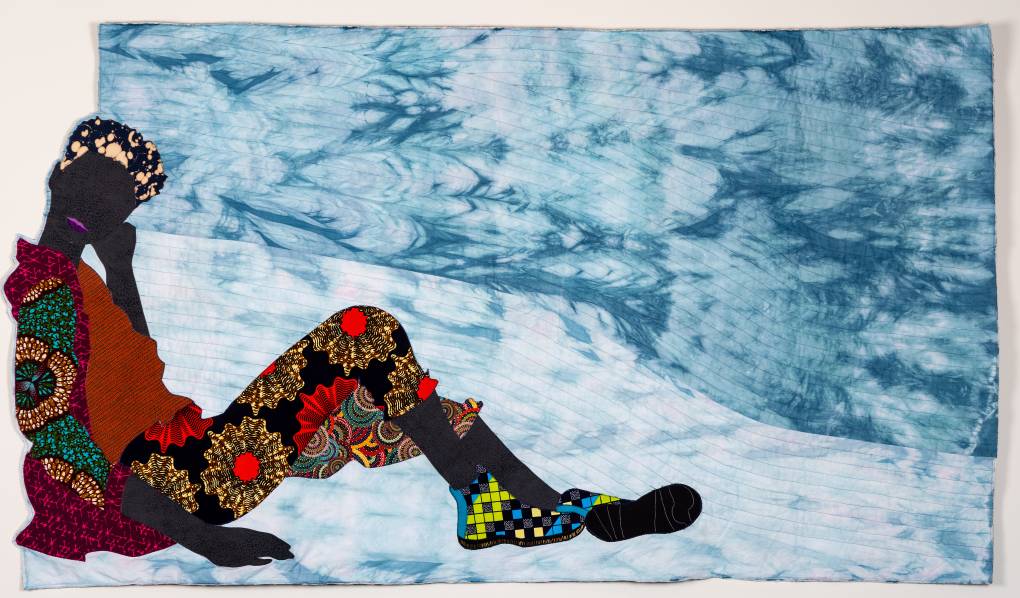
At ICA SF, ‘Resting Our Eyes’ Affirms Black Women’s Right to Leisure
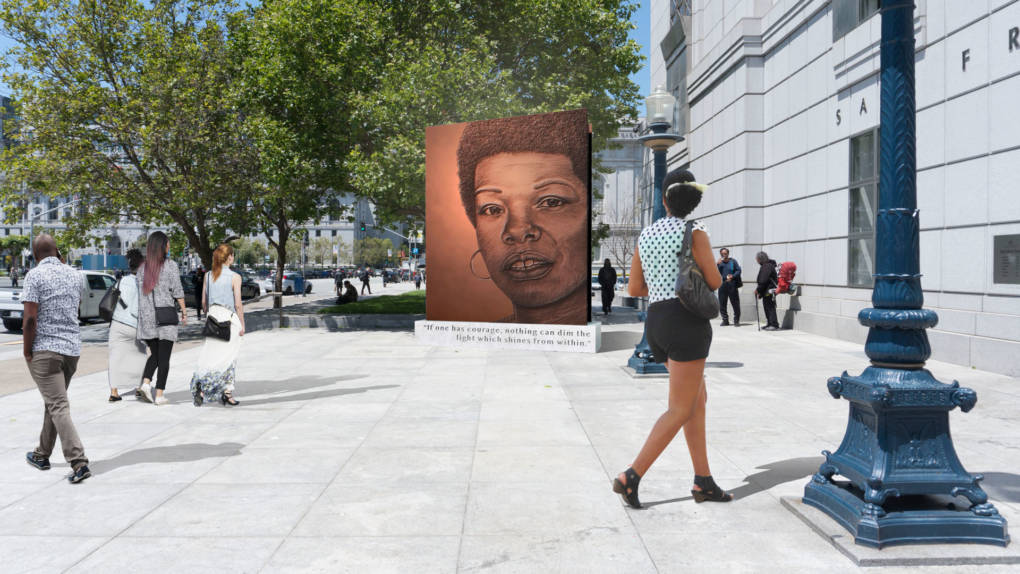
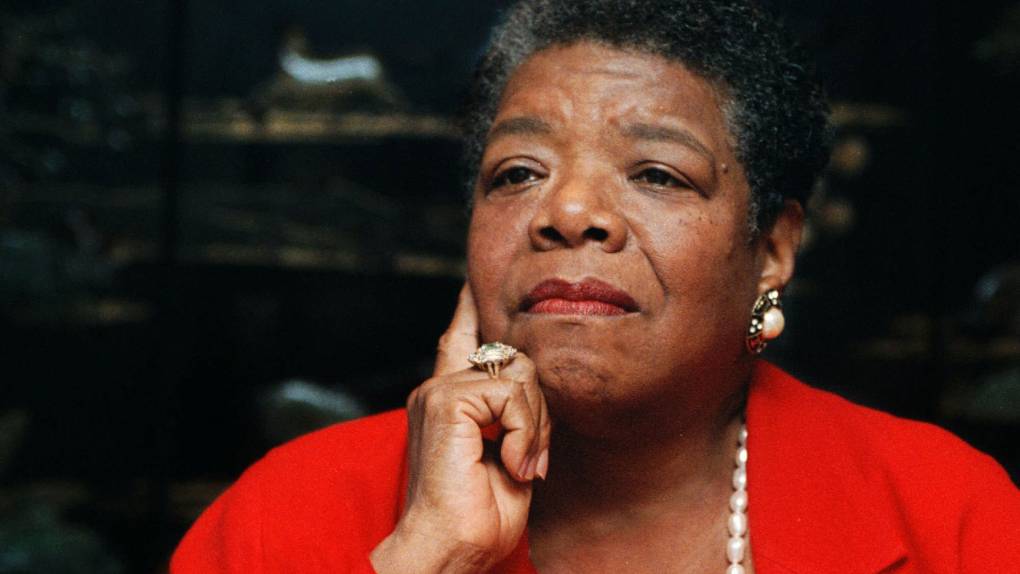
SFAC Awards the Maya Angelou Monument to Lava Thomas, Finally
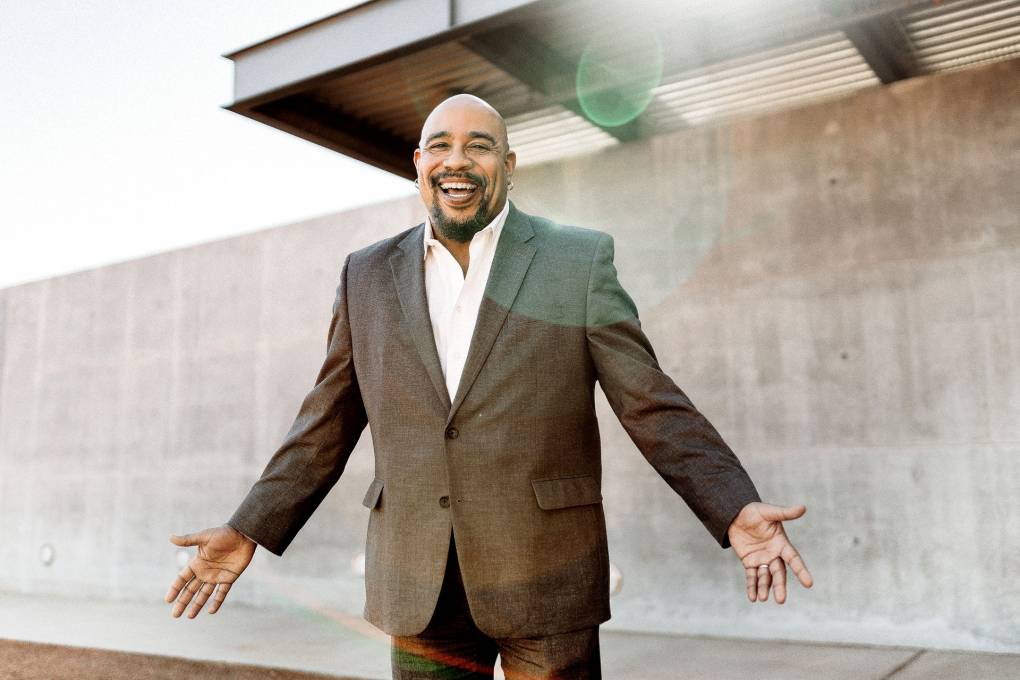
There's a New Director of Cultural Affairs in San Francisco
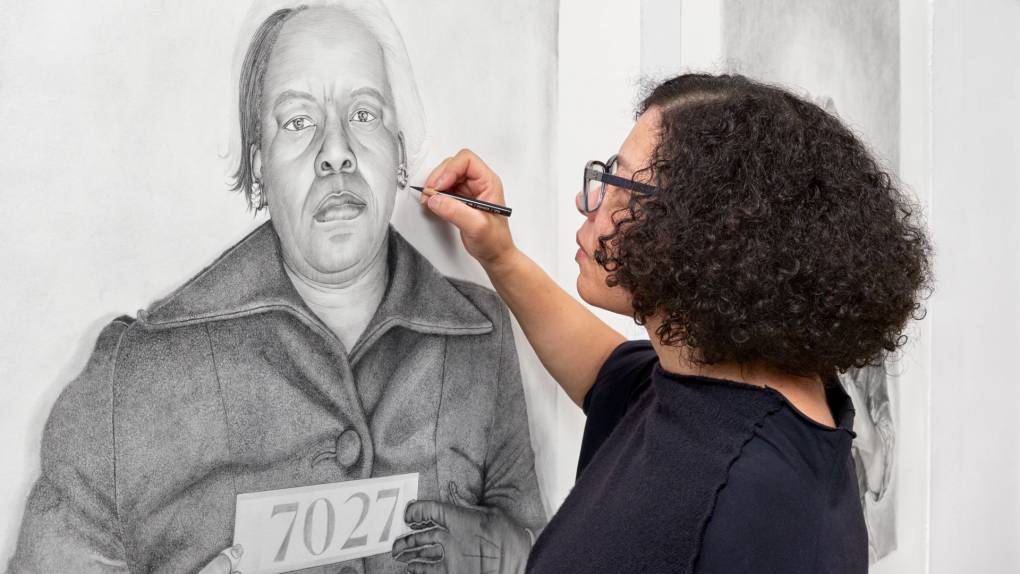
What’s On Your Ballot?: Artist Lava Thomas
Artists Team up With Critical Resistance to Make Prison Abolition Irresistible
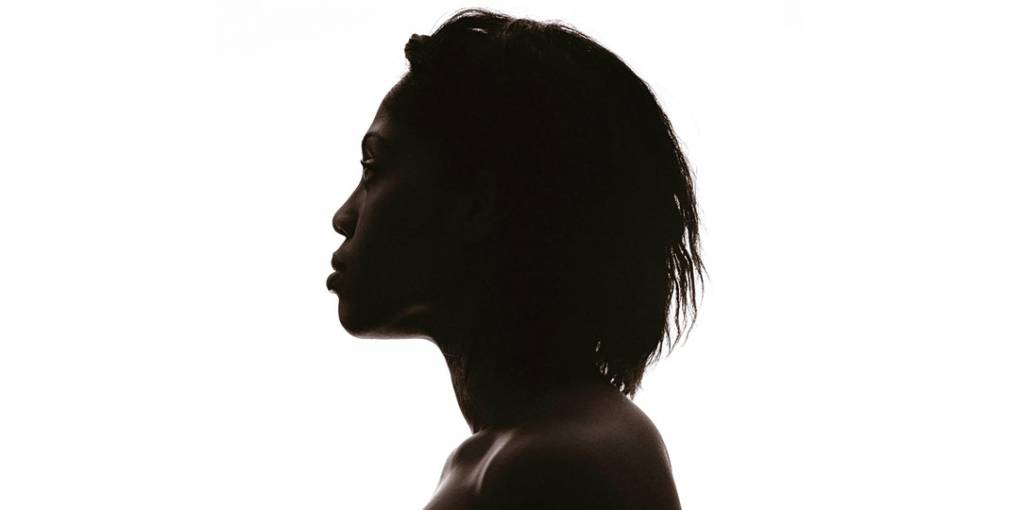
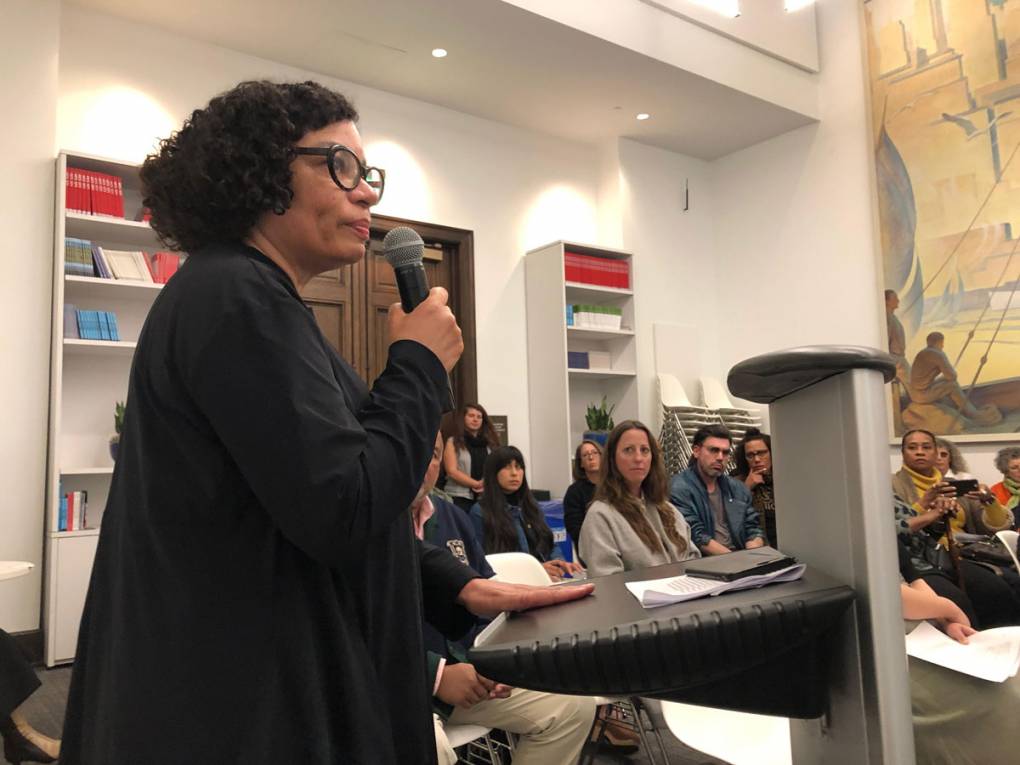
SFAC Apologizes to Lava Thomas for Mishandling Maya Angelou Monument
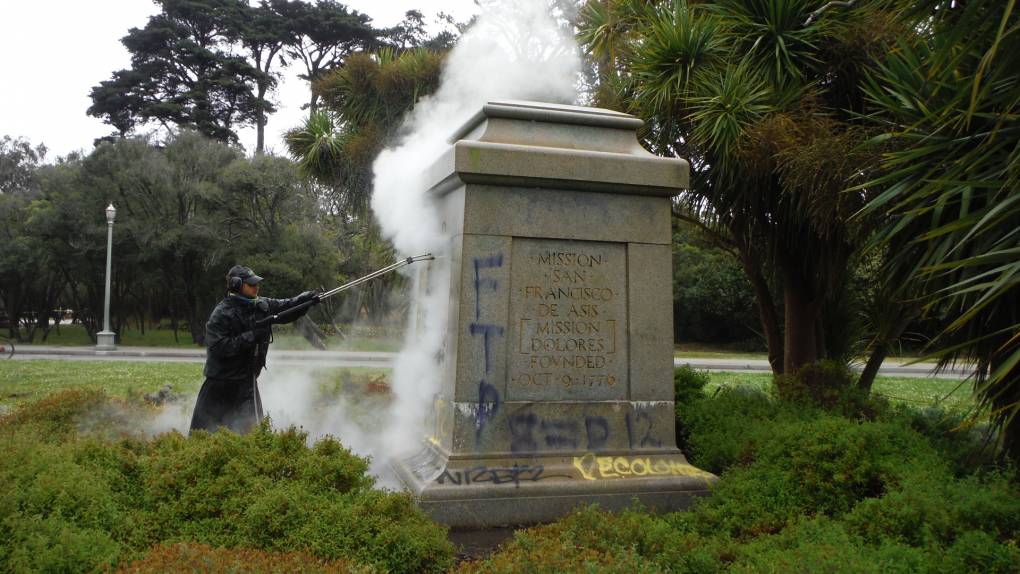
SF to Evaluate Public Monuments, But Community Questions Its Track Record
San Francisco's Search for a Maya Angelou Monument is Back at Square One
Audio: San Francisco's Search for a Maya Angelou Monument is Back at Square One
Sponsored
Player sponsored by
window.__IS_SSR__=true
window.__INITIAL_STATE__={
"attachmentsReducer": {
"audio_0": {
"type": "attachments",
"id": "audio_0",
"imgSizes": {
"kqedFullSize": {
"file": "https://ww2.kqed.org/news/wp-content/themes/KQED-unified/img/audio_bgs/background0.jpg"
}
}
},
"audio_1": {
"type": "attachments",
"id": "audio_1",
"imgSizes": {
"kqedFullSize": {
"file": "https://ww2.kqed.org/news/wp-content/themes/KQED-unified/img/audio_bgs/background1.jpg"
}
}
},
"audio_2": {
"type": "attachments",
"id": "audio_2",
"imgSizes": {
"kqedFullSize": {
"file": "https://ww2.kqed.org/news/wp-content/themes/KQED-unified/img/audio_bgs/background2.jpg"
}
}
},
"audio_3": {
"type": "attachments",
"id": "audio_3",
"imgSizes": {
"kqedFullSize": {
"file": "https://ww2.kqed.org/news/wp-content/themes/KQED-unified/img/audio_bgs/background3.jpg"
}
}
},
"audio_4": {
"type": "attachments",
"id": "audio_4",
"imgSizes": {
"kqedFullSize": {
"file": "https://ww2.kqed.org/news/wp-content/themes/KQED-unified/img/audio_bgs/background4.jpg"
}
}
},
"placeholder": {
"type": "attachments",
"id": "placeholder",
"imgSizes": {
"thumbnail": {
"file": "https://cdn.kqed.org/wp-content/uploads/2024/12/KQED-Default-Image-816638274-2000x1333-1-160x107.jpg",
"width": 160,
"height": 107,
"mimeType": "image/jpeg"
},
"medium": {
"file": "https://cdn.kqed.org/wp-content/uploads/2024/12/KQED-Default-Image-816638274-2000x1333-1-800x533.jpg",
"width": 800,
"height": 533,
"mimeType": "image/jpeg"
},
"medium_large": {
"file": "https://cdn.kqed.org/wp-content/uploads/2024/12/KQED-Default-Image-816638274-2000x1333-1-768x512.jpg",
"width": 768,
"height": 512,
"mimeType": "image/jpeg"
},
"large": {
"file": "https://cdn.kqed.org/wp-content/uploads/2024/12/KQED-Default-Image-816638274-2000x1333-1-1020x680.jpg",
"width": 1020,
"height": 680,
"mimeType": "image/jpeg"
},
"1536x1536": {
"file": "https://cdn.kqed.org/wp-content/uploads/2024/12/KQED-Default-Image-816638274-2000x1333-1-1536x1024.jpg",
"width": 1536,
"height": 1024,
"mimeType": "image/jpeg"
},
"fd-lrg": {
"file": "https://cdn.kqed.org/wp-content/uploads/2024/12/KQED-Default-Image-816638274-2000x1333-1-1536x1024.jpg",
"width": 1536,
"height": 1024,
"mimeType": "image/jpeg"
},
"fd-med": {
"file": "https://cdn.kqed.org/wp-content/uploads/2024/12/KQED-Default-Image-816638274-2000x1333-1-1020x680.jpg",
"width": 1020,
"height": 680,
"mimeType": "image/jpeg"
},
"fd-sm": {
"file": "https://cdn.kqed.org/wp-content/uploads/2024/12/KQED-Default-Image-816638274-2000x1333-1-800x533.jpg",
"width": 800,
"height": 533,
"mimeType": "image/jpeg"
},
"post-thumbnail": {
"file": "https://cdn.kqed.org/wp-content/uploads/2024/12/KQED-Default-Image-816638274-2000x1333-1-672x372.jpg",
"width": 672,
"height": 372,
"mimeType": "image/jpeg"
},
"twentyfourteen-full-width": {
"file": "https://cdn.kqed.org/wp-content/uploads/2024/12/KQED-Default-Image-816638274-2000x1333-1-1038x576.jpg",
"width": 1038,
"height": 576,
"mimeType": "image/jpeg"
},
"xxsmall": {
"file": "https://cdn.kqed.org/wp-content/uploads/2024/12/KQED-Default-Image-816638274-2000x1333-1-160x107.jpg",
"width": 160,
"height": 107,
"mimeType": "image/jpeg"
},
"xsmall": {
"file": "https://cdn.kqed.org/wp-content/uploads/2024/12/KQED-Default-Image-816638274-2000x1333-1-672x372.jpg",
"width": 672,
"height": 372,
"mimeType": "image/jpeg"
},
"small": {
"file": "https://cdn.kqed.org/wp-content/uploads/2024/12/KQED-Default-Image-816638274-2000x1333-1-672x372.jpg",
"width": 672,
"height": 372,
"mimeType": "image/jpeg"
},
"xlarge": {
"file": "https://cdn.kqed.org/wp-content/uploads/2024/12/KQED-Default-Image-816638274-2000x1333-1-1020x680.jpg",
"width": 1020,
"height": 680,
"mimeType": "image/jpeg"
},
"full-width": {
"file": "https://cdn.kqed.org/wp-content/uploads/2024/12/KQED-Default-Image-816638274-2000x1333-1-1920x1280.jpg",
"width": 1920,
"height": 1280,
"mimeType": "image/jpeg"
},
"guest-author-32": {
"file": "https://cdn.kqed.org/wp-content/uploads/2025/01/KQED-Default-Image-816638274-1333x1333-1-160x160.jpg",
"width": 32,
"height": 32,
"mimeType": "image/jpeg"
},
"guest-author-50": {
"file": "https://cdn.kqed.org/wp-content/uploads/2025/01/KQED-Default-Image-816638274-1333x1333-1-160x160.jpg",
"width": 50,
"height": 50,
"mimeType": "image/jpeg"
},
"guest-author-64": {
"file": "https://cdn.kqed.org/wp-content/uploads/2025/01/KQED-Default-Image-816638274-1333x1333-1-160x160.jpg",
"width": 64,
"height": 64,
"mimeType": "image/jpeg"
},
"guest-author-96": {
"file": "https://cdn.kqed.org/wp-content/uploads/2025/01/KQED-Default-Image-816638274-1333x1333-1-160x160.jpg",
"width": 96,
"height": 96,
"mimeType": "image/jpeg"
},
"guest-author-128": {
"file": "https://cdn.kqed.org/wp-content/uploads/2025/01/KQED-Default-Image-816638274-1333x1333-1-160x160.jpg",
"width": 128,
"height": 128,
"mimeType": "image/jpeg"
},
"detail": {
"file": "https://cdn.kqed.org/wp-content/uploads/2025/01/KQED-Default-Image-816638274-1333x1333-1-160x160.jpg",
"width": 160,
"height": 160,
"mimeType": "image/jpeg"
},
"kqedFullSize": {
"file": "https://cdn.kqed.org/wp-content/uploads/2024/12/KQED-Default-Image-816638274-2000x1333-1.jpg",
"width": 2000,
"height": 1333
}
}
},
"arts_13925447": {
"type": "attachments",
"id": "arts_13925447",
"meta": {
"index": "attachments_1716263798",
"site": "arts",
"id": "13925447",
"found": true
},
"parent": 13925416,
"imgSizes": {
"twentyfourteen-full-width": {
"file": "https://ww2.kqed.org/app/uploads/sites/2/2023/02/Adana-Tillman_Wild-Things-1038x576.jpg",
"width": 1038,
"mimeType": "image/jpeg",
"height": 576
},
"thumbnail": {
"file": "https://ww2.kqed.org/app/uploads/sites/2/2023/02/Adana-Tillman_Wild-Things-160x94.jpg",
"width": 160,
"mimeType": "image/jpeg",
"height": 94
},
"post-thumbnail": {
"file": "https://ww2.kqed.org/app/uploads/sites/2/2023/02/Adana-Tillman_Wild-Things-672x372.jpg",
"width": 672,
"mimeType": "image/jpeg",
"height": 372
},
"kqedFullSize": {
"file": "https://ww2.kqed.org/app/uploads/sites/2/2023/02/Adana-Tillman_Wild-Things-scaled.jpg",
"width": 2560,
"height": 1500
},
"2048x2048": {
"file": "https://ww2.kqed.org/app/uploads/sites/2/2023/02/Adana-Tillman_Wild-Things-2048x1200.jpg",
"width": 2048,
"mimeType": "image/jpeg",
"height": 1200
},
"large": {
"file": "https://ww2.kqed.org/app/uploads/sites/2/2023/02/Adana-Tillman_Wild-Things-1020x598.jpg",
"width": 1020,
"mimeType": "image/jpeg",
"height": 598
},
"1536x1536": {
"file": "https://ww2.kqed.org/app/uploads/sites/2/2023/02/Adana-Tillman_Wild-Things-1536x900.jpg",
"width": 1536,
"mimeType": "image/jpeg",
"height": 900
},
"full-width": {
"file": "https://ww2.kqed.org/app/uploads/sites/2/2023/02/Adana-Tillman_Wild-Things-1920x1125.jpg",
"width": 1920,
"mimeType": "image/jpeg",
"height": 1125
},
"medium": {
"file": "https://ww2.kqed.org/app/uploads/sites/2/2023/02/Adana-Tillman_Wild-Things-800x469.jpg",
"width": 800,
"mimeType": "image/jpeg",
"height": 469
},
"medium_large": {
"file": "https://ww2.kqed.org/app/uploads/sites/2/2023/02/Adana-Tillman_Wild-Things-768x450.jpg",
"width": 768,
"mimeType": "image/jpeg",
"height": 450
}
},
"publishDate": 1677187334,
"modified": 1677187428,
"caption": "Adana Tillman’s ‘Wild Thoughts,’ 2020. Appliqued fabric on hand dyed textiles with hand embroidery and beading.",
"description": null,
"title": "Adana Tillman_Wild Things",
"credit": "Courtesy of the artist",
"status": "inherit",
"altTag": "in a textile work, a Black woman in colorful clothing rests sitting on the ground and smiling against a blue backdrop",
"fetchFailed": false,
"isLoading": false
},
"arts_13864656": {
"type": "attachments",
"id": "arts_13864656",
"meta": {
"index": "attachments_1716263798",
"site": "arts",
"id": "13864656",
"found": true
},
"parent": 13864632,
"imgSizes": {
"twentyfourteen-full-width": {
"file": "https://ww2.kqed.org/app/uploads/sites/2/2019/08/LavaThomas_MayaAngelouSculpture_Front_COVER-1038x576.jpg",
"width": 1038,
"mimeType": "image/jpeg",
"height": 576
},
"thumbnail": {
"file": "https://ww2.kqed.org/app/uploads/sites/2/2019/08/LavaThomas_MayaAngelouSculpture_Front_COVER-160x90.jpg",
"width": 160,
"mimeType": "image/jpeg",
"height": 90
},
"post-thumbnail": {
"file": "https://ww2.kqed.org/app/uploads/sites/2/2019/08/LavaThomas_MayaAngelouSculpture_Front_COVER-672x372.jpg",
"width": 672,
"mimeType": "image/jpeg",
"height": 372
},
"kqedFullSize": {
"file": "https://ww2.kqed.org/app/uploads/sites/2/2019/08/LavaThomas_MayaAngelouSculpture_Front_COVER.jpg",
"width": 1920,
"height": 1080
},
"large": {
"file": "https://ww2.kqed.org/app/uploads/sites/2/2019/08/LavaThomas_MayaAngelouSculpture_Front_COVER-1020x574.jpg",
"width": 1020,
"mimeType": "image/jpeg",
"height": 574
},
"complete_open_graph": {
"file": "https://ww2.kqed.org/app/uploads/sites/2/2019/08/LavaThomas_MayaAngelouSculpture_Front_COVER-1200x675.jpg",
"width": 1200,
"mimeType": "image/jpeg",
"height": 675
},
"full-width": {
"file": "https://ww2.kqed.org/app/uploads/sites/2/2019/08/LavaThomas_MayaAngelouSculpture_Front_COVER-1920x1080.jpg",
"width": 1920,
"mimeType": "image/jpeg",
"height": 1080
},
"medium": {
"file": "https://ww2.kqed.org/app/uploads/sites/2/2019/08/LavaThomas_MayaAngelouSculpture_Front_COVER-800x450.jpg",
"width": 800,
"mimeType": "image/jpeg",
"height": 450
},
"medium_large": {
"file": "https://ww2.kqed.org/app/uploads/sites/2/2019/08/LavaThomas_MayaAngelouSculpture_Front_COVER-768x432.jpg",
"width": 768,
"mimeType": "image/jpeg",
"height": 432
}
},
"publishDate": 1566431885,
"modified": 1566432099,
"caption": "A rendering of Lava Thomas' proposed monument to Maya Angelou, 'Portrait of a Phenomenal Woman,' outside the SFPL main branch. ",
"description": "A rendering of Lava Thomas' proposed monument to Maya Angelou, 'Portrait of a Phenomenal Woman,' outside the SFPL main branch. ",
"title": "LavaThomas_MayaAngelouSculpture_Front_COVER",
"credit": "Courtesy of Eren Hebert",
"status": "inherit",
"fetchFailed": false,
"isLoading": false
},
"arts_13889003": {
"type": "attachments",
"id": "arts_13889003",
"meta": {
"index": "attachments_1716263798",
"site": "arts",
"id": "13889003",
"found": true
},
"parent": 13889000,
"imgSizes": {
"twentyfourteen-full-width": {
"file": "https://ww2.kqed.org/app/uploads/sites/2/2020/11/Ralph-Remington-1038x576.jpg",
"width": 1038,
"mimeType": "image/jpeg",
"height": 576
},
"thumbnail": {
"file": "https://ww2.kqed.org/app/uploads/sites/2/2020/11/Ralph-Remington-160x107.jpg",
"width": 160,
"mimeType": "image/jpeg",
"height": 107
},
"post-thumbnail": {
"file": "https://ww2.kqed.org/app/uploads/sites/2/2020/11/Ralph-Remington-672x372.jpg",
"width": 672,
"mimeType": "image/jpeg",
"height": 372
},
"kqedFullSize": {
"file": "https://ww2.kqed.org/app/uploads/sites/2/2020/11/Ralph-Remington.jpg",
"width": 1920,
"height": 1280
},
"large": {
"file": "https://ww2.kqed.org/app/uploads/sites/2/2020/11/Ralph-Remington-1020x680.jpg",
"width": 1020,
"mimeType": "image/jpeg",
"height": 680
},
"1536x1536": {
"file": "https://ww2.kqed.org/app/uploads/sites/2/2020/11/Ralph-Remington-1536x1024.jpg",
"width": 1536,
"mimeType": "image/jpeg",
"height": 1024
},
"medium": {
"file": "https://ww2.kqed.org/app/uploads/sites/2/2020/11/Ralph-Remington-800x533.jpg",
"width": 800,
"mimeType": "image/jpeg",
"height": 533
},
"medium_large": {
"file": "https://ww2.kqed.org/app/uploads/sites/2/2020/11/Ralph-Remington-768x512.jpg",
"width": 768,
"mimeType": "image/jpeg",
"height": 512
}
},
"publishDate": 1604696725,
"modified": 1604696776,
"caption": "Ralph Remington will head the San Francisco Arts Commission starting in January 2021.",
"description": "Ralph Remington will head the San Francisco Arts Commission starting in January 2021.",
"title": "Ralph-Remington",
"credit": "Aminda Villa",
"status": "inherit",
"fetchFailed": false,
"isLoading": false
},
"arts_13887299": {
"type": "attachments",
"id": "arts_13887299",
"meta": {
"index": "attachments_1716263798",
"site": "arts",
"id": "13887299",
"found": true
},
"parent": 13887073,
"imgSizes": {
"twentyfourteen-full-width": {
"file": "https://ww2.kqed.org/app/uploads/sites/2/2020/09/MBB_Headlands_JohnJanca_022118_HighRes_03._COVER-1038x576.jpg",
"width": 1038,
"mimeType": "image/jpeg",
"height": 576
},
"thumbnail": {
"file": "https://ww2.kqed.org/app/uploads/sites/2/2020/09/MBB_Headlands_JohnJanca_022118_HighRes_03._COVER-160x90.jpg",
"width": 160,
"mimeType": "image/jpeg",
"height": 90
},
"post-thumbnail": {
"file": "https://ww2.kqed.org/app/uploads/sites/2/2020/09/MBB_Headlands_JohnJanca_022118_HighRes_03._COVER-672x372.jpg",
"width": 672,
"mimeType": "image/jpeg",
"height": 372
},
"kqedFullSize": {
"file": "https://ww2.kqed.org/app/uploads/sites/2/2020/09/MBB_Headlands_JohnJanca_022118_HighRes_03._COVER.jpg",
"width": 1920,
"height": 1080
},
"large": {
"file": "https://ww2.kqed.org/app/uploads/sites/2/2020/09/MBB_Headlands_JohnJanca_022118_HighRes_03._COVER-1020x574.jpg",
"width": 1020,
"mimeType": "image/jpeg",
"height": 574
},
"1536x1536": {
"file": "https://ww2.kqed.org/app/uploads/sites/2/2020/09/MBB_Headlands_JohnJanca_022118_HighRes_03._COVER-1536x864.jpg",
"width": 1536,
"mimeType": "image/jpeg",
"height": 864
},
"medium": {
"file": "https://ww2.kqed.org/app/uploads/sites/2/2020/09/MBB_Headlands_JohnJanca_022118_HighRes_03._COVER-800x450.jpg",
"width": 800,
"mimeType": "image/jpeg",
"height": 450
},
"medium_large": {
"file": "https://ww2.kqed.org/app/uploads/sites/2/2020/09/MBB_Headlands_JohnJanca_022118_HighRes_03._COVER-768x432.jpg",
"width": 768,
"mimeType": "image/jpeg",
"height": 432
}
},
"publishDate": 1601588690,
"modified": 1601589875,
"caption": "Lava Thomas working on one of her 'Mugshot Portraits: Women of the Montgomery Bus Boycott' drawings.",
"description": "Lava Thomas working on one of her 'Mugshot Portraits: Women of the Montgomery Bus Boycott' drawings.",
"title": "MBB_Headlands_JohnJanca_022118_HighRes_03._COVER",
"credit": "John Jana",
"status": "inherit",
"fetchFailed": false,
"isLoading": false
},
"arts_13886707": {
"type": "attachments",
"id": "arts_13886707",
"meta": {
"index": "attachments_1716263798",
"site": "arts",
"id": "13886707",
"found": true
},
"parent": 13886700,
"imgSizes": {
"twentyfourteen-full-width": {
"file": "https://ww2.kqed.org/app/uploads/sites/2/2020/09/Deeman_COVER-1038x540.jpeg",
"width": 1038,
"mimeType": "image/jpeg",
"height": 540
},
"thumbnail": {
"file": "https://ww2.kqed.org/app/uploads/sites/2/2020/09/Deeman_COVER-160x80.jpeg",
"width": 160,
"mimeType": "image/jpeg",
"height": 80
},
"post-thumbnail": {
"file": "https://ww2.kqed.org/app/uploads/sites/2/2020/09/Deeman_COVER-672x372.jpeg",
"width": 672,
"mimeType": "image/jpeg",
"height": 372
},
"kqedFullSize": {
"file": "https://ww2.kqed.org/app/uploads/sites/2/2020/09/Deeman_COVER.jpeg",
"width": 1080,
"height": 540
},
"large": {
"file": "https://ww2.kqed.org/app/uploads/sites/2/2020/09/Deeman_COVER-1020x510.jpeg",
"width": 1020,
"mimeType": "image/jpeg",
"height": 510
},
"medium": {
"file": "https://ww2.kqed.org/app/uploads/sites/2/2020/09/Deeman_COVER-800x400.jpeg",
"width": 800,
"mimeType": "image/jpeg",
"height": 400
},
"medium_large": {
"file": "https://ww2.kqed.org/app/uploads/sites/2/2020/09/Deeman_COVER-768x384.jpeg",
"width": 768,
"mimeType": "image/jpeg",
"height": 384
}
},
"publishDate": 1600817295,
"modified": 1600817320,
"caption": "Erica Deeman, from the 'Silhouettes' series.",
"description": "Erica Deeman, from the 'Silhouettes' series.",
"title": "Deeman_COVER",
"credit": "Courtesy the artist",
"status": "inherit",
"fetchFailed": false,
"isLoading": false
},
"arts_13870771": {
"type": "attachments",
"id": "arts_13870771",
"meta": {
"index": "attachments_1716263798",
"site": "arts",
"id": "13870771",
"found": true
},
"parent": 13870742,
"imgSizes": {
"twentyfourteen-full-width": {
"file": "https://ww2.kqed.org/app/uploads/sites/2/2019/12/Lava-Thomas-at-Oct-16-arts-commission-meeting-by-Chloe-Veltman_1200-1038x576.jpg",
"width": 1038,
"mimeType": "image/jpeg",
"height": 576
},
"thumbnail": {
"file": "https://ww2.kqed.org/app/uploads/sites/2/2019/12/Lava-Thomas-at-Oct-16-arts-commission-meeting-by-Chloe-Veltman_1200-160x120.jpg",
"width": 160,
"mimeType": "image/jpeg",
"height": 120
},
"post-thumbnail": {
"file": "https://ww2.kqed.org/app/uploads/sites/2/2019/12/Lava-Thomas-at-Oct-16-arts-commission-meeting-by-Chloe-Veltman_1200-672x372.jpg",
"width": 672,
"mimeType": "image/jpeg",
"height": 372
},
"kqedFullSize": {
"file": "https://ww2.kqed.org/app/uploads/sites/2/2019/12/Lava-Thomas-at-Oct-16-arts-commission-meeting-by-Chloe-Veltman_1200.jpg",
"width": 1200,
"height": 900
},
"large": {
"file": "https://ww2.kqed.org/app/uploads/sites/2/2019/12/Lava-Thomas-at-Oct-16-arts-commission-meeting-by-Chloe-Veltman_1200-1020x765.jpg",
"width": 1020,
"mimeType": "image/jpeg",
"height": 765
},
"complete_open_graph": {
"file": "https://ww2.kqed.org/app/uploads/sites/2/2019/12/Lava-Thomas-at-Oct-16-arts-commission-meeting-by-Chloe-Veltman_1200-1200x900.jpg",
"width": 1200,
"mimeType": "image/jpeg",
"height": 900
},
"medium": {
"file": "https://ww2.kqed.org/app/uploads/sites/2/2019/12/Lava-Thomas-at-Oct-16-arts-commission-meeting-by-Chloe-Veltman_1200-800x600.jpg",
"width": 800,
"mimeType": "image/jpeg",
"height": 600
},
"medium_large": {
"file": "https://ww2.kqed.org/app/uploads/sites/2/2019/12/Lava-Thomas-at-Oct-16-arts-commission-meeting-by-Chloe-Veltman_1200-768x576.jpg",
"width": 768,
"mimeType": "image/jpeg",
"height": 576
}
},
"publishDate": 1575405087,
"modified": 1596509962,
"caption": "Lava Thomas speaks at the Oct. 16, 2019 arts commission meeting about her disappointment in the process.",
"description": "Lava Thomas speaks at the Oct. 16, 2019 arts commission meeting about her disappointment in the process.",
"title": "Lava-Thomas-at-Oct-16-arts-commission-meeting-by-Chloe-Veltman_1200",
"credit": "Chloe Veltman/KQED",
"status": "inherit",
"fetchFailed": false,
"isLoading": false
},
"arts_13883461": {
"type": "attachments",
"id": "arts_13883461",
"meta": {
"index": "attachments_1716263798",
"site": "arts",
"id": "13883461",
"found": true
},
"parent": 13883431,
"imgSizes": {
"twentyfourteen-full-width": {
"file": "https://ww2.kqed.org/app/uploads/sites/2/2020/07/Item-4F_GGP-Monument-Vandalism-11_COVER-1038x576.jpg",
"width": 1038,
"mimeType": "image/jpeg",
"height": 576
},
"thumbnail": {
"file": "https://ww2.kqed.org/app/uploads/sites/2/2020/07/Item-4F_GGP-Monument-Vandalism-11_COVER-160x90.jpg",
"width": 160,
"mimeType": "image/jpeg",
"height": 90
},
"post-thumbnail": {
"file": "https://ww2.kqed.org/app/uploads/sites/2/2020/07/Item-4F_GGP-Monument-Vandalism-11_COVER-672x372.jpg",
"width": 672,
"mimeType": "image/jpeg",
"height": 372
},
"kqedFullSize": {
"file": "https://ww2.kqed.org/app/uploads/sites/2/2020/07/Item-4F_GGP-Monument-Vandalism-11_COVER.jpg",
"width": 1920,
"height": 1080
},
"large": {
"file": "https://ww2.kqed.org/app/uploads/sites/2/2020/07/Item-4F_GGP-Monument-Vandalism-11_COVER-1020x574.jpg",
"width": 1020,
"mimeType": "image/jpeg",
"height": 574
},
"1536x1536": {
"file": "https://ww2.kqed.org/app/uploads/sites/2/2020/07/Item-4F_GGP-Monument-Vandalism-11_COVER-1536x864.jpg",
"width": 1536,
"mimeType": "image/jpeg",
"height": 864
},
"medium": {
"file": "https://ww2.kqed.org/app/uploads/sites/2/2020/07/Item-4F_GGP-Monument-Vandalism-11_COVER-800x450.jpg",
"width": 800,
"mimeType": "image/jpeg",
"height": 450
},
"medium_large": {
"file": "https://ww2.kqed.org/app/uploads/sites/2/2020/07/Item-4F_GGP-Monument-Vandalism-11_COVER-768x432.jpg",
"width": 768,
"mimeType": "image/jpeg",
"height": 432
}
},
"publishDate": 1594921666,
"modified": 1594921789,
"caption": "A Recreation and Parks employee cleans the pedestal of a toppled Junípero Serra statue in Golden Gate Park.",
"description": null,
"title": "Item-4F_GGP-Monument-Vandalism-11_COVER",
"credit": "SFAC",
"status": "inherit",
"fetchFailed": false,
"isLoading": false
},
"arts_13870789": {
"type": "attachments",
"id": "arts_13870789",
"meta": {
"index": "attachments_1716263798",
"site": "arts",
"id": "13870789",
"found": true
},
"parent": 13870742,
"imgSizes": {
"twentyfourteen-full-width": {
"file": "https://ww2.kqed.org/app/uploads/sites/2/2019/12/MayaAngelou_COVER-1038x576.jpg",
"width": 1038,
"mimeType": "image/jpeg",
"height": 576
},
"thumbnail": {
"file": "https://ww2.kqed.org/app/uploads/sites/2/2019/12/MayaAngelou_COVER-160x90.jpg",
"width": 160,
"mimeType": "image/jpeg",
"height": 90
},
"post-thumbnail": {
"file": "https://ww2.kqed.org/app/uploads/sites/2/2019/12/MayaAngelou_COVER-672x372.jpg",
"width": 672,
"mimeType": "image/jpeg",
"height": 372
},
"kqedFullSize": {
"file": "https://ww2.kqed.org/app/uploads/sites/2/2019/12/MayaAngelou_COVER.jpg",
"width": 1920,
"height": 1080
},
"large": {
"file": "https://ww2.kqed.org/app/uploads/sites/2/2019/12/MayaAngelou_COVER-1020x574.jpg",
"width": 1020,
"mimeType": "image/jpeg",
"height": 574
},
"complete_open_graph": {
"file": "https://ww2.kqed.org/app/uploads/sites/2/2019/12/MayaAngelou_COVER-1200x675.jpg",
"width": 1200,
"mimeType": "image/jpeg",
"height": 675
},
"full-width": {
"file": "https://ww2.kqed.org/app/uploads/sites/2/2019/12/MayaAngelou_COVER-1920x1080.jpg",
"width": 1920,
"mimeType": "image/jpeg",
"height": 1080
},
"medium": {
"file": "https://ww2.kqed.org/app/uploads/sites/2/2019/12/MayaAngelou_COVER-800x450.jpg",
"width": 800,
"mimeType": "image/jpeg",
"height": 450
},
"medium_large": {
"file": "https://ww2.kqed.org/app/uploads/sites/2/2019/12/MayaAngelou_COVER-768x432.jpg",
"width": 768,
"mimeType": "image/jpeg",
"height": 432
}
},
"publishDate": 1575412573,
"modified": 1575412637,
"caption": "Maya Angelou pictured in 1996.",
"description": "Maya Angelou pictured in 1996.",
"title": "MayaAngelou_COVER",
"credit": "NPR",
"status": "inherit",
"fetchFailed": false,
"isLoading": false
}
},
"audioPlayerReducer": {
"postId": "stream_live",
"isPaused": true,
"isPlaying": false,
"pfsActive": false,
"pledgeModalIsOpen": true,
"playerDrawerIsOpen": false
},
"authorsReducer": {
"byline_arts_13887073": {
"type": "authors",
"id": "byline_arts_13887073",
"meta": {
"override": true
},
"slug": "byline_arts_13887073",
"name": "Brandon Yu",
"isLoading": false
},
"shotchkiss": {
"type": "authors",
"id": "61",
"meta": {
"index": "authors_1716337520",
"id": "61",
"found": true
},
"name": "Sarah Hotchkiss",
"firstName": "Sarah",
"lastName": "Hotchkiss",
"slug": "shotchkiss",
"email": "shotchkiss@kqed.org",
"display_author_email": true,
"staff_mastheads": [
"arts"
],
"title": "Senior Editor",
"bio": "Sarah Hotchkiss is a San Francisco \u003ca href=\"http://www.sarahhotchkiss.com\">artist\u003c/a> and arts writer. In 2019, she received the Dorothea & Leo Rabkin Foundation grant for visual art journalism and in 2020 she received a Society of Professional Journalists, Northern California award for excellence in arts and culture reporting.",
"avatar": "https://secure.gravatar.com/avatar/ca38c7f54590856cd4947d26274f8a90?s=600&d=blank&r=g",
"twitter": null,
"facebook": null,
"instagram": null,
"linkedin": null,
"sites": [
{
"site": "",
"roles": [
"editor"
]
},
{
"site": "arts",
"roles": [
"Contributor",
"administrator"
]
},
{
"site": "artschool",
"roles": [
"administrator"
]
},
{
"site": "news",
"roles": [
"editor"
]
},
{
"site": "pop",
"roles": [
"administrator"
]
},
{
"site": "bayareabites",
"roles": [
"editor"
]
},
{
"site": "spark",
"roles": [
"editor"
]
},
{
"site": "checkplease",
"roles": [
"editor"
]
}
],
"headData": {
"title": "Sarah Hotchkiss | KQED",
"description": "Senior Editor",
"ogImgSrc": "https://secure.gravatar.com/avatar/ca38c7f54590856cd4947d26274f8a90?s=600&d=blank&r=g",
"twImgSrc": "https://secure.gravatar.com/avatar/ca38c7f54590856cd4947d26274f8a90?s=600&d=blank&r=g"
},
"isLoading": false,
"link": "/author/shotchkiss"
},
"gmeline": {
"type": "authors",
"id": "185",
"meta": {
"index": "authors_1716337520",
"id": "185",
"found": true
},
"name": "Gabe Meline",
"firstName": "Gabe",
"lastName": "Meline",
"slug": "gmeline",
"email": "gmeline@kqed.org",
"display_author_email": false,
"staff_mastheads": [
"arts"
],
"title": "Senior Editor, KQED Arts & Culture",
"bio": "Gabe Meline entered journalism at age 15 making photocopied zines, and has since earned awards from the Edward R. Murrow Awards, the Society for Professional Journalists, the Online Journalism Awards, the Association of Alternative Newsweeklies and the California Newspaper Publishers Association. Prior to KQED, he was the editor of the \u003cem>North Bay Bohemian\u003c/em> and a touring musician. He lives with his wife, his daughter, and a 1964 Volvo in his hometown of Santa Rosa, CA.",
"avatar": "https://secure.gravatar.com/avatar/80e9715844c5fc3f07edac5b08973b76?s=600&d=blank&r=g",
"twitter": null,
"facebook": null,
"instagram": "gmeline",
"linkedin": null,
"sites": [
{
"site": "",
"roles": [
"editor"
]
},
{
"site": "arts",
"roles": [
"administrator"
]
},
{
"site": "artschool",
"roles": [
"editor"
]
},
{
"site": "news",
"roles": [
"author"
]
},
{
"site": "pop",
"roles": [
"editor"
]
},
{
"site": "bayareabites",
"roles": [
"editor"
]
},
{
"site": "food",
"roles": [
"editor"
]
},
{
"site": "liveblog",
"roles": [
"editor"
]
},
{
"site": "hiphop",
"roles": [
"editor"
]
}
],
"headData": {
"title": "Gabe Meline | KQED",
"description": "Senior Editor, KQED Arts & Culture",
"ogImgSrc": "https://secure.gravatar.com/avatar/80e9715844c5fc3f07edac5b08973b76?s=600&d=blank&r=g",
"twImgSrc": "https://secure.gravatar.com/avatar/80e9715844c5fc3f07edac5b08973b76?s=600&d=blank&r=g"
},
"isLoading": false,
"link": "/author/gmeline"
},
"cveltman": {
"type": "authors",
"id": "8608",
"meta": {
"index": "authors_1716337520",
"id": "8608",
"found": true
},
"name": "Chloe Veltman",
"firstName": "Chloe",
"lastName": "Veltman",
"slug": "cveltman",
"email": "cveltman@kqed.org",
"display_author_email": true,
"staff_mastheads": [],
"title": "Arts and Culture Reporter",
"bio": "Chloe Veltman is a former arts and culture reporter for KQED. Prior to joining the organization, she launched and led the arts bureau at Colorado Public Radio, served as the Bay Area's culture columnist for the New York Times, and was the founder, host and executive producer of VoiceBox, a national award-winning weekly podcast/radio show and live events series all about the human voice. Chloe is the recipient of numerous prizes, grants and fellowships including a Webby Award for her work on interactive storytelling, both the John S Knight Journalism Fellowship and Humanities Center Fellowship at Stanford University, the Sundance Arts Writing Fellowship and a Library of Congress Research Fellowship. She is the author of the book \"On Acting\" and has appeared as a guest lecturer at Yale University and the San Francisco Conservatory of Music among other institutions. She holds a BA in english literature from King's College, Cambridge, and a Masters in Dramaturgy from the Central School of Speech and Drama/Harvard Institute for Advanced Theater Training.\r\n\u003ca href=\"https://www.chloeveltman.com\">www.chloeveltman.com\u003c/a>",
"avatar": "https://secure.gravatar.com/avatar/55403394b00a1ddab683952c2eb2cf85?s=600&d=blank&r=g",
"twitter": "chloeveltman",
"facebook": null,
"instagram": null,
"linkedin": null,
"sites": [
{
"site": "arts",
"roles": []
},
{
"site": "news",
"roles": [
"author"
]
},
{
"site": "pop",
"roles": [
"editor"
]
},
{
"site": "science",
"roles": []
}
],
"headData": {
"title": "Chloe Veltman | KQED",
"description": "Arts and Culture Reporter",
"ogImgSrc": "https://secure.gravatar.com/avatar/55403394b00a1ddab683952c2eb2cf85?s=600&d=blank&r=g",
"twImgSrc": "https://secure.gravatar.com/avatar/55403394b00a1ddab683952c2eb2cf85?s=600&d=blank&r=g"
},
"isLoading": false,
"link": "/author/cveltman"
},
"aproehl": {
"type": "authors",
"id": "11296",
"meta": {
"index": "authors_1716337520",
"id": "11296",
"found": true
},
"name": "Ariana Proehl",
"firstName": "Ariana",
"lastName": "Proehl",
"slug": "aproehl",
"email": "aproehl@KQED.org",
"display_author_email": true,
"staff_mastheads": [
"news"
],
"title": "Culture Reporter, KQED",
"bio": "Ariana Proehl is a Culture Reporter and Host.",
"avatar": "https://secure.gravatar.com/avatar/c96b24567eb5bb3a4f8bb295ed53e232?s=600&d=blank&r=g",
"twitter": "ArianaProehl",
"facebook": null,
"instagram": null,
"linkedin": null,
"sites": [
{
"site": "arts",
"roles": []
},
{
"site": "news",
"roles": []
},
{
"site": "education",
"roles": []
},
{
"site": "forum",
"roles": []
}
],
"headData": {
"title": "Ariana Proehl | KQED",
"description": "Culture Reporter, KQED",
"ogImgSrc": "https://secure.gravatar.com/avatar/c96b24567eb5bb3a4f8bb295ed53e232?s=600&d=blank&r=g",
"twImgSrc": "https://secure.gravatar.com/avatar/c96b24567eb5bb3a4f8bb295ed53e232?s=600&d=blank&r=g"
},
"isLoading": false,
"link": "/author/aproehl"
}
},
"breakingNewsReducer": {},
"pagesReducer": {},
"postsReducer": {
"stream_live": {
"type": "live",
"id": "stream_live",
"audioUrl": "https://streams.kqed.org/kqedradio",
"title": "Live Stream",
"excerpt": "Live Stream information currently unavailable.",
"link": "/radio",
"featImg": "",
"label": {
"name": "KQED Live",
"link": "/"
}
},
"stream_kqedNewscast": {
"type": "posts",
"id": "stream_kqedNewscast",
"audioUrl": "https://www.kqed.org/.stream/anon/radio/RDnews/newscast.mp3?_=1",
"title": "KQED Newscast",
"featImg": "",
"label": {
"name": "88.5 FM",
"link": "/"
}
},
"arts_13925416": {
"type": "posts",
"id": "arts_13925416",
"meta": {
"index": "posts_1716263798",
"site": "arts",
"id": "13925416",
"score": null,
"sort": [
1677190377000
]
},
"guestAuthors": [],
"slug": "resting-our-eyes-ica-sf-review-black-women-leisure",
"title": "At ICA SF, ‘Resting Our Eyes’ Affirms Black Women’s Right to Leisure",
"publishDate": 1677190377,
"format": "standard",
"headTitle": "At ICA SF, ‘Resting Our Eyes’ Affirms Black Women’s Right to Leisure | KQED",
"labelTerm": {},
"content": "\u003cp>The late Toni Morrison once \u003ca href=\"https://twitter.com/ARRAYNow/status/1111382762492039168?s=20\">reflected on her work\u003c/a> as a Nobel Prize-winning Black woman author who wrote about Black people by saying: “I stood at the border, stood at the edge, and claimed it as central and let the rest of the world move over to where I was.”\u003c/p>\n\u003cp>That sentiment rang true for me when I visited \u003ca href=\"https://www.icasf.org/exhibitions/3-resting-our-eyes\">\u003ci>Resting Our Eyes\u003c/i>\u003c/a>, an exhibition that curators Tahirah Rasheed and Autumn Breon created to celebrate Black women “through the lens of leisure and physical adornment.” It’s on view at the new \u003ca href=\"https://www.icasf.org/about\">Institute for Contemporary Art\u003c/a> in San Francisco through June 25.\u003c/p>\n\u003cp>In this space, I was the center. My style. My attitude. My adornment. Resting \u003ci>our\u003c/i> eyes meant resting \u003ci>my\u003c/i> eyes. And the rest of the exhibition’s viewers — none of whom, at the time I visited, were Black women — metaphorically moved over to where \u003ci>I\u003c/i> was.\u003c/p>\n\u003cfigure id=\"attachment_13925449\" class=\"wp-caption aligncenter\" style=\"max-width: 800px\">\u003ca href=\"https://ww2.kqed.org/app/uploads/sites/2/2023/02/Barnette_Easy-in-the-Den-2019_SB00101PG_John-Wilson-White.jpg\">\u003cimg loading=\"lazy\" decoding=\"async\" class=\"size-medium wp-image-13925449\" src=\"https://ww2.kqed.org/app/uploads/sites/2/2023/02/Barnette_Easy-in-the-Den-2019_SB00101PG_John-Wilson-White-800x584.jpg\" alt=\"\" width=\"800\" height=\"584\" srcset=\"https://cdn.kqed.org/wp-content/uploads/sites/2/2023/02/Barnette_Easy-in-the-Den-2019_SB00101PG_John-Wilson-White-800x584.jpg 800w, https://cdn.kqed.org/wp-content/uploads/sites/2/2023/02/Barnette_Easy-in-the-Den-2019_SB00101PG_John-Wilson-White-1020x745.jpg 1020w, https://cdn.kqed.org/wp-content/uploads/sites/2/2023/02/Barnette_Easy-in-the-Den-2019_SB00101PG_John-Wilson-White-160x117.jpg 160w, https://cdn.kqed.org/wp-content/uploads/sites/2/2023/02/Barnette_Easy-in-the-Den-2019_SB00101PG_John-Wilson-White-768x561.jpg 768w, https://cdn.kqed.org/wp-content/uploads/sites/2/2023/02/Barnette_Easy-in-the-Den-2019_SB00101PG_John-Wilson-White-1536x1122.jpg 1536w, https://cdn.kqed.org/wp-content/uploads/sites/2/2023/02/Barnette_Easy-in-the-Den-2019_SB00101PG_John-Wilson-White.jpg 1800w\" sizes=\"(max-width: 800px) 100vw, 800px\">\u003c/a>\u003cfigcaption class=\"wp-caption-text\">Oakland-based artist Sadie Barnette’s ‘Easy in the Den,’ 2019. Archival pigment print, photography of found film with overlaid rhinestone. \u003ccite>(Courtesy of the artist and Jessica Silverman, San Francisco)\u003c/cite>\u003c/figcaption>\u003c/figure>\n\u003cp>To be clear, this exhibition is for everybody to experience, enjoy and reflect on, not just Black women. But one doesn’t have to look very hard to see all the reasons this exhibition was conceived to center the Black woman’s peace of mind, body and soul. As young girls, we’re \u003ca href=\"https://www.ted.com/talks/monique_w_morris_why_black_girls_are_targeted_for_punishment_at_school_and_how_to_change_that?language=en\">targeted for punishment\u003c/a> at school. We experience \u003ca href=\"https://iwpr.org/iwpr-issues/race-ethnicity-gender-and-economy/violence-against-black-women-many-types-far-reaching-effects/\">higher rates of intimate partner violence\u003c/a> than any other racial group. Our \u003ca href=\"https://www.today.com/health/implicit-bias-medicine-how-it-hurts-black-women-t187866\">physical pain is dismissed\u003c/a> or overlooked in the health care system. And we navigate a whole lot of micro- and macro-aggressions \u003ca href=\"https://hbr.org/2022/05/why-many-women-of-color-dont-want-to-return-to-the-office\">at work\u003c/a>.\u003c/p>\n\u003cp>In their curators’ statement, Rasheed, a Cal alum, and Breon, a Stanford graduate, reference \u003ca href=\"https://www.facebook.com/Thenapministry/photos/so-in-1918-white-folks-got-together-to-create-an-ordinance-for-black-women-to-wo/2766939353549262/?paipv=0&eav=AfZctv5r112s91ldhHymeSJt1NUpCDsa-AHhBUIqfQY1gE3q2GSWeDFQRhAchz2Pdjc&_rdr\">a 1918 ordinance\u003c/a> in Greenville, South Carolina that “jailed or fined Black women if they could not prove ‘regular and useful employment.’”\u003c/p>\n\u003cp>[ad fullwidth]\u003c/p>\n\u003cp>So, yeah — the idea of Black women getting to just \u003ci>be?\u003c/i> Getting to \u003ci>rest?\u003c/i> It’s radical.\u003c/p>\n\u003cfigure id=\"attachment_13925452\" class=\"wp-caption aligncenter\" style=\"max-width: 800px\">\u003ca href=\"https://ww2.kqed.org/app/uploads/sites/2/2023/02/GaryJ_Citational-Ethics_HR_Paula-Cooper-cropped-scaled.jpg\">\u003cimg loading=\"lazy\" decoding=\"async\" class=\"size-medium wp-image-13925452\" src=\"https://ww2.kqed.org/app/uploads/sites/2/2023/02/GaryJ_Citational-Ethics_HR_Paula-Cooper-cropped-800x734.jpg\" alt=\"a neon sculpture with a red outline of hands and the words 'care is the antidote to violence' in purple\" width=\"800\" height=\"734\" srcset=\"https://cdn.kqed.org/wp-content/uploads/sites/2/2023/02/GaryJ_Citational-Ethics_HR_Paula-Cooper-cropped-800x734.jpg 800w, https://cdn.kqed.org/wp-content/uploads/sites/2/2023/02/GaryJ_Citational-Ethics_HR_Paula-Cooper-cropped-1020x936.jpg 1020w, https://cdn.kqed.org/wp-content/uploads/sites/2/2023/02/GaryJ_Citational-Ethics_HR_Paula-Cooper-cropped-160x147.jpg 160w, https://cdn.kqed.org/wp-content/uploads/sites/2/2023/02/GaryJ_Citational-Ethics_HR_Paula-Cooper-cropped-768x705.jpg 768w, https://cdn.kqed.org/wp-content/uploads/sites/2/2023/02/GaryJ_Citational-Ethics_HR_Paula-Cooper-cropped-1536x1410.jpg 1536w, https://cdn.kqed.org/wp-content/uploads/sites/2/2023/02/GaryJ_Citational-Ethics_HR_Paula-Cooper-cropped-2048x1880.jpg 2048w, https://cdn.kqed.org/wp-content/uploads/sites/2/2023/02/GaryJ_Citational-Ethics_HR_Paula-Cooper-cropped-1920x1762.jpg 1920w\" sizes=\"(max-width: 800px) 100vw, 800px\">\u003c/a>\u003cfigcaption class=\"wp-caption-text\">Ja’Tovia Gary’s ‘Citational Ethics (Saidiya Hartman, 2017),’ 2020. Neon, glass, wire and metal. \u003ccite>(Courtesy of Collection of Bob Rennie; Vancouver, Canada)\u003c/cite>\u003c/figcaption>\u003c/figure>\n\u003cp>A radical spirit is what fueled Rasheed and Breon, who turned to the words of the \u003ca href=\"https://www.thenation.com/article/society/combahee-river-collective-oral-history/\">Combahee River Collective\u003c/a> when imagining the exhibition. The collective was a Black feminist lesbian socialist organization, active in the mid- to late-70s, that published the influential \u003ca href=\"https://americanstudies.yale.edu/sites/default/files/files/Keyword%20Coalition_Readings.pdf\">Combahee River Collective Statement\u003c/a>. Their statement introduced the concept of “identity politics” as necessary in the fight for liberation, writing, “we believe that the most profound and potentially most radical politics come directly out of our own identity…”[aside label=\"Related Stories\" postID=\"arts_13889089,arts_13920320\"]\u003c/p>\n\u003cp>Put more plainly: When Black women are free, society benefits.\u003c/p>\n\u003cp>Inspired by this philosophy, Breon \u003ca href=\"https://www.harpersbazaar.com/culture/art-books-music/a42789004/resting-our-eyes-ica-art-interview/\">told \u003cem>Harper’s Bazaar\u003c/em>\u003c/a> that she and Rasheed “kept on coming back to the idea of ‘What is the aesthetic of a free Black woman?’”\u003c/p>\n\u003cp>Their answer to that question is in the new and existing works on display from 20 Black artists — including four from the Bay Area – who span generations and mediums, including mixed media, photography, painting, video, textile and sculpture.\u003c/p>\n\u003cp>I reflected on my time with a few of these works below.\u003c/p>\n\u003ch2>Mickalene Thomas, ‘Love’s Been Good to Me Too #2’\u003c/h2>\n\u003cfigure id=\"attachment_13925455\" class=\"wp-caption aligncenter\" style=\"max-width: 800px\">\u003ca href=\"https://ww2.kqed.org/app/uploads/sites/2/2023/02/Thomas_LovesBeenGood2_hires.jpg\">\u003cimg loading=\"lazy\" decoding=\"async\" class=\"size-medium wp-image-13925455\" src=\"https://ww2.kqed.org/app/uploads/sites/2/2023/02/Thomas_LovesBeenGood2_hires-800x1047.jpg\" alt=\"a textile work shows a Black woman dressed in colorful clothes sitting against colorful cushions\" width=\"800\" height=\"1047\" srcset=\"https://cdn.kqed.org/wp-content/uploads/sites/2/2023/02/Thomas_LovesBeenGood2_hires-800x1047.jpg 800w, https://cdn.kqed.org/wp-content/uploads/sites/2/2023/02/Thomas_LovesBeenGood2_hires-1020x1334.jpg 1020w, https://cdn.kqed.org/wp-content/uploads/sites/2/2023/02/Thomas_LovesBeenGood2_hires-160x209.jpg 160w, https://cdn.kqed.org/wp-content/uploads/sites/2/2023/02/Thomas_LovesBeenGood2_hires-768x1005.jpg 768w, https://cdn.kqed.org/wp-content/uploads/sites/2/2023/02/Thomas_LovesBeenGood2_hires-1174x1536.jpg 1174w, https://cdn.kqed.org/wp-content/uploads/sites/2/2023/02/Thomas_LovesBeenGood2_hires-1565x2048.jpg 1565w, https://cdn.kqed.org/wp-content/uploads/sites/2/2023/02/Thomas_LovesBeenGood2_hires.jpg 1875w\" sizes=\"(max-width: 800px) 100vw, 800px\">\u003c/a>\u003cfigcaption class=\"wp-caption-text\">Mickalene Thomas’ ‘Love’s Been Good To Me #2,’ 2010. Rhinestones, acrylic and enamel on wood panel. \u003ccite>(Courtesy of Collection of Jeffrey N. Dauber and Marc A. Levin)\u003c/cite>\u003c/figcaption>\u003c/figure>\n\u003cp>Brooklyn-based Mickalene Thomas, one of my favorite visual artists, is an iconic voice when it comes to showcasing Black women in repose. The Black woman subject in \u003ci>Love’s Been Good to Me Too #2\u003c/i> is towering in size and bold in her bejeweled presentation. With her confident pose, glittering eyeshadow and colorful resort wear, I couldn’t help but hear “Take Up Space Sis” (from the official, Rasheed-curated \u003ca href=\"https://open.spotify.com/playlist/2YAHHv2AXWF0yugSvd4vcx?si=0S5O5b9ZR5Wc8Uv8SEjBdw&nd=1\">\u003cem>Resting Our Eyes\u003c/em> Spotify playlist\u003c/a>) playing in my mind: “I hype me up, I gas me up / Take up space sis, got more room with this.”\u003c/p>\n\u003ch2>Lava Thomas, ‘Clouds of Joy’\u003c/h2>\n\u003cfigure id=\"attachment_13925456\" class=\"wp-caption aligncenter\" style=\"max-width: 800px\">\u003ca href=\"https://ww2.kqed.org/app/uploads/sites/2/2023/02/CloudsofJoy-scaled.jpg\">\u003cimg loading=\"lazy\" decoding=\"async\" class=\"size-medium wp-image-13925456\" src=\"https://ww2.kqed.org/app/uploads/sites/2/2023/02/CloudsofJoy-800x587.jpg\" alt=\"a textile work shows different sizes and shades of blue circles on a white background\" width=\"800\" height=\"587\" srcset=\"https://cdn.kqed.org/wp-content/uploads/sites/2/2023/02/CloudsofJoy-800x587.jpg 800w, https://cdn.kqed.org/wp-content/uploads/sites/2/2023/02/CloudsofJoy-1020x749.jpg 1020w, https://cdn.kqed.org/wp-content/uploads/sites/2/2023/02/CloudsofJoy-160x117.jpg 160w, https://cdn.kqed.org/wp-content/uploads/sites/2/2023/02/CloudsofJoy-768x564.jpg 768w, https://cdn.kqed.org/wp-content/uploads/sites/2/2023/02/CloudsofJoy-1536x1127.jpg 1536w, https://cdn.kqed.org/wp-content/uploads/sites/2/2023/02/CloudsofJoy-2048x1503.jpg 2048w, https://cdn.kqed.org/wp-content/uploads/sites/2/2023/02/CloudsofJoy-1920x1409.jpg 1920w\" sizes=\"(max-width: 800px) 100vw, 800px\">\u003c/a>\u003cfigcaption class=\"wp-caption-text\">Lava Thomas’ ‘Clouds of Joy,’ 2021. Tambourines, leather, suede, acrylic mirror, blue acrylic discs and ribbon. \u003ccite>(Courtesy of the artist and Rena Bransten Gallery)\u003c/cite>\u003c/figcaption>\u003c/figure>\n\u003cp>I stood in front of \u003cem>Clouds of Joy\u003c/em>, by Berkeley’s Lava Thomas, for a time. I took in the piece as a whole, as well as my own blue-tinted reflection in the mirrored surfaces (I must say, it’s a flattering hue). Reading in the exhibition guide that \u003ci>Clouds of Joy\u003c/i> is part of Thomas’ “ongoing project that recalls Civil Rights Era protest songs in the African American music tradition” deepened my experience of it.\u003c/p>\n\u003ch2>Traci Bartlow, ‘Girl Boss’\u003c/h2>\n\u003cfigure id=\"attachment_13925457\" class=\"wp-caption aligncenter\" style=\"max-width: 800px\">\u003ca href=\"https://ww2.kqed.org/app/uploads/sites/2/2023/02/Copy-of-Girl-Boss-9-8-scaled.jpg\">\u003cimg loading=\"lazy\" decoding=\"async\" class=\"size-medium wp-image-13925457\" src=\"https://ww2.kqed.org/app/uploads/sites/2/2023/02/Copy-of-Girl-Boss-9-8-800x1208.jpg\" alt=\"a color photograph shows a young Black woman in green pants and a dark shirt and sneakers sitting on the street looking at the camera\" width=\"800\" height=\"1208\" srcset=\"https://cdn.kqed.org/wp-content/uploads/sites/2/2023/02/Copy-of-Girl-Boss-9-8-800x1208.jpg 800w, https://cdn.kqed.org/wp-content/uploads/sites/2/2023/02/Copy-of-Girl-Boss-9-8-1020x1540.jpg 1020w, https://cdn.kqed.org/wp-content/uploads/sites/2/2023/02/Copy-of-Girl-Boss-9-8-160x242.jpg 160w, https://cdn.kqed.org/wp-content/uploads/sites/2/2023/02/Copy-of-Girl-Boss-9-8-768x1159.jpg 768w, https://cdn.kqed.org/wp-content/uploads/sites/2/2023/02/Copy-of-Girl-Boss-9-8-1018x1536.jpg 1018w, https://cdn.kqed.org/wp-content/uploads/sites/2/2023/02/Copy-of-Girl-Boss-9-8-1357x2048.jpg 1357w, https://cdn.kqed.org/wp-content/uploads/sites/2/2023/02/Copy-of-Girl-Boss-9-8-1920x2898.jpg 1920w, https://cdn.kqed.org/wp-content/uploads/sites/2/2023/02/Copy-of-Girl-Boss-9-8-scaled.jpg 1696w\" sizes=\"(max-width: 800px) 100vw, 800px\">\u003c/a>\u003cfigcaption class=\"wp-caption-text\">Traci Bartlow’s ‘Girl Boss,’ 1996. Photograph. \u003ccite>(Courtesy of the artist)\u003c/cite>\u003c/figcaption>\u003c/figure>\n\u003cp>When I saw the aptly titled \u003ci>Girl Boss\u003c/i>, a photograph taken in 1996 by Oakland-born Traci Bartlow, the young woman’s resolute pose and stare grabbed me. So unbothered. I immediately thought of the words of Zora Neale Hurston: “I love myself when I am laughing … and then again when I’m looking mean and impressive.”\u003c/p>\n\u003ch2>Lauren Halsey, ‘Untitled’\u003c/h2>\n\u003cfigure id=\"attachment_13925467\" class=\"wp-caption aligncenter\" style=\"max-width: 1200px\">\u003cimg loading=\"lazy\" decoding=\"async\" src=\"https://ww2.kqed.org/app/uploads/sites/2/2023/02/LHA-21-042-hr_1200.jpg\" alt=\"\" width=\"1200\" height=\"1680\" class=\"size-full wp-image-13925467\" srcset=\"https://cdn.kqed.org/wp-content/uploads/sites/2/2023/02/LHA-21-042-hr_1200.jpg 1200w, https://cdn.kqed.org/wp-content/uploads/sites/2/2023/02/LHA-21-042-hr_1200-800x1120.jpg 800w, https://cdn.kqed.org/wp-content/uploads/sites/2/2023/02/LHA-21-042-hr_1200-1020x1428.jpg 1020w, https://cdn.kqed.org/wp-content/uploads/sites/2/2023/02/LHA-21-042-hr_1200-160x224.jpg 160w, https://cdn.kqed.org/wp-content/uploads/sites/2/2023/02/LHA-21-042-hr_1200-768x1075.jpg 768w, https://cdn.kqed.org/wp-content/uploads/sites/2/2023/02/LHA-21-042-hr_1200-1097x1536.jpg 1097w\" sizes=\"(max-width: 1200px) 100vw, 1200px\">\u003cfigcaption class=\"wp-caption-text\">Lauren Halsey, ‘Untitled,’ 2021. Synthetic hair on wood, 110 x 56 x 8 inches. \u003ccite>(Photo by Allen Chen; Courtesy of David Kordansky Gallery)\u003c/cite>\u003c/figcaption>\u003c/figure>\n\u003cp>One of the last pieces I observed, this work — created with synthetic hair bundles — was literally a soft place to land. I’ve been in a space of personally expanding the colors that I wear, from clothes to jewelry to hair, in a way that feels more daring to me, yet more authentic to my true self. This piece felt like another affirmation to lean into the freedom of expression I’ve been feeling. It’s one of many freedoms that was once \u003ca href=\"https://www.vice.com/en/article/j5abvx/black-womens-hair-illegal-tignon-laws-new-orleans-louisiana\">denied to Black women\u003c/a>, as Rasheed and Breon drive home in their curators’ statement.\u003c/p>\n\u003cp>Ironically, I’ve written all this while tired and not having experienced the most restful sleep the last few weeks (deadlines, oh so many deadlines). But among the many affirmations Rasheed and Breon’s exhibition left me with was this: Just like art is a practice, so is rest. It’s a radical and necessary one, in fact. (Let the \u003ca href=\"https://thenapministry.com/\">Nap Ministry\u003c/a> say “Amen!”)\u003c/p>\n\u003cp>Now if you’ll excuse me while I rest my eyes.\u003c/p>\n\u003cp>\u003cimg loading=\"lazy\" decoding=\"async\" class=\"aligncenter size-full wp-image-12127869\" src=\"https://ww2.kqed.org/app/uploads/sites/2/2016/09/Q.Logo_.Break_.jpg\" alt=\"\" width=\"800\" height=\"78\" srcset=\"https://cdn.kqed.org/wp-content/uploads/sites/2/2016/09/Q.Logo_.Break_.jpg 800w, https://cdn.kqed.org/wp-content/uploads/sites/2/2016/09/Q.Logo_.Break_-400x39.jpg 400w, https://cdn.kqed.org/wp-content/uploads/sites/2/2016/09/Q.Logo_.Break_-768x75.jpg 768w\" sizes=\"(max-width: 800px) 100vw, 800px\">\u003c/p>\n\u003cp>[ad floatright]\u003c/p>\n\u003cp>\u003ci>‘Resting Our Eyes,’ curated by Tahirah Rasheed and Autumn Breon, is on view at the Institute of Contemporary Art San Francisco through June 25. \u003ca href=\"https://www.icasf.org/exhibitions/3-resting-our-eyes\">www.\u003c/a>\u003ca href=\"https://www.icasf.org/exhibitions/3-resting-our-eyes\">Details here\u003c/a>.\u003c/i>\u003c/p>\n\n",
"blocks": [],
"excerpt": "Curators Tahirah Rasheed and Autumn Breon aimed to center the Black woman’s peace of mind, body and soul.",
"status": "publish",
"parent": 0,
"modified": 1726758904,
"stats": {
"hasAudio": false,
"hasVideo": false,
"hasChartOrMap": false,
"iframeSrcs": [],
"hasGoogleForm": false,
"hasGallery": false,
"hasHearkenModule": false,
"hasPolis": false,
"paragraphCount": 21,
"wordCount": 1158
},
"headData": {
"title": "‘Resting Our Eyes’ at ICA SF: Black Women’s Right to Leisure | KQED",
"description": "Curators Tahirah Rasheed and Autumn Breon aimed to center the Black woman’s peace of mind, body and soul.",
"ogTitle": "At ICA SF, ‘Resting Our Eyes’ Affirms Black Women’s Right to Leisure",
"ogDescription": "",
"ogImgId": "",
"twTitle": "At ICA SF, ‘Resting Our Eyes’ Affirms Black Women’s Right to Leisure",
"twDescription": "",
"twImgId": "",
"socialTitle": "‘Resting Our Eyes’ at ICA SF: Black Women’s Right to Leisure %%page%% %%sep%% KQED",
"schema": {
"@context": "https://schema.org",
"@type": "Article",
"headline": "At ICA SF, ‘Resting Our Eyes’ Affirms Black Women’s Right to Leisure",
"datePublished": "2023-02-23T14:12:57-08:00",
"dateModified": "2024-09-19T08:15:04-07:00",
"image": "https://cdn.kqed.org/wp-content/uploads/2020/02/KQED-OG-Image@1x.png"
}
},
"source": "Food",
"sourceUrl": "https://www.kqed.org/food",
"sticky": false,
"templateType": "standard",
"featuredImageType": "standard",
"excludeFromSiteSearch": "Include",
"articleAge": "0",
"path": "/arts/13925416/resting-our-eyes-ica-sf-review-black-women-leisure",
"audioTrackLength": null,
"parsedContent": [
{
"type": "contentString",
"content": "\u003cdiv class=\"post-body\">\u003cp>\u003cp>The late Toni Morrison once \u003ca href=\"https://twitter.com/ARRAYNow/status/1111382762492039168?s=20\">reflected on her work\u003c/a> as a Nobel Prize-winning Black woman author who wrote about Black people by saying: “I stood at the border, stood at the edge, and claimed it as central and let the rest of the world move over to where I was.”\u003c/p>\n\u003cp>That sentiment rang true for me when I visited \u003ca href=\"https://www.icasf.org/exhibitions/3-resting-our-eyes\">\u003ci>Resting Our Eyes\u003c/i>\u003c/a>, an exhibition that curators Tahirah Rasheed and Autumn Breon created to celebrate Black women “through the lens of leisure and physical adornment.” It’s on view at the new \u003ca href=\"https://www.icasf.org/about\">Institute for Contemporary Art\u003c/a> in San Francisco through June 25.\u003c/p>\n\u003cp>In this space, I was the center. My style. My attitude. My adornment. Resting \u003ci>our\u003c/i> eyes meant resting \u003ci>my\u003c/i> eyes. And the rest of the exhibition’s viewers — none of whom, at the time I visited, were Black women — metaphorically moved over to where \u003ci>I\u003c/i> was.\u003c/p>\n\u003cfigure id=\"attachment_13925449\" class=\"wp-caption aligncenter\" style=\"max-width: 800px\">\u003ca href=\"https://ww2.kqed.org/app/uploads/sites/2/2023/02/Barnette_Easy-in-the-Den-2019_SB00101PG_John-Wilson-White.jpg\">\u003cimg loading=\"lazy\" decoding=\"async\" class=\"size-medium wp-image-13925449\" src=\"https://ww2.kqed.org/app/uploads/sites/2/2023/02/Barnette_Easy-in-the-Den-2019_SB00101PG_John-Wilson-White-800x584.jpg\" alt=\"\" width=\"800\" height=\"584\" srcset=\"https://cdn.kqed.org/wp-content/uploads/sites/2/2023/02/Barnette_Easy-in-the-Den-2019_SB00101PG_John-Wilson-White-800x584.jpg 800w, https://cdn.kqed.org/wp-content/uploads/sites/2/2023/02/Barnette_Easy-in-the-Den-2019_SB00101PG_John-Wilson-White-1020x745.jpg 1020w, https://cdn.kqed.org/wp-content/uploads/sites/2/2023/02/Barnette_Easy-in-the-Den-2019_SB00101PG_John-Wilson-White-160x117.jpg 160w, https://cdn.kqed.org/wp-content/uploads/sites/2/2023/02/Barnette_Easy-in-the-Den-2019_SB00101PG_John-Wilson-White-768x561.jpg 768w, https://cdn.kqed.org/wp-content/uploads/sites/2/2023/02/Barnette_Easy-in-the-Den-2019_SB00101PG_John-Wilson-White-1536x1122.jpg 1536w, https://cdn.kqed.org/wp-content/uploads/sites/2/2023/02/Barnette_Easy-in-the-Den-2019_SB00101PG_John-Wilson-White.jpg 1800w\" sizes=\"(max-width: 800px) 100vw, 800px\">\u003c/a>\u003cfigcaption class=\"wp-caption-text\">Oakland-based artist Sadie Barnette’s ‘Easy in the Den,’ 2019. Archival pigment print, photography of found film with overlaid rhinestone. \u003ccite>(Courtesy of the artist and Jessica Silverman, San Francisco)\u003c/cite>\u003c/figcaption>\u003c/figure>\n\u003cp>To be clear, this exhibition is for everybody to experience, enjoy and reflect on, not just Black women. But one doesn’t have to look very hard to see all the reasons this exhibition was conceived to center the Black woman’s peace of mind, body and soul. As young girls, we’re \u003ca href=\"https://www.ted.com/talks/monique_w_morris_why_black_girls_are_targeted_for_punishment_at_school_and_how_to_change_that?language=en\">targeted for punishment\u003c/a> at school. We experience \u003ca href=\"https://iwpr.org/iwpr-issues/race-ethnicity-gender-and-economy/violence-against-black-women-many-types-far-reaching-effects/\">higher rates of intimate partner violence\u003c/a> than any other racial group. Our \u003ca href=\"https://www.today.com/health/implicit-bias-medicine-how-it-hurts-black-women-t187866\">physical pain is dismissed\u003c/a> or overlooked in the health care system. And we navigate a whole lot of micro- and macro-aggressions \u003ca href=\"https://hbr.org/2022/05/why-many-women-of-color-dont-want-to-return-to-the-office\">at work\u003c/a>.\u003c/p>\n\u003cp>In their curators’ statement, Rasheed, a Cal alum, and Breon, a Stanford graduate, reference \u003ca href=\"https://www.facebook.com/Thenapministry/photos/so-in-1918-white-folks-got-together-to-create-an-ordinance-for-black-women-to-wo/2766939353549262/?paipv=0&eav=AfZctv5r112s91ldhHymeSJt1NUpCDsa-AHhBUIqfQY1gE3q2GSWeDFQRhAchz2Pdjc&_rdr\">a 1918 ordinance\u003c/a> in Greenville, South Carolina that “jailed or fined Black women if they could not prove ‘regular and useful employment.’”\u003c/p>\n\u003cp>\u003c/p>\u003c/div>",
"attributes": {
"named": {},
"numeric": []
}
},
{
"type": "component",
"content": "",
"name": "ad",
"attributes": {
"named": {
"label": "fullwidth"
},
"numeric": [
"fullwidth"
]
}
},
{
"type": "contentString",
"content": "\u003cdiv class=\"post-body\">\u003cp>\u003c/p>\n\u003cp>So, yeah — the idea of Black women getting to just \u003ci>be?\u003c/i> Getting to \u003ci>rest?\u003c/i> It’s radical.\u003c/p>\n\u003cfigure id=\"attachment_13925452\" class=\"wp-caption aligncenter\" style=\"max-width: 800px\">\u003ca href=\"https://ww2.kqed.org/app/uploads/sites/2/2023/02/GaryJ_Citational-Ethics_HR_Paula-Cooper-cropped-scaled.jpg\">\u003cimg loading=\"lazy\" decoding=\"async\" class=\"size-medium wp-image-13925452\" src=\"https://ww2.kqed.org/app/uploads/sites/2/2023/02/GaryJ_Citational-Ethics_HR_Paula-Cooper-cropped-800x734.jpg\" alt=\"a neon sculpture with a red outline of hands and the words 'care is the antidote to violence' in purple\" width=\"800\" height=\"734\" srcset=\"https://cdn.kqed.org/wp-content/uploads/sites/2/2023/02/GaryJ_Citational-Ethics_HR_Paula-Cooper-cropped-800x734.jpg 800w, https://cdn.kqed.org/wp-content/uploads/sites/2/2023/02/GaryJ_Citational-Ethics_HR_Paula-Cooper-cropped-1020x936.jpg 1020w, https://cdn.kqed.org/wp-content/uploads/sites/2/2023/02/GaryJ_Citational-Ethics_HR_Paula-Cooper-cropped-160x147.jpg 160w, https://cdn.kqed.org/wp-content/uploads/sites/2/2023/02/GaryJ_Citational-Ethics_HR_Paula-Cooper-cropped-768x705.jpg 768w, https://cdn.kqed.org/wp-content/uploads/sites/2/2023/02/GaryJ_Citational-Ethics_HR_Paula-Cooper-cropped-1536x1410.jpg 1536w, https://cdn.kqed.org/wp-content/uploads/sites/2/2023/02/GaryJ_Citational-Ethics_HR_Paula-Cooper-cropped-2048x1880.jpg 2048w, https://cdn.kqed.org/wp-content/uploads/sites/2/2023/02/GaryJ_Citational-Ethics_HR_Paula-Cooper-cropped-1920x1762.jpg 1920w\" sizes=\"(max-width: 800px) 100vw, 800px\">\u003c/a>\u003cfigcaption class=\"wp-caption-text\">Ja’Tovia Gary’s ‘Citational Ethics (Saidiya Hartman, 2017),’ 2020. Neon, glass, wire and metal. \u003ccite>(Courtesy of Collection of Bob Rennie; Vancouver, Canada)\u003c/cite>\u003c/figcaption>\u003c/figure>\n\u003cp>A radical spirit is what fueled Rasheed and Breon, who turned to the words of the \u003ca href=\"https://www.thenation.com/article/society/combahee-river-collective-oral-history/\">Combahee River Collective\u003c/a> when imagining the exhibition. The collective was a Black feminist lesbian socialist organization, active in the mid- to late-70s, that published the influential \u003ca href=\"https://americanstudies.yale.edu/sites/default/files/files/Keyword%20Coalition_Readings.pdf\">Combahee River Collective Statement\u003c/a>. Their statement introduced the concept of “identity politics” as necessary in the fight for liberation, writing, “we believe that the most profound and potentially most radical politics come directly out of our own identity…”\u003c/p>\u003c/div>",
"attributes": {
"named": {},
"numeric": []
}
},
{
"type": "component",
"content": "",
"name": "aside",
"attributes": {
"named": {
"label": "Related Stories ",
"postid": "arts_13889089,arts_13920320"
},
"numeric": []
}
},
{
"type": "contentString",
"content": "\u003cdiv class=\"post-body\">\u003cp>\u003c/p>\n\u003cp>Put more plainly: When Black women are free, society benefits.\u003c/p>\n\u003cp>Inspired by this philosophy, Breon \u003ca href=\"https://www.harpersbazaar.com/culture/art-books-music/a42789004/resting-our-eyes-ica-art-interview/\">told \u003cem>Harper’s Bazaar\u003c/em>\u003c/a> that she and Rasheed “kept on coming back to the idea of ‘What is the aesthetic of a free Black woman?’”\u003c/p>\n\u003cp>Their answer to that question is in the new and existing works on display from 20 Black artists — including four from the Bay Area – who span generations and mediums, including mixed media, photography, painting, video, textile and sculpture.\u003c/p>\n\u003cp>I reflected on my time with a few of these works below.\u003c/p>\n\u003ch2>Mickalene Thomas, ‘Love’s Been Good to Me Too #2’\u003c/h2>\n\u003cfigure id=\"attachment_13925455\" class=\"wp-caption aligncenter\" style=\"max-width: 800px\">\u003ca href=\"https://ww2.kqed.org/app/uploads/sites/2/2023/02/Thomas_LovesBeenGood2_hires.jpg\">\u003cimg loading=\"lazy\" decoding=\"async\" class=\"size-medium wp-image-13925455\" src=\"https://ww2.kqed.org/app/uploads/sites/2/2023/02/Thomas_LovesBeenGood2_hires-800x1047.jpg\" alt=\"a textile work shows a Black woman dressed in colorful clothes sitting against colorful cushions\" width=\"800\" height=\"1047\" srcset=\"https://cdn.kqed.org/wp-content/uploads/sites/2/2023/02/Thomas_LovesBeenGood2_hires-800x1047.jpg 800w, https://cdn.kqed.org/wp-content/uploads/sites/2/2023/02/Thomas_LovesBeenGood2_hires-1020x1334.jpg 1020w, https://cdn.kqed.org/wp-content/uploads/sites/2/2023/02/Thomas_LovesBeenGood2_hires-160x209.jpg 160w, https://cdn.kqed.org/wp-content/uploads/sites/2/2023/02/Thomas_LovesBeenGood2_hires-768x1005.jpg 768w, https://cdn.kqed.org/wp-content/uploads/sites/2/2023/02/Thomas_LovesBeenGood2_hires-1174x1536.jpg 1174w, https://cdn.kqed.org/wp-content/uploads/sites/2/2023/02/Thomas_LovesBeenGood2_hires-1565x2048.jpg 1565w, https://cdn.kqed.org/wp-content/uploads/sites/2/2023/02/Thomas_LovesBeenGood2_hires.jpg 1875w\" sizes=\"(max-width: 800px) 100vw, 800px\">\u003c/a>\u003cfigcaption class=\"wp-caption-text\">Mickalene Thomas’ ‘Love’s Been Good To Me #2,’ 2010. Rhinestones, acrylic and enamel on wood panel. \u003ccite>(Courtesy of Collection of Jeffrey N. Dauber and Marc A. Levin)\u003c/cite>\u003c/figcaption>\u003c/figure>\n\u003cp>Brooklyn-based Mickalene Thomas, one of my favorite visual artists, is an iconic voice when it comes to showcasing Black women in repose. The Black woman subject in \u003ci>Love’s Been Good to Me Too #2\u003c/i> is towering in size and bold in her bejeweled presentation. With her confident pose, glittering eyeshadow and colorful resort wear, I couldn’t help but hear “Take Up Space Sis” (from the official, Rasheed-curated \u003ca href=\"https://open.spotify.com/playlist/2YAHHv2AXWF0yugSvd4vcx?si=0S5O5b9ZR5Wc8Uv8SEjBdw&nd=1\">\u003cem>Resting Our Eyes\u003c/em> Spotify playlist\u003c/a>) playing in my mind: “I hype me up, I gas me up / Take up space sis, got more room with this.”\u003c/p>\n\u003ch2>Lava Thomas, ‘Clouds of Joy’\u003c/h2>\n\u003cfigure id=\"attachment_13925456\" class=\"wp-caption aligncenter\" style=\"max-width: 800px\">\u003ca href=\"https://ww2.kqed.org/app/uploads/sites/2/2023/02/CloudsofJoy-scaled.jpg\">\u003cimg loading=\"lazy\" decoding=\"async\" class=\"size-medium wp-image-13925456\" src=\"https://ww2.kqed.org/app/uploads/sites/2/2023/02/CloudsofJoy-800x587.jpg\" alt=\"a textile work shows different sizes and shades of blue circles on a white background\" width=\"800\" height=\"587\" srcset=\"https://cdn.kqed.org/wp-content/uploads/sites/2/2023/02/CloudsofJoy-800x587.jpg 800w, https://cdn.kqed.org/wp-content/uploads/sites/2/2023/02/CloudsofJoy-1020x749.jpg 1020w, https://cdn.kqed.org/wp-content/uploads/sites/2/2023/02/CloudsofJoy-160x117.jpg 160w, https://cdn.kqed.org/wp-content/uploads/sites/2/2023/02/CloudsofJoy-768x564.jpg 768w, https://cdn.kqed.org/wp-content/uploads/sites/2/2023/02/CloudsofJoy-1536x1127.jpg 1536w, https://cdn.kqed.org/wp-content/uploads/sites/2/2023/02/CloudsofJoy-2048x1503.jpg 2048w, https://cdn.kqed.org/wp-content/uploads/sites/2/2023/02/CloudsofJoy-1920x1409.jpg 1920w\" sizes=\"(max-width: 800px) 100vw, 800px\">\u003c/a>\u003cfigcaption class=\"wp-caption-text\">Lava Thomas’ ‘Clouds of Joy,’ 2021. Tambourines, leather, suede, acrylic mirror, blue acrylic discs and ribbon. \u003ccite>(Courtesy of the artist and Rena Bransten Gallery)\u003c/cite>\u003c/figcaption>\u003c/figure>\n\u003cp>I stood in front of \u003cem>Clouds of Joy\u003c/em>, by Berkeley’s Lava Thomas, for a time. I took in the piece as a whole, as well as my own blue-tinted reflection in the mirrored surfaces (I must say, it’s a flattering hue). Reading in the exhibition guide that \u003ci>Clouds of Joy\u003c/i> is part of Thomas’ “ongoing project that recalls Civil Rights Era protest songs in the African American music tradition” deepened my experience of it.\u003c/p>\n\u003ch2>Traci Bartlow, ‘Girl Boss’\u003c/h2>\n\u003cfigure id=\"attachment_13925457\" class=\"wp-caption aligncenter\" style=\"max-width: 800px\">\u003ca href=\"https://ww2.kqed.org/app/uploads/sites/2/2023/02/Copy-of-Girl-Boss-9-8-scaled.jpg\">\u003cimg loading=\"lazy\" decoding=\"async\" class=\"size-medium wp-image-13925457\" src=\"https://ww2.kqed.org/app/uploads/sites/2/2023/02/Copy-of-Girl-Boss-9-8-800x1208.jpg\" alt=\"a color photograph shows a young Black woman in green pants and a dark shirt and sneakers sitting on the street looking at the camera\" width=\"800\" height=\"1208\" srcset=\"https://cdn.kqed.org/wp-content/uploads/sites/2/2023/02/Copy-of-Girl-Boss-9-8-800x1208.jpg 800w, https://cdn.kqed.org/wp-content/uploads/sites/2/2023/02/Copy-of-Girl-Boss-9-8-1020x1540.jpg 1020w, https://cdn.kqed.org/wp-content/uploads/sites/2/2023/02/Copy-of-Girl-Boss-9-8-160x242.jpg 160w, https://cdn.kqed.org/wp-content/uploads/sites/2/2023/02/Copy-of-Girl-Boss-9-8-768x1159.jpg 768w, https://cdn.kqed.org/wp-content/uploads/sites/2/2023/02/Copy-of-Girl-Boss-9-8-1018x1536.jpg 1018w, https://cdn.kqed.org/wp-content/uploads/sites/2/2023/02/Copy-of-Girl-Boss-9-8-1357x2048.jpg 1357w, https://cdn.kqed.org/wp-content/uploads/sites/2/2023/02/Copy-of-Girl-Boss-9-8-1920x2898.jpg 1920w, https://cdn.kqed.org/wp-content/uploads/sites/2/2023/02/Copy-of-Girl-Boss-9-8-scaled.jpg 1696w\" sizes=\"(max-width: 800px) 100vw, 800px\">\u003c/a>\u003cfigcaption class=\"wp-caption-text\">Traci Bartlow’s ‘Girl Boss,’ 1996. Photograph. \u003ccite>(Courtesy of the artist)\u003c/cite>\u003c/figcaption>\u003c/figure>\n\u003cp>When I saw the aptly titled \u003ci>Girl Boss\u003c/i>, a photograph taken in 1996 by Oakland-born Traci Bartlow, the young woman’s resolute pose and stare grabbed me. So unbothered. I immediately thought of the words of Zora Neale Hurston: “I love myself when I am laughing … and then again when I’m looking mean and impressive.”\u003c/p>\n\u003ch2>Lauren Halsey, ‘Untitled’\u003c/h2>\n\u003cfigure id=\"attachment_13925467\" class=\"wp-caption aligncenter\" style=\"max-width: 1200px\">\u003cimg loading=\"lazy\" decoding=\"async\" src=\"https://ww2.kqed.org/app/uploads/sites/2/2023/02/LHA-21-042-hr_1200.jpg\" alt=\"\" width=\"1200\" height=\"1680\" class=\"size-full wp-image-13925467\" srcset=\"https://cdn.kqed.org/wp-content/uploads/sites/2/2023/02/LHA-21-042-hr_1200.jpg 1200w, https://cdn.kqed.org/wp-content/uploads/sites/2/2023/02/LHA-21-042-hr_1200-800x1120.jpg 800w, https://cdn.kqed.org/wp-content/uploads/sites/2/2023/02/LHA-21-042-hr_1200-1020x1428.jpg 1020w, https://cdn.kqed.org/wp-content/uploads/sites/2/2023/02/LHA-21-042-hr_1200-160x224.jpg 160w, https://cdn.kqed.org/wp-content/uploads/sites/2/2023/02/LHA-21-042-hr_1200-768x1075.jpg 768w, https://cdn.kqed.org/wp-content/uploads/sites/2/2023/02/LHA-21-042-hr_1200-1097x1536.jpg 1097w\" sizes=\"(max-width: 1200px) 100vw, 1200px\">\u003cfigcaption class=\"wp-caption-text\">Lauren Halsey, ‘Untitled,’ 2021. Synthetic hair on wood, 110 x 56 x 8 inches. \u003ccite>(Photo by Allen Chen; Courtesy of David Kordansky Gallery)\u003c/cite>\u003c/figcaption>\u003c/figure>\n\u003cp>One of the last pieces I observed, this work — created with synthetic hair bundles — was literally a soft place to land. I’ve been in a space of personally expanding the colors that I wear, from clothes to jewelry to hair, in a way that feels more daring to me, yet more authentic to my true self. This piece felt like another affirmation to lean into the freedom of expression I’ve been feeling. It’s one of many freedoms that was once \u003ca href=\"https://www.vice.com/en/article/j5abvx/black-womens-hair-illegal-tignon-laws-new-orleans-louisiana\">denied to Black women\u003c/a>, as Rasheed and Breon drive home in their curators’ statement.\u003c/p>\n\u003cp>Ironically, I’ve written all this while tired and not having experienced the most restful sleep the last few weeks (deadlines, oh so many deadlines). But among the many affirmations Rasheed and Breon’s exhibition left me with was this: Just like art is a practice, so is rest. It’s a radical and necessary one, in fact. (Let the \u003ca href=\"https://thenapministry.com/\">Nap Ministry\u003c/a> say “Amen!”)\u003c/p>\n\u003cp>Now if you’ll excuse me while I rest my eyes.\u003c/p>\n\u003cp>\u003cimg loading=\"lazy\" decoding=\"async\" class=\"aligncenter size-full wp-image-12127869\" src=\"https://ww2.kqed.org/app/uploads/sites/2/2016/09/Q.Logo_.Break_.jpg\" alt=\"\" width=\"800\" height=\"78\" srcset=\"https://cdn.kqed.org/wp-content/uploads/sites/2/2016/09/Q.Logo_.Break_.jpg 800w, https://cdn.kqed.org/wp-content/uploads/sites/2/2016/09/Q.Logo_.Break_-400x39.jpg 400w, https://cdn.kqed.org/wp-content/uploads/sites/2/2016/09/Q.Logo_.Break_-768x75.jpg 768w\" sizes=\"(max-width: 800px) 100vw, 800px\">\u003c/p>\n\u003cp>\u003c/p>\u003c/div>",
"attributes": {
"named": {},
"numeric": []
}
},
{
"type": "component",
"content": "",
"name": "ad",
"attributes": {
"named": {
"label": "floatright"
},
"numeric": [
"floatright"
]
}
},
{
"type": "contentString",
"content": "\u003cdiv class=\"post-body\">\u003cp>\u003c/p>\n\u003cp>\u003ci>‘Resting Our Eyes,’ curated by Tahirah Rasheed and Autumn Breon, is on view at the Institute of Contemporary Art San Francisco through June 25. \u003ca href=\"https://www.icasf.org/exhibitions/3-resting-our-eyes\">www.\u003c/a>\u003ca href=\"https://www.icasf.org/exhibitions/3-resting-our-eyes\">Details here\u003c/a>.\u003c/i>\u003c/p>\n\n\u003c/div>\u003c/p>",
"attributes": {
"named": {},
"numeric": []
}
}
],
"link": "/arts/13925416/resting-our-eyes-ica-sf-review-black-women-leisure",
"authors": [
"11296"
],
"programs": [
"arts_140"
],
"categories": [
"arts_1",
"arts_70"
],
"tags": [
"arts_10342",
"arts_3649",
"arts_5206",
"arts_585",
"arts_6713"
],
"featImg": "arts_13925447",
"label": "source_arts_13925416"
},
"arts_13889089": {
"type": "posts",
"id": "arts_13889089",
"meta": {
"index": "posts_1716263798",
"site": "arts",
"id": "13889089",
"score": null,
"sort": [
1605560623000
]
},
"parent": 0,
"labelTerm": {
"site": "arts"
},
"blocks": [],
"publishDate": 1605560623,
"format": "standard",
"title": "SFAC Awards the Maya Angelou Monument to Lava Thomas, Finally",
"headTitle": "SFAC Awards the Maya Angelou Monument to Lava Thomas, Finally | KQED",
"content": "\u003cp>After a yearlong ordeal, Lava Thomas’ design for a monument to honor Dr. Maya Angelou at the main branch of the public library has finally been approved by the San Francisco Arts Commission. On Nov. 2, the commissioners voted unanimously to terminate the second request for qualifications (RFQ) launched by the SFAC in January and paused in August, and award the $250,000 project to Thomas, the 2019 review panel’s original selection.\u003c/p>\n\u003cp>Resolving this embarrassing delay in the city’s attempt to increase the representation of women in public monuments (there are currently only \u003ca href=\"https://sfgov.org/dosw/sites/default/files/DOSW%202019%20Report%20Representation%20of%20Women%20in%20City%20Property.pdf\" rel=\"noopener noreferrer\" target=\"_blank\">three monuments to specific women\u003c/a> in San Francisco; 91% of the city’s monuments honor or depict men) became a top priority for Acting Director of Cultural Affairs Denise Bradley-Tyson when she assumed her position in early October.\u003c/p>\n\u003cp>[aside postID='arts_13889000,arts_13884238,arts_13883431' label='SFAC in the news']In just the past month, Bradley-Tyson moved swiftly to organize meetings with members of the arts commission, leveraging her personal connections to Mayor London Breed, Thomas and other stakeholders to pave the way for the Nov. 2 decision. \u003c/p>\n\u003cp>“With this issue—the discord around it had been going on for so many months—there was truly a willingness among all parties to find a path forward, to begin healing and focusing on the project itself,” says Bradley-Tyson.\u003c/p>\n\u003cp>The arts commission publicly \u003ca href=\"https://www.kqed.org/arts/13884238/sfac-apologizes-to-lava-thomas-for-mishandling-maya-angelou-monument\" rel=\"noopener noreferrer\" target=\"_blank\">apologized to Thomas\u003c/a> in early August during a meeting that saw nearly two hours of public comment criticizing the SFAC’s mishandling of the project. In September, Mayor Breed and Supervisor Catherine Stefani, who authored the original legislation to increase the representation of women in city monuments, and who favored “a significant figurative representation of Maya Angelou” as opposed to Thomas’ book-like design, met with Thomas privately and apologized to her. And in the Oct. 21 meeting of the SFAC’s visual arts committee, Stefani made a public apology, saying, “For the pain I caused you, Ms. Thomas, and the process you have had to endure, I am truly sorry. And to the others who have felt they were not seen or heard over the past year, I am also truly sorry.”\u003c/p>\n\u003cp>[ad fullwidth]\u003c/p>\n\u003cp>“I’m certain that Dr. Angelou’s spirit can rest knowing that justice has been served here today,” Thomas said to the visual arts committee on Oct. 21, accepting Stefani’s apology. “It has been a long time coming.”\u003c/p>\n\u003cp>Over the past year, as rumors swirled of exactly who blocked Thomas’ design (some named the mayor, others pointed to an anonymous private donor) and why, the conversation around which figures public monuments should recognize—and how—has become an international one. San Francisco is now \u003ca href=\"https://www.kqed.org/arts/13883431/city-to-evaluate-public-monuments-but-community-questions-its-track-record\" rel=\"noopener noreferrer\" target=\"_blank\">evaluating\u003c/a> all its existing monuments, after protestors targeted statuary in Golden Gate Park and the SFAC preemptively removed the \u003ca href=\"https://www.kqed.org/news/11825103/san-francisco-removes-controversial-christopher-columbus-statue-on-telegraph-hill\" rel=\"noopener noreferrer\" target=\"_blank\">Christopher Columbus\u003c/a> statue near Coit Tower.\u003c/p>\n\u003cfigure id=\"attachment_13889111\" class=\"wp-caption alignright\" style=\"max-width: 1200px\">\u003cimg loading=\"lazy\" decoding=\"async\" src=\"https://ww2.kqed.org/app/uploads/sites/2/2020/11/Denise-Bradley-Tyson-Headshot-Photo-copy.jpg\" alt=\"\" width=\"1200\" height=\"1442\" class=\"size-full wp-image-13889111\" srcset=\"https://cdn.kqed.org/wp-content/uploads/sites/2/2020/11/Denise-Bradley-Tyson-Headshot-Photo-copy.jpg 1200w, https://cdn.kqed.org/wp-content/uploads/sites/2/2020/11/Denise-Bradley-Tyson-Headshot-Photo-copy-800x961.jpg 800w, https://cdn.kqed.org/wp-content/uploads/sites/2/2020/11/Denise-Bradley-Tyson-Headshot-Photo-copy-1020x1226.jpg 1020w, https://cdn.kqed.org/wp-content/uploads/sites/2/2020/11/Denise-Bradley-Tyson-Headshot-Photo-copy-160x192.jpg 160w, https://cdn.kqed.org/wp-content/uploads/sites/2/2020/11/Denise-Bradley-Tyson-Headshot-Photo-copy-768x923.jpg 768w\" sizes=\"(max-width: 1200px) 100vw, 1200px\">\u003cfigcaption class=\"wp-caption-text\">San Francisco’s Acting Director of Cultural Affairs Denise Bradley-Tyson. \u003ccite>(Courtesy SFAC)\u003c/cite>\u003c/figcaption>\u003c/figure>\n\u003cp>Against a background of calls for racial justice and increased transparency (many of them led by Thomas herself), the artist selection process for the Maya Angelou monument has spanned the tenure of three separate leaders of the SFAC. Tom DeCaigny departed after eight years as San Francisco’s director of cultural affairs at the beginning of 2020, and Deputy Director Rebekah Krell stepped in as acting director. When Krell left for a position in the city’s COVID Command Center in October, the mayor appointed Bradley-Tyson, former executive director of the Museum of the African Diaspora, in her stead. Bradley-Tyson will remain in the role until newly announced \u003ca href=\"https://www.kqed.org/arts/13889000/theres-a-new-director-of-cultural-affairs-in-san-francisco\" rel=\"noopener noreferrer\" target=\"_blank\">Ralph Remington\u003c/a> becomes DeCaigny’s official replacement in early 2021.\u003c/p>\n\u003cp>Despite her short tenure—or perhaps because of it—Bradley-Tyson has led the SFAC to effective action on the Maya Angelou monument. She quotes the famous writer, as many involved in the project are wont to do: “‘There is no greater agony than bearing an untold story inside you.’”\u003c/p>\n\u003cp>“I felt like this was one of those untold stories,” she says of Thomas’ spurned design.\u003c/p>\n\u003cp>Before the decision to cancel the second RFQ was finalized, a collector of Thomas’ work had actually approached the city offering to fund Thomas’ Maya Angelou monument and then donate the bronze sculpture to the city, ensuring it would enter the civic art collection, if in a more roundabout way. But this was an imperfect solution for many, since it meant Thomas’ design would retain second-tier status, and would have to be installed elsewhere in San Francisco (the SFAC’s commission would claim the space just outside the main branch of the public library). \u003c/p>\n\u003cp>So when canceling the second RFQ became a possibility, Bradley-Tyson and members of her office lead discussions with Thomas, the collector and library staff about turning that proposed funding towards other purposes. “We have someone who loves Lava’s work, loves what it stood for,” Bradley-Tyson says. “Rather than see this money go away, we had a discussion about how could this money be redeployed in terms of activating the monument so that it could be a living, breathing monument.”\u003c/p>\n\u003cp>The donor (who will be named once the paperwork is finalized) has promised $160,000 to create programming inside and outside of the library that centers around “the spirits and legacy of Dr. Maya Angelou,” Bradley-Tyson explains.\u003c/p>\n\u003cfigure id=\"attachment_13864655\" class=\"wp-caption aligncenter\" style=\"max-width: 1200px\">\u003cimg loading=\"lazy\" decoding=\"async\" src=\"https://ww2.kqed.org/app/uploads/sites/2/2019/08/LavaThomas_MayaAngelouSculpture_Back_1200.jpg\" alt=\"The verso of Lava Thomas' 'Portrait of a Phenomenal Woman.'\" width=\"1200\" height=\"970\" class=\"size-full wp-image-13864655\" srcset=\"https://cdn.kqed.org/wp-content/uploads/sites/2/2019/08/LavaThomas_MayaAngelouSculpture_Back_1200.jpg 1200w, https://cdn.kqed.org/wp-content/uploads/sites/2/2019/08/LavaThomas_MayaAngelouSculpture_Back_1200-160x129.jpg 160w, https://cdn.kqed.org/wp-content/uploads/sites/2/2019/08/LavaThomas_MayaAngelouSculpture_Back_1200-800x647.jpg 800w, https://cdn.kqed.org/wp-content/uploads/sites/2/2019/08/LavaThomas_MayaAngelouSculpture_Back_1200-768x621.jpg 768w, https://cdn.kqed.org/wp-content/uploads/sites/2/2019/08/LavaThomas_MayaAngelouSculpture_Back_1200-1020x825.jpg 1020w\" sizes=\"(max-width: 1200px) 100vw, 1200px\">\u003cfigcaption class=\"wp-caption-text\">A rendering of Lava Thomas’ proposed monument to Maya Angelou, ‘Portrait of a Phenomenal Woman.’ \u003ccite>(Courtesy of Eren Hebert)\u003c/cite>\u003c/figcaption>\u003c/figure>\n\u003cp>While some of the public comment at the SFAC’s Nov. 2 meeting touched on ways this long process might forever taint the Maya Angelou monument moving forward, Bradley-Tyson is more optimistic. “This is just the first step in reframing our city’s art collection to be one that includes women and people of color who are universal heroes, who inspire all of us,” she says. To her, the journey to eventually selecting Thomas’ design—even at its most painful moments—opened up a much-needed local conversation. She points to the coalitions that formed around Thomas, including the \u003ca href=\"https://www.seeblackwomxn.com/\" rel=\"noopener noreferrer\" target=\"_blank\">See Black Womxn\u003c/a> collective, and the outpouring of community support that pushed the SFAC to address the issue head-on. \u003c/p>\n\u003cp>“My personal hashtag became ‘monuments matter,’” Bradley-Tyson says. “I think as a nation we want to be proud of who we exalt in public spaces and also want to ensure that future generations see themselves in the monuments in our public spaces.”\u003c/p>\n\u003cp>To that end, the SFAC is working with Supervisor Stefani and the mayor’s office to establish an advisory committee to help guide the city through future representations of Black women and women of color in the public realm. Stefani said the committee would include Black women artists and arts professionals. “I also plan to advocate for funding to expand representation in the public realm with the input of this newly formed advisory committee,” Stefani said on Oct. 21, “as well as for educational programming focusing on cultural and racial equity in public art.”\u003c/p>\n\u003cp>Lava Thomas’ \u003ci>Portrait of a Phenomenal Woman\u003c/i> will be the first time a woman of color is honored with a monument on a piece of city property. San Francisco is a leader on so many issues, Bradley-Tyson says, and this can be yet another realm in which the city sets national precedence. \u003c/p>\n\u003cp>[ad floatright]\u003c/p>\n\u003cp>“I’m confident we’ll be looked at in terms of the work we do in this space,” she says, “particularly as it relates to paying honor to more women and women of color.”\u003c/p>\n\n",
"stats": {
"hasVideo": false,
"hasChartOrMap": false,
"hasAudio": false,
"hasPolis": false,
"wordCount": 1328,
"hasGoogleForm": false,
"hasGallery": false,
"hasHearkenModule": false,
"iframeSrcs": [],
"paragraphCount": 20
},
"modified": 1705019847,
"excerpt": "Acting Director of Cultural Affairs Denise Bradley-Tyson says redressing the long-delayed project was a top priority. ",
"headData": {
"twImgId": "",
"twTitle": "",
"ogTitle": "",
"ogImgId": "",
"twDescription": "",
"description": "Acting Director of Cultural Affairs Denise Bradley-Tyson says redressing the long-delayed project was a top priority. ",
"title": "SFAC Awards the Maya Angelou Monument to Lava Thomas, Finally | KQED",
"ogDescription": "",
"schema": {
"@context": "https://schema.org",
"@type": "Article",
"headline": "SFAC Awards the Maya Angelou Monument to Lava Thomas, Finally",
"datePublished": "2020-11-16T13:03:43-08:00",
"dateModified": "2024-01-11T16:37:27-08:00",
"image": "https://cdn.kqed.org/wp-content/uploads/2020/02/KQED-OG-Image@1x.png"
}
},
"guestAuthors": [],
"slug": "sfac-awards-the-maya-angelou-monument-to-lava-thomas-finally",
"status": "publish",
"templateType": "standard",
"featuredImageType": "standard",
"sticky": false,
"path": "/arts/13889089/sfac-awards-the-maya-angelou-monument-to-lava-thomas-finally",
"audioTrackLength": null,
"parsedContent": [
{
"type": "contentString",
"content": "\u003cdiv class=\"post-body\">\u003cp>\u003cp>After a yearlong ordeal, Lava Thomas’ design for a monument to honor Dr. Maya Angelou at the main branch of the public library has finally been approved by the San Francisco Arts Commission. On Nov. 2, the commissioners voted unanimously to terminate the second request for qualifications (RFQ) launched by the SFAC in January and paused in August, and award the $250,000 project to Thomas, the 2019 review panel’s original selection.\u003c/p>\n\u003cp>Resolving this embarrassing delay in the city’s attempt to increase the representation of women in public monuments (there are currently only \u003ca href=\"https://sfgov.org/dosw/sites/default/files/DOSW%202019%20Report%20Representation%20of%20Women%20in%20City%20Property.pdf\" rel=\"noopener noreferrer\" target=\"_blank\">three monuments to specific women\u003c/a> in San Francisco; 91% of the city’s monuments honor or depict men) became a top priority for Acting Director of Cultural Affairs Denise Bradley-Tyson when she assumed her position in early October.\u003c/p>\n\u003cp>\u003c/p>\u003c/div>",
"attributes": {
"named": {},
"numeric": []
}
},
{
"type": "component",
"content": "",
"name": "aside",
"attributes": {
"named": {
"postid": "arts_13889000,arts_13884238,arts_13883431",
"label": "SFAC in the news "
},
"numeric": []
}
},
{
"type": "contentString",
"content": "\u003cdiv class=\"post-body\">\u003cp>In just the past month, Bradley-Tyson moved swiftly to organize meetings with members of the arts commission, leveraging her personal connections to Mayor London Breed, Thomas and other stakeholders to pave the way for the Nov. 2 decision. \u003c/p>\n\u003cp>“With this issue—the discord around it had been going on for so many months—there was truly a willingness among all parties to find a path forward, to begin healing and focusing on the project itself,” says Bradley-Tyson.\u003c/p>\n\u003cp>The arts commission publicly \u003ca href=\"https://www.kqed.org/arts/13884238/sfac-apologizes-to-lava-thomas-for-mishandling-maya-angelou-monument\" rel=\"noopener noreferrer\" target=\"_blank\">apologized to Thomas\u003c/a> in early August during a meeting that saw nearly two hours of public comment criticizing the SFAC’s mishandling of the project. In September, Mayor Breed and Supervisor Catherine Stefani, who authored the original legislation to increase the representation of women in city monuments, and who favored “a significant figurative representation of Maya Angelou” as opposed to Thomas’ book-like design, met with Thomas privately and apologized to her. And in the Oct. 21 meeting of the SFAC’s visual arts committee, Stefani made a public apology, saying, “For the pain I caused you, Ms. Thomas, and the process you have had to endure, I am truly sorry. And to the others who have felt they were not seen or heard over the past year, I am also truly sorry.”\u003c/p>\n\u003cp>\u003c/p>\u003c/div>",
"attributes": {
"named": {},
"numeric": []
}
},
{
"type": "component",
"content": "",
"name": "ad",
"attributes": {
"named": {
"label": "fullwidth"
},
"numeric": [
"fullwidth"
]
}
},
{
"type": "contentString",
"content": "\u003cdiv class=\"post-body\">\u003cp>\u003c/p>\n\u003cp>“I’m certain that Dr. Angelou’s spirit can rest knowing that justice has been served here today,” Thomas said to the visual arts committee on Oct. 21, accepting Stefani’s apology. “It has been a long time coming.”\u003c/p>\n\u003cp>Over the past year, as rumors swirled of exactly who blocked Thomas’ design (some named the mayor, others pointed to an anonymous private donor) and why, the conversation around which figures public monuments should recognize—and how—has become an international one. San Francisco is now \u003ca href=\"https://www.kqed.org/arts/13883431/city-to-evaluate-public-monuments-but-community-questions-its-track-record\" rel=\"noopener noreferrer\" target=\"_blank\">evaluating\u003c/a> all its existing monuments, after protestors targeted statuary in Golden Gate Park and the SFAC preemptively removed the \u003ca href=\"https://www.kqed.org/news/11825103/san-francisco-removes-controversial-christopher-columbus-statue-on-telegraph-hill\" rel=\"noopener noreferrer\" target=\"_blank\">Christopher Columbus\u003c/a> statue near Coit Tower.\u003c/p>\n\u003cfigure id=\"attachment_13889111\" class=\"wp-caption alignright\" style=\"max-width: 1200px\">\u003cimg loading=\"lazy\" decoding=\"async\" src=\"https://ww2.kqed.org/app/uploads/sites/2/2020/11/Denise-Bradley-Tyson-Headshot-Photo-copy.jpg\" alt=\"\" width=\"1200\" height=\"1442\" class=\"size-full wp-image-13889111\" srcset=\"https://cdn.kqed.org/wp-content/uploads/sites/2/2020/11/Denise-Bradley-Tyson-Headshot-Photo-copy.jpg 1200w, https://cdn.kqed.org/wp-content/uploads/sites/2/2020/11/Denise-Bradley-Tyson-Headshot-Photo-copy-800x961.jpg 800w, https://cdn.kqed.org/wp-content/uploads/sites/2/2020/11/Denise-Bradley-Tyson-Headshot-Photo-copy-1020x1226.jpg 1020w, https://cdn.kqed.org/wp-content/uploads/sites/2/2020/11/Denise-Bradley-Tyson-Headshot-Photo-copy-160x192.jpg 160w, https://cdn.kqed.org/wp-content/uploads/sites/2/2020/11/Denise-Bradley-Tyson-Headshot-Photo-copy-768x923.jpg 768w\" sizes=\"(max-width: 1200px) 100vw, 1200px\">\u003cfigcaption class=\"wp-caption-text\">San Francisco’s Acting Director of Cultural Affairs Denise Bradley-Tyson. \u003ccite>(Courtesy SFAC)\u003c/cite>\u003c/figcaption>\u003c/figure>\n\u003cp>Against a background of calls for racial justice and increased transparency (many of them led by Thomas herself), the artist selection process for the Maya Angelou monument has spanned the tenure of three separate leaders of the SFAC. Tom DeCaigny departed after eight years as San Francisco’s director of cultural affairs at the beginning of 2020, and Deputy Director Rebekah Krell stepped in as acting director. When Krell left for a position in the city’s COVID Command Center in October, the mayor appointed Bradley-Tyson, former executive director of the Museum of the African Diaspora, in her stead. Bradley-Tyson will remain in the role until newly announced \u003ca href=\"https://www.kqed.org/arts/13889000/theres-a-new-director-of-cultural-affairs-in-san-francisco\" rel=\"noopener noreferrer\" target=\"_blank\">Ralph Remington\u003c/a> becomes DeCaigny’s official replacement in early 2021.\u003c/p>\n\u003cp>Despite her short tenure—or perhaps because of it—Bradley-Tyson has led the SFAC to effective action on the Maya Angelou monument. She quotes the famous writer, as many involved in the project are wont to do: “‘There is no greater agony than bearing an untold story inside you.’”\u003c/p>\n\u003cp>“I felt like this was one of those untold stories,” she says of Thomas’ spurned design.\u003c/p>\n\u003cp>Before the decision to cancel the second RFQ was finalized, a collector of Thomas’ work had actually approached the city offering to fund Thomas’ Maya Angelou monument and then donate the bronze sculpture to the city, ensuring it would enter the civic art collection, if in a more roundabout way. But this was an imperfect solution for many, since it meant Thomas’ design would retain second-tier status, and would have to be installed elsewhere in San Francisco (the SFAC’s commission would claim the space just outside the main branch of the public library). \u003c/p>\n\u003cp>So when canceling the second RFQ became a possibility, Bradley-Tyson and members of her office lead discussions with Thomas, the collector and library staff about turning that proposed funding towards other purposes. “We have someone who loves Lava’s work, loves what it stood for,” Bradley-Tyson says. “Rather than see this money go away, we had a discussion about how could this money be redeployed in terms of activating the monument so that it could be a living, breathing monument.”\u003c/p>\n\u003cp>The donor (who will be named once the paperwork is finalized) has promised $160,000 to create programming inside and outside of the library that centers around “the spirits and legacy of Dr. Maya Angelou,” Bradley-Tyson explains.\u003c/p>\n\u003cfigure id=\"attachment_13864655\" class=\"wp-caption aligncenter\" style=\"max-width: 1200px\">\u003cimg loading=\"lazy\" decoding=\"async\" src=\"https://ww2.kqed.org/app/uploads/sites/2/2019/08/LavaThomas_MayaAngelouSculpture_Back_1200.jpg\" alt=\"The verso of Lava Thomas' 'Portrait of a Phenomenal Woman.'\" width=\"1200\" height=\"970\" class=\"size-full wp-image-13864655\" srcset=\"https://cdn.kqed.org/wp-content/uploads/sites/2/2019/08/LavaThomas_MayaAngelouSculpture_Back_1200.jpg 1200w, https://cdn.kqed.org/wp-content/uploads/sites/2/2019/08/LavaThomas_MayaAngelouSculpture_Back_1200-160x129.jpg 160w, https://cdn.kqed.org/wp-content/uploads/sites/2/2019/08/LavaThomas_MayaAngelouSculpture_Back_1200-800x647.jpg 800w, https://cdn.kqed.org/wp-content/uploads/sites/2/2019/08/LavaThomas_MayaAngelouSculpture_Back_1200-768x621.jpg 768w, https://cdn.kqed.org/wp-content/uploads/sites/2/2019/08/LavaThomas_MayaAngelouSculpture_Back_1200-1020x825.jpg 1020w\" sizes=\"(max-width: 1200px) 100vw, 1200px\">\u003cfigcaption class=\"wp-caption-text\">A rendering of Lava Thomas’ proposed monument to Maya Angelou, ‘Portrait of a Phenomenal Woman.’ \u003ccite>(Courtesy of Eren Hebert)\u003c/cite>\u003c/figcaption>\u003c/figure>\n\u003cp>While some of the public comment at the SFAC’s Nov. 2 meeting touched on ways this long process might forever taint the Maya Angelou monument moving forward, Bradley-Tyson is more optimistic. “This is just the first step in reframing our city’s art collection to be one that includes women and people of color who are universal heroes, who inspire all of us,” she says. To her, the journey to eventually selecting Thomas’ design—even at its most painful moments—opened up a much-needed local conversation. She points to the coalitions that formed around Thomas, including the \u003ca href=\"https://www.seeblackwomxn.com/\" rel=\"noopener noreferrer\" target=\"_blank\">See Black Womxn\u003c/a> collective, and the outpouring of community support that pushed the SFAC to address the issue head-on. \u003c/p>\n\u003cp>“My personal hashtag became ‘monuments matter,’” Bradley-Tyson says. “I think as a nation we want to be proud of who we exalt in public spaces and also want to ensure that future generations see themselves in the monuments in our public spaces.”\u003c/p>\n\u003cp>To that end, the SFAC is working with Supervisor Stefani and the mayor’s office to establish an advisory committee to help guide the city through future representations of Black women and women of color in the public realm. Stefani said the committee would include Black women artists and arts professionals. “I also plan to advocate for funding to expand representation in the public realm with the input of this newly formed advisory committee,” Stefani said on Oct. 21, “as well as for educational programming focusing on cultural and racial equity in public art.”\u003c/p>\n\u003cp>Lava Thomas’ \u003ci>Portrait of a Phenomenal Woman\u003c/i> will be the first time a woman of color is honored with a monument on a piece of city property. San Francisco is a leader on so many issues, Bradley-Tyson says, and this can be yet another realm in which the city sets national precedence. \u003c/p>\n\u003cp>\u003c/p>\u003c/div>",
"attributes": {
"named": {},
"numeric": []
}
},
{
"type": "component",
"content": "",
"name": "ad",
"attributes": {
"named": {
"label": "floatright"
},
"numeric": [
"floatright"
]
}
},
{
"type": "contentString",
"content": "\u003cdiv class=\"post-body\">\u003cp>\u003c/p>\n\u003cp>“I’m confident we’ll be looked at in terms of the work we do in this space,” she says, “particularly as it relates to paying honor to more women and women of color.”\u003c/p>\n\n\u003c/div>\u003c/p>",
"attributes": {
"named": {},
"numeric": []
}
}
],
"link": "/arts/13889089/sfac-awards-the-maya-angelou-monument-to-lava-thomas-finally",
"authors": [
"61"
],
"categories": [
"arts_1",
"arts_235"
],
"tags": [
"arts_10278",
"arts_5206",
"arts_1680",
"arts_1879",
"arts_7221"
],
"featImg": "arts_13864656",
"label": "arts"
},
"arts_13889000": {
"type": "posts",
"id": "arts_13889000",
"meta": {
"index": "posts_1716263798",
"site": "arts",
"id": "13889000",
"score": null,
"sort": [
1604700897000
]
},
"parent": 0,
"labelTerm": {
"site": "arts"
},
"blocks": [],
"publishDate": 1604700897,
"format": "standard",
"title": "There's a New Director of Cultural Affairs in San Francisco",
"headTitle": "There’s a New Director of Cultural Affairs in San Francisco | KQED",
"content": "\u003cp>San Francisco Mayor London Breed announced Friday the appointment of Ralph Remington as the new Director of Cultural Affairs for the San Francisco Arts Commission (SFAC).\u003c/p>\n\u003cp>Remington, who will start in January, succeeds previous director Tom DeCaigny, who left the post at the beginning of 2020.\u003c/p>\n\u003cp>In the interim, the SFAC has hosted \u003ca href=\"https://www.kqed.org/arts/13875513/sfac-galleries-capricorn-chronicles-review\" target=\"_blank\" rel=\"noopener noreferrer\">a look back\u003c/a> at its archives, closed its public gallery during the pandemic and weathered criticism over its handling of a Maya Angelou monument in San Francisco, proposed by artist Lava Thomas. The SFAC had approved the design, then \u003ca href=\"https://www.kqed.org/arts/13870742/sfac-maya-angelou-women-statues\" target=\"_blank\" rel=\"noopener noreferrer\">rescinded\u003c/a> its approval, \u003ca href=\"https://www.kqed.org/arts/13884238/sfac-apologizes-to-lava-thomas-for-mishandling-maya-angelou-monument\" target=\"_blank\" rel=\"noopener noreferrer\">apologized\u003c/a> to Thomas eight months later and then \u003ca href=\"https://www.nytimes.com/2020/11/03/arts/design/san-francisco-maya-angelou-monument.html\" target=\"_blank\" rel=\"noopener noreferrer\">re-approved it last week\u003c/a>. The ordeal raised questions about racial equity within the commission and in the arts citywide.\u003c/p>\n\u003cp>“We’ve consistently prioritized equity and diversity in our programs and through the arts,” said Mayor Breed in the appointment announcement. “Ralph has a long history of working in the arts, I know he will ensure San Francisco’s diverse community of artists and cultural organizations are supported and valued throughout this pandemic and beyond.”\u003c/p>\n\u003cp>Remington, who has past experience as a playwright, actor and screenwriter, comes to San Francisco from Arizona, where he serves as the Deputy Director for Arts and Culture for the City of Tempe. Prior to that, he worked for Actors Equity Association in Los Angeles and the National Endowment for the Arts (NEA) in Washington, D.C., and served on the city council in Minneapolis. He graduated from Howard University.\u003c/p>\n\u003cp>[ad fullwidth]\u003c/p>\n\u003cp>In his new role, Remington will oversee San Francisco’s collection of public art, the city’s arts grants, the city’s galleries and public programs, and help guide policy and funding for the arts in the city. That includes having a role in the SFAC’s recently announced \u003ca href=\"https://www.kqed.org/arts/13883431/city-to-evaluate-public-monuments-but-community-questions-its-track-record\" target=\"_blank\" rel=\"noopener noreferrer\">evaluation of all public monuments in the city\u003c/a> to determine which should stay and which should go, and the eventual reopening of the SFAC gallery when COVID levels permit it.\u003c/p>\n\u003cp>\u003c/p>\n\u003cp>“I believe in Ralph’s ability to harness the City’s resources and lead us into the future,” said Roberto Ordeñana, the president of the SFAC, in a statement. “This pandemic presents incredible challenges to the world and our sector in particular, and Ralph’s fresh perspectives and incredible intersection of skills will help deploy strategies to keep the arts so very central to what San Francisco values.”\u003c/p>\n\n",
"stats": {
"hasVideo": false,
"hasChartOrMap": false,
"hasAudio": false,
"hasPolis": false,
"wordCount": 416,
"hasGoogleForm": false,
"hasGallery": false,
"hasHearkenModule": false,
"iframeSrcs": [],
"paragraphCount": 9
},
"modified": 1705019877,
"excerpt": "Ralph Remington will lead the San Francisco Arts Commission in overseeing public art, grants, commissions and exhibitions. ",
"headData": {
"twImgId": "",
"twTitle": "",
"ogTitle": "",
"ogImgId": "",
"twDescription": "",
"description": "Ralph Remington will lead the San Francisco Arts Commission in overseeing public art, grants, commissions and exhibitions. ",
"title": "There's a New Director of Cultural Affairs in San Francisco | KQED",
"ogDescription": "",
"schema": {
"@context": "https://schema.org",
"@type": "Article",
"headline": "There's a New Director of Cultural Affairs in San Francisco",
"datePublished": "2020-11-06T14:14:57-08:00",
"dateModified": "2024-01-11T16:37:57-08:00",
"image": "https://cdn.kqed.org/wp-content/uploads/2020/02/KQED-OG-Image@1x.png"
}
},
"guestAuthors": [],
"slug": "theres-a-new-director-of-cultural-affairs-in-san-francisco",
"status": "publish",
"templateType": "standard",
"excludeFromSiteSearch": "Include",
"featuredImageType": "standard",
"sticky": false,
"articleAge": "0",
"path": "/arts/13889000/theres-a-new-director-of-cultural-affairs-in-san-francisco",
"audioTrackLength": null,
"parsedContent": [
{
"type": "contentString",
"content": "\u003cdiv class=\"post-body\">\u003cp>\u003cp>San Francisco Mayor London Breed announced Friday the appointment of Ralph Remington as the new Director of Cultural Affairs for the San Francisco Arts Commission (SFAC).\u003c/p>\n\u003cp>Remington, who will start in January, succeeds previous director Tom DeCaigny, who left the post at the beginning of 2020.\u003c/p>\n\u003cp>In the interim, the SFAC has hosted \u003ca href=\"https://www.kqed.org/arts/13875513/sfac-galleries-capricorn-chronicles-review\" target=\"_blank\" rel=\"noopener noreferrer\">a look back\u003c/a> at its archives, closed its public gallery during the pandemic and weathered criticism over its handling of a Maya Angelou monument in San Francisco, proposed by artist Lava Thomas. The SFAC had approved the design, then \u003ca href=\"https://www.kqed.org/arts/13870742/sfac-maya-angelou-women-statues\" target=\"_blank\" rel=\"noopener noreferrer\">rescinded\u003c/a> its approval, \u003ca href=\"https://www.kqed.org/arts/13884238/sfac-apologizes-to-lava-thomas-for-mishandling-maya-angelou-monument\" target=\"_blank\" rel=\"noopener noreferrer\">apologized\u003c/a> to Thomas eight months later and then \u003ca href=\"https://www.nytimes.com/2020/11/03/arts/design/san-francisco-maya-angelou-monument.html\" target=\"_blank\" rel=\"noopener noreferrer\">re-approved it last week\u003c/a>. The ordeal raised questions about racial equity within the commission and in the arts citywide.\u003c/p>\n\u003cp>“We’ve consistently prioritized equity and diversity in our programs and through the arts,” said Mayor Breed in the appointment announcement. “Ralph has a long history of working in the arts, I know he will ensure San Francisco’s diverse community of artists and cultural organizations are supported and valued throughout this pandemic and beyond.”\u003c/p>\n\u003cp>Remington, who has past experience as a playwright, actor and screenwriter, comes to San Francisco from Arizona, where he serves as the Deputy Director for Arts and Culture for the City of Tempe. Prior to that, he worked for Actors Equity Association in Los Angeles and the National Endowment for the Arts (NEA) in Washington, D.C., and served on the city council in Minneapolis. He graduated from Howard University.\u003c/p>\n\u003cp>\u003c/p>\u003c/div>",
"attributes": {
"named": {},
"numeric": []
}
},
{
"type": "component",
"content": "",
"name": "ad",
"attributes": {
"named": {
"label": "fullwidth"
},
"numeric": [
"fullwidth"
]
}
},
{
"type": "contentString",
"content": "\u003cdiv class=\"post-body\">\u003cp>\u003c/p>\n\u003cp>In his new role, Remington will oversee San Francisco’s collection of public art, the city’s arts grants, the city’s galleries and public programs, and help guide policy and funding for the arts in the city. That includes having a role in the SFAC’s recently announced \u003ca href=\"https://www.kqed.org/arts/13883431/city-to-evaluate-public-monuments-but-community-questions-its-track-record\" target=\"_blank\" rel=\"noopener noreferrer\">evaluation of all public monuments in the city\u003c/a> to determine which should stay and which should go, and the eventual reopening of the SFAC gallery when COVID levels permit it.\u003c/p>\n\u003cp>\u003c/p>\n\u003cp>“I believe in Ralph’s ability to harness the City’s resources and lead us into the future,” said Roberto Ordeñana, the president of the SFAC, in a statement. “This pandemic presents incredible challenges to the world and our sector in particular, and Ralph’s fresh perspectives and incredible intersection of skills will help deploy strategies to keep the arts so very central to what San Francisco values.”\u003c/p>\n\n\u003c/div>\u003c/p>",
"attributes": {
"named": {},
"numeric": []
}
}
],
"link": "/arts/13889000/theres-a-new-director-of-cultural-affairs-in-san-francisco",
"authors": [
"185"
],
"categories": [
"arts_1",
"arts_2303",
"arts_235",
"arts_70"
],
"tags": [
"arts_2767",
"arts_5206",
"arts_1300",
"arts_1879"
],
"featImg": "arts_13889003",
"label": "arts"
},
"arts_13887073": {
"type": "posts",
"id": "arts_13887073",
"meta": {
"index": "posts_1716263798",
"site": "arts",
"id": "13887073",
"score": null,
"sort": [
1602082800000
]
},
"parent": 0,
"labelTerm": {
"site": "arts"
},
"blocks": [],
"publishDate": 1602082800,
"format": "standard",
"title": "What’s On Your Ballot?: Artist Lava Thomas",
"headTitle": "What’s On Your Ballot?: Artist Lava Thomas | KQED",
"content": "\u003cp>\u003ci>In 2020, the United States faces an election like no other. Citizens will vote in the midst of a global pandemic, severe climate change, an uprising for racial justice and an administration that has eroded the norms of democracy. In ‘\u003ca href=\"https://www.kqed.org/arts/tag/whats-on-your-ballot\" target=\"_blank\" rel=\"noopener noreferrer\">What’s on Your Ballot?\u003c/a>,’ KQED checks in with ten different artists, activists and cultural figures about the issues on their minds and their hopes for the country.\u003c/i>\u003c/p>\n\u003cp>\u003cspan style=\"font-size: 4.6875em;float: left;line-height: 0.733em;padding: 0.05em 0.1em 0 0;font-family: times, serif, georgia\">T\u003c/span>he morning \u003ca href=\"http://www.lavathomas.com/\" target=\"_blank\" rel=\"noopener noreferrer\">Lava Thomas\u003c/a> speaks to me, she is spent. It’s been a rough week: Supreme Court Justice Ruth Bader Ginsburg died, and days later a Kentucky grand jury declined to charge any officers with \u003ca href=\"https://www.kqed.org/news/11839319/deeply-wrong-bay-area-reacts-to-grand-jury-decision-in-death-of-breonna-taylor\" target=\"_blank\" rel=\"noopener noreferrer\">the killing of Breonna Taylor\u003c/a>, the 26-year-old Black medical worker who was shot while asleep in her own home.\u003c/p>\n\u003cp>“At this very moment I’m pretty burned out and exhausted,” Thomas says over the phone from Berkeley, where the multidisciplinary visual artist lives. That feeling has been ever-present for her—not only in the past year, as controversy swirled around her work when the \u003ca href=\"https://www.kqed.org/arts/13884238/sfac-apologizes-to-lava-thomas-for-mishandling-maya-angelou-monument\" target=\"_blank\" rel=\"noopener noreferrer\">San Francisco Art Commission selected, then dubiously rejected Thomas for a major Maya Angelou monument\u003c/a>—but also generally in the last four years of the Trump era.\u003c/p>\n\u003cp>“At the same time, I’m also somewhat hopeful because folks are energized,” adds Thomas. “Folks are mobilized to get out and vote because we see what’s at stake.”\u003c/p>\n\u003cp>Thomas, who was recently announced as \u003ca href=\"https://artadia.org/news/announcing-the-2020-san-francisco-artadia-awardees/\" target=\"_blank\" rel=\"noopener noreferrer\">the recipient of a 2020 San Francisco Artadia Award\u003c/a>, describes her work as that which amplifies “resilience, healing and empowerment in the face of oppression and trauma”—a tension that strikes at the heart of daily life in a dark year, and in some ways feels like what’s on the ballot itself in the upcoming election. Thomas spoke with me about her state of mind going into November.\u003cem>—Brandon Yu\u003c/em>[aside label=\"From KQED's California Voter Guide\" link1='https://www.kqed.org/voterguide/,KQED 2020 California Voter Guide: All the State Props, All the Bay Area Measures' hero=https://ww2.kqed.org/app/uploads/2020/10/KQED-Election-2020-Aside-CA-Voter-Guide.png]\u003c/p>\n\u003cp>\u003cstrong>As we head into the election, what do you make of the political climate in America today?\u003c/strong>\u003c/p>\n\u003cp>Where do I even start? We’re living in a country that’s more polarized than ever, I believe, in my lifetime, and under a president who denies science, a president who lies, and a president who leads by stoking hatred and division and creating chaos. We’re also living in a country where acts of racial terrorism and state-sanctioned violence are rising and casual racism has become more normalized and blatant. You have this against the backdrop of a global pandemic that kills Black and brown people at disproportionate numbers in this country, and during a time where climate change is just wreaking havoc.\u003c/p>\n\u003cp>So we’re living in a time of crisis—social crisis, health crisis, political crisis. I believe our democracy is under attack. I can remember a time when I could have a respectful, civil conversation with someone with whom I disagreed politically. But now the level of political discourse has devolved into name-calling and labeling.\u003c/p>\n\u003cp>But I also believe that because of this, more people are politically engaged. As we’ve seen with Black Lives Matter protests and activism, people of all races and all ages are out protesting against the status quo.\u003c/p>\n\u003cfigure id=\"attachment_13887298\" class=\"wp-caption aligncenter\" style=\"max-width: 1200px\">\u003cimg loading=\"lazy\" decoding=\"async\" class=\"size-full wp-image-13887298\" src=\"https://ww2.kqed.org/app/uploads/sites/2/2020/09/StudyForPandemicPortrait_LavaThomas_HiRes_2020_1200.jpg\" alt=\"\" width=\"1200\" height=\"913\" srcset=\"https://cdn.kqed.org/wp-content/uploads/sites/2/2020/09/StudyForPandemicPortrait_LavaThomas_HiRes_2020_1200.jpg 1200w, https://cdn.kqed.org/wp-content/uploads/sites/2/2020/09/StudyForPandemicPortrait_LavaThomas_HiRes_2020_1200-800x609.jpg 800w, https://cdn.kqed.org/wp-content/uploads/sites/2/2020/09/StudyForPandemicPortrait_LavaThomas_HiRes_2020_1200-1020x776.jpg 1020w, https://cdn.kqed.org/wp-content/uploads/sites/2/2020/09/StudyForPandemicPortrait_LavaThomas_HiRes_2020_1200-160x122.jpg 160w, https://cdn.kqed.org/wp-content/uploads/sites/2/2020/09/StudyForPandemicPortrait_LavaThomas_HiRes_2020_1200-768x584.jpg 768w\" sizes=\"(max-width: 1200px) 100vw, 1200px\">\u003cfigcaption class=\"wp-caption-text\">Lava Thomas, ‘Study for Pandemic Portrait (Mask, Negative Space),’ 2020; Graphite, conté pencil and watercolor on paper, 9 x 11 3/4 inches. \u003ccite>(Courtesy the artist)\u003c/cite>\u003c/figcaption>\u003c/figure>\n\u003cp>\u003cstrong>Many are calling this the most important election of our lifetime. Do you agree with that view?\u003c/strong>\u003c/p>\n\u003cp>I agree with that, yes. We have to vote Trump out of office like our lives depend on it, because honestly our lives literally do depend on who wins this election. Trump’s incompetence and gross mishandling of the pandemic, his disbelief in science around the pandemic and climate change—it’s almost equivalent to murder in my opinion. We have over 200,000 deaths of COVID-19 in this country and over 7 million people infected. And Trump knew of this threat early on.\u003c/p>\n\u003cp>\u003cstrong>What is foremost in your mind as our collective response if Trump is re-elected?\u003c/strong>\u003c/p>\n\u003cp>If Trump is re-elected I think we really need to focus on flipping the Senate so that there are some checks and balances restored in the executive branch. But quite honestly I have not really considered what the aftermath of Trump’s re-election would be.\u003c/p>\n\u003cp>\u003cstrong>Is that an act of mental self-preservation?\u003c/strong>\u003c/p>\n\u003cp>Yes, definitely. Because most of us are already living in a state of anxiety. For me personally I have to at least try to do everything that I can and hope that come November that we’ll have a different president in office. I have to hold onto that hope and not imagine the horrors of another Trump presidency.\u003c/p>\n\u003cfigure id=\"attachment_13836137\" class=\"wp-caption aligncenter\" style=\"max-width: 1200px\">\u003cimg loading=\"lazy\" decoding=\"async\" class=\"size-full wp-image-13836137\" src=\"https://ww2.kqed.org/app/uploads/sites/2/2018/06/diRosa_BNS2_press_07_1200.jpg\" alt=\"Left: Lava Thomas’s 'Resistance Reverb: Movement 1,' 2018; Right: 'Resistance Reverb: Movement 2,' 2018, exploring the topic of solidarity.\" width=\"1200\" height=\"800\" srcset=\"https://cdn.kqed.org/wp-content/uploads/sites/2/2018/06/diRosa_BNS2_press_07_1200.jpg 1200w, https://cdn.kqed.org/wp-content/uploads/sites/2/2018/06/diRosa_BNS2_press_07_1200-160x107.jpg 160w, https://cdn.kqed.org/wp-content/uploads/sites/2/2018/06/diRosa_BNS2_press_07_1200-800x533.jpg 800w, https://cdn.kqed.org/wp-content/uploads/sites/2/2018/06/diRosa_BNS2_press_07_1200-768x512.jpg 768w, https://cdn.kqed.org/wp-content/uploads/sites/2/2018/06/diRosa_BNS2_press_07_1200-1020x680.jpg 1020w, https://cdn.kqed.org/wp-content/uploads/sites/2/2018/06/diRosa_BNS2_press_07_1200-1180x787.jpg 1180w, https://cdn.kqed.org/wp-content/uploads/sites/2/2018/06/diRosa_BNS2_press_07_1200-960x640.jpg 960w, https://cdn.kqed.org/wp-content/uploads/sites/2/2018/06/diRosa_BNS2_press_07_1200-240x160.jpg 240w, https://cdn.kqed.org/wp-content/uploads/sites/2/2018/06/diRosa_BNS2_press_07_1200-375x250.jpg 375w, https://cdn.kqed.org/wp-content/uploads/sites/2/2018/06/diRosa_BNS2_press_07_1200-520x347.jpg 520w\" sizes=\"(max-width: 1200px) 100vw, 1200px\">\u003cfigcaption class=\"wp-caption-text\">Left: Lava Thomas’s ‘Resistance Reverb: Movement 1,’ 2018; Right: ‘Resistance Reverb: Movement 2,’ 2018, exploring the topic of solidarity. \u003ccite>(Courtesy of the artist and di Rosa Center for Contemporary Art, Napa; Photo by Johnna Arnold)\u003c/cite>\u003c/figcaption>\u003c/figure>\n\u003cp>\u003cstrong>What should our response be if Biden wins? It doesn’t mean that everything will be solved.\u003c/strong>\u003c/p>\n\u003cp>No, it doesn’t mean everything is solved. I think Biden will attempt to heal the polarization and division in this country. That he will lead by example, and that he will surround himself with the people who will address issues of racial injustice and equity. He’ll surround himself with scientists. He will put a plan into place to deal with the pandemic that is led by science. And he’ll surround himself with good people. I also hope that there will be a return to civil discourse. But this country was built on systemic racism, which goes back centuries. So there’s not going to be an easy or short fix to that.\u003c/p>\n\u003cp>[ad fullwidth]\u003c/p>\n\u003cp>\u003cstrong>Do you see meaningful change on issues of racial injustice coming out of the election? Biden, for instance, has said he doesn’t support defunding the police.\u003c/strong>\u003c/p>\n\u003cp>No, he doesn’t support defunding the police. Police reform and accountability are perhaps possible. But I don’t think that fully defunding the police is going to happen in my lifetime. I think it’s going to take a very long time before that goal is accomplished, if at all, to be quite honest.\u003c/p>\n\u003cp>Thinking about this moment of racial reckoning, and looking at, just for me personally, the number of emails I’ve received from different organizations, from the schools that my son has attended, the kinds of conversations that I’ve been a part of—for some people it’s really the first time (they have) understood how racism operates in this country.\u003c/p>\n\u003cfigure id=\"attachment_13841178\" class=\"wp-caption aligncenter\" style=\"max-width: 1414px\">\u003cimg loading=\"lazy\" decoding=\"async\" class=\"size-full wp-image-13841178\" src=\"https://ww2.kqed.org/app/uploads/sites/2/2018/09/Thomas-2018-Audrey-Belle-Langford.jpg\" alt=\"Lava Thomas, 'Audrey Belle Langford,' 2018.\" width=\"1414\" height=\"2000\" srcset=\"https://cdn.kqed.org/wp-content/uploads/sites/2/2018/09/Thomas-2018-Audrey-Belle-Langford.jpg 1414w, https://cdn.kqed.org/wp-content/uploads/sites/2/2018/09/Thomas-2018-Audrey-Belle-Langford-160x226.jpg 160w, https://cdn.kqed.org/wp-content/uploads/sites/2/2018/09/Thomas-2018-Audrey-Belle-Langford-800x1132.jpg 800w, https://cdn.kqed.org/wp-content/uploads/sites/2/2018/09/Thomas-2018-Audrey-Belle-Langford-768x1086.jpg 768w, https://cdn.kqed.org/wp-content/uploads/sites/2/2018/09/Thomas-2018-Audrey-Belle-Langford-1020x1443.jpg 1020w, https://cdn.kqed.org/wp-content/uploads/sites/2/2018/09/Thomas-2018-Audrey-Belle-Langford-848x1200.jpg 848w, https://cdn.kqed.org/wp-content/uploads/sites/2/2018/09/Thomas-2018-Audrey-Belle-Langford-1180x1669.jpg 1180w, https://cdn.kqed.org/wp-content/uploads/sites/2/2018/09/Thomas-2018-Audrey-Belle-Langford-960x1358.jpg 960w, https://cdn.kqed.org/wp-content/uploads/sites/2/2018/09/Thomas-2018-Audrey-Belle-Langford-240x339.jpg 240w, https://cdn.kqed.org/wp-content/uploads/sites/2/2018/09/Thomas-2018-Audrey-Belle-Langford-375x530.jpg 375w, https://cdn.kqed.org/wp-content/uploads/sites/2/2018/09/Thomas-2018-Audrey-Belle-Langford-520x736.jpg 520w\" sizes=\"(max-width: 1414px) 100vw, 1414px\">\u003cfigcaption class=\"wp-caption-text\">Lava Thomas, ‘Audrey Belle Langford,’ 2018. \u003ccite>(Courtesy of Rena Bransten Gallery)\u003c/cite>\u003c/figcaption>\u003c/figure>\n\u003cp>\u003cstrong>Do you feel hopeful about the future?\u003c/strong>\u003c/p>\n\u003cp>I do have hope. And I believe in the power of protest. Without global protests, we wouldn’t have companies looking at systemic racism within their own ranks.\u003c/p>\n\u003cp>Living in a state of hopelessness is just admitting defeat. And if there’s anything that this country’s history has shown us, it’s that we go through periods where there’s progress, and we go through periods where there’s backlash. And I am hoping we can enter into a period of progress.\u003c/p>\n\u003cp>\u003cstrong>After the election—no matter how it goes—what are your hopes and goals for the country, and for the Bay Area?\u003c/strong>\u003c/p>\n\u003cp>I’m looking at the big issues. For me, particularly against the backdrop of the pandemic, affordable and accessible health care is really important. The defense of Roe v. Wade so that women, especially poor women, aren’t forced to bear children that they can’t adequately (support). Equal access to quality education. An end to the prison industrial complex. And police reform and accountability.\u003c/p>\n\u003cp>It’s hopeful to imagine a more just and equitable future. As long as we can hold that in our collective imagination, then we have the vision to do what’s necessary to attempt to make it happen. That’s what I hold on to, despite everything.\u003c/p>\n\u003cp>\u003cimg loading=\"lazy\" decoding=\"async\" class=\"aligncenter size-medium wp-image-12127869\" src=\"https://ww2.kqed.org/app/uploads/sites/2/2016/09/Q.Logo_.Break_-800x78.jpg\" alt=\"\" width=\"800\" height=\"78\" srcset=\"https://cdn.kqed.org/wp-content/uploads/sites/2/2016/09/Q.Logo_.Break_.jpg 800w, https://cdn.kqed.org/wp-content/uploads/sites/2/2016/09/Q.Logo_.Break_-400x39.jpg 400w, https://cdn.kqed.org/wp-content/uploads/sites/2/2016/09/Q.Logo_.Break_-768x75.jpg 768w\" sizes=\"(max-width: 800px) 100vw, 800px\">\u003c/p>\n\u003cp>\u003cem>Interview was edited for length and clarity. Learn more about Lava Thomas \u003ca href=\"http://www.lavathomas.com/\" target=\"_blank\" rel=\"noopener noreferrer\">here\u003c/a>.\u003c/em>\u003c/p>\n\u003cp>[ad floatright]\u003c/p>\n",
"stats": {
"hasVideo": false,
"hasChartOrMap": false,
"hasAudio": false,
"hasPolis": false,
"wordCount": 1455,
"hasGoogleForm": false,
"hasGallery": false,
"hasHearkenModule": false,
"iframeSrcs": [],
"paragraphCount": 30
},
"modified": 1705020024,
"excerpt": "The Berkeley-based multidisciplinary visual artist believes this is the most important election of our lives.",
"headData": {
"twImgId": "",
"twTitle": "",
"ogTitle": "",
"ogImgId": "",
"twDescription": "",
"description": "The Berkeley-based multidisciplinary visual artist believes this is the most important election of our lives.",
"title": "What’s On Your Ballot?: Artist Lava Thomas | KQED",
"ogDescription": "",
"schema": {
"@context": "https://schema.org",
"@type": "Article",
"headline": "What’s On Your Ballot?: Artist Lava Thomas",
"datePublished": "2020-10-07T08:00:00-07:00",
"dateModified": "2024-01-11T16:40:24-08:00",
"image": "https://cdn.kqed.org/wp-content/uploads/2020/02/KQED-OG-Image@1x.png"
}
},
"guestAuthors": [],
"slug": "whats-on-your-ballot-artist-lava-thomas",
"status": "publish",
"templateType": "standard",
"nprByline": "Brandon Yu",
"featuredImageType": "standard",
"sticky": false,
"path": "/arts/13887073/whats-on-your-ballot-artist-lava-thomas",
"audioTrackLength": null,
"parsedContent": [
{
"type": "contentString",
"content": "\u003cdiv class=\"post-body\">\u003cp>\u003cp>\u003ci>In 2020, the United States faces an election like no other. Citizens will vote in the midst of a global pandemic, severe climate change, an uprising for racial justice and an administration that has eroded the norms of democracy. In ‘\u003ca href=\"https://www.kqed.org/arts/tag/whats-on-your-ballot\" target=\"_blank\" rel=\"noopener noreferrer\">What’s on Your Ballot?\u003c/a>,’ KQED checks in with ten different artists, activists and cultural figures about the issues on their minds and their hopes for the country.\u003c/i>\u003c/p>\n\u003cp>\u003cspan style=\"font-size: 4.6875em;float: left;line-height: 0.733em;padding: 0.05em 0.1em 0 0;font-family: times, serif, georgia\">T\u003c/span>he morning \u003ca href=\"http://www.lavathomas.com/\" target=\"_blank\" rel=\"noopener noreferrer\">Lava Thomas\u003c/a> speaks to me, she is spent. It’s been a rough week: Supreme Court Justice Ruth Bader Ginsburg died, and days later a Kentucky grand jury declined to charge any officers with \u003ca href=\"https://www.kqed.org/news/11839319/deeply-wrong-bay-area-reacts-to-grand-jury-decision-in-death-of-breonna-taylor\" target=\"_blank\" rel=\"noopener noreferrer\">the killing of Breonna Taylor\u003c/a>, the 26-year-old Black medical worker who was shot while asleep in her own home.\u003c/p>\n\u003cp>“At this very moment I’m pretty burned out and exhausted,” Thomas says over the phone from Berkeley, where the multidisciplinary visual artist lives. That feeling has been ever-present for her—not only in the past year, as controversy swirled around her work when the \u003ca href=\"https://www.kqed.org/arts/13884238/sfac-apologizes-to-lava-thomas-for-mishandling-maya-angelou-monument\" target=\"_blank\" rel=\"noopener noreferrer\">San Francisco Art Commission selected, then dubiously rejected Thomas for a major Maya Angelou monument\u003c/a>—but also generally in the last four years of the Trump era.\u003c/p>\n\u003cp>“At the same time, I’m also somewhat hopeful because folks are energized,” adds Thomas. “Folks are mobilized to get out and vote because we see what’s at stake.”\u003c/p>\n\u003cp>Thomas, who was recently announced as \u003ca href=\"https://artadia.org/news/announcing-the-2020-san-francisco-artadia-awardees/\" target=\"_blank\" rel=\"noopener noreferrer\">the recipient of a 2020 San Francisco Artadia Award\u003c/a>, describes her work as that which amplifies “resilience, healing and empowerment in the face of oppression and trauma”—a tension that strikes at the heart of daily life in a dark year, and in some ways feels like what’s on the ballot itself in the upcoming election. Thomas spoke with me about her state of mind going into November.\u003cem>—Brandon Yu\u003c/em>\u003c/p>\u003c/div>",
"attributes": {
"named": {},
"numeric": []
}
},
{
"type": "component",
"content": "",
"name": "aside",
"attributes": {
"named": {
"label": "From KQED's California Voter Guide ",
"link1": "https://www.kqed.org/voterguide/,KQED 2020 California Voter Guide: All the State Props, All the Bay Area Measures",
"hero": "https://ww2.kqed.org/app/uploads/2020/10/KQED-Election-2020-Aside-CA-Voter-Guide.png"
},
"numeric": []
}
},
{
"type": "contentString",
"content": "\u003cdiv class=\"post-body\">\u003cp>\u003c/p>\n\u003cp>\u003cstrong>As we head into the election, what do you make of the political climate in America today?\u003c/strong>\u003c/p>\n\u003cp>Where do I even start? We’re living in a country that’s more polarized than ever, I believe, in my lifetime, and under a president who denies science, a president who lies, and a president who leads by stoking hatred and division and creating chaos. We’re also living in a country where acts of racial terrorism and state-sanctioned violence are rising and casual racism has become more normalized and blatant. You have this against the backdrop of a global pandemic that kills Black and brown people at disproportionate numbers in this country, and during a time where climate change is just wreaking havoc.\u003c/p>\n\u003cp>So we’re living in a time of crisis—social crisis, health crisis, political crisis. I believe our democracy is under attack. I can remember a time when I could have a respectful, civil conversation with someone with whom I disagreed politically. But now the level of political discourse has devolved into name-calling and labeling.\u003c/p>\n\u003cp>But I also believe that because of this, more people are politically engaged. As we’ve seen with Black Lives Matter protests and activism, people of all races and all ages are out protesting against the status quo.\u003c/p>\n\u003cfigure id=\"attachment_13887298\" class=\"wp-caption aligncenter\" style=\"max-width: 1200px\">\u003cimg loading=\"lazy\" decoding=\"async\" class=\"size-full wp-image-13887298\" src=\"https://ww2.kqed.org/app/uploads/sites/2/2020/09/StudyForPandemicPortrait_LavaThomas_HiRes_2020_1200.jpg\" alt=\"\" width=\"1200\" height=\"913\" srcset=\"https://cdn.kqed.org/wp-content/uploads/sites/2/2020/09/StudyForPandemicPortrait_LavaThomas_HiRes_2020_1200.jpg 1200w, https://cdn.kqed.org/wp-content/uploads/sites/2/2020/09/StudyForPandemicPortrait_LavaThomas_HiRes_2020_1200-800x609.jpg 800w, https://cdn.kqed.org/wp-content/uploads/sites/2/2020/09/StudyForPandemicPortrait_LavaThomas_HiRes_2020_1200-1020x776.jpg 1020w, https://cdn.kqed.org/wp-content/uploads/sites/2/2020/09/StudyForPandemicPortrait_LavaThomas_HiRes_2020_1200-160x122.jpg 160w, https://cdn.kqed.org/wp-content/uploads/sites/2/2020/09/StudyForPandemicPortrait_LavaThomas_HiRes_2020_1200-768x584.jpg 768w\" sizes=\"(max-width: 1200px) 100vw, 1200px\">\u003cfigcaption class=\"wp-caption-text\">Lava Thomas, ‘Study for Pandemic Portrait (Mask, Negative Space),’ 2020; Graphite, conté pencil and watercolor on paper, 9 x 11 3/4 inches. \u003ccite>(Courtesy the artist)\u003c/cite>\u003c/figcaption>\u003c/figure>\n\u003cp>\u003cstrong>Many are calling this the most important election of our lifetime. Do you agree with that view?\u003c/strong>\u003c/p>\n\u003cp>I agree with that, yes. We have to vote Trump out of office like our lives depend on it, because honestly our lives literally do depend on who wins this election. Trump’s incompetence and gross mishandling of the pandemic, his disbelief in science around the pandemic and climate change—it’s almost equivalent to murder in my opinion. We have over 200,000 deaths of COVID-19 in this country and over 7 million people infected. And Trump knew of this threat early on.\u003c/p>\n\u003cp>\u003cstrong>What is foremost in your mind as our collective response if Trump is re-elected?\u003c/strong>\u003c/p>\n\u003cp>If Trump is re-elected I think we really need to focus on flipping the Senate so that there are some checks and balances restored in the executive branch. But quite honestly I have not really considered what the aftermath of Trump’s re-election would be.\u003c/p>\n\u003cp>\u003cstrong>Is that an act of mental self-preservation?\u003c/strong>\u003c/p>\n\u003cp>Yes, definitely. Because most of us are already living in a state of anxiety. For me personally I have to at least try to do everything that I can and hope that come November that we’ll have a different president in office. I have to hold onto that hope and not imagine the horrors of another Trump presidency.\u003c/p>\n\u003cfigure id=\"attachment_13836137\" class=\"wp-caption aligncenter\" style=\"max-width: 1200px\">\u003cimg loading=\"lazy\" decoding=\"async\" class=\"size-full wp-image-13836137\" src=\"https://ww2.kqed.org/app/uploads/sites/2/2018/06/diRosa_BNS2_press_07_1200.jpg\" alt=\"Left: Lava Thomas’s 'Resistance Reverb: Movement 1,' 2018; Right: 'Resistance Reverb: Movement 2,' 2018, exploring the topic of solidarity.\" width=\"1200\" height=\"800\" srcset=\"https://cdn.kqed.org/wp-content/uploads/sites/2/2018/06/diRosa_BNS2_press_07_1200.jpg 1200w, https://cdn.kqed.org/wp-content/uploads/sites/2/2018/06/diRosa_BNS2_press_07_1200-160x107.jpg 160w, https://cdn.kqed.org/wp-content/uploads/sites/2/2018/06/diRosa_BNS2_press_07_1200-800x533.jpg 800w, https://cdn.kqed.org/wp-content/uploads/sites/2/2018/06/diRosa_BNS2_press_07_1200-768x512.jpg 768w, https://cdn.kqed.org/wp-content/uploads/sites/2/2018/06/diRosa_BNS2_press_07_1200-1020x680.jpg 1020w, https://cdn.kqed.org/wp-content/uploads/sites/2/2018/06/diRosa_BNS2_press_07_1200-1180x787.jpg 1180w, https://cdn.kqed.org/wp-content/uploads/sites/2/2018/06/diRosa_BNS2_press_07_1200-960x640.jpg 960w, https://cdn.kqed.org/wp-content/uploads/sites/2/2018/06/diRosa_BNS2_press_07_1200-240x160.jpg 240w, https://cdn.kqed.org/wp-content/uploads/sites/2/2018/06/diRosa_BNS2_press_07_1200-375x250.jpg 375w, https://cdn.kqed.org/wp-content/uploads/sites/2/2018/06/diRosa_BNS2_press_07_1200-520x347.jpg 520w\" sizes=\"(max-width: 1200px) 100vw, 1200px\">\u003cfigcaption class=\"wp-caption-text\">Left: Lava Thomas’s ‘Resistance Reverb: Movement 1,’ 2018; Right: ‘Resistance Reverb: Movement 2,’ 2018, exploring the topic of solidarity. \u003ccite>(Courtesy of the artist and di Rosa Center for Contemporary Art, Napa; Photo by Johnna Arnold)\u003c/cite>\u003c/figcaption>\u003c/figure>\n\u003cp>\u003cstrong>What should our response be if Biden wins? It doesn’t mean that everything will be solved.\u003c/strong>\u003c/p>\n\u003cp>No, it doesn’t mean everything is solved. I think Biden will attempt to heal the polarization and division in this country. That he will lead by example, and that he will surround himself with the people who will address issues of racial injustice and equity. He’ll surround himself with scientists. He will put a plan into place to deal with the pandemic that is led by science. And he’ll surround himself with good people. I also hope that there will be a return to civil discourse. But this country was built on systemic racism, which goes back centuries. So there’s not going to be an easy or short fix to that.\u003c/p>\n\u003cp>\u003c/p>\u003c/div>",
"attributes": {
"named": {},
"numeric": []
}
},
{
"type": "component",
"content": "",
"name": "ad",
"attributes": {
"named": {
"label": "fullwidth"
},
"numeric": [
"fullwidth"
]
}
},
{
"type": "contentString",
"content": "\u003cdiv class=\"post-body\">\u003cp>\u003c/p>\n\u003cp>\u003cstrong>Do you see meaningful change on issues of racial injustice coming out of the election? Biden, for instance, has said he doesn’t support defunding the police.\u003c/strong>\u003c/p>\n\u003cp>No, he doesn’t support defunding the police. Police reform and accountability are perhaps possible. But I don’t think that fully defunding the police is going to happen in my lifetime. I think it’s going to take a very long time before that goal is accomplished, if at all, to be quite honest.\u003c/p>\n\u003cp>Thinking about this moment of racial reckoning, and looking at, just for me personally, the number of emails I’ve received from different organizations, from the schools that my son has attended, the kinds of conversations that I’ve been a part of—for some people it’s really the first time (they have) understood how racism operates in this country.\u003c/p>\n\u003cfigure id=\"attachment_13841178\" class=\"wp-caption aligncenter\" style=\"max-width: 1414px\">\u003cimg loading=\"lazy\" decoding=\"async\" class=\"size-full wp-image-13841178\" src=\"https://ww2.kqed.org/app/uploads/sites/2/2018/09/Thomas-2018-Audrey-Belle-Langford.jpg\" alt=\"Lava Thomas, 'Audrey Belle Langford,' 2018.\" width=\"1414\" height=\"2000\" srcset=\"https://cdn.kqed.org/wp-content/uploads/sites/2/2018/09/Thomas-2018-Audrey-Belle-Langford.jpg 1414w, https://cdn.kqed.org/wp-content/uploads/sites/2/2018/09/Thomas-2018-Audrey-Belle-Langford-160x226.jpg 160w, https://cdn.kqed.org/wp-content/uploads/sites/2/2018/09/Thomas-2018-Audrey-Belle-Langford-800x1132.jpg 800w, https://cdn.kqed.org/wp-content/uploads/sites/2/2018/09/Thomas-2018-Audrey-Belle-Langford-768x1086.jpg 768w, https://cdn.kqed.org/wp-content/uploads/sites/2/2018/09/Thomas-2018-Audrey-Belle-Langford-1020x1443.jpg 1020w, https://cdn.kqed.org/wp-content/uploads/sites/2/2018/09/Thomas-2018-Audrey-Belle-Langford-848x1200.jpg 848w, https://cdn.kqed.org/wp-content/uploads/sites/2/2018/09/Thomas-2018-Audrey-Belle-Langford-1180x1669.jpg 1180w, https://cdn.kqed.org/wp-content/uploads/sites/2/2018/09/Thomas-2018-Audrey-Belle-Langford-960x1358.jpg 960w, https://cdn.kqed.org/wp-content/uploads/sites/2/2018/09/Thomas-2018-Audrey-Belle-Langford-240x339.jpg 240w, https://cdn.kqed.org/wp-content/uploads/sites/2/2018/09/Thomas-2018-Audrey-Belle-Langford-375x530.jpg 375w, https://cdn.kqed.org/wp-content/uploads/sites/2/2018/09/Thomas-2018-Audrey-Belle-Langford-520x736.jpg 520w\" sizes=\"(max-width: 1414px) 100vw, 1414px\">\u003cfigcaption class=\"wp-caption-text\">Lava Thomas, ‘Audrey Belle Langford,’ 2018. \u003ccite>(Courtesy of Rena Bransten Gallery)\u003c/cite>\u003c/figcaption>\u003c/figure>\n\u003cp>\u003cstrong>Do you feel hopeful about the future?\u003c/strong>\u003c/p>\n\u003cp>I do have hope. And I believe in the power of protest. Without global protests, we wouldn’t have companies looking at systemic racism within their own ranks.\u003c/p>\n\u003cp>Living in a state of hopelessness is just admitting defeat. And if there’s anything that this country’s history has shown us, it’s that we go through periods where there’s progress, and we go through periods where there’s backlash. And I am hoping we can enter into a period of progress.\u003c/p>\n\u003cp>\u003cstrong>After the election—no matter how it goes—what are your hopes and goals for the country, and for the Bay Area?\u003c/strong>\u003c/p>\n\u003cp>I’m looking at the big issues. For me, particularly against the backdrop of the pandemic, affordable and accessible health care is really important. The defense of Roe v. Wade so that women, especially poor women, aren’t forced to bear children that they can’t adequately (support). Equal access to quality education. An end to the prison industrial complex. And police reform and accountability.\u003c/p>\n\u003cp>It’s hopeful to imagine a more just and equitable future. As long as we can hold that in our collective imagination, then we have the vision to do what’s necessary to attempt to make it happen. That’s what I hold on to, despite everything.\u003c/p>\n\u003cp>\u003cimg loading=\"lazy\" decoding=\"async\" class=\"aligncenter size-medium wp-image-12127869\" src=\"https://ww2.kqed.org/app/uploads/sites/2/2016/09/Q.Logo_.Break_-800x78.jpg\" alt=\"\" width=\"800\" height=\"78\" srcset=\"https://cdn.kqed.org/wp-content/uploads/sites/2/2016/09/Q.Logo_.Break_.jpg 800w, https://cdn.kqed.org/wp-content/uploads/sites/2/2016/09/Q.Logo_.Break_-400x39.jpg 400w, https://cdn.kqed.org/wp-content/uploads/sites/2/2016/09/Q.Logo_.Break_-768x75.jpg 768w\" sizes=\"(max-width: 800px) 100vw, 800px\">\u003c/p>\n\u003cp>\u003cem>Interview was edited for length and clarity. Learn more about Lava Thomas \u003ca href=\"http://www.lavathomas.com/\" target=\"_blank\" rel=\"noopener noreferrer\">here\u003c/a>.\u003c/em>\u003c/p>\n\u003cp>\u003c/p>\u003c/div>",
"attributes": {
"named": {},
"numeric": []
}
},
{
"type": "component",
"content": "",
"name": "ad",
"attributes": {
"named": {
"label": "floatright"
},
"numeric": [
"floatright"
]
}
},
{
"type": "contentString",
"content": "\u003cdiv class=\"post-body\">\u003cp>\u003c/p>\n\u003c/div>\u003c/p>",
"attributes": {
"named": {},
"numeric": []
}
}
],
"link": "/arts/13887073/whats-on-your-ballot-artist-lava-thomas",
"authors": [
"byline_arts_13887073"
],
"categories": [
"arts_1",
"arts_70"
],
"tags": [
"arts_10112",
"arts_10278",
"arts_5206",
"arts_12381"
],
"featImg": "arts_13887299",
"label": "arts"
},
"arts_13886700": {
"type": "posts",
"id": "arts_13886700",
"meta": {
"index": "posts_1716263798",
"site": "arts",
"id": "13886700",
"score": null,
"sort": [
1600817418000
]
},
"guestAuthors": [],
"slug": "artists-team-up-with-critical-resistance-to-make-prison-abolition-irresistible",
"title": "Artists Team up With Critical Resistance to Make Prison Abolition Irresistible",
"publishDate": 1600817418,
"format": "standard",
"headTitle": "Artists Team up With Critical Resistance to Make Prison Abolition Irresistible | KQED",
"labelTerm": {},
"content": "\u003cp>While the idea of prison abolition hit mainstream consciousness only recently as part of the uprising for racial justice in response to the killing of George Floyd, the concept—and the movement for its realization—has been a rallying cry since at least the 1971 Attica Prison uprising, which brought to national attention the dehumanizing conditions experienced by those in the American prison industrial system. \u003c/p>\n\u003cp>For over two decades, \u003ca href=\"http://criticalresistance.org/\" rel=\"noopener noreferrer\" target=\"_blank\">Critical Resistance\u003c/a>, a national organization founded to challenge the idea of “imprisonment and policing as a solution for social, political and economic problems,” has been issuing those rally cries. And now they’re organizing a series of events, alongside an exhibition and auction, with the aim of ushering in the “last days of the abolitionist movement,” according to exhibition curator Ashara Ekundayo.\u003c/p>\n\u003cp>[aside postID=arts_13863810]If artworks and abolition seem an unlikely pairing, Ekundayo says you’re just not looking closely enough. “Culture workers have always been part of all movement-making on the planet,” she says. The list of participants in \u003ci>\u003ca href=\"http://criticalresistance.org/imaginefreedom2020/\" rel=\"noopener noreferrer\" target=\"_blank\">Imagine Freedom: Art Works for Abolition\u003c/a>\u003c/i> is lengthy and impressive; it includes international art figures like Theaster Gates alongside much-loved Bay Area artists like Sadie Barnette, Lava Thomas and Favianna Rodriguez. And the exhibition (and sale) of works, on view via Artsy Sept. 29–Oct. 13, is just one aspect of an event series meant to educate people about the abolitionist movement as much as it helps fund its future. (Full disclosure: KQED is hosting one of these events.)\u003c/p>\n\u003cp>There’s plenty of accompanying programming to choose from, so a few highlights:\u003c/p>\n\u003cp>\u003cb>Making Abolition Irresistible\u003c/b>\u003cbr>\nTuesday, Sept. 22, 4–5:30pm\u003cbr>\nCritical Resistance hosts a webinar on abolitionist organizing and art practice, featuring artists and activists Ashley Hunt, Fernando Marti (Justseeds), gloria galvez, kai lumumba barrow (Gallery of the Streets), Kate DeCiccio and Melanie Cervantes (Dignidad Rebelde). The conversation will focus on how artists can center images of freedom and guide others to practice the radical imagination needed to envision a world without prisons. \u003ca href=\"https://www.eventbrite.com/e/imagine-freedom-abolitionist-organizing-and-arts-praxis-webinar-tickets-121299300473\" rel=\"noopener noreferrer\" target=\"_blank\">Details here\u003c/a>.\u003c/p>\n\u003cp>[ad fullwidth]\u003c/p>\n\u003cp>\u003cb>Imagine Freedom: Art Works for Abolition\u003c/b>\u003cbr>\nWednesday, Sept. 23, 8–9pm\u003cbr>\nKQED’s own Pendarvis Harshaw interviews Deanna Van Buren (Designing Justice + Designing Spaces), artists Sam Vernon and Leslie “Dime” Lopez and curator Ashara Ekundayo about the relationship between art, design and prison abolition. \u003ca href=\"https://www.kqed.org/events/117341745319\" rel=\"noopener noreferrer\" target=\"_blank\">Details here\u003c/a>.\u003c/p>\n\u003cp>\u003cb>A Portal for Liberatory Practice: A/R, Afrofuturism and Abolition\u003c/b>\u003cbr>\nFriday, Oct. 2, 12–1pm\u003cbr>\nEvery video chat, Zoom meeting and virtual event is a portal of its own kind these days, but not all those portals lead to liberation—of thought, artistic practices and people. The Wakanda Dream Lab hosts an interactive panel that uses augmented reality to bring to life the words of \u003ci>\u003ca href=\"http://thebigwe.com/abolitionday\" rel=\"noopener noreferrer\" target=\"_blank\">Black Freedom Beyond Borders: Memories of Abolition Day\u003c/a>\u003c/i>, a collection of speculative writings looking back on the day we abolished police and prisons. \u003ca href=\"http://criticalresistance.org/imaginefreedom2020/\" rel=\"noopener noreferrer\" target=\"_blank\">Details here\u003c/a>.\u003c/p>\n\u003cp>\u003c/p>\n\u003cp>\u003cb>Artist Talks\u003c/b>\u003cbr>\nThrough Oct. 5\u003cbr>\nThese sessions have already begun, and are thankfully archived on the Critical Resistance Facebook page, including conversations between filmmaker Melinda James and Elena Gross (of MoAD), artist Sadie Barnett with curator and arts writer Essence Harden, and Hank Willis Thomas and representatives of the Black Joy Parade. \u003ca href=\"https://www.facebook.com/critical.resistance\" rel=\"noopener noreferrer\" target=\"_blank\">Details here\u003c/a>.\u003c/p>\n\n",
"blocks": [],
"excerpt": "A series of online events, an exhibition and auction work to usher in the “last days of the abolitionist movement.”",
"status": "publish",
"parent": 0,
"modified": 1726761469,
"stats": {
"hasAudio": false,
"hasVideo": false,
"hasChartOrMap": false,
"iframeSrcs": [],
"hasGoogleForm": false,
"hasGallery": false,
"hasHearkenModule": false,
"hasPolis": false,
"paragraphCount": 10,
"wordCount": 549
},
"headData": {
"title": "Artists Team up With Critical Resistance to Make Prison Abolition Irresistible | KQED",
"description": "A series of online events, an exhibition and auction work to usher in the “last days of the abolitionist movement.”",
"ogTitle": "",
"ogDescription": "",
"ogImgId": "",
"twTitle": "",
"twDescription": "",
"twImgId": "",
"schema": {
"@context": "https://schema.org",
"@type": "Article",
"headline": "Artists Team up With Critical Resistance to Make Prison Abolition Irresistible",
"datePublished": "2020-09-22T16:30:18-07:00",
"dateModified": "2024-09-19T08:57:49-07:00",
"image": "https://cdn.kqed.org/wp-content/uploads/2020/02/KQED-OG-Image@1x.png"
}
},
"source": "Food",
"sourceUrl": "https://www.kqed.org/food",
"sticky": false,
"templateType": "standard",
"featuredImageType": "standard",
"path": "/arts/13886700/artists-team-up-with-critical-resistance-to-make-prison-abolition-irresistible",
"audioTrackLength": null,
"parsedContent": [
{
"type": "contentString",
"content": "\u003cdiv class=\"post-body\">\u003cp>\u003cp>While the idea of prison abolition hit mainstream consciousness only recently as part of the uprising for racial justice in response to the killing of George Floyd, the concept—and the movement for its realization—has been a rallying cry since at least the 1971 Attica Prison uprising, which brought to national attention the dehumanizing conditions experienced by those in the American prison industrial system. \u003c/p>\n\u003cp>For over two decades, \u003ca href=\"http://criticalresistance.org/\" rel=\"noopener noreferrer\" target=\"_blank\">Critical Resistance\u003c/a>, a national organization founded to challenge the idea of “imprisonment and policing as a solution for social, political and economic problems,” has been issuing those rally cries. And now they’re organizing a series of events, alongside an exhibition and auction, with the aim of ushering in the “last days of the abolitionist movement,” according to exhibition curator Ashara Ekundayo.\u003c/p>\n\u003cp>\u003c/p>\u003c/div>",
"attributes": {
"named": {},
"numeric": []
}
},
{
"type": "component",
"content": "",
"name": "aside",
"attributes": {
"named": {
"postid": "arts_13863810",
"label": ""
},
"numeric": []
}
},
{
"type": "contentString",
"content": "\u003cdiv class=\"post-body\">\u003cp>If artworks and abolition seem an unlikely pairing, Ekundayo says you’re just not looking closely enough. “Culture workers have always been part of all movement-making on the planet,” she says. The list of participants in \u003ci>\u003ca href=\"http://criticalresistance.org/imaginefreedom2020/\" rel=\"noopener noreferrer\" target=\"_blank\">Imagine Freedom: Art Works for Abolition\u003c/a>\u003c/i> is lengthy and impressive; it includes international art figures like Theaster Gates alongside much-loved Bay Area artists like Sadie Barnette, Lava Thomas and Favianna Rodriguez. And the exhibition (and sale) of works, on view via Artsy Sept. 29–Oct. 13, is just one aspect of an event series meant to educate people about the abolitionist movement as much as it helps fund its future. (Full disclosure: KQED is hosting one of these events.)\u003c/p>\n\u003cp>There’s plenty of accompanying programming to choose from, so a few highlights:\u003c/p>\n\u003cp>\u003cb>Making Abolition Irresistible\u003c/b>\u003cbr>\nTuesday, Sept. 22, 4–5:30pm\u003cbr>\nCritical Resistance hosts a webinar on abolitionist organizing and art practice, featuring artists and activists Ashley Hunt, Fernando Marti (Justseeds), gloria galvez, kai lumumba barrow (Gallery of the Streets), Kate DeCiccio and Melanie Cervantes (Dignidad Rebelde). The conversation will focus on how artists can center images of freedom and guide others to practice the radical imagination needed to envision a world without prisons. \u003ca href=\"https://www.eventbrite.com/e/imagine-freedom-abolitionist-organizing-and-arts-praxis-webinar-tickets-121299300473\" rel=\"noopener noreferrer\" target=\"_blank\">Details here\u003c/a>.\u003c/p>\n\u003cp>\u003c/p>\u003c/div>",
"attributes": {
"named": {},
"numeric": []
}
},
{
"type": "component",
"content": "",
"name": "ad",
"attributes": {
"named": {
"label": "fullwidth"
},
"numeric": [
"fullwidth"
]
}
},
{
"type": "contentString",
"content": "\u003cdiv class=\"post-body\">\u003cp>\u003c/p>\n\u003cp>\u003cb>Imagine Freedom: Art Works for Abolition\u003c/b>\u003cbr>\nWednesday, Sept. 23, 8–9pm\u003cbr>\nKQED’s own Pendarvis Harshaw interviews Deanna Van Buren (Designing Justice + Designing Spaces), artists Sam Vernon and Leslie “Dime” Lopez and curator Ashara Ekundayo about the relationship between art, design and prison abolition. \u003ca href=\"https://www.kqed.org/events/117341745319\" rel=\"noopener noreferrer\" target=\"_blank\">Details here\u003c/a>.\u003c/p>\n\u003cp>\u003cb>A Portal for Liberatory Practice: A/R, Afrofuturism and Abolition\u003c/b>\u003cbr>\nFriday, Oct. 2, 12–1pm\u003cbr>\nEvery video chat, Zoom meeting and virtual event is a portal of its own kind these days, but not all those portals lead to liberation—of thought, artistic practices and people. The Wakanda Dream Lab hosts an interactive panel that uses augmented reality to bring to life the words of \u003ci>\u003ca href=\"http://thebigwe.com/abolitionday\" rel=\"noopener noreferrer\" target=\"_blank\">Black Freedom Beyond Borders: Memories of Abolition Day\u003c/a>\u003c/i>, a collection of speculative writings looking back on the day we abolished police and prisons. \u003ca href=\"http://criticalresistance.org/imaginefreedom2020/\" rel=\"noopener noreferrer\" target=\"_blank\">Details here\u003c/a>.\u003c/p>\n\u003cp>\u003c/p>\n\u003cp>\u003cb>Artist Talks\u003c/b>\u003cbr>\nThrough Oct. 5\u003cbr>\nThese sessions have already begun, and are thankfully archived on the Critical Resistance Facebook page, including conversations between filmmaker Melinda James and Elena Gross (of MoAD), artist Sadie Barnett with curator and arts writer Essence Harden, and Hank Willis Thomas and representatives of the Black Joy Parade. \u003ca href=\"https://www.facebook.com/critical.resistance\" rel=\"noopener noreferrer\" target=\"_blank\">Details here\u003c/a>.\u003c/p>\n\n\u003c/div>\u003c/p>",
"attributes": {
"named": {},
"numeric": []
}
}
],
"link": "/arts/13886700/artists-team-up-with-critical-resistance-to-make-prison-abolition-irresistible",
"authors": [
"61"
],
"programs": [
"arts_140"
],
"categories": [
"arts_1",
"arts_70"
],
"tags": [
"arts_3149",
"arts_5206",
"arts_1526",
"arts_7530",
"arts_585",
"arts_901"
],
"featImg": "arts_13886707",
"label": "source_arts_13886700"
},
"arts_13884238": {
"type": "posts",
"id": "arts_13884238",
"meta": {
"index": "posts_1716263798",
"site": "arts",
"id": "13884238",
"score": null,
"sort": [
1596511049000
]
},
"parent": 0,
"labelTerm": {
"site": "arts"
},
"blocks": [],
"publishDate": 1596511049,
"format": "audio",
"title": "SFAC Apologizes to Lava Thomas for Mishandling Maya Angelou Monument",
"headTitle": "SFAC Apologizes to Lava Thomas for Mishandling Maya Angelou Monument | KQED",
"content": "\u003cp>San Francisco officials hit pause on plans to erect a monument to poet Maya Angelou once again Monday, this time in response to criticism from the Bay Area arts community.\u003c/p>\n\u003cp>It’s been nearly a year since the SFAC came close to green-lighting a proposal by local artist Lava Thomas for a public artwork honoring Angelou. But in October 2019, city officials rejected Thomas’ design, saying the artist’s book-shaped sculpture etched with an image of Angelou’s face wasn’t what they had in mind: a traditional, figurative statue of the poet.\u003c/p>\n\u003cp>[aside postID=\"arts_13883431,arts_13870742,news_11794018\" label=\"public art in sf\"]So the SFAC restarted the entire process in January, issuing a new \u003ca href=\"https://www.sfartscommission.org/find-opportunities/calls-for-artists/statue-honoring-dr-maya-angelou-san-francisco-library-main\" target=\"_blank\" rel=\"noopener noreferrer\">request for qualifications\u003c/a> (with an increased budget of $250,000, up from $180,000). Thomas declined to be considered. In March, the commission’s pre-qualification panel selected a short list of 19 artists. Another panel was scheduled to select finalists later this month.\u003c/p>\n\u003cp>Thomas, meanwhile, says her efforts to make contact with the SFAC or gain further understanding about what happened to her proposal went largely unacknowledged during the past year. She appeared at a July 15 Visual Arts Committee meeting to offer public comment during a discussion about evaluating the city’s monuments; Thomas questioned SFAC’s desire to remove symbols of white supremacy while seeking to honor Angelou in the very same visual language. Her comment was cut short by a two-minute time limit—a move that subsequent public commenters and presenters objected to as disrespectful, calling for the SFAC to give Thomas additional time.\u003c/p>\n\u003cp>At Monday’s meeting, Thomas held the floor with her own agenda item, reading a 10-minute statement that detailed her own experiences and called for the SFAC to take steps towards restorative justice, beginning with pausing the new selection process.\u003c/p>\n\u003cp>[ad fullwidth]\u003c/p>\n\u003cp>“The way in which this process was handled is an insult to Dr. Angelou’s legacy and the principles that she stood for,” Thomas said. “Mockery of due process, a pattern of disrespect, the erasure of our expertise and intellectual and creative labor, and the insistence of upholding racist tropes to represent one of the most celebrated exceptional Black women of our time in the name of honoring her, is beyond outrageous.”\u003c/p>\n\u003cp>Commission President Roberto Ordeñana apologized to Thomas on behalf of the SFAC. “I want to remind us all that when there are systems failures, the individuals and communities that end up experiencing the most harm as a result of said failures are those of us who experience oppression and marginalization,” he said. “Due to our failures, we have caused significant harm to an incredibly talented Black woman artist, and we have caused deep pain to members of the Black artist community.”\u003c/p>\n\u003cfigure id=\"attachment_13864656\" class=\"wp-caption aligncenter\" style=\"max-width: 1920px\">\u003cimg loading=\"lazy\" decoding=\"async\" class=\"size-full wp-image-13864656\" src=\"https://ww2.kqed.org/app/uploads/sites/2/2019/08/LavaThomas_MayaAngelouSculpture_Front_COVER.jpg\" alt=\"A rendering of Lava Thomas' proposed monument to Maya Angelou, 'Portrait of a Phenomenal Woman,' outside the SFPL main branch.\" width=\"1920\" height=\"1080\" srcset=\"https://cdn.kqed.org/wp-content/uploads/sites/2/2019/08/LavaThomas_MayaAngelouSculpture_Front_COVER.jpg 1920w, https://cdn.kqed.org/wp-content/uploads/sites/2/2019/08/LavaThomas_MayaAngelouSculpture_Front_COVER-160x90.jpg 160w, https://cdn.kqed.org/wp-content/uploads/sites/2/2019/08/LavaThomas_MayaAngelouSculpture_Front_COVER-800x450.jpg 800w, https://cdn.kqed.org/wp-content/uploads/sites/2/2019/08/LavaThomas_MayaAngelouSculpture_Front_COVER-768x432.jpg 768w, https://cdn.kqed.org/wp-content/uploads/sites/2/2019/08/LavaThomas_MayaAngelouSculpture_Front_COVER-1020x574.jpg 1020w, https://cdn.kqed.org/wp-content/uploads/sites/2/2019/08/LavaThomas_MayaAngelouSculpture_Front_COVER-1200x675.jpg 1200w\" sizes=\"(max-width: 1920px) 100vw, 1920px\">\u003cfigcaption class=\"wp-caption-text\">A rendering of Lava Thomas’ proposed monument to Maya Angelou, ‘Portrait of a Phenomenal Woman,’ outside the SFPL main branch. \u003ccite>(Courtesy of Eren Hebert)\u003c/cite>\u003c/figcaption>\u003c/figure>\n\u003cp>Visual Arts Committee Chair Dorka Keehn also formally apologized to Thomas, announcing that she would recuse herself from future engagement with the Maya Angelou project, as well as from her involvement with the evaluation of the city’s public monuments.\u003c/p>\n\u003cp>In nearly two hours of public comment, artists, curators and other members of the Bay Area arts community stated their support for the demands of Thomas and the collective \u003ca href=\"https://www.instagram.com/seeblackwomxn/\" target=\"_blank\" rel=\"noopener noreferrer\">See Black Womxn\u003c/a>, formed late last year. Among the collective’s demands are a public apology from Supervisor Catherine Stefani, the monument’s legislative sponsor; that the SFAC change the language in the RFQ back from “statue” to “artwork”; that Keehn and Stefani resign; and that the SFAC arrange a meeting between See Black Womxn and Mayor London Breed.\u003c/p>\n\u003cp>Members of the public called for Thomas to be paid for the emotional and physical labor she has put into bringing attention to the issue. One commenter played a clip of \u003ca href=\"https://www.youtube.com/watch?v=k9ywTJvBwTc\" target=\"_blank\" rel=\"noopener noreferrer\">Angelou reading poetry\u003c/a>.\u003c/p>\n\u003cp>https://www.instagram.com/p/CC32JF5B3yJ/\u003c/p>\n\u003cp>Arts commissioners voted unanimously to pause the selection process in favor of “engaging stakeholders in a meaningful way” to have “clarity and transparency moving forward.” Ordeñana initially proposed a delay of 30–60 days to address the issues raised by Thomas, but conversation between the commissioners following the lengthy period of public comment acknowledged more time would be needed to reestablish public trust.\u003c/p>\n\u003cp>Acting Director of Cultural Affairs Rebekah Krell said the budget for the publicly funded monument, which was scheduled to be completed by the end of this year, will not be impacted by the delay. However, the board of supervisors or the mayor will need to approve a deadline extension into 2021.\u003c/p>\n\u003cp>\u003c/p>\n\u003cp>“Whatever the time frame is, it is what it is,” said commissioner Linda Parker Pennington, who earlier identified herself as the lone Black woman on the SFAC. “If that requires we have to go back and defer the ordinance, so be it. I really do think we need to allow the time to be taken that’s needed to repair what’s happened.”\u003c/p>\n\n",
"stats": {
"hasVideo": false,
"hasChartOrMap": false,
"hasAudio": false,
"hasPolis": false,
"wordCount": 876,
"hasGoogleForm": false,
"hasGallery": false,
"hasHearkenModule": false,
"iframeSrcs": [],
"paragraphCount": 15
},
"modified": 1705020338,
"excerpt": "In a lengthy meeting, city officials paused the selection process for a monument to Maya Angelou. ",
"headData": {
"twImgId": "",
"twTitle": "",
"ogTitle": "",
"ogImgId": "",
"twDescription": "",
"description": "In a lengthy meeting, city officials paused the selection process for a monument to Maya Angelou. ",
"title": "SFAC Apologizes to Lava Thomas for Mishandling Maya Angelou Monument | KQED",
"ogDescription": "",
"schema": {
"@context": "https://schema.org",
"@type": "Article",
"headline": "SFAC Apologizes to Lava Thomas for Mishandling Maya Angelou Monument",
"datePublished": "2020-08-03T20:17:29-07:00",
"dateModified": "2024-01-11T16:45:38-08:00",
"image": "https://cdn.kqed.org/wp-content/uploads/2020/02/KQED-OG-Image@1x.png"
}
},
"guestAuthors": [],
"slug": "sfac-apologizes-to-lava-thomas-for-mishandling-maya-angelou-monument",
"status": "publish",
"templateType": "standard",
"audioUrl": "https://www.kqed.org/.stream/anon/radio/RDnews/2020/08/VeltmanAngelouDelay.mp3",
"featuredImageType": "standard",
"sticky": false,
"path": "/arts/13884238/sfac-apologizes-to-lava-thomas-for-mishandling-maya-angelou-monument",
"audioDuration": null,
"audioTrackLength": null,
"parsedContent": [
{
"type": "contentString",
"content": "\u003cdiv class=\"post-body\">\u003cp>\u003cp>San Francisco officials hit pause on plans to erect a monument to poet Maya Angelou once again Monday, this time in response to criticism from the Bay Area arts community.\u003c/p>\n\u003cp>It’s been nearly a year since the SFAC came close to green-lighting a proposal by local artist Lava Thomas for a public artwork honoring Angelou. But in October 2019, city officials rejected Thomas’ design, saying the artist’s book-shaped sculpture etched with an image of Angelou’s face wasn’t what they had in mind: a traditional, figurative statue of the poet.\u003c/p>\n\u003cp>\u003c/p>\u003c/div>",
"attributes": {
"named": {},
"numeric": []
}
},
{
"type": "component",
"content": "",
"name": "aside",
"attributes": {
"named": {
"postid": "arts_13883431,arts_13870742,news_11794018",
"label": "public art in sf "
},
"numeric": []
}
},
{
"type": "contentString",
"content": "\u003cdiv class=\"post-body\">\u003cp>So the SFAC restarted the entire process in January, issuing a new \u003ca href=\"https://www.sfartscommission.org/find-opportunities/calls-for-artists/statue-honoring-dr-maya-angelou-san-francisco-library-main\" target=\"_blank\" rel=\"noopener noreferrer\">request for qualifications\u003c/a> (with an increased budget of $250,000, up from $180,000). Thomas declined to be considered. In March, the commission’s pre-qualification panel selected a short list of 19 artists. Another panel was scheduled to select finalists later this month.\u003c/p>\n\u003cp>Thomas, meanwhile, says her efforts to make contact with the SFAC or gain further understanding about what happened to her proposal went largely unacknowledged during the past year. She appeared at a July 15 Visual Arts Committee meeting to offer public comment during a discussion about evaluating the city’s monuments; Thomas questioned SFAC’s desire to remove symbols of white supremacy while seeking to honor Angelou in the very same visual language. Her comment was cut short by a two-minute time limit—a move that subsequent public commenters and presenters objected to as disrespectful, calling for the SFAC to give Thomas additional time.\u003c/p>\n\u003cp>At Monday’s meeting, Thomas held the floor with her own agenda item, reading a 10-minute statement that detailed her own experiences and called for the SFAC to take steps towards restorative justice, beginning with pausing the new selection process.\u003c/p>\n\u003cp>\u003c/p>\u003c/div>",
"attributes": {
"named": {},
"numeric": []
}
},
{
"type": "component",
"content": "",
"name": "ad",
"attributes": {
"named": {
"label": "fullwidth"
},
"numeric": [
"fullwidth"
]
}
},
{
"type": "contentString",
"content": "\u003cdiv class=\"post-body\">\u003cp>\u003c/p>\n\u003cp>“The way in which this process was handled is an insult to Dr. Angelou’s legacy and the principles that she stood for,” Thomas said. “Mockery of due process, a pattern of disrespect, the erasure of our expertise and intellectual and creative labor, and the insistence of upholding racist tropes to represent one of the most celebrated exceptional Black women of our time in the name of honoring her, is beyond outrageous.”\u003c/p>\n\u003cp>Commission President Roberto Ordeñana apologized to Thomas on behalf of the SFAC. “I want to remind us all that when there are systems failures, the individuals and communities that end up experiencing the most harm as a result of said failures are those of us who experience oppression and marginalization,” he said. “Due to our failures, we have caused significant harm to an incredibly talented Black woman artist, and we have caused deep pain to members of the Black artist community.”\u003c/p>\n\u003cfigure id=\"attachment_13864656\" class=\"wp-caption aligncenter\" style=\"max-width: 1920px\">\u003cimg loading=\"lazy\" decoding=\"async\" class=\"size-full wp-image-13864656\" src=\"https://ww2.kqed.org/app/uploads/sites/2/2019/08/LavaThomas_MayaAngelouSculpture_Front_COVER.jpg\" alt=\"A rendering of Lava Thomas' proposed monument to Maya Angelou, 'Portrait of a Phenomenal Woman,' outside the SFPL main branch.\" width=\"1920\" height=\"1080\" srcset=\"https://cdn.kqed.org/wp-content/uploads/sites/2/2019/08/LavaThomas_MayaAngelouSculpture_Front_COVER.jpg 1920w, https://cdn.kqed.org/wp-content/uploads/sites/2/2019/08/LavaThomas_MayaAngelouSculpture_Front_COVER-160x90.jpg 160w, https://cdn.kqed.org/wp-content/uploads/sites/2/2019/08/LavaThomas_MayaAngelouSculpture_Front_COVER-800x450.jpg 800w, https://cdn.kqed.org/wp-content/uploads/sites/2/2019/08/LavaThomas_MayaAngelouSculpture_Front_COVER-768x432.jpg 768w, https://cdn.kqed.org/wp-content/uploads/sites/2/2019/08/LavaThomas_MayaAngelouSculpture_Front_COVER-1020x574.jpg 1020w, https://cdn.kqed.org/wp-content/uploads/sites/2/2019/08/LavaThomas_MayaAngelouSculpture_Front_COVER-1200x675.jpg 1200w\" sizes=\"(max-width: 1920px) 100vw, 1920px\">\u003cfigcaption class=\"wp-caption-text\">A rendering of Lava Thomas’ proposed monument to Maya Angelou, ‘Portrait of a Phenomenal Woman,’ outside the SFPL main branch. \u003ccite>(Courtesy of Eren Hebert)\u003c/cite>\u003c/figcaption>\u003c/figure>\n\u003cp>Visual Arts Committee Chair Dorka Keehn also formally apologized to Thomas, announcing that she would recuse herself from future engagement with the Maya Angelou project, as well as from her involvement with the evaluation of the city’s public monuments.\u003c/p>\n\u003cp>In nearly two hours of public comment, artists, curators and other members of the Bay Area arts community stated their support for the demands of Thomas and the collective \u003ca href=\"https://www.instagram.com/seeblackwomxn/\" target=\"_blank\" rel=\"noopener noreferrer\">See Black Womxn\u003c/a>, formed late last year. Among the collective’s demands are a public apology from Supervisor Catherine Stefani, the monument’s legislative sponsor; that the SFAC change the language in the RFQ back from “statue” to “artwork”; that Keehn and Stefani resign; and that the SFAC arrange a meeting between See Black Womxn and Mayor London Breed.\u003c/p>\n\u003cp>Members of the public called for Thomas to be paid for the emotional and physical labor she has put into bringing attention to the issue. One commenter played a clip of \u003ca href=\"https://www.youtube.com/watch?v=k9ywTJvBwTc\" target=\"_blank\" rel=\"noopener noreferrer\">Angelou reading poetry\u003c/a>.\u003c/p>\u003c/p>\u003c/div>",
"attributes": {
"named": {},
"numeric": []
}
},
{
"type": "component",
"content": "",
"name": "instagramLink",
"attributes": {
"named": {
"instagramUrl": "https://www.instagram.com/p/CC32JF5B3yJ/"
},
"numeric": []
}
},
{
"type": "contentString",
"content": "\u003cdiv class=\"post-body\">\u003cp>\u003cp>Arts commissioners voted unanimously to pause the selection process in favor of “engaging stakeholders in a meaningful way” to have “clarity and transparency moving forward.” Ordeñana initially proposed a delay of 30–60 days to address the issues raised by Thomas, but conversation between the commissioners following the lengthy period of public comment acknowledged more time would be needed to reestablish public trust.\u003c/p>\n\u003cp>Acting Director of Cultural Affairs Rebekah Krell said the budget for the publicly funded monument, which was scheduled to be completed by the end of this year, will not be impacted by the delay. However, the board of supervisors or the mayor will need to approve a deadline extension into 2021.\u003c/p>\n\u003cp>\u003c/p>\n\u003cp>“Whatever the time frame is, it is what it is,” said commissioner Linda Parker Pennington, who earlier identified herself as the lone Black woman on the SFAC. “If that requires we have to go back and defer the ordinance, so be it. I really do think we need to allow the time to be taken that’s needed to repair what’s happened.”\u003c/p>\n\n\u003c/div>\u003c/p>",
"attributes": {
"named": {},
"numeric": []
}
}
],
"link": "/arts/13884238/sfac-apologizes-to-lava-thomas-for-mishandling-maya-angelou-monument",
"authors": [
"8608",
"61"
],
"categories": [
"arts_1"
],
"tags": [
"arts_10278",
"arts_5206",
"arts_1680",
"arts_2628",
"arts_1300",
"arts_1879"
],
"featImg": "arts_13870771",
"label": "arts"
},
"arts_13883431": {
"type": "posts",
"id": "arts_13883431",
"meta": {
"index": "posts_1716263798",
"site": "arts",
"id": "13883431",
"score": null,
"sort": [
1594923503000
]
},
"guestAuthors": [],
"slug": "city-to-evaluate-public-monuments-but-community-questions-its-track-record",
"title": "SF to Evaluate Public Monuments, But Community Questions Its Track Record",
"publishDate": 1594923503,
"format": "audio",
"headTitle": "SF to Evaluate Public Monuments, But Community Questions Its Track Record | KQED",
"labelTerm": {
"site": "arts"
},
"content": "\u003cp>The \u003ca href=\"https://www.sfartscommission.org/\" target=\"_blank\" rel=\"noopener noreferrer\">San Francisco Arts Commission\u003c/a> (SFAC) has outlined preliminary plans to evaluate which of the city’s nearly one hundred public monuments and memorials should stay—and which should go.\u003c/p>\n\u003cp>[aside postID='news_11826151,news_11825103,arts_13870742' label='Monuments in SF']The plan, ordered by Mayor London Breed, comes less than a month after \u003ca href=\"https://twitter.com/FitzTheReporter/status/1274374501925453824\" target=\"_blank\" rel=\"noopener noreferrer\">protesters toppled\u003c/a> several statues depicting controversial historical figures such as Junípero Serra and Ulysses S. Grant, and planned to pull down the statue of \u003ca href=\"https://www.kqed.org/news/11825103/san-francisco-removes-controversial-christopher-columbus-statue-on-telegraph-hill\" target=\"_blank\" rel=\"noopener noreferrer\">Christoper Columbus\u003c/a> in front of Coit Tower.\u003c/p>\n\u003cp>At a public meeting Wednesday, Visual Arts Committee Chair Dorka Keehn said she welcomes the chance to explore which monuments align with the city’s values.\u003c/p>\n\u003cp>“This is a really important and I think very exciting opportunity to look at our our old memorials and what we want to see represented in the city in the future,” Keehn said.\u003c/p>\n\u003cp>Keehn explained the city will look at factors like the story behind the historical figure the work depicts, the reputation of the artist who made it, how the community has responded to the work during its existence, and the cost of removing and storing it.\u003c/p>\n\u003cfigure id=\"attachment_13883457\" class=\"wp-caption aligncenter\" style=\"max-width: 1280px\">\u003cimg loading=\"lazy\" decoding=\"async\" class=\"size-full wp-image-13883457\" src=\"https://ww2.kqed.org/app/uploads/sites/2/2020/07/ColumbusStorage.jpg\" alt=\"\" width=\"1280\" height=\"960\" srcset=\"https://cdn.kqed.org/wp-content/uploads/sites/2/2020/07/ColumbusStorage.jpg 1280w, https://cdn.kqed.org/wp-content/uploads/sites/2/2020/07/ColumbusStorage-800x600.jpg 800w, https://cdn.kqed.org/wp-content/uploads/sites/2/2020/07/ColumbusStorage-1020x765.jpg 1020w, https://cdn.kqed.org/wp-content/uploads/sites/2/2020/07/ColumbusStorage-160x120.jpg 160w, https://cdn.kqed.org/wp-content/uploads/sites/2/2020/07/ColumbusStorage-768x576.jpg 768w\" sizes=\"(max-width: 1280px) 100vw, 1280px\">\u003cfigcaption class=\"wp-caption-text\">The Christopher Columbus statue being removed from its plinth in front of Coit Tower in the early morning of June 18. \u003ccite>(SF Gov)\u003c/cite>\u003c/figcaption>\u003c/figure>\n\u003cp>Cost is a huge issue. Like other city departments facing cuts in the COVID-19 economic fallout, the city’s civic art budget has been slashed from close to $900,000 to just over $110,000 for 2021. And the bill for preparing and moving the toppled Columbus statue, and storing it for just one year, comes to $110,000.\u003c/p>\n\u003cp>[ad fullwidth]\u003c/p>\n\u003cp>Keehn said when the criteria are in place, the city will move towards the second phase of the project—assessing the monuments themselves. She added that San Francisco is looking to other cities facing similar challenges with statues, like New York and Louisville, Kentucky, for guidance on that front.\u003c/p>\n\u003cp>“There are monuments in other cities that have been vandalized, that have had a negative response from the community,” Keehn said. “And so we’re going to be targeting those artworks first among our our larger group.”\u003c/p>\n\u003cp>The SFAC is partnering with the city’s Human Rights Commission and Recreation & Parks Department in an effort to engage the community in the process.\u003c/p>\n\u003cp>But the commission may face some pushback in its engagement efforts.\u003c/p>\n\u003cp>Several members of the public, as well as—in a highly unusual move—arts commission staffers, voiced their concerns at the meeting about the city’s broader monuments strategy and past handling of similar projects.\u003c/p>\n\u003cfigure id=\"attachment_13864656\" class=\"wp-caption aligncenter\" style=\"max-width: 1920px\">\u003cimg loading=\"lazy\" decoding=\"async\" class=\"size-full wp-image-13864656\" src=\"https://ww2.kqed.org/app/uploads/sites/2/2019/08/LavaThomas_MayaAngelouSculpture_Front_COVER.jpg\" alt=\"A rendering of Lava Thomas' proposed monument to Maya Angelou, 'Portrait of a Phenomenal Woman,' outside the SFPL main branch.\" width=\"1920\" height=\"1080\" srcset=\"https://cdn.kqed.org/wp-content/uploads/sites/2/2019/08/LavaThomas_MayaAngelouSculpture_Front_COVER.jpg 1920w, https://cdn.kqed.org/wp-content/uploads/sites/2/2019/08/LavaThomas_MayaAngelouSculpture_Front_COVER-160x90.jpg 160w, https://cdn.kqed.org/wp-content/uploads/sites/2/2019/08/LavaThomas_MayaAngelouSculpture_Front_COVER-800x450.jpg 800w, https://cdn.kqed.org/wp-content/uploads/sites/2/2019/08/LavaThomas_MayaAngelouSculpture_Front_COVER-768x432.jpg 768w, https://cdn.kqed.org/wp-content/uploads/sites/2/2019/08/LavaThomas_MayaAngelouSculpture_Front_COVER-1020x574.jpg 1020w, https://cdn.kqed.org/wp-content/uploads/sites/2/2019/08/LavaThomas_MayaAngelouSculpture_Front_COVER-1200x675.jpg 1200w\" sizes=\"(max-width: 1920px) 100vw, 1920px\">\u003cfigcaption class=\"wp-caption-text\">A rendering of Lava Thomas’ proposed monument to Maya Angelou, ‘Portrait of a Phenomenal Woman,’ outside the SFPL main branch. \u003ccite>(Courtesy of Eren Hebert)\u003c/cite>\u003c/figcaption>\u003c/figure>\n\u003cp>Artist Lava Thomas read a statement criticizing the city’s \u003ca href=\"https://www.kqed.org/arts/13870742/sfac-maya-angelou-women-statues\" target=\"_blank\" rel=\"noopener noreferrer\">process to commission\u003c/a> a new monument honoring poet Maya Angelou last year.\u003c/p>\n\u003cp>Thomas was prevented from clinching the prized assignment even though she was the arts commission’s leading choice of artist, after city officials said her proposed design wasn’t representational enough.\u003c/p>\n\u003cp>The artist accused the city of “weaponizing a European convention of statuary … by insisting that Dr. Angelou be honored ‘in the same way that men have historically been elevated in this city’—the very same men whose monuments embody white supremacy that have been toppled and removed.”\u003c/p>\n\u003cp>Arts commission officials wouldn’t allow Thomas to finish \u003ca href=\"https://ww2.kqed.org/app/uploads/sites/2/2020/07/LavaThomas_MayaAngelou_VAC_07152020.pdf\" target=\"_blank\" rel=\"noopener noreferrer\">her statement\u003c/a> because of time restrictions. This caused an outcry among other people present at the meeting, including fellow Black artist Sirron Norris, who was presenting a mural design for a construction fence outside the Southeast Treatment Plant in Bayview.\u003c/p>\n\u003cp>“I think it’s a time where we don’t hamper Black voices and we need to listen,” Norris said. “I’m going to let people know what I just heard because I’m angry. This shit is wrong.”\u003c/p>\n\u003cp>\u003c/p>\n\u003cp>You can read Lava Thomas’ full statement, provided to KQED, below:\u003c/p>\n\u003cblockquote>\u003cp>I’d like to address the 2019 RFQ for a Sculpture to Honor Dr. Maya Angelou for the San Francisco Library. First, I’d like to commend the SFAC staff for their professionalism during that process last year.\u003c/p>\n\u003cp>When the Visual Arts Committee failed to approve, under political pressure, the selection of my proposal in the 2019 RFQ for a Sculpture to Honor Dr. Maya Angelou, it upheld practices that are rooted in institutional racism. My proposal was selected, almost unanimously, by a panel that included a critical mass of Black women artists and arts professionals in a process that was transparent and democratic. My proposal was grounded in an ethos of inclusion and Black Aesthetics, followed the project and legislative guidelines which have “statue” crossed out and “artwork” written in its place.\u003c/p>\n\u003cp>Supervisor Catherine Stefani then demanded that the project be closed, calling for a traditional statue and weaponizing a European convention of statuary to reject my work by insisting that Dr. Angelou be honored “in the same way that men have historically been elevated in this city”—the very same men who embody white supremacy in monuments that have recently been toppled and removed. Stefani’s manner was rude and arrogant, and she left the VAC meeting before I and the other Black women in attendance had an opportunity to voice our concerns. This public display of disrespect and public rejection of Black women’s intellectual and creative labor is an affront to myself and the other Black women who were present.\u003c/p>\n\u003cp>When will the Arts Commission, the Visual Arts Committee, Supervisor Stefani and the SF Board of Supervisors take restorative action to remedy this egregious injustice?\u003c/p>\u003c/blockquote>\n\n",
"blocks": [],
"excerpt": "Weeks after the toppling of several statues, the SFAC will review other monuments for potential removal.",
"status": "publish",
"parent": 0,
"modified": 1726761732,
"stats": {
"hasAudio": false,
"hasVideo": false,
"hasChartOrMap": false,
"iframeSrcs": [],
"hasGoogleForm": false,
"hasGallery": false,
"hasHearkenModule": false,
"hasPolis": false,
"paragraphCount": 23,
"wordCount": 983
},
"headData": {
"title": "SF to Evaluate Public Monuments, But Community Questions Its Track Record | KQED",
"description": "Weeks after the toppling of several statues, the SFAC will review other monuments for potential removal.",
"ogTitle": "",
"ogDescription": "",
"ogImgId": "",
"twTitle": "",
"twDescription": "",
"twImgId": "",
"schema": {
"@context": "https://schema.org",
"@type": "Article",
"headline": "SF to Evaluate Public Monuments, But Community Questions Its Track Record",
"datePublished": "2020-07-16T11:18:23-07:00",
"dateModified": "2024-09-19T09:02:12-07:00",
"image": "https://cdn.kqed.org/wp-content/uploads/2020/02/KQED-OG-Image@1x.png"
}
},
"audioUrl": "https://www.kqed.org/.stream/anon/radio/RDnews/2020/07/VeltmanMonumentReview.mp3",
"sticky": false,
"templateType": "standard",
"featuredImageType": "standard",
"path": "/arts/13883431/city-to-evaluate-public-monuments-but-community-questions-its-track-record",
"audioTrackLength": null,
"parsedContent": [
{
"type": "contentString",
"content": "\u003cdiv class=\"post-body\">\u003cp>\u003cp>The \u003ca href=\"https://www.sfartscommission.org/\" target=\"_blank\" rel=\"noopener noreferrer\">San Francisco Arts Commission\u003c/a> (SFAC) has outlined preliminary plans to evaluate which of the city’s nearly one hundred public monuments and memorials should stay—and which should go.\u003c/p>\n\u003cp>\u003c/p>\u003c/div>",
"attributes": {
"named": {},
"numeric": []
}
},
{
"type": "component",
"content": "",
"name": "aside",
"attributes": {
"named": {
"postid": "news_11826151,news_11825103,arts_13870742",
"label": "Monuments in SF "
},
"numeric": []
}
},
{
"type": "contentString",
"content": "\u003cdiv class=\"post-body\">\u003cp>The plan, ordered by Mayor London Breed, comes less than a month after \u003ca href=\"https://twitter.com/FitzTheReporter/status/1274374501925453824\" target=\"_blank\" rel=\"noopener noreferrer\">protesters toppled\u003c/a> several statues depicting controversial historical figures such as Junípero Serra and Ulysses S. Grant, and planned to pull down the statue of \u003ca href=\"https://www.kqed.org/news/11825103/san-francisco-removes-controversial-christopher-columbus-statue-on-telegraph-hill\" target=\"_blank\" rel=\"noopener noreferrer\">Christoper Columbus\u003c/a> in front of Coit Tower.\u003c/p>\n\u003cp>At a public meeting Wednesday, Visual Arts Committee Chair Dorka Keehn said she welcomes the chance to explore which monuments align with the city’s values.\u003c/p>\n\u003cp>“This is a really important and I think very exciting opportunity to look at our our old memorials and what we want to see represented in the city in the future,” Keehn said.\u003c/p>\n\u003cp>Keehn explained the city will look at factors like the story behind the historical figure the work depicts, the reputation of the artist who made it, how the community has responded to the work during its existence, and the cost of removing and storing it.\u003c/p>\n\u003cfigure id=\"attachment_13883457\" class=\"wp-caption aligncenter\" style=\"max-width: 1280px\">\u003cimg loading=\"lazy\" decoding=\"async\" class=\"size-full wp-image-13883457\" src=\"https://ww2.kqed.org/app/uploads/sites/2/2020/07/ColumbusStorage.jpg\" alt=\"\" width=\"1280\" height=\"960\" srcset=\"https://cdn.kqed.org/wp-content/uploads/sites/2/2020/07/ColumbusStorage.jpg 1280w, https://cdn.kqed.org/wp-content/uploads/sites/2/2020/07/ColumbusStorage-800x600.jpg 800w, https://cdn.kqed.org/wp-content/uploads/sites/2/2020/07/ColumbusStorage-1020x765.jpg 1020w, https://cdn.kqed.org/wp-content/uploads/sites/2/2020/07/ColumbusStorage-160x120.jpg 160w, https://cdn.kqed.org/wp-content/uploads/sites/2/2020/07/ColumbusStorage-768x576.jpg 768w\" sizes=\"(max-width: 1280px) 100vw, 1280px\">\u003cfigcaption class=\"wp-caption-text\">The Christopher Columbus statue being removed from its plinth in front of Coit Tower in the early morning of June 18. \u003ccite>(SF Gov)\u003c/cite>\u003c/figcaption>\u003c/figure>\n\u003cp>Cost is a huge issue. Like other city departments facing cuts in the COVID-19 economic fallout, the city’s civic art budget has been slashed from close to $900,000 to just over $110,000 for 2021. And the bill for preparing and moving the toppled Columbus statue, and storing it for just one year, comes to $110,000.\u003c/p>\n\u003cp>\u003c/p>\u003c/div>",
"attributes": {
"named": {},
"numeric": []
}
},
{
"type": "component",
"content": "",
"name": "ad",
"attributes": {
"named": {
"label": "fullwidth"
},
"numeric": [
"fullwidth"
]
}
},
{
"type": "contentString",
"content": "\u003cdiv class=\"post-body\">\u003cp>\u003c/p>\n\u003cp>Keehn said when the criteria are in place, the city will move towards the second phase of the project—assessing the monuments themselves. She added that San Francisco is looking to other cities facing similar challenges with statues, like New York and Louisville, Kentucky, for guidance on that front.\u003c/p>\n\u003cp>“There are monuments in other cities that have been vandalized, that have had a negative response from the community,” Keehn said. “And so we’re going to be targeting those artworks first among our our larger group.”\u003c/p>\n\u003cp>The SFAC is partnering with the city’s Human Rights Commission and Recreation & Parks Department in an effort to engage the community in the process.\u003c/p>\n\u003cp>But the commission may face some pushback in its engagement efforts.\u003c/p>\n\u003cp>Several members of the public, as well as—in a highly unusual move—arts commission staffers, voiced their concerns at the meeting about the city’s broader monuments strategy and past handling of similar projects.\u003c/p>\n\u003cfigure id=\"attachment_13864656\" class=\"wp-caption aligncenter\" style=\"max-width: 1920px\">\u003cimg loading=\"lazy\" decoding=\"async\" class=\"size-full wp-image-13864656\" src=\"https://ww2.kqed.org/app/uploads/sites/2/2019/08/LavaThomas_MayaAngelouSculpture_Front_COVER.jpg\" alt=\"A rendering of Lava Thomas' proposed monument to Maya Angelou, 'Portrait of a Phenomenal Woman,' outside the SFPL main branch.\" width=\"1920\" height=\"1080\" srcset=\"https://cdn.kqed.org/wp-content/uploads/sites/2/2019/08/LavaThomas_MayaAngelouSculpture_Front_COVER.jpg 1920w, https://cdn.kqed.org/wp-content/uploads/sites/2/2019/08/LavaThomas_MayaAngelouSculpture_Front_COVER-160x90.jpg 160w, https://cdn.kqed.org/wp-content/uploads/sites/2/2019/08/LavaThomas_MayaAngelouSculpture_Front_COVER-800x450.jpg 800w, https://cdn.kqed.org/wp-content/uploads/sites/2/2019/08/LavaThomas_MayaAngelouSculpture_Front_COVER-768x432.jpg 768w, https://cdn.kqed.org/wp-content/uploads/sites/2/2019/08/LavaThomas_MayaAngelouSculpture_Front_COVER-1020x574.jpg 1020w, https://cdn.kqed.org/wp-content/uploads/sites/2/2019/08/LavaThomas_MayaAngelouSculpture_Front_COVER-1200x675.jpg 1200w\" sizes=\"(max-width: 1920px) 100vw, 1920px\">\u003cfigcaption class=\"wp-caption-text\">A rendering of Lava Thomas’ proposed monument to Maya Angelou, ‘Portrait of a Phenomenal Woman,’ outside the SFPL main branch. \u003ccite>(Courtesy of Eren Hebert)\u003c/cite>\u003c/figcaption>\u003c/figure>\n\u003cp>Artist Lava Thomas read a statement criticizing the city’s \u003ca href=\"https://www.kqed.org/arts/13870742/sfac-maya-angelou-women-statues\" target=\"_blank\" rel=\"noopener noreferrer\">process to commission\u003c/a> a new monument honoring poet Maya Angelou last year.\u003c/p>\n\u003cp>Thomas was prevented from clinching the prized assignment even though she was the arts commission’s leading choice of artist, after city officials said her proposed design wasn’t representational enough.\u003c/p>\n\u003cp>The artist accused the city of “weaponizing a European convention of statuary … by insisting that Dr. Angelou be honored ‘in the same way that men have historically been elevated in this city’—the very same men whose monuments embody white supremacy that have been toppled and removed.”\u003c/p>\n\u003cp>Arts commission officials wouldn’t allow Thomas to finish \u003ca href=\"https://ww2.kqed.org/app/uploads/sites/2/2020/07/LavaThomas_MayaAngelou_VAC_07152020.pdf\" target=\"_blank\" rel=\"noopener noreferrer\">her statement\u003c/a> because of time restrictions. This caused an outcry among other people present at the meeting, including fellow Black artist Sirron Norris, who was presenting a mural design for a construction fence outside the Southeast Treatment Plant in Bayview.\u003c/p>\n\u003cp>“I think it’s a time where we don’t hamper Black voices and we need to listen,” Norris said. “I’m going to let people know what I just heard because I’m angry. This shit is wrong.”\u003c/p>\n\u003cp>\u003c/p>\n\u003cp>You can read Lava Thomas’ full statement, provided to KQED, below:\u003c/p>\n\u003cblockquote>\u003cp>I’d like to address the 2019 RFQ for a Sculpture to Honor Dr. Maya Angelou for the San Francisco Library. First, I’d like to commend the SFAC staff for their professionalism during that process last year.\u003c/p>\n\u003cp>When the Visual Arts Committee failed to approve, under political pressure, the selection of my proposal in the 2019 RFQ for a Sculpture to Honor Dr. Maya Angelou, it upheld practices that are rooted in institutional racism. My proposal was selected, almost unanimously, by a panel that included a critical mass of Black women artists and arts professionals in a process that was transparent and democratic. My proposal was grounded in an ethos of inclusion and Black Aesthetics, followed the project and legislative guidelines which have “statue” crossed out and “artwork” written in its place.\u003c/p>\n\u003cp>Supervisor Catherine Stefani then demanded that the project be closed, calling for a traditional statue and weaponizing a European convention of statuary to reject my work by insisting that Dr. Angelou be honored “in the same way that men have historically been elevated in this city”—the very same men who embody white supremacy in monuments that have recently been toppled and removed. Stefani’s manner was rude and arrogant, and she left the VAC meeting before I and the other Black women in attendance had an opportunity to voice our concerns. This public display of disrespect and public rejection of Black women’s intellectual and creative labor is an affront to myself and the other Black women who were present.\u003c/p>\n\u003cp>When will the Arts Commission, the Visual Arts Committee, Supervisor Stefani and the SF Board of Supervisors take restorative action to remedy this egregious injustice?\u003c/p>\u003c/blockquote>\n\n\u003c/div>\u003c/p>",
"attributes": {
"named": {},
"numeric": []
}
}
],
"link": "/arts/13883431/city-to-evaluate-public-monuments-but-community-questions-its-track-record",
"authors": [
"8608"
],
"categories": [
"arts_1",
"arts_235"
],
"tags": [
"arts_10278",
"arts_10422",
"arts_5206",
"arts_1680",
"arts_1879"
],
"featImg": "arts_13883461",
"label": "arts"
},
"arts_13870742": {
"type": "posts",
"id": "arts_13870742",
"meta": {
"index": "posts_1716263798",
"site": "arts",
"id": "13870742",
"score": null,
"sort": [
1579914004000
]
},
"guestAuthors": [],
"slug": "sfac-maya-angelou-women-statues",
"title": "San Francisco's Search for a Maya Angelou Monument is Back at Square One",
"publishDate": 1579914004,
"format": "audio",
"headTitle": "San Francisco’s Search for a Maya Angelou Monument is Back at Square One | KQED",
"labelTerm": {
"site": "arts"
},
"content": "\u003cp>Shortly after the inauguration of Donald Trump, Margaux Kelly was looking for an antidote to the anger she felt about the president’s attitudes towards women.\u003c/p>\n\u003cp>[aside postID='arts_13872482,news_11794018,arts_13864632' label='Public Art News']\u003c/p>\n\u003cp>“My colleague and I came up with the idea of adding art pieces to the civic art collection,” said Kelly, who at the time was a young aide to then-San Francisco city supervisor Mark Farrell. “We wanted to help add additional female representation in the public realm.”\u003c/p>\n\u003cp>Their effort is taking off again as the San Francisco Arts Commission (SFAC) reboots a plan to erect a statue honoring Maya Angelou in front of the main branch of the public library. On Friday, Jan. 24, the SFAC \u003ca href=\"https://ww2.kqed.org/app/uploads/sites/2/2020/01/Maya-Angelou-RFQ_FINAL.pdf\" target=\"_blank\" rel=\"noopener noreferrer\">issued a Request for Qualifications\u003c/a> inviting artists to submit proposals for a sculpture honoring Dr. Angelou. Specifically, a “3-dimensional statue depicting Dr. Angelou.”\u003c/p>\n\u003cp>The move comes three months after city officials ordered the commission to start the process over again from scratch for failing to deliver an artwork that met their expectations, upsetting many in the local arts community in the process.\u003c/p>\n\u003cp>Kelly said it was former U.S. Treasurer Rosie Rios’ efforts to put women on U.S. currency that originally inspired her to launch the initiative.\u003c/p>\n\u003cp>“Every image that I came across of a woman was an allegorical woman,” Rios said in a \u003ca href=\"https://youtu.be/FpndNAYmvhs\" target=\"_blank\" rel=\"noopener noreferrer\">2017 TED talk\u003c/a> on the topic. “It wasn’t a real woman. Kind of Lady Liberty. Or women in togas. Or sometimes no togas. But every image that I came across of a man was a real man.”\u003c/p>\n\u003cfigure id=\"attachment_13870796\" class=\"wp-caption aligncenter\" style=\"max-width: 1200px\">\u003cimg loading=\"lazy\" decoding=\"async\" class=\"size-full wp-image-13870796\" src=\"https://ww2.kqed.org/app/uploads/sites/2/2019/12/Margaux-Kelly-by-Chloe-Veltman_1200.jpg\" alt=\"\" width=\"1200\" height=\"900\" srcset=\"https://cdn.kqed.org/wp-content/uploads/sites/2/2019/12/Margaux-Kelly-by-Chloe-Veltman_1200.jpg 1200w, https://cdn.kqed.org/wp-content/uploads/sites/2/2019/12/Margaux-Kelly-by-Chloe-Veltman_1200-160x120.jpg 160w, https://cdn.kqed.org/wp-content/uploads/sites/2/2019/12/Margaux-Kelly-by-Chloe-Veltman_1200-800x600.jpg 800w, https://cdn.kqed.org/wp-content/uploads/sites/2/2019/12/Margaux-Kelly-by-Chloe-Veltman_1200-768x576.jpg 768w, https://cdn.kqed.org/wp-content/uploads/sites/2/2019/12/Margaux-Kelly-by-Chloe-Veltman_1200-1020x765.jpg 1020w\" sizes=\"(max-width: 1200px) 100vw, 1200px\">\u003cfigcaption class=\"wp-caption-text\">Margaux Kelly. \u003ccite>(Chloe Veltman/KQED)\u003c/cite>\u003c/figcaption>\u003c/figure>\n\u003cp>Kelly and her colleague learned there are nearly 90 statues of nonfictional men scattered across San Francisco’s public spaces, compared to just three of women.\u003c/p>\n\u003cp>So they drafted legislation to change that.\u003c/p>\n\u003cp>The plan was to increase the number of women honored with things like monuments and street names by 30 percent before the end of 2020—the 100th anniversary of the passage of the 19th Amendment, guaranteeing and protecting women’s constitutional right to vote. (The ordinance no longer specifies 30 percent representation on city property by 2020; that number is now an ongoing goal.)\u003c/p>\n\u003cp>The first woman they wanted to honor with a statue was writer and activist Maya Angelou.\u003c/p>\n\u003cp>Kelly says Angelou was the perfect fit for their ambitious first project. “She lived in San Francisco and she was the first African-American streetcar conductor here,” she explained.\u003c/p>\n\u003cfigure id=\"attachment_13864655\" class=\"wp-caption aligncenter\" style=\"max-width: 1200px\">\u003cimg loading=\"lazy\" decoding=\"async\" class=\"size-full wp-image-13864655\" src=\"https://ww2.kqed.org/app/uploads/sites/2/2019/08/LavaThomas_MayaAngelouSculpture_Back_1200.jpg\" alt=\"The verso of Lava Thomas' 'Portrait of a Phenomenal Woman.'\" width=\"1200\" height=\"970\" srcset=\"https://cdn.kqed.org/wp-content/uploads/sites/2/2019/08/LavaThomas_MayaAngelouSculpture_Back_1200.jpg 1200w, https://cdn.kqed.org/wp-content/uploads/sites/2/2019/08/LavaThomas_MayaAngelouSculpture_Back_1200-160x129.jpg 160w, https://cdn.kqed.org/wp-content/uploads/sites/2/2019/08/LavaThomas_MayaAngelouSculpture_Back_1200-800x647.jpg 800w, https://cdn.kqed.org/wp-content/uploads/sites/2/2019/08/LavaThomas_MayaAngelouSculpture_Back_1200-768x621.jpg 768w, https://cdn.kqed.org/wp-content/uploads/sites/2/2019/08/LavaThomas_MayaAngelouSculpture_Back_1200-1020x825.jpg 1020w\" sizes=\"(max-width: 1200px) 100vw, 1200px\">\u003cfigcaption class=\"wp-caption-text\">A rendering of Lava Thomas’ proposed monument to Maya Angelou, ‘Portrait of a Phenomenal Woman.’ \u003ccite>(Courtesy of Eren Hebert)\u003c/cite>\u003c/figcaption>\u003c/figure>\n\u003cp>It was also fitting that the statue was planned for outside the main branch of the San Francisco Public Library, which Angelou loved to frequent.\u003c/p>\n\u003cp>The city’s arts commission sent out a call to artists late last year. By early August, a selection panel had whittled more than 100 proposals down to just three. The front runner was a nine-foot-tall bronze book with Angelou’s face etched on the cover, designed by Berkeley-based artist Lava Thomas.\u003c/p>\n\u003cp>But in a rare move, the city turned that proposal down.\u003c/p>\n\u003cp>Kelly says that’s because it wasn’t a statue in the traditional sense.\u003c/p>\n\u003cp>“We wanted a piece of art, but we also wanted to make a political statement,” said Kelly. “The statue portion of it was important to us. And the understanding was that the end art piece would be a female figure that you could recognize was a female figure from afar.”\u003c/p>\n\u003cp>In fact, the word “statue” was written into the original legislation. This was changed after the city’s arts commissioners said the language was too restrictive.\u003c/p>\n\u003cfigure id=\"attachment_13870771\" class=\"wp-caption aligncenter\" style=\"max-width: 1200px\">\u003cimg loading=\"lazy\" decoding=\"async\" class=\"size-full wp-image-13870771\" src=\"https://ww2.kqed.org/app/uploads/sites/2/2019/12/Lava-Thomas-at-Oct-16-arts-commission-meeting-by-Chloe-Veltman_1200.jpg\" alt=\"\" width=\"1200\" height=\"900\" srcset=\"https://cdn.kqed.org/wp-content/uploads/sites/2/2019/12/Lava-Thomas-at-Oct-16-arts-commission-meeting-by-Chloe-Veltman_1200.jpg 1200w, https://cdn.kqed.org/wp-content/uploads/sites/2/2019/12/Lava-Thomas-at-Oct-16-arts-commission-meeting-by-Chloe-Veltman_1200-160x120.jpg 160w, https://cdn.kqed.org/wp-content/uploads/sites/2/2019/12/Lava-Thomas-at-Oct-16-arts-commission-meeting-by-Chloe-Veltman_1200-800x600.jpg 800w, https://cdn.kqed.org/wp-content/uploads/sites/2/2019/12/Lava-Thomas-at-Oct-16-arts-commission-meeting-by-Chloe-Veltman_1200-768x576.jpg 768w, https://cdn.kqed.org/wp-content/uploads/sites/2/2019/12/Lava-Thomas-at-Oct-16-arts-commission-meeting-by-Chloe-Veltman_1200-1020x765.jpg 1020w\" sizes=\"(max-width: 1200px) 100vw, 1200px\">\u003cfigcaption class=\"wp-caption-text\">Lava Thomas speaks at the Oct. 16 arts commission meeting about her disappointment in the process. \u003ccite>(Chloe Veltman/KQED)\u003c/cite>\u003c/figcaption>\u003c/figure>\n\u003cp>“We wanted to provide artists with an opportunity to portray Maya Angelou and other women in the future in more contemporary and creative ways,” said arts commissioner Dorka Keehn of the language change.\u003c/p>\n\u003cp>But at a public meeting in mid-October, Supervisor Catherine Stefani, who worked with Kelly and her colleagues on pushing the enabling legislation through, told a room full of grim-faced arts professionals that nothing short of an actual statue of Maya Angelou would do.\u003c/p>\n\u003cp>“As I carry the legislation across the finish line to elevate women in monuments, I wanted to do it in the same way that men have been historically elevated in this city,” Stefani said.\u003c/p>\n\u003cp>Many of the people present at the meeting that day, including artist Lava Thomas, were angered by the decision. They questioned the motives behind it (someone called them “shady”) and said women should be honored differently.\u003c/p>\n\u003cp>“I can’t believe that a conservative statue in the manner of European figurative traditional monuments, that Confederate and colonial monuments are based on, that we are here discussing this in this city, San Francisco, that’s known for being progressive in every way,” Thomas said. “Come on, people!”\u003c/p>\n\u003cp>https://twitter.com/kittykendra1972/status/1192897617501442048\u003c/p>\n\u003cp>Then there are those who don’t think it’s worth building monuments at all. When KQED asked people on social media what they thought, many said they would rather see the city work to get women equal pay.\u003c/p>\n\u003cp>With the arts commission issuing a fresh callout to artists for the Maya Angelou monument, on what is SFAC head Tom DeCaigny’s last day on the job after \u003ca href=\"https://www.kqed.org/arts/13872482/sf-begins-search-for-new-head-of-cultural-affairs\" target=\"_blank\" rel=\"noopener noreferrer\">stepping down\u003c/a>, the project schedule starts over. The full arts commission is scheduled to approve panel recommendations by July 2020.\u003c/p>\n\u003cp>[ad fullwidth]\u003c/p>\n\u003cp>\u003c/p>\n",
"blocks": [],
"excerpt": "The SF Arts Commission relaunches its selection process three months after city officials withdrew the opportunity from local artist Lava Thomas.",
"status": "publish",
"parent": 0,
"modified": 1726764393,
"stats": {
"hasAudio": false,
"hasVideo": false,
"hasChartOrMap": false,
"iframeSrcs": [],
"hasGoogleForm": false,
"hasGallery": false,
"hasHearkenModule": false,
"hasPolis": false,
"paragraphCount": 27,
"wordCount": 973
},
"headData": {
"title": "San Francisco's Search for a Maya Angelou Monument is Back at Square One | KQED",
"description": "The SF Arts Commission relaunches its selection process three months after city officials withdrew the opportunity from local artist Lava Thomas.",
"ogTitle": "",
"ogDescription": "",
"ogImgId": "",
"twTitle": "",
"twDescription": "",
"twImgId": "",
"schema": {
"@context": "https://schema.org",
"@type": "Article",
"headline": "San Francisco's Search for a Maya Angelou Monument is Back at Square One",
"datePublished": "2020-01-24T17:00:04-08:00",
"dateModified": "2024-09-19T09:46:33-07:00",
"image": "https://cdn.kqed.org/wp-content/uploads/2020/02/KQED-OG-Image@1x.png"
}
},
"audioUrl": "https://www.kqed.org/.stream/anon/radio/RDnews/2019/12/VeltmanAngelouStatue.mp3",
"sticky": false,
"templateType": "standard",
"featuredImageType": "standard",
"path": "/arts/13870742/sfac-maya-angelou-women-statues",
"audioTrackLength": null,
"parsedContent": [
{
"type": "contentString",
"content": "\u003cdiv class=\"post-body\">\u003cp>\u003cp>Shortly after the inauguration of Donald Trump, Margaux Kelly was looking for an antidote to the anger she felt about the president’s attitudes towards women.\u003c/p>\n\u003cp>\u003c/p>\u003c/div>",
"attributes": {
"named": {},
"numeric": []
}
},
{
"type": "component",
"content": "",
"name": "aside",
"attributes": {
"named": {
"postid": "arts_13872482,news_11794018,arts_13864632",
"label": "Public Art News "
},
"numeric": []
}
},
{
"type": "contentString",
"content": "\u003cdiv class=\"post-body\">\u003cp>\u003c/p>\n\u003cp>“My colleague and I came up with the idea of adding art pieces to the civic art collection,” said Kelly, who at the time was a young aide to then-San Francisco city supervisor Mark Farrell. “We wanted to help add additional female representation in the public realm.”\u003c/p>\n\u003cp>Their effort is taking off again as the San Francisco Arts Commission (SFAC) reboots a plan to erect a statue honoring Maya Angelou in front of the main branch of the public library. On Friday, Jan. 24, the SFAC \u003ca href=\"https://ww2.kqed.org/app/uploads/sites/2/2020/01/Maya-Angelou-RFQ_FINAL.pdf\" target=\"_blank\" rel=\"noopener noreferrer\">issued a Request for Qualifications\u003c/a> inviting artists to submit proposals for a sculpture honoring Dr. Angelou. Specifically, a “3-dimensional statue depicting Dr. Angelou.”\u003c/p>\n\u003cp>The move comes three months after city officials ordered the commission to start the process over again from scratch for failing to deliver an artwork that met their expectations, upsetting many in the local arts community in the process.\u003c/p>\n\u003cp>Kelly said it was former U.S. Treasurer Rosie Rios’ efforts to put women on U.S. currency that originally inspired her to launch the initiative.\u003c/p>\n\u003cp>“Every image that I came across of a woman was an allegorical woman,” Rios said in a \u003ca href=\"https://youtu.be/FpndNAYmvhs\" target=\"_blank\" rel=\"noopener noreferrer\">2017 TED talk\u003c/a> on the topic. “It wasn’t a real woman. Kind of Lady Liberty. Or women in togas. Or sometimes no togas. But every image that I came across of a man was a real man.”\u003c/p>\n\u003cfigure id=\"attachment_13870796\" class=\"wp-caption aligncenter\" style=\"max-width: 1200px\">\u003cimg loading=\"lazy\" decoding=\"async\" class=\"size-full wp-image-13870796\" src=\"https://ww2.kqed.org/app/uploads/sites/2/2019/12/Margaux-Kelly-by-Chloe-Veltman_1200.jpg\" alt=\"\" width=\"1200\" height=\"900\" srcset=\"https://cdn.kqed.org/wp-content/uploads/sites/2/2019/12/Margaux-Kelly-by-Chloe-Veltman_1200.jpg 1200w, https://cdn.kqed.org/wp-content/uploads/sites/2/2019/12/Margaux-Kelly-by-Chloe-Veltman_1200-160x120.jpg 160w, https://cdn.kqed.org/wp-content/uploads/sites/2/2019/12/Margaux-Kelly-by-Chloe-Veltman_1200-800x600.jpg 800w, https://cdn.kqed.org/wp-content/uploads/sites/2/2019/12/Margaux-Kelly-by-Chloe-Veltman_1200-768x576.jpg 768w, https://cdn.kqed.org/wp-content/uploads/sites/2/2019/12/Margaux-Kelly-by-Chloe-Veltman_1200-1020x765.jpg 1020w\" sizes=\"(max-width: 1200px) 100vw, 1200px\">\u003cfigcaption class=\"wp-caption-text\">Margaux Kelly. \u003ccite>(Chloe Veltman/KQED)\u003c/cite>\u003c/figcaption>\u003c/figure>\n\u003cp>Kelly and her colleague learned there are nearly 90 statues of nonfictional men scattered across San Francisco’s public spaces, compared to just three of women.\u003c/p>\n\u003cp>So they drafted legislation to change that.\u003c/p>\n\u003cp>The plan was to increase the number of women honored with things like monuments and street names by 30 percent before the end of 2020—the 100th anniversary of the passage of the 19th Amendment, guaranteeing and protecting women’s constitutional right to vote. (The ordinance no longer specifies 30 percent representation on city property by 2020; that number is now an ongoing goal.)\u003c/p>\n\u003cp>The first woman they wanted to honor with a statue was writer and activist Maya Angelou.\u003c/p>\n\u003cp>Kelly says Angelou was the perfect fit for their ambitious first project. “She lived in San Francisco and she was the first African-American streetcar conductor here,” she explained.\u003c/p>\n\u003cfigure id=\"attachment_13864655\" class=\"wp-caption aligncenter\" style=\"max-width: 1200px\">\u003cimg loading=\"lazy\" decoding=\"async\" class=\"size-full wp-image-13864655\" src=\"https://ww2.kqed.org/app/uploads/sites/2/2019/08/LavaThomas_MayaAngelouSculpture_Back_1200.jpg\" alt=\"The verso of Lava Thomas' 'Portrait of a Phenomenal Woman.'\" width=\"1200\" height=\"970\" srcset=\"https://cdn.kqed.org/wp-content/uploads/sites/2/2019/08/LavaThomas_MayaAngelouSculpture_Back_1200.jpg 1200w, https://cdn.kqed.org/wp-content/uploads/sites/2/2019/08/LavaThomas_MayaAngelouSculpture_Back_1200-160x129.jpg 160w, https://cdn.kqed.org/wp-content/uploads/sites/2/2019/08/LavaThomas_MayaAngelouSculpture_Back_1200-800x647.jpg 800w, https://cdn.kqed.org/wp-content/uploads/sites/2/2019/08/LavaThomas_MayaAngelouSculpture_Back_1200-768x621.jpg 768w, https://cdn.kqed.org/wp-content/uploads/sites/2/2019/08/LavaThomas_MayaAngelouSculpture_Back_1200-1020x825.jpg 1020w\" sizes=\"(max-width: 1200px) 100vw, 1200px\">\u003cfigcaption class=\"wp-caption-text\">A rendering of Lava Thomas’ proposed monument to Maya Angelou, ‘Portrait of a Phenomenal Woman.’ \u003ccite>(Courtesy of Eren Hebert)\u003c/cite>\u003c/figcaption>\u003c/figure>\n\u003cp>It was also fitting that the statue was planned for outside the main branch of the San Francisco Public Library, which Angelou loved to frequent.\u003c/p>\n\u003cp>The city’s arts commission sent out a call to artists late last year. By early August, a selection panel had whittled more than 100 proposals down to just three. The front runner was a nine-foot-tall bronze book with Angelou’s face etched on the cover, designed by Berkeley-based artist Lava Thomas.\u003c/p>\n\u003cp>But in a rare move, the city turned that proposal down.\u003c/p>\n\u003cp>Kelly says that’s because it wasn’t a statue in the traditional sense.\u003c/p>\n\u003cp>“We wanted a piece of art, but we also wanted to make a political statement,” said Kelly. “The statue portion of it was important to us. And the understanding was that the end art piece would be a female figure that you could recognize was a female figure from afar.”\u003c/p>\n\u003cp>In fact, the word “statue” was written into the original legislation. This was changed after the city’s arts commissioners said the language was too restrictive.\u003c/p>\n\u003cfigure id=\"attachment_13870771\" class=\"wp-caption aligncenter\" style=\"max-width: 1200px\">\u003cimg loading=\"lazy\" decoding=\"async\" class=\"size-full wp-image-13870771\" src=\"https://ww2.kqed.org/app/uploads/sites/2/2019/12/Lava-Thomas-at-Oct-16-arts-commission-meeting-by-Chloe-Veltman_1200.jpg\" alt=\"\" width=\"1200\" height=\"900\" srcset=\"https://cdn.kqed.org/wp-content/uploads/sites/2/2019/12/Lava-Thomas-at-Oct-16-arts-commission-meeting-by-Chloe-Veltman_1200.jpg 1200w, https://cdn.kqed.org/wp-content/uploads/sites/2/2019/12/Lava-Thomas-at-Oct-16-arts-commission-meeting-by-Chloe-Veltman_1200-160x120.jpg 160w, https://cdn.kqed.org/wp-content/uploads/sites/2/2019/12/Lava-Thomas-at-Oct-16-arts-commission-meeting-by-Chloe-Veltman_1200-800x600.jpg 800w, https://cdn.kqed.org/wp-content/uploads/sites/2/2019/12/Lava-Thomas-at-Oct-16-arts-commission-meeting-by-Chloe-Veltman_1200-768x576.jpg 768w, https://cdn.kqed.org/wp-content/uploads/sites/2/2019/12/Lava-Thomas-at-Oct-16-arts-commission-meeting-by-Chloe-Veltman_1200-1020x765.jpg 1020w\" sizes=\"(max-width: 1200px) 100vw, 1200px\">\u003cfigcaption class=\"wp-caption-text\">Lava Thomas speaks at the Oct. 16 arts commission meeting about her disappointment in the process. \u003ccite>(Chloe Veltman/KQED)\u003c/cite>\u003c/figcaption>\u003c/figure>\n\u003cp>“We wanted to provide artists with an opportunity to portray Maya Angelou and other women in the future in more contemporary and creative ways,” said arts commissioner Dorka Keehn of the language change.\u003c/p>\n\u003cp>But at a public meeting in mid-October, Supervisor Catherine Stefani, who worked with Kelly and her colleagues on pushing the enabling legislation through, told a room full of grim-faced arts professionals that nothing short of an actual statue of Maya Angelou would do.\u003c/p>\n\u003cp>“As I carry the legislation across the finish line to elevate women in monuments, I wanted to do it in the same way that men have been historically elevated in this city,” Stefani said.\u003c/p>\n\u003cp>Many of the people present at the meeting that day, including artist Lava Thomas, were angered by the decision. They questioned the motives behind it (someone called them “shady”) and said women should be honored differently.\u003c/p>\n\u003cp>“I can’t believe that a conservative statue in the manner of European figurative traditional monuments, that Confederate and colonial monuments are based on, that we are here discussing this in this city, San Francisco, that’s known for being progressive in every way,” Thomas said. “Come on, people!”\u003c/p>\u003c/p>\u003c/div>",
"attributes": {
"named": {},
"numeric": []
}
},
{
"type": "component",
"content": "",
"name": "singleTwitterStatus",
"attributes": {
"named": {
"id": "1192897617501442048"
},
"numeric": []
}
},
{
"type": "contentString",
"content": "\u003cdiv class=\"post-body\">\u003cp>\n\u003cp>Then there are those who don’t think it’s worth building monuments at all. When KQED asked people on social media what they thought, many said they would rather see the city work to get women equal pay.\u003c/p>\n\u003cp>With the arts commission issuing a fresh callout to artists for the Maya Angelou monument, on what is SFAC head Tom DeCaigny’s last day on the job after \u003ca href=\"https://www.kqed.org/arts/13872482/sf-begins-search-for-new-head-of-cultural-affairs\" target=\"_blank\" rel=\"noopener noreferrer\">stepping down\u003c/a>, the project schedule starts over. The full arts commission is scheduled to approve panel recommendations by July 2020.\u003c/p>\n\u003cp>\u003c/p>\u003c/div>",
"attributes": {
"named": {},
"numeric": []
}
},
{
"type": "component",
"content": "",
"name": "ad",
"attributes": {
"named": {
"label": "fullwidth"
},
"numeric": [
"fullwidth"
]
}
},
{
"type": "contentString",
"content": "\u003cdiv class=\"post-body\">\u003cp>\u003c/p>\n\u003cp>\u003c/p>\n\u003c/div>\u003c/p>",
"attributes": {
"named": {},
"numeric": []
}
}
],
"link": "/arts/13870742/sfac-maya-angelou-women-statues",
"authors": [
"8608"
],
"categories": [
"arts_1",
"arts_235",
"arts_70"
],
"tags": [
"arts_1118",
"arts_5206",
"arts_1680",
"arts_2628",
"arts_1879"
],
"featImg": "arts_13870789",
"label": "arts"
},
"arts_13871642": {
"type": "posts",
"id": "arts_13871642",
"meta": {
"index": "posts_1716263798",
"site": "arts",
"id": "13871642",
"score": null,
"sort": [
1576541008000
]
},
"guestAuthors": [],
"slug": "audio-san-franciscos-search-for-a-maya-angelou-monument-is-back-at-square-one",
"title": "Audio: San Francisco's Search for a Maya Angelou Monument is Back at Square One",
"publishDate": 1576541008,
"format": "audio",
"headTitle": "Audio: San Francisco’s Search for a Maya Angelou Monument is Back at Square One | KQED",
"labelTerm": {
"site": "arts"
},
"content": "\u003cp>The San Francisco Arts Commission is rebooting a plan to erect a statue honoring Maya Angelou in front of the main branch of the public library. The move comes nearly two months after city officials ordered the commission to start the process over again from scratch for failing to deliver an artwork that met their expectations, upsetting many in the local arts community in the process.\u003c/p>\n\u003cp>The proposed monument is part of an overall plan to increase the number of women honored with monuments, street names and other public-facing outlets by 30 percent before the end of 2020—the 100th anniversary of the passage of the 19th Amendment, guaranteeing and protecting women’s constitutional right to vote.\u003c/p>\n\u003cp>KQED Arts will release the full web story about the city’s plans when the arts commission unveils its new callout to artists early in 2020. For now, please click the play button above for the audio version, which KQED News aired on Dec. 5, 2019.\u003c/p>\n\u003cp>[ad fullwidth]\u003c/p>\u003cp>\u003c/p>\n",
"blocks": [],
"excerpt": "The San Francisco Arts Commission will relaunch its selection process in 2020.",
"status": "publish",
"parent": 0,
"modified": 1726764608,
"stats": {
"hasAudio": false,
"hasVideo": false,
"hasChartOrMap": false,
"iframeSrcs": [],
"hasGoogleForm": false,
"hasGallery": false,
"hasHearkenModule": false,
"hasPolis": false,
"paragraphCount": 5,
"wordCount": 169
},
"headData": {
"title": "Audio: San Francisco's Search for a Maya Angelou Monument is Back at Square One | KQED",
"description": "The San Francisco Arts Commission will relaunch its selection process in 2020.",
"ogTitle": "",
"ogDescription": "",
"ogImgId": "",
"twTitle": "",
"twDescription": "",
"twImgId": "",
"schema": {
"@context": "https://schema.org",
"@type": "Article",
"headline": "Audio: San Francisco's Search for a Maya Angelou Monument is Back at Square One",
"datePublished": "2019-12-16T16:03:28-08:00",
"dateModified": "2024-09-19T09:50:08-07:00",
"image": "https://cdn.kqed.org/wp-content/uploads/2020/02/KQED-OG-Image@1x.png"
}
},
"audioUrl": "https://www.kqed.org/.stream/anon/radio/RDnews/2019/12/VeltmanAngelouStatue.mp3",
"sticky": false,
"templateType": "standard",
"featuredImageType": "standard",
"path": "/arts/13871642/audio-san-franciscos-search-for-a-maya-angelou-monument-is-back-at-square-one",
"audioTrackLength": null,
"parsedContent": [
{
"type": "contentString",
"content": "\u003cdiv class=\"post-body\">\u003cp>\u003cp>The San Francisco Arts Commission is rebooting a plan to erect a statue honoring Maya Angelou in front of the main branch of the public library. The move comes nearly two months after city officials ordered the commission to start the process over again from scratch for failing to deliver an artwork that met their expectations, upsetting many in the local arts community in the process.\u003c/p>\n\u003cp>The proposed monument is part of an overall plan to increase the number of women honored with monuments, street names and other public-facing outlets by 30 percent before the end of 2020—the 100th anniversary of the passage of the 19th Amendment, guaranteeing and protecting women’s constitutional right to vote.\u003c/p>\n\u003cp>KQED Arts will release the full web story about the city’s plans when the arts commission unveils its new callout to artists early in 2020. For now, please click the play button above for the audio version, which KQED News aired on Dec. 5, 2019.\u003c/p>\n\u003cp>\u003c/p>\u003c/div>",
"attributes": {
"named": {},
"numeric": []
}
},
{
"type": "component",
"content": "",
"name": "ad",
"attributes": {
"named": {
"label": "fullwidth"
},
"numeric": [
"fullwidth"
]
}
},
{
"type": "contentString",
"content": "\u003cdiv class=\"post-body\">\u003cp>\u003c/p>\u003cp>\u003c/p>\n\u003c/div>\u003c/p>",
"attributes": {
"named": {},
"numeric": []
}
}
],
"link": "/arts/13871642/audio-san-franciscos-search-for-a-maya-angelou-monument-is-back-at-square-one",
"authors": [
"8608"
],
"categories": [
"arts_1",
"arts_235",
"arts_70"
],
"tags": [
"arts_5206",
"arts_1680",
"arts_596",
"arts_2628",
"arts_1879",
"arts_7221"
],
"featImg": "arts_13870789",
"label": "arts"
}
},
"programsReducer": {
"all-things-considered": {
"id": "all-things-considered",
"title": "All Things Considered",
"info": "Every weekday, \u003cem>All Things Considered\u003c/em> hosts Robert Siegel, Audie Cornish, Ari Shapiro, and Kelly McEvers present the program's trademark mix of news, interviews, commentaries, reviews, and offbeat features. Michel Martin hosts on the weekends.",
"airtime": "MON-FRI 1pm-2pm, 4:30pm-6:30pm\u003cbr />SAT-SUN 5pm-6pm",
"imageSrc": "https://cdn.kqed.org/wp-content/uploads/2024/04/All-Things-Considered-Podcast-Tile-360x360-1.jpg",
"officialWebsiteLink": "https://www.npr.org/programs/all-things-considered/",
"meta": {
"site": "news",
"source": "npr"
},
"link": "/radio/program/all-things-considered"
},
"american-suburb-podcast": {
"id": "american-suburb-podcast",
"title": "American Suburb: The Podcast",
"tagline": "The flip side of gentrification, told through one town",
"info": "Gentrification is changing cities across America, forcing people from neighborhoods they have long called home. Call them the displaced. Now those priced out of the Bay Area are looking for a better life in an unlikely place. American Suburb follows this migration to one California town along the Delta, 45 miles from San Francisco. But is this once sleepy suburb ready for them?",
"imageSrc": "https://cdn.kqed.org/wp-content/uploads/2024/04/American-Suburb-Podcast-Tile-703x703-1.jpg",
"officialWebsiteLink": "/news/series/american-suburb-podcast",
"meta": {
"site": "news",
"source": "kqed",
"order": 19
},
"link": "/news/series/american-suburb-podcast/",
"subscribe": {
"npr": "https://rpb3r.app.goo.gl/RBrW",
"apple": "https://itunes.apple.com/WebObjects/MZStore.woa/wa/viewPodcast?mt=2&id=1287748328",
"tuneIn": "https://tunein.com/radio/American-Suburb-p1086805/",
"rss": "https://ww2.kqed.org/news/series/american-suburb-podcast/feed/podcast",
"google": "https://podcasts.google.com/feed/aHR0cHM6Ly9mZWVkcy5tZWdhcGhvbmUuZm0vS1FJTkMzMDExODgxNjA5"
}
},
"baycurious": {
"id": "baycurious",
"title": "Bay Curious",
"tagline": "Exploring the Bay Area, one question at a time",
"info": "KQED’s new podcast, Bay Curious, gets to the bottom of the mysteries — both profound and peculiar — that give the Bay Area its unique identity. And we’ll do it with your help! You ask the questions. You decide what Bay Curious investigates. And you join us on the journey to find the answers.",
"imageSrc": "https://cdn.kqed.org/wp-content/uploads/2024/04/Bay-Curious-Podcast-Tile-703x703-1.jpg",
"imageAlt": "\"KQED Bay Curious",
"officialWebsiteLink": "/news/series/baycurious",
"meta": {
"site": "news",
"source": "kqed",
"order": 3
},
"link": "/podcasts/baycurious",
"subscribe": {
"apple": "https://podcasts.apple.com/us/podcast/bay-curious/id1172473406",
"npr": "https://www.npr.org/podcasts/500557090/bay-curious",
"rss": "https://ww2.kqed.org/news/category/bay-curious-podcast/feed/podcast",
"google": "https://podcasts.google.com/feed/aHR0cHM6Ly93dzIua3FlZC5vcmcvbmV3cy9jYXRlZ29yeS9iYXktY3VyaW91cy1wb2RjYXN0L2ZlZWQvcG9kY2FzdA",
"stitcher": "https://www.stitcher.com/podcast/kqed/bay-curious",
"spotify": "https://open.spotify.com/show/6O76IdmhixfijmhTZLIJ8k"
}
},
"bbc-world-service": {
"id": "bbc-world-service",
"title": "BBC World Service",
"info": "The day's top stories from BBC News compiled twice daily in the week, once at weekends.",
"airtime": "MON-FRI 9pm-10pm, TUE-FRI 1am-2am",
"imageSrc": "https://cdn.kqed.org/wp-content/uploads/2024/04/BBC-World-Service-Podcast-Tile-360x360-1.jpg",
"officialWebsiteLink": "https://www.bbc.co.uk/sounds/play/live:bbc_world_service",
"meta": {
"site": "news",
"source": "BBC World Service"
},
"link": "/radio/program/bbc-world-service",
"subscribe": {
"apple": "https://itunes.apple.com/us/podcast/global-news-podcast/id135067274?mt=2",
"tuneIn": "https://tunein.com/radio/BBC-World-Service-p455581/",
"rss": "https://podcasts.files.bbci.co.uk/p02nq0gn.rss"
}
},
"californiareport": {
"id": "californiareport",
"title": "The California Report",
"tagline": "California, day by day",
"info": "KQED’s statewide radio news program providing daily coverage of issues, trends and public policy decisions.",
"imageSrc": "https://cdn.kqed.org/wp-content/uploads/2024/04/The-California-Report-Podcast-Tile-703x703-1.jpg",
"imageAlt": "KQED The California Report",
"officialWebsiteLink": "/californiareport",
"meta": {
"site": "news",
"source": "kqed",
"order": 8
},
"link": "/californiareport",
"subscribe": {
"apple": "https://podcasts.apple.com/us/podcast/kqeds-the-california-report/id79681292",
"google": "https://podcasts.google.com/feed/aHR0cHM6Ly9mZWVkcy5tZWdhcGhvbmUuZm0vS1FJTkM1MDAyODE4NTgz",
"npr": "https://www.npr.org/podcasts/432285393/the-california-report",
"stitcher": "https://www.stitcher.com/podcast/kqedfm-kqeds-the-california-report-podcast-8838",
"rss": "https://ww2.kqed.org/news/tag/tcram/feed/podcast"
}
},
"californiareportmagazine": {
"id": "californiareportmagazine",
"title": "The California Report Magazine",
"tagline": "Your state, your stories",
"info": "Every week, The California Report Magazine takes you on a road trip for the ears: to visit the places and meet the people who make California unique. The in-depth storytelling podcast from the California Report.",
"airtime": "FRI 4:30pm-5pm, 6:30pm-7pm, 11pm-11:30pm",
"imageSrc": "https://cdn.kqed.org/wp-content/uploads/2024/04/The-California-Report-Magazine-Podcast-Tile-703x703-1.jpg",
"imageAlt": "KQED The California Report Magazine",
"officialWebsiteLink": "/californiareportmagazine",
"meta": {
"site": "news",
"source": "kqed",
"order": 10
},
"link": "/californiareportmagazine",
"subscribe": {
"apple": "https://podcasts.apple.com/us/podcast/the-california-report-magazine/id1314750545",
"google": "https://podcasts.google.com/feed/aHR0cHM6Ly9mZWVkcy5tZWdhcGhvbmUuZm0vS1FJTkM3NjkwNjk1OTAz",
"npr": "https://www.npr.org/podcasts/564733126/the-california-report-magazine",
"stitcher": "https://www.stitcher.com/podcast/kqed/the-california-report-magazine",
"rss": "https://ww2.kqed.org/news/tag/tcrmag/feed/podcast"
}
},
"city-arts": {
"id": "city-arts",
"title": "City Arts & Lectures",
"info": "A one-hour radio program to hear celebrated writers, artists and thinkers address contemporary ideas and values, often discussing the creative process. Please note: tapes or transcripts are not available",
"imageSrc": "https://ww2.kqed.org/radio/wp-content/uploads/sites/50/2018/05/cityartsandlecture-300x300.jpg",
"officialWebsiteLink": "https://www.cityarts.net/",
"airtime": "SUN 1pm-2pm, TUE 10pm, WED 1am",
"meta": {
"site": "news",
"source": "City Arts & Lectures"
},
"link": "https://www.cityarts.net",
"subscribe": {
"tuneIn": "https://tunein.com/radio/City-Arts-and-Lectures-p692/",
"rss": "https://www.cityarts.net/feed/"
}
},
"closealltabs": {
"id": "closealltabs",
"title": "Close All Tabs",
"tagline": "Your irreverent guide to the trends redefining our world",
"info": "Close All Tabs breaks down how digital culture shapes our world through thoughtful insights and irreverent humor.",
"imageSrc": "https://cdn.kqed.org/wp-content/uploads/2025/02/CAT_2_Tile-scaled.jpg",
"imageAlt": "\"KQED Close All Tabs",
"officialWebsiteLink": "/podcasts/closealltabs",
"meta": {
"site": "news",
"source": "kqed",
"order": 1
},
"link": "/podcasts/closealltabs",
"subscribe": {
"apple": "https://podcasts.apple.com/us/podcast/close-all-tabs/id214663465",
"rss": "https://feeds.megaphone.fm/KQINC6993880386",
"amazon": "https://music.amazon.com/podcasts/92d9d4ac-67a3-4eed-b10a-fb45d45b1ef2/close-all-tabs",
"spotify": "https://open.spotify.com/show/6LAJFHnGK1pYXYzv6SIol6?si=deb0cae19813417c"
}
},
"code-switch-life-kit": {
"id": "code-switch-life-kit",
"title": "Code Switch / Life Kit",
"info": "\u003cem>Code Switch\u003c/em>, which listeners will hear in the first part of the hour, has fearless and much-needed conversations about race. Hosted by journalists of color, the show tackles the subject of race head-on, exploring how it impacts every part of society — from politics and pop culture to history, sports and more.\u003cbr />\u003cbr />\u003cem>Life Kit\u003c/em>, which will be in the second part of the hour, guides you through spaces and feelings no one prepares you for — from finances to mental health, from workplace microaggressions to imposter syndrome, from relationships to parenting. The show features experts with real world experience and shares their knowledge. Because everyone needs a little help being human.\u003cbr />\u003cbr />\u003ca href=\"https://www.npr.org/podcasts/510312/codeswitch\">\u003cem>Code Switch\u003c/em> offical site and podcast\u003c/a>\u003cbr />\u003ca href=\"https://www.npr.org/lifekit\">\u003cem>Life Kit\u003c/em> offical site and podcast\u003c/a>\u003cbr />",
"airtime": "SUN 9pm-10pm",
"imageSrc": "https://cdn.kqed.org/wp-content/uploads/2024/04/Code-Switch-Life-Kit-Podcast-Tile-360x360-1.jpg",
"meta": {
"site": "radio",
"source": "npr"
},
"link": "/radio/program/code-switch-life-kit",
"subscribe": {
"apple": "https://podcasts.apple.com/podcast/1112190608?mt=2&at=11l79Y&ct=nprdirectory",
"google": "https://podcasts.google.com/feed/aHR0cHM6Ly93d3cubnByLm9yZy9yc3MvcG9kY2FzdC5waHA_aWQ9NTEwMzEy",
"spotify": "https://open.spotify.com/show/3bExJ9JQpkwNhoHvaIIuyV",
"rss": "https://feeds.npr.org/510312/podcast.xml"
}
},
"commonwealth-club": {
"id": "commonwealth-club",
"title": "Commonwealth Club of California Podcast",
"info": "The Commonwealth Club of California is the nation's oldest and largest public affairs forum. As a non-partisan forum, The Club brings to the public airwaves diverse viewpoints on important topics. The Club's weekly radio broadcast - the oldest in the U.S., dating back to 1924 - is carried across the nation on public radio stations and is now podcasting. Our website archive features audio of our recent programs, as well as selected speeches from our long and distinguished history. This podcast feed is usually updated twice a week and is always un-edited.",
"airtime": "THU 10pm, FRI 1am",
"imageSrc": "https://cdn.kqed.org/wp-content/uploads/2024/04/Commonwealth-Club-Podcast-Tile-360x360-1.jpg",
"officialWebsiteLink": "https://www.commonwealthclub.org/podcasts",
"meta": {
"site": "news",
"source": "Commonwealth Club of California"
},
"link": "/radio/program/commonwealth-club",
"subscribe": {
"apple": "https://itunes.apple.com/us/podcast/commonwealth-club-of-california-podcast/id976334034?mt=2",
"google": "https://podcasts.google.com/feed/aHR0cDovL3d3dy5jb21tb253ZWFsdGhjbHViLm9yZy9hdWRpby9wb2RjYXN0L3dlZWtseS54bWw",
"tuneIn": "https://tunein.com/radio/Commonwealth-Club-of-California-p1060/"
}
},
"forum": {
"id": "forum",
"title": "Forum",
"tagline": "The conversation starts here",
"info": "KQED’s live call-in program discussing local, state, national and international issues, as well as in-depth interviews.",
"airtime": "MON-FRI 9am-11am, 10pm-11pm",
"imageSrc": "https://cdn.kqed.org/wp-content/uploads/2024/04/Forum-Podcast-Tile-703x703-1.jpg",
"imageAlt": "KQED Forum with Mina Kim and Alexis Madrigal",
"officialWebsiteLink": "/forum",
"meta": {
"site": "news",
"source": "kqed",
"order": 9
},
"link": "/forum",
"subscribe": {
"apple": "https://podcasts.apple.com/us/podcast/kqeds-forum/id73329719",
"google": "https://podcasts.google.com/feed/aHR0cHM6Ly9mZWVkcy5tZWdhcGhvbmUuZm0vS1FJTkM5NTU3MzgxNjMz",
"npr": "https://www.npr.org/podcasts/432307980/forum",
"stitcher": "https://www.stitcher.com/podcast/kqedfm-kqeds-forum-podcast",
"rss": "https://feeds.megaphone.fm/KQINC9557381633"
}
},
"freakonomics-radio": {
"id": "freakonomics-radio",
"title": "Freakonomics Radio",
"info": "Freakonomics Radio is a one-hour award-winning podcast and public-radio project hosted by Stephen Dubner, with co-author Steve Levitt as a regular guest. It is produced in partnership with WNYC.",
"imageSrc": "https://ww2.kqed.org/news/wp-content/uploads/sites/10/2018/05/freakonomicsRadio.png",
"officialWebsiteLink": "http://freakonomics.com/",
"airtime": "SUN 1am-2am, SAT 3pm-4pm",
"meta": {
"site": "radio",
"source": "WNYC"
},
"link": "/radio/program/freakonomics-radio",
"subscribe": {
"npr": "https://rpb3r.app.goo.gl/4s8b",
"apple": "https://itunes.apple.com/us/podcast/freakonomics-radio/id354668519",
"tuneIn": "https://tunein.com/podcasts/WNYC-Podcasts/Freakonomics-Radio-p272293/",
"rss": "https://feeds.feedburner.com/freakonomicsradio"
}
},
"fresh-air": {
"id": "fresh-air",
"title": "Fresh Air",
"info": "Hosted by Terry Gross, \u003cem>Fresh Air from WHYY\u003c/em> is the Peabody Award-winning weekday magazine of contemporary arts and issues. One of public radio's most popular programs, Fresh Air features intimate conversations with today's biggest luminaries.",
"airtime": "MON-FRI 7pm-8pm",
"imageSrc": "https://cdn.kqed.org/wp-content/uploads/2024/04/Fresh-Air-Podcast-Tile-360x360-1.jpg",
"officialWebsiteLink": "https://www.npr.org/programs/fresh-air/",
"meta": {
"site": "radio",
"source": "npr"
},
"link": "/radio/program/fresh-air",
"subscribe": {
"npr": "https://rpb3r.app.goo.gl/4s8b",
"apple": "https://itunes.apple.com/WebObjects/MZStore.woa/wa/viewPodcast?s=143441&mt=2&id=214089682&at=11l79Y&ct=nprdirectory",
"tuneIn": "https://tunein.com/radio/Fresh-Air-p17/",
"rss": "https://feeds.npr.org/381444908/podcast.xml"
}
},
"here-and-now": {
"id": "here-and-now",
"title": "Here & Now",
"info": "A live production of NPR and WBUR Boston, in collaboration with stations across the country, Here & Now reflects the fluid world of news as it's happening in the middle of the day, with timely, in-depth news, interviews and conversation. Hosted by Robin Young, Jeremy Hobson and Tonya Mosley.",
"airtime": "MON-THU 11am-12pm",
"imageSrc": "https://cdn.kqed.org/wp-content/uploads/2024/04/Here-And-Now-Podcast-Tile-360x360-1.jpg",
"officialWebsiteLink": "http://www.wbur.org/hereandnow",
"meta": {
"site": "news",
"source": "npr"
},
"link": "/radio/program/here-and-now",
"subsdcribe": {
"apple": "https://itunes.apple.com/WebObjects/MZStore.woa/wa/viewPodcast?mt=2&id=426698661",
"tuneIn": "https://tunein.com/radio/Here--Now-p211/",
"rss": "https://feeds.npr.org/510051/podcast.xml"
}
},
"hidden-brain": {
"id": "hidden-brain",
"title": "Hidden Brain",
"info": "Shankar Vedantam uses science and storytelling to reveal the unconscious patterns that drive human behavior, shape our choices and direct our relationships.",
"imageSrc": "https://ww2.kqed.org/radio/wp-content/uploads/sites/50/2018/05/hiddenbrain.jpg",
"officialWebsiteLink": "https://www.npr.org/series/423302056/hidden-brain",
"airtime": "SUN 7pm-8pm",
"meta": {
"site": "news",
"source": "NPR"
},
"link": "/radio/program/hidden-brain",
"subscribe": {
"apple": "https://itunes.apple.com/us/podcast/hidden-brain/id1028908750?mt=2",
"tuneIn": "https://tunein.com/podcasts/Science-Podcasts/Hidden-Brain-p787503/",
"rss": "https://feeds.npr.org/510308/podcast.xml"
}
},
"how-i-built-this": {
"id": "how-i-built-this",
"title": "How I Built This with Guy Raz",
"info": "Guy Raz dives into the stories behind some of the world's best known companies. How I Built This weaves a narrative journey about innovators, entrepreneurs and idealists—and the movements they built.",
"imageSrc": "https://ww2.kqed.org/news/wp-content/uploads/sites/10/2018/05/howIBuiltThis.png",
"officialWebsiteLink": "https://www.npr.org/podcasts/510313/how-i-built-this",
"airtime": "SUN 7:30pm-8pm",
"meta": {
"site": "news",
"source": "npr"
},
"link": "/radio/program/how-i-built-this",
"subscribe": {
"npr": "https://rpb3r.app.goo.gl/3zxy",
"apple": "https://itunes.apple.com/us/podcast/how-i-built-this-with-guy-raz/id1150510297?mt=2",
"tuneIn": "https://tunein.com/podcasts/Arts--Culture-Podcasts/How-I-Built-This-p910896/",
"rss": "https://feeds.npr.org/510313/podcast.xml"
}
},
"hyphenacion": {
"id": "hyphenacion",
"title": "Hyphenación",
"tagline": "Where conversation and cultura meet",
"info": "What kind of no sabo word is Hyphenación? For us, it’s about living within a hyphenation. Like being a third-gen Mexican-American from the Texas border now living that Bay Area Chicano life. Like Xorje! Each week we bring together a couple of hyphenated Latinos to talk all about personal life choices: family, careers, relationships, belonging … everything is on the table. ",
"imageSrc": "https://cdn.kqed.org/wp-content/uploads/2025/03/Hyphenacion_FinalAssets_PodcastTile.png",
"imageAlt": "KQED Hyphenación",
"officialWebsiteLink": "/podcasts/hyphenacion",
"meta": {
"site": "news",
"source": "kqed",
"order": 15
},
"link": "/podcasts/hyphenacion",
"subscribe": {
"apple": "https://podcasts.apple.com/us/podcast/hyphenaci%C3%B3n/id1191591838",
"spotify": "https://open.spotify.com/show/2p3Fifq96nw9BPcmFdIq0o?si=39209f7b25774f38",
"youtube": "https://www.youtube.com/c/kqedarts",
"amazon": "https://music.amazon.com/podcasts/6c3dd23c-93fb-4aab-97ba-1725fa6315f1/hyphenaci%C3%B3n",
"rss": "https://feeds.megaphone.fm/KQINC2275451163"
}
},
"jerrybrown": {
"id": "jerrybrown",
"title": "The Political Mind of Jerry Brown",
"tagline": "Lessons from a lifetime in politics",
"info": "The Political Mind of Jerry Brown brings listeners the wisdom of the former Governor, Mayor, and presidential candidate. Scott Shafer interviewed Brown for more than 40 hours, covering the former governor's life and half-century in the political game – and Brown has some lessons he'd like to share. ",
"imageSrc": "https://cdn.kqed.org/wp-content/uploads/2024/04/The-Political-Mind-of-Jerry-Brown-Podcast-Tile-703x703-1.jpg",
"imageAlt": "KQED The Political Mind of Jerry Brown",
"officialWebsiteLink": "/podcasts/jerrybrown",
"meta": {
"site": "news",
"source": "kqed",
"order": 18
},
"link": "/podcasts/jerrybrown",
"subscribe": {
"npr": "https://www.npr.org/podcasts/790253322/the-political-mind-of-jerry-brown",
"apple": "https://itunes.apple.com/us/podcast/id1492194549",
"rss": "https://ww2.kqed.org/news/series/jerrybrown/feed/podcast/",
"tuneIn": "http://tun.in/pjGcK",
"stitcher": "https://www.stitcher.com/podcast/kqed/the-political-mind-of-jerry-brown",
"spotify": "https://open.spotify.com/show/54C1dmuyFyKMFttY6X2j6r?si=K8SgRCoISNK6ZbjpXrX5-w",
"google": "https://podcasts.google.com/feed/aHR0cHM6Ly93dzIua3FlZC5vcmcvbmV3cy9zZXJpZXMvamVycnlicm93bi9mZWVkL3BvZGNhc3Qv"
}
},
"latino-usa": {
"id": "latino-usa",
"title": "Latino USA",
"airtime": "MON 1am-2am, SUN 6pm-7pm",
"info": "Latino USA, the radio journal of news and culture, is the only national, English-language radio program produced from a Latino perspective.",
"imageSrc": "https://ww2.kqed.org/radio/wp-content/uploads/sites/50/2018/04/latinoUsa.jpg",
"officialWebsiteLink": "http://latinousa.org/",
"meta": {
"site": "news",
"source": "npr"
},
"link": "/radio/program/latino-usa",
"subscribe": {
"npr": "https://rpb3r.app.goo.gl/xtTd",
"apple": "https://itunes.apple.com/WebObjects/MZStore.woa/wa/viewPodcast?s=143441&mt=2&id=79681317&at=11l79Y&ct=nprdirectory",
"tuneIn": "https://tunein.com/radio/Latino-USA-p621/",
"rss": "https://feeds.npr.org/510016/podcast.xml"
}
},
"marketplace": {
"id": "marketplace",
"title": "Marketplace",
"info": "Our flagship program, helmed by Kai Ryssdal, examines what the day in money delivered, through stories, conversations, newsworthy numbers and more. Updated Monday through Friday at about 3:30 p.m. PT.",
"airtime": "MON-FRI 4pm-4:30pm, MON-WED 6:30pm-7pm",
"imageSrc": "https://cdn.kqed.org/wp-content/uploads/2024/04/Marketplace-Podcast-Tile-360x360-1.jpg",
"officialWebsiteLink": "https://www.marketplace.org/",
"meta": {
"site": "news",
"source": "American Public Media"
},
"link": "/radio/program/marketplace",
"subscribe": {
"apple": "https://itunes.apple.com/WebObjects/MZStore.woa/wa/viewPodcast?s=143441&mt=2&id=201853034&at=11l79Y&ct=nprdirectory",
"tuneIn": "https://tunein.com/radio/APM-Marketplace-p88/",
"rss": "https://feeds.publicradio.org/public_feeds/marketplace-pm/rss/rss"
}
},
"masters-of-scale": {
"id": "masters-of-scale",
"title": "Masters of Scale",
"info": "Masters of Scale is an original podcast in which LinkedIn co-founder and Greylock Partner Reid Hoffman sets out to describe and prove theories that explain how great entrepreneurs take their companies from zero to a gazillion in ingenious fashion.",
"airtime": "Every other Wednesday June 12 through October 16 at 8pm (repeats Thursdays at 2am)",
"imageSrc": "https://cdn.kqed.org/wp-content/uploads/2024/04/Masters-of-Scale-Podcast-Tile-360x360-1.jpg",
"officialWebsiteLink": "https://mastersofscale.com/",
"meta": {
"site": "radio",
"source": "WaitWhat"
},
"link": "/radio/program/masters-of-scale",
"subscribe": {
"apple": "http://mastersofscale.app.link/",
"rss": "https://rss.art19.com/masters-of-scale"
}
},
"mindshift": {
"id": "mindshift",
"title": "MindShift",
"tagline": "A podcast about the future of learning and how we raise our kids",
"info": "The MindShift podcast explores the innovations in education that are shaping how kids learn. Hosts Ki Sung and Katrina Schwartz introduce listeners to educators, researchers, parents and students who are developing effective ways to improve how kids learn. We cover topics like how fed-up administrators are developing surprising tactics to deal with classroom disruptions; how listening to podcasts are helping kids develop reading skills; the consequences of overparenting; and why interdisciplinary learning can engage students on all ends of the traditional achievement spectrum. This podcast is part of the MindShift education site, a division of KQED News. KQED is an NPR/PBS member station based in San Francisco. You can also visit the MindShift website for episodes and supplemental blog posts or tweet us \u003ca href=\"https://twitter.com/MindShiftKQED\">@MindShiftKQED\u003c/a> or visit us at \u003ca href=\"/mindshift\">MindShift.KQED.org\u003c/a>",
"imageSrc": "https://cdn.kqed.org/wp-content/uploads/2024/04/Mindshift-Podcast-Tile-703x703-1.jpg",
"imageAlt": "KQED MindShift: How We Will Learn",
"officialWebsiteLink": "/mindshift/",
"meta": {
"site": "news",
"source": "kqed",
"order": 12
},
"link": "/podcasts/mindshift",
"subscribe": {
"apple": "https://podcasts.apple.com/us/podcast/mindshift-podcast/id1078765985",
"google": "https://podcasts.google.com/feed/aHR0cHM6Ly9mZWVkcy5tZWdhcGhvbmUuZm0vS1FJTkM1NzY0NjAwNDI5",
"npr": "https://www.npr.org/podcasts/464615685/mind-shift-podcast",
"stitcher": "https://www.stitcher.com/podcast/kqed/stories-teachers-share",
"spotify": "https://open.spotify.com/show/0MxSpNYZKNprFLCl7eEtyx"
}
},
"morning-edition": {
"id": "morning-edition",
"title": "Morning Edition",
"info": "\u003cem>Morning Edition\u003c/em> takes listeners around the country and the world with multi-faceted stories and commentaries every weekday. Hosts Steve Inskeep, David Greene and Rachel Martin bring you the latest breaking news and features to prepare you for the day.",
"airtime": "MON-FRI 3am-9am",
"imageSrc": "https://cdn.kqed.org/wp-content/uploads/2024/04/Morning-Edition-Podcast-Tile-360x360-1.jpg",
"officialWebsiteLink": "https://www.npr.org/programs/morning-edition/",
"meta": {
"site": "news",
"source": "npr"
},
"link": "/radio/program/morning-edition"
},
"onourwatch": {
"id": "onourwatch",
"title": "On Our Watch",
"tagline": "Deeply-reported investigative journalism",
"info": "For decades, the process for how police police themselves has been inconsistent – if not opaque. In some states, like California, these proceedings were completely hidden. After a new police transparency law unsealed scores of internal affairs files, our reporters set out to examine these cases and the shadow world of police discipline. On Our Watch brings listeners into the rooms where officers are questioned and witnesses are interrogated to find out who this system is really protecting. Is it the officers, or the public they've sworn to serve?",
"imageSrc": "https://cdn.kqed.org/wp-content/uploads/2024/04/On-Our-Watch-Podcast-Tile-703x703-1.jpg",
"imageAlt": "On Our Watch from NPR and KQED",
"officialWebsiteLink": "/podcasts/onourwatch",
"meta": {
"site": "news",
"source": "kqed",
"order": 11
},
"link": "/podcasts/onourwatch",
"subscribe": {
"apple": "https://podcasts.apple.com/podcast/id1567098962",
"google": "https://podcasts.google.com/feed/aHR0cHM6Ly9mZWVkcy5ucHIub3JnLzUxMDM2MC9wb2RjYXN0LnhtbD9zYz1nb29nbGVwb2RjYXN0cw",
"npr": "https://rpb3r.app.goo.gl/onourwatch",
"spotify": "https://open.spotify.com/show/0OLWoyizopu6tY1XiuX70x",
"tuneIn": "https://tunein.com/radio/On-Our-Watch-p1436229/",
"stitcher": "https://www.stitcher.com/show/on-our-watch",
"rss": "https://feeds.npr.org/510360/podcast.xml"
}
},
"on-the-media": {
"id": "on-the-media",
"title": "On The Media",
"info": "Our weekly podcast explores how the media 'sausage' is made, casts an incisive eye on fluctuations in the marketplace of ideas, and examines threats to the freedom of information and expression in America and abroad. For one hour a week, the show tries to lift the veil from the process of \"making media,\" especially news media, because it's through that lens that we see the world and the world sees us",
"airtime": "SUN 2pm-3pm, MON 12am-1am",
"imageSrc": "https://ww2.kqed.org/radio/wp-content/uploads/sites/50/2018/04/onTheMedia.png",
"officialWebsiteLink": "https://www.wnycstudios.org/shows/otm",
"meta": {
"site": "news",
"source": "wnyc"
},
"link": "/radio/program/on-the-media",
"subscribe": {
"apple": "https://itunes.apple.com/us/podcast/on-the-media/id73330715?mt=2",
"tuneIn": "https://tunein.com/radio/On-the-Media-p69/",
"rss": "http://feeds.wnyc.org/onthemedia"
}
},
"pbs-newshour": {
"id": "pbs-newshour",
"title": "PBS NewsHour",
"info": "Analysis, background reports and updates from the PBS NewsHour putting today's news in context.",
"airtime": "MON-FRI 3pm-4pm",
"imageSrc": "https://cdn.kqed.org/wp-content/uploads/2024/04/PBS-News-Hour-Podcast-Tile-360x360-1.jpg",
"officialWebsiteLink": "https://www.pbs.org/newshour/",
"meta": {
"site": "news",
"source": "pbs"
},
"link": "/radio/program/pbs-newshour",
"subscribe": {
"apple": "https://itunes.apple.com/us/podcast/pbs-newshour-full-show/id394432287?mt=2",
"tuneIn": "https://tunein.com/radio/PBS-NewsHour---Full-Show-p425698/",
"rss": "https://www.pbs.org/newshour/feeds/rss/podcasts/show"
}
},
"perspectives": {
"id": "perspectives",
"title": "Perspectives",
"tagline": "KQED's series of daily listener commentaries since 1991",
"info": "KQED's series of daily listener commentaries since 1991.",
"imageSrc": "https://cdn.kqed.org/wp-content/uploads/2025/01/Perspectives_Tile_Final.jpg",
"officialWebsiteLink": "/perspectives/",
"meta": {
"site": "radio",
"source": "kqed",
"order": 14
},
"link": "/perspectives",
"subscribe": {
"apple": "https://podcasts.apple.com/us/podcast/id73801135",
"npr": "https://www.npr.org/podcasts/432309616/perspectives",
"rss": "https://ww2.kqed.org/perspectives/category/perspectives/feed/",
"google": "https://podcasts.google.com/feed/aHR0cHM6Ly93dzIua3FlZC5vcmcvcGVyc3BlY3RpdmVzL2NhdGVnb3J5L3BlcnNwZWN0aXZlcy9mZWVkLw"
}
},
"planet-money": {
"id": "planet-money",
"title": "Planet Money",
"info": "The economy explained. Imagine you could call up a friend and say, Meet me at the bar and tell me what's going on with the economy. Now imagine that's actually a fun evening.",
"airtime": "SUN 3pm-4pm",
"imageSrc": "https://ww2.kqed.org/radio/wp-content/uploads/sites/50/2018/04/planetmoney.jpg",
"officialWebsiteLink": "https://www.npr.org/sections/money/",
"meta": {
"site": "news",
"source": "npr"
},
"link": "/radio/program/planet-money",
"subscribe": {
"npr": "https://rpb3r.app.goo.gl/M4f5",
"apple": "https://itunes.apple.com/us/podcast/planet-money/id290783428?mt=2",
"tuneIn": "https://tunein.com/podcasts/Business--Economics-Podcasts/Planet-Money-p164680/",
"rss": "https://feeds.npr.org/510289/podcast.xml"
}
},
"politicalbreakdown": {
"id": "politicalbreakdown",
"title": "Political Breakdown",
"tagline": "Politics from a personal perspective",
"info": "Political Breakdown is a new series that explores the political intersection of California and the nation. Each week hosts Scott Shafer and Marisa Lagos are joined with a new special guest to unpack politics -- with personality — and offer an insider’s glimpse at how politics happens.",
"airtime": "THU 6:30pm-7pm",
"imageSrc": "https://cdn.kqed.org/wp-content/uploads/2024/04/Political-Breakdown-2024-Podcast-Tile-703x703-1.jpg",
"imageAlt": "KQED Political Breakdown",
"officialWebsiteLink": "/podcasts/politicalbreakdown",
"meta": {
"site": "radio",
"source": "kqed",
"order": 5
},
"link": "/podcasts/politicalbreakdown",
"subscribe": {
"apple": "https://podcasts.apple.com/us/podcast/political-breakdown/id1327641087",
"google": "https://podcasts.google.com/feed/aHR0cHM6Ly9mZWVkcy5tZWdhcGhvbmUuZm0vS1FJTkM5Nzk2MzI2MTEx",
"npr": "https://www.npr.org/podcasts/572155894/political-breakdown",
"stitcher": "https://www.stitcher.com/podcast/kqed/political-breakdown",
"spotify": "https://open.spotify.com/show/07RVyIjIdk2WDuVehvBMoN",
"rss": "https://ww2.kqed.org/news/tag/political-breakdown/feed/podcast"
}
},
"possible": {
"id": "possible",
"title": "Possible",
"info": "Possible is hosted by entrepreneur Reid Hoffman and writer Aria Finger. Together in Possible, Hoffman and Finger lead enlightening discussions about building a brighter collective future. The show features interviews with visionary guests like Trevor Noah, Sam Altman and Janette Sadik-Khan. Possible paints an optimistic portrait of the world we can create through science, policy, business, art and our shared humanity. It asks: What if everything goes right for once? How can we get there? Each episode also includes a short fiction story generated by advanced AI GPT-4, serving as a thought-provoking springboard to speculate how humanity could leverage technology for good.",
"airtime": "SUN 2pm",
"imageSrc": "https://cdn.kqed.org/wp-content/uploads/2024/04/Possible-Podcast-Tile-360x360-1.jpg",
"officialWebsiteLink": "https://www.possible.fm/",
"meta": {
"site": "news",
"source": "Possible"
},
"link": "/radio/program/possible",
"subscribe": {
"apple": "https://podcasts.apple.com/us/podcast/possible/id1677184070",
"spotify": "https://open.spotify.com/show/730YpdUSNlMyPQwNnyjp4k"
}
},
"pri-the-world": {
"id": "pri-the-world",
"title": "PRI's The World: Latest Edition",
"info": "Each weekday, host Marco Werman and his team of producers bring you the world's most interesting stories in an hour of radio that reminds us just how small our planet really is.",
"airtime": "MON-FRI 2pm-3pm",
"imageSrc": "https://cdn.kqed.org/wp-content/uploads/2024/04/The-World-Podcast-Tile-360x360-1.jpg",
"officialWebsiteLink": "https://www.pri.org/programs/the-world",
"meta": {
"site": "news",
"source": "PRI"
},
"link": "/radio/program/pri-the-world",
"subscribe": {
"apple": "https://itunes.apple.com/us/podcast/pris-the-world-latest-edition/id278196007?mt=2",
"tuneIn": "https://tunein.com/podcasts/News--Politics-Podcasts/PRIs-The-World-p24/",
"rss": "http://feeds.feedburner.com/pri/theworld"
}
},
"radiolab": {
"id": "radiolab",
"title": "Radiolab",
"info": "A two-time Peabody Award-winner, Radiolab is an investigation told through sounds and stories, and centered around one big idea. In the Radiolab world, information sounds like music and science and culture collide. Hosted by Jad Abumrad and Robert Krulwich, the show is designed for listeners who demand skepticism, but appreciate wonder. WNYC Studios is the producer of other leading podcasts including Freakonomics Radio, Death, Sex & Money, On the Media and many more.",
"airtime": "SUN 12am-1am, SAT 2pm-3pm",
"imageSrc": "https://ww2.kqed.org/radio/wp-content/uploads/sites/50/2018/04/radiolab1400.png",
"officialWebsiteLink": "https://www.wnycstudios.org/shows/radiolab/",
"meta": {
"site": "science",
"source": "WNYC"
},
"link": "/radio/program/radiolab",
"subscribe": {
"apple": "https://itunes.apple.com/us/podcast/radiolab/id152249110?mt=2",
"tuneIn": "https://tunein.com/radio/RadioLab-p68032/",
"rss": "https://feeds.wnyc.org/radiolab"
}
},
"reveal": {
"id": "reveal",
"title": "Reveal",
"info": "Created by The Center for Investigative Reporting and PRX, Reveal is public radios first one-hour weekly radio show and podcast dedicated to investigative reporting. Credible, fact based and without a partisan agenda, Reveal combines the power and artistry of driveway moment storytelling with data-rich reporting on critically important issues. The result is stories that inform and inspire, arming our listeners with information to right injustices, hold the powerful accountable and improve lives.Reveal is hosted by Al Letson and showcases the award-winning work of CIR and newsrooms large and small across the nation. In a radio and podcast market crowded with choices, Reveal focuses on important and often surprising stories that illuminate the world for our listeners.",
"airtime": "SAT 4pm-5pm",
"imageSrc": "https://ww2.kqed.org/radio/wp-content/uploads/sites/50/2018/04/reveal300px.png",
"officialWebsiteLink": "https://www.revealnews.org/episodes/",
"meta": {
"site": "news",
"source": "npr"
},
"link": "/radio/program/reveal",
"subscribe": {
"apple": "https://itunes.apple.com/us/podcast/reveal/id886009669",
"tuneIn": "https://tunein.com/radio/Reveal-p679597/",
"rss": "http://feeds.revealradio.org/revealpodcast"
}
},
"rightnowish": {
"id": "rightnowish",
"title": "Rightnowish",
"tagline": "Art is where you find it",
"info": "Rightnowish digs into life in the Bay Area right now… ish. Journalist Pendarvis Harshaw takes us to galleries painted on the sides of liquor stores in West Oakland. We'll dance in warehouses in the Bayview, make smoothies with kids in South Berkeley, and listen to classical music in a 1984 Cutlass Supreme in Richmond. Every week, Pen talks to movers and shakers about how the Bay Area shapes what they create, and how they shape the place we call home.",
"imageSrc": "https://cdn.kqed.org/wp-content/uploads/2024/04/Rightnowish-Podcast-Tile-500x500-1.jpg",
"imageAlt": "KQED Rightnowish with Pendarvis Harshaw",
"officialWebsiteLink": "/podcasts/rightnowish",
"meta": {
"site": "arts",
"source": "kqed",
"order": 16
},
"link": "/podcasts/rightnowish",
"subscribe": {
"npr": "https://www.npr.org/podcasts/721590300/rightnowish",
"rss": "https://ww2.kqed.org/arts/programs/rightnowish/feed/podcast",
"apple": "https://podcasts.apple.com/us/podcast/rightnowish/id1482187648",
"stitcher": "https://www.stitcher.com/podcast/kqed/rightnowish",
"google": "https://podcasts.google.com/feed/aHR0cHM6Ly9mZWVkcy5tZWdhcGhvbmUuZm0vS1FJTkMxMjU5MTY3NDc4",
"spotify": "https://open.spotify.com/show/7kEJuafTzTVan7B78ttz1I"
}
},
"science-friday": {
"id": "science-friday",
"title": "Science Friday",
"info": "Science Friday is a weekly science talk show, broadcast live over public radio stations nationwide. Each week, the show focuses on science topics that are in the news and tries to bring an educated, balanced discussion to bear on the scientific issues at hand. Panels of expert guests join host Ira Flatow, a veteran science journalist, to discuss science and to take questions from listeners during the call-in portion of the program.",
"airtime": "FRI 11am-1pm",
"imageSrc": "https://cdn.kqed.org/wp-content/uploads/2024/04/Science-Friday-Podcast-Tile-360x360-1.jpg",
"officialWebsiteLink": "https://www.wnycstudios.org/shows/science-friday",
"meta": {
"site": "news",
"source": "npr"
},
"link": "/radio/program/science-friday",
"subscribe": {
"apple": "https://itunes.apple.com/WebObjects/MZStore.woa/wa/viewPodcast?s=143441&mt=2&id=73329284&at=11l79Y&ct=nprdirectory",
"tuneIn": "https://tunein.com/radio/Science-Friday-p394/",
"rss": "http://feeds.wnyc.org/science-friday"
}
},
"snap-judgment": {
"id": "snap-judgment",
"title": "Snap Judgment",
"tagline": "Real stories with killer beats",
"info": "The Snap Judgment radio show and podcast mixes real stories with killer beats to produce cinematic, dramatic radio. Snap's musical brand of storytelling dares listeners to see the world through the eyes of another. This is storytelling... with a BEAT!! Snap first aired on public radio stations nationwide in July 2010. Today, Snap Judgment airs on over 450 public radio stations and is brought to the airwaves by KQED & PRX.",
"airtime": "SAT 1pm-2pm, 9pm-10pm",
"imageSrc": "https://cdn.kqed.org/wp-content/uploads/2024/05/Snap-Judgment-Podcast-Tile-703x703-1.jpg",
"officialWebsiteLink": "https://snapjudgment.org",
"meta": {
"site": "arts",
"source": "kqed",
"order": 4
},
"link": "https://snapjudgment.org",
"subscribe": {
"apple": "https://podcasts.apple.com/us/podcast/snap-judgment/id283657561",
"npr": "https://www.npr.org/podcasts/449018144/snap-judgment",
"stitcher": "https://www.pandora.com/podcast/snap-judgment/PC:241?source=stitcher-sunset",
"spotify": "https://open.spotify.com/show/3Cct7ZWmxHNAtLgBTqjC5v",
"rss": "https://snap.feed.snapjudgment.org/"
}
},
"soldout": {
"id": "soldout",
"title": "SOLD OUT: Rethinking Housing in America",
"tagline": "A new future for housing",
"info": "Sold Out: Rethinking Housing in America",
"imageSrc": "https://cdn.kqed.org/wp-content/uploads/2024/04/Sold-Out-Podcast-Tile-703x703-1.jpg",
"imageAlt": "KQED Sold Out: Rethinking Housing in America",
"officialWebsiteLink": "/podcasts/soldout",
"meta": {
"site": "news",
"source": "kqed",
"order": 13
},
"link": "/podcasts/soldout",
"subscribe": {
"npr": "https://www.npr.org/podcasts/911586047/s-o-l-d-o-u-t-a-new-future-for-housing",
"apple": "https://podcasts.apple.com/us/podcast/introducing-sold-out-rethinking-housing-in-america/id1531354937",
"rss": "https://feeds.megaphone.fm/soldout",
"spotify": "https://open.spotify.com/show/38dTBSk2ISFoPiyYNoKn1X",
"stitcher": "https://www.stitcher.com/podcast/kqed/sold-out-rethinking-housing-in-america",
"tunein": "https://tunein.com/radio/SOLD-OUT-Rethinking-Housing-in-America-p1365871/",
"google": "https://podcasts.google.com/feed/aHR0cHM6Ly9mZWVkcy5tZWdhcGhvbmUuZm0vc29sZG91dA"
}
},
"spooked": {
"id": "spooked",
"title": "Spooked",
"tagline": "True-life supernatural stories",
"info": "",
"imageSrc": "https://cdn.kqed.org/wp-content/uploads/2024/10/Spooked-Podcast-Tile-703x703-1.jpg",
"imageAlt": "",
"officialWebsiteLink": "https://spookedpodcast.org/",
"meta": {
"site": "news",
"source": "kqed",
"order": 7
},
"link": "https://spookedpodcast.org/",
"subscribe": {
"apple": "https://podcasts.apple.com/us/podcast/spooked/id1279361017",
"npr": "https://www.npr.org/podcasts/549547848/snap-judgment-presents-spooked",
"spotify": "https://open.spotify.com/show/76571Rfl3m7PLJQZKQIGCT",
"rss": "https://feeds.simplecast.com/TBotaapn"
}
},
"tech-nation": {
"id": "tech-nation",
"title": "Tech Nation Radio Podcast",
"info": "Tech Nation is a weekly public radio program, hosted by Dr. Moira Gunn. Founded in 1993, it has grown from a simple interview show to a multi-faceted production, featuring conversations with noted technology and science leaders, and a weekly science and technology-related commentary.",
"airtime": "FRI 10pm",
"imageSrc": "https://cdn.kqed.org/wp-content/uploads/2024/04/Tech-Nation-Radio-Podcast-Tile-360x360-1.jpg",
"officialWebsiteLink": "http://technation.podomatic.com/",
"meta": {
"site": "science",
"source": "Tech Nation Media"
},
"link": "/radio/program/tech-nation",
"subscribe": {
"rss": "https://technation.podomatic.com/rss2.xml"
}
},
"ted-radio-hour": {
"id": "ted-radio-hour",
"title": "TED Radio Hour",
"info": "The TED Radio Hour is a journey through fascinating ideas, astonishing inventions, fresh approaches to old problems, and new ways to think and create.",
"airtime": "SUN 3pm-4pm, SAT 10pm-11pm",
"imageSrc": "https://ww2.kqed.org/radio/wp-content/uploads/sites/50/2018/04/tedRadioHour.jpg",
"officialWebsiteLink": "https://www.npr.org/programs/ted-radio-hour/?showDate=2018-06-22",
"meta": {
"site": "news",
"source": "npr"
},
"link": "/radio/program/ted-radio-hour",
"subscribe": {
"npr": "https://rpb3r.app.goo.gl/8vsS",
"apple": "https://itunes.apple.com/WebObjects/MZStore.woa/wa/viewPodcast?s=143441&mt=2&id=523121474&at=11l79Y&ct=nprdirectory",
"tuneIn": "https://tunein.com/radio/TED-Radio-Hour-p418021/",
"rss": "https://feeds.npr.org/510298/podcast.xml"
}
},
"thebay": {
"id": "thebay",
"title": "The Bay",
"tagline": "Local news to keep you rooted",
"info": "Host Devin Katayama walks you through the biggest story of the day with reporters and newsmakers.",
"imageSrc": "https://cdn.kqed.org/wp-content/uploads/2024/04/The-Bay-Podcast-Tile-703x703-1.jpg",
"imageAlt": "KQED The Bay",
"officialWebsiteLink": "/podcasts/thebay",
"meta": {
"site": "radio",
"source": "kqed",
"order": 2
},
"link": "/podcasts/thebay",
"subscribe": {
"apple": "https://podcasts.apple.com/us/podcast/the-bay/id1350043452",
"google": "https://podcasts.google.com/feed/aHR0cHM6Ly9mZWVkcy5tZWdhcGhvbmUuZm0vS1FJTkM4MjU5Nzg2MzI3",
"npr": "https://www.npr.org/podcasts/586725995/the-bay",
"stitcher": "https://www.stitcher.com/podcast/kqed/the-bay",
"spotify": "https://open.spotify.com/show/4BIKBKIujizLHlIlBNaAqQ",
"rss": "https://feeds.megaphone.fm/KQINC8259786327"
}
},
"thelatest": {
"id": "thelatest",
"title": "The Latest",
"tagline": "Trusted local news in real time",
"info": "",
"imageSrc": "https://cdn.kqed.org/wp-content/uploads/2025/05/The-Latest-2025-Podcast-Tile-703x703-1.jpg",
"imageAlt": "KQED The Latest",
"officialWebsiteLink": "/thelatest",
"meta": {
"site": "news",
"source": "kqed",
"order": 6
},
"link": "/thelatest",
"subscribe": {
"apple": "https://podcasts.apple.com/us/podcast/the-latest-from-kqed/id1197721799",
"npr": "https://www.npr.org/podcasts/1257949365/the-latest-from-k-q-e-d",
"spotify": "https://open.spotify.com/show/5KIIXMgM9GTi5AepwOYvIZ?si=bd3053fec7244dba",
"rss": "https://feeds.megaphone.fm/KQINC9137121918"
}
},
"theleap": {
"id": "theleap",
"title": "The Leap",
"tagline": "What if you closed your eyes, and jumped?",
"info": "Stories about people making dramatic, risky changes, told by award-winning public radio reporter Judy Campbell.",
"imageSrc": "https://cdn.kqed.org/wp-content/uploads/2024/04/The-Leap-Podcast-Tile-703x703-1.jpg",
"imageAlt": "KQED The Leap",
"officialWebsiteLink": "/podcasts/theleap",
"meta": {
"site": "news",
"source": "kqed",
"order": 17
},
"link": "/podcasts/theleap",
"subscribe": {
"apple": "https://podcasts.apple.com/us/podcast/the-leap/id1046668171",
"google": "https://podcasts.google.com/feed/aHR0cHM6Ly9mZWVkcy5tZWdhcGhvbmUuZm0vS1FJTkM0NTcwODQ2MjY2",
"npr": "https://www.npr.org/podcasts/447248267/the-leap",
"stitcher": "https://www.stitcher.com/podcast/kqed/the-leap",
"spotify": "https://open.spotify.com/show/3sSlVHHzU0ytLwuGs1SD1U",
"rss": "https://ww2.kqed.org/news/programs/the-leap/feed/podcast"
}
},
"the-moth-radio-hour": {
"id": "the-moth-radio-hour",
"title": "The Moth Radio Hour",
"info": "Since its launch in 1997, The Moth has presented thousands of true stories, told live and without notes, to standing-room-only crowds worldwide. Moth storytellers stand alone, under a spotlight, with only a microphone and a roomful of strangers. The storyteller and the audience embark on a high-wire act of shared experience which is both terrifying and exhilarating. Since 2008, The Moth podcast has featured many of our favorite stories told live on Moth stages around the country. For information on all of our programs and live events, visit themoth.org.",
"airtime": "SAT 8pm-9pm and SUN 11am-12pm",
"imageSrc": "https://ww2.kqed.org/radio/wp-content/uploads/sites/50/2018/04/theMoth.jpg",
"officialWebsiteLink": "https://themoth.org/",
"meta": {
"site": "arts",
"source": "prx"
},
"link": "/radio/program/the-moth-radio-hour",
"subscribe": {
"apple": "https://itunes.apple.com/us/podcast/the-moth-podcast/id275699983?mt=2",
"tuneIn": "https://tunein.com/radio/The-Moth-p273888/",
"rss": "http://feeds.themoth.org/themothpodcast"
}
},
"the-new-yorker-radio-hour": {
"id": "the-new-yorker-radio-hour",
"title": "The New Yorker Radio Hour",
"info": "The New Yorker Radio Hour is a weekly program presented by the magazine's editor, David Remnick, and produced by WNYC Studios and The New Yorker. Each episode features a diverse mix of interviews, profiles, storytelling, and an occasional burst of humor inspired by the magazine, and shaped by its writers, artists, and editors. This isn't a radio version of a magazine, but something all its own, reflecting the rich possibilities of audio storytelling and conversation. Theme music for the show was composed and performed by Merrill Garbus of tUnE-YArDs.",
"airtime": "SAT 10am-11am",
"imageSrc": "https://cdn.kqed.org/wp-content/uploads/2024/04/The-New-Yorker-Podcast-Tile-360x360-1.jpg",
"officialWebsiteLink": "https://www.wnycstudios.org/shows/tnyradiohour",
"meta": {
"site": "arts",
"source": "WNYC"
},
"link": "/radio/program/the-new-yorker-radio-hour",
"subscribe": {
"apple": "https://itunes.apple.com/us/podcast/id1050430296",
"tuneIn": "https://tunein.com/podcasts/WNYC-Podcasts/New-Yorker-Radio-Hour-p803804/",
"rss": "https://feeds.feedburner.com/newyorkerradiohour"
}
},
"the-sam-sanders-show": {
"id": "the-sam-sanders-show",
"title": "The Sam Sanders Show",
"info": "One of public radio's most dynamic voices, Sam Sanders helped launch The NPR Politics Podcast and hosted NPR's hit show It's Been A Minute. Now, the award-winning host returns with something brand new, The Sam Sanders Show. Every week, Sam Sanders and friends dig into the culture that shapes our lives: what's driving the biggest trends, how artists really think, and even the memes you can't stop scrolling past. Sam is beloved for his way of unpacking the world and bringing you up close to fresh currents and engaging conversations. The Sam Sanders Show is smart, funny and always a good time.",
"airtime": "FRI 12-1pm AND SAT 11am-12pm",
"imageSrc": "https://cdn.kqed.org/wp-content/uploads/2025/11/The-Sam-Sanders-Show-Podcast-Tile-400x400-1.jpg",
"officialWebsiteLink": "https://www.kcrw.com/shows/the-sam-sanders-show/latest",
"meta": {
"site": "arts",
"source": "KCRW"
},
"link": "https://www.kcrw.com/shows/the-sam-sanders-show/latest",
"subscribe": {
"rss": "https://feed.cdnstream1.com/zjb/feed/download/ac/28/59/ac28594c-e1d0-4231-8728-61865cdc80e8.xml"
}
},
"the-splendid-table": {
"id": "the-splendid-table",
"title": "The Splendid Table",
"info": "\u003cem>The Splendid Table\u003c/em> hosts our nation's conversations about cooking, sustainability and food culture.",
"imageSrc": "https://cdn.kqed.org/wp-content/uploads/2024/04/The-Splendid-Table-Podcast-Tile-360x360-1.jpg",
"officialWebsiteLink": "https://www.splendidtable.org/",
"airtime": "SUN 10-11 pm",
"meta": {
"site": "radio",
"source": "npr"
},
"link": "/radio/program/the-splendid-table"
},
"this-american-life": {
"id": "this-american-life",
"title": "This American Life",
"info": "This American Life is a weekly public radio show, heard by 2.2 million people on more than 500 stations. Another 2.5 million people download the weekly podcast. It is hosted by Ira Glass, produced in collaboration with Chicago Public Media, delivered to stations by PRX The Public Radio Exchange, and has won all of the major broadcasting awards.",
"airtime": "SAT 12pm-1pm, 7pm-8pm",
"imageSrc": "https://ww2.kqed.org/radio/wp-content/uploads/sites/50/2018/04/thisAmericanLife.png",
"officialWebsiteLink": "https://www.thisamericanlife.org/",
"meta": {
"site": "news",
"source": "wbez"
},
"link": "/radio/program/this-american-life",
"subscribe": {
"apple": "https://itunes.apple.com/WebObjects/MZStore.woa/wa/viewPodcast?s=143441&mt=2&id=201671138&at=11l79Y&ct=nprdirectory",
"rss": "https://www.thisamericanlife.org/podcast/rss.xml"
}
},
"tinydeskradio": {
"id": "tinydeskradio",
"title": "Tiny Desk Radio",
"info": "We're bringing the best of Tiny Desk to the airwaves, only on public radio.",
"airtime": "SUN 8pm and SAT 9pm",
"imageSrc": "https://cdn.kqed.org/wp-content/uploads/2025/04/300x300-For-Member-Station-Logo-Tiny-Desk-Radio-@2x.png",
"officialWebsiteLink": "https://www.npr.org/series/g-s1-52030/tiny-desk-radio",
"meta": {
"site": "news",
"source": "npr"
},
"link": "/radio/program/tinydeskradio",
"subscribe": {
"rss": "https://feeds.npr.org/g-s1-52030/rss.xml"
}
},
"wait-wait-dont-tell-me": {
"id": "wait-wait-dont-tell-me",
"title": "Wait Wait... Don't Tell Me!",
"info": "Peter Sagal and Bill Kurtis host the weekly NPR News quiz show alongside some of the best and brightest news and entertainment personalities.",
"airtime": "SUN 10am-11am, SAT 11am-12pm, SAT 6pm-7pm",
"imageSrc": "https://cdn.kqed.org/wp-content/uploads/2024/04/Wait-Wait-Podcast-Tile-300x300-1.jpg",
"officialWebsiteLink": "https://www.npr.org/programs/wait-wait-dont-tell-me/",
"meta": {
"site": "news",
"source": "npr"
},
"link": "/radio/program/wait-wait-dont-tell-me",
"subscribe": {
"npr": "https://rpb3r.app.goo.gl/Xogv",
"apple": "https://itunes.apple.com/WebObjects/MZStore.woa/wa/viewPodcast?s=143441&mt=2&id=121493804&at=11l79Y&ct=nprdirectory",
"tuneIn": "https://tunein.com/radio/Wait-Wait-Dont-Tell-Me-p46/",
"rss": "https://feeds.npr.org/344098539/podcast.xml"
}
},
"weekend-edition-saturday": {
"id": "weekend-edition-saturday",
"title": "Weekend Edition Saturday",
"info": "Weekend Edition Saturday wraps up the week's news and offers a mix of analysis and features on a wide range of topics, including arts, sports, entertainment, and human interest stories. The two-hour program is hosted by NPR's Peabody Award-winning Scott Simon.",
"airtime": "SAT 5am-10am",
"imageSrc": "https://cdn.kqed.org/wp-content/uploads/2024/04/Weekend-Edition-Podcast-Tile-360x360-1.jpg",
"officialWebsiteLink": "https://www.npr.org/programs/weekend-edition-saturday/",
"meta": {
"site": "news",
"source": "npr"
},
"link": "/radio/program/weekend-edition-saturday"
},
"weekend-edition-sunday": {
"id": "weekend-edition-sunday",
"title": "Weekend Edition Sunday",
"info": "Weekend Edition Sunday features interviews with newsmakers, artists, scientists, politicians, musicians, writers, theologians and historians. The program has covered news events from Nelson Mandela's 1990 release from a South African prison to the capture of Saddam Hussein.",
"airtime": "SUN 5am-10am",
"imageSrc": "https://cdn.kqed.org/wp-content/uploads/2024/04/Weekend-Edition-Podcast-Tile-360x360-1.jpg",
"officialWebsiteLink": "https://www.npr.org/programs/weekend-edition-sunday/",
"meta": {
"site": "news",
"source": "npr"
},
"link": "/radio/program/weekend-edition-sunday"
}
},
"racesReducer": {},
"racesGenElectionReducer": {},
"radioSchedulesReducer": {},
"listsReducer": {
"posts/arts?tag=lava-thomas": {
"isFetching": false,
"latestQuery": {
"from": 0,
"postsToRender": 9
},
"tag": null,
"vitalsOnly": true,
"totalRequested": 9,
"isLoading": false,
"isLoadingMore": true,
"total": {
"value": 12,
"relation": "eq"
},
"items": [
"arts_13925416",
"arts_13889089",
"arts_13889000",
"arts_13887073",
"arts_13886700",
"arts_13884238",
"arts_13883431",
"arts_13870742",
"arts_13871642"
]
}
},
"recallGuideReducer": {
"intros": {},
"policy": {},
"candidates": {}
},
"savedArticleReducer": {
"articles": [],
"status": {}
},
"pfsSessionReducer": {},
"subscriptionsReducer": {},
"termsReducer": {
"about": {
"name": "About",
"type": "terms",
"id": "about",
"slug": "about",
"link": "/about",
"taxonomy": "site"
},
"arts": {
"name": "Arts & Culture",
"grouping": [
"arts",
"pop",
"trulyca"
],
"description": "KQED Arts provides daily in-depth coverage of the Bay Area's music, art, film, performing arts, literature and arts news, as well as cultural commentary and criticism.",
"type": "terms",
"id": "arts",
"slug": "arts",
"link": "/arts",
"taxonomy": "site"
},
"artschool": {
"name": "Art School",
"parent": "arts",
"type": "terms",
"id": "artschool",
"slug": "artschool",
"link": "/artschool",
"taxonomy": "site"
},
"bayareabites": {
"name": "KQED food",
"grouping": [
"food",
"bayareabites",
"checkplease"
],
"parent": "food",
"type": "terms",
"id": "bayareabites",
"slug": "bayareabites",
"link": "/food",
"taxonomy": "site"
},
"bayareahiphop": {
"name": "Bay Area Hiphop",
"type": "terms",
"id": "bayareahiphop",
"slug": "bayareahiphop",
"link": "/bayareahiphop",
"taxonomy": "site"
},
"campaign21": {
"name": "Campaign 21",
"type": "terms",
"id": "campaign21",
"slug": "campaign21",
"link": "/campaign21",
"taxonomy": "site"
},
"checkplease": {
"name": "KQED food",
"grouping": [
"food",
"bayareabites",
"checkplease"
],
"parent": "food",
"type": "terms",
"id": "checkplease",
"slug": "checkplease",
"link": "/food",
"taxonomy": "site"
},
"education": {
"name": "Education",
"grouping": [
"education"
],
"type": "terms",
"id": "education",
"slug": "education",
"link": "/education",
"taxonomy": "site"
},
"elections": {
"name": "Elections",
"type": "terms",
"id": "elections",
"slug": "elections",
"link": "/elections",
"taxonomy": "site"
},
"events": {
"name": "Events",
"type": "terms",
"id": "events",
"slug": "events",
"link": "/events",
"taxonomy": "site"
},
"event": {
"name": "Event",
"alias": "events",
"type": "terms",
"id": "event",
"slug": "event",
"link": "/event",
"taxonomy": "site"
},
"filmschoolshorts": {
"name": "Film School Shorts",
"type": "terms",
"id": "filmschoolshorts",
"slug": "filmschoolshorts",
"link": "/filmschoolshorts",
"taxonomy": "site"
},
"food": {
"name": "KQED food",
"grouping": [
"food",
"bayareabites",
"checkplease"
],
"type": "terms",
"id": "food",
"slug": "food",
"link": "/food",
"taxonomy": "site"
},
"forum": {
"name": "Forum",
"relatedContentQuery": "posts/forum?",
"parent": "news",
"type": "terms",
"id": "forum",
"slug": "forum",
"link": "/forum",
"taxonomy": "site"
},
"futureofyou": {
"name": "Future of You",
"grouping": [
"science",
"futureofyou"
],
"parent": "science",
"type": "terms",
"id": "futureofyou",
"slug": "futureofyou",
"link": "/futureofyou",
"taxonomy": "site"
},
"jpepinheart": {
"name": "KQED food",
"relatedContentQuery": "posts/food,bayareabites,checkplease",
"parent": "food",
"type": "terms",
"id": "jpepinheart",
"slug": "jpepinheart",
"link": "/food",
"taxonomy": "site"
},
"liveblog": {
"name": "Live Blog",
"type": "terms",
"id": "liveblog",
"slug": "liveblog",
"link": "/liveblog",
"taxonomy": "site"
},
"livetv": {
"name": "Live TV",
"parent": "tv",
"type": "terms",
"id": "livetv",
"slug": "livetv",
"link": "/livetv",
"taxonomy": "site"
},
"lowdown": {
"name": "The Lowdown",
"relatedContentQuery": "posts/lowdown?",
"parent": "news",
"type": "terms",
"id": "lowdown",
"slug": "lowdown",
"link": "/lowdown",
"taxonomy": "site"
},
"mindshift": {
"name": "Mindshift",
"parent": "news",
"description": "MindShift explores the future of education by highlighting the innovative – and sometimes counterintuitive – ways educators and parents are helping all children succeed.",
"type": "terms",
"id": "mindshift",
"slug": "mindshift",
"link": "/mindshift",
"taxonomy": "site"
},
"news": {
"name": "News",
"grouping": [
"news",
"forum"
],
"type": "terms",
"id": "news",
"slug": "news",
"link": "/news",
"taxonomy": "site"
},
"perspectives": {
"name": "Perspectives",
"parent": "radio",
"type": "terms",
"id": "perspectives",
"slug": "perspectives",
"link": "/perspectives",
"taxonomy": "site"
},
"podcasts": {
"name": "Podcasts",
"type": "terms",
"id": "podcasts",
"slug": "podcasts",
"link": "/podcasts",
"taxonomy": "site"
},
"pop": {
"name": "Pop",
"parent": "arts",
"type": "terms",
"id": "pop",
"slug": "pop",
"link": "/pop",
"taxonomy": "site"
},
"pressroom": {
"name": "Pressroom",
"type": "terms",
"id": "pressroom",
"slug": "pressroom",
"link": "/pressroom",
"taxonomy": "site"
},
"quest": {
"name": "Quest",
"parent": "science",
"type": "terms",
"id": "quest",
"slug": "quest",
"link": "/quest",
"taxonomy": "site"
},
"radio": {
"name": "Radio",
"grouping": [
"forum",
"perspectives"
],
"description": "Listen to KQED Public Radio – home of Forum and The California Report – on 88.5 FM in San Francisco, 89.3 FM in Sacramento, 88.3 FM in Santa Rosa and 88.1 FM in Martinez.",
"type": "terms",
"id": "radio",
"slug": "radio",
"link": "/radio",
"taxonomy": "site"
},
"root": {
"name": "KQED",
"image": "https://ww2.kqed.org/app/uploads/2020/02/KQED-OG-Image@1x.png",
"imageWidth": 1200,
"imageHeight": 630,
"headData": {
"title": "KQED | News, Radio, Podcasts, TV | Public Media for Northern California",
"description": "KQED provides public radio, television, and independent reporting on issues that matter to the Bay Area. We’re the NPR and PBS member station for Northern California."
},
"type": "terms",
"id": "root",
"slug": "root",
"link": "/root",
"taxonomy": "site"
},
"science": {
"name": "Science",
"grouping": [
"science",
"futureofyou"
],
"description": "KQED Science brings you award-winning science and environment coverage from the Bay Area and beyond.",
"type": "terms",
"id": "science",
"slug": "science",
"link": "/science",
"taxonomy": "site"
},
"stateofhealth": {
"name": "State of Health",
"parent": "science",
"type": "terms",
"id": "stateofhealth",
"slug": "stateofhealth",
"link": "/stateofhealth",
"taxonomy": "site"
},
"support": {
"name": "Support",
"type": "terms",
"id": "support",
"slug": "support",
"link": "/support",
"taxonomy": "site"
},
"thedolist": {
"name": "The Do List",
"parent": "arts",
"type": "terms",
"id": "thedolist",
"slug": "thedolist",
"link": "/thedolist",
"taxonomy": "site"
},
"trulyca": {
"name": "Truly CA",
"grouping": [
"arts",
"pop",
"trulyca"
],
"parent": "arts",
"type": "terms",
"id": "trulyca",
"slug": "trulyca",
"link": "/trulyca",
"taxonomy": "site"
},
"tv": {
"name": "TV",
"type": "terms",
"id": "tv",
"slug": "tv",
"link": "/tv",
"taxonomy": "site"
},
"voterguide": {
"name": "Voter Guide",
"parent": "elections",
"alias": "elections",
"type": "terms",
"id": "voterguide",
"slug": "voterguide",
"link": "/voterguide",
"taxonomy": "site"
},
"guiaelectoral": {
"name": "Guia Electoral",
"parent": "elections",
"alias": "elections",
"type": "terms",
"id": "guiaelectoral",
"slug": "guiaelectoral",
"link": "/guiaelectoral",
"taxonomy": "site"
},
"arts_5206": {
"type": "terms",
"id": "arts_5206",
"meta": {
"index": "terms_1716263798",
"site": "arts",
"id": "5206",
"found": true
},
"relationships": {},
"featImg": null,
"name": "lava thomas",
"description": null,
"taxonomy": "tag",
"headData": {
"twImgId": null,
"twTitle": null,
"ogTitle": null,
"ogImgId": null,
"twDescription": null,
"description": null,
"title": "lava thomas Archives | KQED Arts",
"ogDescription": null,
"imageData": {
"ogImageSize": {
"file": "https://cdn.kqed.org/wp-content/uploads/2020/02/KQED-OG-Image@1x.png",
"width": 1200,
"height": 630
},
"twImageSize": {
"file": "https://cdn.kqed.org/wp-content/uploads/2020/02/KQED-OG-Image@1x.png"
},
"twitterCard": "summary_large_image"
}
},
"ttid": 5218,
"slug": "lava-thomas",
"isLoading": false,
"link": "/arts/tag/lava-thomas"
},
"source_arts_13925416": {
"type": "terms",
"id": "source_arts_13925416",
"meta": {
"override": true
},
"name": "Food",
"link": "https://www.kqed.org/food",
"isLoading": false
},
"source_arts_13886700": {
"type": "terms",
"id": "source_arts_13886700",
"meta": {
"override": true
},
"name": "Food",
"link": "https://www.kqed.org/food",
"isLoading": false
},
"arts_140": {
"type": "terms",
"id": "arts_140",
"meta": {
"index": "terms_1716263798",
"site": "arts",
"id": "140",
"found": true
},
"relationships": {},
"name": "The Do List",
"slug": "the-do-list",
"taxonomy": "program",
"description": null,
"featImg": "https://cdn.kqed.org/wp-content/uploads/sites/2/2015/11/The-Do-LIst-logo-2014-horizontal-015.png",
"headData": {
"title": "The Do List Archives | KQED Arts",
"description": null,
"ogTitle": null,
"ogDescription": null,
"ogImgId": null,
"twTitle": null,
"twDescription": null,
"twImgId": null
},
"ttid": 141,
"isLoading": false,
"link": "/arts/program/the-do-list"
},
"arts_1": {
"type": "terms",
"id": "arts_1",
"meta": {
"index": "terms_1716263798",
"site": "arts",
"id": "1",
"found": true
},
"relationships": {},
"featImg": null,
"name": "Arts",
"description": null,
"taxonomy": "category",
"headData": {
"twImgId": null,
"twTitle": null,
"ogTitle": null,
"ogImgId": null,
"twDescription": null,
"description": null,
"title": "Arts Archives | KQED Arts",
"ogDescription": null
},
"ttid": 1,
"slug": "arts",
"isLoading": false,
"link": "/arts/category/arts"
},
"arts_70": {
"type": "terms",
"id": "arts_70",
"meta": {
"index": "terms_1716263798",
"site": "arts",
"id": "70",
"found": true
},
"relationships": {},
"featImg": null,
"name": "Visual Arts",
"description": null,
"taxonomy": "category",
"headData": {
"twImgId": null,
"twTitle": null,
"ogTitle": null,
"ogImgId": null,
"twDescription": null,
"description": null,
"title": "Visual Arts Archives | KQED Arts",
"ogDescription": null
},
"ttid": 71,
"slug": "visualarts",
"isLoading": false,
"link": "/arts/category/visualarts"
},
"arts_10342": {
"type": "terms",
"id": "arts_10342",
"meta": {
"index": "terms_1716263798",
"site": "arts",
"id": "10342",
"found": true
},
"relationships": {},
"featImg": null,
"name": "editorspick",
"description": null,
"taxonomy": "tag",
"headData": {
"twImgId": null,
"twTitle": null,
"ogTitle": null,
"ogImgId": null,
"twDescription": null,
"description": null,
"title": "editorspick Archives | KQED Arts",
"ogDescription": null
},
"ttid": 10354,
"slug": "editorspick",
"isLoading": false,
"link": "/arts/tag/editorspick"
},
"arts_3649": {
"type": "terms",
"id": "arts_3649",
"meta": {
"index": "terms_1716263798",
"site": "arts",
"id": "3649",
"found": true
},
"relationships": {},
"featImg": null,
"name": "galleries",
"description": null,
"taxonomy": "tag",
"headData": {
"twImgId": null,
"twTitle": null,
"ogTitle": null,
"ogImgId": null,
"twDescription": null,
"description": null,
"title": "galleries Archives | KQED Arts",
"ogDescription": null
},
"ttid": 3661,
"slug": "galleries",
"isLoading": false,
"link": "/arts/tag/galleries"
},
"arts_585": {
"type": "terms",
"id": "arts_585",
"meta": {
"index": "terms_1716263798",
"site": "arts",
"id": "585",
"found": true
},
"relationships": {},
"featImg": null,
"name": "thedolist",
"description": null,
"taxonomy": "tag",
"headData": {
"twImgId": null,
"twTitle": null,
"ogTitle": null,
"ogImgId": null,
"twDescription": null,
"description": null,
"title": "thedolist Archives | KQED Arts",
"ogDescription": null
},
"ttid": 590,
"slug": "thedolist",
"isLoading": false,
"link": "/arts/tag/thedolist"
},
"arts_6713": {
"type": "terms",
"id": "arts_6713",
"meta": {
"index": "terms_1716263798",
"site": "arts",
"id": "6713",
"found": true
},
"relationships": {},
"featImg": null,
"name": "toni morrison",
"description": null,
"taxonomy": "tag",
"headData": {
"twImgId": null,
"twTitle": null,
"ogTitle": null,
"ogImgId": null,
"twDescription": null,
"description": null,
"title": "toni morrison Archives | KQED Arts",
"ogDescription": null
},
"ttid": 6725,
"slug": "toni-morrison",
"isLoading": false,
"link": "/arts/tag/toni-morrison"
},
"arts_235": {
"type": "terms",
"id": "arts_235",
"meta": {
"index": "terms_1716263798",
"site": "arts",
"id": "235",
"found": true
},
"relationships": {},
"featImg": null,
"name": "News",
"description": null,
"taxonomy": "category",
"headData": {
"twImgId": null,
"twTitle": null,
"ogTitle": null,
"ogImgId": null,
"twDescription": null,
"description": null,
"title": "News Archives | KQED Arts",
"ogDescription": null
},
"ttid": 236,
"slug": "news",
"isLoading": false,
"link": "/arts/category/news"
},
"arts_10278": {
"type": "terms",
"id": "arts_10278",
"meta": {
"index": "terms_1716263798",
"site": "arts",
"id": "10278",
"found": true
},
"relationships": {},
"featImg": null,
"name": "featured-arts",
"description": null,
"taxonomy": "tag",
"headData": {
"twImgId": null,
"twTitle": null,
"ogTitle": null,
"ogImgId": null,
"twDescription": null,
"description": null,
"title": "featured-arts Archives | KQED Arts",
"ogDescription": null
},
"ttid": 10290,
"slug": "featured-arts",
"isLoading": false,
"link": "/arts/tag/featured-arts"
},
"arts_1680": {
"type": "terms",
"id": "arts_1680",
"meta": {
"index": "terms_1716263798",
"site": "arts",
"id": "1680",
"found": true
},
"relationships": {},
"featImg": null,
"name": "Maya Angelou",
"description": null,
"taxonomy": "tag",
"headData": {
"twImgId": null,
"twTitle": null,
"ogTitle": null,
"ogImgId": null,
"twDescription": null,
"description": null,
"title": "Maya Angelou Archives | KQED Arts",
"ogDescription": null
},
"ttid": 1692,
"slug": "maya-angelou",
"isLoading": false,
"link": "/arts/tag/maya-angelou"
},
"arts_1879": {
"type": "terms",
"id": "arts_1879",
"meta": {
"index": "terms_1716263798",
"site": "arts",
"id": "1879",
"found": true
},
"relationships": {},
"featImg": null,
"name": "sfac",
"description": null,
"taxonomy": "tag",
"headData": {
"twImgId": null,
"twTitle": null,
"ogTitle": null,
"ogImgId": null,
"twDescription": null,
"description": null,
"title": "sfac Archives | KQED Arts",
"ogDescription": null
},
"ttid": 1891,
"slug": "sfac",
"isLoading": false,
"link": "/arts/tag/sfac"
},
"arts_7221": {
"type": "terms",
"id": "arts_7221",
"meta": {
"index": "terms_1716263798",
"site": "arts",
"id": "7221",
"found": true
},
"relationships": {},
"featImg": null,
"name": "sfpl",
"description": null,
"taxonomy": "tag",
"headData": {
"twImgId": null,
"twTitle": null,
"ogTitle": null,
"ogImgId": null,
"twDescription": null,
"description": null,
"title": "sfpl Archives | KQED Arts",
"ogDescription": null
},
"ttid": 7233,
"slug": "sfpl",
"isLoading": false,
"link": "/arts/tag/sfpl"
},
"arts_2303": {
"type": "terms",
"id": "arts_2303",
"meta": {
"index": "terms_1716263798",
"site": "arts",
"id": "2303",
"found": true
},
"relationships": {},
"featImg": null,
"name": "Commentary",
"description": null,
"taxonomy": "category",
"headData": {
"twImgId": null,
"twTitle": null,
"ogTitle": null,
"ogImgId": null,
"twDescription": null,
"description": null,
"title": "Commentary Archives | KQED Arts",
"ogDescription": null
},
"ttid": 2315,
"slug": "commentary",
"isLoading": false,
"link": "/arts/category/commentary"
},
"arts_2767": {
"type": "terms",
"id": "arts_2767",
"meta": {
"index": "terms_1716263798",
"site": "arts",
"id": "2767",
"found": true
},
"relationships": {},
"featImg": null,
"name": "commentary",
"description": null,
"taxonomy": "tag",
"headData": {
"twImgId": null,
"twTitle": null,
"ogTitle": null,
"ogImgId": null,
"twDescription": null,
"description": null,
"title": "commentary Archives | KQED Arts",
"ogDescription": null
},
"ttid": 2779,
"slug": "commentary",
"isLoading": false,
"link": "/arts/tag/commentary"
},
"arts_1300": {
"type": "terms",
"id": "arts_1300",
"meta": {
"index": "terms_1716263798",
"site": "arts",
"id": "1300",
"found": true
},
"relationships": {},
"featImg": null,
"name": "San Francisco Arts Commission",
"description": null,
"taxonomy": "tag",
"headData": {
"twImgId": null,
"twTitle": null,
"ogTitle": null,
"ogImgId": null,
"twDescription": null,
"description": null,
"title": "San Francisco Arts Commission Archives | KQED Arts",
"ogDescription": null
},
"ttid": 1312,
"slug": "san-francisco-arts-commission",
"isLoading": false,
"link": "/arts/tag/san-francisco-arts-commission"
},
"arts_10112": {
"type": "terms",
"id": "arts_10112",
"meta": {
"index": "terms_1716263798",
"site": "arts",
"id": "10112",
"found": true
},
"relationships": {},
"featImg": null,
"name": "election 2020",
"description": null,
"taxonomy": "tag",
"headData": {
"twImgId": null,
"twTitle": null,
"ogTitle": null,
"ogImgId": null,
"twDescription": null,
"description": null,
"title": "election 2020 Archives | KQED Arts",
"ogDescription": null
},
"ttid": 10124,
"slug": "election-2020",
"isLoading": false,
"link": "/arts/tag/election-2020"
},
"arts_12381": {
"type": "terms",
"id": "arts_12381",
"meta": {
"index": "terms_1716263798",
"site": "arts",
"id": "12381",
"found": true
},
"relationships": {},
"featImg": null,
"name": "What's On Your Ballot",
"description": null,
"taxonomy": "tag",
"headData": {
"twImgId": null,
"twTitle": null,
"ogTitle": null,
"ogImgId": null,
"twDescription": null,
"description": null,
"title": "What's On Your Ballot Archives | KQED Arts",
"ogDescription": null
},
"ttid": 12393,
"slug": "whats-on-your-ballot",
"isLoading": false,
"link": "/arts/tag/whats-on-your-ballot"
},
"arts_3149": {
"type": "terms",
"id": "arts_3149",
"meta": {
"index": "terms_1716263798",
"site": "arts",
"id": "3149",
"found": true
},
"relationships": {},
"featImg": null,
"name": "Favianna Rodriguez",
"description": null,
"taxonomy": "tag",
"headData": {
"twImgId": null,
"twTitle": null,
"ogTitle": null,
"ogImgId": null,
"twDescription": null,
"description": null,
"title": "Favianna Rodriguez Archives | KQED Arts",
"ogDescription": null
},
"ttid": 3161,
"slug": "favianna-rodriguez",
"isLoading": false,
"link": "/arts/tag/favianna-rodriguez"
},
"arts_1526": {
"type": "terms",
"id": "arts_1526",
"meta": {
"index": "terms_1716263798",
"site": "arts",
"id": "1526",
"found": true
},
"relationships": {},
"featImg": null,
"name": "prison",
"description": null,
"taxonomy": "tag",
"headData": {
"twImgId": null,
"twTitle": null,
"ogTitle": null,
"ogImgId": null,
"twDescription": null,
"description": null,
"title": "prison Archives | KQED Arts",
"ogDescription": null
},
"ttid": 1538,
"slug": "prison",
"isLoading": false,
"link": "/arts/tag/prison"
},
"arts_7530": {
"type": "terms",
"id": "arts_7530",
"meta": {
"index": "terms_1716263798",
"site": "arts",
"id": "7530",
"found": true
},
"relationships": {},
"featImg": null,
"name": "prison abolition",
"description": null,
"taxonomy": "tag",
"headData": {
"twImgId": null,
"twTitle": null,
"ogTitle": null,
"ogImgId": null,
"twDescription": null,
"description": null,
"title": "prison abolition Archives | KQED Arts",
"ogDescription": null
},
"ttid": 7542,
"slug": "prison-abolition",
"isLoading": false,
"link": "/arts/tag/prison-abolition"
},
"arts_901": {
"type": "terms",
"id": "arts_901",
"meta": {
"index": "terms_1716263798",
"site": "arts",
"id": "901",
"found": true
},
"relationships": {},
"featImg": null,
"name": "visual art",
"description": null,
"taxonomy": "tag",
"headData": {
"twImgId": null,
"twTitle": null,
"ogTitle": null,
"ogImgId": null,
"twDescription": null,
"description": null,
"title": "visual art Archives | KQED Arts",
"ogDescription": null
},
"ttid": 919,
"slug": "visual-art",
"isLoading": false,
"link": "/arts/tag/visual-art"
},
"arts_2628": {
"type": "terms",
"id": "arts_2628",
"meta": {
"index": "terms_1716263798",
"site": "arts",
"id": "2628",
"found": true
},
"relationships": {},
"name": "Public Art",
"slug": "public-art",
"taxonomy": "tag",
"description": null,
"featImg": null,
"headData": {
"title": "Public Art | KQED Arts",
"description": null,
"ogTitle": null,
"ogDescription": null,
"ogImgId": null,
"twTitle": null,
"twDescription": null,
"twImgId": null
},
"ttid": 2640,
"isLoading": false,
"link": "/arts/tag/public-art"
},
"arts_10422": {
"type": "terms",
"id": "arts_10422",
"meta": {
"index": "terms_1716263798",
"site": "arts",
"id": "10422",
"found": true
},
"relationships": {},
"featImg": null,
"name": "featured-news",
"description": null,
"taxonomy": "tag",
"headData": {
"twImgId": null,
"twTitle": null,
"ogTitle": null,
"ogImgId": null,
"twDescription": null,
"description": null,
"title": "featured-news Archives | KQED Arts",
"ogDescription": null
},
"ttid": 10434,
"slug": "featured-news",
"isLoading": false,
"link": "/arts/tag/featured-news"
},
"arts_1118": {
"type": "terms",
"id": "arts_1118",
"meta": {
"index": "terms_1716263798",
"site": "arts",
"id": "1118",
"found": true
},
"relationships": {},
"featImg": null,
"name": "featured",
"description": null,
"taxonomy": "tag",
"headData": {
"twImgId": null,
"twTitle": null,
"ogTitle": null,
"ogImgId": null,
"twDescription": null,
"description": null,
"title": "featured Archives | KQED Arts",
"ogDescription": null
},
"ttid": 1135,
"slug": "featured",
"isLoading": false,
"link": "/arts/tag/featured"
},
"arts_596": {
"type": "terms",
"id": "arts_596",
"meta": {
"index": "terms_1716263798",
"site": "arts",
"id": "596",
"found": true
},
"relationships": {},
"featImg": null,
"name": "ntv",
"description": null,
"taxonomy": "tag",
"headData": {
"twImgId": null,
"twTitle": null,
"ogTitle": null,
"ogImgId": null,
"twDescription": null,
"description": null,
"title": "ntv Archives | KQED Arts",
"ogDescription": null
},
"ttid": 602,
"slug": "ntv",
"isLoading": false,
"link": "/arts/tag/ntv"
}
},
"userAgentReducer": {
"userAgent": "Mozilla/5.0 AppleWebKit/537.36 (KHTML, like Gecko; compatible; ClaudeBot/1.0; +claudebot@anthropic.com)",
"isBot": true
},
"userPermissionsReducer": {
"wpLoggedIn": false
},
"localStorageReducer": {},
"browserHistoryReducer": [],
"eventsReducer": {},
"fssReducer": {},
"tvDailyScheduleReducer": {},
"tvWeeklyScheduleReducer": {},
"tvPrimetimeScheduleReducer": {},
"tvMonthlyScheduleReducer": {},
"userAccountReducer": {
"user": {
"email": null,
"emailStatus": "EMAIL_UNVALIDATED",
"loggedStatus": "LOGGED_OUT",
"loggingChecked": false,
"articles": [],
"firstName": null,
"lastName": null,
"phoneNumber": null,
"fetchingMembership": false,
"membershipError": false,
"memberships": [
{
"id": null,
"startDate": null,
"firstName": null,
"lastName": null,
"familyNumber": null,
"memberNumber": null,
"memberSince": null,
"expirationDate": null,
"pfsEligible": false,
"isSustaining": false,
"membershipLevel": "Prospect",
"membershipStatus": "Non Member",
"lastGiftDate": null,
"renewalDate": null,
"lastDonationAmount": null
}
]
},
"authModal": {
"isOpen": false,
"view": "LANDING_VIEW"
},
"error": null
},
"youthMediaReducer": {},
"checkPleaseReducer": {
"filterData": {},
"restaurantData": []
},
"location": {
"pathname": "/arts/tag/lava-thomas",
"previousPathname": "/"
}
}