window.__IS_SSR__=true
window.__INITIAL_STATE__={
"attachmentsReducer": {
"audio_0": {
"type": "attachments",
"id": "audio_0",
"imgSizes": {
"kqedFullSize": {
"file": "https://ww2.kqed.org/news/wp-content/themes/KQED-unified/img/audio_bgs/background0.jpg"
}
}
},
"audio_1": {
"type": "attachments",
"id": "audio_1",
"imgSizes": {
"kqedFullSize": {
"file": "https://ww2.kqed.org/news/wp-content/themes/KQED-unified/img/audio_bgs/background1.jpg"
}
}
},
"audio_2": {
"type": "attachments",
"id": "audio_2",
"imgSizes": {
"kqedFullSize": {
"file": "https://ww2.kqed.org/news/wp-content/themes/KQED-unified/img/audio_bgs/background2.jpg"
}
}
},
"audio_3": {
"type": "attachments",
"id": "audio_3",
"imgSizes": {
"kqedFullSize": {
"file": "https://ww2.kqed.org/news/wp-content/themes/KQED-unified/img/audio_bgs/background3.jpg"
}
}
},
"audio_4": {
"type": "attachments",
"id": "audio_4",
"imgSizes": {
"kqedFullSize": {
"file": "https://ww2.kqed.org/news/wp-content/themes/KQED-unified/img/audio_bgs/background4.jpg"
}
}
},
"placeholder": {
"type": "attachments",
"id": "placeholder",
"imgSizes": {
"thumbnail": {
"file": "https://cdn.kqed.org/wp-content/uploads/2024/12/KQED-Default-Image-816638274-2000x1333-1-160x107.jpg",
"width": 160,
"height": 107,
"mimeType": "image/jpeg"
},
"medium": {
"file": "https://cdn.kqed.org/wp-content/uploads/2024/12/KQED-Default-Image-816638274-2000x1333-1-800x533.jpg",
"width": 800,
"height": 533,
"mimeType": "image/jpeg"
},
"medium_large": {
"file": "https://cdn.kqed.org/wp-content/uploads/2024/12/KQED-Default-Image-816638274-2000x1333-1-768x512.jpg",
"width": 768,
"height": 512,
"mimeType": "image/jpeg"
},
"large": {
"file": "https://cdn.kqed.org/wp-content/uploads/2024/12/KQED-Default-Image-816638274-2000x1333-1-1020x680.jpg",
"width": 1020,
"height": 680,
"mimeType": "image/jpeg"
},
"1536x1536": {
"file": "https://cdn.kqed.org/wp-content/uploads/2024/12/KQED-Default-Image-816638274-2000x1333-1-1536x1024.jpg",
"width": 1536,
"height": 1024,
"mimeType": "image/jpeg"
},
"fd-lrg": {
"file": "https://cdn.kqed.org/wp-content/uploads/2024/12/KQED-Default-Image-816638274-2000x1333-1-1536x1024.jpg",
"width": 1536,
"height": 1024,
"mimeType": "image/jpeg"
},
"fd-med": {
"file": "https://cdn.kqed.org/wp-content/uploads/2024/12/KQED-Default-Image-816638274-2000x1333-1-1020x680.jpg",
"width": 1020,
"height": 680,
"mimeType": "image/jpeg"
},
"fd-sm": {
"file": "https://cdn.kqed.org/wp-content/uploads/2024/12/KQED-Default-Image-816638274-2000x1333-1-800x533.jpg",
"width": 800,
"height": 533,
"mimeType": "image/jpeg"
},
"post-thumbnail": {
"file": "https://cdn.kqed.org/wp-content/uploads/2024/12/KQED-Default-Image-816638274-2000x1333-1-672x372.jpg",
"width": 672,
"height": 372,
"mimeType": "image/jpeg"
},
"twentyfourteen-full-width": {
"file": "https://cdn.kqed.org/wp-content/uploads/2024/12/KQED-Default-Image-816638274-2000x1333-1-1038x576.jpg",
"width": 1038,
"height": 576,
"mimeType": "image/jpeg"
},
"xxsmall": {
"file": "https://cdn.kqed.org/wp-content/uploads/2024/12/KQED-Default-Image-816638274-2000x1333-1-160x107.jpg",
"width": 160,
"height": 107,
"mimeType": "image/jpeg"
},
"xsmall": {
"file": "https://cdn.kqed.org/wp-content/uploads/2024/12/KQED-Default-Image-816638274-2000x1333-1-672x372.jpg",
"width": 672,
"height": 372,
"mimeType": "image/jpeg"
},
"small": {
"file": "https://cdn.kqed.org/wp-content/uploads/2024/12/KQED-Default-Image-816638274-2000x1333-1-672x372.jpg",
"width": 672,
"height": 372,
"mimeType": "image/jpeg"
},
"xlarge": {
"file": "https://cdn.kqed.org/wp-content/uploads/2024/12/KQED-Default-Image-816638274-2000x1333-1-1020x680.jpg",
"width": 1020,
"height": 680,
"mimeType": "image/jpeg"
},
"full-width": {
"file": "https://cdn.kqed.org/wp-content/uploads/2024/12/KQED-Default-Image-816638274-2000x1333-1-1920x1280.jpg",
"width": 1920,
"height": 1280,
"mimeType": "image/jpeg"
},
"guest-author-32": {
"file": "https://cdn.kqed.org/wp-content/uploads/2025/01/KQED-Default-Image-816638274-1333x1333-1-160x160.jpg",
"width": 32,
"height": 32,
"mimeType": "image/jpeg"
},
"guest-author-50": {
"file": "https://cdn.kqed.org/wp-content/uploads/2025/01/KQED-Default-Image-816638274-1333x1333-1-160x160.jpg",
"width": 50,
"height": 50,
"mimeType": "image/jpeg"
},
"guest-author-64": {
"file": "https://cdn.kqed.org/wp-content/uploads/2025/01/KQED-Default-Image-816638274-1333x1333-1-160x160.jpg",
"width": 64,
"height": 64,
"mimeType": "image/jpeg"
},
"guest-author-96": {
"file": "https://cdn.kqed.org/wp-content/uploads/2025/01/KQED-Default-Image-816638274-1333x1333-1-160x160.jpg",
"width": 96,
"height": 96,
"mimeType": "image/jpeg"
},
"guest-author-128": {
"file": "https://cdn.kqed.org/wp-content/uploads/2025/01/KQED-Default-Image-816638274-1333x1333-1-160x160.jpg",
"width": 128,
"height": 128,
"mimeType": "image/jpeg"
},
"detail": {
"file": "https://cdn.kqed.org/wp-content/uploads/2025/01/KQED-Default-Image-816638274-1333x1333-1-160x160.jpg",
"width": 160,
"height": 160,
"mimeType": "image/jpeg"
},
"kqedFullSize": {
"file": "https://cdn.kqed.org/wp-content/uploads/2024/12/KQED-Default-Image-816638274-2000x1333-1.jpg",
"width": 2000,
"height": 1333
}
}
},
"news_11977565": {
"type": "attachments",
"id": "news_11977565",
"meta": {
"index": "attachments_1716263798",
"site": "news",
"id": "11977565",
"found": true
},
"title": "snow-forecast-weather-tahoe",
"publishDate": 1709219114,
"status": "inherit",
"parent": 11977564,
"modified": 1738267690,
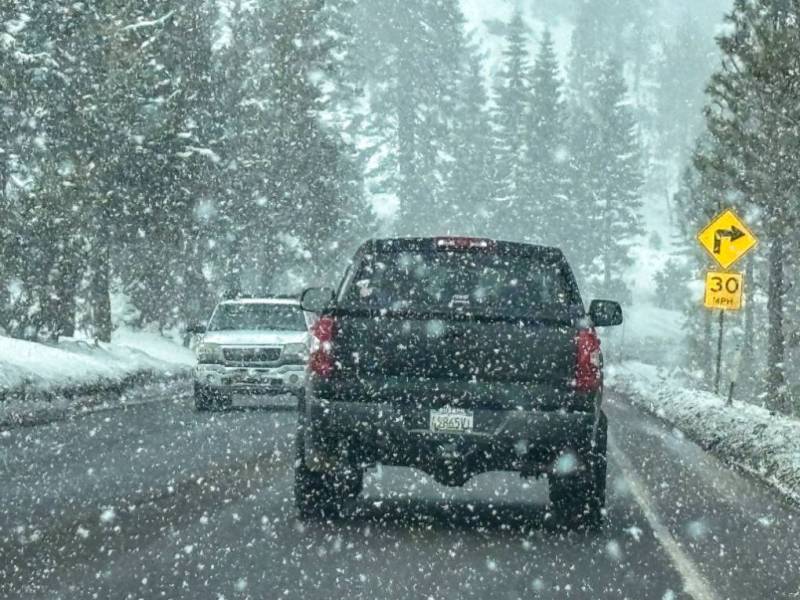
"caption": "A fast-moving storm drops several inches of fresh snow along Highway 50 near Echo Summit on Feb. 8, 2024, in South Lake Tahoe. ",
"credit": "George Rose/Getty Images",
"altTag": "A view of a black truck driving along a snowy road.",
"description": null,
"imgSizes": {
"medium": {
"file": "https://cdn.kqed.org/wp-content/uploads/sites/10/2024/02/GettyImages-2013486739-1020x765-1-800x600.jpg",
"width": 800,
"height": 600,
"mimeType": "image/jpeg"
},
"thumbnail": {
"file": "https://cdn.kqed.org/wp-content/uploads/sites/10/2024/02/GettyImages-2013486739-1020x765-1-160x120.jpg",
"width": 160,
"height": 120,
"mimeType": "image/jpeg"
},
"post-thumbnail": {
"file": "https://cdn.kqed.org/wp-content/uploads/sites/10/2024/02/GettyImages-2013486739-1020x765-1-672x372.jpg",
"width": 672,
"height": 372,
"mimeType": "image/jpeg"
},
"twentyfourteen-full-width": {
"file": "https://cdn.kqed.org/wp-content/uploads/sites/10/2024/02/GettyImages-2013486739-1020x765-1-1020x576.jpg",
"width": 1020,
"height": 576,
"mimeType": "image/jpeg"
},
"kqedFullSize": {
"file": "https://cdn.kqed.org/wp-content/uploads/sites/10/2024/02/GettyImages-2013486739-1020x765-1.jpg",
"width": 1020,
"height": 765
}
},
"isLoading": false,
"fetchFailed": false
},
"news_12066747": {
"type": "attachments",
"id": "news_12066747",
"meta": {
"index": "attachments_1716263798",
"site": "news",
"id": "12066747",
"found": true
},
"title": "Tule elks in Point Reyes National Seashore of California",
"publishDate": 1765479362,
"status": "inherit",
"parent": 12066736,
"modified": 1765481213,
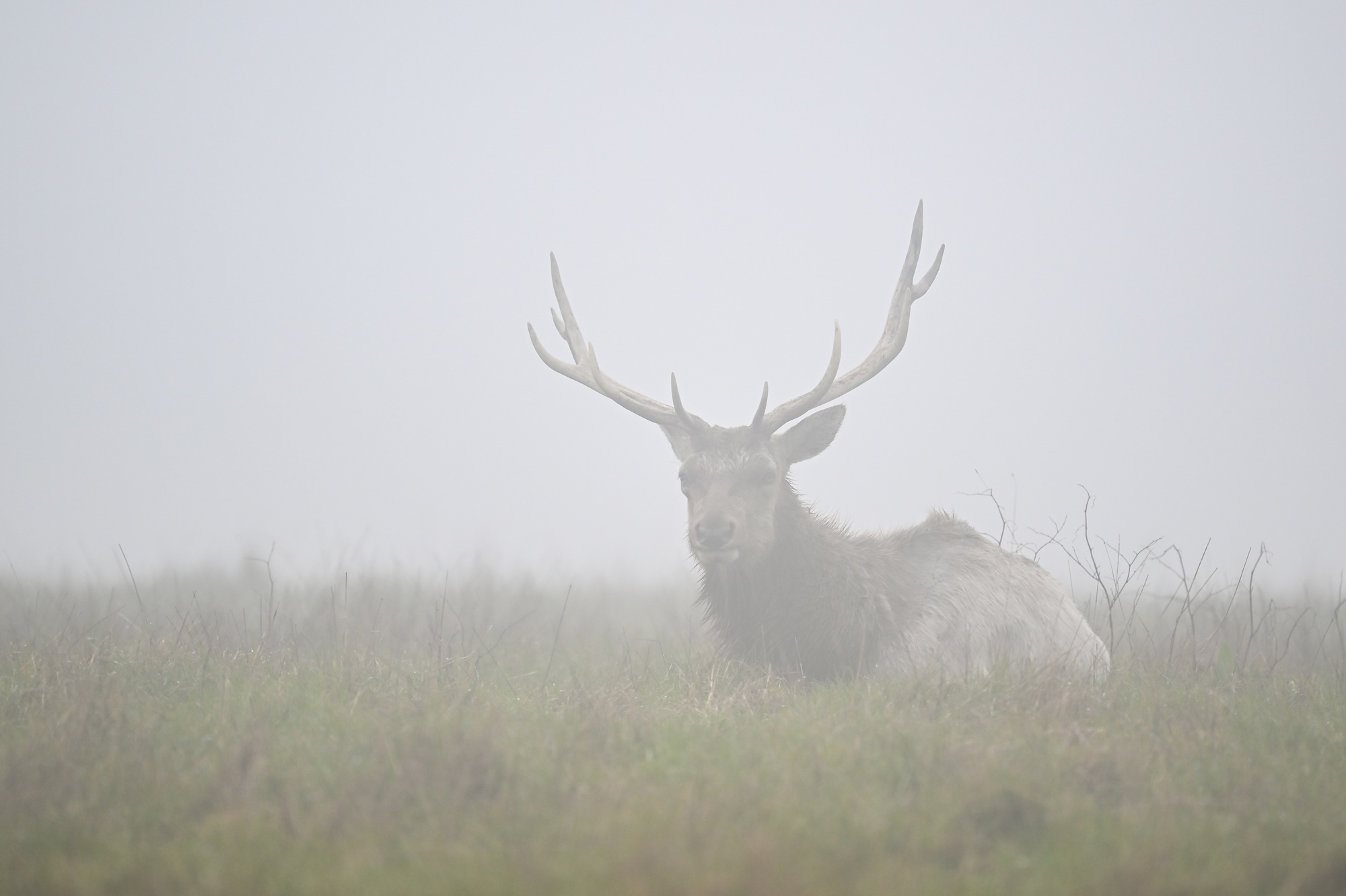
"caption": "A Tule Elk is seen during heavy fog at Point Reyes National Seashore in Inverness, California, on Jan. 6, 2025. ",
"credit": "Tayfun Coskun/Anadolu via Getty Images",
"altTag": null,
"description": null,
"imgSizes": {
"thumbnail": {
"file": "https://cdn.kqed.org/wp-content/uploads/sites/10/2025/12/TuleFogGetty-160x107.jpg",
"width": 160,
"height": 107,
"mimeType": "image/jpeg"
},
"1536x1536": {
"file": "https://cdn.kqed.org/wp-content/uploads/sites/10/2025/12/TuleFogGetty-1536x1023.jpg",
"width": 1536,
"height": 1023,
"mimeType": "image/jpeg"
},
"post-thumbnail": {
"file": "https://cdn.kqed.org/wp-content/uploads/sites/10/2025/12/TuleFogGetty-672x372.jpg",
"width": 672,
"height": 372,
"mimeType": "image/jpeg"
},
"twentyfourteen-full-width": {
"file": "https://cdn.kqed.org/wp-content/uploads/sites/10/2025/12/TuleFogGetty-1038x576.jpg",
"width": 1038,
"height": 576,
"mimeType": "image/jpeg"
},
"npr-cds-wide": {
"file": "https://cdn.kqed.org/wp-content/uploads/sites/10/2025/12/TuleFogGetty-1200x675.jpg",
"width": 1200,
"height": 675,
"mimeType": "image/jpeg"
},
"kqedFullSize": {
"file": "https://cdn.kqed.org/wp-content/uploads/sites/10/2025/12/TuleFogGetty.jpg",
"width": 2000,
"height": 1332
}
},
"isLoading": false,
"fetchFailed": false
},
"news_12015607": {
"type": "attachments",
"id": "news_12015607",
"meta": {
"index": "attachments_1716263798",
"site": "news",
"id": "12015607",
"found": true
},
"title": "241122-StormHitsBayArea-18-BL",
"publishDate": 1732310372,
"status": "inherit",
"parent": 0,
"modified": 1732310404,
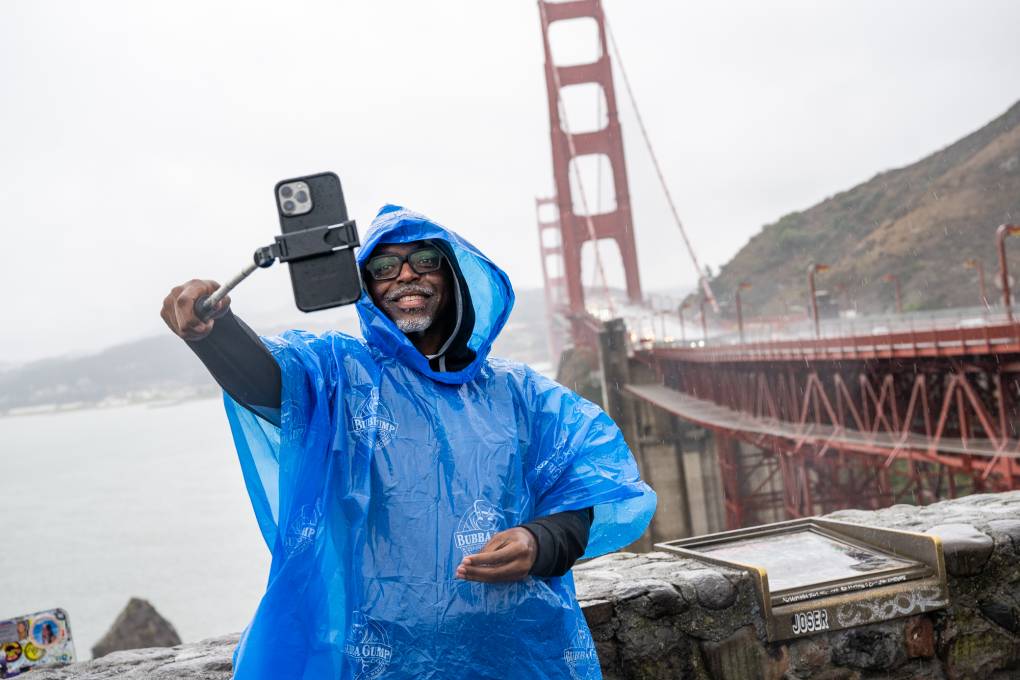
"caption": "Devin Guy takes a video at the Vista Point overlook near Golden Gate Bridge north of San Francisco on Nov. 22, 2024, during a storm bringing heavy rain and strong winds to the Bay Area.",
"credit": "Beth LaBerge/KQED",
"altTag": null,
"description": null,
"imgSizes": {
"medium": {
"file": "https://cdn.kqed.org/wp-content/uploads/sites/10/2024/11/241122-StormHitsBayArea-18-BL-800x533.jpg",
"width": 800,
"height": 533,
"mimeType": "image/jpeg"
},
"large": {
"file": "https://cdn.kqed.org/wp-content/uploads/sites/10/2024/11/241122-StormHitsBayArea-18-BL-1020x680.jpg",
"width": 1020,
"height": 680,
"mimeType": "image/jpeg"
},
"thumbnail": {
"file": "https://cdn.kqed.org/wp-content/uploads/sites/10/2024/11/241122-StormHitsBayArea-18-BL-160x107.jpg",
"width": 160,
"height": 107,
"mimeType": "image/jpeg"
},
"1536x1536": {
"file": "https://cdn.kqed.org/wp-content/uploads/sites/10/2024/11/241122-StormHitsBayArea-18-BL-1536x1024.jpg",
"width": 1536,
"height": 1024,
"mimeType": "image/jpeg"
},
"post-thumbnail": {
"file": "https://cdn.kqed.org/wp-content/uploads/sites/10/2024/11/241122-StormHitsBayArea-18-BL-672x372.jpg",
"width": 672,
"height": 372,
"mimeType": "image/jpeg"
},
"twentyfourteen-full-width": {
"file": "https://cdn.kqed.org/wp-content/uploads/sites/10/2024/11/241122-StormHitsBayArea-18-BL-1038x576.jpg",
"width": 1038,
"height": 576,
"mimeType": "image/jpeg"
},
"full-width": {
"file": "https://cdn.kqed.org/wp-content/uploads/sites/10/2024/11/241122-StormHitsBayArea-18-BL-1920x1280.jpg",
"width": 1920,
"height": 1280,
"mimeType": "image/jpeg"
},
"kqedFullSize": {
"file": "https://cdn.kqed.org/wp-content/uploads/sites/10/2024/11/241122-StormHitsBayArea-18-BL.jpg",
"width": 2000,
"height": 1333
}
},
"isLoading": false,
"fetchFailed": false
},
"news_12057996": {
"type": "attachments",
"id": "news_12057996",
"meta": {
"index": "attachments_1716263798",
"site": "news",
"id": "12057996",
"found": true
},
"title": "Atmospheric river storm in Northern California",
"publishDate": 1759168970,
"status": "inherit",
"parent": 12057992,
"modified": 1781200630,
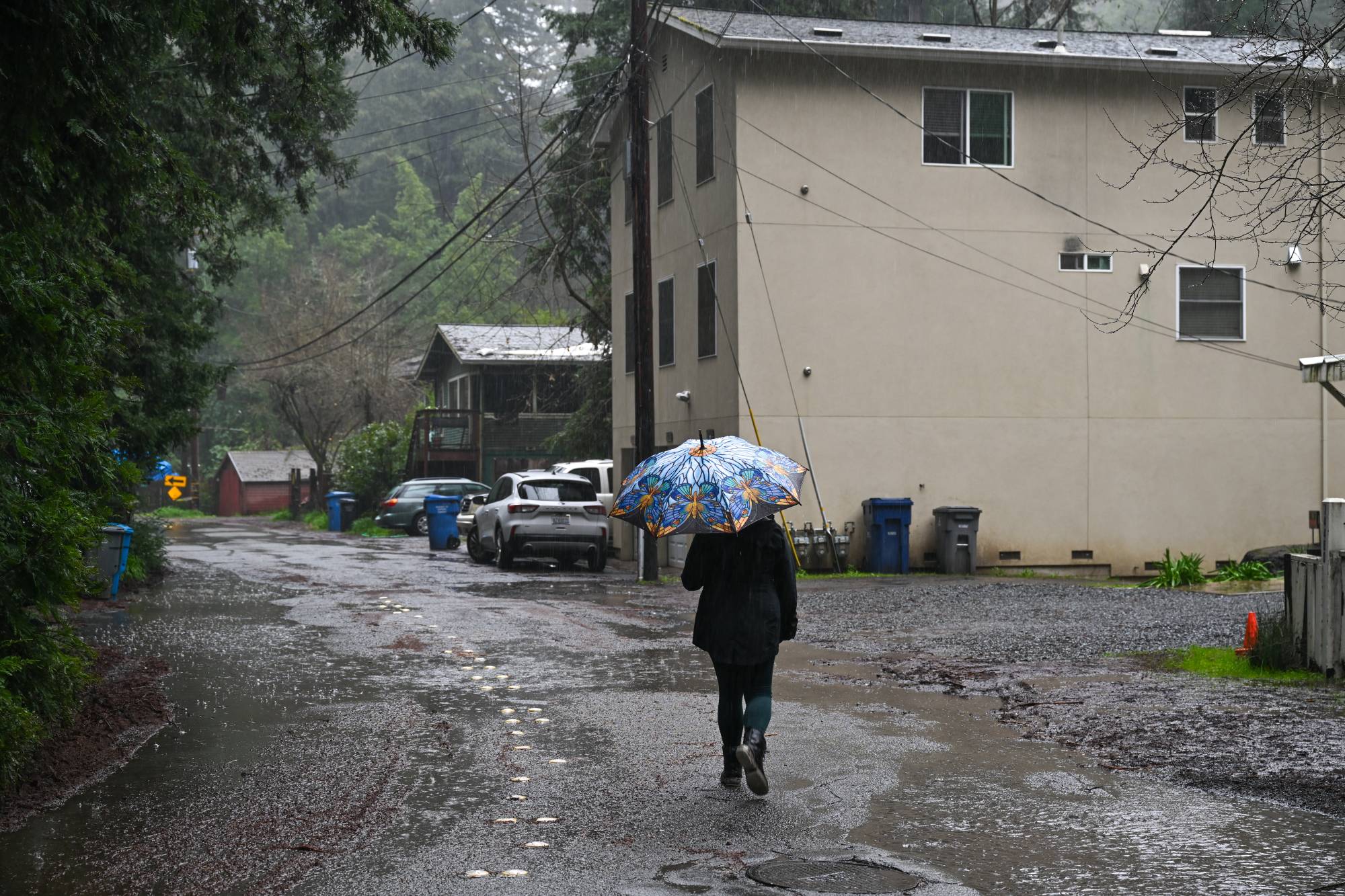
"caption": "A woman with an umbrella walks on a road during heavy rain in Guerneville, California, on Feb. 6, 2025, as an atmospheric river hits Northern California. ",
"credit": "Tayfun Coskun/Anadolu via Getty Images",
"altTag": null,
"description": null,
"imgSizes": {
"medium": {
"file": "https://cdn.kqed.org/wp-content/uploads/sites/10/2025/09/GettyImages-2197490970-2000x1333.jpg",
"width": 2000,
"height": 1333,
"mimeType": "image/jpeg"
},
"large": {
"file": "https://cdn.kqed.org/wp-content/uploads/sites/10/2025/09/GettyImages-2197490970-2000x1333.jpg",
"width": 2000,
"height": 1333,
"mimeType": "image/jpeg"
},
"thumbnail": {
"file": "https://cdn.kqed.org/wp-content/uploads/sites/10/2025/09/GettyImages-2197490970-160x107.jpg",
"width": 160,
"height": 107,
"mimeType": "image/jpeg"
},
"1536x1536": {
"file": "https://cdn.kqed.org/wp-content/uploads/sites/10/2025/09/GettyImages-2197490970-1536x1024.jpg",
"width": 1536,
"height": 1024,
"mimeType": "image/jpeg"
},
"2048x2048": {
"file": "https://cdn.kqed.org/wp-content/uploads/sites/10/2025/09/GettyImages-2197490970-2048x1365.jpg",
"width": 2048,
"height": 1365,
"mimeType": "image/jpeg"
},
"post-thumbnail": {
"file": "https://cdn.kqed.org/wp-content/uploads/sites/10/2025/09/GettyImages-2197490970-672x372.jpg",
"width": 672,
"height": 372,
"mimeType": "image/jpeg"
},
"twentyfourteen-full-width": {
"file": "https://cdn.kqed.org/wp-content/uploads/sites/10/2025/09/GettyImages-2197490970-1038x576.jpg",
"width": 1038,
"height": 576,
"mimeType": "image/jpeg"
},
"full-width": {
"file": "https://cdn.kqed.org/wp-content/uploads/sites/10/2025/09/GettyImages-2197490970-2000x1333.jpg",
"width": 2000,
"height": 1333,
"mimeType": "image/jpeg"
},
"kqedFullSize": {
"file": "https://cdn.kqed.org/wp-content/uploads/sites/10/2025/09/GettyImages-2197490970-scaled-e1759169024848.jpg",
"width": 2000,
"height": 1334
}
},
"isLoading": false,
"fetchFailed": false
},
"news_11974638": {
"type": "attachments",
"id": "news_11974638",
"meta": {
"index": "attachments_1716263798",
"site": "news",
"id": "11974638",
"found": true
},
"parent": 11936674,
"imgSizes": {
"twentyfourteen-full-width": {
"file": "https://cdn.kqed.org/wp-content/uploads/sites/10/2024/01/231218-RainFile-14-BL_qut-1038x576.jpg",
"width": 1038,
"mimeType": "image/jpeg",
"height": 576
},
"thumbnail": {
"file": "https://cdn.kqed.org/wp-content/uploads/sites/10/2024/01/231218-RainFile-14-BL_qut-160x107.jpg",
"width": 160,
"mimeType": "image/jpeg",
"height": 107
},
"post-thumbnail": {
"file": "https://cdn.kqed.org/wp-content/uploads/sites/10/2024/01/231218-RainFile-14-BL_qut-672x372.jpg",
"width": 672,
"mimeType": "image/jpeg",
"height": 372
},
"kqedFullSize": {
"file": "https://cdn.kqed.org/wp-content/uploads/sites/10/2024/01/231218-RainFile-14-BL_qut.jpg",
"width": 1920,
"height": 1280
},
"large": {
"file": "https://cdn.kqed.org/wp-content/uploads/sites/10/2024/01/231218-RainFile-14-BL_qut-1020x680.jpg",
"width": 1020,
"mimeType": "image/jpeg",
"height": 680
},
"1536x1536": {
"file": "https://cdn.kqed.org/wp-content/uploads/sites/10/2024/01/231218-RainFile-14-BL_qut-1536x1024.jpg",
"width": 1536,
"mimeType": "image/jpeg",
"height": 1024
},
"medium": {
"file": "https://cdn.kqed.org/wp-content/uploads/sites/10/2024/01/231218-RainFile-14-BL_qut-800x533.jpg",
"width": 800,
"mimeType": "image/jpeg",
"height": 533
}
},
"publishDate": 1706913206,
"modified": 1706913240,
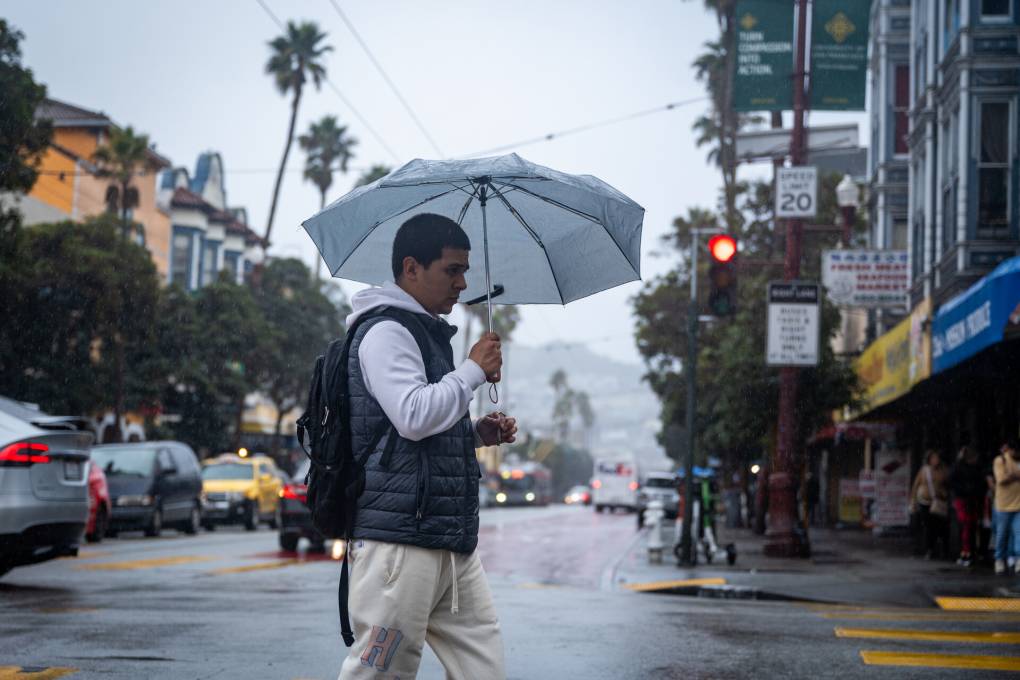
"caption": "A person walks in the rain on Mission Street in San Francisco on Dec. 18, 2023.",
"description": null,
"title": "weather-forecast-rain-bay-area",
"credit": "Beth LaBerge/KQED",
"status": "inherit",
"altTag": null,
"isLoading": false,
"fetchFailed": false
},
"news_12054472": {
"type": "attachments",
"id": "news_12054472",
"meta": {
"index": "attachments_1716263798",
"site": "news",
"id": "12054472",
"found": true
},
"title": "TCU September Lightning Complex Fire",
"publishDate": 1756922972,
"status": "inherit",
"parent": 12054466,
"modified": 1756923022,
"caption": "Colton Richardson, a firefighter with the Cal Fire Tuolumne-Calaveras Unit, opens a pile of burning wood while battling the 6-5 fire, part of the TCU September Lightning Complex, in Chinese Camp, California, on Tuesday, Sept. 2, 2025. ",
"credit": "Stephen Lam/San Francisco Chronicle via Getty Images",
"altTag": null,
"description": null,
"imgSizes": {
"thumbnail": {
"file": "https://cdn.kqed.org/wp-content/uploads/sites/10/2025/09/TCU-Lightning-Complex-Getty-2-160x107.jpg",
"width": 160,
"height": 107,
"mimeType": "image/jpeg"
},
"1536x1536": {
"file": "https://cdn.kqed.org/wp-content/uploads/sites/10/2025/09/TCU-Lightning-Complex-Getty-2-1536x1024.jpg",
"width": 1536,
"height": 1024,
"mimeType": "image/jpeg"
},
"post-thumbnail": {
"file": "https://cdn.kqed.org/wp-content/uploads/sites/10/2025/09/TCU-Lightning-Complex-Getty-2-672x372.jpg",
"width": 672,
"height": 372,
"mimeType": "image/jpeg"
},
"twentyfourteen-full-width": {
"file": "https://cdn.kqed.org/wp-content/uploads/sites/10/2025/09/TCU-Lightning-Complex-Getty-2-1038x576.jpg",
"width": 1038,
"height": 576,
"mimeType": "image/jpeg"
},
"kqedFullSize": {
"file": "https://cdn.kqed.org/wp-content/uploads/sites/10/2025/09/TCU-Lightning-Complex-Getty-2.jpg",
"width": 2000,
"height": 1333
}
},
"isLoading": false,
"fetchFailed": false
},
"news_12053184": {
"type": "attachments",
"id": "news_12053184",
"meta": {
"index": "attachments_1716263798",
"site": "news",
"id": "12053184",
"found": true
},
"title": "20240711_HeatFeatures-4_qed",
"publishDate": 1755806019,
"status": "inherit",
"parent": 12053125,
"modified": 1755806045,
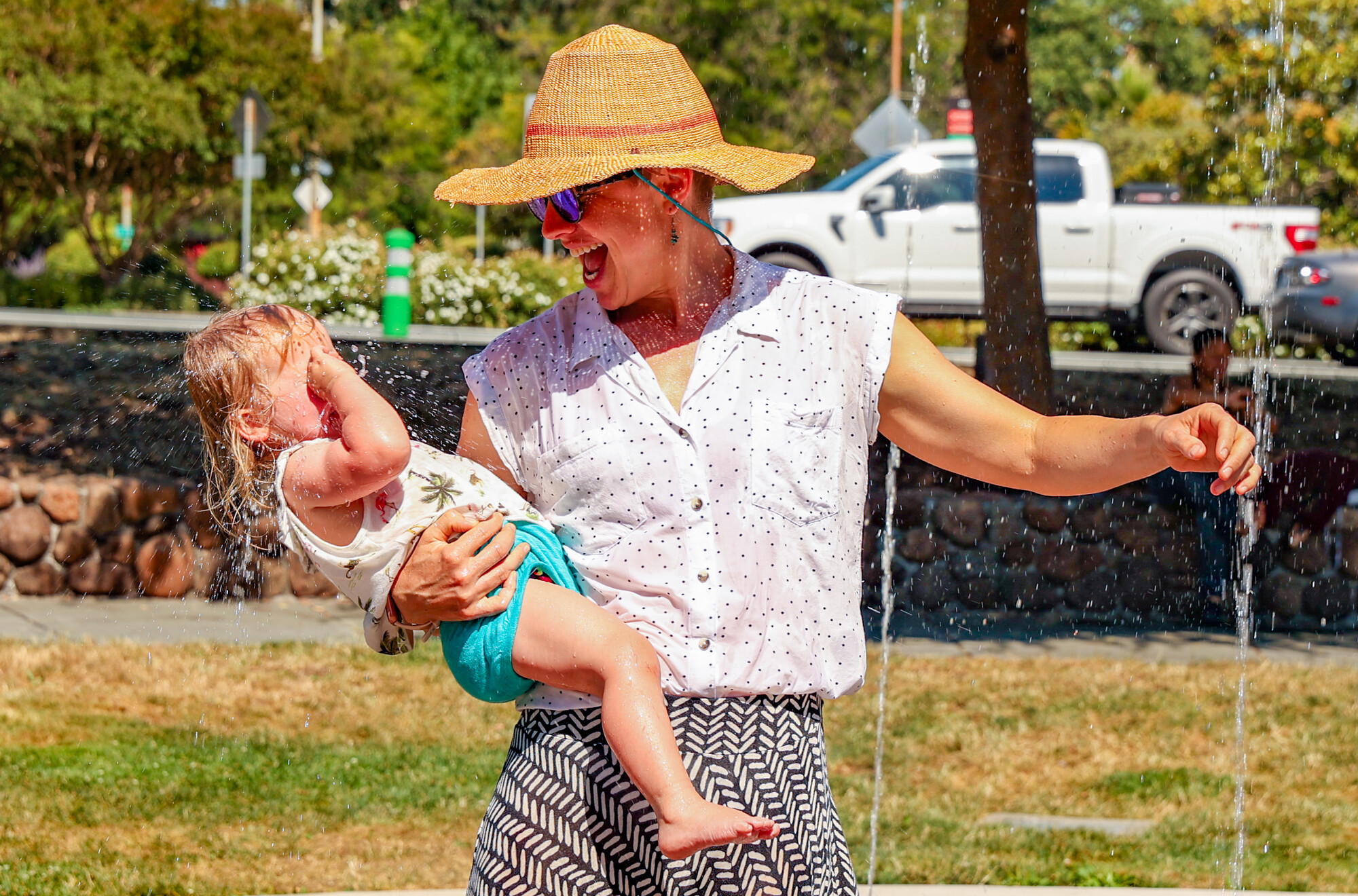
"caption": "A mother and her 2-year-old daughter enjoy the spray grounds at Prince Gateway Park in Santa Rosa as the temperature reached 100 degrees on July 11, 2024.",
"credit": "Gina Castro/KQED",
"altTag": null,
"description": null,
"imgSizes": {
"thumbnail": {
"file": "https://cdn.kqed.org/wp-content/uploads/sites/10/2025/08/20240711_HeatFeatures-4_qed-160x106.jpg",
"width": 160,
"height": 106,
"mimeType": "image/jpeg"
},
"1536x1536": {
"file": "https://cdn.kqed.org/wp-content/uploads/sites/10/2025/08/20240711_HeatFeatures-4_qed-1536x1014.jpg",
"width": 1536,
"height": 1014,
"mimeType": "image/jpeg"
},
"post-thumbnail": {
"file": "https://cdn.kqed.org/wp-content/uploads/sites/10/2025/08/20240711_HeatFeatures-4_qed-672x372.jpg",
"width": 672,
"height": 372,
"mimeType": "image/jpeg"
},
"twentyfourteen-full-width": {
"file": "https://cdn.kqed.org/wp-content/uploads/sites/10/2025/08/20240711_HeatFeatures-4_qed-1038x576.jpg",
"width": 1038,
"height": 576,
"mimeType": "image/jpeg"
},
"kqedFullSize": {
"file": "https://cdn.kqed.org/wp-content/uploads/sites/10/2025/08/20240711_HeatFeatures-4_qed.jpg",
"width": 2000,
"height": 1320
}
},
"isLoading": false,
"fetchFailed": false
},
"news_12052401": {
"type": "attachments",
"id": "news_12052401",
"meta": {
"index": "attachments_1716263798",
"site": "news",
"id": "12052401",
"found": true
},
"title": "Bay Area Residents Cool Off At Alameda Beach During Heat Wave",
"publishDate": 1755284030,
"status": "inherit",
"parent": 12052393,
"modified": 1781119267,
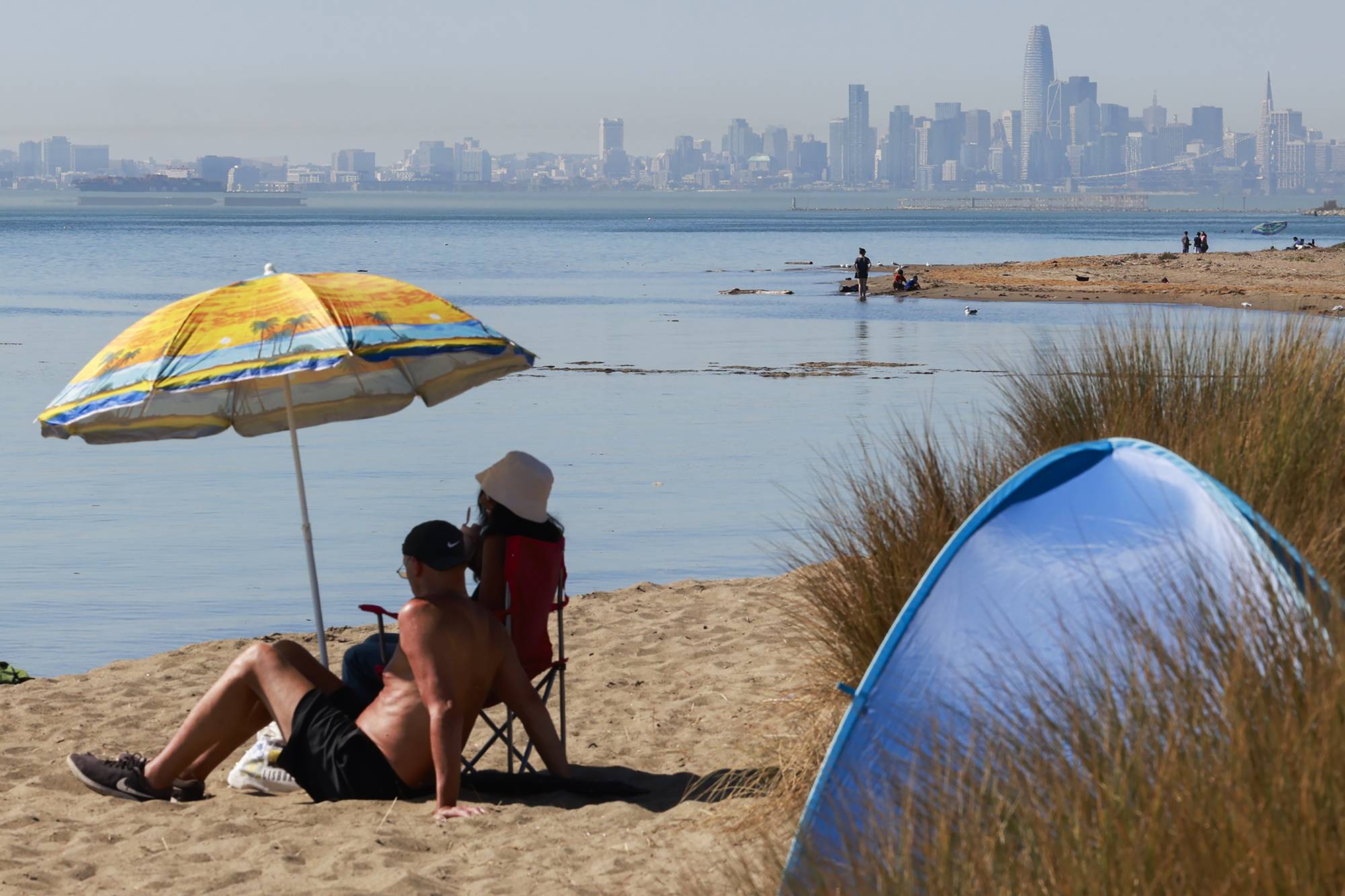
"caption": "Residents lounge near the water on Alameda Beach in Alameda, California, Wednesday, Oct. 2, 2024, during an exceptional heat wave across the Bay Area and inland. ",
"credit": "Jessica Christian/San Francisco Chronicle via Getty Images",
"altTag": null,
"description": null,
"imgSizes": {
"medium": {
"file": "https://cdn.kqed.org/wp-content/uploads/sites/10/2025/08/GettyImages-2175515837-2000x1333.jpg",
"width": 2000,
"height": 1333,
"mimeType": "image/jpeg"
},
"large": {
"file": "https://cdn.kqed.org/wp-content/uploads/sites/10/2025/08/GettyImages-2175515837-2000x1333.jpg",
"width": 2000,
"height": 1333,
"mimeType": "image/jpeg"
},
"thumbnail": {
"file": "https://cdn.kqed.org/wp-content/uploads/sites/10/2025/08/GettyImages-2175515837-160x107.jpg",
"width": 160,
"height": 107,
"mimeType": "image/jpeg"
},
"1536x1536": {
"file": "https://cdn.kqed.org/wp-content/uploads/sites/10/2025/08/GettyImages-2175515837-1536x1024.jpg",
"width": 1536,
"height": 1024,
"mimeType": "image/jpeg"
},
"2048x2048": {
"file": "https://cdn.kqed.org/wp-content/uploads/sites/10/2025/08/GettyImages-2175515837-2048x1365.jpg",
"width": 2048,
"height": 1365,
"mimeType": "image/jpeg"
},
"post-thumbnail": {
"file": "https://cdn.kqed.org/wp-content/uploads/sites/10/2025/08/GettyImages-2175515837-672x372.jpg",
"width": 672,
"height": 372,
"mimeType": "image/jpeg"
},
"twentyfourteen-full-width": {
"file": "https://cdn.kqed.org/wp-content/uploads/sites/10/2025/08/GettyImages-2175515837-1038x576.jpg",
"width": 1038,
"height": 576,
"mimeType": "image/jpeg"
},
"full-width": {
"file": "https://cdn.kqed.org/wp-content/uploads/sites/10/2025/08/GettyImages-2175515837-2000x1333.jpg",
"width": 2000,
"height": 1333,
"mimeType": "image/jpeg"
},
"kqedFullSize": {
"file": "https://cdn.kqed.org/wp-content/uploads/sites/10/2025/08/GettyImages-2175515837-scaled-e1781119253267.jpg",
"width": 2000,
"height": 1333
}
},
"isLoading": false,
"fetchFailed": false
},
"news_12051516": {
"type": "attachments",
"id": "news_12051516",
"meta": {
"index": "attachments_1716263798",
"site": "news",
"id": "12051516",
"found": true
},
"title": "US-SCIENCE-CLIMATE-ENVIRONMENT-NOAA",
"publishDate": 1754682601,
"status": "inherit",
"parent": 12051499,
"modified": 1754682672,
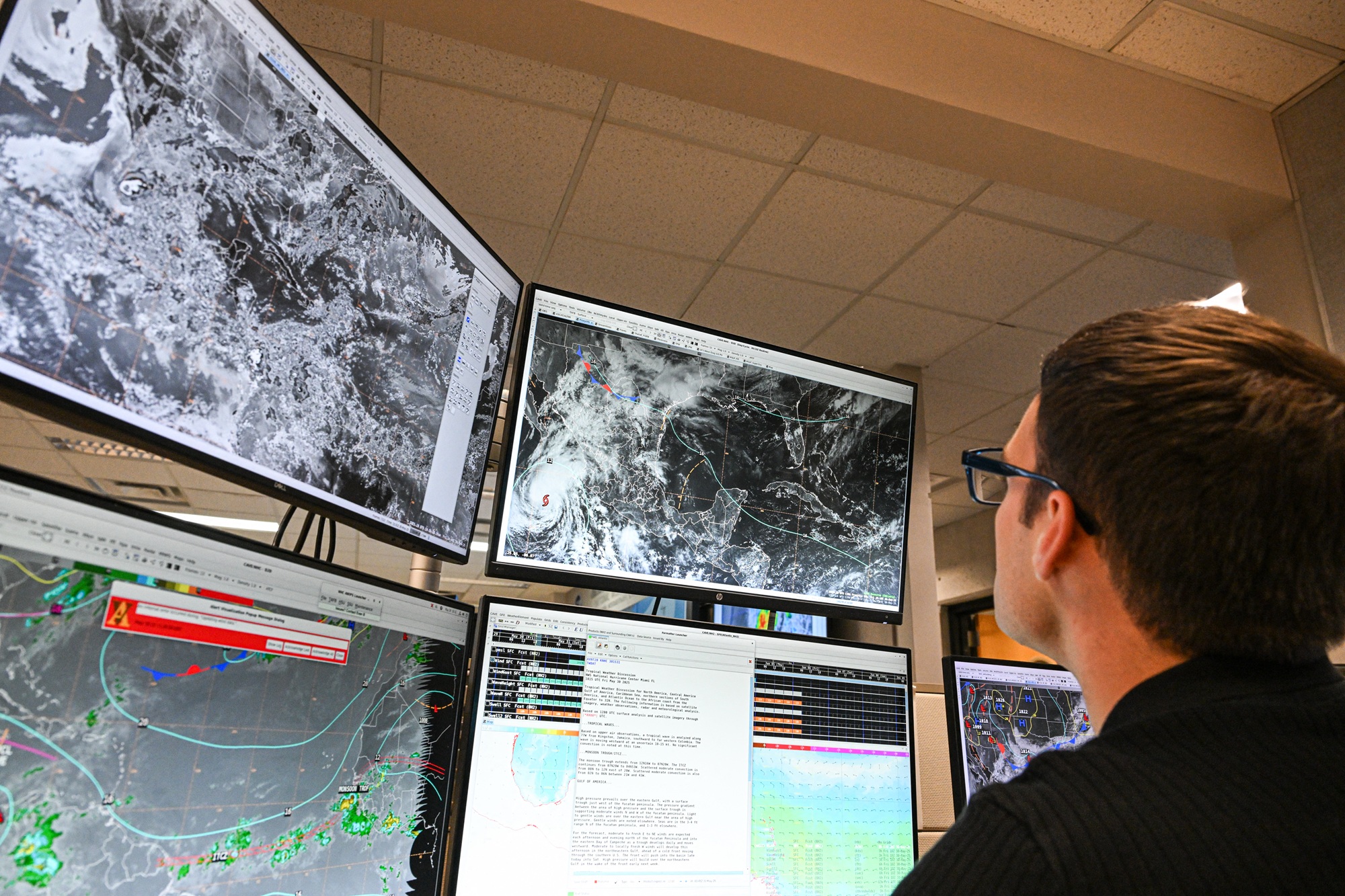
"caption": "A tropical analysis meteorologist works at his station at the National Oceanic and Atmospheric Administration's (NOAA) National Hurricane Center in Miami, Florida, on May 30, 2025. The Trump administration has fired hundreds of staff at NOAA and deleted government websites with data on the weather and climate. ",
"credit": "Chandan Khanna/AFP via Getty Images",
"altTag": null,
"description": null,
"imgSizes": {
"thumbnail": {
"file": "https://cdn.kqed.org/wp-content/uploads/sites/10/2025/08/MeteorologistsTrumpGetty-160x107.jpg",
"width": 160,
"height": 107,
"mimeType": "image/jpeg"
},
"1536x1536": {
"file": "https://cdn.kqed.org/wp-content/uploads/sites/10/2025/08/MeteorologistsTrumpGetty-1536x1024.jpg",
"width": 1536,
"height": 1024,
"mimeType": "image/jpeg"
},
"post-thumbnail": {
"file": "https://cdn.kqed.org/wp-content/uploads/sites/10/2025/08/MeteorologistsTrumpGetty-672x372.jpg",
"width": 672,
"height": 372,
"mimeType": "image/jpeg"
},
"twentyfourteen-full-width": {
"file": "https://cdn.kqed.org/wp-content/uploads/sites/10/2025/08/MeteorologistsTrumpGetty-1038x576.jpg",
"width": 1038,
"height": 576,
"mimeType": "image/jpeg"
},
"kqedFullSize": {
"file": "https://cdn.kqed.org/wp-content/uploads/sites/10/2025/08/MeteorologistsTrumpGetty.jpg",
"width": 2000,
"height": 1333
}
},
"isLoading": false,
"fetchFailed": false
},
"news_12049693": {
"type": "attachments",
"id": "news_12049693",
"meta": {
"index": "attachments_1716263798",
"site": "news",
"id": "12049693",
"found": true
},
"title": "Fog 2",
"publishDate": 1753396768,
"status": "inherit",
"parent": 12049568,
"modified": 1753396787,
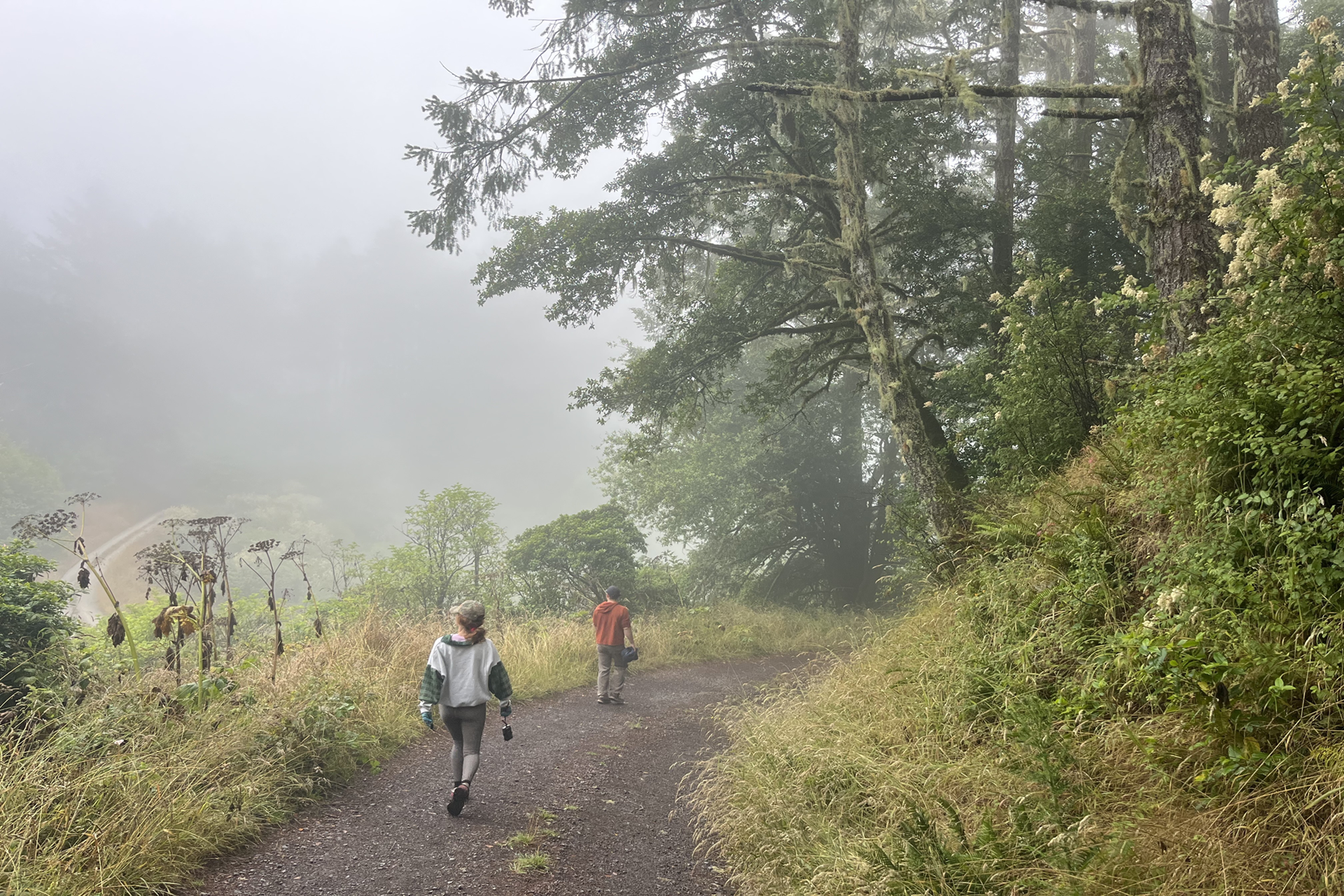
"caption": "Hikers explore Point Reyes shrouded in fog on July 20, 2025. \n",
"credit": "Sarah Wright/KQED",
"altTag": null,
"description": null,
"imgSizes": {
"thumbnail": {
"file": "https://cdn.kqed.org/wp-content/uploads/sites/10/2025/07/Fog-2-160x107.png",
"width": 160,
"height": 107,
"mimeType": "image/png"
},
"1536x1536": {
"file": "https://cdn.kqed.org/wp-content/uploads/sites/10/2025/07/Fog-2-1536x1024.png",
"width": 1536,
"height": 1024,
"mimeType": "image/png"
},
"post-thumbnail": {
"file": "https://cdn.kqed.org/wp-content/uploads/sites/10/2025/07/Fog-2-672x372.png",
"width": 672,
"height": 372,
"mimeType": "image/png"
},
"twentyfourteen-full-width": {
"file": "https://cdn.kqed.org/wp-content/uploads/sites/10/2025/07/Fog-2-1038x576.png",
"width": 1038,
"height": 576,
"mimeType": "image/png"
},
"kqedFullSize": {
"file": "https://cdn.kqed.org/wp-content/uploads/sites/10/2025/07/Fog-2.png",
"width": 1920,
"height": 1280
}
},
"isLoading": false,
"fetchFailed": false
},
"news_12047560": {
"type": "attachments",
"id": "news_12047560",
"meta": {
"index": "attachments_1716263798",
"site": "news",
"id": "12047560",
"found": true
},
"title": "Warm weather in San Francisco",
"publishDate": 1752169948,
"status": "inherit",
"parent": 12047555,
"modified": 1752170148,
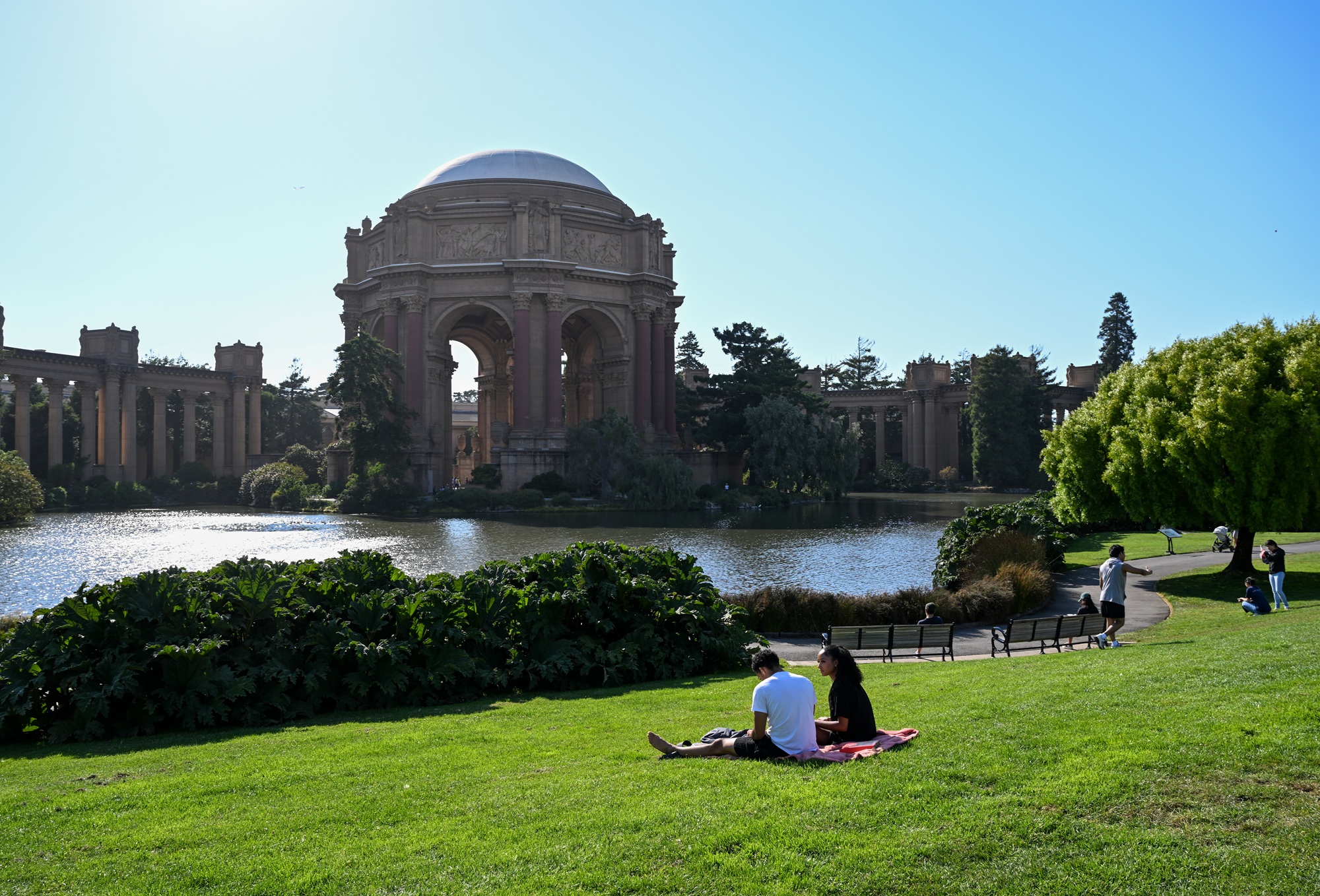
"caption": "People enjoying the sun at the Palace of Fine Arts as a heat wave rolls through San Francisco on July 11, 2024. ",
"credit": "Tayfun Coskun/Anadolu via Getty Images",
"altTag": null,
"description": null,
"imgSizes": {
"thumbnail": {
"file": "https://cdn.kqed.org/wp-content/uploads/sites/10/2025/07/Heat-Wave-SF-Getty-160x109.jpg",
"width": 160,
"height": 109,
"mimeType": "image/jpeg"
},
"1536x1536": {
"file": "https://cdn.kqed.org/wp-content/uploads/sites/10/2025/07/Heat-Wave-SF-Getty-1536x1043.jpg",
"width": 1536,
"height": 1043,
"mimeType": "image/jpeg"
},
"post-thumbnail": {
"file": "https://cdn.kqed.org/wp-content/uploads/sites/10/2025/07/Heat-Wave-SF-Getty-672x372.jpg",
"width": 672,
"height": 372,
"mimeType": "image/jpeg"
},
"twentyfourteen-full-width": {
"file": "https://cdn.kqed.org/wp-content/uploads/sites/10/2025/07/Heat-Wave-SF-Getty-1038x576.jpg",
"width": 1038,
"height": 576,
"mimeType": "image/jpeg"
},
"kqedFullSize": {
"file": "https://cdn.kqed.org/wp-content/uploads/sites/10/2025/07/Heat-Wave-SF-Getty.jpg",
"width": 2000,
"height": 1358
}
},
"isLoading": false,
"fetchFailed": false
},
"news_12045714": {
"type": "attachments",
"id": "news_12045714",
"meta": {
"index": "attachments_1716263798",
"site": "news",
"id": "12045714",
"found": true
},
"title": "Lake Tahoe Boat Capsize",
"publishDate": 1750791061,
"status": "inherit",
"parent": 12045712,
"modified": 1750791149,
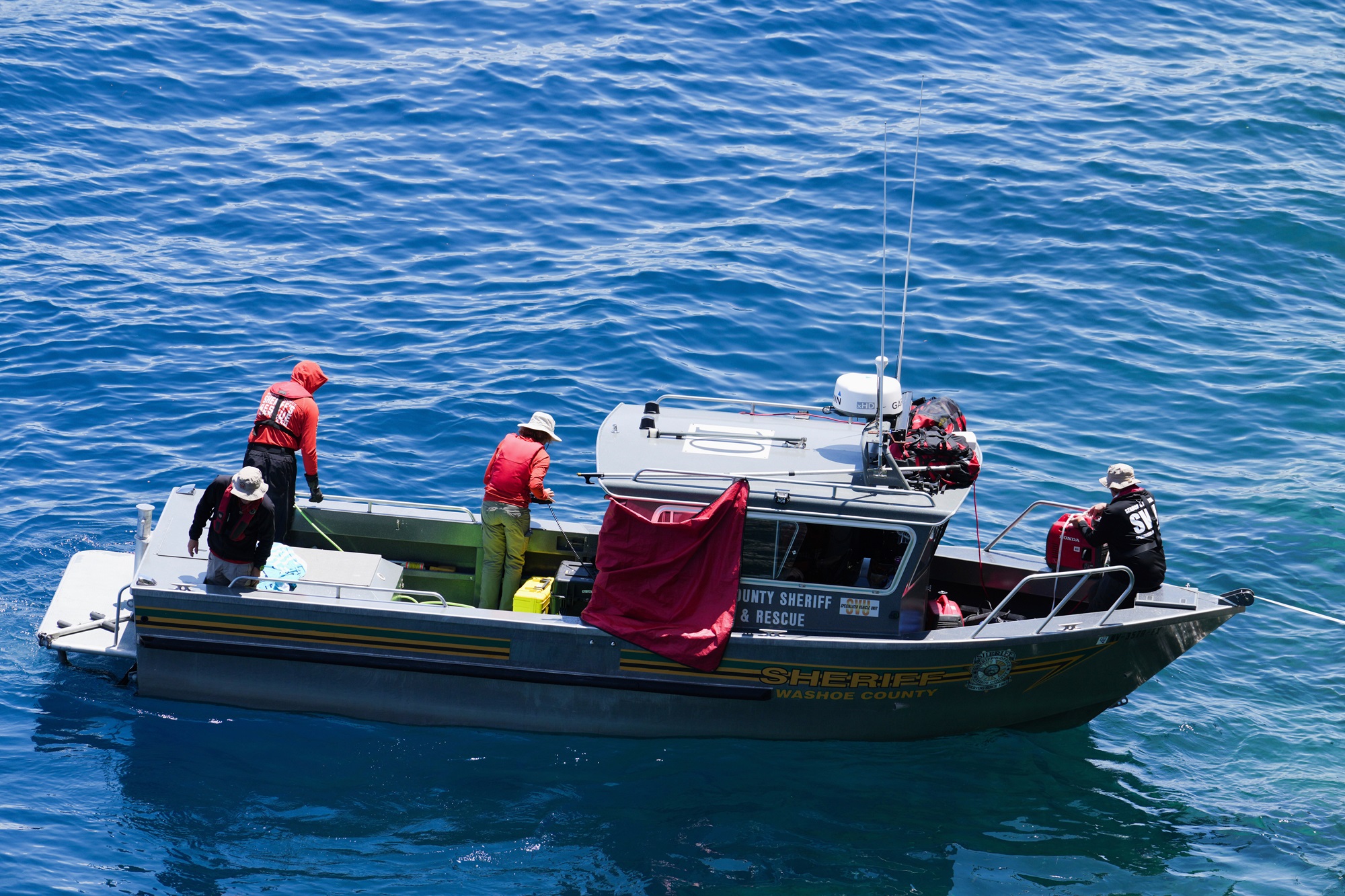
"caption": "Washoe County Sheriffs conduct a search at D.L. Bliss State Park after a weekend incident in which a boat capsized, killing several people, on Monday, June 23, 2025, in Lake Tahoe, California.",
"credit": "Brooke Hess-Homeier/AP Photo",
"altTag": null,
"description": null,
"imgSizes": {
"thumbnail": {
"file": "https://cdn.kqed.org/wp-content/uploads/sites/10/2025/06/LakeTahoeAP-160x107.jpg",
"width": 160,
"height": 107,
"mimeType": "image/jpeg"
},
"1536x1536": {
"file": "https://cdn.kqed.org/wp-content/uploads/sites/10/2025/06/LakeTahoeAP-1536x1024.jpg",
"width": 1536,
"height": 1024,
"mimeType": "image/jpeg"
},
"post-thumbnail": {
"file": "https://cdn.kqed.org/wp-content/uploads/sites/10/2025/06/LakeTahoeAP-672x372.jpg",
"width": 672,
"height": 372,
"mimeType": "image/jpeg"
},
"twentyfourteen-full-width": {
"file": "https://cdn.kqed.org/wp-content/uploads/sites/10/2025/06/LakeTahoeAP-1038x576.jpg",
"width": 1038,
"height": 576,
"mimeType": "image/jpeg"
},
"kqedFullSize": {
"file": "https://cdn.kqed.org/wp-content/uploads/sites/10/2025/06/LakeTahoeAP.jpg",
"width": 2000,
"height": 1333
}
},
"isLoading": false,
"fetchFailed": false
}
},
"audioPlayerReducer": {
"postId": "stream_live",
"isPaused": true,
"isPlaying": false,
"pfsActive": false,
"pledgeModalIsOpen": true,
"playerDrawerIsOpen": false,
"liveAudioPlayStartedAt": 0,
"liveAudioPlayContext": ""
},
"authorsReducer": {
"byline_news_12059267": {
"type": "authors",
"id": "byline_news_12059267",
"meta": {
"override": true
},
"slug": "byline_news_12059267",
"name": "Amanda Hernandez ",
"isLoading": false
},
"carlysevern": {
"type": "authors",
"id": "3243",
"meta": {
"index": "authors_1716337520",
"id": "3243",
"found": true
},
"name": "Carly Severn",
"firstName": "Carly",
"lastName": "Severn",
"slug": "carlysevern",
"email": "csevern@kqed.org",
"display_author_email": false,
"staff_mastheads": [
"news"
],
"title": "Senior Editor, Audience News ",
"bio": "Carly is KQED's Senior Editor of Audience News on the Digital News team, and has reported for the California Report Magazine, Bay Curious and KQED Arts. She's formerly the host of \u003ca href=\"http://ww2.kqed.org/pop/category/the-cooler/\" rel=\"noopener noreferrer\">The Cooler\u003c/a> podcast.",
"avatar": "https://secure.gravatar.com/avatar/54037bf5c128fe678f0ef26cec97a93f2e7f220a22d7285703328f12c42c1b1d?s=600&d=blank&r=g",
"twitter": "teacupinthebay",
"bluesky": null,
"facebook": null,
"instagram": null,
"linkedin": null,
"sites": [
{
"site": "",
"roles": [
"editor"
]
},
{
"site": "arts",
"roles": [
"editor"
]
},
{
"site": "news",
"roles": [
"administrator"
]
},
{
"site": "pop",
"roles": [
"editor"
]
},
{
"site": "futureofyou",
"roles": [
"editor"
]
},
{
"site": "about",
"roles": [
"administrator"
]
},
{
"site": "mindshift",
"roles": [
"editor"
]
},
{
"site": "bayareabites",
"roles": [
"editor"
]
},
{
"site": "stateofhealth",
"roles": [
"editor"
]
},
{
"site": "science",
"roles": [
"editor"
]
},
{
"site": "food",
"roles": [
"contributor"
]
},
{
"site": "forum",
"roles": [
"editor"
]
},
{
"site": "perspectives",
"roles": [
"administrator"
]
},
{
"site": "liveblog",
"roles": [
"editor"
]
}
],
"headData": {
"title": "Carly Severn | KQED",
"description": "Senior Editor, Audience News ",
"ogImgSrc": "https://secure.gravatar.com/avatar/54037bf5c128fe678f0ef26cec97a93f2e7f220a22d7285703328f12c42c1b1d?s=600&d=blank&r=g",
"twImgSrc": "https://secure.gravatar.com/avatar/54037bf5c128fe678f0ef26cec97a93f2e7f220a22d7285703328f12c42c1b1d?s=600&d=blank&r=g"
},
"isLoading": false,
"link": "/author/carlysevern"
},
"eromero": {
"type": "authors",
"id": "11746",
"meta": {
"index": "authors_1716337520",
"id": "11746",
"found": true
},
"name": "Ezra David Romero",
"firstName": "Ezra David",
"lastName": "Romero",
"slug": "eromero",
"email": "eromero@kqed.org",
"display_author_email": true,
"staff_mastheads": [
"news",
"science"
],
"title": "Climate Reporter",
"bio": "Ezra David Romero is a climate reporter for KQED News. He covers the absence and excess of water in the Bay Area — think sea level rise, flooding and drought. For nearly a decade he’s covered how warming temperatures are altering the lives of Californians. He’s reported on farmers worried their pistachio trees aren’t getting enough sleep, families desperate for water, scientists studying dying giant sequoias, and alongside firefighters containing wildfires. His work has appeared on local stations across California and nationally on public radio shows like Morning Edition, Here and Now, All Things Considered and Science Friday. ",
"avatar": "https://secure.gravatar.com/avatar/c76404d287c10ed40224227551ac36e24352c7306f106632caf6fead76f8801f?s=600&d=blank&r=g",
"twitter": "ezraromero",
"bluesky": null,
"facebook": null,
"instagram": null,
"linkedin": null,
"sites": [
{
"site": "arts",
"roles": [
"editor"
]
},
{
"site": "news",
"roles": [
"editor"
]
},
{
"site": "science",
"roles": [
"editor"
]
},
{
"site": "liveblog",
"roles": [
"author"
]
}
],
"headData": {
"title": "Ezra David Romero | KQED",
"description": "Climate Reporter",
"ogImgSrc": "https://secure.gravatar.com/avatar/c76404d287c10ed40224227551ac36e24352c7306f106632caf6fead76f8801f?s=600&d=blank&r=g",
"twImgSrc": "https://secure.gravatar.com/avatar/c76404d287c10ed40224227551ac36e24352c7306f106632caf6fead76f8801f?s=600&d=blank&r=g"
},
"isLoading": false,
"link": "/author/eromero"
},
"kdebenedetti": {
"type": "authors",
"id": "11913",
"meta": {
"index": "authors_1716337520",
"id": "11913",
"found": true
},
"name": "Katie DeBenedetti",
"firstName": "Katie",
"lastName": "DeBenedetti",
"slug": "kdebenedetti",
"email": "kdebenedetti@kqed.org",
"display_author_email": false,
"staff_mastheads": [
"news",
"science"
],
"title": "KQED Contributor",
"bio": "Katie DeBenedetti is a digital reporter covering daily news for the Express Desk. Prior to joining KQED as a culture reporting intern in January 2024, she covered education and city government for the Napa Valley Register.",
"avatar": "https://secure.gravatar.com/avatar/6e31073cb8f7e4214ab03f42771d0f45?s=600&d=blank&r=g",
"twitter": null,
"facebook": null,
"instagram": null,
"linkedin": null,
"sites": [
{
"site": "news",
"roles": [
"author"
]
},
{
"site": "science",
"roles": [
"author"
]
},
{
"site": "liveblog",
"roles": [
"author"
]
}
],
"headData": {
"title": "Katie DeBenedetti | KQED",
"description": "KQED Contributor",
"ogImgSrc": "https://secure.gravatar.com/avatar/6e31073cb8f7e4214ab03f42771d0f45?s=600&d=blank&r=g",
"twImgSrc": "https://secure.gravatar.com/avatar/6e31073cb8f7e4214ab03f42771d0f45?s=600&d=blank&r=g"
},
"isLoading": false,
"link": "/author/kdebenedetti"
},
"gzada": {
"type": "authors",
"id": "11929",
"meta": {
"index": "authors_1716337520",
"id": "11929",
"found": true
},
"name": "Gilare Zada",
"firstName": "Gilare",
"lastName": "Zada",
"slug": "gzada",
"email": "gzada@kqed.org",
"display_author_email": true,
"staff_mastheads": [
"news"
],
"title": null,
"bio": "Gilare Zada is a Kurdish-American from San Diego, CA. Storytelling, fitness, and binge reading are some of her passions outside of news reporting. Her work has appeared in Mission Local, the Peninsula Press, the San Francisco Press Club, and more. She also writes as a class correspondent for the Stanford Magazine - go Card!",
"avatar": "https://secure.gravatar.com/avatar/33a75f2b947669a488a805edec3fbf3838c1cedaedda710e983770633b4d6a75?s=600&d=blank&r=g",
"twitter": null,
"bluesky": null,
"facebook": null,
"instagram": null,
"linkedin": null,
"sites": [
{
"site": "arts",
"roles": [
"editor"
]
},
{
"site": "news",
"roles": [
"administrator"
]
},
{
"site": "science",
"roles": [
"editor"
]
}
],
"headData": {
"title": "Gilare Zada | KQED",
"description": null,
"ogImgSrc": "https://secure.gravatar.com/avatar/33a75f2b947669a488a805edec3fbf3838c1cedaedda710e983770633b4d6a75?s=600&d=blank&r=g",
"twImgSrc": "https://secure.gravatar.com/avatar/33a75f2b947669a488a805edec3fbf3838c1cedaedda710e983770633b4d6a75?s=600&d=blank&r=g"
},
"isLoading": false,
"link": "/author/gzada"
},
"sarahwright": {
"type": "authors",
"id": "11956",
"meta": {
"index": "authors_1716337520",
"id": "11956",
"found": true
},
"name": "Sarah Wright",
"firstName": "Sarah",
"lastName": "Wright",
"slug": "sarahwright",
"email": "swright@kqed.org",
"display_author_email": true,
"staff_mastheads": [],
"title": "Outdoors Engagement Reporter",
"bio": "Sarah Wright is KQED's Outdoors Engagement Reporter. Originally from Lake Tahoe, she completed a thru-hike of the Pacific Crest Trail in 2019 and was a U.S. Fulbright Program grantee to Argentina in 2023. Her journalism has appeared in The Guardian, The San Francisco Standard, The Palo Alto Weekly and the Half Moon Bay Review.",
"avatar": "https://secure.gravatar.com/avatar/c161a3d6441865cba25e6db4fa561099ad665799e9432e34da2b84d7e371524c?s=600&d=blank&r=g",
"twitter": null,
"bluesky": null,
"facebook": null,
"instagram": null,
"linkedin": null,
"sites": [
{
"site": "arts",
"roles": [
"editor"
]
},
{
"site": "news",
"roles": [
"editor"
]
},
{
"site": "science",
"roles": [
"contributor",
"author"
]
},
{
"site": "forum",
"roles": [
"editor"
]
}
],
"headData": {
"title": "Sarah Wright | KQED",
"description": "Outdoors Engagement Reporter",
"ogImgSrc": "https://secure.gravatar.com/avatar/c161a3d6441865cba25e6db4fa561099ad665799e9432e34da2b84d7e371524c?s=600&d=blank&r=g",
"twImgSrc": "https://secure.gravatar.com/avatar/c161a3d6441865cba25e6db4fa561099ad665799e9432e34da2b84d7e371524c?s=600&d=blank&r=g"
},
"isLoading": false,
"link": "/author/sarahwright"
}
},
"pagesReducer": {
"news_tag_weather": {
"type": "terms",
"id": "news_3",
"meta": {
"index": "terms_1716263798",
"site": "news",
"id": "3",
"score": 9.10411
},
"featImg": null,
"name": "weather",
"description": null,
"taxonomy": "tag",
"headData": {
"twImgId": null,
"twTitle": null,
"ogTitle": null,
"ogImgId": null,
"twDescription": null,
"description": null,
"title": "weather Archives | KQED News",
"ogDescription": null
},
"ttid": 3,
"slug": "weather",
"isLoading": false,
"title": "weather",
"pageMeta": {
"site": "news",
"WpPageTemplate": "page-topic-editorial",
"currentPage": 3
},
"blocks": [
{
"blockName": "kqed/post-list",
"attrs": {
"layout": "cardArticle2",
"query": "posts/news?tag=weather",
"seeMore": false,
"paginated": true,
"page": 3
}
},
{
"blockName": "kqed/ad"
}
]
}
},
"pfsSessionReducer": {},
"postsReducer": {
"stream_live": {
"type": "live",
"id": "stream_live",
"audioUrl": "https://streams.kqed.org/kqedradio",
"title": "Live Stream",
"excerpt": "Live Stream information currently unavailable.",
"link": "/radio",
"featImg": "",
"label": {
"name": "KQED Live",
"link": "/"
}
},
"stream_kqedNewscast": {
"type": "posts",
"id": "stream_kqedNewscast",
"audioUrl": "https://www.kqed.org/.stream/anon/radio/RDnews/newscast.mp3?_=1",
"title": "KQED Newscast",
"featImg": "",
"label": {
"name": "88.5 FM",
"link": "/"
}
},
"news_11937204": {
"type": "posts",
"id": "news_11937204",
"meta": {
"index": "posts_1716263798",
"site": "news",
"id": "11937204",
"score": null,
"sort": [
1766431596000
]
},
"guestAuthors": [],
"slug": "lake-tahoe-weather-forecast-road-conditions-snow-chains",
"title": "Lake Tahoe Travel: Weather, Road Conditions & Snow Chain Rules",
"publishDate": 1766431596,
"format": "image",
"headTitle": "Lake Tahoe Travel: Weather, Road Conditions & Snow Chain Rules | KQED",
"labelTerm": {
"site": "news"
},
"content": "\u003cp>The \u003ca href=\"https://www.kqed.org/news/tag/lake-tahoe\">Lake Tahoe\u003c/a> region is one of the most beautiful places on earth, especially in winter. It’s no wonder that so many of us in the Bay Area want to drive up there at this time of year.\u003c/p>\n\u003cp>But if you are planning on heading up to Tahoe this week or next to enjoy the snow, it’s important to stay up-to-date with the weather, as the National Weather Service issued a \u003ca href=\"https://forecast.weather.gov/showsigwx.php?warnzone=CAZ072&warncounty=CAC017&firewxzone=CAZ272&local_place1=South%20Lake%20Tahoe%20CA&product1=Winter+Storm+Watch&lat=38.9481&lon=-119.968\">winter storm watch\u003c/a> expected to last through Friday morning that could affect your travel plans.\u003c/p>\n\u003cp>The National Weather Service’s Sacramento office says that areas at and above 8,000 feet — including at Donner Summit near the Donner Pass area of I-80 — up to 10 inches of snow could accumulate on Monday alone. The NWS is also forecasting gusts of ridgetop wind up to 100 miles per hour and 1 to 2 feet of snow accumulation at lake level and 2 to 4 feet at high elevations by Friday morning.\u003c/p>\n\u003cp>[ad fullwidth]\u003c/p>\n\u003cp>Most importantly, the NWS is warning that now through Tuesday afternoon is the best window for safe travel.\u003c/p>\n\u003cp>https://x.com/NWSSacramento/status/2003169874047275083\u003c/p>\n\u003cp>This type of weather can increase the chances of slick and snow-covered roads, \u003ca href=\"#chaincontroltahoe\">chain control \u003c/a>and downed tree branches. Conditions like these in the Sierra have not only frequently caused travel delays and road closures in the past but also impacted operations at Tahoe ski resorts (for example, high winds causing lift closures.) After heavy snowfall, it may also take many hours for roads to be plowed and for \u003ca href=\"#chaincontroltahoe\">chain control to be lifted\u003c/a>, making travel potentially slow and difficult even after an active storm window has passed.\u003c/p>\n\u003cp>Jump straight to \u003ca href=\"#snowroadclosures\">where to find the up-to-date snow forecasts and road closures\u003c/a> in Tahoe, \u003ca href=\"#chaincontroltahoe\">details on chain control\u003c/a> and \u003ca href=\"#canceltahoe\">advice for canceling or rescheduling a Tahoe trip.\u003c/a>\u003c/p>\n\u003cfigure id=\"attachment_11937340\" class=\"wp-caption alignnone\" style=\"max-width: 1920px\">\u003cimg loading=\"lazy\" decoding=\"async\" class=\"size-full wp-image-11937340\" src=\"https://cdn.kqed.org/wp-content/uploads/sites/10/2023/01/RS61931_GettyImages-1244621387-qut.jpg\" alt=\"Snow blanked road with a Hazardous Conditions Ahead sign.\" width=\"1920\" height=\"1280\" srcset=\"https://cdn.kqed.org/wp-content/uploads/sites/10/2023/01/RS61931_GettyImages-1244621387-qut.jpg 1920w, https://cdn.kqed.org/wp-content/uploads/sites/10/2023/01/RS61931_GettyImages-1244621387-qut-800x533.jpg 800w, https://cdn.kqed.org/wp-content/uploads/sites/10/2023/01/RS61931_GettyImages-1244621387-qut-1020x680.jpg 1020w, https://cdn.kqed.org/wp-content/uploads/sites/10/2023/01/RS61931_GettyImages-1244621387-qut-160x107.jpg 160w, https://cdn.kqed.org/wp-content/uploads/sites/10/2023/01/RS61931_GettyImages-1244621387-qut-1536x1024.jpg 1536w\" sizes=\"auto, (max-width: 1920px) 100vw, 1920px\">\u003cfigcaption class=\"wp-caption-text\">Snow blankets South Lake Tahoe on Nov. 8, 2022, with a winter storm warning in effect for Lake Tahoe and the Nevada mountains. \u003ccite>(Tayfun Coskun/Anadolu Agency via Getty Images)\u003c/cite>\u003c/figcaption>\u003c/figure>\n\u003cp>Even without weather events like this in the forecast, traveling in the mountains of Tahoe in winter is a serious business at the best of times — especially if you’ve never lived somewhere with frequent snowfall and don’t have a ton of experience with winter driving just yet. And nobody wants their trip marked by delays, car trouble, road closures or even a serious accident on these winter roads.\u003c/p>\n\u003cp>If you’re hoping to drive to the Lake Tahoe region this winter — \u003cem>after\u003c/em> this latest storm, that is — and want to make sure you’re as prepared as possible for a safe journey, keep reading for our guide on what to know about traveling to Tahoe.\u003c/p>\n\u003cp>\u003cstrong>Jump straight to:\u003c/strong>\u003c/p>\n\u003cul>\n\u003cli>\u003cstrong>\u003ca href=\"#snowroadclosures\">Most accurate ways to monitor snow forecasts and road closures\u003c/a>\u003c/strong>\u003c/li>\n\u003cli>\u003cstrong>\u003ca href=\"#canceltahoe\">When should I cancel my Tahoe trip?\u003c/a>\u003c/strong>\u003c/li>\n\u003cli>\u003cstrong>\u003ca href=\"#chaincontroltahoe\">Does chain control apply to me?\u003c/a>\u003c/strong>\u003c/li>\n\u003cli>\u003cstrong>\u003ca href=\"#rentalcarchains\">What to know about rental cars and chains in Tahoe\u003c/a>\u003c/strong>\u003c/li>\n\u003cli>\u003cstrong>\u003ca href=\"#safetodrivetahoe\">How to be a safer driver on winter mountain roads\u003c/a>\u003c/strong>\u003c/li>\n\u003c/ul>\n\u003ch2>Why it’s so important to know how to drive safely to Tahoe\u003c/h2>\n\u003cp>\u003ca href=\"https://dot.ca.gov/travel/winter-driving-tips\">Caltrans’ own winter driving guidance\u003c/a> articulates just how variable winter mountain driving can be, noting that it can be “a pleasant adventure or it can be frustrating, tiring and sometimes even hazardous.” This is not an exaggeration, and driving to and around Tahoe during the winter should always be something you truly come prepared for, rather than hoping for the best.\u003c/p>\n\u003cp>Most folks in the Tahoe region completely understand why people from out of town want to visit this beautiful part of California in winter, says Steve Nelson, public information officer for Caltrans District 3, which covers the region. But “the No. 1 problem by far,” he says, “is that motorists head out the door without being prepared for the conditions.”\u003c/p>\n\u003cfigure id=\"attachment_11937339\" class=\"wp-caption alignnone\" style=\"max-width: 1920px\">\u003cimg loading=\"lazy\" decoding=\"async\" class=\"wp-image-11937339 size-full\" src=\"https://ww2.kqed.org/app/uploads/sites/10/2023/01/RS61930_GettyImages-1244621487-qut.jpg\" alt=\"A mostly white photo, of a two-lane road covered in white and gray snow, penned in by snowy embankments on both sides with conifers, and an orange truck with bright yellow headlights clearing the road on the left side, facing the camera.\" width=\"1920\" height=\"1280\" srcset=\"https://cdn.kqed.org/wp-content/uploads/sites/10/2023/01/RS61930_GettyImages-1244621487-qut.jpg 1920w, https://cdn.kqed.org/wp-content/uploads/sites/10/2023/01/RS61930_GettyImages-1244621487-qut-800x533.jpg 800w, https://cdn.kqed.org/wp-content/uploads/sites/10/2023/01/RS61930_GettyImages-1244621487-qut-1020x680.jpg 1020w, https://cdn.kqed.org/wp-content/uploads/sites/10/2023/01/RS61930_GettyImages-1244621487-qut-160x107.jpg 160w, https://cdn.kqed.org/wp-content/uploads/sites/10/2023/01/RS61930_GettyImages-1244621487-qut-1536x1024.jpg 1536w\" sizes=\"auto, (max-width: 1920px) 100vw, 1920px\">\u003cfigcaption class=\"wp-caption-text\">A snowplow is seen as snow blankets Route 237 in Stateline, Nevada, on Nov. 8, 2022. \u003ccite>(Tayfun Coskun/Anadolu Agency via Getty Images)\u003c/cite>\u003c/figcaption>\u003c/figure>\n\u003cp>And a storm in the Tahoe area is no joke, especially on roads at such high elevation — well over 7,000 feet on both the Donner Pass on Interstate 80 and Echo Summit on Highway 50. “And when you’re talking about 4 to 6 feet of snow, and people that have never driven in it before, it can get pretty, pretty gnarly,” says Nelson.\u003c/p>\n\u003ch2>\u003ca id=\"snowroadclosures\">\u003c/a>How to check the weather and road conditions\u003c/h2>\n\u003cp>Weather predictions can evolve and change on a dime, and a storm can suddenly switch gears and arrive sooner (or later) than first forecast.\u003c/p>\n\u003cp>This is why it’s important not just to \u003cem>keep\u003c/em> checking the weather forecast for the area of Tahoe you’re visiting, but to make sure you’re getting information that’s as reliable as possible. During periods of extreme weather, officials will urge you not to travel for any nonessential reasons, and stay off the roads whenever possible. You should always heed these advisories.\u003c/p>\n\u003cp>\u003cstrong>Trust the experts (not a quick Google search)\u003c/strong>\u003c/p>\n\u003cp>The National Weather Service’s Reno office offers \u003ca href=\"https://forecast.weather.gov/MapClick.php?zoneid=CAZ072\">an online Lake Tahoe weather report\u003c/a> you can consult. The National Weather Service’s presences on X, formerly known as Twitter, are also frequently updated sources of information about Tahoe weather, and you don’t have to have an X account to see their tweets. Check:\u003c/p>\n\u003cul>\n\u003cli>\u003ca href=\"https://twitter.com/NWSSacramento\">@NWSSacramento on X \u003c/a>\u003c/li>\n\u003cli>\u003ca href=\"https://twitter.com/NWSReno\">@NWSReno on X\u003c/a>\u003c/li>\n\u003c/ul>\n\u003cp>Caltrans’ X accounts also provide frequent forecasts, warnings and updates specifically geared to road travel. Check:\u003c/p>\n\u003cul>\n\u003cli>\u003ca href=\"https://twitter.com/CaltransDist3\">@CaltransDist3 on X \u003c/a>(serving Butte, Colusa, El Dorado, Glenn, Nevada, Placer, Sacramento, Sierra, Sutter, Yolo and Yuba counties)\u003c/li>\n\u003cli>\u003ca href=\"https://twitter.com/CaltransDist10\">@CaltransDist10 on X\u003c/a> (serving Alpine, Amador, Calaveras, Mariposa, Merced, San Joaquin, Stanislaus and Tuolumne counties)\u003c/li>\n\u003c/ul>\n\u003cp>Nelson says that while these X accounts are very frequently updated and get a lot of inquiries from the public, drivers need to remember that they’re “not a 24/7 resource” and should be realistic about using these accounts as a source of real-time help. (“A lot of times we’ll get messages in the middle of the night saying, ‘Hey, can I get up to Tahoe?,’ and we’re not monitoring [X] at three in the morning,” says Nelson.)\u003c/p>\n\u003cp>https://twitter.com/CaltransDist3/status/1611459599516991488\u003c/p>\n\u003cp>California Highway Patrol Truckee provides updates on road travel around the I-80 corridor \u003ca href=\"https://twitter.com/CHP_Truckee\">on X (@CHP_Truckee\u003c/a>) and\u003ca href=\"https://www.instagram.com/chp_truckee/?hl=en\"> on Instagram (@chp_truckee)\u003c/a>.\u003c/p>\n\u003cp>The Department of Transportation also makes their network of road cameras available for you to monitor road conditions in real time. \u003ca href=\"https://cwwp2.dot.ca.gov/vm/iframemap.htm\">Use the map to find the area you want, and click/tap on the camera icons to open the live road cam.\u003c/a>\u003c/p>\n\u003cp>You can find subscription-only weather forecasting services as well, like \u003ca href=\"https://opensnow.com/\">Open Snow\u003c/a> (which offers a free seven-day trial). These paid services often promise to give a greater degree of granularity around forecasts and longer-range predictions.\u003c/p>\n\u003cp>If you’re heading up to Tahoe for winter sports, consider also checking the website and social media of any resort you’re hoping to visit, as they will almost certainly be featuring weather reports and predictions. For example, Heavenly in South Lake Tahoe has an X account (\u003ca href=\"https://twitter.com/hvconditions?lang=en\">@HVconditions\u003c/a>), which gives status reports on mountain operations and weather forecasts — with a focus on when there’s a risk of wind holds for chairlifts and terrain closures.\u003c/p>\n\u003cp>Remember: A resort warning you that weather might affect their operations is a good sign it’s the kind of weather you should take seriously when it comes to travel.\u003c/p>\n\u003cp>\u003cstrong>Use Caltrans’ QuickMap \u003c/strong>\u003c/p>\n\u003cp>Nelson says that the best way to stay on top of current road conditions in the Tahoe area is to use \u003ca href=\"https://quickmap.dot.ca.gov/\">Caltrans’ own QuickMap site\u003c/a>, or \u003ca href=\"https://quickmap.dot.ca.gov/QM/app.htm\">the QuickMap app (available on the App Store and Google Play)\u003c/a>. If you prefer not to download the app, you can view a \u003ca href=\"http://quickmap.dot.ca.gov/mindex.html\">mobile-friendly version of the QuickMap website\u003c/a> (and even add a shortcut to your mobile home screen).\u003c/p>\n\u003cp>This map uses Caltrans’ own data to show you the latest road conditions and travel information, so you can be prepared ahead of time.\u003c/p>\n\u003cfigure id=\"attachment_11937375\" class=\"wp-caption alignnone\" style=\"max-width: 1920px\">\u003cimg loading=\"lazy\" decoding=\"async\" class=\"wp-image-11937375 size-full\" src=\"https://ww2.kqed.org/app/uploads/sites/10/2023/01/QuickMap.jpg\" alt='A screenshot of a graphical interface, with light green indicated earth, some blue indicating waterways, and a yellow line across it clustered with icons, as well as a blue-and-red award-shaped sign saying \"80\" to indicate the highway number.' width=\"1920\" height=\"1280\" srcset=\"https://cdn.kqed.org/wp-content/uploads/sites/10/2023/01/QuickMap.jpg 1920w, https://cdn.kqed.org/wp-content/uploads/sites/10/2023/01/QuickMap-800x533.jpg 800w, https://cdn.kqed.org/wp-content/uploads/sites/10/2023/01/QuickMap-1020x680.jpg 1020w, https://cdn.kqed.org/wp-content/uploads/sites/10/2023/01/QuickMap-160x107.jpg 160w, https://cdn.kqed.org/wp-content/uploads/sites/10/2023/01/QuickMap-1536x1024.jpg 1536w\" sizes=\"auto, (max-width: 1920px) 100vw, 1920px\">\u003cfigcaption class=\"wp-caption-text\">Caltrans’ QuickMap app, showing chain controls, snowplows and more. \u003ccite>(Courtesy Caltrans)\u003c/cite>\u003c/figcaption>\u003c/figure>\n\u003cp>When first using QuickMap, be sure to hit “Options” on either the website or the app, and select all the options you want to see on the map, including:\u003c/p>\n\u003cul>\n\u003cli>Full closures\u003c/li>\n\u003cli>CHP incidents\u003c/li>\n\u003cli>Highway information\u003c/li>\n\u003cli>Chain controls\u003c/li>\n\u003cli>Snowplows\u003c/li>\n\u003c/ul>\n\u003cp>Once you’ve done this, you’ll be able to either select the location “Tahoe” under “Locations,” or swipe and zoom over to your desired area on the map, just as you would using Google Maps. You can then tap on the icons you see on the map, to learn more about what they mean. This is especially important when it comes to chain controls, which often apply to different kinds of vehicles.\u003c/p>\n\u003cp>Use QuickMap before setting off on your travels and — if it’s safe to do so — during your journey, as conditions and chain requirements can develop fast in the Tahoe area. Don’t let warm, sunny and dry conditions in the Bay Area lull you into a false sense of security about the weather you’ll encounter up in the mountains.\u003c/p>\n\u003cp>\u003ca id=\"canceltahoe\">\u003c/a>\u003cstrong>Know when it’s safe to travel — and be prepared to delay a trip\u003c/strong>\u003c/p>\n\u003cp>It’s always frustrating when plans change. But delaying, postponing or even canceling a trip to Tahoe is often the safest thing to do when weather means you’ll be battling hazardous conditions to get there.\u003c/p>\n\u003cp>Nelson says that during the fierce storms over the New Year of 2023, “it was nonstop” for Caltrans and the California Highway Patrol, rescuing stranded motorists on Interstate 80 and Highway 50. He notes that often, it’s the fact that people have travel plans they don’t want to cancel or lose money on that convinces folks to attempt the drive to Tahoe despite bad weather, with little to no winter driving experience.\u003c/p>\n\u003cp>“They desperately want to get up to Tahoe and they don’t really care what’s going on outside,” he says. “So that’s when we run into problems.”\u003c/p>\n\u003cp>Remember, even if you’re secure in your own mountain driving abilities, not everyone on the road is — and bad weather can mean accidents between vehicles that can cause traffic jams, delays and even road closures. This is just another reason to consider delaying or canceling a planned Tahoe trip because of weather: Do you \u003cem>really\u003c/em> want to be stuck on I-80 for seven hours? At the least, you might consider delaying your travel until weather passes to have a better chance of a smoother journey.\u003c/p>\n\u003cfigure id=\"attachment_11937335\" class=\"wp-caption alignnone\" style=\"max-width: 800px\">\u003cimg loading=\"lazy\" decoding=\"async\" class=\"size-medium wp-image-11937335\" src=\"https://ww2.kqed.org/app/uploads/sites/10/2023/01/TAHOEDRIVING-800x533.jpg\" alt=\"A photo of a road taken from inside a car, with banks of snow on either side, one car up ahead and a bright blue sky and pine trees.\" width=\"800\" height=\"533\" srcset=\"https://cdn.kqed.org/wp-content/uploads/sites/10/2023/01/TAHOEDRIVING-800x533.jpg 800w, https://cdn.kqed.org/wp-content/uploads/sites/10/2023/01/TAHOEDRIVING-1020x680.jpg 1020w, https://cdn.kqed.org/wp-content/uploads/sites/10/2023/01/TAHOEDRIVING-160x107.jpg 160w, https://cdn.kqed.org/wp-content/uploads/sites/10/2023/01/TAHOEDRIVING-1536x1024.jpg 1536w, https://cdn.kqed.org/wp-content/uploads/sites/10/2023/01/TAHOEDRIVING.jpg 1920w\" sizes=\"auto, (max-width: 800px) 100vw, 800px\">\u003cfigcaption class=\"wp-caption-text\">Driving to Tahoe in winter is serious business, with weather and road conditions that can change quickly. \u003ccite>(Courtesy of Gabe Farthing)\u003c/cite>\u003c/figcaption>\u003c/figure>\n\u003cp>If you’re traveling to Tahoe for winter sports, remember, too, that just because it’s snowing, or has recently snowed, a ski resort is not necessarily operational and does not necessarily have all their terrain open. High winds frequently mean that resort chairlifts can be placed on wind hold or closed for the day, especially on the upper mountain. Sometimes, strong storms mean loss of power to the resorts, and equipment like chairlifts can get iced over and become nonoperational. In short: You could battle the worst weather and road conditions to make it to the resort of your choice, only to find that the resort isn’t even \u003cem>able\u003c/em> to open.\u003c/p>\n\u003cp>If the worst happens, and you realize you need to change your trip, don’t assume you’ll lose all your money from postponing. While hotels and ski resorts often won’t let you outright \u003cem>cancel\u003c/em> your prepaid purchases due to weather, you might find you can change the date itself free of charge.\u003c/p>\n\u003cp>Consider calling the hotel or resort directly, being prepared to be patient and courteous (and mindful that you might be one of many folks making the same call) and ask them what’s possible.\u003c/p>\n\u003ch2>\u003ca id=\"chaincontroltahoe\">\u003c/a>Chain control: Do I have the right vehicle for Tahoe?\u003c/h2>\n\u003cp>\u003cstrong>Know exactly what ‘chain control’ means\u003c/strong>\u003c/p>\n\u003cp>Chain control is a reality of traveling to and around the Tahoe region, and you shouldn’t travel to Tahoe without knowing about it.\u003c/p>\n\u003cp>“Chains” is a catchall term for a traction device that’s fitted onto the tires of a vehicle’s drive wheels and gives that vehicle more traction on snowy and icy roads. These can look like link-type chains, or what’s called alternative traction devices (ATD), which can include cable chains, textile snow chains, wheel-hub-attached chains and automatic tire chains.\u003c/p>\n\u003cp>Different kinds of chains are best for different types of vehicles, and you can purchase your own chains for your vehicle or rent them for your trip. \u003ca href=\"https://dot.ca.gov/-/media/dot-media/documents/chainrequire-a11y.pdf\">Read more about the kinds of chains you can use on your vehicle (PDF).\u003c/a>\u003c/p>\n\u003cp>\u003ca href=\"https://dot.ca.gov/travel/winter-driving-tips/chain-controls\">California has three levels of chain requirements (“R”)\u003c/a>. R1 applies to the heaviest vehicles, like trucks. R2 is the chain requirement that applies most to drivers of passenger cars headed up to Tahoe. (R3 chain control requires chains on \u003cem>all\u003c/em> vehicles, even those with AWD and snow tires, although it’s more likely a road would be closed outright before R3 chain controls were implemented.)\u003c/p>\n\u003cp>\u003cstrong>How do I know if I need chains?\u003c/strong>\u003c/p>\n\u003cp>R2 chain control means that unless your vehicle has all-wheel drive (AWD, also known as four-wheel drive) and snow-tread tires on all four wheels, you need to use chains on your vehicle.\u003c/p>\n\u003cp>This means that if you have AWD but no snow-tread tires, you need to install chains on your car in a chain control area.\u003c/p>\n\u003cp>Less commonly, if you have snow-tread tires but no AWD, you also need to use chains.\u003c/p>\n\u003cp>Caltrans says that you’ll usually have “about a mile” between “Chains Required” signs and any chain control checkpoint to install your chains. You can be cited and fined by the California Highway Patrol for not observing chain controls in Tahoe. \u003ca href=\"https://dot.ca.gov/travel/winter-driving-tips/chain-controls\">Read more from Caltrans about chain control requirements.\u003c/a>\u003c/p>\n\u003cp>\u003cstrong>Don’t assume your AWD vehicle has the right tires\u003c/strong>\u003c/p>\n\u003cp>“All-wheel drive is useless if you don’t have the right tires,” says Nelson. So how do you know whether your vehicle has snow-tread tires?\u003c/p>\n\u003cp>They’ll say “mud and snow” on the tires themselves, usually marked as “M + S.” You might also see a snowflake symbol on the sidewall.\u003c/p>\n\u003cfigure id=\"attachment_11937287\" class=\"wp-caption alignnone\" style=\"max-width: 1920px\">\u003cimg loading=\"lazy\" decoding=\"async\" class=\"size-full wp-image-11937287\" src=\"https://ww2.kqed.org/app/uploads/sites/10/2023/01/M-and-S-tires.jpg\" alt=\"A closeup photo of a car tire, with markings on it.\" width=\"1920\" height=\"1280\" srcset=\"https://cdn.kqed.org/wp-content/uploads/sites/10/2023/01/M-and-S-tires.jpg 1920w, https://cdn.kqed.org/wp-content/uploads/sites/10/2023/01/M-and-S-tires-800x533.jpg 800w, https://cdn.kqed.org/wp-content/uploads/sites/10/2023/01/M-and-S-tires-1020x680.jpg 1020w, https://cdn.kqed.org/wp-content/uploads/sites/10/2023/01/M-and-S-tires-160x107.jpg 160w, https://cdn.kqed.org/wp-content/uploads/sites/10/2023/01/M-and-S-tires-1536x1024.jpg 1536w\" sizes=\"auto, (max-width: 1920px) 100vw, 1920px\">\u003cfigcaption class=\"wp-caption-text\">Wondering if your car has snow-tread tires? Look for ‘M + S’ and the snowflake icon on your tire’s sidewall. \u003ccite>(Carly Severn/KQED)\u003c/cite>\u003c/figcaption>\u003c/figure>\n\u003cp>\u003cstrong>Even if you have AWD and snow-tread tires, you should still carry chains\u003c/strong>\u003c/p>\n\u003cp>Caltrans makes it clear: Even if you’re driving an AWD vehicle, you must still \u003cem>carry\u003c/em> chains in chain control areas. This is because \u003ca href=\"https://dot.ca.gov/travel/winter-driving-tips/chain-controls\">the highest R3 chain control requirement technically requires all vehicles, regardless of AWD or tires, to use chains\u003c/a>.\u003c/p>\n\u003cp>You may be asked to show these chains in your vehicle at a checkpoint. For that reason, it’s a good idea to have them clearly visible in your car so a Caltrans worker can see they’re present.\u003c/p>\n\u003cp>\u003ca id=\"rentalcarchains\">\u003c/a>\u003cstrong>Rental cars might not let you use chains\u003c/strong>\u003c/p>\n\u003cp>It’s totally understandable to want to rent a vehicle to travel up to Tahoe — maybe you’re flying into a nearby airport like Sacramento or Reno, or you need a car that carries a larger party for your trip.\u003c/p>\n\u003cp>But there’s one thing you absolutely must know about: Many rental car companies will not allow you to fit chains or other traction devices on the tires of your rental car. And if you’ve rented a car that doesn’t have mud and snow tires — even if it has AWD — and you hit an area where R2 chain control is in effect, a Caltrans chains checkpoint \u003cem>will\u003c/em> make you turn around.\u003c/p>\n\u003cp>This is something that happens “pretty frequently,” confirms Nelson, who says he and his Caltrans colleagues see drivers of rental cars without mud and snow tires “basically pleading, begging” to be allowed through a Tahoe chain control checkpoint without chains.\u003c/p>\n\u003cp>“It’s not going to matter,” says Nelson. “We’re going to turn them around, because it’s a safety factor for us.”\u003c/p>\n\u003cp>Always check directly with your rental car company about their chain installation policy. Some rental companies will also let you filter results for cars on their site by whether they have mud and snow tires, before you book.\u003c/p>\n\u003cp>\u003cstrong>How do I know whether chain control is in effect where I’m traveling?\u003c/strong>\u003c/p>\n\u003cp>If chain control is in effect in an area, you’ll see signs on the road indicating this. They’ll either look like permanent black signs on the side of the road, flipped around so they’re facing oncoming traffic, or illuminated signs over the highway. On lower-elevation areas of roads like I-80, Highway 50 and Highway 88, you may also see illuminated road signs giving you the heads-up about chain controls up ahead.\u003c/p>\n\u003cp>You can see chain control areas marked on \u003ca href=\"https://quickmap.dot.ca.gov/\">Caltrans’ QuickMap site or app\u003c/a>, or call the Caltrans Highway Information Network at (800) 427-7623.\u003c/p>\n\u003cp>Certain roads may also have a Caltrans checkpoint at the start of a chain control area, staffed by Caltrans workers. At these checkpoints, Caltrans staff will manually verify whether you have the required vehicle and tires to go through the checkpoint.\u003c/p>\n\u003cp>If you don’t have AWD and snow-tread tires, they’ll ask you to pull over or turn around to install chains on your vehicle. If you aren’t carrying chains, you \u003cem>will\u003c/em> be asked to turn around and leave the area the way you came.\u003c/p>\n\u003cp>Even if there’s no checkpoint, or road authority staff present in a chain control area, you still need to pull over safely and install your chains, if your vehicle needs them. You might hit a checkpoint further up the road, or have a Caltrans staffer or California Highway Patrol officer pull you over if you don’t have chains in a chain control area, where you can be fined.\u003c/p>\n\u003cp>Whether you’re having someone fit your chains for you, or installing them yourself, you must only pull over to the right and fit your chains in an area where it’s safe, which will almost certainly be in a designated chain installation area off the side of the road. You must not block the road to fit your chains, or risk your safety (or that of others) when installing your chains. \u003cstrong>\u003ca href=\"#chaincontroltahoe\">Jump to more information about installing chains in chain control areas. \u003c/a>\u003c/strong>\u003c/p>\n\u003cp>https://twitter.com/CaltransDist3/status/1611399433434042371\u003c/p>\n\u003cp>\u003cstrong>How do I know which chains I should buy or rent for my vehicle?\u003c/strong>\u003c/p>\n\u003cp>Check your vehicle’s manual for any information about which chain-style traction devices are recommended (or even prohibited, as with certain vehicles). The exact chains or other traction devices you buy will also depend on your tires’ size. You can find your tire size on the sidewall of your tires, which will start with a “P.”\u003c/p>\n\u003cp>You can also find \u003ca href=\"https://www.etrailer.com/faq-snow-tire-chain-comparison.aspx\">guides like this online with advice on buying and fitting snow chains\u003c/a>.\u003c/p>\n\u003cp>You can buy chains up in the Tahoe region, and in fact you’ll see several businesses along major entry roads to the Lake Tahoe area advertising their chains. Buying chains in Tahoe when you need them might well be more expensive than purchasing them back in the Bay Area, especially during periods of strong weather and frequent chain control.\u003c/p>\n\u003cp>\u003cstrong>Option 1 for chain installation: Pay someone to fit your chains for you\u003c/strong>\u003c/p>\n\u003cp>At chain control checkpoints, you’ll very often see chain installers who can do it for you — for a price.\u003c/p>\n\u003cp>These installers aren’t Caltrans employees, says Nelson, but they’re contracted and permitted through the agency. A usual price for this would be $40 to install chains, and $20 to remove them at the point where chain control ends, but “sometimes they’ll raise their rates depending on the need,” advises Nelson.\u003c/p>\n\u003cp>Caltrans makes clear that these independent chain installers are not allowed to sell or rent chains to you — only fit or remove ones you already have. The agency also recommends that if you pay an installer to fit your chains, you should get a receipt and “jot the installer’s badge number on it,” which they say “may help with any misunderstandings later.”\u003c/p>\n\u003cp>But remember, not all areas where chain control is in effect will have contracted installers on hand to fit your chains for you. That’s why it’s a good idea to opt for the second option …\u003c/p>\n\u003cp>\u003cstrong>Option 2 for chain installation: Learn how to do it yourself (recommended)\u003c/strong>\u003c/p>\n\u003cp>“If you can [fit your chains] yourself, you’re going to save some time and some money,” says Nelson.\u003c/p>\n\u003cp>You can find \u003ca href=\"https://www.youtube.com/results?search_query=how+to+fit+snow+chains\">many YouTube video tutorials that demonstrate how to install your vehicle’s chains\u003c/a>. Installing chains is definitely easier with more than two people on hand, but it’s a very useful skill to know how to do it solo, too.\u003c/p>\n\u003cp>If you’ve never installed chains before, you \u003cem>will\u003c/em> find it tricky and time-consuming the first few times you practice. This is why it’s a really good idea to do several of these “practice rounds” at home on your own street or driveway. “You definitely don’t want your first time putting chains on to be actually up on the mountain,” warns Nelson.\u003c/p>\n\u003cp>Remember, you could very well find yourself installing chains for real at a chain control checkpoint in the dark, or when it’s very cold, or actively snowing or raining. Consider packing a headlamp (or a flashlight for someone else to hold), and fingerless gloves to allow you to maneuver the chain links.\u003c/p>\n\u003cp>For true realism, also consider practicing installing your chains at home at night, or even when it’s raining — because that could well be the environment in which you’re doing this for real in the mountains, at much higher elevation and in the freezing cold.\u003c/p>\n\u003cfigure id=\"attachment_11937341\" class=\"wp-caption alignnone\" style=\"max-width: 1920px\">\u003cimg loading=\"lazy\" decoding=\"async\" class=\"wp-image-11937341 size-full\" src=\"https://ww2.kqed.org/app/uploads/sites/10/2023/01/RS61932_GettyImages-1244611410-qut.jpg\" alt=\"A peachy pink sky, with a low, blue line of clouds, taken from the side of a snowy road overlooking a valley full of conifers and snow.\" width=\"1920\" height=\"1280\" srcset=\"https://cdn.kqed.org/wp-content/uploads/sites/10/2023/01/RS61932_GettyImages-1244611410-qut.jpg 1920w, https://cdn.kqed.org/wp-content/uploads/sites/10/2023/01/RS61932_GettyImages-1244611410-qut-800x533.jpg 800w, https://cdn.kqed.org/wp-content/uploads/sites/10/2023/01/RS61932_GettyImages-1244611410-qut-1020x680.jpg 1020w, https://cdn.kqed.org/wp-content/uploads/sites/10/2023/01/RS61932_GettyImages-1244611410-qut-160x107.jpg 160w, https://cdn.kqed.org/wp-content/uploads/sites/10/2023/01/RS61932_GettyImages-1244611410-qut-1536x1024.jpg 1536w\" sizes=\"auto, (max-width: 1920px) 100vw, 1920px\">\u003cfigcaption class=\"wp-caption-text\">Sunrise view as snow blankets South Lake Tahoe on Nov. 8, 2022. \u003ccite>(Tayfun Coskun/Anadolu Agency via Getty Images)\u003c/cite>\u003c/figcaption>\u003c/figure>\n\u003ch2>\u003ca id=\"safetodrivetahoe\">\u003c/a>Advice for safer driving in Tahoe in the winter\u003c/h2>\n\u003cp>\u003cstrong>Preparing yourself and your vehicle for a winter journey\u003c/strong>\u003c/p>\n\u003cp>You’ll need to prepare more for a winter journey in Tahoe than you usually would for travel outside the mountains. In addition to making sure your vehicle’s in good working order (brakes, wipers, heater, etc.), you’ll need to carry chains (see above).\u003c/p>\n\u003cp>Make sure you also have as much fuel as possible at all times. Not only could gas become more expensive as you approach the mountains, but you could be delayed or even held on the road, which will burn up the fuel in your tank. Gaining elevation as you ascend into the mountains will also use more gas. Running out of gas at the best of times is no fun — running out of gas at 7,000 feet of elevation in a freezing blizzard is way worse.\u003c/p>\n\u003cp>Since winter travel brings with it the possibility of delays, or even being stuck on a road when it’s closed due to weather, it’s also a good idea to have the following items in your car:\u003c/p>\n\u003cul>\n\u003cli>Food and water\u003c/li>\n\u003cli>Warm blankets\u003c/li>\n\u003cli>Extra clothing\u003c/li>\n\u003cli>A shovel, in case you need to dig your vehicle out of snow\u003c/li>\n\u003cli>An ice scraper\u003c/li>\n\u003c/ul>\n\u003cp>[ad fullwidth]\u003c/p>\n\u003cp>\u003cstrong>Don’t always follow Google Maps and co.\u003c/strong>\u003c/p>\n\u003cp>Strong weather can mean more traffic, and navigation apps like Google Maps, Apple Maps and Waze can sometimes suggest alternative routes to save you time, or “shortcuts.”\u003c/p>\n\u003cp>In the mountains, and especially during or just after bad weather, you should be very wary of taking these shortcuts. That’s because your navigation app very well might not account for weather or road conditions on the side roads it’s recommending, and you could find yourself on a steep, unplowed road that’s not safe for your particular vehicle to drive in winter conditions.\u003c/p>\n\u003cp>If in doubt, stick to the main, plowed roads, even if there’s traffic.\u003c/p>\n\u003cp>\u003cstrong>Take it slow\u003c/strong>\u003c/p>\n\u003cp>You’ll see the words “Ice and snow, take it slow” on road signs in Tahoe, and you should heed the advice — especially in areas with chain control, which is in effect for a reason.\u003c/p>\n\u003cp>“It is tricky driving in snow and ice, but I’ll tell you, if people actually drove the speed limit in chain controls, they’d have no issues on Interstate 80,” says Nelson. “It’s 30 miles an hour. And on Highway 50, it’s 25 miles an hour in chain checkpoint areas.”\u003c/p>\n\u003cp>If you adhere to the speed limits, says Nelson, “then you’re fine. It’s the people that still try to drive 55, 60 miles an hour in snow. That’s when problems start.”\u003c/p>\n\u003cp>Leave far more braking distance between you and the car ahead than you normally would. If cars behind you are clearly trying to go much faster than you, that’s their issue. Pull over only when it’s safe to do so, and let them pass.\u003c/p>\n\u003cfigure id=\"attachment_11933784\" class=\"wp-caption alignnone\" style=\"max-width: 1920px\">\u003cimg loading=\"lazy\" decoding=\"async\" class=\"size-full wp-image-11933784\" src=\"https://ww2.kqed.org/app/uploads/sites/10/2022/12/Tahoe-screenshot.png\" alt=\"A screenshot of trucks driving through the snowy conditions on the road.\" width=\"1920\" height=\"1230\" srcset=\"https://cdn.kqed.org/wp-content/uploads/sites/10/2022/12/Tahoe-screenshot.png 1920w, https://cdn.kqed.org/wp-content/uploads/sites/10/2022/12/Tahoe-screenshot-800x513.png 800w, https://cdn.kqed.org/wp-content/uploads/sites/10/2022/12/Tahoe-screenshot-1020x653.png 1020w, https://cdn.kqed.org/wp-content/uploads/sites/10/2022/12/Tahoe-screenshot-160x103.png 160w, https://cdn.kqed.org/wp-content/uploads/sites/10/2022/12/Tahoe-screenshot-1536x984.png 1536w\" sizes=\"auto, (max-width: 1920px) 100vw, 1920px\">\u003cfigcaption class=\"wp-caption-text\">A screenshot of trucks driving through the snowy conditions on Interstate 80 at Donner Summit on Dec. 1, 2022. \u003ccite>(Courtesy of Caltrans)\u003c/cite>\u003c/figcaption>\u003c/figure>\n\u003cp>\u003cstrong>Know how to drive safer on winter mountain roads\u003c/strong>\u003c/p>\n\u003cp>\u003ca href=\"https://dot.ca.gov/travel/winter-driving-tips\">Caltrans has a list of winter driving tips\u003c/a> you’d be wise to read before making your journey to Tahoe.\u003c/p>\n\u003cp>In addition to taking it slow and steady, be aware of the risk of ice in areas of the road that are shaded by the sun — and also on \u003ca href=\"https://www.forbes.com/sites/marshallshepherd/2017/12/19/the-science-of-why-bridges-ice-before-roads/?sh=194a49857cd0\">bridges, which freeze faster that the road before and after them\u003c/a> owing to the air underneath.\u003c/p>\n\u003cp>\u003ca href=\"https://www.youtube.com/watch?v=ssgAWdMfqz0\">Watch for the flashing amber lights of snow removal equipment\u003c/a> on the road, such as snowplows or salt brine trucks, and give them a wide berth.\u003c/p>\n\u003cp>Know what you’d do if your vehicle did hit a patch of ice and go into a skid. There are \u003ca href=\"https://www.youtube.com/results?search_query=how+to+get+out+of+skid\">many video tutorials online demonstrating how to control and correct a skid\u003c/a>. It’s a good idea to watch a few of them so you can see what the advice for correcting a skid — \u003ca href=\"https://www.aarp.org/auto/driver-safety/the-car-skids-what-you-should-do/\">take your feet off the pedals and turn into the direction you want to go\u003c/a> — looks like in action.\u003c/p>\n\u003cp>\u003cstrong>Remember, when you finally reach the Tahoe area …\u003c/strong>\u003c/p>\n\u003cp>… you might be glad you brought the shovel mentioned above if you wake up at your hotel or accommodation to find your car has accumulated several feet of snow overnight. (Hotels will often provide shovels, too, but they’ll be shared among many guests trying to do the same thing.)\u003c/p>\n\u003cp>Be sure to brush as much of the snow off the top of your vehicle as you can before leaving a parking lot. If you don’t, a large sheet of snow can later fall off your car — either blocking your own windshield, or falling onto the road (or the car) behind you and causing a potential hazard to other motorists. Caltrans suggests you could even bring a broom in your car for this purpose, if snow is forecast during your stay. At the very least, it’s a courtesy to your fellow motorists — at the most, you’ll avoid causing a potentially serious accident.\u003c/p>\n\u003cp>\u003cstrong>Finally, remember: You don’t have to \u003cem>drive\u003c/em> to go to Tahoe\u003c/strong>\u003c/p>\n\u003cp>If all of this advice about winter driving is making you reconsider driving up to Tahoe, but you still really want to visit the mountains, you should know there are several public and private options for traveling to Tahoe other than driving.\u003c/p>\n\u003cp>These include:\u003c/p>\n\u003cul>\n\u003cli>\u003ca href=\"https://shop.sportsbasement.com/products/sbskibus\">The Sports Basement Ski Bus\u003c/a>\u003c/li>\n\u003cli>\u003ca href=\"https://www.tahoeskitrips.net/browse-trips/teen-family\">Tahoe Ski Bus\u003c/a>\u003c/li>\n\u003cli>\u003ca href=\"https://www.amtrak.com/stations/tru\">Amtrak to Truckee\u003c/a>\u003c/li>\n\u003cli>\u003ca href=\"https://www.greyhound.com/en-us/bus-stations-in-truckee\">Greyhound to Truckee\u003c/a>\u003c/li>\n\u003c/ul>\n\u003cp>Several hotels offer shuttles (sometimes free, sometimes paid) to the resorts, and many resorts also offer shuttles to different locations and parking lots.\u003c/p>\n\u003cp>\u003cem>An earlier version of this story was originally published on Nov. 22.\u003c/em>\u003c/p>\n\u003cp>[ad floatright]\u003c/p>\n",
"blocks": [],
"excerpt": "Winter mountain travel in Tahoe is a serious business, especially if you don't have a ton of experience. From chain control to weather forecasts and road conditions, here's what to know about safe Tahoe travel from the Bay Area.",
"status": "publish",
"parent": 0,
"modified": 1766431863,
"stats": {
"hasAudio": false,
"hasVideo": false,
"hasChartOrMap": false,
"iframeSrcs": [],
"hasGoogleForm": false,
"hasGallery": false,
"hasHearkenModule": false,
"hasPolis": false,
"paragraphCount": 110,
"wordCount": 4877
},
"headData": {
"title": "Snowy Tahoe Trip: Chain Control & Winter Driving Tips | KQED",
"description": "Traveling to Tahoe this winter? Get essential advice on chain control, snow forecasts, road closures, and how to stay safe while driving in the mountains.",
"ogTitle": "",
"ogDescription": "",
"ogImgId": "",
"twTitle": "",
"twDescription": "",
"twImgId": "",
"socialTitle": "Snowy Tahoe Trip: Chain Control & Winter Driving Tips | KQED",
"socialDescription": "Traveling to Tahoe this winter? Get essential advice on chain control, snow forecasts, road closures, and how to stay safe while driving in the mountains.",
"schema": {
"@context": "https://schema.org",
"@type": "NewsArticle",
"headline": "Lake Tahoe Travel: Weather, Road Conditions & Snow Chain Rules",
"datePublished": "2025-12-22T11:26:36-08:00",
"dateModified": "2025-12-22T11:31:03-08:00",
"image": "https://cdn.kqed.org/wp-content/uploads/2020/02/KQED-OG-Image@1x.png",
"isAccessibleForFree": "True",
"publisher": {
"@type": "NewsMediaOrganization",
"@id": "https://www.kqed.org/#organization",
"name": "KQED",
"logo": "https://cdn.kqed.org/wp-content/uploads/2020/02/KQED-OG-Image@1x.png",
"url": "https://www.kqed.org",
"sameAs": [
"https://www.facebook.com/KQED",
"https://twitter.com/KQED",
"https://www.instagram.com/kqed/",
"https://www.tiktok.com/@kqedofficial",
"https://www.linkedin.com/company/kqed",
"https://www.youtube.com/channel/UCeC0IOo7i1P_61zVUWbJ4nw"
]
}
}
},
"primaryCategory": {
"termId": 34165,
"slug": "climate",
"name": "Climate"
},
"sticky": false,
"templateType": "standard",
"featuredImageType": "standard",
"excludeFromSiteSearch": "Include",
"articleAge": "0",
"path": "/news/11937204/lake-tahoe-weather-forecast-road-conditions-snow-chains",
"audioTrackLength": null,
"parsedContent": [
{
"type": "contentString",
"content": "\u003cdiv class=\"post-body\">\u003cp>\u003cp>The \u003ca href=\"https://www.kqed.org/news/tag/lake-tahoe\">Lake Tahoe\u003c/a> region is one of the most beautiful places on earth, especially in winter. It’s no wonder that so many of us in the Bay Area want to drive up there at this time of year.\u003c/p>\n\u003cp>But if you are planning on heading up to Tahoe this week or next to enjoy the snow, it’s important to stay up-to-date with the weather, as the National Weather Service issued a \u003ca href=\"https://forecast.weather.gov/showsigwx.php?warnzone=CAZ072&warncounty=CAC017&firewxzone=CAZ272&local_place1=South%20Lake%20Tahoe%20CA&product1=Winter+Storm+Watch&lat=38.9481&lon=-119.968\">winter storm watch\u003c/a> expected to last through Friday morning that could affect your travel plans.\u003c/p>\n\u003cp>The National Weather Service’s Sacramento office says that areas at and above 8,000 feet — including at Donner Summit near the Donner Pass area of I-80 — up to 10 inches of snow could accumulate on Monday alone. The NWS is also forecasting gusts of ridgetop wind up to 100 miles per hour and 1 to 2 feet of snow accumulation at lake level and 2 to 4 feet at high elevations by Friday morning.\u003c/p>\n\u003cp>\u003c/p>\u003c/div>",
"attributes": {
"named": {},
"numeric": []
}
},
{
"type": "component",
"content": "",
"name": "ad",
"attributes": {
"named": {
"label": "fullwidth"
},
"numeric": [
"fullwidth"
]
}
},
{
"type": "contentString",
"content": "\u003cdiv class=\"post-body\">\u003cp>\u003c/p>\n\u003cp>Most importantly, the NWS is warning that now through Tuesday afternoon is the best window for safe travel.\u003c/p>\u003c/p>\u003c/div>",
"attributes": {
"named": {},
"numeric": []
}
},
{
"type": "component",
"content": "",
"name": "singleTwitterStatus",
"attributes": {
"named": {
"id": "2003169874047275083"
},
"numeric": []
}
},
{
"type": "contentString",
"content": "\u003cdiv class=\"post-body\">\u003cp>\n\u003cp>This type of weather can increase the chances of slick and snow-covered roads, \u003ca href=\"#chaincontroltahoe\">chain control \u003c/a>and downed tree branches. Conditions like these in the Sierra have not only frequently caused travel delays and road closures in the past but also impacted operations at Tahoe ski resorts (for example, high winds causing lift closures.) After heavy snowfall, it may also take many hours for roads to be plowed and for \u003ca href=\"#chaincontroltahoe\">chain control to be lifted\u003c/a>, making travel potentially slow and difficult even after an active storm window has passed.\u003c/p>\n\u003cp>Jump straight to \u003ca href=\"#snowroadclosures\">where to find the up-to-date snow forecasts and road closures\u003c/a> in Tahoe, \u003ca href=\"#chaincontroltahoe\">details on chain control\u003c/a> and \u003ca href=\"#canceltahoe\">advice for canceling or rescheduling a Tahoe trip.\u003c/a>\u003c/p>\n\u003cfigure id=\"attachment_11937340\" class=\"wp-caption alignnone\" style=\"max-width: 1920px\">\u003cimg loading=\"lazy\" decoding=\"async\" class=\"size-full wp-image-11937340\" src=\"https://cdn.kqed.org/wp-content/uploads/sites/10/2023/01/RS61931_GettyImages-1244621387-qut.jpg\" alt=\"Snow blanked road with a Hazardous Conditions Ahead sign.\" width=\"1920\" height=\"1280\" srcset=\"https://cdn.kqed.org/wp-content/uploads/sites/10/2023/01/RS61931_GettyImages-1244621387-qut.jpg 1920w, https://cdn.kqed.org/wp-content/uploads/sites/10/2023/01/RS61931_GettyImages-1244621387-qut-800x533.jpg 800w, https://cdn.kqed.org/wp-content/uploads/sites/10/2023/01/RS61931_GettyImages-1244621387-qut-1020x680.jpg 1020w, https://cdn.kqed.org/wp-content/uploads/sites/10/2023/01/RS61931_GettyImages-1244621387-qut-160x107.jpg 160w, https://cdn.kqed.org/wp-content/uploads/sites/10/2023/01/RS61931_GettyImages-1244621387-qut-1536x1024.jpg 1536w\" sizes=\"auto, (max-width: 1920px) 100vw, 1920px\">\u003cfigcaption class=\"wp-caption-text\">Snow blankets South Lake Tahoe on Nov. 8, 2022, with a winter storm warning in effect for Lake Tahoe and the Nevada mountains. \u003ccite>(Tayfun Coskun/Anadolu Agency via Getty Images)\u003c/cite>\u003c/figcaption>\u003c/figure>\n\u003cp>Even without weather events like this in the forecast, traveling in the mountains of Tahoe in winter is a serious business at the best of times — especially if you’ve never lived somewhere with frequent snowfall and don’t have a ton of experience with winter driving just yet. And nobody wants their trip marked by delays, car trouble, road closures or even a serious accident on these winter roads.\u003c/p>\n\u003cp>If you’re hoping to drive to the Lake Tahoe region this winter — \u003cem>after\u003c/em> this latest storm, that is — and want to make sure you’re as prepared as possible for a safe journey, keep reading for our guide on what to know about traveling to Tahoe.\u003c/p>\n\u003cp>\u003cstrong>Jump straight to:\u003c/strong>\u003c/p>\n\u003cul>\n\u003cli>\u003cstrong>\u003ca href=\"#snowroadclosures\">Most accurate ways to monitor snow forecasts and road closures\u003c/a>\u003c/strong>\u003c/li>\n\u003cli>\u003cstrong>\u003ca href=\"#canceltahoe\">When should I cancel my Tahoe trip?\u003c/a>\u003c/strong>\u003c/li>\n\u003cli>\u003cstrong>\u003ca href=\"#chaincontroltahoe\">Does chain control apply to me?\u003c/a>\u003c/strong>\u003c/li>\n\u003cli>\u003cstrong>\u003ca href=\"#rentalcarchains\">What to know about rental cars and chains in Tahoe\u003c/a>\u003c/strong>\u003c/li>\n\u003cli>\u003cstrong>\u003ca href=\"#safetodrivetahoe\">How to be a safer driver on winter mountain roads\u003c/a>\u003c/strong>\u003c/li>\n\u003c/ul>\n\u003ch2>Why it’s so important to know how to drive safely to Tahoe\u003c/h2>\n\u003cp>\u003ca href=\"https://dot.ca.gov/travel/winter-driving-tips\">Caltrans’ own winter driving guidance\u003c/a> articulates just how variable winter mountain driving can be, noting that it can be “a pleasant adventure or it can be frustrating, tiring and sometimes even hazardous.” This is not an exaggeration, and driving to and around Tahoe during the winter should always be something you truly come prepared for, rather than hoping for the best.\u003c/p>\n\u003cp>Most folks in the Tahoe region completely understand why people from out of town want to visit this beautiful part of California in winter, says Steve Nelson, public information officer for Caltrans District 3, which covers the region. But “the No. 1 problem by far,” he says, “is that motorists head out the door without being prepared for the conditions.”\u003c/p>\n\u003cfigure id=\"attachment_11937339\" class=\"wp-caption alignnone\" style=\"max-width: 1920px\">\u003cimg loading=\"lazy\" decoding=\"async\" class=\"wp-image-11937339 size-full\" src=\"https://ww2.kqed.org/app/uploads/sites/10/2023/01/RS61930_GettyImages-1244621487-qut.jpg\" alt=\"A mostly white photo, of a two-lane road covered in white and gray snow, penned in by snowy embankments on both sides with conifers, and an orange truck with bright yellow headlights clearing the road on the left side, facing the camera.\" width=\"1920\" height=\"1280\" srcset=\"https://cdn.kqed.org/wp-content/uploads/sites/10/2023/01/RS61930_GettyImages-1244621487-qut.jpg 1920w, https://cdn.kqed.org/wp-content/uploads/sites/10/2023/01/RS61930_GettyImages-1244621487-qut-800x533.jpg 800w, https://cdn.kqed.org/wp-content/uploads/sites/10/2023/01/RS61930_GettyImages-1244621487-qut-1020x680.jpg 1020w, https://cdn.kqed.org/wp-content/uploads/sites/10/2023/01/RS61930_GettyImages-1244621487-qut-160x107.jpg 160w, https://cdn.kqed.org/wp-content/uploads/sites/10/2023/01/RS61930_GettyImages-1244621487-qut-1536x1024.jpg 1536w\" sizes=\"auto, (max-width: 1920px) 100vw, 1920px\">\u003cfigcaption class=\"wp-caption-text\">A snowplow is seen as snow blankets Route 237 in Stateline, Nevada, on Nov. 8, 2022. \u003ccite>(Tayfun Coskun/Anadolu Agency via Getty Images)\u003c/cite>\u003c/figcaption>\u003c/figure>\n\u003cp>And a storm in the Tahoe area is no joke, especially on roads at such high elevation — well over 7,000 feet on both the Donner Pass on Interstate 80 and Echo Summit on Highway 50. “And when you’re talking about 4 to 6 feet of snow, and people that have never driven in it before, it can get pretty, pretty gnarly,” says Nelson.\u003c/p>\n\u003ch2>\u003ca id=\"snowroadclosures\">\u003c/a>How to check the weather and road conditions\u003c/h2>\n\u003cp>Weather predictions can evolve and change on a dime, and a storm can suddenly switch gears and arrive sooner (or later) than first forecast.\u003c/p>\n\u003cp>This is why it’s important not just to \u003cem>keep\u003c/em> checking the weather forecast for the area of Tahoe you’re visiting, but to make sure you’re getting information that’s as reliable as possible. During periods of extreme weather, officials will urge you not to travel for any nonessential reasons, and stay off the roads whenever possible. You should always heed these advisories.\u003c/p>\n\u003cp>\u003cstrong>Trust the experts (not a quick Google search)\u003c/strong>\u003c/p>\n\u003cp>The National Weather Service’s Reno office offers \u003ca href=\"https://forecast.weather.gov/MapClick.php?zoneid=CAZ072\">an online Lake Tahoe weather report\u003c/a> you can consult. The National Weather Service’s presences on X, formerly known as Twitter, are also frequently updated sources of information about Tahoe weather, and you don’t have to have an X account to see their tweets. Check:\u003c/p>\n\u003cul>\n\u003cli>\u003ca href=\"https://twitter.com/NWSSacramento\">@NWSSacramento on X \u003c/a>\u003c/li>\n\u003cli>\u003ca href=\"https://twitter.com/NWSReno\">@NWSReno on X\u003c/a>\u003c/li>\n\u003c/ul>\n\u003cp>Caltrans’ X accounts also provide frequent forecasts, warnings and updates specifically geared to road travel. Check:\u003c/p>\n\u003cul>\n\u003cli>\u003ca href=\"https://twitter.com/CaltransDist3\">@CaltransDist3 on X \u003c/a>(serving Butte, Colusa, El Dorado, Glenn, Nevada, Placer, Sacramento, Sierra, Sutter, Yolo and Yuba counties)\u003c/li>\n\u003cli>\u003ca href=\"https://twitter.com/CaltransDist10\">@CaltransDist10 on X\u003c/a> (serving Alpine, Amador, Calaveras, Mariposa, Merced, San Joaquin, Stanislaus and Tuolumne counties)\u003c/li>\n\u003c/ul>\n\u003cp>Nelson says that while these X accounts are very frequently updated and get a lot of inquiries from the public, drivers need to remember that they’re “not a 24/7 resource” and should be realistic about using these accounts as a source of real-time help. (“A lot of times we’ll get messages in the middle of the night saying, ‘Hey, can I get up to Tahoe?,’ and we’re not monitoring [X] at three in the morning,” says Nelson.)\u003c/p>\u003c/p>\u003c/div>",
"attributes": {
"named": {},
"numeric": []
}
},
{
"type": "component",
"content": "",
"name": "singleTwitterStatus",
"attributes": {
"named": {
"id": "1611459599516991488"
},
"numeric": []
}
},
{
"type": "contentString",
"content": "\u003cdiv class=\"post-body\">\u003cp>\n\u003cp>California Highway Patrol Truckee provides updates on road travel around the I-80 corridor \u003ca href=\"https://twitter.com/CHP_Truckee\">on X (@CHP_Truckee\u003c/a>) and\u003ca href=\"https://www.instagram.com/chp_truckee/?hl=en\"> on Instagram (@chp_truckee)\u003c/a>.\u003c/p>\n\u003cp>The Department of Transportation also makes their network of road cameras available for you to monitor road conditions in real time. \u003ca href=\"https://cwwp2.dot.ca.gov/vm/iframemap.htm\">Use the map to find the area you want, and click/tap on the camera icons to open the live road cam.\u003c/a>\u003c/p>\n\u003cp>You can find subscription-only weather forecasting services as well, like \u003ca href=\"https://opensnow.com/\">Open Snow\u003c/a> (which offers a free seven-day trial). These paid services often promise to give a greater degree of granularity around forecasts and longer-range predictions.\u003c/p>\n\u003cp>If you’re heading up to Tahoe for winter sports, consider also checking the website and social media of any resort you’re hoping to visit, as they will almost certainly be featuring weather reports and predictions. For example, Heavenly in South Lake Tahoe has an X account (\u003ca href=\"https://twitter.com/hvconditions?lang=en\">@HVconditions\u003c/a>), which gives status reports on mountain operations and weather forecasts — with a focus on when there’s a risk of wind holds for chairlifts and terrain closures.\u003c/p>\n\u003cp>Remember: A resort warning you that weather might affect their operations is a good sign it’s the kind of weather you should take seriously when it comes to travel.\u003c/p>\n\u003cp>\u003cstrong>Use Caltrans’ QuickMap \u003c/strong>\u003c/p>\n\u003cp>Nelson says that the best way to stay on top of current road conditions in the Tahoe area is to use \u003ca href=\"https://quickmap.dot.ca.gov/\">Caltrans’ own QuickMap site\u003c/a>, or \u003ca href=\"https://quickmap.dot.ca.gov/QM/app.htm\">the QuickMap app (available on the App Store and Google Play)\u003c/a>. If you prefer not to download the app, you can view a \u003ca href=\"http://quickmap.dot.ca.gov/mindex.html\">mobile-friendly version of the QuickMap website\u003c/a> (and even add a shortcut to your mobile home screen).\u003c/p>\n\u003cp>This map uses Caltrans’ own data to show you the latest road conditions and travel information, so you can be prepared ahead of time.\u003c/p>\n\u003cfigure id=\"attachment_11937375\" class=\"wp-caption alignnone\" style=\"max-width: 1920px\">\u003cimg loading=\"lazy\" decoding=\"async\" class=\"wp-image-11937375 size-full\" src=\"https://ww2.kqed.org/app/uploads/sites/10/2023/01/QuickMap.jpg\" alt='A screenshot of a graphical interface, with light green indicated earth, some blue indicating waterways, and a yellow line across it clustered with icons, as well as a blue-and-red award-shaped sign saying \"80\" to indicate the highway number.' width=\"1920\" height=\"1280\" srcset=\"https://cdn.kqed.org/wp-content/uploads/sites/10/2023/01/QuickMap.jpg 1920w, https://cdn.kqed.org/wp-content/uploads/sites/10/2023/01/QuickMap-800x533.jpg 800w, https://cdn.kqed.org/wp-content/uploads/sites/10/2023/01/QuickMap-1020x680.jpg 1020w, https://cdn.kqed.org/wp-content/uploads/sites/10/2023/01/QuickMap-160x107.jpg 160w, https://cdn.kqed.org/wp-content/uploads/sites/10/2023/01/QuickMap-1536x1024.jpg 1536w\" sizes=\"auto, (max-width: 1920px) 100vw, 1920px\">\u003cfigcaption class=\"wp-caption-text\">Caltrans’ QuickMap app, showing chain controls, snowplows and more. \u003ccite>(Courtesy Caltrans)\u003c/cite>\u003c/figcaption>\u003c/figure>\n\u003cp>When first using QuickMap, be sure to hit “Options” on either the website or the app, and select all the options you want to see on the map, including:\u003c/p>\n\u003cul>\n\u003cli>Full closures\u003c/li>\n\u003cli>CHP incidents\u003c/li>\n\u003cli>Highway information\u003c/li>\n\u003cli>Chain controls\u003c/li>\n\u003cli>Snowplows\u003c/li>\n\u003c/ul>\n\u003cp>Once you’ve done this, you’ll be able to either select the location “Tahoe” under “Locations,” or swipe and zoom over to your desired area on the map, just as you would using Google Maps. You can then tap on the icons you see on the map, to learn more about what they mean. This is especially important when it comes to chain controls, which often apply to different kinds of vehicles.\u003c/p>\n\u003cp>Use QuickMap before setting off on your travels and — if it’s safe to do so — during your journey, as conditions and chain requirements can develop fast in the Tahoe area. Don’t let warm, sunny and dry conditions in the Bay Area lull you into a false sense of security about the weather you’ll encounter up in the mountains.\u003c/p>\n\u003cp>\u003ca id=\"canceltahoe\">\u003c/a>\u003cstrong>Know when it’s safe to travel — and be prepared to delay a trip\u003c/strong>\u003c/p>\n\u003cp>It’s always frustrating when plans change. But delaying, postponing or even canceling a trip to Tahoe is often the safest thing to do when weather means you’ll be battling hazardous conditions to get there.\u003c/p>\n\u003cp>Nelson says that during the fierce storms over the New Year of 2023, “it was nonstop” for Caltrans and the California Highway Patrol, rescuing stranded motorists on Interstate 80 and Highway 50. He notes that often, it’s the fact that people have travel plans they don’t want to cancel or lose money on that convinces folks to attempt the drive to Tahoe despite bad weather, with little to no winter driving experience.\u003c/p>\n\u003cp>“They desperately want to get up to Tahoe and they don’t really care what’s going on outside,” he says. “So that’s when we run into problems.”\u003c/p>\n\u003cp>Remember, even if you’re secure in your own mountain driving abilities, not everyone on the road is — and bad weather can mean accidents between vehicles that can cause traffic jams, delays and even road closures. This is just another reason to consider delaying or canceling a planned Tahoe trip because of weather: Do you \u003cem>really\u003c/em> want to be stuck on I-80 for seven hours? At the least, you might consider delaying your travel until weather passes to have a better chance of a smoother journey.\u003c/p>\n\u003cfigure id=\"attachment_11937335\" class=\"wp-caption alignnone\" style=\"max-width: 800px\">\u003cimg loading=\"lazy\" decoding=\"async\" class=\"size-medium wp-image-11937335\" src=\"https://ww2.kqed.org/app/uploads/sites/10/2023/01/TAHOEDRIVING-800x533.jpg\" alt=\"A photo of a road taken from inside a car, with banks of snow on either side, one car up ahead and a bright blue sky and pine trees.\" width=\"800\" height=\"533\" srcset=\"https://cdn.kqed.org/wp-content/uploads/sites/10/2023/01/TAHOEDRIVING-800x533.jpg 800w, https://cdn.kqed.org/wp-content/uploads/sites/10/2023/01/TAHOEDRIVING-1020x680.jpg 1020w, https://cdn.kqed.org/wp-content/uploads/sites/10/2023/01/TAHOEDRIVING-160x107.jpg 160w, https://cdn.kqed.org/wp-content/uploads/sites/10/2023/01/TAHOEDRIVING-1536x1024.jpg 1536w, https://cdn.kqed.org/wp-content/uploads/sites/10/2023/01/TAHOEDRIVING.jpg 1920w\" sizes=\"auto, (max-width: 800px) 100vw, 800px\">\u003cfigcaption class=\"wp-caption-text\">Driving to Tahoe in winter is serious business, with weather and road conditions that can change quickly. \u003ccite>(Courtesy of Gabe Farthing)\u003c/cite>\u003c/figcaption>\u003c/figure>\n\u003cp>If you’re traveling to Tahoe for winter sports, remember, too, that just because it’s snowing, or has recently snowed, a ski resort is not necessarily operational and does not necessarily have all their terrain open. High winds frequently mean that resort chairlifts can be placed on wind hold or closed for the day, especially on the upper mountain. Sometimes, strong storms mean loss of power to the resorts, and equipment like chairlifts can get iced over and become nonoperational. In short: You could battle the worst weather and road conditions to make it to the resort of your choice, only to find that the resort isn’t even \u003cem>able\u003c/em> to open.\u003c/p>\n\u003cp>If the worst happens, and you realize you need to change your trip, don’t assume you’ll lose all your money from postponing. While hotels and ski resorts often won’t let you outright \u003cem>cancel\u003c/em> your prepaid purchases due to weather, you might find you can change the date itself free of charge.\u003c/p>\n\u003cp>Consider calling the hotel or resort directly, being prepared to be patient and courteous (and mindful that you might be one of many folks making the same call) and ask them what’s possible.\u003c/p>\n\u003ch2>\u003ca id=\"chaincontroltahoe\">\u003c/a>Chain control: Do I have the right vehicle for Tahoe?\u003c/h2>\n\u003cp>\u003cstrong>Know exactly what ‘chain control’ means\u003c/strong>\u003c/p>\n\u003cp>Chain control is a reality of traveling to and around the Tahoe region, and you shouldn’t travel to Tahoe without knowing about it.\u003c/p>\n\u003cp>“Chains” is a catchall term for a traction device that’s fitted onto the tires of a vehicle’s drive wheels and gives that vehicle more traction on snowy and icy roads. These can look like link-type chains, or what’s called alternative traction devices (ATD), which can include cable chains, textile snow chains, wheel-hub-attached chains and automatic tire chains.\u003c/p>\n\u003cp>Different kinds of chains are best for different types of vehicles, and you can purchase your own chains for your vehicle or rent them for your trip. \u003ca href=\"https://dot.ca.gov/-/media/dot-media/documents/chainrequire-a11y.pdf\">Read more about the kinds of chains you can use on your vehicle (PDF).\u003c/a>\u003c/p>\n\u003cp>\u003ca href=\"https://dot.ca.gov/travel/winter-driving-tips/chain-controls\">California has three levels of chain requirements (“R”)\u003c/a>. R1 applies to the heaviest vehicles, like trucks. R2 is the chain requirement that applies most to drivers of passenger cars headed up to Tahoe. (R3 chain control requires chains on \u003cem>all\u003c/em> vehicles, even those with AWD and snow tires, although it’s more likely a road would be closed outright before R3 chain controls were implemented.)\u003c/p>\n\u003cp>\u003cstrong>How do I know if I need chains?\u003c/strong>\u003c/p>\n\u003cp>R2 chain control means that unless your vehicle has all-wheel drive (AWD, also known as four-wheel drive) and snow-tread tires on all four wheels, you need to use chains on your vehicle.\u003c/p>\n\u003cp>This means that if you have AWD but no snow-tread tires, you need to install chains on your car in a chain control area.\u003c/p>\n\u003cp>Less commonly, if you have snow-tread tires but no AWD, you also need to use chains.\u003c/p>\n\u003cp>Caltrans says that you’ll usually have “about a mile” between “Chains Required” signs and any chain control checkpoint to install your chains. You can be cited and fined by the California Highway Patrol for not observing chain controls in Tahoe. \u003ca href=\"https://dot.ca.gov/travel/winter-driving-tips/chain-controls\">Read more from Caltrans about chain control requirements.\u003c/a>\u003c/p>\n\u003cp>\u003cstrong>Don’t assume your AWD vehicle has the right tires\u003c/strong>\u003c/p>\n\u003cp>“All-wheel drive is useless if you don’t have the right tires,” says Nelson. So how do you know whether your vehicle has snow-tread tires?\u003c/p>\n\u003cp>They’ll say “mud and snow” on the tires themselves, usually marked as “M + S.” You might also see a snowflake symbol on the sidewall.\u003c/p>\n\u003cfigure id=\"attachment_11937287\" class=\"wp-caption alignnone\" style=\"max-width: 1920px\">\u003cimg loading=\"lazy\" decoding=\"async\" class=\"size-full wp-image-11937287\" src=\"https://ww2.kqed.org/app/uploads/sites/10/2023/01/M-and-S-tires.jpg\" alt=\"A closeup photo of a car tire, with markings on it.\" width=\"1920\" height=\"1280\" srcset=\"https://cdn.kqed.org/wp-content/uploads/sites/10/2023/01/M-and-S-tires.jpg 1920w, https://cdn.kqed.org/wp-content/uploads/sites/10/2023/01/M-and-S-tires-800x533.jpg 800w, https://cdn.kqed.org/wp-content/uploads/sites/10/2023/01/M-and-S-tires-1020x680.jpg 1020w, https://cdn.kqed.org/wp-content/uploads/sites/10/2023/01/M-and-S-tires-160x107.jpg 160w, https://cdn.kqed.org/wp-content/uploads/sites/10/2023/01/M-and-S-tires-1536x1024.jpg 1536w\" sizes=\"auto, (max-width: 1920px) 100vw, 1920px\">\u003cfigcaption class=\"wp-caption-text\">Wondering if your car has snow-tread tires? Look for ‘M + S’ and the snowflake icon on your tire’s sidewall. \u003ccite>(Carly Severn/KQED)\u003c/cite>\u003c/figcaption>\u003c/figure>\n\u003cp>\u003cstrong>Even if you have AWD and snow-tread tires, you should still carry chains\u003c/strong>\u003c/p>\n\u003cp>Caltrans makes it clear: Even if you’re driving an AWD vehicle, you must still \u003cem>carry\u003c/em> chains in chain control areas. This is because \u003ca href=\"https://dot.ca.gov/travel/winter-driving-tips/chain-controls\">the highest R3 chain control requirement technically requires all vehicles, regardless of AWD or tires, to use chains\u003c/a>.\u003c/p>\n\u003cp>You may be asked to show these chains in your vehicle at a checkpoint. For that reason, it’s a good idea to have them clearly visible in your car so a Caltrans worker can see they’re present.\u003c/p>\n\u003cp>\u003ca id=\"rentalcarchains\">\u003c/a>\u003cstrong>Rental cars might not let you use chains\u003c/strong>\u003c/p>\n\u003cp>It’s totally understandable to want to rent a vehicle to travel up to Tahoe — maybe you’re flying into a nearby airport like Sacramento or Reno, or you need a car that carries a larger party for your trip.\u003c/p>\n\u003cp>But there’s one thing you absolutely must know about: Many rental car companies will not allow you to fit chains or other traction devices on the tires of your rental car. And if you’ve rented a car that doesn’t have mud and snow tires — even if it has AWD — and you hit an area where R2 chain control is in effect, a Caltrans chains checkpoint \u003cem>will\u003c/em> make you turn around.\u003c/p>\n\u003cp>This is something that happens “pretty frequently,” confirms Nelson, who says he and his Caltrans colleagues see drivers of rental cars without mud and snow tires “basically pleading, begging” to be allowed through a Tahoe chain control checkpoint without chains.\u003c/p>\n\u003cp>“It’s not going to matter,” says Nelson. “We’re going to turn them around, because it’s a safety factor for us.”\u003c/p>\n\u003cp>Always check directly with your rental car company about their chain installation policy. Some rental companies will also let you filter results for cars on their site by whether they have mud and snow tires, before you book.\u003c/p>\n\u003cp>\u003cstrong>How do I know whether chain control is in effect where I’m traveling?\u003c/strong>\u003c/p>\n\u003cp>If chain control is in effect in an area, you’ll see signs on the road indicating this. They’ll either look like permanent black signs on the side of the road, flipped around so they’re facing oncoming traffic, or illuminated signs over the highway. On lower-elevation areas of roads like I-80, Highway 50 and Highway 88, you may also see illuminated road signs giving you the heads-up about chain controls up ahead.\u003c/p>\n\u003cp>You can see chain control areas marked on \u003ca href=\"https://quickmap.dot.ca.gov/\">Caltrans’ QuickMap site or app\u003c/a>, or call the Caltrans Highway Information Network at (800) 427-7623.\u003c/p>\n\u003cp>Certain roads may also have a Caltrans checkpoint at the start of a chain control area, staffed by Caltrans workers. At these checkpoints, Caltrans staff will manually verify whether you have the required vehicle and tires to go through the checkpoint.\u003c/p>\n\u003cp>If you don’t have AWD and snow-tread tires, they’ll ask you to pull over or turn around to install chains on your vehicle. If you aren’t carrying chains, you \u003cem>will\u003c/em> be asked to turn around and leave the area the way you came.\u003c/p>\n\u003cp>Even if there’s no checkpoint, or road authority staff present in a chain control area, you still need to pull over safely and install your chains, if your vehicle needs them. You might hit a checkpoint further up the road, or have a Caltrans staffer or California Highway Patrol officer pull you over if you don’t have chains in a chain control area, where you can be fined.\u003c/p>\n\u003cp>Whether you’re having someone fit your chains for you, or installing them yourself, you must only pull over to the right and fit your chains in an area where it’s safe, which will almost certainly be in a designated chain installation area off the side of the road. You must not block the road to fit your chains, or risk your safety (or that of others) when installing your chains. \u003cstrong>\u003ca href=\"#chaincontroltahoe\">Jump to more information about installing chains in chain control areas. \u003c/a>\u003c/strong>\u003c/p>\u003c/p>\u003c/div>",
"attributes": {
"named": {},
"numeric": []
}
},
{
"type": "component",
"content": "",
"name": "singleTwitterStatus",
"attributes": {
"named": {
"id": "1611399433434042371"
},
"numeric": []
}
},
{
"type": "contentString",
"content": "\u003cdiv class=\"post-body\">\u003cp>\n\u003cp>\u003cstrong>How do I know which chains I should buy or rent for my vehicle?\u003c/strong>\u003c/p>\n\u003cp>Check your vehicle’s manual for any information about which chain-style traction devices are recommended (or even prohibited, as with certain vehicles). The exact chains or other traction devices you buy will also depend on your tires’ size. You can find your tire size on the sidewall of your tires, which will start with a “P.”\u003c/p>\n\u003cp>You can also find \u003ca href=\"https://www.etrailer.com/faq-snow-tire-chain-comparison.aspx\">guides like this online with advice on buying and fitting snow chains\u003c/a>.\u003c/p>\n\u003cp>You can buy chains up in the Tahoe region, and in fact you’ll see several businesses along major entry roads to the Lake Tahoe area advertising their chains. Buying chains in Tahoe when you need them might well be more expensive than purchasing them back in the Bay Area, especially during periods of strong weather and frequent chain control.\u003c/p>\n\u003cp>\u003cstrong>Option 1 for chain installation: Pay someone to fit your chains for you\u003c/strong>\u003c/p>\n\u003cp>At chain control checkpoints, you’ll very often see chain installers who can do it for you — for a price.\u003c/p>\n\u003cp>These installers aren’t Caltrans employees, says Nelson, but they’re contracted and permitted through the agency. A usual price for this would be $40 to install chains, and $20 to remove them at the point where chain control ends, but “sometimes they’ll raise their rates depending on the need,” advises Nelson.\u003c/p>\n\u003cp>Caltrans makes clear that these independent chain installers are not allowed to sell or rent chains to you — only fit or remove ones you already have. The agency also recommends that if you pay an installer to fit your chains, you should get a receipt and “jot the installer’s badge number on it,” which they say “may help with any misunderstandings later.”\u003c/p>\n\u003cp>But remember, not all areas where chain control is in effect will have contracted installers on hand to fit your chains for you. That’s why it’s a good idea to opt for the second option …\u003c/p>\n\u003cp>\u003cstrong>Option 2 for chain installation: Learn how to do it yourself (recommended)\u003c/strong>\u003c/p>\n\u003cp>“If you can [fit your chains] yourself, you’re going to save some time and some money,” says Nelson.\u003c/p>\n\u003cp>You can find \u003ca href=\"https://www.youtube.com/results?search_query=how+to+fit+snow+chains\">many YouTube video tutorials that demonstrate how to install your vehicle’s chains\u003c/a>. Installing chains is definitely easier with more than two people on hand, but it’s a very useful skill to know how to do it solo, too.\u003c/p>\n\u003cp>If you’ve never installed chains before, you \u003cem>will\u003c/em> find it tricky and time-consuming the first few times you practice. This is why it’s a really good idea to do several of these “practice rounds” at home on your own street or driveway. “You definitely don’t want your first time putting chains on to be actually up on the mountain,” warns Nelson.\u003c/p>\n\u003cp>Remember, you could very well find yourself installing chains for real at a chain control checkpoint in the dark, or when it’s very cold, or actively snowing or raining. Consider packing a headlamp (or a flashlight for someone else to hold), and fingerless gloves to allow you to maneuver the chain links.\u003c/p>\n\u003cp>For true realism, also consider practicing installing your chains at home at night, or even when it’s raining — because that could well be the environment in which you’re doing this for real in the mountains, at much higher elevation and in the freezing cold.\u003c/p>\n\u003cfigure id=\"attachment_11937341\" class=\"wp-caption alignnone\" style=\"max-width: 1920px\">\u003cimg loading=\"lazy\" decoding=\"async\" class=\"wp-image-11937341 size-full\" src=\"https://ww2.kqed.org/app/uploads/sites/10/2023/01/RS61932_GettyImages-1244611410-qut.jpg\" alt=\"A peachy pink sky, with a low, blue line of clouds, taken from the side of a snowy road overlooking a valley full of conifers and snow.\" width=\"1920\" height=\"1280\" srcset=\"https://cdn.kqed.org/wp-content/uploads/sites/10/2023/01/RS61932_GettyImages-1244611410-qut.jpg 1920w, https://cdn.kqed.org/wp-content/uploads/sites/10/2023/01/RS61932_GettyImages-1244611410-qut-800x533.jpg 800w, https://cdn.kqed.org/wp-content/uploads/sites/10/2023/01/RS61932_GettyImages-1244611410-qut-1020x680.jpg 1020w, https://cdn.kqed.org/wp-content/uploads/sites/10/2023/01/RS61932_GettyImages-1244611410-qut-160x107.jpg 160w, https://cdn.kqed.org/wp-content/uploads/sites/10/2023/01/RS61932_GettyImages-1244611410-qut-1536x1024.jpg 1536w\" sizes=\"auto, (max-width: 1920px) 100vw, 1920px\">\u003cfigcaption class=\"wp-caption-text\">Sunrise view as snow blankets South Lake Tahoe on Nov. 8, 2022. \u003ccite>(Tayfun Coskun/Anadolu Agency via Getty Images)\u003c/cite>\u003c/figcaption>\u003c/figure>\n\u003ch2>\u003ca id=\"safetodrivetahoe\">\u003c/a>Advice for safer driving in Tahoe in the winter\u003c/h2>\n\u003cp>\u003cstrong>Preparing yourself and your vehicle for a winter journey\u003c/strong>\u003c/p>\n\u003cp>You’ll need to prepare more for a winter journey in Tahoe than you usually would for travel outside the mountains. In addition to making sure your vehicle’s in good working order (brakes, wipers, heater, etc.), you’ll need to carry chains (see above).\u003c/p>\n\u003cp>Make sure you also have as much fuel as possible at all times. Not only could gas become more expensive as you approach the mountains, but you could be delayed or even held on the road, which will burn up the fuel in your tank. Gaining elevation as you ascend into the mountains will also use more gas. Running out of gas at the best of times is no fun — running out of gas at 7,000 feet of elevation in a freezing blizzard is way worse.\u003c/p>\n\u003cp>Since winter travel brings with it the possibility of delays, or even being stuck on a road when it’s closed due to weather, it’s also a good idea to have the following items in your car:\u003c/p>\n\u003cul>\n\u003cli>Food and water\u003c/li>\n\u003cli>Warm blankets\u003c/li>\n\u003cli>Extra clothing\u003c/li>\n\u003cli>A shovel, in case you need to dig your vehicle out of snow\u003c/li>\n\u003cli>An ice scraper\u003c/li>\n\u003c/ul>\n\u003cp>\u003c/p>\u003c/div>",
"attributes": {
"named": {},
"numeric": []
}
},
{
"type": "component",
"content": "",
"name": "ad",
"attributes": {
"named": {
"label": "fullwidth"
},
"numeric": [
"fullwidth"
]
}
},
{
"type": "contentString",
"content": "\u003cdiv class=\"post-body\">\u003cp>\u003c/p>\n\u003cp>\u003cstrong>Don’t always follow Google Maps and co.\u003c/strong>\u003c/p>\n\u003cp>Strong weather can mean more traffic, and navigation apps like Google Maps, Apple Maps and Waze can sometimes suggest alternative routes to save you time, or “shortcuts.”\u003c/p>\n\u003cp>In the mountains, and especially during or just after bad weather, you should be very wary of taking these shortcuts. That’s because your navigation app very well might not account for weather or road conditions on the side roads it’s recommending, and you could find yourself on a steep, unplowed road that’s not safe for your particular vehicle to drive in winter conditions.\u003c/p>\n\u003cp>If in doubt, stick to the main, plowed roads, even if there’s traffic.\u003c/p>\n\u003cp>\u003cstrong>Take it slow\u003c/strong>\u003c/p>\n\u003cp>You’ll see the words “Ice and snow, take it slow” on road signs in Tahoe, and you should heed the advice — especially in areas with chain control, which is in effect for a reason.\u003c/p>\n\u003cp>“It is tricky driving in snow and ice, but I’ll tell you, if people actually drove the speed limit in chain controls, they’d have no issues on Interstate 80,” says Nelson. “It’s 30 miles an hour. And on Highway 50, it’s 25 miles an hour in chain checkpoint areas.”\u003c/p>\n\u003cp>If you adhere to the speed limits, says Nelson, “then you’re fine. It’s the people that still try to drive 55, 60 miles an hour in snow. That’s when problems start.”\u003c/p>\n\u003cp>Leave far more braking distance between you and the car ahead than you normally would. If cars behind you are clearly trying to go much faster than you, that’s their issue. Pull over only when it’s safe to do so, and let them pass.\u003c/p>\n\u003cfigure id=\"attachment_11933784\" class=\"wp-caption alignnone\" style=\"max-width: 1920px\">\u003cimg loading=\"lazy\" decoding=\"async\" class=\"size-full wp-image-11933784\" src=\"https://ww2.kqed.org/app/uploads/sites/10/2022/12/Tahoe-screenshot.png\" alt=\"A screenshot of trucks driving through the snowy conditions on the road.\" width=\"1920\" height=\"1230\" srcset=\"https://cdn.kqed.org/wp-content/uploads/sites/10/2022/12/Tahoe-screenshot.png 1920w, https://cdn.kqed.org/wp-content/uploads/sites/10/2022/12/Tahoe-screenshot-800x513.png 800w, https://cdn.kqed.org/wp-content/uploads/sites/10/2022/12/Tahoe-screenshot-1020x653.png 1020w, https://cdn.kqed.org/wp-content/uploads/sites/10/2022/12/Tahoe-screenshot-160x103.png 160w, https://cdn.kqed.org/wp-content/uploads/sites/10/2022/12/Tahoe-screenshot-1536x984.png 1536w\" sizes=\"auto, (max-width: 1920px) 100vw, 1920px\">\u003cfigcaption class=\"wp-caption-text\">A screenshot of trucks driving through the snowy conditions on Interstate 80 at Donner Summit on Dec. 1, 2022. \u003ccite>(Courtesy of Caltrans)\u003c/cite>\u003c/figcaption>\u003c/figure>\n\u003cp>\u003cstrong>Know how to drive safer on winter mountain roads\u003c/strong>\u003c/p>\n\u003cp>\u003ca href=\"https://dot.ca.gov/travel/winter-driving-tips\">Caltrans has a list of winter driving tips\u003c/a> you’d be wise to read before making your journey to Tahoe.\u003c/p>\n\u003cp>In addition to taking it slow and steady, be aware of the risk of ice in areas of the road that are shaded by the sun — and also on \u003ca href=\"https://www.forbes.com/sites/marshallshepherd/2017/12/19/the-science-of-why-bridges-ice-before-roads/?sh=194a49857cd0\">bridges, which freeze faster that the road before and after them\u003c/a> owing to the air underneath.\u003c/p>\n\u003cp>\u003ca href=\"https://www.youtube.com/watch?v=ssgAWdMfqz0\">Watch for the flashing amber lights of snow removal equipment\u003c/a> on the road, such as snowplows or salt brine trucks, and give them a wide berth.\u003c/p>\n\u003cp>Know what you’d do if your vehicle did hit a patch of ice and go into a skid. There are \u003ca href=\"https://www.youtube.com/results?search_query=how+to+get+out+of+skid\">many video tutorials online demonstrating how to control and correct a skid\u003c/a>. It’s a good idea to watch a few of them so you can see what the advice for correcting a skid — \u003ca href=\"https://www.aarp.org/auto/driver-safety/the-car-skids-what-you-should-do/\">take your feet off the pedals and turn into the direction you want to go\u003c/a> — looks like in action.\u003c/p>\n\u003cp>\u003cstrong>Remember, when you finally reach the Tahoe area …\u003c/strong>\u003c/p>\n\u003cp>… you might be glad you brought the shovel mentioned above if you wake up at your hotel or accommodation to find your car has accumulated several feet of snow overnight. (Hotels will often provide shovels, too, but they’ll be shared among many guests trying to do the same thing.)\u003c/p>\n\u003cp>Be sure to brush as much of the snow off the top of your vehicle as you can before leaving a parking lot. If you don’t, a large sheet of snow can later fall off your car — either blocking your own windshield, or falling onto the road (or the car) behind you and causing a potential hazard to other motorists. Caltrans suggests you could even bring a broom in your car for this purpose, if snow is forecast during your stay. At the very least, it’s a courtesy to your fellow motorists — at the most, you’ll avoid causing a potentially serious accident.\u003c/p>\n\u003cp>\u003cstrong>Finally, remember: You don’t have to \u003cem>drive\u003c/em> to go to Tahoe\u003c/strong>\u003c/p>\n\u003cp>If all of this advice about winter driving is making you reconsider driving up to Tahoe, but you still really want to visit the mountains, you should know there are several public and private options for traveling to Tahoe other than driving.\u003c/p>\n\u003cp>These include:\u003c/p>\n\u003cul>\n\u003cli>\u003ca href=\"https://shop.sportsbasement.com/products/sbskibus\">The Sports Basement Ski Bus\u003c/a>\u003c/li>\n\u003cli>\u003ca href=\"https://www.tahoeskitrips.net/browse-trips/teen-family\">Tahoe Ski Bus\u003c/a>\u003c/li>\n\u003cli>\u003ca href=\"https://www.amtrak.com/stations/tru\">Amtrak to Truckee\u003c/a>\u003c/li>\n\u003cli>\u003ca href=\"https://www.greyhound.com/en-us/bus-stations-in-truckee\">Greyhound to Truckee\u003c/a>\u003c/li>\n\u003c/ul>\n\u003cp>Several hotels offer shuttles (sometimes free, sometimes paid) to the resorts, and many resorts also offer shuttles to different locations and parking lots.\u003c/p>\n\u003cp>\u003cem>An earlier version of this story was originally published on Nov. 22.\u003c/em>\u003c/p>\n\u003cp>\u003c/p>\u003c/div>",
"attributes": {
"named": {},
"numeric": []
}
},
{
"type": "component",
"content": "",
"name": "ad",
"attributes": {
"named": {
"label": "floatright"
},
"numeric": [
"floatright"
]
}
},
{
"type": "contentString",
"content": "\u003cdiv class=\"post-body\">\u003cp>\u003c/p>\n\u003c/div>\u003c/p>",
"attributes": {
"named": {},
"numeric": []
}
}
],
"link": "/news/11937204/lake-tahoe-weather-forecast-road-conditions-snow-chains",
"authors": [
"3243",
"11956"
],
"categories": [
"news_31795",
"news_34165",
"news_19906",
"news_8"
],
"tags": [
"news_20061",
"news_32707",
"news_943",
"news_1202",
"news_1430",
"news_466",
"news_29871",
"news_3"
],
"featImg": "news_11977565",
"label": "news"
},
"news_12066736": {
"type": "posts",
"id": "news_12066736",
"meta": {
"index": "posts_1716263798",
"site": "news",
"id": "12066736",
"score": null,
"sort": [
1765480467000
]
},
"guestAuthors": [],
"slug": "bay-area-stuck-with-unusually-cold-weather-thanks-to-this-naturally-occurring-culprit",
"title": "Bay Area ‘Stuck’ With Unusually Cold Weather, Thanks to This Naturally Occurring Culprit",
"publishDate": 1765480467,
"format": "standard",
"headTitle": "Bay Area ‘Stuck’ With Unusually Cold Weather, Thanks to This Naturally Occurring Culprit | KQED",
"labelTerm": {
"site": "news"
},
"content": "\u003cp>San Francisco might be known for cold summers, but so far, this December has given \u003ca href=\"https://www.kqed.org/lowdown/13025/making-sense-of-san-franciscos-bone-chilling-summertime-fog\">June gloom\u003c/a> a run for its money.\u003c/p>\n\u003cp>The city — and large parts of the East and North Bays — have been unseasonably chilly for weeks, and even the National Weather Service seems to be getting fed up: “Different day, same weather,” the organization’s Bay Area office wrote in its \u003ca href=\"https://forecast.weather.gov/product.php?format=CI&glossary=1&issuedby=MTR&product=AFD&site=MTR&version=1\">forecast for Thursday\u003c/a>.\u003c/p>\n\u003cp>In San Francisco, temperatures have lingered in the 50s, about four degrees below December norms, while other parts of the Bay have seen even colder weather than usual.\u003c/p>\n\u003cp>[ad fullwidth]\u003c/p>\n\u003cp>The culprit, according to NWS meteorologist Roger Gass, is a thick layer of fog from the Central Valley that’s been settled over much of the Bay Area for weeks.\u003c/p>\n\u003cp>Early season storms allowed thick, low tule fog — which often follows significant rainfall, as the ground rapidly cools, emitting heat into space — to form over much of the region, and a pattern of high atmospheric pressure to sweep in above — in effect, locking it in.\u003c/p>\n\u003cfigure id=\"attachment_11682717\" class=\"wp-caption aligncenter\" style=\"max-width: 2000px\">\u003cimg loading=\"lazy\" decoding=\"async\" class=\"size-full wp-image-11682717\" src=\"https://cdn.kqed.org/wp-content/uploads/sites/10/2018/07/RS31902_Fog_BayCurious_AW_18-e1765475217653.jpg\" alt=\"\" width=\"2000\" height=\"1333\">\u003cfigcaption class=\"wp-caption-text\">Cars cross the Golden Gate Bridge in heavy fog on July 13, 2018. \u003ccite>(Anne Wernikoff/KQED)\u003c/cite>\u003c/figcaption>\u003c/figure>\n\u003cp>“It’s leaving a pretty stagnant air mass in place,” Gass said. “We’re basically kind of stuck in this pattern, and we’re going to have to wait until a significant change in the weather pattern,” to get out, he said.\u003c/p>\n\u003cp>Without the fog in place, temperatures would likely be much warmer, Gass said.\u003c/p>\n\u003cp>While daily highs in \u003ca href=\"https://www.ncei.noaa.gov/access/services/data/v1?dataset=daily-summaries&startDate=2025-12-01&endDate=2025-12-31&stations=USR0000COKN&format=pdf\">Oakland\u003c/a> and parts of \u003ca href=\"https://www.ncei.noaa.gov/access/services/data/v1?dataset=daily-summaries&startDate=2025-12-01&endDate=2025-12-31&stations=USR0000CBIR&format=pdf\">Marin\u003c/a> have been as low as 45 and 43 degrees, typically foggy Half Moon Bay has been enjoying sunny skies and average highs bordering on 70 degrees.[aside postID=news_12065655 hero='https://cdn.kqed.org/wp-content/uploads/sites/10/2025/11/241219-BayBridgeCables-04_qed.jpg']That’s because offshore winds are blowing fog out to sea along the San Mateo coast, revealing a relatively warm sun, much to the envy of the rest of the Bay. Sunnier skies in San José have also meant slightly higher temperatures.\u003c/p>\n\u003cp>A similarly oddity is happening between the Central Valley and Sierra Nevada mountains — Sacramento’s high is projected at 46 degrees on Thursday, while South Lake Tahoe could hit 63 degrees.\u003c/p>\n\u003cp>So, when might the seemingly endless fog finally clear?\u003c/p>\n\u003cp>Gass said the forecast has been difficult to predict in recent weeks, but the Weather Service is projecting that the current high-pressure system holding fog in place could begin to shift to the east this weekend.\u003c/p>\n\u003cp>“That potentially could be a significant enough change to actually clear out [the fog],” Gass said.\u003c/p>\n\u003cp>While that could make way for warmer weather, it won’t necessarily mean clear, sunny skies.\u003c/p>\n\u003cp>Tule fog will likely continue over the Central Valley, where it’s infamous this time of year.\u003c/p>\n\u003cp>In the Bay Area, the Weather Service is predicting a chance of rain as soon as Monday, followed by an atmospheric river that could sweep through Northern California late next week.\u003c/p>\n\u003cp>\u003c/p>\n",
"blocks": [],
"excerpt": "A thick layer of fog from the Central Valley that has settled over much of the Bay Area for weeks will shift east this weekend, potentially followed by showers. ",
"status": "publish",
"parent": 0,
"modified": 1765481534,
"stats": {
"hasAudio": false,
"hasVideo": false,
"hasChartOrMap": false,
"iframeSrcs": [],
"hasGoogleForm": false,
"hasGallery": false,
"hasHearkenModule": false,
"hasPolis": false,
"paragraphCount": 17,
"wordCount": 520
},
"headData": {
"title": "Bay Area ‘Stuck’ With Unusually Cold Weather, Thanks to This Naturally Occurring Culprit | KQED",
"description": "A thick layer of fog from the Central Valley that has settled over much of the Bay Area for weeks will shift east this weekend, potentially followed by showers. ",
"ogTitle": "",
"ogDescription": "",
"ogImgId": "",
"twTitle": "",
"twDescription": "",
"twImgId": "",
"schema": {
"@context": "https://schema.org",
"@type": "NewsArticle",
"headline": "Bay Area ‘Stuck’ With Unusually Cold Weather, Thanks to This Naturally Occurring Culprit",
"datePublished": "2025-12-11T11:14:27-08:00",
"dateModified": "2025-12-11T11:32:14-08:00",
"image": "https://cdn.kqed.org/wp-content/uploads/2020/02/KQED-OG-Image@1x.png",
"isAccessibleForFree": "True",
"publisher": {
"@type": "NewsMediaOrganization",
"@id": "https://www.kqed.org/#organization",
"name": "KQED",
"logo": "https://cdn.kqed.org/wp-content/uploads/2020/02/KQED-OG-Image@1x.png",
"url": "https://www.kqed.org",
"sameAs": [
"https://www.facebook.com/KQED",
"https://twitter.com/KQED",
"https://www.instagram.com/kqed/",
"https://www.tiktok.com/@kqedofficial",
"https://www.linkedin.com/company/kqed",
"https://www.youtube.com/channel/UCeC0IOo7i1P_61zVUWbJ4nw"
]
}
}
},
"primaryCategory": {
"termId": 34165,
"slug": "climate",
"name": "Climate"
},
"sticky": false,
"nprStoryId": "kqed-12066736",
"templateType": "standard",
"featuredImageType": "standard",
"excludeFromSiteSearch": "Include",
"articleAge": "0",
"path": "/news/12066736/bay-area-stuck-with-unusually-cold-weather-thanks-to-this-naturally-occurring-culprit",
"audioTrackLength": null,
"parsedContent": [
{
"type": "contentString",
"content": "\u003cdiv class=\"post-body\">\u003cp>\u003cp>San Francisco might be known for cold summers, but so far, this December has given \u003ca href=\"https://www.kqed.org/lowdown/13025/making-sense-of-san-franciscos-bone-chilling-summertime-fog\">June gloom\u003c/a> a run for its money.\u003c/p>\n\u003cp>The city — and large parts of the East and North Bays — have been unseasonably chilly for weeks, and even the National Weather Service seems to be getting fed up: “Different day, same weather,” the organization’s Bay Area office wrote in its \u003ca href=\"https://forecast.weather.gov/product.php?format=CI&glossary=1&issuedby=MTR&product=AFD&site=MTR&version=1\">forecast for Thursday\u003c/a>.\u003c/p>\n\u003cp>In San Francisco, temperatures have lingered in the 50s, about four degrees below December norms, while other parts of the Bay have seen even colder weather than usual.\u003c/p>\n\u003cp>\u003c/p>\u003c/div>",
"attributes": {
"named": {},
"numeric": []
}
},
{
"type": "component",
"content": "",
"name": "ad",
"attributes": {
"named": {
"label": "fullwidth"
},
"numeric": [
"fullwidth"
]
}
},
{
"type": "contentString",
"content": "\u003cdiv class=\"post-body\">\u003cp>\u003c/p>\n\u003cp>The culprit, according to NWS meteorologist Roger Gass, is a thick layer of fog from the Central Valley that’s been settled over much of the Bay Area for weeks.\u003c/p>\n\u003cp>Early season storms allowed thick, low tule fog — which often follows significant rainfall, as the ground rapidly cools, emitting heat into space — to form over much of the region, and a pattern of high atmospheric pressure to sweep in above — in effect, locking it in.\u003c/p>\n\u003cfigure id=\"attachment_11682717\" class=\"wp-caption aligncenter\" style=\"max-width: 2000px\">\u003cimg loading=\"lazy\" decoding=\"async\" class=\"size-full wp-image-11682717\" src=\"https://cdn.kqed.org/wp-content/uploads/sites/10/2018/07/RS31902_Fog_BayCurious_AW_18-e1765475217653.jpg\" alt=\"\" width=\"2000\" height=\"1333\">\u003cfigcaption class=\"wp-caption-text\">Cars cross the Golden Gate Bridge in heavy fog on July 13, 2018. \u003ccite>(Anne Wernikoff/KQED)\u003c/cite>\u003c/figcaption>\u003c/figure>\n\u003cp>“It’s leaving a pretty stagnant air mass in place,” Gass said. “We’re basically kind of stuck in this pattern, and we’re going to have to wait until a significant change in the weather pattern,” to get out, he said.\u003c/p>\n\u003cp>Without the fog in place, temperatures would likely be much warmer, Gass said.\u003c/p>\n\u003cp>While daily highs in \u003ca href=\"https://www.ncei.noaa.gov/access/services/data/v1?dataset=daily-summaries&startDate=2025-12-01&endDate=2025-12-31&stations=USR0000COKN&format=pdf\">Oakland\u003c/a> and parts of \u003ca href=\"https://www.ncei.noaa.gov/access/services/data/v1?dataset=daily-summaries&startDate=2025-12-01&endDate=2025-12-31&stations=USR0000CBIR&format=pdf\">Marin\u003c/a> have been as low as 45 and 43 degrees, typically foggy Half Moon Bay has been enjoying sunny skies and average highs bordering on 70 degrees.\u003c/p>\u003c/div>",
"attributes": {
"named": {},
"numeric": []
}
},
{
"type": "component",
"content": "",
"name": "aside",
"attributes": {
"named": {
"postid": "news_12065655",
"hero": "https://cdn.kqed.org/wp-content/uploads/sites/10/2025/11/241219-BayBridgeCables-04_qed.jpg",
"label": ""
},
"numeric": []
}
},
{
"type": "contentString",
"content": "\u003cdiv class=\"post-body\">\u003cp>That’s because offshore winds are blowing fog out to sea along the San Mateo coast, revealing a relatively warm sun, much to the envy of the rest of the Bay. Sunnier skies in San José have also meant slightly higher temperatures.\u003c/p>\n\u003cp>A similarly oddity is happening between the Central Valley and Sierra Nevada mountains — Sacramento’s high is projected at 46 degrees on Thursday, while South Lake Tahoe could hit 63 degrees.\u003c/p>\n\u003cp>So, when might the seemingly endless fog finally clear?\u003c/p>\n\u003cp>Gass said the forecast has been difficult to predict in recent weeks, but the Weather Service is projecting that the current high-pressure system holding fog in place could begin to shift to the east this weekend.\u003c/p>\n\u003cp>“That potentially could be a significant enough change to actually clear out [the fog],” Gass said.\u003c/p>\n\u003cp>While that could make way for warmer weather, it won’t necessarily mean clear, sunny skies.\u003c/p>\n\u003cp>Tule fog will likely continue over the Central Valley, where it’s infamous this time of year.\u003c/p>\n\u003cp>In the Bay Area, the Weather Service is predicting a chance of rain as soon as Monday, followed by an atmospheric river that could sweep through Northern California late next week.\u003c/p>\n\u003cp>\u003c/p>\n\u003c/div>\u003c/p>",
"attributes": {
"named": {},
"numeric": []
}
}
],
"link": "/news/12066736/bay-area-stuck-with-unusually-cold-weather-thanks-to-this-naturally-occurring-culprit",
"authors": [
"11913"
],
"categories": [
"news_31795",
"news_34165",
"news_28250",
"news_8"
],
"tags": [
"news_1386",
"news_34945",
"news_18538",
"news_19204",
"news_27081",
"news_2192",
"news_1164",
"news_34054",
"news_38",
"news_3"
],
"featImg": "news_12066747",
"label": "news"
},
"news_12059267": {
"type": "posts",
"id": "news_12059267",
"meta": {
"index": "posts_1716263798",
"site": "news",
"id": "12059267",
"score": null,
"sort": [
1760121894000
]
},
"guestAuthors": [],
"slug": "storm-forecasted-to-hit-the-bay-area-early-next-week-as-typhoon-halong-hits-japan",
"title": "Storm Forecasted to Hit the Bay Area Early Next Week as Typhoon Halong Hits Japan",
"publishDate": 1760121894,
"format": "standard",
"headTitle": "Storm Forecasted to Hit the Bay Area Early Next Week as Typhoon Halong Hits Japan | KQED",
"labelTerm": {
"site": "news"
},
"content": "\u003cp>The \u003ca href=\"https://www.kqed.org/news/tag/bay-area\">Bay Area\u003c/a> can expect an unusually turbulent storm for this time of year, but exactly how much rain will land early next week is still unclear.\u003c/p>\n\u003cp>The storm is expected to follow a powerful typhoon that hit the western Pacific on Thursday morning, reaching high speeds and forcing some residents in Japan to evacuate.\u003c/p>\n\u003cp>While expected to dissipate over the next few days, Typhoon Halong’s impacts on the jet stream could steer a high-pressure system across the Pacific, and toward California — causing a rainstorm over the Bay, meteorologists told KQED.\u003c/p>\n\u003cp>[ad fullwidth]\u003c/p>\n\u003cp>It could take a week or so before remnants make it to the West Coast, if they do make it there,” said Dial Hoang, from the National Weather Service’s Monterey and Bay Area office.\u003c/p>\n\u003cp>Dylan Flynn, NWS lead meteorologist, said even an inch of rain is notable for autumn in the Bay Area, which is typically characterized by the warm weather that residents have been enjoying. Flynn is calling this an early-season storm, predicting the Bay Area will receive a typical full month’s worth of rain in just two to three days.[aside postID=science_1998695 hero='https://cdn.kqed.org/wp-content/uploads/sites/35/2025/09/250930-MACLURE-GLACIER-02-KQED.jpg']John Monteverdi, San Francisco State University meteorology professor emeritus, said the latest models show the whole coast could be affected by the storm.\u003c/p>\n\u003cp>“Now remember, this is five days in advance. We’re expecting it into the area [between] Monday night to Tuesday, but things can change between now and then, of course,” Monteverdi said.\u003c/p>\n\u003cp>While meteorologists cannot say for certain when or how hard the storm will hit, they advise residents to take precautions regardless.\u003c/p>\n\u003cp>“In terms of items to pack in a bag in case you need to evacuate, we do advise things like first aid kits, medicine, food and water, including for your pets. We advise chargers, batteries, a radio, hygiene products and also important documents like insurance, medical information and personal identification,” Hoang said.\u003c/p>\n\u003cp>In the next few days, the National Weather Service will provide continuous updates about possible impacts and what parts of the Bay could be most affected.\u003c/p>\n\u003cp>To stay up to date with the latest information, visit \u003ca href=\"http://weather.gov/sanfrancisco\">weather.gov/sanfrancisco\u003c/a>.\u003c/p>\n\u003cp>\u003c/p>\n",
"blocks": [],
"excerpt": "National Weather Service officials say the Bay Area will receive a typical full month's worth of rain in just two to three days. ",
"status": "publish",
"parent": 0,
"modified": 1760122903,
"stats": {
"hasAudio": false,
"hasVideo": false,
"hasChartOrMap": false,
"iframeSrcs": [],
"hasGoogleForm": false,
"hasGallery": false,
"hasHearkenModule": false,
"hasPolis": false,
"paragraphCount": 12,
"wordCount": 388
},
"headData": {
"title": "Storm Forecasted to Hit the Bay Area Early Next Week as Typhoon Halong Hits Japan | KQED",
"description": "National Weather Service officials say the Bay Area will receive a typical full month's worth of rain in just two to three days. ",
"ogTitle": "",
"ogDescription": "",
"ogImgId": "",
"twTitle": "",
"twDescription": "",
"twImgId": "",
"schema": {
"@context": "https://schema.org",
"@type": "NewsArticle",
"headline": "Storm Forecasted to Hit the Bay Area Early Next Week as Typhoon Halong Hits Japan",
"datePublished": "2025-10-10T11:44:54-07:00",
"dateModified": "2025-10-10T12:01:43-07:00",
"image": "https://cdn.kqed.org/wp-content/uploads/2020/02/KQED-OG-Image@1x.png",
"isAccessibleForFree": "True",
"publisher": {
"@type": "NewsMediaOrganization",
"@id": "https://www.kqed.org/#organization",
"name": "KQED",
"logo": "https://cdn.kqed.org/wp-content/uploads/2020/02/KQED-OG-Image@1x.png",
"url": "https://www.kqed.org",
"sameAs": [
"https://www.facebook.com/KQED",
"https://twitter.com/KQED",
"https://www.instagram.com/kqed/",
"https://www.tiktok.com/@kqedofficial",
"https://www.linkedin.com/company/kqed",
"https://www.youtube.com/channel/UCeC0IOo7i1P_61zVUWbJ4nw"
]
}
}
},
"primaryCategory": {
"termId": 34165,
"slug": "climate",
"name": "Climate"
},
"sticky": false,
"nprByline": "Amanda Hernandez ",
"nprStoryId": "kqed-12059267",
"templateType": "standard",
"featuredImageType": "standard",
"excludeFromSiteSearch": "Include",
"showOnAuthorArchivePages": "No",
"articleAge": "0",
"path": "/news/12059267/storm-forecasted-to-hit-the-bay-area-early-next-week-as-typhoon-halong-hits-japan",
"audioTrackLength": null,
"parsedContent": [
{
"type": "contentString",
"content": "\u003cdiv class=\"post-body\">\u003cp>\u003cp>The \u003ca href=\"https://www.kqed.org/news/tag/bay-area\">Bay Area\u003c/a> can expect an unusually turbulent storm for this time of year, but exactly how much rain will land early next week is still unclear.\u003c/p>\n\u003cp>The storm is expected to follow a powerful typhoon that hit the western Pacific on Thursday morning, reaching high speeds and forcing some residents in Japan to evacuate.\u003c/p>\n\u003cp>While expected to dissipate over the next few days, Typhoon Halong’s impacts on the jet stream could steer a high-pressure system across the Pacific, and toward California — causing a rainstorm over the Bay, meteorologists told KQED.\u003c/p>\n\u003cp>\u003c/p>\u003c/div>",
"attributes": {
"named": {},
"numeric": []
}
},
{
"type": "component",
"content": "",
"name": "ad",
"attributes": {
"named": {
"label": "fullwidth"
},
"numeric": [
"fullwidth"
]
}
},
{
"type": "contentString",
"content": "\u003cdiv class=\"post-body\">\u003cp>\u003c/p>\n\u003cp>It could take a week or so before remnants make it to the West Coast, if they do make it there,” said Dial Hoang, from the National Weather Service’s Monterey and Bay Area office.\u003c/p>\n\u003cp>Dylan Flynn, NWS lead meteorologist, said even an inch of rain is notable for autumn in the Bay Area, which is typically characterized by the warm weather that residents have been enjoying. Flynn is calling this an early-season storm, predicting the Bay Area will receive a typical full month’s worth of rain in just two to three days.\u003c/p>\u003c/div>",
"attributes": {
"named": {},
"numeric": []
}
},
{
"type": "component",
"content": "",
"name": "aside",
"attributes": {
"named": {
"postid": "science_1998695",
"hero": "https://cdn.kqed.org/wp-content/uploads/sites/35/2025/09/250930-MACLURE-GLACIER-02-KQED.jpg",
"label": ""
},
"numeric": []
}
},
{
"type": "contentString",
"content": "\u003cdiv class=\"post-body\">\u003cp>John Monteverdi, San Francisco State University meteorology professor emeritus, said the latest models show the whole coast could be affected by the storm.\u003c/p>\n\u003cp>“Now remember, this is five days in advance. We’re expecting it into the area [between] Monday night to Tuesday, but things can change between now and then, of course,” Monteverdi said.\u003c/p>\n\u003cp>While meteorologists cannot say for certain when or how hard the storm will hit, they advise residents to take precautions regardless.\u003c/p>\n\u003cp>“In terms of items to pack in a bag in case you need to evacuate, we do advise things like first aid kits, medicine, food and water, including for your pets. We advise chargers, batteries, a radio, hygiene products and also important documents like insurance, medical information and personal identification,” Hoang said.\u003c/p>\n\u003cp>In the next few days, the National Weather Service will provide continuous updates about possible impacts and what parts of the Bay could be most affected.\u003c/p>\n\u003cp>To stay up to date with the latest information, visit \u003ca href=\"http://weather.gov/sanfrancisco\">weather.gov/sanfrancisco\u003c/a>.\u003c/p>\n\u003cp>\u003c/p>\n\u003c/div>\u003c/p>",
"attributes": {
"named": {},
"numeric": []
}
}
],
"link": "/news/12059267/storm-forecasted-to-hit-the-bay-area-early-next-week-as-typhoon-halong-hits-japan",
"authors": [
"byline_news_12059267"
],
"categories": [
"news_31795",
"news_34165",
"news_28250",
"news_8"
],
"tags": [
"news_1386",
"news_34945",
"news_19204",
"news_28199",
"news_465",
"news_30125",
"news_35018",
"news_3"
],
"featImg": "news_12015607",
"label": "news"
},
"news_12057992": {
"type": "posts",
"id": "news_12057992",
"meta": {
"index": "posts_1716263798",
"site": "news",
"id": "12057992",
"score": null,
"sort": [
1759169083000
]
},
"guestAuthors": [],
"slug": "bay-area-storm-season-sneaks-in-with-sprinkles-and-a-chance-of-thunder",
"title": "Bay Area Storm Season Sneaks In With Sprinkles and a Chance of Thunder",
"publishDate": 1759169083,
"format": "standard",
"headTitle": "Bay Area Storm Season Sneaks In With Sprinkles and a Chance of Thunder | KQED",
"labelTerm": {
"site": "news"
},
"content": "\u003cp>Early-season storms will bring scattered showers and a slight chance of thunderstorms across the \u003ca href=\"https://www.kqed.org/news/tag/bay-area-weather\">Bay Area\u003c/a> starting Monday.\u003c/p>\n\u003cp>The first storm, driven by a low-pressure system off the Pacific Northwest, is expected to mainly affect the North Bay. As much as a quarter-inch of rain could fall in the northern portion of Sonoma County, said Joe Merchant, a meteorologist with the National Weather Service’s Bay Area office. The rest of the Bay Area could receive as much as a tenth of an inch of rain.\u003c/p>\n\u003cp>“The storm loses a little bit of a punch as it comes onshore,” Merchant said. “We’re not expecting much in the way of impacts as far as any flooding.”\u003c/p>\n\u003cp>[ad fullwidth]\u003c/p>\n\u003cp>After a break on Tuesday, a second cold front could bring more \u003ca href=\"https://www.kqed.org/news/12057407/weather-in-san-francisco-and-the-bay-area-takes-a-dramatic-turn-after-record-heat\">unsettled weather\u003c/a>, with rain forecast for Wednesday and Thursday. Merchant said the highest rainfall totals will once again be over the North Bay, with a 10% chance of thunderstorms.\u003c/p>\n\u003cp>“Wednesday’s storm still has a chance to sort of overachieve because it’s tapping into some moisture way out west,” he said.\u003c/p>\n\u003cp>After the storms break, rainfall totals for the week could be as high as an inch in the North Bay and about half as much for the rest of the region, Merchant said.\u003c/p>\n\u003cp>“By Thursday, most of the interesting weather will be behind us, but the details of the more subtle pattern become uncertain,” meteorologists wrote in the weather service’s daily forecast discussion. They said there “isn’t any real threat of more rain” and conditions will likely be cooler through Saturday.\u003c/p>\n\u003cp>After this week’s stormy weather, Merchant said long-term weather outlooks suggest warmer and near-normal weather in the coming weeks.\u003c/p>\n\u003cp>“After these fronts, we’re going to dry out and there’s not much on the horizon after that,” Merchant said. “That can obviously change very quickly.”\u003c/p>\n\u003cp>\u003c/p>\n",
"blocks": [],
"excerpt": "Early season storms will bring light rain to the Bay Area this week, mostly in the North Bay.\r\n\r\n",
"status": "publish",
"parent": 0,
"modified": 1759169917,
"stats": {
"hasAudio": false,
"hasVideo": false,
"hasChartOrMap": false,
"iframeSrcs": [],
"hasGoogleForm": false,
"hasGallery": false,
"hasHearkenModule": false,
"hasPolis": false,
"paragraphCount": 11,
"wordCount": 340
},
"headData": {
"title": "Bay Area Storm Season Sneaks In With Sprinkles and a Chance of Thunder | KQED",
"description": "Early season storms will bring light rain to the Bay Area this week, mostly in the North Bay.\r\n\r\n",
"ogTitle": "",
"ogDescription": "",
"ogImgId": "",
"twTitle": "",
"twDescription": "",
"twImgId": "",
"schema": {
"@context": "https://schema.org",
"@type": "NewsArticle",
"headline": "Bay Area Storm Season Sneaks In With Sprinkles and a Chance of Thunder",
"datePublished": "2025-09-29T11:04:43-07:00",
"dateModified": "2025-09-29T11:18:37-07:00",
"image": "https://cdn.kqed.org/wp-content/uploads/2020/02/KQED-OG-Image@1x.png",
"isAccessibleForFree": "True",
"publisher": {
"@type": "NewsMediaOrganization",
"@id": "https://www.kqed.org/#organization",
"name": "KQED",
"logo": "https://cdn.kqed.org/wp-content/uploads/2020/02/KQED-OG-Image@1x.png",
"url": "https://www.kqed.org",
"sameAs": [
"https://www.facebook.com/KQED",
"https://twitter.com/KQED",
"https://www.instagram.com/kqed/",
"https://www.tiktok.com/@kqedofficial",
"https://www.linkedin.com/company/kqed",
"https://www.youtube.com/channel/UCeC0IOo7i1P_61zVUWbJ4nw"
]
}
}
},
"primaryCategory": {
"termId": 34165,
"slug": "climate",
"name": "Climate"
},
"sticky": false,
"nprStoryId": "kqed-12057992",
"templateType": "standard",
"featuredImageType": "standard",
"excludeFromSiteSearch": "Include",
"articleAge": "0",
"path": "/news/12057992/bay-area-storm-season-sneaks-in-with-sprinkles-and-a-chance-of-thunder",
"audioTrackLength": null,
"parsedContent": [
{
"type": "contentString",
"content": "\u003cdiv class=\"post-body\">\u003cp>\u003cp>Early-season storms will bring scattered showers and a slight chance of thunderstorms across the \u003ca href=\"https://www.kqed.org/news/tag/bay-area-weather\">Bay Area\u003c/a> starting Monday.\u003c/p>\n\u003cp>The first storm, driven by a low-pressure system off the Pacific Northwest, is expected to mainly affect the North Bay. As much as a quarter-inch of rain could fall in the northern portion of Sonoma County, said Joe Merchant, a meteorologist with the National Weather Service’s Bay Area office. The rest of the Bay Area could receive as much as a tenth of an inch of rain.\u003c/p>\n\u003cp>“The storm loses a little bit of a punch as it comes onshore,” Merchant said. “We’re not expecting much in the way of impacts as far as any flooding.”\u003c/p>\n\u003cp>\u003c/p>\u003c/div>",
"attributes": {
"named": {},
"numeric": []
}
},
{
"type": "component",
"content": "",
"name": "ad",
"attributes": {
"named": {
"label": "fullwidth"
},
"numeric": [
"fullwidth"
]
}
},
{
"type": "contentString",
"content": "\u003cdiv class=\"post-body\">\u003cp>\u003c/p>\n\u003cp>After a break on Tuesday, a second cold front could bring more \u003ca href=\"https://www.kqed.org/news/12057407/weather-in-san-francisco-and-the-bay-area-takes-a-dramatic-turn-after-record-heat\">unsettled weather\u003c/a>, with rain forecast for Wednesday and Thursday. Merchant said the highest rainfall totals will once again be over the North Bay, with a 10% chance of thunderstorms.\u003c/p>\n\u003cp>“Wednesday’s storm still has a chance to sort of overachieve because it’s tapping into some moisture way out west,” he said.\u003c/p>\n\u003cp>After the storms break, rainfall totals for the week could be as high as an inch in the North Bay and about half as much for the rest of the region, Merchant said.\u003c/p>\n\u003cp>“By Thursday, most of the interesting weather will be behind us, but the details of the more subtle pattern become uncertain,” meteorologists wrote in the weather service’s daily forecast discussion. They said there “isn’t any real threat of more rain” and conditions will likely be cooler through Saturday.\u003c/p>\n\u003cp>After this week’s stormy weather, Merchant said long-term weather outlooks suggest warmer and near-normal weather in the coming weeks.\u003c/p>\n\u003cp>“After these fronts, we’re going to dry out and there’s not much on the horizon after that,” Merchant said. “That can obviously change very quickly.”\u003c/p>\n\u003cp>\u003c/p>\n\u003c/div>\u003c/p>",
"attributes": {
"named": {},
"numeric": []
}
}
],
"link": "/news/12057992/bay-area-storm-season-sneaks-in-with-sprinkles-and-a-chance-of-thunder",
"authors": [
"11746"
],
"categories": [
"news_31795",
"news_34165",
"news_19906",
"news_8"
],
"tags": [
"news_34945",
"news_19204",
"news_461",
"news_6615",
"news_5930",
"news_4981",
"news_3"
],
"featImg": "news_12057996",
"label": "news"
},
"news_12057407": {
"type": "posts",
"id": "news_12057407",
"meta": {
"index": "posts_1716263798",
"site": "news",
"id": "12057407",
"score": null,
"sort": [
1758737965000
]
},
"guestAuthors": [],
"slug": "weather-in-san-francisco-and-the-bay-area-takes-a-dramatic-turn-after-record-heat",
"title": "Weather in San Francisco and the Bay Area Takes a Dramatic Turn After Record Heat",
"publishDate": 1758737965,
"format": "standard",
"headTitle": "Weather in San Francisco and the Bay Area Takes a Dramatic Turn After Record Heat | KQED",
"labelTerm": {
"site": "news"
},
"content": "\u003cp>Yes, that is rain misting the \u003ca href=\"https://www.kqed.org/news/tag/bay-area-weather\">Bay Area\u003c/a> on Wednesday morning — and no, you didn’t imagine Tuesday’s record heat.\u003c/p>\n\u003cp>The region’s weather took a dramatic turn after one of the hottest days so far this year, with temperatures plummeting almost 20 degrees overnight and scattered showers in some areas.\u003c/p>\n\u003cp>The rapid change is due to an upper-level storm system moving north from the Central Coast after dropping up to an inch of rain on parts of Monterey and San Benito counties overnight, said Lamont Bain, a meteorologist in the National Weather Service’s Bay Area office.\u003c/p>\n\u003cp>[ad fullwidth]\u003c/p>\n\u003cp>Thanks to drier air, the Bay Area is expected to collect much lower rainfall totals, ranging from mere sprinkles to a few tenths of an inch, Bain said. The southern Peninsula and South Bay are likely to get the most rainfall.\u003c/p>\n\u003cp>Initially, meteorologists warned that low humidity across Northern California created significant chances for dry lightning that could spark wildfires, but Bain said that risk is now low.\u003c/p>\n\u003cp>“As you progress north from the Central Coast, [we] cannot rule out maybe an isolated rumble of thunder or two, but that threat is really under 10%,” he said. “Right now it does look like we’ll see sufficient amounts of precipitation that would sort of curtail that threat.” [aside postID=news_12053125 hero='https://cdn.kqed.org/wp-content/uploads/sites/10/2025/08/20240711_HeatFeatures-4_qed.jpg'] As well as lessening the threat of dry lightning, Bain said the light rain is helping lower the risk for wildfires as California gets into its usual peak season.\u003c/p>\n\u003cp>“We’ll still need a little bit more [rain] to shut things down completely, and it’s not looking like that’s going to do that just yet, but this we kind of consider more of a wildfire season-slowing type of thing,” he told KQED.\u003c/p>\n\u003cp>The Bay Area could get a few more days of showers early next week before it looks to enter a period of warmer-than-average temperatures at the start of October.\u003c/p>\n\u003cp>Bain said \u003ca href=\"https://www.kqed.org/science/1998073/after-weeks-of-chill-the-bay-area-finally-gets-its-summer-sizzle\">San Francisco’s notorious “second summer”\u003c/a> is still on the way, despite the early-season rain and an \u003ca href=\"https://www.kqed.org/science/1997911/cool-for-the-summer-bay-area-sweater-weather-could-linger-into-august\">especially chilly start\u003c/a>.\u003c/p>\n\u003cp>“We are seeing the potential for above normal warmth at least over the next two weeks, and actually the signal is pretty strong,” Bain said, though he cautioned the weather could vary greatly day to day.\u003c/p>\n\u003cp>When thick fog blankets the Pacific Ocean, temperatures can drop quickly, like they did on Wednesday. But when the marine layer clears this time of year, he said, “that can allow those temperatures to really skyrocket.”\u003c/p>\n\u003cp>\u003c/p>\n",
"blocks": [],
"excerpt": "After one of the hottest days of the year, temperatures plummeted almost 20 degrees overnight and scattered showers are coming to some areas.",
"status": "publish",
"parent": 0,
"modified": 1759858054,
"stats": {
"hasAudio": false,
"hasVideo": false,
"hasChartOrMap": false,
"iframeSrcs": [],
"hasGoogleForm": false,
"hasGallery": false,
"hasHearkenModule": false,
"hasPolis": false,
"paragraphCount": 13,
"wordCount": 460
},
"headData": {
"title": "Weather in San Francisco and the Bay Area Takes a Dramatic Turn After Record Heat | KQED",
"description": "After one of the hottest days of the year, temperatures plummeted almost 20 degrees overnight and scattered showers are coming to some areas.",
"ogTitle": "",
"ogDescription": "",
"ogImgId": "",
"twTitle": "",
"twDescription": "",
"twImgId": "",
"schema": {
"@context": "https://schema.org",
"@type": "NewsArticle",
"headline": "Weather in San Francisco and the Bay Area Takes a Dramatic Turn After Record Heat",
"datePublished": "2025-09-24T11:19:25-07:00",
"dateModified": "2025-10-07T10:27:34-07:00",
"image": "https://cdn.kqed.org/wp-content/uploads/2020/02/KQED-OG-Image@1x.png",
"isAccessibleForFree": "True",
"publisher": {
"@type": "NewsMediaOrganization",
"@id": "https://www.kqed.org/#organization",
"name": "KQED",
"logo": "https://cdn.kqed.org/wp-content/uploads/2020/02/KQED-OG-Image@1x.png",
"url": "https://www.kqed.org",
"sameAs": [
"https://www.facebook.com/KQED",
"https://twitter.com/KQED",
"https://www.instagram.com/kqed/",
"https://www.tiktok.com/@kqedofficial",
"https://www.linkedin.com/company/kqed",
"https://www.youtube.com/channel/UCeC0IOo7i1P_61zVUWbJ4nw"
]
}
}
},
"primaryCategory": {
"termId": 34165,
"slug": "climate",
"name": "Climate"
},
"sticky": false,
"nprStoryId": "kqed-12057407",
"templateType": "standard",
"featuredImageType": "standard",
"excludeFromSiteSearch": "Include",
"articleAge": "0",
"path": "/news/12057407/weather-in-san-francisco-and-the-bay-area-takes-a-dramatic-turn-after-record-heat",
"audioTrackLength": null,
"parsedContent": [
{
"type": "contentString",
"content": "\u003cdiv class=\"post-body\">\u003cp>\u003cp>Yes, that is rain misting the \u003ca href=\"https://www.kqed.org/news/tag/bay-area-weather\">Bay Area\u003c/a> on Wednesday morning — and no, you didn’t imagine Tuesday’s record heat.\u003c/p>\n\u003cp>The region’s weather took a dramatic turn after one of the hottest days so far this year, with temperatures plummeting almost 20 degrees overnight and scattered showers in some areas.\u003c/p>\n\u003cp>The rapid change is due to an upper-level storm system moving north from the Central Coast after dropping up to an inch of rain on parts of Monterey and San Benito counties overnight, said Lamont Bain, a meteorologist in the National Weather Service’s Bay Area office.\u003c/p>\n\u003cp>\u003c/p>\u003c/div>",
"attributes": {
"named": {},
"numeric": []
}
},
{
"type": "component",
"content": "",
"name": "ad",
"attributes": {
"named": {
"label": "fullwidth"
},
"numeric": [
"fullwidth"
]
}
},
{
"type": "contentString",
"content": "\u003cdiv class=\"post-body\">\u003cp>\u003c/p>\n\u003cp>Thanks to drier air, the Bay Area is expected to collect much lower rainfall totals, ranging from mere sprinkles to a few tenths of an inch, Bain said. The southern Peninsula and South Bay are likely to get the most rainfall.\u003c/p>\n\u003cp>Initially, meteorologists warned that low humidity across Northern California created significant chances for dry lightning that could spark wildfires, but Bain said that risk is now low.\u003c/p>\n\u003cp>“As you progress north from the Central Coast, [we] cannot rule out maybe an isolated rumble of thunder or two, but that threat is really under 10%,” he said. “Right now it does look like we’ll see sufficient amounts of precipitation that would sort of curtail that threat.” \u003c/p>\u003c/div>",
"attributes": {
"named": {},
"numeric": []
}
},
{
"type": "component",
"content": "",
"name": "aside",
"attributes": {
"named": {
"postid": "news_12053125",
"hero": "https://cdn.kqed.org/wp-content/uploads/sites/10/2025/08/20240711_HeatFeatures-4_qed.jpg",
"label": ""
},
"numeric": []
}
},
{
"type": "contentString",
"content": "\u003cdiv class=\"post-body\">\u003cp> As well as lessening the threat of dry lightning, Bain said the light rain is helping lower the risk for wildfires as California gets into its usual peak season.\u003c/p>\n\u003cp>“We’ll still need a little bit more [rain] to shut things down completely, and it’s not looking like that’s going to do that just yet, but this we kind of consider more of a wildfire season-slowing type of thing,” he told KQED.\u003c/p>\n\u003cp>The Bay Area could get a few more days of showers early next week before it looks to enter a period of warmer-than-average temperatures at the start of October.\u003c/p>\n\u003cp>Bain said \u003ca href=\"https://www.kqed.org/science/1998073/after-weeks-of-chill-the-bay-area-finally-gets-its-summer-sizzle\">San Francisco’s notorious “second summer”\u003c/a> is still on the way, despite the early-season rain and an \u003ca href=\"https://www.kqed.org/science/1997911/cool-for-the-summer-bay-area-sweater-weather-could-linger-into-august\">especially chilly start\u003c/a>.\u003c/p>\n\u003cp>“We are seeing the potential for above normal warmth at least over the next two weeks, and actually the signal is pretty strong,” Bain said, though he cautioned the weather could vary greatly day to day.\u003c/p>\n\u003cp>When thick fog blankets the Pacific Ocean, temperatures can drop quickly, like they did on Wednesday. But when the marine layer clears this time of year, he said, “that can allow those temperatures to really skyrocket.”\u003c/p>\n\u003cp>\u003c/p>\n\u003c/div>\u003c/p>",
"attributes": {
"named": {},
"numeric": []
}
}
],
"link": "/news/12057407/weather-in-san-francisco-and-the-bay-area-takes-a-dramatic-turn-after-record-heat",
"authors": [
"11913"
],
"categories": [
"news_31795",
"news_34165",
"news_19906",
"news_8"
],
"tags": [
"news_34945",
"news_19204",
"news_461",
"news_5930",
"news_21285",
"news_3"
],
"featImg": "news_11974638",
"label": "news"
},
"news_12054466": {
"type": "posts",
"id": "news_12054466",
"meta": {
"index": "posts_1716263798",
"site": "news",
"id": "12054466",
"score": null,
"sort": [
1756923140000
]
},
"guestAuthors": [],
"slug": "lightning-sparked-fires-tear-through-historic-california-gold-rush-town",
"title": "Lightning-Sparked Fires Tear Through Historic California Gold Rush Town",
"publishDate": 1756923140,
"format": "standard",
"headTitle": "Lightning-Sparked Fires Tear Through Historic California Gold Rush Town | KQED",
"labelTerm": {
"site": "news"
},
"content": "\u003cp>Firefighters are battling a rapidly growing \u003ca href=\"https://www.kqed.org/wildfires\">wildfire\u003c/a> complex that ripped through a town in California’s Gold Country after a major lightning storm on Tuesday sparked more than 20 blazes in the region.\u003c/p>\n\u003cp>Residents in Tuolumne and Calaveras counties are under evacuation orders due to the TCU Lightning Complex, which has burned 12,000 acres of rural terrain, threatening ancestral tribal lands and the historic Gold Rush town of Chinese Camp.\u003c/p>\n\u003cp>“Everything is burned down,” said Add Beale, who owns a convenience store in Chinese Camp. She said her store is still standing, but the flames have flattened the buildings that once flanked the 1934 structure.\u003c/p>\n\u003cp>Beale and her husband, Richard, bought the store nine years ago after falling in love with Chinese Camp’s community. Her family was evacuated Tuesday morning after watching distant flames advance toward their property.\u003c/p>\n\u003cp>[ad fullwidth]\u003c/p>\n\u003cp>“I [was] just getting so nervous, keep watching it when it comes closer, and then the police come and tell us to just have to leave,” she said.\u003c/p>\n\u003cp>“I love this town so much, I love everyone in the town,” she said. “I cannot stand [to look at] the television anymore, or social media, it just brings my tears … out.”\u003c/p>\n\u003cp>Cal Fire’s most recent status reports haven’t yet confirmed the number of structures lost to the blaze, but spokesperson Toni Davis confirmed that multiple had been destroyed. Videos captured by a \u003ca href=\"https://x.com/kcranews/status/1963057586187522455\">KCRA reporter on Tuesday night\u003c/a> and photos posted on social media by residents showed smoke, flames and massive destruction along the highway that runs through the iconic town on the way to Yosemite.\u003c/p>\n\u003cfigure id=\"attachment_12054470\" class=\"wp-caption aligncenter\" style=\"max-width: 2000px\">\u003cimg loading=\"lazy\" decoding=\"async\" class=\"size-full wp-image-12054470\" src=\"https://cdn.kqed.org/wp-content/uploads/sites/10/2025/09/TCU-Lightning-Complex-Getty1.jpg\" alt=\"\" width=\"2000\" height=\"1354\" srcset=\"https://cdn.kqed.org/wp-content/uploads/sites/10/2025/09/TCU-Lightning-Complex-Getty1.jpg 2000w, https://cdn.kqed.org/wp-content/uploads/sites/10/2025/09/TCU-Lightning-Complex-Getty1-160x108.jpg 160w, https://cdn.kqed.org/wp-content/uploads/sites/10/2025/09/TCU-Lightning-Complex-Getty1-1536x1040.jpg 1536w\" sizes=\"auto, (max-width: 2000px) 100vw, 2000px\">\u003cfigcaption class=\"wp-caption-text\">A view of a historic building that was destroyed by the 6-5 Fire in the TCU September Lightning Complex on Sept. 3, 2025, in Chinese Camp, California. Nearly 12,000 acres have burned, and several structures were destroyed in the historic gold rush town of Chinese Camp after the 6-5 Fire, which is part of the TCU September Lightning Complex, a series of at least nine fires that were sparked by lightning. The TCU Lightning Complex is currently zero percent contained. \u003ccite>(Justin Sullivan/Getty Images)\u003c/cite>\u003c/figcaption>\u003c/figure>\n\u003cp>The fire complex includes eight smaller blazes that cropped up Tuesday after an intense lightning storm passed through the area with more than 9,000 lightning strikes throughout the early morning.\u003c/p>\n\u003cp>Two blazes — the 6-5 Fire in Tuolumne County and the 2-7 Fire in Calaveras County — have prompted evacuation orders, and an additional half dozen zones in both fires’ paths are under warnings. The 6-5 Fire had burned more than 6,470 acres in Chinese Camp and neighboring areas as of Wednesday morning, while the 2-7 Fire near La Honda Park and Vallecito had spread to 580 acres.\u003c/p>\n\u003cp>Davis said that residents should look to their county sheriff’s website for the most up-to-date evacuation information, and sign up to receive alerts on their cellphones.\u003c/p>\n\u003cp>“That’s very important,” she said. “They need to know where they’re at and if they are being affected at any point in time.”[aside postID=science_1998209 hero='https://cdn.kqed.org/wp-content/uploads/sites/35/2025/08/GettyImages-1271601364.jpg']Firefighters are battling through tough, rural terrain and hot, dry weather, making containment a challenge, Davis said. The region is also laden with very dry tall grasses, brush and timber fuels.\u003c/p>\n\u003cp>She said crews have to hike to reach the fires in many places and are attacking the flames indirectly. Firefighters are forming firebreaks and contingency lines that aim to stop forward progress of the fires, Davis said, but because of the conditions, they are having to do so farther from the current fire boundaries, leaving some vegetation between to burn.\u003c/p>\n\u003cp>Dozers and other equipment needed to cover the rural landscape were on the way Wednesday morning, according to Davis.\u003c/p>\n\u003cp>“We’re still getting our feet under us and getting those resources coming,” she said. “It’s just a matter of getting people here.”\u003c/p>\n\u003cp>More than 630 personnel are fighting the fires from the ground and air, according to Cal Fire, and the agency’s Type 1 Incident Management Team 6 is expected to take over command of the incident on Wednesday.\u003c/p>\n\u003cp>On Tuesday, Gov. Gavin Newsom announced that he had secured Federal Emergency Management Agency grant funding to fight the 2-7 Fire, which will allow local agencies responding to the blaze to apply for up to 75% reimbursements for their fire suppression work.\u003c/p>\n\u003cp>“We are securing all available resources — including support from our federal partners — to fight this growing lightning complex fire in Calaveras and Tuolumne counties,” Newsom said in a statement.\u003c/p>\n\u003cp>\u003cem>KQED’s \u003ca href=\"https://www.kqed.org/author/dventon\">Danielle Venton\u003c/a> contributed to this report.\u003c/em>\u003c/p>\n\u003cp>\u003c/p>\n",
"blocks": [],
"excerpt": "Firefighters face difficult conditions battling multiple blazes that make up the TCU Lightning Complex. Multiple structures have been destroyed, including in the town of Chinese Camp.",
"status": "publish",
"parent": 0,
"modified": 1756929324,
"stats": {
"hasAudio": false,
"hasVideo": false,
"hasChartOrMap": false,
"iframeSrcs": [],
"hasGoogleForm": false,
"hasGallery": false,
"hasHearkenModule": false,
"hasPolis": false,
"paragraphCount": 20,
"wordCount": 816
},
"headData": {
"title": "Lightning-Sparked Fires Tear Through Historic California Gold Rush Town | KQED",
"description": "Firefighters face difficult conditions battling multiple blazes that make up the TCU Lightning Complex. Multiple structures have been destroyed, including in the town of Chinese Camp.",
"ogTitle": "",
"ogDescription": "",
"ogImgId": "",
"twTitle": "",
"twDescription": "",
"twImgId": "",
"schema": {
"@context": "https://schema.org",
"@type": "NewsArticle",
"headline": "Lightning-Sparked Fires Tear Through Historic California Gold Rush Town",
"datePublished": "2025-09-03T11:12:20-07:00",
"dateModified": "2025-09-03T12:55:24-07:00",
"image": "https://cdn.kqed.org/wp-content/uploads/2020/02/KQED-OG-Image@1x.png",
"isAccessibleForFree": "True",
"publisher": {
"@type": "NewsMediaOrganization",
"@id": "https://www.kqed.org/#organization",
"name": "KQED",
"logo": "https://cdn.kqed.org/wp-content/uploads/2020/02/KQED-OG-Image@1x.png",
"url": "https://www.kqed.org",
"sameAs": [
"https://www.facebook.com/KQED",
"https://twitter.com/KQED",
"https://www.instagram.com/kqed/",
"https://www.tiktok.com/@kqedofficial",
"https://www.linkedin.com/company/kqed",
"https://www.youtube.com/channel/UCeC0IOo7i1P_61zVUWbJ4nw"
]
}
}
},
"primaryCategory": {
"termId": 34165,
"slug": "climate",
"name": "Climate"
},
"sticky": false,
"nprStoryId": "kqed-12054466",
"templateType": "standard",
"featuredImageType": "standard",
"excludeFromSiteSearch": "Include",
"articleAge": "0",
"path": "/news/12054466/lightning-sparked-fires-tear-through-historic-california-gold-rush-town",
"audioTrackLength": null,
"parsedContent": [
{
"type": "contentString",
"content": "\u003cdiv class=\"post-body\">\u003cp>\u003cp>Firefighters are battling a rapidly growing \u003ca href=\"https://www.kqed.org/wildfires\">wildfire\u003c/a> complex that ripped through a town in California’s Gold Country after a major lightning storm on Tuesday sparked more than 20 blazes in the region.\u003c/p>\n\u003cp>Residents in Tuolumne and Calaveras counties are under evacuation orders due to the TCU Lightning Complex, which has burned 12,000 acres of rural terrain, threatening ancestral tribal lands and the historic Gold Rush town of Chinese Camp.\u003c/p>\n\u003cp>“Everything is burned down,” said Add Beale, who owns a convenience store in Chinese Camp. She said her store is still standing, but the flames have flattened the buildings that once flanked the 1934 structure.\u003c/p>\n\u003cp>Beale and her husband, Richard, bought the store nine years ago after falling in love with Chinese Camp’s community. Her family was evacuated Tuesday morning after watching distant flames advance toward their property.\u003c/p>\n\u003cp>\u003c/p>\u003c/div>",
"attributes": {
"named": {},
"numeric": []
}
},
{
"type": "component",
"content": "",
"name": "ad",
"attributes": {
"named": {
"label": "fullwidth"
},
"numeric": [
"fullwidth"
]
}
},
{
"type": "contentString",
"content": "\u003cdiv class=\"post-body\">\u003cp>\u003c/p>\n\u003cp>“I [was] just getting so nervous, keep watching it when it comes closer, and then the police come and tell us to just have to leave,” she said.\u003c/p>\n\u003cp>“I love this town so much, I love everyone in the town,” she said. “I cannot stand [to look at] the television anymore, or social media, it just brings my tears … out.”\u003c/p>\n\u003cp>Cal Fire’s most recent status reports haven’t yet confirmed the number of structures lost to the blaze, but spokesperson Toni Davis confirmed that multiple had been destroyed. Videos captured by a \u003ca href=\"https://x.com/kcranews/status/1963057586187522455\">KCRA reporter on Tuesday night\u003c/a> and photos posted on social media by residents showed smoke, flames and massive destruction along the highway that runs through the iconic town on the way to Yosemite.\u003c/p>\n\u003cfigure id=\"attachment_12054470\" class=\"wp-caption aligncenter\" style=\"max-width: 2000px\">\u003cimg loading=\"lazy\" decoding=\"async\" class=\"size-full wp-image-12054470\" src=\"https://cdn.kqed.org/wp-content/uploads/sites/10/2025/09/TCU-Lightning-Complex-Getty1.jpg\" alt=\"\" width=\"2000\" height=\"1354\" srcset=\"https://cdn.kqed.org/wp-content/uploads/sites/10/2025/09/TCU-Lightning-Complex-Getty1.jpg 2000w, https://cdn.kqed.org/wp-content/uploads/sites/10/2025/09/TCU-Lightning-Complex-Getty1-160x108.jpg 160w, https://cdn.kqed.org/wp-content/uploads/sites/10/2025/09/TCU-Lightning-Complex-Getty1-1536x1040.jpg 1536w\" sizes=\"auto, (max-width: 2000px) 100vw, 2000px\">\u003cfigcaption class=\"wp-caption-text\">A view of a historic building that was destroyed by the 6-5 Fire in the TCU September Lightning Complex on Sept. 3, 2025, in Chinese Camp, California. Nearly 12,000 acres have burned, and several structures were destroyed in the historic gold rush town of Chinese Camp after the 6-5 Fire, which is part of the TCU September Lightning Complex, a series of at least nine fires that were sparked by lightning. The TCU Lightning Complex is currently zero percent contained. \u003ccite>(Justin Sullivan/Getty Images)\u003c/cite>\u003c/figcaption>\u003c/figure>\n\u003cp>The fire complex includes eight smaller blazes that cropped up Tuesday after an intense lightning storm passed through the area with more than 9,000 lightning strikes throughout the early morning.\u003c/p>\n\u003cp>Two blazes — the 6-5 Fire in Tuolumne County and the 2-7 Fire in Calaveras County — have prompted evacuation orders, and an additional half dozen zones in both fires’ paths are under warnings. The 6-5 Fire had burned more than 6,470 acres in Chinese Camp and neighboring areas as of Wednesday morning, while the 2-7 Fire near La Honda Park and Vallecito had spread to 580 acres.\u003c/p>\n\u003cp>Davis said that residents should look to their county sheriff’s website for the most up-to-date evacuation information, and sign up to receive alerts on their cellphones.\u003c/p>\n\u003cp>“That’s very important,” she said. “They need to know where they’re at and if they are being affected at any point in time.”\u003c/p>\u003c/div>",
"attributes": {
"named": {},
"numeric": []
}
},
{
"type": "component",
"content": "",
"name": "aside",
"attributes": {
"named": {
"postid": "science_1998209",
"hero": "https://cdn.kqed.org/wp-content/uploads/sites/35/2025/08/GettyImages-1271601364.jpg",
"label": ""
},
"numeric": []
}
},
{
"type": "contentString",
"content": "\u003cdiv class=\"post-body\">\u003cp>Firefighters are battling through tough, rural terrain and hot, dry weather, making containment a challenge, Davis said. The region is also laden with very dry tall grasses, brush and timber fuels.\u003c/p>\n\u003cp>She said crews have to hike to reach the fires in many places and are attacking the flames indirectly. Firefighters are forming firebreaks and contingency lines that aim to stop forward progress of the fires, Davis said, but because of the conditions, they are having to do so farther from the current fire boundaries, leaving some vegetation between to burn.\u003c/p>\n\u003cp>Dozers and other equipment needed to cover the rural landscape were on the way Wednesday morning, according to Davis.\u003c/p>\n\u003cp>“We’re still getting our feet under us and getting those resources coming,” she said. “It’s just a matter of getting people here.”\u003c/p>\n\u003cp>More than 630 personnel are fighting the fires from the ground and air, according to Cal Fire, and the agency’s Type 1 Incident Management Team 6 is expected to take over command of the incident on Wednesday.\u003c/p>\n\u003cp>On Tuesday, Gov. Gavin Newsom announced that he had secured Federal Emergency Management Agency grant funding to fight the 2-7 Fire, which will allow local agencies responding to the blaze to apply for up to 75% reimbursements for their fire suppression work.\u003c/p>\n\u003cp>“We are securing all available resources — including support from our federal partners — to fight this growing lightning complex fire in Calaveras and Tuolumne counties,” Newsom said in a statement.\u003c/p>\n\u003cp>\u003cem>KQED’s \u003ca href=\"https://www.kqed.org/author/dventon\">Danielle Venton\u003c/a> contributed to this report.\u003c/em>\u003c/p>\n\u003cp>\u003c/p>\n\u003c/div>\u003c/p>",
"attributes": {
"named": {},
"numeric": []
}
}
],
"link": "/news/12054466/lightning-sparked-fires-tear-through-historic-california-gold-rush-town",
"authors": [
"11913"
],
"categories": [
"news_31795",
"news_34165",
"news_28250",
"news_8"
],
"tags": [
"news_18538",
"news_19204",
"news_255",
"news_35377",
"news_27626",
"news_28199",
"news_35369",
"news_5930",
"news_3",
"news_4463"
],
"featImg": "news_12054472",
"label": "news"
},
"news_12053125": {
"type": "posts",
"id": "news_12053125",
"meta": {
"index": "posts_1716263798",
"site": "news",
"id": "12053125",
"score": null,
"sort": [
1755806231000
]
},
"guestAuthors": [],
"slug": "bay-area-cities-swelter-as-temperatures-near-triple-digits",
"title": "Bay Area Cities Swelter as Temperatures Near Triple Digits",
"publishDate": 1755806231,
"format": "standard",
"headTitle": "Bay Area Cities Swelter as Temperatures Near Triple Digits | KQED",
"labelTerm": {
"site": "news"
},
"content": "\u003cp>After an unusually cool summer in the \u003ca href=\"https://www.kqed.org/news/tag/bay-area\">Bay Area\u003c/a>, national weather officials have issued moderate heat risk advisories to cities both inland and coastal, with some areas experiencing the longest heat wave so far this year.\u003c/p>\n\u003cp>Temperatures in the Bay Area ticked up Tuesday, jumping 10 degrees by Wednesday. Cities like Santa Rosa, San Rafael and Napa are forecasted to approach triple digits on Thursday — marking the first time they hit 100 degrees this year.\u003c/p>\n\u003cp>The North, South and East Bay, as well as Monterey and San Benito County, are all under a moderate heat risk advisory through Saturday.\u003c/p>\n\u003cp>[ad fullwidth]\u003c/p>\n\u003cp>The Peninsula — including San Francisco, Half Moon Bay and San Mateo counties — is under the same advisory through Thursday, with temperatures expected to fall significantly by Friday. The National Weather Service will hold a minor heat risk warning for the Peninsula, as Friday will still see temperatures well into the 80s.\u003c/p>\n\u003cp>NWS meteorologist Dylan Flynn told KQED the entire summer went by without a single heat wave advisory, which is “not normal at all.”\u003c/p>\n\u003cp>The last recorded heat advisory was May 31, which Flynn said is starkly different from what the Bay Area experienced around this time last year.\u003c/p>\n\u003cfigure id=\"attachment_12047560\" class=\"wp-caption aligncenter\" style=\"max-width: 2000px\">\u003cimg loading=\"lazy\" decoding=\"async\" class=\"size-full wp-image-12047560\" src=\"https://cdn.kqed.org/wp-content/uploads/sites/10/2025/07/Heat-Wave-SF-Getty.jpg\" alt=\"\" width=\"2000\" height=\"1358\" srcset=\"https://cdn.kqed.org/wp-content/uploads/sites/10/2025/07/Heat-Wave-SF-Getty.jpg 2000w, https://cdn.kqed.org/wp-content/uploads/sites/10/2025/07/Heat-Wave-SF-Getty-160x109.jpg 160w, https://cdn.kqed.org/wp-content/uploads/sites/10/2025/07/Heat-Wave-SF-Getty-1536x1043.jpg 1536w\" sizes=\"auto, (max-width: 2000px) 100vw, 2000px\">\u003cfigcaption class=\"wp-caption-text\">People enjoying the sun at the Palace of Fine Arts as a heat wave rolls through San Francisco on July 11, 2024. \u003ccite>(Tayfun Coskun/Anadolu via Getty Images)\u003c/cite>\u003c/figcaption>\u003c/figure>\n\u003cp>“Last year, by this time, we had 23 days under a heat advisory for some portion of the Bay Area,” Flynn said. “So this summer has been cool and we’re kind of snapping out of that today.”\u003c/p>\n\u003cp>Flynn said the warm-up — a term \u003ca href=\"https://www.kqed.org/science/1998156/the-bay-area-weekend-warm-up-isnt-a-heat-wave-although-it-may-feel-like-one\">weather officials typically use\u003c/a> unless there is an excessive, extreme heat advisory in place — may impact residents more intensely than in years past “due to a lack of acclimatization,” thanks to the cooler summer.\u003c/p>\n\u003cp>Flynn said that a big difference between this heat wave and past recorded ones is that humidity is a significant factor, whereas, regularly, heat waves in the Bay Area have been dry.\u003c/p>\n\u003cp>“When it’s humid, the sweat kind of stays on you, and it doesn’t cool you off as well,” Flynn said. “What that does is just increases your body temperature, and that’s what we’re concerned about.”[aside postID=news_12052990 hero='https://cdn.kqed.org/wp-content/uploads/sites/10/2025/08/CampingGetty.jpg']The NWS has been issuing safety messaging to emergency management partners in affected areas, Flynn said.\u003c/p>\n\u003cp>Santa Clara County opened cooling centers designated for more vulnerable populations like the unhoused and elderly, with free bus rides to transport them.\u003c/p>\n\u003cp>Despite the heat, inland cities like Concord and Napa will continue monitoring the heatwave and will not open cooling centers at this time. City officials encouraged residents to keep pets cool, limit sun exposure and stay hydrated.\u003c/p>\n\u003cp>Flynn said that although weather officials haven’t issued specific advisories related to schools, as the academic year is back in session for most districts, there is general guidance for students to be vigilant in the heat.\u003c/p>\n\u003cp>He said taking breaks in the shade and staying as hydrated as possible are some best practices for preventing heat stress.\u003c/p>\n\u003cp>Lauren Schwartz, from the San Rafael City Manager’s office, told KQED that city staff have also been dealing with a large structure \u003ca href=\"https://www.kqed.org/news/12053120/san-rafael-apartment-building-fire-injures-8-displaces-50-residents\">fire\u003c/a> affecting residents, but said the office has an advisory \u003ca href=\"https://www.cityofsanrafael.org/beat-the-heat-all-about-heat-advisories-excessive-heat-warnings-and-red-flag-warnings/\">online\u003c/a> in place for residents to use for safety.\u003c/p>\n\u003cp>Flynn estimated that temperatures will start to cool off by Sunday, although it will be a gradual return to normal.\u003c/p>\n\u003cp>“There’s not like a big cold front coming that’s going to bring noticeable relief right away,” he said. “By the time we get to the middle of next week, we should be closer to normal temperatures.”\u003c/p>\n\u003cp>\u003c/p>\n",
"blocks": [],
"excerpt": "As temperatures across the Bay Area soar, the National Weather Service has issued a moderate heat advisory for residents to keep cool and stay safe.",
"status": "publish",
"parent": 0,
"modified": 1755810560,
"stats": {
"hasAudio": false,
"hasVideo": false,
"hasChartOrMap": false,
"iframeSrcs": [],
"hasGoogleForm": false,
"hasGallery": false,
"hasHearkenModule": false,
"hasPolis": false,
"paragraphCount": 19,
"wordCount": 659
},
"headData": {
"title": "Bay Area Cities Swelter as Temperatures Near Triple Digits | KQED",
"description": "As temperatures across the Bay Area soar, the National Weather Service has issued a moderate heat advisory for residents to keep cool and stay safe.",
"ogTitle": "",
"ogDescription": "",
"ogImgId": "",
"twTitle": "",
"twDescription": "",
"twImgId": "",
"schema": {
"@context": "https://schema.org",
"@type": "NewsArticle",
"headline": "Bay Area Cities Swelter as Temperatures Near Triple Digits",
"datePublished": "2025-08-21T12:57:11-07:00",
"dateModified": "2025-08-21T14:09:20-07:00",
"image": "https://cdn.kqed.org/wp-content/uploads/2020/02/KQED-OG-Image@1x.png",
"isAccessibleForFree": "True",
"publisher": {
"@type": "NewsMediaOrganization",
"@id": "https://www.kqed.org/#organization",
"name": "KQED",
"logo": "https://cdn.kqed.org/wp-content/uploads/2020/02/KQED-OG-Image@1x.png",
"url": "https://www.kqed.org",
"sameAs": [
"https://www.facebook.com/KQED",
"https://twitter.com/KQED",
"https://www.instagram.com/kqed/",
"https://www.tiktok.com/@kqedofficial",
"https://www.linkedin.com/company/kqed",
"https://www.youtube.com/channel/UCeC0IOo7i1P_61zVUWbJ4nw"
]
}
}
},
"primaryCategory": {
"termId": 8,
"slug": "news",
"name": "News"
},
"sticky": false,
"nprStoryId": "kqed-12053125",
"templateType": "standard",
"featuredImageType": "standard",
"excludeFromSiteSearch": "Include",
"articleAge": "0",
"path": "/news/12053125/bay-area-cities-swelter-as-temperatures-near-triple-digits",
"audioTrackLength": null,
"parsedContent": [
{
"type": "contentString",
"content": "\u003cdiv class=\"post-body\">\u003cp>\u003cp>After an unusually cool summer in the \u003ca href=\"https://www.kqed.org/news/tag/bay-area\">Bay Area\u003c/a>, national weather officials have issued moderate heat risk advisories to cities both inland and coastal, with some areas experiencing the longest heat wave so far this year.\u003c/p>\n\u003cp>Temperatures in the Bay Area ticked up Tuesday, jumping 10 degrees by Wednesday. Cities like Santa Rosa, San Rafael and Napa are forecasted to approach triple digits on Thursday — marking the first time they hit 100 degrees this year.\u003c/p>\n\u003cp>The North, South and East Bay, as well as Monterey and San Benito County, are all under a moderate heat risk advisory through Saturday.\u003c/p>\n\u003cp>\u003c/p>\u003c/div>",
"attributes": {
"named": {},
"numeric": []
}
},
{
"type": "component",
"content": "",
"name": "ad",
"attributes": {
"named": {
"label": "fullwidth"
},
"numeric": [
"fullwidth"
]
}
},
{
"type": "contentString",
"content": "\u003cdiv class=\"post-body\">\u003cp>\u003c/p>\n\u003cp>The Peninsula — including San Francisco, Half Moon Bay and San Mateo counties — is under the same advisory through Thursday, with temperatures expected to fall significantly by Friday. The National Weather Service will hold a minor heat risk warning for the Peninsula, as Friday will still see temperatures well into the 80s.\u003c/p>\n\u003cp>NWS meteorologist Dylan Flynn told KQED the entire summer went by without a single heat wave advisory, which is “not normal at all.”\u003c/p>\n\u003cp>The last recorded heat advisory was May 31, which Flynn said is starkly different from what the Bay Area experienced around this time last year.\u003c/p>\n\u003cfigure id=\"attachment_12047560\" class=\"wp-caption aligncenter\" style=\"max-width: 2000px\">\u003cimg loading=\"lazy\" decoding=\"async\" class=\"size-full wp-image-12047560\" src=\"https://cdn.kqed.org/wp-content/uploads/sites/10/2025/07/Heat-Wave-SF-Getty.jpg\" alt=\"\" width=\"2000\" height=\"1358\" srcset=\"https://cdn.kqed.org/wp-content/uploads/sites/10/2025/07/Heat-Wave-SF-Getty.jpg 2000w, https://cdn.kqed.org/wp-content/uploads/sites/10/2025/07/Heat-Wave-SF-Getty-160x109.jpg 160w, https://cdn.kqed.org/wp-content/uploads/sites/10/2025/07/Heat-Wave-SF-Getty-1536x1043.jpg 1536w\" sizes=\"auto, (max-width: 2000px) 100vw, 2000px\">\u003cfigcaption class=\"wp-caption-text\">People enjoying the sun at the Palace of Fine Arts as a heat wave rolls through San Francisco on July 11, 2024. \u003ccite>(Tayfun Coskun/Anadolu via Getty Images)\u003c/cite>\u003c/figcaption>\u003c/figure>\n\u003cp>“Last year, by this time, we had 23 days under a heat advisory for some portion of the Bay Area,” Flynn said. “So this summer has been cool and we’re kind of snapping out of that today.”\u003c/p>\n\u003cp>Flynn said the warm-up — a term \u003ca href=\"https://www.kqed.org/science/1998156/the-bay-area-weekend-warm-up-isnt-a-heat-wave-although-it-may-feel-like-one\">weather officials typically use\u003c/a> unless there is an excessive, extreme heat advisory in place — may impact residents more intensely than in years past “due to a lack of acclimatization,” thanks to the cooler summer.\u003c/p>\n\u003cp>Flynn said that a big difference between this heat wave and past recorded ones is that humidity is a significant factor, whereas, regularly, heat waves in the Bay Area have been dry.\u003c/p>\n\u003cp>“When it’s humid, the sweat kind of stays on you, and it doesn’t cool you off as well,” Flynn said. “What that does is just increases your body temperature, and that’s what we’re concerned about.”\u003c/p>\u003c/div>",
"attributes": {
"named": {},
"numeric": []
}
},
{
"type": "component",
"content": "",
"name": "aside",
"attributes": {
"named": {
"postid": "news_12052990",
"hero": "https://cdn.kqed.org/wp-content/uploads/sites/10/2025/08/CampingGetty.jpg",
"label": ""
},
"numeric": []
}
},
{
"type": "contentString",
"content": "\u003cdiv class=\"post-body\">\u003cp>The NWS has been issuing safety messaging to emergency management partners in affected areas, Flynn said.\u003c/p>\n\u003cp>Santa Clara County opened cooling centers designated for more vulnerable populations like the unhoused and elderly, with free bus rides to transport them.\u003c/p>\n\u003cp>Despite the heat, inland cities like Concord and Napa will continue monitoring the heatwave and will not open cooling centers at this time. City officials encouraged residents to keep pets cool, limit sun exposure and stay hydrated.\u003c/p>\n\u003cp>Flynn said that although weather officials haven’t issued specific advisories related to schools, as the academic year is back in session for most districts, there is general guidance for students to be vigilant in the heat.\u003c/p>\n\u003cp>He said taking breaks in the shade and staying as hydrated as possible are some best practices for preventing heat stress.\u003c/p>\n\u003cp>Lauren Schwartz, from the San Rafael City Manager’s office, told KQED that city staff have also been dealing with a large structure \u003ca href=\"https://www.kqed.org/news/12053120/san-rafael-apartment-building-fire-injures-8-displaces-50-residents\">fire\u003c/a> affecting residents, but said the office has an advisory \u003ca href=\"https://www.cityofsanrafael.org/beat-the-heat-all-about-heat-advisories-excessive-heat-warnings-and-red-flag-warnings/\">online\u003c/a> in place for residents to use for safety.\u003c/p>\n\u003cp>Flynn estimated that temperatures will start to cool off by Sunday, although it will be a gradual return to normal.\u003c/p>\n\u003cp>“There’s not like a big cold front coming that’s going to bring noticeable relief right away,” he said. “By the time we get to the middle of next week, we should be closer to normal temperatures.”\u003c/p>\n\u003cp>\u003c/p>\n\u003c/div>\u003c/p>",
"attributes": {
"named": {},
"numeric": []
}
}
],
"link": "/news/12053125/bay-area-cities-swelter-as-temperatures-near-triple-digits",
"authors": [
"11929"
],
"categories": [
"news_31795",
"news_34165",
"news_28250",
"news_8"
],
"tags": [
"news_1386",
"news_34945",
"news_18538",
"news_19204",
"news_18352",
"news_2929",
"news_18578",
"news_38",
"news_3"
],
"featImg": "news_12053184",
"label": "news"
},
"news_12052393": {
"type": "posts",
"id": "news_12052393",
"meta": {
"index": "posts_1716263798",
"site": "news",
"id": "12052393",
"score": null,
"sort": [
1755284335000
]
},
"guestAuthors": [],
"slug": "sun-and-strong-winds-come-to-the-bay-area-before-a-chillier-weekend",
"title": "Sun and Strong Winds Come to the Bay Area Before a Chillier Weekend",
"publishDate": 1755284335,
"format": "standard",
"headTitle": "Sun and Strong Winds Come to the Bay Area Before a Chillier Weekend | KQED",
"labelTerm": {
"site": "news"
},
"content": "\u003cp>The Bay Area is getting a tease of warm \u003ca href=\"https://www.kqed.org/news/tag/bay-area-weather\">weather\u003c/a> on Friday, with temperatures up to 90 degrees inland and in the 70s along the coast.\u003c/p>\n\u003cp>But the summer heat won’t last, according to the National Weather Service. Friday’s sun will fade just as quickly as it came, making room for an unseasonably chilly weekend, believe it or not.\u003c/p>\n\u003cp>“Over the weekend itself, temperatures are going to nosedive,” said Matt Mehle, a lead meteorologist at the weather service’s Bay Area office. “We’re going to see temperatures drop by about 5 to 8 degrees on Saturday, and even more cooling is expected by Sunday.”\u003c/p>\n\u003cp>[ad fullwidth]\u003c/p>\n\u003cp>Thanks to an area of high atmospheric pressure passing over the Bay Area on Friday, those heading outdoors might finally be able to \u003ca href=\"https://www.kqed.org/science/1997911/cool-for-the-summer-bay-area-sweater-weather-could-linger-into-august\">swap out their layers\u003c/a> for sunglasses and SPF. In the East and North Bay regions, temperatures will hit the 80s and peak in the 90s inland, while the coast should reach the high 60s or low 70s.\u003c/p>\n\u003cp>But you might still want to bring a sweatshirt, since strong winds are expected to pick up through the afternoon and evening, hitting speeds up to 40 mph, according to Mehle.\u003c/p>\n\u003cfigure id=\"attachment_12041156\" class=\"wp-caption aligncenter\" style=\"max-width: 2000px\">\u003ca href=\"https://cdn.kqed.org/wp-content/uploads/sites/10/2025/05/250210-SurferSewage-16-BL_qed.jpg\">\u003cimg loading=\"lazy\" decoding=\"async\" class=\"size-full wp-image-12041156\" src=\"https://cdn.kqed.org/wp-content/uploads/sites/10/2025/05/250210-SurferSewage-16-BL_qed.jpg\" alt=\"\" width=\"2000\" height=\"1333\" srcset=\"https://cdn.kqed.org/wp-content/uploads/sites/10/2025/05/250210-SurferSewage-16-BL_qed.jpg 2000w, https://cdn.kqed.org/wp-content/uploads/sites/10/2025/05/250210-SurferSewage-16-BL_qed-800x533.jpg 800w, https://cdn.kqed.org/wp-content/uploads/sites/10/2025/05/250210-SurferSewage-16-BL_qed-1020x680.jpg 1020w, https://cdn.kqed.org/wp-content/uploads/sites/10/2025/05/250210-SurferSewage-16-BL_qed-160x107.jpg 160w, https://cdn.kqed.org/wp-content/uploads/sites/10/2025/05/250210-SurferSewage-16-BL_qed-1536x1024.jpg 1536w, https://cdn.kqed.org/wp-content/uploads/sites/10/2025/05/250210-SurferSewage-16-BL_qed-1920x1280.jpg 1920w\" sizes=\"auto, (max-width: 2000px) 100vw, 2000px\">\u003c/a>\u003cfigcaption class=\"wp-caption-text\">A surfer catches a wave at Ocean Beach in San Francisco on Feb. 10, 2025. \u003ccite>(Beth LaBerge/KQED)\u003c/cite>\u003c/figcaption>\u003c/figure>\n\u003cp>Light to moderate gusts will extend through the morning, gaining speed throughout the afternoon. West and northwest winds will reach their height on Friday evening before tapering off by dawn on Saturday.\u003c/p>\n\u003cp>Mehle said the wind will hit coastal and high elevation areas especially hard.\u003c/p>\n\u003cp>“We would not be surprised if we see some winds up to about 50 mph along portions of our coastline,” he said. “If you are \u003ca href=\"https://www.kqed.org/news/12049568/best-bay-area-hikes-for-cold-gloomy-weather\">recreating outdoors\u003c/a> and you’re moving inland or away from the coast — [to the] East Bay Hills or North Bay Mountains — you’re going to see windy conditions as well.”[aside postID=news_11878134 hero='https://cdn.kqed.org/wp-content/uploads/sites/10/2024/09/GettyImages-2175344883-1020x680.jpg']The afternoon gales mean an increased risk of downed trees, flying debris and power outages, and will likely make for rougher water on the Pacific Ocean. The National Weather Service has issued a small craft advisory along the coast from Point Reyes to Pescadero that lasts until 3 p.m. Friday, and another around the Suisun Bay and the San Francisco Bay north of the Bay Bridge that begins at 3 p.m. and extends through Saturday evening.\u003c/p>\n\u003cp>“We do have some marine-related hazards out,” Mehle said. “This afternoon, if you’re recreating inside San Francisco Bay on a smaller boat or paddleboarding or kayaking, just be mindful that we’ve got small craft advisories up for those winds.”\u003c/p>\n\u003cp>While heightened winds mean the usual increased risks for power outages, downed trees and wildfire, Mehle said fire risk won’t reach red flag warning or fire watch levels, since humidity isn’t expected to dip too low.\u003c/p>\n\u003cp>Looking ahead to next week, another peak in the Bay Area’s temperatures is expected on Wednesday and Thursday, and Mehle said projections through the end of the month are looking similarly sunny.\u003c/p>\n\u003cp>“The current eight-to-14-day outlook has above-normal temperatures for much of the West, including California, and that will take us all the way through the end of August,” he said.\u003c/p>\n\u003cp>\u003c/p>\n",
"blocks": [],
"excerpt": "The Bay Area is expected to see temperatures up to 90 degrees inland and in the 70s along the coast on Friday. Strong winds will pick up through the afternoon and evening.",
"status": "publish",
"parent": 0,
"modified": 1755285564,
"stats": {
"hasAudio": false,
"hasVideo": false,
"hasChartOrMap": false,
"iframeSrcs": [],
"hasGoogleForm": false,
"hasGallery": false,
"hasHearkenModule": false,
"hasPolis": false,
"paragraphCount": 14,
"wordCount": 588
},
"headData": {
"title": "Sun and Strong Winds Come to the Bay Area Before a Chillier Weekend | KQED",
"description": "The Bay Area is expected to see temperatures up to 90 degrees inland and in the 70s along the coast on Friday. Strong winds will pick up through the afternoon and evening.",
"ogTitle": "",
"ogDescription": "",
"ogImgId": "",
"twTitle": "",
"twDescription": "",
"twImgId": "",
"schema": {
"@context": "https://schema.org",
"@type": "NewsArticle",
"headline": "Sun and Strong Winds Come to the Bay Area Before a Chillier Weekend",
"datePublished": "2025-08-15T11:58:55-07:00",
"dateModified": "2025-08-15T12:19:24-07:00",
"image": "https://cdn.kqed.org/wp-content/uploads/2020/02/KQED-OG-Image@1x.png",
"isAccessibleForFree": "True",
"publisher": {
"@type": "NewsMediaOrganization",
"@id": "https://www.kqed.org/#organization",
"name": "KQED",
"logo": "https://cdn.kqed.org/wp-content/uploads/2020/02/KQED-OG-Image@1x.png",
"url": "https://www.kqed.org",
"sameAs": [
"https://www.facebook.com/KQED",
"https://twitter.com/KQED",
"https://www.instagram.com/kqed/",
"https://www.tiktok.com/@kqedofficial",
"https://www.linkedin.com/company/kqed",
"https://www.youtube.com/channel/UCeC0IOo7i1P_61zVUWbJ4nw"
]
}
}
},
"primaryCategory": {
"termId": 8,
"slug": "news",
"name": "News"
},
"sticky": false,
"nprStoryId": "kqed-12052393",
"templateType": "standard",
"featuredImageType": "standard",
"excludeFromSiteSearch": "Include",
"articleAge": "0",
"path": "/news/12052393/sun-and-strong-winds-come-to-the-bay-area-before-a-chillier-weekend",
"audioTrackLength": null,
"parsedContent": [
{
"type": "contentString",
"content": "\u003cdiv class=\"post-body\">\u003cp>\u003cp>The Bay Area is getting a tease of warm \u003ca href=\"https://www.kqed.org/news/tag/bay-area-weather\">weather\u003c/a> on Friday, with temperatures up to 90 degrees inland and in the 70s along the coast.\u003c/p>\n\u003cp>But the summer heat won’t last, according to the National Weather Service. Friday’s sun will fade just as quickly as it came, making room for an unseasonably chilly weekend, believe it or not.\u003c/p>\n\u003cp>“Over the weekend itself, temperatures are going to nosedive,” said Matt Mehle, a lead meteorologist at the weather service’s Bay Area office. “We’re going to see temperatures drop by about 5 to 8 degrees on Saturday, and even more cooling is expected by Sunday.”\u003c/p>\n\u003cp>\u003c/p>\u003c/div>",
"attributes": {
"named": {},
"numeric": []
}
},
{
"type": "component",
"content": "",
"name": "ad",
"attributes": {
"named": {
"label": "fullwidth"
},
"numeric": [
"fullwidth"
]
}
},
{
"type": "contentString",
"content": "\u003cdiv class=\"post-body\">\u003cp>\u003c/p>\n\u003cp>Thanks to an area of high atmospheric pressure passing over the Bay Area on Friday, those heading outdoors might finally be able to \u003ca href=\"https://www.kqed.org/science/1997911/cool-for-the-summer-bay-area-sweater-weather-could-linger-into-august\">swap out their layers\u003c/a> for sunglasses and SPF. In the East and North Bay regions, temperatures will hit the 80s and peak in the 90s inland, while the coast should reach the high 60s or low 70s.\u003c/p>\n\u003cp>But you might still want to bring a sweatshirt, since strong winds are expected to pick up through the afternoon and evening, hitting speeds up to 40 mph, according to Mehle.\u003c/p>\n\u003cfigure id=\"attachment_12041156\" class=\"wp-caption aligncenter\" style=\"max-width: 2000px\">\u003ca href=\"https://cdn.kqed.org/wp-content/uploads/sites/10/2025/05/250210-SurferSewage-16-BL_qed.jpg\">\u003cimg loading=\"lazy\" decoding=\"async\" class=\"size-full wp-image-12041156\" src=\"https://cdn.kqed.org/wp-content/uploads/sites/10/2025/05/250210-SurferSewage-16-BL_qed.jpg\" alt=\"\" width=\"2000\" height=\"1333\" srcset=\"https://cdn.kqed.org/wp-content/uploads/sites/10/2025/05/250210-SurferSewage-16-BL_qed.jpg 2000w, https://cdn.kqed.org/wp-content/uploads/sites/10/2025/05/250210-SurferSewage-16-BL_qed-800x533.jpg 800w, https://cdn.kqed.org/wp-content/uploads/sites/10/2025/05/250210-SurferSewage-16-BL_qed-1020x680.jpg 1020w, https://cdn.kqed.org/wp-content/uploads/sites/10/2025/05/250210-SurferSewage-16-BL_qed-160x107.jpg 160w, https://cdn.kqed.org/wp-content/uploads/sites/10/2025/05/250210-SurferSewage-16-BL_qed-1536x1024.jpg 1536w, https://cdn.kqed.org/wp-content/uploads/sites/10/2025/05/250210-SurferSewage-16-BL_qed-1920x1280.jpg 1920w\" sizes=\"auto, (max-width: 2000px) 100vw, 2000px\">\u003c/a>\u003cfigcaption class=\"wp-caption-text\">A surfer catches a wave at Ocean Beach in San Francisco on Feb. 10, 2025. \u003ccite>(Beth LaBerge/KQED)\u003c/cite>\u003c/figcaption>\u003c/figure>\n\u003cp>Light to moderate gusts will extend through the morning, gaining speed throughout the afternoon. West and northwest winds will reach their height on Friday evening before tapering off by dawn on Saturday.\u003c/p>\n\u003cp>Mehle said the wind will hit coastal and high elevation areas especially hard.\u003c/p>\n\u003cp>“We would not be surprised if we see some winds up to about 50 mph along portions of our coastline,” he said. “If you are \u003ca href=\"https://www.kqed.org/news/12049568/best-bay-area-hikes-for-cold-gloomy-weather\">recreating outdoors\u003c/a> and you’re moving inland or away from the coast — [to the] East Bay Hills or North Bay Mountains — you’re going to see windy conditions as well.”\u003c/p>\u003c/div>",
"attributes": {
"named": {},
"numeric": []
}
},
{
"type": "component",
"content": "",
"name": "aside",
"attributes": {
"named": {
"postid": "news_11878134",
"hero": "https://cdn.kqed.org/wp-content/uploads/sites/10/2024/09/GettyImages-2175344883-1020x680.jpg",
"label": ""
},
"numeric": []
}
},
{
"type": "contentString",
"content": "\u003cdiv class=\"post-body\">\u003cp>The afternoon gales mean an increased risk of downed trees, flying debris and power outages, and will likely make for rougher water on the Pacific Ocean. The National Weather Service has issued a small craft advisory along the coast from Point Reyes to Pescadero that lasts until 3 p.m. Friday, and another around the Suisun Bay and the San Francisco Bay north of the Bay Bridge that begins at 3 p.m. and extends through Saturday evening.\u003c/p>\n\u003cp>“We do have some marine-related hazards out,” Mehle said. “This afternoon, if you’re recreating inside San Francisco Bay on a smaller boat or paddleboarding or kayaking, just be mindful that we’ve got small craft advisories up for those winds.”\u003c/p>\n\u003cp>While heightened winds mean the usual increased risks for power outages, downed trees and wildfire, Mehle said fire risk won’t reach red flag warning or fire watch levels, since humidity isn’t expected to dip too low.\u003c/p>\n\u003cp>Looking ahead to next week, another peak in the Bay Area’s temperatures is expected on Wednesday and Thursday, and Mehle said projections through the end of the month are looking similarly sunny.\u003c/p>\n\u003cp>“The current eight-to-14-day outlook has above-normal temperatures for much of the West, including California, and that will take us all the way through the end of August,” he said.\u003c/p>\n\u003cp>\u003c/p>\n\u003c/div>\u003c/p>",
"attributes": {
"named": {},
"numeric": []
}
}
],
"link": "/news/12052393/sun-and-strong-winds-come-to-the-bay-area-before-a-chillier-weekend",
"authors": [
"11913"
],
"categories": [
"news_34165",
"news_28250",
"news_8"
],
"tags": [
"news_1386",
"news_34945",
"news_18538",
"news_19204",
"news_2929",
"news_18578",
"news_3"
],
"featImg": "news_12052401",
"label": "news"
},
"news_12051499": {
"type": "posts",
"id": "news_12051499",
"meta": {
"index": "posts_1716263798",
"site": "news",
"id": "12051499",
"score": null,
"sort": [
1754683041000
]
},
"guestAuthors": [],
"slug": "after-months-of-short-staffing-trump-cuts-bay-area-nws-could-hire-more-meteorologists",
"title": "After Months of Short-Staffing, Trump Cuts, Bay Area NWS Could Hire More Meteorologists",
"publishDate": 1754683041,
"format": "standard",
"headTitle": "After Months of Short-Staffing, Trump Cuts, Bay Area NWS Could Hire More Meteorologists | KQED",
"labelTerm": {
"site": "news"
},
"content": "\u003cp>The National Weather Service plans to fill two vacancies for \u003ca href=\"https://www.kqed.org/news/12029178/trumps-mass-layoffs-noaa-cut-into-bay-area-weather-service\">meteorologists\u003c/a> who forecast daily weather for the public and airspace above the Bay Area, after the agency lost more than 500 employees earlier this year during the Trump administration’s deep federal cuts.\u003c/p>\n\u003cp>The potential hirings aren’t totally official yet, but the federal government may post the jobs in the next week, according to Dalton Behringer, the Bay Area office’s union steward for the National Weather Service Employees Organization.\u003c/p>\n\u003cp>Once hired, they could help bolster weather reports for two offices that have operated for months with limited staff. The news comes as temperatures across the Bay Area are heating up, passengers are departing for summertime travels, and wildfire risk is growing.\u003c/p>\n\u003cp>[ad fullwidth]\u003c/p>\n\u003cp>The cuts earlier this year included at least three people at the National Weather Service’s Bay Area office in Monterey — a meteorologist, an administrative support assistant and a facilities technician. The three employees were relatively new to their jobs and received emails notifying them of their termination before their supervisors were aware.\u003c/p>\n\u003cp>Behringer said the administration has so far promised to restore one meteorologist position in Monterey, but noted the union has asked the administration to fill the administrative support position.\u003c/p>\n\u003cp>“The trend’s looking in the right direction,” Behringer said. “We certainly need more than one position per office with several vacancies, and we’re still doing mutual aid for some of our neighboring offices.”[aside postID=news_12050852 hero='https://cdn.kqed.org/wp-content/uploads/sites/10/2025/08/GiffordFireGetty1.jpg']For months, \u003ca href=\"https://www.kqed.org/news/12033338/bay-area-air-traffic-control-is-down-to-1-meteorologist-after-trumps-hiring-freeze\">a single full-time meteorologist\u003c/a>, with aid from other offices, has staffed the National Weather Service’s Fremont-based Center Weather Service Unit in Oakland after a forecaster there retired. The unit already had two vacant positions when President Donald Trump ordered a federal hiring freeze on Jan. 20.\u003c/p>\n\u003cp>The meteorologist works with air traffic controllers at a command center in Fremont. Their role is to provide real-time weather updates seven days a week, forecasting any turbulence from around 40,000 feet in the air down to the runway.\u003c/p>\n\u003cp>That meteorologist could soon have a second trained permanent colleague to relieve the stress of forecasting weather conditions in the Bay Area’s massive airspace.\u003c/p>\n\u003cp>“I can’t even tell you how much overtime he’s been working and then double shifts here and there,” Behringer said. “As the lone wolf, it is pretty daunting with the Bay Area air traffic. So, in morale alone, having a second set of eyes permanently will be huge.”\u003c/p>\n\u003cp>On top of the coming hires, Behringer said last month, the administration classified National Weather Service employees as necessary for public safety.\u003c/p>\n\u003cp>“That means that meteorologists will be exempt from all future hiring freezes, and we are exempt from any of the reduction-in-force policies that are still to come,” Behringer said.\u003c/p>\n\u003cp>\u003c/p>\n",
"blocks": [],
"excerpt": "Key staff are critically needed, Bay Area weather offices said, as fire risk and travel rise. ",
"status": "publish",
"parent": 0,
"modified": 1754684835,
"stats": {
"hasAudio": false,
"hasVideo": false,
"hasChartOrMap": false,
"iframeSrcs": [],
"hasGoogleForm": false,
"hasGallery": false,
"hasHearkenModule": false,
"hasPolis": false,
"paragraphCount": 13,
"wordCount": 500
},
"headData": {
"title": "After Months of Short-Staffing, Trump Cuts, Bay Area NWS Could Hire More Meteorologists | KQED",
"description": "Key staff are critically needed, Bay Area weather offices said, as fire risk and travel rise. ",
"ogTitle": "",
"ogDescription": "",
"ogImgId": "",
"twTitle": "",
"twDescription": "",
"twImgId": "",
"schema": {
"@context": "https://schema.org",
"@type": "NewsArticle",
"headline": "After Months of Short-Staffing, Trump Cuts, Bay Area NWS Could Hire More Meteorologists",
"datePublished": "2025-08-08T12:57:21-07:00",
"dateModified": "2025-08-08T13:27:15-07:00",
"image": "https://cdn.kqed.org/wp-content/uploads/2020/02/KQED-OG-Image@1x.png",
"isAccessibleForFree": "True",
"publisher": {
"@type": "NewsMediaOrganization",
"@id": "https://www.kqed.org/#organization",
"name": "KQED",
"logo": "https://cdn.kqed.org/wp-content/uploads/2020/02/KQED-OG-Image@1x.png",
"url": "https://www.kqed.org",
"sameAs": [
"https://www.facebook.com/KQED",
"https://twitter.com/KQED",
"https://www.instagram.com/kqed/",
"https://www.tiktok.com/@kqedofficial",
"https://www.linkedin.com/company/kqed",
"https://www.youtube.com/channel/UCeC0IOo7i1P_61zVUWbJ4nw"
]
}
}
},
"primaryCategory": {
"termId": 8,
"slug": "news",
"name": "News"
},
"sticky": false,
"nprStoryId": "kqed-12051499",
"templateType": "standard",
"featuredImageType": "standard",
"excludeFromSiteSearch": "Include",
"articleAge": "0",
"path": "/news/12051499/after-months-of-short-staffing-trump-cuts-bay-area-nws-could-hire-more-meteorologists",
"audioTrackLength": null,
"parsedContent": [
{
"type": "contentString",
"content": "\u003cdiv class=\"post-body\">\u003cp>\u003cp>The National Weather Service plans to fill two vacancies for \u003ca href=\"https://www.kqed.org/news/12029178/trumps-mass-layoffs-noaa-cut-into-bay-area-weather-service\">meteorologists\u003c/a> who forecast daily weather for the public and airspace above the Bay Area, after the agency lost more than 500 employees earlier this year during the Trump administration’s deep federal cuts.\u003c/p>\n\u003cp>The potential hirings aren’t totally official yet, but the federal government may post the jobs in the next week, according to Dalton Behringer, the Bay Area office’s union steward for the National Weather Service Employees Organization.\u003c/p>\n\u003cp>Once hired, they could help bolster weather reports for two offices that have operated for months with limited staff. The news comes as temperatures across the Bay Area are heating up, passengers are departing for summertime travels, and wildfire risk is growing.\u003c/p>\n\u003cp>\u003c/p>\u003c/div>",
"attributes": {
"named": {},
"numeric": []
}
},
{
"type": "component",
"content": "",
"name": "ad",
"attributes": {
"named": {
"label": "fullwidth"
},
"numeric": [
"fullwidth"
]
}
},
{
"type": "contentString",
"content": "\u003cdiv class=\"post-body\">\u003cp>\u003c/p>\n\u003cp>The cuts earlier this year included at least three people at the National Weather Service’s Bay Area office in Monterey — a meteorologist, an administrative support assistant and a facilities technician. The three employees were relatively new to their jobs and received emails notifying them of their termination before their supervisors were aware.\u003c/p>\n\u003cp>Behringer said the administration has so far promised to restore one meteorologist position in Monterey, but noted the union has asked the administration to fill the administrative support position.\u003c/p>\n\u003cp>“The trend’s looking in the right direction,” Behringer said. “We certainly need more than one position per office with several vacancies, and we’re still doing mutual aid for some of our neighboring offices.”\u003c/p>\u003c/div>",
"attributes": {
"named": {},
"numeric": []
}
},
{
"type": "component",
"content": "",
"name": "aside",
"attributes": {
"named": {
"postid": "news_12050852",
"hero": "https://cdn.kqed.org/wp-content/uploads/sites/10/2025/08/GiffordFireGetty1.jpg",
"label": ""
},
"numeric": []
}
},
{
"type": "contentString",
"content": "\u003cdiv class=\"post-body\">\u003cp>For months, \u003ca href=\"https://www.kqed.org/news/12033338/bay-area-air-traffic-control-is-down-to-1-meteorologist-after-trumps-hiring-freeze\">a single full-time meteorologist\u003c/a>, with aid from other offices, has staffed the National Weather Service’s Fremont-based Center Weather Service Unit in Oakland after a forecaster there retired. The unit already had two vacant positions when President Donald Trump ordered a federal hiring freeze on Jan. 20.\u003c/p>\n\u003cp>The meteorologist works with air traffic controllers at a command center in Fremont. Their role is to provide real-time weather updates seven days a week, forecasting any turbulence from around 40,000 feet in the air down to the runway.\u003c/p>\n\u003cp>That meteorologist could soon have a second trained permanent colleague to relieve the stress of forecasting weather conditions in the Bay Area’s massive airspace.\u003c/p>\n\u003cp>“I can’t even tell you how much overtime he’s been working and then double shifts here and there,” Behringer said. “As the lone wolf, it is pretty daunting with the Bay Area air traffic. So, in morale alone, having a second set of eyes permanently will be huge.”\u003c/p>\n\u003cp>On top of the coming hires, Behringer said last month, the administration classified National Weather Service employees as necessary for public safety.\u003c/p>\n\u003cp>“That means that meteorologists will be exempt from all future hiring freezes, and we are exempt from any of the reduction-in-force policies that are still to come,” Behringer said.\u003c/p>\n\u003cp>\u003c/p>\n\u003c/div>\u003c/p>",
"attributes": {
"named": {},
"numeric": []
}
}
],
"link": "/news/12051499/after-months-of-short-staffing-trump-cuts-bay-area-nws-could-hire-more-meteorologists",
"authors": [
"11746"
],
"categories": [
"news_31795",
"news_34165",
"news_28250",
"news_8",
"news_13",
"news_356"
],
"tags": [
"news_1386",
"news_18538",
"news_255",
"news_1323",
"news_34377",
"news_28199",
"news_3788",
"news_4084",
"news_461",
"news_17968",
"news_35018",
"news_3",
"news_4463"
],
"featImg": "news_12051516",
"label": "news"
},
"news_12049568": {
"type": "posts",
"id": "news_12049568",
"meta": {
"index": "posts_1716263798",
"site": "news",
"id": "12049568",
"score": null,
"sort": [
1753453851000
]
},
"guestAuthors": [],
"slug": "best-bay-area-hikes-for-cold-gloomy-weather",
"title": "5 Great Bay Area Days Out for When It’s Cold and Gloomy",
"publishDate": 1753453851,
"format": "standard",
"headTitle": "5 Great Bay Area Days Out for When It’s Cold and Gloomy | KQED",
"labelTerm": {
"site": "news"
},
"content": "\u003cp>We’re used to cold summers in the Bay Area. But \u003ca href=\"https://www.kqed.org/science/1997437/why-is-the-bay-area-so-chilly-compared-to-inland-california-blame-karl\">this year has been exceptional.\u003c/a>\u003c/p>\n\u003cp>According to measurements taken at San Francisco International Airport, \u003ca href=\"https://www.sfchronicle.com/weather/article/temperature-bay-area-california-20769865.php\">it’s the coldest Bay summer since 1965\u003c/a>, \u003ca href=\"https://x.com/KCRAHeather/status/1945259151644614752\">and the coolest in the city itself since 2000. \u003c/a>\u003c/p>\n\u003cfigure id=\"attachment_12049692\" class=\"wp-caption alignnone\" style=\"max-width: 1920px\">\u003cimg loading=\"lazy\" decoding=\"async\" class=\"size-full wp-image-12049692\" src=\"https://cdn.kqed.org/wp-content/uploads/sites/10/2025/07/Fog1.png\" alt=\"\" width=\"1920\" height=\"1279\" srcset=\"https://cdn.kqed.org/wp-content/uploads/sites/10/2025/07/Fog1.png 1920w, https://cdn.kqed.org/wp-content/uploads/sites/10/2025/07/Fog1-160x107.png 160w, https://cdn.kqed.org/wp-content/uploads/sites/10/2025/07/Fog1-1536x1023.png 1536w\" sizes=\"auto, (max-width: 1920px) 100vw, 1920px\">\u003cfigcaption class=\"wp-caption-text\">Fog settles over Crissy Field in the Marina neighborhood of San Francisco on July 13, 2018. \u003ccite>(Anne Wernikoff/KQED)\u003c/cite>\u003c/figcaption>\u003c/figure>\n\u003cp>This in-between weather, not quite rainy, not quite sunny, makes weekend planning tough. It’s not cold enough to seek shelter in a museum or movie theater, but nowhere near summery enough for a \u003ca href=\"https://www.kqed.org/arts/13976437/best-swimming-spots-public-pools-rivers-lakes-beaches-holes-bay-area\">dip in a local swimming spot\u003c/a>. It’s also the wrong type of cloud cover for \u003ca href=\"https://www.kqed.org/science/1997579/bay-area-hikes-views-clouds-marine-inversion-layer\">catching an unforgettable “above the fog” view from the Bay Area’s soaring peaks\u003c/a>.\u003c/p>\n\u003cp>While it’s true that you could hop in a car or public transit and travel several hours to escape the Bay Area gloom, why get away when we have a wealth of parks, hiking trails and outdoor spaces that are just as good, maybe even better, in cold, overcast weather?\u003c/p>\n\u003cp>Read on for ideas for a weekend spent embracing, not resisting, this cold spell.\u003c/p>\n\u003cp>[ad fullwidth]\u003c/p>\n\u003ch2>Take a picnic to Tomales Bay in Point Reyes\u003c/h2>\n\u003cp>Many folks’ most obvious choice for a gloomy day is \u003ca href=\"https://www.nps.gov/pore/index.htm\">Point Reyes National Seashore\u003c/a>. You can go for a hike along this rugged terrain — \u003ca href=\"https://www.pointreyesnature.com/coast-trail\">any part of Point Reyes’ iconic Coast Trail\u003c/a> will get you sweeping ocean views — or take your time on a leisurely drive down \u003ca href=\"https://www.nps.gov/pore/planyourvisit/directions_inpark_sfdb.htm\">Sir Francis Drake Boulevard \u003c/a>to the park’s most iconic stops, like the \u003ca href=\"https://www.nps.gov/places/point-reyes-cypress-tree-tunnel.htm\">Cypress Tree Tunnel\u003c/a>, the \u003ca href=\"https://www.nps.gov/pore/planyourvisit/lighthouse.htm\">Point Reyes Lighthouse\u003c/a> and the \u003ca href=\"https://www.nps.gov/places/point-reyes-south-beach-overlook.htm\">South Beach Overlook\u003c/a>.\u003c/p>\n\u003cp>To get the full seashore experience, stop at any one of the markets, bakeries and cafes in Point Reyes Station to pick up fresh bread, cheese, fruits and veggies for your picnic.\u003c/p>\n\u003cp>Then head to the S.S. Point Reyes, \u003ca href=\"https://www.latimes.com/california/story/2024-06-14/beloved-but-rotting-this-central-coast-shipwreck-has-to-go\">an abandoned boat slowly rotting on a scenic sandbar\u003c/a> on Tomales Bay in Inverness, to sit and enjoy your meal, \u003ca href=\"https://www.latimes.com/california/story/2024-06-14/beloved-but-rotting-this-central-coast-shipwreck-has-to-go\">before this local icon is removed forever.\u003c/a>\u003c/p>\n\u003cfigure id=\"attachment_12049701\" class=\"wp-caption alignnone\" style=\"max-width: 1920px\">\u003cimg loading=\"lazy\" decoding=\"async\" class=\"size-full wp-image-12049701\" src=\"https://cdn.kqed.org/wp-content/uploads/sites/10/2025/07/Fog-4.png\" alt=\"\" width=\"1920\" height=\"1280\" srcset=\"https://cdn.kqed.org/wp-content/uploads/sites/10/2025/07/Fog-4.png 1920w, https://cdn.kqed.org/wp-content/uploads/sites/10/2025/07/Fog-4-160x107.png 160w, https://cdn.kqed.org/wp-content/uploads/sites/10/2025/07/Fog-4-1536x1024.png 1536w\" sizes=\"auto, (max-width: 1920px) 100vw, 1920px\">\u003cfigcaption class=\"wp-caption-text\">S.S. Point Reyes, a dilapidated fishing vessel stuck in the sand along Tomales Bay in the Point Reyes National Seashore in the town of Inverness. \u003ccite>(\tiStock / Getty Images Plus)\u003c/cite>\u003c/figcaption>\u003c/figure>\n\u003cp>If you’re still hungry and you’re willing to splurge, stop by any one of the many world-famous oyster restaurants along Tomales Bay, like \u003ca href=\"https://hogislandoysters.com/\">Hog Island Oyster Farm\u003c/a>, \u003ca href=\"https://themarshallstore.com/\">The Marshall Store\u003c/a>, \u003ca href=\"https://www.saltwateroysterdepot.com/\">Saltwater Oyster Depot\u003c/a> or \u003ca href=\"https://www.tomalesbayoystercompany.com/\">Tomales Bay Oyster\u003c/a> Company and top off with a salty snack.\u003c/p>\n\u003cp>\u003cem>Getting more adventurous:\u003c/em> If you’re looking for wildlife, try stopping by the \u003ca href=\"https://www.nps.gov/places/point_reyes_elephant_seal_overlook.htm\">Elephant Seal Overlook\u003c/a> or brave the long hike to the \u003ca href=\"https://www.nps.gov/thingstodo/tule-elk-viewing-point-reyes.htm\">Tule Elk Reserve.\u003c/a>\u003c/p>\n\u003ch2>Watch the waves crash at Devil’s Slide near Pacifica\u003c/h2>\n\u003cp>Once a very treacherous segment of Highway 1, the \u003ca href=\"https://www.smcgov.org/parks/devils-slide-trail\">Devil’s Slide Trail \u003c/a>takes you on the knife’s edge of the coast for a flat 1.3-mile stroll with nonstop views of the stormy ocean below.\u003c/p>\n\u003cp>The trail even has benches, interpretive signs and binocular scopes to get a closer look at the cliffs below.\u003c/p>\n\u003cp>For a warm cup of Joe, try Pacifica’s \u003ca href=\"https://www.soulgrindcoffee.com/\">Soul Grint Coffee Roasters\u003c/a> — or better yet, a pint from Santa Cruz-based brewery \u003ca href=\"https://humblesea.com/\">Humble Sea Brewing\u003c/a>, which has an outpost here.\u003c/p>\n\u003cfigure id=\"attachment_12049697\" class=\"wp-caption alignnone\" style=\"max-width: 1920px\">\u003cimg loading=\"lazy\" decoding=\"async\" class=\"size-full wp-image-12049697\" src=\"https://cdn.kqed.org/wp-content/uploads/sites/10/2025/07/160809_DevilsSlide_bhs06.jpg\" alt=\"\" width=\"1920\" height=\"1280\" srcset=\"https://cdn.kqed.org/wp-content/uploads/sites/10/2025/07/160809_DevilsSlide_bhs06.jpg 1920w, https://cdn.kqed.org/wp-content/uploads/sites/10/2025/07/160809_DevilsSlide_bhs06-160x107.jpg 160w, https://cdn.kqed.org/wp-content/uploads/sites/10/2025/07/160809_DevilsSlide_bhs06-1536x1024.jpg 1536w\" sizes=\"auto, (max-width: 1920px) 100vw, 1920px\">\u003cfigcaption class=\"wp-caption-text\">Miles of beautiful coastline stretch out in either direction along the Devil’s Slide hiking trail on the cliffs next to Hwy 1 in Montara, Calif. \u003ccite>(Brittany Hosea-Small/KQED)\u003c/cite>\u003c/figcaption>\u003c/figure>\n\u003cp>\u003cem>Getting more adventurous: \u003c/em>For an extended hike, explore the nearby \u003ca href=\"https://www.alltrails.com/parks/us/california/pedro-point-headlands\">Pedro Point Headlands\u003c/a>\u003cem>. \u003c/em>If you’d rather get up close and personal with the ocean, head to \u003ca href=\"https://www.parks.ca.gov/?page_id=528\">Gray Whale Cove State Beach\u003c/a>. But stay aware: These waters are dangerous, \u003ca href=\"https://www.kqed.org/science/1978061/after-their-son-was-swept-into-the-ocean-this-fremont-family-turned-their-grief-into-advocacy\">the cold water can cause cramps and rip currents are present\u003c/a>, so take care.\u003c/p>\n\u003ch2>Learn about plant ecology at Huckleberry Path in Oakland\u003c/h2>\n\u003cp>Nestled above Oakland in the East Bay is an unassuming 1.7-mile loop trail with a wealth of biodiversity: the \u003ca href=\"https://www.ebparks.org/parks/huckleberry\">Huckleberry Botanic Regional Preserve\u003c/a>. And on a cold, overcast day, the forest can feel even more immersive and enveloping.\u003c/p>\n\u003cfigure id=\"attachment_12049664\" class=\"wp-caption aligncenter\" style=\"max-width: 2000px\">\u003cimg loading=\"lazy\" decoding=\"async\" class=\"size-full wp-image-12049664\" src=\"https://cdn.kqed.org/wp-content/uploads/sites/10/2025/07/huckleberriesgetty.jpg\" alt=\"\" width=\"2000\" height=\"1333\" srcset=\"https://cdn.kqed.org/wp-content/uploads/sites/10/2025/07/huckleberriesgetty.jpg 2000w, https://cdn.kqed.org/wp-content/uploads/sites/10/2025/07/huckleberriesgetty-160x107.jpg 160w, https://cdn.kqed.org/wp-content/uploads/sites/10/2025/07/huckleberriesgetty-1536x1024.jpg 1536w\" sizes=\"auto, (max-width: 2000px) 100vw, 2000px\">\u003cfigcaption class=\"wp-caption-text\">A huckleberry branch with ripe berries. \u003ccite>(step2626/Getty Images)\u003c/cite>\u003c/figcaption>\u003c/figure>\n\u003cp>As you wind your way along the \u003ca href=\"https://www.alltrails.com/trail/us/california/huckleberry-preserve-short-loop\">well-maintained path,\u003c/a> you’ll see ancient rock and resilient chaparral, sweeping views of the East Bay’s rolling hills and, if you’re lucky, a few huckleberries. The trail features 21 interpretive signs so visitors can orient themselves among the blooming plants and their ecological significance.\u003c/p>\n\u003cp>\u003cem>Getting more adventurous: \u003c/em>This preserve is sandwiched in the middle of the sweeping \u003ca href=\"https://www.ebparks.org/parks/sibley-volcanic\">Sibley Volcanic Regional Preserve\u003c/a>, where ample miles of trail can extend your hike up to the \u003ca href=\"https://storymaps.arcgis.com/stories/3e80aa360f98479b92ac4264af0aa04a\">10-million-year-old Round Top volcano.\u003c/a>\u003c/p>\n\u003ch2>Get lost in eucalyptus groves at Quarry Park in El Granada\u003c/h2>\n\u003cp>Light mist, towering trees — this small seaside park has it all.\u003c/p>\n\u003cp>Just above the community of El Granada near Half Moon Bay’s namesake crescent-shaped \u003ca href=\"https://www.visithalfmoonbay.org/places/pillar-point-harbor/\">Pillar Point Harbor\u003c/a>, \u003ca href=\"https://www.smcgov.org/parks/quarry-park\">Quarry Park\u003c/a> not only immerses you in the sights and smells of eucalyptus trees but also reveals small glimpses of the harbor and ocean community below.[aside postID=news_12049405 hero='https://cdn.kqed.org/wp-content/uploads/sites/10/2025/07/Muir-Woods-Exhibit-1.png']Grab sandwiches from \u003ca href=\"http://thepressgrilledcheese.com/\">The Press\u003c/a> in El Granada or a bowl of clam chowder from \u003ca href=\"https://www.hmbbrewingco.com/\">Half Moon Bay Brewing Company\u003c/a> and enjoy the view of the water.\u003c/p>\n\u003cfigure id=\"attachment_12049696\" class=\"wp-caption alignnone\" style=\"max-width: 1920px\">\u003cimg loading=\"lazy\" decoding=\"async\" class=\"size-full wp-image-12049696\" src=\"https://cdn.kqed.org/wp-content/uploads/sites/10/2025/07/Fog-3.png\" alt=\"\" width=\"1920\" height=\"1440\" srcset=\"https://cdn.kqed.org/wp-content/uploads/sites/10/2025/07/Fog-3.png 1920w, https://cdn.kqed.org/wp-content/uploads/sites/10/2025/07/Fog-3-160x120.png 160w, https://cdn.kqed.org/wp-content/uploads/sites/10/2025/07/Fog-3-1536x1152.png 1536w\" sizes=\"auto, (max-width: 1920px) 100vw, 1920px\">\u003cfigcaption class=\"wp-caption-text\">A dog carries a stick at Quarry Park in Half Moon Bay on Sept. 24, 2021.\u003c/figcaption>\u003c/figure>\n\u003cp>Alternatively, bring a picnic or barbecue to Quarry Park’s parking area, which also has restrooms and even a playground for kids. Dogs are allowed off-leash on the entire network of trails.\u003c/p>\n\u003cp>\u003cem>Getting more adventurous: \u003c/em>If you want to enjoy this park to its fullest, bring a mountain bike or \u003ca href=\"https://www.hmbkayak.com/\">rent one at Half Moon Bay Kayak\u003c/a> nearby.\u003c/p>\n\u003cp>Nearly all the trails in the park allow bikes, and \u003ca href=\"https://www.smcgov.org/parks/quarry-park-pump-track\">there’s even a pump track\u003c/a> to help riders develop their off-road skills.\u003c/p>\n\u003ch2>Grab a glass of zin at Picchetti Ranch in Santa Clara County\u003c/h2>\n\u003cp>Yes, wine tasting tends to be a \u003cem>warm\u003c/em>-weather activity. But at \u003ca href=\"https://www.openspace.org/preserves/picchetti-ranch\">Picchetti Ranch Preserve\u003c/a>, and the \u003ca href=\"https://www.picchetti.com/\">Picchetti Winery\u003c/a> located at its entrance, you can get not just a taste of history (the winery was started in 1880) but also roam nearly 4 miles of trails that wind through old orchards with views of the nearby Sierra Azul range and Mount Umunhum.\u003c/p>\n\u003cp>“Do your hike and warm up with a glass of wine,” Midpeninsula Regional Open Space District spokesperson Ryan McCauley said.\u003c/p>\n\u003cp>There’s even a trail called the \u003ca href=\"https://www.alltrails.com/trail/us/california/zinfandel-trail\">Zinfandel Trail\u003c/a> that’s an “homage to the wineowning and vineyards of days past,” as it meanders by the historic winery building and through oak groves that have stood since its founding, McCauley said.\u003c/p>\n\u003cp>\u003cem>Getting more adventurous: \u003c/em>The preserve is adjacent to \u003ca href=\"https://parks.santaclaracounty.gov/locations/stevens-creek-county-park\">Stevens Creek County Park\u003c/a> and the Stevens Creek Reservoir, which offer abundant fishing, boating and hiking opportunities and even more wineries in the nearby Santa Cruz Mountains.\u003c/p>\n\u003cp>https://docs.google.com/forms/d/e/1FAIpQLSeCeDp_MY_h4G6VWj_-VPl-BJlQ3Uya2H0vxRZZd_47BpXwVA/viewform?embedded=true\u003c/p>\n\u003cp>[ad floatright]\u003c/p>\n",
"blocks": [],
"excerpt": "Sick of the summer gloom? These hikes and outdoor excursions around the Bay Area actually shine most in dreary weather. ",
"status": "publish",
"parent": 0,
"modified": 1753471641,
"stats": {
"hasAudio": false,
"hasVideo": false,
"hasChartOrMap": false,
"iframeSrcs": [],
"hasGoogleForm": true,
"hasGallery": false,
"hasHearkenModule": false,
"hasPolis": false,
"paragraphCount": 28,
"wordCount": 1208
},
"headData": {
"title": "5 Great Bay Area Days Out for When It’s Cold and Gloomy | KQED",
"description": "Sick of the summer gloom? These hikes and outdoor excursions around the Bay Area actually shine most in dreary weather. ",
"ogTitle": "",
"ogDescription": "",
"ogImgId": "",
"twTitle": "",
"twDescription": "",
"twImgId": "",
"schema": {
"@context": "https://schema.org",
"@type": "NewsArticle",
"headline": "5 Great Bay Area Days Out for When It’s Cold and Gloomy",
"datePublished": "2025-07-25T07:30:51-07:00",
"dateModified": "2025-07-25T12:27:21-07:00",
"image": "https://cdn.kqed.org/wp-content/uploads/2020/02/KQED-OG-Image@1x.png",
"isAccessibleForFree": "True",
"publisher": {
"@type": "NewsMediaOrganization",
"@id": "https://www.kqed.org/#organization",
"name": "KQED",
"logo": "https://cdn.kqed.org/wp-content/uploads/2020/02/KQED-OG-Image@1x.png",
"url": "https://www.kqed.org",
"sameAs": [
"https://www.facebook.com/KQED",
"https://twitter.com/KQED",
"https://www.instagram.com/kqed/",
"https://www.tiktok.com/@kqedofficial",
"https://www.linkedin.com/company/kqed",
"https://www.youtube.com/channel/UCeC0IOo7i1P_61zVUWbJ4nw"
]
}
}
},
"primaryCategory": {
"termId": 8,
"slug": "news",
"name": "News"
},
"sticky": false,
"nprStoryId": "kqed-12049568",
"templateType": "standard",
"featuredImageType": "standard",
"excludeFromSiteSearch": "Include",
"articleAge": "0",
"path": "/news/12049568/best-bay-area-hikes-for-cold-gloomy-weather",
"audioTrackLength": null,
"parsedContent": [
{
"type": "contentString",
"content": "\u003cdiv class=\"post-body\">\u003cp>\u003cp>We’re used to cold summers in the Bay Area. But \u003ca href=\"https://www.kqed.org/science/1997437/why-is-the-bay-area-so-chilly-compared-to-inland-california-blame-karl\">this year has been exceptional.\u003c/a>\u003c/p>\n\u003cp>According to measurements taken at San Francisco International Airport, \u003ca href=\"https://www.sfchronicle.com/weather/article/temperature-bay-area-california-20769865.php\">it’s the coldest Bay summer since 1965\u003c/a>, \u003ca href=\"https://x.com/KCRAHeather/status/1945259151644614752\">and the coolest in the city itself since 2000. \u003c/a>\u003c/p>\n\u003cfigure id=\"attachment_12049692\" class=\"wp-caption alignnone\" style=\"max-width: 1920px\">\u003cimg loading=\"lazy\" decoding=\"async\" class=\"size-full wp-image-12049692\" src=\"https://cdn.kqed.org/wp-content/uploads/sites/10/2025/07/Fog1.png\" alt=\"\" width=\"1920\" height=\"1279\" srcset=\"https://cdn.kqed.org/wp-content/uploads/sites/10/2025/07/Fog1.png 1920w, https://cdn.kqed.org/wp-content/uploads/sites/10/2025/07/Fog1-160x107.png 160w, https://cdn.kqed.org/wp-content/uploads/sites/10/2025/07/Fog1-1536x1023.png 1536w\" sizes=\"auto, (max-width: 1920px) 100vw, 1920px\">\u003cfigcaption class=\"wp-caption-text\">Fog settles over Crissy Field in the Marina neighborhood of San Francisco on July 13, 2018. \u003ccite>(Anne Wernikoff/KQED)\u003c/cite>\u003c/figcaption>\u003c/figure>\n\u003cp>This in-between weather, not quite rainy, not quite sunny, makes weekend planning tough. It’s not cold enough to seek shelter in a museum or movie theater, but nowhere near summery enough for a \u003ca href=\"https://www.kqed.org/arts/13976437/best-swimming-spots-public-pools-rivers-lakes-beaches-holes-bay-area\">dip in a local swimming spot\u003c/a>. It’s also the wrong type of cloud cover for \u003ca href=\"https://www.kqed.org/science/1997579/bay-area-hikes-views-clouds-marine-inversion-layer\">catching an unforgettable “above the fog” view from the Bay Area’s soaring peaks\u003c/a>.\u003c/p>\n\u003cp>While it’s true that you could hop in a car or public transit and travel several hours to escape the Bay Area gloom, why get away when we have a wealth of parks, hiking trails and outdoor spaces that are just as good, maybe even better, in cold, overcast weather?\u003c/p>\n\u003cp>Read on for ideas for a weekend spent embracing, not resisting, this cold spell.\u003c/p>\n\u003cp>\u003c/p>\u003c/div>",
"attributes": {
"named": {},
"numeric": []
}
},
{
"type": "component",
"content": "",
"name": "ad",
"attributes": {
"named": {
"label": "fullwidth"
},
"numeric": [
"fullwidth"
]
}
},
{
"type": "contentString",
"content": "\u003cdiv class=\"post-body\">\u003cp>\u003c/p>\n\u003ch2>Take a picnic to Tomales Bay in Point Reyes\u003c/h2>\n\u003cp>Many folks’ most obvious choice for a gloomy day is \u003ca href=\"https://www.nps.gov/pore/index.htm\">Point Reyes National Seashore\u003c/a>. You can go for a hike along this rugged terrain — \u003ca href=\"https://www.pointreyesnature.com/coast-trail\">any part of Point Reyes’ iconic Coast Trail\u003c/a> will get you sweeping ocean views — or take your time on a leisurely drive down \u003ca href=\"https://www.nps.gov/pore/planyourvisit/directions_inpark_sfdb.htm\">Sir Francis Drake Boulevard \u003c/a>to the park’s most iconic stops, like the \u003ca href=\"https://www.nps.gov/places/point-reyes-cypress-tree-tunnel.htm\">Cypress Tree Tunnel\u003c/a>, the \u003ca href=\"https://www.nps.gov/pore/planyourvisit/lighthouse.htm\">Point Reyes Lighthouse\u003c/a> and the \u003ca href=\"https://www.nps.gov/places/point-reyes-south-beach-overlook.htm\">South Beach Overlook\u003c/a>.\u003c/p>\n\u003cp>To get the full seashore experience, stop at any one of the markets, bakeries and cafes in Point Reyes Station to pick up fresh bread, cheese, fruits and veggies for your picnic.\u003c/p>\n\u003cp>Then head to the S.S. Point Reyes, \u003ca href=\"https://www.latimes.com/california/story/2024-06-14/beloved-but-rotting-this-central-coast-shipwreck-has-to-go\">an abandoned boat slowly rotting on a scenic sandbar\u003c/a> on Tomales Bay in Inverness, to sit and enjoy your meal, \u003ca href=\"https://www.latimes.com/california/story/2024-06-14/beloved-but-rotting-this-central-coast-shipwreck-has-to-go\">before this local icon is removed forever.\u003c/a>\u003c/p>\n\u003cfigure id=\"attachment_12049701\" class=\"wp-caption alignnone\" style=\"max-width: 1920px\">\u003cimg loading=\"lazy\" decoding=\"async\" class=\"size-full wp-image-12049701\" src=\"https://cdn.kqed.org/wp-content/uploads/sites/10/2025/07/Fog-4.png\" alt=\"\" width=\"1920\" height=\"1280\" srcset=\"https://cdn.kqed.org/wp-content/uploads/sites/10/2025/07/Fog-4.png 1920w, https://cdn.kqed.org/wp-content/uploads/sites/10/2025/07/Fog-4-160x107.png 160w, https://cdn.kqed.org/wp-content/uploads/sites/10/2025/07/Fog-4-1536x1024.png 1536w\" sizes=\"auto, (max-width: 1920px) 100vw, 1920px\">\u003cfigcaption class=\"wp-caption-text\">S.S. Point Reyes, a dilapidated fishing vessel stuck in the sand along Tomales Bay in the Point Reyes National Seashore in the town of Inverness. \u003ccite>(\tiStock / Getty Images Plus)\u003c/cite>\u003c/figcaption>\u003c/figure>\n\u003cp>If you’re still hungry and you’re willing to splurge, stop by any one of the many world-famous oyster restaurants along Tomales Bay, like \u003ca href=\"https://hogislandoysters.com/\">Hog Island Oyster Farm\u003c/a>, \u003ca href=\"https://themarshallstore.com/\">The Marshall Store\u003c/a>, \u003ca href=\"https://www.saltwateroysterdepot.com/\">Saltwater Oyster Depot\u003c/a> or \u003ca href=\"https://www.tomalesbayoystercompany.com/\">Tomales Bay Oyster\u003c/a> Company and top off with a salty snack.\u003c/p>\n\u003cp>\u003cem>Getting more adventurous:\u003c/em> If you’re looking for wildlife, try stopping by the \u003ca href=\"https://www.nps.gov/places/point_reyes_elephant_seal_overlook.htm\">Elephant Seal Overlook\u003c/a> or brave the long hike to the \u003ca href=\"https://www.nps.gov/thingstodo/tule-elk-viewing-point-reyes.htm\">Tule Elk Reserve.\u003c/a>\u003c/p>\n\u003ch2>Watch the waves crash at Devil’s Slide near Pacifica\u003c/h2>\n\u003cp>Once a very treacherous segment of Highway 1, the \u003ca href=\"https://www.smcgov.org/parks/devils-slide-trail\">Devil’s Slide Trail \u003c/a>takes you on the knife’s edge of the coast for a flat 1.3-mile stroll with nonstop views of the stormy ocean below.\u003c/p>\n\u003cp>The trail even has benches, interpretive signs and binocular scopes to get a closer look at the cliffs below.\u003c/p>\n\u003cp>For a warm cup of Joe, try Pacifica’s \u003ca href=\"https://www.soulgrindcoffee.com/\">Soul Grint Coffee Roasters\u003c/a> — or better yet, a pint from Santa Cruz-based brewery \u003ca href=\"https://humblesea.com/\">Humble Sea Brewing\u003c/a>, which has an outpost here.\u003c/p>\n\u003cfigure id=\"attachment_12049697\" class=\"wp-caption alignnone\" style=\"max-width: 1920px\">\u003cimg loading=\"lazy\" decoding=\"async\" class=\"size-full wp-image-12049697\" src=\"https://cdn.kqed.org/wp-content/uploads/sites/10/2025/07/160809_DevilsSlide_bhs06.jpg\" alt=\"\" width=\"1920\" height=\"1280\" srcset=\"https://cdn.kqed.org/wp-content/uploads/sites/10/2025/07/160809_DevilsSlide_bhs06.jpg 1920w, https://cdn.kqed.org/wp-content/uploads/sites/10/2025/07/160809_DevilsSlide_bhs06-160x107.jpg 160w, https://cdn.kqed.org/wp-content/uploads/sites/10/2025/07/160809_DevilsSlide_bhs06-1536x1024.jpg 1536w\" sizes=\"auto, (max-width: 1920px) 100vw, 1920px\">\u003cfigcaption class=\"wp-caption-text\">Miles of beautiful coastline stretch out in either direction along the Devil’s Slide hiking trail on the cliffs next to Hwy 1 in Montara, Calif. \u003ccite>(Brittany Hosea-Small/KQED)\u003c/cite>\u003c/figcaption>\u003c/figure>\n\u003cp>\u003cem>Getting more adventurous: \u003c/em>For an extended hike, explore the nearby \u003ca href=\"https://www.alltrails.com/parks/us/california/pedro-point-headlands\">Pedro Point Headlands\u003c/a>\u003cem>. \u003c/em>If you’d rather get up close and personal with the ocean, head to \u003ca href=\"https://www.parks.ca.gov/?page_id=528\">Gray Whale Cove State Beach\u003c/a>. But stay aware: These waters are dangerous, \u003ca href=\"https://www.kqed.org/science/1978061/after-their-son-was-swept-into-the-ocean-this-fremont-family-turned-their-grief-into-advocacy\">the cold water can cause cramps and rip currents are present\u003c/a>, so take care.\u003c/p>\n\u003ch2>Learn about plant ecology at Huckleberry Path in Oakland\u003c/h2>\n\u003cp>Nestled above Oakland in the East Bay is an unassuming 1.7-mile loop trail with a wealth of biodiversity: the \u003ca href=\"https://www.ebparks.org/parks/huckleberry\">Huckleberry Botanic Regional Preserve\u003c/a>. And on a cold, overcast day, the forest can feel even more immersive and enveloping.\u003c/p>\n\u003cfigure id=\"attachment_12049664\" class=\"wp-caption aligncenter\" style=\"max-width: 2000px\">\u003cimg loading=\"lazy\" decoding=\"async\" class=\"size-full wp-image-12049664\" src=\"https://cdn.kqed.org/wp-content/uploads/sites/10/2025/07/huckleberriesgetty.jpg\" alt=\"\" width=\"2000\" height=\"1333\" srcset=\"https://cdn.kqed.org/wp-content/uploads/sites/10/2025/07/huckleberriesgetty.jpg 2000w, https://cdn.kqed.org/wp-content/uploads/sites/10/2025/07/huckleberriesgetty-160x107.jpg 160w, https://cdn.kqed.org/wp-content/uploads/sites/10/2025/07/huckleberriesgetty-1536x1024.jpg 1536w\" sizes=\"auto, (max-width: 2000px) 100vw, 2000px\">\u003cfigcaption class=\"wp-caption-text\">A huckleberry branch with ripe berries. \u003ccite>(step2626/Getty Images)\u003c/cite>\u003c/figcaption>\u003c/figure>\n\u003cp>As you wind your way along the \u003ca href=\"https://www.alltrails.com/trail/us/california/huckleberry-preserve-short-loop\">well-maintained path,\u003c/a> you’ll see ancient rock and resilient chaparral, sweeping views of the East Bay’s rolling hills and, if you’re lucky, a few huckleberries. The trail features 21 interpretive signs so visitors can orient themselves among the blooming plants and their ecological significance.\u003c/p>\n\u003cp>\u003cem>Getting more adventurous: \u003c/em>This preserve is sandwiched in the middle of the sweeping \u003ca href=\"https://www.ebparks.org/parks/sibley-volcanic\">Sibley Volcanic Regional Preserve\u003c/a>, where ample miles of trail can extend your hike up to the \u003ca href=\"https://storymaps.arcgis.com/stories/3e80aa360f98479b92ac4264af0aa04a\">10-million-year-old Round Top volcano.\u003c/a>\u003c/p>\n\u003ch2>Get lost in eucalyptus groves at Quarry Park in El Granada\u003c/h2>\n\u003cp>Light mist, towering trees — this small seaside park has it all.\u003c/p>\n\u003cp>Just above the community of El Granada near Half Moon Bay’s namesake crescent-shaped \u003ca href=\"https://www.visithalfmoonbay.org/places/pillar-point-harbor/\">Pillar Point Harbor\u003c/a>, \u003ca href=\"https://www.smcgov.org/parks/quarry-park\">Quarry Park\u003c/a> not only immerses you in the sights and smells of eucalyptus trees but also reveals small glimpses of the harbor and ocean community below.\u003c/p>\u003c/div>",
"attributes": {
"named": {},
"numeric": []
}
},
{
"type": "component",
"content": "",
"name": "aside",
"attributes": {
"named": {
"postid": "news_12049405",
"hero": "https://cdn.kqed.org/wp-content/uploads/sites/10/2025/07/Muir-Woods-Exhibit-1.png",
"label": ""
},
"numeric": []
}
},
{
"type": "contentString",
"content": "\u003cdiv class=\"post-body\">\u003cp>Grab sandwiches from \u003ca href=\"http://thepressgrilledcheese.com/\">The Press\u003c/a> in El Granada or a bowl of clam chowder from \u003ca href=\"https://www.hmbbrewingco.com/\">Half Moon Bay Brewing Company\u003c/a> and enjoy the view of the water.\u003c/p>\n\u003cfigure id=\"attachment_12049696\" class=\"wp-caption alignnone\" style=\"max-width: 1920px\">\u003cimg loading=\"lazy\" decoding=\"async\" class=\"size-full wp-image-12049696\" src=\"https://cdn.kqed.org/wp-content/uploads/sites/10/2025/07/Fog-3.png\" alt=\"\" width=\"1920\" height=\"1440\" srcset=\"https://cdn.kqed.org/wp-content/uploads/sites/10/2025/07/Fog-3.png 1920w, https://cdn.kqed.org/wp-content/uploads/sites/10/2025/07/Fog-3-160x120.png 160w, https://cdn.kqed.org/wp-content/uploads/sites/10/2025/07/Fog-3-1536x1152.png 1536w\" sizes=\"auto, (max-width: 1920px) 100vw, 1920px\">\u003cfigcaption class=\"wp-caption-text\">A dog carries a stick at Quarry Park in Half Moon Bay on Sept. 24, 2021.\u003c/figcaption>\u003c/figure>\n\u003cp>Alternatively, bring a picnic or barbecue to Quarry Park’s parking area, which also has restrooms and even a playground for kids. Dogs are allowed off-leash on the entire network of trails.\u003c/p>\n\u003cp>\u003cem>Getting more adventurous: \u003c/em>If you want to enjoy this park to its fullest, bring a mountain bike or \u003ca href=\"https://www.hmbkayak.com/\">rent one at Half Moon Bay Kayak\u003c/a> nearby.\u003c/p>\n\u003cp>Nearly all the trails in the park allow bikes, and \u003ca href=\"https://www.smcgov.org/parks/quarry-park-pump-track\">there’s even a pump track\u003c/a> to help riders develop their off-road skills.\u003c/p>\n\u003ch2>Grab a glass of zin at Picchetti Ranch in Santa Clara County\u003c/h2>\n\u003cp>Yes, wine tasting tends to be a \u003cem>warm\u003c/em>-weather activity. But at \u003ca href=\"https://www.openspace.org/preserves/picchetti-ranch\">Picchetti Ranch Preserve\u003c/a>, and the \u003ca href=\"https://www.picchetti.com/\">Picchetti Winery\u003c/a> located at its entrance, you can get not just a taste of history (the winery was started in 1880) but also roam nearly 4 miles of trails that wind through old orchards with views of the nearby Sierra Azul range and Mount Umunhum.\u003c/p>\n\u003cp>“Do your hike and warm up with a glass of wine,” Midpeninsula Regional Open Space District spokesperson Ryan McCauley said.\u003c/p>\n\u003cp>There’s even a trail called the \u003ca href=\"https://www.alltrails.com/trail/us/california/zinfandel-trail\">Zinfandel Trail\u003c/a> that’s an “homage to the wineowning and vineyards of days past,” as it meanders by the historic winery building and through oak groves that have stood since its founding, McCauley said.\u003c/p>\n\u003cp>\u003cem>Getting more adventurous: \u003c/em>The preserve is adjacent to \u003ca href=\"https://parks.santaclaracounty.gov/locations/stevens-creek-county-park\">Stevens Creek County Park\u003c/a> and the Stevens Creek Reservoir, which offer abundant fishing, boating and hiking opportunities and even more wineries in the nearby Santa Cruz Mountains.\u003c/p>\u003c/p>\u003cp>\u003cdiv class='utils-parseShortcode-shortcodes-__shortcodes__shortcodeWrapper'>\n \u003ciframe\n src='https://docs.google.com/forms/d/e/1FAIpQLSeCeDp_MY_h4G6VWj_-VPl-BJlQ3Uya2H0vxRZZd_47BpXwVA/viewform?embedded=true?embedded=true'\n title='https://docs.google.com/forms/d/e/1FAIpQLSeCeDp_MY_h4G6VWj_-VPl-BJlQ3Uya2H0vxRZZd_47BpXwVA/viewform?embedded=true'\n width='760' height='500'\n frameborder='0'\n marginheight='0' marginwidth='0'>\u003c/iframe>\u003c/div>\u003c/p>\u003cp>\u003cp>\u003c/p>\u003c/div>",
"attributes": {
"named": {},
"numeric": []
}
},
{
"type": "component",
"content": "",
"name": "ad",
"attributes": {
"named": {
"label": "floatright"
},
"numeric": [
"floatright"
]
}
},
{
"type": "contentString",
"content": "\u003cdiv class=\"post-body\">\u003cp>\u003c/p>\n\u003c/div>\u003c/p>",
"attributes": {
"named": {},
"numeric": []
}
}
],
"link": "/news/12049568/best-bay-area-hikes-for-cold-gloomy-weather",
"authors": [
"11956"
],
"categories": [
"news_31795",
"news_34165",
"news_34168",
"news_8"
],
"tags": [
"news_32707",
"news_34945",
"news_18538",
"news_19204",
"news_255",
"news_28199",
"news_17925",
"news_21950",
"news_34054",
"news_5521",
"news_3287",
"news_524",
"news_3"
],
"featImg": "news_12049693",
"label": "news"
},
"news_12047555": {
"type": "posts",
"id": "news_12047555",
"meta": {
"index": "posts_1716263798",
"site": "news",
"id": "12047555",
"score": null,
"sort": [
1752170681000
]
},
"guestAuthors": [],
"slug": "two-days-of-northern-california-heat-kick-off-after-a-warm-night",
"title": "2 Days of Northern California Heat Kick Off After a Warm Night",
"publishDate": 1752170681,
"format": "standard",
"headTitle": "2 Days of Northern California Heat Kick Off After a Warm Night | KQED",
"labelTerm": {
"site": "news"
},
"content": "\u003cp>Feeling a little hotter last night \u003ca href=\"https://www.kqed.org/news/tag/bay-area-weather\">across the Bay Area\u003c/a>?\u003c/p>\n\u003cp>According to the National Weather Service, that’s because temperatures in interior areas surged up to 20 degrees from Tuesday night’s highs — the start of a fast-moving warming trend that will affect the region in the back half of the week.\u003c/p>\n\u003cp>The overnight spike kicked off two days of heat expected to peak in the Bay Area on Thursday afternoon, bringing widespread highs in the 80s and even possible triple-digit temperatures in the Sacramento Valley and far Northern California.\u003c/p>\n\u003cp>[ad fullwidth]\u003c/p>\n\u003cp>While the weather could feel like a stark departure from recent weeks, weather service meteorologist Dylan Flynn said highs will really only be slightly above average for early July.\u003c/p>\n\u003cp>“The swing from early in the week to where we are now is pretty notable for this area,” he told KQED. “It’s maybe 5 to 10 degrees above normal for this time of year, [but] since it’s been cooler than average for June and July, it will feel quite a bit warmer than it’s been.”\u003c/p>\n\u003cp>Flynn said the Bay Area’s “natural air conditioning” — the cooling effects of the Pacific Ocean — has been in overdrive this year, thanks to a pocket of water just off the coast of California that’s a few degrees cooler than normal.[aside postID=news_12043762 hero='https://cdn.kqed.org/wp-content/uploads/sites/10/2025/06/GettyImages-1399700616-2000x1333.jpg']The phenomenon has led to \u003ca href=\"https://www.kqed.org/science/1997437/why-is-the-bay-area-so-chilly-compared-to-inland-california-blame-karl\">a stark divide to start the summer\u003c/a>, according to meteorologists and climate scientists: a coastal marine layer and cooler temperatures closer to the ocean, and near triple-digit heat in inland areas.\u003c/p>\n\u003cp>That’s been keeping the Bay Area fairly temperate, and aside from this week’s warm-up, the trend is expected to continue.\u003c/p>\n\u003cp>“I can’t find any indications that we have a heat wave coming in July or August,” Flynn said. “That could still change, but right now it looks like this kind of near normal, maybe even a little below normal, is going to be the story.”\u003c/p>\n\u003cp>Still, inland parts of the Bay Area could see their hottest temperatures so far this summer because the \u003ca href=\"https://www.kqed.org/news/12043771/san-franciscos-summer-fog-is-sticking-around-and-creeping-further-inland\">marine layer that usually cools the region\u003c/a> is hugging close to the coast.\u003c/p>\n\u003cp>While that’s keeping highs on the west side of San Francisco, as well as coastal parts of the North Bay and Peninsula, in the upper 50s and low 60s, temperatures downtown and in inner neighborhoods of San Francisco could hit their summer peaks on Thursday, possibly getting into the high 70s.\u003c/p>\n\u003cp>The interiors of other Bay Area counties will hit the 90-degree range, with Livermore and the coast of Sonoma County getting the most intense heat.\u003c/p>\n\u003cp>Along the bay, temperatures are expected to hit the 80s.\u003c/p>\n\u003cp>Temperatures will drop slightly on Friday, but the Bay Area is expected to settle into a more normal range — slightly warmer than the last few weeks — over the weekend.\u003c/p>\n\u003cp>“When we get back to normal this weekend, for inland areas at least, it will feel warmer than it has,” Flynn said. Longer term, cool weather is expected to return.\u003c/p>\n\u003cp>In the Sacramento Valley and far north, hotter weather, and a moderate risk of heat-related illnesses, will persist through the weekend.\u003c/p>\n\u003cp>\u003c/p>\n",
"blocks": [],
"excerpt": "With the cooling marine layer hugging closer to the coast, the interior Bay Area’s overnight temperatures surged up to 20 degrees from the night before. Highs could hit the 90s.",
"status": "publish",
"parent": 0,
"modified": 1752171382,
"stats": {
"hasAudio": false,
"hasVideo": false,
"hasChartOrMap": false,
"iframeSrcs": [],
"hasGoogleForm": false,
"hasGallery": false,
"hasHearkenModule": false,
"hasPolis": false,
"paragraphCount": 17,
"wordCount": 576
},
"headData": {
"title": "2 Days of Northern California Heat Kick Off After a Warm Night | KQED",
"description": "With the cooling marine layer hugging closer to the coast, the interior Bay Area’s overnight temperatures surged up to 20 degrees from the night before. Highs could hit the 90s.",
"ogTitle": "",
"ogDescription": "",
"ogImgId": "",
"twTitle": "",
"twDescription": "",
"twImgId": "",
"schema": {
"@context": "https://schema.org",
"@type": "NewsArticle",
"headline": "2 Days of Northern California Heat Kick Off After a Warm Night",
"datePublished": "2025-07-10T11:04:41-07:00",
"dateModified": "2025-07-10T11:16:22-07:00",
"image": "https://cdn.kqed.org/wp-content/uploads/2020/02/KQED-OG-Image@1x.png",
"isAccessibleForFree": "True",
"publisher": {
"@type": "NewsMediaOrganization",
"@id": "https://www.kqed.org/#organization",
"name": "KQED",
"logo": "https://cdn.kqed.org/wp-content/uploads/2020/02/KQED-OG-Image@1x.png",
"url": "https://www.kqed.org",
"sameAs": [
"https://www.facebook.com/KQED",
"https://twitter.com/KQED",
"https://www.instagram.com/kqed/",
"https://www.tiktok.com/@kqedofficial",
"https://www.linkedin.com/company/kqed",
"https://www.youtube.com/channel/UCeC0IOo7i1P_61zVUWbJ4nw"
]
}
}
},
"primaryCategory": {
"termId": 8,
"slug": "news",
"name": "News"
},
"sticky": false,
"nprStoryId": "kqed-12047555",
"templateType": "standard",
"featuredImageType": "standard",
"excludeFromSiteSearch": "Include",
"articleAge": "0",
"path": "/news/12047555/two-days-of-northern-california-heat-kick-off-after-a-warm-night",
"audioTrackLength": null,
"parsedContent": [
{
"type": "contentString",
"content": "\u003cdiv class=\"post-body\">\u003cp>\u003cp>Feeling a little hotter last night \u003ca href=\"https://www.kqed.org/news/tag/bay-area-weather\">across the Bay Area\u003c/a>?\u003c/p>\n\u003cp>According to the National Weather Service, that’s because temperatures in interior areas surged up to 20 degrees from Tuesday night’s highs — the start of a fast-moving warming trend that will affect the region in the back half of the week.\u003c/p>\n\u003cp>The overnight spike kicked off two days of heat expected to peak in the Bay Area on Thursday afternoon, bringing widespread highs in the 80s and even possible triple-digit temperatures in the Sacramento Valley and far Northern California.\u003c/p>\n\u003cp>\u003c/p>\u003c/div>",
"attributes": {
"named": {},
"numeric": []
}
},
{
"type": "component",
"content": "",
"name": "ad",
"attributes": {
"named": {
"label": "fullwidth"
},
"numeric": [
"fullwidth"
]
}
},
{
"type": "contentString",
"content": "\u003cdiv class=\"post-body\">\u003cp>\u003c/p>\n\u003cp>While the weather could feel like a stark departure from recent weeks, weather service meteorologist Dylan Flynn said highs will really only be slightly above average for early July.\u003c/p>\n\u003cp>“The swing from early in the week to where we are now is pretty notable for this area,” he told KQED. “It’s maybe 5 to 10 degrees above normal for this time of year, [but] since it’s been cooler than average for June and July, it will feel quite a bit warmer than it’s been.”\u003c/p>\n\u003cp>Flynn said the Bay Area’s “natural air conditioning” — the cooling effects of the Pacific Ocean — has been in overdrive this year, thanks to a pocket of water just off the coast of California that’s a few degrees cooler than normal.\u003c/p>\u003c/div>",
"attributes": {
"named": {},
"numeric": []
}
},
{
"type": "component",
"content": "",
"name": "aside",
"attributes": {
"named": {
"postid": "news_12043762",
"hero": "https://cdn.kqed.org/wp-content/uploads/sites/10/2025/06/GettyImages-1399700616-2000x1333.jpg",
"label": ""
},
"numeric": []
}
},
{
"type": "contentString",
"content": "\u003cdiv class=\"post-body\">\u003cp>The phenomenon has led to \u003ca href=\"https://www.kqed.org/science/1997437/why-is-the-bay-area-so-chilly-compared-to-inland-california-blame-karl\">a stark divide to start the summer\u003c/a>, according to meteorologists and climate scientists: a coastal marine layer and cooler temperatures closer to the ocean, and near triple-digit heat in inland areas.\u003c/p>\n\u003cp>That’s been keeping the Bay Area fairly temperate, and aside from this week’s warm-up, the trend is expected to continue.\u003c/p>\n\u003cp>“I can’t find any indications that we have a heat wave coming in July or August,” Flynn said. “That could still change, but right now it looks like this kind of near normal, maybe even a little below normal, is going to be the story.”\u003c/p>\n\u003cp>Still, inland parts of the Bay Area could see their hottest temperatures so far this summer because the \u003ca href=\"https://www.kqed.org/news/12043771/san-franciscos-summer-fog-is-sticking-around-and-creeping-further-inland\">marine layer that usually cools the region\u003c/a> is hugging close to the coast.\u003c/p>\n\u003cp>While that’s keeping highs on the west side of San Francisco, as well as coastal parts of the North Bay and Peninsula, in the upper 50s and low 60s, temperatures downtown and in inner neighborhoods of San Francisco could hit their summer peaks on Thursday, possibly getting into the high 70s.\u003c/p>\n\u003cp>The interiors of other Bay Area counties will hit the 90-degree range, with Livermore and the coast of Sonoma County getting the most intense heat.\u003c/p>\n\u003cp>Along the bay, temperatures are expected to hit the 80s.\u003c/p>\n\u003cp>Temperatures will drop slightly on Friday, but the Bay Area is expected to settle into a more normal range — slightly warmer than the last few weeks — over the weekend.\u003c/p>\n\u003cp>“When we get back to normal this weekend, for inland areas at least, it will feel warmer than it has,” Flynn said. Longer term, cool weather is expected to return.\u003c/p>\n\u003cp>In the Sacramento Valley and far north, hotter weather, and a moderate risk of heat-related illnesses, will persist through the weekend.\u003c/p>\n\u003cp>\u003c/p>\n\u003c/div>\u003c/p>",
"attributes": {
"named": {},
"numeric": []
}
}
],
"link": "/news/12047555/two-days-of-northern-california-heat-kick-off-after-a-warm-night",
"authors": [
"11913"
],
"categories": [
"news_34165",
"news_28250",
"news_8"
],
"tags": [
"news_1386",
"news_34945",
"news_18538",
"news_19204",
"news_2929",
"news_18578",
"news_3"
],
"featImg": "news_12047560",
"label": "news"
},
"news_12045712": {
"type": "posts",
"id": "news_12045712",
"meta": {
"index": "posts_1716263798",
"site": "news",
"id": "12045712",
"score": null,
"sort": [
1750792708000
]
},
"guestAuthors": [],
"slug": "sf-tech-executive-family-were-celebrating-on-lake-tahoe-before-deadly-boat-accident",
"title": "SF Tech Executive, Family Were Celebrating on Lake Tahoe Before Deadly Boat Accident",
"publishDate": 1750792708,
"format": "standard",
"headTitle": "SF Tech Executive, Family Were Celebrating on Lake Tahoe Before Deadly Boat Accident | KQED",
"labelTerm": {
"site": "news"
},
"content": "\u003cp>\u003cem>Updated 2:53 p.m. Tuesday\u003c/em>\u003c/p>\n\u003cp>The widow of a victim of Saturday’s \u003ca href=\"https://www.kqed.org/news/12045531/lake-tahoe-boat-accidents-7th-victim-is-found-by-divers-1-person-still-missing\">fatal boating accident\u003c/a> on Lake Tahoe said the San Francisco-based DoorDash executive and his parents were having a “joyful time” with friends before a surprise storm capsized their power boat.\u003c/p>\n\u003cp>Josh Pickles, 37, and his parents, Terry Pickles, 73, and Paula Bozinovich, 71, had gone out on the water with friends and family when they were caught by a powerful storm that capsized the boat near D.L. Bliss State Park on the lake’s south shore on Saturday afternoon.\u003c/p>\n\u003cp>Pickles’ widow, Jordan Sugar-Carlsgaard, said she had stayed back at the family’s Lake Tahoe home with their 7-month-old daughter while the group took the 27-foot Chris-Craft Launch 2 out on the water.\u003c/p>\n\u003cp>[ad fullwidth]\u003c/p>\n\u003cp>“No words can express the pain and anguish we feel knowing their lives were lost during what was meant to be a joyful time on the lake,” she said in a statement. “Our hearts go out to those who tragically lost their lives and the two survivors of this unexpected and deadly storm on Lake Tahoe.”\u003c/p>\n\u003cp>Ten people were on the powerboat, which was owned by Pickles and his father, when it flipped. Eight died, and two were rescued and taken to a hospital. Along with Pickles and his parents, who lived in Redwood City, the other victims included Pickles’ uncle Peter Bayes, 72, of Lincoln and Timothy O’Leary, 71, of Auburn, both near Sacramento. The three other victims, Teresa Giullari, 66, James Guck, 69, and Stephen Lindsay, 63, were visiting from upstate New York.\u003c/p>\n\u003cp>Pickles had worked in strategic sourcing and procurement for DoorDash for more than six years, and previously, he had stints with Bay Area-based Salesforce and Cisco. He and Sugar-Carlsgaard have homes both in Tahoe and the Bay Area.\u003c/p>\n\u003cp>Sugar-Carlsgaard, who works as a senior executive assistant for Airbnb CEO Brian Chesky, said that the group was assembled to celebrate Bozinovich’s 71st birthday over the weekend.[aside postID=news_12045531 hero='https://cdn.kqed.org/wp-content/uploads/sites/10/2025/06/Side-by-side-Featured.jpg']They, along with many other boaters out on the lake, found themselves suddenly caught in a microburst storm, which produces a column of sinking air that can bring strong rains and winds.\u003c/p>\n\u003cp>The weather deteriorated suddenly as the storm swept across the lake, according to Michael Cane, who works as a lab director and boat captain of UC Davis’s research center in Tahoe.\u003c/p>\n\u003cp>Winds up to 35 mph blew north to south across the length of the oval-shaped lake, spurring wave heights up to 8 feet along the south shore, where Pickles’ group was boating. The previous week, wave heights in the area hovered below half a foot, according to the UC Davis center’s data.\u003c/p>\n\u003cp>Dozens of other watercraft sank, capsized and washed ashore in the weekend’s perilous conditions.\u003c/p>\n\u003cp>The El Dorado County Sheriff’s Office responded at around 3 p.m. Saturday to calls of the overturned boat that Pickles and his group were on, and officials rescued two people and recovered the bodies of six who had died. The other two victims were found by dive teams from local sheriff’s offices in the following days. The identities or conditions of the two survivors have not been provided.\u003c/p>\n\u003cp>“The El Dorado County Sheriff’s Office extends its deepest heartfelt condolences to the families of those who were lost and all those who have been affected by this tragic event,” the agency said in a statement on Tuesday.\u003c/p>\n\u003cp>Sugar-Carlsgaard expressed gratitude for their rescue efforts, saying, “We are profoundly thankful for their help in the tragic situation.”\u003c/p>\n\u003cp>In a statement, DoorDash Chief Financial Officer Ravi Inukonda said the company was “heartbroken” over the death of Pickles.\u003c/p>\n\u003cp>“Josh loved his team and was an inspiration to everyone who had the privilege of knowing him,” he wrote. “During his nearly seven years at DoorDash, he brought a contagious spirit that lifted those around him. The loss of Josh is immeasurable. We miss him deeply and will carry his memory with us always.”\u003c/p>\n\u003cp>Friends and family of Guck and Giullari, who appeared to be a couple in social media posts, shared photos of the pair on Facebook after the news. Their daughter-in-law, whose Facebook username is Christine Elizabeth, said that the loss was “unimaginable.”\u003c/p>\n\u003cp>“My in-laws and their friends were on this boat,” she wrote Monday. “They were on vacation, living their best life, and it has turned into a nightmare.”\u003c/p>\n\u003cp>“What a lovely couple who enjoyed life. I am shocked and sad,” a commenter wrote under a photo of the pair posted by a friend.\u003c/p>\n\u003cp>Stephen Lindsay’s sister Diane wrote on Facebook that losing her brother has left her family numb and heartbroken.\u003c/p>\n\u003cp>“The hole in our hearts will never be made full again,” she wrote of Lindsay, who she called Zippy. He appears to have been married to Bozinovich’s relative, Julie Bozinovich Lindsay. “My brother was the most amazing person. We cannot stop crying. We miss him so much!”\u003c/p>\n\u003cp>\u003c/p>\n",
"blocks": [],
"excerpt": "DoorDash executive Josh Pickles, 37, and his parents were having a “joyful time” with friends and family before a surprise storm capsized their boat on Saturday, Pickles’ widow said.",
"status": "publish",
"parent": 0,
"modified": 1750802023,
"stats": {
"hasAudio": false,
"hasVideo": false,
"hasChartOrMap": false,
"iframeSrcs": [],
"hasGoogleForm": false,
"hasGallery": false,
"hasHearkenModule": false,
"hasPolis": false,
"paragraphCount": 23,
"wordCount": 903
},
"headData": {
"title": "SF Tech Executive, Family Were Celebrating on Lake Tahoe Before Deadly Boat Accident | KQED",
"description": "DoorDash executive Josh Pickles, 37, and his parents were having a “joyful time” with friends and family before a surprise storm capsized their boat on Saturday, Pickles’ widow said.",
"ogTitle": "",
"ogDescription": "",
"ogImgId": "",
"twTitle": "",
"twDescription": "",
"twImgId": "",
"schema": {
"@context": "https://schema.org",
"@type": "NewsArticle",
"headline": "SF Tech Executive, Family Were Celebrating on Lake Tahoe Before Deadly Boat Accident",
"datePublished": "2025-06-24T12:18:28-07:00",
"dateModified": "2025-06-24T14:53:43-07:00",
"image": "https://cdn.kqed.org/wp-content/uploads/2020/02/KQED-OG-Image@1x.png",
"isAccessibleForFree": "True",
"publisher": {
"@type": "NewsMediaOrganization",
"@id": "https://www.kqed.org/#organization",
"name": "KQED",
"logo": "https://cdn.kqed.org/wp-content/uploads/2020/02/KQED-OG-Image@1x.png",
"url": "https://www.kqed.org",
"sameAs": [
"https://www.facebook.com/KQED",
"https://twitter.com/KQED",
"https://www.instagram.com/kqed/",
"https://www.tiktok.com/@kqedofficial",
"https://www.linkedin.com/company/kqed",
"https://www.youtube.com/channel/UCeC0IOo7i1P_61zVUWbJ4nw"
]
}
}
},
"sticky": false,
"nprStoryId": "kqed-12045712",
"templateType": "standard",
"featuredImageType": "standard",
"excludeFromSiteSearch": "Include",
"articleAge": "0",
"path": "/news/12045712/sf-tech-executive-family-were-celebrating-on-lake-tahoe-before-deadly-boat-accident",
"audioTrackLength": null,
"parsedContent": [
{
"type": "contentString",
"content": "\u003cdiv class=\"post-body\">\u003cp>\u003cp>\u003cem>Updated 2:53 p.m. Tuesday\u003c/em>\u003c/p>\n\u003cp>The widow of a victim of Saturday’s \u003ca href=\"https://www.kqed.org/news/12045531/lake-tahoe-boat-accidents-7th-victim-is-found-by-divers-1-person-still-missing\">fatal boating accident\u003c/a> on Lake Tahoe said the San Francisco-based DoorDash executive and his parents were having a “joyful time” with friends before a surprise storm capsized their power boat.\u003c/p>\n\u003cp>Josh Pickles, 37, and his parents, Terry Pickles, 73, and Paula Bozinovich, 71, had gone out on the water with friends and family when they were caught by a powerful storm that capsized the boat near D.L. Bliss State Park on the lake’s south shore on Saturday afternoon.\u003c/p>\n\u003cp>Pickles’ widow, Jordan Sugar-Carlsgaard, said she had stayed back at the family’s Lake Tahoe home with their 7-month-old daughter while the group took the 27-foot Chris-Craft Launch 2 out on the water.\u003c/p>\n\u003cp>\u003c/p>\u003c/div>",
"attributes": {
"named": {},
"numeric": []
}
},
{
"type": "component",
"content": "",
"name": "ad",
"attributes": {
"named": {
"label": "fullwidth"
},
"numeric": [
"fullwidth"
]
}
},
{
"type": "contentString",
"content": "\u003cdiv class=\"post-body\">\u003cp>\u003c/p>\n\u003cp>“No words can express the pain and anguish we feel knowing their lives were lost during what was meant to be a joyful time on the lake,” she said in a statement. “Our hearts go out to those who tragically lost their lives and the two survivors of this unexpected and deadly storm on Lake Tahoe.”\u003c/p>\n\u003cp>Ten people were on the powerboat, which was owned by Pickles and his father, when it flipped. Eight died, and two were rescued and taken to a hospital. Along with Pickles and his parents, who lived in Redwood City, the other victims included Pickles’ uncle Peter Bayes, 72, of Lincoln and Timothy O’Leary, 71, of Auburn, both near Sacramento. The three other victims, Teresa Giullari, 66, James Guck, 69, and Stephen Lindsay, 63, were visiting from upstate New York.\u003c/p>\n\u003cp>Pickles had worked in strategic sourcing and procurement for DoorDash for more than six years, and previously, he had stints with Bay Area-based Salesforce and Cisco. He and Sugar-Carlsgaard have homes both in Tahoe and the Bay Area.\u003c/p>\n\u003cp>Sugar-Carlsgaard, who works as a senior executive assistant for Airbnb CEO Brian Chesky, said that the group was assembled to celebrate Bozinovich’s 71st birthday over the weekend.\u003c/p>\u003c/div>",
"attributes": {
"named": {},
"numeric": []
}
},
{
"type": "component",
"content": "",
"name": "aside",
"attributes": {
"named": {
"postid": "news_12045531",
"hero": "https://cdn.kqed.org/wp-content/uploads/sites/10/2025/06/Side-by-side-Featured.jpg",
"label": ""
},
"numeric": []
}
},
{
"type": "contentString",
"content": "\u003cdiv class=\"post-body\">\u003cp>They, along with many other boaters out on the lake, found themselves suddenly caught in a microburst storm, which produces a column of sinking air that can bring strong rains and winds.\u003c/p>\n\u003cp>The weather deteriorated suddenly as the storm swept across the lake, according to Michael Cane, who works as a lab director and boat captain of UC Davis’s research center in Tahoe.\u003c/p>\n\u003cp>Winds up to 35 mph blew north to south across the length of the oval-shaped lake, spurring wave heights up to 8 feet along the south shore, where Pickles’ group was boating. The previous week, wave heights in the area hovered below half a foot, according to the UC Davis center’s data.\u003c/p>\n\u003cp>Dozens of other watercraft sank, capsized and washed ashore in the weekend’s perilous conditions.\u003c/p>\n\u003cp>The El Dorado County Sheriff’s Office responded at around 3 p.m. Saturday to calls of the overturned boat that Pickles and his group were on, and officials rescued two people and recovered the bodies of six who had died. The other two victims were found by dive teams from local sheriff’s offices in the following days. The identities or conditions of the two survivors have not been provided.\u003c/p>\n\u003cp>“The El Dorado County Sheriff’s Office extends its deepest heartfelt condolences to the families of those who were lost and all those who have been affected by this tragic event,” the agency said in a statement on Tuesday.\u003c/p>\n\u003cp>Sugar-Carlsgaard expressed gratitude for their rescue efforts, saying, “We are profoundly thankful for their help in the tragic situation.”\u003c/p>\n\u003cp>In a statement, DoorDash Chief Financial Officer Ravi Inukonda said the company was “heartbroken” over the death of Pickles.\u003c/p>\n\u003cp>“Josh loved his team and was an inspiration to everyone who had the privilege of knowing him,” he wrote. “During his nearly seven years at DoorDash, he brought a contagious spirit that lifted those around him. The loss of Josh is immeasurable. We miss him deeply and will carry his memory with us always.”\u003c/p>\n\u003cp>Friends and family of Guck and Giullari, who appeared to be a couple in social media posts, shared photos of the pair on Facebook after the news. Their daughter-in-law, whose Facebook username is Christine Elizabeth, said that the loss was “unimaginable.”\u003c/p>\n\u003cp>“My in-laws and their friends were on this boat,” she wrote Monday. “They were on vacation, living their best life, and it has turned into a nightmare.”\u003c/p>\n\u003cp>“What a lovely couple who enjoyed life. I am shocked and sad,” a commenter wrote under a photo of the pair posted by a friend.\u003c/p>\n\u003cp>Stephen Lindsay’s sister Diane wrote on Facebook that losing her brother has left her family numb and heartbroken.\u003c/p>\n\u003cp>“The hole in our hearts will never be made full again,” she wrote of Lindsay, who she called Zippy. He appears to have been married to Bozinovich’s relative, Julie Bozinovich Lindsay. “My brother was the most amazing person. We cannot stop crying. We miss him so much!”\u003c/p>\n\u003cp>\u003c/p>\n\u003c/div>\u003c/p>",
"attributes": {
"named": {},
"numeric": []
}
}
],
"link": "/news/12045712/sf-tech-executive-family-were-celebrating-on-lake-tahoe-before-deadly-boat-accident",
"authors": [
"11913"
],
"categories": [
"news_31795",
"news_34165",
"news_28250",
"news_8"
],
"tags": [
"news_18538",
"news_23064",
"news_19204",
"news_255",
"news_22434",
"news_26532",
"news_1430",
"news_22456",
"news_38",
"news_25259",
"news_1083",
"news_35370",
"news_3"
],
"featImg": "news_12045714",
"label": "news"
}
},
"podcastsReducer": {
"isFetching": false,
"fetchFailed": false,
"hasFetched": false,
"podcasts": {}
},
"radioProgramsReducer": {
"isFetching": false,
"fetchFailed": false,
"hasFetched": false,
"radioPrograms": {}
},
"radioSearchSegmentsReducer": {},
"programsReducer": {
"all-things-considered": {
"id": "all-things-considered",
"title": "All Things Considered",
"info": "Every weekday, \u003cem>All Things Considered\u003c/em> hosts Robert Siegel, Audie Cornish, Ari Shapiro, and Kelly McEvers present the program's trademark mix of news, interviews, commentaries, reviews, and offbeat features. Michel Martin hosts on the weekends.",
"airtime": "MON-FRI 1pm-2pm, 4:30pm-6:30pm\u003cbr />SAT-SUN 5pm-6pm",
"imageSrc": "https://cdn.kqed.org/wp-content/uploads/2024/04/All-Things-Considered-Podcast-Tile-360x360-1.jpg",
"officialWebsiteLink": "https://www.npr.org/programs/all-things-considered/",
"meta": {
"site": "news",
"source": "npr"
},
"link": "/radio/program/all-things-considered"
},
"american-suburb-podcast": {
"id": "american-suburb-podcast",
"title": "American Suburb: The Podcast",
"tagline": "The flip side of gentrification, told through one town",
"info": "Gentrification is changing cities across America, forcing people from neighborhoods they have long called home. Call them the displaced. Now those priced out of the Bay Area are looking for a better life in an unlikely place. American Suburb follows this migration to one California town along the Delta, 45 miles from San Francisco. But is this once sleepy suburb ready for them?",
"imageSrc": "https://cdn.kqed.org/wp-content/uploads/2024/04/American-Suburb-Podcast-Tile-703x703-1.jpg",
"officialWebsiteLink": "/news/series/american-suburb-podcast",
"meta": {
"site": "news",
"source": "kqed",
"order": 19
},
"link": "/news/series/american-suburb-podcast/",
"subscribe": {
"npr": "https://rpb3r.app.goo.gl/RBrW",
"apple": "https://itunes.apple.com/WebObjects/MZStore.woa/wa/viewPodcast?mt=2&id=1287748328",
"tuneIn": "https://tunein.com/radio/American-Suburb-p1086805/",
"rss": "https://ww2.kqed.org/news/series/american-suburb-podcast/feed/podcast",
"google": "https://podcasts.google.com/feed/aHR0cHM6Ly9mZWVkcy5tZWdhcGhvbmUuZm0vS1FJTkMzMDExODgxNjA5"
}
},
"baycurious": {
"id": "baycurious",
"title": "Bay Curious",
"tagline": "Exploring the Bay Area, one question at a time",
"info": "KQED’s new podcast, Bay Curious, gets to the bottom of the mysteries — both profound and peculiar — that give the Bay Area its unique identity. And we’ll do it with your help! You ask the questions. You decide what Bay Curious investigates. And you join us on the journey to find the answers.",
"imageSrc": "https://cdn.kqed.org/wp-content/uploads/2024/04/Bay-Curious-Podcast-Tile-703x703-1.jpg",
"imageAlt": "KQED Bay Curious",
"officialWebsiteLink": "/news/series/baycurious",
"meta": {
"site": "news",
"source": "kqed",
"order": 3
},
"link": "/podcasts/baycurious",
"subscribe": {
"apple": "https://podcasts.apple.com/us/podcast/bay-curious/id1172473406",
"npr": "https://www.npr.org/podcasts/500557090/bay-curious",
"rss": "https://ww2.kqed.org/news/category/bay-curious-podcast/feed/podcast",
"amazon": "https://music.amazon.com/podcasts/9a90d476-aa04-455d-9a4c-0871ed6216d4/bay-curious",
"stitcher": "https://www.stitcher.com/podcast/kqed/bay-curious",
"spotify": "https://open.spotify.com/show/6O76IdmhixfijmhTZLIJ8k"
}
},
"bbc-world-service": {
"id": "bbc-world-service",
"title": "BBC World Service",
"info": "The day's top stories from BBC News compiled twice daily in the week, once at weekends.",
"airtime": "MON-FRI 9pm-10pm, TUE-FRI 1am-2am",
"imageSrc": "https://cdn.kqed.org/wp-content/uploads/2024/04/BBC-World-Service-Podcast-Tile-360x360-1.jpg",
"officialWebsiteLink": "https://www.bbc.co.uk/sounds/play/live:bbc_world_service",
"meta": {
"site": "news",
"source": "BBC World Service"
},
"link": "/radio/program/bbc-world-service",
"subscribe": {
"apple": "https://itunes.apple.com/us/podcast/global-news-podcast/id135067274?mt=2",
"tuneIn": "https://tunein.com/radio/BBC-World-Service-p455581/",
"rss": "https://podcasts.files.bbci.co.uk/p02nq0gn.rss"
}
},
"californiareport": {
"id": "californiareport",
"title": "The California Report",
"tagline": "California, day by day",
"info": "KQED’s statewide radio news program providing daily coverage of issues, trends and public policy decisions.",
"imageSrc": "https://cdn.kqed.org/wp-content/uploads/2024/04/The-California-Report-Podcast-Tile-703x703-1.jpg",
"imageAlt": "KQED The California Report",
"officialWebsiteLink": "/californiareport",
"meta": {
"site": "news",
"source": "kqed",
"order": 8
},
"link": "/californiareport",
"subscribe": {
"apple": "https://podcasts.apple.com/us/podcast/kqeds-the-california-report/id79681292",
"amazon": "https://music.amazon.com/podcasts/26099305-72af-4542-9dde-ac1807fe36d5/kqed-s-the-california-report",
"npr": "https://www.npr.org/podcasts/432285393/the-california-report",
"stitcher": "https://www.stitcher.com/podcast/kqedfm-kqeds-the-california-report-podcast-8838",
"rss": "https://ww2.kqed.org/news/tag/tcram/feed/podcast"
}
},
"californiareportmagazine": {
"id": "californiareportmagazine",
"title": "The California Report Magazine",
"tagline": "Your state, your stories",
"info": "Every week, The California Report Magazine takes you on a road trip for the ears: to visit the places and meet the people who make California unique. The in-depth storytelling podcast from the California Report.",
"airtime": "FRI 4:30pm-5pm, 6:30pm-7pm, 11pm-11:30pm",
"imageSrc": "https://cdn.kqed.org/wp-content/uploads/2024/04/The-California-Report-Magazine-Podcast-Tile-703x703-1.jpg",
"imageAlt": "KQED The California Report Magazine",
"officialWebsiteLink": "/californiareportmagazine",
"meta": {
"site": "news",
"source": "kqed",
"order": 10
},
"link": "/californiareportmagazine",
"subscribe": {
"apple": "https://podcasts.apple.com/us/podcast/the-california-report-magazine/id1314750545",
"google": "https://podcasts.google.com/feed/aHR0cHM6Ly9mZWVkcy5tZWdhcGhvbmUuZm0vS1FJTkM3NjkwNjk1OTAz",
"npr": "https://www.npr.org/podcasts/564733126/the-california-report-magazine",
"stitcher": "https://www.stitcher.com/podcast/kqed/the-california-report-magazine",
"rss": "https://ww2.kqed.org/news/tag/tcrmag/feed/podcast"
}
},
"city-arts": {
"id": "city-arts",
"title": "City Arts & Lectures",
"info": "A one-hour radio program to hear celebrated writers, artists and thinkers address contemporary ideas and values, often discussing the creative process. Please note: tapes or transcripts are not available",
"imageSrc": "https://ww2.kqed.org/radio/wp-content/uploads/sites/50/2018/05/cityartsandlecture-300x300.jpg",
"officialWebsiteLink": "https://www.cityarts.net/",
"airtime": "SUN 1pm-2pm, TUE 10pm, WED 1am",
"meta": {
"site": "news",
"source": "City Arts & Lectures"
},
"link": "https://www.cityarts.net",
"subscribe": {
"tuneIn": "https://tunein.com/radio/City-Arts-and-Lectures-p692/",
"rss": "https://www.cityarts.net/feed/"
}
},
"closealltabs": {
"id": "closealltabs",
"title": "Close All Tabs",
"tagline": "Your irreverent guide to the trends redefining our world",
"info": "Close All Tabs breaks down how digital culture shapes our world through thoughtful insights and irreverent humor.",
"imageSrc": "https://cdn.kqed.org/wp-content/uploads/2025/02/CAT_2_Tile-scaled.jpg",
"imageAlt": "KQED Close All Tabs",
"officialWebsiteLink": "/podcasts/closealltabs",
"meta": {
"site": "news",
"source": "kqed",
"order": 1
},
"link": "/podcasts/closealltabs",
"subscribe": {
"apple": "https://podcasts.apple.com/us/podcast/close-all-tabs/id214663465",
"rss": "https://feeds.megaphone.fm/KQINC6993880386",
"amazon": "https://music.amazon.com/podcasts/92d9d4ac-67a3-4eed-b10a-fb45d45b1ef2/close-all-tabs",
"spotify": "https://open.spotify.com/show/6LAJFHnGK1pYXYzv6SIol6?si=deb0cae19813417c"
}
},
"code-switch-life-kit": {
"id": "code-switch-life-kit",
"title": "Code Switch / Life Kit",
"info": "\u003cem>Code Switch\u003c/em>, which listeners will hear in the first part of the hour, has fearless and much-needed conversations about race. Hosted by journalists of color, the show tackles the subject of race head-on, exploring how it impacts every part of society — from politics and pop culture to history, sports and more.\u003cbr />\u003cbr />\u003cem>Life Kit\u003c/em>, which will be in the second part of the hour, guides you through spaces and feelings no one prepares you for — from finances to mental health, from workplace microaggressions to imposter syndrome, from relationships to parenting. The show features experts with real world experience and shares their knowledge. Because everyone needs a little help being human.\u003cbr />\u003cbr />\u003ca href=\"https://www.npr.org/podcasts/510312/codeswitch\">\u003cem>Code Switch\u003c/em> offical site and podcast\u003c/a>\u003cbr />\u003ca href=\"https://www.npr.org/lifekit\">\u003cem>Life Kit\u003c/em> offical site and podcast\u003c/a>\u003cbr />",
"airtime": "SUN 9pm-10pm",
"imageSrc": "https://cdn.kqed.org/wp-content/uploads/2024/04/Code-Switch-Life-Kit-Podcast-Tile-360x360-1.jpg",
"meta": {
"site": "radio",
"source": "npr"
},
"link": "/radio/program/code-switch-life-kit",
"subscribe": {
"apple": "https://podcasts.apple.com/podcast/1112190608?mt=2&at=11l79Y&ct=nprdirectory",
"google": "https://podcasts.google.com/feed/aHR0cHM6Ly93d3cubnByLm9yZy9yc3MvcG9kY2FzdC5waHA_aWQ9NTEwMzEy",
"spotify": "https://open.spotify.com/show/3bExJ9JQpkwNhoHvaIIuyV",
"rss": "https://feeds.npr.org/510312/podcast.xml"
}
},
"commonwealth-club": {
"id": "commonwealth-club",
"title": "Commonwealth Club of California Podcast",
"info": "The Commonwealth Club of California is the nation's oldest and largest public affairs forum. As a non-partisan forum, The Club brings to the public airwaves diverse viewpoints on important topics. The Club's weekly radio broadcast - the oldest in the U.S., dating back to 1924 - is carried across the nation on public radio stations and is now podcasting. Our website archive features audio of our recent programs, as well as selected speeches from our long and distinguished history. This podcast feed is usually updated twice a week and is always un-edited.",
"airtime": "THU 10pm, FRI 1am",
"imageSrc": "https://cdn.kqed.org/wp-content/uploads/2024/04/Commonwealth-Club-Podcast-Tile-360x360-1.jpg",
"officialWebsiteLink": "https://www.commonwealthclub.org/podcasts",
"meta": {
"site": "news",
"source": "Commonwealth Club of California"
},
"link": "/radio/program/commonwealth-club",
"subscribe": {
"apple": "https://itunes.apple.com/us/podcast/commonwealth-club-of-california-podcast/id976334034?mt=2",
"google": "https://podcasts.google.com/feed/aHR0cDovL3d3dy5jb21tb253ZWFsdGhjbHViLm9yZy9hdWRpby9wb2RjYXN0L3dlZWtseS54bWw",
"tuneIn": "https://tunein.com/radio/Commonwealth-Club-of-California-p1060/"
}
},
"forum": {
"id": "forum",
"title": "Forum",
"tagline": "The conversation starts here",
"info": "KQED’s live call-in program discussing local, state, national and international issues, as well as in-depth interviews.",
"airtime": "MON-FRI 9am-11am, 10pm-11pm",
"imageSrc": "https://cdn.kqed.org/wp-content/uploads/2024/04/Forum-Podcast-Tile-703x703-1.jpg",
"imageAlt": "KQED Forum with Mina Kim and Alexis Madrigal",
"officialWebsiteLink": "/forum",
"meta": {
"site": "news",
"source": "kqed",
"order": 9
},
"link": "/forum",
"subscribe": {
"apple": "https://podcasts.apple.com/us/podcast/kqeds-forum/id73329719",
"google": "https://podcasts.google.com/feed/aHR0cHM6Ly9mZWVkcy5tZWdhcGhvbmUuZm0vS1FJTkM5NTU3MzgxNjMz",
"npr": "https://www.npr.org/podcasts/432307980/forum",
"stitcher": "https://www.stitcher.com/podcast/kqedfm-kqeds-forum-podcast",
"rss": "https://feeds.megaphone.fm/KQINC9557381633"
}
},
"freakonomics-radio": {
"id": "freakonomics-radio",
"title": "Freakonomics Radio",
"info": "Freakonomics Radio is a one-hour award-winning podcast and public-radio project hosted by Stephen Dubner, with co-author Steve Levitt as a regular guest. It is produced in partnership with WNYC.",
"imageSrc": "https://ww2.kqed.org/news/wp-content/uploads/sites/10/2018/05/freakonomicsRadio.png",
"officialWebsiteLink": "http://freakonomics.com/",
"airtime": "SUN 1am-2am, SAT 3pm-4pm",
"meta": {
"site": "radio",
"source": "WNYC"
},
"link": "/radio/program/freakonomics-radio",
"subscribe": {
"npr": "https://rpb3r.app.goo.gl/4s8b",
"apple": "https://itunes.apple.com/us/podcast/freakonomics-radio/id354668519",
"tuneIn": "https://tunein.com/podcasts/WNYC-Podcasts/Freakonomics-Radio-p272293/",
"rss": "https://feeds.feedburner.com/freakonomicsradio"
}
},
"fresh-air": {
"id": "fresh-air",
"title": "Fresh Air",
"info": "Hosted by Terry Gross, \u003cem>Fresh Air from WHYY\u003c/em> is the Peabody Award-winning weekday magazine of contemporary arts and issues. One of public radio's most popular programs, Fresh Air features intimate conversations with today's biggest luminaries.",
"airtime": "MON-FRI 7pm-8pm",
"imageSrc": "https://cdn.kqed.org/wp-content/uploads/2024/04/Fresh-Air-Podcast-Tile-360x360-1.jpg",
"officialWebsiteLink": "https://www.npr.org/programs/fresh-air/",
"meta": {
"site": "radio",
"source": "npr"
},
"link": "/radio/program/fresh-air",
"subscribe": {
"npr": "https://rpb3r.app.goo.gl/4s8b",
"apple": "https://itunes.apple.com/WebObjects/MZStore.woa/wa/viewPodcast?s=143441&mt=2&id=214089682&at=11l79Y&ct=nprdirectory",
"tuneIn": "https://tunein.com/radio/Fresh-Air-p17/",
"rss": "https://feeds.npr.org/381444908/podcast.xml"
}
},
"here-and-now": {
"id": "here-and-now",
"title": "Here & Now",
"info": "A live production of NPR and WBUR Boston, in collaboration with stations across the country, Here & Now reflects the fluid world of news as it's happening in the middle of the day, with timely, in-depth news, interviews and conversation. Hosted by Robin Young, Jeremy Hobson and Tonya Mosley.",
"airtime": "MON-THU 11am-12pm",
"imageSrc": "https://cdn.kqed.org/wp-content/uploads/2024/04/Here-And-Now-Podcast-Tile-360x360-1.jpg",
"officialWebsiteLink": "http://www.wbur.org/hereandnow",
"meta": {
"site": "news",
"source": "npr"
},
"link": "/radio/program/here-and-now",
"subsdcribe": {
"apple": "https://itunes.apple.com/WebObjects/MZStore.woa/wa/viewPodcast?mt=2&id=426698661",
"tuneIn": "https://tunein.com/radio/Here--Now-p211/",
"rss": "https://feeds.npr.org/510051/podcast.xml"
}
},
"hidden-brain": {
"id": "hidden-brain",
"title": "Hidden Brain",
"info": "Shankar Vedantam uses science and storytelling to reveal the unconscious patterns that drive human behavior, shape our choices and direct our relationships.",
"imageSrc": "https://ww2.kqed.org/radio/wp-content/uploads/sites/50/2018/05/hiddenbrain.jpg",
"officialWebsiteLink": "https://www.npr.org/series/423302056/hidden-brain",
"airtime": "SUN 7pm-8pm",
"meta": {
"site": "news",
"source": "NPR"
},
"link": "/radio/program/hidden-brain",
"subscribe": {
"apple": "https://itunes.apple.com/us/podcast/hidden-brain/id1028908750?mt=2",
"tuneIn": "https://tunein.com/podcasts/Science-Podcasts/Hidden-Brain-p787503/",
"rss": "https://feeds.npr.org/510308/podcast.xml"
}
},
"how-i-built-this": {
"id": "how-i-built-this",
"title": "How I Built This with Guy Raz",
"info": "Guy Raz dives into the stories behind some of the world's best known companies. How I Built This weaves a narrative journey about innovators, entrepreneurs and idealists—and the movements they built.",
"imageSrc": "https://ww2.kqed.org/news/wp-content/uploads/sites/10/2018/05/howIBuiltThis.png",
"officialWebsiteLink": "https://www.npr.org/podcasts/510313/how-i-built-this",
"airtime": "SUN 7:30pm-8pm",
"meta": {
"site": "news",
"source": "npr"
},
"link": "/radio/program/how-i-built-this",
"subscribe": {
"npr": "https://rpb3r.app.goo.gl/3zxy",
"apple": "https://itunes.apple.com/us/podcast/how-i-built-this-with-guy-raz/id1150510297?mt=2",
"tuneIn": "https://tunein.com/podcasts/Arts--Culture-Podcasts/How-I-Built-This-p910896/",
"rss": "https://feeds.npr.org/510313/podcast.xml"
}
},
"hyphenacion": {
"id": "hyphenacion",
"title": "Hyphenación",
"tagline": "Where conversation and cultura meet",
"info": "What kind of no sabo word is Hyphenación? For us, it’s about living within a hyphenation. Like being a third-gen Mexican-American from the Texas border now living that Bay Area Chicano life. Like Xorje! Each week we bring together a couple of hyphenated Latinos to talk all about personal life choices: family, careers, relationships, belonging … everything is on the table. ",
"imageSrc": "https://cdn.kqed.org/wp-content/uploads/2025/03/Hyphenacion_FinalAssets_PodcastTile.png",
"imageAlt": "KQED Hyphenación",
"officialWebsiteLink": "/podcasts/hyphenacion",
"meta": {
"site": "news",
"source": "kqed",
"order": 15
},
"link": "/podcasts/hyphenacion",
"subscribe": {
"apple": "https://podcasts.apple.com/us/podcast/hyphenaci%C3%B3n/id1191591838",
"spotify": "https://open.spotify.com/show/2p3Fifq96nw9BPcmFdIq0o?si=39209f7b25774f38",
"youtube": "https://www.youtube.com/c/kqedarts",
"amazon": "https://music.amazon.com/podcasts/6c3dd23c-93fb-4aab-97ba-1725fa6315f1/hyphenaci%C3%B3n",
"rss": "https://feeds.megaphone.fm/KQINC2275451163"
}
},
"jerrybrown": {
"id": "jerrybrown",
"title": "The Political Mind of Jerry Brown",
"tagline": "Lessons from a lifetime in politics",
"info": "The Political Mind of Jerry Brown brings listeners the wisdom of the former Governor, Mayor, and presidential candidate. Scott Shafer interviewed Brown for more than 40 hours, covering the former governor's life and half-century in the political game – and Brown has some lessons he'd like to share. ",
"imageSrc": "https://cdn.kqed.org/wp-content/uploads/2024/04/The-Political-Mind-of-Jerry-Brown-Podcast-Tile-703x703-1.jpg",
"imageAlt": "KQED The Political Mind of Jerry Brown",
"officialWebsiteLink": "/podcasts/jerrybrown",
"meta": {
"site": "news",
"source": "kqed",
"order": 18
},
"link": "/podcasts/jerrybrown",
"subscribe": {
"npr": "https://www.npr.org/podcasts/790253322/the-political-mind-of-jerry-brown",
"apple": "https://itunes.apple.com/us/podcast/id1492194549",
"rss": "https://ww2.kqed.org/news/series/jerrybrown/feed/podcast/",
"tuneIn": "http://tun.in/pjGcK",
"stitcher": "https://www.stitcher.com/podcast/kqed/the-political-mind-of-jerry-brown",
"spotify": "https://open.spotify.com/show/54C1dmuyFyKMFttY6X2j6r?si=K8SgRCoISNK6ZbjpXrX5-w",
"amazon": "https://music.amazon.com/podcasts/44420f75-3b0e-4301-ab3b-16da6b09e543/the-political-mind-of-jerry-brown"
}
},
"latino-usa": {
"id": "latino-usa",
"title": "Latino USA",
"airtime": "MON 1am-2am, SUN 6pm-7pm",
"info": "Latino USA, the radio journal of news and culture, is the only national, English-language radio program produced from a Latino perspective.",
"imageSrc": "https://ww2.kqed.org/radio/wp-content/uploads/sites/50/2018/04/latinoUsa.jpg",
"officialWebsiteLink": "http://latinousa.org/",
"meta": {
"site": "news",
"source": "npr"
},
"link": "/radio/program/latino-usa",
"subscribe": {
"npr": "https://rpb3r.app.goo.gl/xtTd",
"apple": "https://itunes.apple.com/WebObjects/MZStore.woa/wa/viewPodcast?s=143441&mt=2&id=79681317&at=11l79Y&ct=nprdirectory",
"tuneIn": "https://tunein.com/radio/Latino-USA-p621/",
"rss": "https://feeds.npr.org/510016/podcast.xml"
}
},
"marketplace": {
"id": "marketplace",
"title": "Marketplace",
"info": "Our flagship program, helmed by Kai Ryssdal, examines what the day in money delivered, through stories, conversations, newsworthy numbers and more. Updated Monday through Friday at about 3:30 p.m. PT.",
"airtime": "MON-FRI 4pm-4:30pm, MON-WED 6:30pm-7pm",
"imageSrc": "https://cdn.kqed.org/wp-content/uploads/2024/04/Marketplace-Podcast-Tile-360x360-1.jpg",
"officialWebsiteLink": "https://www.marketplace.org/",
"meta": {
"site": "news",
"source": "American Public Media"
},
"link": "/radio/program/marketplace",
"subscribe": {
"apple": "https://itunes.apple.com/WebObjects/MZStore.woa/wa/viewPodcast?s=143441&mt=2&id=201853034&at=11l79Y&ct=nprdirectory",
"tuneIn": "https://tunein.com/radio/APM-Marketplace-p88/",
"rss": "https://feeds.publicradio.org/public_feeds/marketplace-pm/rss/rss"
}
},
"masters-of-scale": {
"id": "masters-of-scale",
"title": "Masters of Scale",
"info": "Masters of Scale is an original podcast in which LinkedIn co-founder and Greylock Partner Reid Hoffman sets out to describe and prove theories that explain how great entrepreneurs take their companies from zero to a gazillion in ingenious fashion.",
"airtime": "Every other Wednesday June 12 through October 16 at 8pm (repeats Thursdays at 2am)",
"imageSrc": "https://cdn.kqed.org/wp-content/uploads/2024/04/Masters-of-Scale-Podcast-Tile-360x360-1.jpg",
"officialWebsiteLink": "https://mastersofscale.com/",
"meta": {
"site": "radio",
"source": "WaitWhat"
},
"link": "/radio/program/masters-of-scale",
"subscribe": {
"apple": "http://mastersofscale.app.link/",
"rss": "https://rss.art19.com/masters-of-scale"
}
},
"mindshift": {
"id": "mindshift",
"title": "MindShift",
"tagline": "A podcast about the future of learning and how we raise our kids",
"info": "The MindShift podcast explores the innovations in education that are shaping how kids learn. Hosts Ki Sung and Katrina Schwartz introduce listeners to educators, researchers, parents and students who are developing effective ways to improve how kids learn. We cover topics like how fed-up administrators are developing surprising tactics to deal with classroom disruptions; how listening to podcasts are helping kids develop reading skills; the consequences of overparenting; and why interdisciplinary learning can engage students on all ends of the traditional achievement spectrum. This podcast is part of the MindShift education site, a division of KQED News. KQED is an NPR/PBS member station based in San Francisco. You can also visit the MindShift website for episodes and supplemental blog posts or tweet us \u003ca href=\"https://twitter.com/MindShiftKQED\">@MindShiftKQED\u003c/a> or visit us at \u003ca href=\"/mindshift\">MindShift.KQED.org\u003c/a>",
"imageSrc": "https://cdn.kqed.org/wp-content/uploads/2024/04/Mindshift-Podcast-Tile-703x703-1.jpg",
"imageAlt": "KQED MindShift: How We Will Learn",
"officialWebsiteLink": "/mindshift/",
"meta": {
"site": "news",
"source": "kqed",
"order": 12
},
"link": "/podcasts/mindshift",
"subscribe": {
"apple": "https://podcasts.apple.com/us/podcast/mindshift-podcast/id1078765985",
"google": "https://podcasts.google.com/feed/aHR0cHM6Ly9mZWVkcy5tZWdhcGhvbmUuZm0vS1FJTkM1NzY0NjAwNDI5",
"npr": "https://www.npr.org/podcasts/464615685/mind-shift-podcast",
"stitcher": "https://www.stitcher.com/podcast/kqed/stories-teachers-share",
"spotify": "https://open.spotify.com/show/0MxSpNYZKNprFLCl7eEtyx"
}
},
"morning-edition": {
"id": "morning-edition",
"title": "Morning Edition",
"info": "\u003cem>Morning Edition\u003c/em> takes listeners around the country and the world with multi-faceted stories and commentaries every weekday. Hosts Steve Inskeep, David Greene and Rachel Martin bring you the latest breaking news and features to prepare you for the day.",
"airtime": "MON-FRI 3am-9am",
"imageSrc": "https://cdn.kqed.org/wp-content/uploads/2024/04/Morning-Edition-Podcast-Tile-360x360-1.jpg",
"officialWebsiteLink": "https://www.npr.org/programs/morning-edition/",
"meta": {
"site": "news",
"source": "npr"
},
"link": "/radio/program/morning-edition"
},
"onourwatch": {
"id": "onourwatch",
"title": "On Our Watch",
"tagline": "Deeply-reported investigative journalism",
"info": "For decades, the process for how police police themselves has been inconsistent – if not opaque. In some states, like California, these proceedings were completely hidden. After a new police transparency law unsealed scores of internal affairs files, our reporters set out to examine these cases and the shadow world of police discipline. On Our Watch brings listeners into the rooms where officers are questioned and witnesses are interrogated to find out who this system is really protecting. Is it the officers, or the public they've sworn to serve?",
"imageSrc": "https://cdn.kqed.org/wp-content/uploads/2024/04/On-Our-Watch-Podcast-Tile-703x703-1.jpg",
"imageAlt": "On Our Watch from NPR and KQED",
"officialWebsiteLink": "/podcasts/onourwatch",
"meta": {
"site": "news",
"source": "kqed",
"order": 11
},
"link": "/podcasts/onourwatch",
"subscribe": {
"apple": "https://podcasts.apple.com/podcast/id1567098962",
"google": "https://podcasts.google.com/feed/aHR0cHM6Ly9mZWVkcy5ucHIub3JnLzUxMDM2MC9wb2RjYXN0LnhtbD9zYz1nb29nbGVwb2RjYXN0cw",
"npr": "https://rpb3r.app.goo.gl/onourwatch",
"spotify": "https://open.spotify.com/show/0OLWoyizopu6tY1XiuX70x",
"tuneIn": "https://tunein.com/radio/On-Our-Watch-p1436229/",
"stitcher": "https://www.stitcher.com/show/on-our-watch",
"rss": "https://feeds.npr.org/510360/podcast.xml"
}
},
"on-the-media": {
"id": "on-the-media",
"title": "On The Media",
"info": "Our weekly podcast explores how the media 'sausage' is made, casts an incisive eye on fluctuations in the marketplace of ideas, and examines threats to the freedom of information and expression in America and abroad. For one hour a week, the show tries to lift the veil from the process of \"making media,\" especially news media, because it's through that lens that we see the world and the world sees us",
"airtime": "SUN 2pm-3pm, MON 12am-1am",
"imageSrc": "https://ww2.kqed.org/radio/wp-content/uploads/sites/50/2018/04/onTheMedia.png",
"officialWebsiteLink": "https://www.wnycstudios.org/shows/otm",
"meta": {
"site": "news",
"source": "wnyc"
},
"link": "/radio/program/on-the-media",
"subscribe": {
"apple": "https://itunes.apple.com/us/podcast/on-the-media/id73330715?mt=2",
"tuneIn": "https://tunein.com/radio/On-the-Media-p69/",
"rss": "http://feeds.wnyc.org/onthemedia"
}
},
"pbs-newshour": {
"id": "pbs-newshour",
"title": "PBS NewsHour",
"info": "Analysis, background reports and updates from the PBS NewsHour putting today's news in context.",
"airtime": "MON-FRI 3pm-4pm",
"imageSrc": "https://cdn.kqed.org/wp-content/uploads/2024/04/PBS-News-Hour-Podcast-Tile-360x360-1.jpg",
"officialWebsiteLink": "https://www.pbs.org/newshour/",
"meta": {
"site": "news",
"source": "pbs"
},
"link": "/radio/program/pbs-newshour",
"subscribe": {
"apple": "https://itunes.apple.com/us/podcast/pbs-newshour-full-show/id394432287?mt=2",
"tuneIn": "https://tunein.com/radio/PBS-NewsHour---Full-Show-p425698/",
"rss": "https://www.pbs.org/newshour/feeds/rss/podcasts/show"
}
},
"perspectives": {
"id": "perspectives",
"title": "Perspectives",
"tagline": "KQED's series of daily listener commentaries since 1991",
"info": "KQED's series of daily listener commentaries since 1991.",
"imageSrc": "https://cdn.kqed.org/wp-content/uploads/2025/01/Perspectives_Tile_Final.jpg",
"imageAlt": "KQED Perspectives",
"officialWebsiteLink": "/perspectives/",
"meta": {
"site": "radio",
"source": "kqed",
"order": 14
},
"link": "/perspectives",
"subscribe": {
"apple": "https://podcasts.apple.com/us/podcast/id73801135",
"npr": "https://www.npr.org/podcasts/432309616/perspectives",
"rss": "https://ww2.kqed.org/perspectives/category/perspectives/feed/",
"google": "https://podcasts.google.com/feed/aHR0cHM6Ly93dzIua3FlZC5vcmcvcGVyc3BlY3RpdmVzL2NhdGVnb3J5L3BlcnNwZWN0aXZlcy9mZWVkLw"
}
},
"planet-money": {
"id": "planet-money",
"title": "Planet Money",
"info": "The economy explained. Imagine you could call up a friend and say, Meet me at the bar and tell me what's going on with the economy. Now imagine that's actually a fun evening.",
"airtime": "SUN 3pm-4pm",
"imageSrc": "https://ww2.kqed.org/radio/wp-content/uploads/sites/50/2018/04/planetmoney.jpg",
"officialWebsiteLink": "https://www.npr.org/sections/money/",
"meta": {
"site": "news",
"source": "npr"
},
"link": "/radio/program/planet-money",
"subscribe": {
"npr": "https://rpb3r.app.goo.gl/M4f5",
"apple": "https://itunes.apple.com/us/podcast/planet-money/id290783428?mt=2",
"tuneIn": "https://tunein.com/podcasts/Business--Economics-Podcasts/Planet-Money-p164680/",
"rss": "https://feeds.npr.org/510289/podcast.xml"
}
},
"politicalbreakdown": {
"id": "politicalbreakdown",
"title": "Political Breakdown",
"tagline": "Politics from a personal perspective",
"info": "Political Breakdown is a new series that explores the political intersection of California and the nation. Each week hosts Scott Shafer and Marisa Lagos are joined with a new special guest to unpack politics -- with personality — and offer an insider’s glimpse at how politics happens.",
"airtime": "THU 6:30pm-7pm",
"imageSrc": "https://cdn.kqed.org/wp-content/uploads/2024/04/Political-Breakdown-2024-Podcast-Tile-703x703-1.jpg",
"imageAlt": "KQED Political Breakdown",
"officialWebsiteLink": "/podcasts/politicalbreakdown",
"meta": {
"site": "radio",
"source": "kqed",
"order": 5
},
"link": "/podcasts/politicalbreakdown",
"subscribe": {
"apple": "https://podcasts.apple.com/us/podcast/political-breakdown/id1327641087",
"amazon": "https://music.amazon.com/podcasts/e0c2d153-ad36-4c8d-901d-f1da6a724824/political-breakdown",
"npr": "https://www.npr.org/podcasts/572155894/political-breakdown",
"stitcher": "https://www.stitcher.com/podcast/kqed/political-breakdown",
"spotify": "https://open.spotify.com/show/07RVyIjIdk2WDuVehvBMoN",
"rss": "https://ww2.kqed.org/news/tag/political-breakdown/feed/podcast"
}
},
"possible": {
"id": "possible",
"title": "Possible",
"info": "Possible is hosted by entrepreneur Reid Hoffman and writer Aria Finger. Together in Possible, Hoffman and Finger lead enlightening discussions about building a brighter collective future. The show features interviews with visionary guests like Trevor Noah, Sam Altman and Janette Sadik-Khan. Possible paints an optimistic portrait of the world we can create through science, policy, business, art and our shared humanity. It asks: What if everything goes right for once? How can we get there? Each episode also includes a short fiction story generated by advanced AI GPT-4, serving as a thought-provoking springboard to speculate how humanity could leverage technology for good.",
"airtime": "SUN 2pm",
"imageSrc": "https://cdn.kqed.org/wp-content/uploads/2024/04/Possible-Podcast-Tile-360x360-1.jpg",
"officialWebsiteLink": "https://www.possible.fm/",
"meta": {
"site": "news",
"source": "Possible"
},
"link": "/radio/program/possible",
"subscribe": {
"apple": "https://podcasts.apple.com/us/podcast/possible/id1677184070",
"spotify": "https://open.spotify.com/show/730YpdUSNlMyPQwNnyjp4k"
}
},
"pri-the-world": {
"id": "pri-the-world",
"title": "PRI's The World: Latest Edition",
"info": "Each weekday, host Marco Werman and his team of producers bring you the world's most interesting stories in an hour of radio that reminds us just how small our planet really is.",
"airtime": "MON-FRI 2pm-3pm",
"imageSrc": "https://cdn.kqed.org/wp-content/uploads/2024/04/The-World-Podcast-Tile-360x360-1.jpg",
"officialWebsiteLink": "https://www.pri.org/programs/the-world",
"meta": {
"site": "news",
"source": "PRI"
},
"link": "/radio/program/pri-the-world",
"subscribe": {
"apple": "https://itunes.apple.com/us/podcast/pris-the-world-latest-edition/id278196007?mt=2",
"tuneIn": "https://tunein.com/podcasts/News--Politics-Podcasts/PRIs-The-World-p24/",
"rss": "http://feeds.feedburner.com/pri/theworld"
}
},
"radiolab": {
"id": "radiolab",
"title": "Radiolab",
"info": "A two-time Peabody Award-winner, Radiolab is an investigation told through sounds and stories, and centered around one big idea. In the Radiolab world, information sounds like music and science and culture collide. Hosted by Jad Abumrad and Robert Krulwich, the show is designed for listeners who demand skepticism, but appreciate wonder. WNYC Studios is the producer of other leading podcasts including Freakonomics Radio, Death, Sex & Money, On the Media and many more.",
"airtime": "SUN 12am-1am, SAT 2pm-3pm",
"imageSrc": "https://ww2.kqed.org/radio/wp-content/uploads/sites/50/2018/04/radiolab1400.png",
"officialWebsiteLink": "https://www.wnycstudios.org/shows/radiolab/",
"meta": {
"site": "science",
"source": "WNYC"
},
"link": "/radio/program/radiolab",
"subscribe": {
"apple": "https://itunes.apple.com/us/podcast/radiolab/id152249110?mt=2",
"tuneIn": "https://tunein.com/radio/RadioLab-p68032/",
"rss": "https://feeds.wnyc.org/radiolab"
}
},
"reveal": {
"id": "reveal",
"title": "Reveal",
"info": "Created by The Center for Investigative Reporting and PRX, Reveal is public radios first one-hour weekly radio show and podcast dedicated to investigative reporting. Credible, fact based and without a partisan agenda, Reveal combines the power and artistry of driveway moment storytelling with data-rich reporting on critically important issues. The result is stories that inform and inspire, arming our listeners with information to right injustices, hold the powerful accountable and improve lives.Reveal is hosted by Al Letson and showcases the award-winning work of CIR and newsrooms large and small across the nation. In a radio and podcast market crowded with choices, Reveal focuses on important and often surprising stories that illuminate the world for our listeners.",
"airtime": "SAT 4pm-5pm",
"imageSrc": "https://ww2.kqed.org/radio/wp-content/uploads/sites/50/2018/04/reveal300px.png",
"officialWebsiteLink": "https://www.revealnews.org/episodes/",
"meta": {
"site": "news",
"source": "npr"
},
"link": "/radio/program/reveal",
"subscribe": {
"apple": "https://itunes.apple.com/us/podcast/reveal/id886009669",
"tuneIn": "https://tunein.com/radio/Reveal-p679597/",
"rss": "http://feeds.revealradio.org/revealpodcast"
}
},
"rightnowish": {
"id": "rightnowish",
"title": "Rightnowish",
"tagline": "Art is where you find it",
"info": "Rightnowish digs into life in the Bay Area right now… ish. Journalist Pendarvis Harshaw takes us to galleries painted on the sides of liquor stores in West Oakland. We'll dance in warehouses in the Bayview, make smoothies with kids in South Berkeley, and listen to classical music in a 1984 Cutlass Supreme in Richmond. Every week, Pen talks to movers and shakers about how the Bay Area shapes what they create, and how they shape the place we call home.",
"imageSrc": "https://cdn.kqed.org/wp-content/uploads/2024/04/Rightnowish-Podcast-Tile-500x500-1.jpg",
"imageAlt": "KQED Rightnowish with Pendarvis Harshaw",
"officialWebsiteLink": "/podcasts/rightnowish",
"meta": {
"site": "arts",
"source": "kqed",
"order": 16
},
"link": "/podcasts/rightnowish",
"subscribe": {
"npr": "https://www.npr.org/podcasts/721590300/rightnowish",
"rss": "https://ww2.kqed.org/arts/programs/rightnowish/feed/podcast",
"apple": "https://podcasts.apple.com/us/podcast/rightnowish/id1482187648",
"stitcher": "https://www.stitcher.com/podcast/kqed/rightnowish",
"google": "https://podcasts.google.com/feed/aHR0cHM6Ly9mZWVkcy5tZWdhcGhvbmUuZm0vS1FJTkMxMjU5MTY3NDc4",
"spotify": "https://open.spotify.com/show/7kEJuafTzTVan7B78ttz1I"
}
},
"science-friday": {
"id": "science-friday",
"title": "Science Friday",
"info": "Science Friday is a weekly science talk show, broadcast live over public radio stations nationwide. Each week, the show focuses on science topics that are in the news and tries to bring an educated, balanced discussion to bear on the scientific issues at hand. Panels of expert guests join host Ira Flatow, a veteran science journalist, to discuss science and to take questions from listeners during the call-in portion of the program.",
"airtime": "FRI 11am-1pm",
"imageSrc": "https://cdn.kqed.org/wp-content/uploads/2024/04/Science-Friday-Podcast-Tile-360x360-1.jpg",
"officialWebsiteLink": "https://www.wnycstudios.org/shows/science-friday",
"meta": {
"site": "news",
"source": "npr"
},
"link": "/radio/program/science-friday",
"subscribe": {
"apple": "https://itunes.apple.com/WebObjects/MZStore.woa/wa/viewPodcast?s=143441&mt=2&id=73329284&at=11l79Y&ct=nprdirectory",
"tuneIn": "https://tunein.com/radio/Science-Friday-p394/",
"rss": "http://feeds.wnyc.org/science-friday"
}
},
"snap-judgment": {
"id": "snap-judgment",
"title": "Snap Judgment",
"tagline": "Real stories with killer beats",
"info": "The Snap Judgment radio show and podcast mixes real stories with killer beats to produce cinematic, dramatic radio. Snap's musical brand of storytelling dares listeners to see the world through the eyes of another. This is storytelling... with a BEAT!! Snap first aired on public radio stations nationwide in July 2010. Today, Snap Judgment airs on over 450 public radio stations and is brought to the airwaves by KQED & PRX.",
"airtime": "SAT 1pm-2pm, 9pm-10pm",
"imageSrc": "https://cdn.kqed.org/wp-content/uploads/2024/05/Snap-Judgment-Podcast-Tile-703x703-1.jpg",
"imageAlt": "KQED Snap Judgment",
"officialWebsiteLink": "https://snapjudgment.org",
"meta": {
"site": "arts",
"source": "kqed",
"order": 4
},
"link": "https://snapjudgment.org",
"subscribe": {
"apple": "https://podcasts.apple.com/us/podcast/snap-judgment/id283657561",
"npr": "https://www.npr.org/podcasts/449018144/snap-judgment",
"stitcher": "https://www.pandora.com/podcast/snap-judgment/PC:241?source=stitcher-sunset",
"spotify": "https://open.spotify.com/show/3Cct7ZWmxHNAtLgBTqjC5v",
"rss": "https://snap.feed.snapjudgment.org/"
}
},
"soldout": {
"id": "soldout",
"title": "SOLD OUT: Rethinking Housing in America",
"tagline": "A new future for housing",
"info": "Sold Out: Rethinking Housing in America",
"imageSrc": "https://cdn.kqed.org/wp-content/uploads/2024/04/Sold-Out-Podcast-Tile-703x703-1.jpg",
"imageAlt": "KQED Sold Out: Rethinking Housing in America",
"officialWebsiteLink": "/podcasts/soldout",
"meta": {
"site": "news",
"source": "kqed",
"order": 13
},
"link": "/podcasts/soldout",
"subscribe": {
"npr": "https://www.npr.org/podcasts/911586047/s-o-l-d-o-u-t-a-new-future-for-housing",
"apple": "https://podcasts.apple.com/us/podcast/introducing-sold-out-rethinking-housing-in-america/id1531354937",
"rss": "https://feeds.megaphone.fm/soldout",
"spotify": "https://open.spotify.com/show/38dTBSk2ISFoPiyYNoKn1X",
"stitcher": "https://www.stitcher.com/podcast/kqed/sold-out-rethinking-housing-in-america",
"tunein": "https://tunein.com/radio/SOLD-OUT-Rethinking-Housing-in-America-p1365871/"
}
},
"spooked": {
"id": "spooked",
"title": "Spooked",
"tagline": "True-life supernatural stories",
"info": "",
"imageSrc": "https://cdn.kqed.org/wp-content/uploads/2024/10/Spooked-Podcast-Tile-703x703-1.jpg",
"imageAlt": "KQED Spooked",
"officialWebsiteLink": "https://spookedpodcast.org/",
"meta": {
"site": "news",
"source": "kqed",
"order": 7
},
"link": "https://spookedpodcast.org/",
"subscribe": {
"apple": "https://podcasts.apple.com/us/podcast/spooked/id1279361017",
"npr": "https://www.npr.org/podcasts/549547848/snap-judgment-presents-spooked",
"spotify": "https://open.spotify.com/show/76571Rfl3m7PLJQZKQIGCT",
"rss": "https://feeds.simplecast.com/TBotaapn"
}
},
"tech-nation": {
"id": "tech-nation",
"title": "Tech Nation Radio Podcast",
"info": "Tech Nation is a weekly public radio program, hosted by Dr. Moira Gunn. Founded in 1993, it has grown from a simple interview show to a multi-faceted production, featuring conversations with noted technology and science leaders, and a weekly science and technology-related commentary.",
"airtime": "FRI 10pm",
"imageSrc": "https://cdn.kqed.org/wp-content/uploads/2024/04/Tech-Nation-Radio-Podcast-Tile-360x360-1.jpg",
"officialWebsiteLink": "http://technation.podomatic.com/",
"meta": {
"site": "science",
"source": "Tech Nation Media"
},
"link": "/radio/program/tech-nation",
"subscribe": {
"rss": "https://technation.podomatic.com/rss2.xml"
}
},
"ted-radio-hour": {
"id": "ted-radio-hour",
"title": "TED Radio Hour",
"info": "The TED Radio Hour is a journey through fascinating ideas, astonishing inventions, fresh approaches to old problems, and new ways to think and create.",
"airtime": "SUN 3pm-4pm, SAT 10pm-11pm",
"imageSrc": "https://ww2.kqed.org/radio/wp-content/uploads/sites/50/2018/04/tedRadioHour.jpg",
"officialWebsiteLink": "https://www.npr.org/programs/ted-radio-hour/?showDate=2018-06-22",
"meta": {
"site": "news",
"source": "npr"
},
"link": "/radio/program/ted-radio-hour",
"subscribe": {
"npr": "https://rpb3r.app.goo.gl/8vsS",
"apple": "https://itunes.apple.com/WebObjects/MZStore.woa/wa/viewPodcast?s=143441&mt=2&id=523121474&at=11l79Y&ct=nprdirectory",
"tuneIn": "https://tunein.com/radio/TED-Radio-Hour-p418021/",
"rss": "https://feeds.npr.org/510298/podcast.xml"
}
},
"thebay": {
"id": "thebay",
"title": "The Bay",
"tagline": "Local news to keep you rooted",
"info": "Host Devin Katayama walks you through the biggest story of the day with reporters and newsmakers.",
"imageSrc": "https://cdn.kqed.org/wp-content/uploads/2024/04/The-Bay-Podcast-Tile-703x703-1.jpg",
"imageAlt": "KQED The Bay",
"officialWebsiteLink": "/podcasts/thebay",
"meta": {
"site": "radio",
"source": "kqed",
"order": 2
},
"link": "/podcasts/thebay",
"subscribe": {
"apple": "https://podcasts.apple.com/us/podcast/the-bay/id1350043452",
"amazon": "https://music.amazon.com/podcasts/d800ea4c-7a2c-42f2-b861-edaf78a5db0b/the-bay",
"npr": "https://www.npr.org/podcasts/586725995/the-bay",
"stitcher": "https://www.stitcher.com/podcast/kqed/the-bay",
"spotify": "https://open.spotify.com/show/4BIKBKIujizLHlIlBNaAqQ",
"rss": "https://feeds.megaphone.fm/KQINC8259786327"
}
},
"thelatest": {
"id": "thelatest",
"title": "The Latest",
"tagline": "Trusted local news in real time",
"info": "",
"imageSrc": "https://cdn.kqed.org/wp-content/uploads/2025/05/The-Latest-2025-Podcast-Tile-703x703-1.jpg",
"imageAlt": "KQED The Latest",
"officialWebsiteLink": "/thelatest",
"meta": {
"site": "news",
"source": "kqed",
"order": 6
},
"link": "/thelatest",
"subscribe": {
"apple": "https://podcasts.apple.com/us/podcast/the-latest-from-kqed/id1197721799",
"npr": "https://www.npr.org/podcasts/1257949365/the-latest-from-k-q-e-d",
"spotify": "https://open.spotify.com/show/5KIIXMgM9GTi5AepwOYvIZ?si=bd3053fec7244dba",
"rss": "https://feeds.megaphone.fm/KQINC9137121918"
}
},
"theleap": {
"id": "theleap",
"title": "The Leap",
"tagline": "What if you closed your eyes, and jumped?",
"info": "Stories about people making dramatic, risky changes, told by award-winning public radio reporter Judy Campbell.",
"imageSrc": "https://cdn.kqed.org/wp-content/uploads/2024/04/The-Leap-Podcast-Tile-703x703-1.jpg",
"imageAlt": "KQED The Leap",
"officialWebsiteLink": "/podcasts/theleap",
"meta": {
"site": "news",
"source": "kqed",
"order": 17
},
"link": "/podcasts/theleap",
"subscribe": {
"apple": "https://podcasts.apple.com/us/podcast/the-leap/id1046668171",
"npr": "https://www.npr.org/podcasts/447248267/the-leap",
"stitcher": "https://www.stitcher.com/podcast/kqed/the-leap",
"spotify": "https://open.spotify.com/show/3sSlVHHzU0ytLwuGs1SD1U",
"rss": "https://ww2.kqed.org/news/programs/the-leap/feed/podcast"
}
},
"the-moth-radio-hour": {
"id": "the-moth-radio-hour",
"title": "The Moth Radio Hour",
"info": "Since its launch in 1997, The Moth has presented thousands of true stories, told live and without notes, to standing-room-only crowds worldwide. Moth storytellers stand alone, under a spotlight, with only a microphone and a roomful of strangers. The storyteller and the audience embark on a high-wire act of shared experience which is both terrifying and exhilarating. Since 2008, The Moth podcast has featured many of our favorite stories told live on Moth stages around the country. For information on all of our programs and live events, visit themoth.org.",
"airtime": "SAT 8pm-9pm and SUN 11am-12pm",
"imageSrc": "https://ww2.kqed.org/radio/wp-content/uploads/sites/50/2018/04/theMoth.jpg",
"officialWebsiteLink": "https://themoth.org/",
"meta": {
"site": "arts",
"source": "prx"
},
"link": "/radio/program/the-moth-radio-hour",
"subscribe": {
"apple": "https://itunes.apple.com/us/podcast/the-moth-podcast/id275699983?mt=2",
"tuneIn": "https://tunein.com/radio/The-Moth-p273888/",
"rss": "http://feeds.themoth.org/themothpodcast"
}
},
"the-new-yorker-radio-hour": {
"id": "the-new-yorker-radio-hour",
"title": "The New Yorker Radio Hour",
"info": "The New Yorker Radio Hour is a weekly program presented by the magazine's editor, David Remnick, and produced by WNYC Studios and The New Yorker. Each episode features a diverse mix of interviews, profiles, storytelling, and an occasional burst of humor inspired by the magazine, and shaped by its writers, artists, and editors. This isn't a radio version of a magazine, but something all its own, reflecting the rich possibilities of audio storytelling and conversation. Theme music for the show was composed and performed by Merrill Garbus of tUnE-YArDs.",
"airtime": "SAT 10am-11am",
"imageSrc": "https://cdn.kqed.org/wp-content/uploads/2024/04/The-New-Yorker-Podcast-Tile-360x360-1.jpg",
"officialWebsiteLink": "https://www.wnycstudios.org/shows/tnyradiohour",
"meta": {
"site": "arts",
"source": "WNYC"
},
"link": "/radio/program/the-new-yorker-radio-hour",
"subscribe": {
"apple": "https://itunes.apple.com/us/podcast/id1050430296",
"tuneIn": "https://tunein.com/podcasts/WNYC-Podcasts/New-Yorker-Radio-Hour-p803804/",
"rss": "https://feeds.feedburner.com/newyorkerradiohour"
}
},
"the-sam-sanders-show": {
"id": "the-sam-sanders-show",
"title": "The Sam Sanders Show",
"info": "One of public radio's most dynamic voices, Sam Sanders helped launch The NPR Politics Podcast and hosted NPR's hit show It's Been A Minute. Now, the award-winning host returns with something brand new, The Sam Sanders Show. Every week, Sam Sanders and friends dig into the culture that shapes our lives: what's driving the biggest trends, how artists really think, and even the memes you can't stop scrolling past. Sam is beloved for his way of unpacking the world and bringing you up close to fresh currents and engaging conversations. The Sam Sanders Show is smart, funny and always a good time.",
"airtime": "FRI 12-1pm AND SAT 11am-12pm",
"imageSrc": "https://cdn.kqed.org/wp-content/uploads/2025/11/The-Sam-Sanders-Show-Podcast-Tile-400x400-1.jpg",
"officialWebsiteLink": "https://www.kcrw.com/shows/the-sam-sanders-show/latest",
"meta": {
"site": "arts",
"source": "KCRW"
},
"link": "https://www.kcrw.com/shows/the-sam-sanders-show/latest",
"subscribe": {
"rss": "https://feed.cdnstream1.com/zjb/feed/download/ac/28/59/ac28594c-e1d0-4231-8728-61865cdc80e8.xml"
}
},
"the-splendid-table": {
"id": "the-splendid-table",
"title": "The Splendid Table",
"info": "\u003cem>The Splendid Table\u003c/em> hosts our nation's conversations about cooking, sustainability and food culture.",
"imageSrc": "https://cdn.kqed.org/wp-content/uploads/2024/04/The-Splendid-Table-Podcast-Tile-360x360-1.jpg",
"officialWebsiteLink": "https://www.splendidtable.org/",
"airtime": "SUN 10-11 pm",
"meta": {
"site": "radio",
"source": "npr"
},
"link": "/radio/program/the-splendid-table"
},
"this-american-life": {
"id": "this-american-life",
"title": "This American Life",
"info": "This American Life is a weekly public radio show, heard by 2.2 million people on more than 500 stations. Another 2.5 million people download the weekly podcast. It is hosted by Ira Glass, produced in collaboration with Chicago Public Media, delivered to stations by PRX The Public Radio Exchange, and has won all of the major broadcasting awards.",
"airtime": "SAT 12pm-1pm, 7pm-8pm",
"imageSrc": "https://ww2.kqed.org/radio/wp-content/uploads/sites/50/2018/04/thisAmericanLife.png",
"officialWebsiteLink": "https://www.thisamericanlife.org/",
"meta": {
"site": "news",
"source": "wbez"
},
"link": "/radio/program/this-american-life",
"subscribe": {
"apple": "https://itunes.apple.com/WebObjects/MZStore.woa/wa/viewPodcast?s=143441&mt=2&id=201671138&at=11l79Y&ct=nprdirectory",
"rss": "https://www.thisamericanlife.org/podcast/rss.xml"
}
},
"tinydeskradio": {
"id": "tinydeskradio",
"title": "Tiny Desk Radio",
"info": "We're bringing the best of Tiny Desk to the airwaves, only on public radio.",
"airtime": "SUN 8pm and SAT 9pm",
"imageSrc": "https://cdn.kqed.org/wp-content/uploads/2025/04/300x300-For-Member-Station-Logo-Tiny-Desk-Radio-@2x.png",
"officialWebsiteLink": "https://www.npr.org/series/g-s1-52030/tiny-desk-radio",
"meta": {
"site": "news",
"source": "npr"
},
"link": "/radio/program/tinydeskradio",
"subscribe": {
"rss": "https://feeds.npr.org/g-s1-52030/rss.xml"
}
},
"wait-wait-dont-tell-me": {
"id": "wait-wait-dont-tell-me",
"title": "Wait Wait... Don't Tell Me!",
"info": "Peter Sagal and Bill Kurtis host the weekly NPR News quiz show alongside some of the best and brightest news and entertainment personalities.",
"airtime": "SUN 10am-11am, SAT 11am-12pm, SAT 6pm-7pm",
"imageSrc": "https://cdn.kqed.org/wp-content/uploads/2024/04/Wait-Wait-Podcast-Tile-300x300-1.jpg",
"officialWebsiteLink": "https://www.npr.org/programs/wait-wait-dont-tell-me/",
"meta": {
"site": "news",
"source": "npr"
},
"link": "/radio/program/wait-wait-dont-tell-me",
"subscribe": {
"npr": "https://rpb3r.app.goo.gl/Xogv",
"apple": "https://itunes.apple.com/WebObjects/MZStore.woa/wa/viewPodcast?s=143441&mt=2&id=121493804&at=11l79Y&ct=nprdirectory",
"tuneIn": "https://tunein.com/radio/Wait-Wait-Dont-Tell-Me-p46/",
"rss": "https://feeds.npr.org/344098539/podcast.xml"
}
},
"weekend-edition-saturday": {
"id": "weekend-edition-saturday",
"title": "Weekend Edition Saturday",
"info": "Weekend Edition Saturday wraps up the week's news and offers a mix of analysis and features on a wide range of topics, including arts, sports, entertainment, and human interest stories. The two-hour program is hosted by NPR's Peabody Award-winning Scott Simon.",
"airtime": "SAT 5am-10am",
"imageSrc": "https://cdn.kqed.org/wp-content/uploads/2024/04/Weekend-Edition-Podcast-Tile-360x360-1.jpg",
"officialWebsiteLink": "https://www.npr.org/programs/weekend-edition-saturday/",
"meta": {
"site": "news",
"source": "npr"
},
"link": "/radio/program/weekend-edition-saturday"
},
"weekend-edition-sunday": {
"id": "weekend-edition-sunday",
"title": "Weekend Edition Sunday",
"info": "Weekend Edition Sunday features interviews with newsmakers, artists, scientists, politicians, musicians, writers, theologians and historians. The program has covered news events from Nelson Mandela's 1990 release from a South African prison to the capture of Saddam Hussein.",
"airtime": "SUN 5am-10am",
"imageSrc": "https://cdn.kqed.org/wp-content/uploads/2024/04/Weekend-Edition-Podcast-Tile-360x360-1.jpg",
"officialWebsiteLink": "https://www.npr.org/programs/weekend-edition-sunday/",
"meta": {
"site": "news",
"source": "npr"
},
"link": "/radio/program/weekend-edition-sunday"
}
},
"racesReducer": {},
"racesGenElectionReducer": {},
"racesGenElection2026Reducer": {},
"radioSchedulesReducer": {},
"listsReducer": {
"posts/news?tag=weather": {
"isFetching": false,
"latestQuery": {
"from": 24,
"size": 12
},
"vitalsOnly": false,
"totalRequested": 12,
"isLoading": false,
"isLoadingMore": true,
"total": {
"value": 268,
"relation": "eq"
},
"items": [
"news_11937204",
"news_12066736",
"news_12059267",
"news_12057992",
"news_12057407",
"news_12054466",
"news_12053125",
"news_12052393",
"news_12051499",
"news_12049568",
"news_12047555",
"news_12045712"
],
"complete": true
}
},
"recallGuideReducer": {
"intros": {},
"policy": {},
"candidates": {}
},
"savedArticleReducer": {
"articles": [],
"status": {}
},
"newslettersReducer": {
"isFetching": false,
"fetchFailed": false,
"hasFetched": false,
"newsletters": {},
"isSubscribing": false,
"isUnsubscribing": false,
"subscribedNewsletters": {}
},
"termsReducer": {
"about": {
"name": "About",
"type": "terms",
"id": "about",
"slug": "about",
"link": "/about",
"taxonomy": "site"
},
"arts": {
"name": "Arts & Culture",
"grouping": [
"arts",
"pop",
"trulyca"
],
"description": "KQED Arts provides daily in-depth coverage of the Bay Area's music, art, film, performing arts, literature and arts news, as well as cultural commentary and criticism.",
"type": "terms",
"id": "arts",
"slug": "arts",
"link": "/arts",
"taxonomy": "site"
},
"artschool": {
"name": "Art School",
"parent": "arts",
"type": "terms",
"id": "artschool",
"slug": "artschool",
"link": "/artschool",
"taxonomy": "site"
},
"bayareabites": {
"name": "KQED food",
"grouping": [
"food",
"bayareabites",
"checkplease"
],
"parent": "food",
"type": "terms",
"id": "bayareabites",
"slug": "bayareabites",
"link": "/food",
"taxonomy": "site"
},
"bayareahiphop": {
"name": "Bay Area Hiphop",
"type": "terms",
"id": "bayareahiphop",
"slug": "bayareahiphop",
"link": "/bayareahiphop",
"taxonomy": "site"
},
"campaign21": {
"name": "Campaign 21",
"type": "terms",
"id": "campaign21",
"slug": "campaign21",
"link": "/campaign21",
"taxonomy": "site"
},
"careers": {
"name": "Careers",
"type": "terms",
"id": "careers",
"slug": "careers",
"link": "/careers",
"taxonomy": "site"
},
"checkplease": {
"name": "KQED food",
"grouping": [
"food",
"bayareabites",
"checkplease"
],
"parent": "food",
"type": "terms",
"id": "checkplease",
"slug": "checkplease",
"link": "/food",
"taxonomy": "site"
},
"education": {
"name": "Education",
"grouping": [
"education"
],
"type": "terms",
"id": "education",
"slug": "education",
"link": "/education",
"taxonomy": "site"
},
"elections": {
"name": "Elections",
"type": "terms",
"id": "elections",
"slug": "elections",
"link": "/elections",
"taxonomy": "site"
},
"events": {
"name": "Events",
"type": "terms",
"id": "events",
"slug": "events",
"link": "/events",
"taxonomy": "site"
},
"event": {
"name": "Event",
"alias": "events",
"type": "terms",
"id": "event",
"slug": "event",
"link": "/event",
"taxonomy": "site"
},
"filmschoolshorts": {
"name": "Film School Shorts",
"type": "terms",
"id": "filmschoolshorts",
"slug": "filmschoolshorts",
"link": "/filmschoolshorts",
"taxonomy": "site"
},
"food": {
"name": "KQED food",
"grouping": [
"food",
"bayareabites",
"checkplease"
],
"type": "terms",
"id": "food",
"slug": "food",
"link": "/food",
"taxonomy": "site"
},
"forum": {
"name": "Forum",
"relatedContentQuery": "posts/forum?",
"parent": "news",
"type": "terms",
"id": "forum",
"slug": "forum",
"link": "/forum",
"taxonomy": "site"
},
"futureofyou": {
"name": "Future of You",
"grouping": [
"science",
"futureofyou"
],
"parent": "science",
"type": "terms",
"id": "futureofyou",
"slug": "futureofyou",
"link": "/futureofyou",
"taxonomy": "site"
},
"jpepinheart": {
"name": "KQED food",
"relatedContentQuery": "posts/food,bayareabites,checkplease",
"parent": "food",
"type": "terms",
"id": "jpepinheart",
"slug": "jpepinheart",
"link": "/food",
"taxonomy": "site"
},
"liveblog": {
"name": "Live Blog",
"type": "terms",
"id": "liveblog",
"slug": "liveblog",
"link": "/liveblog",
"taxonomy": "site"
},
"livetv": {
"name": "Live TV",
"parent": "tv",
"type": "terms",
"id": "livetv",
"slug": "livetv",
"link": "/livetv",
"taxonomy": "site"
},
"lowdown": {
"name": "The Lowdown",
"relatedContentQuery": "posts/lowdown?",
"parent": "news",
"type": "terms",
"id": "lowdown",
"slug": "lowdown",
"link": "/lowdown",
"taxonomy": "site"
},
"mindshift": {
"name": "Mindshift",
"parent": "news",
"description": "MindShift explores the future of education by highlighting the innovative – and sometimes counterintuitive – ways educators and parents are helping all children succeed.",
"type": "terms",
"id": "mindshift",
"slug": "mindshift",
"link": "/mindshift",
"taxonomy": "site"
},
"news": {
"name": "News",
"grouping": [
"news",
"forum"
],
"type": "terms",
"id": "news",
"slug": "news",
"link": "/news",
"taxonomy": "site"
},
"newsletters": {
"name": "newsletters",
"type": "terms",
"id": "newsletters",
"slug": "newsletters",
"link": "/newsletters",
"taxonomy": "site"
},
"perspectives": {
"name": "Perspectives",
"parent": "radio",
"type": "terms",
"id": "perspectives",
"slug": "perspectives",
"link": "/perspectives",
"taxonomy": "site"
},
"podcasts": {
"name": "Podcasts",
"type": "terms",
"id": "podcasts",
"slug": "podcasts",
"link": "/podcasts",
"taxonomy": "site"
},
"pop": {
"name": "Pop",
"parent": "arts",
"type": "terms",
"id": "pop",
"slug": "pop",
"link": "/pop",
"taxonomy": "site"
},
"pressroom": {
"name": "Pressroom",
"type": "terms",
"id": "pressroom",
"slug": "pressroom",
"link": "/pressroom",
"taxonomy": "site"
},
"quest": {
"name": "Quest",
"parent": "science",
"type": "terms",
"id": "quest",
"slug": "quest",
"link": "/quest",
"taxonomy": "site"
},
"radio": {
"name": "Radio",
"grouping": [
"forum",
"perspectives"
],
"description": "Listen to KQED Public Radio – home of Forum and The California Report – on 88.5 FM in San Francisco, 89.3 FM in Sacramento, 88.3 FM in Santa Rosa and 88.1 FM in Martinez.",
"type": "terms",
"id": "radio",
"slug": "radio",
"link": "/radio",
"taxonomy": "site"
},
"root": {
"name": "KQED",
"image": "https://ww2.kqed.org/app/uploads/2020/02/KQED-OG-Image@1x.png",
"imageWidth": 1200,
"imageHeight": 630,
"headData": {
"title": "KQED | News, Radio, Podcasts, TV | Public Media for Northern California",
"description": "KQED provides public radio, television, and independent reporting on issues that matter to the Bay Area. We’re the NPR and PBS member station for Northern California."
},
"type": "terms",
"id": "root",
"slug": "root",
"link": "/root",
"taxonomy": "site"
},
"science": {
"name": "Science",
"grouping": [
"science",
"futureofyou"
],
"description": "KQED Science brings you award-winning science and environment coverage from the Bay Area and beyond.",
"type": "terms",
"id": "science",
"slug": "science",
"link": "/science",
"taxonomy": "site"
},
"stateofhealth": {
"name": "State of Health",
"parent": "science",
"type": "terms",
"id": "stateofhealth",
"slug": "stateofhealth",
"link": "/stateofhealth",
"taxonomy": "site"
},
"support": {
"name": "Support",
"type": "terms",
"id": "support",
"slug": "support",
"link": "/support",
"taxonomy": "site"
},
"thedolist": {
"name": "The Do List",
"parent": "arts",
"type": "terms",
"id": "thedolist",
"slug": "thedolist",
"link": "/thedolist",
"taxonomy": "site"
},
"trulyca": {
"name": "Truly CA",
"grouping": [
"arts",
"pop",
"trulyca"
],
"parent": "arts",
"type": "terms",
"id": "trulyca",
"slug": "trulyca",
"link": "/trulyca",
"taxonomy": "site"
},
"tv": {
"name": "TV",
"type": "terms",
"id": "tv",
"slug": "tv",
"link": "/tv",
"taxonomy": "site"
},
"voterguide": {
"name": "Voter Guide",
"parent": "elections",
"alias": "elections",
"type": "terms",
"id": "voterguide",
"slug": "voterguide",
"link": "/voterguide",
"taxonomy": "site"
},
"guiaelectoral": {
"name": "Guia Electoral",
"parent": "elections",
"alias": "elections",
"type": "terms",
"id": "guiaelectoral",
"slug": "guiaelectoral",
"link": "/guiaelectoral",
"taxonomy": "site"
},
"news_tag_weather": {
"isLoading": true
},
"news_3": {
"type": "terms",
"id": "news_3",
"meta": {
"index": "terms_1716263798",
"site": "news",
"id": "3",
"found": true
},
"relationships": {},
"featImg": null,
"name": "weather",
"description": null,
"taxonomy": "tag",
"headData": {
"twImgId": null,
"twTitle": null,
"ogTitle": null,
"ogImgId": null,
"twDescription": null,
"description": null,
"title": "weather Archives | KQED News",
"ogDescription": null
},
"ttid": 3,
"slug": "weather",
"isLoading": false,
"link": "/news/tag/weather"
},
"news_31795": {
"type": "terms",
"id": "news_31795",
"meta": {
"index": "terms_1716263798",
"site": "news",
"id": "31795",
"found": true
},
"relationships": {},
"featImg": null,
"name": "California",
"description": null,
"taxonomy": "category",
"headData": {
"twImgId": null,
"twTitle": null,
"ogTitle": null,
"ogImgId": null,
"twDescription": null,
"description": null,
"title": "California Archives | KQED News",
"ogDescription": null
},
"ttid": 31812,
"slug": "california",
"isLoading": false,
"link": "/news/category/california"
},
"news_34165": {
"type": "terms",
"id": "news_34165",
"meta": {
"index": "terms_1716263798",
"site": "news",
"id": "34165",
"found": true
},
"relationships": {},
"name": "Climate",
"slug": "climate",
"taxonomy": "category",
"description": null,
"featImg": null,
"headData": {
"title": "Climate Archives | KQED News",
"description": null,
"ogTitle": null,
"ogDescription": null,
"ogImgId": null,
"twTitle": null,
"twDescription": null,
"twImgId": null
},
"ttid": 34182,
"isLoading": false,
"link": "/news/category/climate"
},
"news_19906": {
"type": "terms",
"id": "news_19906",
"meta": {
"index": "terms_1716263798",
"site": "news",
"id": "19906",
"found": true
},
"relationships": {},
"featImg": null,
"name": "Environment",
"description": null,
"taxonomy": "category",
"headData": {
"twImgId": null,
"twTitle": null,
"ogTitle": null,
"ogImgId": null,
"twDescription": null,
"description": null,
"title": "Environment Archives | KQED News",
"ogDescription": null
},
"ttid": 19923,
"slug": "environment",
"isLoading": false,
"link": "/news/category/environment"
},
"news_8": {
"type": "terms",
"id": "news_8",
"meta": {
"index": "terms_1716263798",
"site": "news",
"id": "8",
"found": true
},
"relationships": {},
"featImg": null,
"name": "News",
"description": null,
"taxonomy": "category",
"headData": {
"twImgId": null,
"twTitle": null,
"ogTitle": null,
"ogImgId": null,
"twDescription": null,
"description": null,
"title": "News Archives | KQED News",
"ogDescription": null
},
"ttid": 8,
"slug": "news",
"isLoading": false,
"link": "/news/category/news"
},
"news_20061": {
"type": "terms",
"id": "news_20061",
"meta": {
"index": "terms_1716263798",
"site": "news",
"id": "20061",
"found": true
},
"relationships": {},
"featImg": null,
"name": "Atmospheric River",
"description": null,
"taxonomy": "tag",
"headData": {
"twImgId": null,
"twTitle": null,
"ogTitle": null,
"ogImgId": null,
"twDescription": null,
"description": null,
"title": "Atmospheric River Archives | KQED News",
"ogDescription": null
},
"ttid": 20078,
"slug": "atmospheric-river",
"isLoading": false,
"link": "/news/tag/atmospheric-river"
},
"news_32707": {
"type": "terms",
"id": "news_32707",
"meta": {
"index": "terms_1716263798",
"site": "news",
"id": "32707",
"found": true
},
"relationships": {},
"featImg": null,
"name": "audience-news",
"description": null,
"taxonomy": "tag",
"headData": {
"twImgId": null,
"twTitle": null,
"ogTitle": null,
"ogImgId": null,
"twDescription": null,
"description": null,
"title": "audience-news Archives | KQED News",
"ogDescription": null
},
"ttid": 32724,
"slug": "audience-news",
"isLoading": false,
"link": "/news/tag/audience-news"
},
"news_943": {
"type": "terms",
"id": "news_943",
"meta": {
"index": "terms_1716263798",
"site": "news",
"id": "943",
"found": true
},
"relationships": {},
"featImg": null,
"name": "Caltrans",
"description": null,
"taxonomy": "tag",
"headData": {
"twImgId": null,
"twTitle": null,
"ogTitle": null,
"ogImgId": null,
"twDescription": null,
"description": null,
"title": "Caltrans Archives | KQED News",
"ogDescription": null
},
"ttid": 953,
"slug": "caltrans",
"isLoading": false,
"link": "/news/tag/caltrans"
},
"news_1202": {
"type": "terms",
"id": "news_1202",
"meta": {
"index": "terms_1716263798",
"site": "news",
"id": "1202",
"found": true
},
"relationships": {},
"featImg": null,
"name": "cars",
"description": null,
"taxonomy": "tag",
"headData": {
"twImgId": null,
"twTitle": null,
"ogTitle": null,
"ogImgId": null,
"twDescription": null,
"description": null,
"title": "cars Archives | KQED News",
"ogDescription": null
},
"ttid": 1214,
"slug": "cars",
"isLoading": false,
"link": "/news/tag/cars"
},
"news_1430": {
"type": "terms",
"id": "news_1430",
"meta": {
"index": "terms_1716263798",
"site": "news",
"id": "1430",
"found": true
},
"relationships": {},
"featImg": null,
"name": "Lake Tahoe",
"description": null,
"taxonomy": "tag",
"headData": {
"twImgId": null,
"twTitle": null,
"ogTitle": null,
"ogImgId": null,
"twDescription": null,
"description": null,
"title": "Lake Tahoe Archives | KQED News",
"ogDescription": null
},
"ttid": 1442,
"slug": "lake-tahoe",
"isLoading": false,
"link": "/news/tag/lake-tahoe"
},
"news_466": {
"type": "terms",
"id": "news_466",
"meta": {
"index": "terms_1716263798",
"site": "news",
"id": "466",
"found": true
},
"relationships": {},
"featImg": null,
"name": "snow",
"description": null,
"taxonomy": "tag",
"headData": {
"twImgId": null,
"twTitle": null,
"ogTitle": null,
"ogImgId": null,
"twDescription": null,
"description": null,
"title": "snow Archives | KQED News",
"ogDescription": null
},
"ttid": 475,
"slug": "snow",
"isLoading": false,
"link": "/news/tag/snow"
},
"news_29871": {
"type": "terms",
"id": "news_29871",
"meta": {
"index": "terms_1716263798",
"site": "news",
"id": "29871",
"found": true
},
"relationships": {},
"featImg": null,
"name": "tahoe",
"description": null,
"taxonomy": "tag",
"headData": {
"twImgId": null,
"twTitle": null,
"ogTitle": null,
"ogImgId": null,
"twDescription": null,
"description": null,
"title": "tahoe Archives | KQED News",
"ogDescription": null
},
"ttid": 29888,
"slug": "tahoe",
"isLoading": false,
"link": "/news/tag/tahoe"
},
"news_33738": {
"type": "terms",
"id": "news_33738",
"meta": {
"index": "terms_1716263798",
"site": "news",
"id": "33738",
"found": true
},
"relationships": {},
"featImg": null,
"name": "California",
"description": null,
"taxonomy": "interest",
"headData": {
"twImgId": null,
"twTitle": null,
"ogTitle": null,
"ogImgId": null,
"twDescription": null,
"description": null,
"title": "California Archives | KQED News",
"ogDescription": null
},
"ttid": 33755,
"slug": "california",
"isLoading": false,
"link": "/news/interest/california"
},
"news_33750": {
"type": "terms",
"id": "news_33750",
"meta": {
"index": "terms_1716263798",
"site": "news",
"id": "33750",
"found": true
},
"relationships": {},
"featImg": null,
"name": "Climate",
"description": null,
"taxonomy": "interest",
"headData": {
"twImgId": null,
"twTitle": null,
"ogTitle": null,
"ogImgId": null,
"twDescription": null,
"description": null,
"title": "Climate Archives | KQED News",
"ogDescription": null
},
"ttid": 33767,
"slug": "climate",
"isLoading": false,
"link": "/news/interest/climate"
},
"news_33733": {
"type": "terms",
"id": "news_33733",
"meta": {
"index": "terms_1716263798",
"site": "news",
"id": "33733",
"found": true
},
"relationships": {},
"featImg": null,
"name": "News",
"description": null,
"taxonomy": "interest",
"headData": {
"twImgId": null,
"twTitle": null,
"ogTitle": null,
"ogImgId": null,
"twDescription": null,
"description": null,
"title": "News Archives | KQED News",
"ogDescription": null
},
"ttid": 33750,
"slug": "news",
"isLoading": false,
"link": "/news/interest/news"
},
"news_28250": {
"type": "terms",
"id": "news_28250",
"meta": {
"index": "terms_1716263798",
"site": "news",
"id": "28250",
"found": true
},
"relationships": {},
"featImg": null,
"name": "Local",
"description": null,
"taxonomy": "category",
"headData": {
"twImgId": null,
"twTitle": null,
"ogTitle": null,
"ogImgId": null,
"twDescription": null,
"description": null,
"title": "Local Archives | KQED News",
"ogDescription": null
},
"ttid": 28267,
"slug": "local",
"isLoading": false,
"link": "/news/category/local"
},
"news_1386": {
"type": "terms",
"id": "news_1386",
"meta": {
"index": "terms_1716263798",
"site": "news",
"id": "1386",
"found": true
},
"relationships": {},
"featImg": null,
"name": "Bay Area",
"description": null,
"taxonomy": "tag",
"headData": {
"twImgId": null,
"twTitle": null,
"ogTitle": null,
"ogImgId": null,
"twDescription": null,
"description": null,
"title": "Bay Area Archives | KQED News",
"ogDescription": null
},
"ttid": 1398,
"slug": "bay-area",
"isLoading": false,
"link": "/news/tag/bay-area"
},
"news_34945": {
"type": "terms",
"id": "news_34945",
"meta": {
"index": "terms_1716263798",
"site": "news",
"id": "34945",
"found": true
},
"relationships": {},
"name": "bay area weather",
"slug": "bay-area-weather",
"taxonomy": "tag",
"description": null,
"featImg": null,
"headData": {
"title": "bay area weather | KQED News",
"description": null,
"ogTitle": null,
"ogDescription": null,
"ogImgId": null,
"twTitle": null,
"twDescription": null,
"twImgId": null
},
"ttid": 34962,
"isLoading": false,
"link": "/news/tag/bay-area-weather"
},
"news_18538": {
"type": "terms",
"id": "news_18538",
"meta": {
"index": "terms_1716263798",
"site": "news",
"id": "18538",
"found": true
},
"relationships": {},
"featImg": null,
"name": "California",
"description": null,
"taxonomy": "tag",
"headData": {
"twImgId": null,
"twTitle": null,
"ogTitle": null,
"ogImgId": null,
"twDescription": null,
"description": null,
"title": "California Archives | KQED News",
"ogDescription": null
},
"ttid": 31,
"slug": "california",
"isLoading": false,
"link": "/news/tag/california"
},
"news_19204": {
"type": "terms",
"id": "news_19204",
"meta": {
"index": "terms_1716263798",
"site": "news",
"id": "19204",
"found": true
},
"relationships": {},
"featImg": null,
"name": "climate",
"description": null,
"taxonomy": "tag",
"headData": {
"twImgId": null,
"twTitle": null,
"ogTitle": null,
"ogImgId": null,
"twDescription": null,
"description": null,
"title": "climate Archives | KQED News",
"ogDescription": null
},
"ttid": 19221,
"slug": "climate",
"isLoading": false,
"link": "/news/tag/climate"
},
"news_27081": {
"type": "terms",
"id": "news_27081",
"meta": {
"index": "terms_1716263798",
"site": "news",
"id": "27081",
"found": true
},
"relationships": {},
"featImg": null,
"name": "cold weather",
"description": null,
"taxonomy": "tag",
"headData": {
"twImgId": null,
"twTitle": null,
"ogTitle": null,
"ogImgId": null,
"twDescription": null,
"description": null,
"title": "cold weather Archives | KQED News",
"ogDescription": null
},
"ttid": 27098,
"slug": "cold-weather",
"isLoading": false,
"link": "/news/tag/cold-weather"
},
"news_2192": {
"type": "terms",
"id": "news_2192",
"meta": {
"index": "terms_1716263798",
"site": "news",
"id": "2192",
"found": true
},
"relationships": {},
"featImg": null,
"name": "fog",
"description": null,
"taxonomy": "tag",
"headData": {
"twImgId": null,
"twTitle": null,
"ogTitle": null,
"ogImgId": null,
"twDescription": null,
"description": null,
"title": "fog Archives | KQED News",
"ogDescription": null
},
"ttid": 2207,
"slug": "fog",
"isLoading": false,
"link": "/news/tag/fog"
},
"news_1164": {
"type": "terms",
"id": "news_1164",
"meta": {
"index": "terms_1716263798",
"site": "news",
"id": "1164",
"found": true
},
"relationships": {},
"featImg": null,
"name": "Half Moon Bay",
"description": null,
"taxonomy": "tag",
"headData": {
"twImgId": null,
"twTitle": null,
"ogTitle": null,
"ogImgId": null,
"twDescription": null,
"description": null,
"title": "Half Moon Bay Archives | KQED News",
"ogDescription": null
},
"ttid": 1175,
"slug": "half-moon-bay",
"isLoading": false,
"link": "/news/tag/half-moon-bay"
},
"news_34054": {
"type": "terms",
"id": "news_34054",
"meta": {
"index": "terms_1716263798",
"site": "news",
"id": "34054",
"found": true
},
"relationships": {},
"featImg": null,
"name": "oakland",
"description": null,
"taxonomy": "tag",
"headData": {
"twImgId": null,
"twTitle": null,
"ogTitle": null,
"ogImgId": null,
"twDescription": null,
"description": null,
"title": "oakland Archives | KQED News",
"ogDescription": null
},
"ttid": 34071,
"slug": "oakland",
"isLoading": false,
"link": "/news/tag/oakland"
},
"news_38": {
"type": "terms",
"id": "news_38",
"meta": {
"index": "terms_1716263798",
"site": "news",
"id": "38",
"found": true
},
"relationships": {},
"featImg": null,
"name": "San Francisco",
"description": null,
"taxonomy": "tag",
"headData": {
"twImgId": null,
"twTitle": null,
"ogTitle": null,
"ogImgId": null,
"twDescription": null,
"description": null,
"title": "San Francisco Archives | KQED News",
"ogDescription": null
},
"ttid": 58,
"slug": "san-francisco",
"isLoading": false,
"link": "/news/tag/san-francisco"
},
"news_28199": {
"type": "terms",
"id": "news_28199",
"meta": {
"index": "terms_1716263798",
"site": "news",
"id": "28199",
"found": true
},
"relationships": {},
"featImg": null,
"name": "featured-science",
"description": null,
"taxonomy": "tag",
"headData": {
"twImgId": null,
"twTitle": null,
"ogTitle": null,
"ogImgId": null,
"twDescription": null,
"description": null,
"title": "featured-science Archives | KQED News",
"ogDescription": null
},
"ttid": 28216,
"slug": "featured-science",
"isLoading": false,
"link": "/news/tag/featured-science"
},
"news_465": {
"type": "terms",
"id": "news_465",
"meta": {
"index": "terms_1716263798",
"site": "news",
"id": "465",
"found": true
},
"relationships": {},
"featImg": null,
"name": "rain",
"description": null,
"taxonomy": "tag",
"headData": {
"twImgId": null,
"twTitle": null,
"ogTitle": null,
"ogImgId": null,
"twDescription": null,
"description": null,
"title": "rain Archives | KQED News",
"ogDescription": null
},
"ttid": 474,
"slug": "rain",
"isLoading": false,
"link": "/news/tag/rain"
},
"news_30125": {
"type": "terms",
"id": "news_30125",
"meta": {
"index": "terms_1716263798",
"site": "news",
"id": "30125",
"found": true
},
"relationships": {},
"featImg": null,
"name": "rain storm",
"description": null,
"taxonomy": "tag",
"headData": {
"twImgId": null,
"twTitle": null,
"ogTitle": null,
"ogImgId": null,
"twDescription": null,
"description": null,
"title": "rain storm Archives | KQED News",
"ogDescription": null
},
"ttid": 30142,
"slug": "rain-storm",
"isLoading": false,
"link": "/news/tag/rain-storm"
},
"news_35018": {
"type": "terms",
"id": "news_35018",
"meta": {
"index": "terms_1716263798",
"site": "news",
"id": "35018",
"found": true
},
"relationships": {},
"name": "storm forecast",
"slug": "storm-forecast",
"taxonomy": "tag",
"description": null,
"featImg": null,
"headData": {
"title": "storm forecast | KQED News",
"description": null,
"ogTitle": null,
"ogDescription": null,
"ogImgId": null,
"twTitle": null,
"twDescription": null,
"twImgId": null
},
"ttid": 35035,
"isLoading": false,
"link": "/news/tag/storm-forecast"
},
"news_461": {
"type": "terms",
"id": "news_461",
"meta": {
"index": "terms_1716263798",
"site": "news",
"id": "461",
"found": true
},
"relationships": {},
"featImg": null,
"name": "National Weather Service",
"description": null,
"taxonomy": "tag",
"headData": {
"twImgId": null,
"twTitle": null,
"ogTitle": null,
"ogImgId": null,
"twDescription": null,
"description": null,
"title": "National Weather Service Archives | KQED News",
"ogDescription": null
},
"ttid": 470,
"slug": "national-weather-service",
"isLoading": false,
"link": "/news/tag/national-weather-service"
},
"news_6615": {
"type": "terms",
"id": "news_6615",
"meta": {
"index": "terms_1716263798",
"site": "news",
"id": "6615",
"found": true
},
"relationships": {},
"featImg": null,
"name": "North Bay",
"description": null,
"taxonomy": "tag",
"headData": {
"twImgId": null,
"twTitle": null,
"ogTitle": null,
"ogImgId": null,
"twDescription": null,
"description": null,
"title": "North Bay Archives | KQED News",
"ogDescription": null
},
"ttid": 6639,
"slug": "north-bay",
"isLoading": false,
"link": "/news/tag/north-bay"
},
"news_5930": {
"type": "terms",
"id": "news_5930",
"meta": {
"index": "terms_1716263798",
"site": "news",
"id": "5930",
"found": true
},
"relationships": {},
"featImg": null,
"name": "Northern California",
"description": null,
"taxonomy": "tag",
"headData": {
"twImgId": null,
"twTitle": null,
"ogTitle": null,
"ogImgId": null,
"twDescription": null,
"description": null,
"title": "Northern California Archives | KQED News",
"ogDescription": null
},
"ttid": 5954,
"slug": "northern-california",
"isLoading": false,
"link": "/news/tag/northern-california"
},
"news_4981": {
"type": "terms",
"id": "news_4981",
"meta": {
"index": "terms_1716263798",
"site": "news",
"id": "4981",
"found": true
},
"relationships": {},
"featImg": null,
"name": "Sonoma County",
"description": null,
"taxonomy": "tag",
"headData": {
"twImgId": null,
"twTitle": null,
"ogTitle": null,
"ogImgId": null,
"twDescription": null,
"description": null,
"title": "Sonoma County Archives | KQED News",
"ogDescription": null
},
"ttid": 5000,
"slug": "sonoma-county",
"isLoading": false,
"link": "/news/tag/sonoma-county"
},
"news_21285": {
"type": "terms",
"id": "news_21285",
"meta": {
"index": "terms_1716263798",
"site": "news",
"id": "21285",
"found": true
},
"relationships": {},
"featImg": null,
"name": "South Bay",
"description": null,
"taxonomy": "tag",
"headData": {
"twImgId": null,
"twTitle": null,
"ogTitle": null,
"ogImgId": null,
"twDescription": null,
"description": null,
"title": "South Bay Archives | KQED News",
"ogDescription": null
},
"ttid": 21302,
"slug": "south-bay",
"isLoading": false,
"link": "/news/tag/south-bay"
},
"news_255": {
"type": "terms",
"id": "news_255",
"meta": {
"index": "terms_1716263798",
"site": "news",
"id": "255",
"found": true
},
"relationships": {},
"featImg": null,
"name": "climate change",
"description": null,
"taxonomy": "tag",
"headData": {
"twImgId": null,
"twTitle": null,
"ogTitle": null,
"ogImgId": null,
"twDescription": null,
"description": null,
"title": "climate change Archives | KQED News",
"ogDescription": null
},
"ttid": 263,
"slug": "climate-change",
"isLoading": false,
"link": "/news/tag/climate-change"
},
"news_35377": {
"type": "terms",
"id": "news_35377",
"meta": {
"index": "terms_1716263798",
"site": "news",
"id": "35377",
"found": true
},
"relationships": {},
"name": "dry weather",
"slug": "dry-weather",
"taxonomy": "tag",
"description": null,
"featImg": null,
"headData": {
"title": "dry weather | KQED News",
"description": null,
"ogTitle": null,
"ogDescription": null,
"ogImgId": null,
"twTitle": null,
"twDescription": null,
"twImgId": null
},
"ttid": 35394,
"isLoading": false,
"link": "/news/tag/dry-weather"
},
"news_27626": {
"type": "terms",
"id": "news_27626",
"meta": {
"index": "terms_1716263798",
"site": "news",
"id": "27626",
"found": true
},
"relationships": {},
"featImg": null,
"name": "featured-news",
"description": null,
"taxonomy": "tag",
"headData": {
"twImgId": null,
"twTitle": null,
"ogTitle": null,
"ogImgId": null,
"twDescription": null,
"description": null,
"title": "featured-news Archives | KQED News",
"ogDescription": null
},
"ttid": 27643,
"slug": "featured-news",
"isLoading": false,
"link": "/news/tag/featured-news"
},
"news_35369": {
"type": "terms",
"id": "news_35369",
"meta": {
"index": "terms_1716263798",
"site": "news",
"id": "35369",
"found": true
},
"relationships": {},
"name": "lightning storms",
"slug": "lightning-storms",
"taxonomy": "tag",
"description": null,
"featImg": null,
"headData": {
"title": "lightning storms | KQED News",
"description": null,
"ogTitle": null,
"ogDescription": null,
"ogImgId": null,
"twTitle": null,
"twDescription": null,
"twImgId": null
},
"ttid": 35386,
"isLoading": false,
"link": "/news/tag/lightning-storms"
},
"news_4463": {
"type": "terms",
"id": "news_4463",
"meta": {
"index": "terms_1716263798",
"site": "news",
"id": "4463",
"found": true
},
"relationships": {},
"featImg": null,
"name": "wildfires",
"description": null,
"taxonomy": "tag",
"headData": {
"twImgId": null,
"twTitle": null,
"ogTitle": null,
"ogImgId": null,
"twDescription": null,
"description": null,
"title": "wildfires Archives | KQED News",
"ogDescription": null
},
"ttid": 4482,
"slug": "wildfires",
"isLoading": false,
"link": "/news/tag/wildfires"
},
"news_18352": {
"type": "terms",
"id": "news_18352",
"meta": {
"index": "terms_1716263798",
"site": "news",
"id": "18352",
"found": true
},
"relationships": {},
"featImg": null,
"name": "East Bay",
"description": null,
"taxonomy": "tag",
"headData": {
"twImgId": null,
"twTitle": null,
"ogTitle": null,
"ogImgId": null,
"twDescription": null,
"description": null,
"title": "East Bay Archives | KQED News",
"ogDescription": null
},
"ttid": 18386,
"slug": "east-bay",
"isLoading": false,
"link": "/news/tag/east-bay"
},
"news_2929": {
"type": "terms",
"id": "news_2929",
"meta": {
"index": "terms_1716263798",
"site": "news",
"id": "2929",
"found": true
},
"relationships": {},
"featImg": null,
"name": "heat",
"description": null,
"taxonomy": "tag",
"headData": {
"twImgId": null,
"twTitle": null,
"ogTitle": null,
"ogImgId": null,
"twDescription": null,
"description": null,
"title": "heat Archives | KQED News",
"ogDescription": null
},
"ttid": 2947,
"slug": "heat",
"isLoading": false,
"link": "/news/tag/heat"
},
"news_18578": {
"type": "terms",
"id": "news_18578",
"meta": {
"index": "terms_1716263798",
"site": "news",
"id": "18578",
"found": true
},
"relationships": {},
"featImg": null,
"name": "heat wave",
"description": null,
"taxonomy": "tag",
"headData": {
"twImgId": null,
"twTitle": null,
"ogTitle": null,
"ogImgId": null,
"twDescription": null,
"description": null,
"title": "heat wave Archives | KQED News",
"ogDescription": null
},
"ttid": 18595,
"slug": "heat-wave",
"isLoading": false,
"link": "/news/tag/heat-wave"
},
"news_13": {
"type": "terms",
"id": "news_13",
"meta": {
"index": "terms_1716263798",
"site": "news",
"id": "13",
"found": true
},
"relationships": {},
"name": "Politics",
"slug": "politics",
"taxonomy": "category",
"description": null,
"featImg": null,
"headData": {
"title": "Politics | KQED News",
"description": null,
"ogTitle": null,
"ogDescription": null,
"ogImgId": null,
"twTitle": null,
"twDescription": null,
"twImgId": null
},
"ttid": 13,
"isLoading": false,
"link": "/news/category/politics"
},
"news_356": {
"type": "terms",
"id": "news_356",
"meta": {
"index": "terms_1716263798",
"site": "news",
"id": "356",
"found": true
},
"relationships": {},
"featImg": null,
"name": "Science",
"description": null,
"taxonomy": "category",
"headData": {
"twImgId": null,
"twTitle": null,
"ogTitle": null,
"ogImgId": null,
"twDescription": null,
"description": null,
"title": "Science Archives | KQED News",
"ogDescription": null
},
"ttid": 364,
"slug": "science",
"isLoading": false,
"link": "/news/category/science"
},
"news_1323": {
"type": "terms",
"id": "news_1323",
"meta": {
"index": "terms_1716263798",
"site": "news",
"id": "1323",
"found": true
},
"relationships": {},
"featImg": null,
"name": "Donald Trump",
"description": null,
"taxonomy": "tag",
"headData": {
"twImgId": null,
"twTitle": null,
"ogTitle": null,
"ogImgId": null,
"twDescription": null,
"description": null,
"title": "Donald Trump Archives | KQED News",
"ogDescription": null
},
"ttid": 1335,
"slug": "donald-trump",
"isLoading": false,
"link": "/news/tag/donald-trump"
},
"news_34377": {
"type": "terms",
"id": "news_34377",
"meta": {
"index": "terms_1716263798",
"site": "news",
"id": "34377",
"found": true
},
"relationships": {},
"name": "featured-politics",
"slug": "featured-politics",
"taxonomy": "tag",
"description": null,
"featImg": null,
"headData": {
"title": "featured-politics Archives | KQED News",
"description": null,
"ogTitle": null,
"ogDescription": null,
"ogImgId": null,
"twTitle": null,
"twDescription": null,
"twImgId": null
},
"ttid": 34394,
"isLoading": false,
"link": "/news/tag/featured-politics"
},
"news_3788": {
"type": "terms",
"id": "news_3788",
"meta": {
"index": "terms_1716263798",
"site": "news",
"id": "3788",
"found": true
},
"relationships": {},
"featImg": null,
"name": "Monterey",
"description": null,
"taxonomy": "tag",
"headData": {
"twImgId": null,
"twTitle": null,
"ogTitle": null,
"ogImgId": null,
"twDescription": null,
"description": null,
"title": "Monterey Archives | KQED News",
"ogDescription": null
},
"ttid": 3806,
"slug": "monterey",
"isLoading": false,
"link": "/news/tag/monterey"
},
"news_4084": {
"type": "terms",
"id": "news_4084",
"meta": {
"index": "terms_1716263798",
"site": "news",
"id": "4084",
"found": true
},
"relationships": {},
"featImg": null,
"name": "Monterey County",
"description": null,
"taxonomy": "tag",
"headData": {
"twImgId": null,
"twTitle": null,
"ogTitle": null,
"ogImgId": null,
"twDescription": null,
"description": null,
"title": "Monterey County Archives | KQED News",
"ogDescription": null
},
"ttid": 4103,
"slug": "monterey-county",
"isLoading": false,
"link": "/news/tag/monterey-county"
},
"news_17968": {
"type": "terms",
"id": "news_17968",
"meta": {
"index": "terms_1716263798",
"site": "news",
"id": "17968",
"found": true
},
"relationships": {},
"name": "Politics",
"slug": "politics",
"taxonomy": "tag",
"description": null,
"featImg": null,
"headData": {
"title": "Politics | KQED News",
"description": null,
"ogTitle": null,
"ogDescription": null,
"ogImgId": null,
"twTitle": null,
"twDescription": null,
"twImgId": null
},
"ttid": 18002,
"isLoading": false,
"link": "/news/tag/politics"
},
"news_33734": {
"type": "terms",
"id": "news_33734",
"meta": {
"index": "terms_1716263798",
"site": "news",
"id": "33734",
"found": true
},
"relationships": {},
"featImg": null,
"name": "Local Politics",
"description": null,
"taxonomy": "interest",
"headData": {
"twImgId": null,
"twTitle": null,
"ogTitle": null,
"ogImgId": null,
"twDescription": null,
"description": null,
"title": "Local Politics Archives | KQED News",
"ogDescription": null
},
"ttid": 33751,
"slug": "local-politics",
"isLoading": false,
"link": "/news/interest/local-politics"
},
"news_34168": {
"type": "terms",
"id": "news_34168",
"meta": {
"index": "terms_1716263798",
"site": "news",
"id": "34168",
"found": true
},
"relationships": {},
"name": "Guides and Explainers",
"slug": "guides-and-explainers",
"taxonomy": "category",
"description": null,
"featImg": null,
"headData": {
"title": "Guides and Explainers Archives | KQED News",
"description": null,
"ogTitle": null,
"ogDescription": null,
"ogImgId": null,
"twTitle": null,
"twDescription": null,
"twImgId": null
},
"ttid": 34185,
"isLoading": false,
"link": "/news/category/guides-and-explainers"
},
"news_17925": {
"type": "terms",
"id": "news_17925",
"meta": {
"index": "terms_1716263798",
"site": "news",
"id": "17925",
"found": true
},
"relationships": {},
"featImg": null,
"name": "hiking",
"description": null,
"taxonomy": "tag",
"headData": {
"twImgId": null,
"twTitle": null,
"ogTitle": null,
"ogImgId": null,
"twDescription": null,
"description": null,
"title": "hiking Archives | KQED News",
"ogDescription": null
},
"ttid": 17959,
"slug": "hiking",
"isLoading": false,
"link": "/news/tag/hiking"
},
"news_21950": {
"type": "terms",
"id": "news_21950",
"meta": {
"index": "terms_1716263798",
"site": "news",
"id": "21950",
"found": true
},
"relationships": {},
"featImg": null,
"name": "nature",
"description": null,
"taxonomy": "tag",
"headData": {
"twImgId": null,
"twTitle": null,
"ogTitle": null,
"ogImgId": null,
"twDescription": null,
"description": null,
"title": "nature Archives | KQED News",
"ogDescription": null
},
"ttid": 21967,
"slug": "nature",
"isLoading": false,
"link": "/news/tag/nature"
},
"news_5521": {
"type": "terms",
"id": "news_5521",
"meta": {
"index": "terms_1716263798",
"site": "news",
"id": "5521",
"found": true
},
"relationships": {},
"featImg": null,
"name": "Pacifica",
"description": null,
"taxonomy": "tag",
"headData": {
"twImgId": null,
"twTitle": null,
"ogTitle": null,
"ogImgId": null,
"twDescription": null,
"description": null,
"title": "Pacifica Archives | KQED News",
"ogDescription": null
},
"ttid": 5544,
"slug": "pacifica",
"isLoading": false,
"link": "/news/tag/pacifica"
},
"news_3287": {
"type": "terms",
"id": "news_3287",
"meta": {
"index": "terms_1716263798",
"site": "news",
"id": "3287",
"found": true
},
"relationships": {},
"featImg": null,
"name": "Point Reyes National Seashore",
"description": null,
"taxonomy": "tag",
"headData": {
"twImgId": null,
"twTitle": null,
"ogTitle": null,
"ogImgId": null,
"twDescription": null,
"description": null,
"title": "Point Reyes National Seashore Archives | KQED News",
"ogDescription": null
},
"ttid": 3305,
"slug": "point-reyes-national-seashore",
"isLoading": false,
"link": "/news/tag/point-reyes-national-seashore"
},
"news_524": {
"type": "terms",
"id": "news_524",
"meta": {
"index": "terms_1716263798",
"site": "news",
"id": "524",
"found": true
},
"relationships": {},
"featImg": null,
"name": "Tomales Bay",
"description": null,
"taxonomy": "tag",
"headData": {
"twImgId": null,
"twTitle": null,
"ogTitle": null,
"ogImgId": null,
"twDescription": null,
"description": null,
"title": "Tomales Bay Archives | KQED News",
"ogDescription": null
},
"ttid": 533,
"slug": "tomales-bay",
"isLoading": false,
"link": "/news/tag/tomales-bay"
},
"news_23064": {
"type": "terms",
"id": "news_23064",
"meta": {
"index": "terms_1716263798",
"site": "news",
"id": "23064",
"found": true
},
"relationships": {},
"featImg": null,
"name": "California weather",
"description": null,
"taxonomy": "tag",
"headData": {
"twImgId": null,
"twTitle": null,
"ogTitle": null,
"ogImgId": null,
"twDescription": null,
"description": null,
"title": "California weather Archives | KQED News",
"ogDescription": null
},
"ttid": 23081,
"slug": "california-weather",
"isLoading": false,
"link": "/news/tag/california-weather"
},
"news_22434": {
"type": "terms",
"id": "news_22434",
"meta": {
"index": "terms_1716263798",
"site": "news",
"id": "22434",
"found": true
},
"relationships": {},
"featImg": null,
"name": "death",
"description": null,
"taxonomy": "tag",
"headData": {
"twImgId": null,
"twTitle": null,
"ogTitle": null,
"ogImgId": null,
"twDescription": null,
"description": null,
"title": "death Archives | KQED News",
"ogDescription": null
},
"ttid": 22451,
"slug": "death",
"isLoading": false,
"link": "/news/tag/death"
},
"news_26532": {
"type": "terms",
"id": "news_26532",
"meta": {
"index": "terms_1716263798",
"site": "news",
"id": "26532",
"found": true
},
"relationships": {},
"featImg": null,
"name": "doordash",
"description": null,
"taxonomy": "tag",
"headData": {
"twImgId": null,
"twTitle": null,
"ogTitle": null,
"ogImgId": null,
"twDescription": null,
"description": null,
"title": "doordash Archives | KQED News",
"ogDescription": null
},
"ttid": 26549,
"slug": "doordash",
"isLoading": false,
"link": "/news/tag/doordash"
},
"news_22456": {
"type": "terms",
"id": "news_22456",
"meta": {
"index": "terms_1716263798",
"site": "news",
"id": "22456",
"found": true
},
"relationships": {},
"featImg": null,
"name": "public safety",
"description": null,
"taxonomy": "tag",
"headData": {
"twImgId": null,
"twTitle": null,
"ogTitle": null,
"ogImgId": null,
"twDescription": null,
"description": null,
"title": "public safety Archives | KQED News",
"ogDescription": null
},
"ttid": 22473,
"slug": "public-safety",
"isLoading": false,
"link": "/news/tag/public-safety"
},
"news_25259": {
"type": "terms",
"id": "news_25259",
"meta": {
"index": "terms_1716263798",
"site": "news",
"id": "25259",
"found": true
},
"relationships": {},
"featImg": null,
"name": "South Lake Tahoe",
"description": null,
"taxonomy": "tag",
"headData": {
"twImgId": null,
"twTitle": null,
"ogTitle": null,
"ogImgId": null,
"twDescription": null,
"description": null,
"title": "South Lake Tahoe Archives | KQED News",
"ogDescription": null
},
"ttid": 25276,
"slug": "south-lake-tahoe",
"isLoading": false,
"link": "/news/tag/south-lake-tahoe"
},
"news_1083": {
"type": "terms",
"id": "news_1083",
"meta": {
"index": "terms_1716263798",
"site": "news",
"id": "1083",
"found": true
},
"relationships": {},
"featImg": null,
"name": "storm",
"description": null,
"taxonomy": "tag",
"headData": {
"twImgId": null,
"twTitle": null,
"ogTitle": null,
"ogImgId": null,
"twDescription": null,
"description": null,
"title": "storm Archives | KQED News",
"ogDescription": null
},
"ttid": 1094,
"slug": "storm",
"isLoading": false,
"link": "/news/tag/storm"
},
"news_35370": {
"type": "terms",
"id": "news_35370",
"meta": {
"index": "terms_1716263798",
"site": "news",
"id": "35370",
"found": true
},
"relationships": {},
"name": "storms",
"slug": "storms",
"taxonomy": "tag",
"description": null,
"featImg": null,
"headData": {
"title": "storms | KQED News",
"description": null,
"ogTitle": null,
"ogDescription": null,
"ogImgId": null,
"twTitle": null,
"twDescription": null,
"twImgId": null
},
"ttid": 35387,
"isLoading": false,
"link": "/news/tag/storms"
}
},
"userPermissionsReducer": {
"wpLoggedIn": false
},
"eventsReducer": {},
"fssReducer": {},
"tvDailyScheduleReducer": {},
"tvWeeklyScheduleReducer": {},
"tvPrimetimeScheduleReducer": {},
"tvMonthlyScheduleReducer": {},
"userAccountReducer": {
"user": {
"email": null,
"emailStatus": "EMAIL_UNVALIDATED",
"loggedStatus": "LOGGED_OUT",
"loggingChecked": false,
"articles": [],
"firstName": null,
"lastName": null,
"phoneNumber": null,
"fetchingMembership": false,
"membershipError": false,
"memberships": [
{
"id": null,
"startDate": null,
"firstName": null,
"lastName": null,
"familyNumber": null,
"memberNumber": null,
"memberSince": null,
"expirationDate": null,
"pfsEligible": false,
"isSustaining": false,
"membershipLevel": "Prospect",
"membershipStatus": "Non Member",
"lastGiftDate": null,
"renewalDate": null,
"lastDonationAmount": null
}
]
},
"authModal": {
"isOpen": false,
"view": "LANDING_VIEW"
},
"error": null
},
"youthMediaReducer": {},
"checkPleaseReducer": {
"filterData": {
"region": {
"key": "Restaurant Region",
"filters": [
"Any Region"
]
},
"cuisine": {
"key": "Restaurant Cuisine",
"filters": [
"Any Cuisine"
]
}
},
"restaurantDataById": {},
"restaurantIdsSorted": [],
"error": null
},
"userAgentReducer": {
"userAgent": "Mozilla/5.0 AppleWebKit/537.36 (KHTML, like Gecko; compatible; ClaudeBot/1.0; +claudebot@anthropic.com)",
"isBot": true
},
"requestOutcomesReducer": {
"notFound": []
}
}