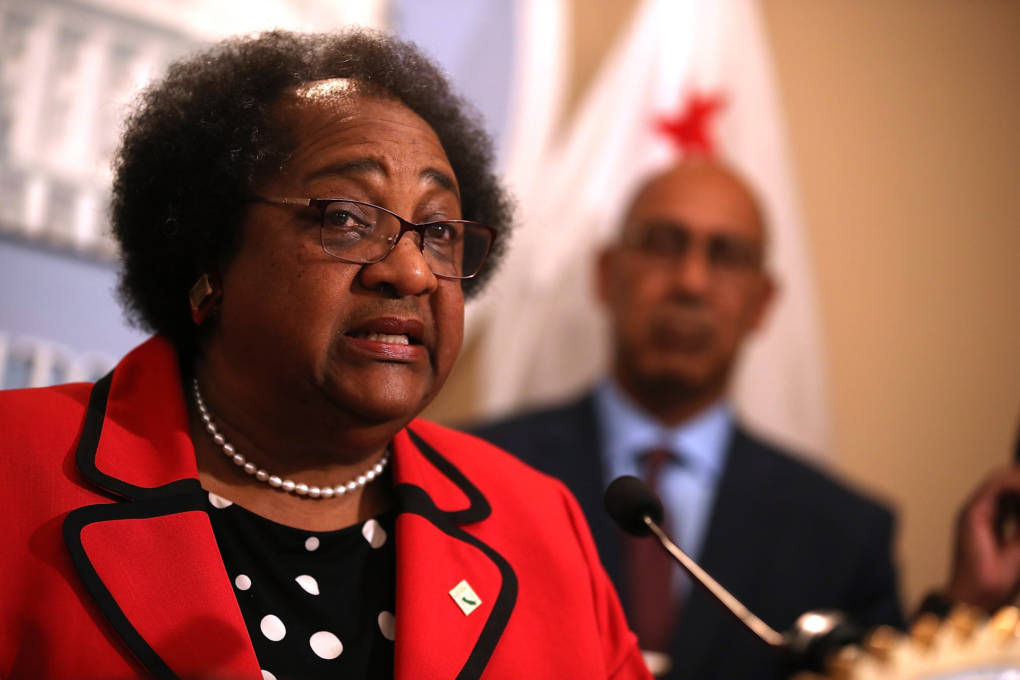
California Secretary of State Shirley Weber on How Trump Could Affect Voting Here
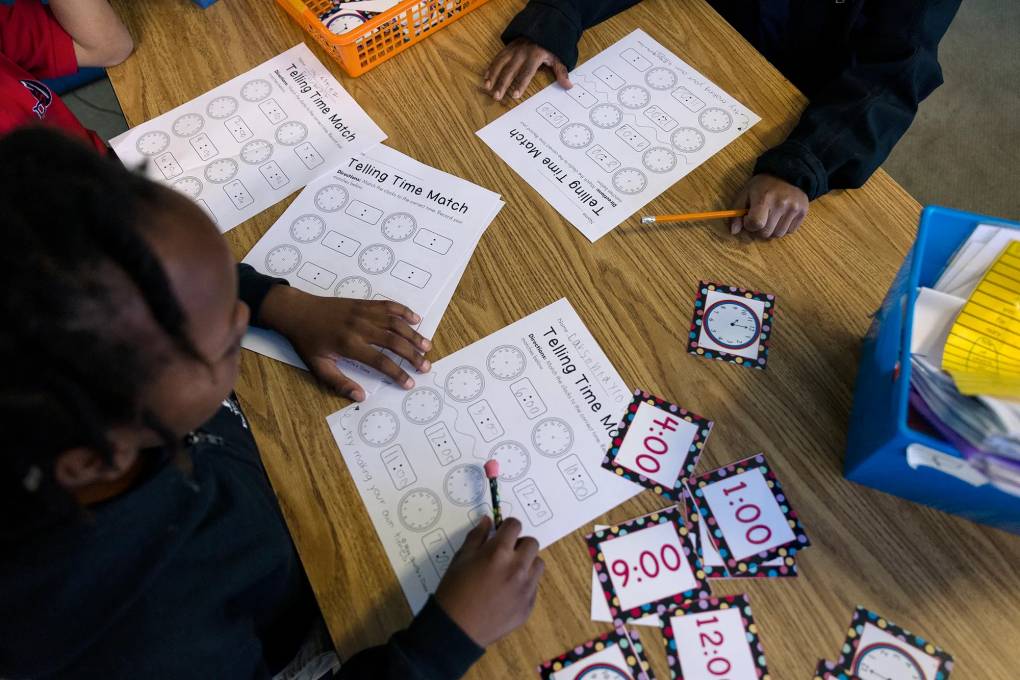
Education Advocates Say Newsom's School Funding Plan Will Not Close Achievement Gaps
Shirley Weber | Midterm Elections 2022
Shirley Weber on Voting Changes in California and Threats to Democracy
'It Means to Repair': What You Should Know About Reparations for Black Californians
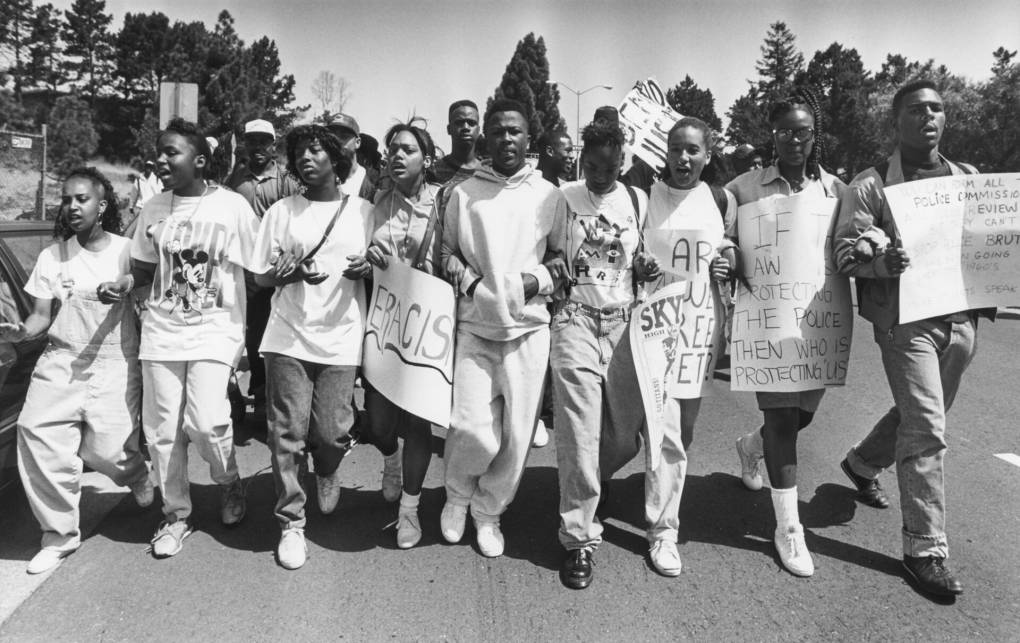
First in the US — California’s Task Force on Reparations Looks at Harms of Slavery
Shirley Weber, Appointed by Gov. Newsom, Now Oversees His Recall Election
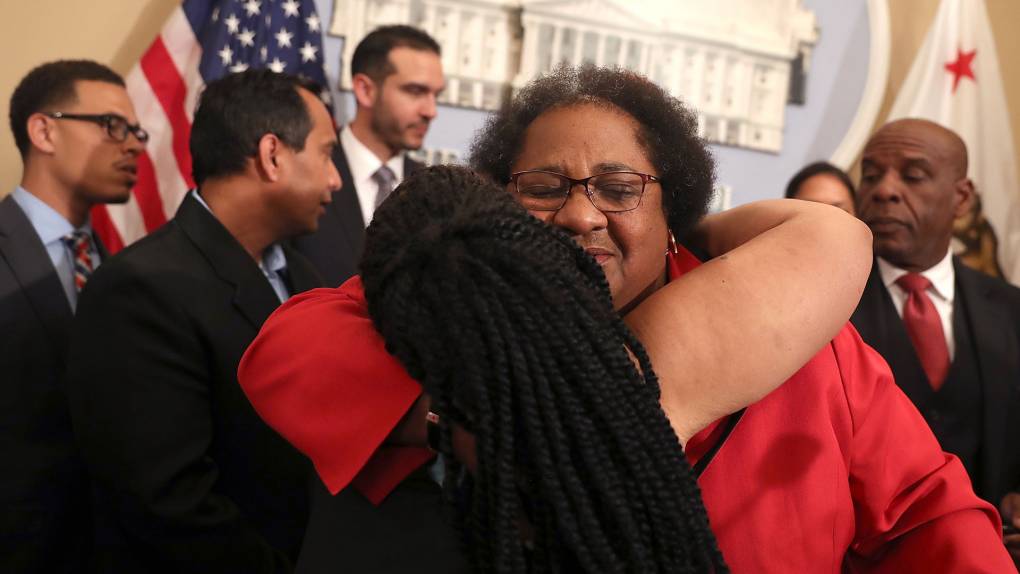
Shirley Weber Confirmed as California's First Black Secretary of State
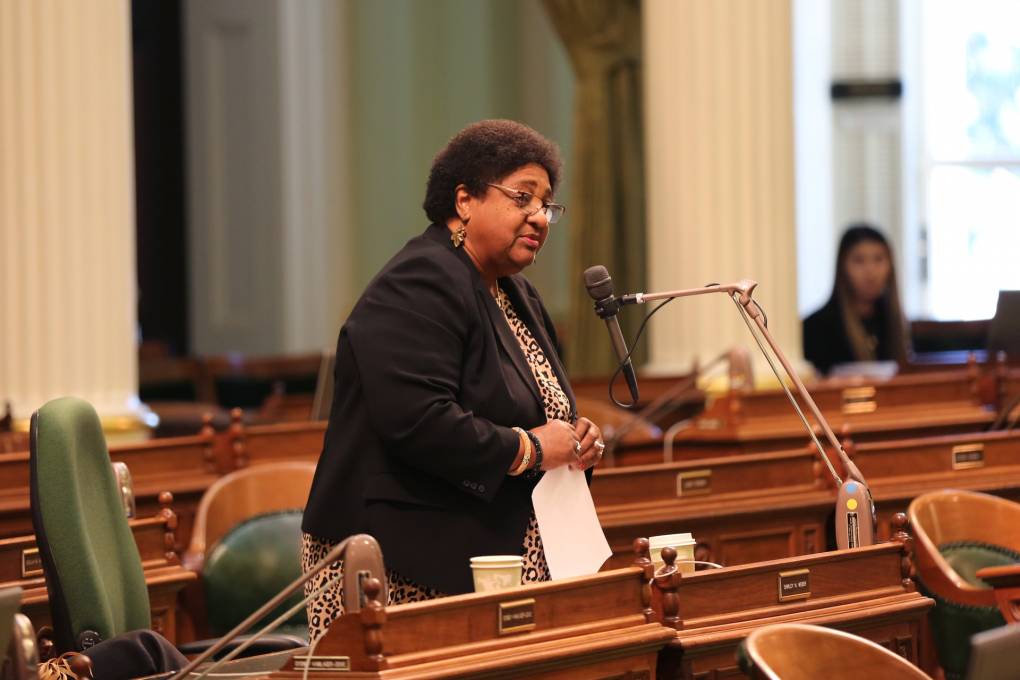
Make Universal Vote by Mail ‘Permanent,’ Says California Secretary of State Nominee Shirley Weber
Sponsored
Player sponsored by
window.__IS_SSR__=true
window.__INITIAL_STATE__={
"attachmentsReducer": {
"audio_0": {
"type": "attachments",
"id": "audio_0",
"imgSizes": {
"kqedFullSize": {
"file": "https://ww2.kqed.org/news/wp-content/themes/KQED-unified/img/audio_bgs/background0.jpg"
}
}
},
"audio_1": {
"type": "attachments",
"id": "audio_1",
"imgSizes": {
"kqedFullSize": {
"file": "https://ww2.kqed.org/news/wp-content/themes/KQED-unified/img/audio_bgs/background1.jpg"
}
}
},
"audio_2": {
"type": "attachments",
"id": "audio_2",
"imgSizes": {
"kqedFullSize": {
"file": "https://ww2.kqed.org/news/wp-content/themes/KQED-unified/img/audio_bgs/background2.jpg"
}
}
},
"audio_3": {
"type": "attachments",
"id": "audio_3",
"imgSizes": {
"kqedFullSize": {
"file": "https://ww2.kqed.org/news/wp-content/themes/KQED-unified/img/audio_bgs/background3.jpg"
}
}
},
"audio_4": {
"type": "attachments",
"id": "audio_4",
"imgSizes": {
"kqedFullSize": {
"file": "https://ww2.kqed.org/news/wp-content/themes/KQED-unified/img/audio_bgs/background4.jpg"
}
}
},
"placeholder": {
"type": "attachments",
"id": "placeholder",
"imgSizes": {
"thumbnail": {
"file": "https://cdn.kqed.org/wp-content/uploads/2024/12/KQED-Default-Image-816638274-2000x1333-1-160x107.jpg",
"width": 160,
"height": 107,
"mimeType": "image/jpeg"
},
"medium": {
"file": "https://cdn.kqed.org/wp-content/uploads/2024/12/KQED-Default-Image-816638274-2000x1333-1-800x533.jpg",
"width": 800,
"height": 533,
"mimeType": "image/jpeg"
},
"medium_large": {
"file": "https://cdn.kqed.org/wp-content/uploads/2024/12/KQED-Default-Image-816638274-2000x1333-1-768x512.jpg",
"width": 768,
"height": 512,
"mimeType": "image/jpeg"
},
"large": {
"file": "https://cdn.kqed.org/wp-content/uploads/2024/12/KQED-Default-Image-816638274-2000x1333-1-1020x680.jpg",
"width": 1020,
"height": 680,
"mimeType": "image/jpeg"
},
"1536x1536": {
"file": "https://cdn.kqed.org/wp-content/uploads/2024/12/KQED-Default-Image-816638274-2000x1333-1-1536x1024.jpg",
"width": 1536,
"height": 1024,
"mimeType": "image/jpeg"
},
"fd-lrg": {
"file": "https://cdn.kqed.org/wp-content/uploads/2024/12/KQED-Default-Image-816638274-2000x1333-1-1536x1024.jpg",
"width": 1536,
"height": 1024,
"mimeType": "image/jpeg"
},
"fd-med": {
"file": "https://cdn.kqed.org/wp-content/uploads/2024/12/KQED-Default-Image-816638274-2000x1333-1-1020x680.jpg",
"width": 1020,
"height": 680,
"mimeType": "image/jpeg"
},
"fd-sm": {
"file": "https://cdn.kqed.org/wp-content/uploads/2024/12/KQED-Default-Image-816638274-2000x1333-1-800x533.jpg",
"width": 800,
"height": 533,
"mimeType": "image/jpeg"
},
"post-thumbnail": {
"file": "https://cdn.kqed.org/wp-content/uploads/2024/12/KQED-Default-Image-816638274-2000x1333-1-672x372.jpg",
"width": 672,
"height": 372,
"mimeType": "image/jpeg"
},
"twentyfourteen-full-width": {
"file": "https://cdn.kqed.org/wp-content/uploads/2024/12/KQED-Default-Image-816638274-2000x1333-1-1038x576.jpg",
"width": 1038,
"height": 576,
"mimeType": "image/jpeg"
},
"xxsmall": {
"file": "https://cdn.kqed.org/wp-content/uploads/2024/12/KQED-Default-Image-816638274-2000x1333-1-160x107.jpg",
"width": 160,
"height": 107,
"mimeType": "image/jpeg"
},
"xsmall": {
"file": "https://cdn.kqed.org/wp-content/uploads/2024/12/KQED-Default-Image-816638274-2000x1333-1-672x372.jpg",
"width": 672,
"height": 372,
"mimeType": "image/jpeg"
},
"small": {
"file": "https://cdn.kqed.org/wp-content/uploads/2024/12/KQED-Default-Image-816638274-2000x1333-1-672x372.jpg",
"width": 672,
"height": 372,
"mimeType": "image/jpeg"
},
"xlarge": {
"file": "https://cdn.kqed.org/wp-content/uploads/2024/12/KQED-Default-Image-816638274-2000x1333-1-1020x680.jpg",
"width": 1020,
"height": 680,
"mimeType": "image/jpeg"
},
"full-width": {
"file": "https://cdn.kqed.org/wp-content/uploads/2024/12/KQED-Default-Image-816638274-2000x1333-1-1920x1280.jpg",
"width": 1920,
"height": 1280,
"mimeType": "image/jpeg"
},
"guest-author-32": {
"file": "https://cdn.kqed.org/wp-content/uploads/2025/01/KQED-Default-Image-816638274-1333x1333-1-160x160.jpg",
"width": 32,
"height": 32,
"mimeType": "image/jpeg"
},
"guest-author-50": {
"file": "https://cdn.kqed.org/wp-content/uploads/2025/01/KQED-Default-Image-816638274-1333x1333-1-160x160.jpg",
"width": 50,
"height": 50,
"mimeType": "image/jpeg"
},
"guest-author-64": {
"file": "https://cdn.kqed.org/wp-content/uploads/2025/01/KQED-Default-Image-816638274-1333x1333-1-160x160.jpg",
"width": 64,
"height": 64,
"mimeType": "image/jpeg"
},
"guest-author-96": {
"file": "https://cdn.kqed.org/wp-content/uploads/2025/01/KQED-Default-Image-816638274-1333x1333-1-160x160.jpg",
"width": 96,
"height": 96,
"mimeType": "image/jpeg"
},
"guest-author-128": {
"file": "https://cdn.kqed.org/wp-content/uploads/2025/01/KQED-Default-Image-816638274-1333x1333-1-160x160.jpg",
"width": 128,
"height": 128,
"mimeType": "image/jpeg"
},
"detail": {
"file": "https://cdn.kqed.org/wp-content/uploads/2025/01/KQED-Default-Image-816638274-1333x1333-1-160x160.jpg",
"width": 160,
"height": 160,
"mimeType": "image/jpeg"
},
"kqedFullSize": {
"file": "https://cdn.kqed.org/wp-content/uploads/2024/12/KQED-Default-Image-816638274-2000x1333-1.jpg",
"width": 2000,
"height": 1333
}
}
},
"news_11954302": {
"type": "attachments",
"id": "news_11954302",
"meta": {
"index": "attachments_1716263798",
"site": "news",
"id": "11954302",
"found": true
},
"parent": 11954129,
"imgSizes": {
"twentyfourteen-full-width": {
"file": "https://ww2.kqed.org/app/uploads/sites/10/2023/06/RS63563_008_KQED_DrShirleyWeber_03082023-qut-1038x576.jpg",
"width": 1038,
"mimeType": "image/jpeg",
"height": 576
},
"thumbnail": {
"file": "https://ww2.kqed.org/app/uploads/sites/10/2023/06/RS63563_008_KQED_DrShirleyWeber_03082023-qut-160x107.jpg",
"width": 160,
"mimeType": "image/jpeg",
"height": 107
},
"post-thumbnail": {
"file": "https://ww2.kqed.org/app/uploads/sites/10/2023/06/RS63563_008_KQED_DrShirleyWeber_03082023-qut-672x372.jpg",
"width": 672,
"mimeType": "image/jpeg",
"height": 372
},
"kqedFullSize": {
"file": "https://ww2.kqed.org/app/uploads/sites/10/2023/06/RS63563_008_KQED_DrShirleyWeber_03082023-qut.jpg",
"width": 1920,
"height": 1280
},
"large": {
"file": "https://ww2.kqed.org/app/uploads/sites/10/2023/06/RS63563_008_KQED_DrShirleyWeber_03082023-qut-1020x680.jpg",
"width": 1020,
"mimeType": "image/jpeg",
"height": 680
},
"1536x1536": {
"file": "https://ww2.kqed.org/app/uploads/sites/10/2023/06/RS63563_008_KQED_DrShirleyWeber_03082023-qut-1536x1024.jpg",
"width": 1536,
"mimeType": "image/jpeg",
"height": 1024
},
"medium": {
"file": "https://ww2.kqed.org/app/uploads/sites/10/2023/06/RS63563_008_KQED_DrShirleyWeber_03082023-qut-800x533.jpg",
"width": 800,
"mimeType": "image/jpeg",
"height": 533
}
},
"publishDate": 1687910471,
"modified": 1687985758,
"caption": "Assemblymember Dr. Shirley Weber poses for a portrait at the Commonwealth Club in San Francisco on March 8, 2023.",
"description": null,
"title": "RS63563_008_KQED_DrShirleyWeber_03082023-qut",
"credit": "Beth LaBerge/KQED",
"status": "inherit",
"altTag": "A woman with short, curly brown hair, dangly earrings and a red, blue and cream-patterned blouse sits as she poses for a portrait. A calm look on her face. She wears a simple gold pendant necklace.",
"fetchFailed": false,
"isLoading": false
},
"news_11938907": {
"type": "attachments",
"id": "news_11938907",
"meta": {
"index": "attachments_1716263798",
"site": "news",
"id": "11938907",
"found": true
},
"parent": 11938865,
"imgSizes": {
"twentyfourteen-full-width": {
"file": "https://ww2.kqed.org/app/uploads/sites/10/2023/01/051122-St-Hope-Charter-School-MG-CM-19-1038x576.jpg",
"width": 1038,
"mimeType": "image/jpeg",
"height": 576
},
"thumbnail": {
"file": "https://ww2.kqed.org/app/uploads/sites/10/2023/01/051122-St-Hope-Charter-School-MG-CM-19-160x107.jpg",
"width": 160,
"mimeType": "image/jpeg",
"height": 107
},
"post-thumbnail": {
"file": "https://ww2.kqed.org/app/uploads/sites/10/2023/01/051122-St-Hope-Charter-School-MG-CM-19-672x372.jpg",
"width": 672,
"mimeType": "image/jpeg",
"height": 372
},
"kqedFullSize": {
"file": "https://ww2.kqed.org/app/uploads/sites/10/2023/01/051122-St-Hope-Charter-School-MG-CM-19.jpg",
"width": 2000,
"height": 1333
},
"large": {
"file": "https://ww2.kqed.org/app/uploads/sites/10/2023/01/051122-St-Hope-Charter-School-MG-CM-19-1020x680.jpg",
"width": 1020,
"mimeType": "image/jpeg",
"height": 680
},
"1536x1536": {
"file": "https://ww2.kqed.org/app/uploads/sites/10/2023/01/051122-St-Hope-Charter-School-MG-CM-19-1536x1024.jpg",
"width": 1536,
"mimeType": "image/jpeg",
"height": 1024
},
"full-width": {
"file": "https://ww2.kqed.org/app/uploads/sites/10/2023/01/051122-St-Hope-Charter-School-MG-CM-19-1920x1280.jpg",
"width": 1920,
"mimeType": "image/jpeg",
"height": 1280
},
"medium": {
"file": "https://ww2.kqed.org/app/uploads/sites/10/2023/01/051122-St-Hope-Charter-School-MG-CM-19-800x533.jpg",
"width": 800,
"mimeType": "image/jpeg",
"height": 533
}
},
"publishDate": 1674507467,
"modified": 1674518686,
"caption": "Students at a classroom at St. Hope's Public School 7 Elementary in Sacramento on May 11, 2022.",
"description": null,
"title": "051122-St-Hope-Charter-School-MG-CM-19",
"credit": "Miguel Gutierrez Jr./CalMatters",
"status": "inherit",
"altTag": "A downward-angled photo shows a school table with several students sitting around it, pencils in hand. The students are working on a worksheet about telling time.",
"fetchFailed": false,
"isLoading": false
},
"news_11931181": {
"type": "attachments",
"id": "news_11931181",
"meta": {
"index": "attachments_1716263798",
"site": "news",
"id": "11931181",
"found": true
},
"parent": 11931148,
"imgSizes": {
"twentyfourteen-full-width": {
"file": "https://ww2.kqed.org/app/uploads/sites/10/2022/11/Election2022_white-1038x576.png",
"width": 1038,
"mimeType": "image/png",
"height": 576
},
"thumbnail": {
"file": "https://ww2.kqed.org/app/uploads/sites/10/2022/11/Election2022_white-160x90.png",
"width": 160,
"mimeType": "image/png",
"height": 90
},
"post-thumbnail": {
"file": "https://ww2.kqed.org/app/uploads/sites/10/2022/11/Election2022_white-672x372.png",
"width": 672,
"mimeType": "image/png",
"height": 372
},
"kqedFullSize": {
"file": "https://ww2.kqed.org/app/uploads/sites/10/2022/11/Election2022_white.png",
"width": 1920,
"height": 1080
},
"large": {
"file": "https://ww2.kqed.org/app/uploads/sites/10/2022/11/Election2022_white-1020x574.png",
"width": 1020,
"mimeType": "image/png",
"height": 574
},
"1536x1536": {
"file": "https://ww2.kqed.org/app/uploads/sites/10/2022/11/Election2022_white-1536x864.png",
"width": 1536,
"mimeType": "image/png",
"height": 864
},
"medium": {
"file": "https://ww2.kqed.org/app/uploads/sites/10/2022/11/Election2022_white-800x450.png",
"width": 800,
"mimeType": "image/png",
"height": 450
}
},
"publishDate": 1667594442,
"modified": 1667594442,
"caption": null,
"description": null,
"title": "Election2022_white",
"credit": null,
"status": "inherit",
"altTag": null,
"fetchFailed": false,
"isLoading": false
},
"news_11911903": {
"type": "attachments",
"id": "news_11911903",
"meta": {
"index": "attachments_1716263798",
"site": "news",
"id": "11911903",
"found": true
},
"parent": 11911902,
"imgSizes": {
"twentyfourteen-full-width": {
"file": "https://ww2.kqed.org/app/uploads/sites/10/2022/04/RS55477_IMG_4098-qut-1038x576.jpg",
"width": 1038,
"mimeType": "image/jpeg",
"height": 576
},
"thumbnail": {
"file": "https://ww2.kqed.org/app/uploads/sites/10/2022/04/RS55477_IMG_4098-qut-160x120.jpg",
"width": 160,
"mimeType": "image/jpeg",
"height": 120
},
"post-thumbnail": {
"file": "https://ww2.kqed.org/app/uploads/sites/10/2022/04/RS55477_IMG_4098-qut-672x372.jpg",
"width": 672,
"mimeType": "image/jpeg",
"height": 372
},
"kqedFullSize": {
"file": "https://ww2.kqed.org/app/uploads/sites/10/2022/04/RS55477_IMG_4098-qut.jpg",
"width": 1920,
"height": 1440
},
"large": {
"file": "https://ww2.kqed.org/app/uploads/sites/10/2022/04/RS55477_IMG_4098-qut-1020x765.jpg",
"width": 1020,
"mimeType": "image/jpeg",
"height": 765
},
"1536x1536": {
"file": "https://ww2.kqed.org/app/uploads/sites/10/2022/04/RS55477_IMG_4098-qut-1536x1152.jpg",
"width": 1536,
"mimeType": "image/jpeg",
"height": 1152
},
"medium": {
"file": "https://ww2.kqed.org/app/uploads/sites/10/2022/04/RS55477_IMG_4098-qut-800x600.jpg",
"width": 800,
"mimeType": "image/jpeg",
"height": 600
}
},
"publishDate": 1650584501,
"modified": 1650584532,
"caption": "California Secretary of State Shirley Weber with Political Breakdown hosts Scott Shafer and Marisa Lagos. ",
"description": null,
"title": "RS55477_IMG_4098-qut",
"credit": "Guy Marzorati/KQED",
"status": "inherit",
"altTag": null,
"fetchFailed": false,
"isLoading": false
},
"news_11906220": {
"type": "attachments",
"id": "news_11906220",
"meta": {
"index": "attachments_1716263798",
"site": "news",
"id": "11906220",
"found": true
},
"parent": 11906054,
"imgSizes": {
"twentyfourteen-full-width": {
"file": "https://ww2.kqed.org/app/uploads/sites/10/2022/02/RS53887_GettyImages-1248797994-qut-1038x576.jpg",
"width": 1038,
"mimeType": "image/jpeg",
"height": 576
},
"thumbnail": {
"file": "https://ww2.kqed.org/app/uploads/sites/10/2022/02/RS53887_GettyImages-1248797994-qut-160x101.jpg",
"width": 160,
"mimeType": "image/jpeg",
"height": 101
},
"post-thumbnail": {
"file": "https://ww2.kqed.org/app/uploads/sites/10/2022/02/RS53887_GettyImages-1248797994-qut-672x372.jpg",
"width": 672,
"mimeType": "image/jpeg",
"height": 372
},
"kqedFullSize": {
"file": "https://ww2.kqed.org/app/uploads/sites/10/2022/02/RS53887_GettyImages-1248797994-qut.jpg",
"width": 1920,
"height": 1211
},
"large": {
"file": "https://ww2.kqed.org/app/uploads/sites/10/2022/02/RS53887_GettyImages-1248797994-qut-1020x643.jpg",
"width": 1020,
"mimeType": "image/jpeg",
"height": 643
},
"1536x1536": {
"file": "https://ww2.kqed.org/app/uploads/sites/10/2022/02/RS53887_GettyImages-1248797994-qut-1536x969.jpg",
"width": 1536,
"mimeType": "image/jpeg",
"height": 969
},
"medium": {
"file": "https://ww2.kqed.org/app/uploads/sites/10/2022/02/RS53887_GettyImages-1248797994-qut-800x505.jpg",
"width": 800,
"mimeType": "image/jpeg",
"height": 505
}
},
"publishDate": 1645649785,
"modified": 1645670204,
"caption": "Students from Oakland's Skyline High School march in protest on May 1, 1992, after the verdict in the Rodney King beating. The call for reparations is specifically about race and enslavement — the ongoing ramifications of which are seen in the glaring disparities in the criminal justice system — but it touches on basic questions of accountability and fairness.",
"description": null,
"title": "Students from Skyline High School in Oakland Protest",
"credit": "Gary Reyes/Media News Group/Oakland Tribune via Getty Images",
"status": "inherit",
"altTag": "Black and white historical image showing line of young Black students carrying signs and chanting",
"fetchFailed": false,
"isLoading": false
},
"news_11876271": {
"type": "attachments",
"id": "news_11876271",
"meta": {
"index": "attachments_1716263798",
"site": "news",
"id": "11876271",
"found": true
},
"parent": 11876194,
"imgSizes": {
"twentyfourteen-full-width": {
"file": "https://ww2.kqed.org/app/uploads/sites/10/2021/06/1920_GettyImages-941502582-1038x576.jpg",
"width": 1038,
"mimeType": "image/jpeg",
"height": 576
},
"thumbnail": {
"file": "https://ww2.kqed.org/app/uploads/sites/10/2021/06/1920_GettyImages-941502582-160x90.jpg",
"width": 160,
"mimeType": "image/jpeg",
"height": 90
},
"post-thumbnail": {
"file": "https://ww2.kqed.org/app/uploads/sites/10/2021/06/1920_GettyImages-941502582-672x372.jpg",
"width": 672,
"mimeType": "image/jpeg",
"height": 372
},
"kqedFullSize": {
"file": "https://ww2.kqed.org/app/uploads/sites/10/2021/06/1920_GettyImages-941502582.jpg",
"width": 1920,
"height": 1080
},
"large": {
"file": "https://ww2.kqed.org/app/uploads/sites/10/2021/06/1920_GettyImages-941502582-1020x574.jpg",
"width": 1020,
"mimeType": "image/jpeg",
"height": 574
},
"1536x1536": {
"file": "https://ww2.kqed.org/app/uploads/sites/10/2021/06/1920_GettyImages-941502582-1536x864.jpg",
"width": 1536,
"mimeType": "image/jpeg",
"height": 864
},
"medium": {
"file": "https://ww2.kqed.org/app/uploads/sites/10/2021/06/1920_GettyImages-941502582-800x450.jpg",
"width": 800,
"mimeType": "image/jpeg",
"height": 450
}
},
"publishDate": 1622592363,
"modified": 1622596255,
"caption": "‘Your task is to determine the depth of the harm, and the ways in which we are to repair that harm,’ said Shirley Weber, whose parents were sharecroppers forced to leave the South. Weber, who authored the law and is now California’s Secretary of State appears in this file photo from when she was a State Assemblymember (D-San Diego) at news conference on April 3, 2018 in Sacramento, California. ",
"description": null,
"title": "1920_GettyImages-941502582",
"credit": "Justin Sullivan/Getty Images",
"status": "inherit",
"altTag": null,
"fetchFailed": false,
"isLoading": false
},
"news_11874335": {
"type": "attachments",
"id": "news_11874335",
"meta": {
"index": "attachments_1716263798",
"site": "news",
"id": "11874335",
"found": true
},
"parent": 11874233,
"imgSizes": {
"twentyfourteen-full-width": {
"file": "https://ww2.kqed.org/app/uploads/sites/10/2021/05/RS38619_GettyImages-941502770-qut-1038x576.jpg",
"width": 1038,
"mimeType": "image/jpeg",
"height": 576
},
"thumbnail": {
"file": "https://ww2.kqed.org/app/uploads/sites/10/2021/05/RS38619_GettyImages-941502770-qut-160x107.jpg",
"width": 160,
"mimeType": "image/jpeg",
"height": 107
},
"post-thumbnail": {
"file": "https://ww2.kqed.org/app/uploads/sites/10/2021/05/RS38619_GettyImages-941502770-qut-672x372.jpg",
"width": 672,
"mimeType": "image/jpeg",
"height": 372
},
"kqedFullSize": {
"file": "https://ww2.kqed.org/app/uploads/sites/10/2021/05/RS38619_GettyImages-941502770-qut.jpg",
"width": 1920,
"height": 1280
},
"large": {
"file": "https://ww2.kqed.org/app/uploads/sites/10/2021/05/RS38619_GettyImages-941502770-qut-1020x680.jpg",
"width": 1020,
"mimeType": "image/jpeg",
"height": 680
},
"1536x1536": {
"file": "https://ww2.kqed.org/app/uploads/sites/10/2021/05/RS38619_GettyImages-941502770-qut-1536x1024.jpg",
"width": 1536,
"mimeType": "image/jpeg",
"height": 1024
},
"medium": {
"file": "https://ww2.kqed.org/app/uploads/sites/10/2021/05/RS38619_GettyImages-941502770-qut-800x533.jpg",
"width": 800,
"mimeType": "image/jpeg",
"height": 533
}
},
"publishDate": 1621456390,
"modified": 1621462430,
"caption": "Shirley Weber, then a state Assemblywoman, speaks at a 2018 news conference in Sacramento. Weber was confirmed as Secretary of State in January of 2021.",
"description": "Shirley Weber, then a state Assemblywoman, speaks at a 2018 news conference in Sacramento. Weber was confirmed as Secretary of State in January of 2021.",
"title": "California Lawmakers Announce Bill To Alter Police Use Of Lethal Force Policy",
"credit": "Justin Sullivan/Getty Images",
"status": "inherit",
"altTag": null,
"fetchFailed": false,
"isLoading": false
},
"news_11815536": {
"type": "attachments",
"id": "news_11815536",
"meta": {
"index": "attachments_1716263798",
"site": "news",
"id": "11815536",
"found": true
},
"parent": 11815526,
"imgSizes": {
"apple_news_ca_landscape_5_5": {
"file": "https://ww2.kqed.org/app/uploads/sites/10/2020/04/RS39031_ShirleyWeber-qut-1044x783.jpg",
"width": 1044,
"mimeType": "image/jpeg",
"height": 783
},
"apple_news_ca_square_4_0": {
"file": "https://ww2.kqed.org/app/uploads/sites/10/2020/04/RS39031_ShirleyWeber-qut-470x470.jpg",
"width": 470,
"mimeType": "image/jpeg",
"height": 470
},
"twentyfourteen-full-width": {
"file": "https://ww2.kqed.org/app/uploads/sites/10/2020/04/RS39031_ShirleyWeber-qut-1038x576.jpg",
"width": 1038,
"mimeType": "image/jpeg",
"height": 576
},
"thumbnail": {
"file": "https://ww2.kqed.org/app/uploads/sites/10/2020/04/RS39031_ShirleyWeber-qut-160x107.jpg",
"width": 160,
"mimeType": "image/jpeg",
"height": 107
},
"post-thumbnail": {
"file": "https://ww2.kqed.org/app/uploads/sites/10/2020/04/RS39031_ShirleyWeber-qut-672x372.jpg",
"width": 672,
"mimeType": "image/jpeg",
"height": 372
},
"kqedFullSize": {
"file": "https://ww2.kqed.org/app/uploads/sites/10/2020/04/RS39031_ShirleyWeber-qut.jpg",
"width": 1920,
"height": 1280
},
"apple_news_ca_landscape_4_7": {
"file": "https://ww2.kqed.org/app/uploads/sites/10/2020/04/RS39031_ShirleyWeber-qut-632x474.jpg",
"width": 632,
"mimeType": "image/jpeg",
"height": 474
},
"large": {
"file": "https://ww2.kqed.org/app/uploads/sites/10/2020/04/RS39031_ShirleyWeber-qut-1020x680.jpg",
"width": 1020,
"mimeType": "image/jpeg",
"height": 680
},
"apple_news_ca_landscape_4_0": {
"file": "https://ww2.kqed.org/app/uploads/sites/10/2020/04/RS39031_ShirleyWeber-qut-536x402.jpg",
"width": 536,
"mimeType": "image/jpeg",
"height": 402
},
"apple_news_ca_portrait_12_9": {
"file": "https://ww2.kqed.org/app/uploads/sites/10/2020/04/RS39031_ShirleyWeber-qut-1122x1280.jpg",
"width": 1122,
"mimeType": "image/jpeg",
"height": 1280
},
"medium": {
"file": "https://ww2.kqed.org/app/uploads/sites/10/2020/04/RS39031_ShirleyWeber-qut-800x533.jpg",
"width": 800,
"mimeType": "image/jpeg",
"height": 533
},
"apple_news_ca_portrait_4_0": {
"file": "https://ww2.kqed.org/app/uploads/sites/10/2020/04/RS39031_ShirleyWeber-qut-354x472.jpg",
"width": 354,
"mimeType": "image/jpeg",
"height": 472
},
"apple_news_ca_portrait_9_7": {
"file": "https://ww2.kqed.org/app/uploads/sites/10/2020/04/RS39031_ShirleyWeber-qut-840x1120.jpg",
"width": 840,
"mimeType": "image/jpeg",
"height": 1120
},
"apple_news_ca_landscape_12_9": {
"file": "https://ww2.kqed.org/app/uploads/sites/10/2020/04/RS39031_ShirleyWeber-qut-1832x1280.jpg",
"width": 1832,
"mimeType": "image/jpeg",
"height": 1280
},
"apple_news_ca_square_9_7": {
"file": "https://ww2.kqed.org/app/uploads/sites/10/2020/04/RS39031_ShirleyWeber-qut-1104x1104.jpg",
"width": 1104,
"mimeType": "image/jpeg",
"height": 1104
},
"apple_news_ca_portrait_4_7": {
"file": "https://ww2.kqed.org/app/uploads/sites/10/2020/04/RS39031_ShirleyWeber-qut-414x552.jpg",
"width": 414,
"mimeType": "image/jpeg",
"height": 552
},
"apple_news_ca_square_12_9": {
"file": "https://ww2.kqed.org/app/uploads/sites/10/2020/04/RS39031_ShirleyWeber-qut-1472x1280.jpg",
"width": 1472,
"mimeType": "image/jpeg",
"height": 1280
},
"apple_news_ca_portrait_5_5": {
"file": "https://ww2.kqed.org/app/uploads/sites/10/2020/04/RS39031_ShirleyWeber-qut-687x916.jpg",
"width": 687,
"mimeType": "image/jpeg",
"height": 916
},
"full-width": {
"file": "https://ww2.kqed.org/app/uploads/sites/10/2020/04/RS39031_ShirleyWeber-qut-1920x1280.jpg",
"width": 1920,
"mimeType": "image/jpeg",
"height": 1280
},
"apple_news_ca_square_4_7": {
"file": "https://ww2.kqed.org/app/uploads/sites/10/2020/04/RS39031_ShirleyWeber-qut-550x550.jpg",
"width": 550,
"mimeType": "image/jpeg",
"height": 550
},
"apple_news_ca_landscape_9_7": {
"file": "https://ww2.kqed.org/app/uploads/sites/10/2020/04/RS39031_ShirleyWeber-qut-1376x1032.jpg",
"width": 1376,
"mimeType": "image/jpeg",
"height": 1032
},
"apple_news_ca_square_5_5": {
"file": "https://ww2.kqed.org/app/uploads/sites/10/2020/04/RS39031_ShirleyWeber-qut-912x912.jpg",
"width": 912,
"mimeType": "image/jpeg",
"height": 912
}
},
"publishDate": 1588299221,
"modified": 1588353224,
"caption": "Assemblywoman Shirley Weber, D-San Diego, at the state Capitol in Sacramento on Aug. 15, 2019.",
"description": null,
"title": "RS39031_ShirleyWeber-qut",
"credit": "Stephanie Lister/KQED",
"status": "inherit",
"fetchFailed": false,
"isLoading": false
},
"news_11768547": {
"type": "attachments",
"id": "news_11768547",
"meta": {
"index": "attachments_1716263798",
"site": "news",
"id": "11768547",
"found": true
},
"parent": 11768464,
"imgSizes": {
"apple_news_ca_landscape_5_5": {
"file": "https://ww2.kqed.org/app/uploads/sites/10/2019/08/RS38619_GettyImages-941502770-qut-1044x783.jpg",
"width": 1044,
"mimeType": "image/jpeg",
"height": 783
},
"apple_news_ca_square_4_0": {
"file": "https://ww2.kqed.org/app/uploads/sites/10/2019/08/RS38619_GettyImages-941502770-qut-470x470.jpg",
"width": 470,
"mimeType": "image/jpeg",
"height": 470
},
"twentyfourteen-full-width": {
"file": "https://ww2.kqed.org/app/uploads/sites/10/2019/08/RS38619_GettyImages-941502770-qut-1038x576.jpg",
"width": 1038,
"mimeType": "image/jpeg",
"height": 576
},
"thumbnail": {
"file": "https://ww2.kqed.org/app/uploads/sites/10/2019/08/RS38619_GettyImages-941502770-qut-160x107.jpg",
"width": 160,
"mimeType": "image/jpeg",
"height": 107
},
"post-thumbnail": {
"file": "https://ww2.kqed.org/app/uploads/sites/10/2019/08/RS38619_GettyImages-941502770-qut-672x372.jpg",
"width": 672,
"mimeType": "image/jpeg",
"height": 372
},
"kqedFullSize": {
"file": "https://ww2.kqed.org/app/uploads/sites/10/2019/08/RS38619_GettyImages-941502770-qut.jpg",
"width": 1920,
"height": 1280
},
"apple_news_ca_landscape_4_7": {
"file": "https://ww2.kqed.org/app/uploads/sites/10/2019/08/RS38619_GettyImages-941502770-qut-632x474.jpg",
"width": 632,
"mimeType": "image/jpeg",
"height": 474
},
"large": {
"file": "https://ww2.kqed.org/app/uploads/sites/10/2019/08/RS38619_GettyImages-941502770-qut-1020x680.jpg",
"width": 1020,
"mimeType": "image/jpeg",
"height": 680
},
"complete_open_graph": {
"file": "https://ww2.kqed.org/app/uploads/sites/10/2019/08/RS38619_GettyImages-941502770-qut-1200x800.jpg",
"width": 1200,
"mimeType": "image/jpeg",
"height": 800
},
"apple_news_ca_landscape_4_0": {
"file": "https://ww2.kqed.org/app/uploads/sites/10/2019/08/RS38619_GettyImages-941502770-qut-536x402.jpg",
"width": 536,
"mimeType": "image/jpeg",
"height": 402
},
"apple_news_ca_portrait_12_9": {
"file": "https://ww2.kqed.org/app/uploads/sites/10/2019/08/RS38619_GettyImages-941502770-qut-1122x1280.jpg",
"width": 1122,
"mimeType": "image/jpeg",
"height": 1280
},
"medium": {
"file": "https://ww2.kqed.org/app/uploads/sites/10/2019/08/RS38619_GettyImages-941502770-qut-800x533.jpg",
"width": 800,
"mimeType": "image/jpeg",
"height": 533
},
"apple_news_ca_portrait_4_0": {
"file": "https://ww2.kqed.org/app/uploads/sites/10/2019/08/RS38619_GettyImages-941502770-qut-354x472.jpg",
"width": 354,
"mimeType": "image/jpeg",
"height": 472
},
"apple_news_ca_portrait_9_7": {
"file": "https://ww2.kqed.org/app/uploads/sites/10/2019/08/RS38619_GettyImages-941502770-qut-840x1120.jpg",
"width": 840,
"mimeType": "image/jpeg",
"height": 1120
},
"apple_news_ca_landscape_12_9": {
"file": "https://ww2.kqed.org/app/uploads/sites/10/2019/08/RS38619_GettyImages-941502770-qut-1832x1280.jpg",
"width": 1832,
"mimeType": "image/jpeg",
"height": 1280
},
"apple_news_ca_square_9_7": {
"file": "https://ww2.kqed.org/app/uploads/sites/10/2019/08/RS38619_GettyImages-941502770-qut-1104x1104.jpg",
"width": 1104,
"mimeType": "image/jpeg",
"height": 1104
},
"apple_news_ca_portrait_4_7": {
"file": "https://ww2.kqed.org/app/uploads/sites/10/2019/08/RS38619_GettyImages-941502770-qut-414x552.jpg",
"width": 414,
"mimeType": "image/jpeg",
"height": 552
},
"apple_news_ca_square_12_9": {
"file": "https://ww2.kqed.org/app/uploads/sites/10/2019/08/RS38619_GettyImages-941502770-qut-1472x1280.jpg",
"width": 1472,
"mimeType": "image/jpeg",
"height": 1280
},
"apple_news_ca_portrait_5_5": {
"file": "https://ww2.kqed.org/app/uploads/sites/10/2019/08/RS38619_GettyImages-941502770-qut-687x916.jpg",
"width": 687,
"mimeType": "image/jpeg",
"height": 916
},
"full-width": {
"file": "https://ww2.kqed.org/app/uploads/sites/10/2019/08/RS38619_GettyImages-941502770-qut-1920x1280.jpg",
"width": 1920,
"mimeType": "image/jpeg",
"height": 1280
},
"apple_news_ca_square_4_7": {
"file": "https://ww2.kqed.org/app/uploads/sites/10/2019/08/RS38619_GettyImages-941502770-qut-550x550.jpg",
"width": 550,
"mimeType": "image/jpeg",
"height": 550
},
"apple_news_ca_landscape_9_7": {
"file": "https://ww2.kqed.org/app/uploads/sites/10/2019/08/RS38619_GettyImages-941502770-qut-1376x1032.jpg",
"width": 1376,
"mimeType": "image/jpeg",
"height": 1032
},
"apple_news_ca_square_5_5": {
"file": "https://ww2.kqed.org/app/uploads/sites/10/2019/08/RS38619_GettyImages-941502770-qut-912x912.jpg",
"width": 912,
"mimeType": "image/jpeg",
"height": 912
}
},
"publishDate": 1566257647,
"modified": 1609442623,
"caption": "California state Assemblywoman Shirley Weber, D-San Diego, speaks during a news conference to announce new legislation to address recent deadly police shootings on April 3, 2018 in Sacramento, California.",
"description": "California State Assemblymember Shirley Weber (D-San Diego) speaks during a news conference to announce new legislation to address recent deadly police shootings on April 3, 2018 in Sacramento, California.",
"title": "California Lawmakers Announce Bill To Alter Police Use Of Lethal Force Policy",
"credit": "Justin Sullivan/Getty Images",
"status": "inherit",
"altTag": "California State Assemblymember Shirley Weber (D-San Diego) speaks during a news conference to announce new legislation to address recent deadly police shootings on April 3, 2018 in Sacramento, California.",
"fetchFailed": false,
"isLoading": false
}
},
"audioPlayerReducer": {
"postId": "stream_live",
"isPaused": true,
"isPlaying": false,
"pfsActive": false,
"pledgeModalIsOpen": true,
"playerDrawerIsOpen": false
},
"authorsReducer": {
"byline_news_11938865": {
"type": "authors",
"id": "byline_news_11938865",
"meta": {
"override": true
},
"slug": "byline_news_11938865",
"name": "\u003ca href=\"https://calmatters.org/author/joe-hong/\">Joe Hong\u003c/a>",
"isLoading": false
},
"gmarzorati": {
"type": "authors",
"id": "227",
"meta": {
"index": "authors_1716337520",
"id": "227",
"found": true
},
"name": "Guy Marzorati",
"firstName": "Guy",
"lastName": "Marzorati",
"slug": "gmarzorati",
"email": "gmarzorati@KQED.org",
"display_author_email": true,
"staff_mastheads": [
"news"
],
"title": "Correspondent",
"bio": "Guy Marzorati is a correspondent on KQED's California Politics and Government Desk, based in San Jose. A graduate of Santa Clara University, Guy joined KQED in 2013. He reports on state and local politics and produces KQED's digital voter guide.",
"avatar": "https://secure.gravatar.com/avatar/e7038b8dbfd55b104369b76b1cd0b9de?s=600&d=blank&r=g",
"twitter": "guymarzorati",
"facebook": null,
"instagram": null,
"linkedin": null,
"sites": [
{
"site": "",
"roles": [
"editor"
]
},
{
"site": "news",
"roles": [
"editor"
]
},
{
"site": "science",
"roles": [
"editor"
]
},
{
"site": "forum",
"roles": [
"editor"
]
},
{
"site": "elections",
"roles": [
"editor"
]
},
{
"site": "liveblog",
"roles": [
"editor"
]
}
],
"headData": {
"title": "Guy Marzorati | KQED",
"description": "Correspondent",
"ogImgSrc": "https://secure.gravatar.com/avatar/e7038b8dbfd55b104369b76b1cd0b9de?s=600&d=blank&r=g",
"twImgSrc": "https://secure.gravatar.com/avatar/e7038b8dbfd55b104369b76b1cd0b9de?s=600&d=blank&r=g"
},
"isLoading": false,
"link": "/author/gmarzorati"
},
"kqed": {
"type": "authors",
"id": "236",
"meta": {
"index": "authors_1716337520",
"id": "236",
"found": true
},
"name": "KQED News Staff",
"firstName": "KQED News Staff",
"lastName": null,
"slug": "kqed",
"email": "faq@kqed.org",
"display_author_email": false,
"staff_mastheads": [],
"title": null,
"bio": null,
"avatar": "https://secure.gravatar.com/avatar/ef0e801a68c4c54afa9180db14084167?s=600&d=blank&r=g",
"twitter": null,
"facebook": null,
"instagram": null,
"linkedin": null,
"sites": [
{
"site": "arts",
"roles": [
"contributor"
]
},
{
"site": "news",
"roles": [
"editor"
]
},
{
"site": "futureofyou",
"roles": [
"author"
]
}
],
"headData": {
"title": "KQED News Staff | KQED",
"description": null,
"ogImgSrc": "https://secure.gravatar.com/avatar/ef0e801a68c4c54afa9180db14084167?s=600&d=blank&r=g",
"twImgSrc": "https://secure.gravatar.com/avatar/ef0e801a68c4c54afa9180db14084167?s=600&d=blank&r=g"
},
"isLoading": false,
"link": "/author/kqed"
},
"scottshafer": {
"type": "authors",
"id": "255",
"meta": {
"index": "authors_1716337520",
"id": "255",
"found": true
},
"name": "Scott Shafer",
"firstName": "Scott",
"lastName": "Shafer",
"slug": "scottshafer",
"email": "sshafer@kqed.org",
"display_author_email": false,
"staff_mastheads": [
"news"
],
"title": "KQED Contributor",
"bio": "Scott Shafer is a senior editor with the KQED Politics and Government desk. He is co-host of Political Breakdown, the award-winning radio show and podcast with a personal take on the world of politics. Scott came to KQED in 1998 to host the statewide\u003cem> California Report\u003c/em>. Prior to that he had extended stints in politics and government\u003cem>.\u003c/em> He uses that inside experience at KQED in his, reporting, hosting and analysis for the politics desk. Scott collaborated \u003cem>Political Breakdown a\u003c/em>nd on \u003cem>The Political Mind of Jerry Brown, \u003c/em>an eight-part series about the life and extraordinary political career of the former governor. For fun, he plays water polo with the San Francisco Tsunami.",
"avatar": "https://secure.gravatar.com/avatar/a62ebae45b79d7aed1a39a0e3bf68104?s=600&d=blank&r=g",
"twitter": "scottshafer",
"facebook": null,
"instagram": null,
"linkedin": null,
"sites": [
{
"site": "news",
"roles": [
"editor"
]
},
{
"site": "stateofhealth",
"roles": [
"author"
]
},
{
"site": "science",
"roles": [
"author"
]
},
{
"site": "forum",
"roles": [
"subscriber"
]
}
],
"headData": {
"title": "Scott Shafer | KQED",
"description": "KQED Contributor",
"ogImgSrc": "https://secure.gravatar.com/avatar/a62ebae45b79d7aed1a39a0e3bf68104?s=600&d=blank&r=g",
"twImgSrc": "https://secure.gravatar.com/avatar/a62ebae45b79d7aed1a39a0e3bf68104?s=600&d=blank&r=g"
},
"isLoading": false,
"link": "/author/scottshafer"
},
"mlagos": {
"type": "authors",
"id": "3239",
"meta": {
"index": "authors_1716337520",
"id": "3239",
"found": true
},
"name": "Marisa Lagos",
"firstName": "Marisa",
"lastName": "Lagos",
"slug": "mlagos",
"email": "mlagos@kqed.org",
"display_author_email": false,
"staff_mastheads": [
"news"
],
"title": "KQED Contributor",
"bio": "Marisa Lagos is a correspondent for KQED’s California Politics and Government Desk and co-hosts the award-winning show and podcast, Political Breakdown. At KQED, Lagos also conducts reporting, analysis and investigations into state, local and national politics for radio, TV, online and onstage. In 2022, she and co-host, Scott Shafer, moderated the only gubernatorial debate in California. In 2020, the \u003ci>Washington Post\u003c/i> named her one of the top political journalists in California; she was nominated for a Peabody and won several other awards for her work investigating the 2017 California wildfires. She has worked at the \u003ci>San Francisco Chronicle\u003c/i>, \u003ci>San Francisco Examiner\u003c/i> and \u003ci>Los Angeles Times\u003c/i>. A UC Santa Barbara graduate, she lives in San Francisco with her two sons and husband.",
"avatar": "https://secure.gravatar.com/avatar/a261a0d3696fc066871ef96b85b5e7d2?s=600&d=blank&r=g",
"twitter": "@mlagos",
"facebook": null,
"instagram": null,
"linkedin": null,
"sites": [
{
"site": "arts",
"roles": [
"author"
]
},
{
"site": "news",
"roles": [
"editor"
]
},
{
"site": "science",
"roles": [
"editor"
]
},
{
"site": "forum",
"roles": [
"author"
]
},
{
"site": "liveblog",
"roles": [
"author"
]
}
],
"headData": {
"title": "Marisa Lagos | KQED",
"description": "KQED Contributor",
"ogImgSrc": "https://secure.gravatar.com/avatar/a261a0d3696fc066871ef96b85b5e7d2?s=600&d=blank&r=g",
"twImgSrc": "https://secure.gravatar.com/avatar/a261a0d3696fc066871ef96b85b5e7d2?s=600&d=blank&r=g"
},
"isLoading": false,
"link": "/author/mlagos"
},
"lsarah": {
"type": "authors",
"id": "11626",
"meta": {
"index": "authors_1716337520",
"id": "11626",
"found": true
},
"name": "Lakshmi Sarah",
"firstName": "Lakshmi",
"lastName": "Sarah",
"slug": "lsarah",
"email": "lsarah@kqed.org",
"display_author_email": false,
"staff_mastheads": [],
"title": "Digital Producer",
"bio": "Lakshmi Sarah is an educator, author and journalist with a focus on innovative storytelling. She has worked with newspapers, radio and magazines from Ahmedabad, India to Los Angeles, California. She has written and produced for Die Zeit, Global Voices, AJ+, KQED, Fusion Media Group and the New York Times.",
"avatar": "https://secure.gravatar.com/avatar/652dcaecd8b28826fc17a8b2d6bb4e93?s=600&d=blank&r=g",
"twitter": "lakitalki",
"facebook": null,
"instagram": "https://www.instagram.com/laki.talki/",
"linkedin": "https://www.linkedin.com/in/lakisarah/",
"sites": [
{
"site": "arts",
"roles": []
},
{
"site": "news",
"roles": []
},
{
"site": "bayareabites",
"roles": []
},
{
"site": "science",
"roles": []
}
],
"headData": {
"title": "Lakshmi Sarah | KQED",
"description": "Digital Producer",
"ogImgSrc": "https://secure.gravatar.com/avatar/652dcaecd8b28826fc17a8b2d6bb4e93?s=600&d=blank&r=g",
"twImgSrc": "https://secure.gravatar.com/avatar/652dcaecd8b28826fc17a8b2d6bb4e93?s=600&d=blank&r=g"
},
"isLoading": false,
"link": "/author/lsarah"
},
"eromero": {
"type": "authors",
"id": "11746",
"meta": {
"index": "authors_1716337520",
"id": "11746",
"found": true
},
"name": "Ezra David Romero",
"firstName": "Ezra David",
"lastName": "Romero",
"slug": "eromero",
"email": "eromero@kqed.org",
"display_author_email": true,
"staff_mastheads": [
"news",
"science"
],
"title": "Climate Reporter",
"bio": "Ezra David Romero is a climate reporter for KQED News. He covers the absence and excess of water in the Bay Area — think sea level rise, flooding and drought. For nearly a decade he’s covered how warming temperatures are altering the lives of Californians. He’s reported on farmers worried their pistachio trees aren’t getting enough sleep, families desperate for water, scientists studying dying giant sequoias, and alongside firefighters containing wildfires. His work has appeared on local stations across California and nationally on public radio shows like Morning Edition, Here and Now, All Things Considered and Science Friday. ",
"avatar": "https://secure.gravatar.com/avatar/9c15bb8bab267e058708a9eeaeef16bf?s=600&d=blank&r=g",
"twitter": "ezraromero",
"facebook": null,
"instagram": null,
"linkedin": null,
"sites": [
{
"site": "arts",
"roles": [
"editor"
]
},
{
"site": "news",
"roles": [
"editor"
]
},
{
"site": "science",
"roles": [
"editor"
]
},
{
"site": "liveblog",
"roles": [
"author"
]
}
],
"headData": {
"title": "Ezra David Romero | KQED",
"description": "Climate Reporter",
"ogImgSrc": "https://secure.gravatar.com/avatar/9c15bb8bab267e058708a9eeaeef16bf?s=600&d=blank&r=g",
"twImgSrc": "https://secure.gravatar.com/avatar/9c15bb8bab267e058708a9eeaeef16bf?s=600&d=blank&r=g"
},
"isLoading": false,
"link": "/author/eromero"
}
},
"breakingNewsReducer": {},
"pagesReducer": {},
"postsReducer": {
"stream_live": {
"type": "live",
"id": "stream_live",
"audioUrl": "https://streams.kqed.org/kqedradio",
"title": "Live Stream",
"excerpt": "Live Stream information currently unavailable.",
"link": "/radio",
"featImg": "",
"label": {
"name": "KQED Live",
"link": "/"
}
},
"stream_kqedNewscast": {
"type": "posts",
"id": "stream_kqedNewscast",
"audioUrl": "https://www.kqed.org/.stream/anon/radio/RDnews/newscast.mp3?_=1",
"title": "KQED Newscast",
"featImg": "",
"label": {
"name": "88.5 FM",
"link": "/"
}
},
"news_12038411": {
"type": "posts",
"id": "news_12038411",
"meta": {
"index": "posts_1716263798",
"site": "news",
"id": "12038411",
"score": null,
"sort": [
1746144304000
]
},
"guestAuthors": [],
"slug": "california-secretary-of-state-shirley-weber-on-how-trump-could-affect-voting-here",
"title": "California Secretary of State Shirley Weber on How Trump Could Affect Voting Here",
"publishDate": 1746144304,
"format": "audio",
"headTitle": "California Secretary of State Shirley Weber on How Trump Could Affect Voting Here | KQED",
"labelTerm": {},
"content": "\u003cp>\u003cspan style=\"font-weight: 400\">California’s Secretary of State Shirley Weber is speaking out against federal Republican policies and proposed laws she says will disenfranchise voters. Weber is the daughter of southern sharecroppers and knows what voter suppression looks like. Her grandfather was never given the opportunity to vote and her\u003c/span>\u003cspan style=\"font-weight: 400\"> father didn’t cast a ballot until his 30s, after fleeing a lynch mob in Arkansas and moving to California when Weber was a toddler. She joins Marisa and Scott to discuss threats to voting rights in the U.S. \u003c/span>\u003c/p>\n\u003cp>[ad fullwidth]\u003c/p>\u003cp>\u003c/p>\n",
"blocks": [],
"excerpt": null,
"status": "publish",
"parent": 0,
"modified": 1746149589,
"stats": {
"hasAudio": false,
"hasVideo": false,
"hasChartOrMap": false,
"iframeSrcs": [],
"hasGoogleForm": false,
"hasGallery": false,
"hasHearkenModule": false,
"hasPolis": false,
"paragraphCount": 3,
"wordCount": 92
},
"headData": {
"title": "California Secretary of State Shirley Weber on How Trump Could Affect Voting Here | KQED",
"description": "California’s Secretary of State Shirley Weber is speaking out against federal Republican policies and proposed laws she says will disenfranchise voters. Weber is the daughter of southern sharecroppers and knows what voter suppression looks like. Her grandfather was never given the opportunity to vote and her father didn’t cast a ballot until his 30s, after fleeing a lynch mob in Arkansas and moving to California when Weber was a toddler. She joins Marisa and Scott to discuss threats to voting rights in the U.S. ",
"ogTitle": "",
"ogDescription": "",
"ogImgId": "",
"twTitle": "",
"twDescription": "",
"twImgId": "",
"schema": {
"@context": "https://schema.org",
"@type": "NewsArticle",
"headline": "California Secretary of State Shirley Weber on How Trump Could Affect Voting Here",
"datePublished": "2025-05-01T17:05:04-07:00",
"dateModified": "2025-05-01T18:33:09-07:00",
"image": "https://cdn.kqed.org/wp-content/uploads/2020/02/KQED-OG-Image@1x.png",
"isAccessibleForFree": "True",
"publisher": {
"@type": "NewsMediaOrganization",
"@id": "https://www.kqed.org/#organization",
"name": "KQED",
"logo": "https://cdn.kqed.org/wp-content/uploads/2020/02/KQED-OG-Image@1x.png",
"url": "https://www.kqed.org",
"sameAs": [
"https://www.facebook.com/KQED",
"https://twitter.com/KQED",
"https://www.instagram.com/kqed/",
"https://www.tiktok.com/@kqedofficial",
"https://www.linkedin.com/company/kqed",
"https://www.youtube.com/channel/UCeC0IOo7i1P_61zVUWbJ4nw"
]
}
}
},
"source": "Political Breakdown",
"audioUrl": "https://www.podtrac.com/pts/redirect.mp3/chrt.fm/track/G6C7C3/traffic.megaphone.fm/KQINC4987812062.mp3?updated=1746149869",
"sticky": false,
"nprStoryId": "kqed-12038411",
"templateType": "standard",
"featuredImageType": "standard",
"excludeFromSiteSearch": "Include",
"articleAge": "0",
"path": "/news/12038411/california-secretary-of-state-shirley-weber-on-how-trump-could-affect-voting-here",
"audioTrackLength": null,
"parsedContent": [
{
"type": "contentString",
"content": "\u003cdiv class=\"post-body\">\u003cp>\u003cp>\u003cspan style=\"font-weight: 400\">California’s Secretary of State Shirley Weber is speaking out against federal Republican policies and proposed laws she says will disenfranchise voters. Weber is the daughter of southern sharecroppers and knows what voter suppression looks like. Her grandfather was never given the opportunity to vote and her\u003c/span>\u003cspan style=\"font-weight: 400\"> father didn’t cast a ballot until his 30s, after fleeing a lynch mob in Arkansas and moving to California when Weber was a toddler. She joins Marisa and Scott to discuss threats to voting rights in the U.S. \u003c/span>\u003c/p>\n\u003cp>\u003c/p>\u003c/div>",
"attributes": {
"named": {},
"numeric": []
}
},
{
"type": "component",
"content": "",
"name": "ad",
"attributes": {
"named": {
"label": "fullwidth"
},
"numeric": [
"fullwidth"
]
}
},
{
"type": "contentString",
"content": "\u003cdiv class=\"post-body\">\u003cp>\u003c/p>\u003cp>\u003c/p>\n\u003c/div>\u003c/p>",
"attributes": {
"named": {},
"numeric": []
}
}
],
"link": "/news/12038411/california-secretary-of-state-shirley-weber-on-how-trump-could-affect-voting-here",
"authors": [
"3239",
"255"
],
"programs": [
"news_33544"
],
"categories": [
"news_8"
],
"tags": [
"news_22235",
"news_17968",
"news_34624",
"news_25419",
"news_2027"
],
"featImg": "news_11954302",
"label": "source_news_12038411"
},
"news_11938865": {
"type": "posts",
"id": "news_11938865",
"meta": {
"index": "posts_1716263798",
"site": "news",
"id": "11938865",
"score": null,
"sort": [
1674521465000
]
},
"guestAuthors": [],
"slug": "education-advocates-say-newsoms-school-funding-plan-will-not-close-achievement-gaps",
"title": "Education Advocates Say Newsom's School Funding Plan Will Not Close Achievement Gaps",
"publishDate": 1674521465,
"format": "standard",
"headTitle": "Education Advocates Say Newsom’s School Funding Plan Will Not Close Achievement Gaps | KQED",
"labelTerm": {
"term": 18481,
"site": "news"
},
"content": "\u003cp>Black students’ standardized test scores and graduation rates have long trailed those of their white and Asian peers. For decades, educators and legislators have tried to close that achievement gap, and a school funding proposal in Gov. Gavin Newsom’s new budget illustrates just how difficult it is to do.\u003c/p>\n\u003cp>The idea for the proposed funding began as a bill that would have provided more money for Black K–12 students. The bill, authored last year by Assemblymember \u003ca href=\"https://calmatters.org/legislator-tracker/akilah-weber-1978/\">Akilah Weber\u003c/a>, a Democrat from La Mesa, made it through both the Assembly and Senate with unanimous support. While Newsom never vetoed the bill, he ultimately refused to sign it. Weber agreed to drop the bill when the governor promised to include the funding in his proposed budget for the next fiscal year.\u003c/p>\n\u003cp>But after Newsom released his budget earlier this month, some advocates who supported Weber’s bill say the governor’s proposal falls short. Driven by concerns the bill would violate state and federal laws banning preferential treatment of specific racial or ethnic groups, the governor’s office directed the funding to high-poverty schools rather than Black students specifically.\u003c/p>\n\u003cp>Some advocates say the proposed school funding in the budget waters down the intent of the bill and will perpetuate the achievement gap for Black students.\u003c/p>\n\u003cp>According to a CalMatters analysis, less than 26% of Black students in California attend a school that would qualify for the $300 million proposed in Newsom’s budget.\u003c/p>\n\u003cp>[ad fullwidth]\u003c/p>\n\u003cp>Margaret Fortune is president and CEO of the charter school organization Fortune School of Education and was one of the lead sponsors of the bill. She said the proposal does not reflect the intentions of Weber’s bill.\u003c/p>\n\u003cp>“It sounds good, but it doesn’t actually get to the students who need the help,” she said. “This is an apple, and what we wanted was an orange.”\u003c/p>\n\u003cp>But the bill wasn’t just about race. Weber’s \u003ca href=\"https://leginfo.legislature.ca.gov/faces/billTextClient.xhtml?bill_id=202120220AB2774\">AB 2774\u003c/a> would have given additional funding to school districts and charter schools for the student group with the lowest standardized test scores statewide. In 2022, that group was Black students: Statewide, 30% of Black students met or exceeded standards in English language arts, and 16% met or exceeded standards in math in the 2021–22 school year. For white students, those percentages were 61% for English language arts and 48% for math.\u003c/p>\n\u003cp>Test scores dropped slightly for all students during the pandemic, and the achievement gap persisted. In the spring of 2019, the last year of standardized testing before the pandemic shutdown, 33% of Black students met or exceeded English language arts standards, and 21% met or exceeded math standards. Among white students, 66% and 54%, respectively, met or exceeded standards.[pullquote align=\"right\" size=\"medium\" citation=\"Tyrone Howard, UCLA education professor\"]‘I don’t think you can take 245 years of slavery and Jim Crow and a legacy of separate and unequal education and expect this gap to not exist.’[/pullquote]Supporters of Weber’s bill said it would have helped Black students — as the lowest-performing group on state standardized test scores — improve academically. At the same time, the legislation would have used test scores to ensure the funding was producing results: Once Black students’ scores were no longer the lowest, the next group with the lowest test scores would qualify for the additional funding.\u003c/p>\n\u003cp>“If after one or two years those students were progressing, it could be any other student group that could be considered,” said Christina Laster, an educational adviser for Al Sharpton’s National Action Network and a co-sponsor of the bill.\u003c/p>\n\u003cp>Some experts say that while elected officials and policymakers are quick to identify the racial achievement gaps, they lack the political will to target Black students with extra resources.\u003c/p>\n\u003cp>“I think we’re really afraid to have hard conversations and subsequent legislation around race and how we achieve racial justice in education,” said Tyrone Howard, education professor at UCLA. “I don’t think you can take 245 years of slavery and Jim Crow and a legacy of separate and unequal education and expect this gap to not exist.”\u003c/p>\n\u003cp>Weber’s bill isn’t a new idea. Her mother, former Assemblymember and current Secretary of State Shirley Weber, authored nearly identical bills in \u003ca href=\"https://leginfo.legislature.ca.gov/faces/billNavClient.xhtml?bill_id=201720180AB2635\">2018\u003c/a>, \u003ca href=\"https://leginfo.legislature.ca.gov/faces/billNavClient.xhtml?bill_id=201920200AB575\">2019\u003c/a> and \u003ca href=\"https://leginfo.legislature.ca.gov/faces/billTextClient.xhtml?bill_id=201920200AB2685\">2020\u003c/a>. None of them made it out of the state Assembly. In 2018, Newsom made a similar deal with Shirley Weber by including \u003ca href=\"https://edsource.org/2018/state-budget-deal-includes-extra-funding-for-students-with-lowest-test-scores/599405\">$300 million in one-time funding\u003c/a> for the state’s lowest-performing students. That funding applied to all students regardless of race to avoid a potential legal conflict.\u003c/p>\n\u003cp>But some experts and advocates say race-blind solutions won’t close the achievement gap for Black students.\u003c/p>\n\u003cp>“When the lowest-performing groups do better, that benefits students across the state,” Howard said. “I think the governor got it wrong here.”\u003c/p>\n\u003ch2>Tweaking the Local Control Funding Formula\u003c/h2>\n\u003cp>California funds its K–12 public schools through the Local Control Funding Formula, a system enacted in 2013. The formula gives more money to districts serving higher percentages of high-needs students — English learners, foster children and students qualifying for free or reduced-price meals.[aside label=\"Related Stories\" tag=\"school-funding\"]The intent is equity over equality: more resources for students who need them most. And while research shows that \u003ca href=\"https://www.ppic.org/publication/targeted-k-12-funding-and-student-outcomes/\">the Local Control Funding Formula has helped close gaps\u003c/a> in graduation rates, college readiness and test scores, some advocates and legislators have said the state needs to increase accountability over how districts spend the money.\u003c/p>\n\u003cp>In 2015, the \u003ca href=\"https://www.aclusocal.org/en/press-releases/lawsuit-claims-la-unified-plans-illegally-divert-2-billion-intended-serve-high-need\">ACLU sued the Los Angeles Unified School District\u003c/a> for failing to spend the money generated by English learners, foster children and students from lower-income families on services for those groups. In 2021, the California Department of Education found that \u003ca href=\"https://edsource.org/2021/state-orders-stricter-county-oversight-of-districts-spending-for-low-income-kids-english-learners/656621\">three school districts in San Bernardino County\u003c/a> misused funds for high-needs students.\u003c/p>\n\u003cp>Weber’s bill would have added the subgroup with the lowest standardized test scores to the three student groups specified in the funding formula. Subgroups of students, like students with disabilities, that already qualify districts for additional state and federal funding would not qualify. That left racial and ethnic groups as the remaining categories.\u003c/p>\n\u003cp>This year, the bill would have allocated $400 million to districts and charter schools for their Black students.\u003c/p>\n\u003ch2>The ‘equity multiplier’\u003c/h2>\n\u003cp>In Newsom’s proposed budget, Weber’s bill became the “equity multiplier.” The proposal allocates $300 million for elementary and middle schools where at least 90% of students qualify for free or reduced-price meals. For high schools, that percentage is 85%.\u003c/p>\n\u003cp>Unlike funding formula money that goes to districts, the dollars from the equity multiplier will go directly to schools and the rules will be stricter about where the money can be spent.\u003c/p>\n\u003cp>Brooks Allen, an education policy adviser for Newsom and the executive director of the State Board of Education, said Weber’s bill was a “launching pad.” He pointed out that Weber’s bill didn’t include any requirements for districts on spending the money. He said Newsom’s proposal will have more accountability measures to make sure schools spend the money on the students with the highest needs. Newsom and his advisers are still working on those details.\u003c/p>\n\u003cp>Weber’s offices provided little comment about Newsom’s proposal. When asked whether Weber was disappointed by it, her chief-of-staff, Tiffany Ryan, wrote in an email only that the “equity multiplier” is a “step in the right direction.”\u003c/p>\n\u003cp>It’s unclear how the state will allocate the $300 million to the qualifying schools. Those details will be released in the education trailer bill that comes out later this year, state officials said. The trailer bill will describe the specific education programs that will receive money through the state budget.\u003c/p>\n\u003ch2>Potential legal problems\u003c/h2>\n\u003cp>Weber’s office and the bill’s sponsors said Newsom raised concerns about violating the state’s Proposition 209 and the 14th Amendment of the U.S. Constitution. The former prohibits preferential treatment of a racial or ethnic group, and the latter guarantees equal protection for all citizens.\u003c/p>\n\u003cp>There’s no mention of these potential conflicts in any of the analyses of the bill. However, \u003ca href=\"https://leginfo.legislature.ca.gov/faces/billAnalysisClient.xhtml?bill_id=201720180AB2635#\">one analysis\u003c/a> for Shirley Weber’s 2018 bill identifies a potential conflict with Prop. 209, stating the bill would “ultimately target an ethnic group for supplemental funding.”\u003c/p>\n\u003cp>Supporters of Akilah Weber’s bill say it doesn’t mention race but rather the group of students with the lowest test scores.\u003c/p>\n\u003cp>“It was never once a racial thing,” Laster said. “It’s about the category rather than who’s in the category.”\u003c/p>\n\u003cp>Thomas A. Saenz, president and general counsel for the Mexican American Legal Defense and Educational Fund, said the issue remains unclear because no law has been adjudicated.\u003c/p>\n\u003cp>“The potential problem here is that among the available subgroups for test scores, many of them are race-defined,” he said.\u003c/p>\n\u003cp>State officials declined to comment on the potential legal conflicts. Weber’s and Newsom’s offices didn’t provide full details about the backroom deal that led to the race-neutral budget proposal.\u003c/p>\n\u003cp>Assemblymember Lori Wilson, a Fairfield Democrat and chair of the California Legislative Black Caucus, said Weber’s bill was a top priority for the caucus last year, and she’s pleased with the outcome.\u003c/p>\n\u003cp>“To get to where you want to be, it has to be an incremental approach,” Wilson said. “We do not look at it as a loss in any way, shape or form.”\u003c/p>\n\u003ch2>A loss for some\u003c/h2>\n\u003cp>Some California districts have seen success with programs that target Black students. At Fresno Unified, Lisa Mitchell oversees the \u003ca href=\"https://a4.fresnounified.org/\">African-American Academic Acceleration program\u003c/a>. In 2017, the local school board started allocating $4 million to the program each year. This year, the program has an additional $2 million thanks to emergency COVID funds from the federal government.[pullquote align=\"right\" size=\"medium\" citation=\"Lisa Mitchell, executive director, Fresno Unified's African-American Acceleration program\"]‘Why do we give to Black students? Because Black students need the most help.’[/pullquote]The district used the money to hire teachers, tutors and counselors dedicated to increasing test scores and grades and decreasing suspension and expulsion rates for the district’s Black students. Between 2017 and 2019, the district’s Black students saw slight improvements in test scores, but those gains were wiped out during the pandemic. In 2022, less than 1 in 5 Black students met or exceeded English language arts standards and 1 in 10 met or exceeded math standards. Mitchell said the program could be doing more to train teachers as well as more to train parents to teach reading at home.\u003c/p>\n\u003cp>“We have a lot of great programs, but they’re not adequately staffed,” Mitchell said. It’s unclear exactly how much money the bill would have directed to the district, but she said it would have helped.\u003c/p>\n\u003cp>The acceleration program offers a 10-week after-school literacy program in the spring and a four-week program in the summer. The curriculum is based on African American authors. The district also offers a three-week coding boot camp for fifth and sixth graders that also teaches students about the contributions of African American scientists. While most of the students in these programs are Black, Mitchell said the district doesn’t turn anyone away. The program also provides on-campus supervision and instruction for suspended students as well as coaching sessions for parents who want to teach reading at home.\u003c/p>\n\u003cp>Mitchell said the district hasn’t encountered threats of lawsuits or criticism based on Prop. 209 or the 14th Amendment. She said district administrators and community members generally support her work.\u003c/p>\n\u003cp>“I try to explain to people that equity and equality don’t mean the same thing,” Mitchell said. “Why do we give to Black students? Because Black students need the most help.”\u003c/p>\n\u003cp>Representatives from the governor’s office and the State Board of Education, however, said the $300 million for high-poverty schools will ultimately lead to greater equity.\u003c/p>\n\u003cp>“I understand sometimes folks are wed to their initial idea,” Allen said. “When folks have a chance to sit with this and study it, our hope is that they’ll see there’s a lot to like here.”\u003c/p>\n\u003cp>\u003cem>CalMatters reporter Erica Yee contributed to this story.\u003c/em>\u003c/p>\n\u003cp>[ad floatright]\u003c/p>\n\u003cp> \u003c/p>\n\n",
"blocks": [],
"excerpt": "Last year, a bill would have directed more funding to the student group with the lowest standardized test scores, which would have been Black students. Instead, the governor is proposing extra money for high-poverty schools, not Black students specifically.",
"status": "publish",
"parent": 0,
"modified": 1740613002,
"stats": {
"hasAudio": false,
"hasVideo": false,
"hasChartOrMap": false,
"iframeSrcs": [],
"hasGoogleForm": false,
"hasGallery": false,
"hasHearkenModule": false,
"hasPolis": false,
"paragraphCount": 43,
"wordCount": 2163
},
"headData": {
"title": "Education Advocates Say Newsom's School Funding Plan Will Not Close Achievement Gaps | KQED",
"description": "Last year, a bill would have directed more funding to the student group with the lowest standardized test scores, which would have been Black students. Instead, the governor is proposing extra money for high-poverty schools, not Black students specifically.",
"ogTitle": "",
"ogDescription": "",
"ogImgId": "",
"twTitle": "",
"twDescription": "",
"twImgId": "",
"schema": {
"@context": "https://schema.org",
"@type": "NewsArticle",
"headline": "Education Advocates Say Newsom's School Funding Plan Will Not Close Achievement Gaps",
"datePublished": "2023-01-23T16:51:05-08:00",
"dateModified": "2025-02-26T15:36:42-08:00",
"image": "https://cdn.kqed.org/wp-content/uploads/2020/02/KQED-OG-Image@1x.png",
"isAccessibleForFree": "True",
"publisher": {
"@type": "NewsMediaOrganization",
"@id": "https://www.kqed.org/#organization",
"name": "KQED",
"logo": "https://cdn.kqed.org/wp-content/uploads/2020/02/KQED-OG-Image@1x.png",
"url": "https://www.kqed.org",
"sameAs": [
"https://www.facebook.com/KQED",
"https://twitter.com/KQED",
"https://www.instagram.com/kqed/",
"https://www.tiktok.com/@kqedofficial",
"https://www.linkedin.com/company/kqed",
"https://www.youtube.com/channel/UCeC0IOo7i1P_61zVUWbJ4nw"
]
}
}
},
"sticky": false,
"nprByline": "\u003ca href=\"https://calmatters.org/author/joe-hong/\">Joe Hong\u003c/a>",
"templateType": "standard",
"featuredImageType": "standard",
"excludeFromSiteSearch": "Include",
"showOnAuthorArchivePages": "No",
"articleAge": "0",
"path": "/news/11938865/education-advocates-say-newsoms-school-funding-plan-will-not-close-achievement-gaps",
"audioTrackLength": null,
"parsedContent": [
{
"type": "contentString",
"content": "\u003cdiv class=\"post-body\">\u003cp>\u003cp>Black students’ standardized test scores and graduation rates have long trailed those of their white and Asian peers. For decades, educators and legislators have tried to close that achievement gap, and a school funding proposal in Gov. Gavin Newsom’s new budget illustrates just how difficult it is to do.\u003c/p>\n\u003cp>The idea for the proposed funding began as a bill that would have provided more money for Black K–12 students. The bill, authored last year by Assemblymember \u003ca href=\"https://calmatters.org/legislator-tracker/akilah-weber-1978/\">Akilah Weber\u003c/a>, a Democrat from La Mesa, made it through both the Assembly and Senate with unanimous support. While Newsom never vetoed the bill, he ultimately refused to sign it. Weber agreed to drop the bill when the governor promised to include the funding in his proposed budget for the next fiscal year.\u003c/p>\n\u003cp>But after Newsom released his budget earlier this month, some advocates who supported Weber’s bill say the governor’s proposal falls short. Driven by concerns the bill would violate state and federal laws banning preferential treatment of specific racial or ethnic groups, the governor’s office directed the funding to high-poverty schools rather than Black students specifically.\u003c/p>\n\u003cp>Some advocates say the proposed school funding in the budget waters down the intent of the bill and will perpetuate the achievement gap for Black students.\u003c/p>\n\u003cp>According to a CalMatters analysis, less than 26% of Black students in California attend a school that would qualify for the $300 million proposed in Newsom’s budget.\u003c/p>\n\u003cp>\u003c/p>\u003c/div>",
"attributes": {
"named": {},
"numeric": []
}
},
{
"type": "component",
"content": "",
"name": "ad",
"attributes": {
"named": {
"label": "fullwidth"
},
"numeric": [
"fullwidth"
]
}
},
{
"type": "contentString",
"content": "\u003cdiv class=\"post-body\">\u003cp>\u003c/p>\n\u003cp>Margaret Fortune is president and CEO of the charter school organization Fortune School of Education and was one of the lead sponsors of the bill. She said the proposal does not reflect the intentions of Weber’s bill.\u003c/p>\n\u003cp>“It sounds good, but it doesn’t actually get to the students who need the help,” she said. “This is an apple, and what we wanted was an orange.”\u003c/p>\n\u003cp>But the bill wasn’t just about race. Weber’s \u003ca href=\"https://leginfo.legislature.ca.gov/faces/billTextClient.xhtml?bill_id=202120220AB2774\">AB 2774\u003c/a> would have given additional funding to school districts and charter schools for the student group with the lowest standardized test scores statewide. In 2022, that group was Black students: Statewide, 30% of Black students met or exceeded standards in English language arts, and 16% met or exceeded standards in math in the 2021–22 school year. For white students, those percentages were 61% for English language arts and 48% for math.\u003c/p>\n\u003cp>Test scores dropped slightly for all students during the pandemic, and the achievement gap persisted. In the spring of 2019, the last year of standardized testing before the pandemic shutdown, 33% of Black students met or exceeded English language arts standards, and 21% met or exceeded math standards. Among white students, 66% and 54%, respectively, met or exceeded standards.\u003c/p>\u003c/div>",
"attributes": {
"named": {},
"numeric": []
}
},
{
"type": "component",
"content": "‘I don’t think you can take 245 years of slavery and Jim Crow and a legacy of separate and unequal education and expect this gap to not exist.’",
"name": "pullquote",
"attributes": {
"named": {
"align": "right",
"size": "medium",
"citation": "Tyrone Howard, UCLA education professor",
"label": ""
},
"numeric": []
}
},
{
"type": "contentString",
"content": "\u003cdiv class=\"post-body\">\u003cp>Supporters of Weber’s bill said it would have helped Black students — as the lowest-performing group on state standardized test scores — improve academically. At the same time, the legislation would have used test scores to ensure the funding was producing results: Once Black students’ scores were no longer the lowest, the next group with the lowest test scores would qualify for the additional funding.\u003c/p>\n\u003cp>“If after one or two years those students were progressing, it could be any other student group that could be considered,” said Christina Laster, an educational adviser for Al Sharpton’s National Action Network and a co-sponsor of the bill.\u003c/p>\n\u003cp>Some experts say that while elected officials and policymakers are quick to identify the racial achievement gaps, they lack the political will to target Black students with extra resources.\u003c/p>\n\u003cp>“I think we’re really afraid to have hard conversations and subsequent legislation around race and how we achieve racial justice in education,” said Tyrone Howard, education professor at UCLA. “I don’t think you can take 245 years of slavery and Jim Crow and a legacy of separate and unequal education and expect this gap to not exist.”\u003c/p>\n\u003cp>Weber’s bill isn’t a new idea. Her mother, former Assemblymember and current Secretary of State Shirley Weber, authored nearly identical bills in \u003ca href=\"https://leginfo.legislature.ca.gov/faces/billNavClient.xhtml?bill_id=201720180AB2635\">2018\u003c/a>, \u003ca href=\"https://leginfo.legislature.ca.gov/faces/billNavClient.xhtml?bill_id=201920200AB575\">2019\u003c/a> and \u003ca href=\"https://leginfo.legislature.ca.gov/faces/billTextClient.xhtml?bill_id=201920200AB2685\">2020\u003c/a>. None of them made it out of the state Assembly. In 2018, Newsom made a similar deal with Shirley Weber by including \u003ca href=\"https://edsource.org/2018/state-budget-deal-includes-extra-funding-for-students-with-lowest-test-scores/599405\">$300 million in one-time funding\u003c/a> for the state’s lowest-performing students. That funding applied to all students regardless of race to avoid a potential legal conflict.\u003c/p>\n\u003cp>But some experts and advocates say race-blind solutions won’t close the achievement gap for Black students.\u003c/p>\n\u003cp>“When the lowest-performing groups do better, that benefits students across the state,” Howard said. “I think the governor got it wrong here.”\u003c/p>\n\u003ch2>Tweaking the Local Control Funding Formula\u003c/h2>\n\u003cp>California funds its K–12 public schools through the Local Control Funding Formula, a system enacted in 2013. The formula gives more money to districts serving higher percentages of high-needs students — English learners, foster children and students qualifying for free or reduced-price meals.\u003c/p>\u003c/div>",
"attributes": {
"named": {},
"numeric": []
}
},
{
"type": "component",
"content": "",
"name": "aside",
"attributes": {
"named": {
"label": "Related Stories ",
"tag": "school-funding"
},
"numeric": []
}
},
{
"type": "contentString",
"content": "\u003cdiv class=\"post-body\">\u003cp>The intent is equity over equality: more resources for students who need them most. And while research shows that \u003ca href=\"https://www.ppic.org/publication/targeted-k-12-funding-and-student-outcomes/\">the Local Control Funding Formula has helped close gaps\u003c/a> in graduation rates, college readiness and test scores, some advocates and legislators have said the state needs to increase accountability over how districts spend the money.\u003c/p>\n\u003cp>In 2015, the \u003ca href=\"https://www.aclusocal.org/en/press-releases/lawsuit-claims-la-unified-plans-illegally-divert-2-billion-intended-serve-high-need\">ACLU sued the Los Angeles Unified School District\u003c/a> for failing to spend the money generated by English learners, foster children and students from lower-income families on services for those groups. In 2021, the California Department of Education found that \u003ca href=\"https://edsource.org/2021/state-orders-stricter-county-oversight-of-districts-spending-for-low-income-kids-english-learners/656621\">three school districts in San Bernardino County\u003c/a> misused funds for high-needs students.\u003c/p>\n\u003cp>Weber’s bill would have added the subgroup with the lowest standardized test scores to the three student groups specified in the funding formula. Subgroups of students, like students with disabilities, that already qualify districts for additional state and federal funding would not qualify. That left racial and ethnic groups as the remaining categories.\u003c/p>\n\u003cp>This year, the bill would have allocated $400 million to districts and charter schools for their Black students.\u003c/p>\n\u003ch2>The ‘equity multiplier’\u003c/h2>\n\u003cp>In Newsom’s proposed budget, Weber’s bill became the “equity multiplier.” The proposal allocates $300 million for elementary and middle schools where at least 90% of students qualify for free or reduced-price meals. For high schools, that percentage is 85%.\u003c/p>\n\u003cp>Unlike funding formula money that goes to districts, the dollars from the equity multiplier will go directly to schools and the rules will be stricter about where the money can be spent.\u003c/p>\n\u003cp>Brooks Allen, an education policy adviser for Newsom and the executive director of the State Board of Education, said Weber’s bill was a “launching pad.” He pointed out that Weber’s bill didn’t include any requirements for districts on spending the money. He said Newsom’s proposal will have more accountability measures to make sure schools spend the money on the students with the highest needs. Newsom and his advisers are still working on those details.\u003c/p>\n\u003cp>Weber’s offices provided little comment about Newsom’s proposal. When asked whether Weber was disappointed by it, her chief-of-staff, Tiffany Ryan, wrote in an email only that the “equity multiplier” is a “step in the right direction.”\u003c/p>\n\u003cp>It’s unclear how the state will allocate the $300 million to the qualifying schools. Those details will be released in the education trailer bill that comes out later this year, state officials said. The trailer bill will describe the specific education programs that will receive money through the state budget.\u003c/p>\n\u003ch2>Potential legal problems\u003c/h2>\n\u003cp>Weber’s office and the bill’s sponsors said Newsom raised concerns about violating the state’s Proposition 209 and the 14th Amendment of the U.S. Constitution. The former prohibits preferential treatment of a racial or ethnic group, and the latter guarantees equal protection for all citizens.\u003c/p>\n\u003cp>There’s no mention of these potential conflicts in any of the analyses of the bill. However, \u003ca href=\"https://leginfo.legislature.ca.gov/faces/billAnalysisClient.xhtml?bill_id=201720180AB2635#\">one analysis\u003c/a> for Shirley Weber’s 2018 bill identifies a potential conflict with Prop. 209, stating the bill would “ultimately target an ethnic group for supplemental funding.”\u003c/p>\n\u003cp>Supporters of Akilah Weber’s bill say it doesn’t mention race but rather the group of students with the lowest test scores.\u003c/p>\n\u003cp>“It was never once a racial thing,” Laster said. “It’s about the category rather than who’s in the category.”\u003c/p>\n\u003cp>Thomas A. Saenz, president and general counsel for the Mexican American Legal Defense and Educational Fund, said the issue remains unclear because no law has been adjudicated.\u003c/p>\n\u003cp>“The potential problem here is that among the available subgroups for test scores, many of them are race-defined,” he said.\u003c/p>\n\u003cp>State officials declined to comment on the potential legal conflicts. Weber’s and Newsom’s offices didn’t provide full details about the backroom deal that led to the race-neutral budget proposal.\u003c/p>\n\u003cp>Assemblymember Lori Wilson, a Fairfield Democrat and chair of the California Legislative Black Caucus, said Weber’s bill was a top priority for the caucus last year, and she’s pleased with the outcome.\u003c/p>\n\u003cp>“To get to where you want to be, it has to be an incremental approach,” Wilson said. “We do not look at it as a loss in any way, shape or form.”\u003c/p>\n\u003ch2>A loss for some\u003c/h2>\n\u003cp>Some California districts have seen success with programs that target Black students. At Fresno Unified, Lisa Mitchell oversees the \u003ca href=\"https://a4.fresnounified.org/\">African-American Academic Acceleration program\u003c/a>. In 2017, the local school board started allocating $4 million to the program each year. This year, the program has an additional $2 million thanks to emergency COVID funds from the federal government.\u003c/p>\u003c/div>",
"attributes": {
"named": {},
"numeric": []
}
},
{
"type": "component",
"content": "‘Why do we give to Black students? Because Black students need the most help.’",
"name": "pullquote",
"attributes": {
"named": {
"align": "right",
"size": "medium",
"citation": "Lisa Mitchell, executive director, Fresno Unified's African-American Acceleration program",
"label": ""
},
"numeric": []
}
},
{
"type": "contentString",
"content": "\u003cdiv class=\"post-body\">\u003cp>The district used the money to hire teachers, tutors and counselors dedicated to increasing test scores and grades and decreasing suspension and expulsion rates for the district’s Black students. Between 2017 and 2019, the district’s Black students saw slight improvements in test scores, but those gains were wiped out during the pandemic. In 2022, less than 1 in 5 Black students met or exceeded English language arts standards and 1 in 10 met or exceeded math standards. Mitchell said the program could be doing more to train teachers as well as more to train parents to teach reading at home.\u003c/p>\n\u003cp>“We have a lot of great programs, but they’re not adequately staffed,” Mitchell said. It’s unclear exactly how much money the bill would have directed to the district, but she said it would have helped.\u003c/p>\n\u003cp>The acceleration program offers a 10-week after-school literacy program in the spring and a four-week program in the summer. The curriculum is based on African American authors. The district also offers a three-week coding boot camp for fifth and sixth graders that also teaches students about the contributions of African American scientists. While most of the students in these programs are Black, Mitchell said the district doesn’t turn anyone away. The program also provides on-campus supervision and instruction for suspended students as well as coaching sessions for parents who want to teach reading at home.\u003c/p>\n\u003cp>Mitchell said the district hasn’t encountered threats of lawsuits or criticism based on Prop. 209 or the 14th Amendment. She said district administrators and community members generally support her work.\u003c/p>\n\u003cp>“I try to explain to people that equity and equality don’t mean the same thing,” Mitchell said. “Why do we give to Black students? Because Black students need the most help.”\u003c/p>\n\u003cp>Representatives from the governor’s office and the State Board of Education, however, said the $300 million for high-poverty schools will ultimately lead to greater equity.\u003c/p>\n\u003cp>“I understand sometimes folks are wed to their initial idea,” Allen said. “When folks have a chance to sit with this and study it, our hope is that they’ll see there’s a lot to like here.”\u003c/p>\n\u003cp>\u003cem>CalMatters reporter Erica Yee contributed to this story.\u003c/em>\u003c/p>\n\u003cp>\u003c/p>\u003c/div>",
"attributes": {
"named": {},
"numeric": []
}
},
{
"type": "component",
"content": "",
"name": "ad",
"attributes": {
"named": {
"label": "floatright"
},
"numeric": [
"floatright"
]
}
},
{
"type": "contentString",
"content": "\u003cdiv class=\"post-body\">\u003cp>\u003c/p>\n\u003cp> \u003c/p>\n\n\u003c/div>\u003c/p>",
"attributes": {
"named": {},
"numeric": []
}
}
],
"link": "/news/11938865/education-advocates-say-newsoms-school-funding-plan-will-not-close-achievement-gaps",
"authors": [
"byline_news_11938865"
],
"categories": [
"news_31795",
"news_18540",
"news_8"
],
"tags": [
"news_31933",
"news_16",
"news_4961",
"news_25419",
"news_3457"
],
"affiliates": [
"news_18481"
],
"featImg": "news_11938907",
"label": "news_18481"
},
"news_11931148": {
"type": "posts",
"id": "news_11931148",
"meta": {
"index": "posts_1716263798",
"site": "news",
"id": "11931148",
"score": null,
"sort": [
1667600670000
]
},
"guestAuthors": [],
"slug": "shirley-weber-midterm-elections-2022",
"title": "Shirley Weber | Midterm Elections 2022",
"publishDate": 1667600670,
"format": "video",
"headTitle": "Shirley Weber | Midterm Elections 2022 | KQED",
"labelTerm": {
"term": 7052,
"site": "news"
},
"content": "\u003cp>\u003cb>Midterm Elections 2022\u003cbr>\n\u003c/b>\u003cspan style=\"font-weight: 400\">With Election Day less than a week away, we look at some of the \u003c/span>\u003cspan style=\"font-weight: 400\">candidates and issues vying for your vote\u003c/span>\u003cspan style=\"font-weight: 400\"> locally and statewide. How will Californians choose to shape the future of the Golden State, and the nation? We welcome our panel of experts to help break it down. \u003c/span>\u003c/p>\n\u003cp>\u003cspan style=\"font-weight: 400\">Guests:\u003c/span>\u003c/p>\n\u003cul>\n\u003cli style=\"font-weight: 400\">\u003cspan style=\"font-weight: 400\">Marisa Lagos, KQED politics and government correspondent\u003c/span>\u003c/li>\n\u003cli style=\"font-weight: 400\">\u003cspan style=\"font-weight: 400\">Joe Fitzgerald Rodriguez, KQED politics and government reporter\u003c/span>\u003c/li>\n\u003cli style=\"font-weight: 400\">\u003cspan style=\"font-weight: 400\">Scott Shafer, KQED politics and government senior editor\u003c/span>\u003c/li>\n\u003c/ul>\n\u003cp>\u003cb>Secretary of State Shirley Weber\u003cbr>\n\u003c/b>\u003cspan style=\"font-weight: 400\">Shirley Weber\u003c/span>\u003cspan style=\"font-weight: 400\"> was appointed \u003c/span>\u003cspan style=\"font-weight: 400\">secretary of state \u003c/span>\u003cspan style=\"font-weight: 400\">by Gov. Gavin Newsom in January 2021 when Alex Padilla vacated his office to take Vice President Kamala Harris’ U.S. Senate seat.\u003c/span>\u003c/p>\n\u003cp>\u003cspan style=\"font-weight: 400\">Weber\u003c/span>\u003cspan style=\"font-weight: 400\"> joins us to offer insights on how the state has prepared for this election and what we can expect to see in the days ahead.\u003c/span>\u003c/p>\n\u003cp>\u003cb>Something Beautiful: West Marin\u003cbr>\n\u003c/b>\u003cspan style=\"font-weight: 400\">We all need a little break from politics, so take a trip with us to visit rolling hills, coastline and farms. This week’s Something Beautiful is the bounty and beauty of West Marin.\u003c/span>\u003c/p>\n\u003cp>[ad fullwidth]\u003c/p>\u003cp>\u003c/p>\n",
"blocks": [],
"excerpt": null,
"status": "publish",
"parent": 0,
"modified": 1727130431,
"stats": {
"hasAudio": false,
"hasVideo": false,
"hasChartOrMap": false,
"iframeSrcs": [],
"hasGoogleForm": false,
"hasGallery": false,
"hasHearkenModule": false,
"hasPolis": false,
"paragraphCount": 7,
"wordCount": 181
},
"headData": {
"title": "Shirley Weber | Midterm Elections 2022 | KQED",
"description": "Midterm Elections 2022 With Election Day less than a week away, we look at some of the candidates and issues vying for your vote locally and statewide. How will Californians choose to shape the future of the Golden State, and the nation? We welcome our panel of experts to help break it down. Guests: Marisa Lagos, KQED politics and government correspondent Joe Fitzgerald Rodriguez, KQED politics and government reporter Scott Shafer, KQED politics and government senior editor Secretary of State Shirley Weber Shirley Weber was appointed secretary of state by Gov. Gavin Newsom in January 2021 when Alex Padilla vacated",
"ogTitle": "",
"ogDescription": "",
"ogImgId": "",
"twTitle": "",
"twDescription": "",
"twImgId": "",
"schema": {
"@context": "https://schema.org",
"@type": "NewsArticle",
"headline": "Shirley Weber | Midterm Elections 2022",
"datePublished": "2022-11-04T15:24:30-07:00",
"dateModified": "2024-09-23T15:27:11-07:00",
"image": "https://cdn.kqed.org/wp-content/uploads/2020/02/KQED-OG-Image@1x.png",
"isAccessibleForFree": "True",
"publisher": {
"@type": "NewsMediaOrganization",
"@id": "https://www.kqed.org/#organization",
"name": "KQED",
"logo": "https://cdn.kqed.org/wp-content/uploads/2020/02/KQED-OG-Image@1x.png",
"url": "https://www.kqed.org",
"sameAs": [
"https://www.facebook.com/KQED",
"https://twitter.com/KQED",
"https://www.instagram.com/kqed/",
"https://www.tiktok.com/@kqedofficial",
"https://www.linkedin.com/company/kqed",
"https://www.youtube.com/channel/UCeC0IOo7i1P_61zVUWbJ4nw"
]
}
}
},
"videoEmbed": "https://youtu.be/HXwbhAt49CQ",
"sticky": false,
"excludeFromSiteSearch": "Include",
"path": "/news/11931148/shirley-weber-midterm-elections-2022",
"audioTrackLength": null,
"parsedContent": [
{
"type": "contentString",
"content": "\u003cdiv class=\"post-body\">\u003cp>\u003cp>\u003cb>Midterm Elections 2022\u003cbr>\n\u003c/b>\u003cspan style=\"font-weight: 400\">With Election Day less than a week away, we look at some of the \u003c/span>\u003cspan style=\"font-weight: 400\">candidates and issues vying for your vote\u003c/span>\u003cspan style=\"font-weight: 400\"> locally and statewide. How will Californians choose to shape the future of the Golden State, and the nation? We welcome our panel of experts to help break it down. \u003c/span>\u003c/p>\n\u003cp>\u003cspan style=\"font-weight: 400\">Guests:\u003c/span>\u003c/p>\n\u003cul>\n\u003cli style=\"font-weight: 400\">\u003cspan style=\"font-weight: 400\">Marisa Lagos, KQED politics and government correspondent\u003c/span>\u003c/li>\n\u003cli style=\"font-weight: 400\">\u003cspan style=\"font-weight: 400\">Joe Fitzgerald Rodriguez, KQED politics and government reporter\u003c/span>\u003c/li>\n\u003cli style=\"font-weight: 400\">\u003cspan style=\"font-weight: 400\">Scott Shafer, KQED politics and government senior editor\u003c/span>\u003c/li>\n\u003c/ul>\n\u003cp>\u003cb>Secretary of State Shirley Weber\u003cbr>\n\u003c/b>\u003cspan style=\"font-weight: 400\">Shirley Weber\u003c/span>\u003cspan style=\"font-weight: 400\"> was appointed \u003c/span>\u003cspan style=\"font-weight: 400\">secretary of state \u003c/span>\u003cspan style=\"font-weight: 400\">by Gov. Gavin Newsom in January 2021 when Alex Padilla vacated his office to take Vice President Kamala Harris’ U.S. Senate seat.\u003c/span>\u003c/p>\n\u003cp>\u003cspan style=\"font-weight: 400\">Weber\u003c/span>\u003cspan style=\"font-weight: 400\"> joins us to offer insights on how the state has prepared for this election and what we can expect to see in the days ahead.\u003c/span>\u003c/p>\n\u003cp>\u003cb>Something Beautiful: West Marin\u003cbr>\n\u003c/b>\u003cspan style=\"font-weight: 400\">We all need a little break from politics, so take a trip with us to visit rolling hills, coastline and farms. This week’s Something Beautiful is the bounty and beauty of West Marin.\u003c/span>\u003c/p>\n\u003cp>\u003c/p>\u003c/div>",
"attributes": {
"named": {},
"numeric": []
}
},
{
"type": "component",
"content": "",
"name": "ad",
"attributes": {
"named": {
"label": "fullwidth"
},
"numeric": [
"fullwidth"
]
}
},
{
"type": "contentString",
"content": "\u003cdiv class=\"post-body\">\u003cp>\u003c/p>\u003cp>\u003c/p>\n\u003c/div>\u003c/p>",
"attributes": {
"named": {},
"numeric": []
}
}
],
"link": "/news/11931148/shirley-weber-midterm-elections-2022",
"authors": [
"236"
],
"programs": [
"news_7052"
],
"categories": [
"news_31795",
"news_28250"
],
"tags": [
"news_18538",
"news_20562",
"news_17968",
"news_30740",
"news_163",
"news_25419"
],
"featImg": "news_11931181",
"label": "news_7052"
},
"news_11911902": {
"type": "posts",
"id": "news_11911902",
"meta": {
"index": "posts_1716263798",
"site": "news",
"id": "11911902",
"score": null,
"sort": [
1650591044000
]
},
"parent": 0,
"labelTerm": {},
"blocks": [],
"publishDate": 1650591044,
"format": "audio",
"title": "Shirley Weber on Voting Changes in California and Threats to Democracy",
"headTitle": "Shirley Weber on Voting Changes in California and Threats to Democracy | KQED",
"content": "\u003cp>Scott and Marisa discuss the results from this week’s special election for state Assembly in San Francisco, and preview the path ahead for Gov. Gavin Newsom’s CARE Court and gas tax relief proposals. Then, Secretary of State Shirley Weber joins to discuss threats to democracy and election workers, changes to voting through the Voter’s Choice Act, the proliferation of special elections in the state and her work on reparations in California.\u003c/p>\n\u003cp>From 2020: \u003ca href=\"https://www.kqed.org/news/11815526/dr-shirley-weber-on-her-familys-journey-to-california-and-the-teachers-who-paved-her-path\" target=\"_blank\" rel=\"noopener noreferrer\">Dr. Shirley Weber on Her Family’s Journey to California and the Teachers Who Paved Her Path\u003c/a>\u003c/p>\n\u003cp>[ad fullwidth]\u003c/p>\u003cp>\u003c/p>\n",
"stats": {
"hasVideo": false,
"hasChartOrMap": false,
"hasAudio": false,
"hasPolis": false,
"wordCount": 99,
"hasGoogleForm": false,
"hasGallery": false,
"hasHearkenModule": false,
"iframeSrcs": [],
"paragraphCount": 4
},
"modified": 1700874969,
"excerpt": null,
"headData": {
"twImgId": "",
"twTitle": "",
"ogTitle": "",
"ogImgId": "",
"twDescription": "",
"description": "Scott and Marisa discuss the results from this week's special election for state Assembly in San Francisco, and preview the path ahead for Gov. Gavin Newsom's CARE Court and gas tax relief proposals. Then, Secretary of State Shirley Weber joins to discuss threats to democracy and election workers, changes to voting through the Voter's Choice",
"title": "Shirley Weber on Voting Changes in California and Threats to Democracy | KQED",
"ogDescription": "",
"schema": {
"@context": "https://schema.org",
"@type": "NewsArticle",
"headline": "Shirley Weber on Voting Changes in California and Threats to Democracy",
"datePublished": "2022-04-21T18:30:44-07:00",
"dateModified": "2023-11-24T17:16:09-08:00",
"image": "https://cdn.kqed.org/wp-content/uploads/2020/02/KQED-OG-Image@1x.png",
"isAccessibleForFree": "True",
"publisher": {
"@type": "NewsMediaOrganization",
"@id": "https://www.kqed.org/#organization",
"name": "KQED",
"logo": "https://cdn.kqed.org/wp-content/uploads/2020/02/KQED-OG-Image@1x.png",
"url": "https://www.kqed.org",
"sameAs": [
"https://www.facebook.com/KQED",
"https://twitter.com/KQED",
"https://www.instagram.com/kqed/",
"https://www.tiktok.com/@kqedofficial",
"https://www.linkedin.com/company/kqed",
"https://www.youtube.com/channel/UCeC0IOo7i1P_61zVUWbJ4nw"
]
}
}
},
"guestAuthors": [],
"slug": "shirley-weber-on-voting-changes-in-california-and-threats-to-democracy",
"status": "publish",
"audioUrl": "https://www.podtrac.com/pts/redirect.mp3/traffic.megaphone.fm/KQINC6989307208.mp3",
"excludeFromSiteSearch": "Include",
"source": "Political Breakdown",
"path": "/news/11911902/shirley-weber-on-voting-changes-in-california-and-threats-to-democracy",
"audioDuration": 1729000,
"audioTrackLength": null,
"parsedContent": [
{
"type": "contentString",
"content": "\u003cdiv class=\"post-body\">\u003cp>\u003cp>Scott and Marisa discuss the results from this week’s special election for state Assembly in San Francisco, and preview the path ahead for Gov. Gavin Newsom’s CARE Court and gas tax relief proposals. Then, Secretary of State Shirley Weber joins to discuss threats to democracy and election workers, changes to voting through the Voter’s Choice Act, the proliferation of special elections in the state and her work on reparations in California.\u003c/p>\n\u003cp>From 2020: \u003ca href=\"https://www.kqed.org/news/11815526/dr-shirley-weber-on-her-familys-journey-to-california-and-the-teachers-who-paved-her-path\" target=\"_blank\" rel=\"noopener noreferrer\">Dr. Shirley Weber on Her Family’s Journey to California and the Teachers Who Paved Her Path\u003c/a>\u003c/p>\n\u003cp>\u003c/p>\u003c/div>",
"attributes": {
"named": {},
"numeric": []
}
},
{
"type": "component",
"content": "",
"name": "ad",
"attributes": {
"named": {
"label": "fullwidth"
},
"numeric": [
"fullwidth"
]
}
},
{
"type": "contentString",
"content": "\u003cdiv class=\"post-body\">\u003cp>\u003c/p>\u003cp>\u003c/p>\n\u003c/div>\u003c/p>",
"attributes": {
"named": {},
"numeric": []
}
}
],
"link": "/news/11911902/shirley-weber-on-voting-changes-in-california-and-threats-to-democracy",
"authors": [
"255",
"3239"
],
"programs": [
"news_33544"
],
"categories": [
"news_8",
"news_33520"
],
"tags": [
"news_22235",
"news_25419"
],
"featImg": "news_11911903",
"label": "source_news_11911902"
},
"news_11906054": {
"type": "posts",
"id": "news_11906054",
"meta": {
"index": "posts_1716263798",
"site": "news",
"id": "11906054",
"score": null,
"sort": [
1645707941000
]
},
"guestAuthors": [],
"slug": "it-means-to-repair-what-you-should-know-about-reparations-for-black-californians",
"title": "'It Means to Repair': What You Should Know About Reparations for Black Californians",
"publishDate": 1645707941,
"format": "image",
"headTitle": "‘It Means to Repair’: What You Should Know About Reparations for Black Californians | KQED",
"labelTerm": {
"term": 34369,
"site": "news"
},
"content": "\u003cp>\u003cem>Updated Thursday, May 12\u003c/em>\u003c/p>\n\u003cp>\u003cem>\u003cstrong>\u003ca href=\"https://www.kqed.org/reparations\">Reparations in California\u003c/a>\u003c/strong> is a series of KQED stories exploring the road to racial equity in the state.\u003c/em>\u003c/p>\n\u003cp>\u003cstrong>Skip straight to: \u003c/strong>\u003c/p>\n\u003cul>\n\u003cli>\u003cstrong>\u003ca href=\"#definition\">What’s the definition of reparations?\u003c/a>\u003c/strong>\u003c/li>\n\u003cli>\u003cstrong>\u003ca href=\"#taskforce\">Why did California create a task force to study reparations?\u003c/a>\u003c/strong>\u003c/li>\n\u003cli>\u003cstrong>\u003ca href=\"#paidbefore\">Have reparations been paid before?\u003c/a>\u003c/strong>\u003c/li>\n\u003cli>\u003cstrong>\u003ca href=\"#talkingnow\">Why are we talking about reparations now when slavery ended so long ago?\u003c/a>\u003c/strong>\u003c/li>\n\u003cli>\u003cstrong>\u003ca href=\"#needed\">Are reparations needed?\u003c/a>\u003c/strong>\u003c/li>\n\u003cli>\u003cstrong>\u003ca href=\"#enterunion\">Didn’t California enter the union as a slavery-free state?\u003c/a>\u003c/strong>\u003c/li>\n\u003cli>\u003cstrong>\u003ca href=\"#owed\">What is owed and who is eligible?\u003c/a>\u003c/strong>\u003c/li>\n\u003cli>\u003cstrong>\u003ca href=\"#looklike\">What might reparations look like? And how will compensation be granted?\u003c/a>\u003c/strong>\u003c/li>\n\u003cli>\u003cstrong>\u003ca href=\"#cities\">Do California cities have their own reparations programs?\u003c/a>\u003c/strong>\u003c/li>\n\u003cli>\u003cstrong>\u003ca href=\"#happensafter\">What happens after the task force delivers its recommendations? And how can I participate?\u003c/a>\u003c/strong>\u003c/li>\n\u003c/ul>\n\u003cp>[dropcap]I[/dropcap] was born and raised in California, and I feel a certain pride to be a product of this state. I’ve even considered getting a tattoo of the California produce sticker, like the neon orange ones from my youth.\u003c/p>\n\u003cp>My mother, who self-identifies as an Italian Jew, grew up in the suburbs of Chicago. She arrived in California in the 1970s as a divorcée with a young child in tow — my brother. My father was raised in a Catholic family in rural Kerala, India. They had a mixed-faith and mixed-race marriage, but they found a home in California.\u003c/p>\n\u003cp>[ad fullwidth]\u003c/p>\n\u003cp>My family benefited from government-subsidized housing in Palo Alto, one of the wealthiest cities in the country. My family story and personal trajectory could have been very different had either of my parents been Black.\u003c/p>\n\u003cp>That’s because the roots of racism run deep in this state.\u003c/p>\n\u003cp>That’s why I’ve been concentrating my reporting on the California Reparations Task Force, a nine-member body created to study and develop reparations proposals for Black Californians, with special consideration for descendants of those enslaved in the United States. The task force, which began conducting meetings in June 2021, is a result of \u003ca href=\"https://leginfo.legislature.ca.gov/faces/billTextClient.xhtml?bill_id=201920200AB3121\">Assembly Bill 3121\u003c/a>, a bill \u003ca href=\"https://www.kqed.org/news/11876194/first-in-the-us-californias-task-force-on-reparations-looks-at-harms-of-slavery\">written by Shirley Weber\u003c/a>, currently California’s secretary of state.\u003c/p>\n\u003cp>[aside postID=news_11876194 hero='https://ww2.kqed.org/app/uploads/sites/10/2021/06/1920_GettyImages-941502582-1020x574.jpg']Academics, who have studied the various ways in which racism and white supremacy have created lasting inequities in the state, have testified before the task force, as have people who have been affected by that racism. The meetings are creating a necessary archive of California’s history that wasn’t taught in most schools.\u003c/p>\n\u003cp>I chose to cover the task force, not only because it’s groundbreaking and its recommendations could potentially serve as a model for the rest of the country, but also because the hearings are deeply moving. There’s a disconnect between who we say we are as Californians and what we do in practice. We should unpack the history of this state and reexamine it in a way that decenters whiteness and the prevailing sanitized version of our history.\u003c/p>\n\u003cp>It’s important for the future of our aspiring multiracial democracy to set the record straight — and, as Amos Brown, the pastor of Third Baptist Church in San Francisco and vice chair of the task force likes to say, “return to the scene of the crime.”\u003c/p>\n\u003cp>The egregious discrimination and racism in California can be traced to the state’s founding. It’s necessary to look at the systems put in place by the state’s “founding fathers” that were designed to allow some to prosper and others to fail. So, when people ask me why I’m so interested in reparations, what I want to ask in return is, “Why aren’t you?”\u003c/p>\n\u003cp>[aside label=\"Reparations in California\" link1=\"https://www.kqed.org/reparations,Explore why California launched the first-in-the-nation task force to study reparations for Black people\" hero=\"https://ww2.kqed.org/app/uploads/2022/02/RiCLandingPageGraphic-1020x574.png\"]The call for reparations is specifically about race and enslavement, but it touches on basic questions of accountability and fairness.\u003c/p>\n\u003cp>In 1850, California entered the union as a slavery-free state. Still, \u003ca href=\"https://www.aclunc.org/sites/goldchains/index.html\">the state benefited from the exploitation of enslaved Black and Indigenous people\u003c/a>, as documented by Gold Chains, the ACLU’s exhaustive look at the hidden history of slavery in California. The beauty and promise of the state’s beaches and palm-tree-lined educational institutions contrasts starkly with its ugly past.\u003c/p>\n\u003cp>The ongoing ramifications of slavery are seen in the glaring disparities in the criminal justice system and health outcomes. Historical data also shows that \u003ca href=\"https://www.minneapolisfed.org/research/institute-working-papers/income-and-wealth-inequality-in-america-1949-2016\">no progress has been made in reducing wealth inequalities between Black and white\u003c/a> households over the past 70 years, according to a study by the Federal Reserve Bank of Minneapolis.\u003c/p>\n\u003cp>KQED’s coverage of the state’s reparations task force is for anyone who wonders about bigger questions like, why is there a disproportionate number of unhoused Black people? Why are incarceration rates highest for Black people? How do guns make it into Black communities? Why do Black communities lack what’s easily accessible to predominantly white communities?\u003c/p>\n\u003cp>Grocery stores, libraries, restaurants, banks and basic investment are missing in Black communities, many that were formed because of \u003ca href=\"https://www.kqed.org/lowdown/18486/redlining\">discriminatory redlining policies\u003c/a>. And when investors descend on Black communities, why is it that Black people are displaced?\u003c/p>\n\u003cp>History provides context, and yet our education system fails to trace the throughlines.\u003c/p>\n\u003cfigure id=\"attachment_11906238\" class=\"wp-caption alignright\" style=\"max-width: 1920px\">\u003cimg loading=\"lazy\" decoding=\"async\" class=\"size-full wp-image-11906238\" src=\"https://ww2.kqed.org/app/uploads/sites/10/2022/02/SlavesMine.jpg\" alt=\"Black and white image of men holding shovels standing next to a pile of rocks with a horse-drawn wagon in the background\" width=\"1920\" height=\"1722\" srcset=\"https://cdn.kqed.org/wp-content/uploads/sites/10/2022/02/SlavesMine.jpg 1920w, https://cdn.kqed.org/wp-content/uploads/sites/10/2022/02/SlavesMine-800x718.jpg 800w, https://cdn.kqed.org/wp-content/uploads/sites/10/2022/02/SlavesMine-1020x915.jpg 1020w, https://cdn.kqed.org/wp-content/uploads/sites/10/2022/02/SlavesMine-160x144.jpg 160w, https://cdn.kqed.org/wp-content/uploads/sites/10/2022/02/SlavesMine-1536x1378.jpg 1536w\" sizes=\"(max-width: 1920px) 100vw, 1920px\">\u003cfigcaption class=\"wp-caption-text\">Enslaved people work in a California gold mine in 1852. \u003ccite>(Universal Images Group via Getty Images)\u003c/cite>\u003c/figcaption>\u003c/figure>\n\u003cp>Why haven’t Black people been compensated for more than two centuries of enslavement and the subsequent restrictive and discriminatory laws enacted to stifle their progress?\u003c/p>\n\u003cp>“Reparations is an issue, ironically, that’s been used as a divisive issue, but it means to repair relationships — that should be seen as a very positive kind of thing to do,” Charles P. Henry, a professor emeritus of African American Studies at UC Berkeley, told me in an interview.\u003c/p>\n\u003cp>“Unless you get an agreement on the basic facts of what happened, and then the acknowledgment of what happened, it’s impossible to move to the next process,” Henry continued.\u003c/p>\n\u003cp>If you feel any sense of pride and appreciation for this state, and the nation as a whole, then examining California’s history is essential to imagining a more equitable future.\u003c/p>\n\u003cp>I compiled this FAQ to help guide readers through understanding the work of the reparations task force, and how that work fits into the broader local and national conversations. Think of this as a living document, as I’ll be updating this space as the task force progresses.\u003c/p>\n\u003ch2>\u003ca id=\"definition\">\u003c/a>What’s the definition of reparations?\u003c/h2>\n\u003cp>The term “reparation” comes from “repair.” Scholars often see reparations as a form of redress that can take two forms: restitution or atonement. Restitution is often seen as concrete and monetary, while atonement focuses on the ethical, moral and intangible nature of apology. One without the other wouldn’t fly for true reparations.\u003c/p>\n\u003cp>[pullquote size=\"medium\" align=\"right\" citation=\"Charles P. Henry, professor emeritus of African American Studies, UC Berkeley\"]‘Reparations is an issue, ironically, that’s been used as a divisive issue — but it means to repair relationships.’[/pullquote]In modern reparations discussions, the focus is on three main principles: acknowledgment, redress and closure. For Roy L. Brooks, who provided expert testimony to the task force in September and is the author of “\u003ca href=\"https://www.ucpress.edu/book/9780520343405/atonement-and-forgiveness\">Atonement and Forgiveness: A New Model for Black Reparations\u003c/a>,” a return of what has been unjustly taken is an essential element of reparations. In his book, he argues no one should be able to benefit from an injustice, and that victims should be compensated and the harm caused by the injustice removed.\u003c/p>\n\u003ch2>\u003ca id=\"taskforce\">\u003c/a>Why did California create a task force to study reparations?\u003c/h2>\n\u003cp>A better question might be, why has it taken so long for the United States to study and develop reparations proposals for ancestors of the enslaved? In the wake of protests after the murder of George Floyd by a Minneapolis police officer in May 2020, Shirley Weber, then a California Assemblymember, authored AB 3121. Gov. Gavin Newsom signed the bill in September 2020, establishing the nine-member task force to examine ways California might provide reparations.\u003c/p>\n\u003cp>The task force is expected to submit a first report to the state Legislature this summer. A final report, which is expected to include recommendations and proposals, will be submitted next summer.\u003c/p>\n\u003cfigure id=\"attachment_11906229\" class=\"wp-caption aligncenter\" style=\"max-width: 1920px\">\u003cimg loading=\"lazy\" decoding=\"async\" class=\"size-full wp-image-11906229\" src=\"https://ww2.kqed.org/app/uploads/sites/10/2022/02/RS53402_001_KQED_CAReparatioinsTaskForce_01282022-qut-1.jpg\" alt=\"screenshot of zoom meeting with participants faces\" width=\"1920\" height=\"1280\" srcset=\"https://cdn.kqed.org/wp-content/uploads/sites/10/2022/02/RS53402_001_KQED_CAReparatioinsTaskForce_01282022-qut-1.jpg 1920w, https://cdn.kqed.org/wp-content/uploads/sites/10/2022/02/RS53402_001_KQED_CAReparatioinsTaskForce_01282022-qut-1-800x533.jpg 800w, https://cdn.kqed.org/wp-content/uploads/sites/10/2022/02/RS53402_001_KQED_CAReparatioinsTaskForce_01282022-qut-1-1020x680.jpg 1020w, https://cdn.kqed.org/wp-content/uploads/sites/10/2022/02/RS53402_001_KQED_CAReparatioinsTaskForce_01282022-qut-1-160x107.jpg 160w, https://cdn.kqed.org/wp-content/uploads/sites/10/2022/02/RS53402_001_KQED_CAReparatioinsTaskForce_01282022-qut-1-1536x1024.jpg 1536w\" sizes=\"(max-width: 1920px) 100vw, 1920px\">\u003cfigcaption class=\"wp-caption-text\">Members of the California Reparations Task Force listen to public comment during a virtual meeting on Jan. 28, 2022. \u003ccite>(Beth LaBerge/KQED)\u003c/cite>\u003c/figcaption>\u003c/figure>\n\u003ch2>\u003ca id=\"paidbefore\">\u003c/a>Have reparations been paid before?\u003c/h2>\n\u003cp>Yes, but not on the federal or state level for chattel slavery.\u003c/p>\n\u003cp>You might’ve heard about “40 acres and a mule” before. It’s the name of Spike Lee’s film production company. Here’s where that comes from: In 1865, Special Field Order No. 15 authorized the distribution of 40-acre parcels of abandoned or confiscated land in the Confederate South to emancipated people. Some were given mules left over from the war — hence, 40 acres and a mule. After President Abraham Lincoln’s assassination, the \u003ca href=\"https://americanexperience.si.edu/wp-content/uploads/2014/09/Racial-Relations-during-Reconstruction_.pdf\">Southern apologist and vice president Andrew Johnson\u003c/a> assumed the presidency. He ordered that all the redistributed land be returned to the original owners.\u003c/p>\n\u003cp>On the federal level, reparations were awarded by the Civil Liberties Act of 1988 in response to the incarceration of people of Japanese ancestry, many of whom were American citizens, during World War II. The legislation authorized a national apology, an education fund and individual payments of $20,000 to each surviving person who was imprisoned. Even earlier, in 1946, the federal government created the Indian Claims Commission to respond to more than 100 years of treaty violations and land theft from Indigenous peoples.\u003c/p>\n\u003cp>[aside postID=news_11906015 hero='https://ww2.kqed.org/app/uploads/sites/10/2022/02/RS53414_006_KQED_ReparatioinsTaskForce_DonTamaki_02012022-qut-1020x680.jpg']Several cities across the country, including Evanston, Illinois, and Asheville, North Carolina, have created reparation programs to address harms committed locally. On the state level, in 2021, California \u003ca href=\"https://www.gov.ca.gov/2021/12/31/california-launches-program-to-compensate-survivors-of-state-sponsored-sterilization/\">allocated financial compensation for survivors of forced sterilization\u003c/a> and acknowledged the wrongful sterilization of thousands of vulnerable people.\u003c/p>\n\u003ch2>\u003ca id=\"talkingnow\">\u003c/a>Why are we talking about reparations now when slavery ended so long ago?\u003c/h2>\n\u003cp>After George Floyd’s murder and the subsequent racial reckoning, a greater awareness of structural inequities seems to have briefly seeped into the national consciousness.\u003c/p>\n\u003cp>Discussions of systemic inequality and white supremacy gained traction in communities across the country and around the world. In 2020, \u003ca href=\"https://www.vox.com/policy-and-politics/2019/3/11/18246741/reparations-democrats-2020-inequality-warren-harris-castro\">several Democratic candidates for president issued statements expressing different levels of support for reparations\u003c/a>.\u003c/p>\n\u003cp>Charles P. Henry, professor emeritus of African American Studies at UC Berkeley, noted that public opinion polling has shifted generally to more “pro-reparations among Democrats and independents.” But he credits the development of the Black Lives Matter movement and the “embrace of white supremacy by the Trump administration” for amplifying the quest for reparations.\u003c/p>\n\u003cfigure id=\"attachment_11906233\" class=\"wp-caption aligncenter\" style=\"max-width: 1920px\">\u003cimg loading=\"lazy\" decoding=\"async\" class=\"size-full wp-image-11906233\" src=\"https://ww2.kqed.org/app/uploads/sites/10/2022/02/RS43421_005_KQED_Oakland_GeorgeFloydProtest_05292020-qut.jpg\" alt=\"A young Black protester with pink bandana over their faces raises a fist along with other protesters\" width=\"1920\" height=\"1278\" srcset=\"https://cdn.kqed.org/wp-content/uploads/sites/10/2022/02/RS43421_005_KQED_Oakland_GeorgeFloydProtest_05292020-qut.jpg 1920w, https://cdn.kqed.org/wp-content/uploads/sites/10/2022/02/RS43421_005_KQED_Oakland_GeorgeFloydProtest_05292020-qut-800x533.jpg 800w, https://cdn.kqed.org/wp-content/uploads/sites/10/2022/02/RS43421_005_KQED_Oakland_GeorgeFloydProtest_05292020-qut-1020x679.jpg 1020w, https://cdn.kqed.org/wp-content/uploads/sites/10/2022/02/RS43421_005_KQED_Oakland_GeorgeFloydProtest_05292020-qut-160x107.jpg 160w, https://cdn.kqed.org/wp-content/uploads/sites/10/2022/02/RS43421_005_KQED_Oakland_GeorgeFloydProtest_05292020-qut-1536x1022.jpg 1536w\" sizes=\"(max-width: 1920px) 100vw, 1920px\">\u003cfigcaption class=\"wp-caption-text\">Demonstrators march in downtown Oakland on May 29, 2020, during a protest over the Minneapolis police murder of George Floyd. \u003ccite>(Beth LaBerge/KQED)\u003c/cite>\u003c/figcaption>\u003c/figure>\n\u003ch2>\u003ca id=\"needed\">\u003c/a>Are reparations needed?\u003c/h2>\n\u003cp>Without some kind of policy change and reparations, wealth inequality will continue to grow. Thomas Craemer — a public policy professor specializing in race relations and reparations at the University of Connecticut who \u003ca href=\"https://www.youtube.com/watch?v=Kv2KNh0-_y8\">testified before California’s reparations task force in October\u003c/a> — has done calculations to understand the financial implications.\u003c/p>\n\u003cp>“Slavery produced the start-up capital for the rise of the U.S. economy at the exclusive expense of the African Americans who were enslaved,” he said. “Their descendants deserve recognition of this fact through a comprehensive federal reparations program. Whatever California can do to support the call for federal reparations to the African American descendants of the enslaved in the U.S. will be an exercise in the restoration of justice.”\u003c/p>\n\u003cp>Without any interventions, Craemer said the wealth gap could become even more pronounced. Closing the gap in California alone could cost $778.6 billion, Craemer said.\u003c/p>\n\u003ch2>Has there been federal legislation for reparations for Black Americans?\u003c/h2>\n\u003cp>\u003ca href=\"https://www.npr.org/2021/11/12/1054889820/a-bill-to-study-reparations-for-slavery-had-momentum-in-congress-but-still-no-vo\">HR 40\u003c/a>, named after the 40 acres promise, is a bill to study reparations on the national level. It was proposed by the late John Conyers Jr., a member of Congress from Michigan, for decades — every year since 1989 until he left office in 2017. In 2018, Sheila Jackson Lee, a member of Congress from Texas, took up the mantle. If passed, HR 40 would establish a 13-person commission to study the effects of slavery and racial discrimination in the United States.\u003c/p>\n\u003ch2>\u003ca id=\"enterunion\">\u003c/a>Didn’t California enter the union as a slavery-free state?\u003c/h2>\n\u003cp>When California became a state in 1850, enslaved people had already been imported to the state. The ACLU’s \u003ca href=\"https://www.aclunc.org/sites/goldchains/podcast/index.html\">Gold Chains podcast\u003c/a> and \u003ca href=\"https://oag.ca.gov/system/files/media/task-force-meeting-materials-0921-part3.pdf\">testimony\u003c/a> to the state’s reparations task force from Stacy L. Smith, a USC professor and founder of the Annenberg Inclusion Initiative, provide an in-depth look at this early history.\u003c/p>\n\u003cp>[aside postID=news_11905371 hero='https://ww2.kqed.org/app/uploads/sites/10/2022/02/CA-capitol-building-1020x574.jpg']Smith’s testimony detailed how California’s early state government protected the institution of slavery and severely restricted Black people’s civil rights.\u003c/p>\n\u003cp>As California’s state constitution proclaimed that “neither slavery, nor involuntary servitude, unless for the punishment of crimes, shall ever be tolerated in this State,” little was done to stop the violent exploitation of enslaved people.\u003c/p>\n\u003ch2>\u003ca id=\"owed\">\u003c/a>What is owed?\u003c/h2>\n\u003cp>There are many different calculations used to determine what the cost of labor would be in today’s terms. Some include calculations for unpaid wages, the purchase prices of human property or the land promised to the formerly enslaved. National estimates range from \u003ca href=\"https://www.cnbc.com/2020/08/12/slavery-reparations-cost-us-government-10-to-12-trillion.html\">$10 trillion\u003c/a> to \u003ca href=\"https://magazine.uconn.edu/2020/06/15/the-new-reparations-math/#\">$14 trillion\u003c/a>.\u003c/p>\n\u003ch2>Who will be eligible?\u003c/h2>\n\u003cp>During the February meeting, the task force \u003ca href=\"https://www.kqed.org/news/11909471/unpacking-reparations-eligibility-in-california\" target=\"_blank\" rel=\"noopener noreferrer\">voted 5-4 in favor of lineage-based reparations\u003c/a> — a decision that has the potential to set precedent and affect other local, state and federal plans for reparations. The definition of the community of eligibility is “based on lineage determined by an individual being an African American descendant of a chattel-enslaved person or the descendant of a free Black person living in the United States prior to the end of the 19th century,” said task force member Jovan Scott Lewis, chair of UC Berkeley’s geography department, who introduced the motion.\u003c/p>\n\u003cp>Still, the task force has not yet determined what the formula for proving lineage will be. The criteria outlined by the authors of “From Here to Equality: Reparations for Black Americans in the Twenty-First Century,” A. Kirsten Mullen and William A. Darity Jr., provides one model. Darity, a professor of public policy and economics at Duke, and Mullen, a writer and folklorist, suggest eligibility on a federal level be based on two factors: American citizens should establish that they had at least one enslaved ancestor after the formation of the republic, and they would have to prove they self-identified as Black or African American at least 12 years before a reparations program.\u003c/p>\n\u003ch2>Who has testified to California’s reparations task force?\u003c/h2>\n\u003cp>As of February, over 30 people have provided their expertise. Some names that might be familiar include the following (click a name to watch their testimony):\u003c/p>\n\u003cul>\n\u003cli>\u003ca href=\"https://www.youtube.com/watch?v=8NRosq_2GCE\">Isabel Wilkerson\u003c/a>, Pulitzer Prize-winning author of “The Warmth of Other Suns” and “Caste: The Origins of Our Discontents”\u003c/li>\n\u003cli>\u003ca href=\"https://www.youtube.com/watch?v=oUE91a3cf_c\">Mehrsa Baradaran\u003c/a>, UC Irvine law professor and author of “The Color of Money: Black Banks and the Racial Wealth Gap“\u003c/li>\n\u003cli>\u003ca href=\"https://vimeo.com/manage/videos/670990780?embedded=false&source=video_title&owner=5065180\">Safiya U. Noble\u003c/a>, internet studies scholar and professor of gender studies and African American studies at UCLA\u003c/li>\n\u003cli>\u003ca href=\"https://youtu.be/vRtsUTLhqbc\">William Spriggs\u003c/a>, economics professor at Howard University and chief economist for the AFL-CIO\u003c/li>\n\u003cli>\u003ca href=\"https://youtu.be/t72wzjJnIBo\">Rucker Johnson\u003c/a>, professor of public policy in the Goldman School of Public Policy at UC Berkeley\u003c/li>\n\u003cli>\u003ca href=\"https://youtu.be/uEaNq95dXHk\">Daina Ramey Berry\u003c/a>, chair of the history department at the University of Texas at Austin\u003c/li>\n\u003cli>\u003ca href=\"https://www.youtube.com/watch?v=ao5any6D97c\">Darrick Hamilton\u003c/a>, professor of economics and urban policy at the New School for Social Research\u003c/li>\n\u003c/ul>\n\u003cp>A full list of those who have testified \u003ca href=\"https://oag.ca.gov/ab3121/meetings\">is available on the California Department of Justice website\u003c/a> under each meeting date.\u003c/p>\n\u003ch2>\u003ca id=\"looklike\">\u003c/a>What might reparations look like?\u003c/h2>\n\u003cp>Kamilah Moore, the chair of California’s reparations task force, told KQED in a recent interview that reparations could look like direct payments, subsidies for free mental health care and other forms of restitution such as the return of land, similar to the \u003ca href=\"https://www.kqed.org/news/11891836/a-black-family-got-their-beach-back-and-inspired-others-to-fight-against-land-theft\">case of Bruce’s Beach\u003c/a>.\u003c/p>\n\u003cp>[aside postID=news_11891836 hero='https://ww2.kqed.org/app/uploads/sites/10/2021/10/brucebeach_npr146-a9c2f203ff6c47e533d385d9548763cc026c8fc0-1020x764.jpg']Reparations might also take the form of policy changes in policing and sentencing. People who have testified before the task force have brought up education subsidies, support for genealogy studies, reinvestment and funding for archiving and preserving arts and culture.\u003c/p>\n\u003ch2>How will compensation be granted?\u003c/h2>\n\u003cp>The task force is working with a team of economists to decide how to compensate descendants of enslaved people and what financial models will be used to come up with a number. Many advocates and scholars believe that it would be best to have a federal reparations process instead of multiple separate state and local initiatives for the purpose of compensation.\u003c/p>\n\u003ch2>\u003ca id=\"cities\">\u003c/a>Do California cities have their own reparations programs?\u003c/h2>\n\u003cp>Some cities have established programs and committees to examine reparatory justice.\u003c/p>\n\u003cp>\u003cstrong>San Francisco\u003c/strong>\u003cbr>\nThe San Francisco Board of Supervisors established the 15-member \u003ca href=\"https://sf.gov/public-body/african-american-reparations-advisory-committee\" target=\"_blank\" rel=\"noopener noreferrer\">San Francisco African American Reparations Advisory Committee\u003c/a> in December 2020. The advisory committee holds public meetings on the second Monday of the month and submitted its \u003ca href=\"https://sf.gov/sites/default/files/2022-01/AA%20Reparations%20Advisory%20Committee%20-%20December%202021%20Update%20FINAL.pdf\" target=\"_blank\" rel=\"noopener noreferrer\">first report\u003c/a> in December 2021.\u003c/p>\n\u003cp>\u003cstrong>Berkeley\u003c/strong>\u003cbr>\nThe Berkeley City Council voted in March 2022 to allocate $350,000 for a consultant to design and implement a reparations process. The consultant is tasked with holding symposiums for the public about the generational wealth gap, barriers to economic mobility and systemic racism. They will also work with the community to make policy recommendations.\u003c/p>\n\u003cp>“I feel it in my DNA. I feel like the people before me … whose bones are in the ground are humming right now,” said City Council member Ben Bartlett, who authored the bill.\u003c/p>\n\u003cp>Bartlett hopes to have someone in place before 2023.\u003c/p>\n\u003cp>\u003cstrong>Hayward\u003c/strong>\u003cbr>\nIn 2021, the Hayward City Council apologized for the harms from the real estate and banking industry against African Americans and other people of color. The Hayward Community Services Commission also created a list of 10 steps the city could take to address historical racism. Hayward’s formal apology to Russell City residents and their descendants was spurred by the actions of residents like \u003ca href=\"https://www.kqed.org/news/11897843/decades-after-cultural-genocide-residents-of-a-bulldozed-community-get-apology-from-hayward\" target=\"_blank\" rel=\"noopener noreferrer\">Artavia Berry, chair of the Hayward Community Services Commission\u003c/a>.\u003c/p>\n\u003cp>There are other local initiatives in Oakland, Alameda County, Compton and San Diego. Some argue that programs like Stockton’s universal basic income effort provide a form of reparatory justice. But since UBI programs are not specifically targeted toward descendants of enslaved people, they don’t meet the full definition of both restitution and atonement.\u003c/p>\n\u003cp>\u003cem>Is there a local initiative in your community or city you would like to share? Let us know: Lsarah@kqed.org\u003c/em>\u003c/p>\n\u003ch2>\u003ca id=\"happensafter\">\u003c/a>What happens after the task force delivers its recommendations?\u003c/h2>\n\u003cp>It will be up to the Legislature to decide whether or not to implement policy change or act upon the recommendations from the task force.\u003c/p>\n\u003ch2>Who gets to participate?\u003c/h2>\n\u003cp>There are a few different ways to \u003ca href=\"https://www.kqed.org/news/11898258/how-to-participate-in-californias-reparations-task-force-meetings\">get involved\u003c/a>, such as watching meetings online and participating in public comment. But there’s also a bigger push to hear from African Americans in California through listening sessions across the state.\u003c/p>\n\u003cp>This summer, the state reparations task force, in partnership with the UCLA Ralph J. Bunche Center for African American Studies, will begin conducting sessions to hear from individuals. The session logistics are still being worked out, but the basic goal is to hear from California’s diverse Black communities about how the legacy of slavery has affected their lives and how they’d like to see California work to make it right.\u003c/p>\n\u003ch2>How do I stay informed?\u003c/h2>\n\u003cp>[ad floatright]\u003c/p>\n\u003cp>By watching this space, of course. You also can keep an eye on the Coalition for a Just and Equitable California, a statewide coalition of organizations and one of the anchor organizations working with the task force, to stay informed about upcoming events and listening sessions. California’s Department of Justice \u003ca href=\"https://oag.ca.gov/ab3121/meetings\">shares information from each meeting\u003c/a>, including meeting materials with a detailed agenda.\u003c/p>\n\n",
"blocks": [],
"excerpt": "What are reparations, what is owed, and why hasn't this happened before? Frequently asked questions on reparations in the context of California.",
"status": "publish",
"parent": 0,
"modified": 1725920382,
"stats": {
"hasAudio": false,
"hasVideo": false,
"hasChartOrMap": false,
"iframeSrcs": [],
"hasGoogleForm": false,
"hasGallery": false,
"hasHearkenModule": false,
"hasPolis": false,
"paragraphCount": 63,
"wordCount": 3466
},
"headData": {
"title": "'It Means to Repair': What You Should Know About Reparations for Black Californians | KQED",
"description": "What are reparations, what is owed, and why hasn't this happened before? Frequently asked questions on reparations in the context of California.",
"ogTitle": "",
"ogDescription": "",
"ogImgId": "",
"twTitle": "",
"twDescription": "",
"twImgId": "",
"schema": {
"@context": "https://schema.org",
"@type": "NewsArticle",
"headline": "'It Means to Repair': What You Should Know About Reparations for Black Californians",
"datePublished": "2022-02-24T05:05:41-08:00",
"dateModified": "2024-09-09T15:19:42-07:00",
"image": "https://cdn.kqed.org/wp-content/uploads/2020/02/KQED-OG-Image@1x.png",
"isAccessibleForFree": "True",
"publisher": {
"@type": "NewsMediaOrganization",
"@id": "https://www.kqed.org/#organization",
"name": "KQED",
"logo": "https://cdn.kqed.org/wp-content/uploads/2020/02/KQED-OG-Image@1x.png",
"url": "https://www.kqed.org",
"sameAs": [
"https://www.facebook.com/KQED",
"https://twitter.com/KQED",
"https://www.instagram.com/kqed/",
"https://www.tiktok.com/@kqedofficial",
"https://www.linkedin.com/company/kqed",
"https://www.youtube.com/channel/UCeC0IOo7i1P_61zVUWbJ4nw"
]
}
}
},
"sticky": false,
"excludeFromSiteSearch": "Include",
"path": "/news/11906054/it-means-to-repair-what-you-should-know-about-reparations-for-black-californians",
"audioTrackLength": null,
"parsedContent": [
{
"type": "contentString",
"content": "\u003cdiv class=\"post-body\">\u003cp>\u003cp>\u003cem>Updated Thursday, May 12\u003c/em>\u003c/p>\n\u003cp>\u003cem>\u003cstrong>\u003ca href=\"https://www.kqed.org/reparations\">Reparations in California\u003c/a>\u003c/strong> is a series of KQED stories exploring the road to racial equity in the state.\u003c/em>\u003c/p>\n\u003cp>\u003cstrong>Skip straight to: \u003c/strong>\u003c/p>\n\u003cul>\n\u003cli>\u003cstrong>\u003ca href=\"#definition\">What’s the definition of reparations?\u003c/a>\u003c/strong>\u003c/li>\n\u003cli>\u003cstrong>\u003ca href=\"#taskforce\">Why did California create a task force to study reparations?\u003c/a>\u003c/strong>\u003c/li>\n\u003cli>\u003cstrong>\u003ca href=\"#paidbefore\">Have reparations been paid before?\u003c/a>\u003c/strong>\u003c/li>\n\u003cli>\u003cstrong>\u003ca href=\"#talkingnow\">Why are we talking about reparations now when slavery ended so long ago?\u003c/a>\u003c/strong>\u003c/li>\n\u003cli>\u003cstrong>\u003ca href=\"#needed\">Are reparations needed?\u003c/a>\u003c/strong>\u003c/li>\n\u003cli>\u003cstrong>\u003ca href=\"#enterunion\">Didn’t California enter the union as a slavery-free state?\u003c/a>\u003c/strong>\u003c/li>\n\u003cli>\u003cstrong>\u003ca href=\"#owed\">What is owed and who is eligible?\u003c/a>\u003c/strong>\u003c/li>\n\u003cli>\u003cstrong>\u003ca href=\"#looklike\">What might reparations look like? And how will compensation be granted?\u003c/a>\u003c/strong>\u003c/li>\n\u003cli>\u003cstrong>\u003ca href=\"#cities\">Do California cities have their own reparations programs?\u003c/a>\u003c/strong>\u003c/li>\n\u003cli>\u003cstrong>\u003ca href=\"#happensafter\">What happens after the task force delivers its recommendations? And how can I participate?\u003c/a>\u003c/strong>\u003c/li>\n\u003c/ul>\n\u003cp>\u003c/p>\u003cp>\u003cspan class=\"utils-parseShortcode-shortcodes-__dropcapShortcode__dropcap\">I\u003c/span>\u003c/p>\u003cp> was born and raised in California, and I feel a certain pride to be a product of this state. I’ve even considered getting a tattoo of the California produce sticker, like the neon orange ones from my youth.\u003c/p>\n\u003cp>My mother, who self-identifies as an Italian Jew, grew up in the suburbs of Chicago. She arrived in California in the 1970s as a divorcée with a young child in tow — my brother. My father was raised in a Catholic family in rural Kerala, India. They had a mixed-faith and mixed-race marriage, but they found a home in California.\u003c/p>\n\u003cp>\u003c/p>\u003c/div>",
"attributes": {
"named": {},
"numeric": []
}
},
{
"type": "component",
"content": "",
"name": "ad",
"attributes": {
"named": {
"label": "fullwidth"
},
"numeric": [
"fullwidth"
]
}
},
{
"type": "contentString",
"content": "\u003cdiv class=\"post-body\">\u003cp>\u003c/p>\n\u003cp>My family benefited from government-subsidized housing in Palo Alto, one of the wealthiest cities in the country. My family story and personal trajectory could have been very different had either of my parents been Black.\u003c/p>\n\u003cp>That’s because the roots of racism run deep in this state.\u003c/p>\n\u003cp>That’s why I’ve been concentrating my reporting on the California Reparations Task Force, a nine-member body created to study and develop reparations proposals for Black Californians, with special consideration for descendants of those enslaved in the United States. The task force, which began conducting meetings in June 2021, is a result of \u003ca href=\"https://leginfo.legislature.ca.gov/faces/billTextClient.xhtml?bill_id=201920200AB3121\">Assembly Bill 3121\u003c/a>, a bill \u003ca href=\"https://www.kqed.org/news/11876194/first-in-the-us-californias-task-force-on-reparations-looks-at-harms-of-slavery\">written by Shirley Weber\u003c/a>, currently California’s secretary of state.\u003c/p>\n\u003cp>\u003c/p>\u003c/div>",
"attributes": {
"named": {},
"numeric": []
}
},
{
"type": "component",
"content": "",
"name": "aside",
"attributes": {
"named": {
"postid": "news_11876194",
"hero": "https://ww2.kqed.org/app/uploads/sites/10/2021/06/1920_GettyImages-941502582-1020x574.jpg",
"label": ""
},
"numeric": []
}
},
{
"type": "contentString",
"content": "\u003cdiv class=\"post-body\">\u003cp>Academics, who have studied the various ways in which racism and white supremacy have created lasting inequities in the state, have testified before the task force, as have people who have been affected by that racism. The meetings are creating a necessary archive of California’s history that wasn’t taught in most schools.\u003c/p>\n\u003cp>I chose to cover the task force, not only because it’s groundbreaking and its recommendations could potentially serve as a model for the rest of the country, but also because the hearings are deeply moving. There’s a disconnect between who we say we are as Californians and what we do in practice. We should unpack the history of this state and reexamine it in a way that decenters whiteness and the prevailing sanitized version of our history.\u003c/p>\n\u003cp>It’s important for the future of our aspiring multiracial democracy to set the record straight — and, as Amos Brown, the pastor of Third Baptist Church in San Francisco and vice chair of the task force likes to say, “return to the scene of the crime.”\u003c/p>\n\u003cp>The egregious discrimination and racism in California can be traced to the state’s founding. It’s necessary to look at the systems put in place by the state’s “founding fathers” that were designed to allow some to prosper and others to fail. So, when people ask me why I’m so interested in reparations, what I want to ask in return is, “Why aren’t you?”\u003c/p>\n\u003cp>\u003c/p>\u003c/div>",
"attributes": {
"named": {},
"numeric": []
}
},
{
"type": "component",
"content": "",
"name": "aside",
"attributes": {
"named": {
"label": "Reparations in California ",
"link1": "https://www.kqed.org/reparations,Explore why California launched the first-in-the-nation task force to study reparations for Black people",
"hero": "https://ww2.kqed.org/app/uploads/2022/02/RiCLandingPageGraphic-1020x574.png"
},
"numeric": []
}
},
{
"type": "contentString",
"content": "\u003cdiv class=\"post-body\">\u003cp>The call for reparations is specifically about race and enslavement, but it touches on basic questions of accountability and fairness.\u003c/p>\n\u003cp>In 1850, California entered the union as a slavery-free state. Still, \u003ca href=\"https://www.aclunc.org/sites/goldchains/index.html\">the state benefited from the exploitation of enslaved Black and Indigenous people\u003c/a>, as documented by Gold Chains, the ACLU’s exhaustive look at the hidden history of slavery in California. The beauty and promise of the state’s beaches and palm-tree-lined educational institutions contrasts starkly with its ugly past.\u003c/p>\n\u003cp>The ongoing ramifications of slavery are seen in the glaring disparities in the criminal justice system and health outcomes. Historical data also shows that \u003ca href=\"https://www.minneapolisfed.org/research/institute-working-papers/income-and-wealth-inequality-in-america-1949-2016\">no progress has been made in reducing wealth inequalities between Black and white\u003c/a> households over the past 70 years, according to a study by the Federal Reserve Bank of Minneapolis.\u003c/p>\n\u003cp>KQED’s coverage of the state’s reparations task force is for anyone who wonders about bigger questions like, why is there a disproportionate number of unhoused Black people? Why are incarceration rates highest for Black people? How do guns make it into Black communities? Why do Black communities lack what’s easily accessible to predominantly white communities?\u003c/p>\n\u003cp>Grocery stores, libraries, restaurants, banks and basic investment are missing in Black communities, many that were formed because of \u003ca href=\"https://www.kqed.org/lowdown/18486/redlining\">discriminatory redlining policies\u003c/a>. And when investors descend on Black communities, why is it that Black people are displaced?\u003c/p>\n\u003cp>History provides context, and yet our education system fails to trace the throughlines.\u003c/p>\n\u003cfigure id=\"attachment_11906238\" class=\"wp-caption alignright\" style=\"max-width: 1920px\">\u003cimg loading=\"lazy\" decoding=\"async\" class=\"size-full wp-image-11906238\" src=\"https://ww2.kqed.org/app/uploads/sites/10/2022/02/SlavesMine.jpg\" alt=\"Black and white image of men holding shovels standing next to a pile of rocks with a horse-drawn wagon in the background\" width=\"1920\" height=\"1722\" srcset=\"https://cdn.kqed.org/wp-content/uploads/sites/10/2022/02/SlavesMine.jpg 1920w, https://cdn.kqed.org/wp-content/uploads/sites/10/2022/02/SlavesMine-800x718.jpg 800w, https://cdn.kqed.org/wp-content/uploads/sites/10/2022/02/SlavesMine-1020x915.jpg 1020w, https://cdn.kqed.org/wp-content/uploads/sites/10/2022/02/SlavesMine-160x144.jpg 160w, https://cdn.kqed.org/wp-content/uploads/sites/10/2022/02/SlavesMine-1536x1378.jpg 1536w\" sizes=\"(max-width: 1920px) 100vw, 1920px\">\u003cfigcaption class=\"wp-caption-text\">Enslaved people work in a California gold mine in 1852. \u003ccite>(Universal Images Group via Getty Images)\u003c/cite>\u003c/figcaption>\u003c/figure>\n\u003cp>Why haven’t Black people been compensated for more than two centuries of enslavement and the subsequent restrictive and discriminatory laws enacted to stifle their progress?\u003c/p>\n\u003cp>“Reparations is an issue, ironically, that’s been used as a divisive issue, but it means to repair relationships — that should be seen as a very positive kind of thing to do,” Charles P. Henry, a professor emeritus of African American Studies at UC Berkeley, told me in an interview.\u003c/p>\n\u003cp>“Unless you get an agreement on the basic facts of what happened, and then the acknowledgment of what happened, it’s impossible to move to the next process,” Henry continued.\u003c/p>\n\u003cp>If you feel any sense of pride and appreciation for this state, and the nation as a whole, then examining California’s history is essential to imagining a more equitable future.\u003c/p>\n\u003cp>I compiled this FAQ to help guide readers through understanding the work of the reparations task force, and how that work fits into the broader local and national conversations. Think of this as a living document, as I’ll be updating this space as the task force progresses.\u003c/p>\n\u003ch2>\u003ca id=\"definition\">\u003c/a>What’s the definition of reparations?\u003c/h2>\n\u003cp>The term “reparation” comes from “repair.” Scholars often see reparations as a form of redress that can take two forms: restitution or atonement. Restitution is often seen as concrete and monetary, while atonement focuses on the ethical, moral and intangible nature of apology. One without the other wouldn’t fly for true reparations.\u003c/p>\n\u003cp>\u003c/p>\u003c/div>",
"attributes": {
"named": {},
"numeric": []
}
},
{
"type": "component",
"content": "‘Reparations is an issue, ironically, that’s been used as a divisive issue — but it means to repair relationships.’",
"name": "pullquote",
"attributes": {
"named": {
"size": "medium",
"align": "right",
"citation": "Charles P. Henry, professor emeritus of African American Studies, UC Berkeley",
"label": ""
},
"numeric": []
}
},
{
"type": "contentString",
"content": "\u003cdiv class=\"post-body\">\u003cp>In modern reparations discussions, the focus is on three main principles: acknowledgment, redress and closure. For Roy L. Brooks, who provided expert testimony to the task force in September and is the author of “\u003ca href=\"https://www.ucpress.edu/book/9780520343405/atonement-and-forgiveness\">Atonement and Forgiveness: A New Model for Black Reparations\u003c/a>,” a return of what has been unjustly taken is an essential element of reparations. In his book, he argues no one should be able to benefit from an injustice, and that victims should be compensated and the harm caused by the injustice removed.\u003c/p>\n\u003ch2>\u003ca id=\"taskforce\">\u003c/a>Why did California create a task force to study reparations?\u003c/h2>\n\u003cp>A better question might be, why has it taken so long for the United States to study and develop reparations proposals for ancestors of the enslaved? In the wake of protests after the murder of George Floyd by a Minneapolis police officer in May 2020, Shirley Weber, then a California Assemblymember, authored AB 3121. Gov. Gavin Newsom signed the bill in September 2020, establishing the nine-member task force to examine ways California might provide reparations.\u003c/p>\n\u003cp>The task force is expected to submit a first report to the state Legislature this summer. A final report, which is expected to include recommendations and proposals, will be submitted next summer.\u003c/p>\n\u003cfigure id=\"attachment_11906229\" class=\"wp-caption aligncenter\" style=\"max-width: 1920px\">\u003cimg loading=\"lazy\" decoding=\"async\" class=\"size-full wp-image-11906229\" src=\"https://ww2.kqed.org/app/uploads/sites/10/2022/02/RS53402_001_KQED_CAReparatioinsTaskForce_01282022-qut-1.jpg\" alt=\"screenshot of zoom meeting with participants faces\" width=\"1920\" height=\"1280\" srcset=\"https://cdn.kqed.org/wp-content/uploads/sites/10/2022/02/RS53402_001_KQED_CAReparatioinsTaskForce_01282022-qut-1.jpg 1920w, https://cdn.kqed.org/wp-content/uploads/sites/10/2022/02/RS53402_001_KQED_CAReparatioinsTaskForce_01282022-qut-1-800x533.jpg 800w, https://cdn.kqed.org/wp-content/uploads/sites/10/2022/02/RS53402_001_KQED_CAReparatioinsTaskForce_01282022-qut-1-1020x680.jpg 1020w, https://cdn.kqed.org/wp-content/uploads/sites/10/2022/02/RS53402_001_KQED_CAReparatioinsTaskForce_01282022-qut-1-160x107.jpg 160w, https://cdn.kqed.org/wp-content/uploads/sites/10/2022/02/RS53402_001_KQED_CAReparatioinsTaskForce_01282022-qut-1-1536x1024.jpg 1536w\" sizes=\"(max-width: 1920px) 100vw, 1920px\">\u003cfigcaption class=\"wp-caption-text\">Members of the California Reparations Task Force listen to public comment during a virtual meeting on Jan. 28, 2022. \u003ccite>(Beth LaBerge/KQED)\u003c/cite>\u003c/figcaption>\u003c/figure>\n\u003ch2>\u003ca id=\"paidbefore\">\u003c/a>Have reparations been paid before?\u003c/h2>\n\u003cp>Yes, but not on the federal or state level for chattel slavery.\u003c/p>\n\u003cp>You might’ve heard about “40 acres and a mule” before. It’s the name of Spike Lee’s film production company. Here’s where that comes from: In 1865, Special Field Order No. 15 authorized the distribution of 40-acre parcels of abandoned or confiscated land in the Confederate South to emancipated people. Some were given mules left over from the war — hence, 40 acres and a mule. After President Abraham Lincoln’s assassination, the \u003ca href=\"https://americanexperience.si.edu/wp-content/uploads/2014/09/Racial-Relations-during-Reconstruction_.pdf\">Southern apologist and vice president Andrew Johnson\u003c/a> assumed the presidency. He ordered that all the redistributed land be returned to the original owners.\u003c/p>\n\u003cp>On the federal level, reparations were awarded by the Civil Liberties Act of 1988 in response to the incarceration of people of Japanese ancestry, many of whom were American citizens, during World War II. The legislation authorized a national apology, an education fund and individual payments of $20,000 to each surviving person who was imprisoned. Even earlier, in 1946, the federal government created the Indian Claims Commission to respond to more than 100 years of treaty violations and land theft from Indigenous peoples.\u003c/p>\n\u003cp>\u003c/p>\u003c/div>",
"attributes": {
"named": {},
"numeric": []
}
},
{
"type": "component",
"content": "",
"name": "aside",
"attributes": {
"named": {
"postid": "news_11906015",
"hero": "https://ww2.kqed.org/app/uploads/sites/10/2022/02/RS53414_006_KQED_ReparatioinsTaskForce_DonTamaki_02012022-qut-1020x680.jpg",
"label": ""
},
"numeric": []
}
},
{
"type": "contentString",
"content": "\u003cdiv class=\"post-body\">\u003cp>Several cities across the country, including Evanston, Illinois, and Asheville, North Carolina, have created reparation programs to address harms committed locally. On the state level, in 2021, California \u003ca href=\"https://www.gov.ca.gov/2021/12/31/california-launches-program-to-compensate-survivors-of-state-sponsored-sterilization/\">allocated financial compensation for survivors of forced sterilization\u003c/a> and acknowledged the wrongful sterilization of thousands of vulnerable people.\u003c/p>\n\u003ch2>\u003ca id=\"talkingnow\">\u003c/a>Why are we talking about reparations now when slavery ended so long ago?\u003c/h2>\n\u003cp>After George Floyd’s murder and the subsequent racial reckoning, a greater awareness of structural inequities seems to have briefly seeped into the national consciousness.\u003c/p>\n\u003cp>Discussions of systemic inequality and white supremacy gained traction in communities across the country and around the world. In 2020, \u003ca href=\"https://www.vox.com/policy-and-politics/2019/3/11/18246741/reparations-democrats-2020-inequality-warren-harris-castro\">several Democratic candidates for president issued statements expressing different levels of support for reparations\u003c/a>.\u003c/p>\n\u003cp>Charles P. Henry, professor emeritus of African American Studies at UC Berkeley, noted that public opinion polling has shifted generally to more “pro-reparations among Democrats and independents.” But he credits the development of the Black Lives Matter movement and the “embrace of white supremacy by the Trump administration” for amplifying the quest for reparations.\u003c/p>\n\u003cfigure id=\"attachment_11906233\" class=\"wp-caption aligncenter\" style=\"max-width: 1920px\">\u003cimg loading=\"lazy\" decoding=\"async\" class=\"size-full wp-image-11906233\" src=\"https://ww2.kqed.org/app/uploads/sites/10/2022/02/RS43421_005_KQED_Oakland_GeorgeFloydProtest_05292020-qut.jpg\" alt=\"A young Black protester with pink bandana over their faces raises a fist along with other protesters\" width=\"1920\" height=\"1278\" srcset=\"https://cdn.kqed.org/wp-content/uploads/sites/10/2022/02/RS43421_005_KQED_Oakland_GeorgeFloydProtest_05292020-qut.jpg 1920w, https://cdn.kqed.org/wp-content/uploads/sites/10/2022/02/RS43421_005_KQED_Oakland_GeorgeFloydProtest_05292020-qut-800x533.jpg 800w, https://cdn.kqed.org/wp-content/uploads/sites/10/2022/02/RS43421_005_KQED_Oakland_GeorgeFloydProtest_05292020-qut-1020x679.jpg 1020w, https://cdn.kqed.org/wp-content/uploads/sites/10/2022/02/RS43421_005_KQED_Oakland_GeorgeFloydProtest_05292020-qut-160x107.jpg 160w, https://cdn.kqed.org/wp-content/uploads/sites/10/2022/02/RS43421_005_KQED_Oakland_GeorgeFloydProtest_05292020-qut-1536x1022.jpg 1536w\" sizes=\"(max-width: 1920px) 100vw, 1920px\">\u003cfigcaption class=\"wp-caption-text\">Demonstrators march in downtown Oakland on May 29, 2020, during a protest over the Minneapolis police murder of George Floyd. \u003ccite>(Beth LaBerge/KQED)\u003c/cite>\u003c/figcaption>\u003c/figure>\n\u003ch2>\u003ca id=\"needed\">\u003c/a>Are reparations needed?\u003c/h2>\n\u003cp>Without some kind of policy change and reparations, wealth inequality will continue to grow. Thomas Craemer — a public policy professor specializing in race relations and reparations at the University of Connecticut who \u003ca href=\"https://www.youtube.com/watch?v=Kv2KNh0-_y8\">testified before California’s reparations task force in October\u003c/a> — has done calculations to understand the financial implications.\u003c/p>\n\u003cp>“Slavery produced the start-up capital for the rise of the U.S. economy at the exclusive expense of the African Americans who were enslaved,” he said. “Their descendants deserve recognition of this fact through a comprehensive federal reparations program. Whatever California can do to support the call for federal reparations to the African American descendants of the enslaved in the U.S. will be an exercise in the restoration of justice.”\u003c/p>\n\u003cp>Without any interventions, Craemer said the wealth gap could become even more pronounced. Closing the gap in California alone could cost $778.6 billion, Craemer said.\u003c/p>\n\u003ch2>Has there been federal legislation for reparations for Black Americans?\u003c/h2>\n\u003cp>\u003ca href=\"https://www.npr.org/2021/11/12/1054889820/a-bill-to-study-reparations-for-slavery-had-momentum-in-congress-but-still-no-vo\">HR 40\u003c/a>, named after the 40 acres promise, is a bill to study reparations on the national level. It was proposed by the late John Conyers Jr., a member of Congress from Michigan, for decades — every year since 1989 until he left office in 2017. In 2018, Sheila Jackson Lee, a member of Congress from Texas, took up the mantle. If passed, HR 40 would establish a 13-person commission to study the effects of slavery and racial discrimination in the United States.\u003c/p>\n\u003ch2>\u003ca id=\"enterunion\">\u003c/a>Didn’t California enter the union as a slavery-free state?\u003c/h2>\n\u003cp>When California became a state in 1850, enslaved people had already been imported to the state. The ACLU’s \u003ca href=\"https://www.aclunc.org/sites/goldchains/podcast/index.html\">Gold Chains podcast\u003c/a> and \u003ca href=\"https://oag.ca.gov/system/files/media/task-force-meeting-materials-0921-part3.pdf\">testimony\u003c/a> to the state’s reparations task force from Stacy L. Smith, a USC professor and founder of the Annenberg Inclusion Initiative, provide an in-depth look at this early history.\u003c/p>\n\u003cp>\u003c/p>\u003c/div>",
"attributes": {
"named": {},
"numeric": []
}
},
{
"type": "component",
"content": "",
"name": "aside",
"attributes": {
"named": {
"postid": "news_11905371",
"hero": "https://ww2.kqed.org/app/uploads/sites/10/2022/02/CA-capitol-building-1020x574.jpg",
"label": ""
},
"numeric": []
}
},
{
"type": "contentString",
"content": "\u003cdiv class=\"post-body\">\u003cp>Smith’s testimony detailed how California’s early state government protected the institution of slavery and severely restricted Black people’s civil rights.\u003c/p>\n\u003cp>As California’s state constitution proclaimed that “neither slavery, nor involuntary servitude, unless for the punishment of crimes, shall ever be tolerated in this State,” little was done to stop the violent exploitation of enslaved people.\u003c/p>\n\u003ch2>\u003ca id=\"owed\">\u003c/a>What is owed?\u003c/h2>\n\u003cp>There are many different calculations used to determine what the cost of labor would be in today’s terms. Some include calculations for unpaid wages, the purchase prices of human property or the land promised to the formerly enslaved. National estimates range from \u003ca href=\"https://www.cnbc.com/2020/08/12/slavery-reparations-cost-us-government-10-to-12-trillion.html\">$10 trillion\u003c/a> to \u003ca href=\"https://magazine.uconn.edu/2020/06/15/the-new-reparations-math/#\">$14 trillion\u003c/a>.\u003c/p>\n\u003ch2>Who will be eligible?\u003c/h2>\n\u003cp>During the February meeting, the task force \u003ca href=\"https://www.kqed.org/news/11909471/unpacking-reparations-eligibility-in-california\" target=\"_blank\" rel=\"noopener noreferrer\">voted 5-4 in favor of lineage-based reparations\u003c/a> — a decision that has the potential to set precedent and affect other local, state and federal plans for reparations. The definition of the community of eligibility is “based on lineage determined by an individual being an African American descendant of a chattel-enslaved person or the descendant of a free Black person living in the United States prior to the end of the 19th century,” said task force member Jovan Scott Lewis, chair of UC Berkeley’s geography department, who introduced the motion.\u003c/p>\n\u003cp>Still, the task force has not yet determined what the formula for proving lineage will be. The criteria outlined by the authors of “From Here to Equality: Reparations for Black Americans in the Twenty-First Century,” A. Kirsten Mullen and William A. Darity Jr., provides one model. Darity, a professor of public policy and economics at Duke, and Mullen, a writer and folklorist, suggest eligibility on a federal level be based on two factors: American citizens should establish that they had at least one enslaved ancestor after the formation of the republic, and they would have to prove they self-identified as Black or African American at least 12 years before a reparations program.\u003c/p>\n\u003ch2>Who has testified to California’s reparations task force?\u003c/h2>\n\u003cp>As of February, over 30 people have provided their expertise. Some names that might be familiar include the following (click a name to watch their testimony):\u003c/p>\n\u003cul>\n\u003cli>\u003ca href=\"https://www.youtube.com/watch?v=8NRosq_2GCE\">Isabel Wilkerson\u003c/a>, Pulitzer Prize-winning author of “The Warmth of Other Suns” and “Caste: The Origins of Our Discontents”\u003c/li>\n\u003cli>\u003ca href=\"https://www.youtube.com/watch?v=oUE91a3cf_c\">Mehrsa Baradaran\u003c/a>, UC Irvine law professor and author of “The Color of Money: Black Banks and the Racial Wealth Gap“\u003c/li>\n\u003cli>\u003ca href=\"https://vimeo.com/manage/videos/670990780?embedded=false&source=video_title&owner=5065180\">Safiya U. Noble\u003c/a>, internet studies scholar and professor of gender studies and African American studies at UCLA\u003c/li>\n\u003cli>\u003ca href=\"https://youtu.be/vRtsUTLhqbc\">William Spriggs\u003c/a>, economics professor at Howard University and chief economist for the AFL-CIO\u003c/li>\n\u003cli>\u003ca href=\"https://youtu.be/t72wzjJnIBo\">Rucker Johnson\u003c/a>, professor of public policy in the Goldman School of Public Policy at UC Berkeley\u003c/li>\n\u003cli>\u003ca href=\"https://youtu.be/uEaNq95dXHk\">Daina Ramey Berry\u003c/a>, chair of the history department at the University of Texas at Austin\u003c/li>\n\u003cli>\u003ca href=\"https://www.youtube.com/watch?v=ao5any6D97c\">Darrick Hamilton\u003c/a>, professor of economics and urban policy at the New School for Social Research\u003c/li>\n\u003c/ul>\n\u003cp>A full list of those who have testified \u003ca href=\"https://oag.ca.gov/ab3121/meetings\">is available on the California Department of Justice website\u003c/a> under each meeting date.\u003c/p>\n\u003ch2>\u003ca id=\"looklike\">\u003c/a>What might reparations look like?\u003c/h2>\n\u003cp>Kamilah Moore, the chair of California’s reparations task force, told KQED in a recent interview that reparations could look like direct payments, subsidies for free mental health care and other forms of restitution such as the return of land, similar to the \u003ca href=\"https://www.kqed.org/news/11891836/a-black-family-got-their-beach-back-and-inspired-others-to-fight-against-land-theft\">case of Bruce’s Beach\u003c/a>.\u003c/p>\n\u003cp>\u003c/p>\u003c/div>",
"attributes": {
"named": {},
"numeric": []
}
},
{
"type": "component",
"content": "",
"name": "aside",
"attributes": {
"named": {
"postid": "news_11891836",
"hero": "https://ww2.kqed.org/app/uploads/sites/10/2021/10/brucebeach_npr146-a9c2f203ff6c47e533d385d9548763cc026c8fc0-1020x764.jpg",
"label": ""
},
"numeric": []
}
},
{
"type": "contentString",
"content": "\u003cdiv class=\"post-body\">\u003cp>Reparations might also take the form of policy changes in policing and sentencing. People who have testified before the task force have brought up education subsidies, support for genealogy studies, reinvestment and funding for archiving and preserving arts and culture.\u003c/p>\n\u003ch2>How will compensation be granted?\u003c/h2>\n\u003cp>The task force is working with a team of economists to decide how to compensate descendants of enslaved people and what financial models will be used to come up with a number. Many advocates and scholars believe that it would be best to have a federal reparations process instead of multiple separate state and local initiatives for the purpose of compensation.\u003c/p>\n\u003ch2>\u003ca id=\"cities\">\u003c/a>Do California cities have their own reparations programs?\u003c/h2>\n\u003cp>Some cities have established programs and committees to examine reparatory justice.\u003c/p>\n\u003cp>\u003cstrong>San Francisco\u003c/strong>\u003cbr>\nThe San Francisco Board of Supervisors established the 15-member \u003ca href=\"https://sf.gov/public-body/african-american-reparations-advisory-committee\" target=\"_blank\" rel=\"noopener noreferrer\">San Francisco African American Reparations Advisory Committee\u003c/a> in December 2020. The advisory committee holds public meetings on the second Monday of the month and submitted its \u003ca href=\"https://sf.gov/sites/default/files/2022-01/AA%20Reparations%20Advisory%20Committee%20-%20December%202021%20Update%20FINAL.pdf\" target=\"_blank\" rel=\"noopener noreferrer\">first report\u003c/a> in December 2021.\u003c/p>\n\u003cp>\u003cstrong>Berkeley\u003c/strong>\u003cbr>\nThe Berkeley City Council voted in March 2022 to allocate $350,000 for a consultant to design and implement a reparations process. The consultant is tasked with holding symposiums for the public about the generational wealth gap, barriers to economic mobility and systemic racism. They will also work with the community to make policy recommendations.\u003c/p>\n\u003cp>“I feel it in my DNA. I feel like the people before me … whose bones are in the ground are humming right now,” said City Council member Ben Bartlett, who authored the bill.\u003c/p>\n\u003cp>Bartlett hopes to have someone in place before 2023.\u003c/p>\n\u003cp>\u003cstrong>Hayward\u003c/strong>\u003cbr>\nIn 2021, the Hayward City Council apologized for the harms from the real estate and banking industry against African Americans and other people of color. The Hayward Community Services Commission also created a list of 10 steps the city could take to address historical racism. Hayward’s formal apology to Russell City residents and their descendants was spurred by the actions of residents like \u003ca href=\"https://www.kqed.org/news/11897843/decades-after-cultural-genocide-residents-of-a-bulldozed-community-get-apology-from-hayward\" target=\"_blank\" rel=\"noopener noreferrer\">Artavia Berry, chair of the Hayward Community Services Commission\u003c/a>.\u003c/p>\n\u003cp>There are other local initiatives in Oakland, Alameda County, Compton and San Diego. Some argue that programs like Stockton’s universal basic income effort provide a form of reparatory justice. But since UBI programs are not specifically targeted toward descendants of enslaved people, they don’t meet the full definition of both restitution and atonement.\u003c/p>\n\u003cp>\u003cem>Is there a local initiative in your community or city you would like to share? Let us know: Lsarah@kqed.org\u003c/em>\u003c/p>\n\u003ch2>\u003ca id=\"happensafter\">\u003c/a>What happens after the task force delivers its recommendations?\u003c/h2>\n\u003cp>It will be up to the Legislature to decide whether or not to implement policy change or act upon the recommendations from the task force.\u003c/p>\n\u003ch2>Who gets to participate?\u003c/h2>\n\u003cp>There are a few different ways to \u003ca href=\"https://www.kqed.org/news/11898258/how-to-participate-in-californias-reparations-task-force-meetings\">get involved\u003c/a>, such as watching meetings online and participating in public comment. But there’s also a bigger push to hear from African Americans in California through listening sessions across the state.\u003c/p>\n\u003cp>This summer, the state reparations task force, in partnership with the UCLA Ralph J. Bunche Center for African American Studies, will begin conducting sessions to hear from individuals. The session logistics are still being worked out, but the basic goal is to hear from California’s diverse Black communities about how the legacy of slavery has affected their lives and how they’d like to see California work to make it right.\u003c/p>\n\u003ch2>How do I stay informed?\u003c/h2>\n\u003cp>\u003c/p>\u003c/div>",
"attributes": {
"named": {},
"numeric": []
}
},
{
"type": "component",
"content": "",
"name": "ad",
"attributes": {
"named": {
"label": "floatright"
},
"numeric": [
"floatright"
]
}
},
{
"type": "contentString",
"content": "\u003cdiv class=\"post-body\">\u003cp>\u003c/p>\n\u003cp>By watching this space, of course. You also can keep an eye on the Coalition for a Just and Equitable California, a statewide coalition of organizations and one of the anchor organizations working with the task force, to stay informed about upcoming events and listening sessions. California’s Department of Justice \u003ca href=\"https://oag.ca.gov/ab3121/meetings\">shares information from each meeting\u003c/a>, including meeting materials with a detailed agenda.\u003c/p>\n\n\u003c/div>\u003c/p>",
"attributes": {
"named": {},
"numeric": []
}
}
],
"link": "/news/11906054/it-means-to-repair-what-you-should-know-about-reparations-for-black-californians",
"authors": [
"11626"
],
"series": [
"news_34369"
],
"categories": [
"news_6188",
"news_8",
"news_13"
],
"tags": [
"news_30656",
"news_18538",
"news_20397",
"news_30345",
"news_30652",
"news_27626",
"news_19216",
"news_2923",
"news_25419",
"news_28497"
],
"featImg": "news_11906220",
"label": "news_34369"
},
"news_11876194": {
"type": "posts",
"id": "news_11876194",
"meta": {
"index": "posts_1716263798",
"site": "news",
"id": "11876194",
"score": null,
"sort": [
1622596262000
]
},
"guestAuthors": [],
"slug": "first-in-the-us-californias-task-force-on-reparations-looks-at-harms-of-slavery",
"title": "First in the US — California’s Task Force on Reparations Looks at Harms of Slavery",
"publishDate": 1622596262,
"format": "standard",
"headTitle": "First in the US — California’s Task Force on Reparations Looks at Harms of Slavery | KQED",
"labelTerm": {
"term": 34369,
"site": "news"
},
"content": "\u003cp>A first-in-the-country state task force to study reparations for Black Californians launched its inaugural meeting Tuesday. The task force is charged with outlining slavery’s modern-day impacts on Black people, eliminating discriminatory laws and crafting a state apology for past wrongs.\u003c/p>\n\u003cp>“Never has any state government in 400 years of American history embarked on such an expansive effort of truth and reconciliation around the institution of slavery and its present-day effects,” California Attorney General Rob Bonta said in his opening remarks. [pullquote size=\"medium\" align=\"right\" citation=\"Shirley Weber, California secretary of state\"]‘We cannot separate the things that people are crying for in the streets in terms of justice, and what has happened in the past. Your task is to determine the depth of the harm and the ways in which we are to repair that harm.’[/pullquote]\u003c/p>\n\u003cp>Eight of the nine task force members are Black and one is Japanese American. The members, appointed by Gov. Gavin Newsom and leaders of the Legislature, include the descendants of slaves who are now lawyers, academics and politicians.\u003c/p>\n\u003cp>“I’m so thankful to my ancestors who survived so much trauma so that I could thrive,” said Los Angeles trial attorney Lisa Holder, one of the members. “I stand on the shoulders of my ancestors, and I am ready to deliver them justice.”\u003c/p>\n\u003cp>Holder has spent 20 years as a civil rights litigator focusing on police misconduct and has also worked on workplace discrimination cases, as well as education equity and efforts to dismantle the school-to-prison pipeline.\u003c/p>\n\u003cp>[ad fullwidth]\u003c/p>\n\u003cp>“There can be no reconciliation on race in America without truth, there can be no peace with respect to race in America without justice, and reparations is a critical pathway to authentic reconciliation and lasting peace,” she said.\u003c/p>\n\u003cp>The task force has the power to hold hearings and request witness testimony to help the group develop suggestions for correcting past wrongs.\u003c/p>\n\u003cp>Secretary of State Shirley Weber, who as a state assemblymember authored the legislation creating the task force, noted the solemnity of the occasion as well as the opportunity to right historic wrongs.\u003c/p>\n\u003cp>“We cannot separate the things that people are crying for in the streets in terms of justice, and what has happened in the past,” Weber said. “Your task is to determine the depth of the harm and the ways in which we are to repair that harm.” [aside postID=news_11840465]\u003c/p>\n\u003cp>Critics have said that California did not have slaves and should not have to study reparations. But Weber said the state is an economic powerhouse that can point the way for a federal government that has been unable to address the issue.\u003c/p>\n\u003cp>The task force will craft an apology and identify policies that contribute to ongoing racial disparities in education, the criminal justice system, generational wealth and other areas. Black people make up just 6% of California’s population yet constitute an overwhelming percentage of people in prison, the economically marginalized and those who are unhoused.\u003c/p>\n\u003cp>“We have lost more than we have ever taken from this country. We have given more than has ever been given to us,” said state Sen. Steven Bradford, D-Gardena, who is on the committee.[aside tag=\"reparations, racism\" label=\"More Related Stories\"]\u003c/p>\n\u003cp>Attorney General Rob Bonta said at the beginning of the day’s meeting, “Although the horrors of slavery may have begun in the past, its harms are felt every single day by Black Americans in the present.”\u003c/p>\n\u003cp>Bonta also brought up California as a leader in the nation, but said the state has still moved too slowly on issues of race.\u003c/p>\n\u003cp>“California continues to lead the nation. But as a nation, we have moved far too slowly,” Bonta said, pointing out how the first convening comes just after the 100th anniversary of the \u003ca href=\"https://www.npr.org/series/1001433852/the-tulsa-race-massacre\" target=\"_blank\" rel=\"noopener noreferrer\">Tulsa Race Massacre\u003c/a>, an event that he said was hidden from our collective consciousness by “our inability to confront the past.”\u003c/p>\n\u003cp>As established in the bill, the task force will have 10 meetings in the next two years and each one will be dedicated to a different subtopic. The next meeting will take place in August 2021 and will focus on the roots of systemic racism, institution of slavery, political participation and racial terror. The third meeting is planned for October and will tackle government segregation in housing, education and environmental justice.\u003c/p>\n\u003cp>The task force sunsets July 2023.\u003c/p>\n\u003cp>\u003c/p>\n\u003cp>\u003cem>This article includes reporting from The Associated Press.\u003c/em>\u003c/p>\n\n",
"blocks": [],
"excerpt": "A first-in-the-country state task force to study reparations for Black Californians launched its inaugural meeting Tuesday. The task force is charged with outlining slavery’s modern-day impacts on Black people, eliminating discriminatory laws and crafting a state apology.",
"status": "publish",
"parent": 0,
"modified": 1725920418,
"stats": {
"hasAudio": false,
"hasVideo": false,
"hasChartOrMap": false,
"iframeSrcs": [],
"hasGoogleForm": false,
"hasGallery": false,
"hasHearkenModule": false,
"hasPolis": false,
"paragraphCount": 20,
"wordCount": 771
},
"headData": {
"title": "First in the US — California’s Task Force on Reparations Looks at Harms of Slavery | KQED",
"description": "A first-in-the-country state task force to study reparations for Black Californians launched its inaugural meeting Tuesday. The task force is charged with outlining slavery’s modern-day impacts on Black people, eliminating discriminatory laws and crafting a state apology.",
"ogTitle": "",
"ogDescription": "",
"ogImgId": "",
"twTitle": "",
"twDescription": "",
"twImgId": "",
"schema": {
"@context": "https://schema.org",
"@type": "NewsArticle",
"headline": "First in the US — California’s Task Force on Reparations Looks at Harms of Slavery",
"datePublished": "2021-06-01T18:11:02-07:00",
"dateModified": "2024-09-09T15:20:18-07:00",
"image": "https://cdn.kqed.org/wp-content/uploads/2020/02/KQED-OG-Image@1x.png",
"isAccessibleForFree": "True",
"publisher": {
"@type": "NewsMediaOrganization",
"@id": "https://www.kqed.org/#organization",
"name": "KQED",
"logo": "https://cdn.kqed.org/wp-content/uploads/2020/02/KQED-OG-Image@1x.png",
"url": "https://www.kqed.org",
"sameAs": [
"https://www.facebook.com/KQED",
"https://twitter.com/KQED",
"https://www.instagram.com/kqed/",
"https://www.tiktok.com/@kqedofficial",
"https://www.linkedin.com/company/kqed",
"https://www.youtube.com/channel/UCeC0IOo7i1P_61zVUWbJ4nw"
]
}
}
},
"sticky": false,
"excludeFromSiteSearch": "Include",
"path": "/news/11876194/first-in-the-us-californias-task-force-on-reparations-looks-at-harms-of-slavery",
"audioTrackLength": null,
"parsedContent": [
{
"type": "contentString",
"content": "\u003cdiv class=\"post-body\">\u003cp>\u003cp>A first-in-the-country state task force to study reparations for Black Californians launched its inaugural meeting Tuesday. The task force is charged with outlining slavery’s modern-day impacts on Black people, eliminating discriminatory laws and crafting a state apology for past wrongs.\u003c/p>\n\u003cp>“Never has any state government in 400 years of American history embarked on such an expansive effort of truth and reconciliation around the institution of slavery and its present-day effects,” California Attorney General Rob Bonta said in his opening remarks. \u003c/p>\u003c/div>",
"attributes": {
"named": {},
"numeric": []
}
},
{
"type": "component",
"content": "‘We cannot separate the things that people are crying for in the streets in terms of justice, and what has happened in the past. Your task is to determine the depth of the harm and the ways in which we are to repair that harm.’",
"name": "pullquote",
"attributes": {
"named": {
"size": "medium",
"align": "right",
"citation": "Shirley Weber, California secretary of state",
"label": ""
},
"numeric": []
}
},
{
"type": "contentString",
"content": "\u003cdiv class=\"post-body\">\u003cp>\u003c/p>\n\u003cp>Eight of the nine task force members are Black and one is Japanese American. The members, appointed by Gov. Gavin Newsom and leaders of the Legislature, include the descendants of slaves who are now lawyers, academics and politicians.\u003c/p>\n\u003cp>“I’m so thankful to my ancestors who survived so much trauma so that I could thrive,” said Los Angeles trial attorney Lisa Holder, one of the members. “I stand on the shoulders of my ancestors, and I am ready to deliver them justice.”\u003c/p>\n\u003cp>Holder has spent 20 years as a civil rights litigator focusing on police misconduct and has also worked on workplace discrimination cases, as well as education equity and efforts to dismantle the school-to-prison pipeline.\u003c/p>\n\u003cp>\u003c/p>\u003c/div>",
"attributes": {
"named": {},
"numeric": []
}
},
{
"type": "component",
"content": "",
"name": "ad",
"attributes": {
"named": {
"label": "fullwidth"
},
"numeric": [
"fullwidth"
]
}
},
{
"type": "contentString",
"content": "\u003cdiv class=\"post-body\">\u003cp>\u003c/p>\n\u003cp>“There can be no reconciliation on race in America without truth, there can be no peace with respect to race in America without justice, and reparations is a critical pathway to authentic reconciliation and lasting peace,” she said.\u003c/p>\n\u003cp>The task force has the power to hold hearings and request witness testimony to help the group develop suggestions for correcting past wrongs.\u003c/p>\n\u003cp>Secretary of State Shirley Weber, who as a state assemblymember authored the legislation creating the task force, noted the solemnity of the occasion as well as the opportunity to right historic wrongs.\u003c/p>\n\u003cp>“We cannot separate the things that people are crying for in the streets in terms of justice, and what has happened in the past,” Weber said. “Your task is to determine the depth of the harm and the ways in which we are to repair that harm.” \u003c/p>\u003c/div>",
"attributes": {
"named": {},
"numeric": []
}
},
{
"type": "component",
"content": "",
"name": "aside",
"attributes": {
"named": {
"postid": "news_11840465",
"label": ""
},
"numeric": []
}
},
{
"type": "contentString",
"content": "\u003cdiv class=\"post-body\">\u003cp>\u003c/p>\n\u003cp>Critics have said that California did not have slaves and should not have to study reparations. But Weber said the state is an economic powerhouse that can point the way for a federal government that has been unable to address the issue.\u003c/p>\n\u003cp>The task force will craft an apology and identify policies that contribute to ongoing racial disparities in education, the criminal justice system, generational wealth and other areas. Black people make up just 6% of California’s population yet constitute an overwhelming percentage of people in prison, the economically marginalized and those who are unhoused.\u003c/p>\n\u003cp>“We have lost more than we have ever taken from this country. We have given more than has ever been given to us,” said state Sen. Steven Bradford, D-Gardena, who is on the committee.\u003c/p>\u003c/div>",
"attributes": {
"named": {},
"numeric": []
}
},
{
"type": "component",
"content": "",
"name": "aside",
"attributes": {
"named": {
"tag": "reparations, racism",
"label": "More Related Stories "
},
"numeric": []
}
},
{
"type": "contentString",
"content": "\u003cdiv class=\"post-body\">\u003cp>\u003c/p>\n\u003cp>Attorney General Rob Bonta said at the beginning of the day’s meeting, “Although the horrors of slavery may have begun in the past, its harms are felt every single day by Black Americans in the present.”\u003c/p>\n\u003cp>Bonta also brought up California as a leader in the nation, but said the state has still moved too slowly on issues of race.\u003c/p>\n\u003cp>“California continues to lead the nation. But as a nation, we have moved far too slowly,” Bonta said, pointing out how the first convening comes just after the 100th anniversary of the \u003ca href=\"https://www.npr.org/series/1001433852/the-tulsa-race-massacre\" target=\"_blank\" rel=\"noopener noreferrer\">Tulsa Race Massacre\u003c/a>, an event that he said was hidden from our collective consciousness by “our inability to confront the past.”\u003c/p>\n\u003cp>As established in the bill, the task force will have 10 meetings in the next two years and each one will be dedicated to a different subtopic. The next meeting will take place in August 2021 and will focus on the roots of systemic racism, institution of slavery, political participation and racial terror. The third meeting is planned for October and will tackle government segregation in housing, education and environmental justice.\u003c/p>\n\u003cp>The task force sunsets July 2023.\u003c/p>\n\u003cp>\u003c/p>\n\u003cp>\u003cem>This article includes reporting from The Associated Press.\u003c/em>\u003c/p>\n\n\u003c/div>\u003c/p>",
"attributes": {
"named": {},
"numeric": []
}
}
],
"link": "/news/11876194/first-in-the-us-californias-task-force-on-reparations-looks-at-harms-of-slavery",
"authors": [
"11746",
"11626"
],
"series": [
"news_34369"
],
"categories": [
"news_6188",
"news_28250",
"news_8",
"news_13"
],
"tags": [
"news_18538",
"news_30345",
"news_30652",
"news_2923",
"news_25419",
"news_22493"
],
"featImg": "news_11876271",
"label": "news_34369"
},
"news_11874233": {
"type": "posts",
"id": "news_11874233",
"meta": {
"index": "posts_1716263798",
"site": "news",
"id": "11874233",
"score": null,
"sort": [
1621463244000
]
},
"parent": 0,
"labelTerm": {
"site": "news",
"term": 72
},
"blocks": [],
"publishDate": 1621463244,
"format": "standard",
"disqusTitle": "Shirley Weber, Appointed by Gov. Newsom, Now Oversees His Recall Election",
"title": "Shirley Weber, Appointed by Gov. Newsom, Now Oversees His Recall Election",
"headTitle": "The California Report | KQED News",
"content": "\u003cp>Just months after she was confirmed as California's top election official, Secretary of State Shirley Weber is already facing her first major challenge — overseeing the fall recall election of Gov. Gavin Newsom, who appointed Weber to her post in January.\u003c/p>\n\u003cp>In her role, Weber will have to educate the public about the unique aspects of the election and set the state's recall rules, all while preserving her impartiality at a time when election officials around the nation are facing partisan attacks over their administration of elections.\u003c/p>\n\u003cp>[aside tag=\"newsom-recall\" label=\"More recall coverage\"]\"We want to make sure people understand the process, understand what is being asked of them,\" said Weber, in an interview. \"And we want to have a great turnout so that it truly is a mandate from the people one way or the other.\"\u003c/p>\n\u003cp>In the state's 2003 recall election, 61% of registered voters cast ballots, a level of turnout in line with most gubernatorial elections in the state. And the table is set for high levels of voter participation this time after California voters turned out in historic numbers during the 2020 election.\u003c/p>\n\u003cp>And like last year, California voters will \u003ca href=\"https://www.kqed.org/news/11860552/state-legislature-votes-to-extend-universal-vote-by-mail-through-2021\" target=\"_blank\" rel=\"noopener noreferrer\">again receive a ballot in the mail\u003c/a> by default for the recall election, a practice that has \u003ca href=\"https://www.kqed.org/news/11869522/touting-voter-turnout-vote-by-mail-advocates-seek-permanent-change-to-california-elections\" target=\"_blank\" rel=\"noopener noreferrer\">driven spikes in turnout\u003c/a>.\u003c/p>\n\u003cp>But with nearly two decades having passed since the last recall, the challenge for Weber and local election officials will be to convey the \"nuts and bolts\" of the ballot, said Mindy Romero, director of the Center for Inclusive Democracy at the University of Southern California.\u003c/p>\n\u003cp>The date of the recall election likely won't be announced by Lt. Gov. Eleni Kounalakis until the fall, leaving Weber just a couple of months to spread the word about voting deadlines.\u003c/p>\n\u003cp>And the recall ballot will also look different from a typical gubernatorial election: Voters will first choose whether they support removing Newsom from office. They then must select their preferred candidate to replace the governor should the recall question win support from 50% plus one of voters.\u003c/p>\n\u003cp>\"If people feel unsure about what their vote even means, that could also potentially deter some people from participating,\" Romero said. \"And for people who aren't as aware of [the election], that tends to, generally speaking, disproportionately impact chronically underrepresented groups,\" like Black and Latino voters.\u003c/p>\n\u003cp>Within minutes of announcing that the recall campaign had \u003ca href=\"https://www.kqed.org/news/11870959/newsom-recall-campaign-officially-has-enough-valid-signatures-to-force-election\" target=\"_blank\" rel=\"noopener noreferrer\">collected enough valid signatures to force an election\u003c/a>, Weber's office tweeted a timeline of the recall's path to the ballot, which includes a period for voters to withdraw their signatures from the recall petition and months for state analysts to determine the election's cost.\u003c/p>\n\u003cblockquote class=\"twitter-tweet\">\n\u003cp dir=\"ltr\" lang=\"en\">THREAD: \u003ca href=\"https://twitter.com/hashtag/TrustedInfo?src=hash&ref_src=twsrc%5Etfw\">#TrustedInfo\u003c/a> on potential gubernatorial \u003ca href=\"https://twitter.com/hashtag/recall?src=hash&ref_src=twsrc%5Etfw\">#recall\u003c/a> election - status and next steps from the official election source! [1/8]\u003c/p>\n\u003cp>👇👇👇👇👇👇👇\u003c/p>\n\u003cp>— CA SOS Vote (@CASOSvote) \u003ca href=\"https://twitter.com/CASOSvote/status/1386818767099863041?ref_src=twsrc%5Etfw\">April 26, 2021\u003c/a>\u003c/p>\u003c/blockquote>\n\u003cp>\"I've discovered that a lot of folks don't understand the process,\" Weber said. \"Even friends and family members have called me and asked, 'Did the governor get recalled? In other words, is it over? What happened? Did we miss something?'\"\u003c/p>\n\u003cp>As the election nears, Weber could play a more active role in shaping the field of candidates.\u003c/p>\n\u003cp>The Secretary of State can set the qualifications for candidates hoping to get on the replacement ballot, for instance. In 2003, then-Secretary of State Kevin Shelley set the bar low: 65 voter signatures and a $3,500 filing fee. The result was a circus-like field of 135 candidates.\u003c/p>\n\u003cp>\u003cspan style=\"font-weight: 400\">[pullquote size=\"medium\" align=\"right\" citation=\"Shirley Weber, California Secretary of State\"]'We want to make sure people understand the process, understand what is being asked of them. And we want to have a great turnout so that it truly is a mandate from the people one way or the other.'[/pullquote]\u003c/span>At the time, the California Supreme Court \u003ca href=\"https://appellatecases.courtinfo.ca.gov/search/case/dockets.cfm?dist=0&doc_id=1849513&doc_no=S117834&request_token=NiIwLSEmTkw7WyBNSCJNVE5IIFA0UDxfIiMuJzlSMCAgCg%3D%3D\" target=\"_blank\" rel=\"noopener noreferrer\">rejected a legal challenge\u003c/a> to Shelley's threshold, finding \"The Secretary of State is the constitutional officer charged with administering California's election laws, and his interpretations of those laws are entitled to substantial judicial deference.\"\u003c/p>\n\u003cp>Brandon Stracener, a senior fellow at \u003ca href=\"https://www.law.berkeley.edu/research/california-constitution-center/\">Berkeley Law's California Constitution Center\u003c/a>, said despite the lack of clear statutory guidance on candidate qualifications in a recall election, Weber may face a legal challenge if she sets a higher threshold than existed in 2003.\u003c/p>\n\u003cp>\"Secretaries of state historically have chosen the safe maximal-democracy approach, making it easy for replacement candidates to qualify,\" said Stracener.\u003c/p>\n\u003cp>For her part, Weber sees little flexibility to change the requirements and potentially limit the field of candidates vying to replace Newsom.\u003c/p>\n\u003cp>\"Unfortunately, I don't have that kind of a power that would allow me to just change the requirements for running for office,\" she said. \"So will we avoid the 135 [candidates] or whatever it was last time? I would love to say we would and could, but I guess folks are already lining up.\"\u003c/p>\n\u003cp>Weber is right about that: The number of people filing papers indicating their intent to run is nearing 60, even with the recall election still months away.\u003c/p>\n\u003cp>Weber said she does plan to enforce a new requirement on the gubernatorial hopefuls: that all candidates hoping to appear on the ballot submit five years of tax returns to her office, per a \u003ca href=\"https://leginfo.legislature.ca.gov/faces/billTextClient.xhtml?bill_id=201920200SB27\" target=\"_blank\" rel=\"noopener noreferrer\">law signed by Newsom\u003c/a> in 2019.\u003c/p>\n\u003cp>[aside tag=\"shirley-weber\" label=\"Related coverage\"]Parts of the law relating to the tax returns of presidential candidates were gutted by the California Supreme Court, and \u003ca href=\"https://calmatters.org/politics/2021/05/gavin-newsom-taxes/\" target=\"_blank\" rel=\"noopener noreferrer\">some legal experts have questioned\u003c/a> whether the requirements on gubernatorial candidates apply to a recall election.\u003c/p>\n\u003cp>\"We're going to follow the law ... and not just say, well, this is a different kind of election so people can just do anything that they want to do,\" Weber added.\u003c/p>\n\u003cp>As an appointee and political ally of Newsom, Weber's actions in the recall will come under scrutiny, particularly by the governor's opponents. It remains to be seen if Weber will use her platform to take a position on the recall question itself.\u003c/p>\n\u003cp>\"I haven't really decided yet,\" she said. \"People have asked me what I think about it and I think as a citizen and elected official or not, I have a right to have an opinion about it. [That] doesn't affect what I have to do.\"\u003c/p>\n\u003cp>Weber's predecessor in the secretary of state's office, now-U.S. Sen. Alex Padilla, regularly endorsed candidates and ballot measures in elections he was overseeing, \u003ca href=\"https://www.kqed.org/news/11841574/some-wonder-if-californias-election-chief-is-too-partisan\" target=\"_blank\" rel=\"noopener noreferrer\">which raised the eyebrows of election watchdogs\u003c/a>.\u003c/p>\n\u003cp>\"I really do hope that Secretary Weber is able to pull back from that trend line,\" said Pete Peterson, dean of the \u003ca href=\"https://publicpolicy.pepperdine.edu/lp/christian-university/?utm_medium=cpc&utm_source=google&utm_campaign=DSA_Search&utm_term=DYNAMIC+SEARCH+ADS&utm_vendor=tsa&gclid=Cj0KCQjw7pKFBhDUARIsAFUoMDZZD5egiZ0RUDrvzMWy04jQbsvd0OLmNsbPYATQTaOW9ZTGMWNRORYaAhMUEALw_wcB&gclsrc=aw.ds\">Pepperdine University School of Public Policy\u003c/a>, and a candidate for Secretary of State in 2014.\u003c/p>\n\u003cp>[ad fullwidth]\u003c/p>\n\u003cp>\"Her primary role is in the administration of elections in such a way that voters trust the process and at the same time are encouraged in a nonpartisan way to engage in our rights as voters,\" he added.\u003c/p>\n\u003cp>Whatever the result of the election, Weber says she hopes to work with the state legislature to re-evaluate California's recall process going forward.\u003c/p>\n\u003cp>\"\u003cspan style=\"font-weight: 400\">I am concerned about if this is the best process,\" she said. \"Is this the best we can do with the resources that we will probably be spending on this process?\"\u003c/span>\u003c/p>\n\u003cp>[ad floatright]\u003c/p>\n",
"disqusIdentifier": "11874233 https://ww2.kqed.org/news/?p=11874233",
"disqusUrl": "https://ww2.kqed.org/news/2021/05/19/shirley-weber-appointed-by-gov-newsom-now-oversees-his-recall-election/",
"stats": {
"hasVideo": false,
"hasChartOrMap": false,
"hasAudio": false,
"hasPolis": false,
"wordCount": 1232,
"hasGoogleForm": false,
"hasGallery": false,
"hasHearkenModule": false,
"iframeSrcs": [],
"paragraphCount": 33
},
"modified": 1621476585,
"excerpt": "California's Secretary of State will play a key role in driving turnout and setting the rules of the recall election. ",
"headData": {
"twImgId": "",
"twTitle": "",
"ogTitle": "",
"ogImgId": "",
"twDescription": "",
"description": "California's Secretary of State will play a key role in driving turnout and setting the rules of the recall election. ",
"title": "Shirley Weber, Appointed by Gov. Newsom, Now Oversees His Recall Election | KQED",
"ogDescription": "",
"schema": {
"@context": "https://schema.org",
"@type": "NewsArticle",
"headline": "Shirley Weber, Appointed by Gov. Newsom, Now Oversees His Recall Election",
"datePublished": "2021-05-19T15:27:24-07:00",
"dateModified": "2021-05-19T19:09:45-07:00",
"image": "https://cdn.kqed.org/wp-content/uploads/2020/02/KQED-OG-Image@1x.png",
"isAccessibleForFree": "True",
"publisher": {
"@type": "NewsMediaOrganization",
"@id": "https://www.kqed.org/#organization",
"name": "KQED",
"logo": "https://cdn.kqed.org/wp-content/uploads/2020/02/KQED-OG-Image@1x.png",
"url": "https://www.kqed.org",
"sameAs": [
"https://www.facebook.com/KQED",
"https://twitter.com/KQED",
"https://www.instagram.com/kqed/",
"https://www.tiktok.com/@kqedofficial",
"https://www.linkedin.com/company/kqed",
"https://www.youtube.com/channel/UCeC0IOo7i1P_61zVUWbJ4nw"
]
}
}
},
"guestAuthors": [],
"slug": "shirley-weber-appointed-by-gov-newsom-now-oversees-his-recall-election",
"status": "publish",
"audioUrl": "https://traffic.omny.fm/d/clips/0af137ef-751e-4b19-a055-aaef00d2d578/ffca7e9f-6831-41c5-bcaf-aaef00f5a073/3f00b107-9098-4e08-8b62-ad2d010e9975/audio.mp3",
"path": "/news/11874233/shirley-weber-appointed-by-gov-newsom-now-oversees-his-recall-election",
"audioDuration": 185000,
"audioTrackLength": null,
"parsedContent": [
{
"type": "contentString",
"content": "\u003cdiv class=\"post-body\">\u003cp>\u003cp>Just months after she was confirmed as California's top election official, Secretary of State Shirley Weber is already facing her first major challenge — overseeing the fall recall election of Gov. Gavin Newsom, who appointed Weber to her post in January.\u003c/p>\n\u003cp>In her role, Weber will have to educate the public about the unique aspects of the election and set the state's recall rules, all while preserving her impartiality at a time when election officials around the nation are facing partisan attacks over their administration of elections.\u003c/p>\n\u003cp>\u003c/p>\u003c/div>",
"attributes": {
"named": {},
"numeric": []
}
},
{
"type": "component",
"content": "",
"name": "aside",
"attributes": {
"named": {
"tag": "newsom-recall",
"label": "More recall coverage "
},
"numeric": []
}
},
{
"type": "contentString",
"content": "\u003cdiv class=\"post-body\">\u003cp>\"We want to make sure people understand the process, understand what is being asked of them,\" said Weber, in an interview. \"And we want to have a great turnout so that it truly is a mandate from the people one way or the other.\"\u003c/p>\n\u003cp>In the state's 2003 recall election, 61% of registered voters cast ballots, a level of turnout in line with most gubernatorial elections in the state. And the table is set for high levels of voter participation this time after California voters turned out in historic numbers during the 2020 election.\u003c/p>\n\u003cp>And like last year, California voters will \u003ca href=\"https://www.kqed.org/news/11860552/state-legislature-votes-to-extend-universal-vote-by-mail-through-2021\" target=\"_blank\" rel=\"noopener noreferrer\">again receive a ballot in the mail\u003c/a> by default for the recall election, a practice that has \u003ca href=\"https://www.kqed.org/news/11869522/touting-voter-turnout-vote-by-mail-advocates-seek-permanent-change-to-california-elections\" target=\"_blank\" rel=\"noopener noreferrer\">driven spikes in turnout\u003c/a>.\u003c/p>\n\u003cp>But with nearly two decades having passed since the last recall, the challenge for Weber and local election officials will be to convey the \"nuts and bolts\" of the ballot, said Mindy Romero, director of the Center for Inclusive Democracy at the University of Southern California.\u003c/p>\n\u003cp>The date of the recall election likely won't be announced by Lt. Gov. Eleni Kounalakis until the fall, leaving Weber just a couple of months to spread the word about voting deadlines.\u003c/p>\n\u003cp>And the recall ballot will also look different from a typical gubernatorial election: Voters will first choose whether they support removing Newsom from office. They then must select their preferred candidate to replace the governor should the recall question win support from 50% plus one of voters.\u003c/p>\n\u003cp>\"If people feel unsure about what their vote even means, that could also potentially deter some people from participating,\" Romero said. \"And for people who aren't as aware of [the election], that tends to, generally speaking, disproportionately impact chronically underrepresented groups,\" like Black and Latino voters.\u003c/p>\n\u003cp>Within minutes of announcing that the recall campaign had \u003ca href=\"https://www.kqed.org/news/11870959/newsom-recall-campaign-officially-has-enough-valid-signatures-to-force-election\" target=\"_blank\" rel=\"noopener noreferrer\">collected enough valid signatures to force an election\u003c/a>, Weber's office tweeted a timeline of the recall's path to the ballot, which includes a period for voters to withdraw their signatures from the recall petition and months for state analysts to determine the election's cost.\u003c/p>\n\u003cblockquote class=\"twitter-tweet\">\n\u003cp dir=\"ltr\" lang=\"en\">THREAD: \u003ca href=\"https://twitter.com/hashtag/TrustedInfo?src=hash&ref_src=twsrc%5Etfw\">#TrustedInfo\u003c/a> on potential gubernatorial \u003ca href=\"https://twitter.com/hashtag/recall?src=hash&ref_src=twsrc%5Etfw\">#recall\u003c/a> election - status and next steps from the official election source! [1/8]\u003c/p>\n\u003cp>👇👇👇👇👇👇👇\u003c/p>\n\u003cp>— CA SOS Vote (@CASOSvote) \u003ca href=\"https://twitter.com/CASOSvote/status/1386818767099863041?ref_src=twsrc%5Etfw\">April 26, 2021\u003c/a>\u003c/p>\u003c/blockquote>\n\u003cp>\"I've discovered that a lot of folks don't understand the process,\" Weber said. \"Even friends and family members have called me and asked, 'Did the governor get recalled? In other words, is it over? What happened? Did we miss something?'\"\u003c/p>\n\u003cp>As the election nears, Weber could play a more active role in shaping the field of candidates.\u003c/p>\n\u003cp>The Secretary of State can set the qualifications for candidates hoping to get on the replacement ballot, for instance. In 2003, then-Secretary of State Kevin Shelley set the bar low: 65 voter signatures and a $3,500 filing fee. The result was a circus-like field of 135 candidates.\u003c/p>\n\u003cp>\u003cspan style=\"font-weight: 400\">\u003c/p>\u003c/div>",
"attributes": {
"named": {},
"numeric": []
}
},
{
"type": "component",
"content": "'We want to make sure people understand the process, understand what is being asked of them. And we want to have a great turnout so that it truly is a mandate from the people one way or the other.'",
"name": "pullquote",
"attributes": {
"named": {
"size": "medium",
"align": "right",
"citation": "Shirley Weber, California Secretary of State",
"label": ""
},
"numeric": []
}
},
{
"type": "contentString",
"content": "\u003cdiv class=\"post-body\">\u003cp>\u003c/span>At the time, the California Supreme Court \u003ca href=\"https://appellatecases.courtinfo.ca.gov/search/case/dockets.cfm?dist=0&doc_id=1849513&doc_no=S117834&request_token=NiIwLSEmTkw7WyBNSCJNVE5IIFA0UDxfIiMuJzlSMCAgCg%3D%3D\" target=\"_blank\" rel=\"noopener noreferrer\">rejected a legal challenge\u003c/a> to Shelley's threshold, finding \"The Secretary of State is the constitutional officer charged with administering California's election laws, and his interpretations of those laws are entitled to substantial judicial deference.\"\u003c/p>\n\u003cp>Brandon Stracener, a senior fellow at \u003ca href=\"https://www.law.berkeley.edu/research/california-constitution-center/\">Berkeley Law's California Constitution Center\u003c/a>, said despite the lack of clear statutory guidance on candidate qualifications in a recall election, Weber may face a legal challenge if she sets a higher threshold than existed in 2003.\u003c/p>\n\u003cp>\"Secretaries of state historically have chosen the safe maximal-democracy approach, making it easy for replacement candidates to qualify,\" said Stracener.\u003c/p>\n\u003cp>For her part, Weber sees little flexibility to change the requirements and potentially limit the field of candidates vying to replace Newsom.\u003c/p>\n\u003cp>\"Unfortunately, I don't have that kind of a power that would allow me to just change the requirements for running for office,\" she said. \"So will we avoid the 135 [candidates] or whatever it was last time? I would love to say we would and could, but I guess folks are already lining up.\"\u003c/p>\n\u003cp>Weber is right about that: The number of people filing papers indicating their intent to run is nearing 60, even with the recall election still months away.\u003c/p>\n\u003cp>Weber said she does plan to enforce a new requirement on the gubernatorial hopefuls: that all candidates hoping to appear on the ballot submit five years of tax returns to her office, per a \u003ca href=\"https://leginfo.legislature.ca.gov/faces/billTextClient.xhtml?bill_id=201920200SB27\" target=\"_blank\" rel=\"noopener noreferrer\">law signed by Newsom\u003c/a> in 2019.\u003c/p>\n\u003cp>\u003c/p>\u003c/div>",
"attributes": {
"named": {},
"numeric": []
}
},
{
"type": "component",
"content": "",
"name": "aside",
"attributes": {
"named": {
"tag": "shirley-weber",
"label": "Related coverage "
},
"numeric": []
}
},
{
"type": "contentString",
"content": "\u003cdiv class=\"post-body\">\u003cp>Parts of the law relating to the tax returns of presidential candidates were gutted by the California Supreme Court, and \u003ca href=\"https://calmatters.org/politics/2021/05/gavin-newsom-taxes/\" target=\"_blank\" rel=\"noopener noreferrer\">some legal experts have questioned\u003c/a> whether the requirements on gubernatorial candidates apply to a recall election.\u003c/p>\n\u003cp>\"We're going to follow the law ... and not just say, well, this is a different kind of election so people can just do anything that they want to do,\" Weber added.\u003c/p>\n\u003cp>As an appointee and political ally of Newsom, Weber's actions in the recall will come under scrutiny, particularly by the governor's opponents. It remains to be seen if Weber will use her platform to take a position on the recall question itself.\u003c/p>\n\u003cp>\"I haven't really decided yet,\" she said. \"People have asked me what I think about it and I think as a citizen and elected official or not, I have a right to have an opinion about it. [That] doesn't affect what I have to do.\"\u003c/p>\n\u003cp>Weber's predecessor in the secretary of state's office, now-U.S. Sen. Alex Padilla, regularly endorsed candidates and ballot measures in elections he was overseeing, \u003ca href=\"https://www.kqed.org/news/11841574/some-wonder-if-californias-election-chief-is-too-partisan\" target=\"_blank\" rel=\"noopener noreferrer\">which raised the eyebrows of election watchdogs\u003c/a>.\u003c/p>\n\u003cp>\"I really do hope that Secretary Weber is able to pull back from that trend line,\" said Pete Peterson, dean of the \u003ca href=\"https://publicpolicy.pepperdine.edu/lp/christian-university/?utm_medium=cpc&utm_source=google&utm_campaign=DSA_Search&utm_term=DYNAMIC+SEARCH+ADS&utm_vendor=tsa&gclid=Cj0KCQjw7pKFBhDUARIsAFUoMDZZD5egiZ0RUDrvzMWy04jQbsvd0OLmNsbPYATQTaOW9ZTGMWNRORYaAhMUEALw_wcB&gclsrc=aw.ds\">Pepperdine University School of Public Policy\u003c/a>, and a candidate for Secretary of State in 2014.\u003c/p>\n\u003cp>\u003c/p>\u003c/div>",
"attributes": {
"named": {},
"numeric": []
}
},
{
"type": "component",
"content": "",
"name": "ad",
"attributes": {
"named": {
"label": "fullwidth"
},
"numeric": [
"fullwidth"
]
}
},
{
"type": "contentString",
"content": "\u003cdiv class=\"post-body\">\u003cp>\u003c/p>\n\u003cp>\"Her primary role is in the administration of elections in such a way that voters trust the process and at the same time are encouraged in a nonpartisan way to engage in our rights as voters,\" he added.\u003c/p>\n\u003cp>Whatever the result of the election, Weber says she hopes to work with the state legislature to re-evaluate California's recall process going forward.\u003c/p>\n\u003cp>\"\u003cspan style=\"font-weight: 400\">I am concerned about if this is the best process,\" she said. \"Is this the best we can do with the resources that we will probably be spending on this process?\"\u003c/span>\u003c/p>\n\u003cp>\u003c/p>\u003c/div>",
"attributes": {
"named": {},
"numeric": []
}
},
{
"type": "component",
"content": "",
"name": "ad",
"attributes": {
"named": {
"label": "floatright"
},
"numeric": [
"floatright"
]
}
},
{
"type": "contentString",
"content": "\u003cdiv class=\"post-body\">\u003cp>\u003c/p>\n\u003c/div>\u003c/p>",
"attributes": {
"named": {},
"numeric": []
}
}
],
"link": "/news/11874233/shirley-weber-appointed-by-gov-newsom-now-oversees-his-recall-election",
"authors": [
"227"
],
"programs": [
"news_72"
],
"categories": [
"news_8",
"news_13"
],
"tags": [
"news_18538",
"news_27626",
"news_16",
"news_28988",
"news_17968",
"news_21509",
"news_25419"
],
"featImg": "news_11874335",
"label": "news_72"
},
"news_11857489": {
"type": "posts",
"id": "news_11857489",
"meta": {
"index": "posts_1716263798",
"site": "news",
"id": "11857489",
"score": null,
"sort": [
1611876400000
]
},
"guestAuthors": [],
"slug": "shirley-weber-confirmed-as-californias-first-black-secretary-of-state",
"title": "Shirley Weber Confirmed as California's First Black Secretary of State",
"publishDate": 1611876400,
"format": "standard",
"headTitle": "Shirley Weber Confirmed as California’s First Black Secretary of State | KQED",
"labelTerm": {
"site": "news"
},
"content": "\u003cp>Dr. Shirley Weber, a Democratic assemblywoman from San Diego, was confirmed as California’s secretary of state on Thursday, winning approval in the state Senate a day after the Assembly gave her nomination unanimous support.\u003c/p>\n\u003cp>Weber will become California’s first Black secretary of state. Born in Jim Crow-era Arkansas, \u003ca href=\"https://www.kqed.org/news/11815526/dr-shirley-weber-on-her-familys-journey-to-california-and-the-teachers-who-paved-her-path\" target=\"_blank\" rel=\"noopener noreferrer\">Weber’s family fled to California\u003c/a> after her father was threatened by a lynch mob.\u003c/p>\n\u003cp>“How ironic it is that a girl whose father could not vote, whose grandparents never had a chance to vote, is now responsible for 40 million Californians and their right to vote,” Weber said on Wednesday, after the Assembly approved her nomination on a 70-0 vote.\u003c/p>\n\u003cp>Weber will fill the vacancy created by former Secretary of State Alex Padilla’s appointment to the U.S. Senate. She will become the state’s top elections official in the wake of an election with historic levels of voter turnout in the midst of widespread changes to the voting process brought on by the COVID-19 pandemic.\u003c/p>\n\u003cp>Before serving four terms in the state Assembly, Weber was a member of the San Diego Board of Education and spent decades as a professor at San Diego State University.\u003c/p>\n\u003cp>[ad fullwidth]\u003c/p>\n\u003cp>The Assembly broke into applause after the vote to confirm Weber was recorded, reflecting the widespread and bipartisan admiration for Weber in the state Legislature, where she is known as a conscientious lawmaker and powerful orator.\u003c/p>\n\u003cp>“Anytime Dr. Weber speaks, we all listen,” said Assemblyman Mike Gipson, D-Carson.\u003c/p>\n\u003cp>https://twitter.com/AssemblyDems/status/1354533802773680128\u003c/p>\n\u003cp>During her time in the Assembly, Weber has spearheaded efforts to \u003ca href=\"https://www.kqed.org/news/11768464/new-california-law-tightens-rules-for-when-police-can-use-deadly-force\" target=\"_blank\" rel=\"noopener noreferrer\">reform laws governing police use of force \u003c/a>and ensure the right to vote for Californians in county jail.\u003c/p>\n\u003cp>Dana Williamson, a former adviser to Jerry Brown, \u003ca href=\"https://twitter.com/DanaWilliamson2/status/1354218844785504256\" target=\"_blank\" rel=\"noopener noreferrer\">tweeted\u003c/a> that the former governor “used to make us all be quiet when [Weber] would speak on the floor.”\u003c/p>\n\u003cp>Even Republicans who opposed Weber’s nomination offered praise, and no legislator voted against her confirmation. In the Senate, all nine Republicans abstained from the 29-0 vote.\u003c/p>\n\u003cp>“Even during passionate debate, she always showed the greatest kindness to myself and my colleagues,” said state Sen. Shannon Grove, R-Bakersfield. “And I think that speaks of a statesperson.”\u003c/p>\n\u003cp>In both houses, this week’s confirmation process played out as a celebration of one of the Legislature’s most revered members, while also offering a preview of Weber’s agenda for the office.\u003c/p>\n\u003cp>“She is a force of nature and a force for good,” said Senate Pro Tem Toni Atkins, D-San Diego, before Thursday’s vote. “Being the state’s chief elections officer is an awesome responsibility.”\u003c/p>\n\u003cp>In committee hearings, Weber said she’d focus on maintaining the state’s recent high levels of voter engagement.[aside postID=\"news_11815526\" label=\"Weber on Her Family's Journey to CA\"]\u003c/p>\n\u003cp>During Padilla’s six-year tenure, California transitioned towards more widespread use of vote by mail, while voter registration and participation climbed in both presidential and mid-term elections. In 2020, 70% of eligible voters and 80% of registered voters cast a ballot, benchmarks not reached in decades.\u003c/p>\n\u003cp>Democrats in the Legislature \u003ca href=\"https://www.kqed.org/news/11855166/after-historic-election-california-legislators-consider-keeping-voting-changes\" target=\"_blank\" rel=\"noopener noreferrer\">are hoping to enshrine some of the voting changes\u003c/a> brought on by the pandemic — namely, sending every registered voter a ballot by default, an idea piloted statewide in 2020 in order to encourage voting at home during the pandemic. On Thursday, the state Senate approved continuing universal vote-by-mail for elections held in 2021. That bill now goes to the Assembly.\u003c/p>\n\u003cp>Weber has said \u003ca href=\"https://www.kqed.org/news/11853252/make-universal-vote-by-mail-permanent-says-california-secretary-of-state-nominee-shirley-weber\" target=\"_blank\" rel=\"noopener noreferrer\">she supports legislation\u003c/a> to permanently mail voters a ballot, and she told an Assembly committee that she would back efforts to phase out the use of assigned polling places under the Voters Choice Act. That law (currently optional for counties) allows a transition from neighborhood polling places to larger vote centers that are open for longer hours and can be used by any voter in the county.\u003c/p>\n\u003cp>“The Legislature could mandate it and I would probably be very supportive of them doing that,” Weber said. “I think it does begin to address the issue of accessibility and making sure that everyone has a chance to vote.”[pullquote size=\"large\" align=\"right\" citation=\"Dr. Shirley Weber, California secretary of state\"]“How ironic it is that a girl whose father could not vote, whose grandparents never had a chance to vote, is now responsible for 40 million Californians and their right to vote?”[/pullquote]\u003c/p>\n\u003cp>Weber suggested that counties only be required to offer three days of early voting, instead of the 11 currently prescribed by law, which could help local election officials better afford and manage a shift to the vote center model.\u003c/p>\n\u003cp>Unlike Padilla, Weber said she is opposed to allowing 17-year-old Californians vote in primary elections if they turn 18 by the general election. That was the change proposed by Proposition 18 last year, which was rejected by voters.\u003c/p>\n\u003cp>“I’m opposed to it and have voted against it in the past,” said Weber. “We can begin the conversation again but once [the state] voted against it, it’s like, do we take it up again and again and again?”\u003c/p>\n\u003cp>In her hearing before the Senate Rules Committee on Wednesday, Weber was pressed by Republicans to lead a clean-up of dead and inactive voters in the voter rolls and adhere to the state’s rules on contracting. Padilla was criticized for authorizing a contract with a Democrat-affiliated firm for statewide voter education, despite the Legislature’s instruction to send the money to counties.\u003c/p>\n\u003cp>State Sen. Scott Wilk, R-Santa Clarita, asked Weber if she agreed that her office would have “no authority to simply choose the amount you think is appropriate to spend.”\u003c/p>\n\u003cp>“Sure, you stay within the confines of the allocation,” Weber responded.\u003c/p>\n\u003cp>\u003c/p>\n\u003cp>Weber will serve the final two years of Padilla’s term, and has vowed to seek reelection in 2022.\u003c/p>\n\n",
"blocks": [],
"excerpt": "The former state assemblywoman and college professor will become the state's top elections official. ",
"status": "publish",
"parent": 0,
"modified": 1721110891,
"stats": {
"hasAudio": false,
"hasVideo": false,
"hasChartOrMap": false,
"iframeSrcs": [],
"hasGoogleForm": false,
"hasGallery": false,
"hasHearkenModule": false,
"hasPolis": false,
"paragraphCount": 27,
"wordCount": 1033
},
"headData": {
"title": "Shirley Weber Confirmed as California's First Black Secretary of State | KQED",
"description": "The former state assemblywoman and college professor will become the state's top elections official. ",
"ogTitle": "",
"ogDescription": "",
"ogImgId": "",
"twTitle": "",
"twDescription": "",
"twImgId": "",
"schema": {
"@context": "https://schema.org",
"@type": "NewsArticle",
"headline": "Shirley Weber Confirmed as California's First Black Secretary of State",
"datePublished": "2021-01-28T15:26:40-08:00",
"dateModified": "2024-07-15T23:21:31-07:00",
"image": "https://cdn.kqed.org/wp-content/uploads/2020/02/KQED-OG-Image@1x.png",
"isAccessibleForFree": "True",
"publisher": {
"@type": "NewsMediaOrganization",
"@id": "https://www.kqed.org/#organization",
"name": "KQED",
"logo": "https://cdn.kqed.org/wp-content/uploads/2020/02/KQED-OG-Image@1x.png",
"url": "https://www.kqed.org",
"sameAs": [
"https://www.facebook.com/KQED",
"https://twitter.com/KQED",
"https://www.instagram.com/kqed/",
"https://www.tiktok.com/@kqedofficial",
"https://www.linkedin.com/company/kqed",
"https://www.youtube.com/channel/UCeC0IOo7i1P_61zVUWbJ4nw"
]
}
}
},
"sticky": false,
"path": "/news/11857489/shirley-weber-confirmed-as-californias-first-black-secretary-of-state",
"audioTrackLength": null,
"parsedContent": [
{
"type": "contentString",
"content": "\u003cdiv class=\"post-body\">\u003cp>\u003cp>Dr. Shirley Weber, a Democratic assemblywoman from San Diego, was confirmed as California’s secretary of state on Thursday, winning approval in the state Senate a day after the Assembly gave her nomination unanimous support.\u003c/p>\n\u003cp>Weber will become California’s first Black secretary of state. Born in Jim Crow-era Arkansas, \u003ca href=\"https://www.kqed.org/news/11815526/dr-shirley-weber-on-her-familys-journey-to-california-and-the-teachers-who-paved-her-path\" target=\"_blank\" rel=\"noopener noreferrer\">Weber’s family fled to California\u003c/a> after her father was threatened by a lynch mob.\u003c/p>\n\u003cp>“How ironic it is that a girl whose father could not vote, whose grandparents never had a chance to vote, is now responsible for 40 million Californians and their right to vote,” Weber said on Wednesday, after the Assembly approved her nomination on a 70-0 vote.\u003c/p>\n\u003cp>Weber will fill the vacancy created by former Secretary of State Alex Padilla’s appointment to the U.S. Senate. She will become the state’s top elections official in the wake of an election with historic levels of voter turnout in the midst of widespread changes to the voting process brought on by the COVID-19 pandemic.\u003c/p>\n\u003cp>Before serving four terms in the state Assembly, Weber was a member of the San Diego Board of Education and spent decades as a professor at San Diego State University.\u003c/p>\n\u003cp>\u003c/p>\u003c/div>",
"attributes": {
"named": {},
"numeric": []
}
},
{
"type": "component",
"content": "",
"name": "ad",
"attributes": {
"named": {
"label": "fullwidth"
},
"numeric": [
"fullwidth"
]
}
},
{
"type": "contentString",
"content": "\u003cdiv class=\"post-body\">\u003cp>\u003c/p>\n\u003cp>The Assembly broke into applause after the vote to confirm Weber was recorded, reflecting the widespread and bipartisan admiration for Weber in the state Legislature, where she is known as a conscientious lawmaker and powerful orator.\u003c/p>\n\u003cp>“Anytime Dr. Weber speaks, we all listen,” said Assemblyman Mike Gipson, D-Carson.\u003c/p>\u003c/p>\u003c/div>",
"attributes": {
"named": {},
"numeric": []
}
},
{
"type": "component",
"content": "",
"name": "singleTwitterStatus",
"attributes": {
"named": {
"id": "1354533802773680128"
},
"numeric": []
}
},
{
"type": "contentString",
"content": "\u003cdiv class=\"post-body\">\u003cp>\n\u003cp>During her time in the Assembly, Weber has spearheaded efforts to \u003ca href=\"https://www.kqed.org/news/11768464/new-california-law-tightens-rules-for-when-police-can-use-deadly-force\" target=\"_blank\" rel=\"noopener noreferrer\">reform laws governing police use of force \u003c/a>and ensure the right to vote for Californians in county jail.\u003c/p>\n\u003cp>Dana Williamson, a former adviser to Jerry Brown, \u003ca href=\"https://twitter.com/DanaWilliamson2/status/1354218844785504256\" target=\"_blank\" rel=\"noopener noreferrer\">tweeted\u003c/a> that the former governor “used to make us all be quiet when [Weber] would speak on the floor.”\u003c/p>\n\u003cp>Even Republicans who opposed Weber’s nomination offered praise, and no legislator voted against her confirmation. In the Senate, all nine Republicans abstained from the 29-0 vote.\u003c/p>\n\u003cp>“Even during passionate debate, she always showed the greatest kindness to myself and my colleagues,” said state Sen. Shannon Grove, R-Bakersfield. “And I think that speaks of a statesperson.”\u003c/p>\n\u003cp>In both houses, this week’s confirmation process played out as a celebration of one of the Legislature’s most revered members, while also offering a preview of Weber’s agenda for the office.\u003c/p>\n\u003cp>“She is a force of nature and a force for good,” said Senate Pro Tem Toni Atkins, D-San Diego, before Thursday’s vote. “Being the state’s chief elections officer is an awesome responsibility.”\u003c/p>\n\u003cp>In committee hearings, Weber said she’d focus on maintaining the state’s recent high levels of voter engagement.\u003c/p>\u003c/div>",
"attributes": {
"named": {},
"numeric": []
}
},
{
"type": "component",
"content": "",
"name": "aside",
"attributes": {
"named": {
"postid": "news_11815526",
"label": "Weber on Her Family's Journey to CA "
},
"numeric": []
}
},
{
"type": "contentString",
"content": "\u003cdiv class=\"post-body\">\u003cp>\u003c/p>\n\u003cp>During Padilla’s six-year tenure, California transitioned towards more widespread use of vote by mail, while voter registration and participation climbed in both presidential and mid-term elections. In 2020, 70% of eligible voters and 80% of registered voters cast a ballot, benchmarks not reached in decades.\u003c/p>\n\u003cp>Democrats in the Legislature \u003ca href=\"https://www.kqed.org/news/11855166/after-historic-election-california-legislators-consider-keeping-voting-changes\" target=\"_blank\" rel=\"noopener noreferrer\">are hoping to enshrine some of the voting changes\u003c/a> brought on by the pandemic — namely, sending every registered voter a ballot by default, an idea piloted statewide in 2020 in order to encourage voting at home during the pandemic. On Thursday, the state Senate approved continuing universal vote-by-mail for elections held in 2021. That bill now goes to the Assembly.\u003c/p>\n\u003cp>Weber has said \u003ca href=\"https://www.kqed.org/news/11853252/make-universal-vote-by-mail-permanent-says-california-secretary-of-state-nominee-shirley-weber\" target=\"_blank\" rel=\"noopener noreferrer\">she supports legislation\u003c/a> to permanently mail voters a ballot, and she told an Assembly committee that she would back efforts to phase out the use of assigned polling places under the Voters Choice Act. That law (currently optional for counties) allows a transition from neighborhood polling places to larger vote centers that are open for longer hours and can be used by any voter in the county.\u003c/p>\n\u003cp>“The Legislature could mandate it and I would probably be very supportive of them doing that,” Weber said. “I think it does begin to address the issue of accessibility and making sure that everyone has a chance to vote.”\u003c/p>\u003c/div>",
"attributes": {
"named": {},
"numeric": []
}
},
{
"type": "component",
"content": "“How ironic it is that a girl whose father could not vote, whose grandparents never had a chance to vote, is now responsible for 40 million Californians and their right to vote?”",
"name": "pullquote",
"attributes": {
"named": {
"size": "large",
"align": "right",
"citation": "Dr. Shirley Weber, California secretary of state",
"label": ""
},
"numeric": []
}
},
{
"type": "contentString",
"content": "\u003cdiv class=\"post-body\">\u003cp>\u003c/p>\n\u003cp>Weber suggested that counties only be required to offer three days of early voting, instead of the 11 currently prescribed by law, which could help local election officials better afford and manage a shift to the vote center model.\u003c/p>\n\u003cp>Unlike Padilla, Weber said she is opposed to allowing 17-year-old Californians vote in primary elections if they turn 18 by the general election. That was the change proposed by Proposition 18 last year, which was rejected by voters.\u003c/p>\n\u003cp>“I’m opposed to it and have voted against it in the past,” said Weber. “We can begin the conversation again but once [the state] voted against it, it’s like, do we take it up again and again and again?”\u003c/p>\n\u003cp>In her hearing before the Senate Rules Committee on Wednesday, Weber was pressed by Republicans to lead a clean-up of dead and inactive voters in the voter rolls and adhere to the state’s rules on contracting. Padilla was criticized for authorizing a contract with a Democrat-affiliated firm for statewide voter education, despite the Legislature’s instruction to send the money to counties.\u003c/p>\n\u003cp>State Sen. Scott Wilk, R-Santa Clarita, asked Weber if she agreed that her office would have “no authority to simply choose the amount you think is appropriate to spend.”\u003c/p>\n\u003cp>“Sure, you stay within the confines of the allocation,” Weber responded.\u003c/p>\n\u003cp>\u003c/p>\n\u003cp>Weber will serve the final two years of Padilla’s term, and has vowed to seek reelection in 2022.\u003c/p>\n\n\u003c/div>\u003c/p>",
"attributes": {
"named": {},
"numeric": []
}
}
],
"link": "/news/11857489/shirley-weber-confirmed-as-californias-first-black-secretary-of-state",
"authors": [
"227"
],
"categories": [
"news_8"
],
"tags": [
"news_19112",
"news_27626",
"news_17968",
"news_25419"
],
"featImg": "news_11815536",
"label": "news"
},
"news_11853252": {
"type": "posts",
"id": "news_11853252",
"meta": {
"index": "posts_1716263798",
"site": "news",
"id": "11853252",
"score": null,
"sort": [
1609423214000
]
},
"parent": 0,
"labelTerm": {
"site": "news"
},
"blocks": [],
"publishDate": 1609423214,
"format": "standard",
"disqusTitle": "Make Universal Vote by Mail ‘Permanent,’ Says California Secretary of State Nominee Shirley Weber",
"title": "Make Universal Vote by Mail ‘Permanent,’ Says California Secretary of State Nominee Shirley Weber",
"headTitle": "KQED News",
"content": "\u003cp>Assemblywoman Shirley Weber, D-San Diego, is poised to assume the management of California's elections at a crucial juncture as the state continues a yearslong shift in the way voters cast their ballots.\u003c/p>\n\u003cp>In an interview with KQED, the nominee for California secretary of state said she hopes to continue reforms that led to historic levels of voter participation in this year's election, where \u003ca href=\"https://electionresults.sos.ca.gov/returns/maps/voter-turnout\">over 80%\u003c/a> of registered voters in the state cast a ballot.\u003c/p>\n\u003cp>Those reforms include mailing every voter a ballot by default, which was piloted this year in order to prevent crowding at the polls during the COVID-19 pandemic.\u003c/p>\n\u003cp>Weber said she supports making that change permanent.\u003c/p>\n\u003cp>The San Diego Democrat was nominated by Gov. Gavin Newsom to replace current Secretary of State Alex Padilla, who will fill Vice President-elect Kamala Harris' seat in the U.S. Senate.\u003c/p>\n\u003cp>[ad fullwidth]\u003c/p>\n\u003cp>Weber has served in the state Assembly since 2012 and is a member (and former chair) of the Assembly Committee on Elections. The \u003ca href=\"https://www.kqed.org/news/11815526/dr-shirley-weber-on-her-familys-journey-to-california-and-the-teachers-who-paved-her-path\" target=\"_blank\" rel=\"noopener noreferrer\">daughter of sharecroppers, her father fled a lynch mob in Arkansas and ended up in Los Angeles\u003c/a>, where Weber was raised. Her grandfather died before the passage of the Voting Rights Act and never was able to cast a ballot.\u003c/p>\n\u003cp>KQED Politics and Government reporter Guy Marzorati spoke with Weber about what she hopes to accomplish as secretary of state if the Legislature confirms her nomination next month.\u003c/p>\n\u003cp>\u003cem>This interview has been edited for length and clarity.\u003c/em>\u003c/p>\n\u003cp>\u003cstrong>Guy Marzorati: Can you give us a preview of your agenda in leading the secretary of state’s office?\u003c/strong>\u003c/p>\n\u003cp>\u003cspan style=\"font-weight: 400\">[pullquote size=\"medium\" align=\"right\" citation=\"Assemblywoman Shirley Weber\"]'I think it's extremely important to make sure that we're transparent, that we restore people's confidence in our voting system, but also make it accessible and open to everyone.'[/pullquote]\u003c/span>\u003cstrong>Assemblywoman Shirley Weber:\u003c/strong> My goal is to continue opening up the process, making sure that we have access to voting in a variety of ways. The last election was a good example of the fact that people not only had the opportunity to vote by mail, but they could vote in person, they could vote early, all those kinds of things.\u003c/p>\n\u003cp>In this environment we're finding ourselves under attack in terms of voting, sometimes without good rationale. There's a lot of folks — and not always in California but across the nation — that are throwing things at voting and then discovering that there's nothing out of the ordinary. I think it's extremely important to make sure that we're transparent, that we restore people's confidence in our voting system, but also make it accessible and open to everyone. And so we want to continue those efforts in my administration.\u003c/p>\n\u003cp>\u003cstrong>In order to avoid crowding at the polls during the pandemic, California mailed every voter a ballot. Do you support making that change permanent?\u003cbr>\n\u003c/strong>\u003c/p>\n\u003cp>I do support that and the Legislature may as well. It is an option that's available that people can take advantage of and it worked well, I think, in California this last time. I do support making it a permanent fixture of California's options available to voters.\u003c/p>\n\u003cp>\u003cstrong>In many ways, the pandemic \u003ca href=\"https://www.kqed.org/news/11847064/inside-californias-pandemic-election-how-covid-19-changes-could-shape-the-future-of-voting\" target=\"_blank\" rel=\"noopener noreferrer\">accelerated California’s shift\u003c/a> under the Voter's Choice Act, with many counties opting for larger countywide vote centers instead of traditional assigned polling places. Will you encourage more counties to take that step?\u003c/strong>\u003c/p>\n\u003cp>The pandemic did push us in a lot of areas and a lot of ways that would have taken us longer to come to. I think we would have arrived there, but it would have been a slower process.\u003c/p>\n\u003cp>But it has pushed us, it has pushed us to try some new things and not only in voting but probably in every aspect of our lives. I mean, most of us didn't even know what Zoom was and now we've discovered that.\u003c/p>\n\u003cp>\u003cstrong>What do you see as the future of in-person voting in California?\u003c/strong>\u003c/p>\n\u003cp>I think in-person voting will continue to exist. I think we're going to see the shift where it's going to become a lot less [used].\u003c/p>\n\u003cp>\u003cspan style=\"font-weight: 400\">[pullquote size=\"medium\" align=\"right\" citation=\"Assemblywoman Shirley Weber\"]'Investing in outreach, investing in creating opportunities for people to vote, giving them more options, creates a better voting environment, a stronger democracy.'[/pullquote]\u003c/span>My mother used to be the poll supervisor in our home, in our living room. So that's always been part of my culture and part of who I am. And then you had part of the culture that was afraid to vote by mail because they figured in the South they would throw their ballots away. And so we're still confronted with some of that.\u003c/p>\n\u003cp>But it's interesting that I think more and more of that will go away, as I deal with individuals and communities that sometimes cannot get to the polls or have various challenges in getting there, they are much more willing to take that ballot and to mark it in advance.\u003c/p>\n\u003cp>\u003cstrong>There was some confusion and controversy this year over California's ballot collection law, labeled by some as “ballot harvesting.” The Republican party even \u003ca href=\"https://www.kqed.org/news/11842237/battle-heats-up-over-legal-challenge-to-unofficial-gop-drop-boxes\" target=\"_blank\" rel=\"noopener noreferrer\">set up their own private collection boxes\u003c/a> in some counties. Does the state’s ballot collection law need any changes in your mind?\u003c/strong>\u003c/p>\n\u003cp>I think at some point there will be a discussion about it — there should be — in the Legislature as to whether or not this is something we want to either put more regulations and restrictions on, or basically leave it as it is. There may be a need for greater restrictions or at least a definition of what a ballot box has to look like and maybe you have to get permission to have one.\u003c/p>\n\u003cp>It's a good challenge to say, 'OK, if we're going to have various places that people can drop them off, do we need to define where those places are? Do we need to make sure that the collection is occurring, that there's someone responsible for it?'\u003c/p>\n\u003cp>People were shocked when they saw the [GOP] ballot boxes and were like, 'There's a flaw in this somehow and there needs to be some clear restrictions and definitions.' And I think that should happen, and we may be requesting that.\u003c/p>\n\u003cp>\u003cstrong>You led the effort in 2016 to \u003ca href=\"https://leginfo.legislature.ca.gov/faces/billTextClient.xhtml?bill_id=201520160AB2466\" target=\"_blank\" rel=\"noopener noreferrer\">ensure the right to vote for Californians in county jail\u003c/a>. Now voters have re-enfranchised tens of thousands of parolees \u003ca href=\"https://www.kqed.org/news/11845049/proposition-17-passes-restoring-voting-rights-to-parolees-in-california\" target=\"_blank\" rel=\"noopener noreferrer\">with the passage of Proposition 17\u003c/a>. What does your office plan to do to spread info about this right to vote to Californians on parole?\u003c/strong>\u003c/p>\n\u003cp>[aside postID=\"news_11815526,news_11847064\" label=\"Related Coverage\"]California is a very progressive state. And yet that was one of the areas in which we weren't very progressive. People had served time, sometimes 20, 25 years, and were out on parole, sometimes parole terms were very long depending on certain circumstances and they didn't have the right to vote. I think the public said very clearly, yes, they should have the right to vote.\u003c/p>\n\u003cp>There was a bill that was going to come forward this year that I had been asked to carry. And I hope someone else [will introduce it]. It talked about when people are released, they should be given certain information. And one of those things should be a driver's license. Maybe the other thing should be a registration card so they can register to vote.\u003c/p>\n\u003cp>\u003cstrong>One thing I heard from election officials up and down the state this year is that they finally had the money they needed to run elections, largely because of funding from the federal CARES Act. Given that some tough budget years may be ahead in California, what’s your pitch to the governor and to your soon-to-be-former colleagues in the Legislature to make elections a budget priority?\u003c/strong>\u003c/p>\n\u003cp>Well, you know, being able to vote and having access to voting is truly, truly a part of what democracy is all about, and I think we have to prioritize that. I hope the Legislature saw that when you put the money into it, you get better results. You get people who go to vote. Investing in outreach, investing in creating opportunities for people to vote, giving them more options, creates a better voting environment, a stronger democracy.\u003c/p>\n\u003cp>[ad floatright]\u003c/p>\n\u003cp>So I'm going to do my best to make sure my colleagues — and they know I'm very persuasive — will know just how important it is. I know why it's extremely important for people to vote. And I also know what happens when people are disenfranchised. It is devastating and it's equally harmful when they not just vote, but when they're disenfranchised. And that can be a lack of opportunity with regards to not understanding our rights ... that voting is not accessible and it's too difficult for people to get to the polls. It's the highest priority of this democracy and we should make it that by what we do with the programs in the budget.\u003c/p>\n\n",
"disqusIdentifier": "11853252 https://ww2.kqed.org/news/?p=11853252",
"disqusUrl": "https://ww2.kqed.org/news/2020/12/31/make-universal-vote-by-mail-permanent-says-california-secretary-of-state-nominee-shirley-weber/",
"stats": {
"hasVideo": false,
"hasChartOrMap": false,
"hasAudio": false,
"hasPolis": false,
"wordCount": 1540,
"hasGoogleForm": false,
"hasGallery": false,
"hasHearkenModule": false,
"iframeSrcs": [],
"paragraphCount": 32
},
"modified": 1609442627,
"excerpt": "In an interview with KQED, Weber previewed her agenda if she is confirmed as secretary of state. ",
"headData": {
"twImgId": "",
"twTitle": "",
"ogTitle": "",
"ogImgId": "",
"twDescription": "",
"description": "In an interview with KQED, Weber previewed her agenda if she is confirmed as secretary of state. ",
"title": "Make Universal Vote by Mail ‘Permanent,’ Says California Secretary of State Nominee Shirley Weber | KQED",
"ogDescription": "",
"schema": {
"@context": "https://schema.org",
"@type": "NewsArticle",
"headline": "Make Universal Vote by Mail ‘Permanent,’ Says California Secretary of State Nominee Shirley Weber",
"datePublished": "2020-12-31T06:00:14-08:00",
"dateModified": "2020-12-31T11:23:47-08:00",
"image": "https://cdn.kqed.org/wp-content/uploads/2020/02/KQED-OG-Image@1x.png",
"isAccessibleForFree": "True",
"publisher": {
"@type": "NewsMediaOrganization",
"@id": "https://www.kqed.org/#organization",
"name": "KQED",
"logo": "https://cdn.kqed.org/wp-content/uploads/2020/02/KQED-OG-Image@1x.png",
"url": "https://www.kqed.org",
"sameAs": [
"https://www.facebook.com/KQED",
"https://twitter.com/KQED",
"https://www.instagram.com/kqed/",
"https://www.tiktok.com/@kqedofficial",
"https://www.linkedin.com/company/kqed",
"https://www.youtube.com/channel/UCeC0IOo7i1P_61zVUWbJ4nw"
]
}
}
},
"guestAuthors": [],
"slug": "make-universal-vote-by-mail-permanent-says-california-secretary-of-state-nominee-shirley-weber",
"status": "publish",
"path": "/news/11853252/make-universal-vote-by-mail-permanent-says-california-secretary-of-state-nominee-shirley-weber",
"audioTrackLength": null,
"parsedContent": [
{
"type": "contentString",
"content": "\u003cdiv class=\"post-body\">\u003cp>\u003cp>Assemblywoman Shirley Weber, D-San Diego, is poised to assume the management of California's elections at a crucial juncture as the state continues a yearslong shift in the way voters cast their ballots.\u003c/p>\n\u003cp>In an interview with KQED, the nominee for California secretary of state said she hopes to continue reforms that led to historic levels of voter participation in this year's election, where \u003ca href=\"https://electionresults.sos.ca.gov/returns/maps/voter-turnout\">over 80%\u003c/a> of registered voters in the state cast a ballot.\u003c/p>\n\u003cp>Those reforms include mailing every voter a ballot by default, which was piloted this year in order to prevent crowding at the polls during the COVID-19 pandemic.\u003c/p>\n\u003cp>Weber said she supports making that change permanent.\u003c/p>\n\u003cp>The San Diego Democrat was nominated by Gov. Gavin Newsom to replace current Secretary of State Alex Padilla, who will fill Vice President-elect Kamala Harris' seat in the U.S. Senate.\u003c/p>\n\u003cp>\u003c/p>\u003c/div>",
"attributes": {
"named": {},
"numeric": []
}
},
{
"type": "component",
"content": "",
"name": "ad",
"attributes": {
"named": {
"label": "fullwidth"
},
"numeric": [
"fullwidth"
]
}
},
{
"type": "contentString",
"content": "\u003cdiv class=\"post-body\">\u003cp>\u003c/p>\n\u003cp>Weber has served in the state Assembly since 2012 and is a member (and former chair) of the Assembly Committee on Elections. The \u003ca href=\"https://www.kqed.org/news/11815526/dr-shirley-weber-on-her-familys-journey-to-california-and-the-teachers-who-paved-her-path\" target=\"_blank\" rel=\"noopener noreferrer\">daughter of sharecroppers, her father fled a lynch mob in Arkansas and ended up in Los Angeles\u003c/a>, where Weber was raised. Her grandfather died before the passage of the Voting Rights Act and never was able to cast a ballot.\u003c/p>\n\u003cp>KQED Politics and Government reporter Guy Marzorati spoke with Weber about what she hopes to accomplish as secretary of state if the Legislature confirms her nomination next month.\u003c/p>\n\u003cp>\u003cem>This interview has been edited for length and clarity.\u003c/em>\u003c/p>\n\u003cp>\u003cstrong>Guy Marzorati: Can you give us a preview of your agenda in leading the secretary of state’s office?\u003c/strong>\u003c/p>\n\u003cp>\u003cspan style=\"font-weight: 400\">\u003c/p>\u003c/div>",
"attributes": {
"named": {},
"numeric": []
}
},
{
"type": "component",
"content": "'I think it's extremely important to make sure that we're transparent, that we restore people's confidence in our voting system, but also make it accessible and open to everyone.'",
"name": "pullquote",
"attributes": {
"named": {
"size": "medium",
"align": "right",
"citation": "Assemblywoman Shirley Weber",
"label": ""
},
"numeric": []
}
},
{
"type": "contentString",
"content": "\u003cdiv class=\"post-body\">\u003cp>\u003c/span>\u003cstrong>Assemblywoman Shirley Weber:\u003c/strong> My goal is to continue opening up the process, making sure that we have access to voting in a variety of ways. The last election was a good example of the fact that people not only had the opportunity to vote by mail, but they could vote in person, they could vote early, all those kinds of things.\u003c/p>\n\u003cp>In this environment we're finding ourselves under attack in terms of voting, sometimes without good rationale. There's a lot of folks — and not always in California but across the nation — that are throwing things at voting and then discovering that there's nothing out of the ordinary. I think it's extremely important to make sure that we're transparent, that we restore people's confidence in our voting system, but also make it accessible and open to everyone. And so we want to continue those efforts in my administration.\u003c/p>\n\u003cp>\u003cstrong>In order to avoid crowding at the polls during the pandemic, California mailed every voter a ballot. Do you support making that change permanent?\u003cbr>\n\u003c/strong>\u003c/p>\n\u003cp>I do support that and the Legislature may as well. It is an option that's available that people can take advantage of and it worked well, I think, in California this last time. I do support making it a permanent fixture of California's options available to voters.\u003c/p>\n\u003cp>\u003cstrong>In many ways, the pandemic \u003ca href=\"https://www.kqed.org/news/11847064/inside-californias-pandemic-election-how-covid-19-changes-could-shape-the-future-of-voting\" target=\"_blank\" rel=\"noopener noreferrer\">accelerated California’s shift\u003c/a> under the Voter's Choice Act, with many counties opting for larger countywide vote centers instead of traditional assigned polling places. Will you encourage more counties to take that step?\u003c/strong>\u003c/p>\n\u003cp>The pandemic did push us in a lot of areas and a lot of ways that would have taken us longer to come to. I think we would have arrived there, but it would have been a slower process.\u003c/p>\n\u003cp>But it has pushed us, it has pushed us to try some new things and not only in voting but probably in every aspect of our lives. I mean, most of us didn't even know what Zoom was and now we've discovered that.\u003c/p>\n\u003cp>\u003cstrong>What do you see as the future of in-person voting in California?\u003c/strong>\u003c/p>\n\u003cp>I think in-person voting will continue to exist. I think we're going to see the shift where it's going to become a lot less [used].\u003c/p>\n\u003cp>\u003cspan style=\"font-weight: 400\">\u003c/p>\u003c/div>",
"attributes": {
"named": {},
"numeric": []
}
},
{
"type": "component",
"content": "'Investing in outreach, investing in creating opportunities for people to vote, giving them more options, creates a better voting environment, a stronger democracy.'",
"name": "pullquote",
"attributes": {
"named": {
"size": "medium",
"align": "right",
"citation": "Assemblywoman Shirley Weber",
"label": ""
},
"numeric": []
}
},
{
"type": "contentString",
"content": "\u003cdiv class=\"post-body\">\u003cp>\u003c/span>My mother used to be the poll supervisor in our home, in our living room. So that's always been part of my culture and part of who I am. And then you had part of the culture that was afraid to vote by mail because they figured in the South they would throw their ballots away. And so we're still confronted with some of that.\u003c/p>\n\u003cp>But it's interesting that I think more and more of that will go away, as I deal with individuals and communities that sometimes cannot get to the polls or have various challenges in getting there, they are much more willing to take that ballot and to mark it in advance.\u003c/p>\n\u003cp>\u003cstrong>There was some confusion and controversy this year over California's ballot collection law, labeled by some as “ballot harvesting.” The Republican party even \u003ca href=\"https://www.kqed.org/news/11842237/battle-heats-up-over-legal-challenge-to-unofficial-gop-drop-boxes\" target=\"_blank\" rel=\"noopener noreferrer\">set up their own private collection boxes\u003c/a> in some counties. Does the state’s ballot collection law need any changes in your mind?\u003c/strong>\u003c/p>\n\u003cp>I think at some point there will be a discussion about it — there should be — in the Legislature as to whether or not this is something we want to either put more regulations and restrictions on, or basically leave it as it is. There may be a need for greater restrictions or at least a definition of what a ballot box has to look like and maybe you have to get permission to have one.\u003c/p>\n\u003cp>It's a good challenge to say, 'OK, if we're going to have various places that people can drop them off, do we need to define where those places are? Do we need to make sure that the collection is occurring, that there's someone responsible for it?'\u003c/p>\n\u003cp>People were shocked when they saw the [GOP] ballot boxes and were like, 'There's a flaw in this somehow and there needs to be some clear restrictions and definitions.' And I think that should happen, and we may be requesting that.\u003c/p>\n\u003cp>\u003cstrong>You led the effort in 2016 to \u003ca href=\"https://leginfo.legislature.ca.gov/faces/billTextClient.xhtml?bill_id=201520160AB2466\" target=\"_blank\" rel=\"noopener noreferrer\">ensure the right to vote for Californians in county jail\u003c/a>. Now voters have re-enfranchised tens of thousands of parolees \u003ca href=\"https://www.kqed.org/news/11845049/proposition-17-passes-restoring-voting-rights-to-parolees-in-california\" target=\"_blank\" rel=\"noopener noreferrer\">with the passage of Proposition 17\u003c/a>. What does your office plan to do to spread info about this right to vote to Californians on parole?\u003c/strong>\u003c/p>\n\u003cp>\u003c/p>\u003c/div>",
"attributes": {
"named": {},
"numeric": []
}
},
{
"type": "component",
"content": "",
"name": "aside",
"attributes": {
"named": {
"postid": "news_11815526,news_11847064",
"label": "Related Coverage "
},
"numeric": []
}
},
{
"type": "contentString",
"content": "\u003cdiv class=\"post-body\">\u003cp>California is a very progressive state. And yet that was one of the areas in which we weren't very progressive. People had served time, sometimes 20, 25 years, and were out on parole, sometimes parole terms were very long depending on certain circumstances and they didn't have the right to vote. I think the public said very clearly, yes, they should have the right to vote.\u003c/p>\n\u003cp>There was a bill that was going to come forward this year that I had been asked to carry. And I hope someone else [will introduce it]. It talked about when people are released, they should be given certain information. And one of those things should be a driver's license. Maybe the other thing should be a registration card so they can register to vote.\u003c/p>\n\u003cp>\u003cstrong>One thing I heard from election officials up and down the state this year is that they finally had the money they needed to run elections, largely because of funding from the federal CARES Act. Given that some tough budget years may be ahead in California, what’s your pitch to the governor and to your soon-to-be-former colleagues in the Legislature to make elections a budget priority?\u003c/strong>\u003c/p>\n\u003cp>Well, you know, being able to vote and having access to voting is truly, truly a part of what democracy is all about, and I think we have to prioritize that. I hope the Legislature saw that when you put the money into it, you get better results. You get people who go to vote. Investing in outreach, investing in creating opportunities for people to vote, giving them more options, creates a better voting environment, a stronger democracy.\u003c/p>\n\u003cp>\u003c/p>\u003c/div>",
"attributes": {
"named": {},
"numeric": []
}
},
{
"type": "component",
"content": "",
"name": "ad",
"attributes": {
"named": {
"label": "floatright"
},
"numeric": [
"floatright"
]
}
},
{
"type": "contentString",
"content": "\u003cdiv class=\"post-body\">\u003cp>\u003c/p>\n\u003cp>So I'm going to do my best to make sure my colleagues — and they know I'm very persuasive — will know just how important it is. I know why it's extremely important for people to vote. And I also know what happens when people are disenfranchised. It is devastating and it's equally harmful when they not just vote, but when they're disenfranchised. And that can be a lack of opportunity with regards to not understanding our rights ... that voting is not accessible and it's too difficult for people to get to the polls. It's the highest priority of this democracy and we should make it that by what we do with the programs in the budget.\u003c/p>\n\n\u003c/div>\u003c/p>",
"attributes": {
"named": {},
"numeric": []
}
}
],
"link": "/news/11853252/make-universal-vote-by-mail-permanent-says-california-secretary-of-state-nominee-shirley-weber",
"authors": [
"227"
],
"categories": [
"news_8"
],
"tags": [
"news_18538",
"news_27166",
"news_23420",
"news_28403",
"news_17968",
"news_25419",
"news_19319",
"news_2027"
],
"featImg": "news_11768547",
"label": "news"
}
},
"programsReducer": {
"all-things-considered": {
"id": "all-things-considered",
"title": "All Things Considered",
"info": "Every weekday, \u003cem>All Things Considered\u003c/em> hosts Robert Siegel, Audie Cornish, Ari Shapiro, and Kelly McEvers present the program's trademark mix of news, interviews, commentaries, reviews, and offbeat features. Michel Martin hosts on the weekends.",
"airtime": "MON-FRI 1pm-2pm, 4:30pm-6:30pm\u003cbr />SAT-SUN 5pm-6pm",
"imageSrc": "https://cdn.kqed.org/wp-content/uploads/2024/04/All-Things-Considered-Podcast-Tile-360x360-1.jpg",
"officialWebsiteLink": "https://www.npr.org/programs/all-things-considered/",
"meta": {
"site": "news",
"source": "npr"
},
"link": "/radio/program/all-things-considered"
},
"american-suburb-podcast": {
"id": "american-suburb-podcast",
"title": "American Suburb: The Podcast",
"tagline": "The flip side of gentrification, told through one town",
"info": "Gentrification is changing cities across America, forcing people from neighborhoods they have long called home. Call them the displaced. Now those priced out of the Bay Area are looking for a better life in an unlikely place. American Suburb follows this migration to one California town along the Delta, 45 miles from San Francisco. But is this once sleepy suburb ready for them?",
"imageSrc": "https://cdn.kqed.org/wp-content/uploads/2024/04/American-Suburb-Podcast-Tile-703x703-1.jpg",
"officialWebsiteLink": "/news/series/american-suburb-podcast",
"meta": {
"site": "news",
"source": "kqed",
"order": 19
},
"link": "/news/series/american-suburb-podcast/",
"subscribe": {
"npr": "https://rpb3r.app.goo.gl/RBrW",
"apple": "https://itunes.apple.com/WebObjects/MZStore.woa/wa/viewPodcast?mt=2&id=1287748328",
"tuneIn": "https://tunein.com/radio/American-Suburb-p1086805/",
"rss": "https://ww2.kqed.org/news/series/american-suburb-podcast/feed/podcast",
"google": "https://podcasts.google.com/feed/aHR0cHM6Ly9mZWVkcy5tZWdhcGhvbmUuZm0vS1FJTkMzMDExODgxNjA5"
}
},
"baycurious": {
"id": "baycurious",
"title": "Bay Curious",
"tagline": "Exploring the Bay Area, one question at a time",
"info": "KQED’s new podcast, Bay Curious, gets to the bottom of the mysteries — both profound and peculiar — that give the Bay Area its unique identity. And we’ll do it with your help! You ask the questions. You decide what Bay Curious investigates. And you join us on the journey to find the answers.",
"imageSrc": "https://cdn.kqed.org/wp-content/uploads/2024/04/Bay-Curious-Podcast-Tile-703x703-1.jpg",
"imageAlt": "\"KQED Bay Curious",
"officialWebsiteLink": "/news/series/baycurious",
"meta": {
"site": "news",
"source": "kqed",
"order": 3
},
"link": "/podcasts/baycurious",
"subscribe": {
"apple": "https://podcasts.apple.com/us/podcast/bay-curious/id1172473406",
"npr": "https://www.npr.org/podcasts/500557090/bay-curious",
"rss": "https://ww2.kqed.org/news/category/bay-curious-podcast/feed/podcast",
"google": "https://podcasts.google.com/feed/aHR0cHM6Ly93dzIua3FlZC5vcmcvbmV3cy9jYXRlZ29yeS9iYXktY3VyaW91cy1wb2RjYXN0L2ZlZWQvcG9kY2FzdA",
"stitcher": "https://www.stitcher.com/podcast/kqed/bay-curious",
"spotify": "https://open.spotify.com/show/6O76IdmhixfijmhTZLIJ8k"
}
},
"bbc-world-service": {
"id": "bbc-world-service",
"title": "BBC World Service",
"info": "The day's top stories from BBC News compiled twice daily in the week, once at weekends.",
"airtime": "MON-FRI 9pm-10pm, TUE-FRI 1am-2am",
"imageSrc": "https://cdn.kqed.org/wp-content/uploads/2024/04/BBC-World-Service-Podcast-Tile-360x360-1.jpg",
"officialWebsiteLink": "https://www.bbc.co.uk/sounds/play/live:bbc_world_service",
"meta": {
"site": "news",
"source": "BBC World Service"
},
"link": "/radio/program/bbc-world-service",
"subscribe": {
"apple": "https://itunes.apple.com/us/podcast/global-news-podcast/id135067274?mt=2",
"tuneIn": "https://tunein.com/radio/BBC-World-Service-p455581/",
"rss": "https://podcasts.files.bbci.co.uk/p02nq0gn.rss"
}
},
"californiareport": {
"id": "californiareport",
"title": "The California Report",
"tagline": "California, day by day",
"info": "KQED’s statewide radio news program providing daily coverage of issues, trends and public policy decisions.",
"imageSrc": "https://cdn.kqed.org/wp-content/uploads/2024/04/The-California-Report-Podcast-Tile-703x703-1.jpg",
"imageAlt": "KQED The California Report",
"officialWebsiteLink": "/californiareport",
"meta": {
"site": "news",
"source": "kqed",
"order": 8
},
"link": "/californiareport",
"subscribe": {
"apple": "https://podcasts.apple.com/us/podcast/kqeds-the-california-report/id79681292",
"google": "https://podcasts.google.com/feed/aHR0cHM6Ly9mZWVkcy5tZWdhcGhvbmUuZm0vS1FJTkM1MDAyODE4NTgz",
"npr": "https://www.npr.org/podcasts/432285393/the-california-report",
"stitcher": "https://www.stitcher.com/podcast/kqedfm-kqeds-the-california-report-podcast-8838",
"rss": "https://ww2.kqed.org/news/tag/tcram/feed/podcast"
}
},
"californiareportmagazine": {
"id": "californiareportmagazine",
"title": "The California Report Magazine",
"tagline": "Your state, your stories",
"info": "Every week, The California Report Magazine takes you on a road trip for the ears: to visit the places and meet the people who make California unique. The in-depth storytelling podcast from the California Report.",
"airtime": "FRI 4:30pm-5pm, 6:30pm-7pm, 11pm-11:30pm",
"imageSrc": "https://cdn.kqed.org/wp-content/uploads/2024/04/The-California-Report-Magazine-Podcast-Tile-703x703-1.jpg",
"imageAlt": "KQED The California Report Magazine",
"officialWebsiteLink": "/californiareportmagazine",
"meta": {
"site": "news",
"source": "kqed",
"order": 10
},
"link": "/californiareportmagazine",
"subscribe": {
"apple": "https://podcasts.apple.com/us/podcast/the-california-report-magazine/id1314750545",
"google": "https://podcasts.google.com/feed/aHR0cHM6Ly9mZWVkcy5tZWdhcGhvbmUuZm0vS1FJTkM3NjkwNjk1OTAz",
"npr": "https://www.npr.org/podcasts/564733126/the-california-report-magazine",
"stitcher": "https://www.stitcher.com/podcast/kqed/the-california-report-magazine",
"rss": "https://ww2.kqed.org/news/tag/tcrmag/feed/podcast"
}
},
"city-arts": {
"id": "city-arts",
"title": "City Arts & Lectures",
"info": "A one-hour radio program to hear celebrated writers, artists and thinkers address contemporary ideas and values, often discussing the creative process. Please note: tapes or transcripts are not available",
"imageSrc": "https://ww2.kqed.org/radio/wp-content/uploads/sites/50/2018/05/cityartsandlecture-300x300.jpg",
"officialWebsiteLink": "https://www.cityarts.net/",
"airtime": "SUN 1pm-2pm, TUE 10pm, WED 1am",
"meta": {
"site": "news",
"source": "City Arts & Lectures"
},
"link": "https://www.cityarts.net",
"subscribe": {
"tuneIn": "https://tunein.com/radio/City-Arts-and-Lectures-p692/",
"rss": "https://www.cityarts.net/feed/"
}
},
"closealltabs": {
"id": "closealltabs",
"title": "Close All Tabs",
"tagline": "Your irreverent guide to the trends redefining our world",
"info": "Close All Tabs breaks down how digital culture shapes our world through thoughtful insights and irreverent humor.",
"imageSrc": "https://cdn.kqed.org/wp-content/uploads/2025/02/CAT_2_Tile-scaled.jpg",
"imageAlt": "\"KQED Close All Tabs",
"officialWebsiteLink": "/podcasts/closealltabs",
"meta": {
"site": "news",
"source": "kqed",
"order": 1
},
"link": "/podcasts/closealltabs",
"subscribe": {
"apple": "https://podcasts.apple.com/us/podcast/close-all-tabs/id214663465",
"rss": "https://feeds.megaphone.fm/KQINC6993880386",
"amazon": "https://music.amazon.com/podcasts/92d9d4ac-67a3-4eed-b10a-fb45d45b1ef2/close-all-tabs",
"spotify": "https://open.spotify.com/show/6LAJFHnGK1pYXYzv6SIol6?si=deb0cae19813417c"
}
},
"code-switch-life-kit": {
"id": "code-switch-life-kit",
"title": "Code Switch / Life Kit",
"info": "\u003cem>Code Switch\u003c/em>, which listeners will hear in the first part of the hour, has fearless and much-needed conversations about race. Hosted by journalists of color, the show tackles the subject of race head-on, exploring how it impacts every part of society — from politics and pop culture to history, sports and more.\u003cbr />\u003cbr />\u003cem>Life Kit\u003c/em>, which will be in the second part of the hour, guides you through spaces and feelings no one prepares you for — from finances to mental health, from workplace microaggressions to imposter syndrome, from relationships to parenting. The show features experts with real world experience and shares their knowledge. Because everyone needs a little help being human.\u003cbr />\u003cbr />\u003ca href=\"https://www.npr.org/podcasts/510312/codeswitch\">\u003cem>Code Switch\u003c/em> offical site and podcast\u003c/a>\u003cbr />\u003ca href=\"https://www.npr.org/lifekit\">\u003cem>Life Kit\u003c/em> offical site and podcast\u003c/a>\u003cbr />",
"airtime": "SUN 9pm-10pm",
"imageSrc": "https://cdn.kqed.org/wp-content/uploads/2024/04/Code-Switch-Life-Kit-Podcast-Tile-360x360-1.jpg",
"meta": {
"site": "radio",
"source": "npr"
},
"link": "/radio/program/code-switch-life-kit",
"subscribe": {
"apple": "https://podcasts.apple.com/podcast/1112190608?mt=2&at=11l79Y&ct=nprdirectory",
"google": "https://podcasts.google.com/feed/aHR0cHM6Ly93d3cubnByLm9yZy9yc3MvcG9kY2FzdC5waHA_aWQ9NTEwMzEy",
"spotify": "https://open.spotify.com/show/3bExJ9JQpkwNhoHvaIIuyV",
"rss": "https://feeds.npr.org/510312/podcast.xml"
}
},
"commonwealth-club": {
"id": "commonwealth-club",
"title": "Commonwealth Club of California Podcast",
"info": "The Commonwealth Club of California is the nation's oldest and largest public affairs forum. As a non-partisan forum, The Club brings to the public airwaves diverse viewpoints on important topics. The Club's weekly radio broadcast - the oldest in the U.S., dating back to 1924 - is carried across the nation on public radio stations and is now podcasting. Our website archive features audio of our recent programs, as well as selected speeches from our long and distinguished history. This podcast feed is usually updated twice a week and is always un-edited.",
"airtime": "THU 10pm, FRI 1am",
"imageSrc": "https://cdn.kqed.org/wp-content/uploads/2024/04/Commonwealth-Club-Podcast-Tile-360x360-1.jpg",
"officialWebsiteLink": "https://www.commonwealthclub.org/podcasts",
"meta": {
"site": "news",
"source": "Commonwealth Club of California"
},
"link": "/radio/program/commonwealth-club",
"subscribe": {
"apple": "https://itunes.apple.com/us/podcast/commonwealth-club-of-california-podcast/id976334034?mt=2",
"google": "https://podcasts.google.com/feed/aHR0cDovL3d3dy5jb21tb253ZWFsdGhjbHViLm9yZy9hdWRpby9wb2RjYXN0L3dlZWtseS54bWw",
"tuneIn": "https://tunein.com/radio/Commonwealth-Club-of-California-p1060/"
}
},
"forum": {
"id": "forum",
"title": "Forum",
"tagline": "The conversation starts here",
"info": "KQED’s live call-in program discussing local, state, national and international issues, as well as in-depth interviews.",
"airtime": "MON-FRI 9am-11am, 10pm-11pm",
"imageSrc": "https://cdn.kqed.org/wp-content/uploads/2024/04/Forum-Podcast-Tile-703x703-1.jpg",
"imageAlt": "KQED Forum with Mina Kim and Alexis Madrigal",
"officialWebsiteLink": "/forum",
"meta": {
"site": "news",
"source": "kqed",
"order": 9
},
"link": "/forum",
"subscribe": {
"apple": "https://podcasts.apple.com/us/podcast/kqeds-forum/id73329719",
"google": "https://podcasts.google.com/feed/aHR0cHM6Ly9mZWVkcy5tZWdhcGhvbmUuZm0vS1FJTkM5NTU3MzgxNjMz",
"npr": "https://www.npr.org/podcasts/432307980/forum",
"stitcher": "https://www.stitcher.com/podcast/kqedfm-kqeds-forum-podcast",
"rss": "https://feeds.megaphone.fm/KQINC9557381633"
}
},
"freakonomics-radio": {
"id": "freakonomics-radio",
"title": "Freakonomics Radio",
"info": "Freakonomics Radio is a one-hour award-winning podcast and public-radio project hosted by Stephen Dubner, with co-author Steve Levitt as a regular guest. It is produced in partnership with WNYC.",
"imageSrc": "https://ww2.kqed.org/news/wp-content/uploads/sites/10/2018/05/freakonomicsRadio.png",
"officialWebsiteLink": "http://freakonomics.com/",
"airtime": "SUN 1am-2am, SAT 3pm-4pm",
"meta": {
"site": "radio",
"source": "WNYC"
},
"link": "/radio/program/freakonomics-radio",
"subscribe": {
"npr": "https://rpb3r.app.goo.gl/4s8b",
"apple": "https://itunes.apple.com/us/podcast/freakonomics-radio/id354668519",
"tuneIn": "https://tunein.com/podcasts/WNYC-Podcasts/Freakonomics-Radio-p272293/",
"rss": "https://feeds.feedburner.com/freakonomicsradio"
}
},
"fresh-air": {
"id": "fresh-air",
"title": "Fresh Air",
"info": "Hosted by Terry Gross, \u003cem>Fresh Air from WHYY\u003c/em> is the Peabody Award-winning weekday magazine of contemporary arts and issues. One of public radio's most popular programs, Fresh Air features intimate conversations with today's biggest luminaries.",
"airtime": "MON-FRI 7pm-8pm",
"imageSrc": "https://cdn.kqed.org/wp-content/uploads/2024/04/Fresh-Air-Podcast-Tile-360x360-1.jpg",
"officialWebsiteLink": "https://www.npr.org/programs/fresh-air/",
"meta": {
"site": "radio",
"source": "npr"
},
"link": "/radio/program/fresh-air",
"subscribe": {
"npr": "https://rpb3r.app.goo.gl/4s8b",
"apple": "https://itunes.apple.com/WebObjects/MZStore.woa/wa/viewPodcast?s=143441&mt=2&id=214089682&at=11l79Y&ct=nprdirectory",
"tuneIn": "https://tunein.com/radio/Fresh-Air-p17/",
"rss": "https://feeds.npr.org/381444908/podcast.xml"
}
},
"here-and-now": {
"id": "here-and-now",
"title": "Here & Now",
"info": "A live production of NPR and WBUR Boston, in collaboration with stations across the country, Here & Now reflects the fluid world of news as it's happening in the middle of the day, with timely, in-depth news, interviews and conversation. Hosted by Robin Young, Jeremy Hobson and Tonya Mosley.",
"airtime": "MON-THU 11am-12pm",
"imageSrc": "https://cdn.kqed.org/wp-content/uploads/2024/04/Here-And-Now-Podcast-Tile-360x360-1.jpg",
"officialWebsiteLink": "http://www.wbur.org/hereandnow",
"meta": {
"site": "news",
"source": "npr"
},
"link": "/radio/program/here-and-now",
"subsdcribe": {
"apple": "https://itunes.apple.com/WebObjects/MZStore.woa/wa/viewPodcast?mt=2&id=426698661",
"tuneIn": "https://tunein.com/radio/Here--Now-p211/",
"rss": "https://feeds.npr.org/510051/podcast.xml"
}
},
"hidden-brain": {
"id": "hidden-brain",
"title": "Hidden Brain",
"info": "Shankar Vedantam uses science and storytelling to reveal the unconscious patterns that drive human behavior, shape our choices and direct our relationships.",
"imageSrc": "https://ww2.kqed.org/radio/wp-content/uploads/sites/50/2018/05/hiddenbrain.jpg",
"officialWebsiteLink": "https://www.npr.org/series/423302056/hidden-brain",
"airtime": "SUN 7pm-8pm",
"meta": {
"site": "news",
"source": "NPR"
},
"link": "/radio/program/hidden-brain",
"subscribe": {
"apple": "https://itunes.apple.com/us/podcast/hidden-brain/id1028908750?mt=2",
"tuneIn": "https://tunein.com/podcasts/Science-Podcasts/Hidden-Brain-p787503/",
"rss": "https://feeds.npr.org/510308/podcast.xml"
}
},
"how-i-built-this": {
"id": "how-i-built-this",
"title": "How I Built This with Guy Raz",
"info": "Guy Raz dives into the stories behind some of the world's best known companies. How I Built This weaves a narrative journey about innovators, entrepreneurs and idealists—and the movements they built.",
"imageSrc": "https://ww2.kqed.org/news/wp-content/uploads/sites/10/2018/05/howIBuiltThis.png",
"officialWebsiteLink": "https://www.npr.org/podcasts/510313/how-i-built-this",
"airtime": "SUN 7:30pm-8pm",
"meta": {
"site": "news",
"source": "npr"
},
"link": "/radio/program/how-i-built-this",
"subscribe": {
"npr": "https://rpb3r.app.goo.gl/3zxy",
"apple": "https://itunes.apple.com/us/podcast/how-i-built-this-with-guy-raz/id1150510297?mt=2",
"tuneIn": "https://tunein.com/podcasts/Arts--Culture-Podcasts/How-I-Built-This-p910896/",
"rss": "https://feeds.npr.org/510313/podcast.xml"
}
},
"hyphenacion": {
"id": "hyphenacion",
"title": "Hyphenación",
"tagline": "Where conversation and cultura meet",
"info": "What kind of no sabo word is Hyphenación? For us, it’s about living within a hyphenation. Like being a third-gen Mexican-American from the Texas border now living that Bay Area Chicano life. Like Xorje! Each week we bring together a couple of hyphenated Latinos to talk all about personal life choices: family, careers, relationships, belonging … everything is on the table. ",
"imageSrc": "https://cdn.kqed.org/wp-content/uploads/2025/03/Hyphenacion_FinalAssets_PodcastTile.png",
"imageAlt": "KQED Hyphenación",
"officialWebsiteLink": "/podcasts/hyphenacion",
"meta": {
"site": "news",
"source": "kqed",
"order": 15
},
"link": "/podcasts/hyphenacion",
"subscribe": {
"apple": "https://podcasts.apple.com/us/podcast/hyphenaci%C3%B3n/id1191591838",
"spotify": "https://open.spotify.com/show/2p3Fifq96nw9BPcmFdIq0o?si=39209f7b25774f38",
"youtube": "https://www.youtube.com/c/kqedarts",
"amazon": "https://music.amazon.com/podcasts/6c3dd23c-93fb-4aab-97ba-1725fa6315f1/hyphenaci%C3%B3n",
"rss": "https://feeds.megaphone.fm/KQINC2275451163"
}
},
"jerrybrown": {
"id": "jerrybrown",
"title": "The Political Mind of Jerry Brown",
"tagline": "Lessons from a lifetime in politics",
"info": "The Political Mind of Jerry Brown brings listeners the wisdom of the former Governor, Mayor, and presidential candidate. Scott Shafer interviewed Brown for more than 40 hours, covering the former governor's life and half-century in the political game – and Brown has some lessons he'd like to share. ",
"imageSrc": "https://cdn.kqed.org/wp-content/uploads/2024/04/The-Political-Mind-of-Jerry-Brown-Podcast-Tile-703x703-1.jpg",
"imageAlt": "KQED The Political Mind of Jerry Brown",
"officialWebsiteLink": "/podcasts/jerrybrown",
"meta": {
"site": "news",
"source": "kqed",
"order": 18
},
"link": "/podcasts/jerrybrown",
"subscribe": {
"npr": "https://www.npr.org/podcasts/790253322/the-political-mind-of-jerry-brown",
"apple": "https://itunes.apple.com/us/podcast/id1492194549",
"rss": "https://ww2.kqed.org/news/series/jerrybrown/feed/podcast/",
"tuneIn": "http://tun.in/pjGcK",
"stitcher": "https://www.stitcher.com/podcast/kqed/the-political-mind-of-jerry-brown",
"spotify": "https://open.spotify.com/show/54C1dmuyFyKMFttY6X2j6r?si=K8SgRCoISNK6ZbjpXrX5-w",
"google": "https://podcasts.google.com/feed/aHR0cHM6Ly93dzIua3FlZC5vcmcvbmV3cy9zZXJpZXMvamVycnlicm93bi9mZWVkL3BvZGNhc3Qv"
}
},
"latino-usa": {
"id": "latino-usa",
"title": "Latino USA",
"airtime": "MON 1am-2am, SUN 6pm-7pm",
"info": "Latino USA, the radio journal of news and culture, is the only national, English-language radio program produced from a Latino perspective.",
"imageSrc": "https://ww2.kqed.org/radio/wp-content/uploads/sites/50/2018/04/latinoUsa.jpg",
"officialWebsiteLink": "http://latinousa.org/",
"meta": {
"site": "news",
"source": "npr"
},
"link": "/radio/program/latino-usa",
"subscribe": {
"npr": "https://rpb3r.app.goo.gl/xtTd",
"apple": "https://itunes.apple.com/WebObjects/MZStore.woa/wa/viewPodcast?s=143441&mt=2&id=79681317&at=11l79Y&ct=nprdirectory",
"tuneIn": "https://tunein.com/radio/Latino-USA-p621/",
"rss": "https://feeds.npr.org/510016/podcast.xml"
}
},
"marketplace": {
"id": "marketplace",
"title": "Marketplace",
"info": "Our flagship program, helmed by Kai Ryssdal, examines what the day in money delivered, through stories, conversations, newsworthy numbers and more. Updated Monday through Friday at about 3:30 p.m. PT.",
"airtime": "MON-FRI 4pm-4:30pm, MON-WED 6:30pm-7pm",
"imageSrc": "https://cdn.kqed.org/wp-content/uploads/2024/04/Marketplace-Podcast-Tile-360x360-1.jpg",
"officialWebsiteLink": "https://www.marketplace.org/",
"meta": {
"site": "news",
"source": "American Public Media"
},
"link": "/radio/program/marketplace",
"subscribe": {
"apple": "https://itunes.apple.com/WebObjects/MZStore.woa/wa/viewPodcast?s=143441&mt=2&id=201853034&at=11l79Y&ct=nprdirectory",
"tuneIn": "https://tunein.com/radio/APM-Marketplace-p88/",
"rss": "https://feeds.publicradio.org/public_feeds/marketplace-pm/rss/rss"
}
},
"masters-of-scale": {
"id": "masters-of-scale",
"title": "Masters of Scale",
"info": "Masters of Scale is an original podcast in which LinkedIn co-founder and Greylock Partner Reid Hoffman sets out to describe and prove theories that explain how great entrepreneurs take their companies from zero to a gazillion in ingenious fashion.",
"airtime": "Every other Wednesday June 12 through October 16 at 8pm (repeats Thursdays at 2am)",
"imageSrc": "https://cdn.kqed.org/wp-content/uploads/2024/04/Masters-of-Scale-Podcast-Tile-360x360-1.jpg",
"officialWebsiteLink": "https://mastersofscale.com/",
"meta": {
"site": "radio",
"source": "WaitWhat"
},
"link": "/radio/program/masters-of-scale",
"subscribe": {
"apple": "http://mastersofscale.app.link/",
"rss": "https://rss.art19.com/masters-of-scale"
}
},
"mindshift": {
"id": "mindshift",
"title": "MindShift",
"tagline": "A podcast about the future of learning and how we raise our kids",
"info": "The MindShift podcast explores the innovations in education that are shaping how kids learn. Hosts Ki Sung and Katrina Schwartz introduce listeners to educators, researchers, parents and students who are developing effective ways to improve how kids learn. We cover topics like how fed-up administrators are developing surprising tactics to deal with classroom disruptions; how listening to podcasts are helping kids develop reading skills; the consequences of overparenting; and why interdisciplinary learning can engage students on all ends of the traditional achievement spectrum. This podcast is part of the MindShift education site, a division of KQED News. KQED is an NPR/PBS member station based in San Francisco. You can also visit the MindShift website for episodes and supplemental blog posts or tweet us \u003ca href=\"https://twitter.com/MindShiftKQED\">@MindShiftKQED\u003c/a> or visit us at \u003ca href=\"/mindshift\">MindShift.KQED.org\u003c/a>",
"imageSrc": "https://cdn.kqed.org/wp-content/uploads/2024/04/Mindshift-Podcast-Tile-703x703-1.jpg",
"imageAlt": "KQED MindShift: How We Will Learn",
"officialWebsiteLink": "/mindshift/",
"meta": {
"site": "news",
"source": "kqed",
"order": 12
},
"link": "/podcasts/mindshift",
"subscribe": {
"apple": "https://podcasts.apple.com/us/podcast/mindshift-podcast/id1078765985",
"google": "https://podcasts.google.com/feed/aHR0cHM6Ly9mZWVkcy5tZWdhcGhvbmUuZm0vS1FJTkM1NzY0NjAwNDI5",
"npr": "https://www.npr.org/podcasts/464615685/mind-shift-podcast",
"stitcher": "https://www.stitcher.com/podcast/kqed/stories-teachers-share",
"spotify": "https://open.spotify.com/show/0MxSpNYZKNprFLCl7eEtyx"
}
},
"morning-edition": {
"id": "morning-edition",
"title": "Morning Edition",
"info": "\u003cem>Morning Edition\u003c/em> takes listeners around the country and the world with multi-faceted stories and commentaries every weekday. Hosts Steve Inskeep, David Greene and Rachel Martin bring you the latest breaking news and features to prepare you for the day.",
"airtime": "MON-FRI 3am-9am",
"imageSrc": "https://cdn.kqed.org/wp-content/uploads/2024/04/Morning-Edition-Podcast-Tile-360x360-1.jpg",
"officialWebsiteLink": "https://www.npr.org/programs/morning-edition/",
"meta": {
"site": "news",
"source": "npr"
},
"link": "/radio/program/morning-edition"
},
"onourwatch": {
"id": "onourwatch",
"title": "On Our Watch",
"tagline": "Deeply-reported investigative journalism",
"info": "For decades, the process for how police police themselves has been inconsistent – if not opaque. In some states, like California, these proceedings were completely hidden. After a new police transparency law unsealed scores of internal affairs files, our reporters set out to examine these cases and the shadow world of police discipline. On Our Watch brings listeners into the rooms where officers are questioned and witnesses are interrogated to find out who this system is really protecting. Is it the officers, or the public they've sworn to serve?",
"imageSrc": "https://cdn.kqed.org/wp-content/uploads/2024/04/On-Our-Watch-Podcast-Tile-703x703-1.jpg",
"imageAlt": "On Our Watch from NPR and KQED",
"officialWebsiteLink": "/podcasts/onourwatch",
"meta": {
"site": "news",
"source": "kqed",
"order": 11
},
"link": "/podcasts/onourwatch",
"subscribe": {
"apple": "https://podcasts.apple.com/podcast/id1567098962",
"google": "https://podcasts.google.com/feed/aHR0cHM6Ly9mZWVkcy5ucHIub3JnLzUxMDM2MC9wb2RjYXN0LnhtbD9zYz1nb29nbGVwb2RjYXN0cw",
"npr": "https://rpb3r.app.goo.gl/onourwatch",
"spotify": "https://open.spotify.com/show/0OLWoyizopu6tY1XiuX70x",
"tuneIn": "https://tunein.com/radio/On-Our-Watch-p1436229/",
"stitcher": "https://www.stitcher.com/show/on-our-watch",
"rss": "https://feeds.npr.org/510360/podcast.xml"
}
},
"on-the-media": {
"id": "on-the-media",
"title": "On The Media",
"info": "Our weekly podcast explores how the media 'sausage' is made, casts an incisive eye on fluctuations in the marketplace of ideas, and examines threats to the freedom of information and expression in America and abroad. For one hour a week, the show tries to lift the veil from the process of \"making media,\" especially news media, because it's through that lens that we see the world and the world sees us",
"airtime": "SUN 2pm-3pm, MON 12am-1am",
"imageSrc": "https://ww2.kqed.org/radio/wp-content/uploads/sites/50/2018/04/onTheMedia.png",
"officialWebsiteLink": "https://www.wnycstudios.org/shows/otm",
"meta": {
"site": "news",
"source": "wnyc"
},
"link": "/radio/program/on-the-media",
"subscribe": {
"apple": "https://itunes.apple.com/us/podcast/on-the-media/id73330715?mt=2",
"tuneIn": "https://tunein.com/radio/On-the-Media-p69/",
"rss": "http://feeds.wnyc.org/onthemedia"
}
},
"pbs-newshour": {
"id": "pbs-newshour",
"title": "PBS NewsHour",
"info": "Analysis, background reports and updates from the PBS NewsHour putting today's news in context.",
"airtime": "MON-FRI 3pm-4pm",
"imageSrc": "https://cdn.kqed.org/wp-content/uploads/2024/04/PBS-News-Hour-Podcast-Tile-360x360-1.jpg",
"officialWebsiteLink": "https://www.pbs.org/newshour/",
"meta": {
"site": "news",
"source": "pbs"
},
"link": "/radio/program/pbs-newshour",
"subscribe": {
"apple": "https://itunes.apple.com/us/podcast/pbs-newshour-full-show/id394432287?mt=2",
"tuneIn": "https://tunein.com/radio/PBS-NewsHour---Full-Show-p425698/",
"rss": "https://www.pbs.org/newshour/feeds/rss/podcasts/show"
}
},
"perspectives": {
"id": "perspectives",
"title": "Perspectives",
"tagline": "KQED's series of daily listener commentaries since 1991",
"info": "KQED's series of daily listener commentaries since 1991.",
"imageSrc": "https://cdn.kqed.org/wp-content/uploads/2025/01/Perspectives_Tile_Final.jpg",
"officialWebsiteLink": "/perspectives/",
"meta": {
"site": "radio",
"source": "kqed",
"order": 14
},
"link": "/perspectives",
"subscribe": {
"apple": "https://podcasts.apple.com/us/podcast/id73801135",
"npr": "https://www.npr.org/podcasts/432309616/perspectives",
"rss": "https://ww2.kqed.org/perspectives/category/perspectives/feed/",
"google": "https://podcasts.google.com/feed/aHR0cHM6Ly93dzIua3FlZC5vcmcvcGVyc3BlY3RpdmVzL2NhdGVnb3J5L3BlcnNwZWN0aXZlcy9mZWVkLw"
}
},
"planet-money": {
"id": "planet-money",
"title": "Planet Money",
"info": "The economy explained. Imagine you could call up a friend and say, Meet me at the bar and tell me what's going on with the economy. Now imagine that's actually a fun evening.",
"airtime": "SUN 3pm-4pm",
"imageSrc": "https://ww2.kqed.org/radio/wp-content/uploads/sites/50/2018/04/planetmoney.jpg",
"officialWebsiteLink": "https://www.npr.org/sections/money/",
"meta": {
"site": "news",
"source": "npr"
},
"link": "/radio/program/planet-money",
"subscribe": {
"npr": "https://rpb3r.app.goo.gl/M4f5",
"apple": "https://itunes.apple.com/us/podcast/planet-money/id290783428?mt=2",
"tuneIn": "https://tunein.com/podcasts/Business--Economics-Podcasts/Planet-Money-p164680/",
"rss": "https://feeds.npr.org/510289/podcast.xml"
}
},
"politicalbreakdown": {
"id": "politicalbreakdown",
"title": "Political Breakdown",
"tagline": "Politics from a personal perspective",
"info": "Political Breakdown is a new series that explores the political intersection of California and the nation. Each week hosts Scott Shafer and Marisa Lagos are joined with a new special guest to unpack politics -- with personality — and offer an insider’s glimpse at how politics happens.",
"airtime": "THU 6:30pm-7pm",
"imageSrc": "https://cdn.kqed.org/wp-content/uploads/2024/04/Political-Breakdown-2024-Podcast-Tile-703x703-1.jpg",
"imageAlt": "KQED Political Breakdown",
"officialWebsiteLink": "/podcasts/politicalbreakdown",
"meta": {
"site": "radio",
"source": "kqed",
"order": 5
},
"link": "/podcasts/politicalbreakdown",
"subscribe": {
"apple": "https://podcasts.apple.com/us/podcast/political-breakdown/id1327641087",
"google": "https://podcasts.google.com/feed/aHR0cHM6Ly9mZWVkcy5tZWdhcGhvbmUuZm0vS1FJTkM5Nzk2MzI2MTEx",
"npr": "https://www.npr.org/podcasts/572155894/political-breakdown",
"stitcher": "https://www.stitcher.com/podcast/kqed/political-breakdown",
"spotify": "https://open.spotify.com/show/07RVyIjIdk2WDuVehvBMoN",
"rss": "https://ww2.kqed.org/news/tag/political-breakdown/feed/podcast"
}
},
"possible": {
"id": "possible",
"title": "Possible",
"info": "Possible is hosted by entrepreneur Reid Hoffman and writer Aria Finger. Together in Possible, Hoffman and Finger lead enlightening discussions about building a brighter collective future. The show features interviews with visionary guests like Trevor Noah, Sam Altman and Janette Sadik-Khan. Possible paints an optimistic portrait of the world we can create through science, policy, business, art and our shared humanity. It asks: What if everything goes right for once? How can we get there? Each episode also includes a short fiction story generated by advanced AI GPT-4, serving as a thought-provoking springboard to speculate how humanity could leverage technology for good.",
"airtime": "SUN 2pm",
"imageSrc": "https://cdn.kqed.org/wp-content/uploads/2024/04/Possible-Podcast-Tile-360x360-1.jpg",
"officialWebsiteLink": "https://www.possible.fm/",
"meta": {
"site": "news",
"source": "Possible"
},
"link": "/radio/program/possible",
"subscribe": {
"apple": "https://podcasts.apple.com/us/podcast/possible/id1677184070",
"spotify": "https://open.spotify.com/show/730YpdUSNlMyPQwNnyjp4k"
}
},
"pri-the-world": {
"id": "pri-the-world",
"title": "PRI's The World: Latest Edition",
"info": "Each weekday, host Marco Werman and his team of producers bring you the world's most interesting stories in an hour of radio that reminds us just how small our planet really is.",
"airtime": "MON-FRI 2pm-3pm",
"imageSrc": "https://cdn.kqed.org/wp-content/uploads/2024/04/The-World-Podcast-Tile-360x360-1.jpg",
"officialWebsiteLink": "https://www.pri.org/programs/the-world",
"meta": {
"site": "news",
"source": "PRI"
},
"link": "/radio/program/pri-the-world",
"subscribe": {
"apple": "https://itunes.apple.com/us/podcast/pris-the-world-latest-edition/id278196007?mt=2",
"tuneIn": "https://tunein.com/podcasts/News--Politics-Podcasts/PRIs-The-World-p24/",
"rss": "http://feeds.feedburner.com/pri/theworld"
}
},
"radiolab": {
"id": "radiolab",
"title": "Radiolab",
"info": "A two-time Peabody Award-winner, Radiolab is an investigation told through sounds and stories, and centered around one big idea. In the Radiolab world, information sounds like music and science and culture collide. Hosted by Jad Abumrad and Robert Krulwich, the show is designed for listeners who demand skepticism, but appreciate wonder. WNYC Studios is the producer of other leading podcasts including Freakonomics Radio, Death, Sex & Money, On the Media and many more.",
"airtime": "SUN 12am-1am, SAT 2pm-3pm",
"imageSrc": "https://ww2.kqed.org/radio/wp-content/uploads/sites/50/2018/04/radiolab1400.png",
"officialWebsiteLink": "https://www.wnycstudios.org/shows/radiolab/",
"meta": {
"site": "science",
"source": "WNYC"
},
"link": "/radio/program/radiolab",
"subscribe": {
"apple": "https://itunes.apple.com/us/podcast/radiolab/id152249110?mt=2",
"tuneIn": "https://tunein.com/radio/RadioLab-p68032/",
"rss": "https://feeds.wnyc.org/radiolab"
}
},
"reveal": {
"id": "reveal",
"title": "Reveal",
"info": "Created by The Center for Investigative Reporting and PRX, Reveal is public radios first one-hour weekly radio show and podcast dedicated to investigative reporting. Credible, fact based and without a partisan agenda, Reveal combines the power and artistry of driveway moment storytelling with data-rich reporting on critically important issues. The result is stories that inform and inspire, arming our listeners with information to right injustices, hold the powerful accountable and improve lives.Reveal is hosted by Al Letson and showcases the award-winning work of CIR and newsrooms large and small across the nation. In a radio and podcast market crowded with choices, Reveal focuses on important and often surprising stories that illuminate the world for our listeners.",
"airtime": "SAT 4pm-5pm",
"imageSrc": "https://ww2.kqed.org/radio/wp-content/uploads/sites/50/2018/04/reveal300px.png",
"officialWebsiteLink": "https://www.revealnews.org/episodes/",
"meta": {
"site": "news",
"source": "npr"
},
"link": "/radio/program/reveal",
"subscribe": {
"apple": "https://itunes.apple.com/us/podcast/reveal/id886009669",
"tuneIn": "https://tunein.com/radio/Reveal-p679597/",
"rss": "http://feeds.revealradio.org/revealpodcast"
}
},
"rightnowish": {
"id": "rightnowish",
"title": "Rightnowish",
"tagline": "Art is where you find it",
"info": "Rightnowish digs into life in the Bay Area right now… ish. Journalist Pendarvis Harshaw takes us to galleries painted on the sides of liquor stores in West Oakland. We'll dance in warehouses in the Bayview, make smoothies with kids in South Berkeley, and listen to classical music in a 1984 Cutlass Supreme in Richmond. Every week, Pen talks to movers and shakers about how the Bay Area shapes what they create, and how they shape the place we call home.",
"imageSrc": "https://cdn.kqed.org/wp-content/uploads/2024/04/Rightnowish-Podcast-Tile-500x500-1.jpg",
"imageAlt": "KQED Rightnowish with Pendarvis Harshaw",
"officialWebsiteLink": "/podcasts/rightnowish",
"meta": {
"site": "arts",
"source": "kqed",
"order": 16
},
"link": "/podcasts/rightnowish",
"subscribe": {
"npr": "https://www.npr.org/podcasts/721590300/rightnowish",
"rss": "https://ww2.kqed.org/arts/programs/rightnowish/feed/podcast",
"apple": "https://podcasts.apple.com/us/podcast/rightnowish/id1482187648",
"stitcher": "https://www.stitcher.com/podcast/kqed/rightnowish",
"google": "https://podcasts.google.com/feed/aHR0cHM6Ly9mZWVkcy5tZWdhcGhvbmUuZm0vS1FJTkMxMjU5MTY3NDc4",
"spotify": "https://open.spotify.com/show/7kEJuafTzTVan7B78ttz1I"
}
},
"science-friday": {
"id": "science-friday",
"title": "Science Friday",
"info": "Science Friday is a weekly science talk show, broadcast live over public radio stations nationwide. Each week, the show focuses on science topics that are in the news and tries to bring an educated, balanced discussion to bear on the scientific issues at hand. Panels of expert guests join host Ira Flatow, a veteran science journalist, to discuss science and to take questions from listeners during the call-in portion of the program.",
"airtime": "FRI 11am-1pm",
"imageSrc": "https://cdn.kqed.org/wp-content/uploads/2024/04/Science-Friday-Podcast-Tile-360x360-1.jpg",
"officialWebsiteLink": "https://www.wnycstudios.org/shows/science-friday",
"meta": {
"site": "news",
"source": "npr"
},
"link": "/radio/program/science-friday",
"subscribe": {
"apple": "https://itunes.apple.com/WebObjects/MZStore.woa/wa/viewPodcast?s=143441&mt=2&id=73329284&at=11l79Y&ct=nprdirectory",
"tuneIn": "https://tunein.com/radio/Science-Friday-p394/",
"rss": "http://feeds.wnyc.org/science-friday"
}
},
"snap-judgment": {
"id": "snap-judgment",
"title": "Snap Judgment",
"tagline": "Real stories with killer beats",
"info": "The Snap Judgment radio show and podcast mixes real stories with killer beats to produce cinematic, dramatic radio. Snap's musical brand of storytelling dares listeners to see the world through the eyes of another. This is storytelling... with a BEAT!! Snap first aired on public radio stations nationwide in July 2010. Today, Snap Judgment airs on over 450 public radio stations and is brought to the airwaves by KQED & PRX.",
"airtime": "SAT 1pm-2pm, 9pm-10pm",
"imageSrc": "https://cdn.kqed.org/wp-content/uploads/2024/05/Snap-Judgment-Podcast-Tile-703x703-1.jpg",
"officialWebsiteLink": "https://snapjudgment.org",
"meta": {
"site": "arts",
"source": "kqed",
"order": 4
},
"link": "https://snapjudgment.org",
"subscribe": {
"apple": "https://podcasts.apple.com/us/podcast/snap-judgment/id283657561",
"npr": "https://www.npr.org/podcasts/449018144/snap-judgment",
"stitcher": "https://www.pandora.com/podcast/snap-judgment/PC:241?source=stitcher-sunset",
"spotify": "https://open.spotify.com/show/3Cct7ZWmxHNAtLgBTqjC5v",
"rss": "https://snap.feed.snapjudgment.org/"
}
},
"soldout": {
"id": "soldout",
"title": "SOLD OUT: Rethinking Housing in America",
"tagline": "A new future for housing",
"info": "Sold Out: Rethinking Housing in America",
"imageSrc": "https://cdn.kqed.org/wp-content/uploads/2024/04/Sold-Out-Podcast-Tile-703x703-1.jpg",
"imageAlt": "KQED Sold Out: Rethinking Housing in America",
"officialWebsiteLink": "/podcasts/soldout",
"meta": {
"site": "news",
"source": "kqed",
"order": 13
},
"link": "/podcasts/soldout",
"subscribe": {
"npr": "https://www.npr.org/podcasts/911586047/s-o-l-d-o-u-t-a-new-future-for-housing",
"apple": "https://podcasts.apple.com/us/podcast/introducing-sold-out-rethinking-housing-in-america/id1531354937",
"rss": "https://feeds.megaphone.fm/soldout",
"spotify": "https://open.spotify.com/show/38dTBSk2ISFoPiyYNoKn1X",
"stitcher": "https://www.stitcher.com/podcast/kqed/sold-out-rethinking-housing-in-america",
"tunein": "https://tunein.com/radio/SOLD-OUT-Rethinking-Housing-in-America-p1365871/",
"google": "https://podcasts.google.com/feed/aHR0cHM6Ly9mZWVkcy5tZWdhcGhvbmUuZm0vc29sZG91dA"
}
},
"spooked": {
"id": "spooked",
"title": "Spooked",
"tagline": "True-life supernatural stories",
"info": "",
"imageSrc": "https://cdn.kqed.org/wp-content/uploads/2024/10/Spooked-Podcast-Tile-703x703-1.jpg",
"imageAlt": "",
"officialWebsiteLink": "https://spookedpodcast.org/",
"meta": {
"site": "news",
"source": "kqed",
"order": 7
},
"link": "https://spookedpodcast.org/",
"subscribe": {
"apple": "https://podcasts.apple.com/us/podcast/spooked/id1279361017",
"npr": "https://www.npr.org/podcasts/549547848/snap-judgment-presents-spooked",
"spotify": "https://open.spotify.com/show/76571Rfl3m7PLJQZKQIGCT",
"rss": "https://feeds.simplecast.com/TBotaapn"
}
},
"tech-nation": {
"id": "tech-nation",
"title": "Tech Nation Radio Podcast",
"info": "Tech Nation is a weekly public radio program, hosted by Dr. Moira Gunn. Founded in 1993, it has grown from a simple interview show to a multi-faceted production, featuring conversations with noted technology and science leaders, and a weekly science and technology-related commentary.",
"airtime": "FRI 10pm",
"imageSrc": "https://cdn.kqed.org/wp-content/uploads/2024/04/Tech-Nation-Radio-Podcast-Tile-360x360-1.jpg",
"officialWebsiteLink": "http://technation.podomatic.com/",
"meta": {
"site": "science",
"source": "Tech Nation Media"
},
"link": "/radio/program/tech-nation",
"subscribe": {
"rss": "https://technation.podomatic.com/rss2.xml"
}
},
"ted-radio-hour": {
"id": "ted-radio-hour",
"title": "TED Radio Hour",
"info": "The TED Radio Hour is a journey through fascinating ideas, astonishing inventions, fresh approaches to old problems, and new ways to think and create.",
"airtime": "SUN 3pm-4pm, SAT 10pm-11pm",
"imageSrc": "https://ww2.kqed.org/radio/wp-content/uploads/sites/50/2018/04/tedRadioHour.jpg",
"officialWebsiteLink": "https://www.npr.org/programs/ted-radio-hour/?showDate=2018-06-22",
"meta": {
"site": "news",
"source": "npr"
},
"link": "/radio/program/ted-radio-hour",
"subscribe": {
"npr": "https://rpb3r.app.goo.gl/8vsS",
"apple": "https://itunes.apple.com/WebObjects/MZStore.woa/wa/viewPodcast?s=143441&mt=2&id=523121474&at=11l79Y&ct=nprdirectory",
"tuneIn": "https://tunein.com/radio/TED-Radio-Hour-p418021/",
"rss": "https://feeds.npr.org/510298/podcast.xml"
}
},
"thebay": {
"id": "thebay",
"title": "The Bay",
"tagline": "Local news to keep you rooted",
"info": "Host Devin Katayama walks you through the biggest story of the day with reporters and newsmakers.",
"imageSrc": "https://cdn.kqed.org/wp-content/uploads/2024/04/The-Bay-Podcast-Tile-703x703-1.jpg",
"imageAlt": "KQED The Bay",
"officialWebsiteLink": "/podcasts/thebay",
"meta": {
"site": "radio",
"source": "kqed",
"order": 2
},
"link": "/podcasts/thebay",
"subscribe": {
"apple": "https://podcasts.apple.com/us/podcast/the-bay/id1350043452",
"google": "https://podcasts.google.com/feed/aHR0cHM6Ly9mZWVkcy5tZWdhcGhvbmUuZm0vS1FJTkM4MjU5Nzg2MzI3",
"npr": "https://www.npr.org/podcasts/586725995/the-bay",
"stitcher": "https://www.stitcher.com/podcast/kqed/the-bay",
"spotify": "https://open.spotify.com/show/4BIKBKIujizLHlIlBNaAqQ",
"rss": "https://feeds.megaphone.fm/KQINC8259786327"
}
},
"thelatest": {
"id": "thelatest",
"title": "The Latest",
"tagline": "Trusted local news in real time",
"info": "",
"imageSrc": "https://cdn.kqed.org/wp-content/uploads/2025/05/The-Latest-2025-Podcast-Tile-703x703-1.jpg",
"imageAlt": "KQED The Latest",
"officialWebsiteLink": "/thelatest",
"meta": {
"site": "news",
"source": "kqed",
"order": 6
},
"link": "/thelatest",
"subscribe": {
"apple": "https://podcasts.apple.com/us/podcast/the-latest-from-kqed/id1197721799",
"npr": "https://www.npr.org/podcasts/1257949365/the-latest-from-k-q-e-d",
"spotify": "https://open.spotify.com/show/5KIIXMgM9GTi5AepwOYvIZ?si=bd3053fec7244dba",
"rss": "https://feeds.megaphone.fm/KQINC9137121918"
}
},
"theleap": {
"id": "theleap",
"title": "The Leap",
"tagline": "What if you closed your eyes, and jumped?",
"info": "Stories about people making dramatic, risky changes, told by award-winning public radio reporter Judy Campbell.",
"imageSrc": "https://cdn.kqed.org/wp-content/uploads/2024/04/The-Leap-Podcast-Tile-703x703-1.jpg",
"imageAlt": "KQED The Leap",
"officialWebsiteLink": "/podcasts/theleap",
"meta": {
"site": "news",
"source": "kqed",
"order": 17
},
"link": "/podcasts/theleap",
"subscribe": {
"apple": "https://podcasts.apple.com/us/podcast/the-leap/id1046668171",
"google": "https://podcasts.google.com/feed/aHR0cHM6Ly9mZWVkcy5tZWdhcGhvbmUuZm0vS1FJTkM0NTcwODQ2MjY2",
"npr": "https://www.npr.org/podcasts/447248267/the-leap",
"stitcher": "https://www.stitcher.com/podcast/kqed/the-leap",
"spotify": "https://open.spotify.com/show/3sSlVHHzU0ytLwuGs1SD1U",
"rss": "https://ww2.kqed.org/news/programs/the-leap/feed/podcast"
}
},
"the-moth-radio-hour": {
"id": "the-moth-radio-hour",
"title": "The Moth Radio Hour",
"info": "Since its launch in 1997, The Moth has presented thousands of true stories, told live and without notes, to standing-room-only crowds worldwide. Moth storytellers stand alone, under a spotlight, with only a microphone and a roomful of strangers. The storyteller and the audience embark on a high-wire act of shared experience which is both terrifying and exhilarating. Since 2008, The Moth podcast has featured many of our favorite stories told live on Moth stages around the country. For information on all of our programs and live events, visit themoth.org.",
"airtime": "SAT 8pm-9pm and SUN 11am-12pm",
"imageSrc": "https://ww2.kqed.org/radio/wp-content/uploads/sites/50/2018/04/theMoth.jpg",
"officialWebsiteLink": "https://themoth.org/",
"meta": {
"site": "arts",
"source": "prx"
},
"link": "/radio/program/the-moth-radio-hour",
"subscribe": {
"apple": "https://itunes.apple.com/us/podcast/the-moth-podcast/id275699983?mt=2",
"tuneIn": "https://tunein.com/radio/The-Moth-p273888/",
"rss": "http://feeds.themoth.org/themothpodcast"
}
},
"the-new-yorker-radio-hour": {
"id": "the-new-yorker-radio-hour",
"title": "The New Yorker Radio Hour",
"info": "The New Yorker Radio Hour is a weekly program presented by the magazine's editor, David Remnick, and produced by WNYC Studios and The New Yorker. Each episode features a diverse mix of interviews, profiles, storytelling, and an occasional burst of humor inspired by the magazine, and shaped by its writers, artists, and editors. This isn't a radio version of a magazine, but something all its own, reflecting the rich possibilities of audio storytelling and conversation. Theme music for the show was composed and performed by Merrill Garbus of tUnE-YArDs.",
"airtime": "SAT 10am-11am",
"imageSrc": "https://cdn.kqed.org/wp-content/uploads/2024/04/The-New-Yorker-Podcast-Tile-360x360-1.jpg",
"officialWebsiteLink": "https://www.wnycstudios.org/shows/tnyradiohour",
"meta": {
"site": "arts",
"source": "WNYC"
},
"link": "/radio/program/the-new-yorker-radio-hour",
"subscribe": {
"apple": "https://itunes.apple.com/us/podcast/id1050430296",
"tuneIn": "https://tunein.com/podcasts/WNYC-Podcasts/New-Yorker-Radio-Hour-p803804/",
"rss": "https://feeds.feedburner.com/newyorkerradiohour"
}
},
"the-sam-sanders-show": {
"id": "the-sam-sanders-show",
"title": "The Sam Sanders Show",
"info": "One of public radio's most dynamic voices, Sam Sanders helped launch The NPR Politics Podcast and hosted NPR's hit show It's Been A Minute. Now, the award-winning host returns with something brand new, The Sam Sanders Show. Every week, Sam Sanders and friends dig into the culture that shapes our lives: what's driving the biggest trends, how artists really think, and even the memes you can't stop scrolling past. Sam is beloved for his way of unpacking the world and bringing you up close to fresh currents and engaging conversations. The Sam Sanders Show is smart, funny and always a good time.",
"airtime": "FRI 12-1pm AND SAT 11am-12pm",
"imageSrc": "https://cdn.kqed.org/wp-content/uploads/2025/11/The-Sam-Sanders-Show-Podcast-Tile-400x400-1.jpg",
"officialWebsiteLink": "https://www.kcrw.com/shows/the-sam-sanders-show/latest",
"meta": {
"site": "arts",
"source": "KCRW"
},
"link": "https://www.kcrw.com/shows/the-sam-sanders-show/latest",
"subscribe": {
"rss": "https://feed.cdnstream1.com/zjb/feed/download/ac/28/59/ac28594c-e1d0-4231-8728-61865cdc80e8.xml"
}
},
"the-splendid-table": {
"id": "the-splendid-table",
"title": "The Splendid Table",
"info": "\u003cem>The Splendid Table\u003c/em> hosts our nation's conversations about cooking, sustainability and food culture.",
"imageSrc": "https://cdn.kqed.org/wp-content/uploads/2024/04/The-Splendid-Table-Podcast-Tile-360x360-1.jpg",
"officialWebsiteLink": "https://www.splendidtable.org/",
"airtime": "SUN 10-11 pm",
"meta": {
"site": "radio",
"source": "npr"
},
"link": "/radio/program/the-splendid-table"
},
"this-american-life": {
"id": "this-american-life",
"title": "This American Life",
"info": "This American Life is a weekly public radio show, heard by 2.2 million people on more than 500 stations. Another 2.5 million people download the weekly podcast. It is hosted by Ira Glass, produced in collaboration with Chicago Public Media, delivered to stations by PRX The Public Radio Exchange, and has won all of the major broadcasting awards.",
"airtime": "SAT 12pm-1pm, 7pm-8pm",
"imageSrc": "https://ww2.kqed.org/radio/wp-content/uploads/sites/50/2018/04/thisAmericanLife.png",
"officialWebsiteLink": "https://www.thisamericanlife.org/",
"meta": {
"site": "news",
"source": "wbez"
},
"link": "/radio/program/this-american-life",
"subscribe": {
"apple": "https://itunes.apple.com/WebObjects/MZStore.woa/wa/viewPodcast?s=143441&mt=2&id=201671138&at=11l79Y&ct=nprdirectory",
"rss": "https://www.thisamericanlife.org/podcast/rss.xml"
}
},
"tinydeskradio": {
"id": "tinydeskradio",
"title": "Tiny Desk Radio",
"info": "We're bringing the best of Tiny Desk to the airwaves, only on public radio.",
"airtime": "SUN 8pm and SAT 9pm",
"imageSrc": "https://cdn.kqed.org/wp-content/uploads/2025/04/300x300-For-Member-Station-Logo-Tiny-Desk-Radio-@2x.png",
"officialWebsiteLink": "https://www.npr.org/series/g-s1-52030/tiny-desk-radio",
"meta": {
"site": "news",
"source": "npr"
},
"link": "/radio/program/tinydeskradio",
"subscribe": {
"rss": "https://feeds.npr.org/g-s1-52030/rss.xml"
}
},
"wait-wait-dont-tell-me": {
"id": "wait-wait-dont-tell-me",
"title": "Wait Wait... Don't Tell Me!",
"info": "Peter Sagal and Bill Kurtis host the weekly NPR News quiz show alongside some of the best and brightest news and entertainment personalities.",
"airtime": "SUN 10am-11am, SAT 11am-12pm, SAT 6pm-7pm",
"imageSrc": "https://cdn.kqed.org/wp-content/uploads/2024/04/Wait-Wait-Podcast-Tile-300x300-1.jpg",
"officialWebsiteLink": "https://www.npr.org/programs/wait-wait-dont-tell-me/",
"meta": {
"site": "news",
"source": "npr"
},
"link": "/radio/program/wait-wait-dont-tell-me",
"subscribe": {
"npr": "https://rpb3r.app.goo.gl/Xogv",
"apple": "https://itunes.apple.com/WebObjects/MZStore.woa/wa/viewPodcast?s=143441&mt=2&id=121493804&at=11l79Y&ct=nprdirectory",
"tuneIn": "https://tunein.com/radio/Wait-Wait-Dont-Tell-Me-p46/",
"rss": "https://feeds.npr.org/344098539/podcast.xml"
}
},
"weekend-edition-saturday": {
"id": "weekend-edition-saturday",
"title": "Weekend Edition Saturday",
"info": "Weekend Edition Saturday wraps up the week's news and offers a mix of analysis and features on a wide range of topics, including arts, sports, entertainment, and human interest stories. The two-hour program is hosted by NPR's Peabody Award-winning Scott Simon.",
"airtime": "SAT 5am-10am",
"imageSrc": "https://cdn.kqed.org/wp-content/uploads/2024/04/Weekend-Edition-Podcast-Tile-360x360-1.jpg",
"officialWebsiteLink": "https://www.npr.org/programs/weekend-edition-saturday/",
"meta": {
"site": "news",
"source": "npr"
},
"link": "/radio/program/weekend-edition-saturday"
},
"weekend-edition-sunday": {
"id": "weekend-edition-sunday",
"title": "Weekend Edition Sunday",
"info": "Weekend Edition Sunday features interviews with newsmakers, artists, scientists, politicians, musicians, writers, theologians and historians. The program has covered news events from Nelson Mandela's 1990 release from a South African prison to the capture of Saddam Hussein.",
"airtime": "SUN 5am-10am",
"imageSrc": "https://cdn.kqed.org/wp-content/uploads/2024/04/Weekend-Edition-Podcast-Tile-360x360-1.jpg",
"officialWebsiteLink": "https://www.npr.org/programs/weekend-edition-sunday/",
"meta": {
"site": "news",
"source": "npr"
},
"link": "/radio/program/weekend-edition-sunday"
}
},
"racesReducer": {},
"racesGenElectionReducer": {},
"radioSchedulesReducer": {},
"listsReducer": {
"posts/news?tag=shirley-weber": {
"isFetching": false,
"latestQuery": {
"from": 0,
"postsToRender": 9
},
"tag": null,
"vitalsOnly": true,
"totalRequested": 9,
"isLoading": false,
"isLoadingMore": true,
"total": {
"value": 15,
"relation": "eq"
},
"items": [
"news_12038411",
"news_11938865",
"news_11931148",
"news_11911902",
"news_11906054",
"news_11876194",
"news_11874233",
"news_11857489",
"news_11853252"
]
}
},
"recallGuideReducer": {
"intros": {},
"policy": {},
"candidates": {}
},
"savedArticleReducer": {
"articles": [],
"status": {}
},
"pfsSessionReducer": {},
"subscriptionsReducer": {},
"termsReducer": {
"about": {
"name": "About",
"type": "terms",
"id": "about",
"slug": "about",
"link": "/about",
"taxonomy": "site"
},
"arts": {
"name": "Arts & Culture",
"grouping": [
"arts",
"pop",
"trulyca"
],
"description": "KQED Arts provides daily in-depth coverage of the Bay Area's music, art, film, performing arts, literature and arts news, as well as cultural commentary and criticism.",
"type": "terms",
"id": "arts",
"slug": "arts",
"link": "/arts",
"taxonomy": "site"
},
"artschool": {
"name": "Art School",
"parent": "arts",
"type": "terms",
"id": "artschool",
"slug": "artschool",
"link": "/artschool",
"taxonomy": "site"
},
"bayareabites": {
"name": "KQED food",
"grouping": [
"food",
"bayareabites",
"checkplease"
],
"parent": "food",
"type": "terms",
"id": "bayareabites",
"slug": "bayareabites",
"link": "/food",
"taxonomy": "site"
},
"bayareahiphop": {
"name": "Bay Area Hiphop",
"type": "terms",
"id": "bayareahiphop",
"slug": "bayareahiphop",
"link": "/bayareahiphop",
"taxonomy": "site"
},
"campaign21": {
"name": "Campaign 21",
"type": "terms",
"id": "campaign21",
"slug": "campaign21",
"link": "/campaign21",
"taxonomy": "site"
},
"checkplease": {
"name": "KQED food",
"grouping": [
"food",
"bayareabites",
"checkplease"
],
"parent": "food",
"type": "terms",
"id": "checkplease",
"slug": "checkplease",
"link": "/food",
"taxonomy": "site"
},
"education": {
"name": "Education",
"grouping": [
"education"
],
"type": "terms",
"id": "education",
"slug": "education",
"link": "/education",
"taxonomy": "site"
},
"elections": {
"name": "Elections",
"type": "terms",
"id": "elections",
"slug": "elections",
"link": "/elections",
"taxonomy": "site"
},
"events": {
"name": "Events",
"type": "terms",
"id": "events",
"slug": "events",
"link": "/events",
"taxonomy": "site"
},
"event": {
"name": "Event",
"alias": "events",
"type": "terms",
"id": "event",
"slug": "event",
"link": "/event",
"taxonomy": "site"
},
"filmschoolshorts": {
"name": "Film School Shorts",
"type": "terms",
"id": "filmschoolshorts",
"slug": "filmschoolshorts",
"link": "/filmschoolshorts",
"taxonomy": "site"
},
"food": {
"name": "KQED food",
"grouping": [
"food",
"bayareabites",
"checkplease"
],
"type": "terms",
"id": "food",
"slug": "food",
"link": "/food",
"taxonomy": "site"
},
"forum": {
"name": "Forum",
"relatedContentQuery": "posts/forum?",
"parent": "news",
"type": "terms",
"id": "forum",
"slug": "forum",
"link": "/forum",
"taxonomy": "site"
},
"futureofyou": {
"name": "Future of You",
"grouping": [
"science",
"futureofyou"
],
"parent": "science",
"type": "terms",
"id": "futureofyou",
"slug": "futureofyou",
"link": "/futureofyou",
"taxonomy": "site"
},
"jpepinheart": {
"name": "KQED food",
"relatedContentQuery": "posts/food,bayareabites,checkplease",
"parent": "food",
"type": "terms",
"id": "jpepinheart",
"slug": "jpepinheart",
"link": "/food",
"taxonomy": "site"
},
"liveblog": {
"name": "Live Blog",
"type": "terms",
"id": "liveblog",
"slug": "liveblog",
"link": "/liveblog",
"taxonomy": "site"
},
"livetv": {
"name": "Live TV",
"parent": "tv",
"type": "terms",
"id": "livetv",
"slug": "livetv",
"link": "/livetv",
"taxonomy": "site"
},
"lowdown": {
"name": "The Lowdown",
"relatedContentQuery": "posts/lowdown?",
"parent": "news",
"type": "terms",
"id": "lowdown",
"slug": "lowdown",
"link": "/lowdown",
"taxonomy": "site"
},
"mindshift": {
"name": "Mindshift",
"parent": "news",
"description": "MindShift explores the future of education by highlighting the innovative – and sometimes counterintuitive – ways educators and parents are helping all children succeed.",
"type": "terms",
"id": "mindshift",
"slug": "mindshift",
"link": "/mindshift",
"taxonomy": "site"
},
"news": {
"name": "News",
"grouping": [
"news",
"forum"
],
"type": "terms",
"id": "news",
"slug": "news",
"link": "/news",
"taxonomy": "site"
},
"perspectives": {
"name": "Perspectives",
"parent": "radio",
"type": "terms",
"id": "perspectives",
"slug": "perspectives",
"link": "/perspectives",
"taxonomy": "site"
},
"podcasts": {
"name": "Podcasts",
"type": "terms",
"id": "podcasts",
"slug": "podcasts",
"link": "/podcasts",
"taxonomy": "site"
},
"pop": {
"name": "Pop",
"parent": "arts",
"type": "terms",
"id": "pop",
"slug": "pop",
"link": "/pop",
"taxonomy": "site"
},
"pressroom": {
"name": "Pressroom",
"type": "terms",
"id": "pressroom",
"slug": "pressroom",
"link": "/pressroom",
"taxonomy": "site"
},
"quest": {
"name": "Quest",
"parent": "science",
"type": "terms",
"id": "quest",
"slug": "quest",
"link": "/quest",
"taxonomy": "site"
},
"radio": {
"name": "Radio",
"grouping": [
"forum",
"perspectives"
],
"description": "Listen to KQED Public Radio – home of Forum and The California Report – on 88.5 FM in San Francisco, 89.3 FM in Sacramento, 88.3 FM in Santa Rosa and 88.1 FM in Martinez.",
"type": "terms",
"id": "radio",
"slug": "radio",
"link": "/radio",
"taxonomy": "site"
},
"root": {
"name": "KQED",
"image": "https://ww2.kqed.org/app/uploads/2020/02/KQED-OG-Image@1x.png",
"imageWidth": 1200,
"imageHeight": 630,
"headData": {
"title": "KQED | News, Radio, Podcasts, TV | Public Media for Northern California",
"description": "KQED provides public radio, television, and independent reporting on issues that matter to the Bay Area. We’re the NPR and PBS member station for Northern California."
},
"type": "terms",
"id": "root",
"slug": "root",
"link": "/root",
"taxonomy": "site"
},
"science": {
"name": "Science",
"grouping": [
"science",
"futureofyou"
],
"description": "KQED Science brings you award-winning science and environment coverage from the Bay Area and beyond.",
"type": "terms",
"id": "science",
"slug": "science",
"link": "/science",
"taxonomy": "site"
},
"stateofhealth": {
"name": "State of Health",
"parent": "science",
"type": "terms",
"id": "stateofhealth",
"slug": "stateofhealth",
"link": "/stateofhealth",
"taxonomy": "site"
},
"support": {
"name": "Support",
"type": "terms",
"id": "support",
"slug": "support",
"link": "/support",
"taxonomy": "site"
},
"thedolist": {
"name": "The Do List",
"parent": "arts",
"type": "terms",
"id": "thedolist",
"slug": "thedolist",
"link": "/thedolist",
"taxonomy": "site"
},
"trulyca": {
"name": "Truly CA",
"grouping": [
"arts",
"pop",
"trulyca"
],
"parent": "arts",
"type": "terms",
"id": "trulyca",
"slug": "trulyca",
"link": "/trulyca",
"taxonomy": "site"
},
"tv": {
"name": "TV",
"type": "terms",
"id": "tv",
"slug": "tv",
"link": "/tv",
"taxonomy": "site"
},
"voterguide": {
"name": "Voter Guide",
"parent": "elections",
"alias": "elections",
"type": "terms",
"id": "voterguide",
"slug": "voterguide",
"link": "/voterguide",
"taxonomy": "site"
},
"guiaelectoral": {
"name": "Guia Electoral",
"parent": "elections",
"alias": "elections",
"type": "terms",
"id": "guiaelectoral",
"slug": "guiaelectoral",
"link": "/guiaelectoral",
"taxonomy": "site"
},
"news_25419": {
"type": "terms",
"id": "news_25419",
"meta": {
"index": "terms_1716263798",
"site": "news",
"id": "25419",
"found": true
},
"relationships": {},
"featImg": null,
"name": "Shirley Weber",
"description": null,
"taxonomy": "tag",
"headData": {
"twImgId": null,
"twTitle": null,
"ogTitle": null,
"ogImgId": null,
"twDescription": null,
"description": null,
"title": "Shirley Weber Archives | KQED News",
"ogDescription": null,
"imageData": {
"ogImageSize": {
"file": "https://cdn.kqed.org/wp-content/uploads/2020/02/KQED-OG-Image@1x.png",
"width": 1200,
"height": 630
},
"twImageSize": {
"file": "https://cdn.kqed.org/wp-content/uploads/2020/02/KQED-OG-Image@1x.png"
},
"twitterCard": "summary_large_image"
}
},
"ttid": 25436,
"slug": "shirley-weber",
"isLoading": false,
"link": "/news/tag/shirley-weber"
},
"source_news_12038411": {
"type": "terms",
"id": "source_news_12038411",
"meta": {
"override": true
},
"name": "Political Breakdown",
"isLoading": false
},
"source_news_11911902": {
"type": "terms",
"id": "source_news_11911902",
"meta": {
"override": true
},
"name": "Political Breakdown",
"isLoading": false
},
"news_33544": {
"type": "terms",
"id": "news_33544",
"meta": {
"index": "terms_1716263798",
"site": "news",
"id": "33544",
"found": true
},
"relationships": {},
"featImg": null,
"name": "Political Breakdown",
"description": null,
"taxonomy": "program",
"headData": {
"twImgId": null,
"twTitle": null,
"ogTitle": null,
"ogImgId": null,
"twDescription": null,
"description": null,
"title": "Political Breakdown Archives | KQED News",
"ogDescription": null
},
"ttid": 33561,
"slug": "political-breakdown",
"isLoading": false,
"link": "/news/program/political-breakdown"
},
"news_8": {
"type": "terms",
"id": "news_8",
"meta": {
"index": "terms_1716263798",
"site": "news",
"id": "8",
"found": true
},
"relationships": {},
"featImg": null,
"name": "News",
"description": null,
"taxonomy": "category",
"headData": {
"twImgId": null,
"twTitle": null,
"ogTitle": null,
"ogImgId": null,
"twDescription": null,
"description": null,
"title": "News Archives | KQED News",
"ogDescription": null
},
"ttid": 8,
"slug": "news",
"isLoading": false,
"link": "/news/category/news"
},
"news_22235": {
"type": "terms",
"id": "news_22235",
"meta": {
"index": "terms_1716263798",
"site": "news",
"id": "22235",
"found": true
},
"relationships": {},
"featImg": null,
"name": "Political Breakdown",
"description": "\u003cimg class=\"alignnone size-medium wp-image-11638190\" src=\"https://ww2.kqed.org/news/wp-content/uploads/sites/10/2018/01/PB-for-FB-links.png\" alt=\"\" />\r\n\r\nJoin hosts\u003cstrong> Scott Shafer\u003c/strong> and \u003cstrong>Marisa Lagos\u003c/strong> as they unpack the week in politics with a California perspective. Featuring interviews with reporters and other insiders involved in the craft of politics—including elected officials, candidates, pollsters, campaign managers, fundraisers, and other political players—\u003ci>Political Breakdown \u003c/i>pulls back the curtain to offer an insider’s glimpse at how politics works today.\r\n\r\n\u003ca href=\"https://itunes.apple.com/us/podcast/political-breakdown/id1327641087?mt=2\">\u003cimg src=\"https://ww2.kqed.org/news/wp-content/uploads/sites/10/2018/01/Listen_on_Apple_Podcasts_sRGB_US-e1515635079510.png\" />\u003c/a>",
"taxonomy": "tag",
"headData": {
"twImgId": null,
"twTitle": null,
"ogTitle": null,
"ogImgId": null,
"twDescription": null,
"description": "Join hosts Scott Shafer and Marisa Lagos as they unpack the week in politics with a California perspective. Featuring interviews with reporters and other insiders involved in the craft of politics—including elected officials, candidates, pollsters, campaign managers, fundraisers, and other political players—Political Breakdown pulls back the curtain to offer an insider’s glimpse at how politics works today.",
"title": "Political Breakdown Archives | KQED News",
"ogDescription": null
},
"ttid": 22252,
"slug": "political-breakdown",
"isLoading": false,
"link": "/news/tag/political-breakdown"
},
"news_17968": {
"type": "terms",
"id": "news_17968",
"meta": {
"index": "terms_1716263798",
"site": "news",
"id": "17968",
"found": true
},
"relationships": {},
"name": "Politics",
"slug": "politics",
"taxonomy": "tag",
"description": null,
"featImg": null,
"headData": {
"title": "Politics | KQED News",
"description": null,
"ogTitle": null,
"ogDescription": null,
"ogImgId": null,
"twTitle": null,
"twDescription": null,
"twImgId": null
},
"ttid": 18002,
"isLoading": false,
"link": "/news/tag/politics"
},
"news_34624": {
"type": "terms",
"id": "news_34624",
"meta": {
"index": "terms_1716263798",
"site": "news",
"id": "34624",
"found": true
},
"relationships": {},
"name": "politics featured",
"slug": "politics-featured",
"taxonomy": "tag",
"description": null,
"featImg": null,
"headData": {
"title": "politics featured | KQED News",
"description": null,
"ogTitle": null,
"ogDescription": null,
"ogImgId": null,
"twTitle": null,
"twDescription": null,
"twImgId": null
},
"ttid": 34641,
"isLoading": false,
"link": "/news/tag/politics-featured"
},
"news_2027": {
"type": "terms",
"id": "news_2027",
"meta": {
"index": "terms_1716263798",
"site": "news",
"id": "2027",
"found": true
},
"relationships": {},
"featImg": null,
"name": "voting",
"description": null,
"taxonomy": "tag",
"headData": {
"twImgId": null,
"twTitle": null,
"ogTitle": null,
"ogImgId": null,
"twDescription": null,
"description": null,
"title": "voting Archives | KQED News",
"ogDescription": null
},
"ttid": 2042,
"slug": "voting",
"isLoading": false,
"link": "/news/tag/voting"
},
"news_31795": {
"type": "terms",
"id": "news_31795",
"meta": {
"index": "terms_1716263798",
"site": "news",
"id": "31795",
"found": true
},
"relationships": {},
"featImg": null,
"name": "California",
"description": null,
"taxonomy": "category",
"headData": {
"twImgId": null,
"twTitle": null,
"ogTitle": null,
"ogImgId": null,
"twDescription": null,
"description": null,
"title": "California Archives | KQED News",
"ogDescription": null
},
"ttid": 31812,
"slug": "california",
"isLoading": false,
"link": "/news/category/california"
},
"news_18540": {
"type": "terms",
"id": "news_18540",
"meta": {
"index": "terms_1716263798",
"site": "news",
"id": "18540",
"found": true
},
"relationships": {},
"featImg": null,
"name": "Education",
"description": null,
"taxonomy": "category",
"headData": {
"twImgId": null,
"twTitle": null,
"ogTitle": null,
"ogImgId": null,
"twDescription": null,
"description": null,
"title": "Education Archives | KQED News",
"ogDescription": null
},
"ttid": 2595,
"slug": "education",
"isLoading": false,
"link": "/news/category/education"
},
"news_31933": {
"type": "terms",
"id": "news_31933",
"meta": {
"index": "terms_1716263798",
"site": "news",
"id": "31933",
"found": true
},
"relationships": {},
"featImg": null,
"name": "California education",
"description": null,
"taxonomy": "tag",
"headData": {
"twImgId": null,
"twTitle": null,
"ogTitle": null,
"ogImgId": null,
"twDescription": null,
"description": null,
"title": "California education Archives | KQED News",
"ogDescription": null
},
"ttid": 31950,
"slug": "california-education",
"isLoading": false,
"link": "/news/tag/california-education"
},
"news_16": {
"type": "terms",
"id": "news_16",
"meta": {
"index": "terms_1716263798",
"site": "news",
"id": "16",
"found": true
},
"relationships": {},
"featImg": null,
"name": "Gavin Newsom",
"description": null,
"taxonomy": "tag",
"headData": {
"twImgId": null,
"twTitle": null,
"ogTitle": null,
"ogImgId": null,
"twDescription": null,
"description": null,
"title": "Gavin Newsom Archives | KQED News",
"ogDescription": null
},
"ttid": 16,
"slug": "gavin-newsom",
"isLoading": false,
"link": "/news/tag/gavin-newsom"
},
"news_4961": {
"type": "terms",
"id": "news_4961",
"meta": {
"index": "terms_1716263798",
"site": "news",
"id": "4961",
"found": true
},
"relationships": {},
"featImg": null,
"name": "school funding",
"description": null,
"taxonomy": "tag",
"headData": {
"twImgId": null,
"twTitle": null,
"ogTitle": null,
"ogImgId": null,
"twDescription": null,
"description": null,
"title": "school funding Archives | KQED News",
"ogDescription": null
},
"ttid": 4980,
"slug": "school-funding",
"isLoading": false,
"link": "/news/tag/school-funding"
},
"news_3457": {
"type": "terms",
"id": "news_3457",
"meta": {
"index": "terms_1716263798",
"site": "news",
"id": "3457",
"found": true
},
"relationships": {},
"name": "Students",
"slug": "students",
"taxonomy": "tag",
"description": null,
"featImg": null,
"headData": {
"title": "Students | KQED News",
"description": null,
"ogTitle": null,
"ogDescription": null,
"ogImgId": null,
"twTitle": null,
"twDescription": null,
"twImgId": null
},
"ttid": 3475,
"isLoading": false,
"link": "/news/tag/students"
},
"news_18481": {
"type": "terms",
"id": "news_18481",
"meta": {
"index": "terms_1716263798",
"site": "news",
"id": "18481",
"found": true
},
"relationships": {},
"featImg": null,
"name": "CALmatters",
"description": null,
"taxonomy": "affiliate",
"headData": {
"twImgId": null,
"twTitle": null,
"ogTitle": null,
"ogImgId": null,
"twDescription": null,
"description": null,
"title": "CALmatters Archives | KQED Arts",
"ogDescription": null
},
"ttid": 18515,
"slug": "calmatters",
"isLoading": false,
"link": "/news/affiliate/calmatters"
},
"news_7052": {
"type": "terms",
"id": "news_7052",
"meta": {
"index": "terms_1716263798",
"site": "news",
"id": "7052",
"found": true
},
"relationships": {
"ogImgId": {
"data": {
"type": "attachments",
"id": "news_117396"
}
}
},
"featImg": "https://ww2.kqed.org/app/uploads/sites/10/2014/10/KQED-Newsroom-Logo-Web-Banners-051.png",
"name": "KQED Newsroom",
"description": null,
"taxonomy": "program",
"headData": {
"twImgId": null,
"twTitle": null,
"ogTitle": "KQED Newsroom",
"ogImgId": "news_117396",
"twDescription": null,
"description": "KQED Newsroom airs every Friday on KQED-9",
"title": "KQED Newsroom | KQED Arts",
"ogDescription": "KQED Newsroom is our weekly show highlighting the issues that matter most to the people of Northern California."
},
"ttid": 7078,
"slug": "kqed-newsroom",
"isLoading": false,
"link": "/news/program/kqed-newsroom"
},
"news_28250": {
"type": "terms",
"id": "news_28250",
"meta": {
"index": "terms_1716263798",
"site": "news",
"id": "28250",
"found": true
},
"relationships": {},
"featImg": null,
"name": "Local",
"description": null,
"taxonomy": "category",
"headData": {
"twImgId": null,
"twTitle": null,
"ogTitle": null,
"ogImgId": null,
"twDescription": null,
"description": null,
"title": "Local Archives | KQED News",
"ogDescription": null
},
"ttid": 28267,
"slug": "local",
"isLoading": false,
"link": "/news/category/local"
},
"news_18538": {
"type": "terms",
"id": "news_18538",
"meta": {
"index": "terms_1716263798",
"site": "news",
"id": "18538",
"found": true
},
"relationships": {},
"featImg": null,
"name": "California",
"description": null,
"taxonomy": "tag",
"headData": {
"twImgId": null,
"twTitle": null,
"ogTitle": null,
"ogImgId": null,
"twDescription": null,
"description": null,
"title": "California Archives | KQED News",
"ogDescription": null
},
"ttid": 31,
"slug": "california",
"isLoading": false,
"link": "/news/tag/california"
},
"news_20562": {
"type": "terms",
"id": "news_20562",
"meta": {
"index": "terms_1716263798",
"site": "news",
"id": "20562",
"found": true
},
"relationships": {},
"featImg": null,
"name": "Marisa Lagos",
"description": null,
"taxonomy": "tag",
"headData": {
"twImgId": null,
"twTitle": null,
"ogTitle": null,
"ogImgId": null,
"twDescription": null,
"description": null,
"title": "Marisa Lagos Archives | KQED News",
"ogDescription": null
},
"ttid": 20579,
"slug": "marisa-lagos",
"isLoading": false,
"link": "/news/tag/marisa-lagos"
},
"news_30740": {
"type": "terms",
"id": "news_30740",
"meta": {
"index": "terms_1716263798",
"site": "news",
"id": "30740",
"found": true
},
"relationships": {},
"featImg": null,
"name": "Priya David Clemens",
"description": null,
"taxonomy": "tag",
"headData": {
"twImgId": null,
"twTitle": null,
"ogTitle": null,
"ogImgId": null,
"twDescription": null,
"description": null,
"title": "Priya David Clemens Archives | KQED News",
"ogDescription": null
},
"ttid": 30757,
"slug": "priya-david-clemens",
"isLoading": false,
"link": "/news/tag/priya-david-clemens"
},
"news_163": {
"type": "terms",
"id": "news_163",
"meta": {
"index": "terms_1716263798",
"site": "news",
"id": "163",
"found": true
},
"relationships": {},
"featImg": null,
"name": "Scott Shafer",
"description": null,
"taxonomy": "tag",
"headData": {
"twImgId": null,
"twTitle": null,
"ogTitle": null,
"ogImgId": null,
"twDescription": null,
"description": null,
"title": "Scott Shafer Archives | KQED News",
"ogDescription": null
},
"ttid": 170,
"slug": "scott-shafer",
"isLoading": false,
"link": "/news/tag/scott-shafer"
},
"news_33520": {
"type": "terms",
"id": "news_33520",
"meta": {
"index": "terms_1716263798",
"site": "news",
"id": "33520",
"found": true
},
"relationships": {},
"featImg": null,
"name": "Podcast",
"description": null,
"taxonomy": "category",
"headData": {
"twImgId": null,
"twTitle": null,
"ogTitle": null,
"ogImgId": null,
"twDescription": null,
"description": null,
"title": "Podcast Archives | KQED News",
"ogDescription": null
},
"ttid": 33537,
"slug": "podcast",
"isLoading": false,
"link": "/news/category/podcast"
},
"news_34369": {
"type": "terms",
"id": "news_34369",
"meta": {
"index": "terms_1716263798",
"site": "news",
"id": "34369",
"found": true
},
"relationships": {},
"name": "Reparations",
"slug": "reparations",
"taxonomy": "series",
"description": null,
"featImg": null,
"headData": {
"title": "Reparations Archives | KQED News",
"description": null,
"ogTitle": null,
"ogDescription": null,
"ogImgId": null,
"twTitle": null,
"twDescription": null,
"twImgId": null
},
"ttid": 34386,
"isLoading": false,
"link": "/news/series/reparations"
},
"news_6188": {
"type": "terms",
"id": "news_6188",
"meta": {
"index": "terms_1716263798",
"site": "news",
"id": "6188",
"found": true
},
"relationships": {},
"featImg": null,
"name": "Law and Justice",
"description": null,
"taxonomy": "category",
"headData": {
"twImgId": null,
"twTitle": null,
"ogTitle": null,
"ogImgId": null,
"twDescription": null,
"description": null,
"title": "Law and Justice Archives | KQED News",
"ogDescription": null
},
"ttid": 6212,
"slug": "law-and-justice",
"isLoading": false,
"link": "/news/category/law-and-justice"
},
"news_13": {
"type": "terms",
"id": "news_13",
"meta": {
"index": "terms_1716263798",
"site": "news",
"id": "13",
"found": true
},
"relationships": {},
"name": "Politics",
"slug": "politics",
"taxonomy": "category",
"description": null,
"featImg": null,
"headData": {
"title": "Politics | KQED News",
"description": null,
"ogTitle": null,
"ogDescription": null,
"ogImgId": null,
"twTitle": null,
"twDescription": null,
"twImgId": null
},
"ttid": 13,
"isLoading": false,
"link": "/news/category/politics"
},
"news_30656": {
"type": "terms",
"id": "news_30656",
"meta": {
"index": "terms_1716263798",
"site": "news",
"id": "30656",
"found": true
},
"relationships": {},
"featImg": null,
"name": "African American reparations",
"description": null,
"taxonomy": "tag",
"headData": {
"twImgId": null,
"twTitle": null,
"ogTitle": null,
"ogImgId": null,
"twDescription": null,
"description": null,
"title": "African American reparations Archives | KQED News",
"ogDescription": null
},
"ttid": 30673,
"slug": "african-american-reparations",
"isLoading": false,
"link": "/news/tag/african-american-reparations"
},
"news_20397": {
"type": "terms",
"id": "news_20397",
"meta": {
"index": "terms_1716263798",
"site": "news",
"id": "20397",
"found": true
},
"relationships": {},
"featImg": null,
"name": "California history",
"description": null,
"taxonomy": "tag",
"headData": {
"twImgId": null,
"twTitle": null,
"ogTitle": null,
"ogImgId": null,
"twDescription": null,
"description": null,
"title": "California history Archives | KQED News",
"ogDescription": null
},
"ttid": 20414,
"slug": "california-history",
"isLoading": false,
"link": "/news/tag/california-history"
},
"news_30345": {
"type": "terms",
"id": "news_30345",
"meta": {
"index": "terms_1716263798",
"site": "news",
"id": "30345",
"found": true
},
"relationships": {},
"featImg": null,
"name": "California reparations task force",
"description": null,
"taxonomy": "tag",
"headData": {
"twImgId": null,
"twTitle": null,
"ogTitle": null,
"ogImgId": null,
"twDescription": null,
"description": null,
"title": "California reparations task force Archives | KQED News",
"ogDescription": null
},
"ttid": 30362,
"slug": "california-reparations-task-force",
"isLoading": false,
"link": "/news/tag/california-reparations-task-force"
},
"news_30652": {
"type": "terms",
"id": "news_30652",
"meta": {
"index": "terms_1716263798",
"site": "news",
"id": "30652",
"found": true
},
"relationships": {},
"featImg": null,
"name": "california-reparations",
"description": null,
"taxonomy": "tag",
"headData": {
"twImgId": null,
"twTitle": null,
"ogTitle": null,
"ogImgId": null,
"twDescription": null,
"description": null,
"title": "california-reparations Archives | KQED News",
"ogDescription": null
},
"ttid": 30669,
"slug": "california-reparations",
"isLoading": false,
"link": "/news/tag/california-reparations"
},
"news_27626": {
"type": "terms",
"id": "news_27626",
"meta": {
"index": "terms_1716263798",
"site": "news",
"id": "27626",
"found": true
},
"relationships": {},
"featImg": null,
"name": "featured-news",
"description": null,
"taxonomy": "tag",
"headData": {
"twImgId": null,
"twTitle": null,
"ogTitle": null,
"ogImgId": null,
"twDescription": null,
"description": null,
"title": "featured-news Archives | KQED News",
"ogDescription": null
},
"ttid": 27643,
"slug": "featured-news",
"isLoading": false,
"link": "/news/tag/featured-news"
},
"news_19216": {
"type": "terms",
"id": "news_19216",
"meta": {
"index": "terms_1716263798",
"site": "news",
"id": "19216",
"found": true
},
"relationships": {},
"featImg": null,
"name": "racism",
"description": null,
"taxonomy": "tag",
"headData": {
"twImgId": null,
"twTitle": null,
"ogTitle": null,
"ogImgId": null,
"twDescription": null,
"description": null,
"title": "racism Archives | KQED News",
"ogDescription": null
},
"ttid": 19233,
"slug": "racism",
"isLoading": false,
"link": "/news/tag/racism"
},
"news_2923": {
"type": "terms",
"id": "news_2923",
"meta": {
"index": "terms_1716263798",
"site": "news",
"id": "2923",
"found": true
},
"relationships": {},
"featImg": null,
"name": "reparations",
"description": null,
"taxonomy": "tag",
"headData": {
"twImgId": null,
"twTitle": null,
"ogTitle": null,
"ogImgId": null,
"twDescription": null,
"description": null,
"title": "reparations Archives | KQED News",
"ogDescription": null
},
"ttid": 2941,
"slug": "reparations",
"isLoading": false,
"link": "/news/tag/reparations"
},
"news_28497": {
"type": "terms",
"id": "news_28497",
"meta": {
"index": "terms_1716263798",
"site": "news",
"id": "28497",
"found": true
},
"relationships": {},
"featImg": null,
"name": "systemic racism",
"description": null,
"taxonomy": "tag",
"headData": {
"twImgId": null,
"twTitle": null,
"ogTitle": null,
"ogImgId": null,
"twDescription": null,
"description": null,
"title": "systemic racism Archives | KQED News",
"ogDescription": null
},
"ttid": 28514,
"slug": "systemic-racism",
"isLoading": false,
"link": "/news/tag/systemic-racism"
},
"news_22493": {
"type": "terms",
"id": "news_22493",
"meta": {
"index": "terms_1716263798",
"site": "news",
"id": "22493",
"found": true
},
"relationships": {},
"featImg": null,
"name": "Slavery",
"description": null,
"taxonomy": "tag",
"headData": {
"twImgId": null,
"twTitle": null,
"ogTitle": null,
"ogImgId": null,
"twDescription": null,
"description": null,
"title": "Slavery Archives | KQED News",
"ogDescription": null
},
"ttid": 22510,
"slug": "slavery",
"isLoading": false,
"link": "/news/tag/slavery"
},
"news_72": {
"type": "terms",
"id": "news_72",
"meta": {
"index": "terms_1716263798",
"site": "news",
"id": "72",
"found": true
},
"relationships": {},
"featImg": "https://ww2.kqed.org/app/uploads/sites/10/2014/10/TCR-2-Logo-Web-Banners-03.png",
"name": "The California Report",
"description": null,
"taxonomy": "program",
"headData": {
"twImgId": null,
"twTitle": null,
"ogTitle": null,
"ogImgId": null,
"twDescription": null,
"description": null,
"title": "The California Report Archives | KQED News",
"ogDescription": null
},
"ttid": 6969,
"slug": "the-california-report",
"isLoading": false,
"link": "/news/program/the-california-report"
},
"news_28988": {
"type": "terms",
"id": "news_28988",
"meta": {
"index": "terms_1716263798",
"site": "news",
"id": "28988",
"found": true
},
"relationships": {},
"featImg": null,
"name": "Newsom Recall",
"description": "KQED's coverage of the 2021 recall election.",
"taxonomy": "tag",
"headData": {
"twImgId": null,
"twTitle": null,
"ogTitle": null,
"ogImgId": null,
"twDescription": null,
"description": "KQED's coverage of the 2021 recall election.",
"title": "Newsom Recall Archives | KQED News",
"ogDescription": null
},
"ttid": 29005,
"slug": "newsom-recall",
"isLoading": false,
"link": "/news/tag/newsom-recall"
},
"news_21509": {
"type": "terms",
"id": "news_21509",
"meta": {
"index": "terms_1716263798",
"site": "news",
"id": "21509",
"found": true
},
"relationships": {},
"featImg": null,
"name": "recall",
"description": null,
"taxonomy": "tag",
"headData": {
"twImgId": null,
"twTitle": null,
"ogTitle": null,
"ogImgId": null,
"twDescription": null,
"description": null,
"title": "recall Archives | KQED News",
"ogDescription": null
},
"ttid": 21526,
"slug": "recall",
"isLoading": false,
"link": "/news/tag/recall"
},
"news_19112": {
"type": "terms",
"id": "news_19112",
"meta": {
"index": "terms_1716263798",
"site": "news",
"id": "19112",
"found": true
},
"relationships": {},
"featImg": null,
"name": "Alex Padilla",
"description": null,
"taxonomy": "tag",
"headData": {
"twImgId": null,
"twTitle": null,
"ogTitle": null,
"ogImgId": null,
"twDescription": null,
"description": null,
"title": "Alex Padilla Archives | KQED News",
"ogDescription": null
},
"ttid": 19129,
"slug": "alex-padilla",
"isLoading": false,
"link": "/news/tag/alex-padilla"
},
"news_27166": {
"type": "terms",
"id": "news_27166",
"meta": {
"index": "terms_1716263798",
"site": "news",
"id": "27166",
"found": true
},
"relationships": {},
"featImg": null,
"name": "california voters",
"description": null,
"taxonomy": "tag",
"headData": {
"twImgId": null,
"twTitle": null,
"ogTitle": null,
"ogImgId": null,
"twDescription": null,
"description": null,
"title": "california voters Archives | KQED News",
"ogDescription": null
},
"ttid": 27183,
"slug": "california-voters",
"isLoading": false,
"link": "/news/tag/california-voters"
},
"news_28403": {
"type": "terms",
"id": "news_28403",
"meta": {
"index": "terms_1716263798",
"site": "news",
"id": "28403",
"found": true
},
"relationships": {},
"featImg": null,
"name": "mail-in voting",
"description": null,
"taxonomy": "tag",
"headData": {
"twImgId": null,
"twTitle": null,
"ogTitle": null,
"ogImgId": null,
"twDescription": null,
"description": null,
"title": "mail-in voting Archives | KQED News",
"ogDescription": null
},
"ttid": 28420,
"slug": "mail-in-voting",
"isLoading": false,
"link": "/news/tag/mail-in-voting"
},
"news_19319": {
"type": "terms",
"id": "news_19319",
"meta": {
"index": "terms_1716263798",
"site": "news",
"id": "19319",
"found": true
},
"relationships": {},
"featImg": null,
"name": "vote-by-mail",
"description": null,
"taxonomy": "tag",
"headData": {
"twImgId": null,
"twTitle": null,
"ogTitle": null,
"ogImgId": null,
"twDescription": null,
"description": null,
"title": "vote-by-mail Archives | KQED News",
"ogDescription": null
},
"ttid": 19336,
"slug": "vote-by-mail",
"isLoading": false,
"link": "/news/tag/vote-by-mail"
}
},
"userAgentReducer": {
"userAgent": "Mozilla/5.0 AppleWebKit/537.36 (KHTML, like Gecko; compatible; ClaudeBot/1.0; +claudebot@anthropic.com)",
"isBot": true
},
"userPermissionsReducer": {
"wpLoggedIn": false
},
"localStorageReducer": {},
"browserHistoryReducer": [],
"eventsReducer": {},
"fssReducer": {},
"tvDailyScheduleReducer": {},
"tvWeeklyScheduleReducer": {},
"tvPrimetimeScheduleReducer": {},
"tvMonthlyScheduleReducer": {},
"userAccountReducer": {
"user": {
"email": null,
"emailStatus": "EMAIL_UNVALIDATED",
"loggedStatus": "LOGGED_OUT",
"loggingChecked": false,
"articles": [],
"firstName": null,
"lastName": null,
"phoneNumber": null,
"fetchingMembership": false,
"membershipError": false,
"memberships": [
{
"id": null,
"startDate": null,
"firstName": null,
"lastName": null,
"familyNumber": null,
"memberNumber": null,
"memberSince": null,
"expirationDate": null,
"pfsEligible": false,
"isSustaining": false,
"membershipLevel": "Prospect",
"membershipStatus": "Non Member",
"lastGiftDate": null,
"renewalDate": null,
"lastDonationAmount": null
}
]
},
"authModal": {
"isOpen": false,
"view": "LANDING_VIEW"
},
"error": null
},
"youthMediaReducer": {},
"checkPleaseReducer": {
"filterData": {},
"restaurantData": []
},
"location": {
"pathname": "/news/tag/shirley-weber",
"previousPathname": "/"
}
}