window.__IS_SSR__=true
window.__INITIAL_STATE__={
"attachmentsReducer": {
"audio_0": {
"type": "attachments",
"id": "audio_0",
"imgSizes": {
"kqedFullSize": {
"file": "https://ww2.kqed.org/news/wp-content/themes/KQED-unified/img/audio_bgs/background0.jpg"
}
}
},
"audio_1": {
"type": "attachments",
"id": "audio_1",
"imgSizes": {
"kqedFullSize": {
"file": "https://ww2.kqed.org/news/wp-content/themes/KQED-unified/img/audio_bgs/background1.jpg"
}
}
},
"audio_2": {
"type": "attachments",
"id": "audio_2",
"imgSizes": {
"kqedFullSize": {
"file": "https://ww2.kqed.org/news/wp-content/themes/KQED-unified/img/audio_bgs/background2.jpg"
}
}
},
"audio_3": {
"type": "attachments",
"id": "audio_3",
"imgSizes": {
"kqedFullSize": {
"file": "https://ww2.kqed.org/news/wp-content/themes/KQED-unified/img/audio_bgs/background3.jpg"
}
}
},
"audio_4": {
"type": "attachments",
"id": "audio_4",
"imgSizes": {
"kqedFullSize": {
"file": "https://ww2.kqed.org/news/wp-content/themes/KQED-unified/img/audio_bgs/background4.jpg"
}
}
},
"placeholder": {
"type": "attachments",
"id": "placeholder",
"imgSizes": {
"thumbnail": {
"file": "https://cdn.kqed.org/wp-content/uploads/2024/12/KQED-Default-Image-816638274-2000x1333-1-160x107.jpg",
"width": 160,
"height": 107,
"mimeType": "image/jpeg"
},
"medium": {
"file": "https://cdn.kqed.org/wp-content/uploads/2024/12/KQED-Default-Image-816638274-2000x1333-1-800x533.jpg",
"width": 800,
"height": 533,
"mimeType": "image/jpeg"
},
"medium_large": {
"file": "https://cdn.kqed.org/wp-content/uploads/2024/12/KQED-Default-Image-816638274-2000x1333-1-768x512.jpg",
"width": 768,
"height": 512,
"mimeType": "image/jpeg"
},
"large": {
"file": "https://cdn.kqed.org/wp-content/uploads/2024/12/KQED-Default-Image-816638274-2000x1333-1-1020x680.jpg",
"width": 1020,
"height": 680,
"mimeType": "image/jpeg"
},
"1536x1536": {
"file": "https://cdn.kqed.org/wp-content/uploads/2024/12/KQED-Default-Image-816638274-2000x1333-1-1536x1024.jpg",
"width": 1536,
"height": 1024,
"mimeType": "image/jpeg"
},
"fd-lrg": {
"file": "https://cdn.kqed.org/wp-content/uploads/2024/12/KQED-Default-Image-816638274-2000x1333-1-1536x1024.jpg",
"width": 1536,
"height": 1024,
"mimeType": "image/jpeg"
},
"fd-med": {
"file": "https://cdn.kqed.org/wp-content/uploads/2024/12/KQED-Default-Image-816638274-2000x1333-1-1020x680.jpg",
"width": 1020,
"height": 680,
"mimeType": "image/jpeg"
},
"fd-sm": {
"file": "https://cdn.kqed.org/wp-content/uploads/2024/12/KQED-Default-Image-816638274-2000x1333-1-800x533.jpg",
"width": 800,
"height": 533,
"mimeType": "image/jpeg"
},
"post-thumbnail": {
"file": "https://cdn.kqed.org/wp-content/uploads/2024/12/KQED-Default-Image-816638274-2000x1333-1-672x372.jpg",
"width": 672,
"height": 372,
"mimeType": "image/jpeg"
},
"twentyfourteen-full-width": {
"file": "https://cdn.kqed.org/wp-content/uploads/2024/12/KQED-Default-Image-816638274-2000x1333-1-1038x576.jpg",
"width": 1038,
"height": 576,
"mimeType": "image/jpeg"
},
"xxsmall": {
"file": "https://cdn.kqed.org/wp-content/uploads/2024/12/KQED-Default-Image-816638274-2000x1333-1-160x107.jpg",
"width": 160,
"height": 107,
"mimeType": "image/jpeg"
},
"xsmall": {
"file": "https://cdn.kqed.org/wp-content/uploads/2024/12/KQED-Default-Image-816638274-2000x1333-1-672x372.jpg",
"width": 672,
"height": 372,
"mimeType": "image/jpeg"
},
"small": {
"file": "https://cdn.kqed.org/wp-content/uploads/2024/12/KQED-Default-Image-816638274-2000x1333-1-672x372.jpg",
"width": 672,
"height": 372,
"mimeType": "image/jpeg"
},
"xlarge": {
"file": "https://cdn.kqed.org/wp-content/uploads/2024/12/KQED-Default-Image-816638274-2000x1333-1-1020x680.jpg",
"width": 1020,
"height": 680,
"mimeType": "image/jpeg"
},
"full-width": {
"file": "https://cdn.kqed.org/wp-content/uploads/2024/12/KQED-Default-Image-816638274-2000x1333-1-1920x1280.jpg",
"width": 1920,
"height": 1280,
"mimeType": "image/jpeg"
},
"guest-author-32": {
"file": "https://cdn.kqed.org/wp-content/uploads/2025/01/KQED-Default-Image-816638274-1333x1333-1-160x160.jpg",
"width": 32,
"height": 32,
"mimeType": "image/jpeg"
},
"guest-author-50": {
"file": "https://cdn.kqed.org/wp-content/uploads/2025/01/KQED-Default-Image-816638274-1333x1333-1-160x160.jpg",
"width": 50,
"height": 50,
"mimeType": "image/jpeg"
},
"guest-author-64": {
"file": "https://cdn.kqed.org/wp-content/uploads/2025/01/KQED-Default-Image-816638274-1333x1333-1-160x160.jpg",
"width": 64,
"height": 64,
"mimeType": "image/jpeg"
},
"guest-author-96": {
"file": "https://cdn.kqed.org/wp-content/uploads/2025/01/KQED-Default-Image-816638274-1333x1333-1-160x160.jpg",
"width": 96,
"height": 96,
"mimeType": "image/jpeg"
},
"guest-author-128": {
"file": "https://cdn.kqed.org/wp-content/uploads/2025/01/KQED-Default-Image-816638274-1333x1333-1-160x160.jpg",
"width": 128,
"height": 128,
"mimeType": "image/jpeg"
},
"detail": {
"file": "https://cdn.kqed.org/wp-content/uploads/2025/01/KQED-Default-Image-816638274-1333x1333-1-160x160.jpg",
"width": 160,
"height": 160,
"mimeType": "image/jpeg"
},
"kqedFullSize": {
"file": "https://cdn.kqed.org/wp-content/uploads/2024/12/KQED-Default-Image-816638274-2000x1333-1.jpg",
"width": 2000,
"height": 1333
}
}
},
"news_11781039": {
"type": "attachments",
"id": "news_11781039",
"meta": {
"index": "attachments_1716263798",
"site": "news",
"id": "11781039",
"found": true
},
"parent": 11781032,
"imgSizes": {
"apple_news_ca_landscape_5_5": {
"file": "https://ww2.kqed.org/app/uploads/sites/10/2019/10/10182019_SE_Main-Photo-Darryl-and-Cecilia-qut-1044x783.jpg",
"width": 1044,
"mimeType": "image/jpeg",
"height": 783
},
"apple_news_ca_square_4_0": {
"file": "https://ww2.kqed.org/app/uploads/sites/10/2019/10/10182019_SE_Main-Photo-Darryl-and-Cecilia-qut-470x470.jpg",
"width": 470,
"mimeType": "image/jpeg",
"height": 470
},
"twentyfourteen-full-width": {
"file": "https://ww2.kqed.org/app/uploads/sites/10/2019/10/10182019_SE_Main-Photo-Darryl-and-Cecilia-qut-1038x576.jpg",
"width": 1038,
"mimeType": "image/jpeg",
"height": 576
},
"thumbnail": {
"file": "https://ww2.kqed.org/app/uploads/sites/10/2019/10/10182019_SE_Main-Photo-Darryl-and-Cecilia-qut-160x120.jpg",
"width": 160,
"mimeType": "image/jpeg",
"height": 120
},
"post-thumbnail": {
"file": "https://ww2.kqed.org/app/uploads/sites/10/2019/10/10182019_SE_Main-Photo-Darryl-and-Cecilia-qut-672x372.jpg",
"width": 672,
"mimeType": "image/jpeg",
"height": 372
},
"kqedFullSize": {
"file": "https://ww2.kqed.org/app/uploads/sites/10/2019/10/10182019_SE_Main-Photo-Darryl-and-Cecilia-qut.jpg",
"width": 1920,
"height": 1440
},
"apple_news_ca_landscape_4_7": {
"file": "https://ww2.kqed.org/app/uploads/sites/10/2019/10/10182019_SE_Main-Photo-Darryl-and-Cecilia-qut-632x474.jpg",
"width": 632,
"mimeType": "image/jpeg",
"height": 474
},
"large": {
"file": "https://ww2.kqed.org/app/uploads/sites/10/2019/10/10182019_SE_Main-Photo-Darryl-and-Cecilia-qut-1020x765.jpg",
"width": 1020,
"mimeType": "image/jpeg",
"height": 765
},
"complete_open_graph": {
"file": "https://ww2.kqed.org/app/uploads/sites/10/2019/10/10182019_SE_Main-Photo-Darryl-and-Cecilia-qut-1200x900.jpg",
"width": 1200,
"mimeType": "image/jpeg",
"height": 900
},
"apple_news_ca_landscape_4_0": {
"file": "https://ww2.kqed.org/app/uploads/sites/10/2019/10/10182019_SE_Main-Photo-Darryl-and-Cecilia-qut-536x402.jpg",
"width": 536,
"mimeType": "image/jpeg",
"height": 402
},
"apple_news_ca_portrait_12_9": {
"file": "https://ww2.kqed.org/app/uploads/sites/10/2019/10/10182019_SE_Main-Photo-Darryl-and-Cecilia-qut-1122x1440.jpg",
"width": 1122,
"mimeType": "image/jpeg",
"height": 1440
},
"medium": {
"file": "https://ww2.kqed.org/app/uploads/sites/10/2019/10/10182019_SE_Main-Photo-Darryl-and-Cecilia-qut-800x600.jpg",
"width": 800,
"mimeType": "image/jpeg",
"height": 600
},
"apple_news_ca_portrait_4_0": {
"file": "https://ww2.kqed.org/app/uploads/sites/10/2019/10/10182019_SE_Main-Photo-Darryl-and-Cecilia-qut-354x472.jpg",
"width": 354,
"mimeType": "image/jpeg",
"height": 472
},
"apple_news_ca_portrait_9_7": {
"file": "https://ww2.kqed.org/app/uploads/sites/10/2019/10/10182019_SE_Main-Photo-Darryl-and-Cecilia-qut-840x1120.jpg",
"width": 840,
"mimeType": "image/jpeg",
"height": 1120
},
"apple_news_ca_landscape_12_9": {
"file": "https://ww2.kqed.org/app/uploads/sites/10/2019/10/10182019_SE_Main-Photo-Darryl-and-Cecilia-qut-1832x1374.jpg",
"width": 1832,
"mimeType": "image/jpeg",
"height": 1374
},
"apple_news_ca_square_9_7": {
"file": "https://ww2.kqed.org/app/uploads/sites/10/2019/10/10182019_SE_Main-Photo-Darryl-and-Cecilia-qut-1104x1104.jpg",
"width": 1104,
"mimeType": "image/jpeg",
"height": 1104
},
"apple_news_ca_portrait_4_7": {
"file": "https://ww2.kqed.org/app/uploads/sites/10/2019/10/10182019_SE_Main-Photo-Darryl-and-Cecilia-qut-414x552.jpg",
"width": 414,
"mimeType": "image/jpeg",
"height": 552
},
"apple_news_ca_square_12_9": {
"file": "https://ww2.kqed.org/app/uploads/sites/10/2019/10/10182019_SE_Main-Photo-Darryl-and-Cecilia-qut-1472x1440.jpg",
"width": 1472,
"mimeType": "image/jpeg",
"height": 1440
},
"apple_news_ca_portrait_5_5": {
"file": "https://ww2.kqed.org/app/uploads/sites/10/2019/10/10182019_SE_Main-Photo-Darryl-and-Cecilia-qut-687x916.jpg",
"width": 687,
"mimeType": "image/jpeg",
"height": 916
},
"full-width": {
"file": "https://ww2.kqed.org/app/uploads/sites/10/2019/10/10182019_SE_Main-Photo-Darryl-and-Cecilia-qut-1920x1440.jpg",
"width": 1920,
"mimeType": "image/jpeg",
"height": 1440
},
"apple_news_ca_square_4_7": {
"file": "https://ww2.kqed.org/app/uploads/sites/10/2019/10/10182019_SE_Main-Photo-Darryl-and-Cecilia-qut-550x550.jpg",
"width": 550,
"mimeType": "image/jpeg",
"height": 550
},
"apple_news_ca_landscape_9_7": {
"file": "https://ww2.kqed.org/app/uploads/sites/10/2019/10/10182019_SE_Main-Photo-Darryl-and-Cecilia-qut-1376x1032.jpg",
"width": 1376,
"mimeType": "image/jpeg",
"height": 1032
},
"apple_news_ca_square_5_5": {
"file": "https://ww2.kqed.org/app/uploads/sites/10/2019/10/10182019_SE_Main-Photo-Darryl-and-Cecilia-qut-912x912.jpg",
"width": 912,
"mimeType": "image/jpeg",
"height": 912
}
},
"publishDate": 1571427584,
"modified": 1571437504,
"caption": "Darryl and Cecilia Lester at their home in a redeveloped housing project in Tacoma, Washington. Darryl never knew he was the lead plaintiff in a landmark California special education lawsuit filed in 1971 — or that his pseudonym was “Larry P” — until a reporter tracked him down.",
"description": "Darryl and Cecilia Lester at their home in a redeveloped housing project in Tacoma, Washington. Darryl never knew he was the lead plaintiff in a landmark California special education lawsuit filed in 1971 — or that his pseudonym was “Larry P” — until a reporter tracked him down.",
"title": "10182019_SE_Main Photo Darryl and Cecilia-qut",
"credit": "Lee Romney/KQED",
"status": "inherit",
"isLoading": false,
"fetchFailed": false
},
"news_11769172": {
"type": "attachments",
"id": "news_11769172",
"meta": {
"index": "attachments_1716263798",
"site": "news",
"id": "11769172",
"found": true
},
"parent": 11768639,
"imgSizes": {
"apple_news_ca_landscape_5_5": {
"file": "https://ww2.kqed.org/app/uploads/sites/10/2019/08/45384738302_7119e15943_k-1044x783.jpg",
"width": 1044,
"mimeType": "image/jpeg",
"height": 783
},
"apple_news_ca_square_4_0": {
"file": "https://ww2.kqed.org/app/uploads/sites/10/2019/08/45384738302_7119e15943_k-470x470.jpg",
"width": 470,
"mimeType": "image/jpeg",
"height": 470
},
"twentyfourteen-full-width": {
"file": "https://ww2.kqed.org/app/uploads/sites/10/2019/08/45384738302_7119e15943_k-1038x576.jpg",
"width": 1038,
"mimeType": "image/jpeg",
"height": 576
},
"thumbnail": {
"file": "https://ww2.kqed.org/app/uploads/sites/10/2019/08/45384738302_7119e15943_k-160x107.jpg",
"width": 160,
"mimeType": "image/jpeg",
"height": 107
},
"post-thumbnail": {
"file": "https://ww2.kqed.org/app/uploads/sites/10/2019/08/45384738302_7119e15943_k-672x372.jpg",
"width": 672,
"mimeType": "image/jpeg",
"height": 372
},
"kqedFullSize": {
"file": "https://ww2.kqed.org/app/uploads/sites/10/2019/08/45384738302_7119e15943_k-e1566492702542.jpg",
"width": 1920,
"height": 1280
},
"apple_news_ca_landscape_4_7": {
"file": "https://ww2.kqed.org/app/uploads/sites/10/2019/08/45384738302_7119e15943_k-632x474.jpg",
"width": 632,
"mimeType": "image/jpeg",
"height": 474
},
"large": {
"file": "https://ww2.kqed.org/app/uploads/sites/10/2019/08/45384738302_7119e15943_k-1020x680.jpg",
"width": 1020,
"mimeType": "image/jpeg",
"height": 680
},
"complete_open_graph": {
"file": "https://ww2.kqed.org/app/uploads/sites/10/2019/08/45384738302_7119e15943_k-1200x800.jpg",
"width": 1200,
"mimeType": "image/jpeg",
"height": 800
},
"apple_news_ca_landscape_4_0": {
"file": "https://ww2.kqed.org/app/uploads/sites/10/2019/08/45384738302_7119e15943_k-536x402.jpg",
"width": 536,
"mimeType": "image/jpeg",
"height": 402
},
"apple_news_ca_portrait_12_9": {
"file": "https://ww2.kqed.org/app/uploads/sites/10/2019/08/45384738302_7119e15943_k-1122x1365.jpg",
"width": 1122,
"mimeType": "image/jpeg",
"height": 1365
},
"medium": {
"file": "https://ww2.kqed.org/app/uploads/sites/10/2019/08/45384738302_7119e15943_k-800x533.jpg",
"width": 800,
"mimeType": "image/jpeg",
"height": 533
},
"apple_news_ca_portrait_4_0": {
"file": "https://ww2.kqed.org/app/uploads/sites/10/2019/08/45384738302_7119e15943_k-354x472.jpg",
"width": 354,
"mimeType": "image/jpeg",
"height": 472
},
"apple_news_ca_portrait_9_7": {
"file": "https://ww2.kqed.org/app/uploads/sites/10/2019/08/45384738302_7119e15943_k-840x1120.jpg",
"width": 840,
"mimeType": "image/jpeg",
"height": 1120
},
"apple_news_ca_landscape_12_9": {
"file": "https://ww2.kqed.org/app/uploads/sites/10/2019/08/45384738302_7119e15943_k-1832x1365.jpg",
"width": 1832,
"mimeType": "image/jpeg",
"height": 1365
},
"apple_news_ca_square_9_7": {
"file": "https://ww2.kqed.org/app/uploads/sites/10/2019/08/45384738302_7119e15943_k-1104x1104.jpg",
"width": 1104,
"mimeType": "image/jpeg",
"height": 1104
},
"apple_news_ca_portrait_4_7": {
"file": "https://ww2.kqed.org/app/uploads/sites/10/2019/08/45384738302_7119e15943_k-414x552.jpg",
"width": 414,
"mimeType": "image/jpeg",
"height": 552
},
"apple_news_ca_square_12_9": {
"file": "https://ww2.kqed.org/app/uploads/sites/10/2019/08/45384738302_7119e15943_k-1472x1365.jpg",
"width": 1472,
"mimeType": "image/jpeg",
"height": 1365
},
"apple_news_ca_portrait_5_5": {
"file": "https://ww2.kqed.org/app/uploads/sites/10/2019/08/45384738302_7119e15943_k-687x916.jpg",
"width": 687,
"mimeType": "image/jpeg",
"height": 916
},
"full-width": {
"file": "https://ww2.kqed.org/app/uploads/sites/10/2019/08/45384738302_7119e15943_k-1920x1280.jpg",
"width": 1920,
"mimeType": "image/jpeg",
"height": 1280
},
"apple_news_ca_square_4_7": {
"file": "https://ww2.kqed.org/app/uploads/sites/10/2019/08/45384738302_7119e15943_k-550x550.jpg",
"width": 550,
"mimeType": "image/jpeg",
"height": 550
},
"apple_news_ca_landscape_9_7": {
"file": "https://ww2.kqed.org/app/uploads/sites/10/2019/08/45384738302_7119e15943_k-1376x1032.jpg",
"width": 1376,
"mimeType": "image/jpeg",
"height": 1032
},
"apple_news_ca_square_5_5": {
"file": "https://ww2.kqed.org/app/uploads/sites/10/2019/08/45384738302_7119e15943_k-912x912.jpg",
"width": 912,
"mimeType": "image/jpeg",
"height": 912
}
},
"publishDate": 1566492584,
"modified": 1566492802,
"caption": "Mayor London Breed, pictured here speaking at a private event in October 2018, has advocated for retaining more teachers in the city through financial incentives and affordable housing.",
"description": null,
"title": "YGL Alumni Annual Summit 2018",
"credit": "\u003ca href=\"https://www.flickr.com/photos/yglvoices/45384738302/in/photostream/\">Foundations World Economic Forum/Flickr\u003c/a>",
"status": "inherit",
"isLoading": false,
"fetchFailed": false
},
"news_11767510": {
"type": "attachments",
"id": "news_11767510",
"meta": {
"index": "attachments_1716263798",
"site": "news",
"id": "11767510",
"found": true
},
"parent": 11767493,
"imgSizes": {
"apple_news_ca_square_4_0": {
"file": "https://ww2.kqed.org/app/uploads/sites/10/2019/08/GWHS-Mural-470x342.jpg",
"width": 470,
"mimeType": "image/jpeg",
"height": 342
},
"thumbnail": {
"file": "https://ww2.kqed.org/app/uploads/sites/10/2019/08/GWHS-Mural-160x68.jpg",
"width": 160,
"mimeType": "image/jpeg",
"height": 68
},
"post-thumbnail": {
"file": "https://ww2.kqed.org/app/uploads/sites/10/2019/08/GWHS-Mural-672x342.jpg",
"width": 672,
"mimeType": "image/jpeg",
"height": 342
},
"kqedFullSize": {
"file": "https://ww2.kqed.org/app/uploads/sites/10/2019/08/GWHS-Mural.jpg",
"width": 806,
"height": 342
},
"apple_news_ca_landscape_4_7": {
"file": "https://ww2.kqed.org/app/uploads/sites/10/2019/08/GWHS-Mural-632x342.jpg",
"width": 632,
"mimeType": "image/jpeg",
"height": 342
},
"apple_news_ca_portrait_4_7": {
"file": "https://ww2.kqed.org/app/uploads/sites/10/2019/08/GWHS-Mural-414x342.jpg",
"width": 414,
"mimeType": "image/jpeg",
"height": 342
},
"apple_news_ca_portrait_5_5": {
"file": "https://ww2.kqed.org/app/uploads/sites/10/2019/08/GWHS-Mural-687x342.jpg",
"width": 687,
"mimeType": "image/jpeg",
"height": 342
},
"apple_news_ca_square_4_7": {
"file": "https://ww2.kqed.org/app/uploads/sites/10/2019/08/GWHS-Mural-550x342.jpg",
"width": 550,
"mimeType": "image/jpeg",
"height": 342
},
"apple_news_ca_landscape_4_0": {
"file": "https://ww2.kqed.org/app/uploads/sites/10/2019/08/GWHS-Mural-536x342.jpg",
"width": 536,
"mimeType": "image/jpeg",
"height": 342
},
"medium": {
"file": "https://ww2.kqed.org/app/uploads/sites/10/2019/08/GWHS-Mural-800x339.jpg",
"width": 800,
"mimeType": "image/jpeg",
"height": 339
},
"apple_news_ca_portrait_4_0": {
"file": "https://ww2.kqed.org/app/uploads/sites/10/2019/08/GWHS-Mural-354x342.jpg",
"width": 354,
"mimeType": "image/jpeg",
"height": 342
}
},
"publishDate": 1565800455,
"modified": 1565800535,
"caption": "The WPA-era mural by Victor Arnautoff at George Washington High School depicts slave ownership and Native American genocide.",
"description": "The WPA-era mural by Victor Arnautoff at George Washington High School depicts slave ownership and Native American genocide.",
"title": "GWHS-Mural",
"credit": "George Washington High School Alumni Association",
"status": "inherit",
"isLoading": false,
"fetchFailed": false
},
"news_11747204": {
"type": "attachments",
"id": "news_11747204",
"meta": {
"index": "attachments_1716263798",
"site": "news",
"id": "11747204",
"found": true
},
"parent": 11746999,
"imgSizes": {
"apple_news_ca_landscape_5_5": {
"file": "https://ww2.kqed.org/app/uploads/sites/10/2019/05/RS37068__M6A0362-qut-1044x783.jpg",
"width": 1044,
"mimeType": "image/jpeg",
"height": 783
},
"apple_news_ca_square_4_0": {
"file": "https://ww2.kqed.org/app/uploads/sites/10/2019/05/RS37068__M6A0362-qut-470x470.jpg",
"width": 470,
"mimeType": "image/jpeg",
"height": 470
},
"twentyfourteen-full-width": {
"file": "https://ww2.kqed.org/app/uploads/sites/10/2019/05/RS37068__M6A0362-qut-1038x576.jpg",
"width": 1038,
"mimeType": "image/jpeg",
"height": 576
},
"thumbnail": {
"file": "https://ww2.kqed.org/app/uploads/sites/10/2019/05/RS37068__M6A0362-qut-160x107.jpg",
"width": 160,
"mimeType": "image/jpeg",
"height": 107
},
"post-thumbnail": {
"file": "https://ww2.kqed.org/app/uploads/sites/10/2019/05/RS37068__M6A0362-qut-672x372.jpg",
"width": 672,
"mimeType": "image/jpeg",
"height": 372
},
"kqedFullSize": {
"file": "https://ww2.kqed.org/app/uploads/sites/10/2019/05/RS37068__M6A0362-qut.jpg",
"width": 1920,
"height": 1280
},
"apple_news_ca_landscape_4_7": {
"file": "https://ww2.kqed.org/app/uploads/sites/10/2019/05/RS37068__M6A0362-qut-632x474.jpg",
"width": 632,
"mimeType": "image/jpeg",
"height": 474
},
"large": {
"file": "https://ww2.kqed.org/app/uploads/sites/10/2019/05/RS37068__M6A0362-qut-1020x680.jpg",
"width": 1020,
"mimeType": "image/jpeg",
"height": 680
},
"complete_open_graph": {
"file": "https://ww2.kqed.org/app/uploads/sites/10/2019/05/RS37068__M6A0362-qut-1200x800.jpg",
"width": 1200,
"mimeType": "image/jpeg",
"height": 800
},
"apple_news_ca_landscape_4_0": {
"file": "https://ww2.kqed.org/app/uploads/sites/10/2019/05/RS37068__M6A0362-qut-536x402.jpg",
"width": 536,
"mimeType": "image/jpeg",
"height": 402
},
"apple_news_ca_portrait_12_9": {
"file": "https://ww2.kqed.org/app/uploads/sites/10/2019/05/RS37068__M6A0362-qut-1122x1280.jpg",
"width": 1122,
"mimeType": "image/jpeg",
"height": 1280
},
"medium": {
"file": "https://ww2.kqed.org/app/uploads/sites/10/2019/05/RS37068__M6A0362-qut-800x533.jpg",
"width": 800,
"mimeType": "image/jpeg",
"height": 533
},
"apple_news_ca_portrait_4_0": {
"file": "https://ww2.kqed.org/app/uploads/sites/10/2019/05/RS37068__M6A0362-qut-354x472.jpg",
"width": 354,
"mimeType": "image/jpeg",
"height": 472
},
"apple_news_ca_portrait_9_7": {
"file": "https://ww2.kqed.org/app/uploads/sites/10/2019/05/RS37068__M6A0362-qut-840x1120.jpg",
"width": 840,
"mimeType": "image/jpeg",
"height": 1120
},
"apple_news_ca_landscape_12_9": {
"file": "https://ww2.kqed.org/app/uploads/sites/10/2019/05/RS37068__M6A0362-qut-1832x1280.jpg",
"width": 1832,
"mimeType": "image/jpeg",
"height": 1280
},
"apple_news_ca_square_9_7": {
"file": "https://ww2.kqed.org/app/uploads/sites/10/2019/05/RS37068__M6A0362-qut-1104x1104.jpg",
"width": 1104,
"mimeType": "image/jpeg",
"height": 1104
},
"apple_news_ca_portrait_4_7": {
"file": "https://ww2.kqed.org/app/uploads/sites/10/2019/05/RS37068__M6A0362-qut-414x552.jpg",
"width": 414,
"mimeType": "image/jpeg",
"height": 552
},
"apple_news_ca_square_12_9": {
"file": "https://ww2.kqed.org/app/uploads/sites/10/2019/05/RS37068__M6A0362-qut-1472x1280.jpg",
"width": 1472,
"mimeType": "image/jpeg",
"height": 1280
},
"apple_news_ca_portrait_5_5": {
"file": "https://ww2.kqed.org/app/uploads/sites/10/2019/05/RS37068__M6A0362-qut-687x916.jpg",
"width": 687,
"mimeType": "image/jpeg",
"height": 916
},
"full-width": {
"file": "https://ww2.kqed.org/app/uploads/sites/10/2019/05/RS37068__M6A0362-qut-1920x1280.jpg",
"width": 1920,
"mimeType": "image/jpeg",
"height": 1280
},
"apple_news_ca_square_4_7": {
"file": "https://ww2.kqed.org/app/uploads/sites/10/2019/05/RS37068__M6A0362-qut-550x550.jpg",
"width": 550,
"mimeType": "image/jpeg",
"height": 550
},
"apple_news_ca_landscape_9_7": {
"file": "https://ww2.kqed.org/app/uploads/sites/10/2019/05/RS37068__M6A0362-qut-1376x1032.jpg",
"width": 1376,
"mimeType": "image/jpeg",
"height": 1032
},
"apple_news_ca_square_5_5": {
"file": "https://ww2.kqed.org/app/uploads/sites/10/2019/05/RS37068__M6A0362-qut-912x912.jpg",
"width": 912,
"mimeType": "image/jpeg",
"height": 912
}
},
"publishDate": 1557875600,
"modified": 1557949981,
"caption": "Heather Burns at Martin Elementary School in South San Francisco, where she now teaches third grade. Burns was diagnosed with breast cancer in 2016, and said she had to return to her previous school in San Francisco as soon as she completed her radiation treatment because she couldn't afford to keep paying for a substitute teacher while on extended leave.",
"description": "Heather Burns at Martin Elementary School in S. San Francisco where she teaches 3rd grade now.",
"title": "RS37068__M6A0362-qut",
"credit": "Stephanie Lister/KQED",
"status": "inherit",
"isLoading": false,
"fetchFailed": false
},
"news_11057919": {
"type": "attachments",
"id": "news_11057919",
"meta": {
"index": "attachments_1716263798",
"site": "news",
"id": "11057919",
"found": true
},
"parent": 11057917,
"imgSizes": {
"twentyfourteen-full-width": {
"file": "https://ww2.kqed.org/app/uploads/sites/10/2016/08/HandRaised-1038x576.jpg",
"width": 1038,
"mimeType": "image/jpeg",
"height": 576
},
"thumbnail": {
"file": "https://ww2.kqed.org/app/uploads/sites/10/2016/08/HandRaised-400x271.jpg",
"width": 400,
"mimeType": "image/jpeg",
"height": 271
},
"fd-sm": {
"file": "https://ww2.kqed.org/app/uploads/sites/10/2016/08/HandRaised-960x652.jpg",
"width": 960,
"mimeType": "image/jpeg",
"height": 652
},
"post-thumbnail": {
"file": "https://ww2.kqed.org/app/uploads/sites/10/2016/08/HandRaised-672x372.jpg",
"width": 672,
"mimeType": "image/jpeg",
"height": 372
},
"kqedFullSize": {
"file": "https://ww2.kqed.org/app/uploads/sites/10/2016/08/HandRaised.jpg",
"width": 1920,
"height": 1303
},
"large": {
"file": "https://ww2.kqed.org/app/uploads/sites/10/2016/08/HandRaised-1920x1303.jpg",
"width": 1920,
"mimeType": "image/jpeg",
"height": 1303
},
"guest-author-50": {
"file": "https://ww2.kqed.org/app/uploads/sites/10/2016/08/HandRaised-50x50.jpg",
"width": 50,
"mimeType": "image/jpeg",
"height": 50
},
"guest-author-96": {
"file": "https://ww2.kqed.org/app/uploads/sites/10/2016/08/HandRaised-96x96.jpg",
"width": 96,
"mimeType": "image/jpeg",
"height": 96
},
"medium": {
"file": "https://ww2.kqed.org/app/uploads/sites/10/2016/08/HandRaised-800x543.jpg",
"width": 800,
"mimeType": "image/jpeg",
"height": 543
},
"guest-author-64": {
"file": "https://ww2.kqed.org/app/uploads/sites/10/2016/08/HandRaised-64x64.jpg",
"width": 64,
"mimeType": "image/jpeg",
"height": 64
},
"guest-author-32": {
"file": "https://ww2.kqed.org/app/uploads/sites/10/2016/08/HandRaised-32x32.jpg",
"width": 32,
"mimeType": "image/jpeg",
"height": 32
},
"jmtc-small-thumb": {
"file": "https://ww2.kqed.org/app/uploads/sites/10/2016/08/HandRaised-280x150.jpg",
"width": 280,
"mimeType": "image/jpeg",
"height": 150
},
"fd-lrg": {
"file": "https://ww2.kqed.org/app/uploads/sites/10/2016/08/HandRaised-1920x1303.jpg",
"width": 1920,
"mimeType": "image/jpeg",
"height": 1303
},
"fd-med": {
"file": "https://ww2.kqed.org/app/uploads/sites/10/2016/08/HandRaised-1180x801.jpg",
"width": 1180,
"mimeType": "image/jpeg",
"height": 801
},
"detail": {
"file": "https://ww2.kqed.org/app/uploads/sites/10/2016/08/HandRaised-150x150.jpg",
"width": 150,
"mimeType": "image/jpeg",
"height": 150
},
"guest-author-128": {
"file": "https://ww2.kqed.org/app/uploads/sites/10/2016/08/HandRaised-128x128.jpg",
"width": 128,
"mimeType": "image/jpeg",
"height": 128
}
},
"publishDate": 1471893696,
"modified": 1556756384,
"caption": "A girl raises her hand in class.",
"description": "A girl raises her hand in class.",
"title": "HandRaised",
"credit": "Getty Images",
"status": "inherit",
"isLoading": false,
"fetchFailed": false
},
"news_11694895": {
"type": "attachments",
"id": "news_11694895",
"meta": {
"index": "attachments_1716263798",
"site": "news",
"id": "11694895",
"found": true
},
"parent": 11694833,
"imgSizes": {
"small": {
"file": "https://ww2.kqed.org/app/uploads/sites/10/2018/09/RS16478_iStock_000062678534_Full-520x347.jpg",
"width": 520,
"mimeType": "image/jpeg",
"height": 347
},
"twentyfourteen-full-width": {
"file": "https://ww2.kqed.org/app/uploads/sites/10/2018/09/RS16478_iStock_000062678534_Full-1038x576.jpg",
"width": 1038,
"mimeType": "image/jpeg",
"height": 576
},
"thumbnail": {
"file": "https://ww2.kqed.org/app/uploads/sites/10/2018/09/RS16478_iStock_000062678534_Full-160x107.jpg",
"width": 160,
"mimeType": "image/jpeg",
"height": 107
},
"fd-sm": {
"file": "https://ww2.kqed.org/app/uploads/sites/10/2018/09/RS16478_iStock_000062678534_Full-960x640.jpg",
"width": 960,
"mimeType": "image/jpeg",
"height": 640
},
"post-thumbnail": {
"file": "https://ww2.kqed.org/app/uploads/sites/10/2018/09/RS16478_iStock_000062678534_Full-672x372.jpg",
"width": 672,
"mimeType": "image/jpeg",
"height": 372
},
"xsmall": {
"file": "https://ww2.kqed.org/app/uploads/sites/10/2018/09/RS16478_iStock_000062678534_Full-375x250.jpg",
"width": 375,
"mimeType": "image/jpeg",
"height": 250
},
"kqedFullSize": {
"file": "https://ww2.kqed.org/app/uploads/sites/10/2018/09/RS16478_iStock_000062678534_Full.jpg",
"width": 1500,
"height": 1000
},
"large": {
"file": "https://ww2.kqed.org/app/uploads/sites/10/2018/09/RS16478_iStock_000062678534_Full-1020x680.jpg",
"width": 1020,
"mimeType": "image/jpeg",
"height": 680
},
"xlarge": {
"file": "https://ww2.kqed.org/app/uploads/sites/10/2018/09/RS16478_iStock_000062678534_Full-1180x787.jpg",
"width": 1180,
"mimeType": "image/jpeg",
"height": 787
},
"complete_open_graph": {
"file": "https://ww2.kqed.org/app/uploads/sites/10/2018/09/RS16478_iStock_000062678534_Full-1200x800.jpg",
"width": 1200,
"mimeType": "image/jpeg",
"height": 800
},
"guest-author-50": {
"file": "https://ww2.kqed.org/app/uploads/sites/10/2018/09/RS16478_iStock_000062678534_Full-50x50.jpg",
"width": 50,
"mimeType": "image/jpeg",
"height": 50
},
"guest-author-96": {
"file": "https://ww2.kqed.org/app/uploads/sites/10/2018/09/RS16478_iStock_000062678534_Full-96x96.jpg",
"width": 96,
"mimeType": "image/jpeg",
"height": 96
},
"medium": {
"file": "https://ww2.kqed.org/app/uploads/sites/10/2018/09/RS16478_iStock_000062678534_Full-800x533.jpg",
"width": 800,
"mimeType": "image/jpeg",
"height": 533
},
"guest-author-64": {
"file": "https://ww2.kqed.org/app/uploads/sites/10/2018/09/RS16478_iStock_000062678534_Full-64x64.jpg",
"width": 64,
"mimeType": "image/jpeg",
"height": 64
},
"guest-author-32": {
"file": "https://ww2.kqed.org/app/uploads/sites/10/2018/09/RS16478_iStock_000062678534_Full-32x32.jpg",
"width": 32,
"mimeType": "image/jpeg",
"height": 32
},
"fd-med": {
"file": "https://ww2.kqed.org/app/uploads/sites/10/2018/09/RS16478_iStock_000062678534_Full-1180x787.jpg",
"width": 1180,
"mimeType": "image/jpeg",
"height": 787
},
"detail": {
"file": "https://ww2.kqed.org/app/uploads/sites/10/2018/09/RS16478_iStock_000062678534_Full-150x150.jpg",
"width": 150,
"mimeType": "image/jpeg",
"height": 150
},
"guest-author-128": {
"file": "https://ww2.kqed.org/app/uploads/sites/10/2018/09/RS16478_iStock_000062678534_Full-128x128.jpg",
"width": 128,
"mimeType": "image/jpeg",
"height": 128
},
"xxsmall": {
"file": "https://ww2.kqed.org/app/uploads/sites/10/2018/09/RS16478_iStock_000062678534_Full-240x160.jpg",
"width": 240,
"mimeType": "image/jpeg",
"height": 160
}
},
"publishDate": 1538007496,
"modified": 1613747027,
"caption": null,
"description": "The current school assignment system is meant to increase diversity in classrooms, but has fallen short. ",
"title": "RS16478_iStock_000062678534_Full",
"credit": "Getty Images",
"status": "inherit",
"altTag": "Girl in class",
"isLoading": false,
"fetchFailed": false
},
"news_11693753": {
"type": "attachments",
"id": "news_11693753",
"meta": {
"index": "attachments_1716263798",
"site": "news",
"id": "11693753",
"found": true
},
"parent": 11693740,
"imgSizes": {
"small": {
"file": "https://ww2.kqed.org/app/uploads/sites/10/2018/09/lottery_092018_final-520x332.jpg",
"width": 520,
"mimeType": "image/jpeg",
"height": 332
},
"twentyfourteen-full-width": {
"file": "https://ww2.kqed.org/app/uploads/sites/10/2018/09/lottery_092018_final-1038x576.jpg",
"width": 1038,
"mimeType": "image/jpeg",
"height": 576
},
"thumbnail": {
"file": "https://ww2.kqed.org/app/uploads/sites/10/2018/09/lottery_092018_final-160x102.jpg",
"width": 160,
"mimeType": "image/jpeg",
"height": 102
},
"fd-sm": {
"file": "https://ww2.kqed.org/app/uploads/sites/10/2018/09/lottery_092018_final-960x614.jpg",
"width": 960,
"mimeType": "image/jpeg",
"height": 614
},
"post-thumbnail": {
"file": "https://ww2.kqed.org/app/uploads/sites/10/2018/09/lottery_092018_final-672x372.jpg",
"width": 672,
"mimeType": "image/jpeg",
"height": 372
},
"xsmall": {
"file": "https://ww2.kqed.org/app/uploads/sites/10/2018/09/lottery_092018_final-375x240.jpg",
"width": 375,
"mimeType": "image/jpeg",
"height": 240
},
"kqedFullSize": {
"file": "https://ww2.kqed.org/app/uploads/sites/10/2018/09/lottery_092018_final.jpg",
"width": 1920,
"height": 1227
},
"large": {
"file": "https://ww2.kqed.org/app/uploads/sites/10/2018/09/lottery_092018_final-1020x652.jpg",
"width": 1020,
"mimeType": "image/jpeg",
"height": 652
},
"xlarge": {
"file": "https://ww2.kqed.org/app/uploads/sites/10/2018/09/lottery_092018_final-1180x754.jpg",
"width": 1180,
"mimeType": "image/jpeg",
"height": 754
},
"complete_open_graph": {
"file": "https://ww2.kqed.org/app/uploads/sites/10/2018/09/lottery_092018_final-1200x767.jpg",
"width": 1200,
"mimeType": "image/jpeg",
"height": 767
},
"guest-author-50": {
"file": "https://ww2.kqed.org/app/uploads/sites/10/2018/09/lottery_092018_final-50x50.jpg",
"width": 50,
"mimeType": "image/jpeg",
"height": 50
},
"guest-author-96": {
"file": "https://ww2.kqed.org/app/uploads/sites/10/2018/09/lottery_092018_final-96x96.jpg",
"width": 96,
"mimeType": "image/jpeg",
"height": 96
},
"medium": {
"file": "https://ww2.kqed.org/app/uploads/sites/10/2018/09/lottery_092018_final-800x511.jpg",
"width": 800,
"mimeType": "image/jpeg",
"height": 511
},
"guest-author-64": {
"file": "https://ww2.kqed.org/app/uploads/sites/10/2018/09/lottery_092018_final-64x64.jpg",
"width": 64,
"mimeType": "image/jpeg",
"height": 64
},
"guest-author-32": {
"file": "https://ww2.kqed.org/app/uploads/sites/10/2018/09/lottery_092018_final-32x32.jpg",
"width": 32,
"mimeType": "image/jpeg",
"height": 32
},
"fd-lrg": {
"file": "https://ww2.kqed.org/app/uploads/sites/10/2018/09/lottery_092018_final-1920x1227.jpg",
"width": 1920,
"mimeType": "image/jpeg",
"height": 1227
},
"fd-med": {
"file": "https://ww2.kqed.org/app/uploads/sites/10/2018/09/lottery_092018_final-1180x754.jpg",
"width": 1180,
"mimeType": "image/jpeg",
"height": 754
},
"full-width": {
"file": "https://ww2.kqed.org/app/uploads/sites/10/2018/09/lottery_092018_final-1920x1227.jpg",
"width": 1920,
"mimeType": "image/jpeg",
"height": 1227
},
"detail": {
"file": "https://ww2.kqed.org/app/uploads/sites/10/2018/09/lottery_092018_final-150x150.jpg",
"width": 150,
"mimeType": "image/jpeg",
"height": 150
},
"guest-author-128": {
"file": "https://ww2.kqed.org/app/uploads/sites/10/2018/09/lottery_092018_final-128x128.jpg",
"width": 128,
"mimeType": "image/jpeg",
"height": 128
},
"xxsmall": {
"file": "https://ww2.kqed.org/app/uploads/sites/10/2018/09/lottery_092018_final-240x153.jpg",
"width": 240,
"mimeType": "image/jpeg",
"height": 153
}
},
"publishDate": 1537483138,
"modified": 1537483164,
"caption": null,
"description": null,
"title": "lottery_092018_final",
"credit": null,
"status": "inherit",
"isLoading": false,
"fetchFailed": false
},
"news_11628433": {
"type": "attachments",
"id": "news_11628433",
"meta": {
"index": "attachments_1716263798",
"site": "news",
"id": "11628433",
"found": true
},
"parent": 11628421,
"imgSizes": {
"small": {
"file": "https://ww2.kqed.org/app/uploads/sites/10/2017/11/RS24551__MG_8492-qut-520x347.jpg",
"width": 520,
"mimeType": "image/jpeg",
"height": 347
},
"twentyfourteen-full-width": {
"file": "https://ww2.kqed.org/app/uploads/sites/10/2017/11/RS24551__MG_8492-qut-1038x576.jpg",
"width": 1038,
"mimeType": "image/jpeg",
"height": 576
},
"thumbnail": {
"file": "https://ww2.kqed.org/app/uploads/sites/10/2017/11/RS24551__MG_8492-qut-160x107.jpg",
"width": 160,
"mimeType": "image/jpeg",
"height": 107
},
"fd-sm": {
"file": "https://ww2.kqed.org/app/uploads/sites/10/2017/11/RS24551__MG_8492-qut-960x640.jpg",
"width": 960,
"mimeType": "image/jpeg",
"height": 640
},
"post-thumbnail": {
"file": "https://ww2.kqed.org/app/uploads/sites/10/2017/11/RS24551__MG_8492-qut-672x372.jpg",
"width": 672,
"mimeType": "image/jpeg",
"height": 372
},
"xsmall": {
"file": "https://ww2.kqed.org/app/uploads/sites/10/2017/11/RS24551__MG_8492-qut-375x250.jpg",
"width": 375,
"mimeType": "image/jpeg",
"height": 250
},
"kqedFullSize": {
"file": "https://ww2.kqed.org/app/uploads/sites/10/2017/11/RS24551__MG_8492-qut.jpg",
"width": 1920,
"height": 1280
},
"large": {
"file": "https://ww2.kqed.org/app/uploads/sites/10/2017/11/RS24551__MG_8492-qut-1020x680.jpg",
"width": 1020,
"mimeType": "image/jpeg",
"height": 680
},
"xlarge": {
"file": "https://ww2.kqed.org/app/uploads/sites/10/2017/11/RS24551__MG_8492-qut-1180x787.jpg",
"width": 1180,
"mimeType": "image/jpeg",
"height": 787
},
"guest-author-50": {
"file": "https://ww2.kqed.org/app/uploads/sites/10/2017/11/RS24551__MG_8492-qut-50x50.jpg",
"width": 50,
"mimeType": "image/jpeg",
"height": 50
},
"guest-author-96": {
"file": "https://ww2.kqed.org/app/uploads/sites/10/2017/11/RS24551__MG_8492-qut-96x96.jpg",
"width": 96,
"mimeType": "image/jpeg",
"height": 96
},
"medium": {
"file": "https://ww2.kqed.org/app/uploads/sites/10/2017/11/RS24551__MG_8492-qut-800x533.jpg",
"width": 800,
"mimeType": "image/jpeg",
"height": 533
},
"guest-author-64": {
"file": "https://ww2.kqed.org/app/uploads/sites/10/2017/11/RS24551__MG_8492-qut-64x64.jpg",
"width": 64,
"mimeType": "image/jpeg",
"height": 64
},
"guest-author-32": {
"file": "https://ww2.kqed.org/app/uploads/sites/10/2017/11/RS24551__MG_8492-qut-32x32.jpg",
"width": 32,
"mimeType": "image/jpeg",
"height": 32
},
"fd-lrg": {
"file": "https://ww2.kqed.org/app/uploads/sites/10/2017/11/RS24551__MG_8492-qut-1920x1280.jpg",
"width": 1920,
"mimeType": "image/jpeg",
"height": 1280
},
"fd-med": {
"file": "https://ww2.kqed.org/app/uploads/sites/10/2017/11/RS24551__MG_8492-qut-1180x787.jpg",
"width": 1180,
"mimeType": "image/jpeg",
"height": 787
},
"full-width": {
"file": "https://ww2.kqed.org/app/uploads/sites/10/2017/11/RS24551__MG_8492-qut-1920x1280.jpg",
"width": 1920,
"mimeType": "image/jpeg",
"height": 1280
},
"detail": {
"file": "https://ww2.kqed.org/app/uploads/sites/10/2017/11/RS24551__MG_8492-qut-150x150.jpg",
"width": 150,
"mimeType": "image/jpeg",
"height": 150
},
"guest-author-128": {
"file": "https://ww2.kqed.org/app/uploads/sites/10/2017/11/RS24551__MG_8492-qut-128x128.jpg",
"width": 128,
"mimeType": "image/jpeg",
"height": 128
},
"xxsmall": {
"file": "https://ww2.kqed.org/app/uploads/sites/10/2017/11/RS24551__MG_8492-qut-240x160.jpg",
"width": 240,
"mimeType": "image/jpeg",
"height": 160
}
},
"publishDate": 1509927676,
"modified": 1510009283,
"caption": "Students in class at San Francisco International High School on March 9, 2017.",
"description": null,
"title": "RS24551__MG_8492-qut",
"credit": "Deborah Svoboda/KQED",
"status": "inherit",
"isLoading": false,
"fetchFailed": false
},
"news_10682491": {
"type": "attachments",
"id": "news_10682491",
"meta": {
"index": "attachments_1716263798",
"site": "news",
"id": "10682491",
"found": true
},
"parent": 10682471,
"imgSizes": {
"jmtc-small-thumb": {
"file": "https://ww2.kqed.org/app/uploads/sites/10/2015/09/RS16652_IMG_1284-qut-280x150.jpg",
"width": 280,
"mimeType": "image/jpeg",
"height": 150
},
"thumbnail": {
"file": "https://ww2.kqed.org/app/uploads/sites/10/2015/09/RS16652_IMG_1284-qut-400x300.jpg",
"width": 400,
"mimeType": "image/jpeg",
"height": 300
},
"post-thumbnail": {
"file": "https://ww2.kqed.org/app/uploads/sites/10/2015/09/RS16652_IMG_1284-qut-640x372.jpg",
"width": 640,
"mimeType": "image/jpeg",
"height": 372
},
"kqedFullSize": {
"file": "https://ww2.kqed.org/app/uploads/sites/10/2015/09/RS16652_IMG_1284-qut.jpg",
"width": 640,
"height": 480
},
"guest-author-96": {
"file": "https://ww2.kqed.org/app/uploads/sites/10/2015/09/RS16652_IMG_1284-qut-96x96.jpg",
"width": 96,
"mimeType": "image/jpeg",
"height": 96
},
"guest-author-64": {
"file": "https://ww2.kqed.org/app/uploads/sites/10/2015/09/RS16652_IMG_1284-qut-64x64.jpg",
"width": 64,
"mimeType": "image/jpeg",
"height": 64
},
"detail": {
"file": "https://ww2.kqed.org/app/uploads/sites/10/2015/09/RS16652_IMG_1284-qut-75x75.jpg",
"width": 75,
"mimeType": "image/jpeg",
"height": 75
},
"guest-author-32": {
"file": "https://ww2.kqed.org/app/uploads/sites/10/2015/09/RS16652_IMG_1284-qut-32x32.jpg",
"width": 32,
"mimeType": "image/jpeg",
"height": 32
},
"guest-author-128": {
"file": "https://ww2.kqed.org/app/uploads/sites/10/2015/09/RS16652_IMG_1284-qut-128x128.jpg",
"width": 128,
"mimeType": "image/jpeg",
"height": 128
}
},
"publishDate": 1442271096,
"modified": 1442271315,
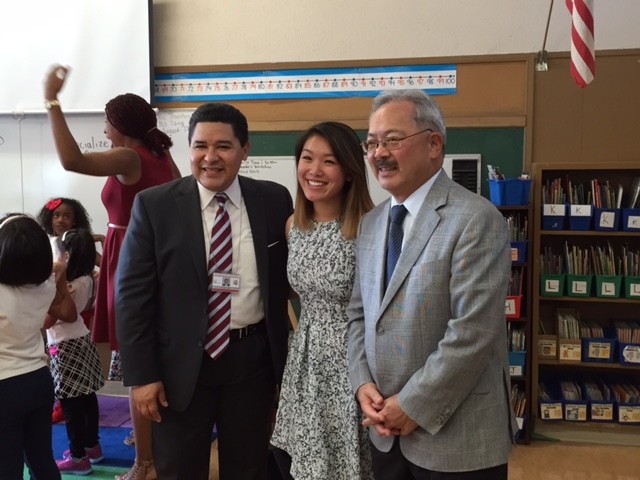
"caption": "SFUSD Superintendent Richard Carranza (left) and San Francisco Mayor Ed Lee (right) congratulate 22-year-old Tina Yang (middle) on her first year as a teacher resident at El Dorado Elementary School. ",
"description": null,
"title": "RS16652_IMG_1284-qut",
"credit": "Ana Tintocalis",
"status": "inherit",
"isLoading": false,
"fetchFailed": false
},
"news_10457984": {
"type": "attachments",
"id": "news_10457984",
"meta": {
"index": "attachments_1716263798",
"site": "news",
"id": "10457984",
"found": true
},
"parent": 10457537,
"imgSizes": {
"twentyfourteen-full-width": {
"file": "https://ww2.kqed.org/app/uploads/sites/10/2016/03/Robert-Snavely-1038x576.jpg",
"width": 1038,
"mimeType": "image/jpeg",
"height": 576
},
"thumbnail": {
"file": "https://ww2.kqed.org/app/uploads/sites/10/2016/03/Robert-Snavely-400x300.jpg",
"width": 400,
"mimeType": "image/jpeg",
"height": 300
},
"fd-sm": {
"file": "https://ww2.kqed.org/app/uploads/sites/10/2016/03/Robert-Snavely-320x240.jpg",
"width": 320,
"mimeType": "image/jpeg",
"height": 240
},
"post-thumbnail": {
"file": "https://ww2.kqed.org/app/uploads/sites/10/2016/03/Robert-Snavely-672x372.jpg",
"width": 672,
"mimeType": "image/jpeg",
"height": 372
},
"kqedFullSize": {
"file": "https://ww2.kqed.org/app/uploads/sites/10/2016/03/Robert-Snavely.jpg",
"width": 4608,
"height": 3456
},
"large": {
"file": "https://ww2.kqed.org/app/uploads/sites/10/2016/03/Robert-Snavely-1440x1080.jpg",
"width": 1440,
"mimeType": "image/jpeg",
"height": 1080
},
"guest-author-96": {
"file": "https://ww2.kqed.org/app/uploads/sites/10/2016/03/Robert-Snavely-96x96.jpg",
"width": 96,
"mimeType": "image/jpeg",
"height": 96
},
"medium": {
"file": "https://ww2.kqed.org/app/uploads/sites/10/2016/03/Robert-Snavely-800x600.jpg",
"width": 800,
"mimeType": "image/jpeg",
"height": 600
},
"guest-author-64": {
"file": "https://ww2.kqed.org/app/uploads/sites/10/2016/03/Robert-Snavely-64x64.jpg",
"width": 64,
"mimeType": "image/jpeg",
"height": 64
},
"guest-author-32": {
"file": "https://ww2.kqed.org/app/uploads/sites/10/2016/03/Robert-Snavely-32x32.jpg",
"width": 32,
"mimeType": "image/jpeg",
"height": 32
},
"fd-lrg": {
"file": "https://ww2.kqed.org/app/uploads/sites/10/2016/03/Robert-Snavely-1180x885.jpg",
"width": 1180,
"mimeType": "image/jpeg",
"height": 885
},
"fd-med": {
"file": "https://ww2.kqed.org/app/uploads/sites/10/2016/03/Robert-Snavely-768x576.jpg",
"width": 768,
"mimeType": "image/jpeg",
"height": 576
},
"detail": {
"file": "https://ww2.kqed.org/app/uploads/sites/10/2016/03/Robert-Snavely-75x75.jpg",
"width": 75,
"mimeType": "image/jpeg",
"height": 75
},
"guest-author-128": {
"file": "https://ww2.kqed.org/app/uploads/sites/10/2016/03/Robert-Snavely-128x128.jpg",
"width": 128,
"mimeType": "image/jpeg",
"height": 128
}
},
"publishDate": 1426559315,
"modified": 1426559374,
"caption": "Robert Snavely, who applied to nearly 30 San Francisco elementary schools for his son, William.",
"description": "Robert Snavely, who applied to nearly 30 San Francisco elementary schools for his son, William.",
"title": "IMG_0279",
"credit": "Jon Brooks/KQED",
"status": "inherit",
"isLoading": false,
"fetchFailed": false
},
"news_10348062": {
"type": "attachments",
"id": "news_10348062",
"meta": {
"index": "attachments_1716263798",
"site": "news",
"id": "10348062",
"found": true
},
"parent": 10348059,
"imgSizes": {
"thumbnail": {
"file": "https://ww2.kqed.org/app/uploads/sites/10/2014/11/SFTeachers-400x300.jpg",
"width": 400,
"mimeType": "image/jpeg",
"height": 300
},
"post-thumbnail": {
"file": "https://ww2.kqed.org/app/uploads/sites/10/2014/11/SFTeachers-620x372.jpg",
"width": 620,
"mimeType": "image/jpeg",
"height": 372
},
"kqedFullSize": {
"file": "https://ww2.kqed.org/app/uploads/sites/10/2014/11/SFTeachers.jpg",
"width": 620,
"height": 465
},
"guest-author-96": {
"file": "https://ww2.kqed.org/app/uploads/sites/10/2014/11/SFTeachers-96x96.jpg",
"width": 96,
"mimeType": "image/jpeg",
"height": 96
},
"guest-author-64": {
"file": "https://ww2.kqed.org/app/uploads/sites/10/2014/11/SFTeachers-64x64.jpg",
"width": 64,
"mimeType": "image/jpeg",
"height": 64
},
"detail": {
"file": "https://ww2.kqed.org/app/uploads/sites/10/2014/11/SFTeachers-75x75.jpg",
"width": 75,
"mimeType": "image/jpeg",
"height": 75
},
"guest-author-32": {
"file": "https://ww2.kqed.org/app/uploads/sites/10/2014/11/SFTeachers-32x32.jpg",
"width": 32,
"mimeType": "image/jpeg",
"height": 32
},
"guest-author-128": {
"file": "https://ww2.kqed.org/app/uploads/sites/10/2014/11/SFTeachers-128x128.jpg",
"width": 128,
"mimeType": "image/jpeg",
"height": 128
}
},
"publishDate": 1415742348,
"modified": 1415742384,
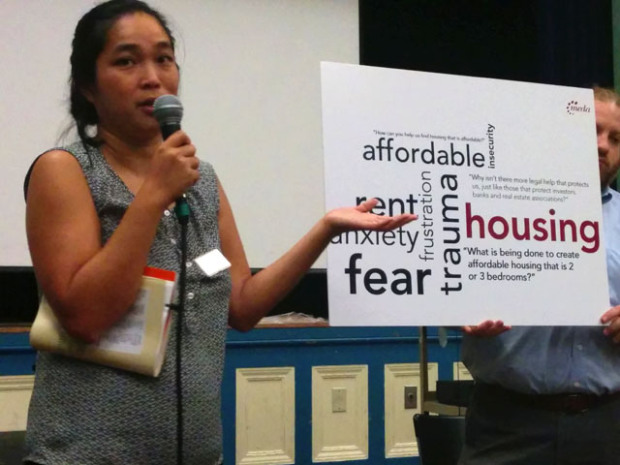
"caption": "Karoleen Feng of MEDA describes the findings of a survey of parents around the Mission at Buena Vista Horace Mann Thursday evening. (Laura Wenus/Mission Local)",
"description": "Karoleen Feng of MEDA describes the findings of a survey of parents around the Mission at Buena Vista Horace Mann Thursday evening",
"title": "SFTeachers",
"credit": null,
"status": "inherit",
"isLoading": false,
"fetchFailed": false
}
},
"audioPlayerReducer": {
"postId": "stream_live",
"isPaused": true,
"isPlaying": false,
"pfsActive": false,
"pledgeModalIsOpen": true,
"playerDrawerIsOpen": false,
"liveAudioPlayStartedAt": 0,
"liveAudioPlayContext": ""
},
"authorsReducer": {
"byline_news_11781032": {
"type": "authors",
"id": "byline_news_11781032",
"meta": {
"override": true
},
"slug": "byline_news_11781032",
"name": "\u003cstrong>Lee Romney\u003c/strong>",
"isLoading": false
},
"byline_news_10348059": {
"type": "authors",
"id": "byline_news_10348059",
"meta": {
"override": true
},
"slug": "byline_news_10348059",
"name": "Laura Wenus\u003cbr/>Mission Local",
"isLoading": false
},
"jbrooks": {
"type": "authors",
"id": "80",
"meta": {
"index": "authors_1716337520",
"id": "80",
"found": true
},
"name": "Jon Brooks",
"firstName": "Jon",
"lastName": "Brooks",
"slug": "jbrooks",
"email": "jbrooks@kqed.org",
"display_author_email": true,
"staff_mastheads": [
"science"
],
"title": "Digital Editor",
"bio": "Jon Brooks is a former Digital Editor for KQED Science. He is the former editor of KQED’s daily news blog, News Fix. In 2014, he won a California Journalism Award for his coverage of ride services like Uber and Lyft and the taxi industry. A veteran blogger, he previously worked for Yahoo! in various news writing and editing roles. Jon is also a playwright whose work has been produced in San Francisco, New York, Italy, and around the U.S. He has written about film for his own blog and studied film at Boston University.",
"avatar": "https://secure.gravatar.com/avatar/98887f7ed1c876ed414d4c915e969584?s=600&d=blank&r=g",
"twitter": "jbrooksfoy",
"facebook": null,
"instagram": null,
"linkedin": null,
"sites": [
{
"site": "arts",
"roles": [
"Contributor",
"editor"
]
},
{
"site": "news",
"roles": [
"author"
]
},
{
"site": "futureofyou",
"roles": [
"administrator"
]
},
{
"site": "mindshift",
"roles": [
"editor"
]
},
{
"site": "stateofhealth",
"roles": [
"editor"
]
},
{
"site": "science",
"roles": [
"administrator"
]
},
{
"site": "quest",
"roles": [
"editor"
]
}
],
"headData": {
"title": "Jon Brooks | KQED",
"description": "Digital Editor",
"ogImgSrc": "https://secure.gravatar.com/avatar/98887f7ed1c876ed414d4c915e969584?s=600&d=blank&r=g",
"twImgSrc": "https://secure.gravatar.com/avatar/98887f7ed1c876ed414d4c915e969584?s=600&d=blank&r=g"
},
"isLoading": false,
"link": "/author/jbrooks"
},
"anatintocalis": {
"type": "authors",
"id": "211",
"meta": {
"index": "authors_1716337520",
"id": "211",
"found": true
},
"name": "Ana Tintocalis",
"firstName": "Ana",
"lastName": "Tintocalis",
"slug": "anatintocalis",
"email": "atintocalis@kqed.org",
"display_author_email": false,
"staff_mastheads": [],
"title": null,
"bio": null,
"avatar": "https://secure.gravatar.com/avatar/722c50f51f04eff38fa0e5a3f1d29450?s=600&d=blank&r=g",
"twitter": null,
"facebook": null,
"instagram": null,
"linkedin": null,
"sites": [
{
"site": "news",
"roles": [
"subscriber"
]
},
{
"site": "stateofhealth",
"roles": [
"subscriber"
]
}
],
"headData": {
"title": "Ana Tintocalis | KQED",
"description": null,
"ogImgSrc": "https://secure.gravatar.com/avatar/722c50f51f04eff38fa0e5a3f1d29450?s=600&d=blank&r=g",
"twImgSrc": "https://secure.gravatar.com/avatar/722c50f51f04eff38fa0e5a3f1d29450?s=600&d=blank&r=g"
},
"isLoading": false,
"link": "/author/anatintocalis"
},
"gmarzorati": {
"type": "authors",
"id": "227",
"meta": {
"index": "authors_1716337520",
"id": "227",
"found": true
},
"name": "Guy Marzorati",
"firstName": "Guy",
"lastName": "Marzorati",
"slug": "gmarzorati",
"email": "gmarzorati@KQED.org",
"display_author_email": true,
"staff_mastheads": [
"news"
],
"title": "Correspondent",
"bio": "Guy Marzorati is a correspondent on KQED's California Politics and Government Desk, based in San Jose. A graduate of Santa Clara University, Guy joined KQED in 2013. He reports on state and local politics and produces KQED's digital voter guide.",
"avatar": "https://secure.gravatar.com/avatar/e7038b8dbfd55b104369b76b1cd0b9de?s=600&d=blank&r=g",
"twitter": "guymarzorati",
"facebook": null,
"instagram": null,
"linkedin": null,
"sites": [
{
"site": "",
"roles": [
"editor"
]
},
{
"site": "news",
"roles": [
"editor"
]
},
{
"site": "science",
"roles": [
"editor"
]
},
{
"site": "forum",
"roles": [
"editor"
]
},
{
"site": "elections",
"roles": [
"editor"
]
},
{
"site": "liveblog",
"roles": [
"editor"
]
}
],
"headData": {
"title": "Guy Marzorati | KQED",
"description": "Correspondent",
"ogImgSrc": "https://secure.gravatar.com/avatar/e7038b8dbfd55b104369b76b1cd0b9de?s=600&d=blank&r=g",
"twImgSrc": "https://secure.gravatar.com/avatar/e7038b8dbfd55b104369b76b1cd0b9de?s=600&d=blank&r=g"
},
"isLoading": false,
"link": "/author/gmarzorati"
},
"jmcevoy": {
"type": "authors",
"id": "231",
"meta": {
"index": "authors_1716337520",
"id": "231",
"found": true
},
"name": "Julia McEvoy",
"firstName": "Julia",
"lastName": "McEvoy",
"slug": "jmcevoy",
"email": "jmcevoy@KQED.org",
"display_author_email": true,
"staff_mastheads": [
"news"
],
"title": "KQED Senior Editor",
"bio": "Julia McEvoy is KQED's Senior Editor, Education Equity.\r\n\r\nJulia heads KQED’s education coverage examining inequities students face in Bay Area and California schools, and reports on what it will take to educate the next generation.\r\n\r\nJulia's editorial work has received a Peabody Award, a Casey Medal for Coverage of Children and Families, several Edward R. Murrow awards, as well as awards from the Public Radio News Directors Inc. and the Society for Professional Journalists.",
"avatar": "https://secure.gravatar.com/avatar/aec3ce21abe02b302fd33638abd56a22?s=600&d=blank&r=g",
"twitter": "juliamcevoy1",
"facebook": null,
"instagram": null,
"linkedin": null,
"sites": [
{
"site": "news",
"roles": []
},
{
"site": "stateofhealth",
"roles": [
"author"
]
}
],
"headData": {
"title": "Julia McEvoy | KQED",
"description": "KQED Senior Editor",
"ogImgSrc": "https://secure.gravatar.com/avatar/aec3ce21abe02b302fd33638abd56a22?s=600&d=blank&r=g",
"twImgSrc": "https://secure.gravatar.com/avatar/aec3ce21abe02b302fd33638abd56a22?s=600&d=blank&r=g"
},
"isLoading": false,
"link": "/author/jmcevoy"
},
"katrinaschwartz": {
"type": "authors",
"id": "234",
"meta": {
"index": "authors_1716337520",
"id": "234",
"found": true
},
"name": "Katrina Schwartz",
"firstName": "Katrina",
"lastName": "Schwartz",
"slug": "katrinaschwartz",
"email": "kschwartz@kqed.org",
"display_author_email": false,
"staff_mastheads": [
"news"
],
"title": "Producer",
"bio": "Katrina Schwartz is a journalist based in San Francisco. She's worked at KPCC public radio in LA and has reported on air and online for KQED since 2010. She covered how teaching and learning is changing for MindShift between 2012 and 2020. She is the co-host of the MindShift podcast and now produces KQED's Bay Curious podcast.",
"avatar": "https://secure.gravatar.com/avatar/edb4ee79070447a018538c9aae6eeecf28786515b8a0c30e43b6b7dce5aa44c8?s=600&d=blank&r=g",
"twitter": "kschwart",
"bluesky": null,
"facebook": null,
"instagram": null,
"linkedin": null,
"sites": [
{
"site": "",
"roles": [
"editor"
]
},
{
"site": "news",
"roles": [
"editor"
]
},
{
"site": "mindshift",
"roles": [
"administrator"
]
},
{
"site": "stateofhealth",
"roles": [
"author"
]
},
{
"site": "science",
"roles": [
"editor"
]
}
],
"headData": {
"title": "Katrina Schwartz | KQED",
"description": "Producer",
"ogImgSrc": "https://secure.gravatar.com/avatar/edb4ee79070447a018538c9aae6eeecf28786515b8a0c30e43b6b7dce5aa44c8?s=600&d=blank&r=g",
"twImgSrc": "https://secure.gravatar.com/avatar/edb4ee79070447a018538c9aae6eeecf28786515b8a0c30e43b6b7dce5aa44c8?s=600&d=blank&r=g"
},
"isLoading": false,
"link": "/author/katrinaschwartz"
},
"tgoldberg": {
"type": "authors",
"id": "258",
"meta": {
"index": "authors_1716337520",
"id": "258",
"found": true
},
"name": "Ted Goldberg",
"firstName": "Ted",
"lastName": "Goldberg",
"slug": "tgoldberg",
"email": "tgoldberg@kqed.org",
"display_author_email": true,
"staff_mastheads": [
"news"
],
"title": "KQED Managing Editor, News and Newscasts",
"bio": "Ted Goldberg is Managing Editor of News and Newscasts at KQED. His main reporting beat is the Bay Area's oil refining industry.\r\n\r\nPrior to joining KQED in 2014, Ted worked at CBS News and WCBS AM in New York and Bay City News and KCBS Radio in San Francisco. He graduated from Oberlin College in Ohio in 1998.",
"avatar": "https://secure.gravatar.com/avatar/30ce2e4fe89135e104f89be2394d16225b9d36c121b5b3cb7651ce642978b96f?s=600&d=blank&r=g",
"twitter": "TedrickG",
"bluesky": null,
"facebook": null,
"instagram": null,
"linkedin": null,
"sites": [
{
"site": "news",
"roles": [
"editor"
]
},
{
"site": "science",
"roles": [
"editor"
]
}
],
"headData": {
"title": "Ted Goldberg | KQED",
"description": "KQED Managing Editor, News and Newscasts",
"ogImgSrc": "https://secure.gravatar.com/avatar/30ce2e4fe89135e104f89be2394d16225b9d36c121b5b3cb7651ce642978b96f?s=600&d=blank&r=g",
"twImgSrc": "https://secure.gravatar.com/avatar/30ce2e4fe89135e104f89be2394d16225b9d36c121b5b3cb7651ce642978b96f?s=600&d=blank&r=g"
},
"isLoading": false,
"link": "/author/tgoldberg"
},
"matthewgreen": {
"type": "authors",
"id": "1263",
"meta": {
"index": "authors_1716337520",
"id": "1263",
"found": true
},
"name": "Matthew Green",
"firstName": "Matthew",
"lastName": "Green",
"slug": "matthewgreen",
"email": "mgreen@kqed.org",
"display_author_email": false,
"staff_mastheads": [],
"title": "KQED Editor/Reporter",
"bio": "Matthew Green is a digital media producer for KQED News. He previously produced \u003ca href=\"http://www.kqed.org/lowdown\">The Lowdown\u003c/a>, KQED’s multimedia news education blog. Matthew's written for numerous Bay Area publications, including the Oakland Tribune and San Francisco Chronicle. He also taught journalism classes at Fremont High School in East Oakland.\r\n\r\nEmail: mgreen@kqed.org; Twitter: @MGreenKQED",
"avatar": "https://secure.gravatar.com/avatar/3bf498d1267ca02c8494f33d8cfc575e?s=600&d=blank&r=g",
"twitter": "MGreenKQED",
"facebook": null,
"instagram": null,
"linkedin": null,
"sites": [
{
"site": "news",
"roles": []
},
{
"site": "lowdown",
"roles": []
},
{
"site": "science",
"roles": []
},
{
"site": "education",
"roles": []
},
{
"site": "quest",
"roles": []
},
{
"site": "liveblog",
"roles": []
}
],
"headData": {
"title": "Matthew Green | KQED",
"description": "KQED Editor/Reporter",
"ogImgSrc": "https://secure.gravatar.com/avatar/3bf498d1267ca02c8494f33d8cfc575e?s=600&d=blank&r=g",
"twImgSrc": "https://secure.gravatar.com/avatar/3bf498d1267ca02c8494f33d8cfc575e?s=600&d=blank&r=g"
},
"isLoading": false,
"link": "/author/matthewgreen"
},
"markfiore": {
"type": "authors",
"id": "3236",
"meta": {
"index": "authors_1716337520",
"id": "3236",
"found": true
},
"name": "Mark Fiore",
"firstName": "Mark",
"lastName": "Fiore",
"slug": "markfiore",
"email": "mark@markfiore.com",
"display_author_email": false,
"staff_mastheads": [
"news"
],
"title": "KQED News Cartoonist",
"bio": "\u003ca href=\"http://www.MarkFiore.com\">MarkFiore.com\u003c/a> | \u003ca href=\"https://twitter.com/markfiore\">Follow on Twitter\u003c/a> | \u003ca href=\"https://www.facebook.com/pages/Mark-Fiore-Animated-Political-Cartoons/94451707396?ref=bookmarks\">Facebook\u003c/a> | \u003ca href=\"mailto:mark@markfiore.com\">email\u003c/a>\r\n\r\nPulitzer Prize-winner, Mark Fiore, who the Wall Street Journal has called “the undisputed guru of the form,” creates animated political cartoons in San Francisco, where his work has been featured regularly on the San Francisco Chronicle’s web site, SFGate.com. His work has appeared on Newsweek.com, Slate.com, CBSNews.com, MotherJones.com, DailyKos.com and NPR’s web site. Fiore’s political animation has appeared on CNN, Frontline, Bill Moyers Journal, Salon.com and cable and broadcast outlets across the globe.\r\n\r\nBeginning his professional life by drawing traditional political cartoons for newspapers, Fiore’s work appeared in publications ranging from the Washington Post to the Los Angeles Times. In the late 1990s, he began to experiment with animating political cartoons and, after a short stint at the San Jose Mercury News as their staff cartoonist, Fiore devoted all his energies to animation.\r\nGrowing up in California, Fiore also spent a good portion of his life in the backwoods of Idaho. It was this combination that shaped him politically. Mark majored in political science at Colorado College, where, in a perfect send-off for a cartoonist, he received his diploma in 1991 as commencement speaker Dick Cheney smiled approvingly.\r\nMark Fiore was awarded the Pulitzer Prize for political cartooning in 2010, a Robert F. Kennedy Journalism Award in 2004 and has twice received an Online Journalism Award for commentary from the Online News Association (2002, 2008). Fiore has received two awards for his work in new media from the National Cartoonists Society (2001, 2002), and in 2006 received The James Madison Freedom of Information Award from The Society of Professional Journalists.",
"avatar": "https://secure.gravatar.com/avatar/fc4e2a612b15b67bad0c6f0e1db4ca9b?s=600&d=blank&r=g",
"twitter": "MarkFiore",
"facebook": null,
"instagram": "https://www.instagram.com/markfiore/?hl=en",
"linkedin": null,
"sites": [
{
"site": "arts",
"roles": [
"contributor"
]
},
{
"site": "news",
"roles": [
"editor"
]
},
{
"site": "futureofyou",
"roles": [
"editor"
]
},
{
"site": "science",
"roles": [
"editor"
]
}
],
"headData": {
"title": "Mark Fiore | KQED",
"description": "KQED News Cartoonist",
"ogImgSrc": "https://secure.gravatar.com/avatar/fc4e2a612b15b67bad0c6f0e1db4ca9b?s=600&d=blank&r=g",
"twImgSrc": "https://secure.gravatar.com/avatar/fc4e2a612b15b67bad0c6f0e1db4ca9b?s=600&d=blank&r=g"
},
"isLoading": false,
"link": "/author/markfiore"
},
"katewolffe": {
"type": "authors",
"id": "11523",
"meta": {
"index": "authors_1716337520",
"id": "11523",
"found": true
},
"name": "Kate Wolffe",
"firstName": "Kate",
"lastName": "Wolffe",
"slug": "katewolffe",
"email": "kwolffe@kqed.org",
"display_author_email": true,
"staff_mastheads": [
"news"
],
"title": "KQED Reporter + Weekend Host",
"bio": "Kate Wolffe reports on local Bay Area happenings for KQED, and hosts the news on weekend afternoons. She joined KQED in 2018 as an intern on the Forum team, before moving to cover topics ranging from politics to criminal justice to homelessness. A Bay Area native and UC Berkeley graduate, Kate loves to discover new corners of the region.",
"avatar": "https://secure.gravatar.com/avatar/22455f14db824a03ee252f73052fe939?s=600&d=blank&r=g",
"twitter": "katewolffe",
"facebook": null,
"instagram": null,
"linkedin": null,
"sites": [
{
"site": "arts",
"roles": [
"editor"
]
},
{
"site": "news",
"roles": [
"author",
"edit_others_posts"
]
},
{
"site": "forum",
"roles": [
"editor"
]
}
],
"headData": {
"title": "Kate Wolffe | KQED",
"description": "KQED Reporter + Weekend Host",
"ogImgSrc": "https://secure.gravatar.com/avatar/22455f14db824a03ee252f73052fe939?s=600&d=blank&r=g",
"twImgSrc": "https://secure.gravatar.com/avatar/22455f14db824a03ee252f73052fe939?s=600&d=blank&r=g"
},
"isLoading": false,
"link": "/author/katewolffe"
}
},
"pagesReducer": {
"news_tag_sfusd": {
"type": "terms",
"id": "news_1290",
"meta": {
"index": "terms_1716263798",
"site": "news",
"id": "1290",
"score": 9.104049
},
"featImg": null,
"name": "SFUSD",
"description": null,
"taxonomy": "tag",
"headData": {
"twImgId": null,
"twTitle": null,
"ogTitle": null,
"ogImgId": null,
"twDescription": null,
"description": null,
"title": "SFUSD Archives | KQED News",
"ogDescription": null
},
"ttid": 1302,
"slug": "sfusd",
"isLoading": false,
"title": "SFUSD",
"pageMeta": {
"site": "news",
"WpPageTemplate": "page-topic-editorial",
"currentPage": 13
},
"blocks": [
{
"blockName": "kqed/post-list",
"attrs": {
"layout": "cardArticle2",
"query": "posts/news?tag=sfusd",
"seeMore": false,
"paginated": true,
"page": 13
}
},
{
"blockName": "kqed/ad"
}
]
}
},
"pfsSessionReducer": {},
"postsReducer": {
"stream_live": {
"type": "live",
"id": "stream_live",
"audioUrl": "https://streams.kqed.org/kqedradio",
"title": "Live Stream",
"excerpt": "Live Stream information currently unavailable.",
"link": "/radio",
"featImg": "",
"label": {
"name": "KQED Live",
"link": "/"
}
},
"stream_kqedNewscast": {
"type": "posts",
"id": "stream_kqedNewscast",
"audioUrl": "https://www.kqed.org/.stream/anon/radio/RDnews/newscast.mp3?_=1",
"title": "KQED Newscast",
"featImg": "",
"label": {
"name": "88.5 FM",
"link": "/"
}
},
"news_11781032": {
"type": "posts",
"id": "news_11781032",
"meta": {
"index": "posts_1716263798",
"site": "news",
"id": "11781032",
"score": null,
"sort": [
1571443327000
]
},
"guestAuthors": [],
"slug": "a-landmark-lawsuit-aimed-to-fix-special-ed-for-californias-black-students-it-didnt",
"title": "A Landmark Lawsuit Aimed to Fix Special Ed for California's Black Students. It Didn’t.",
"publishDate": 1571443327,
"format": "audio",
"headTitle": "A Landmark Lawsuit Aimed to Fix Special Ed for California’s Black Students. It Didn’t. | KQED",
"labelTerm": {
"term": 72,
"site": "news"
},
"content": "\u003cp>Darryl Lester was at his mom’s place in Tacoma, Washington, when a letter he’d been waiting for arrived in the mail. At 40, he was destitute, in pain and out of work.\u003c/p>\n\u003cp>[pullquote size='medium' align='right' citation='Darryl Lester, lead plaintiff in landmark special education lawsuit in California']‘My dream is to be able to pick up a book and read it by myself.’[/pullquote]The letter delivered good news: Lester would be getting disability benefits after blowing out his back in a sheet metal accident. But he crumpled it up and threw it in the trash.\u003c/p>\n\u003cp>Why? Because he couldn’t read it. From first through seventh grades, Lester had attended three public schools in San Francisco. At each, he struggled with reading and didn’t get the help he needed for it.\u003c/p>\n\u003cp>What he didn’t know until last year: His reading difficulties had made him the lead plaintiff — under the pseudonym Larry P. — in a landmark lawsuit that changed special education for black students across California. October marks the 40th anniversary of the judge’s ruling, which was supposed to help fix a system he had deemed discriminatory. But many educators, black parents and advocates for black students say plenty remains broken.\u003c/p>\n\u003cp>\u003cstrong>‘Educable Mentally Retarded’\u003c/strong>\u003c/p>\n\u003cp>Before the Larry P. case, California education code \u003ca href=\"https://law.justia.com/cases/federal/district-courts/FSupp/495/926/2007878/\" target=\"_blank\" rel=\"noopener\">required\u003c/a> school districts to use IQ scores when assessing students for special education.\u003c/p>\n\u003cp>Based on the test results, black students statewide — young Darryl included — wound up categorized as “educable mentally retarded” at disproportionate rates: 27% labeled that way in 1968 were black — even though black students made up less than 9% of the student body.\u003c/p>\n\u003cp>That same year, a group of black psychologists broke off from the American Psychological Association in protest over black community concerns that they believed the larger organization was too slow to address. Their top priority was to stop districts from using IQ tests, which they thought were culturally biased, to decide who belonged in special education, said one of the breakaway group’s founders, Harold Dent.\u003c/p>\n\u003cp>When the Bay Area chapter of the Association of Black Psychologists learned of complaints from black parents in San Francisco, they teamed up with civil rights lawyers and sued in 1971.\u003c/p>\n\u003cp>As a group, African Americans across the country scored lower on IQ tests. The \u003ca href=\"https://law.justia.com/cases/federal/district-courts/FSupp/495/926/2007878/\" target=\"_blank\" rel=\"noopener\">lawsuit\u003c/a> alleged that was because the tests were biased toward Eurocentric culture. Questions like, ”Who wrote Romeo and Juliet,” they argued, didn’t assess a student’s innate capacity to learn. It tested knowledge that some – and not others — had acquired at home or school.\u003c/p>\n\u003cp>U.S. District Judge Robert Peckham agreed, calling the tests “racially and culturally biased” and “discriminatory.” He ordered a permanent ban on IQ testing of black students across California for purposes of special education placement. Today, California is the only state that has such a ban.\u003c/p>\n\u003cp>The students who landed in classes for the “educable mentally retarded,” Peckham wrote, were doomed to fall “farther and farther behind,” because — instead of academics — the classes emphasized “personal hygiene and grooming” and “basic home and community living skills.”\u003c/p>\n\u003cp>Darryl Lester remembers those classes: lots of recess time and plenty of field trips.\u003c/p>\n\u003cp>“I walked to school and cried all the way,” he said. “I just didn’t like it, you know, because they wasn’t teaching us nothing.”\u003c/p>\n\u003cp>\u003cstrong>The District Labeled Her Son Mentally Retarded — and Didn’t Tell Her\u003c/strong>\u003c/p>\n\u003cp>Lester and his mom and older brothers moved from Marietta, Georgia, to San Francisco in 1965, he said, because “she didn’t want to find us dead one day hanging by a tree.”\u003c/p>\n\u003cp>[pullquote size='medium' align='right' citation='Darryl Lester, lead plaintiff in landmark special education lawsuit in California']‘I walked to school and cried all the way. I just didn’t like it, you know, because they wasn’t teaching us nothing.’[/pullquote]Their first home was a Victorian in the Fillmore District. Lester said he learned his way around the “gorgeous” city by bus and bicycle. Life was pretty good, except in school. Although he was “very good at math,” Lester said, he had a hard time with reading.\u003c/p>\n\u003cp>Lester said he remembers a teacher telling him he was looking at words backwards as he sought to pronounce them. People with dyslexia see words the same way as everyone else — but have a neurobiological language processing disorder that’s often responsive to intervention.\u003c/p>\n\u003cp>Whether Lester has dyslexia is unclear. What is clear is that instead of getting help with his reading, he got teased, into fights and suspended.\u003c/p>\n\u003cp>“I would get frustrated, agitated, upset, and then I’d get sent to the principal’s office,” he said.\u003c/p>\n\u003cp>Lester’s mom, Lucille Lester, didn’t learn that the school district had labeled her son “mentally retarded” until one of the black psychologists visited their home to evaluate Darryl and go through some tests.\u003c/p>\n\u003cp>“After he talked to Darryl, he turns to me and says, ‘Well, there is nothing wrong with this child,’ ” she testified in court in 1977.\u003c/p>\n\u003cp>That, she said, is when he told her what kind of classes Darryl had been attending.\u003c/p>\n\u003cp>“Naturally I didn’t feel good about it, and I got angry about it,” she told the court. “This is when I really found out what was really going on.”\u003c/p>\n\u003cfigure id=\"attachment_11781040\" class=\"wp-caption alignnone\" style=\"max-width: 800px\">\u003cimg loading=\"lazy\" decoding=\"async\" class=\"size-medium wp-image-11781040\" src=\"https://ww2.kqed.org/news/wp-content/uploads/sites/10/2019/10/10182019_SE_mom-qut-800x600.jpg\" alt=\"Family photos adorn the walls of Darryl and Cecilia Lester’s home in Tacoma, Washington. On the right is Darryl’s mother, Lucille Lester, now 91.\" width=\"800\" height=\"600\" srcset=\"https://cdn.kqed.org/wp-content/uploads/sites/10/2019/10/10182019_SE_mom-qut-800x600.jpg 800w, https://cdn.kqed.org/wp-content/uploads/sites/10/2019/10/10182019_SE_mom-qut-160x120.jpg 160w, https://cdn.kqed.org/wp-content/uploads/sites/10/2019/10/10182019_SE_mom-qut-1020x764.jpg 1020w, https://cdn.kqed.org/wp-content/uploads/sites/10/2019/10/10182019_SE_mom-qut-1200x899.jpg 1200w, https://cdn.kqed.org/wp-content/uploads/sites/10/2019/10/10182019_SE_mom-qut-1376x1032.jpg 1376w, https://cdn.kqed.org/wp-content/uploads/sites/10/2019/10/10182019_SE_mom-qut-1044x783.jpg 1044w, https://cdn.kqed.org/wp-content/uploads/sites/10/2019/10/10182019_SE_mom-qut-632x474.jpg 632w, https://cdn.kqed.org/wp-content/uploads/sites/10/2019/10/10182019_SE_mom-qut-536x402.jpg 536w, https://cdn.kqed.org/wp-content/uploads/sites/10/2019/10/10182019_SE_mom-qut.jpg 1680w\" sizes=\"auto, (max-width: 800px) 100vw, 800px\">\u003cfigcaption class=\"wp-caption-text\">Family photos adorn the walls of Darryl and Cecilia Lester’s home in Tacoma, Washington. On the right is Darryl’s mother, Lucille Lester, now 91. \u003ccite>(Lee Romney/KQED)\u003c/cite>\u003c/figcaption>\u003c/figure>\n\u003cp>Not long after, Lucille Lester packed up the family and headed to Tacoma, where an older son was serving on a nearby military base. There, Darryl continued to struggle, because as Judge Peckham had predicted, he had fallen behind.\u003c/p>\n\u003cp>His new high school placed him in a half-day special education program. The other half, he spent at Safeway. Every morning, Lester said, he reported at 7:30 a.m. to the grocery store, where he worked for high school credits — but no pay — until 11 a.m. before attending a few classes in the back of the campus.\u003c/p>\n\u003cp>After his family protested, the school put him in with the other kids.\u003c/p>\n\u003cp>He tried hard, going to “summer school, night classes, hardly getting any sleep,” but fell two credits short of a high school diploma, Lester said.\u003c/p>\n\u003cp>To this day, Lester, now 60, can barely read.\u003c/p>\n\u003cp>Lester knew he was part of a lawsuit. His mom had joined it on his behalf in 1971 — the year it was filed and when the family moved to Tacoma.\u003c/p>\n\u003cp>But until a reporter tracked him down last year, he never knew his pseudonym was “Larry P.” And he knew nothing of the ruling’s lasting impact on California schools.\u003c/p>\n\u003cp>Of the 1977 trip to the courthouse, Lester, then 18, recalled: “I asked my momma, ‘Are we done?’ And she said, ‘Yes son, we done.’ ”\u003c/p>\n\u003cp>They never spoke of it again.\u003c/p>\n\u003cfigure id=\"attachment_11781037\" class=\"wp-caption aligncenter\" style=\"max-width: 800px\">\u003cimg loading=\"lazy\" decoding=\"async\" class=\"size-medium wp-image-11781037\" src=\"https://ww2.kqed.org/news/wp-content/uploads/sites/10/2019/10/10182019_SE_conference-qut-800x472.jpg\" alt=\"Darryl Lester gets ready to share his experiences on a March 2019 panel of black San Francisco parents who are navigating the special education system.\" width=\"800\" height=\"472\" srcset=\"https://cdn.kqed.org/wp-content/uploads/sites/10/2019/10/10182019_SE_conference-qut-800x472.jpg 800w, https://cdn.kqed.org/wp-content/uploads/sites/10/2019/10/10182019_SE_conference-qut-160x94.jpg 160w, https://cdn.kqed.org/wp-content/uploads/sites/10/2019/10/10182019_SE_conference-qut-1020x601.jpg 1020w, https://cdn.kqed.org/wp-content/uploads/sites/10/2019/10/10182019_SE_conference-qut-1200x708.jpg 1200w, https://cdn.kqed.org/wp-content/uploads/sites/10/2019/10/10182019_SE_conference-qut.jpg 1920w\" sizes=\"auto, (max-width: 800px) 100vw, 800px\">\u003cfigcaption class=\"wp-caption-text\">Darryl Lester gets ready to share his experiences on a March 2019 panel of black San Francisco parents who are navigating the special education system. \u003ccite>(Joe Goyos/Support for Families of Children With Disabilities)\u003c/cite>\u003c/figcaption>\u003c/figure>\n\u003cp>\u003cstrong>Special Education Today\u003c/strong>\u003c/p>\n\u003cp>The Larry P. judge made California school districts reassess all black students who’d been designated “educable mentally retarded” — without IQ tests — and the numbers dropped. He banned the use of the tests specifically for black students. In time, more subtle special education categories replaced the old ones.\u003c/p>\n\u003cp>By the time the judge ruled in 1979, a new \u003ca href=\"https://www2.ed.gov/policy/speced/leg/idea/history.html\" target=\"_blank\" rel=\"noopener\">federal law\u003c/a> enacted in 1975 guaranteed students with disabilities equal access to public education. Today, each special education student gets an Individualized Education Program, or IEP, which spells out their struggles and the support they’ll get at school.\u003c/p>\n\u003cp>[pullquote size='medium' align='right' citation='Jean Robertson, chief of special education services for San Francisco Unified School District, on deciding who belongs in special education and who requires other types of support']‘That’s the crux of my tension in this work. That is with me every single day, particularly for black children.’[/pullquote]But \u003ca href=\"https://www2.ed.gov/programs/osepidea/618-data/LEA-racial-ethnic-disparities-tables/disproportionality-analysis-by-state-analysis-category.pdf\" target=\"_blank\" rel=\"noopener\">data\u003c/a> released in 2016 show that black students nationwide are still being placed disproportionately in special education — particularly in categories like “emotional disturbance,” which are tied to behavior. They’re underassessed in categories such as autism spectrum disorder. And some who need special education don’t get assessed for anything. That, parents and special education advocates say, is because some teachers expect so little of them.\u003c/p>\n\u003cp>Despite those risks, plenty of black parents want their kids in special education because it gives families a legal avenue to hold schools accountable. Last year, a group of black parents gathered at a San Francisco school to talk about their struggles getting their kids assessed and making sure they receive the support guaranteed under the law.\u003c/p>\n\u003cp>Many black families find themselves navigating the system because nearly one in three black students in San Francisco Unified School District (SFUSD) is in special education — compared to one in eight non-black students, district data \u003ca href=\"//drive.google.com/open?id=13EX-vu62Ie1EcPO0VcoM-lI2lp-eEmwE\" target=\"_blank\" rel=\"noopener\">shows\u003c/a>.\u003c/p>\n\u003cp>That overrepresentation is highest in special education categories dealing with behavior. And educators, \u003ca href=\"http://kirwaninstitute.osu.edu/racial-disproportionality-in-school-discipline-implicit-bias-is-heavily-implicated/\" target=\"_blank\" rel=\"noopener\">studies show\u003c/a>, are more likely to perceive the behavior of black boys as aggressive or defiant. That’s why black boys routinely post the highest rates of suspensions and expulsions in the country.\u003c/p>\n\u003cp>[ad fullwidth]\u003c/p>\n\u003cp>Mauricha Robinson said it’s not just boys: Her daughter Zariah excelled in school until sixth grade — when the curriculum got more complex. She tanked in her studies for the next two years.\u003c/p>\n\u003cp>Instead of seeking to assess Zariah for special needs, Robinson said, the school was kicking her out of class, sending her home or to the principal’s office.\u003c/p>\n\u003cp>“It was just, ‘How do we curb the behavior, behavior, behavior,’ ” she said. “And it was all punitive.”\u003c/p>\n\u003cp>Like all districts in California, SFUSD is working to reduce the disproportionately high numbers of black students in special education. Robinson speculates maybe that’s why no one in Zariah’s school sought to have her assessed, “to avoid stigmatizing another black child with a special education label.” But she thinks stereotypes played in, too, “of her being a black girl. Aggressive, ‘adultifying’ her, or ‘she’s sassy’ or ‘she’s outspoken.’ ”\u003c/p>\n\u003cp>[pullquote size='medium' align='right' citation='Darryl Lester, lead plaintiff in landmark special education lawsuit in California']‘If you’re a kid that can’t read something, it’s embarrassing.’[/pullquote]That’s also common: \u003ca href=\"https://www.aecf.org/blog/new-study-the-adultification-of-black-girls/\" target=\"_blank\" rel=\"noopener\">Research\u003c/a> has shown that adults at school often treat black girls “as less innocent and more adult-like than white girls of the same age” and punish them more harshly as a result.\u003c/p>\n\u003cp>So Robinson got some advice: If she requested her daughter get assessed, she’d be inoculated against expulsion. And she did: The assessment showed Zariah has a learning disability — a cognitive processing disorder that affects short-term memory and comprehension.\u003c/p>\n\u003cp>For eighth grade, Robinson moved Zariah into a regular class in a new school with some special assistance. It’s called “full inclusion” and aims to keep special education students from being singled out. Zariah’s grades shot up.\u003c/p>\n\u003cp>Jean Robertson, chief of special education services for SFUSD, said the push for “full inclusion” is among many changes the district has been implementing since a 2010 audit found black students were more likely to be segregated from the mainstream student population in special classes.\u003c/p>\n\u003cp>The \u003ca href=\"https://drive.google.com/open?id=1ApjCq-tEsycdkQD9UkeUkik-8owoQsCwXtrs0P6Cw8w\" target=\"_blank\" rel=\"noopener\">audit\u003c/a> also found black students were significantly overrepresented in several special education categories, like “emotional disturbance”: They were 8.5 times more likely than non-black students to be designated “emotionally disturbed.” Today, that number is down to about four times more likely.\u003c/p>\n\u003cfigure id=\"attachment_11781036\" class=\"wp-caption alignnone\" style=\"max-width: 800px\">\u003cimg loading=\"lazy\" decoding=\"async\" class=\"size-medium wp-image-11781036\" src=\"https://ww2.kqed.org/news/wp-content/uploads/sites/10/2019/10/10182019_Chart-of-Emotional-Disturbance-Risk-Ratios-qut-800x543.jpg\" alt=\"In 2010, black students at SF Unified School District were 8.5 times more likely than non-black students to be labeled “emotionally disturbed.” Today, that’s down to about four times more likely.\" width=\"800\" height=\"543\" srcset=\"https://cdn.kqed.org/wp-content/uploads/sites/10/2019/10/10182019_Chart-of-Emotional-Disturbance-Risk-Ratios-qut-800x543.jpg 800w, https://cdn.kqed.org/wp-content/uploads/sites/10/2019/10/10182019_Chart-of-Emotional-Disturbance-Risk-Ratios-qut-160x109.jpg 160w, https://cdn.kqed.org/wp-content/uploads/sites/10/2019/10/10182019_Chart-of-Emotional-Disturbance-Risk-Ratios-qut-1020x692.jpg 1020w, https://cdn.kqed.org/wp-content/uploads/sites/10/2019/10/10182019_Chart-of-Emotional-Disturbance-Risk-Ratios-qut-1200x814.jpg 1200w, https://cdn.kqed.org/wp-content/uploads/sites/10/2019/10/10182019_Chart-of-Emotional-Disturbance-Risk-Ratios-qut.jpg 1802w\" sizes=\"auto, (max-width: 800px) 100vw, 800px\">\u003cfigcaption class=\"wp-caption-text\">In 2010, black students at SFUSD were 8.5 times more likely than non-black students to be labeled “emotionally disturbed.” Today, that’s down to about four times more likely. \u003ccite>(San Francisco Unified School District)\u003c/cite>\u003c/figcaption>\u003c/figure>\n\u003cp>California Department of Education data received in response to a public records request show 28 of the state’s nearly 1,000 school districts faring worse for black students in that category. The relatively low number of 28 is not surprising since many districts serve a very small number of black students, or none at all. At the high end, the data showed that one Southern California district is 12 times more likely to categorize black students as “emotionally disturbed.”\u003c/p>\n\u003cp>Other changes SFUSD has made over the past decade include working to support students early on so they don’t land in special education, doing deeper assessments and better tailoring services to each special education student instead of putting them in cookie-cutter programs.\u003c/p>\n\u003cp>But deciding who belongs in special education and who requires other types of support remains a huge challenge.\u003c/p>\n\u003cp>“That’s the crux of my tension in this work,” Robertson said. “That is with me every single day, particularly for black children.”\u003c/p>\n\u003cp>\u003cstrong>Putting an IQ Label on Students Is Like ‘Walking Around With Dynamite’\u003c/strong>\u003c/p>\n\u003cp>The IQ testing ban at the heart of the Larry P. ruling has created tensions of its own. The California Association of School Psychologists wants it lifted, noting that the persistent overrepresentation of black students in special education shows the ban hasn’t served its purpose.\u003c/p>\n\u003cp>[pullquote size='medium' align='right' citation='Mauricha Robinson, on trying to get help for her daughter, Zariah, an SFUSD student']“It was just, ‘How do we curb the behavior, behavior, behavior. And it was all punitive.’ “[/pullquote]\u003c/p>\n\u003cp>But many advocates for black students want the ban to remain in place, saying so many other biases still exist in the educational system.\u003c/p>\n\u003cp>John Affeldt, a managing attorney at Public Advocates, one of the civil rights firms that filed the Larry P. lawsuit, acknowledged IQ tests have improved since then — but not by enough.\u003c/p>\n\u003cp>Putting an intelligence label on a student is “like walking around with dynamite,” he said. “It’s not going to blow up for every kid.”\u003c/p>\n\u003cp>But when it does, the cost is simply too high.\u003c/p>\n\u003cp>That’s what happened to Darryl Lester. His lack of an education, inability to read and the shame he carried cost him. He struggled with addiction and low-wage jobs before hard physical labor left him disabled.\u003c/p>\n\u003cp>Lester said he has worked hard to rise above all that. He has been sober for 18 years now, happily married for 14. He and his wife, Cecilia Lester, now live in a redeveloped Tacoma housing project.\u003c/p>\n\u003cp>But Cecilia sometimes finds him alone, crying.\u003c/p>\n\u003cp>“It hurts on the inside, but you have to swallow your pride and look over it and just find some strength somewhere and say, ‘Hey, come on, you can do this. I’m better than this,’ and that gets me through the day,” he said.\u003c/p>\n\u003cfigure id=\"attachment_11781165\" class=\"wp-caption alignnone\" style=\"max-width: 800px\">\u003cimg loading=\"lazy\" decoding=\"async\" class=\"size-medium wp-image-11781165\" src=\"https://ww2.kqed.org/news/wp-content/uploads/sites/10/2019/10/10182019_SE_Lester_SF-800x600.jpeg\" alt=\"Darryl Lester at Fisherman’s Wharf in March 2019 on his first visit to San Francisco since he testified in the “Larry P.” trial in 1977.\" width=\"800\" height=\"600\" srcset=\"https://cdn.kqed.org/wp-content/uploads/sites/10/2019/10/10182019_SE_Lester_SF-800x600.jpeg 800w, https://cdn.kqed.org/wp-content/uploads/sites/10/2019/10/10182019_SE_Lester_SF-160x120.jpeg 160w, https://cdn.kqed.org/wp-content/uploads/sites/10/2019/10/10182019_SE_Lester_SF-1020x765.jpeg 1020w, https://cdn.kqed.org/wp-content/uploads/sites/10/2019/10/10182019_SE_Lester_SF-1200x900.jpeg 1200w, https://cdn.kqed.org/wp-content/uploads/sites/10/2019/10/10182019_SE_Lester_SF-1044x783.jpeg 1044w, https://cdn.kqed.org/wp-content/uploads/sites/10/2019/10/10182019_SE_Lester_SF-632x474.jpeg 632w, https://cdn.kqed.org/wp-content/uploads/sites/10/2019/10/10182019_SE_Lester_SF-536x402.jpeg 536w, https://cdn.kqed.org/wp-content/uploads/sites/10/2019/10/10182019_SE_Lester_SF.jpeg 1280w\" sizes=\"auto, (max-width: 800px) 100vw, 800px\">\u003cfigcaption class=\"wp-caption-text\">Darryl Lester at Fisherman’s Wharf in March 2019 on his first visit to San Francisco since he testified in the “Larry P.” trial in 1977. \u003ccite>(Lee Romney/KQED)\u003c/cite>\u003c/figcaption>\u003c/figure>\n\u003cp>\u003cstrong>‘To Be Able to Pick Up a Book and Read it by Myself’\u003c/strong>\u003c/p>\n\u003cp>The Larry P. case remains the subject of \u003ca href=\"https://scholar.google.com/scholar?hl=en&as_sdt=0%2C5&q=%22larry+p%22+%22special+education%22&btnG=\" target=\"_blank\" rel=\"noopener\">academic articles\u003c/a>, online tutorials and plenty of debate. But for decades, the identity of Larry P. — and what happened to him — remained a mystery.\u003c/p>\n\u003cp>That’s no longer true, and Darryl Lester said he wants some good to come of it.\u003c/p>\n\u003cp>[aside tag='schools' label='Related Coverage']Revisiting his schooling and the burden he carried into adulthood has been painful, he said. But it has driven him to share his experience in hopes that it might help today’s black students who aren’t getting the support they need.\u003c/p>\n\u003cp>Last spring, Lester returned to San Francisco for the first time since he testified. He was the guest of honor on a panel that included mothers of current black special education students.\u003c/p>\n\u003cp>“If a teacher’s not helping you, that is not good,” Lester told the gathering of educators, disability rights advocates and black parents, his voice cracking. “You’ve got other kids that will make fun of you. And if you’re a kid that can’t read something, it’s embarrassing.”\u003c/p>\n\u003cp>To the few students who attended the event, Lester said he had a special message: They should fight for an education and never feel ashamed.\u003c/p>\n\u003cp>Next week, he’ll tell his story again at the convention of the California Association of School Psychologists, the organization trying to lift that Larry P. ban.\u003c/p>\n\u003cp>Meanwhile, the grassroots group Decoding Dyslexia CA and the Northern California branch of the International Dyslexia Association are fundraising to create a “Larry P.” scholarship for African American students in Northern California who are struggling to read.\u003c/p>\n\u003cp>Decoding Dyslexia CA has also found a tutor in Tacoma to teach Lester to read. Lester knows it will be hard work, but he said: “My dream is to be able to pick up a book and read it by myself.”\u003c/p>\n\u003cp>\u003cem>An \u003ca href=\"https://www.kalw.org/post/legacy-mistreatment-san-francisco-s-black-special-ed-students#stream/0\" target=\"_blank\" rel=\"noopener\">earlier version\u003c/a> of this story aired on KALW’s news magazine, Crosscurrents. This story was reported with the \u003ca href=\"http://www.centerforhealthjournalism.org/\" target=\"_blank\" rel=\"noopener\">support\u003c/a> of the Fund for Journalism on Child Well-Being, a program of the University of Southern California Center for Health Journalism.\u003c/em>\u003c/p>\n\u003cp>[ad floatright]\u003c/p>\n",
"blocks": [],
"excerpt": "A landmark ruling in 1977 changed special education for black students across California. But many educators, black parents and advocates for black students say plenty remains broken.",
"status": "publish",
"parent": 0,
"modified": 1740613050,
"stats": {
"hasAudio": false,
"hasVideo": false,
"hasChartOrMap": false,
"iframeSrcs": [],
"hasGoogleForm": false,
"hasGallery": false,
"hasHearkenModule": false,
"hasPolis": false,
"paragraphCount": 77,
"wordCount": 3049
},
"headData": {
"title": "A Landmark Lawsuit Aimed to Fix Special Ed for California's Black Students. It Didn’t. | KQED",
"description": "A landmark ruling in 1977 changed special education for black students across California. But many educators, black parents and advocates for black students say plenty remains broken.",
"ogTitle": "",
"ogDescription": "",
"ogImgId": "",
"twTitle": "",
"twDescription": "",
"twImgId": "",
"schema": {
"@context": "https://schema.org",
"@type": "NewsArticle",
"headline": "A Landmark Lawsuit Aimed to Fix Special Ed for California's Black Students. It Didn’t.",
"datePublished": "2019-10-18T17:02:07-07:00",
"dateModified": "2025-02-26T15:37:30-08:00",
"image": "https://cdn.kqed.org/wp-content/uploads/2020/02/KQED-OG-Image@1x.png",
"isAccessibleForFree": "True",
"publisher": {
"@type": "NewsMediaOrganization",
"@id": "https://www.kqed.org/#organization",
"name": "KQED",
"logo": "https://cdn.kqed.org/wp-content/uploads/2020/02/KQED-OG-Image@1x.png",
"url": "https://www.kqed.org",
"sameAs": [
"https://www.facebook.com/KQED",
"https://twitter.com/KQED",
"https://www.instagram.com/kqed/",
"https://www.tiktok.com/@kqedofficial",
"https://www.linkedin.com/company/kqed",
"https://www.youtube.com/channel/UCeC0IOo7i1P_61zVUWbJ4nw"
]
}
}
},
"audioUrl": "https://www.kqed.org/.stream/anon/radio/tcrmag/2019/10/TCRPM20191018.mp3",
"sticky": false,
"nprByline": "\u003cstrong>Lee Romney\u003c/strong>",
"audioTrackLength": 1726,
"path": "/news/11781032/a-landmark-lawsuit-aimed-to-fix-special-ed-for-californias-black-students-it-didnt",
"audioDuration": 1723000,
"parsedContent": [
{
"type": "contentString",
"content": "\u003cdiv class=\"post-body\">\u003cp>\u003cp>Darryl Lester was at his mom’s place in Tacoma, Washington, when a letter he’d been waiting for arrived in the mail. At 40, he was destitute, in pain and out of work.\u003c/p>\n\u003cp>\u003c/p>\u003c/div>",
"attributes": {
"named": {},
"numeric": []
}
},
{
"type": "component",
"content": "‘My dream is to be able to pick up a book and read it by myself.’",
"name": "pullquote",
"attributes": {
"named": {
"size": "medium",
"align": "right",
"citation": "Darryl Lester, lead plaintiff in landmark special education lawsuit in California",
"label": ""
},
"numeric": []
}
},
{
"type": "contentString",
"content": "\u003cdiv class=\"post-body\">\u003cp>The letter delivered good news: Lester would be getting disability benefits after blowing out his back in a sheet metal accident. But he crumpled it up and threw it in the trash.\u003c/p>\n\u003cp>Why? Because he couldn’t read it. From first through seventh grades, Lester had attended three public schools in San Francisco. At each, he struggled with reading and didn’t get the help he needed for it.\u003c/p>\n\u003cp>What he didn’t know until last year: His reading difficulties had made him the lead plaintiff — under the pseudonym Larry P. — in a landmark lawsuit that changed special education for black students across California. October marks the 40th anniversary of the judge’s ruling, which was supposed to help fix a system he had deemed discriminatory. But many educators, black parents and advocates for black students say plenty remains broken.\u003c/p>\n\u003cp>\u003cstrong>‘Educable Mentally Retarded’\u003c/strong>\u003c/p>\n\u003cp>Before the Larry P. case, California education code \u003ca href=\"https://law.justia.com/cases/federal/district-courts/FSupp/495/926/2007878/\" target=\"_blank\" rel=\"noopener\">required\u003c/a> school districts to use IQ scores when assessing students for special education.\u003c/p>\n\u003cp>Based on the test results, black students statewide — young Darryl included — wound up categorized as “educable mentally retarded” at disproportionate rates: 27% labeled that way in 1968 were black — even though black students made up less than 9% of the student body.\u003c/p>\n\u003cp>That same year, a group of black psychologists broke off from the American Psychological Association in protest over black community concerns that they believed the larger organization was too slow to address. Their top priority was to stop districts from using IQ tests, which they thought were culturally biased, to decide who belonged in special education, said one of the breakaway group’s founders, Harold Dent.\u003c/p>\n\u003cp>When the Bay Area chapter of the Association of Black Psychologists learned of complaints from black parents in San Francisco, they teamed up with civil rights lawyers and sued in 1971.\u003c/p>\n\u003cp>As a group, African Americans across the country scored lower on IQ tests. The \u003ca href=\"https://law.justia.com/cases/federal/district-courts/FSupp/495/926/2007878/\" target=\"_blank\" rel=\"noopener\">lawsuit\u003c/a> alleged that was because the tests were biased toward Eurocentric culture. Questions like, ”Who wrote Romeo and Juliet,” they argued, didn’t assess a student’s innate capacity to learn. It tested knowledge that some – and not others — had acquired at home or school.\u003c/p>\n\u003cp>U.S. District Judge Robert Peckham agreed, calling the tests “racially and culturally biased” and “discriminatory.” He ordered a permanent ban on IQ testing of black students across California for purposes of special education placement. Today, California is the only state that has such a ban.\u003c/p>\n\u003cp>The students who landed in classes for the “educable mentally retarded,” Peckham wrote, were doomed to fall “farther and farther behind,” because — instead of academics — the classes emphasized “personal hygiene and grooming” and “basic home and community living skills.”\u003c/p>\n\u003cp>Darryl Lester remembers those classes: lots of recess time and plenty of field trips.\u003c/p>\n\u003cp>“I walked to school and cried all the way,” he said. “I just didn’t like it, you know, because they wasn’t teaching us nothing.”\u003c/p>\n\u003cp>\u003cstrong>The District Labeled Her Son Mentally Retarded — and Didn’t Tell Her\u003c/strong>\u003c/p>\n\u003cp>Lester and his mom and older brothers moved from Marietta, Georgia, to San Francisco in 1965, he said, because “she didn’t want to find us dead one day hanging by a tree.”\u003c/p>\n\u003cp>\u003c/p>\u003c/div>",
"attributes": {
"named": {},
"numeric": []
}
},
{
"type": "component",
"content": "‘I walked to school and cried all the way. I just didn’t like it, you know, because they wasn’t teaching us nothing.’",
"name": "pullquote",
"attributes": {
"named": {
"size": "medium",
"align": "right",
"citation": "Darryl Lester, lead plaintiff in landmark special education lawsuit in California",
"label": ""
},
"numeric": []
}
},
{
"type": "contentString",
"content": "\u003cdiv class=\"post-body\">\u003cp>Their first home was a Victorian in the Fillmore District. Lester said he learned his way around the “gorgeous” city by bus and bicycle. Life was pretty good, except in school. Although he was “very good at math,” Lester said, he had a hard time with reading.\u003c/p>\n\u003cp>Lester said he remembers a teacher telling him he was looking at words backwards as he sought to pronounce them. People with dyslexia see words the same way as everyone else — but have a neurobiological language processing disorder that’s often responsive to intervention.\u003c/p>\n\u003cp>Whether Lester has dyslexia is unclear. What is clear is that instead of getting help with his reading, he got teased, into fights and suspended.\u003c/p>\n\u003cp>“I would get frustrated, agitated, upset, and then I’d get sent to the principal’s office,” he said.\u003c/p>\n\u003cp>Lester’s mom, Lucille Lester, didn’t learn that the school district had labeled her son “mentally retarded” until one of the black psychologists visited their home to evaluate Darryl and go through some tests.\u003c/p>\n\u003cp>“After he talked to Darryl, he turns to me and says, ‘Well, there is nothing wrong with this child,’ ” she testified in court in 1977.\u003c/p>\n\u003cp>That, she said, is when he told her what kind of classes Darryl had been attending.\u003c/p>\n\u003cp>“Naturally I didn’t feel good about it, and I got angry about it,” she told the court. “This is when I really found out what was really going on.”\u003c/p>\n\u003cfigure id=\"attachment_11781040\" class=\"wp-caption alignnone\" style=\"max-width: 800px\">\u003cimg loading=\"lazy\" decoding=\"async\" class=\"size-medium wp-image-11781040\" src=\"https://ww2.kqed.org/news/wp-content/uploads/sites/10/2019/10/10182019_SE_mom-qut-800x600.jpg\" alt=\"Family photos adorn the walls of Darryl and Cecilia Lester’s home in Tacoma, Washington. On the right is Darryl’s mother, Lucille Lester, now 91.\" width=\"800\" height=\"600\" srcset=\"https://cdn.kqed.org/wp-content/uploads/sites/10/2019/10/10182019_SE_mom-qut-800x600.jpg 800w, https://cdn.kqed.org/wp-content/uploads/sites/10/2019/10/10182019_SE_mom-qut-160x120.jpg 160w, https://cdn.kqed.org/wp-content/uploads/sites/10/2019/10/10182019_SE_mom-qut-1020x764.jpg 1020w, https://cdn.kqed.org/wp-content/uploads/sites/10/2019/10/10182019_SE_mom-qut-1200x899.jpg 1200w, https://cdn.kqed.org/wp-content/uploads/sites/10/2019/10/10182019_SE_mom-qut-1376x1032.jpg 1376w, https://cdn.kqed.org/wp-content/uploads/sites/10/2019/10/10182019_SE_mom-qut-1044x783.jpg 1044w, https://cdn.kqed.org/wp-content/uploads/sites/10/2019/10/10182019_SE_mom-qut-632x474.jpg 632w, https://cdn.kqed.org/wp-content/uploads/sites/10/2019/10/10182019_SE_mom-qut-536x402.jpg 536w, https://cdn.kqed.org/wp-content/uploads/sites/10/2019/10/10182019_SE_mom-qut.jpg 1680w\" sizes=\"auto, (max-width: 800px) 100vw, 800px\">\u003cfigcaption class=\"wp-caption-text\">Family photos adorn the walls of Darryl and Cecilia Lester’s home in Tacoma, Washington. On the right is Darryl’s mother, Lucille Lester, now 91. \u003ccite>(Lee Romney/KQED)\u003c/cite>\u003c/figcaption>\u003c/figure>\n\u003cp>Not long after, Lucille Lester packed up the family and headed to Tacoma, where an older son was serving on a nearby military base. There, Darryl continued to struggle, because as Judge Peckham had predicted, he had fallen behind.\u003c/p>\n\u003cp>His new high school placed him in a half-day special education program. The other half, he spent at Safeway. Every morning, Lester said, he reported at 7:30 a.m. to the grocery store, where he worked for high school credits — but no pay — until 11 a.m. before attending a few classes in the back of the campus.\u003c/p>\n\u003cp>After his family protested, the school put him in with the other kids.\u003c/p>\n\u003cp>He tried hard, going to “summer school, night classes, hardly getting any sleep,” but fell two credits short of a high school diploma, Lester said.\u003c/p>\n\u003cp>To this day, Lester, now 60, can barely read.\u003c/p>\n\u003cp>Lester knew he was part of a lawsuit. His mom had joined it on his behalf in 1971 — the year it was filed and when the family moved to Tacoma.\u003c/p>\n\u003cp>But until a reporter tracked him down last year, he never knew his pseudonym was “Larry P.” And he knew nothing of the ruling’s lasting impact on California schools.\u003c/p>\n\u003cp>Of the 1977 trip to the courthouse, Lester, then 18, recalled: “I asked my momma, ‘Are we done?’ And she said, ‘Yes son, we done.’ ”\u003c/p>\n\u003cp>They never spoke of it again.\u003c/p>\n\u003cfigure id=\"attachment_11781037\" class=\"wp-caption aligncenter\" style=\"max-width: 800px\">\u003cimg loading=\"lazy\" decoding=\"async\" class=\"size-medium wp-image-11781037\" src=\"https://ww2.kqed.org/news/wp-content/uploads/sites/10/2019/10/10182019_SE_conference-qut-800x472.jpg\" alt=\"Darryl Lester gets ready to share his experiences on a March 2019 panel of black San Francisco parents who are navigating the special education system.\" width=\"800\" height=\"472\" srcset=\"https://cdn.kqed.org/wp-content/uploads/sites/10/2019/10/10182019_SE_conference-qut-800x472.jpg 800w, https://cdn.kqed.org/wp-content/uploads/sites/10/2019/10/10182019_SE_conference-qut-160x94.jpg 160w, https://cdn.kqed.org/wp-content/uploads/sites/10/2019/10/10182019_SE_conference-qut-1020x601.jpg 1020w, https://cdn.kqed.org/wp-content/uploads/sites/10/2019/10/10182019_SE_conference-qut-1200x708.jpg 1200w, https://cdn.kqed.org/wp-content/uploads/sites/10/2019/10/10182019_SE_conference-qut.jpg 1920w\" sizes=\"auto, (max-width: 800px) 100vw, 800px\">\u003cfigcaption class=\"wp-caption-text\">Darryl Lester gets ready to share his experiences on a March 2019 panel of black San Francisco parents who are navigating the special education system. \u003ccite>(Joe Goyos/Support for Families of Children With Disabilities)\u003c/cite>\u003c/figcaption>\u003c/figure>\n\u003cp>\u003cstrong>Special Education Today\u003c/strong>\u003c/p>\n\u003cp>The Larry P. judge made California school districts reassess all black students who’d been designated “educable mentally retarded” — without IQ tests — and the numbers dropped. He banned the use of the tests specifically for black students. In time, more subtle special education categories replaced the old ones.\u003c/p>\n\u003cp>By the time the judge ruled in 1979, a new \u003ca href=\"https://www2.ed.gov/policy/speced/leg/idea/history.html\" target=\"_blank\" rel=\"noopener\">federal law\u003c/a> enacted in 1975 guaranteed students with disabilities equal access to public education. Today, each special education student gets an Individualized Education Program, or IEP, which spells out their struggles and the support they’ll get at school.\u003c/p>\n\u003cp>\u003c/p>\u003c/div>",
"attributes": {
"named": {},
"numeric": []
}
},
{
"type": "component",
"content": "‘That’s the crux of my tension in this work. That is with me every single day, particularly for black children.’",
"name": "pullquote",
"attributes": {
"named": {
"size": "medium",
"align": "right",
"citation": "Jean Robertson, chief of special education services for San Francisco Unified School District, on deciding who belongs in special education and who requires other types of support",
"label": ""
},
"numeric": []
}
},
{
"type": "contentString",
"content": "\u003cdiv class=\"post-body\">\u003cp>But \u003ca href=\"https://www2.ed.gov/programs/osepidea/618-data/LEA-racial-ethnic-disparities-tables/disproportionality-analysis-by-state-analysis-category.pdf\" target=\"_blank\" rel=\"noopener\">data\u003c/a> released in 2016 show that black students nationwide are still being placed disproportionately in special education — particularly in categories like “emotional disturbance,” which are tied to behavior. They’re underassessed in categories such as autism spectrum disorder. And some who need special education don’t get assessed for anything. That, parents and special education advocates say, is because some teachers expect so little of them.\u003c/p>\n\u003cp>Despite those risks, plenty of black parents want their kids in special education because it gives families a legal avenue to hold schools accountable. Last year, a group of black parents gathered at a San Francisco school to talk about their struggles getting their kids assessed and making sure they receive the support guaranteed under the law.\u003c/p>\n\u003cp>Many black families find themselves navigating the system because nearly one in three black students in San Francisco Unified School District (SFUSD) is in special education — compared to one in eight non-black students, district data \u003ca href=\"//drive.google.com/open?id=13EX-vu62Ie1EcPO0VcoM-lI2lp-eEmwE\" target=\"_blank\" rel=\"noopener\">shows\u003c/a>.\u003c/p>\n\u003cp>That overrepresentation is highest in special education categories dealing with behavior. And educators, \u003ca href=\"http://kirwaninstitute.osu.edu/racial-disproportionality-in-school-discipline-implicit-bias-is-heavily-implicated/\" target=\"_blank\" rel=\"noopener\">studies show\u003c/a>, are more likely to perceive the behavior of black boys as aggressive or defiant. That’s why black boys routinely post the highest rates of suspensions and expulsions in the country.\u003c/p>\n\u003cp>\u003c/p>\u003c/div>",
"attributes": {
"named": {},
"numeric": []
}
},
{
"type": "component",
"content": "",
"name": "ad",
"attributes": {
"named": {
"label": "fullwidth"
},
"numeric": [
"fullwidth"
]
}
},
{
"type": "contentString",
"content": "\u003cdiv class=\"post-body\">\u003cp>\u003c/p>\n\u003cp>Mauricha Robinson said it’s not just boys: Her daughter Zariah excelled in school until sixth grade — when the curriculum got more complex. She tanked in her studies for the next two years.\u003c/p>\n\u003cp>Instead of seeking to assess Zariah for special needs, Robinson said, the school was kicking her out of class, sending her home or to the principal’s office.\u003c/p>\n\u003cp>“It was just, ‘How do we curb the behavior, behavior, behavior,’ ” she said. “And it was all punitive.”\u003c/p>\n\u003cp>Like all districts in California, SFUSD is working to reduce the disproportionately high numbers of black students in special education. Robinson speculates maybe that’s why no one in Zariah’s school sought to have her assessed, “to avoid stigmatizing another black child with a special education label.” But she thinks stereotypes played in, too, “of her being a black girl. Aggressive, ‘adultifying’ her, or ‘she’s sassy’ or ‘she’s outspoken.’ ”\u003c/p>\n\u003cp>\u003c/p>\u003c/div>",
"attributes": {
"named": {},
"numeric": []
}
},
{
"type": "component",
"content": "‘If you’re a kid that can’t read something, it’s embarrassing.’",
"name": "pullquote",
"attributes": {
"named": {
"size": "medium",
"align": "right",
"citation": "Darryl Lester, lead plaintiff in landmark special education lawsuit in California",
"label": ""
},
"numeric": []
}
},
{
"type": "contentString",
"content": "\u003cdiv class=\"post-body\">\u003cp>That’s also common: \u003ca href=\"https://www.aecf.org/blog/new-study-the-adultification-of-black-girls/\" target=\"_blank\" rel=\"noopener\">Research\u003c/a> has shown that adults at school often treat black girls “as less innocent and more adult-like than white girls of the same age” and punish them more harshly as a result.\u003c/p>\n\u003cp>So Robinson got some advice: If she requested her daughter get assessed, she’d be inoculated against expulsion. And she did: The assessment showed Zariah has a learning disability — a cognitive processing disorder that affects short-term memory and comprehension.\u003c/p>\n\u003cp>For eighth grade, Robinson moved Zariah into a regular class in a new school with some special assistance. It’s called “full inclusion” and aims to keep special education students from being singled out. Zariah’s grades shot up.\u003c/p>\n\u003cp>Jean Robertson, chief of special education services for SFUSD, said the push for “full inclusion” is among many changes the district has been implementing since a 2010 audit found black students were more likely to be segregated from the mainstream student population in special classes.\u003c/p>\n\u003cp>The \u003ca href=\"https://drive.google.com/open?id=1ApjCq-tEsycdkQD9UkeUkik-8owoQsCwXtrs0P6Cw8w\" target=\"_blank\" rel=\"noopener\">audit\u003c/a> also found black students were significantly overrepresented in several special education categories, like “emotional disturbance”: They were 8.5 times more likely than non-black students to be designated “emotionally disturbed.” Today, that number is down to about four times more likely.\u003c/p>\n\u003cfigure id=\"attachment_11781036\" class=\"wp-caption alignnone\" style=\"max-width: 800px\">\u003cimg loading=\"lazy\" decoding=\"async\" class=\"size-medium wp-image-11781036\" src=\"https://ww2.kqed.org/news/wp-content/uploads/sites/10/2019/10/10182019_Chart-of-Emotional-Disturbance-Risk-Ratios-qut-800x543.jpg\" alt=\"In 2010, black students at SF Unified School District were 8.5 times more likely than non-black students to be labeled “emotionally disturbed.” Today, that’s down to about four times more likely.\" width=\"800\" height=\"543\" srcset=\"https://cdn.kqed.org/wp-content/uploads/sites/10/2019/10/10182019_Chart-of-Emotional-Disturbance-Risk-Ratios-qut-800x543.jpg 800w, https://cdn.kqed.org/wp-content/uploads/sites/10/2019/10/10182019_Chart-of-Emotional-Disturbance-Risk-Ratios-qut-160x109.jpg 160w, https://cdn.kqed.org/wp-content/uploads/sites/10/2019/10/10182019_Chart-of-Emotional-Disturbance-Risk-Ratios-qut-1020x692.jpg 1020w, https://cdn.kqed.org/wp-content/uploads/sites/10/2019/10/10182019_Chart-of-Emotional-Disturbance-Risk-Ratios-qut-1200x814.jpg 1200w, https://cdn.kqed.org/wp-content/uploads/sites/10/2019/10/10182019_Chart-of-Emotional-Disturbance-Risk-Ratios-qut.jpg 1802w\" sizes=\"auto, (max-width: 800px) 100vw, 800px\">\u003cfigcaption class=\"wp-caption-text\">In 2010, black students at SFUSD were 8.5 times more likely than non-black students to be labeled “emotionally disturbed.” Today, that’s down to about four times more likely. \u003ccite>(San Francisco Unified School District)\u003c/cite>\u003c/figcaption>\u003c/figure>\n\u003cp>California Department of Education data received in response to a public records request show 28 of the state’s nearly 1,000 school districts faring worse for black students in that category. The relatively low number of 28 is not surprising since many districts serve a very small number of black students, or none at all. At the high end, the data showed that one Southern California district is 12 times more likely to categorize black students as “emotionally disturbed.”\u003c/p>\n\u003cp>Other changes SFUSD has made over the past decade include working to support students early on so they don’t land in special education, doing deeper assessments and better tailoring services to each special education student instead of putting them in cookie-cutter programs.\u003c/p>\n\u003cp>But deciding who belongs in special education and who requires other types of support remains a huge challenge.\u003c/p>\n\u003cp>“That’s the crux of my tension in this work,” Robertson said. “That is with me every single day, particularly for black children.”\u003c/p>\n\u003cp>\u003cstrong>Putting an IQ Label on Students Is Like ‘Walking Around With Dynamite’\u003c/strong>\u003c/p>\n\u003cp>The IQ testing ban at the heart of the Larry P. ruling has created tensions of its own. The California Association of School Psychologists wants it lifted, noting that the persistent overrepresentation of black students in special education shows the ban hasn’t served its purpose.\u003c/p>\n\u003cp>\u003c/p>\u003c/div>",
"attributes": {
"named": {},
"numeric": []
}
},
{
"type": "component",
"content": "“It was just, ‘How do we curb the behavior, behavior, behavior. And it was all punitive.’ “",
"name": "pullquote",
"attributes": {
"named": {
"size": "medium",
"align": "right",
"citation": "Mauricha Robinson, on trying to get help for her daughter, Zariah, an SFUSD student",
"label": ""
},
"numeric": []
}
},
{
"type": "contentString",
"content": "\u003cdiv class=\"post-body\">\u003cp>\u003c/p>\n\u003cp>But many advocates for black students want the ban to remain in place, saying so many other biases still exist in the educational system.\u003c/p>\n\u003cp>John Affeldt, a managing attorney at Public Advocates, one of the civil rights firms that filed the Larry P. lawsuit, acknowledged IQ tests have improved since then — but not by enough.\u003c/p>\n\u003cp>Putting an intelligence label on a student is “like walking around with dynamite,” he said. “It’s not going to blow up for every kid.”\u003c/p>\n\u003cp>But when it does, the cost is simply too high.\u003c/p>\n\u003cp>That’s what happened to Darryl Lester. His lack of an education, inability to read and the shame he carried cost him. He struggled with addiction and low-wage jobs before hard physical labor left him disabled.\u003c/p>\n\u003cp>Lester said he has worked hard to rise above all that. He has been sober for 18 years now, happily married for 14. He and his wife, Cecilia Lester, now live in a redeveloped Tacoma housing project.\u003c/p>\n\u003cp>But Cecilia sometimes finds him alone, crying.\u003c/p>\n\u003cp>“It hurts on the inside, but you have to swallow your pride and look over it and just find some strength somewhere and say, ‘Hey, come on, you can do this. I’m better than this,’ and that gets me through the day,” he said.\u003c/p>\n\u003cfigure id=\"attachment_11781165\" class=\"wp-caption alignnone\" style=\"max-width: 800px\">\u003cimg loading=\"lazy\" decoding=\"async\" class=\"size-medium wp-image-11781165\" src=\"https://ww2.kqed.org/news/wp-content/uploads/sites/10/2019/10/10182019_SE_Lester_SF-800x600.jpeg\" alt=\"Darryl Lester at Fisherman’s Wharf in March 2019 on his first visit to San Francisco since he testified in the “Larry P.” trial in 1977.\" width=\"800\" height=\"600\" srcset=\"https://cdn.kqed.org/wp-content/uploads/sites/10/2019/10/10182019_SE_Lester_SF-800x600.jpeg 800w, https://cdn.kqed.org/wp-content/uploads/sites/10/2019/10/10182019_SE_Lester_SF-160x120.jpeg 160w, https://cdn.kqed.org/wp-content/uploads/sites/10/2019/10/10182019_SE_Lester_SF-1020x765.jpeg 1020w, https://cdn.kqed.org/wp-content/uploads/sites/10/2019/10/10182019_SE_Lester_SF-1200x900.jpeg 1200w, https://cdn.kqed.org/wp-content/uploads/sites/10/2019/10/10182019_SE_Lester_SF-1044x783.jpeg 1044w, https://cdn.kqed.org/wp-content/uploads/sites/10/2019/10/10182019_SE_Lester_SF-632x474.jpeg 632w, https://cdn.kqed.org/wp-content/uploads/sites/10/2019/10/10182019_SE_Lester_SF-536x402.jpeg 536w, https://cdn.kqed.org/wp-content/uploads/sites/10/2019/10/10182019_SE_Lester_SF.jpeg 1280w\" sizes=\"auto, (max-width: 800px) 100vw, 800px\">\u003cfigcaption class=\"wp-caption-text\">Darryl Lester at Fisherman’s Wharf in March 2019 on his first visit to San Francisco since he testified in the “Larry P.” trial in 1977. \u003ccite>(Lee Romney/KQED)\u003c/cite>\u003c/figcaption>\u003c/figure>\n\u003cp>\u003cstrong>‘To Be Able to Pick Up a Book and Read it by Myself’\u003c/strong>\u003c/p>\n\u003cp>The Larry P. case remains the subject of \u003ca href=\"https://scholar.google.com/scholar?hl=en&as_sdt=0%2C5&q=%22larry+p%22+%22special+education%22&btnG=\" target=\"_blank\" rel=\"noopener\">academic articles\u003c/a>, online tutorials and plenty of debate. But for decades, the identity of Larry P. — and what happened to him — remained a mystery.\u003c/p>\n\u003cp>That’s no longer true, and Darryl Lester said he wants some good to come of it.\u003c/p>\n\u003cp>\u003c/p>\u003c/div>",
"attributes": {
"named": {},
"numeric": []
}
},
{
"type": "component",
"content": "",
"name": "aside",
"attributes": {
"named": {
"tag": "schools",
"label": "Related Coverage "
},
"numeric": []
}
},
{
"type": "contentString",
"content": "\u003cdiv class=\"post-body\">\u003cp>Revisiting his schooling and the burden he carried into adulthood has been painful, he said. But it has driven him to share his experience in hopes that it might help today’s black students who aren’t getting the support they need.\u003c/p>\n\u003cp>Last spring, Lester returned to San Francisco for the first time since he testified. He was the guest of honor on a panel that included mothers of current black special education students.\u003c/p>\n\u003cp>“If a teacher’s not helping you, that is not good,” Lester told the gathering of educators, disability rights advocates and black parents, his voice cracking. “You’ve got other kids that will make fun of you. And if you’re a kid that can’t read something, it’s embarrassing.”\u003c/p>\n\u003cp>To the few students who attended the event, Lester said he had a special message: They should fight for an education and never feel ashamed.\u003c/p>\n\u003cp>Next week, he’ll tell his story again at the convention of the California Association of School Psychologists, the organization trying to lift that Larry P. ban.\u003c/p>\n\u003cp>Meanwhile, the grassroots group Decoding Dyslexia CA and the Northern California branch of the International Dyslexia Association are fundraising to create a “Larry P.” scholarship for African American students in Northern California who are struggling to read.\u003c/p>\n\u003cp>Decoding Dyslexia CA has also found a tutor in Tacoma to teach Lester to read. Lester knows it will be hard work, but he said: “My dream is to be able to pick up a book and read it by myself.”\u003c/p>\n\u003cp>\u003cem>An \u003ca href=\"https://www.kalw.org/post/legacy-mistreatment-san-francisco-s-black-special-ed-students#stream/0\" target=\"_blank\" rel=\"noopener\">earlier version\u003c/a> of this story aired on KALW’s news magazine, Crosscurrents. This story was reported with the \u003ca href=\"http://www.centerforhealthjournalism.org/\" target=\"_blank\" rel=\"noopener\">support\u003c/a> of the Fund for Journalism on Child Well-Being, a program of the University of Southern California Center for Health Journalism.\u003c/em>\u003c/p>\n\u003cp>\u003c/p>\u003c/div>",
"attributes": {
"named": {},
"numeric": []
}
},
{
"type": "component",
"content": "",
"name": "ad",
"attributes": {
"named": {
"label": "floatright"
},
"numeric": [
"floatright"
]
}
},
{
"type": "contentString",
"content": "\u003cdiv class=\"post-body\">\u003cp>\u003c/p>\n\u003c/div>\u003c/p>",
"attributes": {
"named": {},
"numeric": []
}
}
],
"link": "/news/11781032/a-landmark-lawsuit-aimed-to-fix-special-ed-for-californias-black-students-it-didnt",
"authors": [
"byline_news_11781032"
],
"programs": [
"news_72"
],
"categories": [
"news_18540",
"news_6188",
"news_8",
"news_33520"
],
"tags": [
"news_23778",
"news_3946",
"news_2998",
"news_1290",
"news_4449",
"news_3457",
"news_17041"
],
"featImg": "news_11781039",
"label": "news_72"
},
"news_11768639": {
"type": "posts",
"id": "news_11768639",
"meta": {
"index": "posts_1716263798",
"site": "news",
"id": "11768639",
"score": null,
"sort": [
1566478847000
]
},
"parent": 0,
"labelTerm": {
"site": "news"
},
"blocks": [],
"publishDate": 1566478847,
"format": "standard",
"disqusTitle": "S.F. Mayor Offers $10 Million in Stipends in Bid to Keep Teachers at Highest-Need Schools",
"title": "S.F. Mayor Offers $10 Million in Stipends in Bid to Keep Teachers at Highest-Need Schools",
"headTitle": "KQED News",
"content": "\u003cp>Teachers at San Francisco's hardest-to-staff schools began the school year with news of a much-welcomed bonus.\u003c/p>\n\u003cp>More than 1,000 teachers at San Francisco Unified's so-called \u003ca href=\"http://www.sfusd.edu/en/employment/certificated-careers/teaching-careers/why-teach-with-sfusd/where-we-need-you-most.html\" target=\"_blank\" rel=\"noopener\">high-potential schools\u003c/a>, which predominantly serve lower-income students of color, will receive an additional $3,000 stipend this year. The funding comes from a new $10 million, two-year pilot program, announced Monday — on the first day of school — by San Francisco Mayor London Breed, in an effort to retain educators at schools with high teacher turnover.\u003c/p>\n\u003cp>[pullquote size='medium' align='right' citation=\"Latrice Simmons, educator at Dr. George Washington Carver Elementary School\"]'A lot of us are having a hard time staying in the neighborhoods we teach in.'[/pullquote]\u003c/p>\n\u003cp>This comes in addition to the $2,000 annual stipends that teachers at these schools already receive on top of their base salaries, a bump stemming from a 2008 voter-approved bond. In the coming fiscal year, those educators will also receive an additional $2,500, bringing their total stipend amount to $7,500, the mayor's office said.\u003c/p>\n\u003cp>\"Students in San Francisco deserve a high-quality education, regardless of where they live or go to school,\" Breed said in a statement. \"San Francisco is an expensive place to live and we hope that these stipends will help our educators afford the cost of living so that they can be part of the community in which they work.\"\u003c/p>\n\u003cp>California's housing crisis has taken a particularly tough toll on the state's educators, particularly those living and working in expensive coastal regions, where average teaching salaries have generally failed to keep pace with skyrocketing rents or home prices and other living costs. \u003c/p>\n\u003cp>\u003ca href=\"#property\">[Check out the interactive teacher-housing cost calulator tool below.]\u003c/a>\n\u003c/p>\u003cp>Almost nowhere is this more apparent than in notoriously expensive San Francisco. Here, the average SFUSD teacher makes nearly $84,000, according to the district, a salary that's slightly higher than the \u003ca href=\"https://www.sacbee.com/news/databases/article3187034.html\" target=\"_blank\" rel=\"noopener\">average for teachers statewide\u003c/a> but still hardly enough to cover expenses in a city where rents alone typically exceed $3,000.\u003c/p>\n\u003cp>\"Relatively low pay, on top of a full-fledged housing crisis is a big reason why teachers leave the district,\" said Jenny Lam, a San Francisco Board of Education commissioner, who also serves as Breed's education adviser. \"We see that the turnover rate at high-potential schools is higher. So this is an opportunity to focus in on [those] schools. ... The goal is to continue building retention over time.\"\u003c/p>\n\u003cp>Breed's new stipend plan comes on the heels of recent efforts by her administration to create more affordable housing for teachers in the city. One \u003ca href=\"https://www.sfchronicle.com/bayarea/article/Breed-supervisors-strike-a-deal-over-dueling-14123003.php?psid=9kEMi\" target=\"_blank\" rel=\"noopener\">upcoming ballot measure \u003c/a>would allow 100% affordable and educator housing to be built on parcels of public land that are over 10,000 square feet (not including parks).\u003c/p>\n\u003cp>At San Francisco’s 25 high-potential schools, nearly all of which are in the city's Bayview, Mission and southeastern neighborhoods, roughly a third of educators are first- or second-year teachers, and the turnover rate is 27%, as compared to the districtwide rate of 21%, according to the mayor's office.\u003c/p>\n\u003cp>[aside label=\"related stories\" tag=\"teachers\"]\u003c/p>\n\u003cp>\"This is fantastic for schools like ours,\" said Emmanuel S. Stewart, principal of Dr. George Washington Carver Elementary School in the Bayview-Hunter's Point neighborhood. \"It's something they should've been paying us for a long time. ... Our educators very seldom get the full compensation they deserve.\"\u003c/p>\n\u003cp>Nearly 70% of his school's staff lives outside of San Francisco, Stewart said, noting that an increasing number of his students have also moved out of the city but are still enrolled and now commute to school.\u003c/p>\n\u003cp>In the three years Stewart has been principal at Carver, at least 10 teachers have departed, many for jobs in higher-paying districts, he said. Last year, three of his young teachers accepted positions at higher-income schools in Palo Alto, taking with them \"the [teaching] knowledge that we gave them,\" he said.\u003c/p>\n\u003cp>Stewart said he hopes similar financial incentives will be offered to his school's classified staff, including the custodians, food-service workers and instructional assistants, who typically make less than teachers and often face even greater financial strain.\u003c/p>\n\u003cp>\"I'm hoping they'll really consider everyone who’s dedicated time to our community,\" he said.\u003c/p>\n\u003cp>Latrice Simmons, an educator at Carver, said she moved out of San Francisco several years ago, and now commutes from Daly City.\u003c/p>\n\u003cp>\"I can’t afford to live in the city. It just got so expensive I couldn’t continue,” she said. \"A lot of us are having a hard time staying in the neighborhoods we teach in.\"\u003c/p>\n\u003cp>The extra cash the district is offering is a much-needed boost, but still not enough for most teachers to be able to continue living in San Francisco, Simmons said.\u003c/p>\n\u003cp>\"I’ll be honest. We kind of need more,\" she said. \"The typical studio apartment starts at about $3,000. There's not too much left over at that.\"\u003c/p>\n\u003cp>But that all aside, she added, \"I'm committed to staying in San Francisco, and specifically staying in schools where people look like me. I want to make sure brown and black children have access to a quality education.\"\u003c/p>\n\u003ch3>\u003ca id=\"property\">\u003c/a>How much housing can California teachers afford?\u003c/h3>\n\u003cp>\u003ci>An interactive tool from \u003ca href=\"https://edsource.org/2019/how-much-housing-can-california-teachers-afford/611235\">EdSource\u003c/a>, produced by Yuxuan Xie, Daniel J. Willis and Justin Allen.\u003c/i>\u003c/p>\n\u003cp>\u003c/p>\n\u003cp>\u003ci>(Note: salary data based on 2017-18 California Department of Education figures.)\u003c/i>\u003c/p>\n\u003cp>\u003c!-- iframe plugin v.4.3 wordpress.org/plugins/iframe/ -->\u003cbr>\n\u003ciframe src=\"https://edsource.org/dataviz/ca-teachers-housing/index.html\" width=\"800\" height=\"500\" scrolling=\"yes\" class=\"iframe-class\" frameborder=\"0\">\u003c/iframe>\u003c/p>\n\u003cp>\u003ci>KQED's Holly McDede contributed reporting to this article.\u003c/i>\u003cbr>\n[ad fullwidth]\u003c/p>\n\u003cp>\u003c/p>\n",
"disqusIdentifier": "11768639 https://ww2.kqed.org/news/?p=11768639",
"disqusUrl": "https://ww2.kqed.org/news/2019/08/22/mayor-breed-announces-10-million-in-stipends-to-retain-teachers-in-san-franciscos-highest-need-schools/",
"stats": {
"hasVideo": false,
"hasChartOrMap": false,
"hasAudio": false,
"hasPolis": false,
"wordCount": 947,
"hasGoogleForm": false,
"hasGallery": false,
"hasHearkenModule": false,
"iframeSrcs": [],
"paragraphCount": 28
},
"modified": 1566512637,
"excerpt": "Teachers at hard-to-staff schools will receive a $3,000 stipend this year and an additional $2,500 next year, San Francisco Mayor London Breed announced this week.",
"headData": {
"twImgId": "",
"twTitle": "",
"ogTitle": "",
"ogImgId": "",
"twDescription": "",
"description": "Teachers at hard-to-staff schools will receive a $3,000 stipend this year and an additional $2,500 next year, San Francisco Mayor London Breed announced this week.",
"title": "S.F. Mayor Offers $10 Million in Stipends in Bid to Keep Teachers at Highest-Need Schools | KQED",
"ogDescription": "",
"schema": {
"@context": "https://schema.org",
"@type": "NewsArticle",
"headline": "S.F. Mayor Offers $10 Million in Stipends in Bid to Keep Teachers at Highest-Need Schools",
"datePublished": "2019-08-22T06:00:47-07:00",
"dateModified": "2019-08-22T15:23:57-07:00",
"image": "https://cdn.kqed.org/wp-content/uploads/2020/02/KQED-OG-Image@1x.png",
"isAccessibleForFree": "True",
"publisher": {
"@type": "NewsMediaOrganization",
"@id": "https://www.kqed.org/#organization",
"name": "KQED",
"logo": "https://cdn.kqed.org/wp-content/uploads/2020/02/KQED-OG-Image@1x.png",
"url": "https://www.kqed.org",
"sameAs": [
"https://www.facebook.com/KQED",
"https://twitter.com/KQED",
"https://www.instagram.com/kqed/",
"https://www.tiktok.com/@kqedofficial",
"https://www.linkedin.com/company/kqed",
"https://www.youtube.com/channel/UCeC0IOo7i1P_61zVUWbJ4nw"
]
}
}
},
"guestAuthors": [],
"slug": "mayor-breed-announces-10-million-in-stipends-to-retain-teachers-in-san-franciscos-highest-need-schools",
"status": "publish",
"path": "/news/11768639/mayor-breed-announces-10-million-in-stipends-to-retain-teachers-in-san-franciscos-highest-need-schools",
"audioTrackLength": null,
"parsedContent": [
{
"type": "contentString",
"content": "\u003cdiv class=\"post-body\">\u003cp>\u003cp>Teachers at San Francisco's hardest-to-staff schools began the school year with news of a much-welcomed bonus.\u003c/p>\n\u003cp>More than 1,000 teachers at San Francisco Unified's so-called \u003ca href=\"http://www.sfusd.edu/en/employment/certificated-careers/teaching-careers/why-teach-with-sfusd/where-we-need-you-most.html\" target=\"_blank\" rel=\"noopener\">high-potential schools\u003c/a>, which predominantly serve lower-income students of color, will receive an additional $3,000 stipend this year. The funding comes from a new $10 million, two-year pilot program, announced Monday — on the first day of school — by San Francisco Mayor London Breed, in an effort to retain educators at schools with high teacher turnover.\u003c/p>\n\u003cp>\u003c/p>\u003c/div>",
"attributes": {
"named": {},
"numeric": []
}
},
{
"type": "component",
"content": "'A lot of us are having a hard time staying in the neighborhoods we teach in.'",
"name": "pullquote",
"attributes": {
"named": {
"size": "medium",
"align": "right",
"citation": "Latrice Simmons, educator at Dr. George Washington Carver Elementary School",
"label": ""
},
"numeric": []
}
},
{
"type": "contentString",
"content": "\u003cdiv class=\"post-body\">\u003cp>\u003c/p>\n\u003cp>This comes in addition to the $2,000 annual stipends that teachers at these schools already receive on top of their base salaries, a bump stemming from a 2008 voter-approved bond. In the coming fiscal year, those educators will also receive an additional $2,500, bringing their total stipend amount to $7,500, the mayor's office said.\u003c/p>\n\u003cp>\"Students in San Francisco deserve a high-quality education, regardless of where they live or go to school,\" Breed said in a statement. \"San Francisco is an expensive place to live and we hope that these stipends will help our educators afford the cost of living so that they can be part of the community in which they work.\"\u003c/p>\n\u003cp>California's housing crisis has taken a particularly tough toll on the state's educators, particularly those living and working in expensive coastal regions, where average teaching salaries have generally failed to keep pace with skyrocketing rents or home prices and other living costs. \u003c/p>\n\u003cp>\u003ca href=\"#property\">[Check out the interactive teacher-housing cost calulator tool below.]\u003c/a>\n\u003c/p>\u003cp>Almost nowhere is this more apparent than in notoriously expensive San Francisco. Here, the average SFUSD teacher makes nearly $84,000, according to the district, a salary that's slightly higher than the \u003ca href=\"https://www.sacbee.com/news/databases/article3187034.html\" target=\"_blank\" rel=\"noopener\">average for teachers statewide\u003c/a> but still hardly enough to cover expenses in a city where rents alone typically exceed $3,000.\u003c/p>\n\u003cp>\"Relatively low pay, on top of a full-fledged housing crisis is a big reason why teachers leave the district,\" said Jenny Lam, a San Francisco Board of Education commissioner, who also serves as Breed's education adviser. \"We see that the turnover rate at high-potential schools is higher. So this is an opportunity to focus in on [those] schools. ... The goal is to continue building retention over time.\"\u003c/p>\n\u003cp>Breed's new stipend plan comes on the heels of recent efforts by her administration to create more affordable housing for teachers in the city. One \u003ca href=\"https://www.sfchronicle.com/bayarea/article/Breed-supervisors-strike-a-deal-over-dueling-14123003.php?psid=9kEMi\" target=\"_blank\" rel=\"noopener\">upcoming ballot measure \u003c/a>would allow 100% affordable and educator housing to be built on parcels of public land that are over 10,000 square feet (not including parks).\u003c/p>\n\u003cp>At San Francisco’s 25 high-potential schools, nearly all of which are in the city's Bayview, Mission and southeastern neighborhoods, roughly a third of educators are first- or second-year teachers, and the turnover rate is 27%, as compared to the districtwide rate of 21%, according to the mayor's office.\u003c/p>\n\u003cp>\u003c/p>\u003c/div>",
"attributes": {
"named": {},
"numeric": []
}
},
{
"type": "component",
"content": "",
"name": "aside",
"attributes": {
"named": {
"label": "related stories ",
"tag": "teachers"
},
"numeric": []
}
},
{
"type": "contentString",
"content": "\u003cdiv class=\"post-body\">\u003cp>\u003c/p>\n\u003cp>\"This is fantastic for schools like ours,\" said Emmanuel S. Stewart, principal of Dr. George Washington Carver Elementary School in the Bayview-Hunter's Point neighborhood. \"It's something they should've been paying us for a long time. ... Our educators very seldom get the full compensation they deserve.\"\u003c/p>\n\u003cp>Nearly 70% of his school's staff lives outside of San Francisco, Stewart said, noting that an increasing number of his students have also moved out of the city but are still enrolled and now commute to school.\u003c/p>\n\u003cp>In the three years Stewart has been principal at Carver, at least 10 teachers have departed, many for jobs in higher-paying districts, he said. Last year, three of his young teachers accepted positions at higher-income schools in Palo Alto, taking with them \"the [teaching] knowledge that we gave them,\" he said.\u003c/p>\n\u003cp>Stewart said he hopes similar financial incentives will be offered to his school's classified staff, including the custodians, food-service workers and instructional assistants, who typically make less than teachers and often face even greater financial strain.\u003c/p>\n\u003cp>\"I'm hoping they'll really consider everyone who’s dedicated time to our community,\" he said.\u003c/p>\n\u003cp>Latrice Simmons, an educator at Carver, said she moved out of San Francisco several years ago, and now commutes from Daly City.\u003c/p>\n\u003cp>\"I can’t afford to live in the city. It just got so expensive I couldn’t continue,” she said. \"A lot of us are having a hard time staying in the neighborhoods we teach in.\"\u003c/p>\n\u003cp>The extra cash the district is offering is a much-needed boost, but still not enough for most teachers to be able to continue living in San Francisco, Simmons said.\u003c/p>\n\u003cp>\"I’ll be honest. We kind of need more,\" she said. \"The typical studio apartment starts at about $3,000. There's not too much left over at that.\"\u003c/p>\n\u003cp>But that all aside, she added, \"I'm committed to staying in San Francisco, and specifically staying in schools where people look like me. I want to make sure brown and black children have access to a quality education.\"\u003c/p>\n\u003ch3>\u003ca id=\"property\">\u003c/a>How much housing can California teachers afford?\u003c/h3>\n\u003cp>\u003ci>An interactive tool from \u003ca href=\"https://edsource.org/2019/how-much-housing-can-california-teachers-afford/611235\">EdSource\u003c/a>, produced by Yuxuan Xie, Daniel J. Willis and Justin Allen.\u003c/i>\u003c/p>\n\u003cp>\u003c/p>\n\u003cp>\u003ci>(Note: salary data based on 2017-18 California Department of Education figures.)\u003c/i>\u003c/p>\n\u003cp>\u003c!-- iframe plugin v.4.3 wordpress.org/plugins/iframe/ -->\u003cbr>\n\u003ciframe src=\"https://edsource.org/dataviz/ca-teachers-housing/index.html\" width=\"800\" height=\"500\" scrolling=\"yes\" class=\"iframe-class\" frameborder=\"0\">\u003c/iframe>\u003c/p>\n\u003cp>\u003ci>KQED's Holly McDede contributed reporting to this article.\u003c/i>\u003cbr>\n\u003c/p>\u003c/div>",
"attributes": {
"named": {},
"numeric": []
}
},
{
"type": "component",
"content": "",
"name": "ad",
"attributes": {
"named": {
"label": "fullwidth"
},
"numeric": [
"fullwidth"
]
}
},
{
"type": "contentString",
"content": "\u003cdiv class=\"post-body\">\u003cp>\u003c/p>\n\u003cp>\u003c/p>\n\u003c/div>\u003c/p>",
"attributes": {
"named": {},
"numeric": []
}
}
],
"link": "/news/11768639/mayor-breed-announces-10-million-in-stipends-to-retain-teachers-in-san-franciscos-highest-need-schools",
"authors": [
"1263"
],
"categories": [
"news_18540",
"news_6266",
"news_8",
"news_13"
],
"tags": [
"news_3921",
"news_19542",
"news_6931",
"news_3946",
"news_1290",
"news_2044"
],
"featImg": "news_11769172",
"label": "news"
},
"news_11767493": {
"type": "posts",
"id": "news_11767493",
"meta": {
"index": "posts_1716263798",
"site": "news",
"id": "11767493",
"score": null,
"sort": [
1565802067000
]
},
"guestAuthors": [],
"slug": "s-f-school-board-votes-to-cover-controversial-mural-instead-of-painting-over-it",
"title": "S.F. School Board Votes to Cover Controversial Mural Instead of Painting Over It",
"publishDate": 1565802067,
"format": "audio",
"headTitle": "S.F. School Board Votes to Cover Controversial Mural Instead of Painting Over It | KQED",
"labelTerm": {
"site": "news"
},
"content": "\u003cp>A controversial mural at a San Francisco high school is not going away quite yet after the San Francisco Unified School District’s board reversed an earlier decision to paint over the mural in a 4-3 vote Tuesday night. \u003c/p>\n\u003cp>[aside postID=\"news_11765093\" label=\"Related Coverage\"]\u003c/p>\n\u003cp>The SFUSD Board meeting was packed, with attendees voicing opinions on the 13-panel mural at George Washington High School. At times things became heated with boos and shouting.\u003c/p>\n\u003cp>The 1,600 square-foot “Life of Washington” was painted by Victor Arnautoff in 1936, and depicts scenes from Washington’s life. One of the panels features Washington directing white men westward over the body of an apparently slain Native American. Another shows Washington among his slaves at Mount Vernon.\u003c/p>\n\u003cp>In June, the Board \u003ca href=\"https://www.kqed.org/arts/13860237/this-is-reparations-s-f-school-board-votes-to-paint-over-controversial-high-school-mural\" rel=\"noopener\" target=\"_blank\">voted to paint over the mural\u003c/a>. But SFUSD Board President Stevon Cook decided there should be another vote.\u003c/p>\n\u003cp>[ad fullwidth]\u003c/p>\n\u003cp>“After hearing much more input from the public and a lot of sentiment around destroying the art, I decided to bring the item back,” Cook said.\u003c/p>\n\u003cp>Cook admitted intensifying criticism made him reconsider.\u003c/p>\n\u003cp>“We did have outreach from people in favor of the decision, but we did get a lot of outreach from people against it … those emails haven’t stopped,” Cook said.\u003c/p>\n\u003cp>https://twitter.com/katewolffe/status/1161481784321691648\u003c/p>\n\u003cp>The move came after critics insisted destroying the mural would amount historical censorship, and a loss to art.\u003c/p>\n\u003cp>Work will now begin to cover up the murals using solid panels instead of paint. \u003c/p>\n\u003cp>Arianna Antone-Ramirez, a member of the Tohono O’odham Nation and board member of the American Indian Cultural Center of San Francisco, said that while she’s glad the mural will be covered up, she’s frustrated by the reversal of the decision.\u003c/p>\n\u003cp>[aside label=\"From KQED Arts\" link1=\"https://www.kqed.org/arts/13860237/this-is-reparations-s-f-school-board-votes-to-paint-over-controversial-high-school-mural,S.F. School Board Votes to Paint Over Controversial High School Mural\"]\u003c/p>\n\u003cp>“I wouldn’t be surprised if we’re back here in 20 years trying to advocate again to try to cover up this mural,” Anton-Ramirez said. “I won’t be surprised if a future board of education takes the panel down.”\u003c/p>\n\u003cp>Students returning to class next week will see the mural at least until a required environmental impact report is completed and the panels installed.\u003c/p>\n\u003cp>The cost to cover the mural is expected to run into the hundreds of thousands of dollars.\u003c/p>\n\u003cp>\u003cem>The Associated Press contributed reporting to this post.\u003c/em>\u003c/p>\n\u003cp>\u003c/p>\n",
"blocks": [],
"excerpt": "After a packed, heated meeting, the SFUSD Board reversed an earlier decision to paint over the mural George Washington High School in a 4-3 vote on Tuesday night.",
"status": "publish",
"parent": 0,
"modified": 1721155094,
"stats": {
"hasAudio": false,
"hasVideo": false,
"hasChartOrMap": false,
"iframeSrcs": [],
"hasGoogleForm": false,
"hasGallery": false,
"hasHearkenModule": false,
"hasPolis": false,
"paragraphCount": 18,
"wordCount": 445
},
"headData": {
"title": "S.F. School Board Votes to Cover Controversial Mural Instead of Painting Over It | KQED",
"description": "After a packed, heated meeting, the SFUSD Board reversed an earlier decision to paint over the mural George Washington High School in a 4-3 vote on Tuesday night.",
"ogTitle": "",
"ogDescription": "",
"ogImgId": "",
"twTitle": "",
"twDescription": "",
"twImgId": "",
"schema": {
"@context": "https://schema.org",
"@type": "NewsArticle",
"headline": "S.F. School Board Votes to Cover Controversial Mural Instead of Painting Over It",
"datePublished": "2019-08-14T10:01:07-07:00",
"dateModified": "2024-07-16T11:38:14-07:00",
"image": "https://cdn.kqed.org/wp-content/uploads/2020/02/KQED-OG-Image@1x.png",
"isAccessibleForFree": "True",
"publisher": {
"@type": "NewsMediaOrganization",
"@id": "https://www.kqed.org/#organization",
"name": "KQED",
"logo": "https://cdn.kqed.org/wp-content/uploads/2020/02/KQED-OG-Image@1x.png",
"url": "https://www.kqed.org",
"sameAs": [
"https://www.facebook.com/KQED",
"https://twitter.com/KQED",
"https://www.instagram.com/kqed/",
"https://www.tiktok.com/@kqedofficial",
"https://www.linkedin.com/company/kqed",
"https://www.youtube.com/channel/UCeC0IOo7i1P_61zVUWbJ4nw"
]
}
}
},
"audioUrl": "https://ww2.kqed.org/news/wp-content/uploads/sites/10/2050/05/Mural.mp3",
"sticky": false,
"audioTrackLength": 43,
"path": "/news/11767493/s-f-school-board-votes-to-cover-controversial-mural-instead-of-painting-over-it",
"audioDuration": 43000,
"parsedContent": [
{
"type": "contentString",
"content": "\u003cdiv class=\"post-body\">\u003cp>\u003cp>A controversial mural at a San Francisco high school is not going away quite yet after the San Francisco Unified School District’s board reversed an earlier decision to paint over the mural in a 4-3 vote Tuesday night. \u003c/p>\n\u003cp>\u003c/p>\u003c/div>",
"attributes": {
"named": {},
"numeric": []
}
},
{
"type": "component",
"content": "",
"name": "aside",
"attributes": {
"named": {
"postid": "news_11765093",
"label": "Related Coverage "
},
"numeric": []
}
},
{
"type": "contentString",
"content": "\u003cdiv class=\"post-body\">\u003cp>\u003c/p>\n\u003cp>The SFUSD Board meeting was packed, with attendees voicing opinions on the 13-panel mural at George Washington High School. At times things became heated with boos and shouting.\u003c/p>\n\u003cp>The 1,600 square-foot “Life of Washington” was painted by Victor Arnautoff in 1936, and depicts scenes from Washington’s life. One of the panels features Washington directing white men westward over the body of an apparently slain Native American. Another shows Washington among his slaves at Mount Vernon.\u003c/p>\n\u003cp>In June, the Board \u003ca href=\"https://www.kqed.org/arts/13860237/this-is-reparations-s-f-school-board-votes-to-paint-over-controversial-high-school-mural\" rel=\"noopener\" target=\"_blank\">voted to paint over the mural\u003c/a>. But SFUSD Board President Stevon Cook decided there should be another vote.\u003c/p>\n\u003cp>\u003c/p>\u003c/div>",
"attributes": {
"named": {},
"numeric": []
}
},
{
"type": "component",
"content": "",
"name": "ad",
"attributes": {
"named": {
"label": "fullwidth"
},
"numeric": [
"fullwidth"
]
}
},
{
"type": "contentString",
"content": "\u003cdiv class=\"post-body\">\u003cp>\u003c/p>\n\u003cp>“After hearing much more input from the public and a lot of sentiment around destroying the art, I decided to bring the item back,” Cook said.\u003c/p>\n\u003cp>Cook admitted intensifying criticism made him reconsider.\u003c/p>\n\u003cp>“We did have outreach from people in favor of the decision, but we did get a lot of outreach from people against it … those emails haven’t stopped,” Cook said.\u003c/p>\u003c/p>\u003c/div>",
"attributes": {
"named": {},
"numeric": []
}
},
{
"type": "component",
"content": "",
"name": "singleTwitterStatus",
"attributes": {
"named": {
"id": "1161481784321691648"
},
"numeric": []
}
},
{
"type": "contentString",
"content": "\u003cdiv class=\"post-body\">\u003cp>\n\u003cp>The move came after critics insisted destroying the mural would amount historical censorship, and a loss to art.\u003c/p>\n\u003cp>Work will now begin to cover up the murals using solid panels instead of paint. \u003c/p>\n\u003cp>Arianna Antone-Ramirez, a member of the Tohono O’odham Nation and board member of the American Indian Cultural Center of San Francisco, said that while she’s glad the mural will be covered up, she’s frustrated by the reversal of the decision.\u003c/p>\n\u003cp>\u003c/p>\u003c/div>",
"attributes": {
"named": {},
"numeric": []
}
},
{
"type": "component",
"content": "",
"name": "aside",
"attributes": {
"named": {
"label": "From KQED Arts ",
"link1": "https://www.kqed.org/arts/13860237/this-is-reparations-s-f-school-board-votes-to-paint-over-controversial-high-school-mural,S.F. School Board Votes to Paint Over Controversial High School Mural"
},
"numeric": []
}
},
{
"type": "contentString",
"content": "\u003cdiv class=\"post-body\">\u003cp>\u003c/p>\n\u003cp>“I wouldn’t be surprised if we’re back here in 20 years trying to advocate again to try to cover up this mural,” Anton-Ramirez said. “I won’t be surprised if a future board of education takes the panel down.”\u003c/p>\n\u003cp>Students returning to class next week will see the mural at least until a required environmental impact report is completed and the panels installed.\u003c/p>\n\u003cp>The cost to cover the mural is expected to run into the hundreds of thousands of dollars.\u003c/p>\n\u003cp>\u003cem>The Associated Press contributed reporting to this post.\u003c/em>\u003c/p>\n\u003cp>\u003c/p>\n\u003c/div>\u003c/p>",
"attributes": {
"named": {},
"numeric": []
}
}
],
"link": "/news/11767493/s-f-school-board-votes-to-cover-controversial-mural-instead-of-painting-over-it",
"authors": [
"11523"
],
"categories": [
"news_223",
"news_18540",
"news_8",
"news_13"
],
"tags": [
"news_20759",
"news_26343",
"news_1247",
"news_1262",
"news_38",
"news_1290"
],
"featImg": "news_11767510",
"label": "news"
},
"news_11746999": {
"type": "posts",
"id": "news_11746999",
"meta": {
"index": "posts_1716263798",
"site": "news",
"id": "11746999",
"score": null,
"sort": [
1557964805000
]
},
"guestAuthors": [],
"slug": "outrage-over-sick-teachers-paying-for-their-own-substitutes-sparks-calls-for-reform-in-sacramento",
"title": "Outrage Over Sick Teachers Paying for Their Own Substitutes Sparks Calls for Reform",
"publishDate": 1557964805,
"format": "standard",
"headTitle": "Outrage Over Sick Teachers Paying for Their Own Substitutes Sparks Calls for Reform | KQED",
"labelTerm": {
"term": 72,
"site": "news"
},
"content": "\u003cp>A 40-year-old law requiring public school teachers on extended sick leave to pay for their substitutes is under scrutiny by some state lawmakers after KQED reported on the practice.\u003c/p>\n\u003caside class=\"pullquote alignright\">‘It’s absolutely outrageous and leaves you in a state of desperation, when your cancer diagnosis already has taken your hope away.’\u003ccite>Heather Burns, San Francisco teacher\u003c/cite>\u003c/aside>\n\u003cp>\u003ca href=\"https://www.kqed.org/news/11743992/should-california-teachers-who-get-seriously-ill-have-to-pay-for-their-own-subs\">KQED\u003c/a> found that a San Francisco Unified elementary school teacher had to pay the cost of her own substitute — amounting to nearly half of her paycheck — while she underwent extended cancer treatment. Since the story published, more public school teachers have reached out to describe similar hardships.\u003c/p>\n\u003ch3>Obscure Law, Major Impact\u003c/h3>\n\u003cp>Unlike many other employees, public school teachers in California don’t pay into the state disability insurance program (SDI) and can’t draw benefits from it.\u003c/p>\n\u003cp>Under the \u003ca href=\"http://leginfo.legislature.ca.gov/faces/codes_displaySection.xhtml?lawCode=EDC§ionNum=44977\" target=\"_blank\" rel=\"noopener\">California Education Code\u003c/a>, teachers get 10 sick days a year, after which they receive 100 days of extended sick leave. It’s during this latter period that the cost of a substitute teacher is deducted from their salary.\u003c/p>\n\u003cp>Eric Heins, president of the California Teachers Association, said fixing the problem could be as simple as eliminating that part of the education code.\u003c/p>\n\u003cfigure id=\"attachment_11747411\" class=\"wp-caption alignright\" style=\"max-width: 244px\">\u003cimg loading=\"lazy\" decoding=\"async\" class=\" wp-image-11747411\" src=\"https://ww2.kqed.org/news/wp-content/uploads/sites/10/2019/05/Connie_Leyva_2015-800x1225.jpg\" alt=\"State Sen. Connie Leyva, D-Chino, said she is looking into changing a 1976 law in the California Education Code that requires teachers to pay for their substitutes while on extended sick leave.\" width=\"244\" height=\"374\" srcset=\"https://cdn.kqed.org/wp-content/uploads/sites/10/2019/05/Connie_Leyva_2015.jpg 800w, https://cdn.kqed.org/wp-content/uploads/sites/10/2019/05/Connie_Leyva_2015-160x245.jpg 160w, https://cdn.kqed.org/wp-content/uploads/sites/10/2019/05/Connie_Leyva_2015-784x1200.jpg 784w\" sizes=\"(max-width: 244px) 100vw, 244px\">\u003cfigcaption class=\"wp-caption-text\">State Sen. Connie Leyva, D-Chino, said she is looking into changing a 1976 law in the California Education Code that requires teachers to pay for their substitutes while on extended sick leave. \u003ccite>(Courtesy California Air Resources Board)\u003c/cite>\u003c/figcaption>\u003c/figure>\n\u003cp>“Some of our advocates in Sacramento are talking with both the governor’s office and with [state Sen.] Connie Leyva and others who have expressed interest as this continues to go viral,” Heins said. “There’s a lot of discussion about it and outrage and, you know, you can say rightfully so.”\u003c/p>\n\u003cp>But Heins added that scrapping the 1976 law would strain already cash-strapped districts, and noted that extra state funding would first be necessary.\u003c/p>\n\u003cp>Leyva, D-Chino, who chairs the Senate Education Committee, offered an apology to teachers who have had to pay for their substitutes while facing catastrophic illness.\u003c/p>\n\u003cp>“I’m sorry we don’t have a better system in place,” she said in a recent interview with KQED. “We couldn’t help you, but we’re going to try and fix it for future teachers.”\u003c/p>\n\u003cp>But Leyva said that fix will likely have to wait until the next legislative session.\u003c/p>\n\u003cp>“What we’re finding is that it’s a little more complicated than we thought it was,” she added.\u003c/p>\n\u003cp>Leyva has also raised concerns with a rule in the education code that requires teachers to exhaust their extended sick leave days before they can receive donated sick days from their colleagues.\u003c/p>\n\u003cp>“We know that teachers have to wait months before other teachers can donate time to them,” she said. “Teachers should be able to draw on that bank earlier rather than later. You know 100 days, five months … that’s a long time for people to have to wait and be out on leave and not have money to pay their bills.”\u003c/p>\n\u003cp>Leyva said she was planning to explore the issue with the CTA before proposing reforms.\u003c/p>\n\u003cp>The issue is receiving some national attention this week, with Bernie Sanders, Vermont senator and 2020 Democratic presidential candidate, weighing in via Facebook on Tuesday.\u003c/p>\n\u003cp>\u003c!-- iframe plugin v.4.3 wordpress.org/plugins/iframe/ -->\u003cbr>\n\u003ciframe loading=\"lazy\" src=\"https://www.facebook.com/plugins/post.php?href=https%3A%2F%2Fwww.facebook.com%2Fberniesanders%2Fposts%2F2274464709275187&width=500\" width=\"800\" height=\"605\" style=\"border:none;overflow:hidden\" scrolling=\"no\" frameborder=\"0\" allowtransparency=\"true\" allow=\"encrypted-media\" class=\"iframe-class\">\u003c/iframe>\u003c/p>\n\u003ch3>A Surprisingly Small Paycheck\u003c/h3>\n\u003cp>Any of those reforms would have helped Heather Burns, who was diagnosed with breast cancer in 2016 while teaching fifth grade at Sheridan Elementary School in San Francisco. She and her husband had just had a child and purchased a new home.\u003c/p>\n\u003cp>While receiving treatment on extended sick leave, Burns began receiving her paychecks, which she said came to less than half of her regular pay after the cost of the substitute had been deducted.\u003c/p>\n\u003cp>“It’s absolutely outrageous and leaves you in a state of desperation when your cancer diagnosis already has taken your hope away,” she said.\u003c/p>\n\u003cfigure id=\"attachment_11747580\" class=\"wp-caption aligncenter\" style=\"max-width: 800px\">\u003cimg loading=\"lazy\" decoding=\"async\" class=\"size-medium wp-image-11747580\" src=\"https://ww2.kqed.org/news/wp-content/uploads/sites/10/2019/05/Heather-Burns-In-Classroom-800x533.jpg\" alt=\"Heather Burns at Martin Elementary School in South San Francisco, where she now teaches third grade. \" width=\"800\" height=\"533\" srcset=\"https://cdn.kqed.org/wp-content/uploads/sites/10/2019/05/Heather-Burns-In-Classroom-800x533.jpg 800w, https://cdn.kqed.org/wp-content/uploads/sites/10/2019/05/Heather-Burns-In-Classroom-160x107.jpg 160w, https://cdn.kqed.org/wp-content/uploads/sites/10/2019/05/Heather-Burns-In-Classroom-1020x680.jpg 1020w, https://cdn.kqed.org/wp-content/uploads/sites/10/2019/05/Heather-Burns-In-Classroom-1200x800.jpg 1200w, https://cdn.kqed.org/wp-content/uploads/sites/10/2019/05/Heather-Burns-In-Classroom.jpg 1920w\" sizes=\"(max-width: 800px) 100vw, 800px\">\u003cfigcaption class=\"wp-caption-text\">Heather Burns at Martin Elementary School in South San Francisco, where she now teaches third grade. \u003ccite>(Stephanie Lister/KQED)\u003c/cite>\u003c/figcaption>\u003c/figure>\n\u003cp>Burns worried she and her husband wouldn’t be able to make mortgage payments on their home, and had to ultimately rely on help from her parents. She said she was also never told there was a sick-leave bank of donated days from other teachers available, which she might have been able to draw from after using up her own extended leave at partial pay.\u003c/p>\n\u003cp>“I was never contacted,” she said. “I was never told. I know that my principal wasn’t either, because she would have definitely let me know.”\u003c/p>\n\u003cp>Her significantly diminished paycheck added insult to injury, Burns said.\u003c/p>\n\u003cp>“I’m sick. I just had surgery. I’ve just gotten diagnosed with breast cancer. My world is falling apart and they just send me my paycheck,” she said. “And I literally had to figure out with my husband how we were gonna make things work, get my treatment over the summer and go back to work so I didn’t have to pay for a sub.”\u003c/p>\n\u003cp>Even though Burns’ doctor advised her not to return to work, she said she couldn’t afford to stay home. Still sick and exhausted from her radiation treatment, she reluctantly returned to her fifth-grade classroom at Sheridan Elementary School at the beginning of the following school year.\u003c/p>\n\u003cp>On her first day back, Burns said, her principal apologetically informed her that she would have 41 students in her class. At that point, she began looking to move to another district and is now teaching third grade in South San Francisco, where her classes are notably smaller.\u003c/p>\n\u003cp>Burns contacted KQED after reading the \u003ca href=\"https://www.kqed.org/news/11743992/should-california-teachers-who-get-seriously-ill-have-to-pay-for-their-own-subs\" target=\"_blank\" rel=\"noopener\">account of the first San Francisco teacher\u003c/a>.\u003c/p>\n\u003cp>[aside label=\"related coverage\" tag=\"substitute-teachers\"]\u003c/p>\n\u003cp>“I thought, ‘Wow that was me,’ ” she said. “And I thought it was just crazy that someone else was going through this exact same experience. And I thought, ‘Why didn’t I say anything or do anything earlier?’ ”\u003c/p>\n\u003cp>Burns thinks one reason why this law has gone unnoticed for so long is that when teachers like herself are dealing with catastrophic illness, they are too preoccupied to contest the issue with their district.\u003c/p>\n\u003cp>“Your first priority is getting better, staying healthy and taking care of your loved ones,” she said. “I completely understand why teachers in this situation are up in arms while they’re in this situation. It’s inhumane to expect that they would be able to have any space to advocate for better and more fair policies while they’re going through what’s probably the worst time in their lives.”\u003c/p>\n\u003cp>In response, SFUSD said it was unaware of any employers, public or private, that pay employees their full salary while on extended sick leave.\u003c/p>\n\u003cp>“It’s important to note that teachers, unlike most workers, are not required to pay into any disability insurance,” SFUSD spokeswoman Laura Dudnick said in an email. “All other civil service employees — including paraprofessionals — do pay into state disability, regardless of whether they ever use it.”\u003c/p>\n\u003cp>Dudnick added that the district “offers one of the most competitive benefits packages in the state.”\u003c/p>\n\u003cp>[ad fullwidth]\u003c/p>\n\u003cp>California does not mandate paid extended sick leave, and the cost to most employers would be prohibitive, said Jenn Protas, an employment lawyer with Hoge Fenton in San Jose.\u003c/p>\n\u003cp>The 1976 education code provision was, at the time, likely considered a benefit to teachers, Protas added, by guaranteeing 100 days of extended sick leave at partial pay, while protecting their jobs.\u003c/p>\n\u003cp>Teachers from across the state plan to march on Sacramento on May 22 to demand more funding for schools. CTA’s Heins said that kind of public support is what it will take to drive change.\u003c/p>\n\u003cp>“The whole thing around differential pay — it’s been around 50 years — and now as the awareness has come to the forefront, suddenly everybody’s like, ‘Oh my God, this is really horrible! How can this happen?’ ” Heins said. “I think that it’s about changing the narrative around funding for public education so that it’s not just business as usual.”\u003c/p>\n\u003cp>[ad floatright]\u003c/p>\n",
"blocks": [],
"excerpt": "California State Sen. Connie Leyva is considering changes to a 1976 law which requires teachers to pay for their substitutes while on extended sick leave.",
"status": "publish",
"parent": 0,
"modified": 1721120991,
"stats": {
"hasAudio": false,
"hasVideo": false,
"hasChartOrMap": false,
"iframeSrcs": [],
"hasGoogleForm": false,
"hasGallery": false,
"hasHearkenModule": false,
"hasPolis": false,
"paragraphCount": 39,
"wordCount": 1437
},
"headData": {
"title": "Outrage Over Sick Teachers Paying for Their Own Substitutes Sparks Calls for Reform | KQED",
"description": "California State Sen. Connie Leyva is considering changes to a 1976 law which requires teachers to pay for their substitutes while on extended sick leave.",
"ogTitle": "",
"ogDescription": "",
"ogImgId": "",
"twTitle": "",
"twDescription": "",
"twImgId": "",
"schema": {
"@context": "https://schema.org",
"@type": "NewsArticle",
"headline": "Outrage Over Sick Teachers Paying for Their Own Substitutes Sparks Calls for Reform",
"datePublished": "2019-05-15T17:00:05-07:00",
"dateModified": "2024-07-16T02:09:51-07:00",
"image": "https://cdn.kqed.org/wp-content/uploads/2020/02/KQED-OG-Image@1x.png",
"isAccessibleForFree": "True",
"publisher": {
"@type": "NewsMediaOrganization",
"@id": "https://www.kqed.org/#organization",
"name": "KQED",
"logo": "https://cdn.kqed.org/wp-content/uploads/2020/02/KQED-OG-Image@1x.png",
"url": "https://www.kqed.org",
"sameAs": [
"https://www.facebook.com/KQED",
"https://twitter.com/KQED",
"https://www.instagram.com/kqed/",
"https://www.tiktok.com/@kqedofficial",
"https://www.linkedin.com/company/kqed",
"https://www.youtube.com/channel/UCeC0IOo7i1P_61zVUWbJ4nw"
]
}
}
},
"audioUrl": "https://www.kqed.org/.stream/anon/radio/RDnews/2019/05/McEvoySubTeacherPay.mp3",
"sticky": false,
"audioTrackLength": 89,
"path": "/news/11746999/outrage-over-sick-teachers-paying-for-their-own-substitutes-sparks-calls-for-reform-in-sacramento",
"parsedContent": [
{
"type": "contentString",
"content": "\u003cdiv class=\"post-body\">\u003cp>\u003cp>A 40-year-old law requiring public school teachers on extended sick leave to pay for their substitutes is under scrutiny by some state lawmakers after KQED reported on the practice.\u003c/p>\n\u003caside class=\"pullquote alignright\">‘It’s absolutely outrageous and leaves you in a state of desperation, when your cancer diagnosis already has taken your hope away.’\u003ccite>Heather Burns, San Francisco teacher\u003c/cite>\u003c/aside>\n\u003cp>\u003ca href=\"https://www.kqed.org/news/11743992/should-california-teachers-who-get-seriously-ill-have-to-pay-for-their-own-subs\">KQED\u003c/a> found that a San Francisco Unified elementary school teacher had to pay the cost of her own substitute — amounting to nearly half of her paycheck — while she underwent extended cancer treatment. Since the story published, more public school teachers have reached out to describe similar hardships.\u003c/p>\n\u003ch3>Obscure Law, Major Impact\u003c/h3>\n\u003cp>Unlike many other employees, public school teachers in California don’t pay into the state disability insurance program (SDI) and can’t draw benefits from it.\u003c/p>\n\u003cp>Under the \u003ca href=\"http://leginfo.legislature.ca.gov/faces/codes_displaySection.xhtml?lawCode=EDC§ionNum=44977\" target=\"_blank\" rel=\"noopener\">California Education Code\u003c/a>, teachers get 10 sick days a year, after which they receive 100 days of extended sick leave. It’s during this latter period that the cost of a substitute teacher is deducted from their salary.\u003c/p>\n\u003cp>Eric Heins, president of the California Teachers Association, said fixing the problem could be as simple as eliminating that part of the education code.\u003c/p>\n\u003cfigure id=\"attachment_11747411\" class=\"wp-caption alignright\" style=\"max-width: 244px\">\u003cimg loading=\"lazy\" decoding=\"async\" class=\" wp-image-11747411\" src=\"https://ww2.kqed.org/news/wp-content/uploads/sites/10/2019/05/Connie_Leyva_2015-800x1225.jpg\" alt=\"State Sen. Connie Leyva, D-Chino, said she is looking into changing a 1976 law in the California Education Code that requires teachers to pay for their substitutes while on extended sick leave.\" width=\"244\" height=\"374\" srcset=\"https://cdn.kqed.org/wp-content/uploads/sites/10/2019/05/Connie_Leyva_2015.jpg 800w, https://cdn.kqed.org/wp-content/uploads/sites/10/2019/05/Connie_Leyva_2015-160x245.jpg 160w, https://cdn.kqed.org/wp-content/uploads/sites/10/2019/05/Connie_Leyva_2015-784x1200.jpg 784w\" sizes=\"(max-width: 244px) 100vw, 244px\">\u003cfigcaption class=\"wp-caption-text\">State Sen. Connie Leyva, D-Chino, said she is looking into changing a 1976 law in the California Education Code that requires teachers to pay for their substitutes while on extended sick leave. \u003ccite>(Courtesy California Air Resources Board)\u003c/cite>\u003c/figcaption>\u003c/figure>\n\u003cp>“Some of our advocates in Sacramento are talking with both the governor’s office and with [state Sen.] Connie Leyva and others who have expressed interest as this continues to go viral,” Heins said. “There’s a lot of discussion about it and outrage and, you know, you can say rightfully so.”\u003c/p>\n\u003cp>But Heins added that scrapping the 1976 law would strain already cash-strapped districts, and noted that extra state funding would first be necessary.\u003c/p>\n\u003cp>Leyva, D-Chino, who chairs the Senate Education Committee, offered an apology to teachers who have had to pay for their substitutes while facing catastrophic illness.\u003c/p>\n\u003cp>“I’m sorry we don’t have a better system in place,” she said in a recent interview with KQED. “We couldn’t help you, but we’re going to try and fix it for future teachers.”\u003c/p>\n\u003cp>But Leyva said that fix will likely have to wait until the next legislative session.\u003c/p>\n\u003cp>“What we’re finding is that it’s a little more complicated than we thought it was,” she added.\u003c/p>\n\u003cp>Leyva has also raised concerns with a rule in the education code that requires teachers to exhaust their extended sick leave days before they can receive donated sick days from their colleagues.\u003c/p>\n\u003cp>“We know that teachers have to wait months before other teachers can donate time to them,” she said. “Teachers should be able to draw on that bank earlier rather than later. You know 100 days, five months … that’s a long time for people to have to wait and be out on leave and not have money to pay their bills.”\u003c/p>\n\u003cp>Leyva said she was planning to explore the issue with the CTA before proposing reforms.\u003c/p>\n\u003cp>The issue is receiving some national attention this week, with Bernie Sanders, Vermont senator and 2020 Democratic presidential candidate, weighing in via Facebook on Tuesday.\u003c/p>\n\u003cp>\u003c!-- iframe plugin v.4.3 wordpress.org/plugins/iframe/ -->\u003cbr>\n\u003ciframe loading=\"lazy\" src=\"https://www.facebook.com/plugins/post.php?href=https%3A%2F%2Fwww.facebook.com%2Fberniesanders%2Fposts%2F2274464709275187&width=500\" width=\"800\" height=\"605\" style=\"border:none;overflow:hidden\" scrolling=\"no\" frameborder=\"0\" allowtransparency=\"true\" allow=\"encrypted-media\" class=\"iframe-class\">\u003c/iframe>\u003c/p>\n\u003ch3>A Surprisingly Small Paycheck\u003c/h3>\n\u003cp>Any of those reforms would have helped Heather Burns, who was diagnosed with breast cancer in 2016 while teaching fifth grade at Sheridan Elementary School in San Francisco. She and her husband had just had a child and purchased a new home.\u003c/p>\n\u003cp>While receiving treatment on extended sick leave, Burns began receiving her paychecks, which she said came to less than half of her regular pay after the cost of the substitute had been deducted.\u003c/p>\n\u003cp>“It’s absolutely outrageous and leaves you in a state of desperation when your cancer diagnosis already has taken your hope away,” she said.\u003c/p>\n\u003cfigure id=\"attachment_11747580\" class=\"wp-caption aligncenter\" style=\"max-width: 800px\">\u003cimg loading=\"lazy\" decoding=\"async\" class=\"size-medium wp-image-11747580\" src=\"https://ww2.kqed.org/news/wp-content/uploads/sites/10/2019/05/Heather-Burns-In-Classroom-800x533.jpg\" alt=\"Heather Burns at Martin Elementary School in South San Francisco, where she now teaches third grade. \" width=\"800\" height=\"533\" srcset=\"https://cdn.kqed.org/wp-content/uploads/sites/10/2019/05/Heather-Burns-In-Classroom-800x533.jpg 800w, https://cdn.kqed.org/wp-content/uploads/sites/10/2019/05/Heather-Burns-In-Classroom-160x107.jpg 160w, https://cdn.kqed.org/wp-content/uploads/sites/10/2019/05/Heather-Burns-In-Classroom-1020x680.jpg 1020w, https://cdn.kqed.org/wp-content/uploads/sites/10/2019/05/Heather-Burns-In-Classroom-1200x800.jpg 1200w, https://cdn.kqed.org/wp-content/uploads/sites/10/2019/05/Heather-Burns-In-Classroom.jpg 1920w\" sizes=\"(max-width: 800px) 100vw, 800px\">\u003cfigcaption class=\"wp-caption-text\">Heather Burns at Martin Elementary School in South San Francisco, where she now teaches third grade. \u003ccite>(Stephanie Lister/KQED)\u003c/cite>\u003c/figcaption>\u003c/figure>\n\u003cp>Burns worried she and her husband wouldn’t be able to make mortgage payments on their home, and had to ultimately rely on help from her parents. She said she was also never told there was a sick-leave bank of donated days from other teachers available, which she might have been able to draw from after using up her own extended leave at partial pay.\u003c/p>\n\u003cp>“I was never contacted,” she said. “I was never told. I know that my principal wasn’t either, because she would have definitely let me know.”\u003c/p>\n\u003cp>Her significantly diminished paycheck added insult to injury, Burns said.\u003c/p>\n\u003cp>“I’m sick. I just had surgery. I’ve just gotten diagnosed with breast cancer. My world is falling apart and they just send me my paycheck,” she said. “And I literally had to figure out with my husband how we were gonna make things work, get my treatment over the summer and go back to work so I didn’t have to pay for a sub.”\u003c/p>\n\u003cp>Even though Burns’ doctor advised her not to return to work, she said she couldn’t afford to stay home. Still sick and exhausted from her radiation treatment, she reluctantly returned to her fifth-grade classroom at Sheridan Elementary School at the beginning of the following school year.\u003c/p>\n\u003cp>On her first day back, Burns said, her principal apologetically informed her that she would have 41 students in her class. At that point, she began looking to move to another district and is now teaching third grade in South San Francisco, where her classes are notably smaller.\u003c/p>\n\u003cp>Burns contacted KQED after reading the \u003ca href=\"https://www.kqed.org/news/11743992/should-california-teachers-who-get-seriously-ill-have-to-pay-for-their-own-subs\" target=\"_blank\" rel=\"noopener\">account of the first San Francisco teacher\u003c/a>.\u003c/p>\n\u003cp>\u003c/p>\u003c/div>",
"attributes": {
"named": {},
"numeric": []
}
},
{
"type": "component",
"content": "",
"name": "aside",
"attributes": {
"named": {
"label": "related coverage ",
"tag": "substitute-teachers"
},
"numeric": []
}
},
{
"type": "contentString",
"content": "\u003cdiv class=\"post-body\">\u003cp>\u003c/p>\n\u003cp>“I thought, ‘Wow that was me,’ ” she said. “And I thought it was just crazy that someone else was going through this exact same experience. And I thought, ‘Why didn’t I say anything or do anything earlier?’ ”\u003c/p>\n\u003cp>Burns thinks one reason why this law has gone unnoticed for so long is that when teachers like herself are dealing with catastrophic illness, they are too preoccupied to contest the issue with their district.\u003c/p>\n\u003cp>“Your first priority is getting better, staying healthy and taking care of your loved ones,” she said. “I completely understand why teachers in this situation are up in arms while they’re in this situation. It’s inhumane to expect that they would be able to have any space to advocate for better and more fair policies while they’re going through what’s probably the worst time in their lives.”\u003c/p>\n\u003cp>In response, SFUSD said it was unaware of any employers, public or private, that pay employees their full salary while on extended sick leave.\u003c/p>\n\u003cp>“It’s important to note that teachers, unlike most workers, are not required to pay into any disability insurance,” SFUSD spokeswoman Laura Dudnick said in an email. “All other civil service employees — including paraprofessionals — do pay into state disability, regardless of whether they ever use it.”\u003c/p>\n\u003cp>Dudnick added that the district “offers one of the most competitive benefits packages in the state.”\u003c/p>\n\u003cp>\u003c/p>\u003c/div>",
"attributes": {
"named": {},
"numeric": []
}
},
{
"type": "component",
"content": "",
"name": "ad",
"attributes": {
"named": {
"label": "fullwidth"
},
"numeric": [
"fullwidth"
]
}
},
{
"type": "contentString",
"content": "\u003cdiv class=\"post-body\">\u003cp>\u003c/p>\n\u003cp>California does not mandate paid extended sick leave, and the cost to most employers would be prohibitive, said Jenn Protas, an employment lawyer with Hoge Fenton in San Jose.\u003c/p>\n\u003cp>The 1976 education code provision was, at the time, likely considered a benefit to teachers, Protas added, by guaranteeing 100 days of extended sick leave at partial pay, while protecting their jobs.\u003c/p>\n\u003cp>Teachers from across the state plan to march on Sacramento on May 22 to demand more funding for schools. CTA’s Heins said that kind of public support is what it will take to drive change.\u003c/p>\n\u003cp>“The whole thing around differential pay — it’s been around 50 years — and now as the awareness has come to the forefront, suddenly everybody’s like, ‘Oh my God, this is really horrible! How can this happen?’ ” Heins said. “I think that it’s about changing the narrative around funding for public education so that it’s not just business as usual.”\u003c/p>\n\u003cp>\u003c/p>\u003c/div>",
"attributes": {
"named": {},
"numeric": []
}
},
{
"type": "component",
"content": "",
"name": "ad",
"attributes": {
"named": {
"label": "floatright"
},
"numeric": [
"floatright"
]
}
},
{
"type": "contentString",
"content": "\u003cdiv class=\"post-body\">\u003cp>\u003c/p>\n\u003c/div>\u003c/p>",
"attributes": {
"named": {},
"numeric": []
}
}
],
"link": "/news/11746999/outrage-over-sick-teachers-paying-for-their-own-substitutes-sparks-calls-for-reform-in-sacramento",
"authors": [
"231"
],
"programs": [
"news_72"
],
"categories": [
"news_18540",
"news_8",
"news_13"
],
"tags": [
"news_23186",
"news_1290",
"news_2044"
],
"featImg": "news_11747204",
"label": "news_72"
},
"news_11743992": {
"type": "posts",
"id": "news_11743992",
"meta": {
"index": "posts_1716263798",
"site": "news",
"id": "11743992",
"score": null,
"sort": [
1556757717000
]
},
"guestAuthors": [],
"slug": "should-california-teachers-who-get-seriously-ill-have-to-pay-for-their-own-subs",
"title": "Should California Teachers Who Become Seriously Ill Have to Pay for Their Own Subs?",
"publishDate": 1556757717,
"format": "audio",
"headTitle": "Should California Teachers Who Become Seriously Ill Have to Pay for Their Own Subs? | KQED",
"labelTerm": {
"term": 72,
"site": "news"
},
"content": "\u003cp>A San Francisco public school teacher who is fighting a serious illness will have the cost of her replacement — a substitute — deducted from her paycheck while she is out on extended sick leave.\u003c/p>\n\u003cp>[pullquote size='small' align='right' citation='Amanda Kahn Fried of San Francisco']‘That’s not the employee’s responsibility, that’s the employer’s responsibility.’[/pullquote]\u003c/p>\n\u003cp>A policy mandating the practice in the California Education Code was crafted by the Legislature and the governor in the early 1970s. Since then, districts and unions across the state have come up with sick-leave donation banks as a workaround to help teachers in dire situations — but even these arrangements force instructors to forgo some pay before they can accept sick days donated by their colleagues.\u003c/p>\n\u003cp>In San Francisco, the cost of a long term substitute teacher is $203.16 per day. The average teacher in the district makes $82,024.37. So even veteran teachers who make more than that will get only about half their daily pay while out on extended leave after payment for a substitute is deducted from their salary.\u003c/p>\n\u003cp>In Oakland, which has a similar policy, the union filed a grievance this week against the district, arguing that it is failing to convert unused personal days to a teacher’s sick-leave accrual at the end of each year — a move that would further shortchange a teacher facing a serious illness.\u003c/p>\n\u003cp>[ad fullwidth]\u003c/p>\n\u003cp>At a time when teachers are scrambling to find ways to afford living in the pricey Bay Area, the situation has infuriated some parents and staff at the San Francisco school in question, and they are mobilizing support for the infirm teacher, who asked not to be identified out of privacy concerns.\u003c/p>\n\u003cp>“I just can’t believe how grossly unfair it is,” said parent Amanda Kahn Fried. “Can you imagine telling doctors they have to pay for their replacements? It just doesn’t make sense. That’s not the employee’s responsibility — that’s the employer’s responsibility.”\u003c/p>\n\u003cp>The law that calls for districts to deduct the cost of a substitute from teachers’ paychecks when they are out on extended leave has caught the attention of state Sen. Connie Leyva.\u003c/p>\n\u003cp>“It really does seem like we need to do something to rectify this problem,” said Leyva, D-Chino, who heads the Senate Education Committee. “Maybe what worked back then doesn’t work now, and maybe we need to reconsider that law.”\u003c/p>\n\u003cp>Several teachers at the San Francisco school tried to donate their unused sick-leave days to their colleague, but learned she had never joined something called the catastrophic sick-bank pool, which teachers must join during specific eligibility periods to be able to receive additional sick days.\u003c/p>\n\u003cp>[pullquote size='small' align='right' citation='Chuck King, negotiator with the California Teachers Association']‘It’s kind of a raw deal if you are dealing with a catastrophic illness and then on top of that you get a tiny paycheck.’[/pullquote]\u003c/p>\n\u003cp>According to the San Francisco and Oakland school districts, however, there are workarounds — complicated but viable — for teachers who are not eligible for the sick-bank donation: “Qualifying teachers” can donate their days.\u003c/p>\n\u003cp>But those donated days can’t be used until after the sick teacher exhausts her extended sick leave at partial pay — a period of 100 days. The United Federation of Educators, the union representing San Francisco teachers, said there may be a wellness grant the teacher can apply for, but that presumes she has the energy at this stage of her illness to advocate for herself.\u003c/p>\n\u003cp>Leyva is questioning whether the state should leave it to school districts to bargain with teachers on this issue.\u003c/p>\n\u003cp>“I don’t know that we ever negotiate enough to make sure that when people are out on sick leave they have what they need, but I’d never heard of this until I got here to the Senate,” she said of \u003ca href=\"http://leginfo.legislature.ca.gov/faces/codes_displaySection.xhtml?lawCode=EDC§ionNum=44977\">the law.\u003c/a>\u003c/p>\n\u003cp>“It was likely a compromise to limit the cost of a district’s liability,” said Chuck King, a negotiator with the California Teachers Association.\u003c/p>\n\u003cp>King said if the state’s Education Code were changed to take the burden off teachers, the state would have to come up with money to fund it to avoid forcing already cash-strapped districts to pay both the teacher and her substitute over extended periods of time.\u003c/p>\n\u003cp>“It’s kind of a raw deal if you are dealing with a catastrophic illness and then on top of that you get a tiny paycheck,” King added. “It’s always a big thing when it comes up because there is a lot of sympathy.”\u003c/p>\n\u003cp>[aside tag='education' label='More California Education Coverage']\u003c/p>\n\u003cp>SFUSD said it could not provide the number of teachers who took extended leave last year and had their paychecks reduced to account for the cost of replacement subs. The district said in a statement that classified employees pay into the state’s disability program, but certified teachers do not.\u003c/p>\n\u003cp>Both SFUSD and the Oakland Unified School District pointed to state code as the reason they deduct the cost of substitutes from the paycheck of teachers on extended leave. But it’s up to districts and individual unions to work out specific leave agreements, said Cynthia Butler, a spokeswoman for the state Department of Education.\u003c/p>\n\u003cp>Few large districts across the country prorate the paychecks of sick teachers to pay the cost of their substitutes. In Chicago, for example, teachers on leave due to serious long-term illnesses receive 100% of their pay for the first 30 days, 80% for the following month and 60% for the third month. That’s after they’ve used up all 10 sick days plus any accrued sick time. Fellow teachers can donate their sick days to a colleague for use at any time.\u003c/p>\n\u003cp>According to the National Council on Teacher Quality, which keeps a limited database on teacher-leave policies nationwide, only 22 districts out of 148 — including New York City, the country’s largest — have policies in which the cost of a substitute is deducted from a sick teacher’s pay.\u003c/p>\n\u003cp>[ad floatright]\u003c/p>\n\u003cp>\u003cem>If you know a teacher in this situation, please contact reporter Julia McEvoy at jmcevoy@kqed.org\u003c/em>\u003c/p>\n\n",
"blocks": [],
"excerpt": "Districts statewide have come up with a workaround to help teachers in these dire situations, but even those arrangements require teachers to forfeit a portion of their pay before they can accept that help.",
"status": "publish",
"parent": 0,
"modified": 1721120995,
"stats": {
"hasAudio": false,
"hasVideo": false,
"hasChartOrMap": false,
"iframeSrcs": [],
"hasGoogleForm": false,
"hasGallery": false,
"hasHearkenModule": false,
"hasPolis": false,
"paragraphCount": 26,
"wordCount": 1106
},
"headData": {
"title": "Should California Teachers Who Become Seriously Ill Have to Pay for Their Own Subs? | KQED",
"description": "Districts statewide have come up with a workaround to help teachers in these dire situations, but even those arrangements require teachers to forfeit a portion of their pay before they can accept that help.",
"ogTitle": "",
"ogDescription": "",
"ogImgId": "",
"twTitle": "",
"twDescription": "",
"twImgId": "",
"schema": {
"@context": "https://schema.org",
"@type": "NewsArticle",
"headline": "Should California Teachers Who Become Seriously Ill Have to Pay for Their Own Subs?",
"datePublished": "2019-05-01T17:41:57-07:00",
"dateModified": "2024-07-16T02:09:55-07:00",
"image": "https://cdn.kqed.org/wp-content/uploads/2020/02/KQED-OG-Image@1x.png",
"isAccessibleForFree": "True",
"publisher": {
"@type": "NewsMediaOrganization",
"@id": "https://www.kqed.org/#organization",
"name": "KQED",
"logo": "https://cdn.kqed.org/wp-content/uploads/2020/02/KQED-OG-Image@1x.png",
"url": "https://www.kqed.org",
"sameAs": [
"https://www.facebook.com/KQED",
"https://twitter.com/KQED",
"https://www.instagram.com/kqed/",
"https://www.tiktok.com/@kqedofficial",
"https://www.linkedin.com/company/kqed",
"https://www.youtube.com/channel/UCeC0IOo7i1P_61zVUWbJ4nw"
]
}
}
},
"audioUrl": "https://www.kqed.org/.stream/anon/radio/RDnews/2019/05/McEvoyTeacherSubPay.mp3",
"sticky": false,
"audioTrackLength": 91,
"path": "/news/11743992/should-california-teachers-who-get-seriously-ill-have-to-pay-for-their-own-subs",
"audioDuration": 91000,
"parsedContent": [
{
"type": "contentString",
"content": "\u003cdiv class=\"post-body\">\u003cp>\u003cp>A San Francisco public school teacher who is fighting a serious illness will have the cost of her replacement — a substitute — deducted from her paycheck while she is out on extended sick leave.\u003c/p>\n\u003cp>\u003c/p>\u003c/div>",
"attributes": {
"named": {},
"numeric": []
}
},
{
"type": "component",
"content": "‘That’s not the employee’s responsibility, that’s the employer’s responsibility.’",
"name": "pullquote",
"attributes": {
"named": {
"size": "small",
"align": "right",
"citation": "Amanda Kahn Fried of San Francisco",
"label": ""
},
"numeric": []
}
},
{
"type": "contentString",
"content": "\u003cdiv class=\"post-body\">\u003cp>\u003c/p>\n\u003cp>A policy mandating the practice in the California Education Code was crafted by the Legislature and the governor in the early 1970s. Since then, districts and unions across the state have come up with sick-leave donation banks as a workaround to help teachers in dire situations — but even these arrangements force instructors to forgo some pay before they can accept sick days donated by their colleagues.\u003c/p>\n\u003cp>In San Francisco, the cost of a long term substitute teacher is $203.16 per day. The average teacher in the district makes $82,024.37. So even veteran teachers who make more than that will get only about half their daily pay while out on extended leave after payment for a substitute is deducted from their salary.\u003c/p>\n\u003cp>In Oakland, which has a similar policy, the union filed a grievance this week against the district, arguing that it is failing to convert unused personal days to a teacher’s sick-leave accrual at the end of each year — a move that would further shortchange a teacher facing a serious illness.\u003c/p>\n\u003cp>\u003c/p>\u003c/div>",
"attributes": {
"named": {},
"numeric": []
}
},
{
"type": "component",
"content": "",
"name": "ad",
"attributes": {
"named": {
"label": "fullwidth"
},
"numeric": [
"fullwidth"
]
}
},
{
"type": "contentString",
"content": "\u003cdiv class=\"post-body\">\u003cp>\u003c/p>\n\u003cp>At a time when teachers are scrambling to find ways to afford living in the pricey Bay Area, the situation has infuriated some parents and staff at the San Francisco school in question, and they are mobilizing support for the infirm teacher, who asked not to be identified out of privacy concerns.\u003c/p>\n\u003cp>“I just can’t believe how grossly unfair it is,” said parent Amanda Kahn Fried. “Can you imagine telling doctors they have to pay for their replacements? It just doesn’t make sense. That’s not the employee’s responsibility — that’s the employer’s responsibility.”\u003c/p>\n\u003cp>The law that calls for districts to deduct the cost of a substitute from teachers’ paychecks when they are out on extended leave has caught the attention of state Sen. Connie Leyva.\u003c/p>\n\u003cp>“It really does seem like we need to do something to rectify this problem,” said Leyva, D-Chino, who heads the Senate Education Committee. “Maybe what worked back then doesn’t work now, and maybe we need to reconsider that law.”\u003c/p>\n\u003cp>Several teachers at the San Francisco school tried to donate their unused sick-leave days to their colleague, but learned she had never joined something called the catastrophic sick-bank pool, which teachers must join during specific eligibility periods to be able to receive additional sick days.\u003c/p>\n\u003cp>\u003c/p>\u003c/div>",
"attributes": {
"named": {},
"numeric": []
}
},
{
"type": "component",
"content": "‘It’s kind of a raw deal if you are dealing with a catastrophic illness and then on top of that you get a tiny paycheck.’",
"name": "pullquote",
"attributes": {
"named": {
"size": "small",
"align": "right",
"citation": "Chuck King, negotiator with the California Teachers Association",
"label": ""
},
"numeric": []
}
},
{
"type": "contentString",
"content": "\u003cdiv class=\"post-body\">\u003cp>\u003c/p>\n\u003cp>According to the San Francisco and Oakland school districts, however, there are workarounds — complicated but viable — for teachers who are not eligible for the sick-bank donation: “Qualifying teachers” can donate their days.\u003c/p>\n\u003cp>But those donated days can’t be used until after the sick teacher exhausts her extended sick leave at partial pay — a period of 100 days. The United Federation of Educators, the union representing San Francisco teachers, said there may be a wellness grant the teacher can apply for, but that presumes she has the energy at this stage of her illness to advocate for herself.\u003c/p>\n\u003cp>Leyva is questioning whether the state should leave it to school districts to bargain with teachers on this issue.\u003c/p>\n\u003cp>“I don’t know that we ever negotiate enough to make sure that when people are out on sick leave they have what they need, but I’d never heard of this until I got here to the Senate,” she said of \u003ca href=\"http://leginfo.legislature.ca.gov/faces/codes_displaySection.xhtml?lawCode=EDC§ionNum=44977\">the law.\u003c/a>\u003c/p>\n\u003cp>“It was likely a compromise to limit the cost of a district’s liability,” said Chuck King, a negotiator with the California Teachers Association.\u003c/p>\n\u003cp>King said if the state’s Education Code were changed to take the burden off teachers, the state would have to come up with money to fund it to avoid forcing already cash-strapped districts to pay both the teacher and her substitute over extended periods of time.\u003c/p>\n\u003cp>“It’s kind of a raw deal if you are dealing with a catastrophic illness and then on top of that you get a tiny paycheck,” King added. “It’s always a big thing when it comes up because there is a lot of sympathy.”\u003c/p>\n\u003cp>\u003c/p>\u003c/div>",
"attributes": {
"named": {},
"numeric": []
}
},
{
"type": "component",
"content": "",
"name": "aside",
"attributes": {
"named": {
"tag": "education",
"label": "More California Education Coverage "
},
"numeric": []
}
},
{
"type": "contentString",
"content": "\u003cdiv class=\"post-body\">\u003cp>\u003c/p>\n\u003cp>SFUSD said it could not provide the number of teachers who took extended leave last year and had their paychecks reduced to account for the cost of replacement subs. The district said in a statement that classified employees pay into the state’s disability program, but certified teachers do not.\u003c/p>\n\u003cp>Both SFUSD and the Oakland Unified School District pointed to state code as the reason they deduct the cost of substitutes from the paycheck of teachers on extended leave. But it’s up to districts and individual unions to work out specific leave agreements, said Cynthia Butler, a spokeswoman for the state Department of Education.\u003c/p>\n\u003cp>Few large districts across the country prorate the paychecks of sick teachers to pay the cost of their substitutes. In Chicago, for example, teachers on leave due to serious long-term illnesses receive 100% of their pay for the first 30 days, 80% for the following month and 60% for the third month. That’s after they’ve used up all 10 sick days plus any accrued sick time. Fellow teachers can donate their sick days to a colleague for use at any time.\u003c/p>\n\u003cp>According to the National Council on Teacher Quality, which keeps a limited database on teacher-leave policies nationwide, only 22 districts out of 148 — including New York City, the country’s largest — have policies in which the cost of a substitute is deducted from a sick teacher’s pay.\u003c/p>\n\u003cp>\u003c/p>\u003c/div>",
"attributes": {
"named": {},
"numeric": []
}
},
{
"type": "component",
"content": "",
"name": "ad",
"attributes": {
"named": {
"label": "floatright"
},
"numeric": [
"floatright"
]
}
},
{
"type": "contentString",
"content": "\u003cdiv class=\"post-body\">\u003cp>\u003c/p>\n\u003cp>\u003cem>If you know a teacher in this situation, please contact reporter Julia McEvoy at jmcevoy@kqed.org\u003c/em>\u003c/p>\n\n\u003c/div>\u003c/p>",
"attributes": {
"named": {},
"numeric": []
}
}
],
"link": "/news/11743992/should-california-teachers-who-get-seriously-ill-have-to-pay-for-their-own-subs",
"authors": [
"231"
],
"programs": [
"news_72"
],
"categories": [
"news_18540",
"news_8",
"news_13"
],
"tags": [
"news_25612",
"news_23186",
"news_19542",
"news_3366",
"news_20516",
"news_1290",
"news_2044"
],
"featImg": "news_11057919",
"label": "news_72"
},
"news_11707540": {
"type": "posts",
"id": "news_11707540",
"meta": {
"index": "posts_1716263798",
"site": "news",
"id": "11707540",
"score": null,
"sort": [
1542755569000
]
},
"parent": 0,
"labelTerm": {
"site": "news",
"term": 72
},
"blocks": [],
"publishDate": 1542755569,
"format": "standard",
"disqusTitle": "S.F. Supervisor Calls For City, Air District to Prepare for the Smoke Crisis",
"title": "S.F. Supervisor Calls For City, Air District to Prepare for the Smoke Crisis",
"headTitle": "The California Report | KQED News",
"content": "\u003cp>San Francisco Supervisor Hillary Ronen is urging the city to prepare for the fire next time.\u003c/p>\n\u003cp>San Francisco and local air regulators need to equip every school classroom in the city with an air filtration system and purchase thousands of air respirator masks, Ronen said, in anticipation of the next massive California wildfire that sends unhealthy amounts of smoke into the Bay Area.\u003c/p>\n\u003cp>\"San Francisco is in a state of crisis,\" said Ronen Tuesday. \"Our current emergency systems are inadequate to handle the dangers of unbreathable air.\"\u003c/p>\n\u003cp>In addition to being the supervisor from District 9, Ronen sits on the Bay Area Air Quality Management District's board of directors.\u003c/p>\n\u003cp>\"It's my responsibility in those dual roles to take some leadership in preparing for this very scary situation we continue to find ourselves in,\" Ronen said. \"We cannot breathe the air and be healthy.\"\u003c/p>\n\u003cp>[ad fullwidth]\u003c/p>\n\u003cp>Mayor London Breed defended the city's reaction to the air quality problems on Tuesday.\u003c/p>\n\u003cp>\"I think overall we've had a good response and we are fortunate that we have not seen a spike in the number of emergency-type situations since this has occurred,\" Breed said. \"I say that's pretty good.\"\u003c/p>\n\u003cp>Smoke from the Camp Fire in Butte County, the most destructive and deadliest wildfire in California history, has streamed into the region for close to two weeks, fouling the air in a significant portion of the Bay Area.\u003c/p>\n\u003cp>According to the standard \u003ca href=\"http://www.baaqmd.gov/about-air-quality/current-air-quality\" target=\"_blank\" rel=\"noopener\">Air Quality Index\u003c/a>, used by the EPA and other agencies, the air has been mostly\"unhealthy\" and at times \"hazardous,\" prompting hundreds of thousands of local residents to stay indoors and use N95 masks when venturing out. The heavy levels of pollution also prompted scores of school districts and universities to \u003ca href=\"https://www.kqed.org/news/11706988/to-close-or-not-to-close-for-bad-air-no-easy-answer-for-bay-area-schools\" target=\"_blank\" rel=\"noopener\">cancel classes\u003c/a>.\u003c/p>\n\u003cp>https://twitter.com/SF_emergency/status/1064911221034340352\u003c/p>\n\u003cp>https://twitter.com/SFUnified/status/1063194688323170304\u003c/p>\n\u003cp>San Francisco officials last Friday \u003ca href=\"https://sfmayor.org/article/20181116-airquality\" target=\"_blank\" rel=\"noopener\">opened extra shelter mats \u003c/a>to help homeless people escape the dangerous air. The city's Homeless Outreach Team also \u003ca href=\"https://www.kqed.org/news/11707098/san-francisco-expands-homeless-outreach-services-in-response-to-unhealthy-air\" target=\"_blank\" rel=\"noopener\">offered masks\u003c/a> to people living on the streets.\u003c/p>\n\u003cp>But some homeless advocates say \u003ca href=\"http://www.sfexaminer.com/advocates-say-city-failed-distribute-enough-air-masks-protect-homeless-smoky-air/\" target=\"_blank\" rel=\"noopener\">that was not enough\u003c/a> and that the city should have handed out more masks.\u003c/p>\n\u003cp>Ronen could not find a respirator mask in San Francisco to fit her 6-year-old child\u003cstrong>, \u003c/strong>an experience other parents have had in the Bay Area. She said that has led her to call on the air district and city officials to make sure there are enough masks on hand.\u003c/p>\n\u003cp>Last Friday the San Francisco Unified School District canceled classes due to the smoke.\u003c/p>\n\u003cp>\"I find that scary and unacceptable,\" Ronen said.\u003c/p>\n\u003cp>District officials say they've worked to improve the situation.\u003c/p>\n\u003cp>\"Many of our schools were built before the 1950s, but they have all gone through modernization,\" SFUSD spokeswoman Laura Dudnick said. \"As part of that modernization program, we check to make sure there's proper air circulation. Schools with mechanical ventilation systems have standard air filters as well.\"\u003c/p>\n\u003cp>It's unclear how much it would cost to purchase thousands of masks and hundreds of air filtration systems. Ronen said she would work with the city's legislative and budget analyst, the SFUSD and the air district to determine a price tag and a proper source of funding to pay for them.\u003c/p>\n\u003cp>\u003cstrong>Relying on PG&E\u003c/strong>\u003c/p>\n\u003cp>Ronen also said Pacific Gas & Electric's actions and the concerns about its future financial health in the wake of the Camp Fire mean San Francisco should accelerate its transition away from relying on the company for electricity.\u003c/p>\n\u003cp>Power lines operated by PG&E have been scrutinized as potentially starting the Camp Fire. Cal Fire has blamed PG&E for causing more than a dozen wildfires that ravaged parts of Northern California last year.\u003c/p>\n\u003cp>Those investigations and a string of lawsuits have some observers predicting the utility could file for bankruptcy.\u003c/p>\n\u003cp>CleanPower SF, the city's program providing customers with energy from green energy sources, relies on PG&E to deliver that energy.\u003c/p>\n\u003cp>The city should start the process of becoming independent from the company, Ronen said.\u003c/p>\n\u003cp>\"It's time for San Francisco to either buy that grid from PG&E or build our own.\"\u003c/p>\n\u003cp>Tony Khing, a PG&E representative, declined to comment on Ronen's remarks.\u003c/p>\n\u003cp>\u003c/p>\n\u003cp>\"Right now, our entire company is focused on supporting first responders and assisting our customers and communities impacted by the Camp Fire,\" Khing said in an email.\u003c/p>\n\n",
"disqusIdentifier": "11707540 https://ww2.kqed.org/news/?p=11707540",
"disqusUrl": "https://ww2.kqed.org/news/2018/11/20/s-f-supervisor-calls-for-city-air-district-to-prepare-for-the-smoke-crisis/",
"stats": {
"hasVideo": false,
"hasChartOrMap": false,
"hasAudio": false,
"hasPolis": false,
"wordCount": 744,
"hasGoogleForm": false,
"hasGallery": false,
"hasHearkenModule": false,
"iframeSrcs": [],
"paragraphCount": 28
},
"modified": 1542755569,
"excerpt": "'Our current emergency systems are inadequate to handle the dangers of unbreathable air,' says Supervisor Hillary Ronen.",
"headData": {
"twImgId": "",
"twTitle": "",
"ogTitle": "",
"ogImgId": "",
"twDescription": "",
"description": "'Our current emergency systems are inadequate to handle the dangers of unbreathable air,' says Supervisor Hillary Ronen.",
"title": "S.F. Supervisor Calls For City, Air District to Prepare for the Smoke Crisis | KQED",
"ogDescription": "",
"schema": {
"@context": "https://schema.org",
"@type": "NewsArticle",
"headline": "S.F. Supervisor Calls For City, Air District to Prepare for the Smoke Crisis",
"datePublished": "2018-11-20T15:12:49-08:00",
"dateModified": "2018-11-20T15:12:49-08:00",
"image": "https://cdn.kqed.org/wp-content/uploads/2020/02/KQED-OG-Image@1x.png",
"isAccessibleForFree": "True",
"publisher": {
"@type": "NewsMediaOrganization",
"@id": "https://www.kqed.org/#organization",
"name": "KQED",
"logo": "https://cdn.kqed.org/wp-content/uploads/2020/02/KQED-OG-Image@1x.png",
"url": "https://www.kqed.org",
"sameAs": [
"https://www.facebook.com/KQED",
"https://twitter.com/KQED",
"https://www.instagram.com/kqed/",
"https://www.tiktok.com/@kqedofficial",
"https://www.linkedin.com/company/kqed",
"https://www.youtube.com/channel/UCeC0IOo7i1P_61zVUWbJ4nw"
]
}
}
},
"guestAuthors": [],
"slug": "s-f-supervisor-calls-for-city-air-district-to-prepare-for-the-smoke-crisis",
"status": "publish",
"path": "/news/11707540/s-f-supervisor-calls-for-city-air-district-to-prepare-for-the-smoke-crisis",
"audioTrackLength": null,
"parsedContent": [
{
"type": "contentString",
"content": "\u003cdiv class=\"post-body\">\u003cp>\u003cp>San Francisco Supervisor Hillary Ronen is urging the city to prepare for the fire next time.\u003c/p>\n\u003cp>San Francisco and local air regulators need to equip every school classroom in the city with an air filtration system and purchase thousands of air respirator masks, Ronen said, in anticipation of the next massive California wildfire that sends unhealthy amounts of smoke into the Bay Area.\u003c/p>\n\u003cp>\"San Francisco is in a state of crisis,\" said Ronen Tuesday. \"Our current emergency systems are inadequate to handle the dangers of unbreathable air.\"\u003c/p>\n\u003cp>In addition to being the supervisor from District 9, Ronen sits on the Bay Area Air Quality Management District's board of directors.\u003c/p>\n\u003cp>\"It's my responsibility in those dual roles to take some leadership in preparing for this very scary situation we continue to find ourselves in,\" Ronen said. \"We cannot breathe the air and be healthy.\"\u003c/p>\n\u003cp>\u003c/p>\u003c/div>",
"attributes": {
"named": {},
"numeric": []
}
},
{
"type": "component",
"content": "",
"name": "ad",
"attributes": {
"named": {
"label": "fullwidth"
},
"numeric": [
"fullwidth"
]
}
},
{
"type": "contentString",
"content": "\u003cdiv class=\"post-body\">\u003cp>\u003c/p>\n\u003cp>Mayor London Breed defended the city's reaction to the air quality problems on Tuesday.\u003c/p>\n\u003cp>\"I think overall we've had a good response and we are fortunate that we have not seen a spike in the number of emergency-type situations since this has occurred,\" Breed said. \"I say that's pretty good.\"\u003c/p>\n\u003cp>Smoke from the Camp Fire in Butte County, the most destructive and deadliest wildfire in California history, has streamed into the region for close to two weeks, fouling the air in a significant portion of the Bay Area.\u003c/p>\n\u003cp>According to the standard \u003ca href=\"http://www.baaqmd.gov/about-air-quality/current-air-quality\" target=\"_blank\" rel=\"noopener\">Air Quality Index\u003c/a>, used by the EPA and other agencies, the air has been mostly\"unhealthy\" and at times \"hazardous,\" prompting hundreds of thousands of local residents to stay indoors and use N95 masks when venturing out. The heavy levels of pollution also prompted scores of school districts and universities to \u003ca href=\"https://www.kqed.org/news/11706988/to-close-or-not-to-close-for-bad-air-no-easy-answer-for-bay-area-schools\" target=\"_blank\" rel=\"noopener\">cancel classes\u003c/a>.\u003c/p>\u003c/p>\u003c/div>",
"attributes": {
"named": {},
"numeric": []
}
},
{
"type": "component",
"content": "",
"name": "singleTwitterStatus",
"attributes": {
"named": {
"id": "1064911221034340352"
},
"numeric": []
}
},
{
"type": "contentString",
"content": "\u003cdiv class=\"post-body\">\u003cp>\u003c/p>\u003c/div>",
"attributes": {
"named": {},
"numeric": []
}
},
{
"type": "component",
"content": "",
"name": "singleTwitterStatus",
"attributes": {
"named": {
"id": "1063194688323170304"
},
"numeric": []
}
},
{
"type": "contentString",
"content": "\u003cdiv class=\"post-body\">\u003cp>\n\u003cp>San Francisco officials last Friday \u003ca href=\"https://sfmayor.org/article/20181116-airquality\" target=\"_blank\" rel=\"noopener\">opened extra shelter mats \u003c/a>to help homeless people escape the dangerous air. The city's Homeless Outreach Team also \u003ca href=\"https://www.kqed.org/news/11707098/san-francisco-expands-homeless-outreach-services-in-response-to-unhealthy-air\" target=\"_blank\" rel=\"noopener\">offered masks\u003c/a> to people living on the streets.\u003c/p>\n\u003cp>But some homeless advocates say \u003ca href=\"http://www.sfexaminer.com/advocates-say-city-failed-distribute-enough-air-masks-protect-homeless-smoky-air/\" target=\"_blank\" rel=\"noopener\">that was not enough\u003c/a> and that the city should have handed out more masks.\u003c/p>\n\u003cp>Ronen could not find a respirator mask in San Francisco to fit her 6-year-old child\u003cstrong>, \u003c/strong>an experience other parents have had in the Bay Area. She said that has led her to call on the air district and city officials to make sure there are enough masks on hand.\u003c/p>\n\u003cp>Last Friday the San Francisco Unified School District canceled classes due to the smoke.\u003c/p>\n\u003cp>\"I find that scary and unacceptable,\" Ronen said.\u003c/p>\n\u003cp>District officials say they've worked to improve the situation.\u003c/p>\n\u003cp>\"Many of our schools were built before the 1950s, but they have all gone through modernization,\" SFUSD spokeswoman Laura Dudnick said. \"As part of that modernization program, we check to make sure there's proper air circulation. Schools with mechanical ventilation systems have standard air filters as well.\"\u003c/p>\n\u003cp>It's unclear how much it would cost to purchase thousands of masks and hundreds of air filtration systems. Ronen said she would work with the city's legislative and budget analyst, the SFUSD and the air district to determine a price tag and a proper source of funding to pay for them.\u003c/p>\n\u003cp>\u003cstrong>Relying on PG&E\u003c/strong>\u003c/p>\n\u003cp>Ronen also said Pacific Gas & Electric's actions and the concerns about its future financial health in the wake of the Camp Fire mean San Francisco should accelerate its transition away from relying on the company for electricity.\u003c/p>\n\u003cp>Power lines operated by PG&E have been scrutinized as potentially starting the Camp Fire. Cal Fire has blamed PG&E for causing more than a dozen wildfires that ravaged parts of Northern California last year.\u003c/p>\n\u003cp>Those investigations and a string of lawsuits have some observers predicting the utility could file for bankruptcy.\u003c/p>\n\u003cp>CleanPower SF, the city's program providing customers with energy from green energy sources, relies on PG&E to deliver that energy.\u003c/p>\n\u003cp>The city should start the process of becoming independent from the company, Ronen said.\u003c/p>\n\u003cp>\"It's time for San Francisco to either buy that grid from PG&E or build our own.\"\u003c/p>\n\u003cp>Tony Khing, a PG&E representative, declined to comment on Ronen's remarks.\u003c/p>\n\u003cp>\u003c/p>\n\u003cp>\"Right now, our entire company is focused on supporting first responders and assisting our customers and communities impacted by the Camp Fire,\" Khing said in an email.\u003c/p>\n\n\u003c/div>\u003c/p>",
"attributes": {
"named": {},
"numeric": []
}
}
],
"link": "/news/11707540/s-f-supervisor-calls-for-city-air-district-to-prepare-for-the-smoke-crisis",
"authors": [
"258"
],
"programs": [
"news_72"
],
"categories": [
"news_19906",
"news_457",
"news_6266",
"news_8",
"news_13"
],
"tags": [
"news_24483",
"news_1290",
"news_4463"
],
"label": "news_72"
},
"news_11694833": {
"type": "posts",
"id": "news_11694833",
"meta": {
"index": "posts_1716263798",
"site": "news",
"id": "11694833",
"score": null,
"sort": [
1538042458000
]
},
"guestAuthors": [],
"slug": "s-f-school-lottery-time-for-it-to-go",
"title": "S.F. School Lottery: Time For It To Go?",
"publishDate": 1538042458,
"format": "audio",
"headTitle": "S.F. School Lottery: Time For It To Go? | KQED",
"labelTerm": {},
"content": "\u003cp>For years, parents have found the way students get assigned to public school in San Francisco to be overwhelming, stressful and baffling. The student assignment system, often referred to as ‘the lottery’, balances parental choice with the district’s goals of integrated schools. \u003c/p>\n\u003cp>Now that system could change. \u003c/p>\n\u003cp>On Sept. 25, three San Francisco school board members brought forward a resolution calling for the end of the current all-choice-based student assignment system. \u003c/p>\n\u003cp>In this episode of Bay Curious, we talk about this latest development, and explore how the current system works. Click the play button above to listen. \u003c/p>\n\u003cp>Check out these related stories …\u003c/p>\n\u003cul>\n\u003cli>\u003ca href=\"https://ww2.kqed.org/news/2018/01/11/how-the-san-francisco-school-lottery-works-and-how-it-doesnt-2/\" target=\"_blank\" rel=\"noopener\">How the San Francisco School Lottery Works, And How It Doesn’t\u003c/a>\u003c/li>\n\u003cli>\u003ca href=\"https://www.kqed.org/news/11693522/two-s-f-school-board-commissioners-to-introduce-resolution-ending-lottery-system\" target=\"_blank\" rel=\"noopener\">Two S.F. School Board Members to Introduce Resolution to End ‘Lottery’ System\u003c/a>\u003c/li>\n\u003c/ul>\n\u003cp>[ad fullwidth]\u003c/p>\u003cp>\u003c/p>\n",
"blocks": [],
"excerpt": "Three San Francisco school board members are calling for an end to the current student assignment system.",
"status": "publish",
"parent": 0,
"modified": 1721118091,
"stats": {
"hasAudio": false,
"hasVideo": false,
"hasChartOrMap": false,
"iframeSrcs": [],
"hasGoogleForm": false,
"hasGallery": false,
"hasHearkenModule": false,
"hasPolis": false,
"paragraphCount": 7,
"wordCount": 139
},
"headData": {
"title": "S.F. School Lottery: Time For It To Go? | KQED",
"description": "Three San Francisco school board members are calling for an end to the current student assignment system.",
"ogTitle": "",
"ogDescription": "",
"ogImgId": "",
"twTitle": "",
"twDescription": "",
"twImgId": "",
"schema": {
"@context": "https://schema.org",
"@type": "NewsArticle",
"headline": "S.F. School Lottery: Time For It To Go?",
"datePublished": "2018-09-27T03:00:58-07:00",
"dateModified": "2024-07-16T01:21:31-07:00",
"image": "https://cdn.kqed.org/wp-content/uploads/2020/02/KQED-OG-Image@1x.png",
"isAccessibleForFree": "True",
"publisher": {
"@type": "NewsMediaOrganization",
"@id": "https://www.kqed.org/#organization",
"name": "KQED",
"logo": "https://cdn.kqed.org/wp-content/uploads/2020/02/KQED-OG-Image@1x.png",
"url": "https://www.kqed.org",
"sameAs": [
"https://www.facebook.com/KQED",
"https://twitter.com/KQED",
"https://www.instagram.com/kqed/",
"https://www.tiktok.com/@kqedofficial",
"https://www.linkedin.com/company/kqed",
"https://www.youtube.com/channel/UCeC0IOo7i1P_61zVUWbJ4nw"
]
}
}
},
"source": "Bay Curious",
"sourceUrl": "https://www.kqed.org/news/series/baycurious",
"audioUrl": "https://www.kqed.org/.stream/anon/radio/new-bay-curious/2018/09/RevisitingSFUSDLottery.mp3",
"sticky": false,
"audioTrackLength": 677,
"path": "/news/11694833/s-f-school-lottery-time-for-it-to-go",
"parsedContent": [
{
"type": "contentString",
"content": "\u003cdiv class=\"post-body\">\u003cp>\u003cp>For years, parents have found the way students get assigned to public school in San Francisco to be overwhelming, stressful and baffling. The student assignment system, often referred to as ‘the lottery’, balances parental choice with the district’s goals of integrated schools. \u003c/p>\n\u003cp>Now that system could change. \u003c/p>\n\u003cp>On Sept. 25, three San Francisco school board members brought forward a resolution calling for the end of the current all-choice-based student assignment system. \u003c/p>\n\u003cp>In this episode of Bay Curious, we talk about this latest development, and explore how the current system works. Click the play button above to listen. \u003c/p>\n\u003cp>Check out these related stories …\u003c/p>\n\u003cul>\n\u003cli>\u003ca href=\"https://ww2.kqed.org/news/2018/01/11/how-the-san-francisco-school-lottery-works-and-how-it-doesnt-2/\" target=\"_blank\" rel=\"noopener\">How the San Francisco School Lottery Works, And How It Doesn’t\u003c/a>\u003c/li>\n\u003cli>\u003ca href=\"https://www.kqed.org/news/11693522/two-s-f-school-board-commissioners-to-introduce-resolution-ending-lottery-system\" target=\"_blank\" rel=\"noopener\">Two S.F. School Board Members to Introduce Resolution to End ‘Lottery’ System\u003c/a>\u003c/li>\n\u003c/ul>\n\u003cp>\u003c/p>\u003c/div>",
"attributes": {
"named": {},
"numeric": []
}
},
{
"type": "component",
"content": "",
"name": "ad",
"attributes": {
"named": {
"label": "fullwidth"
},
"numeric": [
"fullwidth"
]
}
},
{
"type": "contentString",
"content": "\u003cdiv class=\"post-body\">\u003cp>\u003c/p>\u003cp>\u003c/p>\n\u003c/div>\u003c/p>",
"attributes": {
"named": {},
"numeric": []
}
}
],
"link": "/news/11694833/s-f-school-lottery-time-for-it-to-go",
"authors": [
"234"
],
"programs": [
"news_33523"
],
"series": [
"news_17986"
],
"categories": [
"news_8",
"news_33520"
],
"tags": [
"news_24211",
"news_20013",
"news_1290"
],
"featImg": "news_11694895",
"label": "source_news_11694833"
},
"news_11693740": {
"type": "posts",
"id": "news_11693740",
"meta": {
"index": "posts_1716263798",
"site": "news",
"id": "11693740",
"score": null,
"sort": [
1537484865000
]
},
"guestAuthors": [],
"slug": "s-f-school-lottery-on-the-way-out",
"title": "S.F. School 'Lottery' on the Way Out?",
"publishDate": 1537484865,
"format": "standard",
"headTitle": "S.F. School ‘Lottery’ on the Way Out? | KQED",
"labelTerm": {
"term": 18515,
"site": "news"
},
"content": "\u003cp>Two San Francisco School Board members are planning to introduce a resolution to \u003ca href=\"http://bit.ly/2xxN6A6\" target=\"_blank\" rel=\"noopener\">end the “lottery” system\u003c/a> of assigning students to district schools.\u003c/p>\n\u003cp>Board Commissioner Matt Haney said the current way students are assigned to schools is broken, and that “our lottery system is actually fueling segregation.”\u003c/p>\n\u003cp>While the resolution doesn’t specify one particular solution, Haney advocates school assignments based on drawing boundaries that cross diverse neighborhoods and strengthen community schools.\u003c/p>\n\u003cp>[ad fullwidth]\u003c/p>\u003cp>\u003c/p>\n",
"blocks": [],
"excerpt": "Two San Francisco School Board members are planning to introduce a resolution to end the 'lottery' system of assigning students to district schools.",
"status": "publish",
"parent": 0,
"modified": 1721118096,
"stats": {
"hasAudio": false,
"hasVideo": false,
"hasChartOrMap": false,
"iframeSrcs": [],
"hasGoogleForm": false,
"hasGallery": false,
"hasHearkenModule": false,
"hasPolis": false,
"paragraphCount": 5,
"wordCount": 79
},
"headData": {
"title": "S.F. School 'Lottery' on the Way Out? | KQED",
"description": "Two San Francisco School Board members are planning to introduce a resolution to end the 'lottery' system of assigning students to district schools.",
"ogTitle": "",
"ogDescription": "",
"ogImgId": "",
"twTitle": "",
"twDescription": "",
"twImgId": "",
"schema": {
"@context": "https://schema.org",
"@type": "NewsArticle",
"headline": "S.F. School 'Lottery' on the Way Out?",
"datePublished": "2018-09-20T16:07:45-07:00",
"dateModified": "2024-07-16T01:21:36-07:00",
"image": "https://cdn.kqed.org/wp-content/uploads/2020/02/KQED-OG-Image@1x.png",
"isAccessibleForFree": "True",
"publisher": {
"@type": "NewsMediaOrganization",
"@id": "https://www.kqed.org/#organization",
"name": "KQED",
"logo": "https://cdn.kqed.org/wp-content/uploads/2020/02/KQED-OG-Image@1x.png",
"url": "https://www.kqed.org",
"sameAs": [
"https://www.facebook.com/KQED",
"https://twitter.com/KQED",
"https://www.instagram.com/kqed/",
"https://www.tiktok.com/@kqedofficial",
"https://www.linkedin.com/company/kqed",
"https://www.youtube.com/channel/UCeC0IOo7i1P_61zVUWbJ4nw"
]
}
}
},
"sticky": false,
"path": "/news/11693740/s-f-school-lottery-on-the-way-out",
"audioTrackLength": null,
"parsedContent": [
{
"type": "contentString",
"content": "\u003cdiv class=\"post-body\">\u003cp>\u003cp>Two San Francisco School Board members are planning to introduce a resolution to \u003ca href=\"http://bit.ly/2xxN6A6\" target=\"_blank\" rel=\"noopener\">end the “lottery” system\u003c/a> of assigning students to district schools.\u003c/p>\n\u003cp>Board Commissioner Matt Haney said the current way students are assigned to schools is broken, and that “our lottery system is actually fueling segregation.”\u003c/p>\n\u003cp>While the resolution doesn’t specify one particular solution, Haney advocates school assignments based on drawing boundaries that cross diverse neighborhoods and strengthen community schools.\u003c/p>\n\u003cp>\u003c/p>\u003c/div>",
"attributes": {
"named": {},
"numeric": []
}
},
{
"type": "component",
"content": "",
"name": "ad",
"attributes": {
"named": {
"label": "fullwidth"
},
"numeric": [
"fullwidth"
]
}
},
{
"type": "contentString",
"content": "\u003cdiv class=\"post-body\">\u003cp>\u003c/p>\u003cp>\u003c/p>\n\u003c/div>\u003c/p>",
"attributes": {
"named": {},
"numeric": []
}
}
],
"link": "/news/11693740/s-f-school-lottery-on-the-way-out",
"authors": [
"3236"
],
"series": [
"news_18515"
],
"categories": [
"news_18540",
"news_8",
"news_13"
],
"tags": [
"news_20013",
"news_20949",
"news_123",
"news_1290"
],
"featImg": "news_11693753",
"label": "news_18515"
},
"news_11628421": {
"type": "posts",
"id": "news_11628421",
"meta": {
"index": "posts_1716263798",
"site": "news",
"id": "11628421",
"score": null,
"sort": [
1509928095000
]
},
"parent": 0,
"labelTerm": {
"site": "news",
"term": 6944
},
"blocks": [],
"publishDate": 1509928095,
"format": "standard",
"disqusTitle": "San Francisco Schools Eye Parcel Tax After Agreement on Teacher Pay",
"title": "San Francisco Schools Eye Parcel Tax After Agreement on Teacher Pay",
"headTitle": "News Fix | KQED News",
"content": "\u003cp>The San Francisco Unified School District and the union representing its teachers and school employees are aiming for a 2018 ballot measure to raise money for teacher pay.\u003c/p>\n\u003cp>The push for a new parcel tax comes after the district and United Educators of San Francisco, which represents more than 6,000 SFUSD employees, announced a tentative agreement on Saturday over teacher compensation.\u003c/p>\n\u003cp>\"This contract is a step forward, but it’s not the end of the struggle to provide sufficient funding for public education,\" said Lita Blanc, president of United Educators of San Francisco.\u003c/p>\n\u003cp>The agreement staved off a strike authorization vote that was set by the union for Wednesday. Teachers in the district had voiced concerns that their pay wasn't enough to \u003ca href=\"https://ww2.kqed.org/forum/2017/05/11/mayor-lee-dedicates-44-million-in-funding-for-teacher-housing/\" target=\"_blank\" rel=\"noopener\">afford to live\u003c/a> in high-cost San Francisco.\u003c/p>\n\u003cp>Included in the new contract is an 11 percent salary increase for teachers over the next three years and an overall compensation boost of 16 percent.\u003c/p>\n\u003cp>[ad fullwidth]\u003c/p>\n\u003cp>Now, the two sides will work together toward getting a parcel tax measure on the June 2018 ballot to fund an additional salary increase of at least 2 percent.\u003c/p>\n\u003cp>Superintendent Vincent Matthews praised the agreement but said that the teacher raises would stretch the district's resources.\u003c/p>\n\u003cp>“If we are going to move forward with increased compensation, then we have to look at either increasing our revenue base or coming together around sacrifices that we have to make,\" Matthews said.\u003c/p>\n\u003cp>He said the district will look into potential budget cuts even if the parcel tax passes.\u003c/p>\n\u003cp>Any potential cuts are likely to be met with resistance from the union. Proposals to eliminate sabbaticals and paid prep periods for AP courses were met with fierce, and ultimately successful, opposition during the current round of talks.\u003c/p>\n\u003cp>Instead, union officials said any cuts should come from SFUSD administration.\u003c/p>\n\u003cp>“We think there are cuts to be made centrally,\" Blanc said, \"but not at the school sites and not in the classrooms.\"\u003c/p>\n\u003cp>\u003c/p>\n\u003cp>Blanc said the new agreement is likely to be ratified in the next month.\u003c/p>\n\n",
"disqusIdentifier": "11628421 https://ww2.kqed.org/news/?p=11628421",
"disqusUrl": "https://ww2.kqed.org/news/2017/11/05/san-francisco-schools-eye-parcel-tax-after-agreement-on-teacher-pay/",
"stats": {
"hasVideo": false,
"hasChartOrMap": false,
"hasAudio": false,
"hasPolis": false,
"wordCount": 346,
"hasGoogleForm": false,
"hasGallery": false,
"hasHearkenModule": false,
"iframeSrcs": [],
"paragraphCount": 15
},
"modified": 1510009375,
"excerpt": "The push for a parcel tax comes after the district and teachers union reached an agreement on a salary hike on Saturday.",
"headData": {
"twImgId": "",
"twTitle": "",
"ogTitle": "",
"ogImgId": "",
"twDescription": "",
"description": "The push for a parcel tax comes after the district and teachers union reached an agreement on a salary hike on Saturday.",
"title": "San Francisco Schools Eye Parcel Tax After Agreement on Teacher Pay | KQED",
"ogDescription": "",
"schema": {
"@context": "https://schema.org",
"@type": "NewsArticle",
"headline": "San Francisco Schools Eye Parcel Tax After Agreement on Teacher Pay",
"datePublished": "2017-11-05T16:28:15-08:00",
"dateModified": "2017-11-06T15:02:55-08:00",
"image": "https://cdn.kqed.org/wp-content/uploads/2020/02/KQED-OG-Image@1x.png",
"isAccessibleForFree": "True",
"publisher": {
"@type": "NewsMediaOrganization",
"@id": "https://www.kqed.org/#organization",
"name": "KQED",
"logo": "https://cdn.kqed.org/wp-content/uploads/2020/02/KQED-OG-Image@1x.png",
"url": "https://www.kqed.org",
"sameAs": [
"https://www.facebook.com/KQED",
"https://twitter.com/KQED",
"https://www.instagram.com/kqed/",
"https://www.tiktok.com/@kqedofficial",
"https://www.linkedin.com/company/kqed",
"https://www.youtube.com/channel/UCeC0IOo7i1P_61zVUWbJ4nw"
]
}
}
},
"guestAuthors": [],
"slug": "san-francisco-schools-eye-parcel-tax-after-agreement-on-teacher-pay",
"status": "publish",
"path": "/news/11628421/san-francisco-schools-eye-parcel-tax-after-agreement-on-teacher-pay",
"audioTrackLength": null,
"parsedContent": [
{
"type": "contentString",
"content": "\u003cdiv class=\"post-body\">\u003cp>\u003cp>The San Francisco Unified School District and the union representing its teachers and school employees are aiming for a 2018 ballot measure to raise money for teacher pay.\u003c/p>\n\u003cp>The push for a new parcel tax comes after the district and United Educators of San Francisco, which represents more than 6,000 SFUSD employees, announced a tentative agreement on Saturday over teacher compensation.\u003c/p>\n\u003cp>\"This contract is a step forward, but it’s not the end of the struggle to provide sufficient funding for public education,\" said Lita Blanc, president of United Educators of San Francisco.\u003c/p>\n\u003cp>The agreement staved off a strike authorization vote that was set by the union for Wednesday. Teachers in the district had voiced concerns that their pay wasn't enough to \u003ca href=\"https://ww2.kqed.org/forum/2017/05/11/mayor-lee-dedicates-44-million-in-funding-for-teacher-housing/\" target=\"_blank\" rel=\"noopener\">afford to live\u003c/a> in high-cost San Francisco.\u003c/p>\n\u003cp>Included in the new contract is an 11 percent salary increase for teachers over the next three years and an overall compensation boost of 16 percent.\u003c/p>\n\u003cp>\u003c/p>\u003c/div>",
"attributes": {
"named": {},
"numeric": []
}
},
{
"type": "component",
"content": "",
"name": "ad",
"attributes": {
"named": {
"label": "fullwidth"
},
"numeric": [
"fullwidth"
]
}
},
{
"type": "contentString",
"content": "\u003cdiv class=\"post-body\">\u003cp>\u003c/p>\n\u003cp>Now, the two sides will work together toward getting a parcel tax measure on the June 2018 ballot to fund an additional salary increase of at least 2 percent.\u003c/p>\n\u003cp>Superintendent Vincent Matthews praised the agreement but said that the teacher raises would stretch the district's resources.\u003c/p>\n\u003cp>“If we are going to move forward with increased compensation, then we have to look at either increasing our revenue base or coming together around sacrifices that we have to make,\" Matthews said.\u003c/p>\n\u003cp>He said the district will look into potential budget cuts even if the parcel tax passes.\u003c/p>\n\u003cp>Any potential cuts are likely to be met with resistance from the union. Proposals to eliminate sabbaticals and paid prep periods for AP courses were met with fierce, and ultimately successful, opposition during the current round of talks.\u003c/p>\n\u003cp>Instead, union officials said any cuts should come from SFUSD administration.\u003c/p>\n\u003cp>“We think there are cuts to be made centrally,\" Blanc said, \"but not at the school sites and not in the classrooms.\"\u003c/p>\n\u003cp>\u003c/p>\n\u003cp>Blanc said the new agreement is likely to be ratified in the next month.\u003c/p>\n\n\u003c/div>\u003c/p>",
"attributes": {
"named": {},
"numeric": []
}
}
],
"link": "/news/11628421/san-francisco-schools-eye-parcel-tax-after-agreement-on-teacher-pay",
"authors": [
"227"
],
"programs": [
"news_6944"
],
"categories": [
"news_18540",
"news_8"
],
"tags": [
"news_20013",
"news_38",
"news_1290",
"news_2044"
],
"featImg": "news_11628433",
"label": "news_6944"
},
"news_10682471": {
"type": "posts",
"id": "news_10682471",
"meta": {
"index": "posts_1716263798",
"site": "news",
"id": "10682471",
"score": null,
"sort": [
1442422440000
]
},
"parent": 0,
"labelTerm": {
"site": "news",
"term": 72
},
"blocks": [],
"publishDate": 1442422440,
"format": "standard",
"disqusTitle": "S.F. Unified Relying on Homegrown Teachers and Interns to Fill Void",
"title": "S.F. Unified Relying on Homegrown Teachers and Interns to Fill Void",
"headTitle": "The California Report | KQED News",
"content": "\u003cp>San Francisco public school leaders desperately want and need people like 22-year-old Tina Yang.\u003c/p>\n\u003cp>She was born and raised in the city, and knew she wanted to be a teacher when she was 5 years old.\u003c/p>\n\u003cp>“When I first went to kindergarten here, I didn’t speak English,\" Yang recalls. \"But my teacher, she worked with me for that year and I did learn English in such a short amount of time.\"\u003c/p>\n\u003cp>Fast forward to this year.\u003c/p>\n\u003cp>Yang just graduated with a degree in education from \u003ca href=\"http://www.sjsu.edu/\">San Jose State University\u003c/a>.\u003c/p>\n\u003cp>[ad fullwidth]\u003c/p>\n\u003cp>The \u003ca href=\"http://www.sfusd.edu/\">San Francisco Unified School District\u003c/a> quickly snatched her up for its \u003ca href=\"http://www.sfteacherresidency.org/\">teacher residency program\u003c/a>, designed to get former students into the teaching profession.\u003c/p>\n\u003cfigure id=\"attachment_10682495\" class=\"wp-caption alignleft\" style=\"max-width: 800px\">\u003ca href=\"http://ww2.kqed.org/news/wp-content/uploads/sites/10/2015/09/RS16367_iStock_000042365418_Full-qut.jpg\">\u003cimg class=\"wp-image-10682495 size-medium\" title=\"Getty Images\" src=\"http://ww2.kqed.org/news/wp-content/uploads/sites/10/2015/09/RS16367_iStock_000042365418_Full-qut-800x533.jpg\" alt=\"RS16367_iStock_000042365418_Full-qut\" width=\"800\" height=\"533\" srcset=\"https://ww2.kqed.org/app/uploads/sites/10/2015/09/RS16367_iStock_000042365418_Full-qut-800x533.jpg 800w, https://ww2.kqed.org/app/uploads/sites/10/2015/09/RS16367_iStock_000042365418_Full-qut-400x267.jpg 400w, https://ww2.kqed.org/app/uploads/sites/10/2015/09/RS16367_iStock_000042365418_Full-qut-1440x960.jpg 1440w, https://ww2.kqed.org/app/uploads/sites/10/2015/09/RS16367_iStock_000042365418_Full-qut.jpg 1920w, https://ww2.kqed.org/app/uploads/sites/10/2015/09/RS16367_iStock_000042365418_Full-qut-1180x787.jpg 1180w, https://ww2.kqed.org/app/uploads/sites/10/2015/09/RS16367_iStock_000042365418_Full-qut-960x640.jpg 960w\" sizes=\"(max-width: 800px) 100vw, 800px\">\u003c/a>\u003cfigcaption class=\"wp-caption-text\">A student raises his hand in class.\u003c/figcaption>\u003c/figure>\n\u003cp>It's one of several unconventional ways the district is trying to build its own pipeline of homegrown teachers in the midst of a national teacher shortage.\u003c/p>\n\u003cp>“It’s just a really good model,” says \u003ca href=\"http://www.sfusd.edu/en/about-sfusd/superintendent-richard-a-carranza.html\">SFUSD Superintendent Richard Carranza\u003c/a>. “The reality is we will never be able to fill all of our vacancies through any one program.”\u003c/p>\n\u003cp>As part of the program, Yang is back in her old neighborhood of Visitacion Valley, spending an entire year embedded at \u003ca href=\"http://www.eldoradoelementarysf.com/\">El Dorado Elementary School\u003c/a> working with second-graders.\u003c/p>\n\u003cp>Yang is matched up with a veteran educator while she works on her teaching credential. Most college credentialing programs require only a semester of student teaching.\u003c/p>\n\u003cp>In exchange for specialized training and support, Yang has promised to stay and work in city schools for at least three years.\u003c/p>\n\u003cp>“You’re not doing it part time,” Yang says. “It’s really about building your endurance for it and exposing you to the reality of what being a teacher is like.”\u003c/p>\n\u003cp>The program was created five years ago, and each year it turns out about 20 new teachers.\u003c/p>\n\u003cp>But even Carranza admits the number of new teachers the program produces is a drop in the bucket. This year, SFUSD had to hire roughly 450 new teachers.\u003c/p>\n\u003cp>As a result, Carranza says he's had to get creative and partner with organizations like \u003ca href=\"https://bayarea.teachforamerica.org/\">Teach For America\u003c/a> and local universities to place teachers without credentials into full-time teaching positions.\u003c/p>\n\u003cp>“These are individuals who have gotten bachelor’s degrees, who have gotten a college education, and have decided they want to come into teaching,” Carranza says. “We’re very selective about how we partner with organizations.”\u003c/p>\n\u003cp>But relying on so-called teacher interns is a strategy many educators, school board members and community leaders do not support because these individuals are untried teachers filling hard-to-staff schools.\u003c/p>\n\u003cfigure id=\"attachment_10682500\" class=\"wp-caption alignleft\" style=\"max-width: 800px\">\u003ca href=\"http://ww2.kqed.org/news/wp-content/uploads/sites/10/2015/09/RS14145_11_1.21_Ipad_Algebra_0130-qut.jpg\">\u003cimg class=\"wp-image-10682500 size-medium\" title=\"Lenny Gonzalez/MindShift\" src=\"http://ww2.kqed.org/news/wp-content/uploads/sites/10/2015/09/RS14145_11_1.21_Ipad_Algebra_0130-qut-800x532.jpg\" alt=\"RS14145_11_1.21_Ipad_Algebra_0130-qut\" width=\"800\" height=\"532\" srcset=\"https://ww2.kqed.org/app/uploads/sites/10/2015/09/RS14145_11_1.21_Ipad_Algebra_0130-qut-800x532.jpg 800w, https://ww2.kqed.org/app/uploads/sites/10/2015/09/RS14145_11_1.21_Ipad_Algebra_0130-qut-400x266.jpg 400w, https://ww2.kqed.org/app/uploads/sites/10/2015/09/RS14145_11_1.21_Ipad_Algebra_0130-qut.jpg 1440w, https://ww2.kqed.org/app/uploads/sites/10/2015/09/RS14145_11_1.21_Ipad_Algebra_0130-qut-1180x785.jpg 1180w, https://ww2.kqed.org/app/uploads/sites/10/2015/09/RS14145_11_1.21_Ipad_Algebra_0130-qut-960x639.jpg 960w\" sizes=\"(max-width: 800px) 100vw, 800px\">\u003c/a>\u003cfigcaption class=\"wp-caption-text\">Jeannette Williams teaches eighth-grade algebra at Presidio Middle School, a San Francisco Unified School District school. Photo taken in 2011.\u003c/figcaption>\u003c/figure>\n\u003cp>“The bottom line is either you have qualified, talented teachers in the classrooms or you don’t,” says Lita Blanc, president of \u003ca href=\"http://www.uesf.org/\">United Educators of San Francisco\u003c/a>.\u003c/p>\n\u003cp>She and other critics say the district needs to provide the kind of teacher support and better pay that would keep talented educators in place even in tough schools.\u003c/p>\n\u003cp>Research shows kids in the worst schools need the most qualified teachers, with solid experience in managing classroom behavior. They also need to stay in those schools because students are more likely to succeed when there’s teacher stability.\u003c/p>\n\u003cp>“If San Francisco is one of the most expensive cities to live in the United States, they're going to have to address the salary issue big-time.” Blanc says.\u003c/p>\n\u003cp>Carranza says the district just gave teachers a significant pay raise, and says he is also exploring affordable housing options for teachers.\u003c/p>\n\u003cp>\u003c/p>\n\u003cp>But for now, Carranza maintains the district has to rely on these programs to keep schools running, and to avoid another last-minute scramble to hire teachers for the next school year.\u003c/p>\n\n",
"disqusIdentifier": "10682471 http://ww2.kqed.org/news/?p=10682471",
"disqusUrl": "https://ww2.kqed.org/news/2015/09/16/s-f-unified-relying-on-homegrown-teachers-and-interns-to-fill-void/",
"stats": {
"hasVideo": false,
"hasChartOrMap": false,
"hasAudio": false,
"hasPolis": false,
"wordCount": 661,
"hasGoogleForm": false,
"hasGallery": false,
"hasHearkenModule": false,
"iframeSrcs": [],
"paragraphCount": 25
},
"modified": 1442430480,
"excerpt": "The city's school district is trying to develop its own talent, bringing in young, untried educators. ",
"headData": {
"twImgId": "",
"twTitle": "",
"ogTitle": "",
"ogImgId": "",
"twDescription": "",
"description": "The city's school district is trying to develop its own talent, bringing in young, untried educators. ",
"title": "S.F. Unified Relying on Homegrown Teachers and Interns to Fill Void | KQED",
"ogDescription": "",
"schema": {
"@context": "https://schema.org",
"@type": "NewsArticle",
"headline": "S.F. Unified Relying on Homegrown Teachers and Interns to Fill Void",
"datePublished": "2015-09-16T09:54:00-07:00",
"dateModified": "2015-09-16T12:08:00-07:00",
"image": "https://cdn.kqed.org/wp-content/uploads/2020/02/KQED-OG-Image@1x.png",
"isAccessibleForFree": "True",
"publisher": {
"@type": "NewsMediaOrganization",
"@id": "https://www.kqed.org/#organization",
"name": "KQED",
"logo": "https://cdn.kqed.org/wp-content/uploads/2020/02/KQED-OG-Image@1x.png",
"url": "https://www.kqed.org",
"sameAs": [
"https://www.facebook.com/KQED",
"https://twitter.com/KQED",
"https://www.instagram.com/kqed/",
"https://www.tiktok.com/@kqedofficial",
"https://www.linkedin.com/company/kqed",
"https://www.youtube.com/channel/UCeC0IOo7i1P_61zVUWbJ4nw"
]
}
}
},
"guestAuthors": [],
"slug": "s-f-unified-relying-on-homegrown-teachers-and-interns-to-fill-void",
"status": "publish",
"path": "/news/10682471/s-f-unified-relying-on-homegrown-teachers-and-interns-to-fill-void",
"audioTrackLength": null,
"parsedContent": [
{
"type": "contentString",
"content": "\u003cdiv class=\"post-body\">\u003cp>\u003cp>San Francisco public school leaders desperately want and need people like 22-year-old Tina Yang.\u003c/p>\n\u003cp>She was born and raised in the city, and knew she wanted to be a teacher when she was 5 years old.\u003c/p>\n\u003cp>“When I first went to kindergarten here, I didn’t speak English,\" Yang recalls. \"But my teacher, she worked with me for that year and I did learn English in such a short amount of time.\"\u003c/p>\n\u003cp>Fast forward to this year.\u003c/p>\n\u003cp>Yang just graduated with a degree in education from \u003ca href=\"http://www.sjsu.edu/\">San Jose State University\u003c/a>.\u003c/p>\n\u003cp>\u003c/p>\u003c/div>",
"attributes": {
"named": {},
"numeric": []
}
},
{
"type": "component",
"content": "",
"name": "ad",
"attributes": {
"named": {
"label": "fullwidth"
},
"numeric": [
"fullwidth"
]
}
},
{
"type": "contentString",
"content": "\u003cdiv class=\"post-body\">\u003cp>\u003c/p>\n\u003cp>The \u003ca href=\"http://www.sfusd.edu/\">San Francisco Unified School District\u003c/a> quickly snatched her up for its \u003ca href=\"http://www.sfteacherresidency.org/\">teacher residency program\u003c/a>, designed to get former students into the teaching profession.\u003c/p>\n\u003cfigure id=\"attachment_10682495\" class=\"wp-caption alignleft\" style=\"max-width: 800px\">\u003ca href=\"http://ww2.kqed.org/news/wp-content/uploads/sites/10/2015/09/RS16367_iStock_000042365418_Full-qut.jpg\">\u003cimg class=\"wp-image-10682495 size-medium\" title=\"Getty Images\" src=\"http://ww2.kqed.org/news/wp-content/uploads/sites/10/2015/09/RS16367_iStock_000042365418_Full-qut-800x533.jpg\" alt=\"RS16367_iStock_000042365418_Full-qut\" width=\"800\" height=\"533\" srcset=\"https://ww2.kqed.org/app/uploads/sites/10/2015/09/RS16367_iStock_000042365418_Full-qut-800x533.jpg 800w, https://ww2.kqed.org/app/uploads/sites/10/2015/09/RS16367_iStock_000042365418_Full-qut-400x267.jpg 400w, https://ww2.kqed.org/app/uploads/sites/10/2015/09/RS16367_iStock_000042365418_Full-qut-1440x960.jpg 1440w, https://ww2.kqed.org/app/uploads/sites/10/2015/09/RS16367_iStock_000042365418_Full-qut.jpg 1920w, https://ww2.kqed.org/app/uploads/sites/10/2015/09/RS16367_iStock_000042365418_Full-qut-1180x787.jpg 1180w, https://ww2.kqed.org/app/uploads/sites/10/2015/09/RS16367_iStock_000042365418_Full-qut-960x640.jpg 960w\" sizes=\"(max-width: 800px) 100vw, 800px\">\u003c/a>\u003cfigcaption class=\"wp-caption-text\">A student raises his hand in class.\u003c/figcaption>\u003c/figure>\n\u003cp>It's one of several unconventional ways the district is trying to build its own pipeline of homegrown teachers in the midst of a national teacher shortage.\u003c/p>\n\u003cp>“It’s just a really good model,” says \u003ca href=\"http://www.sfusd.edu/en/about-sfusd/superintendent-richard-a-carranza.html\">SFUSD Superintendent Richard Carranza\u003c/a>. “The reality is we will never be able to fill all of our vacancies through any one program.”\u003c/p>\n\u003cp>As part of the program, Yang is back in her old neighborhood of Visitacion Valley, spending an entire year embedded at \u003ca href=\"http://www.eldoradoelementarysf.com/\">El Dorado Elementary School\u003c/a> working with second-graders.\u003c/p>\n\u003cp>Yang is matched up with a veteran educator while she works on her teaching credential. Most college credentialing programs require only a semester of student teaching.\u003c/p>\n\u003cp>In exchange for specialized training and support, Yang has promised to stay and work in city schools for at least three years.\u003c/p>\n\u003cp>“You’re not doing it part time,” Yang says. “It’s really about building your endurance for it and exposing you to the reality of what being a teacher is like.”\u003c/p>\n\u003cp>The program was created five years ago, and each year it turns out about 20 new teachers.\u003c/p>\n\u003cp>But even Carranza admits the number of new teachers the program produces is a drop in the bucket. This year, SFUSD had to hire roughly 450 new teachers.\u003c/p>\n\u003cp>As a result, Carranza says he's had to get creative and partner with organizations like \u003ca href=\"https://bayarea.teachforamerica.org/\">Teach For America\u003c/a> and local universities to place teachers without credentials into full-time teaching positions.\u003c/p>\n\u003cp>“These are individuals who have gotten bachelor’s degrees, who have gotten a college education, and have decided they want to come into teaching,” Carranza says. “We’re very selective about how we partner with organizations.”\u003c/p>\n\u003cp>But relying on so-called teacher interns is a strategy many educators, school board members and community leaders do not support because these individuals are untried teachers filling hard-to-staff schools.\u003c/p>\n\u003cfigure id=\"attachment_10682500\" class=\"wp-caption alignleft\" style=\"max-width: 800px\">\u003ca href=\"http://ww2.kqed.org/news/wp-content/uploads/sites/10/2015/09/RS14145_11_1.21_Ipad_Algebra_0130-qut.jpg\">\u003cimg class=\"wp-image-10682500 size-medium\" title=\"Lenny Gonzalez/MindShift\" src=\"http://ww2.kqed.org/news/wp-content/uploads/sites/10/2015/09/RS14145_11_1.21_Ipad_Algebra_0130-qut-800x532.jpg\" alt=\"RS14145_11_1.21_Ipad_Algebra_0130-qut\" width=\"800\" height=\"532\" srcset=\"https://ww2.kqed.org/app/uploads/sites/10/2015/09/RS14145_11_1.21_Ipad_Algebra_0130-qut-800x532.jpg 800w, https://ww2.kqed.org/app/uploads/sites/10/2015/09/RS14145_11_1.21_Ipad_Algebra_0130-qut-400x266.jpg 400w, https://ww2.kqed.org/app/uploads/sites/10/2015/09/RS14145_11_1.21_Ipad_Algebra_0130-qut.jpg 1440w, https://ww2.kqed.org/app/uploads/sites/10/2015/09/RS14145_11_1.21_Ipad_Algebra_0130-qut-1180x785.jpg 1180w, https://ww2.kqed.org/app/uploads/sites/10/2015/09/RS14145_11_1.21_Ipad_Algebra_0130-qut-960x639.jpg 960w\" sizes=\"(max-width: 800px) 100vw, 800px\">\u003c/a>\u003cfigcaption class=\"wp-caption-text\">Jeannette Williams teaches eighth-grade algebra at Presidio Middle School, a San Francisco Unified School District school. Photo taken in 2011.\u003c/figcaption>\u003c/figure>\n\u003cp>“The bottom line is either you have qualified, talented teachers in the classrooms or you don’t,” says Lita Blanc, president of \u003ca href=\"http://www.uesf.org/\">United Educators of San Francisco\u003c/a>.\u003c/p>\n\u003cp>She and other critics say the district needs to provide the kind of teacher support and better pay that would keep talented educators in place even in tough schools.\u003c/p>\n\u003cp>Research shows kids in the worst schools need the most qualified teachers, with solid experience in managing classroom behavior. They also need to stay in those schools because students are more likely to succeed when there’s teacher stability.\u003c/p>\n\u003cp>“If San Francisco is one of the most expensive cities to live in the United States, they're going to have to address the salary issue big-time.” Blanc says.\u003c/p>\n\u003cp>Carranza says the district just gave teachers a significant pay raise, and says he is also exploring affordable housing options for teachers.\u003c/p>\n\u003cp>\u003c/p>\n\u003cp>But for now, Carranza maintains the district has to rely on these programs to keep schools running, and to avoid another last-minute scramble to hire teachers for the next school year.\u003c/p>\n\n\u003c/div>\u003c/p>",
"attributes": {
"named": {},
"numeric": []
}
}
],
"link": "/news/10682471/s-f-unified-relying-on-homegrown-teachers-and-interns-to-fill-void",
"authors": [
"211"
],
"programs": [
"news_6944",
"news_72"
],
"categories": [
"news_18540",
"news_8"
],
"tags": [
"news_1290",
"news_17286",
"news_18434"
],
"featImg": "news_10682491",
"label": "news_72"
},
"news_10457537": {
"type": "posts",
"id": "news_10457537",
"meta": {
"index": "posts_1716263798",
"site": "news",
"id": "10457537",
"score": null,
"sort": [
1426618841000
]
},
"parent": 0,
"labelTerm": {
"site": "news",
"term": 6944
},
"blocks": [],
"publishDate": 1426618841,
"format": "standard",
"disqusTitle": "Anxious Parents Try to Game System in San Francisco School Lottery",
"title": "Anxious Parents Try to Game System in San Francisco School Lottery",
"headTitle": "News Fix | KQED News",
"content": "\u003cp>Thousands of San Francisco parents are on tenterhooks this week as they wait to find out which schools their kids have been assigned to in the first round of the school district’s lottery. The district sent out those letters last Friday.\u003c/p>\n\u003cp>Having gone through this last year, I know that telling anxious moms and dads to take it easy is useless. There's just too much at stake -- at least in the minds of parents who worry that getting into the wrong kindergarten could herald a life's worth of bad luck and missed opportunities, or at least slam the door on Stanford.\u003c/p>\n\u003cp>For thorough types, preparation for the school lottery can be especially time-consuming. Take Susan Zuckert, who researched schools before her daughter, Mira, went to kindergarten last year.\u003c/p>\n\u003cp>\"I attended workshops given by Parents for Public Schools of San Francisco; I attended talks given by SFUSD, in particular the executive director of the educational placement center. I did a lot of reading. I studied the enrollment catalog. I went to the school district enrollment fair last year and the year before, to get some idea of what I'd be in for. I talked to a lot of parents. And I went on 26 school tours.\"\u003c/p>\n\u003cp>We didn't go on 26 tours; we settled for eight or nine before I decided I couldn't take seeing one more school vegetable garden. It didn't hurt us, though: We got our No. 1 choice.\u003c/p>\n\u003cp>[ad fullwidth]\u003c/p>\n\u003cp>And I can tell you: Winning the lottery felt like, well, winning the lottery.\u003c/p>\n\u003cp>My wife, Molly, recalled the moment I told her the good news.\u003c/p>\n\u003cp>“It actually ranks with the time you called to tell me what gender our child was,\" she said. \"And I remember I was like, ‘\u003cem>Did you read the letter right?\u003c/em> Are you sure?' \"\u003c/p>\n\u003cp>Sure I was sure. I'd read it eight times in a row, scouring for loopholes. We didn't think we'd had any chance of getting our top pick, because we had none of the advantages the school system doles out to certain families applying to certain schools.\u003c/p>\n\u003cp>[soundcloud url=\"https://api.soundcloud.com/tracks/196360313\" params=\"color=ff5500&auto_play=false&hide_related=false&show_comments=true&show_user=true&show_reposts=false\" width=\"100%\" height=\"166\" iframe=\"true\" /]\u003c/p>\n\u003cp>\u003cstrong>How It Works\u003c/strong>\u003c/p>\n\u003cp>First you fill out an application listing all the schools you’d consider sending your kid to, in order of preference.\u003c/p>\n\u003cp>The school system's computer, a HAL-like presence in the minds of parents in search of some individual human consideration, gives advantages in the lottery, depending on which school and grade families are applying to and certain attributes of each household.\u003c/p>\n\u003cp>If your kid already has a sibling attending the school, for instance, you get a big leg up. For kindergarten, you also get a boost if you live in an area with low test scores or you actually live in the school’s official attendance area, among other factors.\u003c/p>\n\u003cp>Otherwise, the computer puts you into a random drawing for your listed schools and tries to assign you one of your choices.\u003c/p>\n\u003cp>And there are rounds. So if you don’t get the school you want at first, you can enter the lottery again and again, hoping someone will eventually drop out of the school you want and you’ll sneak in.\u003c/p>\n\u003cp>“The student assignment process is coined as the largest game of musical chairs that we know possible. Because it really comes down to seats and availability from school to school,\" says Masharika Prejean Maddison, executive director of Parents For Public Schools of San Francisco, an educational and advocacy group.\u003c/p>\n\u003cp>\"The entire process, much to the bemoaning of parents, is an insanely and sometimes intolerably long process, from October to September of any given school year.\"\u003c/p>\n\u003cp>\u003cstrong>Odds Not So Bad \u003c/strong>\u003c/p>\n\u003cp>Prejean Maddison recommends expanding your list to more than just your top few choices. Because if you’re trying to get into one of the more popular schools, the odds are not great. Last year the most requested kindergarten was Clarendon. It had 61 applicants for each available seat. The San Francisco Chronicle reported it was easier to get into Harvard.\u003c/p>\n\u003cp>But most of the time -- 59 percent of the time in 2014 -- parents \u003cem>get\u003c/em> their first choice. And 82 percent got \u003cem>some\u003c/em> school on their list. Still, that left enough families getting shut out of their choices altogether for the transmission of horror stories to erupt on city playgrounds.\u003c/p>\n\u003cp>Elizabeth Drew, for instance, took no comfort in the statistics.\u003c/p>\n\u003cp>“I’ve heard some anecdotes, like people who’ve put 16 schools on their list and didn’t get any of them,\" she told me. “I know several people who’ve waited until the first week of school before their child got into a school that they were willing to attend. That would cause me a lot of anxiety.”\u003c/p>\n\u003cp>Drew is opting out of public school altogether, sending her daughter to private school.\u003c/p>\n\u003cp>Kim Brady, on the other hand, is optimistic about her chances. She's applying to all Spanish-immersion programs for her daughter, Caoilinn, because she and her husband plan on moving to Mexico within a few years.\u003c/p>\n\u003cp>\"I don’t feel stressed about it. I feel like there are spots available.\"\u003c/p>\n\u003cp>She does, however, know some who aren't so sanguine.\u003c/p>\n\u003cp class=\"p1\">\u003cspan class=\"s1\">\"We also have friends with older children, and they’ve gotten really stressed out for months of a time. I have heard of people buying second homes in areas by their school of choice so they can enroll their students there.\" (That wouldn't necessarily ensure their assignment to that school, by the way.)\u003c/span>\u003c/p>\n\u003cp class=\"p1\">Robert Snavely says his family can't afford to do that, and he worries about his son, William, not getting any of the schools on his list, as copious as it is at nearly 30.\u003c/p>\n\u003cp>I asked him how the anxiety level was among his fellow parent-applicants at his preschool co-op.\u003c/p>\n\u003cp>\"I'd say very high, very high,\" he said. \"Many of (William's) classmates' families have decided to either have private school in their back pocket or just have that as their first option altogether, that it’s not worth rolling the dice to get a good school or a bad school.\"\u003c/p>\n\u003cp>When Snavely “rolled the dice” in this year’s lottery, he loaded them, just a little. Before the computer makes its final assignments in the first round, it completes \"transfers,\" or more familiarly, engages in \"swapping.\" That’s when Student A is initially assigned to a school that student B wants more, and vice versa. The computer then trades the two assignments.\u003c/p>\n\u003cp>\"To be honest, Rooftop is probably not the best fit for our son,\" Snavely said, explaining his gambit. \"It might have been fifth, but because it’s so highly ranked, we ranked it second, in case we don’t get Grattan. It’s our belief that the formula the district uses will help us switch back up to Grattan more easily. So it’s sort of holding a better bargaining chip.\"\u003c/p>\n\u003cp>Darlene Lim, the executive director of SFUSD's Educational Placement Center, says this particular strategy won't yield results.\u003c/p>\n\u003cp>\"The transfer mechanism is dependent on what other students have as a tentative assignment going into the transfer process, and there can be no way of knowing or strategizing in order to maximize their chances of a swap,\" she said in an email.\u003c/p>\n\u003cp>Still, the word has gotten out that listing more schools will give you extra \"swapping value,\" something SFUSD acknowledges. Susan Zuckert last year even put some schools on her list she wouldn't have considered sending her child to, just for this reason.\u003c/p>\n\u003cp>\"There was a lot of talk about it, and at some point somebody did tell us, and they said statistically even if you have a bunch of schools in your application you don’t want, somebody else might want them, and if you got one, you would be further up in the swapping hierarchy.\"\u003c/p>\n\u003cp>SFUSD does not want you to do this -- put a school down that you have no intention of sending your child to. And Darlene Lim says there is really no way to game the algorithm.\u003c/p>\n\u003cp>\"I tell parents it’s not a system where they have to strategize. And it was deliberately designed that way because of what we had in our old system. There was a lot of strategizing encouraged in our old system.\"\u003c/p>\n\u003cp>Maddison says she thinks parents have come to view swapping as a \"silver bullet\" for getting into their desired school. But she and Lim both stress that parents should keep it simple: List all the schools that they can envision their kids going to, then rank them in order of preference.\u003c/p>\n\u003cp>Maddison also says if there \u003cem>is\u003c/em> any gaming that goes on, it’s important to narrow the knowledge gap among different populations of parents about how the lottery works.\u003c/p>\n\u003cp>\"Consider the timing of school tours in comparison to when parents are working, the pathways people are sharing information. The options are limited based on timing, language capacity. It’s really important that moving forward when we’re talking about, is the system being gamed, we’re talking about how equitably information is shared across San Francisco.\"\u003c/p>\n\u003cp>And not everyone knows even the basics, Maddison says.\u003c/p>\n\u003cp>\"We’ve heard parents say, 'Well, I just show up at the school closest to me on the first day, and that's it.' \"\u003c/p>\n\u003cp>To get people up to speed, her organization offers workshops on the lottery in Spanish and Chinese in addition to English. Those \u003ca href=\"http://ppssf.org/Events_calendar.html\" target=\"_blank\">workshops\u003c/a> will continue for Round 2 -- for those parents who want to try for a preferable school to the one they were assigned in Round 1.\u003c/p>\n\u003cp>But really, no amount of preparation or statistics is going to assuage the anxiety of some parents where their kids are concerned. So something to consider: Several parents told me the school they didn’t particularly want turned out to be great. And one parent who \u003cem>did\u003c/em> get her top choice ... ended up not liking it so much.\u003c/p>\n\u003cp>So maybe you’re not really a lottery winner or loser until your kid actually goes to school.\u003c/p>\n\u003cp>\u003cem>Update\u003c/em>: Robert Snavely and Kim Brady are two who will have to keep that in mind. Snavely received his letter Monday. He got his fourth choice.\u003c/p>\n\u003cp>\"I'm pretty bummed about it; my wife is more upbeat,\" he wrote me. \"It's Jefferson, which is a good school, but it's not our neighborhood school -- 25 blocks away instead of one. We're probably going to hold out and hope to get a spot at Grattan, our neighborhood school.\"\u003c/p>\n\u003cp>Kim Brady also got the word -- her daughter was assigned to a Spanish-immersion program, but at a school -- Bret Harte -- she didn't even put on her list .\u003c/p>\n\u003cp>She'll be entering Round 2. \"Rolling the dice again,\" she texted me.\u003c/p>\n\u003cp>[ad floatright]\u003c/p>\n\u003cp>\u003cem>If parents want to go into Round 2 to try to get a better assignment, applications are due by April 10. If you like your Round 1 school, the deadline to register is also April 10. You can also do both -- register for your Round 1 school and go into Round 2. You will \u003cstrong>not be at a disadvantage\u003c/strong> in Round 2 if you register for your Round 1 school.\u003c/em>\u003c/p>\n\n",
"disqusIdentifier": "10457537 http://ww2.kqed.org/news/?p=10457537",
"disqusUrl": "https://ww2.kqed.org/news/2015/03/17/anxious-parents-try-to-game-system-in-san-francisco-school-lottery/",
"stats": {
"hasVideo": false,
"hasChartOrMap": false,
"hasAudio": false,
"hasPolis": false,
"wordCount": 1955,
"hasGoogleForm": false,
"hasGallery": false,
"hasHearkenModule": false,
"iframeSrcs": [],
"paragraphCount": 52
},
"modified": 1426691962,
"excerpt": "Thousands of parents anxiously await their Round 1 school assignment letters.",
"headData": {
"twImgId": "",
"twTitle": "",
"ogTitle": "",
"ogImgId": "",
"twDescription": "",
"description": "Thousands of parents anxiously await their Round 1 school assignment letters.",
"title": "Anxious Parents Try to Game System in San Francisco School Lottery | KQED",
"ogDescription": "",
"schema": {
"@context": "https://schema.org",
"@type": "NewsArticle",
"headline": "Anxious Parents Try to Game System in San Francisco School Lottery",
"datePublished": "2015-03-17T12:00:41-07:00",
"dateModified": "2015-03-18T08:19:22-07:00",
"image": "https://cdn.kqed.org/wp-content/uploads/2020/02/KQED-OG-Image@1x.png",
"isAccessibleForFree": "True",
"publisher": {
"@type": "NewsMediaOrganization",
"@id": "https://www.kqed.org/#organization",
"name": "KQED",
"logo": "https://cdn.kqed.org/wp-content/uploads/2020/02/KQED-OG-Image@1x.png",
"url": "https://www.kqed.org",
"sameAs": [
"https://www.facebook.com/KQED",
"https://twitter.com/KQED",
"https://www.instagram.com/kqed/",
"https://www.tiktok.com/@kqedofficial",
"https://www.linkedin.com/company/kqed",
"https://www.youtube.com/channel/UCeC0IOo7i1P_61zVUWbJ4nw"
]
}
}
},
"guestAuthors": [],
"slug": "anxious-parents-try-to-game-system-in-san-francisco-school-lottery",
"status": "publish",
"path": "/news/10457537/anxious-parents-try-to-game-system-in-san-francisco-school-lottery",
"audioTrackLength": null,
"parsedContent": [
{
"type": "contentString",
"content": "\u003cdiv class=\"post-body\">\u003cp>\u003cp>Thousands of San Francisco parents are on tenterhooks this week as they wait to find out which schools their kids have been assigned to in the first round of the school district’s lottery. The district sent out those letters last Friday.\u003c/p>\n\u003cp>Having gone through this last year, I know that telling anxious moms and dads to take it easy is useless. There's just too much at stake -- at least in the minds of parents who worry that getting into the wrong kindergarten could herald a life's worth of bad luck and missed opportunities, or at least slam the door on Stanford.\u003c/p>\n\u003cp>For thorough types, preparation for the school lottery can be especially time-consuming. Take Susan Zuckert, who researched schools before her daughter, Mira, went to kindergarten last year.\u003c/p>\n\u003cp>\"I attended workshops given by Parents for Public Schools of San Francisco; I attended talks given by SFUSD, in particular the executive director of the educational placement center. I did a lot of reading. I studied the enrollment catalog. I went to the school district enrollment fair last year and the year before, to get some idea of what I'd be in for. I talked to a lot of parents. And I went on 26 school tours.\"\u003c/p>\n\u003cp>We didn't go on 26 tours; we settled for eight or nine before I decided I couldn't take seeing one more school vegetable garden. It didn't hurt us, though: We got our No. 1 choice.\u003c/p>\n\u003cp>\u003c/p>\u003c/div>",
"attributes": {
"named": {},
"numeric": []
}
},
{
"type": "component",
"content": "",
"name": "ad",
"attributes": {
"named": {
"label": "fullwidth"
},
"numeric": [
"fullwidth"
]
}
},
{
"type": "contentString",
"content": "\u003cdiv class=\"post-body\">\u003cp>\u003c/p>\n\u003cp>And I can tell you: Winning the lottery felt like, well, winning the lottery.\u003c/p>\n\u003cp>My wife, Molly, recalled the moment I told her the good news.\u003c/p>\n\u003cp>“It actually ranks with the time you called to tell me what gender our child was,\" she said. \"And I remember I was like, ‘\u003cem>Did you read the letter right?\u003c/em> Are you sure?' \"\u003c/p>\n\u003cp>Sure I was sure. I'd read it eight times in a row, scouring for loopholes. We didn't think we'd had any chance of getting our top pick, because we had none of the advantages the school system doles out to certain families applying to certain schools.\u003c/p>\n\u003cp>\u003c/p>\u003cp>\u003cdiv class='utils-parseShortcode-shortcodes-__shortcodes__shortcodeWrapper'>\n \u003ciframe width='100%' height='166'\n scrolling='no' frameborder='no'\n src='https://w.soundcloud.com/player/?url=https://api.soundcloud.com/tracks/196360313&visual=true&color=ff5500&auto_play=false&hide_related=false&show_comments=true&show_user=true&show_reposts=false'\n title='https://api.soundcloud.com/tracks/196360313'>\n \u003c/iframe>\n \u003c/div>\u003c/p>\u003cp>\u003c/p>\n\u003cp>\u003cstrong>How It Works\u003c/strong>\u003c/p>\n\u003cp>First you fill out an application listing all the schools you’d consider sending your kid to, in order of preference.\u003c/p>\n\u003cp>The school system's computer, a HAL-like presence in the minds of parents in search of some individual human consideration, gives advantages in the lottery, depending on which school and grade families are applying to and certain attributes of each household.\u003c/p>\n\u003cp>If your kid already has a sibling attending the school, for instance, you get a big leg up. For kindergarten, you also get a boost if you live in an area with low test scores or you actually live in the school’s official attendance area, among other factors.\u003c/p>\n\u003cp>Otherwise, the computer puts you into a random drawing for your listed schools and tries to assign you one of your choices.\u003c/p>\n\u003cp>And there are rounds. So if you don’t get the school you want at first, you can enter the lottery again and again, hoping someone will eventually drop out of the school you want and you’ll sneak in.\u003c/p>\n\u003cp>“The student assignment process is coined as the largest game of musical chairs that we know possible. Because it really comes down to seats and availability from school to school,\" says Masharika Prejean Maddison, executive director of Parents For Public Schools of San Francisco, an educational and advocacy group.\u003c/p>\n\u003cp>\"The entire process, much to the bemoaning of parents, is an insanely and sometimes intolerably long process, from October to September of any given school year.\"\u003c/p>\n\u003cp>\u003cstrong>Odds Not So Bad \u003c/strong>\u003c/p>\n\u003cp>Prejean Maddison recommends expanding your list to more than just your top few choices. Because if you’re trying to get into one of the more popular schools, the odds are not great. Last year the most requested kindergarten was Clarendon. It had 61 applicants for each available seat. The San Francisco Chronicle reported it was easier to get into Harvard.\u003c/p>\n\u003cp>But most of the time -- 59 percent of the time in 2014 -- parents \u003cem>get\u003c/em> their first choice. And 82 percent got \u003cem>some\u003c/em> school on their list. Still, that left enough families getting shut out of their choices altogether for the transmission of horror stories to erupt on city playgrounds.\u003c/p>\n\u003cp>Elizabeth Drew, for instance, took no comfort in the statistics.\u003c/p>\n\u003cp>“I’ve heard some anecdotes, like people who’ve put 16 schools on their list and didn’t get any of them,\" she told me. “I know several people who’ve waited until the first week of school before their child got into a school that they were willing to attend. That would cause me a lot of anxiety.”\u003c/p>\n\u003cp>Drew is opting out of public school altogether, sending her daughter to private school.\u003c/p>\n\u003cp>Kim Brady, on the other hand, is optimistic about her chances. She's applying to all Spanish-immersion programs for her daughter, Caoilinn, because she and her husband plan on moving to Mexico within a few years.\u003c/p>\n\u003cp>\"I don’t feel stressed about it. I feel like there are spots available.\"\u003c/p>\n\u003cp>She does, however, know some who aren't so sanguine.\u003c/p>\n\u003cp class=\"p1\">\u003cspan class=\"s1\">\"We also have friends with older children, and they’ve gotten really stressed out for months of a time. I have heard of people buying second homes in areas by their school of choice so they can enroll their students there.\" (That wouldn't necessarily ensure their assignment to that school, by the way.)\u003c/span>\u003c/p>\n\u003cp class=\"p1\">Robert Snavely says his family can't afford to do that, and he worries about his son, William, not getting any of the schools on his list, as copious as it is at nearly 30.\u003c/p>\n\u003cp>I asked him how the anxiety level was among his fellow parent-applicants at his preschool co-op.\u003c/p>\n\u003cp>\"I'd say very high, very high,\" he said. \"Many of (William's) classmates' families have decided to either have private school in their back pocket or just have that as their first option altogether, that it’s not worth rolling the dice to get a good school or a bad school.\"\u003c/p>\n\u003cp>When Snavely “rolled the dice” in this year’s lottery, he loaded them, just a little. Before the computer makes its final assignments in the first round, it completes \"transfers,\" or more familiarly, engages in \"swapping.\" That’s when Student A is initially assigned to a school that student B wants more, and vice versa. The computer then trades the two assignments.\u003c/p>\n\u003cp>\"To be honest, Rooftop is probably not the best fit for our son,\" Snavely said, explaining his gambit. \"It might have been fifth, but because it’s so highly ranked, we ranked it second, in case we don’t get Grattan. It’s our belief that the formula the district uses will help us switch back up to Grattan more easily. So it’s sort of holding a better bargaining chip.\"\u003c/p>\n\u003cp>Darlene Lim, the executive director of SFUSD's Educational Placement Center, says this particular strategy won't yield results.\u003c/p>\n\u003cp>\"The transfer mechanism is dependent on what other students have as a tentative assignment going into the transfer process, and there can be no way of knowing or strategizing in order to maximize their chances of a swap,\" she said in an email.\u003c/p>\n\u003cp>Still, the word has gotten out that listing more schools will give you extra \"swapping value,\" something SFUSD acknowledges. Susan Zuckert last year even put some schools on her list she wouldn't have considered sending her child to, just for this reason.\u003c/p>\n\u003cp>\"There was a lot of talk about it, and at some point somebody did tell us, and they said statistically even if you have a bunch of schools in your application you don’t want, somebody else might want them, and if you got one, you would be further up in the swapping hierarchy.\"\u003c/p>\n\u003cp>SFUSD does not want you to do this -- put a school down that you have no intention of sending your child to. And Darlene Lim says there is really no way to game the algorithm.\u003c/p>\n\u003cp>\"I tell parents it’s not a system where they have to strategize. And it was deliberately designed that way because of what we had in our old system. There was a lot of strategizing encouraged in our old system.\"\u003c/p>\n\u003cp>Maddison says she thinks parents have come to view swapping as a \"silver bullet\" for getting into their desired school. But she and Lim both stress that parents should keep it simple: List all the schools that they can envision their kids going to, then rank them in order of preference.\u003c/p>\n\u003cp>Maddison also says if there \u003cem>is\u003c/em> any gaming that goes on, it’s important to narrow the knowledge gap among different populations of parents about how the lottery works.\u003c/p>\n\u003cp>\"Consider the timing of school tours in comparison to when parents are working, the pathways people are sharing information. The options are limited based on timing, language capacity. It’s really important that moving forward when we’re talking about, is the system being gamed, we’re talking about how equitably information is shared across San Francisco.\"\u003c/p>\n\u003cp>And not everyone knows even the basics, Maddison says.\u003c/p>\n\u003cp>\"We’ve heard parents say, 'Well, I just show up at the school closest to me on the first day, and that's it.' \"\u003c/p>\n\u003cp>To get people up to speed, her organization offers workshops on the lottery in Spanish and Chinese in addition to English. Those \u003ca href=\"http://ppssf.org/Events_calendar.html\" target=\"_blank\">workshops\u003c/a> will continue for Round 2 -- for those parents who want to try for a preferable school to the one they were assigned in Round 1.\u003c/p>\n\u003cp>But really, no amount of preparation or statistics is going to assuage the anxiety of some parents where their kids are concerned. So something to consider: Several parents told me the school they didn’t particularly want turned out to be great. And one parent who \u003cem>did\u003c/em> get her top choice ... ended up not liking it so much.\u003c/p>\n\u003cp>So maybe you’re not really a lottery winner or loser until your kid actually goes to school.\u003c/p>\n\u003cp>\u003cem>Update\u003c/em>: Robert Snavely and Kim Brady are two who will have to keep that in mind. Snavely received his letter Monday. He got his fourth choice.\u003c/p>\n\u003cp>\"I'm pretty bummed about it; my wife is more upbeat,\" he wrote me. \"It's Jefferson, which is a good school, but it's not our neighborhood school -- 25 blocks away instead of one. We're probably going to hold out and hope to get a spot at Grattan, our neighborhood school.\"\u003c/p>\n\u003cp>Kim Brady also got the word -- her daughter was assigned to a Spanish-immersion program, but at a school -- Bret Harte -- she didn't even put on her list .\u003c/p>\n\u003cp>She'll be entering Round 2. \"Rolling the dice again,\" she texted me.\u003c/p>\n\u003cp>\u003c/p>\u003c/div>",
"attributes": {
"named": {},
"numeric": []
}
},
{
"type": "component",
"content": "",
"name": "ad",
"attributes": {
"named": {
"label": "floatright"
},
"numeric": [
"floatright"
]
}
},
{
"type": "contentString",
"content": "\u003cdiv class=\"post-body\">\u003cp>\u003c/p>\n\u003cp>\u003cem>If parents want to go into Round 2 to try to get a better assignment, applications are due by April 10. If you like your Round 1 school, the deadline to register is also April 10. You can also do both -- register for your Round 1 school and go into Round 2. You will \u003cstrong>not be at a disadvantage\u003c/strong> in Round 2 if you register for your Round 1 school.\u003c/em>\u003c/p>\n\n\u003c/div>\u003c/p>",
"attributes": {
"named": {},
"numeric": []
}
}
],
"link": "/news/10457537/anxious-parents-try-to-game-system-in-san-francisco-school-lottery",
"authors": [
"80"
],
"programs": [
"news_6944"
],
"categories": [
"news_18540",
"news_8"
],
"tags": [
"news_1290"
],
"featImg": "news_10457984",
"label": "news_6944"
},
"news_10348059": {
"type": "posts",
"id": "news_10348059",
"meta": {
"index": "posts_1716263798",
"site": "news",
"id": "10348059",
"score": null,
"sort": [
1415743256000
]
},
"parent": 0,
"labelTerm": {
"site": "news",
"term": 6944
},
"blocks": [],
"publishDate": 1415743256,
"format": "standard",
"disqusTitle": "San Francisco Teachers, Union Say Affordability Crisis Hitting Hard",
"title": "San Francisco Teachers, Union Say Affordability Crisis Hitting Hard",
"headTitle": "News Fix | KQED News",
"content": "\u003cp>Linda Perez, a teacher at Buena Vista Horace Mann elementary school, shares her home with nine people — only two are family members. Frank Lara teaches fourth grade at the same school and has crashed on friends’ couches or shared a bedroom to make ends meet, all while struggling to repay a mountain of student loan debt. Laura Rocha, who used to teach pre-K classes at another school, said she can earn more money cleaning houses or rolling burritos than she can as a teacher.\u003c/p>\n\u003cp>“I adore kids, but I can’t support myself and my daughter like this,” Rocha said.\u003c/p>\n\u003cp>Perez, Lara and Rocha gathered with some 30 other teachers and parents Thursday night at a panel discussion on San Francisco’s affordability crisis, organized by the United Educators of San Francisco, a teachers union.\u003c/p>\n\u003cp>Representatives from the union and teachers from Buena Vista stressed the importance of keeping teachers living in the communities they serve — a goal that has become increasingly difficult as rents have risen to an average of about $3,800 a month for a two-bedroom apartment. The starting salary for a full-time credentialed teacher is $50,000 a year — paraprofessionals average around $25,000, according to Matthew Hardy, the communications director for the union.\u003c/p>\n\u003cp>Earlier this year, the SFUSD stated that teachers earn an average salary of $86,000 a year in salary and health benefits. Hardy said many teachers aren’t full time, and they haven’t had a pay raise in five years (though teachers do get incremental experience-based raises over the years).\u003c/p>\n\u003cp>[ad fullwidth]\u003c/p>\n\u003cp>\u003c/p>\n\u003cp>\u003ca href=\"http://missionlocal.org/2014/11/rising-costs-hit-teachers-hard/\" target=\"_blank\">Read the rest on Mission Local\u003c/a> ...\u003c/p>\n\n",
"disqusIdentifier": "10348059 http://ww2.kqed.org/news/?p=10348059",
"disqusUrl": "https://ww2.kqed.org/news/2014/11/11/san-francisco-teachers-union-say-affordability-crisis-hitting-hard/",
"stats": {
"hasVideo": false,
"hasChartOrMap": false,
"hasAudio": false,
"hasPolis": false,
"wordCount": 281,
"hasGoogleForm": false,
"hasGallery": false,
"hasHearkenModule": false,
"iframeSrcs": [],
"paragraphCount": 8
},
"modified": 1415747411,
"excerpt": "At a panel discussion, educators speak out on the city's housing crisis.",
"headData": {
"twImgId": "",
"twTitle": "",
"ogTitle": "",
"ogImgId": "",
"twDescription": "",
"description": "At a panel discussion, educators speak out on the city's housing crisis.",
"title": "San Francisco Teachers, Union Say Affordability Crisis Hitting Hard | KQED",
"ogDescription": "",
"schema": {
"@context": "https://schema.org",
"@type": "NewsArticle",
"headline": "San Francisco Teachers, Union Say Affordability Crisis Hitting Hard",
"datePublished": "2014-11-11T14:00:56-08:00",
"dateModified": "2014-11-11T15:10:11-08:00",
"image": "https://cdn.kqed.org/wp-content/uploads/2020/02/KQED-OG-Image@1x.png",
"isAccessibleForFree": "True",
"publisher": {
"@type": "NewsMediaOrganization",
"@id": "https://www.kqed.org/#organization",
"name": "KQED",
"logo": "https://cdn.kqed.org/wp-content/uploads/2020/02/KQED-OG-Image@1x.png",
"url": "https://www.kqed.org",
"sameAs": [
"https://www.facebook.com/KQED",
"https://twitter.com/KQED",
"https://www.instagram.com/kqed/",
"https://www.tiktok.com/@kqedofficial",
"https://www.linkedin.com/company/kqed",
"https://www.youtube.com/channel/UCeC0IOo7i1P_61zVUWbJ4nw"
]
}
}
},
"guestAuthors": [],
"slug": "san-francisco-teachers-union-say-affordability-crisis-hitting-hard",
"status": "publish",
"customPermalink": "2014/11/11/San-Francisco-Teachers/",
"nprByline": "Laura Wenus\u003cbr/>Mission Local",
"path": "/news/10348059/san-francisco-teachers-union-say-affordability-crisis-hitting-hard",
"audioTrackLength": null,
"parsedContent": [
{
"type": "contentString",
"content": "\u003cdiv class=\"post-body\">\u003cp>\u003cp>Linda Perez, a teacher at Buena Vista Horace Mann elementary school, shares her home with nine people — only two are family members. Frank Lara teaches fourth grade at the same school and has crashed on friends’ couches or shared a bedroom to make ends meet, all while struggling to repay a mountain of student loan debt. Laura Rocha, who used to teach pre-K classes at another school, said she can earn more money cleaning houses or rolling burritos than she can as a teacher.\u003c/p>\n\u003cp>“I adore kids, but I can’t support myself and my daughter like this,” Rocha said.\u003c/p>\n\u003cp>Perez, Lara and Rocha gathered with some 30 other teachers and parents Thursday night at a panel discussion on San Francisco’s affordability crisis, organized by the United Educators of San Francisco, a teachers union.\u003c/p>\n\u003cp>Representatives from the union and teachers from Buena Vista stressed the importance of keeping teachers living in the communities they serve — a goal that has become increasingly difficult as rents have risen to an average of about $3,800 a month for a two-bedroom apartment. The starting salary for a full-time credentialed teacher is $50,000 a year — paraprofessionals average around $25,000, according to Matthew Hardy, the communications director for the union.\u003c/p>\n\u003cp>Earlier this year, the SFUSD stated that teachers earn an average salary of $86,000 a year in salary and health benefits. Hardy said many teachers aren’t full time, and they haven’t had a pay raise in five years (though teachers do get incremental experience-based raises over the years).\u003c/p>\n\u003cp>\u003c/p>\u003c/div>",
"attributes": {
"named": {},
"numeric": []
}
},
{
"type": "component",
"content": "",
"name": "ad",
"attributes": {
"named": {
"label": "fullwidth"
},
"numeric": [
"fullwidth"
]
}
},
{
"type": "contentString",
"content": "\u003cdiv class=\"post-body\">\u003cp>\u003c/p>\n\u003cp>\u003c/p>\n\u003cp>\u003ca href=\"http://missionlocal.org/2014/11/rising-costs-hit-teachers-hard/\" target=\"_blank\">Read the rest on Mission Local\u003c/a> ...\u003c/p>\n\n\u003c/div>\u003c/p>",
"attributes": {
"named": {},
"numeric": []
}
}
],
"link": "/news/10348059/san-francisco-teachers-union-say-affordability-crisis-hitting-hard",
"authors": [
"byline_news_10348059"
],
"programs": [
"news_6944"
],
"categories": [
"news_18540",
"news_6266",
"news_8"
],
"tags": [
"news_1290"
],
"featImg": "news_10348062",
"label": "news_6944"
}
},
"podcastsReducer": {
"isFetching": false,
"fetchFailed": false,
"hasFetched": false,
"podcasts": {}
},
"radioProgramsReducer": {
"isFetching": false,
"fetchFailed": false,
"hasFetched": false,
"radioPrograms": {}
},
"radioSearchSegmentsReducer": {},
"programsReducer": {
"all-things-considered": {
"id": "all-things-considered",
"title": "All Things Considered",
"info": "Every weekday, \u003cem>All Things Considered\u003c/em> hosts Robert Siegel, Audie Cornish, Ari Shapiro, and Kelly McEvers present the program's trademark mix of news, interviews, commentaries, reviews, and offbeat features. Michel Martin hosts on the weekends.",
"airtime": "MON-FRI 1pm-2pm, 4:30pm-6:30pm\u003cbr />SAT-SUN 5pm-6pm",
"imageSrc": "https://cdn.kqed.org/wp-content/uploads/2024/04/All-Things-Considered-Podcast-Tile-360x360-1.jpg",
"officialWebsiteLink": "https://www.npr.org/programs/all-things-considered/",
"meta": {
"site": "news",
"source": "npr"
},
"link": "/radio/program/all-things-considered"
},
"american-suburb-podcast": {
"id": "american-suburb-podcast",
"title": "American Suburb: The Podcast",
"tagline": "The flip side of gentrification, told through one town",
"info": "Gentrification is changing cities across America, forcing people from neighborhoods they have long called home. Call them the displaced. Now those priced out of the Bay Area are looking for a better life in an unlikely place. American Suburb follows this migration to one California town along the Delta, 45 miles from San Francisco. But is this once sleepy suburb ready for them?",
"imageSrc": "https://cdn.kqed.org/wp-content/uploads/2024/04/American-Suburb-Podcast-Tile-703x703-1.jpg",
"officialWebsiteLink": "/news/series/american-suburb-podcast",
"meta": {
"site": "news",
"source": "kqed",
"order": 19
},
"link": "/news/series/american-suburb-podcast/",
"subscribe": {
"npr": "https://rpb3r.app.goo.gl/RBrW",
"apple": "https://itunes.apple.com/WebObjects/MZStore.woa/wa/viewPodcast?mt=2&id=1287748328",
"tuneIn": "https://tunein.com/radio/American-Suburb-p1086805/",
"rss": "https://ww2.kqed.org/news/series/american-suburb-podcast/feed/podcast",
"google": "https://podcasts.google.com/feed/aHR0cHM6Ly9mZWVkcy5tZWdhcGhvbmUuZm0vS1FJTkMzMDExODgxNjA5"
}
},
"baycurious": {
"id": "baycurious",
"title": "Bay Curious",
"tagline": "Exploring the Bay Area, one question at a time",
"info": "KQED’s new podcast, Bay Curious, gets to the bottom of the mysteries — both profound and peculiar — that give the Bay Area its unique identity. And we’ll do it with your help! You ask the questions. You decide what Bay Curious investigates. And you join us on the journey to find the answers.",
"imageSrc": "https://cdn.kqed.org/wp-content/uploads/2024/04/Bay-Curious-Podcast-Tile-703x703-1.jpg",
"imageAlt": "KQED Bay Curious",
"officialWebsiteLink": "/news/series/baycurious",
"meta": {
"site": "news",
"source": "kqed",
"order": 3
},
"link": "/podcasts/baycurious",
"subscribe": {
"apple": "https://podcasts.apple.com/us/podcast/bay-curious/id1172473406",
"npr": "https://www.npr.org/podcasts/500557090/bay-curious",
"rss": "https://ww2.kqed.org/news/category/bay-curious-podcast/feed/podcast",
"amazon": "https://music.amazon.com/podcasts/9a90d476-aa04-455d-9a4c-0871ed6216d4/bay-curious",
"stitcher": "https://www.stitcher.com/podcast/kqed/bay-curious",
"spotify": "https://open.spotify.com/show/6O76IdmhixfijmhTZLIJ8k"
}
},
"bbc-world-service": {
"id": "bbc-world-service",
"title": "BBC World Service",
"info": "The day's top stories from BBC News compiled twice daily in the week, once at weekends.",
"airtime": "MON-FRI 9pm-10pm, TUE-FRI 1am-2am",
"imageSrc": "https://cdn.kqed.org/wp-content/uploads/2024/04/BBC-World-Service-Podcast-Tile-360x360-1.jpg",
"officialWebsiteLink": "https://www.bbc.co.uk/sounds/play/live:bbc_world_service",
"meta": {
"site": "news",
"source": "BBC World Service"
},
"link": "/radio/program/bbc-world-service",
"subscribe": {
"apple": "https://itunes.apple.com/us/podcast/global-news-podcast/id135067274?mt=2",
"tuneIn": "https://tunein.com/radio/BBC-World-Service-p455581/",
"rss": "https://podcasts.files.bbci.co.uk/p02nq0gn.rss"
}
},
"californiareport": {
"id": "californiareport",
"title": "The California Report",
"tagline": "California, day by day",
"info": "KQED’s statewide radio news program providing daily coverage of issues, trends and public policy decisions.",
"imageSrc": "https://cdn.kqed.org/wp-content/uploads/2024/04/The-California-Report-Podcast-Tile-703x703-1.jpg",
"imageAlt": "KQED The California Report",
"officialWebsiteLink": "/californiareport",
"meta": {
"site": "news",
"source": "kqed",
"order": 8
},
"link": "/californiareport",
"subscribe": {
"apple": "https://podcasts.apple.com/us/podcast/kqeds-the-california-report/id79681292",
"amazon": "https://music.amazon.com/podcasts/26099305-72af-4542-9dde-ac1807fe36d5/kqed-s-the-california-report",
"npr": "https://www.npr.org/podcasts/432285393/the-california-report",
"stitcher": "https://www.stitcher.com/podcast/kqedfm-kqeds-the-california-report-podcast-8838",
"rss": "https://ww2.kqed.org/news/tag/tcram/feed/podcast"
}
},
"californiareportmagazine": {
"id": "californiareportmagazine",
"title": "The California Report Magazine",
"tagline": "Your state, your stories",
"info": "Every week, The California Report Magazine takes you on a road trip for the ears: to visit the places and meet the people who make California unique. The in-depth storytelling podcast from the California Report.",
"airtime": "FRI 4:30pm-5pm, 6:30pm-7pm, 11pm-11:30pm",
"imageSrc": "https://cdn.kqed.org/wp-content/uploads/2024/04/The-California-Report-Magazine-Podcast-Tile-703x703-1.jpg",
"imageAlt": "KQED The California Report Magazine",
"officialWebsiteLink": "/californiareportmagazine",
"meta": {
"site": "news",
"source": "kqed",
"order": 10
},
"link": "/californiareportmagazine",
"subscribe": {
"apple": "https://podcasts.apple.com/us/podcast/the-california-report-magazine/id1314750545",
"google": "https://podcasts.google.com/feed/aHR0cHM6Ly9mZWVkcy5tZWdhcGhvbmUuZm0vS1FJTkM3NjkwNjk1OTAz",
"npr": "https://www.npr.org/podcasts/564733126/the-california-report-magazine",
"stitcher": "https://www.stitcher.com/podcast/kqed/the-california-report-magazine",
"rss": "https://ww2.kqed.org/news/tag/tcrmag/feed/podcast"
}
},
"city-arts": {
"id": "city-arts",
"title": "City Arts & Lectures",
"info": "A one-hour radio program to hear celebrated writers, artists and thinkers address contemporary ideas and values, often discussing the creative process. Please note: tapes or transcripts are not available",
"imageSrc": "https://ww2.kqed.org/radio/wp-content/uploads/sites/50/2018/05/cityartsandlecture-300x300.jpg",
"officialWebsiteLink": "https://www.cityarts.net/",
"airtime": "SUN 1pm-2pm, TUE 10pm, WED 1am",
"meta": {
"site": "news",
"source": "City Arts & Lectures"
},
"link": "https://www.cityarts.net",
"subscribe": {
"tuneIn": "https://tunein.com/radio/City-Arts-and-Lectures-p692/",
"rss": "https://www.cityarts.net/feed/"
}
},
"closealltabs": {
"id": "closealltabs",
"title": "Close All Tabs",
"tagline": "Your irreverent guide to the trends redefining our world",
"info": "Close All Tabs breaks down how digital culture shapes our world through thoughtful insights and irreverent humor.",
"imageSrc": "https://cdn.kqed.org/wp-content/uploads/2025/02/CAT_2_Tile-scaled.jpg",
"imageAlt": "KQED Close All Tabs",
"officialWebsiteLink": "/podcasts/closealltabs",
"meta": {
"site": "news",
"source": "kqed",
"order": 1
},
"link": "/podcasts/closealltabs",
"subscribe": {
"apple": "https://podcasts.apple.com/us/podcast/close-all-tabs/id214663465",
"rss": "https://feeds.megaphone.fm/KQINC6993880386",
"amazon": "https://music.amazon.com/podcasts/92d9d4ac-67a3-4eed-b10a-fb45d45b1ef2/close-all-tabs",
"spotify": "https://open.spotify.com/show/6LAJFHnGK1pYXYzv6SIol6?si=deb0cae19813417c"
}
},
"code-switch-life-kit": {
"id": "code-switch-life-kit",
"title": "Code Switch / Life Kit",
"info": "\u003cem>Code Switch\u003c/em>, which listeners will hear in the first part of the hour, has fearless and much-needed conversations about race. Hosted by journalists of color, the show tackles the subject of race head-on, exploring how it impacts every part of society — from politics and pop culture to history, sports and more.\u003cbr />\u003cbr />\u003cem>Life Kit\u003c/em>, which will be in the second part of the hour, guides you through spaces and feelings no one prepares you for — from finances to mental health, from workplace microaggressions to imposter syndrome, from relationships to parenting. The show features experts with real world experience and shares their knowledge. Because everyone needs a little help being human.\u003cbr />\u003cbr />\u003ca href=\"https://www.npr.org/podcasts/510312/codeswitch\">\u003cem>Code Switch\u003c/em> offical site and podcast\u003c/a>\u003cbr />\u003ca href=\"https://www.npr.org/lifekit\">\u003cem>Life Kit\u003c/em> offical site and podcast\u003c/a>\u003cbr />",
"airtime": "SUN 9pm-10pm",
"imageSrc": "https://cdn.kqed.org/wp-content/uploads/2024/04/Code-Switch-Life-Kit-Podcast-Tile-360x360-1.jpg",
"meta": {
"site": "radio",
"source": "npr"
},
"link": "/radio/program/code-switch-life-kit",
"subscribe": {
"apple": "https://podcasts.apple.com/podcast/1112190608?mt=2&at=11l79Y&ct=nprdirectory",
"google": "https://podcasts.google.com/feed/aHR0cHM6Ly93d3cubnByLm9yZy9yc3MvcG9kY2FzdC5waHA_aWQ9NTEwMzEy",
"spotify": "https://open.spotify.com/show/3bExJ9JQpkwNhoHvaIIuyV",
"rss": "https://feeds.npr.org/510312/podcast.xml"
}
},
"commonwealth-club": {
"id": "commonwealth-club",
"title": "Commonwealth Club of California Podcast",
"info": "The Commonwealth Club of California is the nation's oldest and largest public affairs forum. As a non-partisan forum, The Club brings to the public airwaves diverse viewpoints on important topics. The Club's weekly radio broadcast - the oldest in the U.S., dating back to 1924 - is carried across the nation on public radio stations and is now podcasting. Our website archive features audio of our recent programs, as well as selected speeches from our long and distinguished history. This podcast feed is usually updated twice a week and is always un-edited.",
"airtime": "THU 10pm, FRI 1am",
"imageSrc": "https://cdn.kqed.org/wp-content/uploads/2024/04/Commonwealth-Club-Podcast-Tile-360x360-1.jpg",
"officialWebsiteLink": "https://www.commonwealthclub.org/podcasts",
"meta": {
"site": "news",
"source": "Commonwealth Club of California"
},
"link": "/radio/program/commonwealth-club",
"subscribe": {
"apple": "https://itunes.apple.com/us/podcast/commonwealth-club-of-california-podcast/id976334034?mt=2",
"google": "https://podcasts.google.com/feed/aHR0cDovL3d3dy5jb21tb253ZWFsdGhjbHViLm9yZy9hdWRpby9wb2RjYXN0L3dlZWtseS54bWw",
"tuneIn": "https://tunein.com/radio/Commonwealth-Club-of-California-p1060/"
}
},
"forum": {
"id": "forum",
"title": "Forum",
"tagline": "The conversation starts here",
"info": "KQED’s live call-in program discussing local, state, national and international issues, as well as in-depth interviews.",
"airtime": "MON-FRI 9am-11am, 10pm-11pm",
"imageSrc": "https://cdn.kqed.org/wp-content/uploads/2024/04/Forum-Podcast-Tile-703x703-1.jpg",
"imageAlt": "KQED Forum with Mina Kim and Alexis Madrigal",
"officialWebsiteLink": "/forum",
"meta": {
"site": "news",
"source": "kqed",
"order": 9
},
"link": "/forum",
"subscribe": {
"apple": "https://podcasts.apple.com/us/podcast/kqeds-forum/id73329719",
"google": "https://podcasts.google.com/feed/aHR0cHM6Ly9mZWVkcy5tZWdhcGhvbmUuZm0vS1FJTkM5NTU3MzgxNjMz",
"npr": "https://www.npr.org/podcasts/432307980/forum",
"stitcher": "https://www.stitcher.com/podcast/kqedfm-kqeds-forum-podcast",
"rss": "https://feeds.megaphone.fm/KQINC9557381633"
}
},
"freakonomics-radio": {
"id": "freakonomics-radio",
"title": "Freakonomics Radio",
"info": "Freakonomics Radio is a one-hour award-winning podcast and public-radio project hosted by Stephen Dubner, with co-author Steve Levitt as a regular guest. It is produced in partnership with WNYC.",
"imageSrc": "https://ww2.kqed.org/news/wp-content/uploads/sites/10/2018/05/freakonomicsRadio.png",
"officialWebsiteLink": "http://freakonomics.com/",
"airtime": "SUN 1am-2am, SAT 3pm-4pm",
"meta": {
"site": "radio",
"source": "WNYC"
},
"link": "/radio/program/freakonomics-radio",
"subscribe": {
"npr": "https://rpb3r.app.goo.gl/4s8b",
"apple": "https://itunes.apple.com/us/podcast/freakonomics-radio/id354668519",
"tuneIn": "https://tunein.com/podcasts/WNYC-Podcasts/Freakonomics-Radio-p272293/",
"rss": "https://feeds.feedburner.com/freakonomicsradio"
}
},
"fresh-air": {
"id": "fresh-air",
"title": "Fresh Air",
"info": "Hosted by Terry Gross, \u003cem>Fresh Air from WHYY\u003c/em> is the Peabody Award-winning weekday magazine of contemporary arts and issues. One of public radio's most popular programs, Fresh Air features intimate conversations with today's biggest luminaries.",
"airtime": "MON-FRI 7pm-8pm",
"imageSrc": "https://cdn.kqed.org/wp-content/uploads/2024/04/Fresh-Air-Podcast-Tile-360x360-1.jpg",
"officialWebsiteLink": "https://www.npr.org/programs/fresh-air/",
"meta": {
"site": "radio",
"source": "npr"
},
"link": "/radio/program/fresh-air",
"subscribe": {
"npr": "https://rpb3r.app.goo.gl/4s8b",
"apple": "https://itunes.apple.com/WebObjects/MZStore.woa/wa/viewPodcast?s=143441&mt=2&id=214089682&at=11l79Y&ct=nprdirectory",
"tuneIn": "https://tunein.com/radio/Fresh-Air-p17/",
"rss": "https://feeds.npr.org/381444908/podcast.xml"
}
},
"here-and-now": {
"id": "here-and-now",
"title": "Here & Now",
"info": "A live production of NPR and WBUR Boston, in collaboration with stations across the country, Here & Now reflects the fluid world of news as it's happening in the middle of the day, with timely, in-depth news, interviews and conversation. Hosted by Robin Young, Jeremy Hobson and Tonya Mosley.",
"airtime": "MON-THU 11am-12pm",
"imageSrc": "https://cdn.kqed.org/wp-content/uploads/2024/04/Here-And-Now-Podcast-Tile-360x360-1.jpg",
"officialWebsiteLink": "http://www.wbur.org/hereandnow",
"meta": {
"site": "news",
"source": "npr"
},
"link": "/radio/program/here-and-now",
"subsdcribe": {
"apple": "https://itunes.apple.com/WebObjects/MZStore.woa/wa/viewPodcast?mt=2&id=426698661",
"tuneIn": "https://tunein.com/radio/Here--Now-p211/",
"rss": "https://feeds.npr.org/510051/podcast.xml"
}
},
"hidden-brain": {
"id": "hidden-brain",
"title": "Hidden Brain",
"info": "Shankar Vedantam uses science and storytelling to reveal the unconscious patterns that drive human behavior, shape our choices and direct our relationships.",
"imageSrc": "https://ww2.kqed.org/radio/wp-content/uploads/sites/50/2018/05/hiddenbrain.jpg",
"officialWebsiteLink": "https://www.npr.org/series/423302056/hidden-brain",
"airtime": "SUN 7pm-8pm",
"meta": {
"site": "news",
"source": "NPR"
},
"link": "/radio/program/hidden-brain",
"subscribe": {
"apple": "https://itunes.apple.com/us/podcast/hidden-brain/id1028908750?mt=2",
"tuneIn": "https://tunein.com/podcasts/Science-Podcasts/Hidden-Brain-p787503/",
"rss": "https://feeds.npr.org/510308/podcast.xml"
}
},
"how-i-built-this": {
"id": "how-i-built-this",
"title": "How I Built This with Guy Raz",
"info": "Guy Raz dives into the stories behind some of the world's best known companies. How I Built This weaves a narrative journey about innovators, entrepreneurs and idealists—and the movements they built.",
"imageSrc": "https://ww2.kqed.org/news/wp-content/uploads/sites/10/2018/05/howIBuiltThis.png",
"officialWebsiteLink": "https://www.npr.org/podcasts/510313/how-i-built-this",
"airtime": "SUN 7:30pm-8pm",
"meta": {
"site": "news",
"source": "npr"
},
"link": "/radio/program/how-i-built-this",
"subscribe": {
"npr": "https://rpb3r.app.goo.gl/3zxy",
"apple": "https://itunes.apple.com/us/podcast/how-i-built-this-with-guy-raz/id1150510297?mt=2",
"tuneIn": "https://tunein.com/podcasts/Arts--Culture-Podcasts/How-I-Built-This-p910896/",
"rss": "https://feeds.npr.org/510313/podcast.xml"
}
},
"hyphenacion": {
"id": "hyphenacion",
"title": "Hyphenación",
"tagline": "Where conversation and cultura meet",
"info": "What kind of no sabo word is Hyphenación? For us, it’s about living within a hyphenation. Like being a third-gen Mexican-American from the Texas border now living that Bay Area Chicano life. Like Xorje! Each week we bring together a couple of hyphenated Latinos to talk all about personal life choices: family, careers, relationships, belonging … everything is on the table. ",
"imageSrc": "https://cdn.kqed.org/wp-content/uploads/2025/03/Hyphenacion_FinalAssets_PodcastTile.png",
"imageAlt": "KQED Hyphenación",
"officialWebsiteLink": "/podcasts/hyphenacion",
"meta": {
"site": "news",
"source": "kqed",
"order": 15
},
"link": "/podcasts/hyphenacion",
"subscribe": {
"apple": "https://podcasts.apple.com/us/podcast/hyphenaci%C3%B3n/id1191591838",
"spotify": "https://open.spotify.com/show/2p3Fifq96nw9BPcmFdIq0o?si=39209f7b25774f38",
"youtube": "https://www.youtube.com/c/kqedarts",
"amazon": "https://music.amazon.com/podcasts/6c3dd23c-93fb-4aab-97ba-1725fa6315f1/hyphenaci%C3%B3n",
"rss": "https://feeds.megaphone.fm/KQINC2275451163"
}
},
"jerrybrown": {
"id": "jerrybrown",
"title": "The Political Mind of Jerry Brown",
"tagline": "Lessons from a lifetime in politics",
"info": "The Political Mind of Jerry Brown brings listeners the wisdom of the former Governor, Mayor, and presidential candidate. Scott Shafer interviewed Brown for more than 40 hours, covering the former governor's life and half-century in the political game – and Brown has some lessons he'd like to share. ",
"imageSrc": "https://cdn.kqed.org/wp-content/uploads/2024/04/The-Political-Mind-of-Jerry-Brown-Podcast-Tile-703x703-1.jpg",
"imageAlt": "KQED The Political Mind of Jerry Brown",
"officialWebsiteLink": "/podcasts/jerrybrown",
"meta": {
"site": "news",
"source": "kqed",
"order": 18
},
"link": "/podcasts/jerrybrown",
"subscribe": {
"npr": "https://www.npr.org/podcasts/790253322/the-political-mind-of-jerry-brown",
"apple": "https://itunes.apple.com/us/podcast/id1492194549",
"rss": "https://ww2.kqed.org/news/series/jerrybrown/feed/podcast/",
"tuneIn": "http://tun.in/pjGcK",
"stitcher": "https://www.stitcher.com/podcast/kqed/the-political-mind-of-jerry-brown",
"spotify": "https://open.spotify.com/show/54C1dmuyFyKMFttY6X2j6r?si=K8SgRCoISNK6ZbjpXrX5-w",
"amazon": "https://music.amazon.com/podcasts/44420f75-3b0e-4301-ab3b-16da6b09e543/the-political-mind-of-jerry-brown"
}
},
"latino-usa": {
"id": "latino-usa",
"title": "Latino USA",
"airtime": "MON 1am-2am, SUN 6pm-7pm",
"info": "Latino USA, the radio journal of news and culture, is the only national, English-language radio program produced from a Latino perspective.",
"imageSrc": "https://ww2.kqed.org/radio/wp-content/uploads/sites/50/2018/04/latinoUsa.jpg",
"officialWebsiteLink": "http://latinousa.org/",
"meta": {
"site": "news",
"source": "npr"
},
"link": "/radio/program/latino-usa",
"subscribe": {
"npr": "https://rpb3r.app.goo.gl/xtTd",
"apple": "https://itunes.apple.com/WebObjects/MZStore.woa/wa/viewPodcast?s=143441&mt=2&id=79681317&at=11l79Y&ct=nprdirectory",
"tuneIn": "https://tunein.com/radio/Latino-USA-p621/",
"rss": "https://feeds.npr.org/510016/podcast.xml"
}
},
"marketplace": {
"id": "marketplace",
"title": "Marketplace",
"info": "Our flagship program, helmed by Kai Ryssdal, examines what the day in money delivered, through stories, conversations, newsworthy numbers and more. Updated Monday through Friday at about 3:30 p.m. PT.",
"airtime": "MON-FRI 4pm-4:30pm, MON-WED 6:30pm-7pm",
"imageSrc": "https://cdn.kqed.org/wp-content/uploads/2024/04/Marketplace-Podcast-Tile-360x360-1.jpg",
"officialWebsiteLink": "https://www.marketplace.org/",
"meta": {
"site": "news",
"source": "American Public Media"
},
"link": "/radio/program/marketplace",
"subscribe": {
"apple": "https://itunes.apple.com/WebObjects/MZStore.woa/wa/viewPodcast?s=143441&mt=2&id=201853034&at=11l79Y&ct=nprdirectory",
"tuneIn": "https://tunein.com/radio/APM-Marketplace-p88/",
"rss": "https://feeds.publicradio.org/public_feeds/marketplace-pm/rss/rss"
}
},
"masters-of-scale": {
"id": "masters-of-scale",
"title": "Masters of Scale",
"info": "Masters of Scale is an original podcast in which LinkedIn co-founder and Greylock Partner Reid Hoffman sets out to describe and prove theories that explain how great entrepreneurs take their companies from zero to a gazillion in ingenious fashion.",
"airtime": "Every other Wednesday June 12 through October 16 at 8pm (repeats Thursdays at 2am)",
"imageSrc": "https://cdn.kqed.org/wp-content/uploads/2024/04/Masters-of-Scale-Podcast-Tile-360x360-1.jpg",
"officialWebsiteLink": "https://mastersofscale.com/",
"meta": {
"site": "radio",
"source": "WaitWhat"
},
"link": "/radio/program/masters-of-scale",
"subscribe": {
"apple": "http://mastersofscale.app.link/",
"rss": "https://rss.art19.com/masters-of-scale"
}
},
"mindshift": {
"id": "mindshift",
"title": "MindShift",
"tagline": "A podcast about the future of learning and how we raise our kids",
"info": "The MindShift podcast explores the innovations in education that are shaping how kids learn. Hosts Ki Sung and Katrina Schwartz introduce listeners to educators, researchers, parents and students who are developing effective ways to improve how kids learn. We cover topics like how fed-up administrators are developing surprising tactics to deal with classroom disruptions; how listening to podcasts are helping kids develop reading skills; the consequences of overparenting; and why interdisciplinary learning can engage students on all ends of the traditional achievement spectrum. This podcast is part of the MindShift education site, a division of KQED News. KQED is an NPR/PBS member station based in San Francisco. You can also visit the MindShift website for episodes and supplemental blog posts or tweet us \u003ca href=\"https://twitter.com/MindShiftKQED\">@MindShiftKQED\u003c/a> or visit us at \u003ca href=\"/mindshift\">MindShift.KQED.org\u003c/a>",
"imageSrc": "https://cdn.kqed.org/wp-content/uploads/2024/04/Mindshift-Podcast-Tile-703x703-1.jpg",
"imageAlt": "KQED MindShift: How We Will Learn",
"officialWebsiteLink": "/mindshift/",
"meta": {
"site": "news",
"source": "kqed",
"order": 12
},
"link": "/podcasts/mindshift",
"subscribe": {
"apple": "https://podcasts.apple.com/us/podcast/mindshift-podcast/id1078765985",
"google": "https://podcasts.google.com/feed/aHR0cHM6Ly9mZWVkcy5tZWdhcGhvbmUuZm0vS1FJTkM1NzY0NjAwNDI5",
"npr": "https://www.npr.org/podcasts/464615685/mind-shift-podcast",
"stitcher": "https://www.stitcher.com/podcast/kqed/stories-teachers-share",
"spotify": "https://open.spotify.com/show/0MxSpNYZKNprFLCl7eEtyx"
}
},
"morning-edition": {
"id": "morning-edition",
"title": "Morning Edition",
"info": "\u003cem>Morning Edition\u003c/em> takes listeners around the country and the world with multi-faceted stories and commentaries every weekday. Hosts Steve Inskeep, David Greene and Rachel Martin bring you the latest breaking news and features to prepare you for the day.",
"airtime": "MON-FRI 3am-9am",
"imageSrc": "https://cdn.kqed.org/wp-content/uploads/2024/04/Morning-Edition-Podcast-Tile-360x360-1.jpg",
"officialWebsiteLink": "https://www.npr.org/programs/morning-edition/",
"meta": {
"site": "news",
"source": "npr"
},
"link": "/radio/program/morning-edition"
},
"onourwatch": {
"id": "onourwatch",
"title": "On Our Watch",
"tagline": "Deeply-reported investigative journalism",
"info": "For decades, the process for how police police themselves has been inconsistent – if not opaque. In some states, like California, these proceedings were completely hidden. After a new police transparency law unsealed scores of internal affairs files, our reporters set out to examine these cases and the shadow world of police discipline. On Our Watch brings listeners into the rooms where officers are questioned and witnesses are interrogated to find out who this system is really protecting. Is it the officers, or the public they've sworn to serve?",
"imageSrc": "https://cdn.kqed.org/wp-content/uploads/2024/04/On-Our-Watch-Podcast-Tile-703x703-1.jpg",
"imageAlt": "On Our Watch from NPR and KQED",
"officialWebsiteLink": "/podcasts/onourwatch",
"meta": {
"site": "news",
"source": "kqed",
"order": 11
},
"link": "/podcasts/onourwatch",
"subscribe": {
"apple": "https://podcasts.apple.com/podcast/id1567098962",
"google": "https://podcasts.google.com/feed/aHR0cHM6Ly9mZWVkcy5ucHIub3JnLzUxMDM2MC9wb2RjYXN0LnhtbD9zYz1nb29nbGVwb2RjYXN0cw",
"npr": "https://rpb3r.app.goo.gl/onourwatch",
"spotify": "https://open.spotify.com/show/0OLWoyizopu6tY1XiuX70x",
"tuneIn": "https://tunein.com/radio/On-Our-Watch-p1436229/",
"stitcher": "https://www.stitcher.com/show/on-our-watch",
"rss": "https://feeds.npr.org/510360/podcast.xml"
}
},
"on-the-media": {
"id": "on-the-media",
"title": "On The Media",
"info": "Our weekly podcast explores how the media 'sausage' is made, casts an incisive eye on fluctuations in the marketplace of ideas, and examines threats to the freedom of information and expression in America and abroad. For one hour a week, the show tries to lift the veil from the process of \"making media,\" especially news media, because it's through that lens that we see the world and the world sees us",
"airtime": "SUN 2pm-3pm, MON 12am-1am",
"imageSrc": "https://ww2.kqed.org/radio/wp-content/uploads/sites/50/2018/04/onTheMedia.png",
"officialWebsiteLink": "https://www.wnycstudios.org/shows/otm",
"meta": {
"site": "news",
"source": "wnyc"
},
"link": "/radio/program/on-the-media",
"subscribe": {
"apple": "https://itunes.apple.com/us/podcast/on-the-media/id73330715?mt=2",
"tuneIn": "https://tunein.com/radio/On-the-Media-p69/",
"rss": "http://feeds.wnyc.org/onthemedia"
}
},
"pbs-newshour": {
"id": "pbs-newshour",
"title": "PBS NewsHour",
"info": "Analysis, background reports and updates from the PBS NewsHour putting today's news in context.",
"airtime": "MON-FRI 3pm-4pm",
"imageSrc": "https://cdn.kqed.org/wp-content/uploads/2024/04/PBS-News-Hour-Podcast-Tile-360x360-1.jpg",
"officialWebsiteLink": "https://www.pbs.org/newshour/",
"meta": {
"site": "news",
"source": "pbs"
},
"link": "/radio/program/pbs-newshour",
"subscribe": {
"apple": "https://itunes.apple.com/us/podcast/pbs-newshour-full-show/id394432287?mt=2",
"tuneIn": "https://tunein.com/radio/PBS-NewsHour---Full-Show-p425698/",
"rss": "https://www.pbs.org/newshour/feeds/rss/podcasts/show"
}
},
"perspectives": {
"id": "perspectives",
"title": "Perspectives",
"tagline": "KQED's series of daily listener commentaries since 1991",
"info": "KQED's series of daily listener commentaries since 1991.",
"imageSrc": "https://cdn.kqed.org/wp-content/uploads/2025/01/Perspectives_Tile_Final.jpg",
"imageAlt": "KQED Perspectives",
"officialWebsiteLink": "/perspectives/",
"meta": {
"site": "radio",
"source": "kqed",
"order": 14
},
"link": "/perspectives",
"subscribe": {
"apple": "https://podcasts.apple.com/us/podcast/id73801135",
"npr": "https://www.npr.org/podcasts/432309616/perspectives",
"rss": "https://ww2.kqed.org/perspectives/category/perspectives/feed/",
"google": "https://podcasts.google.com/feed/aHR0cHM6Ly93dzIua3FlZC5vcmcvcGVyc3BlY3RpdmVzL2NhdGVnb3J5L3BlcnNwZWN0aXZlcy9mZWVkLw"
}
},
"planet-money": {
"id": "planet-money",
"title": "Planet Money",
"info": "The economy explained. Imagine you could call up a friend and say, Meet me at the bar and tell me what's going on with the economy. Now imagine that's actually a fun evening.",
"airtime": "SUN 3pm-4pm",
"imageSrc": "https://ww2.kqed.org/radio/wp-content/uploads/sites/50/2018/04/planetmoney.jpg",
"officialWebsiteLink": "https://www.npr.org/sections/money/",
"meta": {
"site": "news",
"source": "npr"
},
"link": "/radio/program/planet-money",
"subscribe": {
"npr": "https://rpb3r.app.goo.gl/M4f5",
"apple": "https://itunes.apple.com/us/podcast/planet-money/id290783428?mt=2",
"tuneIn": "https://tunein.com/podcasts/Business--Economics-Podcasts/Planet-Money-p164680/",
"rss": "https://feeds.npr.org/510289/podcast.xml"
}
},
"politicalbreakdown": {
"id": "politicalbreakdown",
"title": "Political Breakdown",
"tagline": "Politics from a personal perspective",
"info": "Political Breakdown is a new series that explores the political intersection of California and the nation. Each week hosts Scott Shafer and Marisa Lagos are joined with a new special guest to unpack politics -- with personality — and offer an insider’s glimpse at how politics happens.",
"airtime": "THU 6:30pm-7pm",
"imageSrc": "https://cdn.kqed.org/wp-content/uploads/2024/04/Political-Breakdown-2024-Podcast-Tile-703x703-1.jpg",
"imageAlt": "KQED Political Breakdown",
"officialWebsiteLink": "/podcasts/politicalbreakdown",
"meta": {
"site": "radio",
"source": "kqed",
"order": 5
},
"link": "/podcasts/politicalbreakdown",
"subscribe": {
"apple": "https://podcasts.apple.com/us/podcast/political-breakdown/id1327641087",
"amazon": "https://music.amazon.com/podcasts/e0c2d153-ad36-4c8d-901d-f1da6a724824/political-breakdown",
"npr": "https://www.npr.org/podcasts/572155894/political-breakdown",
"stitcher": "https://www.stitcher.com/podcast/kqed/political-breakdown",
"spotify": "https://open.spotify.com/show/07RVyIjIdk2WDuVehvBMoN",
"rss": "https://ww2.kqed.org/news/tag/political-breakdown/feed/podcast"
}
},
"possible": {
"id": "possible",
"title": "Possible",
"info": "Possible is hosted by entrepreneur Reid Hoffman and writer Aria Finger. Together in Possible, Hoffman and Finger lead enlightening discussions about building a brighter collective future. The show features interviews with visionary guests like Trevor Noah, Sam Altman and Janette Sadik-Khan. Possible paints an optimistic portrait of the world we can create through science, policy, business, art and our shared humanity. It asks: What if everything goes right for once? How can we get there? Each episode also includes a short fiction story generated by advanced AI GPT-4, serving as a thought-provoking springboard to speculate how humanity could leverage technology for good.",
"airtime": "SUN 2pm",
"imageSrc": "https://cdn.kqed.org/wp-content/uploads/2024/04/Possible-Podcast-Tile-360x360-1.jpg",
"officialWebsiteLink": "https://www.possible.fm/",
"meta": {
"site": "news",
"source": "Possible"
},
"link": "/radio/program/possible",
"subscribe": {
"apple": "https://podcasts.apple.com/us/podcast/possible/id1677184070",
"spotify": "https://open.spotify.com/show/730YpdUSNlMyPQwNnyjp4k"
}
},
"pri-the-world": {
"id": "pri-the-world",
"title": "PRI's The World: Latest Edition",
"info": "Each weekday, host Marco Werman and his team of producers bring you the world's most interesting stories in an hour of radio that reminds us just how small our planet really is.",
"airtime": "MON-FRI 2pm-3pm",
"imageSrc": "https://cdn.kqed.org/wp-content/uploads/2024/04/The-World-Podcast-Tile-360x360-1.jpg",
"officialWebsiteLink": "https://www.pri.org/programs/the-world",
"meta": {
"site": "news",
"source": "PRI"
},
"link": "/radio/program/pri-the-world",
"subscribe": {
"apple": "https://itunes.apple.com/us/podcast/pris-the-world-latest-edition/id278196007?mt=2",
"tuneIn": "https://tunein.com/podcasts/News--Politics-Podcasts/PRIs-The-World-p24/",
"rss": "http://feeds.feedburner.com/pri/theworld"
}
},
"radiolab": {
"id": "radiolab",
"title": "Radiolab",
"info": "A two-time Peabody Award-winner, Radiolab is an investigation told through sounds and stories, and centered around one big idea. In the Radiolab world, information sounds like music and science and culture collide. Hosted by Jad Abumrad and Robert Krulwich, the show is designed for listeners who demand skepticism, but appreciate wonder. WNYC Studios is the producer of other leading podcasts including Freakonomics Radio, Death, Sex & Money, On the Media and many more.",
"airtime": "SUN 12am-1am, SAT 2pm-3pm",
"imageSrc": "https://ww2.kqed.org/radio/wp-content/uploads/sites/50/2018/04/radiolab1400.png",
"officialWebsiteLink": "https://www.wnycstudios.org/shows/radiolab/",
"meta": {
"site": "science",
"source": "WNYC"
},
"link": "/radio/program/radiolab",
"subscribe": {
"apple": "https://itunes.apple.com/us/podcast/radiolab/id152249110?mt=2",
"tuneIn": "https://tunein.com/radio/RadioLab-p68032/",
"rss": "https://feeds.wnyc.org/radiolab"
}
},
"reveal": {
"id": "reveal",
"title": "Reveal",
"info": "Created by The Center for Investigative Reporting and PRX, Reveal is public radios first one-hour weekly radio show and podcast dedicated to investigative reporting. Credible, fact based and without a partisan agenda, Reveal combines the power and artistry of driveway moment storytelling with data-rich reporting on critically important issues. The result is stories that inform and inspire, arming our listeners with information to right injustices, hold the powerful accountable and improve lives.Reveal is hosted by Al Letson and showcases the award-winning work of CIR and newsrooms large and small across the nation. In a radio and podcast market crowded with choices, Reveal focuses on important and often surprising stories that illuminate the world for our listeners.",
"airtime": "SAT 4pm-5pm",
"imageSrc": "https://ww2.kqed.org/radio/wp-content/uploads/sites/50/2018/04/reveal300px.png",
"officialWebsiteLink": "https://www.revealnews.org/episodes/",
"meta": {
"site": "news",
"source": "npr"
},
"link": "/radio/program/reveal",
"subscribe": {
"apple": "https://itunes.apple.com/us/podcast/reveal/id886009669",
"tuneIn": "https://tunein.com/radio/Reveal-p679597/",
"rss": "http://feeds.revealradio.org/revealpodcast"
}
},
"rightnowish": {
"id": "rightnowish",
"title": "Rightnowish",
"tagline": "Art is where you find it",
"info": "Rightnowish digs into life in the Bay Area right now… ish. Journalist Pendarvis Harshaw takes us to galleries painted on the sides of liquor stores in West Oakland. We'll dance in warehouses in the Bayview, make smoothies with kids in South Berkeley, and listen to classical music in a 1984 Cutlass Supreme in Richmond. Every week, Pen talks to movers and shakers about how the Bay Area shapes what they create, and how they shape the place we call home.",
"imageSrc": "https://cdn.kqed.org/wp-content/uploads/2024/04/Rightnowish-Podcast-Tile-500x500-1.jpg",
"imageAlt": "KQED Rightnowish with Pendarvis Harshaw",
"officialWebsiteLink": "/podcasts/rightnowish",
"meta": {
"site": "arts",
"source": "kqed",
"order": 16
},
"link": "/podcasts/rightnowish",
"subscribe": {
"npr": "https://www.npr.org/podcasts/721590300/rightnowish",
"rss": "https://ww2.kqed.org/arts/programs/rightnowish/feed/podcast",
"apple": "https://podcasts.apple.com/us/podcast/rightnowish/id1482187648",
"stitcher": "https://www.stitcher.com/podcast/kqed/rightnowish",
"google": "https://podcasts.google.com/feed/aHR0cHM6Ly9mZWVkcy5tZWdhcGhvbmUuZm0vS1FJTkMxMjU5MTY3NDc4",
"spotify": "https://open.spotify.com/show/7kEJuafTzTVan7B78ttz1I"
}
},
"science-friday": {
"id": "science-friday",
"title": "Science Friday",
"info": "Science Friday is a weekly science talk show, broadcast live over public radio stations nationwide. Each week, the show focuses on science topics that are in the news and tries to bring an educated, balanced discussion to bear on the scientific issues at hand. Panels of expert guests join host Ira Flatow, a veteran science journalist, to discuss science and to take questions from listeners during the call-in portion of the program.",
"airtime": "FRI 11am-1pm",
"imageSrc": "https://cdn.kqed.org/wp-content/uploads/2024/04/Science-Friday-Podcast-Tile-360x360-1.jpg",
"officialWebsiteLink": "https://www.wnycstudios.org/shows/science-friday",
"meta": {
"site": "news",
"source": "npr"
},
"link": "/radio/program/science-friday",
"subscribe": {
"apple": "https://itunes.apple.com/WebObjects/MZStore.woa/wa/viewPodcast?s=143441&mt=2&id=73329284&at=11l79Y&ct=nprdirectory",
"tuneIn": "https://tunein.com/radio/Science-Friday-p394/",
"rss": "http://feeds.wnyc.org/science-friday"
}
},
"snap-judgment": {
"id": "snap-judgment",
"title": "Snap Judgment",
"tagline": "Real stories with killer beats",
"info": "The Snap Judgment radio show and podcast mixes real stories with killer beats to produce cinematic, dramatic radio. Snap's musical brand of storytelling dares listeners to see the world through the eyes of another. This is storytelling... with a BEAT!! Snap first aired on public radio stations nationwide in July 2010. Today, Snap Judgment airs on over 450 public radio stations and is brought to the airwaves by KQED & PRX.",
"airtime": "SAT 1pm-2pm, 9pm-10pm",
"imageSrc": "https://cdn.kqed.org/wp-content/uploads/2024/05/Snap-Judgment-Podcast-Tile-703x703-1.jpg",
"imageAlt": "KQED Snap Judgment",
"officialWebsiteLink": "https://snapjudgment.org",
"meta": {
"site": "arts",
"source": "kqed",
"order": 4
},
"link": "https://snapjudgment.org",
"subscribe": {
"apple": "https://podcasts.apple.com/us/podcast/snap-judgment/id283657561",
"npr": "https://www.npr.org/podcasts/449018144/snap-judgment",
"stitcher": "https://www.pandora.com/podcast/snap-judgment/PC:241?source=stitcher-sunset",
"spotify": "https://open.spotify.com/show/3Cct7ZWmxHNAtLgBTqjC5v",
"rss": "https://snap.feed.snapjudgment.org/"
}
},
"soldout": {
"id": "soldout",
"title": "SOLD OUT: Rethinking Housing in America",
"tagline": "A new future for housing",
"info": "Sold Out: Rethinking Housing in America",
"imageSrc": "https://cdn.kqed.org/wp-content/uploads/2024/04/Sold-Out-Podcast-Tile-703x703-1.jpg",
"imageAlt": "KQED Sold Out: Rethinking Housing in America",
"officialWebsiteLink": "/podcasts/soldout",
"meta": {
"site": "news",
"source": "kqed",
"order": 13
},
"link": "/podcasts/soldout",
"subscribe": {
"npr": "https://www.npr.org/podcasts/911586047/s-o-l-d-o-u-t-a-new-future-for-housing",
"apple": "https://podcasts.apple.com/us/podcast/introducing-sold-out-rethinking-housing-in-america/id1531354937",
"rss": "https://feeds.megaphone.fm/soldout",
"spotify": "https://open.spotify.com/show/38dTBSk2ISFoPiyYNoKn1X",
"stitcher": "https://www.stitcher.com/podcast/kqed/sold-out-rethinking-housing-in-america",
"tunein": "https://tunein.com/radio/SOLD-OUT-Rethinking-Housing-in-America-p1365871/"
}
},
"spooked": {
"id": "spooked",
"title": "Spooked",
"tagline": "True-life supernatural stories",
"info": "",
"imageSrc": "https://cdn.kqed.org/wp-content/uploads/2024/10/Spooked-Podcast-Tile-703x703-1.jpg",
"imageAlt": "KQED Spooked",
"officialWebsiteLink": "https://spookedpodcast.org/",
"meta": {
"site": "news",
"source": "kqed",
"order": 7
},
"link": "https://spookedpodcast.org/",
"subscribe": {
"apple": "https://podcasts.apple.com/us/podcast/spooked/id1279361017",
"npr": "https://www.npr.org/podcasts/549547848/snap-judgment-presents-spooked",
"spotify": "https://open.spotify.com/show/76571Rfl3m7PLJQZKQIGCT",
"rss": "https://feeds.simplecast.com/TBotaapn"
}
},
"tech-nation": {
"id": "tech-nation",
"title": "Tech Nation Radio Podcast",
"info": "Tech Nation is a weekly public radio program, hosted by Dr. Moira Gunn. Founded in 1993, it has grown from a simple interview show to a multi-faceted production, featuring conversations with noted technology and science leaders, and a weekly science and technology-related commentary.",
"airtime": "FRI 10pm",
"imageSrc": "https://cdn.kqed.org/wp-content/uploads/2024/04/Tech-Nation-Radio-Podcast-Tile-360x360-1.jpg",
"officialWebsiteLink": "http://technation.podomatic.com/",
"meta": {
"site": "science",
"source": "Tech Nation Media"
},
"link": "/radio/program/tech-nation",
"subscribe": {
"rss": "https://technation.podomatic.com/rss2.xml"
}
},
"ted-radio-hour": {
"id": "ted-radio-hour",
"title": "TED Radio Hour",
"info": "The TED Radio Hour is a journey through fascinating ideas, astonishing inventions, fresh approaches to old problems, and new ways to think and create.",
"airtime": "SUN 3pm-4pm, SAT 10pm-11pm",
"imageSrc": "https://ww2.kqed.org/radio/wp-content/uploads/sites/50/2018/04/tedRadioHour.jpg",
"officialWebsiteLink": "https://www.npr.org/programs/ted-radio-hour/?showDate=2018-06-22",
"meta": {
"site": "news",
"source": "npr"
},
"link": "/radio/program/ted-radio-hour",
"subscribe": {
"npr": "https://rpb3r.app.goo.gl/8vsS",
"apple": "https://itunes.apple.com/WebObjects/MZStore.woa/wa/viewPodcast?s=143441&mt=2&id=523121474&at=11l79Y&ct=nprdirectory",
"tuneIn": "https://tunein.com/radio/TED-Radio-Hour-p418021/",
"rss": "https://feeds.npr.org/510298/podcast.xml"
}
},
"thebay": {
"id": "thebay",
"title": "The Bay",
"tagline": "Local news to keep you rooted",
"info": "Host Devin Katayama walks you through the biggest story of the day with reporters and newsmakers.",
"imageSrc": "https://cdn.kqed.org/wp-content/uploads/2024/04/The-Bay-Podcast-Tile-703x703-1.jpg",
"imageAlt": "KQED The Bay",
"officialWebsiteLink": "/podcasts/thebay",
"meta": {
"site": "radio",
"source": "kqed",
"order": 2
},
"link": "/podcasts/thebay",
"subscribe": {
"apple": "https://podcasts.apple.com/us/podcast/the-bay/id1350043452",
"amazon": "https://music.amazon.com/podcasts/d800ea4c-7a2c-42f2-b861-edaf78a5db0b/the-bay",
"npr": "https://www.npr.org/podcasts/586725995/the-bay",
"stitcher": "https://www.stitcher.com/podcast/kqed/the-bay",
"spotify": "https://open.spotify.com/show/4BIKBKIujizLHlIlBNaAqQ",
"rss": "https://feeds.megaphone.fm/KQINC8259786327"
}
},
"thelatest": {
"id": "thelatest",
"title": "The Latest",
"tagline": "Trusted local news in real time",
"info": "",
"imageSrc": "https://cdn.kqed.org/wp-content/uploads/2025/05/The-Latest-2025-Podcast-Tile-703x703-1.jpg",
"imageAlt": "KQED The Latest",
"officialWebsiteLink": "/thelatest",
"meta": {
"site": "news",
"source": "kqed",
"order": 6
},
"link": "/thelatest",
"subscribe": {
"apple": "https://podcasts.apple.com/us/podcast/the-latest-from-kqed/id1197721799",
"npr": "https://www.npr.org/podcasts/1257949365/the-latest-from-k-q-e-d",
"spotify": "https://open.spotify.com/show/5KIIXMgM9GTi5AepwOYvIZ?si=bd3053fec7244dba",
"rss": "https://feeds.megaphone.fm/KQINC9137121918"
}
},
"theleap": {
"id": "theleap",
"title": "The Leap",
"tagline": "What if you closed your eyes, and jumped?",
"info": "Stories about people making dramatic, risky changes, told by award-winning public radio reporter Judy Campbell.",
"imageSrc": "https://cdn.kqed.org/wp-content/uploads/2024/04/The-Leap-Podcast-Tile-703x703-1.jpg",
"imageAlt": "KQED The Leap",
"officialWebsiteLink": "/podcasts/theleap",
"meta": {
"site": "news",
"source": "kqed",
"order": 17
},
"link": "/podcasts/theleap",
"subscribe": {
"apple": "https://podcasts.apple.com/us/podcast/the-leap/id1046668171",
"npr": "https://www.npr.org/podcasts/447248267/the-leap",
"stitcher": "https://www.stitcher.com/podcast/kqed/the-leap",
"spotify": "https://open.spotify.com/show/3sSlVHHzU0ytLwuGs1SD1U",
"rss": "https://ww2.kqed.org/news/programs/the-leap/feed/podcast"
}
},
"the-moth-radio-hour": {
"id": "the-moth-radio-hour",
"title": "The Moth Radio Hour",
"info": "Since its launch in 1997, The Moth has presented thousands of true stories, told live and without notes, to standing-room-only crowds worldwide. Moth storytellers stand alone, under a spotlight, with only a microphone and a roomful of strangers. The storyteller and the audience embark on a high-wire act of shared experience which is both terrifying and exhilarating. Since 2008, The Moth podcast has featured many of our favorite stories told live on Moth stages around the country. For information on all of our programs and live events, visit themoth.org.",
"airtime": "SAT 8pm-9pm and SUN 11am-12pm",
"imageSrc": "https://ww2.kqed.org/radio/wp-content/uploads/sites/50/2018/04/theMoth.jpg",
"officialWebsiteLink": "https://themoth.org/",
"meta": {
"site": "arts",
"source": "prx"
},
"link": "/radio/program/the-moth-radio-hour",
"subscribe": {
"apple": "https://itunes.apple.com/us/podcast/the-moth-podcast/id275699983?mt=2",
"tuneIn": "https://tunein.com/radio/The-Moth-p273888/",
"rss": "http://feeds.themoth.org/themothpodcast"
}
},
"the-new-yorker-radio-hour": {
"id": "the-new-yorker-radio-hour",
"title": "The New Yorker Radio Hour",
"info": "The New Yorker Radio Hour is a weekly program presented by the magazine's editor, David Remnick, and produced by WNYC Studios and The New Yorker. Each episode features a diverse mix of interviews, profiles, storytelling, and an occasional burst of humor inspired by the magazine, and shaped by its writers, artists, and editors. This isn't a radio version of a magazine, but something all its own, reflecting the rich possibilities of audio storytelling and conversation. Theme music for the show was composed and performed by Merrill Garbus of tUnE-YArDs.",
"airtime": "SAT 10am-11am",
"imageSrc": "https://cdn.kqed.org/wp-content/uploads/2024/04/The-New-Yorker-Podcast-Tile-360x360-1.jpg",
"officialWebsiteLink": "https://www.wnycstudios.org/shows/tnyradiohour",
"meta": {
"site": "arts",
"source": "WNYC"
},
"link": "/radio/program/the-new-yorker-radio-hour",
"subscribe": {
"apple": "https://itunes.apple.com/us/podcast/id1050430296",
"tuneIn": "https://tunein.com/podcasts/WNYC-Podcasts/New-Yorker-Radio-Hour-p803804/",
"rss": "https://feeds.feedburner.com/newyorkerradiohour"
}
},
"the-sam-sanders-show": {
"id": "the-sam-sanders-show",
"title": "The Sam Sanders Show",
"info": "One of public radio's most dynamic voices, Sam Sanders helped launch The NPR Politics Podcast and hosted NPR's hit show It's Been A Minute. Now, the award-winning host returns with something brand new, The Sam Sanders Show. Every week, Sam Sanders and friends dig into the culture that shapes our lives: what's driving the biggest trends, how artists really think, and even the memes you can't stop scrolling past. Sam is beloved for his way of unpacking the world and bringing you up close to fresh currents and engaging conversations. The Sam Sanders Show is smart, funny and always a good time.",
"airtime": "FRI 12-1pm AND SAT 11am-12pm",
"imageSrc": "https://cdn.kqed.org/wp-content/uploads/2025/11/The-Sam-Sanders-Show-Podcast-Tile-400x400-1.jpg",
"officialWebsiteLink": "https://www.kcrw.com/shows/the-sam-sanders-show/latest",
"meta": {
"site": "arts",
"source": "KCRW"
},
"link": "https://www.kcrw.com/shows/the-sam-sanders-show/latest",
"subscribe": {
"rss": "https://feed.cdnstream1.com/zjb/feed/download/ac/28/59/ac28594c-e1d0-4231-8728-61865cdc80e8.xml"
}
},
"the-splendid-table": {
"id": "the-splendid-table",
"title": "The Splendid Table",
"info": "\u003cem>The Splendid Table\u003c/em> hosts our nation's conversations about cooking, sustainability and food culture.",
"imageSrc": "https://cdn.kqed.org/wp-content/uploads/2024/04/The-Splendid-Table-Podcast-Tile-360x360-1.jpg",
"officialWebsiteLink": "https://www.splendidtable.org/",
"airtime": "SUN 10-11 pm",
"meta": {
"site": "radio",
"source": "npr"
},
"link": "/radio/program/the-splendid-table"
},
"this-american-life": {
"id": "this-american-life",
"title": "This American Life",
"info": "This American Life is a weekly public radio show, heard by 2.2 million people on more than 500 stations. Another 2.5 million people download the weekly podcast. It is hosted by Ira Glass, produced in collaboration with Chicago Public Media, delivered to stations by PRX The Public Radio Exchange, and has won all of the major broadcasting awards.",
"airtime": "SAT 12pm-1pm, 7pm-8pm",
"imageSrc": "https://ww2.kqed.org/radio/wp-content/uploads/sites/50/2018/04/thisAmericanLife.png",
"officialWebsiteLink": "https://www.thisamericanlife.org/",
"meta": {
"site": "news",
"source": "wbez"
},
"link": "/radio/program/this-american-life",
"subscribe": {
"apple": "https://itunes.apple.com/WebObjects/MZStore.woa/wa/viewPodcast?s=143441&mt=2&id=201671138&at=11l79Y&ct=nprdirectory",
"rss": "https://www.thisamericanlife.org/podcast/rss.xml"
}
},
"tinydeskradio": {
"id": "tinydeskradio",
"title": "Tiny Desk Radio",
"info": "We're bringing the best of Tiny Desk to the airwaves, only on public radio.",
"airtime": "SUN 8pm and SAT 9pm",
"imageSrc": "https://cdn.kqed.org/wp-content/uploads/2025/04/300x300-For-Member-Station-Logo-Tiny-Desk-Radio-@2x.png",
"officialWebsiteLink": "https://www.npr.org/series/g-s1-52030/tiny-desk-radio",
"meta": {
"site": "news",
"source": "npr"
},
"link": "/radio/program/tinydeskradio",
"subscribe": {
"rss": "https://feeds.npr.org/g-s1-52030/rss.xml"
}
},
"wait-wait-dont-tell-me": {
"id": "wait-wait-dont-tell-me",
"title": "Wait Wait... Don't Tell Me!",
"info": "Peter Sagal and Bill Kurtis host the weekly NPR News quiz show alongside some of the best and brightest news and entertainment personalities.",
"airtime": "SUN 10am-11am, SAT 11am-12pm, SAT 6pm-7pm",
"imageSrc": "https://cdn.kqed.org/wp-content/uploads/2024/04/Wait-Wait-Podcast-Tile-300x300-1.jpg",
"officialWebsiteLink": "https://www.npr.org/programs/wait-wait-dont-tell-me/",
"meta": {
"site": "news",
"source": "npr"
},
"link": "/radio/program/wait-wait-dont-tell-me",
"subscribe": {
"npr": "https://rpb3r.app.goo.gl/Xogv",
"apple": "https://itunes.apple.com/WebObjects/MZStore.woa/wa/viewPodcast?s=143441&mt=2&id=121493804&at=11l79Y&ct=nprdirectory",
"tuneIn": "https://tunein.com/radio/Wait-Wait-Dont-Tell-Me-p46/",
"rss": "https://feeds.npr.org/344098539/podcast.xml"
}
},
"weekend-edition-saturday": {
"id": "weekend-edition-saturday",
"title": "Weekend Edition Saturday",
"info": "Weekend Edition Saturday wraps up the week's news and offers a mix of analysis and features on a wide range of topics, including arts, sports, entertainment, and human interest stories. The two-hour program is hosted by NPR's Peabody Award-winning Scott Simon.",
"airtime": "SAT 5am-10am",
"imageSrc": "https://cdn.kqed.org/wp-content/uploads/2024/04/Weekend-Edition-Podcast-Tile-360x360-1.jpg",
"officialWebsiteLink": "https://www.npr.org/programs/weekend-edition-saturday/",
"meta": {
"site": "news",
"source": "npr"
},
"link": "/radio/program/weekend-edition-saturday"
},
"weekend-edition-sunday": {
"id": "weekend-edition-sunday",
"title": "Weekend Edition Sunday",
"info": "Weekend Edition Sunday features interviews with newsmakers, artists, scientists, politicians, musicians, writers, theologians and historians. The program has covered news events from Nelson Mandela's 1990 release from a South African prison to the capture of Saddam Hussein.",
"airtime": "SUN 5am-10am",
"imageSrc": "https://cdn.kqed.org/wp-content/uploads/2024/04/Weekend-Edition-Podcast-Tile-360x360-1.jpg",
"officialWebsiteLink": "https://www.npr.org/programs/weekend-edition-sunday/",
"meta": {
"site": "news",
"source": "npr"
},
"link": "/radio/program/weekend-edition-sunday"
}
},
"racesReducer": {},
"racesGenElectionReducer": {},
"racesGenElection2026Reducer": {},
"radioSchedulesReducer": {},
"listsReducer": {
"posts/news?tag=sfusd": {
"isFetching": false,
"latestQuery": {
"from": 144,
"size": 12
},
"vitalsOnly": false,
"totalRequested": 12,
"isLoading": false,
"isLoadingMore": true,
"total": {
"value": 162,
"relation": "eq"
},
"items": [
"news_11781032",
"news_11768639",
"news_11767493",
"news_11746999",
"news_11743992",
"news_11707540",
"news_11694833",
"news_11693740",
"news_11628421",
"news_10682471",
"news_10457537",
"news_10348059"
],
"complete": true
}
},
"recallGuideReducer": {
"intros": {},
"policy": {},
"candidates": {}
},
"savedArticleReducer": {
"articles": [],
"status": {}
},
"newslettersReducer": {
"isFetching": false,
"fetchFailed": false,
"hasFetched": false,
"newsletters": {},
"isSubscribing": false,
"isUnsubscribing": false,
"subscribedNewsletters": {}
},
"termsReducer": {
"about": {
"name": "About",
"type": "terms",
"id": "about",
"slug": "about",
"link": "/about",
"taxonomy": "site"
},
"arts": {
"name": "Arts & Culture",
"grouping": [
"arts",
"pop",
"trulyca"
],
"description": "KQED Arts provides daily in-depth coverage of the Bay Area's music, art, film, performing arts, literature and arts news, as well as cultural commentary and criticism.",
"type": "terms",
"id": "arts",
"slug": "arts",
"link": "/arts",
"taxonomy": "site"
},
"artschool": {
"name": "Art School",
"parent": "arts",
"type": "terms",
"id": "artschool",
"slug": "artschool",
"link": "/artschool",
"taxonomy": "site"
},
"bayareabites": {
"name": "KQED food",
"grouping": [
"food",
"bayareabites",
"checkplease"
],
"parent": "food",
"type": "terms",
"id": "bayareabites",
"slug": "bayareabites",
"link": "/food",
"taxonomy": "site"
},
"bayareahiphop": {
"name": "Bay Area Hiphop",
"type": "terms",
"id": "bayareahiphop",
"slug": "bayareahiphop",
"link": "/bayareahiphop",
"taxonomy": "site"
},
"campaign21": {
"name": "Campaign 21",
"type": "terms",
"id": "campaign21",
"slug": "campaign21",
"link": "/campaign21",
"taxonomy": "site"
},
"careers": {
"name": "Careers",
"type": "terms",
"id": "careers",
"slug": "careers",
"link": "/careers",
"taxonomy": "site"
},
"checkplease": {
"name": "KQED food",
"grouping": [
"food",
"bayareabites",
"checkplease"
],
"parent": "food",
"type": "terms",
"id": "checkplease",
"slug": "checkplease",
"link": "/food",
"taxonomy": "site"
},
"education": {
"name": "Education",
"grouping": [
"education"
],
"type": "terms",
"id": "education",
"slug": "education",
"link": "/education",
"taxonomy": "site"
},
"elections": {
"name": "Elections",
"type": "terms",
"id": "elections",
"slug": "elections",
"link": "/elections",
"taxonomy": "site"
},
"events": {
"name": "Events",
"type": "terms",
"id": "events",
"slug": "events",
"link": "/events",
"taxonomy": "site"
},
"event": {
"name": "Event",
"alias": "events",
"type": "terms",
"id": "event",
"slug": "event",
"link": "/event",
"taxonomy": "site"
},
"filmschoolshorts": {
"name": "Film School Shorts",
"type": "terms",
"id": "filmschoolshorts",
"slug": "filmschoolshorts",
"link": "/filmschoolshorts",
"taxonomy": "site"
},
"food": {
"name": "KQED food",
"grouping": [
"food",
"bayareabites",
"checkplease"
],
"type": "terms",
"id": "food",
"slug": "food",
"link": "/food",
"taxonomy": "site"
},
"forum": {
"name": "Forum",
"relatedContentQuery": "posts/forum?",
"parent": "news",
"type": "terms",
"id": "forum",
"slug": "forum",
"link": "/forum",
"taxonomy": "site"
},
"futureofyou": {
"name": "Future of You",
"grouping": [
"science",
"futureofyou"
],
"parent": "science",
"type": "terms",
"id": "futureofyou",
"slug": "futureofyou",
"link": "/futureofyou",
"taxonomy": "site"
},
"jpepinheart": {
"name": "KQED food",
"relatedContentQuery": "posts/food,bayareabites,checkplease",
"parent": "food",
"type": "terms",
"id": "jpepinheart",
"slug": "jpepinheart",
"link": "/food",
"taxonomy": "site"
},
"liveblog": {
"name": "Live Blog",
"type": "terms",
"id": "liveblog",
"slug": "liveblog",
"link": "/liveblog",
"taxonomy": "site"
},
"livetv": {
"name": "Live TV",
"parent": "tv",
"type": "terms",
"id": "livetv",
"slug": "livetv",
"link": "/livetv",
"taxonomy": "site"
},
"lowdown": {
"name": "The Lowdown",
"relatedContentQuery": "posts/lowdown?",
"parent": "news",
"type": "terms",
"id": "lowdown",
"slug": "lowdown",
"link": "/lowdown",
"taxonomy": "site"
},
"mindshift": {
"name": "Mindshift",
"parent": "news",
"description": "MindShift explores the future of education by highlighting the innovative – and sometimes counterintuitive – ways educators and parents are helping all children succeed.",
"type": "terms",
"id": "mindshift",
"slug": "mindshift",
"link": "/mindshift",
"taxonomy": "site"
},
"news": {
"name": "News",
"grouping": [
"news",
"forum"
],
"type": "terms",
"id": "news",
"slug": "news",
"link": "/news",
"taxonomy": "site"
},
"newsletters": {
"name": "newsletters",
"type": "terms",
"id": "newsletters",
"slug": "newsletters",
"link": "/newsletters",
"taxonomy": "site"
},
"perspectives": {
"name": "Perspectives",
"parent": "radio",
"type": "terms",
"id": "perspectives",
"slug": "perspectives",
"link": "/perspectives",
"taxonomy": "site"
},
"podcasts": {
"name": "Podcasts",
"type": "terms",
"id": "podcasts",
"slug": "podcasts",
"link": "/podcasts",
"taxonomy": "site"
},
"pop": {
"name": "Pop",
"parent": "arts",
"type": "terms",
"id": "pop",
"slug": "pop",
"link": "/pop",
"taxonomy": "site"
},
"pressroom": {
"name": "Pressroom",
"type": "terms",
"id": "pressroom",
"slug": "pressroom",
"link": "/pressroom",
"taxonomy": "site"
},
"quest": {
"name": "Quest",
"parent": "science",
"type": "terms",
"id": "quest",
"slug": "quest",
"link": "/quest",
"taxonomy": "site"
},
"radio": {
"name": "Radio",
"grouping": [
"forum",
"perspectives"
],
"description": "Listen to KQED Public Radio – home of Forum and The California Report – on 88.5 FM in San Francisco, 89.3 FM in Sacramento, 88.3 FM in Santa Rosa and 88.1 FM in Martinez.",
"type": "terms",
"id": "radio",
"slug": "radio",
"link": "/radio",
"taxonomy": "site"
},
"root": {
"name": "KQED",
"image": "https://ww2.kqed.org/app/uploads/2020/02/KQED-OG-Image@1x.png",
"imageWidth": 1200,
"imageHeight": 630,
"headData": {
"title": "KQED | News, Radio, Podcasts, TV | Public Media for Northern California",
"description": "KQED provides public radio, television, and independent reporting on issues that matter to the Bay Area. We’re the NPR and PBS member station for Northern California."
},
"type": "terms",
"id": "root",
"slug": "root",
"link": "/root",
"taxonomy": "site"
},
"science": {
"name": "Science",
"grouping": [
"science",
"futureofyou"
],
"description": "KQED Science brings you award-winning science and environment coverage from the Bay Area and beyond.",
"type": "terms",
"id": "science",
"slug": "science",
"link": "/science",
"taxonomy": "site"
},
"stateofhealth": {
"name": "State of Health",
"parent": "science",
"type": "terms",
"id": "stateofhealth",
"slug": "stateofhealth",
"link": "/stateofhealth",
"taxonomy": "site"
},
"support": {
"name": "Support",
"type": "terms",
"id": "support",
"slug": "support",
"link": "/support",
"taxonomy": "site"
},
"thedolist": {
"name": "The Do List",
"parent": "arts",
"type": "terms",
"id": "thedolist",
"slug": "thedolist",
"link": "/thedolist",
"taxonomy": "site"
},
"trulyca": {
"name": "Truly CA",
"grouping": [
"arts",
"pop",
"trulyca"
],
"parent": "arts",
"type": "terms",
"id": "trulyca",
"slug": "trulyca",
"link": "/trulyca",
"taxonomy": "site"
},
"tv": {
"name": "TV",
"type": "terms",
"id": "tv",
"slug": "tv",
"link": "/tv",
"taxonomy": "site"
},
"voterguide": {
"name": "Voter Guide",
"parent": "elections",
"alias": "elections",
"type": "terms",
"id": "voterguide",
"slug": "voterguide",
"link": "/voterguide",
"taxonomy": "site"
},
"guiaelectoral": {
"name": "Guia Electoral",
"parent": "elections",
"alias": "elections",
"type": "terms",
"id": "guiaelectoral",
"slug": "guiaelectoral",
"link": "/guiaelectoral",
"taxonomy": "site"
},
"news_tag_sfusd": {
"isLoading": true
},
"news_1290": {
"type": "terms",
"id": "news_1290",
"meta": {
"index": "terms_1716263798",
"site": "news",
"id": "1290",
"found": true
},
"relationships": {},
"featImg": null,
"name": "SFUSD",
"description": null,
"taxonomy": "tag",
"headData": {
"twImgId": null,
"twTitle": null,
"ogTitle": null,
"ogImgId": null,
"twDescription": null,
"description": null,
"title": "SFUSD Archives | KQED News",
"ogDescription": null
},
"ttid": 1302,
"slug": "sfusd",
"isLoading": false,
"link": "/news/tag/sfusd"
},
"source_news_11694833": {
"type": "terms",
"id": "source_news_11694833",
"meta": {
"override": true
},
"name": "Bay Curious",
"link": "https://www.kqed.org/news/series/baycurious",
"isLoading": false
},
"news_72": {
"type": "terms",
"id": "news_72",
"meta": {
"index": "terms_1716263798",
"site": "news",
"id": "72",
"found": true
},
"relationships": {},
"featImg": "https://ww2.kqed.org/app/uploads/sites/10/2014/10/TCR-2-Logo-Web-Banners-03.png",
"name": "The California Report",
"description": null,
"taxonomy": "program",
"headData": {
"twImgId": null,
"twTitle": null,
"ogTitle": null,
"ogImgId": null,
"twDescription": null,
"description": null,
"title": "The California Report Archives | KQED News",
"ogDescription": null
},
"ttid": 6969,
"slug": "the-california-report",
"isLoading": false,
"link": "/news/program/the-california-report"
},
"news_18540": {
"type": "terms",
"id": "news_18540",
"meta": {
"index": "terms_1716263798",
"site": "news",
"id": "18540",
"found": true
},
"relationships": {},
"featImg": null,
"name": "Education",
"description": null,
"taxonomy": "category",
"headData": {
"twImgId": null,
"twTitle": null,
"ogTitle": null,
"ogImgId": null,
"twDescription": null,
"description": null,
"title": "Education Archives | KQED News",
"ogDescription": null
},
"ttid": 2595,
"slug": "education",
"isLoading": false,
"link": "/news/category/education"
},
"news_6188": {
"type": "terms",
"id": "news_6188",
"meta": {
"index": "terms_1716263798",
"site": "news",
"id": "6188",
"found": true
},
"relationships": {},
"featImg": null,
"name": "Law and Justice",
"description": null,
"taxonomy": "category",
"headData": {
"twImgId": null,
"twTitle": null,
"ogTitle": null,
"ogImgId": null,
"twDescription": null,
"description": null,
"title": "Law and Justice Archives | KQED News",
"ogDescription": null
},
"ttid": 6212,
"slug": "law-and-justice",
"isLoading": false,
"link": "/news/category/law-and-justice"
},
"news_8": {
"type": "terms",
"id": "news_8",
"meta": {
"index": "terms_1716263798",
"site": "news",
"id": "8",
"found": true
},
"relationships": {},
"featImg": null,
"name": "News",
"description": null,
"taxonomy": "category",
"headData": {
"twImgId": null,
"twTitle": null,
"ogTitle": null,
"ogImgId": null,
"twDescription": null,
"description": null,
"title": "News Archives | KQED News",
"ogDescription": null
},
"ttid": 8,
"slug": "news",
"isLoading": false,
"link": "/news/category/news"
},
"news_33520": {
"type": "terms",
"id": "news_33520",
"meta": {
"index": "terms_1716263798",
"site": "news",
"id": "33520",
"found": true
},
"relationships": {},
"featImg": null,
"name": "Podcast",
"description": null,
"taxonomy": "category",
"headData": {
"twImgId": null,
"twTitle": null,
"ogTitle": null,
"ogImgId": null,
"twDescription": null,
"description": null,
"title": "Podcast Archives | KQED News",
"ogDescription": null
},
"ttid": 33537,
"slug": "podcast",
"isLoading": false,
"link": "/news/category/podcast"
},
"news_23778": {
"type": "terms",
"id": "news_23778",
"meta": {
"index": "terms_1716263798",
"site": "news",
"id": "23778",
"found": true
},
"relationships": {},
"featImg": null,
"name": "California Board of Education",
"description": null,
"taxonomy": "tag",
"headData": {
"twImgId": null,
"twTitle": null,
"ogTitle": null,
"ogImgId": null,
"twDescription": null,
"description": null,
"title": "California Board of Education Archives | KQED News",
"ogDescription": null
},
"ttid": 23795,
"slug": "california-board-of-education",
"isLoading": false,
"link": "/news/tag/california-board-of-education"
},
"news_3946": {
"type": "terms",
"id": "news_3946",
"meta": {
"index": "terms_1716263798",
"site": "news",
"id": "3946",
"found": true
},
"relationships": {},
"featImg": null,
"name": "San Francisco Unified School District",
"description": null,
"taxonomy": "tag",
"headData": {
"twImgId": null,
"twTitle": null,
"ogTitle": null,
"ogImgId": null,
"twDescription": null,
"description": null,
"title": "San Francisco Unified School District Archives | KQED News",
"ogDescription": null
},
"ttid": 3965,
"slug": "san-francisco-unified-school-district",
"isLoading": false,
"link": "/news/tag/san-francisco-unified-school-district"
},
"news_2998": {
"type": "terms",
"id": "news_2998",
"meta": {
"index": "terms_1716263798",
"site": "news",
"id": "2998",
"found": true
},
"relationships": {},
"featImg": null,
"name": "schools",
"description": null,
"taxonomy": "tag",
"headData": {
"twImgId": null,
"twTitle": null,
"ogTitle": null,
"ogImgId": null,
"twDescription": null,
"description": null,
"title": "schools Archives | KQED News",
"ogDescription": null
},
"ttid": 3016,
"slug": "schools",
"isLoading": false,
"link": "/news/tag/schools"
},
"news_4449": {
"type": "terms",
"id": "news_4449",
"meta": {
"index": "terms_1716263798",
"site": "news",
"id": "4449",
"found": true
},
"relationships": {},
"featImg": null,
"name": "special education",
"description": null,
"taxonomy": "tag",
"headData": {
"twImgId": null,
"twTitle": null,
"ogTitle": null,
"ogImgId": null,
"twDescription": null,
"description": null,
"title": "special education Archives | KQED News",
"ogDescription": null
},
"ttid": 4468,
"slug": "special-education",
"isLoading": false,
"link": "/news/tag/special-education"
},
"news_3457": {
"type": "terms",
"id": "news_3457",
"meta": {
"index": "terms_1716263798",
"site": "news",
"id": "3457",
"found": true
},
"relationships": {},
"name": "Students",
"slug": "students",
"taxonomy": "tag",
"description": null,
"featImg": null,
"headData": {
"title": "Students | KQED News",
"description": null,
"ogTitle": null,
"ogDescription": null,
"ogImgId": null,
"twTitle": null,
"twDescription": null,
"twImgId": null
},
"ttid": 3475,
"isLoading": false,
"link": "/news/tag/students"
},
"news_17041": {
"type": "terms",
"id": "news_17041",
"meta": {
"index": "terms_1716263798",
"site": "news",
"id": "17041",
"found": true
},
"relationships": {},
"featImg": null,
"name": "the-california-report-featured",
"description": null,
"taxonomy": "tag",
"headData": {
"twImgId": null,
"twTitle": null,
"ogTitle": null,
"ogImgId": null,
"twDescription": null,
"description": null,
"title": "the-california-report-featured Archives | KQED News",
"ogDescription": null
},
"ttid": 17067,
"slug": "the-california-report-featured",
"isLoading": false,
"link": "/news/tag/the-california-report-featured"
},
"news_6266": {
"type": "terms",
"id": "news_6266",
"meta": {
"index": "terms_1716263798",
"site": "news",
"id": "6266",
"found": true
},
"relationships": {},
"featImg": null,
"name": "Housing",
"description": null,
"taxonomy": "category",
"headData": {
"twImgId": null,
"twTitle": null,
"ogTitle": null,
"ogImgId": null,
"twDescription": null,
"description": null,
"title": "Housing Archives | KQED News",
"ogDescription": null
},
"ttid": 6290,
"slug": "housing",
"isLoading": false,
"link": "/news/category/housing"
},
"news_13": {
"type": "terms",
"id": "news_13",
"meta": {
"index": "terms_1716263798",
"site": "news",
"id": "13",
"found": true
},
"relationships": {},
"name": "Politics",
"slug": "politics",
"taxonomy": "category",
"description": null,
"featImg": null,
"headData": {
"title": "Politics | KQED News",
"description": null,
"ogTitle": null,
"ogDescription": null,
"ogImgId": null,
"twTitle": null,
"twDescription": null,
"twImgId": null
},
"ttid": 13,
"isLoading": false,
"link": "/news/category/politics"
},
"news_3921": {
"type": "terms",
"id": "news_3921",
"meta": {
"index": "terms_1716263798",
"site": "news",
"id": "3921",
"found": true
},
"relationships": {},
"featImg": null,
"name": "affordable housing",
"description": null,
"taxonomy": "tag",
"headData": {
"twImgId": null,
"twTitle": null,
"ogTitle": null,
"ogImgId": null,
"twDescription": null,
"description": null,
"title": "affordable housing Archives | KQED News",
"ogDescription": null
},
"ttid": 3940,
"slug": "affordable-housing",
"isLoading": false,
"link": "/news/tag/affordable-housing"
},
"news_19542": {
"type": "terms",
"id": "news_19542",
"meta": {
"index": "terms_1716263798",
"site": "news",
"id": "19542",
"found": true
},
"relationships": {},
"featImg": null,
"name": "featured",
"description": null,
"taxonomy": "tag",
"headData": {
"twImgId": null,
"twTitle": null,
"ogTitle": null,
"ogImgId": null,
"twDescription": null,
"description": null,
"title": "featured Archives | KQED News",
"ogDescription": null
},
"ttid": 19559,
"slug": "featured",
"isLoading": false,
"link": "/news/tag/featured"
},
"news_6931": {
"type": "terms",
"id": "news_6931",
"meta": {
"index": "terms_1716263798",
"site": "news",
"id": "6931",
"found": true
},
"relationships": {},
"featImg": null,
"name": "London Breed",
"description": null,
"taxonomy": "tag",
"headData": {
"twImgId": null,
"twTitle": null,
"ogTitle": null,
"ogImgId": null,
"twDescription": null,
"description": null,
"title": "London Breed Archives | KQED News",
"ogDescription": null
},
"ttid": 6955,
"slug": "london-breed",
"isLoading": false,
"link": "/news/tag/london-breed"
},
"news_2044": {
"type": "terms",
"id": "news_2044",
"meta": {
"index": "terms_1716263798",
"site": "news",
"id": "2044",
"found": true
},
"relationships": {},
"featImg": null,
"name": "teachers",
"description": null,
"taxonomy": "tag",
"headData": {
"twImgId": null,
"twTitle": null,
"ogTitle": null,
"ogImgId": null,
"twDescription": null,
"description": null,
"title": "teachers Archives | KQED News",
"ogDescription": null
},
"ttid": 2059,
"slug": "teachers",
"isLoading": false,
"link": "/news/tag/teachers"
},
"news_223": {
"type": "terms",
"id": "news_223",
"meta": {
"index": "terms_1716263798",
"site": "news",
"id": "223",
"found": true
},
"relationships": {},
"featImg": null,
"name": "Arts and Culture",
"description": null,
"taxonomy": "category",
"headData": {
"twImgId": null,
"twTitle": null,
"ogTitle": null,
"ogImgId": null,
"twDescription": null,
"description": null,
"title": "Arts and Culture Archives | KQED News",
"ogDescription": null
},
"ttid": 231,
"slug": "arts-and-culture",
"isLoading": false,
"link": "/news/category/arts-and-culture"
},
"news_20759": {
"type": "terms",
"id": "news_20759",
"meta": {
"index": "terms_1716263798",
"site": "news",
"id": "20759",
"found": true
},
"relationships": {},
"featImg": null,
"name": "censorship",
"description": null,
"taxonomy": "tag",
"headData": {
"twImgId": null,
"twTitle": null,
"ogTitle": null,
"ogImgId": null,
"twDescription": null,
"description": null,
"title": "censorship Archives | KQED News",
"ogDescription": null
},
"ttid": 20776,
"slug": "censorship",
"isLoading": false,
"link": "/news/tag/censorship"
},
"news_26343": {
"type": "terms",
"id": "news_26343",
"meta": {
"index": "terms_1716263798",
"site": "news",
"id": "26343",
"found": true
},
"relationships": {},
"featImg": null,
"name": "George Washington High School",
"description": null,
"taxonomy": "tag",
"headData": {
"twImgId": null,
"twTitle": null,
"ogTitle": null,
"ogImgId": null,
"twDescription": null,
"description": null,
"title": "George Washington High School Archives | KQED News",
"ogDescription": null
},
"ttid": 26360,
"slug": "george-washington-high-school",
"isLoading": false,
"link": "/news/tag/george-washington-high-school"
},
"news_1247": {
"type": "terms",
"id": "news_1247",
"meta": {
"index": "terms_1716263798",
"site": "news",
"id": "1247",
"found": true
},
"relationships": {},
"featImg": null,
"name": "mural",
"description": null,
"taxonomy": "tag",
"headData": {
"twImgId": null,
"twTitle": null,
"ogTitle": null,
"ogImgId": null,
"twDescription": null,
"description": null,
"title": "mural Archives | KQED News",
"ogDescription": null
},
"ttid": 1259,
"slug": "mural",
"isLoading": false,
"link": "/news/tag/mural"
},
"news_1262": {
"type": "terms",
"id": "news_1262",
"meta": {
"index": "terms_1716263798",
"site": "news",
"id": "1262",
"found": true
},
"relationships": {},
"featImg": null,
"name": "native americans",
"description": null,
"taxonomy": "tag",
"headData": {
"twImgId": null,
"twTitle": null,
"ogTitle": null,
"ogImgId": null,
"twDescription": null,
"description": null,
"title": "native americans Archives | KQED News",
"ogDescription": null
},
"ttid": 1274,
"slug": "native-americans",
"isLoading": false,
"link": "/news/tag/native-americans"
},
"news_38": {
"type": "terms",
"id": "news_38",
"meta": {
"index": "terms_1716263798",
"site": "news",
"id": "38",
"found": true
},
"relationships": {},
"featImg": null,
"name": "San Francisco",
"description": null,
"taxonomy": "tag",
"headData": {
"twImgId": null,
"twTitle": null,
"ogTitle": null,
"ogImgId": null,
"twDescription": null,
"description": null,
"title": "San Francisco Archives | KQED News",
"ogDescription": null
},
"ttid": 58,
"slug": "san-francisco",
"isLoading": false,
"link": "/news/tag/san-francisco"
},
"news_23186": {
"type": "terms",
"id": "news_23186",
"meta": {
"index": "terms_1716263798",
"site": "news",
"id": "23186",
"found": true
},
"relationships": {},
"featImg": null,
"name": "Connie Leyva",
"description": null,
"taxonomy": "tag",
"headData": {
"twImgId": null,
"twTitle": null,
"ogTitle": null,
"ogImgId": null,
"twDescription": null,
"description": null,
"title": "Connie Leyva Archives | KQED News",
"ogDescription": null
},
"ttid": 23203,
"slug": "connie-leyva",
"isLoading": false,
"link": "/news/tag/connie-leyva"
},
"news_25612": {
"type": "terms",
"id": "news_25612",
"meta": {
"index": "terms_1716263798",
"site": "news",
"id": "25612",
"found": true
},
"relationships": {},
"featImg": null,
"name": "California Department of Education",
"description": null,
"taxonomy": "tag",
"headData": {
"twImgId": null,
"twTitle": null,
"ogTitle": null,
"ogImgId": null,
"twDescription": null,
"description": null,
"title": "California Department of Education Archives | KQED News",
"ogDescription": null
},
"ttid": 25629,
"slug": "california-department-of-education",
"isLoading": false,
"link": "/news/tag/california-department-of-education"
},
"news_3366": {
"type": "terms",
"id": "news_3366",
"meta": {
"index": "terms_1716263798",
"site": "news",
"id": "3366",
"found": true
},
"relationships": {},
"featImg": null,
"name": "OUSD",
"description": null,
"taxonomy": "tag",
"headData": {
"twImgId": null,
"twTitle": null,
"ogTitle": null,
"ogImgId": null,
"twDescription": null,
"description": null,
"title": "OUSD Archives | KQED News",
"ogDescription": null
},
"ttid": 3384,
"slug": "ousd",
"isLoading": false,
"link": "/news/tag/ousd"
},
"news_20516": {
"type": "terms",
"id": "news_20516",
"meta": {
"index": "terms_1716263798",
"site": "news",
"id": "20516",
"found": true
},
"relationships": {},
"featImg": null,
"name": "public schools",
"description": null,
"taxonomy": "tag",
"headData": {
"twImgId": null,
"twTitle": null,
"ogTitle": null,
"ogImgId": null,
"twDescription": null,
"description": null,
"title": "public schools Archives | KQED News",
"ogDescription": null
},
"ttid": 20533,
"slug": "public-schools",
"isLoading": false,
"link": "/news/tag/public-schools"
},
"news_19906": {
"type": "terms",
"id": "news_19906",
"meta": {
"index": "terms_1716263798",
"site": "news",
"id": "19906",
"found": true
},
"relationships": {},
"featImg": null,
"name": "Environment",
"description": null,
"taxonomy": "category",
"headData": {
"twImgId": null,
"twTitle": null,
"ogTitle": null,
"ogImgId": null,
"twDescription": null,
"description": null,
"title": "Environment Archives | KQED News",
"ogDescription": null
},
"ttid": 19923,
"slug": "environment",
"isLoading": false,
"link": "/news/category/environment"
},
"news_457": {
"type": "terms",
"id": "news_457",
"meta": {
"index": "terms_1716263798",
"site": "news",
"id": "457",
"found": true
},
"relationships": {},
"featImg": null,
"name": "Health",
"description": null,
"taxonomy": "category",
"headData": {
"twImgId": null,
"twTitle": null,
"ogTitle": null,
"ogImgId": null,
"twDescription": null,
"description": null,
"title": "Health Archives | KQED News",
"ogDescription": null
},
"ttid": 16998,
"slug": "health",
"isLoading": false,
"link": "/news/category/health"
},
"news_24483": {
"type": "terms",
"id": "news_24483",
"meta": {
"index": "terms_1716263798",
"site": "news",
"id": "24483",
"found": true
},
"relationships": {},
"featImg": null,
"name": "Camp Fire",
"description": null,
"taxonomy": "tag",
"headData": {
"twImgId": null,
"twTitle": null,
"ogTitle": null,
"ogImgId": null,
"twDescription": null,
"description": null,
"title": "Camp Fire Archives | KQED News",
"ogDescription": null
},
"ttid": 24500,
"slug": "camp-fire",
"isLoading": false,
"link": "/news/tag/camp-fire"
},
"news_4463": {
"type": "terms",
"id": "news_4463",
"meta": {
"index": "terms_1716263798",
"site": "news",
"id": "4463",
"found": true
},
"relationships": {},
"featImg": null,
"name": "wildfires",
"description": null,
"taxonomy": "tag",
"headData": {
"twImgId": null,
"twTitle": null,
"ogTitle": null,
"ogImgId": null,
"twDescription": null,
"description": null,
"title": "wildfires Archives | KQED News",
"ogDescription": null
},
"ttid": 4482,
"slug": "wildfires",
"isLoading": false,
"link": "/news/tag/wildfires"
},
"news_33523": {
"type": "terms",
"id": "news_33523",
"meta": {
"index": "terms_1716263798",
"site": "news",
"id": "33523",
"found": true
},
"relationships": {},
"featImg": null,
"name": "Bay Curious",
"description": null,
"taxonomy": "program",
"headData": {
"twImgId": null,
"twTitle": null,
"ogTitle": null,
"ogImgId": null,
"twDescription": null,
"description": null,
"title": "Bay Curious Archives | KQED News",
"ogDescription": null
},
"ttid": 33540,
"slug": "bay-curious",
"isLoading": false,
"link": "/news/program/bay-curious"
},
"news_17986": {
"type": "terms",
"id": "news_17986",
"meta": {
"index": "terms_1716263798",
"site": "news",
"id": "17986",
"found": true
},
"relationships": {},
"featImg": "https://ww2.kqed.org/app/uploads/sites/10/2016/11/BayCuriousLogoFinal01-e1493662037229.png",
"name": "Bay Curious",
"description": "\u003ch2>A podcast exploring the Bay Area one question at a time\u003c/h2>\r\n\r\n\u003caside>\r\n\u003cdiv style=\"width: 100%; padding-right: 20px;\">\r\n\r\nKQED’s \u003cstrong>Bay Curious\u003c/strong> gets to the bottom of the mysteries — both profound and peculiar — that give the Bay Area its unique identity. And we’ll do it with your help! You ask the questions. You decide what Bay Curious investigates. And you join us on the journey to find the answers.\r\n\u003cbr />\r\n\u003cspan class=\"alignleft\">\u003ca href=\"https://itunes.apple.com/us/podcast/id1172473406\">\u003cimg width=\"75px\" src=\"https://ww2.kqed.org/news/wp-content/uploads/sites/10/2016/11/DownloadOniTunes_100x100.png\">\u003c/a> \u003ca href=\"https://goo.gl/app/playmusic?ibi=com.google.PlayMusic&isi=691797987&ius=googleplaymusic&link=https://play.google.com/music/m/Ipi2mc5aqfen4nr2daayiziiyuy?t%3DBay_Curious\">\u003cimg width=\"75px\" src=\"https://ww2.kqed.org/news/wp-content/uploads/sites/10/2016/11/Google_Play_100x100.png\">\u003c/a>\u003c/span>\u003c/div>\r\n\u003c/aside> \r\n\u003ch2>What's your question?\u003c/h2>\r\n\u003cdiv id=\"huxq6\" class=\"curiosity-module\" data-pym-src=\"//modules.wearehearken.com/kqed/curiosity_modules/133\">\u003c/div>\r\n\u003cscript src=\"//assets.wearehearken.com/production/thirdparty/p.m.js\">\u003c/script>\r\n\u003ch2>Bay Curious monthly newsletter\u003c/h2>\r\nWe're launching it soon! \u003ca href=\"https://docs.google.com/forms/d/e/1FAIpQLSdEtzbyNbSQkRHCCAkKhoGiAl3Bd0zWxhk0ZseJ1KH_o_ZDjQ/viewform\" target=\"_blank\">Sign up\u003c/a> so you don't miss it when it drops.\r\n",
"taxonomy": "series",
"headData": {
"twImgId": null,
"twTitle": null,
"ogTitle": null,
"ogImgId": null,
"twDescription": null,
"description": "A podcast exploring the Bay Area one question at a time KQED’s Bay Curious gets to the bottom of the mysteries — both profound and peculiar — that give the Bay Area its unique identity. And we’ll do it with your help! You ask the questions. You decide what Bay Curious investigates. And you join us on the journey to find the answers. What's your question? Bay Curious monthly newsletter We're launching it soon! Sign up so you don't miss it when it drops.",
"title": "Bay Curious Archives | KQED News",
"ogDescription": null
},
"ttid": 18020,
"slug": "baycurious",
"isLoading": false,
"link": "/news/series/baycurious"
},
"news_24211": {
"type": "terms",
"id": "news_24211",
"meta": {
"index": "terms_1716263798",
"site": "news",
"id": "24211",
"found": true
},
"relationships": {},
"featImg": null,
"name": "BayCurious",
"description": null,
"taxonomy": "tag",
"headData": {
"twImgId": null,
"twTitle": null,
"ogTitle": null,
"ogImgId": null,
"twDescription": null,
"description": null,
"title": "BayCurious Archives | KQED News",
"ogDescription": null
},
"ttid": 24228,
"slug": "baycurious",
"isLoading": false,
"link": "/news/tag/baycurious"
},
"news_20013": {
"type": "terms",
"id": "news_20013",
"meta": {
"index": "terms_1716263798",
"site": "news",
"id": "20013",
"found": true
},
"relationships": {},
"featImg": null,
"name": "education",
"description": null,
"taxonomy": "tag",
"headData": {
"twImgId": null,
"twTitle": null,
"ogTitle": null,
"ogImgId": null,
"twDescription": null,
"description": null,
"title": "education Archives | KQED News",
"ogDescription": null
},
"ttid": 20030,
"slug": "education",
"isLoading": false,
"link": "/news/tag/education"
},
"news_18515": {
"type": "terms",
"id": "news_18515",
"meta": {
"index": "terms_1716263798",
"site": "news",
"id": "18515",
"found": true
},
"relationships": {},
"featImg": "https://ww2.kqed.org/app/uploads/sites/10/2015/09/DrawnBayHeader.jpg",
"name": "Mark Fiore: Drawn to the Bay",
"description": "\"Mark Fiore: Drawn to the Bay\" is a look at the Bay Area through the eyes of a longtime local cartoonist. Sometimes current, sometimes quirky, always interesting and engaging, you can find Drawn to the Bay here and on KQED’s Facebook, Twitter and Instagram feeds Monday through Friday. Mark Fiore is a Pulitzer Prize-winning political animator and cartoonist who hatched in California before the Intertubes were even invented.\r\n",
"taxonomy": "series",
"headData": {
"twImgId": null,
"twTitle": null,
"ogTitle": null,
"ogImgId": null,
"twDescription": null,
"description": "\"Mark Fiore: Drawn to the Bay\" is a look at the Bay Area through the eyes of a longtime local cartoonist. Sometimes current, sometimes quirky, always interesting and engaging, you can find Drawn to the Bay here and on KQED’s Facebook, Twitter and Instagram feeds Monday through Friday. Mark Fiore is a Pulitzer Prize-winning political animator and cartoonist who hatched in California before the Intertubes were even invented.",
"title": "Mark Fiore: Drawn to the Bay Archives | KQED News",
"ogDescription": null
},
"ttid": 18549,
"slug": "mark-fiore-drawn-to-the-bay",
"isLoading": false,
"link": "/news/series/mark-fiore-drawn-to-the-bay"
},
"news_20949": {
"type": "terms",
"id": "news_20949",
"meta": {
"index": "terms_1716263798",
"site": "news",
"id": "20949",
"found": true
},
"relationships": {},
"featImg": null,
"name": "mark-fiore-drawn-to-the-bay-featured",
"description": null,
"taxonomy": "tag",
"headData": {
"twImgId": null,
"twTitle": null,
"ogTitle": null,
"ogImgId": null,
"twDescription": null,
"description": null,
"title": "mark-fiore-drawn-to-the-bay-featured Archives | KQED News",
"ogDescription": null
},
"ttid": 20966,
"slug": "mark-fiore-drawn-to-the-bay-featured",
"isLoading": false,
"link": "/news/tag/mark-fiore-drawn-to-the-bay-featured"
},
"news_123": {
"type": "terms",
"id": "news_123",
"meta": {
"index": "terms_1716263798",
"site": "news",
"id": "123",
"found": true
},
"relationships": {},
"featImg": null,
"name": "San Francisco School Board",
"description": null,
"taxonomy": "tag",
"headData": {
"twImgId": null,
"twTitle": null,
"ogTitle": null,
"ogImgId": null,
"twDescription": null,
"description": null,
"title": "San Francisco School Board Archives | KQED News",
"ogDescription": null
},
"ttid": 127,
"slug": "san-francisco-school-board",
"isLoading": false,
"link": "/news/tag/san-francisco-school-board"
},
"news_6944": {
"type": "terms",
"id": "news_6944",
"meta": {
"index": "terms_1716263798",
"site": "news",
"id": "6944",
"found": true
},
"relationships": {},
"featImg": "https://ww2.kqed.org/app/uploads/sites/10/2014/10/News-Fix-Logo-Web-Banners-04.png",
"name": "News Fix",
"description": null,
"taxonomy": "program",
"headData": {
"twImgId": null,
"twTitle": null,
"ogTitle": null,
"ogImgId": null,
"twDescription": null,
"description": "The News Fix is a daily news podcast from KQED that breaks down the latest headlines and provides in-depth analysis of the stories that matter to the Bay Area.",
"title": "News Fix - Daily Dose of Bay Area News | KQED",
"ogDescription": null
},
"ttid": 6968,
"slug": "news-fix",
"isLoading": false,
"link": "/news/program/news-fix"
},
"news_17286": {
"type": "terms",
"id": "news_17286",
"meta": {
"index": "terms_1716263798",
"site": "news",
"id": "17286",
"found": true
},
"relationships": {},
"featImg": null,
"name": "tcr",
"description": null,
"taxonomy": "tag",
"headData": {
"twImgId": null,
"twTitle": null,
"ogTitle": null,
"ogImgId": null,
"twDescription": null,
"description": null,
"title": "tcr Archives | KQED News",
"ogDescription": null
},
"ttid": 17318,
"slug": "tcr",
"isLoading": false,
"link": "/news/tag/tcr"
},
"news_18434": {
"type": "terms",
"id": "news_18434",
"meta": {
"index": "terms_1716263798",
"site": "news",
"id": "18434",
"found": true
},
"relationships": {},
"featImg": null,
"name": "teacher shortage",
"description": null,
"taxonomy": "tag",
"headData": {
"twImgId": null,
"twTitle": null,
"ogTitle": null,
"ogImgId": null,
"twDescription": null,
"description": null,
"title": "teacher shortage Archives | KQED News",
"ogDescription": null
},
"ttid": 18468,
"slug": "teacher-shortage",
"isLoading": false,
"link": "/news/tag/teacher-shortage"
}
},
"userPermissionsReducer": {
"wpLoggedIn": false
},
"eventsReducer": {},
"fssReducer": {},
"tvDailyScheduleReducer": {},
"tvWeeklyScheduleReducer": {},
"tvPrimetimeScheduleReducer": {},
"tvMonthlyScheduleReducer": {},
"userAccountReducer": {
"user": {
"email": null,
"emailStatus": "EMAIL_UNVALIDATED",
"loggedStatus": "LOGGED_OUT",
"loggingChecked": false,
"articles": [],
"firstName": null,
"lastName": null,
"phoneNumber": null,
"fetchingMembership": false,
"membershipError": false,
"memberships": [
{
"id": null,
"startDate": null,
"firstName": null,
"lastName": null,
"familyNumber": null,
"memberNumber": null,
"memberSince": null,
"expirationDate": null,
"pfsEligible": false,
"isSustaining": false,
"membershipLevel": "Prospect",
"membershipStatus": "Non Member",
"lastGiftDate": null,
"renewalDate": null,
"lastDonationAmount": null
}
]
},
"authModal": {
"isOpen": false,
"view": "LANDING_VIEW"
},
"error": null
},
"youthMediaReducer": {},
"checkPleaseReducer": {
"filterData": {
"region": {
"key": "Restaurant Region",
"filters": [
"Any Region"
]
},
"cuisine": {
"key": "Restaurant Cuisine",
"filters": [
"Any Cuisine"
]
}
},
"restaurantDataById": {},
"restaurantIdsSorted": [],
"error": null
},
"userAgentReducer": {
"userAgent": "Mozilla/5.0 AppleWebKit/537.36 (KHTML, like Gecko; compatible; ClaudeBot/1.0; +claudebot@anthropic.com)",
"isBot": true
},
"requestOutcomesReducer": {
"notFound": []
}
}