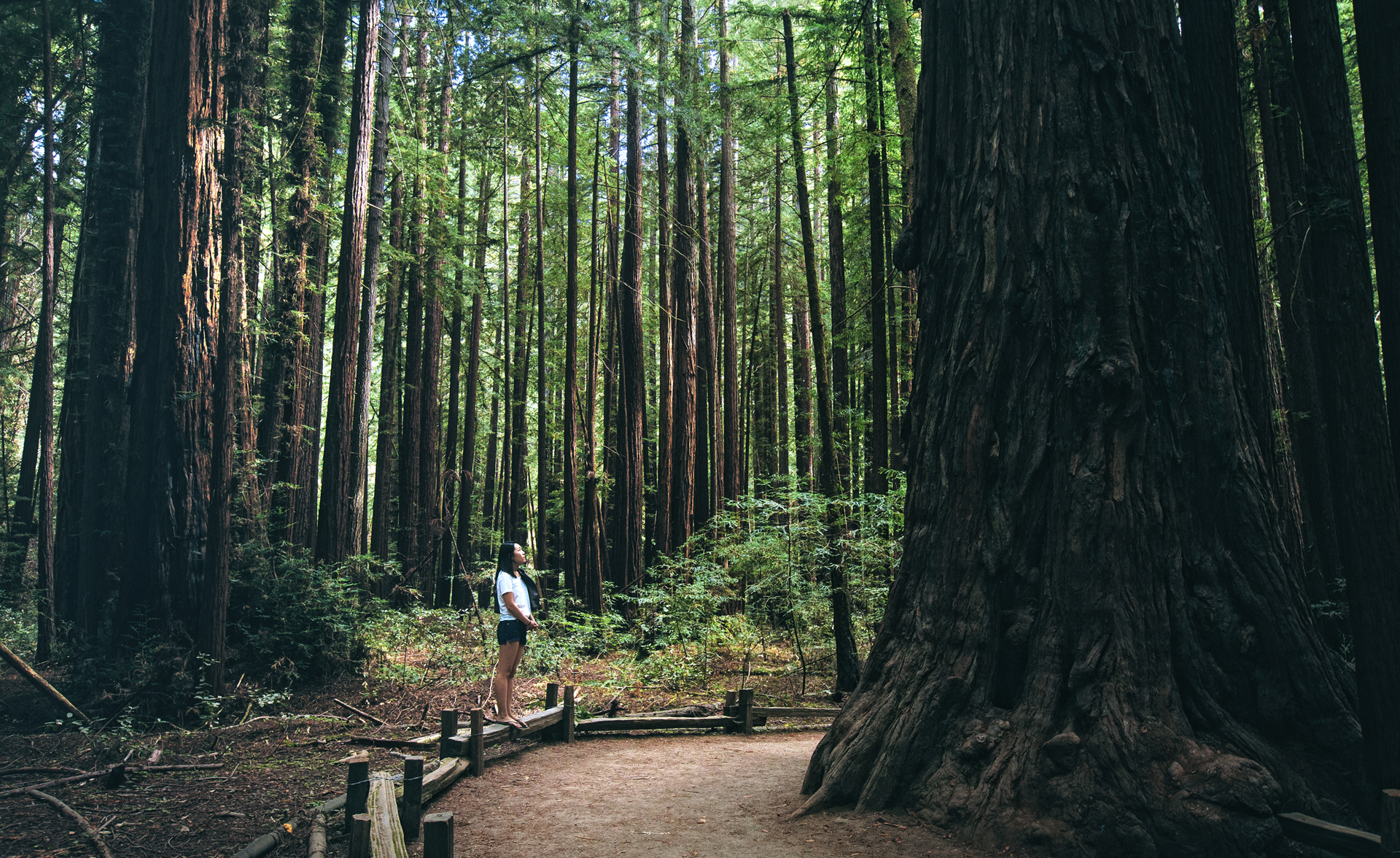
Muir Woods Reservations All Sold Out? Visit These 5 Bay Area Redwood Forests Instead
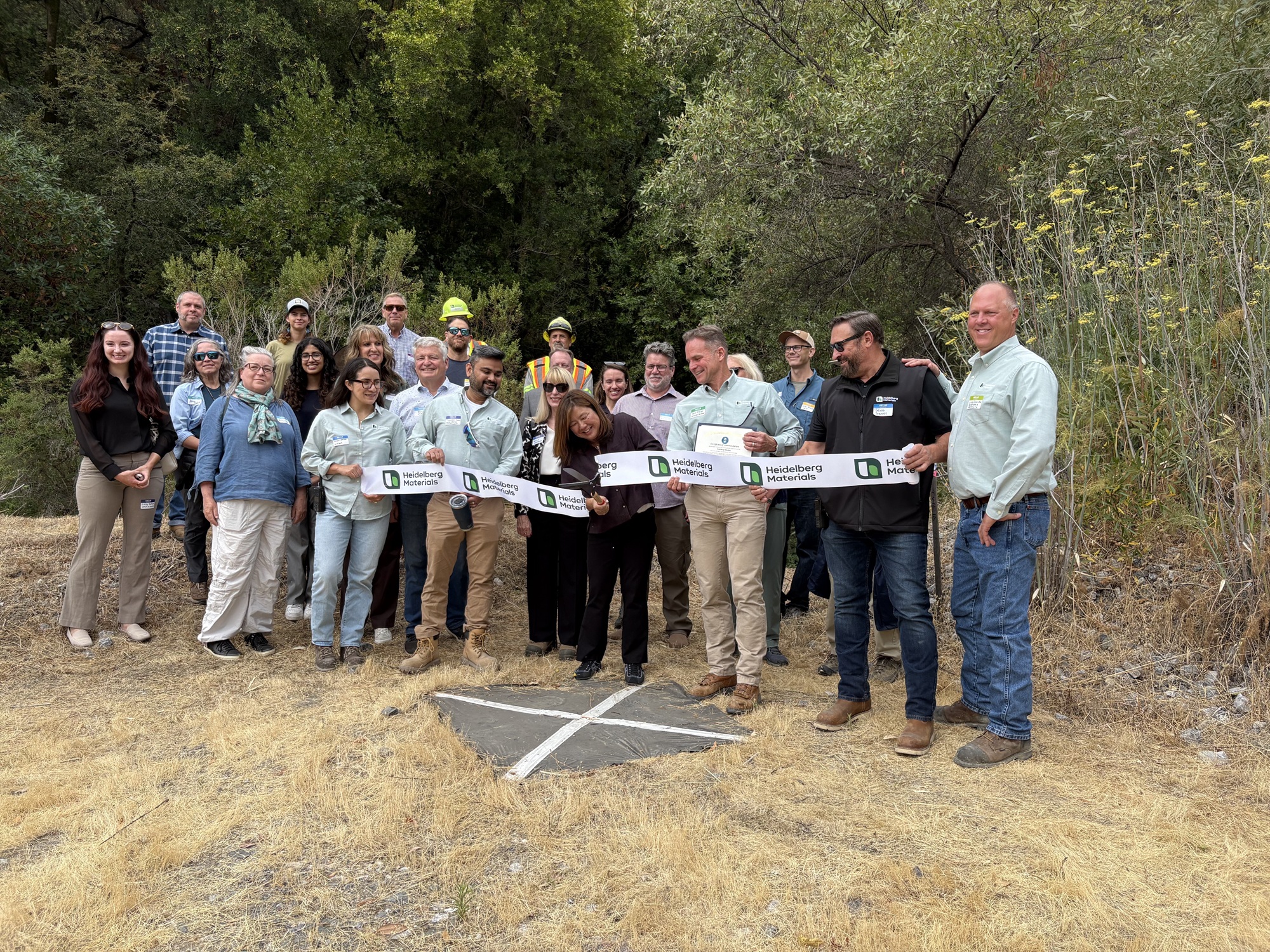
Cupertino Quarry Owner Begins $25 Million Permanente Creek Cleanup Effort
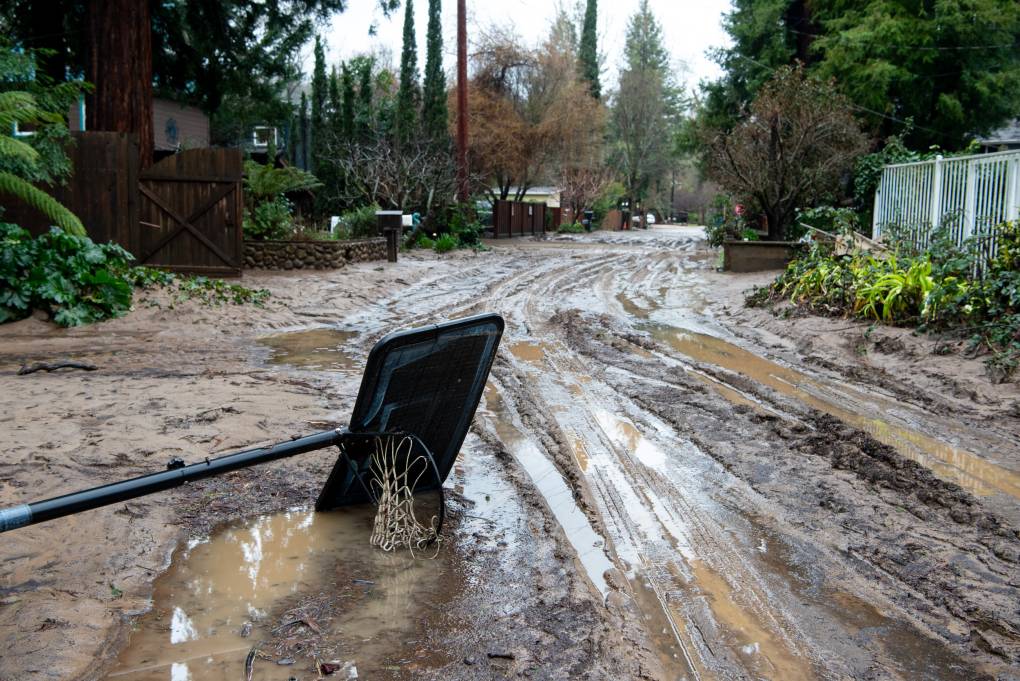
‘You’re Taking On A Lot of Risk’: Rain and Recovery in the Santa Cruz Mountains
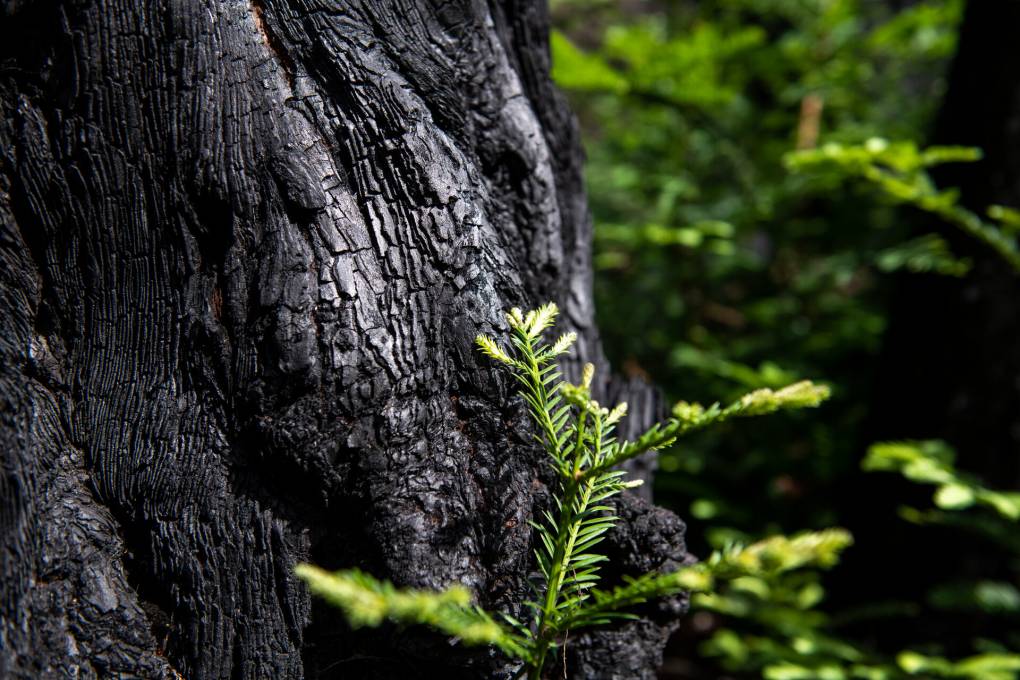
As Big Basin Finally Reopens, Indigenous Stewardship Key Among Plans for Park's Rebirth
Revisiting Some of Our Favorite Hidden Gems: A Journey Through California's Best Kept Secrets
Hidden Gems: A Journey Through California's Best Kept Secrets
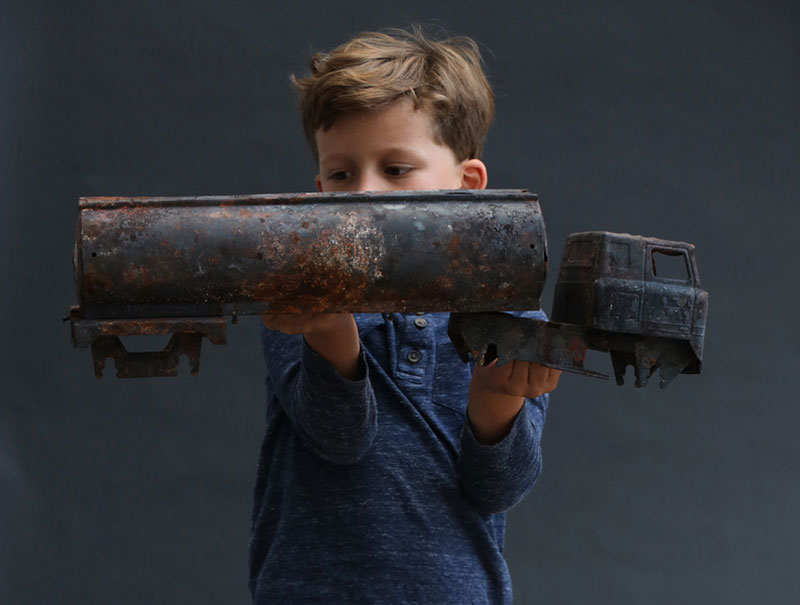
Capturing What's Lost and Found 1 Year After CZU Fires Swept Through Santa Cruz Mountains
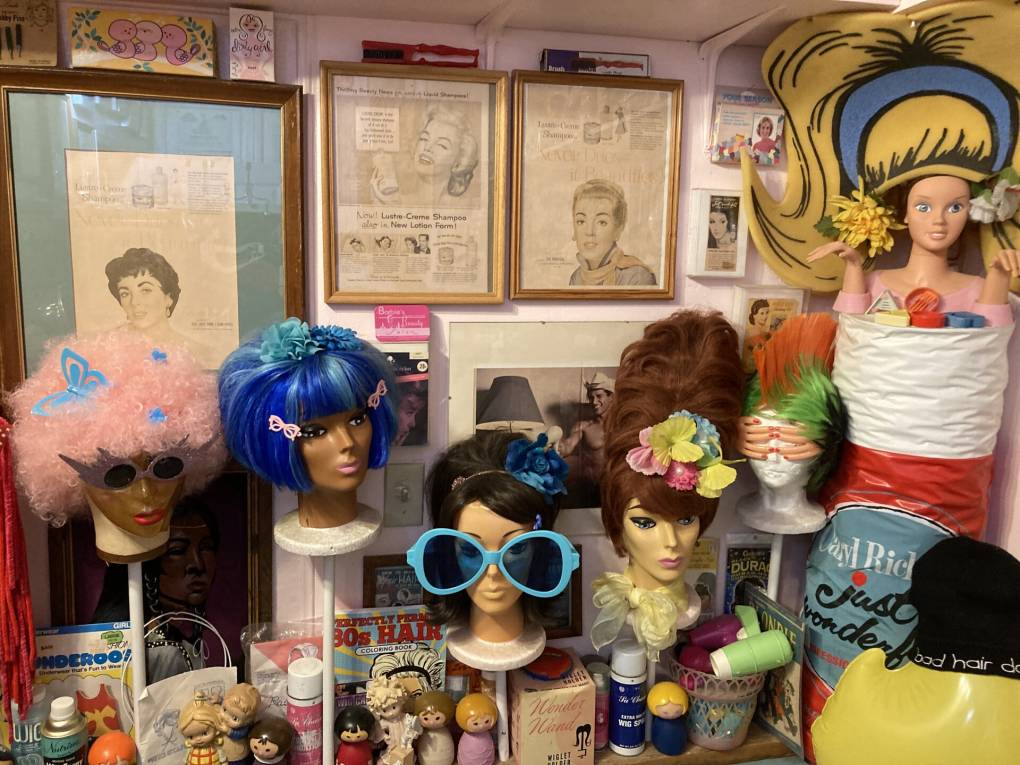
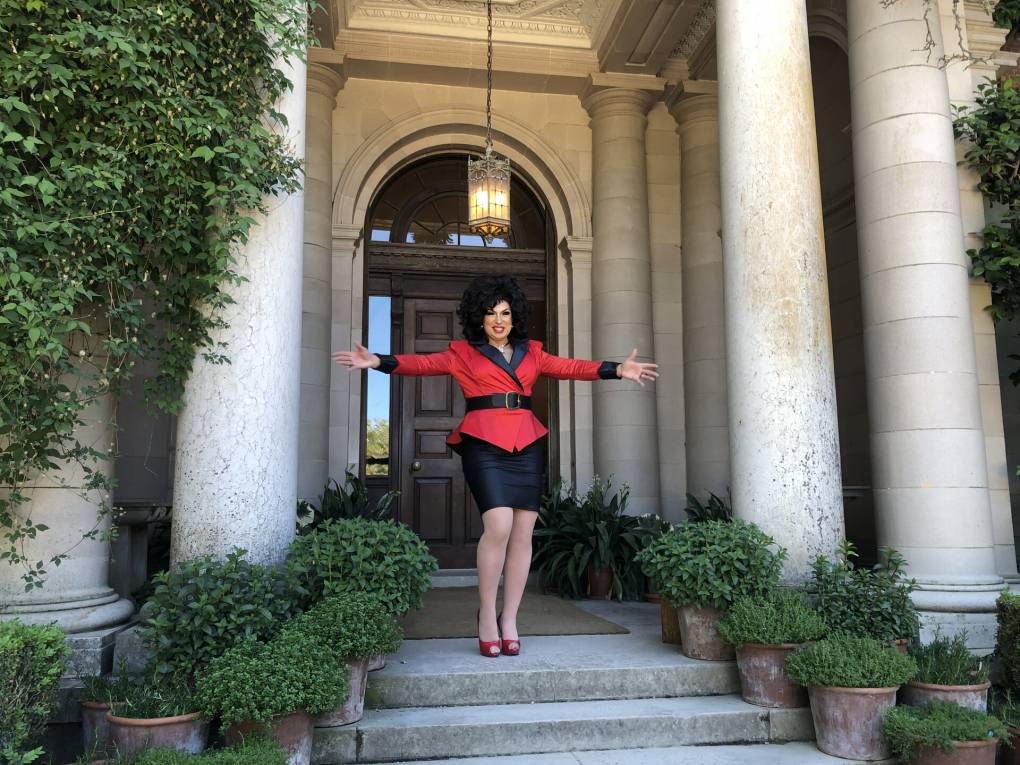
As 'Dynasty' Turns 40, Reflecting on Soap's LGBTQ+ Legacy at Peninsula Estate Where Early Episodes Were Shot
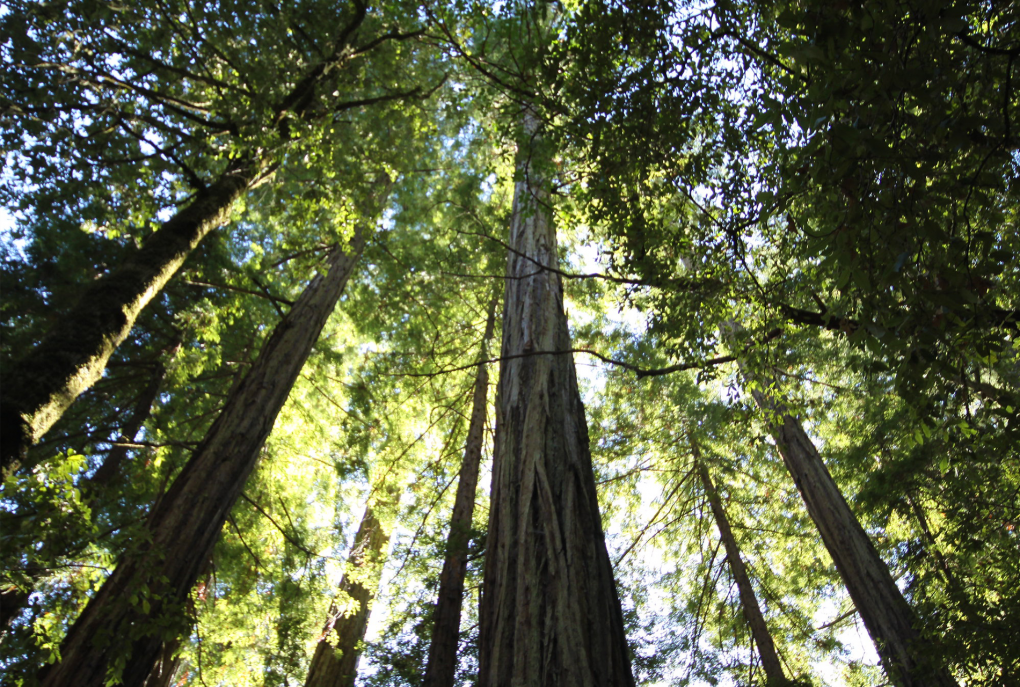
Some Good News: Many of Big Basin's Ancient Redwoods Appear to Have Survived
Sponsored
Player sponsored by
window.__IS_SSR__=true
window.__INITIAL_STATE__={
"attachmentsReducer": {
"audio_0": {
"type": "attachments",
"id": "audio_0",
"imgSizes": {
"kqedFullSize": {
"file": "https://ww2.kqed.org/news/wp-content/themes/KQED-unified/img/audio_bgs/background0.jpg"
}
}
},
"audio_1": {
"type": "attachments",
"id": "audio_1",
"imgSizes": {
"kqedFullSize": {
"file": "https://ww2.kqed.org/news/wp-content/themes/KQED-unified/img/audio_bgs/background1.jpg"
}
}
},
"audio_2": {
"type": "attachments",
"id": "audio_2",
"imgSizes": {
"kqedFullSize": {
"file": "https://ww2.kqed.org/news/wp-content/themes/KQED-unified/img/audio_bgs/background2.jpg"
}
}
},
"audio_3": {
"type": "attachments",
"id": "audio_3",
"imgSizes": {
"kqedFullSize": {
"file": "https://ww2.kqed.org/news/wp-content/themes/KQED-unified/img/audio_bgs/background3.jpg"
}
}
},
"audio_4": {
"type": "attachments",
"id": "audio_4",
"imgSizes": {
"kqedFullSize": {
"file": "https://ww2.kqed.org/news/wp-content/themes/KQED-unified/img/audio_bgs/background4.jpg"
}
}
},
"placeholder": {
"type": "attachments",
"id": "placeholder",
"imgSizes": {
"thumbnail": {
"file": "https://cdn.kqed.org/wp-content/uploads/2024/12/KQED-Default-Image-816638274-2000x1333-1-160x107.jpg",
"width": 160,
"height": 107,
"mimeType": "image/jpeg"
},
"medium": {
"file": "https://cdn.kqed.org/wp-content/uploads/2024/12/KQED-Default-Image-816638274-2000x1333-1-800x533.jpg",
"width": 800,
"height": 533,
"mimeType": "image/jpeg"
},
"medium_large": {
"file": "https://cdn.kqed.org/wp-content/uploads/2024/12/KQED-Default-Image-816638274-2000x1333-1-768x512.jpg",
"width": 768,
"height": 512,
"mimeType": "image/jpeg"
},
"large": {
"file": "https://cdn.kqed.org/wp-content/uploads/2024/12/KQED-Default-Image-816638274-2000x1333-1-1020x680.jpg",
"width": 1020,
"height": 680,
"mimeType": "image/jpeg"
},
"1536x1536": {
"file": "https://cdn.kqed.org/wp-content/uploads/2024/12/KQED-Default-Image-816638274-2000x1333-1-1536x1024.jpg",
"width": 1536,
"height": 1024,
"mimeType": "image/jpeg"
},
"fd-lrg": {
"file": "https://cdn.kqed.org/wp-content/uploads/2024/12/KQED-Default-Image-816638274-2000x1333-1-1536x1024.jpg",
"width": 1536,
"height": 1024,
"mimeType": "image/jpeg"
},
"fd-med": {
"file": "https://cdn.kqed.org/wp-content/uploads/2024/12/KQED-Default-Image-816638274-2000x1333-1-1020x680.jpg",
"width": 1020,
"height": 680,
"mimeType": "image/jpeg"
},
"fd-sm": {
"file": "https://cdn.kqed.org/wp-content/uploads/2024/12/KQED-Default-Image-816638274-2000x1333-1-800x533.jpg",
"width": 800,
"height": 533,
"mimeType": "image/jpeg"
},
"post-thumbnail": {
"file": "https://cdn.kqed.org/wp-content/uploads/2024/12/KQED-Default-Image-816638274-2000x1333-1-672x372.jpg",
"width": 672,
"height": 372,
"mimeType": "image/jpeg"
},
"twentyfourteen-full-width": {
"file": "https://cdn.kqed.org/wp-content/uploads/2024/12/KQED-Default-Image-816638274-2000x1333-1-1038x576.jpg",
"width": 1038,
"height": 576,
"mimeType": "image/jpeg"
},
"xxsmall": {
"file": "https://cdn.kqed.org/wp-content/uploads/2024/12/KQED-Default-Image-816638274-2000x1333-1-160x107.jpg",
"width": 160,
"height": 107,
"mimeType": "image/jpeg"
},
"xsmall": {
"file": "https://cdn.kqed.org/wp-content/uploads/2024/12/KQED-Default-Image-816638274-2000x1333-1-672x372.jpg",
"width": 672,
"height": 372,
"mimeType": "image/jpeg"
},
"small": {
"file": "https://cdn.kqed.org/wp-content/uploads/2024/12/KQED-Default-Image-816638274-2000x1333-1-672x372.jpg",
"width": 672,
"height": 372,
"mimeType": "image/jpeg"
},
"xlarge": {
"file": "https://cdn.kqed.org/wp-content/uploads/2024/12/KQED-Default-Image-816638274-2000x1333-1-1020x680.jpg",
"width": 1020,
"height": 680,
"mimeType": "image/jpeg"
},
"full-width": {
"file": "https://cdn.kqed.org/wp-content/uploads/2024/12/KQED-Default-Image-816638274-2000x1333-1-1920x1280.jpg",
"width": 1920,
"height": 1280,
"mimeType": "image/jpeg"
},
"guest-author-32": {
"file": "https://cdn.kqed.org/wp-content/uploads/2025/01/KQED-Default-Image-816638274-1333x1333-1-160x160.jpg",
"width": 32,
"height": 32,
"mimeType": "image/jpeg"
},
"guest-author-50": {
"file": "https://cdn.kqed.org/wp-content/uploads/2025/01/KQED-Default-Image-816638274-1333x1333-1-160x160.jpg",
"width": 50,
"height": 50,
"mimeType": "image/jpeg"
},
"guest-author-64": {
"file": "https://cdn.kqed.org/wp-content/uploads/2025/01/KQED-Default-Image-816638274-1333x1333-1-160x160.jpg",
"width": 64,
"height": 64,
"mimeType": "image/jpeg"
},
"guest-author-96": {
"file": "https://cdn.kqed.org/wp-content/uploads/2025/01/KQED-Default-Image-816638274-1333x1333-1-160x160.jpg",
"width": 96,
"height": 96,
"mimeType": "image/jpeg"
},
"guest-author-128": {
"file": "https://cdn.kqed.org/wp-content/uploads/2025/01/KQED-Default-Image-816638274-1333x1333-1-160x160.jpg",
"width": 128,
"height": 128,
"mimeType": "image/jpeg"
},
"detail": {
"file": "https://cdn.kqed.org/wp-content/uploads/2025/01/KQED-Default-Image-816638274-1333x1333-1-160x160.jpg",
"width": 160,
"height": 160,
"mimeType": "image/jpeg"
},
"kqedFullSize": {
"file": "https://cdn.kqed.org/wp-content/uploads/2024/12/KQED-Default-Image-816638274-2000x1333-1.jpg",
"width": 2000,
"height": 1333
}
}
},
"news_12050853": {
"type": "attachments",
"id": "news_12050853",
"meta": {
"index": "attachments_1716263798",
"site": "news",
"id": "12050853",
"found": true
},
"title": "muir-woods-reservation-alternative",
"publishDate": 1754334615,
"status": "inherit",
"parent": 12050823,
"modified": 1754334679,
"caption": "If you strike out with a Muir Woods parking reservation, the Bay Area still holds other beautiful redwood forests, like Armstrong Redwoods State Natural Reserve.",
"credit": "Hotaik Sung/Getty",
"altTag": null,
"description": null,
"imgSizes": {
"thumbnail": {
"file": "https://cdn.kqed.org/wp-content/uploads/sites/10/2025/08/Armstrong-Redwoods-1-160x98.png",
"width": 160,
"height": 98,
"mimeType": "image/png"
},
"1536x1536": {
"file": "https://cdn.kqed.org/wp-content/uploads/sites/10/2025/08/Armstrong-Redwoods-1-1536x941.png",
"width": 1536,
"height": 941,
"mimeType": "image/png"
},
"post-thumbnail": {
"file": "https://cdn.kqed.org/wp-content/uploads/sites/10/2025/08/Armstrong-Redwoods-1-672x372.png",
"width": 672,
"height": 372,
"mimeType": "image/png"
},
"twentyfourteen-full-width": {
"file": "https://cdn.kqed.org/wp-content/uploads/sites/10/2025/08/Armstrong-Redwoods-1-1038x576.png",
"width": 1038,
"height": 576,
"mimeType": "image/png"
},
"kqedFullSize": {
"file": "https://cdn.kqed.org/wp-content/uploads/sites/10/2025/08/Armstrong-Redwoods-1.png",
"width": 1920,
"height": 1176
}
},
"fetchFailed": false,
"isLoading": false
},
"news_12049285": {
"type": "attachments",
"id": "news_12049285",
"meta": {
"index": "attachments_1716263798",
"site": "news",
"id": "12049285",
"found": true
},
"title": "Permanente Creek2",
"publishDate": 1753224942,
"status": "inherit",
"parent": 0,
"modified": 1753225067,
"caption": "Supervisor Margaret Abe-Koga (center) wielded a pair of hedge clippers for the official \"ribbon-cutting\" hosted by Heidelberg Materials to kick off the start of the Permanente Creek Restoration Project, which must be completed in five years, per the consent decree from the lawsuit filed by the Sierra Club. Also pictured: Members of the Sierra Club, Santa Clara County staff, which approved the project, David Perkins of Heidelberg Materials (next to Abe-Koga) and several stakeholders, ranging from the Midpeninsula Regional Open Space District, whose Rancho San Antonio Open Space Preserve abuts the sprawling property, to residents and engineers for the restoration project.",
"credit": "Courtesy of L.A. Chung",
"altTag": null,
"description": null,
"imgSizes": {
"thumbnail": {
"file": "https://cdn.kqed.org/wp-content/uploads/sites/10/2025/07/Permanente-Creek2-160x120.jpg",
"width": 160,
"height": 120,
"mimeType": "image/jpeg"
},
"1536x1536": {
"file": "https://cdn.kqed.org/wp-content/uploads/sites/10/2025/07/Permanente-Creek2-1536x1152.jpg",
"width": 1536,
"height": 1152,
"mimeType": "image/jpeg"
},
"post-thumbnail": {
"file": "https://cdn.kqed.org/wp-content/uploads/sites/10/2025/07/Permanente-Creek2-672x372.jpg",
"width": 672,
"height": 372,
"mimeType": "image/jpeg"
},
"twentyfourteen-full-width": {
"file": "https://cdn.kqed.org/wp-content/uploads/sites/10/2025/07/Permanente-Creek2-1038x576.jpg",
"width": 1038,
"height": 576,
"mimeType": "image/jpeg"
},
"kqedFullSize": {
"file": "https://cdn.kqed.org/wp-content/uploads/sites/10/2025/07/Permanente-Creek2.jpg",
"width": 2000,
"height": 1500
}
},
"fetchFailed": false,
"isLoading": false
},
"news_11938343": {
"type": "attachments",
"id": "news_11938343",
"meta": {
"index": "attachments_1716263798",
"site": "news",
"id": "11938343",
"found": true
},
"parent": 11938339,
"imgSizes": {
"twentyfourteen-full-width": {
"file": "https://ww2.kqed.org/app/uploads/sites/10/2023/01/GettyImages-1246292764-1038x576.jpg",
"width": 1038,
"mimeType": "image/jpeg",
"height": 576
},
"thumbnail": {
"file": "https://ww2.kqed.org/app/uploads/sites/10/2023/01/GettyImages-1246292764-160x107.jpg",
"width": 160,
"mimeType": "image/jpeg",
"height": 107
},
"post-thumbnail": {
"file": "https://ww2.kqed.org/app/uploads/sites/10/2023/01/GettyImages-1246292764-672x372.jpg",
"width": 672,
"mimeType": "image/jpeg",
"height": 372
},
"kqedFullSize": {
"file": "https://ww2.kqed.org/app/uploads/sites/10/2023/01/GettyImages-1246292764.jpg",
"width": 2500,
"height": 1669
},
"2048x2048": {
"file": "https://ww2.kqed.org/app/uploads/sites/10/2023/01/GettyImages-1246292764-2048x1367.jpg",
"width": 2048,
"mimeType": "image/jpeg",
"height": 1367
},
"large": {
"file": "https://ww2.kqed.org/app/uploads/sites/10/2023/01/GettyImages-1246292764-1020x681.jpg",
"width": 1020,
"mimeType": "image/jpeg",
"height": 681
},
"1536x1536": {
"file": "https://ww2.kqed.org/app/uploads/sites/10/2023/01/GettyImages-1246292764-1536x1025.jpg",
"width": 1536,
"mimeType": "image/jpeg",
"height": 1025
},
"full-width": {
"file": "https://ww2.kqed.org/app/uploads/sites/10/2023/01/GettyImages-1246292764-1920x1282.jpg",
"width": 1920,
"mimeType": "image/jpeg",
"height": 1282
},
"medium": {
"file": "https://ww2.kqed.org/app/uploads/sites/10/2023/01/GettyImages-1246292764-800x534.jpg",
"width": 800,
"mimeType": "image/jpeg",
"height": 534
}
},
"publishDate": 1673997207,
"modified": 1673997292,
"caption": "Mud covers the street from flooding of the San Lorenzo River, the third time the neighborhood has flooded in two weeks in the Felton Grove neighborhood on January 15, 2023.",
"description": null,
"title": "Felton flood cleanup",
"credit": "Marlena Sloss for The Washington Post via Getty Images",
"status": "inherit",
"altTag": null,
"fetchFailed": false,
"isLoading": false
},
"news_11919847": {
"type": "attachments",
"id": "news_11919847",
"meta": {
"index": "attachments_1716263798",
"site": "news",
"id": "11919847",
"found": true
},
"parent": 0,
"imgSizes": {
"twentyfourteen-full-width": {
"file": "https://ww2.kqed.org/app/uploads/sites/10/2022/07/RS56337_024_KQED_BigBasinRedwoods_05262022-qut-1038x576.jpg",
"width": 1038,
"mimeType": "image/jpeg",
"height": 576
},
"thumbnail": {
"file": "https://ww2.kqed.org/app/uploads/sites/10/2022/07/RS56337_024_KQED_BigBasinRedwoods_05262022-qut-160x107.jpg",
"width": 160,
"mimeType": "image/jpeg",
"height": 107
},
"post-thumbnail": {
"file": "https://ww2.kqed.org/app/uploads/sites/10/2022/07/RS56337_024_KQED_BigBasinRedwoods_05262022-qut-672x372.jpg",
"width": 672,
"mimeType": "image/jpeg",
"height": 372
},
"kqedFullSize": {
"file": "https://ww2.kqed.org/app/uploads/sites/10/2022/07/RS56337_024_KQED_BigBasinRedwoods_05262022-qut.jpg",
"width": 1920,
"height": 1280
},
"large": {
"file": "https://ww2.kqed.org/app/uploads/sites/10/2022/07/RS56337_024_KQED_BigBasinRedwoods_05262022-qut-1020x680.jpg",
"width": 1020,
"mimeType": "image/jpeg",
"height": 680
},
"1536x1536": {
"file": "https://ww2.kqed.org/app/uploads/sites/10/2022/07/RS56337_024_KQED_BigBasinRedwoods_05262022-qut-1536x1024.jpg",
"width": 1536,
"mimeType": "image/jpeg",
"height": 1024
},
"medium": {
"file": "https://ww2.kqed.org/app/uploads/sites/10/2022/07/RS56337_024_KQED_BigBasinRedwoods_05262022-qut-800x533.jpg",
"width": 800,
"mimeType": "image/jpeg",
"height": 533
}
},
"publishDate": 1658245474,
"modified": 1658245730,
"caption": "New growth emerges on and around burned redwoods at Big Basin Redwoods State Park on May 26, 2022.",
"description": null,
"title": "RS56337_024_KQED_BigBasinRedwoods_05262022-qut",
"credit": "Beth LaBerge/KQED",
"status": "inherit",
"altTag": "A redwood tree trunk, blackened and charred by fire, with a bright green piece of foliage in the foreground.",
"fetchFailed": false,
"isLoading": false
},
"news_11886254": {
"type": "attachments",
"id": "news_11886254",
"meta": {
"index": "attachments_1716263798",
"site": "news",
"id": "11886254",
"found": true
},
"parent": 11882522,
"imgSizes": {
"twentyfourteen-full-width": {
"file": "https://ww2.kqed.org/app/uploads/sites/10/2021/08/RS51137_IMG_3259-qut-1038x576.jpg",
"width": 1038,
"mimeType": "image/jpeg",
"height": 576
},
"thumbnail": {
"file": "https://ww2.kqed.org/app/uploads/sites/10/2021/08/RS51137_IMG_3259-qut-160x120.jpg",
"width": 160,
"mimeType": "image/jpeg",
"height": 120
},
"post-thumbnail": {
"file": "https://ww2.kqed.org/app/uploads/sites/10/2021/08/RS51137_IMG_3259-qut-672x372.jpg",
"width": 672,
"mimeType": "image/jpeg",
"height": 372
},
"kqedFullSize": {
"file": "https://ww2.kqed.org/app/uploads/sites/10/2021/08/RS51137_IMG_3259-qut.jpg",
"width": 1920,
"height": 1440
},
"large": {
"file": "https://ww2.kqed.org/app/uploads/sites/10/2021/08/RS51137_IMG_3259-qut-1020x765.jpg",
"width": 1020,
"mimeType": "image/jpeg",
"height": 765
},
"1536x1536": {
"file": "https://ww2.kqed.org/app/uploads/sites/10/2021/08/RS51137_IMG_3259-qut-1536x1152.jpg",
"width": 1536,
"mimeType": "image/jpeg",
"height": 1152
},
"medium": {
"file": "https://ww2.kqed.org/app/uploads/sites/10/2021/08/RS51137_IMG_3259-qut-800x600.jpg",
"width": 800,
"mimeType": "image/jpeg",
"height": 600
}
},
"publishDate": 1629912180,
"modified": 1629912339,
"caption": "Beauty Bubble is covered with vintage ephemera from floor to ceiling. ",
"description": null,
"title": "RS51137_IMG_3259-qut",
"credit": "Peter Gilstrap",
"status": "inherit",
"altTag": null,
"fetchFailed": false,
"isLoading": false
},
"news_11886597": {
"type": "attachments",
"id": "news_11886597",
"meta": {
"index": "attachments_1716263798",
"site": "news",
"id": "11886597",
"found": true
},
"parent": 11886288,
"imgSizes": {
"twentyfourteen-full-width": {
"file": "https://ww2.kqed.org/app/uploads/sites/10/2021/08/LOST-AND-FOUND-CZU-Main-800x576.jpg",
"width": 800,
"mimeType": "image/jpeg",
"height": 576
},
"thumbnail": {
"file": "https://ww2.kqed.org/app/uploads/sites/10/2021/08/LOST-AND-FOUND-CZU-Main-160x121.jpg",
"width": 160,
"mimeType": "image/jpeg",
"height": 121
},
"post-thumbnail": {
"file": "https://ww2.kqed.org/app/uploads/sites/10/2021/08/LOST-AND-FOUND-CZU-Main-672x372.jpg",
"width": 672,
"mimeType": "image/jpeg",
"height": 372
},
"kqedFullSize": {
"file": "https://ww2.kqed.org/app/uploads/sites/10/2021/08/LOST-AND-FOUND-CZU-Main.jpg",
"width": 800,
"height": 605
}
},
"publishDate": 1630089799,
"modified": 1630110814,
"caption": "Rolo Commons, 6, holds a charred toy truck that was salvaged from his grandmother's house after last year's CZU Lightning Complex fires.",
"description": "Rolo Commons, 6, holds a charred toy truck that was salvaged from his grandmother's house after last year's CZU August Complex fires.",
"title": "LOST-AND-FOUND-CZU-Main",
"credit": "Courtesy Shmuel Thaler",
"status": "inherit",
"altTag": null,
"fetchFailed": false,
"isLoading": false
},
"news_11878095": {
"type": "attachments",
"id": "news_11878095",
"meta": {
"index": "attachments_1716263798",
"site": "news",
"id": "11878095",
"found": true
},
"parent": 11877915,
"imgSizes": {
"twentyfourteen-full-width": {
"file": "https://ww2.kqed.org/app/uploads/sites/10/2021/06/RS49879_darcy-at-filoli-entrance-qut-1038x576.jpg",
"width": 1038,
"mimeType": "image/jpeg",
"height": 576
},
"thumbnail": {
"file": "https://ww2.kqed.org/app/uploads/sites/10/2021/06/RS49879_darcy-at-filoli-entrance-qut-160x120.jpg",
"width": 160,
"mimeType": "image/jpeg",
"height": 120
},
"post-thumbnail": {
"file": "https://ww2.kqed.org/app/uploads/sites/10/2021/06/RS49879_darcy-at-filoli-entrance-qut-672x372.jpg",
"width": 672,
"mimeType": "image/jpeg",
"height": 372
},
"kqedFullSize": {
"file": "https://ww2.kqed.org/app/uploads/sites/10/2021/06/RS49879_darcy-at-filoli-entrance-qut.jpg",
"width": 1920,
"height": 1440
},
"large": {
"file": "https://ww2.kqed.org/app/uploads/sites/10/2021/06/RS49879_darcy-at-filoli-entrance-qut-1020x765.jpg",
"width": 1020,
"mimeType": "image/jpeg",
"height": 765
},
"1536x1536": {
"file": "https://ww2.kqed.org/app/uploads/sites/10/2021/06/RS49879_darcy-at-filoli-entrance-qut-1536x1152.jpg",
"width": 1536,
"mimeType": "image/jpeg",
"height": 1152
},
"medium": {
"file": "https://ww2.kqed.org/app/uploads/sites/10/2021/06/RS49879_darcy-at-filoli-entrance-qut-800x600.jpg",
"width": 800,
"mimeType": "image/jpeg",
"height": 600
}
},
"publishDate": 1623796317,
"modified": 1623796405,
"caption": "San Francisco drag artist D'Arcy Drollinger poses outside Filoli in her Alexis Carrington Colby getup before taking a Dynasty-themed tour of the mansion, where early episodes of the hit 1980s soap opera were filmed.",
"description": "San Francisco drag artist D'Arcy Drollinger poses outside Filoli in her Alexis Carrington Colby getup before taking a Dynasty-themed tour of the mansion, where early episodes of the hit 1980s soap opera were filmed.",
"title": "RS49879_darcy at filoli entrance-qut",
"credit": null,
"status": "inherit",
"altTag": null,
"fetchFailed": false,
"isLoading": false
},
"news_11835136": {
"type": "attachments",
"id": "news_11835136",
"meta": {
"index": "attachments_1716263798",
"site": "news",
"id": "11835136",
"found": true
},
"parent": 11835124,
"imgSizes": {
"apple_news_ca_landscape_5_5": {
"file": "https://ww2.kqed.org/app/uploads/sites/10/2020/08/BB-1044x783.png",
"width": 1044,
"mimeType": "image/png",
"height": 783
},
"apple_news_ca_square_4_0": {
"file": "https://ww2.kqed.org/app/uploads/sites/10/2020/08/BB-470x470.png",
"width": 470,
"mimeType": "image/png",
"height": 470
},
"twentyfourteen-full-width": {
"file": "https://ww2.kqed.org/app/uploads/sites/10/2020/08/BB-1038x576.png",
"width": 1038,
"mimeType": "image/png",
"height": 576
},
"thumbnail": {
"file": "https://ww2.kqed.org/app/uploads/sites/10/2020/08/BB-160x108.png",
"width": 160,
"mimeType": "image/png",
"height": 108
},
"post-thumbnail": {
"file": "https://ww2.kqed.org/app/uploads/sites/10/2020/08/BB-672x372.png",
"width": 672,
"mimeType": "image/png",
"height": 372
},
"kqedFullSize": {
"file": "https://ww2.kqed.org/app/uploads/sites/10/2020/08/BB.png",
"width": 1900,
"height": 1280
},
"apple_news_ca_landscape_4_7": {
"file": "https://ww2.kqed.org/app/uploads/sites/10/2020/08/BB-632x474.png",
"width": 632,
"mimeType": "image/png",
"height": 474
},
"large": {
"file": "https://ww2.kqed.org/app/uploads/sites/10/2020/08/BB-1020x687.png",
"width": 1020,
"mimeType": "image/png",
"height": 687
},
"apple_news_ca_landscape_4_0": {
"file": "https://ww2.kqed.org/app/uploads/sites/10/2020/08/BB-536x402.png",
"width": 536,
"mimeType": "image/png",
"height": 402
},
"apple_news_ca_portrait_12_9": {
"file": "https://ww2.kqed.org/app/uploads/sites/10/2020/08/BB-1122x1280.png",
"width": 1122,
"mimeType": "image/png",
"height": 1280
},
"medium": {
"file": "https://ww2.kqed.org/app/uploads/sites/10/2020/08/BB-800x539.png",
"width": 800,
"mimeType": "image/png",
"height": 539
},
"apple_news_ca_portrait_4_0": {
"file": "https://ww2.kqed.org/app/uploads/sites/10/2020/08/BB-354x472.png",
"width": 354,
"mimeType": "image/png",
"height": 472
},
"apple_news_ca_portrait_9_7": {
"file": "https://ww2.kqed.org/app/uploads/sites/10/2020/08/BB-840x1120.png",
"width": 840,
"mimeType": "image/png",
"height": 1120
},
"apple_news_ca_landscape_12_9": {
"file": "https://ww2.kqed.org/app/uploads/sites/10/2020/08/BB-1832x1280.png",
"width": 1832,
"mimeType": "image/png",
"height": 1280
},
"apple_news_ca_square_9_7": {
"file": "https://ww2.kqed.org/app/uploads/sites/10/2020/08/BB-1104x1104.png",
"width": 1104,
"mimeType": "image/png",
"height": 1104
},
"1536x1536": {
"file": "https://ww2.kqed.org/app/uploads/sites/10/2020/08/BB-1536x1035.png",
"width": 1536,
"mimeType": "image/png",
"height": 1035
},
"apple_news_ca_portrait_4_7": {
"file": "https://ww2.kqed.org/app/uploads/sites/10/2020/08/BB-414x552.png",
"width": 414,
"mimeType": "image/png",
"height": 552
},
"apple_news_ca_square_12_9": {
"file": "https://ww2.kqed.org/app/uploads/sites/10/2020/08/BB-1472x1280.png",
"width": 1472,
"mimeType": "image/png",
"height": 1280
},
"apple_news_ca_portrait_5_5": {
"file": "https://ww2.kqed.org/app/uploads/sites/10/2020/08/BB-687x916.png",
"width": 687,
"mimeType": "image/png",
"height": 916
},
"apple_news_ca_square_4_7": {
"file": "https://ww2.kqed.org/app/uploads/sites/10/2020/08/BB-550x550.png",
"width": 550,
"mimeType": "image/png",
"height": 550
},
"apple_news_ca_landscape_9_7": {
"file": "https://ww2.kqed.org/app/uploads/sites/10/2020/08/BB-1376x1032.png",
"width": 1376,
"mimeType": "image/png",
"height": 1032
},
"apple_news_ca_square_5_5": {
"file": "https://ww2.kqed.org/app/uploads/sites/10/2020/08/BB-912x912.png",
"width": 912,
"mimeType": "image/png",
"height": 912
}
},
"publishDate": 1598385204,
"modified": 1598391462,
"caption": "Redwoods tower over Big Basin State Park before the CZU fire complex ravaged much of the area beginning last week. Many of the park's massive, old-growth redwoods have reportedly survived the worst of the damage.",
"description": "Redwoods tower over Big Basin State Park before the CZU fire complex ravaged much of the area beginning last week. Many of the park's massive, old-growth redwoods have reportedly survived the worst of the damage.",
"title": "bigbasin",
"credit": "Hyper Hamlet/Flickr",
"status": "inherit",
"fetchFailed": false,
"isLoading": false
}
},
"audioPlayerReducer": {
"postId": "stream_live",
"isPaused": true,
"isPlaying": false,
"pfsActive": false,
"pledgeModalIsOpen": true,
"playerDrawerIsOpen": false
},
"authorsReducer": {
"kqed": {
"type": "authors",
"id": "236",
"meta": {
"index": "authors_1716337520",
"id": "236",
"found": true
},
"name": "KQED News Staff",
"firstName": "KQED News Staff",
"lastName": null,
"slug": "kqed",
"email": "faq@kqed.org",
"display_author_email": false,
"staff_mastheads": [],
"title": null,
"bio": null,
"avatar": "https://secure.gravatar.com/avatar/ef0e801a68c4c54afa9180db14084167?s=600&d=blank&r=g",
"twitter": null,
"facebook": null,
"instagram": null,
"linkedin": null,
"sites": [
{
"site": "arts",
"roles": [
"contributor"
]
},
{
"site": "news",
"roles": [
"editor"
]
},
{
"site": "futureofyou",
"roles": [
"author"
]
}
],
"headData": {
"title": "KQED News Staff | KQED",
"description": null,
"ogImgSrc": "https://secure.gravatar.com/avatar/ef0e801a68c4c54afa9180db14084167?s=600&d=blank&r=g",
"twImgSrc": "https://secure.gravatar.com/avatar/ef0e801a68c4c54afa9180db14084167?s=600&d=blank&r=g"
},
"isLoading": false,
"link": "/author/kqed"
},
"kqednewsstaffandwires": {
"type": "authors",
"id": "237",
"meta": {
"index": "authors_1716337520",
"id": "237",
"found": true
},
"name": "KQED News Staff and Wires",
"firstName": "KQED News Staff and Wires",
"lastName": null,
"slug": "kqednewsstaffandwires",
"email": "onlinenewsstaff@kqed.org",
"display_author_email": false,
"staff_mastheads": [],
"title": null,
"bio": null,
"avatar": "https://secure.gravatar.com/avatar/72295af8ebbfbd19a4948f5271285664?s=600&d=blank&r=g",
"twitter": null,
"facebook": null,
"instagram": null,
"linkedin": null,
"sites": [
{
"site": "arts",
"roles": [
"contributor"
]
},
{
"site": "news",
"roles": [
"contributor"
]
},
{
"site": "lowdown",
"roles": [
"author"
]
},
{
"site": "stateofhealth",
"roles": [
"contributor"
]
},
{
"site": "food",
"roles": [
"author"
]
}
],
"headData": {
"title": "KQED News Staff and Wires | KQED",
"description": null,
"ogImgSrc": "https://secure.gravatar.com/avatar/72295af8ebbfbd19a4948f5271285664?s=600&d=blank&r=g",
"twImgSrc": "https://secure.gravatar.com/avatar/72295af8ebbfbd19a4948f5271285664?s=600&d=blank&r=g"
},
"isLoading": false,
"link": "/author/kqednewsstaffandwires"
},
"sasha-khokha": {
"type": "authors",
"id": "254",
"meta": {
"index": "authors_1716337520",
"id": "254",
"found": true
},
"name": "Sasha Khokha",
"firstName": "Sasha",
"lastName": "Khokha",
"slug": "sasha-khokha",
"email": "skhokha@kqed.org",
"display_author_email": true,
"staff_mastheads": [
"news"
],
"title": "Host, The California Report Magazine",
"bio": "Sasha Khokha is the host of \u003cem>The California Report's \u003c/em> weekly magazine program, which takes listeners on sound-rich excursions to meet the people that make the Golden State unique -- through audio documentaries and long-form stories. As \u003cem>The California Report's\u003c/em> Central Valley Bureau Chief based in Fresno for nearly a dozen years, Sasha brought the lives and concerns of rural Californians to listeners around the state. Her reporting helped expose the hidden price immigrant women janitors and farmworkers may pay to keep their jobs: sexual assault at work. It inspired two new California laws to protect them from sexual harassment. She was a key member of the reporting team for the Frontline film \u003cem>Rape on the Night Shift, \u003c/em>which was nominated for two national Emmys. Sasha has also won a national Edward R. Murrow and a national PRNDI award for investigative reporting, as well as multiple prizes from the Society for Professional Journalists. Sasha is a proud alum of the UC Berkeley Graduate School of Journalism and Brown University and a member of the South Asian Journalists Association.",
"avatar": "https://secure.gravatar.com/avatar/e4b5e1541aaeea2aa356aa1fb2a68950?s=600&d=blank&r=g",
"twitter": "KQEDSashaKhokha",
"facebook": null,
"instagram": null,
"linkedin": null,
"sites": [
{
"site": "news",
"roles": [
"editor"
]
},
{
"site": "stateofhealth",
"roles": [
"author"
]
},
{
"site": "science",
"roles": [
"author"
]
},
{
"site": "quest",
"roles": [
"subscriber"
]
}
],
"headData": {
"title": "Sasha Khokha | KQED",
"description": "Host, The California Report Magazine",
"ogImgSrc": "https://secure.gravatar.com/avatar/e4b5e1541aaeea2aa356aa1fb2a68950?s=600&d=blank&r=g",
"twImgSrc": "https://secure.gravatar.com/avatar/e4b5e1541aaeea2aa356aa1fb2a68950?s=600&d=blank&r=g"
},
"isLoading": false,
"link": "/author/sasha-khokha"
},
"matthewgreen": {
"type": "authors",
"id": "1263",
"meta": {
"index": "authors_1716337520",
"id": "1263",
"found": true
},
"name": "Matthew Green",
"firstName": "Matthew",
"lastName": "Green",
"slug": "matthewgreen",
"email": "mgreen@kqed.org",
"display_author_email": false,
"staff_mastheads": [],
"title": "KQED Editor/Reporter",
"bio": "Matthew Green is a digital media producer for KQED News. He previously produced \u003ca href=\"http://www.kqed.org/lowdown\">The Lowdown\u003c/a>, KQED’s multimedia news education blog. Matthew's written for numerous Bay Area publications, including the Oakland Tribune and San Francisco Chronicle. He also taught journalism classes at Fremont High School in East Oakland.\r\n\r\nEmail: mgreen@kqed.org; Twitter: @MGreenKQED",
"avatar": "https://secure.gravatar.com/avatar/3bf498d1267ca02c8494f33d8cfc575e?s=600&d=blank&r=g",
"twitter": "MGreenKQED",
"facebook": null,
"instagram": null,
"linkedin": null,
"sites": [
{
"site": "news",
"roles": []
},
{
"site": "lowdown",
"roles": []
},
{
"site": "science",
"roles": []
},
{
"site": "education",
"roles": []
},
{
"site": "quest",
"roles": []
},
{
"site": "liveblog",
"roles": []
}
],
"headData": {
"title": "Matthew Green | KQED",
"description": "KQED Editor/Reporter",
"ogImgSrc": "https://secure.gravatar.com/avatar/3bf498d1267ca02c8494f33d8cfc575e?s=600&d=blank&r=g",
"twImgSrc": "https://secure.gravatar.com/avatar/3bf498d1267ca02c8494f33d8cfc575e?s=600&d=blank&r=g"
},
"isLoading": false,
"link": "/author/matthewgreen"
},
"carlysevern": {
"type": "authors",
"id": "3243",
"meta": {
"index": "authors_1716337520",
"id": "3243",
"found": true
},
"name": "Carly Severn",
"firstName": "Carly",
"lastName": "Severn",
"slug": "carlysevern",
"email": "csevern@kqed.org",
"display_author_email": false,
"staff_mastheads": [
"news"
],
"title": "Senior Editor, Audience News ",
"bio": "Carly is KQED's Senior Editor of Audience News on the Digital News team, and has reported for the California Report Magazine, Bay Curious and KQED Arts. She's formerly the host of \u003ca href=\"http://ww2.kqed.org/pop/category/the-cooler/\" rel=\"noopener noreferrer\">The Cooler\u003c/a> podcast.",
"avatar": "https://secure.gravatar.com/avatar/2d8d6765f186e64c798cf7f0c8088a41?s=600&d=blank&r=g",
"twitter": "teacupinthebay",
"facebook": null,
"instagram": null,
"linkedin": null,
"sites": [
{
"site": "",
"roles": [
"editor"
]
},
{
"site": "arts",
"roles": [
"editor"
]
},
{
"site": "news",
"roles": [
"administrator"
]
},
{
"site": "pop",
"roles": [
"editor"
]
},
{
"site": "futureofyou",
"roles": [
"editor"
]
},
{
"site": "about",
"roles": [
"administrator"
]
},
{
"site": "mindshift",
"roles": [
"editor"
]
},
{
"site": "bayareabites",
"roles": [
"editor"
]
},
{
"site": "stateofhealth",
"roles": [
"editor"
]
},
{
"site": "science",
"roles": [
"editor"
]
},
{
"site": "food",
"roles": [
"contributor"
]
},
{
"site": "forum",
"roles": [
"editor"
]
},
{
"site": "perspectives",
"roles": [
"administrator"
]
},
{
"site": "liveblog",
"roles": [
"editor"
]
}
],
"headData": {
"title": "Carly Severn | KQED",
"description": "Senior Editor, Audience News ",
"ogImgSrc": "https://secure.gravatar.com/avatar/2d8d6765f186e64c798cf7f0c8088a41?s=600&d=blank&r=g",
"twImgSrc": "https://secure.gravatar.com/avatar/2d8d6765f186e64c798cf7f0c8088a41?s=600&d=blank&r=g"
},
"isLoading": false,
"link": "/author/carlysevern"
},
"cveltman": {
"type": "authors",
"id": "8608",
"meta": {
"index": "authors_1716337520",
"id": "8608",
"found": true
},
"name": "Chloe Veltman",
"firstName": "Chloe",
"lastName": "Veltman",
"slug": "cveltman",
"email": "cveltman@kqed.org",
"display_author_email": true,
"staff_mastheads": [],
"title": "Arts and Culture Reporter",
"bio": "Chloe Veltman is a former arts and culture reporter for KQED. Prior to joining the organization, she launched and led the arts bureau at Colorado Public Radio, served as the Bay Area's culture columnist for the New York Times, and was the founder, host and executive producer of VoiceBox, a national award-winning weekly podcast/radio show and live events series all about the human voice. Chloe is the recipient of numerous prizes, grants and fellowships including a Webby Award for her work on interactive storytelling, both the John S Knight Journalism Fellowship and Humanities Center Fellowship at Stanford University, the Sundance Arts Writing Fellowship and a Library of Congress Research Fellowship. She is the author of the book \"On Acting\" and has appeared as a guest lecturer at Yale University and the San Francisco Conservatory of Music among other institutions. She holds a BA in english literature from King's College, Cambridge, and a Masters in Dramaturgy from the Central School of Speech and Drama/Harvard Institute for Advanced Theater Training.\r\n\u003ca href=\"https://www.chloeveltman.com\">www.chloeveltman.com\u003c/a>",
"avatar": "https://secure.gravatar.com/avatar/55403394b00a1ddab683952c2eb2cf85?s=600&d=blank&r=g",
"twitter": "chloeveltman",
"facebook": null,
"instagram": null,
"linkedin": null,
"sites": [
{
"site": "arts",
"roles": []
},
{
"site": "news",
"roles": [
"author"
]
},
{
"site": "pop",
"roles": [
"editor"
]
},
{
"site": "science",
"roles": []
}
],
"headData": {
"title": "Chloe Veltman | KQED",
"description": "Arts and Culture Reporter",
"ogImgSrc": "https://secure.gravatar.com/avatar/55403394b00a1ddab683952c2eb2cf85?s=600&d=blank&r=g",
"twImgSrc": "https://secure.gravatar.com/avatar/55403394b00a1ddab683952c2eb2cf85?s=600&d=blank&r=g"
},
"isLoading": false,
"link": "/author/cveltman"
},
"ecruzguevarra": {
"type": "authors",
"id": "8654",
"meta": {
"index": "authors_1716337520",
"id": "8654",
"found": true
},
"name": "Ericka Cruz Guevarra",
"firstName": "Ericka",
"lastName": "Cruz Guevarra",
"slug": "ecruzguevarra",
"email": "ecruzguevarra@kqed.org",
"display_author_email": true,
"staff_mastheads": [
"news"
],
"title": "Producer, The Bay Podcast",
"bio": "Ericka Cruz Guevarra is host of \u003ca href=\"https://www.kqed.org/podcasts/thebay\">\u003cem>The Bay\u003c/em>\u003c/a> podcast at KQED. Before host, she was the show’s producer. Her work in that capacity includes a three-part reported series on policing in Vallejo, which won a 2020 excellence in journalism award from the Society of Professional Journalists. Ericka has worked as a breaking news reporter at Oregon Public Broadcasting, helped produce the Code Switch podcast, and was KQED’s inaugural Raul Ramirez Diversity Fund intern. She’s also an alumna of NPR’s Next Generation Radio program. Send her an email if you have strong feelings about whether Fairfield and Suisun City are the Bay. Ericka is represented by SAG-AFTRA.",
"avatar": "https://secure.gravatar.com/avatar/25e5ab8d3d53fad2dcc7bb2b5c506b1a?s=600&d=blank&r=g",
"twitter": "NotoriousECG",
"facebook": null,
"instagram": null,
"linkedin": null,
"sites": [
{
"site": "arts",
"roles": [
"subscriber"
]
},
{
"site": "news",
"roles": [
"editor",
"manage_categories"
]
},
{
"site": "futureofyou",
"roles": [
"subscriber"
]
},
{
"site": "stateofhealth",
"roles": [
"subscriber"
]
},
{
"site": "science",
"roles": [
"editor"
]
},
{
"site": "forum",
"roles": [
"subscriber"
]
}
],
"headData": {
"title": "Ericka Cruz Guevarra | KQED",
"description": "Producer, The Bay Podcast",
"ogImgSrc": "https://secure.gravatar.com/avatar/25e5ab8d3d53fad2dcc7bb2b5c506b1a?s=600&d=blank&r=g",
"twImgSrc": "https://secure.gravatar.com/avatar/25e5ab8d3d53fad2dcc7bb2b5c506b1a?s=600&d=blank&r=g"
},
"isLoading": false,
"link": "/author/ecruzguevarra"
},
"nsparling": {
"type": "authors",
"id": "11655",
"meta": {
"index": "authors_1716337520",
"id": "11655",
"found": true
},
"name": "Nina Sparling",
"firstName": "Nina",
"lastName": "Sparling",
"slug": "nsparling",
"email": "nsparling@kqed.org",
"display_author_email": false,
"staff_mastheads": [],
"title": "KQED Contributor",
"bio": null,
"avatar": "https://secure.gravatar.com/avatar/4f605141f48bfba20520677de109f9bc?s=600&d=blank&r=g",
"twitter": null,
"facebook": null,
"instagram": null,
"linkedin": null,
"sites": [
{
"site": "",
"roles": [
"editor"
]
},
{
"site": "news",
"roles": [
"author"
]
},
{
"site": "forum",
"roles": [
"editor"
]
},
{
"site": "perspectives",
"roles": [
"editor"
]
}
],
"headData": {
"title": "Nina Sparling | KQED",
"description": "KQED Contributor",
"ogImgSrc": "https://secure.gravatar.com/avatar/4f605141f48bfba20520677de109f9bc?s=600&d=blank&r=g",
"twImgSrc": "https://secure.gravatar.com/avatar/4f605141f48bfba20520677de109f9bc?s=600&d=blank&r=g"
},
"isLoading": false,
"link": "/author/nsparling"
},
"abandlamudi": {
"type": "authors",
"id": "11672",
"meta": {
"index": "authors_1716337520",
"id": "11672",
"found": true
},
"name": "Adhiti Bandlamudi",
"firstName": "Adhiti",
"lastName": "Bandlamudi",
"slug": "abandlamudi",
"email": "abandlamudi@kqed.org",
"display_author_email": false,
"staff_mastheads": [
"news"
],
"title": "KQED Housing Reporter",
"bio": "Adhiti Bandlamudi reports for KQED's Housing desk. She focuses on how housing gets built across the Bay Area. Before joining KQED in 2020, she reported for WUNC in Durham, North Carolina, WABE in Atlanta, Georgia and Capital Public Radio in Sacramento. In 2017, she was awarded a Kroc Fellowship at NPR where she reported on everything from sprinkles to the Golden State Killer's arrest. When she's not reporting, she's baking new recipes in her kitchen or watching movies with friends and family. She's originally from Georgia and has strong opinions about Great British Bake Off.",
"avatar": "https://secure.gravatar.com/avatar/868129c8b257bb99a3500e2c86a65400?s=600&d=mm&r=g",
"twitter": "oddity_adhiti",
"facebook": null,
"instagram": null,
"linkedin": null,
"sites": [
{
"site": "arts",
"roles": [
"author"
]
},
{
"site": "news",
"roles": [
"editor"
]
},
{
"site": "liveblog",
"roles": [
"author"
]
}
],
"headData": {
"title": "Adhiti Bandlamudi | KQED",
"description": "KQED Housing Reporter",
"ogImgSrc": "https://secure.gravatar.com/avatar/868129c8b257bb99a3500e2c86a65400?s=600&d=mm&r=g",
"twImgSrc": "https://secure.gravatar.com/avatar/868129c8b257bb99a3500e2c86a65400?s=600&d=mm&r=g"
},
"isLoading": false,
"link": "/author/abandlamudi"
},
"mesquinca": {
"type": "authors",
"id": "11802",
"meta": {
"index": "authors_1716337520",
"id": "11802",
"found": true
},
"name": "Maria Esquinca",
"firstName": "Maria",
"lastName": "Esquinca",
"slug": "mesquinca",
"email": "mesquinca@kqed.org",
"display_author_email": false,
"staff_mastheads": [],
"title": "Producer, The Bay",
"bio": "María Esquinca is a producer of The Bay. Before that, she was a New York Women’s Foundation IGNITE Fellow at Latino USA. She worked at Radio Bilingue where she covered the San Joaquin Valley. Maria has interned at WLRN, News 21, The New York Times Student Journalism Institute and at Crain’s Detroit Business as a Dow Jones News Fund Business Reporting Intern. She is an MFA graduate from the University of Miami. In 2017, she graduated from the Walter Cronkite School of Journalism and Mass Communication with a Master of Mass Communication. A fronteriza, she was born in Ciudad Juárez, Chihuahua, Mexico and grew up in El Paso, Texas.",
"avatar": "https://secure.gravatar.com/avatar/77cedba18aae91da775038ba06dcd8d0?s=600&d=blank&r=g",
"twitter": "@m_esquinca",
"facebook": null,
"instagram": null,
"linkedin": null,
"sites": [
{
"site": "news",
"roles": []
}
],
"headData": {
"title": "Maria Esquinca | KQED",
"description": "Producer, The Bay",
"ogImgSrc": "https://secure.gravatar.com/avatar/77cedba18aae91da775038ba06dcd8d0?s=600&d=blank&r=g",
"twImgSrc": "https://secure.gravatar.com/avatar/77cedba18aae91da775038ba06dcd8d0?s=600&d=blank&r=g"
},
"isLoading": false,
"link": "/author/mesquinca"
},
"sarahwright": {
"type": "authors",
"id": "11956",
"meta": {
"index": "authors_1716337520",
"id": "11956",
"found": true
},
"name": "Sarah Wright",
"firstName": "Sarah",
"lastName": "Wright",
"slug": "sarahwright",
"email": "swright@kqed.org",
"display_author_email": true,
"staff_mastheads": [],
"title": "Outdoors Engagement Reporter",
"bio": "Sarah Wright is KQED's Outdoors Engagement Reporter. Originally from Lake Tahoe, she completed a thru-hike of the Pacific Crest Trail in 2019 and was a U.S. Fulbright Program grantee to Argentina in 2023. Her journalism has appeared in The Guardian, The San Francisco Standard, The Palo Alto Weekly and the Half Moon Bay Review.",
"avatar": "https://secure.gravatar.com/avatar/585b7a53f459b86d1d3ca1561541ab4b?s=600&d=blank&r=g",
"twitter": null,
"facebook": null,
"instagram": null,
"linkedin": null,
"sites": [
{
"site": "arts",
"roles": [
"editor"
]
},
{
"site": "news",
"roles": [
"editor"
]
},
{
"site": "science",
"roles": [
"contributor",
"author"
]
},
{
"site": "forum",
"roles": [
"editor"
]
}
],
"headData": {
"title": "Sarah Wright | KQED",
"description": "Outdoors Engagement Reporter",
"ogImgSrc": "https://secure.gravatar.com/avatar/585b7a53f459b86d1d3ca1561541ab4b?s=600&d=blank&r=g",
"twImgSrc": "https://secure.gravatar.com/avatar/585b7a53f459b86d1d3ca1561541ab4b?s=600&d=blank&r=g"
},
"isLoading": false,
"link": "/author/sarahwright"
}
},
"breakingNewsReducer": {},
"pagesReducer": {},
"postsReducer": {
"stream_live": {
"type": "live",
"id": "stream_live",
"audioUrl": "https://streams.kqed.org/kqedradio",
"title": "Live Stream",
"excerpt": "Live Stream information currently unavailable.",
"link": "/radio",
"featImg": "",
"label": {
"name": "KQED Live",
"link": "/"
}
},
"stream_kqedNewscast": {
"type": "posts",
"id": "stream_kqedNewscast",
"audioUrl": "https://www.kqed.org/.stream/anon/radio/RDnews/newscast.mp3?_=1",
"title": "KQED Newscast",
"featImg": "",
"label": {
"name": "88.5 FM",
"link": "/"
}
},
"news_12050823": {
"type": "posts",
"id": "news_12050823",
"meta": {
"index": "posts_1716263798",
"site": "news",
"id": "12050823",
"score": null,
"sort": [
1754391629000
]
},
"guestAuthors": [],
"slug": "muir-woods-reservation-parking-redwood-forests-bay-area-alternative",
"title": "Muir Woods Reservations All Sold Out? Visit These 5 Bay Area Redwood Forests Instead",
"publishDate": 1754391629,
"format": "standard",
"headTitle": "Muir Woods Reservations All Sold Out? Visit These 5 Bay Area Redwood Forests Instead | KQED",
"labelTerm": {
"site": "news"
},
"content": "\u003cp>It’s a damp, foggy Saturday morning in the Bay Area, and you’ve got a hankering to \u003ca href=\"https://www.kqed.org/mindshift/50949/suffering-from-nature-deficit-disorder-try-forest-bathing\">immerse yourself in the redwoods\u003c/a> at Muir Woods National Monument.\u003c/p>\n\u003cp>And then … you realize that reservations for Muir Woods parking spots are all sold out, as frequently happens.\u003c/p>\n\u003cp>What now?\u003c/p>\n\u003cp>We’ve compiled a list of next-best options to Muir Woods for Bay Area residents seeking respite in the towering redwood forests that make California stand out.\u003c/p>\n\u003cp>[ad fullwidth]\u003c/p>\n\u003cp>They may be all around us here in the Bay Area, but redwoods \u003cem>are \u003c/em>remarkable, said Dave Hall, field operations manager at \u003ca href=\"https://www.parks.ca.gov/?page_id=450\">Armstrong Redwoods State Natural Reserve\u003c/a> in Sonoma County. They \u003ca href=\"https://www.savetheredwoods.org/redwoods/\">only grow in a few areas in the world,\u003c/a> including the coast of California, and people come to Armstrong “ from all over the world specifically to see the redwoods,” Hall said.[aside postID='news_12049568,news_12049138,news_12048728' label='More Outdoor Guides']\u003c/p>\n\u003cp>Read on for our top suggestions for getting lost in the state’s most iconic forests, without the hassle of crowds and reservations. And if you want to save money on entry to these state parks,\u003ca href=\"https://www.kqed.org/news/11910495/how-to-get-free-entry-to-california-state-parks-with-your-library-card\"> try renting out a parks pass at your local library. \u003c/a>(And if you’re still looking for other cold-weather hiking options, check out \u003ca href=\"https://www.kqed.org/news/12049568/best-bay-area-hikes-for-cold-gloomy-weather\">this list of hikes best done in the gloom.\u003c/a>)\u003c/p>\n\u003cp>Jump straight to:\u003c/p>\n\u003cul>\n\u003cli>\u003cstrong>\u003ca href=\"#HenryCowellRedwoodsStatePark\">Henry Cowell Redwoods State Park\u003c/a>\u003c/strong>\u003c/li>\n\u003cli>\u003cstrong>\u003ca href=\"#PortolaRedwoodsStatePark\">Portola Redwoods State Park\u003c/a>\u003c/strong>\u003c/li>\n\u003cli>\u003cstrong>\u003ca href=\"#ArmstrongRedwoodsStateNaturalReserve\">Armstrong Redwoods State Natural Reserve\u003c/a>\u003c/strong>\u003c/li>\n\u003cli>\u003cstrong>\u003ca href=\"#SamuelPTaylorStatePark\">Samuel P. Taylor State Park\u003c/a>\u003c/strong>\u003c/li>\n\u003cli>\u003cstrong>\u003ca href=\"#ShuttletoMuirWoods\">Shuttle to Muir Woods\u003c/a>\u003c/strong>\u003c/li>\n\u003c/ul>\n\u003ch2>To go inside a tree, head to \u003ca id=\"HenryCowellRedwoodsStatePark\">\u003c/a>Henry Cowell Redwoods State Park in the Santa Cruz Mountains\u003c/h2>\n\u003cp>With 15 miles of trails and no reservations required, \u003ca href=\"https://www.parks.ca.gov/?page_id=546\">Henry Cowell Redwoods State Park\u003c/a> in the Santa Cruz Mountains has 40 acres of ancient redwoods to explore.\u003c/p>\n\u003cp>In just around a mile-long loop from your car and back, the main \u003ca href=\"https://www.alltrails.com/trail/us/california/redwood-grove-loop-trail--2\">Redwood Grove Loop Trail\u003c/a> takes you through the oldest part of the forest, whose towering trees were \u003ca href=\"https://www.redwoodhikes.com/Cowell/Cowell.html\">spared from logging all the way back in the 1800s. \u003c/a>\u003c/p>\n\u003cfigure id=\"attachment_12050831\" class=\"wp-caption aligncenter\" style=\"max-width: 2000px\">\u003cimg loading=\"lazy\" decoding=\"async\" class=\"size-full wp-image-12050831\" src=\"https://cdn.kqed.org/wp-content/uploads/sites/10/2025/08/HenryCowellRedwoodsGetty.jpg\" alt=\"\" width=\"2000\" height=\"1334\" srcset=\"https://cdn.kqed.org/wp-content/uploads/sites/10/2025/08/HenryCowellRedwoodsGetty.jpg 2000w, https://cdn.kqed.org/wp-content/uploads/sites/10/2025/08/HenryCowellRedwoodsGetty-160x107.jpg 160w, https://cdn.kqed.org/wp-content/uploads/sites/10/2025/08/HenryCowellRedwoodsGetty-1536x1025.jpg 1536w\" sizes=\"auto, (max-width: 2000px) 100vw, 2000px\">\u003cfigcaption class=\"wp-caption-text\">Henry Cowell Redwoods State Park. \u003ccite>(zrfphoto/Getty Images)\u003c/cite>\u003c/figcaption>\u003c/figure>\n\u003cp>“It’s big giant tree after big giant tree,” Park Aide Ted Lodge said.\u003c/p>\n\u003cp>From the trail, you can even reach the famous \u003ca href=\"https://www.hmdb.org/m.asp?m=196340\">Fremont Tree\u003c/a>, whose open trunk is big enough to fit you (and five other friends) inside. Legend has it that when exploring the area before the Civil War, Union Army Major General \u003ca href=\"https://www.battlefields.org/learn/biographies/john-c-fr%C3%A9mont\">John Frémont\u003c/a> slept in this tree — but Lodge said that part’s probably just a legend.\u003c/p>\n\u003cp>The loop trail is flat, and it never gets too hot, Lodge said, but if you are feeling toasty, you can always jump in the San Lorenzo River.\u003c/p>\n\u003cp>If you’re looking for a longer trek, the dog and bike-friendly \u003ca href=\"https://www.alltrails.com/trail/us/california/pipeline-road-trail\">Pipeline Road Trail\u003c/a>, runs past the redwood grove and parallels the river for several miles. Or, take the \u003ca href=\"https://modernhiker.com/hike/henry-cowell-observation-deck-loop/\">5-mile loop hike\u003c/a> to the redwoods observation deck, so you can view the canopy from above.\u003c/p>\n\u003cp>\u003cem>Cost: \u003c/em>There is a $10 fee to park your car at the state park. Dogs are allowed on many trails, but not on \u003ca href=\"https://www.alltrails.com/trail/us/california/redwood-grove-loop-trail--2\">the old-growth loop trail.\u003c/a>\u003c/p>\n\u003ch2>For secluded camping, try \u003ca id=\"PortolaRedwoodsStatePark\">\u003c/a>Portola Redwoods in San Mateo County\u003c/h2>\n\u003cp>So hidden in the Santa Cruz Mountains, it’s hard to believe that \u003ca href=\"https://www.parks.ca.gov/?page_id=539\">Portola Redwoods State Park\u003c/a> is just over a dozen miles from the heart of Silicon Valley.\u003c/p>\n\u003cp>With its dense canopy, large campsites and a number of trails, waterfalls and creeks to explore, this park is perfect for a quick overnight camping getaway within the Bay Area.\u003c/p>\n\u003cfigure id=\"attachment_12050832\" class=\"wp-caption aligncenter\" style=\"max-width: 2000px\">\u003cimg loading=\"lazy\" decoding=\"async\" class=\"wp-image-12050832 size-full\" src=\"https://cdn.kqed.org/wp-content/uploads/sites/10/2025/08/PortolaRedwoodsGetty.jpg\" alt=\"\" width=\"2000\" height=\"1333\" srcset=\"https://cdn.kqed.org/wp-content/uploads/sites/10/2025/08/PortolaRedwoodsGetty.jpg 2000w, https://cdn.kqed.org/wp-content/uploads/sites/10/2025/08/PortolaRedwoodsGetty-160x107.jpg 160w, https://cdn.kqed.org/wp-content/uploads/sites/10/2025/08/PortolaRedwoodsGetty-1536x1024.jpg 1536w\" sizes=\"auto, (max-width: 2000px) 100vw, 2000px\">\u003cfigcaption class=\"wp-caption-text\">Portola Redwoods State Park in San Mateo County, California. \u003ccite>(yhelfman/iStock via Getty Imaes)\u003c/cite>\u003c/figcaption>\u003c/figure>\n\u003cp>Thick huckleberry bushes produce fruit in late summer and banana slugs are plentiful on the forest floor — plus, you can explore several easy and moderate hikes straight from your campsite.\u003c/p>\n\u003cp>While this park is secluded, it can get popular, \u003ca href=\"https://reservecalifornia.com/Web/#!park/695\">so make a reservation for overnight camping\u003c/a> or try to snag one of its walk-in sites. Or, come for the day, and adventure through the park’s \u003ca href=\"https://www.parks.ca.gov/?page_id=28557\">18 miles of trails\u003c/a>, including the \u003ca href=\"https://www.alltrails.com/trail/us/california/iverson-trail-to-tiptoe-falls\">Iverson Trail to Tiptoe Falls\u003c/a>.\u003c/p>\n\u003cp>\u003cem>Cost: \u003c/em>There is a $10 fee to park your car at the state park. Dogs are allowed only in campsites, picnic areas and on paved roads.\u003c/p>\n\u003ch2>Bask in the heat in Wine Country’s Hendy Woods State Park\u003c/h2>\n\u003cp>At 200-acre \u003ca href=\"https://www.parks.ca.gov/?page_id=438\">Hendy Woods State Park\u003c/a> in Mendocino County, Bay Area visitors are frequent, especially in the peak summer months when school is out, Senior Park Aide Laurie Cooper said.\u003c/p>\n\u003cp>“It’s close enough [to the Bay Area] where it feels like you \u003cem>went \u003c/em>somewhere, but you’re not spending your whole day driving,” Cooper said. But as soon as fall rolls around, “you can walk for an hour and not see anybody.”\u003c/p>\n\u003cfigure id=\"attachment_12050834\" class=\"wp-caption aligncenter\" style=\"max-width: 2000px\">\u003cimg loading=\"lazy\" decoding=\"async\" class=\"size-full wp-image-12050834\" src=\"https://cdn.kqed.org/wp-content/uploads/sites/10/2025/08/HendyWoodsGetty.jpg\" alt=\"\" width=\"2000\" height=\"1333\" srcset=\"https://cdn.kqed.org/wp-content/uploads/sites/10/2025/08/HendyWoodsGetty.jpg 2000w, https://cdn.kqed.org/wp-content/uploads/sites/10/2025/08/HendyWoodsGetty-160x107.jpg 160w, https://cdn.kqed.org/wp-content/uploads/sites/10/2025/08/HendyWoodsGetty-1536x1024.jpg 1536w\" sizes=\"auto, (max-width: 2000px) 100vw, 2000px\">\u003cfigcaption class=\"wp-caption-text\">The Discovery Trail takes you into the heart of the redwoods at the Hendy Woods State Park, 8 miles northwest of Boonville, on Oct. 10, 2010. A trip up to Anderson Valley is just two hours from San Francisco, yet this 25-mile valley has become an internationally known appellation. \u003ccite>(Lianne Milton/Getty Images)\u003c/cite>\u003c/figcaption>\u003c/figure>\n\u003cp>The park’s main attractions are its two untouched redwood groves — \u003ca href=\"https://www.alltrails.com/trail/us/california/big-hendy-long-loop\">Big Hendy\u003c/a> and \u003ca href=\"https://www.alltrails.com/trail/us/california/little-hendy-grove\">Little Hendy\u003c/a> — and its \u003ca href=\"https://www.alltrails.com/trail/us/california/hendy-woods-discovery-trail\">Discovery Trail\u003c/a>, a fully wheelchair-accessible way to take in the thousand-year-old trees. And don’t miss the \u003ca href=\"https://www.redwoodhikes.com/Hendy/LittleHendy.html\">Hermit Hut Trail\u003c/a>, which leads hikers to an area of the forest where \u003ca href=\"https://www.sfgate.com/northcoast/article/hendy-woods-hermit-mendocino-redwoods-20354002.php\">Russian immigrant Petro Zailenko lived alone \u003c/a>deep in the woods and away from civilization for almost two decades in the 1960s and 70s.\u003c/p>\n\u003cp>Less cold than other redwood forests, Hendy Woods is ideal for \u003ca href=\"https://www.hendywoods.org/day-use-hendy-woods\">picnicking on the banks of the Navarro River or swimming under the Greenwood Road bridge.\u003c/a>\u003c/p>\n\u003cp>“We’re very lucky,” Cooper said. “We’re just far enough inland where there are certain days where you smell the ocean, but the fog burns off quickly here.”\u003c/p>\n\u003cp>\u003cem>Cost: \u003c/em>It’s $8 to access the park for the day. Dogs are allowed in the park but cannot go on trails.\u003c/p>\n\u003ch2>\u003ca id=\"ArmstrongRedwoodsStateNaturalReserve\">\u003c/a>To hug a tree, go to Armstrong Redwoods State Natural Reserve in Sonoma County\u003c/h2>\n\u003cp>Beloved by locals and visitors alike, \u003ca href=\"https://www.parks.ca.gov/?page_id=450\">Armstrong Redwoods State Natural Reserve,\u003c/a> just north of Guerneville and the Russian River, has something for everyone, Hall said, including an entire area dedicated to hugging an old-growth redwood. \u003ca href=\"https://www.youtube.com/shorts/e2JBZfY2-y0\">A ramp and wooden decking lead visitors up next to the “hugging tree,”\u003c/a> where you can take a moment and give this iconic species a big embrace.\u003c/p>\n\u003cfigure id=\"attachment_12050855\" class=\"wp-caption alignnone\" style=\"max-width: 1920px\">\u003cimg loading=\"lazy\" decoding=\"async\" class=\"size-full wp-image-12050855\" src=\"https://cdn.kqed.org/wp-content/uploads/sites/10/2025/08/Armstrong-Redwoods-2.png\" alt=\"\" width=\"1920\" height=\"1280\" srcset=\"https://cdn.kqed.org/wp-content/uploads/sites/10/2025/08/Armstrong-Redwoods-2.png 1920w, https://cdn.kqed.org/wp-content/uploads/sites/10/2025/08/Armstrong-Redwoods-2-160x107.png 160w, https://cdn.kqed.org/wp-content/uploads/sites/10/2025/08/Armstrong-Redwoods-2-1536x1024.png 1536w\" sizes=\"auto, (max-width: 1920px) 100vw, 1920px\">\u003cfigcaption class=\"wp-caption-text\">Armstrong Redwoods State Natural Reserve \u003ccite>(Comstock via Getty)\u003c/cite>\u003c/figcaption>\u003c/figure>\n\u003cp>The main trails through the old-growth grove are flat and accessible to wheelchairs and strollers, and where you can check out the park’s tallest tree, Parson Jones. You’ll also find its oldest tree, a 1,400-year-old Colonel Armstrong, and the “Icicle tree,” which is dripping with large knots called burls.\u003c/p>\n\u003cp>And if you’re looking for a full day of hiking, there are also more strenuous trails that take you up and over the ridge to the backside of the park and into other state parks.\u003c/p>\n\u003cp>While the reserve can get busy between 10 a.m. and 2 p.m. on weekends and holidays, Hall said it tends to be quiet outside of those peak times.\u003c/p>\n\u003cp>As for what first-time visitors to the park should know: “Don’t be in a hurry,” Hall said. “Come and enjoy the walk.”\u003c/p>\n\u003cp>\u003cem>Cost: \u003c/em>Pay $10 to park or get in for free on foot or via bike. Dogs are allowed in the park but cannot go on trails and must stay on paved roads only.\u003c/p>\n\u003ch2>For idyllic biking, roll over to \u003ca id=\"SamuelPTaylorStatePark\">\u003c/a>Samuel P. Taylor State Park in Marin\u003c/h2>\n\u003cp>If zooming through tall trees is on your to-do list, try bringing a bike (or renting in \u003ca href=\"https://mountainbikesf.com/\">nearby Fairfax\u003c/a>) and taking a scenic ride through \u003ca href=\"https://www.parks.ca.gov/?page_id=469\">Samuel P. Taylor State Park\u003c/a> in Marin County.\u003c/p>\n\u003cp>For a relaxed and flat ride, head to \u003ca href=\"https://www.nps.gov/thingstodo/walk-the-cross-marin-trail.htm\">the Cross Marin Trail,\u003c/a> which follows the old North Pacific Coast Railroad for 5 miles along Lagunitas Creek. Three of these miles are through the park, where you can take in the full biodiversity of the redwood forest located just outside of Point Reyes.\u003c/p>\n\u003cfigure id=\"attachment_12050836\" class=\"wp-caption aligncenter\" style=\"max-width: 2000px\">\u003cimg loading=\"lazy\" decoding=\"async\" class=\"size-full wp-image-12050836\" src=\"https://cdn.kqed.org/wp-content/uploads/sites/10/2025/08/SamuelPTaylorRedwoodsGetty.jpg\" alt=\"\" width=\"2000\" height=\"1333\" srcset=\"https://cdn.kqed.org/wp-content/uploads/sites/10/2025/08/SamuelPTaylorRedwoodsGetty.jpg 2000w, https://cdn.kqed.org/wp-content/uploads/sites/10/2025/08/SamuelPTaylorRedwoodsGetty-160x107.jpg 160w, https://cdn.kqed.org/wp-content/uploads/sites/10/2025/08/SamuelPTaylorRedwoodsGetty-1536x1024.jpg 1536w\" sizes=\"auto, (max-width: 2000px) 100vw, 2000px\">\u003cfigcaption class=\"wp-caption-text\">The morning sun shines through tall redwood trees that nearly hide a campsite from view in Samuel P. Taylor State Park in California. \u003ccite>(Brent Durand/Getty Images)\u003c/cite>\u003c/figcaption>\u003c/figure>\n\u003cp>If hiking is more your speed, head to the short \u003ca href=\"https://www.alltrails.com/trail/us/california/barnabe-peak-loop-via-barnabee-road-and-cross-marin-trail\">Pioneer Tree Trail\u003c/a> loop, whose 2.5-mile route showcases the park’s small but mighty old-growth forest. Or, \u003ca href=\"https://www.redwoodhikes.com/Taylor/Barnabe.html\">check out the steep 6-mile loop trek to the top of Barnabe Peak\u003c/a> for sweeping views of nearby peaks and the rolling hills and small towns of the Marin valley below.\u003c/p>\n\u003cp>\u003cem>Cost: \u003c/em>It costs $8 to park in the lot. Dogs are allowed only in picnic areas and on the Cross Marin Trail.\u003c/p>\n\u003ch2>Still dead set on Muir Woods? \u003ca id=\"ShuttletoMuirWoods\">\u003c/a>Try the shuttle\u003c/h2>\n\u003cp>If none of these strike your fancy, and you’re still hoping to head to Muir Woods, \u003ca href=\"https://gomuirwoods.com/muir/shuttleInfo\">try taking the shuttle instead\u003c/a>. The tickets don’t sell out nearly as quickly as the parking ones do (although they do still sell out), and there are options on both weekends and weekdays.\u003c/p>\n\u003cp>On weekends and holidays, the shuttle goes to and from the \u003ca href=\"http://goldengate.org/ferry/route-schedule/larkspur-san-francisco/\">Larkspur Landing Ferry Terminal\u003c/a>, so you can park there for free or take the ferry to another destination. Shuttles run from 8 a.m. to 6:45 p.m.\u003c/p>\n\u003cfigure id=\"attachment_11741058\" class=\"wp-caption aligncenter\" style=\"max-width: 2048px\">\u003cimg loading=\"lazy\" decoding=\"async\" class=\"size-full wp-image-11741058\" src=\"https://cdn.kqed.org/wp-content/uploads/sites/10/2019/04/RS36596_GettyImages-177068764.jpg\" alt=\"\" width=\"2048\" height=\"1372\" srcset=\"https://cdn.kqed.org/wp-content/uploads/sites/10/2019/04/RS36596_GettyImages-177068764.jpg 2048w, https://cdn.kqed.org/wp-content/uploads/sites/10/2019/04/RS36596_GettyImages-177068764-160x107.jpg 160w, https://cdn.kqed.org/wp-content/uploads/sites/10/2019/04/RS36596_GettyImages-177068764-800x536.jpg 800w, https://cdn.kqed.org/wp-content/uploads/sites/10/2019/04/RS36596_GettyImages-177068764-1020x683.jpg 1020w, https://cdn.kqed.org/wp-content/uploads/sites/10/2019/04/RS36596_GettyImages-177068764-1200x804.jpg 1200w, https://cdn.kqed.org/wp-content/uploads/sites/10/2019/04/RS36596_GettyImages-177068764-1920x1286.jpg 1920w\" sizes=\"auto, (max-width: 2048px) 100vw, 2048px\">\u003cfigcaption class=\"wp-caption-text\">Majestic coastal redwoods in Muir Woods National Monument. \u003ccite>(Justin Sullivan/Getty Images)\u003c/cite>\u003c/figcaption>\u003c/figure>\n\u003cp>Weekday shuttles go to and from the \u003ca href=\"https://www.goldengate.org/ferry/route-schedule/sausalito-san-francisco/\">Sausalito Ferry Terminal\u003c/a>, where paid parking is available, from 8:30 a.m. to 5:15 p.m.\u003c/p>\n\u003cp>In addition to the shuttle tickets, which cost $3.75 each way, you’ll have to purchase your $15 entrance ticket to the park unless you have an annual national parks pass.\u003c/p>\n\u003cp>Be sure to book your shuttle in both directions, and remember: There is no cell phone service in the park, so be sure to download your tickets ahead of time.\u003c/p>\n\u003cp>[ad floatright]\u003c/p>\n",
"blocks": [],
"excerpt": "Struck out in the reservation system? Try these beautiful Muir Woods alternatives within driving distance of the Bay Area.",
"status": "publish",
"parent": 0,
"modified": 1759359404,
"stats": {
"hasAudio": false,
"hasVideo": false,
"hasChartOrMap": false,
"iframeSrcs": [],
"hasGoogleForm": false,
"hasGallery": false,
"hasHearkenModule": false,
"hasPolis": false,
"paragraphCount": 42,
"wordCount": 1719
},
"headData": {
"title": "Muir Woods Reservations All Sold Out? Visit These 5 Bay Area Redwood Forests Instead | KQED",
"description": "Struck out in the reservation system? Try these beautiful Muir Woods alternatives within driving distance of the Bay Area.",
"ogTitle": "",
"ogDescription": "",
"ogImgId": "",
"twTitle": "",
"twDescription": "",
"twImgId": "",
"schema": {
"@context": "https://schema.org",
"@type": "NewsArticle",
"headline": "Muir Woods Reservations All Sold Out? Visit These 5 Bay Area Redwood Forests Instead",
"datePublished": "2025-08-05T04:00:29-07:00",
"dateModified": "2025-10-01T15:56:44-07:00",
"image": "https://cdn.kqed.org/wp-content/uploads/2020/02/KQED-OG-Image@1x.png",
"isAccessibleForFree": "True",
"publisher": {
"@type": "NewsMediaOrganization",
"@id": "https://www.kqed.org/#organization",
"name": "KQED",
"logo": "https://cdn.kqed.org/wp-content/uploads/2020/02/KQED-OG-Image@1x.png",
"url": "https://www.kqed.org",
"sameAs": [
"https://www.facebook.com/KQED",
"https://twitter.com/KQED",
"https://www.instagram.com/kqed/",
"https://www.tiktok.com/@kqedofficial",
"https://www.linkedin.com/company/kqed",
"https://www.youtube.com/channel/UCeC0IOo7i1P_61zVUWbJ4nw"
]
}
}
},
"primaryCategory": {
"termId": 8,
"slug": "news",
"name": "News"
},
"sticky": false,
"nprStoryId": "kqed-12050823",
"templateType": "standard",
"featuredImageType": "standard",
"excludeFromSiteSearch": "Include",
"articleAge": "0",
"path": "/news/12050823/muir-woods-reservation-parking-redwood-forests-bay-area-alternative",
"audioTrackLength": null,
"parsedContent": [
{
"type": "contentString",
"content": "\u003cdiv class=\"post-body\">\u003cp>\u003cp>It’s a damp, foggy Saturday morning in the Bay Area, and you’ve got a hankering to \u003ca href=\"https://www.kqed.org/mindshift/50949/suffering-from-nature-deficit-disorder-try-forest-bathing\">immerse yourself in the redwoods\u003c/a> at Muir Woods National Monument.\u003c/p>\n\u003cp>And then … you realize that reservations for Muir Woods parking spots are all sold out, as frequently happens.\u003c/p>\n\u003cp>What now?\u003c/p>\n\u003cp>We’ve compiled a list of next-best options to Muir Woods for Bay Area residents seeking respite in the towering redwood forests that make California stand out.\u003c/p>\n\u003cp>\u003c/p>\u003c/div>",
"attributes": {
"named": {},
"numeric": []
}
},
{
"type": "component",
"content": "",
"name": "ad",
"attributes": {
"named": {
"label": "fullwidth"
},
"numeric": [
"fullwidth"
]
}
},
{
"type": "contentString",
"content": "\u003cdiv class=\"post-body\">\u003cp>\u003c/p>\n\u003cp>They may be all around us here in the Bay Area, but redwoods \u003cem>are \u003c/em>remarkable, said Dave Hall, field operations manager at \u003ca href=\"https://www.parks.ca.gov/?page_id=450\">Armstrong Redwoods State Natural Reserve\u003c/a> in Sonoma County. They \u003ca href=\"https://www.savetheredwoods.org/redwoods/\">only grow in a few areas in the world,\u003c/a> including the coast of California, and people come to Armstrong “ from all over the world specifically to see the redwoods,” Hall said.\u003c/p>\u003c/div>",
"attributes": {
"named": {},
"numeric": []
}
},
{
"type": "component",
"content": "",
"name": "aside",
"attributes": {
"named": {
"postid": "news_12049568,news_12049138,news_12048728",
"label": "More Outdoor Guides "
},
"numeric": []
}
},
{
"type": "contentString",
"content": "\u003cdiv class=\"post-body\">\u003cp>\u003c/p>\n\u003cp>Read on for our top suggestions for getting lost in the state’s most iconic forests, without the hassle of crowds and reservations. And if you want to save money on entry to these state parks,\u003ca href=\"https://www.kqed.org/news/11910495/how-to-get-free-entry-to-california-state-parks-with-your-library-card\"> try renting out a parks pass at your local library. \u003c/a>(And if you’re still looking for other cold-weather hiking options, check out \u003ca href=\"https://www.kqed.org/news/12049568/best-bay-area-hikes-for-cold-gloomy-weather\">this list of hikes best done in the gloom.\u003c/a>)\u003c/p>\n\u003cp>Jump straight to:\u003c/p>\n\u003cul>\n\u003cli>\u003cstrong>\u003ca href=\"#HenryCowellRedwoodsStatePark\">Henry Cowell Redwoods State Park\u003c/a>\u003c/strong>\u003c/li>\n\u003cli>\u003cstrong>\u003ca href=\"#PortolaRedwoodsStatePark\">Portola Redwoods State Park\u003c/a>\u003c/strong>\u003c/li>\n\u003cli>\u003cstrong>\u003ca href=\"#ArmstrongRedwoodsStateNaturalReserve\">Armstrong Redwoods State Natural Reserve\u003c/a>\u003c/strong>\u003c/li>\n\u003cli>\u003cstrong>\u003ca href=\"#SamuelPTaylorStatePark\">Samuel P. Taylor State Park\u003c/a>\u003c/strong>\u003c/li>\n\u003cli>\u003cstrong>\u003ca href=\"#ShuttletoMuirWoods\">Shuttle to Muir Woods\u003c/a>\u003c/strong>\u003c/li>\n\u003c/ul>\n\u003ch2>To go inside a tree, head to \u003ca id=\"HenryCowellRedwoodsStatePark\">\u003c/a>Henry Cowell Redwoods State Park in the Santa Cruz Mountains\u003c/h2>\n\u003cp>With 15 miles of trails and no reservations required, \u003ca href=\"https://www.parks.ca.gov/?page_id=546\">Henry Cowell Redwoods State Park\u003c/a> in the Santa Cruz Mountains has 40 acres of ancient redwoods to explore.\u003c/p>\n\u003cp>In just around a mile-long loop from your car and back, the main \u003ca href=\"https://www.alltrails.com/trail/us/california/redwood-grove-loop-trail--2\">Redwood Grove Loop Trail\u003c/a> takes you through the oldest part of the forest, whose towering trees were \u003ca href=\"https://www.redwoodhikes.com/Cowell/Cowell.html\">spared from logging all the way back in the 1800s. \u003c/a>\u003c/p>\n\u003cfigure id=\"attachment_12050831\" class=\"wp-caption aligncenter\" style=\"max-width: 2000px\">\u003cimg loading=\"lazy\" decoding=\"async\" class=\"size-full wp-image-12050831\" src=\"https://cdn.kqed.org/wp-content/uploads/sites/10/2025/08/HenryCowellRedwoodsGetty.jpg\" alt=\"\" width=\"2000\" height=\"1334\" srcset=\"https://cdn.kqed.org/wp-content/uploads/sites/10/2025/08/HenryCowellRedwoodsGetty.jpg 2000w, https://cdn.kqed.org/wp-content/uploads/sites/10/2025/08/HenryCowellRedwoodsGetty-160x107.jpg 160w, https://cdn.kqed.org/wp-content/uploads/sites/10/2025/08/HenryCowellRedwoodsGetty-1536x1025.jpg 1536w\" sizes=\"auto, (max-width: 2000px) 100vw, 2000px\">\u003cfigcaption class=\"wp-caption-text\">Henry Cowell Redwoods State Park. \u003ccite>(zrfphoto/Getty Images)\u003c/cite>\u003c/figcaption>\u003c/figure>\n\u003cp>“It’s big giant tree after big giant tree,” Park Aide Ted Lodge said.\u003c/p>\n\u003cp>From the trail, you can even reach the famous \u003ca href=\"https://www.hmdb.org/m.asp?m=196340\">Fremont Tree\u003c/a>, whose open trunk is big enough to fit you (and five other friends) inside. Legend has it that when exploring the area before the Civil War, Union Army Major General \u003ca href=\"https://www.battlefields.org/learn/biographies/john-c-fr%C3%A9mont\">John Frémont\u003c/a> slept in this tree — but Lodge said that part’s probably just a legend.\u003c/p>\n\u003cp>The loop trail is flat, and it never gets too hot, Lodge said, but if you are feeling toasty, you can always jump in the San Lorenzo River.\u003c/p>\n\u003cp>If you’re looking for a longer trek, the dog and bike-friendly \u003ca href=\"https://www.alltrails.com/trail/us/california/pipeline-road-trail\">Pipeline Road Trail\u003c/a>, runs past the redwood grove and parallels the river for several miles. Or, take the \u003ca href=\"https://modernhiker.com/hike/henry-cowell-observation-deck-loop/\">5-mile loop hike\u003c/a> to the redwoods observation deck, so you can view the canopy from above.\u003c/p>\n\u003cp>\u003cem>Cost: \u003c/em>There is a $10 fee to park your car at the state park. Dogs are allowed on many trails, but not on \u003ca href=\"https://www.alltrails.com/trail/us/california/redwood-grove-loop-trail--2\">the old-growth loop trail.\u003c/a>\u003c/p>\n\u003ch2>For secluded camping, try \u003ca id=\"PortolaRedwoodsStatePark\">\u003c/a>Portola Redwoods in San Mateo County\u003c/h2>\n\u003cp>So hidden in the Santa Cruz Mountains, it’s hard to believe that \u003ca href=\"https://www.parks.ca.gov/?page_id=539\">Portola Redwoods State Park\u003c/a> is just over a dozen miles from the heart of Silicon Valley.\u003c/p>\n\u003cp>With its dense canopy, large campsites and a number of trails, waterfalls and creeks to explore, this park is perfect for a quick overnight camping getaway within the Bay Area.\u003c/p>\n\u003cfigure id=\"attachment_12050832\" class=\"wp-caption aligncenter\" style=\"max-width: 2000px\">\u003cimg loading=\"lazy\" decoding=\"async\" class=\"wp-image-12050832 size-full\" src=\"https://cdn.kqed.org/wp-content/uploads/sites/10/2025/08/PortolaRedwoodsGetty.jpg\" alt=\"\" width=\"2000\" height=\"1333\" srcset=\"https://cdn.kqed.org/wp-content/uploads/sites/10/2025/08/PortolaRedwoodsGetty.jpg 2000w, https://cdn.kqed.org/wp-content/uploads/sites/10/2025/08/PortolaRedwoodsGetty-160x107.jpg 160w, https://cdn.kqed.org/wp-content/uploads/sites/10/2025/08/PortolaRedwoodsGetty-1536x1024.jpg 1536w\" sizes=\"auto, (max-width: 2000px) 100vw, 2000px\">\u003cfigcaption class=\"wp-caption-text\">Portola Redwoods State Park in San Mateo County, California. \u003ccite>(yhelfman/iStock via Getty Imaes)\u003c/cite>\u003c/figcaption>\u003c/figure>\n\u003cp>Thick huckleberry bushes produce fruit in late summer and banana slugs are plentiful on the forest floor — plus, you can explore several easy and moderate hikes straight from your campsite.\u003c/p>\n\u003cp>While this park is secluded, it can get popular, \u003ca href=\"https://reservecalifornia.com/Web/#!park/695\">so make a reservation for overnight camping\u003c/a> or try to snag one of its walk-in sites. Or, come for the day, and adventure through the park’s \u003ca href=\"https://www.parks.ca.gov/?page_id=28557\">18 miles of trails\u003c/a>, including the \u003ca href=\"https://www.alltrails.com/trail/us/california/iverson-trail-to-tiptoe-falls\">Iverson Trail to Tiptoe Falls\u003c/a>.\u003c/p>\n\u003cp>\u003cem>Cost: \u003c/em>There is a $10 fee to park your car at the state park. Dogs are allowed only in campsites, picnic areas and on paved roads.\u003c/p>\n\u003ch2>Bask in the heat in Wine Country’s Hendy Woods State Park\u003c/h2>\n\u003cp>At 200-acre \u003ca href=\"https://www.parks.ca.gov/?page_id=438\">Hendy Woods State Park\u003c/a> in Mendocino County, Bay Area visitors are frequent, especially in the peak summer months when school is out, Senior Park Aide Laurie Cooper said.\u003c/p>\n\u003cp>“It’s close enough [to the Bay Area] where it feels like you \u003cem>went \u003c/em>somewhere, but you’re not spending your whole day driving,” Cooper said. But as soon as fall rolls around, “you can walk for an hour and not see anybody.”\u003c/p>\n\u003cfigure id=\"attachment_12050834\" class=\"wp-caption aligncenter\" style=\"max-width: 2000px\">\u003cimg loading=\"lazy\" decoding=\"async\" class=\"size-full wp-image-12050834\" src=\"https://cdn.kqed.org/wp-content/uploads/sites/10/2025/08/HendyWoodsGetty.jpg\" alt=\"\" width=\"2000\" height=\"1333\" srcset=\"https://cdn.kqed.org/wp-content/uploads/sites/10/2025/08/HendyWoodsGetty.jpg 2000w, https://cdn.kqed.org/wp-content/uploads/sites/10/2025/08/HendyWoodsGetty-160x107.jpg 160w, https://cdn.kqed.org/wp-content/uploads/sites/10/2025/08/HendyWoodsGetty-1536x1024.jpg 1536w\" sizes=\"auto, (max-width: 2000px) 100vw, 2000px\">\u003cfigcaption class=\"wp-caption-text\">The Discovery Trail takes you into the heart of the redwoods at the Hendy Woods State Park, 8 miles northwest of Boonville, on Oct. 10, 2010. A trip up to Anderson Valley is just two hours from San Francisco, yet this 25-mile valley has become an internationally known appellation. \u003ccite>(Lianne Milton/Getty Images)\u003c/cite>\u003c/figcaption>\u003c/figure>\n\u003cp>The park’s main attractions are its two untouched redwood groves — \u003ca href=\"https://www.alltrails.com/trail/us/california/big-hendy-long-loop\">Big Hendy\u003c/a> and \u003ca href=\"https://www.alltrails.com/trail/us/california/little-hendy-grove\">Little Hendy\u003c/a> — and its \u003ca href=\"https://www.alltrails.com/trail/us/california/hendy-woods-discovery-trail\">Discovery Trail\u003c/a>, a fully wheelchair-accessible way to take in the thousand-year-old trees. And don’t miss the \u003ca href=\"https://www.redwoodhikes.com/Hendy/LittleHendy.html\">Hermit Hut Trail\u003c/a>, which leads hikers to an area of the forest where \u003ca href=\"https://www.sfgate.com/northcoast/article/hendy-woods-hermit-mendocino-redwoods-20354002.php\">Russian immigrant Petro Zailenko lived alone \u003c/a>deep in the woods and away from civilization for almost two decades in the 1960s and 70s.\u003c/p>\n\u003cp>Less cold than other redwood forests, Hendy Woods is ideal for \u003ca href=\"https://www.hendywoods.org/day-use-hendy-woods\">picnicking on the banks of the Navarro River or swimming under the Greenwood Road bridge.\u003c/a>\u003c/p>\n\u003cp>“We’re very lucky,” Cooper said. “We’re just far enough inland where there are certain days where you smell the ocean, but the fog burns off quickly here.”\u003c/p>\n\u003cp>\u003cem>Cost: \u003c/em>It’s $8 to access the park for the day. Dogs are allowed in the park but cannot go on trails.\u003c/p>\n\u003ch2>\u003ca id=\"ArmstrongRedwoodsStateNaturalReserve\">\u003c/a>To hug a tree, go to Armstrong Redwoods State Natural Reserve in Sonoma County\u003c/h2>\n\u003cp>Beloved by locals and visitors alike, \u003ca href=\"https://www.parks.ca.gov/?page_id=450\">Armstrong Redwoods State Natural Reserve,\u003c/a> just north of Guerneville and the Russian River, has something for everyone, Hall said, including an entire area dedicated to hugging an old-growth redwood. \u003ca href=\"https://www.youtube.com/shorts/e2JBZfY2-y0\">A ramp and wooden decking lead visitors up next to the “hugging tree,”\u003c/a> where you can take a moment and give this iconic species a big embrace.\u003c/p>\n\u003cfigure id=\"attachment_12050855\" class=\"wp-caption alignnone\" style=\"max-width: 1920px\">\u003cimg loading=\"lazy\" decoding=\"async\" class=\"size-full wp-image-12050855\" src=\"https://cdn.kqed.org/wp-content/uploads/sites/10/2025/08/Armstrong-Redwoods-2.png\" alt=\"\" width=\"1920\" height=\"1280\" srcset=\"https://cdn.kqed.org/wp-content/uploads/sites/10/2025/08/Armstrong-Redwoods-2.png 1920w, https://cdn.kqed.org/wp-content/uploads/sites/10/2025/08/Armstrong-Redwoods-2-160x107.png 160w, https://cdn.kqed.org/wp-content/uploads/sites/10/2025/08/Armstrong-Redwoods-2-1536x1024.png 1536w\" sizes=\"auto, (max-width: 1920px) 100vw, 1920px\">\u003cfigcaption class=\"wp-caption-text\">Armstrong Redwoods State Natural Reserve \u003ccite>(Comstock via Getty)\u003c/cite>\u003c/figcaption>\u003c/figure>\n\u003cp>The main trails through the old-growth grove are flat and accessible to wheelchairs and strollers, and where you can check out the park’s tallest tree, Parson Jones. You’ll also find its oldest tree, a 1,400-year-old Colonel Armstrong, and the “Icicle tree,” which is dripping with large knots called burls.\u003c/p>\n\u003cp>And if you’re looking for a full day of hiking, there are also more strenuous trails that take you up and over the ridge to the backside of the park and into other state parks.\u003c/p>\n\u003cp>While the reserve can get busy between 10 a.m. and 2 p.m. on weekends and holidays, Hall said it tends to be quiet outside of those peak times.\u003c/p>\n\u003cp>As for what first-time visitors to the park should know: “Don’t be in a hurry,” Hall said. “Come and enjoy the walk.”\u003c/p>\n\u003cp>\u003cem>Cost: \u003c/em>Pay $10 to park or get in for free on foot or via bike. Dogs are allowed in the park but cannot go on trails and must stay on paved roads only.\u003c/p>\n\u003ch2>For idyllic biking, roll over to \u003ca id=\"SamuelPTaylorStatePark\">\u003c/a>Samuel P. Taylor State Park in Marin\u003c/h2>\n\u003cp>If zooming through tall trees is on your to-do list, try bringing a bike (or renting in \u003ca href=\"https://mountainbikesf.com/\">nearby Fairfax\u003c/a>) and taking a scenic ride through \u003ca href=\"https://www.parks.ca.gov/?page_id=469\">Samuel P. Taylor State Park\u003c/a> in Marin County.\u003c/p>\n\u003cp>For a relaxed and flat ride, head to \u003ca href=\"https://www.nps.gov/thingstodo/walk-the-cross-marin-trail.htm\">the Cross Marin Trail,\u003c/a> which follows the old North Pacific Coast Railroad for 5 miles along Lagunitas Creek. Three of these miles are through the park, where you can take in the full biodiversity of the redwood forest located just outside of Point Reyes.\u003c/p>\n\u003cfigure id=\"attachment_12050836\" class=\"wp-caption aligncenter\" style=\"max-width: 2000px\">\u003cimg loading=\"lazy\" decoding=\"async\" class=\"size-full wp-image-12050836\" src=\"https://cdn.kqed.org/wp-content/uploads/sites/10/2025/08/SamuelPTaylorRedwoodsGetty.jpg\" alt=\"\" width=\"2000\" height=\"1333\" srcset=\"https://cdn.kqed.org/wp-content/uploads/sites/10/2025/08/SamuelPTaylorRedwoodsGetty.jpg 2000w, https://cdn.kqed.org/wp-content/uploads/sites/10/2025/08/SamuelPTaylorRedwoodsGetty-160x107.jpg 160w, https://cdn.kqed.org/wp-content/uploads/sites/10/2025/08/SamuelPTaylorRedwoodsGetty-1536x1024.jpg 1536w\" sizes=\"auto, (max-width: 2000px) 100vw, 2000px\">\u003cfigcaption class=\"wp-caption-text\">The morning sun shines through tall redwood trees that nearly hide a campsite from view in Samuel P. Taylor State Park in California. \u003ccite>(Brent Durand/Getty Images)\u003c/cite>\u003c/figcaption>\u003c/figure>\n\u003cp>If hiking is more your speed, head to the short \u003ca href=\"https://www.alltrails.com/trail/us/california/barnabe-peak-loop-via-barnabee-road-and-cross-marin-trail\">Pioneer Tree Trail\u003c/a> loop, whose 2.5-mile route showcases the park’s small but mighty old-growth forest. Or, \u003ca href=\"https://www.redwoodhikes.com/Taylor/Barnabe.html\">check out the steep 6-mile loop trek to the top of Barnabe Peak\u003c/a> for sweeping views of nearby peaks and the rolling hills and small towns of the Marin valley below.\u003c/p>\n\u003cp>\u003cem>Cost: \u003c/em>It costs $8 to park in the lot. Dogs are allowed only in picnic areas and on the Cross Marin Trail.\u003c/p>\n\u003ch2>Still dead set on Muir Woods? \u003ca id=\"ShuttletoMuirWoods\">\u003c/a>Try the shuttle\u003c/h2>\n\u003cp>If none of these strike your fancy, and you’re still hoping to head to Muir Woods, \u003ca href=\"https://gomuirwoods.com/muir/shuttleInfo\">try taking the shuttle instead\u003c/a>. The tickets don’t sell out nearly as quickly as the parking ones do (although they do still sell out), and there are options on both weekends and weekdays.\u003c/p>\n\u003cp>On weekends and holidays, the shuttle goes to and from the \u003ca href=\"http://goldengate.org/ferry/route-schedule/larkspur-san-francisco/\">Larkspur Landing Ferry Terminal\u003c/a>, so you can park there for free or take the ferry to another destination. Shuttles run from 8 a.m. to 6:45 p.m.\u003c/p>\n\u003cfigure id=\"attachment_11741058\" class=\"wp-caption aligncenter\" style=\"max-width: 2048px\">\u003cimg loading=\"lazy\" decoding=\"async\" class=\"size-full wp-image-11741058\" src=\"https://cdn.kqed.org/wp-content/uploads/sites/10/2019/04/RS36596_GettyImages-177068764.jpg\" alt=\"\" width=\"2048\" height=\"1372\" srcset=\"https://cdn.kqed.org/wp-content/uploads/sites/10/2019/04/RS36596_GettyImages-177068764.jpg 2048w, https://cdn.kqed.org/wp-content/uploads/sites/10/2019/04/RS36596_GettyImages-177068764-160x107.jpg 160w, https://cdn.kqed.org/wp-content/uploads/sites/10/2019/04/RS36596_GettyImages-177068764-800x536.jpg 800w, https://cdn.kqed.org/wp-content/uploads/sites/10/2019/04/RS36596_GettyImages-177068764-1020x683.jpg 1020w, https://cdn.kqed.org/wp-content/uploads/sites/10/2019/04/RS36596_GettyImages-177068764-1200x804.jpg 1200w, https://cdn.kqed.org/wp-content/uploads/sites/10/2019/04/RS36596_GettyImages-177068764-1920x1286.jpg 1920w\" sizes=\"auto, (max-width: 2048px) 100vw, 2048px\">\u003cfigcaption class=\"wp-caption-text\">Majestic coastal redwoods in Muir Woods National Monument. \u003ccite>(Justin Sullivan/Getty Images)\u003c/cite>\u003c/figcaption>\u003c/figure>\n\u003cp>Weekday shuttles go to and from the \u003ca href=\"https://www.goldengate.org/ferry/route-schedule/sausalito-san-francisco/\">Sausalito Ferry Terminal\u003c/a>, where paid parking is available, from 8:30 a.m. to 5:15 p.m.\u003c/p>\n\u003cp>In addition to the shuttle tickets, which cost $3.75 each way, you’ll have to purchase your $15 entrance ticket to the park unless you have an annual national parks pass.\u003c/p>\n\u003cp>Be sure to book your shuttle in both directions, and remember: There is no cell phone service in the park, so be sure to download your tickets ahead of time.\u003c/p>\n\u003cp>\u003c/p>\u003c/div>",
"attributes": {
"named": {},
"numeric": []
}
},
{
"type": "component",
"content": "",
"name": "ad",
"attributes": {
"named": {
"label": "floatright"
},
"numeric": [
"floatright"
]
}
},
{
"type": "contentString",
"content": "\u003cdiv class=\"post-body\">\u003cp>\u003c/p>\n\u003c/div>\u003c/p>",
"attributes": {
"named": {},
"numeric": []
}
}
],
"link": "/news/12050823/muir-woods-reservation-parking-redwood-forests-bay-area-alternative",
"authors": [
"11956"
],
"categories": [
"news_31795",
"news_34168",
"news_28250",
"news_8"
],
"tags": [
"news_32707",
"news_1386",
"news_18538",
"news_27626",
"news_29828",
"news_17925",
"news_3729",
"news_3971",
"news_21176",
"news_20527",
"news_21801"
],
"featImg": "news_12050853",
"label": "news"
},
"news_12049248": {
"type": "posts",
"id": "news_12049248",
"meta": {
"index": "posts_1716263798",
"site": "news",
"id": "12049248",
"score": null,
"sort": [
1753292322000
]
},
"guestAuthors": [],
"slug": "cupertino-quarry-owner-begins-25-million-permanente-creek-cleanup-effort",
"title": "Cupertino Quarry Owner Begins $25 Million Permanente Creek Cleanup Effort",
"publishDate": 1753292322,
"format": "standard",
"headTitle": "Cupertino Quarry Owner Begins $25 Million Permanente Creek Cleanup Effort | KQED",
"labelTerm": {
"site": "news"
},
"content": "\u003cp>The owners of a large South Bay quarry and cement plant broke ground this week on a massive effort to \u003ca href=\"https://www.kqed.org/news/category/environment\">remove tons of toxic waste\u003c/a> from a creek that flows from the Santa Cruz Mountains into the San Francisco Bay.\u003c/p>\n\u003cp>Heidelberg Materials, which owns the facility in the hills west of Cupertino, is required under a settlement with the Sierra Club to restore nearly two miles of the most contaminated stretches of Permanente Creek by 2030.\u003c/p>\n\u003cp>The undertaking comes 14 years after the environmental group sued the Lehigh Southwest Cement company, the plant’s previous owners. The lawsuit accused the company of illegally discharging selenium, nickel and other toxic metals into the creek, in violation of the federal Clean Water Act.\u003c/p>\n\u003cp>[ad fullwidth]\u003c/p>\n\u003cp>The U.S. Environmental Protection Agency in 2015 also \u003ca href=\"https://www.sfgate.com/bayarea/article/Cupertino-area-cement-plant-fined-7-million-for-6231855.php\">slapped\u003c/a> the company with more than $2.5 million in fines for water quality violations and forced it to spend another $5 million on a new wastewater treatment plant to protect the creek from toxic discharges.\u003c/p>\n\u003cp>As part of the settlement, Heidelberg has agreed to restore roughly 9,000 feet of the creek over a six-year period, at an estimated cost of $25 million, the company said.\u003c/p>\n\u003cp>The project includes the removal of thousands of tons of contaminated sediment and mining infrastructure. The company has also committed to replanting native vegetation, building pools for trout and stabilizing creek banks, among other restoration efforts.\u003c/p>\n\u003cfigure id=\"attachment_12049283\" class=\"wp-caption aligncenter\" style=\"max-width: 2000px\">\u003cimg loading=\"lazy\" decoding=\"async\" class=\"wp-image-12049283 size-full\" src=\"https://cdn.kqed.org/wp-content/uploads/sites/10/2025/07/Permanente-Creek1.jpg\" alt=\"\" width=\"2000\" height=\"1500\" srcset=\"https://cdn.kqed.org/wp-content/uploads/sites/10/2025/07/Permanente-Creek1.jpg 2000w, https://cdn.kqed.org/wp-content/uploads/sites/10/2025/07/Permanente-Creek1-160x120.jpg 160w, https://cdn.kqed.org/wp-content/uploads/sites/10/2025/07/Permanente-Creek1-1536x1152.jpg 1536w\" sizes=\"auto, (max-width: 2000px) 100vw, 2000px\">\u003cfigcaption class=\"wp-caption-text\">Santa Clara Supervisor Margaret Abe-Koga chats with David Perkin, Heidelberg Materials spokesperson, of the Texas-based international company. \u003ccite>(Courtesy of L.A. Chung)\u003c/cite>\u003c/figcaption>\u003c/figure>\n\u003cp>Mike Ferreira, chair of the Sierra Club’s Loma Prieta chapter, said the restoration project is long overdue and will finally address “decades of toxic pollution that residents have been forced to live with.”\u003c/p>\n\u003cp>“We are relieved that we have finally gotten to this point,” he said.\u003c/p>\n\u003cp>Permanente Creek flows past the facility before heading north through Mountain View and Los Altos as it makes its way to the bay. The waterway provides important habitat for rainbow trout and California red-legged frogs, which are listed as threatened under the Endangered Species Act, the Sierra Club said.\u003c/p>\n\u003cp>“It’s an exciting day, and much anticipated for a very long time,” said Santa Clara County Supervisor Margaret Abe-Koga, whose district encompasses the creek. “Today was a milestone, but it will be many years in the making, and it will be important for community members to continue to be engaged in the process.”[aside postID=news_12020340 hero='https://cdn.kqed.org/wp-content/uploads/sites/10/2025/01/20250104_SantaCruzWharfReopen_DMB_00288-1020x680.jpg']Heidelberg, a German company with U.S. headquarters in Texas, signed an \u003ca href=\"https://www.supervisorsimitian.com/press-releases/end-supervisors-approve-agreement-close-lehigh-cement-plant.html\">agreement \u003c/a>in 2023 with the \u003ca href=\"https://www.kqed.org/news/tag/santa-clara-county\">Santa Clara County\u003c/a> Board of Supervisors to wind down operations at its nearly century-old cement plant, which has long been one of the region’s largest sources of air and water pollution.\u003c/p>\n\u003cp>David Perkins, a Heidelberg spokesperson, said the creek project will improve conditions on dozens of acres around the creek bed, and “exemplifies” the company’s commitment to delivering on its restoration promises.\u003c/p>\n\u003cp>Calling the effort “ambitious in scope,” he pledged his company would see it through to completion.\u003c/p>\n\u003cp>“Our work continues, and we’re committed to staying engaged and responsive over the long term,” Perkins said in a statement.\u003c/p>\n\u003cp>But Reed Zars, the lead attorney representing the Sierra Club, said the company had been “a reluctant defendant” in the prolonged legal battle over the creek cleanup, and is only now taking action after being compelled to do so.\u003c/p>\n\u003cp>Nonetheless, he said, the beginning of the restoration effort marks a significant environmental victory.\u003c/p>\n\u003cp>“Where we are now is to bring that creek back to its natural state,” he said. “It’s just very exciting for us to see it now take place on the ground.”\u003c/p>\n\u003cp>Zars noted that the fight against the company was largely driven by community members involved with the Sierra Club, not by local and federal regulators, who he said fell short of adequately holding the company accountable.\u003c/p>\n\u003cp>“We brought the action even though the California Water Board could have, even though EPA could have,” he said. “But that hadn’t happened.”\u003c/p>\n\u003cp>\u003c/p>\n",
"blocks": [],
"excerpt": "After a lawsuit filed by the Sierra Club more than a decade ago, the owner of a Santa Clara County quarry and cement plant will remove thousands of tons of mining waste from the creek’s waters.",
"status": "publish",
"parent": 0,
"modified": 1753294172,
"stats": {
"hasAudio": false,
"hasVideo": false,
"hasChartOrMap": false,
"iframeSrcs": [],
"hasGoogleForm": false,
"hasGallery": false,
"hasHearkenModule": false,
"hasPolis": false,
"paragraphCount": 20,
"wordCount": 726
},
"headData": {
"title": "Cupertino Quarry Owner Begins $25 Million Permanente Creek Cleanup Effort | KQED",
"description": "After a lawsuit filed by the Sierra Club more than a decade ago, the owner of a Santa Clara County quarry and cement plant will remove thousands of tons of mining waste from the creek’s waters.",
"ogTitle": "",
"ogDescription": "",
"ogImgId": "",
"twTitle": "",
"twDescription": "",
"twImgId": "",
"schema": {
"@context": "https://schema.org",
"@type": "NewsArticle",
"headline": "Cupertino Quarry Owner Begins $25 Million Permanente Creek Cleanup Effort",
"datePublished": "2025-07-23T10:38:42-07:00",
"dateModified": "2025-07-23T11:09:32-07:00",
"image": "https://cdn.kqed.org/wp-content/uploads/2020/02/KQED-OG-Image@1x.png",
"isAccessibleForFree": "True",
"publisher": {
"@type": "NewsMediaOrganization",
"@id": "https://www.kqed.org/#organization",
"name": "KQED",
"logo": "https://cdn.kqed.org/wp-content/uploads/2020/02/KQED-OG-Image@1x.png",
"url": "https://www.kqed.org",
"sameAs": [
"https://www.facebook.com/KQED",
"https://twitter.com/KQED",
"https://www.instagram.com/kqed/",
"https://www.tiktok.com/@kqedofficial",
"https://www.linkedin.com/company/kqed",
"https://www.youtube.com/channel/UCeC0IOo7i1P_61zVUWbJ4nw"
]
}
}
},
"primaryCategory": {
"termId": 8,
"slug": "news",
"name": "News"
},
"sticky": false,
"nprStoryId": "kqed-12049248",
"templateType": "standard",
"featuredImageType": "standard",
"excludeFromSiteSearch": "Include",
"articleAge": "0",
"path": "/news/12049248/cupertino-quarry-owner-begins-25-million-permanente-creek-cleanup-effort",
"audioTrackLength": null,
"parsedContent": [
{
"type": "contentString",
"content": "\u003cdiv class=\"post-body\">\u003cp>\u003cp>The owners of a large South Bay quarry and cement plant broke ground this week on a massive effort to \u003ca href=\"https://www.kqed.org/news/category/environment\">remove tons of toxic waste\u003c/a> from a creek that flows from the Santa Cruz Mountains into the San Francisco Bay.\u003c/p>\n\u003cp>Heidelberg Materials, which owns the facility in the hills west of Cupertino, is required under a settlement with the Sierra Club to restore nearly two miles of the most contaminated stretches of Permanente Creek by 2030.\u003c/p>\n\u003cp>The undertaking comes 14 years after the environmental group sued the Lehigh Southwest Cement company, the plant’s previous owners. The lawsuit accused the company of illegally discharging selenium, nickel and other toxic metals into the creek, in violation of the federal Clean Water Act.\u003c/p>\n\u003cp>\u003c/p>\u003c/div>",
"attributes": {
"named": {},
"numeric": []
}
},
{
"type": "component",
"content": "",
"name": "ad",
"attributes": {
"named": {
"label": "fullwidth"
},
"numeric": [
"fullwidth"
]
}
},
{
"type": "contentString",
"content": "\u003cdiv class=\"post-body\">\u003cp>\u003c/p>\n\u003cp>The U.S. Environmental Protection Agency in 2015 also \u003ca href=\"https://www.sfgate.com/bayarea/article/Cupertino-area-cement-plant-fined-7-million-for-6231855.php\">slapped\u003c/a> the company with more than $2.5 million in fines for water quality violations and forced it to spend another $5 million on a new wastewater treatment plant to protect the creek from toxic discharges.\u003c/p>\n\u003cp>As part of the settlement, Heidelberg has agreed to restore roughly 9,000 feet of the creek over a six-year period, at an estimated cost of $25 million, the company said.\u003c/p>\n\u003cp>The project includes the removal of thousands of tons of contaminated sediment and mining infrastructure. The company has also committed to replanting native vegetation, building pools for trout and stabilizing creek banks, among other restoration efforts.\u003c/p>\n\u003cfigure id=\"attachment_12049283\" class=\"wp-caption aligncenter\" style=\"max-width: 2000px\">\u003cimg loading=\"lazy\" decoding=\"async\" class=\"wp-image-12049283 size-full\" src=\"https://cdn.kqed.org/wp-content/uploads/sites/10/2025/07/Permanente-Creek1.jpg\" alt=\"\" width=\"2000\" height=\"1500\" srcset=\"https://cdn.kqed.org/wp-content/uploads/sites/10/2025/07/Permanente-Creek1.jpg 2000w, https://cdn.kqed.org/wp-content/uploads/sites/10/2025/07/Permanente-Creek1-160x120.jpg 160w, https://cdn.kqed.org/wp-content/uploads/sites/10/2025/07/Permanente-Creek1-1536x1152.jpg 1536w\" sizes=\"auto, (max-width: 2000px) 100vw, 2000px\">\u003cfigcaption class=\"wp-caption-text\">Santa Clara Supervisor Margaret Abe-Koga chats with David Perkin, Heidelberg Materials spokesperson, of the Texas-based international company. \u003ccite>(Courtesy of L.A. Chung)\u003c/cite>\u003c/figcaption>\u003c/figure>\n\u003cp>Mike Ferreira, chair of the Sierra Club’s Loma Prieta chapter, said the restoration project is long overdue and will finally address “decades of toxic pollution that residents have been forced to live with.”\u003c/p>\n\u003cp>“We are relieved that we have finally gotten to this point,” he said.\u003c/p>\n\u003cp>Permanente Creek flows past the facility before heading north through Mountain View and Los Altos as it makes its way to the bay. The waterway provides important habitat for rainbow trout and California red-legged frogs, which are listed as threatened under the Endangered Species Act, the Sierra Club said.\u003c/p>\n\u003cp>“It’s an exciting day, and much anticipated for a very long time,” said Santa Clara County Supervisor Margaret Abe-Koga, whose district encompasses the creek. “Today was a milestone, but it will be many years in the making, and it will be important for community members to continue to be engaged in the process.”\u003c/p>\u003c/div>",
"attributes": {
"named": {},
"numeric": []
}
},
{
"type": "component",
"content": "",
"name": "aside",
"attributes": {
"named": {
"postid": "news_12020340",
"hero": "https://cdn.kqed.org/wp-content/uploads/sites/10/2025/01/20250104_SantaCruzWharfReopen_DMB_00288-1020x680.jpg",
"label": ""
},
"numeric": []
}
},
{
"type": "contentString",
"content": "\u003cdiv class=\"post-body\">\u003cp>Heidelberg, a German company with U.S. headquarters in Texas, signed an \u003ca href=\"https://www.supervisorsimitian.com/press-releases/end-supervisors-approve-agreement-close-lehigh-cement-plant.html\">agreement \u003c/a>in 2023 with the \u003ca href=\"https://www.kqed.org/news/tag/santa-clara-county\">Santa Clara County\u003c/a> Board of Supervisors to wind down operations at its nearly century-old cement plant, which has long been one of the region’s largest sources of air and water pollution.\u003c/p>\n\u003cp>David Perkins, a Heidelberg spokesperson, said the creek project will improve conditions on dozens of acres around the creek bed, and “exemplifies” the company’s commitment to delivering on its restoration promises.\u003c/p>\n\u003cp>Calling the effort “ambitious in scope,” he pledged his company would see it through to completion.\u003c/p>\n\u003cp>“Our work continues, and we’re committed to staying engaged and responsive over the long term,” Perkins said in a statement.\u003c/p>\n\u003cp>But Reed Zars, the lead attorney representing the Sierra Club, said the company had been “a reluctant defendant” in the prolonged legal battle over the creek cleanup, and is only now taking action after being compelled to do so.\u003c/p>\n\u003cp>Nonetheless, he said, the beginning of the restoration effort marks a significant environmental victory.\u003c/p>\n\u003cp>“Where we are now is to bring that creek back to its natural state,” he said. “It’s just very exciting for us to see it now take place on the ground.”\u003c/p>\n\u003cp>Zars noted that the fight against the company was largely driven by community members involved with the Sierra Club, not by local and federal regulators, who he said fell short of adequately holding the company accountable.\u003c/p>\n\u003cp>“We brought the action even though the California Water Board could have, even though EPA could have,” he said. “But that hadn’t happened.”\u003c/p>\n\u003cp>\u003c/p>\n\u003c/div>\u003c/p>",
"attributes": {
"named": {},
"numeric": []
}
}
],
"link": "/news/12049248/cupertino-quarry-owner-begins-25-million-permanente-creek-cleanup-effort",
"authors": [
"1263"
],
"categories": [
"news_31795",
"news_28250",
"news_8"
],
"tags": [
"news_18538",
"news_255",
"news_19960",
"news_38",
"news_1861",
"news_721",
"news_21801"
],
"featImg": "news_12049285",
"label": "news"
},
"news_11938339": {
"type": "posts",
"id": "news_11938339",
"meta": {
"index": "posts_1716263798",
"site": "news",
"id": "11938339",
"score": null,
"sort": [
1674039648000
]
},
"guestAuthors": [],
"slug": "youre-taking-on-a-lot-of-risk-rain-and-recovery-in-the-santa-cruz-mountains",
"title": "‘You’re Taking On A Lot of Risk’: Rain and Recovery in the Santa Cruz Mountains",
"publishDate": 1674039648,
"format": "audio",
"headTitle": "‘You’re Taking On A Lot of Risk’: Rain and Recovery in the Santa Cruz Mountains | KQED",
"labelTerm": {},
"content": "\u003cp>\u003cspan style=\"font-weight: 400\">When the rain storms first started to hit Hannah Hagemann’s community in the Santa Cruz mountains, she was lucky enough to evacuate before landslides could block the only roads in and out of her neighborhood in Felton. Those left behind were left without electricity and internet for several days, virtually cutting the community off from the rest of the region.\u003c/span>\u003c/p>\n\u003cp>\u003cspan style=\"font-weight: 400\">Clean up from landslides, high winds and downed power lines are the immediate focus; But surviving another storm in this remote mountain community is going to take more systemic change.\u003c/span>\u003c/p>\n\u003cp>\u003cb>Guest: \u003c/b>\u003cspan style=\"font-weight: 400\">Hannah Hagemann, weather and science editor for the San Francisco Chronicle\u003c/span>\u003c/p>\n\u003cp>\u003cb>Links:\u003c/b>\u003c/p>\n\u003cul>\n\u003cli>\u003ca href=\"https://www.kqed.org/news/11938216/the-great-soaking-is-almost-over-let-the-great-dry-out-begin\" target=\"_blank\" rel=\"noopener noreferrer\">The Great Soaking Is Almost Over. Let the Great Dry-Out Begin\u003c/a>\u003c/li>\n\u003cli>\u003ca href=\"https://www.kqed.org/news/11938251/renters-was-your-home-damaged-by-rain-or-floods-heres-what-to-do\" target=\"_blank\" rel=\"noopener noreferrer\">Renters: Was Your Home Damaged by Rain or Floods? Here’s What to Do\u003c/a>\u003c/li>\n\u003c/ul>\n\u003cp>\u003c!-- iframe plugin v.4.3 wordpress.org/plugins/iframe/ -->\u003cbr>\n\u003ciframe loading=\"lazy\" frameborder=\"0\" height=\"200\" scrolling=\"no\" src=\"https://playlist.megaphone.fm/?e=KQINC6911445221\" width=\"100%\" class=\"iframe-class\">\u003c/iframe>\u003c/p>\n\u003cp>[ad fullwidth]\u003c/p>\n\u003cp> \u003c/p>\n\u003cp>\u003c/p>\n\u003cp> \u003c/p>\n\n",
"blocks": [],
"excerpt": null,
"status": "publish",
"parent": 0,
"modified": 1721145614,
"stats": {
"hasAudio": true,
"hasVideo": false,
"hasChartOrMap": false,
"iframeSrcs": [],
"hasGoogleForm": false,
"hasGallery": false,
"hasHearkenModule": false,
"hasPolis": false,
"paragraphCount": 7,
"wordCount": 136
},
"headData": {
"title": "‘You’re Taking On A Lot of Risk’: Rain and Recovery in the Santa Cruz Mountains | KQED",
"description": "When the rain storms first started to hit Hannah Hagemann’s community in the Santa Cruz mountains, she was lucky enough to evacuate before landslides could block the only roads in and out of her neighborhood in Felton. Those left behind were left without electricity and internet for several days, virtually cutting the community off from",
"ogTitle": "",
"ogDescription": "",
"ogImgId": "",
"twTitle": "",
"twDescription": "",
"twImgId": "",
"schema": {
"@context": "https://schema.org",
"@type": "NewsArticle",
"headline": "‘You’re Taking On A Lot of Risk’: Rain and Recovery in the Santa Cruz Mountains",
"datePublished": "2023-01-18T03:00:48-08:00",
"dateModified": "2024-07-16T09:00:14-07:00",
"image": "https://cdn.kqed.org/wp-content/uploads/2020/02/KQED-OG-Image@1x.png",
"isAccessibleForFree": "True",
"publisher": {
"@type": "NewsMediaOrganization",
"@id": "https://www.kqed.org/#organization",
"name": "KQED",
"logo": "https://cdn.kqed.org/wp-content/uploads/2020/02/KQED-OG-Image@1x.png",
"url": "https://www.kqed.org",
"sameAs": [
"https://www.facebook.com/KQED",
"https://twitter.com/KQED",
"https://www.instagram.com/kqed/",
"https://www.tiktok.com/@kqedofficial",
"https://www.linkedin.com/company/kqed",
"https://www.youtube.com/channel/UCeC0IOo7i1P_61zVUWbJ4nw"
]
}
}
},
"source": "The Bay",
"sourceUrl": "https://www.kqed.org/podcasts/thebay",
"audioUrl": "https://www.podtrac.com/pts/redirect.mp3/chrt.fm/track/A511B8/traffic.megaphone.fm/KQINC6911445221.mp3?updated=1673997670",
"sticky": false,
"excludeFromSiteSearch": "Include",
"articleAge": "0",
"path": "/news/11938339/youre-taking-on-a-lot-of-risk-rain-and-recovery-in-the-santa-cruz-mountains",
"audioTrackLength": null,
"parsedContent": [
{
"type": "contentString",
"content": "\u003cdiv class=\"post-body\">\u003cp>\u003cp>\u003cspan style=\"font-weight: 400\">When the rain storms first started to hit Hannah Hagemann’s community in the Santa Cruz mountains, she was lucky enough to evacuate before landslides could block the only roads in and out of her neighborhood in Felton. Those left behind were left without electricity and internet for several days, virtually cutting the community off from the rest of the region.\u003c/span>\u003c/p>\n\u003cp>\u003cspan style=\"font-weight: 400\">Clean up from landslides, high winds and downed power lines are the immediate focus; But surviving another storm in this remote mountain community is going to take more systemic change.\u003c/span>\u003c/p>\n\u003cp>\u003cb>Guest: \u003c/b>\u003cspan style=\"font-weight: 400\">Hannah Hagemann, weather and science editor for the San Francisco Chronicle\u003c/span>\u003c/p>\n\u003cp>\u003cb>Links:\u003c/b>\u003c/p>\n\u003cul>\n\u003cli>\u003ca href=\"https://www.kqed.org/news/11938216/the-great-soaking-is-almost-over-let-the-great-dry-out-begin\" target=\"_blank\" rel=\"noopener noreferrer\">The Great Soaking Is Almost Over. Let the Great Dry-Out Begin\u003c/a>\u003c/li>\n\u003cli>\u003ca href=\"https://www.kqed.org/news/11938251/renters-was-your-home-damaged-by-rain-or-floods-heres-what-to-do\" target=\"_blank\" rel=\"noopener noreferrer\">Renters: Was Your Home Damaged by Rain or Floods? Here’s What to Do\u003c/a>\u003c/li>\n\u003c/ul>\n\u003cp>\u003c!-- iframe plugin v.4.3 wordpress.org/plugins/iframe/ -->\u003cbr>\n\u003ciframe loading=\"lazy\" frameborder=\"0\" height=\"200\" scrolling=\"no\" src=\"https://playlist.megaphone.fm/?e=KQINC6911445221\" width=\"100%\" class=\"iframe-class\">\u003c/iframe>\u003c/p>\n\u003cp>\u003c/p>\u003c/div>",
"attributes": {
"named": {},
"numeric": []
}
},
{
"type": "component",
"content": "",
"name": "ad",
"attributes": {
"named": {
"label": "fullwidth"
},
"numeric": [
"fullwidth"
]
}
},
{
"type": "contentString",
"content": "\u003cdiv class=\"post-body\">\u003cp>\u003c/p>\n\u003cp> \u003c/p>\n\u003cp>\u003c/p>\n\u003cp> \u003c/p>\n\n\u003c/div>\u003c/p>",
"attributes": {
"named": {},
"numeric": []
}
}
],
"link": "/news/11938339/youre-taking-on-a-lot-of-risk-rain-and-recovery-in-the-santa-cruz-mountains",
"authors": [
"8654",
"11672",
"11802"
],
"programs": [
"news_28779"
],
"categories": [
"news_8",
"news_33520"
],
"tags": [
"news_3431",
"news_20527",
"news_21801",
"news_22598",
"news_3"
],
"featImg": "news_11938343",
"label": "source_news_11938339"
},
"news_11919474": {
"type": "posts",
"id": "news_11919474",
"meta": {
"index": "posts_1716263798",
"site": "news",
"id": "11919474",
"score": null,
"sort": [
1658351794000
]
},
"guestAuthors": [],
"slug": "as-big-basin-finally-reopens-indigenous-stewardship-key-among-plans-for-parks-rebirth",
"title": "As Big Basin Finally Reopens, Indigenous Stewardship Key Among Plans for Park's Rebirth",
"publishDate": 1658351794,
"format": "image",
"headTitle": "As Big Basin Finally Reopens, Indigenous Stewardship Key Among Plans for Park’s Rebirth | KQED",
"labelTerm": {
"site": "news"
},
"content": "\u003cp>[dropcap]T[/dropcap]he ancient trees of Big Basin Redwoods State Park, deep in the Santa Cruz mountains, are some of the tallest living things on the planet. A quarter of a million visitors from around the world usually visit this place every year — that was, until August 2020, when \u003ca href=\"https://www.kqed.org/news/11837196/after-fire-a-charred-big-basin-looks-to-the-future-and-new-life\">the massive CZU Lightning Complex wildfire ripped through the forest\u003c/a>, scorching 97% of the park’s 22,500 acres and forcing its closure to the public.\u003c/p>\n\u003cp>In the nearly two years since, Big Basin has been the site of a mammoth cleanup and recovery operation. And now, \u003ca href=\"https://www.parks.ca.gov/NewsRelease/1104\">a limited reopening of the park will finally take place this week\u003c/a> — starting Friday, July 22, the public can once more walk under some of these towering old-growth redwoods.\u003c/p>\n\u003cp>But safely reopening even a small section of the park is no mean feat, even after 23 months of intense recovery work and preparation. And those tasked with reopening Big Basin’s gates must navigate often-complex, intertwining needs, from Indigenous tribal partners working to regain meaningful access to ancestral lands, to park visitors eager to hike and bike under the big trees again.\u003c/p>\n\u003cp>And against a backdrop of California’s new wildfire reality, the park’s reopening provides a look at how, after such destruction, a place like Big Basin could seize the chance for a truly different kind of rebirth.\u003c/p>\n\u003cfigure id=\"attachment_11919876\" class=\"wp-caption aligncenter\" style=\"max-width: 600px\">\u003cimg loading=\"lazy\" decoding=\"async\" class=\"wp-image-11919876 size-full\" src=\"https://ww2.kqed.org/app/uploads/sites/10/2022/07/001_KQED_BigBasin_09102020-SMALLER.gif\" alt=\"The image dissolves from a road surrounded by blackened and brown trees, with two park officials walking down it away from the camera, into an image showing that same round surrounded by green banks and those same trees, still blackened by fire by sprouting countless bright green shoots.\" width=\"600\" height=\"399\">\u003cfigcaption class=\"wp-caption-text\">A before-and-after GIF showing the same road in Big Basin in September 2020, after the CZU Lightning Complex Fire, and in May 2022. \u003ccite>(Beth LaBerge/KQED)\u003c/cite>\u003c/figcaption>\u003c/figure>\n\u003ch2>A reopened park\u003c/h2>\n\u003cp>Ahead of the July 22 limited reopening, the resolute, repeated message from park officials is that visiting Big Basin will be different than before.\u003c/p>\n\u003cp>One of the biggest changes to the visitor experience is the introduction of a day-use reservation system for parking. There’ll be no parking available within Big Basin without a reservation, and no possibility of overnight stays.\u003c/p>\n\u003cp>Forty-five spaces per day, for $8 each, will become available up to 60 days in advance, with a limited number of additional reservations released three days before. No day-of, drive-up entry will be available, and parks officials warn reservations will almost certainly fill up several weeks in advance. (\u003ca href=\"https://thatsmypark.org/parks-and-beaches/big-basin-redwoods-state-park/\">Make a day-use reservation for Big Basin\u003c/a>, and \u003ca href=\"https://calendar.google.com/calendar/u/0/embed?src=reservebigbasin@thatsmypark.org&ctz=America/Los_Angeles\">see the schedule of available parking spots at Big Basin\u003c/a>.)\u003c/p>\n\u003cfigure id=\"attachment_11919850\" class=\"wp-caption alignnone\" style=\"max-width: 1920px\">\u003cimg loading=\"lazy\" decoding=\"async\" class=\"wp-image-11919850 size-full\" src=\"https://ww2.kqed.org/app/uploads/sites/10/2022/07/RS56348_033_KQED_BigBasinRedwoods_05262022-qut.jpg\" alt=\"A photograph of fire-scarred redwoods at Big Basin soaring into a blue sky, shot from below at a steep angle. There is bright green foliage growing on the branchless black trunks.\" width=\"1920\" height=\"1280\" srcset=\"https://cdn.kqed.org/wp-content/uploads/sites/10/2022/07/RS56348_033_KQED_BigBasinRedwoods_05262022-qut.jpg 1920w, https://cdn.kqed.org/wp-content/uploads/sites/10/2022/07/RS56348_033_KQED_BigBasinRedwoods_05262022-qut-800x533.jpg 800w, https://cdn.kqed.org/wp-content/uploads/sites/10/2022/07/RS56348_033_KQED_BigBasinRedwoods_05262022-qut-1020x680.jpg 1020w, https://cdn.kqed.org/wp-content/uploads/sites/10/2022/07/RS56348_033_KQED_BigBasinRedwoods_05262022-qut-160x107.jpg 160w, https://cdn.kqed.org/wp-content/uploads/sites/10/2022/07/RS56348_033_KQED_BigBasinRedwoods_05262022-qut-1536x1024.jpg 1536w\" sizes=\"(max-width: 1920px) 100vw, 1920px\">\u003cfigcaption class=\"wp-caption-text\">New growth emerges at Big Basin Redwoods State Park on May 26, 2022. \u003ccite>(Beth LaBerge/KQED)\u003c/cite>\u003c/figcaption>\u003c/figure>\n\u003cp>The way to visit Big Basin from July 22 onward without a parking reservation will be on foot or by bicycle, accessible via drop-off or by taking \u003ca href=\"https://www.scmtd.com/en/routes/20202/35\">Santa Cruz Metro Bus Route 35, which will run four trips serving Big Basin on weekends only\u003c/a>.\u003c/p>\n\u003cp>Another major change is the amount of the park that’ll be accessible to visitors. The majority of this vast space will remain closed to the public, owing to the innumerable hazards that fire-damaged trees and infrastructure still pose throughout the park. This means visitors will only be able to explore a small amount of Big Basin, including the Redwood Loop trail and access to about 18 miles of fire roads near the historic park core. Bikes will be allowed on some of these fire roads.\u003c/p>\n\u003cp>https://twitter.com/KQEDnews/status/1529948093537406976\u003c/p>\n\u003cp>The reopening of Big Basin also brings the reopening of Highway 236, which runs through the park. Even without a day-use reservation, motorists may once again use the highway to travel through the park. Although you won’t be able to stop or park anywhere along the way, it’s a way to get a glimpse of Big Basin and see the forest’s recovery.\u003c/p>\n\u003ch2>A survival story\u003c/h2>\n\u003cp>Photographs from the days after the CZU fire show \u003ca href=\"https://www.kqed.org/news/11837196/after-fire-a-charred-big-basin-looks-to-the-future-and-new-life\">a scorched, smoky landscape that’s almost alien-looking\u003c/a>. Today, Big Basin once again looks very different.\u003c/p>\n\u003cp>Driving into the park for the first time since the fire, it’s impossible not to be struck by the charring on the trunks of these redwoods. But all around, sprouting from the jet-black trunks and branches is bright green regrowth — so vivid against the black of the burns that it looks like the work of a camera filter.\u003c/p>\n\u003cp>“Most of the redwoods have survived,” says California State Parks Santa Cruz District Superintendent Chris Spohrer, adding that this regeneration is “a remarkable thing that redwoods can do.”\u003c/p>\n\u003cfigure id=\"attachment_11919846\" class=\"wp-caption alignnone\" style=\"max-width: 1920px\">\u003cimg loading=\"lazy\" decoding=\"async\" class=\"wp-image-11919846 size-full\" src=\"https://ww2.kqed.org/app/uploads/sites/10/2022/07/RS56329_015_KQED_BigBasinRedwoods_05262022-qut.jpg\" alt=\"Chris Spohrer, an older man who presents as white, stands in front of fire-blackened redwoods that have much green foliage growing off them. He is wearing a California State Parks uniform of a green jacket with California state seal on the arm, and a wide-brimmed yellow hat.\" width=\"1920\" height=\"1280\" srcset=\"https://cdn.kqed.org/wp-content/uploads/sites/10/2022/07/RS56329_015_KQED_BigBasinRedwoods_05262022-qut.jpg 1920w, https://cdn.kqed.org/wp-content/uploads/sites/10/2022/07/RS56329_015_KQED_BigBasinRedwoods_05262022-qut-800x533.jpg 800w, https://cdn.kqed.org/wp-content/uploads/sites/10/2022/07/RS56329_015_KQED_BigBasinRedwoods_05262022-qut-1020x680.jpg 1020w, https://cdn.kqed.org/wp-content/uploads/sites/10/2022/07/RS56329_015_KQED_BigBasinRedwoods_05262022-qut-160x107.jpg 160w, https://cdn.kqed.org/wp-content/uploads/sites/10/2022/07/RS56329_015_KQED_BigBasinRedwoods_05262022-qut-1536x1024.jpg 1536w\" sizes=\"(max-width: 1920px) 100vw, 1920px\">\u003cfigcaption class=\"wp-caption-text\">Chris Spohrer, state parks superintendent in the Santa Cruz area, stands in front of burned redwood trees at Big Basin Redwoods State Park on May 26, 2022. \u003ccite>(Beth LaBerge/KQED)\u003c/cite>\u003c/figcaption>\u003c/figure>\n\u003cp>The few redwoods that did fall during the fire — or were so damaged and hazardous that they had to be removed afterward — are almost all being repurposed as lumber products throughout Big Basin: as decking on which visitors can walk, and as split-rail fencing.\u003c/p>\n\u003cp>The trees that didn’t survive the CZU fire were mainly Douglas firs, which lack the resilience to fire that redwoods have. But amid the dead firs, there’s regrowth all around in Big Basin. In the understory, the above-ground trunks of trees such as live oaks and madrones may be visibly dead, but their bases are sprouting and regenerating from their roots.\u003c/p>\n\u003cp>As a fire-follower shrub, ceanothus (also called California lilac) has come back “in abundance” across the forest floor — something Spohrer calls “part of the succession of the forest.”\u003c/p>\n\u003cp>The ongoing recovery and reopening of Big Basin is supported by a massive fundraising drive by the \u003ca href=\"https://sempervirens.org/\">Sempervirens Fund\u003c/a> — California’s oldest land trust, established in 1900.\u003c/p>\n\u003cp>Founded by a handful of redwoods enthusiasts in the Santa Cruz mountains, the Sempervirens Fund was responsible for lobbying for the creation of Big Basin itself in 1902, making it California’s very first state park.\u003c/p>\n\u003cfigure id=\"attachment_11919849\" class=\"wp-caption alignnone\" style=\"max-width: 1920px\">\u003cimg loading=\"lazy\" decoding=\"async\" class=\"wp-image-11919849 size-full\" src=\"https://ww2.kqed.org/app/uploads/sites/10/2022/07/RS56344_030_KQED_BigBasinRedwoods_05262022-qut.jpg\" alt=\"A bright yellow digger performs cleanup in Big Basin in the middle of a redwood grove, where blackened tree trunks have bright green foliage growing off them.\" width=\"1920\" height=\"1280\" srcset=\"https://cdn.kqed.org/wp-content/uploads/sites/10/2022/07/RS56344_030_KQED_BigBasinRedwoods_05262022-qut.jpg 1920w, https://cdn.kqed.org/wp-content/uploads/sites/10/2022/07/RS56344_030_KQED_BigBasinRedwoods_05262022-qut-800x533.jpg 800w, https://cdn.kqed.org/wp-content/uploads/sites/10/2022/07/RS56344_030_KQED_BigBasinRedwoods_05262022-qut-1020x680.jpg 1020w, https://cdn.kqed.org/wp-content/uploads/sites/10/2022/07/RS56344_030_KQED_BigBasinRedwoods_05262022-qut-160x107.jpg 160w, https://cdn.kqed.org/wp-content/uploads/sites/10/2022/07/RS56344_030_KQED_BigBasinRedwoods_05262022-qut-1536x1024.jpg 1536w\" sizes=\"(max-width: 1920px) 100vw, 1920px\">\u003cfigcaption class=\"wp-caption-text\">A construction crew works near the former headquarters at Big Basin Redwoods State Park on May 26, 2022. \u003ccite>(Beth LaBerge/KQED)\u003c/cite>\u003c/figcaption>\u003c/figure>\n\u003cp>Sara Barth, Sempervirens’ executive director, knows that for those people who loved visiting Big Basin, that first trip back might be emotional — and also jarring to see how the place they remembered has changed.\u003c/p>\n\u003cp>“They’re going to see these charred trunks,” says Barth, but “please remember that most of those trees are very much alive, and this is part of a natural process.\u003c/p>\n\u003cp>[aside postID=news_11837196 hero='https://ww2.kqed.org/app/uploads/sites/10/2020/09/RS44851_043_KQED_BigBasin_Fire_09102020-qut.jpg']“It’s really hard to kill a redwood — really hard. And that’s a great thing. It’s why they live thousands and thousands of years.\u003c/p>\n\u003cp>“These forests are meant to burn. And in some ways the fire has been, for much of the forest, a very good thing. And so while it’s tremendously sad that the way you remembered it is not the way it’s going to be, the future is bright for this forest. This is what nature wants — and needs — to happen.\u003c/p>\n\u003cp>“We have to surrender to the fact that we’re on nature’s timeline, and take heart in the resilience and the greenery that you’re going to see when you’re here.”\u003c/p>\n\u003ch2>Tribal partnership\u003c/h2>\n\u003cp>Big Basin wants to be, as Spohrer puts it, “a model in the future of how you can manage old-growth redwood in the face of a changing climate.” But officials want to rebuild the park in other ways — and they make frequent reference to the deep collaboration between California State Parks and Big Basin’s tribal partners.\u003c/p>\n\u003cp>The CZU fire, and the reimagining of Big Basin it forced, has been “an opportunity to get back to the table, to think about the entirety of a park plan and have our tribal partners with us during that time,” says Spohrer, with “a real focus on active stewardship.”\u003c/p>\n\u003cfigure id=\"attachment_11919853\" class=\"wp-caption alignnone\" style=\"max-width: 1920px\">\u003cimg loading=\"lazy\" decoding=\"async\" class=\"wp-image-11919853 size-full\" src=\"https://ww2.kqed.org/app/uploads/sites/10/2022/07/RS56353_039_KQED_BigBasinRedwoods_05262022-qut.jpg\" alt=\"A photograph of fire-scarred redwoods at Big Basin soaring into a blue sky, shot from below at a steep angle. There is bright green foliage growing on the branchless black trunks.\" width=\"1920\" height=\"1280\" srcset=\"https://cdn.kqed.org/wp-content/uploads/sites/10/2022/07/RS56353_039_KQED_BigBasinRedwoods_05262022-qut.jpg 1920w, https://cdn.kqed.org/wp-content/uploads/sites/10/2022/07/RS56353_039_KQED_BigBasinRedwoods_05262022-qut-800x533.jpg 800w, https://cdn.kqed.org/wp-content/uploads/sites/10/2022/07/RS56353_039_KQED_BigBasinRedwoods_05262022-qut-1020x680.jpg 1020w, https://cdn.kqed.org/wp-content/uploads/sites/10/2022/07/RS56353_039_KQED_BigBasinRedwoods_05262022-qut-160x107.jpg 160w, https://cdn.kqed.org/wp-content/uploads/sites/10/2022/07/RS56353_039_KQED_BigBasinRedwoods_05262022-qut-1536x1024.jpg 1536w\" sizes=\"(max-width: 1920px) 100vw, 1920px\">\u003cfigcaption class=\"wp-caption-text\">New growth can be seen through a burned redwood tree at Big Basin Redwoods State Park on May 26, 2022. \u003ccite>(Beth LaBerge/KQED)\u003c/cite>\u003c/figcaption>\u003c/figure>\n\u003cp>Those tribal partners include the Amah Mutsun Tribal Band, a group whose members are the descendants of the Indigenous peoples whose villages and territories fell “under \u003ca href=\"https://amahmutsun.org/history\">the sphere of influence of Missions San Juan Bautista (Mutsun) and Santa Cruz (Awaswas)\u003c/a> during the late 18th, 19th and early 20th centuries,” according to the tribe’s website.\u003c/p>\n\u003cp>The Amah Mutsun’s traditional territory encompasses some or all of what are called San Benito, Monterey, Santa Cruz, Santa Clara and San Mateo counties today. And Big Basin itself is in the traditional tribal territory of the Awaswas people, explains Valentin Lopez, Chairman of the Amah Mutsun Tribal Band.\u003c/p>\n\u003cp>There are no living survivors of the Awaswas people. It’s for that reason, says Lopez, that the Amah Mutsun “feel that it’s very important that we ensure that their lands are spoken for. That the Awaswas ancestors are remembered and never forgotten. And that’s why we work here.”\u003c/p>\n\u003cp>In 2013, \u003ca href=\"https://www.amahmutsunlandtrust.org/our-vision\">the Amah Mutsun formally established their Land Trust\u003c/a>, a vehicle by which the tribal band pursues the conservation and restoration of Indigenous resources — both natural and cultural — within these traditional territories, to steward these lands and restore historic ecological practices. (The Amah Mutsun Land Trust was also supported and sponsored in its genesis by the Sempervirens Fund.)\u003c/p>\n\u003cp>It’s this same ethos that Lopez and the Amah Mutsun want to bring to Big Basin, says Lopez: “to bring back the traditional ways of stewarding and managing these lands.”\u003c/p>\n\u003cp>Concrete ecological asks made by the Amah Mutsun include the management of tree volume.\u003c/p>\n\u003cp>Maximizing tree growth on land like this “does not make a healthy forest,” says Lopez, who is advocating to reduce the number of trees to increase sunlight on the forest floor: “That right there is really important to take care of the insects, the birds, the four-legged who depend on that landscape there for their foods, and their materials — for their survival.”\u003c/p>\n\u003cp>Related is the Amah Mutsun’s request to increase the amount of open meadow within the park, of the kind historically stewarded by Indigenous people there. Such open meadowland was “really important to ensure the biodiversity within the forest,” says Lopez.\u003c/p>\n\u003cp>Already, Big Basin’s natural recovery after the CZU fire provides a glimpse of that sort of change: wildflowers in bloom, like violets, recently carpeted areas of the forest floor. These are “things that you wouldn’t necessarily have seen as much under the full canopy cover prior to the fire,” Spohrer says.\u003c/p>\n\u003ch2>Rebuilding for wildfire\u003c/h2>\n\u003cp>Big Basin lost numerous historic visitor buildings in the fire, many of which had been established deep within the forest, like the camp store and the nature museum. Now, a lesser-known area of Big Basin called Saddle Mountain — a place Spohrer calls “something that you kind of drove by on your way down into the headquarters” previously — will soon become the home of a new welcome base, with visitor services, parking and a shuttle to take people into the park.\u003c/p>\n\u003cfigure id=\"attachment_11919851\" class=\"wp-caption alignnone\" style=\"max-width: 1920px\">\u003cimg loading=\"lazy\" decoding=\"async\" class=\"wp-image-11919851 size-full\" src=\"https://ww2.kqed.org/app/uploads/sites/10/2022/07/RS56351_035_KQED_BigBasinRedwoods_05262022-qut.jpg\" alt=\"A grey-colored stone fireplace and chimney stand in the middle of a redwood grove, with chainlink fencing around it and bright green foliage growing below\" width=\"1920\" height=\"1280\" srcset=\"https://cdn.kqed.org/wp-content/uploads/sites/10/2022/07/RS56351_035_KQED_BigBasinRedwoods_05262022-qut.jpg 1920w, https://cdn.kqed.org/wp-content/uploads/sites/10/2022/07/RS56351_035_KQED_BigBasinRedwoods_05262022-qut-800x533.jpg 800w, https://cdn.kqed.org/wp-content/uploads/sites/10/2022/07/RS56351_035_KQED_BigBasinRedwoods_05262022-qut-1020x680.jpg 1020w, https://cdn.kqed.org/wp-content/uploads/sites/10/2022/07/RS56351_035_KQED_BigBasinRedwoods_05262022-qut-160x107.jpg 160w, https://cdn.kqed.org/wp-content/uploads/sites/10/2022/07/RS56351_035_KQED_BigBasinRedwoods_05262022-qut-1536x1024.jpg 1536w\" sizes=\"(max-width: 1920px) 100vw, 1920px\">\u003cfigcaption class=\"wp-caption-text\">A stone fireplace and chimney remain from the Old Lodge at Big Basin Redwoods State Park on May 26, 2022. \u003ccite>(Beth LaBerge/KQED)\u003c/cite>\u003c/figcaption>\u003c/figure>\n\u003cp>Relocating that infrastructure to this new space isn’t just about making the most of a spot that was less harmed by the CZU fire. It’s about moving away from a parks model that places buildings in ancient old-growth redwoods.\u003c/p>\n\u003cp>There are several reasons for this shift at Big Basin. For visitors, the park’s decision not to rebuild the structures that burned among the redwoods in 2020 will “allow the ancient forests to be a place where people can have a really natural experience in that forest,” says Spohrer. Officials also don’t want to “reestablish structures in a place where it’s nearly impossible to defend them,” says Spohrer. “That is not something we want to repeat.”\u003c/p>\n\u003cp>Another reason for moving away from pairing old-growth trees with buildings is still visibly scorched onto the forest floor at Big Basin where those visitor structures once stood — namely, the ferocity with which human-made structures can burn. Not only is it “nearly impossible to protect structures in an environment like this,” says Spohrer, but several of the old-growth redwoods that stretched above those historic buildings were affected greatly by the intensity of the structure fires below them.\u003c/p>\n\u003cp>Amid the optimism of planning for Big Basin’s future is the ever-present need to safeguard against the next big fire. Prescribed burning is a large part of that conversation.\u003c/p>\n\u003cfigure id=\"attachment_11919855\" class=\"wp-caption alignnone\" style=\"max-width: 1920px\">\u003cimg loading=\"lazy\" decoding=\"async\" class=\"wp-image-11919855 size-full\" src=\"https://ww2.kqed.org/app/uploads/sites/10/2022/07/RS56355_042_KQED_BigBasinRedwoods_05262022-qut.jpg\" alt=\"Fire-scarred redwoods at Big Basin, with bright green foliage growing on the branchless black trunks. One trunk in the foreground has no foliage, and is leaning at an angle. Bright green grass grows below.\" width=\"1920\" height=\"1280\" srcset=\"https://cdn.kqed.org/wp-content/uploads/sites/10/2022/07/RS56355_042_KQED_BigBasinRedwoods_05262022-qut.jpg 1920w, https://cdn.kqed.org/wp-content/uploads/sites/10/2022/07/RS56355_042_KQED_BigBasinRedwoods_05262022-qut-800x533.jpg 800w, https://cdn.kqed.org/wp-content/uploads/sites/10/2022/07/RS56355_042_KQED_BigBasinRedwoods_05262022-qut-1020x680.jpg 1020w, https://cdn.kqed.org/wp-content/uploads/sites/10/2022/07/RS56355_042_KQED_BigBasinRedwoods_05262022-qut-160x107.jpg 160w, https://cdn.kqed.org/wp-content/uploads/sites/10/2022/07/RS56355_042_KQED_BigBasinRedwoods_05262022-qut-1536x1024.jpg 1536w\" sizes=\"(max-width: 1920px) 100vw, 1920px\">\u003cfigcaption class=\"wp-caption-text\">New growth emerges at Big Basin Redwoods State Park on May 26, 2022. \u003ccite>(Beth LaBerge/KQED)\u003c/cite>\u003c/figcaption>\u003c/figure>\n\u003cp>“For a healthy forest for future generations, we have to really consider the idea of expanding prescribed fire,” says Spohrer. “This park has had a long history of prescribed fire to protect and enhance old growth, but we have to upscale that and we have to think bigger.”\u003c/p>\n\u003cp>Before colonization, \u003ca href=\"https://www.kqed.org/science/1973196/the-karuk-used-fire-to-manage-the-forest-for-centuries-now-they-want-to-do-that-again\">prescribed fire was a key part of Indigenous stewardship\u003c/a> of California’s lands. Tribes held annual controlled burns to clear out underbrush and to encourage the new growth of plants in a managed way. When those Indigenous communities were forcibly removed from their lands by colonizers, who also banned religious ceremonies, this cultural burning was severely throttled. Both California and federal authorities instead pursued a policy of swiftly extinguishing wildfires — \u003ca href=\"https://www.kqed.org/news/11835084/to-manage-wildfire-california-looks-to-what-tribes-have-known-all-along\">an approach that is only just beginning to be reversed\u003c/a>.\u003c/p>\n\u003cp>Most recently, a history of prescribed fire around Yosemite National Park’s iconic Mariposa Grove — a group of giant, ancient sequoias in the park — \u003ca href=\"https://www.kqed.org/science/1979849/decades-of-good-fires-save-yosemites-iconic-grove-of-ancient-sequoia-trees\">has been hailed as an instrumental force in defending those trees against the Washburn Fire\u003c/a>. Prescribed burns reduced forest fuels in the area, and permitted the fire to move through the grove without inflicting damage on the sequoias themselves.\u003c/p>\n\u003cp>This need for “good fire” has affected every aspect of the Big Basin redesign, Spohrer says: “By being selective and thoughtful about where we place infrastructure, whether it’s buildings or it’s trails or anything that’s the built environment, we can set ourselves up for the ability to do successful prescribed burning in this area.”\u003c/p>\n\u003ch2>‘Restoring the sacredness to the ground’\u003c/h2>\n\u003cp>“I think when you come into this park now as it is even today [post-fire], you can start to experience what this forest felt like prior to when it started being more developed,” says Spohrer, who calls this “a significant change” that’s “been influenced by our tribal partners.”\u003c/p>\n\u003cp>But this kind of physical evolution isn’t just about changing the way Big Basin looks and feels for the general public visitor base. For Lopez, it’s also about being clear on the kind of unique, special access and presence that the Amah Mutsun want, and need.\u003c/p>\n\u003cp>For Lopez, meaningful access to Big Basin for the region’s Indigenous people is key — not temporary stints, or brief allowances in the forest, but the kind of physical and spiritual presence that deepens connection to the land. And the active stewardship that Big Basin officials speak about starts, “first and foremost,” he says, “with restoring the sacredness to the ground.”\u003c/p>\n\u003cp>One aspect of this access, Lopez says, is about enabling ceremony: designating a place to gather in the forest, a place to hold tribal meetings. There’s also discussion of what kind of physical buildings could be built at Big Basin for ceremonial purposes, such as a roundhouse that could be used “not just by the Amah Mutsun, but by multiple tribes,” says Lopez.\u003c/p>\n\u003cfigure id=\"attachment_11919857\" class=\"wp-caption alignnone\" style=\"max-width: 1920px\">\u003cimg loading=\"lazy\" decoding=\"async\" class=\"wp-image-11919857 size-full\" src=\"https://ww2.kqed.org/app/uploads/sites/10/2022/07/RS56383_060_KQED_BigBasinRedwoods_05262022-qut.jpg\" alt=\"Grey-colored steps with railings on either side, shot from below, with redwoods behind them.\" width=\"1920\" height=\"1280\" srcset=\"https://cdn.kqed.org/wp-content/uploads/sites/10/2022/07/RS56383_060_KQED_BigBasinRedwoods_05262022-qut.jpg 1920w, https://cdn.kqed.org/wp-content/uploads/sites/10/2022/07/RS56383_060_KQED_BigBasinRedwoods_05262022-qut-800x533.jpg 800w, https://cdn.kqed.org/wp-content/uploads/sites/10/2022/07/RS56383_060_KQED_BigBasinRedwoods_05262022-qut-1020x680.jpg 1020w, https://cdn.kqed.org/wp-content/uploads/sites/10/2022/07/RS56383_060_KQED_BigBasinRedwoods_05262022-qut-160x107.jpg 160w, https://cdn.kqed.org/wp-content/uploads/sites/10/2022/07/RS56383_060_KQED_BigBasinRedwoods_05262022-qut-1536x1024.jpg 1536w\" sizes=\"(max-width: 1920px) 100vw, 1920px\">\u003cfigcaption class=\"wp-caption-text\">Steps lead to what once was the Headquarters Administration Building at Big Basin Redwoods State Park on May 26, 2022. \u003ccite>(Beth LaBerge/KQED)\u003c/cite>\u003c/figcaption>\u003c/figure>\n\u003cp>And just as with the Amah Mutsun’s Land Trust, research into the land and Indigenous practices once used there is a key concern for the tribal group when it comes to Big Basin — as is how such research requires physical access. The tribal band’s members want “to study how our ancestors stewarded and managed and lived in the forest,” explains Lopez. “What were their food sources? Where did they fish? What were their trade routes? What were the places of the rites of passage or coming-of-age ceremonies?”\u003c/p>\n\u003cp>Lopez is also keen to include concrete specifics in the conversations around Indigenous partnership in Big Basin’s future — the kinds of granular details that can often get left out of revisioning plans. He says the Amah Mutsun want to work with park officials to find a way for tribal members “that are stewarding Mother Earth and taking care of it in the traditional Indigenous ways” to be financially compensated for their work, rather than having to do it for free.\u003c/p>\n\u003cp>Lopez has spoken in previous years about how \u003ca href=\"https://www.santacruzsentinel.com/2012/12/21/healing-ceremonies-recall-california-mission-heritage/\">many of the Amah Mutsun Tribal Band can no longer afford to live in their ancestral territories\u003c/a>, instead having to relocate to areas like the Central Valley. Noting that several tribal members would be “traveling from great distances” to do work in Big Basin, Lopez says, “This should be compensated at a fair rate that is equivalent to others who steward the lands as well, for other organizations.”\u003c/p>\n\u003cp>When it comes to conversations between California park authorities and tribal representatives, “we’re not shy,” says Lopez. “And that’s based on the relationship and the trust that we have so far.”\u003c/p>\n\u003cfigure id=\"attachment_11919874\" class=\"wp-caption aligncenter\" style=\"max-width: 600px\">\u003cimg loading=\"lazy\" decoding=\"async\" class=\"wp-image-11919874 size-full\" src=\"https://ww2.kqed.org/app/uploads/sites/10/2022/07/001_KQED_BigBasin_09102020-1.gif\" alt=\"An image of a fire-blackened redwood stump -- taken in 2020 after the fire, with brown scorched foliage all around -- dissolves into a more recent image of the same tree, still darkened with burns but surrounded by bright green foliage above and below.\" width=\"600\" height=\"400\">\u003cfigcaption class=\"wp-caption-text\">A before-and-after GIF showing the same redwood grove in Big Basin in September 2020, after the CZU Lightning Complex Fire, and in May 2022. \u003ccite>(Beth LaBerge/KQED)\u003c/cite>\u003c/figcaption>\u003c/figure>\n\u003cp>For the Amah Mutsun, meaningful access to Big Basin also means California State Parks acknowledging tribal members as being the ones with “decision-making authority on everything related to our culture,” says Lopez. Yes, the group could “ask to hold a ceremony” in Big Basin, he notes — and park officials could grant or deny that request. But this kind of formality around ceremonial gathering within the park — wherein the Amah Mutsun aren’t able to steer the process themselves, for what could potentially be multiday events — could then plunge tribal members into a world of event-planning bureaucracy, and a permit process that covers every aspect from crowd numbers and parking to trash cans and bathrooms, says Lopez.\u003c/p>\n\u003cp>“That’s not what we want. We want the tribal people to have those kinds of decision-making authorities,” he says. “And that’s the voice that we will be asking for.”\u003c/p>\n\u003ch2>Truth telling\u003c/h2>\n\u003cp>“Our creation stories of multiple tribes tell us a Creator gave us the responsibility to take care of Mother Earth and all living things,” says Lopez. “Because this responsibility was given to us by Creator, we are the only ones that have the moral authority — a moral obligation to take care of these lands. And so that’s what we want to do: We want to work with these lands to fulfill our obligation to the Awaswas, and to Creator.”[pullquote size=\"medium\" align=\"right\" citation=\"Valentin Lopez, chair, Amah Mutsun Tribal Band\"]‘If we’re ever going to have a healthy relationship with the state of California, a healthy relationship with land trusts, open space districts … parks, etc., they have to acknowledge and understand the history of our area — the true history, not the fabricated history.’[/pullquote]That moral obligation is one from which California’s Indigenous communities have been physically obstructed for several centuries. The Amah Mutsun’s work with Big Basin officials comes as many \u003ca href=\"https://www.kqed.org/education/535779/land-back-the-indigenous-fight-to-reclaim-stolen-lands\">Indigenous communities across the United States continue to advocate for the landback movement\u003c/a>, and for the return of lands to the Native stewardship they were forcibly wrested from. It’s a history and a context Lopez wants to make clear — because “within our territory, every inch of land was stolen from us — every inch of the counties that make up the greater Bay Area,” he says. “And all of California, for that matter.”\u003c/p>\n\u003cfigure id=\"attachment_11919848\" class=\"wp-caption alignnone\" style=\"max-width: 1920px\">\u003cimg loading=\"lazy\" decoding=\"async\" class=\"wp-image-11919848 size-full\" src=\"https://ww2.kqed.org/app/uploads/sites/10/2022/07/RS56341_028_KQED_BigBasinRedwoods_05262022-qut.jpg\" alt=\"A green and black construction vehicle sits among a brown pile of lumber, against a backdrop of redwood trees.\" width=\"1920\" height=\"1280\" srcset=\"https://cdn.kqed.org/wp-content/uploads/sites/10/2022/07/RS56341_028_KQED_BigBasinRedwoods_05262022-qut.jpg 1920w, https://cdn.kqed.org/wp-content/uploads/sites/10/2022/07/RS56341_028_KQED_BigBasinRedwoods_05262022-qut-800x533.jpg 800w, https://cdn.kqed.org/wp-content/uploads/sites/10/2022/07/RS56341_028_KQED_BigBasinRedwoods_05262022-qut-1020x680.jpg 1020w, https://cdn.kqed.org/wp-content/uploads/sites/10/2022/07/RS56341_028_KQED_BigBasinRedwoods_05262022-qut-160x107.jpg 160w, https://cdn.kqed.org/wp-content/uploads/sites/10/2022/07/RS56341_028_KQED_BigBasinRedwoods_05262022-qut-1536x1024.jpg 1536w\" sizes=\"(max-width: 1920px) 100vw, 1920px\">\u003cfigcaption class=\"wp-caption-text\">Piles of lumber sit near burned redwood trees with new growth at Big Basin Redwoods State Park on May 26, 2022. \u003ccite>(Beth LaBerge/KQED)\u003c/cite>\u003c/figcaption>\u003c/figure>\n\u003cp>While the tribal band has “a strong relationship with [California] State Parks” forged through steady progress and trust-building, Lopez says that “if we’re ever going to have a healthy relationship with the state of California, a healthy relationship with land trusts, open space districts, city/county parks, etc., they have to acknowledge and understand the history of our area — the true history, not the fabricated history, that’s told in schools and other institutions like state parks.”\u003c/p>\n\u003cp>Interpretation and documentation — that is, whose histories get told within a place like Big Basin, and whose voices are amplified — is a common theme from park authorities in discussions about the park’s future. “We’re trying to tell more inclusive stories,” says Spohrer, adding “there’s going to be … more focus on the history of stewardship here from Native people.”\u003c/p>\n\u003cp>“One of the things that we’ve really encouraged — and that I’m really pleased to see Parks embrace — is the idea that the interpretive elements here at Big Basin should touch upon every group of humanity that has touched this landscape,” says Barth, the Sempervirens Fund CEO. “And it’s a far more diverse story and diverse group of people than has traditionally been represented here.”\u003c/p>\n\u003cp>For Lopez, these corrective measures can’t come soon enough. Of California State Parks interpretation in general, “you read the history that’s on those boards or their interpretive signs and stuff like that — you know, the older ones, they don’t say a darn thing about Indigenous people,” he says.\u003c/p>\n\u003cp>“It’s kind of like the land was cleared and they just came in and claimed it, you know? And this was one of the most populated areas in North America.”\u003c/p>\n\u003cp>For Lopez and the Amah Mutsun, the deep wounds of California’s history of genocide and cultural erasure targeted at the state’s Native American communities make the need to return Big Basin in some way to Indigenous stewardship all the more urgent — for restitution, and for healing.\u003c/p>\n\u003cp>“There was a lot of brutality, an incredible amount of brutality. And that has to be acknowledged. And perpetrators such as the state of California, they have to acknowledge their responsibility for that violence,” says Lopez.\u003c/p>\n\u003cp>“They have to understand that for them to heal as a perpetrator, they need to respect the Indigenous people and they need to work with us to help us restore our culture. To restore our spirituality. To restore our environments. To restore our Indigenous knowledge. And to restore our identities and humanity.”\u003c/p>\n\u003cp>[ad fullwidth]\u003c/p>\n\u003cp>“We understand that it’s very difficult for non-Indigenous people to understand what we’re asking for, or what we need,” stresses Lopez. “Or to understand how to have a relationship with the tribe … But we appreciate them taking the time to try and understand — to listen, to learn. But for us to keep the conversations going, what we’re looking for is a healthy relationship.\u003c/p>\n\u003cp>“We cannot have a healthy relationship if they think that this land is theirs because they bought it.”\u003c/p>\n\u003ch2>Looking to the future\u003c/h2>\n\u003cp>The fact that two years on, the majority of the park will still remain inaccessible to the public upon reopening is a testament to the devastating nature of the CZU Lightning Complex Fire and the enormity of the task facing park authorities to make this land safe for the public again.\u003c/p>\n\u003cp>Spohrer says that, in the name of reopening Big Basin, park authorities continue to “focus on elements that we can do more quickly, along with opening up the trails.” For example, restoring the backcountry trails in the wilderness of Big Basin will be a far longer process, he warns.\u003c/p>\n\u003cp>“It’s been a long haul,” says Spohrer, “a tough climb out from a devastating fire.”\u003c/p>\n\u003cp>Another much-loved element of Big Basin lost to the 2020 fire were the four campgrounds. Spohrer says that officials’ “overarching principle” is to “try and retain the amount of camping recreation that we had in the park prior to the fire.” But he notes that of all the elements of Big Basin’s return, camping is one of the ones that will take the longest because of the sheer amount of infrastructure camping facilities demand — and that it’ll be several years until campers can return to the park.\u003c/p>\n\u003cp>For Big Basin staff, talk of rebuilding the campgrounds comes with particularly raw memories of the campground evacuation that took place when the flames of the CZU fire began to become visible on the horizon: “a flaming front,” as Spohrer puts it, that “moved extremely rapidly” toward the campers gathered below. That night in August 2020, the campgrounds were full with summer vacationers, who were all successfully evacuated from the park.\u003c/p>\n\u003cfigure id=\"attachment_11919845\" class=\"wp-caption alignnone\" style=\"max-width: 1920px\">\u003cimg loading=\"lazy\" decoding=\"async\" class=\"wp-image-11919845 size-full\" src=\"https://ww2.kqed.org/app/uploads/sites/10/2022/07/RS56328_011_KQED_BigBasinRedwoods_05262022-qut.jpg\" alt=\"A person wearing a California State Parks uniform and a yellow wide-brimmed hat turns away from the camera to point at the redwoods behind them.\" width=\"1920\" height=\"1278\" srcset=\"https://cdn.kqed.org/wp-content/uploads/sites/10/2022/07/RS56328_011_KQED_BigBasinRedwoods_05262022-qut.jpg 1920w, https://cdn.kqed.org/wp-content/uploads/sites/10/2022/07/RS56328_011_KQED_BigBasinRedwoods_05262022-qut-800x533.jpg 800w, https://cdn.kqed.org/wp-content/uploads/sites/10/2022/07/RS56328_011_KQED_BigBasinRedwoods_05262022-qut-1020x679.jpg 1020w, https://cdn.kqed.org/wp-content/uploads/sites/10/2022/07/RS56328_011_KQED_BigBasinRedwoods_05262022-qut-160x107.jpg 160w, https://cdn.kqed.org/wp-content/uploads/sites/10/2022/07/RS56328_011_KQED_BigBasinRedwoods_05262022-qut-1536x1022.jpg 1536w\" sizes=\"(max-width: 1920px) 100vw, 1920px\">\u003cfigcaption class=\"wp-caption-text\">Chris Spohrer, state parks superintendent in the Santa Cruz area, stands in front of burned redwood trees at Big Basin Redwoods State Park on May 26, 2022. \u003ccite>(Beth LaBerge/KQED)\u003c/cite>\u003c/figcaption>\u003c/figure>\n\u003cp>“It was remarkable how quickly our staff was able to respond and to successfully get everybody out without loss of life,” says Spohrer. But those same staff who scrambled to evacuate campers lived close by, in park housing that had stood in Big Basin since the 1950s, and they had no time to go back and save their own possessions. Six of the seven homes burned to the ground, and “they and their families pretty much lost everything,” Spohrer says.\u003c/p>\n\u003cp>“Everybody in this region that was affected by the fire has been in a recovery mode,” he says. “It takes its toll for sure.”\u003c/p>\n\u003cp>In many ways, it’s possible to see Big Basin as the inaugural test case for how a beloved California land rebirths itself after fire. What choices will that land’s most recent stewards make — and whose voices and needs are brought to the table, perhaps for the first time? What could it look like to work with fire, not against it, and remake a place not for newness, but in the spirit of intentional return to older ways?\u003c/p>\n\u003cfigure id=\"attachment_11919856\" class=\"wp-caption alignnone\" style=\"max-width: 1920px\">\u003cimg loading=\"lazy\" decoding=\"async\" class=\"wp-image-11919856 size-full\" src=\"https://ww2.kqed.org/app/uploads/sites/10/2022/07/RS56366_053_KQED_BigBasinRedwoods_05262022-qut.jpg\" alt=\"A blackened fallen redwood tree trunk lies in a bright green meadow. Yellow wildflowers are in the foreground.\" width=\"1920\" height=\"1280\" srcset=\"https://cdn.kqed.org/wp-content/uploads/sites/10/2022/07/RS56366_053_KQED_BigBasinRedwoods_05262022-qut.jpg 1920w, https://cdn.kqed.org/wp-content/uploads/sites/10/2022/07/RS56366_053_KQED_BigBasinRedwoods_05262022-qut-800x533.jpg 800w, https://cdn.kqed.org/wp-content/uploads/sites/10/2022/07/RS56366_053_KQED_BigBasinRedwoods_05262022-qut-1020x680.jpg 1020w, https://cdn.kqed.org/wp-content/uploads/sites/10/2022/07/RS56366_053_KQED_BigBasinRedwoods_05262022-qut-160x107.jpg 160w, https://cdn.kqed.org/wp-content/uploads/sites/10/2022/07/RS56366_053_KQED_BigBasinRedwoods_05262022-qut-1536x1024.jpg 1536w\" sizes=\"(max-width: 1920px) 100vw, 1920px\">\u003cfigcaption class=\"wp-caption-text\">Tall grass and wildflowers grow in a meadow at Big Basin Redwoods State Park on May 26, 2022. \u003ccite>(Beth LaBerge/KQED)\u003c/cite>\u003c/figcaption>\u003c/figure>\n\u003cp>“We feel confident that we can find ways to reach agreements to allow Indigenous people to once again come back to these lands, and to take care of them in the traditional ways, and to restore sacredness to these grounds,” says Lopez. “And to have a voice in how Big Basin — and those lands of Big Basin — are managed and stewarded.”\u003c/p>\n\u003cp>“And it’s going to take time,” he says.\u003c/p>\n\u003cp>As California wildfires get bigger and hotter, and more national and state parks potentially lie in fire’s path, these are choices those places might have to make soon, too.\u003c/p>\n\u003cp>As Spohrer acknowledges, at Big Basin “we are — either fortunately, or unfortunately — getting to be the first to do that.”\u003c/p>\n\u003cp>[ad floatright]\u003c/p>\n",
"blocks": [],
"excerpt": "Big Basin Redwoods State Park finally gets a limited reopening this week, nearly two years after a devastating wildfire. Appeals for renewed forms of Indigenous stewardship are part of its rebirth.",
"status": "publish",
"parent": 0,
"modified": 1722638146,
"stats": {
"hasAudio": false,
"hasVideo": false,
"hasChartOrMap": false,
"iframeSrcs": [],
"hasGoogleForm": false,
"hasGallery": false,
"hasHearkenModule": false,
"hasPolis": false,
"paragraphCount": 78,
"wordCount": 4757
},
"headData": {
"title": "As Big Basin Finally Reopens, Indigenous Stewardship Key Among Plans for Park's Rebirth | KQED",
"description": "Big Basin Redwoods State Park finally gets a limited reopening this week, nearly two years after a devastating wildfire. Appeals for renewed forms of Indigenous stewardship are part of its rebirth.",
"ogTitle": "",
"ogDescription": "",
"ogImgId": "",
"twTitle": "",
"twDescription": "",
"twImgId": "",
"schema": {
"@context": "https://schema.org",
"@type": "NewsArticle",
"headline": "As Big Basin Finally Reopens, Indigenous Stewardship Key Among Plans for Park's Rebirth",
"datePublished": "2022-07-20T14:16:34-07:00",
"dateModified": "2024-08-02T15:35:46-07:00",
"image": "https://cdn.kqed.org/wp-content/uploads/2020/02/KQED-OG-Image@1x.png",
"isAccessibleForFree": "True",
"publisher": {
"@type": "NewsMediaOrganization",
"@id": "https://www.kqed.org/#organization",
"name": "KQED",
"logo": "https://cdn.kqed.org/wp-content/uploads/2020/02/KQED-OG-Image@1x.png",
"url": "https://www.kqed.org",
"sameAs": [
"https://www.facebook.com/KQED",
"https://twitter.com/KQED",
"https://www.instagram.com/kqed/",
"https://www.tiktok.com/@kqedofficial",
"https://www.linkedin.com/company/kqed",
"https://www.youtube.com/channel/UCeC0IOo7i1P_61zVUWbJ4nw"
]
}
}
},
"sticky": false,
"excludeFromSiteSearch": "Include",
"path": "/news/11919474/as-big-basin-finally-reopens-indigenous-stewardship-key-among-plans-for-parks-rebirth",
"audioTrackLength": null,
"parsedContent": [
{
"type": "contentString",
"content": "\u003cdiv class=\"post-body\">\u003cp>\u003cp>\u003c/p>\u003cp>\u003cspan class=\"utils-parseShortcode-shortcodes-__dropcapShortcode__dropcap\">T\u003c/span>\u003c/p>\u003cp>he ancient trees of Big Basin Redwoods State Park, deep in the Santa Cruz mountains, are some of the tallest living things on the planet. A quarter of a million visitors from around the world usually visit this place every year — that was, until August 2020, when \u003ca href=\"https://www.kqed.org/news/11837196/after-fire-a-charred-big-basin-looks-to-the-future-and-new-life\">the massive CZU Lightning Complex wildfire ripped through the forest\u003c/a>, scorching 97% of the park’s 22,500 acres and forcing its closure to the public.\u003c/p>\n\u003cp>In the nearly two years since, Big Basin has been the site of a mammoth cleanup and recovery operation. And now, \u003ca href=\"https://www.parks.ca.gov/NewsRelease/1104\">a limited reopening of the park will finally take place this week\u003c/a> — starting Friday, July 22, the public can once more walk under some of these towering old-growth redwoods.\u003c/p>\n\u003cp>But safely reopening even a small section of the park is no mean feat, even after 23 months of intense recovery work and preparation. And those tasked with reopening Big Basin’s gates must navigate often-complex, intertwining needs, from Indigenous tribal partners working to regain meaningful access to ancestral lands, to park visitors eager to hike and bike under the big trees again.\u003c/p>\n\u003cp>And against a backdrop of California’s new wildfire reality, the park’s reopening provides a look at how, after such destruction, a place like Big Basin could seize the chance for a truly different kind of rebirth.\u003c/p>\n\u003cfigure id=\"attachment_11919876\" class=\"wp-caption aligncenter\" style=\"max-width: 600px\">\u003cimg loading=\"lazy\" decoding=\"async\" class=\"wp-image-11919876 size-full\" src=\"https://ww2.kqed.org/app/uploads/sites/10/2022/07/001_KQED_BigBasin_09102020-SMALLER.gif\" alt=\"The image dissolves from a road surrounded by blackened and brown trees, with two park officials walking down it away from the camera, into an image showing that same round surrounded by green banks and those same trees, still blackened by fire by sprouting countless bright green shoots.\" width=\"600\" height=\"399\">\u003cfigcaption class=\"wp-caption-text\">A before-and-after GIF showing the same road in Big Basin in September 2020, after the CZU Lightning Complex Fire, and in May 2022. \u003ccite>(Beth LaBerge/KQED)\u003c/cite>\u003c/figcaption>\u003c/figure>\n\u003ch2>A reopened park\u003c/h2>\n\u003cp>Ahead of the July 22 limited reopening, the resolute, repeated message from park officials is that visiting Big Basin will be different than before.\u003c/p>\n\u003cp>One of the biggest changes to the visitor experience is the introduction of a day-use reservation system for parking. There’ll be no parking available within Big Basin without a reservation, and no possibility of overnight stays.\u003c/p>\n\u003cp>Forty-five spaces per day, for $8 each, will become available up to 60 days in advance, with a limited number of additional reservations released three days before. No day-of, drive-up entry will be available, and parks officials warn reservations will almost certainly fill up several weeks in advance. (\u003ca href=\"https://thatsmypark.org/parks-and-beaches/big-basin-redwoods-state-park/\">Make a day-use reservation for Big Basin\u003c/a>, and \u003ca href=\"https://calendar.google.com/calendar/u/0/embed?src=reservebigbasin@thatsmypark.org&ctz=America/Los_Angeles\">see the schedule of available parking spots at Big Basin\u003c/a>.)\u003c/p>\n\u003cfigure id=\"attachment_11919850\" class=\"wp-caption alignnone\" style=\"max-width: 1920px\">\u003cimg loading=\"lazy\" decoding=\"async\" class=\"wp-image-11919850 size-full\" src=\"https://ww2.kqed.org/app/uploads/sites/10/2022/07/RS56348_033_KQED_BigBasinRedwoods_05262022-qut.jpg\" alt=\"A photograph of fire-scarred redwoods at Big Basin soaring into a blue sky, shot from below at a steep angle. There is bright green foliage growing on the branchless black trunks.\" width=\"1920\" height=\"1280\" srcset=\"https://cdn.kqed.org/wp-content/uploads/sites/10/2022/07/RS56348_033_KQED_BigBasinRedwoods_05262022-qut.jpg 1920w, https://cdn.kqed.org/wp-content/uploads/sites/10/2022/07/RS56348_033_KQED_BigBasinRedwoods_05262022-qut-800x533.jpg 800w, https://cdn.kqed.org/wp-content/uploads/sites/10/2022/07/RS56348_033_KQED_BigBasinRedwoods_05262022-qut-1020x680.jpg 1020w, https://cdn.kqed.org/wp-content/uploads/sites/10/2022/07/RS56348_033_KQED_BigBasinRedwoods_05262022-qut-160x107.jpg 160w, https://cdn.kqed.org/wp-content/uploads/sites/10/2022/07/RS56348_033_KQED_BigBasinRedwoods_05262022-qut-1536x1024.jpg 1536w\" sizes=\"(max-width: 1920px) 100vw, 1920px\">\u003cfigcaption class=\"wp-caption-text\">New growth emerges at Big Basin Redwoods State Park on May 26, 2022. \u003ccite>(Beth LaBerge/KQED)\u003c/cite>\u003c/figcaption>\u003c/figure>\n\u003cp>The way to visit Big Basin from July 22 onward without a parking reservation will be on foot or by bicycle, accessible via drop-off or by taking \u003ca href=\"https://www.scmtd.com/en/routes/20202/35\">Santa Cruz Metro Bus Route 35, which will run four trips serving Big Basin on weekends only\u003c/a>.\u003c/p>\n\u003cp>Another major change is the amount of the park that’ll be accessible to visitors. The majority of this vast space will remain closed to the public, owing to the innumerable hazards that fire-damaged trees and infrastructure still pose throughout the park. This means visitors will only be able to explore a small amount of Big Basin, including the Redwood Loop trail and access to about 18 miles of fire roads near the historic park core. Bikes will be allowed on some of these fire roads.\u003c/p>\u003c/p>\u003c/div>",
"attributes": {
"named": {},
"numeric": []
}
},
{
"type": "component",
"content": "",
"name": "singleTwitterStatus",
"attributes": {
"named": {
"id": "1529948093537406976"
},
"numeric": []
}
},
{
"type": "contentString",
"content": "\u003cdiv class=\"post-body\">\u003cp>\n\u003cp>The reopening of Big Basin also brings the reopening of Highway 236, which runs through the park. Even without a day-use reservation, motorists may once again use the highway to travel through the park. Although you won’t be able to stop or park anywhere along the way, it’s a way to get a glimpse of Big Basin and see the forest’s recovery.\u003c/p>\n\u003ch2>A survival story\u003c/h2>\n\u003cp>Photographs from the days after the CZU fire show \u003ca href=\"https://www.kqed.org/news/11837196/after-fire-a-charred-big-basin-looks-to-the-future-and-new-life\">a scorched, smoky landscape that’s almost alien-looking\u003c/a>. Today, Big Basin once again looks very different.\u003c/p>\n\u003cp>Driving into the park for the first time since the fire, it’s impossible not to be struck by the charring on the trunks of these redwoods. But all around, sprouting from the jet-black trunks and branches is bright green regrowth — so vivid against the black of the burns that it looks like the work of a camera filter.\u003c/p>\n\u003cp>“Most of the redwoods have survived,” says California State Parks Santa Cruz District Superintendent Chris Spohrer, adding that this regeneration is “a remarkable thing that redwoods can do.”\u003c/p>\n\u003cfigure id=\"attachment_11919846\" class=\"wp-caption alignnone\" style=\"max-width: 1920px\">\u003cimg loading=\"lazy\" decoding=\"async\" class=\"wp-image-11919846 size-full\" src=\"https://ww2.kqed.org/app/uploads/sites/10/2022/07/RS56329_015_KQED_BigBasinRedwoods_05262022-qut.jpg\" alt=\"Chris Spohrer, an older man who presents as white, stands in front of fire-blackened redwoods that have much green foliage growing off them. He is wearing a California State Parks uniform of a green jacket with California state seal on the arm, and a wide-brimmed yellow hat.\" width=\"1920\" height=\"1280\" srcset=\"https://cdn.kqed.org/wp-content/uploads/sites/10/2022/07/RS56329_015_KQED_BigBasinRedwoods_05262022-qut.jpg 1920w, https://cdn.kqed.org/wp-content/uploads/sites/10/2022/07/RS56329_015_KQED_BigBasinRedwoods_05262022-qut-800x533.jpg 800w, https://cdn.kqed.org/wp-content/uploads/sites/10/2022/07/RS56329_015_KQED_BigBasinRedwoods_05262022-qut-1020x680.jpg 1020w, https://cdn.kqed.org/wp-content/uploads/sites/10/2022/07/RS56329_015_KQED_BigBasinRedwoods_05262022-qut-160x107.jpg 160w, https://cdn.kqed.org/wp-content/uploads/sites/10/2022/07/RS56329_015_KQED_BigBasinRedwoods_05262022-qut-1536x1024.jpg 1536w\" sizes=\"(max-width: 1920px) 100vw, 1920px\">\u003cfigcaption class=\"wp-caption-text\">Chris Spohrer, state parks superintendent in the Santa Cruz area, stands in front of burned redwood trees at Big Basin Redwoods State Park on May 26, 2022. \u003ccite>(Beth LaBerge/KQED)\u003c/cite>\u003c/figcaption>\u003c/figure>\n\u003cp>The few redwoods that did fall during the fire — or were so damaged and hazardous that they had to be removed afterward — are almost all being repurposed as lumber products throughout Big Basin: as decking on which visitors can walk, and as split-rail fencing.\u003c/p>\n\u003cp>The trees that didn’t survive the CZU fire were mainly Douglas firs, which lack the resilience to fire that redwoods have. But amid the dead firs, there’s regrowth all around in Big Basin. In the understory, the above-ground trunks of trees such as live oaks and madrones may be visibly dead, but their bases are sprouting and regenerating from their roots.\u003c/p>\n\u003cp>As a fire-follower shrub, ceanothus (also called California lilac) has come back “in abundance” across the forest floor — something Spohrer calls “part of the succession of the forest.”\u003c/p>\n\u003cp>The ongoing recovery and reopening of Big Basin is supported by a massive fundraising drive by the \u003ca href=\"https://sempervirens.org/\">Sempervirens Fund\u003c/a> — California’s oldest land trust, established in 1900.\u003c/p>\n\u003cp>Founded by a handful of redwoods enthusiasts in the Santa Cruz mountains, the Sempervirens Fund was responsible for lobbying for the creation of Big Basin itself in 1902, making it California’s very first state park.\u003c/p>\n\u003cfigure id=\"attachment_11919849\" class=\"wp-caption alignnone\" style=\"max-width: 1920px\">\u003cimg loading=\"lazy\" decoding=\"async\" class=\"wp-image-11919849 size-full\" src=\"https://ww2.kqed.org/app/uploads/sites/10/2022/07/RS56344_030_KQED_BigBasinRedwoods_05262022-qut.jpg\" alt=\"A bright yellow digger performs cleanup in Big Basin in the middle of a redwood grove, where blackened tree trunks have bright green foliage growing off them.\" width=\"1920\" height=\"1280\" srcset=\"https://cdn.kqed.org/wp-content/uploads/sites/10/2022/07/RS56344_030_KQED_BigBasinRedwoods_05262022-qut.jpg 1920w, https://cdn.kqed.org/wp-content/uploads/sites/10/2022/07/RS56344_030_KQED_BigBasinRedwoods_05262022-qut-800x533.jpg 800w, https://cdn.kqed.org/wp-content/uploads/sites/10/2022/07/RS56344_030_KQED_BigBasinRedwoods_05262022-qut-1020x680.jpg 1020w, https://cdn.kqed.org/wp-content/uploads/sites/10/2022/07/RS56344_030_KQED_BigBasinRedwoods_05262022-qut-160x107.jpg 160w, https://cdn.kqed.org/wp-content/uploads/sites/10/2022/07/RS56344_030_KQED_BigBasinRedwoods_05262022-qut-1536x1024.jpg 1536w\" sizes=\"(max-width: 1920px) 100vw, 1920px\">\u003cfigcaption class=\"wp-caption-text\">A construction crew works near the former headquarters at Big Basin Redwoods State Park on May 26, 2022. \u003ccite>(Beth LaBerge/KQED)\u003c/cite>\u003c/figcaption>\u003c/figure>\n\u003cp>Sara Barth, Sempervirens’ executive director, knows that for those people who loved visiting Big Basin, that first trip back might be emotional — and also jarring to see how the place they remembered has changed.\u003c/p>\n\u003cp>“They’re going to see these charred trunks,” says Barth, but “please remember that most of those trees are very much alive, and this is part of a natural process.\u003c/p>\n\u003cp>\u003c/p>\u003c/div>",
"attributes": {
"named": {},
"numeric": []
}
},
{
"type": "component",
"content": "",
"name": "aside",
"attributes": {
"named": {
"postid": "news_11837196",
"hero": "https://ww2.kqed.org/app/uploads/sites/10/2020/09/RS44851_043_KQED_BigBasin_Fire_09102020-qut.jpg",
"label": ""
},
"numeric": []
}
},
{
"type": "contentString",
"content": "\u003cdiv class=\"post-body\">\u003cp>“It’s really hard to kill a redwood — really hard. And that’s a great thing. It’s why they live thousands and thousands of years.\u003c/p>\n\u003cp>“These forests are meant to burn. And in some ways the fire has been, for much of the forest, a very good thing. And so while it’s tremendously sad that the way you remembered it is not the way it’s going to be, the future is bright for this forest. This is what nature wants — and needs — to happen.\u003c/p>\n\u003cp>“We have to surrender to the fact that we’re on nature’s timeline, and take heart in the resilience and the greenery that you’re going to see when you’re here.”\u003c/p>\n\u003ch2>Tribal partnership\u003c/h2>\n\u003cp>Big Basin wants to be, as Spohrer puts it, “a model in the future of how you can manage old-growth redwood in the face of a changing climate.” But officials want to rebuild the park in other ways — and they make frequent reference to the deep collaboration between California State Parks and Big Basin’s tribal partners.\u003c/p>\n\u003cp>The CZU fire, and the reimagining of Big Basin it forced, has been “an opportunity to get back to the table, to think about the entirety of a park plan and have our tribal partners with us during that time,” says Spohrer, with “a real focus on active stewardship.”\u003c/p>\n\u003cfigure id=\"attachment_11919853\" class=\"wp-caption alignnone\" style=\"max-width: 1920px\">\u003cimg loading=\"lazy\" decoding=\"async\" class=\"wp-image-11919853 size-full\" src=\"https://ww2.kqed.org/app/uploads/sites/10/2022/07/RS56353_039_KQED_BigBasinRedwoods_05262022-qut.jpg\" alt=\"A photograph of fire-scarred redwoods at Big Basin soaring into a blue sky, shot from below at a steep angle. There is bright green foliage growing on the branchless black trunks.\" width=\"1920\" height=\"1280\" srcset=\"https://cdn.kqed.org/wp-content/uploads/sites/10/2022/07/RS56353_039_KQED_BigBasinRedwoods_05262022-qut.jpg 1920w, https://cdn.kqed.org/wp-content/uploads/sites/10/2022/07/RS56353_039_KQED_BigBasinRedwoods_05262022-qut-800x533.jpg 800w, https://cdn.kqed.org/wp-content/uploads/sites/10/2022/07/RS56353_039_KQED_BigBasinRedwoods_05262022-qut-1020x680.jpg 1020w, https://cdn.kqed.org/wp-content/uploads/sites/10/2022/07/RS56353_039_KQED_BigBasinRedwoods_05262022-qut-160x107.jpg 160w, https://cdn.kqed.org/wp-content/uploads/sites/10/2022/07/RS56353_039_KQED_BigBasinRedwoods_05262022-qut-1536x1024.jpg 1536w\" sizes=\"(max-width: 1920px) 100vw, 1920px\">\u003cfigcaption class=\"wp-caption-text\">New growth can be seen through a burned redwood tree at Big Basin Redwoods State Park on May 26, 2022. \u003ccite>(Beth LaBerge/KQED)\u003c/cite>\u003c/figcaption>\u003c/figure>\n\u003cp>Those tribal partners include the Amah Mutsun Tribal Band, a group whose members are the descendants of the Indigenous peoples whose villages and territories fell “under \u003ca href=\"https://amahmutsun.org/history\">the sphere of influence of Missions San Juan Bautista (Mutsun) and Santa Cruz (Awaswas)\u003c/a> during the late 18th, 19th and early 20th centuries,” according to the tribe’s website.\u003c/p>\n\u003cp>The Amah Mutsun’s traditional territory encompasses some or all of what are called San Benito, Monterey, Santa Cruz, Santa Clara and San Mateo counties today. And Big Basin itself is in the traditional tribal territory of the Awaswas people, explains Valentin Lopez, Chairman of the Amah Mutsun Tribal Band.\u003c/p>\n\u003cp>There are no living survivors of the Awaswas people. It’s for that reason, says Lopez, that the Amah Mutsun “feel that it’s very important that we ensure that their lands are spoken for. That the Awaswas ancestors are remembered and never forgotten. And that’s why we work here.”\u003c/p>\n\u003cp>In 2013, \u003ca href=\"https://www.amahmutsunlandtrust.org/our-vision\">the Amah Mutsun formally established their Land Trust\u003c/a>, a vehicle by which the tribal band pursues the conservation and restoration of Indigenous resources — both natural and cultural — within these traditional territories, to steward these lands and restore historic ecological practices. (The Amah Mutsun Land Trust was also supported and sponsored in its genesis by the Sempervirens Fund.)\u003c/p>\n\u003cp>It’s this same ethos that Lopez and the Amah Mutsun want to bring to Big Basin, says Lopez: “to bring back the traditional ways of stewarding and managing these lands.”\u003c/p>\n\u003cp>Concrete ecological asks made by the Amah Mutsun include the management of tree volume.\u003c/p>\n\u003cp>Maximizing tree growth on land like this “does not make a healthy forest,” says Lopez, who is advocating to reduce the number of trees to increase sunlight on the forest floor: “That right there is really important to take care of the insects, the birds, the four-legged who depend on that landscape there for their foods, and their materials — for their survival.”\u003c/p>\n\u003cp>Related is the Amah Mutsun’s request to increase the amount of open meadow within the park, of the kind historically stewarded by Indigenous people there. Such open meadowland was “really important to ensure the biodiversity within the forest,” says Lopez.\u003c/p>\n\u003cp>Already, Big Basin’s natural recovery after the CZU fire provides a glimpse of that sort of change: wildflowers in bloom, like violets, recently carpeted areas of the forest floor. These are “things that you wouldn’t necessarily have seen as much under the full canopy cover prior to the fire,” Spohrer says.\u003c/p>\n\u003ch2>Rebuilding for wildfire\u003c/h2>\n\u003cp>Big Basin lost numerous historic visitor buildings in the fire, many of which had been established deep within the forest, like the camp store and the nature museum. Now, a lesser-known area of Big Basin called Saddle Mountain — a place Spohrer calls “something that you kind of drove by on your way down into the headquarters” previously — will soon become the home of a new welcome base, with visitor services, parking and a shuttle to take people into the park.\u003c/p>\n\u003cfigure id=\"attachment_11919851\" class=\"wp-caption alignnone\" style=\"max-width: 1920px\">\u003cimg loading=\"lazy\" decoding=\"async\" class=\"wp-image-11919851 size-full\" src=\"https://ww2.kqed.org/app/uploads/sites/10/2022/07/RS56351_035_KQED_BigBasinRedwoods_05262022-qut.jpg\" alt=\"A grey-colored stone fireplace and chimney stand in the middle of a redwood grove, with chainlink fencing around it and bright green foliage growing below\" width=\"1920\" height=\"1280\" srcset=\"https://cdn.kqed.org/wp-content/uploads/sites/10/2022/07/RS56351_035_KQED_BigBasinRedwoods_05262022-qut.jpg 1920w, https://cdn.kqed.org/wp-content/uploads/sites/10/2022/07/RS56351_035_KQED_BigBasinRedwoods_05262022-qut-800x533.jpg 800w, https://cdn.kqed.org/wp-content/uploads/sites/10/2022/07/RS56351_035_KQED_BigBasinRedwoods_05262022-qut-1020x680.jpg 1020w, https://cdn.kqed.org/wp-content/uploads/sites/10/2022/07/RS56351_035_KQED_BigBasinRedwoods_05262022-qut-160x107.jpg 160w, https://cdn.kqed.org/wp-content/uploads/sites/10/2022/07/RS56351_035_KQED_BigBasinRedwoods_05262022-qut-1536x1024.jpg 1536w\" sizes=\"(max-width: 1920px) 100vw, 1920px\">\u003cfigcaption class=\"wp-caption-text\">A stone fireplace and chimney remain from the Old Lodge at Big Basin Redwoods State Park on May 26, 2022. \u003ccite>(Beth LaBerge/KQED)\u003c/cite>\u003c/figcaption>\u003c/figure>\n\u003cp>Relocating that infrastructure to this new space isn’t just about making the most of a spot that was less harmed by the CZU fire. It’s about moving away from a parks model that places buildings in ancient old-growth redwoods.\u003c/p>\n\u003cp>There are several reasons for this shift at Big Basin. For visitors, the park’s decision not to rebuild the structures that burned among the redwoods in 2020 will “allow the ancient forests to be a place where people can have a really natural experience in that forest,” says Spohrer. Officials also don’t want to “reestablish structures in a place where it’s nearly impossible to defend them,” says Spohrer. “That is not something we want to repeat.”\u003c/p>\n\u003cp>Another reason for moving away from pairing old-growth trees with buildings is still visibly scorched onto the forest floor at Big Basin where those visitor structures once stood — namely, the ferocity with which human-made structures can burn. Not only is it “nearly impossible to protect structures in an environment like this,” says Spohrer, but several of the old-growth redwoods that stretched above those historic buildings were affected greatly by the intensity of the structure fires below them.\u003c/p>\n\u003cp>Amid the optimism of planning for Big Basin’s future is the ever-present need to safeguard against the next big fire. Prescribed burning is a large part of that conversation.\u003c/p>\n\u003cfigure id=\"attachment_11919855\" class=\"wp-caption alignnone\" style=\"max-width: 1920px\">\u003cimg loading=\"lazy\" decoding=\"async\" class=\"wp-image-11919855 size-full\" src=\"https://ww2.kqed.org/app/uploads/sites/10/2022/07/RS56355_042_KQED_BigBasinRedwoods_05262022-qut.jpg\" alt=\"Fire-scarred redwoods at Big Basin, with bright green foliage growing on the branchless black trunks. One trunk in the foreground has no foliage, and is leaning at an angle. Bright green grass grows below.\" width=\"1920\" height=\"1280\" srcset=\"https://cdn.kqed.org/wp-content/uploads/sites/10/2022/07/RS56355_042_KQED_BigBasinRedwoods_05262022-qut.jpg 1920w, https://cdn.kqed.org/wp-content/uploads/sites/10/2022/07/RS56355_042_KQED_BigBasinRedwoods_05262022-qut-800x533.jpg 800w, https://cdn.kqed.org/wp-content/uploads/sites/10/2022/07/RS56355_042_KQED_BigBasinRedwoods_05262022-qut-1020x680.jpg 1020w, https://cdn.kqed.org/wp-content/uploads/sites/10/2022/07/RS56355_042_KQED_BigBasinRedwoods_05262022-qut-160x107.jpg 160w, https://cdn.kqed.org/wp-content/uploads/sites/10/2022/07/RS56355_042_KQED_BigBasinRedwoods_05262022-qut-1536x1024.jpg 1536w\" sizes=\"(max-width: 1920px) 100vw, 1920px\">\u003cfigcaption class=\"wp-caption-text\">New growth emerges at Big Basin Redwoods State Park on May 26, 2022. \u003ccite>(Beth LaBerge/KQED)\u003c/cite>\u003c/figcaption>\u003c/figure>\n\u003cp>“For a healthy forest for future generations, we have to really consider the idea of expanding prescribed fire,” says Spohrer. “This park has had a long history of prescribed fire to protect and enhance old growth, but we have to upscale that and we have to think bigger.”\u003c/p>\n\u003cp>Before colonization, \u003ca href=\"https://www.kqed.org/science/1973196/the-karuk-used-fire-to-manage-the-forest-for-centuries-now-they-want-to-do-that-again\">prescribed fire was a key part of Indigenous stewardship\u003c/a> of California’s lands. Tribes held annual controlled burns to clear out underbrush and to encourage the new growth of plants in a managed way. When those Indigenous communities were forcibly removed from their lands by colonizers, who also banned religious ceremonies, this cultural burning was severely throttled. Both California and federal authorities instead pursued a policy of swiftly extinguishing wildfires — \u003ca href=\"https://www.kqed.org/news/11835084/to-manage-wildfire-california-looks-to-what-tribes-have-known-all-along\">an approach that is only just beginning to be reversed\u003c/a>.\u003c/p>\n\u003cp>Most recently, a history of prescribed fire around Yosemite National Park’s iconic Mariposa Grove — a group of giant, ancient sequoias in the park — \u003ca href=\"https://www.kqed.org/science/1979849/decades-of-good-fires-save-yosemites-iconic-grove-of-ancient-sequoia-trees\">has been hailed as an instrumental force in defending those trees against the Washburn Fire\u003c/a>. Prescribed burns reduced forest fuels in the area, and permitted the fire to move through the grove without inflicting damage on the sequoias themselves.\u003c/p>\n\u003cp>This need for “good fire” has affected every aspect of the Big Basin redesign, Spohrer says: “By being selective and thoughtful about where we place infrastructure, whether it’s buildings or it’s trails or anything that’s the built environment, we can set ourselves up for the ability to do successful prescribed burning in this area.”\u003c/p>\n\u003ch2>‘Restoring the sacredness to the ground’\u003c/h2>\n\u003cp>“I think when you come into this park now as it is even today [post-fire], you can start to experience what this forest felt like prior to when it started being more developed,” says Spohrer, who calls this “a significant change” that’s “been influenced by our tribal partners.”\u003c/p>\n\u003cp>But this kind of physical evolution isn’t just about changing the way Big Basin looks and feels for the general public visitor base. For Lopez, it’s also about being clear on the kind of unique, special access and presence that the Amah Mutsun want, and need.\u003c/p>\n\u003cp>For Lopez, meaningful access to Big Basin for the region’s Indigenous people is key — not temporary stints, or brief allowances in the forest, but the kind of physical and spiritual presence that deepens connection to the land. And the active stewardship that Big Basin officials speak about starts, “first and foremost,” he says, “with restoring the sacredness to the ground.”\u003c/p>\n\u003cp>One aspect of this access, Lopez says, is about enabling ceremony: designating a place to gather in the forest, a place to hold tribal meetings. There’s also discussion of what kind of physical buildings could be built at Big Basin for ceremonial purposes, such as a roundhouse that could be used “not just by the Amah Mutsun, but by multiple tribes,” says Lopez.\u003c/p>\n\u003cfigure id=\"attachment_11919857\" class=\"wp-caption alignnone\" style=\"max-width: 1920px\">\u003cimg loading=\"lazy\" decoding=\"async\" class=\"wp-image-11919857 size-full\" src=\"https://ww2.kqed.org/app/uploads/sites/10/2022/07/RS56383_060_KQED_BigBasinRedwoods_05262022-qut.jpg\" alt=\"Grey-colored steps with railings on either side, shot from below, with redwoods behind them.\" width=\"1920\" height=\"1280\" srcset=\"https://cdn.kqed.org/wp-content/uploads/sites/10/2022/07/RS56383_060_KQED_BigBasinRedwoods_05262022-qut.jpg 1920w, https://cdn.kqed.org/wp-content/uploads/sites/10/2022/07/RS56383_060_KQED_BigBasinRedwoods_05262022-qut-800x533.jpg 800w, https://cdn.kqed.org/wp-content/uploads/sites/10/2022/07/RS56383_060_KQED_BigBasinRedwoods_05262022-qut-1020x680.jpg 1020w, https://cdn.kqed.org/wp-content/uploads/sites/10/2022/07/RS56383_060_KQED_BigBasinRedwoods_05262022-qut-160x107.jpg 160w, https://cdn.kqed.org/wp-content/uploads/sites/10/2022/07/RS56383_060_KQED_BigBasinRedwoods_05262022-qut-1536x1024.jpg 1536w\" sizes=\"(max-width: 1920px) 100vw, 1920px\">\u003cfigcaption class=\"wp-caption-text\">Steps lead to what once was the Headquarters Administration Building at Big Basin Redwoods State Park on May 26, 2022. \u003ccite>(Beth LaBerge/KQED)\u003c/cite>\u003c/figcaption>\u003c/figure>\n\u003cp>And just as with the Amah Mutsun’s Land Trust, research into the land and Indigenous practices once used there is a key concern for the tribal group when it comes to Big Basin — as is how such research requires physical access. The tribal band’s members want “to study how our ancestors stewarded and managed and lived in the forest,” explains Lopez. “What were their food sources? Where did they fish? What were their trade routes? What were the places of the rites of passage or coming-of-age ceremonies?”\u003c/p>\n\u003cp>Lopez is also keen to include concrete specifics in the conversations around Indigenous partnership in Big Basin’s future — the kinds of granular details that can often get left out of revisioning plans. He says the Amah Mutsun want to work with park officials to find a way for tribal members “that are stewarding Mother Earth and taking care of it in the traditional Indigenous ways” to be financially compensated for their work, rather than having to do it for free.\u003c/p>\n\u003cp>Lopez has spoken in previous years about how \u003ca href=\"https://www.santacruzsentinel.com/2012/12/21/healing-ceremonies-recall-california-mission-heritage/\">many of the Amah Mutsun Tribal Band can no longer afford to live in their ancestral territories\u003c/a>, instead having to relocate to areas like the Central Valley. Noting that several tribal members would be “traveling from great distances” to do work in Big Basin, Lopez says, “This should be compensated at a fair rate that is equivalent to others who steward the lands as well, for other organizations.”\u003c/p>\n\u003cp>When it comes to conversations between California park authorities and tribal representatives, “we’re not shy,” says Lopez. “And that’s based on the relationship and the trust that we have so far.”\u003c/p>\n\u003cfigure id=\"attachment_11919874\" class=\"wp-caption aligncenter\" style=\"max-width: 600px\">\u003cimg loading=\"lazy\" decoding=\"async\" class=\"wp-image-11919874 size-full\" src=\"https://ww2.kqed.org/app/uploads/sites/10/2022/07/001_KQED_BigBasin_09102020-1.gif\" alt=\"An image of a fire-blackened redwood stump -- taken in 2020 after the fire, with brown scorched foliage all around -- dissolves into a more recent image of the same tree, still darkened with burns but surrounded by bright green foliage above and below.\" width=\"600\" height=\"400\">\u003cfigcaption class=\"wp-caption-text\">A before-and-after GIF showing the same redwood grove in Big Basin in September 2020, after the CZU Lightning Complex Fire, and in May 2022. \u003ccite>(Beth LaBerge/KQED)\u003c/cite>\u003c/figcaption>\u003c/figure>\n\u003cp>For the Amah Mutsun, meaningful access to Big Basin also means California State Parks acknowledging tribal members as being the ones with “decision-making authority on everything related to our culture,” says Lopez. Yes, the group could “ask to hold a ceremony” in Big Basin, he notes — and park officials could grant or deny that request. But this kind of formality around ceremonial gathering within the park — wherein the Amah Mutsun aren’t able to steer the process themselves, for what could potentially be multiday events — could then plunge tribal members into a world of event-planning bureaucracy, and a permit process that covers every aspect from crowd numbers and parking to trash cans and bathrooms, says Lopez.\u003c/p>\n\u003cp>“That’s not what we want. We want the tribal people to have those kinds of decision-making authorities,” he says. “And that’s the voice that we will be asking for.”\u003c/p>\n\u003ch2>Truth telling\u003c/h2>\n\u003cp>“Our creation stories of multiple tribes tell us a Creator gave us the responsibility to take care of Mother Earth and all living things,” says Lopez. “Because this responsibility was given to us by Creator, we are the only ones that have the moral authority — a moral obligation to take care of these lands. And so that’s what we want to do: We want to work with these lands to fulfill our obligation to the Awaswas, and to Creator.”\u003c/p>\u003c/div>",
"attributes": {
"named": {},
"numeric": []
}
},
{
"type": "component",
"content": "‘If we’re ever going to have a healthy relationship with the state of California, a healthy relationship with land trusts, open space districts … parks, etc., they have to acknowledge and understand the history of our area — the true history, not the fabricated history.’",
"name": "pullquote",
"attributes": {
"named": {
"size": "medium",
"align": "right",
"citation": "Valentin Lopez, chair, Amah Mutsun Tribal Band",
"label": ""
},
"numeric": []
}
},
{
"type": "contentString",
"content": "\u003cdiv class=\"post-body\">\u003cp>That moral obligation is one from which California’s Indigenous communities have been physically obstructed for several centuries. The Amah Mutsun’s work with Big Basin officials comes as many \u003ca href=\"https://www.kqed.org/education/535779/land-back-the-indigenous-fight-to-reclaim-stolen-lands\">Indigenous communities across the United States continue to advocate for the landback movement\u003c/a>, and for the return of lands to the Native stewardship they were forcibly wrested from. It’s a history and a context Lopez wants to make clear — because “within our territory, every inch of land was stolen from us — every inch of the counties that make up the greater Bay Area,” he says. “And all of California, for that matter.”\u003c/p>\n\u003cfigure id=\"attachment_11919848\" class=\"wp-caption alignnone\" style=\"max-width: 1920px\">\u003cimg loading=\"lazy\" decoding=\"async\" class=\"wp-image-11919848 size-full\" src=\"https://ww2.kqed.org/app/uploads/sites/10/2022/07/RS56341_028_KQED_BigBasinRedwoods_05262022-qut.jpg\" alt=\"A green and black construction vehicle sits among a brown pile of lumber, against a backdrop of redwood trees.\" width=\"1920\" height=\"1280\" srcset=\"https://cdn.kqed.org/wp-content/uploads/sites/10/2022/07/RS56341_028_KQED_BigBasinRedwoods_05262022-qut.jpg 1920w, https://cdn.kqed.org/wp-content/uploads/sites/10/2022/07/RS56341_028_KQED_BigBasinRedwoods_05262022-qut-800x533.jpg 800w, https://cdn.kqed.org/wp-content/uploads/sites/10/2022/07/RS56341_028_KQED_BigBasinRedwoods_05262022-qut-1020x680.jpg 1020w, https://cdn.kqed.org/wp-content/uploads/sites/10/2022/07/RS56341_028_KQED_BigBasinRedwoods_05262022-qut-160x107.jpg 160w, https://cdn.kqed.org/wp-content/uploads/sites/10/2022/07/RS56341_028_KQED_BigBasinRedwoods_05262022-qut-1536x1024.jpg 1536w\" sizes=\"(max-width: 1920px) 100vw, 1920px\">\u003cfigcaption class=\"wp-caption-text\">Piles of lumber sit near burned redwood trees with new growth at Big Basin Redwoods State Park on May 26, 2022. \u003ccite>(Beth LaBerge/KQED)\u003c/cite>\u003c/figcaption>\u003c/figure>\n\u003cp>While the tribal band has “a strong relationship with [California] State Parks” forged through steady progress and trust-building, Lopez says that “if we’re ever going to have a healthy relationship with the state of California, a healthy relationship with land trusts, open space districts, city/county parks, etc., they have to acknowledge and understand the history of our area — the true history, not the fabricated history, that’s told in schools and other institutions like state parks.”\u003c/p>\n\u003cp>Interpretation and documentation — that is, whose histories get told within a place like Big Basin, and whose voices are amplified — is a common theme from park authorities in discussions about the park’s future. “We’re trying to tell more inclusive stories,” says Spohrer, adding “there’s going to be … more focus on the history of stewardship here from Native people.”\u003c/p>\n\u003cp>“One of the things that we’ve really encouraged — and that I’m really pleased to see Parks embrace — is the idea that the interpretive elements here at Big Basin should touch upon every group of humanity that has touched this landscape,” says Barth, the Sempervirens Fund CEO. “And it’s a far more diverse story and diverse group of people than has traditionally been represented here.”\u003c/p>\n\u003cp>For Lopez, these corrective measures can’t come soon enough. Of California State Parks interpretation in general, “you read the history that’s on those boards or their interpretive signs and stuff like that — you know, the older ones, they don’t say a darn thing about Indigenous people,” he says.\u003c/p>\n\u003cp>“It’s kind of like the land was cleared and they just came in and claimed it, you know? And this was one of the most populated areas in North America.”\u003c/p>\n\u003cp>For Lopez and the Amah Mutsun, the deep wounds of California’s history of genocide and cultural erasure targeted at the state’s Native American communities make the need to return Big Basin in some way to Indigenous stewardship all the more urgent — for restitution, and for healing.\u003c/p>\n\u003cp>“There was a lot of brutality, an incredible amount of brutality. And that has to be acknowledged. And perpetrators such as the state of California, they have to acknowledge their responsibility for that violence,” says Lopez.\u003c/p>\n\u003cp>“They have to understand that for them to heal as a perpetrator, they need to respect the Indigenous people and they need to work with us to help us restore our culture. To restore our spirituality. To restore our environments. To restore our Indigenous knowledge. And to restore our identities and humanity.”\u003c/p>\n\u003cp>\u003c/p>\u003c/div>",
"attributes": {
"named": {},
"numeric": []
}
},
{
"type": "component",
"content": "",
"name": "ad",
"attributes": {
"named": {
"label": "fullwidth"
},
"numeric": [
"fullwidth"
]
}
},
{
"type": "contentString",
"content": "\u003cdiv class=\"post-body\">\u003cp>\u003c/p>\n\u003cp>“We understand that it’s very difficult for non-Indigenous people to understand what we’re asking for, or what we need,” stresses Lopez. “Or to understand how to have a relationship with the tribe … But we appreciate them taking the time to try and understand — to listen, to learn. But for us to keep the conversations going, what we’re looking for is a healthy relationship.\u003c/p>\n\u003cp>“We cannot have a healthy relationship if they think that this land is theirs because they bought it.”\u003c/p>\n\u003ch2>Looking to the future\u003c/h2>\n\u003cp>The fact that two years on, the majority of the park will still remain inaccessible to the public upon reopening is a testament to the devastating nature of the CZU Lightning Complex Fire and the enormity of the task facing park authorities to make this land safe for the public again.\u003c/p>\n\u003cp>Spohrer says that, in the name of reopening Big Basin, park authorities continue to “focus on elements that we can do more quickly, along with opening up the trails.” For example, restoring the backcountry trails in the wilderness of Big Basin will be a far longer process, he warns.\u003c/p>\n\u003cp>“It’s been a long haul,” says Spohrer, “a tough climb out from a devastating fire.”\u003c/p>\n\u003cp>Another much-loved element of Big Basin lost to the 2020 fire were the four campgrounds. Spohrer says that officials’ “overarching principle” is to “try and retain the amount of camping recreation that we had in the park prior to the fire.” But he notes that of all the elements of Big Basin’s return, camping is one of the ones that will take the longest because of the sheer amount of infrastructure camping facilities demand — and that it’ll be several years until campers can return to the park.\u003c/p>\n\u003cp>For Big Basin staff, talk of rebuilding the campgrounds comes with particularly raw memories of the campground evacuation that took place when the flames of the CZU fire began to become visible on the horizon: “a flaming front,” as Spohrer puts it, that “moved extremely rapidly” toward the campers gathered below. That night in August 2020, the campgrounds were full with summer vacationers, who were all successfully evacuated from the park.\u003c/p>\n\u003cfigure id=\"attachment_11919845\" class=\"wp-caption alignnone\" style=\"max-width: 1920px\">\u003cimg loading=\"lazy\" decoding=\"async\" class=\"wp-image-11919845 size-full\" src=\"https://ww2.kqed.org/app/uploads/sites/10/2022/07/RS56328_011_KQED_BigBasinRedwoods_05262022-qut.jpg\" alt=\"A person wearing a California State Parks uniform and a yellow wide-brimmed hat turns away from the camera to point at the redwoods behind them.\" width=\"1920\" height=\"1278\" srcset=\"https://cdn.kqed.org/wp-content/uploads/sites/10/2022/07/RS56328_011_KQED_BigBasinRedwoods_05262022-qut.jpg 1920w, https://cdn.kqed.org/wp-content/uploads/sites/10/2022/07/RS56328_011_KQED_BigBasinRedwoods_05262022-qut-800x533.jpg 800w, https://cdn.kqed.org/wp-content/uploads/sites/10/2022/07/RS56328_011_KQED_BigBasinRedwoods_05262022-qut-1020x679.jpg 1020w, https://cdn.kqed.org/wp-content/uploads/sites/10/2022/07/RS56328_011_KQED_BigBasinRedwoods_05262022-qut-160x107.jpg 160w, https://cdn.kqed.org/wp-content/uploads/sites/10/2022/07/RS56328_011_KQED_BigBasinRedwoods_05262022-qut-1536x1022.jpg 1536w\" sizes=\"(max-width: 1920px) 100vw, 1920px\">\u003cfigcaption class=\"wp-caption-text\">Chris Spohrer, state parks superintendent in the Santa Cruz area, stands in front of burned redwood trees at Big Basin Redwoods State Park on May 26, 2022. \u003ccite>(Beth LaBerge/KQED)\u003c/cite>\u003c/figcaption>\u003c/figure>\n\u003cp>“It was remarkable how quickly our staff was able to respond and to successfully get everybody out without loss of life,” says Spohrer. But those same staff who scrambled to evacuate campers lived close by, in park housing that had stood in Big Basin since the 1950s, and they had no time to go back and save their own possessions. Six of the seven homes burned to the ground, and “they and their families pretty much lost everything,” Spohrer says.\u003c/p>\n\u003cp>“Everybody in this region that was affected by the fire has been in a recovery mode,” he says. “It takes its toll for sure.”\u003c/p>\n\u003cp>In many ways, it’s possible to see Big Basin as the inaugural test case for how a beloved California land rebirths itself after fire. What choices will that land’s most recent stewards make — and whose voices and needs are brought to the table, perhaps for the first time? What could it look like to work with fire, not against it, and remake a place not for newness, but in the spirit of intentional return to older ways?\u003c/p>\n\u003cfigure id=\"attachment_11919856\" class=\"wp-caption alignnone\" style=\"max-width: 1920px\">\u003cimg loading=\"lazy\" decoding=\"async\" class=\"wp-image-11919856 size-full\" src=\"https://ww2.kqed.org/app/uploads/sites/10/2022/07/RS56366_053_KQED_BigBasinRedwoods_05262022-qut.jpg\" alt=\"A blackened fallen redwood tree trunk lies in a bright green meadow. Yellow wildflowers are in the foreground.\" width=\"1920\" height=\"1280\" srcset=\"https://cdn.kqed.org/wp-content/uploads/sites/10/2022/07/RS56366_053_KQED_BigBasinRedwoods_05262022-qut.jpg 1920w, https://cdn.kqed.org/wp-content/uploads/sites/10/2022/07/RS56366_053_KQED_BigBasinRedwoods_05262022-qut-800x533.jpg 800w, https://cdn.kqed.org/wp-content/uploads/sites/10/2022/07/RS56366_053_KQED_BigBasinRedwoods_05262022-qut-1020x680.jpg 1020w, https://cdn.kqed.org/wp-content/uploads/sites/10/2022/07/RS56366_053_KQED_BigBasinRedwoods_05262022-qut-160x107.jpg 160w, https://cdn.kqed.org/wp-content/uploads/sites/10/2022/07/RS56366_053_KQED_BigBasinRedwoods_05262022-qut-1536x1024.jpg 1536w\" sizes=\"(max-width: 1920px) 100vw, 1920px\">\u003cfigcaption class=\"wp-caption-text\">Tall grass and wildflowers grow in a meadow at Big Basin Redwoods State Park on May 26, 2022. \u003ccite>(Beth LaBerge/KQED)\u003c/cite>\u003c/figcaption>\u003c/figure>\n\u003cp>“We feel confident that we can find ways to reach agreements to allow Indigenous people to once again come back to these lands, and to take care of them in the traditional ways, and to restore sacredness to these grounds,” says Lopez. “And to have a voice in how Big Basin — and those lands of Big Basin — are managed and stewarded.”\u003c/p>\n\u003cp>“And it’s going to take time,” he says.\u003c/p>\n\u003cp>As California wildfires get bigger and hotter, and more national and state parks potentially lie in fire’s path, these are choices those places might have to make soon, too.\u003c/p>\n\u003cp>As Spohrer acknowledges, at Big Basin “we are — either fortunately, or unfortunately — getting to be the first to do that.”\u003c/p>\n\u003cp>\u003c/p>\u003c/div>",
"attributes": {
"named": {},
"numeric": []
}
},
{
"type": "component",
"content": "",
"name": "ad",
"attributes": {
"named": {
"label": "floatright"
},
"numeric": [
"floatright"
]
}
},
{
"type": "contentString",
"content": "\u003cdiv class=\"post-body\">\u003cp>\u003c/p>\n\u003c/div>\u003c/p>",
"attributes": {
"named": {},
"numeric": []
}
}
],
"link": "/news/11919474/as-big-basin-finally-reopens-indigenous-stewardship-key-among-plans-for-parks-rebirth",
"authors": [
"3243"
],
"categories": [
"news_19906",
"news_8"
],
"tags": [
"news_18538",
"news_20023",
"news_27626",
"news_27966",
"news_1262",
"news_21801",
"news_4463"
],
"featImg": "news_11919847",
"label": "news"
},
"news_11910454": {
"type": "posts",
"id": "news_11910454",
"meta": {
"index": "posts_1716263798",
"site": "news",
"id": "11910454",
"score": null,
"sort": [
1649451630000
]
},
"guestAuthors": [],
"slug": "revisiting-some-of-our-favorite-hidden-gems-a-journey-through-californias-best-kept-secrets",
"title": "Revisiting Some of Our Favorite Hidden Gems: A Journey Through California's Best Kept Secrets",
"publishDate": 1649451630,
"format": "standard",
"headTitle": "Revisiting Some of Our Favorite Hidden Gems: A Journey Through California’s Best Kept Secrets | KQED",
"labelTerm": {
"term": 26731,
"site": "news"
},
"content": "\u003cp>\u003cem>\u003ca href=\"http://itunes.apple.com/us/podcast/the-california-report-magazine/id1314750545?mt=2\" target=\"_blank\" rel=\"noopener noreferrer\">Listen to this and more in-depth storytelling by subscribing to The California Report Magazine podcast.\u003c/a>\u003c/em>\u003c/p>\n\u003cp>\u003cspan style=\"font-weight: 400\">The California Magazine’s host, Sasha Khokha, is away this week, so we’re reprising our 2021 Hidden Gems show, where we go from a coveted food truck in the Central Valley to remote corners of Humboldt County. \u003c/span>\u003c/p>\n\u003ch2 class=\"routes-Site-routes-Post-components-Post-components-PostTitle-___PostTitle__title\">\u003ca href=\"https://www.kqed.org/news/11886264/fern-canyon-humboldts-soaring-emerald-palace\">Fern Canyon: Humboldt’s Soaring Emerald Palace\u003c/a>\u003c/h2>\n\u003cp>\u003cspan style=\"font-weight: 400\">In the heart of Humboldt County lies a canyon exploding in bright green ferns — it’s easy to imagine a dinosaur popping up from behind the densest thickets. California Report Magazine host Sasha Khokha introduces us to a corner of California that feels more like Jurassic Park than the Golden State.\u003c/span>\u003c/p>\n\u003ch2>\u003ca href=\"https://www.kqed.org/news/11882522/the-beauty-bubble-brings-vintage-style-to-the-high-desert\">\u003cb>Finding More than Natural Beauty in Joshua Tree\u003c/b>\u003c/a>\u003c/h2>\n\u003cp>\u003cspan style=\"font-weight: 400\">Landscapes, vistas, and knotted trees abound in Joshua Tree National Park. But those natural stunners are not the only beauty game in town. Reporter Peter Gilstrap takes us to the Beauty Bubble — a cool refuge from the desert sun, and a snapshot of another era.\u003c/span>\u003c/p>\n\u003ch2>\u003ca href=\"https://www.kqed.org/news/11889331/whats-behind-one-of-californias-most-ubiquitous-bumper-stickers\">\u003cb>The Truth Behind One of the State’s Most Ubiquitous Bumper Stickers\u003c/b>\u003c/a>\u003c/h2>\n\u003cp>\u003cspan style=\"font-weight: 400\">We’ve all seen them before — the bright yellow bumper stickers that read “Mystery Spot” in black lettering. But what, actually, happens at the Mystery Spot? Reporter Amanda Font follows the story to the heart of the Santa Cruz mountains, to a place where perception appears to bend reality.\u003c/span>\u003c/p>\n\u003ch2 class=\"routes-Site-routes-Post-components-Post-components-PostTitle-___PostTitle__title\">\u003ca href=\"https://www.kqed.org/news/11886880/how-shuei-do-manju-shop-in-san-jose-inspires-a-cult-following-with-its-soft-pillowy-mochi\">How Shuei-Do Manju Shop in San José Inspires a Cult Following With Its Soft, Pillowy Mochi\u003c/a>\u003c/h2>\n\u003cp>\u003cspan style=\"font-weight: 400\">The Shuei-Do Manju secret has been out for decades now. The San Jose shop makes mochi so soft one Instagram follower described them as “baby cheeks.” There’s almost always a line out the door at the tiny shop. KQED’s Rachael Myrow stopped by to sample\u003c/span>\u003c/p>\n\u003ch2>\u003ca href=\"https://www.kqed.org/news/11889482/coming-back-for-more-at-lady-chicken-rice\">\u003cb>Coming Back for More at Lady Chicken and Rice\u003c/b>\u003c/a>\u003c/h2>\n\u003cp>\u003cspan style=\"font-weight: 400\">Tucked away among the warehouses and farm supply stores that dot Highway 99 between Fresno and Bakersfield sits a jewel of a joint. Reporter Alice Daniel takes us to a food truck in Goshen, California featuring Lao cuisine, and a reputation that extends far beyond the local community. \u003c/span>\u003c/p>\n\u003ch2 class=\"routes-Site-routes-Post-components-Post-components-PostTitle-___PostTitle__title\">\u003ca href=\"https://www.kqed.org/news/11885803/ca-hidden-gems-chasing-waterfalls-at-californias-second-oldest-state-park\">Chasing Waterfalls at California’s Second-Oldest State Park\u003c/a>\u003c/h2>\n\u003cp>\u003cspan style=\"font-weight: 400\">McArthur-Burney Falls Memorial State Park in Shasta County is the second oldest state park in California. The waterfall it’s named for might not be the largest in the state — but the California Report’s intern Hector Arzate thinks it might be the most beautiful.\u003c/span>\u003c/p>\n\u003cp>[ad fullwidth]\u003c/p>\n\u003cp>\u003c/p>\n",
"blocks": [],
"excerpt": "We revisit our 2021 \"Road Trip for Your Ears\" to secret spots even longtime Californians might not know about. ",
"status": "publish",
"parent": 0,
"modified": 1721157793,
"stats": {
"hasAudio": false,
"hasVideo": false,
"hasChartOrMap": false,
"iframeSrcs": [],
"hasGoogleForm": false,
"hasGallery": false,
"hasHearkenModule": false,
"hasPolis": false,
"paragraphCount": 10,
"wordCount": 429
},
"headData": {
"title": "Revisiting Some of Our Favorite Hidden Gems: A Journey Through California's Best Kept Secrets | KQED",
"description": "We revisit our 2021 "Road Trip for Your Ears" to secret spots even longtime Californians might not know about. ",
"ogTitle": "",
"ogDescription": "",
"ogImgId": "",
"twTitle": "",
"twDescription": "",
"twImgId": "",
"schema": {
"@context": "https://schema.org",
"@type": "NewsArticle",
"headline": "Revisiting Some of Our Favorite Hidden Gems: A Journey Through California's Best Kept Secrets",
"datePublished": "2022-04-08T14:00:30-07:00",
"dateModified": "2024-07-16T12:23:13-07:00",
"image": "https://cdn.kqed.org/wp-content/uploads/2020/02/KQED-OG-Image@1x.png",
"isAccessibleForFree": "True",
"publisher": {
"@type": "NewsMediaOrganization",
"@id": "https://www.kqed.org/#organization",
"name": "KQED",
"logo": "https://cdn.kqed.org/wp-content/uploads/2020/02/KQED-OG-Image@1x.png",
"url": "https://www.kqed.org",
"sameAs": [
"https://www.facebook.com/KQED",
"https://twitter.com/KQED",
"https://www.instagram.com/kqed/",
"https://www.tiktok.com/@kqedofficial",
"https://www.linkedin.com/company/kqed",
"https://www.youtube.com/channel/UCeC0IOo7i1P_61zVUWbJ4nw"
]
}
}
},
"audioUrl": "https://www.podtrac.com/pts/redirect.mp3/traffic.megaphone.fm/KQINC2265632051.mp3?updated=1649276143",
"sticky": false,
"excludeFromSiteSearch": "Include",
"path": "/news/11910454/revisiting-some-of-our-favorite-hidden-gems-a-journey-through-californias-best-kept-secrets",
"audioTrackLength": null,
"parsedContent": [
{
"type": "contentString",
"content": "\u003cdiv class=\"post-body\">\u003cp>\u003cp>\u003cem>\u003ca href=\"http://itunes.apple.com/us/podcast/the-california-report-magazine/id1314750545?mt=2\" target=\"_blank\" rel=\"noopener noreferrer\">Listen to this and more in-depth storytelling by subscribing to The California Report Magazine podcast.\u003c/a>\u003c/em>\u003c/p>\n\u003cp>\u003cspan style=\"font-weight: 400\">The California Magazine’s host, Sasha Khokha, is away this week, so we’re reprising our 2021 Hidden Gems show, where we go from a coveted food truck in the Central Valley to remote corners of Humboldt County. \u003c/span>\u003c/p>\n\u003ch2 class=\"routes-Site-routes-Post-components-Post-components-PostTitle-___PostTitle__title\">\u003ca href=\"https://www.kqed.org/news/11886264/fern-canyon-humboldts-soaring-emerald-palace\">Fern Canyon: Humboldt’s Soaring Emerald Palace\u003c/a>\u003c/h2>\n\u003cp>\u003cspan style=\"font-weight: 400\">In the heart of Humboldt County lies a canyon exploding in bright green ferns — it’s easy to imagine a dinosaur popping up from behind the densest thickets. California Report Magazine host Sasha Khokha introduces us to a corner of California that feels more like Jurassic Park than the Golden State.\u003c/span>\u003c/p>\n\u003ch2>\u003ca href=\"https://www.kqed.org/news/11882522/the-beauty-bubble-brings-vintage-style-to-the-high-desert\">\u003cb>Finding More than Natural Beauty in Joshua Tree\u003c/b>\u003c/a>\u003c/h2>\n\u003cp>\u003cspan style=\"font-weight: 400\">Landscapes, vistas, and knotted trees abound in Joshua Tree National Park. But those natural stunners are not the only beauty game in town. Reporter Peter Gilstrap takes us to the Beauty Bubble — a cool refuge from the desert sun, and a snapshot of another era.\u003c/span>\u003c/p>\n\u003ch2>\u003ca href=\"https://www.kqed.org/news/11889331/whats-behind-one-of-californias-most-ubiquitous-bumper-stickers\">\u003cb>The Truth Behind One of the State’s Most Ubiquitous Bumper Stickers\u003c/b>\u003c/a>\u003c/h2>\n\u003cp>\u003cspan style=\"font-weight: 400\">We’ve all seen them before — the bright yellow bumper stickers that read “Mystery Spot” in black lettering. But what, actually, happens at the Mystery Spot? Reporter Amanda Font follows the story to the heart of the Santa Cruz mountains, to a place where perception appears to bend reality.\u003c/span>\u003c/p>\n\u003ch2 class=\"routes-Site-routes-Post-components-Post-components-PostTitle-___PostTitle__title\">\u003ca href=\"https://www.kqed.org/news/11886880/how-shuei-do-manju-shop-in-san-jose-inspires-a-cult-following-with-its-soft-pillowy-mochi\">How Shuei-Do Manju Shop in San José Inspires a Cult Following With Its Soft, Pillowy Mochi\u003c/a>\u003c/h2>\n\u003cp>\u003cspan style=\"font-weight: 400\">The Shuei-Do Manju secret has been out for decades now. The San Jose shop makes mochi so soft one Instagram follower described them as “baby cheeks.” There’s almost always a line out the door at the tiny shop. KQED’s Rachael Myrow stopped by to sample\u003c/span>\u003c/p>\n\u003ch2>\u003ca href=\"https://www.kqed.org/news/11889482/coming-back-for-more-at-lady-chicken-rice\">\u003cb>Coming Back for More at Lady Chicken and Rice\u003c/b>\u003c/a>\u003c/h2>\n\u003cp>\u003cspan style=\"font-weight: 400\">Tucked away among the warehouses and farm supply stores that dot Highway 99 between Fresno and Bakersfield sits a jewel of a joint. Reporter Alice Daniel takes us to a food truck in Goshen, California featuring Lao cuisine, and a reputation that extends far beyond the local community. \u003c/span>\u003c/p>\n\u003ch2 class=\"routes-Site-routes-Post-components-Post-components-PostTitle-___PostTitle__title\">\u003ca href=\"https://www.kqed.org/news/11885803/ca-hidden-gems-chasing-waterfalls-at-californias-second-oldest-state-park\">Chasing Waterfalls at California’s Second-Oldest State Park\u003c/a>\u003c/h2>\n\u003cp>\u003cspan style=\"font-weight: 400\">McArthur-Burney Falls Memorial State Park in Shasta County is the second oldest state park in California. The waterfall it’s named for might not be the largest in the state — but the California Report’s intern Hector Arzate thinks it might be the most beautiful.\u003c/span>\u003c/p>\n\u003cp>\u003c/p>\u003c/div>",
"attributes": {
"named": {},
"numeric": []
}
},
{
"type": "component",
"content": "",
"name": "ad",
"attributes": {
"named": {
"label": "fullwidth"
},
"numeric": [
"fullwidth"
]
}
},
{
"type": "contentString",
"content": "\u003cdiv class=\"post-body\">\u003cp>\u003c/p>\n\u003cp>\u003c/p>\n\u003c/div>\u003c/p>",
"attributes": {
"named": {},
"numeric": []
}
}
],
"link": "/news/11910454/revisiting-some-of-our-favorite-hidden-gems-a-journey-through-californias-best-kept-secrets",
"authors": [
"236"
],
"programs": [
"news_72",
"news_26731"
],
"series": [
"news_29825"
],
"categories": [
"news_223",
"news_8"
],
"tags": [
"news_20023",
"news_19623",
"news_5923",
"news_18541",
"news_721",
"news_21801",
"news_22895",
"news_29941"
],
"featImg": "news_11886254",
"label": "news_26731"
},
"news_11889702": {
"type": "posts",
"id": "news_11889702",
"meta": {
"index": "posts_1716263798",
"site": "news",
"id": "11889702",
"score": null,
"sort": [
1632514722000
]
},
"guestAuthors": [],
"slug": "hidden-gems-a-journey-through-californias-best-kept-secrets",
"title": "Hidden Gems: A Journey Through California's Best Kept Secrets",
"publishDate": 1632514722,
"format": "standard",
"headTitle": "Hidden Gems: A Journey Through California’s Best Kept Secrets | KQED",
"labelTerm": {
"term": 26731,
"site": "news"
},
"content": "\u003cp>\u003cspan style=\"font-weight: 400\">Every year we highlight some of our favorite secret spots in California — places tourists and longtime residents alike might not know about. This week, we’re taking you all over the state of California, from a coveted food truck in the Central Valley to remote corners of Humboldt County. \u003c/span>\u003c/p>\n\u003cp>\u003ca href=\"https://www.kqed.org/news/11886264/fern-canyon-humboldts-soaring-emerald-palace\">\u003cb>A Fern Canyon Fit for a Stegosaurus\u003c/b>\u003c/a>\u003c/p>\n\u003cp>\u003cspan style=\"font-weight: 400\">In the heart of Humboldt County lies a canyon exploding in bright green ferns — it’s easy to imagine a dinosaur popping up from behind the densest thickets. California Report Magazine host Sasha Khokha introduces us to a corner of California that feels more like Jurassic Park than the Golden State.\u003c/span>\u003c/p>\n\u003cp>\u003ca href=\"https://www.kqed.org/news/11882522/the-beauty-bubble-brings-vintage-style-to-the-high-desert\">\u003cb>Finding More than Natural Beauty in Joshua Tree\u003c/b>\u003c/a>\u003c/p>\n\u003cp>\u003cspan style=\"font-weight: 400\">Landscapes, vistas, and knotted trees abound in Joshua Tree National Park. But those natural stunners are not the only beauty game in town. Reporter Peter Gilstrap takes us to the Beauty Bubble — a cool refuge from the desert sun, and a snapshot of another era.\u003c/span>\u003c/p>\n\u003cp>[ad fullwidth]\u003c/p>\n\u003cp>\u003cb>The Truth Behind One of the State’s Most Ubiquitous Bumper Stickers\u003c/b>\u003c/p>\n\u003cp>\u003cspan style=\"font-weight: 400\">We’ve all seen them before — the bright yellow bumper stickers that read “Mystery Spot” in black lettering. But what, actually, happens at the Mystery Spot? Reporter Amanda Font follows the story to the heart of the Santa Cruz mountains, to a place where perception appears to bend reality.\u003c/span>\u003c/p>\n\u003cp>\u003cb>“Pillowy Goodness” in a San Jose’s Japantown\u003c/b>\u003c/p>\n\u003cp>\u003cspan style=\"font-weight: 400\">The Shuei-Do Manju secret has been out for decades now. The San Jose shop makes mochi so soft one Instagram follower described them as “baby cheeks.” There’s almost always a line out the door at the tiny shop. KQED’s Rachael Myrow stopped by to sample\u003c/span>\u003c/p>\n\u003cp>\u003cb>Coming Back for More at Lady Chicken and Rice\u003c/b>\u003c/p>\n\u003cp>\u003cspan style=\"font-weight: 400\">Tucked away among the warehouses and farm supply stores that dot Highway 99 between Fresno and Bakersfield sits a jewel of a joint. Reporter Alice Daniel takes us to a food truck in Goshen, California featuring Lao cuisine, and a reputation that extends far beyond the local community. \u003c/span>\u003c/p>\n\u003cp>\u003cb>Where Water Falls from the Sky\u003c/b>\u003c/p>\n\u003cp>\u003c/p>\n\u003cp>\u003cspan style=\"font-weight: 400\">McArthur-Burney Falls Memorial State Park in Shasta County is the second oldest state park in California. The waterfall it’s named for might not be the largest in the state — but the California Report’s intern Hector Arzate thinks it might be the most beautiful.\u003c/span>\u003c/p>\n\n",
"blocks": [],
"excerpt": "Our annual \"Road Trip for Your Ears\" to secret spots even longtime Californians might not know about. ",
"status": "publish",
"parent": 0,
"modified": 1721157802,
"stats": {
"hasAudio": false,
"hasVideo": false,
"hasChartOrMap": false,
"iframeSrcs": [],
"hasGoogleForm": false,
"hasGallery": false,
"hasHearkenModule": false,
"hasPolis": false,
"paragraphCount": 15,
"wordCount": 410
},
"headData": {
"title": "Hidden Gems: A Journey Through California's Best Kept Secrets | KQED",
"description": "Our annual "Road Trip for Your Ears" to secret spots even longtime Californians might not know about. ",
"ogTitle": "",
"ogDescription": "",
"ogImgId": "",
"twTitle": "",
"twDescription": "",
"twImgId": "",
"schema": {
"@context": "https://schema.org",
"@type": "NewsArticle",
"headline": "Hidden Gems: A Journey Through California's Best Kept Secrets",
"datePublished": "2021-09-24T13:18:42-07:00",
"dateModified": "2024-07-16T12:23:22-07:00",
"image": "https://cdn.kqed.org/wp-content/uploads/2020/02/KQED-OG-Image@1x.png",
"isAccessibleForFree": "True",
"publisher": {
"@type": "NewsMediaOrganization",
"@id": "https://www.kqed.org/#organization",
"name": "KQED",
"logo": "https://cdn.kqed.org/wp-content/uploads/2020/02/KQED-OG-Image@1x.png",
"url": "https://www.kqed.org",
"sameAs": [
"https://www.facebook.com/KQED",
"https://twitter.com/KQED",
"https://www.instagram.com/kqed/",
"https://www.tiktok.com/@kqedofficial",
"https://www.linkedin.com/company/kqed",
"https://www.youtube.com/channel/UCeC0IOo7i1P_61zVUWbJ4nw"
]
}
}
},
"audioUrl": "https://www.podtrac.com/pts/redirect.mp3/traffic.megaphone.fm/KQINC9721560294.mp3?updated=1632513639",
"sticky": false,
"path": "/news/11889702/hidden-gems-a-journey-through-californias-best-kept-secrets",
"audioTrackLength": null,
"parsedContent": [
{
"type": "contentString",
"content": "\u003cdiv class=\"post-body\">\u003cp>\u003cp>\u003cspan style=\"font-weight: 400\">Every year we highlight some of our favorite secret spots in California — places tourists and longtime residents alike might not know about. This week, we’re taking you all over the state of California, from a coveted food truck in the Central Valley to remote corners of Humboldt County. \u003c/span>\u003c/p>\n\u003cp>\u003ca href=\"https://www.kqed.org/news/11886264/fern-canyon-humboldts-soaring-emerald-palace\">\u003cb>A Fern Canyon Fit for a Stegosaurus\u003c/b>\u003c/a>\u003c/p>\n\u003cp>\u003cspan style=\"font-weight: 400\">In the heart of Humboldt County lies a canyon exploding in bright green ferns — it’s easy to imagine a dinosaur popping up from behind the densest thickets. California Report Magazine host Sasha Khokha introduces us to a corner of California that feels more like Jurassic Park than the Golden State.\u003c/span>\u003c/p>\n\u003cp>\u003ca href=\"https://www.kqed.org/news/11882522/the-beauty-bubble-brings-vintage-style-to-the-high-desert\">\u003cb>Finding More than Natural Beauty in Joshua Tree\u003c/b>\u003c/a>\u003c/p>\n\u003cp>\u003cspan style=\"font-weight: 400\">Landscapes, vistas, and knotted trees abound in Joshua Tree National Park. But those natural stunners are not the only beauty game in town. Reporter Peter Gilstrap takes us to the Beauty Bubble — a cool refuge from the desert sun, and a snapshot of another era.\u003c/span>\u003c/p>\n\u003cp>\u003c/p>\u003c/div>",
"attributes": {
"named": {},
"numeric": []
}
},
{
"type": "component",
"content": "",
"name": "ad",
"attributes": {
"named": {
"label": "fullwidth"
},
"numeric": [
"fullwidth"
]
}
},
{
"type": "contentString",
"content": "\u003cdiv class=\"post-body\">\u003cp>\u003c/p>\n\u003cp>\u003cb>The Truth Behind One of the State’s Most Ubiquitous Bumper Stickers\u003c/b>\u003c/p>\n\u003cp>\u003cspan style=\"font-weight: 400\">We’ve all seen them before — the bright yellow bumper stickers that read “Mystery Spot” in black lettering. But what, actually, happens at the Mystery Spot? Reporter Amanda Font follows the story to the heart of the Santa Cruz mountains, to a place where perception appears to bend reality.\u003c/span>\u003c/p>\n\u003cp>\u003cb>“Pillowy Goodness” in a San Jose’s Japantown\u003c/b>\u003c/p>\n\u003cp>\u003cspan style=\"font-weight: 400\">The Shuei-Do Manju secret has been out for decades now. The San Jose shop makes mochi so soft one Instagram follower described them as “baby cheeks.” There’s almost always a line out the door at the tiny shop. KQED’s Rachael Myrow stopped by to sample\u003c/span>\u003c/p>\n\u003cp>\u003cb>Coming Back for More at Lady Chicken and Rice\u003c/b>\u003c/p>\n\u003cp>\u003cspan style=\"font-weight: 400\">Tucked away among the warehouses and farm supply stores that dot Highway 99 between Fresno and Bakersfield sits a jewel of a joint. Reporter Alice Daniel takes us to a food truck in Goshen, California featuring Lao cuisine, and a reputation that extends far beyond the local community. \u003c/span>\u003c/p>\n\u003cp>\u003cb>Where Water Falls from the Sky\u003c/b>\u003c/p>\n\u003cp>\u003c/p>\n\u003cp>\u003cspan style=\"font-weight: 400\">McArthur-Burney Falls Memorial State Park in Shasta County is the second oldest state park in California. The waterfall it’s named for might not be the largest in the state — but the California Report’s intern Hector Arzate thinks it might be the most beautiful.\u003c/span>\u003c/p>\n\n\u003c/div>\u003c/p>",
"attributes": {
"named": {},
"numeric": []
}
}
],
"link": "/news/11889702/hidden-gems-a-journey-through-californias-best-kept-secrets",
"authors": [
"11655"
],
"programs": [
"news_72",
"news_26731"
],
"series": [
"news_29825"
],
"categories": [
"news_223",
"news_8"
],
"tags": [
"news_20023",
"news_19623",
"news_5923",
"news_18541",
"news_721",
"news_21801",
"news_22895",
"news_29941"
],
"featImg": "news_11886254",
"label": "news_26731"
},
"news_11886288": {
"type": "posts",
"id": "news_11886288",
"meta": {
"index": "posts_1716263798",
"site": "news",
"id": "11886288",
"score": null,
"sort": [
1630103411000
]
},
"guestAuthors": [],
"slug": "capturing-whats-lost-and-found-1-year-after-czu-fires-swept-through-santa-cruz-mountains",
"title": "Capturing What's Lost and Found 1 Year After CZU Fires Swept Through Santa Cruz Mountains",
"publishDate": 1630103411,
"format": "standard",
"headTitle": "Capturing What’s Lost and Found 1 Year After CZU Fires Swept Through Santa Cruz Mountains | KQED",
"labelTerm": {
"term": 26731,
"site": "news"
},
"content": "\u003cp>Just over a year ago, some 12,000 lightning strikes exploded across Northern California, igniting more than 585 wildfires.\u003c/p>\n\u003cp>In the Santa Cruz Mountains, scattered blazes grew into a massive burning organism — the CZU Lightning Complex fires — which eventually scorched some 86,000 acres and destroyed over 900 homes as well as burning through Big Basin Redwoods State Park, California’s first state park. One year later, the fire is \u003ca href=\"https://www.kqed.org/science/1974648/last-years-santa-cruz-lightning-fires-still-causing-trouble\">still burning\u003c/a> deep in some of the roots and stumps of ancient redwoods.\u003c/p>\n\u003cp>[aside postID=news_11873396 hero='https://ww2.kqed.org/app/uploads/sites/10/2021/05/RS48514_023_BoulderCreek_FireVictims_04092021-qut-1020x680.jpeg']\u003c/p>\n\u003cp>In the aftermath, storytelling duo \u003ca href=\"http://www.kitchensisters.org/\">The Kitchen Sisters\u003c/a> turned their microphones on the region, looking for what was lost and what has been found since lightning sparked the fires. This sound collage documentary grew out of a collaboration with the Santa Cruz Museum of Art and History.\u003c/p>\n\u003cp>People who lost their homes in the blaze were invited to bring in artifacts found in the ashes to be photographed by award-winning photographer \u003ca href=\"https://www.shmuelthaler.com/index\">Shmuel Thaler\u003c/a> and interviewed by The Kitchen Sisters about the fire, their homes, the environment and their lives. The photos and stories are part of an exhibit currently on display at the museum.\u003c/p>\n\u003cp>https://www.youtube.com/watch?v=fjeqD-GKyn0\u003c/p>\n\u003cp>[ad fullwidth]\u003c/p>\n\u003cp>\u003c/p>\n",
"blocks": [],
"excerpt": "A documentary project features photos and recordings capturing the stories of artifacts salvaged from last year's devastating CZU Lightning Complex fires in the Santa Cruz Mountains.",
"status": "publish",
"parent": 0,
"modified": 1722641169,
"stats": {
"hasAudio": false,
"hasVideo": true,
"hasChartOrMap": false,
"iframeSrcs": [],
"hasGoogleForm": false,
"hasGallery": false,
"hasHearkenModule": false,
"hasPolis": false,
"paragraphCount": 7,
"wordCount": 219
},
"headData": {
"title": "Capturing What's Lost and Found 1 Year After CZU Fires Swept Through Santa Cruz Mountains | KQED",
"description": "A documentary project features photos and recordings capturing the stories of artifacts salvaged from last year's devastating CZU Lightning Complex fires in the Santa Cruz Mountains.",
"ogTitle": "",
"ogDescription": "",
"ogImgId": "",
"twTitle": "",
"twDescription": "",
"twImgId": "",
"schema": {
"@context": "https://schema.org",
"@type": "NewsArticle",
"headline": "Capturing What's Lost and Found 1 Year After CZU Fires Swept Through Santa Cruz Mountains",
"datePublished": "2021-08-27T15:30:11-07:00",
"dateModified": "2024-08-02T16:26:09-07:00",
"image": "https://cdn.kqed.org/wp-content/uploads/2020/02/KQED-OG-Image@1x.png",
"isAccessibleForFree": "True",
"publisher": {
"@type": "NewsMediaOrganization",
"@id": "https://www.kqed.org/#organization",
"name": "KQED",
"logo": "https://cdn.kqed.org/wp-content/uploads/2020/02/KQED-OG-Image@1x.png",
"url": "https://www.kqed.org",
"sameAs": [
"https://www.facebook.com/KQED",
"https://twitter.com/KQED",
"https://www.instagram.com/kqed/",
"https://www.tiktok.com/@kqedofficial",
"https://www.linkedin.com/company/kqed",
"https://www.youtube.com/channel/UCeC0IOo7i1P_61zVUWbJ4nw"
]
}
}
},
"audioUrl": "https://www.podtrac.com/pts/redirect.mp3/traffic.megaphone.fm/KQINC9046730455.mp3?updated=1629999345",
"sticky": false,
"path": "/news/11886288/capturing-whats-lost-and-found-1-year-after-czu-fires-swept-through-santa-cruz-mountains",
"audioTrackLength": null,
"parsedContent": [
{
"type": "contentString",
"content": "\u003cdiv class=\"post-body\">\u003cp>\u003cp>Just over a year ago, some 12,000 lightning strikes exploded across Northern California, igniting more than 585 wildfires.\u003c/p>\n\u003cp>In the Santa Cruz Mountains, scattered blazes grew into a massive burning organism — the CZU Lightning Complex fires — which eventually scorched some 86,000 acres and destroyed over 900 homes as well as burning through Big Basin Redwoods State Park, California’s first state park. One year later, the fire is \u003ca href=\"https://www.kqed.org/science/1974648/last-years-santa-cruz-lightning-fires-still-causing-trouble\">still burning\u003c/a> deep in some of the roots and stumps of ancient redwoods.\u003c/p>\n\u003cp>\u003c/p>\u003c/div>",
"attributes": {
"named": {},
"numeric": []
}
},
{
"type": "component",
"content": "",
"name": "aside",
"attributes": {
"named": {
"postid": "news_11873396",
"hero": "https://ww2.kqed.org/app/uploads/sites/10/2021/05/RS48514_023_BoulderCreek_FireVictims_04092021-qut-1020x680.jpeg",
"label": ""
},
"numeric": []
}
},
{
"type": "contentString",
"content": "\u003cdiv class=\"post-body\">\u003cp>\u003c/p>\n\u003cp>In the aftermath, storytelling duo \u003ca href=\"http://www.kitchensisters.org/\">The Kitchen Sisters\u003c/a> turned their microphones on the region, looking for what was lost and what has been found since lightning sparked the fires. This sound collage documentary grew out of a collaboration with the Santa Cruz Museum of Art and History.\u003c/p>\n\u003cp>People who lost their homes in the blaze were invited to bring in artifacts found in the ashes to be photographed by award-winning photographer \u003ca href=\"https://www.shmuelthaler.com/index\">Shmuel Thaler\u003c/a> and interviewed by The Kitchen Sisters about the fire, their homes, the environment and their lives. The photos and stories are part of an exhibit currently on display at the museum.\u003c/p>\u003c/p>\u003cp>\u003cspan class='utils-parseShortcode-shortcodes-__youtubeShortcode__embedYoutube'>\n \u003cspan class='utils-parseShortcode-shortcodes-__youtubeShortcode__embedYoutubeInside'>\n \u003ciframe\n loading='lazy'\n class='utils-parseShortcode-shortcodes-__youtubeShortcode__youtubePlayer'\n type='text/html'\n src='//www.youtube.com/embed/fjeqD-GKyn0'\n title='//www.youtube.com/embed/fjeqD-GKyn0'\n allowfullscreen='true'\n style='border:0;'>\u003c/iframe>\n \u003c/span>\n \u003c/span>\u003c/p>\u003cp>\u003cp>\u003c/p>\u003c/div>",
"attributes": {
"named": {},
"numeric": []
}
},
{
"type": "component",
"content": "",
"name": "ad",
"attributes": {
"named": {
"label": "fullwidth"
},
"numeric": [
"fullwidth"
]
}
},
{
"type": "contentString",
"content": "\u003cdiv class=\"post-body\">\u003cp>\u003c/p>\n\u003cp>\u003c/p>\n\u003c/div>\u003c/p>",
"attributes": {
"named": {},
"numeric": []
}
}
],
"link": "/news/11886288/capturing-whats-lost-and-found-1-year-after-czu-fires-swept-through-santa-cruz-mountains",
"authors": [
"254"
],
"programs": [
"news_26731"
],
"categories": [
"news_19906",
"news_8"
],
"tags": [
"news_28435",
"news_20023",
"news_212",
"news_1262",
"news_21176",
"news_721",
"news_21801",
"news_4463"
],
"affiliates": [
"news_29833"
],
"featImg": "news_11886597",
"label": "news_26731"
},
"news_11877915": {
"type": "posts",
"id": "news_11877915",
"meta": {
"index": "posts_1716263798",
"site": "news",
"id": "11877915",
"score": null,
"sort": [
1623931294000
]
},
"guestAuthors": [],
"slug": "as-dynasty-turns-40-reflecting-on-soaps-lgbtq-legacy-at-peninsula-estate-where-early-episodes-were-shot",
"title": "As 'Dynasty' Turns 40, Reflecting on Soap's LGBTQ+ Legacy at Peninsula Estate Where Early Episodes Were Shot",
"publishDate": 1623931294,
"format": "standard",
"headTitle": "As ‘Dynasty’ Turns 40, Reflecting on Soap’s LGBTQ+ Legacy at Peninsula Estate Where Early Episodes Were Shot | KQED",
"labelTerm": {
"site": "news"
},
"content": "\u003cp>Pride month is in full bloom at \u003ca href=\"https://filoli.org/\" target=\"_blank\" rel=\"noopener noreferrer\">Filoli\u003c/a>, a country estate built in 1915 by a gold mining magnate nestled in the hills about 25 miles south of San Francisco.\u003c/p>\n\u003cp>There are extravagant floral arrangements, rainbow flags and — perhaps surprisingly for visitors unsteeped in the world of 1980s TV soap operas — an exhibition and other related programming related to “\u003ca href=\"https://en.wikipedia.org/wiki/Dynasty_(1981_TV_series)\" target=\"_blank\" rel=\"noopener noreferrer\">Dynasty\u003c/a>.”\u003c/p>\n\u003cp>Although the prime-time TV series, which turns 40 this year, was set in Denver, the earliest episodes were filmed inside and outside Filoli. The iconic estate rests in the hills west of Redwood City, surrounded by the lush greenery of a 23,000-acre natural preserve.\u003c/p>\n\u003cp>[pullquote size=\"medium\" align=\"right\" citation=\"J. Reid Miller, Oakland-based philosophy scholar\"]‘This is the first time that you get this character who is explicitly gay, and there for the long haul … You can’t just get rid of him after a couple of episodes. You can’t write him out of the storyline, because he’s part of the family.’[/pullquote]\u003c/p>\n\u003cp>Following the yo-yoing fortunes of a wealthy Denver oil family, “Dynasty” began to resonate strongly with the LGBTQ+ community — and the gay, men-identified community in particular — not long after the show debuted in 1981.\u003c/p>\n\u003cp>“The original version of ‘Dynasty’ was a predominantly gay male phenomenon during the 1980s,” said \u003ca href=\"https://ccsre.stanford.edu/people/jerry-reid-miller\" target=\"_blank\" rel=\"noopener noreferrer\">J. Reid Miller\u003c/a>, an Oakland-based philosophy scholar affiliated with Haverford College who studies queer representations in culture, and whom KQED spoke with recently over video chat. “With the reboot in 2017, however, I think the entire LGBTQ+ audience rediscovered the original, and have since incorporated it under the umbrella of queer fabulousness.”\u003c/p>\n\u003cp>Between introducing one of the first out gay characters to mass audiences and offering up scenes of the kind of unforgettable camp oft-celebrated in drag performances — like over-the-top catfights, enormous shoulder pads and cutting one-liners about stereotypically frothy topics like cosmetic surgery and caviar — “Dynasty” achieved iconic status.\u003c/p>\n\u003cp>[ad fullwidth]\u003c/p>\n\u003cp>“It was a time of great capitalist excess, you know, that was really represented in this legendary global show,” said \u003ca href=\"https://news.ucsc.edu/2021/05/new-arts-dean.html\" target=\"_blank\" rel=\"noopener noreferrer\">Celine Parreñas Shimizu\u003c/a>, director of the School of Cinema at San Francisco State University, and incoming dean of the arts division at UC Santa Cruz.\u003c/p>\n\u003cp>Watch parties popped up across the country, inspiring drag outfits to match the colorful characters, especially those of rivals\u003ca href=\"https://dynastytv.fandom.com/wiki/Alexis_Carrington_Colby\"> Alexis Carrington Colby\u003c/a>, the show’s arch villainess, and the comparatively docile Krystle Carrington.\u003c/p>\n\u003cfigure id=\"attachment_11878081\" class=\"wp-caption aligncenter\" style=\"max-width: 1920px\">\u003cimg loading=\"lazy\" decoding=\"async\" class=\"wp-image-11878081 size-full\" src=\"https://ww2.kqed.org/app/uploads/sites/10/2021/06/RS49659_026_Woodside_FiloliDynasty_06032021-qut.jpg\" alt=\"\" width=\"1920\" height=\"1278\" srcset=\"https://cdn.kqed.org/wp-content/uploads/sites/10/2021/06/RS49659_026_Woodside_FiloliDynasty_06032021-qut.jpg 1920w, https://cdn.kqed.org/wp-content/uploads/sites/10/2021/06/RS49659_026_Woodside_FiloliDynasty_06032021-qut-800x533.jpg 800w, https://cdn.kqed.org/wp-content/uploads/sites/10/2021/06/RS49659_026_Woodside_FiloliDynasty_06032021-qut-1020x679.jpg 1020w, https://cdn.kqed.org/wp-content/uploads/sites/10/2021/06/RS49659_026_Woodside_FiloliDynasty_06032021-qut-160x107.jpg 160w, https://cdn.kqed.org/wp-content/uploads/sites/10/2021/06/RS49659_026_Woodside_FiloliDynasty_06032021-qut-1536x1022.jpg 1536w\" sizes=\"(max-width: 1920px) 100vw, 1920px\">\u003cfigcaption class=\"wp-caption-text\">David B. Schively (from left), Joe Olivier and Timothy Larson attend a ‘Dynasty’ dress-up event at Filoli gardens on June 3, 2021 in Woodside. \u003ccite>(Beth LaBerge/KQED)\u003c/cite>\u003c/figcaption>\u003c/figure>\n\u003cp>“Back in 1981, I was really kind of a young, innocent person. And ‘Dynasty’ was a great way of getting a sense of my community and my tribe,” said Joe Olivier, who watched the show regularly soon after coming out as gay while attending college in New Orleans. KQED spoke with the 60-year-old at Filoli’s “Dynasty”-themed party earlier this month. “The Bourbon Pub down in the French Quarter had big-screen TVs. Everyone was there. It was packed. And they started the show and everyone was hooting and hollering.”\u003c/p>\n\u003cp>“We watched ‘Dynasty’ in bars, and cheered the show on as if it were a football game,” said David Schively, 59, of San Jose. Like some of the other guests that night, he came decked out in costume: a flowing jacket from the 1980s and glittery shoes.\u003c/p>\n\u003cp>“Why do I like ‘Dynasty’?” said 60-something Oakland resident Mary Joan Kealy, who also attended the event. “Because it has great clothes and is pretentious, honey.”\u003c/p>\n\u003cfigure id=\"attachment_11878306\" class=\"wp-caption alignnone\" style=\"max-width: 1920px\">\u003cimg loading=\"lazy\" decoding=\"async\" class=\"size-full wp-image-11878306\" src=\"https://ww2.kqed.org/app/uploads/sites/10/2021/06/RS49647_014_Woodside_FiloliDynasty_06032021-qut.jpg\" alt=\"\" width=\"1920\" height=\"1278\" srcset=\"https://cdn.kqed.org/wp-content/uploads/sites/10/2021/06/RS49647_014_Woodside_FiloliDynasty_06032021-qut.jpg 1920w, https://cdn.kqed.org/wp-content/uploads/sites/10/2021/06/RS49647_014_Woodside_FiloliDynasty_06032021-qut-800x533.jpg 800w, https://cdn.kqed.org/wp-content/uploads/sites/10/2021/06/RS49647_014_Woodside_FiloliDynasty_06032021-qut-1020x679.jpg 1020w, https://cdn.kqed.org/wp-content/uploads/sites/10/2021/06/RS49647_014_Woodside_FiloliDynasty_06032021-qut-160x107.jpg 160w, https://cdn.kqed.org/wp-content/uploads/sites/10/2021/06/RS49647_014_Woodside_FiloliDynasty_06032021-qut-1536x1022.jpg 1536w\" sizes=\"(max-width: 1920px) 100vw, 1920px\">\u003cfigcaption class=\"wp-caption-text\">‘Dynasty’ fan Mary Joan Kealy sits by the pool at Filoli gardens during a ‘Dynasty’ dress-up event on June 3, 2021 in Woodside.\u003c/figcaption>\u003c/figure>\n\u003ch3>\u003cstrong>San Francisco’s Drag Alexis Visits Filoli\u003c/strong>\u003c/h3>\n\u003cp>Dressing up in 1980s regalia is just a part of the appeal of “Dynasty” for \u003ca href=\"https://www.darcydrollinger.com/\" target=\"_blank\" rel=\"noopener noreferrer\">D’Arcy Drollinger\u003c/a>.\u003c/p>\n\u003cp>The San Francisco-based performer, director and writer first produced a stage show, “\u003ca href=\"https://www.youtube.com/watch?v=191bm8phFc8\" target=\"_blank\" rel=\"noopener noreferrer\">Bitch Slap,\u003c/a>” spoofing many prominent “Dynasty” characters, scenarios and lines at the SOMA drag club she owns, \u003ca href=\"https://www.sfoasis.com/\" target=\"_blank\" rel=\"noopener noreferrer\">Oasis\u003c/a>, in 2017. In the show, Drollinger plays Diana Midnight, a character based on Alexis Colby.\u003c/p>\n\u003cfigure id=\"attachment_11878093\" class=\"wp-caption aligncenter\" style=\"max-width: 1842px\">\u003cimg loading=\"lazy\" decoding=\"async\" class=\"wp-image-11878093 size-full\" src=\"https://ww2.kqed.org/app/uploads/sites/10/2021/06/RS49880_Diana-Midnight-By-Mr-Pam-qut.jpg\" alt=\"\" width=\"1842\" height=\"1038\" srcset=\"https://cdn.kqed.org/wp-content/uploads/sites/10/2021/06/RS49880_Diana-Midnight-By-Mr-Pam-qut.jpg 1842w, https://cdn.kqed.org/wp-content/uploads/sites/10/2021/06/RS49880_Diana-Midnight-By-Mr-Pam-qut-800x451.jpg 800w, https://cdn.kqed.org/wp-content/uploads/sites/10/2021/06/RS49880_Diana-Midnight-By-Mr-Pam-qut-1020x575.jpg 1020w, https://cdn.kqed.org/wp-content/uploads/sites/10/2021/06/RS49880_Diana-Midnight-By-Mr-Pam-qut-160x90.jpg 160w, https://cdn.kqed.org/wp-content/uploads/sites/10/2021/06/RS49880_Diana-Midnight-By-Mr-Pam-qut-1536x866.jpg 1536w\" sizes=\"(max-width: 1842px) 100vw, 1842px\">\u003cfigcaption class=\"wp-caption-text\">D’Arcy Drollinger (left) plays Diana Midnight in the ‘Dynasty’-inspired soap opera spoof ‘Bitch Slap.’ \u003ccite>(Mr Pam)\u003c/cite>\u003c/figcaption>\u003c/figure>\n\u003cp>“Alexis Carrington Colby is the highest camp on television,” said Drollinger. “She’s the juiciest character, and the most drag.”\u003c/p>\n\u003cp>Dressed in Alexis-style red patent stiletto heels, a tight red and black power suit, and a voluminous black wig, Drollinger recently joined KQED for a special after-hours tour of the house to hear about its “Dynasty” connections.\u003c/p>\n\u003cp>Despite the drag artist’s special affinity for the soap opera, this was Drollinger’s first-ever visit to Filoli.\u003c/p>\n\u003cp>“I’m so excited!” she said. “It feels like going to the motherland to see it in the flesh.”\u003c/p>\n\u003cp>https://www.youtube.com/watch?v=xcBcBU6pepQ\u003c/p>\n\u003cp>The character of Alexis, played by glamorous British actress Joan Collins in the original series, didn’t appear until season two. By that time, production had moved from Filoli to a soundstage in Hollywood. But that fact didn’t stop Drollinger, channeling not just the look but also the spirit of Alexis, from acting like she owned the place.\u003c/p>\n\u003cp>“I’m here to check on my house!” said Drollinger, as she sashayed through the mansion’s imposing front doors.\u003c/p>\n\u003ch3>\u003cstrong>Filoli’s ‘Dynasty’ Connections\u003c/strong>\u003c/h3>\n\u003cp>Local news media helps tease out the show’s legacy. According to a 1984 article in the San Francisco Examiner, the show’s co-producer, Esther Shapiro, saw Filoli on screen in the 1978 screen comedy “\u003ca href=\"https://en.wikipedia.org/wiki/Heaven_Can_Wait_(1978_film)\" target=\"_blank\" rel=\"noopener noreferrer\">Heaven Can Wait\u003c/a>” and decided to use the venue for “Dynasty.”\u003c/p>\n\u003cp>On the tour, interpretation manager Willa Brock pointed out where various scenes from the TV series were shot, like the massive, chandeliered ballroom.\u003c/p>\n\u003cfigure id=\"attachment_11878102\" class=\"wp-caption aligncenter\" style=\"max-width: 1920px\">\u003cimg loading=\"lazy\" decoding=\"async\" class=\"wp-image-11878102 size-full\" src=\"https://ww2.kqed.org/app/uploads/sites/10/2021/06/RS49875_ballroom-beth-qut.jpg\" alt=\"\" width=\"1920\" height=\"1278\" srcset=\"https://cdn.kqed.org/wp-content/uploads/sites/10/2021/06/RS49875_ballroom-beth-qut.jpg 1920w, https://cdn.kqed.org/wp-content/uploads/sites/10/2021/06/RS49875_ballroom-beth-qut-800x533.jpg 800w, https://cdn.kqed.org/wp-content/uploads/sites/10/2021/06/RS49875_ballroom-beth-qut-1020x679.jpg 1020w, https://cdn.kqed.org/wp-content/uploads/sites/10/2021/06/RS49875_ballroom-beth-qut-160x107.jpg 160w, https://cdn.kqed.org/wp-content/uploads/sites/10/2021/06/RS49875_ballroom-beth-qut-1536x1022.jpg 1536w\" sizes=\"(max-width: 1920px) 100vw, 1920px\">\u003cfigcaption class=\"wp-caption-text\">The Filoli ballroom. \u003ccite>(Beth LaBerge/ KQED)\u003c/cite>\u003c/figcaption>\u003c/figure>\n\u003cp>“In this room, a pretty pivotal scene happened early on in the series, which is when Blake and Krystle got married,” Brock said.\u003c/p>\n\u003cp>The dining room, presided over by an oil painting featuring a dead hare suspended from one of its hind legs, was also used as a setting.\u003c/p>\n\u003cp>“In the first couple episodes, they have a pretty strained family dinner in here,” Brock said.\u003c/p>\n\u003cp>Then there’s the library, with its dark, oak-paneled walls and shelves laden with antique books.\u003c/p>\n\u003cfigure id=\"attachment_11878103\" class=\"wp-caption aligncenter\" style=\"max-width: 1920px\">\u003cimg loading=\"lazy\" decoding=\"async\" class=\"wp-image-11878103 size-full\" src=\"https://ww2.kqed.org/app/uploads/sites/10/2021/06/RS49641_006_Woodside_FiloliDynasty_06032021-qut.jpg\" alt=\"\" width=\"1920\" height=\"1278\" srcset=\"https://cdn.kqed.org/wp-content/uploads/sites/10/2021/06/RS49641_006_Woodside_FiloliDynasty_06032021-qut.jpg 1920w, https://cdn.kqed.org/wp-content/uploads/sites/10/2021/06/RS49641_006_Woodside_FiloliDynasty_06032021-qut-800x533.jpg 800w, https://cdn.kqed.org/wp-content/uploads/sites/10/2021/06/RS49641_006_Woodside_FiloliDynasty_06032021-qut-1020x679.jpg 1020w, https://cdn.kqed.org/wp-content/uploads/sites/10/2021/06/RS49641_006_Woodside_FiloliDynasty_06032021-qut-160x107.jpg 160w, https://cdn.kqed.org/wp-content/uploads/sites/10/2021/06/RS49641_006_Woodside_FiloliDynasty_06032021-qut-1536x1022.jpg 1536w\" sizes=\"(max-width: 1920px) 100vw, 1920px\">\u003cfigcaption class=\"wp-caption-text\">The Filoli library. \u003ccite>(Beth LaBerge/KQED)\u003c/cite>\u003c/figcaption>\u003c/figure>\n\u003cp>“In ‘Dynasty’, this was Blake Carrington’s office,” said Brock.\u003c/p>\n\u003cp>Brock said the Filoli library was the site, in 1981, of the groundbreaking coming out scene between oil titan Blake Carrington and Steven Carrington, his misunderstood son.\u003c/p>\n\u003cp>Drollinger said this was one of the first appearances of an openly gay central character in a prime-time TV drama. Up to that point, the few gay characters that there were stayed firmly in the closet or played for laughs, like Billy Crystal’s character Jodie on the comedy series “Soap.”\u003c/p>\n\u003cp>“And even then, that was still a huge, huge thing,” said Drollinger.\u003c/p>\n\u003cp>There \u003cem>was\u003c/em> a small precedent for Steven Carrington, though. The rival prime-time soap “\u003ca href=\"https://en.wikipedia.org/wiki/Dallas_(1978_TV_series)\" target=\"_blank\" rel=\"noopener noreferrer\">Dallas\u003c/a>” featured a dramatic, gay character for two episodes in 1979 named Kit Mainwaring.\u003c/p>\n\u003cp>But scholar \u003ca href=\"https://ccsre.stanford.edu/people/jerry-reid-miller\" target=\"_blank\" rel=\"noopener noreferrer\">J. Reid Miller\u003c/a> said Steven Carrington wasn’t just out, but was also integral to the series.\u003c/p>\n\u003cp>“This is the first time that you get this character who is explicitly gay, and there for the long haul,” said Miller. “You can’t just get rid of him after a couple of episodes. You can’t write him out of the storyline, because he’s part of the family.”\u003c/p>\n\u003cp>\u003ciframe loading=\"lazy\" title=\"gay son\" width=\"500\" height=\"375\" src=\"https://www.youtube.com/embed/HJ1_ayUjimY?feature=oembed\" frameborder=\"0\" allow=\"accelerometer; autoplay; clipboard-write; encrypted-media; gyroscope; picture-in-picture; web-share\" referrerpolicy=\"strict-origin-when-cross-origin\" allowfullscreen>\u003c/iframe>\u003c/p>\n\u003cp>As a result, Miller said, Steven was more than just a character that appealed to the LGBTQ+ community, or even gay men specifically. His presence challenged heterosexuals to figure out how to integrate gay people into their world.\u003c/p>\n\u003cp>“He’s a character for everyone,” said Miller. “He’s a character that’s saying, ‘We’re here and we’re not going away.’ ”\u003c/p>\n\u003cp>Yet Miller said Steven Carrington, who over the course of the show’s nine seasons ended up being played by two different actors (Al Corley and Jack Coleman) and was romantically connected with both men and women at various times, was usurped in the eyes of the LGBTQ+ community by some of the show’s other charms.\u003c/p>\n\u003cp>“There’s Joan Collins and the drama and the costumes,” Miller said. “And it’s become so patently gay that a kind of gender-conforming homosexual male is not in any way the gayest part of the program anymore.”\u003c/p>\n\u003ch3>\u003cstrong>The ‘Dynasty’ Legacy for LGBTQ+ Audiences\u003c/strong>\u003c/h3>\n\u003cp>Back at Filoli, the tour is coming to an end. Standing in a leafy courtyard under the iconic window where Krystle Carrington, played by Linda Evans, looked out wistfully on her wedding day, Drollinger sums up “Dynasty’s” impact.\u003c/p>\n\u003cfigure id=\"attachment_11878106\" class=\"wp-caption aligncenter\" style=\"max-width: 1920px\">\u003cimg loading=\"lazy\" decoding=\"async\" class=\"wp-image-11878106 size-full\" src=\"https://ww2.kqed.org/app/uploads/sites/10/2021/06/RS49878_darcy-and-willa-chat-qut.jpg\" alt=\"\" width=\"1920\" height=\"1440\" srcset=\"https://cdn.kqed.org/wp-content/uploads/sites/10/2021/06/RS49878_darcy-and-willa-chat-qut.jpg 1920w, https://cdn.kqed.org/wp-content/uploads/sites/10/2021/06/RS49878_darcy-and-willa-chat-qut-800x600.jpg 800w, https://cdn.kqed.org/wp-content/uploads/sites/10/2021/06/RS49878_darcy-and-willa-chat-qut-1020x765.jpg 1020w, https://cdn.kqed.org/wp-content/uploads/sites/10/2021/06/RS49878_darcy-and-willa-chat-qut-160x120.jpg 160w, https://cdn.kqed.org/wp-content/uploads/sites/10/2021/06/RS49878_darcy-and-willa-chat-qut-1536x1152.jpg 1536w\" sizes=\"(max-width: 1920px) 100vw, 1920px\">\u003cfigcaption class=\"wp-caption-text\">Filoli interpretation manager and tour guide, Willa Brock (left) chats with D’Arcy Drollinger about ‘Dynasty.’ \u003ccite>(Chloe Veltman/KQED)\u003c/cite>\u003c/figcaption>\u003c/figure>\n\u003cp>“Not only was it so pivotal in having a key gay character that had a real arc, but it also took this high camp, this almost drag quality, to a new level on television,” she said.\u003c/p>\n\u003cp>Drollinger said “Dynasty” didn’t end up presaging a major rise in gay TV characters or roles for gay actors. The change would come about slowly, starting with shows like the 1990s sitcom “\u003ca href=\"https://en.wikipedia.org/wiki/Ellen_(TV_series)\" target=\"_blank\" rel=\"noopener noreferrer\">Ellen\u003c/a>” starring Ellen DeGeneres.\u003c/p>\n\u003cp>“Even looking later on when gay characters were in television shows like ‘\u003ca href=\"https://en.wikipedia.org/wiki/Melrose_Place\" target=\"_blank\" rel=\"noopener noreferrer\">Melrose Place\u003c/a>,’ they didn’t have as much character development as Steven did,” said Drollinger.\u003c/p>\n\u003cp>And she added the \u003ca href=\"https://en.wikipedia.org/wiki/Dynasty_(2017_TV_series)\" target=\"_blank\" rel=\"noopener noreferrer\">2017 “Dynasty” reboot\u003c/a> paled in comparison to the original, even if the newer version did include a transgender character.\u003c/p>\n\u003cp>“It just didn’t have the magic,” said Drollinger of the reboot. “There was a beautiful, over-the-top naiveté in the original ‘Dynasty’. It was forging new ground.”\u003c/p>\n\u003cp>[ad floatright]\u003c/p>\n",
"blocks": [],
"excerpt": "Between introducing one of the first out gay characters to mass audiences and offering up scenes of unforgettable camp, the 1980s prime-time soap, whose early episodes were filmed at Filoli, achieved iconic status, especially among LGBTQ+ audiences.",
"status": "publish",
"parent": 0,
"modified": 1721157352,
"stats": {
"hasAudio": false,
"hasVideo": true,
"hasChartOrMap": false,
"iframeSrcs": [],
"hasGoogleForm": false,
"hasGallery": false,
"hasHearkenModule": false,
"hasPolis": false,
"paragraphCount": 46,
"wordCount": 1813
},
"headData": {
"title": "As 'Dynasty' Turns 40, Reflecting on Soap's LGBTQ+ Legacy at Peninsula Estate Where Early Episodes Were Shot | KQED",
"description": "Between introducing one of the first out gay characters to mass audiences and offering up scenes of unforgettable camp, the 1980s prime-time soap, whose early episodes were filmed at Filoli, achieved iconic status, especially among LGBTQ+ audiences.",
"ogTitle": "",
"ogDescription": "",
"ogImgId": "",
"twTitle": "",
"twDescription": "",
"twImgId": "",
"schema": {
"@context": "https://schema.org",
"@type": "NewsArticle",
"headline": "As 'Dynasty' Turns 40, Reflecting on Soap's LGBTQ+ Legacy at Peninsula Estate Where Early Episodes Were Shot",
"datePublished": "2021-06-17T05:01:34-07:00",
"dateModified": "2024-07-16T12:15:52-07:00",
"image": "https://cdn.kqed.org/wp-content/uploads/2020/02/KQED-OG-Image@1x.png",
"isAccessibleForFree": "True",
"publisher": {
"@type": "NewsMediaOrganization",
"@id": "https://www.kqed.org/#organization",
"name": "KQED",
"logo": "https://cdn.kqed.org/wp-content/uploads/2020/02/KQED-OG-Image@1x.png",
"url": "https://www.kqed.org",
"sameAs": [
"https://www.facebook.com/KQED",
"https://twitter.com/KQED",
"https://www.instagram.com/kqed/",
"https://www.tiktok.com/@kqedofficial",
"https://www.linkedin.com/company/kqed",
"https://www.youtube.com/channel/UCeC0IOo7i1P_61zVUWbJ4nw"
]
}
}
},
"audioUrl": "https://traffic.omny.fm/d/clips/0af137ef-751e-4b19-a055-aaef00d2d578/ffca7e9f-6831-41c5-bcaf-aaef00f5a073/a4ca69e2-ec01-4766-ae0b-ad49011eeb7b/audio.mp3",
"sticky": false,
"path": "/news/11877915/as-dynasty-turns-40-reflecting-on-soaps-lgbtq-legacy-at-peninsula-estate-where-early-episodes-were-shot",
"audioTrackLength": null,
"parsedContent": [
{
"type": "contentString",
"content": "\u003cdiv class=\"post-body\">\u003cp>\u003cp>Pride month is in full bloom at \u003ca href=\"https://filoli.org/\" target=\"_blank\" rel=\"noopener noreferrer\">Filoli\u003c/a>, a country estate built in 1915 by a gold mining magnate nestled in the hills about 25 miles south of San Francisco.\u003c/p>\n\u003cp>There are extravagant floral arrangements, rainbow flags and — perhaps surprisingly for visitors unsteeped in the world of 1980s TV soap operas — an exhibition and other related programming related to “\u003ca href=\"https://en.wikipedia.org/wiki/Dynasty_(1981_TV_series)\" target=\"_blank\" rel=\"noopener noreferrer\">Dynasty\u003c/a>.”\u003c/p>\n\u003cp>Although the prime-time TV series, which turns 40 this year, was set in Denver, the earliest episodes were filmed inside and outside Filoli. The iconic estate rests in the hills west of Redwood City, surrounded by the lush greenery of a 23,000-acre natural preserve.\u003c/p>\n\u003cp>\u003c/p>\u003c/div>",
"attributes": {
"named": {},
"numeric": []
}
},
{
"type": "component",
"content": "‘This is the first time that you get this character who is explicitly gay, and there for the long haul … You can’t just get rid of him after a couple of episodes. You can’t write him out of the storyline, because he’s part of the family.’",
"name": "pullquote",
"attributes": {
"named": {
"size": "medium",
"align": "right",
"citation": "J. Reid Miller, Oakland-based philosophy scholar",
"label": ""
},
"numeric": []
}
},
{
"type": "contentString",
"content": "\u003cdiv class=\"post-body\">\u003cp>\u003c/p>\n\u003cp>Following the yo-yoing fortunes of a wealthy Denver oil family, “Dynasty” began to resonate strongly with the LGBTQ+ community — and the gay, men-identified community in particular — not long after the show debuted in 1981.\u003c/p>\n\u003cp>“The original version of ‘Dynasty’ was a predominantly gay male phenomenon during the 1980s,” said \u003ca href=\"https://ccsre.stanford.edu/people/jerry-reid-miller\" target=\"_blank\" rel=\"noopener noreferrer\">J. Reid Miller\u003c/a>, an Oakland-based philosophy scholar affiliated with Haverford College who studies queer representations in culture, and whom KQED spoke with recently over video chat. “With the reboot in 2017, however, I think the entire LGBTQ+ audience rediscovered the original, and have since incorporated it under the umbrella of queer fabulousness.”\u003c/p>\n\u003cp>Between introducing one of the first out gay characters to mass audiences and offering up scenes of the kind of unforgettable camp oft-celebrated in drag performances — like over-the-top catfights, enormous shoulder pads and cutting one-liners about stereotypically frothy topics like cosmetic surgery and caviar — “Dynasty” achieved iconic status.\u003c/p>\n\u003cp>\u003c/p>\u003c/div>",
"attributes": {
"named": {},
"numeric": []
}
},
{
"type": "component",
"content": "",
"name": "ad",
"attributes": {
"named": {
"label": "fullwidth"
},
"numeric": [
"fullwidth"
]
}
},
{
"type": "contentString",
"content": "\u003cdiv class=\"post-body\">\u003cp>\u003c/p>\n\u003cp>“It was a time of great capitalist excess, you know, that was really represented in this legendary global show,” said \u003ca href=\"https://news.ucsc.edu/2021/05/new-arts-dean.html\" target=\"_blank\" rel=\"noopener noreferrer\">Celine Parreñas Shimizu\u003c/a>, director of the School of Cinema at San Francisco State University, and incoming dean of the arts division at UC Santa Cruz.\u003c/p>\n\u003cp>Watch parties popped up across the country, inspiring drag outfits to match the colorful characters, especially those of rivals\u003ca href=\"https://dynastytv.fandom.com/wiki/Alexis_Carrington_Colby\"> Alexis Carrington Colby\u003c/a>, the show’s arch villainess, and the comparatively docile Krystle Carrington.\u003c/p>\n\u003cfigure id=\"attachment_11878081\" class=\"wp-caption aligncenter\" style=\"max-width: 1920px\">\u003cimg loading=\"lazy\" decoding=\"async\" class=\"wp-image-11878081 size-full\" src=\"https://ww2.kqed.org/app/uploads/sites/10/2021/06/RS49659_026_Woodside_FiloliDynasty_06032021-qut.jpg\" alt=\"\" width=\"1920\" height=\"1278\" srcset=\"https://cdn.kqed.org/wp-content/uploads/sites/10/2021/06/RS49659_026_Woodside_FiloliDynasty_06032021-qut.jpg 1920w, https://cdn.kqed.org/wp-content/uploads/sites/10/2021/06/RS49659_026_Woodside_FiloliDynasty_06032021-qut-800x533.jpg 800w, https://cdn.kqed.org/wp-content/uploads/sites/10/2021/06/RS49659_026_Woodside_FiloliDynasty_06032021-qut-1020x679.jpg 1020w, https://cdn.kqed.org/wp-content/uploads/sites/10/2021/06/RS49659_026_Woodside_FiloliDynasty_06032021-qut-160x107.jpg 160w, https://cdn.kqed.org/wp-content/uploads/sites/10/2021/06/RS49659_026_Woodside_FiloliDynasty_06032021-qut-1536x1022.jpg 1536w\" sizes=\"(max-width: 1920px) 100vw, 1920px\">\u003cfigcaption class=\"wp-caption-text\">David B. Schively (from left), Joe Olivier and Timothy Larson attend a ‘Dynasty’ dress-up event at Filoli gardens on June 3, 2021 in Woodside. \u003ccite>(Beth LaBerge/KQED)\u003c/cite>\u003c/figcaption>\u003c/figure>\n\u003cp>“Back in 1981, I was really kind of a young, innocent person. And ‘Dynasty’ was a great way of getting a sense of my community and my tribe,” said Joe Olivier, who watched the show regularly soon after coming out as gay while attending college in New Orleans. KQED spoke with the 60-year-old at Filoli’s “Dynasty”-themed party earlier this month. “The Bourbon Pub down in the French Quarter had big-screen TVs. Everyone was there. It was packed. And they started the show and everyone was hooting and hollering.”\u003c/p>\n\u003cp>“We watched ‘Dynasty’ in bars, and cheered the show on as if it were a football game,” said David Schively, 59, of San Jose. Like some of the other guests that night, he came decked out in costume: a flowing jacket from the 1980s and glittery shoes.\u003c/p>\n\u003cp>“Why do I like ‘Dynasty’?” said 60-something Oakland resident Mary Joan Kealy, who also attended the event. “Because it has great clothes and is pretentious, honey.”\u003c/p>\n\u003cfigure id=\"attachment_11878306\" class=\"wp-caption alignnone\" style=\"max-width: 1920px\">\u003cimg loading=\"lazy\" decoding=\"async\" class=\"size-full wp-image-11878306\" src=\"https://ww2.kqed.org/app/uploads/sites/10/2021/06/RS49647_014_Woodside_FiloliDynasty_06032021-qut.jpg\" alt=\"\" width=\"1920\" height=\"1278\" srcset=\"https://cdn.kqed.org/wp-content/uploads/sites/10/2021/06/RS49647_014_Woodside_FiloliDynasty_06032021-qut.jpg 1920w, https://cdn.kqed.org/wp-content/uploads/sites/10/2021/06/RS49647_014_Woodside_FiloliDynasty_06032021-qut-800x533.jpg 800w, https://cdn.kqed.org/wp-content/uploads/sites/10/2021/06/RS49647_014_Woodside_FiloliDynasty_06032021-qut-1020x679.jpg 1020w, https://cdn.kqed.org/wp-content/uploads/sites/10/2021/06/RS49647_014_Woodside_FiloliDynasty_06032021-qut-160x107.jpg 160w, https://cdn.kqed.org/wp-content/uploads/sites/10/2021/06/RS49647_014_Woodside_FiloliDynasty_06032021-qut-1536x1022.jpg 1536w\" sizes=\"(max-width: 1920px) 100vw, 1920px\">\u003cfigcaption class=\"wp-caption-text\">‘Dynasty’ fan Mary Joan Kealy sits by the pool at Filoli gardens during a ‘Dynasty’ dress-up event on June 3, 2021 in Woodside.\u003c/figcaption>\u003c/figure>\n\u003ch3>\u003cstrong>San Francisco’s Drag Alexis Visits Filoli\u003c/strong>\u003c/h3>\n\u003cp>Dressing up in 1980s regalia is just a part of the appeal of “Dynasty” for \u003ca href=\"https://www.darcydrollinger.com/\" target=\"_blank\" rel=\"noopener noreferrer\">D’Arcy Drollinger\u003c/a>.\u003c/p>\n\u003cp>The San Francisco-based performer, director and writer first produced a stage show, “\u003ca href=\"https://www.youtube.com/watch?v=191bm8phFc8\" target=\"_blank\" rel=\"noopener noreferrer\">Bitch Slap,\u003c/a>” spoofing many prominent “Dynasty” characters, scenarios and lines at the SOMA drag club she owns, \u003ca href=\"https://www.sfoasis.com/\" target=\"_blank\" rel=\"noopener noreferrer\">Oasis\u003c/a>, in 2017. In the show, Drollinger plays Diana Midnight, a character based on Alexis Colby.\u003c/p>\n\u003cfigure id=\"attachment_11878093\" class=\"wp-caption aligncenter\" style=\"max-width: 1842px\">\u003cimg loading=\"lazy\" decoding=\"async\" class=\"wp-image-11878093 size-full\" src=\"https://ww2.kqed.org/app/uploads/sites/10/2021/06/RS49880_Diana-Midnight-By-Mr-Pam-qut.jpg\" alt=\"\" width=\"1842\" height=\"1038\" srcset=\"https://cdn.kqed.org/wp-content/uploads/sites/10/2021/06/RS49880_Diana-Midnight-By-Mr-Pam-qut.jpg 1842w, https://cdn.kqed.org/wp-content/uploads/sites/10/2021/06/RS49880_Diana-Midnight-By-Mr-Pam-qut-800x451.jpg 800w, https://cdn.kqed.org/wp-content/uploads/sites/10/2021/06/RS49880_Diana-Midnight-By-Mr-Pam-qut-1020x575.jpg 1020w, https://cdn.kqed.org/wp-content/uploads/sites/10/2021/06/RS49880_Diana-Midnight-By-Mr-Pam-qut-160x90.jpg 160w, https://cdn.kqed.org/wp-content/uploads/sites/10/2021/06/RS49880_Diana-Midnight-By-Mr-Pam-qut-1536x866.jpg 1536w\" sizes=\"(max-width: 1842px) 100vw, 1842px\">\u003cfigcaption class=\"wp-caption-text\">D’Arcy Drollinger (left) plays Diana Midnight in the ‘Dynasty’-inspired soap opera spoof ‘Bitch Slap.’ \u003ccite>(Mr Pam)\u003c/cite>\u003c/figcaption>\u003c/figure>\n\u003cp>“Alexis Carrington Colby is the highest camp on television,” said Drollinger. “She’s the juiciest character, and the most drag.”\u003c/p>\n\u003cp>Dressed in Alexis-style red patent stiletto heels, a tight red and black power suit, and a voluminous black wig, Drollinger recently joined KQED for a special after-hours tour of the house to hear about its “Dynasty” connections.\u003c/p>\n\u003cp>Despite the drag artist’s special affinity for the soap opera, this was Drollinger’s first-ever visit to Filoli.\u003c/p>\n\u003cp>“I’m so excited!” she said. “It feels like going to the motherland to see it in the flesh.”\u003c/p>\u003c/p>\u003cp>\u003cspan class='utils-parseShortcode-shortcodes-__youtubeShortcode__embedYoutube'>\n \u003cspan class='utils-parseShortcode-shortcodes-__youtubeShortcode__embedYoutubeInside'>\n \u003ciframe\n loading='lazy'\n class='utils-parseShortcode-shortcodes-__youtubeShortcode__youtubePlayer'\n type='text/html'\n src='//www.youtube.com/embed/xcBcBU6pepQ'\n title='//www.youtube.com/embed/xcBcBU6pepQ'\n allowfullscreen='true'\n style='border:0;'>\u003c/iframe>\n \u003c/span>\n \u003c/span>\u003c/p>\u003cp>\u003cp>The character of Alexis, played by glamorous British actress Joan Collins in the original series, didn’t appear until season two. By that time, production had moved from Filoli to a soundstage in Hollywood. But that fact didn’t stop Drollinger, channeling not just the look but also the spirit of Alexis, from acting like she owned the place.\u003c/p>\n\u003cp>“I’m here to check on my house!” said Drollinger, as she sashayed through the mansion’s imposing front doors.\u003c/p>\n\u003ch3>\u003cstrong>Filoli’s ‘Dynasty’ Connections\u003c/strong>\u003c/h3>\n\u003cp>Local news media helps tease out the show’s legacy. According to a 1984 article in the San Francisco Examiner, the show’s co-producer, Esther Shapiro, saw Filoli on screen in the 1978 screen comedy “\u003ca href=\"https://en.wikipedia.org/wiki/Heaven_Can_Wait_(1978_film)\" target=\"_blank\" rel=\"noopener noreferrer\">Heaven Can Wait\u003c/a>” and decided to use the venue for “Dynasty.”\u003c/p>\n\u003cp>On the tour, interpretation manager Willa Brock pointed out where various scenes from the TV series were shot, like the massive, chandeliered ballroom.\u003c/p>\n\u003cfigure id=\"attachment_11878102\" class=\"wp-caption aligncenter\" style=\"max-width: 1920px\">\u003cimg loading=\"lazy\" decoding=\"async\" class=\"wp-image-11878102 size-full\" src=\"https://ww2.kqed.org/app/uploads/sites/10/2021/06/RS49875_ballroom-beth-qut.jpg\" alt=\"\" width=\"1920\" height=\"1278\" srcset=\"https://cdn.kqed.org/wp-content/uploads/sites/10/2021/06/RS49875_ballroom-beth-qut.jpg 1920w, https://cdn.kqed.org/wp-content/uploads/sites/10/2021/06/RS49875_ballroom-beth-qut-800x533.jpg 800w, https://cdn.kqed.org/wp-content/uploads/sites/10/2021/06/RS49875_ballroom-beth-qut-1020x679.jpg 1020w, https://cdn.kqed.org/wp-content/uploads/sites/10/2021/06/RS49875_ballroom-beth-qut-160x107.jpg 160w, https://cdn.kqed.org/wp-content/uploads/sites/10/2021/06/RS49875_ballroom-beth-qut-1536x1022.jpg 1536w\" sizes=\"(max-width: 1920px) 100vw, 1920px\">\u003cfigcaption class=\"wp-caption-text\">The Filoli ballroom. \u003ccite>(Beth LaBerge/ KQED)\u003c/cite>\u003c/figcaption>\u003c/figure>\n\u003cp>“In this room, a pretty pivotal scene happened early on in the series, which is when Blake and Krystle got married,” Brock said.\u003c/p>\n\u003cp>The dining room, presided over by an oil painting featuring a dead hare suspended from one of its hind legs, was also used as a setting.\u003c/p>\n\u003cp>“In the first couple episodes, they have a pretty strained family dinner in here,” Brock said.\u003c/p>\n\u003cp>Then there’s the library, with its dark, oak-paneled walls and shelves laden with antique books.\u003c/p>\n\u003cfigure id=\"attachment_11878103\" class=\"wp-caption aligncenter\" style=\"max-width: 1920px\">\u003cimg loading=\"lazy\" decoding=\"async\" class=\"wp-image-11878103 size-full\" src=\"https://ww2.kqed.org/app/uploads/sites/10/2021/06/RS49641_006_Woodside_FiloliDynasty_06032021-qut.jpg\" alt=\"\" width=\"1920\" height=\"1278\" srcset=\"https://cdn.kqed.org/wp-content/uploads/sites/10/2021/06/RS49641_006_Woodside_FiloliDynasty_06032021-qut.jpg 1920w, https://cdn.kqed.org/wp-content/uploads/sites/10/2021/06/RS49641_006_Woodside_FiloliDynasty_06032021-qut-800x533.jpg 800w, https://cdn.kqed.org/wp-content/uploads/sites/10/2021/06/RS49641_006_Woodside_FiloliDynasty_06032021-qut-1020x679.jpg 1020w, https://cdn.kqed.org/wp-content/uploads/sites/10/2021/06/RS49641_006_Woodside_FiloliDynasty_06032021-qut-160x107.jpg 160w, https://cdn.kqed.org/wp-content/uploads/sites/10/2021/06/RS49641_006_Woodside_FiloliDynasty_06032021-qut-1536x1022.jpg 1536w\" sizes=\"(max-width: 1920px) 100vw, 1920px\">\u003cfigcaption class=\"wp-caption-text\">The Filoli library. \u003ccite>(Beth LaBerge/KQED)\u003c/cite>\u003c/figcaption>\u003c/figure>\n\u003cp>“In ‘Dynasty’, this was Blake Carrington’s office,” said Brock.\u003c/p>\n\u003cp>Brock said the Filoli library was the site, in 1981, of the groundbreaking coming out scene between oil titan Blake Carrington and Steven Carrington, his misunderstood son.\u003c/p>\n\u003cp>Drollinger said this was one of the first appearances of an openly gay central character in a prime-time TV drama. Up to that point, the few gay characters that there were stayed firmly in the closet or played for laughs, like Billy Crystal’s character Jodie on the comedy series “Soap.”\u003c/p>\n\u003cp>“And even then, that was still a huge, huge thing,” said Drollinger.\u003c/p>\n\u003cp>There \u003cem>was\u003c/em> a small precedent for Steven Carrington, though. The rival prime-time soap “\u003ca href=\"https://en.wikipedia.org/wiki/Dallas_(1978_TV_series)\" target=\"_blank\" rel=\"noopener noreferrer\">Dallas\u003c/a>” featured a dramatic, gay character for two episodes in 1979 named Kit Mainwaring.\u003c/p>\n\u003cp>But scholar \u003ca href=\"https://ccsre.stanford.edu/people/jerry-reid-miller\" target=\"_blank\" rel=\"noopener noreferrer\">J. Reid Miller\u003c/a> said Steven Carrington wasn’t just out, but was also integral to the series.\u003c/p>\n\u003cp>“This is the first time that you get this character who is explicitly gay, and there for the long haul,” said Miller. “You can’t just get rid of him after a couple of episodes. You can’t write him out of the storyline, because he’s part of the family.”\u003c/p>\n\u003cp>\u003ciframe loading=\"lazy\" title=\"gay son\" width=\"500\" height=\"375\" src=\"https://www.youtube.com/embed/HJ1_ayUjimY?feature=oembed\" frameborder=\"0\" allow=\"accelerometer; autoplay; clipboard-write; encrypted-media; gyroscope; picture-in-picture; web-share\" referrerpolicy=\"strict-origin-when-cross-origin\" allowfullscreen>\u003c/iframe>\u003c/p>\n\u003cp>As a result, Miller said, Steven was more than just a character that appealed to the LGBTQ+ community, or even gay men specifically. His presence challenged heterosexuals to figure out how to integrate gay people into their world.\u003c/p>\n\u003cp>“He’s a character for everyone,” said Miller. “He’s a character that’s saying, ‘We’re here and we’re not going away.’ ”\u003c/p>\n\u003cp>Yet Miller said Steven Carrington, who over the course of the show’s nine seasons ended up being played by two different actors (Al Corley and Jack Coleman) and was romantically connected with both men and women at various times, was usurped in the eyes of the LGBTQ+ community by some of the show’s other charms.\u003c/p>\n\u003cp>“There’s Joan Collins and the drama and the costumes,” Miller said. “And it’s become so patently gay that a kind of gender-conforming homosexual male is not in any way the gayest part of the program anymore.”\u003c/p>\n\u003ch3>\u003cstrong>The ‘Dynasty’ Legacy for LGBTQ+ Audiences\u003c/strong>\u003c/h3>\n\u003cp>Back at Filoli, the tour is coming to an end. Standing in a leafy courtyard under the iconic window where Krystle Carrington, played by Linda Evans, looked out wistfully on her wedding day, Drollinger sums up “Dynasty’s” impact.\u003c/p>\n\u003cfigure id=\"attachment_11878106\" class=\"wp-caption aligncenter\" style=\"max-width: 1920px\">\u003cimg loading=\"lazy\" decoding=\"async\" class=\"wp-image-11878106 size-full\" src=\"https://ww2.kqed.org/app/uploads/sites/10/2021/06/RS49878_darcy-and-willa-chat-qut.jpg\" alt=\"\" width=\"1920\" height=\"1440\" srcset=\"https://cdn.kqed.org/wp-content/uploads/sites/10/2021/06/RS49878_darcy-and-willa-chat-qut.jpg 1920w, https://cdn.kqed.org/wp-content/uploads/sites/10/2021/06/RS49878_darcy-and-willa-chat-qut-800x600.jpg 800w, https://cdn.kqed.org/wp-content/uploads/sites/10/2021/06/RS49878_darcy-and-willa-chat-qut-1020x765.jpg 1020w, https://cdn.kqed.org/wp-content/uploads/sites/10/2021/06/RS49878_darcy-and-willa-chat-qut-160x120.jpg 160w, https://cdn.kqed.org/wp-content/uploads/sites/10/2021/06/RS49878_darcy-and-willa-chat-qut-1536x1152.jpg 1536w\" sizes=\"(max-width: 1920px) 100vw, 1920px\">\u003cfigcaption class=\"wp-caption-text\">Filoli interpretation manager and tour guide, Willa Brock (left) chats with D’Arcy Drollinger about ‘Dynasty.’ \u003ccite>(Chloe Veltman/KQED)\u003c/cite>\u003c/figcaption>\u003c/figure>\n\u003cp>“Not only was it so pivotal in having a key gay character that had a real arc, but it also took this high camp, this almost drag quality, to a new level on television,” she said.\u003c/p>\n\u003cp>Drollinger said “Dynasty” didn’t end up presaging a major rise in gay TV characters or roles for gay actors. The change would come about slowly, starting with shows like the 1990s sitcom “\u003ca href=\"https://en.wikipedia.org/wiki/Ellen_(TV_series)\" target=\"_blank\" rel=\"noopener noreferrer\">Ellen\u003c/a>” starring Ellen DeGeneres.\u003c/p>\n\u003cp>“Even looking later on when gay characters were in television shows like ‘\u003ca href=\"https://en.wikipedia.org/wiki/Melrose_Place\" target=\"_blank\" rel=\"noopener noreferrer\">Melrose Place\u003c/a>,’ they didn’t have as much character development as Steven did,” said Drollinger.\u003c/p>\n\u003cp>And she added the \u003ca href=\"https://en.wikipedia.org/wiki/Dynasty_(2017_TV_series)\" target=\"_blank\" rel=\"noopener noreferrer\">2017 “Dynasty” reboot\u003c/a> paled in comparison to the original, even if the newer version did include a transgender character.\u003c/p>\n\u003cp>“It just didn’t have the magic,” said Drollinger of the reboot. “There was a beautiful, over-the-top naiveté in the original ‘Dynasty’. It was forging new ground.”\u003c/p>\n\u003cp>\u003c/p>\u003c/div>",
"attributes": {
"named": {},
"numeric": []
}
},
{
"type": "component",
"content": "",
"name": "ad",
"attributes": {
"named": {
"label": "floatright"
},
"numeric": [
"floatright"
]
}
},
{
"type": "contentString",
"content": "\u003cdiv class=\"post-body\">\u003cp>\u003c/p>\n\u003c/div>\u003c/p>",
"attributes": {
"named": {},
"numeric": []
}
}
],
"link": "/news/11877915/as-dynasty-turns-40-reflecting-on-soaps-lgbtq-legacy-at-peninsula-estate-where-early-episodes-were-shot",
"authors": [
"8608"
],
"categories": [
"news_8"
],
"tags": [
"news_29582",
"news_20003",
"news_21801"
],
"featImg": "news_11878095",
"label": "news"
},
"news_11835124": {
"type": "posts",
"id": "news_11835124",
"meta": {
"index": "posts_1716263798",
"site": "news",
"id": "11835124",
"score": null,
"sort": [
1598393145000
]
},
"guestAuthors": [],
"slug": "some-good-news-many-of-big-basins-ancient-redwoods-appear-to-have-survived",
"title": "Some Good News: Many of Big Basin's Ancient Redwoods Appear to Have Survived",
"publishDate": 1598393145,
"format": "image",
"headTitle": "Some Good News: Many of Big Basin’s Ancient Redwoods Appear to Have Survived | KQED",
"labelTerm": {
"site": "news"
},
"content": "\u003cp>When the massive CZU Lightning Complex fire began sweeping through California’s oldest state park last week, it was feared many trees in a grove of old-growth redwoods — some of them 2,000 years old and among the tallest living things on Earth — may finally have succumbed.\u003c/p>\n\u003cp>But an Associated Press reporter and photographer hiked the renowned Redwood Trail at Big Basin Redwoods State Park on Monday, and said most of the ancient redwoods he observed appeared to have withstood the blaze. Among the survivors is one dubbed Mother of the Forest.\u003c/p>\n\u003cp>“That is such good news, I can’t tell you how much that gives me peace of mind,” said Laura McLendon, conservation director for the Sempervirens Fund, an environmental group dedicated to the protection of redwoods and their habitats.\u003c/p>\n\u003cp>Redwood forests are meant to burn, she said, so reports earlier this week that the state park in the Santa Cruz mountains was “gone” were misleading.\u003c/p>\n\u003cp>https://www.youtube.com/watch?v=mTH9TyhZIEY\u003c/p>\n\u003cp>[ad fullwidth]\u003c/p>\n\u003cp>The historic park headquarters has been completely destroyed, as have many small buildings and elements of campground infrastructure that went up in flames as the fire swept through the park.\u003c/p>\n\u003cp>“But the forest is not gone,” McLendon said. “It will regrow. Every old growth redwood I’ve ever seen, in Big Basin and other parks, has fire scars on them. They’ve been through multiple fires, possibly worse than this.”\u003c/p>\n\u003cp>[pullquote size='medium' align='right' citation=\"Laura McLendon, conservation director for the Sempervirens Fund\"]‘The forest is not gone. It will regrow. Every old growth redwood I’ve ever seen, in Big Basin and other parks, has fire scars on them.’[/pullquote]\u003c/p>\n\u003cp>When forest fires, windstorms and lightning hit redwood trees, those that don’t topple can resprout. Mother of the Forest, for example, used to be 329 feet tall, the tallest tree in the park. After the top broke off in a storm, a new trunk sprouted where the old growth had been.\u003c/p>\n\u003cp>Trees that fall feed the forest floor, and become nurse trees from which new redwoods grow. Forest critters, from banana slugs to insects, thrive under logs.\u003c/p>\n\u003cp>On Monday, Steller’s jays searched for insects around the park’s partially burned outdoor amphitheater and woodpeckers could be heard hammering on trees. Occasionally a thundering crash echoed through the valley as large branches or burning trees fell.\u003c/p>\n\u003cp>https://twitter.com/RandyVMedia/status/1296663082878423040\u003c/p>\n\u003cp>When Big Basin opened in 1902 it marked the genesis of redwood conservation. The park now receives about 250,000 visitors a year from around the world, and millions have walked the Redwood Trail.\u003c/p>\n\u003cp>The park only recently reopened after COVID-19 related closures and now is closed again indefinitely because of the fire. The road in is blocked by several large trees that fell across it, some waist-high, some still on fire.\u003c/p>\n\u003cp>While there is a great deal of work to be done rebuilding campgrounds, clearing trails and managing damaged madrones, oaks and firs, Big Basin will recover, McLendon said.\u003c/p>\n\u003cp>“The forest, in some ways, is resetting,” she said.\u003c/p>\n\u003cp>The Sempervirens Fund on Tuesday launched a public fundraising campaign to assist the recovery of Big Basin.\u003c/p>\n\u003cp>https://twitter.com/SempervirensFnd/status/1298302256320634880\u003c/p>\n\u003cp>The funds they receive will be used in the immediate term to help the California State Parks system get into the park and assess the situation, said Sempervirens Fund spokesperson Matt Shaffer — something they haven’t yet been able to do.\u003c/p>\n\u003cp>“There’s a lot of work to do just to clean up what’s been damaged, much less assess what needs to be fixed,” Shaffer said, stressing the need for California State Parks officials to be able to move blockages, cut up debris, maintain access roads and repair or replace infrastructure within Big Basin.\u003c/p>\n\u003cp>The organization said 100% of the donations received will go to assist in these endeavors.\u003c/p>\n\u003cp>State Parks District Superintendent Chris Spohrer said he was pleased to know many of the redwoods had survived. He said an assessment team had only been able to check buildings so far, and that he hopes they can inspect the trees in the coming days.\u003c/p>\n\u003cp>“The reason those trees are so old is because they are really resilient,” he said.\u003c/p>\n\u003cp>\u003c/p>\n\u003cp>\u003cem>KQED’s Carly Severn and The Associated Press contributed to this story.\u003c/em>\u003c/p>\n\n",
"blocks": [],
"excerpt": "After a massive wildfire swept through California's oldest state park, many of the ancient redwoods there appear to have withstood the blaze.",
"status": "publish",
"parent": 0,
"modified": 1721126177,
"stats": {
"hasAudio": false,
"hasVideo": true,
"hasChartOrMap": false,
"iframeSrcs": [],
"hasGoogleForm": false,
"hasGallery": false,
"hasHearkenModule": false,
"hasPolis": false,
"paragraphCount": 23,
"wordCount": 749
},
"headData": {
"title": "Some Good News: Many of Big Basin's Ancient Redwoods Appear to Have Survived | KQED",
"description": "After a massive wildfire swept through California's oldest state park, many of the ancient redwoods there appear to have withstood the blaze.",
"ogTitle": "",
"ogDescription": "",
"ogImgId": "",
"twTitle": "",
"twDescription": "",
"twImgId": "",
"socialDescription": "After a massive wildfire swept through California's oldest state park, many of the ancient redwoods there appear to have withstood the blaze.",
"schema": {
"@context": "https://schema.org",
"@type": "NewsArticle",
"headline": "Some Good News: Many of Big Basin's Ancient Redwoods Appear to Have Survived",
"datePublished": "2020-08-25T15:05:45-07:00",
"dateModified": "2024-07-16T03:36:17-07:00",
"image": "https://cdn.kqed.org/wp-content/uploads/2020/02/KQED-OG-Image@1x.png",
"isAccessibleForFree": "True",
"publisher": {
"@type": "NewsMediaOrganization",
"@id": "https://www.kqed.org/#organization",
"name": "KQED",
"logo": "https://cdn.kqed.org/wp-content/uploads/2020/02/KQED-OG-Image@1x.png",
"url": "https://www.kqed.org",
"sameAs": [
"https://www.facebook.com/KQED",
"https://twitter.com/KQED",
"https://www.instagram.com/kqed/",
"https://www.tiktok.com/@kqedofficial",
"https://www.linkedin.com/company/kqed",
"https://www.youtube.com/channel/UCeC0IOo7i1P_61zVUWbJ4nw"
]
}
}
},
"sticky": false,
"path": "/news/11835124/some-good-news-many-of-big-basins-ancient-redwoods-appear-to-have-survived",
"audioTrackLength": null,
"parsedContent": [
{
"type": "contentString",
"content": "\u003cdiv class=\"post-body\">\u003cp>\u003cp>When the massive CZU Lightning Complex fire began sweeping through California’s oldest state park last week, it was feared many trees in a grove of old-growth redwoods — some of them 2,000 years old and among the tallest living things on Earth — may finally have succumbed.\u003c/p>\n\u003cp>But an Associated Press reporter and photographer hiked the renowned Redwood Trail at Big Basin Redwoods State Park on Monday, and said most of the ancient redwoods he observed appeared to have withstood the blaze. Among the survivors is one dubbed Mother of the Forest.\u003c/p>\n\u003cp>“That is such good news, I can’t tell you how much that gives me peace of mind,” said Laura McLendon, conservation director for the Sempervirens Fund, an environmental group dedicated to the protection of redwoods and their habitats.\u003c/p>\n\u003cp>Redwood forests are meant to burn, she said, so reports earlier this week that the state park in the Santa Cruz mountains was “gone” were misleading.\u003c/p>\u003c/p>\u003cp>\u003cspan class='utils-parseShortcode-shortcodes-__youtubeShortcode__embedYoutube'>\n \u003cspan class='utils-parseShortcode-shortcodes-__youtubeShortcode__embedYoutubeInside'>\n \u003ciframe\n loading='lazy'\n class='utils-parseShortcode-shortcodes-__youtubeShortcode__youtubePlayer'\n type='text/html'\n src='//www.youtube.com/embed/mTH9TyhZIEY'\n title='//www.youtube.com/embed/mTH9TyhZIEY'\n allowfullscreen='true'\n style='border:0;'>\u003c/iframe>\n \u003c/span>\n \u003c/span>\u003c/p>\u003cp>\u003cp>\u003c/p>\u003c/div>",
"attributes": {
"named": {},
"numeric": []
}
},
{
"type": "component",
"content": "",
"name": "ad",
"attributes": {
"named": {
"label": "fullwidth"
},
"numeric": [
"fullwidth"
]
}
},
{
"type": "contentString",
"content": "\u003cdiv class=\"post-body\">\u003cp>\u003c/p>\n\u003cp>The historic park headquarters has been completely destroyed, as have many small buildings and elements of campground infrastructure that went up in flames as the fire swept through the park.\u003c/p>\n\u003cp>“But the forest is not gone,” McLendon said. “It will regrow. Every old growth redwood I’ve ever seen, in Big Basin and other parks, has fire scars on them. They’ve been through multiple fires, possibly worse than this.”\u003c/p>\n\u003cp>\u003c/p>\u003c/div>",
"attributes": {
"named": {},
"numeric": []
}
},
{
"type": "component",
"content": "‘The forest is not gone. It will regrow. Every old growth redwood I’ve ever seen, in Big Basin and other parks, has fire scars on them.’",
"name": "pullquote",
"attributes": {
"named": {
"size": "medium",
"align": "right",
"citation": "Laura McLendon, conservation director for the Sempervirens Fund",
"label": ""
},
"numeric": []
}
},
{
"type": "contentString",
"content": "\u003cdiv class=\"post-body\">\u003cp>\u003c/p>\n\u003cp>When forest fires, windstorms and lightning hit redwood trees, those that don’t topple can resprout. Mother of the Forest, for example, used to be 329 feet tall, the tallest tree in the park. After the top broke off in a storm, a new trunk sprouted where the old growth had been.\u003c/p>\n\u003cp>Trees that fall feed the forest floor, and become nurse trees from which new redwoods grow. Forest critters, from banana slugs to insects, thrive under logs.\u003c/p>\n\u003cp>On Monday, Steller’s jays searched for insects around the park’s partially burned outdoor amphitheater and woodpeckers could be heard hammering on trees. Occasionally a thundering crash echoed through the valley as large branches or burning trees fell.\u003c/p>\u003c/p>\u003c/div>",
"attributes": {
"named": {},
"numeric": []
}
},
{
"type": "component",
"content": "",
"name": "singleTwitterStatus",
"attributes": {
"named": {
"id": "1296663082878423040"
},
"numeric": []
}
},
{
"type": "contentString",
"content": "\u003cdiv class=\"post-body\">\u003cp>\n\u003cp>When Big Basin opened in 1902 it marked the genesis of redwood conservation. The park now receives about 250,000 visitors a year from around the world, and millions have walked the Redwood Trail.\u003c/p>\n\u003cp>The park only recently reopened after COVID-19 related closures and now is closed again indefinitely because of the fire. The road in is blocked by several large trees that fell across it, some waist-high, some still on fire.\u003c/p>\n\u003cp>While there is a great deal of work to be done rebuilding campgrounds, clearing trails and managing damaged madrones, oaks and firs, Big Basin will recover, McLendon said.\u003c/p>\n\u003cp>“The forest, in some ways, is resetting,” she said.\u003c/p>\n\u003cp>The Sempervirens Fund on Tuesday launched a public fundraising campaign to assist the recovery of Big Basin.\u003c/p>\u003c/p>\u003c/div>",
"attributes": {
"named": {},
"numeric": []
}
},
{
"type": "component",
"content": "",
"name": "singleTwitterStatus",
"attributes": {
"named": {
"id": "1298302256320634880"
},
"numeric": []
}
},
{
"type": "contentString",
"content": "\u003cdiv class=\"post-body\">\u003cp>\n\u003cp>The funds they receive will be used in the immediate term to help the California State Parks system get into the park and assess the situation, said Sempervirens Fund spokesperson Matt Shaffer — something they haven’t yet been able to do.\u003c/p>\n\u003cp>“There’s a lot of work to do just to clean up what’s been damaged, much less assess what needs to be fixed,” Shaffer said, stressing the need for California State Parks officials to be able to move blockages, cut up debris, maintain access roads and repair or replace infrastructure within Big Basin.\u003c/p>\n\u003cp>The organization said 100% of the donations received will go to assist in these endeavors.\u003c/p>\n\u003cp>State Parks District Superintendent Chris Spohrer said he was pleased to know many of the redwoods had survived. He said an assessment team had only been able to check buildings so far, and that he hopes they can inspect the trees in the coming days.\u003c/p>\n\u003cp>“The reason those trees are so old is because they are really resilient,” he said.\u003c/p>\n\u003cp>\u003c/p>\n\u003cp>\u003cem>KQED’s Carly Severn and The Associated Press contributed to this story.\u003c/em>\u003c/p>\n\n\u003c/div>\u003c/p>",
"attributes": {
"named": {},
"numeric": []
}
}
],
"link": "/news/11835124/some-good-news-many-of-big-basins-ancient-redwoods-appear-to-have-survived",
"authors": [
"237"
],
"categories": [
"news_19906",
"news_8"
],
"tags": [
"news_28435",
"news_18538",
"news_28442",
"news_20023",
"news_21950",
"news_21176",
"news_20527",
"news_21801",
"news_4463"
],
"featImg": "news_11835136",
"label": "news"
}
},
"programsReducer": {
"all-things-considered": {
"id": "all-things-considered",
"title": "All Things Considered",
"info": "Every weekday, \u003cem>All Things Considered\u003c/em> hosts Robert Siegel, Audie Cornish, Ari Shapiro, and Kelly McEvers present the program's trademark mix of news, interviews, commentaries, reviews, and offbeat features. Michel Martin hosts on the weekends.",
"airtime": "MON-FRI 1pm-2pm, 4:30pm-6:30pm\u003cbr />SAT-SUN 5pm-6pm",
"imageSrc": "https://cdn.kqed.org/wp-content/uploads/2024/04/All-Things-Considered-Podcast-Tile-360x360-1.jpg",
"officialWebsiteLink": "https://www.npr.org/programs/all-things-considered/",
"meta": {
"site": "news",
"source": "npr"
},
"link": "/radio/program/all-things-considered"
},
"american-suburb-podcast": {
"id": "american-suburb-podcast",
"title": "American Suburb: The Podcast",
"tagline": "The flip side of gentrification, told through one town",
"info": "Gentrification is changing cities across America, forcing people from neighborhoods they have long called home. Call them the displaced. Now those priced out of the Bay Area are looking for a better life in an unlikely place. American Suburb follows this migration to one California town along the Delta, 45 miles from San Francisco. But is this once sleepy suburb ready for them?",
"imageSrc": "https://cdn.kqed.org/wp-content/uploads/2024/04/American-Suburb-Podcast-Tile-703x703-1.jpg",
"officialWebsiteLink": "/news/series/american-suburb-podcast",
"meta": {
"site": "news",
"source": "kqed",
"order": 19
},
"link": "/news/series/american-suburb-podcast/",
"subscribe": {
"npr": "https://rpb3r.app.goo.gl/RBrW",
"apple": "https://itunes.apple.com/WebObjects/MZStore.woa/wa/viewPodcast?mt=2&id=1287748328",
"tuneIn": "https://tunein.com/radio/American-Suburb-p1086805/",
"rss": "https://ww2.kqed.org/news/series/american-suburb-podcast/feed/podcast",
"google": "https://podcasts.google.com/feed/aHR0cHM6Ly9mZWVkcy5tZWdhcGhvbmUuZm0vS1FJTkMzMDExODgxNjA5"
}
},
"baycurious": {
"id": "baycurious",
"title": "Bay Curious",
"tagline": "Exploring the Bay Area, one question at a time",
"info": "KQED’s new podcast, Bay Curious, gets to the bottom of the mysteries — both profound and peculiar — that give the Bay Area its unique identity. And we’ll do it with your help! You ask the questions. You decide what Bay Curious investigates. And you join us on the journey to find the answers.",
"imageSrc": "https://cdn.kqed.org/wp-content/uploads/2024/04/Bay-Curious-Podcast-Tile-703x703-1.jpg",
"imageAlt": "\"KQED Bay Curious",
"officialWebsiteLink": "/news/series/baycurious",
"meta": {
"site": "news",
"source": "kqed",
"order": 3
},
"link": "/podcasts/baycurious",
"subscribe": {
"apple": "https://podcasts.apple.com/us/podcast/bay-curious/id1172473406",
"npr": "https://www.npr.org/podcasts/500557090/bay-curious",
"rss": "https://ww2.kqed.org/news/category/bay-curious-podcast/feed/podcast",
"google": "https://podcasts.google.com/feed/aHR0cHM6Ly93dzIua3FlZC5vcmcvbmV3cy9jYXRlZ29yeS9iYXktY3VyaW91cy1wb2RjYXN0L2ZlZWQvcG9kY2FzdA",
"stitcher": "https://www.stitcher.com/podcast/kqed/bay-curious",
"spotify": "https://open.spotify.com/show/6O76IdmhixfijmhTZLIJ8k"
}
},
"bbc-world-service": {
"id": "bbc-world-service",
"title": "BBC World Service",
"info": "The day's top stories from BBC News compiled twice daily in the week, once at weekends.",
"airtime": "MON-FRI 9pm-10pm, TUE-FRI 1am-2am",
"imageSrc": "https://cdn.kqed.org/wp-content/uploads/2024/04/BBC-World-Service-Podcast-Tile-360x360-1.jpg",
"officialWebsiteLink": "https://www.bbc.co.uk/sounds/play/live:bbc_world_service",
"meta": {
"site": "news",
"source": "BBC World Service"
},
"link": "/radio/program/bbc-world-service",
"subscribe": {
"apple": "https://itunes.apple.com/us/podcast/global-news-podcast/id135067274?mt=2",
"tuneIn": "https://tunein.com/radio/BBC-World-Service-p455581/",
"rss": "https://podcasts.files.bbci.co.uk/p02nq0gn.rss"
}
},
"californiareport": {
"id": "californiareport",
"title": "The California Report",
"tagline": "California, day by day",
"info": "KQED’s statewide radio news program providing daily coverage of issues, trends and public policy decisions.",
"imageSrc": "https://cdn.kqed.org/wp-content/uploads/2024/04/The-California-Report-Podcast-Tile-703x703-1.jpg",
"imageAlt": "KQED The California Report",
"officialWebsiteLink": "/californiareport",
"meta": {
"site": "news",
"source": "kqed",
"order": 8
},
"link": "/californiareport",
"subscribe": {
"apple": "https://podcasts.apple.com/us/podcast/kqeds-the-california-report/id79681292",
"google": "https://podcasts.google.com/feed/aHR0cHM6Ly9mZWVkcy5tZWdhcGhvbmUuZm0vS1FJTkM1MDAyODE4NTgz",
"npr": "https://www.npr.org/podcasts/432285393/the-california-report",
"stitcher": "https://www.stitcher.com/podcast/kqedfm-kqeds-the-california-report-podcast-8838",
"rss": "https://ww2.kqed.org/news/tag/tcram/feed/podcast"
}
},
"californiareportmagazine": {
"id": "californiareportmagazine",
"title": "The California Report Magazine",
"tagline": "Your state, your stories",
"info": "Every week, The California Report Magazine takes you on a road trip for the ears: to visit the places and meet the people who make California unique. The in-depth storytelling podcast from the California Report.",
"airtime": "FRI 4:30pm-5pm, 6:30pm-7pm, 11pm-11:30pm",
"imageSrc": "https://cdn.kqed.org/wp-content/uploads/2024/04/The-California-Report-Magazine-Podcast-Tile-703x703-1.jpg",
"imageAlt": "KQED The California Report Magazine",
"officialWebsiteLink": "/californiareportmagazine",
"meta": {
"site": "news",
"source": "kqed",
"order": 10
},
"link": "/californiareportmagazine",
"subscribe": {
"apple": "https://podcasts.apple.com/us/podcast/the-california-report-magazine/id1314750545",
"google": "https://podcasts.google.com/feed/aHR0cHM6Ly9mZWVkcy5tZWdhcGhvbmUuZm0vS1FJTkM3NjkwNjk1OTAz",
"npr": "https://www.npr.org/podcasts/564733126/the-california-report-magazine",
"stitcher": "https://www.stitcher.com/podcast/kqed/the-california-report-magazine",
"rss": "https://ww2.kqed.org/news/tag/tcrmag/feed/podcast"
}
},
"city-arts": {
"id": "city-arts",
"title": "City Arts & Lectures",
"info": "A one-hour radio program to hear celebrated writers, artists and thinkers address contemporary ideas and values, often discussing the creative process. Please note: tapes or transcripts are not available",
"imageSrc": "https://ww2.kqed.org/radio/wp-content/uploads/sites/50/2018/05/cityartsandlecture-300x300.jpg",
"officialWebsiteLink": "https://www.cityarts.net/",
"airtime": "SUN 1pm-2pm, TUE 10pm, WED 1am",
"meta": {
"site": "news",
"source": "City Arts & Lectures"
},
"link": "https://www.cityarts.net",
"subscribe": {
"tuneIn": "https://tunein.com/radio/City-Arts-and-Lectures-p692/",
"rss": "https://www.cityarts.net/feed/"
}
},
"closealltabs": {
"id": "closealltabs",
"title": "Close All Tabs",
"tagline": "Your irreverent guide to the trends redefining our world",
"info": "Close All Tabs breaks down how digital culture shapes our world through thoughtful insights and irreverent humor.",
"imageSrc": "https://cdn.kqed.org/wp-content/uploads/2025/02/CAT_2_Tile-scaled.jpg",
"imageAlt": "\"KQED Close All Tabs",
"officialWebsiteLink": "/podcasts/closealltabs",
"meta": {
"site": "news",
"source": "kqed",
"order": 1
},
"link": "/podcasts/closealltabs",
"subscribe": {
"apple": "https://podcasts.apple.com/us/podcast/close-all-tabs/id214663465",
"rss": "https://feeds.megaphone.fm/KQINC6993880386",
"amazon": "https://music.amazon.com/podcasts/92d9d4ac-67a3-4eed-b10a-fb45d45b1ef2/close-all-tabs",
"spotify": "https://open.spotify.com/show/6LAJFHnGK1pYXYzv6SIol6?si=deb0cae19813417c"
}
},
"code-switch-life-kit": {
"id": "code-switch-life-kit",
"title": "Code Switch / Life Kit",
"info": "\u003cem>Code Switch\u003c/em>, which listeners will hear in the first part of the hour, has fearless and much-needed conversations about race. Hosted by journalists of color, the show tackles the subject of race head-on, exploring how it impacts every part of society — from politics and pop culture to history, sports and more.\u003cbr />\u003cbr />\u003cem>Life Kit\u003c/em>, which will be in the second part of the hour, guides you through spaces and feelings no one prepares you for — from finances to mental health, from workplace microaggressions to imposter syndrome, from relationships to parenting. The show features experts with real world experience and shares their knowledge. Because everyone needs a little help being human.\u003cbr />\u003cbr />\u003ca href=\"https://www.npr.org/podcasts/510312/codeswitch\">\u003cem>Code Switch\u003c/em> offical site and podcast\u003c/a>\u003cbr />\u003ca href=\"https://www.npr.org/lifekit\">\u003cem>Life Kit\u003c/em> offical site and podcast\u003c/a>\u003cbr />",
"airtime": "SUN 9pm-10pm",
"imageSrc": "https://cdn.kqed.org/wp-content/uploads/2024/04/Code-Switch-Life-Kit-Podcast-Tile-360x360-1.jpg",
"meta": {
"site": "radio",
"source": "npr"
},
"link": "/radio/program/code-switch-life-kit",
"subscribe": {
"apple": "https://podcasts.apple.com/podcast/1112190608?mt=2&at=11l79Y&ct=nprdirectory",
"google": "https://podcasts.google.com/feed/aHR0cHM6Ly93d3cubnByLm9yZy9yc3MvcG9kY2FzdC5waHA_aWQ9NTEwMzEy",
"spotify": "https://open.spotify.com/show/3bExJ9JQpkwNhoHvaIIuyV",
"rss": "https://feeds.npr.org/510312/podcast.xml"
}
},
"commonwealth-club": {
"id": "commonwealth-club",
"title": "Commonwealth Club of California Podcast",
"info": "The Commonwealth Club of California is the nation's oldest and largest public affairs forum. As a non-partisan forum, The Club brings to the public airwaves diverse viewpoints on important topics. The Club's weekly radio broadcast - the oldest in the U.S., dating back to 1924 - is carried across the nation on public radio stations and is now podcasting. Our website archive features audio of our recent programs, as well as selected speeches from our long and distinguished history. This podcast feed is usually updated twice a week and is always un-edited.",
"airtime": "THU 10pm, FRI 1am",
"imageSrc": "https://cdn.kqed.org/wp-content/uploads/2024/04/Commonwealth-Club-Podcast-Tile-360x360-1.jpg",
"officialWebsiteLink": "https://www.commonwealthclub.org/podcasts",
"meta": {
"site": "news",
"source": "Commonwealth Club of California"
},
"link": "/radio/program/commonwealth-club",
"subscribe": {
"apple": "https://itunes.apple.com/us/podcast/commonwealth-club-of-california-podcast/id976334034?mt=2",
"google": "https://podcasts.google.com/feed/aHR0cDovL3d3dy5jb21tb253ZWFsdGhjbHViLm9yZy9hdWRpby9wb2RjYXN0L3dlZWtseS54bWw",
"tuneIn": "https://tunein.com/radio/Commonwealth-Club-of-California-p1060/"
}
},
"forum": {
"id": "forum",
"title": "Forum",
"tagline": "The conversation starts here",
"info": "KQED’s live call-in program discussing local, state, national and international issues, as well as in-depth interviews.",
"airtime": "MON-FRI 9am-11am, 10pm-11pm",
"imageSrc": "https://cdn.kqed.org/wp-content/uploads/2024/04/Forum-Podcast-Tile-703x703-1.jpg",
"imageAlt": "KQED Forum with Mina Kim and Alexis Madrigal",
"officialWebsiteLink": "/forum",
"meta": {
"site": "news",
"source": "kqed",
"order": 9
},
"link": "/forum",
"subscribe": {
"apple": "https://podcasts.apple.com/us/podcast/kqeds-forum/id73329719",
"google": "https://podcasts.google.com/feed/aHR0cHM6Ly9mZWVkcy5tZWdhcGhvbmUuZm0vS1FJTkM5NTU3MzgxNjMz",
"npr": "https://www.npr.org/podcasts/432307980/forum",
"stitcher": "https://www.stitcher.com/podcast/kqedfm-kqeds-forum-podcast",
"rss": "https://feeds.megaphone.fm/KQINC9557381633"
}
},
"freakonomics-radio": {
"id": "freakonomics-radio",
"title": "Freakonomics Radio",
"info": "Freakonomics Radio is a one-hour award-winning podcast and public-radio project hosted by Stephen Dubner, with co-author Steve Levitt as a regular guest. It is produced in partnership with WNYC.",
"imageSrc": "https://ww2.kqed.org/news/wp-content/uploads/sites/10/2018/05/freakonomicsRadio.png",
"officialWebsiteLink": "http://freakonomics.com/",
"airtime": "SUN 1am-2am, SAT 3pm-4pm",
"meta": {
"site": "radio",
"source": "WNYC"
},
"link": "/radio/program/freakonomics-radio",
"subscribe": {
"npr": "https://rpb3r.app.goo.gl/4s8b",
"apple": "https://itunes.apple.com/us/podcast/freakonomics-radio/id354668519",
"tuneIn": "https://tunein.com/podcasts/WNYC-Podcasts/Freakonomics-Radio-p272293/",
"rss": "https://feeds.feedburner.com/freakonomicsradio"
}
},
"fresh-air": {
"id": "fresh-air",
"title": "Fresh Air",
"info": "Hosted by Terry Gross, \u003cem>Fresh Air from WHYY\u003c/em> is the Peabody Award-winning weekday magazine of contemporary arts and issues. One of public radio's most popular programs, Fresh Air features intimate conversations with today's biggest luminaries.",
"airtime": "MON-FRI 7pm-8pm",
"imageSrc": "https://cdn.kqed.org/wp-content/uploads/2024/04/Fresh-Air-Podcast-Tile-360x360-1.jpg",
"officialWebsiteLink": "https://www.npr.org/programs/fresh-air/",
"meta": {
"site": "radio",
"source": "npr"
},
"link": "/radio/program/fresh-air",
"subscribe": {
"npr": "https://rpb3r.app.goo.gl/4s8b",
"apple": "https://itunes.apple.com/WebObjects/MZStore.woa/wa/viewPodcast?s=143441&mt=2&id=214089682&at=11l79Y&ct=nprdirectory",
"tuneIn": "https://tunein.com/radio/Fresh-Air-p17/",
"rss": "https://feeds.npr.org/381444908/podcast.xml"
}
},
"here-and-now": {
"id": "here-and-now",
"title": "Here & Now",
"info": "A live production of NPR and WBUR Boston, in collaboration with stations across the country, Here & Now reflects the fluid world of news as it's happening in the middle of the day, with timely, in-depth news, interviews and conversation. Hosted by Robin Young, Jeremy Hobson and Tonya Mosley.",
"airtime": "MON-THU 11am-12pm",
"imageSrc": "https://cdn.kqed.org/wp-content/uploads/2024/04/Here-And-Now-Podcast-Tile-360x360-1.jpg",
"officialWebsiteLink": "http://www.wbur.org/hereandnow",
"meta": {
"site": "news",
"source": "npr"
},
"link": "/radio/program/here-and-now",
"subsdcribe": {
"apple": "https://itunes.apple.com/WebObjects/MZStore.woa/wa/viewPodcast?mt=2&id=426698661",
"tuneIn": "https://tunein.com/radio/Here--Now-p211/",
"rss": "https://feeds.npr.org/510051/podcast.xml"
}
},
"hidden-brain": {
"id": "hidden-brain",
"title": "Hidden Brain",
"info": "Shankar Vedantam uses science and storytelling to reveal the unconscious patterns that drive human behavior, shape our choices and direct our relationships.",
"imageSrc": "https://ww2.kqed.org/radio/wp-content/uploads/sites/50/2018/05/hiddenbrain.jpg",
"officialWebsiteLink": "https://www.npr.org/series/423302056/hidden-brain",
"airtime": "SUN 7pm-8pm",
"meta": {
"site": "news",
"source": "NPR"
},
"link": "/radio/program/hidden-brain",
"subscribe": {
"apple": "https://itunes.apple.com/us/podcast/hidden-brain/id1028908750?mt=2",
"tuneIn": "https://tunein.com/podcasts/Science-Podcasts/Hidden-Brain-p787503/",
"rss": "https://feeds.npr.org/510308/podcast.xml"
}
},
"how-i-built-this": {
"id": "how-i-built-this",
"title": "How I Built This with Guy Raz",
"info": "Guy Raz dives into the stories behind some of the world's best known companies. How I Built This weaves a narrative journey about innovators, entrepreneurs and idealists—and the movements they built.",
"imageSrc": "https://ww2.kqed.org/news/wp-content/uploads/sites/10/2018/05/howIBuiltThis.png",
"officialWebsiteLink": "https://www.npr.org/podcasts/510313/how-i-built-this",
"airtime": "SUN 7:30pm-8pm",
"meta": {
"site": "news",
"source": "npr"
},
"link": "/radio/program/how-i-built-this",
"subscribe": {
"npr": "https://rpb3r.app.goo.gl/3zxy",
"apple": "https://itunes.apple.com/us/podcast/how-i-built-this-with-guy-raz/id1150510297?mt=2",
"tuneIn": "https://tunein.com/podcasts/Arts--Culture-Podcasts/How-I-Built-This-p910896/",
"rss": "https://feeds.npr.org/510313/podcast.xml"
}
},
"hyphenacion": {
"id": "hyphenacion",
"title": "Hyphenación",
"tagline": "Where conversation and cultura meet",
"info": "What kind of no sabo word is Hyphenación? For us, it’s about living within a hyphenation. Like being a third-gen Mexican-American from the Texas border now living that Bay Area Chicano life. Like Xorje! Each week we bring together a couple of hyphenated Latinos to talk all about personal life choices: family, careers, relationships, belonging … everything is on the table. ",
"imageSrc": "https://cdn.kqed.org/wp-content/uploads/2025/03/Hyphenacion_FinalAssets_PodcastTile.png",
"imageAlt": "KQED Hyphenación",
"officialWebsiteLink": "/podcasts/hyphenacion",
"meta": {
"site": "news",
"source": "kqed",
"order": 15
},
"link": "/podcasts/hyphenacion",
"subscribe": {
"apple": "https://podcasts.apple.com/us/podcast/hyphenaci%C3%B3n/id1191591838",
"spotify": "https://open.spotify.com/show/2p3Fifq96nw9BPcmFdIq0o?si=39209f7b25774f38",
"youtube": "https://www.youtube.com/c/kqedarts",
"amazon": "https://music.amazon.com/podcasts/6c3dd23c-93fb-4aab-97ba-1725fa6315f1/hyphenaci%C3%B3n",
"rss": "https://feeds.megaphone.fm/KQINC2275451163"
}
},
"jerrybrown": {
"id": "jerrybrown",
"title": "The Political Mind of Jerry Brown",
"tagline": "Lessons from a lifetime in politics",
"info": "The Political Mind of Jerry Brown brings listeners the wisdom of the former Governor, Mayor, and presidential candidate. Scott Shafer interviewed Brown for more than 40 hours, covering the former governor's life and half-century in the political game – and Brown has some lessons he'd like to share. ",
"imageSrc": "https://cdn.kqed.org/wp-content/uploads/2024/04/The-Political-Mind-of-Jerry-Brown-Podcast-Tile-703x703-1.jpg",
"imageAlt": "KQED The Political Mind of Jerry Brown",
"officialWebsiteLink": "/podcasts/jerrybrown",
"meta": {
"site": "news",
"source": "kqed",
"order": 18
},
"link": "/podcasts/jerrybrown",
"subscribe": {
"npr": "https://www.npr.org/podcasts/790253322/the-political-mind-of-jerry-brown",
"apple": "https://itunes.apple.com/us/podcast/id1492194549",
"rss": "https://ww2.kqed.org/news/series/jerrybrown/feed/podcast/",
"tuneIn": "http://tun.in/pjGcK",
"stitcher": "https://www.stitcher.com/podcast/kqed/the-political-mind-of-jerry-brown",
"spotify": "https://open.spotify.com/show/54C1dmuyFyKMFttY6X2j6r?si=K8SgRCoISNK6ZbjpXrX5-w",
"google": "https://podcasts.google.com/feed/aHR0cHM6Ly93dzIua3FlZC5vcmcvbmV3cy9zZXJpZXMvamVycnlicm93bi9mZWVkL3BvZGNhc3Qv"
}
},
"latino-usa": {
"id": "latino-usa",
"title": "Latino USA",
"airtime": "MON 1am-2am, SUN 6pm-7pm",
"info": "Latino USA, the radio journal of news and culture, is the only national, English-language radio program produced from a Latino perspective.",
"imageSrc": "https://ww2.kqed.org/radio/wp-content/uploads/sites/50/2018/04/latinoUsa.jpg",
"officialWebsiteLink": "http://latinousa.org/",
"meta": {
"site": "news",
"source": "npr"
},
"link": "/radio/program/latino-usa",
"subscribe": {
"npr": "https://rpb3r.app.goo.gl/xtTd",
"apple": "https://itunes.apple.com/WebObjects/MZStore.woa/wa/viewPodcast?s=143441&mt=2&id=79681317&at=11l79Y&ct=nprdirectory",
"tuneIn": "https://tunein.com/radio/Latino-USA-p621/",
"rss": "https://feeds.npr.org/510016/podcast.xml"
}
},
"marketplace": {
"id": "marketplace",
"title": "Marketplace",
"info": "Our flagship program, helmed by Kai Ryssdal, examines what the day in money delivered, through stories, conversations, newsworthy numbers and more. Updated Monday through Friday at about 3:30 p.m. PT.",
"airtime": "MON-FRI 4pm-4:30pm, MON-WED 6:30pm-7pm",
"imageSrc": "https://cdn.kqed.org/wp-content/uploads/2024/04/Marketplace-Podcast-Tile-360x360-1.jpg",
"officialWebsiteLink": "https://www.marketplace.org/",
"meta": {
"site": "news",
"source": "American Public Media"
},
"link": "/radio/program/marketplace",
"subscribe": {
"apple": "https://itunes.apple.com/WebObjects/MZStore.woa/wa/viewPodcast?s=143441&mt=2&id=201853034&at=11l79Y&ct=nprdirectory",
"tuneIn": "https://tunein.com/radio/APM-Marketplace-p88/",
"rss": "https://feeds.publicradio.org/public_feeds/marketplace-pm/rss/rss"
}
},
"masters-of-scale": {
"id": "masters-of-scale",
"title": "Masters of Scale",
"info": "Masters of Scale is an original podcast in which LinkedIn co-founder and Greylock Partner Reid Hoffman sets out to describe and prove theories that explain how great entrepreneurs take their companies from zero to a gazillion in ingenious fashion.",
"airtime": "Every other Wednesday June 12 through October 16 at 8pm (repeats Thursdays at 2am)",
"imageSrc": "https://cdn.kqed.org/wp-content/uploads/2024/04/Masters-of-Scale-Podcast-Tile-360x360-1.jpg",
"officialWebsiteLink": "https://mastersofscale.com/",
"meta": {
"site": "radio",
"source": "WaitWhat"
},
"link": "/radio/program/masters-of-scale",
"subscribe": {
"apple": "http://mastersofscale.app.link/",
"rss": "https://rss.art19.com/masters-of-scale"
}
},
"mindshift": {
"id": "mindshift",
"title": "MindShift",
"tagline": "A podcast about the future of learning and how we raise our kids",
"info": "The MindShift podcast explores the innovations in education that are shaping how kids learn. Hosts Ki Sung and Katrina Schwartz introduce listeners to educators, researchers, parents and students who are developing effective ways to improve how kids learn. We cover topics like how fed-up administrators are developing surprising tactics to deal with classroom disruptions; how listening to podcasts are helping kids develop reading skills; the consequences of overparenting; and why interdisciplinary learning can engage students on all ends of the traditional achievement spectrum. This podcast is part of the MindShift education site, a division of KQED News. KQED is an NPR/PBS member station based in San Francisco. You can also visit the MindShift website for episodes and supplemental blog posts or tweet us \u003ca href=\"https://twitter.com/MindShiftKQED\">@MindShiftKQED\u003c/a> or visit us at \u003ca href=\"/mindshift\">MindShift.KQED.org\u003c/a>",
"imageSrc": "https://cdn.kqed.org/wp-content/uploads/2024/04/Mindshift-Podcast-Tile-703x703-1.jpg",
"imageAlt": "KQED MindShift: How We Will Learn",
"officialWebsiteLink": "/mindshift/",
"meta": {
"site": "news",
"source": "kqed",
"order": 12
},
"link": "/podcasts/mindshift",
"subscribe": {
"apple": "https://podcasts.apple.com/us/podcast/mindshift-podcast/id1078765985",
"google": "https://podcasts.google.com/feed/aHR0cHM6Ly9mZWVkcy5tZWdhcGhvbmUuZm0vS1FJTkM1NzY0NjAwNDI5",
"npr": "https://www.npr.org/podcasts/464615685/mind-shift-podcast",
"stitcher": "https://www.stitcher.com/podcast/kqed/stories-teachers-share",
"spotify": "https://open.spotify.com/show/0MxSpNYZKNprFLCl7eEtyx"
}
},
"morning-edition": {
"id": "morning-edition",
"title": "Morning Edition",
"info": "\u003cem>Morning Edition\u003c/em> takes listeners around the country and the world with multi-faceted stories and commentaries every weekday. Hosts Steve Inskeep, David Greene and Rachel Martin bring you the latest breaking news and features to prepare you for the day.",
"airtime": "MON-FRI 3am-9am",
"imageSrc": "https://cdn.kqed.org/wp-content/uploads/2024/04/Morning-Edition-Podcast-Tile-360x360-1.jpg",
"officialWebsiteLink": "https://www.npr.org/programs/morning-edition/",
"meta": {
"site": "news",
"source": "npr"
},
"link": "/radio/program/morning-edition"
},
"onourwatch": {
"id": "onourwatch",
"title": "On Our Watch",
"tagline": "Deeply-reported investigative journalism",
"info": "For decades, the process for how police police themselves has been inconsistent – if not opaque. In some states, like California, these proceedings were completely hidden. After a new police transparency law unsealed scores of internal affairs files, our reporters set out to examine these cases and the shadow world of police discipline. On Our Watch brings listeners into the rooms where officers are questioned and witnesses are interrogated to find out who this system is really protecting. Is it the officers, or the public they've sworn to serve?",
"imageSrc": "https://cdn.kqed.org/wp-content/uploads/2024/04/On-Our-Watch-Podcast-Tile-703x703-1.jpg",
"imageAlt": "On Our Watch from NPR and KQED",
"officialWebsiteLink": "/podcasts/onourwatch",
"meta": {
"site": "news",
"source": "kqed",
"order": 11
},
"link": "/podcasts/onourwatch",
"subscribe": {
"apple": "https://podcasts.apple.com/podcast/id1567098962",
"google": "https://podcasts.google.com/feed/aHR0cHM6Ly9mZWVkcy5ucHIub3JnLzUxMDM2MC9wb2RjYXN0LnhtbD9zYz1nb29nbGVwb2RjYXN0cw",
"npr": "https://rpb3r.app.goo.gl/onourwatch",
"spotify": "https://open.spotify.com/show/0OLWoyizopu6tY1XiuX70x",
"tuneIn": "https://tunein.com/radio/On-Our-Watch-p1436229/",
"stitcher": "https://www.stitcher.com/show/on-our-watch",
"rss": "https://feeds.npr.org/510360/podcast.xml"
}
},
"on-the-media": {
"id": "on-the-media",
"title": "On The Media",
"info": "Our weekly podcast explores how the media 'sausage' is made, casts an incisive eye on fluctuations in the marketplace of ideas, and examines threats to the freedom of information and expression in America and abroad. For one hour a week, the show tries to lift the veil from the process of \"making media,\" especially news media, because it's through that lens that we see the world and the world sees us",
"airtime": "SUN 2pm-3pm, MON 12am-1am",
"imageSrc": "https://ww2.kqed.org/radio/wp-content/uploads/sites/50/2018/04/onTheMedia.png",
"officialWebsiteLink": "https://www.wnycstudios.org/shows/otm",
"meta": {
"site": "news",
"source": "wnyc"
},
"link": "/radio/program/on-the-media",
"subscribe": {
"apple": "https://itunes.apple.com/us/podcast/on-the-media/id73330715?mt=2",
"tuneIn": "https://tunein.com/radio/On-the-Media-p69/",
"rss": "http://feeds.wnyc.org/onthemedia"
}
},
"pbs-newshour": {
"id": "pbs-newshour",
"title": "PBS NewsHour",
"info": "Analysis, background reports and updates from the PBS NewsHour putting today's news in context.",
"airtime": "MON-FRI 3pm-4pm",
"imageSrc": "https://cdn.kqed.org/wp-content/uploads/2024/04/PBS-News-Hour-Podcast-Tile-360x360-1.jpg",
"officialWebsiteLink": "https://www.pbs.org/newshour/",
"meta": {
"site": "news",
"source": "pbs"
},
"link": "/radio/program/pbs-newshour",
"subscribe": {
"apple": "https://itunes.apple.com/us/podcast/pbs-newshour-full-show/id394432287?mt=2",
"tuneIn": "https://tunein.com/radio/PBS-NewsHour---Full-Show-p425698/",
"rss": "https://www.pbs.org/newshour/feeds/rss/podcasts/show"
}
},
"perspectives": {
"id": "perspectives",
"title": "Perspectives",
"tagline": "KQED's series of daily listener commentaries since 1991",
"info": "KQED's series of daily listener commentaries since 1991.",
"imageSrc": "https://cdn.kqed.org/wp-content/uploads/2025/01/Perspectives_Tile_Final.jpg",
"officialWebsiteLink": "/perspectives/",
"meta": {
"site": "radio",
"source": "kqed",
"order": 14
},
"link": "/perspectives",
"subscribe": {
"apple": "https://podcasts.apple.com/us/podcast/id73801135",
"npr": "https://www.npr.org/podcasts/432309616/perspectives",
"rss": "https://ww2.kqed.org/perspectives/category/perspectives/feed/",
"google": "https://podcasts.google.com/feed/aHR0cHM6Ly93dzIua3FlZC5vcmcvcGVyc3BlY3RpdmVzL2NhdGVnb3J5L3BlcnNwZWN0aXZlcy9mZWVkLw"
}
},
"planet-money": {
"id": "planet-money",
"title": "Planet Money",
"info": "The economy explained. Imagine you could call up a friend and say, Meet me at the bar and tell me what's going on with the economy. Now imagine that's actually a fun evening.",
"airtime": "SUN 3pm-4pm",
"imageSrc": "https://ww2.kqed.org/radio/wp-content/uploads/sites/50/2018/04/planetmoney.jpg",
"officialWebsiteLink": "https://www.npr.org/sections/money/",
"meta": {
"site": "news",
"source": "npr"
},
"link": "/radio/program/planet-money",
"subscribe": {
"npr": "https://rpb3r.app.goo.gl/M4f5",
"apple": "https://itunes.apple.com/us/podcast/planet-money/id290783428?mt=2",
"tuneIn": "https://tunein.com/podcasts/Business--Economics-Podcasts/Planet-Money-p164680/",
"rss": "https://feeds.npr.org/510289/podcast.xml"
}
},
"politicalbreakdown": {
"id": "politicalbreakdown",
"title": "Political Breakdown",
"tagline": "Politics from a personal perspective",
"info": "Political Breakdown is a new series that explores the political intersection of California and the nation. Each week hosts Scott Shafer and Marisa Lagos are joined with a new special guest to unpack politics -- with personality — and offer an insider’s glimpse at how politics happens.",
"airtime": "THU 6:30pm-7pm",
"imageSrc": "https://cdn.kqed.org/wp-content/uploads/2024/04/Political-Breakdown-2024-Podcast-Tile-703x703-1.jpg",
"imageAlt": "KQED Political Breakdown",
"officialWebsiteLink": "/podcasts/politicalbreakdown",
"meta": {
"site": "radio",
"source": "kqed",
"order": 5
},
"link": "/podcasts/politicalbreakdown",
"subscribe": {
"apple": "https://podcasts.apple.com/us/podcast/political-breakdown/id1327641087",
"google": "https://podcasts.google.com/feed/aHR0cHM6Ly9mZWVkcy5tZWdhcGhvbmUuZm0vS1FJTkM5Nzk2MzI2MTEx",
"npr": "https://www.npr.org/podcasts/572155894/political-breakdown",
"stitcher": "https://www.stitcher.com/podcast/kqed/political-breakdown",
"spotify": "https://open.spotify.com/show/07RVyIjIdk2WDuVehvBMoN",
"rss": "https://ww2.kqed.org/news/tag/political-breakdown/feed/podcast"
}
},
"possible": {
"id": "possible",
"title": "Possible",
"info": "Possible is hosted by entrepreneur Reid Hoffman and writer Aria Finger. Together in Possible, Hoffman and Finger lead enlightening discussions about building a brighter collective future. The show features interviews with visionary guests like Trevor Noah, Sam Altman and Janette Sadik-Khan. Possible paints an optimistic portrait of the world we can create through science, policy, business, art and our shared humanity. It asks: What if everything goes right for once? How can we get there? Each episode also includes a short fiction story generated by advanced AI GPT-4, serving as a thought-provoking springboard to speculate how humanity could leverage technology for good.",
"airtime": "SUN 2pm",
"imageSrc": "https://cdn.kqed.org/wp-content/uploads/2024/04/Possible-Podcast-Tile-360x360-1.jpg",
"officialWebsiteLink": "https://www.possible.fm/",
"meta": {
"site": "news",
"source": "Possible"
},
"link": "/radio/program/possible",
"subscribe": {
"apple": "https://podcasts.apple.com/us/podcast/possible/id1677184070",
"spotify": "https://open.spotify.com/show/730YpdUSNlMyPQwNnyjp4k"
}
},
"pri-the-world": {
"id": "pri-the-world",
"title": "PRI's The World: Latest Edition",
"info": "Each weekday, host Marco Werman and his team of producers bring you the world's most interesting stories in an hour of radio that reminds us just how small our planet really is.",
"airtime": "MON-FRI 2pm-3pm",
"imageSrc": "https://cdn.kqed.org/wp-content/uploads/2024/04/The-World-Podcast-Tile-360x360-1.jpg",
"officialWebsiteLink": "https://www.pri.org/programs/the-world",
"meta": {
"site": "news",
"source": "PRI"
},
"link": "/radio/program/pri-the-world",
"subscribe": {
"apple": "https://itunes.apple.com/us/podcast/pris-the-world-latest-edition/id278196007?mt=2",
"tuneIn": "https://tunein.com/podcasts/News--Politics-Podcasts/PRIs-The-World-p24/",
"rss": "http://feeds.feedburner.com/pri/theworld"
}
},
"radiolab": {
"id": "radiolab",
"title": "Radiolab",
"info": "A two-time Peabody Award-winner, Radiolab is an investigation told through sounds and stories, and centered around one big idea. In the Radiolab world, information sounds like music and science and culture collide. Hosted by Jad Abumrad and Robert Krulwich, the show is designed for listeners who demand skepticism, but appreciate wonder. WNYC Studios is the producer of other leading podcasts including Freakonomics Radio, Death, Sex & Money, On the Media and many more.",
"airtime": "SUN 12am-1am, SAT 2pm-3pm",
"imageSrc": "https://ww2.kqed.org/radio/wp-content/uploads/sites/50/2018/04/radiolab1400.png",
"officialWebsiteLink": "https://www.wnycstudios.org/shows/radiolab/",
"meta": {
"site": "science",
"source": "WNYC"
},
"link": "/radio/program/radiolab",
"subscribe": {
"apple": "https://itunes.apple.com/us/podcast/radiolab/id152249110?mt=2",
"tuneIn": "https://tunein.com/radio/RadioLab-p68032/",
"rss": "https://feeds.wnyc.org/radiolab"
}
},
"reveal": {
"id": "reveal",
"title": "Reveal",
"info": "Created by The Center for Investigative Reporting and PRX, Reveal is public radios first one-hour weekly radio show and podcast dedicated to investigative reporting. Credible, fact based and without a partisan agenda, Reveal combines the power and artistry of driveway moment storytelling with data-rich reporting on critically important issues. The result is stories that inform and inspire, arming our listeners with information to right injustices, hold the powerful accountable and improve lives.Reveal is hosted by Al Letson and showcases the award-winning work of CIR and newsrooms large and small across the nation. In a radio and podcast market crowded with choices, Reveal focuses on important and often surprising stories that illuminate the world for our listeners.",
"airtime": "SAT 4pm-5pm",
"imageSrc": "https://ww2.kqed.org/radio/wp-content/uploads/sites/50/2018/04/reveal300px.png",
"officialWebsiteLink": "https://www.revealnews.org/episodes/",
"meta": {
"site": "news",
"source": "npr"
},
"link": "/radio/program/reveal",
"subscribe": {
"apple": "https://itunes.apple.com/us/podcast/reveal/id886009669",
"tuneIn": "https://tunein.com/radio/Reveal-p679597/",
"rss": "http://feeds.revealradio.org/revealpodcast"
}
},
"rightnowish": {
"id": "rightnowish",
"title": "Rightnowish",
"tagline": "Art is where you find it",
"info": "Rightnowish digs into life in the Bay Area right now… ish. Journalist Pendarvis Harshaw takes us to galleries painted on the sides of liquor stores in West Oakland. We'll dance in warehouses in the Bayview, make smoothies with kids in South Berkeley, and listen to classical music in a 1984 Cutlass Supreme in Richmond. Every week, Pen talks to movers and shakers about how the Bay Area shapes what they create, and how they shape the place we call home.",
"imageSrc": "https://cdn.kqed.org/wp-content/uploads/2024/04/Rightnowish-Podcast-Tile-500x500-1.jpg",
"imageAlt": "KQED Rightnowish with Pendarvis Harshaw",
"officialWebsiteLink": "/podcasts/rightnowish",
"meta": {
"site": "arts",
"source": "kqed",
"order": 16
},
"link": "/podcasts/rightnowish",
"subscribe": {
"npr": "https://www.npr.org/podcasts/721590300/rightnowish",
"rss": "https://ww2.kqed.org/arts/programs/rightnowish/feed/podcast",
"apple": "https://podcasts.apple.com/us/podcast/rightnowish/id1482187648",
"stitcher": "https://www.stitcher.com/podcast/kqed/rightnowish",
"google": "https://podcasts.google.com/feed/aHR0cHM6Ly9mZWVkcy5tZWdhcGhvbmUuZm0vS1FJTkMxMjU5MTY3NDc4",
"spotify": "https://open.spotify.com/show/7kEJuafTzTVan7B78ttz1I"
}
},
"science-friday": {
"id": "science-friday",
"title": "Science Friday",
"info": "Science Friday is a weekly science talk show, broadcast live over public radio stations nationwide. Each week, the show focuses on science topics that are in the news and tries to bring an educated, balanced discussion to bear on the scientific issues at hand. Panels of expert guests join host Ira Flatow, a veteran science journalist, to discuss science and to take questions from listeners during the call-in portion of the program.",
"airtime": "FRI 11am-1pm",
"imageSrc": "https://cdn.kqed.org/wp-content/uploads/2024/04/Science-Friday-Podcast-Tile-360x360-1.jpg",
"officialWebsiteLink": "https://www.wnycstudios.org/shows/science-friday",
"meta": {
"site": "news",
"source": "npr"
},
"link": "/radio/program/science-friday",
"subscribe": {
"apple": "https://itunes.apple.com/WebObjects/MZStore.woa/wa/viewPodcast?s=143441&mt=2&id=73329284&at=11l79Y&ct=nprdirectory",
"tuneIn": "https://tunein.com/radio/Science-Friday-p394/",
"rss": "http://feeds.wnyc.org/science-friday"
}
},
"snap-judgment": {
"id": "snap-judgment",
"title": "Snap Judgment",
"tagline": "Real stories with killer beats",
"info": "The Snap Judgment radio show and podcast mixes real stories with killer beats to produce cinematic, dramatic radio. Snap's musical brand of storytelling dares listeners to see the world through the eyes of another. This is storytelling... with a BEAT!! Snap first aired on public radio stations nationwide in July 2010. Today, Snap Judgment airs on over 450 public radio stations and is brought to the airwaves by KQED & PRX.",
"airtime": "SAT 1pm-2pm, 9pm-10pm",
"imageSrc": "https://cdn.kqed.org/wp-content/uploads/2024/05/Snap-Judgment-Podcast-Tile-703x703-1.jpg",
"officialWebsiteLink": "https://snapjudgment.org",
"meta": {
"site": "arts",
"source": "kqed",
"order": 4
},
"link": "https://snapjudgment.org",
"subscribe": {
"apple": "https://podcasts.apple.com/us/podcast/snap-judgment/id283657561",
"npr": "https://www.npr.org/podcasts/449018144/snap-judgment",
"stitcher": "https://www.pandora.com/podcast/snap-judgment/PC:241?source=stitcher-sunset",
"spotify": "https://open.spotify.com/show/3Cct7ZWmxHNAtLgBTqjC5v",
"rss": "https://snap.feed.snapjudgment.org/"
}
},
"soldout": {
"id": "soldout",
"title": "SOLD OUT: Rethinking Housing in America",
"tagline": "A new future for housing",
"info": "Sold Out: Rethinking Housing in America",
"imageSrc": "https://cdn.kqed.org/wp-content/uploads/2024/04/Sold-Out-Podcast-Tile-703x703-1.jpg",
"imageAlt": "KQED Sold Out: Rethinking Housing in America",
"officialWebsiteLink": "/podcasts/soldout",
"meta": {
"site": "news",
"source": "kqed",
"order": 13
},
"link": "/podcasts/soldout",
"subscribe": {
"npr": "https://www.npr.org/podcasts/911586047/s-o-l-d-o-u-t-a-new-future-for-housing",
"apple": "https://podcasts.apple.com/us/podcast/introducing-sold-out-rethinking-housing-in-america/id1531354937",
"rss": "https://feeds.megaphone.fm/soldout",
"spotify": "https://open.spotify.com/show/38dTBSk2ISFoPiyYNoKn1X",
"stitcher": "https://www.stitcher.com/podcast/kqed/sold-out-rethinking-housing-in-america",
"tunein": "https://tunein.com/radio/SOLD-OUT-Rethinking-Housing-in-America-p1365871/",
"google": "https://podcasts.google.com/feed/aHR0cHM6Ly9mZWVkcy5tZWdhcGhvbmUuZm0vc29sZG91dA"
}
},
"spooked": {
"id": "spooked",
"title": "Spooked",
"tagline": "True-life supernatural stories",
"info": "",
"imageSrc": "https://cdn.kqed.org/wp-content/uploads/2024/10/Spooked-Podcast-Tile-703x703-1.jpg",
"imageAlt": "",
"officialWebsiteLink": "https://spookedpodcast.org/",
"meta": {
"site": "news",
"source": "kqed",
"order": 7
},
"link": "https://spookedpodcast.org/",
"subscribe": {
"apple": "https://podcasts.apple.com/us/podcast/spooked/id1279361017",
"npr": "https://www.npr.org/podcasts/549547848/snap-judgment-presents-spooked",
"spotify": "https://open.spotify.com/show/76571Rfl3m7PLJQZKQIGCT",
"rss": "https://feeds.simplecast.com/TBotaapn"
}
},
"tech-nation": {
"id": "tech-nation",
"title": "Tech Nation Radio Podcast",
"info": "Tech Nation is a weekly public radio program, hosted by Dr. Moira Gunn. Founded in 1993, it has grown from a simple interview show to a multi-faceted production, featuring conversations with noted technology and science leaders, and a weekly science and technology-related commentary.",
"airtime": "FRI 10pm",
"imageSrc": "https://cdn.kqed.org/wp-content/uploads/2024/04/Tech-Nation-Radio-Podcast-Tile-360x360-1.jpg",
"officialWebsiteLink": "http://technation.podomatic.com/",
"meta": {
"site": "science",
"source": "Tech Nation Media"
},
"link": "/radio/program/tech-nation",
"subscribe": {
"rss": "https://technation.podomatic.com/rss2.xml"
}
},
"ted-radio-hour": {
"id": "ted-radio-hour",
"title": "TED Radio Hour",
"info": "The TED Radio Hour is a journey through fascinating ideas, astonishing inventions, fresh approaches to old problems, and new ways to think and create.",
"airtime": "SUN 3pm-4pm, SAT 10pm-11pm",
"imageSrc": "https://ww2.kqed.org/radio/wp-content/uploads/sites/50/2018/04/tedRadioHour.jpg",
"officialWebsiteLink": "https://www.npr.org/programs/ted-radio-hour/?showDate=2018-06-22",
"meta": {
"site": "news",
"source": "npr"
},
"link": "/radio/program/ted-radio-hour",
"subscribe": {
"npr": "https://rpb3r.app.goo.gl/8vsS",
"apple": "https://itunes.apple.com/WebObjects/MZStore.woa/wa/viewPodcast?s=143441&mt=2&id=523121474&at=11l79Y&ct=nprdirectory",
"tuneIn": "https://tunein.com/radio/TED-Radio-Hour-p418021/",
"rss": "https://feeds.npr.org/510298/podcast.xml"
}
},
"thebay": {
"id": "thebay",
"title": "The Bay",
"tagline": "Local news to keep you rooted",
"info": "Host Devin Katayama walks you through the biggest story of the day with reporters and newsmakers.",
"imageSrc": "https://cdn.kqed.org/wp-content/uploads/2024/04/The-Bay-Podcast-Tile-703x703-1.jpg",
"imageAlt": "KQED The Bay",
"officialWebsiteLink": "/podcasts/thebay",
"meta": {
"site": "radio",
"source": "kqed",
"order": 2
},
"link": "/podcasts/thebay",
"subscribe": {
"apple": "https://podcasts.apple.com/us/podcast/the-bay/id1350043452",
"google": "https://podcasts.google.com/feed/aHR0cHM6Ly9mZWVkcy5tZWdhcGhvbmUuZm0vS1FJTkM4MjU5Nzg2MzI3",
"npr": "https://www.npr.org/podcasts/586725995/the-bay",
"stitcher": "https://www.stitcher.com/podcast/kqed/the-bay",
"spotify": "https://open.spotify.com/show/4BIKBKIujizLHlIlBNaAqQ",
"rss": "https://feeds.megaphone.fm/KQINC8259786327"
}
},
"thelatest": {
"id": "thelatest",
"title": "The Latest",
"tagline": "Trusted local news in real time",
"info": "",
"imageSrc": "https://cdn.kqed.org/wp-content/uploads/2025/05/The-Latest-2025-Podcast-Tile-703x703-1.jpg",
"imageAlt": "KQED The Latest",
"officialWebsiteLink": "/thelatest",
"meta": {
"site": "news",
"source": "kqed",
"order": 6
},
"link": "/thelatest",
"subscribe": {
"apple": "https://podcasts.apple.com/us/podcast/the-latest-from-kqed/id1197721799",
"npr": "https://www.npr.org/podcasts/1257949365/the-latest-from-k-q-e-d",
"spotify": "https://open.spotify.com/show/5KIIXMgM9GTi5AepwOYvIZ?si=bd3053fec7244dba",
"rss": "https://feeds.megaphone.fm/KQINC9137121918"
}
},
"theleap": {
"id": "theleap",
"title": "The Leap",
"tagline": "What if you closed your eyes, and jumped?",
"info": "Stories about people making dramatic, risky changes, told by award-winning public radio reporter Judy Campbell.",
"imageSrc": "https://cdn.kqed.org/wp-content/uploads/2024/04/The-Leap-Podcast-Tile-703x703-1.jpg",
"imageAlt": "KQED The Leap",
"officialWebsiteLink": "/podcasts/theleap",
"meta": {
"site": "news",
"source": "kqed",
"order": 17
},
"link": "/podcasts/theleap",
"subscribe": {
"apple": "https://podcasts.apple.com/us/podcast/the-leap/id1046668171",
"google": "https://podcasts.google.com/feed/aHR0cHM6Ly9mZWVkcy5tZWdhcGhvbmUuZm0vS1FJTkM0NTcwODQ2MjY2",
"npr": "https://www.npr.org/podcasts/447248267/the-leap",
"stitcher": "https://www.stitcher.com/podcast/kqed/the-leap",
"spotify": "https://open.spotify.com/show/3sSlVHHzU0ytLwuGs1SD1U",
"rss": "https://ww2.kqed.org/news/programs/the-leap/feed/podcast"
}
},
"the-moth-radio-hour": {
"id": "the-moth-radio-hour",
"title": "The Moth Radio Hour",
"info": "Since its launch in 1997, The Moth has presented thousands of true stories, told live and without notes, to standing-room-only crowds worldwide. Moth storytellers stand alone, under a spotlight, with only a microphone and a roomful of strangers. The storyteller and the audience embark on a high-wire act of shared experience which is both terrifying and exhilarating. Since 2008, The Moth podcast has featured many of our favorite stories told live on Moth stages around the country. For information on all of our programs and live events, visit themoth.org.",
"airtime": "SAT 8pm-9pm and SUN 11am-12pm",
"imageSrc": "https://ww2.kqed.org/radio/wp-content/uploads/sites/50/2018/04/theMoth.jpg",
"officialWebsiteLink": "https://themoth.org/",
"meta": {
"site": "arts",
"source": "prx"
},
"link": "/radio/program/the-moth-radio-hour",
"subscribe": {
"apple": "https://itunes.apple.com/us/podcast/the-moth-podcast/id275699983?mt=2",
"tuneIn": "https://tunein.com/radio/The-Moth-p273888/",
"rss": "http://feeds.themoth.org/themothpodcast"
}
},
"the-new-yorker-radio-hour": {
"id": "the-new-yorker-radio-hour",
"title": "The New Yorker Radio Hour",
"info": "The New Yorker Radio Hour is a weekly program presented by the magazine's editor, David Remnick, and produced by WNYC Studios and The New Yorker. Each episode features a diverse mix of interviews, profiles, storytelling, and an occasional burst of humor inspired by the magazine, and shaped by its writers, artists, and editors. This isn't a radio version of a magazine, but something all its own, reflecting the rich possibilities of audio storytelling and conversation. Theme music for the show was composed and performed by Merrill Garbus of tUnE-YArDs.",
"airtime": "SAT 10am-11am",
"imageSrc": "https://cdn.kqed.org/wp-content/uploads/2024/04/The-New-Yorker-Podcast-Tile-360x360-1.jpg",
"officialWebsiteLink": "https://www.wnycstudios.org/shows/tnyradiohour",
"meta": {
"site": "arts",
"source": "WNYC"
},
"link": "/radio/program/the-new-yorker-radio-hour",
"subscribe": {
"apple": "https://itunes.apple.com/us/podcast/id1050430296",
"tuneIn": "https://tunein.com/podcasts/WNYC-Podcasts/New-Yorker-Radio-Hour-p803804/",
"rss": "https://feeds.feedburner.com/newyorkerradiohour"
}
},
"the-sam-sanders-show": {
"id": "the-sam-sanders-show",
"title": "The Sam Sanders Show",
"info": "One of public radio's most dynamic voices, Sam Sanders helped launch The NPR Politics Podcast and hosted NPR's hit show It's Been A Minute. Now, the award-winning host returns with something brand new, The Sam Sanders Show. Every week, Sam Sanders and friends dig into the culture that shapes our lives: what's driving the biggest trends, how artists really think, and even the memes you can't stop scrolling past. Sam is beloved for his way of unpacking the world and bringing you up close to fresh currents and engaging conversations. The Sam Sanders Show is smart, funny and always a good time.",
"airtime": "FRI 12-1pm AND SAT 11am-12pm",
"imageSrc": "https://cdn.kqed.org/wp-content/uploads/2025/11/The-Sam-Sanders-Show-Podcast-Tile-400x400-1.jpg",
"officialWebsiteLink": "https://www.kcrw.com/shows/the-sam-sanders-show/latest",
"meta": {
"site": "arts",
"source": "KCRW"
},
"link": "https://www.kcrw.com/shows/the-sam-sanders-show/latest",
"subscribe": {
"rss": "https://feed.cdnstream1.com/zjb/feed/download/ac/28/59/ac28594c-e1d0-4231-8728-61865cdc80e8.xml"
}
},
"the-splendid-table": {
"id": "the-splendid-table",
"title": "The Splendid Table",
"info": "\u003cem>The Splendid Table\u003c/em> hosts our nation's conversations about cooking, sustainability and food culture.",
"imageSrc": "https://cdn.kqed.org/wp-content/uploads/2024/04/The-Splendid-Table-Podcast-Tile-360x360-1.jpg",
"officialWebsiteLink": "https://www.splendidtable.org/",
"airtime": "SUN 10-11 pm",
"meta": {
"site": "radio",
"source": "npr"
},
"link": "/radio/program/the-splendid-table"
},
"this-american-life": {
"id": "this-american-life",
"title": "This American Life",
"info": "This American Life is a weekly public radio show, heard by 2.2 million people on more than 500 stations. Another 2.5 million people download the weekly podcast. It is hosted by Ira Glass, produced in collaboration with Chicago Public Media, delivered to stations by PRX The Public Radio Exchange, and has won all of the major broadcasting awards.",
"airtime": "SAT 12pm-1pm, 7pm-8pm",
"imageSrc": "https://ww2.kqed.org/radio/wp-content/uploads/sites/50/2018/04/thisAmericanLife.png",
"officialWebsiteLink": "https://www.thisamericanlife.org/",
"meta": {
"site": "news",
"source": "wbez"
},
"link": "/radio/program/this-american-life",
"subscribe": {
"apple": "https://itunes.apple.com/WebObjects/MZStore.woa/wa/viewPodcast?s=143441&mt=2&id=201671138&at=11l79Y&ct=nprdirectory",
"rss": "https://www.thisamericanlife.org/podcast/rss.xml"
}
},
"tinydeskradio": {
"id": "tinydeskradio",
"title": "Tiny Desk Radio",
"info": "We're bringing the best of Tiny Desk to the airwaves, only on public radio.",
"airtime": "SUN 8pm and SAT 9pm",
"imageSrc": "https://cdn.kqed.org/wp-content/uploads/2025/04/300x300-For-Member-Station-Logo-Tiny-Desk-Radio-@2x.png",
"officialWebsiteLink": "https://www.npr.org/series/g-s1-52030/tiny-desk-radio",
"meta": {
"site": "news",
"source": "npr"
},
"link": "/radio/program/tinydeskradio",
"subscribe": {
"rss": "https://feeds.npr.org/g-s1-52030/rss.xml"
}
},
"wait-wait-dont-tell-me": {
"id": "wait-wait-dont-tell-me",
"title": "Wait Wait... Don't Tell Me!",
"info": "Peter Sagal and Bill Kurtis host the weekly NPR News quiz show alongside some of the best and brightest news and entertainment personalities.",
"airtime": "SUN 10am-11am, SAT 11am-12pm, SAT 6pm-7pm",
"imageSrc": "https://cdn.kqed.org/wp-content/uploads/2024/04/Wait-Wait-Podcast-Tile-300x300-1.jpg",
"officialWebsiteLink": "https://www.npr.org/programs/wait-wait-dont-tell-me/",
"meta": {
"site": "news",
"source": "npr"
},
"link": "/radio/program/wait-wait-dont-tell-me",
"subscribe": {
"npr": "https://rpb3r.app.goo.gl/Xogv",
"apple": "https://itunes.apple.com/WebObjects/MZStore.woa/wa/viewPodcast?s=143441&mt=2&id=121493804&at=11l79Y&ct=nprdirectory",
"tuneIn": "https://tunein.com/radio/Wait-Wait-Dont-Tell-Me-p46/",
"rss": "https://feeds.npr.org/344098539/podcast.xml"
}
},
"weekend-edition-saturday": {
"id": "weekend-edition-saturday",
"title": "Weekend Edition Saturday",
"info": "Weekend Edition Saturday wraps up the week's news and offers a mix of analysis and features on a wide range of topics, including arts, sports, entertainment, and human interest stories. The two-hour program is hosted by NPR's Peabody Award-winning Scott Simon.",
"airtime": "SAT 5am-10am",
"imageSrc": "https://cdn.kqed.org/wp-content/uploads/2024/04/Weekend-Edition-Podcast-Tile-360x360-1.jpg",
"officialWebsiteLink": "https://www.npr.org/programs/weekend-edition-saturday/",
"meta": {
"site": "news",
"source": "npr"
},
"link": "/radio/program/weekend-edition-saturday"
},
"weekend-edition-sunday": {
"id": "weekend-edition-sunday",
"title": "Weekend Edition Sunday",
"info": "Weekend Edition Sunday features interviews with newsmakers, artists, scientists, politicians, musicians, writers, theologians and historians. The program has covered news events from Nelson Mandela's 1990 release from a South African prison to the capture of Saddam Hussein.",
"airtime": "SUN 5am-10am",
"imageSrc": "https://cdn.kqed.org/wp-content/uploads/2024/04/Weekend-Edition-Podcast-Tile-360x360-1.jpg",
"officialWebsiteLink": "https://www.npr.org/programs/weekend-edition-sunday/",
"meta": {
"site": "news",
"source": "npr"
},
"link": "/radio/program/weekend-edition-sunday"
}
},
"racesReducer": {},
"racesGenElectionReducer": {},
"radioSchedulesReducer": {},
"listsReducer": {
"posts/news?tag=santa-cruz-mountains": {
"isFetching": false,
"latestQuery": {
"from": 0,
"postsToRender": 9
},
"tag": null,
"vitalsOnly": true,
"totalRequested": 9,
"isLoading": false,
"isLoadingMore": true,
"total": {
"value": 13,
"relation": "eq"
},
"items": [
"news_12050823",
"news_12049248",
"news_11938339",
"news_11919474",
"news_11910454",
"news_11889702",
"news_11886288",
"news_11877915",
"news_11835124"
]
}
},
"recallGuideReducer": {
"intros": {},
"policy": {},
"candidates": {}
},
"savedArticleReducer": {
"articles": [],
"status": {}
},
"pfsSessionReducer": {},
"subscriptionsReducer": {},
"termsReducer": {
"about": {
"name": "About",
"type": "terms",
"id": "about",
"slug": "about",
"link": "/about",
"taxonomy": "site"
},
"arts": {
"name": "Arts & Culture",
"grouping": [
"arts",
"pop",
"trulyca"
],
"description": "KQED Arts provides daily in-depth coverage of the Bay Area's music, art, film, performing arts, literature and arts news, as well as cultural commentary and criticism.",
"type": "terms",
"id": "arts",
"slug": "arts",
"link": "/arts",
"taxonomy": "site"
},
"artschool": {
"name": "Art School",
"parent": "arts",
"type": "terms",
"id": "artschool",
"slug": "artschool",
"link": "/artschool",
"taxonomy": "site"
},
"bayareabites": {
"name": "KQED food",
"grouping": [
"food",
"bayareabites",
"checkplease"
],
"parent": "food",
"type": "terms",
"id": "bayareabites",
"slug": "bayareabites",
"link": "/food",
"taxonomy": "site"
},
"bayareahiphop": {
"name": "Bay Area Hiphop",
"type": "terms",
"id": "bayareahiphop",
"slug": "bayareahiphop",
"link": "/bayareahiphop",
"taxonomy": "site"
},
"campaign21": {
"name": "Campaign 21",
"type": "terms",
"id": "campaign21",
"slug": "campaign21",
"link": "/campaign21",
"taxonomy": "site"
},
"checkplease": {
"name": "KQED food",
"grouping": [
"food",
"bayareabites",
"checkplease"
],
"parent": "food",
"type": "terms",
"id": "checkplease",
"slug": "checkplease",
"link": "/food",
"taxonomy": "site"
},
"education": {
"name": "Education",
"grouping": [
"education"
],
"type": "terms",
"id": "education",
"slug": "education",
"link": "/education",
"taxonomy": "site"
},
"elections": {
"name": "Elections",
"type": "terms",
"id": "elections",
"slug": "elections",
"link": "/elections",
"taxonomy": "site"
},
"events": {
"name": "Events",
"type": "terms",
"id": "events",
"slug": "events",
"link": "/events",
"taxonomy": "site"
},
"event": {
"name": "Event",
"alias": "events",
"type": "terms",
"id": "event",
"slug": "event",
"link": "/event",
"taxonomy": "site"
},
"filmschoolshorts": {
"name": "Film School Shorts",
"type": "terms",
"id": "filmschoolshorts",
"slug": "filmschoolshorts",
"link": "/filmschoolshorts",
"taxonomy": "site"
},
"food": {
"name": "KQED food",
"grouping": [
"food",
"bayareabites",
"checkplease"
],
"type": "terms",
"id": "food",
"slug": "food",
"link": "/food",
"taxonomy": "site"
},
"forum": {
"name": "Forum",
"relatedContentQuery": "posts/forum?",
"parent": "news",
"type": "terms",
"id": "forum",
"slug": "forum",
"link": "/forum",
"taxonomy": "site"
},
"futureofyou": {
"name": "Future of You",
"grouping": [
"science",
"futureofyou"
],
"parent": "science",
"type": "terms",
"id": "futureofyou",
"slug": "futureofyou",
"link": "/futureofyou",
"taxonomy": "site"
},
"jpepinheart": {
"name": "KQED food",
"relatedContentQuery": "posts/food,bayareabites,checkplease",
"parent": "food",
"type": "terms",
"id": "jpepinheart",
"slug": "jpepinheart",
"link": "/food",
"taxonomy": "site"
},
"liveblog": {
"name": "Live Blog",
"type": "terms",
"id": "liveblog",
"slug": "liveblog",
"link": "/liveblog",
"taxonomy": "site"
},
"livetv": {
"name": "Live TV",
"parent": "tv",
"type": "terms",
"id": "livetv",
"slug": "livetv",
"link": "/livetv",
"taxonomy": "site"
},
"lowdown": {
"name": "The Lowdown",
"relatedContentQuery": "posts/lowdown?",
"parent": "news",
"type": "terms",
"id": "lowdown",
"slug": "lowdown",
"link": "/lowdown",
"taxonomy": "site"
},
"mindshift": {
"name": "Mindshift",
"parent": "news",
"description": "MindShift explores the future of education by highlighting the innovative – and sometimes counterintuitive – ways educators and parents are helping all children succeed.",
"type": "terms",
"id": "mindshift",
"slug": "mindshift",
"link": "/mindshift",
"taxonomy": "site"
},
"news": {
"name": "News",
"grouping": [
"news",
"forum"
],
"type": "terms",
"id": "news",
"slug": "news",
"link": "/news",
"taxonomy": "site"
},
"perspectives": {
"name": "Perspectives",
"parent": "radio",
"type": "terms",
"id": "perspectives",
"slug": "perspectives",
"link": "/perspectives",
"taxonomy": "site"
},
"podcasts": {
"name": "Podcasts",
"type": "terms",
"id": "podcasts",
"slug": "podcasts",
"link": "/podcasts",
"taxonomy": "site"
},
"pop": {
"name": "Pop",
"parent": "arts",
"type": "terms",
"id": "pop",
"slug": "pop",
"link": "/pop",
"taxonomy": "site"
},
"pressroom": {
"name": "Pressroom",
"type": "terms",
"id": "pressroom",
"slug": "pressroom",
"link": "/pressroom",
"taxonomy": "site"
},
"quest": {
"name": "Quest",
"parent": "science",
"type": "terms",
"id": "quest",
"slug": "quest",
"link": "/quest",
"taxonomy": "site"
},
"radio": {
"name": "Radio",
"grouping": [
"forum",
"perspectives"
],
"description": "Listen to KQED Public Radio – home of Forum and The California Report – on 88.5 FM in San Francisco, 89.3 FM in Sacramento, 88.3 FM in Santa Rosa and 88.1 FM in Martinez.",
"type": "terms",
"id": "radio",
"slug": "radio",
"link": "/radio",
"taxonomy": "site"
},
"root": {
"name": "KQED",
"image": "https://ww2.kqed.org/app/uploads/2020/02/KQED-OG-Image@1x.png",
"imageWidth": 1200,
"imageHeight": 630,
"headData": {
"title": "KQED | News, Radio, Podcasts, TV | Public Media for Northern California",
"description": "KQED provides public radio, television, and independent reporting on issues that matter to the Bay Area. We’re the NPR and PBS member station for Northern California."
},
"type": "terms",
"id": "root",
"slug": "root",
"link": "/root",
"taxonomy": "site"
},
"science": {
"name": "Science",
"grouping": [
"science",
"futureofyou"
],
"description": "KQED Science brings you award-winning science and environment coverage from the Bay Area and beyond.",
"type": "terms",
"id": "science",
"slug": "science",
"link": "/science",
"taxonomy": "site"
},
"stateofhealth": {
"name": "State of Health",
"parent": "science",
"type": "terms",
"id": "stateofhealth",
"slug": "stateofhealth",
"link": "/stateofhealth",
"taxonomy": "site"
},
"support": {
"name": "Support",
"type": "terms",
"id": "support",
"slug": "support",
"link": "/support",
"taxonomy": "site"
},
"thedolist": {
"name": "The Do List",
"parent": "arts",
"type": "terms",
"id": "thedolist",
"slug": "thedolist",
"link": "/thedolist",
"taxonomy": "site"
},
"trulyca": {
"name": "Truly CA",
"grouping": [
"arts",
"pop",
"trulyca"
],
"parent": "arts",
"type": "terms",
"id": "trulyca",
"slug": "trulyca",
"link": "/trulyca",
"taxonomy": "site"
},
"tv": {
"name": "TV",
"type": "terms",
"id": "tv",
"slug": "tv",
"link": "/tv",
"taxonomy": "site"
},
"voterguide": {
"name": "Voter Guide",
"parent": "elections",
"alias": "elections",
"type": "terms",
"id": "voterguide",
"slug": "voterguide",
"link": "/voterguide",
"taxonomy": "site"
},
"guiaelectoral": {
"name": "Guia Electoral",
"parent": "elections",
"alias": "elections",
"type": "terms",
"id": "guiaelectoral",
"slug": "guiaelectoral",
"link": "/guiaelectoral",
"taxonomy": "site"
},
"news_21801": {
"type": "terms",
"id": "news_21801",
"meta": {
"index": "terms_1716263798",
"site": "news",
"id": "21801",
"found": true
},
"relationships": {},
"featImg": null,
"name": "Santa Cruz Mountains",
"description": null,
"taxonomy": "tag",
"headData": {
"twImgId": null,
"twTitle": null,
"ogTitle": null,
"ogImgId": null,
"twDescription": null,
"description": null,
"title": "Santa Cruz Mountains Archives | KQED News",
"ogDescription": null,
"imageData": {
"ogImageSize": {
"file": "https://cdn.kqed.org/wp-content/uploads/2020/02/KQED-OG-Image@1x.png",
"width": 1200,
"height": 630
},
"twImageSize": {
"file": "https://cdn.kqed.org/wp-content/uploads/2020/02/KQED-OG-Image@1x.png"
},
"twitterCard": "summary_large_image"
}
},
"ttid": 21818,
"slug": "santa-cruz-mountains",
"isLoading": false,
"link": "/news/tag/santa-cruz-mountains"
},
"source_news_11938339": {
"type": "terms",
"id": "source_news_11938339",
"meta": {
"override": true
},
"name": "The Bay",
"link": "https://www.kqed.org/podcasts/thebay",
"isLoading": false
},
"news_31795": {
"type": "terms",
"id": "news_31795",
"meta": {
"index": "terms_1716263798",
"site": "news",
"id": "31795",
"found": true
},
"relationships": {},
"featImg": null,
"name": "California",
"description": null,
"taxonomy": "category",
"headData": {
"twImgId": null,
"twTitle": null,
"ogTitle": null,
"ogImgId": null,
"twDescription": null,
"description": null,
"title": "California Archives | KQED News",
"ogDescription": null
},
"ttid": 31812,
"slug": "california",
"isLoading": false,
"link": "/news/category/california"
},
"news_34168": {
"type": "terms",
"id": "news_34168",
"meta": {
"index": "terms_1716263798",
"site": "news",
"id": "34168",
"found": true
},
"relationships": {},
"name": "Guides and Explainers",
"slug": "guides-and-explainers",
"taxonomy": "category",
"description": null,
"featImg": null,
"headData": {
"title": "Guides and Explainers Archives | KQED News",
"description": null,
"ogTitle": null,
"ogDescription": null,
"ogImgId": null,
"twTitle": null,
"twDescription": null,
"twImgId": null
},
"ttid": 34185,
"isLoading": false,
"link": "/news/category/guides-and-explainers"
},
"news_28250": {
"type": "terms",
"id": "news_28250",
"meta": {
"index": "terms_1716263798",
"site": "news",
"id": "28250",
"found": true
},
"relationships": {},
"featImg": null,
"name": "Local",
"description": null,
"taxonomy": "category",
"headData": {
"twImgId": null,
"twTitle": null,
"ogTitle": null,
"ogImgId": null,
"twDescription": null,
"description": null,
"title": "Local Archives | KQED News",
"ogDescription": null
},
"ttid": 28267,
"slug": "local",
"isLoading": false,
"link": "/news/category/local"
},
"news_8": {
"type": "terms",
"id": "news_8",
"meta": {
"index": "terms_1716263798",
"site": "news",
"id": "8",
"found": true
},
"relationships": {},
"featImg": null,
"name": "News",
"description": null,
"taxonomy": "category",
"headData": {
"twImgId": null,
"twTitle": null,
"ogTitle": null,
"ogImgId": null,
"twDescription": null,
"description": null,
"title": "News Archives | KQED News",
"ogDescription": null
},
"ttid": 8,
"slug": "news",
"isLoading": false,
"link": "/news/category/news"
},
"news_32707": {
"type": "terms",
"id": "news_32707",
"meta": {
"index": "terms_1716263798",
"site": "news",
"id": "32707",
"found": true
},
"relationships": {},
"featImg": null,
"name": "audience-news",
"description": null,
"taxonomy": "tag",
"headData": {
"twImgId": null,
"twTitle": null,
"ogTitle": null,
"ogImgId": null,
"twDescription": null,
"description": null,
"title": "audience-news Archives | KQED News",
"ogDescription": null
},
"ttid": 32724,
"slug": "audience-news",
"isLoading": false,
"link": "/news/tag/audience-news"
},
"news_1386": {
"type": "terms",
"id": "news_1386",
"meta": {
"index": "terms_1716263798",
"site": "news",
"id": "1386",
"found": true
},
"relationships": {},
"featImg": null,
"name": "Bay Area",
"description": null,
"taxonomy": "tag",
"headData": {
"twImgId": null,
"twTitle": null,
"ogTitle": null,
"ogImgId": null,
"twDescription": null,
"description": null,
"title": "Bay Area Archives | KQED News",
"ogDescription": null
},
"ttid": 1398,
"slug": "bay-area",
"isLoading": false,
"link": "/news/tag/bay-area"
},
"news_18538": {
"type": "terms",
"id": "news_18538",
"meta": {
"index": "terms_1716263798",
"site": "news",
"id": "18538",
"found": true
},
"relationships": {},
"featImg": null,
"name": "California",
"description": null,
"taxonomy": "tag",
"headData": {
"twImgId": null,
"twTitle": null,
"ogTitle": null,
"ogImgId": null,
"twDescription": null,
"description": null,
"title": "California Archives | KQED News",
"ogDescription": null
},
"ttid": 31,
"slug": "california",
"isLoading": false,
"link": "/news/tag/california"
},
"news_27626": {
"type": "terms",
"id": "news_27626",
"meta": {
"index": "terms_1716263798",
"site": "news",
"id": "27626",
"found": true
},
"relationships": {},
"featImg": null,
"name": "featured-news",
"description": null,
"taxonomy": "tag",
"headData": {
"twImgId": null,
"twTitle": null,
"ogTitle": null,
"ogImgId": null,
"twDescription": null,
"description": null,
"title": "featured-news Archives | KQED News",
"ogDescription": null
},
"ttid": 27643,
"slug": "featured-news",
"isLoading": false,
"link": "/news/tag/featured-news"
},
"news_29828": {
"type": "terms",
"id": "news_29828",
"meta": {
"index": "terms_1716263798",
"site": "news",
"id": "29828",
"found": true
},
"relationships": {},
"featImg": null,
"name": "hikes",
"description": null,
"taxonomy": "tag",
"headData": {
"twImgId": null,
"twTitle": null,
"ogTitle": null,
"ogImgId": null,
"twDescription": null,
"description": null,
"title": "hikes Archives | KQED News",
"ogDescription": null
},
"ttid": 29845,
"slug": "hikes",
"isLoading": false,
"link": "/news/tag/hikes"
},
"news_17925": {
"type": "terms",
"id": "news_17925",
"meta": {
"index": "terms_1716263798",
"site": "news",
"id": "17925",
"found": true
},
"relationships": {},
"featImg": null,
"name": "hiking",
"description": null,
"taxonomy": "tag",
"headData": {
"twImgId": null,
"twTitle": null,
"ogTitle": null,
"ogImgId": null,
"twDescription": null,
"description": null,
"title": "hiking Archives | KQED News",
"ogDescription": null
},
"ttid": 17959,
"slug": "hiking",
"isLoading": false,
"link": "/news/tag/hiking"
},
"news_3729": {
"type": "terms",
"id": "news_3729",
"meta": {
"index": "terms_1716263798",
"site": "news",
"id": "3729",
"found": true
},
"relationships": {},
"featImg": null,
"name": "Marin County",
"description": null,
"taxonomy": "tag",
"headData": {
"twImgId": null,
"twTitle": null,
"ogTitle": null,
"ogImgId": null,
"twDescription": null,
"description": null,
"title": "Marin County Archives | KQED News",
"ogDescription": null
},
"ttid": 3747,
"slug": "marin-county",
"isLoading": false,
"link": "/news/tag/marin-county"
},
"news_3971": {
"type": "terms",
"id": "news_3971",
"meta": {
"index": "terms_1716263798",
"site": "news",
"id": "3971",
"found": true
},
"relationships": {},
"featImg": null,
"name": "muir woods",
"description": null,
"taxonomy": "tag",
"headData": {
"twImgId": null,
"twTitle": null,
"ogTitle": null,
"ogImgId": null,
"twDescription": null,
"description": null,
"title": "muir woods Archives | KQED News",
"ogDescription": null
},
"ttid": 3990,
"slug": "muir-woods",
"isLoading": false,
"link": "/news/tag/muir-woods"
},
"news_21176": {
"type": "terms",
"id": "news_21176",
"meta": {
"index": "terms_1716263798",
"site": "news",
"id": "21176",
"found": true
},
"relationships": {},
"featImg": null,
"name": "redwoods",
"description": null,
"taxonomy": "tag",
"headData": {
"twImgId": null,
"twTitle": null,
"ogTitle": null,
"ogImgId": null,
"twDescription": null,
"description": null,
"title": "redwoods Archives | KQED News",
"ogDescription": null
},
"ttid": 21193,
"slug": "redwoods",
"isLoading": false,
"link": "/news/tag/redwoods"
},
"news_20527": {
"type": "terms",
"id": "news_20527",
"meta": {
"index": "terms_1716263798",
"site": "news",
"id": "20527",
"found": true
},
"relationships": {},
"featImg": null,
"name": "Santa Cruz County",
"description": null,
"taxonomy": "tag",
"headData": {
"twImgId": null,
"twTitle": null,
"ogTitle": null,
"ogImgId": null,
"twDescription": null,
"description": null,
"title": "Santa Cruz County Archives | KQED News",
"ogDescription": null
},
"ttid": 20544,
"slug": "santa-cruz-county",
"isLoading": false,
"link": "/news/tag/santa-cruz-county"
},
"news_33738": {
"type": "terms",
"id": "news_33738",
"meta": {
"index": "terms_1716263798",
"site": "news",
"id": "33738",
"found": true
},
"relationships": {},
"featImg": null,
"name": "California",
"description": null,
"taxonomy": "interest",
"headData": {
"twImgId": null,
"twTitle": null,
"ogTitle": null,
"ogImgId": null,
"twDescription": null,
"description": null,
"title": "California Archives | KQED News",
"ogDescription": null
},
"ttid": 33755,
"slug": "california",
"isLoading": false,
"link": "/news/interest/california"
},
"news_33733": {
"type": "terms",
"id": "news_33733",
"meta": {
"index": "terms_1716263798",
"site": "news",
"id": "33733",
"found": true
},
"relationships": {},
"featImg": null,
"name": "News",
"description": null,
"taxonomy": "interest",
"headData": {
"twImgId": null,
"twTitle": null,
"ogTitle": null,
"ogImgId": null,
"twDescription": null,
"description": null,
"title": "News Archives | KQED News",
"ogDescription": null
},
"ttid": 33750,
"slug": "news",
"isLoading": false,
"link": "/news/interest/news"
},
"news_255": {
"type": "terms",
"id": "news_255",
"meta": {
"index": "terms_1716263798",
"site": "news",
"id": "255",
"found": true
},
"relationships": {},
"featImg": null,
"name": "climate change",
"description": null,
"taxonomy": "tag",
"headData": {
"twImgId": null,
"twTitle": null,
"ogTitle": null,
"ogImgId": null,
"twDescription": null,
"description": null,
"title": "climate change Archives | KQED News",
"ogDescription": null
},
"ttid": 263,
"slug": "climate-change",
"isLoading": false,
"link": "/news/tag/climate-change"
},
"news_19960": {
"type": "terms",
"id": "news_19960",
"meta": {
"index": "terms_1716263798",
"site": "news",
"id": "19960",
"found": true
},
"relationships": {},
"featImg": null,
"name": "public health",
"description": null,
"taxonomy": "tag",
"headData": {
"twImgId": null,
"twTitle": null,
"ogTitle": null,
"ogImgId": null,
"twDescription": null,
"description": null,
"title": "public health Archives | KQED News",
"ogDescription": null
},
"ttid": 19977,
"slug": "public-health",
"isLoading": false,
"link": "/news/tag/public-health"
},
"news_38": {
"type": "terms",
"id": "news_38",
"meta": {
"index": "terms_1716263798",
"site": "news",
"id": "38",
"found": true
},
"relationships": {},
"featImg": null,
"name": "San Francisco",
"description": null,
"taxonomy": "tag",
"headData": {
"twImgId": null,
"twTitle": null,
"ogTitle": null,
"ogImgId": null,
"twDescription": null,
"description": null,
"title": "San Francisco Archives | KQED News",
"ogDescription": null
},
"ttid": 58,
"slug": "san-francisco",
"isLoading": false,
"link": "/news/tag/san-francisco"
},
"news_1861": {
"type": "terms",
"id": "news_1861",
"meta": {
"index": "terms_1716263798",
"site": "news",
"id": "1861",
"found": true
},
"relationships": {},
"featImg": null,
"name": "San Francisco Bay",
"description": null,
"taxonomy": "tag",
"headData": {
"twImgId": null,
"twTitle": null,
"ogTitle": null,
"ogImgId": null,
"twDescription": null,
"description": null,
"title": "San Francisco Bay Archives | KQED News",
"ogDescription": null
},
"ttid": 1876,
"slug": "san-francisco-bay",
"isLoading": false,
"link": "/news/tag/san-francisco-bay"
},
"news_721": {
"type": "terms",
"id": "news_721",
"meta": {
"index": "terms_1716263798",
"site": "news",
"id": "721",
"found": true
},
"relationships": {},
"featImg": null,
"name": "Santa Cruz",
"description": null,
"taxonomy": "tag",
"headData": {
"twImgId": null,
"twTitle": null,
"ogTitle": null,
"ogImgId": null,
"twDescription": null,
"description": null,
"title": "Santa Cruz Archives | KQED News",
"ogDescription": null
},
"ttid": 730,
"slug": "santa-cruz",
"isLoading": false,
"link": "/news/tag/santa-cruz"
},
"news_33750": {
"type": "terms",
"id": "news_33750",
"meta": {
"index": "terms_1716263798",
"site": "news",
"id": "33750",
"found": true
},
"relationships": {},
"featImg": null,
"name": "Climate",
"description": null,
"taxonomy": "interest",
"headData": {
"twImgId": null,
"twTitle": null,
"ogTitle": null,
"ogImgId": null,
"twDescription": null,
"description": null,
"title": "Climate Archives | KQED News",
"ogDescription": null
},
"ttid": 33767,
"slug": "climate",
"isLoading": false,
"link": "/news/interest/climate"
},
"news_28779": {
"type": "terms",
"id": "news_28779",
"meta": {
"index": "terms_1716263798",
"site": "news",
"id": "28779",
"found": true
},
"relationships": {},
"featImg": null,
"name": "The Bay",
"description": null,
"taxonomy": "program",
"headData": {
"twImgId": null,
"twTitle": null,
"ogTitle": null,
"ogImgId": null,
"twDescription": null,
"description": "The Bay is a daily news and culture program from KQED that covers the latest headlines, trends, and stories that matter to the Bay Area.",
"title": "The Bay Area Archives | KQED",
"ogDescription": null
},
"ttid": 28796,
"slug": "the-bay",
"isLoading": false,
"link": "/news/program/the-bay"
},
"news_33520": {
"type": "terms",
"id": "news_33520",
"meta": {
"index": "terms_1716263798",
"site": "news",
"id": "33520",
"found": true
},
"relationships": {},
"featImg": null,
"name": "Podcast",
"description": null,
"taxonomy": "category",
"headData": {
"twImgId": null,
"twTitle": null,
"ogTitle": null,
"ogImgId": null,
"twDescription": null,
"description": null,
"title": "Podcast Archives | KQED News",
"ogDescription": null
},
"ttid": 33537,
"slug": "podcast",
"isLoading": false,
"link": "/news/category/podcast"
},
"news_3431": {
"type": "terms",
"id": "news_3431",
"meta": {
"index": "terms_1716263798",
"site": "news",
"id": "3431",
"found": true
},
"relationships": {},
"name": "Flooding",
"slug": "flooding",
"taxonomy": "tag",
"description": null,
"featImg": null,
"headData": {
"title": "Flooding | KQED News",
"description": null,
"ogTitle": null,
"ogDescription": null,
"ogImgId": null,
"twTitle": null,
"twDescription": null,
"twImgId": null
},
"ttid": 3449,
"isLoading": false,
"link": "/news/tag/flooding"
},
"news_22598": {
"type": "terms",
"id": "news_22598",
"meta": {
"index": "terms_1716263798",
"site": "news",
"id": "22598",
"found": true
},
"relationships": {},
"featImg": null,
"name": "The Bay",
"description": "\u003cimg class=\"alignnone size-medium wp-image-11638190\" src=\"https://ww2.kqed.org/news/wp-content/uploads/sites/10/2018/02/TheBay_1200x6301.png\" alt=\"\" />\r\n\u003cbr/>\r\n\r\nEvery good story starts local. So that’s where we start. \u003ci>The Bay\u003c/i> is storytelling for daily news. KQED host Devin Katayama talks with reporters to help us make sense of what’s happening in the Bay Area. One story. One conversation. One idea.\r\n\r\n\u003cstrong>Subscribe to The Bay:\u003c/strong>\r\n\r\n\u003ca href=\"https://itunes.apple.com/us/podcast/the-bay/id1350043452?mt=2\">\u003cimg src=\"https://ww2.kqed.org/news/wp-content/uploads/sites/10/2018/01/Listen_on_Apple_Podcasts_sRGB_US-e1515635079510.png\" />\u003c/a>",
"taxonomy": "tag",
"headData": {
"twImgId": null,
"twTitle": null,
"ogTitle": null,
"ogImgId": null,
"twDescription": null,
"description": "Every good story starts local. So that’s where we start. The Bay is storytelling for daily news. KQED host Devin Katayama talks with reporters to help us make sense of what’s happening in the Bay Area. One story. One conversation. One idea. Subscribe to The Bay:",
"title": "The Bay Archives | KQED News",
"ogDescription": null
},
"ttid": 22615,
"slug": "the-bay",
"isLoading": false,
"link": "/news/tag/the-bay"
},
"news_3": {
"type": "terms",
"id": "news_3",
"meta": {
"index": "terms_1716263798",
"site": "news",
"id": "3",
"found": true
},
"relationships": {},
"featImg": null,
"name": "weather",
"description": null,
"taxonomy": "tag",
"headData": {
"twImgId": null,
"twTitle": null,
"ogTitle": null,
"ogImgId": null,
"twDescription": null,
"description": null,
"title": "weather Archives | KQED News",
"ogDescription": null
},
"ttid": 3,
"slug": "weather",
"isLoading": false,
"link": "/news/tag/weather"
},
"news_19906": {
"type": "terms",
"id": "news_19906",
"meta": {
"index": "terms_1716263798",
"site": "news",
"id": "19906",
"found": true
},
"relationships": {},
"featImg": null,
"name": "Environment",
"description": null,
"taxonomy": "category",
"headData": {
"twImgId": null,
"twTitle": null,
"ogTitle": null,
"ogImgId": null,
"twDescription": null,
"description": null,
"title": "Environment Archives | KQED News",
"ogDescription": null
},
"ttid": 19923,
"slug": "environment",
"isLoading": false,
"link": "/news/category/environment"
},
"news_20023": {
"type": "terms",
"id": "news_20023",
"meta": {
"index": "terms_1716263798",
"site": "news",
"id": "20023",
"found": true
},
"relationships": {},
"featImg": null,
"name": "environment",
"description": null,
"taxonomy": "tag",
"headData": {
"twImgId": null,
"twTitle": null,
"ogTitle": null,
"ogImgId": null,
"twDescription": null,
"description": null,
"title": "environment Archives | KQED News",
"ogDescription": null
},
"ttid": 20040,
"slug": "environment",
"isLoading": false,
"link": "/news/tag/environment"
},
"news_27966": {
"type": "terms",
"id": "news_27966",
"meta": {
"index": "terms_1716263798",
"site": "news",
"id": "27966",
"found": true
},
"relationships": {},
"featImg": null,
"name": "indigenous",
"description": null,
"taxonomy": "tag",
"headData": {
"twImgId": null,
"twTitle": null,
"ogTitle": null,
"ogImgId": null,
"twDescription": null,
"description": null,
"title": "indigenous Archives | KQED News",
"ogDescription": null
},
"ttid": 27983,
"slug": "indigenous",
"isLoading": false,
"link": "/news/tag/indigenous"
},
"news_1262": {
"type": "terms",
"id": "news_1262",
"meta": {
"index": "terms_1716263798",
"site": "news",
"id": "1262",
"found": true
},
"relationships": {},
"featImg": null,
"name": "native americans",
"description": null,
"taxonomy": "tag",
"headData": {
"twImgId": null,
"twTitle": null,
"ogTitle": null,
"ogImgId": null,
"twDescription": null,
"description": null,
"title": "native americans Archives | KQED News",
"ogDescription": null
},
"ttid": 1274,
"slug": "native-americans",
"isLoading": false,
"link": "/news/tag/native-americans"
},
"news_4463": {
"type": "terms",
"id": "news_4463",
"meta": {
"index": "terms_1716263798",
"site": "news",
"id": "4463",
"found": true
},
"relationships": {},
"featImg": null,
"name": "wildfires",
"description": null,
"taxonomy": "tag",
"headData": {
"twImgId": null,
"twTitle": null,
"ogTitle": null,
"ogImgId": null,
"twDescription": null,
"description": null,
"title": "wildfires Archives | KQED News",
"ogDescription": null
},
"ttid": 4482,
"slug": "wildfires",
"isLoading": false,
"link": "/news/tag/wildfires"
},
"news_72": {
"type": "terms",
"id": "news_72",
"meta": {
"index": "terms_1716263798",
"site": "news",
"id": "72",
"found": true
},
"relationships": {},
"featImg": "https://ww2.kqed.org/app/uploads/sites/10/2014/10/TCR-2-Logo-Web-Banners-03.png",
"name": "The California Report",
"description": null,
"taxonomy": "program",
"headData": {
"twImgId": null,
"twTitle": null,
"ogTitle": null,
"ogImgId": null,
"twDescription": null,
"description": null,
"title": "The California Report Archives | KQED News",
"ogDescription": null
},
"ttid": 6969,
"slug": "the-california-report",
"isLoading": false,
"link": "/news/program/the-california-report"
},
"news_26731": {
"type": "terms",
"id": "news_26731",
"meta": {
"index": "terms_1716263798",
"site": "news",
"id": "26731",
"found": true
},
"relationships": {},
"featImg": null,
"name": "The California Report Magazine",
"description": null,
"taxonomy": "program",
"headData": {
"twImgId": null,
"twTitle": null,
"ogTitle": null,
"ogImgId": null,
"twDescription": null,
"description": null,
"title": "The California Report Magazine Archives | KQED News",
"ogDescription": null
},
"ttid": 26748,
"slug": "the-california-report-magazine",
"isLoading": false,
"link": "/news/program/the-california-report-magazine"
},
"news_29825": {
"type": "terms",
"id": "news_29825",
"meta": {
"index": "terms_1716263798",
"site": "news",
"id": "29825",
"found": true
},
"relationships": {},
"featImg": null,
"name": "Hidden Gems",
"description": null,
"taxonomy": "series",
"headData": {
"twImgId": null,
"twTitle": null,
"ogTitle": null,
"ogImgId": null,
"twDescription": null,
"description": null,
"title": "Hidden Gems Archives | KQED News",
"ogDescription": null
},
"ttid": 29842,
"slug": "hidden-gems",
"isLoading": false,
"link": "/news/series/hidden-gems"
},
"news_223": {
"type": "terms",
"id": "news_223",
"meta": {
"index": "terms_1716263798",
"site": "news",
"id": "223",
"found": true
},
"relationships": {},
"featImg": null,
"name": "Arts and Culture",
"description": null,
"taxonomy": "category",
"headData": {
"twImgId": null,
"twTitle": null,
"ogTitle": null,
"ogImgId": null,
"twDescription": null,
"description": null,
"title": "Arts and Culture Archives | KQED News",
"ogDescription": null
},
"ttid": 231,
"slug": "arts-and-culture",
"isLoading": false,
"link": "/news/category/arts-and-culture"
},
"news_19623": {
"type": "terms",
"id": "news_19623",
"meta": {
"index": "terms_1716263798",
"site": "news",
"id": "19623",
"found": true
},
"relationships": {},
"featImg": "https://ww2.kqed.org/app/uploads/sites/10/2016/07/Ten-Commandments.jpg",
"name": "Hidden Gems",
"description": "A roller skating rink in a church, a Prohibition-era bowling alley, and a movie set tucked into dunes along the Central Coast. We’ve put together a list of hidden gems in California. ",
"taxonomy": "tag",
"headData": {
"twImgId": null,
"twTitle": null,
"ogTitle": null,
"ogImgId": null,
"twDescription": null,
"description": "A roller skating rink in a church, a Prohibition-era bowling alley, and a movie set tucked into dunes along the Central Coast. We’ve put together a list of hidden gems in California.",
"title": "Hidden Gems Archives | KQED News",
"ogDescription": null
},
"ttid": 19640,
"slug": "hidden-gems",
"isLoading": false,
"link": "/news/tag/hidden-gems"
},
"news_5923": {
"type": "terms",
"id": "news_5923",
"meta": {
"index": "terms_1716263798",
"site": "news",
"id": "5923",
"found": true
},
"relationships": {},
"featImg": null,
"name": "Humboldt County",
"description": null,
"taxonomy": "tag",
"headData": {
"twImgId": null,
"twTitle": null,
"ogTitle": null,
"ogImgId": null,
"twDescription": null,
"description": null,
"title": "Humboldt County Archives | KQED News",
"ogDescription": null
},
"ttid": 5947,
"slug": "humboldt-county",
"isLoading": false,
"link": "/news/tag/humboldt-county"
},
"news_18541": {
"type": "terms",
"id": "news_18541",
"meta": {
"index": "terms_1716263798",
"site": "news",
"id": "18541",
"found": true
},
"relationships": {},
"featImg": null,
"name": "San Jose",
"description": null,
"taxonomy": "tag",
"headData": {
"twImgId": null,
"twTitle": null,
"ogTitle": null,
"ogImgId": null,
"twDescription": null,
"description": null,
"title": "San Jose Archives | KQED News",
"ogDescription": null
},
"ttid": 91,
"slug": "san-jose",
"isLoading": false,
"link": "/news/tag/san-jose"
},
"news_22895": {
"type": "terms",
"id": "news_22895",
"meta": {
"index": "terms_1716263798",
"site": "news",
"id": "22895",
"found": true
},
"relationships": {},
"featImg": null,
"name": "Shasta County",
"description": null,
"taxonomy": "tag",
"headData": {
"twImgId": null,
"twTitle": null,
"ogTitle": null,
"ogImgId": null,
"twDescription": null,
"description": null,
"title": "Shasta County Archives | KQED News",
"ogDescription": null
},
"ttid": 22912,
"slug": "shasta-county",
"isLoading": false,
"link": "/news/tag/shasta-county"
},
"news_29941": {
"type": "terms",
"id": "news_29941",
"meta": {
"index": "terms_1716263798",
"site": "news",
"id": "29941",
"found": true
},
"relationships": {},
"featImg": null,
"name": "Tulare County",
"description": null,
"taxonomy": "tag",
"headData": {
"twImgId": null,
"twTitle": null,
"ogTitle": null,
"ogImgId": null,
"twDescription": null,
"description": null,
"title": "Tulare County Archives | KQED News",
"ogDescription": null
},
"ttid": 29958,
"slug": "tulare-county",
"isLoading": false,
"link": "/news/tag/tulare-county"
},
"news_28435": {
"type": "terms",
"id": "news_28435",
"meta": {
"index": "terms_1716263798",
"site": "news",
"id": "28435",
"found": true
},
"relationships": {},
"name": "#CZUlightning",
"slug": "czulightning",
"taxonomy": "tag",
"description": null,
"featImg": null,
"headData": {
"title": "#CZUlightning | KQED News",
"description": null,
"ogTitle": null,
"ogDescription": null,
"ogImgId": null,
"twTitle": null,
"twDescription": null,
"twImgId": null,
"metaRobotsNoIndex": "noindex"
},
"ttid": 28452,
"isLoading": false,
"link": "/news/tag/czulightning"
},
"news_212": {
"type": "terms",
"id": "news_212",
"meta": {
"index": "terms_1716263798",
"site": "news",
"id": "212",
"found": true
},
"relationships": {},
"featImg": null,
"name": "Fire",
"description": null,
"taxonomy": "tag",
"headData": {
"twImgId": null,
"twTitle": null,
"ogTitle": null,
"ogImgId": null,
"twDescription": null,
"description": null,
"title": "Fire Archives | KQED News",
"ogDescription": null
},
"ttid": 220,
"slug": "fire",
"isLoading": false,
"link": "/news/tag/fire"
},
"news_29833": {
"type": "terms",
"id": "news_29833",
"meta": {
"index": "terms_1716263798",
"site": "news",
"id": "29833",
"found": true
},
"relationships": {},
"featImg": null,
"name": "Kitchen Sisters",
"description": null,
"taxonomy": "affiliate",
"headData": {
"twImgId": null,
"twTitle": null,
"ogTitle": null,
"ogImgId": null,
"twDescription": null,
"description": null,
"title": "Kitchen Sisters Archives | KQED Arts",
"ogDescription": null
},
"ttid": 29850,
"slug": "kitchen-sisters",
"isLoading": false,
"link": "/news/affiliate/kitchen-sisters"
},
"news_29582": {
"type": "terms",
"id": "news_29582",
"meta": {
"index": "terms_1716263798",
"site": "news",
"id": "29582",
"found": true
},
"relationships": {},
"featImg": null,
"name": "drag",
"description": null,
"taxonomy": "tag",
"headData": {
"twImgId": null,
"twTitle": null,
"ogTitle": null,
"ogImgId": null,
"twDescription": null,
"description": null,
"title": "drag Archives | KQED News",
"ogDescription": null
},
"ttid": 29599,
"slug": "drag",
"isLoading": false,
"link": "/news/tag/drag"
},
"news_20003": {
"type": "terms",
"id": "news_20003",
"meta": {
"index": "terms_1716263798",
"site": "news",
"id": "20003",
"found": true
},
"relationships": {},
"featImg": null,
"name": "LGBTQ community",
"description": null,
"taxonomy": "tag",
"headData": {
"twImgId": null,
"twTitle": null,
"ogTitle": null,
"ogImgId": null,
"twDescription": null,
"description": null,
"title": "LGBTQ community Archives | KQED News",
"ogDescription": null
},
"ttid": 20020,
"slug": "lgbtq-community",
"isLoading": false,
"link": "/news/tag/lgbtq-community"
},
"news_28442": {
"type": "terms",
"id": "news_28442",
"meta": {
"index": "terms_1716263798",
"site": "news",
"id": "28442",
"found": true
},
"relationships": {},
"featImg": null,
"name": "CZULightningcomplex",
"description": null,
"taxonomy": "tag",
"headData": {
"twImgId": null,
"twTitle": null,
"ogTitle": null,
"ogImgId": null,
"twDescription": null,
"description": null,
"title": "CZULightningcomplex Archives | KQED News",
"ogDescription": null
},
"ttid": 28459,
"slug": "czulightningcomplex",
"isLoading": false,
"link": "/news/tag/czulightningcomplex"
},
"news_21950": {
"type": "terms",
"id": "news_21950",
"meta": {
"index": "terms_1716263798",
"site": "news",
"id": "21950",
"found": true
},
"relationships": {},
"featImg": null,
"name": "nature",
"description": null,
"taxonomy": "tag",
"headData": {
"twImgId": null,
"twTitle": null,
"ogTitle": null,
"ogImgId": null,
"twDescription": null,
"description": null,
"title": "nature Archives | KQED News",
"ogDescription": null
},
"ttid": 21967,
"slug": "nature",
"isLoading": false,
"link": "/news/tag/nature"
}
},
"userAgentReducer": {
"userAgent": "Mozilla/5.0 AppleWebKit/537.36 (KHTML, like Gecko; compatible; ClaudeBot/1.0; +claudebot@anthropic.com)",
"isBot": true
},
"userPermissionsReducer": {
"wpLoggedIn": false
},
"localStorageReducer": {},
"browserHistoryReducer": [],
"eventsReducer": {},
"fssReducer": {},
"tvDailyScheduleReducer": {},
"tvWeeklyScheduleReducer": {},
"tvPrimetimeScheduleReducer": {},
"tvMonthlyScheduleReducer": {},
"userAccountReducer": {
"user": {
"email": null,
"emailStatus": "EMAIL_UNVALIDATED",
"loggedStatus": "LOGGED_OUT",
"loggingChecked": false,
"articles": [],
"firstName": null,
"lastName": null,
"phoneNumber": null,
"fetchingMembership": false,
"membershipError": false,
"memberships": [
{
"id": null,
"startDate": null,
"firstName": null,
"lastName": null,
"familyNumber": null,
"memberNumber": null,
"memberSince": null,
"expirationDate": null,
"pfsEligible": false,
"isSustaining": false,
"membershipLevel": "Prospect",
"membershipStatus": "Non Member",
"lastGiftDate": null,
"renewalDate": null,
"lastDonationAmount": null
}
]
},
"authModal": {
"isOpen": false,
"view": "LANDING_VIEW"
},
"error": null
},
"youthMediaReducer": {},
"checkPleaseReducer": {
"filterData": {
"region": {
"key": "Restaurant Region",
"filters": [
"Any Region"
]
},
"cuisine": {
"key": "Restaurant Cuisine",
"filters": [
"Any Cuisine"
]
}
},
"restaurantDataById": {},
"restaurantIdsSorted": [],
"error": null
},
"location": {
"pathname": "/news/tag/santa-cruz-mountains",
"previousPathname": "/"
}
}