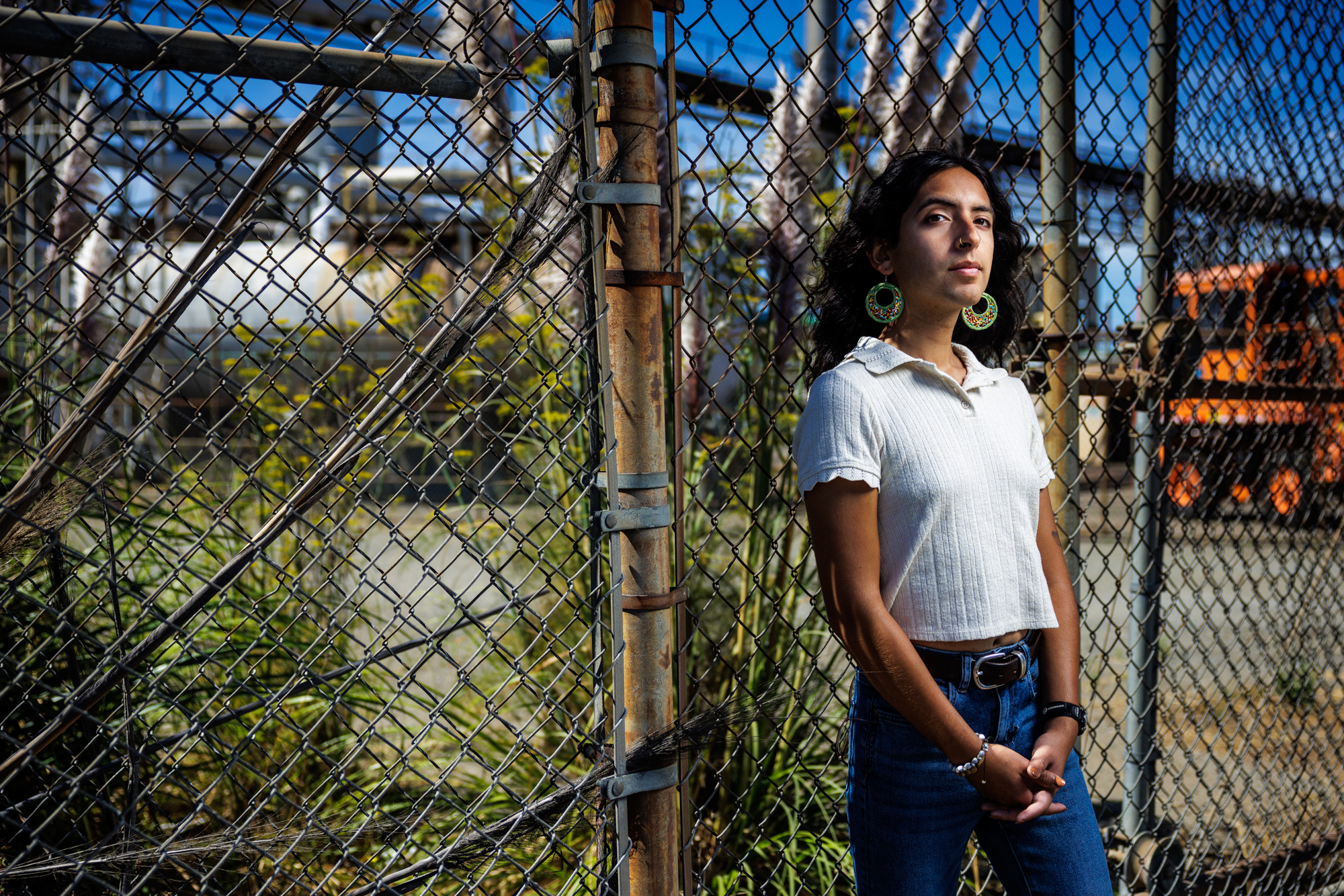
California’s Clean-Air Program for Polluted Communities Faces Crossroads
These 4 Bay Area Cities Could See Rent Control Measures on the 2024 Ballot
'It Was Like a River': Flood Insurance Is Often Out of Reach for Bay Area Residents Who Need It Most
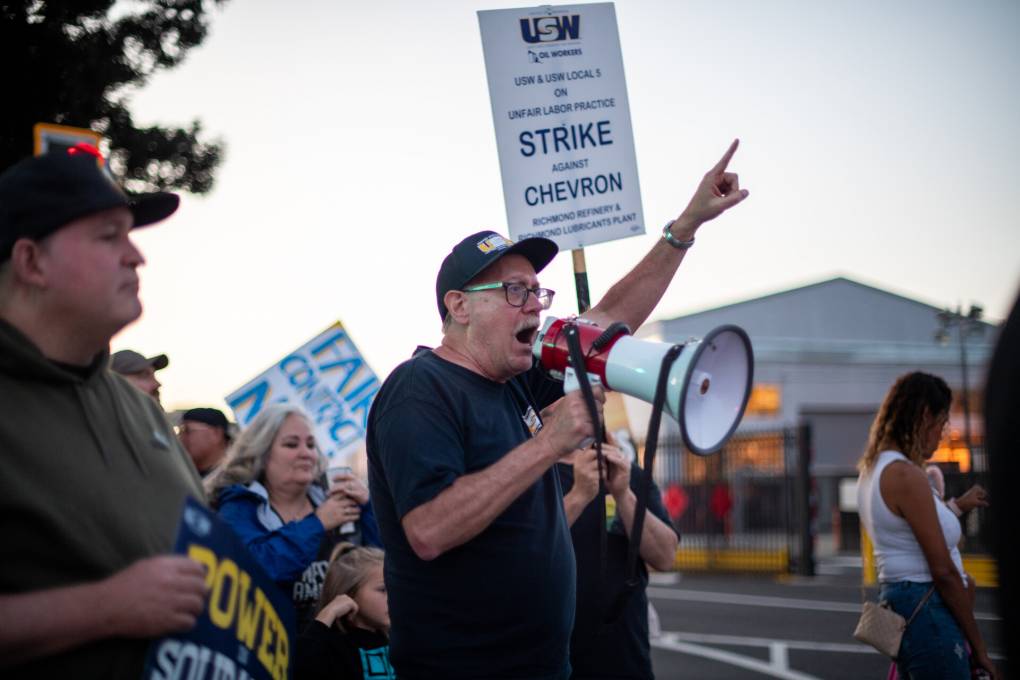
Chevron Calls to Police During Strike Prompt Pushback, Strain on Resources
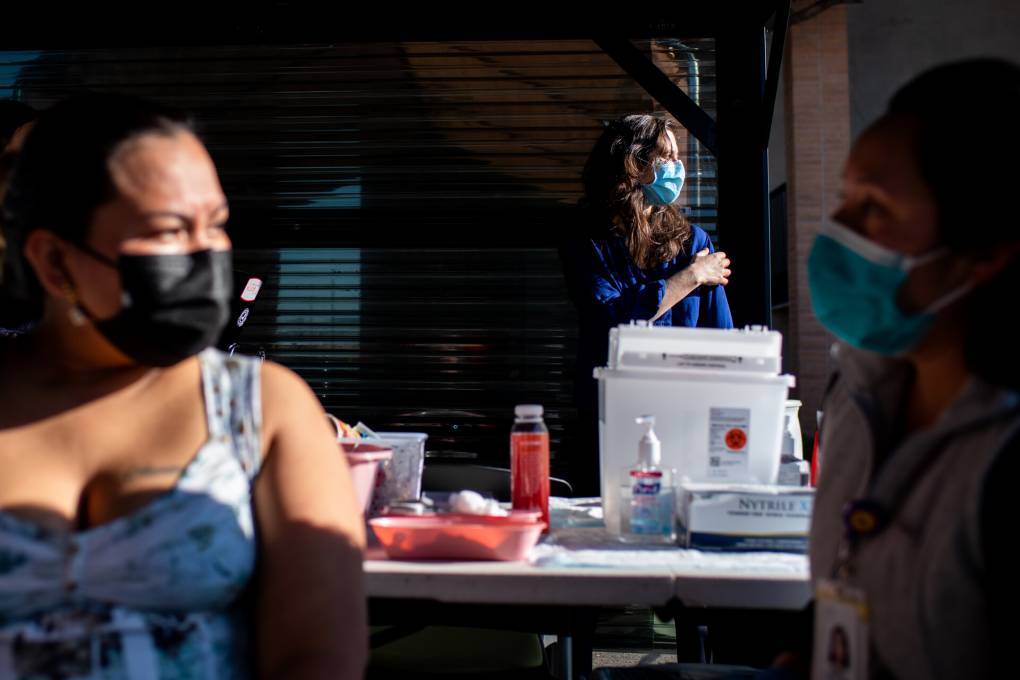
Community COVID Clinics Fill Crucial Need in Underserved Communities — But Are Strapped for Resources
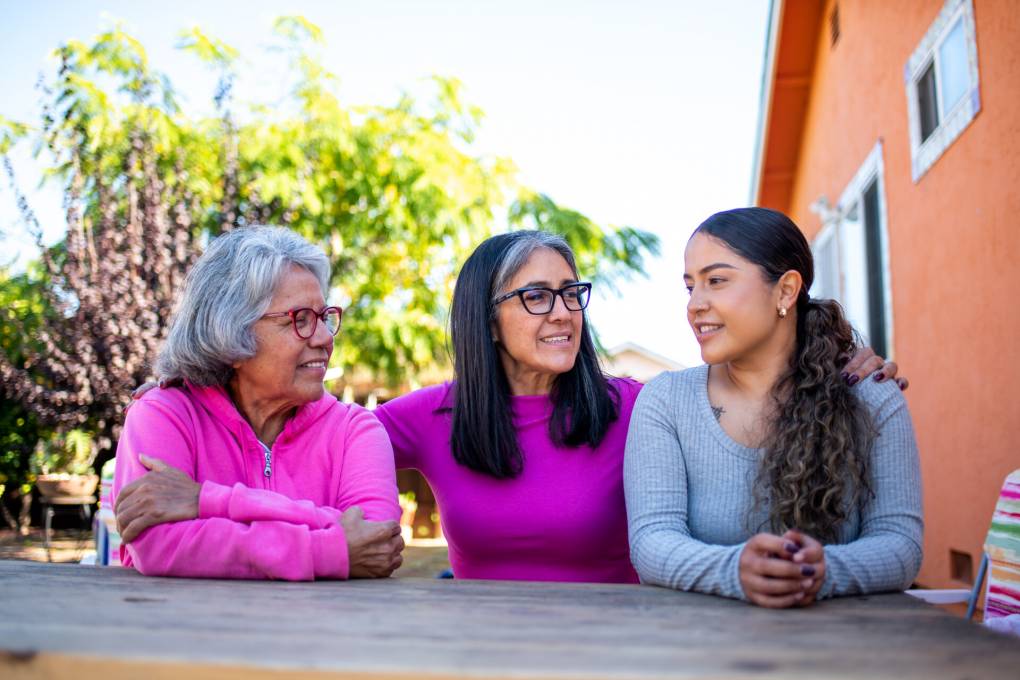
Catching COVID Twice Taught This Large Family Why Vaccines Matter
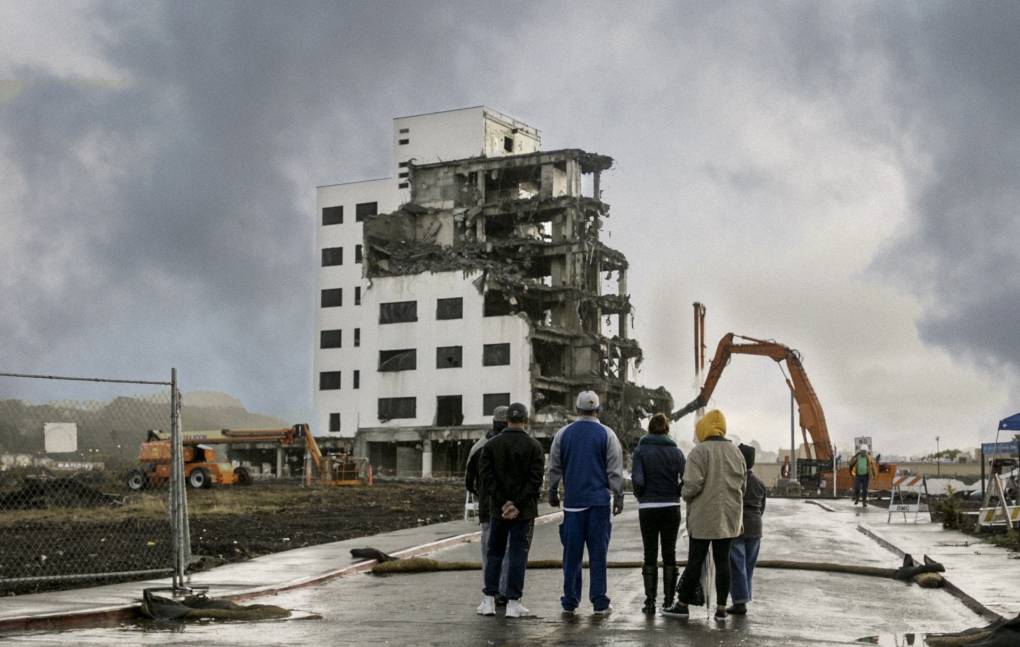
'A Lot of Trust Was Lost': What Losing its Only Hospital Meant to an East Bay Community
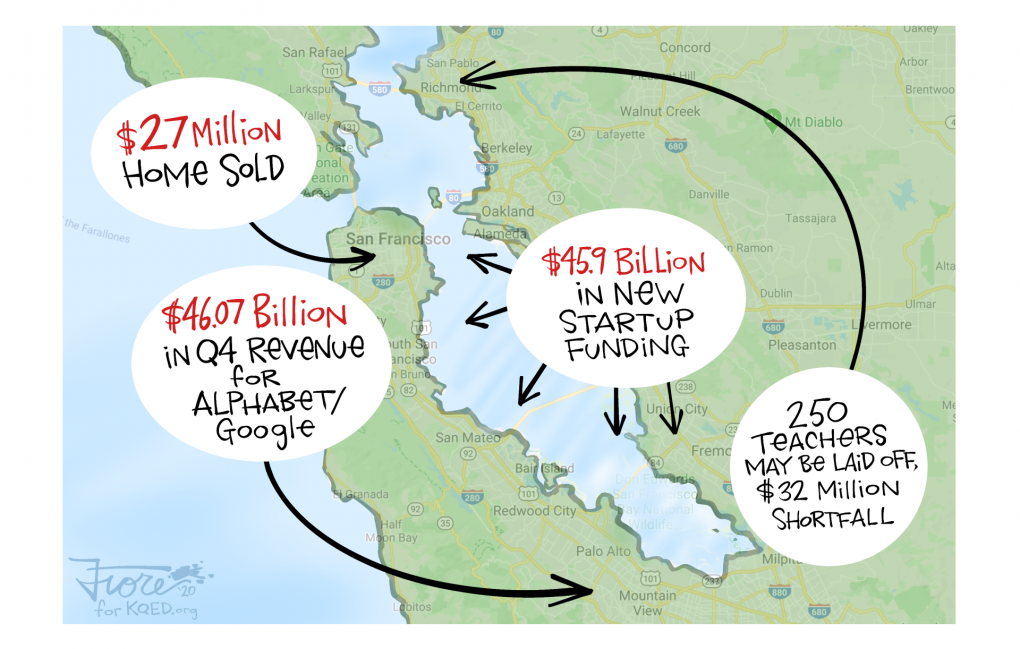
Layoffs and Budget Cuts Amid the Boom?
In Effort to Keep Alta Bates Open, Officials Point to New Report About Potential Impacts Of Closure
Sponsored
Player sponsored by
window.__IS_SSR__=true
window.__INITIAL_STATE__={
"attachmentsReducer": {
"audio_0": {
"type": "attachments",
"id": "audio_0",
"imgSizes": {
"kqedFullSize": {
"file": "https://ww2.kqed.org/news/wp-content/themes/KQED-unified/img/audio_bgs/background0.jpg"
}
}
},
"audio_1": {
"type": "attachments",
"id": "audio_1",
"imgSizes": {
"kqedFullSize": {
"file": "https://ww2.kqed.org/news/wp-content/themes/KQED-unified/img/audio_bgs/background1.jpg"
}
}
},
"audio_2": {
"type": "attachments",
"id": "audio_2",
"imgSizes": {
"kqedFullSize": {
"file": "https://ww2.kqed.org/news/wp-content/themes/KQED-unified/img/audio_bgs/background2.jpg"
}
}
},
"audio_3": {
"type": "attachments",
"id": "audio_3",
"imgSizes": {
"kqedFullSize": {
"file": "https://ww2.kqed.org/news/wp-content/themes/KQED-unified/img/audio_bgs/background3.jpg"
}
}
},
"audio_4": {
"type": "attachments",
"id": "audio_4",
"imgSizes": {
"kqedFullSize": {
"file": "https://ww2.kqed.org/news/wp-content/themes/KQED-unified/img/audio_bgs/background4.jpg"
}
}
},
"placeholder": {
"type": "attachments",
"id": "placeholder",
"imgSizes": {
"thumbnail": {
"file": "https://cdn.kqed.org/wp-content/uploads/2024/12/KQED-Default-Image-816638274-2000x1333-1-160x107.jpg",
"width": 160,
"height": 107,
"mimeType": "image/jpeg"
},
"medium": {
"file": "https://cdn.kqed.org/wp-content/uploads/2024/12/KQED-Default-Image-816638274-2000x1333-1-800x533.jpg",
"width": 800,
"height": 533,
"mimeType": "image/jpeg"
},
"medium_large": {
"file": "https://cdn.kqed.org/wp-content/uploads/2024/12/KQED-Default-Image-816638274-2000x1333-1-768x512.jpg",
"width": 768,
"height": 512,
"mimeType": "image/jpeg"
},
"large": {
"file": "https://cdn.kqed.org/wp-content/uploads/2024/12/KQED-Default-Image-816638274-2000x1333-1-1020x680.jpg",
"width": 1020,
"height": 680,
"mimeType": "image/jpeg"
},
"1536x1536": {
"file": "https://cdn.kqed.org/wp-content/uploads/2024/12/KQED-Default-Image-816638274-2000x1333-1-1536x1024.jpg",
"width": 1536,
"height": 1024,
"mimeType": "image/jpeg"
},
"fd-lrg": {
"file": "https://cdn.kqed.org/wp-content/uploads/2024/12/KQED-Default-Image-816638274-2000x1333-1-1536x1024.jpg",
"width": 1536,
"height": 1024,
"mimeType": "image/jpeg"
},
"fd-med": {
"file": "https://cdn.kqed.org/wp-content/uploads/2024/12/KQED-Default-Image-816638274-2000x1333-1-1020x680.jpg",
"width": 1020,
"height": 680,
"mimeType": "image/jpeg"
},
"fd-sm": {
"file": "https://cdn.kqed.org/wp-content/uploads/2024/12/KQED-Default-Image-816638274-2000x1333-1-800x533.jpg",
"width": 800,
"height": 533,
"mimeType": "image/jpeg"
},
"post-thumbnail": {
"file": "https://cdn.kqed.org/wp-content/uploads/2024/12/KQED-Default-Image-816638274-2000x1333-1-672x372.jpg",
"width": 672,
"height": 372,
"mimeType": "image/jpeg"
},
"twentyfourteen-full-width": {
"file": "https://cdn.kqed.org/wp-content/uploads/2024/12/KQED-Default-Image-816638274-2000x1333-1-1038x576.jpg",
"width": 1038,
"height": 576,
"mimeType": "image/jpeg"
},
"xxsmall": {
"file": "https://cdn.kqed.org/wp-content/uploads/2024/12/KQED-Default-Image-816638274-2000x1333-1-160x107.jpg",
"width": 160,
"height": 107,
"mimeType": "image/jpeg"
},
"xsmall": {
"file": "https://cdn.kqed.org/wp-content/uploads/2024/12/KQED-Default-Image-816638274-2000x1333-1-672x372.jpg",
"width": 672,
"height": 372,
"mimeType": "image/jpeg"
},
"small": {
"file": "https://cdn.kqed.org/wp-content/uploads/2024/12/KQED-Default-Image-816638274-2000x1333-1-672x372.jpg",
"width": 672,
"height": 372,
"mimeType": "image/jpeg"
},
"xlarge": {
"file": "https://cdn.kqed.org/wp-content/uploads/2024/12/KQED-Default-Image-816638274-2000x1333-1-1020x680.jpg",
"width": 1020,
"height": 680,
"mimeType": "image/jpeg"
},
"full-width": {
"file": "https://cdn.kqed.org/wp-content/uploads/2024/12/KQED-Default-Image-816638274-2000x1333-1-1920x1280.jpg",
"width": 1920,
"height": 1280,
"mimeType": "image/jpeg"
},
"guest-author-32": {
"file": "https://cdn.kqed.org/wp-content/uploads/2025/01/KQED-Default-Image-816638274-1333x1333-1-160x160.jpg",
"width": 32,
"height": 32,
"mimeType": "image/jpeg"
},
"guest-author-50": {
"file": "https://cdn.kqed.org/wp-content/uploads/2025/01/KQED-Default-Image-816638274-1333x1333-1-160x160.jpg",
"width": 50,
"height": 50,
"mimeType": "image/jpeg"
},
"guest-author-64": {
"file": "https://cdn.kqed.org/wp-content/uploads/2025/01/KQED-Default-Image-816638274-1333x1333-1-160x160.jpg",
"width": 64,
"height": 64,
"mimeType": "image/jpeg"
},
"guest-author-96": {
"file": "https://cdn.kqed.org/wp-content/uploads/2025/01/KQED-Default-Image-816638274-1333x1333-1-160x160.jpg",
"width": 96,
"height": 96,
"mimeType": "image/jpeg"
},
"guest-author-128": {
"file": "https://cdn.kqed.org/wp-content/uploads/2025/01/KQED-Default-Image-816638274-1333x1333-1-160x160.jpg",
"width": 128,
"height": 128,
"mimeType": "image/jpeg"
},
"detail": {
"file": "https://cdn.kqed.org/wp-content/uploads/2025/01/KQED-Default-Image-816638274-1333x1333-1-160x160.jpg",
"width": 160,
"height": 160,
"mimeType": "image/jpeg"
},
"kqedFullSize": {
"file": "https://cdn.kqed.org/wp-content/uploads/2024/12/KQED-Default-Image-816638274-2000x1333-1.jpg",
"width": 2000,
"height": 1333
}
}
},
"news_12051505": {
"type": "attachments",
"id": "news_12051505",
"meta": {
"index": "attachments_1716263798",
"site": "news",
"id": "12051505",
"found": true
},
"title": "Luna Angulo in Richmond on Aug. 8, 2025.",
"publishDate": 1754681165,
"status": "inherit",
"parent": 0,
"modified": 1754681277,
"caption": "Luna Angulo in Richmond on Aug. 8, 2025. Touted as an environmental justice companion to California’s cap-and-trade system, AB 617 promised cleaner air for frontline communities like Richmond — but has it actually delivered?",
"credit": "Martin do Nascimento/KQED",
"altTag": null,
"description": null,
"imgSizes": {
"thumbnail": {
"file": "https://cdn.kqed.org/wp-content/uploads/sites/10/2025/08/250808-CAP-AND-TRADE-ENVIRO-JUSTICE-MD-04-KQED-160x107.jpg",
"width": 160,
"height": 107,
"mimeType": "image/jpeg"
},
"1536x1536": {
"file": "https://cdn.kqed.org/wp-content/uploads/sites/10/2025/08/250808-CAP-AND-TRADE-ENVIRO-JUSTICE-MD-04-KQED-1536x1025.jpg",
"width": 1536,
"height": 1025,
"mimeType": "image/jpeg"
},
"post-thumbnail": {
"file": "https://cdn.kqed.org/wp-content/uploads/sites/10/2025/08/250808-CAP-AND-TRADE-ENVIRO-JUSTICE-MD-04-KQED-672x372.jpg",
"width": 672,
"height": 372,
"mimeType": "image/jpeg"
},
"twentyfourteen-full-width": {
"file": "https://cdn.kqed.org/wp-content/uploads/sites/10/2025/08/250808-CAP-AND-TRADE-ENVIRO-JUSTICE-MD-04-KQED-1038x576.jpg",
"width": 1038,
"height": 576,
"mimeType": "image/jpeg"
},
"kqedFullSize": {
"file": "https://cdn.kqed.org/wp-content/uploads/sites/10/2025/08/250808-CAP-AND-TRADE-ENVIRO-JUSTICE-MD-04-KQED.jpg",
"width": 2000,
"height": 1334
}
},
"fetchFailed": false,
"isLoading": false
},
"news_11970120": {
"type": "attachments",
"id": "news_11970120",
"meta": {
"index": "attachments_1716263798",
"site": "news",
"id": "11970120",
"found": true
},
"parent": 11970062,
"imgSizes": {
"twentyfourteen-full-width": {
"file": "https://cdn.kqed.org/wp-content/uploads/sites/10/2023/12/GettyImages-1092771432-1038x576.jpg",
"width": 1038,
"mimeType": "image/jpeg",
"height": 576
},
"thumbnail": {
"file": "https://cdn.kqed.org/wp-content/uploads/sites/10/2023/12/GettyImages-1092771432-160x107.jpg",
"width": 160,
"mimeType": "image/jpeg",
"height": 107
},
"post-thumbnail": {
"file": "https://cdn.kqed.org/wp-content/uploads/sites/10/2023/12/GettyImages-1092771432-672x372.jpg",
"width": 672,
"mimeType": "image/jpeg",
"height": 372
},
"kqedFullSize": {
"file": "https://cdn.kqed.org/wp-content/uploads/sites/10/2023/12/GettyImages-1092771432.jpg",
"width": 2121,
"height": 1414
},
"2048x2048": {
"file": "https://cdn.kqed.org/wp-content/uploads/sites/10/2023/12/GettyImages-1092771432-2048x1365.jpg",
"width": 2048,
"mimeType": "image/jpeg",
"height": 1365
},
"large": {
"file": "https://cdn.kqed.org/wp-content/uploads/sites/10/2023/12/GettyImages-1092771432-1020x680.jpg",
"width": 1020,
"mimeType": "image/jpeg",
"height": 680
},
"1536x1536": {
"file": "https://cdn.kqed.org/wp-content/uploads/sites/10/2023/12/GettyImages-1092771432-1536x1024.jpg",
"width": 1536,
"mimeType": "image/jpeg",
"height": 1024
},
"full-width": {
"file": "https://cdn.kqed.org/wp-content/uploads/sites/10/2023/12/GettyImages-1092771432-1920x1280.jpg",
"width": 1920,
"mimeType": "image/jpeg",
"height": 1280
},
"medium": {
"file": "https://cdn.kqed.org/wp-content/uploads/sites/10/2023/12/GettyImages-1092771432-800x533.jpg",
"width": 800,
"mimeType": "image/jpeg",
"height": 533
}
},
"publishDate": 1702674463,
"modified": 1702674524,
"caption": "An aerial view of Redwood City.",
"description": null,
"title": "Aerial view of Redwood City, Silicon Valley, San Francisco bay, California",
"credit": "Sundry Photography via Getty Images",
"status": "inherit",
"altTag": "An aerial view of a city, with a large body of water in the bakground.",
"fetchFailed": false,
"isLoading": false
},
"news_11938721": {
"type": "attachments",
"id": "news_11938721",
"meta": {
"index": "attachments_1716263798",
"site": "news",
"id": "11938721",
"found": true
},
"parent": 11938647,
"imgSizes": {
"twentyfourteen-full-width": {
"file": "https://ww2.kqed.org/app/uploads/sites/10/2023/01/IMG_3914-1038x576.jpg",
"width": 1038,
"mimeType": "image/jpeg",
"height": 576
},
"thumbnail": {
"file": "https://ww2.kqed.org/app/uploads/sites/10/2023/01/IMG_3914-160x112.jpg",
"width": 160,
"mimeType": "image/jpeg",
"height": 112
},
"post-thumbnail": {
"file": "https://ww2.kqed.org/app/uploads/sites/10/2023/01/IMG_3914-672x372.jpg",
"width": 672,
"mimeType": "image/jpeg",
"height": 372
},
"kqedFullSize": {
"file": "https://ww2.kqed.org/app/uploads/sites/10/2023/01/IMG_3914.jpg",
"width": 1911,
"height": 1342
},
"large": {
"file": "https://ww2.kqed.org/app/uploads/sites/10/2023/01/IMG_3914-1020x716.jpg",
"width": 1020,
"mimeType": "image/jpeg",
"height": 716
},
"1536x1536": {
"file": "https://ww2.kqed.org/app/uploads/sites/10/2023/01/IMG_3914-1536x1079.jpg",
"width": 1536,
"mimeType": "image/jpeg",
"height": 1079
},
"medium": {
"file": "https://ww2.kqed.org/app/uploads/sites/10/2023/01/IMG_3914-800x562.jpg",
"width": 800,
"mimeType": "image/jpeg",
"height": 562
}
},
"publishDate": 1674251839,
"modified": 1674259299,
"caption": "Laura Cisneros, on Jan. 6, 2023, points to where the rising waters of Rheem Creek seeped through the fence and ultimately surrounded her house in the unincorporated Contra Costa County community of Rollingwood, during the torrential downpour on New Year's Eve.",
"description": null,
"title": "IMG_3914",
"credit": "Ezra David Romero/KQED",
"status": "inherit",
"altTag": "A woman stands by a creek, pointing to a cement wall.",
"fetchFailed": false,
"isLoading": false
},
"news_11912228": {
"type": "attachments",
"id": "news_11912228",
"meta": {
"index": "attachments_1716263798",
"site": "news",
"id": "11912228",
"found": true
},
"parent": 11912101,
"imgSizes": {
"twentyfourteen-full-width": {
"file": "https://ww2.kqed.org/app/uploads/sites/10/2022/04/RS55033_019_KQED_ChevronRefineryStrike_04072022-qut-1038x576.jpg",
"width": 1038,
"mimeType": "image/jpeg",
"height": 576
},
"thumbnail": {
"file": "https://ww2.kqed.org/app/uploads/sites/10/2022/04/RS55033_019_KQED_ChevronRefineryStrike_04072022-qut-160x107.jpg",
"width": 160,
"mimeType": "image/jpeg",
"height": 107
},
"post-thumbnail": {
"file": "https://ww2.kqed.org/app/uploads/sites/10/2022/04/RS55033_019_KQED_ChevronRefineryStrike_04072022-qut-672x372.jpg",
"width": 672,
"mimeType": "image/jpeg",
"height": 372
},
"kqedFullSize": {
"file": "https://ww2.kqed.org/app/uploads/sites/10/2022/04/RS55033_019_KQED_ChevronRefineryStrike_04072022-qut.jpg",
"width": 1920,
"height": 1280
},
"large": {
"file": "https://ww2.kqed.org/app/uploads/sites/10/2022/04/RS55033_019_KQED_ChevronRefineryStrike_04072022-qut-1020x680.jpg",
"width": 1020,
"mimeType": "image/jpeg",
"height": 680
},
"1536x1536": {
"file": "https://ww2.kqed.org/app/uploads/sites/10/2022/04/RS55033_019_KQED_ChevronRefineryStrike_04072022-qut-1536x1024.jpg",
"width": 1536,
"mimeType": "image/jpeg",
"height": 1024
},
"medium": {
"file": "https://ww2.kqed.org/app/uploads/sites/10/2022/04/RS55033_019_KQED_ChevronRefineryStrike_04072022-qut-800x533.jpg",
"width": 800,
"mimeType": "image/jpeg",
"height": 533
}
},
"publishDate": 1650996046,
"modified": 1654028468,
"caption": "United Steelworkers union member Mike Zielinski speaks on a megaphone during a strike by Chevron employees outside Gate 14 at the Richmond refinery on April 7, 2022.",
"description": "United Steel Workers union member Mike Zielinski speaks on a megaphone during a strike by Chevron employees outside of Gate 14 at the Richmond refinery on April 7, 2022.",
"title": "RS55033_019_KQED_ChevronRefineryStrike_04072022-qut",
"credit": "Beth LaBerge/KQED",
"status": "inherit",
"altTag": "An older white man with glasses and a trim white mustache, wearing a navy baseball hat and navy shirt, shouts into a red-and-white bullhorn he holds in his right hand, his left hand pointing to the sky. To his right, farther from the camera, stands a woman in a white tank top and jeans. To the man's left and behind him, out of focus, is a group of people holding signs. One of them says \"Fair Contract\" and the other says \"Strike against Chevron.\" It appears to be evening time, and behind everyone is what appears to be a black, iron, security fence and a low, white building.",
"fetchFailed": false,
"isLoading": false
},
"news_11902175": {
"type": "attachments",
"id": "news_11902175",
"meta": {
"index": "attachments_1716263798",
"site": "news",
"id": "11902175",
"found": true
},
"parent": 11902149,
"imgSizes": {
"twentyfourteen-full-width": {
"file": "https://ww2.kqed.org/app/uploads/sites/10/2022/01/RS53217_034_Richmond_LifelongCOVIDClinic_01192022-qut-1038x576.jpg",
"width": 1038,
"mimeType": "image/jpeg",
"height": 576
},
"thumbnail": {
"file": "https://ww2.kqed.org/app/uploads/sites/10/2022/01/RS53217_034_Richmond_LifelongCOVIDClinic_01192022-qut-160x107.jpg",
"width": 160,
"mimeType": "image/jpeg",
"height": 107
},
"post-thumbnail": {
"file": "https://ww2.kqed.org/app/uploads/sites/10/2022/01/RS53217_034_Richmond_LifelongCOVIDClinic_01192022-qut-672x372.jpg",
"width": 672,
"mimeType": "image/jpeg",
"height": 372
},
"kqedFullSize": {
"file": "https://ww2.kqed.org/app/uploads/sites/10/2022/01/RS53217_034_Richmond_LifelongCOVIDClinic_01192022-qut.jpg",
"width": 1920,
"height": 1280
},
"large": {
"file": "https://ww2.kqed.org/app/uploads/sites/10/2022/01/RS53217_034_Richmond_LifelongCOVIDClinic_01192022-qut-1020x680.jpg",
"width": 1020,
"mimeType": "image/jpeg",
"height": 680
},
"1536x1536": {
"file": "https://ww2.kqed.org/app/uploads/sites/10/2022/01/RS53217_034_Richmond_LifelongCOVIDClinic_01192022-qut-1536x1024.jpg",
"width": 1536,
"mimeType": "image/jpeg",
"height": 1024
},
"medium": {
"file": "https://ww2.kqed.org/app/uploads/sites/10/2022/01/RS53217_034_Richmond_LifelongCOVIDClinic_01192022-qut-800x533.jpg",
"width": 800,
"mimeType": "image/jpeg",
"height": 533
}
},
"publishDate": 1642715022,
"modified": 1642730431,
"caption": "Renna Khuner-Haber (center), who coordinates LifeLong Medical's testing sites in Richmond and San Pablo, talks with staff, as a registered nurse (right) talks with a patient at LifeLong's Brookside San Pablo Health Center on Jan. 19, 2022.",
"description": null,
"title": "RS53217_034_Richmond_LifelongCOVIDClinic_01192022-qut",
"credit": "Beth LaBerge/KQED",
"status": "inherit",
"altTag": "Two seated, masked women - a nurse and patient - talk in sunlit foreground as another masked woman stands in the background",
"fetchFailed": false,
"isLoading": false
},
"news_11895820": {
"type": "attachments",
"id": "news_11895820",
"meta": {
"index": "attachments_1716263798",
"site": "news",
"id": "11895820",
"found": true
},
"parent": 11895788,
"imgSizes": {
"twentyfourteen-full-width": {
"file": "https://ww2.kqed.org/app/uploads/sites/10/2021/11/RS52398_006_SanPablo_FamilyCOVIDTwice_11032021-qut-1038x576.jpg",
"width": 1038,
"mimeType": "image/jpeg",
"height": 576
},
"thumbnail": {
"file": "https://ww2.kqed.org/app/uploads/sites/10/2021/11/RS52398_006_SanPablo_FamilyCOVIDTwice_11032021-qut-160x107.jpg",
"width": 160,
"mimeType": "image/jpeg",
"height": 107
},
"post-thumbnail": {
"file": "https://ww2.kqed.org/app/uploads/sites/10/2021/11/RS52398_006_SanPablo_FamilyCOVIDTwice_11032021-qut-672x372.jpg",
"width": 672,
"mimeType": "image/jpeg",
"height": 372
},
"kqedFullSize": {
"file": "https://ww2.kqed.org/app/uploads/sites/10/2021/11/RS52398_006_SanPablo_FamilyCOVIDTwice_11032021-qut.jpg",
"width": 1920,
"height": 1280
},
"large": {
"file": "https://ww2.kqed.org/app/uploads/sites/10/2021/11/RS52398_006_SanPablo_FamilyCOVIDTwice_11032021-qut-1020x680.jpg",
"width": 1020,
"mimeType": "image/jpeg",
"height": 680
},
"1536x1536": {
"file": "https://ww2.kqed.org/app/uploads/sites/10/2021/11/RS52398_006_SanPablo_FamilyCOVIDTwice_11032021-qut-1536x1024.jpg",
"width": 1536,
"mimeType": "image/jpeg",
"height": 1024
},
"medium": {
"file": "https://ww2.kqed.org/app/uploads/sites/10/2021/11/RS52398_006_SanPablo_FamilyCOVIDTwice_11032021-qut-800x533.jpg",
"width": 800,
"mimeType": "image/jpeg",
"height": 533
}
},
"publishDate": 1636574403,
"modified": 1636765932,
"caption": "Three generations (from left to right) — grandmother Genoveva Calloway, daughter Petra Gonzales, and granddaughter Vanesa Quintero — sit together in their shared backyard in San Pablo on Nov. 3, 2021.",
"description": null,
"title": "RS52398_006_SanPablo_FamilyCOVIDTwice_11032021-qut",
"credit": "Beth LaBerge/KQED",
"status": "inherit",
"altTag": "Three women, two wearing glasses, look at each other. The woman in the middle waring a purple shirt has her arms on the shoulders of both women and is looking to the right.",
"fetchFailed": false,
"isLoading": false
},
"news_11831437": {
"type": "attachments",
"id": "news_11831437",
"meta": {
"index": "attachments_1716263798",
"site": "news",
"id": "11831437",
"found": true
},
"parent": 11830978,
"imgSizes": {
"apple_news_ca_landscape_5_5": {
"file": "https://ww2.kqed.org/app/uploads/sites/10/2020/07/the-desert-official-poster-1044x783.jpg",
"width": 1044,
"mimeType": "image/jpeg",
"height": 783
},
"apple_news_ca_square_4_0": {
"file": "https://ww2.kqed.org/app/uploads/sites/10/2020/07/the-desert-official-poster-470x470.jpg",
"width": 470,
"mimeType": "image/jpeg",
"height": 470
},
"twentyfourteen-full-width": {
"file": "https://ww2.kqed.org/app/uploads/sites/10/2020/07/the-desert-official-poster-1038x576.jpg",
"width": 1038,
"mimeType": "image/jpeg",
"height": 576
},
"thumbnail": {
"file": "https://ww2.kqed.org/app/uploads/sites/10/2020/07/the-desert-official-poster-160x101.jpg",
"width": 160,
"mimeType": "image/jpeg",
"height": 101
},
"post-thumbnail": {
"file": "https://ww2.kqed.org/app/uploads/sites/10/2020/07/the-desert-official-poster-672x372.jpg",
"width": 672,
"mimeType": "image/jpeg",
"height": 372
},
"kqedFullSize": {
"file": "https://ww2.kqed.org/app/uploads/sites/10/2020/07/the-desert-official-poster.jpg",
"width": 1919,
"height": 1217
},
"apple_news_ca_landscape_4_7": {
"file": "https://ww2.kqed.org/app/uploads/sites/10/2020/07/the-desert-official-poster-632x474.jpg",
"width": 632,
"mimeType": "image/jpeg",
"height": 474
},
"large": {
"file": "https://ww2.kqed.org/app/uploads/sites/10/2020/07/the-desert-official-poster-1020x647.jpg",
"width": 1020,
"mimeType": "image/jpeg",
"height": 647
},
"apple_news_ca_landscape_4_0": {
"file": "https://ww2.kqed.org/app/uploads/sites/10/2020/07/the-desert-official-poster-536x402.jpg",
"width": 536,
"mimeType": "image/jpeg",
"height": 402
},
"apple_news_ca_portrait_12_9": {
"file": "https://ww2.kqed.org/app/uploads/sites/10/2020/07/the-desert-official-poster-1122x1217.jpg",
"width": 1122,
"mimeType": "image/jpeg",
"height": 1217
},
"medium": {
"file": "https://ww2.kqed.org/app/uploads/sites/10/2020/07/the-desert-official-poster-800x507.jpg",
"width": 800,
"mimeType": "image/jpeg",
"height": 507
},
"apple_news_ca_portrait_4_0": {
"file": "https://ww2.kqed.org/app/uploads/sites/10/2020/07/the-desert-official-poster-354x472.jpg",
"width": 354,
"mimeType": "image/jpeg",
"height": 472
},
"apple_news_ca_portrait_9_7": {
"file": "https://ww2.kqed.org/app/uploads/sites/10/2020/07/the-desert-official-poster-840x1120.jpg",
"width": 840,
"mimeType": "image/jpeg",
"height": 1120
},
"apple_news_ca_landscape_12_9": {
"file": "https://ww2.kqed.org/app/uploads/sites/10/2020/07/the-desert-official-poster-1832x1217.jpg",
"width": 1832,
"mimeType": "image/jpeg",
"height": 1217
},
"apple_news_ca_square_9_7": {
"file": "https://ww2.kqed.org/app/uploads/sites/10/2020/07/the-desert-official-poster-1104x1104.jpg",
"width": 1104,
"mimeType": "image/jpeg",
"height": 1104
},
"1536x1536": {
"file": "https://ww2.kqed.org/app/uploads/sites/10/2020/07/the-desert-official-poster-1536x974.jpg",
"width": 1536,
"mimeType": "image/jpeg",
"height": 974
},
"apple_news_ca_portrait_4_7": {
"file": "https://ww2.kqed.org/app/uploads/sites/10/2020/07/the-desert-official-poster-414x552.jpg",
"width": 414,
"mimeType": "image/jpeg",
"height": 552
},
"apple_news_ca_square_12_9": {
"file": "https://ww2.kqed.org/app/uploads/sites/10/2020/07/the-desert-official-poster-1472x1217.jpg",
"width": 1472,
"mimeType": "image/jpeg",
"height": 1217
},
"apple_news_ca_portrait_5_5": {
"file": "https://ww2.kqed.org/app/uploads/sites/10/2020/07/the-desert-official-poster-687x916.jpg",
"width": 687,
"mimeType": "image/jpeg",
"height": 916
},
"apple_news_ca_square_4_7": {
"file": "https://ww2.kqed.org/app/uploads/sites/10/2020/07/the-desert-official-poster-550x550.jpg",
"width": 550,
"mimeType": "image/jpeg",
"height": 550
},
"apple_news_ca_landscape_9_7": {
"file": "https://ww2.kqed.org/app/uploads/sites/10/2020/07/the-desert-official-poster-1376x1032.jpg",
"width": 1376,
"mimeType": "image/jpeg",
"height": 1032
},
"apple_news_ca_square_5_5": {
"file": "https://ww2.kqed.org/app/uploads/sites/10/2020/07/the-desert-official-poster-912x912.jpg",
"width": 912,
"mimeType": "image/jpeg",
"height": 912
}
},
"publishDate": 1596224471,
"modified": 1596229269,
"caption": "In a still from 'The Desert,' locals observe as Doctors Medical Center in San Pablo is torn down following its closure in 2015, leaving the nearest public hospital 15 miles away.",
"description": "In a still from 'The Desert,' locals observe as Doctors Medical Center in San Pablo is torn down following its closure in 2015, leaving the nearest public hospital 15 miles away.",
"title": "the desert official poster",
"credit": "Courtesy Bo Kovitz",
"status": "inherit",
"fetchFailed": false,
"isLoading": false
},
"news_11800728": {
"type": "attachments",
"id": "news_11800728",
"meta": {
"index": "attachments_1716263798",
"site": "news",
"id": "11800728",
"found": true
},
"parent": 11800722,
"imgSizes": {
"apple_news_ca_landscape_5_5": {
"file": "https://ww2.kqed.org/app/uploads/sites/10/2020/02/layoffs_020720_final_MF-1044x783.png",
"width": 1044,
"mimeType": "image/png",
"height": 783
},
"apple_news_ca_square_4_0": {
"file": "https://ww2.kqed.org/app/uploads/sites/10/2020/02/layoffs_020720_final_MF-470x470.png",
"width": 470,
"mimeType": "image/png",
"height": 470
},
"twentyfourteen-full-width": {
"file": "https://ww2.kqed.org/app/uploads/sites/10/2020/02/layoffs_020720_final_MF-1038x576.png",
"width": 1038,
"mimeType": "image/png",
"height": 576
},
"thumbnail": {
"file": "https://ww2.kqed.org/app/uploads/sites/10/2020/02/layoffs_020720_final_MF-160x102.png",
"width": 160,
"mimeType": "image/png",
"height": 102
},
"post-thumbnail": {
"file": "https://ww2.kqed.org/app/uploads/sites/10/2020/02/layoffs_020720_final_MF-672x372.png",
"width": 672,
"mimeType": "image/png",
"height": 372
},
"kqedFullSize": {
"file": "https://ww2.kqed.org/app/uploads/sites/10/2020/02/layoffs_020720_final_MF.png",
"width": 1920,
"height": 1222
},
"apple_news_ca_landscape_4_7": {
"file": "https://ww2.kqed.org/app/uploads/sites/10/2020/02/layoffs_020720_final_MF-632x474.png",
"width": 632,
"mimeType": "image/png",
"height": 474
},
"large": {
"file": "https://ww2.kqed.org/app/uploads/sites/10/2020/02/layoffs_020720_final_MF-1020x649.png",
"width": 1020,
"mimeType": "image/png",
"height": 649
},
"apple_news_ca_landscape_4_0": {
"file": "https://ww2.kqed.org/app/uploads/sites/10/2020/02/layoffs_020720_final_MF-536x402.png",
"width": 536,
"mimeType": "image/png",
"height": 402
},
"apple_news_ca_portrait_12_9": {
"file": "https://ww2.kqed.org/app/uploads/sites/10/2020/02/layoffs_020720_final_MF-1122x1222.png",
"width": 1122,
"mimeType": "image/png",
"height": 1222
},
"medium": {
"file": "https://ww2.kqed.org/app/uploads/sites/10/2020/02/layoffs_020720_final_MF-800x509.png",
"width": 800,
"mimeType": "image/png",
"height": 509
},
"apple_news_ca_portrait_4_0": {
"file": "https://ww2.kqed.org/app/uploads/sites/10/2020/02/layoffs_020720_final_MF-354x472.png",
"width": 354,
"mimeType": "image/png",
"height": 472
},
"apple_news_ca_portrait_9_7": {
"file": "https://ww2.kqed.org/app/uploads/sites/10/2020/02/layoffs_020720_final_MF-840x1120.png",
"width": 840,
"mimeType": "image/png",
"height": 1120
},
"apple_news_ca_landscape_12_9": {
"file": "https://ww2.kqed.org/app/uploads/sites/10/2020/02/layoffs_020720_final_MF-1832x1222.png",
"width": 1832,
"mimeType": "image/png",
"height": 1222
},
"apple_news_ca_square_9_7": {
"file": "https://ww2.kqed.org/app/uploads/sites/10/2020/02/layoffs_020720_final_MF-1104x1104.png",
"width": 1104,
"mimeType": "image/png",
"height": 1104
},
"apple_news_ca_portrait_4_7": {
"file": "https://ww2.kqed.org/app/uploads/sites/10/2020/02/layoffs_020720_final_MF-414x552.png",
"width": 414,
"mimeType": "image/png",
"height": 552
},
"apple_news_ca_square_12_9": {
"file": "https://ww2.kqed.org/app/uploads/sites/10/2020/02/layoffs_020720_final_MF-1472x1222.png",
"width": 1472,
"mimeType": "image/png",
"height": 1222
},
"apple_news_ca_portrait_5_5": {
"file": "https://ww2.kqed.org/app/uploads/sites/10/2020/02/layoffs_020720_final_MF-687x916.png",
"width": 687,
"mimeType": "image/png",
"height": 916
},
"full-width": {
"file": "https://ww2.kqed.org/app/uploads/sites/10/2020/02/layoffs_020720_final_MF-1920x1222.png",
"width": 1920,
"mimeType": "image/png",
"height": 1222
},
"apple_news_ca_square_4_7": {
"file": "https://ww2.kqed.org/app/uploads/sites/10/2020/02/layoffs_020720_final_MF-550x550.png",
"width": 550,
"mimeType": "image/png",
"height": 550
},
"apple_news_ca_landscape_9_7": {
"file": "https://ww2.kqed.org/app/uploads/sites/10/2020/02/layoffs_020720_final_MF-1376x1032.png",
"width": 1376,
"mimeType": "image/png",
"height": 1032
},
"apple_news_ca_square_5_5": {
"file": "https://ww2.kqed.org/app/uploads/sites/10/2020/02/layoffs_020720_final_MF-912x912.png",
"width": 912,
"mimeType": "image/png",
"height": 912
}
},
"publishDate": 1581120438,
"modified": 1581120493,
"caption": null,
"description": null,
"title": "layoffs_020720_final_MF",
"credit": null,
"status": "inherit",
"fetchFailed": false,
"isLoading": false
},
"news_11713519": {
"type": "attachments",
"id": "news_11713519",
"meta": {
"index": "attachments_1716263798",
"site": "news",
"id": "11713519",
"found": true
},
"parent": 0,
"imgSizes": {
"small": {
"file": "https://ww2.kqed.org/app/uploads/sites/10/2018/12/AltaBatesHospital-520x390.jpg",
"width": 520,
"mimeType": "image/jpeg",
"height": 390
},
"twentyfourteen-full-width": {
"file": "https://ww2.kqed.org/app/uploads/sites/10/2018/12/AltaBatesHospital-1038x576.jpg",
"width": 1038,
"mimeType": "image/jpeg",
"height": 576
},
"thumbnail": {
"file": "https://ww2.kqed.org/app/uploads/sites/10/2018/12/AltaBatesHospital-160x120.jpg",
"width": 160,
"mimeType": "image/jpeg",
"height": 120
},
"fd-sm": {
"file": "https://ww2.kqed.org/app/uploads/sites/10/2018/12/AltaBatesHospital-960x720.jpg",
"width": 960,
"mimeType": "image/jpeg",
"height": 720
},
"post-thumbnail": {
"file": "https://ww2.kqed.org/app/uploads/sites/10/2018/12/AltaBatesHospital-672x372.jpg",
"width": 672,
"mimeType": "image/jpeg",
"height": 372
},
"xsmall": {
"file": "https://ww2.kqed.org/app/uploads/sites/10/2018/12/AltaBatesHospital-375x281.jpg",
"width": 375,
"mimeType": "image/jpeg",
"height": 281
},
"kqedFullSize": {
"file": "https://ww2.kqed.org/app/uploads/sites/10/2018/12/AltaBatesHospital.jpg",
"width": 1920,
"height": 1440
},
"large": {
"file": "https://ww2.kqed.org/app/uploads/sites/10/2018/12/AltaBatesHospital-1020x765.jpg",
"width": 1020,
"mimeType": "image/jpeg",
"height": 765
},
"xlarge": {
"file": "https://ww2.kqed.org/app/uploads/sites/10/2018/12/AltaBatesHospital-1180x885.jpg",
"width": 1180,
"mimeType": "image/jpeg",
"height": 885
},
"complete_open_graph": {
"file": "https://ww2.kqed.org/app/uploads/sites/10/2018/12/AltaBatesHospital-1200x900.jpg",
"width": 1200,
"mimeType": "image/jpeg",
"height": 900
},
"guest-author-50": {
"file": "https://ww2.kqed.org/app/uploads/sites/10/2018/12/AltaBatesHospital-50x50.jpg",
"width": 50,
"mimeType": "image/jpeg",
"height": 50
},
"guest-author-96": {
"file": "https://ww2.kqed.org/app/uploads/sites/10/2018/12/AltaBatesHospital-96x96.jpg",
"width": 96,
"mimeType": "image/jpeg",
"height": 96
},
"medium": {
"file": "https://ww2.kqed.org/app/uploads/sites/10/2018/12/AltaBatesHospital-800x600.jpg",
"width": 800,
"mimeType": "image/jpeg",
"height": 600
},
"guest-author-64": {
"file": "https://ww2.kqed.org/app/uploads/sites/10/2018/12/AltaBatesHospital-64x64.jpg",
"width": 64,
"mimeType": "image/jpeg",
"height": 64
},
"guest-author-32": {
"file": "https://ww2.kqed.org/app/uploads/sites/10/2018/12/AltaBatesHospital-32x32.jpg",
"width": 32,
"mimeType": "image/jpeg",
"height": 32
},
"fd-lrg": {
"file": "https://ww2.kqed.org/app/uploads/sites/10/2018/12/AltaBatesHospital-1920x1440.jpg",
"width": 1920,
"mimeType": "image/jpeg",
"height": 1440
},
"fd-med": {
"file": "https://ww2.kqed.org/app/uploads/sites/10/2018/12/AltaBatesHospital-1180x885.jpg",
"width": 1180,
"mimeType": "image/jpeg",
"height": 885
},
"full-width": {
"file": "https://ww2.kqed.org/app/uploads/sites/10/2018/12/AltaBatesHospital-1920x1440.jpg",
"width": 1920,
"mimeType": "image/jpeg",
"height": 1440
},
"detail": {
"file": "https://ww2.kqed.org/app/uploads/sites/10/2018/12/AltaBatesHospital-150x150.jpg",
"width": 150,
"mimeType": "image/jpeg",
"height": 150
},
"guest-author-128": {
"file": "https://ww2.kqed.org/app/uploads/sites/10/2018/12/AltaBatesHospital-128x128.jpg",
"width": 128,
"mimeType": "image/jpeg",
"height": 128
},
"xxsmall": {
"file": "https://ww2.kqed.org/app/uploads/sites/10/2018/12/AltaBatesHospital-240x180.jpg",
"width": 240,
"mimeType": "image/jpeg",
"height": 180
}
},
"publishDate": 1545181162,
"modified": 1545181389,
"caption": "Berkeley Mayor Jesse Arreguin (center) were among city officials and union members who want Sutter Health to keep Alta Bates Medical Center operational as a full-service hospital. ",
"description": null,
"title": "AltaBatesHospital",
"credit": "Karina Ioffee/KQED",
"status": "inherit",
"fetchFailed": false,
"isLoading": false
}
},
"audioPlayerReducer": {
"postId": "stream_live",
"isPaused": true,
"isPlaying": false,
"pfsActive": false,
"pledgeModalIsOpen": true,
"playerDrawerIsOpen": false
},
"authorsReducer": {
"gmarzorati": {
"type": "authors",
"id": "227",
"meta": {
"index": "authors_1716337520",
"id": "227",
"found": true
},
"name": "Guy Marzorati",
"firstName": "Guy",
"lastName": "Marzorati",
"slug": "gmarzorati",
"email": "gmarzorati@KQED.org",
"display_author_email": true,
"staff_mastheads": [
"news"
],
"title": "Correspondent",
"bio": "Guy Marzorati is a correspondent on KQED's California Politics and Government Desk, based in San Jose. A graduate of Santa Clara University, Guy joined KQED in 2013. He reports on state and local politics and produces KQED's digital voter guide.",
"avatar": "https://secure.gravatar.com/avatar/e7038b8dbfd55b104369b76b1cd0b9de?s=600&d=blank&r=g",
"twitter": "guymarzorati",
"facebook": null,
"instagram": null,
"linkedin": null,
"sites": [
{
"site": "",
"roles": [
"editor"
]
},
{
"site": "news",
"roles": [
"editor"
]
},
{
"site": "science",
"roles": [
"editor"
]
},
{
"site": "forum",
"roles": [
"editor"
]
},
{
"site": "elections",
"roles": [
"editor"
]
},
{
"site": "liveblog",
"roles": [
"editor"
]
}
],
"headData": {
"title": "Guy Marzorati | KQED",
"description": "Correspondent",
"ogImgSrc": "https://secure.gravatar.com/avatar/e7038b8dbfd55b104369b76b1cd0b9de?s=600&d=blank&r=g",
"twImgSrc": "https://secure.gravatar.com/avatar/e7038b8dbfd55b104369b76b1cd0b9de?s=600&d=blank&r=g"
},
"isLoading": false,
"link": "/author/gmarzorati"
},
"tgoldberg": {
"type": "authors",
"id": "258",
"meta": {
"index": "authors_1716337520",
"id": "258",
"found": true
},
"name": "Ted Goldberg",
"firstName": "Ted",
"lastName": "Goldberg",
"slug": "tgoldberg",
"email": "tgoldberg@kqed.org",
"display_author_email": true,
"staff_mastheads": [
"news"
],
"title": "KQED Managing Editor, News and Newscasts",
"bio": "Ted Goldberg is Managing Editor of News and Newscasts at KQED. His main reporting beat is the Bay Area's oil refining industry.\r\n\r\nPrior to joining KQED in 2014, Ted worked at CBS News and WCBS AM in New York and Bay City News and KCBS Radio in San Francisco. He graduated from Oberlin College in Ohio in 1998.",
"avatar": "https://secure.gravatar.com/avatar/16d702c9ec5f696d78dbfb76b592cf0a?s=600&d=blank&r=g",
"twitter": "TedrickG",
"facebook": null,
"instagram": null,
"linkedin": null,
"sites": [
{
"site": "news",
"roles": [
"editor"
]
},
{
"site": "science",
"roles": [
"editor"
]
}
],
"headData": {
"title": "Ted Goldberg | KQED",
"description": "KQED Managing Editor, News and Newscasts",
"ogImgSrc": "https://secure.gravatar.com/avatar/16d702c9ec5f696d78dbfb76b592cf0a?s=600&d=blank&r=g",
"twImgSrc": "https://secure.gravatar.com/avatar/16d702c9ec5f696d78dbfb76b592cf0a?s=600&d=blank&r=g"
},
"isLoading": false,
"link": "/author/tgoldberg"
},
"markfiore": {
"type": "authors",
"id": "3236",
"meta": {
"index": "authors_1716337520",
"id": "3236",
"found": true
},
"name": "Mark Fiore",
"firstName": "Mark",
"lastName": "Fiore",
"slug": "markfiore",
"email": "mark@markfiore.com",
"display_author_email": false,
"staff_mastheads": [
"news"
],
"title": "KQED News Cartoonist",
"bio": "\u003ca href=\"http://www.MarkFiore.com\">MarkFiore.com\u003c/a> | \u003ca href=\"https://twitter.com/markfiore\">Follow on Twitter\u003c/a> | \u003ca href=\"https://www.facebook.com/pages/Mark-Fiore-Animated-Political-Cartoons/94451707396?ref=bookmarks\">Facebook\u003c/a> | \u003ca href=\"mailto:mark@markfiore.com\">email\u003c/a>\r\n\r\nPulitzer Prize-winner, Mark Fiore, who the Wall Street Journal has called “the undisputed guru of the form,” creates animated political cartoons in San Francisco, where his work has been featured regularly on the San Francisco Chronicle’s web site, SFGate.com. His work has appeared on Newsweek.com, Slate.com, CBSNews.com, MotherJones.com, DailyKos.com and NPR’s web site. Fiore’s political animation has appeared on CNN, Frontline, Bill Moyers Journal, Salon.com and cable and broadcast outlets across the globe.\r\n\r\nBeginning his professional life by drawing traditional political cartoons for newspapers, Fiore’s work appeared in publications ranging from the Washington Post to the Los Angeles Times. In the late 1990s, he began to experiment with animating political cartoons and, after a short stint at the San Jose Mercury News as their staff cartoonist, Fiore devoted all his energies to animation.\r\nGrowing up in California, Fiore also spent a good portion of his life in the backwoods of Idaho. It was this combination that shaped him politically. Mark majored in political science at Colorado College, where, in a perfect send-off for a cartoonist, he received his diploma in 1991 as commencement speaker Dick Cheney smiled approvingly.\r\nMark Fiore was awarded the Pulitzer Prize for political cartooning in 2010, a Robert F. Kennedy Journalism Award in 2004 and has twice received an Online Journalism Award for commentary from the Online News Association (2002, 2008). Fiore has received two awards for his work in new media from the National Cartoonists Society (2001, 2002), and in 2006 received The James Madison Freedom of Information Award from The Society of Professional Journalists.",
"avatar": "https://secure.gravatar.com/avatar/fc4e2a612b15b67bad0c6f0e1db4ca9b?s=600&d=blank&r=g",
"twitter": "MarkFiore",
"facebook": null,
"instagram": "https://www.instagram.com/markfiore/?hl=en",
"linkedin": null,
"sites": [
{
"site": "arts",
"roles": [
"contributor"
]
},
{
"site": "news",
"roles": [
"editor"
]
},
{
"site": "futureofyou",
"roles": [
"editor"
]
},
{
"site": "science",
"roles": [
"editor"
]
}
],
"headData": {
"title": "Mark Fiore | KQED",
"description": "KQED News Cartoonist",
"ogImgSrc": "https://secure.gravatar.com/avatar/fc4e2a612b15b67bad0c6f0e1db4ca9b?s=600&d=blank&r=g",
"twImgSrc": "https://secure.gravatar.com/avatar/fc4e2a612b15b67bad0c6f0e1db4ca9b?s=600&d=blank&r=g"
},
"isLoading": false,
"link": "/author/markfiore"
},
"lesleymcclurg": {
"type": "authors",
"id": "11229",
"meta": {
"index": "authors_1716337520",
"id": "11229",
"found": true
},
"name": "Lesley McClurg",
"firstName": "Lesley",
"lastName": "McClurg",
"slug": "lesleymcclurg",
"email": "lmcclurg@KQED.org",
"display_author_email": false,
"staff_mastheads": [
"news",
"science"
],
"title": "KQED Health Correspondent",
"bio": "Lesley McClurg is a health correspondent and fill-in host whose work is regularly rebroadcast on NPR and PBS programs. She’s earned multiple regional Emmy awards, a national and a regional Edward R. Murrow award, and was named Best Beat Reporter by the Association of Health Care Journalists. The Society of Professional Journalists has recognized her work several times, and the Society of Environmental Journalists spotlighted her coverage of California’s historic drought.\r\n\r\nBefore joining KQED in 2016, Lesley covered food and sustainability for Capital Public Radio, environmental issues for Colorado Public Radio, and reported for KUOW and KCTS 9 in Seattle. Away from the newsroom, she loves skiing with her daughter, mountain biking with her partner, and playing with Ollie, the family’s goldendoodle. On deadline, she runs almost entirely on chocolate chips.\r\n\r\n ",
"avatar": "https://secure.gravatar.com/avatar/3fb78e873af3312f34d0bc1d60a07c7f?s=600&d=blank&r=g",
"twitter": "lesleywmcclurg",
"facebook": null,
"instagram": null,
"linkedin": null,
"sites": [
{
"site": "arts",
"roles": [
"author"
]
},
{
"site": "news",
"roles": [
"editor"
]
},
{
"site": "futureofyou",
"roles": [
"editor"
]
},
{
"site": "stateofhealth",
"roles": [
"author"
]
},
{
"site": "science",
"roles": [
"editor"
]
},
{
"site": "quest",
"roles": [
"subscriber"
]
},
{
"site": "forum",
"roles": [
"administrator"
]
},
{
"site": "liveblog",
"roles": [
"author"
]
}
],
"headData": {
"title": "Lesley McClurg | KQED",
"description": "KQED Health Correspondent",
"ogImgSrc": "https://secure.gravatar.com/avatar/3fb78e873af3312f34d0bc1d60a07c7f?s=600&d=blank&r=g",
"twImgSrc": "https://secure.gravatar.com/avatar/3fb78e873af3312f34d0bc1d60a07c7f?s=600&d=blank&r=g"
},
"isLoading": false,
"link": "/author/lesleymcclurg"
},
"rdillon": {
"type": "authors",
"id": "11495",
"meta": {
"index": "authors_1716337520",
"id": "11495",
"found": true
},
"name": "Raquel Maria Dillon",
"firstName": "Raquel Maria",
"lastName": "Dillon",
"slug": "rdillon",
"email": "rdillon@kqed.org",
"display_author_email": false,
"staff_mastheads": [],
"title": null,
"bio": "Raquel Maria Dillon was a reporter and host for KQED News. Previously, she produced the daily statewide California Report, edited newscasts, and covered health and education stories. Before returning to the Bay Area in 2016, she worked in Los Angeles as a wire reporter and one-woman-band video journalist for the Associated Press, where she shot, edited and reported breaking news and features across the West. Her work has appeared online and in print around the globe, and also on NPR’s Morning Edition, All Things Considered, Here and Now, Marketplace, On The Media, and Studio 360. She previously edited and mentored up-and-coming reporters at KALW, produced social videos for Timeline.com, and was a local TV news videographer for KTVU and digital producer for KNTV. She got her start as a Radio News Trainee at KQED, produced a weekly public affairs roundtable show for OPB, and covered health and politics at New Hampshire Public Radio. She has a BA in political science from Barnard College and a MA in video journalism from UC Berkeley, where she was awarded the Faith Fancher Scholarship and a Student Emmy. She has received numerous local awards from the Associated Press and the Society of Professional Journalists.",
"avatar": "https://secure.gravatar.com/avatar/b8e02ae982913d0950df605910267c1b?s=600&d=blank&r=g",
"twitter": "RaquelMDillon",
"facebook": null,
"instagram": null,
"linkedin": null,
"sites": [
{
"site": "news",
"roles": [
"subscriber"
]
},
{
"site": "stateofhealth",
"roles": [
"editor"
]
},
{
"site": "science",
"roles": [
"editor"
]
},
{
"site": "forum",
"roles": [
"editor"
]
}
],
"headData": {
"title": "Raquel Maria Dillon | KQED",
"description": null,
"ogImgSrc": "https://secure.gravatar.com/avatar/b8e02ae982913d0950df605910267c1b?s=600&d=blank&r=g",
"twImgSrc": "https://secure.gravatar.com/avatar/b8e02ae982913d0950df605910267c1b?s=600&d=blank&r=g"
},
"isLoading": false,
"link": "/author/rdillon"
},
"ebaldassari": {
"type": "authors",
"id": "11652",
"meta": {
"index": "authors_1716337520",
"id": "11652",
"found": true
},
"name": "Erin Baldassari",
"firstName": "Erin",
"lastName": "Baldassari",
"slug": "ebaldassari",
"email": "ebaldassari@KQED.org",
"display_author_email": true,
"staff_mastheads": [
"news"
],
"title": "Staff Writer",
"bio": "Erin Baldassari covers housing for KQED. She's a former print journalist and most recently worked as the transportation reporter for the \u003cem>Mercury News\u003c/em> and \u003cem>East Bay Times. \u003c/em>There, she focused on how the Bay Area’s housing shortage has changed the way people move around the region. She also served on the \u003cem>East Bay Times\u003c/em>’ 2017 Pulitzer Prize-winning team for coverage of the Ghost Ship Fire in Oakland. Prior to that, Erin worked as a breaking news and general assignment reporter for a variety of outlets in the Bay Area and the greater Boston area. A Tufts University alumna, Erin grew up in the foothills of the Sierra Nevada mountains and in Sonoma County. She is a life-long KQED listener.",
"avatar": "https://secure.gravatar.com/avatar/660ce35d088ca54ad606d7e941abc652?s=600&d=mm&r=g",
"twitter": "e_baldi",
"facebook": null,
"instagram": null,
"linkedin": null,
"sites": [
{
"site": "news",
"roles": [
"edit_others_posts",
"editor"
]
},
{
"site": "science",
"roles": [
"editor"
]
},
{
"site": "liveblog",
"roles": [
"editor"
]
}
],
"headData": {
"title": "Erin Baldassari | KQED",
"description": "Staff Writer",
"ogImgSrc": "https://secure.gravatar.com/avatar/660ce35d088ca54ad606d7e941abc652?s=600&d=mm&r=g",
"twImgSrc": "https://secure.gravatar.com/avatar/660ce35d088ca54ad606d7e941abc652?s=600&d=mm&r=g"
},
"isLoading": false,
"link": "/author/ebaldassari"
},
"amarkowitz": {
"type": "authors",
"id": "11660",
"meta": {
"index": "authors_1716337520",
"id": "11660",
"found": true
},
"name": "Ariella Markowitz",
"firstName": "Ariella",
"lastName": "Markowitz",
"slug": "amarkowitz",
"email": "amarkowitz@kqed.org",
"display_author_email": false,
"staff_mastheads": [],
"title": "KQED Contributor",
"bio": "Ariella is a former intern for the California Report Magazine. Before that, she helped mobilize freelance journalists with Association of Independents in Radio (AIR) and made radio features for KALW. Ariella loves investigative reporting, personal stories that interrogate power, and spicy vegan cooking.",
"avatar": "https://secure.gravatar.com/avatar/a49317e9a9fc1762b408b2ca90b38a13?s=600&d=blank&r=g",
"twitter": "ariellaudio",
"facebook": null,
"instagram": null,
"linkedin": null,
"sites": [
{
"site": "news",
"roles": [
"subscriber"
]
},
{
"site": "forum",
"roles": [
"editor"
]
},
{
"site": "perspectives",
"roles": [
"administrator"
]
}
],
"headData": {
"title": "Ariella Markowitz | KQED",
"description": "KQED Contributor",
"ogImgSrc": "https://secure.gravatar.com/avatar/a49317e9a9fc1762b408b2ca90b38a13?s=600&d=blank&r=g",
"twImgSrc": "https://secure.gravatar.com/avatar/a49317e9a9fc1762b408b2ca90b38a13?s=600&d=blank&r=g"
},
"isLoading": false,
"link": "/author/amarkowitz"
},
"eromero": {
"type": "authors",
"id": "11746",
"meta": {
"index": "authors_1716337520",
"id": "11746",
"found": true
},
"name": "Ezra David Romero",
"firstName": "Ezra David",
"lastName": "Romero",
"slug": "eromero",
"email": "eromero@kqed.org",
"display_author_email": true,
"staff_mastheads": [
"news",
"science"
],
"title": "Climate Reporter",
"bio": "Ezra David Romero is a climate reporter for KQED News. He covers the absence and excess of water in the Bay Area — think sea level rise, flooding and drought. For nearly a decade he’s covered how warming temperatures are altering the lives of Californians. He’s reported on farmers worried their pistachio trees aren’t getting enough sleep, families desperate for water, scientists studying dying giant sequoias, and alongside firefighters containing wildfires. His work has appeared on local stations across California and nationally on public radio shows like Morning Edition, Here and Now, All Things Considered and Science Friday. ",
"avatar": "https://secure.gravatar.com/avatar/9c15bb8bab267e058708a9eeaeef16bf?s=600&d=blank&r=g",
"twitter": "ezraromero",
"facebook": null,
"instagram": null,
"linkedin": null,
"sites": [
{
"site": "arts",
"roles": [
"editor"
]
},
{
"site": "news",
"roles": [
"editor"
]
},
{
"site": "science",
"roles": [
"editor"
]
},
{
"site": "liveblog",
"roles": [
"author"
]
}
],
"headData": {
"title": "Ezra David Romero | KQED",
"description": "Climate Reporter",
"ogImgSrc": "https://secure.gravatar.com/avatar/9c15bb8bab267e058708a9eeaeef16bf?s=600&d=blank&r=g",
"twImgSrc": "https://secure.gravatar.com/avatar/9c15bb8bab267e058708a9eeaeef16bf?s=600&d=blank&r=g"
},
"isLoading": false,
"link": "/author/eromero"
}
},
"breakingNewsReducer": {},
"pagesReducer": {},
"postsReducer": {
"stream_live": {
"type": "live",
"id": "stream_live",
"audioUrl": "https://streams.kqed.org/kqedradio",
"title": "Live Stream",
"excerpt": "Live Stream information currently unavailable.",
"link": "/radio",
"featImg": "",
"label": {
"name": "KQED Live",
"link": "/"
}
},
"stream_kqedNewscast": {
"type": "posts",
"id": "stream_kqedNewscast",
"audioUrl": "https://www.kqed.org/.stream/anon/radio/RDnews/newscast.mp3?_=1",
"title": "KQED Newscast",
"featImg": "",
"label": {
"name": "88.5 FM",
"link": "/"
}
},
"news_12050096": {
"type": "posts",
"id": "news_12050096",
"meta": {
"index": "posts_1716263798",
"site": "news",
"id": "12050096",
"score": null,
"sort": [
1754917202000
]
},
"guestAuthors": [],
"slug": "californias-clean-air-program-for-polluted-communities-faces-crossroads",
"title": "California’s Clean-Air Program for Polluted Communities Faces Crossroads",
"publishDate": 1754917202,
"format": "standard",
"headTitle": "California’s Clean-Air Program for Polluted Communities Faces Crossroads | KQED",
"labelTerm": {
"site": "news"
},
"content": "\u003cp>On Aug. 6, 2012, a fire \u003ca href=\"https://www.kqed.org/news/73746/new-photos-chevron-refinery-fire-and-its-aftermath\">broke out\u003c/a> at the Chevron refinery in Richmond. Liquid hydrocarbon spewed from a leaky pipe in the crude unit and ignited, sending smoke plumes into the air that could be seen across the Bay.\u003c/p>\n\u003cp>Nearby residents struggled to breathe and reported headaches, chest pains and itchy eyes. More than 15,000 people sought medical help. For Luna Angulo, then in middle school, it was an awakening.\u003c/p>\n\u003cp>“As someone who is 12 and you see the sky suddenly turn black, you’re like — the city is on fire,” Angulo, now 25, said. “What is this about? What is going on?”\u003c/p>\n\u003cp>[ad fullwidth]\u003c/p>\n\u003cp>Chevron later \u003ca href=\"https://www.dir.ca.gov/DIRNews/2017/2017-62.pdf\">agreed\u003c/a> to upgrade the refinery, which was first established in 1902, and pay more than $1 million in fines. The company also \u003ca href=\"https://www.kqed.org/news/11665999/chevron-richmond-move-to-settle-lawsuit-over-2012-refinery-fire-that-sickened-thousands\">settled a lawsuit\u003c/a> with the city of Richmond for $5 million.\u003c/p>\n\u003cp>For Angulo, the flames revealed the human cost of living in the shadow of California’s third-largest refinery.\u003c/p>\n\u003cp>“The 2012 fire in particular was a big catalyzing moment for me in terms of how I saw the role of Chevron in Richmond,” Angulo said. “But I think also for a lot of the youth from Richmond that I organized with, it was a big ‘Oh s—’ moment.”\u003c/p>\n\u003cfigure id=\"attachment_12051503\" class=\"wp-caption aligncenter\" style=\"max-width: 2000px\">\u003cimg loading=\"lazy\" decoding=\"async\" class=\"size-full wp-image-12051503\" src=\"https://cdn.kqed.org/wp-content/uploads/sites/10/2025/08/250808-CAP-AND-TRADE-ENVIRO-JUSTICE-MD-01-KQED.jpg\" alt=\"\" width=\"2000\" height=\"1333\" srcset=\"https://cdn.kqed.org/wp-content/uploads/sites/10/2025/08/250808-CAP-AND-TRADE-ENVIRO-JUSTICE-MD-01-KQED.jpg 2000w, https://cdn.kqed.org/wp-content/uploads/sites/10/2025/08/250808-CAP-AND-TRADE-ENVIRO-JUSTICE-MD-01-KQED-160x107.jpg 160w, https://cdn.kqed.org/wp-content/uploads/sites/10/2025/08/250808-CAP-AND-TRADE-ENVIRO-JUSTICE-MD-01-KQED-1536x1024.jpg 1536w\" sizes=\"auto, (max-width: 2000px) 100vw, 2000px\">\u003cfigcaption class=\"wp-caption-text\">Luna Angulo looks at the Chevron Refinery from the Wildcat Marsh Staging Area in Richmond on Aug. 8, 2025. \u003ccite>(Martin do Nascimento/KQED)\u003c/cite>\u003c/figcaption>\u003c/figure>\n\u003cp>The 2012 Chevron fire was a key flashpoint in the yearslong effort to empower frontline communities like Richmond to fight for cleaner air. That work culminated in the Path to Clean Air — a hyperlocal pollution-reduction roadmap that places decision-making in the hands of residents, not regulators. With such lofty goals, the Path to Clean Air could be a community-powered blueprint that dramatically reshapes Richmond’s local economy and the health of its residents. Or it could collect dust.\u003c/p>\n\u003cp>Over the next decade, Angulo became deeply involved in local activism, often pressing state and regional agencies to adopt tougher regulations on Chevron. Then, in 2021, she heard about an opportunity to claim a seat at the table.\u003c/p>\n\u003cp>Four years earlier, Gov. Jerry Brown had signed Assembly Bill 617, aimed at improving air quality in California’s most polluted communities. Crucially, the law created local steering committees — made up of residents, not experts — with the power to craft plans to measure and reduce air pollution.[aside postID=news_12040941 hero='https://cdn.kqed.org/wp-content/uploads/sites/10/2025/05/250509-BeniciaRefinery-30-BL_qed-1020x680.jpg']“It’s a sick concept — you’re putting decision-making power in the hands of community members in this very direct way,” Angulo, 25, said. “And I was like, ‘This is incredible.’”\u003c/p>\n\u003cp>Many local activists saw AB 617 as a breakthrough for community power-building. But statewide environmental justice organizations viewed it as a half-measure, meant to win support from progressive Democrats for Brown’s true priority: extending California’s landmark environmental program known as cap-and-trade.\u003c/p>\n\u003cp>Cap-and-trade sets a declining limit on greenhouse gas emissions from industries such as refineries, power plants and factories. But it does not require reductions at specific sites, such as Chevron’s Richmond refinery, and it only regulates climate-warming greenhouse gases, not local air pollutants like particulate matter.\u003c/p>\n\u003cp>“Cap-and-trade is really looking at the broader scale, looking at overall greenhouse gas emissions at the statewide scale,” said Jonathan London, a UC Davis professor who has spent years studying the AB 617 program. “So local communities that are facing these significant air quality burdens can sometimes not be on the map and not actually show up as a key topic of concern when things are at that really broad level.”\u003c/p>\n\u003cp>Assemblymember Cristina Garcia hoped to spotlight local air pollution when she brought Brown \u003ca href=\"https://x.com/AsmGarcia/status/867123969140285441\">on a 2017 tour\u003c/a> of her hometown of Bell Gardens. She walked with the governor along freeway overpasses above backlogged trucks spewing exhaust and invited him to speak with local environmental activists. After \u003ca href=\"https://www.kqed.org/news/11473247/state-democrats-have-new-leverage-in-effort-to-curb-greenhouse-gases\">months of negotiations\u003c/a>, Brown and legislative leaders included AB 617, written by Garcia, in the \u003ca href=\"https://www.kqed.org/news/11573588/california-lawmakers-approve-plan-to-extend-cap-and-trade-system\">deal to renew\u003c/a> cap-and-trade.\u003c/p>\n\u003cfigure id=\"attachment_12051504\" class=\"wp-caption aligncenter\" style=\"max-width: 2000px\">\u003cimg loading=\"lazy\" decoding=\"async\" class=\"size-full wp-image-12051504\" src=\"https://cdn.kqed.org/wp-content/uploads/sites/10/2025/08/250808-CAP-AND-TRADE-ENVIRO-JUSTICE-MD-03-KQED.jpg\" alt=\"\" width=\"2000\" height=\"1334\" srcset=\"https://cdn.kqed.org/wp-content/uploads/sites/10/2025/08/250808-CAP-AND-TRADE-ENVIRO-JUSTICE-MD-03-KQED.jpg 2000w, https://cdn.kqed.org/wp-content/uploads/sites/10/2025/08/250808-CAP-AND-TRADE-ENVIRO-JUSTICE-MD-03-KQED-160x107.jpg 160w, https://cdn.kqed.org/wp-content/uploads/sites/10/2025/08/250808-CAP-AND-TRADE-ENVIRO-JUSTICE-MD-03-KQED-1536x1025.jpg 1536w\" sizes=\"auto, (max-width: 2000px) 100vw, 2000px\">\u003cfigcaption class=\"wp-caption-text\">A sign for a petroleum pipeline in Richmond on Aug. 8, 2025. \u003ccite>(Martin do Nascimento/KQED)\u003c/cite>\u003c/figcaption>\u003c/figure>\n\u003cp>Eight years later, leaders like Angulo have used AB 617 to create local plans for reducing pollution. But those plans lack real enforcement power, making it difficult to gauge how much AB 617 has actually reduced pollution in the frontline communities it was designed to help.\u003c/p>\n\u003cp>Now, Gov. Gavin Newsom and state legislators are weighing another renewal of cap-and-trade, which could change the way AB 617 is funded. Environmental justice advocates view the negotiations as a chance to strengthen the program and deliver on the promise of clean air in California’s most polluted neighborhoods.\u003c/p>\n\u003cp>Ten communities were selected in 2018 for the program’s rollout by the California Air Resources Board. These were predominantly Black and Latino neighborhoods — such as West Oakland, Carson and East Los Angeles — where decades of discriminatory planning had placed backyards near industrial facilities.\u003c/p>\n\u003cp>The goal was for local steering committees to work with regional air districts to monitor pollution and draft community emission reduction plans, or CERPs.[aside postID=news_12000170 hero='https://cdn.kqed.org/wp-content/uploads/sites/10/2024/08/017_Richmond_ChevronRefinery_01132022_qed-1020x680.jpg']The rollout was rocky.\u003c/p>\n\u003cp>In West Oakland, established environmental justice advocates were ready to use new state funding and authority to push for emissions cuts from trucks at the Port of Oakland.\u003c/p>\n\u003cp>But in Richmond, North Richmond and San Pablo, London found the Bay Area Air District still largely controlled the steering committee process. Local environmental justice groups did not participate because of their opposition to AB 617, and residents who did join struggled with procedural hurdles.\u003c/p>\n\u003cp>“We had to make ‘motions,’ get ‘seconds,’ make a ‘friendly amendment,’” Angulo remembered. “We operate under consensus very much in these community spaces — no one knows how to make a motion.”\u003c/p>\n\u003cp>In a 2020 survey, London asked members of the 10 steering committees if they believed the process benefited their communities. Richmond’s steering committee members gave themselves the lowest score.\u003c/p>\n\u003cp>Gradually, through turnover and years of monthly meetings, the steering committee found its footing. Data from AB 617’s expanded air monitoring helped identify local pollution hotspots — from highways to rail yards to auto body shops. Angulo pushed through a change to the committee rules to give community members more control over meetings and agendas.\u003c/p>\n\u003cfigure id=\"attachment_12037033\" class=\"wp-caption aligncenter\" style=\"max-width: 1586px\">\u003cimg loading=\"lazy\" decoding=\"async\" class=\"size-full wp-image-12037033\" src=\"https://cdn.kqed.org/wp-content/uploads/sites/10/2025/04/PHOTO-2-Chevron-RUPTURED-PIPELINE-CSB.png\" alt=\"\" width=\"1586\" height=\"1084\" srcset=\"https://cdn.kqed.org/wp-content/uploads/sites/10/2025/04/PHOTO-2-Chevron-RUPTURED-PIPELINE-CSB.png 1586w, https://cdn.kqed.org/wp-content/uploads/sites/10/2025/04/PHOTO-2-Chevron-RUPTURED-PIPELINE-CSB-800x547.png 800w, https://cdn.kqed.org/wp-content/uploads/sites/10/2025/04/PHOTO-2-Chevron-RUPTURED-PIPELINE-CSB-1020x697.png 1020w, https://cdn.kqed.org/wp-content/uploads/sites/10/2025/04/PHOTO-2-Chevron-RUPTURED-PIPELINE-CSB-160x109.png 160w, https://cdn.kqed.org/wp-content/uploads/sites/10/2025/04/PHOTO-2-Chevron-RUPTURED-PIPELINE-CSB-1536x1050.png 1536w\" sizes=\"auto, (max-width: 1586px) 100vw, 1586px\">\u003cfigcaption class=\"wp-caption-text\">The Aug. 6, 2012, fire at the Chevron Oil Refinery in Richmond, California, began near the rupture of this 8-inch pipe, shown in this photo included in the U.S. Chemical Safety Board’s final investigative report. \u003ccite>(Courtesy of U.S. Chemical Safety Board)\u003c/cite>\u003c/figcaption>\u003c/figure>\n\u003cp>“Issues that we found early on … many of those really have been addressed,” London said. “Fixes have been put in to improve community engagement, to ensure that community priorities are well reflected in the eventual emission reduction plans.”\u003c/p>\n\u003cp>Richmond’s CERP, called The Path to Clean Air, was finalized in November, years behind schedule. It calls for the Bay Area Air District to adopt new rules limiting refinery emissions, invest fines collected from polluters back into Richmond and neighboring San Pablo, and move toward a “just transition” away from fossil fuels.\u003c/p>\n\u003cp>A large focus, to no surprise, is Chevron, which the roadmap cited as “by far the largest single generator of emissions in the Path to Clean Air community for many air pollutants,” including PM 2.5 — microscopic particles linked to asthma and emphysema.[aside postID=news_12040286 hero='https://cdn.kqed.org/wp-content/uploads/sites/10/2025/05/20250203_MartinezRefineryFolo_GC-26_qed-1020x680.jpg']“The [Path to Clean Air] community is a frontline community that has long been subject to historical and systematic racist policies and impacted by the largest refinery in Northern California, the Chevron Richmond Refinery,” the report reads. “In order to reach our climate and equity goals, we must end the refining and combustion of fossil fuels as soon as possible.”\u003c/p>\n\u003cp>That’s an audacious goal for a city whose local economy and tax base have long been tied to Chevron.\u003c/p>\n\u003cp>The company participated in the process as a non-voting member of the steering committee. It declined an interview request but said in a statement that it “values the program described in AB 617 as an important initiative to address local air quality.”\u003c/p>\n\u003cp>“We believe the AB 617 framework is important to the program’s success, including inclusive engagement, data-driven assessments, and clear objectives to cost-effectively reduce local emissions,” Chevron spokesperson Caitlin Powell said. “For the past few decades, California’s energy policies have discouraged investment, reduced fuel reliability, and ultimately hurt consumers through higher prices and broader economic strain.\u003c/p>\n\u003cp>“It is crucial that policies aimed at reducing emissions do not unduly burden California families.”\u003c/p>\n\u003cp>But in a 2024 email to the Bay Area Air District, Chevron manager Kris Battleson criticized the CERP’s call for a just transition.\u003c/p>\n\u003cfigure id=\"attachment_12051541\" class=\"wp-caption aligncenter\" style=\"max-width: 2000px\">\u003cimg loading=\"lazy\" decoding=\"async\" class=\"size-full wp-image-12051541\" src=\"https://cdn.kqed.org/wp-content/uploads/sites/10/2025/08/250603-PollutersPay-21-BL_qed.jpg\" alt=\"\" width=\"2000\" height=\"1333\" srcset=\"https://cdn.kqed.org/wp-content/uploads/sites/10/2025/08/250603-PollutersPay-21-BL_qed.jpg 2000w, https://cdn.kqed.org/wp-content/uploads/sites/10/2025/08/250603-PollutersPay-21-BL_qed-160x107.jpg 160w, https://cdn.kqed.org/wp-content/uploads/sites/10/2025/08/250603-PollutersPay-21-BL_qed-1536x1024.jpg 1536w\" sizes=\"auto, (max-width: 2000px) 100vw, 2000px\">\u003cfigcaption class=\"wp-caption-text\">The Chevron Richmond Refinery, seen from the Point Richmond neighborhood in Richmond on June 3, 2025. \u003ccite>(Beth LaBerge/KQED)\u003c/cite>\u003c/figcaption>\u003c/figure>\n\u003cp>“The concept of a ‘just transition’ does not relate to emission reductions and is more akin to providing a safety net for workers and residents impacted by the State’s goals of eliminating an entire industry,” he wrote.\u003c/p>\n\u003cp>BK White, a former Chevron refinery operator and current policy director for Richmond’s mayor, said the plan is not a “shot” at Chevron, but responsible planning for a future in which demand for gasoline refined in California is projected to decline.\u003c/p>\n\u003cp>“Any city that is too dependent on one industry — we’ve seen it with coal, with the automobile industry in the Midwest — you have to transition your tax base to where you’re more diversified,” White said.\u003c/p>\n\u003cp>Bay Area air regulators have said the local CERPS have driven the rules they make to limit pollution. But a core flaw of AB 617 is that the community plans carry no legal weight, said Dan Ress, attorney at the Center on Race, Poverty and the Environment.\u003c/p>\n\u003cp>“They put together these really thoughtful and nuanced plans,” Ress said. “And then they’re told, ‘Well, that’s really a nice document you put together, gold star.’”\u003c/p>\n\u003cfigure id=\"attachment_12051551\" class=\"wp-caption aligncenter\" style=\"max-width: 2000px\">\u003cimg loading=\"lazy\" decoding=\"async\" class=\"size-full wp-image-12051551\" src=\"https://cdn.kqed.org/wp-content/uploads/sites/10/2025/08/20140709_184808_qed.jpg\" alt=\"\" width=\"2000\" height=\"1125\" srcset=\"https://cdn.kqed.org/wp-content/uploads/sites/10/2025/08/20140709_184808_qed.jpg 2000w, https://cdn.kqed.org/wp-content/uploads/sites/10/2025/08/20140709_184808_qed-160x90.jpg 160w, https://cdn.kqed.org/wp-content/uploads/sites/10/2025/08/20140709_184808_qed-1536x864.jpg 1536w\" sizes=\"auto, (max-width: 2000px) 100vw, 2000px\">\u003cfigcaption class=\"wp-caption-text\">More than 300 people attended the Richmond Planning Commission’s meeting on July 9, 2014, to weigh in on the environmental impact of a proposed upgrade to the Chevron refinery in the city. \u003ccite>(Alex Emslie/KQED)\u003c/cite>\u003c/figcaption>\u003c/figure>\n\u003cp>While Ress praised the work of residents on the 617 steering committees, he warned that the lack of enforcement could erode trust.\u003c/p>\n\u003cp>“I think that causes some real problems where you’re saying, ‘Community members, tell us what you want. OK, cool, we’re going to ignore that now,’” he said.\u003c/p>\n\u003cp>In Shafter, a Central Valley AB 617 community, members demanded earlier notice before pesticides were sprayed on local fields. With an advanced heads-up, parents could keep their children inside on a day when chemicals were being sprayed in the area.\u003c/p>\n\u003cp>The Kern County agricultural commissioner refused, even though the data was already available. The steering committee turned to state regulators, and after a five-year campaign, California launched a statewide pesticide notification program earlier this year.\u003c/p>\n\u003cp>“So we see both the main benefit of 617 in that organizing and power building,” Ress said. “And the main drawback in its lack of weight.”\u003c/p>\n\u003cfigure id=\"attachment_12051554\" class=\"wp-caption aligncenter\" style=\"max-width: 1999px\">\u003cimg loading=\"lazy\" decoding=\"async\" class=\"size-full wp-image-12051554\" src=\"https://cdn.kqed.org/wp-content/uploads/sites/10/2025/08/250603-PollutersPay-07-BL_qed-1.jpg\" alt=\"\" width=\"1999\" height=\"1333\" srcset=\"https://cdn.kqed.org/wp-content/uploads/sites/10/2025/08/250603-PollutersPay-07-BL_qed-1.jpg 1999w, https://cdn.kqed.org/wp-content/uploads/sites/10/2025/08/250603-PollutersPay-07-BL_qed-1-160x107.jpg 160w, https://cdn.kqed.org/wp-content/uploads/sites/10/2025/08/250603-PollutersPay-07-BL_qed-1-1536x1024.jpg 1536w\" sizes=\"auto, (max-width: 1999px) 100vw, 1999px\">\u003cfigcaption class=\"wp-caption-text\">Part of the Chevron Richmond Refinery, seen from the Point Richmond neighborhood in Richmond on June 3, 2025. \u003ccite>(Beth LaBerge/KQED)\u003c/cite>\u003c/figcaption>\u003c/figure>\n\u003cp>Advocates want lawmakers to expand the program beyond the current 19 communities, add environmental justice-aligned regulators to local air boards and give the local plans real enforcement power.\u003c/p>\n\u003cp>“The core concern is that [AB 617] pits disadvantaged communities against each other in competing to get into the program,” Ress said. “Then once they’re in the program, it takes a ton of resources and focused effort with relatively small payback for that effort.”\u003c/p>\n\u003cp>The program’s future may hinge on the upcoming cap-and-trade negotiations, which are expected to intensify when the Legislature returns from recess on Aug. 18.\u003c/p>\n\u003cp>A key point of debate is how to allocate the revenue generated from the sale of emissions credits purchased. Since 2017, the Legislature has dedicated $1.4 billion in support of AB 617. The funds have paid for EV charging stations, bike paths, urban greening programs and staff support for the local steering committees.\u003c/p>\n\u003cp>Newsom has touted the AB 617 projects as a reason to renew cap-and-trade, which he is proposing to rename Cap-and-Invest.\u003c/p>\n\u003cfigure id=\"attachment_12008449\" class=\"wp-caption aligncenter\" style=\"max-width: 2000px\">\u003cimg loading=\"lazy\" decoding=\"async\" class=\"size-full wp-image-12008449\" src=\"https://cdn.kqed.org/wp-content/uploads/sites/10/2024/10/GavinNewsomAP3.jpg\" alt=\"\" width=\"2000\" height=\"1333\" srcset=\"https://cdn.kqed.org/wp-content/uploads/sites/10/2024/10/GavinNewsomAP3.jpg 2000w, https://cdn.kqed.org/wp-content/uploads/sites/10/2024/10/GavinNewsomAP3-800x533.jpg 800w, https://cdn.kqed.org/wp-content/uploads/sites/10/2024/10/GavinNewsomAP3-1020x680.jpg 1020w, https://cdn.kqed.org/wp-content/uploads/sites/10/2024/10/GavinNewsomAP3-160x107.jpg 160w, https://cdn.kqed.org/wp-content/uploads/sites/10/2024/10/GavinNewsomAP3-1536x1024.jpg 1536w, https://cdn.kqed.org/wp-content/uploads/sites/10/2024/10/GavinNewsomAP3-1920x1280.jpg 1920w\" sizes=\"auto, (max-width: 2000px) 100vw, 2000px\">\u003cfigcaption class=\"wp-caption-text\">Gov. Gavin Newsom speaks during a press conference in Los Angeles on Wednesday, Sept. 25, 2024. \u003ccite>(Eric Thayer/AP Photo)\u003c/cite>\u003c/figcaption>\u003c/figure>\n\u003cp>“We’re cutting harmful pollution across California with a special focus on communities that have some of the dirtiest air in our state,” Newsom said in a statement. “Thanks to Cap-and-Invest, we’ve invested hundreds of millions of dollars in projects that are proven to clean the air.”\u003c/p>\n\u003cp>But Newsom and legislative leaders also want to use cap-and-trade funds for other \u003ca href=\"https://www.kqed.org/news/12040286/how-california-cap-and-trade-works-and-how-newsom-wants-to-change-it\">priorities\u003c/a>, such as funding high-speed rail, firefighting and lowering electricity bills. A Chevron executive \u003ca href=\"https://www.politico.com/newsletters/california-climate/2025/08/01/chevrons-andy-walz-isnt-satisfied-00490144\">told \u003cem>Politico\u003c/em>\u003c/a> that cap-and-trade should be paused for up to 20 years to avoid harming refineries.\u003c/p>\n\u003cp>Supporters of AB 617 argue that cutting the funding would break the promise that communities breathing the dirtiest air would not be left behind on the state’s path to global climate leadership.\u003c/p>\n\u003cp>“This program was made with the intention of using this polluter money to help reduce the impact of these industrial facilities,” said Angulo. “If we’re not using that money to fund programs like these — that are putting decision-making power directly into the hands of community members —what are we doing?”\u003c/p>\n\u003cp>[ad floatright]\u003c/p>\n",
"blocks": [],
"excerpt": "Touted as an environmental justice companion to California’s cap-and-trade system, AB 617 promised cleaner air for frontline communities like Richmond — but has it actually delivered?",
"status": "publish",
"parent": 0,
"modified": 1755113130,
"stats": {
"hasAudio": false,
"hasVideo": false,
"hasChartOrMap": false,
"iframeSrcs": [],
"hasGoogleForm": false,
"hasGallery": false,
"hasHearkenModule": false,
"hasPolis": false,
"paragraphCount": 51,
"wordCount": 2439
},
"headData": {
"title": "California’s Clean-Air Program for Polluted Communities Faces Crossroads | KQED",
"description": "Touted as an environmental justice companion to California’s cap-and-trade system, AB 617 promised cleaner air for frontline communities like Richmond — but has it actually delivered?",
"ogTitle": "",
"ogDescription": "",
"ogImgId": "",
"twTitle": "",
"twDescription": "",
"twImgId": "",
"schema": {
"@context": "https://schema.org",
"@type": "NewsArticle",
"headline": "California’s Clean-Air Program for Polluted Communities Faces Crossroads",
"datePublished": "2025-08-11T06:00:02-07:00",
"dateModified": "2025-08-13T12:25:30-07:00",
"image": "https://cdn.kqed.org/wp-content/uploads/2020/02/KQED-OG-Image@1x.png",
"isAccessibleForFree": "True",
"publisher": {
"@type": "NewsMediaOrganization",
"@id": "https://www.kqed.org/#organization",
"name": "KQED",
"logo": "https://cdn.kqed.org/wp-content/uploads/2020/02/KQED-OG-Image@1x.png",
"url": "https://www.kqed.org",
"sameAs": [
"https://www.facebook.com/KQED",
"https://twitter.com/KQED",
"https://www.instagram.com/kqed/",
"https://www.tiktok.com/@kqedofficial",
"https://www.linkedin.com/company/kqed",
"https://www.youtube.com/channel/UCeC0IOo7i1P_61zVUWbJ4nw"
]
}
}
},
"primaryCategory": {
"termId": 8,
"slug": "news",
"name": "News"
},
"audioUrl": "https://traffic.omny.fm/d/clips/0af137ef-751e-4b19-a055-aaef00d2d578/ffca7e9f-6831-41c5-bcaf-aaef00f5a073/0a53db9f-f9a1-4f16-8b1f-b33801114319/audio.mp3",
"sticky": false,
"nprStoryId": "kqed-12050096",
"templateType": "standard",
"featuredImageType": "standard",
"excludeFromSiteSearch": "Include",
"articleAge": "0",
"path": "/news/12050096/californias-clean-air-program-for-polluted-communities-faces-crossroads",
"audioTrackLength": null,
"parsedContent": [
{
"type": "contentString",
"content": "\u003cdiv class=\"post-body\">\u003cp>\u003cp>On Aug. 6, 2012, a fire \u003ca href=\"https://www.kqed.org/news/73746/new-photos-chevron-refinery-fire-and-its-aftermath\">broke out\u003c/a> at the Chevron refinery in Richmond. Liquid hydrocarbon spewed from a leaky pipe in the crude unit and ignited, sending smoke plumes into the air that could be seen across the Bay.\u003c/p>\n\u003cp>Nearby residents struggled to breathe and reported headaches, chest pains and itchy eyes. More than 15,000 people sought medical help. For Luna Angulo, then in middle school, it was an awakening.\u003c/p>\n\u003cp>“As someone who is 12 and you see the sky suddenly turn black, you’re like — the city is on fire,” Angulo, now 25, said. “What is this about? What is going on?”\u003c/p>\n\u003cp>\u003c/p>\u003c/div>",
"attributes": {
"named": {},
"numeric": []
}
},
{
"type": "component",
"content": "",
"name": "ad",
"attributes": {
"named": {
"label": "fullwidth"
},
"numeric": [
"fullwidth"
]
}
},
{
"type": "contentString",
"content": "\u003cdiv class=\"post-body\">\u003cp>\u003c/p>\n\u003cp>Chevron later \u003ca href=\"https://www.dir.ca.gov/DIRNews/2017/2017-62.pdf\">agreed\u003c/a> to upgrade the refinery, which was first established in 1902, and pay more than $1 million in fines. The company also \u003ca href=\"https://www.kqed.org/news/11665999/chevron-richmond-move-to-settle-lawsuit-over-2012-refinery-fire-that-sickened-thousands\">settled a lawsuit\u003c/a> with the city of Richmond for $5 million.\u003c/p>\n\u003cp>For Angulo, the flames revealed the human cost of living in the shadow of California’s third-largest refinery.\u003c/p>\n\u003cp>“The 2012 fire in particular was a big catalyzing moment for me in terms of how I saw the role of Chevron in Richmond,” Angulo said. “But I think also for a lot of the youth from Richmond that I organized with, it was a big ‘Oh s—’ moment.”\u003c/p>\n\u003cfigure id=\"attachment_12051503\" class=\"wp-caption aligncenter\" style=\"max-width: 2000px\">\u003cimg loading=\"lazy\" decoding=\"async\" class=\"size-full wp-image-12051503\" src=\"https://cdn.kqed.org/wp-content/uploads/sites/10/2025/08/250808-CAP-AND-TRADE-ENVIRO-JUSTICE-MD-01-KQED.jpg\" alt=\"\" width=\"2000\" height=\"1333\" srcset=\"https://cdn.kqed.org/wp-content/uploads/sites/10/2025/08/250808-CAP-AND-TRADE-ENVIRO-JUSTICE-MD-01-KQED.jpg 2000w, https://cdn.kqed.org/wp-content/uploads/sites/10/2025/08/250808-CAP-AND-TRADE-ENVIRO-JUSTICE-MD-01-KQED-160x107.jpg 160w, https://cdn.kqed.org/wp-content/uploads/sites/10/2025/08/250808-CAP-AND-TRADE-ENVIRO-JUSTICE-MD-01-KQED-1536x1024.jpg 1536w\" sizes=\"auto, (max-width: 2000px) 100vw, 2000px\">\u003cfigcaption class=\"wp-caption-text\">Luna Angulo looks at the Chevron Refinery from the Wildcat Marsh Staging Area in Richmond on Aug. 8, 2025. \u003ccite>(Martin do Nascimento/KQED)\u003c/cite>\u003c/figcaption>\u003c/figure>\n\u003cp>The 2012 Chevron fire was a key flashpoint in the yearslong effort to empower frontline communities like Richmond to fight for cleaner air. That work culminated in the Path to Clean Air — a hyperlocal pollution-reduction roadmap that places decision-making in the hands of residents, not regulators. With such lofty goals, the Path to Clean Air could be a community-powered blueprint that dramatically reshapes Richmond’s local economy and the health of its residents. Or it could collect dust.\u003c/p>\n\u003cp>Over the next decade, Angulo became deeply involved in local activism, often pressing state and regional agencies to adopt tougher regulations on Chevron. Then, in 2021, she heard about an opportunity to claim a seat at the table.\u003c/p>\n\u003cp>Four years earlier, Gov. Jerry Brown had signed Assembly Bill 617, aimed at improving air quality in California’s most polluted communities. Crucially, the law created local steering committees — made up of residents, not experts — with the power to craft plans to measure and reduce air pollution.\u003c/p>\u003c/div>",
"attributes": {
"named": {},
"numeric": []
}
},
{
"type": "component",
"content": "",
"name": "aside",
"attributes": {
"named": {
"postid": "news_12040941",
"hero": "https://cdn.kqed.org/wp-content/uploads/sites/10/2025/05/250509-BeniciaRefinery-30-BL_qed-1020x680.jpg",
"label": ""
},
"numeric": []
}
},
{
"type": "contentString",
"content": "\u003cdiv class=\"post-body\">\u003cp>“It’s a sick concept — you’re putting decision-making power in the hands of community members in this very direct way,” Angulo, 25, said. “And I was like, ‘This is incredible.’”\u003c/p>\n\u003cp>Many local activists saw AB 617 as a breakthrough for community power-building. But statewide environmental justice organizations viewed it as a half-measure, meant to win support from progressive Democrats for Brown’s true priority: extending California’s landmark environmental program known as cap-and-trade.\u003c/p>\n\u003cp>Cap-and-trade sets a declining limit on greenhouse gas emissions from industries such as refineries, power plants and factories. But it does not require reductions at specific sites, such as Chevron’s Richmond refinery, and it only regulates climate-warming greenhouse gases, not local air pollutants like particulate matter.\u003c/p>\n\u003cp>“Cap-and-trade is really looking at the broader scale, looking at overall greenhouse gas emissions at the statewide scale,” said Jonathan London, a UC Davis professor who has spent years studying the AB 617 program. “So local communities that are facing these significant air quality burdens can sometimes not be on the map and not actually show up as a key topic of concern when things are at that really broad level.”\u003c/p>\n\u003cp>Assemblymember Cristina Garcia hoped to spotlight local air pollution when she brought Brown \u003ca href=\"https://x.com/AsmGarcia/status/867123969140285441\">on a 2017 tour\u003c/a> of her hometown of Bell Gardens. She walked with the governor along freeway overpasses above backlogged trucks spewing exhaust and invited him to speak with local environmental activists. After \u003ca href=\"https://www.kqed.org/news/11473247/state-democrats-have-new-leverage-in-effort-to-curb-greenhouse-gases\">months of negotiations\u003c/a>, Brown and legislative leaders included AB 617, written by Garcia, in the \u003ca href=\"https://www.kqed.org/news/11573588/california-lawmakers-approve-plan-to-extend-cap-and-trade-system\">deal to renew\u003c/a> cap-and-trade.\u003c/p>\n\u003cfigure id=\"attachment_12051504\" class=\"wp-caption aligncenter\" style=\"max-width: 2000px\">\u003cimg loading=\"lazy\" decoding=\"async\" class=\"size-full wp-image-12051504\" src=\"https://cdn.kqed.org/wp-content/uploads/sites/10/2025/08/250808-CAP-AND-TRADE-ENVIRO-JUSTICE-MD-03-KQED.jpg\" alt=\"\" width=\"2000\" height=\"1334\" srcset=\"https://cdn.kqed.org/wp-content/uploads/sites/10/2025/08/250808-CAP-AND-TRADE-ENVIRO-JUSTICE-MD-03-KQED.jpg 2000w, https://cdn.kqed.org/wp-content/uploads/sites/10/2025/08/250808-CAP-AND-TRADE-ENVIRO-JUSTICE-MD-03-KQED-160x107.jpg 160w, https://cdn.kqed.org/wp-content/uploads/sites/10/2025/08/250808-CAP-AND-TRADE-ENVIRO-JUSTICE-MD-03-KQED-1536x1025.jpg 1536w\" sizes=\"auto, (max-width: 2000px) 100vw, 2000px\">\u003cfigcaption class=\"wp-caption-text\">A sign for a petroleum pipeline in Richmond on Aug. 8, 2025. \u003ccite>(Martin do Nascimento/KQED)\u003c/cite>\u003c/figcaption>\u003c/figure>\n\u003cp>Eight years later, leaders like Angulo have used AB 617 to create local plans for reducing pollution. But those plans lack real enforcement power, making it difficult to gauge how much AB 617 has actually reduced pollution in the frontline communities it was designed to help.\u003c/p>\n\u003cp>Now, Gov. Gavin Newsom and state legislators are weighing another renewal of cap-and-trade, which could change the way AB 617 is funded. Environmental justice advocates view the negotiations as a chance to strengthen the program and deliver on the promise of clean air in California’s most polluted neighborhoods.\u003c/p>\n\u003cp>Ten communities were selected in 2018 for the program’s rollout by the California Air Resources Board. These were predominantly Black and Latino neighborhoods — such as West Oakland, Carson and East Los Angeles — where decades of discriminatory planning had placed backyards near industrial facilities.\u003c/p>\n\u003cp>The goal was for local steering committees to work with regional air districts to monitor pollution and draft community emission reduction plans, or CERPs.\u003c/p>\u003c/div>",
"attributes": {
"named": {},
"numeric": []
}
},
{
"type": "component",
"content": "",
"name": "aside",
"attributes": {
"named": {
"postid": "news_12000170",
"hero": "https://cdn.kqed.org/wp-content/uploads/sites/10/2024/08/017_Richmond_ChevronRefinery_01132022_qed-1020x680.jpg",
"label": ""
},
"numeric": []
}
},
{
"type": "contentString",
"content": "\u003cdiv class=\"post-body\">\u003cp>The rollout was rocky.\u003c/p>\n\u003cp>In West Oakland, established environmental justice advocates were ready to use new state funding and authority to push for emissions cuts from trucks at the Port of Oakland.\u003c/p>\n\u003cp>But in Richmond, North Richmond and San Pablo, London found the Bay Area Air District still largely controlled the steering committee process. Local environmental justice groups did not participate because of their opposition to AB 617, and residents who did join struggled with procedural hurdles.\u003c/p>\n\u003cp>“We had to make ‘motions,’ get ‘seconds,’ make a ‘friendly amendment,’” Angulo remembered. “We operate under consensus very much in these community spaces — no one knows how to make a motion.”\u003c/p>\n\u003cp>In a 2020 survey, London asked members of the 10 steering committees if they believed the process benefited their communities. Richmond’s steering committee members gave themselves the lowest score.\u003c/p>\n\u003cp>Gradually, through turnover and years of monthly meetings, the steering committee found its footing. Data from AB 617’s expanded air monitoring helped identify local pollution hotspots — from highways to rail yards to auto body shops. Angulo pushed through a change to the committee rules to give community members more control over meetings and agendas.\u003c/p>\n\u003cfigure id=\"attachment_12037033\" class=\"wp-caption aligncenter\" style=\"max-width: 1586px\">\u003cimg loading=\"lazy\" decoding=\"async\" class=\"size-full wp-image-12037033\" src=\"https://cdn.kqed.org/wp-content/uploads/sites/10/2025/04/PHOTO-2-Chevron-RUPTURED-PIPELINE-CSB.png\" alt=\"\" width=\"1586\" height=\"1084\" srcset=\"https://cdn.kqed.org/wp-content/uploads/sites/10/2025/04/PHOTO-2-Chevron-RUPTURED-PIPELINE-CSB.png 1586w, https://cdn.kqed.org/wp-content/uploads/sites/10/2025/04/PHOTO-2-Chevron-RUPTURED-PIPELINE-CSB-800x547.png 800w, https://cdn.kqed.org/wp-content/uploads/sites/10/2025/04/PHOTO-2-Chevron-RUPTURED-PIPELINE-CSB-1020x697.png 1020w, https://cdn.kqed.org/wp-content/uploads/sites/10/2025/04/PHOTO-2-Chevron-RUPTURED-PIPELINE-CSB-160x109.png 160w, https://cdn.kqed.org/wp-content/uploads/sites/10/2025/04/PHOTO-2-Chevron-RUPTURED-PIPELINE-CSB-1536x1050.png 1536w\" sizes=\"auto, (max-width: 1586px) 100vw, 1586px\">\u003cfigcaption class=\"wp-caption-text\">The Aug. 6, 2012, fire at the Chevron Oil Refinery in Richmond, California, began near the rupture of this 8-inch pipe, shown in this photo included in the U.S. Chemical Safety Board’s final investigative report. \u003ccite>(Courtesy of U.S. Chemical Safety Board)\u003c/cite>\u003c/figcaption>\u003c/figure>\n\u003cp>“Issues that we found early on … many of those really have been addressed,” London said. “Fixes have been put in to improve community engagement, to ensure that community priorities are well reflected in the eventual emission reduction plans.”\u003c/p>\n\u003cp>Richmond’s CERP, called The Path to Clean Air, was finalized in November, years behind schedule. It calls for the Bay Area Air District to adopt new rules limiting refinery emissions, invest fines collected from polluters back into Richmond and neighboring San Pablo, and move toward a “just transition” away from fossil fuels.\u003c/p>\n\u003cp>A large focus, to no surprise, is Chevron, which the roadmap cited as “by far the largest single generator of emissions in the Path to Clean Air community for many air pollutants,” including PM 2.5 — microscopic particles linked to asthma and emphysema.\u003c/p>\u003c/div>",
"attributes": {
"named": {},
"numeric": []
}
},
{
"type": "component",
"content": "",
"name": "aside",
"attributes": {
"named": {
"postid": "news_12040286",
"hero": "https://cdn.kqed.org/wp-content/uploads/sites/10/2025/05/20250203_MartinezRefineryFolo_GC-26_qed-1020x680.jpg",
"label": ""
},
"numeric": []
}
},
{
"type": "contentString",
"content": "\u003cdiv class=\"post-body\">\u003cp>“The [Path to Clean Air] community is a frontline community that has long been subject to historical and systematic racist policies and impacted by the largest refinery in Northern California, the Chevron Richmond Refinery,” the report reads. “In order to reach our climate and equity goals, we must end the refining and combustion of fossil fuels as soon as possible.”\u003c/p>\n\u003cp>That’s an audacious goal for a city whose local economy and tax base have long been tied to Chevron.\u003c/p>\n\u003cp>The company participated in the process as a non-voting member of the steering committee. It declined an interview request but said in a statement that it “values the program described in AB 617 as an important initiative to address local air quality.”\u003c/p>\n\u003cp>“We believe the AB 617 framework is important to the program’s success, including inclusive engagement, data-driven assessments, and clear objectives to cost-effectively reduce local emissions,” Chevron spokesperson Caitlin Powell said. “For the past few decades, California’s energy policies have discouraged investment, reduced fuel reliability, and ultimately hurt consumers through higher prices and broader economic strain.\u003c/p>\n\u003cp>“It is crucial that policies aimed at reducing emissions do not unduly burden California families.”\u003c/p>\n\u003cp>But in a 2024 email to the Bay Area Air District, Chevron manager Kris Battleson criticized the CERP’s call for a just transition.\u003c/p>\n\u003cfigure id=\"attachment_12051541\" class=\"wp-caption aligncenter\" style=\"max-width: 2000px\">\u003cimg loading=\"lazy\" decoding=\"async\" class=\"size-full wp-image-12051541\" src=\"https://cdn.kqed.org/wp-content/uploads/sites/10/2025/08/250603-PollutersPay-21-BL_qed.jpg\" alt=\"\" width=\"2000\" height=\"1333\" srcset=\"https://cdn.kqed.org/wp-content/uploads/sites/10/2025/08/250603-PollutersPay-21-BL_qed.jpg 2000w, https://cdn.kqed.org/wp-content/uploads/sites/10/2025/08/250603-PollutersPay-21-BL_qed-160x107.jpg 160w, https://cdn.kqed.org/wp-content/uploads/sites/10/2025/08/250603-PollutersPay-21-BL_qed-1536x1024.jpg 1536w\" sizes=\"auto, (max-width: 2000px) 100vw, 2000px\">\u003cfigcaption class=\"wp-caption-text\">The Chevron Richmond Refinery, seen from the Point Richmond neighborhood in Richmond on June 3, 2025. \u003ccite>(Beth LaBerge/KQED)\u003c/cite>\u003c/figcaption>\u003c/figure>\n\u003cp>“The concept of a ‘just transition’ does not relate to emission reductions and is more akin to providing a safety net for workers and residents impacted by the State’s goals of eliminating an entire industry,” he wrote.\u003c/p>\n\u003cp>BK White, a former Chevron refinery operator and current policy director for Richmond’s mayor, said the plan is not a “shot” at Chevron, but responsible planning for a future in which demand for gasoline refined in California is projected to decline.\u003c/p>\n\u003cp>“Any city that is too dependent on one industry — we’ve seen it with coal, with the automobile industry in the Midwest — you have to transition your tax base to where you’re more diversified,” White said.\u003c/p>\n\u003cp>Bay Area air regulators have said the local CERPS have driven the rules they make to limit pollution. But a core flaw of AB 617 is that the community plans carry no legal weight, said Dan Ress, attorney at the Center on Race, Poverty and the Environment.\u003c/p>\n\u003cp>“They put together these really thoughtful and nuanced plans,” Ress said. “And then they’re told, ‘Well, that’s really a nice document you put together, gold star.’”\u003c/p>\n\u003cfigure id=\"attachment_12051551\" class=\"wp-caption aligncenter\" style=\"max-width: 2000px\">\u003cimg loading=\"lazy\" decoding=\"async\" class=\"size-full wp-image-12051551\" src=\"https://cdn.kqed.org/wp-content/uploads/sites/10/2025/08/20140709_184808_qed.jpg\" alt=\"\" width=\"2000\" height=\"1125\" srcset=\"https://cdn.kqed.org/wp-content/uploads/sites/10/2025/08/20140709_184808_qed.jpg 2000w, https://cdn.kqed.org/wp-content/uploads/sites/10/2025/08/20140709_184808_qed-160x90.jpg 160w, https://cdn.kqed.org/wp-content/uploads/sites/10/2025/08/20140709_184808_qed-1536x864.jpg 1536w\" sizes=\"auto, (max-width: 2000px) 100vw, 2000px\">\u003cfigcaption class=\"wp-caption-text\">More than 300 people attended the Richmond Planning Commission’s meeting on July 9, 2014, to weigh in on the environmental impact of a proposed upgrade to the Chevron refinery in the city. \u003ccite>(Alex Emslie/KQED)\u003c/cite>\u003c/figcaption>\u003c/figure>\n\u003cp>While Ress praised the work of residents on the 617 steering committees, he warned that the lack of enforcement could erode trust.\u003c/p>\n\u003cp>“I think that causes some real problems where you’re saying, ‘Community members, tell us what you want. OK, cool, we’re going to ignore that now,’” he said.\u003c/p>\n\u003cp>In Shafter, a Central Valley AB 617 community, members demanded earlier notice before pesticides were sprayed on local fields. With an advanced heads-up, parents could keep their children inside on a day when chemicals were being sprayed in the area.\u003c/p>\n\u003cp>The Kern County agricultural commissioner refused, even though the data was already available. The steering committee turned to state regulators, and after a five-year campaign, California launched a statewide pesticide notification program earlier this year.\u003c/p>\n\u003cp>“So we see both the main benefit of 617 in that organizing and power building,” Ress said. “And the main drawback in its lack of weight.”\u003c/p>\n\u003cfigure id=\"attachment_12051554\" class=\"wp-caption aligncenter\" style=\"max-width: 1999px\">\u003cimg loading=\"lazy\" decoding=\"async\" class=\"size-full wp-image-12051554\" src=\"https://cdn.kqed.org/wp-content/uploads/sites/10/2025/08/250603-PollutersPay-07-BL_qed-1.jpg\" alt=\"\" width=\"1999\" height=\"1333\" srcset=\"https://cdn.kqed.org/wp-content/uploads/sites/10/2025/08/250603-PollutersPay-07-BL_qed-1.jpg 1999w, https://cdn.kqed.org/wp-content/uploads/sites/10/2025/08/250603-PollutersPay-07-BL_qed-1-160x107.jpg 160w, https://cdn.kqed.org/wp-content/uploads/sites/10/2025/08/250603-PollutersPay-07-BL_qed-1-1536x1024.jpg 1536w\" sizes=\"auto, (max-width: 1999px) 100vw, 1999px\">\u003cfigcaption class=\"wp-caption-text\">Part of the Chevron Richmond Refinery, seen from the Point Richmond neighborhood in Richmond on June 3, 2025. \u003ccite>(Beth LaBerge/KQED)\u003c/cite>\u003c/figcaption>\u003c/figure>\n\u003cp>Advocates want lawmakers to expand the program beyond the current 19 communities, add environmental justice-aligned regulators to local air boards and give the local plans real enforcement power.\u003c/p>\n\u003cp>“The core concern is that [AB 617] pits disadvantaged communities against each other in competing to get into the program,” Ress said. “Then once they’re in the program, it takes a ton of resources and focused effort with relatively small payback for that effort.”\u003c/p>\n\u003cp>The program’s future may hinge on the upcoming cap-and-trade negotiations, which are expected to intensify when the Legislature returns from recess on Aug. 18.\u003c/p>\n\u003cp>A key point of debate is how to allocate the revenue generated from the sale of emissions credits purchased. Since 2017, the Legislature has dedicated $1.4 billion in support of AB 617. The funds have paid for EV charging stations, bike paths, urban greening programs and staff support for the local steering committees.\u003c/p>\n\u003cp>Newsom has touted the AB 617 projects as a reason to renew cap-and-trade, which he is proposing to rename Cap-and-Invest.\u003c/p>\n\u003cfigure id=\"attachment_12008449\" class=\"wp-caption aligncenter\" style=\"max-width: 2000px\">\u003cimg loading=\"lazy\" decoding=\"async\" class=\"size-full wp-image-12008449\" src=\"https://cdn.kqed.org/wp-content/uploads/sites/10/2024/10/GavinNewsomAP3.jpg\" alt=\"\" width=\"2000\" height=\"1333\" srcset=\"https://cdn.kqed.org/wp-content/uploads/sites/10/2024/10/GavinNewsomAP3.jpg 2000w, https://cdn.kqed.org/wp-content/uploads/sites/10/2024/10/GavinNewsomAP3-800x533.jpg 800w, https://cdn.kqed.org/wp-content/uploads/sites/10/2024/10/GavinNewsomAP3-1020x680.jpg 1020w, https://cdn.kqed.org/wp-content/uploads/sites/10/2024/10/GavinNewsomAP3-160x107.jpg 160w, https://cdn.kqed.org/wp-content/uploads/sites/10/2024/10/GavinNewsomAP3-1536x1024.jpg 1536w, https://cdn.kqed.org/wp-content/uploads/sites/10/2024/10/GavinNewsomAP3-1920x1280.jpg 1920w\" sizes=\"auto, (max-width: 2000px) 100vw, 2000px\">\u003cfigcaption class=\"wp-caption-text\">Gov. Gavin Newsom speaks during a press conference in Los Angeles on Wednesday, Sept. 25, 2024. \u003ccite>(Eric Thayer/AP Photo)\u003c/cite>\u003c/figcaption>\u003c/figure>\n\u003cp>“We’re cutting harmful pollution across California with a special focus on communities that have some of the dirtiest air in our state,” Newsom said in a statement. “Thanks to Cap-and-Invest, we’ve invested hundreds of millions of dollars in projects that are proven to clean the air.”\u003c/p>\n\u003cp>But Newsom and legislative leaders also want to use cap-and-trade funds for other \u003ca href=\"https://www.kqed.org/news/12040286/how-california-cap-and-trade-works-and-how-newsom-wants-to-change-it\">priorities\u003c/a>, such as funding high-speed rail, firefighting and lowering electricity bills. A Chevron executive \u003ca href=\"https://www.politico.com/newsletters/california-climate/2025/08/01/chevrons-andy-walz-isnt-satisfied-00490144\">told \u003cem>Politico\u003c/em>\u003c/a> that cap-and-trade should be paused for up to 20 years to avoid harming refineries.\u003c/p>\n\u003cp>Supporters of AB 617 argue that cutting the funding would break the promise that communities breathing the dirtiest air would not be left behind on the state’s path to global climate leadership.\u003c/p>\n\u003cp>“This program was made with the intention of using this polluter money to help reduce the impact of these industrial facilities,” said Angulo. “If we’re not using that money to fund programs like these — that are putting decision-making power directly into the hands of community members —what are we doing?”\u003c/p>\n\u003cp>\u003c/p>\u003c/div>",
"attributes": {
"named": {},
"numeric": []
}
},
{
"type": "component",
"content": "",
"name": "ad",
"attributes": {
"named": {
"label": "floatright"
},
"numeric": [
"floatright"
]
}
},
{
"type": "contentString",
"content": "\u003cdiv class=\"post-body\">\u003cp>\u003c/p>\n\u003c/div>\u003c/p>",
"attributes": {
"named": {},
"numeric": []
}
}
],
"link": "/news/12050096/californias-clean-air-program-for-polluted-communities-faces-crossroads",
"authors": [
"227"
],
"categories": [
"news_31795",
"news_8",
"news_13"
],
"tags": [
"news_2036",
"news_18538",
"news_782",
"news_29152",
"news_255",
"news_1323",
"news_18299",
"news_31830",
"news_27626",
"news_34377",
"news_21107",
"news_17968",
"news_26179",
"news_579",
"news_4276",
"news_23011",
"news_2318"
],
"featImg": "news_12051505",
"label": "news"
},
"news_11970062": {
"type": "posts",
"id": "news_11970062",
"meta": {
"index": "posts_1716263798",
"site": "news",
"id": "11970062",
"score": null,
"sort": [
1702674568000
]
},
"guestAuthors": [],
"slug": "these-4-bay-area-cities-could-see-rent-control-measures-on-2024-ballot",
"title": "These 4 Bay Area Cities Could See Rent Control Measures on the 2024 Ballot",
"publishDate": 1702674568,
"format": "standard",
"headTitle": "These 4 Bay Area Cities Could See Rent Control Measures on the 2024 Ballot | KQED",
"labelTerm": {
"site": "news"
},
"content": "\u003cp>In a coordinated effort, tenants in four Bay Area cities have submitted the initial filings to place local rent control and tenant protection measures on the November 2024 ballot.\u003c/p>\n\u003cp>The measures that could come before voters in Larkspur, Pittsburg, San Pablo and Redwood City would limit annual rent increases (5% or 3%, depending on the city), prohibit “\u003ca href=\"https://www.kqed.org/news/11945257/california-landlords-can-evict-renters-for-repairs-a-new-bill-could-limit-that\">renovictions\u003c/a>,” and limit owner move-in evictions, among other protections. Advocates have also proposed a similar ballot initiative in the Kern County city of Delano.\u003c/p>\n\u003cp>Trinidad Villagomez, a 22-year resident of Redwood City, said the proposed city ordinances would help stabilize renters amid continually rising housing prices. The average rent for a 1-bedroom apartment in Redwood City is \u003ca href=\"https://www.zillow.com/rental-manager/market-trends/redwood-city-ca/?bedrooms=1\">$2,500\u003c/a>, according to Zillow, and ranges from more than \u003ca href=\"https://www.zillow.com/rental-manager/market-trends/larkspur-ca/\">$2,800\u003c/a> per month in Larkspur to nearly \u003ca href=\"https://www.zillow.com/rental-manager/market-trends/san-pablo-ca/?bedrooms=1\">$1,700\u003c/a> in San Pablo.\u003c/p>\n\u003cp>“This law will help stabilize families, particularly low-income families,” Villagomez said.\u003c/p>\n\u003cp>But Joshua Howard, the executive vice president of local public affairs for the California Apartment Association, blasted the efforts as “the same failed policies from overzealous actors seeking to undermine our state’s housing laws.”\u003c/p>\n\u003cp>[aside label=\"more on rent control\" tag=\"rent-control\"]He pointed to California’s \u003ca href=\"https://leginfo.legislature.ca.gov/faces/billTextClient.xhtml?bill_id=201920200AB1482\">2019 Tenant Protection Act\u003c/a>, which capped rent increases at 10% for most properties built at least 15 years ago. It also imposes “just cause” eviction protections, limiting the reasons landlords can evict tenants to “at fault” evictions, such as failing to pay rent or breaking the lease.\u003c/p>\n\u003cp>“If passed, the measures will only worsen our housing crisis, prompting housing providers to take units off the market,” Howard said in an email. “Additionally, they could cost cities millions each year to administer new bureaucracies that lack oversight and accountability.”\u003c/p>\n\u003cp>Villagomez, of Redwood City, said she got involved in efforts to organize tenants roughly seven years ago after she received a notice from her landlord that her rent would increase by $400. She took on an extra job and now works during the day cleaning houses and office buildings at night. She also takes on occasional child care jobs.\u003c/p>\n\u003cp>“I was worried I was going to be homeless,” Villagomez said.\u003c/p>\n\u003cp>But she’s also worried about future rent increases and what will happen if the Tenant Protection Act is allowed to expire in 2030.\u003c/p>\n\u003cp>“Even a 10% increase annually is a lot,” she said. “And we know the state law is not permanent. I would feel more secure knowing we have something to protect us that is permanent.”\u003c/p>\n\u003cp>In the Bay Area, at least 11 other cities have some form of rent control or tenant protections in place that exceed the safeguards of the Tenant Protection Act. \u003ca href=\"https://www.sfchronicle.com/business/networth/article/Rent-control-spreading-to-Bay-Area-suburbs-to-9215216.php\">The last major push\u003c/a> to implement rent control in Bay Area cities was in 2016 when tenants in five cities — San Mateo, Burlingame, Mountain View, Alameda and Richmond — put new rent control and tenant protection measures on the ballot. Oakland also had a measure on the ballot that same year to strengthen existing tenant protections.\u003c/p>\n\u003cp>[ad fullwidth]\u003c/p>\n\u003cp>The 2016 election results \u003ca href=\"https://www.eastbaytimes.com/2016/11/03/bay-area-rent-control-measures/\">were a mixed bag\u003c/a>, with rent control and tenant protections passing in Richmond, Oakland and Mountain View but failing or resulting in only more moderate protections in Alameda, San Mateo and Burlingame.\u003c/p>\n\u003cp>Since then, voters across the state have twice had the opportunity to weigh in on whether to repeal the Costa Hawkins Rental Housing Act, a 1995 law that restricts local rent control laws to buildings constructed before 1995. Both measures failed, but \u003ca href=\"https://calmatters.org/newsletters/whatmatters/2023/07/rent-control-ballot/\">a third attempt\u003c/a> will come before California voters in 2024.\u003c/p>\n\u003cp>In order to qualify for the new tenant protections for local ballots in 2024, the petitioners must first collect and submit the requisite signatures.\u003c/p>\n\u003cp>\u003c/p>\n",
"blocks": [],
"excerpt": "Tenants in Larkspur, Redwood City, Pittsburg and San Pablo are pushing to get rent control measures on the November 2024 ballot. ",
"status": "publish",
"parent": 0,
"modified": 1738785051,
"stats": {
"hasAudio": false,
"hasVideo": false,
"hasChartOrMap": false,
"iframeSrcs": [],
"hasGoogleForm": false,
"hasGallery": false,
"hasHearkenModule": false,
"hasPolis": false,
"paragraphCount": 17,
"wordCount": 640
},
"headData": {
"title": "These 4 Bay Area Cities Could See Rent Control Measures on the 2024 Ballot | KQED",
"description": "Tenants in Larkspur, Redwood City, Pittsburg and San Pablo are pushing to get rent control measures on the November 2024 ballot. ",
"ogTitle": "",
"ogDescription": "",
"ogImgId": "",
"twTitle": "",
"twDescription": "",
"twImgId": "",
"schema": {
"@context": "https://schema.org",
"@type": "NewsArticle",
"headline": "These 4 Bay Area Cities Could See Rent Control Measures on the 2024 Ballot",
"datePublished": "2023-12-15T13:09:28-08:00",
"dateModified": "2025-02-05T11:50:51-08:00",
"image": "https://cdn.kqed.org/wp-content/uploads/2020/02/KQED-OG-Image@1x.png",
"isAccessibleForFree": "True",
"publisher": {
"@type": "NewsMediaOrganization",
"@id": "https://www.kqed.org/#organization",
"name": "KQED",
"logo": "https://cdn.kqed.org/wp-content/uploads/2020/02/KQED-OG-Image@1x.png",
"url": "https://www.kqed.org",
"sameAs": [
"https://www.facebook.com/KQED",
"https://twitter.com/KQED",
"https://www.instagram.com/kqed/",
"https://www.tiktok.com/@kqedofficial",
"https://www.linkedin.com/company/kqed",
"https://www.youtube.com/channel/UCeC0IOo7i1P_61zVUWbJ4nw"
]
}
}
},
"sticky": false,
"excludeFromSiteSearch": "Include",
"articleAge": "0",
"path": "/news/11970062/these-4-bay-area-cities-could-see-rent-control-measures-on-2024-ballot",
"audioTrackLength": null,
"parsedContent": [
{
"type": "contentString",
"content": "\u003cdiv class=\"post-body\">\u003cp>\u003cp>In a coordinated effort, tenants in four Bay Area cities have submitted the initial filings to place local rent control and tenant protection measures on the November 2024 ballot.\u003c/p>\n\u003cp>The measures that could come before voters in Larkspur, Pittsburg, San Pablo and Redwood City would limit annual rent increases (5% or 3%, depending on the city), prohibit “\u003ca href=\"https://www.kqed.org/news/11945257/california-landlords-can-evict-renters-for-repairs-a-new-bill-could-limit-that\">renovictions\u003c/a>,” and limit owner move-in evictions, among other protections. Advocates have also proposed a similar ballot initiative in the Kern County city of Delano.\u003c/p>\n\u003cp>Trinidad Villagomez, a 22-year resident of Redwood City, said the proposed city ordinances would help stabilize renters amid continually rising housing prices. The average rent for a 1-bedroom apartment in Redwood City is \u003ca href=\"https://www.zillow.com/rental-manager/market-trends/redwood-city-ca/?bedrooms=1\">$2,500\u003c/a>, according to Zillow, and ranges from more than \u003ca href=\"https://www.zillow.com/rental-manager/market-trends/larkspur-ca/\">$2,800\u003c/a> per month in Larkspur to nearly \u003ca href=\"https://www.zillow.com/rental-manager/market-trends/san-pablo-ca/?bedrooms=1\">$1,700\u003c/a> in San Pablo.\u003c/p>\n\u003cp>“This law will help stabilize families, particularly low-income families,” Villagomez said.\u003c/p>\n\u003cp>But Joshua Howard, the executive vice president of local public affairs for the California Apartment Association, blasted the efforts as “the same failed policies from overzealous actors seeking to undermine our state’s housing laws.”\u003c/p>\n\u003cp>\u003c/p>\u003c/div>",
"attributes": {
"named": {},
"numeric": []
}
},
{
"type": "component",
"content": "",
"name": "aside",
"attributes": {
"named": {
"label": "more on rent control ",
"tag": "rent-control"
},
"numeric": []
}
},
{
"type": "contentString",
"content": "\u003cdiv class=\"post-body\">\u003cp>He pointed to California’s \u003ca href=\"https://leginfo.legislature.ca.gov/faces/billTextClient.xhtml?bill_id=201920200AB1482\">2019 Tenant Protection Act\u003c/a>, which capped rent increases at 10% for most properties built at least 15 years ago. It also imposes “just cause” eviction protections, limiting the reasons landlords can evict tenants to “at fault” evictions, such as failing to pay rent or breaking the lease.\u003c/p>\n\u003cp>“If passed, the measures will only worsen our housing crisis, prompting housing providers to take units off the market,” Howard said in an email. “Additionally, they could cost cities millions each year to administer new bureaucracies that lack oversight and accountability.”\u003c/p>\n\u003cp>Villagomez, of Redwood City, said she got involved in efforts to organize tenants roughly seven years ago after she received a notice from her landlord that her rent would increase by $400. She took on an extra job and now works during the day cleaning houses and office buildings at night. She also takes on occasional child care jobs.\u003c/p>\n\u003cp>“I was worried I was going to be homeless,” Villagomez said.\u003c/p>\n\u003cp>But she’s also worried about future rent increases and what will happen if the Tenant Protection Act is allowed to expire in 2030.\u003c/p>\n\u003cp>“Even a 10% increase annually is a lot,” she said. “And we know the state law is not permanent. I would feel more secure knowing we have something to protect us that is permanent.”\u003c/p>\n\u003cp>In the Bay Area, at least 11 other cities have some form of rent control or tenant protections in place that exceed the safeguards of the Tenant Protection Act. \u003ca href=\"https://www.sfchronicle.com/business/networth/article/Rent-control-spreading-to-Bay-Area-suburbs-to-9215216.php\">The last major push\u003c/a> to implement rent control in Bay Area cities was in 2016 when tenants in five cities — San Mateo, Burlingame, Mountain View, Alameda and Richmond — put new rent control and tenant protection measures on the ballot. Oakland also had a measure on the ballot that same year to strengthen existing tenant protections.\u003c/p>\n\u003cp>\u003c/p>\u003c/div>",
"attributes": {
"named": {},
"numeric": []
}
},
{
"type": "component",
"content": "",
"name": "ad",
"attributes": {
"named": {
"label": "fullwidth"
},
"numeric": [
"fullwidth"
]
}
},
{
"type": "contentString",
"content": "\u003cdiv class=\"post-body\">\u003cp>\u003c/p>\n\u003cp>The 2016 election results \u003ca href=\"https://www.eastbaytimes.com/2016/11/03/bay-area-rent-control-measures/\">were a mixed bag\u003c/a>, with rent control and tenant protections passing in Richmond, Oakland and Mountain View but failing or resulting in only more moderate protections in Alameda, San Mateo and Burlingame.\u003c/p>\n\u003cp>Since then, voters across the state have twice had the opportunity to weigh in on whether to repeal the Costa Hawkins Rental Housing Act, a 1995 law that restricts local rent control laws to buildings constructed before 1995. Both measures failed, but \u003ca href=\"https://calmatters.org/newsletters/whatmatters/2023/07/rent-control-ballot/\">a third attempt\u003c/a> will come before California voters in 2024.\u003c/p>\n\u003cp>In order to qualify for the new tenant protections for local ballots in 2024, the petitioners must first collect and submit the requisite signatures.\u003c/p>\n\u003cp>\u003c/p>\n\u003c/div>\u003c/p>",
"attributes": {
"named": {},
"numeric": []
}
}
],
"link": "/news/11970062/these-4-bay-area-cities-could-see-rent-control-measures-on-2024-ballot",
"authors": [
"11652"
],
"categories": [
"news_6266",
"news_8"
],
"tags": [
"news_32839",
"news_27626",
"news_1775",
"news_3463",
"news_23449",
"news_17867",
"news_3924",
"news_23011",
"news_27707"
],
"featImg": "news_11970120",
"label": "news"
},
"news_11938647": {
"type": "posts",
"id": "news_11938647",
"meta": {
"index": "posts_1716263798",
"site": "news",
"id": "11938647",
"score": null,
"sort": [
1674259702000
]
},
"guestAuthors": [],
"slug": "it-was-like-a-river-flood-insurance-is-often-out-of-reach-for-bay-area-residents-who-need-it-most",
"title": "'It Was Like a River': Flood Insurance Is Often Out of Reach for Bay Area Residents Who Need It Most",
"publishDate": 1674259702,
"format": "standard",
"headTitle": "‘It Was Like a River’: Flood Insurance Is Often Out of Reach for Bay Area Residents Who Need It Most | KQED",
"labelTerm": {
"site": "news"
},
"content": "\u003cp>On New Year’s Eve, Carla Villalta and her husband, Denyss, were ready to celebrate with their family, but an atmospheric river was dumping outside.\u003c/p>\n\u003cp>Rheem Creek, next to their eggshell-colored one-story home in the unincorporated Rollingwood neighborhood of San Pablo, overflowed onto their street.\u003c/p>\n\u003cp>“It was like a river, and then it started coming here inside our garage,” Villalta said.\u003c/p>\n\u003cp>They frantically moved their cars to higher ground as water crept toward their doorstep. It soon began seeping through the foundation of their house, and filling the crawl space beneath it.\u003c/p>\n\u003cp>When the family of four moved here two years ago, purchasing their first house, they didn’t realize it was located in a part of Contra Costa County that regularly floods.\u003c/p>\n\u003cp>On Federal Emergency Management Agency flood maps, the neighborhood is marked as an “AREA OF MINIMAL FLOOD HAZARD,” which means homeowners here aren’t required to purchase flood insurance.\u003c/p>\n\u003cp>https://twitter.com/ezraromero/status/1613998745829666817\u003c/p>\n\u003cp>But Villalta’s experience in this neighborhood near I-80, wedged between Richmond and San Pablo, certainly doesn’t correspond with that map.\u003c/p>\n\u003cp>The New Year’s storm marked the second instance the creek had spilled onto their street in the short time they’d been living here.\u003c/p>\n\u003cp>With this latest round of storms finally over, the family is still assessing the damage to their home and trying to determine whether their limited home insurance plan will cover any of it.\u003c/p>\n\u003cp>Villalta says she’s now on the hunt for a good flood insurance plan she can afford.\u003c/p>\n\u003cp>[aside label=:\"related coverage\" tag=\"flood-insurance\"]“That’s going to be the No. 1 thing we’re working on,” she said.\u003c/p>\n\u003cp>The storms that recently pummeled California hit places like Rollingwood and other low-lying, predominantly lower-income communities of color particularly hard, where few homeowners have flood insurance.\u003c/p>\n\u003cp>And while homeowners insurance may cover property damage from rain and wind, it \u003ca href=\"https://www.kqed.org/news/11937459/does-your-insurance-plan-cover-flood-and-storm-damage\">rarely covers damages caused by flooding\u003c/a>.\u003c/p>\n\u003cp>Despite its neutral designation on FEMA maps, the \u003ca href=\"https://riskfactor.com/property/2977-greenwood-dr-san-pablo-ca-94806/605368029_fsid/flood\">Rollingwood neighborhood’s flood risk is labeled “severe”\u003c/a> on the online tool Risk Factor, which predicts there is a 99% chance of floodwaters reaching most homes at least once within the next 30 years.\u003c/p>\n\u003cp>Laura Cisneros, a neighbor who has lived along Rheem Creek for roughly two decades, says floodwaters have encircled her home on a near-yearly basis — including twice during the recent storms.\u003c/p>\n\u003cp>“This is really scary for me because if it continues to rain anymore, we may have to evacuate our house,” she said, midway through the three-week inundation earlier this month.\u003c/p>\n\u003cp>Kathleen Schaefer, who oversaw the creation of FEMA’s insurance maps for California five years ago, says residents of unincorporated areas often feel stuck because they “lack the infrastructure to deal with these storms.”\u003c/p>\n\u003cp>But with atmospheric river storms expected to dump increasingly more rain — making the Bay Area as much as \u003ca href=\"https://www.sciencedirect.com/science/article/pii/S2212094722000275\">37% wetter\u003c/a> by the end of the century, according to some predictions — Schaefer strongly urges people in places like Rollingwood to buy flood insurance.\u003c/p>\n\u003cp>But the problem, she adds, is that it’s often just too expensive for those who are most vulnerable to flooding.\u003c/p>\n\u003cfigure id=\"attachment_11938720\" class=\"wp-caption alignnone\" style=\"max-width: 1920px\">\u003ca href=\"https://ww2.kqed.org/app/uploads/sites/10/2023/01/IMG_3847.jpg\">\u003cimg loading=\"lazy\" decoding=\"async\" class=\"size-full wp-image-11938720\" src=\"https://ww2.kqed.org/app/uploads/sites/10/2023/01/IMG_3847.jpg\" alt=\"A man and woman stand in front of their 1-story home.\" width=\"1920\" height=\"1213\" srcset=\"https://cdn.kqed.org/wp-content/uploads/sites/10/2023/01/IMG_3847.jpg 1920w, https://cdn.kqed.org/wp-content/uploads/sites/10/2023/01/IMG_3847-800x505.jpg 800w, https://cdn.kqed.org/wp-content/uploads/sites/10/2023/01/IMG_3847-1020x644.jpg 1020w, https://cdn.kqed.org/wp-content/uploads/sites/10/2023/01/IMG_3847-160x101.jpg 160w, https://cdn.kqed.org/wp-content/uploads/sites/10/2023/01/IMG_3847-1536x970.jpg 1536w\" sizes=\"auto, (max-width: 1920px) 100vw, 1920px\">\u003c/a>\u003cfigcaption class=\"wp-caption-text\">Carla and Denyss Villalta stand in front of their home in the unincorporated Rollingwood neighborhood outside San Pablo, on Jan. 6, 2023. The couple say floodwaters have already surrounded their home at least twice since they moved in about two years ago, and they are now trying to find reasonable flood insurance. \u003ccite>(Ezra David Romero/KQED)\u003c/cite>\u003c/figcaption>\u003c/figure>\n\u003cp>“California residents are already overburdened by their housing costs,” said Schaefer, who is pursuing a Ph.D in civil engineering at UC Davis.\u003c/p>\n\u003cp>The price of an insurance policy can range from hundreds to thousands of dollars per year, and depends on a home’s elevation, the year it was built, and how close it is to a body of water.\u003c/p>\n\u003cp>According to Schaefer, a policy in the Rollingwood neighborhood could cost in the range of $700 to $800 per year.\u003c/p>\n\u003cp>Among the more than 60,000 people who live in the 94806 ZIP code — which encompasses Rollingwood and several other unincorporated communities, as well as parts of San Pablo and Richmond — only \u003ca href=\"https://www.fema.gov/openfema-data-page/fima-nfip-redacted-policies-v1\">about 300 homeowners have flood insurance policies\u003c/a>. And while many residents are renters, the scant number of policyholders here suggests that thousands of homeowners are largely unprotected from flood damage.\u003c/p>\n\u003cp>People of color make up \u003ca href=\"https://www.california-demographics.com/94806-demographics#:~:text=Median%20Income,94806%20families%20live%20in%20poverty\">more than 80% of the population in this ZIP code\u003c/a>, and median household income is roughly $74,000.\u003c/p>\n\u003cp>Schaefer says flood insurance needs to be made more affordable and accessible to lower-income communities, as climate-fueled storms intensify.\u003c/p>\n\u003cp>“One solution could be a community-based insurance program, which would be cheaper and offer more protection,” said Schaefer, who is in the process of creating a pilot for this model.\u003c/p>\n\u003cp>For a program like this to work, she says, a government agency — either the county or a hyper-local assessment district — would need to be directly involved. Homeowners would pay that agency a discounted premium and receive a fixed amount of payment when a triggering event, like a flood, occurs.\u003c/p>\n\u003cp>“It would be predetermined, and … a homeowner would know going into the storm, if something happened, they’d at least have the money to have a safe and warm place,” she said.\u003c/p>\n\u003cfigure id=\"attachment_11938718\" class=\"wp-caption alignright\" style=\"max-width: 600px\">\u003ca href=\"https://ww2.kqed.org/app/uploads/sites/10/2023/01/141B0871-.jpg\">\u003cimg loading=\"lazy\" decoding=\"async\" class=\"wp-image-11938718 size-full\" src=\"https://ww2.kqed.org/app/uploads/sites/10/2023/01/141B0871-.jpg\" alt=\"A front gate opens onto a flooded street\" width=\"600\" height=\"800\" srcset=\"https://cdn.kqed.org/wp-content/uploads/sites/10/2023/01/141B0871-.jpg 600w, https://cdn.kqed.org/wp-content/uploads/sites/10/2023/01/141B0871--160x213.jpg 160w\" sizes=\"auto, (max-width: 600px) 100vw, 600px\">\u003c/a>\u003cfigcaption class=\"wp-caption-text\">Floodwater from Rheem Creek creeps ominously close to Carla and Denyss Villalta’s front door on New Year’s Eve. \u003ccite>(Courtesy of Carla Villalta)\u003c/cite>\u003c/figcaption>\u003c/figure>\n\u003cp>A higher-level, or more traditional, coverage tier would also be available under Schaefer’s proposed plan, but it would be capped at 1% of household income.\u003c/p>\n\u003cp>“In the case of San Pablo, for example, the insurance would be kind of whatever you could buy for $520 a year,” she said. In contrast, some San Pablo residents pay \u003ca href=\"https://www.policygenius.com/homeowners-insurance/flood-insurance-california/\">triple that amount\u003c/a>, according to the site Policygenius.\u003c/p>\n\u003cp>Schaefer says she would also like to see insurance companies, local governments and community members working together to implement longer-term solutions, like building additional filtration basins, adding more storm drains and restoring badly eroded creeks.\u003c/p>\n\u003cp>Some local flood-mitigation projects in the area are already underway, including a \u003ca href=\"https://www.ci.richmond.ca.us/3732/Rheem-Creek\">$1.6 million state-funded initiative\u003c/a> to widen flood drains and restore parts of Rheem Creek by deepening the channel and planting native trees along its edges to lock in sediment.\u003c/p>\n\u003cp>“Currently, the creek floods several times a year, and we hope after this project, it should only flood every five to 10 years,” said Anne Bremirez, program director with The Watershed Project, one of the nonprofit groups leading the initiative.\u003c/p>\n\u003cp>But Cisneros, who said she can’t afford flood insurance, finds it hard to believe the project will be effective enough to protect her family.\u003c/p>\n\u003cp>“They’ve told us too many times [they’d fix the flooding issues],” she said, adding that if the creek continues to flood, she might consider relocating to higher ground.\u003c/p>\n\u003cp>“I want to see when they finish it. Otherwise, I won’t believe it.”\u003cbr>\n[ad fullwidth]\u003c/p>\n\u003cp>[ad floatright]\u003c/p>\n",
"blocks": [],
"excerpt": "The atmospheric river storms that recently pummeled California, hit low-lying, predominantly lower-income communities of color particularly hard, where homeowners are far less likely to have comprehensive flood insurance to cover their property.",
"status": "publish",
"parent": 0,
"modified": 1738792477,
"stats": {
"hasAudio": false,
"hasVideo": false,
"hasChartOrMap": false,
"iframeSrcs": [],
"hasGoogleForm": false,
"hasGallery": false,
"hasHearkenModule": false,
"hasPolis": false,
"paragraphCount": 37,
"wordCount": 1223
},
"headData": {
"title": "'It Was Like a River': Flood Insurance Is Often Out of Reach for Bay Area Residents Who Need It Most | KQED",
"description": "The atmospheric river storms that recently pummeled California, hit low-lying, predominantly lower-income communities of color particularly hard, where homeowners are far less likely to have comprehensive flood insurance to cover their property.",
"ogTitle": "",
"ogDescription": "",
"ogImgId": "",
"twTitle": "",
"twDescription": "",
"twImgId": "",
"schema": {
"@context": "https://schema.org",
"@type": "NewsArticle",
"headline": "'It Was Like a River': Flood Insurance Is Often Out of Reach for Bay Area Residents Who Need It Most",
"datePublished": "2023-01-20T16:08:22-08:00",
"dateModified": "2025-02-05T13:54:37-08:00",
"image": "https://cdn.kqed.org/wp-content/uploads/2020/02/KQED-OG-Image@1x.png",
"isAccessibleForFree": "True",
"publisher": {
"@type": "NewsMediaOrganization",
"@id": "https://www.kqed.org/#organization",
"name": "KQED",
"logo": "https://cdn.kqed.org/wp-content/uploads/2020/02/KQED-OG-Image@1x.png",
"url": "https://www.kqed.org",
"sameAs": [
"https://www.facebook.com/KQED",
"https://twitter.com/KQED",
"https://www.instagram.com/kqed/",
"https://www.tiktok.com/@kqedofficial",
"https://www.linkedin.com/company/kqed",
"https://www.youtube.com/channel/UCeC0IOo7i1P_61zVUWbJ4nw"
]
}
}
},
"sticky": false,
"excludeFromSiteSearch": "Include",
"articleAge": "0",
"path": "/news/11938647/it-was-like-a-river-flood-insurance-is-often-out-of-reach-for-bay-area-residents-who-need-it-most",
"audioTrackLength": null,
"parsedContent": [
{
"type": "contentString",
"content": "\u003cdiv class=\"post-body\">\u003cp>\u003cp>On New Year’s Eve, Carla Villalta and her husband, Denyss, were ready to celebrate with their family, but an atmospheric river was dumping outside.\u003c/p>\n\u003cp>Rheem Creek, next to their eggshell-colored one-story home in the unincorporated Rollingwood neighborhood of San Pablo, overflowed onto their street.\u003c/p>\n\u003cp>“It was like a river, and then it started coming here inside our garage,” Villalta said.\u003c/p>\n\u003cp>They frantically moved their cars to higher ground as water crept toward their doorstep. It soon began seeping through the foundation of their house, and filling the crawl space beneath it.\u003c/p>\n\u003cp>When the family of four moved here two years ago, purchasing their first house, they didn’t realize it was located in a part of Contra Costa County that regularly floods.\u003c/p>\n\u003cp>On Federal Emergency Management Agency flood maps, the neighborhood is marked as an “AREA OF MINIMAL FLOOD HAZARD,” which means homeowners here aren’t required to purchase flood insurance.\u003c/p>\u003c/p>\u003c/div>",
"attributes": {
"named": {},
"numeric": []
}
},
{
"type": "component",
"content": "",
"name": "singleTwitterStatus",
"attributes": {
"named": {
"id": "1613998745829666817"
},
"numeric": []
}
},
{
"type": "contentString",
"content": "\u003cdiv class=\"post-body\">\u003cp>\n\u003cp>But Villalta’s experience in this neighborhood near I-80, wedged between Richmond and San Pablo, certainly doesn’t correspond with that map.\u003c/p>\n\u003cp>The New Year’s storm marked the second instance the creek had spilled onto their street in the short time they’d been living here.\u003c/p>\n\u003cp>With this latest round of storms finally over, the family is still assessing the damage to their home and trying to determine whether their limited home insurance plan will cover any of it.\u003c/p>\n\u003cp>Villalta says she’s now on the hunt for a good flood insurance plan she can afford.\u003c/p>\n\u003cp>\u003c/p>\u003c/div>",
"attributes": {
"named": {},
"numeric": []
}
},
{
"type": "component",
"content": "",
"name": "aside",
"attributes": {
"named": {
"tag": "flood-insurance",
"label": "label=:\"related coverage\""
},
"numeric": [
"label=:\"related",
"coverage\""
]
}
},
{
"type": "contentString",
"content": "\u003cdiv class=\"post-body\">\u003cp>“That’s going to be the No. 1 thing we’re working on,” she said.\u003c/p>\n\u003cp>The storms that recently pummeled California hit places like Rollingwood and other low-lying, predominantly lower-income communities of color particularly hard, where few homeowners have flood insurance.\u003c/p>\n\u003cp>And while homeowners insurance may cover property damage from rain and wind, it \u003ca href=\"https://www.kqed.org/news/11937459/does-your-insurance-plan-cover-flood-and-storm-damage\">rarely covers damages caused by flooding\u003c/a>.\u003c/p>\n\u003cp>Despite its neutral designation on FEMA maps, the \u003ca href=\"https://riskfactor.com/property/2977-greenwood-dr-san-pablo-ca-94806/605368029_fsid/flood\">Rollingwood neighborhood’s flood risk is labeled “severe”\u003c/a> on the online tool Risk Factor, which predicts there is a 99% chance of floodwaters reaching most homes at least once within the next 30 years.\u003c/p>\n\u003cp>Laura Cisneros, a neighbor who has lived along Rheem Creek for roughly two decades, says floodwaters have encircled her home on a near-yearly basis — including twice during the recent storms.\u003c/p>\n\u003cp>“This is really scary for me because if it continues to rain anymore, we may have to evacuate our house,” she said, midway through the three-week inundation earlier this month.\u003c/p>\n\u003cp>Kathleen Schaefer, who oversaw the creation of FEMA’s insurance maps for California five years ago, says residents of unincorporated areas often feel stuck because they “lack the infrastructure to deal with these storms.”\u003c/p>\n\u003cp>But with atmospheric river storms expected to dump increasingly more rain — making the Bay Area as much as \u003ca href=\"https://www.sciencedirect.com/science/article/pii/S2212094722000275\">37% wetter\u003c/a> by the end of the century, according to some predictions — Schaefer strongly urges people in places like Rollingwood to buy flood insurance.\u003c/p>\n\u003cp>But the problem, she adds, is that it’s often just too expensive for those who are most vulnerable to flooding.\u003c/p>\n\u003cfigure id=\"attachment_11938720\" class=\"wp-caption alignnone\" style=\"max-width: 1920px\">\u003ca href=\"https://ww2.kqed.org/app/uploads/sites/10/2023/01/IMG_3847.jpg\">\u003cimg loading=\"lazy\" decoding=\"async\" class=\"size-full wp-image-11938720\" src=\"https://ww2.kqed.org/app/uploads/sites/10/2023/01/IMG_3847.jpg\" alt=\"A man and woman stand in front of their 1-story home.\" width=\"1920\" height=\"1213\" srcset=\"https://cdn.kqed.org/wp-content/uploads/sites/10/2023/01/IMG_3847.jpg 1920w, https://cdn.kqed.org/wp-content/uploads/sites/10/2023/01/IMG_3847-800x505.jpg 800w, https://cdn.kqed.org/wp-content/uploads/sites/10/2023/01/IMG_3847-1020x644.jpg 1020w, https://cdn.kqed.org/wp-content/uploads/sites/10/2023/01/IMG_3847-160x101.jpg 160w, https://cdn.kqed.org/wp-content/uploads/sites/10/2023/01/IMG_3847-1536x970.jpg 1536w\" sizes=\"auto, (max-width: 1920px) 100vw, 1920px\">\u003c/a>\u003cfigcaption class=\"wp-caption-text\">Carla and Denyss Villalta stand in front of their home in the unincorporated Rollingwood neighborhood outside San Pablo, on Jan. 6, 2023. The couple say floodwaters have already surrounded their home at least twice since they moved in about two years ago, and they are now trying to find reasonable flood insurance. \u003ccite>(Ezra David Romero/KQED)\u003c/cite>\u003c/figcaption>\u003c/figure>\n\u003cp>“California residents are already overburdened by their housing costs,” said Schaefer, who is pursuing a Ph.D in civil engineering at UC Davis.\u003c/p>\n\u003cp>The price of an insurance policy can range from hundreds to thousands of dollars per year, and depends on a home’s elevation, the year it was built, and how close it is to a body of water.\u003c/p>\n\u003cp>According to Schaefer, a policy in the Rollingwood neighborhood could cost in the range of $700 to $800 per year.\u003c/p>\n\u003cp>Among the more than 60,000 people who live in the 94806 ZIP code — which encompasses Rollingwood and several other unincorporated communities, as well as parts of San Pablo and Richmond — only \u003ca href=\"https://www.fema.gov/openfema-data-page/fima-nfip-redacted-policies-v1\">about 300 homeowners have flood insurance policies\u003c/a>. And while many residents are renters, the scant number of policyholders here suggests that thousands of homeowners are largely unprotected from flood damage.\u003c/p>\n\u003cp>People of color make up \u003ca href=\"https://www.california-demographics.com/94806-demographics#:~:text=Median%20Income,94806%20families%20live%20in%20poverty\">more than 80% of the population in this ZIP code\u003c/a>, and median household income is roughly $74,000.\u003c/p>\n\u003cp>Schaefer says flood insurance needs to be made more affordable and accessible to lower-income communities, as climate-fueled storms intensify.\u003c/p>\n\u003cp>“One solution could be a community-based insurance program, which would be cheaper and offer more protection,” said Schaefer, who is in the process of creating a pilot for this model.\u003c/p>\n\u003cp>For a program like this to work, she says, a government agency — either the county or a hyper-local assessment district — would need to be directly involved. Homeowners would pay that agency a discounted premium and receive a fixed amount of payment when a triggering event, like a flood, occurs.\u003c/p>\n\u003cp>“It would be predetermined, and … a homeowner would know going into the storm, if something happened, they’d at least have the money to have a safe and warm place,” she said.\u003c/p>\n\u003cfigure id=\"attachment_11938718\" class=\"wp-caption alignright\" style=\"max-width: 600px\">\u003ca href=\"https://ww2.kqed.org/app/uploads/sites/10/2023/01/141B0871-.jpg\">\u003cimg loading=\"lazy\" decoding=\"async\" class=\"wp-image-11938718 size-full\" src=\"https://ww2.kqed.org/app/uploads/sites/10/2023/01/141B0871-.jpg\" alt=\"A front gate opens onto a flooded street\" width=\"600\" height=\"800\" srcset=\"https://cdn.kqed.org/wp-content/uploads/sites/10/2023/01/141B0871-.jpg 600w, https://cdn.kqed.org/wp-content/uploads/sites/10/2023/01/141B0871--160x213.jpg 160w\" sizes=\"auto, (max-width: 600px) 100vw, 600px\">\u003c/a>\u003cfigcaption class=\"wp-caption-text\">Floodwater from Rheem Creek creeps ominously close to Carla and Denyss Villalta’s front door on New Year’s Eve. \u003ccite>(Courtesy of Carla Villalta)\u003c/cite>\u003c/figcaption>\u003c/figure>\n\u003cp>A higher-level, or more traditional, coverage tier would also be available under Schaefer’s proposed plan, but it would be capped at 1% of household income.\u003c/p>\n\u003cp>“In the case of San Pablo, for example, the insurance would be kind of whatever you could buy for $520 a year,” she said. In contrast, some San Pablo residents pay \u003ca href=\"https://www.policygenius.com/homeowners-insurance/flood-insurance-california/\">triple that amount\u003c/a>, according to the site Policygenius.\u003c/p>\n\u003cp>Schaefer says she would also like to see insurance companies, local governments and community members working together to implement longer-term solutions, like building additional filtration basins, adding more storm drains and restoring badly eroded creeks.\u003c/p>\n\u003cp>Some local flood-mitigation projects in the area are already underway, including a \u003ca href=\"https://www.ci.richmond.ca.us/3732/Rheem-Creek\">$1.6 million state-funded initiative\u003c/a> to widen flood drains and restore parts of Rheem Creek by deepening the channel and planting native trees along its edges to lock in sediment.\u003c/p>\n\u003cp>“Currently, the creek floods several times a year, and we hope after this project, it should only flood every five to 10 years,” said Anne Bremirez, program director with The Watershed Project, one of the nonprofit groups leading the initiative.\u003c/p>\n\u003cp>But Cisneros, who said she can’t afford flood insurance, finds it hard to believe the project will be effective enough to protect her family.\u003c/p>\n\u003cp>“They’ve told us too many times [they’d fix the flooding issues],” she said, adding that if the creek continues to flood, she might consider relocating to higher ground.\u003c/p>\n\u003cp>“I want to see when they finish it. Otherwise, I won’t believe it.”\u003cbr>\n\u003c/p>\u003c/div>",
"attributes": {
"named": {},
"numeric": []
}
},
{
"type": "component",
"content": "",
"name": "ad",
"attributes": {
"named": {
"label": "fullwidth"
},
"numeric": [
"fullwidth"
]
}
},
{
"type": "contentString",
"content": "\u003cdiv class=\"post-body\">\u003cp>\u003c/p>\n\u003cp>\u003c/p>\u003c/div>",
"attributes": {
"named": {},
"numeric": []
}
},
{
"type": "component",
"content": "",
"name": "ad",
"attributes": {
"named": {
"label": "floatright"
},
"numeric": [
"floatright"
]
}
},
{
"type": "contentString",
"content": "\u003cdiv class=\"post-body\">\u003cp>\u003c/p>\n\u003c/div>\u003c/p>",
"attributes": {
"named": {},
"numeric": []
}
}
],
"link": "/news/11938647/it-was-like-a-river-flood-insurance-is-often-out-of-reach-for-bay-area-residents-who-need-it-most",
"authors": [
"11746"
],
"categories": [
"news_8"
],
"tags": [
"news_20061",
"news_27626",
"news_3431",
"news_18159",
"news_23011",
"news_3"
],
"featImg": "news_11938721",
"label": "news"
},
"news_11912101": {
"type": "posts",
"id": "news_11912101",
"meta": {
"index": "posts_1716263798",
"site": "news",
"id": "11912101",
"score": null,
"sort": [
1651537827000
]
},
"guestAuthors": [],
"slug": "chevron-calls-to-police-during-strike-prompt-pushback-strain-on-resources",
"title": "Chevron Calls to Police During Strike Prompt Pushback, Strain on Resources",
"publishDate": 1651537827,
"format": "standard",
"headTitle": "Chevron Calls to Police During Strike Prompt Pushback, Strain on Resources | KQED",
"labelTerm": {
"site": "news"
},
"content": "\u003cp>Officials at Chevron’s Richmond refinery have called police dozens of times in recent weeks to respond to the facility during a strike that’s now entering its seventh week.\u003c/p>\n\u003cp>The calls come on the heels of financial arrangements worth tens of thousands of dollars that the oil giant made with the Richmond and San Pablo police departments in response to the labor dispute.\u003c/p>\n\u003cp>In the weeks before the walkout, a group of Richmond police officers were put on standby in case they were needed at the refinery. During the first week of April, Chevron paid the San Pablo Police Department to put officers at the facility’s gates. Chevron agreed to pay overtime to both departments to make officers available.\u003c/p>\n\u003cp>The union behind the strike calls the police contracts and the company’s repeated calls to Richmond police an attempt to intimidate strikers. A top Richmond police official says the work has strained the understaffed department. And a member of the Richmond City Council says the police presence is a problematic use of public law enforcement resources at a time when staffing is strained.[pullquote size=\"medium\" align=\"right\" citation=\"Fred Glass, instructor in labor and community studies, City College of San Francisco\"]‘Most strikes are quite law-abiding, so the use of private security or off-duty police — or for that matter on-duty police — is usually more meant to intimidate than actually protect anything.’[/pullquote]\u003c/p>\n\u003cp>“Why are we deploying our police officers to support a corporation like Chevron?” said Richmond City Councilmember Claudia Jimenez, a critic of the company.\u003c/p>\n\u003cp>On Friday, \u003ca href=\"https://www.chevron.com/-/media/chevron/stories/documents/1Q22-earnings-press-release.pdf\">Chevron announced a profit of $6.3 billion\u003c/a> for the first three months of this year, more than quadruple its earnings for the same period a year ago.\u003c/p>\n\u003cp>The police presence at the Richmond refinery is one element of a \u003ca href=\"https://www.kqed.org/news/11908916/a-strike-at-chevrons-richmond-refinery\" target=\"_blank\" rel=\"noopener noreferrer\">labor conflict\u003c/a> that sees no signs of ending. Chevron and leaders of United Steelworkers Local 5 have met several times since \u003ca href=\"https://www.kqed.org/news/11908722/they-own-the-oil-but-the-people-are-ours-workers-strike-at-chevrons-richmond-refinery\" target=\"_blank\" rel=\"noopener noreferrer\">the walkout began March 21\u003c/a>. Neither the company nor the union has indicated that a resolution on the sticking points, which include worker safety as well as pay and benefits, is close.\u003c/p>\n\u003ch2>‘Chevron understands the optics’\u003c/h2>\n\u003cp>Four days after the strike began, the refinery’s security director asked four law enforcement agencies whether they could station officers outside the facility.\u003c/p>\n\u003cp>“I was asked to reach out to you and any other police agencies to see if there is any interest in providing, on Chevron paid overtime, uniformed officers to assist in keeping traffic flowing around the refinery,” wrote Chevron Security Director Daryl Jackson in a March 25 email to the California Highway Patrol and Richmond, San Pablo and El Cerrito police departments.\u003c/p>\n\u003cp>The email, obtained by KQED through California Public Records Act requests, describes the job as a “24/7 operation.” Two officers would be deployed during the day and two at night.\u003c/p>\n\u003cp>“Chevron understands the optics, but I’ve seen some very dangerous vehicle opportunities and those optics have the opportunity to look bad as well,” Jackson wrote.\u003c/p>\n\u003cp>Several hours later, San Pablo Police Chief Ron Raman wrote back, asking whether any of the other law enforcement agencies expressed interest.\u003c/p>\n\u003cp>“Crickets. Nothing. Nada,” Jackson replied.\u003c/p>\n\u003cp>“Wow. Our rate would be close to $200 an offer [sic] per hour. I can try to fill but it’s kind of last minute,” Raman wrote. Five days later Chevron and San Pablo police officials began trading emails in order to create a contract, marking the first time that police department ever agreed to such a deal.\u003c/p>\n\u003cp>“Due to the imminent and ongoing public safety concerns of the events of the refinery, the police department agreed to provide support in the interest of the West Contra Costa County community,” Raman told KQED in an email.\u003c/p>\n\u003ch2>Richmond officers deploy to refinery amid staffing shortages\u003c/h2>\n\u003cp>A top Richmond police officer replied to Chevron’s security manager on March 28 in a message that laid bare how strained that department has become.[aside postID=\"news_11908852,news_11908916,news_11908722\" label=\"Related Posts\"]“We can post an overtime sign-up to see if we garner any interest. However, our patrol officers are currently being forced over on multiple 16-18 hours shifts each week, on forced overtime (minimum staffing),” wrote Capt. Timothy Simmons.\u003c/p>\n\u003cp>Simmons told Chevron the department had already posted overtime opportunities for officers on several other projects.\u003c/p>\n\u003cp>“All of these assignments routinely go unfilled because officers are tapped out. We will do our best,” wrote Simmons.\u003c/p>\n\u003cp>In an interview with KQED on Friday, Simmons said that before that exchange, Chevron had arranged for Richmond police officers to be ready in case there was trouble outside the refinery in the weeks leading up to the walkout. Those officers were paid overtime for being on call, but were never sent to the facility.\u003c/p>\n\u003cp>But since then, Chevron has called Richmond police frequently.\u003c/p>\n\u003cp>“There’s calls for service almost every day down there,” Simmons said.\u003c/p>\n\u003cp>The company has been asking police to clear roads so trucks can drive in and out of the facility. On occasion, officers are asked to respond to complaints of loud music on the picket line. On several occasions, Chevron has reported that one of its managers or contract workers has been assaulted, though police have never been able to substantiate those allegations and have made no arrests.\u003c/p>\n\u003cp>Simmons says the refinery calls have exacerbated pressure on a department that’s suffering from a shortage of officers.\u003c/p>\n\u003cp>“This is the leanest I have ever seen it,” said Simmons, a 13-year veteran of the department. “We are reaching critical mass staffing levels,” he added, saying that last week, all officers were ordered to sign up for overtime shifts.\u003c/p>\n\u003cp>“They [Chevron] are a major customer in our city. And we’re getting called down there often. It takes away from other things that that beat officer could be doing,” Simmons said.\u003c/p>\n\u003ch2>Emails: Nonunion workers stayed inside refinery for over a week\u003c/h2>\n\u003cp>Jackson, the Chevron security official, asked police agencies for help on April 1 in a message that revealed that non-striking refinery workers had been sleeping at the facility since the walkout began.\u003c/p>\n\u003cp>“The refinery is re-posturing itself by now allowing the initial workforce to go home for a day or two. This workforce, just like myself, were considered essential workers and have been living within the refinery property since March 20,” Jackson wrote.\u003c/p>\n\u003cp>“I hope to have an orderly transition during that shift change period and having marked units assisting in that endeavor would be great,” he wrote.\u003c/p>\n\u003cp>The use of law enforcement by companies involved in strikes is very much a part of our nation’s labor history.\u003c/p>\n\u003cp>“Strikes with large numbers of workers are more likely to see companies bring in the ‘rent-a-cops’ than smaller ones,” said Fred Glass, an instructor in labor and community studies at City College of San Francisco.\u003c/p>\n\u003cp>The police response to Bay Area labor disputes has sometimes led to historic episodes of violence. In a 1934 strike, longshore workers shut down the port of San Francisco. Police opened fire on strikers, killing two workers and triggering a general strike in the city. During Oakland’s general strike in 1946, police beat strikers on the picket line.\u003c/p>\n\u003cp>“Most strikes are quite law-abiding, so the use of private security or off-duty police — or for that matter on-duty police — is usually more meant to intimidate than actually protect anything,” said Glass, author of “From Mission to Microchip: A History of the California Labor Movement.”\u003c/p>\n\u003cp>A top local United Steelworkers union official says the police arrangements at Chevron’s Richmond refinery paint unionized striking workers unfairly as lawbreakers.\u003c/p>\n\u003cp>“The only reason I think you would have all that is to intimidate our people. But our people are not doing anything wrong. They’re conducting themselves well on the picket lines,” said B.K. White, vice president of USW Local 5, in an interview.\u003c/p>\n\u003ch2>‘A jurisdiction miles away from San Pablo’\u003c/h2>\n\u003cp>Chevron’s security manager for the most part seemed happy with the work San Pablo officers did but sent an email to the department’s Capt. Brian Bubar on April 6, highlighting an interaction he did not like.\u003c/p>\n\u003cp>Jackson said Chevron firefighters in the area of the picketers told him an unidentified San Pablo police officer expressed support for the striking workers.\u003c/p>\n\u003cp>“I understand that officers, of which you know I was one for 33 years, can have an opinion,” Jackson wrote. “There’s a time and place to express that opinion. This wasn’t one of them.”\u003c/p>\n\u003cp>Bubar wrote back, telling Jackson he understood and agreed. He emphasized that his officers were there to “keep the peace” and said that there had been several incidents they’d worked to deescalate involving “both sides.”\u003c/p>\n\u003cp>“I understand the challenges of the situation and the officers are doing their best not to get involved politically,” Bubar wrote. “I hope Chevron staff understands that challenge as we’re trying to navigate through this in a jurisdiction miles away from San Pablo.”\u003c/p>\n\u003cp>San Pablo Police Chief Raman says his officers were deployed for five days, from April 4 to April 8, and that there are no plans to redeploy officers.\u003c/p>\n\u003ch2>Chevron defends deployments, councilmember challenges them\u003c/h2>\n\u003cp>Chevron says the police deployments are aimed at managing traffic into and out of the refinery.\u003c/p>\n\u003cp>“We’ve appreciated the help of some local off-duty officers,” said refinery spokesperson Linsi Crain.\u003c/p>\n\u003cp>The company, on a webpage titled “\u003ca href=\"https://richmond.chevron.com/uswstrike\" target=\"_blank\" rel=\"noopener noreferrer\">USW Local 5 Strike at Chevron Richmond\u003c/a>,” says hiring local police officers is a regular occurrence and that the Richmond and San Pablo officers “encourage safe and smooth movement through gates at times of increased in and out flow of our workforce, supplies and products.”\u003c/p>\n\u003cp>Richmond Councilmember Jimenez — a member of the Richmond Progressive Alliance, which backs USW Local 5 — says it’s concerning the city would agree to put police officers on standby for Chevron at a time when the department is having a tough time responding to local 911 calls.\u003c/p>\n\u003cp>“This is a problem in terms of how the Richmond Police Department decides what’s more important to deploy services,” Jimenez said in an interview.\u003c/p>\n\u003cp>Richmond police have yet to outline a full accounting of how much Chevron paid for the department’s officers to be on standby before the strike, but the price tag is expected to be in the thousands.\u003c/p>\n\u003cp>San Pablo police sent an invoice recently to Chevron for $27,500 for the work its officers did the first week of April, according to Chief Raman.\u003c/p>\n\u003cp>[ad fullwidth]\u003c/p>\n\u003cp>[ad floatright]\u003c/p>\n",
"blocks": [],
"excerpt": "The union representing refinery workers calls Chevron's police deployment a bully tactic.",
"status": "publish",
"parent": 0,
"modified": 1721133181,
"stats": {
"hasAudio": false,
"hasVideo": false,
"hasChartOrMap": false,
"iframeSrcs": [],
"hasGoogleForm": false,
"hasGallery": false,
"hasHearkenModule": false,
"hasPolis": false,
"paragraphCount": 49,
"wordCount": 1861
},
"headData": {
"title": "Chevron Calls to Police During Strike Prompt Pushback, Strain on Resources | KQED",
"description": "The union representing refinery workers calls Chevron's police deployment a bully tactic.",
"ogTitle": "",
"ogDescription": "",
"ogImgId": "",
"twTitle": "",
"twDescription": "",
"twImgId": "",
"schema": {
"@context": "https://schema.org",
"@type": "NewsArticle",
"headline": "Chevron Calls to Police During Strike Prompt Pushback, Strain on Resources",
"datePublished": "2022-05-02T17:30:27-07:00",
"dateModified": "2024-07-16T05:33:01-07:00",
"image": "https://cdn.kqed.org/wp-content/uploads/2020/02/KQED-OG-Image@1x.png",
"isAccessibleForFree": "True",
"publisher": {
"@type": "NewsMediaOrganization",
"@id": "https://www.kqed.org/#organization",
"name": "KQED",
"logo": "https://cdn.kqed.org/wp-content/uploads/2020/02/KQED-OG-Image@1x.png",
"url": "https://www.kqed.org",
"sameAs": [
"https://www.facebook.com/KQED",
"https://twitter.com/KQED",
"https://www.instagram.com/kqed/",
"https://www.tiktok.com/@kqedofficial",
"https://www.linkedin.com/company/kqed",
"https://www.youtube.com/channel/UCeC0IOo7i1P_61zVUWbJ4nw"
]
}
}
},
"sticky": false,
"subhead": "Richmond Police have been called to the refinery almost every day during the walkout. ",
"excludeFromSiteSearch": "Include",
"path": "/news/11912101/chevron-calls-to-police-during-strike-prompt-pushback-strain-on-resources",
"audioTrackLength": null,
"parsedContent": [
{
"type": "contentString",
"content": "\u003cdiv class=\"post-body\">\u003cp>\u003cp>Officials at Chevron’s Richmond refinery have called police dozens of times in recent weeks to respond to the facility during a strike that’s now entering its seventh week.\u003c/p>\n\u003cp>The calls come on the heels of financial arrangements worth tens of thousands of dollars that the oil giant made with the Richmond and San Pablo police departments in response to the labor dispute.\u003c/p>\n\u003cp>In the weeks before the walkout, a group of Richmond police officers were put on standby in case they were needed at the refinery. During the first week of April, Chevron paid the San Pablo Police Department to put officers at the facility’s gates. Chevron agreed to pay overtime to both departments to make officers available.\u003c/p>\n\u003cp>The union behind the strike calls the police contracts and the company’s repeated calls to Richmond police an attempt to intimidate strikers. A top Richmond police official says the work has strained the understaffed department. And a member of the Richmond City Council says the police presence is a problematic use of public law enforcement resources at a time when staffing is strained.\u003c/p>\u003c/div>",
"attributes": {
"named": {},
"numeric": []
}
},
{
"type": "component",
"content": "‘Most strikes are quite law-abiding, so the use of private security or off-duty police — or for that matter on-duty police — is usually more meant to intimidate than actually protect anything.’",
"name": "pullquote",
"attributes": {
"named": {
"size": "medium",
"align": "right",
"citation": "Fred Glass, instructor in labor and community studies, City College of San Francisco",
"label": ""
},
"numeric": []
}
},
{
"type": "contentString",
"content": "\u003cdiv class=\"post-body\">\u003cp>\u003c/p>\n\u003cp>“Why are we deploying our police officers to support a corporation like Chevron?” said Richmond City Councilmember Claudia Jimenez, a critic of the company.\u003c/p>\n\u003cp>On Friday, \u003ca href=\"https://www.chevron.com/-/media/chevron/stories/documents/1Q22-earnings-press-release.pdf\">Chevron announced a profit of $6.3 billion\u003c/a> for the first three months of this year, more than quadruple its earnings for the same period a year ago.\u003c/p>\n\u003cp>The police presence at the Richmond refinery is one element of a \u003ca href=\"https://www.kqed.org/news/11908916/a-strike-at-chevrons-richmond-refinery\" target=\"_blank\" rel=\"noopener noreferrer\">labor conflict\u003c/a> that sees no signs of ending. Chevron and leaders of United Steelworkers Local 5 have met several times since \u003ca href=\"https://www.kqed.org/news/11908722/they-own-the-oil-but-the-people-are-ours-workers-strike-at-chevrons-richmond-refinery\" target=\"_blank\" rel=\"noopener noreferrer\">the walkout began March 21\u003c/a>. Neither the company nor the union has indicated that a resolution on the sticking points, which include worker safety as well as pay and benefits, is close.\u003c/p>\n\u003ch2>‘Chevron understands the optics’\u003c/h2>\n\u003cp>Four days after the strike began, the refinery’s security director asked four law enforcement agencies whether they could station officers outside the facility.\u003c/p>\n\u003cp>“I was asked to reach out to you and any other police agencies to see if there is any interest in providing, on Chevron paid overtime, uniformed officers to assist in keeping traffic flowing around the refinery,” wrote Chevron Security Director Daryl Jackson in a March 25 email to the California Highway Patrol and Richmond, San Pablo and El Cerrito police departments.\u003c/p>\n\u003cp>The email, obtained by KQED through California Public Records Act requests, describes the job as a “24/7 operation.” Two officers would be deployed during the day and two at night.\u003c/p>\n\u003cp>“Chevron understands the optics, but I’ve seen some very dangerous vehicle opportunities and those optics have the opportunity to look bad as well,” Jackson wrote.\u003c/p>\n\u003cp>Several hours later, San Pablo Police Chief Ron Raman wrote back, asking whether any of the other law enforcement agencies expressed interest.\u003c/p>\n\u003cp>“Crickets. Nothing. Nada,” Jackson replied.\u003c/p>\n\u003cp>“Wow. Our rate would be close to $200 an offer [sic] per hour. I can try to fill but it’s kind of last minute,” Raman wrote. Five days later Chevron and San Pablo police officials began trading emails in order to create a contract, marking the first time that police department ever agreed to such a deal.\u003c/p>\n\u003cp>“Due to the imminent and ongoing public safety concerns of the events of the refinery, the police department agreed to provide support in the interest of the West Contra Costa County community,” Raman told KQED in an email.\u003c/p>\n\u003ch2>Richmond officers deploy to refinery amid staffing shortages\u003c/h2>\n\u003cp>A top Richmond police officer replied to Chevron’s security manager on March 28 in a message that laid bare how strained that department has become.\u003c/p>\u003c/div>",
"attributes": {
"named": {},
"numeric": []
}
},
{
"type": "component",
"content": "",
"name": "aside",
"attributes": {
"named": {
"postid": "news_11908852,news_11908916,news_11908722",
"label": "Related Posts "
},
"numeric": []
}
},
{
"type": "contentString",
"content": "\u003cdiv class=\"post-body\">\u003cp>“We can post an overtime sign-up to see if we garner any interest. However, our patrol officers are currently being forced over on multiple 16-18 hours shifts each week, on forced overtime (minimum staffing),” wrote Capt. Timothy Simmons.\u003c/p>\n\u003cp>Simmons told Chevron the department had already posted overtime opportunities for officers on several other projects.\u003c/p>\n\u003cp>“All of these assignments routinely go unfilled because officers are tapped out. We will do our best,” wrote Simmons.\u003c/p>\n\u003cp>In an interview with KQED on Friday, Simmons said that before that exchange, Chevron had arranged for Richmond police officers to be ready in case there was trouble outside the refinery in the weeks leading up to the walkout. Those officers were paid overtime for being on call, but were never sent to the facility.\u003c/p>\n\u003cp>But since then, Chevron has called Richmond police frequently.\u003c/p>\n\u003cp>“There’s calls for service almost every day down there,” Simmons said.\u003c/p>\n\u003cp>The company has been asking police to clear roads so trucks can drive in and out of the facility. On occasion, officers are asked to respond to complaints of loud music on the picket line. On several occasions, Chevron has reported that one of its managers or contract workers has been assaulted, though police have never been able to substantiate those allegations and have made no arrests.\u003c/p>\n\u003cp>Simmons says the refinery calls have exacerbated pressure on a department that’s suffering from a shortage of officers.\u003c/p>\n\u003cp>“This is the leanest I have ever seen it,” said Simmons, a 13-year veteran of the department. “We are reaching critical mass staffing levels,” he added, saying that last week, all officers were ordered to sign up for overtime shifts.\u003c/p>\n\u003cp>“They [Chevron] are a major customer in our city. And we’re getting called down there often. It takes away from other things that that beat officer could be doing,” Simmons said.\u003c/p>\n\u003ch2>Emails: Nonunion workers stayed inside refinery for over a week\u003c/h2>\n\u003cp>Jackson, the Chevron security official, asked police agencies for help on April 1 in a message that revealed that non-striking refinery workers had been sleeping at the facility since the walkout began.\u003c/p>\n\u003cp>“The refinery is re-posturing itself by now allowing the initial workforce to go home for a day or two. This workforce, just like myself, were considered essential workers and have been living within the refinery property since March 20,” Jackson wrote.\u003c/p>\n\u003cp>“I hope to have an orderly transition during that shift change period and having marked units assisting in that endeavor would be great,” he wrote.\u003c/p>\n\u003cp>The use of law enforcement by companies involved in strikes is very much a part of our nation’s labor history.\u003c/p>\n\u003cp>“Strikes with large numbers of workers are more likely to see companies bring in the ‘rent-a-cops’ than smaller ones,” said Fred Glass, an instructor in labor and community studies at City College of San Francisco.\u003c/p>\n\u003cp>The police response to Bay Area labor disputes has sometimes led to historic episodes of violence. In a 1934 strike, longshore workers shut down the port of San Francisco. Police opened fire on strikers, killing two workers and triggering a general strike in the city. During Oakland’s general strike in 1946, police beat strikers on the picket line.\u003c/p>\n\u003cp>“Most strikes are quite law-abiding, so the use of private security or off-duty police — or for that matter on-duty police — is usually more meant to intimidate than actually protect anything,” said Glass, author of “From Mission to Microchip: A History of the California Labor Movement.”\u003c/p>\n\u003cp>A top local United Steelworkers union official says the police arrangements at Chevron’s Richmond refinery paint unionized striking workers unfairly as lawbreakers.\u003c/p>\n\u003cp>“The only reason I think you would have all that is to intimidate our people. But our people are not doing anything wrong. They’re conducting themselves well on the picket lines,” said B.K. White, vice president of USW Local 5, in an interview.\u003c/p>\n\u003ch2>‘A jurisdiction miles away from San Pablo’\u003c/h2>\n\u003cp>Chevron’s security manager for the most part seemed happy with the work San Pablo officers did but sent an email to the department’s Capt. Brian Bubar on April 6, highlighting an interaction he did not like.\u003c/p>\n\u003cp>Jackson said Chevron firefighters in the area of the picketers told him an unidentified San Pablo police officer expressed support for the striking workers.\u003c/p>\n\u003cp>“I understand that officers, of which you know I was one for 33 years, can have an opinion,” Jackson wrote. “There’s a time and place to express that opinion. This wasn’t one of them.”\u003c/p>\n\u003cp>Bubar wrote back, telling Jackson he understood and agreed. He emphasized that his officers were there to “keep the peace” and said that there had been several incidents they’d worked to deescalate involving “both sides.”\u003c/p>\n\u003cp>“I understand the challenges of the situation and the officers are doing their best not to get involved politically,” Bubar wrote. “I hope Chevron staff understands that challenge as we’re trying to navigate through this in a jurisdiction miles away from San Pablo.”\u003c/p>\n\u003cp>San Pablo Police Chief Raman says his officers were deployed for five days, from April 4 to April 8, and that there are no plans to redeploy officers.\u003c/p>\n\u003ch2>Chevron defends deployments, councilmember challenges them\u003c/h2>\n\u003cp>Chevron says the police deployments are aimed at managing traffic into and out of the refinery.\u003c/p>\n\u003cp>“We’ve appreciated the help of some local off-duty officers,” said refinery spokesperson Linsi Crain.\u003c/p>\n\u003cp>The company, on a webpage titled “\u003ca href=\"https://richmond.chevron.com/uswstrike\" target=\"_blank\" rel=\"noopener noreferrer\">USW Local 5 Strike at Chevron Richmond\u003c/a>,” says hiring local police officers is a regular occurrence and that the Richmond and San Pablo officers “encourage safe and smooth movement through gates at times of increased in and out flow of our workforce, supplies and products.”\u003c/p>\n\u003cp>Richmond Councilmember Jimenez — a member of the Richmond Progressive Alliance, which backs USW Local 5 — says it’s concerning the city would agree to put police officers on standby for Chevron at a time when the department is having a tough time responding to local 911 calls.\u003c/p>\n\u003cp>“This is a problem in terms of how the Richmond Police Department decides what’s more important to deploy services,” Jimenez said in an interview.\u003c/p>\n\u003cp>Richmond police have yet to outline a full accounting of how much Chevron paid for the department’s officers to be on standby before the strike, but the price tag is expected to be in the thousands.\u003c/p>\n\u003cp>San Pablo police sent an invoice recently to Chevron for $27,500 for the work its officers did the first week of April, according to Chief Raman.\u003c/p>\n\u003cp>\u003c/p>\u003c/div>",
"attributes": {
"named": {},
"numeric": []
}
},
{
"type": "component",
"content": "",
"name": "ad",
"attributes": {
"named": {
"label": "fullwidth"
},
"numeric": [
"fullwidth"
]
}
},
{
"type": "contentString",
"content": "\u003cdiv class=\"post-body\">\u003cp>\u003c/p>\n\u003cp>\u003c/p>\u003c/div>",
"attributes": {
"named": {},
"numeric": []
}
},
{
"type": "component",
"content": "",
"name": "ad",
"attributes": {
"named": {
"label": "floatright"
},
"numeric": [
"floatright"
]
}
},
{
"type": "contentString",
"content": "\u003cdiv class=\"post-body\">\u003cp>\u003c/p>\n\u003c/div>\u003c/p>",
"attributes": {
"named": {},
"numeric": []
}
}
],
"link": "/news/11912101/chevron-calls-to-police-during-strike-prompt-pushback-strain-on-resources",
"authors": [
"258"
],
"categories": [
"news_28250",
"news_8"
],
"tags": [
"news_424",
"news_29152",
"news_19904",
"news_579",
"news_23011"
],
"featImg": "news_11912228",
"label": "news"
},
"news_11902149": {
"type": "posts",
"id": "news_11902149",
"meta": {
"index": "posts_1716263798",
"site": "news",
"id": "11902149",
"score": null,
"sort": [
1642770086000
]
},
"guestAuthors": [],
"slug": "community-covid-clinics-fill-crucial-need-in-underserved-communities-but-are-strapped-for-resources",
"title": "Community COVID Clinics Fill Crucial Need in Underserved Communities — But Are Strapped for Resources",
"publishDate": 1642770086,
"format": "audio",
"headTitle": "Community COVID Clinics Fill Crucial Need in Underserved Communities — But Are Strapped for Resources | KQED",
"labelTerm": {
"term": 72,
"site": "news"
},
"content": "\u003cp>Alejandra Felix, a house cleaner and grandmother from Richmond, had a cough and a sore throat. So she did the responsible thing in COVID times and called in sick.\u003c/p>\n\u003cp>Her symptoms were mild, but she wanted to get tested for COVID before she went back to work, so as not to spread the virus. She works for herself, and wants to keep her clients’ trust.\u003c/p>\n\u003cp>“First I need to know that I’ve taken all the precautions. I need to be sure it’s only a flu,” she says.\u003c/p>\n\u003cp>Felix had spent all morning driving around to pharmacies in Richmond and surrounding cities, looking for rapid antigen tests. There were none to be found.\u003c/p>\n\u003cp>The COVID testing site at her neighborhood clinic, LifeLong Medical Care, was fully booked. She called and called but waited so long on hold that she got discouraged and hung up. For Felix, a week with no work means losing up to $800 in income.\u003c/p>\n\u003cp>[ad fullwidth]\u003c/p>\n\u003cp>“That’s a lot because I need it to pay the bills,” she says with a nervous laugh. “I feel desperate because I have to cancel all my work this week. If they give me an appointment it’ll be tomorrow or the next day, so I have to cancel everything.”\u003c/p>\n\u003cp>[pullquote size=\"medium\" align=\"right\" citation=\"Renna Khuner-Haber, program manager, LifeLong Medical Care\"]‘Demand is through the roof. We don’t have staffing … [and] it’s so hard to prioritize. Everyone is coming because they were exposed, symptomatic, or needing to return to work or school. Everybody is top priority.’[/pullquote]Across the country, the spread of omicron has people scrambling to get tested for COVID. The lines are long, appointments get scooped up fast, and rapid antigen tests are hard to find. This problem is hitting essential workers — often people of color — particularly hard. Unlike many office workers, they can’t work from home, and their companies haven’t stockpiled tests. The result is lost wages, or risking infecting co-workers or family members.\u003c/p>\n\u003cp>Renna Khuner-Haber, who coordinates LifeLong Medical’s testing sites in the East Bay, including the Richmond facility, says the people who most need convenient home tests can’t get them. The disparity is glaring, especially in the Bay Area, where tech companies send boxes of rapid antigen tests to workers who have the option to work from home in a surge.\u003c/p>\n\u003cp>“Rapid tests — they’re not cheap. If you have a family of 10 people and everyone needs a rapid test and they’re each $10, that’s $100 right there. To test everyone twice, that adds up,” she says.\u003c/p>\n\u003cfigure id=\"attachment_11902203\" class=\"wp-caption aligncenter\" style=\"max-width: 1920px\">\u003cimg loading=\"lazy\" decoding=\"async\" class=\"size-full wp-image-11902203\" src=\"https://ww2.kqed.org/app/uploads/sites/10/2022/01/RS53220_037_Richmond_LifelongCOVIDClinic_01192022-qut.jpg\" alt=\"masked woman facing camera gestures with hands while masked woman with pink hair facing away from camera listens\" width=\"1920\" height=\"1280\" srcset=\"https://cdn.kqed.org/wp-content/uploads/sites/10/2022/01/RS53220_037_Richmond_LifelongCOVIDClinic_01192022-qut.jpg 1920w, https://cdn.kqed.org/wp-content/uploads/sites/10/2022/01/RS53220_037_Richmond_LifelongCOVIDClinic_01192022-qut-800x533.jpg 800w, https://cdn.kqed.org/wp-content/uploads/sites/10/2022/01/RS53220_037_Richmond_LifelongCOVIDClinic_01192022-qut-1020x680.jpg 1020w, https://cdn.kqed.org/wp-content/uploads/sites/10/2022/01/RS53220_037_Richmond_LifelongCOVIDClinic_01192022-qut-160x107.jpg 160w, https://cdn.kqed.org/wp-content/uploads/sites/10/2022/01/RS53220_037_Richmond_LifelongCOVIDClinic_01192022-qut-1536x1024.jpg 1536w\" sizes=\"auto, (max-width: 1920px) 100vw, 1920px\">\u003cfigcaption class=\"wp-caption-text\">Program manager Renna Khuner-Haber (center) speaks with medical assistant Jenna Tran at a COVID-19 vaccination clinic outside LifeLong Medical Care’s health center in San Pablo on Jan. 19, 2022. \u003ccite>(Beth LaBerge/KQED)\u003c/cite>\u003c/figcaption>\u003c/figure>\n\u003ch3>Community testing sites try to fill the gaps\u003c/h3>\n\u003cp>One solution that’s filling in the gaps is small neighborhood clinics like LifeLong Medical’s three testing sites in Richmond, San Pablo and East Oakland, which specifically serve lower-income communities, including Medi-Cal patients, Spanish-speaking immigrants, and essential workers who risk COVID exposure at their jobs.\u003c/p>\n\u003cp>[pullquote size=\"medium\" align=\"right\" citation=\"José Castro, LifeLong Medical patient\"]‘I need to have a negative test to be confident that I don’t transmit it to anyone at the job site. Also, my oldest son needs a test to go back to school.’[/pullquote]Since the beginning of the year, the demand for testing at the Richmond clinic has ballooned.\u003c/p>\n\u003cp>LifeLong’s COVID hotline also is getting about 1,000 COVID calls daily, up from about 250 in the fall.\u003c/p>\n\u003cp>José Castro was one of those callers. His whole family had the sniffles, so he brought his wife and three children, ages 3, 5, and 14, to get tested. He works as a house painter and spent the previous day driving all the way to San Francisco, trying to find a test.\u003c/p>\n\u003cp>“I waited about an hour or 90 minutes on the phone [with LifeLong] and finally got through to get an appointment. I need to have a negative test to be confident that I’m not positive so I don’t transmit it to anyone at the job site,” he says in Spanish. “Also, my oldest son needs a test to go back to school.”\u003c/p>\n\u003cp>Another LifeLong patient, Victoria Martin, works as a dental hygienist and was worried about being exposed after someone tested positive at work. She was frustrated to have caught a cold — hopefully not COVID — even after she canceled holiday plans.\u003c/p>\n\u003cp>“It’s very scary. I came here yesterday and made an appointment for today,” she says. “You try to stay safe by staying in a close circle and not going out, and then someone in your bubble gets it and what can you do?”\u003c/p>\n\u003ch3>Reaching underserved communities, but struggling to scale up\u003c/h3>\n\u003cp>LifeLong’s Richmond site can test only 60 people daily and can’t scale up. Compare that to a county site a 15-minute drive away in Berkeley run by a private lab, which can do up to 1,000 tests per day.\u003c/p>\n\u003cp>During the surge, these smaller clinics have been swamped, struggling to keep up with demand. Yet public health officials say the small scale is by design — a feature, not a flaw.\u003c/p>\n\u003cfigure id=\"attachment_11902211\" class=\"wp-caption aligncenter\" style=\"max-width: 1920px\">\u003cimg loading=\"lazy\" decoding=\"async\" class=\"size-full wp-image-11902211\" src=\"https://ww2.kqed.org/app/uploads/sites/10/2022/01/RS53202_018_Richmond_LifelongCOVIDClinic_01192022-qut.jpg\" alt=\"nurse clothed in full PPE administers COVID test through a car window while just the mouth and nose of a vehicle occupant are visible\" width=\"1920\" height=\"1280\" srcset=\"https://cdn.kqed.org/wp-content/uploads/sites/10/2022/01/RS53202_018_Richmond_LifelongCOVIDClinic_01192022-qut.jpg 1920w, https://cdn.kqed.org/wp-content/uploads/sites/10/2022/01/RS53202_018_Richmond_LifelongCOVIDClinic_01192022-qut-800x533.jpg 800w, https://cdn.kqed.org/wp-content/uploads/sites/10/2022/01/RS53202_018_Richmond_LifelongCOVIDClinic_01192022-qut-1020x680.jpg 1020w, https://cdn.kqed.org/wp-content/uploads/sites/10/2022/01/RS53202_018_Richmond_LifelongCOVIDClinic_01192022-qut-160x107.jpg 160w, https://cdn.kqed.org/wp-content/uploads/sites/10/2022/01/RS53202_018_Richmond_LifelongCOVIDClinic_01192022-qut-1536x1024.jpg 1536w\" sizes=\"auto, (max-width: 1920px) 100vw, 1920px\">\u003cfigcaption class=\"wp-caption-text\">Luciana Suelzle tests a family for COVID-19 at LifeLong Medical Care’s William Jenkins Health Center in Richmond on Jan. 19, 2022. \u003ccite>(Beth LaBerge/KQED)\u003c/cite>\u003c/figcaption>\u003c/figure>\n\u003cp>“It’s not always about quantity. But if we’re reaching those who have no other way to access testing resources, then we’re achieving our goal,” says Dr. Jocelyn Freeman Garrick, who leads COVID testing for Alameda County’s public health department.\u003c/p>\n\u003cp>With demand up 400% at county testing locations, Freeman Garrick says these smaller sites do what larger ones can’t: serve marginalized neighborhoods.\u003c/p>\n\u003cp>“We found at those smaller sites, their percent positivity rate was much higher than the general population. So the number [of tests] may be small, but that’s a pivotal role,” in serving people whose jobs and living situations put them at risk, Freeman Garrick says.\u003c/p>\n\u003cp>[pullquote size=\"medium\" align=\"right\" citation=\"Dr. Carina Marquez, co-founder, Unidos en Salud\"]‘These sites are for communities who don’t have health care and where people might not trust other sites.’[/pullquote]Another group in San Francisco’s Mission district, called \u003ca href=\"https://unitedinhealth.org/\">Unidos en Salud\u003c/a>, also provides COVID testing and vaccinations to undocumented people, essential workers, recent immigrants and the uninsured, through a partnership with UCSF and the Latino Task Force.\u003c/p>\n\u003cp>“These sites are for communities who don’t have health care and where people might not trust other sites,” says Dr. Carina Marquez, who founded the partnership. Still, she adds: “Size does matter when you’re in a surge.”\u003c/p>\n\u003cp>At Unidos’s Mission testing site, the number of daily tests rose from about 200 in early December to about 980 in early January as omicron hit and people spilled over from private and county-run sites in better-resourced parts of the city.\u003c/p>\n\u003cp>Her organization has decided not to require appointments, even though it’s a challenge to manage the line that stretches around the block.\u003c/p>\n\u003cfigure id=\"attachment_11902230\" class=\"wp-caption aligncenter\" style=\"max-width: 1920px\">\u003cimg loading=\"lazy\" decoding=\"async\" class=\"size-full wp-image-11902230\" src=\"https://ww2.kqed.org/app/uploads/sites/10/2022/01/RS46108_016_KQED_SanFrancisco_COVIDTesting_11302020-qut.jpg\" alt=\"nurse in full PPE prepares to swab man wearing a mask facing away from camera, outside in sunlight\" width=\"1920\" height=\"1280\" srcset=\"https://cdn.kqed.org/wp-content/uploads/sites/10/2022/01/RS46108_016_KQED_SanFrancisco_COVIDTesting_11302020-qut.jpg 1920w, https://cdn.kqed.org/wp-content/uploads/sites/10/2022/01/RS46108_016_KQED_SanFrancisco_COVIDTesting_11302020-qut-800x533.jpg 800w, https://cdn.kqed.org/wp-content/uploads/sites/10/2022/01/RS46108_016_KQED_SanFrancisco_COVIDTesting_11302020-qut-1020x680.jpg 1020w, https://cdn.kqed.org/wp-content/uploads/sites/10/2022/01/RS46108_016_KQED_SanFrancisco_COVIDTesting_11302020-qut-160x107.jpg 160w, https://cdn.kqed.org/wp-content/uploads/sites/10/2022/01/RS46108_016_KQED_SanFrancisco_COVIDTesting_11302020-qut-1536x1024.jpg 1536w\" sizes=\"auto, (max-width: 1920px) 100vw, 1920px\">\u003cfigcaption class=\"wp-caption-text\">Health care worker Olga Duran tests a patient for COVID-19 at an Unidos En Salud testing site on 24th and Mission streets in San Francisco on Nov. 30, 2020. Unidos en Salud (United in Health) is a collaboration between UCSF and the Latino Task Force to help working class, immigrant families through COVID-19. \u003ccite>(Beth LaBerge/KQED)\u003c/cite>\u003c/figcaption>\u003c/figure>\n\u003cp>At LifeLong, after a lull in demand since late summer, it’s been hard to meet the community’s testing needs.\u003c/p>\n\u003cp>“We’re in a moment in the surge where demand is through the roof. We don’t have staffing and we were never built to do that,” Khuner-Haber says. “It’s so hard to prioritize. Everyone is coming because they were exposed, symptomatic or needing to return to work or school. Everybody is top priority.”\u003c/p>\n\u003cp>With some of her employees calling in sick, Khuner-Haber has struggled to stay fully staffed and hire culturally competent, Spanish-speaking staff, who are essential to building trust with patients.\u003c/p>\n\u003ch3>Strapped for resources\u003c/h3>\n\u003cp>Andie Martinez Patterson, a vice president with the California Primary Care Association, says mission-minded health clinics need more resources so they can hire more staff.\u003c/p>\n\u003cp>“The point for health centers is that we are open-door access for anybody and in particular for vulnerable and underserved, disenfranchised populations,” she says. “It is the moral imperative in the mission of why community health centers exist.”\u003c/p>\n\u003cp>[pullquote size=\"medium\" align=\"right\" citation=\"Andie Martinez Patterson, vice president, California Primary Care Association\"]‘We are not reimbursed anywhere close to what we’re reimbursed for in the typical primary care setting. So in effect … you lose money immediately to achieve the moral imperative.’[/pullquote]Martinez Patterson says neighborhood clinics have stepped into testing and vaccination as part of their role as primary care providers.\u003c/p>\n\u003cp>But because these clinics primarily serve recipients of Medi-Cal — California’s Medicaid program — they’re not reimbursed at the same rates as other testing centers, many of which negotiated large contracts with county health departments.\u003c/p>\n\u003cp>“We are not reimbursed anywhere close to what we’re reimbursed for in the typical primary care setting. So you, in effect, take staff, you lose money immediately to achieve the moral imperative,” she says. If Medi-Cal reimbursed more, she says, clinics could hire more staff and serve more people.\u003c/p>\n\u003cp>The state provides tests and vaccines to these sites, but she argues that the current payment structure in a fee-for-service environment means clinics lose money when providing life-saving vaccines and COVID tests.\u003c/p>\n\u003cp>COVID is a chance to restart the policy conversation about how health centers get paid, so they can be part of the response to public health disasters in the future, Martinez Patterson says.\u003c/p>\n\u003cp>[aside label='COVID Resources' tag='coronavirus-resources-and-explainers']\u003c/p>\n\u003ch3>Easy testing access and follow-up care are critical\u003c/h3>\n\u003cp>There’s a big need for easy access to testing in the neighborhoods served by community clinics because the mostly lower-income Latino immigrant families who live there are more likely to live in multigenerational households, where one sick family member could expose more vulnerable ones.\u003c/p>\n\u003cp>That was Alejandra Felix’s situation. There are seven people living in her home, including her daughter, and a grandson who’s too young to get vaccinated.\u003c/p>\n\u003cp>“There’s a baby in my house. That’s why I’m worried. I wear gloves and a mask in my own home, because I want to protect the baby,” she says. When she got sick, she stopped cooking for her family and sent her husband to sleep on the living room couch.\u003c/p>\n\u003cp>Says Marquez from Unidos en Salud, “Easy walk-up access to testing is critical. You want a situation where you can bring the whole family down and get tested. … Testing should be low-barrier, easy to access, with no online registration, where people can wait in line and get results quickly. Then they need to get linked to care.”\u003c/p>\n\u003cfigure id=\"attachment_11902233\" class=\"wp-caption aligncenter\" style=\"max-width: 1920px\">\u003cimg loading=\"lazy\" decoding=\"async\" class=\"size-full wp-image-11902233\" src=\"https://ww2.kqed.org/app/uploads/sites/10/2022/01/RS53191_004_Richmond_LifelongCOVIDClinic_01192022-qut.jpg\" alt=\"masked woman stands looking down at another masked nurse seated at a portable table, under tents at an outdoor COVID vaccination clinic\" width=\"1920\" height=\"1280\" srcset=\"https://cdn.kqed.org/wp-content/uploads/sites/10/2022/01/RS53191_004_Richmond_LifelongCOVIDClinic_01192022-qut.jpg 1920w, https://cdn.kqed.org/wp-content/uploads/sites/10/2022/01/RS53191_004_Richmond_LifelongCOVIDClinic_01192022-qut-800x533.jpg 800w, https://cdn.kqed.org/wp-content/uploads/sites/10/2022/01/RS53191_004_Richmond_LifelongCOVIDClinic_01192022-qut-1020x680.jpg 1020w, https://cdn.kqed.org/wp-content/uploads/sites/10/2022/01/RS53191_004_Richmond_LifelongCOVIDClinic_01192022-qut-160x107.jpg 160w, https://cdn.kqed.org/wp-content/uploads/sites/10/2022/01/RS53191_004_Richmond_LifelongCOVIDClinic_01192022-qut-1536x1024.jpg 1536w\" sizes=\"auto, (max-width: 1920px) 100vw, 1920px\">\u003cfigcaption class=\"wp-caption-text\">Griselda Ramirez-Escamilla (center right), who runs LifeLong Medical’s urgent care center, speaks with medical assistant Jenna Tran in Richmond on Jan. 19, 2022. Ramirez-Escamilla says this surge is taking an emotional toll on her small staff. \u003ccite>(Beth LaBerge/KQED)\u003c/cite>\u003c/figcaption>\u003c/figure>\n\u003cp>Unidos also provides follow-up care to people who test positive, offering financial assistance, food, cleaning supplies and more medical care when appropriate.\u003c/p>\n\u003cp>“Sometimes people need guidance on how to isolate in crowded households, when they can go back to work and what to do on Day Five. Vulnerable workers and families want to prevent transmission, but a positive test has so many implications for them,” says Marquez.\u003c/p>\n\u003cp>[aside postID=news_11860883 hero='https://ww2.kqed.org/app/uploads/sites/10/2021/02/SanJose_COVIDTesting-1038x576.jpg']To improve testing access, Marquez sees potential in the \u003ca href=\"https://www.kqed.org/news/11860883/trusted-leaders-are-fighting-covid-19-vaccine-fears-in-black-and-latino-communities\">promotora model\u003c/a>, where community members are trained to conduct rapid antigen tests and counsel people, then can be called in to help deal with surges.\u003c/p>\n\u003cp>Primary care providers, schools and clinics also can be proactive in distributing at-home tests to their patients.\u003c/p>\n\u003cp>Meanwhile, staff at small community clinics are just trying to keep up with the surge. At LifeLong Medical, Griselda Ramirez-Escamilla, who runs the clinic’s urgent care center, says this surge is taking an emotional toll on her small staff.\u003c/p>\n\u003cp>“We get tired and we just got to step aside, take a breath. There are times where we cry a little,” she says, tearing up. “It’s hard! And we show up every morning. We have times where we do break down, but it’s just the nature of it. We have to lift our spirits and keep moving.”\u003c/p>\n\u003cp>Gaby Perez, a 24-year-old Richmond resident, knows how COVID can endanger multigenerational households — she lives with her 6-year-old son and her parents.\u003c/p>\n\u003cp>“Once somebody tests positive, it’s like there’s no way of getting away from it, unless you go to another home, but everyone you know has older relatives or little kids there, too,” she says. “You got to use the same bathroom, same bedroom, same kitchen. There’s not really a way around it.”\u003c/p>\n\u003cp>After her father got COVID last summer, Perez says she was inspired to switch careers to serve her community. She’s now a medical assistant at LifeLong Medical, with plans to become a nurse.\u003c/p>\n\u003cp>[ad floatright]\u003c/p>\n",
"blocks": [],
"excerpt": "Clinics like LifeLong Medical in Richmond provide crucial services to lower-income communities, including immigrants and essential workers who risk COVID exposure at work. But they're overwhelmed, and reimbursed at a far lower rate than other providers.",
"status": "publish",
"parent": 0,
"modified": 1738186496,
"stats": {
"hasAudio": false,
"hasVideo": false,
"hasChartOrMap": false,
"iframeSrcs": [],
"hasGoogleForm": false,
"hasGallery": false,
"hasHearkenModule": false,
"hasPolis": false,
"paragraphCount": 51,
"wordCount": 2397
},
"headData": {
"title": "Community COVID Clinics Fill Crucial Need in Underserved Communities — But Are Strapped for Resources | KQED",
"description": "Clinics like LifeLong Medical in Richmond provide crucial services to lower-income communities, including immigrants and essential workers who risk COVID exposure at work. But they're overwhelmed, and reimbursed at a far lower rate than other providers.",
"ogTitle": "",
"ogDescription": "",
"ogImgId": "",
"twTitle": "",
"twDescription": "",
"twImgId": "",
"schema": {
"@context": "https://schema.org",
"@type": "NewsArticle",
"headline": "Community COVID Clinics Fill Crucial Need in Underserved Communities — But Are Strapped for Resources",
"datePublished": "2022-01-21T05:01:26-08:00",
"dateModified": "2025-01-29T13:34:56-08:00",
"image": "https://cdn.kqed.org/wp-content/uploads/2020/02/KQED-OG-Image@1x.png",
"isAccessibleForFree": "True",
"publisher": {
"@type": "NewsMediaOrganization",
"@id": "https://www.kqed.org/#organization",
"name": "KQED",
"logo": "https://cdn.kqed.org/wp-content/uploads/2020/02/KQED-OG-Image@1x.png",
"url": "https://www.kqed.org",
"sameAs": [
"https://www.facebook.com/KQED",
"https://twitter.com/KQED",
"https://www.instagram.com/kqed/",
"https://www.tiktok.com/@kqedofficial",
"https://www.linkedin.com/company/kqed",
"https://www.youtube.com/channel/UCeC0IOo7i1P_61zVUWbJ4nw"
]
}
}
},
"audioUrl": "https://traffic.omny.fm/d/clips/0af137ef-751e-4b19-a055-aaef00d2d578/ffca7e9f-6831-41c5-bcaf-aaef00f5a073/a2f822fc-ad3a-409c-8257-ae16010539f5/audio.mp3",
"sticky": false,
"excludeFromSiteSearch": "Include",
"path": "/news/11902149/community-covid-clinics-fill-crucial-need-in-underserved-communities-but-are-strapped-for-resources",
"audioTrackLength": null,
"parsedContent": [
{
"type": "contentString",
"content": "\u003cdiv class=\"post-body\">\u003cp>\u003cp>Alejandra Felix, a house cleaner and grandmother from Richmond, had a cough and a sore throat. So she did the responsible thing in COVID times and called in sick.\u003c/p>\n\u003cp>Her symptoms were mild, but she wanted to get tested for COVID before she went back to work, so as not to spread the virus. She works for herself, and wants to keep her clients’ trust.\u003c/p>\n\u003cp>“First I need to know that I’ve taken all the precautions. I need to be sure it’s only a flu,” she says.\u003c/p>\n\u003cp>Felix had spent all morning driving around to pharmacies in Richmond and surrounding cities, looking for rapid antigen tests. There were none to be found.\u003c/p>\n\u003cp>The COVID testing site at her neighborhood clinic, LifeLong Medical Care, was fully booked. She called and called but waited so long on hold that she got discouraged and hung up. For Felix, a week with no work means losing up to $800 in income.\u003c/p>\n\u003cp>\u003c/p>\u003c/div>",
"attributes": {
"named": {},
"numeric": []
}
},
{
"type": "component",
"content": "",
"name": "ad",
"attributes": {
"named": {
"label": "fullwidth"
},
"numeric": [
"fullwidth"
]
}
},
{
"type": "contentString",
"content": "\u003cdiv class=\"post-body\">\u003cp>\u003c/p>\n\u003cp>“That’s a lot because I need it to pay the bills,” she says with a nervous laugh. “I feel desperate because I have to cancel all my work this week. If they give me an appointment it’ll be tomorrow or the next day, so I have to cancel everything.”\u003c/p>\n\u003cp>\u003c/p>\u003c/div>",
"attributes": {
"named": {},
"numeric": []
}
},
{
"type": "component",
"content": "‘Demand is through the roof. We don’t have staffing … [and] it’s so hard to prioritize. Everyone is coming because they were exposed, symptomatic, or needing to return to work or school. Everybody is top priority.’",
"name": "pullquote",
"attributes": {
"named": {
"size": "medium",
"align": "right",
"citation": "Renna Khuner-Haber, program manager, LifeLong Medical Care",
"label": ""
},
"numeric": []
}
},
{
"type": "contentString",
"content": "\u003cdiv class=\"post-body\">\u003cp>Across the country, the spread of omicron has people scrambling to get tested for COVID. The lines are long, appointments get scooped up fast, and rapid antigen tests are hard to find. This problem is hitting essential workers — often people of color — particularly hard. Unlike many office workers, they can’t work from home, and their companies haven’t stockpiled tests. The result is lost wages, or risking infecting co-workers or family members.\u003c/p>\n\u003cp>Renna Khuner-Haber, who coordinates LifeLong Medical’s testing sites in the East Bay, including the Richmond facility, says the people who most need convenient home tests can’t get them. The disparity is glaring, especially in the Bay Area, where tech companies send boxes of rapid antigen tests to workers who have the option to work from home in a surge.\u003c/p>\n\u003cp>“Rapid tests — they’re not cheap. If you have a family of 10 people and everyone needs a rapid test and they’re each $10, that’s $100 right there. To test everyone twice, that adds up,” she says.\u003c/p>\n\u003cfigure id=\"attachment_11902203\" class=\"wp-caption aligncenter\" style=\"max-width: 1920px\">\u003cimg loading=\"lazy\" decoding=\"async\" class=\"size-full wp-image-11902203\" src=\"https://ww2.kqed.org/app/uploads/sites/10/2022/01/RS53220_037_Richmond_LifelongCOVIDClinic_01192022-qut.jpg\" alt=\"masked woman facing camera gestures with hands while masked woman with pink hair facing away from camera listens\" width=\"1920\" height=\"1280\" srcset=\"https://cdn.kqed.org/wp-content/uploads/sites/10/2022/01/RS53220_037_Richmond_LifelongCOVIDClinic_01192022-qut.jpg 1920w, https://cdn.kqed.org/wp-content/uploads/sites/10/2022/01/RS53220_037_Richmond_LifelongCOVIDClinic_01192022-qut-800x533.jpg 800w, https://cdn.kqed.org/wp-content/uploads/sites/10/2022/01/RS53220_037_Richmond_LifelongCOVIDClinic_01192022-qut-1020x680.jpg 1020w, https://cdn.kqed.org/wp-content/uploads/sites/10/2022/01/RS53220_037_Richmond_LifelongCOVIDClinic_01192022-qut-160x107.jpg 160w, https://cdn.kqed.org/wp-content/uploads/sites/10/2022/01/RS53220_037_Richmond_LifelongCOVIDClinic_01192022-qut-1536x1024.jpg 1536w\" sizes=\"auto, (max-width: 1920px) 100vw, 1920px\">\u003cfigcaption class=\"wp-caption-text\">Program manager Renna Khuner-Haber (center) speaks with medical assistant Jenna Tran at a COVID-19 vaccination clinic outside LifeLong Medical Care’s health center in San Pablo on Jan. 19, 2022. \u003ccite>(Beth LaBerge/KQED)\u003c/cite>\u003c/figcaption>\u003c/figure>\n\u003ch3>Community testing sites try to fill the gaps\u003c/h3>\n\u003cp>One solution that’s filling in the gaps is small neighborhood clinics like LifeLong Medical’s three testing sites in Richmond, San Pablo and East Oakland, which specifically serve lower-income communities, including Medi-Cal patients, Spanish-speaking immigrants, and essential workers who risk COVID exposure at their jobs.\u003c/p>\n\u003cp>\u003c/p>\u003c/div>",
"attributes": {
"named": {},
"numeric": []
}
},
{
"type": "component",
"content": "‘I need to have a negative test to be confident that I don’t transmit it to anyone at the job site. Also, my oldest son needs a test to go back to school.’",
"name": "pullquote",
"attributes": {
"named": {
"size": "medium",
"align": "right",
"citation": "José Castro, LifeLong Medical patient",
"label": ""
},
"numeric": []
}
},
{
"type": "contentString",
"content": "\u003cdiv class=\"post-body\">\u003cp>Since the beginning of the year, the demand for testing at the Richmond clinic has ballooned.\u003c/p>\n\u003cp>LifeLong’s COVID hotline also is getting about 1,000 COVID calls daily, up from about 250 in the fall.\u003c/p>\n\u003cp>José Castro was one of those callers. His whole family had the sniffles, so he brought his wife and three children, ages 3, 5, and 14, to get tested. He works as a house painter and spent the previous day driving all the way to San Francisco, trying to find a test.\u003c/p>\n\u003cp>“I waited about an hour or 90 minutes on the phone [with LifeLong] and finally got through to get an appointment. I need to have a negative test to be confident that I’m not positive so I don’t transmit it to anyone at the job site,” he says in Spanish. “Also, my oldest son needs a test to go back to school.”\u003c/p>\n\u003cp>Another LifeLong patient, Victoria Martin, works as a dental hygienist and was worried about being exposed after someone tested positive at work. She was frustrated to have caught a cold — hopefully not COVID — even after she canceled holiday plans.\u003c/p>\n\u003cp>“It’s very scary. I came here yesterday and made an appointment for today,” she says. “You try to stay safe by staying in a close circle and not going out, and then someone in your bubble gets it and what can you do?”\u003c/p>\n\u003ch3>Reaching underserved communities, but struggling to scale up\u003c/h3>\n\u003cp>LifeLong’s Richmond site can test only 60 people daily and can’t scale up. Compare that to a county site a 15-minute drive away in Berkeley run by a private lab, which can do up to 1,000 tests per day.\u003c/p>\n\u003cp>During the surge, these smaller clinics have been swamped, struggling to keep up with demand. Yet public health officials say the small scale is by design — a feature, not a flaw.\u003c/p>\n\u003cfigure id=\"attachment_11902211\" class=\"wp-caption aligncenter\" style=\"max-width: 1920px\">\u003cimg loading=\"lazy\" decoding=\"async\" class=\"size-full wp-image-11902211\" src=\"https://ww2.kqed.org/app/uploads/sites/10/2022/01/RS53202_018_Richmond_LifelongCOVIDClinic_01192022-qut.jpg\" alt=\"nurse clothed in full PPE administers COVID test through a car window while just the mouth and nose of a vehicle occupant are visible\" width=\"1920\" height=\"1280\" srcset=\"https://cdn.kqed.org/wp-content/uploads/sites/10/2022/01/RS53202_018_Richmond_LifelongCOVIDClinic_01192022-qut.jpg 1920w, https://cdn.kqed.org/wp-content/uploads/sites/10/2022/01/RS53202_018_Richmond_LifelongCOVIDClinic_01192022-qut-800x533.jpg 800w, https://cdn.kqed.org/wp-content/uploads/sites/10/2022/01/RS53202_018_Richmond_LifelongCOVIDClinic_01192022-qut-1020x680.jpg 1020w, https://cdn.kqed.org/wp-content/uploads/sites/10/2022/01/RS53202_018_Richmond_LifelongCOVIDClinic_01192022-qut-160x107.jpg 160w, https://cdn.kqed.org/wp-content/uploads/sites/10/2022/01/RS53202_018_Richmond_LifelongCOVIDClinic_01192022-qut-1536x1024.jpg 1536w\" sizes=\"auto, (max-width: 1920px) 100vw, 1920px\">\u003cfigcaption class=\"wp-caption-text\">Luciana Suelzle tests a family for COVID-19 at LifeLong Medical Care’s William Jenkins Health Center in Richmond on Jan. 19, 2022. \u003ccite>(Beth LaBerge/KQED)\u003c/cite>\u003c/figcaption>\u003c/figure>\n\u003cp>“It’s not always about quantity. But if we’re reaching those who have no other way to access testing resources, then we’re achieving our goal,” says Dr. Jocelyn Freeman Garrick, who leads COVID testing for Alameda County’s public health department.\u003c/p>\n\u003cp>With demand up 400% at county testing locations, Freeman Garrick says these smaller sites do what larger ones can’t: serve marginalized neighborhoods.\u003c/p>\n\u003cp>“We found at those smaller sites, their percent positivity rate was much higher than the general population. So the number [of tests] may be small, but that’s a pivotal role,” in serving people whose jobs and living situations put them at risk, Freeman Garrick says.\u003c/p>\n\u003cp>\u003c/p>\u003c/div>",
"attributes": {
"named": {},
"numeric": []
}
},
{
"type": "component",
"content": "‘These sites are for communities who don’t have health care and where people might not trust other sites.’",
"name": "pullquote",
"attributes": {
"named": {
"size": "medium",
"align": "right",
"citation": "Dr. Carina Marquez, co-founder, Unidos en Salud",
"label": ""
},
"numeric": []
}
},
{
"type": "contentString",
"content": "\u003cdiv class=\"post-body\">\u003cp>Another group in San Francisco’s Mission district, called \u003ca href=\"https://unitedinhealth.org/\">Unidos en Salud\u003c/a>, also provides COVID testing and vaccinations to undocumented people, essential workers, recent immigrants and the uninsured, through a partnership with UCSF and the Latino Task Force.\u003c/p>\n\u003cp>“These sites are for communities who don’t have health care and where people might not trust other sites,” says Dr. Carina Marquez, who founded the partnership. Still, she adds: “Size does matter when you’re in a surge.”\u003c/p>\n\u003cp>At Unidos’s Mission testing site, the number of daily tests rose from about 200 in early December to about 980 in early January as omicron hit and people spilled over from private and county-run sites in better-resourced parts of the city.\u003c/p>\n\u003cp>Her organization has decided not to require appointments, even though it’s a challenge to manage the line that stretches around the block.\u003c/p>\n\u003cfigure id=\"attachment_11902230\" class=\"wp-caption aligncenter\" style=\"max-width: 1920px\">\u003cimg loading=\"lazy\" decoding=\"async\" class=\"size-full wp-image-11902230\" src=\"https://ww2.kqed.org/app/uploads/sites/10/2022/01/RS46108_016_KQED_SanFrancisco_COVIDTesting_11302020-qut.jpg\" alt=\"nurse in full PPE prepares to swab man wearing a mask facing away from camera, outside in sunlight\" width=\"1920\" height=\"1280\" srcset=\"https://cdn.kqed.org/wp-content/uploads/sites/10/2022/01/RS46108_016_KQED_SanFrancisco_COVIDTesting_11302020-qut.jpg 1920w, https://cdn.kqed.org/wp-content/uploads/sites/10/2022/01/RS46108_016_KQED_SanFrancisco_COVIDTesting_11302020-qut-800x533.jpg 800w, https://cdn.kqed.org/wp-content/uploads/sites/10/2022/01/RS46108_016_KQED_SanFrancisco_COVIDTesting_11302020-qut-1020x680.jpg 1020w, https://cdn.kqed.org/wp-content/uploads/sites/10/2022/01/RS46108_016_KQED_SanFrancisco_COVIDTesting_11302020-qut-160x107.jpg 160w, https://cdn.kqed.org/wp-content/uploads/sites/10/2022/01/RS46108_016_KQED_SanFrancisco_COVIDTesting_11302020-qut-1536x1024.jpg 1536w\" sizes=\"auto, (max-width: 1920px) 100vw, 1920px\">\u003cfigcaption class=\"wp-caption-text\">Health care worker Olga Duran tests a patient for COVID-19 at an Unidos En Salud testing site on 24th and Mission streets in San Francisco on Nov. 30, 2020. Unidos en Salud (United in Health) is a collaboration between UCSF and the Latino Task Force to help working class, immigrant families through COVID-19. \u003ccite>(Beth LaBerge/KQED)\u003c/cite>\u003c/figcaption>\u003c/figure>\n\u003cp>At LifeLong, after a lull in demand since late summer, it’s been hard to meet the community’s testing needs.\u003c/p>\n\u003cp>“We’re in a moment in the surge where demand is through the roof. We don’t have staffing and we were never built to do that,” Khuner-Haber says. “It’s so hard to prioritize. Everyone is coming because they were exposed, symptomatic or needing to return to work or school. Everybody is top priority.”\u003c/p>\n\u003cp>With some of her employees calling in sick, Khuner-Haber has struggled to stay fully staffed and hire culturally competent, Spanish-speaking staff, who are essential to building trust with patients.\u003c/p>\n\u003ch3>Strapped for resources\u003c/h3>\n\u003cp>Andie Martinez Patterson, a vice president with the California Primary Care Association, says mission-minded health clinics need more resources so they can hire more staff.\u003c/p>\n\u003cp>“The point for health centers is that we are open-door access for anybody and in particular for vulnerable and underserved, disenfranchised populations,” she says. “It is the moral imperative in the mission of why community health centers exist.”\u003c/p>\n\u003cp>\u003c/p>\u003c/div>",
"attributes": {
"named": {},
"numeric": []
}
},
{
"type": "component",
"content": "‘We are not reimbursed anywhere close to what we’re reimbursed for in the typical primary care setting. So in effect … you lose money immediately to achieve the moral imperative.’",
"name": "pullquote",
"attributes": {
"named": {
"size": "medium",
"align": "right",
"citation": "Andie Martinez Patterson, vice president, California Primary Care Association",
"label": ""
},
"numeric": []
}
},
{
"type": "contentString",
"content": "\u003cdiv class=\"post-body\">\u003cp>Martinez Patterson says neighborhood clinics have stepped into testing and vaccination as part of their role as primary care providers.\u003c/p>\n\u003cp>But because these clinics primarily serve recipients of Medi-Cal — California’s Medicaid program — they’re not reimbursed at the same rates as other testing centers, many of which negotiated large contracts with county health departments.\u003c/p>\n\u003cp>“We are not reimbursed anywhere close to what we’re reimbursed for in the typical primary care setting. So you, in effect, take staff, you lose money immediately to achieve the moral imperative,” she says. If Medi-Cal reimbursed more, she says, clinics could hire more staff and serve more people.\u003c/p>\n\u003cp>The state provides tests and vaccines to these sites, but she argues that the current payment structure in a fee-for-service environment means clinics lose money when providing life-saving vaccines and COVID tests.\u003c/p>\n\u003cp>COVID is a chance to restart the policy conversation about how health centers get paid, so they can be part of the response to public health disasters in the future, Martinez Patterson says.\u003c/p>\n\u003cp>\u003c/p>\u003c/div>",
"attributes": {
"named": {},
"numeric": []
}
},
{
"type": "component",
"content": "",
"name": "aside",
"attributes": {
"named": {
"label": "COVID Resources ",
"tag": "coronavirus-resources-and-explainers"
},
"numeric": []
}
},
{
"type": "contentString",
"content": "\u003cdiv class=\"post-body\">\u003cp>\u003c/p>\n\u003ch3>Easy testing access and follow-up care are critical\u003c/h3>\n\u003cp>There’s a big need for easy access to testing in the neighborhoods served by community clinics because the mostly lower-income Latino immigrant families who live there are more likely to live in multigenerational households, where one sick family member could expose more vulnerable ones.\u003c/p>\n\u003cp>That was Alejandra Felix’s situation. There are seven people living in her home, including her daughter, and a grandson who’s too young to get vaccinated.\u003c/p>\n\u003cp>“There’s a baby in my house. That’s why I’m worried. I wear gloves and a mask in my own home, because I want to protect the baby,” she says. When she got sick, she stopped cooking for her family and sent her husband to sleep on the living room couch.\u003c/p>\n\u003cp>Says Marquez from Unidos en Salud, “Easy walk-up access to testing is critical. You want a situation where you can bring the whole family down and get tested. … Testing should be low-barrier, easy to access, with no online registration, where people can wait in line and get results quickly. Then they need to get linked to care.”\u003c/p>\n\u003cfigure id=\"attachment_11902233\" class=\"wp-caption aligncenter\" style=\"max-width: 1920px\">\u003cimg loading=\"lazy\" decoding=\"async\" class=\"size-full wp-image-11902233\" src=\"https://ww2.kqed.org/app/uploads/sites/10/2022/01/RS53191_004_Richmond_LifelongCOVIDClinic_01192022-qut.jpg\" alt=\"masked woman stands looking down at another masked nurse seated at a portable table, under tents at an outdoor COVID vaccination clinic\" width=\"1920\" height=\"1280\" srcset=\"https://cdn.kqed.org/wp-content/uploads/sites/10/2022/01/RS53191_004_Richmond_LifelongCOVIDClinic_01192022-qut.jpg 1920w, https://cdn.kqed.org/wp-content/uploads/sites/10/2022/01/RS53191_004_Richmond_LifelongCOVIDClinic_01192022-qut-800x533.jpg 800w, https://cdn.kqed.org/wp-content/uploads/sites/10/2022/01/RS53191_004_Richmond_LifelongCOVIDClinic_01192022-qut-1020x680.jpg 1020w, https://cdn.kqed.org/wp-content/uploads/sites/10/2022/01/RS53191_004_Richmond_LifelongCOVIDClinic_01192022-qut-160x107.jpg 160w, https://cdn.kqed.org/wp-content/uploads/sites/10/2022/01/RS53191_004_Richmond_LifelongCOVIDClinic_01192022-qut-1536x1024.jpg 1536w\" sizes=\"auto, (max-width: 1920px) 100vw, 1920px\">\u003cfigcaption class=\"wp-caption-text\">Griselda Ramirez-Escamilla (center right), who runs LifeLong Medical’s urgent care center, speaks with medical assistant Jenna Tran in Richmond on Jan. 19, 2022. Ramirez-Escamilla says this surge is taking an emotional toll on her small staff. \u003ccite>(Beth LaBerge/KQED)\u003c/cite>\u003c/figcaption>\u003c/figure>\n\u003cp>Unidos also provides follow-up care to people who test positive, offering financial assistance, food, cleaning supplies and more medical care when appropriate.\u003c/p>\n\u003cp>“Sometimes people need guidance on how to isolate in crowded households, when they can go back to work and what to do on Day Five. Vulnerable workers and families want to prevent transmission, but a positive test has so many implications for them,” says Marquez.\u003c/p>\n\u003cp>\u003c/p>\u003c/div>",
"attributes": {
"named": {},
"numeric": []
}
},
{
"type": "component",
"content": "",
"name": "aside",
"attributes": {
"named": {
"postid": "news_11860883",
"hero": "https://ww2.kqed.org/app/uploads/sites/10/2021/02/SanJose_COVIDTesting-1038x576.jpg",
"label": ""
},
"numeric": []
}
},
{
"type": "contentString",
"content": "\u003cdiv class=\"post-body\">\u003cp>To improve testing access, Marquez sees potential in the \u003ca href=\"https://www.kqed.org/news/11860883/trusted-leaders-are-fighting-covid-19-vaccine-fears-in-black-and-latino-communities\">promotora model\u003c/a>, where community members are trained to conduct rapid antigen tests and counsel people, then can be called in to help deal with surges.\u003c/p>\n\u003cp>Primary care providers, schools and clinics also can be proactive in distributing at-home tests to their patients.\u003c/p>\n\u003cp>Meanwhile, staff at small community clinics are just trying to keep up with the surge. At LifeLong Medical, Griselda Ramirez-Escamilla, who runs the clinic’s urgent care center, says this surge is taking an emotional toll on her small staff.\u003c/p>\n\u003cp>“We get tired and we just got to step aside, take a breath. There are times where we cry a little,” she says, tearing up. “It’s hard! And we show up every morning. We have times where we do break down, but it’s just the nature of it. We have to lift our spirits and keep moving.”\u003c/p>\n\u003cp>Gaby Perez, a 24-year-old Richmond resident, knows how COVID can endanger multigenerational households — she lives with her 6-year-old son and her parents.\u003c/p>\n\u003cp>“Once somebody tests positive, it’s like there’s no way of getting away from it, unless you go to another home, but everyone you know has older relatives or little kids there, too,” she says. “You got to use the same bathroom, same bedroom, same kitchen. There’s not really a way around it.”\u003c/p>\n\u003cp>After her father got COVID last summer, Perez says she was inspired to switch careers to serve her community. She’s now a medical assistant at LifeLong Medical, with plans to become a nurse.\u003c/p>\n\u003cp>\u003c/p>\u003c/div>",
"attributes": {
"named": {},
"numeric": []
}
},
{
"type": "component",
"content": "",
"name": "ad",
"attributes": {
"named": {
"label": "floatright"
},
"numeric": [
"floatright"
]
}
},
{
"type": "contentString",
"content": "\u003cdiv class=\"post-body\">\u003cp>\u003c/p>\n\u003c/div>\u003c/p>",
"attributes": {
"named": {},
"numeric": []
}
}
],
"link": "/news/11902149/community-covid-clinics-fill-crucial-need-in-underserved-communities-but-are-strapped-for-resources",
"authors": [
"11495"
],
"programs": [
"news_72"
],
"categories": [
"news_457",
"news_8",
"news_33520"
],
"tags": [
"news_18538",
"news_27350",
"news_27646",
"news_29123",
"news_27698",
"news_27626",
"news_18543",
"news_2605",
"news_579",
"news_23011"
],
"featImg": "news_11902175",
"label": "news_72"
},
"news_11895788": {
"type": "posts",
"id": "news_11895788",
"meta": {
"index": "posts_1716263798",
"site": "news",
"id": "11895788",
"score": null,
"sort": [
1636639239000
]
},
"guestAuthors": [],
"slug": "catching-covid-twice-taught-this-large-family-why-vaccines-matter",
"title": "Catching COVID Twice Taught This Large Family Why Vaccines Matter",
"publishDate": 1636639239,
"format": "audio",
"headTitle": "Catching COVID Twice Taught This Large Family Why Vaccines Matter | KQED",
"labelTerm": {
"site": "news"
},
"content": "\u003cp>On a Friday afternoon in early October, 8-year-old Maricia Redondo came home from her third grade class in San Pablo with puffy eyes, a runny nose and a cough.\u003c/p>\n\u003cp>“On Saturday morning we both got tested,” said Vanessa Quintero, Maricia’s 31-year-old mother. “Our results came back Monday that we were both positive.”\u003c/p>\n\u003cp>Vanessa stared at her phone in shock and called the Kaiser result hotline again, in disbelief.[pullquote size=\"medium\" align=\"right\" citation=\"Petra Gonzales\"]‘There were times when I’d fall asleep and I was OK if I didn’t wake up.’[/pullquote]“This is wrong,” she thought. “I hung up and dialed again. It’s positive. This is wrong. I hung up again. And then I did it again!”\u003c/p>\n\u003cp>She was freaking out for two reasons. First, her large, extended family fought a harrowing battle against COVID-19 last fall. Four generations live next door to each other in three different houses in San Pablo, all connected by a backyard. The virus traveled fast and furious through their homes this time last year.\u003c/p>\n\u003cp>Second, Vanessa couldn’t fathom another round of treatment against a more dangerous variant. Delta is currently the predominant variant in the U.S., according to the \u003ca class=\"c-link\" href=\"https://www.cdc.gov/coronavirus/2019-ncov/variants/delta-variant.html#:~:text=%E2%80%A2%20Some%20data%20suggest%20the,the%20original%20virus%20strains.\" target=\"_blank\" rel=\"noopener noreferrer\" data-stringify-link=\"https://www.cdc.gov/coronavirus/2019-ncov/variants/delta-variant.html#:~:text=%E2%80%A2%20Some%20data%20suggest%20the,the%20original%20virus%20strains.\" data-sk=\"tooltip_parent\">U.S. Centers for Disease Control and Prevention\u003c/a>. It’s twice as contagious and can potentially cause more severe illnesses than previous variants in unvaccinated people.\u003c/p>\n\u003cfigure id=\"attachment_11895938\" class=\"wp-caption aligncenter\" style=\"max-width: 1920px\">\u003ca href=\"https://ww2.kqed.org/app/uploads/sites/10/2021/11/RS52412_021_SanPablo_FamilyCOVIDTwice_11032021-qut.jpg\">\u003cimg loading=\"lazy\" decoding=\"async\" class=\"wp-image-11895938 size-full\" src=\"https://ww2.kqed.org/app/uploads/sites/10/2021/11/RS52412_021_SanPablo_FamilyCOVIDTwice_11032021-qut.jpg\" alt=\"Three women stand by each other having a conversation on the sidewalk in front of a pink house.\" width=\"1920\" height=\"1280\" srcset=\"https://cdn.kqed.org/wp-content/uploads/sites/10/2021/11/RS52412_021_SanPablo_FamilyCOVIDTwice_11032021-qut.jpg 1920w, https://cdn.kqed.org/wp-content/uploads/sites/10/2021/11/RS52412_021_SanPablo_FamilyCOVIDTwice_11032021-qut-800x533.jpg 800w, https://cdn.kqed.org/wp-content/uploads/sites/10/2021/11/RS52412_021_SanPablo_FamilyCOVIDTwice_11032021-qut-1020x680.jpg 1020w, https://cdn.kqed.org/wp-content/uploads/sites/10/2021/11/RS52412_021_SanPablo_FamilyCOVIDTwice_11032021-qut-160x107.jpg 160w, https://cdn.kqed.org/wp-content/uploads/sites/10/2021/11/RS52412_021_SanPablo_FamilyCOVIDTwice_11032021-qut-1536x1024.jpg 1536w\" sizes=\"auto, (max-width: 1920px) 100vw, 1920px\">\u003c/a>\u003cfigcaption class=\"wp-caption-text\">Three generations (from left to right): Vanessa Quintero, Petra Gonzales and Genoveva Calloway talk in front of their side-by-side homes in San Pablo on Nov. 3, 2021. \u003ccite>(Beth LaBerge/KQED)\u003c/cite>\u003c/figcaption>\u003c/figure>\n\u003cp>The family’s bad luck was uncanny. \u003ca href=\"https://pubmed.ncbi.nlm.nih.gov/34126625/\">Research\u003c/a> suggests immunity against a natural infection lasts about a year. And here it was almost exactly the same time of year and the family was fighting COVID again.\u003c/p>\n\u003cp>“Reinfection is a thing,” said UCSF infectious disease expert Dr. Peter Chin-Hong. “It probably manifests itself more when the variant in town looks different enough from the previous variants. Or enough time has elapsed since you first got it where immunity has waned.”[aside label=\"related coverage\" tag=\"covid\"]He says a second infection is still not common, but doctors are starting to see more cases.\u003c/p>\n\u003cp>“The second time it was scarier because I’m vaccinated,” said Vanessa. “Her dad’s vaccinated. We’re protected in that sense, but she’s [Maricia] not.”\u003c/p>\n\u003cp>Her 8-year-old daughter was too young to qualify for a vaccine. The little girl lay in bed wheezing. Vanessa tripled down on Maricia’s asthma medication and the family isolated themselves inside. Vanessa shuddered at the prospect of telling her mother and grandma about a second round of positive test results.\u003c/p>\n\u003cp>During a family gathering on Halloween last fall, Maricia complained she wasn’t feeling good. Over the next few days Vanessa, her partner, mother, two cousins, two aunts, an uncle and two grandmothers tested positive for COVID. Eventually 13 family members caught the bug.\u003c/p>\n\u003cp>It was not long before family members started racing to the hospital.\u003cbr>\nVanessa, who also suffers from asthma, was the first person in the family to rush to the emergency room. “I was on the floor,” she said. “I couldn’t even say I’m hungry without coughing.”\u003c/p>\n\u003cp>Then Vanessa’s 51-year-old mother, Petra Gonzales, almost blacked out.\u003c/p>\n\u003cp>“I got a really high fever,” said Petra. “There were times when I’d fall asleep and I was OK if I didn’t wake up.”\u003c/p>\n\u003cfigure id=\"attachment_11895822\" class=\"wp-caption aligncenter\" style=\"max-width: 1920px\">\u003ca href=\"https://ww2.kqed.org/app/uploads/sites/10/2021/11/RS52406_015_SanPablo_FamilyCOVIDTwice_11032021-qut.jpg\">\u003cimg loading=\"lazy\" decoding=\"async\" class=\"size-full wp-image-11895822\" src=\"https://ww2.kqed.org/app/uploads/sites/10/2021/11/RS52406_015_SanPablo_FamilyCOVIDTwice_11032021-qut.jpg\" alt=\"A woman wearing red glasses and a pink hoodie stares out a window.\" width=\"1920\" height=\"1280\" srcset=\"https://cdn.kqed.org/wp-content/uploads/sites/10/2021/11/RS52406_015_SanPablo_FamilyCOVIDTwice_11032021-qut.jpg 1920w, https://cdn.kqed.org/wp-content/uploads/sites/10/2021/11/RS52406_015_SanPablo_FamilyCOVIDTwice_11032021-qut-800x533.jpg 800w, https://cdn.kqed.org/wp-content/uploads/sites/10/2021/11/RS52406_015_SanPablo_FamilyCOVIDTwice_11032021-qut-1020x680.jpg 1020w, https://cdn.kqed.org/wp-content/uploads/sites/10/2021/11/RS52406_015_SanPablo_FamilyCOVIDTwice_11032021-qut-160x107.jpg 160w, https://cdn.kqed.org/wp-content/uploads/sites/10/2021/11/RS52406_015_SanPablo_FamilyCOVIDTwice_11032021-qut-1536x1024.jpg 1536w\" sizes=\"auto, (max-width: 1920px) 100vw, 1920px\">\u003c/a>\u003cfigcaption class=\"wp-caption-text\">Genoveva Calloway looks out the front window of her home in San Pablo on Nov. 3, 2021. When she had COVID-19, friends and family would stop by to visit from outside the window. \u003ccite>(Beth LaBerge/KQED)\u003c/cite>\u003c/figcaption>\u003c/figure>\n\u003cp>Petra landed in the ER at Kaiser in Richmond with severe dehydration. Soon she heard that her 71-year-old mother, Genoveva Calloway, needed hospital care for dangerously low oxygen levels and was being treated at Kaiser Oakland.\u003c/p>\n\u003cp>Unlike Petra and Vanessa, who were not admitted for an extended stay at the hospital and slowly recovered at home, Genoveva’s condition was critical. She spent day after day under close supervision from doctors and nurses.\u003c/p>\n\u003cp>“It was really painful not to be able to help my family, because we always help each other,” said Genoveva as her voice cracked with emotion. “We are always there for each other. It was so horrible.”\u003c/p>\n\u003cp>Finally, after nearly two weeks in the hospital, Genoveva was discharged. She was still connected to an oxygen machine as nurses shuffled her out. When Genoveva and Petra greeted each other on the street, they embraced fiercely.\u003c/p>\n\u003cp>“She hugged me so tight,” said Genoveva. “I’ll never forget that. We missed each other so much.”\u003c/p>\n\u003cp>A year later, though, Genoveva is still recovering. She’s now plagued by interstitial lung disease. That’s why another round of the virus is a terrifying possibility.[pullquote size=\"medium\" align=\"right\" citation=\"Julie Parsonnet, professor of medicine and infectious diseases at Stanford University\"]‘Each exposure we have, whether it’s from the infection or whether it’s from the vaccine, improves our ability to combat an infection the next time around.’[/pullquote]\u003c/p>\n\u003cp>Fortunately the family’s worst fears did not unfold. Genoveva was out of town when her great-granddaughter, Maricia, brought the virus home, and Maricia herself recovered. And the other adults did not develop symptoms. They credit their vaccinations.\u003c/p>\n\u003cp>“Each exposure we have, whether it’s from the infection or whether it’s from the vaccine, improves our ability to combat an infection the next time around,” said Julie Parsonnet, professor of medicine and infectious diseases at Stanford University. But Parsonnet says there are a lot of variables at play. First, immunity wanes. Second, the virus can mutate. Third, vaccines are not foolproof.\u003c/p>\n\u003cp>“There are certain people, including the elderly, people who are immunocompromised and people on dialysis, who really can’t mount a good immune response,” said Parsonnet. “They’re always also going to be at risk. So every child getting vaccinated helps protect all those other people in the family that they may live with or their neighbors.”\u003c/p>\n\u003cp>This is really common where Genoveva lives in San Pablo. The city is a hot spot in \u003ca href=\"https://www.latimes.com/projects/california-coronavirus-cases-tracking-outbreak/contra-costa-county/\">Contra Costa County\u003c/a>, where 1 out of 11 people have tested positive. \u003cspan style=\"font-weight: 400\">At the height of the pandemic, nearly \u003ca href=\"https://www.coronavirus.cchealth.org/overview\">800 people\u003c/a> tested positive every day. \u003c/span>\u003c/p>\n\u003cp>“Our neighborhood has three, four generations living in the same house,” Genoveva said.\u003c/p>\n\u003cp>She looks forward to the day when her great-grandchildren and her whole community are finally vaccinated.\u003c/p>\n\u003cp>[ad fullwidth]\u003c/p>\n\u003cp>[ad floatright]\u003c/p>\n",
"blocks": [],
"excerpt": "A family is on the road to recovery after catching COVID for a second time, almost one year after first being infected. Here's what they experienced. ",
"status": "publish",
"parent": 0,
"modified": 1740614719,
"stats": {
"hasAudio": false,
"hasVideo": false,
"hasChartOrMap": false,
"iframeSrcs": [],
"hasGoogleForm": false,
"hasGallery": false,
"hasHearkenModule": false,
"hasPolis": false,
"paragraphCount": 27,
"wordCount": 1168
},
"headData": {
"title": "Catching COVID Twice Taught This Large Family Why Vaccines Matter | KQED",
"description": "A family is on the road to recovery after catching COVID for a second time, almost one year after first being infected. Here's what they experienced. ",
"ogTitle": "",
"ogDescription": "",
"ogImgId": "",
"twTitle": "",
"twDescription": "",
"twImgId": "",
"schema": {
"@context": "https://schema.org",
"@type": "NewsArticle",
"headline": "Catching COVID Twice Taught This Large Family Why Vaccines Matter",
"datePublished": "2021-11-11T06:00:39-08:00",
"dateModified": "2025-02-26T16:05:19-08:00",
"image": "https://cdn.kqed.org/wp-content/uploads/2020/02/KQED-OG-Image@1x.png",
"isAccessibleForFree": "True",
"publisher": {
"@type": "NewsMediaOrganization",
"@id": "https://www.kqed.org/#organization",
"name": "KQED",
"logo": "https://cdn.kqed.org/wp-content/uploads/2020/02/KQED-OG-Image@1x.png",
"url": "https://www.kqed.org",
"sameAs": [
"https://www.facebook.com/KQED",
"https://twitter.com/KQED",
"https://www.instagram.com/kqed/",
"https://www.tiktok.com/@kqedofficial",
"https://www.linkedin.com/company/kqed",
"https://www.youtube.com/channel/UCeC0IOo7i1P_61zVUWbJ4nw"
]
}
}
},
"audioUrl": "https://traffic.omny.fm/d/clips/0af137ef-751e-4b19-a055-aaef00d2d578/ffca7e9f-6831-4[…]f-aaef00f5a073/2f9c1abb-98a2-43da-a5da-adda01753877/audio.mp3",
"sticky": false,
"excludeFromSiteSearch": "Include",
"path": "/news/11895788/catching-covid-twice-taught-this-large-family-why-vaccines-matter",
"audioTrackLength": null,
"parsedContent": [
{
"type": "contentString",
"content": "\u003cdiv class=\"post-body\">\u003cp>\u003cp>On a Friday afternoon in early October, 8-year-old Maricia Redondo came home from her third grade class in San Pablo with puffy eyes, a runny nose and a cough.\u003c/p>\n\u003cp>“On Saturday morning we both got tested,” said Vanessa Quintero, Maricia’s 31-year-old mother. “Our results came back Monday that we were both positive.”\u003c/p>\n\u003cp>Vanessa stared at her phone in shock and called the Kaiser result hotline again, in disbelief.\u003c/p>\u003c/div>",
"attributes": {
"named": {},
"numeric": []
}
},
{
"type": "component",
"content": "‘There were times when I’d fall asleep and I was OK if I didn’t wake up.’",
"name": "pullquote",
"attributes": {
"named": {
"size": "medium",
"align": "right",
"citation": "Petra Gonzales",
"label": ""
},
"numeric": []
}
},
{
"type": "contentString",
"content": "\u003cdiv class=\"post-body\">\u003cp>“This is wrong,” she thought. “I hung up and dialed again. It’s positive. This is wrong. I hung up again. And then I did it again!”\u003c/p>\n\u003cp>She was freaking out for two reasons. First, her large, extended family fought a harrowing battle against COVID-19 last fall. Four generations live next door to each other in three different houses in San Pablo, all connected by a backyard. The virus traveled fast and furious through their homes this time last year.\u003c/p>\n\u003cp>Second, Vanessa couldn’t fathom another round of treatment against a more dangerous variant. Delta is currently the predominant variant in the U.S., according to the \u003ca class=\"c-link\" href=\"https://www.cdc.gov/coronavirus/2019-ncov/variants/delta-variant.html#:~:text=%E2%80%A2%20Some%20data%20suggest%20the,the%20original%20virus%20strains.\" target=\"_blank\" rel=\"noopener noreferrer\" data-stringify-link=\"https://www.cdc.gov/coronavirus/2019-ncov/variants/delta-variant.html#:~:text=%E2%80%A2%20Some%20data%20suggest%20the,the%20original%20virus%20strains.\" data-sk=\"tooltip_parent\">U.S. Centers for Disease Control and Prevention\u003c/a>. It’s twice as contagious and can potentially cause more severe illnesses than previous variants in unvaccinated people.\u003c/p>\n\u003cfigure id=\"attachment_11895938\" class=\"wp-caption aligncenter\" style=\"max-width: 1920px\">\u003ca href=\"https://ww2.kqed.org/app/uploads/sites/10/2021/11/RS52412_021_SanPablo_FamilyCOVIDTwice_11032021-qut.jpg\">\u003cimg loading=\"lazy\" decoding=\"async\" class=\"wp-image-11895938 size-full\" src=\"https://ww2.kqed.org/app/uploads/sites/10/2021/11/RS52412_021_SanPablo_FamilyCOVIDTwice_11032021-qut.jpg\" alt=\"Three women stand by each other having a conversation on the sidewalk in front of a pink house.\" width=\"1920\" height=\"1280\" srcset=\"https://cdn.kqed.org/wp-content/uploads/sites/10/2021/11/RS52412_021_SanPablo_FamilyCOVIDTwice_11032021-qut.jpg 1920w, https://cdn.kqed.org/wp-content/uploads/sites/10/2021/11/RS52412_021_SanPablo_FamilyCOVIDTwice_11032021-qut-800x533.jpg 800w, https://cdn.kqed.org/wp-content/uploads/sites/10/2021/11/RS52412_021_SanPablo_FamilyCOVIDTwice_11032021-qut-1020x680.jpg 1020w, https://cdn.kqed.org/wp-content/uploads/sites/10/2021/11/RS52412_021_SanPablo_FamilyCOVIDTwice_11032021-qut-160x107.jpg 160w, https://cdn.kqed.org/wp-content/uploads/sites/10/2021/11/RS52412_021_SanPablo_FamilyCOVIDTwice_11032021-qut-1536x1024.jpg 1536w\" sizes=\"auto, (max-width: 1920px) 100vw, 1920px\">\u003c/a>\u003cfigcaption class=\"wp-caption-text\">Three generations (from left to right): Vanessa Quintero, Petra Gonzales and Genoveva Calloway talk in front of their side-by-side homes in San Pablo on Nov. 3, 2021. \u003ccite>(Beth LaBerge/KQED)\u003c/cite>\u003c/figcaption>\u003c/figure>\n\u003cp>The family’s bad luck was uncanny. \u003ca href=\"https://pubmed.ncbi.nlm.nih.gov/34126625/\">Research\u003c/a> suggests immunity against a natural infection lasts about a year. And here it was almost exactly the same time of year and the family was fighting COVID again.\u003c/p>\n\u003cp>“Reinfection is a thing,” said UCSF infectious disease expert Dr. Peter Chin-Hong. “It probably manifests itself more when the variant in town looks different enough from the previous variants. Or enough time has elapsed since you first got it where immunity has waned.”\u003c/p>\u003c/div>",
"attributes": {
"named": {},
"numeric": []
}
},
{
"type": "component",
"content": "",
"name": "aside",
"attributes": {
"named": {
"label": "related coverage ",
"tag": "covid"
},
"numeric": []
}
},
{
"type": "contentString",
"content": "\u003cdiv class=\"post-body\">\u003cp>He says a second infection is still not common, but doctors are starting to see more cases.\u003c/p>\n\u003cp>“The second time it was scarier because I’m vaccinated,” said Vanessa. “Her dad’s vaccinated. We’re protected in that sense, but she’s [Maricia] not.”\u003c/p>\n\u003cp>Her 8-year-old daughter was too young to qualify for a vaccine. The little girl lay in bed wheezing. Vanessa tripled down on Maricia’s asthma medication and the family isolated themselves inside. Vanessa shuddered at the prospect of telling her mother and grandma about a second round of positive test results.\u003c/p>\n\u003cp>During a family gathering on Halloween last fall, Maricia complained she wasn’t feeling good. Over the next few days Vanessa, her partner, mother, two cousins, two aunts, an uncle and two grandmothers tested positive for COVID. Eventually 13 family members caught the bug.\u003c/p>\n\u003cp>It was not long before family members started racing to the hospital.\u003cbr>\nVanessa, who also suffers from asthma, was the first person in the family to rush to the emergency room. “I was on the floor,” she said. “I couldn’t even say I’m hungry without coughing.”\u003c/p>\n\u003cp>Then Vanessa’s 51-year-old mother, Petra Gonzales, almost blacked out.\u003c/p>\n\u003cp>“I got a really high fever,” said Petra. “There were times when I’d fall asleep and I was OK if I didn’t wake up.”\u003c/p>\n\u003cfigure id=\"attachment_11895822\" class=\"wp-caption aligncenter\" style=\"max-width: 1920px\">\u003ca href=\"https://ww2.kqed.org/app/uploads/sites/10/2021/11/RS52406_015_SanPablo_FamilyCOVIDTwice_11032021-qut.jpg\">\u003cimg loading=\"lazy\" decoding=\"async\" class=\"size-full wp-image-11895822\" src=\"https://ww2.kqed.org/app/uploads/sites/10/2021/11/RS52406_015_SanPablo_FamilyCOVIDTwice_11032021-qut.jpg\" alt=\"A woman wearing red glasses and a pink hoodie stares out a window.\" width=\"1920\" height=\"1280\" srcset=\"https://cdn.kqed.org/wp-content/uploads/sites/10/2021/11/RS52406_015_SanPablo_FamilyCOVIDTwice_11032021-qut.jpg 1920w, https://cdn.kqed.org/wp-content/uploads/sites/10/2021/11/RS52406_015_SanPablo_FamilyCOVIDTwice_11032021-qut-800x533.jpg 800w, https://cdn.kqed.org/wp-content/uploads/sites/10/2021/11/RS52406_015_SanPablo_FamilyCOVIDTwice_11032021-qut-1020x680.jpg 1020w, https://cdn.kqed.org/wp-content/uploads/sites/10/2021/11/RS52406_015_SanPablo_FamilyCOVIDTwice_11032021-qut-160x107.jpg 160w, https://cdn.kqed.org/wp-content/uploads/sites/10/2021/11/RS52406_015_SanPablo_FamilyCOVIDTwice_11032021-qut-1536x1024.jpg 1536w\" sizes=\"auto, (max-width: 1920px) 100vw, 1920px\">\u003c/a>\u003cfigcaption class=\"wp-caption-text\">Genoveva Calloway looks out the front window of her home in San Pablo on Nov. 3, 2021. When she had COVID-19, friends and family would stop by to visit from outside the window. \u003ccite>(Beth LaBerge/KQED)\u003c/cite>\u003c/figcaption>\u003c/figure>\n\u003cp>Petra landed in the ER at Kaiser in Richmond with severe dehydration. Soon she heard that her 71-year-old mother, Genoveva Calloway, needed hospital care for dangerously low oxygen levels and was being treated at Kaiser Oakland.\u003c/p>\n\u003cp>Unlike Petra and Vanessa, who were not admitted for an extended stay at the hospital and slowly recovered at home, Genoveva’s condition was critical. She spent day after day under close supervision from doctors and nurses.\u003c/p>\n\u003cp>“It was really painful not to be able to help my family, because we always help each other,” said Genoveva as her voice cracked with emotion. “We are always there for each other. It was so horrible.”\u003c/p>\n\u003cp>Finally, after nearly two weeks in the hospital, Genoveva was discharged. She was still connected to an oxygen machine as nurses shuffled her out. When Genoveva and Petra greeted each other on the street, they embraced fiercely.\u003c/p>\n\u003cp>“She hugged me so tight,” said Genoveva. “I’ll never forget that. We missed each other so much.”\u003c/p>\n\u003cp>A year later, though, Genoveva is still recovering. She’s now plagued by interstitial lung disease. That’s why another round of the virus is a terrifying possibility.\u003c/p>\u003c/div>",
"attributes": {
"named": {},
"numeric": []
}
},
{
"type": "component",
"content": "‘Each exposure we have, whether it’s from the infection or whether it’s from the vaccine, improves our ability to combat an infection the next time around.’",
"name": "pullquote",
"attributes": {
"named": {
"size": "medium",
"align": "right",
"citation": "Julie Parsonnet, professor of medicine and infectious diseases at Stanford University",
"label": ""
},
"numeric": []
}
},
{
"type": "contentString",
"content": "\u003cdiv class=\"post-body\">\u003cp>\u003c/p>\n\u003cp>Fortunately the family’s worst fears did not unfold. Genoveva was out of town when her great-granddaughter, Maricia, brought the virus home, and Maricia herself recovered. And the other adults did not develop symptoms. They credit their vaccinations.\u003c/p>\n\u003cp>“Each exposure we have, whether it’s from the infection or whether it’s from the vaccine, improves our ability to combat an infection the next time around,” said Julie Parsonnet, professor of medicine and infectious diseases at Stanford University. But Parsonnet says there are a lot of variables at play. First, immunity wanes. Second, the virus can mutate. Third, vaccines are not foolproof.\u003c/p>\n\u003cp>“There are certain people, including the elderly, people who are immunocompromised and people on dialysis, who really can’t mount a good immune response,” said Parsonnet. “They’re always also going to be at risk. So every child getting vaccinated helps protect all those other people in the family that they may live with or their neighbors.”\u003c/p>\n\u003cp>This is really common where Genoveva lives in San Pablo. The city is a hot spot in \u003ca href=\"https://www.latimes.com/projects/california-coronavirus-cases-tracking-outbreak/contra-costa-county/\">Contra Costa County\u003c/a>, where 1 out of 11 people have tested positive. \u003cspan style=\"font-weight: 400\">At the height of the pandemic, nearly \u003ca href=\"https://www.coronavirus.cchealth.org/overview\">800 people\u003c/a> tested positive every day. \u003c/span>\u003c/p>\n\u003cp>“Our neighborhood has three, four generations living in the same house,” Genoveva said.\u003c/p>\n\u003cp>She looks forward to the day when her great-grandchildren and her whole community are finally vaccinated.\u003c/p>\n\u003cp>\u003c/p>\u003c/div>",
"attributes": {
"named": {},
"numeric": []
}
},
{
"type": "component",
"content": "",
"name": "ad",
"attributes": {
"named": {
"label": "fullwidth"
},
"numeric": [
"fullwidth"
]
}
},
{
"type": "contentString",
"content": "\u003cdiv class=\"post-body\">\u003cp>\u003c/p>\n\u003cp>\u003c/p>\u003c/div>",
"attributes": {
"named": {},
"numeric": []
}
},
{
"type": "component",
"content": "",
"name": "ad",
"attributes": {
"named": {
"label": "floatright"
},
"numeric": [
"floatright"
]
}
},
{
"type": "contentString",
"content": "\u003cdiv class=\"post-body\">\u003cp>\u003c/p>\n\u003c/div>\u003c/p>",
"attributes": {
"named": {},
"numeric": []
}
}
],
"link": "/news/11895788/catching-covid-twice-taught-this-large-family-why-vaccines-matter",
"authors": [
"11229"
],
"categories": [
"news_457",
"news_8"
],
"tags": [
"news_22221",
"news_27989",
"news_28801",
"news_27504",
"news_29644",
"news_23011"
],
"featImg": "news_11895820",
"label": "news"
},
"news_11830978": {
"type": "posts",
"id": "news_11830978",
"meta": {
"index": "posts_1716263798",
"site": "news",
"id": "11830978",
"score": null,
"sort": [
1596238160000
]
},
"guestAuthors": [],
"slug": "a-lot-of-trust-was-lost-what-losing-its-only-hospital-meant-to-an-east-bay-community",
"title": "'A Lot of Trust Was Lost': What Losing its Only Hospital Meant to an East Bay Community",
"publishDate": 1596238160,
"format": "audio",
"headTitle": "‘A Lot of Trust Was Lost’: What Losing its Only Hospital Meant to an East Bay Community | KQED",
"labelTerm": {},
"content": "\u003cp>\u003cem>\u003ca href=\"https://www.kqed.org/trulyca/3185/bay-area-hospital-closure-impacted-explored-in-documentary-the-desert\" target=\"_blank\" rel=\"noopener noreferrer\">“The Desert”\u003c/a>, a documentary film recently released as part of \u003ca href=\"https://www.kqed.org/trulyca\" target=\"_blank\" rel=\"noopener noreferrer\">KQED’s Truly CA\u003c/a> series, looks at the ripple effects in a community after a hospital closes. Doctors Medical Center operated for 60 years, serving western Contra Costa County from its location in San Pablo, north of Richmond in the East Bay.\u003c/em>\u003c/p>\n\u003cp>\u003cem>When it \u003ca href=\"https://www.kqed.org/stateofhealth/24993/san-pablos-doctors-medical-center-to-close-tuesday\">closed in 2015\u003c/a>, after failing to bridge a stubborn $18-20 million annual deficit, it left nearly 250,000 mostly low-income residents more than a half-hour drive away from the closest hospital.\u003c/em>\u003c/p>\n\u003cp>\u003cem>\u003ca href=\"#film\">The film\u003c/a> was produced and directed by Bo Kovitz, who spoke with The California Report Magazine. Interview excerpts have been edited for length and clarity.\u003c/em>\u003c/p>\n\u003cfigure id=\"attachment_11830990\" class=\"wp-caption alignright\" style=\"max-width: 800px\">\u003cimg loading=\"lazy\" decoding=\"async\" class=\"size-medium wp-image-11830990\" src=\"https://ww2.kqed.org/app/uploads/sites/10/2020/07/RS44121_Kovitz_Headshot-qut-800x533.jpg\" alt=\"\" width=\"800\" height=\"533\" srcset=\"https://cdn.kqed.org/wp-content/uploads/sites/10/2020/07/RS44121_Kovitz_Headshot-qut-800x533.jpg 800w, https://cdn.kqed.org/wp-content/uploads/sites/10/2020/07/RS44121_Kovitz_Headshot-qut-1020x680.jpg 1020w, https://cdn.kqed.org/wp-content/uploads/sites/10/2020/07/RS44121_Kovitz_Headshot-qut-160x107.jpg 160w, https://cdn.kqed.org/wp-content/uploads/sites/10/2020/07/RS44121_Kovitz_Headshot-qut-1536x1024.jpg 1536w, https://cdn.kqed.org/wp-content/uploads/sites/10/2020/07/RS44121_Kovitz_Headshot-qut.jpg 1920w\" sizes=\"(max-width: 800px) 100vw, 800px\">\u003cfigcaption class=\"wp-caption-text\">Bo Kovitz produced and directed ‘The Desert’ as her thesis film while at UC Berkeley’s Graduate School of Journalism. \u003ccite>(Courtesy of Bo Kovitz)\u003c/cite>\u003c/figcaption>\u003c/figure>\n\u003ch3>\u003cstrong>On what inspired her to make the film\u003c/strong>\u003c/h3>\n\u003cp>I had gone to a public forum about the planned closure of Alta Bates Summit Medical Center in South Berkeley. And there was a lot of discussion at the time about how we would lose another emergency room on a critical corridor of the Bay Area. There was reference to a hospital that had already closed in Richmond. It was sort of glossed over. It really piqued my interest.\u003c/p>\n\u003cp>We really take for granted this idea that we all have a hospital in our neighborhood. I thought, what does it look like to live in a community where there isn’t a hospital? I approached this wanting to hear from the doctors, the frontline workers, the patients, about what the tragedy was. They were never quite heard. And I wanted them to drive this story. I wanted them to be the storytellers.\u003c/p>\n\u003cp>I felt that the reporting and the knowledge around the closure of Doctors Medical Center was never really in the hands of the people who were living and breathing the impacts of what happened.\u003c/p>\n\u003cp>[ad fullwidth]\u003c/p>\n\u003ch3>\u003cstrong>On following patients who must plan a whole day around a hospital visit\u003c/strong>\u003c/h3>\n\u003cp>I think there’s been a lot of focus about the loss of (Doctors Medical Center) through the prism of emergency services and not having an emergency room in West Contra Costa County. But there’s another enormous deficit, which is specialty care.\u003c/p>\n\u003cp>There was a cancer center at Doctors Medical Center. Epigmenio Mayo and Angelica Lopez are a couple, both battling cancer. At the time the film was shot, they regularly made a trip where they would take three different buses to get to the county hospital in Martinez, where both of them were receiving cancer treatment. For them, this trip is an absolute necessity, but it’s something that they have to plan their entire day around. They are winded by the time they even show up to their appointments.\u003c/p>\n\u003cp>By the end of the film, the sun is already set. It’s a full day trip. They’ve talked a lot about how there’s no other option. As they say in the film, they prepare their minds and bodies for the trip because they know they have to take it. This is how they survive.\u003c/p>\n\u003cfigure id=\"attachment_11830987\" class=\"wp-caption aligncenter\" style=\"max-width: 800px\">\u003cimg loading=\"lazy\" decoding=\"async\" class=\"wp-image-11830987 size-medium\" src=\"https://ww2.kqed.org/app/uploads/sites/10/2020/07/RS44118_desert_03-qut-800x800.jpg\" alt=\"\" width=\"800\" height=\"800\" srcset=\"https://cdn.kqed.org/wp-content/uploads/sites/10/2020/07/RS44118_desert_03-qut-800x800.jpg 800w, https://cdn.kqed.org/wp-content/uploads/sites/10/2020/07/RS44118_desert_03-qut-1020x1020.jpg 1020w, https://cdn.kqed.org/wp-content/uploads/sites/10/2020/07/RS44118_desert_03-qut-160x160.jpg 160w, https://cdn.kqed.org/wp-content/uploads/sites/10/2020/07/RS44118_desert_03-qut-912x912.jpg 912w, https://cdn.kqed.org/wp-content/uploads/sites/10/2020/07/RS44118_desert_03-qut-550x550.jpg 550w, https://cdn.kqed.org/wp-content/uploads/sites/10/2020/07/RS44118_desert_03-qut-470x470.jpg 470w, https://cdn.kqed.org/wp-content/uploads/sites/10/2020/07/RS44118_desert_03-qut.jpg 1080w\" sizes=\"(max-width: 800px) 100vw, 800px\">\u003cfigcaption class=\"wp-caption-text\">Epigmenio Mayo and Angelica Lopez ride three buses to get to the hospital for their cancer treatment. \u003ccite>(Bo Kovitz)\u003c/cite>\u003c/figcaption>\u003c/figure>\n\u003ch3>\u003cstrong>On the urgent care clinic now across the street from the former Doctors Medical Center site\u003c/strong>\u003c/h3>\n\u003cp>They’re serving the same population with just a quarter of the staff.\u003c/p>\n\u003cp>People like Millie Callen worked at Doctors Medical Center for more than a decade. She was one of the coordinators in the E.R., which is one of the most important roles. She’s making sure that everything’s moving smoothly, bringing people in, bouncing them to their doctors, making sure their insurance is covered.\u003c/p>\n\u003cp>Even before the hospital closed, Millie was caring for her own loved ones and understood the before and after of what it’s like to lose a hospital. Her mother has a heart condition. The urgent care where Millie now works is much busier with the spike of COVID-19 cases.\u003c/p>\n\u003cfigure id=\"attachment_11831438\" class=\"wp-caption aligncenter\" style=\"max-width: 800px\">\u003ca href=\"https://ww2.kqed.org/app/uploads/sites/10/2020/07/desert_still_06-copy.jpg\">\u003cimg loading=\"lazy\" decoding=\"async\" class=\"size-medium wp-image-11831438\" src=\"https://ww2.kqed.org/app/uploads/sites/10/2020/07/desert_still_06-copy-800x450.jpg\" alt=\"\" width=\"800\" height=\"450\" srcset=\"https://cdn.kqed.org/wp-content/uploads/sites/10/2020/07/desert_still_06-copy-800x450.jpg 800w, https://cdn.kqed.org/wp-content/uploads/sites/10/2020/07/desert_still_06-copy-1020x574.jpg 1020w, https://cdn.kqed.org/wp-content/uploads/sites/10/2020/07/desert_still_06-copy-160x90.jpg 160w, https://cdn.kqed.org/wp-content/uploads/sites/10/2020/07/desert_still_06-copy-1536x864.jpg 1536w, https://cdn.kqed.org/wp-content/uploads/sites/10/2020/07/desert_still_06-copy.jpg 1920w\" sizes=\"(max-width: 800px) 100vw, 800px\">\u003c/a>\u003cfigcaption class=\"wp-caption-text\">Millie Callen worked at Doctors Medical Center, and now works at the urgent care clinic across the street from the former hospital site. \u003ccite>(Courtesy of Bo Kovits)\u003c/cite>\u003c/figcaption>\u003c/figure>\n\u003cp>For a while, they were one of the few locations that were doing COVID-19 testing. Not only are they answering a lot of patients needing primary care, but they are also dealing with an additional load of patients who were experiencing or showing symptoms of COVID-19. And then there’s that added stress of how do we sequester that person away from the rest of our patients? They had set up a tent in the back parking lot and they were running back and forth.\u003c/p>\n\u003ch3>\u003cstrong>On the firefighters and paramedics she follows in the film\u003c/strong>\u003c/h3>\n\u003cp>There isn’t a Richmond paramedic company. There’s no West Contra Costa County paramedic company. So the firefighters take on the role of being the first to arrive on scene. Firefighters can get on scene, but they’re limited in what they can do because in certain advanced or complicated cases, the ambulance and the paramedics are the ones who need to show up and then transport the person and have specialty training.\u003c/p>\n\u003cp>There are times of the day where highways are really, really congested. Wait times for the paramedics to show up can be up to 30 minutes depending on the day. And then those paramedics are often forced to transport patients outside the city or county for care.\u003c/p>\n\u003cfigure id=\"attachment_11831441\" class=\"wp-caption alignnone\" style=\"max-width: 800px\">\u003ca href=\"https://ww2.kqed.org/app/uploads/sites/10/2020/07/desert_04-wide.jpg\">\u003cimg loading=\"lazy\" decoding=\"async\" class=\"size-medium wp-image-11831441\" src=\"https://ww2.kqed.org/app/uploads/sites/10/2020/07/desert_04-wide-800x419.jpg\" alt=\"\" width=\"800\" height=\"419\" srcset=\"https://cdn.kqed.org/wp-content/uploads/sites/10/2020/07/desert_04-wide-800x419.jpg 800w, https://cdn.kqed.org/wp-content/uploads/sites/10/2020/07/desert_04-wide-1020x534.jpg 1020w, https://cdn.kqed.org/wp-content/uploads/sites/10/2020/07/desert_04-wide-160x84.jpg 160w, https://cdn.kqed.org/wp-content/uploads/sites/10/2020/07/desert_04-wide-1536x804.jpg 1536w, https://cdn.kqed.org/wp-content/uploads/sites/10/2020/07/desert_04-wide.jpg 1920w\" sizes=\"(max-width: 800px) 100vw, 800px\">\u003c/a>\u003cfigcaption class=\"wp-caption-text\">Trevor Rogers and his fellow firefighters often care for critically ill patients — many of their calls are for health care emergencies, not fires.\u003c/figcaption>\u003c/figure>\n\u003cp>One of the paramedics that I had the opportunity to film with is Aimee Skaggs, and she has been in the community for years. She was around when Doctors Medical Center was there and brought a lot of patients there.\u003c/p>\n\u003cp>Aimee describes something that I think is unique to low income communities where 911 calls are really treated as primary care. Emergency responders are the ones who essentially are doing triage on the spot. They are having to navigate so many different layers of what it means to make the best decision for a patient.\u003c/p>\n\u003cp>It’s more than just ‘what’s the closest hospital?’ It’s ‘what makes the most financial sense? Where is going to be the closest place that the family can come without it being a hassle?’ And in cases where the issue is something really time-sensitive, paramedics like Aimee have to bring in another dimension to the decision making: how to get them somewhere fast when highways are clogged.\u003c/p>\n\u003cp>Some hospitals may not take them. Where do they go that is not going to also leave the patient riddled with hospital bills in the aftermath? [pullquote size=\"medium\" align=\"right\" citation=\"— Trevor Rogers, firefighter medic\"]‘If we happen to have three calls and there are three critical patients that need critical care, now you have three ambulances that are outside of our city… And that essentially depletes the city of our resources.’[/pullquote]\u003c/p>\n\u003ch3>\u003cstrong>On how hospital closures are playing out throughout the state\u003c/strong>\u003c/h3>\n\u003cp>There are more hospital closures that are happening in California. They’re mostly in rural communities.\u003c/p>\n\u003cp>I think the closure of Doctors Medical Center represents an accelerating trend in urban communities. Regions that are concentrated areas for Medi-Cal, Medicare or uninsured patients are losing hospitals because hospitals and ERs are trying to consolidate in urban centers where there are more privately insured patients.\u003c/p>\n\u003ch3>\u003cstrong>On the burden of shouldering COVID-19 patients now that the hospital has closed\u003c/strong>\u003c/h3>\n\u003cp>Right now, Bay Area hospitals haven’t been overwhelmed so far with COVID-19 cases — which is lucky. But if things were to get really over the top, I think people will wish Doctors Medical Center was there. There’s definitely concern about capacity. There’s also a concern that many people — especially those with chronic illnesses like diabetes, hypertension or asthma — may not be getting seen for illnesses that need to be managed right now.\u003c/p>\n\u003cp>We may never know how many people are in West Contra Costa County who may have died, who did not seek emergency care or did not seek health care, because they were afraid of being exposed to COVID-19.\u003c/p>\n\u003cp>When Doctors Medical Center closed, a lot of trust was lost among the community. A community that has historically been marginalized from the health care system now feels further marginalized because they lost a resource. They lost an institution that represented a lot of trust in the system.\u003c/p>\n\u003cp>I spoke about this with the ambulatory director at the county hospital in Martinez, Dr. Gabriela Sullivan. She says that health care is often left with the job of trying to plug all these holes that are in the social fabric of our country. And that if we are trying to leave social issues on the doorstep of health care, that’s a recipe for failure. A lot of people in the years leading up to the hospital closure said it will take a public health crisis of extreme proportions to reveal how essential Doctors Medical Center and other safety net hospitals are.\u003c/p>\n\u003cp>I think with this pandemic, it’s not just that Black and brown communities are dying and are more impacted. There’s also going to be a downstream increase of morbidity and mortality for years to come. There is a real worry that they’re holding back the dams right now in terms of acute care. The realities of the disparity are going to last far beyond this pandemic.\u003c/p>\n\u003cp>\u003cem>\u003ca id=\"film\">\u003c/a>Watch the full documentary here:\u003c/em>\u003c/p>\n\u003cp>https://www.youtube.com/watch?v=1bjKcfSmVxU\u003c/p>\n\u003cp>[ad floatright]\u003c/p>\n",
"blocks": [],
"excerpt": "'The Desert' documentary reveals the physical and mental ripple effects on West Contra Costa County when Doctors Medical Center, the only hospital for 15 miles, shut down in 2015.",
"status": "publish",
"parent": 0,
"modified": 1726006897,
"stats": {
"hasAudio": false,
"hasVideo": true,
"hasChartOrMap": false,
"iframeSrcs": [],
"hasGoogleForm": false,
"hasGallery": false,
"hasHearkenModule": false,
"hasPolis": false,
"paragraphCount": 29,
"wordCount": 1670
},
"headData": {
"title": "'A Lot of Trust Was Lost': What Losing its Only Hospital Meant to an East Bay Community | KQED",
"description": "'The Desert' documentary reveals the physical and mental ripple effects on West Contra Costa County when Doctors Medical Center, the only hospital for 15 miles, shut down in 2015.",
"ogTitle": "",
"ogDescription": "",
"ogImgId": "",
"twTitle": "",
"twDescription": "",
"twImgId": "",
"schema": {
"@context": "https://schema.org",
"@type": "NewsArticle",
"headline": "'A Lot of Trust Was Lost': What Losing its Only Hospital Meant to an East Bay Community",
"datePublished": "2020-07-31T16:29:20-07:00",
"dateModified": "2024-09-10T15:21:37-07:00",
"image": "https://cdn.kqed.org/wp-content/uploads/2020/02/KQED-OG-Image@1x.png",
"isAccessibleForFree": "True",
"publisher": {
"@type": "NewsMediaOrganization",
"@id": "https://www.kqed.org/#organization",
"name": "KQED",
"logo": "https://cdn.kqed.org/wp-content/uploads/2020/02/KQED-OG-Image@1x.png",
"url": "https://www.kqed.org",
"sameAs": [
"https://www.facebook.com/KQED",
"https://twitter.com/KQED",
"https://www.instagram.com/kqed/",
"https://www.tiktok.com/@kqedofficial",
"https://www.linkedin.com/company/kqed",
"https://www.youtube.com/channel/UCeC0IOo7i1P_61zVUWbJ4nw"
]
}
}
},
"source": "The California Report Magazine",
"sourceUrl": "https://www.kqed.org/californiareportmagazine",
"audioUrl": "https://traffic.omny.fm/d/clips/0af137ef-751e-4b19-a055-aaef00d2d578/ffca7e9f-6831-41c5-bcaf-aaef00f5a073/0191ebca-b5ef-4428-8b7b-ac09016e7433/audio.mp3",
"sticky": false,
"path": "/news/11830978/a-lot-of-trust-was-lost-what-losing-its-only-hospital-meant-to-an-east-bay-community",
"audioTrackLength": null,
"parsedContent": [
{
"type": "contentString",
"content": "\u003cdiv class=\"post-body\">\u003cp>\u003cp>\u003cem>\u003ca href=\"https://www.kqed.org/trulyca/3185/bay-area-hospital-closure-impacted-explored-in-documentary-the-desert\" target=\"_blank\" rel=\"noopener noreferrer\">“The Desert”\u003c/a>, a documentary film recently released as part of \u003ca href=\"https://www.kqed.org/trulyca\" target=\"_blank\" rel=\"noopener noreferrer\">KQED’s Truly CA\u003c/a> series, looks at the ripple effects in a community after a hospital closes. Doctors Medical Center operated for 60 years, serving western Contra Costa County from its location in San Pablo, north of Richmond in the East Bay.\u003c/em>\u003c/p>\n\u003cp>\u003cem>When it \u003ca href=\"https://www.kqed.org/stateofhealth/24993/san-pablos-doctors-medical-center-to-close-tuesday\">closed in 2015\u003c/a>, after failing to bridge a stubborn $18-20 million annual deficit, it left nearly 250,000 mostly low-income residents more than a half-hour drive away from the closest hospital.\u003c/em>\u003c/p>\n\u003cp>\u003cem>\u003ca href=\"#film\">The film\u003c/a> was produced and directed by Bo Kovitz, who spoke with The California Report Magazine. Interview excerpts have been edited for length and clarity.\u003c/em>\u003c/p>\n\u003cfigure id=\"attachment_11830990\" class=\"wp-caption alignright\" style=\"max-width: 800px\">\u003cimg loading=\"lazy\" decoding=\"async\" class=\"size-medium wp-image-11830990\" src=\"https://ww2.kqed.org/app/uploads/sites/10/2020/07/RS44121_Kovitz_Headshot-qut-800x533.jpg\" alt=\"\" width=\"800\" height=\"533\" srcset=\"https://cdn.kqed.org/wp-content/uploads/sites/10/2020/07/RS44121_Kovitz_Headshot-qut-800x533.jpg 800w, https://cdn.kqed.org/wp-content/uploads/sites/10/2020/07/RS44121_Kovitz_Headshot-qut-1020x680.jpg 1020w, https://cdn.kqed.org/wp-content/uploads/sites/10/2020/07/RS44121_Kovitz_Headshot-qut-160x107.jpg 160w, https://cdn.kqed.org/wp-content/uploads/sites/10/2020/07/RS44121_Kovitz_Headshot-qut-1536x1024.jpg 1536w, https://cdn.kqed.org/wp-content/uploads/sites/10/2020/07/RS44121_Kovitz_Headshot-qut.jpg 1920w\" sizes=\"(max-width: 800px) 100vw, 800px\">\u003cfigcaption class=\"wp-caption-text\">Bo Kovitz produced and directed ‘The Desert’ as her thesis film while at UC Berkeley’s Graduate School of Journalism. \u003ccite>(Courtesy of Bo Kovitz)\u003c/cite>\u003c/figcaption>\u003c/figure>\n\u003ch3>\u003cstrong>On what inspired her to make the film\u003c/strong>\u003c/h3>\n\u003cp>I had gone to a public forum about the planned closure of Alta Bates Summit Medical Center in South Berkeley. And there was a lot of discussion at the time about how we would lose another emergency room on a critical corridor of the Bay Area. There was reference to a hospital that had already closed in Richmond. It was sort of glossed over. It really piqued my interest.\u003c/p>\n\u003cp>We really take for granted this idea that we all have a hospital in our neighborhood. I thought, what does it look like to live in a community where there isn’t a hospital? I approached this wanting to hear from the doctors, the frontline workers, the patients, about what the tragedy was. They were never quite heard. And I wanted them to drive this story. I wanted them to be the storytellers.\u003c/p>\n\u003cp>I felt that the reporting and the knowledge around the closure of Doctors Medical Center was never really in the hands of the people who were living and breathing the impacts of what happened.\u003c/p>\n\u003cp>\u003c/p>\u003c/div>",
"attributes": {
"named": {},
"numeric": []
}
},
{
"type": "component",
"content": "",
"name": "ad",
"attributes": {
"named": {
"label": "fullwidth"
},
"numeric": [
"fullwidth"
]
}
},
{
"type": "contentString",
"content": "\u003cdiv class=\"post-body\">\u003cp>\u003c/p>\n\u003ch3>\u003cstrong>On following patients who must plan a whole day around a hospital visit\u003c/strong>\u003c/h3>\n\u003cp>I think there’s been a lot of focus about the loss of (Doctors Medical Center) through the prism of emergency services and not having an emergency room in West Contra Costa County. But there’s another enormous deficit, which is specialty care.\u003c/p>\n\u003cp>There was a cancer center at Doctors Medical Center. Epigmenio Mayo and Angelica Lopez are a couple, both battling cancer. At the time the film was shot, they regularly made a trip where they would take three different buses to get to the county hospital in Martinez, where both of them were receiving cancer treatment. For them, this trip is an absolute necessity, but it’s something that they have to plan their entire day around. They are winded by the time they even show up to their appointments.\u003c/p>\n\u003cp>By the end of the film, the sun is already set. It’s a full day trip. They’ve talked a lot about how there’s no other option. As they say in the film, they prepare their minds and bodies for the trip because they know they have to take it. This is how they survive.\u003c/p>\n\u003cfigure id=\"attachment_11830987\" class=\"wp-caption aligncenter\" style=\"max-width: 800px\">\u003cimg loading=\"lazy\" decoding=\"async\" class=\"wp-image-11830987 size-medium\" src=\"https://ww2.kqed.org/app/uploads/sites/10/2020/07/RS44118_desert_03-qut-800x800.jpg\" alt=\"\" width=\"800\" height=\"800\" srcset=\"https://cdn.kqed.org/wp-content/uploads/sites/10/2020/07/RS44118_desert_03-qut-800x800.jpg 800w, https://cdn.kqed.org/wp-content/uploads/sites/10/2020/07/RS44118_desert_03-qut-1020x1020.jpg 1020w, https://cdn.kqed.org/wp-content/uploads/sites/10/2020/07/RS44118_desert_03-qut-160x160.jpg 160w, https://cdn.kqed.org/wp-content/uploads/sites/10/2020/07/RS44118_desert_03-qut-912x912.jpg 912w, https://cdn.kqed.org/wp-content/uploads/sites/10/2020/07/RS44118_desert_03-qut-550x550.jpg 550w, https://cdn.kqed.org/wp-content/uploads/sites/10/2020/07/RS44118_desert_03-qut-470x470.jpg 470w, https://cdn.kqed.org/wp-content/uploads/sites/10/2020/07/RS44118_desert_03-qut.jpg 1080w\" sizes=\"(max-width: 800px) 100vw, 800px\">\u003cfigcaption class=\"wp-caption-text\">Epigmenio Mayo and Angelica Lopez ride three buses to get to the hospital for their cancer treatment. \u003ccite>(Bo Kovitz)\u003c/cite>\u003c/figcaption>\u003c/figure>\n\u003ch3>\u003cstrong>On the urgent care clinic now across the street from the former Doctors Medical Center site\u003c/strong>\u003c/h3>\n\u003cp>They’re serving the same population with just a quarter of the staff.\u003c/p>\n\u003cp>People like Millie Callen worked at Doctors Medical Center for more than a decade. She was one of the coordinators in the E.R., which is one of the most important roles. She’s making sure that everything’s moving smoothly, bringing people in, bouncing them to their doctors, making sure their insurance is covered.\u003c/p>\n\u003cp>Even before the hospital closed, Millie was caring for her own loved ones and understood the before and after of what it’s like to lose a hospital. Her mother has a heart condition. The urgent care where Millie now works is much busier with the spike of COVID-19 cases.\u003c/p>\n\u003cfigure id=\"attachment_11831438\" class=\"wp-caption aligncenter\" style=\"max-width: 800px\">\u003ca href=\"https://ww2.kqed.org/app/uploads/sites/10/2020/07/desert_still_06-copy.jpg\">\u003cimg loading=\"lazy\" decoding=\"async\" class=\"size-medium wp-image-11831438\" src=\"https://ww2.kqed.org/app/uploads/sites/10/2020/07/desert_still_06-copy-800x450.jpg\" alt=\"\" width=\"800\" height=\"450\" srcset=\"https://cdn.kqed.org/wp-content/uploads/sites/10/2020/07/desert_still_06-copy-800x450.jpg 800w, https://cdn.kqed.org/wp-content/uploads/sites/10/2020/07/desert_still_06-copy-1020x574.jpg 1020w, https://cdn.kqed.org/wp-content/uploads/sites/10/2020/07/desert_still_06-copy-160x90.jpg 160w, https://cdn.kqed.org/wp-content/uploads/sites/10/2020/07/desert_still_06-copy-1536x864.jpg 1536w, https://cdn.kqed.org/wp-content/uploads/sites/10/2020/07/desert_still_06-copy.jpg 1920w\" sizes=\"(max-width: 800px) 100vw, 800px\">\u003c/a>\u003cfigcaption class=\"wp-caption-text\">Millie Callen worked at Doctors Medical Center, and now works at the urgent care clinic across the street from the former hospital site. \u003ccite>(Courtesy of Bo Kovits)\u003c/cite>\u003c/figcaption>\u003c/figure>\n\u003cp>For a while, they were one of the few locations that were doing COVID-19 testing. Not only are they answering a lot of patients needing primary care, but they are also dealing with an additional load of patients who were experiencing or showing symptoms of COVID-19. And then there’s that added stress of how do we sequester that person away from the rest of our patients? They had set up a tent in the back parking lot and they were running back and forth.\u003c/p>\n\u003ch3>\u003cstrong>On the firefighters and paramedics she follows in the film\u003c/strong>\u003c/h3>\n\u003cp>There isn’t a Richmond paramedic company. There’s no West Contra Costa County paramedic company. So the firefighters take on the role of being the first to arrive on scene. Firefighters can get on scene, but they’re limited in what they can do because in certain advanced or complicated cases, the ambulance and the paramedics are the ones who need to show up and then transport the person and have specialty training.\u003c/p>\n\u003cp>There are times of the day where highways are really, really congested. Wait times for the paramedics to show up can be up to 30 minutes depending on the day. And then those paramedics are often forced to transport patients outside the city or county for care.\u003c/p>\n\u003cfigure id=\"attachment_11831441\" class=\"wp-caption alignnone\" style=\"max-width: 800px\">\u003ca href=\"https://ww2.kqed.org/app/uploads/sites/10/2020/07/desert_04-wide.jpg\">\u003cimg loading=\"lazy\" decoding=\"async\" class=\"size-medium wp-image-11831441\" src=\"https://ww2.kqed.org/app/uploads/sites/10/2020/07/desert_04-wide-800x419.jpg\" alt=\"\" width=\"800\" height=\"419\" srcset=\"https://cdn.kqed.org/wp-content/uploads/sites/10/2020/07/desert_04-wide-800x419.jpg 800w, https://cdn.kqed.org/wp-content/uploads/sites/10/2020/07/desert_04-wide-1020x534.jpg 1020w, https://cdn.kqed.org/wp-content/uploads/sites/10/2020/07/desert_04-wide-160x84.jpg 160w, https://cdn.kqed.org/wp-content/uploads/sites/10/2020/07/desert_04-wide-1536x804.jpg 1536w, https://cdn.kqed.org/wp-content/uploads/sites/10/2020/07/desert_04-wide.jpg 1920w\" sizes=\"(max-width: 800px) 100vw, 800px\">\u003c/a>\u003cfigcaption class=\"wp-caption-text\">Trevor Rogers and his fellow firefighters often care for critically ill patients — many of their calls are for health care emergencies, not fires.\u003c/figcaption>\u003c/figure>\n\u003cp>One of the paramedics that I had the opportunity to film with is Aimee Skaggs, and she has been in the community for years. She was around when Doctors Medical Center was there and brought a lot of patients there.\u003c/p>\n\u003cp>Aimee describes something that I think is unique to low income communities where 911 calls are really treated as primary care. Emergency responders are the ones who essentially are doing triage on the spot. They are having to navigate so many different layers of what it means to make the best decision for a patient.\u003c/p>\n\u003cp>It’s more than just ‘what’s the closest hospital?’ It’s ‘what makes the most financial sense? Where is going to be the closest place that the family can come without it being a hassle?’ And in cases where the issue is something really time-sensitive, paramedics like Aimee have to bring in another dimension to the decision making: how to get them somewhere fast when highways are clogged.\u003c/p>\n\u003cp>Some hospitals may not take them. Where do they go that is not going to also leave the patient riddled with hospital bills in the aftermath? \u003c/p>\u003c/div>",
"attributes": {
"named": {},
"numeric": []
}
},
{
"type": "component",
"content": "‘If we happen to have three calls and there are three critical patients that need critical care, now you have three ambulances that are outside of our city… And that essentially depletes the city of our resources.’",
"name": "pullquote",
"attributes": {
"named": {
"size": "medium",
"align": "right",
"citation": "— Trevor Rogers, firefighter medic",
"label": ""
},
"numeric": []
}
},
{
"type": "contentString",
"content": "\u003cdiv class=\"post-body\">\u003cp>\u003c/p>\n\u003ch3>\u003cstrong>On how hospital closures are playing out throughout the state\u003c/strong>\u003c/h3>\n\u003cp>There are more hospital closures that are happening in California. They’re mostly in rural communities.\u003c/p>\n\u003cp>I think the closure of Doctors Medical Center represents an accelerating trend in urban communities. Regions that are concentrated areas for Medi-Cal, Medicare or uninsured patients are losing hospitals because hospitals and ERs are trying to consolidate in urban centers where there are more privately insured patients.\u003c/p>\n\u003ch3>\u003cstrong>On the burden of shouldering COVID-19 patients now that the hospital has closed\u003c/strong>\u003c/h3>\n\u003cp>Right now, Bay Area hospitals haven’t been overwhelmed so far with COVID-19 cases — which is lucky. But if things were to get really over the top, I think people will wish Doctors Medical Center was there. There’s definitely concern about capacity. There’s also a concern that many people — especially those with chronic illnesses like diabetes, hypertension or asthma — may not be getting seen for illnesses that need to be managed right now.\u003c/p>\n\u003cp>We may never know how many people are in West Contra Costa County who may have died, who did not seek emergency care or did not seek health care, because they were afraid of being exposed to COVID-19.\u003c/p>\n\u003cp>When Doctors Medical Center closed, a lot of trust was lost among the community. A community that has historically been marginalized from the health care system now feels further marginalized because they lost a resource. They lost an institution that represented a lot of trust in the system.\u003c/p>\n\u003cp>I spoke about this with the ambulatory director at the county hospital in Martinez, Dr. Gabriela Sullivan. She says that health care is often left with the job of trying to plug all these holes that are in the social fabric of our country. And that if we are trying to leave social issues on the doorstep of health care, that’s a recipe for failure. A lot of people in the years leading up to the hospital closure said it will take a public health crisis of extreme proportions to reveal how essential Doctors Medical Center and other safety net hospitals are.\u003c/p>\n\u003cp>I think with this pandemic, it’s not just that Black and brown communities are dying and are more impacted. There’s also going to be a downstream increase of morbidity and mortality for years to come. There is a real worry that they’re holding back the dams right now in terms of acute care. The realities of the disparity are going to last far beyond this pandemic.\u003c/p>\n\u003cp>\u003cem>\u003ca id=\"film\">\u003c/a>Watch the full documentary here:\u003c/em>\u003c/p>\u003c/p>\u003cp>\u003cspan class='utils-parseShortcode-shortcodes-__youtubeShortcode__embedYoutube'>\n \u003cspan class='utils-parseShortcode-shortcodes-__youtubeShortcode__embedYoutubeInside'>\n \u003ciframe\n loading='lazy'\n class='utils-parseShortcode-shortcodes-__youtubeShortcode__youtubePlayer'\n type='text/html'\n src='//www.youtube.com/embed/1bjKcfSmVxU'\n title='//www.youtube.com/embed/1bjKcfSmVxU'\n allowfullscreen='true'\n style='border:0;'>\u003c/iframe>\n \u003c/span>\n \u003c/span>\u003c/p>\u003cp>\u003cp>\u003c/p>\u003c/div>",
"attributes": {
"named": {},
"numeric": []
}
},
{
"type": "component",
"content": "",
"name": "ad",
"attributes": {
"named": {
"label": "floatright"
},
"numeric": [
"floatright"
]
}
},
{
"type": "contentString",
"content": "\u003cdiv class=\"post-body\">\u003cp>\u003c/p>\n\u003c/div>\u003c/p>",
"attributes": {
"named": {},
"numeric": []
}
}
],
"link": "/news/11830978/a-lot-of-trust-was-lost-what-losing-its-only-hospital-meant-to-an-east-bay-community",
"authors": [
"11660"
],
"programs": [
"news_26731"
],
"categories": [
"news_457",
"news_8"
],
"tags": [
"news_1467",
"news_17731",
"news_17719",
"news_18543",
"news_579",
"news_23011"
],
"featImg": "news_11831437",
"label": "source_news_11830978"
},
"news_11800722": {
"type": "posts",
"id": "news_11800722",
"meta": {
"index": "posts_1716263798",
"site": "news",
"id": "11800722",
"score": null,
"sort": [
1581123293000
]
},
"parent": 0,
"labelTerm": {
"site": "news",
"term": 18515
},
"blocks": [],
"publishDate": 1581123293,
"format": "standard",
"disqusTitle": "Layoffs and Budget Cuts Amid the Boom?",
"title": "Layoffs and Budget Cuts Amid the Boom?",
"headTitle": "Mark Fiore: Drawn to the Bay | KQED News",
"content": "\u003cp>250 teachers in the West Contra Costa Unified School District \u003ca href=\"http://bit.ly/fioreteacherlayoffs\" target=\"_blank\" rel=\"noopener noreferrer\">may be laid off\u003c/a> as part of a plan to close a $32 million budget shortfall.\u003c/p>\n\u003cp>Wait, what?\u003c/p>\n\u003cp>In this time of \u003ca href=\"https://www.bizjournals.com/sanfrancisco/news/2019/05/06/pacific-heights-mansion-most-expensive-sold-2019.html\" target=\"_blank\" rel=\"noopener noreferrer\">glory\u003c/a>, \u003ca href=\"https://abc.xyz/investor/static/pdf/2019Q4_alphabet_earnings_release.pdf?cache=05bd9fe\" target=\"_blank\" rel=\"noopener noreferrer\">wealth\u003c/a> and \u003ca href=\"https://www.bizjournals.com/sanjose/news/2019/12/18/bay-area-venture-funding-report-crunchbase.html\" target=\"_blank\" rel=\"noopener noreferrer\">abundance\u003c/a>, we're actually talking about laying off teachers in the Richmond-based district?\u003c/p>\n\u003cp>The president of the United Teachers of Richmond union said that, after non-teaching staff is included, the district may lay off a total of 400 people.\u003c/p>\n\u003cp>Class sizes may increase and millions more may be cut from school budgets.\u003c/p>\n\u003cp>Isn't this the kind of thing that happens in a recession, not when the economy is going bonkers?\u003c/p>\n\u003cp>[ad fullwidth]\u003c/p>\n\u003cp>\u003c/p>\n",
"disqusIdentifier": "11800722 https://ww2.kqed.org/news/?p=11800722",
"disqusUrl": "https://ww2.kqed.org/news/2020/02/07/layoffs-and-budget-cuts-amid-the-boom/",
"stats": {
"hasVideo": false,
"hasChartOrMap": false,
"hasAudio": false,
"hasPolis": false,
"wordCount": 111,
"hasGoogleForm": false,
"hasGallery": false,
"hasHearkenModule": false,
"iframeSrcs": [],
"paragraphCount": 8
},
"modified": 1582144478,
"excerpt": "250 teachers in an East Bay school district may be laid off as part of a plan to close a $32 million budget shortfall.",
"headData": {
"twImgId": "",
"twTitle": "",
"ogTitle": "",
"ogImgId": "",
"twDescription": "",
"description": "250 teachers in an East Bay school district may be laid off as part of a plan to close a $32 million budget shortfall.",
"title": "Layoffs and Budget Cuts Amid the Boom? | KQED",
"ogDescription": "",
"schema": {
"@context": "https://schema.org",
"@type": "NewsArticle",
"headline": "Layoffs and Budget Cuts Amid the Boom?",
"datePublished": "2020-02-07T16:54:53-08:00",
"dateModified": "2020-02-19T12:34:38-08:00",
"image": "https://cdn.kqed.org/wp-content/uploads/2020/02/KQED-OG-Image@1x.png",
"isAccessibleForFree": "True",
"publisher": {
"@type": "NewsMediaOrganization",
"@id": "https://www.kqed.org/#organization",
"name": "KQED",
"logo": "https://cdn.kqed.org/wp-content/uploads/2020/02/KQED-OG-Image@1x.png",
"url": "https://www.kqed.org",
"sameAs": [
"https://www.facebook.com/KQED",
"https://twitter.com/KQED",
"https://www.instagram.com/kqed/",
"https://www.tiktok.com/@kqedofficial",
"https://www.linkedin.com/company/kqed",
"https://www.youtube.com/channel/UCeC0IOo7i1P_61zVUWbJ4nw"
]
}
}
},
"guestAuthors": [],
"slug": "layoffs-and-budget-cuts-amid-the-boom",
"status": "publish",
"path": "/news/11800722/layoffs-and-budget-cuts-amid-the-boom",
"audioTrackLength": null,
"parsedContent": [
{
"type": "contentString",
"content": "\u003cdiv class=\"post-body\">\u003cp>\u003cp>250 teachers in the West Contra Costa Unified School District \u003ca href=\"http://bit.ly/fioreteacherlayoffs\" target=\"_blank\" rel=\"noopener noreferrer\">may be laid off\u003c/a> as part of a plan to close a $32 million budget shortfall.\u003c/p>\n\u003cp>Wait, what?\u003c/p>\n\u003cp>In this time of \u003ca href=\"https://www.bizjournals.com/sanfrancisco/news/2019/05/06/pacific-heights-mansion-most-expensive-sold-2019.html\" target=\"_blank\" rel=\"noopener noreferrer\">glory\u003c/a>, \u003ca href=\"https://abc.xyz/investor/static/pdf/2019Q4_alphabet_earnings_release.pdf?cache=05bd9fe\" target=\"_blank\" rel=\"noopener noreferrer\">wealth\u003c/a> and \u003ca href=\"https://www.bizjournals.com/sanjose/news/2019/12/18/bay-area-venture-funding-report-crunchbase.html\" target=\"_blank\" rel=\"noopener noreferrer\">abundance\u003c/a>, we're actually talking about laying off teachers in the Richmond-based district?\u003c/p>\n\u003cp>The president of the United Teachers of Richmond union said that, after non-teaching staff is included, the district may lay off a total of 400 people.\u003c/p>\n\u003cp>Class sizes may increase and millions more may be cut from school budgets.\u003c/p>\n\u003cp>Isn't this the kind of thing that happens in a recession, not when the economy is going bonkers?\u003c/p>\n\u003cp>\u003c/p>\u003c/div>",
"attributes": {
"named": {},
"numeric": []
}
},
{
"type": "component",
"content": "",
"name": "ad",
"attributes": {
"named": {
"label": "fullwidth"
},
"numeric": [
"fullwidth"
]
}
},
{
"type": "contentString",
"content": "\u003cdiv class=\"post-body\">\u003cp>\u003c/p>\n\u003cp>\u003c/p>\n\u003c/div>\u003c/p>",
"attributes": {
"named": {},
"numeric": []
}
}
],
"link": "/news/11800722/layoffs-and-budget-cuts-amid-the-boom",
"authors": [
"3236"
],
"series": [
"news_18515"
],
"categories": [
"news_1758",
"news_18540",
"news_6266",
"news_8",
"news_248"
],
"tags": [
"news_20013",
"news_22285",
"news_1468",
"news_1775",
"news_352",
"news_20949",
"news_26225",
"news_579",
"news_23011",
"news_2044",
"news_27458"
],
"featImg": "news_11800728",
"label": "news_18515"
},
"news_11713514": {
"type": "posts",
"id": "news_11713514",
"meta": {
"index": "posts_1716263798",
"site": "news",
"id": "11713514",
"score": null,
"sort": [
1545183015000
]
},
"parent": 0,
"labelTerm": {
"site": "news",
"term": 72
},
"blocks": [],
"publishDate": 1545183015,
"format": "standard",
"disqusTitle": "In Effort to Keep Alta Bates Open, Officials Point to New Report About Potential Impacts Of Closure",
"title": "In Effort to Keep Alta Bates Open, Officials Point to New Report About Potential Impacts Of Closure",
"headTitle": "The California Report | KQED News",
"content": "\u003cp>Politicians and unions in the East Bay are stepping up the pressure on Sutter Health to keep Alta Bates Medical Center operational as a full-service hospital.\u003c/p>\n\u003cp>On Tuesday, a task force unveiled a long-awaited report by UC Berkeley heath planning researchers on the impact of the hospital closure on health in the East Bay.\u003c/p>\n\u003cp>The report used state hospital admission and GPS tracking data to understand the impact on emergency room patients driving around the East Bay. It compared the drive to Summit Medical Center near downtown Oakland to the drive to Alta Bates.\u003c/p>\n\u003cp>When there's no traffic at midnight, travel times were shorter from all across the East Bay. The report found no surprises there.\u003c/p>\n\u003cp>Even though the Oakland hospital is closer to the freeway, at peak rush-hour, 5:30 p.m., the report projects that, on average, patients will take longer to get to Summit’s emergency room.\u003c/p>\n\u003cp>It’ll take 10 to 20 minutes longer from parts of Richmond and San Pablo.\u003c/p>\n\u003cp>Patients in parts of West Contra Costa would be hit especially hard because \u003ca href=\"https://www.kqed.org/news/11679167/video-emergency-care-options-dwindle-in-the-east-bay\" target=\"_blank\" rel=\"noopener\">Doctors’ Medical Center in San Pablo closed in 2015\u003c/a>, says Prof. Jason Corburn, the lead author on the study and an expert in healthcare planning.\u003c/p>\n\u003cp>\"Hospital closures don't happen randomly. They often happen in already segregated communities that have less access to quality health services, and these are often segregated communities of color,” Corburn says.\u003c/p>\n\u003cp>https://youtu.be/yo-KnQPahas\u003c/p>\n\u003cp>Sutter Health says state seismic rules mean most of Alta Bates’ buildings would need expensive retrofitting by 2030. Alta Bates cardiac unit has already moved to Summit.\u003c/p>\n\u003cp>If Alta Bates closes its emergency room, Corburn says Berkeley's most vulnerable populations, like senior citizens and the homeless, will suffer.\u003c/p>\n\u003cp>He also says the birthing center at Alta Bates where almost 6,000 babies were born last year, would impact the health of mothers and infants across the East Bay.\u003c/p>\n\u003cp>Sutter has criticized the report for being \"limited in scope.\"\u003c/p>\n\u003cp>The report also says if Sutter consolidates emergency services at Summit, they'd have to double the emergency room capacity there. Summit has not yet taken out any permits to begin that process.\u003c/p>\n\u003cp>Berkeley Mayor Jesse Arreguin says Sutter hasn't been forthcoming about exactly what would happen to Alta Bates, which means that he and his staff can’t plan.\u003c/p>\n\u003cp>\"We have not gotten the information we requested. We do not have a clear plan of what Sutter intends to do. Do they intend to stay in Berkeley or not?\" Arreguin says.\u003c/p>\n\u003cp>Last week, Berkeley’s City Council directed the city manager to ask Sutter to rebuild in Berkeley or sell the property to another hospital willing to work with the city to come up with a different solution, like finding another location for an emergency room and acute care.\u003c/p>\n\u003cp>[ad fullwidth]\u003c/p>\n\u003cp>\u003c/p>\n",
"disqusIdentifier": "11713514 https://ww2.kqed.org/news/?p=11713514",
"disqusUrl": "https://ww2.kqed.org/news/2018/12/18/east-bay-officials-unveil-report-saying-alta-bates-medical-center-closure-would-hurt-vulnerable-patients/",
"stats": {
"hasVideo": false,
"hasChartOrMap": false,
"hasAudio": false,
"hasPolis": false,
"wordCount": 482,
"hasGoogleForm": false,
"hasGallery": false,
"hasHearkenModule": false,
"iframeSrcs": [],
"paragraphCount": 18
},
"modified": 1545184435,
"excerpt": "A UC Berkeley found that closure of Alta Bates Medical Center would impact Berkeley's most vulnerable populations. Sutter Health, which owns Alta Bates, has criticized the report saying it's limited in scope.",
"headData": {
"twImgId": "",
"twTitle": "",
"ogTitle": "",
"ogImgId": "",
"twDescription": "",
"description": "A UC Berkeley found that closure of Alta Bates Medical Center would impact Berkeley's most vulnerable populations. Sutter Health, which owns Alta Bates, has criticized the report saying it's limited in scope.",
"title": "In Effort to Keep Alta Bates Open, Officials Point to New Report About Potential Impacts Of Closure | KQED",
"ogDescription": "",
"schema": {
"@context": "https://schema.org",
"@type": "NewsArticle",
"headline": "In Effort to Keep Alta Bates Open, Officials Point to New Report About Potential Impacts Of Closure",
"datePublished": "2018-12-18T17:30:15-08:00",
"dateModified": "2018-12-18T17:53:55-08:00",
"image": "https://cdn.kqed.org/wp-content/uploads/2020/02/KQED-OG-Image@1x.png",
"isAccessibleForFree": "True",
"publisher": {
"@type": "NewsMediaOrganization",
"@id": "https://www.kqed.org/#organization",
"name": "KQED",
"logo": "https://cdn.kqed.org/wp-content/uploads/2020/02/KQED-OG-Image@1x.png",
"url": "https://www.kqed.org",
"sameAs": [
"https://www.facebook.com/KQED",
"https://twitter.com/KQED",
"https://www.instagram.com/kqed/",
"https://www.tiktok.com/@kqedofficial",
"https://www.linkedin.com/company/kqed",
"https://www.youtube.com/channel/UCeC0IOo7i1P_61zVUWbJ4nw"
]
}
}
},
"guestAuthors": [],
"slug": "east-bay-officials-unveil-report-saying-alta-bates-medical-center-closure-would-hurt-vulnerable-patients",
"status": "publish",
"path": "/news/11713514/east-bay-officials-unveil-report-saying-alta-bates-medical-center-closure-would-hurt-vulnerable-patients",
"audioTrackLength": null,
"parsedContent": [
{
"type": "contentString",
"content": "\u003cdiv class=\"post-body\">\u003cp>\u003cp>Politicians and unions in the East Bay are stepping up the pressure on Sutter Health to keep Alta Bates Medical Center operational as a full-service hospital.\u003c/p>\n\u003cp>On Tuesday, a task force unveiled a long-awaited report by UC Berkeley heath planning researchers on the impact of the hospital closure on health in the East Bay.\u003c/p>\n\u003cp>The report used state hospital admission and GPS tracking data to understand the impact on emergency room patients driving around the East Bay. It compared the drive to Summit Medical Center near downtown Oakland to the drive to Alta Bates.\u003c/p>\n\u003cp>When there's no traffic at midnight, travel times were shorter from all across the East Bay. The report found no surprises there.\u003c/p>\n\u003cp>Even though the Oakland hospital is closer to the freeway, at peak rush-hour, 5:30 p.m., the report projects that, on average, patients will take longer to get to Summit’s emergency room.\u003c/p>\n\u003cp>It’ll take 10 to 20 minutes longer from parts of Richmond and San Pablo.\u003c/p>\n\u003cp>Patients in parts of West Contra Costa would be hit especially hard because \u003ca href=\"https://www.kqed.org/news/11679167/video-emergency-care-options-dwindle-in-the-east-bay\" target=\"_blank\" rel=\"noopener\">Doctors’ Medical Center in San Pablo closed in 2015\u003c/a>, says Prof. Jason Corburn, the lead author on the study and an expert in healthcare planning.\u003c/p>\n\u003cp>\"Hospital closures don't happen randomly. They often happen in already segregated communities that have less access to quality health services, and these are often segregated communities of color,” Corburn says.\u003c/p>\u003c/p>\u003cp>\u003cspan class='utils-parseShortcode-shortcodes-__youtubeShortcode__embedYoutube'>\n \u003cspan class='utils-parseShortcode-shortcodes-__youtubeShortcode__embedYoutubeInside'>\n \u003ciframe\n loading='lazy'\n class='utils-parseShortcode-shortcodes-__youtubeShortcode__youtubePlayer'\n type='text/html'\n src='//www.youtube.com/embed/yo-KnQPahas'\n title='//www.youtube.com/embed/yo-KnQPahas'\n allowfullscreen='true'\n style='border:0;'>\u003c/iframe>\n \u003c/span>\n \u003c/span>\u003c/p>\u003cp>\u003cp>Sutter Health says state seismic rules mean most of Alta Bates’ buildings would need expensive retrofitting by 2030. Alta Bates cardiac unit has already moved to Summit.\u003c/p>\n\u003cp>If Alta Bates closes its emergency room, Corburn says Berkeley's most vulnerable populations, like senior citizens and the homeless, will suffer.\u003c/p>\n\u003cp>He also says the birthing center at Alta Bates where almost 6,000 babies were born last year, would impact the health of mothers and infants across the East Bay.\u003c/p>\n\u003cp>Sutter has criticized the report for being \"limited in scope.\"\u003c/p>\n\u003cp>The report also says if Sutter consolidates emergency services at Summit, they'd have to double the emergency room capacity there. Summit has not yet taken out any permits to begin that process.\u003c/p>\n\u003cp>Berkeley Mayor Jesse Arreguin says Sutter hasn't been forthcoming about exactly what would happen to Alta Bates, which means that he and his staff can’t plan.\u003c/p>\n\u003cp>\"We have not gotten the information we requested. We do not have a clear plan of what Sutter intends to do. Do they intend to stay in Berkeley or not?\" Arreguin says.\u003c/p>\n\u003cp>Last week, Berkeley’s City Council directed the city manager to ask Sutter to rebuild in Berkeley or sell the property to another hospital willing to work with the city to come up with a different solution, like finding another location for an emergency room and acute care.\u003c/p>\n\u003cp>\u003c/p>\u003c/div>",
"attributes": {
"named": {},
"numeric": []
}
},
{
"type": "component",
"content": "",
"name": "ad",
"attributes": {
"named": {
"label": "fullwidth"
},
"numeric": [
"fullwidth"
]
}
},
{
"type": "contentString",
"content": "\u003cdiv class=\"post-body\">\u003cp>\u003c/p>\n\u003cp>\u003c/p>\n\u003c/div>\u003c/p>",
"attributes": {
"named": {},
"numeric": []
}
}
],
"link": "/news/11713514/east-bay-officials-unveil-report-saying-alta-bates-medical-center-closure-would-hurt-vulnerable-patients",
"authors": [
"11495"
],
"programs": [
"news_72"
],
"categories": [
"news_457",
"news_8"
],
"tags": [
"news_6243",
"news_18",
"news_579",
"news_23011"
],
"featImg": "news_11713519",
"label": "news_72"
}
},
"programsReducer": {
"all-things-considered": {
"id": "all-things-considered",
"title": "All Things Considered",
"info": "Every weekday, \u003cem>All Things Considered\u003c/em> hosts Robert Siegel, Audie Cornish, Ari Shapiro, and Kelly McEvers present the program's trademark mix of news, interviews, commentaries, reviews, and offbeat features. Michel Martin hosts on the weekends.",
"airtime": "MON-FRI 1pm-2pm, 4:30pm-6:30pm\u003cbr />SAT-SUN 5pm-6pm",
"imageSrc": "https://cdn.kqed.org/wp-content/uploads/2024/04/All-Things-Considered-Podcast-Tile-360x360-1.jpg",
"officialWebsiteLink": "https://www.npr.org/programs/all-things-considered/",
"meta": {
"site": "news",
"source": "npr"
},
"link": "/radio/program/all-things-considered"
},
"american-suburb-podcast": {
"id": "american-suburb-podcast",
"title": "American Suburb: The Podcast",
"tagline": "The flip side of gentrification, told through one town",
"info": "Gentrification is changing cities across America, forcing people from neighborhoods they have long called home. Call them the displaced. Now those priced out of the Bay Area are looking for a better life in an unlikely place. American Suburb follows this migration to one California town along the Delta, 45 miles from San Francisco. But is this once sleepy suburb ready for them?",
"imageSrc": "https://cdn.kqed.org/wp-content/uploads/2024/04/American-Suburb-Podcast-Tile-703x703-1.jpg",
"officialWebsiteLink": "/news/series/american-suburb-podcast",
"meta": {
"site": "news",
"source": "kqed",
"order": 19
},
"link": "/news/series/american-suburb-podcast/",
"subscribe": {
"npr": "https://rpb3r.app.goo.gl/RBrW",
"apple": "https://itunes.apple.com/WebObjects/MZStore.woa/wa/viewPodcast?mt=2&id=1287748328",
"tuneIn": "https://tunein.com/radio/American-Suburb-p1086805/",
"rss": "https://ww2.kqed.org/news/series/american-suburb-podcast/feed/podcast",
"google": "https://podcasts.google.com/feed/aHR0cHM6Ly9mZWVkcy5tZWdhcGhvbmUuZm0vS1FJTkMzMDExODgxNjA5"
}
},
"baycurious": {
"id": "baycurious",
"title": "Bay Curious",
"tagline": "Exploring the Bay Area, one question at a time",
"info": "KQED’s new podcast, Bay Curious, gets to the bottom of the mysteries — both profound and peculiar — that give the Bay Area its unique identity. And we’ll do it with your help! You ask the questions. You decide what Bay Curious investigates. And you join us on the journey to find the answers.",
"imageSrc": "https://cdn.kqed.org/wp-content/uploads/2024/04/Bay-Curious-Podcast-Tile-703x703-1.jpg",
"imageAlt": "\"KQED Bay Curious",
"officialWebsiteLink": "/news/series/baycurious",
"meta": {
"site": "news",
"source": "kqed",
"order": 3
},
"link": "/podcasts/baycurious",
"subscribe": {
"apple": "https://podcasts.apple.com/us/podcast/bay-curious/id1172473406",
"npr": "https://www.npr.org/podcasts/500557090/bay-curious",
"rss": "https://ww2.kqed.org/news/category/bay-curious-podcast/feed/podcast",
"google": "https://podcasts.google.com/feed/aHR0cHM6Ly93dzIua3FlZC5vcmcvbmV3cy9jYXRlZ29yeS9iYXktY3VyaW91cy1wb2RjYXN0L2ZlZWQvcG9kY2FzdA",
"stitcher": "https://www.stitcher.com/podcast/kqed/bay-curious",
"spotify": "https://open.spotify.com/show/6O76IdmhixfijmhTZLIJ8k"
}
},
"bbc-world-service": {
"id": "bbc-world-service",
"title": "BBC World Service",
"info": "The day's top stories from BBC News compiled twice daily in the week, once at weekends.",
"airtime": "MON-FRI 9pm-10pm, TUE-FRI 1am-2am",
"imageSrc": "https://cdn.kqed.org/wp-content/uploads/2024/04/BBC-World-Service-Podcast-Tile-360x360-1.jpg",
"officialWebsiteLink": "https://www.bbc.co.uk/sounds/play/live:bbc_world_service",
"meta": {
"site": "news",
"source": "BBC World Service"
},
"link": "/radio/program/bbc-world-service",
"subscribe": {
"apple": "https://itunes.apple.com/us/podcast/global-news-podcast/id135067274?mt=2",
"tuneIn": "https://tunein.com/radio/BBC-World-Service-p455581/",
"rss": "https://podcasts.files.bbci.co.uk/p02nq0gn.rss"
}
},
"californiareport": {
"id": "californiareport",
"title": "The California Report",
"tagline": "California, day by day",
"info": "KQED’s statewide radio news program providing daily coverage of issues, trends and public policy decisions.",
"imageSrc": "https://cdn.kqed.org/wp-content/uploads/2024/04/The-California-Report-Podcast-Tile-703x703-1.jpg",
"imageAlt": "KQED The California Report",
"officialWebsiteLink": "/californiareport",
"meta": {
"site": "news",
"source": "kqed",
"order": 8
},
"link": "/californiareport",
"subscribe": {
"apple": "https://podcasts.apple.com/us/podcast/kqeds-the-california-report/id79681292",
"google": "https://podcasts.google.com/feed/aHR0cHM6Ly9mZWVkcy5tZWdhcGhvbmUuZm0vS1FJTkM1MDAyODE4NTgz",
"npr": "https://www.npr.org/podcasts/432285393/the-california-report",
"stitcher": "https://www.stitcher.com/podcast/kqedfm-kqeds-the-california-report-podcast-8838",
"rss": "https://ww2.kqed.org/news/tag/tcram/feed/podcast"
}
},
"californiareportmagazine": {
"id": "californiareportmagazine",
"title": "The California Report Magazine",
"tagline": "Your state, your stories",
"info": "Every week, The California Report Magazine takes you on a road trip for the ears: to visit the places and meet the people who make California unique. The in-depth storytelling podcast from the California Report.",
"airtime": "FRI 4:30pm-5pm, 6:30pm-7pm, 11pm-11:30pm",
"imageSrc": "https://cdn.kqed.org/wp-content/uploads/2024/04/The-California-Report-Magazine-Podcast-Tile-703x703-1.jpg",
"imageAlt": "KQED The California Report Magazine",
"officialWebsiteLink": "/californiareportmagazine",
"meta": {
"site": "news",
"source": "kqed",
"order": 10
},
"link": "/californiareportmagazine",
"subscribe": {
"apple": "https://podcasts.apple.com/us/podcast/the-california-report-magazine/id1314750545",
"google": "https://podcasts.google.com/feed/aHR0cHM6Ly9mZWVkcy5tZWdhcGhvbmUuZm0vS1FJTkM3NjkwNjk1OTAz",
"npr": "https://www.npr.org/podcasts/564733126/the-california-report-magazine",
"stitcher": "https://www.stitcher.com/podcast/kqed/the-california-report-magazine",
"rss": "https://ww2.kqed.org/news/tag/tcrmag/feed/podcast"
}
},
"city-arts": {
"id": "city-arts",
"title": "City Arts & Lectures",
"info": "A one-hour radio program to hear celebrated writers, artists and thinkers address contemporary ideas and values, often discussing the creative process. Please note: tapes or transcripts are not available",
"imageSrc": "https://ww2.kqed.org/radio/wp-content/uploads/sites/50/2018/05/cityartsandlecture-300x300.jpg",
"officialWebsiteLink": "https://www.cityarts.net/",
"airtime": "SUN 1pm-2pm, TUE 10pm, WED 1am",
"meta": {
"site": "news",
"source": "City Arts & Lectures"
},
"link": "https://www.cityarts.net",
"subscribe": {
"tuneIn": "https://tunein.com/radio/City-Arts-and-Lectures-p692/",
"rss": "https://www.cityarts.net/feed/"
}
},
"closealltabs": {
"id": "closealltabs",
"title": "Close All Tabs",
"tagline": "Your irreverent guide to the trends redefining our world",
"info": "Close All Tabs breaks down how digital culture shapes our world through thoughtful insights and irreverent humor.",
"imageSrc": "https://cdn.kqed.org/wp-content/uploads/2025/02/CAT_2_Tile-scaled.jpg",
"imageAlt": "\"KQED Close All Tabs",
"officialWebsiteLink": "/podcasts/closealltabs",
"meta": {
"site": "news",
"source": "kqed",
"order": 1
},
"link": "/podcasts/closealltabs",
"subscribe": {
"apple": "https://podcasts.apple.com/us/podcast/close-all-tabs/id214663465",
"rss": "https://feeds.megaphone.fm/KQINC6993880386",
"amazon": "https://music.amazon.com/podcasts/92d9d4ac-67a3-4eed-b10a-fb45d45b1ef2/close-all-tabs",
"spotify": "https://open.spotify.com/show/6LAJFHnGK1pYXYzv6SIol6?si=deb0cae19813417c"
}
},
"code-switch-life-kit": {
"id": "code-switch-life-kit",
"title": "Code Switch / Life Kit",
"info": "\u003cem>Code Switch\u003c/em>, which listeners will hear in the first part of the hour, has fearless and much-needed conversations about race. Hosted by journalists of color, the show tackles the subject of race head-on, exploring how it impacts every part of society — from politics and pop culture to history, sports and more.\u003cbr />\u003cbr />\u003cem>Life Kit\u003c/em>, which will be in the second part of the hour, guides you through spaces and feelings no one prepares you for — from finances to mental health, from workplace microaggressions to imposter syndrome, from relationships to parenting. The show features experts with real world experience and shares their knowledge. Because everyone needs a little help being human.\u003cbr />\u003cbr />\u003ca href=\"https://www.npr.org/podcasts/510312/codeswitch\">\u003cem>Code Switch\u003c/em> offical site and podcast\u003c/a>\u003cbr />\u003ca href=\"https://www.npr.org/lifekit\">\u003cem>Life Kit\u003c/em> offical site and podcast\u003c/a>\u003cbr />",
"airtime": "SUN 9pm-10pm",
"imageSrc": "https://cdn.kqed.org/wp-content/uploads/2024/04/Code-Switch-Life-Kit-Podcast-Tile-360x360-1.jpg",
"meta": {
"site": "radio",
"source": "npr"
},
"link": "/radio/program/code-switch-life-kit",
"subscribe": {
"apple": "https://podcasts.apple.com/podcast/1112190608?mt=2&at=11l79Y&ct=nprdirectory",
"google": "https://podcasts.google.com/feed/aHR0cHM6Ly93d3cubnByLm9yZy9yc3MvcG9kY2FzdC5waHA_aWQ9NTEwMzEy",
"spotify": "https://open.spotify.com/show/3bExJ9JQpkwNhoHvaIIuyV",
"rss": "https://feeds.npr.org/510312/podcast.xml"
}
},
"commonwealth-club": {
"id": "commonwealth-club",
"title": "Commonwealth Club of California Podcast",
"info": "The Commonwealth Club of California is the nation's oldest and largest public affairs forum. As a non-partisan forum, The Club brings to the public airwaves diverse viewpoints on important topics. The Club's weekly radio broadcast - the oldest in the U.S., dating back to 1924 - is carried across the nation on public radio stations and is now podcasting. Our website archive features audio of our recent programs, as well as selected speeches from our long and distinguished history. This podcast feed is usually updated twice a week and is always un-edited.",
"airtime": "THU 10pm, FRI 1am",
"imageSrc": "https://cdn.kqed.org/wp-content/uploads/2024/04/Commonwealth-Club-Podcast-Tile-360x360-1.jpg",
"officialWebsiteLink": "https://www.commonwealthclub.org/podcasts",
"meta": {
"site": "news",
"source": "Commonwealth Club of California"
},
"link": "/radio/program/commonwealth-club",
"subscribe": {
"apple": "https://itunes.apple.com/us/podcast/commonwealth-club-of-california-podcast/id976334034?mt=2",
"google": "https://podcasts.google.com/feed/aHR0cDovL3d3dy5jb21tb253ZWFsdGhjbHViLm9yZy9hdWRpby9wb2RjYXN0L3dlZWtseS54bWw",
"tuneIn": "https://tunein.com/radio/Commonwealth-Club-of-California-p1060/"
}
},
"forum": {
"id": "forum",
"title": "Forum",
"tagline": "The conversation starts here",
"info": "KQED’s live call-in program discussing local, state, national and international issues, as well as in-depth interviews.",
"airtime": "MON-FRI 9am-11am, 10pm-11pm",
"imageSrc": "https://cdn.kqed.org/wp-content/uploads/2024/04/Forum-Podcast-Tile-703x703-1.jpg",
"imageAlt": "KQED Forum with Mina Kim and Alexis Madrigal",
"officialWebsiteLink": "/forum",
"meta": {
"site": "news",
"source": "kqed",
"order": 9
},
"link": "/forum",
"subscribe": {
"apple": "https://podcasts.apple.com/us/podcast/kqeds-forum/id73329719",
"google": "https://podcasts.google.com/feed/aHR0cHM6Ly9mZWVkcy5tZWdhcGhvbmUuZm0vS1FJTkM5NTU3MzgxNjMz",
"npr": "https://www.npr.org/podcasts/432307980/forum",
"stitcher": "https://www.stitcher.com/podcast/kqedfm-kqeds-forum-podcast",
"rss": "https://feeds.megaphone.fm/KQINC9557381633"
}
},
"freakonomics-radio": {
"id": "freakonomics-radio",
"title": "Freakonomics Radio",
"info": "Freakonomics Radio is a one-hour award-winning podcast and public-radio project hosted by Stephen Dubner, with co-author Steve Levitt as a regular guest. It is produced in partnership with WNYC.",
"imageSrc": "https://ww2.kqed.org/news/wp-content/uploads/sites/10/2018/05/freakonomicsRadio.png",
"officialWebsiteLink": "http://freakonomics.com/",
"airtime": "SUN 1am-2am, SAT 3pm-4pm",
"meta": {
"site": "radio",
"source": "WNYC"
},
"link": "/radio/program/freakonomics-radio",
"subscribe": {
"npr": "https://rpb3r.app.goo.gl/4s8b",
"apple": "https://itunes.apple.com/us/podcast/freakonomics-radio/id354668519",
"tuneIn": "https://tunein.com/podcasts/WNYC-Podcasts/Freakonomics-Radio-p272293/",
"rss": "https://feeds.feedburner.com/freakonomicsradio"
}
},
"fresh-air": {
"id": "fresh-air",
"title": "Fresh Air",
"info": "Hosted by Terry Gross, \u003cem>Fresh Air from WHYY\u003c/em> is the Peabody Award-winning weekday magazine of contemporary arts and issues. One of public radio's most popular programs, Fresh Air features intimate conversations with today's biggest luminaries.",
"airtime": "MON-FRI 7pm-8pm",
"imageSrc": "https://cdn.kqed.org/wp-content/uploads/2024/04/Fresh-Air-Podcast-Tile-360x360-1.jpg",
"officialWebsiteLink": "https://www.npr.org/programs/fresh-air/",
"meta": {
"site": "radio",
"source": "npr"
},
"link": "/radio/program/fresh-air",
"subscribe": {
"npr": "https://rpb3r.app.goo.gl/4s8b",
"apple": "https://itunes.apple.com/WebObjects/MZStore.woa/wa/viewPodcast?s=143441&mt=2&id=214089682&at=11l79Y&ct=nprdirectory",
"tuneIn": "https://tunein.com/radio/Fresh-Air-p17/",
"rss": "https://feeds.npr.org/381444908/podcast.xml"
}
},
"here-and-now": {
"id": "here-and-now",
"title": "Here & Now",
"info": "A live production of NPR and WBUR Boston, in collaboration with stations across the country, Here & Now reflects the fluid world of news as it's happening in the middle of the day, with timely, in-depth news, interviews and conversation. Hosted by Robin Young, Jeremy Hobson and Tonya Mosley.",
"airtime": "MON-THU 11am-12pm",
"imageSrc": "https://cdn.kqed.org/wp-content/uploads/2024/04/Here-And-Now-Podcast-Tile-360x360-1.jpg",
"officialWebsiteLink": "http://www.wbur.org/hereandnow",
"meta": {
"site": "news",
"source": "npr"
},
"link": "/radio/program/here-and-now",
"subsdcribe": {
"apple": "https://itunes.apple.com/WebObjects/MZStore.woa/wa/viewPodcast?mt=2&id=426698661",
"tuneIn": "https://tunein.com/radio/Here--Now-p211/",
"rss": "https://feeds.npr.org/510051/podcast.xml"
}
},
"hidden-brain": {
"id": "hidden-brain",
"title": "Hidden Brain",
"info": "Shankar Vedantam uses science and storytelling to reveal the unconscious patterns that drive human behavior, shape our choices and direct our relationships.",
"imageSrc": "https://ww2.kqed.org/radio/wp-content/uploads/sites/50/2018/05/hiddenbrain.jpg",
"officialWebsiteLink": "https://www.npr.org/series/423302056/hidden-brain",
"airtime": "SUN 7pm-8pm",
"meta": {
"site": "news",
"source": "NPR"
},
"link": "/radio/program/hidden-brain",
"subscribe": {
"apple": "https://itunes.apple.com/us/podcast/hidden-brain/id1028908750?mt=2",
"tuneIn": "https://tunein.com/podcasts/Science-Podcasts/Hidden-Brain-p787503/",
"rss": "https://feeds.npr.org/510308/podcast.xml"
}
},
"how-i-built-this": {
"id": "how-i-built-this",
"title": "How I Built This with Guy Raz",
"info": "Guy Raz dives into the stories behind some of the world's best known companies. How I Built This weaves a narrative journey about innovators, entrepreneurs and idealists—and the movements they built.",
"imageSrc": "https://ww2.kqed.org/news/wp-content/uploads/sites/10/2018/05/howIBuiltThis.png",
"officialWebsiteLink": "https://www.npr.org/podcasts/510313/how-i-built-this",
"airtime": "SUN 7:30pm-8pm",
"meta": {
"site": "news",
"source": "npr"
},
"link": "/radio/program/how-i-built-this",
"subscribe": {
"npr": "https://rpb3r.app.goo.gl/3zxy",
"apple": "https://itunes.apple.com/us/podcast/how-i-built-this-with-guy-raz/id1150510297?mt=2",
"tuneIn": "https://tunein.com/podcasts/Arts--Culture-Podcasts/How-I-Built-This-p910896/",
"rss": "https://feeds.npr.org/510313/podcast.xml"
}
},
"hyphenacion": {
"id": "hyphenacion",
"title": "Hyphenación",
"tagline": "Where conversation and cultura meet",
"info": "What kind of no sabo word is Hyphenación? For us, it’s about living within a hyphenation. Like being a third-gen Mexican-American from the Texas border now living that Bay Area Chicano life. Like Xorje! Each week we bring together a couple of hyphenated Latinos to talk all about personal life choices: family, careers, relationships, belonging … everything is on the table. ",
"imageSrc": "https://cdn.kqed.org/wp-content/uploads/2025/03/Hyphenacion_FinalAssets_PodcastTile.png",
"imageAlt": "KQED Hyphenación",
"officialWebsiteLink": "/podcasts/hyphenacion",
"meta": {
"site": "news",
"source": "kqed",
"order": 15
},
"link": "/podcasts/hyphenacion",
"subscribe": {
"apple": "https://podcasts.apple.com/us/podcast/hyphenaci%C3%B3n/id1191591838",
"spotify": "https://open.spotify.com/show/2p3Fifq96nw9BPcmFdIq0o?si=39209f7b25774f38",
"youtube": "https://www.youtube.com/c/kqedarts",
"amazon": "https://music.amazon.com/podcasts/6c3dd23c-93fb-4aab-97ba-1725fa6315f1/hyphenaci%C3%B3n",
"rss": "https://feeds.megaphone.fm/KQINC2275451163"
}
},
"jerrybrown": {
"id": "jerrybrown",
"title": "The Political Mind of Jerry Brown",
"tagline": "Lessons from a lifetime in politics",
"info": "The Political Mind of Jerry Brown brings listeners the wisdom of the former Governor, Mayor, and presidential candidate. Scott Shafer interviewed Brown for more than 40 hours, covering the former governor's life and half-century in the political game – and Brown has some lessons he'd like to share. ",
"imageSrc": "https://cdn.kqed.org/wp-content/uploads/2024/04/The-Political-Mind-of-Jerry-Brown-Podcast-Tile-703x703-1.jpg",
"imageAlt": "KQED The Political Mind of Jerry Brown",
"officialWebsiteLink": "/podcasts/jerrybrown",
"meta": {
"site": "news",
"source": "kqed",
"order": 18
},
"link": "/podcasts/jerrybrown",
"subscribe": {
"npr": "https://www.npr.org/podcasts/790253322/the-political-mind-of-jerry-brown",
"apple": "https://itunes.apple.com/us/podcast/id1492194549",
"rss": "https://ww2.kqed.org/news/series/jerrybrown/feed/podcast/",
"tuneIn": "http://tun.in/pjGcK",
"stitcher": "https://www.stitcher.com/podcast/kqed/the-political-mind-of-jerry-brown",
"spotify": "https://open.spotify.com/show/54C1dmuyFyKMFttY6X2j6r?si=K8SgRCoISNK6ZbjpXrX5-w",
"google": "https://podcasts.google.com/feed/aHR0cHM6Ly93dzIua3FlZC5vcmcvbmV3cy9zZXJpZXMvamVycnlicm93bi9mZWVkL3BvZGNhc3Qv"
}
},
"latino-usa": {
"id": "latino-usa",
"title": "Latino USA",
"airtime": "MON 1am-2am, SUN 6pm-7pm",
"info": "Latino USA, the radio journal of news and culture, is the only national, English-language radio program produced from a Latino perspective.",
"imageSrc": "https://ww2.kqed.org/radio/wp-content/uploads/sites/50/2018/04/latinoUsa.jpg",
"officialWebsiteLink": "http://latinousa.org/",
"meta": {
"site": "news",
"source": "npr"
},
"link": "/radio/program/latino-usa",
"subscribe": {
"npr": "https://rpb3r.app.goo.gl/xtTd",
"apple": "https://itunes.apple.com/WebObjects/MZStore.woa/wa/viewPodcast?s=143441&mt=2&id=79681317&at=11l79Y&ct=nprdirectory",
"tuneIn": "https://tunein.com/radio/Latino-USA-p621/",
"rss": "https://feeds.npr.org/510016/podcast.xml"
}
},
"marketplace": {
"id": "marketplace",
"title": "Marketplace",
"info": "Our flagship program, helmed by Kai Ryssdal, examines what the day in money delivered, through stories, conversations, newsworthy numbers and more. Updated Monday through Friday at about 3:30 p.m. PT.",
"airtime": "MON-FRI 4pm-4:30pm, MON-WED 6:30pm-7pm",
"imageSrc": "https://cdn.kqed.org/wp-content/uploads/2024/04/Marketplace-Podcast-Tile-360x360-1.jpg",
"officialWebsiteLink": "https://www.marketplace.org/",
"meta": {
"site": "news",
"source": "American Public Media"
},
"link": "/radio/program/marketplace",
"subscribe": {
"apple": "https://itunes.apple.com/WebObjects/MZStore.woa/wa/viewPodcast?s=143441&mt=2&id=201853034&at=11l79Y&ct=nprdirectory",
"tuneIn": "https://tunein.com/radio/APM-Marketplace-p88/",
"rss": "https://feeds.publicradio.org/public_feeds/marketplace-pm/rss/rss"
}
},
"masters-of-scale": {
"id": "masters-of-scale",
"title": "Masters of Scale",
"info": "Masters of Scale is an original podcast in which LinkedIn co-founder and Greylock Partner Reid Hoffman sets out to describe and prove theories that explain how great entrepreneurs take their companies from zero to a gazillion in ingenious fashion.",
"airtime": "Every other Wednesday June 12 through October 16 at 8pm (repeats Thursdays at 2am)",
"imageSrc": "https://cdn.kqed.org/wp-content/uploads/2024/04/Masters-of-Scale-Podcast-Tile-360x360-1.jpg",
"officialWebsiteLink": "https://mastersofscale.com/",
"meta": {
"site": "radio",
"source": "WaitWhat"
},
"link": "/radio/program/masters-of-scale",
"subscribe": {
"apple": "http://mastersofscale.app.link/",
"rss": "https://rss.art19.com/masters-of-scale"
}
},
"mindshift": {
"id": "mindshift",
"title": "MindShift",
"tagline": "A podcast about the future of learning and how we raise our kids",
"info": "The MindShift podcast explores the innovations in education that are shaping how kids learn. Hosts Ki Sung and Katrina Schwartz introduce listeners to educators, researchers, parents and students who are developing effective ways to improve how kids learn. We cover topics like how fed-up administrators are developing surprising tactics to deal with classroom disruptions; how listening to podcasts are helping kids develop reading skills; the consequences of overparenting; and why interdisciplinary learning can engage students on all ends of the traditional achievement spectrum. This podcast is part of the MindShift education site, a division of KQED News. KQED is an NPR/PBS member station based in San Francisco. You can also visit the MindShift website for episodes and supplemental blog posts or tweet us \u003ca href=\"https://twitter.com/MindShiftKQED\">@MindShiftKQED\u003c/a> or visit us at \u003ca href=\"/mindshift\">MindShift.KQED.org\u003c/a>",
"imageSrc": "https://cdn.kqed.org/wp-content/uploads/2024/04/Mindshift-Podcast-Tile-703x703-1.jpg",
"imageAlt": "KQED MindShift: How We Will Learn",
"officialWebsiteLink": "/mindshift/",
"meta": {
"site": "news",
"source": "kqed",
"order": 12
},
"link": "/podcasts/mindshift",
"subscribe": {
"apple": "https://podcasts.apple.com/us/podcast/mindshift-podcast/id1078765985",
"google": "https://podcasts.google.com/feed/aHR0cHM6Ly9mZWVkcy5tZWdhcGhvbmUuZm0vS1FJTkM1NzY0NjAwNDI5",
"npr": "https://www.npr.org/podcasts/464615685/mind-shift-podcast",
"stitcher": "https://www.stitcher.com/podcast/kqed/stories-teachers-share",
"spotify": "https://open.spotify.com/show/0MxSpNYZKNprFLCl7eEtyx"
}
},
"morning-edition": {
"id": "morning-edition",
"title": "Morning Edition",
"info": "\u003cem>Morning Edition\u003c/em> takes listeners around the country and the world with multi-faceted stories and commentaries every weekday. Hosts Steve Inskeep, David Greene and Rachel Martin bring you the latest breaking news and features to prepare you for the day.",
"airtime": "MON-FRI 3am-9am",
"imageSrc": "https://cdn.kqed.org/wp-content/uploads/2024/04/Morning-Edition-Podcast-Tile-360x360-1.jpg",
"officialWebsiteLink": "https://www.npr.org/programs/morning-edition/",
"meta": {
"site": "news",
"source": "npr"
},
"link": "/radio/program/morning-edition"
},
"onourwatch": {
"id": "onourwatch",
"title": "On Our Watch",
"tagline": "Deeply-reported investigative journalism",
"info": "For decades, the process for how police police themselves has been inconsistent – if not opaque. In some states, like California, these proceedings were completely hidden. After a new police transparency law unsealed scores of internal affairs files, our reporters set out to examine these cases and the shadow world of police discipline. On Our Watch brings listeners into the rooms where officers are questioned and witnesses are interrogated to find out who this system is really protecting. Is it the officers, or the public they've sworn to serve?",
"imageSrc": "https://cdn.kqed.org/wp-content/uploads/2024/04/On-Our-Watch-Podcast-Tile-703x703-1.jpg",
"imageAlt": "On Our Watch from NPR and KQED",
"officialWebsiteLink": "/podcasts/onourwatch",
"meta": {
"site": "news",
"source": "kqed",
"order": 11
},
"link": "/podcasts/onourwatch",
"subscribe": {
"apple": "https://podcasts.apple.com/podcast/id1567098962",
"google": "https://podcasts.google.com/feed/aHR0cHM6Ly9mZWVkcy5ucHIub3JnLzUxMDM2MC9wb2RjYXN0LnhtbD9zYz1nb29nbGVwb2RjYXN0cw",
"npr": "https://rpb3r.app.goo.gl/onourwatch",
"spotify": "https://open.spotify.com/show/0OLWoyizopu6tY1XiuX70x",
"tuneIn": "https://tunein.com/radio/On-Our-Watch-p1436229/",
"stitcher": "https://www.stitcher.com/show/on-our-watch",
"rss": "https://feeds.npr.org/510360/podcast.xml"
}
},
"on-the-media": {
"id": "on-the-media",
"title": "On The Media",
"info": "Our weekly podcast explores how the media 'sausage' is made, casts an incisive eye on fluctuations in the marketplace of ideas, and examines threats to the freedom of information and expression in America and abroad. For one hour a week, the show tries to lift the veil from the process of \"making media,\" especially news media, because it's through that lens that we see the world and the world sees us",
"airtime": "SUN 2pm-3pm, MON 12am-1am",
"imageSrc": "https://ww2.kqed.org/radio/wp-content/uploads/sites/50/2018/04/onTheMedia.png",
"officialWebsiteLink": "https://www.wnycstudios.org/shows/otm",
"meta": {
"site": "news",
"source": "wnyc"
},
"link": "/radio/program/on-the-media",
"subscribe": {
"apple": "https://itunes.apple.com/us/podcast/on-the-media/id73330715?mt=2",
"tuneIn": "https://tunein.com/radio/On-the-Media-p69/",
"rss": "http://feeds.wnyc.org/onthemedia"
}
},
"pbs-newshour": {
"id": "pbs-newshour",
"title": "PBS NewsHour",
"info": "Analysis, background reports and updates from the PBS NewsHour putting today's news in context.",
"airtime": "MON-FRI 3pm-4pm",
"imageSrc": "https://cdn.kqed.org/wp-content/uploads/2024/04/PBS-News-Hour-Podcast-Tile-360x360-1.jpg",
"officialWebsiteLink": "https://www.pbs.org/newshour/",
"meta": {
"site": "news",
"source": "pbs"
},
"link": "/radio/program/pbs-newshour",
"subscribe": {
"apple": "https://itunes.apple.com/us/podcast/pbs-newshour-full-show/id394432287?mt=2",
"tuneIn": "https://tunein.com/radio/PBS-NewsHour---Full-Show-p425698/",
"rss": "https://www.pbs.org/newshour/feeds/rss/podcasts/show"
}
},
"perspectives": {
"id": "perspectives",
"title": "Perspectives",
"tagline": "KQED's series of daily listener commentaries since 1991",
"info": "KQED's series of daily listener commentaries since 1991.",
"imageSrc": "https://cdn.kqed.org/wp-content/uploads/2025/01/Perspectives_Tile_Final.jpg",
"officialWebsiteLink": "/perspectives/",
"meta": {
"site": "radio",
"source": "kqed",
"order": 14
},
"link": "/perspectives",
"subscribe": {
"apple": "https://podcasts.apple.com/us/podcast/id73801135",
"npr": "https://www.npr.org/podcasts/432309616/perspectives",
"rss": "https://ww2.kqed.org/perspectives/category/perspectives/feed/",
"google": "https://podcasts.google.com/feed/aHR0cHM6Ly93dzIua3FlZC5vcmcvcGVyc3BlY3RpdmVzL2NhdGVnb3J5L3BlcnNwZWN0aXZlcy9mZWVkLw"
}
},
"planet-money": {
"id": "planet-money",
"title": "Planet Money",
"info": "The economy explained. Imagine you could call up a friend and say, Meet me at the bar and tell me what's going on with the economy. Now imagine that's actually a fun evening.",
"airtime": "SUN 3pm-4pm",
"imageSrc": "https://ww2.kqed.org/radio/wp-content/uploads/sites/50/2018/04/planetmoney.jpg",
"officialWebsiteLink": "https://www.npr.org/sections/money/",
"meta": {
"site": "news",
"source": "npr"
},
"link": "/radio/program/planet-money",
"subscribe": {
"npr": "https://rpb3r.app.goo.gl/M4f5",
"apple": "https://itunes.apple.com/us/podcast/planet-money/id290783428?mt=2",
"tuneIn": "https://tunein.com/podcasts/Business--Economics-Podcasts/Planet-Money-p164680/",
"rss": "https://feeds.npr.org/510289/podcast.xml"
}
},
"politicalbreakdown": {
"id": "politicalbreakdown",
"title": "Political Breakdown",
"tagline": "Politics from a personal perspective",
"info": "Political Breakdown is a new series that explores the political intersection of California and the nation. Each week hosts Scott Shafer and Marisa Lagos are joined with a new special guest to unpack politics -- with personality — and offer an insider’s glimpse at how politics happens.",
"airtime": "THU 6:30pm-7pm",
"imageSrc": "https://cdn.kqed.org/wp-content/uploads/2024/04/Political-Breakdown-2024-Podcast-Tile-703x703-1.jpg",
"imageAlt": "KQED Political Breakdown",
"officialWebsiteLink": "/podcasts/politicalbreakdown",
"meta": {
"site": "radio",
"source": "kqed",
"order": 5
},
"link": "/podcasts/politicalbreakdown",
"subscribe": {
"apple": "https://podcasts.apple.com/us/podcast/political-breakdown/id1327641087",
"google": "https://podcasts.google.com/feed/aHR0cHM6Ly9mZWVkcy5tZWdhcGhvbmUuZm0vS1FJTkM5Nzk2MzI2MTEx",
"npr": "https://www.npr.org/podcasts/572155894/political-breakdown",
"stitcher": "https://www.stitcher.com/podcast/kqed/political-breakdown",
"spotify": "https://open.spotify.com/show/07RVyIjIdk2WDuVehvBMoN",
"rss": "https://ww2.kqed.org/news/tag/political-breakdown/feed/podcast"
}
},
"possible": {
"id": "possible",
"title": "Possible",
"info": "Possible is hosted by entrepreneur Reid Hoffman and writer Aria Finger. Together in Possible, Hoffman and Finger lead enlightening discussions about building a brighter collective future. The show features interviews with visionary guests like Trevor Noah, Sam Altman and Janette Sadik-Khan. Possible paints an optimistic portrait of the world we can create through science, policy, business, art and our shared humanity. It asks: What if everything goes right for once? How can we get there? Each episode also includes a short fiction story generated by advanced AI GPT-4, serving as a thought-provoking springboard to speculate how humanity could leverage technology for good.",
"airtime": "SUN 2pm",
"imageSrc": "https://cdn.kqed.org/wp-content/uploads/2024/04/Possible-Podcast-Tile-360x360-1.jpg",
"officialWebsiteLink": "https://www.possible.fm/",
"meta": {
"site": "news",
"source": "Possible"
},
"link": "/radio/program/possible",
"subscribe": {
"apple": "https://podcasts.apple.com/us/podcast/possible/id1677184070",
"spotify": "https://open.spotify.com/show/730YpdUSNlMyPQwNnyjp4k"
}
},
"pri-the-world": {
"id": "pri-the-world",
"title": "PRI's The World: Latest Edition",
"info": "Each weekday, host Marco Werman and his team of producers bring you the world's most interesting stories in an hour of radio that reminds us just how small our planet really is.",
"airtime": "MON-FRI 2pm-3pm",
"imageSrc": "https://cdn.kqed.org/wp-content/uploads/2024/04/The-World-Podcast-Tile-360x360-1.jpg",
"officialWebsiteLink": "https://www.pri.org/programs/the-world",
"meta": {
"site": "news",
"source": "PRI"
},
"link": "/radio/program/pri-the-world",
"subscribe": {
"apple": "https://itunes.apple.com/us/podcast/pris-the-world-latest-edition/id278196007?mt=2",
"tuneIn": "https://tunein.com/podcasts/News--Politics-Podcasts/PRIs-The-World-p24/",
"rss": "http://feeds.feedburner.com/pri/theworld"
}
},
"radiolab": {
"id": "radiolab",
"title": "Radiolab",
"info": "A two-time Peabody Award-winner, Radiolab is an investigation told through sounds and stories, and centered around one big idea. In the Radiolab world, information sounds like music and science and culture collide. Hosted by Jad Abumrad and Robert Krulwich, the show is designed for listeners who demand skepticism, but appreciate wonder. WNYC Studios is the producer of other leading podcasts including Freakonomics Radio, Death, Sex & Money, On the Media and many more.",
"airtime": "SUN 12am-1am, SAT 2pm-3pm",
"imageSrc": "https://ww2.kqed.org/radio/wp-content/uploads/sites/50/2018/04/radiolab1400.png",
"officialWebsiteLink": "https://www.wnycstudios.org/shows/radiolab/",
"meta": {
"site": "science",
"source": "WNYC"
},
"link": "/radio/program/radiolab",
"subscribe": {
"apple": "https://itunes.apple.com/us/podcast/radiolab/id152249110?mt=2",
"tuneIn": "https://tunein.com/radio/RadioLab-p68032/",
"rss": "https://feeds.wnyc.org/radiolab"
}
},
"reveal": {
"id": "reveal",
"title": "Reveal",
"info": "Created by The Center for Investigative Reporting and PRX, Reveal is public radios first one-hour weekly radio show and podcast dedicated to investigative reporting. Credible, fact based and without a partisan agenda, Reveal combines the power and artistry of driveway moment storytelling with data-rich reporting on critically important issues. The result is stories that inform and inspire, arming our listeners with information to right injustices, hold the powerful accountable and improve lives.Reveal is hosted by Al Letson and showcases the award-winning work of CIR and newsrooms large and small across the nation. In a radio and podcast market crowded with choices, Reveal focuses on important and often surprising stories that illuminate the world for our listeners.",
"airtime": "SAT 4pm-5pm",
"imageSrc": "https://ww2.kqed.org/radio/wp-content/uploads/sites/50/2018/04/reveal300px.png",
"officialWebsiteLink": "https://www.revealnews.org/episodes/",
"meta": {
"site": "news",
"source": "npr"
},
"link": "/radio/program/reveal",
"subscribe": {
"apple": "https://itunes.apple.com/us/podcast/reveal/id886009669",
"tuneIn": "https://tunein.com/radio/Reveal-p679597/",
"rss": "http://feeds.revealradio.org/revealpodcast"
}
},
"rightnowish": {
"id": "rightnowish",
"title": "Rightnowish",
"tagline": "Art is where you find it",
"info": "Rightnowish digs into life in the Bay Area right now… ish. Journalist Pendarvis Harshaw takes us to galleries painted on the sides of liquor stores in West Oakland. We'll dance in warehouses in the Bayview, make smoothies with kids in South Berkeley, and listen to classical music in a 1984 Cutlass Supreme in Richmond. Every week, Pen talks to movers and shakers about how the Bay Area shapes what they create, and how they shape the place we call home.",
"imageSrc": "https://cdn.kqed.org/wp-content/uploads/2024/04/Rightnowish-Podcast-Tile-500x500-1.jpg",
"imageAlt": "KQED Rightnowish with Pendarvis Harshaw",
"officialWebsiteLink": "/podcasts/rightnowish",
"meta": {
"site": "arts",
"source": "kqed",
"order": 16
},
"link": "/podcasts/rightnowish",
"subscribe": {
"npr": "https://www.npr.org/podcasts/721590300/rightnowish",
"rss": "https://ww2.kqed.org/arts/programs/rightnowish/feed/podcast",
"apple": "https://podcasts.apple.com/us/podcast/rightnowish/id1482187648",
"stitcher": "https://www.stitcher.com/podcast/kqed/rightnowish",
"google": "https://podcasts.google.com/feed/aHR0cHM6Ly9mZWVkcy5tZWdhcGhvbmUuZm0vS1FJTkMxMjU5MTY3NDc4",
"spotify": "https://open.spotify.com/show/7kEJuafTzTVan7B78ttz1I"
}
},
"science-friday": {
"id": "science-friday",
"title": "Science Friday",
"info": "Science Friday is a weekly science talk show, broadcast live over public radio stations nationwide. Each week, the show focuses on science topics that are in the news and tries to bring an educated, balanced discussion to bear on the scientific issues at hand. Panels of expert guests join host Ira Flatow, a veteran science journalist, to discuss science and to take questions from listeners during the call-in portion of the program.",
"airtime": "FRI 11am-1pm",
"imageSrc": "https://cdn.kqed.org/wp-content/uploads/2024/04/Science-Friday-Podcast-Tile-360x360-1.jpg",
"officialWebsiteLink": "https://www.wnycstudios.org/shows/science-friday",
"meta": {
"site": "news",
"source": "npr"
},
"link": "/radio/program/science-friday",
"subscribe": {
"apple": "https://itunes.apple.com/WebObjects/MZStore.woa/wa/viewPodcast?s=143441&mt=2&id=73329284&at=11l79Y&ct=nprdirectory",
"tuneIn": "https://tunein.com/radio/Science-Friday-p394/",
"rss": "http://feeds.wnyc.org/science-friday"
}
},
"snap-judgment": {
"id": "snap-judgment",
"title": "Snap Judgment",
"tagline": "Real stories with killer beats",
"info": "The Snap Judgment radio show and podcast mixes real stories with killer beats to produce cinematic, dramatic radio. Snap's musical brand of storytelling dares listeners to see the world through the eyes of another. This is storytelling... with a BEAT!! Snap first aired on public radio stations nationwide in July 2010. Today, Snap Judgment airs on over 450 public radio stations and is brought to the airwaves by KQED & PRX.",
"airtime": "SAT 1pm-2pm, 9pm-10pm",
"imageSrc": "https://cdn.kqed.org/wp-content/uploads/2024/05/Snap-Judgment-Podcast-Tile-703x703-1.jpg",
"officialWebsiteLink": "https://snapjudgment.org",
"meta": {
"site": "arts",
"source": "kqed",
"order": 4
},
"link": "https://snapjudgment.org",
"subscribe": {
"apple": "https://podcasts.apple.com/us/podcast/snap-judgment/id283657561",
"npr": "https://www.npr.org/podcasts/449018144/snap-judgment",
"stitcher": "https://www.pandora.com/podcast/snap-judgment/PC:241?source=stitcher-sunset",
"spotify": "https://open.spotify.com/show/3Cct7ZWmxHNAtLgBTqjC5v",
"rss": "https://snap.feed.snapjudgment.org/"
}
},
"soldout": {
"id": "soldout",
"title": "SOLD OUT: Rethinking Housing in America",
"tagline": "A new future for housing",
"info": "Sold Out: Rethinking Housing in America",
"imageSrc": "https://cdn.kqed.org/wp-content/uploads/2024/04/Sold-Out-Podcast-Tile-703x703-1.jpg",
"imageAlt": "KQED Sold Out: Rethinking Housing in America",
"officialWebsiteLink": "/podcasts/soldout",
"meta": {
"site": "news",
"source": "kqed",
"order": 13
},
"link": "/podcasts/soldout",
"subscribe": {
"npr": "https://www.npr.org/podcasts/911586047/s-o-l-d-o-u-t-a-new-future-for-housing",
"apple": "https://podcasts.apple.com/us/podcast/introducing-sold-out-rethinking-housing-in-america/id1531354937",
"rss": "https://feeds.megaphone.fm/soldout",
"spotify": "https://open.spotify.com/show/38dTBSk2ISFoPiyYNoKn1X",
"stitcher": "https://www.stitcher.com/podcast/kqed/sold-out-rethinking-housing-in-america",
"tunein": "https://tunein.com/radio/SOLD-OUT-Rethinking-Housing-in-America-p1365871/",
"google": "https://podcasts.google.com/feed/aHR0cHM6Ly9mZWVkcy5tZWdhcGhvbmUuZm0vc29sZG91dA"
}
},
"spooked": {
"id": "spooked",
"title": "Spooked",
"tagline": "True-life supernatural stories",
"info": "",
"imageSrc": "https://cdn.kqed.org/wp-content/uploads/2024/10/Spooked-Podcast-Tile-703x703-1.jpg",
"imageAlt": "",
"officialWebsiteLink": "https://spookedpodcast.org/",
"meta": {
"site": "news",
"source": "kqed",
"order": 7
},
"link": "https://spookedpodcast.org/",
"subscribe": {
"apple": "https://podcasts.apple.com/us/podcast/spooked/id1279361017",
"npr": "https://www.npr.org/podcasts/549547848/snap-judgment-presents-spooked",
"spotify": "https://open.spotify.com/show/76571Rfl3m7PLJQZKQIGCT",
"rss": "https://feeds.simplecast.com/TBotaapn"
}
},
"tech-nation": {
"id": "tech-nation",
"title": "Tech Nation Radio Podcast",
"info": "Tech Nation is a weekly public radio program, hosted by Dr. Moira Gunn. Founded in 1993, it has grown from a simple interview show to a multi-faceted production, featuring conversations with noted technology and science leaders, and a weekly science and technology-related commentary.",
"airtime": "FRI 10pm",
"imageSrc": "https://cdn.kqed.org/wp-content/uploads/2024/04/Tech-Nation-Radio-Podcast-Tile-360x360-1.jpg",
"officialWebsiteLink": "http://technation.podomatic.com/",
"meta": {
"site": "science",
"source": "Tech Nation Media"
},
"link": "/radio/program/tech-nation",
"subscribe": {
"rss": "https://technation.podomatic.com/rss2.xml"
}
},
"ted-radio-hour": {
"id": "ted-radio-hour",
"title": "TED Radio Hour",
"info": "The TED Radio Hour is a journey through fascinating ideas, astonishing inventions, fresh approaches to old problems, and new ways to think and create.",
"airtime": "SUN 3pm-4pm, SAT 10pm-11pm",
"imageSrc": "https://ww2.kqed.org/radio/wp-content/uploads/sites/50/2018/04/tedRadioHour.jpg",
"officialWebsiteLink": "https://www.npr.org/programs/ted-radio-hour/?showDate=2018-06-22",
"meta": {
"site": "news",
"source": "npr"
},
"link": "/radio/program/ted-radio-hour",
"subscribe": {
"npr": "https://rpb3r.app.goo.gl/8vsS",
"apple": "https://itunes.apple.com/WebObjects/MZStore.woa/wa/viewPodcast?s=143441&mt=2&id=523121474&at=11l79Y&ct=nprdirectory",
"tuneIn": "https://tunein.com/radio/TED-Radio-Hour-p418021/",
"rss": "https://feeds.npr.org/510298/podcast.xml"
}
},
"thebay": {
"id": "thebay",
"title": "The Bay",
"tagline": "Local news to keep you rooted",
"info": "Host Devin Katayama walks you through the biggest story of the day with reporters and newsmakers.",
"imageSrc": "https://cdn.kqed.org/wp-content/uploads/2024/04/The-Bay-Podcast-Tile-703x703-1.jpg",
"imageAlt": "KQED The Bay",
"officialWebsiteLink": "/podcasts/thebay",
"meta": {
"site": "radio",
"source": "kqed",
"order": 2
},
"link": "/podcasts/thebay",
"subscribe": {
"apple": "https://podcasts.apple.com/us/podcast/the-bay/id1350043452",
"google": "https://podcasts.google.com/feed/aHR0cHM6Ly9mZWVkcy5tZWdhcGhvbmUuZm0vS1FJTkM4MjU5Nzg2MzI3",
"npr": "https://www.npr.org/podcasts/586725995/the-bay",
"stitcher": "https://www.stitcher.com/podcast/kqed/the-bay",
"spotify": "https://open.spotify.com/show/4BIKBKIujizLHlIlBNaAqQ",
"rss": "https://feeds.megaphone.fm/KQINC8259786327"
}
},
"thelatest": {
"id": "thelatest",
"title": "The Latest",
"tagline": "Trusted local news in real time",
"info": "",
"imageSrc": "https://cdn.kqed.org/wp-content/uploads/2025/05/The-Latest-2025-Podcast-Tile-703x703-1.jpg",
"imageAlt": "KQED The Latest",
"officialWebsiteLink": "/thelatest",
"meta": {
"site": "news",
"source": "kqed",
"order": 6
},
"link": "/thelatest",
"subscribe": {
"apple": "https://podcasts.apple.com/us/podcast/the-latest-from-kqed/id1197721799",
"npr": "https://www.npr.org/podcasts/1257949365/the-latest-from-k-q-e-d",
"spotify": "https://open.spotify.com/show/5KIIXMgM9GTi5AepwOYvIZ?si=bd3053fec7244dba",
"rss": "https://feeds.megaphone.fm/KQINC9137121918"
}
},
"theleap": {
"id": "theleap",
"title": "The Leap",
"tagline": "What if you closed your eyes, and jumped?",
"info": "Stories about people making dramatic, risky changes, told by award-winning public radio reporter Judy Campbell.",
"imageSrc": "https://cdn.kqed.org/wp-content/uploads/2024/04/The-Leap-Podcast-Tile-703x703-1.jpg",
"imageAlt": "KQED The Leap",
"officialWebsiteLink": "/podcasts/theleap",
"meta": {
"site": "news",
"source": "kqed",
"order": 17
},
"link": "/podcasts/theleap",
"subscribe": {
"apple": "https://podcasts.apple.com/us/podcast/the-leap/id1046668171",
"google": "https://podcasts.google.com/feed/aHR0cHM6Ly9mZWVkcy5tZWdhcGhvbmUuZm0vS1FJTkM0NTcwODQ2MjY2",
"npr": "https://www.npr.org/podcasts/447248267/the-leap",
"stitcher": "https://www.stitcher.com/podcast/kqed/the-leap",
"spotify": "https://open.spotify.com/show/3sSlVHHzU0ytLwuGs1SD1U",
"rss": "https://ww2.kqed.org/news/programs/the-leap/feed/podcast"
}
},
"the-moth-radio-hour": {
"id": "the-moth-radio-hour",
"title": "The Moth Radio Hour",
"info": "Since its launch in 1997, The Moth has presented thousands of true stories, told live and without notes, to standing-room-only crowds worldwide. Moth storytellers stand alone, under a spotlight, with only a microphone and a roomful of strangers. The storyteller and the audience embark on a high-wire act of shared experience which is both terrifying and exhilarating. Since 2008, The Moth podcast has featured many of our favorite stories told live on Moth stages around the country. For information on all of our programs and live events, visit themoth.org.",
"airtime": "SAT 8pm-9pm and SUN 11am-12pm",
"imageSrc": "https://ww2.kqed.org/radio/wp-content/uploads/sites/50/2018/04/theMoth.jpg",
"officialWebsiteLink": "https://themoth.org/",
"meta": {
"site": "arts",
"source": "prx"
},
"link": "/radio/program/the-moth-radio-hour",
"subscribe": {
"apple": "https://itunes.apple.com/us/podcast/the-moth-podcast/id275699983?mt=2",
"tuneIn": "https://tunein.com/radio/The-Moth-p273888/",
"rss": "http://feeds.themoth.org/themothpodcast"
}
},
"the-new-yorker-radio-hour": {
"id": "the-new-yorker-radio-hour",
"title": "The New Yorker Radio Hour",
"info": "The New Yorker Radio Hour is a weekly program presented by the magazine's editor, David Remnick, and produced by WNYC Studios and The New Yorker. Each episode features a diverse mix of interviews, profiles, storytelling, and an occasional burst of humor inspired by the magazine, and shaped by its writers, artists, and editors. This isn't a radio version of a magazine, but something all its own, reflecting the rich possibilities of audio storytelling and conversation. Theme music for the show was composed and performed by Merrill Garbus of tUnE-YArDs.",
"airtime": "SAT 10am-11am",
"imageSrc": "https://cdn.kqed.org/wp-content/uploads/2024/04/The-New-Yorker-Podcast-Tile-360x360-1.jpg",
"officialWebsiteLink": "https://www.wnycstudios.org/shows/tnyradiohour",
"meta": {
"site": "arts",
"source": "WNYC"
},
"link": "/radio/program/the-new-yorker-radio-hour",
"subscribe": {
"apple": "https://itunes.apple.com/us/podcast/id1050430296",
"tuneIn": "https://tunein.com/podcasts/WNYC-Podcasts/New-Yorker-Radio-Hour-p803804/",
"rss": "https://feeds.feedburner.com/newyorkerradiohour"
}
},
"the-sam-sanders-show": {
"id": "the-sam-sanders-show",
"title": "The Sam Sanders Show",
"info": "One of public radio's most dynamic voices, Sam Sanders helped launch The NPR Politics Podcast and hosted NPR's hit show It's Been A Minute. Now, the award-winning host returns with something brand new, The Sam Sanders Show. Every week, Sam Sanders and friends dig into the culture that shapes our lives: what's driving the biggest trends, how artists really think, and even the memes you can't stop scrolling past. Sam is beloved for his way of unpacking the world and bringing you up close to fresh currents and engaging conversations. The Sam Sanders Show is smart, funny and always a good time.",
"airtime": "FRI 12-1pm AND SAT 11am-12pm",
"imageSrc": "https://cdn.kqed.org/wp-content/uploads/2025/11/The-Sam-Sanders-Show-Podcast-Tile-400x400-1.jpg",
"officialWebsiteLink": "https://www.kcrw.com/shows/the-sam-sanders-show/latest",
"meta": {
"site": "arts",
"source": "KCRW"
},
"link": "https://www.kcrw.com/shows/the-sam-sanders-show/latest",
"subscribe": {
"rss": "https://feed.cdnstream1.com/zjb/feed/download/ac/28/59/ac28594c-e1d0-4231-8728-61865cdc80e8.xml"
}
},
"the-splendid-table": {
"id": "the-splendid-table",
"title": "The Splendid Table",
"info": "\u003cem>The Splendid Table\u003c/em> hosts our nation's conversations about cooking, sustainability and food culture.",
"imageSrc": "https://cdn.kqed.org/wp-content/uploads/2024/04/The-Splendid-Table-Podcast-Tile-360x360-1.jpg",
"officialWebsiteLink": "https://www.splendidtable.org/",
"airtime": "SUN 10-11 pm",
"meta": {
"site": "radio",
"source": "npr"
},
"link": "/radio/program/the-splendid-table"
},
"this-american-life": {
"id": "this-american-life",
"title": "This American Life",
"info": "This American Life is a weekly public radio show, heard by 2.2 million people on more than 500 stations. Another 2.5 million people download the weekly podcast. It is hosted by Ira Glass, produced in collaboration with Chicago Public Media, delivered to stations by PRX The Public Radio Exchange, and has won all of the major broadcasting awards.",
"airtime": "SAT 12pm-1pm, 7pm-8pm",
"imageSrc": "https://ww2.kqed.org/radio/wp-content/uploads/sites/50/2018/04/thisAmericanLife.png",
"officialWebsiteLink": "https://www.thisamericanlife.org/",
"meta": {
"site": "news",
"source": "wbez"
},
"link": "/radio/program/this-american-life",
"subscribe": {
"apple": "https://itunes.apple.com/WebObjects/MZStore.woa/wa/viewPodcast?s=143441&mt=2&id=201671138&at=11l79Y&ct=nprdirectory",
"rss": "https://www.thisamericanlife.org/podcast/rss.xml"
}
},
"tinydeskradio": {
"id": "tinydeskradio",
"title": "Tiny Desk Radio",
"info": "We're bringing the best of Tiny Desk to the airwaves, only on public radio.",
"airtime": "SUN 8pm and SAT 9pm",
"imageSrc": "https://cdn.kqed.org/wp-content/uploads/2025/04/300x300-For-Member-Station-Logo-Tiny-Desk-Radio-@2x.png",
"officialWebsiteLink": "https://www.npr.org/series/g-s1-52030/tiny-desk-radio",
"meta": {
"site": "news",
"source": "npr"
},
"link": "/radio/program/tinydeskradio",
"subscribe": {
"rss": "https://feeds.npr.org/g-s1-52030/rss.xml"
}
},
"wait-wait-dont-tell-me": {
"id": "wait-wait-dont-tell-me",
"title": "Wait Wait... Don't Tell Me!",
"info": "Peter Sagal and Bill Kurtis host the weekly NPR News quiz show alongside some of the best and brightest news and entertainment personalities.",
"airtime": "SUN 10am-11am, SAT 11am-12pm, SAT 6pm-7pm",
"imageSrc": "https://cdn.kqed.org/wp-content/uploads/2024/04/Wait-Wait-Podcast-Tile-300x300-1.jpg",
"officialWebsiteLink": "https://www.npr.org/programs/wait-wait-dont-tell-me/",
"meta": {
"site": "news",
"source": "npr"
},
"link": "/radio/program/wait-wait-dont-tell-me",
"subscribe": {
"npr": "https://rpb3r.app.goo.gl/Xogv",
"apple": "https://itunes.apple.com/WebObjects/MZStore.woa/wa/viewPodcast?s=143441&mt=2&id=121493804&at=11l79Y&ct=nprdirectory",
"tuneIn": "https://tunein.com/radio/Wait-Wait-Dont-Tell-Me-p46/",
"rss": "https://feeds.npr.org/344098539/podcast.xml"
}
},
"weekend-edition-saturday": {
"id": "weekend-edition-saturday",
"title": "Weekend Edition Saturday",
"info": "Weekend Edition Saturday wraps up the week's news and offers a mix of analysis and features on a wide range of topics, including arts, sports, entertainment, and human interest stories. The two-hour program is hosted by NPR's Peabody Award-winning Scott Simon.",
"airtime": "SAT 5am-10am",
"imageSrc": "https://cdn.kqed.org/wp-content/uploads/2024/04/Weekend-Edition-Podcast-Tile-360x360-1.jpg",
"officialWebsiteLink": "https://www.npr.org/programs/weekend-edition-saturday/",
"meta": {
"site": "news",
"source": "npr"
},
"link": "/radio/program/weekend-edition-saturday"
},
"weekend-edition-sunday": {
"id": "weekend-edition-sunday",
"title": "Weekend Edition Sunday",
"info": "Weekend Edition Sunday features interviews with newsmakers, artists, scientists, politicians, musicians, writers, theologians and historians. The program has covered news events from Nelson Mandela's 1990 release from a South African prison to the capture of Saddam Hussein.",
"airtime": "SUN 5am-10am",
"imageSrc": "https://cdn.kqed.org/wp-content/uploads/2024/04/Weekend-Edition-Podcast-Tile-360x360-1.jpg",
"officialWebsiteLink": "https://www.npr.org/programs/weekend-edition-sunday/",
"meta": {
"site": "news",
"source": "npr"
},
"link": "/radio/program/weekend-edition-sunday"
}
},
"racesReducer": {},
"racesGenElectionReducer": {},
"radioSchedulesReducer": {},
"listsReducer": {
"posts/news?tag=san-pablo": {
"isFetching": false,
"latestQuery": {
"from": 0,
"postsToRender": 9
},
"tag": null,
"vitalsOnly": true,
"totalRequested": 9,
"isLoading": false,
"isLoadingMore": true,
"total": {
"value": 9,
"relation": "eq"
},
"items": [
"news_12050096",
"news_11970062",
"news_11938647",
"news_11912101",
"news_11902149",
"news_11895788",
"news_11830978",
"news_11800722",
"news_11713514"
]
}
},
"recallGuideReducer": {
"intros": {},
"policy": {},
"candidates": {}
},
"savedArticleReducer": {
"articles": [],
"status": {}
},
"pfsSessionReducer": {},
"subscriptionsReducer": {},
"termsReducer": {
"about": {
"name": "About",
"type": "terms",
"id": "about",
"slug": "about",
"link": "/about",
"taxonomy": "site"
},
"arts": {
"name": "Arts & Culture",
"grouping": [
"arts",
"pop",
"trulyca"
],
"description": "KQED Arts provides daily in-depth coverage of the Bay Area's music, art, film, performing arts, literature and arts news, as well as cultural commentary and criticism.",
"type": "terms",
"id": "arts",
"slug": "arts",
"link": "/arts",
"taxonomy": "site"
},
"artschool": {
"name": "Art School",
"parent": "arts",
"type": "terms",
"id": "artschool",
"slug": "artschool",
"link": "/artschool",
"taxonomy": "site"
},
"bayareabites": {
"name": "KQED food",
"grouping": [
"food",
"bayareabites",
"checkplease"
],
"parent": "food",
"type": "terms",
"id": "bayareabites",
"slug": "bayareabites",
"link": "/food",
"taxonomy": "site"
},
"bayareahiphop": {
"name": "Bay Area Hiphop",
"type": "terms",
"id": "bayareahiphop",
"slug": "bayareahiphop",
"link": "/bayareahiphop",
"taxonomy": "site"
},
"campaign21": {
"name": "Campaign 21",
"type": "terms",
"id": "campaign21",
"slug": "campaign21",
"link": "/campaign21",
"taxonomy": "site"
},
"checkplease": {
"name": "KQED food",
"grouping": [
"food",
"bayareabites",
"checkplease"
],
"parent": "food",
"type": "terms",
"id": "checkplease",
"slug": "checkplease",
"link": "/food",
"taxonomy": "site"
},
"education": {
"name": "Education",
"grouping": [
"education"
],
"type": "terms",
"id": "education",
"slug": "education",
"link": "/education",
"taxonomy": "site"
},
"elections": {
"name": "Elections",
"type": "terms",
"id": "elections",
"slug": "elections",
"link": "/elections",
"taxonomy": "site"
},
"events": {
"name": "Events",
"type": "terms",
"id": "events",
"slug": "events",
"link": "/events",
"taxonomy": "site"
},
"event": {
"name": "Event",
"alias": "events",
"type": "terms",
"id": "event",
"slug": "event",
"link": "/event",
"taxonomy": "site"
},
"filmschoolshorts": {
"name": "Film School Shorts",
"type": "terms",
"id": "filmschoolshorts",
"slug": "filmschoolshorts",
"link": "/filmschoolshorts",
"taxonomy": "site"
},
"food": {
"name": "KQED food",
"grouping": [
"food",
"bayareabites",
"checkplease"
],
"type": "terms",
"id": "food",
"slug": "food",
"link": "/food",
"taxonomy": "site"
},
"forum": {
"name": "Forum",
"relatedContentQuery": "posts/forum?",
"parent": "news",
"type": "terms",
"id": "forum",
"slug": "forum",
"link": "/forum",
"taxonomy": "site"
},
"futureofyou": {
"name": "Future of You",
"grouping": [
"science",
"futureofyou"
],
"parent": "science",
"type": "terms",
"id": "futureofyou",
"slug": "futureofyou",
"link": "/futureofyou",
"taxonomy": "site"
},
"jpepinheart": {
"name": "KQED food",
"relatedContentQuery": "posts/food,bayareabites,checkplease",
"parent": "food",
"type": "terms",
"id": "jpepinheart",
"slug": "jpepinheart",
"link": "/food",
"taxonomy": "site"
},
"liveblog": {
"name": "Live Blog",
"type": "terms",
"id": "liveblog",
"slug": "liveblog",
"link": "/liveblog",
"taxonomy": "site"
},
"livetv": {
"name": "Live TV",
"parent": "tv",
"type": "terms",
"id": "livetv",
"slug": "livetv",
"link": "/livetv",
"taxonomy": "site"
},
"lowdown": {
"name": "The Lowdown",
"relatedContentQuery": "posts/lowdown?",
"parent": "news",
"type": "terms",
"id": "lowdown",
"slug": "lowdown",
"link": "/lowdown",
"taxonomy": "site"
},
"mindshift": {
"name": "Mindshift",
"parent": "news",
"description": "MindShift explores the future of education by highlighting the innovative – and sometimes counterintuitive – ways educators and parents are helping all children succeed.",
"type": "terms",
"id": "mindshift",
"slug": "mindshift",
"link": "/mindshift",
"taxonomy": "site"
},
"news": {
"name": "News",
"grouping": [
"news",
"forum"
],
"type": "terms",
"id": "news",
"slug": "news",
"link": "/news",
"taxonomy": "site"
},
"perspectives": {
"name": "Perspectives",
"parent": "radio",
"type": "terms",
"id": "perspectives",
"slug": "perspectives",
"link": "/perspectives",
"taxonomy": "site"
},
"podcasts": {
"name": "Podcasts",
"type": "terms",
"id": "podcasts",
"slug": "podcasts",
"link": "/podcasts",
"taxonomy": "site"
},
"pop": {
"name": "Pop",
"parent": "arts",
"type": "terms",
"id": "pop",
"slug": "pop",
"link": "/pop",
"taxonomy": "site"
},
"pressroom": {
"name": "Pressroom",
"type": "terms",
"id": "pressroom",
"slug": "pressroom",
"link": "/pressroom",
"taxonomy": "site"
},
"quest": {
"name": "Quest",
"parent": "science",
"type": "terms",
"id": "quest",
"slug": "quest",
"link": "/quest",
"taxonomy": "site"
},
"radio": {
"name": "Radio",
"grouping": [
"forum",
"perspectives"
],
"description": "Listen to KQED Public Radio – home of Forum and The California Report – on 88.5 FM in San Francisco, 89.3 FM in Sacramento, 88.3 FM in Santa Rosa and 88.1 FM in Martinez.",
"type": "terms",
"id": "radio",
"slug": "radio",
"link": "/radio",
"taxonomy": "site"
},
"root": {
"name": "KQED",
"image": "https://ww2.kqed.org/app/uploads/2020/02/KQED-OG-Image@1x.png",
"imageWidth": 1200,
"imageHeight": 630,
"headData": {
"title": "KQED | News, Radio, Podcasts, TV | Public Media for Northern California",
"description": "KQED provides public radio, television, and independent reporting on issues that matter to the Bay Area. We’re the NPR and PBS member station for Northern California."
},
"type": "terms",
"id": "root",
"slug": "root",
"link": "/root",
"taxonomy": "site"
},
"science": {
"name": "Science",
"grouping": [
"science",
"futureofyou"
],
"description": "KQED Science brings you award-winning science and environment coverage from the Bay Area and beyond.",
"type": "terms",
"id": "science",
"slug": "science",
"link": "/science",
"taxonomy": "site"
},
"stateofhealth": {
"name": "State of Health",
"parent": "science",
"type": "terms",
"id": "stateofhealth",
"slug": "stateofhealth",
"link": "/stateofhealth",
"taxonomy": "site"
},
"support": {
"name": "Support",
"type": "terms",
"id": "support",
"slug": "support",
"link": "/support",
"taxonomy": "site"
},
"thedolist": {
"name": "The Do List",
"parent": "arts",
"type": "terms",
"id": "thedolist",
"slug": "thedolist",
"link": "/thedolist",
"taxonomy": "site"
},
"trulyca": {
"name": "Truly CA",
"grouping": [
"arts",
"pop",
"trulyca"
],
"parent": "arts",
"type": "terms",
"id": "trulyca",
"slug": "trulyca",
"link": "/trulyca",
"taxonomy": "site"
},
"tv": {
"name": "TV",
"type": "terms",
"id": "tv",
"slug": "tv",
"link": "/tv",
"taxonomy": "site"
},
"voterguide": {
"name": "Voter Guide",
"parent": "elections",
"alias": "elections",
"type": "terms",
"id": "voterguide",
"slug": "voterguide",
"link": "/voterguide",
"taxonomy": "site"
},
"guiaelectoral": {
"name": "Guia Electoral",
"parent": "elections",
"alias": "elections",
"type": "terms",
"id": "guiaelectoral",
"slug": "guiaelectoral",
"link": "/guiaelectoral",
"taxonomy": "site"
},
"news_23011": {
"type": "terms",
"id": "news_23011",
"meta": {
"index": "terms_1716263798",
"site": "news",
"id": "23011",
"found": true
},
"relationships": {},
"featImg": null,
"name": "San Pablo",
"description": null,
"taxonomy": "tag",
"headData": {
"twImgId": null,
"twTitle": null,
"ogTitle": null,
"ogImgId": null,
"twDescription": null,
"description": null,
"title": "San Pablo Archives | KQED News",
"ogDescription": null,
"imageData": {
"ogImageSize": {
"file": "https://cdn.kqed.org/wp-content/uploads/2020/02/KQED-OG-Image@1x.png",
"width": 1200,
"height": 630
},
"twImageSize": {
"file": "https://cdn.kqed.org/wp-content/uploads/2020/02/KQED-OG-Image@1x.png"
},
"twitterCard": "summary_large_image"
}
},
"ttid": 23028,
"slug": "san-pablo",
"isLoading": false,
"link": "/news/tag/san-pablo"
},
"source_news_11830978": {
"type": "terms",
"id": "source_news_11830978",
"meta": {
"override": true
},
"name": "The California Report Magazine",
"link": "https://www.kqed.org/californiareportmagazine",
"isLoading": false
},
"news_31795": {
"type": "terms",
"id": "news_31795",
"meta": {
"index": "terms_1716263798",
"site": "news",
"id": "31795",
"found": true
},
"relationships": {},
"featImg": null,
"name": "California",
"description": null,
"taxonomy": "category",
"headData": {
"twImgId": null,
"twTitle": null,
"ogTitle": null,
"ogImgId": null,
"twDescription": null,
"description": null,
"title": "California Archives | KQED News",
"ogDescription": null
},
"ttid": 31812,
"slug": "california",
"isLoading": false,
"link": "/news/category/california"
},
"news_8": {
"type": "terms",
"id": "news_8",
"meta": {
"index": "terms_1716263798",
"site": "news",
"id": "8",
"found": true
},
"relationships": {},
"featImg": null,
"name": "News",
"description": null,
"taxonomy": "category",
"headData": {
"twImgId": null,
"twTitle": null,
"ogTitle": null,
"ogImgId": null,
"twDescription": null,
"description": null,
"title": "News Archives | KQED News",
"ogDescription": null
},
"ttid": 8,
"slug": "news",
"isLoading": false,
"link": "/news/category/news"
},
"news_13": {
"type": "terms",
"id": "news_13",
"meta": {
"index": "terms_1716263798",
"site": "news",
"id": "13",
"found": true
},
"relationships": {},
"name": "Politics",
"slug": "politics",
"taxonomy": "category",
"description": null,
"featImg": null,
"headData": {
"title": "Politics | KQED News",
"description": null,
"ogTitle": null,
"ogDescription": null,
"ogImgId": null,
"twTitle": null,
"twDescription": null,
"twImgId": null
},
"ttid": 13,
"isLoading": false,
"link": "/news/category/politics"
},
"news_2036": {
"type": "terms",
"id": "news_2036",
"meta": {
"index": "terms_1716263798",
"site": "news",
"id": "2036",
"found": true
},
"relationships": {},
"featImg": null,
"name": "air pollution",
"description": null,
"taxonomy": "tag",
"headData": {
"twImgId": null,
"twTitle": null,
"ogTitle": null,
"ogImgId": null,
"twDescription": null,
"description": null,
"title": "air pollution Archives | KQED News",
"ogDescription": null
},
"ttid": 2051,
"slug": "air-pollution",
"isLoading": false,
"link": "/news/tag/air-pollution"
},
"news_18538": {
"type": "terms",
"id": "news_18538",
"meta": {
"index": "terms_1716263798",
"site": "news",
"id": "18538",
"found": true
},
"relationships": {},
"featImg": null,
"name": "California",
"description": null,
"taxonomy": "tag",
"headData": {
"twImgId": null,
"twTitle": null,
"ogTitle": null,
"ogImgId": null,
"twDescription": null,
"description": null,
"title": "California Archives | KQED News",
"ogDescription": null
},
"ttid": 31,
"slug": "california",
"isLoading": false,
"link": "/news/tag/california"
},
"news_782": {
"type": "terms",
"id": "news_782",
"meta": {
"index": "terms_1716263798",
"site": "news",
"id": "782",
"found": true
},
"relationships": {},
"featImg": null,
"name": "cap and trade",
"description": null,
"taxonomy": "tag",
"headData": {
"twImgId": null,
"twTitle": null,
"ogTitle": null,
"ogImgId": null,
"twDescription": null,
"description": null,
"title": "cap and trade Archives | KQED News",
"ogDescription": null
},
"ttid": 791,
"slug": "cap-and-trade",
"isLoading": false,
"link": "/news/tag/cap-and-trade"
},
"news_29152": {
"type": "terms",
"id": "news_29152",
"meta": {
"index": "terms_1716263798",
"site": "news",
"id": "29152",
"found": true
},
"relationships": {},
"featImg": null,
"name": "Chevron Richmond refinery",
"description": null,
"taxonomy": "tag",
"headData": {
"twImgId": null,
"twTitle": null,
"ogTitle": null,
"ogImgId": null,
"twDescription": null,
"description": null,
"title": "Chevron Richmond refinery Archives | KQED News",
"ogDescription": null
},
"ttid": 29169,
"slug": "chevron-richmond-refinery",
"isLoading": false,
"link": "/news/tag/chevron-richmond-refinery"
},
"news_255": {
"type": "terms",
"id": "news_255",
"meta": {
"index": "terms_1716263798",
"site": "news",
"id": "255",
"found": true
},
"relationships": {},
"featImg": null,
"name": "climate change",
"description": null,
"taxonomy": "tag",
"headData": {
"twImgId": null,
"twTitle": null,
"ogTitle": null,
"ogImgId": null,
"twDescription": null,
"description": null,
"title": "climate change Archives | KQED News",
"ogDescription": null
},
"ttid": 263,
"slug": "climate-change",
"isLoading": false,
"link": "/news/tag/climate-change"
},
"news_1323": {
"type": "terms",
"id": "news_1323",
"meta": {
"index": "terms_1716263798",
"site": "news",
"id": "1323",
"found": true
},
"relationships": {},
"featImg": null,
"name": "Donald Trump",
"description": null,
"taxonomy": "tag",
"headData": {
"twImgId": null,
"twTitle": null,
"ogTitle": null,
"ogImgId": null,
"twDescription": null,
"description": null,
"title": "Donald Trump Archives | KQED News",
"ogDescription": null
},
"ttid": 1335,
"slug": "donald-trump",
"isLoading": false,
"link": "/news/tag/donald-trump"
},
"news_18299": {
"type": "terms",
"id": "news_18299",
"meta": {
"index": "terms_1716263798",
"site": "news",
"id": "18299",
"found": true
},
"relationships": {},
"featImg": null,
"name": "environmental justice",
"description": null,
"taxonomy": "tag",
"headData": {
"twImgId": null,
"twTitle": null,
"ogTitle": null,
"ogImgId": null,
"twDescription": null,
"description": null,
"title": "environmental justice Archives | KQED News",
"ogDescription": null
},
"ttid": 18333,
"slug": "environmental-justice",
"isLoading": false,
"link": "/news/tag/environmental-justice"
},
"news_31830": {
"type": "terms",
"id": "news_31830",
"meta": {
"index": "terms_1716263798",
"site": "news",
"id": "31830",
"found": true
},
"relationships": {},
"featImg": null,
"name": "environmental pollution",
"description": null,
"taxonomy": "tag",
"headData": {
"twImgId": null,
"twTitle": null,
"ogTitle": null,
"ogImgId": null,
"twDescription": null,
"description": null,
"title": "environmental pollution Archives | KQED News",
"ogDescription": null
},
"ttid": 31847,
"slug": "environmental-pollution",
"isLoading": false,
"link": "/news/tag/environmental-pollution"
},
"news_27626": {
"type": "terms",
"id": "news_27626",
"meta": {
"index": "terms_1716263798",
"site": "news",
"id": "27626",
"found": true
},
"relationships": {},
"featImg": null,
"name": "featured-news",
"description": null,
"taxonomy": "tag",
"headData": {
"twImgId": null,
"twTitle": null,
"ogTitle": null,
"ogImgId": null,
"twDescription": null,
"description": null,
"title": "featured-news Archives | KQED News",
"ogDescription": null
},
"ttid": 27643,
"slug": "featured-news",
"isLoading": false,
"link": "/news/tag/featured-news"
},
"news_34377": {
"type": "terms",
"id": "news_34377",
"meta": {
"index": "terms_1716263798",
"site": "news",
"id": "34377",
"found": true
},
"relationships": {},
"name": "featured-politics",
"slug": "featured-politics",
"taxonomy": "tag",
"description": null,
"featImg": null,
"headData": {
"title": "featured-politics Archives | KQED News",
"description": null,
"ogTitle": null,
"ogDescription": null,
"ogImgId": null,
"twTitle": null,
"twDescription": null,
"twImgId": null
},
"ttid": 34394,
"isLoading": false,
"link": "/news/tag/featured-politics"
},
"news_21107": {
"type": "terms",
"id": "news_21107",
"meta": {
"index": "terms_1716263798",
"site": "news",
"id": "21107",
"found": true
},
"relationships": {},
"featImg": null,
"name": "oil refineries",
"description": null,
"taxonomy": "tag",
"headData": {
"twImgId": null,
"twTitle": null,
"ogTitle": null,
"ogImgId": null,
"twDescription": null,
"description": null,
"title": "oil refineries Archives | KQED News",
"ogDescription": null
},
"ttid": 21124,
"slug": "oil-refineries",
"isLoading": false,
"link": "/news/tag/oil-refineries"
},
"news_17968": {
"type": "terms",
"id": "news_17968",
"meta": {
"index": "terms_1716263798",
"site": "news",
"id": "17968",
"found": true
},
"relationships": {},
"name": "Politics",
"slug": "politics",
"taxonomy": "tag",
"description": null,
"featImg": null,
"headData": {
"title": "Politics | KQED News",
"description": null,
"ogTitle": null,
"ogDescription": null,
"ogImgId": null,
"twTitle": null,
"twDescription": null,
"twImgId": null
},
"ttid": 18002,
"isLoading": false,
"link": "/news/tag/politics"
},
"news_26179": {
"type": "terms",
"id": "news_26179",
"meta": {
"index": "terms_1716263798",
"site": "news",
"id": "26179",
"found": true
},
"relationships": {},
"featImg": null,
"name": "refineries",
"description": null,
"taxonomy": "tag",
"headData": {
"twImgId": null,
"twTitle": null,
"ogTitle": null,
"ogImgId": null,
"twDescription": null,
"description": null,
"title": "refineries Archives | KQED News",
"ogDescription": null
},
"ttid": 26196,
"slug": "refineries",
"isLoading": false,
"link": "/news/tag/refineries"
},
"news_579": {
"type": "terms",
"id": "news_579",
"meta": {
"index": "terms_1716263798",
"site": "news",
"id": "579",
"found": true
},
"relationships": {},
"featImg": null,
"name": "Richmond",
"description": null,
"taxonomy": "tag",
"headData": {
"twImgId": null,
"twTitle": null,
"ogTitle": null,
"ogImgId": null,
"twDescription": null,
"description": null,
"title": "Richmond Archives | KQED News",
"ogDescription": null
},
"ttid": 2717,
"slug": "richmond",
"isLoading": false,
"link": "/news/tag/richmond"
},
"news_4276": {
"type": "terms",
"id": "news_4276",
"meta": {
"index": "terms_1716263798",
"site": "news",
"id": "4276",
"found": true
},
"relationships": {},
"featImg": null,
"name": "richmond refinery",
"description": null,
"taxonomy": "tag",
"headData": {
"twImgId": null,
"twTitle": null,
"ogTitle": null,
"ogImgId": null,
"twDescription": null,
"description": null,
"title": "richmond refinery Archives | KQED News",
"ogDescription": null
},
"ttid": 4295,
"slug": "richmond-refinery",
"isLoading": false,
"link": "/news/tag/richmond-refinery"
},
"news_2318": {
"type": "terms",
"id": "news_2318",
"meta": {
"index": "terms_1716263798",
"site": "news",
"id": "2318",
"found": true
},
"relationships": {},
"featImg": null,
"name": "West Oakland",
"description": null,
"taxonomy": "tag",
"headData": {
"twImgId": null,
"twTitle": null,
"ogTitle": null,
"ogImgId": null,
"twDescription": null,
"description": null,
"title": "West Oakland Archives | KQED News",
"ogDescription": null
},
"ttid": 2333,
"slug": "west-oakland",
"isLoading": false,
"link": "/news/tag/west-oakland"
},
"news_33738": {
"type": "terms",
"id": "news_33738",
"meta": {
"index": "terms_1716263798",
"site": "news",
"id": "33738",
"found": true
},
"relationships": {},
"featImg": null,
"name": "California",
"description": null,
"taxonomy": "interest",
"headData": {
"twImgId": null,
"twTitle": null,
"ogTitle": null,
"ogImgId": null,
"twDescription": null,
"description": null,
"title": "California Archives | KQED News",
"ogDescription": null
},
"ttid": 33755,
"slug": "california",
"isLoading": false,
"link": "/news/interest/california"
},
"news_33734": {
"type": "terms",
"id": "news_33734",
"meta": {
"index": "terms_1716263798",
"site": "news",
"id": "33734",
"found": true
},
"relationships": {},
"featImg": null,
"name": "Local Politics",
"description": null,
"taxonomy": "interest",
"headData": {
"twImgId": null,
"twTitle": null,
"ogTitle": null,
"ogImgId": null,
"twDescription": null,
"description": null,
"title": "Local Politics Archives | KQED News",
"ogDescription": null
},
"ttid": 33751,
"slug": "local-politics",
"isLoading": false,
"link": "/news/interest/local-politics"
},
"news_33733": {
"type": "terms",
"id": "news_33733",
"meta": {
"index": "terms_1716263798",
"site": "news",
"id": "33733",
"found": true
},
"relationships": {},
"featImg": null,
"name": "News",
"description": null,
"taxonomy": "interest",
"headData": {
"twImgId": null,
"twTitle": null,
"ogTitle": null,
"ogImgId": null,
"twDescription": null,
"description": null,
"title": "News Archives | KQED News",
"ogDescription": null
},
"ttid": 33750,
"slug": "news",
"isLoading": false,
"link": "/news/interest/news"
},
"news_6266": {
"type": "terms",
"id": "news_6266",
"meta": {
"index": "terms_1716263798",
"site": "news",
"id": "6266",
"found": true
},
"relationships": {},
"featImg": null,
"name": "Housing",
"description": null,
"taxonomy": "category",
"headData": {
"twImgId": null,
"twTitle": null,
"ogTitle": null,
"ogImgId": null,
"twDescription": null,
"description": null,
"title": "Housing Archives | KQED News",
"ogDescription": null
},
"ttid": 6290,
"slug": "housing",
"isLoading": false,
"link": "/news/category/housing"
},
"news_32839": {
"type": "terms",
"id": "news_32839",
"meta": {
"index": "terms_1716263798",
"site": "news",
"id": "32839",
"found": true
},
"relationships": {},
"featImg": null,
"name": "Election 2024",
"description": null,
"taxonomy": "tag",
"headData": {
"twImgId": null,
"twTitle": null,
"ogTitle": null,
"ogImgId": null,
"twDescription": null,
"description": null,
"title": "Election 2024 Archives | KQED News",
"ogDescription": null
},
"ttid": 32856,
"slug": "election-2024",
"isLoading": false,
"link": "/news/tag/election-2024"
},
"news_1775": {
"type": "terms",
"id": "news_1775",
"meta": {
"index": "terms_1716263798",
"site": "news",
"id": "1775",
"found": true
},
"relationships": {},
"featImg": null,
"name": "housing",
"description": null,
"taxonomy": "tag",
"headData": {
"twImgId": null,
"twTitle": null,
"ogTitle": null,
"ogImgId": null,
"twDescription": null,
"description": null,
"title": "housing Archives | KQED News",
"ogDescription": null
},
"ttid": 1790,
"slug": "housing",
"isLoading": false,
"link": "/news/tag/housing"
},
"news_3463": {
"type": "terms",
"id": "news_3463",
"meta": {
"index": "terms_1716263798",
"site": "news",
"id": "3463",
"found": true
},
"relationships": {},
"name": "Larkspur",
"slug": "larkspur",
"taxonomy": "tag",
"description": null,
"featImg": null,
"headData": {
"title": "Larkspur | KQED News",
"description": null,
"ogTitle": null,
"ogDescription": null,
"ogImgId": null,
"twTitle": null,
"twDescription": null,
"twImgId": null,
"metaRobotsNoIndex": "noindex"
},
"ttid": 3481,
"isLoading": false,
"link": "/news/tag/larkspur"
},
"news_23449": {
"type": "terms",
"id": "news_23449",
"meta": {
"index": "terms_1716263798",
"site": "news",
"id": "23449",
"found": true
},
"relationships": {},
"featImg": null,
"name": "Pittsburg",
"description": null,
"taxonomy": "tag",
"headData": {
"twImgId": null,
"twTitle": null,
"ogTitle": null,
"ogImgId": null,
"twDescription": null,
"description": null,
"title": "Pittsburg Archives | KQED News",
"ogDescription": null
},
"ttid": 23466,
"slug": "pittsburg",
"isLoading": false,
"link": "/news/tag/pittsburg"
},
"news_17867": {
"type": "terms",
"id": "news_17867",
"meta": {
"index": "terms_1716263798",
"site": "news",
"id": "17867",
"found": true
},
"relationships": {},
"featImg": null,
"name": "Redwood City",
"description": null,
"taxonomy": "tag",
"headData": {
"twImgId": null,
"twTitle": null,
"ogTitle": null,
"ogImgId": null,
"twDescription": null,
"description": null,
"title": "Redwood City Archives | KQED News",
"ogDescription": null
},
"ttid": 17901,
"slug": "redwood-city",
"isLoading": false,
"link": "/news/tag/redwood-city"
},
"news_3924": {
"type": "terms",
"id": "news_3924",
"meta": {
"index": "terms_1716263798",
"site": "news",
"id": "3924",
"found": true
},
"relationships": {},
"name": "Rent Control",
"slug": "rent-control",
"taxonomy": "tag",
"description": null,
"featImg": null,
"headData": {
"title": "Rent Control | KQED News",
"description": null,
"ogTitle": null,
"ogDescription": null,
"ogImgId": null,
"twTitle": null,
"twDescription": null,
"twImgId": null
},
"ttid": 3943,
"isLoading": false,
"link": "/news/tag/rent-control"
},
"news_27707": {
"type": "terms",
"id": "news_27707",
"meta": {
"index": "terms_1716263798",
"site": "news",
"id": "27707",
"found": true
},
"relationships": {},
"featImg": null,
"name": "tenants",
"description": null,
"taxonomy": "tag",
"headData": {
"twImgId": null,
"twTitle": null,
"ogTitle": null,
"ogImgId": null,
"twDescription": null,
"description": null,
"title": "tenants Archives | KQED News",
"ogDescription": null
},
"ttid": 27724,
"slug": "tenants",
"isLoading": false,
"link": "/news/tag/tenants"
},
"news_20061": {
"type": "terms",
"id": "news_20061",
"meta": {
"index": "terms_1716263798",
"site": "news",
"id": "20061",
"found": true
},
"relationships": {},
"featImg": null,
"name": "Atmospheric River",
"description": null,
"taxonomy": "tag",
"headData": {
"twImgId": null,
"twTitle": null,
"ogTitle": null,
"ogImgId": null,
"twDescription": null,
"description": null,
"title": "Atmospheric River Archives | KQED News",
"ogDescription": null
},
"ttid": 20078,
"slug": "atmospheric-river",
"isLoading": false,
"link": "/news/tag/atmospheric-river"
},
"news_3431": {
"type": "terms",
"id": "news_3431",
"meta": {
"index": "terms_1716263798",
"site": "news",
"id": "3431",
"found": true
},
"relationships": {},
"name": "Flooding",
"slug": "flooding",
"taxonomy": "tag",
"description": null,
"featImg": null,
"headData": {
"title": "Flooding | KQED News",
"description": null,
"ogTitle": null,
"ogDescription": null,
"ogImgId": null,
"twTitle": null,
"twDescription": null,
"twImgId": null
},
"ttid": 3449,
"isLoading": false,
"link": "/news/tag/flooding"
},
"news_18159": {
"type": "terms",
"id": "news_18159",
"meta": {
"index": "terms_1716263798",
"site": "news",
"id": "18159",
"found": true
},
"relationships": {},
"featImg": null,
"name": "insurance",
"description": null,
"taxonomy": "tag",
"headData": {
"twImgId": null,
"twTitle": null,
"ogTitle": null,
"ogImgId": null,
"twDescription": null,
"description": null,
"title": "insurance Archives | KQED News",
"ogDescription": null
},
"ttid": 18193,
"slug": "insurance",
"isLoading": false,
"link": "/news/tag/insurance"
},
"news_3": {
"type": "terms",
"id": "news_3",
"meta": {
"index": "terms_1716263798",
"site": "news",
"id": "3",
"found": true
},
"relationships": {},
"featImg": null,
"name": "weather",
"description": null,
"taxonomy": "tag",
"headData": {
"twImgId": null,
"twTitle": null,
"ogTitle": null,
"ogImgId": null,
"twDescription": null,
"description": null,
"title": "weather Archives | KQED News",
"ogDescription": null
},
"ttid": 3,
"slug": "weather",
"isLoading": false,
"link": "/news/tag/weather"
},
"news_28250": {
"type": "terms",
"id": "news_28250",
"meta": {
"index": "terms_1716263798",
"site": "news",
"id": "28250",
"found": true
},
"relationships": {},
"featImg": null,
"name": "Local",
"description": null,
"taxonomy": "category",
"headData": {
"twImgId": null,
"twTitle": null,
"ogTitle": null,
"ogImgId": null,
"twDescription": null,
"description": null,
"title": "Local Archives | KQED News",
"ogDescription": null
},
"ttid": 28267,
"slug": "local",
"isLoading": false,
"link": "/news/category/local"
},
"news_424": {
"type": "terms",
"id": "news_424",
"meta": {
"index": "terms_1716263798",
"site": "news",
"id": "424",
"found": true
},
"relationships": {},
"featImg": null,
"name": "Chevron",
"description": null,
"taxonomy": "tag",
"headData": {
"twImgId": null,
"twTitle": null,
"ogTitle": null,
"ogImgId": null,
"twDescription": null,
"description": null,
"title": "Chevron Archives | KQED News",
"ogDescription": null
},
"ttid": 433,
"slug": "chevron",
"isLoading": false,
"link": "/news/tag/chevron"
},
"news_19904": {
"type": "terms",
"id": "news_19904",
"meta": {
"index": "terms_1716263798",
"site": "news",
"id": "19904",
"found": true
},
"relationships": {},
"name": "Labor",
"slug": "labor",
"taxonomy": "tag",
"description": null,
"featImg": null,
"headData": {
"title": "Labor | KQED News",
"description": null,
"ogTitle": null,
"ogDescription": null,
"ogImgId": null,
"twTitle": null,
"twDescription": null,
"twImgId": null
},
"ttid": 19921,
"isLoading": false,
"link": "/news/tag/labor"
},
"news_72": {
"type": "terms",
"id": "news_72",
"meta": {
"index": "terms_1716263798",
"site": "news",
"id": "72",
"found": true
},
"relationships": {},
"featImg": "https://ww2.kqed.org/app/uploads/sites/10/2014/10/TCR-2-Logo-Web-Banners-03.png",
"name": "The California Report",
"description": null,
"taxonomy": "program",
"headData": {
"twImgId": null,
"twTitle": null,
"ogTitle": null,
"ogImgId": null,
"twDescription": null,
"description": null,
"title": "The California Report Archives | KQED News",
"ogDescription": null
},
"ttid": 6969,
"slug": "the-california-report",
"isLoading": false,
"link": "/news/program/the-california-report"
},
"news_457": {
"type": "terms",
"id": "news_457",
"meta": {
"index": "terms_1716263798",
"site": "news",
"id": "457",
"found": true
},
"relationships": {},
"featImg": null,
"name": "Health",
"description": null,
"taxonomy": "category",
"headData": {
"twImgId": null,
"twTitle": null,
"ogTitle": null,
"ogImgId": null,
"twDescription": null,
"description": null,
"title": "Health Archives | KQED News",
"ogDescription": null
},
"ttid": 16998,
"slug": "health",
"isLoading": false,
"link": "/news/category/health"
},
"news_33520": {
"type": "terms",
"id": "news_33520",
"meta": {
"index": "terms_1716263798",
"site": "news",
"id": "33520",
"found": true
},
"relationships": {},
"featImg": null,
"name": "Podcast",
"description": null,
"taxonomy": "category",
"headData": {
"twImgId": null,
"twTitle": null,
"ogTitle": null,
"ogImgId": null,
"twDescription": null,
"description": null,
"title": "Podcast Archives | KQED News",
"ogDescription": null
},
"ttid": 33537,
"slug": "podcast",
"isLoading": false,
"link": "/news/category/podcast"
},
"news_27350": {
"type": "terms",
"id": "news_27350",
"meta": {
"index": "terms_1716263798",
"site": "news",
"id": "27350",
"found": true
},
"relationships": {},
"featImg": null,
"name": "coronavirus",
"description": null,
"taxonomy": "tag",
"headData": {
"twImgId": null,
"twTitle": null,
"ogTitle": null,
"ogImgId": null,
"twDescription": null,
"description": null,
"title": "coronavirus Archives | KQED News",
"ogDescription": null
},
"ttid": 27367,
"slug": "coronavirus",
"isLoading": false,
"link": "/news/tag/coronavirus"
},
"news_27646": {
"type": "terms",
"id": "news_27646",
"meta": {
"index": "terms_1716263798",
"site": "news",
"id": "27646",
"found": true
},
"relationships": {},
"featImg": null,
"name": "coronavirus testing",
"description": null,
"taxonomy": "tag",
"headData": {
"twImgId": null,
"twTitle": null,
"ogTitle": null,
"ogImgId": null,
"twDescription": null,
"description": null,
"title": "coronavirus testing Archives | KQED News",
"ogDescription": null
},
"ttid": 27663,
"slug": "coronavirus-testing",
"isLoading": false,
"link": "/news/tag/coronavirus-testing"
},
"news_29123": {
"type": "terms",
"id": "news_29123",
"meta": {
"index": "terms_1716263798",
"site": "news",
"id": "29123",
"found": true
},
"relationships": {},
"featImg": null,
"name": "covid testing",
"description": null,
"taxonomy": "tag",
"headData": {
"twImgId": null,
"twTitle": null,
"ogTitle": null,
"ogImgId": null,
"twDescription": null,
"description": null,
"title": "covid testing Archives | KQED News",
"ogDescription": null
},
"ttid": 29140,
"slug": "covid-testing",
"isLoading": false,
"link": "/news/tag/covid-testing"
},
"news_27698": {
"type": "terms",
"id": "news_27698",
"meta": {
"index": "terms_1716263798",
"site": "news",
"id": "27698",
"found": true
},
"relationships": {},
"featImg": null,
"name": "essential workers",
"description": null,
"taxonomy": "tag",
"headData": {
"twImgId": null,
"twTitle": null,
"ogTitle": null,
"ogImgId": null,
"twDescription": null,
"description": null,
"title": "essential workers Archives | KQED News",
"ogDescription": null
},
"ttid": 27715,
"slug": "essential-workers",
"isLoading": false,
"link": "/news/tag/essential-workers"
},
"news_18543": {
"type": "terms",
"id": "news_18543",
"meta": {
"index": "terms_1716263798",
"site": "news",
"id": "18543",
"found": true
},
"relationships": {},
"featImg": null,
"name": "Health",
"description": null,
"taxonomy": "tag",
"headData": {
"twImgId": null,
"twTitle": null,
"ogTitle": null,
"ogImgId": null,
"twDescription": null,
"description": null,
"title": "Health Archives | KQED News",
"ogDescription": null
},
"ttid": 466,
"slug": "health",
"isLoading": false,
"link": "/news/tag/health"
},
"news_2605": {
"type": "terms",
"id": "news_2605",
"meta": {
"index": "terms_1716263798",
"site": "news",
"id": "2605",
"found": true
},
"relationships": {},
"featImg": null,
"name": "Medi-Cal",
"description": null,
"taxonomy": "tag",
"headData": {
"twImgId": null,
"twTitle": null,
"ogTitle": null,
"ogImgId": null,
"twDescription": null,
"description": null,
"title": "Medi-Cal Archives | KQED News",
"ogDescription": null
},
"ttid": 2621,
"slug": "medi-cal",
"isLoading": false,
"link": "/news/tag/medi-cal"
},
"news_22221": {
"type": "terms",
"id": "news_22221",
"meta": {
"index": "terms_1716263798",
"site": "news",
"id": "22221",
"found": true
},
"relationships": {},
"featImg": null,
"name": "cdc",
"description": null,
"taxonomy": "tag",
"headData": {
"twImgId": null,
"twTitle": null,
"ogTitle": null,
"ogImgId": null,
"twDescription": null,
"description": null,
"title": "cdc Archives | KQED News",
"ogDescription": null
},
"ttid": 22238,
"slug": "cdc",
"isLoading": false,
"link": "/news/tag/cdc"
},
"news_27989": {
"type": "terms",
"id": "news_27989",
"meta": {
"index": "terms_1716263798",
"site": "news",
"id": "27989",
"found": true
},
"relationships": {},
"featImg": null,
"name": "covid",
"description": null,
"taxonomy": "tag",
"headData": {
"twImgId": null,
"twTitle": null,
"ogTitle": null,
"ogImgId": null,
"twDescription": null,
"description": null,
"title": "covid Archives | KQED News",
"ogDescription": null
},
"ttid": 28006,
"slug": "covid",
"isLoading": false,
"link": "/news/tag/covid"
},
"news_28801": {
"type": "terms",
"id": "news_28801",
"meta": {
"index": "terms_1716263798",
"site": "news",
"id": "28801",
"found": true
},
"relationships": {},
"name": "COVID vaccines",
"slug": "covid-vaccines",
"taxonomy": "tag",
"description": null,
"featImg": null,
"headData": {
"title": "COVID vaccines | KQED News",
"description": null,
"ogTitle": null,
"ogDescription": null,
"ogImgId": null,
"twTitle": null,
"twDescription": null,
"twImgId": null
},
"ttid": 28818,
"isLoading": false,
"link": "/news/tag/covid-vaccines"
},
"news_27504": {
"type": "terms",
"id": "news_27504",
"meta": {
"index": "terms_1716263798",
"site": "news",
"id": "27504",
"found": true
},
"relationships": {},
"featImg": null,
"name": "covid-19",
"description": null,
"taxonomy": "tag",
"headData": {
"twImgId": null,
"twTitle": null,
"ogTitle": null,
"ogImgId": null,
"twDescription": null,
"description": null,
"title": "covid-19 Archives | KQED News",
"ogDescription": null
},
"ttid": 27521,
"slug": "covid-19",
"isLoading": false,
"link": "/news/tag/covid-19"
},
"news_29644": {
"type": "terms",
"id": "news_29644",
"meta": {
"index": "terms_1716263798",
"site": "news",
"id": "29644",
"found": true
},
"relationships": {},
"featImg": null,
"name": "delta variant",
"description": null,
"taxonomy": "tag",
"headData": {
"twImgId": null,
"twTitle": null,
"ogTitle": null,
"ogImgId": null,
"twDescription": null,
"description": null,
"title": "delta variant Archives | KQED News",
"ogDescription": null
},
"ttid": 29661,
"slug": "delta-variant",
"isLoading": false,
"link": "/news/tag/delta-variant"
},
"news_26731": {
"type": "terms",
"id": "news_26731",
"meta": {
"index": "terms_1716263798",
"site": "news",
"id": "26731",
"found": true
},
"relationships": {},
"featImg": null,
"name": "The California Report Magazine",
"description": null,
"taxonomy": "program",
"headData": {
"twImgId": null,
"twTitle": null,
"ogTitle": null,
"ogImgId": null,
"twDescription": null,
"description": null,
"title": "The California Report Magazine Archives | KQED News",
"ogDescription": null
},
"ttid": 26748,
"slug": "the-california-report-magazine",
"isLoading": false,
"link": "/news/program/the-california-report-magazine"
},
"news_1467": {
"type": "terms",
"id": "news_1467",
"meta": {
"index": "terms_1716263798",
"site": "news",
"id": "1467",
"found": true
},
"relationships": {},
"featImg": null,
"name": "Contra Costa County",
"description": null,
"taxonomy": "tag",
"headData": {
"twImgId": null,
"twTitle": null,
"ogTitle": null,
"ogImgId": null,
"twDescription": null,
"description": null,
"title": "Contra Costa County Archives | KQED News",
"ogDescription": null
},
"ttid": 1479,
"slug": "contra-costa-county",
"isLoading": false,
"link": "/news/tag/contra-costa-county"
},
"news_17731": {
"type": "terms",
"id": "news_17731",
"meta": {
"index": "terms_1716263798",
"site": "news",
"id": "17731",
"found": true
},
"relationships": {},
"featImg": null,
"name": "documentary",
"description": null,
"taxonomy": "tag",
"headData": {
"twImgId": null,
"twTitle": null,
"ogTitle": null,
"ogImgId": null,
"twDescription": null,
"description": null,
"title": "documentary Archives | KQED News",
"ogDescription": null
},
"ttid": 17765,
"slug": "documentary",
"isLoading": false,
"link": "/news/tag/documentary"
},
"news_17719": {
"type": "terms",
"id": "news_17719",
"meta": {
"index": "terms_1716263798",
"site": "news",
"id": "17719",
"found": true
},
"relationships": {},
"featImg": null,
"name": "film",
"description": null,
"taxonomy": "tag",
"headData": {
"twImgId": null,
"twTitle": null,
"ogTitle": null,
"ogImgId": null,
"twDescription": null,
"description": null,
"title": "film Archives | KQED News",
"ogDescription": null
},
"ttid": 17753,
"slug": "film",
"isLoading": false,
"link": "/news/tag/film"
},
"news_18515": {
"type": "terms",
"id": "news_18515",
"meta": {
"index": "terms_1716263798",
"site": "news",
"id": "18515",
"found": true
},
"relationships": {},
"featImg": "https://ww2.kqed.org/app/uploads/sites/10/2015/09/DrawnBayHeader.jpg",
"name": "Mark Fiore: Drawn to the Bay",
"description": "\"Mark Fiore: Drawn to the Bay\" is a look at the Bay Area through the eyes of a longtime local cartoonist. Sometimes current, sometimes quirky, always interesting and engaging, you can find Drawn to the Bay here and on KQED’s Facebook, Twitter and Instagram feeds Monday through Friday. Mark Fiore is a Pulitzer Prize-winning political animator and cartoonist who hatched in California before the Intertubes were even invented.\r\n",
"taxonomy": "series",
"headData": {
"twImgId": null,
"twTitle": null,
"ogTitle": null,
"ogImgId": null,
"twDescription": null,
"description": "\"Mark Fiore: Drawn to the Bay\" is a look at the Bay Area through the eyes of a longtime local cartoonist. Sometimes current, sometimes quirky, always interesting and engaging, you can find Drawn to the Bay here and on KQED’s Facebook, Twitter and Instagram feeds Monday through Friday. Mark Fiore is a Pulitzer Prize-winning political animator and cartoonist who hatched in California before the Intertubes were even invented.",
"title": "Mark Fiore: Drawn to the Bay Archives | KQED News",
"ogDescription": null
},
"ttid": 18549,
"slug": "mark-fiore-drawn-to-the-bay",
"isLoading": false,
"link": "/news/series/mark-fiore-drawn-to-the-bay"
},
"news_1758": {
"type": "terms",
"id": "news_1758",
"meta": {
"index": "terms_1716263798",
"site": "news",
"id": "1758",
"found": true
},
"relationships": {},
"featImg": null,
"name": "Economy",
"description": null,
"taxonomy": "category",
"headData": {
"twImgId": null,
"twTitle": null,
"ogTitle": null,
"ogImgId": null,
"twDescription": null,
"description": "Full coverage of the economy",
"title": "Economy Archives | KQED News",
"ogDescription": null
},
"ttid": 2648,
"slug": "economy",
"isLoading": false,
"link": "/news/category/economy"
},
"news_18540": {
"type": "terms",
"id": "news_18540",
"meta": {
"index": "terms_1716263798",
"site": "news",
"id": "18540",
"found": true
},
"relationships": {},
"featImg": null,
"name": "Education",
"description": null,
"taxonomy": "category",
"headData": {
"twImgId": null,
"twTitle": null,
"ogTitle": null,
"ogImgId": null,
"twDescription": null,
"description": null,
"title": "Education Archives | KQED News",
"ogDescription": null
},
"ttid": 2595,
"slug": "education",
"isLoading": false,
"link": "/news/category/education"
},
"news_248": {
"type": "terms",
"id": "news_248",
"meta": {
"index": "terms_1716263798",
"site": "news",
"id": "248",
"found": true
},
"relationships": {},
"featImg": null,
"name": "Technology",
"description": null,
"taxonomy": "category",
"headData": {
"twImgId": null,
"twTitle": null,
"ogTitle": null,
"ogImgId": null,
"twDescription": null,
"description": null,
"title": "Technology Archives | KQED News",
"ogDescription": null
},
"ttid": 256,
"slug": "technology",
"isLoading": false,
"link": "/news/category/technology"
},
"news_20013": {
"type": "terms",
"id": "news_20013",
"meta": {
"index": "terms_1716263798",
"site": "news",
"id": "20013",
"found": true
},
"relationships": {},
"featImg": null,
"name": "education",
"description": null,
"taxonomy": "tag",
"headData": {
"twImgId": null,
"twTitle": null,
"ogTitle": null,
"ogImgId": null,
"twDescription": null,
"description": null,
"title": "education Archives | KQED News",
"ogDescription": null
},
"ttid": 20030,
"slug": "education",
"isLoading": false,
"link": "/news/tag/education"
},
"news_22285": {
"type": "terms",
"id": "news_22285",
"meta": {
"index": "terms_1716263798",
"site": "news",
"id": "22285",
"found": true
},
"relationships": {},
"featImg": null,
"name": "El Cerrito",
"description": null,
"taxonomy": "tag",
"headData": {
"twImgId": null,
"twTitle": null,
"ogTitle": null,
"ogImgId": null,
"twDescription": null,
"description": null,
"title": "El Cerrito Archives | KQED News",
"ogDescription": null
},
"ttid": 22302,
"slug": "el-cerrito",
"isLoading": false,
"link": "/news/tag/el-cerrito"
},
"news_1468": {
"type": "terms",
"id": "news_1468",
"meta": {
"index": "terms_1716263798",
"site": "news",
"id": "1468",
"found": true
},
"relationships": {},
"name": "hercules",
"slug": "hercules",
"taxonomy": "tag",
"description": null,
"featImg": null,
"headData": {
"title": "hercules | KQED News",
"description": null,
"ogTitle": null,
"ogDescription": null,
"ogImgId": null,
"twTitle": null,
"twDescription": null,
"twImgId": null,
"metaRobotsNoIndex": "noindex"
},
"ttid": 1480,
"isLoading": false,
"link": "/news/tag/hercules"
},
"news_352": {
"type": "terms",
"id": "news_352",
"meta": {
"index": "terms_1716263798",
"site": "news",
"id": "352",
"found": true
},
"relationships": {},
"featImg": null,
"name": "layoffs",
"description": null,
"taxonomy": "tag",
"headData": {
"twImgId": null,
"twTitle": null,
"ogTitle": null,
"ogImgId": null,
"twDescription": null,
"description": null,
"title": "layoffs Archives | KQED News",
"ogDescription": null
},
"ttid": 360,
"slug": "layoffs",
"isLoading": false,
"link": "/news/tag/layoffs"
},
"news_20949": {
"type": "terms",
"id": "news_20949",
"meta": {
"index": "terms_1716263798",
"site": "news",
"id": "20949",
"found": true
},
"relationships": {},
"featImg": null,
"name": "mark-fiore-drawn-to-the-bay-featured",
"description": null,
"taxonomy": "tag",
"headData": {
"twImgId": null,
"twTitle": null,
"ogTitle": null,
"ogImgId": null,
"twDescription": null,
"description": null,
"title": "mark-fiore-drawn-to-the-bay-featured Archives | KQED News",
"ogDescription": null
},
"ttid": 20966,
"slug": "mark-fiore-drawn-to-the-bay-featured",
"isLoading": false,
"link": "/news/tag/mark-fiore-drawn-to-the-bay-featured"
},
"news_26225": {
"type": "terms",
"id": "news_26225",
"meta": {
"index": "terms_1716263798",
"site": "news",
"id": "26225",
"found": true
},
"relationships": {},
"name": "Pinole",
"slug": "pinole",
"taxonomy": "tag",
"description": null,
"featImg": null,
"headData": {
"title": "Pinole | KQED News",
"description": null,
"ogTitle": null,
"ogDescription": null,
"ogImgId": null,
"twTitle": null,
"twDescription": null,
"twImgId": null,
"metaRobotsNoIndex": "noindex"
},
"ttid": 26242,
"isLoading": false,
"link": "/news/tag/pinole"
},
"news_2044": {
"type": "terms",
"id": "news_2044",
"meta": {
"index": "terms_1716263798",
"site": "news",
"id": "2044",
"found": true
},
"relationships": {},
"featImg": null,
"name": "teachers",
"description": null,
"taxonomy": "tag",
"headData": {
"twImgId": null,
"twTitle": null,
"ogTitle": null,
"ogImgId": null,
"twDescription": null,
"description": null,
"title": "teachers Archives | KQED News",
"ogDescription": null
},
"ttid": 2059,
"slug": "teachers",
"isLoading": false,
"link": "/news/tag/teachers"
},
"news_27458": {
"type": "terms",
"id": "news_27458",
"meta": {
"index": "terms_1716263798",
"site": "news",
"id": "27458",
"found": true
},
"relationships": {},
"featImg": null,
"name": "West Contra Costa Unified School District",
"description": null,
"taxonomy": "tag",
"headData": {
"twImgId": null,
"twTitle": null,
"ogTitle": null,
"ogImgId": null,
"twDescription": null,
"description": null,
"title": "West Contra Costa Unified School District Archives | KQED News",
"ogDescription": null
},
"ttid": 27475,
"slug": "west-contra-costa-unified-school-district",
"isLoading": false,
"link": "/news/tag/west-contra-costa-unified-school-district"
},
"news_6243": {
"type": "terms",
"id": "news_6243",
"meta": {
"index": "terms_1716263798",
"site": "news",
"id": "6243",
"found": true
},
"relationships": {},
"featImg": null,
"name": "Jesse Arreguin",
"description": null,
"taxonomy": "tag",
"headData": {
"twImgId": null,
"twTitle": null,
"ogTitle": null,
"ogImgId": null,
"twDescription": null,
"description": null,
"title": "Jesse Arreguin Archives | KQED News",
"ogDescription": null
},
"ttid": 6267,
"slug": "jesse-arreguin",
"isLoading": false,
"link": "/news/tag/jesse-arreguin"
}
},
"userAgentReducer": {
"userAgent": "Mozilla/5.0 AppleWebKit/537.36 (KHTML, like Gecko; compatible; ClaudeBot/1.0; +claudebot@anthropic.com)",
"isBot": true
},
"userPermissionsReducer": {
"wpLoggedIn": false
},
"localStorageReducer": {},
"browserHistoryReducer": [],
"eventsReducer": {},
"fssReducer": {},
"tvDailyScheduleReducer": {},
"tvWeeklyScheduleReducer": {},
"tvPrimetimeScheduleReducer": {},
"tvMonthlyScheduleReducer": {},
"userAccountReducer": {
"user": {
"email": null,
"emailStatus": "EMAIL_UNVALIDATED",
"loggedStatus": "LOGGED_OUT",
"loggingChecked": false,
"articles": [],
"firstName": null,
"lastName": null,
"phoneNumber": null,
"fetchingMembership": false,
"membershipError": false,
"memberships": [
{
"id": null,
"startDate": null,
"firstName": null,
"lastName": null,
"familyNumber": null,
"memberNumber": null,
"memberSince": null,
"expirationDate": null,
"pfsEligible": false,
"isSustaining": false,
"membershipLevel": "Prospect",
"membershipStatus": "Non Member",
"lastGiftDate": null,
"renewalDate": null,
"lastDonationAmount": null
}
]
},
"authModal": {
"isOpen": false,
"view": "LANDING_VIEW"
},
"error": null
},
"youthMediaReducer": {},
"checkPleaseReducer": {
"filterData": {},
"restaurantData": []
},
"location": {
"pathname": "/news/tag/san-pablo",
"previousPathname": "/"
}
}