window.__IS_SSR__=true
window.__INITIAL_STATE__={
"attachmentsReducer": {
"audio_0": {
"type": "attachments",
"id": "audio_0",
"imgSizes": {
"kqedFullSize": {
"file": "https://ww2.kqed.org/news/wp-content/themes/KQED-unified/img/audio_bgs/background0.jpg"
}
}
},
"audio_1": {
"type": "attachments",
"id": "audio_1",
"imgSizes": {
"kqedFullSize": {
"file": "https://ww2.kqed.org/news/wp-content/themes/KQED-unified/img/audio_bgs/background1.jpg"
}
}
},
"audio_2": {
"type": "attachments",
"id": "audio_2",
"imgSizes": {
"kqedFullSize": {
"file": "https://ww2.kqed.org/news/wp-content/themes/KQED-unified/img/audio_bgs/background2.jpg"
}
}
},
"audio_3": {
"type": "attachments",
"id": "audio_3",
"imgSizes": {
"kqedFullSize": {
"file": "https://ww2.kqed.org/news/wp-content/themes/KQED-unified/img/audio_bgs/background3.jpg"
}
}
},
"audio_4": {
"type": "attachments",
"id": "audio_4",
"imgSizes": {
"kqedFullSize": {
"file": "https://ww2.kqed.org/news/wp-content/themes/KQED-unified/img/audio_bgs/background4.jpg"
}
}
},
"placeholder": {
"type": "attachments",
"id": "placeholder",
"imgSizes": {
"thumbnail": {
"file": "https://cdn.kqed.org/wp-content/uploads/2024/12/KQED-Default-Image-816638274-2000x1333-1-160x107.jpg",
"width": 160,
"height": 107,
"mimeType": "image/jpeg"
},
"medium": {
"file": "https://cdn.kqed.org/wp-content/uploads/2024/12/KQED-Default-Image-816638274-2000x1333-1-800x533.jpg",
"width": 800,
"height": 533,
"mimeType": "image/jpeg"
},
"medium_large": {
"file": "https://cdn.kqed.org/wp-content/uploads/2024/12/KQED-Default-Image-816638274-2000x1333-1-768x512.jpg",
"width": 768,
"height": 512,
"mimeType": "image/jpeg"
},
"large": {
"file": "https://cdn.kqed.org/wp-content/uploads/2024/12/KQED-Default-Image-816638274-2000x1333-1-1020x680.jpg",
"width": 1020,
"height": 680,
"mimeType": "image/jpeg"
},
"1536x1536": {
"file": "https://cdn.kqed.org/wp-content/uploads/2024/12/KQED-Default-Image-816638274-2000x1333-1-1536x1024.jpg",
"width": 1536,
"height": 1024,
"mimeType": "image/jpeg"
},
"fd-lrg": {
"file": "https://cdn.kqed.org/wp-content/uploads/2024/12/KQED-Default-Image-816638274-2000x1333-1-1536x1024.jpg",
"width": 1536,
"height": 1024,
"mimeType": "image/jpeg"
},
"fd-med": {
"file": "https://cdn.kqed.org/wp-content/uploads/2024/12/KQED-Default-Image-816638274-2000x1333-1-1020x680.jpg",
"width": 1020,
"height": 680,
"mimeType": "image/jpeg"
},
"fd-sm": {
"file": "https://cdn.kqed.org/wp-content/uploads/2024/12/KQED-Default-Image-816638274-2000x1333-1-800x533.jpg",
"width": 800,
"height": 533,
"mimeType": "image/jpeg"
},
"post-thumbnail": {
"file": "https://cdn.kqed.org/wp-content/uploads/2024/12/KQED-Default-Image-816638274-2000x1333-1-672x372.jpg",
"width": 672,
"height": 372,
"mimeType": "image/jpeg"
},
"twentyfourteen-full-width": {
"file": "https://cdn.kqed.org/wp-content/uploads/2024/12/KQED-Default-Image-816638274-2000x1333-1-1038x576.jpg",
"width": 1038,
"height": 576,
"mimeType": "image/jpeg"
},
"xxsmall": {
"file": "https://cdn.kqed.org/wp-content/uploads/2024/12/KQED-Default-Image-816638274-2000x1333-1-160x107.jpg",
"width": 160,
"height": 107,
"mimeType": "image/jpeg"
},
"xsmall": {
"file": "https://cdn.kqed.org/wp-content/uploads/2024/12/KQED-Default-Image-816638274-2000x1333-1-672x372.jpg",
"width": 672,
"height": 372,
"mimeType": "image/jpeg"
},
"small": {
"file": "https://cdn.kqed.org/wp-content/uploads/2024/12/KQED-Default-Image-816638274-2000x1333-1-672x372.jpg",
"width": 672,
"height": 372,
"mimeType": "image/jpeg"
},
"xlarge": {
"file": "https://cdn.kqed.org/wp-content/uploads/2024/12/KQED-Default-Image-816638274-2000x1333-1-1020x680.jpg",
"width": 1020,
"height": 680,
"mimeType": "image/jpeg"
},
"full-width": {
"file": "https://cdn.kqed.org/wp-content/uploads/2024/12/KQED-Default-Image-816638274-2000x1333-1-1920x1280.jpg",
"width": 1920,
"height": 1280,
"mimeType": "image/jpeg"
},
"guest-author-32": {
"file": "https://cdn.kqed.org/wp-content/uploads/2025/01/KQED-Default-Image-816638274-1333x1333-1-160x160.jpg",
"width": 32,
"height": 32,
"mimeType": "image/jpeg"
},
"guest-author-50": {
"file": "https://cdn.kqed.org/wp-content/uploads/2025/01/KQED-Default-Image-816638274-1333x1333-1-160x160.jpg",
"width": 50,
"height": 50,
"mimeType": "image/jpeg"
},
"guest-author-64": {
"file": "https://cdn.kqed.org/wp-content/uploads/2025/01/KQED-Default-Image-816638274-1333x1333-1-160x160.jpg",
"width": 64,
"height": 64,
"mimeType": "image/jpeg"
},
"guest-author-96": {
"file": "https://cdn.kqed.org/wp-content/uploads/2025/01/KQED-Default-Image-816638274-1333x1333-1-160x160.jpg",
"width": 96,
"height": 96,
"mimeType": "image/jpeg"
},
"guest-author-128": {
"file": "https://cdn.kqed.org/wp-content/uploads/2025/01/KQED-Default-Image-816638274-1333x1333-1-160x160.jpg",
"width": 128,
"height": 128,
"mimeType": "image/jpeg"
},
"detail": {
"file": "https://cdn.kqed.org/wp-content/uploads/2025/01/KQED-Default-Image-816638274-1333x1333-1-160x160.jpg",
"width": 160,
"height": 160,
"mimeType": "image/jpeg"
},
"kqedFullSize": {
"file": "https://cdn.kqed.org/wp-content/uploads/2024/12/KQED-Default-Image-816638274-2000x1333-1.jpg",
"width": 2000,
"height": 1333
}
}
},
"news_12089669": {
"type": "attachments",
"id": "news_12089669",
"meta": {
"index": "attachments_1716263798",
"site": "news",
"id": "12089669",
"found": true
},
"title": "260701-WORLDCUPUSALEVIS-07-BL-KQED",
"publishDate": 1782947579,
"status": "inherit",
"parent": 12089303,
"modified": 1782964388,
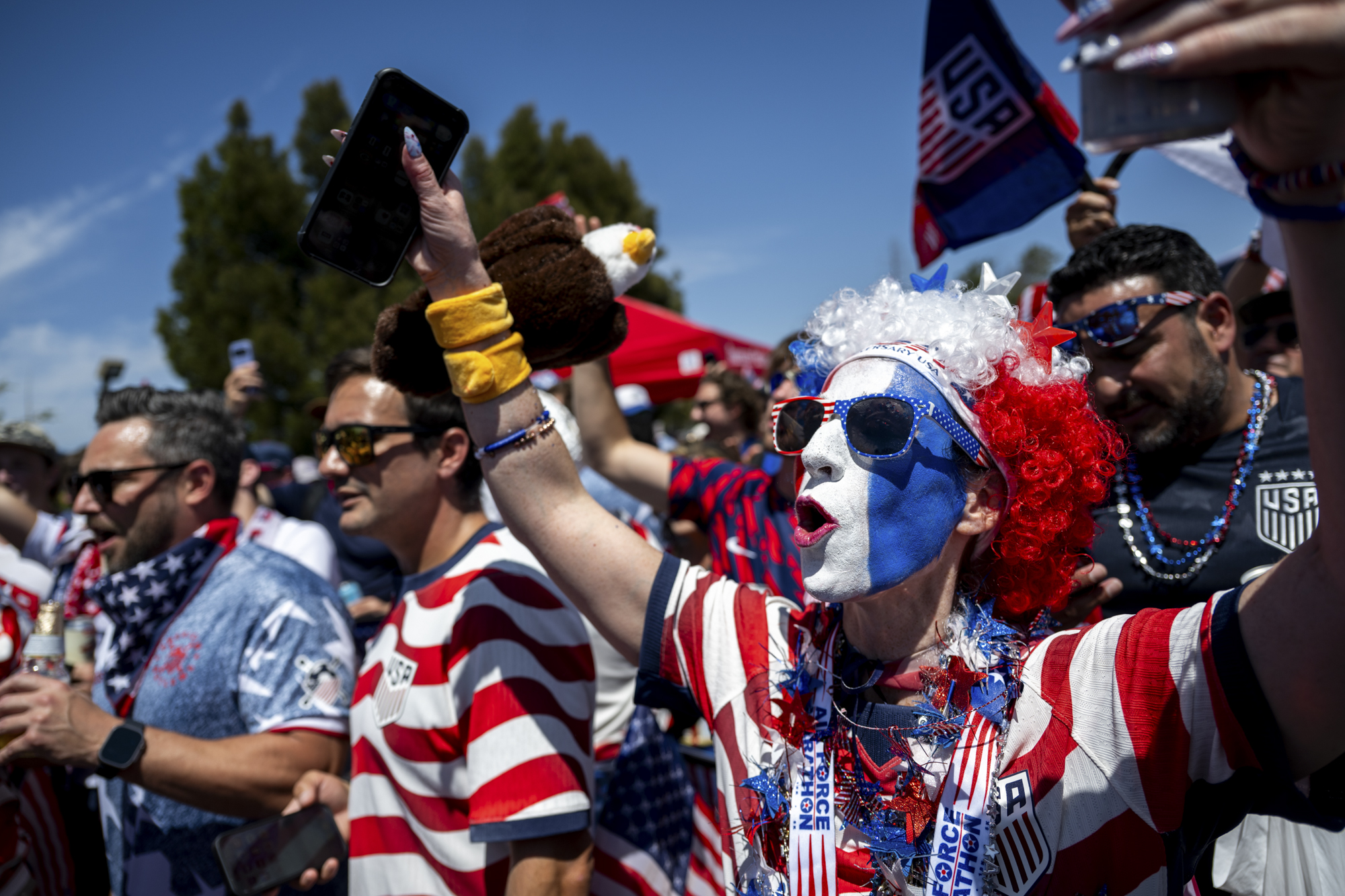
"caption": "Shannon Malone cheers before marching to the San Francisco Bay Area stadium for the FIFA World Cup game between the USA and Bosnia Herzegovina in Santa Clara, California, on July 1, 2026.",
"credit": "Beth LaBerge/KQED",
"altTag": null,
"description": null,
"imgSizes": {
"thumbnail": {
"file": "https://cdn.kqed.org/wp-content/uploads/sites/10/2026/07/260701-WORLDCUPUSALEVIS-07-BL-KQED-160x107.jpg",
"width": 160,
"height": 107,
"mimeType": "image/jpeg"
},
"1536x1536": {
"file": "https://cdn.kqed.org/wp-content/uploads/sites/10/2026/07/260701-WORLDCUPUSALEVIS-07-BL-KQED-1536x1024.jpg",
"width": 1536,
"height": 1024,
"mimeType": "image/jpeg"
},
"post-thumbnail": {
"file": "https://cdn.kqed.org/wp-content/uploads/sites/10/2026/07/260701-WORLDCUPUSALEVIS-07-BL-KQED-672x372.jpg",
"width": 672,
"height": 372,
"mimeType": "image/jpeg"
},
"twentyfourteen-full-width": {
"file": "https://cdn.kqed.org/wp-content/uploads/sites/10/2026/07/260701-WORLDCUPUSALEVIS-07-BL-KQED-1038x576.jpg",
"width": 1038,
"height": 576,
"mimeType": "image/jpeg"
},
"npr-cds-wide": {
"file": "https://cdn.kqed.org/wp-content/uploads/sites/10/2026/07/260701-WORLDCUPUSALEVIS-07-BL-KQED-1200x675.jpg",
"width": 1200,
"height": 675,
"mimeType": "image/jpeg"
},
"npr-cds-square": {
"file": "https://cdn.kqed.org/wp-content/uploads/sites/10/2026/07/260701-WORLDCUPUSALEVIS-07-BL-KQED-600x600.jpg",
"width": 600,
"height": 600,
"mimeType": "image/jpeg"
},
"kqedFullSize": {
"file": "https://cdn.kqed.org/wp-content/uploads/sites/10/2026/07/260701-WORLDCUPUSALEVIS-07-BL-KQED.jpg",
"width": 2000,
"height": 1333
}
},
"isLoading": false,
"fetchFailed": false
},
"news_12089557": {
"type": "attachments",
"id": "news_12089557",
"meta": {
"index": "attachments_1716263798",
"site": "news",
"id": "12089557",
"found": true
},
"title": "DSC00795",
"publishDate": 1782931966,
"status": "inherit",
"parent": 0,
"modified": 1782945764,
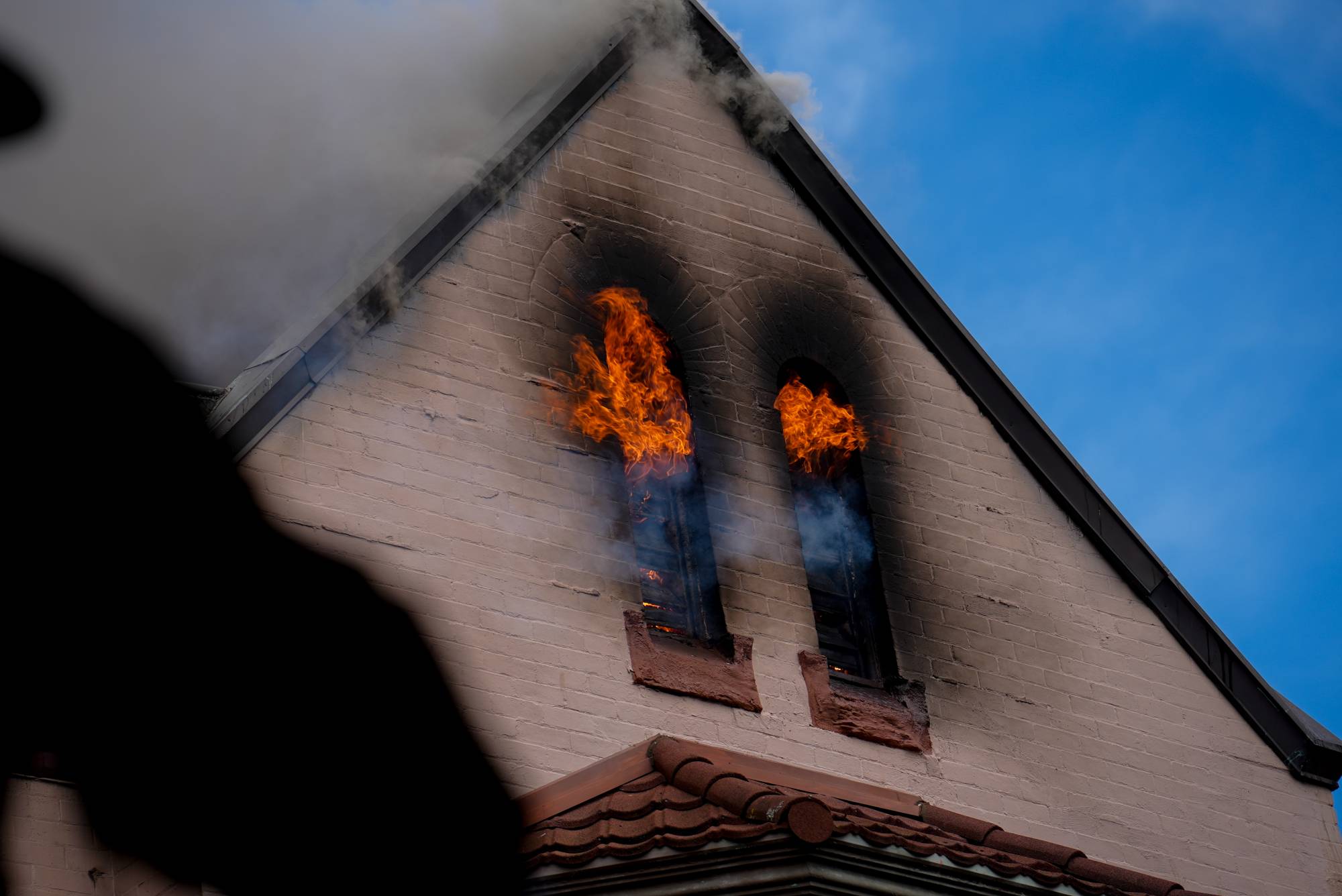
"caption": "San Francisco firefighters responded to the three-alarm blaze at the Seventh-day Adventist Church, where heavy smoke and flames poured out from the church’s upper-level windows, in San Francisco, California, on June 29, 2026. ",
"credit": "Courtesy of Firefighter Neal Narayan/San Francisco Fire Department Public Information Office",
"altTag": null,
"description": null,
"imgSizes": {
"medium": {
"file": "https://cdn.kqed.org/wp-content/uploads/sites/10/2026/07/DSC00795-2000x1336.jpg",
"width": 2000,
"height": 1336,
"mimeType": "image/jpeg"
},
"large": {
"file": "https://cdn.kqed.org/wp-content/uploads/sites/10/2026/07/DSC00795-2000x1336.jpg",
"width": 2000,
"height": 1336,
"mimeType": "image/jpeg"
},
"thumbnail": {
"file": "https://cdn.kqed.org/wp-content/uploads/sites/10/2026/07/DSC00795-160x107.jpg",
"width": 160,
"height": 107,
"mimeType": "image/jpeg"
},
"1536x1536": {
"file": "https://cdn.kqed.org/wp-content/uploads/sites/10/2026/07/DSC00795-1536x1026.jpg",
"width": 1536,
"height": 1026,
"mimeType": "image/jpeg"
},
"2048x2048": {
"file": "https://cdn.kqed.org/wp-content/uploads/sites/10/2026/07/DSC00795-2048x1368.jpg",
"width": 2048,
"height": 1368,
"mimeType": "image/jpeg"
},
"post-thumbnail": {
"file": "https://cdn.kqed.org/wp-content/uploads/sites/10/2026/07/DSC00795-672x372.jpg",
"width": 672,
"height": 372,
"mimeType": "image/jpeg"
},
"twentyfourteen-full-width": {
"file": "https://cdn.kqed.org/wp-content/uploads/sites/10/2026/07/DSC00795-1038x576.jpg",
"width": 1038,
"height": 576,
"mimeType": "image/jpeg"
},
"full-width": {
"file": "https://cdn.kqed.org/wp-content/uploads/sites/10/2026/07/DSC00795-2000x1336.jpg",
"width": 2000,
"height": 1336,
"mimeType": "image/jpeg"
},
"npr-cds-wide": {
"file": "https://cdn.kqed.org/wp-content/uploads/sites/10/2026/07/DSC00795-1200x675.jpg",
"width": 1200,
"height": 675,
"mimeType": "image/jpeg"
},
"npr-cds-square": {
"file": "https://cdn.kqed.org/wp-content/uploads/sites/10/2026/07/DSC00795-600x600.jpg",
"width": 600,
"height": 600,
"mimeType": "image/jpeg"
},
"kqedFullSize": {
"file": "https://cdn.kqed.org/wp-content/uploads/sites/10/2026/07/DSC00795-scaled-e1782934993490.jpg",
"width": 2000,
"height": 1336
}
},
"isLoading": false,
"fetchFailed": false
},
"news_12088799": {
"type": "attachments",
"id": "news_12088799",
"meta": {
"index": "attachments_1716263798",
"site": "news",
"id": "12088799",
"found": true
},
"title": "4th of July Fireworks in San Francisco",
"publishDate": 1782340644,
"status": "inherit",
"parent": 12088793,
"modified": 1782340674,
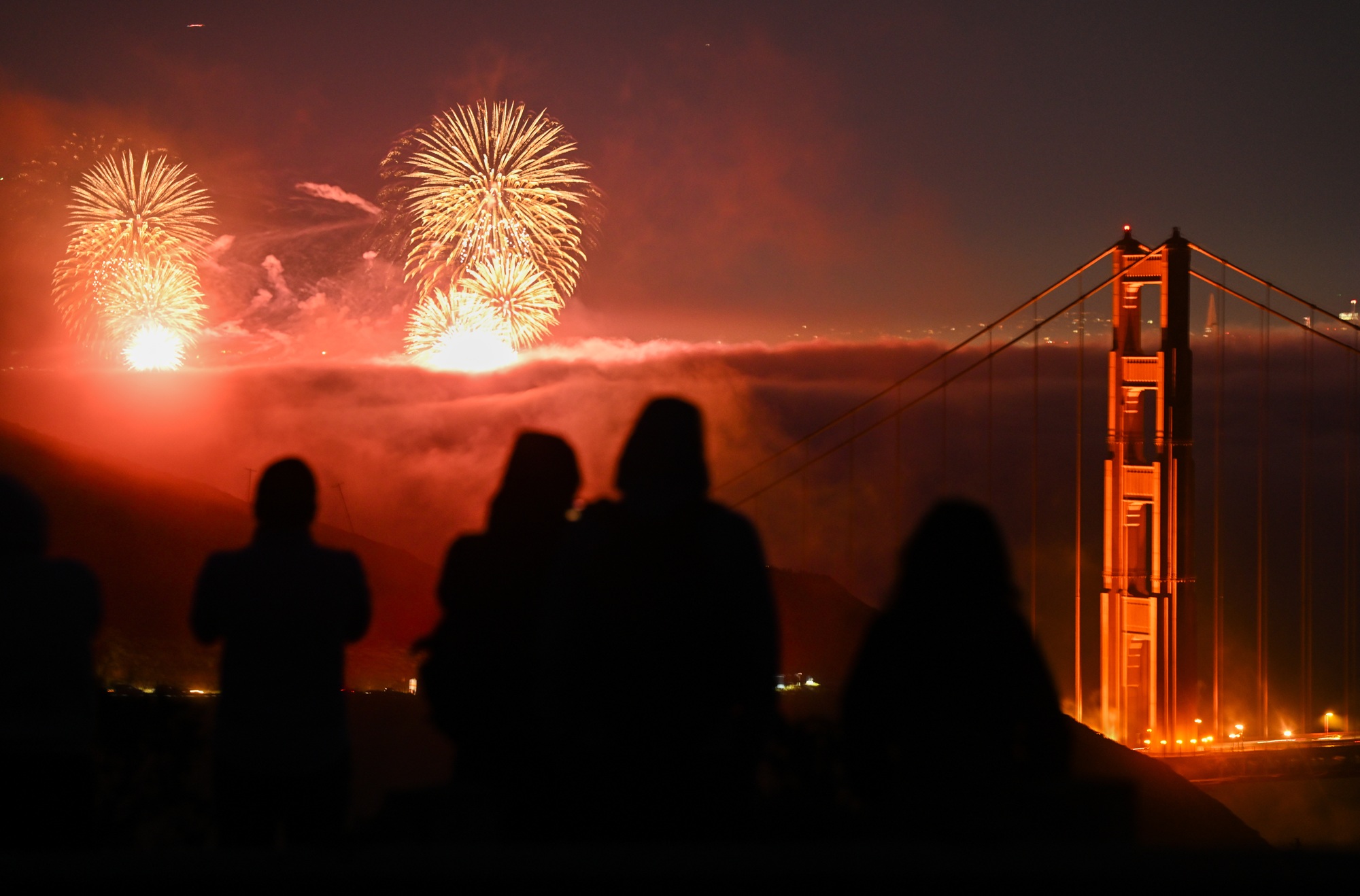
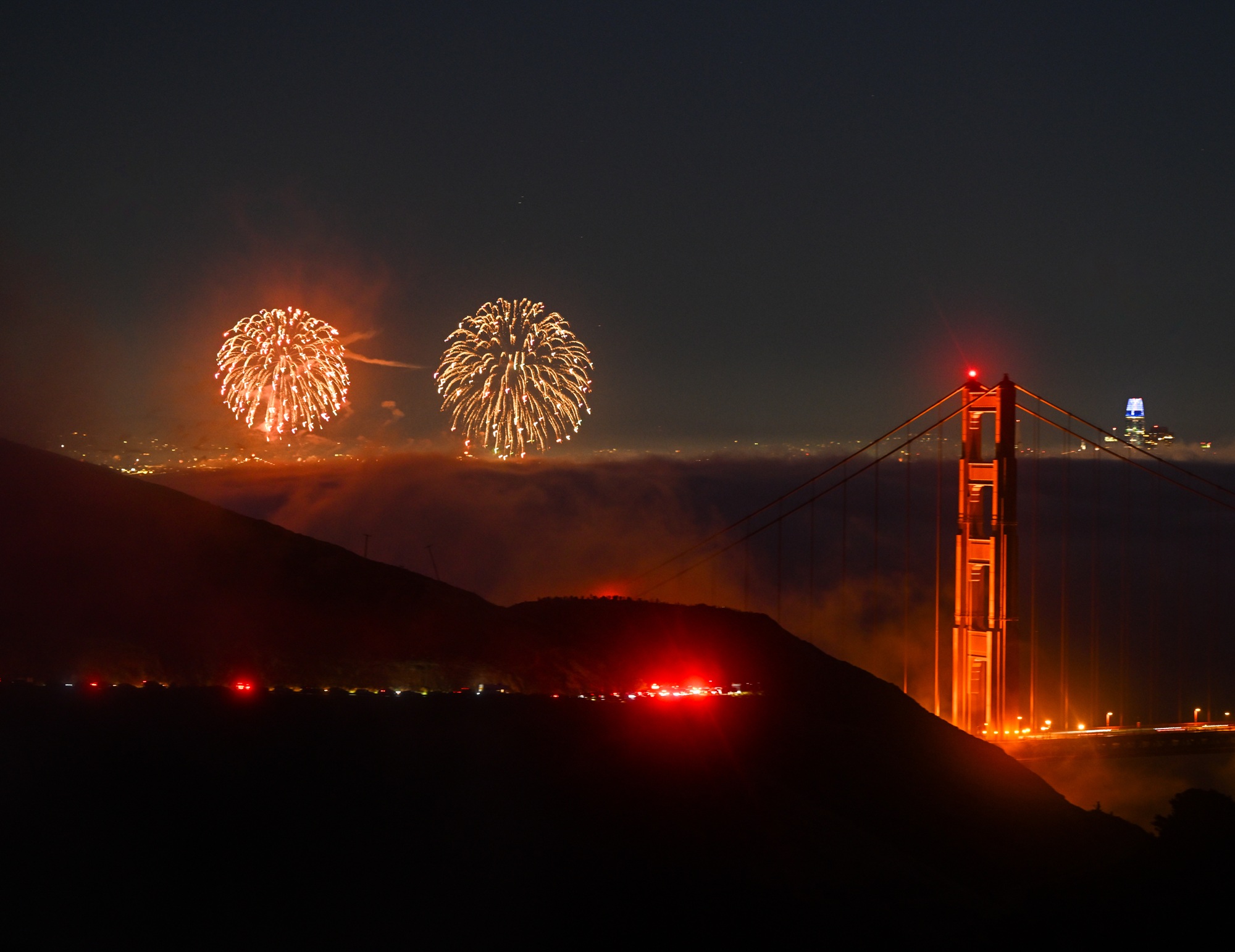
"caption": "Fireworks illuminate the sky over San Francisco's Golden Gate Bridge as seen from Marin Headlands in Sausalito, California, on July 4, 2024. ",
"credit": "Tayfun Coskun/Anadolu via Getty Images",
"altTag": null,
"description": null,
"imgSizes": {
"thumbnail": {
"file": "https://cdn.kqed.org/wp-content/uploads/sites/10/2026/06/SFFireworksGGBGetty-160x105.jpg",
"width": 160,
"height": 105,
"mimeType": "image/jpeg"
},
"1536x1536": {
"file": "https://cdn.kqed.org/wp-content/uploads/sites/10/2026/06/SFFireworksGGBGetty-1536x1012.jpg",
"width": 1536,
"height": 1012,
"mimeType": "image/jpeg"
},
"post-thumbnail": {
"file": "https://cdn.kqed.org/wp-content/uploads/sites/10/2026/06/SFFireworksGGBGetty-672x372.jpg",
"width": 672,
"height": 372,
"mimeType": "image/jpeg"
},
"twentyfourteen-full-width": {
"file": "https://cdn.kqed.org/wp-content/uploads/sites/10/2026/06/SFFireworksGGBGetty-1038x576.jpg",
"width": 1038,
"height": 576,
"mimeType": "image/jpeg"
},
"npr-cds-wide": {
"file": "https://cdn.kqed.org/wp-content/uploads/sites/10/2026/06/SFFireworksGGBGetty-1200x675.jpg",
"width": 1200,
"height": 675,
"mimeType": "image/jpeg"
},
"npr-cds-square": {
"file": "https://cdn.kqed.org/wp-content/uploads/sites/10/2026/06/SFFireworksGGBGetty-600x600.jpg",
"width": 600,
"height": 600,
"mimeType": "image/jpeg"
},
"kqedFullSize": {
"file": "https://cdn.kqed.org/wp-content/uploads/sites/10/2026/06/SFFireworksGGBGetty.jpg",
"width": 2000,
"height": 1318
}
},
"isLoading": false,
"fetchFailed": false
},
"news_12020223": {
"type": "attachments",
"id": "news_12020223",
"meta": {
"index": "attachments_1716263798",
"site": "news",
"id": "12020223",
"found": true
},
"title": "The Archdiocese of San Francisco at 1 Peter Yorke Way on Jan. 2, 2025.",
"publishDate": 1735924539,
"status": "inherit",
"parent": 0,
"modified": 1735924603,
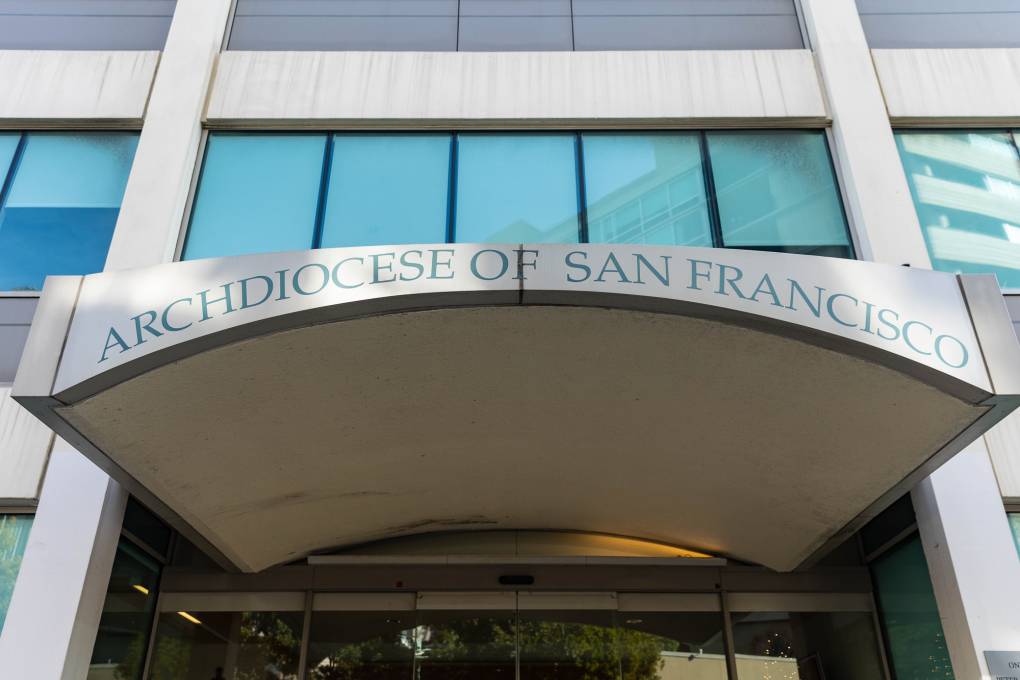
"caption": "The entrance to the Archdiocese of San Francisco at 1 Peter Yorke Way on Jan. 2, 2025.",
"credit": "Gina Castro/KQED",
"altTag": null,
"description": null,
"imgSizes": {
"medium": {
"file": "https://cdn.kqed.org/wp-content/uploads/sites/10/2025/01/20250102_ArchdioceseSF_GC-6-800x533.jpg",
"width": 800,
"height": 533,
"mimeType": "image/jpeg"
},
"large": {
"file": "https://cdn.kqed.org/wp-content/uploads/sites/10/2025/01/20250102_ArchdioceseSF_GC-6-1020x680.jpg",
"width": 1020,
"height": 680,
"mimeType": "image/jpeg"
},
"thumbnail": {
"file": "https://cdn.kqed.org/wp-content/uploads/sites/10/2025/01/20250102_ArchdioceseSF_GC-6-160x107.jpg",
"width": 160,
"height": 107,
"mimeType": "image/jpeg"
},
"1536x1536": {
"file": "https://cdn.kqed.org/wp-content/uploads/sites/10/2025/01/20250102_ArchdioceseSF_GC-6-1536x1024.jpg",
"width": 1536,
"height": 1024,
"mimeType": "image/jpeg"
},
"post-thumbnail": {
"file": "https://cdn.kqed.org/wp-content/uploads/sites/10/2025/01/20250102_ArchdioceseSF_GC-6-672x372.jpg",
"width": 672,
"height": 372,
"mimeType": "image/jpeg"
},
"twentyfourteen-full-width": {
"file": "https://cdn.kqed.org/wp-content/uploads/sites/10/2025/01/20250102_ArchdioceseSF_GC-6-1038x576.jpg",
"width": 1038,
"height": 576,
"mimeType": "image/jpeg"
},
"full-width": {
"file": "https://cdn.kqed.org/wp-content/uploads/sites/10/2025/01/20250102_ArchdioceseSF_GC-6-1920x1280.jpg",
"width": 1920,
"height": 1280,
"mimeType": "image/jpeg"
},
"kqedFullSize": {
"file": "https://cdn.kqed.org/wp-content/uploads/sites/10/2025/01/20250102_ArchdioceseSF_GC-6.jpg",
"width": 2000,
"height": 1333
}
},
"isLoading": false,
"fetchFailed": false
},
"news_12087918": {
"type": "attachments",
"id": "news_12087918",
"meta": {
"index": "attachments_1716263798",
"site": "news",
"id": "12087918",
"found": true
},
"title": "Chicago Cubs v San Francisco Giants",
"publishDate": 1781714150,
"status": "inherit",
"parent": 12087912,
"modified": 1781714204,
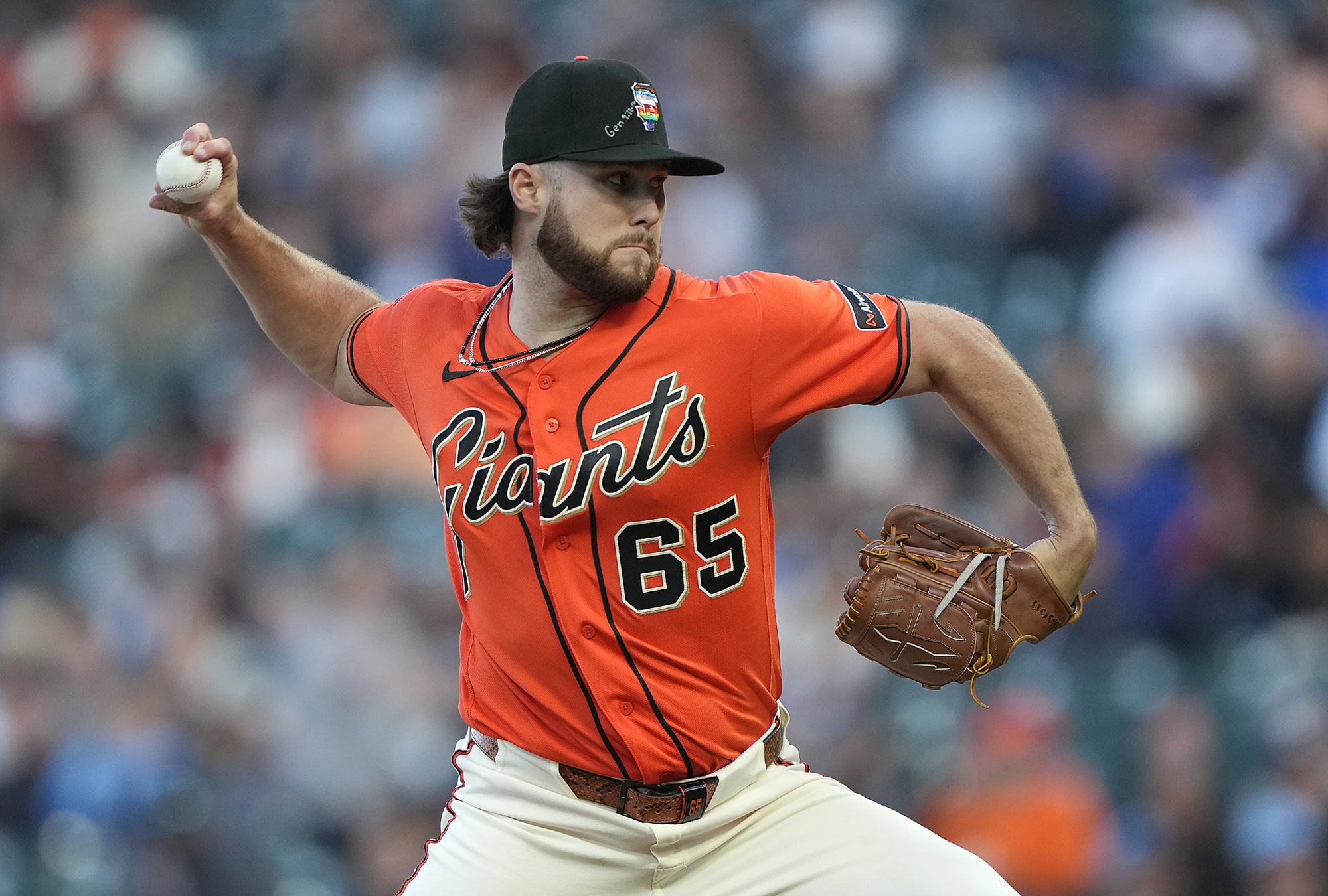
"caption": "Landen Roupp, #65 of the San Francisco Giants, pitches against the Chicago Cubs in the top of the first inning of a major league baseball game at Oracle Park on June 12, 2026, in San Francisco, California. ",
"credit": "Thearon W. Henderson/Getty Images",
"altTag": null,
"description": null,
"imgSizes": {
"thumbnail": {
"file": "https://cdn.kqed.org/wp-content/uploads/sites/10/2026/06/SFGiantsLandenRouppGetty-160x108.jpg",
"width": 160,
"height": 108,
"mimeType": "image/jpeg"
},
"1536x1536": {
"file": "https://cdn.kqed.org/wp-content/uploads/sites/10/2026/06/SFGiantsLandenRouppGetty-1536x1037.jpg",
"width": 1536,
"height": 1037,
"mimeType": "image/jpeg"
},
"post-thumbnail": {
"file": "https://cdn.kqed.org/wp-content/uploads/sites/10/2026/06/SFGiantsLandenRouppGetty-672x372.jpg",
"width": 672,
"height": 372,
"mimeType": "image/jpeg"
},
"twentyfourteen-full-width": {
"file": "https://cdn.kqed.org/wp-content/uploads/sites/10/2026/06/SFGiantsLandenRouppGetty-1038x576.jpg",
"width": 1038,
"height": 576,
"mimeType": "image/jpeg"
},
"npr-cds-wide": {
"file": "https://cdn.kqed.org/wp-content/uploads/sites/10/2026/06/SFGiantsLandenRouppGetty-1200x675.jpg",
"width": 1200,
"height": 675,
"mimeType": "image/jpeg"
},
"npr-cds-square": {
"file": "https://cdn.kqed.org/wp-content/uploads/sites/10/2026/06/SFGiantsLandenRouppGetty-600x600.jpg",
"width": 600,
"height": 600,
"mimeType": "image/jpeg"
},
"kqedFullSize": {
"file": "https://cdn.kqed.org/wp-content/uploads/sites/10/2026/06/SFGiantsLandenRouppGetty.jpg",
"width": 2000,
"height": 1350
}
},
"isLoading": false,
"fetchFailed": false
},
"news_12089168": {
"type": "attachments",
"id": "news_12089168",
"meta": {
"index": "attachments_1716263798",
"site": "news",
"id": "12089168",
"found": true
},
"title": "20260628-SFPride-JY-03_qed",
"publishDate": 1782689022,
"status": "inherit",
"parent": 12089163,
"modified": 1782753648,
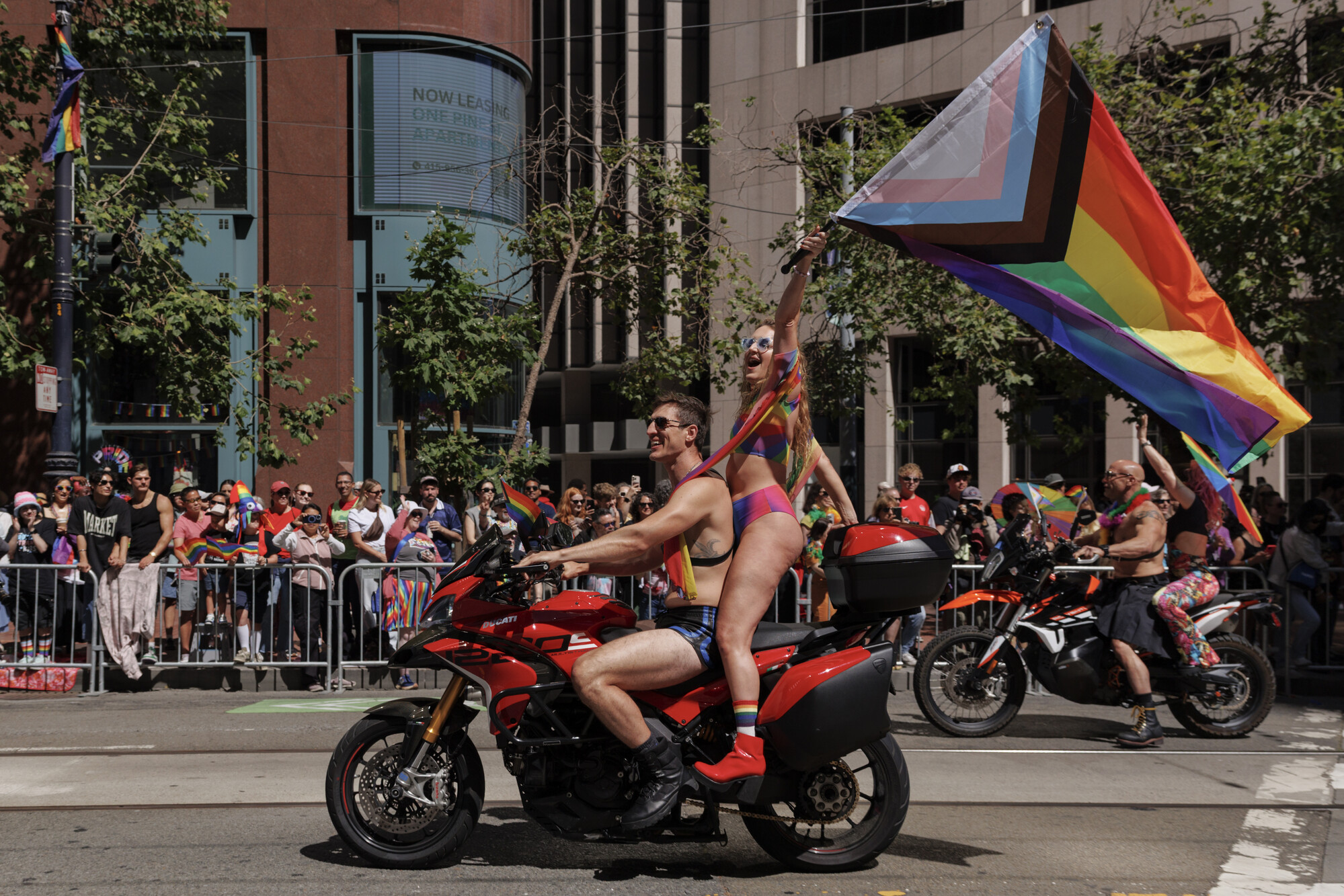
"caption": "Dykes on Bikes participants make their way down Market Street in the 56th annual Pride parade in San Francisco on Sunday, June 28, 2026.",
"credit": "Juliana Yamada/KQED",
"altTag": null,
"description": null,
"imgSizes": {
"thumbnail": {
"file": "https://cdn.kqed.org/wp-content/uploads/sites/10/2026/06/20260628-SFPride-JY-03_qed-160x107.jpg",
"width": 160,
"height": 107,
"mimeType": "image/jpeg"
},
"1536x1536": {
"file": "https://cdn.kqed.org/wp-content/uploads/sites/10/2026/06/20260628-SFPride-JY-03_qed-1536x1024.jpg",
"width": 1536,
"height": 1024,
"mimeType": "image/jpeg"
},
"post-thumbnail": {
"file": "https://cdn.kqed.org/wp-content/uploads/sites/10/2026/06/20260628-SFPride-JY-03_qed-672x372.jpg",
"width": 672,
"height": 372,
"mimeType": "image/jpeg"
},
"twentyfourteen-full-width": {
"file": "https://cdn.kqed.org/wp-content/uploads/sites/10/2026/06/20260628-SFPride-JY-03_qed-1038x576.jpg",
"width": 1038,
"height": 576,
"mimeType": "image/jpeg"
},
"npr-cds-wide": {
"file": "https://cdn.kqed.org/wp-content/uploads/sites/10/2026/06/20260628-SFPride-JY-03_qed-1200x675.jpg",
"width": 1200,
"height": 675,
"mimeType": "image/jpeg"
},
"npr-cds-square": {
"file": "https://cdn.kqed.org/wp-content/uploads/sites/10/2026/06/20260628-SFPride-JY-03_qed-600x600.jpg",
"width": 600,
"height": 600,
"mimeType": "image/jpeg"
},
"kqedFullSize": {
"file": "https://cdn.kqed.org/wp-content/uploads/sites/10/2026/06/20260628-SFPride-JY-03_qed.jpg",
"width": 1999,
"height": 1333
}
},
"isLoading": false,
"fetchFailed": false
},
"news_12079133": {
"type": "attachments",
"id": "news_12079133",
"meta": {
"index": "attachments_1716263798",
"site": "news",
"id": "12079133",
"found": true
},
"title": "Vehicles pass by City Hall in San Francisco on Aug. 8, 2023.",
"publishDate": 1775681337,
"status": "inherit",
"parent": 12079126,
"modified": 1775681351,
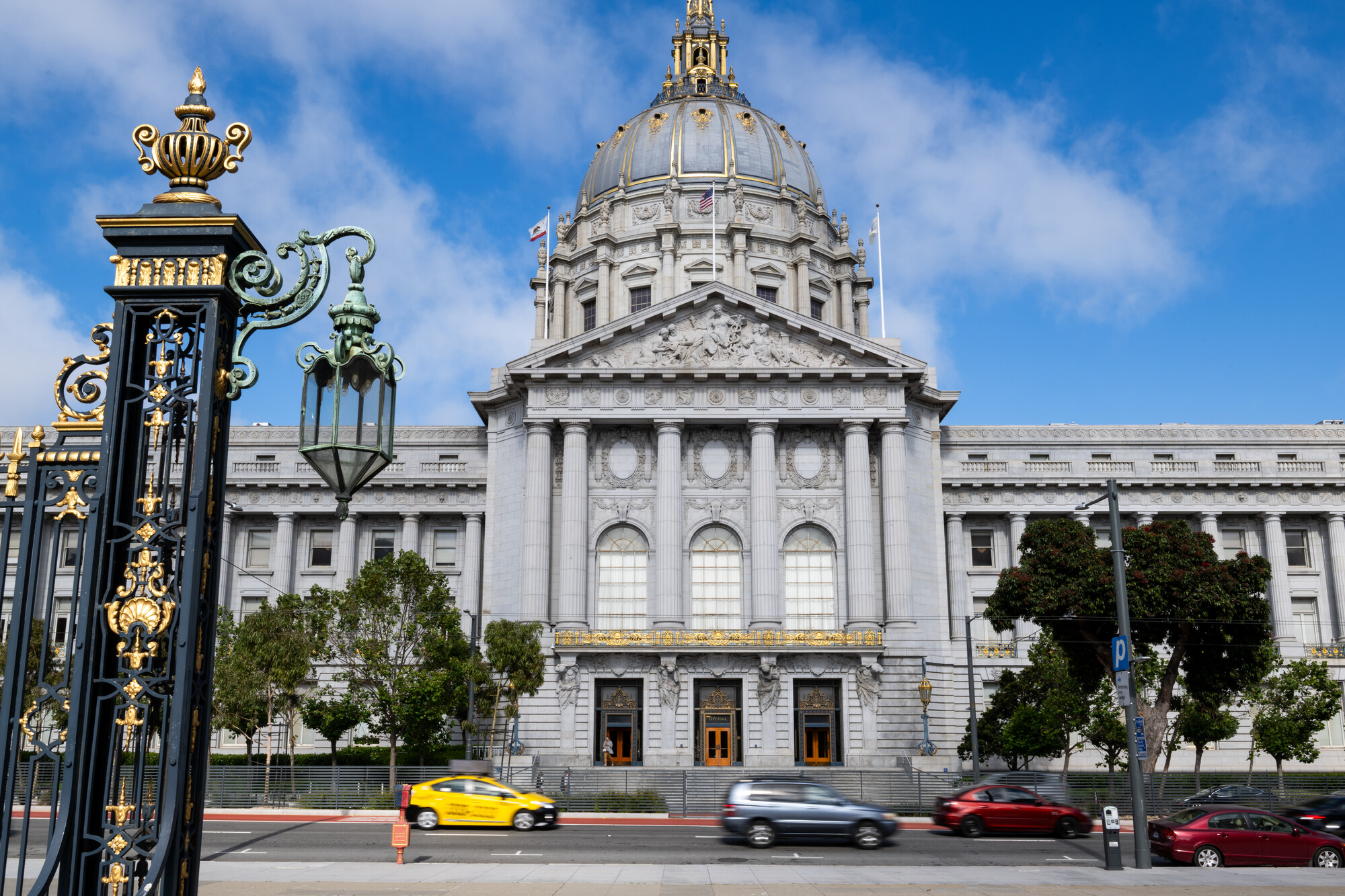
"caption": "Vehicles pass by City Hall in San Francisco on Aug. 8, 2023.",
"credit": "Beth LaBerge/KQED",
"altTag": null,
"description": null,
"imgSizes": {
"thumbnail": {
"file": "https://cdn.kqed.org/wp-content/uploads/sites/10/2026/04/230808-SanFranciscoCityHall-18-BL_qed-160x107.jpg",
"width": 160,
"height": 107,
"mimeType": "image/jpeg"
},
"1536x1536": {
"file": "https://cdn.kqed.org/wp-content/uploads/sites/10/2026/04/230808-SanFranciscoCityHall-18-BL_qed-1536x1024.jpg",
"width": 1536,
"height": 1024,
"mimeType": "image/jpeg"
},
"post-thumbnail": {
"file": "https://cdn.kqed.org/wp-content/uploads/sites/10/2026/04/230808-SanFranciscoCityHall-18-BL_qed-672x372.jpg",
"width": 672,
"height": 372,
"mimeType": "image/jpeg"
},
"twentyfourteen-full-width": {
"file": "https://cdn.kqed.org/wp-content/uploads/sites/10/2026/04/230808-SanFranciscoCityHall-18-BL_qed-1038x576.jpg",
"width": 1038,
"height": 576,
"mimeType": "image/jpeg"
},
"npr-cds-wide": {
"file": "https://cdn.kqed.org/wp-content/uploads/sites/10/2026/04/230808-SanFranciscoCityHall-18-BL_qed-1200x675.jpg",
"width": 1200,
"height": 675,
"mimeType": "image/jpeg"
},
"npr-cds-square": {
"file": "https://cdn.kqed.org/wp-content/uploads/sites/10/2026/04/230808-SanFranciscoCityHall-18-BL_qed-600x600.jpg",
"width": 600,
"height": 600,
"mimeType": "image/jpeg"
},
"kqedFullSize": {
"file": "https://cdn.kqed.org/wp-content/uploads/sites/10/2026/04/230808-SanFranciscoCityHall-18-BL_qed.jpg",
"width": 2000,
"height": 1333
}
},
"isLoading": false,
"fetchFailed": false
},
"news_12084988": {
"type": "attachments",
"id": "news_12084988",
"meta": {
"index": "attachments_1716263798",
"site": "news",
"id": "12084988",
"found": true
},
"title": "260521-YEMENICOFFEE-11-BL-KQED",
"publishDate": 1779471328,
"status": "inherit",
"parent": 0,
"modified": 1779471362,
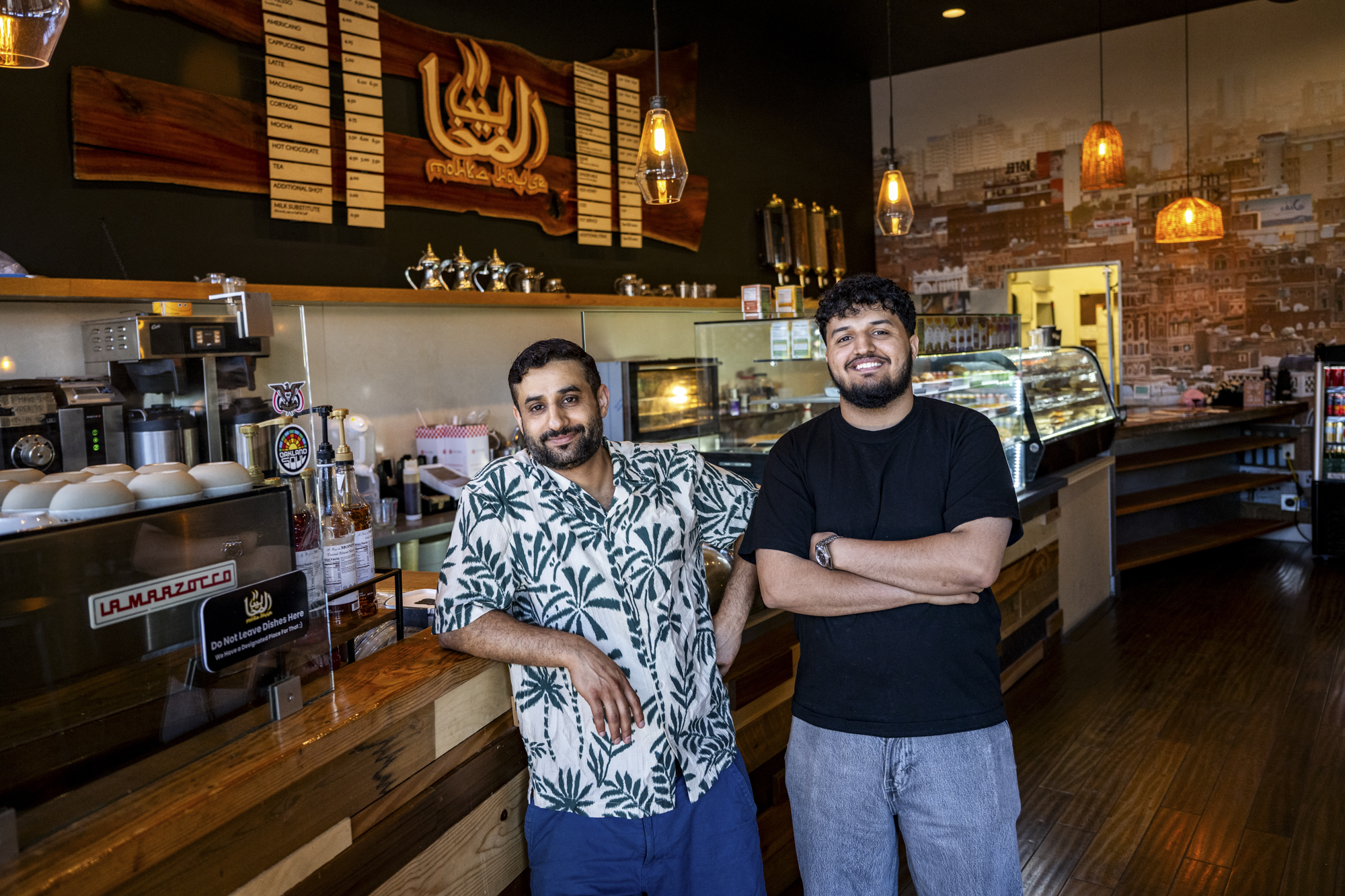
"caption": "Hamza Ghalib (left), owner of Mohka House, and his brother Yaser Ghalib at the Yemeni coffee shop in Oakland on May 21, 2026.",
"credit": "Beth LaBerge/KQED",
"altTag": null,
"description": null,
"imgSizes": {
"thumbnail": {
"file": "https://cdn.kqed.org/wp-content/uploads/sites/10/2026/05/260521-YEMENICOFFEE-11-BL-KQED-160x107.jpg",
"width": 160,
"height": 107,
"mimeType": "image/jpeg"
},
"1536x1536": {
"file": "https://cdn.kqed.org/wp-content/uploads/sites/10/2026/05/260521-YEMENICOFFEE-11-BL-KQED-1536x1024.jpg",
"width": 1536,
"height": 1024,
"mimeType": "image/jpeg"
},
"post-thumbnail": {
"file": "https://cdn.kqed.org/wp-content/uploads/sites/10/2026/05/260521-YEMENICOFFEE-11-BL-KQED-672x372.jpg",
"width": 672,
"height": 372,
"mimeType": "image/jpeg"
},
"twentyfourteen-full-width": {
"file": "https://cdn.kqed.org/wp-content/uploads/sites/10/2026/05/260521-YEMENICOFFEE-11-BL-KQED-1038x576.jpg",
"width": 1038,
"height": 576,
"mimeType": "image/jpeg"
},
"npr-cds-wide": {
"file": "https://cdn.kqed.org/wp-content/uploads/sites/10/2026/05/260521-YEMENICOFFEE-11-BL-KQED-1200x675.jpg",
"width": 1200,
"height": 675,
"mimeType": "image/jpeg"
},
"npr-cds-square": {
"file": "https://cdn.kqed.org/wp-content/uploads/sites/10/2026/05/260521-YEMENICOFFEE-11-BL-KQED-600x600.jpg",
"width": 600,
"height": 600,
"mimeType": "image/jpeg"
},
"kqedFullSize": {
"file": "https://cdn.kqed.org/wp-content/uploads/sites/10/2026/05/260521-YEMENICOFFEE-11-BL-KQED.jpg",
"width": 2000,
"height": 1333
}
},
"isLoading": false,
"fetchFailed": false
},
"news_12088806": {
"type": "attachments",
"id": "news_12088806",
"meta": {
"index": "attachments_1716263798",
"site": "news",
"id": "12088806",
"found": true
},
"title": "260624-ShipyardCleanupRally-10-BL-KQED",
"publishDate": 1782340820,
"status": "inherit",
"parent": 0,
"modified": 1782340936,
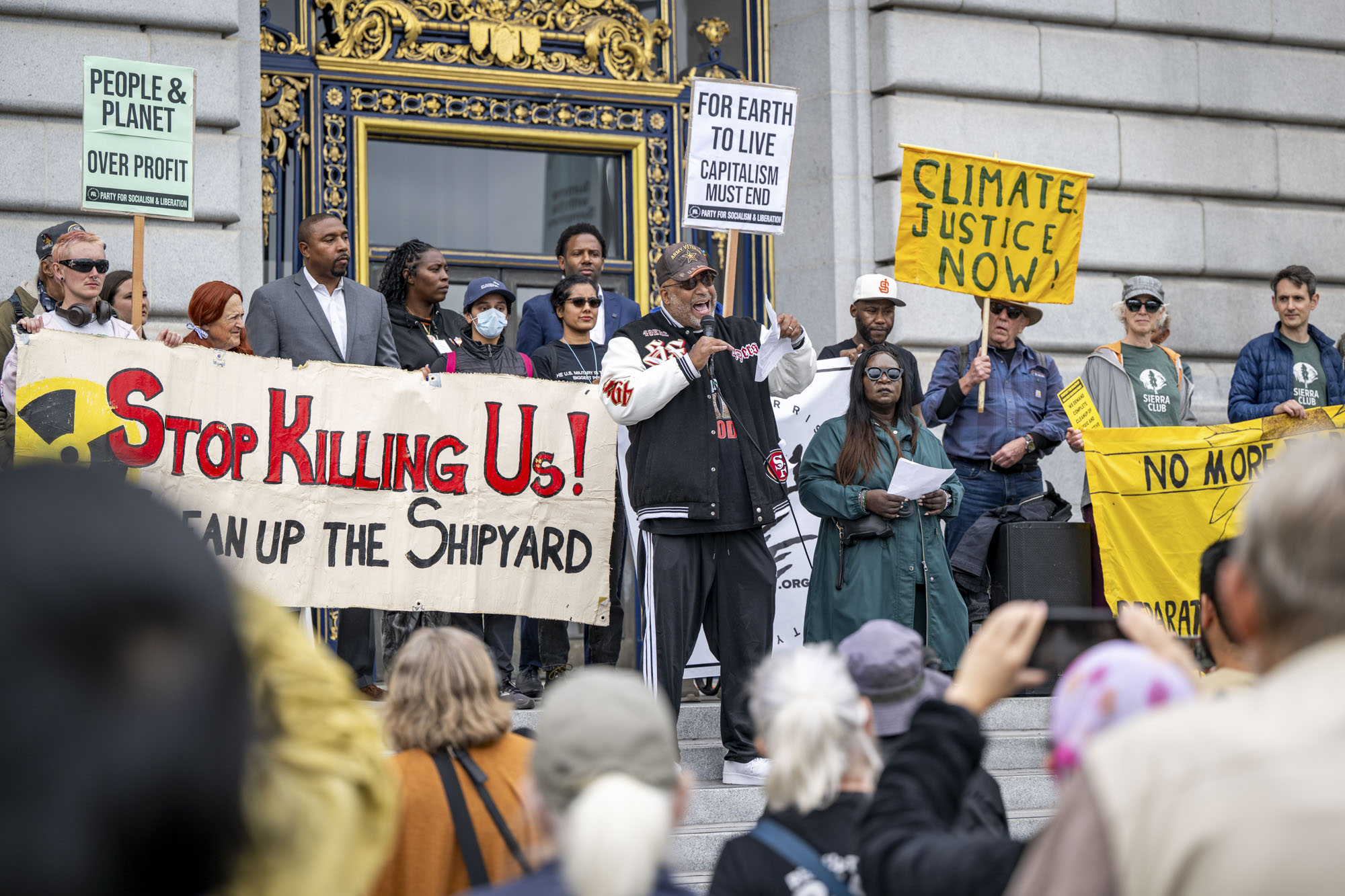
"caption": "Malik Washington speaks during a rally on the steps of San Francisco City Hall on June 24, 2026, organized by Bayview Hunters Point community groups concerned about radioactive and toxic contamination at the Hunters Point Naval Shipyard Superfund site and its impact on surrounding communities.",
"credit": "Beth LaBerge/KQED",
"altTag": null,
"description": null,
"imgSizes": {
"thumbnail": {
"file": "https://cdn.kqed.org/wp-content/uploads/sites/10/2026/06/260624-ShipyardCleanupRally-10-BL-KQED-160x107.jpg",
"width": 160,
"height": 107,
"mimeType": "image/jpeg"
},
"1536x1536": {
"file": "https://cdn.kqed.org/wp-content/uploads/sites/10/2026/06/260624-ShipyardCleanupRally-10-BL-KQED-1536x1024.jpg",
"width": 1536,
"height": 1024,
"mimeType": "image/jpeg"
},
"post-thumbnail": {
"file": "https://cdn.kqed.org/wp-content/uploads/sites/10/2026/06/260624-ShipyardCleanupRally-10-BL-KQED-672x372.jpg",
"width": 672,
"height": 372,
"mimeType": "image/jpeg"
},
"twentyfourteen-full-width": {
"file": "https://cdn.kqed.org/wp-content/uploads/sites/10/2026/06/260624-ShipyardCleanupRally-10-BL-KQED-1038x576.jpg",
"width": 1038,
"height": 576,
"mimeType": "image/jpeg"
},
"npr-cds-wide": {
"file": "https://cdn.kqed.org/wp-content/uploads/sites/10/2026/06/260624-ShipyardCleanupRally-10-BL-KQED-1200x675.jpg",
"width": 1200,
"height": 675,
"mimeType": "image/jpeg"
},
"npr-cds-square": {
"file": "https://cdn.kqed.org/wp-content/uploads/sites/10/2026/06/260624-ShipyardCleanupRally-10-BL-KQED-600x600.jpg",
"width": 600,
"height": 600,
"mimeType": "image/jpeg"
},
"kqedFullSize": {
"file": "https://cdn.kqed.org/wp-content/uploads/sites/10/2026/06/260624-ShipyardCleanupRally-10-BL-KQED.jpg",
"width": 2000,
"height": 1333
}
},
"isLoading": false,
"fetchFailed": false
},
"news_12088759": {
"type": "attachments",
"id": "news_12088759",
"meta": {
"index": "attachments_1716263798",
"site": "news",
"id": "12088759",
"found": true
},
"title": "WCup Qatari's Courage",
"publishDate": 1782332951,
"status": "inherit",
"parent": 12088756,
"modified": 1782333000,
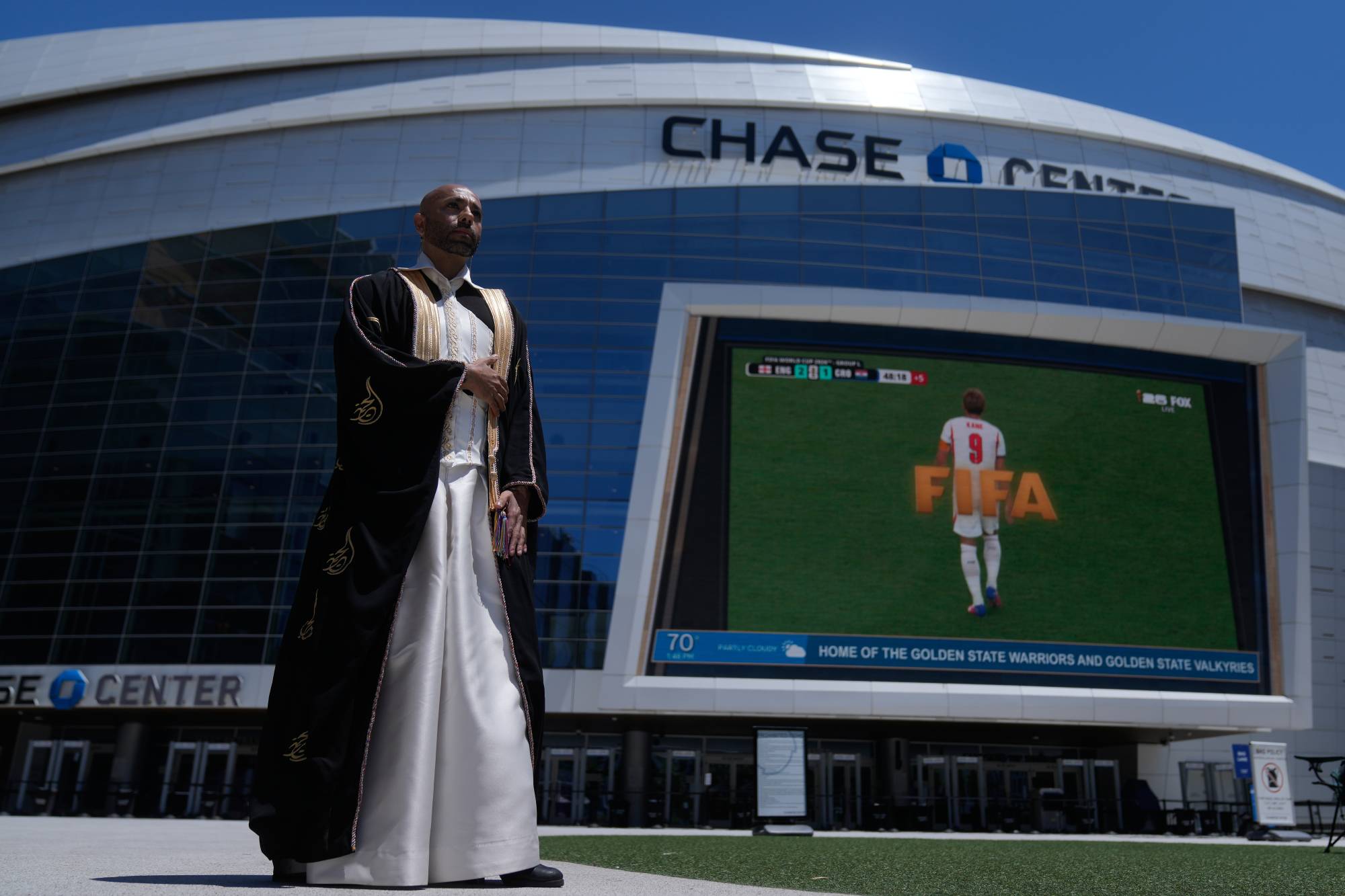
"caption": "Dr. Nasser Mohamed, of Qatar, is photographed, Wednesday, June 17, 2026, in San Francisco. ",
"credit": "AP Photo/Jeff Chiu",
"altTag": null,
"description": null,
"imgSizes": {
"medium": {
"file": "https://cdn.kqed.org/wp-content/uploads/sites/10/2026/06/AP26172718931183-2000x1333.jpg",
"width": 2000,
"height": 1333,
"mimeType": "image/jpeg"
},
"large": {
"file": "https://cdn.kqed.org/wp-content/uploads/sites/10/2026/06/AP26172718931183-2000x1333.jpg",
"width": 2000,
"height": 1333,
"mimeType": "image/jpeg"
},
"thumbnail": {
"file": "https://cdn.kqed.org/wp-content/uploads/sites/10/2026/06/AP26172718931183-160x107.jpg",
"width": 160,
"height": 107,
"mimeType": "image/jpeg"
},
"1536x1536": {
"file": "https://cdn.kqed.org/wp-content/uploads/sites/10/2026/06/AP26172718931183-1536x1024.jpg",
"width": 1536,
"height": 1024,
"mimeType": "image/jpeg"
},
"2048x2048": {
"file": "https://cdn.kqed.org/wp-content/uploads/sites/10/2026/06/AP26172718931183-2048x1365.jpg",
"width": 2048,
"height": 1365,
"mimeType": "image/jpeg"
},
"post-thumbnail": {
"file": "https://cdn.kqed.org/wp-content/uploads/sites/10/2026/06/AP26172718931183-672x372.jpg",
"width": 672,
"height": 372,
"mimeType": "image/jpeg"
},
"twentyfourteen-full-width": {
"file": "https://cdn.kqed.org/wp-content/uploads/sites/10/2026/06/AP26172718931183-1038x576.jpg",
"width": 1038,
"height": 576,
"mimeType": "image/jpeg"
},
"full-width": {
"file": "https://cdn.kqed.org/wp-content/uploads/sites/10/2026/06/AP26172718931183-2000x1333.jpg",
"width": 2000,
"height": 1333,
"mimeType": "image/jpeg"
},
"npr-cds-wide": {
"file": "https://cdn.kqed.org/wp-content/uploads/sites/10/2026/06/AP26172718931183-1200x675.jpg",
"width": 1200,
"height": 675,
"mimeType": "image/jpeg"
},
"npr-cds-square": {
"file": "https://cdn.kqed.org/wp-content/uploads/sites/10/2026/06/AP26172718931183-600x600.jpg",
"width": 600,
"height": 600,
"mimeType": "image/jpeg"
},
"kqedFullSize": {
"file": "https://cdn.kqed.org/wp-content/uploads/sites/10/2026/06/AP26172718931183-scaled-e1782333009320.jpg",
"width": 2000,
"height": 1333
}
},
"isLoading": false,
"fetchFailed": false
},
"news_12088470": {
"type": "attachments",
"id": "news_12088470",
"meta": {
"index": "attachments_1716263798",
"site": "news",
"id": "12088470",
"found": true
},
"title": "4th of July Fireworks in San Francisco",
"publishDate": 1782234768,
"status": "inherit",
"parent": 12088123,
"modified": 1782234803,
"caption": "Fireworks illuminate the sky over San Francisco's Golden Gate Bridge as seen from Marin Headlands in Sausalito, California, on July 4, 2024. ",
"credit": "Tayfun Coskun/Anadolu via Getty Images",
"altTag": null,
"description": null,
"imgSizes": {
"thumbnail": {
"file": "https://cdn.kqed.org/wp-content/uploads/sites/10/2026/06/SFFireworksGetty-160x123.jpg",
"width": 160,
"height": 123,
"mimeType": "image/jpeg"
},
"1536x1536": {
"file": "https://cdn.kqed.org/wp-content/uploads/sites/10/2026/06/SFFireworksGetty-1536x1184.jpg",
"width": 1536,
"height": 1184,
"mimeType": "image/jpeg"
},
"post-thumbnail": {
"file": "https://cdn.kqed.org/wp-content/uploads/sites/10/2026/06/SFFireworksGetty-672x372.jpg",
"width": 672,
"height": 372,
"mimeType": "image/jpeg"
},
"twentyfourteen-full-width": {
"file": "https://cdn.kqed.org/wp-content/uploads/sites/10/2026/06/SFFireworksGetty-1038x576.jpg",
"width": 1038,
"height": 576,
"mimeType": "image/jpeg"
},
"npr-cds-wide": {
"file": "https://cdn.kqed.org/wp-content/uploads/sites/10/2026/06/SFFireworksGetty-1200x675.jpg",
"width": 1200,
"height": 675,
"mimeType": "image/jpeg"
},
"npr-cds-square": {
"file": "https://cdn.kqed.org/wp-content/uploads/sites/10/2026/06/SFFireworksGetty-600x600.jpg",
"width": 600,
"height": 600,
"mimeType": "image/jpeg"
},
"kqedFullSize": {
"file": "https://cdn.kqed.org/wp-content/uploads/sites/10/2026/06/SFFireworksGetty.jpg",
"width": 2000,
"height": 1542
}
},
"isLoading": false,
"fetchFailed": false
},
"news_11998571": {
"type": "attachments",
"id": "news_11998571",
"meta": {
"index": "attachments_1716263798",
"site": "news",
"id": "11998571",
"found": true
},
"title": "240801-ENCAMPMENT SWEEPS-MD-02-KQED",
"publishDate": 1722601919,
"status": "inherit",
"parent": 12000938,
"modified": 1732740082,
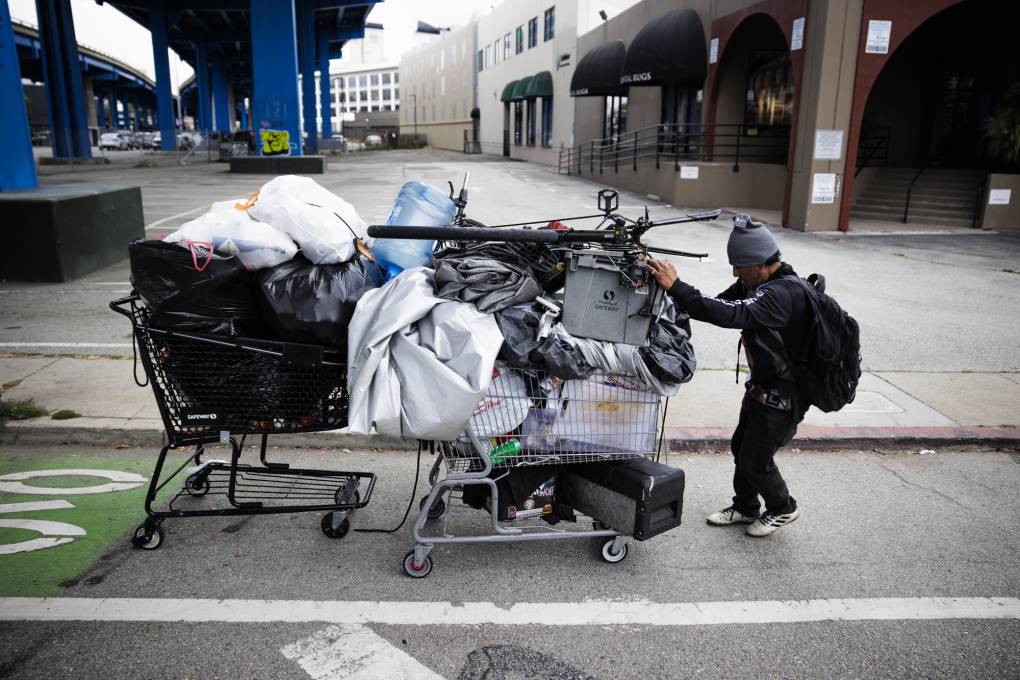
"caption": "An unhoused man relocates his belongings to a new site in anticipation of an encampment sweep by San Francisco's Department of Public Works near Showplace Square in San Francisco on Aug. 1, 2024.",
"credit": "Martin do Nascimento/KQED",
"altTag": "A person wearing black moves a shopping cart full of belongings.",
"description": null,
"imgSizes": {
"medium": {
"file": "https://cdn.kqed.org/wp-content/uploads/sites/10/2024/08/240801-ENCAMPMENT-SWEEPS-MD-02-KQED-800x533.jpg",
"width": 800,
"height": 533,
"mimeType": "image/jpeg"
},
"large": {
"file": "https://cdn.kqed.org/wp-content/uploads/sites/10/2024/08/240801-ENCAMPMENT-SWEEPS-MD-02-KQED-1020x680.jpg",
"width": 1020,
"height": 680,
"mimeType": "image/jpeg"
},
"thumbnail": {
"file": "https://cdn.kqed.org/wp-content/uploads/sites/10/2024/08/240801-ENCAMPMENT-SWEEPS-MD-02-KQED-160x107.jpg",
"width": 160,
"height": 107,
"mimeType": "image/jpeg"
},
"1536x1536": {
"file": "https://cdn.kqed.org/wp-content/uploads/sites/10/2024/08/240801-ENCAMPMENT-SWEEPS-MD-02-KQED-1536x1024.jpg",
"width": 1536,
"height": 1024,
"mimeType": "image/jpeg"
},
"post-thumbnail": {
"file": "https://cdn.kqed.org/wp-content/uploads/sites/10/2024/08/240801-ENCAMPMENT-SWEEPS-MD-02-KQED-672x372.jpg",
"width": 672,
"height": 372,
"mimeType": "image/jpeg"
},
"twentyfourteen-full-width": {
"file": "https://cdn.kqed.org/wp-content/uploads/sites/10/2024/08/240801-ENCAMPMENT-SWEEPS-MD-02-KQED-1038x576.jpg",
"width": 1038,
"height": 576,
"mimeType": "image/jpeg"
},
"full-width": {
"file": "https://cdn.kqed.org/wp-content/uploads/sites/10/2024/08/240801-ENCAMPMENT-SWEEPS-MD-02-KQED-1920x1280.jpg",
"width": 1920,
"height": 1280,
"mimeType": "image/jpeg"
},
"kqedFullSize": {
"file": "https://cdn.kqed.org/wp-content/uploads/sites/10/2024/08/240801-ENCAMPMENT-SWEEPS-MD-02-KQED.jpg?ver=1722631109",
"width": 2000,
"height": 1333
}
},
"isLoading": false,
"fetchFailed": false
}
},
"audioPlayerReducer": {
"postId": "stream_live",
"isPaused": true,
"isPlaying": false,
"pfsActive": false,
"pledgeModalIsOpen": true,
"playerDrawerIsOpen": false,
"liveAudioPlayStartedAt": 0,
"liveAudioPlayContext": ""
},
"authorsReducer": {
"byline_news_12088210": {
"type": "authors",
"id": "byline_news_12088210",
"meta": {
"override": true
},
"slug": "byline_news_12088210",
"name": "Maha Sanad",
"isLoading": false
},
"byline_news_12088756": {
"type": "authors",
"id": "byline_news_12088756",
"meta": {
"override": true
},
"slug": "byline_news_12088756",
"name": "Janie McCauley",
"isLoading": false
},
"byline_news_12088123": {
"type": "authors",
"id": "byline_news_12088123",
"meta": {
"override": true
},
"slug": "byline_news_12088123",
"name": "Nisa Khan, Carly Severn, Audrey Garces",
"isLoading": false
},
"ecruzguevarra": {
"type": "authors",
"id": "8654",
"meta": {
"index": "authors_1716337520",
"id": "8654",
"found": true
},
"name": "Ericka Cruz Guevarra",
"firstName": "Ericka",
"lastName": "Cruz Guevarra",
"slug": "ecruzguevarra",
"email": "ecruzguevarra@kqed.org",
"display_author_email": true,
"staff_mastheads": [
"news"
],
"title": "Producer, The Bay Podcast",
"bio": "Ericka Cruz Guevarra is host of \u003ca href=\"https://www.kqed.org/podcasts/thebay\">\u003cem>The Bay\u003c/em>\u003c/a> podcast at KQED. Before host, she was the show’s producer. Her work in that capacity includes a three-part reported series on policing in Vallejo, which won a 2020 excellence in journalism award from the Society of Professional Journalists. Ericka has worked as a breaking news reporter at Oregon Public Broadcasting, helped produce the Code Switch podcast, and was KQED’s inaugural Raul Ramirez Diversity Fund intern. She’s also an alumna of NPR’s Next Generation Radio program. Send her an email if you have strong feelings about whether Fairfield and Suisun City are the Bay. Ericka is represented by SAG-AFTRA.",
"avatar": "https://secure.gravatar.com/avatar/accefc1de4bafc7e234b69bcb9b6f6536c130fd84709bc3069ef11a78787e1bb?s=600&d=blank&r=g",
"twitter": "NotoriousECG",
"bluesky": null,
"facebook": null,
"instagram": null,
"linkedin": null,
"sites": [
{
"site": "arts",
"roles": [
"subscriber"
]
},
{
"site": "news",
"roles": [
"editor",
"manage_categories"
]
},
{
"site": "futureofyou",
"roles": [
"subscriber"
]
},
{
"site": "stateofhealth",
"roles": [
"subscriber"
]
},
{
"site": "science",
"roles": [
"editor"
]
},
{
"site": "forum",
"roles": [
"subscriber"
]
}
],
"headData": {
"title": "Ericka Cruz Guevarra | KQED",
"description": "Producer, The Bay Podcast",
"ogImgSrc": "https://secure.gravatar.com/avatar/accefc1de4bafc7e234b69bcb9b6f6536c130fd84709bc3069ef11a78787e1bb?s=600&d=blank&r=g",
"twImgSrc": "https://secure.gravatar.com/avatar/accefc1de4bafc7e234b69bcb9b6f6536c130fd84709bc3069ef11a78787e1bb?s=600&d=blank&r=g"
},
"isLoading": false,
"link": "/author/ecruzguevarra"
},
"amontecillo": {
"type": "authors",
"id": "11649",
"meta": {
"index": "authors_1716337520",
"id": "11649",
"found": true
},
"name": "Alan Montecillo",
"firstName": "Alan",
"lastName": "Montecillo",
"slug": "amontecillo",
"email": "amontecillo@kqed.org",
"display_author_email": false,
"staff_mastheads": [
"news"
],
"title": "KQED Contributor",
"bio": "Alan Montecillo is the senior editor of \u003cem>\u003ca href=\"http://kqed.org/thebay\">The Bay\u003c/a>, \u003c/em> KQED's local news podcast. Before moving to the Bay Area, he worked as a senior talk show producer for WILL in Champaign-Urbana, Illinois and at Oregon Public Broadcasting in Portland, Oregon. He has won journalism awards from the Society of Professional Journalists Northern California, the Public Media Journalists Association, The Signal Awards, and has also received a regional Edward R. Murrow award. Alan is a Filipino American from Hong Kong and a graduate of Reed College.",
"avatar": "https://secure.gravatar.com/avatar/268f53a2066899ea9efdd8a5900218b17c822d9862cbc9326cccec53ef41d349?s=600&d=blank&r=g",
"twitter": "alanmontecillo",
"bluesky": null,
"facebook": null,
"instagram": null,
"linkedin": null,
"sites": [
{
"site": "",
"roles": [
"editor"
]
},
{
"site": "news",
"roles": [
"editor",
"manage_categories"
]
}
],
"headData": {
"title": "Alan Montecillo | KQED",
"description": "KQED Contributor",
"ogImgSrc": "https://secure.gravatar.com/avatar/268f53a2066899ea9efdd8a5900218b17c822d9862cbc9326cccec53ef41d349?s=600&d=blank&r=g",
"twImgSrc": "https://secure.gravatar.com/avatar/268f53a2066899ea9efdd8a5900218b17c822d9862cbc9326cccec53ef41d349?s=600&d=blank&r=g"
},
"isLoading": false,
"link": "/author/amontecillo"
},
"eromero": {
"type": "authors",
"id": "11746",
"meta": {
"index": "authors_1716337520",
"id": "11746",
"found": true
},
"name": "Ezra David Romero",
"firstName": "Ezra David",
"lastName": "Romero",
"slug": "eromero",
"email": "eromero@kqed.org",
"display_author_email": true,
"staff_mastheads": [
"news",
"science"
],
"title": "Climate Reporter",
"bio": "Ezra David Romero is a climate reporter for KQED News. He covers the absence and excess of water in the Bay Area — think sea level rise, flooding and drought. For nearly a decade he’s covered how warming temperatures are altering the lives of Californians. He’s reported on farmers worried their pistachio trees aren’t getting enough sleep, families desperate for water, scientists studying dying giant sequoias, and alongside firefighters containing wildfires. His work has appeared on local stations across California and nationally on public radio shows like Morning Edition, Here and Now, All Things Considered and Science Friday. ",
"avatar": "https://secure.gravatar.com/avatar/c76404d287c10ed40224227551ac36e24352c7306f106632caf6fead76f8801f?s=600&d=blank&r=g",
"twitter": "ezraromero",
"bluesky": null,
"facebook": null,
"instagram": null,
"linkedin": null,
"sites": [
{
"site": "arts",
"roles": [
"editor"
]
},
{
"site": "news",
"roles": [
"editor"
]
},
{
"site": "science",
"roles": [
"editor"
]
},
{
"site": "liveblog",
"roles": [
"author"
]
}
],
"headData": {
"title": "Ezra David Romero | KQED",
"description": "Climate Reporter",
"ogImgSrc": "https://secure.gravatar.com/avatar/c76404d287c10ed40224227551ac36e24352c7306f106632caf6fead76f8801f?s=600&d=blank&r=g",
"twImgSrc": "https://secure.gravatar.com/avatar/c76404d287c10ed40224227551ac36e24352c7306f106632caf6fead76f8801f?s=600&d=blank&r=g"
},
"isLoading": false,
"link": "/author/eromero"
},
"adahlstromeckman": {
"type": "authors",
"id": "11785",
"meta": {
"index": "authors_1716337520",
"id": "11785",
"found": true
},
"name": "Azul Dahlstrom-Eckman",
"firstName": "Azul",
"lastName": "Dahlstrom-Eckman",
"slug": "adahlstromeckman",
"email": "adahlstrom-eckman@kqed.org",
"display_author_email": true,
"staff_mastheads": [],
"title": "Reporter",
"bio": "Azul is a reporter for KQED focusing on transportation and features. He joined KQED in 2021 as an alumna of KALW's Audio Academy radio journalism training program.",
"avatar": "https://secure.gravatar.com/avatar/9cb750298435add7815a777f55bf1f46845c1386bb8452555c60a7b820b5aba3?s=600&d=blank&r=g",
"twitter": "@zuliemann",
"bluesky": "@azul415.bsky.social",
"facebook": null,
"instagram": null,
"linkedin": null,
"sites": [
{
"site": "arts",
"roles": [
"editor"
]
},
{
"site": "news",
"roles": [
"editor"
]
},
{
"site": "science",
"roles": [
"editor"
]
},
{
"site": "liveblog",
"roles": [
"author"
]
}
],
"headData": {
"title": "Azul Dahlstrom-Eckman | KQED",
"description": "Reporter",
"ogImgSrc": "https://secure.gravatar.com/avatar/9cb750298435add7815a777f55bf1f46845c1386bb8452555c60a7b820b5aba3?s=600&d=blank&r=g",
"twImgSrc": "https://secure.gravatar.com/avatar/9cb750298435add7815a777f55bf1f46845c1386bb8452555c60a7b820b5aba3?s=600&d=blank&r=g"
},
"isLoading": false,
"link": "/author/adahlstromeckman"
},
"sjohnson": {
"type": "authors",
"id": "11840",
"meta": {
"index": "authors_1716337520",
"id": "11840",
"found": true
},
"name": "Sydney Johnson",
"firstName": "Sydney",
"lastName": "Johnson",
"slug": "sjohnson",
"email": "sjohnson@kqed.org",
"display_author_email": false,
"staff_mastheads": [
"news"
],
"title": "KQED Reporter",
"bio": "Sydney Johnson is a general assignment reporter at KQED. She previously reported on public health and city government at the San Francisco Examiner, and before that, she covered statewide education policy for EdSource. Her reporting has won multiple local, state and national awards. Sydney is a graduate of the University of California, Berkeley and lives in San Francisco.",
"avatar": "https://secure.gravatar.com/avatar/97855f2719b72ad6190b7c535fe642c8?s=600&d=blank&r=g",
"twitter": "sydneyfjohnson",
"facebook": null,
"instagram": null,
"linkedin": null,
"sites": [
{
"site": "news",
"roles": [
"editor"
]
}
],
"headData": {
"title": "Sydney Johnson | KQED",
"description": "KQED Reporter",
"ogImgSrc": "https://secure.gravatar.com/avatar/97855f2719b72ad6190b7c535fe642c8?s=600&d=blank&r=g",
"twImgSrc": "https://secure.gravatar.com/avatar/97855f2719b72ad6190b7c535fe642c8?s=600&d=blank&r=g"
},
"isLoading": false,
"link": "/author/sjohnson"
},
"nkhan": {
"type": "authors",
"id": "11867",
"meta": {
"index": "authors_1716337520",
"id": "11867",
"found": true
},
"name": "Nisa Khan",
"firstName": "Nisa",
"lastName": "Khan",
"slug": "nkhan",
"email": "nkhan@kqed.org",
"display_author_email": false,
"staff_mastheads": [],
"title": "KQED Contributor",
"bio": "Nisa Khan is a reporter for KQED's Audience News Desk. She was formerly a data reporter at Michigan Radio. She earned a Bachelor of Science in Information from the University of Michigan and a Master of Arts in Communication from Stanford University.",
"avatar": "https://secure.gravatar.com/avatar/8720459eef081ff64582b3506b124d58523e80e120704a0cbd9892533c914991?s=600&d=blank&r=g",
"twitter": "mnisakhan",
"bluesky": null,
"facebook": null,
"instagram": null,
"linkedin": null,
"sites": [
{
"site": "arts",
"roles": [
"editor"
]
},
{
"site": "news",
"roles": [
"editor"
]
},
{
"site": "science",
"roles": [
"editor",
"author"
]
},
{
"site": "forum",
"roles": [
"editor"
]
},
{
"site": "liveblog",
"roles": [
"contributor"
]
}
],
"headData": {
"title": "Nisa Khan | KQED",
"description": "KQED Contributor",
"ogImgSrc": "https://secure.gravatar.com/avatar/8720459eef081ff64582b3506b124d58523e80e120704a0cbd9892533c914991?s=600&d=blank&r=g",
"twImgSrc": "https://secure.gravatar.com/avatar/8720459eef081ff64582b3506b124d58523e80e120704a0cbd9892533c914991?s=600&d=blank&r=g"
},
"isLoading": false,
"link": "/author/nkhan"
},
"jgeha": {
"type": "authors",
"id": "11906",
"meta": {
"index": "authors_1716337520",
"id": "11906",
"found": true
},
"name": "Joseph Geha",
"firstName": "Joseph",
"lastName": "Geha",
"slug": "jgeha",
"email": "jgeha@kqed.org",
"display_author_email": false,
"staff_mastheads": [
"news",
"science"
],
"title": "KQED Contributor",
"bio": null,
"avatar": "https://secure.gravatar.com/avatar/ea84d2b6dd93d6369d453edf19dd583f117cd1759d2d9c9c92f9de77017354fe?s=600&d=blank&r=g",
"twitter": null,
"bluesky": null,
"facebook": null,
"instagram": null,
"linkedin": null,
"sites": [
{
"site": "news",
"roles": [
"editor"
]
},
{
"site": "liveblog",
"roles": [
"author"
]
}
],
"headData": {
"title": "Joseph Geha | KQED",
"description": "KQED Contributor",
"ogImgSrc": "https://secure.gravatar.com/avatar/ea84d2b6dd93d6369d453edf19dd583f117cd1759d2d9c9c92f9de77017354fe?s=600&d=blank&r=g",
"twImgSrc": "https://secure.gravatar.com/avatar/ea84d2b6dd93d6369d453edf19dd583f117cd1759d2d9c9c92f9de77017354fe?s=600&d=blank&r=g"
},
"isLoading": false,
"link": "/author/jgeha"
},
"kdebenedetti": {
"type": "authors",
"id": "11913",
"meta": {
"index": "authors_1716337520",
"id": "11913",
"found": true
},
"name": "Katie DeBenedetti",
"firstName": "Katie",
"lastName": "DeBenedetti",
"slug": "kdebenedetti",
"email": "kdebenedetti@kqed.org",
"display_author_email": false,
"staff_mastheads": [
"news",
"science"
],
"title": "KQED Contributor",
"bio": "Katie DeBenedetti is a digital reporter covering daily news for the Express Desk. Prior to joining KQED as a culture reporting intern in January 2024, she covered education and city government for the Napa Valley Register.",
"avatar": "https://secure.gravatar.com/avatar/6e31073cb8f7e4214ab03f42771d0f45?s=600&d=blank&r=g",
"twitter": null,
"facebook": null,
"instagram": null,
"linkedin": null,
"sites": [
{
"site": "news",
"roles": [
"author"
]
},
{
"site": "science",
"roles": [
"author"
]
},
{
"site": "liveblog",
"roles": [
"author"
]
}
],
"headData": {
"title": "Katie DeBenedetti | KQED",
"description": "KQED Contributor",
"ogImgSrc": "https://secure.gravatar.com/avatar/6e31073cb8f7e4214ab03f42771d0f45?s=600&d=blank&r=g",
"twImgSrc": "https://secure.gravatar.com/avatar/6e31073cb8f7e4214ab03f42771d0f45?s=600&d=blank&r=g"
},
"isLoading": false,
"link": "/author/kdebenedetti"
},
"ffenzi": {
"type": "authors",
"id": "11926",
"meta": {
"index": "authors_1716337520",
"id": "11926",
"found": true
},
"name": "Francesca Fenzi",
"firstName": "Francesca",
"lastName": "Fenzi",
"slug": "ffenzi",
"email": "ffenzi@kqed.org",
"display_author_email": false,
"staff_mastheads": [
"news"
],
"title": "Producer, Forum",
"bio": "Francesca Fenzi is a journalist and audio producer focused on making news media as transparent, participatory, and community-driven as possible. Since joining KQED's \u003cem>Forum\u003c/em> team in 2022, she's produced both local and statewide hours of the live public affairs show, and has reported other radio, podcast, and digital content for KQED News. She previously managed \u003ca href=\"https://discord.gg/kqed\">KQED's digital community on Discord\u003c/a> – connecting listeners with journalists, subject matter experts, and each other online.",
"avatar": "https://secure.gravatar.com/avatar/fcda5bbce7779d32c08ad4ff83a25f7a?s=600&d=blank&r=g",
"twitter": null,
"bluesky": null,
"facebook": null,
"instagram": null,
"linkedin": null,
"sites": [
{
"site": "",
"roles": [
"editor"
]
},
{
"site": "news",
"roles": [
"editor"
]
},
{
"site": "about",
"roles": [
"editor"
]
},
{
"site": "forum",
"roles": [
"editor"
]
}
],
"headData": {
"title": "Francesca Fenzi | KQED",
"description": "Producer, Forum",
"ogImgSrc": "https://secure.gravatar.com/avatar/fcda5bbce7779d32c08ad4ff83a25f7a?s=600&d=blank&r=g",
"twImgSrc": "https://secure.gravatar.com/avatar/fcda5bbce7779d32c08ad4ff83a25f7a?s=600&d=blank&r=g"
},
"isLoading": false,
"link": "/author/ffenzi"
},
"skennedy": {
"type": "authors",
"id": "11935",
"meta": {
"index": "authors_1716337520",
"id": "11935",
"found": true
},
"name": "Samantha Kennedy",
"firstName": "Samantha",
"lastName": "Kennedy",
"slug": "skennedy",
"email": "SKennedy@kqed.org",
"display_author_email": false,
"staff_mastheads": [],
"title": "KQED Contributor",
"bio": null,
"avatar": "https://secure.gravatar.com/avatar/adc7b14bf1e801793202a156ecc864d4ad505b0fd63162a2f3da0e5ba57222d0?s=600&d=blank&r=g",
"twitter": null,
"bluesky": null,
"facebook": null,
"instagram": null,
"linkedin": null,
"sites": [
{
"site": "arts",
"roles": [
"author"
]
},
{
"site": "news",
"roles": [
"editor"
]
},
{
"site": "science",
"roles": [
"editor"
]
}
],
"headData": {
"title": "Samantha Kennedy | KQED",
"description": "KQED Contributor",
"ogImgSrc": "https://secure.gravatar.com/avatar/adc7b14bf1e801793202a156ecc864d4ad505b0fd63162a2f3da0e5ba57222d0?s=600&d=blank&r=g",
"twImgSrc": "https://secure.gravatar.com/avatar/adc7b14bf1e801793202a156ecc864d4ad505b0fd63162a2f3da0e5ba57222d0?s=600&d=blank&r=g"
},
"isLoading": false,
"link": "/author/skennedy"
},
"aaliahmad": {
"type": "authors",
"id": "11986",
"meta": {
"index": "authors_1716337520",
"id": "11986",
"found": true
},
"name": "Ayah Ali-Ahmad",
"firstName": "Ayah",
"lastName": "Ali-Ahmad",
"slug": "aaliahmad",
"email": "aaliahmad@KQED.org",
"display_author_email": false,
"staff_mastheads": [],
"title": "KQED Contributor",
"bio": null,
"avatar": "https://secure.gravatar.com/avatar/1cf54f187a5e1064b2cfef3f3d2f1e4f93e453395d56912aca6382a6071ec3ed?s=600&d=blank&r=g",
"twitter": "ayahaliahmad",
"bluesky": null,
"facebook": null,
"instagram": null,
"linkedin": null,
"sites": [
{
"site": "news",
"roles": [
"subscriber"
]
}
],
"headData": {
"title": "Ayah Ali-Ahmad | KQED",
"description": "KQED Contributor",
"ogImgSrc": "https://secure.gravatar.com/avatar/1cf54f187a5e1064b2cfef3f3d2f1e4f93e453395d56912aca6382a6071ec3ed?s=600&d=blank&r=g",
"twImgSrc": "https://secure.gravatar.com/avatar/1cf54f187a5e1064b2cfef3f3d2f1e4f93e453395d56912aca6382a6071ec3ed?s=600&d=blank&r=g"
},
"isLoading": false,
"link": "/author/aaliahmad"
}
},
"pagesReducer": {
"news_tag_san-francisco": {
"type": "terms",
"id": "news_38",
"meta": {
"index": "terms_1716263798",
"site": "news",
"id": "38",
"score": 6.7229023
},
"featImg": null,
"name": "San Francisco",
"description": null,
"taxonomy": "tag",
"headData": {
"twImgId": null,
"twTitle": null,
"ogTitle": null,
"ogImgId": null,
"twDescription": null,
"description": null,
"title": "San Francisco Archives | KQED News",
"ogDescription": null
},
"ttid": 58,
"slug": "san-francisco",
"isLoading": false,
"title": "San Francisco",
"pageMeta": {
"site": "news",
"WpPageTemplate": "page-topic-editorial",
"currentPage": 11
},
"blocks": [
{
"blockName": "kqed/post-list",
"attrs": {
"layout": "cardArticle2",
"query": "posts/news?tag=san-francisco",
"seeMore": false,
"paginated": true,
"page": 11
}
},
{
"blockName": "kqed/ad"
}
]
}
},
"pfsSessionReducer": {},
"postsReducer": {
"stream_live": {
"type": "live",
"id": "stream_live",
"audioUrl": "https://streams.kqed.org/kqedradio",
"title": "Live Stream",
"excerpt": "Live Stream information currently unavailable.",
"link": "/radio",
"featImg": "",
"label": {
"name": "KQED Live",
"link": "/"
}
},
"stream_kqedNewscast": {
"type": "posts",
"id": "stream_kqedNewscast",
"audioUrl": "https://www.kqed.org/.stream/anon/radio/RDnews/newscast.mp3?_=1",
"title": "KQED Newscast",
"featImg": "",
"label": {
"name": "88.5 FM",
"link": "/"
}
},
"news_12089303": {
"type": "posts",
"id": "news_12089303",
"meta": {
"index": "posts_1716263798",
"site": "news",
"id": "12089303",
"score": null,
"sort": [
1782948655000
]
},
"guestAuthors": [],
"slug": "us-fans-geared-up-for-teams-bay-area-world-cup-match-against-bosnia",
"title": "US Fans Rejoice as Team Beats Bosnia in Bay Area World Cup Match",
"publishDate": 1782948655,
"format": "standard",
"headTitle": "US Fans Rejoice as Team Beats Bosnia in Bay Area World Cup Match | KQED",
"labelTerm": {
"site": "news"
},
"content": "\u003cp>Thousands of soccer fans, young and old, seasoned and new, flooded the streets of Santa Clara on Wednesday in their red, white and blue finest as the U.S. Men’s National Team won an elimination match at \u003ca href=\"https://www.kqed.org/news/tag/levis-stadium\">Levi’s Stadium\u003c/a> against Bosnia-Herzegovina’s squad.\u003c/p>\n\u003cp>The knockout game marked the first time the men’s team, which trounced Bosnia 2-0, has played a \u003ca href=\"https://www.kqed.org/news/12083101/world-cup-2026-bay-area-games-where-is-fifa-world-cup-santa-clara-levis-stadium-tickets-fan-zone-watch-parties\">World Cup match in the Bay Area\u003c/a> in 32 years and added a layer of drama and excitement to what was the last of this tournament’s games hosted locally.\u003c/p>\n\u003cp>Naseem Farooqi, decked out in an American flag t-shirt, a cowboy hat and boots, smoked a celebratory cigar outside the stadium after the game.\u003c/p>\n\u003cp>[ad fullwidth]\u003c/p>\n\u003cp>“We were able to pull through and execute when we needed to,” the Rancho Cucamonga resident said. “It’s a freaking good time, man.”\u003c/p>\n\u003cp>Casandra Rojas agreed. The 26-year-old Redwood City resident came to the game with her dad, Rudy.\u003c/p>\n\u003cp>“We’re a Latino family, so soccer truly means everything to us,” she said. “It’s part of our culture, part of who we are. It runs in our family.”\u003c/p>\n\u003cfigure id=\"attachment_12089716\" class=\"wp-caption aligncenter\" style=\"max-width: 2000px\">\u003cimg loading=\"lazy\" decoding=\"async\" class=\"size-full wp-image-12089716\" src=\"https://cdn.kqed.org/wp-content/uploads/sites/10/2026/07/260701-WORLDCUPUSALEVIS-43-BL-KQED.jpg\" alt=\"\" width=\"2000\" height=\"1333\" srcset=\"https://cdn.kqed.org/wp-content/uploads/sites/10/2026/07/260701-WORLDCUPUSALEVIS-43-BL-KQED.jpg 2000w, https://cdn.kqed.org/wp-content/uploads/sites/10/2026/07/260701-WORLDCUPUSALEVIS-43-BL-KQED-160x107.jpg 160w, https://cdn.kqed.org/wp-content/uploads/sites/10/2026/07/260701-WORLDCUPUSALEVIS-43-BL-KQED-1536x1024.jpg 1536w\" sizes=\"auto, (max-width: 2000px) 100vw, 2000px\">\u003cfigcaption class=\"wp-caption-text\">Casandra Rojas and her father Rudy Rojas leave the FIFA World Cup game between the USA and Bosnia Herzegovina at the San Francisco Bay Area Stadium in Santa Clara, California, on July 1, 2026. \u003ccite>(Beth LaBerge/KQED)\u003c/cite>\u003c/figcaption>\u003c/figure>\n\u003cp>Even the tournament’s youngest attendees recognized they were witnessing something special.\u003c/p>\n\u003cp>“This is like a golden age of players,” said Sammy Oltmans, an 11-year-old San Francisco resident and self-described big soccer fan. “It’s very fun to watch … every fan is cheering their loudest.”\u003c/p>\n\u003cp>Levi’s, which was temporarily\u003ca href=\"https://www.kqed.org/news/12086949/levis-stadium-is-no-more-san-francisco-bay-area-stadium-hosts-world-cup\"> renamed the San Francisco Bay Area Stadium\u003c/a> for the World Cup, previously hosted group stage matches, largely between teams that don’t garner as much attention on the world stage.\u003c/p>\n\u003cfigure id=\"attachment_12089674\" class=\"wp-caption aligncenter\" style=\"max-width: 2000px\">\u003cimg loading=\"lazy\" decoding=\"async\" class=\"wp-image-12089674 size-full\" src=\"https://cdn.kqed.org/wp-content/uploads/sites/10/2026/07/260701-WORLDCUPUSALEVIS-18-BL-KQED.jpg\" alt=\"\" width=\"2000\" height=\"1333\" srcset=\"https://cdn.kqed.org/wp-content/uploads/sites/10/2026/07/260701-WORLDCUPUSALEVIS-18-BL-KQED.jpg 2000w, https://cdn.kqed.org/wp-content/uploads/sites/10/2026/07/260701-WORLDCUPUSALEVIS-18-BL-KQED-160x107.jpg 160w, https://cdn.kqed.org/wp-content/uploads/sites/10/2026/07/260701-WORLDCUPUSALEVIS-18-BL-KQED-1536x1024.jpg 1536w\" sizes=\"auto, (max-width: 2000px) 100vw, 2000px\">\u003cfigcaption class=\"wp-caption-text\">U.S. national men’s team soccer fans march toward the San Francisco Bay Area stadium for the FIFA World Cup game between the USA and Bosnia-Herzegovina in Santa Clara, California, on July 1, 2026. \u003ccite>(Beth LaBerge/KQED)\u003c/cite>\u003c/figcaption>\u003c/figure>\n\u003cp>Fans of the U.S. team were thrilled the Stars and Stripes earned a chance to play at Levi’s and will play Belgium next week in a Round of 16 elimination game.\u003c/p>\n\u003cp>In a parking lot near Levi’s ahead of the match, thousands of American Outlaws, an unofficial support group of the team, celebrated, ate burritos, chanted, “USA, USA,” and sang anthems like John Denver’s “Take Me Home, Country Roads” and Woody Guthrie’s “When The Yanks Go Marching In.” The group’s drummers and horn players kept spirits high before much of the crowd headed out for a drumline-led march to the stadium.\u003c/p>\n\u003cp>Jacob Wong, a 29-year-old San Francisco resident, took the day off to attend the game.[aside postID=news_12089314 hero='https://cdn.kqed.org/wp-content/uploads/sites/10/2026/06/Dubioza-Kolektiv-Getty-1.jpg']“It’s kind of a once-in-a-lifetime opportunity,” said Wong, who was certain the U.S. would win “by 100.”\u003c/p>\n\u003cp>“You can feel the energy,” he said. “Everyone is excited.”\u003c/p>\n\u003cp>“It feels like Christmas morning,” said Joe Duffy, who, along with two friends, each paid $3,000 to sit in nosebleed seats.\u003c/p>\n\u003cp>While they were smaller in number, Bosnia fans were equally as excited to see their team take the pitch.\u003c/p>\n\u003cp>“It’s a homeland versus a motherland,” said Lejla Kuhinja, who was born and raised in Bosnia before moving to the U.S. in 1995 at age 16.\u003c/p>\n\u003cp>The Gilroy resident had hoped Bosnia would come out ahead. “It’s definitely amazing to see our little country make it here,” she said.\u003c/p>\n\u003cp>Armina Husic said the “love and happiness” of Bosnia’s local appearance in the World Cup was a welcome change of pace. “For many years, our country was recognized for war and suffering,” she said, referring to the civil war that gripped the country in the early 1990s.\u003c/p>\n\u003cp>The women tried to snag last-minute tickets to the game but had backup plans to go to a nearby bar.\u003c/p>\n\u003cfigure id=\"attachment_12089712\" class=\"wp-caption aligncenter\" style=\"max-width: 2000px\">\u003cimg loading=\"lazy\" decoding=\"async\" class=\"wp-image-12089712 size-full\" src=\"https://cdn.kqed.org/wp-content/uploads/sites/10/2026/07/260701-WORLDCUPUSALEVIS-31-BL-KQED.jpg\" alt=\"\" width=\"2000\" height=\"1333\" srcset=\"https://cdn.kqed.org/wp-content/uploads/sites/10/2026/07/260701-WORLDCUPUSALEVIS-31-BL-KQED.jpg 2000w, https://cdn.kqed.org/wp-content/uploads/sites/10/2026/07/260701-WORLDCUPUSALEVIS-31-BL-KQED-160x107.jpg 160w, https://cdn.kqed.org/wp-content/uploads/sites/10/2026/07/260701-WORLDCUPUSALEVIS-31-BL-KQED-1536x1024.jpg 1536w\" sizes=\"auto, (max-width: 2000px) 100vw, 2000px\">\u003cfigcaption class=\"wp-caption-text\">Bosnia fans watch the FIFA World Cup game between the USA and Bosnia and Herzegovina at Clara’s Junction, near the San Francisco Bay Area stadium, in Santa Clara, California, on July 1, 2026. \u003ccite>(Beth LaBerge/KQED)\u003c/cite>\u003c/figcaption>\u003c/figure>\n\u003cp>To the north, bars in San Francisco were packed with soccer fans. Revelers at Standard Deviant Brewing in the Mission District cheered after the U.S. clinched its spot in the Round of 16.\u003c/p>\n\u003cp>“Exciting!” Quinn Reilly said. “We had a good time!”\u003c/p>\n\u003cp>Many attendees making the trek to Santa Clara, heeding warnings about road closures and traffic, took public transportation to the game and local transit authorities said they were prepared for \u003ca href=\"https://www.kqed.org/news/12084960/world-cup-tickets-levis-stadium-santa-clara-parking-bart-vta-capitol-corridor\">an influx of riders\u003c/a>.\u003c/p>\n\u003cfigure id=\"attachment_12089671\" class=\"wp-caption aligncenter\" style=\"max-width: 2000px\">\u003cimg loading=\"lazy\" decoding=\"async\" class=\"size-full wp-image-12089671\" src=\"https://cdn.kqed.org/wp-content/uploads/sites/10/2026/07/260701-WORLDCUPUSALEVIS-12-BL-KQED.jpg\" alt=\"\" width=\"2000\" height=\"1333\" srcset=\"https://cdn.kqed.org/wp-content/uploads/sites/10/2026/07/260701-WORLDCUPUSALEVIS-12-BL-KQED.jpg 2000w, https://cdn.kqed.org/wp-content/uploads/sites/10/2026/07/260701-WORLDCUPUSALEVIS-12-BL-KQED-160x107.jpg 160w, https://cdn.kqed.org/wp-content/uploads/sites/10/2026/07/260701-WORLDCUPUSALEVIS-12-BL-KQED-1536x1024.jpg 1536w\" sizes=\"auto, (max-width: 2000px) 100vw, 2000px\">\u003cfigcaption class=\"wp-caption-text\">U.S. national men’s team soccer fans march toward the San Francisco Bay Area stadium for the FIFA World Cup game between the USA and Bosnia-Herzegovina in Santa Clara, California, on July 1, 2026. \u003ccite>(Beth LaBerge/KQED)\u003c/cite>\u003c/figcaption>\u003c/figure>\n\u003cp>Caltrain said it saw a 20% increase in ridership on game days and expected even larger crowds for the U.S. match. The agency was running two additional trains before the game and said it was keeping additional trains on standby to accommodate post-game crowds.\u003c/p>\n\u003cp>Raj Patel flew into town from Atlanta and rode the train from San Francisco with his college roommate, Sid Balireddy. The pair were luckier than Duffy’s crew. They scored tickets for $800.\u003c/p>\n\u003cp>“We don’t get this kind of thing in Atlanta,” Patel said of Caltrain. “A lot of other places could do with something like this.”\u003c/p>\n\u003cfigure id=\"attachment_12089709\" class=\"wp-caption aligncenter\" style=\"max-width: 2000px\">\u003cimg loading=\"lazy\" decoding=\"async\" class=\"wp-image-12089709 size-full\" src=\"https://cdn.kqed.org/wp-content/uploads/sites/10/2026/07/260701-WORLDCUPUSALEVIS-27-BL-KQED.jpg\" alt=\"\" width=\"2000\" height=\"1333\" srcset=\"https://cdn.kqed.org/wp-content/uploads/sites/10/2026/07/260701-WORLDCUPUSALEVIS-27-BL-KQED.jpg 2000w, https://cdn.kqed.org/wp-content/uploads/sites/10/2026/07/260701-WORLDCUPUSALEVIS-27-BL-KQED-160x107.jpg 160w, https://cdn.kqed.org/wp-content/uploads/sites/10/2026/07/260701-WORLDCUPUSALEVIS-27-BL-KQED-1536x1024.jpg 1536w\" sizes=\"auto, (max-width: 2000px) 100vw, 2000px\">\u003cfigcaption class=\"wp-caption-text\">A robot dances in front of the San Francisco Bay Area stadium before the FIFA World Cup game between the USA and Bosnia and Herzegovina in Santa Clara, California, on July 1, 2026. \u003ccite>(Beth LaBerge/KQED)\u003c/cite>\u003c/figcaption>\u003c/figure>\n\u003cp>Their train, full of boisterous fans, some of them sharing beers with new friends, experienced a brief delay in Menlo Park for what a conductor said was a quick “reset,” but continued on its way after a few minutes.\u003c/p>\n\u003cp>The Santa Clara Valley Transportation Authority, which has a light rail stop near the stadium, said it was expecting a record ridership day and was running supplemental bus service ahead of the game because trains were full.\u003c/p>\n\u003cp>VTA said it had about 80 train cars available after the game and planned to run them one behind the other to move people as quickly as possible. Trains were crowded after the game, but the platform was orderly.\u003c/p>\n\u003cfigure id=\"attachment_12089705\" class=\"wp-caption aligncenter\" style=\"max-width: 2000px\">\u003cimg loading=\"lazy\" decoding=\"async\" class=\"wp-image-12089705 size-full\" src=\"https://cdn.kqed.org/wp-content/uploads/sites/10/2026/07/20260701_WORLDCUPUSA_GC-32-KQED.jpg\" alt=\"\" width=\"2000\" height=\"1333\" srcset=\"https://cdn.kqed.org/wp-content/uploads/sites/10/2026/07/20260701_WORLDCUPUSA_GC-32-KQED.jpg 2000w, https://cdn.kqed.org/wp-content/uploads/sites/10/2026/07/20260701_WORLDCUPUSA_GC-32-KQED-160x107.jpg 160w, https://cdn.kqed.org/wp-content/uploads/sites/10/2026/07/20260701_WORLDCUPUSA_GC-32-KQED-1536x1024.jpg 1536w\" sizes=\"auto, (max-width: 2000px) 100vw, 2000px\">\u003cfigcaption class=\"wp-caption-text\">Brian Zander, a USA men’s national soccer team fan, wears a bald eagle costume during the FIFA World Cup knockout game between USA and Bosnia-Herzegovina at a watch party at Thrive City in San Francisco on July 1, 2026. \u003ccite>(Gina Castro for KQED)\u003c/cite>\u003c/figcaption>\u003c/figure>\n\u003cp>Outside the stadium wasn’t the only place bursting with fans in the South Bay. Interest in soccer appears to be \u003ca href=\"https://www.kqed.org/news/12084932/as-the-bay-area-prepares-for-world-cup-a-san-francisco-team-looks-for-a-way-forward\">growing in the Bay Area\u003c/a>, if the huge crowds gathering for watch parties in places like San Pedro Square in downtown San José are any indication, much to the delight of local boosters and businesses.\u003c/p>\n\u003cp>Closed streets, massive TV screens and special permission from the city to allow outdoor drinking have drawn in several thousand to tens of thousands of people per match, with some of the most popular games, including Wednesday’s U.S. match, bringing people to the area hours ahead of kickoff to nab spots.\u003c/p>\n\u003cp>Brian Kurtz, CEO of the San José Downtown Association, said watch parties exceeded expectations. He chalked up much of the success to the increasing popularity of soccer and the diversity of the city.\u003c/p>\n\u003cfigure id=\"attachment_12089703\" class=\"wp-caption aligncenter\" style=\"max-width: 2000px\">\u003cimg loading=\"lazy\" decoding=\"async\" class=\"size-full wp-image-12089703\" src=\"https://cdn.kqed.org/wp-content/uploads/sites/10/2026/07/20260701_WORLDCUPUSA_GC-16-KQED.jpg\" alt=\"\" width=\"2000\" height=\"1333\" srcset=\"https://cdn.kqed.org/wp-content/uploads/sites/10/2026/07/20260701_WORLDCUPUSA_GC-16-KQED.jpg 2000w, https://cdn.kqed.org/wp-content/uploads/sites/10/2026/07/20260701_WORLDCUPUSA_GC-16-KQED-160x107.jpg 160w, https://cdn.kqed.org/wp-content/uploads/sites/10/2026/07/20260701_WORLDCUPUSA_GC-16-KQED-1536x1024.jpg 1536w\" sizes=\"auto, (max-width: 2000px) 100vw, 2000px\">\u003cfigcaption class=\"wp-caption-text\">A USA men’s national soccer team fan watches the FIFA World Cup Round of 32 match between the United States and Bosnia and Herzegovina during a watch party at Thrive City in San Francisco on July 1, 2026. \u003ccite>(Gina Castro for KQED)\u003c/cite>\u003c/figcaption>\u003c/figure>\n\u003cp>“The World Cup celebrates culture, it celebrates countries, diversity and heritage. And what we’re seeing in downtown, in a city where more than 40% of our population is foreign-born, is that coming to real life,” Kurtz said. “And I see this as something that’s only going to grow and grow as the years go on.”\u003c/p>\n\u003cp>There have been some tense moments near watch parties, however. One man was killed, and another was critically wounded on Sunday in\u003ca href=\"https://www.kqed.org/news/12089204/1-dead-1-critically-hurt-in-downtown-san-jose-shooting\"> a shooting\u003c/a> just blocks from San Pedro Square.\u003c/p>\n\u003cp>In San Francisco, SPARK Social on Wednesday abruptly canceled all of its remaining watch parties “in the interest of protecting the safety of our guests, staff, vendors, and community” after two people were wounded in a \u003ca href=\"https://www.sfchronicle.com/sf/article/mission-bay-shooting-two-injured-22328065.php\">shooting in the area\u003c/a>.\u003c/p>\n\u003cfigure id=\"attachment_12089702\" class=\"wp-caption aligncenter\" style=\"max-width: 2000px\">\u003cimg loading=\"lazy\" decoding=\"async\" class=\"wp-image-12089702 size-full\" src=\"https://cdn.kqed.org/wp-content/uploads/sites/10/2026/07/20260701_WORLDCUPUSA_GC-11-KQED.jpg\" alt=\"\" width=\"2000\" height=\"1333\" srcset=\"https://cdn.kqed.org/wp-content/uploads/sites/10/2026/07/20260701_WORLDCUPUSA_GC-11-KQED.jpg 2000w, https://cdn.kqed.org/wp-content/uploads/sites/10/2026/07/20260701_WORLDCUPUSA_GC-11-KQED-160x107.jpg 160w, https://cdn.kqed.org/wp-content/uploads/sites/10/2026/07/20260701_WORLDCUPUSA_GC-11-KQED-1536x1024.jpg 1536w\" sizes=\"auto, (max-width: 2000px) 100vw, 2000px\">\u003cfigcaption class=\"wp-caption-text\">Irma Aguirre shows off her Croatia and Bosnia-Herzegovina nails ahead of the World Cup knockout game between USA and Bosnia-Herzegovina at a watch party at Thrive City in San Francisco on July 1, 2026. \u003ccite>(Gina Castro for KQED)\u003c/cite>\u003c/figcaption>\u003c/figure>\n\u003cp>San Francisco Mayor Daniel Lurie acknowledged the incident but said police responded quickly.\u003c/p>\n\u003cp>“We feel like our city is incredibly safe and people should feel welcome to come out to our watch parties,” he said during a halftime interview with KQED.\u003c/p>\n\u003cp>Lurie, who was attending the game, called the U.S.’s goal in the first half “electric.”\u003c/p>\n\u003cfigure id=\"attachment_12089704\" class=\"wp-caption aligncenter\" style=\"max-width: 2000px\">\u003cimg loading=\"lazy\" decoding=\"async\" class=\"size-full wp-image-12089704\" src=\"https://cdn.kqed.org/wp-content/uploads/sites/10/2026/07/20260701_WORLDCUPUSA_GC-31-KQED.jpg\" alt=\"\" width=\"2000\" height=\"1333\" srcset=\"https://cdn.kqed.org/wp-content/uploads/sites/10/2026/07/20260701_WORLDCUPUSA_GC-31-KQED.jpg 2000w, https://cdn.kqed.org/wp-content/uploads/sites/10/2026/07/20260701_WORLDCUPUSA_GC-31-KQED-160x107.jpg 160w, https://cdn.kqed.org/wp-content/uploads/sites/10/2026/07/20260701_WORLDCUPUSA_GC-31-KQED-1536x1024.jpg 1536w\" sizes=\"auto, (max-width: 2000px) 100vw, 2000px\">\u003cfigcaption class=\"wp-caption-text\">USA men’s national soccer team fan Patty Lewis, 69, cheers after the United States scored its second goal in the second half of the FIFA World Cup Round of 32 match against Bosnia and Herzegovina during a watch party at Thrive City in San Francisco on July 1, 2026. \u003ccite>(Gina Castro for KQED)\u003c/cite>\u003c/figcaption>\u003c/figure>\n\u003cp>“It’s just epic,” he said. “This is a culmination of a great first three weeks of the World Cup and to have the U.S. here, we couldn’t have asked for a better wrap-up in terms of hosting.”\u003c/p>\n\u003cp>Overall, the atmosphere surrounding the game near the stadium and at watch parties across the region has been upbeat and friendly.\u003c/p>\n\u003cp>A sea of red, white and blue jerseys took over the Chase Center courtyard in the Mission Bay neighborhood of San Francisco on Wednesday.\u003c/p>\n\u003cfigure id=\"attachment_12089713\" class=\"wp-caption aligncenter\" style=\"max-width: 2000px\">\u003cimg loading=\"lazy\" decoding=\"async\" class=\"size-full wp-image-12089713\" src=\"https://cdn.kqed.org/wp-content/uploads/sites/10/2026/07/260701-WORLDCUPUSALEVIS-33-BL-KQED.jpg\" alt=\"\" width=\"2000\" height=\"1333\" srcset=\"https://cdn.kqed.org/wp-content/uploads/sites/10/2026/07/260701-WORLDCUPUSALEVIS-33-BL-KQED.jpg 2000w, https://cdn.kqed.org/wp-content/uploads/sites/10/2026/07/260701-WORLDCUPUSALEVIS-33-BL-KQED-160x107.jpg 160w, https://cdn.kqed.org/wp-content/uploads/sites/10/2026/07/260701-WORLDCUPUSALEVIS-33-BL-KQED-1536x1024.jpg 1536w\" sizes=\"auto, (max-width: 2000px) 100vw, 2000px\">\u003cfigcaption class=\"wp-caption-text\">Jose Martinez, known as Mr. Cheez, prepares food down the street from the FIFA World Cup game between the USA and Bosnia Herzegovina at the San Francisco Bay Area Stadium in Santa Clara, California, on July 1, 2026. \u003ccite>(Beth LaBerge/KQED)\u003c/cite>\u003c/figcaption>\u003c/figure>\n\u003cp>Visitors hoping to experience some of the excitement happening in the South Bay found what they were looking for, with fans donning face paint, downing beers and, in some cases, dressing as founding fathers.\u003c/p>\n\u003cp>Carissa Umanzor traveled across the bay from Martinez to join the party dressed as George Washington and cheered with a drum in hand. She’s been following the tournament closely and went to two earlier matches at Levi’s.\u003c/p>\n\u003cp>“This is once in a lifetime,” Umanzor said. “I’ve been watching all the videos of people who are coming from other countries and then seeing another perspective of people’s experience in America, and I love that.”\u003c/p>\n\u003cfigure id=\"attachment_12089663\" class=\"wp-caption aligncenter\" style=\"max-width: 2000px\">\u003cimg loading=\"lazy\" decoding=\"async\" class=\"wp-image-12089663 size-full\" src=\"https://cdn.kqed.org/wp-content/uploads/sites/10/2026/07/20260701_WORLDCUPUSA_GC-4-KQED.jpg\" alt=\"\" width=\"2000\" height=\"1333\" srcset=\"https://cdn.kqed.org/wp-content/uploads/sites/10/2026/07/20260701_WORLDCUPUSA_GC-4-KQED.jpg 2000w, https://cdn.kqed.org/wp-content/uploads/sites/10/2026/07/20260701_WORLDCUPUSA_GC-4-KQED-160x107.jpg 160w, https://cdn.kqed.org/wp-content/uploads/sites/10/2026/07/20260701_WORLDCUPUSA_GC-4-KQED-1536x1024.jpg 1536w\" sizes=\"auto, (max-width: 2000px) 100vw, 2000px\">\u003cfigcaption class=\"wp-caption-text\">From left: Tenzin Nima, Tenzin Samten, Deckyi Dolma and Jigme Rapgyal, rooting for Team USA pose for a photo ahead of the World Cup knockout game between USA and Bosnia-Herzegovina at Thrive City in San Francisco on July 1, 2026. \u003ccite>(Gina Castro for KQED)\u003c/cite>\u003c/figcaption>\u003c/figure>\n\u003cp>\u003cspan style=\"font-weight: 400\">Tenzin Samten, 23, arrived more than two hours early to get a seat in front of the mega screen broadcasting World Cup games at Thrive City outside Chase Center. After picking up food nearby, Samten, who was watching with his parents and sister, eagerly waited for the U.S. kickoff as the Senegal versus Belgium game played. \u003c/span>\u003c/p>\n\u003cp>“It feels more fun to come out and support the team when they’re close by,” the Richmond resident said.\u003c/p>\n\u003cp>Dolores LeDesma, 69, sat in a folding chair alongside her son Jarmar, 41, at Chase. The two are major fans of Arsenal FC and have been enjoying seeing the tournament so close to home.\u003c/p>\n\u003cfigure id=\"attachment_12089661\" class=\"wp-caption aligncenter\" style=\"max-width: 2000px\">\u003cimg loading=\"lazy\" decoding=\"async\" class=\"size-full wp-image-12089661\" src=\"https://cdn.kqed.org/wp-content/uploads/sites/10/2026/07/20260701_WORLDCUPUSA_GC-2-KQED.jpg\" alt=\"\" width=\"2000\" height=\"1333\" srcset=\"https://cdn.kqed.org/wp-content/uploads/sites/10/2026/07/20260701_WORLDCUPUSA_GC-2-KQED.jpg 2000w, https://cdn.kqed.org/wp-content/uploads/sites/10/2026/07/20260701_WORLDCUPUSA_GC-2-KQED-160x107.jpg 160w, https://cdn.kqed.org/wp-content/uploads/sites/10/2026/07/20260701_WORLDCUPUSA_GC-2-KQED-1536x1024.jpg 1536w\" sizes=\"auto, (max-width: 2000px) 100vw, 2000px\">\u003cfigcaption class=\"wp-caption-text\">James Talcott, 69, rooting for Team USA, poses for a photo at Thrive City, ahead of the World Cup knockout game between USA and Bosnia and Herzegovina, in San Francisco on July 1, Stanford Stadium 2026. Talcott also attended a few games held at Stanford Stadium during the 1994 World Cup. \u003ccite>(Gina Castro for KQED)\u003c/cite>\u003c/figcaption>\u003c/figure>\n\u003cp>“I’m a proud Native American Indian of the Navajo tribe, and I can’t believe that there’s so many diverse people and different cultures that are coming together for the World Cup,” LeDesma said.\u003c/p>\n\u003cp>James Talcott, 69, also strolled through the Thrive City watch party early on Wednesday to get some food and find a seat before the 5 p.m. kickoff.\u003c/p>\n\u003cp>The Tenderloin resident was thrilled to watch the U.S. play and see the Bay Area hosting games. He recalled attending World Cup matches when the tournament took place at \u003ca href=\"https://www.kqed.org/news/12088203/how-the-1994-world-cup-helped-spark-soccers-rise-in-the-bay-area\">Stanford University in 1994\u003c/a>.\u003c/p>\n\u003cfigure id=\"attachment_12089715\" class=\"wp-caption aligncenter\" style=\"max-width: 2000px\">\u003cimg loading=\"lazy\" decoding=\"async\" class=\"size-full wp-image-12089715\" src=\"https://cdn.kqed.org/wp-content/uploads/sites/10/2026/07/260701-WORLDCUPUSALEVIS-41-BL-KQED.jpg\" alt=\"\" width=\"2000\" height=\"1333\" srcset=\"https://cdn.kqed.org/wp-content/uploads/sites/10/2026/07/260701-WORLDCUPUSALEVIS-41-BL-KQED.jpg 2000w, https://cdn.kqed.org/wp-content/uploads/sites/10/2026/07/260701-WORLDCUPUSALEVIS-41-BL-KQED-160x107.jpg 160w, https://cdn.kqed.org/wp-content/uploads/sites/10/2026/07/260701-WORLDCUPUSALEVIS-41-BL-KQED-1536x1024.jpg 1536w\" sizes=\"auto, (max-width: 2000px) 100vw, 2000px\">\u003cfigcaption class=\"wp-caption-text\">Fans leave the FIFA World Cup Round of 32 match between the United States and Bosnia and Herzegovina at San Francisco Bay Area Stadium in Santa Clara, Calif., on July 1, 2026. \u003ccite>(Beth LaBerge/KQED)\u003c/cite>\u003c/figcaption>\u003c/figure>\n\u003cp>“It’s been great, but I’ll tell you what, I went to the one they had 30 years ago here, at Stanford. And I remember the tickets were free. Now they’re talking about tickets like $3,000,” he said. “I mean, come on.”\u003c/p>\n\u003cp>\u003ca href=\"https://www.kqed.org/news/12088896/world-cup-tickets-us-mens-national-soccer-team-bay-area-july-1-bosnia-herzegovina-levis-stadium\">Ticket prices\u003c/a> weren’t the only thing spiking. Just a five-minute walk from Levi’s is the Hilton Santa Clara, which recently completed a renovation and hosts a “TailG8 Zone” for the public to gather, eat and drink before and after major events at the stadium.\u003c/p>\n\u003cp>Sales and marketing director Kunal Khandwala said it had been difficult to predict what bookings would be like for FIFA World Cup matches because so many factors, including inflation, war, politics and travel restrictions, could influence how many fans were attending various games.\u003c/p>\n\u003cfigure id=\"attachment_12089717\" class=\"wp-caption aligncenter\" style=\"max-width: 2000px\">\u003cimg loading=\"lazy\" decoding=\"async\" class=\"size-full wp-image-12089717\" src=\"https://cdn.kqed.org/wp-content/uploads/sites/10/2026/07/260701-WORLDCUPUSALEVIS-45-BL-KQED.jpg\" alt=\"\" width=\"2000\" height=\"1333\" srcset=\"https://cdn.kqed.org/wp-content/uploads/sites/10/2026/07/260701-WORLDCUPUSALEVIS-45-BL-KQED.jpg 2000w, https://cdn.kqed.org/wp-content/uploads/sites/10/2026/07/260701-WORLDCUPUSALEVIS-45-BL-KQED-160x107.jpg 160w, https://cdn.kqed.org/wp-content/uploads/sites/10/2026/07/260701-WORLDCUPUSALEVIS-45-BL-KQED-1536x1024.jpg 1536w\" sizes=\"auto, (max-width: 2000px) 100vw, 2000px\">\u003cfigcaption class=\"wp-caption-text\">Naseem Farooqi leaves the FIFA World Cup game between the USA and Bosnia Herzegovina at the San Francisco Bay Area Stadium in Santa Clara, Calif., on July 1, 2026. \u003ccite>(Beth LaBerge/KQED)\u003c/cite>\u003c/figcaption>\u003c/figure>\n\u003cp>But Khandwala said he saw a lot of demand with the U.S. team playing a match locally.\u003c/p>\n\u003cp>“We just picked up a lot more rooms over this past weekend. Once, I guess, the final teams were announced, people got more excited, and they started picking up hotel rooms and last-minute ticket sales at the stadium as well,” he said.\u003c/p>\n\u003cp>Rooms for Wednesday night at the hotel appeared sold out this week. Rates for a standard room on Tuesday night began around $500 and increased to more than $1,000 for a suite, according to the website.\u003c/p>\n\u003cp>[ad floatright]\u003c/p>\n",
"blocks": [],
"excerpt": "Fans gathered outside the stadium in Santa Clara and at watch parties in San Francisco to watch the game.\r\n",
"status": "publish",
"parent": 0,
"modified": 1783027045,
"stats": {
"hasAudio": false,
"hasVideo": false,
"hasChartOrMap": false,
"iframeSrcs": [],
"hasGoogleForm": false,
"hasGallery": false,
"hasHearkenModule": false,
"hasPolis": false,
"paragraphCount": 57,
"wordCount": 2587
},
"headData": {
"title": "US Fans Rejoice as Team Beats Bosnia in Bay Area World Cup Match | KQED",
"description": "Fans gathered outside the stadium in Santa Clara and at watch parties in San Francisco to watch the game.\r\n",
"ogTitle": "",
"ogDescription": "",
"ogImgId": "",
"twTitle": "",
"twDescription": "",
"twImgId": "",
"schema": {
"@context": "https://schema.org",
"@type": "NewsArticle",
"headline": "US Fans Rejoice as Team Beats Bosnia in Bay Area World Cup Match",
"datePublished": "2026-07-01T16:30:55-07:00",
"dateModified": "2026-07-02T14:17:25-07:00",
"image": "https://cdn.kqed.org/wp-content/uploads/2020/02/KQED-OG-Image@1x.png",
"isAccessibleForFree": "True",
"publisher": {
"@type": "NewsMediaOrganization",
"@id": "https://www.kqed.org/#organization",
"name": "KQED",
"logo": "https://cdn.kqed.org/wp-content/uploads/2020/02/KQED-OG-Image@1x.png",
"url": "https://www.kqed.org",
"sameAs": [
"https://www.facebook.com/KQED",
"https://twitter.com/KQED",
"https://www.instagram.com/kqed/",
"https://www.tiktok.com/@kqedofficial",
"https://www.linkedin.com/company/kqed",
"https://www.youtube.com/channel/UCeC0IOo7i1P_61zVUWbJ4nw"
]
}
}
},
"primaryCategory": {
"termId": 10,
"slug": "sports",
"name": "Sports"
},
"audioUrl": "https://traffic.omny.fm/d/clips/0af137ef-751e-4b19-a055-aaef00d2d578/ffca7e9f-6831-41c5-bcaf-aaef00f5a073/1211ea2d-37cb-41a2-8625-b47b00f04d6b/audio.mp3?download=true",
"sticky": false,
"nprStoryId": "kqed-12089303",
"templateType": "standard",
"featuredImageType": "standard",
"excludeFromSiteSearch": "Include",
"articleAge": "0",
"path": "/news/12089303/us-fans-geared-up-for-teams-bay-area-world-cup-match-against-bosnia",
"audioTrackLength": null,
"parsedContent": [
{
"type": "contentString",
"content": "\u003cdiv class=\"post-body\">\u003cp>\u003cp>Thousands of soccer fans, young and old, seasoned and new, flooded the streets of Santa Clara on Wednesday in their red, white and blue finest as the U.S. Men’s National Team won an elimination match at \u003ca href=\"https://www.kqed.org/news/tag/levis-stadium\">Levi’s Stadium\u003c/a> against Bosnia-Herzegovina’s squad.\u003c/p>\n\u003cp>The knockout game marked the first time the men’s team, which trounced Bosnia 2-0, has played a \u003ca href=\"https://www.kqed.org/news/12083101/world-cup-2026-bay-area-games-where-is-fifa-world-cup-santa-clara-levis-stadium-tickets-fan-zone-watch-parties\">World Cup match in the Bay Area\u003c/a> in 32 years and added a layer of drama and excitement to what was the last of this tournament’s games hosted locally.\u003c/p>\n\u003cp>Naseem Farooqi, decked out in an American flag t-shirt, a cowboy hat and boots, smoked a celebratory cigar outside the stadium after the game.\u003c/p>\n\u003cp>\u003c/p>\u003c/div>",
"attributes": {
"named": {},
"numeric": []
}
},
{
"type": "component",
"content": "",
"name": "ad",
"attributes": {
"named": {
"label": "fullwidth"
},
"numeric": [
"fullwidth"
]
}
},
{
"type": "contentString",
"content": "\u003cdiv class=\"post-body\">\u003cp>\u003c/p>\n\u003cp>“We were able to pull through and execute when we needed to,” the Rancho Cucamonga resident said. “It’s a freaking good time, man.”\u003c/p>\n\u003cp>Casandra Rojas agreed. The 26-year-old Redwood City resident came to the game with her dad, Rudy.\u003c/p>\n\u003cp>“We’re a Latino family, so soccer truly means everything to us,” she said. “It’s part of our culture, part of who we are. It runs in our family.”\u003c/p>\n\u003cfigure id=\"attachment_12089716\" class=\"wp-caption aligncenter\" style=\"max-width: 2000px\">\u003cimg loading=\"lazy\" decoding=\"async\" class=\"size-full wp-image-12089716\" src=\"https://cdn.kqed.org/wp-content/uploads/sites/10/2026/07/260701-WORLDCUPUSALEVIS-43-BL-KQED.jpg\" alt=\"\" width=\"2000\" height=\"1333\" srcset=\"https://cdn.kqed.org/wp-content/uploads/sites/10/2026/07/260701-WORLDCUPUSALEVIS-43-BL-KQED.jpg 2000w, https://cdn.kqed.org/wp-content/uploads/sites/10/2026/07/260701-WORLDCUPUSALEVIS-43-BL-KQED-160x107.jpg 160w, https://cdn.kqed.org/wp-content/uploads/sites/10/2026/07/260701-WORLDCUPUSALEVIS-43-BL-KQED-1536x1024.jpg 1536w\" sizes=\"auto, (max-width: 2000px) 100vw, 2000px\">\u003cfigcaption class=\"wp-caption-text\">Casandra Rojas and her father Rudy Rojas leave the FIFA World Cup game between the USA and Bosnia Herzegovina at the San Francisco Bay Area Stadium in Santa Clara, California, on July 1, 2026. \u003ccite>(Beth LaBerge/KQED)\u003c/cite>\u003c/figcaption>\u003c/figure>\n\u003cp>Even the tournament’s youngest attendees recognized they were witnessing something special.\u003c/p>\n\u003cp>“This is like a golden age of players,” said Sammy Oltmans, an 11-year-old San Francisco resident and self-described big soccer fan. “It’s very fun to watch … every fan is cheering their loudest.”\u003c/p>\n\u003cp>Levi’s, which was temporarily\u003ca href=\"https://www.kqed.org/news/12086949/levis-stadium-is-no-more-san-francisco-bay-area-stadium-hosts-world-cup\"> renamed the San Francisco Bay Area Stadium\u003c/a> for the World Cup, previously hosted group stage matches, largely between teams that don’t garner as much attention on the world stage.\u003c/p>\n\u003cfigure id=\"attachment_12089674\" class=\"wp-caption aligncenter\" style=\"max-width: 2000px\">\u003cimg loading=\"lazy\" decoding=\"async\" class=\"wp-image-12089674 size-full\" src=\"https://cdn.kqed.org/wp-content/uploads/sites/10/2026/07/260701-WORLDCUPUSALEVIS-18-BL-KQED.jpg\" alt=\"\" width=\"2000\" height=\"1333\" srcset=\"https://cdn.kqed.org/wp-content/uploads/sites/10/2026/07/260701-WORLDCUPUSALEVIS-18-BL-KQED.jpg 2000w, https://cdn.kqed.org/wp-content/uploads/sites/10/2026/07/260701-WORLDCUPUSALEVIS-18-BL-KQED-160x107.jpg 160w, https://cdn.kqed.org/wp-content/uploads/sites/10/2026/07/260701-WORLDCUPUSALEVIS-18-BL-KQED-1536x1024.jpg 1536w\" sizes=\"auto, (max-width: 2000px) 100vw, 2000px\">\u003cfigcaption class=\"wp-caption-text\">U.S. national men’s team soccer fans march toward the San Francisco Bay Area stadium for the FIFA World Cup game between the USA and Bosnia-Herzegovina in Santa Clara, California, on July 1, 2026. \u003ccite>(Beth LaBerge/KQED)\u003c/cite>\u003c/figcaption>\u003c/figure>\n\u003cp>Fans of the U.S. team were thrilled the Stars and Stripes earned a chance to play at Levi’s and will play Belgium next week in a Round of 16 elimination game.\u003c/p>\n\u003cp>In a parking lot near Levi’s ahead of the match, thousands of American Outlaws, an unofficial support group of the team, celebrated, ate burritos, chanted, “USA, USA,” and sang anthems like John Denver’s “Take Me Home, Country Roads” and Woody Guthrie’s “When The Yanks Go Marching In.” The group’s drummers and horn players kept spirits high before much of the crowd headed out for a drumline-led march to the stadium.\u003c/p>\n\u003cp>Jacob Wong, a 29-year-old San Francisco resident, took the day off to attend the game.\u003c/p>\u003c/div>",
"attributes": {
"named": {},
"numeric": []
}
},
{
"type": "component",
"content": "",
"name": "aside",
"attributes": {
"named": {
"postid": "news_12089314",
"hero": "https://cdn.kqed.org/wp-content/uploads/sites/10/2026/06/Dubioza-Kolektiv-Getty-1.jpg",
"label": ""
},
"numeric": []
}
},
{
"type": "contentString",
"content": "\u003cdiv class=\"post-body\">\u003cp>“It’s kind of a once-in-a-lifetime opportunity,” said Wong, who was certain the U.S. would win “by 100.”\u003c/p>\n\u003cp>“You can feel the energy,” he said. “Everyone is excited.”\u003c/p>\n\u003cp>“It feels like Christmas morning,” said Joe Duffy, who, along with two friends, each paid $3,000 to sit in nosebleed seats.\u003c/p>\n\u003cp>While they were smaller in number, Bosnia fans were equally as excited to see their team take the pitch.\u003c/p>\n\u003cp>“It’s a homeland versus a motherland,” said Lejla Kuhinja, who was born and raised in Bosnia before moving to the U.S. in 1995 at age 16.\u003c/p>\n\u003cp>The Gilroy resident had hoped Bosnia would come out ahead. “It’s definitely amazing to see our little country make it here,” she said.\u003c/p>\n\u003cp>Armina Husic said the “love and happiness” of Bosnia’s local appearance in the World Cup was a welcome change of pace. “For many years, our country was recognized for war and suffering,” she said, referring to the civil war that gripped the country in the early 1990s.\u003c/p>\n\u003cp>The women tried to snag last-minute tickets to the game but had backup plans to go to a nearby bar.\u003c/p>\n\u003cfigure id=\"attachment_12089712\" class=\"wp-caption aligncenter\" style=\"max-width: 2000px\">\u003cimg loading=\"lazy\" decoding=\"async\" class=\"wp-image-12089712 size-full\" src=\"https://cdn.kqed.org/wp-content/uploads/sites/10/2026/07/260701-WORLDCUPUSALEVIS-31-BL-KQED.jpg\" alt=\"\" width=\"2000\" height=\"1333\" srcset=\"https://cdn.kqed.org/wp-content/uploads/sites/10/2026/07/260701-WORLDCUPUSALEVIS-31-BL-KQED.jpg 2000w, https://cdn.kqed.org/wp-content/uploads/sites/10/2026/07/260701-WORLDCUPUSALEVIS-31-BL-KQED-160x107.jpg 160w, https://cdn.kqed.org/wp-content/uploads/sites/10/2026/07/260701-WORLDCUPUSALEVIS-31-BL-KQED-1536x1024.jpg 1536w\" sizes=\"auto, (max-width: 2000px) 100vw, 2000px\">\u003cfigcaption class=\"wp-caption-text\">Bosnia fans watch the FIFA World Cup game between the USA and Bosnia and Herzegovina at Clara’s Junction, near the San Francisco Bay Area stadium, in Santa Clara, California, on July 1, 2026. \u003ccite>(Beth LaBerge/KQED)\u003c/cite>\u003c/figcaption>\u003c/figure>\n\u003cp>To the north, bars in San Francisco were packed with soccer fans. Revelers at Standard Deviant Brewing in the Mission District cheered after the U.S. clinched its spot in the Round of 16.\u003c/p>\n\u003cp>“Exciting!” Quinn Reilly said. “We had a good time!”\u003c/p>\n\u003cp>Many attendees making the trek to Santa Clara, heeding warnings about road closures and traffic, took public transportation to the game and local transit authorities said they were prepared for \u003ca href=\"https://www.kqed.org/news/12084960/world-cup-tickets-levis-stadium-santa-clara-parking-bart-vta-capitol-corridor\">an influx of riders\u003c/a>.\u003c/p>\n\u003cfigure id=\"attachment_12089671\" class=\"wp-caption aligncenter\" style=\"max-width: 2000px\">\u003cimg loading=\"lazy\" decoding=\"async\" class=\"size-full wp-image-12089671\" src=\"https://cdn.kqed.org/wp-content/uploads/sites/10/2026/07/260701-WORLDCUPUSALEVIS-12-BL-KQED.jpg\" alt=\"\" width=\"2000\" height=\"1333\" srcset=\"https://cdn.kqed.org/wp-content/uploads/sites/10/2026/07/260701-WORLDCUPUSALEVIS-12-BL-KQED.jpg 2000w, https://cdn.kqed.org/wp-content/uploads/sites/10/2026/07/260701-WORLDCUPUSALEVIS-12-BL-KQED-160x107.jpg 160w, https://cdn.kqed.org/wp-content/uploads/sites/10/2026/07/260701-WORLDCUPUSALEVIS-12-BL-KQED-1536x1024.jpg 1536w\" sizes=\"auto, (max-width: 2000px) 100vw, 2000px\">\u003cfigcaption class=\"wp-caption-text\">U.S. national men’s team soccer fans march toward the San Francisco Bay Area stadium for the FIFA World Cup game between the USA and Bosnia-Herzegovina in Santa Clara, California, on July 1, 2026. \u003ccite>(Beth LaBerge/KQED)\u003c/cite>\u003c/figcaption>\u003c/figure>\n\u003cp>Caltrain said it saw a 20% increase in ridership on game days and expected even larger crowds for the U.S. match. The agency was running two additional trains before the game and said it was keeping additional trains on standby to accommodate post-game crowds.\u003c/p>\n\u003cp>Raj Patel flew into town from Atlanta and rode the train from San Francisco with his college roommate, Sid Balireddy. The pair were luckier than Duffy’s crew. They scored tickets for $800.\u003c/p>\n\u003cp>“We don’t get this kind of thing in Atlanta,” Patel said of Caltrain. “A lot of other places could do with something like this.”\u003c/p>\n\u003cfigure id=\"attachment_12089709\" class=\"wp-caption aligncenter\" style=\"max-width: 2000px\">\u003cimg loading=\"lazy\" decoding=\"async\" class=\"wp-image-12089709 size-full\" src=\"https://cdn.kqed.org/wp-content/uploads/sites/10/2026/07/260701-WORLDCUPUSALEVIS-27-BL-KQED.jpg\" alt=\"\" width=\"2000\" height=\"1333\" srcset=\"https://cdn.kqed.org/wp-content/uploads/sites/10/2026/07/260701-WORLDCUPUSALEVIS-27-BL-KQED.jpg 2000w, https://cdn.kqed.org/wp-content/uploads/sites/10/2026/07/260701-WORLDCUPUSALEVIS-27-BL-KQED-160x107.jpg 160w, https://cdn.kqed.org/wp-content/uploads/sites/10/2026/07/260701-WORLDCUPUSALEVIS-27-BL-KQED-1536x1024.jpg 1536w\" sizes=\"auto, (max-width: 2000px) 100vw, 2000px\">\u003cfigcaption class=\"wp-caption-text\">A robot dances in front of the San Francisco Bay Area stadium before the FIFA World Cup game between the USA and Bosnia and Herzegovina in Santa Clara, California, on July 1, 2026. \u003ccite>(Beth LaBerge/KQED)\u003c/cite>\u003c/figcaption>\u003c/figure>\n\u003cp>Their train, full of boisterous fans, some of them sharing beers with new friends, experienced a brief delay in Menlo Park for what a conductor said was a quick “reset,” but continued on its way after a few minutes.\u003c/p>\n\u003cp>The Santa Clara Valley Transportation Authority, which has a light rail stop near the stadium, said it was expecting a record ridership day and was running supplemental bus service ahead of the game because trains were full.\u003c/p>\n\u003cp>VTA said it had about 80 train cars available after the game and planned to run them one behind the other to move people as quickly as possible. Trains were crowded after the game, but the platform was orderly.\u003c/p>\n\u003cfigure id=\"attachment_12089705\" class=\"wp-caption aligncenter\" style=\"max-width: 2000px\">\u003cimg loading=\"lazy\" decoding=\"async\" class=\"wp-image-12089705 size-full\" src=\"https://cdn.kqed.org/wp-content/uploads/sites/10/2026/07/20260701_WORLDCUPUSA_GC-32-KQED.jpg\" alt=\"\" width=\"2000\" height=\"1333\" srcset=\"https://cdn.kqed.org/wp-content/uploads/sites/10/2026/07/20260701_WORLDCUPUSA_GC-32-KQED.jpg 2000w, https://cdn.kqed.org/wp-content/uploads/sites/10/2026/07/20260701_WORLDCUPUSA_GC-32-KQED-160x107.jpg 160w, https://cdn.kqed.org/wp-content/uploads/sites/10/2026/07/20260701_WORLDCUPUSA_GC-32-KQED-1536x1024.jpg 1536w\" sizes=\"auto, (max-width: 2000px) 100vw, 2000px\">\u003cfigcaption class=\"wp-caption-text\">Brian Zander, a USA men’s national soccer team fan, wears a bald eagle costume during the FIFA World Cup knockout game between USA and Bosnia-Herzegovina at a watch party at Thrive City in San Francisco on July 1, 2026. \u003ccite>(Gina Castro for KQED)\u003c/cite>\u003c/figcaption>\u003c/figure>\n\u003cp>Outside the stadium wasn’t the only place bursting with fans in the South Bay. Interest in soccer appears to be \u003ca href=\"https://www.kqed.org/news/12084932/as-the-bay-area-prepares-for-world-cup-a-san-francisco-team-looks-for-a-way-forward\">growing in the Bay Area\u003c/a>, if the huge crowds gathering for watch parties in places like San Pedro Square in downtown San José are any indication, much to the delight of local boosters and businesses.\u003c/p>\n\u003cp>Closed streets, massive TV screens and special permission from the city to allow outdoor drinking have drawn in several thousand to tens of thousands of people per match, with some of the most popular games, including Wednesday’s U.S. match, bringing people to the area hours ahead of kickoff to nab spots.\u003c/p>\n\u003cp>Brian Kurtz, CEO of the San José Downtown Association, said watch parties exceeded expectations. He chalked up much of the success to the increasing popularity of soccer and the diversity of the city.\u003c/p>\n\u003cfigure id=\"attachment_12089703\" class=\"wp-caption aligncenter\" style=\"max-width: 2000px\">\u003cimg loading=\"lazy\" decoding=\"async\" class=\"size-full wp-image-12089703\" src=\"https://cdn.kqed.org/wp-content/uploads/sites/10/2026/07/20260701_WORLDCUPUSA_GC-16-KQED.jpg\" alt=\"\" width=\"2000\" height=\"1333\" srcset=\"https://cdn.kqed.org/wp-content/uploads/sites/10/2026/07/20260701_WORLDCUPUSA_GC-16-KQED.jpg 2000w, https://cdn.kqed.org/wp-content/uploads/sites/10/2026/07/20260701_WORLDCUPUSA_GC-16-KQED-160x107.jpg 160w, https://cdn.kqed.org/wp-content/uploads/sites/10/2026/07/20260701_WORLDCUPUSA_GC-16-KQED-1536x1024.jpg 1536w\" sizes=\"auto, (max-width: 2000px) 100vw, 2000px\">\u003cfigcaption class=\"wp-caption-text\">A USA men’s national soccer team fan watches the FIFA World Cup Round of 32 match between the United States and Bosnia and Herzegovina during a watch party at Thrive City in San Francisco on July 1, 2026. \u003ccite>(Gina Castro for KQED)\u003c/cite>\u003c/figcaption>\u003c/figure>\n\u003cp>“The World Cup celebrates culture, it celebrates countries, diversity and heritage. And what we’re seeing in downtown, in a city where more than 40% of our population is foreign-born, is that coming to real life,” Kurtz said. “And I see this as something that’s only going to grow and grow as the years go on.”\u003c/p>\n\u003cp>There have been some tense moments near watch parties, however. One man was killed, and another was critically wounded on Sunday in\u003ca href=\"https://www.kqed.org/news/12089204/1-dead-1-critically-hurt-in-downtown-san-jose-shooting\"> a shooting\u003c/a> just blocks from San Pedro Square.\u003c/p>\n\u003cp>In San Francisco, SPARK Social on Wednesday abruptly canceled all of its remaining watch parties “in the interest of protecting the safety of our guests, staff, vendors, and community” after two people were wounded in a \u003ca href=\"https://www.sfchronicle.com/sf/article/mission-bay-shooting-two-injured-22328065.php\">shooting in the area\u003c/a>.\u003c/p>\n\u003cfigure id=\"attachment_12089702\" class=\"wp-caption aligncenter\" style=\"max-width: 2000px\">\u003cimg loading=\"lazy\" decoding=\"async\" class=\"wp-image-12089702 size-full\" src=\"https://cdn.kqed.org/wp-content/uploads/sites/10/2026/07/20260701_WORLDCUPUSA_GC-11-KQED.jpg\" alt=\"\" width=\"2000\" height=\"1333\" srcset=\"https://cdn.kqed.org/wp-content/uploads/sites/10/2026/07/20260701_WORLDCUPUSA_GC-11-KQED.jpg 2000w, https://cdn.kqed.org/wp-content/uploads/sites/10/2026/07/20260701_WORLDCUPUSA_GC-11-KQED-160x107.jpg 160w, https://cdn.kqed.org/wp-content/uploads/sites/10/2026/07/20260701_WORLDCUPUSA_GC-11-KQED-1536x1024.jpg 1536w\" sizes=\"auto, (max-width: 2000px) 100vw, 2000px\">\u003cfigcaption class=\"wp-caption-text\">Irma Aguirre shows off her Croatia and Bosnia-Herzegovina nails ahead of the World Cup knockout game between USA and Bosnia-Herzegovina at a watch party at Thrive City in San Francisco on July 1, 2026. \u003ccite>(Gina Castro for KQED)\u003c/cite>\u003c/figcaption>\u003c/figure>\n\u003cp>San Francisco Mayor Daniel Lurie acknowledged the incident but said police responded quickly.\u003c/p>\n\u003cp>“We feel like our city is incredibly safe and people should feel welcome to come out to our watch parties,” he said during a halftime interview with KQED.\u003c/p>\n\u003cp>Lurie, who was attending the game, called the U.S.’s goal in the first half “electric.”\u003c/p>\n\u003cfigure id=\"attachment_12089704\" class=\"wp-caption aligncenter\" style=\"max-width: 2000px\">\u003cimg loading=\"lazy\" decoding=\"async\" class=\"size-full wp-image-12089704\" src=\"https://cdn.kqed.org/wp-content/uploads/sites/10/2026/07/20260701_WORLDCUPUSA_GC-31-KQED.jpg\" alt=\"\" width=\"2000\" height=\"1333\" srcset=\"https://cdn.kqed.org/wp-content/uploads/sites/10/2026/07/20260701_WORLDCUPUSA_GC-31-KQED.jpg 2000w, https://cdn.kqed.org/wp-content/uploads/sites/10/2026/07/20260701_WORLDCUPUSA_GC-31-KQED-160x107.jpg 160w, https://cdn.kqed.org/wp-content/uploads/sites/10/2026/07/20260701_WORLDCUPUSA_GC-31-KQED-1536x1024.jpg 1536w\" sizes=\"auto, (max-width: 2000px) 100vw, 2000px\">\u003cfigcaption class=\"wp-caption-text\">USA men’s national soccer team fan Patty Lewis, 69, cheers after the United States scored its second goal in the second half of the FIFA World Cup Round of 32 match against Bosnia and Herzegovina during a watch party at Thrive City in San Francisco on July 1, 2026. \u003ccite>(Gina Castro for KQED)\u003c/cite>\u003c/figcaption>\u003c/figure>\n\u003cp>“It’s just epic,” he said. “This is a culmination of a great first three weeks of the World Cup and to have the U.S. here, we couldn’t have asked for a better wrap-up in terms of hosting.”\u003c/p>\n\u003cp>Overall, the atmosphere surrounding the game near the stadium and at watch parties across the region has been upbeat and friendly.\u003c/p>\n\u003cp>A sea of red, white and blue jerseys took over the Chase Center courtyard in the Mission Bay neighborhood of San Francisco on Wednesday.\u003c/p>\n\u003cfigure id=\"attachment_12089713\" class=\"wp-caption aligncenter\" style=\"max-width: 2000px\">\u003cimg loading=\"lazy\" decoding=\"async\" class=\"size-full wp-image-12089713\" src=\"https://cdn.kqed.org/wp-content/uploads/sites/10/2026/07/260701-WORLDCUPUSALEVIS-33-BL-KQED.jpg\" alt=\"\" width=\"2000\" height=\"1333\" srcset=\"https://cdn.kqed.org/wp-content/uploads/sites/10/2026/07/260701-WORLDCUPUSALEVIS-33-BL-KQED.jpg 2000w, https://cdn.kqed.org/wp-content/uploads/sites/10/2026/07/260701-WORLDCUPUSALEVIS-33-BL-KQED-160x107.jpg 160w, https://cdn.kqed.org/wp-content/uploads/sites/10/2026/07/260701-WORLDCUPUSALEVIS-33-BL-KQED-1536x1024.jpg 1536w\" sizes=\"auto, (max-width: 2000px) 100vw, 2000px\">\u003cfigcaption class=\"wp-caption-text\">Jose Martinez, known as Mr. Cheez, prepares food down the street from the FIFA World Cup game between the USA and Bosnia Herzegovina at the San Francisco Bay Area Stadium in Santa Clara, California, on July 1, 2026. \u003ccite>(Beth LaBerge/KQED)\u003c/cite>\u003c/figcaption>\u003c/figure>\n\u003cp>Visitors hoping to experience some of the excitement happening in the South Bay found what they were looking for, with fans donning face paint, downing beers and, in some cases, dressing as founding fathers.\u003c/p>\n\u003cp>Carissa Umanzor traveled across the bay from Martinez to join the party dressed as George Washington and cheered with a drum in hand. She’s been following the tournament closely and went to two earlier matches at Levi’s.\u003c/p>\n\u003cp>“This is once in a lifetime,” Umanzor said. “I’ve been watching all the videos of people who are coming from other countries and then seeing another perspective of people’s experience in America, and I love that.”\u003c/p>\n\u003cfigure id=\"attachment_12089663\" class=\"wp-caption aligncenter\" style=\"max-width: 2000px\">\u003cimg loading=\"lazy\" decoding=\"async\" class=\"wp-image-12089663 size-full\" src=\"https://cdn.kqed.org/wp-content/uploads/sites/10/2026/07/20260701_WORLDCUPUSA_GC-4-KQED.jpg\" alt=\"\" width=\"2000\" height=\"1333\" srcset=\"https://cdn.kqed.org/wp-content/uploads/sites/10/2026/07/20260701_WORLDCUPUSA_GC-4-KQED.jpg 2000w, https://cdn.kqed.org/wp-content/uploads/sites/10/2026/07/20260701_WORLDCUPUSA_GC-4-KQED-160x107.jpg 160w, https://cdn.kqed.org/wp-content/uploads/sites/10/2026/07/20260701_WORLDCUPUSA_GC-4-KQED-1536x1024.jpg 1536w\" sizes=\"auto, (max-width: 2000px) 100vw, 2000px\">\u003cfigcaption class=\"wp-caption-text\">From left: Tenzin Nima, Tenzin Samten, Deckyi Dolma and Jigme Rapgyal, rooting for Team USA pose for a photo ahead of the World Cup knockout game between USA and Bosnia-Herzegovina at Thrive City in San Francisco on July 1, 2026. \u003ccite>(Gina Castro for KQED)\u003c/cite>\u003c/figcaption>\u003c/figure>\n\u003cp>\u003cspan style=\"font-weight: 400\">Tenzin Samten, 23, arrived more than two hours early to get a seat in front of the mega screen broadcasting World Cup games at Thrive City outside Chase Center. After picking up food nearby, Samten, who was watching with his parents and sister, eagerly waited for the U.S. kickoff as the Senegal versus Belgium game played. \u003c/span>\u003c/p>\n\u003cp>“It feels more fun to come out and support the team when they’re close by,” the Richmond resident said.\u003c/p>\n\u003cp>Dolores LeDesma, 69, sat in a folding chair alongside her son Jarmar, 41, at Chase. The two are major fans of Arsenal FC and have been enjoying seeing the tournament so close to home.\u003c/p>\n\u003cfigure id=\"attachment_12089661\" class=\"wp-caption aligncenter\" style=\"max-width: 2000px\">\u003cimg loading=\"lazy\" decoding=\"async\" class=\"size-full wp-image-12089661\" src=\"https://cdn.kqed.org/wp-content/uploads/sites/10/2026/07/20260701_WORLDCUPUSA_GC-2-KQED.jpg\" alt=\"\" width=\"2000\" height=\"1333\" srcset=\"https://cdn.kqed.org/wp-content/uploads/sites/10/2026/07/20260701_WORLDCUPUSA_GC-2-KQED.jpg 2000w, https://cdn.kqed.org/wp-content/uploads/sites/10/2026/07/20260701_WORLDCUPUSA_GC-2-KQED-160x107.jpg 160w, https://cdn.kqed.org/wp-content/uploads/sites/10/2026/07/20260701_WORLDCUPUSA_GC-2-KQED-1536x1024.jpg 1536w\" sizes=\"auto, (max-width: 2000px) 100vw, 2000px\">\u003cfigcaption class=\"wp-caption-text\">James Talcott, 69, rooting for Team USA, poses for a photo at Thrive City, ahead of the World Cup knockout game between USA and Bosnia and Herzegovina, in San Francisco on July 1, Stanford Stadium 2026. Talcott also attended a few games held at Stanford Stadium during the 1994 World Cup. \u003ccite>(Gina Castro for KQED)\u003c/cite>\u003c/figcaption>\u003c/figure>\n\u003cp>“I’m a proud Native American Indian of the Navajo tribe, and I can’t believe that there’s so many diverse people and different cultures that are coming together for the World Cup,” LeDesma said.\u003c/p>\n\u003cp>James Talcott, 69, also strolled through the Thrive City watch party early on Wednesday to get some food and find a seat before the 5 p.m. kickoff.\u003c/p>\n\u003cp>The Tenderloin resident was thrilled to watch the U.S. play and see the Bay Area hosting games. He recalled attending World Cup matches when the tournament took place at \u003ca href=\"https://www.kqed.org/news/12088203/how-the-1994-world-cup-helped-spark-soccers-rise-in-the-bay-area\">Stanford University in 1994\u003c/a>.\u003c/p>\n\u003cfigure id=\"attachment_12089715\" class=\"wp-caption aligncenter\" style=\"max-width: 2000px\">\u003cimg loading=\"lazy\" decoding=\"async\" class=\"size-full wp-image-12089715\" src=\"https://cdn.kqed.org/wp-content/uploads/sites/10/2026/07/260701-WORLDCUPUSALEVIS-41-BL-KQED.jpg\" alt=\"\" width=\"2000\" height=\"1333\" srcset=\"https://cdn.kqed.org/wp-content/uploads/sites/10/2026/07/260701-WORLDCUPUSALEVIS-41-BL-KQED.jpg 2000w, https://cdn.kqed.org/wp-content/uploads/sites/10/2026/07/260701-WORLDCUPUSALEVIS-41-BL-KQED-160x107.jpg 160w, https://cdn.kqed.org/wp-content/uploads/sites/10/2026/07/260701-WORLDCUPUSALEVIS-41-BL-KQED-1536x1024.jpg 1536w\" sizes=\"auto, (max-width: 2000px) 100vw, 2000px\">\u003cfigcaption class=\"wp-caption-text\">Fans leave the FIFA World Cup Round of 32 match between the United States and Bosnia and Herzegovina at San Francisco Bay Area Stadium in Santa Clara, Calif., on July 1, 2026. \u003ccite>(Beth LaBerge/KQED)\u003c/cite>\u003c/figcaption>\u003c/figure>\n\u003cp>“It’s been great, but I’ll tell you what, I went to the one they had 30 years ago here, at Stanford. And I remember the tickets were free. Now they’re talking about tickets like $3,000,” he said. “I mean, come on.”\u003c/p>\n\u003cp>\u003ca href=\"https://www.kqed.org/news/12088896/world-cup-tickets-us-mens-national-soccer-team-bay-area-july-1-bosnia-herzegovina-levis-stadium\">Ticket prices\u003c/a> weren’t the only thing spiking. Just a five-minute walk from Levi’s is the Hilton Santa Clara, which recently completed a renovation and hosts a “TailG8 Zone” for the public to gather, eat and drink before and after major events at the stadium.\u003c/p>\n\u003cp>Sales and marketing director Kunal Khandwala said it had been difficult to predict what bookings would be like for FIFA World Cup matches because so many factors, including inflation, war, politics and travel restrictions, could influence how many fans were attending various games.\u003c/p>\n\u003cfigure id=\"attachment_12089717\" class=\"wp-caption aligncenter\" style=\"max-width: 2000px\">\u003cimg loading=\"lazy\" decoding=\"async\" class=\"size-full wp-image-12089717\" src=\"https://cdn.kqed.org/wp-content/uploads/sites/10/2026/07/260701-WORLDCUPUSALEVIS-45-BL-KQED.jpg\" alt=\"\" width=\"2000\" height=\"1333\" srcset=\"https://cdn.kqed.org/wp-content/uploads/sites/10/2026/07/260701-WORLDCUPUSALEVIS-45-BL-KQED.jpg 2000w, https://cdn.kqed.org/wp-content/uploads/sites/10/2026/07/260701-WORLDCUPUSALEVIS-45-BL-KQED-160x107.jpg 160w, https://cdn.kqed.org/wp-content/uploads/sites/10/2026/07/260701-WORLDCUPUSALEVIS-45-BL-KQED-1536x1024.jpg 1536w\" sizes=\"auto, (max-width: 2000px) 100vw, 2000px\">\u003cfigcaption class=\"wp-caption-text\">Naseem Farooqi leaves the FIFA World Cup game between the USA and Bosnia Herzegovina at the San Francisco Bay Area Stadium in Santa Clara, Calif., on July 1, 2026. \u003ccite>(Beth LaBerge/KQED)\u003c/cite>\u003c/figcaption>\u003c/figure>\n\u003cp>But Khandwala said he saw a lot of demand with the U.S. team playing a match locally.\u003c/p>\n\u003cp>“We just picked up a lot more rooms over this past weekend. Once, I guess, the final teams were announced, people got more excited, and they started picking up hotel rooms and last-minute ticket sales at the stadium as well,” he said.\u003c/p>\n\u003cp>Rooms for Wednesday night at the hotel appeared sold out this week. Rates for a standard room on Tuesday night began around $500 and increased to more than $1,000 for a suite, according to the website.\u003c/p>\n\u003cp>\u003c/p>\u003c/div>",
"attributes": {
"named": {},
"numeric": []
}
},
{
"type": "component",
"content": "",
"name": "ad",
"attributes": {
"named": {
"label": "floatright"
},
"numeric": [
"floatright"
]
}
},
{
"type": "contentString",
"content": "\u003cdiv class=\"post-body\">\u003cp>\u003c/p>\n\u003c/div>\u003c/p>",
"attributes": {
"named": {},
"numeric": []
}
}
],
"link": "/news/12089303/us-fans-geared-up-for-teams-bay-area-world-cup-match-against-bosnia",
"authors": [
"11906",
"11785",
"11840"
],
"categories": [
"news_28250",
"news_10"
],
"tags": [
"news_1386",
"news_27626",
"news_5379",
"news_2672",
"news_38",
"news_18541",
"news_1749",
"news_1489",
"news_36802",
"news_21285",
"news_34078",
"news_20517",
"news_6464"
],
"featImg": "news_12089669",
"label": "news"
},
"news_12089589": {
"type": "posts",
"id": "news_12089589",
"meta": {
"index": "posts_1716263798",
"site": "news",
"id": "12089589",
"score": null,
"sort": [
1782941681000
]
},
"guestAuthors": [],
"slug": "construction-fire-guts-historic-san-francisco-church",
"title": "San Francisco Congregation Unites After Church Fire",
"publishDate": 1782941681,
"format": "standard",
"headTitle": "San Francisco Congregation Unites After Church Fire | KQED",
"labelTerm": {
"site": "news"
},
"content": "\u003cp>A fire that gutted a historic \u003ca href=\"https://www.kqed.org/news/tag/san-francisco\">San Francisco\u003c/a> church on Monday may have been sparked by the very renovations meant to preserve it, officials said.\u003c/p>\n\u003cp>The three-alarm fire spread through the San Francisco Central Seventh-day Adventist Church as crews worked on the building’s exterior, church officials said at a news conference on Wednesday.\u003c/p>\n\u003cp>Situated at the corner of California and Broderick streets in Lower Pacific Heights, the landmark that dates back to 1892 lost its roof and much of its interior. No one was inside when the fire broke out, and no injuries were reported.\u003c/p>\n\u003cp>[ad fullwidth]\u003c/p>\n\u003cp>Senior Pastor Mark Ferrell, who has led the congregation for about 20 years, said workers were resealing the porous sandstone around the windows to guard against water intrusion when the fire started between 1:30 and 2 p.m. Construction crews called the San Francisco Fire Department, which arrived within minutes, he said.\u003c/p>\n\u003cp>“It quickly ballooned up to a three-alarm fire with multiple trucks, more than 100 firefighters,” Ferrell said. “Over the next several hours, they did a wonderful job containing the fire and making sure that there [were] no structures that were burned around.”\u003c/p>\n\u003cp>Built by shipbuilders out of brick and Arizona sandstone, the congregation has worshiped at the church since 1927.\u003c/p>\n\u003cfigure id=\"attachment_12089558\" class=\"wp-caption aligncenter\" style=\"max-width: 2560px\">\u003cimg loading=\"lazy\" decoding=\"async\" class=\"size-full wp-image-12089558\" src=\"https://cdn.kqed.org/wp-content/uploads/sites/10/2026/07/DSC00797-2-scaled.jpg\" alt=\"\" width=\"2560\" height=\"1710\" srcset=\"https://cdn.kqed.org/wp-content/uploads/sites/10/2026/07/DSC00797-2-scaled.jpg 2560w, https://cdn.kqed.org/wp-content/uploads/sites/10/2026/07/DSC00797-2-2000x1336.jpg 2000w, https://cdn.kqed.org/wp-content/uploads/sites/10/2026/07/DSC00797-2-160x107.jpg 160w, https://cdn.kqed.org/wp-content/uploads/sites/10/2026/07/DSC00797-2-1536x1026.jpg 1536w, https://cdn.kqed.org/wp-content/uploads/sites/10/2026/07/DSC00797-2-2048x1368.jpg 2048w\" sizes=\"auto, (max-width: 2560px) 100vw, 2560px\">\u003cfigcaption class=\"wp-caption-text\">SFFD said the fire was reported throughout the church’s top level. \u003ccite>(Courtesy of Firefighter Neal Narayan/San Francisco Fire Department Public Information Office)\u003c/cite>\u003c/figcaption>\u003c/figure>\n\u003cp>Among the building’s treasured features are its stained-glass windows, installed in 1892 and recently restored, and a pulpit tied to the denomination’s 19th-century founders.\u003c/p>\n\u003cp>The fire began near the upper windows and climbed to the roof, Ferrell said. When the roof burned through, it collapsed into the main worship area, leaving behind waterlogged pews, charred timbers and heavy soot damage in the classrooms below.\u003c/p>\n\u003cp>Ferrell said the fire department told him that the blaze was connected to the construction — a pattern that he observed among other historic church fires, including the 2019 fire at the Notre-Dame Cathedral in Paris.\u003c/p>\n\u003cp>“A building like this on the inside has a lot of dry timber,” he said. “Just a spark can get going very quickly.”[aside postID=news_12088793 hero='https://cdn.kqed.org/wp-content/uploads/sites/10/2026/06/SFFireworksGGBGetty.jpg']The loss is personal for Ferrell. He was married in the church 18 years ago, and his father was baptized there. “This church means a lot to me and my family, and it’s like losing a friend,” he said.\u003c/p>\n\u003cp>Ricardo Villoria, president of the Central California Conference of Seventh-day Adventists, stressed that the congregation, not the structure, is the church.\u003c/p>\n\u003cp>“This church is going to come back from the ashes,” Villoria said. “It will come back stronger, and it will come united.”\u003c/p>\n\u003cp>The building’s history reaches back to the denomination’s earliest days in California. Ferrell said church pioneers Ellen and James White used $6,000 from the sale of their home to build the first Adventist church in San Francisco, on Laguna Street, and its pulpit — where many early leaders preached — was moved to the current site when the congregation relocated in 1927. That pulpit survived the fire and is being restored.\u003c/p>\n\u003cp>“It’s just a really strong connection to the power of God at our church,” Ferrell said.\u003c/p>\n\u003cp>Mayor Daniel Lurie praised the response in a \u003ca href=\"https://www.instagram.com/reel/DaOF3vcv4L5/?utm_source=ig_web_copy_link&igsh=MzRlODBiNWFlZA==\">social media post\u003c/a>, writing that “the coordination was incredible” and that firefighters “helped contain that fire over the course of many, many hours.”\u003c/p>\n\u003cp>The fire prompted a shelter-in-place order, street closures and a power shutoff in the surrounding area, according to the church. The cause remains under official investigation by the fire department.\u003c/p>\n\u003cp>For now, the congregation of around 300 will worship at the nearby San Francisco Philadelphian Seventh-day Adventist Church.\u003c/p>\n\u003cp>“The church is not a building,” the Central California Conference communication office wrote in a statement, “but a community of believers united in Christ.”\u003c/p>\n\u003cp>\u003cem>KQED’s \u003c/em>\u003ca href=\"https://www.kqed.org/author/jlara\">\u003cem>Juan Carlos Lara\u003c/em>\u003c/a>\u003cem> contributed to this report.\u003c/em>\u003c/p>\n\u003cp>\u003c/p>\n",
"blocks": [],
"excerpt": "A three-alarm fire tore through the San Francisco Central Seventh-day Adventist Church on Monday, destroying the 130-year-old landmark’s roof.",
"status": "publish",
"parent": 0,
"modified": 1782946328,
"stats": {
"hasAudio": false,
"hasVideo": false,
"hasChartOrMap": false,
"iframeSrcs": [],
"hasGoogleForm": false,
"hasGallery": false,
"hasHearkenModule": false,
"hasPolis": false,
"paragraphCount": 21,
"wordCount": 706
},
"headData": {
"title": "San Francisco Congregation Unites After Church Fire | KQED",
"description": "A three-alarm fire tore through the San Francisco Central Seventh-day Adventist Church on Monday, destroying the 130-year-old landmark’s roof.",
"ogTitle": "",
"ogDescription": "",
"ogImgId": "",
"twTitle": "",
"twDescription": "",
"twImgId": "",
"schema": {
"@context": "https://schema.org",
"@type": "NewsArticle",
"headline": "San Francisco Congregation Unites After Church Fire",
"datePublished": "2026-07-01T14:34:41-07:00",
"dateModified": "2026-07-01T15:52:08-07:00",
"image": "https://cdn.kqed.org/wp-content/uploads/2020/02/KQED-OG-Image@1x.png",
"isAccessibleForFree": "True",
"publisher": {
"@type": "NewsMediaOrganization",
"@id": "https://www.kqed.org/#organization",
"name": "KQED",
"logo": "https://cdn.kqed.org/wp-content/uploads/2020/02/KQED-OG-Image@1x.png",
"url": "https://www.kqed.org",
"sameAs": [
"https://www.facebook.com/KQED",
"https://twitter.com/KQED",
"https://www.instagram.com/kqed/",
"https://www.tiktok.com/@kqedofficial",
"https://www.linkedin.com/company/kqed",
"https://www.youtube.com/channel/UCeC0IOo7i1P_61zVUWbJ4nw"
]
}
}
},
"primaryCategory": {
"termId": 28250,
"slug": "local",
"name": "Local"
},
"sticky": false,
"nprStoryId": "kqed-12089589",
"templateType": "standard",
"featuredImageType": "standard",
"excludeFromSiteSearch": "Include",
"articleAge": "0",
"path": "/news/12089589/construction-fire-guts-historic-san-francisco-church",
"audioTrackLength": null,
"parsedContent": [
{
"type": "contentString",
"content": "\u003cdiv class=\"post-body\">\u003cp>\u003cp>A fire that gutted a historic \u003ca href=\"https://www.kqed.org/news/tag/san-francisco\">San Francisco\u003c/a> church on Monday may have been sparked by the very renovations meant to preserve it, officials said.\u003c/p>\n\u003cp>The three-alarm fire spread through the San Francisco Central Seventh-day Adventist Church as crews worked on the building’s exterior, church officials said at a news conference on Wednesday.\u003c/p>\n\u003cp>Situated at the corner of California and Broderick streets in Lower Pacific Heights, the landmark that dates back to 1892 lost its roof and much of its interior. No one was inside when the fire broke out, and no injuries were reported.\u003c/p>\n\u003cp>\u003c/p>\u003c/div>",
"attributes": {
"named": {},
"numeric": []
}
},
{
"type": "component",
"content": "",
"name": "ad",
"attributes": {
"named": {
"label": "fullwidth"
},
"numeric": [
"fullwidth"
]
}
},
{
"type": "contentString",
"content": "\u003cdiv class=\"post-body\">\u003cp>\u003c/p>\n\u003cp>Senior Pastor Mark Ferrell, who has led the congregation for about 20 years, said workers were resealing the porous sandstone around the windows to guard against water intrusion when the fire started between 1:30 and 2 p.m. Construction crews called the San Francisco Fire Department, which arrived within minutes, he said.\u003c/p>\n\u003cp>“It quickly ballooned up to a three-alarm fire with multiple trucks, more than 100 firefighters,” Ferrell said. “Over the next several hours, they did a wonderful job containing the fire and making sure that there [were] no structures that were burned around.”\u003c/p>\n\u003cp>Built by shipbuilders out of brick and Arizona sandstone, the congregation has worshiped at the church since 1927.\u003c/p>\n\u003cfigure id=\"attachment_12089558\" class=\"wp-caption aligncenter\" style=\"max-width: 2560px\">\u003cimg loading=\"lazy\" decoding=\"async\" class=\"size-full wp-image-12089558\" src=\"https://cdn.kqed.org/wp-content/uploads/sites/10/2026/07/DSC00797-2-scaled.jpg\" alt=\"\" width=\"2560\" height=\"1710\" srcset=\"https://cdn.kqed.org/wp-content/uploads/sites/10/2026/07/DSC00797-2-scaled.jpg 2560w, https://cdn.kqed.org/wp-content/uploads/sites/10/2026/07/DSC00797-2-2000x1336.jpg 2000w, https://cdn.kqed.org/wp-content/uploads/sites/10/2026/07/DSC00797-2-160x107.jpg 160w, https://cdn.kqed.org/wp-content/uploads/sites/10/2026/07/DSC00797-2-1536x1026.jpg 1536w, https://cdn.kqed.org/wp-content/uploads/sites/10/2026/07/DSC00797-2-2048x1368.jpg 2048w\" sizes=\"auto, (max-width: 2560px) 100vw, 2560px\">\u003cfigcaption class=\"wp-caption-text\">SFFD said the fire was reported throughout the church’s top level. \u003ccite>(Courtesy of Firefighter Neal Narayan/San Francisco Fire Department Public Information Office)\u003c/cite>\u003c/figcaption>\u003c/figure>\n\u003cp>Among the building’s treasured features are its stained-glass windows, installed in 1892 and recently restored, and a pulpit tied to the denomination’s 19th-century founders.\u003c/p>\n\u003cp>The fire began near the upper windows and climbed to the roof, Ferrell said. When the roof burned through, it collapsed into the main worship area, leaving behind waterlogged pews, charred timbers and heavy soot damage in the classrooms below.\u003c/p>\n\u003cp>Ferrell said the fire department told him that the blaze was connected to the construction — a pattern that he observed among other historic church fires, including the 2019 fire at the Notre-Dame Cathedral in Paris.\u003c/p>\n\u003cp>“A building like this on the inside has a lot of dry timber,” he said. “Just a spark can get going very quickly.”\u003c/p>\u003c/div>",
"attributes": {
"named": {},
"numeric": []
}
},
{
"type": "component",
"content": "",
"name": "aside",
"attributes": {
"named": {
"postid": "news_12088793",
"hero": "https://cdn.kqed.org/wp-content/uploads/sites/10/2026/06/SFFireworksGGBGetty.jpg",
"label": ""
},
"numeric": []
}
},
{
"type": "contentString",
"content": "\u003cdiv class=\"post-body\">\u003cp>The loss is personal for Ferrell. He was married in the church 18 years ago, and his father was baptized there. “This church means a lot to me and my family, and it’s like losing a friend,” he said.\u003c/p>\n\u003cp>Ricardo Villoria, president of the Central California Conference of Seventh-day Adventists, stressed that the congregation, not the structure, is the church.\u003c/p>\n\u003cp>“This church is going to come back from the ashes,” Villoria said. “It will come back stronger, and it will come united.”\u003c/p>\n\u003cp>The building’s history reaches back to the denomination’s earliest days in California. Ferrell said church pioneers Ellen and James White used $6,000 from the sale of their home to build the first Adventist church in San Francisco, on Laguna Street, and its pulpit — where many early leaders preached — was moved to the current site when the congregation relocated in 1927. That pulpit survived the fire and is being restored.\u003c/p>\n\u003cp>“It’s just a really strong connection to the power of God at our church,” Ferrell said.\u003c/p>\n\u003cp>Mayor Daniel Lurie praised the response in a \u003ca href=\"https://www.instagram.com/reel/DaOF3vcv4L5/?utm_source=ig_web_copy_link&igsh=MzRlODBiNWFlZA==\">social media post\u003c/a>, writing that “the coordination was incredible” and that firefighters “helped contain that fire over the course of many, many hours.”\u003c/p>\n\u003cp>The fire prompted a shelter-in-place order, street closures and a power shutoff in the surrounding area, according to the church. The cause remains under official investigation by the fire department.\u003c/p>\n\u003cp>For now, the congregation of around 300 will worship at the nearby San Francisco Philadelphian Seventh-day Adventist Church.\u003c/p>\n\u003cp>“The church is not a building,” the Central California Conference communication office wrote in a statement, “but a community of believers united in Christ.”\u003c/p>\n\u003cp>\u003cem>KQED’s \u003c/em>\u003ca href=\"https://www.kqed.org/author/jlara\">\u003cem>Juan Carlos Lara\u003c/em>\u003c/a>\u003cem> contributed to this report.\u003c/em>\u003c/p>\n\u003cp>\u003c/p>\n\u003c/div>\u003c/p>",
"attributes": {
"named": {},
"numeric": []
}
}
],
"link": "/news/12089589/construction-fire-guts-historic-san-francisco-church",
"authors": [
"11986"
],
"categories": [
"news_28250",
"news_8"
],
"tags": [
"news_22456",
"news_38",
"news_1513"
],
"featImg": "news_12089557",
"label": "news"
},
"news_12088793": {
"type": "posts",
"id": "news_12088793",
"meta": {
"index": "posts_1716263798",
"site": "news",
"id": "12088793",
"score": null,
"sort": [
1782928254000
]
},
"guestAuthors": [],
"slug": "golden-gate-bridge-closed-for-fireworks-july-4-san-francisco-street-closures-detour-2026",
"title": "Heads Up: 101 and the Golden Gate Bridge Will Close (Temporarily) Saturday for a Lot of Fireworks",
"publishDate": 1782928254,
"format": "standard",
"headTitle": "Heads Up: 101 and the Golden Gate Bridge Will Close (Temporarily) Saturday for a Lot of Fireworks | KQED",
"labelTerm": {
"site": "news"
},
"content": "\u003cp>In honor of America’s 250th anniversary, San Francisco will be \u003ca href=\"https://www.kqed.org/news/12088123/where-to-see-fireworks-4th-july-independence-day-san-francisco-bay-area-golden-gate-bridge-fourth-america-250\">launching its annual free fireworks show\u003c/a> from the Golden Gate Bridge on Saturday – causing a number of closures on the bridge that weekend to drivers, pedestrians and cyclists, as well as closures on Highway 101.\u003c/p>\n\u003cp>San Francisco’s July 4 fireworks will begin around 9:30 p.m. that day – marking \u003ca href=\"https://www.goldengate.org/july-4-golden-gate-bridge-fireworks-show/\">only the third time the Golden Gate Bridge has hosted a fireworks display \u003c/a>since it \u003ca href=\"https://www.goldengate.org/exhibits/facts-and-figures-about-the-bridge/\">opened to pedestrians and vehicles almost 90 years ago\u003c/a>.\u003c/p>\n\u003cp>According to the San Francisco Municipal Transportation Agency, there will also be fireworks launched from barges in the bay near Crissy Field and Pier 39.\u003c/p>\n\u003cp>[ad fullwidth]\u003c/p>\n\u003cp>The city’s yearly fireworks show for the Fourth usually takes place at Fisherman’s Wharf, meaning some drivers and pedestrians may be taken by surprise by the traffic notices and closures around the bridge that day.\u003c/p>\n\u003cp>So whether you’re a resident trying to get home or a visitor to the city just hoping to see the Golden Gate Bridge on July 4, keep reading on what to expect around the area during the sure-to-be crowded festivities.\u003c/p>\n\u003cp>Due to the July 4 holiday \u003cem>and\u003c/em> \u003ca href=\"https://www.kqed.org/news/12088896/world-cup-tickets-us-mens-national-soccer-team-bay-area-july-1-bosnia-herzegovina-levis-stadium\">the World Cup game in Santa Clara on Wednesday\u003c/a>, you should also expect a heightened law enforcement presence and more security measures.\u003c/p>\n\u003cfigure id=\"attachment_12087140\" class=\"wp-caption aligncenter\" style=\"max-width: 2000px\">\u003cimg loading=\"lazy\" decoding=\"async\" class=\"size-full wp-image-12087140\" src=\"https://cdn.kqed.org/wp-content/uploads/sites/10/2026/06/260610-BayAreaStadiumTour-26-BL_KQED.jpg\" alt=\"\" width=\"2000\" height=\"1333\" srcset=\"https://cdn.kqed.org/wp-content/uploads/sites/10/2026/06/260610-BayAreaStadiumTour-26-BL_KQED.jpg 2000w, https://cdn.kqed.org/wp-content/uploads/sites/10/2026/06/260610-BayAreaStadiumTour-26-BL_KQED-160x107.jpg 160w, https://cdn.kqed.org/wp-content/uploads/sites/10/2026/06/260610-BayAreaStadiumTour-26-BL_KQED-1536x1024.jpg 1536w\" sizes=\"auto, (max-width: 2000px) 100vw, 2000px\">\u003cfigcaption class=\"wp-caption-text\">The San Francisco Bay Area Stadium, temporarily renamed from Levi’s Stadium for the 2026 FIFA World Cup, in Santa Clara on June 10, 2026, where six tournament matches will be played. \u003ccite>(Beth LaBerge/KQED)\u003c/cite>\u003c/figcaption>\u003c/figure>\n\u003cp>The San Francisco Police Department and California Highway Patrol will be fully staffed that weekend, according to city officials during \u003ca href=\"https://www.instagram.com/reel/DaLzH1LyIrv/\">a Monday press conference\u003c/a>.\u003c/p>\n\u003cp>“We are coordinated, and we are confident that we will provide a safe, welcoming experience for our residents and our visitors,” Mayor Daniel Lurie said.\u003c/p>\n\u003cp>You can also check out KQED’s \u003ca href=\"https://www.kqed.org/news/12088123/where-to-see-fireworks-4th-july-independence-day-san-francisco-bay-area-golden-gate-bridge-fourth-america-250\">guide to fireworks shows across the Bay Area\u003c/a>, as well as other Independence Day events and installations.\u003c/p>\n\u003cul>\n\u003cli>\u003cstrong>Jump to: \u003ca href=\"#WheresthebestplacetowatchtheGoldenGateBridgefireworks\">Where’s the best place to watch the Golden Gate Bridge fireworks?\u003c/a>\u003c/strong>\u003c/li>\n\u003c/ul>\n\u003ch2>\u003cb>Golden Gate Bridge and other road closures to cars\u003c/b>\u003c/h2>\n\u003cp>On Saturday, July 4, the Golden Gate Bridge will be fully closed to cars “from shortly before” the 9:30 p.m. scheduled fireworks display start time until “shortly after” the end of the fireworks show, \u003ca href=\"https://www.sf.gov/event-20260704-fourth-of-july-fireworks-on-golden-gate-bridge\">according to the city\u003c/a>.\u003ca href=\"https://www.sf.gov/event-20260704-fourth-of-july-fireworks-on-golden-gate-bridge\"> \u003c/a>\u003c/p>\n\u003cp>“Closure duration may change based on operational needs,” the city’s website reads, and you should “expect delays before the bridge reopens.” \u003ca href=\"https://dot.ca.gov/caltrans-near-me/district-4/d4-news/2026-06-29-us101-golden-gate-bridge-closures\">According to Caltrans\u003c/a>, however, the Golden Gate Bridge is “scheduled to be closed” between 9 p.m. and 10 p.m.\u003c/p>\n\u003cfigure id=\"attachment_12088816\" class=\"wp-caption aligncenter\" style=\"max-width: 2000px\">\u003cimg loading=\"lazy\" decoding=\"async\" class=\"size-full wp-image-12088816\" src=\"https://cdn.kqed.org/wp-content/uploads/sites/10/2026/06/SFFireworksGGBGetty2.jpg\" alt=\"\" width=\"2000\" height=\"1333\" srcset=\"https://cdn.kqed.org/wp-content/uploads/sites/10/2026/06/SFFireworksGGBGetty2.jpg 2000w, https://cdn.kqed.org/wp-content/uploads/sites/10/2026/06/SFFireworksGGBGetty2-160x107.jpg 160w, https://cdn.kqed.org/wp-content/uploads/sites/10/2026/06/SFFireworksGGBGetty2-1536x1024.jpg 1536w\" sizes=\"auto, (max-width: 2000px) 100vw, 2000px\">\u003cfigcaption class=\"wp-caption-text\">San Francisco’s Fourth of July fireworks show is visible through the Golden Gate Bridge in San Francisco, California, on July 4, 2013. \u003ccite>(Carlos Avila Gonzalez/San Francisco Chronicle via Getty Images)\u003c/cite>\u003c/figcaption>\u003c/figure>\n\u003cp>Highway 101 will also be temporarily closed on both sides of the Golden Gate Bridge starting at 8 p.m.:\u003c/p>\n\u003cp>In San Francisco, northbound 101 will be closed:\u003c/p>\n\u003cul>\n\u003cli>At the Lincoln Boulevard off-ramp (through the Presidio)\u003c/li>\n\u003cli>At the on- and off-ramps at Girard Street\u003c/li>\n\u003cli>At the 101/State Route 1 interchange off-ramp and the SR-1 off-ramp at Lake Street\u003c/li>\n\u003c/ul>\n\u003cp>In Marin County, southbound 101 will be closed from the Spencer Avenue off-ramp, just before the Robin Williams Tunnel. \u003ca href=\"https://dot.ca.gov/caltrans-near-me/district-4/d4-news/2026-06-29-us101-golden-gate-bridge-closures\">See Caltrans’ maps of the 101 closures on July 4.\u003c/a>\u003c/p>\n\u003cp>You can periodically check t\u003ca href=\"https://www.sfmta.com/project-updates/july-4th-extra-service\">he SFMTA website for any more updates on street closures\u003c/a>. You can also view the \u003ca href=\"https://www.sfmta.com/files/styles/constrain/public/images/2026-06/4%20map.png?itok=zz3vOOLZ\">SFMTA’s maps on street\u003c/a> and \u003ca href=\"https://www.sfmta.com/files/styles/constrain/public/images/2026-06/4%20msp%202.png?itok=ObU78PgH\">road closures\u003c/a>.\u003c/p>\n\u003cp>Golden Gate Bridge authorities are encouraging motorists \u003ca href=\"https://www.goldengate.org/july-4-golden-gate-bridge-fireworks-show/\">“to use alternate Bay Area crossings the evening of July 4,”\u003c/a> namely the San Francisco-Oakland Bay Bridge (I-80) to the east.\u003c/p>\n\u003cp>According to \u003ca href=\"https://www.goldengate.org/july-4-golden-gate-bridge-fireworks-show/\">the Golden Gate Bridge’s webpage\u003c/a>, northbound travelers can take I-80 East across the East Bay, and then merge onto I-580 West toward Richmond/San Rafael and cross the Richmond-San Rafael Bridge (with tolls) to reconnect with U.S. Highway 101 in Marin County.\u003c/p>\n\u003cfigure id=\"attachment_12079176\" class=\"wp-caption aligncenter\" style=\"max-width: 1999px\">\u003cimg loading=\"lazy\" decoding=\"async\" class=\"size-full wp-image-12079176\" src=\"https://cdn.kqed.org/wp-content/uploads/sites/10/2026/04/260408-I80Closure-03-BL_qed.jpg\" alt=\"\" width=\"1999\" height=\"1333\" srcset=\"https://cdn.kqed.org/wp-content/uploads/sites/10/2026/04/260408-I80Closure-03-BL_qed.jpg 1999w, https://cdn.kqed.org/wp-content/uploads/sites/10/2026/04/260408-I80Closure-03-BL_qed-160x107.jpg 160w, https://cdn.kqed.org/wp-content/uploads/sites/10/2026/04/260408-I80Closure-03-BL_qed-1536x1024.jpg 1536w\" sizes=\"auto, (max-width: 1999px) 100vw, 1999px\">\u003cfigcaption class=\"wp-caption-text\">The Ninth Street onramp for eastbound I-80 in San Francisco on April 8, 2026. \u003ccite>(Beth LaBerge/KQED)\u003c/cite>\u003c/figcaption>\u003c/figure>\n\u003cp>Southbound travelers can take I-580 East across the Richmond-San Rafael Bridge toll-free, merge onto I-80 West across the Bay Bridge (with tolls), and enter San Francisco.\u003c/p>\n\u003cp>According to \u003ca href=\"https://www.sfmta.com/project-updates/july-4th-extra-service#streetshttps://www.sfmta.com/project-updates/july-4th-extra-service#streets\">SFMTA\u003c/a>, there will also be road closures in the city on:\u003c/p>\n\u003cul>\n\u003cli>Jefferson Street, between Hyde Street and the Embarcadero from 1 p.m. until 11 p.m. (Embarcadero traffic will be routed onto Beach Street.)\u003c/li>\n\u003cli>Streets in the Fisherman’s Wharf and Marina neighborhoods from around 8 p.m. until 11 p.m. These will only be for local access, as “only residents, guests and deliveries will be permitted to access streets north of Bay, Alhambra and Francisco streets as well as Chestnut Street between Fillmore Street and Van Ness Avenue after 8 p.m,” according to an SFMTA news release.\u003c/li>\n\u003c/ul>\n\u003ch2>Golden Gate Bridge closures to pedestrians and bicyclists\u003c/h2>\n\u003cp>There will also be \u003ca href=\"https://www.sf.gov/event-20260704-fourth-of-july-fireworks-on-golden-gate-bridge\">closures for pedestrians and bicyclists\u003c/a> on the bridge, who are \u003ca href=\"https://www.goldengate.org/bridge/visiting-the-bridge/bikes-pedestrians/\">usually able to walk across the bridge well into the evening\u003c/a>\u003cspan style=\"margin: 0px;padding: 0px\">\u003ca href=\"https://www.goldengate.org/bridge/visiting-the-bridge/bikes-pedestrians/\" target=\"_blank\" rel=\"noopener\">,\u003c/a>\u003c/span> and cycle across it 24/7.[aside postID=news_12088123 hero='https://cdn.kqed.org/wp-content/uploads/sites/10/2026/06/SFFireworksGetty.jpg']On Friday, July 3, at 5 a.m., there will be a partial closure of the east sidewalk (the side facing San Francisco) in the central portion between the two bridge towers. This closure will last until Sunday, 5 a.m.\u003c/p>\n\u003cp>The west sidewalk is slated to remain \u003cem>open \u003c/em>during regular hours on July 3 and July 4 from 5 a.m. to 8 p.m.\u003c/p>\n\u003cp>However, around the time of the Saturday fireworks show from 8 p.m. to 10 p.m., both the east and west sidewalks will be completely closed to bicyclists and pedestrians. At 10 p.m., the west sidewalk will open, but only for bicyclists.\u003c/p>\n\u003cp>Pedestrian access will \u003ca href=\"https://www.goldengate.org/july-4-golden-gate-bridge-fireworks-show/\">be back to normal on Sunday\u003c/a>, reopening at 5 a.m.\u003c/p>\n\u003ch2>Parking near the Golden Gate Bridge on July 4\u003c/h2>\n\u003cp>Parking lots at the south end of the bridge will also be \u003ca href=\"https://www.goldengate.org/july-4-golden-gate-bridge-fireworks-show/\">closed for most of the day\u003c/a> on Saturday, July 4, from 11 a.m. to the end of the fireworks shows.\u003c/p>\n\u003cp>If you are driving into the area to see the fireworks on the bridge, \u003ca href=\"https://www.sf.gov/event-20260704-fourth-of-july-fireworks-on-golden-gate-bridge\">the city warns\u003c/a> that “driving into the Presidio is strongly discouraged — parking lots fill early, close when full, and special event parking fees will be in effect.”\u003c/p>\n\u003cp>You may have some luck finding a parking space on \u003ca href=\"https://spothero.com/search?starts=2026-07-04T10%3A00&ends=2026-07-04T23%3A30&view=dl&id=26&kind=city\">a third-party parking website, SpotHero\u003c/a>. If you do go this (also difficult route), \u003ca href=\"https://www.kqed.org/news/11959799/how-to-avoid-a-car-break-in-bay-area\">be sure not to keep anything visible inside your vehicle\u003c/a>.\u003c/p>\n\u003ch2>Your transit options to the Golden Gate Bridge on July 4\u003c/h2>\n\u003cp>\u003ca href=\"https://www.sfmta.com/routes/28-19th-avenue\">Muni’s 28 19th Avenue route\u003c/a> is the major way to get to the Golden Gate Bridge area to see the city’s July 4 fireworks. There will be extra services for this bus route on Saturday, as well as the \u003ca href=\"https://www.sfmta.com/project-updates/july-4th-extra-service#streets\">49 Van Ness/Mission, S Shuttle Market Street and T Third\u003c/a> routes.\u003c/p>\n\u003cp>Other \u003ca href=\"https://www.sfmta.com/project-updates/july-4th-extra-service#Muni\">extra services\u003c/a> for July 4 include:\u003c/p>\n\u003cul>\n\u003cli>Extra light rail services in the Market Street and Central subways in the afternoon\u003c/li>\n\u003cli>Three S Shuttle trains in the Market Street Subway between West Portal and Embarcadero stations, approximately every 20 minutes starting at 4 p.m. until midnight\u003c/li>\n\u003cli>Three additional T Third Street trains between Chinatown – Rose Pak Station and Bayshore Boulevard & Sunnydale Avenue starting at 3 p.m. until midnight.\u003c/li>\n\u003c/ul>\n\u003cp>There will also be extra shuttles provided from 4 p.m. to 11:30 p.m, \u003ca href=\"https://www.sfmta.com/project-updates/july-4th-extra-service\">according to SFMTA\u003c/a>.\u003c/p>\n\u003cp>One will run from Powell Street Station at Cyril Magnin and Market Street along the 38 Geary route to Van Ness Avenue and along the 49 Van Ness/Mission route to Marina Middle School at Chestnut and Fillmore.\u003c/p>\n\u003cfigure id=\"attachment_12089527\" class=\"wp-caption aligncenter\" style=\"max-width: 2000px\">\u003cimg loading=\"lazy\" decoding=\"async\" class=\"size-full wp-image-12089527\" src=\"https://cdn.kqed.org/wp-content/uploads/sites/10/2026/06/Fireworks-Transit-Hubs-and-Shuttles.jpg\" alt=\"\" width=\"2000\" height=\"1196\" srcset=\"https://cdn.kqed.org/wp-content/uploads/sites/10/2026/06/Fireworks-Transit-Hubs-and-Shuttles.jpg 2000w, https://cdn.kqed.org/wp-content/uploads/sites/10/2026/06/Fireworks-Transit-Hubs-and-Shuttles-160x96.jpg 160w, https://cdn.kqed.org/wp-content/uploads/sites/10/2026/06/Fireworks-Transit-Hubs-and-Shuttles-1536x919.jpg 1536w\" sizes=\"auto, (max-width: 2000px) 100vw, 2000px\">\u003cfigcaption class=\"wp-caption-text\">A map illustrating the Muni routes you can use to see the city’s July 4 fireworks on the Golden Gate Bridge. \u003ccite>(Courtesy of SFMTA)\u003c/cite>\u003c/figcaption>\u003c/figure>\n\u003cp>The other shuttle will run from Embarcadero Station along the F Market line to North Point and Kearny streets.\u003c/p>\n\u003cp>The city is also setting up “transit hubs” near the fireworks – places where shuttles and buses will drop off and pick up people – and are located at Marina Middle School, Van Ness/Bay and Pier 39.\u003c/p>\n\u003cp>Be sure to follow \u003ca href=\"https://www.sfmta.com/project-updates/july-4th-extra-service#Muni\">SFMTA’s website for any impacts to other Muni routes\u003c/a>.\u003c/p>\n\u003ch2>\u003ca id=\"WheresthebestplacetowatchtheGoldenGateBridgefireworks\">\u003c/a>Where can I watch the Golden Gate Bridge fireworks?\u003c/h2>\n\u003cp>According \u003ca href=\"https://www.sf.gov/event-20260704-fourth-of-july-fireworks-on-golden-gate-bridge\">to the city,\u003c/a> the best viewing locations for the July 4 display will be Crissy Field, Marina Green, Pier 39 and the Northern Embarcadero.\u003c/p>\n\u003cp>Officials recommend\u003cem> avoiding \u003c/em>the Ferry Building and Embarcadero waterfront, since there will be no view of the fireworks there, and views of the Golden Gate Bridge fireworks will also be limited at Ocean Beach.\u003c/p>\n\u003cp>See our \u003ca href=\"https://www.kqed.org/news/12088123/where-to-see-fireworks-4th-july-independence-day-san-francisco-bay-area-golden-gate-bridge-fourth-america-250\">full guide to fireworks shows across the Bay Area\u003c/a>, as well as other Independence Day parades, parties and exhibits across the region.\u003c/p>\n\u003cp>\u003ci>\u003cspan style=\"font-weight: 400\">KQED’s Carly Severn contributed to this report.\u003c/span>\u003c/i>\u003c/p>\n\u003cp>[ad floatright]\u003c/p>\n",
"blocks": [],
"excerpt": "San Francisco’s Fourth of July fireworks show is moving from Fisherman’s Wharf to the Golden Gate Bridge this year — and drivers and pedestrians alike should know what the road closures will mean.",
"status": "publish",
"parent": 0,
"modified": 1782931454,
"stats": {
"hasAudio": false,
"hasVideo": false,
"hasChartOrMap": false,
"iframeSrcs": [],
"hasGoogleForm": false,
"hasGallery": false,
"hasHearkenModule": false,
"hasPolis": false,
"paragraphCount": 39,
"wordCount": 1551
},
"headData": {
"title": "Heads Up: 101 and the Golden Gate Bridge Will Close (Temporarily) Saturday for a Lot of Fireworks | KQED",
"description": "San Francisco’s Fourth of July fireworks show is moving from Fisherman’s Wharf to the Golden Gate Bridge this year — and drivers and pedestrians alike should know what the road closures will mean.",
"ogTitle": "",
"ogDescription": "",
"ogImgId": "",
"twTitle": "",
"twDescription": "",
"twImgId": "",
"schema": {
"@context": "https://schema.org",
"@type": "NewsArticle",
"headline": "Heads Up: 101 and the Golden Gate Bridge Will Close (Temporarily) Saturday for a Lot of Fireworks",
"datePublished": "2026-07-01T10:50:54-07:00",
"dateModified": "2026-07-01T11:44:14-07:00",
"image": "https://cdn.kqed.org/wp-content/uploads/2020/02/KQED-OG-Image@1x.png",
"isAccessibleForFree": "True",
"publisher": {
"@type": "NewsMediaOrganization",
"@id": "https://www.kqed.org/#organization",
"name": "KQED",
"logo": "https://cdn.kqed.org/wp-content/uploads/2020/02/KQED-OG-Image@1x.png",
"url": "https://www.kqed.org",
"sameAs": [
"https://www.facebook.com/KQED",
"https://twitter.com/KQED",
"https://www.instagram.com/kqed/",
"https://www.tiktok.com/@kqedofficial",
"https://www.linkedin.com/company/kqed",
"https://www.youtube.com/channel/UCeC0IOo7i1P_61zVUWbJ4nw"
]
}
}
},
"primaryCategory": {
"termId": 34168,
"slug": "guides-and-explainers",
"name": "Guides and Explainers"
},
"sticky": false,
"nprStoryId": "kqed-12088793",
"templateType": "standard",
"featuredImageType": "standard",
"excludeFromSiteSearch": "Include",
"articleAge": "0",
"path": "/news/12088793/golden-gate-bridge-closed-for-fireworks-july-4-san-francisco-street-closures-detour-2026",
"audioTrackLength": null,
"parsedContent": [
{
"type": "contentString",
"content": "\u003cdiv class=\"post-body\">\u003cp>\u003cp>In honor of America’s 250th anniversary, San Francisco will be \u003ca href=\"https://www.kqed.org/news/12088123/where-to-see-fireworks-4th-july-independence-day-san-francisco-bay-area-golden-gate-bridge-fourth-america-250\">launching its annual free fireworks show\u003c/a> from the Golden Gate Bridge on Saturday – causing a number of closures on the bridge that weekend to drivers, pedestrians and cyclists, as well as closures on Highway 101.\u003c/p>\n\u003cp>San Francisco’s July 4 fireworks will begin around 9:30 p.m. that day – marking \u003ca href=\"https://www.goldengate.org/july-4-golden-gate-bridge-fireworks-show/\">only the third time the Golden Gate Bridge has hosted a fireworks display \u003c/a>since it \u003ca href=\"https://www.goldengate.org/exhibits/facts-and-figures-about-the-bridge/\">opened to pedestrians and vehicles almost 90 years ago\u003c/a>.\u003c/p>\n\u003cp>According to the San Francisco Municipal Transportation Agency, there will also be fireworks launched from barges in the bay near Crissy Field and Pier 39.\u003c/p>\n\u003cp>\u003c/p>\u003c/div>",
"attributes": {
"named": {},
"numeric": []
}
},
{
"type": "component",
"content": "",
"name": "ad",
"attributes": {
"named": {
"label": "fullwidth"
},
"numeric": [
"fullwidth"
]
}
},
{
"type": "contentString",
"content": "\u003cdiv class=\"post-body\">\u003cp>\u003c/p>\n\u003cp>The city’s yearly fireworks show for the Fourth usually takes place at Fisherman’s Wharf, meaning some drivers and pedestrians may be taken by surprise by the traffic notices and closures around the bridge that day.\u003c/p>\n\u003cp>So whether you’re a resident trying to get home or a visitor to the city just hoping to see the Golden Gate Bridge on July 4, keep reading on what to expect around the area during the sure-to-be crowded festivities.\u003c/p>\n\u003cp>Due to the July 4 holiday \u003cem>and\u003c/em> \u003ca href=\"https://www.kqed.org/news/12088896/world-cup-tickets-us-mens-national-soccer-team-bay-area-july-1-bosnia-herzegovina-levis-stadium\">the World Cup game in Santa Clara on Wednesday\u003c/a>, you should also expect a heightened law enforcement presence and more security measures.\u003c/p>\n\u003cfigure id=\"attachment_12087140\" class=\"wp-caption aligncenter\" style=\"max-width: 2000px\">\u003cimg loading=\"lazy\" decoding=\"async\" class=\"size-full wp-image-12087140\" src=\"https://cdn.kqed.org/wp-content/uploads/sites/10/2026/06/260610-BayAreaStadiumTour-26-BL_KQED.jpg\" alt=\"\" width=\"2000\" height=\"1333\" srcset=\"https://cdn.kqed.org/wp-content/uploads/sites/10/2026/06/260610-BayAreaStadiumTour-26-BL_KQED.jpg 2000w, https://cdn.kqed.org/wp-content/uploads/sites/10/2026/06/260610-BayAreaStadiumTour-26-BL_KQED-160x107.jpg 160w, https://cdn.kqed.org/wp-content/uploads/sites/10/2026/06/260610-BayAreaStadiumTour-26-BL_KQED-1536x1024.jpg 1536w\" sizes=\"auto, (max-width: 2000px) 100vw, 2000px\">\u003cfigcaption class=\"wp-caption-text\">The San Francisco Bay Area Stadium, temporarily renamed from Levi’s Stadium for the 2026 FIFA World Cup, in Santa Clara on June 10, 2026, where six tournament matches will be played. \u003ccite>(Beth LaBerge/KQED)\u003c/cite>\u003c/figcaption>\u003c/figure>\n\u003cp>The San Francisco Police Department and California Highway Patrol will be fully staffed that weekend, according to city officials during \u003ca href=\"https://www.instagram.com/reel/DaLzH1LyIrv/\">a Monday press conference\u003c/a>.\u003c/p>\n\u003cp>“We are coordinated, and we are confident that we will provide a safe, welcoming experience for our residents and our visitors,” Mayor Daniel Lurie said.\u003c/p>\n\u003cp>You can also check out KQED’s \u003ca href=\"https://www.kqed.org/news/12088123/where-to-see-fireworks-4th-july-independence-day-san-francisco-bay-area-golden-gate-bridge-fourth-america-250\">guide to fireworks shows across the Bay Area\u003c/a>, as well as other Independence Day events and installations.\u003c/p>\n\u003cul>\n\u003cli>\u003cstrong>Jump to: \u003ca href=\"#WheresthebestplacetowatchtheGoldenGateBridgefireworks\">Where’s the best place to watch the Golden Gate Bridge fireworks?\u003c/a>\u003c/strong>\u003c/li>\n\u003c/ul>\n\u003ch2>\u003cb>Golden Gate Bridge and other road closures to cars\u003c/b>\u003c/h2>\n\u003cp>On Saturday, July 4, the Golden Gate Bridge will be fully closed to cars “from shortly before” the 9:30 p.m. scheduled fireworks display start time until “shortly after” the end of the fireworks show, \u003ca href=\"https://www.sf.gov/event-20260704-fourth-of-july-fireworks-on-golden-gate-bridge\">according to the city\u003c/a>.\u003ca href=\"https://www.sf.gov/event-20260704-fourth-of-july-fireworks-on-golden-gate-bridge\"> \u003c/a>\u003c/p>\n\u003cp>“Closure duration may change based on operational needs,” the city’s website reads, and you should “expect delays before the bridge reopens.” \u003ca href=\"https://dot.ca.gov/caltrans-near-me/district-4/d4-news/2026-06-29-us101-golden-gate-bridge-closures\">According to Caltrans\u003c/a>, however, the Golden Gate Bridge is “scheduled to be closed” between 9 p.m. and 10 p.m.\u003c/p>\n\u003cfigure id=\"attachment_12088816\" class=\"wp-caption aligncenter\" style=\"max-width: 2000px\">\u003cimg loading=\"lazy\" decoding=\"async\" class=\"size-full wp-image-12088816\" src=\"https://cdn.kqed.org/wp-content/uploads/sites/10/2026/06/SFFireworksGGBGetty2.jpg\" alt=\"\" width=\"2000\" height=\"1333\" srcset=\"https://cdn.kqed.org/wp-content/uploads/sites/10/2026/06/SFFireworksGGBGetty2.jpg 2000w, https://cdn.kqed.org/wp-content/uploads/sites/10/2026/06/SFFireworksGGBGetty2-160x107.jpg 160w, https://cdn.kqed.org/wp-content/uploads/sites/10/2026/06/SFFireworksGGBGetty2-1536x1024.jpg 1536w\" sizes=\"auto, (max-width: 2000px) 100vw, 2000px\">\u003cfigcaption class=\"wp-caption-text\">San Francisco’s Fourth of July fireworks show is visible through the Golden Gate Bridge in San Francisco, California, on July 4, 2013. \u003ccite>(Carlos Avila Gonzalez/San Francisco Chronicle via Getty Images)\u003c/cite>\u003c/figcaption>\u003c/figure>\n\u003cp>Highway 101 will also be temporarily closed on both sides of the Golden Gate Bridge starting at 8 p.m.:\u003c/p>\n\u003cp>In San Francisco, northbound 101 will be closed:\u003c/p>\n\u003cul>\n\u003cli>At the Lincoln Boulevard off-ramp (through the Presidio)\u003c/li>\n\u003cli>At the on- and off-ramps at Girard Street\u003c/li>\n\u003cli>At the 101/State Route 1 interchange off-ramp and the SR-1 off-ramp at Lake Street\u003c/li>\n\u003c/ul>\n\u003cp>In Marin County, southbound 101 will be closed from the Spencer Avenue off-ramp, just before the Robin Williams Tunnel. \u003ca href=\"https://dot.ca.gov/caltrans-near-me/district-4/d4-news/2026-06-29-us101-golden-gate-bridge-closures\">See Caltrans’ maps of the 101 closures on July 4.\u003c/a>\u003c/p>\n\u003cp>You can periodically check t\u003ca href=\"https://www.sfmta.com/project-updates/july-4th-extra-service\">he SFMTA website for any more updates on street closures\u003c/a>. You can also view the \u003ca href=\"https://www.sfmta.com/files/styles/constrain/public/images/2026-06/4%20map.png?itok=zz3vOOLZ\">SFMTA’s maps on street\u003c/a> and \u003ca href=\"https://www.sfmta.com/files/styles/constrain/public/images/2026-06/4%20msp%202.png?itok=ObU78PgH\">road closures\u003c/a>.\u003c/p>\n\u003cp>Golden Gate Bridge authorities are encouraging motorists \u003ca href=\"https://www.goldengate.org/july-4-golden-gate-bridge-fireworks-show/\">“to use alternate Bay Area crossings the evening of July 4,”\u003c/a> namely the San Francisco-Oakland Bay Bridge (I-80) to the east.\u003c/p>\n\u003cp>According to \u003ca href=\"https://www.goldengate.org/july-4-golden-gate-bridge-fireworks-show/\">the Golden Gate Bridge’s webpage\u003c/a>, northbound travelers can take I-80 East across the East Bay, and then merge onto I-580 West toward Richmond/San Rafael and cross the Richmond-San Rafael Bridge (with tolls) to reconnect with U.S. Highway 101 in Marin County.\u003c/p>\n\u003cfigure id=\"attachment_12079176\" class=\"wp-caption aligncenter\" style=\"max-width: 1999px\">\u003cimg loading=\"lazy\" decoding=\"async\" class=\"size-full wp-image-12079176\" src=\"https://cdn.kqed.org/wp-content/uploads/sites/10/2026/04/260408-I80Closure-03-BL_qed.jpg\" alt=\"\" width=\"1999\" height=\"1333\" srcset=\"https://cdn.kqed.org/wp-content/uploads/sites/10/2026/04/260408-I80Closure-03-BL_qed.jpg 1999w, https://cdn.kqed.org/wp-content/uploads/sites/10/2026/04/260408-I80Closure-03-BL_qed-160x107.jpg 160w, https://cdn.kqed.org/wp-content/uploads/sites/10/2026/04/260408-I80Closure-03-BL_qed-1536x1024.jpg 1536w\" sizes=\"auto, (max-width: 1999px) 100vw, 1999px\">\u003cfigcaption class=\"wp-caption-text\">The Ninth Street onramp for eastbound I-80 in San Francisco on April 8, 2026. \u003ccite>(Beth LaBerge/KQED)\u003c/cite>\u003c/figcaption>\u003c/figure>\n\u003cp>Southbound travelers can take I-580 East across the Richmond-San Rafael Bridge toll-free, merge onto I-80 West across the Bay Bridge (with tolls), and enter San Francisco.\u003c/p>\n\u003cp>According to \u003ca href=\"https://www.sfmta.com/project-updates/july-4th-extra-service#streetshttps://www.sfmta.com/project-updates/july-4th-extra-service#streets\">SFMTA\u003c/a>, there will also be road closures in the city on:\u003c/p>\n\u003cul>\n\u003cli>Jefferson Street, between Hyde Street and the Embarcadero from 1 p.m. until 11 p.m. (Embarcadero traffic will be routed onto Beach Street.)\u003c/li>\n\u003cli>Streets in the Fisherman’s Wharf and Marina neighborhoods from around 8 p.m. until 11 p.m. These will only be for local access, as “only residents, guests and deliveries will be permitted to access streets north of Bay, Alhambra and Francisco streets as well as Chestnut Street between Fillmore Street and Van Ness Avenue after 8 p.m,” according to an SFMTA news release.\u003c/li>\n\u003c/ul>\n\u003ch2>Golden Gate Bridge closures to pedestrians and bicyclists\u003c/h2>\n\u003cp>There will also be \u003ca href=\"https://www.sf.gov/event-20260704-fourth-of-july-fireworks-on-golden-gate-bridge\">closures for pedestrians and bicyclists\u003c/a> on the bridge, who are \u003ca href=\"https://www.goldengate.org/bridge/visiting-the-bridge/bikes-pedestrians/\">usually able to walk across the bridge well into the evening\u003c/a>\u003cspan style=\"margin: 0px;padding: 0px\">\u003ca href=\"https://www.goldengate.org/bridge/visiting-the-bridge/bikes-pedestrians/\" target=\"_blank\" rel=\"noopener\">,\u003c/a>\u003c/span> and cycle across it 24/7.\u003c/p>\u003c/div>",
"attributes": {
"named": {},
"numeric": []
}
},
{
"type": "component",
"content": "",
"name": "aside",
"attributes": {
"named": {
"postid": "news_12088123",
"hero": "https://cdn.kqed.org/wp-content/uploads/sites/10/2026/06/SFFireworksGetty.jpg",
"label": ""
},
"numeric": []
}
},
{
"type": "contentString",
"content": "\u003cdiv class=\"post-body\">\u003cp>On Friday, July 3, at 5 a.m., there will be a partial closure of the east sidewalk (the side facing San Francisco) in the central portion between the two bridge towers. This closure will last until Sunday, 5 a.m.\u003c/p>\n\u003cp>The west sidewalk is slated to remain \u003cem>open \u003c/em>during regular hours on July 3 and July 4 from 5 a.m. to 8 p.m.\u003c/p>\n\u003cp>However, around the time of the Saturday fireworks show from 8 p.m. to 10 p.m., both the east and west sidewalks will be completely closed to bicyclists and pedestrians. At 10 p.m., the west sidewalk will open, but only for bicyclists.\u003c/p>\n\u003cp>Pedestrian access will \u003ca href=\"https://www.goldengate.org/july-4-golden-gate-bridge-fireworks-show/\">be back to normal on Sunday\u003c/a>, reopening at 5 a.m.\u003c/p>\n\u003ch2>Parking near the Golden Gate Bridge on July 4\u003c/h2>\n\u003cp>Parking lots at the south end of the bridge will also be \u003ca href=\"https://www.goldengate.org/july-4-golden-gate-bridge-fireworks-show/\">closed for most of the day\u003c/a> on Saturday, July 4, from 11 a.m. to the end of the fireworks shows.\u003c/p>\n\u003cp>If you are driving into the area to see the fireworks on the bridge, \u003ca href=\"https://www.sf.gov/event-20260704-fourth-of-july-fireworks-on-golden-gate-bridge\">the city warns\u003c/a> that “driving into the Presidio is strongly discouraged — parking lots fill early, close when full, and special event parking fees will be in effect.”\u003c/p>\n\u003cp>You may have some luck finding a parking space on \u003ca href=\"https://spothero.com/search?starts=2026-07-04T10%3A00&ends=2026-07-04T23%3A30&view=dl&id=26&kind=city\">a third-party parking website, SpotHero\u003c/a>. If you do go this (also difficult route), \u003ca href=\"https://www.kqed.org/news/11959799/how-to-avoid-a-car-break-in-bay-area\">be sure not to keep anything visible inside your vehicle\u003c/a>.\u003c/p>\n\u003ch2>Your transit options to the Golden Gate Bridge on July 4\u003c/h2>\n\u003cp>\u003ca href=\"https://www.sfmta.com/routes/28-19th-avenue\">Muni’s 28 19th Avenue route\u003c/a> is the major way to get to the Golden Gate Bridge area to see the city’s July 4 fireworks. There will be extra services for this bus route on Saturday, as well as the \u003ca href=\"https://www.sfmta.com/project-updates/july-4th-extra-service#streets\">49 Van Ness/Mission, S Shuttle Market Street and T Third\u003c/a> routes.\u003c/p>\n\u003cp>Other \u003ca href=\"https://www.sfmta.com/project-updates/july-4th-extra-service#Muni\">extra services\u003c/a> for July 4 include:\u003c/p>\n\u003cul>\n\u003cli>Extra light rail services in the Market Street and Central subways in the afternoon\u003c/li>\n\u003cli>Three S Shuttle trains in the Market Street Subway between West Portal and Embarcadero stations, approximately every 20 minutes starting at 4 p.m. until midnight\u003c/li>\n\u003cli>Three additional T Third Street trains between Chinatown – Rose Pak Station and Bayshore Boulevard & Sunnydale Avenue starting at 3 p.m. until midnight.\u003c/li>\n\u003c/ul>\n\u003cp>There will also be extra shuttles provided from 4 p.m. to 11:30 p.m, \u003ca href=\"https://www.sfmta.com/project-updates/july-4th-extra-service\">according to SFMTA\u003c/a>.\u003c/p>\n\u003cp>One will run from Powell Street Station at Cyril Magnin and Market Street along the 38 Geary route to Van Ness Avenue and along the 49 Van Ness/Mission route to Marina Middle School at Chestnut and Fillmore.\u003c/p>\n\u003cfigure id=\"attachment_12089527\" class=\"wp-caption aligncenter\" style=\"max-width: 2000px\">\u003cimg loading=\"lazy\" decoding=\"async\" class=\"size-full wp-image-12089527\" src=\"https://cdn.kqed.org/wp-content/uploads/sites/10/2026/06/Fireworks-Transit-Hubs-and-Shuttles.jpg\" alt=\"\" width=\"2000\" height=\"1196\" srcset=\"https://cdn.kqed.org/wp-content/uploads/sites/10/2026/06/Fireworks-Transit-Hubs-and-Shuttles.jpg 2000w, https://cdn.kqed.org/wp-content/uploads/sites/10/2026/06/Fireworks-Transit-Hubs-and-Shuttles-160x96.jpg 160w, https://cdn.kqed.org/wp-content/uploads/sites/10/2026/06/Fireworks-Transit-Hubs-and-Shuttles-1536x919.jpg 1536w\" sizes=\"auto, (max-width: 2000px) 100vw, 2000px\">\u003cfigcaption class=\"wp-caption-text\">A map illustrating the Muni routes you can use to see the city’s July 4 fireworks on the Golden Gate Bridge. \u003ccite>(Courtesy of SFMTA)\u003c/cite>\u003c/figcaption>\u003c/figure>\n\u003cp>The other shuttle will run from Embarcadero Station along the F Market line to North Point and Kearny streets.\u003c/p>\n\u003cp>The city is also setting up “transit hubs” near the fireworks – places where shuttles and buses will drop off and pick up people – and are located at Marina Middle School, Van Ness/Bay and Pier 39.\u003c/p>\n\u003cp>Be sure to follow \u003ca href=\"https://www.sfmta.com/project-updates/july-4th-extra-service#Muni\">SFMTA’s website for any impacts to other Muni routes\u003c/a>.\u003c/p>\n\u003ch2>\u003ca id=\"WheresthebestplacetowatchtheGoldenGateBridgefireworks\">\u003c/a>Where can I watch the Golden Gate Bridge fireworks?\u003c/h2>\n\u003cp>According \u003ca href=\"https://www.sf.gov/event-20260704-fourth-of-july-fireworks-on-golden-gate-bridge\">to the city,\u003c/a> the best viewing locations for the July 4 display will be Crissy Field, Marina Green, Pier 39 and the Northern Embarcadero.\u003c/p>\n\u003cp>Officials recommend\u003cem> avoiding \u003c/em>the Ferry Building and Embarcadero waterfront, since there will be no view of the fireworks there, and views of the Golden Gate Bridge fireworks will also be limited at Ocean Beach.\u003c/p>\n\u003cp>See our \u003ca href=\"https://www.kqed.org/news/12088123/where-to-see-fireworks-4th-july-independence-day-san-francisco-bay-area-golden-gate-bridge-fourth-america-250\">full guide to fireworks shows across the Bay Area\u003c/a>, as well as other Independence Day parades, parties and exhibits across the region.\u003c/p>\n\u003cp>\u003ci>\u003cspan style=\"font-weight: 400\">KQED’s Carly Severn contributed to this report.\u003c/span>\u003c/i>\u003c/p>\n\u003cp>\u003c/p>\u003c/div>",
"attributes": {
"named": {},
"numeric": []
}
},
{
"type": "component",
"content": "",
"name": "ad",
"attributes": {
"named": {
"label": "floatright"
},
"numeric": [
"floatright"
]
}
},
{
"type": "contentString",
"content": "\u003cdiv class=\"post-body\">\u003cp>\u003c/p>\n\u003c/div>\u003c/p>",
"attributes": {
"named": {},
"numeric": []
}
}
],
"link": "/news/12088793/golden-gate-bridge-closed-for-fireworks-july-4-san-francisco-street-closures-detour-2026",
"authors": [
"11867"
],
"categories": [
"news_34168",
"news_28250",
"news_8"
],
"tags": [
"news_2654",
"news_32707",
"news_1386",
"news_4090",
"news_1620",
"news_34081",
"news_35888",
"news_1619",
"news_1616",
"news_1276",
"news_38",
"news_20517"
],
"featImg": "news_12088799",
"label": "news"
},
"news_12087567": {
"type": "posts",
"id": "news_12087567",
"meta": {
"index": "posts_1716263798",
"site": "news",
"id": "12087567",
"score": null,
"sort": [
1782763468000
]
},
"guestAuthors": [],
"slug": "san-francisco-archdiocese-to-pay-sex-abuse-victims-395-million",
"title": "San Francisco Archdiocese to Pay Sex Abuse Victims $395 Million",
"publishDate": 1782763468,
"format": "standard",
"headTitle": "San Francisco Archdiocese to Pay Sex Abuse Victims $395 Million | KQED",
"labelTerm": {
"site": "news"
},
"content": "\u003cp>Survivors of clergy sexual abuse reached a nearly $400 million settlement with the \u003ca href=\"https://www.kqed.org/news/tag/san-francisco-archdiocese\">Archdiocese of San Francisco\u003c/a>, advocates announced Monday.\u003c/p>\n\u003cp>The agreement impacts approximately 530 people who have brought abuse claims against former or current members of the city’s Catholic clergy, and is among the largest per survivor settlement in a clerical bankruptcy to date, according to attorneys.\u003c/p>\n\u003cp>“This is a momentous shift in power. This is a true reckoning of accountability and required transparency,” Jeff Anderson, who represents about 200 of the victims, said during a press conference Monday.\u003c/p>\n\u003cp>[ad fullwidth]\u003c/p>\n\u003cp>“To all 500+ survivors that came forward, that stood up, that took action anonymously and or publicly, you have now brought them to bear and to do what needs to be done for kids in the future to [be] safer,” he continued\u003c/p>\n\u003cp>Thousands of survivors have brought lawsuits against California diocese, parishes and priests under a change in state law in 2019, which temporarily eliminated the statute of limitations for survivors of sexual assault to file claims.\u003c/p>\n\u003cp>In August 2023, as cases against the Archdiocese were already headed toward jury trials, the organization \u003ca href=\"https://www.kqed.org/news/11958733/sf-archdiocese-files-for-bankruptcy\">filed for Chapter 11 Bankruptcy\u003c/a>, claiming that it did not have the financial means or ability to litigate individual abuse claims. In a statement, Archbishop of San Francisco Salvatore Cordileone said in a statement that the proposed settlement “provides a path toward fair compensation for survivors who have borne the weight of this abuse for a lifetime.”\u003c/p>\n\u003cfigure id=\"attachment_11958738\" class=\"wp-caption aligncenter\" style=\"max-width: 2560px\">\u003cimg loading=\"lazy\" decoding=\"async\" class=\"size-full wp-image-11958738\" src=\"https://cdn.kqed.org/wp-content/uploads/sites/10/2023/08/GettyImages-1310855004-scaled.jpg\" alt=\"Archbishop Salvatore Cordileone wears his robes in front of the altar, facing the faithful. At the altar there are many candles. Deacons stand behind Cordileone in prayer.\" width=\"2560\" height=\"1707\" srcset=\"https://cdn.kqed.org/wp-content/uploads/sites/10/2023/08/GettyImages-1310855004-scaled.jpg 2560w, https://cdn.kqed.org/wp-content/uploads/sites/10/2023/08/GettyImages-1310855004-800x533.jpg 800w, https://cdn.kqed.org/wp-content/uploads/sites/10/2023/08/GettyImages-1310855004-1020x680.jpg 1020w, https://cdn.kqed.org/wp-content/uploads/sites/10/2023/08/GettyImages-1310855004-160x107.jpg 160w, https://cdn.kqed.org/wp-content/uploads/sites/10/2023/08/GettyImages-1310855004-1536x1024.jpg 1536w, https://cdn.kqed.org/wp-content/uploads/sites/10/2023/08/GettyImages-1310855004-2048x1365.jpg 2048w, https://cdn.kqed.org/wp-content/uploads/sites/10/2023/08/GettyImages-1310855004-1920x1280.jpg 1920w\" sizes=\"auto, (max-width: 2560px) 100vw, 2560px\">\u003cfigcaption class=\"wp-caption-text\">Archbishop Salvatore Cordileone speaks during Easter Mass at the Cathedral of St. Mary of the Assumption in San Francisco on April 4, 2021. In a statement published on Monday, Aug. 21, 2023, Cordileone said that the Archdiocese ‘has neither the financial means nor the practical ability’ to litigate the hundreds of pending child abuse cases. \u003ccite>(Stephen Lam/The San Francisco Chronicle via Getty Images)\u003c/cite>\u003c/figcaption>\u003c/figure>\n\u003cp>“With stringent preventative measures and training now in place for decades, the hope is that this proposal will allow us collectively to move forward by continuing the important ministries to the faithful and community members that rely on our services and charity,” he continued.\u003c/p>\n\u003cp>Other Bay Area dioceses have filed similar claims, including Oakland, where a jury granted a man \u003ca href=\"https://www.kqed.org/news/12080965/jury-awards-16-million-to-man-abused-by-east-bay-priest-as-a-child\">$16 million in damages\u003c/a> this spring, closing the first of hundreds of cases tied up in bankruptcy proceedings there.\u003c/p>\n\u003cp>In addition to the significant payout, the settlement demands systemic changes to the San Francisco Archdiocese’s policies to increase transparency and accountability. A 14-point plan for “systemic change, protecting children and empowering survivors,” requires new oversight measures, including amendments to whistleblower policy, adding a survivor of clerical abuse to the Archdiocese Independent Review Board and an anonymous online reporting form.[aside postID=news_12039337 hero='https://cdn.kqed.org/wp-content/uploads/sites/10/2025/05/20250508_POPEREAX_GC-4-KQED.jpg']It also releases survivors from any non-disclosure agreements they have been subject to and requires the archdiocese to publish a partial list of “credibly accused” offenders. Survivors and advocates have been calling for a full public account of clergy members who have been credibly abused for years, and until now, San Francisco has been the only diocese in the state that has not released such a list.\u003c/p>\n\u003cp>In 2023, Cordileone acknowledged that such a list exists.\u003c/p>\n\u003cp>Instead, San Francisco’s diocese publishes a list of priests and deacons who are in good standing — which has been updated to \u003ca href=\"https://www.kqed.org/news/12020370/sf-archdiocese-quietly-removed-two-priests-accused-of-abuse-from-public-list-attorneys-say\">remove multiple priests accused of abuse\u003c/a> without explanation.\u003c/p>\n\u003cp>Joelle Casteix, a clergy abuse survivor and advocate, said the settlement’s non-monetary demands are more far-reaching than previous agreements have been.\u003c/p>\n\u003cp>“Hopefully, what this settlement will begin to provide is the beginning of multi-generational healing for the men and women who deserve it so greatly, and the children who could possibly still be at risk if these changes were not made,” she said Monday.\u003c/p>\n\u003cfigure id=\"attachment_11966005\" class=\"wp-caption aligncenter\" style=\"max-width: 2000px\">\u003cimg loading=\"lazy\" decoding=\"async\" class=\"size-full wp-image-11966005\" src=\"https://cdn.kqed.org/wp-content/uploads/sites/10/2023/10/20231020-Archdiocese-Priests-022-JY-KQED.jpg\" alt='A building on a city street with the words \"Archdiocese of San Francisco\" written over the entrance.' width=\"2000\" height=\"1333\" srcset=\"https://cdn.kqed.org/wp-content/uploads/sites/10/2023/10/20231020-Archdiocese-Priests-022-JY-KQED.jpg 2000w, https://cdn.kqed.org/wp-content/uploads/sites/10/2023/10/20231020-Archdiocese-Priests-022-JY-KQED-800x533.jpg 800w, https://cdn.kqed.org/wp-content/uploads/sites/10/2023/10/20231020-Archdiocese-Priests-022-JY-KQED-1020x680.jpg 1020w, https://cdn.kqed.org/wp-content/uploads/sites/10/2023/10/20231020-Archdiocese-Priests-022-JY-KQED-160x107.jpg 160w, https://cdn.kqed.org/wp-content/uploads/sites/10/2023/10/20231020-Archdiocese-Priests-022-JY-KQED-1536x1024.jpg 1536w, https://cdn.kqed.org/wp-content/uploads/sites/10/2023/10/20231020-Archdiocese-Priests-022-JY-KQED-1920x1280.jpg 1920w\" sizes=\"auto, (max-width: 2000px) 100vw, 2000px\">\u003cfigcaption class=\"wp-caption-text\">The Archdiocese of San Francisco is seen on Friday, Oct. 20, 2023. \u003ccite>(Juliana Yamada/KQED)\u003c/cite>\u003c/figcaption>\u003c/figure>\n\u003cp>Nine survivors negotiated the settlement’s terms with Cordileone over the last three years.\u003c/p>\n\u003cp>Margie O’Driscoll, who said she was abused by a priest at Marin Catholic High School almost 50 years ago, described the process as “time consuming, emotionally fraught and a very difficult fight.”\u003c/p>\n\u003cp>“Every survivor has carried this pain and shame along like a ball and chain for a very, very long time. Victims in the case have carried this even longer than I have, for more than 70 years — ashamed and confused about what happened, scorned by the archdiocese and sometimes not even believed by family and friends,” she said. “I think today, shame is going to change sides.”\u003c/p>\n\u003cp>\u003c/p>\n",
"blocks": [],
"excerpt": "A change in California law opened the window to litigating decades-old abuse claims. The payout is among the largest against clergy to date.",
"status": "publish",
"parent": 0,
"modified": 1782773427,
"stats": {
"hasAudio": false,
"hasVideo": false,
"hasChartOrMap": false,
"iframeSrcs": [],
"hasGoogleForm": false,
"hasGallery": false,
"hasHearkenModule": false,
"hasPolis": false,
"paragraphCount": 18,
"wordCount": 801
},
"headData": {
"title": "San Francisco Archdiocese to Pay Sex Abuse Victims $395 Million | KQED",
"description": "A change in California law opened the window to litigating decades-old abuse claims. The payout is among the largest against clergy to date.",
"ogTitle": "",
"ogDescription": "",
"ogImgId": "",
"twTitle": "",
"twDescription": "",
"twImgId": "",
"schema": {
"@context": "https://schema.org",
"@type": "NewsArticle",
"headline": "San Francisco Archdiocese to Pay Sex Abuse Victims $395 Million",
"datePublished": "2026-06-29T13:04:28-07:00",
"dateModified": "2026-06-29T15:50:27-07:00",
"image": "https://cdn.kqed.org/wp-content/uploads/2020/02/KQED-OG-Image@1x.png",
"isAccessibleForFree": "True",
"publisher": {
"@type": "NewsMediaOrganization",
"@id": "https://www.kqed.org/#organization",
"name": "KQED",
"logo": "https://cdn.kqed.org/wp-content/uploads/2020/02/KQED-OG-Image@1x.png",
"url": "https://www.kqed.org",
"sameAs": [
"https://www.facebook.com/KQED",
"https://twitter.com/KQED",
"https://www.instagram.com/kqed/",
"https://www.tiktok.com/@kqedofficial",
"https://www.linkedin.com/company/kqed",
"https://www.youtube.com/channel/UCeC0IOo7i1P_61zVUWbJ4nw"
]
}
}
},
"primaryCategory": {
"termId": 28250,
"slug": "local",
"name": "Local"
},
"sticky": false,
"nprStoryId": "kqed-12087567",
"templateType": "standard",
"featuredImageType": "standard",
"excludeFromSiteSearch": "Include",
"articleAge": "0",
"path": "/news/12087567/san-francisco-archdiocese-to-pay-sex-abuse-victims-395-million",
"audioTrackLength": null,
"parsedContent": [
{
"type": "contentString",
"content": "\u003cdiv class=\"post-body\">\u003cp>\u003cp>Survivors of clergy sexual abuse reached a nearly $400 million settlement with the \u003ca href=\"https://www.kqed.org/news/tag/san-francisco-archdiocese\">Archdiocese of San Francisco\u003c/a>, advocates announced Monday.\u003c/p>\n\u003cp>The agreement impacts approximately 530 people who have brought abuse claims against former or current members of the city’s Catholic clergy, and is among the largest per survivor settlement in a clerical bankruptcy to date, according to attorneys.\u003c/p>\n\u003cp>“This is a momentous shift in power. This is a true reckoning of accountability and required transparency,” Jeff Anderson, who represents about 200 of the victims, said during a press conference Monday.\u003c/p>\n\u003cp>\u003c/p>\u003c/div>",
"attributes": {
"named": {},
"numeric": []
}
},
{
"type": "component",
"content": "",
"name": "ad",
"attributes": {
"named": {
"label": "fullwidth"
},
"numeric": [
"fullwidth"
]
}
},
{
"type": "contentString",
"content": "\u003cdiv class=\"post-body\">\u003cp>\u003c/p>\n\u003cp>“To all 500+ survivors that came forward, that stood up, that took action anonymously and or publicly, you have now brought them to bear and to do what needs to be done for kids in the future to [be] safer,” he continued\u003c/p>\n\u003cp>Thousands of survivors have brought lawsuits against California diocese, parishes and priests under a change in state law in 2019, which temporarily eliminated the statute of limitations for survivors of sexual assault to file claims.\u003c/p>\n\u003cp>In August 2023, as cases against the Archdiocese were already headed toward jury trials, the organization \u003ca href=\"https://www.kqed.org/news/11958733/sf-archdiocese-files-for-bankruptcy\">filed for Chapter 11 Bankruptcy\u003c/a>, claiming that it did not have the financial means or ability to litigate individual abuse claims. In a statement, Archbishop of San Francisco Salvatore Cordileone said in a statement that the proposed settlement “provides a path toward fair compensation for survivors who have borne the weight of this abuse for a lifetime.”\u003c/p>\n\u003cfigure id=\"attachment_11958738\" class=\"wp-caption aligncenter\" style=\"max-width: 2560px\">\u003cimg loading=\"lazy\" decoding=\"async\" class=\"size-full wp-image-11958738\" src=\"https://cdn.kqed.org/wp-content/uploads/sites/10/2023/08/GettyImages-1310855004-scaled.jpg\" alt=\"Archbishop Salvatore Cordileone wears his robes in front of the altar, facing the faithful. At the altar there are many candles. Deacons stand behind Cordileone in prayer.\" width=\"2560\" height=\"1707\" srcset=\"https://cdn.kqed.org/wp-content/uploads/sites/10/2023/08/GettyImages-1310855004-scaled.jpg 2560w, https://cdn.kqed.org/wp-content/uploads/sites/10/2023/08/GettyImages-1310855004-800x533.jpg 800w, https://cdn.kqed.org/wp-content/uploads/sites/10/2023/08/GettyImages-1310855004-1020x680.jpg 1020w, https://cdn.kqed.org/wp-content/uploads/sites/10/2023/08/GettyImages-1310855004-160x107.jpg 160w, https://cdn.kqed.org/wp-content/uploads/sites/10/2023/08/GettyImages-1310855004-1536x1024.jpg 1536w, https://cdn.kqed.org/wp-content/uploads/sites/10/2023/08/GettyImages-1310855004-2048x1365.jpg 2048w, https://cdn.kqed.org/wp-content/uploads/sites/10/2023/08/GettyImages-1310855004-1920x1280.jpg 1920w\" sizes=\"auto, (max-width: 2560px) 100vw, 2560px\">\u003cfigcaption class=\"wp-caption-text\">Archbishop Salvatore Cordileone speaks during Easter Mass at the Cathedral of St. Mary of the Assumption in San Francisco on April 4, 2021. In a statement published on Monday, Aug. 21, 2023, Cordileone said that the Archdiocese ‘has neither the financial means nor the practical ability’ to litigate the hundreds of pending child abuse cases. \u003ccite>(Stephen Lam/The San Francisco Chronicle via Getty Images)\u003c/cite>\u003c/figcaption>\u003c/figure>\n\u003cp>“With stringent preventative measures and training now in place for decades, the hope is that this proposal will allow us collectively to move forward by continuing the important ministries to the faithful and community members that rely on our services and charity,” he continued.\u003c/p>\n\u003cp>Other Bay Area dioceses have filed similar claims, including Oakland, where a jury granted a man \u003ca href=\"https://www.kqed.org/news/12080965/jury-awards-16-million-to-man-abused-by-east-bay-priest-as-a-child\">$16 million in damages\u003c/a> this spring, closing the first of hundreds of cases tied up in bankruptcy proceedings there.\u003c/p>\n\u003cp>In addition to the significant payout, the settlement demands systemic changes to the San Francisco Archdiocese’s policies to increase transparency and accountability. A 14-point plan for “systemic change, protecting children and empowering survivors,” requires new oversight measures, including amendments to whistleblower policy, adding a survivor of clerical abuse to the Archdiocese Independent Review Board and an anonymous online reporting form.\u003c/p>\u003c/div>",
"attributes": {
"named": {},
"numeric": []
}
},
{
"type": "component",
"content": "",
"name": "aside",
"attributes": {
"named": {
"postid": "news_12039337",
"hero": "https://cdn.kqed.org/wp-content/uploads/sites/10/2025/05/20250508_POPEREAX_GC-4-KQED.jpg",
"label": ""
},
"numeric": []
}
},
{
"type": "contentString",
"content": "\u003cdiv class=\"post-body\">\u003cp>It also releases survivors from any non-disclosure agreements they have been subject to and requires the archdiocese to publish a partial list of “credibly accused” offenders. Survivors and advocates have been calling for a full public account of clergy members who have been credibly abused for years, and until now, San Francisco has been the only diocese in the state that has not released such a list.\u003c/p>\n\u003cp>In 2023, Cordileone acknowledged that such a list exists.\u003c/p>\n\u003cp>Instead, San Francisco’s diocese publishes a list of priests and deacons who are in good standing — which has been updated to \u003ca href=\"https://www.kqed.org/news/12020370/sf-archdiocese-quietly-removed-two-priests-accused-of-abuse-from-public-list-attorneys-say\">remove multiple priests accused of abuse\u003c/a> without explanation.\u003c/p>\n\u003cp>Joelle Casteix, a clergy abuse survivor and advocate, said the settlement’s non-monetary demands are more far-reaching than previous agreements have been.\u003c/p>\n\u003cp>“Hopefully, what this settlement will begin to provide is the beginning of multi-generational healing for the men and women who deserve it so greatly, and the children who could possibly still be at risk if these changes were not made,” she said Monday.\u003c/p>\n\u003cfigure id=\"attachment_11966005\" class=\"wp-caption aligncenter\" style=\"max-width: 2000px\">\u003cimg loading=\"lazy\" decoding=\"async\" class=\"size-full wp-image-11966005\" src=\"https://cdn.kqed.org/wp-content/uploads/sites/10/2023/10/20231020-Archdiocese-Priests-022-JY-KQED.jpg\" alt='A building on a city street with the words \"Archdiocese of San Francisco\" written over the entrance.' width=\"2000\" height=\"1333\" srcset=\"https://cdn.kqed.org/wp-content/uploads/sites/10/2023/10/20231020-Archdiocese-Priests-022-JY-KQED.jpg 2000w, https://cdn.kqed.org/wp-content/uploads/sites/10/2023/10/20231020-Archdiocese-Priests-022-JY-KQED-800x533.jpg 800w, https://cdn.kqed.org/wp-content/uploads/sites/10/2023/10/20231020-Archdiocese-Priests-022-JY-KQED-1020x680.jpg 1020w, https://cdn.kqed.org/wp-content/uploads/sites/10/2023/10/20231020-Archdiocese-Priests-022-JY-KQED-160x107.jpg 160w, https://cdn.kqed.org/wp-content/uploads/sites/10/2023/10/20231020-Archdiocese-Priests-022-JY-KQED-1536x1024.jpg 1536w, https://cdn.kqed.org/wp-content/uploads/sites/10/2023/10/20231020-Archdiocese-Priests-022-JY-KQED-1920x1280.jpg 1920w\" sizes=\"auto, (max-width: 2000px) 100vw, 2000px\">\u003cfigcaption class=\"wp-caption-text\">The Archdiocese of San Francisco is seen on Friday, Oct. 20, 2023. \u003ccite>(Juliana Yamada/KQED)\u003c/cite>\u003c/figcaption>\u003c/figure>\n\u003cp>Nine survivors negotiated the settlement’s terms with Cordileone over the last three years.\u003c/p>\n\u003cp>Margie O’Driscoll, who said she was abused by a priest at Marin Catholic High School almost 50 years ago, described the process as “time consuming, emotionally fraught and a very difficult fight.”\u003c/p>\n\u003cp>“Every survivor has carried this pain and shame along like a ball and chain for a very, very long time. Victims in the case have carried this even longer than I have, for more than 70 years — ashamed and confused about what happened, scorned by the archdiocese and sometimes not even believed by family and friends,” she said. “I think today, shame is going to change sides.”\u003c/p>\n\u003cp>\u003c/p>\n\u003c/div>\u003c/p>",
"attributes": {
"named": {},
"numeric": []
}
}
],
"link": "/news/12087567/san-francisco-archdiocese-to-pay-sex-abuse-victims-395-million",
"authors": [
"11913"
],
"categories": [
"news_31795",
"news_34167",
"news_6188",
"news_28250",
"news_8"
],
"tags": [
"news_33003",
"news_1386",
"news_1177",
"news_5559",
"news_21641",
"news_17725",
"news_856",
"news_38",
"news_2700",
"news_1527"
],
"featImg": "news_12020223",
"label": "news"
},
"news_12089062": {
"type": "posts",
"id": "news_12089062",
"meta": {
"index": "posts_1716263798",
"site": "news",
"id": "12089062",
"score": null,
"sort": [
1782727253000
]
},
"guestAuthors": [],
"slug": "giants-pride-controversy-data-center-in-pittsburg-and-youth-backed-improvements-to-sf-bus-route",
"title": "Giants’ Pride Controversy, Data Center in Pittsburg, and Youth-Backed Improvements to SF Bus Route",
"publishDate": 1782727253,
"format": "audio",
"headTitle": "Giants’ Pride Controversy, Data Center in Pittsburg, and Youth-Backed Improvements to SF Bus Route | KQED",
"labelTerm": {},
"content": "\u003cp>In this June 2026 edition of the monthly news roundup, we discuss the Giants’ pride month controversy, the debate over a new data center coming to Pittsburg, and how high school students pushed for improvements to their local bus line in San Francisco.\u003c/p>\n\u003cp>\u003c!-- iframe plugin v.4.3 wordpress.org/plugins/iframe/ -->\u003cbr>\n\u003ciframe loading=\"lazy\" frameborder=\"0\" height=\"200\" scrolling=\"no\" src=\"https://playlist.megaphone.fm?e=KQINC9556918216&light=true\" width=\"100%\" class=\"iframe-class\">\u003c/iframe>\u003c/p>\n\u003cp>\u003cb>Links:\u003c/b>\u003c/p>\n\u003cul>\n\u003cli>\u003ca href=\"https://www.ktvu.com/news/pittsburg-controversy-over-data-center-old-delta-view-golf-course\">Pittsburg controversy over data center on old Delta View Golf Course\u003c/a>\u003c/li>\n\u003cli>\u003ca href=\"https://www.sfchronicle.com/bayarea/article/pittsburg-california-steel-mill-21307691.php\">This Bay Area suburb lost its main industry. Can it rebuild?\u003c/a>\u003c/li>\n\u003cli>\u003ca href=\"https://www.kqed.org/news/12084077/in-san-francisco-students-become-transit-advocates-to-fix-the-citys-school-bus\">In San Francisco, Students Become Transit Advocates to Fix ‘the City’s School Bus’ \u003c/a>\u003c/li>\n\u003cli>\u003ca href=\"https://www.sfgate.com/giants/article/sf-giants-fans-pride-response-22318144.php\">Fans chew out SF Giants for team’s ‘weak’ response to Pride Night saga\u003c/a>\u003c/li>\n\u003c/ul>\n\u003cp>\u003cspan class=\"\" title=\"\">\u003ci>Some members of the KQED podcast team are represented by The Screen Actors Guild, American Federation of Television and Radio Artists, San Francisco-Northern California Local.\u003c/i>\u003c/span>\u003c/p>\n\u003ch3>Episode transcript\u003c/h3>\n\u003cp>\u003cem>This transcript is computer-generated. While our team has reviewed it, there may be errors.\u003c/em>\u003c/p>\n\u003cp>[ad fullwidth]\u003c/p>\n\u003cp>\u003cstrong>Ericka Cruz Guevarra \u003c/strong>[00:00:51] I’m Ericka Cruz Guevara and welcome to The Bay, local news to keep you rooted, and welcome to our June news roundup where we talk about some of the other stories on our radars this month. In the studio with me is Senior Editor Alan Montecillo. Hey, Alan.\u003c/p>\n\u003cp>\u003cstrong>Alan Montecillo \u003c/strong>[00:01:07] Hello, good morning.\u003c/p>\n\u003cp>\u003cstrong>Ericka Cruz Guevarra \u003c/strong>[00:01:08] And our very special guest this week is KQED producer Francesca Fenzi. Hey Francesca.\u003c/p>\n\u003cp>\u003cstrong>Francesca Fenzi \u003c/strong>[00:01:14] Hey, thank you for having me.\u003c/p>\n\u003cp>\u003cstrong>Ericka Cruz Guevarra \u003c/strong>[00:01:15] Yeah, it’s so nice to have you here with us filling in on the show before our July break.\u003c/p>\n\u003cp>\u003cstrong>Alan Montecillo \u003c/strong>[00:01:22] Yes, as long-time listeners of the show know, we do not make new episodes in the month of July. There’s a few reasons why we do this. The main one is that it’s a lot of work to make three episodes a week with only three people. And so this is really the only time of year where we have the ability to do any kind of long-term planning, any strategizing about the future of the show. It’s also frankly the only times, Ericka, when both you and I can take vacation at the same time. So in July we’ll be taking a bit of a break, doing some planning, and we’ll also be introducing a new producer for the show, which we will have later on in July.\u003c/p>\n\u003cp>\u003cstrong>Ericka Cruz Guevarra \u003c/strong>[00:01:59] Right, right. So lots to come for you all listeners when we get back in August, but make sure you stay subscribed to The Bay.\u003c/p>\n\u003cp>\u003cstrong>Alan Montecillo \u003c/strong>[00:02:08] Maybe catch up on old episodes you didn’t finish.\u003c/p>\n\u003cp>\u003cstrong>Ericka Cruz Guevarra \u003c/strong>[00:02:11] Totally, or take a listen to some Bay Curious while you’re missing us. We’re also wrapping up the end of Pride Month here, and I guess to dive into our stories for this month, Francesca, not a great way to transition into your, I guess, kind of Pride month story, but tell us about the story you brought for us today.\u003c/p>\n\u003cp>\u003cstrong>Francesca Fenzi \u003c/strong>[00:02:38] Yes, yes. Well, as you may already know a little bit, there has been a bit of a pride controversy around the Giants, the San Francisco baseball team. So at a Pride Month event on June 12, this was a game themed around pride that the Giants play every year, or at least they’ve played this every year since about 2021. So it’s been going for a while. And three pitchers for the Giants walked onto the field with inscribed Bible verses on their hats. And that kicked off a controversy that we’re still feeling the ripple effects of for the rest of the month\u003c/p>\n\u003cp>\u003cstrong>Alan Montecillo \u003c/strong>[00:03:12] Right. So these were, um, for pride night, they were wearing these caps, right? That had the normal SF logo, but that was rainbow colored, right. And so the pictures had written references to Bible verses kind of over or on the hats. Is that right?\u003c/p>\n\u003cp>\u003cstrong>Francesca Fenzi \u003c/strong>[00:03:25] Yeah, exactly. So the typical uniform that players wear for this pride event, it’s the same San Francisco Giants jersey with rainbow insignia on the on the jerseys on the hats. And these three pictures, particularly the starting pitcher Landen Roupp, when he came onto the field, his hat had a reference to a passage from the book of Genesis, which had been scrolled over the rainbow logo. This is a passage that characterizes the rainbow as a sort of covenant between God and the faithful in Christianity. Obviously, rainbow is super prominent symbol for the queer community as well. So this Bible verse has been used by Christian groups in the past that oppose same-sex marriage and homosexuality in general to sort of, you know, kind of counter the narrative that rainbows are symbolic for the, the queer Community. And it’s kind of a controversial move.\u003c/p>\n\u003cp>\u003cstrong>Ericka Cruz Guevarra \u003c/strong>[00:04:16] Yeah, and I’ve seen quite a bit of the backlash online. I mean, a lot of Giants fans feeling really disappointed in the team.\u003c/p>\n\u003cp>\u003cstrong>Francesca Fenzi \u003c/strong>[00:04:28] Yes, the fan response has been pretty negative, particularly from the queer community. Obviously, San Francisco is a city that has long been a mecca for queer people, super gay city. And historically, the baseball team has been really aligned with that. The Giants were the first professional sports team to host a game raising awareness for and money for the AIDS epidemic. That was in 1994. And then, of course, in 2021, they began. This Pride event and we’re actually the first team to incorporate Rainbow Colors and do a Pride-themed game annually. Many other Major League Baseball teams have adopted that practice now. So the Giants have a pretty pro-LGBTQ community history and I think fans were very upset by that.\u003c/p>\n\u003cp>\u003cstrong>Alan Montecillo \u003c/strong>[00:05:14] So three players who wrote these verses over the Pride themed hats, I’m sure they’ve seen a lot of the backlash that’s happened. Have they responded to this publicly at all?\u003c/p>\n\u003cp>\u003cstrong>Francesca Fenzi \u003c/strong>[00:05:26] Well, so the players themselves have largely let the Bible verses speak for themselves. There was a post-game interview with that starting pitcher who I mentioned, Landon Roop. He more or less described this as something that represents his relationship to Christianity, the covenant between him and God, and tried to kind of downplay it as something that was a broader cultural statement and more about a personal belief.\u003c/p>\n\u003cp>\u003cstrong>Ericka Cruz Guevarra \u003c/strong>[00:05:53] What about the franchise more broadly and also the MLB, how are they responding to this?\u003c/p>\n\u003cp>\u003cstrong>Francesca Fenzi \u003c/strong>[00:05:58] Yeah, so the major league baseball officials did reprimand these pitchers, but not for the contents of their message. So MLB has a policy against slogans and writing on team uniforms generally, and they made a really big point of citing this as a rules violation of that standing no slogans policy. In fact, they even compared it to writing things like Happy Birthday Mom, which was another real example that a player’s been disciplined for in the past. So I think that landed a little lackluster for fans who were hoping to see the league take more of a stance on the content and the messaging. And then the team’s president, Buster Posey, this is his second year managing the team and he sort of dodged the controversy altogether.\u003c/p>\n\u003cp>\u003cstrong>Reporter \u003c/strong>[00:06:43] Buster, you were a member of this organization for a long time, and every year there’s been a night to honor the gay community. Did you object to those nights when you were player?\u003c/p>\n\u003cp>\u003cstrong>Buster Posey \u003c/strong>[00:06:57] I mentioned that I’m not going to revisit it, so if you want to ask baseball questions, I’ll answer baseball questions.\u003c/p>\n\u003cp>\u003cstrong>Reporter \u003c/strong>[00:07:02] Were you planning to reach out to the gay community about any of this or no?\u003c/p>\n\u003cp>\u003cstrong>Buster Posey \u003c/strong>[00:07:06] Again, if you wanna go baseball questions I made my statement.\u003c/p>\n\u003cp>\u003cstrong>Francesca Fenzi \u003c/strong>[00:07:09] Really awkward press conference where he actively avoided answering many questions about this. In addition to some of the questions about how the team was playing and some other uncomfortable things he didn’t want to have to talk about.\u003c/p>\n\u003cp>\u003cstrong>Alan Montecillo \u003c/strong>[00:07:23] I feel like whenever anything remotely controversial happens in San Francisco, many people across the country take notice and have opinions about it, particularly conservative media and conservative political figures. I know there’s been some stuff around that, right?\u003c/p>\n\u003cp>\u003cstrong>Francesca Fenzi \u003c/strong>[00:07:37] Yes, yes, certainly this became a national news story. The New York Times has been reporting about it. Fox News has been recording about it, and part of the reason why this has blown up so much is that it fits into this broader context of the Trump administration’s increasingly aggressive rhetoric, which has been demonizing queer and trans people. That, of course, has frustrated and frightened many people in the community, particularly in this month of pride, which is usually and a time to celebrate. And then it’s also fitting into this larger conversation that’s playing out in sports. This is, of course, not the first time that athletes or even Bay Area athletes have used their platform or visibility to advocate for personal beliefs. The most prominent example of that probably being 49ers football player Colin Kaepernick. He, of of course we all remember, took a knee to protest police brutality and racial injustice in 2016 as part of the Black Lives Matter movement. This current controversy with the Giants has become a flash point for some of those conversations about what the role of players’ beliefs should be in sport. And of course, the conservative media outlets have kind of latched onto this as being a one-for-one comparison. Fans have pushed back on this and have been describing the Bible verses as bigotry and something that is excluding a body of the fandom, a group of people, and not necessarily akin to the Black Lives Matter. Protests.\u003c/p>\n\u003cp>\u003cstrong>Ericka Cruz Guevarra \u003c/strong>[00:09:06] And if I’m understanding correctly as well, Francesca, the Giants aren’t doing very well in terms of their games either, right?\u003c/p>\n\u003cp>\u003cstrong>Francesca Fenzi \u003c/strong>[00:09:16] That has been I think the roughest part is that they are the Giants are not doing well this season. They are fourth in the division. They’ve lost a lot of games and I think even more specifically, they have lost a lotta games even when they’ve scored a lot of runs. So the fans have really pushed the blame on that to the bullpen and onto the pitchers for losing these advantages.\u003c/p>\n\u003cp>\u003cstrong>Ericka Cruz Guevarra \u003c/strong>[00:09:42] Well, Francesca, thank you so much for bringing that story. Appreciate it.\u003c/p>\n\u003cp>\u003cstrong>Francesca Fenzi \u003c/strong>[00:09:45] Yeah, my pleasure.\u003c/p>\n\u003cp>\u003cstrong>Ericka Cruz Guevarra \u003c/strong>[00:09:47] Well, we’re gonna take a quick break, but when we come back, we’re going to talk about some of the other stories on our radars this month. Stay with us.\u003c/p>\n\u003cp>\u003cstrong>Ericka Cruz Guevarra \u003c/strong>[00:10:45] And welcome back to the Bay’s June News Roundup, where we talk about some of the other stories on our radars this month. And now we’re gonna talk about a story that I am bringing from Pittsburg in Contra Costa County, where the city is planning to build a 300,000 square foot data center on a former golf course. And residents are not happy about it. Earlier this month, more than 300 Pittsburg residents packed this city hall meeting to express their concerns over this new data center. For context, Pittsburg is this working class suburb. It’s got real blue collar roots and it lost its main industry, the steel plant a couple years ago. And so it’s really sort of struggled with its economic identity and its economic future. And so meanwhile, the city says that this kind of is the answer to its economic problems, but of course others say this doesn’t really reflect the long-term vision that residents have for their city.\u003c/p>\n\u003cp>\u003cstrong>Alan Montecillo \u003c/strong>[00:11:55] So, uh, this data center you mentioned on a former golf course, 300,000 square feet, um, who is behind it and what is it supposed to be used for?\u003c/p>\n\u003cp>\u003cstrong>Ericka Cruz Guevarra \u003c/strong>[00:12:06] The company behind this data center is called AVAIO. They say that they develop this sort of energy smart hyper scale data centers that are used for AI.\u003c/p>\n\u003cp>\u003cstrong>Alan Montecillo \u003c/strong>[00:12:18] So the argument for this data center in Pittsburg is related to jobs and economic opportunity. You mentioned though that there’s some vocal pushback against it. What are those folks saying?\u003c/p>\n\u003cp>\u003cstrong>Ericka Cruz Guevarra \u003c/strong>[00:12:30] There’s a lot of concern from folks, the kind of things that you hear often when it comes to pushback on these data centers, concern about the resources it’ll take, the power, the water that it’ll take to cool down these data centers. But another really big part of this in Pittsburg in particular is this big question that residents have of like, can this valuable land be used for? Something else. Something that actually benefits the community on a daily basis. Maybe it’s a park or mixed-use retail dining, for example, or more community gathering spaces. Something that folks can really use on the day-to-day in their daily lives to improve life in Pittsburg. Another big part of this, too, is this question of transparency.\u003c/p>\n\u003cp>\u003cstrong>Pittsburg resident \u003c/strong>[00:13:28] How about you listen to the community when you represent. You represent that. If you want some money, I got some change in my pocket.\u003c/p>\n\u003cp>\u003cstrong>Ericka Cruz Guevarra \u003c/strong>[00:13:33] The interesting thing is that this data center was approved unanimously a couple of years ago, actually, in November of 2024. It seems like the public backlash is only sort of happening now, and that is in part because of these transparency concerns. I think a lot of folks spoke at this city council meeting earlier this month, really feeling not included in the process of deciding to build this data center, not feeling like they had enough opportunity to express their concerns about it. There’s a petition going around that’s been signed by more than 20,000 people now, and it states that this is not an opposition to technology or progress, but it’s a call for, quote, thoughtful planning and responsible land use that reflects the priorities of the community.\u003c/p>\n\u003cp>\u003cstrong>Alan Montecillo \u003c/strong>[00:14:24] Regarding the timeline, I also wonder if part of this is because there’s more of an AI backlash sentiment in the air in 2026 than there was in 2024, in that not just in the Bay, but nationwide opposition to data centers is perhaps one of the few tangible things that AI skeptics feel they can do to oppose this seemingly kind of so-called, framed as inevitable growth of AI. Not being a Pittsburgh resident. I don’t know if that’s the case, but I wonder if part of that, if you’re the city, you’re like, well, we had this two years ago, like, what’s your problem with it now, I think the conversation day to day around AI data centers is pretty different than it was two years.\u003c/p>\n\u003cp>\u003cstrong>Ericka Cruz Guevarra \u003c/strong>[00:15:08] No, totally. I mean, I feel like I know so much more about the water usage of these data centers than I did two years ago.\u003c/p>\n\u003cp>\u003cstrong>Francesca Fenzi \u003c/strong>[00:15:15] Same. Has the company behind this data center in Pittsburgh said where they’re planning to pull energy and resources from?\u003c/p>\n\u003cp>\u003cstrong>Ericka Cruz Guevarra \u003c/strong>[00:15:25] City officials have said that the power will not come from the PG&E power grid that supplies local residents, but instead something called the Pittsburgh Power Company. And so they’re really trying to say, like, this won’t cause any increase in local rates, for example, in people’s PG&Es bills. And then they’re saying that the water that will be used to cool the center will be primarily recycled water from the Delta Diablo treatment plant, according to the city of Pittsburgh.\u003c/p>\n\u003cp>\u003cstrong>Allison Spells \u003c/strong>[00:15:57] There are two concerns you hear about data centers all across the country, electricity and water. In Pittsburgh, the approved project handles both in ways that are specific to this community, and this is where it really stands apart.\u003c/p>\n\u003cp>\u003cstrong>Ericka Cruz Guevarra \u003c/strong>[00:16:11] John Funberg, the Assistant Director of Community and Economic Development, and Allison Spells, who’s a Senior Planner for the city, really emphasized in this video that, you know, the project is operating under very strict environmental rules that they did, their due diligence to do an environmental impact report on the potential, you now, consequences of having a data center in the community. And they say that they have plans for how to mitigate the environmental impact of this project.\u003c/p>\n\u003cp>\u003cstrong>Francesca Fenzi \u003c/strong>[00:16:46] And if I understand it correctly, this is not the only data center in the Bay Area that is meeting with some local pushback, right?\u003c/p>\n\u003cp>\u003cstrong>Ericka Cruz Guevarra \u003c/strong>[00:16:55] Yeah, that’s correct. Not too far away in Oakley, actually, the city recently unanimously voted to ban data centers. And then in December, Amazon began construction on a super controversial data center in Gilroy. So this is, I feel like another example of just these communities that exist on like the fringes of Silicon Valley. That are sort of struggling economically and then having to choose between a future where data centers are the future or it’s something else. And that is it for my very complicated news roundup story. Alan, we’re gonna turn to you for the last one here. What story did you bring for us today?\u003c/p>\n\u003cp>\u003cstrong>Alan Montecillo \u003c/strong>[00:17:48] So I have a fun, inspiring, lighter story about transit activism in San Francisco. This is a story by KQED’s Elise Manoukian about how students have been successfully pushing for improvements to their local bus line, specifically the 29. Shout out to the sunset, that’s where I live.\u003c/p>\n\u003cp>\u003cstrong>Francesca Fenzi \u003c/strong>[00:18:07] And so Alan, for those of us who don’t live in San Francisco, tell me more about the 29 and who it serves.\u003c/p>\n\u003cp>\u003cstrong>Alan Montecillo \u003c/strong>[00:18:13] This bus line goes through about 35 different schools across the city. 12% of riders on the 29 are students. That’s more than the city’s average. It goes from Baker Beach on one end, south through the Richmond, Golden Gate Park, the Sunset. It goes through San Francisco State and actually cuts east through Ingleside, Excelsior, Bayview. It’s actually the longest daytime bus route. And what students say, and honestly, many riders, including myself, would observe, is that. There’ve been lots of problems with crowding, delays, reliability. I mean, this is a very used bus line, actually. It’s about at 90% of pre-pandemic ridership because it, it serves lots of neighborhoods and not downtown. But if you can imagine a public bus line that has lots of students, you know, at around eight o’clock and 3.30, there’s just a huge influx of people getting on the bus. So you wind up with busses that get bunched together. Maybe you think you’re going to get on a bus, but it’s too full and you got to wait for the next one. Maybe you’re a student waiting for your bus in the morning and then you’re late for class because the bus you thought was gonna be available is not available. Some of that advocacy that came from students, particularly a group called the Lowell Transit Club at Lowell High School, had been pushing for changes since, honestly, before COVID, since around 2019.\u003c/p>\n\u003cp>\u003cstrong>Ericka Cruz Guevarra \u003c/strong>[00:19:30] I definitely remember being a student at San Francisco State, standing at the bus stop and then seeing a packed 29, filled like sardine, people just like squished in there and just always being like, God, I’m not going to get on that. The worst, truly.\u003c/p>\n\u003cp>\u003cstrong>Francesca Fenzi \u003c/strong>[00:19:48] The worst feeling. And so what were some of the changes that these students proposed?\u003c/p>\n\u003cp>\u003cstrong>Alan Montecillo \u003c/strong>[00:19:54] Right, so some of these students at the Lowell Transit Club had been going to public meetings and organizing feedback campaigns, talking directly to SFMTA officials. So a lot of these are sort of quality of life improvements, consolidating bus stops to help increase the speed, infrastructure improvements, making wider sidewalks so it’s easier to board. Sometimes consolidating stops can get a bit contentious because you get into this problem of access, like maybe you live near a bus stop and it’s no longer available. But then the trade-off is that You know, fewer stops equals going faster. Some of these proposed changes had even been, um, going on before COVID. So yeah, a series of changes designed to create faster service, more convenient service, and avoid this sort of overcrowding problem where, or this issue when you think you’re going to get on a bus and it’s packed to the brim and you just got to wait for the next one.\u003c/p>\n\u003cp>\u003cstrong>Ericka Cruz Guevarra \u003c/strong>[00:20:43] I mean, I think it’s interesting that some of these students have been working on this since like before the pandemic. I imagine some of them have probably graduated by this point, but I don’t know. It seems like an inspiring story about like, what you can do to like improve their community’s transit system.\u003c/p>\n\u003cp>[ad floatright]\u003c/p>\n\u003cp>\u003cstrong>Alan Montecillo \u003c/strong>[00:21:05] Yeah, I mean, I think it’s inspiring. This student advocacy has been going on, like you said, in various ways since 2019. So at this point in high school time, that’s like multiple generations of students who have been talking directly to SFMTA. I think its great whenever local officials are willing to talk directly to the people who use the thing that they’re in charge of and see what they can do with limited resources. And yeah, in many cases, some of these students can’t even vote yet. But they are constituents nonetheless, because they use a thing funded by tax dollars. And it’s not over yet either. There are some students who say they want a rapid line on the 29, kind of like the 38 that goes down Geary. Can we get a rapid-line that has fewer stops but faster service? SFMTA said they like the idea, but they want to stabilize funding before they consider it. But some of these students are also part of that organizing effort for the sales tax measures on the ballot this November. Even though they can’t vote in it. So, so yeah, I mean, organizing, talking to your official, it doesn’t always yield what you want, but it can happen. You can improve things where you live little by little.\u003c/p>\n\n",
"blocks": [],
"excerpt": "In this June 2026 edition of the monthly news roundup, we discuss the Giants’ pride month controversy, the debate over a new data center coming to Pittsburg, and how high school students pushed for improvements to their local bus line in San Francisco.",
"status": "publish",
"parent": 0,
"modified": 1782932892,
"stats": {
"hasAudio": true,
"hasVideo": false,
"hasChartOrMap": false,
"iframeSrcs": [],
"hasGoogleForm": false,
"hasGallery": false,
"hasHearkenModule": false,
"hasPolis": false,
"paragraphCount": 60,
"wordCount": 4049
},
"headData": {
"title": "Giants’ Pride Controversy, Data Center in Pittsburg, and Youth-Backed Improvements to SF Bus Route | KQED",
"description": "In this June 2026 edition of the monthly news roundup, we discuss the Giants’ pride month controversy, the debate over a new data center coming to Pittsburg, and how high school students pushed for improvements to their local bus line in San Francisco.",
"ogTitle": "",
"ogDescription": "",
"ogImgId": "",
"twTitle": "",
"twDescription": "",
"twImgId": "",
"socialDescription": "In this June 2026 edition of the monthly news roundup, we discuss the Giants’ pride month controversy, the debate over a new data center coming to Pittsburg, and how high school students pushed for improvements to their local bus line in San Francisco.",
"schema": {
"@context": "https://schema.org",
"@type": "NewsArticle",
"headline": "Giants’ Pride Controversy, Data Center in Pittsburg, and Youth-Backed Improvements to SF Bus Route",
"datePublished": "2026-06-29T03:00:53-07:00",
"dateModified": "2026-07-01T12:08:12-07:00",
"image": "https://cdn.kqed.org/wp-content/uploads/2020/02/KQED-OG-Image@1x.png",
"isAccessibleForFree": "True",
"publisher": {
"@type": "NewsMediaOrganization",
"@id": "https://www.kqed.org/#organization",
"name": "KQED",
"logo": "https://cdn.kqed.org/wp-content/uploads/2020/02/KQED-OG-Image@1x.png",
"url": "https://www.kqed.org",
"sameAs": [
"https://www.facebook.com/KQED",
"https://twitter.com/KQED",
"https://www.instagram.com/kqed/",
"https://www.tiktok.com/@kqedofficial",
"https://www.linkedin.com/company/kqed",
"https://www.youtube.com/channel/UCeC0IOo7i1P_61zVUWbJ4nw"
]
}
}
},
"primaryCategory": {
"termId": 33520,
"slug": "podcast",
"name": "Podcast"
},
"source": "The Bay",
"sourceUrl": "https://www.kqed.org/podcasts/thebay",
"audioUrl": "https://www.podtrac.com/pts/redirect.mp3/traffic.megaphone.fm/KQINC9556918216.mp3",
"sticky": false,
"nprStoryId": "kqed-12089062",
"templateType": "standard",
"featuredImageType": "standard",
"excludeFromSiteSearch": "Include",
"articleAge": "0",
"path": "/news/12089062/giants-pride-controversy-data-center-in-pittsburg-and-youth-backed-improvements-to-sf-bus-route",
"audioTrackLength": null,
"parsedContent": [
{
"type": "contentString",
"content": "\u003cdiv class=\"post-body\">\u003cp>\u003cp>In this June 2026 edition of the monthly news roundup, we discuss the Giants’ pride month controversy, the debate over a new data center coming to Pittsburg, and how high school students pushed for improvements to their local bus line in San Francisco.\u003c/p>\n\u003cp>\u003c!-- iframe plugin v.4.3 wordpress.org/plugins/iframe/ -->\u003cbr>\n\u003ciframe loading=\"lazy\" frameborder=\"0\" height=\"200\" scrolling=\"no\" src=\"https://playlist.megaphone.fm?e=KQINC9556918216&light=true\" width=\"100%\" class=\"iframe-class\">\u003c/iframe>\u003c/p>\n\u003cp>\u003cb>Links:\u003c/b>\u003c/p>\n\u003cul>\n\u003cli>\u003ca href=\"https://www.ktvu.com/news/pittsburg-controversy-over-data-center-old-delta-view-golf-course\">Pittsburg controversy over data center on old Delta View Golf Course\u003c/a>\u003c/li>\n\u003cli>\u003ca href=\"https://www.sfchronicle.com/bayarea/article/pittsburg-california-steel-mill-21307691.php\">This Bay Area suburb lost its main industry. Can it rebuild?\u003c/a>\u003c/li>\n\u003cli>\u003ca href=\"https://www.kqed.org/news/12084077/in-san-francisco-students-become-transit-advocates-to-fix-the-citys-school-bus\">In San Francisco, Students Become Transit Advocates to Fix ‘the City’s School Bus’ \u003c/a>\u003c/li>\n\u003cli>\u003ca href=\"https://www.sfgate.com/giants/article/sf-giants-fans-pride-response-22318144.php\">Fans chew out SF Giants for team’s ‘weak’ response to Pride Night saga\u003c/a>\u003c/li>\n\u003c/ul>\n\u003cp>\u003cspan class=\"\" title=\"\">\u003ci>Some members of the KQED podcast team are represented by The Screen Actors Guild, American Federation of Television and Radio Artists, San Francisco-Northern California Local.\u003c/i>\u003c/span>\u003c/p>\n\u003ch3>Episode transcript\u003c/h3>\n\u003cp>\u003cem>This transcript is computer-generated. While our team has reviewed it, there may be errors.\u003c/em>\u003c/p>\n\u003cp>\u003c/p>\u003c/div>",
"attributes": {
"named": {},
"numeric": []
}
},
{
"type": "component",
"content": "",
"name": "ad",
"attributes": {
"named": {
"label": "fullwidth"
},
"numeric": [
"fullwidth"
]
}
},
{
"type": "contentString",
"content": "\u003cdiv class=\"post-body\">\u003cp>\u003c/p>\n\u003cp>\u003cstrong>Ericka Cruz Guevarra \u003c/strong>[00:00:51] I’m Ericka Cruz Guevara and welcome to The Bay, local news to keep you rooted, and welcome to our June news roundup where we talk about some of the other stories on our radars this month. In the studio with me is Senior Editor Alan Montecillo. Hey, Alan.\u003c/p>\n\u003cp>\u003cstrong>Alan Montecillo \u003c/strong>[00:01:07] Hello, good morning.\u003c/p>\n\u003cp>\u003cstrong>Ericka Cruz Guevarra \u003c/strong>[00:01:08] And our very special guest this week is KQED producer Francesca Fenzi. Hey Francesca.\u003c/p>\n\u003cp>\u003cstrong>Francesca Fenzi \u003c/strong>[00:01:14] Hey, thank you for having me.\u003c/p>\n\u003cp>\u003cstrong>Ericka Cruz Guevarra \u003c/strong>[00:01:15] Yeah, it’s so nice to have you here with us filling in on the show before our July break.\u003c/p>\n\u003cp>\u003cstrong>Alan Montecillo \u003c/strong>[00:01:22] Yes, as long-time listeners of the show know, we do not make new episodes in the month of July. There’s a few reasons why we do this. The main one is that it’s a lot of work to make three episodes a week with only three people. And so this is really the only time of year where we have the ability to do any kind of long-term planning, any strategizing about the future of the show. It’s also frankly the only times, Ericka, when both you and I can take vacation at the same time. So in July we’ll be taking a bit of a break, doing some planning, and we’ll also be introducing a new producer for the show, which we will have later on in July.\u003c/p>\n\u003cp>\u003cstrong>Ericka Cruz Guevarra \u003c/strong>[00:01:59] Right, right. So lots to come for you all listeners when we get back in August, but make sure you stay subscribed to The Bay.\u003c/p>\n\u003cp>\u003cstrong>Alan Montecillo \u003c/strong>[00:02:08] Maybe catch up on old episodes you didn’t finish.\u003c/p>\n\u003cp>\u003cstrong>Ericka Cruz Guevarra \u003c/strong>[00:02:11] Totally, or take a listen to some Bay Curious while you’re missing us. We’re also wrapping up the end of Pride Month here, and I guess to dive into our stories for this month, Francesca, not a great way to transition into your, I guess, kind of Pride month story, but tell us about the story you brought for us today.\u003c/p>\n\u003cp>\u003cstrong>Francesca Fenzi \u003c/strong>[00:02:38] Yes, yes. Well, as you may already know a little bit, there has been a bit of a pride controversy around the Giants, the San Francisco baseball team. So at a Pride Month event on June 12, this was a game themed around pride that the Giants play every year, or at least they’ve played this every year since about 2021. So it’s been going for a while. And three pitchers for the Giants walked onto the field with inscribed Bible verses on their hats. And that kicked off a controversy that we’re still feeling the ripple effects of for the rest of the month\u003c/p>\n\u003cp>\u003cstrong>Alan Montecillo \u003c/strong>[00:03:12] Right. So these were, um, for pride night, they were wearing these caps, right? That had the normal SF logo, but that was rainbow colored, right. And so the pictures had written references to Bible verses kind of over or on the hats. Is that right?\u003c/p>\n\u003cp>\u003cstrong>Francesca Fenzi \u003c/strong>[00:03:25] Yeah, exactly. So the typical uniform that players wear for this pride event, it’s the same San Francisco Giants jersey with rainbow insignia on the on the jerseys on the hats. And these three pictures, particularly the starting pitcher Landen Roupp, when he came onto the field, his hat had a reference to a passage from the book of Genesis, which had been scrolled over the rainbow logo. This is a passage that characterizes the rainbow as a sort of covenant between God and the faithful in Christianity. Obviously, rainbow is super prominent symbol for the queer community as well. So this Bible verse has been used by Christian groups in the past that oppose same-sex marriage and homosexuality in general to sort of, you know, kind of counter the narrative that rainbows are symbolic for the, the queer Community. And it’s kind of a controversial move.\u003c/p>\n\u003cp>\u003cstrong>Ericka Cruz Guevarra \u003c/strong>[00:04:16] Yeah, and I’ve seen quite a bit of the backlash online. I mean, a lot of Giants fans feeling really disappointed in the team.\u003c/p>\n\u003cp>\u003cstrong>Francesca Fenzi \u003c/strong>[00:04:28] Yes, the fan response has been pretty negative, particularly from the queer community. Obviously, San Francisco is a city that has long been a mecca for queer people, super gay city. And historically, the baseball team has been really aligned with that. The Giants were the first professional sports team to host a game raising awareness for and money for the AIDS epidemic. That was in 1994. And then, of course, in 2021, they began. This Pride event and we’re actually the first team to incorporate Rainbow Colors and do a Pride-themed game annually. Many other Major League Baseball teams have adopted that practice now. So the Giants have a pretty pro-LGBTQ community history and I think fans were very upset by that.\u003c/p>\n\u003cp>\u003cstrong>Alan Montecillo \u003c/strong>[00:05:14] So three players who wrote these verses over the Pride themed hats, I’m sure they’ve seen a lot of the backlash that’s happened. Have they responded to this publicly at all?\u003c/p>\n\u003cp>\u003cstrong>Francesca Fenzi \u003c/strong>[00:05:26] Well, so the players themselves have largely let the Bible verses speak for themselves. There was a post-game interview with that starting pitcher who I mentioned, Landon Roop. He more or less described this as something that represents his relationship to Christianity, the covenant between him and God, and tried to kind of downplay it as something that was a broader cultural statement and more about a personal belief.\u003c/p>\n\u003cp>\u003cstrong>Ericka Cruz Guevarra \u003c/strong>[00:05:53] What about the franchise more broadly and also the MLB, how are they responding to this?\u003c/p>\n\u003cp>\u003cstrong>Francesca Fenzi \u003c/strong>[00:05:58] Yeah, so the major league baseball officials did reprimand these pitchers, but not for the contents of their message. So MLB has a policy against slogans and writing on team uniforms generally, and they made a really big point of citing this as a rules violation of that standing no slogans policy. In fact, they even compared it to writing things like Happy Birthday Mom, which was another real example that a player’s been disciplined for in the past. So I think that landed a little lackluster for fans who were hoping to see the league take more of a stance on the content and the messaging. And then the team’s president, Buster Posey, this is his second year managing the team and he sort of dodged the controversy altogether.\u003c/p>\n\u003cp>\u003cstrong>Reporter \u003c/strong>[00:06:43] Buster, you were a member of this organization for a long time, and every year there’s been a night to honor the gay community. Did you object to those nights when you were player?\u003c/p>\n\u003cp>\u003cstrong>Buster Posey \u003c/strong>[00:06:57] I mentioned that I’m not going to revisit it, so if you want to ask baseball questions, I’ll answer baseball questions.\u003c/p>\n\u003cp>\u003cstrong>Reporter \u003c/strong>[00:07:02] Were you planning to reach out to the gay community about any of this or no?\u003c/p>\n\u003cp>\u003cstrong>Buster Posey \u003c/strong>[00:07:06] Again, if you wanna go baseball questions I made my statement.\u003c/p>\n\u003cp>\u003cstrong>Francesca Fenzi \u003c/strong>[00:07:09] Really awkward press conference where he actively avoided answering many questions about this. In addition to some of the questions about how the team was playing and some other uncomfortable things he didn’t want to have to talk about.\u003c/p>\n\u003cp>\u003cstrong>Alan Montecillo \u003c/strong>[00:07:23] I feel like whenever anything remotely controversial happens in San Francisco, many people across the country take notice and have opinions about it, particularly conservative media and conservative political figures. I know there’s been some stuff around that, right?\u003c/p>\n\u003cp>\u003cstrong>Francesca Fenzi \u003c/strong>[00:07:37] Yes, yes, certainly this became a national news story. The New York Times has been reporting about it. Fox News has been recording about it, and part of the reason why this has blown up so much is that it fits into this broader context of the Trump administration’s increasingly aggressive rhetoric, which has been demonizing queer and trans people. That, of course, has frustrated and frightened many people in the community, particularly in this month of pride, which is usually and a time to celebrate. And then it’s also fitting into this larger conversation that’s playing out in sports. This is, of course, not the first time that athletes or even Bay Area athletes have used their platform or visibility to advocate for personal beliefs. The most prominent example of that probably being 49ers football player Colin Kaepernick. He, of of course we all remember, took a knee to protest police brutality and racial injustice in 2016 as part of the Black Lives Matter movement. This current controversy with the Giants has become a flash point for some of those conversations about what the role of players’ beliefs should be in sport. And of course, the conservative media outlets have kind of latched onto this as being a one-for-one comparison. Fans have pushed back on this and have been describing the Bible verses as bigotry and something that is excluding a body of the fandom, a group of people, and not necessarily akin to the Black Lives Matter. Protests.\u003c/p>\n\u003cp>\u003cstrong>Ericka Cruz Guevarra \u003c/strong>[00:09:06] And if I’m understanding correctly as well, Francesca, the Giants aren’t doing very well in terms of their games either, right?\u003c/p>\n\u003cp>\u003cstrong>Francesca Fenzi \u003c/strong>[00:09:16] That has been I think the roughest part is that they are the Giants are not doing well this season. They are fourth in the division. They’ve lost a lot of games and I think even more specifically, they have lost a lotta games even when they’ve scored a lot of runs. So the fans have really pushed the blame on that to the bullpen and onto the pitchers for losing these advantages.\u003c/p>\n\u003cp>\u003cstrong>Ericka Cruz Guevarra \u003c/strong>[00:09:42] Well, Francesca, thank you so much for bringing that story. Appreciate it.\u003c/p>\n\u003cp>\u003cstrong>Francesca Fenzi \u003c/strong>[00:09:45] Yeah, my pleasure.\u003c/p>\n\u003cp>\u003cstrong>Ericka Cruz Guevarra \u003c/strong>[00:09:47] Well, we’re gonna take a quick break, but when we come back, we’re going to talk about some of the other stories on our radars this month. Stay with us.\u003c/p>\n\u003cp>\u003cstrong>Ericka Cruz Guevarra \u003c/strong>[00:10:45] And welcome back to the Bay’s June News Roundup, where we talk about some of the other stories on our radars this month. And now we’re gonna talk about a story that I am bringing from Pittsburg in Contra Costa County, where the city is planning to build a 300,000 square foot data center on a former golf course. And residents are not happy about it. Earlier this month, more than 300 Pittsburg residents packed this city hall meeting to express their concerns over this new data center. For context, Pittsburg is this working class suburb. It’s got real blue collar roots and it lost its main industry, the steel plant a couple years ago. And so it’s really sort of struggled with its economic identity and its economic future. And so meanwhile, the city says that this kind of is the answer to its economic problems, but of course others say this doesn’t really reflect the long-term vision that residents have for their city.\u003c/p>\n\u003cp>\u003cstrong>Alan Montecillo \u003c/strong>[00:11:55] So, uh, this data center you mentioned on a former golf course, 300,000 square feet, um, who is behind it and what is it supposed to be used for?\u003c/p>\n\u003cp>\u003cstrong>Ericka Cruz Guevarra \u003c/strong>[00:12:06] The company behind this data center is called AVAIO. They say that they develop this sort of energy smart hyper scale data centers that are used for AI.\u003c/p>\n\u003cp>\u003cstrong>Alan Montecillo \u003c/strong>[00:12:18] So the argument for this data center in Pittsburg is related to jobs and economic opportunity. You mentioned though that there’s some vocal pushback against it. What are those folks saying?\u003c/p>\n\u003cp>\u003cstrong>Ericka Cruz Guevarra \u003c/strong>[00:12:30] There’s a lot of concern from folks, the kind of things that you hear often when it comes to pushback on these data centers, concern about the resources it’ll take, the power, the water that it’ll take to cool down these data centers. But another really big part of this in Pittsburg in particular is this big question that residents have of like, can this valuable land be used for? Something else. Something that actually benefits the community on a daily basis. Maybe it’s a park or mixed-use retail dining, for example, or more community gathering spaces. Something that folks can really use on the day-to-day in their daily lives to improve life in Pittsburg. Another big part of this, too, is this question of transparency.\u003c/p>\n\u003cp>\u003cstrong>Pittsburg resident \u003c/strong>[00:13:28] How about you listen to the community when you represent. You represent that. If you want some money, I got some change in my pocket.\u003c/p>\n\u003cp>\u003cstrong>Ericka Cruz Guevarra \u003c/strong>[00:13:33] The interesting thing is that this data center was approved unanimously a couple of years ago, actually, in November of 2024. It seems like the public backlash is only sort of happening now, and that is in part because of these transparency concerns. I think a lot of folks spoke at this city council meeting earlier this month, really feeling not included in the process of deciding to build this data center, not feeling like they had enough opportunity to express their concerns about it. There’s a petition going around that’s been signed by more than 20,000 people now, and it states that this is not an opposition to technology or progress, but it’s a call for, quote, thoughtful planning and responsible land use that reflects the priorities of the community.\u003c/p>\n\u003cp>\u003cstrong>Alan Montecillo \u003c/strong>[00:14:24] Regarding the timeline, I also wonder if part of this is because there’s more of an AI backlash sentiment in the air in 2026 than there was in 2024, in that not just in the Bay, but nationwide opposition to data centers is perhaps one of the few tangible things that AI skeptics feel they can do to oppose this seemingly kind of so-called, framed as inevitable growth of AI. Not being a Pittsburgh resident. I don’t know if that’s the case, but I wonder if part of that, if you’re the city, you’re like, well, we had this two years ago, like, what’s your problem with it now, I think the conversation day to day around AI data centers is pretty different than it was two years.\u003c/p>\n\u003cp>\u003cstrong>Ericka Cruz Guevarra \u003c/strong>[00:15:08] No, totally. I mean, I feel like I know so much more about the water usage of these data centers than I did two years ago.\u003c/p>\n\u003cp>\u003cstrong>Francesca Fenzi \u003c/strong>[00:15:15] Same. Has the company behind this data center in Pittsburgh said where they’re planning to pull energy and resources from?\u003c/p>\n\u003cp>\u003cstrong>Ericka Cruz Guevarra \u003c/strong>[00:15:25] City officials have said that the power will not come from the PG&E power grid that supplies local residents, but instead something called the Pittsburgh Power Company. And so they’re really trying to say, like, this won’t cause any increase in local rates, for example, in people’s PG&Es bills. And then they’re saying that the water that will be used to cool the center will be primarily recycled water from the Delta Diablo treatment plant, according to the city of Pittsburgh.\u003c/p>\n\u003cp>\u003cstrong>Allison Spells \u003c/strong>[00:15:57] There are two concerns you hear about data centers all across the country, electricity and water. In Pittsburgh, the approved project handles both in ways that are specific to this community, and this is where it really stands apart.\u003c/p>\n\u003cp>\u003cstrong>Ericka Cruz Guevarra \u003c/strong>[00:16:11] John Funberg, the Assistant Director of Community and Economic Development, and Allison Spells, who’s a Senior Planner for the city, really emphasized in this video that, you know, the project is operating under very strict environmental rules that they did, their due diligence to do an environmental impact report on the potential, you now, consequences of having a data center in the community. And they say that they have plans for how to mitigate the environmental impact of this project.\u003c/p>\n\u003cp>\u003cstrong>Francesca Fenzi \u003c/strong>[00:16:46] And if I understand it correctly, this is not the only data center in the Bay Area that is meeting with some local pushback, right?\u003c/p>\n\u003cp>\u003cstrong>Ericka Cruz Guevarra \u003c/strong>[00:16:55] Yeah, that’s correct. Not too far away in Oakley, actually, the city recently unanimously voted to ban data centers. And then in December, Amazon began construction on a super controversial data center in Gilroy. So this is, I feel like another example of just these communities that exist on like the fringes of Silicon Valley. That are sort of struggling economically and then having to choose between a future where data centers are the future or it’s something else. And that is it for my very complicated news roundup story. Alan, we’re gonna turn to you for the last one here. What story did you bring for us today?\u003c/p>\n\u003cp>\u003cstrong>Alan Montecillo \u003c/strong>[00:17:48] So I have a fun, inspiring, lighter story about transit activism in San Francisco. This is a story by KQED’s Elise Manoukian about how students have been successfully pushing for improvements to their local bus line, specifically the 29. Shout out to the sunset, that’s where I live.\u003c/p>\n\u003cp>\u003cstrong>Francesca Fenzi \u003c/strong>[00:18:07] And so Alan, for those of us who don’t live in San Francisco, tell me more about the 29 and who it serves.\u003c/p>\n\u003cp>\u003cstrong>Alan Montecillo \u003c/strong>[00:18:13] This bus line goes through about 35 different schools across the city. 12% of riders on the 29 are students. That’s more than the city’s average. It goes from Baker Beach on one end, south through the Richmond, Golden Gate Park, the Sunset. It goes through San Francisco State and actually cuts east through Ingleside, Excelsior, Bayview. It’s actually the longest daytime bus route. And what students say, and honestly, many riders, including myself, would observe, is that. There’ve been lots of problems with crowding, delays, reliability. I mean, this is a very used bus line, actually. It’s about at 90% of pre-pandemic ridership because it, it serves lots of neighborhoods and not downtown. But if you can imagine a public bus line that has lots of students, you know, at around eight o’clock and 3.30, there’s just a huge influx of people getting on the bus. So you wind up with busses that get bunched together. Maybe you think you’re going to get on a bus, but it’s too full and you got to wait for the next one. Maybe you’re a student waiting for your bus in the morning and then you’re late for class because the bus you thought was gonna be available is not available. Some of that advocacy that came from students, particularly a group called the Lowell Transit Club at Lowell High School, had been pushing for changes since, honestly, before COVID, since around 2019.\u003c/p>\n\u003cp>\u003cstrong>Ericka Cruz Guevarra \u003c/strong>[00:19:30] I definitely remember being a student at San Francisco State, standing at the bus stop and then seeing a packed 29, filled like sardine, people just like squished in there and just always being like, God, I’m not going to get on that. The worst, truly.\u003c/p>\n\u003cp>\u003cstrong>Francesca Fenzi \u003c/strong>[00:19:48] The worst feeling. And so what were some of the changes that these students proposed?\u003c/p>\n\u003cp>\u003cstrong>Alan Montecillo \u003c/strong>[00:19:54] Right, so some of these students at the Lowell Transit Club had been going to public meetings and organizing feedback campaigns, talking directly to SFMTA officials. So a lot of these are sort of quality of life improvements, consolidating bus stops to help increase the speed, infrastructure improvements, making wider sidewalks so it’s easier to board. Sometimes consolidating stops can get a bit contentious because you get into this problem of access, like maybe you live near a bus stop and it’s no longer available. But then the trade-off is that You know, fewer stops equals going faster. Some of these proposed changes had even been, um, going on before COVID. So yeah, a series of changes designed to create faster service, more convenient service, and avoid this sort of overcrowding problem where, or this issue when you think you’re going to get on a bus and it’s packed to the brim and you just got to wait for the next one.\u003c/p>\n\u003cp>\u003cstrong>Ericka Cruz Guevarra \u003c/strong>[00:20:43] I mean, I think it’s interesting that some of these students have been working on this since like before the pandemic. I imagine some of them have probably graduated by this point, but I don’t know. It seems like an inspiring story about like, what you can do to like improve their community’s transit system.\u003c/p>\n\u003cp>\u003c/p>\u003c/div>",
"attributes": {
"named": {},
"numeric": []
}
},
{
"type": "component",
"content": "",
"name": "ad",
"attributes": {
"named": {
"label": "floatright"
},
"numeric": [
"floatright"
]
}
},
{
"type": "contentString",
"content": "\u003cdiv class=\"post-body\">\u003cp>\u003c/p>\n\u003cp>\u003cstrong>Alan Montecillo \u003c/strong>[00:21:05] Yeah, I mean, I think it’s inspiring. This student advocacy has been going on, like you said, in various ways since 2019. So at this point in high school time, that’s like multiple generations of students who have been talking directly to SFMTA. I think its great whenever local officials are willing to talk directly to the people who use the thing that they’re in charge of and see what they can do with limited resources. And yeah, in many cases, some of these students can’t even vote yet. But they are constituents nonetheless, because they use a thing funded by tax dollars. And it’s not over yet either. There are some students who say they want a rapid line on the 29, kind of like the 38 that goes down Geary. Can we get a rapid-line that has fewer stops but faster service? SFMTA said they like the idea, but they want to stabilize funding before they consider it. But some of these students are also part of that organizing effort for the sales tax measures on the ballot this November. Even though they can’t vote in it. So, so yeah, I mean, organizing, talking to your official, it doesn’t always yield what you want, but it can happen. You can improve things where you live little by little.\u003c/p>\n\n\u003c/div>\u003c/p>",
"attributes": {
"named": {},
"numeric": []
}
}
],
"link": "/news/12089062/giants-pride-controversy-data-center-in-pittsburg-and-youth-backed-improvements-to-sf-bus-route",
"authors": [
"8654",
"11926",
"11649"
],
"categories": [
"news_8",
"news_33520",
"news_10",
"news_248",
"news_1397"
],
"tags": [
"news_25184",
"news_1467",
"news_36087",
"news_33812",
"news_320",
"news_23449",
"news_1764",
"news_38",
"news_17152",
"news_22598"
],
"featImg": "news_12087918",
"label": "source_news_12089062"
},
"news_12089163": {
"type": "posts",
"id": "news_12089163",
"meta": {
"index": "posts_1716263798",
"site": "news",
"id": "12089163",
"score": null,
"sort": [
1782690781000
]
},
"guestAuthors": [],
"slug": "56th-annual-sf-pride-parade-proclaims-itself-a-force-of-resistance",
"title": "56th Annual SF Pride Parade Proclaims Itself a Force of Resistance",
"publishDate": 1782690781,
"format": "standard",
"headTitle": "56th Annual SF Pride Parade Proclaims Itself a Force of Resistance | KQED",
"labelTerm": {
"site": "news"
},
"content": "\u003cp>\u003ca href=\"https://www.kqed.org/news/tag/san-francisco\">San Francisco’s\u003c/a> annual Pride parade, in size alone, is a force to be reckoned with. This year’s 56th annual festival channeled that massive showing into support for a community that has faced increasing attacks under the Trump administration.\u003c/p>\n\u003cp>The Parade and Festival is one of the largest LGBTQ+ pride celebrations of the year, and Sunday’s parade brought thousands and thousands of people along the route on Market Street, spanning Beale Street to Civic Center Plaza. Organizers estimated more than 1 million people would show up to the weekend celebrations.\u003c/p>\n\u003cp>[ad fullwidth]\u003c/p>\n\u003cp>Members of the community and of the San Francisco Pride Board of Directors chose six grand marshals for the parade — Marcel Pardo Ariza, John Weber, Imani Rupert-Gordon, TransThrive, Ms. Bob Davis and Roger Doughty — all of whom have made large strides for the LGBTQ+ community.\u003c/p>\n\u003cp>This year’s theme “Resistance in Action” came in response to \u003ca href=\"https://www.kqed.org/news/12056688/new-policies-are-making-life-harder-for-trans-people-and-prompting-big-financial-decisions\">a series of targeted policies \u003c/a>against the LGBTQ+ community — the trans community, especially — from President Donald Trump. That includes a ban, ruled illegal by an appeals court, on transgender people serving in the military and \u003ca href=\"https://www.kqed.org/news/12088110/trumps-doj-cant-get-names-and-medical-files-of-trans-youth-in-california-for-now\">attempts to gain access to the medical records \u003c/a>of youth who are transgender.\u003c/p>\n\u003cfigure id=\"attachment_12089167\" class=\"wp-caption aligncenter\" style=\"max-width: 2000px\">\u003cimg loading=\"lazy\" decoding=\"async\" class=\"size-full wp-image-12089167\" src=\"https://cdn.kqed.org/wp-content/uploads/sites/10/2026/06/20260628-SFPride-JY-05_qed.jpg\" alt=\"\" width=\"2000\" height=\"1333\" srcset=\"https://cdn.kqed.org/wp-content/uploads/sites/10/2026/06/20260628-SFPride-JY-05_qed.jpg 2000w, https://cdn.kqed.org/wp-content/uploads/sites/10/2026/06/20260628-SFPride-JY-05_qed-160x107.jpg 160w, https://cdn.kqed.org/wp-content/uploads/sites/10/2026/06/20260628-SFPride-JY-05_qed-1536x1024.jpg 1536w\" sizes=\"auto, (max-width: 2000px) 100vw, 2000px\">\u003cfigcaption class=\"wp-caption-text\">People march down Market Street for the 56th annual Pride parade in San Francisco on Sunday, June 28, 2026. This year’s theme, “Resistance in Action,” aims to uplift and center transgender, gender non-conforming, non-binary, and intersex community members. \u003ccite>(Juliana Yamada/KQED)\u003c/cite>\u003c/figcaption>\u003c/figure>\n\u003cp>Davis, the founder and director of the Louise Lawrence Transgender Archive in Vallejo, said that this year’s theme, to them, tells all people: “You can’t just stay at home during this crucial period of threat and erasure.”\u003c/p>\n\u003cp>“You have to be active, you have to do something. The something can be showing up to the Pride Parade, a letter-writing campaign, supporting LGBT ally candidates,” Davis said. “It’s not an era where you can just sit back and relax.”\u003c/p>\n\u003cfigure id=\"attachment_12089169\" class=\"wp-caption aligncenter\" style=\"max-width: 1999px\">\u003cimg loading=\"lazy\" decoding=\"async\" class=\"size-full wp-image-12089169\" src=\"https://cdn.kqed.org/wp-content/uploads/sites/10/2026/06/20260628-SFPride-JY-24_qed.jpg\" alt=\"\" width=\"1999\" height=\"1333\" srcset=\"https://cdn.kqed.org/wp-content/uploads/sites/10/2026/06/20260628-SFPride-JY-24_qed.jpg 1999w, https://cdn.kqed.org/wp-content/uploads/sites/10/2026/06/20260628-SFPride-JY-24_qed-160x107.jpg 160w, https://cdn.kqed.org/wp-content/uploads/sites/10/2026/06/20260628-SFPride-JY-24_qed-1536x1024.jpg 1536w\" sizes=\"auto, (max-width: 1999px) 100vw, 1999px\">\u003cfigcaption class=\"wp-caption-text\">People dance down Market Street during the 56th annual Pride parade in San Francisco on Sunday, June 28, 2026. \u003ccite>(Juliana Yamada/KQED)\u003c/cite>\u003c/figcaption>\u003c/figure>\n\u003cp>Rev. Megan Rohrer, the \u003ca href=\"https://www.kqed.org/news/11872900/sfs-megan-rohrer-elected-as-1st-openly-transgender-bishop-in-u-s-lutheran-church\">first openly transgender bishop\u003c/a> in the US Lutheran Church, marched alongside Davis.\u003c/p>\n\u003cp>“The more people are angry on the news or in legislation, the more important it is to celebrate joy in every form,” Rohrer said. “First and foremost, we want everyone with a sparkle of fabulousness to live through these policies. Secondly, by lifting up the history and legacy of people resisting, we can remind people of the diverse ways that you can create change or resist change.”\u003c/p>\n\u003cfigure id=\"attachment_12089170\" class=\"wp-caption aligncenter\" style=\"max-width: 2000px\">\u003cimg loading=\"lazy\" decoding=\"async\" class=\"size-full wp-image-12089170\" src=\"https://cdn.kqed.org/wp-content/uploads/sites/10/2026/06/20260628-SFPride-JY-10_qed.jpg\" alt=\"\" width=\"2000\" height=\"1333\" srcset=\"https://cdn.kqed.org/wp-content/uploads/sites/10/2026/06/20260628-SFPride-JY-10_qed.jpg 2000w, https://cdn.kqed.org/wp-content/uploads/sites/10/2026/06/20260628-SFPride-JY-10_qed-160x107.jpg 160w, https://cdn.kqed.org/wp-content/uploads/sites/10/2026/06/20260628-SFPride-JY-10_qed-1536x1024.jpg 1536w\" sizes=\"auto, (max-width: 2000px) 100vw, 2000px\">\u003cfigcaption class=\"wp-caption-text\">Rep. Nancy Pelosi waves a pride flag as she participates in the 56th annual Pride parade in San Francisco on Sunday, June 28, 2026. \u003ccite>(Juliana Yamada/KQED)\u003c/cite>\u003c/figcaption>\u003c/figure>\n\u003cp>The parade was led by the Dykes on Bikes contingent and flush with Bay Area politicians. House Speaker Emerita Nancy Pelosi and San Francisco Supervisor Connie Chan, openly gay state Sen. Scott Wiener, Assemblymember Matt Haney, Sen. Alex Padilla and San Francisco Mayor Daniel Lurie all made their way down the 1.6-mile route.\u003c/p>\n\u003cp>“The streets were full, the energy was electric, and pride was everywhere you looked,” Lurie wrote on social media about the parade. “This is what our city looks like at its best: open, joyful, and unapologetically itself. San Francisco proudly stands with the LGBTQ+ community, this month and every month.”\u003c/p>\n\u003cfigure id=\"attachment_12089171\" class=\"wp-caption aligncenter\" style=\"max-width: 2000px\">\u003cimg loading=\"lazy\" decoding=\"async\" class=\"size-full wp-image-12089171\" src=\"https://cdn.kqed.org/wp-content/uploads/sites/10/2026/06/20260628-SFPride-JY-17_qed.jpg\" alt=\"\" width=\"2000\" height=\"1333\" srcset=\"https://cdn.kqed.org/wp-content/uploads/sites/10/2026/06/20260628-SFPride-JY-17_qed.jpg 2000w, https://cdn.kqed.org/wp-content/uploads/sites/10/2026/06/20260628-SFPride-JY-17_qed-160x107.jpg 160w, https://cdn.kqed.org/wp-content/uploads/sites/10/2026/06/20260628-SFPride-JY-17_qed-1536x1024.jpg 1536w\" sizes=\"auto, (max-width: 2000px) 100vw, 2000px\">\u003cfigcaption class=\"wp-caption-text\">Mayor Daniel Lurie fist-bumps a parade-goer’s hand as he marches down Market Street for the 56th annual Pride parade in San Francisco on Sunday, June 28, 2026. \u003ccite>(Juliana Yamada/KQED)\u003c/cite>\u003c/figcaption>\u003c/figure>\n\u003cp>Festivities and calls for resistance began even before the weekend got underway. Some marchers scuffled with San Francisco police officers at the annual Trans March on Friday, resulting in five arrests for alleged vandalism, assault or obstruction.\u003c/p>\n\u003cp>Community members likened SFPD’s actions to the department’s response in the Tenderloin neighborhood decades ago, when transgender patrons of a local diner rioted in response to police brutality in what would become known as a pivotal moment in the birth of the LGBTQ+ rights movement.\u003c/p>\n\u003cfigure id=\"attachment_12089173\" class=\"wp-caption aligncenter\" style=\"max-width: 2000px\">\u003cimg loading=\"lazy\" decoding=\"async\" class=\"size-full wp-image-12089173\" src=\"https://cdn.kqed.org/wp-content/uploads/sites/10/2026/06/20260628-SFPride-JY-29_qed.jpg\" alt=\"\" width=\"2000\" height=\"1333\" srcset=\"https://cdn.kqed.org/wp-content/uploads/sites/10/2026/06/20260628-SFPride-JY-29_qed.jpg 2000w, https://cdn.kqed.org/wp-content/uploads/sites/10/2026/06/20260628-SFPride-JY-29_qed-160x107.jpg 160w, https://cdn.kqed.org/wp-content/uploads/sites/10/2026/06/20260628-SFPride-JY-29_qed-1536x1024.jpg 1536w\" sizes=\"auto, (max-width: 2000px) 100vw, 2000px\">\u003cfigcaption class=\"wp-caption-text\">The Pink Triangle is seen in the distance as people march down Market Street for the 56th annual Pride parade in San Francisco on Sunday, June 28, 2026. \u003ccite>(Juliana Yamada/KQED)\u003c/cite>\u003c/figcaption>\u003c/figure>\n\u003cp>“All I know is that, 60 years after SFPD attacked trans people at \u003ca href=\"https://www.kqed.org/arts/13975971/review-comptons-cafeteria-riot-play-trans-women-tenderloin\">Compton’s Cafeteria\u003c/a>, they once again, on the same corner on Trans March during Pride, decided to attack, brutalize and arrest trans people,” said Nikki Caballero, who witnessed at least two of the arrests.\u003c/p>\n\u003cp>Wiener, a prominent proponent of trans rights who is also vying against Chan for Pelosi’s seat, was chased out of Dolores Park by marchers who said he hasn’t taken a sufficiently critical stance on Israel’s actions in Gaza. Wiener declined to call the Israel-Gaza War a genocide at a debate earlier this year, but has since changed his stance.\u003c/p>\n\u003cfigure id=\"attachment_12089172\" class=\"wp-caption aligncenter\" style=\"max-width: 2000px\">\u003cimg loading=\"lazy\" decoding=\"async\" class=\"size-full wp-image-12089172\" src=\"https://cdn.kqed.org/wp-content/uploads/sites/10/2026/06/20260628-SFPride-JY-14_qed.jpg\" alt=\"\" width=\"2000\" height=\"1333\" srcset=\"https://cdn.kqed.org/wp-content/uploads/sites/10/2026/06/20260628-SFPride-JY-14_qed.jpg 2000w, https://cdn.kqed.org/wp-content/uploads/sites/10/2026/06/20260628-SFPride-JY-14_qed-160x107.jpg 160w, https://cdn.kqed.org/wp-content/uploads/sites/10/2026/06/20260628-SFPride-JY-14_qed-1536x1024.jpg 1536w\" sizes=\"auto, (max-width: 2000px) 100vw, 2000px\">\u003cfigcaption class=\"wp-caption-text\">Scott Wiener waves to the crowd during the 56th annual Pride parade in San Francisco on Sunday, June 28, 2026. \u003ccite>(Juliana Yamada/KQED)\u003c/cite>\u003c/figcaption>\u003c/figure>\n\u003cp>“I want to be clear that what happened does not represent a majority view of the attendees at the Trans March,” Wiener said. “This is a symptom of an illness in our democracy right now where people somehow think it’s appropriate to engage in harassing behavior towards people that you disagree with.”\u003c/p>\n\u003cp>The mood was somewhat lighter on Saturday, when other members of the community made calls for resistance at the annual Dyke March and Rally near Dolores Park.\u003c/p>\n\u003cfigure id=\"attachment_12089174\" class=\"wp-caption aligncenter\" style=\"max-width: 1999px\">\u003cimg loading=\"lazy\" decoding=\"async\" class=\"size-full wp-image-12089174\" src=\"https://cdn.kqed.org/wp-content/uploads/sites/10/2026/06/20260628-SFPride-JY-01_qed.jpg\" alt=\"\" width=\"1999\" height=\"1333\" srcset=\"https://cdn.kqed.org/wp-content/uploads/sites/10/2026/06/20260628-SFPride-JY-01_qed.jpg 1999w, https://cdn.kqed.org/wp-content/uploads/sites/10/2026/06/20260628-SFPride-JY-01_qed-160x107.jpg 160w, https://cdn.kqed.org/wp-content/uploads/sites/10/2026/06/20260628-SFPride-JY-01_qed-1536x1024.jpg 1536w\" sizes=\"auto, (max-width: 1999px) 100vw, 1999px\">\u003cfigcaption class=\"wp-caption-text\">Corrine Black and Lynne Sandstrom of Dykes on Bikes share a kiss before participating in the 56th annual Pride parade in San Francisco on Sunday, June 28, 2026. \u003ccite>(Juliana Yamada/KQED)\u003c/cite>\u003c/figcaption>\u003c/figure>\n\u003cp>Cyndi Vee, co-chair of the Dyke March’s advisory committee, said that the single day dedicated to one community was important for pride celebrations.\u003c/p>\n\u003cp>“It’s important to stay visible and to remind them that we will always be here and will continue to be here no matter what they do,” Vee said.\u003c/p>\n\u003cp>\u003cem>KQED’s Desmond Meagley contributed to this report. \u003c/em>\u003c/p>\n\u003cp>\u003c/p>\n",
"blocks": [],
"excerpt": "One of the country’s largest celebrations of the LGBTQ+ community uplifts members in the face of targeted federal policies. ",
"status": "publish",
"parent": 0,
"modified": 1782754019,
"stats": {
"hasAudio": false,
"hasVideo": false,
"hasChartOrMap": false,
"iframeSrcs": [],
"hasGoogleForm": false,
"hasGallery": false,
"hasHearkenModule": false,
"hasPolis": false,
"paragraphCount": 21,
"wordCount": 1065
},
"headData": {
"title": "56th Annual SF Pride Parade Proclaims Itself a Force of Resistance | KQED",
"description": "One of the country’s largest celebrations of the LGBTQ+ community uplifts members in the face of targeted federal policies. ",
"ogTitle": "",
"ogDescription": "",
"ogImgId": "",
"twTitle": "",
"twDescription": "",
"twImgId": "",
"schema": {
"@context": "https://schema.org",
"@type": "NewsArticle",
"headline": "56th Annual SF Pride Parade Proclaims Itself a Force of Resistance",
"datePublished": "2026-06-28T16:53:01-07:00",
"dateModified": "2026-06-29T10:26:59-07:00",
"image": "https://cdn.kqed.org/wp-content/uploads/2020/02/KQED-OG-Image@1x.png",
"isAccessibleForFree": "True",
"publisher": {
"@type": "NewsMediaOrganization",
"@id": "https://www.kqed.org/#organization",
"name": "KQED",
"logo": "https://cdn.kqed.org/wp-content/uploads/2020/02/KQED-OG-Image@1x.png",
"url": "https://www.kqed.org",
"sameAs": [
"https://www.facebook.com/KQED",
"https://twitter.com/KQED",
"https://www.instagram.com/kqed/",
"https://www.tiktok.com/@kqedofficial",
"https://www.linkedin.com/company/kqed",
"https://www.youtube.com/channel/UCeC0IOo7i1P_61zVUWbJ4nw"
]
}
}
},
"primaryCategory": {
"termId": 28250,
"slug": "local",
"name": "Local"
},
"sticky": false,
"nprStoryId": "kqed-12089163",
"templateType": "standard",
"featuredImageType": "standard",
"excludeFromSiteSearch": "Include",
"articleAge": "0",
"path": "/news/12089163/56th-annual-sf-pride-parade-proclaims-itself-a-force-of-resistance",
"audioTrackLength": null,
"parsedContent": [
{
"type": "contentString",
"content": "\u003cdiv class=\"post-body\">\u003cp>\u003cp>\u003ca href=\"https://www.kqed.org/news/tag/san-francisco\">San Francisco’s\u003c/a> annual Pride parade, in size alone, is a force to be reckoned with. This year’s 56th annual festival channeled that massive showing into support for a community that has faced increasing attacks under the Trump administration.\u003c/p>\n\u003cp>The Parade and Festival is one of the largest LGBTQ+ pride celebrations of the year, and Sunday’s parade brought thousands and thousands of people along the route on Market Street, spanning Beale Street to Civic Center Plaza. Organizers estimated more than 1 million people would show up to the weekend celebrations.\u003c/p>\n\u003cp>\u003c/p>\u003c/div>",
"attributes": {
"named": {},
"numeric": []
}
},
{
"type": "component",
"content": "",
"name": "ad",
"attributes": {
"named": {
"label": "fullwidth"
},
"numeric": [
"fullwidth"
]
}
},
{
"type": "contentString",
"content": "\u003cdiv class=\"post-body\">\u003cp>\u003c/p>\n\u003cp>Members of the community and of the San Francisco Pride Board of Directors chose six grand marshals for the parade — Marcel Pardo Ariza, John Weber, Imani Rupert-Gordon, TransThrive, Ms. Bob Davis and Roger Doughty — all of whom have made large strides for the LGBTQ+ community.\u003c/p>\n\u003cp>This year’s theme “Resistance in Action” came in response to \u003ca href=\"https://www.kqed.org/news/12056688/new-policies-are-making-life-harder-for-trans-people-and-prompting-big-financial-decisions\">a series of targeted policies \u003c/a>against the LGBTQ+ community — the trans community, especially — from President Donald Trump. That includes a ban, ruled illegal by an appeals court, on transgender people serving in the military and \u003ca href=\"https://www.kqed.org/news/12088110/trumps-doj-cant-get-names-and-medical-files-of-trans-youth-in-california-for-now\">attempts to gain access to the medical records \u003c/a>of youth who are transgender.\u003c/p>\n\u003cfigure id=\"attachment_12089167\" class=\"wp-caption aligncenter\" style=\"max-width: 2000px\">\u003cimg loading=\"lazy\" decoding=\"async\" class=\"size-full wp-image-12089167\" src=\"https://cdn.kqed.org/wp-content/uploads/sites/10/2026/06/20260628-SFPride-JY-05_qed.jpg\" alt=\"\" width=\"2000\" height=\"1333\" srcset=\"https://cdn.kqed.org/wp-content/uploads/sites/10/2026/06/20260628-SFPride-JY-05_qed.jpg 2000w, https://cdn.kqed.org/wp-content/uploads/sites/10/2026/06/20260628-SFPride-JY-05_qed-160x107.jpg 160w, https://cdn.kqed.org/wp-content/uploads/sites/10/2026/06/20260628-SFPride-JY-05_qed-1536x1024.jpg 1536w\" sizes=\"auto, (max-width: 2000px) 100vw, 2000px\">\u003cfigcaption class=\"wp-caption-text\">People march down Market Street for the 56th annual Pride parade in San Francisco on Sunday, June 28, 2026. This year’s theme, “Resistance in Action,” aims to uplift and center transgender, gender non-conforming, non-binary, and intersex community members. \u003ccite>(Juliana Yamada/KQED)\u003c/cite>\u003c/figcaption>\u003c/figure>\n\u003cp>Davis, the founder and director of the Louise Lawrence Transgender Archive in Vallejo, said that this year’s theme, to them, tells all people: “You can’t just stay at home during this crucial period of threat and erasure.”\u003c/p>\n\u003cp>“You have to be active, you have to do something. The something can be showing up to the Pride Parade, a letter-writing campaign, supporting LGBT ally candidates,” Davis said. “It’s not an era where you can just sit back and relax.”\u003c/p>\n\u003cfigure id=\"attachment_12089169\" class=\"wp-caption aligncenter\" style=\"max-width: 1999px\">\u003cimg loading=\"lazy\" decoding=\"async\" class=\"size-full wp-image-12089169\" src=\"https://cdn.kqed.org/wp-content/uploads/sites/10/2026/06/20260628-SFPride-JY-24_qed.jpg\" alt=\"\" width=\"1999\" height=\"1333\" srcset=\"https://cdn.kqed.org/wp-content/uploads/sites/10/2026/06/20260628-SFPride-JY-24_qed.jpg 1999w, https://cdn.kqed.org/wp-content/uploads/sites/10/2026/06/20260628-SFPride-JY-24_qed-160x107.jpg 160w, https://cdn.kqed.org/wp-content/uploads/sites/10/2026/06/20260628-SFPride-JY-24_qed-1536x1024.jpg 1536w\" sizes=\"auto, (max-width: 1999px) 100vw, 1999px\">\u003cfigcaption class=\"wp-caption-text\">People dance down Market Street during the 56th annual Pride parade in San Francisco on Sunday, June 28, 2026. \u003ccite>(Juliana Yamada/KQED)\u003c/cite>\u003c/figcaption>\u003c/figure>\n\u003cp>Rev. Megan Rohrer, the \u003ca href=\"https://www.kqed.org/news/11872900/sfs-megan-rohrer-elected-as-1st-openly-transgender-bishop-in-u-s-lutheran-church\">first openly transgender bishop\u003c/a> in the US Lutheran Church, marched alongside Davis.\u003c/p>\n\u003cp>“The more people are angry on the news or in legislation, the more important it is to celebrate joy in every form,” Rohrer said. “First and foremost, we want everyone with a sparkle of fabulousness to live through these policies. Secondly, by lifting up the history and legacy of people resisting, we can remind people of the diverse ways that you can create change or resist change.”\u003c/p>\n\u003cfigure id=\"attachment_12089170\" class=\"wp-caption aligncenter\" style=\"max-width: 2000px\">\u003cimg loading=\"lazy\" decoding=\"async\" class=\"size-full wp-image-12089170\" src=\"https://cdn.kqed.org/wp-content/uploads/sites/10/2026/06/20260628-SFPride-JY-10_qed.jpg\" alt=\"\" width=\"2000\" height=\"1333\" srcset=\"https://cdn.kqed.org/wp-content/uploads/sites/10/2026/06/20260628-SFPride-JY-10_qed.jpg 2000w, https://cdn.kqed.org/wp-content/uploads/sites/10/2026/06/20260628-SFPride-JY-10_qed-160x107.jpg 160w, https://cdn.kqed.org/wp-content/uploads/sites/10/2026/06/20260628-SFPride-JY-10_qed-1536x1024.jpg 1536w\" sizes=\"auto, (max-width: 2000px) 100vw, 2000px\">\u003cfigcaption class=\"wp-caption-text\">Rep. Nancy Pelosi waves a pride flag as she participates in the 56th annual Pride parade in San Francisco on Sunday, June 28, 2026. \u003ccite>(Juliana Yamada/KQED)\u003c/cite>\u003c/figcaption>\u003c/figure>\n\u003cp>The parade was led by the Dykes on Bikes contingent and flush with Bay Area politicians. House Speaker Emerita Nancy Pelosi and San Francisco Supervisor Connie Chan, openly gay state Sen. Scott Wiener, Assemblymember Matt Haney, Sen. Alex Padilla and San Francisco Mayor Daniel Lurie all made their way down the 1.6-mile route.\u003c/p>\n\u003cp>“The streets were full, the energy was electric, and pride was everywhere you looked,” Lurie wrote on social media about the parade. “This is what our city looks like at its best: open, joyful, and unapologetically itself. San Francisco proudly stands with the LGBTQ+ community, this month and every month.”\u003c/p>\n\u003cfigure id=\"attachment_12089171\" class=\"wp-caption aligncenter\" style=\"max-width: 2000px\">\u003cimg loading=\"lazy\" decoding=\"async\" class=\"size-full wp-image-12089171\" src=\"https://cdn.kqed.org/wp-content/uploads/sites/10/2026/06/20260628-SFPride-JY-17_qed.jpg\" alt=\"\" width=\"2000\" height=\"1333\" srcset=\"https://cdn.kqed.org/wp-content/uploads/sites/10/2026/06/20260628-SFPride-JY-17_qed.jpg 2000w, https://cdn.kqed.org/wp-content/uploads/sites/10/2026/06/20260628-SFPride-JY-17_qed-160x107.jpg 160w, https://cdn.kqed.org/wp-content/uploads/sites/10/2026/06/20260628-SFPride-JY-17_qed-1536x1024.jpg 1536w\" sizes=\"auto, (max-width: 2000px) 100vw, 2000px\">\u003cfigcaption class=\"wp-caption-text\">Mayor Daniel Lurie fist-bumps a parade-goer’s hand as he marches down Market Street for the 56th annual Pride parade in San Francisco on Sunday, June 28, 2026. \u003ccite>(Juliana Yamada/KQED)\u003c/cite>\u003c/figcaption>\u003c/figure>\n\u003cp>Festivities and calls for resistance began even before the weekend got underway. Some marchers scuffled with San Francisco police officers at the annual Trans March on Friday, resulting in five arrests for alleged vandalism, assault or obstruction.\u003c/p>\n\u003cp>Community members likened SFPD’s actions to the department’s response in the Tenderloin neighborhood decades ago, when transgender patrons of a local diner rioted in response to police brutality in what would become known as a pivotal moment in the birth of the LGBTQ+ rights movement.\u003c/p>\n\u003cfigure id=\"attachment_12089173\" class=\"wp-caption aligncenter\" style=\"max-width: 2000px\">\u003cimg loading=\"lazy\" decoding=\"async\" class=\"size-full wp-image-12089173\" src=\"https://cdn.kqed.org/wp-content/uploads/sites/10/2026/06/20260628-SFPride-JY-29_qed.jpg\" alt=\"\" width=\"2000\" height=\"1333\" srcset=\"https://cdn.kqed.org/wp-content/uploads/sites/10/2026/06/20260628-SFPride-JY-29_qed.jpg 2000w, https://cdn.kqed.org/wp-content/uploads/sites/10/2026/06/20260628-SFPride-JY-29_qed-160x107.jpg 160w, https://cdn.kqed.org/wp-content/uploads/sites/10/2026/06/20260628-SFPride-JY-29_qed-1536x1024.jpg 1536w\" sizes=\"auto, (max-width: 2000px) 100vw, 2000px\">\u003cfigcaption class=\"wp-caption-text\">The Pink Triangle is seen in the distance as people march down Market Street for the 56th annual Pride parade in San Francisco on Sunday, June 28, 2026. \u003ccite>(Juliana Yamada/KQED)\u003c/cite>\u003c/figcaption>\u003c/figure>\n\u003cp>“All I know is that, 60 years after SFPD attacked trans people at \u003ca href=\"https://www.kqed.org/arts/13975971/review-comptons-cafeteria-riot-play-trans-women-tenderloin\">Compton’s Cafeteria\u003c/a>, they once again, on the same corner on Trans March during Pride, decided to attack, brutalize and arrest trans people,” said Nikki Caballero, who witnessed at least two of the arrests.\u003c/p>\n\u003cp>Wiener, a prominent proponent of trans rights who is also vying against Chan for Pelosi’s seat, was chased out of Dolores Park by marchers who said he hasn’t taken a sufficiently critical stance on Israel’s actions in Gaza. Wiener declined to call the Israel-Gaza War a genocide at a debate earlier this year, but has since changed his stance.\u003c/p>\n\u003cfigure id=\"attachment_12089172\" class=\"wp-caption aligncenter\" style=\"max-width: 2000px\">\u003cimg loading=\"lazy\" decoding=\"async\" class=\"size-full wp-image-12089172\" src=\"https://cdn.kqed.org/wp-content/uploads/sites/10/2026/06/20260628-SFPride-JY-14_qed.jpg\" alt=\"\" width=\"2000\" height=\"1333\" srcset=\"https://cdn.kqed.org/wp-content/uploads/sites/10/2026/06/20260628-SFPride-JY-14_qed.jpg 2000w, https://cdn.kqed.org/wp-content/uploads/sites/10/2026/06/20260628-SFPride-JY-14_qed-160x107.jpg 160w, https://cdn.kqed.org/wp-content/uploads/sites/10/2026/06/20260628-SFPride-JY-14_qed-1536x1024.jpg 1536w\" sizes=\"auto, (max-width: 2000px) 100vw, 2000px\">\u003cfigcaption class=\"wp-caption-text\">Scott Wiener waves to the crowd during the 56th annual Pride parade in San Francisco on Sunday, June 28, 2026. \u003ccite>(Juliana Yamada/KQED)\u003c/cite>\u003c/figcaption>\u003c/figure>\n\u003cp>“I want to be clear that what happened does not represent a majority view of the attendees at the Trans March,” Wiener said. “This is a symptom of an illness in our democracy right now where people somehow think it’s appropriate to engage in harassing behavior towards people that you disagree with.”\u003c/p>\n\u003cp>The mood was somewhat lighter on Saturday, when other members of the community made calls for resistance at the annual Dyke March and Rally near Dolores Park.\u003c/p>\n\u003cfigure id=\"attachment_12089174\" class=\"wp-caption aligncenter\" style=\"max-width: 1999px\">\u003cimg loading=\"lazy\" decoding=\"async\" class=\"size-full wp-image-12089174\" src=\"https://cdn.kqed.org/wp-content/uploads/sites/10/2026/06/20260628-SFPride-JY-01_qed.jpg\" alt=\"\" width=\"1999\" height=\"1333\" srcset=\"https://cdn.kqed.org/wp-content/uploads/sites/10/2026/06/20260628-SFPride-JY-01_qed.jpg 1999w, https://cdn.kqed.org/wp-content/uploads/sites/10/2026/06/20260628-SFPride-JY-01_qed-160x107.jpg 160w, https://cdn.kqed.org/wp-content/uploads/sites/10/2026/06/20260628-SFPride-JY-01_qed-1536x1024.jpg 1536w\" sizes=\"auto, (max-width: 1999px) 100vw, 1999px\">\u003cfigcaption class=\"wp-caption-text\">Corrine Black and Lynne Sandstrom of Dykes on Bikes share a kiss before participating in the 56th annual Pride parade in San Francisco on Sunday, June 28, 2026. \u003ccite>(Juliana Yamada/KQED)\u003c/cite>\u003c/figcaption>\u003c/figure>\n\u003cp>Cyndi Vee, co-chair of the Dyke March’s advisory committee, said that the single day dedicated to one community was important for pride celebrations.\u003c/p>\n\u003cp>“It’s important to stay visible and to remind them that we will always be here and will continue to be here no matter what they do,” Vee said.\u003c/p>\n\u003cp>\u003cem>KQED’s Desmond Meagley contributed to this report. \u003c/em>\u003c/p>\n\u003cp>\u003c/p>\n\u003c/div>\u003c/p>",
"attributes": {
"named": {},
"numeric": []
}
}
],
"link": "/news/12089163/56th-annual-sf-pride-parade-proclaims-itself-a-force-of-resistance",
"authors": [
"11935"
],
"categories": [
"news_28250",
"news_8"
],
"tags": [
"news_27626",
"news_82",
"news_20003",
"news_38",
"news_1579"
],
"featImg": "news_12089168",
"label": "news"
},
"news_12089007": {
"type": "posts",
"id": "news_12089007",
"meta": {
"index": "posts_1716263798",
"site": "news",
"id": "12089007",
"score": null,
"sort": [
1782504025000
]
},
"guestAuthors": [],
"slug": "san-francisco-finalizes-17-billion-budget-restores-millions-in-proposed-cuts",
"title": "San Francisco Finalizes $17 Billion Budget, Restores Millions in Proposed Cuts",
"publishDate": 1782504025,
"format": "standard",
"headTitle": "San Francisco Finalizes $17 Billion Budget, Restores Millions in Proposed Cuts | KQED",
"labelTerm": {
"site": "news"
},
"content": "\u003cp>San Francisco supervisors gave their stamp of approval on the city’s \u003ca href=\"https://www.kqed.org/news/12085729/with-layoffs-ahead-san-francisco-mayor-lurie-unveils-17-billion-city-budget\">$16.9 billion budget\u003c/a> early Thursday evening, after a relatively quick final round of negotiations.\u003c/p>\n\u003cp>Officials said the agreement moves the city toward closing its $600 million deficit, reverses layoffs and restores $28 million for public services for immigrants, LGBTQ+ residents, people with mental health and substance use issues, and homelessness programs, among other items previously on the chopping block.\u003c/p>\n\u003cp>Cuts from the federal government to food and healthcare assistance programs have worsened the city’s financial shortfalls. However, the final budget passed this week also includes over $1 billion in reserve to protect against further cuts from the Trump administration.\u003c/p>\n\u003cp>[ad fullwidth]\u003c/p>\n\u003cp>“Last summer, just as our city was getting back on track, the federal government cut hundreds of millions of dollars from healthcare and food assistance that San Franciscans rely on,” Mayor Daniel Lurie said in a statement. “Facing those cuts and threats of more, we chose to strengthen the social safety net and invest in our LGBTQ+ and immigrant communities.”\u003c/p>\n\u003cp>The deal came after weeks of protests from advocates, city union members, and nonprofits all aimed at stopping reductions to government services and proposed cuts to nonprofits that contract with the city.\u003c/p>\n\u003cfigure id=\"attachment_11968734\" class=\"wp-caption aligncenter\" style=\"max-width: 1920px\">\u003cimg loading=\"lazy\" decoding=\"async\" class=\"size-full wp-image-11968734\" src=\"https://cdn.kqed.org/wp-content/uploads/sites/10/2023/11/230822-CCSFCampus-01-BL-qut.jpg\" alt='A person walks toward a building labeled \"Creative Arts\" on a campus with trees, sidewalks and the street in view.' width=\"1920\" height=\"1280\" srcset=\"https://cdn.kqed.org/wp-content/uploads/sites/10/2023/11/230822-CCSFCampus-01-BL-qut.jpg 1920w, https://cdn.kqed.org/wp-content/uploads/sites/10/2023/11/230822-CCSFCampus-01-BL-qut-800x533.jpg 800w, https://cdn.kqed.org/wp-content/uploads/sites/10/2023/11/230822-CCSFCampus-01-BL-qut-1020x680.jpg 1020w, https://cdn.kqed.org/wp-content/uploads/sites/10/2023/11/230822-CCSFCampus-01-BL-qut-160x107.jpg 160w, https://cdn.kqed.org/wp-content/uploads/sites/10/2023/11/230822-CCSFCampus-01-BL-qut-1536x1024.jpg 1536w\" sizes=\"auto, (max-width: 1920px) 100vw, 1920px\">\u003cfigcaption class=\"wp-caption-text\">A student walks through the City College of San Francisco community college campus in San Francisco on Aug. 22, 2023. \u003ccite>(Beth LaBerge/KQED)\u003c/cite>\u003c/figcaption>\u003c/figure>\n\u003cp>The funding restored at the final hour also continues support for Free City College, funding for HIV prevention work and the California Academy of Sciences.\u003c/p>\n\u003cp>Lurie’s initial budget proposal had included around 500 layoffs. Earlier this year, 127 workers received pink slips, and others were notified about changes to their positions.\u003c/p>\n\u003cp>In the final add-back, the mayor and supervisors agreed to reverse layoffs for workers at the 311 call center, Laguna Honda Hospital, and the Human Services Agency, according to the office of Supervisor Connie Chan, who chairs the budget committee.[aside postID=news_12088662 hero='https://cdn.kqed.org/wp-content/uploads/sites/10/2026/06/260624-ShipyardCleanupRally-10-BL-KQED.jpg']“This budget represents a remarkable victory for every single San Francisco resident,” said Anya Worley-Ziegmann, coordinator for the San Francisco People’s Budget Coalition, a group representing unions, social services advocates and other community groups protesting the proposed cuts. “It shows that public pressure works. Showing up works.”\u003c/p>\n\u003cp>The plan is set to go before the full Board of Supervisors on July 21. Few changes are expected for the final budget vote next month following Thursday’s agreement.\u003c/p>\n\u003cp>“Over the past 4 fiscal years, my work as budget chair has been centered on reducing wasteful spending, creating guardrails against corruption, saving for the future by putting reasonable dollars on reserve, reversing cuts for the most vulnerable San Franciscans and saving essential city jobs and services,” Chan, who has served as budget chair since 2023, said in a statement. This is her final budget as chair. “We have been successful with this work.”\u003c/p>\n\u003cp>The mayor and advocates said there is still much work to do to get the city on a stronger financial footing.\u003c/p>\n\u003cfigure id=\"attachment_12086413\" class=\"wp-caption aligncenter\" style=\"max-width: 2000px\">\u003cimg loading=\"lazy\" decoding=\"async\" class=\"size-full wp-image-12086413\" src=\"https://cdn.kqed.org/wp-content/uploads/sites/10/2026/06/GettyImages-2278646743-scaled-e1782502896455.jpg\" alt=\"\" width=\"2000\" height=\"1334\">\u003cfigcaption class=\"wp-caption-text\">Mayor Daniel Lurie during a news conference on his budget proposal in San Francisco on June 1, 2026. \u003ccite>(Santiago Mejia/San Francisco Chronicle via Getty Images)\u003c/cite>\u003c/figcaption>\u003c/figure>\n\u003cp>In a statement, Lurie said the city must still focus on strengthening Muni and affordable public transportation “to keep our recovery moving forward.” Throughout the budget cycle, the mayor has emphasized that difficult decisions and cuts are necessary in order for the city to stop spending money that it doesn’t have.\u003c/p>\n\u003cp>Others say the solution should not be to trim down essential programs and cut jobs, but instead to increase city revenue through taxes and other measures. Worley-Ziegmann pointed out that not all of the proposed cuts were restored, and next year’s fiscal budget is still projected to be a deficit.\u003c/p>\n\u003cp>“San Francisco is one of the wealthiest cities in the wealthiest country in the world, and with the AI boom, it’s only getting richer,” Worley-Ziegmann said. “We need to be talking about IPO taxes, wealth taxes, mansion taxes and every policy tool available to close future deficits.”\u003c/p>\n\u003cp>\u003c/p>\n",
"blocks": [],
"excerpt": "The agreement moves the city toward closing its $600 million deficit and adds back $28 million for public services and jobs.",
"status": "publish",
"parent": 0,
"modified": 1782506076,
"stats": {
"hasAudio": false,
"hasVideo": false,
"hasChartOrMap": false,
"iframeSrcs": [],
"hasGoogleForm": false,
"hasGallery": false,
"hasHearkenModule": false,
"hasPolis": false,
"paragraphCount": 16,
"wordCount": 723
},
"headData": {
"title": "San Francisco Finalizes $17 Billion Budget, Restores Millions in Proposed Cuts | KQED",
"description": "The agreement moves the city toward closing its $600 million deficit and adds back $28 million for public services and jobs.",
"ogTitle": "",
"ogDescription": "",
"ogImgId": "",
"twTitle": "",
"twDescription": "",
"twImgId": "",
"schema": {
"@context": "https://schema.org",
"@type": "NewsArticle",
"headline": "San Francisco Finalizes $17 Billion Budget, Restores Millions in Proposed Cuts",
"datePublished": "2026-06-26T13:00:25-07:00",
"dateModified": "2026-06-26T13:34:36-07:00",
"image": "https://cdn.kqed.org/wp-content/uploads/2020/02/KQED-OG-Image@1x.png",
"isAccessibleForFree": "True",
"publisher": {
"@type": "NewsMediaOrganization",
"@id": "https://www.kqed.org/#organization",
"name": "KQED",
"logo": "https://cdn.kqed.org/wp-content/uploads/2020/02/KQED-OG-Image@1x.png",
"url": "https://www.kqed.org",
"sameAs": [
"https://www.facebook.com/KQED",
"https://twitter.com/KQED",
"https://www.instagram.com/kqed/",
"https://www.tiktok.com/@kqedofficial",
"https://www.linkedin.com/company/kqed",
"https://www.youtube.com/channel/UCeC0IOo7i1P_61zVUWbJ4nw"
]
}
}
},
"primaryCategory": {
"termId": 28250,
"slug": "local",
"name": "Local"
},
"sticky": false,
"nprStoryId": "kqed-12089007",
"templateType": "standard",
"featuredImageType": "standard",
"excludeFromSiteSearch": "Include",
"articleAge": "0",
"path": "/news/12089007/san-francisco-finalizes-17-billion-budget-restores-millions-in-proposed-cuts",
"audioTrackLength": null,
"parsedContent": [
{
"type": "contentString",
"content": "\u003cdiv class=\"post-body\">\u003cp>\u003cp>San Francisco supervisors gave their stamp of approval on the city’s \u003ca href=\"https://www.kqed.org/news/12085729/with-layoffs-ahead-san-francisco-mayor-lurie-unveils-17-billion-city-budget\">$16.9 billion budget\u003c/a> early Thursday evening, after a relatively quick final round of negotiations.\u003c/p>\n\u003cp>Officials said the agreement moves the city toward closing its $600 million deficit, reverses layoffs and restores $28 million for public services for immigrants, LGBTQ+ residents, people with mental health and substance use issues, and homelessness programs, among other items previously on the chopping block.\u003c/p>\n\u003cp>Cuts from the federal government to food and healthcare assistance programs have worsened the city’s financial shortfalls. However, the final budget passed this week also includes over $1 billion in reserve to protect against further cuts from the Trump administration.\u003c/p>\n\u003cp>\u003c/p>\u003c/div>",
"attributes": {
"named": {},
"numeric": []
}
},
{
"type": "component",
"content": "",
"name": "ad",
"attributes": {
"named": {
"label": "fullwidth"
},
"numeric": [
"fullwidth"
]
}
},
{
"type": "contentString",
"content": "\u003cdiv class=\"post-body\">\u003cp>\u003c/p>\n\u003cp>“Last summer, just as our city was getting back on track, the federal government cut hundreds of millions of dollars from healthcare and food assistance that San Franciscans rely on,” Mayor Daniel Lurie said in a statement. “Facing those cuts and threats of more, we chose to strengthen the social safety net and invest in our LGBTQ+ and immigrant communities.”\u003c/p>\n\u003cp>The deal came after weeks of protests from advocates, city union members, and nonprofits all aimed at stopping reductions to government services and proposed cuts to nonprofits that contract with the city.\u003c/p>\n\u003cfigure id=\"attachment_11968734\" class=\"wp-caption aligncenter\" style=\"max-width: 1920px\">\u003cimg loading=\"lazy\" decoding=\"async\" class=\"size-full wp-image-11968734\" src=\"https://cdn.kqed.org/wp-content/uploads/sites/10/2023/11/230822-CCSFCampus-01-BL-qut.jpg\" alt='A person walks toward a building labeled \"Creative Arts\" on a campus with trees, sidewalks and the street in view.' width=\"1920\" height=\"1280\" srcset=\"https://cdn.kqed.org/wp-content/uploads/sites/10/2023/11/230822-CCSFCampus-01-BL-qut.jpg 1920w, https://cdn.kqed.org/wp-content/uploads/sites/10/2023/11/230822-CCSFCampus-01-BL-qut-800x533.jpg 800w, https://cdn.kqed.org/wp-content/uploads/sites/10/2023/11/230822-CCSFCampus-01-BL-qut-1020x680.jpg 1020w, https://cdn.kqed.org/wp-content/uploads/sites/10/2023/11/230822-CCSFCampus-01-BL-qut-160x107.jpg 160w, https://cdn.kqed.org/wp-content/uploads/sites/10/2023/11/230822-CCSFCampus-01-BL-qut-1536x1024.jpg 1536w\" sizes=\"auto, (max-width: 1920px) 100vw, 1920px\">\u003cfigcaption class=\"wp-caption-text\">A student walks through the City College of San Francisco community college campus in San Francisco on Aug. 22, 2023. \u003ccite>(Beth LaBerge/KQED)\u003c/cite>\u003c/figcaption>\u003c/figure>\n\u003cp>The funding restored at the final hour also continues support for Free City College, funding for HIV prevention work and the California Academy of Sciences.\u003c/p>\n\u003cp>Lurie’s initial budget proposal had included around 500 layoffs. Earlier this year, 127 workers received pink slips, and others were notified about changes to their positions.\u003c/p>\n\u003cp>In the final add-back, the mayor and supervisors agreed to reverse layoffs for workers at the 311 call center, Laguna Honda Hospital, and the Human Services Agency, according to the office of Supervisor Connie Chan, who chairs the budget committee.\u003c/p>\u003c/div>",
"attributes": {
"named": {},
"numeric": []
}
},
{
"type": "component",
"content": "",
"name": "aside",
"attributes": {
"named": {
"postid": "news_12088662",
"hero": "https://cdn.kqed.org/wp-content/uploads/sites/10/2026/06/260624-ShipyardCleanupRally-10-BL-KQED.jpg",
"label": ""
},
"numeric": []
}
},
{
"type": "contentString",
"content": "\u003cdiv class=\"post-body\">\u003cp>“This budget represents a remarkable victory for every single San Francisco resident,” said Anya Worley-Ziegmann, coordinator for the San Francisco People’s Budget Coalition, a group representing unions, social services advocates and other community groups protesting the proposed cuts. “It shows that public pressure works. Showing up works.”\u003c/p>\n\u003cp>The plan is set to go before the full Board of Supervisors on July 21. Few changes are expected for the final budget vote next month following Thursday’s agreement.\u003c/p>\n\u003cp>“Over the past 4 fiscal years, my work as budget chair has been centered on reducing wasteful spending, creating guardrails against corruption, saving for the future by putting reasonable dollars on reserve, reversing cuts for the most vulnerable San Franciscans and saving essential city jobs and services,” Chan, who has served as budget chair since 2023, said in a statement. This is her final budget as chair. “We have been successful with this work.”\u003c/p>\n\u003cp>The mayor and advocates said there is still much work to do to get the city on a stronger financial footing.\u003c/p>\n\u003cfigure id=\"attachment_12086413\" class=\"wp-caption aligncenter\" style=\"max-width: 2000px\">\u003cimg loading=\"lazy\" decoding=\"async\" class=\"size-full wp-image-12086413\" src=\"https://cdn.kqed.org/wp-content/uploads/sites/10/2026/06/GettyImages-2278646743-scaled-e1782502896455.jpg\" alt=\"\" width=\"2000\" height=\"1334\">\u003cfigcaption class=\"wp-caption-text\">Mayor Daniel Lurie during a news conference on his budget proposal in San Francisco on June 1, 2026. \u003ccite>(Santiago Mejia/San Francisco Chronicle via Getty Images)\u003c/cite>\u003c/figcaption>\u003c/figure>\n\u003cp>In a statement, Lurie said the city must still focus on strengthening Muni and affordable public transportation “to keep our recovery moving forward.” Throughout the budget cycle, the mayor has emphasized that difficult decisions and cuts are necessary in order for the city to stop spending money that it doesn’t have.\u003c/p>\n\u003cp>Others say the solution should not be to trim down essential programs and cut jobs, but instead to increase city revenue through taxes and other measures. Worley-Ziegmann pointed out that not all of the proposed cuts were restored, and next year’s fiscal budget is still projected to be a deficit.\u003c/p>\n\u003cp>“San Francisco is one of the wealthiest cities in the wealthiest country in the world, and with the AI boom, it’s only getting richer,” Worley-Ziegmann said. “We need to be talking about IPO taxes, wealth taxes, mansion taxes and every policy tool available to close future deficits.”\u003c/p>\n\u003cp>\u003c/p>\n\u003c/div>\u003c/p>",
"attributes": {
"named": {},
"numeric": []
}
}
],
"link": "/news/12089007/san-francisco-finalizes-17-billion-budget-restores-millions-in-proposed-cuts",
"authors": [
"11840"
],
"categories": [
"news_28250",
"news_8",
"news_13"
],
"tags": [
"news_35038",
"news_1653",
"news_25365",
"news_36137",
"news_34055",
"news_17968",
"news_38",
"news_196"
],
"featImg": "news_12079133",
"label": "news"
},
"news_12088210": {
"type": "posts",
"id": "news_12088210",
"meta": {
"index": "posts_1716263798",
"site": "news",
"id": "12088210",
"score": null,
"sort": [
1782381608000
]
},
"guestAuthors": [],
"slug": "the-yemeni-coffee-boom-how-a-niche-trend-became-a-bay-area-cultural-phenomenon",
"title": "The Yemeni Coffee Boom: How a Niche Trend Became a Bay Area Cultural Phenomenon",
"publishDate": 1782381608,
"format": "standard",
"headTitle": "The Yemeni Coffee Boom: How a Niche Trend Became a Bay Area Cultural Phenomenon | KQED",
"labelTerm": {},
"content": "\u003cp>\u003cem>\u003ca href=\"#Viewthefullepisodetranscript\">View the full episode transcript.\u003c/a>\u003c/em>\u003c/p>\n\u003cp>The first thing you notice when you walk into Mohka House in \u003ca href=\"https://www.kqed.org/news/tag/oakland\">Oakland\u003c/a> is the smell — cardamom, cinnamon, and fresh coffee. Glistening in a display case near the register, sit decadent slices of honeycomb bread and sabaya, traditional Yemeni sweets.\u003c/p>\n\u003cp>The place is often bustling with all types of people: students working on laptops, families drifting in and out, and friends catching up. Along one wall, customers lounge on floor cushions in \u003ca href=\"https://en.wikipedia.org/wiki/Majlis#/media/File:House_Interior,_Sanaa_(10720986825).jpg\">a traditional Yemeni maglis-style seating area\u003c/a>. It’s not a rare occurrence for every seat in the cafe to be occupied.\u003c/p>\n\u003cp>Just a few years ago, a scene like this would have been hard to find in the Bay Area. The first Yemeni coffee shop — \u003ca href=\"https://delahcoffee.com/\">Delah Coffee\u003c/a> — opened in San Francisco in 2022. \u003ca href=\"https://www.instagram.com/mohkahouse/?hl=en\">Mohka House\u003c/a>, in Oakland, was the second in 2023.\u003c/p>\n\u003cp>[ad fullwidth]\u003c/p>\n\u003cp>Today, more than 20 Yemeni coffee shops can be found across the region, from Oakland to San Jose, San Francisco to Fremont, and beyond. Their rise has transformed the local coffee landscape and created new gathering spaces.\u003c/p>\n\u003cp>They may be new, but the story behind them stretches back decades in time and thousands of miles away.\u003c/p>\n\u003ch2>The story starts with Yemeni migration\u003c/h2>\n\u003cp>The growth of Yemeni coffee shops is closely tied to the growth of the Yemeni-American community itself in the San Francisco Bay Area.\u003c/p>\n\u003cp>While Yemen’s \u003ca href=\"https://www.britannica.com/event/Yemeni-Civil-War\">ongoing civil war\u003c/a> has driven recent migration, Yemeni immigration to the United States stretches back to the 1970s. Many of the first Yemeni immigrants settled in places like Dearborn, Michigan, where factory jobs were abundant.\u003c/p>\n\u003cfigure id=\"attachment_12084985\" class=\"wp-caption aligncenter\" style=\"max-width: 2000px\">\u003cimg loading=\"lazy\" decoding=\"async\" class=\"size-full wp-image-12084985\" src=\"https://cdn.kqed.org/wp-content/uploads/sites/10/2026/05/260521-YEMENICOFFEE-04-BL-KQED.jpg\" alt=\"\" width=\"2000\" height=\"1333\" srcset=\"https://cdn.kqed.org/wp-content/uploads/sites/10/2026/05/260521-YEMENICOFFEE-04-BL-KQED.jpg 2000w, https://cdn.kqed.org/wp-content/uploads/sites/10/2026/05/260521-YEMENICOFFEE-04-BL-KQED-160x107.jpg 160w, https://cdn.kqed.org/wp-content/uploads/sites/10/2026/05/260521-YEMENICOFFEE-04-BL-KQED-1536x1024.jpg 1536w\" sizes=\"auto, (max-width: 2000px) 100vw, 2000px\">\u003cfigcaption class=\"wp-caption-text\">A piece of Khaliat al Nahl, or honeycomb bread, made of soft, cheese-filled rolls, sits at Mohka House, a Yemeni coffee shop in Oakland, on May 21, 2026. \u003ccite>(Beth LaBerge/KQED)\u003c/cite>\u003c/figcaption>\u003c/figure>\n\u003cp>“My father first migrated to Michigan back in the ’70s,” said Hamza Ghalib, co-owner of Mohka House. “He worked at Ford, but he did not like it there, so he moved to Southern California.”\u003c/p>\n\u003cp>California attracted many Yemenis for a different reason than Michigan. Beginning in the 1960s and ’70s, thousands of Yemeni immigrants arrived to work in the state’s agricultural industry, particularly in the Central Valley’s vineyards and fields.\u003c/p>\n\u003cp>Many of those early Yemeni farmworkers \u003ca href=\"https://oaklandlibrary.org/blogs/post/from-the-middle-east-to-the-bay-area-a-history-of-arab-immigration-to-san-francisco-and-oakland/\">worked alongside Cesar Chavez and those active in the United Farm Workers movement \u003c/a>in California’s Central Valley.\u003c/p>\n\u003cfigure id=\"attachment_12084987\" class=\"wp-caption aligncenter\" style=\"max-width: 2000px\">\u003cimg loading=\"lazy\" decoding=\"async\" class=\"size-full wp-image-12084987\" src=\"https://cdn.kqed.org/wp-content/uploads/sites/10/2026/05/260521-YEMENICOFFEE-10-BL-KQED.jpg\" alt=\"\" width=\"2000\" height=\"1333\" srcset=\"https://cdn.kqed.org/wp-content/uploads/sites/10/2026/05/260521-YEMENICOFFEE-10-BL-KQED.jpg 2000w, https://cdn.kqed.org/wp-content/uploads/sites/10/2026/05/260521-YEMENICOFFEE-10-BL-KQED-160x107.jpg 160w, https://cdn.kqed.org/wp-content/uploads/sites/10/2026/05/260521-YEMENICOFFEE-10-BL-KQED-1536x1024.jpg 1536w\" sizes=\"auto, (max-width: 2000px) 100vw, 2000px\">\u003cfigcaption class=\"wp-caption-text\">Mohka House, a Yemeni coffee shop, in Oakland on May 21, 2026. \u003ccite>(Beth LaBerge/KQED)\u003c/cite>\u003c/figcaption>\u003c/figure>\n\u003cp>Over time, family and community networks helped establish Yemeni communities in places like Oakland and the Bay Area. Ghalib eventually joined his father in the United States as a teenager and moved to the Bay Area for college.\u003c/p>\n\u003cp>“It just kind of feels like home,” he said.\u003c/p>\n\u003cp>Today, the Bay Area is home to one of the largest populations of Yemeni communities in the country, third only to Michigan and New York.\u003c/p>\n\u003ch2>Yemen’s rich coffee history\u003c/h2>\n\u003cp>The popularity of Yemeni coffee shops isn’t just about migration; it’s also about history.\u003c/p>\n\u003cp>There’s a longstanding debate over the origin of coffee. While coffee plants are native to Ethiopia, Yemen was the \u003ca href=\"https://www.bbc.com/future/bespoke/made-on-earth/how-the-world-came-to-run-on-coffee/#:~:text=The%20Oromo%20people%20from%20this,believers%20in%20its%20medicinal%20properties.\">first place\u003c/a> where coffee was cultivated, traded and consumed as a beverage.\u003c/p>\n\u003cfigure id=\"attachment_12084986\" class=\"wp-caption aligncenter\" style=\"max-width: 2000px\">\u003cimg loading=\"lazy\" decoding=\"async\" class=\"size-full wp-image-12084986\" src=\"https://cdn.kqed.org/wp-content/uploads/sites/10/2026/05/260521-YEMENICOFFEE-07-BL-KQED.jpg\" alt=\"\" width=\"2000\" height=\"1333\" srcset=\"https://cdn.kqed.org/wp-content/uploads/sites/10/2026/05/260521-YEMENICOFFEE-07-BL-KQED.jpg 2000w, https://cdn.kqed.org/wp-content/uploads/sites/10/2026/05/260521-YEMENICOFFEE-07-BL-KQED-160x107.jpg 160w, https://cdn.kqed.org/wp-content/uploads/sites/10/2026/05/260521-YEMENICOFFEE-07-BL-KQED-1536x1024.jpg 1536w\" sizes=\"auto, (max-width: 2000px) 100vw, 2000px\">\u003cfigcaption class=\"wp-caption-text\">Yaser Ghalib strains a stovetop coffee drink at Mohka House, a Yemeni coffee shop in Oakland, on May 21, 2026. \u003ccite>(Beth LaBerge/KQED)\u003c/cite>\u003c/figcaption>\u003c/figure>\n\u003cp>For centuries, the Port of Mokha served as one of the world’s most important coffee-trading centers. The word “mocha” traces its roots to the Yemeni port, which became synonymous with high-quality coffee exported throughout the world.\u003c/p>\n\u003cp>Inside Mohka House, photographs of the Port of Mokha hang on the walls.\u003c/p>\n\u003cp>“What distinguishes Yemeni coffee is the aromatic aftertaste,” Ghalib said. “The chocolatey flavor, earthy, and it’s all natural.”\u003c/p>\n\u003cfigure id=\"attachment_12084984\" class=\"wp-caption aligncenter\" style=\"max-width: 2000px\">\u003cimg loading=\"lazy\" decoding=\"async\" class=\"size-full wp-image-12084984\" src=\"https://cdn.kqed.org/wp-content/uploads/sites/10/2026/05/260521-YEMENICOFFEE-01-BL-KQED.jpg\" alt=\"\" width=\"2000\" height=\"1333\" srcset=\"https://cdn.kqed.org/wp-content/uploads/sites/10/2026/05/260521-YEMENICOFFEE-01-BL-KQED.jpg 2000w, https://cdn.kqed.org/wp-content/uploads/sites/10/2026/05/260521-YEMENICOFFEE-01-BL-KQED-160x107.jpg 160w, https://cdn.kqed.org/wp-content/uploads/sites/10/2026/05/260521-YEMENICOFFEE-01-BL-KQED-1536x1024.jpg 1536w\" sizes=\"auto, (max-width: 2000px) 100vw, 2000px\">\u003cfigcaption class=\"wp-caption-text\">Hamza Ghalib (left), owner of Mohka House, and his brother Yaser Ghalib work at the Yemeni coffee shop in Oakland on May 21, 2026. \u003ccite>(Beth LaBerge/KQED)\u003c/cite>\u003c/figcaption>\u003c/figure>\n\u003cp>Some customers said they found Yemeni cafes while looking for local alternatives to corporate chains. And Ghalib believes the cafes’ staying power comes from something bigger than just the drinks and unique atmosphere.\u003c/p>\n\u003cp>“People want a change,” Ghalib said. “Everybody knows what a Starbucks is, but they don’t know what a good quality cup of coffee can be, waiting for them right around the corner.”\u003c/p>\n\u003cp>Ghalib said many customers arrived out of curiosity or while looking for an alternative, and stayed because the cafes offered something different.\u003c/p>\n\u003cp>“People started exploring,” he said.\u003c/p>\n\u003ch2>More than coffee shops\u003c/h2>\n\u003cp>Part of what makes Yemeni cafes distinctive is that they’re designed for lingering. In Yemen and across much of the Arab world, cafes serve as social spaces as much as businesses. They’re where people gather after dinner to drink coffee and tea, and spend hours catching up with friends. Many Bay Area Yemeni cafes have carried the spirit of that tradition with them.\u003c/p>\n\u003cp>At \u003ca href=\"https://www.qamariacoffee.com/\">Qamaria\u003c/a> in Fremont on a recent Friday night, groups of friends filled nearly every table. Customers describe the cafes as welcoming, diverse and one of the few places open late, other than bars and clubs, where people can simply spend time together.\u003c/p>\n\u003cp>“It’s one of the only places to do that,” Shivanka Sharma said.\u003c/p>\n\u003cfigure id=\"attachment_12084989\" class=\"wp-caption aligncenter\" style=\"max-width: 2000px\">\u003cimg loading=\"lazy\" decoding=\"async\" class=\"size-full wp-image-12084989\" src=\"https://cdn.kqed.org/wp-content/uploads/sites/10/2026/05/260521-YEMENICOFFEE-18-BL-KQED.jpg\" alt=\"\" width=\"2000\" height=\"1333\" srcset=\"https://cdn.kqed.org/wp-content/uploads/sites/10/2026/05/260521-YEMENICOFFEE-18-BL-KQED.jpg 2000w, https://cdn.kqed.org/wp-content/uploads/sites/10/2026/05/260521-YEMENICOFFEE-18-BL-KQED-160x107.jpg 160w, https://cdn.kqed.org/wp-content/uploads/sites/10/2026/05/260521-YEMENICOFFEE-18-BL-KQED-1536x1024.jpg 1536w\" sizes=\"auto, (max-width: 2000px) 100vw, 2000px\">\u003cfigcaption class=\"wp-caption-text\">Mohka House, a Yemeni coffeehouse, in Oakland on May 21, 2026. \u003ccite>(Beth LaBerge/KQED)\u003c/cite>\u003c/figcaption>\u003c/figure>\n\u003cp>Others described it as a place where they could feel at home.\u003c/p>\n\u003cp>“It’s just really nice to see there’s a place where we can go, and people aren’t looking at us in our cultural clothes in a weird way,” Mahum Fatima said.\u003c/p>\n\u003cp>As these cafes have become the go-to gathering places, they’ve naturally taken on another role too. In some Bay Area Arab, Desi, and Muslim circles, there’s a running joke that Yemeni coffee shops have become the unofficial matchmaking hotspots.\u003c/p>\n\u003cp>And it turns out, there’s some truth to the running joke. While reporting this story at Qamaria in Fremont, I met a customer who told me he met his wife at a Yemeni coffee shop. Stories like this one speak to how deeply these cafes have become woven into community life in the Bay Area. They’re not just places to grab coffee, but places where real friendships, relationships and connections are formed.\u003c/p>\n\u003ch2>A culture that’s very much alive\u003c/h2>\n\u003cp>For Ghalib, the success of Yemeni cafes represents something larger than coffee. For years, Yemen has often appeared in American news coverage, mainly in the context of war and humanitarian crisis.\u003c/p>\n\u003cp>These cafes tell a different story. They’re places where culture is shared, traditions are preserved and new communities are built.\u003c/p>\n\u003cp>“People showcasing their talents in so many different ways,” Ghalib said.\u003c/p>\n\u003cp>And judging by the crowds filling Yemeni cafes across the Bay Area, the movement is only getting started.\u003c/p>\n\u003cp>[baycuriousquestion]\u003c/p>\n\u003ch2>\u003ca id=\"Viewthefullepisodetranscript\">\u003c/a>Episode transcript\u003c/h2>\n\u003cp>\u003cstrong>Olivia Allen-Price: \u003c/strong>Move over third-wave coffee shops. … the Bay Area has a new coffee trend – Yemeni coffee shops. They’re popping up all over from Marin…to San Francisco, Oakland, Fremont and Redwood City. Today I’m visiting one of them with KQED’s podcast engagement producer, Maha Sanad, to see what I’ve been missing …\u003cstrong>\u003cbr>\n\u003c/strong>\u003c/p>\n\u003cp>\u003cstrong>Olivia Allen-Price in scene:\u003c/strong> All right. Show us the way in.\u003c/p>\n\u003cp>\u003cstrong>Maha Sanad:\u003c/strong> Yes. Let’s go.\u003c/p>\n\u003cp>Oh, man, right away the scent in here is so, like, cinnamon. I know, right? We definitely want the Mocha House latte. Definitely. With cinnamon, ginger, and cardamom. Oh, man.\u003c/p>\n\u003cp>\u003cstrong>Maha Sanad:\u003c/strong> Cardamom and nutmeg is, that’s like a reoccurring theme in a lot of Yemeni drinks.\u003c/p>\n\u003cp>\u003cstrong>Olivia Allen-Price: \u003c/strong>Maybe just see if the waiter recommends one.\u003c/p>\n\u003cp>\u003cstrong>Maha Sanad:\u003c/strong> Okay, cool. Yeah.\u003c/p>\n\u003cp>\u003cstrong>Olivia Allen-Price:\u003c/strong> Hey. Hey. Mubarak. Mubarak. This is Olivia.\u003c/p>\n\u003cp>\u003cstrong>Olivia Allen-Price:\u003c/strong> Hi. How are you? Nice to meet you. Yes. Are you one of the owners? Yes. So nice to meet you.\u003c/p>\n\u003cp>\u003cstrong>Maha Sanad:\u003c/strong> What do you recommend? We think we’re gonna do the Mocha House latte.\u003c/p>\n\u003cp>\u003cstrong>Olivia Allen-Price:\u003c/strong> Is there another favorite that you’re like, “Definitely get this”?\u003c/p>\n\u003cp>\u003cstrong>Yasser:\u003c/strong> Chai is really good. In Arabic it’s…\u003c/p>\n\u003cp>\u003cem>Sounds of coffee making\u003c/em>\u003c/p>\n\u003cp>\u003cstrong>Maha Sanad:\u003c/strong> 10 out of 10 latte art.\u003c/p>\n\u003cp>\u003cstrong>Yasser:\u003c/strong> Oh, I’m trying, you know?\u003c/p>\n\u003cp>\u003cstrong>Olivia Allen-Price:\u003c/strong> Should we sit at a table, or do you wanna try to get a spot on the couch?\u003c/p>\n\u003cp>\u003cstrong>Maha Sanad:\u003c/strong> Yeah, we could sit over there.\u003c/p>\n\u003cp>\u003cstrong>Olivia Allen-Price: \u003c/strong>Okay, so first off, where have you brought me?\u003c/p>\n\u003cp>\u003cstrong>Maha Sanad:\u003c/strong> Well, right now we’re in Mocha House. It is a Yemeni coffee shop in Oakland.\u003c/p>\n\u003cp>\u003cstrong>Maha Sanad:\u003c/strong> I brought you here because Mocha House is one of the very many Yemeni coffee shops that I’m sure you’ve been seeing popping up across the Bay. It’s one of my favorite spots. I, I love coming here and doing work.\u003c/p>\n\u003cp>\u003cstrong>Olivia Allen-Price:\u003c/strong> What’s special about Yemeni cafes?\u003c/p>\n\u003cp>\u003cstrong>Maha Sanad:\u003c/strong> Just being around my people, my culture, hearing the Arabic music playing.\u003c/p>\n\u003cp>\u003cstrong>Maha Sanad:\u003c/strong> It really does transport me. It makes me feel like I have a little piece of home in the Bay Area.\u003c/p>\n\u003cp>\u003cstrong>Olivia Allen-Price:\u003c/strong> And this place has a sort of unique soundtrack today. What are we hearing?\u003c/p>\n\u003cp>\u003cstrong>Maha Sanad:\u003c/strong> Right now, they are playing the Quran, which is the holy book in Islam. Usually, they do have some pretty good Arabic music playing, but since we are here during Ramadan, which is the month that Muslims [00:02:00] fast, it’s more traditional to abstain from music if you can, and then usually people are listening to the Quran for the month, or trying to at least.\u003c/p>\n\u003cp>\u003cstrong>Maha Sanad: \u003c/strong>If you wanna see a very bustling space with a bunch of, you know, young Muslim people, hit up the Yemeni coffee spots after nightly prayers during Ramadan.\u003c/p>\n\u003cp>\u003cstrong>Olivia Allen-Price:\u003c/strong> That’s a hot tip, ’cause I feel like the Bay Area is often maligned because we don’t have as much of, like, a late-night bar culture as other big cities. Yeah. So I love that as a hot tip.\u003c/p>\n\u003cp>\u003cstrong>Olivia Allen-Price:\u003c/strong> Is this the only Yemeni coffee house in the Bay Area?\u003c/p>\n\u003cp>\u003cstrong>Maha Sanad:\u003c/strong> Oh, definitely not. In San Francisco, Oakland, even San Jose, they are literally [00:03:00] popping up everywhere.\u003c/p>\n\u003cp>\u003cstrong>Olivia Allen-Price:\u003c/strong> All right, well, today on Bay Curious, we are looking into why here with all these Yemeni cafes, and why now. But while you go tell us that story, I’m gonna take a sip of this delicious latte and just sit and let you teach me some stuff.\u003c/p>\n\u003cp>\u003cem>Music beings\u003c/em>\u003c/p>\n\u003cp>\u003cstrong>Maha Sanad: \u003c/strong>To understand why so many Yemeni coffee shops have come on the scene, we have to go back to Yemen. The war there has been in the news recently, but Yemeni migration to the U.S actually started long before. Going back to the 1970s, there was a lot of political instability and not a lot of work.\u003c/p>\n\u003cp>\u003cstrong>Maha Sanad: \u003c/strong>So, many men left their families in Yemen to find work abroad.\u003c/p>\n\u003cp>\u003cstrong>Maha Sanad: \u003c/strong>Cities like Dearborn, Michigan offered steady factory jobs, especially in the auto industry.\u003c/p>\n\u003cp>\u003cstrong>Maha Sanad: \u003c/strong>Those first Yemeni migrants formed \u003cem>networks. \u003c/em>Relatives helped relatives. Friends followed friends. And Michigan soon became home to the largest concentration of Yemeni Americans in the United States.\u003c/p>\n\u003cp>\u003cstrong>Hamza Ghalib:\u003c/strong> My father first migrated to Michigan back in the 70s.\u003c/p>\n\u003cp>\u003cstrong>Maha Sanad: \u003c/strong>This is Hamza Ghalib, one of the brothers who owns Mohka House. His father was part of that first wave of migration, leaving Hamza and the rest of the family in Yemen while he searched for work.\u003c/p>\n\u003cp>\u003cstrong>Hamza Ghalib: \u003c/strong>He worked at Ford, but he did not like it there, so he moved to Southern California. As for me and my brothers, most of us were born in Yemen. I came here when I was 17 and a half.”\u003c/p>\n\u003cp>\u003cstrong>Maha Sanad: \u003c/strong>Hamza joined his father in the States, but went north to the Bay Area for college, where he found a vibrant Yemeni community.\u003c/p>\n\u003cp>\u003cstrong>Hamza Ghalib: \u003c/strong>… it just kind of feels like it’s home …\u003c/p>\n\u003cp>\u003cstrong>Maha Sanad: \u003c/strong>The Bay Area now has the 3rd largest Yemeni community in the U.S., and it’s been steadily growing, especially since the most recent civil war started in 2015.\u003c/p>\n\u003cp>\u003cstrong>Hamza Ghalib:\u003c/strong> The increasing presence of the Yemeni community here is helping and attracting more Yemeni immigrants.\u003c/p>\n\u003cp>\u003cstrong>Maha Sanad: \u003c/strong>The civil war in Yemen, which is still ongoing, pushed many families to leave in search of safety. But leaving didn’t mean letting go of home. Hamza says coffee transports him back to the cafes of his childhood and the flocks of pigeons that would hover nearby.\u003c/p>\n\u003cp>\u003cstrong>Hamza Ghalib: \u003c/strong>… every sip kind of takes me back to Yemen … drinking it in the middle of the day or early in the morning … watching my pigeons humming around.\u003c/p>\n\u003cp>\u003cstrong>Maha Sanad: \u003c/strong>There’s a long-running debate about the true origins of coffee: Yemen or Ethiopia. Coffee plants \u003cem>are\u003c/em> native to the western highlands of Ethiopia, but \u003cem>Yemen\u003c/em> was the first to cultivate, trade, and brew coffee as a drink hundreds of years ago.\u003c/p>\n\u003cp>\u003cstrong>Maha Sanad: \u003c/strong>For centuries, the Port of Mokha in Yemen was the center of the global coffee trade. And yes, THAT Mokha, as in where the word for the chocolatey coffee drink comes from.\u003c/p>\n\u003cp>\u003cstrong>Maha Sanad: \u003c/strong>So when Hamza serves a cup of coffee here, it’s not just caffeine, it’s a piece of that history.\u003c/p>\n\u003cp>\u003cstrong>Hamza Ghalib: \u003c/strong>“What distinguishes the Yemeni coffees, especially the coffee that we sell, is the aromatic aftertaste flavor and the chocolatey flavor, earthy, and it’s all natural.”\u003c/p>\n\u003cp>\u003cstrong>Maha Sanad: \u003c/strong>Before opening a cafe, Hamza’s original plan was to import coffee directly from Yemen.\u003c/p>\n\u003cp>\u003cstrong>Hamza Ghalib: \u003c/strong>“One of my friends is from Haraz, that’s the origin place of coffee, debatably in the entire world. I was talking to him about importing coffee from Yemen, but with the ports shut down. And we kind of just settled.”\u003c/p>\n\u003cp>\u003cstrong>Maha Sanad: \u003c/strong>So instead of trying to pull coffee out of a country at war, Hamza decided to bring the Yemeni coffee experience \u003cem>here\u003c/em>. Delah Coffee in San Francisco was the \u003ca href=\"https://sfstandard.com/2022/12/29/sfs-first-yemeni-style-coffee-house-expands-to-the-east-bay/\">first\u003c/a> Yemeni coffee shop to open in the Bay Area in 2022. Mohka House was the second, just a year later.\u003c/p>\n\u003cp>\u003cstrong>Taj James: \u003c/strong>“Mohka House is family …”\u003c/p>\n\u003cp>\u003cstrong>Maha Sanad: \u003c/strong>Taj James is a regular at Mohka House.\u003c/p>\n\u003cp>\u003cstrong>Taj James: \u003c/strong>We’ve got these two brothers who are here every day. And when you come in here, they make everyone here feel like family …\u003c/p>\n\u003cp>\u003cstrong>Maha Sanad: \u003c/strong>You’ll see things behind the counter that you don’t really find at your typical corner cafe. Honeycomb bread and other traditional sweets. Spices like cardamom and cloves. Drinks built around those unique flavors.\u003c/p>\n\u003cp>\u003cstrong>Taj James: \u003c/strong>And there’s events that happen, and book nights, and music, and so it’s just a real vibrant community space…I think Mohka House reflects the best of what Oakland is.”\u003c/p>\n\u003cp>\u003cem>Fade in scene sound\u003c/em>\u003c/p>\n\u003cp>\u003cstrong>Olivia Allen-Price in scene\u003c/strong>: Okay let’s try the Mohka …\u003c/p>\n\u003cp>\u003cstrong>Maha Sanad in scene: \u003c/strong>The Mohka House Latte.\u003c/p>\n\u003cp>\u003cstrong>Olivia Allen-Price in scene\u003c/strong>: The Mohka House Latte.\u003c/p>\n\u003cp>\u003cem>Olivia drinking sounds\u003c/em>\u003c/p>\n\u003cp>\u003cstrong>Olivia Allen-Price in scene\u003c/strong>: Oh yum. That is really like cardamom, hello, we are present. Very just like, comforting. A little spicy. It’s like a warm hug, just like rich and creamy. I’m definitely going to order this again.\u003c/p>\n\u003cp>\u003cem>Scene fades out\u003c/em>\u003c/p>\n\u003cp>\u003cstrong>Olivia Allen-Price: \u003c/strong>We need to take a quick break, but when we come back we’ll learn how these cafes evolved into hotspots for young muslim people in the Bay Area. And hey, while you have a moment, why not give to KQED. Just visithttp://\u003ca href=\"http://donate.kqed.org/podcasts\">donate.kqed.org/podcasts\u003c/a> . It takes just a few minutes. And we really need you to help us with our $8 million budget gap now that federal funding has been cut. Again, that’s \u003ca href=\"http://donate.kqed.org/podcasts\">http://donate.kqed.org/podcasts\u003c/a> .\u003c/p>\n\u003cp>\u003cem>Music and sponsor message\u003c/em>\u003c/p>\n\u003cp>\u003cstrong>Olivia Allen-Price: \u003c/strong>Before 2022, the Bay Area didn’t have a single Yemeni cafe. Today, they’re hard to miss. And these cafes are offering more than just coffee. They’re ushering in a whole new way of gathering … Maha Sanad tells us more.\u003cstrong>\u003cbr>\n\u003c/strong>\u003c/p>\n\u003cp>\u003cstrong>Maha Sanad: \u003c/strong>In Yemen and across much of the Arab world, cafes are places to linger, socialize, and unwind. They often stay open late into the night. That’s true here in the Bay Area, too. And not just in Oakland. There are Yemeni cafes opening across the Bay Area.\u003c/p>\n\u003cp>\u003cstrong>Maha Sanad in scene:\u003c/strong> I’m at Qamaria in Fremont right now. It’s about 9:30 PM on a Friday night. A lot of groups of friends hanging out, a lot of young people. It’s a really good vibe in here.\u003c/p>\n\u003cp>\u003cstrong>Maha Sanad: \u003c/strong>The lighting is warm and inviting. Friends pull chairs together up to crowded tables. And the sound of chatter and laughter is ringing in the air. It’s a little like a bar, but there’s no alcohol.\u003c/p>\n\u003cp>\u003cstrong>Maha Sanad: \u003c/strong>To understand the appeal, I asked customers why they keep coming back.\u003c/p>\n\u003cp>\u003cstrong>Patron 1:\u003c/strong> This is, like, the only thing that’s open kind of late. Everything else closes pretty early, so, like, after work we’ll just chill here. It’s, like, very diverse when you come here.\u003c/p>\n\u003cp>\u003cstrong>Patron 2:\u003c/strong> I’m Pakistani, and so we see a lot of Pakistani and Indian people. And it’s just really nice to see there’s a place where we can go and people aren’t looking at us in our cultural clothes in, like, a weird [00:06:00] way.\u003c/p>\n\u003cp>\u003cstrong>Patron 3:\u003c/strong> I’d say it’s a more homey feel, I would say. I feel more at home.\u003c/p>\n\u003cp>\u003cstrong>Patron 4: \u003c/strong>It offers cultured chai and coffee spot that allows people to gather together, and that’s something that’s kind of lacking in the United States, especially late at night. This is one of the only places to do that.\u003c/p>\n\u003cp>\u003cstrong>Maha Sanad:\u003c/strong> That was Amara Ahmed, Mahum Fatima, Shivanka Sharma, and Rumzi.\u003c/p>\n\u003cp>\u003cstrong>Maha Sanad: \u003c/strong>Some customers also told me it’s political. They said consumer boycotts related to Gaza led them to be more \u003cem>intentional\u003c/em> about where they spend their money.\u003c/p>\n\u003cp>\u003cstrong>Rumzi: \u003c/strong>That’s what started it. That’s what ignited it, and then the vibes here is what kept people around, I would say.\u003c/p>\n\u003cp>\u003cstrong>Maha Sanad: \u003c/strong>And because these cafes are late-night hangouts, they’ve taken on another role too…\u003c/p>\n\u003cp>Nasser: “It’s a great place to meet other folks that are your age as well.”\u003c/p>\n\u003cp>\u003cstrong>Maha Sanad:\u003c/strong> In the Bay’s Arab, Desi, and Muslim communities, there’s kind of a running joke that if you’re single, this is where you go. Not just for coffee, but to see and be seen.\u003c/p>\n\u003cp>\u003cstrong>Nasser:\u003c/strong> “Yeah, I think that’s what kind of makes it attractive for young people.\u003c/p>\n\u003cp>\u003cstrong>Maha Sanad: \u003c/strong>And it didn’t take long before I found someone with firsthand experience. Rumzi introduced me to his friend Nasser.\u003c/p>\n\u003cp>\u003cstrong>Rumzi: \u003c/strong>This guy literally met his wife at Qamaria.\u003c/p>\n\u003cp>\u003cstrong>Nasser: \u003c/strong>Yeah I did meet my wife\u003c/p>\n\u003cp>\u003cstrong>Maha Sanad: \u003c/strong>You met your wife at a Yemeni coffee shop? No way!\u003c/p>\n\u003cp>\u003cstrong>Nasser: \u003c/strong>Yup!\u003c/p>\n\u003cp>\u003cstrong>Maha Sanad: \u003c/strong>Back at Mohka House, Hamza says cafes are just the beginning of what Yemeni people have to offer the Bay Area.\u003c/p>\n\u003cp>\u003cstrong>Hamza Ghalib: \u003c/strong>A complete takeover in a good way. People showcasing their talents in so many different ways. I just hope that we can all co-exist with one another, live in peace…That’s how we coexist and that’s what Oakland, specifically, and the Bay Area generally, is well known for, coexistence.\u003c/p>\n\u003cp>\u003cstrong>Maha Sanad: \u003c/strong>For Hamza and for many others, these cafes are more than just business. They are proof that Yemen is not just a place in crisis, but a \u003cem>culture\u003c/em> that is very much alive in the Bay Area.\u003c/p>\n\u003cp>\u003cstrong>CREDITS:\u003c/strong>\u003c/p>\n\u003cp>\u003cstrong>Olivia Allen-Price\u003c/strong>: That was KQED podcast engagement producer Maha Sanad.\u003c/p>\n\u003cp>Bay Curious is made in San Francisco at member supported KQED. Our show is made by Katrina Schwartz, Christopher Beale and me, Olivia Allen-Price.\u003c/p>\n\u003cp>With extra support from Katie Sprenger, Jen Chien, Maha Sanad, Ethan Toven-Lindsey and everyone on team KQED.\u003c/p>\n\u003cp>Some members of the KQED podcast team are represented by The Screen Actors Guild, American Federation of Television and Radio Artists, San Francisco Northern California Local.\u003c/p>\n\u003cp>I’m Olivia Allen-Price, have a great week.\u003c/p>\n\u003cp>[ad floatright]\u003c/p>\n",
"blocks": [],
"excerpt": "The first Yemeni cafe opened in San Francisco in 2022. Since then, more than 20 more have sprung up all over the Bay Area, offering a new type of gathering space.",
"status": "publish",
"parent": 0,
"modified": 1782341966,
"stats": {
"hasAudio": false,
"hasVideo": false,
"hasChartOrMap": false,
"iframeSrcs": [],
"hasGoogleForm": false,
"hasGallery": false,
"hasHearkenModule": true,
"hasPolis": false,
"paragraphCount": 132,
"wordCount": 3584
},
"headData": {
"title": "The Yemeni Coffee Boom: How a Niche Trend Became a Bay Area Cultural Phenomenon | KQED",
"description": "The first Yemeni cafe opened in San Francisco in 2022. Since then, more than 20 more have sprung up all over the Bay Area, offering a new type of gathering space.",
"ogTitle": "",
"ogDescription": "",
"ogImgId": "",
"twTitle": "",
"twDescription": "",
"twImgId": "",
"schema": {
"@context": "https://schema.org",
"@type": "NewsArticle",
"headline": "The Yemeni Coffee Boom: How a Niche Trend Became a Bay Area Cultural Phenomenon",
"datePublished": "2026-06-25T03:00:08-07:00",
"dateModified": "2026-06-24T15:59:26-07:00",
"image": "https://cdn.kqed.org/wp-content/uploads/2020/02/KQED-OG-Image@1x.png",
"isAccessibleForFree": "True",
"publisher": {
"@type": "NewsMediaOrganization",
"@id": "https://www.kqed.org/#organization",
"name": "KQED",
"logo": "https://cdn.kqed.org/wp-content/uploads/2020/02/KQED-OG-Image@1x.png",
"url": "https://www.kqed.org",
"sameAs": [
"https://www.facebook.com/KQED",
"https://twitter.com/KQED",
"https://www.instagram.com/kqed/",
"https://www.tiktok.com/@kqedofficial",
"https://www.linkedin.com/company/kqed",
"https://www.youtube.com/channel/UCeC0IOo7i1P_61zVUWbJ4nw"
]
}
}
},
"primaryCategory": {
"termId": 33520,
"slug": "podcast",
"name": "Podcast"
},
"source": "Bay Curious",
"sourceUrl": "https://www.kqed.org/podcasts/baycurious",
"audioUrl": "https://dcs-cached.megaphone.fm/KQINC5054084851.mp3?key=068695f04c72af4ce4c2944a4ff25cac&request_event_id=06b2e713-d473-442b-8520-1df37ef52b70&session_id=06b2e713-d473-442b-8520-1df37ef52b70&timetoken=1782341122_A549248C5135D1B0587A6139F5F53108",
"sticky": false,
"nprByline": "Maha Sanad",
"templateType": "standard",
"featuredImageType": "standard",
"excludeFromSiteSearch": "Include",
"showOnAuthorArchivePages": "No",
"articleAge": "0",
"path": "/news/12088210/the-yemeni-coffee-boom-how-a-niche-trend-became-a-bay-area-cultural-phenomenon",
"audioTrackLength": null,
"parsedContent": [
{
"type": "contentString",
"content": "\u003cdiv class=\"post-body\">\u003cp>\u003cp>\u003cem>\u003ca href=\"#Viewthefullepisodetranscript\">View the full episode transcript.\u003c/a>\u003c/em>\u003c/p>\n\u003cp>The first thing you notice when you walk into Mohka House in \u003ca href=\"https://www.kqed.org/news/tag/oakland\">Oakland\u003c/a> is the smell — cardamom, cinnamon, and fresh coffee. Glistening in a display case near the register, sit decadent slices of honeycomb bread and sabaya, traditional Yemeni sweets.\u003c/p>\n\u003cp>The place is often bustling with all types of people: students working on laptops, families drifting in and out, and friends catching up. Along one wall, customers lounge on floor cushions in \u003ca href=\"https://en.wikipedia.org/wiki/Majlis#/media/File:House_Interior,_Sanaa_(10720986825).jpg\">a traditional Yemeni maglis-style seating area\u003c/a>. It’s not a rare occurrence for every seat in the cafe to be occupied.\u003c/p>\n\u003cp>Just a few years ago, a scene like this would have been hard to find in the Bay Area. The first Yemeni coffee shop — \u003ca href=\"https://delahcoffee.com/\">Delah Coffee\u003c/a> — opened in San Francisco in 2022. \u003ca href=\"https://www.instagram.com/mohkahouse/?hl=en\">Mohka House\u003c/a>, in Oakland, was the second in 2023.\u003c/p>\n\u003cp>\u003c/p>\u003c/div>",
"attributes": {
"named": {},
"numeric": []
}
},
{
"type": "component",
"content": "",
"name": "ad",
"attributes": {
"named": {
"label": "fullwidth"
},
"numeric": [
"fullwidth"
]
}
},
{
"type": "contentString",
"content": "\u003cdiv class=\"post-body\">\u003cp>\u003c/p>\n\u003cp>Today, more than 20 Yemeni coffee shops can be found across the region, from Oakland to San Jose, San Francisco to Fremont, and beyond. Their rise has transformed the local coffee landscape and created new gathering spaces.\u003c/p>\n\u003cp>They may be new, but the story behind them stretches back decades in time and thousands of miles away.\u003c/p>\n\u003ch2>The story starts with Yemeni migration\u003c/h2>\n\u003cp>The growth of Yemeni coffee shops is closely tied to the growth of the Yemeni-American community itself in the San Francisco Bay Area.\u003c/p>\n\u003cp>While Yemen’s \u003ca href=\"https://www.britannica.com/event/Yemeni-Civil-War\">ongoing civil war\u003c/a> has driven recent migration, Yemeni immigration to the United States stretches back to the 1970s. Many of the first Yemeni immigrants settled in places like Dearborn, Michigan, where factory jobs were abundant.\u003c/p>\n\u003cfigure id=\"attachment_12084985\" class=\"wp-caption aligncenter\" style=\"max-width: 2000px\">\u003cimg loading=\"lazy\" decoding=\"async\" class=\"size-full wp-image-12084985\" src=\"https://cdn.kqed.org/wp-content/uploads/sites/10/2026/05/260521-YEMENICOFFEE-04-BL-KQED.jpg\" alt=\"\" width=\"2000\" height=\"1333\" srcset=\"https://cdn.kqed.org/wp-content/uploads/sites/10/2026/05/260521-YEMENICOFFEE-04-BL-KQED.jpg 2000w, https://cdn.kqed.org/wp-content/uploads/sites/10/2026/05/260521-YEMENICOFFEE-04-BL-KQED-160x107.jpg 160w, https://cdn.kqed.org/wp-content/uploads/sites/10/2026/05/260521-YEMENICOFFEE-04-BL-KQED-1536x1024.jpg 1536w\" sizes=\"auto, (max-width: 2000px) 100vw, 2000px\">\u003cfigcaption class=\"wp-caption-text\">A piece of Khaliat al Nahl, or honeycomb bread, made of soft, cheese-filled rolls, sits at Mohka House, a Yemeni coffee shop in Oakland, on May 21, 2026. \u003ccite>(Beth LaBerge/KQED)\u003c/cite>\u003c/figcaption>\u003c/figure>\n\u003cp>“My father first migrated to Michigan back in the ’70s,” said Hamza Ghalib, co-owner of Mohka House. “He worked at Ford, but he did not like it there, so he moved to Southern California.”\u003c/p>\n\u003cp>California attracted many Yemenis for a different reason than Michigan. Beginning in the 1960s and ’70s, thousands of Yemeni immigrants arrived to work in the state’s agricultural industry, particularly in the Central Valley’s vineyards and fields.\u003c/p>\n\u003cp>Many of those early Yemeni farmworkers \u003ca href=\"https://oaklandlibrary.org/blogs/post/from-the-middle-east-to-the-bay-area-a-history-of-arab-immigration-to-san-francisco-and-oakland/\">worked alongside Cesar Chavez and those active in the United Farm Workers movement \u003c/a>in California’s Central Valley.\u003c/p>\n\u003cfigure id=\"attachment_12084987\" class=\"wp-caption aligncenter\" style=\"max-width: 2000px\">\u003cimg loading=\"lazy\" decoding=\"async\" class=\"size-full wp-image-12084987\" src=\"https://cdn.kqed.org/wp-content/uploads/sites/10/2026/05/260521-YEMENICOFFEE-10-BL-KQED.jpg\" alt=\"\" width=\"2000\" height=\"1333\" srcset=\"https://cdn.kqed.org/wp-content/uploads/sites/10/2026/05/260521-YEMENICOFFEE-10-BL-KQED.jpg 2000w, https://cdn.kqed.org/wp-content/uploads/sites/10/2026/05/260521-YEMENICOFFEE-10-BL-KQED-160x107.jpg 160w, https://cdn.kqed.org/wp-content/uploads/sites/10/2026/05/260521-YEMENICOFFEE-10-BL-KQED-1536x1024.jpg 1536w\" sizes=\"auto, (max-width: 2000px) 100vw, 2000px\">\u003cfigcaption class=\"wp-caption-text\">Mohka House, a Yemeni coffee shop, in Oakland on May 21, 2026. \u003ccite>(Beth LaBerge/KQED)\u003c/cite>\u003c/figcaption>\u003c/figure>\n\u003cp>Over time, family and community networks helped establish Yemeni communities in places like Oakland and the Bay Area. Ghalib eventually joined his father in the United States as a teenager and moved to the Bay Area for college.\u003c/p>\n\u003cp>“It just kind of feels like home,” he said.\u003c/p>\n\u003cp>Today, the Bay Area is home to one of the largest populations of Yemeni communities in the country, third only to Michigan and New York.\u003c/p>\n\u003ch2>Yemen’s rich coffee history\u003c/h2>\n\u003cp>The popularity of Yemeni coffee shops isn’t just about migration; it’s also about history.\u003c/p>\n\u003cp>There’s a longstanding debate over the origin of coffee. While coffee plants are native to Ethiopia, Yemen was the \u003ca href=\"https://www.bbc.com/future/bespoke/made-on-earth/how-the-world-came-to-run-on-coffee/#:~:text=The%20Oromo%20people%20from%20this,believers%20in%20its%20medicinal%20properties.\">first place\u003c/a> where coffee was cultivated, traded and consumed as a beverage.\u003c/p>\n\u003cfigure id=\"attachment_12084986\" class=\"wp-caption aligncenter\" style=\"max-width: 2000px\">\u003cimg loading=\"lazy\" decoding=\"async\" class=\"size-full wp-image-12084986\" src=\"https://cdn.kqed.org/wp-content/uploads/sites/10/2026/05/260521-YEMENICOFFEE-07-BL-KQED.jpg\" alt=\"\" width=\"2000\" height=\"1333\" srcset=\"https://cdn.kqed.org/wp-content/uploads/sites/10/2026/05/260521-YEMENICOFFEE-07-BL-KQED.jpg 2000w, https://cdn.kqed.org/wp-content/uploads/sites/10/2026/05/260521-YEMENICOFFEE-07-BL-KQED-160x107.jpg 160w, https://cdn.kqed.org/wp-content/uploads/sites/10/2026/05/260521-YEMENICOFFEE-07-BL-KQED-1536x1024.jpg 1536w\" sizes=\"auto, (max-width: 2000px) 100vw, 2000px\">\u003cfigcaption class=\"wp-caption-text\">Yaser Ghalib strains a stovetop coffee drink at Mohka House, a Yemeni coffee shop in Oakland, on May 21, 2026. \u003ccite>(Beth LaBerge/KQED)\u003c/cite>\u003c/figcaption>\u003c/figure>\n\u003cp>For centuries, the Port of Mokha served as one of the world’s most important coffee-trading centers. The word “mocha” traces its roots to the Yemeni port, which became synonymous with high-quality coffee exported throughout the world.\u003c/p>\n\u003cp>Inside Mohka House, photographs of the Port of Mokha hang on the walls.\u003c/p>\n\u003cp>“What distinguishes Yemeni coffee is the aromatic aftertaste,” Ghalib said. “The chocolatey flavor, earthy, and it’s all natural.”\u003c/p>\n\u003cfigure id=\"attachment_12084984\" class=\"wp-caption aligncenter\" style=\"max-width: 2000px\">\u003cimg loading=\"lazy\" decoding=\"async\" class=\"size-full wp-image-12084984\" src=\"https://cdn.kqed.org/wp-content/uploads/sites/10/2026/05/260521-YEMENICOFFEE-01-BL-KQED.jpg\" alt=\"\" width=\"2000\" height=\"1333\" srcset=\"https://cdn.kqed.org/wp-content/uploads/sites/10/2026/05/260521-YEMENICOFFEE-01-BL-KQED.jpg 2000w, https://cdn.kqed.org/wp-content/uploads/sites/10/2026/05/260521-YEMENICOFFEE-01-BL-KQED-160x107.jpg 160w, https://cdn.kqed.org/wp-content/uploads/sites/10/2026/05/260521-YEMENICOFFEE-01-BL-KQED-1536x1024.jpg 1536w\" sizes=\"auto, (max-width: 2000px) 100vw, 2000px\">\u003cfigcaption class=\"wp-caption-text\">Hamza Ghalib (left), owner of Mohka House, and his brother Yaser Ghalib work at the Yemeni coffee shop in Oakland on May 21, 2026. \u003ccite>(Beth LaBerge/KQED)\u003c/cite>\u003c/figcaption>\u003c/figure>\n\u003cp>Some customers said they found Yemeni cafes while looking for local alternatives to corporate chains. And Ghalib believes the cafes’ staying power comes from something bigger than just the drinks and unique atmosphere.\u003c/p>\n\u003cp>“People want a change,” Ghalib said. “Everybody knows what a Starbucks is, but they don’t know what a good quality cup of coffee can be, waiting for them right around the corner.”\u003c/p>\n\u003cp>Ghalib said many customers arrived out of curiosity or while looking for an alternative, and stayed because the cafes offered something different.\u003c/p>\n\u003cp>“People started exploring,” he said.\u003c/p>\n\u003ch2>More than coffee shops\u003c/h2>\n\u003cp>Part of what makes Yemeni cafes distinctive is that they’re designed for lingering. In Yemen and across much of the Arab world, cafes serve as social spaces as much as businesses. They’re where people gather after dinner to drink coffee and tea, and spend hours catching up with friends. Many Bay Area Yemeni cafes have carried the spirit of that tradition with them.\u003c/p>\n\u003cp>At \u003ca href=\"https://www.qamariacoffee.com/\">Qamaria\u003c/a> in Fremont on a recent Friday night, groups of friends filled nearly every table. Customers describe the cafes as welcoming, diverse and one of the few places open late, other than bars and clubs, where people can simply spend time together.\u003c/p>\n\u003cp>“It’s one of the only places to do that,” Shivanka Sharma said.\u003c/p>\n\u003cfigure id=\"attachment_12084989\" class=\"wp-caption aligncenter\" style=\"max-width: 2000px\">\u003cimg loading=\"lazy\" decoding=\"async\" class=\"size-full wp-image-12084989\" src=\"https://cdn.kqed.org/wp-content/uploads/sites/10/2026/05/260521-YEMENICOFFEE-18-BL-KQED.jpg\" alt=\"\" width=\"2000\" height=\"1333\" srcset=\"https://cdn.kqed.org/wp-content/uploads/sites/10/2026/05/260521-YEMENICOFFEE-18-BL-KQED.jpg 2000w, https://cdn.kqed.org/wp-content/uploads/sites/10/2026/05/260521-YEMENICOFFEE-18-BL-KQED-160x107.jpg 160w, https://cdn.kqed.org/wp-content/uploads/sites/10/2026/05/260521-YEMENICOFFEE-18-BL-KQED-1536x1024.jpg 1536w\" sizes=\"auto, (max-width: 2000px) 100vw, 2000px\">\u003cfigcaption class=\"wp-caption-text\">Mohka House, a Yemeni coffeehouse, in Oakland on May 21, 2026. \u003ccite>(Beth LaBerge/KQED)\u003c/cite>\u003c/figcaption>\u003c/figure>\n\u003cp>Others described it as a place where they could feel at home.\u003c/p>\n\u003cp>“It’s just really nice to see there’s a place where we can go, and people aren’t looking at us in our cultural clothes in a weird way,” Mahum Fatima said.\u003c/p>\n\u003cp>As these cafes have become the go-to gathering places, they’ve naturally taken on another role too. In some Bay Area Arab, Desi, and Muslim circles, there’s a running joke that Yemeni coffee shops have become the unofficial matchmaking hotspots.\u003c/p>\n\u003cp>And it turns out, there’s some truth to the running joke. While reporting this story at Qamaria in Fremont, I met a customer who told me he met his wife at a Yemeni coffee shop. Stories like this one speak to how deeply these cafes have become woven into community life in the Bay Area. They’re not just places to grab coffee, but places where real friendships, relationships and connections are formed.\u003c/p>\n\u003ch2>A culture that’s very much alive\u003c/h2>\n\u003cp>For Ghalib, the success of Yemeni cafes represents something larger than coffee. For years, Yemen has often appeared in American news coverage, mainly in the context of war and humanitarian crisis.\u003c/p>\n\u003cp>These cafes tell a different story. They’re places where culture is shared, traditions are preserved and new communities are built.\u003c/p>\n\u003cp>“People showcasing their talents in so many different ways,” Ghalib said.\u003c/p>\n\u003cp>And judging by the crowds filling Yemeni cafes across the Bay Area, the movement is only getting started.\u003c/p>\n\u003cp>\u003c/p>\u003c/div>",
"attributes": {
"named": {},
"numeric": []
}
},
{
"type": "component",
"content": "",
"name": "baycuriousquestion",
"attributes": {
"named": {
"label": ""
},
"numeric": []
}
},
{
"type": "contentString",
"content": "\u003cdiv class=\"post-body\">\u003cp>\u003c/p>\n\u003ch2>\u003ca id=\"Viewthefullepisodetranscript\">\u003c/a>Episode transcript\u003c/h2>\n\u003cp>\u003cstrong>Olivia Allen-Price: \u003c/strong>Move over third-wave coffee shops. … the Bay Area has a new coffee trend – Yemeni coffee shops. They’re popping up all over from Marin…to San Francisco, Oakland, Fremont and Redwood City. Today I’m visiting one of them with KQED’s podcast engagement producer, Maha Sanad, to see what I’ve been missing …\u003cstrong>\u003cbr>\n\u003c/strong>\u003c/p>\n\u003cp>\u003cstrong>Olivia Allen-Price in scene:\u003c/strong> All right. Show us the way in.\u003c/p>\n\u003cp>\u003cstrong>Maha Sanad:\u003c/strong> Yes. Let’s go.\u003c/p>\n\u003cp>Oh, man, right away the scent in here is so, like, cinnamon. I know, right? We definitely want the Mocha House latte. Definitely. With cinnamon, ginger, and cardamom. Oh, man.\u003c/p>\n\u003cp>\u003cstrong>Maha Sanad:\u003c/strong> Cardamom and nutmeg is, that’s like a reoccurring theme in a lot of Yemeni drinks.\u003c/p>\n\u003cp>\u003cstrong>Olivia Allen-Price: \u003c/strong>Maybe just see if the waiter recommends one.\u003c/p>\n\u003cp>\u003cstrong>Maha Sanad:\u003c/strong> Okay, cool. Yeah.\u003c/p>\n\u003cp>\u003cstrong>Olivia Allen-Price:\u003c/strong> Hey. Hey. Mubarak. Mubarak. This is Olivia.\u003c/p>\n\u003cp>\u003cstrong>Olivia Allen-Price:\u003c/strong> Hi. How are you? Nice to meet you. Yes. Are you one of the owners? Yes. So nice to meet you.\u003c/p>\n\u003cp>\u003cstrong>Maha Sanad:\u003c/strong> What do you recommend? We think we’re gonna do the Mocha House latte.\u003c/p>\n\u003cp>\u003cstrong>Olivia Allen-Price:\u003c/strong> Is there another favorite that you’re like, “Definitely get this”?\u003c/p>\n\u003cp>\u003cstrong>Yasser:\u003c/strong> Chai is really good. In Arabic it’s…\u003c/p>\n\u003cp>\u003cem>Sounds of coffee making\u003c/em>\u003c/p>\n\u003cp>\u003cstrong>Maha Sanad:\u003c/strong> 10 out of 10 latte art.\u003c/p>\n\u003cp>\u003cstrong>Yasser:\u003c/strong> Oh, I’m trying, you know?\u003c/p>\n\u003cp>\u003cstrong>Olivia Allen-Price:\u003c/strong> Should we sit at a table, or do you wanna try to get a spot on the couch?\u003c/p>\n\u003cp>\u003cstrong>Maha Sanad:\u003c/strong> Yeah, we could sit over there.\u003c/p>\n\u003cp>\u003cstrong>Olivia Allen-Price: \u003c/strong>Okay, so first off, where have you brought me?\u003c/p>\n\u003cp>\u003cstrong>Maha Sanad:\u003c/strong> Well, right now we’re in Mocha House. It is a Yemeni coffee shop in Oakland.\u003c/p>\n\u003cp>\u003cstrong>Maha Sanad:\u003c/strong> I brought you here because Mocha House is one of the very many Yemeni coffee shops that I’m sure you’ve been seeing popping up across the Bay. It’s one of my favorite spots. I, I love coming here and doing work.\u003c/p>\n\u003cp>\u003cstrong>Olivia Allen-Price:\u003c/strong> What’s special about Yemeni cafes?\u003c/p>\n\u003cp>\u003cstrong>Maha Sanad:\u003c/strong> Just being around my people, my culture, hearing the Arabic music playing.\u003c/p>\n\u003cp>\u003cstrong>Maha Sanad:\u003c/strong> It really does transport me. It makes me feel like I have a little piece of home in the Bay Area.\u003c/p>\n\u003cp>\u003cstrong>Olivia Allen-Price:\u003c/strong> And this place has a sort of unique soundtrack today. What are we hearing?\u003c/p>\n\u003cp>\u003cstrong>Maha Sanad:\u003c/strong> Right now, they are playing the Quran, which is the holy book in Islam. Usually, they do have some pretty good Arabic music playing, but since we are here during Ramadan, which is the month that Muslims [00:02:00] fast, it’s more traditional to abstain from music if you can, and then usually people are listening to the Quran for the month, or trying to at least.\u003c/p>\n\u003cp>\u003cstrong>Maha Sanad: \u003c/strong>If you wanna see a very bustling space with a bunch of, you know, young Muslim people, hit up the Yemeni coffee spots after nightly prayers during Ramadan.\u003c/p>\n\u003cp>\u003cstrong>Olivia Allen-Price:\u003c/strong> That’s a hot tip, ’cause I feel like the Bay Area is often maligned because we don’t have as much of, like, a late-night bar culture as other big cities. Yeah. So I love that as a hot tip.\u003c/p>\n\u003cp>\u003cstrong>Olivia Allen-Price:\u003c/strong> Is this the only Yemeni coffee house in the Bay Area?\u003c/p>\n\u003cp>\u003cstrong>Maha Sanad:\u003c/strong> Oh, definitely not. In San Francisco, Oakland, even San Jose, they are literally [00:03:00] popping up everywhere.\u003c/p>\n\u003cp>\u003cstrong>Olivia Allen-Price:\u003c/strong> All right, well, today on Bay Curious, we are looking into why here with all these Yemeni cafes, and why now. But while you go tell us that story, I’m gonna take a sip of this delicious latte and just sit and let you teach me some stuff.\u003c/p>\n\u003cp>\u003cem>Music beings\u003c/em>\u003c/p>\n\u003cp>\u003cstrong>Maha Sanad: \u003c/strong>To understand why so many Yemeni coffee shops have come on the scene, we have to go back to Yemen. The war there has been in the news recently, but Yemeni migration to the U.S actually started long before. Going back to the 1970s, there was a lot of political instability and not a lot of work.\u003c/p>\n\u003cp>\u003cstrong>Maha Sanad: \u003c/strong>So, many men left their families in Yemen to find work abroad.\u003c/p>\n\u003cp>\u003cstrong>Maha Sanad: \u003c/strong>Cities like Dearborn, Michigan offered steady factory jobs, especially in the auto industry.\u003c/p>\n\u003cp>\u003cstrong>Maha Sanad: \u003c/strong>Those first Yemeni migrants formed \u003cem>networks. \u003c/em>Relatives helped relatives. Friends followed friends. And Michigan soon became home to the largest concentration of Yemeni Americans in the United States.\u003c/p>\n\u003cp>\u003cstrong>Hamza Ghalib:\u003c/strong> My father first migrated to Michigan back in the 70s.\u003c/p>\n\u003cp>\u003cstrong>Maha Sanad: \u003c/strong>This is Hamza Ghalib, one of the brothers who owns Mohka House. His father was part of that first wave of migration, leaving Hamza and the rest of the family in Yemen while he searched for work.\u003c/p>\n\u003cp>\u003cstrong>Hamza Ghalib: \u003c/strong>He worked at Ford, but he did not like it there, so he moved to Southern California. As for me and my brothers, most of us were born in Yemen. I came here when I was 17 and a half.”\u003c/p>\n\u003cp>\u003cstrong>Maha Sanad: \u003c/strong>Hamza joined his father in the States, but went north to the Bay Area for college, where he found a vibrant Yemeni community.\u003c/p>\n\u003cp>\u003cstrong>Hamza Ghalib: \u003c/strong>… it just kind of feels like it’s home …\u003c/p>\n\u003cp>\u003cstrong>Maha Sanad: \u003c/strong>The Bay Area now has the 3rd largest Yemeni community in the U.S., and it’s been steadily growing, especially since the most recent civil war started in 2015.\u003c/p>\n\u003cp>\u003cstrong>Hamza Ghalib:\u003c/strong> The increasing presence of the Yemeni community here is helping and attracting more Yemeni immigrants.\u003c/p>\n\u003cp>\u003cstrong>Maha Sanad: \u003c/strong>The civil war in Yemen, which is still ongoing, pushed many families to leave in search of safety. But leaving didn’t mean letting go of home. Hamza says coffee transports him back to the cafes of his childhood and the flocks of pigeons that would hover nearby.\u003c/p>\n\u003cp>\u003cstrong>Hamza Ghalib: \u003c/strong>… every sip kind of takes me back to Yemen … drinking it in the middle of the day or early in the morning … watching my pigeons humming around.\u003c/p>\n\u003cp>\u003cstrong>Maha Sanad: \u003c/strong>There’s a long-running debate about the true origins of coffee: Yemen or Ethiopia. Coffee plants \u003cem>are\u003c/em> native to the western highlands of Ethiopia, but \u003cem>Yemen\u003c/em> was the first to cultivate, trade, and brew coffee as a drink hundreds of years ago.\u003c/p>\n\u003cp>\u003cstrong>Maha Sanad: \u003c/strong>For centuries, the Port of Mokha in Yemen was the center of the global coffee trade. And yes, THAT Mokha, as in where the word for the chocolatey coffee drink comes from.\u003c/p>\n\u003cp>\u003cstrong>Maha Sanad: \u003c/strong>So when Hamza serves a cup of coffee here, it’s not just caffeine, it’s a piece of that history.\u003c/p>\n\u003cp>\u003cstrong>Hamza Ghalib: \u003c/strong>“What distinguishes the Yemeni coffees, especially the coffee that we sell, is the aromatic aftertaste flavor and the chocolatey flavor, earthy, and it’s all natural.”\u003c/p>\n\u003cp>\u003cstrong>Maha Sanad: \u003c/strong>Before opening a cafe, Hamza’s original plan was to import coffee directly from Yemen.\u003c/p>\n\u003cp>\u003cstrong>Hamza Ghalib: \u003c/strong>“One of my friends is from Haraz, that’s the origin place of coffee, debatably in the entire world. I was talking to him about importing coffee from Yemen, but with the ports shut down. And we kind of just settled.”\u003c/p>\n\u003cp>\u003cstrong>Maha Sanad: \u003c/strong>So instead of trying to pull coffee out of a country at war, Hamza decided to bring the Yemeni coffee experience \u003cem>here\u003c/em>. Delah Coffee in San Francisco was the \u003ca href=\"https://sfstandard.com/2022/12/29/sfs-first-yemeni-style-coffee-house-expands-to-the-east-bay/\">first\u003c/a> Yemeni coffee shop to open in the Bay Area in 2022. Mohka House was the second, just a year later.\u003c/p>\n\u003cp>\u003cstrong>Taj James: \u003c/strong>“Mohka House is family …”\u003c/p>\n\u003cp>\u003cstrong>Maha Sanad: \u003c/strong>Taj James is a regular at Mohka House.\u003c/p>\n\u003cp>\u003cstrong>Taj James: \u003c/strong>We’ve got these two brothers who are here every day. And when you come in here, they make everyone here feel like family …\u003c/p>\n\u003cp>\u003cstrong>Maha Sanad: \u003c/strong>You’ll see things behind the counter that you don’t really find at your typical corner cafe. Honeycomb bread and other traditional sweets. Spices like cardamom and cloves. Drinks built around those unique flavors.\u003c/p>\n\u003cp>\u003cstrong>Taj James: \u003c/strong>And there’s events that happen, and book nights, and music, and so it’s just a real vibrant community space…I think Mohka House reflects the best of what Oakland is.”\u003c/p>\n\u003cp>\u003cem>Fade in scene sound\u003c/em>\u003c/p>\n\u003cp>\u003cstrong>Olivia Allen-Price in scene\u003c/strong>: Okay let’s try the Mohka …\u003c/p>\n\u003cp>\u003cstrong>Maha Sanad in scene: \u003c/strong>The Mohka House Latte.\u003c/p>\n\u003cp>\u003cstrong>Olivia Allen-Price in scene\u003c/strong>: The Mohka House Latte.\u003c/p>\n\u003cp>\u003cem>Olivia drinking sounds\u003c/em>\u003c/p>\n\u003cp>\u003cstrong>Olivia Allen-Price in scene\u003c/strong>: Oh yum. That is really like cardamom, hello, we are present. Very just like, comforting. A little spicy. It’s like a warm hug, just like rich and creamy. I’m definitely going to order this again.\u003c/p>\n\u003cp>\u003cem>Scene fades out\u003c/em>\u003c/p>\n\u003cp>\u003cstrong>Olivia Allen-Price: \u003c/strong>We need to take a quick break, but when we come back we’ll learn how these cafes evolved into hotspots for young muslim people in the Bay Area. And hey, while you have a moment, why not give to KQED. Just visithttp://\u003ca href=\"http://donate.kqed.org/podcasts\">donate.kqed.org/podcasts\u003c/a> . It takes just a few minutes. And we really need you to help us with our $8 million budget gap now that federal funding has been cut. Again, that’s \u003ca href=\"http://donate.kqed.org/podcasts\">http://donate.kqed.org/podcasts\u003c/a> .\u003c/p>\n\u003cp>\u003cem>Music and sponsor message\u003c/em>\u003c/p>\n\u003cp>\u003cstrong>Olivia Allen-Price: \u003c/strong>Before 2022, the Bay Area didn’t have a single Yemeni cafe. Today, they’re hard to miss. And these cafes are offering more than just coffee. They’re ushering in a whole new way of gathering … Maha Sanad tells us more.\u003cstrong>\u003cbr>\n\u003c/strong>\u003c/p>\n\u003cp>\u003cstrong>Maha Sanad: \u003c/strong>In Yemen and across much of the Arab world, cafes are places to linger, socialize, and unwind. They often stay open late into the night. That’s true here in the Bay Area, too. And not just in Oakland. There are Yemeni cafes opening across the Bay Area.\u003c/p>\n\u003cp>\u003cstrong>Maha Sanad in scene:\u003c/strong> I’m at Qamaria in Fremont right now. It’s about 9:30 PM on a Friday night. A lot of groups of friends hanging out, a lot of young people. It’s a really good vibe in here.\u003c/p>\n\u003cp>\u003cstrong>Maha Sanad: \u003c/strong>The lighting is warm and inviting. Friends pull chairs together up to crowded tables. And the sound of chatter and laughter is ringing in the air. It’s a little like a bar, but there’s no alcohol.\u003c/p>\n\u003cp>\u003cstrong>Maha Sanad: \u003c/strong>To understand the appeal, I asked customers why they keep coming back.\u003c/p>\n\u003cp>\u003cstrong>Patron 1:\u003c/strong> This is, like, the only thing that’s open kind of late. Everything else closes pretty early, so, like, after work we’ll just chill here. It’s, like, very diverse when you come here.\u003c/p>\n\u003cp>\u003cstrong>Patron 2:\u003c/strong> I’m Pakistani, and so we see a lot of Pakistani and Indian people. And it’s just really nice to see there’s a place where we can go and people aren’t looking at us in our cultural clothes in, like, a weird [00:06:00] way.\u003c/p>\n\u003cp>\u003cstrong>Patron 3:\u003c/strong> I’d say it’s a more homey feel, I would say. I feel more at home.\u003c/p>\n\u003cp>\u003cstrong>Patron 4: \u003c/strong>It offers cultured chai and coffee spot that allows people to gather together, and that’s something that’s kind of lacking in the United States, especially late at night. This is one of the only places to do that.\u003c/p>\n\u003cp>\u003cstrong>Maha Sanad:\u003c/strong> That was Amara Ahmed, Mahum Fatima, Shivanka Sharma, and Rumzi.\u003c/p>\n\u003cp>\u003cstrong>Maha Sanad: \u003c/strong>Some customers also told me it’s political. They said consumer boycotts related to Gaza led them to be more \u003cem>intentional\u003c/em> about where they spend their money.\u003c/p>\n\u003cp>\u003cstrong>Rumzi: \u003c/strong>That’s what started it. That’s what ignited it, and then the vibes here is what kept people around, I would say.\u003c/p>\n\u003cp>\u003cstrong>Maha Sanad: \u003c/strong>And because these cafes are late-night hangouts, they’ve taken on another role too…\u003c/p>\n\u003cp>Nasser: “It’s a great place to meet other folks that are your age as well.”\u003c/p>\n\u003cp>\u003cstrong>Maha Sanad:\u003c/strong> In the Bay’s Arab, Desi, and Muslim communities, there’s kind of a running joke that if you’re single, this is where you go. Not just for coffee, but to see and be seen.\u003c/p>\n\u003cp>\u003cstrong>Nasser:\u003c/strong> “Yeah, I think that’s what kind of makes it attractive for young people.\u003c/p>\n\u003cp>\u003cstrong>Maha Sanad: \u003c/strong>And it didn’t take long before I found someone with firsthand experience. Rumzi introduced me to his friend Nasser.\u003c/p>\n\u003cp>\u003cstrong>Rumzi: \u003c/strong>This guy literally met his wife at Qamaria.\u003c/p>\n\u003cp>\u003cstrong>Nasser: \u003c/strong>Yeah I did meet my wife\u003c/p>\n\u003cp>\u003cstrong>Maha Sanad: \u003c/strong>You met your wife at a Yemeni coffee shop? No way!\u003c/p>\n\u003cp>\u003cstrong>Nasser: \u003c/strong>Yup!\u003c/p>\n\u003cp>\u003cstrong>Maha Sanad: \u003c/strong>Back at Mohka House, Hamza says cafes are just the beginning of what Yemeni people have to offer the Bay Area.\u003c/p>\n\u003cp>\u003cstrong>Hamza Ghalib: \u003c/strong>A complete takeover in a good way. People showcasing their talents in so many different ways. I just hope that we can all co-exist with one another, live in peace…That’s how we coexist and that’s what Oakland, specifically, and the Bay Area generally, is well known for, coexistence.\u003c/p>\n\u003cp>\u003cstrong>Maha Sanad: \u003c/strong>For Hamza and for many others, these cafes are more than just business. They are proof that Yemen is not just a place in crisis, but a \u003cem>culture\u003c/em> that is very much alive in the Bay Area.\u003c/p>\n\u003cp>\u003cstrong>CREDITS:\u003c/strong>\u003c/p>\n\u003cp>\u003cstrong>Olivia Allen-Price\u003c/strong>: That was KQED podcast engagement producer Maha Sanad.\u003c/p>\n\u003cp>Bay Curious is made in San Francisco at member supported KQED. Our show is made by Katrina Schwartz, Christopher Beale and me, Olivia Allen-Price.\u003c/p>\n\u003cp>With extra support from Katie Sprenger, Jen Chien, Maha Sanad, Ethan Toven-Lindsey and everyone on team KQED.\u003c/p>\n\u003cp>Some members of the KQED podcast team are represented by The Screen Actors Guild, American Federation of Television and Radio Artists, San Francisco Northern California Local.\u003c/p>\n\u003cp>I’m Olivia Allen-Price, have a great week.\u003c/p>\n\u003cp>\u003c/p>\u003c/div>",
"attributes": {
"named": {},
"numeric": []
}
},
{
"type": "component",
"content": "",
"name": "ad",
"attributes": {
"named": {
"label": "floatright"
},
"numeric": [
"floatright"
]
}
},
{
"type": "contentString",
"content": "\u003cdiv class=\"post-body\">\u003cp>\u003c/p>\n\u003c/div>\u003c/p>",
"attributes": {
"named": {},
"numeric": []
}
}
],
"link": "/news/12088210/the-yemeni-coffee-boom-how-a-niche-trend-became-a-bay-area-cultural-phenomenon",
"authors": [
"byline_news_12088210"
],
"programs": [
"news_33523",
"news_34552"
],
"series": [
"news_17986"
],
"categories": [
"news_28250",
"news_8",
"news_33520"
],
"tags": [
"news_1386",
"news_24312",
"news_18426",
"news_34441",
"news_27626",
"news_333",
"news_34560",
"news_38",
"news_20483"
],
"featImg": "news_12084988",
"label": "source_news_12088210"
},
"news_12088662": {
"type": "posts",
"id": "news_12088662",
"meta": {
"index": "posts_1716263798",
"site": "news",
"id": "12088662",
"score": null,
"sort": [
1782344926000
]
},
"guestAuthors": [],
"slug": "toxic-land-protest-targets-sf-housing-plans-at-contaminated-hunters-point-naval-shipyard",
"title": "‘Toxic Land’: Protest Targets SF Housing Plans at Contaminated Hunters Point Naval Shipyard",
"publishDate": 1782344926,
"format": "standard",
"headTitle": "‘Toxic Land’: Protest Targets SF Housing Plans at Contaminated Hunters Point Naval Shipyard | KQED",
"labelTerm": {
"site": "news"
},
"content": "\u003cp>Environmental activists and community members rallied on the steps of San Francisco City Hall on Wednesday, calling for city leaders to push for a full cleanup of radioactive contamination at the \u003ca href=\"https://www.kqed.org/science/1999631/navy-apologizes-for-11-month-delay-in-reporting-radioactive-material-at-hunters-point\">Hunters Point Naval Shipyard\u003c/a>.\u003c/p>\n\u003cp>Holding signs like “No homes on toxic land,” more than 100 members of 28 local organizations demanded a comprehensive retesting of the site, full cleanup of all contamination, greater community oversight and health reparations for residents.\u003c/p>\n\u003cp>The rally comes after the U.S. Navy \u003ca href=\"https://content.govdelivery.com/accounts/USNAVFAC/bulletins/4174021\">disclosed\u003c/a> this spring that radiological material was found in a cabinet at the former naval shipyard in April during the long-running cleanup operation. It’s the latest in a long line of discoveries of dangerous substances at the infamous superfund site, which could soon be developed into thousands of homes.\u003c/p>\n\u003cp>[ad fullwidth]\u003c/p>\n\u003cp>At a \u003ca href=\"https://hpscac.net/061526er/\">community advisory meeting\u003c/a> last week, the Navy revealed it discovered about \u003ca href=\"https://hpscac.net/061526er/\">200 radiological items\u003c/a>, including samples of uranium, and dozens of jars of other substances. The items were found in a 4,000-square-foot annex called Building 400A. Navy officials said in a \u003ca href=\"https://content.govdelivery.com/accounts/USNAVFAC/bulletins/4174021\">statement\u003c/a> that the items were “unrelated to project work being done at any time over the course of the cleanup.”\u003c/p>\n\u003cp>The materials were likely placed in the building by a former subcontractor, officials with the Navy said. They also said the subcontractor was not authorized to store the material on site and that there are “no public or contractor health and safety issues related to this incident.” The exact materials found were not disclosed.\u003c/p>\n\u003cfigure id=\"attachment_12088811\" class=\"wp-caption aligncenter\" style=\"max-width: 2000px\">\u003cimg loading=\"lazy\" decoding=\"async\" class=\"size-full wp-image-12088811\" src=\"https://cdn.kqed.org/wp-content/uploads/sites/10/2026/06/260624-ShipyardCleanupRally-42-BL-KQED.jpg\" alt=\"\" width=\"2000\" height=\"1333\" srcset=\"https://cdn.kqed.org/wp-content/uploads/sites/10/2026/06/260624-ShipyardCleanupRally-42-BL-KQED.jpg 2000w, https://cdn.kqed.org/wp-content/uploads/sites/10/2026/06/260624-ShipyardCleanupRally-42-BL-KQED-160x107.jpg 160w, https://cdn.kqed.org/wp-content/uploads/sites/10/2026/06/260624-ShipyardCleanupRally-42-BL-KQED-1536x1024.jpg 1536w\" sizes=\"auto, (max-width: 2000px) 100vw, 2000px\">\u003cfigcaption class=\"wp-caption-text\">Dr. Ahimsa Sumchai speaks during a rally on the steps of San Francisco City Hall on June 24, 2026, organized by Bayview-Hunters Point community groups concerned about radioactive and toxic contamination at the Hunters Point Naval Shipyard Superfund site and its impact on surrounding communities. \u003ccite>(Beth LaBerge/KQED)\u003c/cite>\u003c/figcaption>\u003c/figure>\n\u003cp>Michael Pound, the Navy’s environmental coordinator for the area, said the Navy and its contractors will evaluate the materials, develop a plan to dispose of them and create a summary report. He adds that the Naval Criminal Investigative Service and the U.S. Environmental Protection Agency are also developing evaluations.\u003c/p>\n\u003cp>“I’m not in a position to declare something illegal,” Pound said. “I can just say that they did not have authorization to have those materials in that building.”\u003c/p>\n\u003cp>Though he was invited, San Francisco Mayor Daniel Lurie didn’t turn up at the rally. Instead, the city sent Lila Hussain, senior project manager for the shipyard with the Office of Community Investment and Infrastructure, who said she came to “listen to all the voices” there and to work with agencies and the public. She said her department will review the reports on the contamination and share them with the community.\u003c/p>\n\u003cfigure id=\"attachment_12088807\" class=\"wp-caption aligncenter\" style=\"max-width: 2000px\">\u003cimg loading=\"lazy\" decoding=\"async\" class=\"wp-image-12088807 size-full\" src=\"https://cdn.kqed.org/wp-content/uploads/sites/10/2026/06/260624-ShipyardCleanupRally-15-BL-KQED.jpg\" alt=\"\" width=\"2000\" height=\"1333\" srcset=\"https://cdn.kqed.org/wp-content/uploads/sites/10/2026/06/260624-ShipyardCleanupRally-15-BL-KQED.jpg 2000w, https://cdn.kqed.org/wp-content/uploads/sites/10/2026/06/260624-ShipyardCleanupRally-15-BL-KQED-160x107.jpg 160w, https://cdn.kqed.org/wp-content/uploads/sites/10/2026/06/260624-ShipyardCleanupRally-15-BL-KQED-1536x1024.jpg 1536w\" sizes=\"auto, (max-width: 2000px) 100vw, 2000px\">\u003cfigcaption class=\"wp-caption-text\">Arieann Harrison speaks during a rally on the steps of San Francisco City Hall on June 24, 2026. \u003ccite>(Beth LaBerge/KQED)\u003c/cite>\u003c/figcaption>\u003c/figure>\n\u003cp>Arieann Harrison, executive director of the Marie Harrison Community Foundation, said she was skeptical of the Navy’s claim that a subcontractor brought in the material.\u003c/p>\n\u003cp>“I don’t believe that,” Harrison said. “We’ve been here before, and this is like history repeating itself. Because this fight has been going on generationally, we need to take another look and another approach at what’s actually been transpiring amongst long-term residents in District 10.”\u003c/p>\n\u003cp>Theo Ellington grew up in the area and is running for the District 10 supervisor’s seat. He said the community deserves transparency from the Navy and the city.[aside postID=news_12085617 hero='https://cdn.kqed.org/wp-content/uploads/sites/10/2026/05/260530-bayviewswim01259_TV_qed.jpg']“We’ve lived with contamination, pollution, broken promises and unanswered questions,” Ellington said. “Every time we think we’re getting closer, we learn that there is still more work to do. And so today, we are demanding that our government do right by the people it serves.”\u003c/p>\n\u003cp>During the Cold War, the soil and groundwater of the 866-acre Hunters Point site — as well as surface water and sediment in the San Francisco Bay — were contaminated with radioactive chemicals, heavy metals and petroleum fuels from ships brought to the yard after atomic bomb tests. The base was declared one of the nation’s most contaminated sites in 1989.\u003c/p>\n\u003cp>Thursday’s announcement is just the latest in a decades-long effort to clean up the site. Last year, San Francisco officials and advocates raised alarms that the Navy had failed to alert the public to high levels of \u003ca href=\"https://www.kqed.org/science/1999023/navy-took-11-months-to-alert-sf-to-airborne-plutonium-at-hunters-point-shipyard-site\">airborne radioactive material \u003c/a>detected at the site almost a year earlier.\u003c/p>\n\u003cp>In 2023, the Navy \u003ca href=\"https://www.kqed.org/science/1985646/radioactive-object-found-at-san-franciscos-hunters-point-naval-shipyard-raises-new-concerns\">unearthed two radioactive objects\u003c/a> there. Early last year, the Navy, for the first time, acknowledged what Bay Area climate scientists and residents had asked the agency to investigate for years: In just over a decade, potentially \u003ca href=\"https://www.kqed.org/science/1991758/u-s-navy-acknowledges-rising-toxic-groundwater-threat-at-sf-superfund-site\">toxic groundwater\u003c/a> could surface there, partly due to human-caused climate change.\u003c/p>\n\u003cp>Back in 2022, the San Francisco Civil Grand Jury issued a report \u003ca href=\"https://www.kqed.org/science/1980324/sf-supervisors-unhappy-with-citys-lack-of-action-to-protect-bayview-hunters-point-residents-from-toxic-sea-level-rise\">alerting the public\u003c/a> that groundwater rise — a result of sea levels rising in response to global emissions melting ice caps and expanding oceans — could have significant effects on the site in the coming decades.\u003c/p>\n\u003cfigure id=\"attachment_12088805\" class=\"wp-caption aligncenter\" style=\"max-width: 2000px\">\u003cimg loading=\"lazy\" decoding=\"async\" class=\"size-full wp-image-12088805\" src=\"https://cdn.kqed.org/wp-content/uploads/sites/10/2026/06/260624-ShipyardCleanupRally-09-BL-KQED.jpg\" alt=\"\" width=\"2000\" height=\"1333\" srcset=\"https://cdn.kqed.org/wp-content/uploads/sites/10/2026/06/260624-ShipyardCleanupRally-09-BL-KQED.jpg 2000w, https://cdn.kqed.org/wp-content/uploads/sites/10/2026/06/260624-ShipyardCleanupRally-09-BL-KQED-160x107.jpg 160w, https://cdn.kqed.org/wp-content/uploads/sites/10/2026/06/260624-ShipyardCleanupRally-09-BL-KQED-1536x1024.jpg 1536w\" sizes=\"auto, (max-width: 2000px) 100vw, 2000px\">\u003cfigcaption class=\"wp-caption-text\">Demonstrators gather on the steps of San Francisco City Hall on June 24, 2026, during a rally organized by Bayview-Hunters Point community groups raising concerns about radioactive and toxic contamination at the Hunters Point Naval Shipyard Superfund site. \u003ccite>(https://cdn.kqed.org/wp-content/uploads/sites/10/2026/06/260624-ShipyardCleanupRally-10-BL-KQED.jpg)\u003c/cite>\u003c/figcaption>\u003c/figure>\n\u003cp>The latest findings raise fresh questions about the city’s plans to build thousands of homes amid an exceedingly complex and ongoing cleanup effort. When finished, the 693-acre Candlestick Point-Hunters Point Shipyard project — which the Superfund site is part of — could have more than 10,000 housing units.\u003c/p>\n\u003cp>The development would include two new waterfront neighborhoods with housing and retail, along with over 340 acres of parks and open space.\u003c/p>\n\u003cp>Harrison said building housing on top of any lingering radioactive contamination is unacceptable.\u003c/p>\n\u003cp>“This is not a call against development,” organizers wrote in a press release. “This is a call for truth. This is a call for science. This is a call for transparency. And above all, this is a call for environmental justice.”\u003c/p>\n\u003cp>\u003c/p>\n",
"blocks": [],
"excerpt": "Radioactive material found at the Hunters Point Naval Shipyard is fueling fresh concerns about redevelopment and community health.",
"status": "publish",
"parent": 0,
"modified": 1782346164,
"stats": {
"hasAudio": false,
"hasVideo": false,
"hasChartOrMap": false,
"iframeSrcs": [],
"hasGoogleForm": false,
"hasGallery": false,
"hasHearkenModule": false,
"hasPolis": false,
"paragraphCount": 21,
"wordCount": 1078
},
"headData": {
"title": "‘Toxic Land’: Protest Targets SF Housing Plans at Contaminated Hunters Point Naval Shipyard | KQED",
"description": "Radioactive material found at the Hunters Point Naval Shipyard is fueling fresh concerns about redevelopment and community health.",
"ogTitle": "",
"ogDescription": "",
"ogImgId": "",
"twTitle": "",
"twDescription": "",
"twImgId": "",
"schema": {
"@context": "https://schema.org",
"@type": "NewsArticle",
"headline": "‘Toxic Land’: Protest Targets SF Housing Plans at Contaminated Hunters Point Naval Shipyard",
"datePublished": "2026-06-24T16:48:46-07:00",
"dateModified": "2026-06-24T17:09:24-07:00",
"image": "https://cdn.kqed.org/wp-content/uploads/2020/02/KQED-OG-Image@1x.png",
"isAccessibleForFree": "True",
"publisher": {
"@type": "NewsMediaOrganization",
"@id": "https://www.kqed.org/#organization",
"name": "KQED",
"logo": "https://cdn.kqed.org/wp-content/uploads/2020/02/KQED-OG-Image@1x.png",
"url": "https://www.kqed.org",
"sameAs": [
"https://www.facebook.com/KQED",
"https://twitter.com/KQED",
"https://www.instagram.com/kqed/",
"https://www.tiktok.com/@kqedofficial",
"https://www.linkedin.com/company/kqed",
"https://www.youtube.com/channel/UCeC0IOo7i1P_61zVUWbJ4nw"
]
}
}
},
"primaryCategory": {
"termId": 28250,
"slug": "local",
"name": "Local"
},
"sticky": false,
"nprStoryId": "kqed-12088662",
"templateType": "standard",
"featuredImageType": "standard",
"excludeFromSiteSearch": "Include",
"articleAge": "0",
"path": "/news/12088662/toxic-land-protest-targets-sf-housing-plans-at-contaminated-hunters-point-naval-shipyard",
"audioTrackLength": null,
"parsedContent": [
{
"type": "contentString",
"content": "\u003cdiv class=\"post-body\">\u003cp>\u003cp>Environmental activists and community members rallied on the steps of San Francisco City Hall on Wednesday, calling for city leaders to push for a full cleanup of radioactive contamination at the \u003ca href=\"https://www.kqed.org/science/1999631/navy-apologizes-for-11-month-delay-in-reporting-radioactive-material-at-hunters-point\">Hunters Point Naval Shipyard\u003c/a>.\u003c/p>\n\u003cp>Holding signs like “No homes on toxic land,” more than 100 members of 28 local organizations demanded a comprehensive retesting of the site, full cleanup of all contamination, greater community oversight and health reparations for residents.\u003c/p>\n\u003cp>The rally comes after the U.S. Navy \u003ca href=\"https://content.govdelivery.com/accounts/USNAVFAC/bulletins/4174021\">disclosed\u003c/a> this spring that radiological material was found in a cabinet at the former naval shipyard in April during the long-running cleanup operation. It’s the latest in a long line of discoveries of dangerous substances at the infamous superfund site, which could soon be developed into thousands of homes.\u003c/p>\n\u003cp>\u003c/p>\u003c/div>",
"attributes": {
"named": {},
"numeric": []
}
},
{
"type": "component",
"content": "",
"name": "ad",
"attributes": {
"named": {
"label": "fullwidth"
},
"numeric": [
"fullwidth"
]
}
},
{
"type": "contentString",
"content": "\u003cdiv class=\"post-body\">\u003cp>\u003c/p>\n\u003cp>At a \u003ca href=\"https://hpscac.net/061526er/\">community advisory meeting\u003c/a> last week, the Navy revealed it discovered about \u003ca href=\"https://hpscac.net/061526er/\">200 radiological items\u003c/a>, including samples of uranium, and dozens of jars of other substances. The items were found in a 4,000-square-foot annex called Building 400A. Navy officials said in a \u003ca href=\"https://content.govdelivery.com/accounts/USNAVFAC/bulletins/4174021\">statement\u003c/a> that the items were “unrelated to project work being done at any time over the course of the cleanup.”\u003c/p>\n\u003cp>The materials were likely placed in the building by a former subcontractor, officials with the Navy said. They also said the subcontractor was not authorized to store the material on site and that there are “no public or contractor health and safety issues related to this incident.” The exact materials found were not disclosed.\u003c/p>\n\u003cfigure id=\"attachment_12088811\" class=\"wp-caption aligncenter\" style=\"max-width: 2000px\">\u003cimg loading=\"lazy\" decoding=\"async\" class=\"size-full wp-image-12088811\" src=\"https://cdn.kqed.org/wp-content/uploads/sites/10/2026/06/260624-ShipyardCleanupRally-42-BL-KQED.jpg\" alt=\"\" width=\"2000\" height=\"1333\" srcset=\"https://cdn.kqed.org/wp-content/uploads/sites/10/2026/06/260624-ShipyardCleanupRally-42-BL-KQED.jpg 2000w, https://cdn.kqed.org/wp-content/uploads/sites/10/2026/06/260624-ShipyardCleanupRally-42-BL-KQED-160x107.jpg 160w, https://cdn.kqed.org/wp-content/uploads/sites/10/2026/06/260624-ShipyardCleanupRally-42-BL-KQED-1536x1024.jpg 1536w\" sizes=\"auto, (max-width: 2000px) 100vw, 2000px\">\u003cfigcaption class=\"wp-caption-text\">Dr. Ahimsa Sumchai speaks during a rally on the steps of San Francisco City Hall on June 24, 2026, organized by Bayview-Hunters Point community groups concerned about radioactive and toxic contamination at the Hunters Point Naval Shipyard Superfund site and its impact on surrounding communities. \u003ccite>(Beth LaBerge/KQED)\u003c/cite>\u003c/figcaption>\u003c/figure>\n\u003cp>Michael Pound, the Navy’s environmental coordinator for the area, said the Navy and its contractors will evaluate the materials, develop a plan to dispose of them and create a summary report. He adds that the Naval Criminal Investigative Service and the U.S. Environmental Protection Agency are also developing evaluations.\u003c/p>\n\u003cp>“I’m not in a position to declare something illegal,” Pound said. “I can just say that they did not have authorization to have those materials in that building.”\u003c/p>\n\u003cp>Though he was invited, San Francisco Mayor Daniel Lurie didn’t turn up at the rally. Instead, the city sent Lila Hussain, senior project manager for the shipyard with the Office of Community Investment and Infrastructure, who said she came to “listen to all the voices” there and to work with agencies and the public. She said her department will review the reports on the contamination and share them with the community.\u003c/p>\n\u003cfigure id=\"attachment_12088807\" class=\"wp-caption aligncenter\" style=\"max-width: 2000px\">\u003cimg loading=\"lazy\" decoding=\"async\" class=\"wp-image-12088807 size-full\" src=\"https://cdn.kqed.org/wp-content/uploads/sites/10/2026/06/260624-ShipyardCleanupRally-15-BL-KQED.jpg\" alt=\"\" width=\"2000\" height=\"1333\" srcset=\"https://cdn.kqed.org/wp-content/uploads/sites/10/2026/06/260624-ShipyardCleanupRally-15-BL-KQED.jpg 2000w, https://cdn.kqed.org/wp-content/uploads/sites/10/2026/06/260624-ShipyardCleanupRally-15-BL-KQED-160x107.jpg 160w, https://cdn.kqed.org/wp-content/uploads/sites/10/2026/06/260624-ShipyardCleanupRally-15-BL-KQED-1536x1024.jpg 1536w\" sizes=\"auto, (max-width: 2000px) 100vw, 2000px\">\u003cfigcaption class=\"wp-caption-text\">Arieann Harrison speaks during a rally on the steps of San Francisco City Hall on June 24, 2026. \u003ccite>(Beth LaBerge/KQED)\u003c/cite>\u003c/figcaption>\u003c/figure>\n\u003cp>Arieann Harrison, executive director of the Marie Harrison Community Foundation, said she was skeptical of the Navy’s claim that a subcontractor brought in the material.\u003c/p>\n\u003cp>“I don’t believe that,” Harrison said. “We’ve been here before, and this is like history repeating itself. Because this fight has been going on generationally, we need to take another look and another approach at what’s actually been transpiring amongst long-term residents in District 10.”\u003c/p>\n\u003cp>Theo Ellington grew up in the area and is running for the District 10 supervisor’s seat. He said the community deserves transparency from the Navy and the city.\u003c/p>\u003c/div>",
"attributes": {
"named": {},
"numeric": []
}
},
{
"type": "component",
"content": "",
"name": "aside",
"attributes": {
"named": {
"postid": "news_12085617",
"hero": "https://cdn.kqed.org/wp-content/uploads/sites/10/2026/05/260530-bayviewswim01259_TV_qed.jpg",
"label": ""
},
"numeric": []
}
},
{
"type": "contentString",
"content": "\u003cdiv class=\"post-body\">\u003cp>“We’ve lived with contamination, pollution, broken promises and unanswered questions,” Ellington said. “Every time we think we’re getting closer, we learn that there is still more work to do. And so today, we are demanding that our government do right by the people it serves.”\u003c/p>\n\u003cp>During the Cold War, the soil and groundwater of the 866-acre Hunters Point site — as well as surface water and sediment in the San Francisco Bay — were contaminated with radioactive chemicals, heavy metals and petroleum fuels from ships brought to the yard after atomic bomb tests. The base was declared one of the nation’s most contaminated sites in 1989.\u003c/p>\n\u003cp>Thursday’s announcement is just the latest in a decades-long effort to clean up the site. Last year, San Francisco officials and advocates raised alarms that the Navy had failed to alert the public to high levels of \u003ca href=\"https://www.kqed.org/science/1999023/navy-took-11-months-to-alert-sf-to-airborne-plutonium-at-hunters-point-shipyard-site\">airborne radioactive material \u003c/a>detected at the site almost a year earlier.\u003c/p>\n\u003cp>In 2023, the Navy \u003ca href=\"https://www.kqed.org/science/1985646/radioactive-object-found-at-san-franciscos-hunters-point-naval-shipyard-raises-new-concerns\">unearthed two radioactive objects\u003c/a> there. Early last year, the Navy, for the first time, acknowledged what Bay Area climate scientists and residents had asked the agency to investigate for years: In just over a decade, potentially \u003ca href=\"https://www.kqed.org/science/1991758/u-s-navy-acknowledges-rising-toxic-groundwater-threat-at-sf-superfund-site\">toxic groundwater\u003c/a> could surface there, partly due to human-caused climate change.\u003c/p>\n\u003cp>Back in 2022, the San Francisco Civil Grand Jury issued a report \u003ca href=\"https://www.kqed.org/science/1980324/sf-supervisors-unhappy-with-citys-lack-of-action-to-protect-bayview-hunters-point-residents-from-toxic-sea-level-rise\">alerting the public\u003c/a> that groundwater rise — a result of sea levels rising in response to global emissions melting ice caps and expanding oceans — could have significant effects on the site in the coming decades.\u003c/p>\n\u003cfigure id=\"attachment_12088805\" class=\"wp-caption aligncenter\" style=\"max-width: 2000px\">\u003cimg loading=\"lazy\" decoding=\"async\" class=\"size-full wp-image-12088805\" src=\"https://cdn.kqed.org/wp-content/uploads/sites/10/2026/06/260624-ShipyardCleanupRally-09-BL-KQED.jpg\" alt=\"\" width=\"2000\" height=\"1333\" srcset=\"https://cdn.kqed.org/wp-content/uploads/sites/10/2026/06/260624-ShipyardCleanupRally-09-BL-KQED.jpg 2000w, https://cdn.kqed.org/wp-content/uploads/sites/10/2026/06/260624-ShipyardCleanupRally-09-BL-KQED-160x107.jpg 160w, https://cdn.kqed.org/wp-content/uploads/sites/10/2026/06/260624-ShipyardCleanupRally-09-BL-KQED-1536x1024.jpg 1536w\" sizes=\"auto, (max-width: 2000px) 100vw, 2000px\">\u003cfigcaption class=\"wp-caption-text\">Demonstrators gather on the steps of San Francisco City Hall on June 24, 2026, during a rally organized by Bayview-Hunters Point community groups raising concerns about radioactive and toxic contamination at the Hunters Point Naval Shipyard Superfund site. \u003ccite>(https://cdn.kqed.org/wp-content/uploads/sites/10/2026/06/260624-ShipyardCleanupRally-10-BL-KQED.jpg)\u003c/cite>\u003c/figcaption>\u003c/figure>\n\u003cp>The latest findings raise fresh questions about the city’s plans to build thousands of homes amid an exceedingly complex and ongoing cleanup effort. When finished, the 693-acre Candlestick Point-Hunters Point Shipyard project — which the Superfund site is part of — could have more than 10,000 housing units.\u003c/p>\n\u003cp>The development would include two new waterfront neighborhoods with housing and retail, along with over 340 acres of parks and open space.\u003c/p>\n\u003cp>Harrison said building housing on top of any lingering radioactive contamination is unacceptable.\u003c/p>\n\u003cp>“This is not a call against development,” organizers wrote in a press release. “This is a call for truth. This is a call for science. This is a call for transparency. And above all, this is a call for environmental justice.”\u003c/p>\n\u003cp>\u003c/p>\n\u003c/div>\u003c/p>",
"attributes": {
"named": {},
"numeric": []
}
}
],
"link": "/news/12088662/toxic-land-protest-targets-sf-housing-plans-at-contaminated-hunters-point-naval-shipyard",
"authors": [
"11746"
],
"categories": [
"news_457",
"news_6266",
"news_28250",
"news_8",
"news_356"
],
"tags": [
"news_1700",
"news_31001",
"news_31830",
"news_27626",
"news_28199",
"news_1775",
"news_38",
"news_3187"
],
"featImg": "news_12088806",
"label": "news"
},
"news_12088756": {
"type": "posts",
"id": "news_12088756",
"meta": {
"index": "posts_1716263798",
"site": "news",
"id": "12088756",
"score": null,
"sort": [
1782334823000
]
},
"guestAuthors": [],
"slug": "in-a-rainbow-trimmed-robe-at-the-world-cup-a-gay-qatari-doctor-advocates-for-equal-rights",
"title": "In a Rainbow-Trimmed Robe at the World Cup, a Gay Qatari Doctor Advocates for Equal Rights",
"publishDate": 1782334823,
"format": "standard",
"headTitle": "In a Rainbow-Trimmed Robe at the World Cup, a Gay Qatari Doctor Advocates for Equal Rights | KQED",
"labelTerm": {},
"content": "\u003cp>Formally dressed in a traditional Qatari bisht, Dr. Nasser Mohamed strolled past a crowd of several hundred people \u003ca href=\"https://www.kqed.org/news/12086953/the-world-cup-has-arrived-in-the-san-francisco-bay-area-is-anyone-else-coming\">outside Chase Center\u003c/a> as the England-Croatia \u003ca href=\"https://www.kqed.org/news/tag/world-cup\">World Cup \u003c/a>match was shown high above on the big screen. His gold-and-black robe featured a flourish: rainbow piping down each sleeve and the words “love” and “freedom” written in Arabic.\u003c/p>\n\u003cp>“That’s why the World Cup is really powerful, because people don’t need to hear about who I am — I can just walk, be seen, and that’s it,” he said. “We don’t have to say a word.”\u003c/p>\n\u003cp>Four years ago, when the World Cup was \u003ca href=\"https://apnews.com/article/world-cup-sports-soccer-international-gay-rights-54e5b2a4f51e471ca3a8f10816af201b\">played in his home country\u003c/a> and Mohamed was already living across the world in San Francisco, he came out and became an exceptionally rare openly gay man from Qatar, where gay sex is prohibited and he can’t dress how he’d like.\u003c/p>\n\u003cp>[ad fullwidth]\u003c/p>\n\u003cp>Mohamed is speaking up again for those without a voice. The 39-year-old now feels secure enough to walk around with confidence, and without fear of harm, while wearing chunky heeled boots, mascara and 2-inch dangly earrings. He still gets regular backlash and hate, but he has also found support and kindness from around the globe that helps drown out the death threats and divisiveness.\u003c/p>\n\u003cp>“I am so loved in San Francisco, really, truly,” Mohamed said of the city he moved to more than a decade ago. “I have not worn this since I was a kid in Qatar, and San Francisco put it back on my shoulders, with rainbows.”\u003c/p>\n\u003cp>For him, donning the bisht for everyone to see is important: “The emir of Qatar put it on (Lionel) Messi at the last World Cup to celebrate Messi. We should be celebrated too.”\u003c/p>\n\u003ch2>\u003cstrong>Mohamed campaigns for love at the World Cup\u003c/strong>\u003c/h2>\n\u003cp>An LGBTQ+ activist and family doctor who treats HIV, “Dr. Nas” — as he is known — launched his “Love is the Goal” campaign ahead of the World Cup and Pride Month, hoping to humanize all people taking part. For a video, he combined soccer lingo with references to love, such as him reading “love is kickoff, the very first touch,” and someone else offering “love is the assist, finding you exactly where you are.”\u003c/p>\n\u003cp>“Saving a life like mine is very expensive, and I know that, and this is the hard truth,” Mohamed said. “So that’s why I had to pave my own path and get out. I lost everything. I’m disowned completely. I had to build myself from scratch, the ground up, all of it.”\u003c/p>\n\u003cfigure id=\"attachment_12088758\" class=\"wp-caption aligncenter\" style=\"max-width: 2560px\">\u003ca href=\"https://cdn.kqed.org/wp-content/uploads/sites/10/2026/06/AP26172718919179-scaled.jpg\">\u003cimg loading=\"lazy\" decoding=\"async\" class=\"size-full wp-image-12088758\" src=\"https://cdn.kqed.org/wp-content/uploads/sites/10/2026/06/AP26172718919179-scaled.jpg\" alt=\"\" width=\"2560\" height=\"1707\" srcset=\"https://cdn.kqed.org/wp-content/uploads/sites/10/2026/06/AP26172718919179-scaled.jpg 2560w, https://cdn.kqed.org/wp-content/uploads/sites/10/2026/06/AP26172718919179-2000x1333.jpg 2000w, https://cdn.kqed.org/wp-content/uploads/sites/10/2026/06/AP26172718919179-160x107.jpg 160w, https://cdn.kqed.org/wp-content/uploads/sites/10/2026/06/AP26172718919179-1536x1024.jpg 1536w, https://cdn.kqed.org/wp-content/uploads/sites/10/2026/06/AP26172718919179-2048x1365.jpg 2048w\" sizes=\"auto, (max-width: 2560px) 100vw, 2560px\">\u003c/a>\u003cfigcaption class=\"wp-caption-text\">Dr. Nasser Mohamed, of Qatar, is photographed, Wednesday, June 17, 2026, in San Francisco. \u003ccite>(AP Photo/Jeff Chiu)\u003c/cite>\u003c/figcaption>\u003c/figure>\n\u003cp>On Wednesday, Qatar plays its final group-stage match, against Bosnia-Herzegovina in Seattle. Mohamed won’t be there, but he was at the team’s first game, on June 13 in Santa Clara, California. He had clear and visible security, and was escorted by California state Sen. Scott Wiener to \u003ca href=\"https://apnews.com/article/qatar-switzerland-world-cup-score-c1232e9fc7bcde023a14db26e767e90e\">the 1-1 draw with Switzerland.\u003c/a> A photo from the day has more than 12 million views on social media.\u003c/p>\n\u003cp>“As I was passing, everybody was taking pictures of me with the senator,” he recalled. “It was so dramatic.”\u003c/p>\n\u003cp>And emotional.\u003c/p>\n\u003cp>“In the stadium I couldn’t speak because if I started talking I’m not going to stop crying, because when am I going to see Qatar again in my life?” Mohamed said through tears. “When is it ever going to happen again? I don’t know. When am I going to see home? I can’t see Mom and Dad, even when they were getting hit by missiles.”\u003c/p>\n\u003ch2>\u003cstrong>Even in exile, Mohamed still cheers for Qatar\u003c/strong>\u003c/h2>\n\u003cp>After the game, he hosted a dance party at the San Francisco Mint highlighted by a performance \u003ca href=\"https://www.youtube.com/watch?v=G_zOTqlMJ9w\">“Let Your Love Shine,”\u003c/a> written by close friend Simon Tam and sung by Debby Holiday.\u003c/p>\n\u003cp>“Nas’ journey moves me because it is rooted in extraordinary courage and an enormous heart,” Tam said. “He’s taken his own truth and turned it into a way to help others feel seen, worthy, and less alone.” [aside postID=news_12088198 hero='https://cdn.kqed.org/wp-content/uploads/sites/10/2026/06/260622-WCJORALG-KQED-05-KQED.jpg'] Tam believes Mohamed can change the world — and that’s the doctor’s hope, too.\u003c/p>\n\u003cp>“The first step to heal is to witness things the way they are,” Mohamed said. “My endgame is for every child to belong with their own family and their own society.”\u003c/p>\n\u003cp>Still, it breaks his heart knowing he can’t go back to Qatar, he says. Mohamed says he has been ostracized by his own family because of his sexuality and for standing up to power to help others.\u003c/p>\n\u003cp>He has aided moves out of Qatar for others, including a transgender woman who told The Associated Press she had been imprisoned and tortured because of her identity. The woman spoke on condition of anonymity, citing fear for her safety. The AP could not independently confirm the woman’s account.\u003c/p>\n\u003cp>The AP did not contact Qatar’s government prior to publication of the story, and the government did not respond to subsequent later requests seeking comment.\u003c/p>\n\u003cp>Mohamed is thankful for this new existence, embracing the obstacles that come with his work, even as he believes his safety could be at stake.\u003c/p>\n\u003cp>“We all fled persecution and took political asylum in the U.S., and now we invited all of them to come here to play soccer,” he said. “I didn’t feel safe leaving my apartment.”\u003c/p>\n\u003cp>Still, after everything, he roots for Qatar — and the Americans. He plans to watch the U.S. during the round of 32 next week in Santa Clara.\u003c/p>\n\u003cp>“I am cheering for both the United States and for Qatar with love,” he said. “They both had homes for me and, when I challenge either of them, it is out of love, and I mean it.”\u003c/p>\n\u003cp>\u003c/p>\n",
"blocks": [],
"excerpt": "Four years after coming out as a gay Qatari man with the World Cup playing in his home country, Nasser Mohamed is speaking up again by sharing his journey that brought him across the world to the Bay Area. ",
"status": "publish",
"parent": 0,
"modified": 1782345000,
"stats": {
"hasAudio": false,
"hasVideo": false,
"hasChartOrMap": false,
"iframeSrcs": [],
"hasGoogleForm": false,
"hasGallery": false,
"hasHearkenModule": false,
"hasPolis": false,
"paragraphCount": 24,
"wordCount": 1082
},
"headData": {
"title": "In a Rainbow-Trimmed Robe at the World Cup, a Gay Qatari Doctor Advocates for Equal Rights | KQED",
"description": "Four years after coming out as a gay Qatari man with the World Cup playing in his home country, Nasser Mohamed is speaking up again by sharing his journey that brought him across the world to the Bay Area. ",
"ogTitle": "",
"ogDescription": "",
"ogImgId": "",
"twTitle": "",
"twDescription": "",
"twImgId": "",
"schema": {
"@context": "https://schema.org",
"@type": "NewsArticle",
"headline": "In a Rainbow-Trimmed Robe at the World Cup, a Gay Qatari Doctor Advocates for Equal Rights",
"datePublished": "2026-06-24T14:00:23-07:00",
"dateModified": "2026-06-24T16:50:00-07:00",
"image": "https://cdn.kqed.org/wp-content/uploads/2020/02/KQED-OG-Image@1x.png",
"isAccessibleForFree": "True",
"publisher": {
"@type": "NewsMediaOrganization",
"@id": "https://www.kqed.org/#organization",
"name": "KQED",
"logo": "https://cdn.kqed.org/wp-content/uploads/2020/02/KQED-OG-Image@1x.png",
"url": "https://www.kqed.org",
"sameAs": [
"https://www.facebook.com/KQED",
"https://twitter.com/KQED",
"https://www.instagram.com/kqed/",
"https://www.tiktok.com/@kqedofficial",
"https://www.linkedin.com/company/kqed",
"https://www.youtube.com/channel/UCeC0IOo7i1P_61zVUWbJ4nw"
]
}
}
},
"primaryCategory": {
"termId": 10,
"slug": "sports",
"name": "Sports"
},
"source": "AP News",
"sticky": false,
"nprByline": "Janie McCauley",
"nprStoryId": "kqed-12088756",
"templateType": "standard",
"featuredImageType": "standard",
"excludeFromSiteSearch": "Include",
"showOnAuthorArchivePages": "No",
"articleAge": "0",
"path": "/news/12088756/in-a-rainbow-trimmed-robe-at-the-world-cup-a-gay-qatari-doctor-advocates-for-equal-rights",
"audioTrackLength": null,
"parsedContent": [
{
"type": "contentString",
"content": "\u003cdiv class=\"post-body\">\u003cp>\u003cp>Formally dressed in a traditional Qatari bisht, Dr. Nasser Mohamed strolled past a crowd of several hundred people \u003ca href=\"https://www.kqed.org/news/12086953/the-world-cup-has-arrived-in-the-san-francisco-bay-area-is-anyone-else-coming\">outside Chase Center\u003c/a> as the England-Croatia \u003ca href=\"https://www.kqed.org/news/tag/world-cup\">World Cup \u003c/a>match was shown high above on the big screen. His gold-and-black robe featured a flourish: rainbow piping down each sleeve and the words “love” and “freedom” written in Arabic.\u003c/p>\n\u003cp>“That’s why the World Cup is really powerful, because people don’t need to hear about who I am — I can just walk, be seen, and that’s it,” he said. “We don’t have to say a word.”\u003c/p>\n\u003cp>Four years ago, when the World Cup was \u003ca href=\"https://apnews.com/article/world-cup-sports-soccer-international-gay-rights-54e5b2a4f51e471ca3a8f10816af201b\">played in his home country\u003c/a> and Mohamed was already living across the world in San Francisco, he came out and became an exceptionally rare openly gay man from Qatar, where gay sex is prohibited and he can’t dress how he’d like.\u003c/p>\n\u003cp>\u003c/p>\u003c/div>",
"attributes": {
"named": {},
"numeric": []
}
},
{
"type": "component",
"content": "",
"name": "ad",
"attributes": {
"named": {
"label": "fullwidth"
},
"numeric": [
"fullwidth"
]
}
},
{
"type": "contentString",
"content": "\u003cdiv class=\"post-body\">\u003cp>\u003c/p>\n\u003cp>Mohamed is speaking up again for those without a voice. The 39-year-old now feels secure enough to walk around with confidence, and without fear of harm, while wearing chunky heeled boots, mascara and 2-inch dangly earrings. He still gets regular backlash and hate, but he has also found support and kindness from around the globe that helps drown out the death threats and divisiveness.\u003c/p>\n\u003cp>“I am so loved in San Francisco, really, truly,” Mohamed said of the city he moved to more than a decade ago. “I have not worn this since I was a kid in Qatar, and San Francisco put it back on my shoulders, with rainbows.”\u003c/p>\n\u003cp>For him, donning the bisht for everyone to see is important: “The emir of Qatar put it on (Lionel) Messi at the last World Cup to celebrate Messi. We should be celebrated too.”\u003c/p>\n\u003ch2>\u003cstrong>Mohamed campaigns for love at the World Cup\u003c/strong>\u003c/h2>\n\u003cp>An LGBTQ+ activist and family doctor who treats HIV, “Dr. Nas” — as he is known — launched his “Love is the Goal” campaign ahead of the World Cup and Pride Month, hoping to humanize all people taking part. For a video, he combined soccer lingo with references to love, such as him reading “love is kickoff, the very first touch,” and someone else offering “love is the assist, finding you exactly where you are.”\u003c/p>\n\u003cp>“Saving a life like mine is very expensive, and I know that, and this is the hard truth,” Mohamed said. “So that’s why I had to pave my own path and get out. I lost everything. I’m disowned completely. I had to build myself from scratch, the ground up, all of it.”\u003c/p>\n\u003cfigure id=\"attachment_12088758\" class=\"wp-caption aligncenter\" style=\"max-width: 2560px\">\u003ca href=\"https://cdn.kqed.org/wp-content/uploads/sites/10/2026/06/AP26172718919179-scaled.jpg\">\u003cimg loading=\"lazy\" decoding=\"async\" class=\"size-full wp-image-12088758\" src=\"https://cdn.kqed.org/wp-content/uploads/sites/10/2026/06/AP26172718919179-scaled.jpg\" alt=\"\" width=\"2560\" height=\"1707\" srcset=\"https://cdn.kqed.org/wp-content/uploads/sites/10/2026/06/AP26172718919179-scaled.jpg 2560w, https://cdn.kqed.org/wp-content/uploads/sites/10/2026/06/AP26172718919179-2000x1333.jpg 2000w, https://cdn.kqed.org/wp-content/uploads/sites/10/2026/06/AP26172718919179-160x107.jpg 160w, https://cdn.kqed.org/wp-content/uploads/sites/10/2026/06/AP26172718919179-1536x1024.jpg 1536w, https://cdn.kqed.org/wp-content/uploads/sites/10/2026/06/AP26172718919179-2048x1365.jpg 2048w\" sizes=\"auto, (max-width: 2560px) 100vw, 2560px\">\u003c/a>\u003cfigcaption class=\"wp-caption-text\">Dr. Nasser Mohamed, of Qatar, is photographed, Wednesday, June 17, 2026, in San Francisco. \u003ccite>(AP Photo/Jeff Chiu)\u003c/cite>\u003c/figcaption>\u003c/figure>\n\u003cp>On Wednesday, Qatar plays its final group-stage match, against Bosnia-Herzegovina in Seattle. Mohamed won’t be there, but he was at the team’s first game, on June 13 in Santa Clara, California. He had clear and visible security, and was escorted by California state Sen. Scott Wiener to \u003ca href=\"https://apnews.com/article/qatar-switzerland-world-cup-score-c1232e9fc7bcde023a14db26e767e90e\">the 1-1 draw with Switzerland.\u003c/a> A photo from the day has more than 12 million views on social media.\u003c/p>\n\u003cp>“As I was passing, everybody was taking pictures of me with the senator,” he recalled. “It was so dramatic.”\u003c/p>\n\u003cp>And emotional.\u003c/p>\n\u003cp>“In the stadium I couldn’t speak because if I started talking I’m not going to stop crying, because when am I going to see Qatar again in my life?” Mohamed said through tears. “When is it ever going to happen again? I don’t know. When am I going to see home? I can’t see Mom and Dad, even when they were getting hit by missiles.”\u003c/p>\n\u003ch2>\u003cstrong>Even in exile, Mohamed still cheers for Qatar\u003c/strong>\u003c/h2>\n\u003cp>After the game, he hosted a dance party at the San Francisco Mint highlighted by a performance \u003ca href=\"https://www.youtube.com/watch?v=G_zOTqlMJ9w\">“Let Your Love Shine,”\u003c/a> written by close friend Simon Tam and sung by Debby Holiday.\u003c/p>\n\u003cp>“Nas’ journey moves me because it is rooted in extraordinary courage and an enormous heart,” Tam said. “He’s taken his own truth and turned it into a way to help others feel seen, worthy, and less alone.” \u003c/p>\u003c/div>",
"attributes": {
"named": {},
"numeric": []
}
},
{
"type": "component",
"content": "",
"name": "aside",
"attributes": {
"named": {
"postid": "news_12088198",
"hero": "https://cdn.kqed.org/wp-content/uploads/sites/10/2026/06/260622-WCJORALG-KQED-05-KQED.jpg",
"label": ""
},
"numeric": []
}
},
{
"type": "contentString",
"content": "\u003cdiv class=\"post-body\">\u003cp> Tam believes Mohamed can change the world — and that’s the doctor’s hope, too.\u003c/p>\n\u003cp>“The first step to heal is to witness things the way they are,” Mohamed said. “My endgame is for every child to belong with their own family and their own society.”\u003c/p>\n\u003cp>Still, it breaks his heart knowing he can’t go back to Qatar, he says. Mohamed says he has been ostracized by his own family because of his sexuality and for standing up to power to help others.\u003c/p>\n\u003cp>He has aided moves out of Qatar for others, including a transgender woman who told The Associated Press she had been imprisoned and tortured because of her identity. The woman spoke on condition of anonymity, citing fear for her safety. The AP could not independently confirm the woman’s account.\u003c/p>\n\u003cp>The AP did not contact Qatar’s government prior to publication of the story, and the government did not respond to subsequent later requests seeking comment.\u003c/p>\n\u003cp>Mohamed is thankful for this new existence, embracing the obstacles that come with his work, even as he believes his safety could be at stake.\u003c/p>\n\u003cp>“We all fled persecution and took political asylum in the U.S., and now we invited all of them to come here to play soccer,” he said. “I didn’t feel safe leaving my apartment.”\u003c/p>\n\u003cp>Still, after everything, he roots for Qatar — and the Americans. He plans to watch the U.S. during the round of 32 next week in Santa Clara.\u003c/p>\n\u003cp>“I am cheering for both the United States and for Qatar with love,” he said. “They both had homes for me and, when I challenge either of them, it is out of love, and I mean it.”\u003c/p>\n\u003cp>\u003c/p>\n\u003c/div>\u003c/p>",
"attributes": {
"named": {},
"numeric": []
}
}
],
"link": "/news/12088756/in-a-rainbow-trimmed-robe-at-the-world-cup-a-gay-qatari-doctor-advocates-for-equal-rights",
"authors": [
"byline_news_12088756"
],
"categories": [
"news_31795",
"news_10"
],
"tags": [
"news_23087",
"news_18538",
"news_138",
"news_20202",
"news_3123",
"news_38",
"news_1579",
"news_21285",
"news_34078",
"news_6464"
],
"featImg": "news_12088759",
"label": "source_news_12088756"
},
"news_12088123": {
"type": "posts",
"id": "news_12088123",
"meta": {
"index": "posts_1716263798",
"site": "news",
"id": "12088123",
"score": null,
"sort": [
1782309649000
]
},
"guestAuthors": [],
"slug": "where-to-see-fireworks-4th-july-independence-day-san-francisco-bay-area-golden-gate-bridge-fourth-america-250",
"title": "Fourth of July Fireworks 2026: Shows, Parades and Events Around the Bay Area",
"publishDate": 1782309649,
"format": "standard",
"headTitle": "Fourth of July Fireworks 2026: Shows, Parades and Events Around the Bay Area | KQED",
"labelTerm": {
"site": "news"
},
"content": "\u003cp>This Fourth of July marks 250 years since the signing of the Declaration of Independence. And the \u003ca href=\"https://www.kqed.org/news/tag/bay-area\">Bay Area\u003c/a> will be taking its celebrations to a whole new level accordingly.\u003c/p>\n\u003cp>A major highlight will be San Francisco’s \u003ca href=\"https://www.sf.gov/event-20260704-fourth-of-july-fireworks-on-golden-gate-bridge\">annual free fireworks show\u003c/a> taking place not at its usual Fisherman’s Wharf location but on the Golden Gate Bridge itself – \u003ca href=\"https://www.goldengate.org/july-4-golden-gate-bridge-fireworks-show/\">only the third time this has happened\u003c/a> in almost a century.\u003c/p>\n\u003cp>(What will \u003cem>not\u003c/em> be happening on July Fourth: a FIFA World Cup match between Team USA and Team England in Philadelphia, despite \u003ca href=\"https://www.usatoday.com/story/news/2026/06/17/could-the-usa-play-england-on-july-4th-fifa-bracket/90590652007/\">the wishes of some on the internet\u003c/a>.)\u003c/p>\n\u003cp>Along with fireworks galore, there will be a host of events throughout the Bay Area reflecting on America’s past and present — not just parades and parties, but crucial remembrances, exhibits and teach-ins.\u003c/p>\n\u003cp>[ad fullwidth]\u003c/p>\n\u003cp>So keep reading for what to know about fireworks (and drone) shows on the Fourth of July, 2026, from where you can safely view an official fireworks show, tips on comforting your pets, or navigating the holiday’s sights and sounds if you are living with post-traumatic stress disorder.\u003c/p>\n\u003cp>If you’re planning on buying your own fireworks, be careful. Since unofficial fireworks can cause truly dangerous situations — burning and seriously injuring people, sparking wildfires, and causing major property damage — fireworks are also banned in many parts of California. You can \u003cstrong>\u003ca href=\"#jumpstraighttooursectionontipsandregulationsaroundfireworks\">jump straight to our section on tips and regulations around fireworks\u003c/a>\u003c/strong> to learn more.\u003c/p>\n\u003ch2>Fourth of July fireworks and drone shows around the Bay Are\u003cstrong>a \u003c/strong>\u003c/h2>\n\u003cp>July 4 this year falls on a Saturday, and most fireworks and festivities will be happening that day, usually starting after dusk, around 9:30 p.m.\u003c/p>\n\u003cp>But not \u003cem>all \u003c/em>of the celebrations will take place on that Saturday, so be sure to check the date and time of the event before you head out. Some events may require tickets in advance, so be sure to keep an eye out for that or possible cancellations due to interruptions like bad weather.\u003c/p>\n\u003cfigure id=\"attachment_11954350\" class=\"wp-caption aligncenter\" style=\"max-width: 2000px\">\u003cimg loading=\"lazy\" decoding=\"async\" class=\"size-full wp-image-11954350\" src=\"https://cdn.kqed.org/wp-content/uploads/sites/10/2023/06/230628-SAN-FRANCISCO-FIREWORKS-GETTY-SM-KQED.jpg\" alt=\"The silhouettes of two or more people are thrown into relief by the explosions of fireworks in the distance over a city setting.\" width=\"2000\" height=\"1333\" srcset=\"https://cdn.kqed.org/wp-content/uploads/sites/10/2023/06/230628-SAN-FRANCISCO-FIREWORKS-GETTY-SM-KQED.jpg 2000w, https://cdn.kqed.org/wp-content/uploads/sites/10/2023/06/230628-SAN-FRANCISCO-FIREWORKS-GETTY-SM-KQED-800x533.jpg 800w, https://cdn.kqed.org/wp-content/uploads/sites/10/2023/06/230628-SAN-FRANCISCO-FIREWORKS-GETTY-SM-KQED-1020x680.jpg 1020w, https://cdn.kqed.org/wp-content/uploads/sites/10/2023/06/230628-SAN-FRANCISCO-FIREWORKS-GETTY-SM-KQED-160x107.jpg 160w, https://cdn.kqed.org/wp-content/uploads/sites/10/2023/06/230628-SAN-FRANCISCO-FIREWORKS-GETTY-SM-KQED-1536x1024.jpg 1536w, https://cdn.kqed.org/wp-content/uploads/sites/10/2023/06/230628-SAN-FRANCISCO-FIREWORKS-GETTY-SM-KQED-1920x1280.jpg 1920w\" sizes=\"auto, (max-width: 2000px) 100vw, 2000px\">\u003cfigcaption class=\"wp-caption-text\">Illegal fireworks light up the sky in the Potrero Hill neighborhood on July 4, 2020, in San Francisco. \u003ccite>(Santiago Mejia/The San Francisco Chronicle via Getty Images)\u003c/cite>\u003c/figcaption>\u003c/figure>\n\u003cp>\u003cstrong>San Francisco\u003c/strong>\u003c/p>\n\u003cp>This year’s fireworks in San Francisco will be set off from the Golden Gate Bridge on Saturday, July 4, rather than the show’s usual spot at Fisherman’s Wharf.\u003c/p>\n\u003cp>The city has \u003ca href=\"https://www.sf.gov/event-20260704-fourth-of-july-fireworks-on-golden-gate-bridge\">a thorough page on details about the Golden Gate Bridge fireworks,\u003c/a> but the highlights are that the show is free and will start around 9:30 p.m. The best viewing locations are Crissy Field, Marina Green and Pier 39 and Northern Embarcadero. For those who don’t mind \u003ca href=\"https://www.schramsberg.com/events/america250-2/\">spending a bit of money\u003c/a>, there will be private cruise options for the fireworks viewings, with \u003ca href=\"https://www.eventbrite.com/d/ca--san-francisco/july-4-fireworks/\">tickets available on Eventbrite\u003c/a>.\u003c/p>\n\u003cp>A heads-up: The city’s website recommends\u003cem> avoiding \u003c/em>the Ferry Building and Embarcadero waterfront, since there will be no view of the fireworks there. Views of the Golden Gate Bridge fireworks will also be limited at Ocean Beach.\u003c/p>\n\u003cp>Also, a PSA for drivers in the area on July 4: The Golden Gate Bridge will be fully closed to cars \u003ca href=\"https://www.sf.gov/event-20260704-fourth-of-july-fireworks-on-golden-gate-bridge\">“from shortly before” the 9:30 pm scheduled display start time \u003c/a>until “shortly after” the end of the fireworks show, according to the city. “Closure duration may change based on operational needs,” the city’s website reads. “Expect delays before the bridge reopens.”\u003c/p>\n\u003cp>The bridge’s sidewalks will also be closed to pedestrians and cyclists at certain times on July 4, with the east sidewalk closed as early as the morning of July 3. \u003ca href=\"https://www.sf.gov/event-20260704-fourth-of-july-fireworks-on-golden-gate-bridge\">Read the full list of closures on sf.gov.\u003c/a>\u003c/p>\n\u003cp>\u003cstrong>East Bay\u003c/strong>\u003c/p>\n\u003cul>\n\u003cli>July 3: \u003ca href=\"https://www.ci.richmond.ca.us/Calendar.aspx?EID=23116&month=7&year=2026&day=3&calType=0\">Fireworks at Marina Bay Park\u003c/a> in Richmond\u003c/li>\n\u003cli>July 4: \u003ca href=\"https://www.eventbrite.com/e/4th-of-july-fireworks-cruise-san-francisco-tickets-1989191915567\">Watching the San Francisco fireworks from a cruise\u003c/a> in Oakland\u003c/li>\n\u003cli>July 4: \u003ca href=\"https://annual.alamedacountyfair.com/drone-show-2/\">Fireworks at the Michelob Ultra Grandstand\u003c/a> in Pleasanton\u003c/li>\n\u003cli>July 4: \u003ca href=\"https://www.moraga.ca.us/419/July-4-Celebration-Fireworks\">Fireworks at Hacienda de las Flores Park\u003c/a> in Moraga\u003c/li>\n\u003cli>July 4: \u003ca href=\"https://www.cityofmartinez.org/Home/Components/Calendar/Event/2224/399?curm=7&cury=2026\">Fireworks along the Martinez shoreline \u003c/a>in Martinez\u003c/li>\n\u003cli>July 4: \u003ca href=\"https://www.antiochca.gov/221/Fourth-of-July-Celebration\">Fireworks at Waldie Plaza\u003c/a> in Rivertown\u003c/li>\n\u003cli>July 4: \u003ca href=\"https://phjuly4.com/fireworks\">Fireworks show at College Park High School\u003c/a> in Pleasant Hill\u003c/li>\n\u003cli>July 4: \u003ca href=\"https://www.concordjuly4th.com/festival/\">Festival & Fireworks at Mt. Diablo High School\u003c/a> in Concord\u003c/li>\n\u003cli>July 4: \u003ca href=\"https://www.facebook.com/CityOfPittsburgCa/posts/celebrate-americas-250th-anniversary-at-the-pittsburg-marinaget-ready-for-an-unf/1427974609360338/\">Fireworks at Pittsburg Marina\u003c/a> in Pittsburg\u003c/li>\n\u003c/ul>\n\u003cfigure id=\"attachment_12088472\" class=\"wp-caption aligncenter\" style=\"max-width: 2000px\">\u003cimg loading=\"lazy\" decoding=\"async\" class=\"size-full wp-image-12088472\" src=\"https://cdn.kqed.org/wp-content/uploads/sites/10/2026/06/EastOaklandFireworksJuly4Getty.jpg\" alt=\"\" width=\"2000\" height=\"1351\" srcset=\"https://cdn.kqed.org/wp-content/uploads/sites/10/2026/06/EastOaklandFireworksJuly4Getty.jpg 2000w, https://cdn.kqed.org/wp-content/uploads/sites/10/2026/06/EastOaklandFireworksJuly4Getty-160x108.jpg 160w, https://cdn.kqed.org/wp-content/uploads/sites/10/2026/06/EastOaklandFireworksJuly4Getty-1536x1038.jpg 1536w\" sizes=\"auto, (max-width: 2000px) 100vw, 2000px\">\u003cfigcaption class=\"wp-caption-text\">Illegal fireworks are detonated in this view from the King Estate Open Space Park in East Oakland, California, on July 4, 2021. \u003ccite>(Jane Tyska/Digital First Media/East Bay Times via Getty Images)\u003c/cite>\u003c/figcaption>\u003c/figure>\n\u003cp>\u003cstrong>South Bay\u003c/strong>\u003c/p>\n\u003cul>\n\u003cli>July 4: \u003ca href=\"https://www.sixflags.com/cagreatamerica/events/fireworks\">Fireworks Celebration at the Great America amusement park\u003c/a> in Santa Clara\u003c/li>\n\u003cli>July 4: \u003ca href=\"https://www.santaclaraca.gov/our-city/departments-g-z/parks-recreation/special-events/4th-of-july-celebration\">Celebration with a view of Great America’s fireworks at Mission College\u003c/a> in Santa Clara\u003c/li>\n\u003cli>July 4: \u003ca href=\"https://www.comfortinnmorganhill.com/blog/celebrate-independence-day-at-morgan-hill-freedom-fest-2026\">Fireworks at Morgan Hill Outdoor Sports Center\u003c/a> in Morgan Hill\u003c/li>\n\u003cli>July 4: \u003ca href=\"https://www.sfsymphony.org/Buy-Tickets/2025-26/Shoreline-4th-of-July\">Fireworks Spectacular at Shoreline Amphitheatre\u003c/a> in Mountain View\u003c/li>\n\u003cli>July 4: \u003ca href=\"https://www.parade.org/\">Fireworks at the Port of Redwood City\u003c/a> in Redwood City\u003c/li>\n\u003cli>July 4: \u003ca href=\"https://www.cupertino.gov/Parks-Recreation/Events/Fourth-of-July\">Fireworks at Hyde Middle School\u003c/a> in Cupertino\u003c/li>\n\u003cli>July 4: \u003ca href=\"https://www.instagram.com/p/DZtAWlQEmyI/\">Drone show at Lake Cunningham\u003c/a> in San José\u003c/li>\n\u003c/ul>\n\u003cp>\u003cstrong>North Bay\u003c/strong>\u003c/p>\n\u003cul>\n\u003cli>July 3: \u003ca href=\"https://visitshastalake.com/freedom-250/\">Drone Show at Shasta Dam\u003c/a> in Shasta Lake\u003c/li>\n\u003cli>July 4: \u003ca href=\"https://www.suisun.com/Events-directory/4th-of-July-Celebration-2026\">Fireworks on the Suisun City Waterfront\u003c/a> in Suisun City\u003c/li>\n\u003cli>July 4: \u003ca href=\"https://www.eventbrite.com/e/the-spirit-ship-celebration-on-mare-island-july-4-2026-tickets-1987655394792?aff=oddtdtcreator\">Drone on the Mare Island Waterfront\u003c/a> in Vallejo\u003c/li>\n\u003cli>July 4: \u003ca href=\"https://donapa.com/event/fourth-of-july-napa-drone-show/?gad_source=1&gad_campaignid=22632002387&gbraid=0aaaaadlb7sbfabkokjrqsvc6du0xi8-x0&gclid=cjwkcajw9ancbhaweiwaqbj-c2xr3wy3hk8kfbbmu6t4351ovoe5zmiycvohzlqhihk0ak-i-h9ygboc2ogqavd_bwe&__hstc=31770721.79fbd7f1328bca5a72c8504d7cad1739.1750797064720.1750797064720.1750797064720.1&__hssc=31770721.1.1750797064721&__hsfp=2138463993&hsutk=79fbd7f1328bca5a72c8504d7cad1739&contenttype=standard-page\">Drone show at Oxbow Commons\u003c/a> in Napa\u003c/li>\n\u003cli>July 4: \u003ca href=\"https://www.sonomacity.org/event/4th-of-july-parade-celebration-fireworks-show-3/\">Fireworks at General Vallejo’s field\u003c/a> in Sonoma\u003c/li>\n\u003cli>July 4: \u003ca href=\"https://visitcalistoga.com/events/4th-of-july-laser-light-show/\">Laser Light Show at Pioneer Park\u003c/a> in Calistoga\u003c/li>\n\u003cli>July 4: \u003ca href=\"https://www.americancanyon.gov/Live/Community-Calendar/4th-of-July\">Fireworks at Independence Park\u003c/a> in American Canyon\u003c/li>\n\u003c/ul>\n\u003ch2>Fourth of July parades, festivals and parties around the Bay Area\u003c/h2>\n\u003cp>\u003cstrong>San Francisco\u003c/strong>\u003c/p>\n\u003cul>\n\u003cli>July 2: \u003ca href=\"https://www.eventbrite.com/e/downtown-first-thursdays-w-peaches-christs-variety-show-jul-2-2026-tickets-1980042444252?aff=ebdssbdestsearch\">Downtown First Thursdays with Peaches Christ’s Variety Show near Natoma Cabana\u003c/a>\u003c/li>\n\u003cli>July 2: \u003ca href=\"https://luma.com/sf-independence\">Independence Pre-Party at The Bank at Amador\u003c/a>\u003c/li>\n\u003cli>July 3 to July 5: \u003ca href=\"https://www.eventbrite.com/cc/fourth-of-july-weekend-2026-on-sf-bay-2290659\">Fourth of July sailing on San Francisco Bay\u003c/a>\u003c/li>\n\u003cli>July 4: \u003ca href=\"https://www.eventbrite.com/e/fourth-of-july-pub-crawl-hot-dog-eating-contest-tickets-1983146875690?aff=ebdssbdestsearch\">Pub Crawl and Hot Dog Eating Contest at Rick & Roxy’s\u003c/a>\u003c/li>\n\u003cli>July 4: \u003ca href=\"https://www.eventbrite.com/e/rb-and-ribs-san-francisco-4th-of-july-tickets-1990829291001?aff=ebdssbdestsearch\">R&B and RIBS at the Mint\u003c/a>\u003c/li>\n\u003cli>July 4: \u003ca href=\"https://www.eventbrite.com/e/boomboom-madonna-night-tickets-1991591048438?aff=ebdssbdestsearch\">Madonna Night at Beaux\u003c/a>\u003c/li>\n\u003cli>July 4: \u003ca href=\"https://discoverytrail250.org/RelayDayMap.php?date=2026-07-04®ion=West\">The Golden Gate Bridge stretch of the American Relay \u003c/a>\u003c/li>\n\u003cli>July 4: \u003ca href=\"https://goldengateparkband.org/calendar/happy-250th-america\">A concert with the Golden Gate Park Band at the Spreckles Temple of Music\u003c/a>\u003c/li>\n\u003cli>July 4: \u003ca href=\"https://www.eventbrite.com/e/super-perreo-latin-rave-experience-emporium-9pm-tickets-1989769357712?aff=ebdssbdestsearch\">Super Perreo: Latin Rave Experience at Emporium Arcade Bar\u003c/a>\u003c/li>\n\u003c/ul>\n\u003cfigure id=\"attachment_12088474\" class=\"wp-caption aligncenter\" style=\"max-width: 2000px\">\u003cimg loading=\"lazy\" decoding=\"async\" class=\"size-full wp-image-12088474\" src=\"https://cdn.kqed.org/wp-content/uploads/sites/10/2026/06/SFFireworksGetty2.jpg\" alt=\"\" width=\"2000\" height=\"1333\" srcset=\"https://cdn.kqed.org/wp-content/uploads/sites/10/2026/06/SFFireworksGetty2.jpg 2000w, https://cdn.kqed.org/wp-content/uploads/sites/10/2026/06/SFFireworksGetty2-160x107.jpg 160w, https://cdn.kqed.org/wp-content/uploads/sites/10/2026/06/SFFireworksGetty2-1536x1024.jpg 1536w\" sizes=\"auto, (max-width: 2000px) 100vw, 2000px\">\u003cfigcaption class=\"wp-caption-text\">Fireworks illuminate the city during a Fourth of July celebration as seen from San Francisco’s Bay Bridge at Fort Baker in Sausalito, California, on July 4, 2025. \u003ccite>(Tayfun Coskun/Anadolu via Getty Images)\u003c/cite>\u003c/figcaption>\u003c/figure>\n\u003cp>\u003cstrong>East Bay\u003c/strong>\u003c/p>\n\u003cul>\n\u003cli>July 3: An \u003ca href=\"https://www.510families.com/calendar/moonlight-movies-aladdin/\">outdoor showing\u003c/a> of \u003ca href=\"https://www.danville.ca.gov/Calendar.aspx?EID=4000&month=7&year=2026&day=25&calType=0\">\u003cem>Captain America: The First Avenger \u003c/em>at the Town Green\u003c/a> in Danville\u003c/li>\n\u003cli>July 4: \u003ca href=\"https://www.alamedaca.gov/Shortcut-Content/Events-Activities/July-4th-Parade\">City of Alameda Fourth of July Parade\u003c/a> in Alameda\u003c/li>\n\u003cli>July 4: \u003ca href=\"https://uss-hornet.org/event/4th-of-july-250th-birthday-of-america/\">America’s 250th Birthday aboard USS Hornet\u003c/a> in Alameda\u003c/li>\n\u003cli>July 4: \u003ca href=\"https://piedmont.ca.gov/news/events/4th-of-july-parade\">Parade and picnic \u003c/a>in Piedmont\u003c/li>\n\u003cli>July 4: \u003ca href=\"https://www.srvkiwanis.org/parade\">Fourth of July Parade\u003c/a> in Downtown Danville\u003c/li>\n\u003cli>July 4: \u003ca href=\"https://downtownmartinez.org/4th-of-july-parade\">Fourth of July Parade\u003c/a> in Downtown Martinez\u003c/li>\n\u003cli>July 4: \u003ca href=\"https://www.sanpabloca.gov/Calendar.aspx?EID=7005&month=7&year=2026&day=4&calType=0\">Multicultural Fourth of July Celebration at the San Pablo Community Center\u003c/a> in San Pablo\u003c/li>\n\u003cli>July 4: \u003ca href=\"https://www.antiochca.gov/221/Fourth-of-July-Celebration\">Fourth of July Celebration and Parade at Waldie Plaza\u003c/a> in Antioch\u003c/li>\n\u003cli>July 4: \u003ca href=\"https://phjuly4.com/parade\">Fourth of July Parade\u003c/a> in Pleasant Hill\u003c/li>\n\u003cli>July 4: \u003ca href=\"https://www.instagram.com/p/DZobLGNlarR/\">Festival at Monarch Bay Golf Club\u003c/a> in San Leandro\u003c/li>\n\u003cli>July 4: \u003ca href=\"https://redoakvictory.us/events/\">Party on the SS Red Oak Victory\u003c/a> in Richmond\u003c/li>\n\u003c/ul>\n\u003cp>\u003cstrong>South Bay\u003c/strong>\u003c/p>\n\u003cul>\n\u003cli>July 4: \u003ca href=\"https://www.facebook.com/CityofSouthSanFrancisco/posts/celebrate-americas-250th-birthday-with-the-south-san-francisco-community-at-a-sp/1410742167755823/\">Parade and picnic\u003c/a> in downtown South San Francisco\u003c/li>\n\u003cli>July 4: \u003ca href=\"https://www.rwbsj.org/the-parade\">Rose, White and Blue parade and festival\u003c/a> in San José\u003c/li>\n\u003cli>July 4: \u003ca href=\"https://www.parade.org/parade/\">Fourth of July Parade and Festival\u003c/a> in Downtown Redwood City\u003c/li>\n\u003cli>July 4: \u003ca href=\"https://www.menlopark.gov/Citywide-calendar/Community-events/20260704-4th-of-July\">Fourth of July Parade, picnic and circus at Burgess Park\u003c/a> in Menlo Park\u003c/li>\n\u003cli>July 4: \u003ca href=\"https://www.losaltoshills.ca.gov/Calendar.aspx?EID=5047&month=7&year=2026&day=4&calType=0\">Fourth of July Parade at Town Hall\u003c/a> in Los Altos Hills\u003c/li>\n\u003c/ul>\n\u003cp>\u003cstrong>North Bay\u003c/strong>\u003c/p>\n\u003cul>\n\u003cli>July 1 to July 5: \u003ca href=\"https://marinfair.org/\">Stars, Stripes and Stories at the Marin County Fair\u003c/a> in San Rafael\u003c/li>\n\u003cli>July 3: \u003ca href=\"https://cityofsthelena.gov/Calendar.aspx?EID=2932\">Celebration at Crane Park\u003c/a> in St. Helena\u003c/li>\n\u003cli>July 4: \u003ca href=\"https://www.sonomacity.org/event/4th-of-july-parade-celebration-fireworks-show-3/\">Fourth of July Parade at the Plaza\u003c/a> in Sonoma\u003c/li>\n\u003c/ul>\n\u003ch2>America 250 exhibits and longer-term events\u003c/h2>\n\u003cul>\n\u003cli>Through Jan. 11: \u003ca href=\"https://www.huntington.org/exhibitions/this-land-is\">“This Land Is …” Exhibition at MaryLou and George Boone Gallery\u003c/a> in San Marino\u003c/li>\n\u003cli>June 21 to July 4: \u003ca href=\"https://www.sf.gov/news-mayor-lurie-announces-installation-with-49-beams-of-light-to-rise-above-civic-center-during-historic-summer-for-san-francisco\">“7X7,”\u003c/a> a public light installation in San Francisco’s Civic Center Plaza\u003c/li>\n\u003cli>June 29: \u003ca href=\"https://www.eventbrite.com/e/commemorating-250-years-of-sf-at-its-birthplace-tickets-1990599811622\">Commemorating 250 Years of SF at its Birthplace at Manny’s\u003c/a> in San Francisco\u003c/li>\n\u003cli>June 29 to July 4: \u003ca href=\"https://www.eventbrite.com/e/250th-anniversary-weeklong-pass-tickets-1990810200902?aff=ebdssbdestsearch\">A weeklong “exploration into the past, present, and future of SF & the United States” at Manny’s\u003c/a> in San Francisco\u003c/li>\n\u003cli>Through Nov. 8: \u003ca href=\"https://www.losaltoshistory.org/exhibit/commemorating-americas-250th/\">The Spirit of ’76 at the Los Altos History Museum\u003c/a> in Los Altos\u003c/li>\n\u003cli>July 1 to July 8: \u003ca href=\"https://discoverytrail.org/adt-relay-calendar\">A cross-country relay across America starts on Limantour Beach\u003c/a> in Marin County\u003c/li>\n\u003cli>July 1: \u003ca href=\"https://www.commonwealthclub.org/events/2026-07-01/humanities-west-presents-250th-anniversary-declaration-independence\">Humanities West presents the 250th Anniversary of the Declaration of Independence\u003c/a> at the Commonwealth Club of California in San Francisco\u003c/li>\n\u003cli>July 2: \u003ca href=\"https://www.eventbrite.com/e/commemorating-250-trans-250-art-exhibit-tickets-1990883647583\">Trans 250 Art Exhibit at Manny’s\u003c/a> in San Francisco\u003c/li>\n\u003cli>July 11: \u003ca href=\"https://portchicagoweekend.org/event-omca.html\">Mutiny at Port Chicago: Black Resistance and Redemption at the Oakland Museum of California\u003c/a> in Oakland\u003c/li>\n\u003c/ul>\n\u003cp>Something else to bear in mind: Until July 6, California State Parks is also \u003ca href=\"https://www.parks.ca.gov/NewsRelease/1533\">offering a downloadable free pass\u003c/a> to celebrate America 250, which can be used for free entry to all state historic parks through Dec. 31.\u003c/p>\n\u003ch2>\u003ca id=\"jumpstraighttooursectionontipsandregulationsaroundfireworks\">\u003c/a>Crucial reminders for fireworks safety in the Bay Area\u003c/h2>\n\u003cp>\u003cstrong>How personal fireworks — and bonfires — can injure or kill you\u003c/strong>\u003c/p>\n\u003cp>Even before considering the huge risks of sparking a wildfire (more on this below), setting off your own fireworks — even when legally purchased in one of the areas that permits them — can be incredibly dangerous.\u003c/p>\n\u003cp>At a 2023 safety briefing, Dr. Clifford Sheckter, Director of the Regional Burn Center at the Santa Clara Valley Medical Center, gave graphic examples of the kinds of injuries — and even deaths — that attempting to set off your own fireworks can incur. On mortar-style fireworks, Sheckter warned that “if those go off in your hand, you are losing fingers, if not your whole hand. If this goes off by your face, you could end up blind.”\u003c/p>\n\u003cp>And while sparklers might strike many folks as a small, innocuous kind of personal firework on July Fourth, Sheckter noted that not only are they illegal in many areas, but sparklers can also pose massive threats to children. “Kids think it’s a popsicle: They put it in their mouths, they put it near their faces, they give themselves pretty severe burns and end up on the burn unit for one to two weeks,” he warned.\u003c/p>\n\u003cfigure id=\"attachment_11935568\" class=\"wp-caption aligncenter\" style=\"max-width: 1920px\">\u003cimg loading=\"lazy\" decoding=\"async\" class=\"size-full wp-image-11935568\" src=\"https://cdn.kqed.org/wp-content/uploads/sites/10/2022/12/RS46625_009_SanFrancisco_Hospital_01142021-qut.jpg\" alt=\"An ambulance outside of a hospital.\" width=\"1920\" height=\"1280\" srcset=\"https://cdn.kqed.org/wp-content/uploads/sites/10/2022/12/RS46625_009_SanFrancisco_Hospital_01142021-qut.jpg 1920w, https://cdn.kqed.org/wp-content/uploads/sites/10/2022/12/RS46625_009_SanFrancisco_Hospital_01142021-qut-800x533.jpg 800w, https://cdn.kqed.org/wp-content/uploads/sites/10/2022/12/RS46625_009_SanFrancisco_Hospital_01142021-qut-1020x680.jpg 1020w, https://cdn.kqed.org/wp-content/uploads/sites/10/2022/12/RS46625_009_SanFrancisco_Hospital_01142021-qut-160x107.jpg 160w, https://cdn.kqed.org/wp-content/uploads/sites/10/2022/12/RS46625_009_SanFrancisco_Hospital_01142021-qut-1536x1024.jpg 1536w\" sizes=\"auto, (max-width: 1920px) 100vw, 1920px\">\u003cfigcaption class=\"wp-caption-text\">A San Francisco Fire Department ambulance leaves the Zuckerberg San Francisco General Hospital on Jan. 14, 2021. \u003ccite>(Beth LaBerge/KQED)\u003c/cite>\u003c/figcaption>\u003c/figure>\n\u003cp>Lt. Jonathan Baxter, a spokesperson for the San Francisco Fire Department, also told KQED in 2019 that \u003ca href=\"https://sf-fire.org/safety-resources-and-information/fireworks-safety\">sparklers are illegal in San Francisco\u003c/a> (and yes, sparklers are considered fireworks \u003ca href=\"https://www.calcityfire.us/residents/fireworks-info#:~:text=Are%20Sparklers%20Legal%20in%20California,dangerous%20fireworks%20and%20are%20illegal.\">according to the state\u003c/a>).\u003c/p>\n\u003cp>“Sparklers burn at 1,800 degrees, which is [hot] enough to burn gold,” Baxter said. “So if it can burn gold, you can imagine what it can do to your hand.”\u003c/p>\n\u003cp>Sheckter particularly stressed the importance of not mixing alcohol and drugs with fireworks or fire, noting that “one of the most common injuries” his burns unit sees around the Fourth of July is incurred by people “mixing alcohol and bonfires.”\u003c/p>\n\u003cp>“If you get wasted and fall into a bonfire, you’re either going to die, or you’re going to end up severely burned and on my burn unit for the next six months,” Sheckter said, warning of so-called sixth-degree burns that can extend down into a person’s bones. Injuries from these kinds of burns, Sheckter said, are very difficult to reconstruct and often necessitate tissue grafts or prostheses. Curious children wandering around campsites and grasping coals, embers or fire pit rings are also a common source of pediatric injuries.[aside postID=news_12086445 hero='https://cdn.kqed.org/wp-content/uploads/sites/10/2026/06/GettyImages-597922087.jpg']\u003c/p>\n\u003cp>\u003cstrong>How personal fireworks can spark wildfires at this time of year\u003c/strong>\u003c/p>\n\u003cp>In 2021, \u003ca href=\"https://theconversation.com/skip-the-fireworks-this-record-dry-4th-of-july-over-150-wildfire-scientists-urge-the-us-west-163561\">over 150 fire scientists\u003c/a> were moved enough to join many fire officials across the West in urging residents to abandon their plans to launch personal fireworks on July Fourth because of the wildfire risks.\u003c/p>\n\u003cp>Mishandled fireworks, specifically around the Fourth of July in California, have caused real damage in the past. In 2014, \u003ca href=\"https://www.mercurynews.com/2015/06/27/fourth-of-july-gone-bad-fireworks-casualty-warns-of-holiday-hazard/\">a reveler set off fireworks\u003c/a> in Yolo County near the Monticello Dam, igniting a 6,500-acre blaze that took days to put out, injured five firefighters and drove dozens of people from their homes.\u003c/p>\n\u003cp>Read the \u003ca href=\"https://www.kqed.org/science/1944577/keep-your-fireworks-from-becoming-a-wildfire-this-fourth-of-july\">full list of tips on preventing causing a wildfire with your fireworks\u003c/a>.\u003c/p>\n\u003cp>The \u003ca href=\"https://www.baaqmd.gov/news-and-events/page-resources/2023-news/062923-fireworks?sc_lang=zh-TW&switch_lang=true\">Bay Area Air Quality Management District\u003c/a> also warned that “smoke from exploding fireworks results in elevated levels of particulate matter close to the ground, making it difficult for people to breathe, and may trigger asthma attacks, coughing, wheezing and eye irritation.”\u003c/p>\n\u003cp>“At the local level, personal fireworks can cause unhealthy buildup in particulate matter pollution over the July 4 holiday,” \u003ca href=\"https://www.baaqmd.gov/news-and-events/page-resources/2023-news/062923-fireworks?sc_lang=zh-TW&switch_lang=true\">a 2023 statement reads\u003c/a>. “‘Safe and sane’ fireworks, like those purchased at pop-up fireworks stands, contain metal salts used to produce colors and can also cause excessive smoke.”\u003c/p>\n\u003cp>Whether you’re planning to light up some fireworks or simply watch them from afar, here are a few safety tips compiled from experts around the state.\u003c/p>\n\u003cp>\u003cstrong>Check if your community allows for personal fireworks\u003c/strong>\u003c/p>\n\u003cp>Some types of fireworks — or any fireworks at all — are illegal in California.\u003c/p>\n\u003cp>“A legal firework has gone under testing by the state to ensure that the characteristics of it are inherently safer than those that don’t get our safety seal,” Daniel Berlant, deputy director of community wildfire preparedness and mitigation at Cal Fire, told KQED in 2022. “Really, any firework that explodes, goes up in the air or moves around the ground uncontrollably are considered illegal fireworks.”\u003c/p>\n\u003cp>Check this list to find out \u003ca href=\"https://ca-fireworks.presskit247.com/content/content-article.asp?ArticleID=508\">whether fireworks are legal in your city this Fourth of July\u003c/a> (and be sure to check any dates that apply).\u003c/p>\n\u003cfigure id=\"attachment_11878946\" class=\"wp-caption aligncenter\" style=\"max-width: 1920px\">\u003cimg loading=\"lazy\" decoding=\"async\" class=\"size-full wp-image-11878946\" src=\"https://cdn.kqed.org/wp-content/uploads/sites/10/2020/06/OaklandFireworks.jpg\" alt=\"A display of fireworks in the city.\" width=\"1920\" height=\"1047\" srcset=\"https://cdn.kqed.org/wp-content/uploads/sites/10/2020/06/OaklandFireworks.jpg 1920w, https://cdn.kqed.org/wp-content/uploads/sites/10/2020/06/OaklandFireworks-800x436.jpg 800w, https://cdn.kqed.org/wp-content/uploads/sites/10/2020/06/OaklandFireworks-1020x556.jpg 1020w, https://cdn.kqed.org/wp-content/uploads/sites/10/2020/06/OaklandFireworks-160x87.jpg 160w, https://cdn.kqed.org/wp-content/uploads/sites/10/2020/06/OaklandFireworks-1536x838.jpg 1536w\" sizes=\"auto, (max-width: 1920px) 100vw, 1920px\">\u003cfigcaption class=\"wp-caption-text\">Unsanctioned fireworks displays are seen over the East Bay on July 4, 2013. \u003ccite>(Eugene Eric Kim/Flickr)\u003c/cite>\u003c/figcaption>\u003c/figure>\n\u003cp>Know that in some communities, even viewing an illegal fireworks show can get you into hot water. For example, in 2023, the City of San José began “holding spectators responsible for their role in the use of dangerous and illegal fireworks” by making anyone who is \u003ca href=\"https://library.municode.com/ca/san_jose/codes/code_of_ordinances?nodeId=TIT10PUPEMOWE_CH10.17FI_PT2SAUSPOSTFI_10.17.105SPPRFIEX\">“knowingly present and watching a fireworks exhibition”\u003c/a> subject to a fine.\u003c/p>\n\u003cp>Fireworks are also not permitted in \u003ca href=\"https://www.parks.ca.gov/NewsRelease/1283#:~:text=No%20Fireworks%3A%20As%20a%20reminder,completely%20before%20leaving%20your%20site.\">California state parks\u003c/a> or \u003ca href=\"https://www.nps.gov/caha/learn/news/use-and-possession-of-fireworks-are-illegal-on-all-land-managed-by-national-park-service.htm\">National Park Service\u003c/a> land.\u003c/p>\n\u003cp>\u003cstrong>Check what \u003cem>kinds \u003c/em>of fireworks are allowed\u003c/strong>\u003c/p>\n\u003cp>Although certain fireworks are legal in much of California, the state has a zero-tolerance policy for both the sale and use of illegal fireworks, and violators may face fines of up to $50,000 and jail time.\u003c/p>\n\u003cp>Illegal fireworks include firecrackers, Roman candles, skyrockets, bottle rockets, aerial shells and other fireworks that move on the ground or in the air uncontrollably.\u003c/p>\n\u003cp>Want to do a quick check? Look for the Safe and Sane label that indicates fire marshal approval. But sometimes \u003cem>even \u003c/em>Safe and Sane fireworks are banned, like \u003ca href=\"https://www.sanjoseca.gov/Home/Components/News/News/7371/4699\">in San José\u003c/a>.\u003c/p>\n\u003cp>\u003cstrong>If you do set off fireworks, plan your location wisely\u003c/strong>\u003c/p>\n\u003cp>As well as being sure whether fireworks are even legal in your city this Fourth of July, consider where you’re setting them off.\u003c/p>\n\u003cp>“We really are urging people to be extra cautious in wildland areas,” said Cal Fire’s Berlant, who notes that even in urban areas, fireworks can still spark a wildfire.\u003c/p>\n\u003cfigure id=\"attachment_11552046\" class=\"wp-caption aligncenter\" style=\"max-width: 1920px\">\u003cimg loading=\"lazy\" decoding=\"async\" class=\"size-full wp-image-11552046\" src=\"https://cdn.kqed.org/wp-content/uploads/sites/10/2017/07/OaklandFireworks.jpg\" alt=\"Unsanctioned fireworks are seen over Oakland on July 4, 2017.\" width=\"1920\" height=\"1167\" srcset=\"https://cdn.kqed.org/wp-content/uploads/sites/10/2017/07/OaklandFireworks.jpg 1920w, https://cdn.kqed.org/wp-content/uploads/sites/10/2017/07/OaklandFireworks-160x97.jpg 160w, https://cdn.kqed.org/wp-content/uploads/sites/10/2017/07/OaklandFireworks-800x486.jpg 800w, https://cdn.kqed.org/wp-content/uploads/sites/10/2017/07/OaklandFireworks-1020x620.jpg 1020w, https://cdn.kqed.org/wp-content/uploads/sites/10/2017/07/OaklandFireworks-1180x717.jpg 1180w, https://cdn.kqed.org/wp-content/uploads/sites/10/2017/07/OaklandFireworks-960x584.jpg 960w, https://cdn.kqed.org/wp-content/uploads/sites/10/2017/07/OaklandFireworks-240x146.jpg 240w, https://cdn.kqed.org/wp-content/uploads/sites/10/2017/07/OaklandFireworks-375x228.jpg 375w, https://cdn.kqed.org/wp-content/uploads/sites/10/2017/07/OaklandFireworks-520x316.jpg 520w\" sizes=\"auto, (max-width: 1920px) 100vw, 1920px\">\u003cfigcaption class=\"wp-caption-text\">Unsanctioned fireworks are seen over Oakland on July 4, 2017. \u003ccite>(Theodore Roddy/YouTube)\u003c/cite>\u003c/figcaption>\u003c/figure>\n\u003cp>Berlant recommends you make “sure that Safe and Sane fireworks are used in areas that are cleared from vegetation” and are lit in “parking lots or in driveways that are surrounded by nothing that could catch on fire.”\u003c/p>\n\u003cp>\u003cstrong>Be ready to douse a fire\u003c/strong>\u003c/p>\n\u003cp>Never point fireworks at yourself or another person, and never attempt to relight or fix a firework that won’t light. Designate a sober, responsible adult to light up the fireworks. Light one firework at a time, far away from dry grass, and have a bucket of water or a hose handy in case something goes wrong. Also, this may sound obvious, but alcohol and fireworks do not mix well.\u003c/p>\n\u003cp>\u003cstrong>Properly dispose of fireworks\u003c/strong>\u003c/p>\n\u003cp>At the end of the celebration, all used and misfired fireworks should be submerged in water for 15 minutes and wrapped in a plastic bag to keep them from drying up. Then, toss them in the household trash. Any unused fireworks that have not expired should be kept in a cool, dry place away from children.\u003c/p>\n\u003cp>KQED also has a thorough guide on \u003ca href=\"https://www.kqed.org/news/12045728/2025-fourth-of-july-fireworks-san-francisco-bay-area-near-me-friday-pets-ptsd#ptsd\">firework safety for people with PTSD\u003c/a> and \u003ca href=\"https://www.kqed.org/news/12045728/2025-fourth-of-july-fireworks-san-francisco-bay-area-near-me-friday-pets-ptsd#pets\">what to do with anxious pets during July Fourth celebrations\u003c/a>.\u003c/p>\n\u003cp>[ad floatright]\u003c/p>\n",
"blocks": [],
"excerpt": "Fourth of July this year will be a special one, as Americans across the country celebrate the country’s 250th birthday.",
"status": "publish",
"parent": 0,
"modified": 1782324668,
"stats": {
"hasAudio": false,
"hasVideo": false,
"hasChartOrMap": false,
"iframeSrcs": [],
"hasGoogleForm": false,
"hasGallery": false,
"hasHearkenModule": false,
"hasPolis": false,
"paragraphCount": 58,
"wordCount": 2830
},
"headData": {
"title": "Fourth of July Fireworks 2026: Shows, Parades and Events Around the Bay Area | KQED",
"description": "Fourth of July this year will be a special one, as Americans across the country celebrate the country’s 250th birthday.",
"ogTitle": "",
"ogDescription": "",
"ogImgId": "",
"twTitle": "",
"twDescription": "",
"twImgId": "",
"schema": {
"@context": "https://schema.org",
"@type": "NewsArticle",
"headline": "Fourth of July Fireworks 2026: Shows, Parades and Events Around the Bay Area",
"datePublished": "2026-06-24T07:00:49-07:00",
"dateModified": "2026-06-24T11:11:08-07:00",
"image": "https://cdn.kqed.org/wp-content/uploads/2020/02/KQED-OG-Image@1x.png",
"isAccessibleForFree": "True",
"publisher": {
"@type": "NewsMediaOrganization",
"@id": "https://www.kqed.org/#organization",
"name": "KQED",
"logo": "https://cdn.kqed.org/wp-content/uploads/2020/02/KQED-OG-Image@1x.png",
"url": "https://www.kqed.org",
"sameAs": [
"https://www.facebook.com/KQED",
"https://twitter.com/KQED",
"https://www.instagram.com/kqed/",
"https://www.tiktok.com/@kqedofficial",
"https://www.linkedin.com/company/kqed",
"https://www.youtube.com/channel/UCeC0IOo7i1P_61zVUWbJ4nw"
]
}
}
},
"primaryCategory": {
"termId": 34168,
"slug": "guides-and-explainers",
"name": "Guides and Explainers"
},
"sticky": false,
"nprByline": "Nisa Khan, Carly Severn, Audrey Garces",
"nprStoryId": "kqed-12088123",
"templateType": "standard",
"featuredImageType": "standard",
"excludeFromSiteSearch": "Include",
"showOnAuthorArchivePages": "Yes",
"articleAge": "0",
"path": "/news/12088123/where-to-see-fireworks-4th-july-independence-day-san-francisco-bay-area-golden-gate-bridge-fourth-america-250",
"audioTrackLength": null,
"parsedContent": [
{
"type": "contentString",
"content": "\u003cdiv class=\"post-body\">\u003cp>\u003cp>This Fourth of July marks 250 years since the signing of the Declaration of Independence. And the \u003ca href=\"https://www.kqed.org/news/tag/bay-area\">Bay Area\u003c/a> will be taking its celebrations to a whole new level accordingly.\u003c/p>\n\u003cp>A major highlight will be San Francisco’s \u003ca href=\"https://www.sf.gov/event-20260704-fourth-of-july-fireworks-on-golden-gate-bridge\">annual free fireworks show\u003c/a> taking place not at its usual Fisherman’s Wharf location but on the Golden Gate Bridge itself – \u003ca href=\"https://www.goldengate.org/july-4-golden-gate-bridge-fireworks-show/\">only the third time this has happened\u003c/a> in almost a century.\u003c/p>\n\u003cp>(What will \u003cem>not\u003c/em> be happening on July Fourth: a FIFA World Cup match between Team USA and Team England in Philadelphia, despite \u003ca href=\"https://www.usatoday.com/story/news/2026/06/17/could-the-usa-play-england-on-july-4th-fifa-bracket/90590652007/\">the wishes of some on the internet\u003c/a>.)\u003c/p>\n\u003cp>Along with fireworks galore, there will be a host of events throughout the Bay Area reflecting on America’s past and present — not just parades and parties, but crucial remembrances, exhibits and teach-ins.\u003c/p>\n\u003cp>\u003c/p>\u003c/div>",
"attributes": {
"named": {},
"numeric": []
}
},
{
"type": "component",
"content": "",
"name": "ad",
"attributes": {
"named": {
"label": "fullwidth"
},
"numeric": [
"fullwidth"
]
}
},
{
"type": "contentString",
"content": "\u003cdiv class=\"post-body\">\u003cp>\u003c/p>\n\u003cp>So keep reading for what to know about fireworks (and drone) shows on the Fourth of July, 2026, from where you can safely view an official fireworks show, tips on comforting your pets, or navigating the holiday’s sights and sounds if you are living with post-traumatic stress disorder.\u003c/p>\n\u003cp>If you’re planning on buying your own fireworks, be careful. Since unofficial fireworks can cause truly dangerous situations — burning and seriously injuring people, sparking wildfires, and causing major property damage — fireworks are also banned in many parts of California. You can \u003cstrong>\u003ca href=\"#jumpstraighttooursectionontipsandregulationsaroundfireworks\">jump straight to our section on tips and regulations around fireworks\u003c/a>\u003c/strong> to learn more.\u003c/p>\n\u003ch2>Fourth of July fireworks and drone shows around the Bay Are\u003cstrong>a \u003c/strong>\u003c/h2>\n\u003cp>July 4 this year falls on a Saturday, and most fireworks and festivities will be happening that day, usually starting after dusk, around 9:30 p.m.\u003c/p>\n\u003cp>But not \u003cem>all \u003c/em>of the celebrations will take place on that Saturday, so be sure to check the date and time of the event before you head out. Some events may require tickets in advance, so be sure to keep an eye out for that or possible cancellations due to interruptions like bad weather.\u003c/p>\n\u003cfigure id=\"attachment_11954350\" class=\"wp-caption aligncenter\" style=\"max-width: 2000px\">\u003cimg loading=\"lazy\" decoding=\"async\" class=\"size-full wp-image-11954350\" src=\"https://cdn.kqed.org/wp-content/uploads/sites/10/2023/06/230628-SAN-FRANCISCO-FIREWORKS-GETTY-SM-KQED.jpg\" alt=\"The silhouettes of two or more people are thrown into relief by the explosions of fireworks in the distance over a city setting.\" width=\"2000\" height=\"1333\" srcset=\"https://cdn.kqed.org/wp-content/uploads/sites/10/2023/06/230628-SAN-FRANCISCO-FIREWORKS-GETTY-SM-KQED.jpg 2000w, https://cdn.kqed.org/wp-content/uploads/sites/10/2023/06/230628-SAN-FRANCISCO-FIREWORKS-GETTY-SM-KQED-800x533.jpg 800w, https://cdn.kqed.org/wp-content/uploads/sites/10/2023/06/230628-SAN-FRANCISCO-FIREWORKS-GETTY-SM-KQED-1020x680.jpg 1020w, https://cdn.kqed.org/wp-content/uploads/sites/10/2023/06/230628-SAN-FRANCISCO-FIREWORKS-GETTY-SM-KQED-160x107.jpg 160w, https://cdn.kqed.org/wp-content/uploads/sites/10/2023/06/230628-SAN-FRANCISCO-FIREWORKS-GETTY-SM-KQED-1536x1024.jpg 1536w, https://cdn.kqed.org/wp-content/uploads/sites/10/2023/06/230628-SAN-FRANCISCO-FIREWORKS-GETTY-SM-KQED-1920x1280.jpg 1920w\" sizes=\"auto, (max-width: 2000px) 100vw, 2000px\">\u003cfigcaption class=\"wp-caption-text\">Illegal fireworks light up the sky in the Potrero Hill neighborhood on July 4, 2020, in San Francisco. \u003ccite>(Santiago Mejia/The San Francisco Chronicle via Getty Images)\u003c/cite>\u003c/figcaption>\u003c/figure>\n\u003cp>\u003cstrong>San Francisco\u003c/strong>\u003c/p>\n\u003cp>This year’s fireworks in San Francisco will be set off from the Golden Gate Bridge on Saturday, July 4, rather than the show’s usual spot at Fisherman’s Wharf.\u003c/p>\n\u003cp>The city has \u003ca href=\"https://www.sf.gov/event-20260704-fourth-of-july-fireworks-on-golden-gate-bridge\">a thorough page on details about the Golden Gate Bridge fireworks,\u003c/a> but the highlights are that the show is free and will start around 9:30 p.m. The best viewing locations are Crissy Field, Marina Green and Pier 39 and Northern Embarcadero. For those who don’t mind \u003ca href=\"https://www.schramsberg.com/events/america250-2/\">spending a bit of money\u003c/a>, there will be private cruise options for the fireworks viewings, with \u003ca href=\"https://www.eventbrite.com/d/ca--san-francisco/july-4-fireworks/\">tickets available on Eventbrite\u003c/a>.\u003c/p>\n\u003cp>A heads-up: The city’s website recommends\u003cem> avoiding \u003c/em>the Ferry Building and Embarcadero waterfront, since there will be no view of the fireworks there. Views of the Golden Gate Bridge fireworks will also be limited at Ocean Beach.\u003c/p>\n\u003cp>Also, a PSA for drivers in the area on July 4: The Golden Gate Bridge will be fully closed to cars \u003ca href=\"https://www.sf.gov/event-20260704-fourth-of-july-fireworks-on-golden-gate-bridge\">“from shortly before” the 9:30 pm scheduled display start time \u003c/a>until “shortly after” the end of the fireworks show, according to the city. “Closure duration may change based on operational needs,” the city’s website reads. “Expect delays before the bridge reopens.”\u003c/p>\n\u003cp>The bridge’s sidewalks will also be closed to pedestrians and cyclists at certain times on July 4, with the east sidewalk closed as early as the morning of July 3. \u003ca href=\"https://www.sf.gov/event-20260704-fourth-of-july-fireworks-on-golden-gate-bridge\">Read the full list of closures on sf.gov.\u003c/a>\u003c/p>\n\u003cp>\u003cstrong>East Bay\u003c/strong>\u003c/p>\n\u003cul>\n\u003cli>July 3: \u003ca href=\"https://www.ci.richmond.ca.us/Calendar.aspx?EID=23116&month=7&year=2026&day=3&calType=0\">Fireworks at Marina Bay Park\u003c/a> in Richmond\u003c/li>\n\u003cli>July 4: \u003ca href=\"https://www.eventbrite.com/e/4th-of-july-fireworks-cruise-san-francisco-tickets-1989191915567\">Watching the San Francisco fireworks from a cruise\u003c/a> in Oakland\u003c/li>\n\u003cli>July 4: \u003ca href=\"https://annual.alamedacountyfair.com/drone-show-2/\">Fireworks at the Michelob Ultra Grandstand\u003c/a> in Pleasanton\u003c/li>\n\u003cli>July 4: \u003ca href=\"https://www.moraga.ca.us/419/July-4-Celebration-Fireworks\">Fireworks at Hacienda de las Flores Park\u003c/a> in Moraga\u003c/li>\n\u003cli>July 4: \u003ca href=\"https://www.cityofmartinez.org/Home/Components/Calendar/Event/2224/399?curm=7&cury=2026\">Fireworks along the Martinez shoreline \u003c/a>in Martinez\u003c/li>\n\u003cli>July 4: \u003ca href=\"https://www.antiochca.gov/221/Fourth-of-July-Celebration\">Fireworks at Waldie Plaza\u003c/a> in Rivertown\u003c/li>\n\u003cli>July 4: \u003ca href=\"https://phjuly4.com/fireworks\">Fireworks show at College Park High School\u003c/a> in Pleasant Hill\u003c/li>\n\u003cli>July 4: \u003ca href=\"https://www.concordjuly4th.com/festival/\">Festival & Fireworks at Mt. Diablo High School\u003c/a> in Concord\u003c/li>\n\u003cli>July 4: \u003ca href=\"https://www.facebook.com/CityOfPittsburgCa/posts/celebrate-americas-250th-anniversary-at-the-pittsburg-marinaget-ready-for-an-unf/1427974609360338/\">Fireworks at Pittsburg Marina\u003c/a> in Pittsburg\u003c/li>\n\u003c/ul>\n\u003cfigure id=\"attachment_12088472\" class=\"wp-caption aligncenter\" style=\"max-width: 2000px\">\u003cimg loading=\"lazy\" decoding=\"async\" class=\"size-full wp-image-12088472\" src=\"https://cdn.kqed.org/wp-content/uploads/sites/10/2026/06/EastOaklandFireworksJuly4Getty.jpg\" alt=\"\" width=\"2000\" height=\"1351\" srcset=\"https://cdn.kqed.org/wp-content/uploads/sites/10/2026/06/EastOaklandFireworksJuly4Getty.jpg 2000w, https://cdn.kqed.org/wp-content/uploads/sites/10/2026/06/EastOaklandFireworksJuly4Getty-160x108.jpg 160w, https://cdn.kqed.org/wp-content/uploads/sites/10/2026/06/EastOaklandFireworksJuly4Getty-1536x1038.jpg 1536w\" sizes=\"auto, (max-width: 2000px) 100vw, 2000px\">\u003cfigcaption class=\"wp-caption-text\">Illegal fireworks are detonated in this view from the King Estate Open Space Park in East Oakland, California, on July 4, 2021. \u003ccite>(Jane Tyska/Digital First Media/East Bay Times via Getty Images)\u003c/cite>\u003c/figcaption>\u003c/figure>\n\u003cp>\u003cstrong>South Bay\u003c/strong>\u003c/p>\n\u003cul>\n\u003cli>July 4: \u003ca href=\"https://www.sixflags.com/cagreatamerica/events/fireworks\">Fireworks Celebration at the Great America amusement park\u003c/a> in Santa Clara\u003c/li>\n\u003cli>July 4: \u003ca href=\"https://www.santaclaraca.gov/our-city/departments-g-z/parks-recreation/special-events/4th-of-july-celebration\">Celebration with a view of Great America’s fireworks at Mission College\u003c/a> in Santa Clara\u003c/li>\n\u003cli>July 4: \u003ca href=\"https://www.comfortinnmorganhill.com/blog/celebrate-independence-day-at-morgan-hill-freedom-fest-2026\">Fireworks at Morgan Hill Outdoor Sports Center\u003c/a> in Morgan Hill\u003c/li>\n\u003cli>July 4: \u003ca href=\"https://www.sfsymphony.org/Buy-Tickets/2025-26/Shoreline-4th-of-July\">Fireworks Spectacular at Shoreline Amphitheatre\u003c/a> in Mountain View\u003c/li>\n\u003cli>July 4: \u003ca href=\"https://www.parade.org/\">Fireworks at the Port of Redwood City\u003c/a> in Redwood City\u003c/li>\n\u003cli>July 4: \u003ca href=\"https://www.cupertino.gov/Parks-Recreation/Events/Fourth-of-July\">Fireworks at Hyde Middle School\u003c/a> in Cupertino\u003c/li>\n\u003cli>July 4: \u003ca href=\"https://www.instagram.com/p/DZtAWlQEmyI/\">Drone show at Lake Cunningham\u003c/a> in San José\u003c/li>\n\u003c/ul>\n\u003cp>\u003cstrong>North Bay\u003c/strong>\u003c/p>\n\u003cul>\n\u003cli>July 3: \u003ca href=\"https://visitshastalake.com/freedom-250/\">Drone Show at Shasta Dam\u003c/a> in Shasta Lake\u003c/li>\n\u003cli>July 4: \u003ca href=\"https://www.suisun.com/Events-directory/4th-of-July-Celebration-2026\">Fireworks on the Suisun City Waterfront\u003c/a> in Suisun City\u003c/li>\n\u003cli>July 4: \u003ca href=\"https://www.eventbrite.com/e/the-spirit-ship-celebration-on-mare-island-july-4-2026-tickets-1987655394792?aff=oddtdtcreator\">Drone on the Mare Island Waterfront\u003c/a> in Vallejo\u003c/li>\n\u003cli>July 4: \u003ca href=\"https://donapa.com/event/fourth-of-july-napa-drone-show/?gad_source=1&gad_campaignid=22632002387&gbraid=0aaaaadlb7sbfabkokjrqsvc6du0xi8-x0&gclid=cjwkcajw9ancbhaweiwaqbj-c2xr3wy3hk8kfbbmu6t4351ovoe5zmiycvohzlqhihk0ak-i-h9ygboc2ogqavd_bwe&__hstc=31770721.79fbd7f1328bca5a72c8504d7cad1739.1750797064720.1750797064720.1750797064720.1&__hssc=31770721.1.1750797064721&__hsfp=2138463993&hsutk=79fbd7f1328bca5a72c8504d7cad1739&contenttype=standard-page\">Drone show at Oxbow Commons\u003c/a> in Napa\u003c/li>\n\u003cli>July 4: \u003ca href=\"https://www.sonomacity.org/event/4th-of-july-parade-celebration-fireworks-show-3/\">Fireworks at General Vallejo’s field\u003c/a> in Sonoma\u003c/li>\n\u003cli>July 4: \u003ca href=\"https://visitcalistoga.com/events/4th-of-july-laser-light-show/\">Laser Light Show at Pioneer Park\u003c/a> in Calistoga\u003c/li>\n\u003cli>July 4: \u003ca href=\"https://www.americancanyon.gov/Live/Community-Calendar/4th-of-July\">Fireworks at Independence Park\u003c/a> in American Canyon\u003c/li>\n\u003c/ul>\n\u003ch2>Fourth of July parades, festivals and parties around the Bay Area\u003c/h2>\n\u003cp>\u003cstrong>San Francisco\u003c/strong>\u003c/p>\n\u003cul>\n\u003cli>July 2: \u003ca href=\"https://www.eventbrite.com/e/downtown-first-thursdays-w-peaches-christs-variety-show-jul-2-2026-tickets-1980042444252?aff=ebdssbdestsearch\">Downtown First Thursdays with Peaches Christ’s Variety Show near Natoma Cabana\u003c/a>\u003c/li>\n\u003cli>July 2: \u003ca href=\"https://luma.com/sf-independence\">Independence Pre-Party at The Bank at Amador\u003c/a>\u003c/li>\n\u003cli>July 3 to July 5: \u003ca href=\"https://www.eventbrite.com/cc/fourth-of-july-weekend-2026-on-sf-bay-2290659\">Fourth of July sailing on San Francisco Bay\u003c/a>\u003c/li>\n\u003cli>July 4: \u003ca href=\"https://www.eventbrite.com/e/fourth-of-july-pub-crawl-hot-dog-eating-contest-tickets-1983146875690?aff=ebdssbdestsearch\">Pub Crawl and Hot Dog Eating Contest at Rick & Roxy’s\u003c/a>\u003c/li>\n\u003cli>July 4: \u003ca href=\"https://www.eventbrite.com/e/rb-and-ribs-san-francisco-4th-of-july-tickets-1990829291001?aff=ebdssbdestsearch\">R&B and RIBS at the Mint\u003c/a>\u003c/li>\n\u003cli>July 4: \u003ca href=\"https://www.eventbrite.com/e/boomboom-madonna-night-tickets-1991591048438?aff=ebdssbdestsearch\">Madonna Night at Beaux\u003c/a>\u003c/li>\n\u003cli>July 4: \u003ca href=\"https://discoverytrail250.org/RelayDayMap.php?date=2026-07-04®ion=West\">The Golden Gate Bridge stretch of the American Relay \u003c/a>\u003c/li>\n\u003cli>July 4: \u003ca href=\"https://goldengateparkband.org/calendar/happy-250th-america\">A concert with the Golden Gate Park Band at the Spreckles Temple of Music\u003c/a>\u003c/li>\n\u003cli>July 4: \u003ca href=\"https://www.eventbrite.com/e/super-perreo-latin-rave-experience-emporium-9pm-tickets-1989769357712?aff=ebdssbdestsearch\">Super Perreo: Latin Rave Experience at Emporium Arcade Bar\u003c/a>\u003c/li>\n\u003c/ul>\n\u003cfigure id=\"attachment_12088474\" class=\"wp-caption aligncenter\" style=\"max-width: 2000px\">\u003cimg loading=\"lazy\" decoding=\"async\" class=\"size-full wp-image-12088474\" src=\"https://cdn.kqed.org/wp-content/uploads/sites/10/2026/06/SFFireworksGetty2.jpg\" alt=\"\" width=\"2000\" height=\"1333\" srcset=\"https://cdn.kqed.org/wp-content/uploads/sites/10/2026/06/SFFireworksGetty2.jpg 2000w, https://cdn.kqed.org/wp-content/uploads/sites/10/2026/06/SFFireworksGetty2-160x107.jpg 160w, https://cdn.kqed.org/wp-content/uploads/sites/10/2026/06/SFFireworksGetty2-1536x1024.jpg 1536w\" sizes=\"auto, (max-width: 2000px) 100vw, 2000px\">\u003cfigcaption class=\"wp-caption-text\">Fireworks illuminate the city during a Fourth of July celebration as seen from San Francisco’s Bay Bridge at Fort Baker in Sausalito, California, on July 4, 2025. \u003ccite>(Tayfun Coskun/Anadolu via Getty Images)\u003c/cite>\u003c/figcaption>\u003c/figure>\n\u003cp>\u003cstrong>East Bay\u003c/strong>\u003c/p>\n\u003cul>\n\u003cli>July 3: An \u003ca href=\"https://www.510families.com/calendar/moonlight-movies-aladdin/\">outdoor showing\u003c/a> of \u003ca href=\"https://www.danville.ca.gov/Calendar.aspx?EID=4000&month=7&year=2026&day=25&calType=0\">\u003cem>Captain America: The First Avenger \u003c/em>at the Town Green\u003c/a> in Danville\u003c/li>\n\u003cli>July 4: \u003ca href=\"https://www.alamedaca.gov/Shortcut-Content/Events-Activities/July-4th-Parade\">City of Alameda Fourth of July Parade\u003c/a> in Alameda\u003c/li>\n\u003cli>July 4: \u003ca href=\"https://uss-hornet.org/event/4th-of-july-250th-birthday-of-america/\">America’s 250th Birthday aboard USS Hornet\u003c/a> in Alameda\u003c/li>\n\u003cli>July 4: \u003ca href=\"https://piedmont.ca.gov/news/events/4th-of-july-parade\">Parade and picnic \u003c/a>in Piedmont\u003c/li>\n\u003cli>July 4: \u003ca href=\"https://www.srvkiwanis.org/parade\">Fourth of July Parade\u003c/a> in Downtown Danville\u003c/li>\n\u003cli>July 4: \u003ca href=\"https://downtownmartinez.org/4th-of-july-parade\">Fourth of July Parade\u003c/a> in Downtown Martinez\u003c/li>\n\u003cli>July 4: \u003ca href=\"https://www.sanpabloca.gov/Calendar.aspx?EID=7005&month=7&year=2026&day=4&calType=0\">Multicultural Fourth of July Celebration at the San Pablo Community Center\u003c/a> in San Pablo\u003c/li>\n\u003cli>July 4: \u003ca href=\"https://www.antiochca.gov/221/Fourth-of-July-Celebration\">Fourth of July Celebration and Parade at Waldie Plaza\u003c/a> in Antioch\u003c/li>\n\u003cli>July 4: \u003ca href=\"https://phjuly4.com/parade\">Fourth of July Parade\u003c/a> in Pleasant Hill\u003c/li>\n\u003cli>July 4: \u003ca href=\"https://www.instagram.com/p/DZobLGNlarR/\">Festival at Monarch Bay Golf Club\u003c/a> in San Leandro\u003c/li>\n\u003cli>July 4: \u003ca href=\"https://redoakvictory.us/events/\">Party on the SS Red Oak Victory\u003c/a> in Richmond\u003c/li>\n\u003c/ul>\n\u003cp>\u003cstrong>South Bay\u003c/strong>\u003c/p>\n\u003cul>\n\u003cli>July 4: \u003ca href=\"https://www.facebook.com/CityofSouthSanFrancisco/posts/celebrate-americas-250th-birthday-with-the-south-san-francisco-community-at-a-sp/1410742167755823/\">Parade and picnic\u003c/a> in downtown South San Francisco\u003c/li>\n\u003cli>July 4: \u003ca href=\"https://www.rwbsj.org/the-parade\">Rose, White and Blue parade and festival\u003c/a> in San José\u003c/li>\n\u003cli>July 4: \u003ca href=\"https://www.parade.org/parade/\">Fourth of July Parade and Festival\u003c/a> in Downtown Redwood City\u003c/li>\n\u003cli>July 4: \u003ca href=\"https://www.menlopark.gov/Citywide-calendar/Community-events/20260704-4th-of-July\">Fourth of July Parade, picnic and circus at Burgess Park\u003c/a> in Menlo Park\u003c/li>\n\u003cli>July 4: \u003ca href=\"https://www.losaltoshills.ca.gov/Calendar.aspx?EID=5047&month=7&year=2026&day=4&calType=0\">Fourth of July Parade at Town Hall\u003c/a> in Los Altos Hills\u003c/li>\n\u003c/ul>\n\u003cp>\u003cstrong>North Bay\u003c/strong>\u003c/p>\n\u003cul>\n\u003cli>July 1 to July 5: \u003ca href=\"https://marinfair.org/\">Stars, Stripes and Stories at the Marin County Fair\u003c/a> in San Rafael\u003c/li>\n\u003cli>July 3: \u003ca href=\"https://cityofsthelena.gov/Calendar.aspx?EID=2932\">Celebration at Crane Park\u003c/a> in St. Helena\u003c/li>\n\u003cli>July 4: \u003ca href=\"https://www.sonomacity.org/event/4th-of-july-parade-celebration-fireworks-show-3/\">Fourth of July Parade at the Plaza\u003c/a> in Sonoma\u003c/li>\n\u003c/ul>\n\u003ch2>America 250 exhibits and longer-term events\u003c/h2>\n\u003cul>\n\u003cli>Through Jan. 11: \u003ca href=\"https://www.huntington.org/exhibitions/this-land-is\">“This Land Is …” Exhibition at MaryLou and George Boone Gallery\u003c/a> in San Marino\u003c/li>\n\u003cli>June 21 to July 4: \u003ca href=\"https://www.sf.gov/news-mayor-lurie-announces-installation-with-49-beams-of-light-to-rise-above-civic-center-during-historic-summer-for-san-francisco\">“7X7,”\u003c/a> a public light installation in San Francisco’s Civic Center Plaza\u003c/li>\n\u003cli>June 29: \u003ca href=\"https://www.eventbrite.com/e/commemorating-250-years-of-sf-at-its-birthplace-tickets-1990599811622\">Commemorating 250 Years of SF at its Birthplace at Manny’s\u003c/a> in San Francisco\u003c/li>\n\u003cli>June 29 to July 4: \u003ca href=\"https://www.eventbrite.com/e/250th-anniversary-weeklong-pass-tickets-1990810200902?aff=ebdssbdestsearch\">A weeklong “exploration into the past, present, and future of SF & the United States” at Manny’s\u003c/a> in San Francisco\u003c/li>\n\u003cli>Through Nov. 8: \u003ca href=\"https://www.losaltoshistory.org/exhibit/commemorating-americas-250th/\">The Spirit of ’76 at the Los Altos History Museum\u003c/a> in Los Altos\u003c/li>\n\u003cli>July 1 to July 8: \u003ca href=\"https://discoverytrail.org/adt-relay-calendar\">A cross-country relay across America starts on Limantour Beach\u003c/a> in Marin County\u003c/li>\n\u003cli>July 1: \u003ca href=\"https://www.commonwealthclub.org/events/2026-07-01/humanities-west-presents-250th-anniversary-declaration-independence\">Humanities West presents the 250th Anniversary of the Declaration of Independence\u003c/a> at the Commonwealth Club of California in San Francisco\u003c/li>\n\u003cli>July 2: \u003ca href=\"https://www.eventbrite.com/e/commemorating-250-trans-250-art-exhibit-tickets-1990883647583\">Trans 250 Art Exhibit at Manny’s\u003c/a> in San Francisco\u003c/li>\n\u003cli>July 11: \u003ca href=\"https://portchicagoweekend.org/event-omca.html\">Mutiny at Port Chicago: Black Resistance and Redemption at the Oakland Museum of California\u003c/a> in Oakland\u003c/li>\n\u003c/ul>\n\u003cp>Something else to bear in mind: Until July 6, California State Parks is also \u003ca href=\"https://www.parks.ca.gov/NewsRelease/1533\">offering a downloadable free pass\u003c/a> to celebrate America 250, which can be used for free entry to all state historic parks through Dec. 31.\u003c/p>\n\u003ch2>\u003ca id=\"jumpstraighttooursectionontipsandregulationsaroundfireworks\">\u003c/a>Crucial reminders for fireworks safety in the Bay Area\u003c/h2>\n\u003cp>\u003cstrong>How personal fireworks — and bonfires — can injure or kill you\u003c/strong>\u003c/p>\n\u003cp>Even before considering the huge risks of sparking a wildfire (more on this below), setting off your own fireworks — even when legally purchased in one of the areas that permits them — can be incredibly dangerous.\u003c/p>\n\u003cp>At a 2023 safety briefing, Dr. Clifford Sheckter, Director of the Regional Burn Center at the Santa Clara Valley Medical Center, gave graphic examples of the kinds of injuries — and even deaths — that attempting to set off your own fireworks can incur. On mortar-style fireworks, Sheckter warned that “if those go off in your hand, you are losing fingers, if not your whole hand. If this goes off by your face, you could end up blind.”\u003c/p>\n\u003cp>And while sparklers might strike many folks as a small, innocuous kind of personal firework on July Fourth, Sheckter noted that not only are they illegal in many areas, but sparklers can also pose massive threats to children. “Kids think it’s a popsicle: They put it in their mouths, they put it near their faces, they give themselves pretty severe burns and end up on the burn unit for one to two weeks,” he warned.\u003c/p>\n\u003cfigure id=\"attachment_11935568\" class=\"wp-caption aligncenter\" style=\"max-width: 1920px\">\u003cimg loading=\"lazy\" decoding=\"async\" class=\"size-full wp-image-11935568\" src=\"https://cdn.kqed.org/wp-content/uploads/sites/10/2022/12/RS46625_009_SanFrancisco_Hospital_01142021-qut.jpg\" alt=\"An ambulance outside of a hospital.\" width=\"1920\" height=\"1280\" srcset=\"https://cdn.kqed.org/wp-content/uploads/sites/10/2022/12/RS46625_009_SanFrancisco_Hospital_01142021-qut.jpg 1920w, https://cdn.kqed.org/wp-content/uploads/sites/10/2022/12/RS46625_009_SanFrancisco_Hospital_01142021-qut-800x533.jpg 800w, https://cdn.kqed.org/wp-content/uploads/sites/10/2022/12/RS46625_009_SanFrancisco_Hospital_01142021-qut-1020x680.jpg 1020w, https://cdn.kqed.org/wp-content/uploads/sites/10/2022/12/RS46625_009_SanFrancisco_Hospital_01142021-qut-160x107.jpg 160w, https://cdn.kqed.org/wp-content/uploads/sites/10/2022/12/RS46625_009_SanFrancisco_Hospital_01142021-qut-1536x1024.jpg 1536w\" sizes=\"auto, (max-width: 1920px) 100vw, 1920px\">\u003cfigcaption class=\"wp-caption-text\">A San Francisco Fire Department ambulance leaves the Zuckerberg San Francisco General Hospital on Jan. 14, 2021. \u003ccite>(Beth LaBerge/KQED)\u003c/cite>\u003c/figcaption>\u003c/figure>\n\u003cp>Lt. Jonathan Baxter, a spokesperson for the San Francisco Fire Department, also told KQED in 2019 that \u003ca href=\"https://sf-fire.org/safety-resources-and-information/fireworks-safety\">sparklers are illegal in San Francisco\u003c/a> (and yes, sparklers are considered fireworks \u003ca href=\"https://www.calcityfire.us/residents/fireworks-info#:~:text=Are%20Sparklers%20Legal%20in%20California,dangerous%20fireworks%20and%20are%20illegal.\">according to the state\u003c/a>).\u003c/p>\n\u003cp>“Sparklers burn at 1,800 degrees, which is [hot] enough to burn gold,” Baxter said. “So if it can burn gold, you can imagine what it can do to your hand.”\u003c/p>\n\u003cp>Sheckter particularly stressed the importance of not mixing alcohol and drugs with fireworks or fire, noting that “one of the most common injuries” his burns unit sees around the Fourth of July is incurred by people “mixing alcohol and bonfires.”\u003c/p>\n\u003cp>“If you get wasted and fall into a bonfire, you’re either going to die, or you’re going to end up severely burned and on my burn unit for the next six months,” Sheckter said, warning of so-called sixth-degree burns that can extend down into a person’s bones. Injuries from these kinds of burns, Sheckter said, are very difficult to reconstruct and often necessitate tissue grafts or prostheses. Curious children wandering around campsites and grasping coals, embers or fire pit rings are also a common source of pediatric injuries.\u003c/p>\u003c/div>",
"attributes": {
"named": {},
"numeric": []
}
},
{
"type": "component",
"content": "",
"name": "aside",
"attributes": {
"named": {
"postid": "news_12086445",
"hero": "https://cdn.kqed.org/wp-content/uploads/sites/10/2026/06/GettyImages-597922087.jpg",
"label": ""
},
"numeric": []
}
},
{
"type": "contentString",
"content": "\u003cdiv class=\"post-body\">\u003cp>\u003c/p>\n\u003cp>\u003cstrong>How personal fireworks can spark wildfires at this time of year\u003c/strong>\u003c/p>\n\u003cp>In 2021, \u003ca href=\"https://theconversation.com/skip-the-fireworks-this-record-dry-4th-of-july-over-150-wildfire-scientists-urge-the-us-west-163561\">over 150 fire scientists\u003c/a> were moved enough to join many fire officials across the West in urging residents to abandon their plans to launch personal fireworks on July Fourth because of the wildfire risks.\u003c/p>\n\u003cp>Mishandled fireworks, specifically around the Fourth of July in California, have caused real damage in the past. In 2014, \u003ca href=\"https://www.mercurynews.com/2015/06/27/fourth-of-july-gone-bad-fireworks-casualty-warns-of-holiday-hazard/\">a reveler set off fireworks\u003c/a> in Yolo County near the Monticello Dam, igniting a 6,500-acre blaze that took days to put out, injured five firefighters and drove dozens of people from their homes.\u003c/p>\n\u003cp>Read the \u003ca href=\"https://www.kqed.org/science/1944577/keep-your-fireworks-from-becoming-a-wildfire-this-fourth-of-july\">full list of tips on preventing causing a wildfire with your fireworks\u003c/a>.\u003c/p>\n\u003cp>The \u003ca href=\"https://www.baaqmd.gov/news-and-events/page-resources/2023-news/062923-fireworks?sc_lang=zh-TW&switch_lang=true\">Bay Area Air Quality Management District\u003c/a> also warned that “smoke from exploding fireworks results in elevated levels of particulate matter close to the ground, making it difficult for people to breathe, and may trigger asthma attacks, coughing, wheezing and eye irritation.”\u003c/p>\n\u003cp>“At the local level, personal fireworks can cause unhealthy buildup in particulate matter pollution over the July 4 holiday,” \u003ca href=\"https://www.baaqmd.gov/news-and-events/page-resources/2023-news/062923-fireworks?sc_lang=zh-TW&switch_lang=true\">a 2023 statement reads\u003c/a>. “‘Safe and sane’ fireworks, like those purchased at pop-up fireworks stands, contain metal salts used to produce colors and can also cause excessive smoke.”\u003c/p>\n\u003cp>Whether you’re planning to light up some fireworks or simply watch them from afar, here are a few safety tips compiled from experts around the state.\u003c/p>\n\u003cp>\u003cstrong>Check if your community allows for personal fireworks\u003c/strong>\u003c/p>\n\u003cp>Some types of fireworks — or any fireworks at all — are illegal in California.\u003c/p>\n\u003cp>“A legal firework has gone under testing by the state to ensure that the characteristics of it are inherently safer than those that don’t get our safety seal,” Daniel Berlant, deputy director of community wildfire preparedness and mitigation at Cal Fire, told KQED in 2022. “Really, any firework that explodes, goes up in the air or moves around the ground uncontrollably are considered illegal fireworks.”\u003c/p>\n\u003cp>Check this list to find out \u003ca href=\"https://ca-fireworks.presskit247.com/content/content-article.asp?ArticleID=508\">whether fireworks are legal in your city this Fourth of July\u003c/a> (and be sure to check any dates that apply).\u003c/p>\n\u003cfigure id=\"attachment_11878946\" class=\"wp-caption aligncenter\" style=\"max-width: 1920px\">\u003cimg loading=\"lazy\" decoding=\"async\" class=\"size-full wp-image-11878946\" src=\"https://cdn.kqed.org/wp-content/uploads/sites/10/2020/06/OaklandFireworks.jpg\" alt=\"A display of fireworks in the city.\" width=\"1920\" height=\"1047\" srcset=\"https://cdn.kqed.org/wp-content/uploads/sites/10/2020/06/OaklandFireworks.jpg 1920w, https://cdn.kqed.org/wp-content/uploads/sites/10/2020/06/OaklandFireworks-800x436.jpg 800w, https://cdn.kqed.org/wp-content/uploads/sites/10/2020/06/OaklandFireworks-1020x556.jpg 1020w, https://cdn.kqed.org/wp-content/uploads/sites/10/2020/06/OaklandFireworks-160x87.jpg 160w, https://cdn.kqed.org/wp-content/uploads/sites/10/2020/06/OaklandFireworks-1536x838.jpg 1536w\" sizes=\"auto, (max-width: 1920px) 100vw, 1920px\">\u003cfigcaption class=\"wp-caption-text\">Unsanctioned fireworks displays are seen over the East Bay on July 4, 2013. \u003ccite>(Eugene Eric Kim/Flickr)\u003c/cite>\u003c/figcaption>\u003c/figure>\n\u003cp>Know that in some communities, even viewing an illegal fireworks show can get you into hot water. For example, in 2023, the City of San José began “holding spectators responsible for their role in the use of dangerous and illegal fireworks” by making anyone who is \u003ca href=\"https://library.municode.com/ca/san_jose/codes/code_of_ordinances?nodeId=TIT10PUPEMOWE_CH10.17FI_PT2SAUSPOSTFI_10.17.105SPPRFIEX\">“knowingly present and watching a fireworks exhibition”\u003c/a> subject to a fine.\u003c/p>\n\u003cp>Fireworks are also not permitted in \u003ca href=\"https://www.parks.ca.gov/NewsRelease/1283#:~:text=No%20Fireworks%3A%20As%20a%20reminder,completely%20before%20leaving%20your%20site.\">California state parks\u003c/a> or \u003ca href=\"https://www.nps.gov/caha/learn/news/use-and-possession-of-fireworks-are-illegal-on-all-land-managed-by-national-park-service.htm\">National Park Service\u003c/a> land.\u003c/p>\n\u003cp>\u003cstrong>Check what \u003cem>kinds \u003c/em>of fireworks are allowed\u003c/strong>\u003c/p>\n\u003cp>Although certain fireworks are legal in much of California, the state has a zero-tolerance policy for both the sale and use of illegal fireworks, and violators may face fines of up to $50,000 and jail time.\u003c/p>\n\u003cp>Illegal fireworks include firecrackers, Roman candles, skyrockets, bottle rockets, aerial shells and other fireworks that move on the ground or in the air uncontrollably.\u003c/p>\n\u003cp>Want to do a quick check? Look for the Safe and Sane label that indicates fire marshal approval. But sometimes \u003cem>even \u003c/em>Safe and Sane fireworks are banned, like \u003ca href=\"https://www.sanjoseca.gov/Home/Components/News/News/7371/4699\">in San José\u003c/a>.\u003c/p>\n\u003cp>\u003cstrong>If you do set off fireworks, plan your location wisely\u003c/strong>\u003c/p>\n\u003cp>As well as being sure whether fireworks are even legal in your city this Fourth of July, consider where you’re setting them off.\u003c/p>\n\u003cp>“We really are urging people to be extra cautious in wildland areas,” said Cal Fire’s Berlant, who notes that even in urban areas, fireworks can still spark a wildfire.\u003c/p>\n\u003cfigure id=\"attachment_11552046\" class=\"wp-caption aligncenter\" style=\"max-width: 1920px\">\u003cimg loading=\"lazy\" decoding=\"async\" class=\"size-full wp-image-11552046\" src=\"https://cdn.kqed.org/wp-content/uploads/sites/10/2017/07/OaklandFireworks.jpg\" alt=\"Unsanctioned fireworks are seen over Oakland on July 4, 2017.\" width=\"1920\" height=\"1167\" srcset=\"https://cdn.kqed.org/wp-content/uploads/sites/10/2017/07/OaklandFireworks.jpg 1920w, https://cdn.kqed.org/wp-content/uploads/sites/10/2017/07/OaklandFireworks-160x97.jpg 160w, https://cdn.kqed.org/wp-content/uploads/sites/10/2017/07/OaklandFireworks-800x486.jpg 800w, https://cdn.kqed.org/wp-content/uploads/sites/10/2017/07/OaklandFireworks-1020x620.jpg 1020w, https://cdn.kqed.org/wp-content/uploads/sites/10/2017/07/OaklandFireworks-1180x717.jpg 1180w, https://cdn.kqed.org/wp-content/uploads/sites/10/2017/07/OaklandFireworks-960x584.jpg 960w, https://cdn.kqed.org/wp-content/uploads/sites/10/2017/07/OaklandFireworks-240x146.jpg 240w, https://cdn.kqed.org/wp-content/uploads/sites/10/2017/07/OaklandFireworks-375x228.jpg 375w, https://cdn.kqed.org/wp-content/uploads/sites/10/2017/07/OaklandFireworks-520x316.jpg 520w\" sizes=\"auto, (max-width: 1920px) 100vw, 1920px\">\u003cfigcaption class=\"wp-caption-text\">Unsanctioned fireworks are seen over Oakland on July 4, 2017. \u003ccite>(Theodore Roddy/YouTube)\u003c/cite>\u003c/figcaption>\u003c/figure>\n\u003cp>Berlant recommends you make “sure that Safe and Sane fireworks are used in areas that are cleared from vegetation” and are lit in “parking lots or in driveways that are surrounded by nothing that could catch on fire.”\u003c/p>\n\u003cp>\u003cstrong>Be ready to douse a fire\u003c/strong>\u003c/p>\n\u003cp>Never point fireworks at yourself or another person, and never attempt to relight or fix a firework that won’t light. Designate a sober, responsible adult to light up the fireworks. Light one firework at a time, far away from dry grass, and have a bucket of water or a hose handy in case something goes wrong. Also, this may sound obvious, but alcohol and fireworks do not mix well.\u003c/p>\n\u003cp>\u003cstrong>Properly dispose of fireworks\u003c/strong>\u003c/p>\n\u003cp>At the end of the celebration, all used and misfired fireworks should be submerged in water for 15 minutes and wrapped in a plastic bag to keep them from drying up. Then, toss them in the household trash. Any unused fireworks that have not expired should be kept in a cool, dry place away from children.\u003c/p>\n\u003cp>KQED also has a thorough guide on \u003ca href=\"https://www.kqed.org/news/12045728/2025-fourth-of-july-fireworks-san-francisco-bay-area-near-me-friday-pets-ptsd#ptsd\">firework safety for people with PTSD\u003c/a> and \u003ca href=\"https://www.kqed.org/news/12045728/2025-fourth-of-july-fireworks-san-francisco-bay-area-near-me-friday-pets-ptsd#pets\">what to do with anxious pets during July Fourth celebrations\u003c/a>.\u003c/p>\n\u003cp>\u003c/p>\u003c/div>",
"attributes": {
"named": {},
"numeric": []
}
},
{
"type": "component",
"content": "",
"name": "ad",
"attributes": {
"named": {
"label": "floatright"
},
"numeric": [
"floatright"
]
}
},
{
"type": "contentString",
"content": "\u003cdiv class=\"post-body\">\u003cp>\u003c/p>\n\u003c/div>\u003c/p>",
"attributes": {
"named": {},
"numeric": []
}
}
],
"link": "/news/12088123/where-to-see-fireworks-4th-july-independence-day-san-francisco-bay-area-golden-gate-bridge-fourth-america-250",
"authors": [
"byline_news_12088123"
],
"categories": [
"news_34168",
"news_28250",
"news_8"
],
"tags": [
"news_32707",
"news_1386",
"news_18352",
"news_34081",
"news_35888",
"news_1619",
"news_1616",
"news_6615",
"news_38",
"news_18541",
"news_21285"
],
"featImg": "news_12088470",
"label": "news"
},
"news_12088488": {
"type": "posts",
"id": "news_12088488",
"meta": {
"index": "posts_1716263798",
"site": "news",
"id": "12088488",
"score": null,
"sort": [
1782253729000
]
},
"guestAuthors": [],
"slug": "grand-civil-jury-finds-san-franciscos-homelessness-system-puts-vulnerable-residents-at-risk",
"title": "Civil Grand Jury Finds San Francisco’s Homelessness System Puts ‘Vulnerable Residents at Risk’",
"publishDate": 1782253729,
"format": "standard",
"headTitle": "Civil Grand Jury Finds San Francisco’s Homelessness System Puts ‘Vulnerable Residents at Risk’ | KQED",
"labelTerm": {
"site": "news"
},
"content": "\u003cp>Despite a growing budget and attention from virtually every politician in San Francisco, \u003ca href=\"https://www.kqed.org/news/12083310/fewer-people-are-sleeping-on-san-francisco-streets-but-family-homelessness-is-up\">homelessness response systems\u003c/a> are failing to produce adequate outcomes and lack sufficient oversight.\u003c/p>\n\u003cp>That’s according to a \u003ca href=\"https://media.api.sf.gov/documents/2026_CGJ_Rpt_At_Scale_At_Risk_-_Upgrading_Data_and_Oversight_to_Improve_Homele_woZ0ksh.pdf\">report\u003c/a> released Tuesday by the 2025-26 Civil Grand Jury, a body made up of 19 San Francisco residents tasked with investigating and recommending improvements to city functions. The report comes as San Francisco has made a number of significant shifts in its approach to homelessness under the leadership of Mayor Daniel Lurie, who made the issue a key component of his campaign for office.\u003c/p>\n\u003cp>“Homelessness is growing faster than it is being resolved,” the report read. “The current approach is not enough. San Francisco has invested billions to address homelessness over the last decade, yet the crisis continues to deepen.”\u003c/p>\n\u003cp>[ad fullwidth]\u003c/p>\n\u003cp>There were 7,972 people experiencing homelessness in January of this year, according to the \u003ca href=\"https://www.sf.gov/2026-point-in-time-count-preliminary-results\">Point in Time Count\u003c/a>, a federal survey of the city’s homeless population.\u003c/p>\n\u003cp>The total marks a 4% dip from the 2024 survey. But the number of people successfully exiting the city’s homelessness response system, meaning they moved on to stable housing, has declined 14.3% year-over-year, according to the report.\u003c/p>\n\u003cp>“This is not a picture of success,” it read.\u003c/p>\n\u003cfigure id=\"attachment_12072181\" class=\"wp-caption aligncenter\" style=\"max-width: 2000px\">\u003cimg loading=\"lazy\" decoding=\"async\" class=\"size-full wp-image-12072181\" src=\"https://cdn.kqed.org/wp-content/uploads/sites/10/2026/02/020226SUPER-BOWL-HOMELESSNESS-_GH_004-KQED.jpg\" alt=\"\" width=\"2000\" height=\"1333\" srcset=\"https://cdn.kqed.org/wp-content/uploads/sites/10/2026/02/020226SUPER-BOWL-HOMELESSNESS-_GH_004-KQED.jpg 2000w, https://cdn.kqed.org/wp-content/uploads/sites/10/2026/02/020226SUPER-BOWL-HOMELESSNESS-_GH_004-KQED-160x107.jpg 160w, https://cdn.kqed.org/wp-content/uploads/sites/10/2026/02/020226SUPER-BOWL-HOMELESSNESS-_GH_004-KQED-1536x1024.jpg 1536w\" sizes=\"auto, (max-width: 2000px) 100vw, 2000px\">\u003cfigcaption class=\"wp-caption-text\">Felony, a Chihuahua-poodle mix, stands on a leash beside owner Kali Donlin outside the Gubbio Project at St. John’s the Evangelist Episcopal Church on Feb. 2, 2026, in San Francisco. \u003ccite>(Gustavo Hernandez/KQED)\u003c/cite>\u003c/figcaption>\u003c/figure>\n\u003cp>The report calls out the risks that people living in supportive housing or navigating the shelter system face, ranging from a higher likelihood of an overdose to falling back into homelessness, due to lagging tools and oversight.\u003c/p>\n\u003cp>The report points to public data showing that about 26% of all accidental drug overdose deaths in San Francisco occurred at permanent supportive housing sites in 2024.\u003c/p>\n\u003cp>“Homelessness is marked by lack of support, instability and trauma, and a lot of these things manifest itself in a homeless population that is high acuity,” said Gary Hsueh, one of the jurors. “But we have to take that stat and make sure that it’s headed in the right direction, which is down.”\u003c/p>\n\u003cp>While the city collects “critical incident reports” on deaths and other concerns that take place in permanent supportive housing, the report found that these reports are not systemically integrated into the system for informative feedback.[aside postID=news_12088339 hero='https://cdn.kqed.org/wp-content/uploads/sites/10/2026/06/260622-SF-CHINATOWN-TENANT-RALLY-MD-06-KQED.jpg']“The report raises important issues around data use, oversight, critical incident reporting and provider monitoring, and HSH recognizes that there are areas where we must continue to improve,” a spokesperson for the Department of Homelessness and Supportive Housing said in an email. “HSH is already advancing improvements in data infrastructure, contract management, provider oversight and coordination with city partners to better identify risks, strengthen accountability and support safer outcomes for clients and communities.”\u003c/p>\n\u003cp>Jurors also analyzed the city’s approach of contracting out homeless services to nonprofits, which run housing sites and other services targeted to people experiencing homelessness.\u003c/p>\n\u003cp>“How we address homelessness should begin to pivot less from, ‘let’s make sure we incubate these community-based organizations and nonprofits’ to actually delivering on housing units,” Hsueh said.\u003c/p>\n\u003cp>Several nonprofits tasked with providing homelessness resources have come under fire in recent years for mishandling funds or for underperformance.\u003c/p>\n\u003cp>“HSH and our nonprofit partners are doing urgent and complex work every day with people experiencing significant medical, behavioral health and housing challenges,” the department said. “That work has helped thousands of people move indoors, remain housed and access critical services.”\u003c/p>\n\u003cp>Lurie’s administration has also put an emphasis on building more short-term shelter and other transitional housing and drug treatment beds, in an effort to get more people off of the streets faster.\u003c/p>\n\u003cfigure id=\"attachment_11962415\" class=\"wp-caption aligncenter\" style=\"max-width: 2000px\">\u003cimg loading=\"lazy\" decoding=\"async\" class=\"size-full wp-image-11962415\" src=\"https://cdn.kqed.org/wp-content/uploads/sites/10/2023/09/230925-ENCAMPMENT-SAN-FRANCISCO-GETTY-KQED.jpg\" alt=\"A series of tents lined up along a city sidewalk.\" width=\"2000\" height=\"1333\" srcset=\"https://cdn.kqed.org/wp-content/uploads/sites/10/2023/09/230925-ENCAMPMENT-SAN-FRANCISCO-GETTY-KQED.jpg 2000w, https://cdn.kqed.org/wp-content/uploads/sites/10/2023/09/230925-ENCAMPMENT-SAN-FRANCISCO-GETTY-KQED-800x533.jpg 800w, https://cdn.kqed.org/wp-content/uploads/sites/10/2023/09/230925-ENCAMPMENT-SAN-FRANCISCO-GETTY-KQED-1020x680.jpg 1020w, https://cdn.kqed.org/wp-content/uploads/sites/10/2023/09/230925-ENCAMPMENT-SAN-FRANCISCO-GETTY-KQED-160x107.jpg 160w, https://cdn.kqed.org/wp-content/uploads/sites/10/2023/09/230925-ENCAMPMENT-SAN-FRANCISCO-GETTY-KQED-1536x1024.jpg 1536w, https://cdn.kqed.org/wp-content/uploads/sites/10/2023/09/230925-ENCAMPMENT-SAN-FRANCISCO-GETTY-KQED-1920x1280.jpg 1920w\" sizes=\"auto, (max-width: 2000px) 100vw, 2000px\">\u003cfigcaption class=\"wp-caption-text\">A homeless encampment on a sidewalk in San Francisco on Sept. 2, 2023. \u003ccite>(Tayfun Coskun/Anadolu Agency via Getty Images)\u003c/cite>\u003c/figcaption>\u003c/figure>\n\u003cp>This year, the number of people sleeping outside in tents or on sidewalks has decreased by roughly 22% compared to 2024, according to the PIT Count.\u003c/p>\n\u003cp>“More people are coming inside to get shelter and treatment, and we are moving in the right direction,” Lurie said after the latest PIT Count data was released.\u003c/p>\n\u003cp>But spots in one of San Francisco’s shelters are still hard to secure. On Tuesday, there were 446 people on the city’s \u003ca href=\"https://www.sf.gov/data--check-your-position-adult-shelter-waitlist\">online waitlist for shelter\u003c/a>.\u003c/p>\n\u003cp>At the same time, the number of families experiencing homelessness has gone up. Some critics of the city’s current approach say there should be more investments into longer-term supportive housing options and \u003ca href=\"https://www.kqed.org/news/12087973/with-family-homelessness-up-san-francisco-looks-to-extend-short-term-rental-subsidies\">rental subsidies\u003c/a>.\u003c/p>\n\u003cp>The report did not make specific recommendations about how the city should allocate the roughly $700 million annually that is budgeted for the Department of Homelessness and Supportive Housing.\u003c/p>\n\u003cp>\u003c/p>\n",
"blocks": [],
"excerpt": "The number of people exiting homelessness to stable housing has declined 14.3% year-over-year, according to the report. \r\n",
"status": "publish",
"parent": 0,
"modified": 1782337971,
"stats": {
"hasAudio": false,
"hasVideo": false,
"hasChartOrMap": false,
"iframeSrcs": [],
"hasGoogleForm": false,
"hasGallery": false,
"hasHearkenModule": false,
"hasPolis": false,
"paragraphCount": 22,
"wordCount": 852
},
"headData": {
"title": "Civil Grand Jury Finds San Francisco’s Homelessness System Puts ‘Vulnerable Residents at Risk’ | KQED",
"description": "The number of people exiting homelessness to stable housing has declined 14.3% year-over-year, according to the report. \r\n",
"ogTitle": "",
"ogDescription": "",
"ogImgId": "",
"twTitle": "",
"twDescription": "",
"twImgId": "",
"schema": {
"@context": "https://schema.org",
"@type": "NewsArticle",
"headline": "Civil Grand Jury Finds San Francisco’s Homelessness System Puts ‘Vulnerable Residents at Risk’",
"datePublished": "2026-06-23T15:28:49-07:00",
"dateModified": "2026-06-24T14:52:51-07:00",
"image": "https://cdn.kqed.org/wp-content/uploads/2020/02/KQED-OG-Image@1x.png",
"isAccessibleForFree": "True",
"publisher": {
"@type": "NewsMediaOrganization",
"@id": "https://www.kqed.org/#organization",
"name": "KQED",
"logo": "https://cdn.kqed.org/wp-content/uploads/2020/02/KQED-OG-Image@1x.png",
"url": "https://www.kqed.org",
"sameAs": [
"https://www.facebook.com/KQED",
"https://twitter.com/KQED",
"https://www.instagram.com/kqed/",
"https://www.tiktok.com/@kqedofficial",
"https://www.linkedin.com/company/kqed",
"https://www.youtube.com/channel/UCeC0IOo7i1P_61zVUWbJ4nw"
]
}
}
},
"primaryCategory": {
"termId": 6266,
"slug": "housing",
"name": "Housing"
},
"sticky": false,
"nprStoryId": "kqed-12088488",
"templateType": "standard",
"featuredImageType": "standard",
"excludeFromSiteSearch": "Include",
"articleAge": "0",
"path": "/news/12088488/grand-civil-jury-finds-san-franciscos-homelessness-system-puts-vulnerable-residents-at-risk",
"audioTrackLength": null,
"parsedContent": [
{
"type": "contentString",
"content": "\u003cdiv class=\"post-body\">\u003cp>\u003cp>Despite a growing budget and attention from virtually every politician in San Francisco, \u003ca href=\"https://www.kqed.org/news/12083310/fewer-people-are-sleeping-on-san-francisco-streets-but-family-homelessness-is-up\">homelessness response systems\u003c/a> are failing to produce adequate outcomes and lack sufficient oversight.\u003c/p>\n\u003cp>That’s according to a \u003ca href=\"https://media.api.sf.gov/documents/2026_CGJ_Rpt_At_Scale_At_Risk_-_Upgrading_Data_and_Oversight_to_Improve_Homele_woZ0ksh.pdf\">report\u003c/a> released Tuesday by the 2025-26 Civil Grand Jury, a body made up of 19 San Francisco residents tasked with investigating and recommending improvements to city functions. The report comes as San Francisco has made a number of significant shifts in its approach to homelessness under the leadership of Mayor Daniel Lurie, who made the issue a key component of his campaign for office.\u003c/p>\n\u003cp>“Homelessness is growing faster than it is being resolved,” the report read. “The current approach is not enough. San Francisco has invested billions to address homelessness over the last decade, yet the crisis continues to deepen.”\u003c/p>\n\u003cp>\u003c/p>\u003c/div>",
"attributes": {
"named": {},
"numeric": []
}
},
{
"type": "component",
"content": "",
"name": "ad",
"attributes": {
"named": {
"label": "fullwidth"
},
"numeric": [
"fullwidth"
]
}
},
{
"type": "contentString",
"content": "\u003cdiv class=\"post-body\">\u003cp>\u003c/p>\n\u003cp>There were 7,972 people experiencing homelessness in January of this year, according to the \u003ca href=\"https://www.sf.gov/2026-point-in-time-count-preliminary-results\">Point in Time Count\u003c/a>, a federal survey of the city’s homeless population.\u003c/p>\n\u003cp>The total marks a 4% dip from the 2024 survey. But the number of people successfully exiting the city’s homelessness response system, meaning they moved on to stable housing, has declined 14.3% year-over-year, according to the report.\u003c/p>\n\u003cp>“This is not a picture of success,” it read.\u003c/p>\n\u003cfigure id=\"attachment_12072181\" class=\"wp-caption aligncenter\" style=\"max-width: 2000px\">\u003cimg loading=\"lazy\" decoding=\"async\" class=\"size-full wp-image-12072181\" src=\"https://cdn.kqed.org/wp-content/uploads/sites/10/2026/02/020226SUPER-BOWL-HOMELESSNESS-_GH_004-KQED.jpg\" alt=\"\" width=\"2000\" height=\"1333\" srcset=\"https://cdn.kqed.org/wp-content/uploads/sites/10/2026/02/020226SUPER-BOWL-HOMELESSNESS-_GH_004-KQED.jpg 2000w, https://cdn.kqed.org/wp-content/uploads/sites/10/2026/02/020226SUPER-BOWL-HOMELESSNESS-_GH_004-KQED-160x107.jpg 160w, https://cdn.kqed.org/wp-content/uploads/sites/10/2026/02/020226SUPER-BOWL-HOMELESSNESS-_GH_004-KQED-1536x1024.jpg 1536w\" sizes=\"auto, (max-width: 2000px) 100vw, 2000px\">\u003cfigcaption class=\"wp-caption-text\">Felony, a Chihuahua-poodle mix, stands on a leash beside owner Kali Donlin outside the Gubbio Project at St. John’s the Evangelist Episcopal Church on Feb. 2, 2026, in San Francisco. \u003ccite>(Gustavo Hernandez/KQED)\u003c/cite>\u003c/figcaption>\u003c/figure>\n\u003cp>The report calls out the risks that people living in supportive housing or navigating the shelter system face, ranging from a higher likelihood of an overdose to falling back into homelessness, due to lagging tools and oversight.\u003c/p>\n\u003cp>The report points to public data showing that about 26% of all accidental drug overdose deaths in San Francisco occurred at permanent supportive housing sites in 2024.\u003c/p>\n\u003cp>“Homelessness is marked by lack of support, instability and trauma, and a lot of these things manifest itself in a homeless population that is high acuity,” said Gary Hsueh, one of the jurors. “But we have to take that stat and make sure that it’s headed in the right direction, which is down.”\u003c/p>\n\u003cp>While the city collects “critical incident reports” on deaths and other concerns that take place in permanent supportive housing, the report found that these reports are not systemically integrated into the system for informative feedback.\u003c/p>\u003c/div>",
"attributes": {
"named": {},
"numeric": []
}
},
{
"type": "component",
"content": "",
"name": "aside",
"attributes": {
"named": {
"postid": "news_12088339",
"hero": "https://cdn.kqed.org/wp-content/uploads/sites/10/2026/06/260622-SF-CHINATOWN-TENANT-RALLY-MD-06-KQED.jpg",
"label": ""
},
"numeric": []
}
},
{
"type": "contentString",
"content": "\u003cdiv class=\"post-body\">\u003cp>“The report raises important issues around data use, oversight, critical incident reporting and provider monitoring, and HSH recognizes that there are areas where we must continue to improve,” a spokesperson for the Department of Homelessness and Supportive Housing said in an email. “HSH is already advancing improvements in data infrastructure, contract management, provider oversight and coordination with city partners to better identify risks, strengthen accountability and support safer outcomes for clients and communities.”\u003c/p>\n\u003cp>Jurors also analyzed the city’s approach of contracting out homeless services to nonprofits, which run housing sites and other services targeted to people experiencing homelessness.\u003c/p>\n\u003cp>“How we address homelessness should begin to pivot less from, ‘let’s make sure we incubate these community-based organizations and nonprofits’ to actually delivering on housing units,” Hsueh said.\u003c/p>\n\u003cp>Several nonprofits tasked with providing homelessness resources have come under fire in recent years for mishandling funds or for underperformance.\u003c/p>\n\u003cp>“HSH and our nonprofit partners are doing urgent and complex work every day with people experiencing significant medical, behavioral health and housing challenges,” the department said. “That work has helped thousands of people move indoors, remain housed and access critical services.”\u003c/p>\n\u003cp>Lurie’s administration has also put an emphasis on building more short-term shelter and other transitional housing and drug treatment beds, in an effort to get more people off of the streets faster.\u003c/p>\n\u003cfigure id=\"attachment_11962415\" class=\"wp-caption aligncenter\" style=\"max-width: 2000px\">\u003cimg loading=\"lazy\" decoding=\"async\" class=\"size-full wp-image-11962415\" src=\"https://cdn.kqed.org/wp-content/uploads/sites/10/2023/09/230925-ENCAMPMENT-SAN-FRANCISCO-GETTY-KQED.jpg\" alt=\"A series of tents lined up along a city sidewalk.\" width=\"2000\" height=\"1333\" srcset=\"https://cdn.kqed.org/wp-content/uploads/sites/10/2023/09/230925-ENCAMPMENT-SAN-FRANCISCO-GETTY-KQED.jpg 2000w, https://cdn.kqed.org/wp-content/uploads/sites/10/2023/09/230925-ENCAMPMENT-SAN-FRANCISCO-GETTY-KQED-800x533.jpg 800w, https://cdn.kqed.org/wp-content/uploads/sites/10/2023/09/230925-ENCAMPMENT-SAN-FRANCISCO-GETTY-KQED-1020x680.jpg 1020w, https://cdn.kqed.org/wp-content/uploads/sites/10/2023/09/230925-ENCAMPMENT-SAN-FRANCISCO-GETTY-KQED-160x107.jpg 160w, https://cdn.kqed.org/wp-content/uploads/sites/10/2023/09/230925-ENCAMPMENT-SAN-FRANCISCO-GETTY-KQED-1536x1024.jpg 1536w, https://cdn.kqed.org/wp-content/uploads/sites/10/2023/09/230925-ENCAMPMENT-SAN-FRANCISCO-GETTY-KQED-1920x1280.jpg 1920w\" sizes=\"auto, (max-width: 2000px) 100vw, 2000px\">\u003cfigcaption class=\"wp-caption-text\">A homeless encampment on a sidewalk in San Francisco on Sept. 2, 2023. \u003ccite>(Tayfun Coskun/Anadolu Agency via Getty Images)\u003c/cite>\u003c/figcaption>\u003c/figure>\n\u003cp>This year, the number of people sleeping outside in tents or on sidewalks has decreased by roughly 22% compared to 2024, according to the PIT Count.\u003c/p>\n\u003cp>“More people are coming inside to get shelter and treatment, and we are moving in the right direction,” Lurie said after the latest PIT Count data was released.\u003c/p>\n\u003cp>But spots in one of San Francisco’s shelters are still hard to secure. On Tuesday, there were 446 people on the city’s \u003ca href=\"https://www.sf.gov/data--check-your-position-adult-shelter-waitlist\">online waitlist for shelter\u003c/a>.\u003c/p>\n\u003cp>At the same time, the number of families experiencing homelessness has gone up. Some critics of the city’s current approach say there should be more investments into longer-term supportive housing options and \u003ca href=\"https://www.kqed.org/news/12087973/with-family-homelessness-up-san-francisco-looks-to-extend-short-term-rental-subsidies\">rental subsidies\u003c/a>.\u003c/p>\n\u003cp>The report did not make specific recommendations about how the city should allocate the roughly $700 million annually that is budgeted for the Department of Homelessness and Supportive Housing.\u003c/p>\n\u003cp>\u003c/p>\n\u003c/div>\u003c/p>",
"attributes": {
"named": {},
"numeric": []
}
}
],
"link": "/news/12088488/grand-civil-jury-finds-san-franciscos-homelessness-system-puts-vulnerable-residents-at-risk",
"authors": [
"11840"
],
"categories": [
"news_6266",
"news_28250",
"news_8"
],
"tags": [
"news_1386",
"news_22434",
"news_4020",
"news_1775",
"news_38",
"news_36579"
],
"featImg": "news_11998571",
"label": "news"
}
},
"podcastsReducer": {
"isFetching": false,
"fetchFailed": false,
"hasFetched": false,
"podcasts": {}
},
"radioProgramsReducer": {
"isFetching": false,
"fetchFailed": false,
"hasFetched": false,
"radioPrograms": {}
},
"radioSearchSegmentsReducer": {},
"programsReducer": {
"all-things-considered": {
"id": "all-things-considered",
"title": "All Things Considered",
"info": "Every weekday, \u003cem>All Things Considered\u003c/em> hosts Robert Siegel, Audie Cornish, Ari Shapiro, and Kelly McEvers present the program's trademark mix of news, interviews, commentaries, reviews, and offbeat features. Michel Martin hosts on the weekends.",
"airtime": "MON-FRI 1pm-2pm, 4:30pm-6:30pm\u003cbr />SAT-SUN 5pm-6pm",
"imageSrc": "https://cdn.kqed.org/wp-content/uploads/2024/04/All-Things-Considered-Podcast-Tile-360x360-1.jpg",
"officialWebsiteLink": "https://www.npr.org/programs/all-things-considered/",
"meta": {
"site": "news",
"source": "npr"
},
"link": "/radio/program/all-things-considered"
},
"american-suburb-podcast": {
"id": "american-suburb-podcast",
"title": "American Suburb: The Podcast",
"tagline": "The flip side of gentrification, told through one town",
"info": "Gentrification is changing cities across America, forcing people from neighborhoods they have long called home. Call them the displaced. Now those priced out of the Bay Area are looking for a better life in an unlikely place. American Suburb follows this migration to one California town along the Delta, 45 miles from San Francisco. But is this once sleepy suburb ready for them?",
"imageSrc": "https://cdn.kqed.org/wp-content/uploads/2024/04/American-Suburb-Podcast-Tile-703x703-1.jpg",
"officialWebsiteLink": "/news/series/american-suburb-podcast",
"meta": {
"site": "news",
"source": "kqed",
"order": 19
},
"link": "/news/series/american-suburb-podcast/",
"subscribe": {
"npr": "https://rpb3r.app.goo.gl/RBrW",
"apple": "https://itunes.apple.com/WebObjects/MZStore.woa/wa/viewPodcast?mt=2&id=1287748328",
"tuneIn": "https://tunein.com/radio/American-Suburb-p1086805/",
"rss": "https://ww2.kqed.org/news/series/american-suburb-podcast/feed/podcast",
"google": "https://podcasts.google.com/feed/aHR0cHM6Ly9mZWVkcy5tZWdhcGhvbmUuZm0vS1FJTkMzMDExODgxNjA5"
}
},
"baycurious": {
"id": "baycurious",
"title": "Bay Curious",
"tagline": "Exploring the Bay Area, one question at a time",
"info": "KQED’s new podcast, Bay Curious, gets to the bottom of the mysteries — both profound and peculiar — that give the Bay Area its unique identity. And we’ll do it with your help! You ask the questions. You decide what Bay Curious investigates. And you join us on the journey to find the answers.",
"imageSrc": "https://cdn.kqed.org/wp-content/uploads/2024/04/Bay-Curious-Podcast-Tile-703x703-1.jpg",
"imageAlt": "KQED Bay Curious",
"officialWebsiteLink": "/news/series/baycurious",
"meta": {
"site": "news",
"source": "kqed",
"order": 3
},
"link": "/podcasts/baycurious",
"subscribe": {
"apple": "https://podcasts.apple.com/us/podcast/bay-curious/id1172473406",
"npr": "https://www.npr.org/podcasts/500557090/bay-curious",
"rss": "https://ww2.kqed.org/news/category/bay-curious-podcast/feed/podcast",
"amazon": "https://music.amazon.com/podcasts/9a90d476-aa04-455d-9a4c-0871ed6216d4/bay-curious",
"stitcher": "https://www.stitcher.com/podcast/kqed/bay-curious",
"spotify": "https://open.spotify.com/show/6O76IdmhixfijmhTZLIJ8k"
}
},
"bbc-world-service": {
"id": "bbc-world-service",
"title": "BBC World Service",
"info": "The day's top stories from BBC News compiled twice daily in the week, once at weekends.",
"airtime": "MON-FRI 9pm-10pm, TUE-FRI 1am-2am",
"imageSrc": "https://cdn.kqed.org/wp-content/uploads/2024/04/BBC-World-Service-Podcast-Tile-360x360-1.jpg",
"officialWebsiteLink": "https://www.bbc.co.uk/sounds/play/live:bbc_world_service",
"meta": {
"site": "news",
"source": "BBC World Service"
},
"link": "/radio/program/bbc-world-service",
"subscribe": {
"apple": "https://itunes.apple.com/us/podcast/global-news-podcast/id135067274?mt=2",
"tuneIn": "https://tunein.com/radio/BBC-World-Service-p455581/",
"rss": "https://podcasts.files.bbci.co.uk/p02nq0gn.rss"
}
},
"californiareport": {
"id": "californiareport",
"title": "The California Report",
"tagline": "California, day by day",
"info": "KQED’s statewide radio news program providing daily coverage of issues, trends and public policy decisions.",
"imageSrc": "https://cdn.kqed.org/wp-content/uploads/2024/04/The-California-Report-Podcast-Tile-703x703-1.jpg",
"imageAlt": "KQED The California Report",
"officialWebsiteLink": "/californiareport",
"meta": {
"site": "news",
"source": "kqed",
"order": 8
},
"link": "/californiareport",
"subscribe": {
"apple": "https://podcasts.apple.com/us/podcast/kqeds-the-california-report/id79681292",
"amazon": "https://music.amazon.com/podcasts/26099305-72af-4542-9dde-ac1807fe36d5/kqed-s-the-california-report",
"npr": "https://www.npr.org/podcasts/432285393/the-california-report",
"stitcher": "https://www.stitcher.com/podcast/kqedfm-kqeds-the-california-report-podcast-8838",
"rss": "https://ww2.kqed.org/news/tag/tcram/feed/podcast"
}
},
"californiareportmagazine": {
"id": "californiareportmagazine",
"title": "The California Report Magazine",
"tagline": "Your state, your stories",
"info": "Every week, The California Report Magazine takes you on a road trip for the ears: to visit the places and meet the people who make California unique. The in-depth storytelling podcast from the California Report.",
"airtime": "FRI 4:30pm-5pm, 6:30pm-7pm, 11pm-11:30pm",
"imageSrc": "https://cdn.kqed.org/wp-content/uploads/2024/04/The-California-Report-Magazine-Podcast-Tile-703x703-1.jpg",
"imageAlt": "KQED The California Report Magazine",
"officialWebsiteLink": "/californiareportmagazine",
"meta": {
"site": "news",
"source": "kqed",
"order": 10
},
"link": "/californiareportmagazine",
"subscribe": {
"apple": "https://podcasts.apple.com/us/podcast/the-california-report-magazine/id1314750545",
"google": "https://podcasts.google.com/feed/aHR0cHM6Ly9mZWVkcy5tZWdhcGhvbmUuZm0vS1FJTkM3NjkwNjk1OTAz",
"npr": "https://www.npr.org/podcasts/564733126/the-california-report-magazine",
"stitcher": "https://www.stitcher.com/podcast/kqed/the-california-report-magazine",
"rss": "https://ww2.kqed.org/news/tag/tcrmag/feed/podcast"
}
},
"city-arts": {
"id": "city-arts",
"title": "City Arts & Lectures",
"info": "A one-hour radio program to hear celebrated writers, artists and thinkers address contemporary ideas and values, often discussing the creative process. Please note: tapes or transcripts are not available",
"imageSrc": "https://ww2.kqed.org/radio/wp-content/uploads/sites/50/2018/05/cityartsandlecture-300x300.jpg",
"officialWebsiteLink": "https://www.cityarts.net/",
"airtime": "SUN 1pm-2pm, TUE 10pm, WED 1am",
"meta": {
"site": "news",
"source": "City Arts & Lectures"
},
"link": "https://www.cityarts.net",
"subscribe": {
"tuneIn": "https://tunein.com/radio/City-Arts-and-Lectures-p692/",
"rss": "https://www.cityarts.net/feed/"
}
},
"closealltabs": {
"id": "closealltabs",
"title": "Close All Tabs",
"tagline": "Your irreverent guide to the trends redefining our world",
"info": "Close All Tabs breaks down how digital culture shapes our world through thoughtful insights and irreverent humor.",
"imageSrc": "https://cdn.kqed.org/wp-content/uploads/2025/02/CAT_2_Tile-scaled.jpg",
"imageAlt": "KQED Close All Tabs",
"officialWebsiteLink": "/podcasts/closealltabs",
"meta": {
"site": "news",
"source": "kqed",
"order": 1
},
"link": "/podcasts/closealltabs",
"subscribe": {
"apple": "https://podcasts.apple.com/us/podcast/close-all-tabs/id214663465",
"rss": "https://feeds.megaphone.fm/KQINC6993880386",
"amazon": "https://music.amazon.com/podcasts/92d9d4ac-67a3-4eed-b10a-fb45d45b1ef2/close-all-tabs",
"spotify": "https://open.spotify.com/show/6LAJFHnGK1pYXYzv6SIol6?si=deb0cae19813417c"
}
},
"code-switch-life-kit": {
"id": "code-switch-life-kit",
"title": "Code Switch / Life Kit",
"info": "\u003cem>Code Switch\u003c/em>, which listeners will hear in the first part of the hour, has fearless and much-needed conversations about race. Hosted by journalists of color, the show tackles the subject of race head-on, exploring how it impacts every part of society — from politics and pop culture to history, sports and more.\u003cbr />\u003cbr />\u003cem>Life Kit\u003c/em>, which will be in the second part of the hour, guides you through spaces and feelings no one prepares you for — from finances to mental health, from workplace microaggressions to imposter syndrome, from relationships to parenting. The show features experts with real world experience and shares their knowledge. Because everyone needs a little help being human.\u003cbr />\u003cbr />\u003ca href=\"https://www.npr.org/podcasts/510312/codeswitch\">\u003cem>Code Switch\u003c/em> offical site and podcast\u003c/a>\u003cbr />\u003ca href=\"https://www.npr.org/lifekit\">\u003cem>Life Kit\u003c/em> offical site and podcast\u003c/a>\u003cbr />",
"airtime": "SUN 9pm-10pm",
"imageSrc": "https://cdn.kqed.org/wp-content/uploads/2024/04/Code-Switch-Life-Kit-Podcast-Tile-360x360-1.jpg",
"meta": {
"site": "radio",
"source": "npr"
},
"link": "/radio/program/code-switch-life-kit",
"subscribe": {
"apple": "https://podcasts.apple.com/podcast/1112190608?mt=2&at=11l79Y&ct=nprdirectory",
"google": "https://podcasts.google.com/feed/aHR0cHM6Ly93d3cubnByLm9yZy9yc3MvcG9kY2FzdC5waHA_aWQ9NTEwMzEy",
"spotify": "https://open.spotify.com/show/3bExJ9JQpkwNhoHvaIIuyV",
"rss": "https://feeds.npr.org/510312/podcast.xml"
}
},
"commonwealth-club": {
"id": "commonwealth-club",
"title": "Commonwealth Club of California Podcast",
"info": "The Commonwealth Club of California is the nation's oldest and largest public affairs forum. As a non-partisan forum, The Club brings to the public airwaves diverse viewpoints on important topics. The Club's weekly radio broadcast - the oldest in the U.S., dating back to 1924 - is carried across the nation on public radio stations and is now podcasting. Our website archive features audio of our recent programs, as well as selected speeches from our long and distinguished history. This podcast feed is usually updated twice a week and is always un-edited.",
"airtime": "THU 10pm, FRI 1am",
"imageSrc": "https://cdn.kqed.org/wp-content/uploads/2024/04/Commonwealth-Club-Podcast-Tile-360x360-1.jpg",
"officialWebsiteLink": "https://www.commonwealthclub.org/podcasts",
"meta": {
"site": "news",
"source": "Commonwealth Club of California"
},
"link": "/radio/program/commonwealth-club",
"subscribe": {
"apple": "https://itunes.apple.com/us/podcast/commonwealth-club-of-california-podcast/id976334034?mt=2",
"google": "https://podcasts.google.com/feed/aHR0cDovL3d3dy5jb21tb253ZWFsdGhjbHViLm9yZy9hdWRpby9wb2RjYXN0L3dlZWtseS54bWw",
"tuneIn": "https://tunein.com/radio/Commonwealth-Club-of-California-p1060/"
}
},
"forum": {
"id": "forum",
"title": "Forum",
"tagline": "The conversation starts here",
"info": "KQED’s live call-in program discussing local, state, national and international issues, as well as in-depth interviews.",
"airtime": "MON-FRI 9am-11am, 10pm-11pm",
"imageSrc": "https://cdn.kqed.org/wp-content/uploads/2024/04/Forum-Podcast-Tile-703x703-1.jpg",
"imageAlt": "KQED Forum with Mina Kim and Alexis Madrigal",
"officialWebsiteLink": "/forum",
"meta": {
"site": "news",
"source": "kqed",
"order": 9
},
"link": "/forum",
"subscribe": {
"apple": "https://podcasts.apple.com/us/podcast/kqeds-forum/id73329719",
"google": "https://podcasts.google.com/feed/aHR0cHM6Ly9mZWVkcy5tZWdhcGhvbmUuZm0vS1FJTkM5NTU3MzgxNjMz",
"npr": "https://www.npr.org/podcasts/432307980/forum",
"stitcher": "https://www.stitcher.com/podcast/kqedfm-kqeds-forum-podcast",
"rss": "https://feeds.megaphone.fm/KQINC9557381633"
}
},
"freakonomics-radio": {
"id": "freakonomics-radio",
"title": "Freakonomics Radio",
"info": "Freakonomics Radio is a one-hour award-winning podcast and public-radio project hosted by Stephen Dubner, with co-author Steve Levitt as a regular guest. It is produced in partnership with WNYC.",
"imageSrc": "https://ww2.kqed.org/news/wp-content/uploads/sites/10/2018/05/freakonomicsRadio.png",
"officialWebsiteLink": "http://freakonomics.com/",
"airtime": "SUN 1am-2am, SAT 3pm-4pm",
"meta": {
"site": "radio",
"source": "WNYC"
},
"link": "/radio/program/freakonomics-radio",
"subscribe": {
"npr": "https://rpb3r.app.goo.gl/4s8b",
"apple": "https://itunes.apple.com/us/podcast/freakonomics-radio/id354668519",
"tuneIn": "https://tunein.com/podcasts/WNYC-Podcasts/Freakonomics-Radio-p272293/",
"rss": "https://feeds.feedburner.com/freakonomicsradio"
}
},
"fresh-air": {
"id": "fresh-air",
"title": "Fresh Air",
"info": "Hosted by Terry Gross, \u003cem>Fresh Air from WHYY\u003c/em> is the Peabody Award-winning weekday magazine of contemporary arts and issues. One of public radio's most popular programs, Fresh Air features intimate conversations with today's biggest luminaries.",
"airtime": "MON-FRI 7pm-8pm",
"imageSrc": "https://cdn.kqed.org/wp-content/uploads/2024/04/Fresh-Air-Podcast-Tile-360x360-1.jpg",
"officialWebsiteLink": "https://www.npr.org/programs/fresh-air/",
"meta": {
"site": "radio",
"source": "npr"
},
"link": "/radio/program/fresh-air",
"subscribe": {
"npr": "https://rpb3r.app.goo.gl/4s8b",
"apple": "https://itunes.apple.com/WebObjects/MZStore.woa/wa/viewPodcast?s=143441&mt=2&id=214089682&at=11l79Y&ct=nprdirectory",
"tuneIn": "https://tunein.com/radio/Fresh-Air-p17/",
"rss": "https://feeds.npr.org/381444908/podcast.xml"
}
},
"here-and-now": {
"id": "here-and-now",
"title": "Here & Now",
"info": "A live production of NPR and WBUR Boston, in collaboration with stations across the country, Here & Now reflects the fluid world of news as it's happening in the middle of the day, with timely, in-depth news, interviews and conversation. Hosted by Robin Young, Jeremy Hobson and Tonya Mosley.",
"airtime": "MON-THU 11am-12pm",
"imageSrc": "https://cdn.kqed.org/wp-content/uploads/2024/04/Here-And-Now-Podcast-Tile-360x360-1.jpg",
"officialWebsiteLink": "http://www.wbur.org/hereandnow",
"meta": {
"site": "news",
"source": "npr"
},
"link": "/radio/program/here-and-now",
"subsdcribe": {
"apple": "https://itunes.apple.com/WebObjects/MZStore.woa/wa/viewPodcast?mt=2&id=426698661",
"tuneIn": "https://tunein.com/radio/Here--Now-p211/",
"rss": "https://feeds.npr.org/510051/podcast.xml"
}
},
"hidden-brain": {
"id": "hidden-brain",
"title": "Hidden Brain",
"info": "Shankar Vedantam uses science and storytelling to reveal the unconscious patterns that drive human behavior, shape our choices and direct our relationships.",
"imageSrc": "https://ww2.kqed.org/radio/wp-content/uploads/sites/50/2018/05/hiddenbrain.jpg",
"officialWebsiteLink": "https://www.npr.org/series/423302056/hidden-brain",
"airtime": "SUN 7pm-8pm",
"meta": {
"site": "news",
"source": "NPR"
},
"link": "/radio/program/hidden-brain",
"subscribe": {
"apple": "https://itunes.apple.com/us/podcast/hidden-brain/id1028908750?mt=2",
"tuneIn": "https://tunein.com/podcasts/Science-Podcasts/Hidden-Brain-p787503/",
"rss": "https://feeds.npr.org/510308/podcast.xml"
}
},
"how-i-built-this": {
"id": "how-i-built-this",
"title": "How I Built This with Guy Raz",
"info": "Guy Raz dives into the stories behind some of the world's best known companies. How I Built This weaves a narrative journey about innovators, entrepreneurs and idealists—and the movements they built.",
"imageSrc": "https://ww2.kqed.org/news/wp-content/uploads/sites/10/2018/05/howIBuiltThis.png",
"officialWebsiteLink": "https://www.npr.org/podcasts/510313/how-i-built-this",
"airtime": "SUN 7:30pm-8pm",
"meta": {
"site": "news",
"source": "npr"
},
"link": "/radio/program/how-i-built-this",
"subscribe": {
"npr": "https://rpb3r.app.goo.gl/3zxy",
"apple": "https://itunes.apple.com/us/podcast/how-i-built-this-with-guy-raz/id1150510297?mt=2",
"tuneIn": "https://tunein.com/podcasts/Arts--Culture-Podcasts/How-I-Built-This-p910896/",
"rss": "https://feeds.npr.org/510313/podcast.xml"
}
},
"hyphenacion": {
"id": "hyphenacion",
"title": "Hyphenación",
"tagline": "Where conversation and cultura meet",
"info": "What kind of no sabo word is Hyphenación? For us, it’s about living within a hyphenation. Like being a third-gen Mexican-American from the Texas border now living that Bay Area Chicano life. Like Xorje! Each week we bring together a couple of hyphenated Latinos to talk all about personal life choices: family, careers, relationships, belonging … everything is on the table. ",
"imageSrc": "https://cdn.kqed.org/wp-content/uploads/2025/03/Hyphenacion_FinalAssets_PodcastTile.png",
"imageAlt": "KQED Hyphenación",
"officialWebsiteLink": "/podcasts/hyphenacion",
"meta": {
"site": "news",
"source": "kqed",
"order": 15
},
"link": "/podcasts/hyphenacion",
"subscribe": {
"apple": "https://podcasts.apple.com/us/podcast/hyphenaci%C3%B3n/id1191591838",
"spotify": "https://open.spotify.com/show/2p3Fifq96nw9BPcmFdIq0o?si=39209f7b25774f38",
"youtube": "https://www.youtube.com/c/kqedarts",
"amazon": "https://music.amazon.com/podcasts/6c3dd23c-93fb-4aab-97ba-1725fa6315f1/hyphenaci%C3%B3n",
"rss": "https://feeds.megaphone.fm/KQINC2275451163"
}
},
"jerrybrown": {
"id": "jerrybrown",
"title": "The Political Mind of Jerry Brown",
"tagline": "Lessons from a lifetime in politics",
"info": "The Political Mind of Jerry Brown brings listeners the wisdom of the former Governor, Mayor, and presidential candidate. Scott Shafer interviewed Brown for more than 40 hours, covering the former governor's life and half-century in the political game – and Brown has some lessons he'd like to share. ",
"imageSrc": "https://cdn.kqed.org/wp-content/uploads/2024/04/The-Political-Mind-of-Jerry-Brown-Podcast-Tile-703x703-1.jpg",
"imageAlt": "KQED The Political Mind of Jerry Brown",
"officialWebsiteLink": "/podcasts/jerrybrown",
"meta": {
"site": "news",
"source": "kqed",
"order": 18
},
"link": "/podcasts/jerrybrown",
"subscribe": {
"npr": "https://www.npr.org/podcasts/790253322/the-political-mind-of-jerry-brown",
"apple": "https://itunes.apple.com/us/podcast/id1492194549",
"rss": "https://ww2.kqed.org/news/series/jerrybrown/feed/podcast/",
"tuneIn": "http://tun.in/pjGcK",
"stitcher": "https://www.stitcher.com/podcast/kqed/the-political-mind-of-jerry-brown",
"spotify": "https://open.spotify.com/show/54C1dmuyFyKMFttY6X2j6r?si=K8SgRCoISNK6ZbjpXrX5-w",
"amazon": "https://music.amazon.com/podcasts/44420f75-3b0e-4301-ab3b-16da6b09e543/the-political-mind-of-jerry-brown"
}
},
"latino-usa": {
"id": "latino-usa",
"title": "Latino USA",
"airtime": "MON 1am-2am, SUN 6pm-7pm",
"info": "Latino USA, the radio journal of news and culture, is the only national, English-language radio program produced from a Latino perspective.",
"imageSrc": "https://ww2.kqed.org/radio/wp-content/uploads/sites/50/2018/04/latinoUsa.jpg",
"officialWebsiteLink": "http://latinousa.org/",
"meta": {
"site": "news",
"source": "npr"
},
"link": "/radio/program/latino-usa",
"subscribe": {
"npr": "https://rpb3r.app.goo.gl/xtTd",
"apple": "https://itunes.apple.com/WebObjects/MZStore.woa/wa/viewPodcast?s=143441&mt=2&id=79681317&at=11l79Y&ct=nprdirectory",
"tuneIn": "https://tunein.com/radio/Latino-USA-p621/",
"rss": "https://feeds.npr.org/510016/podcast.xml"
}
},
"marketplace": {
"id": "marketplace",
"title": "Marketplace",
"info": "Our flagship program, helmed by Kai Ryssdal, examines what the day in money delivered, through stories, conversations, newsworthy numbers and more. Updated Monday through Friday at about 3:30 p.m. PT.",
"airtime": "MON-FRI 4pm-4:30pm, MON-WED 6:30pm-7pm",
"imageSrc": "https://cdn.kqed.org/wp-content/uploads/2024/04/Marketplace-Podcast-Tile-360x360-1.jpg",
"officialWebsiteLink": "https://www.marketplace.org/",
"meta": {
"site": "news",
"source": "American Public Media"
},
"link": "/radio/program/marketplace",
"subscribe": {
"apple": "https://itunes.apple.com/WebObjects/MZStore.woa/wa/viewPodcast?s=143441&mt=2&id=201853034&at=11l79Y&ct=nprdirectory",
"tuneIn": "https://tunein.com/radio/APM-Marketplace-p88/",
"rss": "https://feeds.publicradio.org/public_feeds/marketplace-pm/rss/rss"
}
},
"masters-of-scale": {
"id": "masters-of-scale",
"title": "Masters of Scale",
"info": "Masters of Scale is an original podcast in which LinkedIn co-founder and Greylock Partner Reid Hoffman sets out to describe and prove theories that explain how great entrepreneurs take their companies from zero to a gazillion in ingenious fashion.",
"airtime": "Every other Wednesday June 12 through October 16 at 8pm (repeats Thursdays at 2am)",
"imageSrc": "https://cdn.kqed.org/wp-content/uploads/2024/04/Masters-of-Scale-Podcast-Tile-360x360-1.jpg",
"officialWebsiteLink": "https://mastersofscale.com/",
"meta": {
"site": "radio",
"source": "WaitWhat"
},
"link": "/radio/program/masters-of-scale",
"subscribe": {
"apple": "http://mastersofscale.app.link/",
"rss": "https://rss.art19.com/masters-of-scale"
}
},
"mindshift": {
"id": "mindshift",
"title": "MindShift",
"tagline": "A podcast about the future of learning and how we raise our kids",
"info": "The MindShift podcast explores the innovations in education that are shaping how kids learn. Hosts Ki Sung and Katrina Schwartz introduce listeners to educators, researchers, parents and students who are developing effective ways to improve how kids learn. We cover topics like how fed-up administrators are developing surprising tactics to deal with classroom disruptions; how listening to podcasts are helping kids develop reading skills; the consequences of overparenting; and why interdisciplinary learning can engage students on all ends of the traditional achievement spectrum. This podcast is part of the MindShift education site, a division of KQED News. KQED is an NPR/PBS member station based in San Francisco. You can also visit the MindShift website for episodes and supplemental blog posts or tweet us \u003ca href=\"https://twitter.com/MindShiftKQED\">@MindShiftKQED\u003c/a> or visit us at \u003ca href=\"/mindshift\">MindShift.KQED.org\u003c/a>",
"imageSrc": "https://cdn.kqed.org/wp-content/uploads/2024/04/Mindshift-Podcast-Tile-703x703-1.jpg",
"imageAlt": "KQED MindShift: How We Will Learn",
"officialWebsiteLink": "/mindshift/",
"meta": {
"site": "news",
"source": "kqed",
"order": 12
},
"link": "/podcasts/mindshift",
"subscribe": {
"apple": "https://podcasts.apple.com/us/podcast/mindshift-podcast/id1078765985",
"google": "https://podcasts.google.com/feed/aHR0cHM6Ly9mZWVkcy5tZWdhcGhvbmUuZm0vS1FJTkM1NzY0NjAwNDI5",
"npr": "https://www.npr.org/podcasts/464615685/mind-shift-podcast",
"stitcher": "https://www.stitcher.com/podcast/kqed/stories-teachers-share",
"spotify": "https://open.spotify.com/show/0MxSpNYZKNprFLCl7eEtyx"
}
},
"morning-edition": {
"id": "morning-edition",
"title": "Morning Edition",
"info": "\u003cem>Morning Edition\u003c/em> takes listeners around the country and the world with multi-faceted stories and commentaries every weekday. Hosts Steve Inskeep, David Greene and Rachel Martin bring you the latest breaking news and features to prepare you for the day.",
"airtime": "MON-FRI 3am-9am",
"imageSrc": "https://cdn.kqed.org/wp-content/uploads/2024/04/Morning-Edition-Podcast-Tile-360x360-1.jpg",
"officialWebsiteLink": "https://www.npr.org/programs/morning-edition/",
"meta": {
"site": "news",
"source": "npr"
},
"link": "/radio/program/morning-edition"
},
"onourwatch": {
"id": "onourwatch",
"title": "On Our Watch",
"tagline": "Deeply-reported investigative journalism",
"info": "For decades, the process for how police police themselves has been inconsistent – if not opaque. In some states, like California, these proceedings were completely hidden. After a new police transparency law unsealed scores of internal affairs files, our reporters set out to examine these cases and the shadow world of police discipline. On Our Watch brings listeners into the rooms where officers are questioned and witnesses are interrogated to find out who this system is really protecting. Is it the officers, or the public they've sworn to serve?",
"imageSrc": "https://cdn.kqed.org/wp-content/uploads/2024/04/On-Our-Watch-Podcast-Tile-703x703-1.jpg",
"imageAlt": "On Our Watch from NPR and KQED",
"officialWebsiteLink": "/podcasts/onourwatch",
"meta": {
"site": "news",
"source": "kqed",
"order": 11
},
"link": "/podcasts/onourwatch",
"subscribe": {
"apple": "https://podcasts.apple.com/podcast/id1567098962",
"google": "https://podcasts.google.com/feed/aHR0cHM6Ly9mZWVkcy5ucHIub3JnLzUxMDM2MC9wb2RjYXN0LnhtbD9zYz1nb29nbGVwb2RjYXN0cw",
"npr": "https://rpb3r.app.goo.gl/onourwatch",
"spotify": "https://open.spotify.com/show/0OLWoyizopu6tY1XiuX70x",
"tuneIn": "https://tunein.com/radio/On-Our-Watch-p1436229/",
"stitcher": "https://www.stitcher.com/show/on-our-watch",
"rss": "https://feeds.npr.org/510360/podcast.xml"
}
},
"on-the-media": {
"id": "on-the-media",
"title": "On The Media",
"info": "Our weekly podcast explores how the media 'sausage' is made, casts an incisive eye on fluctuations in the marketplace of ideas, and examines threats to the freedom of information and expression in America and abroad. For one hour a week, the show tries to lift the veil from the process of \"making media,\" especially news media, because it's through that lens that we see the world and the world sees us",
"airtime": "SUN 2pm-3pm, MON 12am-1am",
"imageSrc": "https://ww2.kqed.org/radio/wp-content/uploads/sites/50/2018/04/onTheMedia.png",
"officialWebsiteLink": "https://www.wnycstudios.org/shows/otm",
"meta": {
"site": "news",
"source": "wnyc"
},
"link": "/radio/program/on-the-media",
"subscribe": {
"apple": "https://itunes.apple.com/us/podcast/on-the-media/id73330715?mt=2",
"tuneIn": "https://tunein.com/radio/On-the-Media-p69/",
"rss": "http://feeds.wnyc.org/onthemedia"
}
},
"pbs-newshour": {
"id": "pbs-newshour",
"title": "PBS NewsHour",
"info": "Analysis, background reports and updates from the PBS NewsHour putting today's news in context.",
"airtime": "MON-FRI 3pm-4pm",
"imageSrc": "https://cdn.kqed.org/wp-content/uploads/2024/04/PBS-News-Hour-Podcast-Tile-360x360-1.jpg",
"officialWebsiteLink": "https://www.pbs.org/newshour/",
"meta": {
"site": "news",
"source": "pbs"
},
"link": "/radio/program/pbs-newshour",
"subscribe": {
"apple": "https://itunes.apple.com/us/podcast/pbs-newshour-full-show/id394432287?mt=2",
"tuneIn": "https://tunein.com/radio/PBS-NewsHour---Full-Show-p425698/",
"rss": "https://www.pbs.org/newshour/feeds/rss/podcasts/show"
}
},
"perspectives": {
"id": "perspectives",
"title": "Perspectives",
"tagline": "KQED's series of daily listener commentaries since 1991",
"info": "KQED's series of daily listener commentaries since 1991.",
"imageSrc": "https://cdn.kqed.org/wp-content/uploads/2025/01/Perspectives_Tile_Final.jpg",
"imageAlt": "KQED Perspectives",
"officialWebsiteLink": "/perspectives/",
"meta": {
"site": "radio",
"source": "kqed",
"order": 14
},
"link": "/perspectives",
"subscribe": {
"apple": "https://podcasts.apple.com/us/podcast/id73801135",
"npr": "https://www.npr.org/podcasts/432309616/perspectives",
"rss": "https://ww2.kqed.org/perspectives/category/perspectives/feed/",
"google": "https://podcasts.google.com/feed/aHR0cHM6Ly93dzIua3FlZC5vcmcvcGVyc3BlY3RpdmVzL2NhdGVnb3J5L3BlcnNwZWN0aXZlcy9mZWVkLw"
}
},
"planet-money": {
"id": "planet-money",
"title": "Planet Money",
"info": "The economy explained. Imagine you could call up a friend and say, Meet me at the bar and tell me what's going on with the economy. Now imagine that's actually a fun evening.",
"airtime": "SUN 3pm-4pm",
"imageSrc": "https://ww2.kqed.org/radio/wp-content/uploads/sites/50/2018/04/planetmoney.jpg",
"officialWebsiteLink": "https://www.npr.org/sections/money/",
"meta": {
"site": "news",
"source": "npr"
},
"link": "/radio/program/planet-money",
"subscribe": {
"npr": "https://rpb3r.app.goo.gl/M4f5",
"apple": "https://itunes.apple.com/us/podcast/planet-money/id290783428?mt=2",
"tuneIn": "https://tunein.com/podcasts/Business--Economics-Podcasts/Planet-Money-p164680/",
"rss": "https://feeds.npr.org/510289/podcast.xml"
}
},
"politicalbreakdown": {
"id": "politicalbreakdown",
"title": "Political Breakdown",
"tagline": "Politics from a personal perspective",
"info": "Political Breakdown is a new series that explores the political intersection of California and the nation. Each week hosts Scott Shafer and Marisa Lagos are joined with a new special guest to unpack politics -- with personality — and offer an insider’s glimpse at how politics happens.",
"airtime": "THU 6:30pm-7pm",
"imageSrc": "https://cdn.kqed.org/wp-content/uploads/2024/04/Political-Breakdown-2024-Podcast-Tile-703x703-1.jpg",
"imageAlt": "KQED Political Breakdown",
"officialWebsiteLink": "/podcasts/politicalbreakdown",
"meta": {
"site": "radio",
"source": "kqed",
"order": 5
},
"link": "/podcasts/politicalbreakdown",
"subscribe": {
"apple": "https://podcasts.apple.com/us/podcast/political-breakdown/id1327641087",
"amazon": "https://music.amazon.com/podcasts/e0c2d153-ad36-4c8d-901d-f1da6a724824/political-breakdown",
"npr": "https://www.npr.org/podcasts/572155894/political-breakdown",
"stitcher": "https://www.stitcher.com/podcast/kqed/political-breakdown",
"spotify": "https://open.spotify.com/show/07RVyIjIdk2WDuVehvBMoN",
"rss": "https://ww2.kqed.org/news/tag/political-breakdown/feed/podcast"
}
},
"possible": {
"id": "possible",
"title": "Possible",
"info": "Possible is hosted by entrepreneur Reid Hoffman and writer Aria Finger. Together in Possible, Hoffman and Finger lead enlightening discussions about building a brighter collective future. The show features interviews with visionary guests like Trevor Noah, Sam Altman and Janette Sadik-Khan. Possible paints an optimistic portrait of the world we can create through science, policy, business, art and our shared humanity. It asks: What if everything goes right for once? How can we get there? Each episode also includes a short fiction story generated by advanced AI GPT-4, serving as a thought-provoking springboard to speculate how humanity could leverage technology for good.",
"airtime": "SUN 2pm",
"imageSrc": "https://cdn.kqed.org/wp-content/uploads/2024/04/Possible-Podcast-Tile-360x360-1.jpg",
"officialWebsiteLink": "https://www.possible.fm/",
"meta": {
"site": "news",
"source": "Possible"
},
"link": "/radio/program/possible",
"subscribe": {
"apple": "https://podcasts.apple.com/us/podcast/possible/id1677184070",
"spotify": "https://open.spotify.com/show/730YpdUSNlMyPQwNnyjp4k"
}
},
"pri-the-world": {
"id": "pri-the-world",
"title": "PRI's The World: Latest Edition",
"info": "Each weekday, host Marco Werman and his team of producers bring you the world's most interesting stories in an hour of radio that reminds us just how small our planet really is.",
"airtime": "MON-FRI 2pm-3pm",
"imageSrc": "https://cdn.kqed.org/wp-content/uploads/2024/04/The-World-Podcast-Tile-360x360-1.jpg",
"officialWebsiteLink": "https://www.pri.org/programs/the-world",
"meta": {
"site": "news",
"source": "PRI"
},
"link": "/radio/program/pri-the-world",
"subscribe": {
"apple": "https://itunes.apple.com/us/podcast/pris-the-world-latest-edition/id278196007?mt=2",
"tuneIn": "https://tunein.com/podcasts/News--Politics-Podcasts/PRIs-The-World-p24/",
"rss": "http://feeds.feedburner.com/pri/theworld"
}
},
"radiolab": {
"id": "radiolab",
"title": "Radiolab",
"info": "A two-time Peabody Award-winner, Radiolab is an investigation told through sounds and stories, and centered around one big idea. In the Radiolab world, information sounds like music and science and culture collide. Hosted by Jad Abumrad and Robert Krulwich, the show is designed for listeners who demand skepticism, but appreciate wonder. WNYC Studios is the producer of other leading podcasts including Freakonomics Radio, Death, Sex & Money, On the Media and many more.",
"airtime": "SUN 12am-1am, SAT 2pm-3pm",
"imageSrc": "https://ww2.kqed.org/radio/wp-content/uploads/sites/50/2018/04/radiolab1400.png",
"officialWebsiteLink": "https://www.wnycstudios.org/shows/radiolab/",
"meta": {
"site": "science",
"source": "WNYC"
},
"link": "/radio/program/radiolab",
"subscribe": {
"apple": "https://itunes.apple.com/us/podcast/radiolab/id152249110?mt=2",
"tuneIn": "https://tunein.com/radio/RadioLab-p68032/",
"rss": "https://feeds.wnyc.org/radiolab"
}
},
"reveal": {
"id": "reveal",
"title": "Reveal",
"info": "Created by The Center for Investigative Reporting and PRX, Reveal is public radios first one-hour weekly radio show and podcast dedicated to investigative reporting. Credible, fact based and without a partisan agenda, Reveal combines the power and artistry of driveway moment storytelling with data-rich reporting on critically important issues. The result is stories that inform and inspire, arming our listeners with information to right injustices, hold the powerful accountable and improve lives.Reveal is hosted by Al Letson and showcases the award-winning work of CIR and newsrooms large and small across the nation. In a radio and podcast market crowded with choices, Reveal focuses on important and often surprising stories that illuminate the world for our listeners.",
"airtime": "SAT 4pm-5pm",
"imageSrc": "https://ww2.kqed.org/radio/wp-content/uploads/sites/50/2018/04/reveal300px.png",
"officialWebsiteLink": "https://www.revealnews.org/episodes/",
"meta": {
"site": "news",
"source": "npr"
},
"link": "/radio/program/reveal",
"subscribe": {
"apple": "https://itunes.apple.com/us/podcast/reveal/id886009669",
"tuneIn": "https://tunein.com/radio/Reveal-p679597/",
"rss": "http://feeds.revealradio.org/revealpodcast"
}
},
"rightnowish": {
"id": "rightnowish",
"title": "Rightnowish",
"tagline": "Art is where you find it",
"info": "Rightnowish digs into life in the Bay Area right now… ish. Journalist Pendarvis Harshaw takes us to galleries painted on the sides of liquor stores in West Oakland. We'll dance in warehouses in the Bayview, make smoothies with kids in South Berkeley, and listen to classical music in a 1984 Cutlass Supreme in Richmond. Every week, Pen talks to movers and shakers about how the Bay Area shapes what they create, and how they shape the place we call home.",
"imageSrc": "https://cdn.kqed.org/wp-content/uploads/2024/04/Rightnowish-Podcast-Tile-500x500-1.jpg",
"imageAlt": "KQED Rightnowish with Pendarvis Harshaw",
"officialWebsiteLink": "/podcasts/rightnowish",
"meta": {
"site": "arts",
"source": "kqed",
"order": 16
},
"link": "/podcasts/rightnowish",
"subscribe": {
"npr": "https://www.npr.org/podcasts/721590300/rightnowish",
"rss": "https://ww2.kqed.org/arts/programs/rightnowish/feed/podcast",
"apple": "https://podcasts.apple.com/us/podcast/rightnowish/id1482187648",
"stitcher": "https://www.stitcher.com/podcast/kqed/rightnowish",
"google": "https://podcasts.google.com/feed/aHR0cHM6Ly9mZWVkcy5tZWdhcGhvbmUuZm0vS1FJTkMxMjU5MTY3NDc4",
"spotify": "https://open.spotify.com/show/7kEJuafTzTVan7B78ttz1I"
}
},
"science-friday": {
"id": "science-friday",
"title": "Science Friday",
"info": "Science Friday is a weekly science talk show, broadcast live over public radio stations nationwide. Each week, the show focuses on science topics that are in the news and tries to bring an educated, balanced discussion to bear on the scientific issues at hand. Panels of expert guests join host Ira Flatow, a veteran science journalist, to discuss science and to take questions from listeners during the call-in portion of the program.",
"airtime": "FRI 11am-1pm",
"imageSrc": "https://cdn.kqed.org/wp-content/uploads/2024/04/Science-Friday-Podcast-Tile-360x360-1.jpg",
"officialWebsiteLink": "https://www.wnycstudios.org/shows/science-friday",
"meta": {
"site": "news",
"source": "npr"
},
"link": "/radio/program/science-friday",
"subscribe": {
"apple": "https://itunes.apple.com/WebObjects/MZStore.woa/wa/viewPodcast?s=143441&mt=2&id=73329284&at=11l79Y&ct=nprdirectory",
"tuneIn": "https://tunein.com/radio/Science-Friday-p394/",
"rss": "http://feeds.wnyc.org/science-friday"
}
},
"snap-judgment": {
"id": "snap-judgment",
"title": "Snap Judgment",
"tagline": "Real stories with killer beats",
"info": "The Snap Judgment radio show and podcast mixes real stories with killer beats to produce cinematic, dramatic radio. Snap's musical brand of storytelling dares listeners to see the world through the eyes of another. This is storytelling... with a BEAT!! Snap first aired on public radio stations nationwide in July 2010. Today, Snap Judgment airs on over 450 public radio stations and is brought to the airwaves by KQED & PRX.",
"airtime": "SAT 1pm-2pm, 9pm-10pm",
"imageSrc": "https://cdn.kqed.org/wp-content/uploads/2024/05/Snap-Judgment-Podcast-Tile-703x703-1.jpg",
"imageAlt": "KQED Snap Judgment",
"officialWebsiteLink": "https://snapjudgment.org",
"meta": {
"site": "arts",
"source": "kqed",
"order": 4
},
"link": "https://snapjudgment.org",
"subscribe": {
"apple": "https://podcasts.apple.com/us/podcast/snap-judgment/id283657561",
"npr": "https://www.npr.org/podcasts/449018144/snap-judgment",
"stitcher": "https://www.pandora.com/podcast/snap-judgment/PC:241?source=stitcher-sunset",
"spotify": "https://open.spotify.com/show/3Cct7ZWmxHNAtLgBTqjC5v",
"rss": "https://snap.feed.snapjudgment.org/"
}
},
"soldout": {
"id": "soldout",
"title": "SOLD OUT: Rethinking Housing in America",
"tagline": "A new future for housing",
"info": "Sold Out: Rethinking Housing in America",
"imageSrc": "https://cdn.kqed.org/wp-content/uploads/2024/04/Sold-Out-Podcast-Tile-703x703-1.jpg",
"imageAlt": "KQED Sold Out: Rethinking Housing in America",
"officialWebsiteLink": "/podcasts/soldout",
"meta": {
"site": "news",
"source": "kqed",
"order": 13
},
"link": "/podcasts/soldout",
"subscribe": {
"npr": "https://www.npr.org/podcasts/911586047/s-o-l-d-o-u-t-a-new-future-for-housing",
"apple": "https://podcasts.apple.com/us/podcast/introducing-sold-out-rethinking-housing-in-america/id1531354937",
"rss": "https://feeds.megaphone.fm/soldout",
"spotify": "https://open.spotify.com/show/38dTBSk2ISFoPiyYNoKn1X",
"stitcher": "https://www.stitcher.com/podcast/kqed/sold-out-rethinking-housing-in-america",
"tunein": "https://tunein.com/radio/SOLD-OUT-Rethinking-Housing-in-America-p1365871/"
}
},
"spooked": {
"id": "spooked",
"title": "Spooked",
"tagline": "True-life supernatural stories",
"info": "",
"imageSrc": "https://cdn.kqed.org/wp-content/uploads/2024/10/Spooked-Podcast-Tile-703x703-1.jpg",
"imageAlt": "KQED Spooked",
"officialWebsiteLink": "https://spookedpodcast.org/",
"meta": {
"site": "news",
"source": "kqed",
"order": 7
},
"link": "https://spookedpodcast.org/",
"subscribe": {
"apple": "https://podcasts.apple.com/us/podcast/spooked/id1279361017",
"npr": "https://www.npr.org/podcasts/549547848/snap-judgment-presents-spooked",
"spotify": "https://open.spotify.com/show/76571Rfl3m7PLJQZKQIGCT",
"rss": "https://feeds.simplecast.com/TBotaapn"
}
},
"tech-nation": {
"id": "tech-nation",
"title": "Tech Nation Radio Podcast",
"info": "Tech Nation is a weekly public radio program, hosted by Dr. Moira Gunn. Founded in 1993, it has grown from a simple interview show to a multi-faceted production, featuring conversations with noted technology and science leaders, and a weekly science and technology-related commentary.",
"airtime": "FRI 10pm",
"imageSrc": "https://cdn.kqed.org/wp-content/uploads/2024/04/Tech-Nation-Radio-Podcast-Tile-360x360-1.jpg",
"officialWebsiteLink": "http://technation.podomatic.com/",
"meta": {
"site": "science",
"source": "Tech Nation Media"
},
"link": "/radio/program/tech-nation",
"subscribe": {
"rss": "https://technation.podomatic.com/rss2.xml"
}
},
"ted-radio-hour": {
"id": "ted-radio-hour",
"title": "TED Radio Hour",
"info": "The TED Radio Hour is a journey through fascinating ideas, astonishing inventions, fresh approaches to old problems, and new ways to think and create.",
"airtime": "SUN 3pm-4pm, SAT 10pm-11pm",
"imageSrc": "https://ww2.kqed.org/radio/wp-content/uploads/sites/50/2018/04/tedRadioHour.jpg",
"officialWebsiteLink": "https://www.npr.org/programs/ted-radio-hour/?showDate=2018-06-22",
"meta": {
"site": "news",
"source": "npr"
},
"link": "/radio/program/ted-radio-hour",
"subscribe": {
"npr": "https://rpb3r.app.goo.gl/8vsS",
"apple": "https://itunes.apple.com/WebObjects/MZStore.woa/wa/viewPodcast?s=143441&mt=2&id=523121474&at=11l79Y&ct=nprdirectory",
"tuneIn": "https://tunein.com/radio/TED-Radio-Hour-p418021/",
"rss": "https://feeds.npr.org/510298/podcast.xml"
}
},
"thebay": {
"id": "thebay",
"title": "The Bay",
"tagline": "Local news to keep you rooted",
"info": "Host Devin Katayama walks you through the biggest story of the day with reporters and newsmakers.",
"imageSrc": "https://cdn.kqed.org/wp-content/uploads/2024/04/The-Bay-Podcast-Tile-703x703-1.jpg",
"imageAlt": "KQED The Bay",
"officialWebsiteLink": "/podcasts/thebay",
"meta": {
"site": "radio",
"source": "kqed",
"order": 2
},
"link": "/podcasts/thebay",
"subscribe": {
"apple": "https://podcasts.apple.com/us/podcast/the-bay/id1350043452",
"amazon": "https://music.amazon.com/podcasts/d800ea4c-7a2c-42f2-b861-edaf78a5db0b/the-bay",
"npr": "https://www.npr.org/podcasts/586725995/the-bay",
"stitcher": "https://www.stitcher.com/podcast/kqed/the-bay",
"spotify": "https://open.spotify.com/show/4BIKBKIujizLHlIlBNaAqQ",
"rss": "https://feeds.megaphone.fm/KQINC8259786327"
}
},
"thelatest": {
"id": "thelatest",
"title": "The Latest",
"tagline": "Trusted local news in real time",
"info": "",
"imageSrc": "https://cdn.kqed.org/wp-content/uploads/2025/05/The-Latest-2025-Podcast-Tile-703x703-1.jpg",
"imageAlt": "KQED The Latest",
"officialWebsiteLink": "/thelatest",
"meta": {
"site": "news",
"source": "kqed",
"order": 6
},
"link": "/thelatest",
"subscribe": {
"apple": "https://podcasts.apple.com/us/podcast/the-latest-from-kqed/id1197721799",
"npr": "https://www.npr.org/podcasts/1257949365/the-latest-from-k-q-e-d",
"spotify": "https://open.spotify.com/show/5KIIXMgM9GTi5AepwOYvIZ?si=bd3053fec7244dba",
"rss": "https://feeds.megaphone.fm/KQINC9137121918"
}
},
"theleap": {
"id": "theleap",
"title": "The Leap",
"tagline": "What if you closed your eyes, and jumped?",
"info": "Stories about people making dramatic, risky changes, told by award-winning public radio reporter Judy Campbell.",
"imageSrc": "https://cdn.kqed.org/wp-content/uploads/2024/04/The-Leap-Podcast-Tile-703x703-1.jpg",
"imageAlt": "KQED The Leap",
"officialWebsiteLink": "/podcasts/theleap",
"meta": {
"site": "news",
"source": "kqed",
"order": 17
},
"link": "/podcasts/theleap",
"subscribe": {
"apple": "https://podcasts.apple.com/us/podcast/the-leap/id1046668171",
"npr": "https://www.npr.org/podcasts/447248267/the-leap",
"stitcher": "https://www.stitcher.com/podcast/kqed/the-leap",
"spotify": "https://open.spotify.com/show/3sSlVHHzU0ytLwuGs1SD1U",
"rss": "https://ww2.kqed.org/news/programs/the-leap/feed/podcast"
}
},
"the-moth-radio-hour": {
"id": "the-moth-radio-hour",
"title": "The Moth Radio Hour",
"info": "Since its launch in 1997, The Moth has presented thousands of true stories, told live and without notes, to standing-room-only crowds worldwide. Moth storytellers stand alone, under a spotlight, with only a microphone and a roomful of strangers. The storyteller and the audience embark on a high-wire act of shared experience which is both terrifying and exhilarating. Since 2008, The Moth podcast has featured many of our favorite stories told live on Moth stages around the country. For information on all of our programs and live events, visit themoth.org.",
"airtime": "SAT 8pm-9pm and SUN 11am-12pm",
"imageSrc": "https://ww2.kqed.org/radio/wp-content/uploads/sites/50/2018/04/theMoth.jpg",
"officialWebsiteLink": "https://themoth.org/",
"meta": {
"site": "arts",
"source": "prx"
},
"link": "/radio/program/the-moth-radio-hour",
"subscribe": {
"apple": "https://itunes.apple.com/us/podcast/the-moth-podcast/id275699983?mt=2",
"tuneIn": "https://tunein.com/radio/The-Moth-p273888/",
"rss": "http://feeds.themoth.org/themothpodcast"
}
},
"the-new-yorker-radio-hour": {
"id": "the-new-yorker-radio-hour",
"title": "The New Yorker Radio Hour",
"info": "The New Yorker Radio Hour is a weekly program presented by the magazine's editor, David Remnick, and produced by WNYC Studios and The New Yorker. Each episode features a diverse mix of interviews, profiles, storytelling, and an occasional burst of humor inspired by the magazine, and shaped by its writers, artists, and editors. This isn't a radio version of a magazine, but something all its own, reflecting the rich possibilities of audio storytelling and conversation. Theme music for the show was composed and performed by Merrill Garbus of tUnE-YArDs.",
"airtime": "SAT 10am-11am",
"imageSrc": "https://cdn.kqed.org/wp-content/uploads/2024/04/The-New-Yorker-Podcast-Tile-360x360-1.jpg",
"officialWebsiteLink": "https://www.wnycstudios.org/shows/tnyradiohour",
"meta": {
"site": "arts",
"source": "WNYC"
},
"link": "/radio/program/the-new-yorker-radio-hour",
"subscribe": {
"apple": "https://itunes.apple.com/us/podcast/id1050430296",
"tuneIn": "https://tunein.com/podcasts/WNYC-Podcasts/New-Yorker-Radio-Hour-p803804/",
"rss": "https://feeds.feedburner.com/newyorkerradiohour"
}
},
"the-sam-sanders-show": {
"id": "the-sam-sanders-show",
"title": "The Sam Sanders Show",
"info": "One of public radio's most dynamic voices, Sam Sanders helped launch The NPR Politics Podcast and hosted NPR's hit show It's Been A Minute. Now, the award-winning host returns with something brand new, The Sam Sanders Show. Every week, Sam Sanders and friends dig into the culture that shapes our lives: what's driving the biggest trends, how artists really think, and even the memes you can't stop scrolling past. Sam is beloved for his way of unpacking the world and bringing you up close to fresh currents and engaging conversations. The Sam Sanders Show is smart, funny and always a good time.",
"airtime": "FRI 12-1pm AND SAT 11am-12pm",
"imageSrc": "https://cdn.kqed.org/wp-content/uploads/2025/11/The-Sam-Sanders-Show-Podcast-Tile-400x400-1.jpg",
"officialWebsiteLink": "https://www.kcrw.com/shows/the-sam-sanders-show/latest",
"meta": {
"site": "arts",
"source": "KCRW"
},
"link": "https://www.kcrw.com/shows/the-sam-sanders-show/latest",
"subscribe": {
"rss": "https://feed.cdnstream1.com/zjb/feed/download/ac/28/59/ac28594c-e1d0-4231-8728-61865cdc80e8.xml"
}
},
"the-splendid-table": {
"id": "the-splendid-table",
"title": "The Splendid Table",
"info": "\u003cem>The Splendid Table\u003c/em> hosts our nation's conversations about cooking, sustainability and food culture.",
"imageSrc": "https://cdn.kqed.org/wp-content/uploads/2024/04/The-Splendid-Table-Podcast-Tile-360x360-1.jpg",
"officialWebsiteLink": "https://www.splendidtable.org/",
"airtime": "SUN 10-11 pm",
"meta": {
"site": "radio",
"source": "npr"
},
"link": "/radio/program/the-splendid-table"
},
"this-american-life": {
"id": "this-american-life",
"title": "This American Life",
"info": "This American Life is a weekly public radio show, heard by 2.2 million people on more than 500 stations. Another 2.5 million people download the weekly podcast. It is hosted by Ira Glass, produced in collaboration with Chicago Public Media, delivered to stations by PRX The Public Radio Exchange, and has won all of the major broadcasting awards.",
"airtime": "SAT 12pm-1pm, 7pm-8pm",
"imageSrc": "https://ww2.kqed.org/radio/wp-content/uploads/sites/50/2018/04/thisAmericanLife.png",
"officialWebsiteLink": "https://www.thisamericanlife.org/",
"meta": {
"site": "news",
"source": "wbez"
},
"link": "/radio/program/this-american-life",
"subscribe": {
"apple": "https://itunes.apple.com/WebObjects/MZStore.woa/wa/viewPodcast?s=143441&mt=2&id=201671138&at=11l79Y&ct=nprdirectory",
"rss": "https://www.thisamericanlife.org/podcast/rss.xml"
}
},
"tinydeskradio": {
"id": "tinydeskradio",
"title": "Tiny Desk Radio",
"info": "We're bringing the best of Tiny Desk to the airwaves, only on public radio.",
"airtime": "SUN 8pm and SAT 9pm",
"imageSrc": "https://cdn.kqed.org/wp-content/uploads/2025/04/300x300-For-Member-Station-Logo-Tiny-Desk-Radio-@2x.png",
"officialWebsiteLink": "https://www.npr.org/series/g-s1-52030/tiny-desk-radio",
"meta": {
"site": "news",
"source": "npr"
},
"link": "/radio/program/tinydeskradio",
"subscribe": {
"rss": "https://feeds.npr.org/g-s1-52030/rss.xml"
}
},
"wait-wait-dont-tell-me": {
"id": "wait-wait-dont-tell-me",
"title": "Wait Wait... Don't Tell Me!",
"info": "Peter Sagal and Bill Kurtis host the weekly NPR News quiz show alongside some of the best and brightest news and entertainment personalities.",
"airtime": "SUN 10am-11am, SAT 11am-12pm, SAT 6pm-7pm",
"imageSrc": "https://cdn.kqed.org/wp-content/uploads/2024/04/Wait-Wait-Podcast-Tile-300x300-1.jpg",
"officialWebsiteLink": "https://www.npr.org/programs/wait-wait-dont-tell-me/",
"meta": {
"site": "news",
"source": "npr"
},
"link": "/radio/program/wait-wait-dont-tell-me",
"subscribe": {
"npr": "https://rpb3r.app.goo.gl/Xogv",
"apple": "https://itunes.apple.com/WebObjects/MZStore.woa/wa/viewPodcast?s=143441&mt=2&id=121493804&at=11l79Y&ct=nprdirectory",
"tuneIn": "https://tunein.com/radio/Wait-Wait-Dont-Tell-Me-p46/",
"rss": "https://feeds.npr.org/344098539/podcast.xml"
}
},
"weekend-edition-saturday": {
"id": "weekend-edition-saturday",
"title": "Weekend Edition Saturday",
"info": "Weekend Edition Saturday wraps up the week's news and offers a mix of analysis and features on a wide range of topics, including arts, sports, entertainment, and human interest stories. The two-hour program is hosted by NPR's Peabody Award-winning Scott Simon.",
"airtime": "SAT 5am-10am",
"imageSrc": "https://cdn.kqed.org/wp-content/uploads/2024/04/Weekend-Edition-Podcast-Tile-360x360-1.jpg",
"officialWebsiteLink": "https://www.npr.org/programs/weekend-edition-saturday/",
"meta": {
"site": "news",
"source": "npr"
},
"link": "/radio/program/weekend-edition-saturday"
},
"weekend-edition-sunday": {
"id": "weekend-edition-sunday",
"title": "Weekend Edition Sunday",
"info": "Weekend Edition Sunday features interviews with newsmakers, artists, scientists, politicians, musicians, writers, theologians and historians. The program has covered news events from Nelson Mandela's 1990 release from a South African prison to the capture of Saddam Hussein.",
"airtime": "SUN 5am-10am",
"imageSrc": "https://cdn.kqed.org/wp-content/uploads/2024/04/Weekend-Edition-Podcast-Tile-360x360-1.jpg",
"officialWebsiteLink": "https://www.npr.org/programs/weekend-edition-sunday/",
"meta": {
"site": "news",
"source": "npr"
},
"link": "/radio/program/weekend-edition-sunday"
}
},
"racesReducer": {},
"racesGenElectionReducer": {},
"racesGenElection2026Reducer": {},
"radioSchedulesReducer": {},
"listsReducer": {
"posts/news?tag=san-francisco": {
"isFetching": false,
"latestQuery": {
"from": 120,
"size": 12
},
"vitalsOnly": false,
"totalRequested": 12,
"isLoading": false,
"isLoadingMore": true,
"total": {
"value": 3221,
"relation": "eq"
},
"items": [
"news_12089303",
"news_12089589",
"news_12088793",
"news_12087567",
"news_12089062",
"news_12089163",
"news_12089007",
"news_12088210",
"news_12088662",
"news_12088756",
"news_12088123",
"news_12088488"
],
"complete": true
}
},
"recallGuideReducer": {
"intros": {},
"policy": {},
"candidates": {}
},
"savedArticleReducer": {
"articles": [],
"status": {}
},
"newslettersReducer": {
"isFetching": false,
"fetchFailed": false,
"hasFetched": false,
"newsletters": {},
"isSubscribing": false,
"isUnsubscribing": false,
"subscribedNewsletters": {}
},
"termsReducer": {
"about": {
"name": "About",
"type": "terms",
"id": "about",
"slug": "about",
"link": "/about",
"taxonomy": "site"
},
"arts": {
"name": "Arts & Culture",
"grouping": [
"arts",
"pop",
"trulyca"
],
"description": "KQED Arts provides daily in-depth coverage of the Bay Area's music, art, film, performing arts, literature and arts news, as well as cultural commentary and criticism.",
"type": "terms",
"id": "arts",
"slug": "arts",
"link": "/arts",
"taxonomy": "site"
},
"artschool": {
"name": "Art School",
"parent": "arts",
"type": "terms",
"id": "artschool",
"slug": "artschool",
"link": "/artschool",
"taxonomy": "site"
},
"bayareabites": {
"name": "KQED food",
"grouping": [
"food",
"bayareabites",
"checkplease"
],
"parent": "food",
"type": "terms",
"id": "bayareabites",
"slug": "bayareabites",
"link": "/food",
"taxonomy": "site"
},
"bayareahiphop": {
"name": "Bay Area Hiphop",
"type": "terms",
"id": "bayareahiphop",
"slug": "bayareahiphop",
"link": "/bayareahiphop",
"taxonomy": "site"
},
"campaign21": {
"name": "Campaign 21",
"type": "terms",
"id": "campaign21",
"slug": "campaign21",
"link": "/campaign21",
"taxonomy": "site"
},
"careers": {
"name": "Careers",
"type": "terms",
"id": "careers",
"slug": "careers",
"link": "/careers",
"taxonomy": "site"
},
"checkplease": {
"name": "KQED food",
"grouping": [
"food",
"bayareabites",
"checkplease"
],
"parent": "food",
"type": "terms",
"id": "checkplease",
"slug": "checkplease",
"link": "/food",
"taxonomy": "site"
},
"education": {
"name": "Education",
"grouping": [
"education"
],
"type": "terms",
"id": "education",
"slug": "education",
"link": "/education",
"taxonomy": "site"
},
"elections": {
"name": "Elections",
"type": "terms",
"id": "elections",
"slug": "elections",
"link": "/elections",
"taxonomy": "site"
},
"events": {
"name": "Events",
"type": "terms",
"id": "events",
"slug": "events",
"link": "/events",
"taxonomy": "site"
},
"event": {
"name": "Event",
"alias": "events",
"type": "terms",
"id": "event",
"slug": "event",
"link": "/event",
"taxonomy": "site"
},
"filmschoolshorts": {
"name": "Film School Shorts",
"type": "terms",
"id": "filmschoolshorts",
"slug": "filmschoolshorts",
"link": "/filmschoolshorts",
"taxonomy": "site"
},
"food": {
"name": "KQED food",
"grouping": [
"food",
"bayareabites",
"checkplease"
],
"type": "terms",
"id": "food",
"slug": "food",
"link": "/food",
"taxonomy": "site"
},
"forum": {
"name": "Forum",
"relatedContentQuery": "posts/forum?",
"parent": "news",
"type": "terms",
"id": "forum",
"slug": "forum",
"link": "/forum",
"taxonomy": "site"
},
"futureofyou": {
"name": "Future of You",
"grouping": [
"science",
"futureofyou"
],
"parent": "science",
"type": "terms",
"id": "futureofyou",
"slug": "futureofyou",
"link": "/futureofyou",
"taxonomy": "site"
},
"jpepinheart": {
"name": "KQED food",
"relatedContentQuery": "posts/food,bayareabites,checkplease",
"parent": "food",
"type": "terms",
"id": "jpepinheart",
"slug": "jpepinheart",
"link": "/food",
"taxonomy": "site"
},
"liveblog": {
"name": "Live Blog",
"type": "terms",
"id": "liveblog",
"slug": "liveblog",
"link": "/liveblog",
"taxonomy": "site"
},
"livetv": {
"name": "Live TV",
"parent": "tv",
"type": "terms",
"id": "livetv",
"slug": "livetv",
"link": "/livetv",
"taxonomy": "site"
},
"lowdown": {
"name": "The Lowdown",
"relatedContentQuery": "posts/lowdown?",
"parent": "news",
"type": "terms",
"id": "lowdown",
"slug": "lowdown",
"link": "/lowdown",
"taxonomy": "site"
},
"mindshift": {
"name": "Mindshift",
"parent": "news",
"description": "MindShift explores the future of education by highlighting the innovative – and sometimes counterintuitive – ways educators and parents are helping all children succeed.",
"type": "terms",
"id": "mindshift",
"slug": "mindshift",
"link": "/mindshift",
"taxonomy": "site"
},
"news": {
"name": "News",
"grouping": [
"news",
"forum"
],
"type": "terms",
"id": "news",
"slug": "news",
"link": "/news",
"taxonomy": "site"
},
"newsletters": {
"name": "newsletters",
"type": "terms",
"id": "newsletters",
"slug": "newsletters",
"link": "/newsletters",
"taxonomy": "site"
},
"perspectives": {
"name": "Perspectives",
"parent": "radio",
"type": "terms",
"id": "perspectives",
"slug": "perspectives",
"link": "/perspectives",
"taxonomy": "site"
},
"podcasts": {
"name": "Podcasts",
"type": "terms",
"id": "podcasts",
"slug": "podcasts",
"link": "/podcasts",
"taxonomy": "site"
},
"pop": {
"name": "Pop",
"parent": "arts",
"type": "terms",
"id": "pop",
"slug": "pop",
"link": "/pop",
"taxonomy": "site"
},
"pressroom": {
"name": "Pressroom",
"type": "terms",
"id": "pressroom",
"slug": "pressroom",
"link": "/pressroom",
"taxonomy": "site"
},
"quest": {
"name": "Quest",
"parent": "science",
"type": "terms",
"id": "quest",
"slug": "quest",
"link": "/quest",
"taxonomy": "site"
},
"radio": {
"name": "Radio",
"grouping": [
"forum",
"perspectives"
],
"description": "Listen to KQED Public Radio – home of Forum and The California Report – on 88.5 FM in San Francisco, 89.3 FM in Sacramento, 88.3 FM in Santa Rosa and 88.1 FM in Martinez.",
"type": "terms",
"id": "radio",
"slug": "radio",
"link": "/radio",
"taxonomy": "site"
},
"root": {
"name": "KQED",
"image": "https://ww2.kqed.org/app/uploads/2020/02/KQED-OG-Image@1x.png",
"imageWidth": 1200,
"imageHeight": 630,
"headData": {
"title": "KQED | News, Radio, Podcasts, TV | Public Media for Northern California",
"description": "KQED provides public radio, television, and independent reporting on issues that matter to the Bay Area. We’re the NPR and PBS member station for Northern California."
},
"type": "terms",
"id": "root",
"slug": "root",
"link": "/root",
"taxonomy": "site"
},
"science": {
"name": "Science",
"grouping": [
"science",
"futureofyou"
],
"description": "KQED Science brings you award-winning science and environment coverage from the Bay Area and beyond.",
"type": "terms",
"id": "science",
"slug": "science",
"link": "/science",
"taxonomy": "site"
},
"stateofhealth": {
"name": "State of Health",
"parent": "science",
"type": "terms",
"id": "stateofhealth",
"slug": "stateofhealth",
"link": "/stateofhealth",
"taxonomy": "site"
},
"support": {
"name": "Support",
"type": "terms",
"id": "support",
"slug": "support",
"link": "/support",
"taxonomy": "site"
},
"thedolist": {
"name": "The Do List",
"parent": "arts",
"type": "terms",
"id": "thedolist",
"slug": "thedolist",
"link": "/thedolist",
"taxonomy": "site"
},
"trulyca": {
"name": "Truly CA",
"grouping": [
"arts",
"pop",
"trulyca"
],
"parent": "arts",
"type": "terms",
"id": "trulyca",
"slug": "trulyca",
"link": "/trulyca",
"taxonomy": "site"
},
"tv": {
"name": "TV",
"type": "terms",
"id": "tv",
"slug": "tv",
"link": "/tv",
"taxonomy": "site"
},
"voterguide": {
"name": "Voter Guide",
"parent": "elections",
"alias": "elections",
"type": "terms",
"id": "voterguide",
"slug": "voterguide",
"link": "/voterguide",
"taxonomy": "site"
},
"guiaelectoral": {
"name": "Guia Electoral",
"parent": "elections",
"alias": "elections",
"type": "terms",
"id": "guiaelectoral",
"slug": "guiaelectoral",
"link": "/guiaelectoral",
"taxonomy": "site"
},
"news_tag_san-francisco": {
"isLoading": true
},
"news_38": {
"type": "terms",
"id": "news_38",
"meta": {
"index": "terms_1716263798",
"site": "news",
"id": "38",
"found": true
},
"relationships": {},
"featImg": null,
"name": "San Francisco",
"description": null,
"taxonomy": "tag",
"headData": {
"twImgId": null,
"twTitle": null,
"ogTitle": null,
"ogImgId": null,
"twDescription": null,
"description": null,
"title": "San Francisco Archives | KQED News",
"ogDescription": null
},
"ttid": 58,
"slug": "san-francisco",
"isLoading": false,
"link": "/news/tag/san-francisco"
},
"source_news_12089062": {
"type": "terms",
"id": "source_news_12089062",
"meta": {
"override": true
},
"name": "The Bay",
"link": "https://www.kqed.org/podcasts/thebay",
"isLoading": false
},
"source_news_12088210": {
"type": "terms",
"id": "source_news_12088210",
"meta": {
"override": true
},
"name": "Bay Curious",
"link": "https://www.kqed.org/podcasts/baycurious",
"isLoading": false
},
"source_news_12088756": {
"type": "terms",
"id": "source_news_12088756",
"meta": {
"override": true
},
"name": "AP News",
"isLoading": false
},
"news_28250": {
"type": "terms",
"id": "news_28250",
"meta": {
"index": "terms_1716263798",
"site": "news",
"id": "28250",
"found": true
},
"relationships": {},
"featImg": null,
"name": "Local",
"description": null,
"taxonomy": "category",
"headData": {
"twImgId": null,
"twTitle": null,
"ogTitle": null,
"ogImgId": null,
"twDescription": null,
"description": null,
"title": "Local Archives | KQED News",
"ogDescription": null
},
"ttid": 28267,
"slug": "local",
"isLoading": false,
"link": "/news/category/local"
},
"news_10": {
"type": "terms",
"id": "news_10",
"meta": {
"index": "terms_1716263798",
"site": "news",
"id": "10",
"found": true
},
"relationships": {},
"featImg": null,
"name": "Sports",
"description": null,
"taxonomy": "category",
"headData": {
"twImgId": null,
"twTitle": null,
"ogTitle": null,
"ogImgId": null,
"twDescription": null,
"description": null,
"title": "Sports Archives | KQED News",
"ogDescription": null
},
"ttid": 10,
"slug": "sports",
"isLoading": false,
"link": "/news/category/sports"
},
"news_1386": {
"type": "terms",
"id": "news_1386",
"meta": {
"index": "terms_1716263798",
"site": "news",
"id": "1386",
"found": true
},
"relationships": {},
"featImg": null,
"name": "Bay Area",
"description": null,
"taxonomy": "tag",
"headData": {
"twImgId": null,
"twTitle": null,
"ogTitle": null,
"ogImgId": null,
"twDescription": null,
"description": null,
"title": "Bay Area Archives | KQED News",
"ogDescription": null
},
"ttid": 1398,
"slug": "bay-area",
"isLoading": false,
"link": "/news/tag/bay-area"
},
"news_27626": {
"type": "terms",
"id": "news_27626",
"meta": {
"index": "terms_1716263798",
"site": "news",
"id": "27626",
"found": true
},
"relationships": {},
"featImg": null,
"name": "featured-news",
"description": null,
"taxonomy": "tag",
"headData": {
"twImgId": null,
"twTitle": null,
"ogTitle": null,
"ogImgId": null,
"twDescription": null,
"description": null,
"title": "featured-news Archives | KQED News",
"ogDescription": null
},
"ttid": 27643,
"slug": "featured-news",
"isLoading": false,
"link": "/news/tag/featured-news"
},
"news_5379": {
"type": "terms",
"id": "news_5379",
"meta": {
"index": "terms_1716263798",
"site": "news",
"id": "5379",
"found": true
},
"relationships": {},
"featImg": null,
"name": "Levi's Stadium",
"description": null,
"taxonomy": "tag",
"headData": {
"twImgId": null,
"twTitle": null,
"ogTitle": null,
"ogImgId": null,
"twDescription": null,
"description": null,
"title": "Levi's Stadium Archives | KQED News",
"ogDescription": null
},
"ttid": 5402,
"slug": "levis-stadium",
"isLoading": false,
"link": "/news/tag/levis-stadium"
},
"news_2672": {
"type": "terms",
"id": "news_2672",
"meta": {
"index": "terms_1716263798",
"site": "news",
"id": "2672",
"found": true
},
"relationships": {},
"featImg": null,
"name": "Photography",
"description": "Witness the Bay Area through captivating images and compelling narratives. Explore the latest visually-driven storytelling by KQED and immerse yourself in the heart of our community.",
"taxonomy": "tag",
"headData": {
"twImgId": null,
"twTitle": null,
"ogTitle": null,
"ogImgId": null,
"twDescription": null,
"description": "Witness the Bay Area through captivating images and compelling narratives. Explore the latest visually-driven storytelling by KQED and immerse yourself in the heart of our community.",
"title": "Photography Archives | KQED News",
"ogDescription": null
},
"ttid": 2689,
"slug": "photography",
"isLoading": false,
"link": "/news/tag/photography"
},
"news_18541": {
"type": "terms",
"id": "news_18541",
"meta": {
"index": "terms_1716263798",
"site": "news",
"id": "18541",
"found": true
},
"relationships": {},
"featImg": null,
"name": "San Jose",
"description": null,
"taxonomy": "tag",
"headData": {
"twImgId": null,
"twTitle": null,
"ogTitle": null,
"ogImgId": null,
"twDescription": null,
"description": null,
"title": "San Jose Archives | KQED News",
"ogDescription": null
},
"ttid": 91,
"slug": "san-jose",
"isLoading": false,
"link": "/news/tag/san-jose"
},
"news_1749": {
"type": "terms",
"id": "news_1749",
"meta": {
"index": "terms_1716263798",
"site": "news",
"id": "1749",
"found": true
},
"relationships": {},
"featImg": null,
"name": "Santa Clara",
"description": null,
"taxonomy": "tag",
"headData": {
"twImgId": null,
"twTitle": null,
"ogTitle": null,
"ogImgId": null,
"twDescription": null,
"description": null,
"title": "Santa Clara Archives | KQED News",
"ogDescription": null
},
"ttid": 1761,
"slug": "santa-clara",
"isLoading": false,
"link": "/news/tag/santa-clara"
},
"news_1489": {
"type": "terms",
"id": "news_1489",
"meta": {
"index": "terms_1716263798",
"site": "news",
"id": "1489",
"found": true
},
"relationships": {},
"featImg": null,
"name": "soccer",
"description": null,
"taxonomy": "tag",
"headData": {
"twImgId": null,
"twTitle": null,
"ogTitle": null,
"ogImgId": null,
"twDescription": null,
"description": null,
"title": "soccer Archives | KQED News",
"ogDescription": null
},
"ttid": 1501,
"slug": "soccer",
"isLoading": false,
"link": "/news/tag/soccer"
},
"news_36802": {
"type": "terms",
"id": "news_36802",
"meta": {
"index": "terms_1716263798",
"site": "news",
"id": "36802",
"found": true
},
"relationships": {},
"name": "SoFi Stadium",
"slug": "sofi-stadium",
"taxonomy": "tag",
"description": null,
"featImg": null,
"headData": {
"title": "SoFi Stadium | KQED News",
"description": null,
"ogTitle": null,
"ogDescription": null,
"ogImgId": null,
"twTitle": null,
"twDescription": null,
"twImgId": null
},
"ttid": 36819,
"isLoading": false,
"link": "/news/tag/sofi-stadium"
},
"news_21285": {
"type": "terms",
"id": "news_21285",
"meta": {
"index": "terms_1716263798",
"site": "news",
"id": "21285",
"found": true
},
"relationships": {},
"featImg": null,
"name": "South Bay",
"description": null,
"taxonomy": "tag",
"headData": {
"twImgId": null,
"twTitle": null,
"ogTitle": null,
"ogImgId": null,
"twDescription": null,
"description": null,
"title": "South Bay Archives | KQED News",
"ogDescription": null
},
"ttid": 21302,
"slug": "south-bay",
"isLoading": false,
"link": "/news/tag/south-bay"
},
"news_34078": {
"type": "terms",
"id": "news_34078",
"meta": {
"index": "terms_1716263798",
"site": "news",
"id": "34078",
"found": true
},
"relationships": {},
"featImg": null,
"name": "sports",
"description": null,
"taxonomy": "tag",
"headData": {
"twImgId": null,
"twTitle": null,
"ogTitle": null,
"ogImgId": null,
"twDescription": null,
"description": null,
"title": "sports Archives | KQED News",
"ogDescription": null
},
"ttid": 34095,
"slug": "sports",
"isLoading": false,
"link": "/news/tag/sports"
},
"news_20517": {
"type": "terms",
"id": "news_20517",
"meta": {
"index": "terms_1716263798",
"site": "news",
"id": "20517",
"found": true
},
"relationships": {},
"featImg": null,
"name": "transportation",
"description": null,
"taxonomy": "tag",
"headData": {
"twImgId": null,
"twTitle": null,
"ogTitle": null,
"ogImgId": null,
"twDescription": null,
"description": null,
"title": "transportation Archives | KQED News",
"ogDescription": null
},
"ttid": 20534,
"slug": "transportation",
"isLoading": false,
"link": "/news/tag/transportation"
},
"news_6464": {
"type": "terms",
"id": "news_6464",
"meta": {
"index": "terms_1716263798",
"site": "news",
"id": "6464",
"found": true
},
"relationships": {},
"featImg": null,
"name": "World Cup",
"description": null,
"taxonomy": "tag",
"headData": {
"twImgId": null,
"twTitle": null,
"ogTitle": null,
"ogImgId": null,
"twDescription": null,
"description": null,
"title": "World Cup Archives | KQED News",
"ogDescription": null
},
"ttid": 6488,
"slug": "world-cup",
"isLoading": false,
"link": "/news/tag/world-cup"
},
"news_33740": {
"type": "terms",
"id": "news_33740",
"meta": {
"index": "terms_1716263798",
"site": "news",
"id": "33740",
"found": true
},
"relationships": {},
"featImg": null,
"name": "Events",
"description": null,
"taxonomy": "interest",
"headData": {
"twImgId": null,
"twTitle": null,
"ogTitle": null,
"ogImgId": null,
"twDescription": null,
"description": null,
"title": "Events Archives | KQED News",
"ogDescription": null
},
"ttid": 33757,
"slug": "events",
"isLoading": false,
"link": "/news/interest/events"
},
"news_33733": {
"type": "terms",
"id": "news_33733",
"meta": {
"index": "terms_1716263798",
"site": "news",
"id": "33733",
"found": true
},
"relationships": {},
"featImg": null,
"name": "News",
"description": null,
"taxonomy": "interest",
"headData": {
"twImgId": null,
"twTitle": null,
"ogTitle": null,
"ogImgId": null,
"twDescription": null,
"description": null,
"title": "News Archives | KQED News",
"ogDescription": null
},
"ttid": 33750,
"slug": "news",
"isLoading": false,
"link": "/news/interest/news"
},
"news_33731": {
"type": "terms",
"id": "news_33731",
"meta": {
"index": "terms_1716263798",
"site": "news",
"id": "33731",
"found": true
},
"relationships": {},
"featImg": null,
"name": "South Bay",
"description": null,
"taxonomy": "interest",
"headData": {
"twImgId": null,
"twTitle": null,
"ogTitle": null,
"ogImgId": null,
"twDescription": null,
"description": null,
"title": "South Bay Archives | KQED News",
"ogDescription": null
},
"ttid": 33748,
"slug": "south-bay",
"isLoading": false,
"link": "/news/interest/south-bay"
},
"news_8": {
"type": "terms",
"id": "news_8",
"meta": {
"index": "terms_1716263798",
"site": "news",
"id": "8",
"found": true
},
"relationships": {},
"featImg": null,
"name": "News",
"description": null,
"taxonomy": "category",
"headData": {
"twImgId": null,
"twTitle": null,
"ogTitle": null,
"ogImgId": null,
"twDescription": null,
"description": null,
"title": "News Archives | KQED News",
"ogDescription": null
},
"ttid": 8,
"slug": "news",
"isLoading": false,
"link": "/news/category/news"
},
"news_22456": {
"type": "terms",
"id": "news_22456",
"meta": {
"index": "terms_1716263798",
"site": "news",
"id": "22456",
"found": true
},
"relationships": {},
"featImg": null,
"name": "public safety",
"description": null,
"taxonomy": "tag",
"headData": {
"twImgId": null,
"twTitle": null,
"ogTitle": null,
"ogImgId": null,
"twDescription": null,
"description": null,
"title": "public safety Archives | KQED News",
"ogDescription": null
},
"ttid": 22473,
"slug": "public-safety",
"isLoading": false,
"link": "/news/tag/public-safety"
},
"news_1513": {
"type": "terms",
"id": "news_1513",
"meta": {
"index": "terms_1716263798",
"site": "news",
"id": "1513",
"found": true
},
"relationships": {},
"featImg": null,
"name": "San Francisco Fire Department",
"description": null,
"taxonomy": "tag",
"headData": {
"twImgId": null,
"twTitle": null,
"ogTitle": null,
"ogImgId": null,
"twDescription": null,
"description": null,
"title": "San Francisco Fire Department Archives | KQED News",
"ogDescription": null
},
"ttid": 1525,
"slug": "san-francisco-fire-department",
"isLoading": false,
"link": "/news/tag/san-francisco-fire-department"
},
"news_33729": {
"type": "terms",
"id": "news_33729",
"meta": {
"index": "terms_1716263798",
"site": "news",
"id": "33729",
"found": true
},
"relationships": {},
"featImg": null,
"name": "San Francisco",
"description": null,
"taxonomy": "interest",
"headData": {
"twImgId": null,
"twTitle": null,
"ogTitle": null,
"ogImgId": null,
"twDescription": null,
"description": null,
"title": "San Francisco Archives | KQED News",
"ogDescription": null
},
"ttid": 33746,
"slug": "san-francisco",
"isLoading": false,
"link": "/news/interest/san-francisco"
},
"news_34168": {
"type": "terms",
"id": "news_34168",
"meta": {
"index": "terms_1716263798",
"site": "news",
"id": "34168",
"found": true
},
"relationships": {},
"name": "Guides and Explainers",
"slug": "guides-and-explainers",
"taxonomy": "category",
"description": null,
"featImg": null,
"headData": {
"title": "Guides and Explainers Archives | KQED News",
"description": null,
"ogTitle": null,
"ogDescription": null,
"ogImgId": null,
"twTitle": null,
"twDescription": null,
"twImgId": null
},
"ttid": 34185,
"isLoading": false,
"link": "/news/category/guides-and-explainers"
},
"news_2654": {
"type": "terms",
"id": "news_2654",
"meta": {
"index": "terms_1716263798",
"site": "news",
"id": "2654",
"found": true
},
"relationships": {},
"name": "4th of July",
"slug": "4th-of-july",
"taxonomy": "tag",
"description": null,
"featImg": null,
"headData": {
"title": "4th of July | KQED News",
"description": null,
"ogTitle": null,
"ogDescription": null,
"ogImgId": null,
"twTitle": null,
"twDescription": null,
"twImgId": null,
"metaRobotsNoIndex": "noindex"
},
"ttid": 2671,
"isLoading": false,
"link": "/news/tag/4th-of-july"
},
"news_32707": {
"type": "terms",
"id": "news_32707",
"meta": {
"index": "terms_1716263798",
"site": "news",
"id": "32707",
"found": true
},
"relationships": {},
"featImg": null,
"name": "audience-news",
"description": null,
"taxonomy": "tag",
"headData": {
"twImgId": null,
"twTitle": null,
"ogTitle": null,
"ogImgId": null,
"twDescription": null,
"description": null,
"title": "audience-news Archives | KQED News",
"ogDescription": null
},
"ttid": 32724,
"slug": "audience-news",
"isLoading": false,
"link": "/news/tag/audience-news"
},
"news_4090": {
"type": "terms",
"id": "news_4090",
"meta": {
"index": "terms_1716263798",
"site": "news",
"id": "4090",
"found": true
},
"relationships": {},
"featImg": null,
"name": "Bay Area Traffic",
"description": null,
"taxonomy": "tag",
"headData": {
"twImgId": null,
"twTitle": null,
"ogTitle": null,
"ogImgId": null,
"twDescription": null,
"description": "KQED's Bay Area Traffic is your go-to source for the latest updates on traffic conditions. We share real-time traffic reports to help commuters stay informed.",
"title": "Bay Area Traffic Archives | KQED News",
"ogDescription": null
},
"ttid": 4109,
"slug": "bay-area-traffic",
"isLoading": false,
"link": "/news/tag/bay-area-traffic"
},
"news_1620": {
"type": "terms",
"id": "news_1620",
"meta": {
"index": "terms_1716263798",
"site": "news",
"id": "1620",
"found": true
},
"relationships": {},
"featImg": null,
"name": "celebrations",
"description": null,
"taxonomy": "tag",
"headData": {
"twImgId": null,
"twTitle": null,
"ogTitle": null,
"ogImgId": null,
"twDescription": null,
"description": null,
"title": "celebrations Archives | KQED News",
"ogDescription": null
},
"ttid": 1632,
"slug": "celebrations",
"isLoading": false,
"link": "/news/tag/celebrations"
},
"news_34081": {
"type": "terms",
"id": "news_34081",
"meta": {
"index": "terms_1716263798",
"site": "news",
"id": "34081",
"found": true
},
"relationships": {},
"featImg": null,
"name": "events",
"description": null,
"taxonomy": "tag",
"headData": {
"twImgId": null,
"twTitle": null,
"ogTitle": null,
"ogImgId": null,
"twDescription": null,
"description": null,
"title": "events Archives | KQED News",
"ogDescription": null
},
"ttid": 34098,
"slug": "events",
"isLoading": false,
"link": "/news/tag/events"
},
"news_35888": {
"type": "terms",
"id": "news_35888",
"meta": {
"index": "terms_1716263798",
"site": "news",
"id": "35888",
"found": true
},
"relationships": {},
"name": "featured-audience-news",
"slug": "featured-audience-news",
"taxonomy": "tag",
"description": null,
"featImg": null,
"headData": {
"title": "featured-audience-news | KQED News",
"description": null,
"ogTitle": null,
"ogDescription": null,
"ogImgId": null,
"twTitle": null,
"twDescription": null,
"twImgId": null
},
"ttid": 35905,
"isLoading": false,
"link": "/news/tag/featured-audience-news"
},
"news_1619": {
"type": "terms",
"id": "news_1619",
"meta": {
"index": "terms_1716263798",
"site": "news",
"id": "1619",
"found": true
},
"relationships": {},
"featImg": null,
"name": "fireworks",
"description": null,
"taxonomy": "tag",
"headData": {
"twImgId": null,
"twTitle": null,
"ogTitle": null,
"ogImgId": null,
"twDescription": null,
"description": null,
"title": "fireworks Archives | KQED News",
"ogDescription": null
},
"ttid": 1631,
"slug": "fireworks",
"isLoading": false,
"link": "/news/tag/fireworks"
},
"news_1616": {
"type": "terms",
"id": "news_1616",
"meta": {
"index": "terms_1716263798",
"site": "news",
"id": "1616",
"found": true
},
"relationships": {},
"featImg": null,
"name": "Fourth of July",
"description": null,
"taxonomy": "tag",
"headData": {
"twImgId": null,
"twTitle": null,
"ogTitle": null,
"ogImgId": null,
"twDescription": null,
"description": null,
"title": "Fourth of July Archives | KQED News",
"ogDescription": null
},
"ttid": 1628,
"slug": "fourth-of-july",
"isLoading": false,
"link": "/news/tag/fourth-of-july"
},
"news_1276": {
"type": "terms",
"id": "news_1276",
"meta": {
"index": "terms_1716263798",
"site": "news",
"id": "1276",
"found": true
},
"relationships": {},
"featImg": null,
"name": "Golden Gate Bridge",
"description": null,
"taxonomy": "tag",
"headData": {
"twImgId": null,
"twTitle": null,
"ogTitle": null,
"ogImgId": null,
"twDescription": null,
"description": null,
"title": "Golden Gate Bridge Archives | KQED News",
"ogDescription": null
},
"ttid": 1288,
"slug": "golden-gate-bridge",
"isLoading": false,
"link": "/news/tag/golden-gate-bridge"
},
"news_31795": {
"type": "terms",
"id": "news_31795",
"meta": {
"index": "terms_1716263798",
"site": "news",
"id": "31795",
"found": true
},
"relationships": {},
"featImg": null,
"name": "California",
"description": null,
"taxonomy": "category",
"headData": {
"twImgId": null,
"twTitle": null,
"ogTitle": null,
"ogImgId": null,
"twDescription": null,
"description": null,
"title": "California Archives | KQED News",
"ogDescription": null
},
"ttid": 31812,
"slug": "california",
"isLoading": false,
"link": "/news/category/california"
},
"news_34167": {
"type": "terms",
"id": "news_34167",
"meta": {
"index": "terms_1716263798",
"site": "news",
"id": "34167",
"found": true
},
"relationships": {},
"name": "Criminal Justice",
"slug": "criminal-justice",
"taxonomy": "category",
"description": null,
"featImg": null,
"headData": {
"title": "Criminal Justice Archives | KQED News",
"description": null,
"ogTitle": null,
"ogDescription": null,
"ogImgId": null,
"twTitle": null,
"twDescription": null,
"twImgId": null
},
"ttid": 34184,
"isLoading": false,
"link": "/news/category/criminal-justice"
},
"news_6188": {
"type": "terms",
"id": "news_6188",
"meta": {
"index": "terms_1716263798",
"site": "news",
"id": "6188",
"found": true
},
"relationships": {},
"featImg": null,
"name": "Law and Justice",
"description": null,
"taxonomy": "category",
"headData": {
"twImgId": null,
"twTitle": null,
"ogTitle": null,
"ogImgId": null,
"twDescription": null,
"description": null,
"title": "Law and Justice Archives | KQED News",
"ogDescription": null
},
"ttid": 6212,
"slug": "law-and-justice",
"isLoading": false,
"link": "/news/category/law-and-justice"
},
"news_33003": {
"type": "terms",
"id": "news_33003",
"meta": {
"index": "terms_1716263798",
"site": "news",
"id": "33003",
"found": true
},
"relationships": {},
"featImg": null,
"name": "Archdiocese of San Francisco",
"description": null,
"taxonomy": "tag",
"headData": {
"twImgId": null,
"twTitle": null,
"ogTitle": null,
"ogImgId": null,
"twDescription": null,
"description": null,
"title": "Archdiocese of San Francisco Archives | KQED News",
"ogDescription": null
},
"ttid": 33020,
"slug": "archdiocese-of-san-francisco",
"isLoading": false,
"link": "/news/tag/archdiocese-of-san-francisco"
},
"news_1177": {
"type": "terms",
"id": "news_1177",
"meta": {
"index": "terms_1716263798",
"site": "news",
"id": "1177",
"found": true
},
"relationships": {},
"featImg": null,
"name": "Catholic Church",
"description": null,
"taxonomy": "tag",
"headData": {
"twImgId": null,
"twTitle": null,
"ogTitle": null,
"ogImgId": null,
"twDescription": null,
"description": null,
"title": "Catholic Church Archives | KQED News",
"ogDescription": null
},
"ttid": 1188,
"slug": "catholic-church",
"isLoading": false,
"link": "/news/tag/catholic-church"
},
"news_5559": {
"type": "terms",
"id": "news_5559",
"meta": {
"index": "terms_1716263798",
"site": "news",
"id": "5559",
"found": true
},
"relationships": {},
"featImg": null,
"name": "child abuse",
"description": null,
"taxonomy": "tag",
"headData": {
"twImgId": null,
"twTitle": null,
"ogTitle": null,
"ogImgId": null,
"twDescription": null,
"description": null,
"title": "child abuse Archives | KQED News",
"ogDescription": null
},
"ttid": 5582,
"slug": "child-abuse",
"isLoading": false,
"link": "/news/tag/child-abuse"
},
"news_21641": {
"type": "terms",
"id": "news_21641",
"meta": {
"index": "terms_1716263798",
"site": "news",
"id": "21641",
"found": true
},
"relationships": {},
"featImg": null,
"name": "churches",
"description": null,
"taxonomy": "tag",
"headData": {
"twImgId": null,
"twTitle": null,
"ogTitle": null,
"ogImgId": null,
"twDescription": null,
"description": null,
"title": "churches Archives | KQED News",
"ogDescription": null
},
"ttid": 21658,
"slug": "churches",
"isLoading": false,
"link": "/news/tag/churches"
},
"news_17725": {
"type": "terms",
"id": "news_17725",
"meta": {
"index": "terms_1716263798",
"site": "news",
"id": "17725",
"found": true
},
"relationships": {},
"featImg": null,
"name": "criminal justice",
"description": null,
"taxonomy": "tag",
"headData": {
"twImgId": null,
"twTitle": null,
"ogTitle": null,
"ogImgId": null,
"twDescription": null,
"description": null,
"title": "criminal justice Archives | KQED News",
"ogDescription": null
},
"ttid": 17759,
"slug": "criminal-justice",
"isLoading": false,
"link": "/news/tag/criminal-justice"
},
"news_856": {
"type": "terms",
"id": "news_856",
"meta": {
"index": "terms_1716263798",
"site": "news",
"id": "856",
"found": true
},
"relationships": {},
"featImg": null,
"name": "Religion",
"description": null,
"taxonomy": "tag",
"headData": {
"twImgId": null,
"twTitle": null,
"ogTitle": null,
"ogImgId": null,
"twDescription": null,
"description": null,
"title": "Religion Archives | KQED News",
"ogDescription": null
},
"ttid": 866,
"slug": "religion",
"isLoading": false,
"link": "/news/tag/religion"
},
"news_2700": {
"type": "terms",
"id": "news_2700",
"meta": {
"index": "terms_1716263798",
"site": "news",
"id": "2700",
"found": true
},
"relationships": {},
"featImg": null,
"name": "sexual abuse",
"description": null,
"taxonomy": "tag",
"headData": {
"twImgId": null,
"twTitle": null,
"ogTitle": null,
"ogImgId": null,
"twDescription": null,
"description": null,
"title": "sexual abuse Archives | KQED News",
"ogDescription": null
},
"ttid": 2718,
"slug": "sexual-abuse",
"isLoading": false,
"link": "/news/tag/sexual-abuse"
},
"news_1527": {
"type": "terms",
"id": "news_1527",
"meta": {
"index": "terms_1716263798",
"site": "news",
"id": "1527",
"found": true
},
"relationships": {},
"featImg": null,
"name": "sexual assault",
"description": null,
"taxonomy": "tag",
"headData": {
"twImgId": null,
"twTitle": null,
"ogTitle": null,
"ogImgId": null,
"twDescription": null,
"description": null,
"title": "sexual assault Archives | KQED News",
"ogDescription": null
},
"ttid": 1539,
"slug": "sexual-assault",
"isLoading": false,
"link": "/news/tag/sexual-assault"
},
"news_33520": {
"type": "terms",
"id": "news_33520",
"meta": {
"index": "terms_1716263798",
"site": "news",
"id": "33520",
"found": true
},
"relationships": {},
"featImg": null,
"name": "Podcast",
"description": null,
"taxonomy": "category",
"headData": {
"twImgId": null,
"twTitle": null,
"ogTitle": null,
"ogImgId": null,
"twDescription": null,
"description": null,
"title": "Podcast Archives | KQED News",
"ogDescription": null
},
"ttid": 33537,
"slug": "podcast",
"isLoading": false,
"link": "/news/category/podcast"
},
"news_248": {
"type": "terms",
"id": "news_248",
"meta": {
"index": "terms_1716263798",
"site": "news",
"id": "248",
"found": true
},
"relationships": {},
"featImg": null,
"name": "Technology",
"description": null,
"taxonomy": "category",
"headData": {
"twImgId": null,
"twTitle": null,
"ogTitle": null,
"ogImgId": null,
"twDescription": null,
"description": null,
"title": "Technology Archives | KQED News",
"ogDescription": null
},
"ttid": 256,
"slug": "technology",
"isLoading": false,
"link": "/news/category/technology"
},
"news_1397": {
"type": "terms",
"id": "news_1397",
"meta": {
"index": "terms_1716263798",
"site": "news",
"id": "1397",
"found": true
},
"relationships": {},
"featImg": null,
"name": "Transportation",
"description": null,
"taxonomy": "category",
"headData": {
"twImgId": null,
"twTitle": null,
"ogTitle": null,
"ogImgId": null,
"twDescription": null,
"description": null,
"title": "Transportation Archives | KQED News",
"ogDescription": null
},
"ttid": 1409,
"slug": "transportation",
"isLoading": false,
"link": "/news/category/transportation"
},
"news_25184": {
"type": "terms",
"id": "news_25184",
"meta": {
"index": "terms_1716263798",
"site": "news",
"id": "25184",
"found": true
},
"relationships": {},
"featImg": null,
"name": "AI",
"description": null,
"taxonomy": "tag",
"headData": {
"twImgId": null,
"twTitle": null,
"ogTitle": null,
"ogImgId": null,
"twDescription": null,
"description": null,
"title": "AI Archives | KQED News",
"ogDescription": null
},
"ttid": 25201,
"slug": "ai",
"isLoading": false,
"link": "/news/tag/ai"
},
"news_1467": {
"type": "terms",
"id": "news_1467",
"meta": {
"index": "terms_1716263798",
"site": "news",
"id": "1467",
"found": true
},
"relationships": {},
"featImg": null,
"name": "Contra Costa County",
"description": null,
"taxonomy": "tag",
"headData": {
"twImgId": null,
"twTitle": null,
"ogTitle": null,
"ogImgId": null,
"twDescription": null,
"description": null,
"title": "Contra Costa County Archives | KQED News",
"ogDescription": null
},
"ttid": 1479,
"slug": "contra-costa-county",
"isLoading": false,
"link": "/news/tag/contra-costa-county"
},
"news_36087": {
"type": "terms",
"id": "news_36087",
"meta": {
"index": "terms_1716263798",
"site": "news",
"id": "36087",
"found": true
},
"relationships": {},
"name": "data centers",
"slug": "data-centers",
"taxonomy": "tag",
"description": null,
"featImg": null,
"headData": {
"title": "data centers | KQED News",
"description": null,
"ogTitle": null,
"ogDescription": null,
"ogImgId": null,
"twTitle": null,
"twDescription": null,
"twImgId": null
},
"ttid": 36104,
"isLoading": false,
"link": "/news/tag/data-centers"
},
"news_33812": {
"type": "terms",
"id": "news_33812",
"meta": {
"index": "terms_1716263798",
"site": "news",
"id": "33812",
"found": true
},
"relationships": {},
"featImg": null,
"name": "Interests",
"description": null,
"taxonomy": "tag",
"headData": {
"twImgId": null,
"twTitle": null,
"ogTitle": null,
"ogImgId": null,
"twDescription": null,
"description": null,
"title": "Interests Archives | KQED News",
"ogDescription": null
},
"ttid": 33829,
"slug": "interests",
"isLoading": false,
"link": "/news/tag/interests"
},
"news_320": {
"type": "terms",
"id": "news_320",
"meta": {
"index": "terms_1716263798",
"site": "news",
"id": "320",
"found": true
},
"relationships": {},
"featImg": null,
"name": "Muni",
"description": null,
"taxonomy": "tag",
"headData": {
"twImgId": null,
"twTitle": null,
"ogTitle": null,
"ogImgId": null,
"twDescription": null,
"description": null,
"title": "Muni Archives | KQED News",
"ogDescription": null
},
"ttid": 328,
"slug": "muni",
"isLoading": false,
"link": "/news/tag/muni"
},
"news_23449": {
"type": "terms",
"id": "news_23449",
"meta": {
"index": "terms_1716263798",
"site": "news",
"id": "23449",
"found": true
},
"relationships": {},
"featImg": null,
"name": "Pittsburg",
"description": null,
"taxonomy": "tag",
"headData": {
"twImgId": null,
"twTitle": null,
"ogTitle": null,
"ogImgId": null,
"twDescription": null,
"description": null,
"title": "Pittsburg Archives | KQED News",
"ogDescription": null
},
"ttid": 23466,
"slug": "pittsburg",
"isLoading": false,
"link": "/news/tag/pittsburg"
},
"news_1764": {
"type": "terms",
"id": "news_1764",
"meta": {
"index": "terms_1716263798",
"site": "news",
"id": "1764",
"found": true
},
"relationships": {},
"featImg": null,
"name": "public transit",
"description": null,
"taxonomy": "tag",
"headData": {
"twImgId": null,
"twTitle": null,
"ogTitle": null,
"ogImgId": null,
"twDescription": null,
"description": null,
"title": "public transit Archives | KQED News",
"ogDescription": null
},
"ttid": 1777,
"slug": "public-transit",
"isLoading": false,
"link": "/news/tag/public-transit"
},
"news_17152": {
"type": "terms",
"id": "news_17152",
"meta": {
"index": "terms_1716263798",
"site": "news",
"id": "17152",
"found": true
},
"relationships": {},
"featImg": null,
"name": "San Francisco Giants",
"description": null,
"taxonomy": "tag",
"headData": {
"twImgId": null,
"twTitle": null,
"ogTitle": null,
"ogImgId": null,
"twDescription": null,
"description": null,
"title": "San Francisco Giants Archives | KQED News",
"ogDescription": null
},
"ttid": 17182,
"slug": "san-francisco-giants",
"isLoading": false,
"link": "/news/tag/san-francisco-giants"
},
"news_22598": {
"type": "terms",
"id": "news_22598",
"meta": {
"index": "terms_1716263798",
"site": "news",
"id": "22598",
"found": true
},
"relationships": {},
"featImg": null,
"name": "The Bay",
"description": "\u003cimg class=\"alignnone size-medium wp-image-11638190\" src=\"https://ww2.kqed.org/news/wp-content/uploads/sites/10/2018/02/TheBay_1200x6301.png\" alt=\"\" />\r\n\u003cbr/>\r\n\r\nEvery good story starts local. So that’s where we start. \u003ci>The Bay\u003c/i> is storytelling for daily news. KQED host Devin Katayama talks with reporters to help us make sense of what’s happening in the Bay Area. One story. One conversation. One idea.\r\n\r\n\u003cstrong>Subscribe to The Bay:\u003c/strong>\r\n\r\n\u003ca href=\"https://itunes.apple.com/us/podcast/the-bay/id1350043452?mt=2\">\u003cimg src=\"https://ww2.kqed.org/news/wp-content/uploads/sites/10/2018/01/Listen_on_Apple_Podcasts_sRGB_US-e1515635079510.png\" />\u003c/a>",
"taxonomy": "tag",
"headData": {
"twImgId": null,
"twTitle": null,
"ogTitle": null,
"ogImgId": null,
"twDescription": null,
"description": "Every good story starts local. So that’s where we start. The Bay is storytelling for daily news. KQED host Devin Katayama talks with reporters to help us make sense of what’s happening in the Bay Area. One story. One conversation. One idea. Subscribe to The Bay:",
"title": "The Bay Archives | KQED News",
"ogDescription": null
},
"ttid": 22615,
"slug": "the-bay",
"isLoading": false,
"link": "/news/tag/the-bay"
},
"news_82": {
"type": "terms",
"id": "news_82",
"meta": {
"index": "terms_1716263798",
"site": "news",
"id": "82",
"found": true
},
"relationships": {},
"featImg": null,
"name": "LGBT",
"description": null,
"taxonomy": "tag",
"headData": {
"twImgId": null,
"twTitle": null,
"ogTitle": null,
"ogImgId": null,
"twDescription": null,
"description": null,
"title": "LGBT Archives | KQED News",
"ogDescription": null
},
"ttid": 83,
"slug": "lgbt",
"isLoading": false,
"link": "/news/tag/lgbt"
},
"news_20003": {
"type": "terms",
"id": "news_20003",
"meta": {
"index": "terms_1716263798",
"site": "news",
"id": "20003",
"found": true
},
"relationships": {},
"featImg": null,
"name": "LGBTQ community",
"description": null,
"taxonomy": "tag",
"headData": {
"twImgId": null,
"twTitle": null,
"ogTitle": null,
"ogImgId": null,
"twDescription": null,
"description": null,
"title": "LGBTQ community Archives | KQED News",
"ogDescription": null
},
"ttid": 20020,
"slug": "lgbtq-community",
"isLoading": false,
"link": "/news/tag/lgbtq-community"
},
"news_1579": {
"type": "terms",
"id": "news_1579",
"meta": {
"index": "terms_1716263798",
"site": "news",
"id": "1579",
"found": true
},
"relationships": {},
"featImg": null,
"name": "San Francisco Pride",
"description": null,
"taxonomy": "tag",
"headData": {
"twImgId": null,
"twTitle": null,
"ogTitle": null,
"ogImgId": null,
"twDescription": null,
"description": null,
"title": "San Francisco Pride Archives | KQED News",
"ogDescription": null
},
"ttid": 1591,
"slug": "san-francisco-pride",
"isLoading": false,
"link": "/news/tag/san-francisco-pride"
},
"news_13": {
"type": "terms",
"id": "news_13",
"meta": {
"index": "terms_1716263798",
"site": "news",
"id": "13",
"found": true
},
"relationships": {},
"name": "Politics",
"slug": "politics",
"taxonomy": "category",
"description": null,
"featImg": null,
"headData": {
"title": "Politics | KQED News",
"description": null,
"ogTitle": null,
"ogDescription": null,
"ogImgId": null,
"twTitle": null,
"twDescription": null,
"twImgId": null
},
"ttid": 13,
"isLoading": false,
"link": "/news/category/politics"
},
"news_35038": {
"type": "terms",
"id": "news_35038",
"meta": {
"index": "terms_1716263798",
"site": "news",
"id": "35038",
"found": true
},
"relationships": {},
"name": "budgets",
"slug": "budgets",
"taxonomy": "tag",
"description": null,
"featImg": null,
"headData": {
"title": "budgets | KQED News",
"description": null,
"ogTitle": null,
"ogDescription": null,
"ogImgId": null,
"twTitle": null,
"twDescription": null,
"twImgId": null
},
"ttid": 35055,
"isLoading": false,
"link": "/news/tag/budgets"
},
"news_1653": {
"type": "terms",
"id": "news_1653",
"meta": {
"index": "terms_1716263798",
"site": "news",
"id": "1653",
"found": true
},
"relationships": {},
"featImg": null,
"name": "California Academy of Sciences",
"description": null,
"taxonomy": "tag",
"headData": {
"twImgId": null,
"twTitle": null,
"ogTitle": null,
"ogImgId": null,
"twDescription": null,
"description": null,
"title": "California Academy of Sciences Archives | KQED News",
"ogDescription": null
},
"ttid": 1665,
"slug": "california-academy-of-sciences",
"isLoading": false,
"link": "/news/tag/california-academy-of-sciences"
},
"news_25365": {
"type": "terms",
"id": "news_25365",
"meta": {
"index": "terms_1716263798",
"site": "news",
"id": "25365",
"found": true
},
"relationships": {},
"featImg": null,
"name": "community colleges",
"description": null,
"taxonomy": "tag",
"headData": {
"twImgId": null,
"twTitle": null,
"ogTitle": null,
"ogImgId": null,
"twDescription": null,
"description": null,
"title": "community colleges Archives | KQED News",
"ogDescription": null
},
"ttid": 25382,
"slug": "community-colleges",
"isLoading": false,
"link": "/news/tag/community-colleges"
},
"news_36137": {
"type": "terms",
"id": "news_36137",
"meta": {
"index": "terms_1716263798",
"site": "news",
"id": "36137",
"found": true
},
"relationships": {},
"name": "connie chan",
"slug": "connie-chan",
"taxonomy": "tag",
"description": null,
"featImg": null,
"headData": {
"title": "connie chan | KQED News",
"description": null,
"ogTitle": null,
"ogDescription": null,
"ogImgId": null,
"twTitle": null,
"twDescription": null,
"twImgId": null
},
"ttid": 36154,
"isLoading": false,
"link": "/news/tag/connie-chan"
},
"news_34055": {
"type": "terms",
"id": "news_34055",
"meta": {
"index": "terms_1716263798",
"site": "news",
"id": "34055",
"found": true
},
"relationships": {},
"name": "Daniel Lurie",
"slug": "daniel-lurie",
"taxonomy": "tag",
"description": null,
"featImg": null,
"headData": {
"title": "Daniel Lurie | KQED News",
"description": null,
"ogTitle": null,
"ogDescription": null,
"ogImgId": null,
"twTitle": null,
"twDescription": null,
"twImgId": null
},
"ttid": 34072,
"isLoading": false,
"link": "/news/tag/daniel-lurie"
},
"news_17968": {
"type": "terms",
"id": "news_17968",
"meta": {
"index": "terms_1716263798",
"site": "news",
"id": "17968",
"found": true
},
"relationships": {},
"name": "Politics",
"slug": "politics",
"taxonomy": "tag",
"description": null,
"featImg": null,
"headData": {
"title": "Politics | KQED News",
"description": null,
"ogTitle": null,
"ogDescription": null,
"ogImgId": null,
"twTitle": null,
"twDescription": null,
"twImgId": null
},
"ttid": 18002,
"isLoading": false,
"link": "/news/tag/politics"
},
"news_196": {
"type": "terms",
"id": "news_196",
"meta": {
"index": "terms_1716263798",
"site": "news",
"id": "196",
"found": true
},
"relationships": {},
"featImg": null,
"name": "San Francisco Board of Supervisors",
"description": null,
"taxonomy": "tag",
"headData": {
"twImgId": null,
"twTitle": null,
"ogTitle": null,
"ogImgId": null,
"twDescription": null,
"description": null,
"title": "San Francisco Board of Supervisors Archives | KQED News",
"ogDescription": null
},
"ttid": 204,
"slug": "san-francisco-board-of-supervisors",
"isLoading": false,
"link": "/news/tag/san-francisco-board-of-supervisors"
},
"news_33734": {
"type": "terms",
"id": "news_33734",
"meta": {
"index": "terms_1716263798",
"site": "news",
"id": "33734",
"found": true
},
"relationships": {},
"featImg": null,
"name": "Local Politics",
"description": null,
"taxonomy": "interest",
"headData": {
"twImgId": null,
"twTitle": null,
"ogTitle": null,
"ogImgId": null,
"twDescription": null,
"description": null,
"title": "Local Politics Archives | KQED News",
"ogDescription": null
},
"ttid": 33751,
"slug": "local-politics",
"isLoading": false,
"link": "/news/interest/local-politics"
},
"news_33523": {
"type": "terms",
"id": "news_33523",
"meta": {
"index": "terms_1716263798",
"site": "news",
"id": "33523",
"found": true
},
"relationships": {},
"featImg": null,
"name": "Bay Curious",
"description": null,
"taxonomy": "program",
"headData": {
"twImgId": null,
"twTitle": null,
"ogTitle": null,
"ogImgId": null,
"twDescription": null,
"description": null,
"title": "Bay Curious Archives | KQED News",
"ogDescription": null
},
"ttid": 33540,
"slug": "bay-curious",
"isLoading": false,
"link": "/news/program/bay-curious"
},
"news_34552": {
"type": "terms",
"id": "news_34552",
"meta": {
"index": "terms_1716263798",
"site": "news",
"id": "34552",
"found": true
},
"relationships": {},
"name": "baycurious",
"slug": "baycurious",
"taxonomy": "program",
"description": null,
"featImg": null,
"headData": {
"title": "baycurious | KQED News",
"description": null,
"ogTitle": null,
"ogDescription": null,
"ogImgId": null,
"twTitle": null,
"twDescription": null,
"twImgId": null
},
"ttid": 34569,
"isLoading": false,
"link": "/news/program/baycurious"
},
"news_17986": {
"type": "terms",
"id": "news_17986",
"meta": {
"index": "terms_1716263798",
"site": "news",
"id": "17986",
"found": true
},
"relationships": {},
"featImg": "https://ww2.kqed.org/app/uploads/sites/10/2016/11/BayCuriousLogoFinal01-e1493662037229.png",
"name": "Bay Curious",
"description": "\u003ch2>A podcast exploring the Bay Area one question at a time\u003c/h2>\r\n\r\n\u003caside>\r\n\u003cdiv style=\"width: 100%; padding-right: 20px;\">\r\n\r\nKQED’s \u003cstrong>Bay Curious\u003c/strong> gets to the bottom of the mysteries — both profound and peculiar — that give the Bay Area its unique identity. And we’ll do it with your help! You ask the questions. You decide what Bay Curious investigates. And you join us on the journey to find the answers.\r\n\u003cbr />\r\n\u003cspan class=\"alignleft\">\u003ca href=\"https://itunes.apple.com/us/podcast/id1172473406\">\u003cimg width=\"75px\" src=\"https://ww2.kqed.org/news/wp-content/uploads/sites/10/2016/11/DownloadOniTunes_100x100.png\">\u003c/a> \u003ca href=\"https://goo.gl/app/playmusic?ibi=com.google.PlayMusic&isi=691797987&ius=googleplaymusic&link=https://play.google.com/music/m/Ipi2mc5aqfen4nr2daayiziiyuy?t%3DBay_Curious\">\u003cimg width=\"75px\" src=\"https://ww2.kqed.org/news/wp-content/uploads/sites/10/2016/11/Google_Play_100x100.png\">\u003c/a>\u003c/span>\u003c/div>\r\n\u003c/aside> \r\n\u003ch2>What's your question?\u003c/h2>\r\n\u003cdiv id=\"huxq6\" class=\"curiosity-module\" data-pym-src=\"//modules.wearehearken.com/kqed/curiosity_modules/133\">\u003c/div>\r\n\u003cscript src=\"//assets.wearehearken.com/production/thirdparty/p.m.js\">\u003c/script>\r\n\u003ch2>Bay Curious monthly newsletter\u003c/h2>\r\nWe're launching it soon! \u003ca href=\"https://docs.google.com/forms/d/e/1FAIpQLSdEtzbyNbSQkRHCCAkKhoGiAl3Bd0zWxhk0ZseJ1KH_o_ZDjQ/viewform\" target=\"_blank\">Sign up\u003c/a> so you don't miss it when it drops.\r\n",
"taxonomy": "series",
"headData": {
"twImgId": null,
"twTitle": null,
"ogTitle": null,
"ogImgId": null,
"twDescription": null,
"description": "A podcast exploring the Bay Area one question at a time KQED’s Bay Curious gets to the bottom of the mysteries — both profound and peculiar — that give the Bay Area its unique identity. And we’ll do it with your help! You ask the questions. You decide what Bay Curious investigates. And you join us on the journey to find the answers. What's your question? Bay Curious monthly newsletter We're launching it soon! Sign up so you don't miss it when it drops.",
"title": "Bay Curious Archives | KQED News",
"ogDescription": null
},
"ttid": 18020,
"slug": "baycurious",
"isLoading": false,
"link": "/news/series/baycurious"
},
"news_24312": {
"type": "terms",
"id": "news_24312",
"meta": {
"index": "terms_1716263798",
"site": "news",
"id": "24312",
"found": true
},
"relationships": {},
"featImg": null,
"name": "Bay Area Food",
"description": null,
"taxonomy": "tag",
"headData": {
"twImgId": null,
"twTitle": null,
"ogTitle": null,
"ogImgId": null,
"twDescription": null,
"description": null,
"title": "Bay Area Food Archives | KQED News",
"ogDescription": null
},
"ttid": 24329,
"slug": "bay-area-food",
"isLoading": false,
"link": "/news/tag/bay-area-food"
},
"news_18426": {
"type": "terms",
"id": "news_18426",
"meta": {
"index": "terms_1716263798",
"site": "news",
"id": "18426",
"found": true
},
"relationships": {},
"featImg": null,
"name": "Bay Curious",
"description": null,
"taxonomy": "tag",
"headData": {
"twImgId": null,
"twTitle": null,
"ogTitle": null,
"ogImgId": null,
"twDescription": null,
"description": null,
"title": "Bay Curious Archives | KQED News",
"ogDescription": null
},
"ttid": 18460,
"slug": "bay-curious",
"isLoading": false,
"link": "/news/tag/bay-curious"
},
"news_34441": {
"type": "terms",
"id": "news_34441",
"meta": {
"index": "terms_1716263798",
"site": "news",
"id": "34441",
"found": true
},
"relationships": {},
"name": "cafe",
"slug": "cafe",
"taxonomy": "tag",
"description": null,
"featImg": null,
"headData": {
"title": "cafe | KQED News",
"description": null,
"ogTitle": null,
"ogDescription": null,
"ogImgId": null,
"twTitle": null,
"twDescription": null,
"twImgId": null,
"metaRobotsNoIndex": "noindex"
},
"ttid": 34458,
"isLoading": false,
"link": "/news/tag/cafe"
},
"news_333": {
"type": "terms",
"id": "news_333",
"meta": {
"index": "terms_1716263798",
"site": "news",
"id": "333",
"found": true
},
"relationships": {},
"featImg": null,
"name": "Food",
"description": null,
"taxonomy": "tag",
"headData": {
"twImgId": null,
"twTitle": null,
"ogTitle": null,
"ogImgId": null,
"twDescription": null,
"description": null,
"title": "Food Archives | KQED News",
"ogDescription": null
},
"ttid": 341,
"slug": "food",
"isLoading": false,
"link": "/news/tag/food"
},
"news_34560": {
"type": "terms",
"id": "news_34560",
"meta": {
"index": "terms_1716263798",
"site": "news",
"id": "34560",
"found": true
},
"relationships": {},
"name": "podcasts",
"slug": "podcasts",
"taxonomy": "tag",
"description": null,
"featImg": null,
"headData": {
"title": "podcasts | KQED News",
"description": null,
"ogTitle": null,
"ogDescription": null,
"ogImgId": null,
"twTitle": null,
"twDescription": null,
"twImgId": null
},
"ttid": 34577,
"isLoading": false,
"link": "/news/tag/podcasts"
},
"news_20483": {
"type": "terms",
"id": "news_20483",
"meta": {
"index": "terms_1716263798",
"site": "news",
"id": "20483",
"found": true
},
"relationships": {},
"featImg": null,
"name": "Yemen",
"description": null,
"taxonomy": "tag",
"headData": {
"twImgId": null,
"twTitle": null,
"ogTitle": null,
"ogImgId": null,
"twDescription": null,
"description": null,
"title": "Yemen Archives | KQED News",
"ogDescription": null
},
"ttid": 20500,
"slug": "yemen",
"isLoading": false,
"link": "/news/tag/yemen"
},
"news_33738": {
"type": "terms",
"id": "news_33738",
"meta": {
"index": "terms_1716263798",
"site": "news",
"id": "33738",
"found": true
},
"relationships": {},
"featImg": null,
"name": "California",
"description": null,
"taxonomy": "interest",
"headData": {
"twImgId": null,
"twTitle": null,
"ogTitle": null,
"ogImgId": null,
"twDescription": null,
"description": null,
"title": "California Archives | KQED News",
"ogDescription": null
},
"ttid": 33755,
"slug": "california",
"isLoading": false,
"link": "/news/interest/california"
},
"news_457": {
"type": "terms",
"id": "news_457",
"meta": {
"index": "terms_1716263798",
"site": "news",
"id": "457",
"found": true
},
"relationships": {},
"featImg": null,
"name": "Health",
"description": null,
"taxonomy": "category",
"headData": {
"twImgId": null,
"twTitle": null,
"ogTitle": null,
"ogImgId": null,
"twDescription": null,
"description": null,
"title": "Health Archives | KQED News",
"ogDescription": null
},
"ttid": 16998,
"slug": "health",
"isLoading": false,
"link": "/news/category/health"
},
"news_6266": {
"type": "terms",
"id": "news_6266",
"meta": {
"index": "terms_1716263798",
"site": "news",
"id": "6266",
"found": true
},
"relationships": {},
"featImg": null,
"name": "Housing",
"description": null,
"taxonomy": "category",
"headData": {
"twImgId": null,
"twTitle": null,
"ogTitle": null,
"ogImgId": null,
"twDescription": null,
"description": null,
"title": "Housing Archives | KQED News",
"ogDescription": null
},
"ttid": 6290,
"slug": "housing",
"isLoading": false,
"link": "/news/category/housing"
},
"news_356": {
"type": "terms",
"id": "news_356",
"meta": {
"index": "terms_1716263798",
"site": "news",
"id": "356",
"found": true
},
"relationships": {},
"featImg": null,
"name": "Science",
"description": null,
"taxonomy": "category",
"headData": {
"twImgId": null,
"twTitle": null,
"ogTitle": null,
"ogImgId": null,
"twDescription": null,
"description": null,
"title": "Science Archives | KQED News",
"ogDescription": null
},
"ttid": 364,
"slug": "science",
"isLoading": false,
"link": "/news/category/science"
},
"news_1700": {
"type": "terms",
"id": "news_1700",
"meta": {
"index": "terms_1716263798",
"site": "news",
"id": "1700",
"found": true
},
"relationships": {},
"featImg": null,
"name": "Bayview Hunters Point",
"description": null,
"taxonomy": "tag",
"headData": {
"twImgId": null,
"twTitle": null,
"ogTitle": null,
"ogImgId": null,
"twDescription": null,
"description": null,
"title": "Bayview Hunters Point Archives | KQED News",
"ogDescription": null
},
"ttid": 1712,
"slug": "bayview-hunters-point",
"isLoading": false,
"link": "/news/tag/bayview-hunters-point"
},
"news_31001": {
"type": "terms",
"id": "news_31001",
"meta": {
"index": "terms_1716263798",
"site": "news",
"id": "31001",
"found": true
},
"relationships": {},
"featImg": null,
"name": "climate justice",
"description": null,
"taxonomy": "tag",
"headData": {
"twImgId": null,
"twTitle": null,
"ogTitle": null,
"ogImgId": null,
"twDescription": null,
"description": null,
"title": "climate justice Archives | KQED News",
"ogDescription": null
},
"ttid": 31018,
"slug": "climate-justice",
"isLoading": false,
"link": "/news/tag/climate-justice"
},
"news_31830": {
"type": "terms",
"id": "news_31830",
"meta": {
"index": "terms_1716263798",
"site": "news",
"id": "31830",
"found": true
},
"relationships": {},
"featImg": null,
"name": "environmental pollution",
"description": null,
"taxonomy": "tag",
"headData": {
"twImgId": null,
"twTitle": null,
"ogTitle": null,
"ogImgId": null,
"twDescription": null,
"description": null,
"title": "environmental pollution Archives | KQED News",
"ogDescription": null
},
"ttid": 31847,
"slug": "environmental-pollution",
"isLoading": false,
"link": "/news/tag/environmental-pollution"
},
"news_28199": {
"type": "terms",
"id": "news_28199",
"meta": {
"index": "terms_1716263798",
"site": "news",
"id": "28199",
"found": true
},
"relationships": {},
"featImg": null,
"name": "featured-science",
"description": null,
"taxonomy": "tag",
"headData": {
"twImgId": null,
"twTitle": null,
"ogTitle": null,
"ogImgId": null,
"twDescription": null,
"description": null,
"title": "featured-science Archives | KQED News",
"ogDescription": null
},
"ttid": 28216,
"slug": "featured-science",
"isLoading": false,
"link": "/news/tag/featured-science"
},
"news_1775": {
"type": "terms",
"id": "news_1775",
"meta": {
"index": "terms_1716263798",
"site": "news",
"id": "1775",
"found": true
},
"relationships": {},
"featImg": null,
"name": "housing",
"description": null,
"taxonomy": "tag",
"headData": {
"twImgId": null,
"twTitle": null,
"ogTitle": null,
"ogImgId": null,
"twDescription": null,
"description": null,
"title": "housing Archives | KQED News",
"ogDescription": null
},
"ttid": 1790,
"slug": "housing",
"isLoading": false,
"link": "/news/tag/housing"
},
"news_3187": {
"type": "terms",
"id": "news_3187",
"meta": {
"index": "terms_1716263798",
"site": "news",
"id": "3187",
"found": true
},
"relationships": {},
"featImg": null,
"name": "science",
"description": null,
"taxonomy": "tag",
"headData": {
"twImgId": null,
"twTitle": null,
"ogTitle": null,
"ogImgId": null,
"twDescription": null,
"description": null,
"title": "science Archives | KQED News",
"ogDescription": null
},
"ttid": 3205,
"slug": "science-2",
"isLoading": false,
"link": "/news/tag/science-2"
},
"news_33747": {
"type": "terms",
"id": "news_33747",
"meta": {
"index": "terms_1716263798",
"site": "news",
"id": "33747",
"found": true
},
"relationships": {},
"featImg": null,
"name": "Health",
"description": null,
"taxonomy": "interest",
"headData": {
"twImgId": null,
"twTitle": null,
"ogTitle": null,
"ogImgId": null,
"twDescription": null,
"description": null,
"title": "Health Archives | KQED News",
"ogDescription": null
},
"ttid": 33764,
"slug": "health",
"isLoading": false,
"link": "/news/interest/health"
},
"news_23087": {
"type": "terms",
"id": "news_23087",
"meta": {
"index": "terms_1716263798",
"site": "news",
"id": "23087",
"found": true
},
"relationships": {},
"featImg": null,
"name": "Asylum",
"description": null,
"taxonomy": "tag",
"headData": {
"twImgId": null,
"twTitle": null,
"ogTitle": null,
"ogImgId": null,
"twDescription": null,
"description": null,
"title": "Asylum Archives | KQED News",
"ogDescription": null
},
"ttid": 23104,
"slug": "asylum",
"isLoading": false,
"link": "/news/tag/asylum"
},
"news_18538": {
"type": "terms",
"id": "news_18538",
"meta": {
"index": "terms_1716263798",
"site": "news",
"id": "18538",
"found": true
},
"relationships": {},
"featImg": null,
"name": "California",
"description": null,
"taxonomy": "tag",
"headData": {
"twImgId": null,
"twTitle": null,
"ogTitle": null,
"ogImgId": null,
"twDescription": null,
"description": null,
"title": "California Archives | KQED News",
"ogDescription": null
},
"ttid": 31,
"slug": "california",
"isLoading": false,
"link": "/news/tag/california"
},
"news_138": {
"type": "terms",
"id": "news_138",
"meta": {
"index": "terms_1716263798",
"site": "news",
"id": "138",
"found": true
},
"relationships": {},
"featImg": null,
"name": "Gay Pride",
"description": null,
"taxonomy": "tag",
"headData": {
"twImgId": null,
"twTitle": null,
"ogTitle": null,
"ogImgId": null,
"twDescription": null,
"description": null,
"title": "Gay Pride Archives | KQED News",
"ogDescription": null
},
"ttid": 142,
"slug": "gay-pride",
"isLoading": false,
"link": "/news/tag/gay-pride"
},
"news_20202": {
"type": "terms",
"id": "news_20202",
"meta": {
"index": "terms_1716263798",
"site": "news",
"id": "20202",
"found": true
},
"relationships": {},
"featImg": null,
"name": "immigration",
"description": null,
"taxonomy": "tag",
"headData": {
"twImgId": null,
"twTitle": null,
"ogTitle": null,
"ogImgId": null,
"twDescription": null,
"description": null,
"title": "immigration Archives | KQED News",
"ogDescription": null
},
"ttid": 20219,
"slug": "immigration",
"isLoading": false,
"link": "/news/tag/immigration"
},
"news_3123": {
"type": "terms",
"id": "news_3123",
"meta": {
"index": "terms_1716263798",
"site": "news",
"id": "3123",
"found": true
},
"relationships": {},
"featImg": null,
"name": "pride",
"description": null,
"taxonomy": "tag",
"headData": {
"twImgId": null,
"twTitle": null,
"ogTitle": null,
"ogImgId": null,
"twDescription": null,
"description": null,
"title": "pride Archives | KQED News",
"ogDescription": null
},
"ttid": 3141,
"slug": "pride",
"isLoading": false,
"link": "/news/tag/pride"
},
"news_33736": {
"type": "terms",
"id": "news_33736",
"meta": {
"index": "terms_1716263798",
"site": "news",
"id": "33736",
"found": true
},
"relationships": {},
"featImg": null,
"name": "Arts and Culture",
"description": null,
"taxonomy": "interest",
"headData": {
"twImgId": null,
"twTitle": null,
"ogTitle": null,
"ogImgId": null,
"twDescription": null,
"description": null,
"title": "Arts and Culture Archives | KQED News",
"ogDescription": null
},
"ttid": 33753,
"slug": "arts-and-culture",
"isLoading": false,
"link": "/news/interest/arts-and-culture"
},
"news_18352": {
"type": "terms",
"id": "news_18352",
"meta": {
"index": "terms_1716263798",
"site": "news",
"id": "18352",
"found": true
},
"relationships": {},
"featImg": null,
"name": "East Bay",
"description": null,
"taxonomy": "tag",
"headData": {
"twImgId": null,
"twTitle": null,
"ogTitle": null,
"ogImgId": null,
"twDescription": null,
"description": null,
"title": "East Bay Archives | KQED News",
"ogDescription": null
},
"ttid": 18386,
"slug": "east-bay",
"isLoading": false,
"link": "/news/tag/east-bay"
},
"news_6615": {
"type": "terms",
"id": "news_6615",
"meta": {
"index": "terms_1716263798",
"site": "news",
"id": "6615",
"found": true
},
"relationships": {},
"featImg": null,
"name": "North Bay",
"description": null,
"taxonomy": "tag",
"headData": {
"twImgId": null,
"twTitle": null,
"ogTitle": null,
"ogImgId": null,
"twDescription": null,
"description": null,
"title": "North Bay Archives | KQED News",
"ogDescription": null
},
"ttid": 6639,
"slug": "north-bay",
"isLoading": false,
"link": "/news/tag/north-bay"
},
"news_33749": {
"type": "terms",
"id": "news_33749",
"meta": {
"index": "terms_1716263798",
"site": "news",
"id": "33749",
"found": true
},
"relationships": {},
"featImg": null,
"name": "Entertainment",
"description": null,
"taxonomy": "interest",
"headData": {
"twImgId": null,
"twTitle": null,
"ogTitle": null,
"ogImgId": null,
"twDescription": null,
"description": null,
"title": "Entertainment Archives | KQED News",
"ogDescription": null
},
"ttid": 33766,
"slug": "entertainment",
"isLoading": false,
"link": "/news/interest/entertainment"
},
"news_22434": {
"type": "terms",
"id": "news_22434",
"meta": {
"index": "terms_1716263798",
"site": "news",
"id": "22434",
"found": true
},
"relationships": {},
"featImg": null,
"name": "death",
"description": null,
"taxonomy": "tag",
"headData": {
"twImgId": null,
"twTitle": null,
"ogTitle": null,
"ogImgId": null,
"twDescription": null,
"description": null,
"title": "death Archives | KQED News",
"ogDescription": null
},
"ttid": 22451,
"slug": "death",
"isLoading": false,
"link": "/news/tag/death"
},
"news_4020": {
"type": "terms",
"id": "news_4020",
"meta": {
"index": "terms_1716263798",
"site": "news",
"id": "4020",
"found": true
},
"relationships": {},
"name": "Homelessness",
"slug": "homelessness",
"taxonomy": "tag",
"description": null,
"featImg": null,
"headData": {
"title": "Homelessness | KQED News",
"description": null,
"ogTitle": null,
"ogDescription": null,
"ogImgId": null,
"twTitle": null,
"twDescription": null,
"twImgId": null,
"metaRobotsNoIndex": "index"
},
"ttid": 4039,
"isLoading": false,
"link": "/news/tag/homelessness"
},
"news_36579": {
"type": "terms",
"id": "news_36579",
"meta": {
"index": "terms_1716263798",
"site": "news",
"id": "36579",
"found": true
},
"relationships": {},
"name": "supportive housing",
"slug": "supportive-housing",
"taxonomy": "tag",
"description": null,
"featImg": null,
"headData": {
"title": "supportive housing | KQED News",
"description": null,
"ogTitle": null,
"ogDescription": null,
"ogImgId": null,
"twTitle": null,
"twDescription": null,
"twImgId": null
},
"ttid": 36596,
"isLoading": false,
"link": "/news/tag/supportive-housing"
},
"news_33739": {
"type": "terms",
"id": "news_33739",
"meta": {
"index": "terms_1716263798",
"site": "news",
"id": "33739",
"found": true
},
"relationships": {},
"featImg": null,
"name": "Housing",
"description": null,
"taxonomy": "interest",
"headData": {
"twImgId": null,
"twTitle": null,
"ogTitle": null,
"ogImgId": null,
"twDescription": null,
"description": null,
"title": "Housing Archives | KQED News",
"ogDescription": null
},
"ttid": 33756,
"slug": "housing",
"isLoading": false,
"link": "/news/interest/housing"
}
},
"userPermissionsReducer": {
"wpLoggedIn": false
},
"eventsReducer": {},
"fssReducer": {},
"tvDailyScheduleReducer": {},
"tvWeeklyScheduleReducer": {},
"tvPrimetimeScheduleReducer": {},
"tvMonthlyScheduleReducer": {},
"userAccountReducer": {
"user": {
"email": null,
"emailStatus": "EMAIL_UNVALIDATED",
"loggedStatus": "LOGGED_OUT",
"loggingChecked": false,
"articles": [],
"firstName": null,
"lastName": null,
"phoneNumber": null,
"fetchingMembership": false,
"membershipError": false,
"memberships": [
{
"id": null,
"startDate": null,
"firstName": null,
"lastName": null,
"familyNumber": null,
"memberNumber": null,
"memberSince": null,
"expirationDate": null,
"pfsEligible": false,
"isSustaining": false,
"membershipLevel": "Prospect",
"membershipStatus": "Non Member",
"lastGiftDate": null,
"renewalDate": null,
"lastDonationAmount": null
}
]
},
"authModal": {
"isOpen": false,
"view": "LANDING_VIEW"
},
"error": null
},
"youthMediaReducer": {},
"checkPleaseReducer": {
"filterData": {
"region": {
"key": "Restaurant Region",
"filters": [
"Any Region"
]
},
"cuisine": {
"key": "Restaurant Cuisine",
"filters": [
"Any Cuisine"
]
}
},
"restaurantDataById": {},
"restaurantIdsSorted": [],
"error": null
},
"userAgentReducer": {
"userAgent": "Mozilla/5.0 AppleWebKit/537.36 (KHTML, like Gecko; compatible; ClaudeBot/1.0; +claudebot@anthropic.com)",
"isBot": true
},
"requestOutcomesReducer": {
"notFound": []
}
}