Alan Montecillo: [00:00:19] Hello, good morning.
Ericka Cruz Guevarra: [00:00:20] And our very special guest this month is KQED’s outdoors reporter, Sarah Wright. Hey Sarah.
Sarah Wright: [00:00:26] Hey, how’s it going?
Ericka Cruz Guevarra: [00:00:27] Good, thank you so much for joining us.
Sarah Wright: [00:00:28] Thank you.
Ericka Cruz Guevarra: [00:00:33] You’ve been on the show before, but for folks who maybe aren’t as familiar. Can you tell us a little bit what you do here at KQED?
Sarah Wright: [00:00:39] Yes, so I have the best job in the whole building, which is I get to write about parks and outdoors and recreation. I get write about my favorite hiking trails and kayaking and truly everything related to enjoying the outside here in the Bay Area in particular. And I also follow the news with national parks, so it’s a lot of fun. I also get to go out into the outdoors for my job, which a huge bonus of the position.
Ericka Cruz Guevarra: [00:01:09] Yeah, you kind of got to be outdoors to do your job, which is pretty cool. Yeah, so you mentioned you sort of follow what’s happening at the national level. You’re covering news about the outdoors, but also like fun stuff. So what is sort of driving your coverage at this particular point in the year?
Sarah Wright: [00:01:27] Yeah, so because it’s spring, a lot of people are looking ahead to summer plans and trying to figure out how to spend their weekends or any trips they want to plan. So I’m doing a couple of stories around how to camp on the cheap, for example. We’re going to be talking about disperse camping, how to find spots when all your favorite campsites are already booked up.
Ericka Cruz Guevarra: [00:01:47] Ooh, that’s helpful.
[00:01:48] So yeah, just really trying to help people kind of like navigate kind of a complex system we have sometimes here with accessing the outdoors and just try to make it more accessible for everyone.
Alan Montecillo: [00:01:59] Have you already locked down some camping reservations?
Sarah Wright: [00:02:02] I have, I’m actually going to the newly reopened D.L. Bliss up in South Lake Tahoe, and I snagged a campsite for Memorial Day, so I’m so excited. I’m going to be up there, bring my paddleboard, hike the Rubicon Trail, have a nice time, so yeah, it’s going to great.
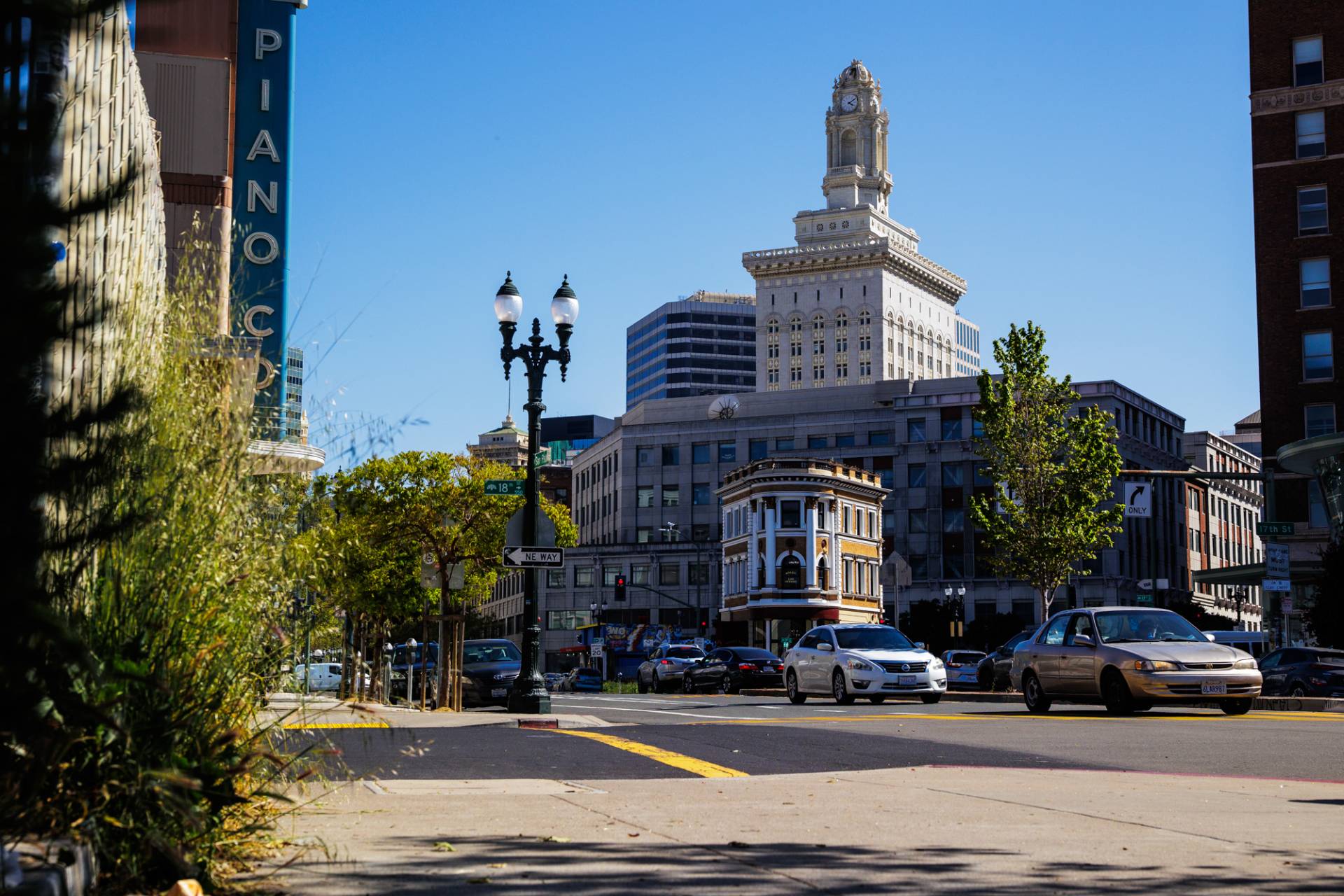
Ericka Cruz Guevarra: [00:02:23] Well, we’re so excited for you to be joining us in this edition of our News Roundup. And I guess we could just dive right in to some of the stories we’ve been following. Starting with my story out of Oakland, where earlier this month the city passed a pretty controversial new policy that makes it easier for the city to sweep both encampments and also RVs without necessarily offering shelter.
Alan Montecillo: [00:02:53] I feel like I’ve seen news like this come out of different cities in the Bay Area, San Francisco, San Jose. What would this policy in Oakland do?
Ericka Cruz Guevarra: [00:03:03] Yeah, so this new policy which was passed earlier this month, one of the biggest things it does is it redefines what an encampment in Oakland is. This is according to reporting by Ella Jackson and Paula Sibulo for KQED. So this policy makes it possible for the city to site and tow inhabited vehicles and also authorizes immediate encampments enclosures including tents blocking sidewalks. City officials or city staff having to offer folks shelter before they sweep their encampment.
Sarah Wright: [00:03:41] So why why are they allowed to do this basically like why are they allowed to say you have to leave you can’t be here and also we don’t have a place for you.
Ericka Cruz Guevarra: [00:03:50] So yeah, it’s this combination of this 2024 Supreme Court ruling, which really lowered the barrier for cities across the country to really criminalize homelessness, even if shelter beds weren’t available. This policy was introduced by District 7 council member Ken Houston, who really built this policy as a public health and public safety issue aimed at reducing fires and assaults and robberies and other crimes. And as part of this policy, it also expands the definition of what are called high sensitivity areas. These are areas where encampments are assumed to negatively affect the health and public safety of the area, like schools, for example, or hospitals. Now that’s expanded to include public utilities and also public transit.
Alan Montecillo: [00:04:44] I mean, over the last few years we’ve seen increasing public anger over street homelessness in particular. What does this look like in Oakland specifically? I mean is there more homelessness now than there was several years ago?
Ericka Cruz Guevarra: [00:04:58] Yeah, I mean, the context is really important here. Homelessness is on the rise in Oakland. It was up 8.5% between 2022 and 2024, and people living in RVs has really exploded. And simultaneously, three Oakland shelters closed in the last few months. So currently, there are about 5,400 unhoused folks living in Oakland, and that far outpaces the number of overnight parking spots, shelter beds, and housing that the city currently provides.
Sarah Wright: [00:05:34] And so can you tell me a little bit about the people who came to the meeting, what were they saying, what solutions were they offering?
Ericka Cruz Guevarra: [00:05:41] Yeah, so this new policy passed by a five to one vote and council member Carroll Fife abstained from the vote, saying that she couldn’t vote for a policy that didn’t address this big question of where folks go after their encampments are swept.
Carroll Fife: [00:06:00] And until we address that very fundamental issue, we are going to consistently have challenges with housing.
Ericka Cruz Guevarra: [00:06:10] There were also a bunch of folks who came to speak out against this policy. According to reporting from KQED, the number of folks who spoke against it were really the loudest voice in the room.
Public Commenter: [00:06:23] My name is Renee Hayes. Evidence shows that encampment abatement or sweeps, that’s what they really do, that’s what they are, they do nothing to solve homelessness. The fact that they have to be repeated over and over again suggests that that’s ineffective.
Ericka Cruz Guevarra: [00:06:42] Advocates for the unhoused, you know, say that homeless encampment sweeps really set people back. They’ll take people’s stuff. Folks have to find another place to be. And Councilmember Ken Houston, who brought this policy forward, actually said he wasn’t even happy at the end of the council meeting, even though his policy passed.
Ken Houston: [00:07:02] This is a very, very difficult policy to move. It’s not perfect, but it’s a starting point. I appreciate the people that was against it or the people who just opposed it. I appreciate your words, your effort. This is what this country is about.
Alan Montecillo: [00:07:20] Were there any changes to this policy before it was passed?
Ericka Cruz Guevarra: [00:07:23] The original text actually would have allowed the arrests of people simply camping but not necessarily engaged in criminal activity. That has been taken out. And also the policy does now require city staff to make, quote, reasonable efforts to shelter. Many still see this policy as another example of how homelessness is being criminalized in the Bay Area. How folks just get pushed from one place to the next without real offers for help, and a policy that just makes it harder for folks to get back on their feet.
Ericka Cruz Guevarra: [00:08:06] And that is it for my story this month. We’re gonna take a quick break, but when we get back, we’ll talk with Alan and Sarah about some of the other stories they’ve been following this month, stay with us.
Ericka Cruz Guevarra: [00:08:16] And welcome back to The Bay’s Monthly News Roundup where we talk about some of the other stories on our radar this month. The Bay’s Senior Editor, Alan Montecillo, I’m gonna turn to you. What story did you bring today?
Alan Montecillo: [00:08:40] Well, I don’t know if either of you’ve heard of the California billionaire tax. This is a proposed ballot measure that lots of people have been talking about. In fact, for a ballot measure that won’t be on the ballot this June, it’s gotten a lot of attention. There’s reporting on this from our colleague at KQED, Izzy Bloom. But the latest bit of news here is that this billionaire tax is now on track to make the November ballot. The union bringing forth this tax is SEIU. Which represents health care workers throughout the state. And they say they have submitted double the amount of signatures required for this to get on the November ballot. And so all that needs to happen is for the Secretary of State’s office to verify at least 850,000 of these signatures. So it’s extremely likely that all of us here will be voting on a potential billionaire tax this November.
Sarah Wright: [00:09:31] So billionaire tax, that sounds to me pretty straightforward, but tell us what it actually means. What does it do?
Alan Montecillo: [00:09:37] It’s actually quite interesting. This is a one-time 5% tax on the wealth and assets of California’s billionaires. That’s about 200 people. This would be the first tax of its kind in the United States. There’s no national wealth tax, there are no states that have passed a tax that specifically goes after the assets of billionaires, it is a direct response in many ways to the One big beautiful bill act signed into law by President Donald Trump last year. As many people may know, it made huge cuts to programs like Medi-Cal. And in fact, the union, SEIU, really framed this as a way to try and backfill some of those cuts. Suzanne Jimenez with SEIU talks about the goals of this tax.
Suzanne Jimenez: [00:10:23] At the end of this, this is really about solving a problem that is making sure hospitals, clinics and ER stay open.
Alan Montecillo: [00:10:29] Most of that money would go to Medi-Cal, some would go to K through 12 education, community college programs, CalFresh. It also has support from major progressive figures in the Democratic Party, notably Senator Bernie Sanders, Silicon Valley Representative Ro Khanna, former Secretary of Labor Robert Reich.
Ericka Cruz Guevarra: [00:10:46] And do we have a sense of how much money this new tax is supposed to generate and whether it would actually fill the gaps created by the One Big Beautiful Bill?
Alan Montecillo: [00:11:00] So right now, it’s estimated that this tax would generate about $100 billion in revenue. I don’t think it would necessarily restore all of the cuts that are going to be made to Medi-Cal. Federally, the cuts to Medicaid are estimated to be in the $900 billion to $1 trillion range over the next decade. In terms of the funds generated from this tax, this is not a tax that would be in place permanently. Billionaires who would be subject to this tax could pay 5% immediately or 1% over five years. So, certainly it would generate funds, and the intent is that it would help make up for these federal cuts, but I don’t think it’s going to make those programs whole in perpetuity because this is a one-time tax.
Sarah Wright: [00:11:41] Just judging by the number of signatures this got, it seems like it’s somewhat popular. Is there any major opposition to it, or how’s it going to fare in the actual ballot box?
Alan Montecillo: [00:11:50] Oh yeah, there’s a lot of opposition. I mean, as you might imagine, the tech industry, billionaires, moderate Democrats are very much against this. I think that the main argument against this is that wealthy people will leave and take their tax revenue with them, and that in California, which already has a very progressive tax system, we already rely disproportionately on tax revenue from rich people to fund social services. In many ways, this measure has also divided the Democratic Party in California. Governor Gavin Newsom is against this. Another opponent is San Jose Mayor Matt Mahan, who is running for governor and is a favorite of the tech industry. And he says ultimately this will hurt middle-class taxpayers in the long run.
Matt Mahan: [00:12:32] A wealth tax in particular is fundamentally different from other taxes, and it has the highest unintended consequences. It will lead to middle class people having to pay higher taxes in the long run.
Alan Montecillo: [00:12:42] Just saying they don’t like this, they are taking action. Opponents are likely to submit a rival ballot measure later in the week called the Transparency Act of 2026, funded by Silicon Valley billionaires, including Sergey Brin, the co-founder of Google. Sort of complicated, but it would require audits or programs funded by new taxes. And the big thing here, and this is a very California thing to do, is that this ballot measure would potentially nullify the billionaire tax. So. It wouldn’t be a California election if we weren’t voting on dueling ballot measures. So if both measures qualify for the ballot and they both pass, whichever one has the most votes goes into effect.
Ericka Cruz Guevarra: [00:13:22] I’m assuming we might be seeing lots of ads coming very soon related to both of these ballot measures.
Alan Montecillo: [00:13:31] Oh yeah, get- get ready. I think once the June primary is over, you’re gonna see just an avalanche of ads. I mean…
Ericka Cruz Guevarra: [00:13:38] My YouTube’s gonna be crazy.
Alan Montecillo: [00:13:40] Yeah, mine’s already crazy.
Ericka Cruz Guevarra: [00:13:48] Allen Montecillo, senior editor for The Bay, thanks for bringing that story.
Alan Montecillo: [00:13:52] You’re very welcome.
Ericka Cruz Guevarra: [00:13:58] And last but not least, Sarah Wright, Outdoors reporter for KQED. What story did you bring for us today?
Sarah Wright: [00:14:04] Yes, so I am obsessed with this story. This was written by my colleague Nisa Khan and Lakshmi Sarah. And they looked into this past month of weddings that were held at the San Francisco Public Library.
Ericka Cruz Guevarra: [00:14:18] Hmm
Sarah Wright: [00:14:19] It was a unique event, this has never happened before, but for the whole month of April, people for the first time were allowed to get married at the San Francisco Public Library and they did and it was beautiful. The library is thinking about making this an annual thing, there were only nine couples who were able to do it, the weddings were free, they won the opportunity through a lottery. It’s so fun to see people kind of like celebrating their home city, each other and like The fact that we as a community get to witness that I think is really beautiful.
Ericka Cruz Guevarra: [00:14:52] Yeah, that’s so sweet and also, I don’t know if I’ve ever heard of someone getting married in a library. I feel like typically if you’re getting married in San Francisco, you’re getting married at San Francisco City Hall. So why is SF Public Library doing this?
Sarah Wright: [00:15:07] Yeah, so it’s their 30th anniversary, so they really wanted to have a big celebration. They told these reporters that they have been begged, basically, to be doing this for a while, but they just didn’t really have the processes in place to be able to legally officiate and host weddings. And once they got all of that settled, the demand was just incredible. So they were more than happy to provide the service.
Alan Montecillo: [00:15:33] What are some of these library weddings like? I mean, I have to imagine they would run a little smaller, a little quieter than a usual wedding.
Sarah Wright: [00:15:44] Absolutely. There is like a very cutesy book backdrop. They’re between the shelves.
Officiant: [00:15:50] Always promise to abide by all library rules, try to keep your library card to active, and promise to always help each other return your borrowed books and materials on time.
Sarah Wright: [00:16:06] Everyone’s a little emotional, as people are at a wedding, some of the library staff were there to witness it and they said, you know, we don’t even know these couples, but this is so beautiful and special to be just a regular day at the library, except it’s not because it’s somebody’s biggest day of their lives.
Officiant: [00:16:24] By virtue of the authority vested in me by the state of California, I now pronounce you husband and wife.
Sarah Wright: [00:16:36] If you’re looking for like a really intimate, beautiful, personal ceremony, I can see how this would be absolutely perfect. And a lot of the couples said like, you know, there’s even books that have played just like such a huge role in our relationship. So to be able to like celebrate among them is like true to us.
Ericka Cruz Guevarra: [00:16:55] You mentioned it’s the San Francisco Public Library’s 30th anniversary, and they’re planning to make this more of a thing from now on. Like, how does one get married at the library if they are interested?
Sarah Wright: [00:17:10] Yes, so they haven’t announced officially, but they’re talking about annually doing a month like this past month where, you know, they can hold another lottery, more people can come on. But for this story, my colleagues offered some alternatives because this isn’t an opportunity everybody can take, right? They kind of pulled together this wonderful list of dates and romantic adventures for you and your book lover, basically, or book friend or book lover self. Personally, I live in Noe Valley. And so we have the Noe valley bookstore and it’s incredibly cute right across the street from Bernie’s, which is a coffee shop that sells some of their books. So that to me was like, ah, that is a perfect date. I should go there. So it just really spoke to me because I’ve heard of many of these spots, but it’s clear that there’s like just so such a wealth of book loving opportunities in the bay.
Alan Montecillo: [00:18:05] What’s the Venn diagram you think between public radio people and people who would get married in a library?
Sarah Wright: [00:18:09] Like, is it a circle? Possibly. I said, you know, I was reading the story, and I was like, this is the most KQED story ever. I love that.
Alan Montecillo: [00:18:19] Yes, support your public libraries and your public radio stations.
Ericka Cruz Guevarra: [00:18:23] Absolutely Well, Sarah Wright, thank you so much for bringing that story for us.
Sarah Wright: [00:18:32] Yes, thank you.
Ericka Cruz Guevarra: [00:18:34] And Senior Editor Alan Montecillo, thanks for joining me as well.