window.__IS_SSR__=true
window.__INITIAL_STATE__={
"attachmentsReducer": {
"audio_0": {
"type": "attachments",
"id": "audio_0",
"imgSizes": {
"kqedFullSize": {
"file": "https://ww2.kqed.org/news/wp-content/themes/KQED-unified/img/audio_bgs/background0.jpg"
}
}
},
"audio_1": {
"type": "attachments",
"id": "audio_1",
"imgSizes": {
"kqedFullSize": {
"file": "https://ww2.kqed.org/news/wp-content/themes/KQED-unified/img/audio_bgs/background1.jpg"
}
}
},
"audio_2": {
"type": "attachments",
"id": "audio_2",
"imgSizes": {
"kqedFullSize": {
"file": "https://ww2.kqed.org/news/wp-content/themes/KQED-unified/img/audio_bgs/background2.jpg"
}
}
},
"audio_3": {
"type": "attachments",
"id": "audio_3",
"imgSizes": {
"kqedFullSize": {
"file": "https://ww2.kqed.org/news/wp-content/themes/KQED-unified/img/audio_bgs/background3.jpg"
}
}
},
"audio_4": {
"type": "attachments",
"id": "audio_4",
"imgSizes": {
"kqedFullSize": {
"file": "https://ww2.kqed.org/news/wp-content/themes/KQED-unified/img/audio_bgs/background4.jpg"
}
}
},
"placeholder": {
"type": "attachments",
"id": "placeholder",
"imgSizes": {
"thumbnail": {
"file": "https://cdn.kqed.org/wp-content/uploads/2024/12/KQED-Default-Image-816638274-2000x1333-1-160x107.jpg",
"width": 160,
"height": 107,
"mimeType": "image/jpeg"
},
"medium": {
"file": "https://cdn.kqed.org/wp-content/uploads/2024/12/KQED-Default-Image-816638274-2000x1333-1-800x533.jpg",
"width": 800,
"height": 533,
"mimeType": "image/jpeg"
},
"medium_large": {
"file": "https://cdn.kqed.org/wp-content/uploads/2024/12/KQED-Default-Image-816638274-2000x1333-1-768x512.jpg",
"width": 768,
"height": 512,
"mimeType": "image/jpeg"
},
"large": {
"file": "https://cdn.kqed.org/wp-content/uploads/2024/12/KQED-Default-Image-816638274-2000x1333-1-1020x680.jpg",
"width": 1020,
"height": 680,
"mimeType": "image/jpeg"
},
"1536x1536": {
"file": "https://cdn.kqed.org/wp-content/uploads/2024/12/KQED-Default-Image-816638274-2000x1333-1-1536x1024.jpg",
"width": 1536,
"height": 1024,
"mimeType": "image/jpeg"
},
"fd-lrg": {
"file": "https://cdn.kqed.org/wp-content/uploads/2024/12/KQED-Default-Image-816638274-2000x1333-1-1536x1024.jpg",
"width": 1536,
"height": 1024,
"mimeType": "image/jpeg"
},
"fd-med": {
"file": "https://cdn.kqed.org/wp-content/uploads/2024/12/KQED-Default-Image-816638274-2000x1333-1-1020x680.jpg",
"width": 1020,
"height": 680,
"mimeType": "image/jpeg"
},
"fd-sm": {
"file": "https://cdn.kqed.org/wp-content/uploads/2024/12/KQED-Default-Image-816638274-2000x1333-1-800x533.jpg",
"width": 800,
"height": 533,
"mimeType": "image/jpeg"
},
"post-thumbnail": {
"file": "https://cdn.kqed.org/wp-content/uploads/2024/12/KQED-Default-Image-816638274-2000x1333-1-672x372.jpg",
"width": 672,
"height": 372,
"mimeType": "image/jpeg"
},
"twentyfourteen-full-width": {
"file": "https://cdn.kqed.org/wp-content/uploads/2024/12/KQED-Default-Image-816638274-2000x1333-1-1038x576.jpg",
"width": 1038,
"height": 576,
"mimeType": "image/jpeg"
},
"xxsmall": {
"file": "https://cdn.kqed.org/wp-content/uploads/2024/12/KQED-Default-Image-816638274-2000x1333-1-160x107.jpg",
"width": 160,
"height": 107,
"mimeType": "image/jpeg"
},
"xsmall": {
"file": "https://cdn.kqed.org/wp-content/uploads/2024/12/KQED-Default-Image-816638274-2000x1333-1-672x372.jpg",
"width": 672,
"height": 372,
"mimeType": "image/jpeg"
},
"small": {
"file": "https://cdn.kqed.org/wp-content/uploads/2024/12/KQED-Default-Image-816638274-2000x1333-1-672x372.jpg",
"width": 672,
"height": 372,
"mimeType": "image/jpeg"
},
"xlarge": {
"file": "https://cdn.kqed.org/wp-content/uploads/2024/12/KQED-Default-Image-816638274-2000x1333-1-1020x680.jpg",
"width": 1020,
"height": 680,
"mimeType": "image/jpeg"
},
"full-width": {
"file": "https://cdn.kqed.org/wp-content/uploads/2024/12/KQED-Default-Image-816638274-2000x1333-1-1920x1280.jpg",
"width": 1920,
"height": 1280,
"mimeType": "image/jpeg"
},
"guest-author-32": {
"file": "https://cdn.kqed.org/wp-content/uploads/2025/01/KQED-Default-Image-816638274-1333x1333-1-160x160.jpg",
"width": 32,
"height": 32,
"mimeType": "image/jpeg"
},
"guest-author-50": {
"file": "https://cdn.kqed.org/wp-content/uploads/2025/01/KQED-Default-Image-816638274-1333x1333-1-160x160.jpg",
"width": 50,
"height": 50,
"mimeType": "image/jpeg"
},
"guest-author-64": {
"file": "https://cdn.kqed.org/wp-content/uploads/2025/01/KQED-Default-Image-816638274-1333x1333-1-160x160.jpg",
"width": 64,
"height": 64,
"mimeType": "image/jpeg"
},
"guest-author-96": {
"file": "https://cdn.kqed.org/wp-content/uploads/2025/01/KQED-Default-Image-816638274-1333x1333-1-160x160.jpg",
"width": 96,
"height": 96,
"mimeType": "image/jpeg"
},
"guest-author-128": {
"file": "https://cdn.kqed.org/wp-content/uploads/2025/01/KQED-Default-Image-816638274-1333x1333-1-160x160.jpg",
"width": 128,
"height": 128,
"mimeType": "image/jpeg"
},
"detail": {
"file": "https://cdn.kqed.org/wp-content/uploads/2025/01/KQED-Default-Image-816638274-1333x1333-1-160x160.jpg",
"width": 160,
"height": 160,
"mimeType": "image/jpeg"
},
"kqedFullSize": {
"file": "https://cdn.kqed.org/wp-content/uploads/2024/12/KQED-Default-Image-816638274-2000x1333-1.jpg",
"width": 2000,
"height": 1333
}
}
},
"news_12011971": {
"type": "attachments",
"id": "news_12011971",
"meta": {
"index": "attachments_1716263798",
"site": "news",
"id": "12011971",
"found": true
},
"title": "US-HEALTH-VIRUS-PRISON",
"publishDate": 1730405796,
"status": "inherit",
"parent": 0,
"modified": 1731002698,
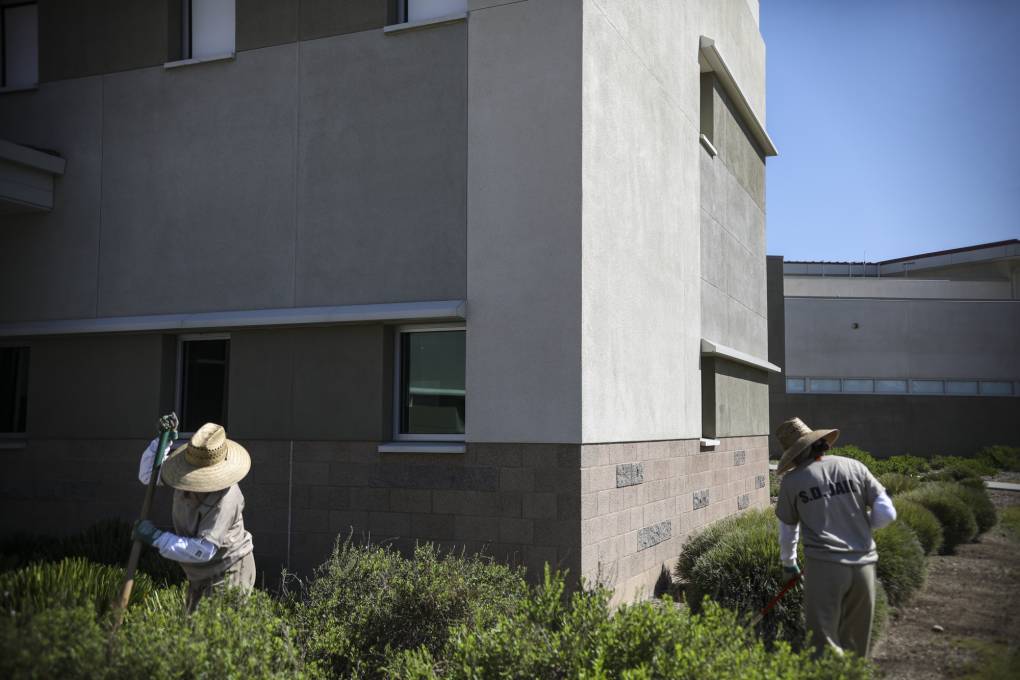
"caption": "Incarcerated women tend to landscaping at Las Colinas Women's Detention Facility in Santee, California, on April 22, 2020.",
"credit": "Sandy Huffaker/AFP via Getty Images",
"altTag": null,
"description": null,
"imgSizes": {
"medium": {
"file": "https://cdn.kqed.org/wp-content/uploads/sites/10/2024/10/GETTYIMAGES-1210676438-KQED-800x533.jpg",
"width": 800,
"height": 533,
"mimeType": "image/jpeg"
},
"large": {
"file": "https://cdn.kqed.org/wp-content/uploads/sites/10/2024/10/GETTYIMAGES-1210676438-KQED-1020x680.jpg",
"width": 1020,
"height": 680,
"mimeType": "image/jpeg"
},
"thumbnail": {
"file": "https://cdn.kqed.org/wp-content/uploads/sites/10/2024/10/GETTYIMAGES-1210676438-KQED-160x107.jpg",
"width": 160,
"height": 107,
"mimeType": "image/jpeg"
},
"1536x1536": {
"file": "https://cdn.kqed.org/wp-content/uploads/sites/10/2024/10/GETTYIMAGES-1210676438-KQED-1536x1024.jpg",
"width": 1536,
"height": 1024,
"mimeType": "image/jpeg"
},
"post-thumbnail": {
"file": "https://cdn.kqed.org/wp-content/uploads/sites/10/2024/10/GETTYIMAGES-1210676438-KQED-672x372.jpg",
"width": 672,
"height": 372,
"mimeType": "image/jpeg"
},
"twentyfourteen-full-width": {
"file": "https://cdn.kqed.org/wp-content/uploads/sites/10/2024/10/GETTYIMAGES-1210676438-KQED-1038x576.jpg",
"width": 1038,
"height": 576,
"mimeType": "image/jpeg"
},
"full-width": {
"file": "https://cdn.kqed.org/wp-content/uploads/sites/10/2024/10/GETTYIMAGES-1210676438-KQED-1920x1280.jpg",
"width": 1920,
"height": 1280,
"mimeType": "image/jpeg"
},
"kqedFullSize": {
"file": "https://cdn.kqed.org/wp-content/uploads/sites/10/2024/10/GETTYIMAGES-1210676438-KQED.jpg",
"width": 2000,
"height": 1333
}
},
"isLoading": false,
"fetchFailed": false
},
"news_12008249": {
"type": "attachments",
"id": "news_12008249",
"meta": {
"index": "attachments_1716263798",
"site": "news",
"id": "12008249",
"found": true
},
"title": "071724-Geynna-Buffington-ZS-CM-102",
"publishDate": 1728319274,
"status": "inherit",
"parent": 12008246,
"modified": 1728325259,
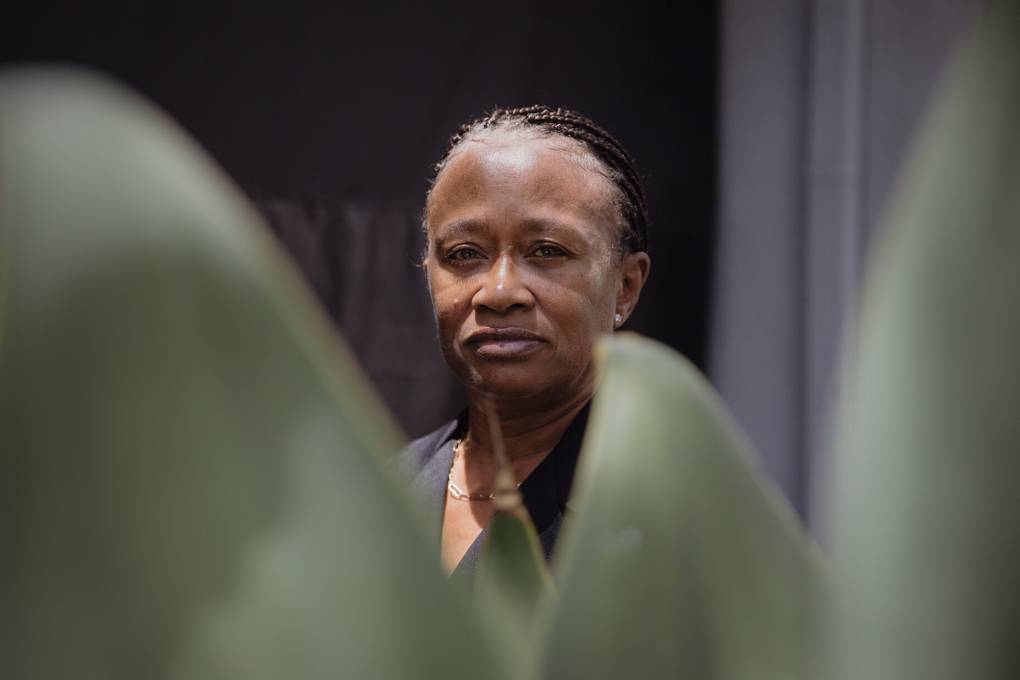
"caption": "Geynna Buffington in Long Beach on July 17, 2024. ",
"credit": "Zaydee Sanchez/KQED",
"altTag": "A closeup of a Black woman with plants in the foreground.",
"description": null,
"imgSizes": {
"medium": {
"file": "https://cdn.kqed.org/wp-content/uploads/sites/10/2024/10/071724-Geynna-Buffington-ZS-CM-102-800x533.jpg",
"width": 800,
"height": 533,
"mimeType": "image/jpeg"
},
"large": {
"file": "https://cdn.kqed.org/wp-content/uploads/sites/10/2024/10/071724-Geynna-Buffington-ZS-CM-102-1020x680.jpg",
"width": 1020,
"height": 680,
"mimeType": "image/jpeg"
},
"thumbnail": {
"file": "https://cdn.kqed.org/wp-content/uploads/sites/10/2024/10/071724-Geynna-Buffington-ZS-CM-102-160x107.jpg",
"width": 160,
"height": 107,
"mimeType": "image/jpeg"
},
"1536x1536": {
"file": "https://cdn.kqed.org/wp-content/uploads/sites/10/2024/10/071724-Geynna-Buffington-ZS-CM-102-1536x1024.jpg",
"width": 1536,
"height": 1024,
"mimeType": "image/jpeg"
},
"post-thumbnail": {
"file": "https://cdn.kqed.org/wp-content/uploads/sites/10/2024/10/071724-Geynna-Buffington-ZS-CM-102-672x372.jpg",
"width": 672,
"height": 372,
"mimeType": "image/jpeg"
},
"twentyfourteen-full-width": {
"file": "https://cdn.kqed.org/wp-content/uploads/sites/10/2024/10/071724-Geynna-Buffington-ZS-CM-102-1038x576.jpg",
"width": 1038,
"height": 576,
"mimeType": "image/jpeg"
},
"full-width": {
"file": "https://cdn.kqed.org/wp-content/uploads/sites/10/2024/10/071724-Geynna-Buffington-ZS-CM-102-1920x1280.jpg",
"width": 1920,
"height": 1280,
"mimeType": "image/jpeg"
},
"kqedFullSize": {
"file": "https://cdn.kqed.org/wp-content/uploads/sites/10/2024/10/071724-Geynna-Buffington-ZS-CM-102.jpg",
"width": 2000,
"height": 1333
}
},
"isLoading": false,
"fetchFailed": false
},
"news_12006891": {
"type": "attachments",
"id": "news_12006891",
"meta": {
"index": "attachments_1716263798",
"site": "news",
"id": "12006891",
"found": true
},
"title": "California Reparations Veto",
"publishDate": 1727467632,
"status": "inherit",
"parent": 12006872,
"modified": 1727480845,
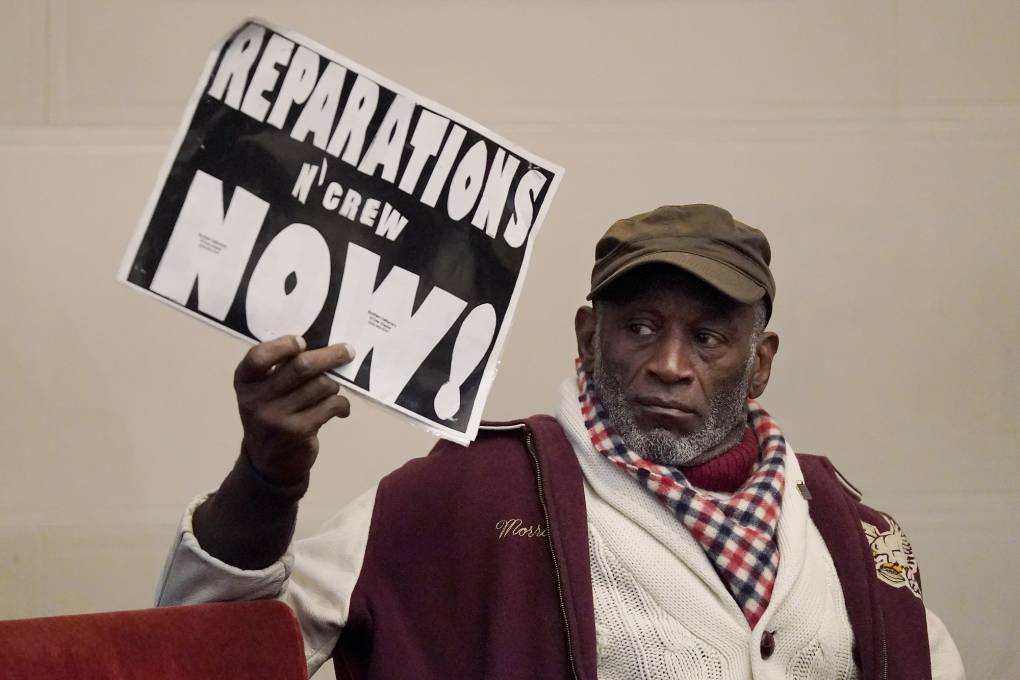
"caption": "Morris Griffin holds up a sign during a meeting by the Task Force to Study and Develop Reparation Proposals for African Americans in Oakland, Dec. 14, 2022. The Alameda County Reparations Commission has made little progress in over a year. Last week, the county extended its mandate for two years but allocated only $92,000 — less than 2% of the requested budget. With these limited funds primarily for historical research and community outreach, the commission must reassess its achievable goals.",
"credit": "Jeff Chiu/AP Photo",
"altTag": null,
"description": null,
"imgSizes": {
"medium": {
"file": "https://cdn.kqed.org/wp-content/uploads/sites/10/2024/09/ReparationsOaklandAP-800x533.jpg",
"width": 800,
"height": 533,
"mimeType": "image/jpeg"
},
"large": {
"file": "https://cdn.kqed.org/wp-content/uploads/sites/10/2024/09/ReparationsOaklandAP-1020x680.jpg",
"width": 1020,
"height": 680,
"mimeType": "image/jpeg"
},
"thumbnail": {
"file": "https://cdn.kqed.org/wp-content/uploads/sites/10/2024/09/ReparationsOaklandAP-160x107.jpg",
"width": 160,
"height": 107,
"mimeType": "image/jpeg"
},
"1536x1536": {
"file": "https://cdn.kqed.org/wp-content/uploads/sites/10/2024/09/ReparationsOaklandAP-1536x1024.jpg",
"width": 1536,
"height": 1024,
"mimeType": "image/jpeg"
},
"post-thumbnail": {
"file": "https://cdn.kqed.org/wp-content/uploads/sites/10/2024/09/ReparationsOaklandAP-672x372.jpg",
"width": 672,
"height": 372,
"mimeType": "image/jpeg"
},
"twentyfourteen-full-width": {
"file": "https://cdn.kqed.org/wp-content/uploads/sites/10/2024/09/ReparationsOaklandAP-1038x576.jpg",
"width": 1038,
"height": 576,
"mimeType": "image/jpeg"
},
"full-width": {
"file": "https://cdn.kqed.org/wp-content/uploads/sites/10/2024/09/ReparationsOaklandAP-1920x1280.jpg",
"width": 1920,
"height": 1280,
"mimeType": "image/jpeg"
},
"kqedFullSize": {
"file": "https://cdn.kqed.org/wp-content/uploads/sites/10/2024/09/ReparationsOaklandAP.jpg",
"width": 2000,
"height": 1333
}
},
"isLoading": false,
"fetchFailed": false
},
"news_12006825": {
"type": "attachments",
"id": "news_12006825",
"meta": {
"index": "attachments_1716263798",
"site": "news",
"id": "12006825",
"found": true
},
"title": "California Reparations",
"publishDate": 1727458654,
"status": "inherit",
"parent": 12006819,
"modified": 1727459893,
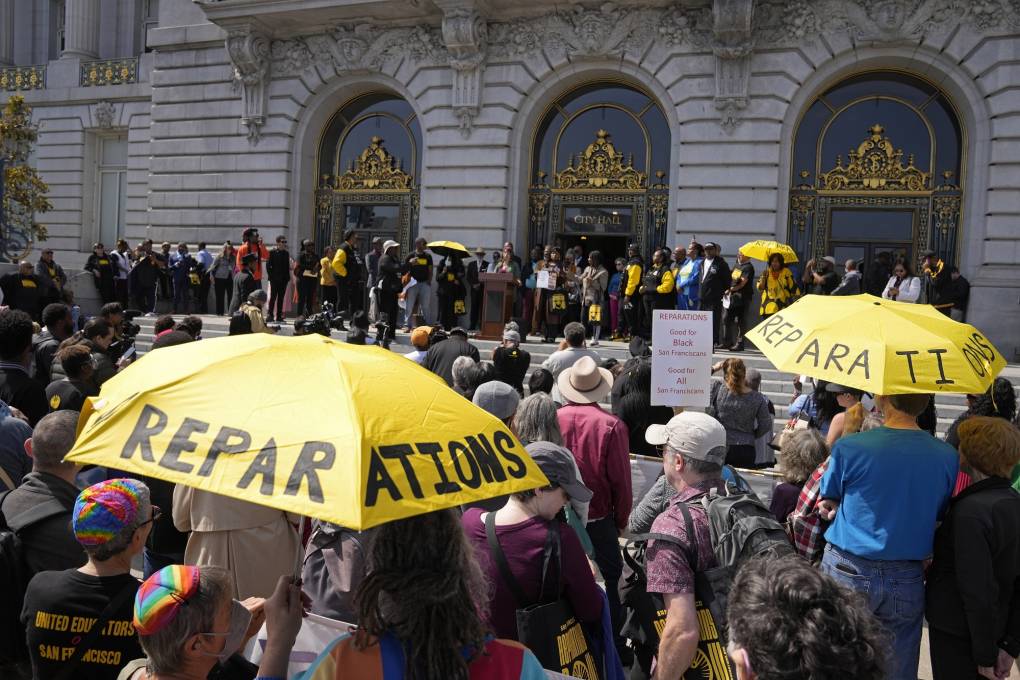
"caption": "People listen during a rally in support of reparations for African Americans outside City Hall in San Francisco on Tuesday, Sept. 19, 2023. Some advocates believe the first-year effort to provide reparations to Black Californians failed to live up to expectations, but voters will have the final word in November. ",
"credit": "Eric Risberg/AP Photo",
"altTag": null,
"description": null,
"imgSizes": {
"medium": {
"file": "https://cdn.kqed.org/wp-content/uploads/sites/10/2024/09/ReparationsAP-800x533.jpg",
"width": 800,
"height": 533,
"mimeType": "image/jpeg"
},
"large": {
"file": "https://cdn.kqed.org/wp-content/uploads/sites/10/2024/09/ReparationsAP-1020x680.jpg",
"width": 1020,
"height": 680,
"mimeType": "image/jpeg"
},
"thumbnail": {
"file": "https://cdn.kqed.org/wp-content/uploads/sites/10/2024/09/ReparationsAP-160x107.jpg",
"width": 160,
"height": 107,
"mimeType": "image/jpeg"
},
"1536x1536": {
"file": "https://cdn.kqed.org/wp-content/uploads/sites/10/2024/09/ReparationsAP-1536x1024.jpg",
"width": 1536,
"height": 1024,
"mimeType": "image/jpeg"
},
"post-thumbnail": {
"file": "https://cdn.kqed.org/wp-content/uploads/sites/10/2024/09/ReparationsAP-672x372.jpg",
"width": 672,
"height": 372,
"mimeType": "image/jpeg"
},
"twentyfourteen-full-width": {
"file": "https://cdn.kqed.org/wp-content/uploads/sites/10/2024/09/ReparationsAP-1038x576.jpg",
"width": 1038,
"height": 576,
"mimeType": "image/jpeg"
},
"full-width": {
"file": "https://cdn.kqed.org/wp-content/uploads/sites/10/2024/09/ReparationsAP-1920x1280.jpg",
"width": 1920,
"height": 1280,
"mimeType": "image/jpeg"
},
"kqedFullSize": {
"file": "https://cdn.kqed.org/wp-content/uploads/sites/10/2024/09/ReparationsAP.jpg",
"width": 2000,
"height": 1333
}
},
"isLoading": false,
"fetchFailed": false
},
"news_12006799": {
"type": "attachments",
"id": "news_12006799",
"meta": {
"index": "attachments_1716263798",
"site": "news",
"id": "12006799",
"found": true
},
"title": "haitian tijuana",
"publishDate": 1727445663,
"status": "inherit",
"parent": 12006797,
"modified": 1727445748,
"caption": "In a public park in Tijuana, the Haitian Bridge Alliance regularly hosts an event called “Know Your Rights” ",
"credit": "Photo courtesy of Haitian Bridge Alliance",
"altTag": null,
"description": null,
"imgSizes": {
"medium": {
"file": "https://cdn.kqed.org/wp-content/uploads/sites/10/2024/09/haitian-tijuana-800x534.jpg",
"width": 800,
"height": 534,
"mimeType": "image/jpeg"
},
"large": {
"file": "https://cdn.kqed.org/wp-content/uploads/sites/10/2024/09/haitian-tijuana-1020x680.jpg",
"width": 1020,
"height": 680,
"mimeType": "image/jpeg"
},
"thumbnail": {
"file": "https://cdn.kqed.org/wp-content/uploads/sites/10/2024/09/haitian-tijuana-160x107.jpg",
"width": 160,
"height": 107,
"mimeType": "image/jpeg"
},
"1536x1536": {
"file": "https://cdn.kqed.org/wp-content/uploads/sites/10/2024/09/haitian-tijuana-1536x1025.jpg",
"width": 1536,
"height": 1025,
"mimeType": "image/jpeg"
},
"post-thumbnail": {
"file": "https://cdn.kqed.org/wp-content/uploads/sites/10/2024/09/haitian-tijuana-672x372.jpg",
"width": 672,
"height": 372,
"mimeType": "image/jpeg"
},
"twentyfourteen-full-width": {
"file": "https://cdn.kqed.org/wp-content/uploads/sites/10/2024/09/haitian-tijuana-1038x576.jpg",
"width": 1038,
"height": 576,
"mimeType": "image/jpeg"
},
"full-width": {
"file": "https://cdn.kqed.org/wp-content/uploads/sites/10/2024/09/haitian-tijuana-1920x1281.jpg",
"width": 1920,
"height": 1281,
"mimeType": "image/jpeg"
},
"kqedFullSize": {
"file": "https://cdn.kqed.org/wp-content/uploads/sites/10/2024/09/haitian-tijuana.jpg",
"width": 2048,
"height": 1366
}
},
"isLoading": false,
"fetchFailed": false
},
"news_11942566": {
"type": "attachments",
"id": "news_11942566",
"meta": {
"index": "attachments_1716263798",
"site": "news",
"id": "11942566",
"found": true
},
"parent": 11942533,
"imgSizes": {
"twentyfourteen-full-width": {
"file": "https://ww2.kqed.org/app/uploads/sites/10/2023/03/RS63355_048_KQED_CAReparationsTaskForceSac_03032023-qut-1038x576.jpg",
"width": 1038,
"mimeType": "image/jpeg",
"height": 576
},
"thumbnail": {
"file": "https://ww2.kqed.org/app/uploads/sites/10/2023/03/RS63355_048_KQED_CAReparationsTaskForceSac_03032023-qut-160x107.jpg",
"width": 160,
"mimeType": "image/jpeg",
"height": 107
},
"post-thumbnail": {
"file": "https://ww2.kqed.org/app/uploads/sites/10/2023/03/RS63355_048_KQED_CAReparationsTaskForceSac_03032023-qut-672x372.jpg",
"width": 672,
"mimeType": "image/jpeg",
"height": 372
},
"kqedFullSize": {
"file": "https://ww2.kqed.org/app/uploads/sites/10/2023/03/RS63355_048_KQED_CAReparationsTaskForceSac_03032023-qut.jpg",
"width": 1920,
"height": 1280
},
"large": {
"file": "https://ww2.kqed.org/app/uploads/sites/10/2023/03/RS63355_048_KQED_CAReparationsTaskForceSac_03032023-qut-1020x680.jpg",
"width": 1020,
"mimeType": "image/jpeg",
"height": 680
},
"1536x1536": {
"file": "https://ww2.kqed.org/app/uploads/sites/10/2023/03/RS63355_048_KQED_CAReparationsTaskForceSac_03032023-qut-1536x1024.jpg",
"width": 1536,
"mimeType": "image/jpeg",
"height": 1024
},
"medium": {
"file": "https://ww2.kqed.org/app/uploads/sites/10/2023/03/RS63355_048_KQED_CAReparationsTaskForceSac_03032023-qut-800x533.jpg",
"width": 800,
"mimeType": "image/jpeg",
"height": 533
}
},
"publishDate": 1677976680,
"modified": 1678130777,
"caption": "State Sen. Steven Bradford (D-Gardena) speaks with attendees during a California Reparations Task Force meeting in Sacramento on March 3, 2023.",
"description": null,
"title": "RS63355_048_KQED_CAReparationsTaskForceSac_03032023-qut",
"credit": "Beth LaBerge/KQED",
"status": "inherit",
"altTag": "Three African American men have a standing conversation.",
"isLoading": false,
"fetchFailed": false
},
"news_12005255": {
"type": "attachments",
"id": "news_12005255",
"meta": {
"index": "attachments_1716263798",
"site": "news",
"id": "12005255",
"found": true
},
"title": "Black Art Week Hannah Waiters",
"publishDate": 1726687508,
"status": "inherit",
"parent": 12005251,
"modified": 1726859093,
"caption": "“The Remedy is Solidarity: A Global Multimedia Anthology on Reparations Volume 1.1 Too Much Like Right,” is a multimedia exhibition opening at Swim Gallery, 509 Ellis St., on Sept. 21. The installation will feature works by female artists like Taina Cruz, Cheryl Derricotte, Trina Robinson and Hannah Waiters, each exploring the exclusion of Black people from the city’s history in different mediums.",
"credit": "Courtesy ZEAL",
"altTag": null,
"description": null,
"imgSizes": {
"medium": {
"file": "https://cdn.kqed.org/wp-content/uploads/sites/10/2024/09/Black-Art-Week-Hannah-Waiters-800x600.jpg",
"width": 800,
"height": 600,
"mimeType": "image/jpeg"
},
"large": {
"file": "https://cdn.kqed.org/wp-content/uploads/sites/10/2024/09/Black-Art-Week-Hannah-Waiters-1020x765.jpg",
"width": 1020,
"height": 765,
"mimeType": "image/jpeg"
},
"thumbnail": {
"file": "https://cdn.kqed.org/wp-content/uploads/sites/10/2024/09/Black-Art-Week-Hannah-Waiters-160x120.jpg",
"width": 160,
"height": 120,
"mimeType": "image/jpeg"
},
"1536x1536": {
"file": "https://cdn.kqed.org/wp-content/uploads/sites/10/2024/09/Black-Art-Week-Hannah-Waiters-1536x1152.jpg",
"width": 1536,
"height": 1152,
"mimeType": "image/jpeg"
},
"post-thumbnail": {
"file": "https://cdn.kqed.org/wp-content/uploads/sites/10/2024/09/Black-Art-Week-Hannah-Waiters-672x372.jpg",
"width": 672,
"height": 372,
"mimeType": "image/jpeg"
},
"twentyfourteen-full-width": {
"file": "https://cdn.kqed.org/wp-content/uploads/sites/10/2024/09/Black-Art-Week-Hannah-Waiters-1038x576.jpg",
"width": 1038,
"height": 576,
"mimeType": "image/jpeg"
},
"full-width": {
"file": "https://cdn.kqed.org/wp-content/uploads/sites/10/2024/09/Black-Art-Week-Hannah-Waiters-1920x1440.jpg",
"width": 1920,
"height": 1440,
"mimeType": "image/jpeg"
},
"kqedFullSize": {
"file": "https://cdn.kqed.org/wp-content/uploads/sites/10/2024/09/Black-Art-Week-Hannah-Waiters.jpg",
"width": 2000,
"height": 1500
}
},
"isLoading": false,
"fetchFailed": false
},
"news_12002903": {
"type": "attachments",
"id": "news_12002903",
"meta": {
"index": "attachments_1716263798",
"site": "news",
"id": "12002903",
"found": true
},
"title": "IMG_1793-Edit",
"publishDate": 1725403540,
"status": "inherit",
"parent": 12002804,
"modified": 1725410650,
"caption": "Chris Lodgson, lead organizer for the Coalition for a Just and Equitable California, watches 2 reparations bills, SB 1331 and SB 1403, inside the state capitol on Aug. 29, 2024, during the final days of the legislative session.",
"credit": "Annelise Finney/KQED",
"altTag": null,
"description": null,
"imgSizes": {
"medium": {
"file": "https://cdn.kqed.org/wp-content/uploads/sites/10/2024/09/IMG_1793-Edit-800x534.jpg",
"width": 800,
"height": 534,
"mimeType": "image/jpeg"
},
"large": {
"file": "https://cdn.kqed.org/wp-content/uploads/sites/10/2024/09/IMG_1793-Edit-1020x680.jpg",
"width": 1020,
"height": 680,
"mimeType": "image/jpeg"
},
"thumbnail": {
"file": "https://cdn.kqed.org/wp-content/uploads/sites/10/2024/09/IMG_1793-Edit-160x107.jpg",
"width": 160,
"height": 107,
"mimeType": "image/jpeg"
},
"1536x1536": {
"file": "https://cdn.kqed.org/wp-content/uploads/sites/10/2024/09/IMG_1793-Edit-1536x1025.jpg",
"width": 1536,
"height": 1025,
"mimeType": "image/jpeg"
},
"post-thumbnail": {
"file": "https://cdn.kqed.org/wp-content/uploads/sites/10/2024/09/IMG_1793-Edit-672x372.jpg",
"width": 672,
"height": 372,
"mimeType": "image/jpeg"
},
"twentyfourteen-full-width": {
"file": "https://cdn.kqed.org/wp-content/uploads/sites/10/2024/09/IMG_1793-Edit-1038x576.jpg",
"width": 1038,
"height": 576,
"mimeType": "image/jpeg"
},
"full-width": {
"file": "https://cdn.kqed.org/wp-content/uploads/sites/10/2024/09/IMG_1793-Edit-1920x1281.jpg",
"width": 1920,
"height": 1281,
"mimeType": "image/jpeg"
},
"kqedFullSize": {
"file": "https://cdn.kqed.org/wp-content/uploads/sites/10/2024/09/IMG_1793-Edit.jpg",
"width": 2000,
"height": 1334
}
},
"isLoading": false,
"fetchFailed": false
},
"news_12002489": {
"type": "attachments",
"id": "news_12002489",
"meta": {
"index": "attachments_1716263798",
"site": "news",
"id": "12002489",
"found": true
},
"title": "LOS ANGELES, CA - OCTOBER 7, 2014: Labor groups and workers, including John Beard, with the LA Black",
"publishDate": 1725024504,
"status": "inherit",
"parent": 12002485,
"modified": 1725024558,
"caption": "LOS ANGELES, CA - OCTOBER 7, 2014: Labor groups and workers, including John Beard, with the LA Black Worker Center (holding sign), participates in a news conference on the steps of City Hall, to urge the City Council to raise the Los Angeles minimum wage to $15 per hour and include paid sick days and wage theft protections. ",
"credit": "Photo by Katie Falkenberg/Los Angeles Times via Getty Images",
"altTag": "wage theft",
"description": null,
"imgSizes": {
"medium": {
"file": "https://cdn.kqed.org/wp-content/uploads/sites/10/2024/08/GettyImages-567385215-800x559.jpg",
"width": 800,
"height": 559,
"mimeType": "image/jpeg"
},
"large": {
"file": "https://cdn.kqed.org/wp-content/uploads/sites/10/2024/08/GettyImages-567385215-1020x712.jpg",
"width": 1020,
"height": 712,
"mimeType": "image/jpeg"
},
"thumbnail": {
"file": "https://cdn.kqed.org/wp-content/uploads/sites/10/2024/08/GettyImages-567385215-160x112.jpg",
"width": 160,
"height": 112,
"mimeType": "image/jpeg"
},
"1536x1536": {
"file": "https://cdn.kqed.org/wp-content/uploads/sites/10/2024/08/GettyImages-567385215-1536x1072.jpg",
"width": 1536,
"height": 1072,
"mimeType": "image/jpeg"
},
"2048x2048": {
"file": "https://cdn.kqed.org/wp-content/uploads/sites/10/2024/08/GettyImages-567385215-2048x1430.jpg",
"width": 2048,
"height": 1430,
"mimeType": "image/jpeg"
},
"kqedFullSize": {
"file": "https://cdn.kqed.org/wp-content/uploads/sites/10/2024/08/GettyImages-567385215-scaled.jpg",
"width": 2560,
"height": 1787
}
},
"isLoading": false,
"fetchFailed": false
},
"news_11982735": {
"type": "attachments",
"id": "news_11982735",
"meta": {
"index": "attachments_1716263798",
"site": "news",
"id": "11982735",
"found": true
},
"title": "CMReparations02",
"publishDate": 1712877844,
"status": "inherit",
"parent": 11982724,
"modified": 1723142292,
"caption": "Assemblymember Akilah Weber speaks during a press conference led by the California Legislative Black Caucus at the state Capitol in Sacramento on Feb. 21, 2024. Assemblymember Reggie Jones-Sawyer introduced AB 3089, a bill that seeks a formal apology for the state's role in chattel slavery.",
"credit": "Greaves/CalMatters",
"altTag": "A woman stands at a podium with an American flag behind her.",
"description": null,
"imgSizes": {
"medium": {
"file": "https://cdn.kqed.org/wp-content/uploads/sites/10/2024/04/CMReparations02-800x533.jpg",
"width": 800,
"height": 533,
"mimeType": "image/jpeg"
},
"large": {
"file": "https://cdn.kqed.org/wp-content/uploads/sites/10/2024/04/CMReparations02-1020x680.jpg",
"width": 1020,
"height": 680,
"mimeType": "image/jpeg"
},
"thumbnail": {
"file": "https://cdn.kqed.org/wp-content/uploads/sites/10/2024/04/CMReparations02-160x107.jpg",
"width": 160,
"height": 107,
"mimeType": "image/jpeg"
},
"1536x1536": {
"file": "https://cdn.kqed.org/wp-content/uploads/sites/10/2024/04/CMReparations02-1536x1024.jpg",
"width": 1536,
"height": 1024,
"mimeType": "image/jpeg"
},
"post-thumbnail": {
"file": "https://cdn.kqed.org/wp-content/uploads/sites/10/2024/04/CMReparations02-672x372.jpg",
"width": 672,
"height": 372,
"mimeType": "image/jpeg"
},
"twentyfourteen-full-width": {
"file": "https://cdn.kqed.org/wp-content/uploads/sites/10/2024/04/CMReparations02-1038x576.jpg",
"width": 1038,
"height": 576,
"mimeType": "image/jpeg"
},
"full-width": {
"file": "https://cdn.kqed.org/wp-content/uploads/sites/10/2024/04/CMReparations02-1920x1280.jpg",
"width": 1920,
"height": 1280,
"mimeType": "image/jpeg"
},
"kqedFullSize": {
"file": "https://cdn.kqed.org/wp-content/uploads/sites/10/2024/04/CMReparations02.jpg",
"width": 2000,
"height": 1333
}
},
"isLoading": false,
"fetchFailed": false
},
"news_12001822": {
"type": "attachments",
"id": "news_12001822",
"meta": {
"index": "attachments_1716263798",
"site": "news",
"id": "12001822",
"found": true
},
"title": "santa-monica-reparations-66cc8a3292950",
"publishDate": 1724681013,
"status": "inherit",
"parent": 12001821,
"modified": 1724681080,
"caption": "The Original Ebony Beach Club Building at 1811 Ocean Ave. Santa Monica, CA 1957",
"credit": "Photo courtesy of Santa Monica History Museum Collection, Gilmore Family Collection",
"altTag": null,
"description": null,
"imgSizes": {
"medium": {
"file": "https://cdn.kqed.org/wp-content/uploads/sites/10/2024/08/santa-monica-reparations-66cc8a3292950-800x645.jpg",
"width": 800,
"height": 645,
"mimeType": "image/jpeg"
},
"large": {
"file": "https://cdn.kqed.org/wp-content/uploads/sites/10/2024/08/santa-monica-reparations-66cc8a3292950-1020x822.jpg",
"width": 1020,
"height": 822,
"mimeType": "image/jpeg"
},
"thumbnail": {
"file": "https://cdn.kqed.org/wp-content/uploads/sites/10/2024/08/santa-monica-reparations-66cc8a3292950-160x129.jpg",
"width": 160,
"height": 129,
"mimeType": "image/jpeg"
},
"post-thumbnail": {
"file": "https://cdn.kqed.org/wp-content/uploads/sites/10/2024/08/santa-monica-reparations-66cc8a3292950-672x372.jpg",
"width": 672,
"height": 372,
"mimeType": "image/jpeg"
},
"twentyfourteen-full-width": {
"file": "https://cdn.kqed.org/wp-content/uploads/sites/10/2024/08/santa-monica-reparations-66cc8a3292950-1038x576.jpg",
"width": 1038,
"height": 576,
"mimeType": "image/jpeg"
},
"kqedFullSize": {
"file": "https://cdn.kqed.org/wp-content/uploads/sites/10/2024/08/santa-monica-reparations-66cc8a3292950.jpg",
"width": 1500,
"height": 1209
}
},
"isLoading": false,
"fetchFailed": false
},
"news_11956678": {
"type": "attachments",
"id": "news_11956678",
"meta": {
"index": "attachments_1716263798",
"site": "news",
"id": "11956678",
"found": true
},
"title": "230726-SAN QUENTIN-MHN-04-KQED",
"publishDate": 1690475246,
"status": "inherit",
"parent": 0,
"modified": 1724099171,
"caption": "An officer guards the entrance to San Quentin State Prison in San Quentin on July 26, 2023. In March, California Gov. Gavin Newsom announced that the state would seek to transform the maximum security prison into a center focused on the rehabilitation of incarcerated individuals.",
"credit": "Martin do Nascimento/KQED",
"altTag": "A person in uniform stands beside a wrought-iron gate.",
"description": null,
"imgSizes": {
"medium": {
"file": "https://cdn.kqed.org/wp-content/uploads/sites/10/2023/07/230726-SAN-QUENTIN-MHN-04-KQED-800x533.jpg",
"width": 800,
"height": 533,
"mimeType": "image/jpeg"
},
"large": {
"file": "https://cdn.kqed.org/wp-content/uploads/sites/10/2023/07/230726-SAN-QUENTIN-MHN-04-KQED-1020x680.jpg",
"width": 1020,
"height": 680,
"mimeType": "image/jpeg"
},
"thumbnail": {
"file": "https://cdn.kqed.org/wp-content/uploads/sites/10/2023/07/230726-SAN-QUENTIN-MHN-04-KQED-160x107.jpg",
"width": 160,
"height": 107,
"mimeType": "image/jpeg"
},
"1536x1536": {
"file": "https://cdn.kqed.org/wp-content/uploads/sites/10/2023/07/230726-SAN-QUENTIN-MHN-04-KQED-1536x1024.jpg",
"width": 1536,
"height": 1024,
"mimeType": "image/jpeg"
},
"post-thumbnail": {
"file": "https://cdn.kqed.org/wp-content/uploads/sites/10/2023/07/230726-SAN-QUENTIN-MHN-04-KQED-672x372.jpg",
"width": 672,
"height": 372,
"mimeType": "image/jpeg"
},
"twentyfourteen-full-width": {
"file": "https://cdn.kqed.org/wp-content/uploads/sites/10/2023/07/230726-SAN-QUENTIN-MHN-04-KQED-1038x576.jpg",
"width": 1038,
"height": 576,
"mimeType": "image/jpeg"
},
"full-width": {
"file": "https://cdn.kqed.org/wp-content/uploads/sites/10/2023/07/230726-SAN-QUENTIN-MHN-04-KQED-1920x1280.jpg",
"width": 1920,
"height": 1280,
"mimeType": "image/jpeg"
},
"kqedFullSize": {
"file": "https://cdn.kqed.org/wp-content/uploads/sites/10/2023/07/230726-SAN-QUENTIN-MHN-04-KQED.jpg",
"width": 2000,
"height": 1333
}
},
"isLoading": false,
"fetchFailed": false
}
},
"audioPlayerReducer": {
"postId": "stream_live",
"isPaused": true,
"isPlaying": false,
"pfsActive": false,
"pledgeModalIsOpen": true,
"playerDrawerIsOpen": false,
"liveAudioPlayStartedAt": 0,
"liveAudioPlayContext": ""
},
"authorsReducer": {
"byline_news_12008246": {
"type": "authors",
"id": "byline_news_12008246",
"meta": {
"override": true
},
"slug": "byline_news_12008246",
"name": "\u003ca href=\"https://calmatters.org/author/cayla-mihalovich\">Cayla Mihalovich,\u003c/a> CalMatters",
"isLoading": false
},
"gmarzorati": {
"type": "authors",
"id": "227",
"meta": {
"index": "authors_1716337520",
"id": "227",
"found": true
},
"name": "Guy Marzorati",
"firstName": "Guy",
"lastName": "Marzorati",
"slug": "gmarzorati",
"email": "gmarzorati@KQED.org",
"display_author_email": true,
"staff_mastheads": [
"news"
],
"title": "Correspondent",
"bio": "Guy Marzorati is a correspondent on KQED's California Politics and Government Desk, based in San Jose. A graduate of Santa Clara University, Guy joined KQED in 2013. He reports on state and local politics and produces KQED's digital voter guide.",
"avatar": "https://secure.gravatar.com/avatar/e7038b8dbfd55b104369b76b1cd0b9de?s=600&d=blank&r=g",
"twitter": "guymarzorati",
"facebook": null,
"instagram": null,
"linkedin": null,
"sites": [
{
"site": "",
"roles": [
"editor"
]
},
{
"site": "news",
"roles": [
"editor"
]
},
{
"site": "science",
"roles": [
"editor"
]
},
{
"site": "forum",
"roles": [
"editor"
]
},
{
"site": "elections",
"roles": [
"editor"
]
},
{
"site": "liveblog",
"roles": [
"editor"
]
}
],
"headData": {
"title": "Guy Marzorati | KQED",
"description": "Correspondent",
"ogImgSrc": "https://secure.gravatar.com/avatar/e7038b8dbfd55b104369b76b1cd0b9de?s=600&d=blank&r=g",
"twImgSrc": "https://secure.gravatar.com/avatar/e7038b8dbfd55b104369b76b1cd0b9de?s=600&d=blank&r=g"
},
"isLoading": false,
"link": "/author/gmarzorati"
},
"kmizuguchi": {
"type": "authors",
"id": "11739",
"meta": {
"index": "authors_1716337520",
"id": "11739",
"found": true
},
"name": "Keith Mizuguchi",
"firstName": "Keith",
"lastName": "Mizuguchi",
"slug": "kmizuguchi",
"email": "kmizuguchi@kqed.org",
"display_author_email": false,
"staff_mastheads": [],
"title": "KQED Contributor",
"bio": null,
"avatar": "https://secure.gravatar.com/avatar/64d8a7de0723d4099b9fe4e915136103febcc20809abce228ee4415bcb237023?s=600&d=blank&r=g",
"twitter": null,
"bluesky": null,
"facebook": null,
"instagram": null,
"linkedin": null,
"sites": [
{
"site": "news",
"roles": [
"editor"
]
},
{
"site": "science",
"roles": [
"editor"
]
}
],
"headData": {
"title": "Keith Mizuguchi | KQED",
"description": "KQED Contributor",
"ogImgSrc": "https://secure.gravatar.com/avatar/64d8a7de0723d4099b9fe4e915136103febcc20809abce228ee4415bcb237023?s=600&d=blank&r=g",
"twImgSrc": "https://secure.gravatar.com/avatar/64d8a7de0723d4099b9fe4e915136103febcc20809abce228ee4415bcb237023?s=600&d=blank&r=g"
},
"isLoading": false,
"link": "/author/kmizuguchi"
},
"otaylor": {
"type": "authors",
"id": "11770",
"meta": {
"index": "authors_1716337520",
"id": "11770",
"found": true
},
"name": "Otis R. Taylor Jr.",
"firstName": "Otis R.",
"lastName": "Taylor Jr.",
"slug": "otaylor",
"email": "otaylor@kqed.org",
"display_author_email": false,
"staff_mastheads": [
"news"
],
"title": "KQED Editor",
"bio": null,
"avatar": "https://secure.gravatar.com/avatar/fe73e14d4842ac8e1c03d57def2530f57f1c5b0ca7d4a987ccc5bd90956cb7c6?s=600&d=mm&r=g",
"twitter": "otisrtaylorjr",
"bluesky": null,
"facebook": null,
"instagram": null,
"linkedin": null,
"sites": [
{
"site": "arts",
"roles": [
"editor"
]
},
{
"site": "news",
"roles": [
"subscriber"
]
},
{
"site": "science",
"roles": [
"subscriber"
]
},
{
"site": "liveblog",
"roles": [
"subscriber"
]
}
],
"headData": {
"title": "Otis R. Taylor Jr. | KQED",
"description": "KQED Editor",
"ogImgSrc": "https://secure.gravatar.com/avatar/fe73e14d4842ac8e1c03d57def2530f57f1c5b0ca7d4a987ccc5bd90956cb7c6?s=600&d=mm&r=g",
"twImgSrc": "https://secure.gravatar.com/avatar/fe73e14d4842ac8e1c03d57def2530f57f1c5b0ca7d4a987ccc5bd90956cb7c6?s=600&d=mm&r=g"
},
"isLoading": false,
"link": "/author/otaylor"
},
"afinney": {
"type": "authors",
"id": "11772",
"meta": {
"index": "authors_1716337520",
"id": "11772",
"found": true
},
"name": "Annelise Finney",
"firstName": "Annelise",
"lastName": "Finney",
"slug": "afinney",
"email": "afinney@kqed.org",
"display_author_email": true,
"staff_mastheads": [
"news"
],
"title": "Reporter",
"bio": "Annelise reports on reparations in California and East Bay politics. She co-produced the Sunday Music Drop, a limited-term radio series featuring Bay Area musicians that aired between Sept 2022 and Oct 2024. She joined KQED in 2021 as a general assignment reporter and is an alumna of KALW's Audio Academy. She was born and raised in the East Bay. She is currently away from KQED completing a year-long reporting project in Berlin, Germany as a Alexander Von Humboldt German Chancellor Fellow.",
"avatar": "https://secure.gravatar.com/avatar/5fded66cae47704cdfc5021cde0f3aa4?s=600&d=blank&r=g",
"twitter": null,
"facebook": null,
"instagram": null,
"linkedin": null,
"sites": [
{
"site": "news",
"roles": [
"editor"
]
},
{
"site": "liveblog",
"roles": [
"author"
]
}
],
"headData": {
"title": "Annelise Finney | KQED",
"description": "Reporter",
"ogImgSrc": "https://secure.gravatar.com/avatar/5fded66cae47704cdfc5021cde0f3aa4?s=600&d=blank&r=g",
"twImgSrc": "https://secure.gravatar.com/avatar/5fded66cae47704cdfc5021cde0f3aa4?s=600&d=blank&r=g"
},
"isLoading": false,
"link": "/author/afinney"
},
"emanoukian": {
"type": "authors",
"id": "11925",
"meta": {
"index": "authors_1716337520",
"id": "11925",
"found": true
},
"name": "Elize Manoukian",
"firstName": "Elize",
"lastName": "Manoukian",
"slug": "emanoukian",
"email": "emanoukian@KQED.org",
"display_author_email": false,
"staff_mastheads": [
"news"
],
"title": "Digital Producer",
"bio": null,
"avatar": "https://secure.gravatar.com/avatar/4525f1a8e46ccb30933b32653d9772064cfefe3fa655eb45b3b3a80341f6bdad?s=600&d=blank&r=g",
"twitter": null,
"bluesky": null,
"facebook": null,
"instagram": null,
"linkedin": null,
"sites": [
{
"site": "arts",
"roles": [
"editor"
]
},
{
"site": "news",
"roles": [
"editor"
]
},
{
"site": "science",
"roles": [
"editor"
]
}
],
"headData": {
"title": "Elize Manoukian | KQED",
"description": "Digital Producer",
"ogImgSrc": "https://secure.gravatar.com/avatar/4525f1a8e46ccb30933b32653d9772064cfefe3fa655eb45b3b3a80341f6bdad?s=600&d=blank&r=g",
"twImgSrc": "https://secure.gravatar.com/avatar/4525f1a8e46ccb30933b32653d9772064cfefe3fa655eb45b3b3a80341f6bdad?s=600&d=blank&r=g"
},
"isLoading": false,
"link": "/author/emanoukian"
}
},
"pagesReducer": {
"news_tag_reparations": {
"type": "terms",
"id": "news_2923",
"meta": {
"index": "terms_1716263798",
"site": "news",
"id": "2923",
"score": 8.93464
},
"featImg": null,
"name": "reparations",
"description": null,
"taxonomy": "tag",
"headData": {
"twImgId": null,
"twTitle": null,
"ogTitle": null,
"ogImgId": null,
"twDescription": null,
"description": null,
"title": "reparations Archives | KQED News",
"ogDescription": null
},
"ttid": 2941,
"slug": "reparations",
"isLoading": false,
"title": "reparations",
"pageMeta": {
"site": "news",
"WpPageTemplate": "page-topic-editorial",
"currentPage": 3
},
"blocks": [
{
"blockName": "kqed/post-list",
"attrs": {
"layout": "cardArticle2",
"query": "posts/news?tag=reparations",
"seeMore": false,
"paginated": true,
"page": 3
}
},
{
"blockName": "kqed/ad"
}
]
}
},
"pfsSessionReducer": {},
"postsReducer": {
"stream_live": {
"type": "live",
"id": "stream_live",
"audioUrl": "https://streams.kqed.org/kqedradio",
"title": "Live Stream",
"excerpt": "Live Stream information currently unavailable.",
"link": "/radio",
"featImg": "",
"label": {
"name": "KQED Live",
"link": "/"
}
},
"stream_kqedNewscast": {
"type": "posts",
"id": "stream_kqedNewscast",
"audioUrl": "https://www.kqed.org/.stream/anon/radio/RDnews/newscast.mp3?_=1",
"title": "KQED Newscast",
"featImg": "",
"label": {
"name": "88.5 FM",
"link": "/"
}
},
"news_12013392": {
"type": "posts",
"id": "news_12013392",
"meta": {
"index": "posts_1716263798",
"site": "news",
"id": "12013392",
"score": null,
"sort": [
1731340556000
]
},
"guestAuthors": [],
"slug": "californians-voted-against-outlawing-slavery-why-is-prop-6-failing",
"title": "Californians Voted Against Outlawing Slavery. Why Did Proposition 6 Fail?",
"publishDate": 1731340556,
"format": "standard",
"headTitle": "Californians Voted Against Outlawing Slavery. Why Did Proposition 6 Fail? | KQED",
"labelTerm": {
"site": "news"
},
"content": "\u003cp>On Christmas Eve in 2012, Amika Mota and the firefighters of Madera County Station Five responded to a house fire call.\u003c/p>\n\u003cp>When she realized the homeowners had children, Mota and her crew began pulling out gifts and family heirlooms to save the kids’ Christmas.\u003c/p>\n\u003cp>Mota, who was a lead engineer in the fire department, later learned that the house belonged to a correctional officer at the Central California Women’s Prison she knew. Firefighting was just one of the jobs Mota performed during her seven years in prison, putting her life on the line for 34 cents an hour.\u003c/p>\n\u003cp>[ad fullwidth]\u003c/p>\n\u003cp>Mota told KQED the work constituted forced labor.\u003c/p>\n\u003cp>“We cannot choose to not do this work without potentially being punished in prison,” Mota said.\u003c/p>\n\u003cp>Voters in 15 states, including Utah, Nebraska and Alabama, have ended forced labor in prisons, closing legal loopholes that allow states to permit legal slavery as a punishment for crime. Why didn’t a similar measure — \u003ca href=\"https://www.kqed.org/elections/results/california/proposition-6\">Proposition 6\u003c/a> — easily pass in California, a state \u003ca href=\"https://www.kqed.org/news/12013395/newsom-calls-special-session-prepare-california-legal-fight-against-trump\">hoping to establish itself as a legal bulwark\u003c/a> against the second Trump administration?\u003c/p>\n\u003cfigure id=\"attachment_12011969\" class=\"wp-caption aligncenter\" style=\"max-width: 2000px\">\u003cimg loading=\"lazy\" decoding=\"async\" class=\"size-full wp-image-12011969\" src=\"https://cdn.kqed.org/wp-content/uploads/sites/10/2024/10/230726-SAN-QUENTIN-MHN-09-KQED.jpg\" alt=\"\" width=\"2000\" height=\"1333\" srcset=\"https://cdn.kqed.org/wp-content/uploads/sites/10/2024/10/230726-SAN-QUENTIN-MHN-09-KQED.jpg 2000w, https://cdn.kqed.org/wp-content/uploads/sites/10/2024/10/230726-SAN-QUENTIN-MHN-09-KQED-800x533.jpg 800w, https://cdn.kqed.org/wp-content/uploads/sites/10/2024/10/230726-SAN-QUENTIN-MHN-09-KQED-1020x680.jpg 1020w, https://cdn.kqed.org/wp-content/uploads/sites/10/2024/10/230726-SAN-QUENTIN-MHN-09-KQED-160x107.jpg 160w, https://cdn.kqed.org/wp-content/uploads/sites/10/2024/10/230726-SAN-QUENTIN-MHN-09-KQED-1536x1024.jpg 1536w, https://cdn.kqed.org/wp-content/uploads/sites/10/2024/10/230726-SAN-QUENTIN-MHN-09-KQED-1920x1280.jpg 1920w\" sizes=\"(max-width: 2000px) 100vw, 2000px\">\u003cfigcaption class=\"wp-caption-text\">Inmates perform yard work at San Quentin State Prison in San Quentin on July 26, 2023. \u003ccite>(Martin do Nascimento/KQED)\u003c/cite>\u003c/figcaption>\u003c/figure>\n\u003cp>California voters rejected a measure that would have banned the use of forced prison labor as punishment for crimes, with 53.8% voting against Proposition 6 according to the Associated Press.\u003c/p>\n\u003cp>There was no opposition listed to Proposition 6 in the state’s voter guide. Many, including Mota, who now organizes around criminal justice issues, were stunned when initial results on Tuesday revealed Californians were voting against the measure.\u003c/p>\n\u003cp>“It’s just really, really devastating that California didn’t have the information they needed to pass this proposition,” said Mota, the executive director of the Sister Warrior Freedom Coalition, a nonprofit that fights for policy change to improve the lives of incarcerated women and trans people.\u003c/p>\n\u003cp>Proposition 6 would have changed the state constitution to ban involuntary servitude in any form. \u003ca href=\"https://www.kqed.org/news/12002804/centerpiece-reparations-bill-derailed-by-newsoms-late-request-heres-why\">It came out of recommendations\u003c/a> by the state task force that \u003ca href=\"https://www.kqed.org/reparations\">studied reparations for Black Californians\u003c/a> amid a push to eradicate the vestiges of slavery from state constitutions. While still too early to call, about 55% of voters opposed the measure as of Thursday.\u003c/p>\n\u003cp>Next door, in Nevada, 60% of voters passed a similar measure, removing language from the state’s constitution allowing slavery and indentured servitude as a form of punishment.\u003c/p>\n\u003cp>The legislative pendulum appears to be shifting to the right in California, moving away from progressive candidates and ideology. Across the state, progressive legislators faced recalls, lost elections and a tough-on-crime measure — Proposition 36 — \u003ca href=\"https://www.kqed.org/news/12012656/proposition-36-californias-newest-tough-on-crime-measure-appears-headed-for-victory\">passed overwhelmingly\u003c/a>. Proposition 36 made shoplifting a felony for repeat offenders and increased penalties on some drug offenses, including fentanyl.\u003c/p>\n\u003cfigure id=\"attachment_11991741\" class=\"wp-caption aligncenter\" style=\"max-width: 2000px\">\u003cimg loading=\"lazy\" decoding=\"async\" class=\"size-full wp-image-11991741\" src=\"https://cdn.kqed.org/wp-content/uploads/sites/10/2024/06/240603-SANQUENTINACES-176-BL-KQED.jpg\" alt=\"An outside view of a large prison facility (San Quentin).\" width=\"2000\" height=\"1333\" srcset=\"https://cdn.kqed.org/wp-content/uploads/sites/10/2024/06/240603-SANQUENTINACES-176-BL-KQED.jpg 2000w, https://cdn.kqed.org/wp-content/uploads/sites/10/2024/06/240603-SANQUENTINACES-176-BL-KQED-800x533.jpg 800w, https://cdn.kqed.org/wp-content/uploads/sites/10/2024/06/240603-SANQUENTINACES-176-BL-KQED-1020x680.jpg 1020w, https://cdn.kqed.org/wp-content/uploads/sites/10/2024/06/240603-SANQUENTINACES-176-BL-KQED-160x107.jpg 160w, https://cdn.kqed.org/wp-content/uploads/sites/10/2024/06/240603-SANQUENTINACES-176-BL-KQED-1536x1024.jpg 1536w, https://cdn.kqed.org/wp-content/uploads/sites/10/2024/06/240603-SANQUENTINACES-176-BL-KQED-1920x1280.jpg 1920w\" sizes=\"(max-width: 2000px) 100vw, 2000px\">\u003cfigcaption class=\"wp-caption-text\">The San Quentin Rehabilitation Center, formerly known as San Quentin State Prison, on June 3, 2024. \u003ccite>(Beth LaBerge/KQED)\u003c/cite>\u003c/figcaption>\u003c/figure>\n\u003cp>“Proposition 6, unfortunately, is just naturally tied in many ways to Proposition 36. The overcriminalization of our people is going to result in forced labor of our incarcerated population,” Mota said. “It’s hard to separate the issues.”\u003c/p>\n\u003cp>The result marks another blow to the movement to provide reparations to Black Californians. The language of Proposition 6 reflected a recommendation from the state’s reparations task force and members of the California Legislative Black Caucus. It won support from colleagues in the state Legislature.\u003c/p>\n\u003cp>Proposition 6 aimed to follow in the footsteps of states such as Alabama and Colorado, where voters recently took similar steps to remove a remnant of enslavement from their state constitutions. California’s founding document currently allows involuntary servitude “as punishment to a crime.” In practice, this provision allowed incarcerated people to lose family visits and telephone access for turning down a work assignment.\u003c/p>\n\u003cp>The task force, created in 2020 to study reparations for African Americans, found the clause to be especially harmful to Black Californians, who account for 28% of the state’s prison population despite making up just 5% of the state’s population.\u003c/p>\n\u003cp>However, the proposal faced initial resistance in Sacramento, including from officials in Gov. Gavin Newsom’s Department of Finance, who argued that language change could open the door for incarcerated people to demand minimum wage. In 2022, the measure was voted down on the Senate floor.\u003c/p>\n\u003cp>This year, the measure was rewritten to clarify its specific intent to ban the disciplining of an incarcerated person for refusing a work assignment.\u003c/p>\n\u003cp>Proposition 6 was supported by the state Democratic Party and a coalition of criminal justice reform and civil rights groups, such as All of Us or None, who provided the bulk of funding to support the measure. While there was no fundraising against Proposition 6, the state Republican Party and anti-tax groups opposed the idea, arguing if more incarcerated people turned down work assignments, the work would have to be contracted out, adding state costs.\u003c/p>\n\u003cp>Michael Rushford, president and CEO of the Criminal Justice Legal Foundation, an organization that advocates for increased sentencing and favors work requirements for incarcerated people, said the timing didn’t help the measure’s chances.\u003c/p>\n\u003cp>“The folks that want stronger law enforcement showed up, and they saw this on there and said, ‘All right, well, we’re voting against that,” he said.\u003c/p>\n\u003cp>Sam Lewis, the executive director of the Anti-Recidivism Coalition, said the practice of punishing incarcerated people for missing or refusing work assignments is not uncommon. It happened to him while serving his time at the Correctional Training Facility, commonly referred to as Soledad State Prison.\u003c/p>\n\u003cp>While completing his college degree in prison, Lewis received permission from his supervisor to miss a shift to take an exam. When he returned to work in the laundry unit, he was written up and 30 days were added to his sentence. While Lewis was able to appeal that punishment, he has spoken with countless others whose rehabilitation “was sidetracked or derailed in some instances.”\u003c/p>\n\u003cp>“Do you want me to come home as a changed person that’s rehabilitated?” Lewis said. “Or do you want to just stick me in a prison system where I have to do work that does not help me become a better me? That’s an example of what Prop. 6 would have changed.”\u003c/p>\n\u003cp>[aside label=\"Live 2024 Election Results\" link1='https://www.kqed.org/elections/results/california,Learn about the results of the California Propositions' hero=https://cdn.kqed.org/wp-content/uploads/sites/80/2024/09/Aside-California-Propositions-2024-General-Election-1200x1200-1.png]\u003c/p>\n\u003cp>The Anti-Recidivism Coalition’s phone number was listed on the state voter information guides to provide more context to voters. Lewis said he fielded many questions from confused voters about what Proposition 6 was.\u003c/p>\n\u003cp>The language of the official voter guide “used the term involuntary servitude,” Lewis said. “We should use the word slavery, which is very clear to people,” he added.\u003c/p>\n\u003cp>Polling on the initiative conducted in September and October by the Public Policy Institute of California showed \u003ca href=\"https://www.ppic.org/wp-content/uploads/crosstabs-likely-voters-1024.pdf\">it was headed for defeat\u003c/a>. Respondents voiced lower interest in Proposition 6 compared to other measures. Only 41% of respondents indicated support for the measure.\u003c/p>\n\u003cp>When voters lack information, they’re more inclined to vote no, according to Mark Baldassare, PPIC’s survey director.\u003c/p>\n\u003cp>“Voters have to feel like they’re making policy,” Baldassare said. “They want to feel like they know what they’re doing and they’re not going to make mistakes. And sometimes, if they feel like it might be confusing, they’ll take a pass this time and wait till the next time.”\u003c/p>\n\u003cp>Rushford said some voters believe work requirements for incarcerated people are beneficial.\u003c/p>\n\u003cp>“I firmly believe that an inmate’s time spent incarcerated needs to be spent doing something productive to help the inmate prepare to be released from prison and become a productive member of society,” Rushford said. “It makes no sense to claim that that’s some kind of slavery.”\u003c/p>\n\u003cp>But Baldassare questioned the idea that both Propositions 6 and 36 are part of a sea change in criminal justice issues. He pointed out that, unlike other measures put on the ballot by legislators, like \u003ca href=\"https://www.kqed.org/news/12012256/californias-10-billion-climate-bond-ahead-with-a-strong-lead\">Proposition 4\u003c/a>, a $10 billion bond to help the state prepare and adapt to climate change, voters understood clearly what that proposition was — and what problems it addressed.\u003c/p>\n\u003cp>In the case of Proposition 36, he said, citizens heard directly from local officials, including four mayors statewide.\u003c/p>\n\u003cp>“If there’s a lesson to be learned, it’s that when the Legislature puts something on the ballot, they need to explain to people why it is that it’s important to change the state constitution, particularly if the wording may be confusing to some people,” Baldassare said.\u003c/p>\n\u003cp>\u003cem>KQED’s \u003ca href=\"https://www.kqed.org/author/gmarzorati\">Guy Marzorati\u003c/a> contributed to this story\u003c/em>.\u003c/p>\n\u003cp>[ad floatright]\u003c/p>\n",
"blocks": [],
"excerpt": "Voters in California appear to reject Proposition 6, a measure to end involuntary servitude as a punishment for crimes.",
"status": "publish",
"parent": 0,
"modified": 1731343263,
"stats": {
"hasAudio": false,
"hasVideo": false,
"hasChartOrMap": false,
"iframeSrcs": [],
"hasGoogleForm": false,
"hasGallery": false,
"hasHearkenModule": false,
"hasPolis": false,
"paragraphCount": 38,
"wordCount": 1533
},
"headData": {
"title": "Californians Voted Against Outlawing Slavery. Why Did Proposition 6 Fail? | KQED",
"description": "Voters in California appear to reject Proposition 6, a measure to end involuntary servitude as a punishment for crimes.",
"ogTitle": "",
"ogDescription": "",
"ogImgId": "",
"twTitle": "",
"twDescription": "",
"twImgId": "",
"schema": {
"@context": "https://schema.org",
"@type": "NewsArticle",
"headline": "Californians Voted Against Outlawing Slavery. Why Did Proposition 6 Fail?",
"datePublished": "2024-11-11T07:55:56-08:00",
"dateModified": "2024-11-11T08:41:03-08:00",
"image": "https://cdn.kqed.org/wp-content/uploads/2020/02/KQED-OG-Image@1x.png",
"isAccessibleForFree": "True",
"publisher": {
"@type": "NewsMediaOrganization",
"@id": "https://www.kqed.org/#organization",
"name": "KQED",
"logo": "https://cdn.kqed.org/wp-content/uploads/2020/02/KQED-OG-Image@1x.png",
"url": "https://www.kqed.org",
"sameAs": [
"https://www.facebook.com/KQED",
"https://twitter.com/KQED",
"https://www.instagram.com/kqed/",
"https://www.tiktok.com/@kqedofficial",
"https://www.linkedin.com/company/kqed",
"https://www.youtube.com/channel/UCeC0IOo7i1P_61zVUWbJ4nw"
]
}
}
},
"sticky": false,
"nprStoryId": "kqed-12013392",
"excludeFromSiteSearch": "Include",
"articleAge": "0",
"path": "/news/12013392/californians-voted-against-outlawing-slavery-why-is-prop-6-failing",
"audioTrackLength": null,
"parsedContent": [
{
"type": "contentString",
"content": "\u003cdiv class=\"post-body\">\u003cp>\u003cp>On Christmas Eve in 2012, Amika Mota and the firefighters of Madera County Station Five responded to a house fire call.\u003c/p>\n\u003cp>When she realized the homeowners had children, Mota and her crew began pulling out gifts and family heirlooms to save the kids’ Christmas.\u003c/p>\n\u003cp>Mota, who was a lead engineer in the fire department, later learned that the house belonged to a correctional officer at the Central California Women’s Prison she knew. Firefighting was just one of the jobs Mota performed during her seven years in prison, putting her life on the line for 34 cents an hour.\u003c/p>\n\u003cp>\u003c/p>\u003c/div>",
"attributes": {
"named": {},
"numeric": []
}
},
{
"type": "component",
"content": "",
"name": "ad",
"attributes": {
"named": {
"label": "fullwidth"
},
"numeric": [
"fullwidth"
]
}
},
{
"type": "contentString",
"content": "\u003cdiv class=\"post-body\">\u003cp>\u003c/p>\n\u003cp>Mota told KQED the work constituted forced labor.\u003c/p>\n\u003cp>“We cannot choose to not do this work without potentially being punished in prison,” Mota said.\u003c/p>\n\u003cp>Voters in 15 states, including Utah, Nebraska and Alabama, have ended forced labor in prisons, closing legal loopholes that allow states to permit legal slavery as a punishment for crime. Why didn’t a similar measure — \u003ca href=\"https://www.kqed.org/elections/results/california/proposition-6\">Proposition 6\u003c/a> — easily pass in California, a state \u003ca href=\"https://www.kqed.org/news/12013395/newsom-calls-special-session-prepare-california-legal-fight-against-trump\">hoping to establish itself as a legal bulwark\u003c/a> against the second Trump administration?\u003c/p>\n\u003cfigure id=\"attachment_12011969\" class=\"wp-caption aligncenter\" style=\"max-width: 2000px\">\u003cimg loading=\"lazy\" decoding=\"async\" class=\"size-full wp-image-12011969\" src=\"https://cdn.kqed.org/wp-content/uploads/sites/10/2024/10/230726-SAN-QUENTIN-MHN-09-KQED.jpg\" alt=\"\" width=\"2000\" height=\"1333\" srcset=\"https://cdn.kqed.org/wp-content/uploads/sites/10/2024/10/230726-SAN-QUENTIN-MHN-09-KQED.jpg 2000w, https://cdn.kqed.org/wp-content/uploads/sites/10/2024/10/230726-SAN-QUENTIN-MHN-09-KQED-800x533.jpg 800w, https://cdn.kqed.org/wp-content/uploads/sites/10/2024/10/230726-SAN-QUENTIN-MHN-09-KQED-1020x680.jpg 1020w, https://cdn.kqed.org/wp-content/uploads/sites/10/2024/10/230726-SAN-QUENTIN-MHN-09-KQED-160x107.jpg 160w, https://cdn.kqed.org/wp-content/uploads/sites/10/2024/10/230726-SAN-QUENTIN-MHN-09-KQED-1536x1024.jpg 1536w, https://cdn.kqed.org/wp-content/uploads/sites/10/2024/10/230726-SAN-QUENTIN-MHN-09-KQED-1920x1280.jpg 1920w\" sizes=\"(max-width: 2000px) 100vw, 2000px\">\u003cfigcaption class=\"wp-caption-text\">Inmates perform yard work at San Quentin State Prison in San Quentin on July 26, 2023. \u003ccite>(Martin do Nascimento/KQED)\u003c/cite>\u003c/figcaption>\u003c/figure>\n\u003cp>California voters rejected a measure that would have banned the use of forced prison labor as punishment for crimes, with 53.8% voting against Proposition 6 according to the Associated Press.\u003c/p>\n\u003cp>There was no opposition listed to Proposition 6 in the state’s voter guide. Many, including Mota, who now organizes around criminal justice issues, were stunned when initial results on Tuesday revealed Californians were voting against the measure.\u003c/p>\n\u003cp>“It’s just really, really devastating that California didn’t have the information they needed to pass this proposition,” said Mota, the executive director of the Sister Warrior Freedom Coalition, a nonprofit that fights for policy change to improve the lives of incarcerated women and trans people.\u003c/p>\n\u003cp>Proposition 6 would have changed the state constitution to ban involuntary servitude in any form. \u003ca href=\"https://www.kqed.org/news/12002804/centerpiece-reparations-bill-derailed-by-newsoms-late-request-heres-why\">It came out of recommendations\u003c/a> by the state task force that \u003ca href=\"https://www.kqed.org/reparations\">studied reparations for Black Californians\u003c/a> amid a push to eradicate the vestiges of slavery from state constitutions. While still too early to call, about 55% of voters opposed the measure as of Thursday.\u003c/p>\n\u003cp>Next door, in Nevada, 60% of voters passed a similar measure, removing language from the state’s constitution allowing slavery and indentured servitude as a form of punishment.\u003c/p>\n\u003cp>The legislative pendulum appears to be shifting to the right in California, moving away from progressive candidates and ideology. Across the state, progressive legislators faced recalls, lost elections and a tough-on-crime measure — Proposition 36 — \u003ca href=\"https://www.kqed.org/news/12012656/proposition-36-californias-newest-tough-on-crime-measure-appears-headed-for-victory\">passed overwhelmingly\u003c/a>. Proposition 36 made shoplifting a felony for repeat offenders and increased penalties on some drug offenses, including fentanyl.\u003c/p>\n\u003cfigure id=\"attachment_11991741\" class=\"wp-caption aligncenter\" style=\"max-width: 2000px\">\u003cimg loading=\"lazy\" decoding=\"async\" class=\"size-full wp-image-11991741\" src=\"https://cdn.kqed.org/wp-content/uploads/sites/10/2024/06/240603-SANQUENTINACES-176-BL-KQED.jpg\" alt=\"An outside view of a large prison facility (San Quentin).\" width=\"2000\" height=\"1333\" srcset=\"https://cdn.kqed.org/wp-content/uploads/sites/10/2024/06/240603-SANQUENTINACES-176-BL-KQED.jpg 2000w, https://cdn.kqed.org/wp-content/uploads/sites/10/2024/06/240603-SANQUENTINACES-176-BL-KQED-800x533.jpg 800w, https://cdn.kqed.org/wp-content/uploads/sites/10/2024/06/240603-SANQUENTINACES-176-BL-KQED-1020x680.jpg 1020w, https://cdn.kqed.org/wp-content/uploads/sites/10/2024/06/240603-SANQUENTINACES-176-BL-KQED-160x107.jpg 160w, https://cdn.kqed.org/wp-content/uploads/sites/10/2024/06/240603-SANQUENTINACES-176-BL-KQED-1536x1024.jpg 1536w, https://cdn.kqed.org/wp-content/uploads/sites/10/2024/06/240603-SANQUENTINACES-176-BL-KQED-1920x1280.jpg 1920w\" sizes=\"(max-width: 2000px) 100vw, 2000px\">\u003cfigcaption class=\"wp-caption-text\">The San Quentin Rehabilitation Center, formerly known as San Quentin State Prison, on June 3, 2024. \u003ccite>(Beth LaBerge/KQED)\u003c/cite>\u003c/figcaption>\u003c/figure>\n\u003cp>“Proposition 6, unfortunately, is just naturally tied in many ways to Proposition 36. The overcriminalization of our people is going to result in forced labor of our incarcerated population,” Mota said. “It’s hard to separate the issues.”\u003c/p>\n\u003cp>The result marks another blow to the movement to provide reparations to Black Californians. The language of Proposition 6 reflected a recommendation from the state’s reparations task force and members of the California Legislative Black Caucus. It won support from colleagues in the state Legislature.\u003c/p>\n\u003cp>Proposition 6 aimed to follow in the footsteps of states such as Alabama and Colorado, where voters recently took similar steps to remove a remnant of enslavement from their state constitutions. California’s founding document currently allows involuntary servitude “as punishment to a crime.” In practice, this provision allowed incarcerated people to lose family visits and telephone access for turning down a work assignment.\u003c/p>\n\u003cp>The task force, created in 2020 to study reparations for African Americans, found the clause to be especially harmful to Black Californians, who account for 28% of the state’s prison population despite making up just 5% of the state’s population.\u003c/p>\n\u003cp>However, the proposal faced initial resistance in Sacramento, including from officials in Gov. Gavin Newsom’s Department of Finance, who argued that language change could open the door for incarcerated people to demand minimum wage. In 2022, the measure was voted down on the Senate floor.\u003c/p>\n\u003cp>This year, the measure was rewritten to clarify its specific intent to ban the disciplining of an incarcerated person for refusing a work assignment.\u003c/p>\n\u003cp>Proposition 6 was supported by the state Democratic Party and a coalition of criminal justice reform and civil rights groups, such as All of Us or None, who provided the bulk of funding to support the measure. While there was no fundraising against Proposition 6, the state Republican Party and anti-tax groups opposed the idea, arguing if more incarcerated people turned down work assignments, the work would have to be contracted out, adding state costs.\u003c/p>\n\u003cp>Michael Rushford, president and CEO of the Criminal Justice Legal Foundation, an organization that advocates for increased sentencing and favors work requirements for incarcerated people, said the timing didn’t help the measure’s chances.\u003c/p>\n\u003cp>“The folks that want stronger law enforcement showed up, and they saw this on there and said, ‘All right, well, we’re voting against that,” he said.\u003c/p>\n\u003cp>Sam Lewis, the executive director of the Anti-Recidivism Coalition, said the practice of punishing incarcerated people for missing or refusing work assignments is not uncommon. It happened to him while serving his time at the Correctional Training Facility, commonly referred to as Soledad State Prison.\u003c/p>\n\u003cp>While completing his college degree in prison, Lewis received permission from his supervisor to miss a shift to take an exam. When he returned to work in the laundry unit, he was written up and 30 days were added to his sentence. While Lewis was able to appeal that punishment, he has spoken with countless others whose rehabilitation “was sidetracked or derailed in some instances.”\u003c/p>\n\u003cp>“Do you want me to come home as a changed person that’s rehabilitated?” Lewis said. “Or do you want to just stick me in a prison system where I have to do work that does not help me become a better me? That’s an example of what Prop. 6 would have changed.”\u003c/p>\n\u003cp>\u003c/p>\u003c/div>",
"attributes": {
"named": {},
"numeric": []
}
},
{
"type": "component",
"content": "",
"name": "aside",
"attributes": {
"named": {
"label": "Live 2024 Election Results ",
"link1": "https://www.kqed.org/elections/results/california,Learn about the results of the California Propositions",
"hero": "https://cdn.kqed.org/wp-content/uploads/sites/80/2024/09/Aside-California-Propositions-2024-General-Election-1200x1200-1.png"
},
"numeric": []
}
},
{
"type": "contentString",
"content": "\u003cdiv class=\"post-body\">\u003cp>\u003c/p>\n\u003cp>The Anti-Recidivism Coalition’s phone number was listed on the state voter information guides to provide more context to voters. Lewis said he fielded many questions from confused voters about what Proposition 6 was.\u003c/p>\n\u003cp>The language of the official voter guide “used the term involuntary servitude,” Lewis said. “We should use the word slavery, which is very clear to people,” he added.\u003c/p>\n\u003cp>Polling on the initiative conducted in September and October by the Public Policy Institute of California showed \u003ca href=\"https://www.ppic.org/wp-content/uploads/crosstabs-likely-voters-1024.pdf\">it was headed for defeat\u003c/a>. Respondents voiced lower interest in Proposition 6 compared to other measures. Only 41% of respondents indicated support for the measure.\u003c/p>\n\u003cp>When voters lack information, they’re more inclined to vote no, according to Mark Baldassare, PPIC’s survey director.\u003c/p>\n\u003cp>“Voters have to feel like they’re making policy,” Baldassare said. “They want to feel like they know what they’re doing and they’re not going to make mistakes. And sometimes, if they feel like it might be confusing, they’ll take a pass this time and wait till the next time.”\u003c/p>\n\u003cp>Rushford said some voters believe work requirements for incarcerated people are beneficial.\u003c/p>\n\u003cp>“I firmly believe that an inmate’s time spent incarcerated needs to be spent doing something productive to help the inmate prepare to be released from prison and become a productive member of society,” Rushford said. “It makes no sense to claim that that’s some kind of slavery.”\u003c/p>\n\u003cp>But Baldassare questioned the idea that both Propositions 6 and 36 are part of a sea change in criminal justice issues. He pointed out that, unlike other measures put on the ballot by legislators, like \u003ca href=\"https://www.kqed.org/news/12012256/californias-10-billion-climate-bond-ahead-with-a-strong-lead\">Proposition 4\u003c/a>, a $10 billion bond to help the state prepare and adapt to climate change, voters understood clearly what that proposition was — and what problems it addressed.\u003c/p>\n\u003cp>In the case of Proposition 36, he said, citizens heard directly from local officials, including four mayors statewide.\u003c/p>\n\u003cp>“If there’s a lesson to be learned, it’s that when the Legislature puts something on the ballot, they need to explain to people why it is that it’s important to change the state constitution, particularly if the wording may be confusing to some people,” Baldassare said.\u003c/p>\n\u003cp>\u003cem>KQED’s \u003ca href=\"https://www.kqed.org/author/gmarzorati\">Guy Marzorati\u003c/a> contributed to this story\u003c/em>.\u003c/p>\n\u003cp>\u003c/p>\u003c/div>",
"attributes": {
"named": {},
"numeric": []
}
},
{
"type": "component",
"content": "",
"name": "ad",
"attributes": {
"named": {
"label": "floatright"
},
"numeric": [
"floatright"
]
}
},
{
"type": "contentString",
"content": "\u003cdiv class=\"post-body\">\u003cp>\u003c/p>\n\u003c/div>\u003c/p>",
"attributes": {
"named": {},
"numeric": []
}
}
],
"link": "/news/12013392/californians-voted-against-outlawing-slavery-why-is-prop-6-failing",
"authors": [
"11925"
],
"categories": [
"news_31795",
"news_8",
"news_34199"
],
"tags": [
"news_18538",
"news_616",
"news_30345",
"news_30652",
"news_33935",
"news_27626",
"news_34512",
"news_34496",
"news_24207",
"news_2923",
"news_22493"
],
"featImg": "news_12011971",
"label": "news"
},
"news_12008246": {
"type": "posts",
"id": "news_12008246",
"meta": {
"index": "posts_1716263798",
"site": "news",
"id": "12008246",
"score": null,
"sort": [
1728327647000
]
},
"guestAuthors": [],
"slug": "i-would-have-been-a-great-mom-california-finally-pays-reparations-to-woman-it-sterilized",
"title": "‘I Would Have Been a Great Mom’: California Finally Pays Reparations to Woman It Sterilized",
"publishDate": 1728327647,
"format": "standard",
"headTitle": "‘I Would Have Been a Great Mom’: California Finally Pays Reparations to Woman It Sterilized | KQED",
"labelTerm": {
"term": 18481,
"site": "news"
},
"content": "\u003cp>Geynna Buffington knew she had little time to become pregnant once she was released from prison at age 40. For over a year, she tried to have a baby. She didn’t know pregnancy would be unlikely because of a procedure she had nearly a decade earlier.\u003c/p>\n\u003cp>In 1998, while Buffington was incarcerated at Central California Women’s Facility in Chowchilla, she underwent an “endometrial ablation” in order to treat what a prison doctor had told her was an abnormal pap smear. The procedure destroys the uterine lining and should not be done for people who have any desire for future childbearing, according to the American College of Obstetricians and Gynecologists.\u003c/p>\n\u003cp>But Buffington was not told how the procedure would affect her fertility.\u003c/p>\n\u003cp>“That is so humanly low for someone to make the decision that I don’t deserve to have children because I’m incarcerated,” said Buffington, 58. “I would have been a great mom.”\u003c/p>\n\u003cp>Buffington this month finally received the recognition that the state robbed her of her reproductive freedom. Securing that acknowledgment came only after a long court battle to make her eligible for California’s historic reparations program for people who were forcibly sterilized while in state prisons, state-run hospitals and homes.\u003c/p>\n\u003cp>[ad fullwidth]\u003c/p>\n\u003cp>Her case could have wide-ranging implications for other people who were sterilized by the state and whose applications for the 2021 reparations program \u003ca href=\"https://www.kqed.org/news/11965926/survivors-of-californias-forced-sterilization-denied-reparations\">were rejected\u003c/a> by the \u003ca href=\"https://victims.ca.gov/for-victims/fiscp/\">California Victim Compensation Board\u003c/a> on technicalities.\u003c/p>\n\u003cp>The board four times denied Buffington’s applications for a $35,000 reparations payment, writing that ablations don’t qualify as sterilizations under the law because the procedure “was performed to treat her underlying medical condition” and “does not eliminate fertility.”\u003c/p>\n\u003cp>That all changed when an Alameda County Superior Court judge ruled earlier this year that the compensation board wrongfully denied her reparations, stating that “informed consent is a linchpin of the statute.”\u003c/p>\n\u003cfigure id=\"attachment_12008251\" class=\"wp-caption aligncenter\" style=\"max-width: 2000px\">\u003ca href=\"https://cdn.kqed.org/wp-content/uploads/sites/10/2024/10/071724-Geynna-Buffington-ZS-CM-108.jpg\">\u003cimg loading=\"lazy\" decoding=\"async\" class=\"size-full wp-image-12008251\" src=\"https://cdn.kqed.org/wp-content/uploads/sites/10/2024/10/071724-Geynna-Buffington-ZS-CM-108.jpg\" alt=\"A closeup of a Black woman wearing a sleeveless black shirt.\" width=\"2000\" height=\"1500\" srcset=\"https://cdn.kqed.org/wp-content/uploads/sites/10/2024/10/071724-Geynna-Buffington-ZS-CM-108.jpg 2000w, https://cdn.kqed.org/wp-content/uploads/sites/10/2024/10/071724-Geynna-Buffington-ZS-CM-108-800x600.jpg 800w, https://cdn.kqed.org/wp-content/uploads/sites/10/2024/10/071724-Geynna-Buffington-ZS-CM-108-1020x765.jpg 1020w, https://cdn.kqed.org/wp-content/uploads/sites/10/2024/10/071724-Geynna-Buffington-ZS-CM-108-160x120.jpg 160w, https://cdn.kqed.org/wp-content/uploads/sites/10/2024/10/071724-Geynna-Buffington-ZS-CM-108-1536x1152.jpg 1536w, https://cdn.kqed.org/wp-content/uploads/sites/10/2024/10/071724-Geynna-Buffington-ZS-CM-108-1920x1440.jpg 1920w\" sizes=\"(max-width: 2000px) 100vw, 2000px\">\u003c/a>\u003cfigcaption class=\"wp-caption-text\">Geynna Buffington in Long Beach on July 17, 2024. \u003ccite>( Zaydee Sanchez/KQED)\u003c/cite>\u003c/figcaption>\u003c/figure>\n\u003cp>In another signal that the program hasn’t lived up to its promise, Gov. Gavin Newsom on Sept. 30 signed a law that gives survivors who were previously denied until Jan. 1 to file an \u003ca href=\"https://victims.ca.gov/for-victims/fiscp/\">appeal\u003c/a>. The compensation board has an additional 15 months to consider those appeals and process applications. The program, which was slated to conclude last month, will now end in January 2026.\u003c/p>\n\u003cp>The compensation board is a state agency that collects restitution and works to compensate victims of crime. It’s overseen by three members: State Controller Malia Cohen; Contra Costa County District Attorney Diana Becton; and a representative from Newsom’s cabinet, Government Operations Secretary Amy Tong.\u003c/p>\n\u003cp>The agency told CalMatters via an email that its executive officer, Lynda Gledhill, “is unable to give an interview regarding this particular matter as it is pending litigation.”\u003c/p>\n\u003cp>The email also noted that the agency was “sending letters to all claimants who had documentation available and received denials informing them of their ability to request an additional review of their denial.”\u003c/p>\n\u003ch2>Thousands forcibly sterilized in California institutions\u003c/h2>\n\u003cp>Starting in the early 1900s, more than 20,000 people — disproportionately poor women, people of color and people with disabilities — \u003ca href=\"https://www.nytimes.com/2021/07/11/us/california-reparations-eugenics.html\">were involuntarily sterilized\u003c/a> in state-run homes and hospitals under California’s eugenics laws. Those laws were repealed in 1979, but the practice continued. A 2014 \u003ca href=\"https://information.auditor.ca.gov/pdfs/reports/2013-120.pdf\">state audit\u003c/a> found that at least 794 people in state prisons underwent various medical procedures that “could have resulted in sterilization” between 2005 and 2013.\u003c/p>\n\u003cp>The most recent wave of sterilizations was connected to James Heinrich, a doctor who worked at Valley State Prison in Chowchilla. According to \u003ca href=\"https://calmatters.org/wp-content/uploads/2024/10/Heinrich_Historical-RFS-Forms_OCT-3.pdf\">state prison medical records obtained by KQED\u003c/a>, Heinrich ordered at least 80 ablations between 2006 and 2012. He did not perform the procedure on Buffington.\u003c/p>\n\u003cp>In 2013, The Center for Investigative Reporting, which first reported the sterilizations, \u003ca href=\"https://revealnews.org/article/female-inmates-sterilized-in-california-prisons-without-approval/\">quoted him saying \u003c/a>that the state wasn’t paying doctors a significant amount of money for the sterilizations “compared to what you save in welfare paying for these unwanted children — as they procreated more.”\u003c/p>\n\u003cp>The government agency that oversees prison health care, \u003ca href=\"https://calmatters.org/wp-content/uploads/2024/10/2014-sterilization-memo.pdf\">in a 2014 memo obtained by CalMatters\u003c/a> through the California Public Records Act, acknowledged that ablations and dozens of other procedures had “the potential for sterilization or diminished capacity for future conception.” Those procedures, the memo stated, must go through a heightened level of review “effective immediately.” It was sent to top prison health care officials just three months before the state concluded its \u003ca href=\"https://information.auditor.ca.gov/pdfs/reports/2013-120.pdf\">audit on forced sterilization\u003c/a> in California prisons.\u003c/p>\n\u003cp>“They knew we were coming,” said Hannah-Beth Jackson, the former state senator who requested the state audit. “I think that memo was clearly in response to either what they knew was going on or what they needed to do in order to assure that they were covering their rear ends and make sure the doctors and providers understood that, indeed, consent was required in advance.”\u003c/p>\n\u003cp>California in 2021 passed a reparations law carried by Assemblymember Wendy Carrillo to “acknowledge the wrongful sterilization of thousands of vulnerable people,” according to the legislation.\u003c/p>\n\u003cp>Since then, more than 75% of applicants were denied reparations, according to the compensation board.\u003c/p>\n\u003cp>Among the applicants who volunteered their demographic information, the majority self-identified as Black or African American. The compensation board approved payments to just 118 applicants as of Oct. 4. KQED and UC Berkeley’s Investigative Reporting Program \u003ca href=\"https://www.kqed.org/news/11965926/survivors-of-californias-forced-sterilization-denied-reparations\">previously spoke\u003c/a> with six people who had ablations and whose applications were denied by the compensation board. At least four of the ablations were ordered by Heinrich.\u003c/p>\n\u003cp>Carrillo, a Los Angeles Democrat, acknowledged the rejections and delays during a hearing in August. “For all of the survivors and individuals that still have a pending case: know that you are heard, you are seen, the compensation board cares about what happened to you at a state institution where you have been denied the opportunity to be a parent, to be a mother — that should have been your choice … the compensation board is doing everything it possibly can to ensure that you have an answer to your appeal.”\u003c/p>\n\u003ch2>‘Sterilization is unambiguous’\u003c/h2>\n\u003cfigure id=\"attachment_12008247\" class=\"wp-caption aligncenter\" style=\"max-width: 2000px\">\u003ca href=\"https://cdn.kqed.org/wp-content/uploads/sites/10/2024/10/061523-Child-Care-Rally-JAH-CM-33.jpg\">\u003cimg loading=\"lazy\" decoding=\"async\" class=\"size-full wp-image-12008247\" src=\"https://cdn.kqed.org/wp-content/uploads/sites/10/2024/10/061523-Child-Care-Rally-JAH-CM-33.jpg\" alt='A woman wearing black clothing and holding a microphone in front of a podium that says \"California Runs on Child Care.\"' width=\"2000\" height=\"1334\" srcset=\"https://cdn.kqed.org/wp-content/uploads/sites/10/2024/10/061523-Child-Care-Rally-JAH-CM-33.jpg 2000w, https://cdn.kqed.org/wp-content/uploads/sites/10/2024/10/061523-Child-Care-Rally-JAH-CM-33-800x534.jpg 800w, https://cdn.kqed.org/wp-content/uploads/sites/10/2024/10/061523-Child-Care-Rally-JAH-CM-33-1020x680.jpg 1020w, https://cdn.kqed.org/wp-content/uploads/sites/10/2024/10/061523-Child-Care-Rally-JAH-CM-33-160x107.jpg 160w, https://cdn.kqed.org/wp-content/uploads/sites/10/2024/10/061523-Child-Care-Rally-JAH-CM-33-1536x1025.jpg 1536w, https://cdn.kqed.org/wp-content/uploads/sites/10/2024/10/061523-Child-Care-Rally-JAH-CM-33-1920x1281.jpg 1920w\" sizes=\"(max-width: 2000px) 100vw, 2000px\">\u003c/a>\u003cfigcaption class=\"wp-caption-text\">Assemblymember Wendy Carillo speaks to the crowd gathered for the Child Care Providers United Rally at the state Capitol in Sacramento on June 15, 2023. \u003ccite>(Julie A Hotz/CalMatters)\u003c/cite>\u003c/figcaption>\u003c/figure>\n\u003cp>After the compensation board’s fourth denial of Buffington’s application for reparations, her attorneys, WookSun Hong and John Moore, filed a petition in Alameda County Superior Court arguing that the board’s decision was not based on the law or science. She is one of four survivors who have sued the compensation board.\u003c/p>\n\u003cp>Included in Buffington’s petition was a declaration from Cynthia Chandler, an attorney who helped draft the law and who now works for Alameda County District Attorney Pamela Price.\u003c/p>\n\u003cp>“We collectively and deliberately chose NOT to define or limit the methods of sterilization under which survivors could qualify for compensation as we appreciated that there are many different methods by which reproductive capacity can be destroyed, and we did not want to inadvertently exclude a qualifying class from recovery under the compensation program,” wrote Chandler.\u003c/p>\n\u003cp>Judge Michael Markman ruled on June 25 that the compensation board abused its discretion and interpreted the reparations law too narrowly. He found that an endometrial ablation meets the requirement for compensation because there was no evidence that Buffington gave her informed consent prior to undergoing the procedure.\u003c/p>\n\u003cp>Additionally, Markman wrote that the online medical source the compensation board relied on to support its justification for Buffington’s denials did “not suggest that fertility is maintained after the procedure.”\u003c/p>\n\u003cp>He ordered the compensation board to reconsider Buffington’s application “without mistakes of law.” Roughly two months later, the compensation board approved her application.\u003c/p>\n\u003cp>“The court determined that ‘sterilization’ is unambiguous and is the permanent inability to reproduce,” the compensation board wrote in its decision to release the money. “The court sided with Geynna B. and determined that all procedures that result in sterilization are barred where there is lack of informed consent.”\u003c/p>\n\u003cp>Last week — four months after the Alameda court ruling in her favor — she received her payment.[aside postID=\"news_11965672,news_11965926,news_11982828\" label=\"Related Stories\"]\u003c/p>\n\u003cp>“I felt like some justice was being done — that I was being seen,” Buffington said. “That was a terrible thing that happened to us. And it doesn’t deserve to be overlooked.”\u003c/p>\n\u003cp>Advocates for the survivors commended the court decision and said it’s a first step to opening the door for relief for others who were denied.\u003c/p>\n\u003cp>“This ruling indicates the need for wide-sweeping justice that was not met,” Chandler said.\u003c/p>\n\u003ch2>Will the board release reparations to others?\u003c/h2>\n\u003cp>Today, Buffington works as a certified peer support specialist for people in recovery and an assistant director at Footprints Around the World Inc., a nonprofit organization that serves homeless and low-income families in Los Angeles. She plans to put away the money she received in reparations for her retirement.\u003c/p>\n\u003cp>“This is one of the cases where an underprivileged person who doesn’t have anything was prejudiced and treated like a number and then set aside,” said Hong, one of her attorneys. “To me, it’s significant that a government agency acknowledged their mistake, but it’s also sad that it took a court order to rectify their mistake.”\u003c/p>\n\u003cp>Chandler said she’s glad the court put “a monkey wrench” in the compensation board’s process.\u003c/p>\n\u003cp>“They were hellbent on denying this claim, I believe because they know they have failed an entire class of people,” she said. “I hope that this ruling provides some level of precedent to force the compensation board to be accountable.”\u003c/p>\n\u003cp>The compensation board has not said how it plans to apply the court order to other survivors who were wrongfully denied reparations. Without a new policy in place, advocates have expressed concern that survivors could continue to face barriers to receiving compensation, including time, money and legal resources.\u003c/p>\n\u003cp>“I’m anxious to know what this means for the hundreds of other survivors who were denied because the state said that the procedure they had was not sterilizing,” said Jennifer James, an associate professor of sociology at UC San Francisco and member of the California Coalition for Women Prisoners who has assisted survivors with their applications. “I hope that the compensation board will proactively change their decisions and award them compensation so that they don’t have to seek legal support.”\u003c/p>\n\u003cp>[ad floatright]\u003c/p>\n\u003cp>\u003cem>Cayla Mihalovich is a California Local News fellow. She began this reporting with KQED and the Investigative Reporting Program at the UC Berkeley Graduate School of Journalism. This story was supported by the Fund for Investigative Journalism.\u003c/em>\u003c/p>\n\n",
"blocks": [],
"excerpt": "California, over decades, sterilized thousands of people in state prisons, state-run homes and hospitals. Lawmakers created a reparations program for them, but it has denied most applications.",
"status": "publish",
"parent": 0,
"modified": 1728397069,
"stats": {
"hasAudio": false,
"hasVideo": false,
"hasChartOrMap": false,
"iframeSrcs": [],
"hasGoogleForm": false,
"hasGallery": false,
"hasHearkenModule": false,
"hasPolis": false,
"paragraphCount": 41,
"wordCount": 1876
},
"headData": {
"title": "‘I Would Have Been a Great Mom’: California Finally Pays Reparations to Woman It Sterilized | KQED",
"description": "California, over decades, sterilized thousands of people in state prisons, state-run homes and hospitals. Lawmakers created a reparations program for them, but it has denied most applications.",
"ogTitle": "",
"ogDescription": "",
"ogImgId": "",
"twTitle": "",
"twDescription": "",
"twImgId": "",
"schema": {
"@context": "https://schema.org",
"@type": "NewsArticle",
"headline": "‘I Would Have Been a Great Mom’: California Finally Pays Reparations to Woman It Sterilized",
"datePublished": "2024-10-07T12:00:47-07:00",
"dateModified": "2024-10-08T07:17:49-07:00",
"image": "https://cdn.kqed.org/wp-content/uploads/2020/02/KQED-OG-Image@1x.png",
"isAccessibleForFree": "True",
"publisher": {
"@type": "NewsMediaOrganization",
"@id": "https://www.kqed.org/#organization",
"name": "KQED",
"logo": "https://cdn.kqed.org/wp-content/uploads/2020/02/KQED-OG-Image@1x.png",
"url": "https://www.kqed.org",
"sameAs": [
"https://www.facebook.com/KQED",
"https://twitter.com/KQED",
"https://www.instagram.com/kqed/",
"https://www.tiktok.com/@kqedofficial",
"https://www.linkedin.com/company/kqed",
"https://www.youtube.com/channel/UCeC0IOo7i1P_61zVUWbJ4nw"
]
}
}
},
"sticky": false,
"nprByline": "\u003ca href=\"https://calmatters.org/author/cayla-mihalovich\">Cayla Mihalovich,\u003c/a> CalMatters",
"nprStoryId": "kqed-12008246",
"excludeFromSiteSearch": "Include",
"showOnAuthorArchivePages": "No",
"articleAge": "0",
"path": "/news/12008246/i-would-have-been-a-great-mom-california-finally-pays-reparations-to-woman-it-sterilized",
"audioTrackLength": null,
"parsedContent": [
{
"type": "contentString",
"content": "\u003cdiv class=\"post-body\">\u003cp>\u003cp>Geynna Buffington knew she had little time to become pregnant once she was released from prison at age 40. For over a year, she tried to have a baby. She didn’t know pregnancy would be unlikely because of a procedure she had nearly a decade earlier.\u003c/p>\n\u003cp>In 1998, while Buffington was incarcerated at Central California Women’s Facility in Chowchilla, she underwent an “endometrial ablation” in order to treat what a prison doctor had told her was an abnormal pap smear. The procedure destroys the uterine lining and should not be done for people who have any desire for future childbearing, according to the American College of Obstetricians and Gynecologists.\u003c/p>\n\u003cp>But Buffington was not told how the procedure would affect her fertility.\u003c/p>\n\u003cp>“That is so humanly low for someone to make the decision that I don’t deserve to have children because I’m incarcerated,” said Buffington, 58. “I would have been a great mom.”\u003c/p>\n\u003cp>Buffington this month finally received the recognition that the state robbed her of her reproductive freedom. Securing that acknowledgment came only after a long court battle to make her eligible for California’s historic reparations program for people who were forcibly sterilized while in state prisons, state-run hospitals and homes.\u003c/p>\n\u003cp>\u003c/p>\u003c/div>",
"attributes": {
"named": {},
"numeric": []
}
},
{
"type": "component",
"content": "",
"name": "ad",
"attributes": {
"named": {
"label": "fullwidth"
},
"numeric": [
"fullwidth"
]
}
},
{
"type": "contentString",
"content": "\u003cdiv class=\"post-body\">\u003cp>\u003c/p>\n\u003cp>Her case could have wide-ranging implications for other people who were sterilized by the state and whose applications for the 2021 reparations program \u003ca href=\"https://www.kqed.org/news/11965926/survivors-of-californias-forced-sterilization-denied-reparations\">were rejected\u003c/a> by the \u003ca href=\"https://victims.ca.gov/for-victims/fiscp/\">California Victim Compensation Board\u003c/a> on technicalities.\u003c/p>\n\u003cp>The board four times denied Buffington’s applications for a $35,000 reparations payment, writing that ablations don’t qualify as sterilizations under the law because the procedure “was performed to treat her underlying medical condition” and “does not eliminate fertility.”\u003c/p>\n\u003cp>That all changed when an Alameda County Superior Court judge ruled earlier this year that the compensation board wrongfully denied her reparations, stating that “informed consent is a linchpin of the statute.”\u003c/p>\n\u003cfigure id=\"attachment_12008251\" class=\"wp-caption aligncenter\" style=\"max-width: 2000px\">\u003ca href=\"https://cdn.kqed.org/wp-content/uploads/sites/10/2024/10/071724-Geynna-Buffington-ZS-CM-108.jpg\">\u003cimg loading=\"lazy\" decoding=\"async\" class=\"size-full wp-image-12008251\" src=\"https://cdn.kqed.org/wp-content/uploads/sites/10/2024/10/071724-Geynna-Buffington-ZS-CM-108.jpg\" alt=\"A closeup of a Black woman wearing a sleeveless black shirt.\" width=\"2000\" height=\"1500\" srcset=\"https://cdn.kqed.org/wp-content/uploads/sites/10/2024/10/071724-Geynna-Buffington-ZS-CM-108.jpg 2000w, https://cdn.kqed.org/wp-content/uploads/sites/10/2024/10/071724-Geynna-Buffington-ZS-CM-108-800x600.jpg 800w, https://cdn.kqed.org/wp-content/uploads/sites/10/2024/10/071724-Geynna-Buffington-ZS-CM-108-1020x765.jpg 1020w, https://cdn.kqed.org/wp-content/uploads/sites/10/2024/10/071724-Geynna-Buffington-ZS-CM-108-160x120.jpg 160w, https://cdn.kqed.org/wp-content/uploads/sites/10/2024/10/071724-Geynna-Buffington-ZS-CM-108-1536x1152.jpg 1536w, https://cdn.kqed.org/wp-content/uploads/sites/10/2024/10/071724-Geynna-Buffington-ZS-CM-108-1920x1440.jpg 1920w\" sizes=\"(max-width: 2000px) 100vw, 2000px\">\u003c/a>\u003cfigcaption class=\"wp-caption-text\">Geynna Buffington in Long Beach on July 17, 2024. \u003ccite>( Zaydee Sanchez/KQED)\u003c/cite>\u003c/figcaption>\u003c/figure>\n\u003cp>In another signal that the program hasn’t lived up to its promise, Gov. Gavin Newsom on Sept. 30 signed a law that gives survivors who were previously denied until Jan. 1 to file an \u003ca href=\"https://victims.ca.gov/for-victims/fiscp/\">appeal\u003c/a>. The compensation board has an additional 15 months to consider those appeals and process applications. The program, which was slated to conclude last month, will now end in January 2026.\u003c/p>\n\u003cp>The compensation board is a state agency that collects restitution and works to compensate victims of crime. It’s overseen by three members: State Controller Malia Cohen; Contra Costa County District Attorney Diana Becton; and a representative from Newsom’s cabinet, Government Operations Secretary Amy Tong.\u003c/p>\n\u003cp>The agency told CalMatters via an email that its executive officer, Lynda Gledhill, “is unable to give an interview regarding this particular matter as it is pending litigation.”\u003c/p>\n\u003cp>The email also noted that the agency was “sending letters to all claimants who had documentation available and received denials informing them of their ability to request an additional review of their denial.”\u003c/p>\n\u003ch2>Thousands forcibly sterilized in California institutions\u003c/h2>\n\u003cp>Starting in the early 1900s, more than 20,000 people — disproportionately poor women, people of color and people with disabilities — \u003ca href=\"https://www.nytimes.com/2021/07/11/us/california-reparations-eugenics.html\">were involuntarily sterilized\u003c/a> in state-run homes and hospitals under California’s eugenics laws. Those laws were repealed in 1979, but the practice continued. A 2014 \u003ca href=\"https://information.auditor.ca.gov/pdfs/reports/2013-120.pdf\">state audit\u003c/a> found that at least 794 people in state prisons underwent various medical procedures that “could have resulted in sterilization” between 2005 and 2013.\u003c/p>\n\u003cp>The most recent wave of sterilizations was connected to James Heinrich, a doctor who worked at Valley State Prison in Chowchilla. According to \u003ca href=\"https://calmatters.org/wp-content/uploads/2024/10/Heinrich_Historical-RFS-Forms_OCT-3.pdf\">state prison medical records obtained by KQED\u003c/a>, Heinrich ordered at least 80 ablations between 2006 and 2012. He did not perform the procedure on Buffington.\u003c/p>\n\u003cp>In 2013, The Center for Investigative Reporting, which first reported the sterilizations, \u003ca href=\"https://revealnews.org/article/female-inmates-sterilized-in-california-prisons-without-approval/\">quoted him saying \u003c/a>that the state wasn’t paying doctors a significant amount of money for the sterilizations “compared to what you save in welfare paying for these unwanted children — as they procreated more.”\u003c/p>\n\u003cp>The government agency that oversees prison health care, \u003ca href=\"https://calmatters.org/wp-content/uploads/2024/10/2014-sterilization-memo.pdf\">in a 2014 memo obtained by CalMatters\u003c/a> through the California Public Records Act, acknowledged that ablations and dozens of other procedures had “the potential for sterilization or diminished capacity for future conception.” Those procedures, the memo stated, must go through a heightened level of review “effective immediately.” It was sent to top prison health care officials just three months before the state concluded its \u003ca href=\"https://information.auditor.ca.gov/pdfs/reports/2013-120.pdf\">audit on forced sterilization\u003c/a> in California prisons.\u003c/p>\n\u003cp>“They knew we were coming,” said Hannah-Beth Jackson, the former state senator who requested the state audit. “I think that memo was clearly in response to either what they knew was going on or what they needed to do in order to assure that they were covering their rear ends and make sure the doctors and providers understood that, indeed, consent was required in advance.”\u003c/p>\n\u003cp>California in 2021 passed a reparations law carried by Assemblymember Wendy Carrillo to “acknowledge the wrongful sterilization of thousands of vulnerable people,” according to the legislation.\u003c/p>\n\u003cp>Since then, more than 75% of applicants were denied reparations, according to the compensation board.\u003c/p>\n\u003cp>Among the applicants who volunteered their demographic information, the majority self-identified as Black or African American. The compensation board approved payments to just 118 applicants as of Oct. 4. KQED and UC Berkeley’s Investigative Reporting Program \u003ca href=\"https://www.kqed.org/news/11965926/survivors-of-californias-forced-sterilization-denied-reparations\">previously spoke\u003c/a> with six people who had ablations and whose applications were denied by the compensation board. At least four of the ablations were ordered by Heinrich.\u003c/p>\n\u003cp>Carrillo, a Los Angeles Democrat, acknowledged the rejections and delays during a hearing in August. “For all of the survivors and individuals that still have a pending case: know that you are heard, you are seen, the compensation board cares about what happened to you at a state institution where you have been denied the opportunity to be a parent, to be a mother — that should have been your choice … the compensation board is doing everything it possibly can to ensure that you have an answer to your appeal.”\u003c/p>\n\u003ch2>‘Sterilization is unambiguous’\u003c/h2>\n\u003cfigure id=\"attachment_12008247\" class=\"wp-caption aligncenter\" style=\"max-width: 2000px\">\u003ca href=\"https://cdn.kqed.org/wp-content/uploads/sites/10/2024/10/061523-Child-Care-Rally-JAH-CM-33.jpg\">\u003cimg loading=\"lazy\" decoding=\"async\" class=\"size-full wp-image-12008247\" src=\"https://cdn.kqed.org/wp-content/uploads/sites/10/2024/10/061523-Child-Care-Rally-JAH-CM-33.jpg\" alt='A woman wearing black clothing and holding a microphone in front of a podium that says \"California Runs on Child Care.\"' width=\"2000\" height=\"1334\" srcset=\"https://cdn.kqed.org/wp-content/uploads/sites/10/2024/10/061523-Child-Care-Rally-JAH-CM-33.jpg 2000w, https://cdn.kqed.org/wp-content/uploads/sites/10/2024/10/061523-Child-Care-Rally-JAH-CM-33-800x534.jpg 800w, https://cdn.kqed.org/wp-content/uploads/sites/10/2024/10/061523-Child-Care-Rally-JAH-CM-33-1020x680.jpg 1020w, https://cdn.kqed.org/wp-content/uploads/sites/10/2024/10/061523-Child-Care-Rally-JAH-CM-33-160x107.jpg 160w, https://cdn.kqed.org/wp-content/uploads/sites/10/2024/10/061523-Child-Care-Rally-JAH-CM-33-1536x1025.jpg 1536w, https://cdn.kqed.org/wp-content/uploads/sites/10/2024/10/061523-Child-Care-Rally-JAH-CM-33-1920x1281.jpg 1920w\" sizes=\"(max-width: 2000px) 100vw, 2000px\">\u003c/a>\u003cfigcaption class=\"wp-caption-text\">Assemblymember Wendy Carillo speaks to the crowd gathered for the Child Care Providers United Rally at the state Capitol in Sacramento on June 15, 2023. \u003ccite>(Julie A Hotz/CalMatters)\u003c/cite>\u003c/figcaption>\u003c/figure>\n\u003cp>After the compensation board’s fourth denial of Buffington’s application for reparations, her attorneys, WookSun Hong and John Moore, filed a petition in Alameda County Superior Court arguing that the board’s decision was not based on the law or science. She is one of four survivors who have sued the compensation board.\u003c/p>\n\u003cp>Included in Buffington’s petition was a declaration from Cynthia Chandler, an attorney who helped draft the law and who now works for Alameda County District Attorney Pamela Price.\u003c/p>\n\u003cp>“We collectively and deliberately chose NOT to define or limit the methods of sterilization under which survivors could qualify for compensation as we appreciated that there are many different methods by which reproductive capacity can be destroyed, and we did not want to inadvertently exclude a qualifying class from recovery under the compensation program,” wrote Chandler.\u003c/p>\n\u003cp>Judge Michael Markman ruled on June 25 that the compensation board abused its discretion and interpreted the reparations law too narrowly. He found that an endometrial ablation meets the requirement for compensation because there was no evidence that Buffington gave her informed consent prior to undergoing the procedure.\u003c/p>\n\u003cp>Additionally, Markman wrote that the online medical source the compensation board relied on to support its justification for Buffington’s denials did “not suggest that fertility is maintained after the procedure.”\u003c/p>\n\u003cp>He ordered the compensation board to reconsider Buffington’s application “without mistakes of law.” Roughly two months later, the compensation board approved her application.\u003c/p>\n\u003cp>“The court determined that ‘sterilization’ is unambiguous and is the permanent inability to reproduce,” the compensation board wrote in its decision to release the money. “The court sided with Geynna B. and determined that all procedures that result in sterilization are barred where there is lack of informed consent.”\u003c/p>\n\u003cp>Last week — four months after the Alameda court ruling in her favor — she received her payment.\u003c/p>\u003c/div>",
"attributes": {
"named": {},
"numeric": []
}
},
{
"type": "component",
"content": "",
"name": "aside",
"attributes": {
"named": {
"postid": "news_11965672,news_11965926,news_11982828",
"label": "Related Stories "
},
"numeric": []
}
},
{
"type": "contentString",
"content": "\u003cdiv class=\"post-body\">\u003cp>\u003c/p>\n\u003cp>“I felt like some justice was being done — that I was being seen,” Buffington said. “That was a terrible thing that happened to us. And it doesn’t deserve to be overlooked.”\u003c/p>\n\u003cp>Advocates for the survivors commended the court decision and said it’s a first step to opening the door for relief for others who were denied.\u003c/p>\n\u003cp>“This ruling indicates the need for wide-sweeping justice that was not met,” Chandler said.\u003c/p>\n\u003ch2>Will the board release reparations to others?\u003c/h2>\n\u003cp>Today, Buffington works as a certified peer support specialist for people in recovery and an assistant director at Footprints Around the World Inc., a nonprofit organization that serves homeless and low-income families in Los Angeles. She plans to put away the money she received in reparations for her retirement.\u003c/p>\n\u003cp>“This is one of the cases where an underprivileged person who doesn’t have anything was prejudiced and treated like a number and then set aside,” said Hong, one of her attorneys. “To me, it’s significant that a government agency acknowledged their mistake, but it’s also sad that it took a court order to rectify their mistake.”\u003c/p>\n\u003cp>Chandler said she’s glad the court put “a monkey wrench” in the compensation board’s process.\u003c/p>\n\u003cp>“They were hellbent on denying this claim, I believe because they know they have failed an entire class of people,” she said. “I hope that this ruling provides some level of precedent to force the compensation board to be accountable.”\u003c/p>\n\u003cp>The compensation board has not said how it plans to apply the court order to other survivors who were wrongfully denied reparations. Without a new policy in place, advocates have expressed concern that survivors could continue to face barriers to receiving compensation, including time, money and legal resources.\u003c/p>\n\u003cp>“I’m anxious to know what this means for the hundreds of other survivors who were denied because the state said that the procedure they had was not sterilizing,” said Jennifer James, an associate professor of sociology at UC San Francisco and member of the California Coalition for Women Prisoners who has assisted survivors with their applications. “I hope that the compensation board will proactively change their decisions and award them compensation so that they don’t have to seek legal support.”\u003c/p>\n\u003cp>\u003c/p>\u003c/div>",
"attributes": {
"named": {},
"numeric": []
}
},
{
"type": "component",
"content": "",
"name": "ad",
"attributes": {
"named": {
"label": "floatright"
},
"numeric": [
"floatright"
]
}
},
{
"type": "contentString",
"content": "\u003cdiv class=\"post-body\">\u003cp>\u003c/p>\n\u003cp>\u003cem>Cayla Mihalovich is a California Local News fellow. She began this reporting with KQED and the Investigative Reporting Program at the UC Berkeley Graduate School of Journalism. This story was supported by the Fund for Investigative Journalism.\u003c/em>\u003c/p>\n\n\u003c/div>\u003c/p>",
"attributes": {
"named": {},
"numeric": []
}
}
],
"link": "/news/12008246/i-would-have-been-a-great-mom-california-finally-pays-reparations-to-woman-it-sterilized",
"authors": [
"byline_news_12008246"
],
"categories": [
"news_457",
"news_8"
],
"tags": [
"news_30652",
"news_33935",
"news_4738",
"news_21771",
"news_2923"
],
"affiliates": [
"news_18481"
],
"featImg": "news_12008249",
"label": "news_18481"
},
"news_12006872": {
"type": "posts",
"id": "news_12006872",
"meta": {
"index": "posts_1716263798",
"site": "news",
"id": "12006872",
"score": null,
"sort": [
1727476434000
]
},
"guestAuthors": [],
"slug": "alameda-county-reparations-commission-extended-2-years-slashed-budget",
"title": "Alameda County Reparations Commission Extended 2 Years With Slashed Budget",
"publishDate": 1727476434,
"format": "standard",
"headTitle": "Alameda County Reparations Commission Extended 2 Years With Slashed Budget | KQED",
"labelTerm": {
"site": "news"
},
"content": "\u003cp>\u003cem>[\u003cstrong>Editor’s Note:\u003c/strong> In an earlier version of this story, the role of graduate students from the UC Berkeley Goldman School of Public Policy and Mills College was erroneously characterized. The students will be paid by Alameda County. The story has been updated.]\u003c/em>\u003c/p>\n\u003cp>If the \u003ca href=\"https://www.kqed.org/news/11989301/reparations-efforts-in-alameda-county-stumble-and-try-to-pick-themselves-up\">Alameda County Reparations Commission was stalled before\u003c/a>, the commission now has the vehicle to address racial inequities and harm in neutral and is trying to push it down the road itself.\u003c/p>\n\u003cp>Initially, the 15-member body was supposed to complete its review of anti-Black policy throughout Alameda County’s county history and design an action plan to remedy the harm by July 2024.\u003c/p>\n\u003cp>Instead, the county extended the group’s mandate for two years last week and followed with a budget grant. The group will receive \u003ca href=\"https://www.acgov.org/board/bos_calendar/documents/DocsAgendaReg_9_26_24/GENERAL%20ADMINISTRATION/Regular%20Calendar/Item_28_1_Reparations_Miley_Marquez.pdf\">$92,340.10\u003c/a> over the two years, less than 2% of the $5 million that was requested.\u003c/p>\n\u003cp>The money includes a $50-per-meeting stipend for the commissioners, the commission’s clerk, the room rental and printing costs.\u003c/p>\n\u003cp>[ad fullwidth]\u003c/p>\n\u003cp>“Just enough for us to meet and keep the door open,” Debra Gore-Mann, the commission chair, said at a meeting on Thursday.\u003c/p>\n\u003cp>The commission asked for $5 million to fund community surveys on residents’ experiences of discrimination and their visions for what meaningful repair could look like. The $5 million would have also funded researchers to collect records on discriminatory policy and data on its impact.\u003c/p>\n\u003cp>At a Board of Supervisors meeting on Sept. 17, Shadrick Small, a researcher at UC Berkeley’s Othering & Belonging Institute who is on the commission, urged the board to grant the request.\u003c/p>\n\u003cp>“We’re not a research body. We’re a deliberative body,” he said during public comment. “We’re meant to aggregate all the data and public thought to create good solutions, but we need resources to do that.”\u003c/p>\n\u003cp>[aside postID=news_12006819 hero='https://cdn.kqed.org/wp-content/uploads/sites/10/2024/09/ReparationsAP-1020x680.jpg']\u003c/p>\n\u003cp>Board President Nate Miley, who advises the commission along with Supervisor Elisa Márquez, previously warned that county money is in short supply. This past summer, the county managed to close a $68 million hole in its $4.6 billion annual budget by reducing spending and digging into savings.\u003c/p>\n\u003cp>Erika Weissinger, a UC Berkeley professor, served on the Berkeley Unified School District Reparations Task Force, which similarly had no funding for research.\u003c/p>\n\u003cp>She said white members of the commission, including herself, provided volunteer labor to help move the task force forward. She said, expecting Alameda County’s predominantly Black commission to do the same hits differently.\u003c/p>\n\u003cp>“When you have Black unpaid labor trying to figure out how to remedy Black unpaid labor, we have a problem,” Weissinger told KQED.\u003c/p>\n\u003cp>At Thursday’s meeting, Weissinger and Dr. Ashley Adams, co-directors of the Black Reparations Project, advised the commission to seek technical assistance from local graduate students and reparations advocacy groups, and to adjust it’s strategy to account for the lack of research funding.\u003c/p>\n\u003cp>The California Reparations Task Force, which was budgeted $4.7 million over two years, held a series of community listening sessions, hired a team of economists and researchers and produced a \u003ca href=\"https://oag.ca.gov/ab3121/report\">final report\u003c/a>. The report detailed anti-Black policy throughout California’s history and made more than 100 policy recommendations, some of which were \u003ca href=\"https://www.kqed.org/news/12006819/california-to-issue-apology-for-slavery-as-newsom-signs-reparations-bills\">signed into law\u003c/a>.\u003c/p>\n\u003cp>In contrast, the BUSD task force heard presentations from experts, conducted a community survey, and, in its \u003ca href=\"https://simbli.eboardsolutions.com/meetings/TempFolder/Meetings/BUSD%20Reparations%20Task%20Force%20Report%20and%20Recommendations%20(Final)_821671ylu0zqgzdowparvivpz0jyfr.pdf\">final report\u003c/a>, made three policy recommendations, including advising the district to hire a consultant to conduct a review of policies and their impact on Black students.\u003c/p>\n\u003cp>Gore-Mann, who is also the president and CEO of The Greenlining Institute, said she is looking for private donations to augment county funding. The commission is now sponsored by the county library system, an arrangement that doesn’t provide funding but allows the group to accept philanthropic donations.\u003c/p>\n\u003cp>She said the commission tried to work with students at UC Berkeley’s Goldman School of Public Policy last year, but the effort was hampered by county red tape.\u003c/p>\n\u003cp>At Thursday’s meeting, she asked Miley whether the commission would benefit from advocating for their cause with individual supervisors.\u003c/p>\n\u003cp>“I don’t think there is a lack of commitment,” Miley said. “We just have a lot coming at us.”\u003c/p>\n\u003cp>County officials said additional funding could be approved down the line and asked the commission to resubmit a more detailed budget request.\u003c/p>\n\u003cp>Frustration with the county over the budget allocation was palpable at the meeting, but Commissioner Larry McClendon tried to keep the group positive. He said the group could build awareness about the county’s reparations process by doing outreach in their personal and professional networks.\u003c/p>\n\u003cp>“We are in a really good position to hit the ground running if we can get some assistance,” McClendon said. “Maybe ‘cause I’m a Raiders fan, I know how to deal with losses and remain positive.”\u003c/p>\n\u003cp>\u003c/p>\n",
"blocks": [],
"excerpt": "Alameda County extended the group’s mandate for two years, but the budget is less than 2% of what commissioners requested. With more time, the group is now reconsidering its goals.",
"status": "publish",
"parent": 0,
"modified": 1727880545,
"stats": {
"hasAudio": false,
"hasVideo": false,
"hasChartOrMap": false,
"iframeSrcs": [],
"hasGoogleForm": false,
"hasGallery": false,
"hasHearkenModule": false,
"hasPolis": false,
"paragraphCount": 26,
"wordCount": 861
},
"headData": {
"title": "Alameda County Reparations Commission Extended 2 Years With Slashed Budget | KQED",
"description": "Alameda County extended the group’s mandate for two years, but the budget is less than 2% of what commissioners requested. With more time, the group is now reconsidering its goals.",
"ogTitle": "",
"ogDescription": "",
"ogImgId": "",
"twTitle": "",
"twDescription": "",
"twImgId": "",
"schema": {
"@context": "https://schema.org",
"@type": "NewsArticle",
"headline": "Alameda County Reparations Commission Extended 2 Years With Slashed Budget",
"datePublished": "2024-09-27T15:33:54-07:00",
"dateModified": "2024-10-02T07:49:05-07:00",
"image": "https://cdn.kqed.org/wp-content/uploads/2020/02/KQED-OG-Image@1x.png",
"isAccessibleForFree": "True",
"publisher": {
"@type": "NewsMediaOrganization",
"@id": "https://www.kqed.org/#organization",
"name": "KQED",
"logo": "https://cdn.kqed.org/wp-content/uploads/2020/02/KQED-OG-Image@1x.png",
"url": "https://www.kqed.org",
"sameAs": [
"https://www.facebook.com/KQED",
"https://twitter.com/KQED",
"https://www.instagram.com/kqed/",
"https://www.tiktok.com/@kqedofficial",
"https://www.linkedin.com/company/kqed",
"https://www.youtube.com/channel/UCeC0IOo7i1P_61zVUWbJ4nw"
]
}
}
},
"sticky": false,
"nprStoryId": "kqed-12006872",
"excludeFromSiteSearch": "Include",
"articleAge": "0",
"path": "/news/12006872/alameda-county-reparations-commission-extended-2-years-slashed-budget",
"audioTrackLength": null,
"parsedContent": [
{
"type": "contentString",
"content": "\u003cdiv class=\"post-body\">\u003cp>\u003cp>\u003cem>[\u003cstrong>Editor’s Note:\u003c/strong> In an earlier version of this story, the role of graduate students from the UC Berkeley Goldman School of Public Policy and Mills College was erroneously characterized. The students will be paid by Alameda County. The story has been updated.]\u003c/em>\u003c/p>\n\u003cp>If the \u003ca href=\"https://www.kqed.org/news/11989301/reparations-efforts-in-alameda-county-stumble-and-try-to-pick-themselves-up\">Alameda County Reparations Commission was stalled before\u003c/a>, the commission now has the vehicle to address racial inequities and harm in neutral and is trying to push it down the road itself.\u003c/p>\n\u003cp>Initially, the 15-member body was supposed to complete its review of anti-Black policy throughout Alameda County’s county history and design an action plan to remedy the harm by July 2024.\u003c/p>\n\u003cp>Instead, the county extended the group’s mandate for two years last week and followed with a budget grant. The group will receive \u003ca href=\"https://www.acgov.org/board/bos_calendar/documents/DocsAgendaReg_9_26_24/GENERAL%20ADMINISTRATION/Regular%20Calendar/Item_28_1_Reparations_Miley_Marquez.pdf\">$92,340.10\u003c/a> over the two years, less than 2% of the $5 million that was requested.\u003c/p>\n\u003cp>The money includes a $50-per-meeting stipend for the commissioners, the commission’s clerk, the room rental and printing costs.\u003c/p>\n\u003cp>\u003c/p>\u003c/div>",
"attributes": {
"named": {},
"numeric": []
}
},
{
"type": "component",
"content": "",
"name": "ad",
"attributes": {
"named": {
"label": "fullwidth"
},
"numeric": [
"fullwidth"
]
}
},
{
"type": "contentString",
"content": "\u003cdiv class=\"post-body\">\u003cp>\u003c/p>\n\u003cp>“Just enough for us to meet and keep the door open,” Debra Gore-Mann, the commission chair, said at a meeting on Thursday.\u003c/p>\n\u003cp>The commission asked for $5 million to fund community surveys on residents’ experiences of discrimination and their visions for what meaningful repair could look like. The $5 million would have also funded researchers to collect records on discriminatory policy and data on its impact.\u003c/p>\n\u003cp>At a Board of Supervisors meeting on Sept. 17, Shadrick Small, a researcher at UC Berkeley’s Othering & Belonging Institute who is on the commission, urged the board to grant the request.\u003c/p>\n\u003cp>“We’re not a research body. We’re a deliberative body,” he said during public comment. “We’re meant to aggregate all the data and public thought to create good solutions, but we need resources to do that.”\u003c/p>\n\u003cp>\u003c/p>\u003c/div>",
"attributes": {
"named": {},
"numeric": []
}
},
{
"type": "component",
"content": "",
"name": "aside",
"attributes": {
"named": {
"postid": "news_12006819",
"hero": "https://cdn.kqed.org/wp-content/uploads/sites/10/2024/09/ReparationsAP-1020x680.jpg",
"label": ""
},
"numeric": []
}
},
{
"type": "contentString",
"content": "\u003cdiv class=\"post-body\">\u003cp>\u003c/p>\n\u003cp>Board President Nate Miley, who advises the commission along with Supervisor Elisa Márquez, previously warned that county money is in short supply. This past summer, the county managed to close a $68 million hole in its $4.6 billion annual budget by reducing spending and digging into savings.\u003c/p>\n\u003cp>Erika Weissinger, a UC Berkeley professor, served on the Berkeley Unified School District Reparations Task Force, which similarly had no funding for research.\u003c/p>\n\u003cp>She said white members of the commission, including herself, provided volunteer labor to help move the task force forward. She said, expecting Alameda County’s predominantly Black commission to do the same hits differently.\u003c/p>\n\u003cp>“When you have Black unpaid labor trying to figure out how to remedy Black unpaid labor, we have a problem,” Weissinger told KQED.\u003c/p>\n\u003cp>At Thursday’s meeting, Weissinger and Dr. Ashley Adams, co-directors of the Black Reparations Project, advised the commission to seek technical assistance from local graduate students and reparations advocacy groups, and to adjust it’s strategy to account for the lack of research funding.\u003c/p>\n\u003cp>The California Reparations Task Force, which was budgeted $4.7 million over two years, held a series of community listening sessions, hired a team of economists and researchers and produced a \u003ca href=\"https://oag.ca.gov/ab3121/report\">final report\u003c/a>. The report detailed anti-Black policy throughout California’s history and made more than 100 policy recommendations, some of which were \u003ca href=\"https://www.kqed.org/news/12006819/california-to-issue-apology-for-slavery-as-newsom-signs-reparations-bills\">signed into law\u003c/a>.\u003c/p>\n\u003cp>In contrast, the BUSD task force heard presentations from experts, conducted a community survey, and, in its \u003ca href=\"https://simbli.eboardsolutions.com/meetings/TempFolder/Meetings/BUSD%20Reparations%20Task%20Force%20Report%20and%20Recommendations%20(Final)_821671ylu0zqgzdowparvivpz0jyfr.pdf\">final report\u003c/a>, made three policy recommendations, including advising the district to hire a consultant to conduct a review of policies and their impact on Black students.\u003c/p>\n\u003cp>Gore-Mann, who is also the president and CEO of The Greenlining Institute, said she is looking for private donations to augment county funding. The commission is now sponsored by the county library system, an arrangement that doesn’t provide funding but allows the group to accept philanthropic donations.\u003c/p>\n\u003cp>She said the commission tried to work with students at UC Berkeley’s Goldman School of Public Policy last year, but the effort was hampered by county red tape.\u003c/p>\n\u003cp>At Thursday’s meeting, she asked Miley whether the commission would benefit from advocating for their cause with individual supervisors.\u003c/p>\n\u003cp>“I don’t think there is a lack of commitment,” Miley said. “We just have a lot coming at us.”\u003c/p>\n\u003cp>County officials said additional funding could be approved down the line and asked the commission to resubmit a more detailed budget request.\u003c/p>\n\u003cp>Frustration with the county over the budget allocation was palpable at the meeting, but Commissioner Larry McClendon tried to keep the group positive. He said the group could build awareness about the county’s reparations process by doing outreach in their personal and professional networks.\u003c/p>\n\u003cp>“We are in a really good position to hit the ground running if we can get some assistance,” McClendon said. “Maybe ‘cause I’m a Raiders fan, I know how to deal with losses and remain positive.”\u003c/p>\n\u003cp>\u003c/p>\n\u003c/div>\u003c/p>",
"attributes": {
"named": {},
"numeric": []
}
}
],
"link": "/news/12006872/alameda-county-reparations-commission-extended-2-years-slashed-budget",
"authors": [
"11772"
],
"categories": [
"news_31795",
"news_8",
"news_34199"
],
"tags": [
"news_260",
"news_18538",
"news_30652",
"news_34512",
"news_2923"
],
"featImg": "news_12006891",
"label": "news"
},
"news_12006819": {
"type": "posts",
"id": "news_12006819",
"meta": {
"index": "posts_1716263798",
"site": "news",
"id": "12006819",
"score": null,
"sort": [
1727459441000
]
},
"guestAuthors": [],
"slug": "california-to-issue-apology-for-slavery-as-newsom-signs-reparations-bills",
"title": "California to Issue Apology for Slavery as Newsom Signs Reparations Bills",
"publishDate": 1727459441,
"format": "standard",
"headTitle": "California to Issue Apology for Slavery as Newsom Signs Reparations Bills | KQED",
"labelTerm": {
"site": "news"
},
"content": "\u003cp>\u003ca href=\"https://www.kqed.org/news/tag/california\">California\u003c/a> will offer a formal apology for the state government’s role in advancing slavery.\u003c/p>\n\u003cp>Gov. Gavin Newsom signed a handful of bills on Thursday \u003ca href=\"https://www.kqed.org/reparations\">seeking to make amends for the treatment\u003c/a> of African Americans in the state. The ambitious effort to provide reparations for \u003ca href=\"https://www.kqed.org/news/tag/black-californians\">Black Californians\u003c/a> emanated from a \u003ca href=\"https://oag.ca.gov/ab3121/report\">2023 report\u003c/a> by the California Reparations Task Force on the state’s role in advancing slavery and inflicting harm on Black residents.\u003c/p>\n\u003cp>“Together with Gov. Newsom, we are sending a powerful message that California is leading the way in repairing harm done to Black communities,” Lori Wilson (D-Suisun City) said. “Today marks a victory, but only the first in the continued fight for justice.”\u003c/p>\n\u003cp>[ad fullwidth]\u003c/p>\n\u003cp>Overall, though, the first year of reparations proposals failed to live up to the expectations of many reparations supporters. The bill that many reparations advocates \u003ca href=\"https://www.kqed.org/news/12002804/centerpiece-reparations-bill-derailed-by-newsoms-late-request-heres-why\">considered the centerpiece of California’s initial attempt to repair harm\u003c/a> endured by Black Californians failed to reach Newsom’s desk. SB 1403 would have formed the California American Freedman’s Affairs Agency to administer reparations programs.\u003c/p>\n\u003cp>At the beginning of the legislative session, Wilson and the leadership of the California Legislative Black Caucus prioritized achievability over ambition. The caucus pursued meaningful and realizable measures, not controversial and potentially transformative ideas like direct cash payments.\u003c/p>\n\u003cfigure id=\"attachment_11937953\" class=\"wp-caption aligncenter\" style=\"max-width: 1920px\">\u003cimg loading=\"lazy\" decoding=\"async\" class=\"size-full wp-image-11937953\" src=\"https://cdn.kqed.org/wp-content/uploads/sites/10/2023/01/RS54511_005_KQED_LoriWilson_03172022-qut.jpg\" alt=\"\" width=\"1920\" height=\"1280\" srcset=\"https://cdn.kqed.org/wp-content/uploads/sites/10/2023/01/RS54511_005_KQED_LoriWilson_03172022-qut.jpg 1920w, https://cdn.kqed.org/wp-content/uploads/sites/10/2023/01/RS54511_005_KQED_LoriWilson_03172022-qut-800x533.jpg 800w, https://cdn.kqed.org/wp-content/uploads/sites/10/2023/01/RS54511_005_KQED_LoriWilson_03172022-qut-1020x680.jpg 1020w, https://cdn.kqed.org/wp-content/uploads/sites/10/2023/01/RS54511_005_KQED_LoriWilson_03172022-qut-160x107.jpg 160w, https://cdn.kqed.org/wp-content/uploads/sites/10/2023/01/RS54511_005_KQED_LoriWilson_03172022-qut-1536x1024.jpg 1536w\" sizes=\"(max-width: 1920px) 100vw, 1920px\">\u003cfigcaption class=\"wp-caption-text\">California Assemblymember Lori D. Wilson, representing the 11th District, is also the chair of the California Legislative Black Caucus. \u003ccite>(Beth LaBerge/KQED)\u003c/cite>\u003c/figcaption>\u003c/figure>\n\u003cp>Success, Wilson said in the spring, would mean winning approval for all 14 of the CLBC’s original reparations bills in the Legislature. Nine bills ultimately passed the Assembly and Senate.\u003c/p>\n\u003cp>Newsom signed six into law, including AB 3089, an official apology for state officials who promoted and advanced slavery in California’s earliest days and for “perpetuating the harms African Americans have faced.”\u003c/p>\n\u003cp>“The State of California accepts responsibility for the role we played in promoting, facilitating, and permitting the institution of slavery, as well as its enduring legacy of persistent racial disparities,” Newsom said in a statement. “Building on decades of work, California is now taking another important step forward in recognizing the grave injustices of the past — and making amends for the harms caused.”\u003c/p>\n\u003cp>While California entered the nation as a free state, \u003ca href=\"https://www.kqed.org/news/11942302/californias-legislature-has-roots-in-slavery-are-lawmakers-ready-to-confront-that\">many of the state’s early leaders supported chattel slavery and passed laws\u003c/a> to help slave owners recapture free Black people in the state. Multiple enslavers even served in the Legislature.\u003c/p>\n\u003cfigure id=\"attachment_11986628\" class=\"wp-caption aligncenter\" style=\"max-width: 1920px\">\u003cimg loading=\"lazy\" decoding=\"async\" class=\"size-full wp-image-11986628\" src=\"https://cdn.kqed.org/wp-content/uploads/sites/10/2024/05/IMG_5293_qut.jpg\" alt=\"A man in a suite sits next to a microphone.\" width=\"1920\" height=\"1250\" srcset=\"https://cdn.kqed.org/wp-content/uploads/sites/10/2024/05/IMG_5293_qut.jpg 1920w, https://cdn.kqed.org/wp-content/uploads/sites/10/2024/05/IMG_5293_qut-800x521.jpg 800w, https://cdn.kqed.org/wp-content/uploads/sites/10/2024/05/IMG_5293_qut-1020x664.jpg 1020w, https://cdn.kqed.org/wp-content/uploads/sites/10/2024/05/IMG_5293_qut-160x104.jpg 160w, https://cdn.kqed.org/wp-content/uploads/sites/10/2024/05/IMG_5293_qut-1536x1000.jpg 1536w\" sizes=\"(max-width: 1920px) 100vw, 1920px\">\u003cfigcaption class=\"wp-caption-text\">Assemblymember Reggie Jones-Sawyer (D-Los Angeles), author of AB 3089, during an interview on KQED’s Political Breakdown on Sept. 7, 2023 in Sacramento. \u003ccite>(Guy Marzorati/KQED)\u003c/cite>\u003c/figcaption>\u003c/figure>\n\u003cp>“Healing can only begin with an apology,” said Assemblymember Reggie Jones-Sawyer (D-Los Angeles), who served on the reparations task force, in a statement. “The State of California acknowledges its past actions and is taking this bold step to correct them, recognizing its role in hindering the pursuit of life, liberty, and happiness for Black individuals through racially motivated punitive laws.”\u003c/p>\n\u003cp>On Thursday, Newsom signed AB 1815, which expands the definition of race in some state laws to include traits associated with race, such as hairstyles, to widen protections against discrimination. SB 1089 will require supermarkets and pharmacies to provide advanced notice of closures to employees and the surrounding community.\u003c/p>\n\u003cp>AB 1986 gives the state’s Office of the Inspector General the power to publish a list of books banned in state prisons. But the bill, like others in the CLBC’s reparations package, was watered down before reaching Newsom’s desk.\u003c/p>\n\u003cp>[aside postID=news_11981271 hero='https://cdn.kqed.org/wp-content/uploads/sites/10/2024/02/AP24032786348814-1020x680.jpg']\u003c/p>\n\u003cp>Earlier versions of AB 1986 would have given the Inspector General the ability to reverse prison book bans, an idea met with resistance by the California Department of Corrections and Rehabilitation. Notification requirements in SB 1089 were narrowed as the bill moved through the Legislature.\u003c/p>\n\u003cp>The bill to create the California American Freedmen Affairs Agency to advance reparations work failed to pass the Assembly. SB 1403 had the support of advocates who believed an agency that would determine eligibility was necessary to establish a viable reparations program. \u003ca href=\"https://www.kqed.org/news/11999415/california-reparations-bill-for-racist-land-seizures-advances-to-newsoms-desk\">Last-minute pressure from Newsom’s staff to change SB 1403\u003c/a> divided Black lawmakers and stalled the bill.\u003c/p>\n\u003cp>On Wednesday, Newsom vetoed two other reparations proposals. One would have required Medi-Cal to cover food interventions, such as grocery boxes or nutrition education, an idea Newsom argued was too expensive. He also \u003ca href=\"https://www.kqed.org/news/11999415/california-reparations-bill-for-racist-land-seizures-advances-to-newsoms-desk\">rejected a bill that would have created a state process\u003c/a> for reviewing claims of racist land-takings because the bill relied on the creation of the California American Freedmen Affairs Agency.\u003c/p>\n\u003cp>The last word on this year’s reparations proposals will go to California voters in November.\u003c/p>\n\u003cp>\u003ca href=\"https://www.kqed.org/voterguide/california/proposition-6\">Proposition 6, placed on the ballot by the Legislature\u003c/a>, would remove California’s allowance of involuntary servitude as a punishment for a crime by banning state prisons from punishing inmates who refuse to work.\u003c/p>\n\u003cp>\u003c/p>\n",
"blocks": [],
"excerpt": "Advocates say California's first-year reparations plan for Black residents fell short of expectations, but voters will decide its future in November.",
"status": "publish",
"parent": 0,
"modified": 1727460215,
"stats": {
"hasAudio": false,
"hasVideo": false,
"hasChartOrMap": false,
"iframeSrcs": [],
"hasGoogleForm": false,
"hasGallery": false,
"hasHearkenModule": false,
"hasPolis": false,
"paragraphCount": 20,
"wordCount": 855
},
"headData": {
"title": "California to Issue Apology for Slavery as Newsom Signs Reparations Bills | KQED",
"description": "Advocates say California's first-year reparations plan for Black residents fell short of expectations, but voters will decide its future in November.",
"ogTitle": "",
"ogDescription": "",
"ogImgId": "",
"twTitle": "",
"twDescription": "",
"twImgId": "",
"schema": {
"@context": "https://schema.org",
"@type": "NewsArticle",
"headline": "California to Issue Apology for Slavery as Newsom Signs Reparations Bills",
"datePublished": "2024-09-27T10:50:41-07:00",
"dateModified": "2024-09-27T11:03:35-07:00",
"image": "https://cdn.kqed.org/wp-content/uploads/2020/02/KQED-OG-Image@1x.png",
"isAccessibleForFree": "True",
"publisher": {
"@type": "NewsMediaOrganization",
"@id": "https://www.kqed.org/#organization",
"name": "KQED",
"logo": "https://cdn.kqed.org/wp-content/uploads/2020/02/KQED-OG-Image@1x.png",
"url": "https://www.kqed.org",
"sameAs": [
"https://www.facebook.com/KQED",
"https://twitter.com/KQED",
"https://www.instagram.com/kqed/",
"https://www.tiktok.com/@kqedofficial",
"https://www.linkedin.com/company/kqed",
"https://www.youtube.com/channel/UCeC0IOo7i1P_61zVUWbJ4nw"
]
}
}
},
"sticky": false,
"nprStoryId": "kqed-12006819",
"excludeFromSiteSearch": "Include",
"articleAge": "0",
"path": "/news/12006819/california-to-issue-apology-for-slavery-as-newsom-signs-reparations-bills",
"audioTrackLength": null,
"parsedContent": [
{
"type": "contentString",
"content": "\u003cdiv class=\"post-body\">\u003cp>\u003cp>\u003ca href=\"https://www.kqed.org/news/tag/california\">California\u003c/a> will offer a formal apology for the state government’s role in advancing slavery.\u003c/p>\n\u003cp>Gov. Gavin Newsom signed a handful of bills on Thursday \u003ca href=\"https://www.kqed.org/reparations\">seeking to make amends for the treatment\u003c/a> of African Americans in the state. The ambitious effort to provide reparations for \u003ca href=\"https://www.kqed.org/news/tag/black-californians\">Black Californians\u003c/a> emanated from a \u003ca href=\"https://oag.ca.gov/ab3121/report\">2023 report\u003c/a> by the California Reparations Task Force on the state’s role in advancing slavery and inflicting harm on Black residents.\u003c/p>\n\u003cp>“Together with Gov. Newsom, we are sending a powerful message that California is leading the way in repairing harm done to Black communities,” Lori Wilson (D-Suisun City) said. “Today marks a victory, but only the first in the continued fight for justice.”\u003c/p>\n\u003cp>\u003c/p>\u003c/div>",
"attributes": {
"named": {},
"numeric": []
}
},
{
"type": "component",
"content": "",
"name": "ad",
"attributes": {
"named": {
"label": "fullwidth"
},
"numeric": [
"fullwidth"
]
}
},
{
"type": "contentString",
"content": "\u003cdiv class=\"post-body\">\u003cp>\u003c/p>\n\u003cp>Overall, though, the first year of reparations proposals failed to live up to the expectations of many reparations supporters. The bill that many reparations advocates \u003ca href=\"https://www.kqed.org/news/12002804/centerpiece-reparations-bill-derailed-by-newsoms-late-request-heres-why\">considered the centerpiece of California’s initial attempt to repair harm\u003c/a> endured by Black Californians failed to reach Newsom’s desk. SB 1403 would have formed the California American Freedman’s Affairs Agency to administer reparations programs.\u003c/p>\n\u003cp>At the beginning of the legislative session, Wilson and the leadership of the California Legislative Black Caucus prioritized achievability over ambition. The caucus pursued meaningful and realizable measures, not controversial and potentially transformative ideas like direct cash payments.\u003c/p>\n\u003cfigure id=\"attachment_11937953\" class=\"wp-caption aligncenter\" style=\"max-width: 1920px\">\u003cimg loading=\"lazy\" decoding=\"async\" class=\"size-full wp-image-11937953\" src=\"https://cdn.kqed.org/wp-content/uploads/sites/10/2023/01/RS54511_005_KQED_LoriWilson_03172022-qut.jpg\" alt=\"\" width=\"1920\" height=\"1280\" srcset=\"https://cdn.kqed.org/wp-content/uploads/sites/10/2023/01/RS54511_005_KQED_LoriWilson_03172022-qut.jpg 1920w, https://cdn.kqed.org/wp-content/uploads/sites/10/2023/01/RS54511_005_KQED_LoriWilson_03172022-qut-800x533.jpg 800w, https://cdn.kqed.org/wp-content/uploads/sites/10/2023/01/RS54511_005_KQED_LoriWilson_03172022-qut-1020x680.jpg 1020w, https://cdn.kqed.org/wp-content/uploads/sites/10/2023/01/RS54511_005_KQED_LoriWilson_03172022-qut-160x107.jpg 160w, https://cdn.kqed.org/wp-content/uploads/sites/10/2023/01/RS54511_005_KQED_LoriWilson_03172022-qut-1536x1024.jpg 1536w\" sizes=\"(max-width: 1920px) 100vw, 1920px\">\u003cfigcaption class=\"wp-caption-text\">California Assemblymember Lori D. Wilson, representing the 11th District, is also the chair of the California Legislative Black Caucus. \u003ccite>(Beth LaBerge/KQED)\u003c/cite>\u003c/figcaption>\u003c/figure>\n\u003cp>Success, Wilson said in the spring, would mean winning approval for all 14 of the CLBC’s original reparations bills in the Legislature. Nine bills ultimately passed the Assembly and Senate.\u003c/p>\n\u003cp>Newsom signed six into law, including AB 3089, an official apology for state officials who promoted and advanced slavery in California’s earliest days and for “perpetuating the harms African Americans have faced.”\u003c/p>\n\u003cp>“The State of California accepts responsibility for the role we played in promoting, facilitating, and permitting the institution of slavery, as well as its enduring legacy of persistent racial disparities,” Newsom said in a statement. “Building on decades of work, California is now taking another important step forward in recognizing the grave injustices of the past — and making amends for the harms caused.”\u003c/p>\n\u003cp>While California entered the nation as a free state, \u003ca href=\"https://www.kqed.org/news/11942302/californias-legislature-has-roots-in-slavery-are-lawmakers-ready-to-confront-that\">many of the state’s early leaders supported chattel slavery and passed laws\u003c/a> to help slave owners recapture free Black people in the state. Multiple enslavers even served in the Legislature.\u003c/p>\n\u003cfigure id=\"attachment_11986628\" class=\"wp-caption aligncenter\" style=\"max-width: 1920px\">\u003cimg loading=\"lazy\" decoding=\"async\" class=\"size-full wp-image-11986628\" src=\"https://cdn.kqed.org/wp-content/uploads/sites/10/2024/05/IMG_5293_qut.jpg\" alt=\"A man in a suite sits next to a microphone.\" width=\"1920\" height=\"1250\" srcset=\"https://cdn.kqed.org/wp-content/uploads/sites/10/2024/05/IMG_5293_qut.jpg 1920w, https://cdn.kqed.org/wp-content/uploads/sites/10/2024/05/IMG_5293_qut-800x521.jpg 800w, https://cdn.kqed.org/wp-content/uploads/sites/10/2024/05/IMG_5293_qut-1020x664.jpg 1020w, https://cdn.kqed.org/wp-content/uploads/sites/10/2024/05/IMG_5293_qut-160x104.jpg 160w, https://cdn.kqed.org/wp-content/uploads/sites/10/2024/05/IMG_5293_qut-1536x1000.jpg 1536w\" sizes=\"(max-width: 1920px) 100vw, 1920px\">\u003cfigcaption class=\"wp-caption-text\">Assemblymember Reggie Jones-Sawyer (D-Los Angeles), author of AB 3089, during an interview on KQED’s Political Breakdown on Sept. 7, 2023 in Sacramento. \u003ccite>(Guy Marzorati/KQED)\u003c/cite>\u003c/figcaption>\u003c/figure>\n\u003cp>“Healing can only begin with an apology,” said Assemblymember Reggie Jones-Sawyer (D-Los Angeles), who served on the reparations task force, in a statement. “The State of California acknowledges its past actions and is taking this bold step to correct them, recognizing its role in hindering the pursuit of life, liberty, and happiness for Black individuals through racially motivated punitive laws.”\u003c/p>\n\u003cp>On Thursday, Newsom signed AB 1815, which expands the definition of race in some state laws to include traits associated with race, such as hairstyles, to widen protections against discrimination. SB 1089 will require supermarkets and pharmacies to provide advanced notice of closures to employees and the surrounding community.\u003c/p>\n\u003cp>AB 1986 gives the state’s Office of the Inspector General the power to publish a list of books banned in state prisons. But the bill, like others in the CLBC’s reparations package, was watered down before reaching Newsom’s desk.\u003c/p>\n\u003cp>\u003c/p>\u003c/div>",
"attributes": {
"named": {},
"numeric": []
}
},
{
"type": "component",
"content": "",
"name": "aside",
"attributes": {
"named": {
"postid": "news_11981271",
"hero": "https://cdn.kqed.org/wp-content/uploads/sites/10/2024/02/AP24032786348814-1020x680.jpg",
"label": ""
},
"numeric": []
}
},
{
"type": "contentString",
"content": "\u003cdiv class=\"post-body\">\u003cp>\u003c/p>\n\u003cp>Earlier versions of AB 1986 would have given the Inspector General the ability to reverse prison book bans, an idea met with resistance by the California Department of Corrections and Rehabilitation. Notification requirements in SB 1089 were narrowed as the bill moved through the Legislature.\u003c/p>\n\u003cp>The bill to create the California American Freedmen Affairs Agency to advance reparations work failed to pass the Assembly. SB 1403 had the support of advocates who believed an agency that would determine eligibility was necessary to establish a viable reparations program. \u003ca href=\"https://www.kqed.org/news/11999415/california-reparations-bill-for-racist-land-seizures-advances-to-newsoms-desk\">Last-minute pressure from Newsom’s staff to change SB 1403\u003c/a> divided Black lawmakers and stalled the bill.\u003c/p>\n\u003cp>On Wednesday, Newsom vetoed two other reparations proposals. One would have required Medi-Cal to cover food interventions, such as grocery boxes or nutrition education, an idea Newsom argued was too expensive. He also \u003ca href=\"https://www.kqed.org/news/11999415/california-reparations-bill-for-racist-land-seizures-advances-to-newsoms-desk\">rejected a bill that would have created a state process\u003c/a> for reviewing claims of racist land-takings because the bill relied on the creation of the California American Freedmen Affairs Agency.\u003c/p>\n\u003cp>The last word on this year’s reparations proposals will go to California voters in November.\u003c/p>\n\u003cp>\u003ca href=\"https://www.kqed.org/voterguide/california/proposition-6\">Proposition 6, placed on the ballot by the Legislature\u003c/a>, would remove California’s allowance of involuntary servitude as a punishment for a crime by banning state prisons from punishing inmates who refuse to work.\u003c/p>\n\u003cp>\u003c/p>\n\u003c/div>\u003c/p>",
"attributes": {
"named": {},
"numeric": []
}
}
],
"link": "/news/12006819/california-to-issue-apology-for-slavery-as-newsom-signs-reparations-bills",
"authors": [
"227"
],
"categories": [
"news_31795",
"news_8",
"news_34199"
],
"tags": [
"news_18538",
"news_30069",
"news_30345",
"news_30652",
"news_27626",
"news_34377",
"news_34512",
"news_16",
"news_17968",
"news_2923"
],
"featImg": "news_12006825",
"label": "news"
},
"news_12006797": {
"type": "posts",
"id": "news_12006797",
"meta": {
"index": "posts_1716263798",
"site": "news",
"id": "12006797",
"score": null,
"sort": [
1727457961000
]
},
"guestAuthors": [],
"slug": "haitians-in-ca-worry-of-long-term-effects-from-false-political-rhetoric",
"title": "Haitians In CA Worry Of Long-Term Effects From False Political Rhetoric",
"publishDate": 1727457961,
"format": "standard",
"headTitle": "Haitians In CA Worry Of Long-Term Effects From False Political Rhetoric | KQED",
"labelTerm": {},
"content": "\u003cp>\u003cb>Here are the morning’s top stories on Friday, September 27, 2024…\u003c/b>\u003c/p>\n\u003cul>\n\u003cli style=\"font-weight: 400\">\u003cspan style=\"font-weight: 400\">A Haitian community group \u003c/span>\u003ca href=\"https://www.npr.org/2024/09/25/g-s1-24436/haitian-group-charges-trump-vance-springfield\">\u003cspan style=\"font-weight: 400\">filed a criminal complaint this week \u003c/span>\u003c/a>\u003cspan style=\"font-weight: 400\">in Ohio over former president Donald Trump’s false claims that Haitian immigrants were eating cats and dogs. The same group helps Haitian immigrants along California’s border and says Trump’s accusations are echoing there too. \u003c/span>\u003c/li>\n\u003cli>A bill designed to help Black families reclaim land taken by the government, or get compensation for it, \u003ca href=\"https://www.kqed.org/news/11999415/california-reparations-bill-for-racist-land-seizures-advances-to-newsoms-desk\">has been vetoed\u003c/a> by Governor Gavin Newsom.\u003c/li>\n\u003c/ul>\n\u003ch2>\u003cb>Haitians In Southern CA Fear Impact Of False Claims\u003c/b>\u003c/h2>\n\u003cp>\u003cspan style=\"font-weight: 400\">The leader of a nonprofit representing the Haitian community invoked a private-citizen right \u003c/span>\u003ca href=\"https://www.npr.org/2024/09/25/g-s1-24436/haitian-group-charges-trump-vance-springfield\">\u003cspan style=\"font-weight: 400\">to file charges Tuesday\u003c/span>\u003c/a>\u003cspan style=\"font-weight: 400\"> against former President Donald Trump and his running mate, JD Vance, over the chaos and threats experienced by Springfield, Ohio, since Trump first spread false claims about legal immigrants there during a presidential debate.\u003c/span>\u003c/p>\n\u003cp>\u003ca href=\"https://haitianbridgealliance.org/\">\u003cspan style=\"font-weight: 400\">The Haitian Bridge Alliance\u003c/span>\u003c/a>\u003cspan style=\"font-weight: 400\"> made the move after inaction by the local prosecutor, said their attorney, Subodh Chandra of the Cleveland-based Chandra Law Firm. The group also helps immigrants along California’s border. Jeef Nelson said the false narratives will have a lasting impact.\u003c/span>\u003c/p>\n\u003cp>\u003cspan style=\"font-weight: 400\">“It’s going to leave a mark, a scar. And then that’s going to take a year to heal,” Nelson said. The Haitians arriving in the U.S. today are doing so legally, through a process the Biden administration established last year. The vast majority who come through this border head on to other places for jobs or to reunite with family. And Nelson said those who do stay in San Diego have been welcomed.\u003c/span>\u003c/p>\n\u003ch2>\u003ca href=\"https://www.kqed.org/news/11999415/california-reparations-bill-for-racist-land-seizures-advances-to-newsoms-desk\">\u003cb>California Reparations Bill For Racist Land Seizures Vetoed By Newsom\u003c/b>\u003c/a>\u003c/h2>\n\u003cp>\u003cspan style=\"font-weight: 400\">Gov. Gavin Newsom vetoed Senate Bill 1050 this week, a bill that would’ve created a state process for reviewing claims from people who believe they lost property through the racially motivated use of eminent domain.\u003c/span>\u003c/p>\n\u003cp>[ad fullwidth]\u003c/p>\n\u003cp>\u003cspan style=\"font-weight: 400\">The final version of the bill, authored by state Sen. Steven Bradford (D-Gardena), arrived on Newsom’s desk after passing both houses in the state Legislature without opposition.\u003c/span>\u003c/p>\n\u003cp>\u003cspan style=\"font-weight: 400\">“I thank the author for his commitment to redressing past racial injustices,” Newsom wrote in his veto message on Wednesday. “However, this bill tasks a nonexistent state agency to carry out its various provisions and requirements, making it impossible to implement.”\u003c/span>\u003c/p>\n\u003cp>\u003c/p>\n\u003cp>In February, the California Legislative Black Caucus announced the 14 reparations bills it was prioritizing. CLBC members curated the list to test the limits of the Legislature’s commitment to racial justice while seeking to avoid a wholesale rejection that could derail the quest for reparations.\u003c/p>\n\n",
"blocks": [],
"excerpt": null,
"status": "publish",
"parent": 0,
"modified": 1729131909,
"stats": {
"hasAudio": false,
"hasVideo": false,
"hasChartOrMap": false,
"iframeSrcs": [],
"hasGoogleForm": false,
"hasGallery": false,
"hasHearkenModule": false,
"hasPolis": false,
"paragraphCount": 10,
"wordCount": 449
},
"headData": {
"title": "Haitians In CA Worry Of Long-Term Effects From False Political Rhetoric | KQED",
"description": "Here are the morning’s top stories on Friday, September 27, 2024… A Haitian community group filed a criminal complaint this week in Ohio over former president Donald Trump’s false claims that Haitian immigrants were eating cats and dogs. The same group helps Haitian immigrants along California’s border and says Trump’s accusations are echoing there too. A bill designed to help Black families reclaim land taken by the government, or get compensation for it, has been vetoed by Governor Gavin Newsom. Haitians In Southern CA Fear Impact Of False Claims The leader of a nonprofit representing the Haitian community invoked a",
"ogTitle": "",
"ogDescription": "",
"ogImgId": "",
"twTitle": "",
"twDescription": "",
"twImgId": "",
"schema": {
"@context": "https://schema.org",
"@type": "NewsArticle",
"headline": "Haitians In CA Worry Of Long-Term Effects From False Political Rhetoric",
"datePublished": "2024-09-27T10:26:01-07:00",
"dateModified": "2024-10-16T19:25:09-07:00",
"image": "https://cdn.kqed.org/wp-content/uploads/2020/02/KQED-OG-Image@1x.png",
"isAccessibleForFree": "True",
"publisher": {
"@type": "NewsMediaOrganization",
"@id": "https://www.kqed.org/#organization",
"name": "KQED",
"logo": "https://cdn.kqed.org/wp-content/uploads/2020/02/KQED-OG-Image@1x.png",
"url": "https://www.kqed.org",
"sameAs": [
"https://www.facebook.com/KQED",
"https://twitter.com/KQED",
"https://www.instagram.com/kqed/",
"https://www.tiktok.com/@kqedofficial",
"https://www.linkedin.com/company/kqed",
"https://www.youtube.com/channel/UCeC0IOo7i1P_61zVUWbJ4nw"
]
}
}
},
"source": "The California Report",
"sourceUrl": "https://www.kqed.org/news/tag/tcrarchive/",
"audioUrl": "https://www.podtrac.com/pts/redirect.mp3/chrt.fm/track/G6C7C3/traffic.megaphone.fm/KQINC3985850902.mp3?updated=1727446594",
"sticky": false,
"nprStoryId": "kqed-12006797",
"excludeFromSiteSearch": "Include",
"articleAge": "0",
"path": "/news/12006797/haitians-in-ca-worry-of-long-term-effects-from-false-political-rhetoric",
"audioTrackLength": null,
"parsedContent": [
{
"type": "contentString",
"content": "\u003cdiv class=\"post-body\">\u003cp>\u003cp>\u003cb>Here are the morning’s top stories on Friday, September 27, 2024…\u003c/b>\u003c/p>\n\u003cul>\n\u003cli style=\"font-weight: 400\">\u003cspan style=\"font-weight: 400\">A Haitian community group \u003c/span>\u003ca href=\"https://www.npr.org/2024/09/25/g-s1-24436/haitian-group-charges-trump-vance-springfield\">\u003cspan style=\"font-weight: 400\">filed a criminal complaint this week \u003c/span>\u003c/a>\u003cspan style=\"font-weight: 400\">in Ohio over former president Donald Trump’s false claims that Haitian immigrants were eating cats and dogs. The same group helps Haitian immigrants along California’s border and says Trump’s accusations are echoing there too. \u003c/span>\u003c/li>\n\u003cli>A bill designed to help Black families reclaim land taken by the government, or get compensation for it, \u003ca href=\"https://www.kqed.org/news/11999415/california-reparations-bill-for-racist-land-seizures-advances-to-newsoms-desk\">has been vetoed\u003c/a> by Governor Gavin Newsom.\u003c/li>\n\u003c/ul>\n\u003ch2>\u003cb>Haitians In Southern CA Fear Impact Of False Claims\u003c/b>\u003c/h2>\n\u003cp>\u003cspan style=\"font-weight: 400\">The leader of a nonprofit representing the Haitian community invoked a private-citizen right \u003c/span>\u003ca href=\"https://www.npr.org/2024/09/25/g-s1-24436/haitian-group-charges-trump-vance-springfield\">\u003cspan style=\"font-weight: 400\">to file charges Tuesday\u003c/span>\u003c/a>\u003cspan style=\"font-weight: 400\"> against former President Donald Trump and his running mate, JD Vance, over the chaos and threats experienced by Springfield, Ohio, since Trump first spread false claims about legal immigrants there during a presidential debate.\u003c/span>\u003c/p>\n\u003cp>\u003ca href=\"https://haitianbridgealliance.org/\">\u003cspan style=\"font-weight: 400\">The Haitian Bridge Alliance\u003c/span>\u003c/a>\u003cspan style=\"font-weight: 400\"> made the move after inaction by the local prosecutor, said their attorney, Subodh Chandra of the Cleveland-based Chandra Law Firm. The group also helps immigrants along California’s border. Jeef Nelson said the false narratives will have a lasting impact.\u003c/span>\u003c/p>\n\u003cp>\u003cspan style=\"font-weight: 400\">“It’s going to leave a mark, a scar. And then that’s going to take a year to heal,” Nelson said. The Haitians arriving in the U.S. today are doing so legally, through a process the Biden administration established last year. The vast majority who come through this border head on to other places for jobs or to reunite with family. And Nelson said those who do stay in San Diego have been welcomed.\u003c/span>\u003c/p>\n\u003ch2>\u003ca href=\"https://www.kqed.org/news/11999415/california-reparations-bill-for-racist-land-seizures-advances-to-newsoms-desk\">\u003cb>California Reparations Bill For Racist Land Seizures Vetoed By Newsom\u003c/b>\u003c/a>\u003c/h2>\n\u003cp>\u003cspan style=\"font-weight: 400\">Gov. Gavin Newsom vetoed Senate Bill 1050 this week, a bill that would’ve created a state process for reviewing claims from people who believe they lost property through the racially motivated use of eminent domain.\u003c/span>\u003c/p>\n\u003cp>\u003c/p>\u003c/div>",
"attributes": {
"named": {},
"numeric": []
}
},
{
"type": "component",
"content": "",
"name": "ad",
"attributes": {
"named": {
"label": "fullwidth"
},
"numeric": [
"fullwidth"
]
}
},
{
"type": "contentString",
"content": "\u003cdiv class=\"post-body\">\u003cp>\u003c/p>\n\u003cp>\u003cspan style=\"font-weight: 400\">The final version of the bill, authored by state Sen. Steven Bradford (D-Gardena), arrived on Newsom’s desk after passing both houses in the state Legislature without opposition.\u003c/span>\u003c/p>\n\u003cp>\u003cspan style=\"font-weight: 400\">“I thank the author for his commitment to redressing past racial injustices,” Newsom wrote in his veto message on Wednesday. “However, this bill tasks a nonexistent state agency to carry out its various provisions and requirements, making it impossible to implement.”\u003c/span>\u003c/p>\n\u003cp>\u003c/p>\n\u003cp>In February, the California Legislative Black Caucus announced the 14 reparations bills it was prioritizing. CLBC members curated the list to test the limits of the Legislature’s commitment to racial justice while seeking to avoid a wholesale rejection that could derail the quest for reparations.\u003c/p>\n\n\u003c/div>\u003c/p>",
"attributes": {
"named": {},
"numeric": []
}
}
],
"link": "/news/12006797/haitians-in-ca-worry-of-long-term-effects-from-false-political-rhetoric",
"authors": [
"11739"
],
"programs": [
"news_72"
],
"categories": [
"news_33520",
"news_34018"
],
"tags": [
"news_34480",
"news_34582",
"news_20199",
"news_2923",
"news_21998",
"news_21268"
],
"featImg": "news_12006799",
"label": "source_news_12006797"
},
"news_11999415": {
"type": "posts",
"id": "news_11999415",
"meta": {
"index": "posts_1716263798",
"site": "news",
"id": "11999415",
"score": null,
"sort": [
1727387006000
]
},
"guestAuthors": [],
"slug": "california-reparations-bill-for-racist-land-seizures-advances-to-newsoms-desk",
"title": "California Reparations Bill for Racist Land Seizures Vetoed by Newsom",
"publishDate": 1727387006,
"format": "standard",
"headTitle": "California Reparations Bill for Racist Land Seizures Vetoed by Newsom | KQED",
"labelTerm": {
"term": 34369,
"site": "news"
},
"content": "\u003cp>\u003cem>Updated 2:30 p.m. Thursday, Sept. 26\u003c/em>\u003c/p>\n\u003cp>\u003cem>Are you curious about which reparations in California? \u003ca href=\"https://www.kqed.org/reparations\">Learn more here\u003c/a>. \u003c/em>\u003c/p>\n\u003cp>Gov. Gavin Newsom vetoed Senate Bill 1050, a bill that would’ve created a state process for reviewing claims from people who believe they lost property through the racially motivated use of eminent domain.\u003c/p>\n\u003cp>The final version of the bill, authored by state Sen. Steven Bradford (D-Gardena), arrived on Newsom’s desk after passing both houses in the state Legislature without opposition.\u003c/p>\n\u003cp>“I thank the author for his commitment to redressing past racial injustices,” Newsom wrote in his veto message on Wednesday. “However, this bill tasks a nonexistent state agency to carry out its various provisions and requirements, making it impossible to implement.”\u003c/p>\n\u003cp>[ad fullwidth]\u003c/p>\n\u003cp>In February, the California Legislative Black Caucus announced the 14 reparations bills it was prioritizing. CLBC members curated the list to test the limits of the Legislature’s commitment to racial justice while seeking to avoid a wholesale rejection that could derail the quest for reparations.\u003c/p>\n\u003cp>The bills were drawn from two years of work by the California Reparations Task Force, which \u003ca href=\"https://www.kqed.org/reparations\">KQED has reported on since its inception\u003c/a>. The task force’s final report, published in June 2023, includes over 100 policy proposals, as well as a plan to provide direct cash payments to eligible residents.\u003c/p>\n\u003cp>None of the introduced bills include cash payments.\u003c/p>\n\u003cp>[aside postID=news_11981271 hero='https://cdn.kqed.org/wp-content/uploads/sites/10/2024/02/AP24032786348814-1020x680.jpg']\u003c/p>\n\u003cp>The movement to reclaim land taken by racist government action has found some success in California, most notably with the \u003ca href=\"https://www.kqed.org/news/11890613/california-moves-to-return-stolen-land-to-heirs-of-couple-who-built-socal-black-beach-resort-in-early-1900s\">2021 return of Bruce’s Beach\u003c/a> in Southern California.\u003c/p>\n\u003cp>Since then, former residents of \u003ca href=\"https://www.kqed.org/news/11922175/remembering-russell-city-a-thriving-east-bay-town-razed-by-racist-government\">Russell City\u003c/a> in Alameda County, \u003ca href=\"https://www.kqed.org/forum/2010101885839/why-the-history-of-chavez-ravine-still-haunts-dodger-stadium\">Los Angeles\u003c/a> and \u003ca href=\"https://www.kqed.org/news/11991098/burned-displaced-and-fighting-back-a-battle-for-reparations-in-palm-springs\">Palm Springs\u003c/a> have launched campaigns for the return of land — or fair compensation for properties they believe were improperly razed.\u003c/p>\n\u003cp>SB 1050 would have created a standardized state process to review claims. However, the bill was dependent on the passage of SB 1403 and SB 1331, neither of which made it through the Legislature.\u003c/p>\n\u003cp>SB 1403 sought to establish the California American Freedmen Affairs Agency to implement the recommendations of the state task force. The agency would, among other duties, determine how an individual’s status as a descendant of an enslaved person would be confirmed.\u003c/p>\n\u003cp>SB 1403 was considered the centerpiece of this year’s reparations bills. Last-minute pressure from Newsom’s staff to make amendments divided Black lawmakers and stalled the bill. Instead of creating the agency, the amendments proposed earmarking $6 million for the California State University system to lead a study of reparations, according to Bradford, a member of the state’s reparations task force and author of SB 1403 and SB 1331, in addition to SB 1050.\u003c/p>\n\u003cp>Last month, Bradford told KQED \u003ca href=\"https://www.kqed.org/news/12002804/centerpiece-reparations-bill-derailed-by-newsoms-late-request-heres-why\">SB 1403’s failure was a “great disappointment.”\u003c/a>\u003c/p>\n\u003cp>“I’ve had bills vetoed, and you dust yourself off, and you move forward, but the nation was watching this one,” he said. “We had to strike when the iron was hot. We were at the finish line, the votes were there. And I just wish we would have had the opportunity to vote it up or down.”\u003c/p>\n\u003cp>On Sept. 21, Newsom vetoed a state bill that would have established a task force to study reparations for families forced out of Chavez Ravine in the 1950s to make room for Dodger Stadium.\u003c/p>\n\u003cp>\u003c/p>\n",
"blocks": [],
"excerpt": "The movement to return land taken by racist government action has found some success in California, but Gov. Gavin Newsom's vetoed the creation of a state process for reviewing claims.",
"status": "publish",
"parent": 0,
"modified": 1727388137,
"stats": {
"hasAudio": false,
"hasVideo": false,
"hasChartOrMap": false,
"iframeSrcs": [],
"hasGoogleForm": false,
"hasGallery": false,
"hasHearkenModule": false,
"hasPolis": false,
"paragraphCount": 19,
"wordCount": 591
},
"headData": {
"title": "California Reparations Bill for Racist Land Seizures Vetoed by Newsom | KQED",
"description": "The movement to return land taken by racist government action has found some success in California, but Gov. Gavin Newsom's vetoed the creation of a state process for reviewing claims.",
"ogTitle": "",
"ogDescription": "",
"ogImgId": "",
"twTitle": "",
"twDescription": "",
"twImgId": "",
"schema": {
"@context": "https://schema.org",
"@type": "NewsArticle",
"headline": "California Reparations Bill for Racist Land Seizures Vetoed by Newsom",
"datePublished": "2024-09-26T14:43:26-07:00",
"dateModified": "2024-09-26T15:02:17-07:00",
"image": "https://cdn.kqed.org/wp-content/uploads/2020/02/KQED-OG-Image@1x.png",
"isAccessibleForFree": "True",
"publisher": {
"@type": "NewsMediaOrganization",
"@id": "https://www.kqed.org/#organization",
"name": "KQED",
"logo": "https://cdn.kqed.org/wp-content/uploads/2020/02/KQED-OG-Image@1x.png",
"url": "https://www.kqed.org",
"sameAs": [
"https://www.facebook.com/KQED",
"https://twitter.com/KQED",
"https://www.instagram.com/kqed/",
"https://www.tiktok.com/@kqedofficial",
"https://www.linkedin.com/company/kqed",
"https://www.youtube.com/channel/UCeC0IOo7i1P_61zVUWbJ4nw"
]
}
}
},
"sticky": false,
"nprStoryId": "kqed-11999415",
"excludeFromSiteSearch": "Include",
"articleAge": "0",
"path": "/news/11999415/california-reparations-bill-for-racist-land-seizures-advances-to-newsoms-desk",
"audioTrackLength": null,
"parsedContent": [
{
"type": "contentString",
"content": "\u003cdiv class=\"post-body\">\u003cp>\u003cp>\u003cem>Updated 2:30 p.m. Thursday, Sept. 26\u003c/em>\u003c/p>\n\u003cp>\u003cem>Are you curious about which reparations in California? \u003ca href=\"https://www.kqed.org/reparations\">Learn more here\u003c/a>. \u003c/em>\u003c/p>\n\u003cp>Gov. Gavin Newsom vetoed Senate Bill 1050, a bill that would’ve created a state process for reviewing claims from people who believe they lost property through the racially motivated use of eminent domain.\u003c/p>\n\u003cp>The final version of the bill, authored by state Sen. Steven Bradford (D-Gardena), arrived on Newsom’s desk after passing both houses in the state Legislature without opposition.\u003c/p>\n\u003cp>“I thank the author for his commitment to redressing past racial injustices,” Newsom wrote in his veto message on Wednesday. “However, this bill tasks a nonexistent state agency to carry out its various provisions and requirements, making it impossible to implement.”\u003c/p>\n\u003cp>\u003c/p>\u003c/div>",
"attributes": {
"named": {},
"numeric": []
}
},
{
"type": "component",
"content": "",
"name": "ad",
"attributes": {
"named": {
"label": "fullwidth"
},
"numeric": [
"fullwidth"
]
}
},
{
"type": "contentString",
"content": "\u003cdiv class=\"post-body\">\u003cp>\u003c/p>\n\u003cp>In February, the California Legislative Black Caucus announced the 14 reparations bills it was prioritizing. CLBC members curated the list to test the limits of the Legislature’s commitment to racial justice while seeking to avoid a wholesale rejection that could derail the quest for reparations.\u003c/p>\n\u003cp>The bills were drawn from two years of work by the California Reparations Task Force, which \u003ca href=\"https://www.kqed.org/reparations\">KQED has reported on since its inception\u003c/a>. The task force’s final report, published in June 2023, includes over 100 policy proposals, as well as a plan to provide direct cash payments to eligible residents.\u003c/p>\n\u003cp>None of the introduced bills include cash payments.\u003c/p>\n\u003cp>\u003c/p>\u003c/div>",
"attributes": {
"named": {},
"numeric": []
}
},
{
"type": "component",
"content": "",
"name": "aside",
"attributes": {
"named": {
"postid": "news_11981271",
"hero": "https://cdn.kqed.org/wp-content/uploads/sites/10/2024/02/AP24032786348814-1020x680.jpg",
"label": ""
},
"numeric": []
}
},
{
"type": "contentString",
"content": "\u003cdiv class=\"post-body\">\u003cp>\u003c/p>\n\u003cp>The movement to reclaim land taken by racist government action has found some success in California, most notably with the \u003ca href=\"https://www.kqed.org/news/11890613/california-moves-to-return-stolen-land-to-heirs-of-couple-who-built-socal-black-beach-resort-in-early-1900s\">2021 return of Bruce’s Beach\u003c/a> in Southern California.\u003c/p>\n\u003cp>Since then, former residents of \u003ca href=\"https://www.kqed.org/news/11922175/remembering-russell-city-a-thriving-east-bay-town-razed-by-racist-government\">Russell City\u003c/a> in Alameda County, \u003ca href=\"https://www.kqed.org/forum/2010101885839/why-the-history-of-chavez-ravine-still-haunts-dodger-stadium\">Los Angeles\u003c/a> and \u003ca href=\"https://www.kqed.org/news/11991098/burned-displaced-and-fighting-back-a-battle-for-reparations-in-palm-springs\">Palm Springs\u003c/a> have launched campaigns for the return of land — or fair compensation for properties they believe were improperly razed.\u003c/p>\n\u003cp>SB 1050 would have created a standardized state process to review claims. However, the bill was dependent on the passage of SB 1403 and SB 1331, neither of which made it through the Legislature.\u003c/p>\n\u003cp>SB 1403 sought to establish the California American Freedmen Affairs Agency to implement the recommendations of the state task force. The agency would, among other duties, determine how an individual’s status as a descendant of an enslaved person would be confirmed.\u003c/p>\n\u003cp>SB 1403 was considered the centerpiece of this year’s reparations bills. Last-minute pressure from Newsom’s staff to make amendments divided Black lawmakers and stalled the bill. Instead of creating the agency, the amendments proposed earmarking $6 million for the California State University system to lead a study of reparations, according to Bradford, a member of the state’s reparations task force and author of SB 1403 and SB 1331, in addition to SB 1050.\u003c/p>\n\u003cp>Last month, Bradford told KQED \u003ca href=\"https://www.kqed.org/news/12002804/centerpiece-reparations-bill-derailed-by-newsoms-late-request-heres-why\">SB 1403’s failure was a “great disappointment.”\u003c/a>\u003c/p>\n\u003cp>“I’ve had bills vetoed, and you dust yourself off, and you move forward, but the nation was watching this one,” he said. “We had to strike when the iron was hot. We were at the finish line, the votes were there. And I just wish we would have had the opportunity to vote it up or down.”\u003c/p>\n\u003cp>On Sept. 21, Newsom vetoed a state bill that would have established a task force to study reparations for families forced out of Chavez Ravine in the 1950s to make room for Dodger Stadium.\u003c/p>\n\u003cp>\u003c/p>\n\u003c/div>\u003c/p>",
"attributes": {
"named": {},
"numeric": []
}
}
],
"link": "/news/11999415/california-reparations-bill-for-racist-land-seizures-advances-to-newsoms-desk",
"authors": [
"11772"
],
"series": [
"news_34369"
],
"categories": [
"news_31795",
"news_8",
"news_34199"
],
"tags": [
"news_30652",
"news_2923"
],
"featImg": "news_11942566",
"label": "news_34369"
},
"news_12005251": {
"type": "posts",
"id": "news_12005251",
"meta": {
"index": "posts_1716263798",
"site": "news",
"id": "12005251",
"score": null,
"sort": [
1727015406000
]
},
"guestAuthors": [],
"slug": "sf-artist-curates-exhibition-that-amplifies-reparations-reclaims-the-citys-black-history",
"title": "SF Artist Curates Exhibition That Amplifies Reparations, Reclaims the City’s Black History",
"publishDate": 1727015406,
"format": "standard",
"headTitle": "SF Artist Curates Exhibition That Amplifies Reparations, Reclaims the City’s Black History | KQED",
"labelTerm": {
"site": "news"
},
"content": "\u003cp>\u003cem>\u003cstrong>Editor’s Note:\u003c/strong> This story is part of KQED’s coverage of reparations in California. For more information on the project, \u003ca href=\"https://www.kqed.org/reparations\">click here\u003c/a>.\u003c/em>\u003c/p>\n\u003cp>Auttrianna Ward was walking around Fisherman’s Wharf with her father when she picked up a map of the city. Ward, then 8, couldn’t find Hunters Point, the neighborhood her family had lived in for generations, on the map.\u003c/p>\n\u003cp>It was left off.\u003c/p>\n\u003cp>“At first, I was confused,” Ward, a 35-year-old artist and curator, recently told KQED. “This is the city I grew up in, but the neighborhood I lived in wasn’t on the tourist map. I realized in moments like that that they didn’t want us to be seen by other parts of San Francisco or by tourists.\u003c/p>\n\u003cp>“They didn’t want us to be a reflection of the city.”\u003c/p>\n\u003cp>[ad fullwidth]\u003c/p>\n\u003cp>The omission of Hunters Point, once a predominantly Black neighborhood, stuck with Ward, who was raised around activism. A new art exhibition taps into that spirit.\u003c/p>\n\u003cp>\u003cem>The Remedy is Solidarity: A Global Multimedia Anthology on Reparations Volume 1.1: Too Much Like Right\u003c/em>, an art exhibition in support of San Francisco’s African American Reparations Advisory Committee and curated by Ward, with Malik Seneferu, opened Saturday. The exhibition seeks to spark dialogue about reparations, as well as highlight the history, displacement and trauma of the city’s Black community.\u003c/p>\n\u003cp>\u003cem>Too Much Like Right\u003c/em> is the title of Ward’s experimental film that takes on the systemic injustices incurred by Black families in San Francisco through family interviews, archival footage and more. \u003cem>The Remedy is Solidarity\u003c/em> is associated with the Museum of the African Diaspora’s \u003ca href=\"https://www.kqed.org/arts/13965269/the-bay-areas-first-ever-black-art-week-is-coming\">“Nexus: SF/Bay Area Black Art Week,” which begins Oct. 1\u003c/a>.\u003c/p>\n\u003cp>“We want to make reparations irresistible,” Ward said. “Art is a way to make those ideas accessible and to open up the imagination to what reparations can look like.”\u003c/p>\n\u003cp>ZEAL, a creative arts alliance and social impact studio, produced the exhibition.\u003c/p>\n\u003cp>“\u003cem>The Remedy is Solidarity\u003c/em> is a growing collection of exhibitions, scenes, photo text essays, short artistic films that give a contemporary, fresh look at the reparations movement today,” ZEAL’s co-founder, Allen Kwabena-Frimpong, said. “We’re seeing the opportunity for people to be able to grapple with that process, hopefully from a space of joy rather than a space of burden.”\u003c/p>\n\u003cfigure id=\"attachment_12005669\" class=\"wp-caption alignleft\" style=\"max-width: 568px\">\u003cimg loading=\"lazy\" decoding=\"async\" class=\"size-full wp-image-12005669\" src=\"https://cdn.kqed.org/wp-content/uploads/sites/10/2024/09/Black-Art-Week.png\" alt=\"\" width=\"568\" height=\"758\" srcset=\"https://cdn.kqed.org/wp-content/uploads/sites/10/2024/09/Black-Art-Week.png 568w, https://cdn.kqed.org/wp-content/uploads/sites/10/2024/09/Black-Art-Week-160x214.png 160w\" sizes=\"(max-width: 568px) 100vw, 568px\">\u003cfigcaption class=\"wp-caption-text\">Allen Kwabena Frimpong (left), ZEAL co-founder and principal cultural design and executive producer of “The Remedy is Solidarity: A Global Multimedia Anthology on Reparations,” stands next to Auttrianna Ward, an artist and exhibition curator. \u003ccite>(Courtesy Anya GTA)\u003c/cite>\u003c/figcaption>\u003c/figure>\n\u003cp>Ward, a fourth-generation San Franciscan, is a descendant of the Rogers family — a family of activists, community leaders and artists. Her great-uncle, Adam Rogers, was a street activist who was credited with helping to ease tensions during the Hunters Point racial uprising of 1966. His son, Terrell Rogers, was an anti-violence activist and founder of the Peacekeepers, a nonprofit group.\u003c/p>\n\u003cp>The Rogers family was part of the Great Migration. Seeking relief from racial segregation, discrimination and lynchings, the totems of Jim Crow-era laws and racial terror, an estimated six million Black Americans left the south for more hospitable treatment in other regions from about 1910-1970.\u003c/p>\n\u003cp>Hundreds of thousands of Black people relocated to California, settling in Los Angeles, San Francisco and Oakland, securing wartime jobs and building communities. In San Francisco, Black people and other racial minorities were segregated in neighborhoods like the Fillmore, the Western Addition and Hunters Point.\u003c/p>\n\u003cp>The Fillmore became known as the “Harlem of the West” because of the large number of Black businesses and entertainment venues in the area. Black people thrived for decades in the Fillmore until the San Francisco Redevelopment Agency embarked on one of the largest projects of urban renewal on the West Coast. More than 13,000 residents were displaced, leading to the loss in homeownership and household wealth.\u003c/p>\n\u003cp>\u003ca href=\"https://www.kqed.org/news/11956963/how-black-californians-had-their-land-stolen\">The theft of land, displacement and erasure has tormented Black people since emancipation\u003c/a>.\u003c/p>\n\u003cfigure id=\"attachment_12005671\" class=\"wp-caption aligncenter\" style=\"max-width: 1920px\">\u003cimg loading=\"lazy\" decoding=\"async\" class=\"size-full wp-image-12005671\" src=\"https://cdn.kqed.org/wp-content/uploads/sites/10/2024/09/Black-Art-Week-Auttrianna-Ward-We-too-sing-San-Francisco-2024.jpg\" alt=\"\" width=\"1920\" height=\"1080\" srcset=\"https://cdn.kqed.org/wp-content/uploads/sites/10/2024/09/Black-Art-Week-Auttrianna-Ward-We-too-sing-San-Francisco-2024.jpg 1920w, https://cdn.kqed.org/wp-content/uploads/sites/10/2024/09/Black-Art-Week-Auttrianna-Ward-We-too-sing-San-Francisco-2024-800x450.jpg 800w, https://cdn.kqed.org/wp-content/uploads/sites/10/2024/09/Black-Art-Week-Auttrianna-Ward-We-too-sing-San-Francisco-2024-1020x574.jpg 1020w, https://cdn.kqed.org/wp-content/uploads/sites/10/2024/09/Black-Art-Week-Auttrianna-Ward-We-too-sing-San-Francisco-2024-160x90.jpg 160w, https://cdn.kqed.org/wp-content/uploads/sites/10/2024/09/Black-Art-Week-Auttrianna-Ward-We-too-sing-San-Francisco-2024-1536x864.jpg 1536w\" sizes=\"(max-width: 1920px) 100vw, 1920px\">\u003cfigcaption class=\"wp-caption-text\">Artist and exhibition curator, Auttrianna Ward’s “We, too, sing, San Francisco 2024.” \u003ccite>(Courtesy ZEAL)\u003c/cite>\u003c/figcaption>\u003c/figure>\n\u003cp>Since the early 1970s, much of San Francisco’s Black population has been heavily concentrated in the Western Addition and Bayview-Hunters Point. Black residents became more isolated, because restrictive housing covenants denied them the right to own homes in other neighborhoods.\u003c/p>\n\u003cp>“People didn’t know that we existed,” Ward said. “This is a story many Black natives know, but it is not a part of the story told about San Francisco nationally or globally.”\u003c/p>\n\u003cp>In 2021, California launched the first statewide task force to study reparations for Black people, which \u003ca href=\"https://www.kqed.org/reparations\">KQED has reported on since its inception\u003c/a>. The task force’s final report, published in June 2023, had over 100 policy proposals, as well as a plan to provide direct cash payments to eligible residents.\u003c/p>\n\u003cp>In February, the California Legislative Black Caucus announced the 14 reparations bills it was prioritizing, a curated list to test the limits of the state Legislature’s commitment to racial justice. None of the introduced bills included cash payments.\u003c/p>\n\u003cp>The centerpiece was a bill that would have formed the California American Freedman’s Affairs Agency to administer reparations programs, which faced little opposition from lawmakers. \u003ca href=\"https://www.kqed.org/news/12002804/centerpiece-reparations-bill-derailed-by-newsoms-late-request-heres-why\">Last-minute pressure from Gov. Gavin Newsom’s staff to change the bill divided Black lawmakers and stalled the bill\u003c/a>.\u003c/p>\n\u003cp>In San Francisco, the Board of Supervisors formally apologized to Black people and their descendants for the city’s role in perpetuating racism and discrimination in February. But that is the only recommendation, from more than 100 proposals made by the city’s African American Reparations Advisory Committee, that has won approval.\u003c/p>\n\u003cfigure id=\"attachment_12005673\" class=\"wp-caption alignleft\" style=\"max-width: 800px\">\u003cimg loading=\"lazy\" decoding=\"async\" class=\"size-medium wp-image-12005673\" src=\"https://cdn.kqed.org/wp-content/uploads/sites/10/2024/09/Black-Art-Week-Cheryl-Derricotte2-800x1000.jpg\" alt=\"\" width=\"800\" height=\"1000\" srcset=\"https://cdn.kqed.org/wp-content/uploads/sites/10/2024/09/Black-Art-Week-Cheryl-Derricotte2-800x1000.jpg 800w, https://cdn.kqed.org/wp-content/uploads/sites/10/2024/09/Black-Art-Week-Cheryl-Derricotte2-1020x1274.jpg 1020w, https://cdn.kqed.org/wp-content/uploads/sites/10/2024/09/Black-Art-Week-Cheryl-Derricotte2-160x200.jpg 160w, https://cdn.kqed.org/wp-content/uploads/sites/10/2024/09/Black-Art-Week-Cheryl-Derricotte2-1229x1536.jpg 1229w, https://cdn.kqed.org/wp-content/uploads/sites/10/2024/09/Black-Art-Week-Cheryl-Derricotte2-1639x2048.jpg 1639w, https://cdn.kqed.org/wp-content/uploads/sites/10/2024/09/Black-Art-Week-Cheryl-Derricotte2-1920x2399.jpg 1920w, https://cdn.kqed.org/wp-content/uploads/sites/10/2024/09/Black-Art-Week-Cheryl-Derricotte2.jpg 2000w\" sizes=\"(max-width: 800px) 100vw, 800px\">\u003cfigcaption class=\"wp-caption-text\">Cheryl Derricotte’s “How I Crossed Over” will be featured in “The Remedy is Solidarity: A Global Multimedia Anthology on Reparations Volume 1.1 Too Much Like Right,” an exhibition that opened at Swim Gallery on Sept. 21. \u003ccite>(Courtesy ZEAL)\u003c/cite>\u003c/figcaption>\u003c/figure>\n\u003cp>\u003cem>The Remedy is Solidarity\u003c/em> kicked off Saturday at the Yerba Buena Center for the Arts with Ward’s film and a panel discussion moderated by Eric McDonnell, chair of the city’s reparations committee. A group show featuring visual artists also opened at the Swim Gallery.\u003c/p>\n\u003cp>Today, ZEAL will host a reparations summit at Yerba Buena, including a panel titled “On the Issue of Compensation: Our Cultural Value in the Creative Economy.” The panel, moderated by Anshantia Oso, senior director of Media 2070 and a ZEAL co-founder, will feature Ward and Frimpong.\u003c/p>\n\u003cp>They will be joined on the panel by Monetta White, executive director and CEO of MoAD, and Otis R. Taylor Jr., KQED’s managing editor of the news and enterprise, and the editor of “The Road to Reparations,” the organization’s project chronicling the reparations effort in California.\u003c/p>\n\u003cp>\u003cem>The Remedy is Solidarity’s \u003c/em>programming includes collages created by youth from the Alice Griffith housing redevelopment project in the Bayview that will be projected in the Hunters Point Naval Shipyard.\u003c/p>\n\u003cp>The project will close on Oct. 20 with a healing day at Adam Rogers Park in the Bayview. The park is named after Ward’s great-uncle, who was referred to as the Mayor of Bayview by some residents. Dr. Cheryl Grills, a member of the California Reparations Task Force, will lead the conversation in the context of the film \u003cem>Pathologizing the Black Family\u003c/em>.\u003c/p>\n\u003cp>In Ward’s household, as well as other Black homes in the city, “too much like right” was a common expression, she said. It refers to the most logical or obvious course of action — like an opportunity to address or repair harm — not taken. The koan inspired the project’s title, which Ward offered as both an invitation and a challenge to San Francisco.\u003c/p>\n\u003cp>“Why wouldn’t we want a better version of our community? Will San Francisco do what is right or would that be too much like right?” she said.\u003c/p>\n\u003cp>\u003cem>For more information on “The Remedy is Solidarity: A Global Multimedia Anthology on Reparations Volume 1.1: Too Much Like Right,” visit \u003ca href=\"http://TheRemedyisSolidarity.com\">TheRemedyisSolidarity.com\u003c/a>.\u003c/em>\u003c/p>\n\u003cp>[ad floatright]\u003c/p>\n",
"blocks": [],
"excerpt": "San Francisco artist and curator Auttrianna Ward brings home a project that seeks to bring Black creatives into conversation with policymakers about reparations.",
"status": "publish",
"parent": 0,
"modified": 1727045034,
"stats": {
"hasAudio": false,
"hasVideo": false,
"hasChartOrMap": false,
"iframeSrcs": [],
"hasGoogleForm": false,
"hasGallery": false,
"hasHearkenModule": false,
"hasPolis": false,
"paragraphCount": 32,
"wordCount": 1411
},
"headData": {
"title": "SF Artist Curates Exhibition That Amplifies Reparations, Reclaims the City’s Black History | KQED",
"description": "San Francisco artist and curator Auttrianna Ward brings home a project that seeks to bring Black creatives into conversation with policymakers about reparations.",
"ogTitle": "",
"ogDescription": "",
"ogImgId": "",
"twTitle": "",
"twDescription": "",
"twImgId": "",
"schema": {
"@context": "https://schema.org",
"@type": "NewsArticle",
"headline": "SF Artist Curates Exhibition That Amplifies Reparations, Reclaims the City’s Black History",
"datePublished": "2024-09-22T07:30:06-07:00",
"dateModified": "2024-09-22T15:43:54-07:00",
"image": "https://cdn.kqed.org/wp-content/uploads/2020/02/KQED-OG-Image@1x.png",
"isAccessibleForFree": "True",
"publisher": {
"@type": "NewsMediaOrganization",
"@id": "https://www.kqed.org/#organization",
"name": "KQED",
"logo": "https://cdn.kqed.org/wp-content/uploads/2020/02/KQED-OG-Image@1x.png",
"url": "https://www.kqed.org",
"sameAs": [
"https://www.facebook.com/KQED",
"https://twitter.com/KQED",
"https://www.instagram.com/kqed/",
"https://www.tiktok.com/@kqedofficial",
"https://www.linkedin.com/company/kqed",
"https://www.youtube.com/channel/UCeC0IOo7i1P_61zVUWbJ4nw"
]
}
}
},
"sticky": false,
"nprStoryId": "kqed-12005251",
"excludeFromSiteSearch": "Include",
"articleAge": "0",
"path": "/news/12005251/sf-artist-curates-exhibition-that-amplifies-reparations-reclaims-the-citys-black-history",
"audioTrackLength": null,
"parsedContent": [
{
"type": "contentString",
"content": "\u003cdiv class=\"post-body\">\u003cp>\u003cp>\u003cem>\u003cstrong>Editor’s Note:\u003c/strong> This story is part of KQED’s coverage of reparations in California. For more information on the project, \u003ca href=\"https://www.kqed.org/reparations\">click here\u003c/a>.\u003c/em>\u003c/p>\n\u003cp>Auttrianna Ward was walking around Fisherman’s Wharf with her father when she picked up a map of the city. Ward, then 8, couldn’t find Hunters Point, the neighborhood her family had lived in for generations, on the map.\u003c/p>\n\u003cp>It was left off.\u003c/p>\n\u003cp>“At first, I was confused,” Ward, a 35-year-old artist and curator, recently told KQED. “This is the city I grew up in, but the neighborhood I lived in wasn’t on the tourist map. I realized in moments like that that they didn’t want us to be seen by other parts of San Francisco or by tourists.\u003c/p>\n\u003cp>“They didn’t want us to be a reflection of the city.”\u003c/p>\n\u003cp>\u003c/p>\u003c/div>",
"attributes": {
"named": {},
"numeric": []
}
},
{
"type": "component",
"content": "",
"name": "ad",
"attributes": {
"named": {
"label": "fullwidth"
},
"numeric": [
"fullwidth"
]
}
},
{
"type": "contentString",
"content": "\u003cdiv class=\"post-body\">\u003cp>\u003c/p>\n\u003cp>The omission of Hunters Point, once a predominantly Black neighborhood, stuck with Ward, who was raised around activism. A new art exhibition taps into that spirit.\u003c/p>\n\u003cp>\u003cem>The Remedy is Solidarity: A Global Multimedia Anthology on Reparations Volume 1.1: Too Much Like Right\u003c/em>, an art exhibition in support of San Francisco’s African American Reparations Advisory Committee and curated by Ward, with Malik Seneferu, opened Saturday. The exhibition seeks to spark dialogue about reparations, as well as highlight the history, displacement and trauma of the city’s Black community.\u003c/p>\n\u003cp>\u003cem>Too Much Like Right\u003c/em> is the title of Ward’s experimental film that takes on the systemic injustices incurred by Black families in San Francisco through family interviews, archival footage and more. \u003cem>The Remedy is Solidarity\u003c/em> is associated with the Museum of the African Diaspora’s \u003ca href=\"https://www.kqed.org/arts/13965269/the-bay-areas-first-ever-black-art-week-is-coming\">“Nexus: SF/Bay Area Black Art Week,” which begins Oct. 1\u003c/a>.\u003c/p>\n\u003cp>“We want to make reparations irresistible,” Ward said. “Art is a way to make those ideas accessible and to open up the imagination to what reparations can look like.”\u003c/p>\n\u003cp>ZEAL, a creative arts alliance and social impact studio, produced the exhibition.\u003c/p>\n\u003cp>“\u003cem>The Remedy is Solidarity\u003c/em> is a growing collection of exhibitions, scenes, photo text essays, short artistic films that give a contemporary, fresh look at the reparations movement today,” ZEAL’s co-founder, Allen Kwabena-Frimpong, said. “We’re seeing the opportunity for people to be able to grapple with that process, hopefully from a space of joy rather than a space of burden.”\u003c/p>\n\u003cfigure id=\"attachment_12005669\" class=\"wp-caption alignleft\" style=\"max-width: 568px\">\u003cimg loading=\"lazy\" decoding=\"async\" class=\"size-full wp-image-12005669\" src=\"https://cdn.kqed.org/wp-content/uploads/sites/10/2024/09/Black-Art-Week.png\" alt=\"\" width=\"568\" height=\"758\" srcset=\"https://cdn.kqed.org/wp-content/uploads/sites/10/2024/09/Black-Art-Week.png 568w, https://cdn.kqed.org/wp-content/uploads/sites/10/2024/09/Black-Art-Week-160x214.png 160w\" sizes=\"(max-width: 568px) 100vw, 568px\">\u003cfigcaption class=\"wp-caption-text\">Allen Kwabena Frimpong (left), ZEAL co-founder and principal cultural design and executive producer of “The Remedy is Solidarity: A Global Multimedia Anthology on Reparations,” stands next to Auttrianna Ward, an artist and exhibition curator. \u003ccite>(Courtesy Anya GTA)\u003c/cite>\u003c/figcaption>\u003c/figure>\n\u003cp>Ward, a fourth-generation San Franciscan, is a descendant of the Rogers family — a family of activists, community leaders and artists. Her great-uncle, Adam Rogers, was a street activist who was credited with helping to ease tensions during the Hunters Point racial uprising of 1966. His son, Terrell Rogers, was an anti-violence activist and founder of the Peacekeepers, a nonprofit group.\u003c/p>\n\u003cp>The Rogers family was part of the Great Migration. Seeking relief from racial segregation, discrimination and lynchings, the totems of Jim Crow-era laws and racial terror, an estimated six million Black Americans left the south for more hospitable treatment in other regions from about 1910-1970.\u003c/p>\n\u003cp>Hundreds of thousands of Black people relocated to California, settling in Los Angeles, San Francisco and Oakland, securing wartime jobs and building communities. In San Francisco, Black people and other racial minorities were segregated in neighborhoods like the Fillmore, the Western Addition and Hunters Point.\u003c/p>\n\u003cp>The Fillmore became known as the “Harlem of the West” because of the large number of Black businesses and entertainment venues in the area. Black people thrived for decades in the Fillmore until the San Francisco Redevelopment Agency embarked on one of the largest projects of urban renewal on the West Coast. More than 13,000 residents were displaced, leading to the loss in homeownership and household wealth.\u003c/p>\n\u003cp>\u003ca href=\"https://www.kqed.org/news/11956963/how-black-californians-had-their-land-stolen\">The theft of land, displacement and erasure has tormented Black people since emancipation\u003c/a>.\u003c/p>\n\u003cfigure id=\"attachment_12005671\" class=\"wp-caption aligncenter\" style=\"max-width: 1920px\">\u003cimg loading=\"lazy\" decoding=\"async\" class=\"size-full wp-image-12005671\" src=\"https://cdn.kqed.org/wp-content/uploads/sites/10/2024/09/Black-Art-Week-Auttrianna-Ward-We-too-sing-San-Francisco-2024.jpg\" alt=\"\" width=\"1920\" height=\"1080\" srcset=\"https://cdn.kqed.org/wp-content/uploads/sites/10/2024/09/Black-Art-Week-Auttrianna-Ward-We-too-sing-San-Francisco-2024.jpg 1920w, https://cdn.kqed.org/wp-content/uploads/sites/10/2024/09/Black-Art-Week-Auttrianna-Ward-We-too-sing-San-Francisco-2024-800x450.jpg 800w, https://cdn.kqed.org/wp-content/uploads/sites/10/2024/09/Black-Art-Week-Auttrianna-Ward-We-too-sing-San-Francisco-2024-1020x574.jpg 1020w, https://cdn.kqed.org/wp-content/uploads/sites/10/2024/09/Black-Art-Week-Auttrianna-Ward-We-too-sing-San-Francisco-2024-160x90.jpg 160w, https://cdn.kqed.org/wp-content/uploads/sites/10/2024/09/Black-Art-Week-Auttrianna-Ward-We-too-sing-San-Francisco-2024-1536x864.jpg 1536w\" sizes=\"(max-width: 1920px) 100vw, 1920px\">\u003cfigcaption class=\"wp-caption-text\">Artist and exhibition curator, Auttrianna Ward’s “We, too, sing, San Francisco 2024.” \u003ccite>(Courtesy ZEAL)\u003c/cite>\u003c/figcaption>\u003c/figure>\n\u003cp>Since the early 1970s, much of San Francisco’s Black population has been heavily concentrated in the Western Addition and Bayview-Hunters Point. Black residents became more isolated, because restrictive housing covenants denied them the right to own homes in other neighborhoods.\u003c/p>\n\u003cp>“People didn’t know that we existed,” Ward said. “This is a story many Black natives know, but it is not a part of the story told about San Francisco nationally or globally.”\u003c/p>\n\u003cp>In 2021, California launched the first statewide task force to study reparations for Black people, which \u003ca href=\"https://www.kqed.org/reparations\">KQED has reported on since its inception\u003c/a>. The task force’s final report, published in June 2023, had over 100 policy proposals, as well as a plan to provide direct cash payments to eligible residents.\u003c/p>\n\u003cp>In February, the California Legislative Black Caucus announced the 14 reparations bills it was prioritizing, a curated list to test the limits of the state Legislature’s commitment to racial justice. None of the introduced bills included cash payments.\u003c/p>\n\u003cp>The centerpiece was a bill that would have formed the California American Freedman’s Affairs Agency to administer reparations programs, which faced little opposition from lawmakers. \u003ca href=\"https://www.kqed.org/news/12002804/centerpiece-reparations-bill-derailed-by-newsoms-late-request-heres-why\">Last-minute pressure from Gov. Gavin Newsom’s staff to change the bill divided Black lawmakers and stalled the bill\u003c/a>.\u003c/p>\n\u003cp>In San Francisco, the Board of Supervisors formally apologized to Black people and their descendants for the city’s role in perpetuating racism and discrimination in February. But that is the only recommendation, from more than 100 proposals made by the city’s African American Reparations Advisory Committee, that has won approval.\u003c/p>\n\u003cfigure id=\"attachment_12005673\" class=\"wp-caption alignleft\" style=\"max-width: 800px\">\u003cimg loading=\"lazy\" decoding=\"async\" class=\"size-medium wp-image-12005673\" src=\"https://cdn.kqed.org/wp-content/uploads/sites/10/2024/09/Black-Art-Week-Cheryl-Derricotte2-800x1000.jpg\" alt=\"\" width=\"800\" height=\"1000\" srcset=\"https://cdn.kqed.org/wp-content/uploads/sites/10/2024/09/Black-Art-Week-Cheryl-Derricotte2-800x1000.jpg 800w, https://cdn.kqed.org/wp-content/uploads/sites/10/2024/09/Black-Art-Week-Cheryl-Derricotte2-1020x1274.jpg 1020w, https://cdn.kqed.org/wp-content/uploads/sites/10/2024/09/Black-Art-Week-Cheryl-Derricotte2-160x200.jpg 160w, https://cdn.kqed.org/wp-content/uploads/sites/10/2024/09/Black-Art-Week-Cheryl-Derricotte2-1229x1536.jpg 1229w, https://cdn.kqed.org/wp-content/uploads/sites/10/2024/09/Black-Art-Week-Cheryl-Derricotte2-1639x2048.jpg 1639w, https://cdn.kqed.org/wp-content/uploads/sites/10/2024/09/Black-Art-Week-Cheryl-Derricotte2-1920x2399.jpg 1920w, https://cdn.kqed.org/wp-content/uploads/sites/10/2024/09/Black-Art-Week-Cheryl-Derricotte2.jpg 2000w\" sizes=\"(max-width: 800px) 100vw, 800px\">\u003cfigcaption class=\"wp-caption-text\">Cheryl Derricotte’s “How I Crossed Over” will be featured in “The Remedy is Solidarity: A Global Multimedia Anthology on Reparations Volume 1.1 Too Much Like Right,” an exhibition that opened at Swim Gallery on Sept. 21. \u003ccite>(Courtesy ZEAL)\u003c/cite>\u003c/figcaption>\u003c/figure>\n\u003cp>\u003cem>The Remedy is Solidarity\u003c/em> kicked off Saturday at the Yerba Buena Center for the Arts with Ward’s film and a panel discussion moderated by Eric McDonnell, chair of the city’s reparations committee. A group show featuring visual artists also opened at the Swim Gallery.\u003c/p>\n\u003cp>Today, ZEAL will host a reparations summit at Yerba Buena, including a panel titled “On the Issue of Compensation: Our Cultural Value in the Creative Economy.” The panel, moderated by Anshantia Oso, senior director of Media 2070 and a ZEAL co-founder, will feature Ward and Frimpong.\u003c/p>\n\u003cp>They will be joined on the panel by Monetta White, executive director and CEO of MoAD, and Otis R. Taylor Jr., KQED’s managing editor of the news and enterprise, and the editor of “The Road to Reparations,” the organization’s project chronicling the reparations effort in California.\u003c/p>\n\u003cp>\u003cem>The Remedy is Solidarity’s \u003c/em>programming includes collages created by youth from the Alice Griffith housing redevelopment project in the Bayview that will be projected in the Hunters Point Naval Shipyard.\u003c/p>\n\u003cp>The project will close on Oct. 20 with a healing day at Adam Rogers Park in the Bayview. The park is named after Ward’s great-uncle, who was referred to as the Mayor of Bayview by some residents. Dr. Cheryl Grills, a member of the California Reparations Task Force, will lead the conversation in the context of the film \u003cem>Pathologizing the Black Family\u003c/em>.\u003c/p>\n\u003cp>In Ward’s household, as well as other Black homes in the city, “too much like right” was a common expression, she said. It refers to the most logical or obvious course of action — like an opportunity to address or repair harm — not taken. The koan inspired the project’s title, which Ward offered as both an invitation and a challenge to San Francisco.\u003c/p>\n\u003cp>“Why wouldn’t we want a better version of our community? Will San Francisco do what is right or would that be too much like right?” she said.\u003c/p>\n\u003cp>\u003cem>For more information on “The Remedy is Solidarity: A Global Multimedia Anthology on Reparations Volume 1.1: Too Much Like Right,” visit \u003ca href=\"http://TheRemedyisSolidarity.com\">TheRemedyisSolidarity.com\u003c/a>.\u003c/em>\u003c/p>\n\u003cp>\u003c/p>\u003c/div>",
"attributes": {
"named": {},
"numeric": []
}
},
{
"type": "component",
"content": "",
"name": "ad",
"attributes": {
"named": {
"label": "floatright"
},
"numeric": [
"floatright"
]
}
},
{
"type": "contentString",
"content": "\u003cdiv class=\"post-body\">\u003cp>\u003c/p>\n\u003c/div>\u003c/p>",
"attributes": {
"named": {},
"numeric": []
}
}
],
"link": "/news/12005251/sf-artist-curates-exhibition-that-amplifies-reparations-reclaims-the-citys-black-history",
"authors": [
"11925"
],
"categories": [
"news_29992",
"news_223",
"news_8"
],
"tags": [
"news_19133",
"news_32662",
"news_32487",
"news_30652",
"news_33935",
"news_27626",
"news_34512",
"news_2923",
"news_38"
],
"featImg": "news_12005255",
"label": "news"
},
"news_12002804": {
"type": "posts",
"id": "news_12002804",
"meta": {
"index": "posts_1716263798",
"site": "news",
"id": "12002804",
"score": null,
"sort": [
1725458448000
]
},
"guestAuthors": [],
"slug": "centerpiece-reparations-bill-derailed-by-newsoms-late-request-heres-why",
"title": "Centerpiece Reparations Bill Derailed by Newsom's Late Request. Here's Why",
"publishDate": 1725458448,
"format": "standard",
"headTitle": "Centerpiece Reparations Bill Derailed by Newsom’s Late Request. Here’s Why | KQED",
"labelTerm": {
"term": 34369,
"site": "news"
},
"content": "\u003cp>Why did a bill to create a state reparations agency, the centerpiece of California’s initial attempt to introduce legislation to repair harm endured by \u003ca href=\"https://www.kqed.org/news/tag/black-californians\">Black Californians\u003c/a>, fail?\u003c/p>\n\u003cp>SB 1403 would have formed the California American Freedman’s Affairs Agency to administer reparations programs. The bill faced little opposition from lawmakers as it moved through committees earlier in the session.\u003c/p>\n\u003cp>But last-minute pressure from Gov. Gavin Newsom’s staff to change SB 1403 divided Black lawmakers and stalled the bill. Instead of creating the agency, the amendments proposed earmarking $6 million for the California State University system to lead a study of reparations, according to state Sen. Steven Bradford (D-Gardena), the bill’s author.\u003c/p>\n\u003cp>SB 1403 was one of \u003ca href=\"https://www.kqed.org/news/11981271/track-the-success-of-californias-14-reparations-bills-for-black-residents\">14 bills prioritized by the California Legislative Black Caucus\u003c/a> that were drawn from two years of work by the California Reparations Task Force. The first statewide body to study reparations issued its \u003ca href=\"https://oag.ca.gov/ab3121/report\">final report\u003c/a> in June 2023. KQED has been \u003ca href=\"https://www.kqed.org/reparations\">following the state’s reparations work\u003c/a> since the task force’s inception, and creating a state agency to house reparations programs was one of the task force’s first policy recommendations.\u003c/p>\n\u003cp>[ad fullwidth]\u003c/p>\n\u003cp>“It was the bedrock,” Bradford said. “If you don’t have the agency that stands up all of this, it’s for nothing.”\u003c/p>\n\u003cp>This was the first year that bills explicitly labeled as part of the reparations effort were introduced. Nine of the CLBC’s priority bills passed, including requiring a formal apology from the state for perpetuating harmful racial prejudice and discrimination.\u003c/p>\n\u003cp>A 10th bill — a companion measure to a proposal placed on the November ballot that seeks to remove language from the state constitution that allows involuntary servitude as punishment for criminal offenses — has already been signed by Newsom.\u003c/p>\n\u003cp>“Last session, that was like trying to lift an elephant, right?” said Assemblymember Lori Wilson (D-Fairfield), the chair of the CLBC. “This session, it was trying to lift the elephant as well, but we actually got the elephant on the ball. And so, we’ve had wins after wins after wins as it relates to our policy.”\u003c/p>\n\u003cp>Many of the bills were significantly watered down, and proposals for more direct relief to Black Californians were either shelved or, in the case of direct cash payments, were never formally introduced.\u003c/p>\n\u003cp>[aside postID=news_11981271 hero='https://cdn.kqed.org/wp-content/uploads/sites/10/2024/02/AP24032786348814-1020x680.jpg']\u003c/p>\n\u003cp>SB 1403 was a late addition to the CLBC’s priority package. It had the support of advocates who believed an agency, which would determine eligibility, was necessary to establish a viable reparations program.\u003cu>\u003cbr>\n\u003c/u>\u003cbr>\n“I don’t know of any other effort for reparations that did not come with some kind of new state or some kind of governmental institution that was set up to do all of the things,” said Chris Lodgson, lead organizer with the Coalition for a Just and Equitable California, pointing to the creation of the Office of Redress Administration to identify the \u003ca href=\"https://www.kqed.org/news/11906015/how-japanese-americans-in-the-bay-area-are-carrying-forward-the-legacy-of-reparations\">Japanese Americans who were incarcerated during World War II\u003c/a> and eligible for reparations.\u003c/p>\n\u003cp>SB 1331, which would have created a fund to implement reparations policies, found the same fate as SB 1403. SB 1050, which would have developed a state process for reviewing claims of racially motivated uses of eminent domain and providing compensation to eligible former property owners, passed without opposition and is awaiting Newsom’s signature. The fate of the bill, which was reliant on SB 1403 passing, is uncertain.\u003c/p>\n\u003cp>According to Bradford, Newsom was concerned that creating an agency would create a difficult, ongoing financial commitment. California managed to close a roughly $47 billion budget shortfall this year, but according to analysis by the Legislative Analyst’s Office, the General Fund faces a structural deficit in the tens of billions of dollars over the next several fiscal years.\u003c/p>\n\u003cp>Cost was not the only barrier. Lawmakers in the Democratic-controlled Legislature showed little appetite for measures specifically benefitting Black residents. Bills aimed at targeting state grants toward Black Californians were abandoned, as was a proposal to prioritize Black applicants to state licensing boards.\u003c/p>\n\u003cp>Changes aimed at state prisons also proved challenging. While voters will have a chance to change prison labor rules in November, a bill to ban solitary confinement did not move forward. And Assembly Bill 1986 would have initially given the Office of the Inspector General the power to reverse book bans in state prisons. The bill now lets the Inspector General publicize the bans and voice disapproval.\u003c/p>\n\u003cp>“Much like this bill, that [reparations] package was designed to be the first step,” said AB 1986’s author Assemblymember Isaac Bryan (D-Los Angeles). “We know that reparations, repair for the harm that’s happened across California is going to take many, many years. It didn’t happen overnight and it’s not going to be solved in a single legislative session.”\u003c/p>\n\u003cfigure id=\"attachment_11997359\" class=\"wp-caption aligncenter\" style=\"max-width: 2000px\">\u003cimg loading=\"lazy\" decoding=\"async\" class=\"size-full wp-image-11997359\" src=\"https://cdn.kqed.org/wp-content/uploads/sites/10/2024/07/GavinNewsomGetty.jpg\" alt=\"\" width=\"2000\" height=\"1388\" srcset=\"https://cdn.kqed.org/wp-content/uploads/sites/10/2024/07/GavinNewsomGetty.jpg 2000w, https://cdn.kqed.org/wp-content/uploads/sites/10/2024/07/GavinNewsomGetty-800x555.jpg 800w, https://cdn.kqed.org/wp-content/uploads/sites/10/2024/07/GavinNewsomGetty-1020x708.jpg 1020w, https://cdn.kqed.org/wp-content/uploads/sites/10/2024/07/GavinNewsomGetty-160x111.jpg 160w, https://cdn.kqed.org/wp-content/uploads/sites/10/2024/07/GavinNewsomGetty-1536x1066.jpg 1536w, https://cdn.kqed.org/wp-content/uploads/sites/10/2024/07/GavinNewsomGetty-1920x1332.jpg 1920w\" sizes=\"(max-width: 2000px) 100vw, 2000px\">\u003cfigcaption class=\"wp-caption-text\">Gov. Gavin Newsom speaks during a press conference in Sacramento, on Feb. 1, 2023. \u003ccite>(Justin Sullivan/Getty Images)\u003c/cite>\u003c/figcaption>\u003c/figure>\n\u003cp>Attention now turns to Newsom, who has to sign or veto the nine reparations bills on his desk before Sept. 30.\u003c/p>\n\u003cp>Newsom signed the bill creating the reparations task force in 2020, and has spoken supportively of the CLBC’s early efforts to turn task force recommendations into the law. Earlier this year, he set aside $12 million in the budget for reparations programs, though the money is currently not designated for any specific fund or program.\u003c/p>\n\u003cp>“I haven’t read [the Reparations report] — I’ve devoured it,” Newsom said during his Jan. 10 state budget proposal presentation. “I’ve analyzed it. I’ve stress tested [the ideas] against things we’ve done, things we’re doing, things that we’d like to do but can’t do because of constitutional constraints. And I’ve been working closely with the Black Caucus.”\u003c/p>\n\u003cp>Dr. Marcus Anthony Hunter, a UCLA professor of African American studies and sociology, said Newsom’s continued engagement will be a crucial factor in determining the success of reparations efforts in California moving forward.\u003c/p>\n\u003cp>“He could have disengaged at the very beginning,” Hunter said. “So now we’re in it to see: How far is he willing to go?”\u003c/p>\n\u003cp>Hunter said he’ll be watching to see if Newsom uses his national platform and connections with a potential Kamala Harris administration to tout California’s reparations process nationally.\u003c/p>\n\u003cp>“I would like to see a push by the governor toward as many things that are possible in a package of reparative justice,” he added. “But also for that push to be a national call on the president to join and lock arms in this and see what is possible across the country.”\u003c/p>\n\u003cp>To reparations advocates, Newsom’s proposal to amend SB 1403 was an indication that his support for reparations had faltered.\u003c/p>\n\u003cp>According to an analysis by the Government Operations Agency, the agency would cost $3 million to $5 million annually to operate. In a letter sent on Aug. 20 to the Black legislative caucus by CJEC, the group advocated for using some of the $12 million to start the agency. SB 1403 was added to the CLBC’s priority list after the $12 million set aside made the agency financially feasible.\u003c/p>\n\u003cp>“We felt like at that time, with the early commitment from the governor and the pro tem and the speaker of this house of allocating $12 million to reparations, that we could potentially get it across the finish line,” Wilson said.\u003c/p>\n\u003cfigure id=\"attachment_11909591\" class=\"wp-caption aligncenter\" style=\"max-width: 1920px\">\u003cimg loading=\"lazy\" decoding=\"async\" class=\"size-full wp-image-11909591\" src=\"https://cdn.kqed.org/wp-content/uploads/sites/10/2022/03/RS54515_007_KQED_LoriWilson_03172022-qut.jpg\" alt=\"A woman wearing glasses and a yellow dress stands outside.\" width=\"1920\" height=\"1280\" srcset=\"https://cdn.kqed.org/wp-content/uploads/sites/10/2022/03/RS54515_007_KQED_LoriWilson_03172022-qut.jpg 1920w, https://cdn.kqed.org/wp-content/uploads/sites/10/2022/03/RS54515_007_KQED_LoriWilson_03172022-qut-800x533.jpg 800w, https://cdn.kqed.org/wp-content/uploads/sites/10/2022/03/RS54515_007_KQED_LoriWilson_03172022-qut-1020x680.jpg 1020w, https://cdn.kqed.org/wp-content/uploads/sites/10/2022/03/RS54515_007_KQED_LoriWilson_03172022-qut-160x107.jpg 160w, https://cdn.kqed.org/wp-content/uploads/sites/10/2022/03/RS54515_007_KQED_LoriWilson_03172022-qut-1536x1024.jpg 1536w\" sizes=\"(max-width: 1920px) 100vw, 1920px\">\u003cfigcaption class=\"wp-caption-text\">Assemblymember Lori Wilson (D-Fairfield), the chair of the California Legislative Black Caucus. \u003ccite>(Beth LaBerge/KQED)\u003c/cite>\u003c/figcaption>\u003c/figure>\n\u003cp>During the Democratic National Convention, Bradford said he began to hear that the Newsom administration had concerns about the cost of a reparations agency.\u003c/p>\n\u003cp>On Aug. 26, Newsom’s staff asked Bradford to pivot. Instead of creating a reparations agency, Newsom’s staff suggested creating a second study, according to Bradford, who will term out of the Legislature this year and is currently running for lieutenant governor. The study would have further researched the task force recommendations and produced a report designing a process to determine eligibility for state reparations programs.\u003c/p>\n\u003cp>Newsom’s office said he does not comment on proposals in the Legislature.\u003c/p>\n\u003cp>Bradford, who also authored SB 1331 and SB 1050, rejected Newsom’s amendment request.\u003c/p>\n\u003cp>“I spent two years of my life studying reparations,” he said. “We didn’t need any more study and it was now time for action. It was now time for implementation,” he said.\u003c/p>\n\u003cp>Under SB 1403, a genealogy unit within the agency would have established standards for proving eligibility, something the task force recommended. There was concern within the caucus that Newsom might veto SB 1403 if the bill was sent to his desk without the amendments, according to Bradford.\u003c/p>\n\u003cp>The bill was awaiting a final vote in the Assembly, where Bradford is not a member. It was assigned to Assemblymember Reggie Jones-Sawyer (D-Los Angeles), a CLBC member who served on the state’s reparations task force, to present the bill for a vote.[aside postID=news_11999415 hero='https://ww2.kqed.org/app/uploads/sites/10/2023/03/RS63355_048_KQED_CAReparationsTaskForceSac_03032023-qut-1020x680.jpg']He stalled for days.\u003c/p>\n\u003cp>Wilson stressed the importance of continuing the CLBC’s historically collaborative relationship on reparations with the governor.\u003c/p>\n\u003cp>“We have to be strategic about it and ensure there are the votes on the floor and that it will be signed by the governor,” she said about SB 1403.\u003c/p>\n\u003cp>Bradford, who said it was him against the caucus, disputed the assertion.\u003c/p>\n\u003cp>“The governor’s administration at no time in meeting with me on this bill ever threatened to veto,” he said.\u003c/p>\n\u003cp>In the final hours of the session, reparations advocates protested outside the Assembly chambers. And in a surprising move, Assemblymember Bill Essayli (R-Riverside) attempted to present the bill, prompting a confrontation with Bryan on the Assembly Floor. \u003ca href=\"https://x.com/ozprattboxing/status/1830138968785993751\">A video of the interaction\u003c/a> filmed by Essayli has garnered more than 35,000 views.\u003c/p>\n\u003cp>To some members of CJEC, who have been active in the state’s reparations process since the inception of the reparations task force, SB 1403’s demise is a worrying indication that, despite Newsom’s statements in support of reparations, he might be hesitant to take the bold steps they believe are required to move reparations forward.\u003c/p>\n\u003cp>Bradford, the CLBC’s vice chair, called the bill’s failure a “great disappointment.”\u003c/p>\n\u003cp>“I’ve had bills vetoed and you dust yourself off and you move forward, but the nation was watching this one,” he said, adding he’d received phone calls from legislators across the country wanting to emulate the language of the bill. “We had to strike when the iron was hot. We were at the finish line, the votes were there. And I just wish we would have had the opportunity to vote it up or down.”\u003c/p>\n\u003cp>[ad floatright]\u003c/p>\n",
"blocks": [],
"excerpt": "Many reparations bills were watered down, and proposals for more direct relief were either shelved or, in the case of direct cash payments, were never formally introduced.",
"status": "publish",
"parent": 0,
"modified": 1725920177,
"stats": {
"hasAudio": false,
"hasVideo": false,
"hasChartOrMap": false,
"iframeSrcs": [],
"hasGoogleForm": false,
"hasGallery": false,
"hasHearkenModule": false,
"hasPolis": false,
"paragraphCount": 43,
"wordCount": 1906
},
"headData": {
"title": "Centerpiece Reparations Bill Derailed by Newsom's Late Request. Here's Why | KQED",
"description": "Many reparations bills were watered down, and proposals for more direct relief were either shelved or, in the case of direct cash payments, were never formally introduced.",
"ogTitle": "",
"ogDescription": "",
"ogImgId": "",
"twTitle": "",
"twDescription": "",
"twImgId": "",
"schema": {
"@context": "https://schema.org",
"@type": "NewsArticle",
"headline": "Centerpiece Reparations Bill Derailed by Newsom's Late Request. Here's Why",
"datePublished": "2024-09-04T07:00:48-07:00",
"dateModified": "2024-09-09T15:16:17-07:00",
"image": "https://cdn.kqed.org/wp-content/uploads/2020/02/KQED-OG-Image@1x.png",
"isAccessibleForFree": "True",
"publisher": {
"@type": "NewsMediaOrganization",
"@id": "https://www.kqed.org/#organization",
"name": "KQED",
"logo": "https://cdn.kqed.org/wp-content/uploads/2020/02/KQED-OG-Image@1x.png",
"url": "https://www.kqed.org",
"sameAs": [
"https://www.facebook.com/KQED",
"https://twitter.com/KQED",
"https://www.instagram.com/kqed/",
"https://www.tiktok.com/@kqedofficial",
"https://www.linkedin.com/company/kqed",
"https://www.youtube.com/channel/UCeC0IOo7i1P_61zVUWbJ4nw"
]
}
}
},
"sticky": false,
"excludeFromSiteSearch": "Include",
"articleAge": "0",
"path": "/news/12002804/centerpiece-reparations-bill-derailed-by-newsoms-late-request-heres-why",
"audioTrackLength": null,
"parsedContent": [
{
"type": "contentString",
"content": "\u003cdiv class=\"post-body\">\u003cp>\u003cp>Why did a bill to create a state reparations agency, the centerpiece of California’s initial attempt to introduce legislation to repair harm endured by \u003ca href=\"https://www.kqed.org/news/tag/black-californians\">Black Californians\u003c/a>, fail?\u003c/p>\n\u003cp>SB 1403 would have formed the California American Freedman’s Affairs Agency to administer reparations programs. The bill faced little opposition from lawmakers as it moved through committees earlier in the session.\u003c/p>\n\u003cp>But last-minute pressure from Gov. Gavin Newsom’s staff to change SB 1403 divided Black lawmakers and stalled the bill. Instead of creating the agency, the amendments proposed earmarking $6 million for the California State University system to lead a study of reparations, according to state Sen. Steven Bradford (D-Gardena), the bill’s author.\u003c/p>\n\u003cp>SB 1403 was one of \u003ca href=\"https://www.kqed.org/news/11981271/track-the-success-of-californias-14-reparations-bills-for-black-residents\">14 bills prioritized by the California Legislative Black Caucus\u003c/a> that were drawn from two years of work by the California Reparations Task Force. The first statewide body to study reparations issued its \u003ca href=\"https://oag.ca.gov/ab3121/report\">final report\u003c/a> in June 2023. KQED has been \u003ca href=\"https://www.kqed.org/reparations\">following the state’s reparations work\u003c/a> since the task force’s inception, and creating a state agency to house reparations programs was one of the task force’s first policy recommendations.\u003c/p>\n\u003cp>\u003c/p>\u003c/div>",
"attributes": {
"named": {},
"numeric": []
}
},
{
"type": "component",
"content": "",
"name": "ad",
"attributes": {
"named": {
"label": "fullwidth"
},
"numeric": [
"fullwidth"
]
}
},
{
"type": "contentString",
"content": "\u003cdiv class=\"post-body\">\u003cp>\u003c/p>\n\u003cp>“It was the bedrock,” Bradford said. “If you don’t have the agency that stands up all of this, it’s for nothing.”\u003c/p>\n\u003cp>This was the first year that bills explicitly labeled as part of the reparations effort were introduced. Nine of the CLBC’s priority bills passed, including requiring a formal apology from the state for perpetuating harmful racial prejudice and discrimination.\u003c/p>\n\u003cp>A 10th bill — a companion measure to a proposal placed on the November ballot that seeks to remove language from the state constitution that allows involuntary servitude as punishment for criminal offenses — has already been signed by Newsom.\u003c/p>\n\u003cp>“Last session, that was like trying to lift an elephant, right?” said Assemblymember Lori Wilson (D-Fairfield), the chair of the CLBC. “This session, it was trying to lift the elephant as well, but we actually got the elephant on the ball. And so, we’ve had wins after wins after wins as it relates to our policy.”\u003c/p>\n\u003cp>Many of the bills were significantly watered down, and proposals for more direct relief to Black Californians were either shelved or, in the case of direct cash payments, were never formally introduced.\u003c/p>\n\u003cp>\u003c/p>\u003c/div>",
"attributes": {
"named": {},
"numeric": []
}
},
{
"type": "component",
"content": "",
"name": "aside",
"attributes": {
"named": {
"postid": "news_11981271",
"hero": "https://cdn.kqed.org/wp-content/uploads/sites/10/2024/02/AP24032786348814-1020x680.jpg",
"label": ""
},
"numeric": []
}
},
{
"type": "contentString",
"content": "\u003cdiv class=\"post-body\">\u003cp>\u003c/p>\n\u003cp>SB 1403 was a late addition to the CLBC’s priority package. It had the support of advocates who believed an agency, which would determine eligibility, was necessary to establish a viable reparations program.\u003cu>\u003cbr>\n\u003c/u>\u003cbr>\n“I don’t know of any other effort for reparations that did not come with some kind of new state or some kind of governmental institution that was set up to do all of the things,” said Chris Lodgson, lead organizer with the Coalition for a Just and Equitable California, pointing to the creation of the Office of Redress Administration to identify the \u003ca href=\"https://www.kqed.org/news/11906015/how-japanese-americans-in-the-bay-area-are-carrying-forward-the-legacy-of-reparations\">Japanese Americans who were incarcerated during World War II\u003c/a> and eligible for reparations.\u003c/p>\n\u003cp>SB 1331, which would have created a fund to implement reparations policies, found the same fate as SB 1403. SB 1050, which would have developed a state process for reviewing claims of racially motivated uses of eminent domain and providing compensation to eligible former property owners, passed without opposition and is awaiting Newsom’s signature. The fate of the bill, which was reliant on SB 1403 passing, is uncertain.\u003c/p>\n\u003cp>According to Bradford, Newsom was concerned that creating an agency would create a difficult, ongoing financial commitment. California managed to close a roughly $47 billion budget shortfall this year, but according to analysis by the Legislative Analyst’s Office, the General Fund faces a structural deficit in the tens of billions of dollars over the next several fiscal years.\u003c/p>\n\u003cp>Cost was not the only barrier. Lawmakers in the Democratic-controlled Legislature showed little appetite for measures specifically benefitting Black residents. Bills aimed at targeting state grants toward Black Californians were abandoned, as was a proposal to prioritize Black applicants to state licensing boards.\u003c/p>\n\u003cp>Changes aimed at state prisons also proved challenging. While voters will have a chance to change prison labor rules in November, a bill to ban solitary confinement did not move forward. And Assembly Bill 1986 would have initially given the Office of the Inspector General the power to reverse book bans in state prisons. The bill now lets the Inspector General publicize the bans and voice disapproval.\u003c/p>\n\u003cp>“Much like this bill, that [reparations] package was designed to be the first step,” said AB 1986’s author Assemblymember Isaac Bryan (D-Los Angeles). “We know that reparations, repair for the harm that’s happened across California is going to take many, many years. It didn’t happen overnight and it’s not going to be solved in a single legislative session.”\u003c/p>\n\u003cfigure id=\"attachment_11997359\" class=\"wp-caption aligncenter\" style=\"max-width: 2000px\">\u003cimg loading=\"lazy\" decoding=\"async\" class=\"size-full wp-image-11997359\" src=\"https://cdn.kqed.org/wp-content/uploads/sites/10/2024/07/GavinNewsomGetty.jpg\" alt=\"\" width=\"2000\" height=\"1388\" srcset=\"https://cdn.kqed.org/wp-content/uploads/sites/10/2024/07/GavinNewsomGetty.jpg 2000w, https://cdn.kqed.org/wp-content/uploads/sites/10/2024/07/GavinNewsomGetty-800x555.jpg 800w, https://cdn.kqed.org/wp-content/uploads/sites/10/2024/07/GavinNewsomGetty-1020x708.jpg 1020w, https://cdn.kqed.org/wp-content/uploads/sites/10/2024/07/GavinNewsomGetty-160x111.jpg 160w, https://cdn.kqed.org/wp-content/uploads/sites/10/2024/07/GavinNewsomGetty-1536x1066.jpg 1536w, https://cdn.kqed.org/wp-content/uploads/sites/10/2024/07/GavinNewsomGetty-1920x1332.jpg 1920w\" sizes=\"(max-width: 2000px) 100vw, 2000px\">\u003cfigcaption class=\"wp-caption-text\">Gov. Gavin Newsom speaks during a press conference in Sacramento, on Feb. 1, 2023. \u003ccite>(Justin Sullivan/Getty Images)\u003c/cite>\u003c/figcaption>\u003c/figure>\n\u003cp>Attention now turns to Newsom, who has to sign or veto the nine reparations bills on his desk before Sept. 30.\u003c/p>\n\u003cp>Newsom signed the bill creating the reparations task force in 2020, and has spoken supportively of the CLBC’s early efforts to turn task force recommendations into the law. Earlier this year, he set aside $12 million in the budget for reparations programs, though the money is currently not designated for any specific fund or program.\u003c/p>\n\u003cp>“I haven’t read [the Reparations report] — I’ve devoured it,” Newsom said during his Jan. 10 state budget proposal presentation. “I’ve analyzed it. I’ve stress tested [the ideas] against things we’ve done, things we’re doing, things that we’d like to do but can’t do because of constitutional constraints. And I’ve been working closely with the Black Caucus.”\u003c/p>\n\u003cp>Dr. Marcus Anthony Hunter, a UCLA professor of African American studies and sociology, said Newsom’s continued engagement will be a crucial factor in determining the success of reparations efforts in California moving forward.\u003c/p>\n\u003cp>“He could have disengaged at the very beginning,” Hunter said. “So now we’re in it to see: How far is he willing to go?”\u003c/p>\n\u003cp>Hunter said he’ll be watching to see if Newsom uses his national platform and connections with a potential Kamala Harris administration to tout California’s reparations process nationally.\u003c/p>\n\u003cp>“I would like to see a push by the governor toward as many things that are possible in a package of reparative justice,” he added. “But also for that push to be a national call on the president to join and lock arms in this and see what is possible across the country.”\u003c/p>\n\u003cp>To reparations advocates, Newsom’s proposal to amend SB 1403 was an indication that his support for reparations had faltered.\u003c/p>\n\u003cp>According to an analysis by the Government Operations Agency, the agency would cost $3 million to $5 million annually to operate. In a letter sent on Aug. 20 to the Black legislative caucus by CJEC, the group advocated for using some of the $12 million to start the agency. SB 1403 was added to the CLBC’s priority list after the $12 million set aside made the agency financially feasible.\u003c/p>\n\u003cp>“We felt like at that time, with the early commitment from the governor and the pro tem and the speaker of this house of allocating $12 million to reparations, that we could potentially get it across the finish line,” Wilson said.\u003c/p>\n\u003cfigure id=\"attachment_11909591\" class=\"wp-caption aligncenter\" style=\"max-width: 1920px\">\u003cimg loading=\"lazy\" decoding=\"async\" class=\"size-full wp-image-11909591\" src=\"https://cdn.kqed.org/wp-content/uploads/sites/10/2022/03/RS54515_007_KQED_LoriWilson_03172022-qut.jpg\" alt=\"A woman wearing glasses and a yellow dress stands outside.\" width=\"1920\" height=\"1280\" srcset=\"https://cdn.kqed.org/wp-content/uploads/sites/10/2022/03/RS54515_007_KQED_LoriWilson_03172022-qut.jpg 1920w, https://cdn.kqed.org/wp-content/uploads/sites/10/2022/03/RS54515_007_KQED_LoriWilson_03172022-qut-800x533.jpg 800w, https://cdn.kqed.org/wp-content/uploads/sites/10/2022/03/RS54515_007_KQED_LoriWilson_03172022-qut-1020x680.jpg 1020w, https://cdn.kqed.org/wp-content/uploads/sites/10/2022/03/RS54515_007_KQED_LoriWilson_03172022-qut-160x107.jpg 160w, https://cdn.kqed.org/wp-content/uploads/sites/10/2022/03/RS54515_007_KQED_LoriWilson_03172022-qut-1536x1024.jpg 1536w\" sizes=\"(max-width: 1920px) 100vw, 1920px\">\u003cfigcaption class=\"wp-caption-text\">Assemblymember Lori Wilson (D-Fairfield), the chair of the California Legislative Black Caucus. \u003ccite>(Beth LaBerge/KQED)\u003c/cite>\u003c/figcaption>\u003c/figure>\n\u003cp>During the Democratic National Convention, Bradford said he began to hear that the Newsom administration had concerns about the cost of a reparations agency.\u003c/p>\n\u003cp>On Aug. 26, Newsom’s staff asked Bradford to pivot. Instead of creating a reparations agency, Newsom’s staff suggested creating a second study, according to Bradford, who will term out of the Legislature this year and is currently running for lieutenant governor. The study would have further researched the task force recommendations and produced a report designing a process to determine eligibility for state reparations programs.\u003c/p>\n\u003cp>Newsom’s office said he does not comment on proposals in the Legislature.\u003c/p>\n\u003cp>Bradford, who also authored SB 1331 and SB 1050, rejected Newsom’s amendment request.\u003c/p>\n\u003cp>“I spent two years of my life studying reparations,” he said. “We didn’t need any more study and it was now time for action. It was now time for implementation,” he said.\u003c/p>\n\u003cp>Under SB 1403, a genealogy unit within the agency would have established standards for proving eligibility, something the task force recommended. There was concern within the caucus that Newsom might veto SB 1403 if the bill was sent to his desk without the amendments, according to Bradford.\u003c/p>\n\u003cp>The bill was awaiting a final vote in the Assembly, where Bradford is not a member. It was assigned to Assemblymember Reggie Jones-Sawyer (D-Los Angeles), a CLBC member who served on the state’s reparations task force, to present the bill for a vote.\u003c/p>\u003c/div>",
"attributes": {
"named": {},
"numeric": []
}
},
{
"type": "component",
"content": "",
"name": "aside",
"attributes": {
"named": {
"postid": "news_11999415",
"hero": "https://ww2.kqed.org/app/uploads/sites/10/2023/03/RS63355_048_KQED_CAReparationsTaskForceSac_03032023-qut-1020x680.jpg",
"label": ""
},
"numeric": []
}
},
{
"type": "contentString",
"content": "\u003cdiv class=\"post-body\">\u003cp>He stalled for days.\u003c/p>\n\u003cp>Wilson stressed the importance of continuing the CLBC’s historically collaborative relationship on reparations with the governor.\u003c/p>\n\u003cp>“We have to be strategic about it and ensure there are the votes on the floor and that it will be signed by the governor,” she said about SB 1403.\u003c/p>\n\u003cp>Bradford, who said it was him against the caucus, disputed the assertion.\u003c/p>\n\u003cp>“The governor’s administration at no time in meeting with me on this bill ever threatened to veto,” he said.\u003c/p>\n\u003cp>In the final hours of the session, reparations advocates protested outside the Assembly chambers. And in a surprising move, Assemblymember Bill Essayli (R-Riverside) attempted to present the bill, prompting a confrontation with Bryan on the Assembly Floor. \u003ca href=\"https://x.com/ozprattboxing/status/1830138968785993751\">A video of the interaction\u003c/a> filmed by Essayli has garnered more than 35,000 views.\u003c/p>\n\u003cp>To some members of CJEC, who have been active in the state’s reparations process since the inception of the reparations task force, SB 1403’s demise is a worrying indication that, despite Newsom’s statements in support of reparations, he might be hesitant to take the bold steps they believe are required to move reparations forward.\u003c/p>\n\u003cp>Bradford, the CLBC’s vice chair, called the bill’s failure a “great disappointment.”\u003c/p>\n\u003cp>“I’ve had bills vetoed and you dust yourself off and you move forward, but the nation was watching this one,” he said, adding he’d received phone calls from legislators across the country wanting to emulate the language of the bill. “We had to strike when the iron was hot. We were at the finish line, the votes were there. And I just wish we would have had the opportunity to vote it up or down.”\u003c/p>\n\u003cp>\u003c/p>\u003c/div>",
"attributes": {
"named": {},
"numeric": []
}
},
{
"type": "component",
"content": "",
"name": "ad",
"attributes": {
"named": {
"label": "floatright"
},
"numeric": [
"floatright"
]
}
},
{
"type": "contentString",
"content": "\u003cdiv class=\"post-body\">\u003cp>\u003c/p>\n\u003c/div>\u003c/p>",
"attributes": {
"named": {},
"numeric": []
}
}
],
"link": "/news/12002804/centerpiece-reparations-bill-derailed-by-newsoms-late-request-heres-why",
"authors": [
"227",
"11772"
],
"series": [
"news_34369"
],
"categories": [
"news_31795",
"news_8",
"news_34199"
],
"tags": [
"news_33461",
"news_18538",
"news_22307",
"news_30345",
"news_30652",
"news_33935",
"news_27626",
"news_19216",
"news_2923"
],
"featImg": "news_12002903",
"label": "news_34369"
},
"news_12002485": {
"type": "posts",
"id": "news_12002485",
"meta": {
"index": "posts_1716263798",
"site": "news",
"id": "12002485",
"score": null,
"sort": [
1725034915000
]
},
"guestAuthors": [],
"slug": "thousands-of-california-wage-theft-victims-have-yet-to-claim-money",
"title": "Thousands Of California Wage Theft Victims Have Yet To Claim Money",
"publishDate": 1725034915,
"format": "standard",
"headTitle": "Thousands Of California Wage Theft Victims Have Yet To Claim Money | KQED",
"labelTerm": {},
"content": "\u003cp>\u003cb>Here are the morning’s top stories on Friday, August 30, 2024…\u003c/b>\u003c/p>\n\u003cul>\n\u003cli style=\"font-weight: 400\">\u003cspan style=\"font-weight: 400\">Federal labor enforcement authorities recover millions of dollars for workers each year from employers who break minimum wage, overtime pay and other laws. But a significant chunk of that money never makes it to wage-theft victims, and thousands of those victims are from California.\u003c/span>\u003c/li>\n\u003cli style=\"font-weight: 400\">\u003cspan style=\"font-weight: 400\">State lawmakers are jockeying to push \u003c/span>\u003ca href=\"https://calmatters.org/explainers/new-california-laws-2024/\">\u003cspan style=\"font-weight: 400\">remaining bills\u003c/span>\u003c/a>\u003cspan style=\"font-weight: 400\"> through to Governor Newsom before the Legislature adjourns on Saturday.\u003c/span>\u003c/li>\n\u003cli style=\"font-weight: 400\">\u003cspan style=\"font-weight: 400\">A bill that would compensate people for property taken by \u003c/span>\u003ca href=\"https://digitaldemocracy.calmatters.org/bills/ca_202320240sb1050\">\u003cspan style=\"font-weight: 400\">racially-motivated uses of eminent domain\u003c/span>\u003c/a>\u003cspan style=\"font-weight: 400\"> is headed to the governor’s desk after being approved by the state legislature.\u003c/span>\u003c/li>\n\u003cli>The California Department of Food and Agriculture is investigating the possible introduction of the \u003ca href=\"https://www.cdfa.ca.gov/AHFSS/Animal_Health/HPAI.html\">H5N1 bird flu\u003c/a> at three dairy herds in the Central Valley.\u003c/li>\n\u003c/ul>\n\u003ch2>\u003cb>Significant Amount Of Wage Theft Money Never Collected By Victims\u003c/b>\u003c/h2>\n\u003cp>\u003cspan style=\"font-weight: 400\">Over the last three years, \u003c/span>\u003ca href=\"https://www.dol.gov/agencies/whd/wow\">\u003cspan style=\"font-weight: 400\">the U.S. Department of Labor\u003c/span>\u003c/a>\u003cspan style=\"font-weight: 400\"> has collected $166 million that remains unclaimed by almost 200,000 workers. About 15,000 of them are in California. These wage-theft victims have up to three years to claim the money before it’s turned over to the U.S. Treasury. But many don’t know compensation is waiting for them.\u003c/span>\u003c/p>\n\u003cp>\u003cspan style=\"font-weight: 400\">The labor department targets low-wage industries that rely heavily on transient or immigrant workers, including restaurants, agriculture and construction. But by the time those cases are resolved, many workers have moved on, to other jobs, or perhaps they’ve changed their address or phone number. Also, undocumented immigrants are often afraid of interacting with a federal agency, because they worry that could lead to deportation.\u003c/span>\u003c/p>\n\u003ch2>\u003ca href=\"https://calmatters.org/explainers/new-california-laws-2024/\">\u003cb>Which California Bills Will Governor Newsom Sign Into Law?\u003c/b>\u003c/a>\u003c/h2>\n\u003cp>\u003cspan style=\"font-weight: 400\">For California laws, the buck does really stop at Governor Gavin Newsom’s desk. While the Legislature approves hundreds of bills each session — and will add to that list before adjourning Saturday — Newsom decides whether they become law.\u003c/span>\u003c/p>\n\u003cp>\u003cspan style=\"font-weight: 400\">As of Aug. 15, Newsom \u003c/span>\u003ca href=\"https://x.com/ChrisMicheli/status/1825180494612640189\">\u003cspan style=\"font-weight: 400\">had signed 164 bills and vetoed four\u003c/span>\u003c/a>\u003cspan style=\"font-weight: 400\">. He has until Sept. 30 to decide on bills passed in the final days; he sometimes \u003c/span>\u003ca href=\"https://calmatters.org/newsletters/whatmatters/2023/10/gavin-newsom-veto-bills/\">\u003cspan style=\"font-weight: 400\">waits until right before the deadline to weigh in\u003c/span>\u003c/a>\u003cspan style=\"font-weight: 400\"> on contentious ones. \u003c/span>\u003cspan style=\"font-weight: 400\"> \u003c/span>\u003c/p>\n\u003cp>[ad fullwidth]\u003c/p>\n\u003cp>\u003cspan style=\"font-weight: 400\">Some of the bills that he will consider. A \u003c/span>\u003ca href=\"https://www.kqed.org/news/12002254/california-bill-to-regulate-catastrophic-effects-of-ai-heads-to-newsoms-desk\">\u003cspan style=\"font-weight: 400\">highly-publicized bill \u003c/span>\u003c/a>\u003cspan style=\"font-weight: 400\">that would require makers of large artificial intelligence systems to test them for potential harm. Bills rooted in the state’s housing crisis, including one to give tenants more time to respond before they get evicted, and another to make it easier to set up tiny homes for unhoused people. Other bills give support to undocumented folks – one would let undocumented students work on college campuses, another would \u003c/span>\u003ca href=\"https://apnews.com/article/california-housing-loans-undocumented-immigrants-legislature-newsom-0882972ed1de9fd33e2800d1c699accd\">\u003cspan style=\"font-weight: 400\">allow undocumented folks to apply for a state mortgage assistance program.\u003c/span>\u003c/a>\u003c/p>\n\u003ch2>\u003cb>Bill Moves Forward That Would Compensate People For Property Taken By Racially-Motivated Uses Of Eminent Domain\u003c/b>\u003c/h2>\n\u003cp>\u003cspan style=\"font-weight: 400\">Claims of racially-motivated government agencies taking people’s land have been in the news a lot lately– think \u003c/span>\u003ca href=\"https://www.kqed.org/news/11897843/decades-after-cultural-genocide-residents-of-a-bulldozed-community-get-apology-from-hayward\">\u003cspan style=\"font-weight: 400\">Russell City\u003c/span>\u003c/a>\u003cspan style=\"font-weight: 400\"> in the Bay Area, or \u003c/span>\u003ca href=\"https://laist.com/news/la-county-supervisors-vote-to-return-bruces-beach-to-black-family-it-once-belonged-to\">\u003cspan style=\"font-weight: 400\">Bruce’s Beach\u003c/span>\u003c/a>\u003cspan style=\"font-weight: 400\"> in Southern California. \u003c/span>\u003ca href=\"https://digitaldemocracy.calmatters.org/bills/ca_202320240sb1050\">\u003cspan style=\"font-weight: 400\">SB 1050\u003c/span>\u003c/a>\u003cspan style=\"font-weight: 400\"> would create a formal process for reviewing these claims and providing compensation. It passed the state senate and assembly with no opposition.\u003c/span>\u003c/p>\n\u003cp>\u003cspan style=\"font-weight: 400\">The \u003c/span>\u003ca href=\"https://digitaldemocracy.calmatters.org/bills/ca_202320240sb1050\">\u003cspan style=\"font-weight: 400\">bill is authored by State Senator Steven Bradford\u003c/span>\u003c/a>\u003cspan style=\"font-weight: 400\">. He said it \u003c/span>\u003cspan style=\"font-weight: 400\">provides a pathway to restitution for Californians who lost homes or had their land taken without fair compensation as a result of the racially-motivated use of eminent domain.\u003c/span>\u003cspan style=\"font-weight: 400\"> \u003c/span>\u003c/p>\n\u003cp>\u003cspan style=\"font-weight: 400\">The bill relies on the passage of another that’s still pending in the Assembly. It’s one of \u003c/span>\u003ca href=\"https://www.kqed.org/news/11981271/track-the-success-of-californias-14-reparations-bills-for-black-residents\">\u003cspan style=\"font-weight: 400\">a handful of reparation bills\u003c/span>\u003c/a>\u003cspan style=\"font-weight: 400\"> that are still making their way through the Legislature. \u003c/span>\u003c/p>\n\u003ch2>\u003cstrong>\u003ca href=\"https://www.latimes.com/environment/story/2024-08-29/h5n1-bird-flu-infections-suspected-in-california-cows\">CA Officials Looking Into Possible H5N1 Bird Flu Infections At California Dairy Farms\u003c/a>\u003c/strong>\u003c/h2>\n\u003cp>\u003cspan style=\"font-weight: 400\">The California Department of Food and Agriculture is investigating \u003c/span>\u003ca href=\"https://www.cdfa.ca.gov/AHFSS/Animal_Health/HPAI.html\">\u003cspan style=\"font-weight: 400\">the possible introduction\u003c/span>\u003c/a>\u003cspan style=\"font-weight: 400\"> of the highly pathogenic H5N1 bird flu at three dairy farms in the Central Valley.\u003c/span>\u003c/p>\n\u003cp>\u003c/p>\n\u003cp>\u003cspan style=\"font-weight: 400\">There are no details about the location of the herds, or whether the milk has gone into retail circulation. The virus has been detected \u003c/span>\u003ca href=\"https://www.cdc.gov/bird-flu/situation-summary/mammals.html\">\u003cspan style=\"font-weight: 400\">in cattle in 13 states so far.\u003c/span>\u003c/a>\u003cspan style=\"font-weight: 400\"> If H5N1 bird flu is detected in California, officials note that \u003c/span>\u003cspan style=\"font-weight: 400\">pasteurization is fully effective at inactivating the virus and there is no milk or dairy product safety concern for consumers.\u003c/span>\u003cspan style=\"font-weight: 400\"> \u003c/span>\u003c/p>\n\n",
"blocks": [],
"excerpt": null,
"status": "publish",
"parent": 0,
"modified": 1725034920,
"stats": {
"hasAudio": false,
"hasVideo": false,
"hasChartOrMap": false,
"iframeSrcs": [],
"hasGoogleForm": false,
"hasGallery": false,
"hasHearkenModule": false,
"hasPolis": false,
"paragraphCount": 13,
"wordCount": 720
},
"headData": {
"title": "Thousands Of California Wage Theft Victims Have Yet To Claim Money | KQED",
"description": "Here are the morning’s top stories on Friday, August 30, 2024… Federal labor enforcement authorities recover millions of dollars for workers each year from employers who break minimum wage, overtime pay and other laws. But a significant chunk of that money never makes it to wage-theft victims, and thousands of those victims are from California. State lawmakers are jockeying to push remaining bills through to Governor Newsom before the Legislature adjourns on Saturday. A bill that would compensate people for property taken by racially-motivated uses of eminent domain is headed to the governor’s desk after being approved by the state",
"ogTitle": "",
"ogDescription": "",
"ogImgId": "",
"twTitle": "",
"twDescription": "",
"twImgId": "",
"schema": {
"@context": "https://schema.org",
"@type": "NewsArticle",
"headline": "Thousands Of California Wage Theft Victims Have Yet To Claim Money",
"datePublished": "2024-08-30T09:21:55-07:00",
"dateModified": "2024-08-30T09:22:00-07:00",
"image": "https://cdn.kqed.org/wp-content/uploads/2020/02/KQED-OG-Image@1x.png",
"isAccessibleForFree": "True",
"publisher": {
"@type": "NewsMediaOrganization",
"@id": "https://www.kqed.org/#organization",
"name": "KQED",
"logo": "https://cdn.kqed.org/wp-content/uploads/2020/02/KQED-OG-Image@1x.png",
"url": "https://www.kqed.org",
"sameAs": [
"https://www.facebook.com/KQED",
"https://twitter.com/KQED",
"https://www.instagram.com/kqed/",
"https://www.tiktok.com/@kqedofficial",
"https://www.linkedin.com/company/kqed",
"https://www.youtube.com/channel/UCeC0IOo7i1P_61zVUWbJ4nw"
]
}
}
},
"source": "The California Report",
"sourceUrl": "https://www.kqed.org/news/tag/tcrarchive/",
"audioUrl": "https://www.podtrac.com/pts/redirect.mp3/chrt.fm/track/G6C7C3/traffic.megaphone.fm/KQINC3845085523.mp3?updated=1725025681",
"sticky": false,
"nprStoryId": "kqed-12002485",
"excludeFromSiteSearch": "Include",
"articleAge": "0",
"path": "/news/12002485/thousands-of-california-wage-theft-victims-have-yet-to-claim-money",
"audioTrackLength": null,
"parsedContent": [
{
"type": "contentString",
"content": "\u003cdiv class=\"post-body\">\u003cp>\u003cp>\u003cb>Here are the morning’s top stories on Friday, August 30, 2024…\u003c/b>\u003c/p>\n\u003cul>\n\u003cli style=\"font-weight: 400\">\u003cspan style=\"font-weight: 400\">Federal labor enforcement authorities recover millions of dollars for workers each year from employers who break minimum wage, overtime pay and other laws. But a significant chunk of that money never makes it to wage-theft victims, and thousands of those victims are from California.\u003c/span>\u003c/li>\n\u003cli style=\"font-weight: 400\">\u003cspan style=\"font-weight: 400\">State lawmakers are jockeying to push \u003c/span>\u003ca href=\"https://calmatters.org/explainers/new-california-laws-2024/\">\u003cspan style=\"font-weight: 400\">remaining bills\u003c/span>\u003c/a>\u003cspan style=\"font-weight: 400\"> through to Governor Newsom before the Legislature adjourns on Saturday.\u003c/span>\u003c/li>\n\u003cli style=\"font-weight: 400\">\u003cspan style=\"font-weight: 400\">A bill that would compensate people for property taken by \u003c/span>\u003ca href=\"https://digitaldemocracy.calmatters.org/bills/ca_202320240sb1050\">\u003cspan style=\"font-weight: 400\">racially-motivated uses of eminent domain\u003c/span>\u003c/a>\u003cspan style=\"font-weight: 400\"> is headed to the governor’s desk after being approved by the state legislature.\u003c/span>\u003c/li>\n\u003cli>The California Department of Food and Agriculture is investigating the possible introduction of the \u003ca href=\"https://www.cdfa.ca.gov/AHFSS/Animal_Health/HPAI.html\">H5N1 bird flu\u003c/a> at three dairy herds in the Central Valley.\u003c/li>\n\u003c/ul>\n\u003ch2>\u003cb>Significant Amount Of Wage Theft Money Never Collected By Victims\u003c/b>\u003c/h2>\n\u003cp>\u003cspan style=\"font-weight: 400\">Over the last three years, \u003c/span>\u003ca href=\"https://www.dol.gov/agencies/whd/wow\">\u003cspan style=\"font-weight: 400\">the U.S. Department of Labor\u003c/span>\u003c/a>\u003cspan style=\"font-weight: 400\"> has collected $166 million that remains unclaimed by almost 200,000 workers. About 15,000 of them are in California. These wage-theft victims have up to three years to claim the money before it’s turned over to the U.S. Treasury. But many don’t know compensation is waiting for them.\u003c/span>\u003c/p>\n\u003cp>\u003cspan style=\"font-weight: 400\">The labor department targets low-wage industries that rely heavily on transient or immigrant workers, including restaurants, agriculture and construction. But by the time those cases are resolved, many workers have moved on, to other jobs, or perhaps they’ve changed their address or phone number. Also, undocumented immigrants are often afraid of interacting with a federal agency, because they worry that could lead to deportation.\u003c/span>\u003c/p>\n\u003ch2>\u003ca href=\"https://calmatters.org/explainers/new-california-laws-2024/\">\u003cb>Which California Bills Will Governor Newsom Sign Into Law?\u003c/b>\u003c/a>\u003c/h2>\n\u003cp>\u003cspan style=\"font-weight: 400\">For California laws, the buck does really stop at Governor Gavin Newsom’s desk. While the Legislature approves hundreds of bills each session — and will add to that list before adjourning Saturday — Newsom decides whether they become law.\u003c/span>\u003c/p>\n\u003cp>\u003cspan style=\"font-weight: 400\">As of Aug. 15, Newsom \u003c/span>\u003ca href=\"https://x.com/ChrisMicheli/status/1825180494612640189\">\u003cspan style=\"font-weight: 400\">had signed 164 bills and vetoed four\u003c/span>\u003c/a>\u003cspan style=\"font-weight: 400\">. He has until Sept. 30 to decide on bills passed in the final days; he sometimes \u003c/span>\u003ca href=\"https://calmatters.org/newsletters/whatmatters/2023/10/gavin-newsom-veto-bills/\">\u003cspan style=\"font-weight: 400\">waits until right before the deadline to weigh in\u003c/span>\u003c/a>\u003cspan style=\"font-weight: 400\"> on contentious ones. \u003c/span>\u003cspan style=\"font-weight: 400\"> \u003c/span>\u003c/p>\n\u003cp>\u003c/p>\u003c/div>",
"attributes": {
"named": {},
"numeric": []
}
},
{
"type": "component",
"content": "",
"name": "ad",
"attributes": {
"named": {
"label": "fullwidth"
},
"numeric": [
"fullwidth"
]
}
},
{
"type": "contentString",
"content": "\u003cdiv class=\"post-body\">\u003cp>\u003c/p>\n\u003cp>\u003cspan style=\"font-weight: 400\">Some of the bills that he will consider. A \u003c/span>\u003ca href=\"https://www.kqed.org/news/12002254/california-bill-to-regulate-catastrophic-effects-of-ai-heads-to-newsoms-desk\">\u003cspan style=\"font-weight: 400\">highly-publicized bill \u003c/span>\u003c/a>\u003cspan style=\"font-weight: 400\">that would require makers of large artificial intelligence systems to test them for potential harm. Bills rooted in the state’s housing crisis, including one to give tenants more time to respond before they get evicted, and another to make it easier to set up tiny homes for unhoused people. Other bills give support to undocumented folks – one would let undocumented students work on college campuses, another would \u003c/span>\u003ca href=\"https://apnews.com/article/california-housing-loans-undocumented-immigrants-legislature-newsom-0882972ed1de9fd33e2800d1c699accd\">\u003cspan style=\"font-weight: 400\">allow undocumented folks to apply for a state mortgage assistance program.\u003c/span>\u003c/a>\u003c/p>\n\u003ch2>\u003cb>Bill Moves Forward That Would Compensate People For Property Taken By Racially-Motivated Uses Of Eminent Domain\u003c/b>\u003c/h2>\n\u003cp>\u003cspan style=\"font-weight: 400\">Claims of racially-motivated government agencies taking people’s land have been in the news a lot lately– think \u003c/span>\u003ca href=\"https://www.kqed.org/news/11897843/decades-after-cultural-genocide-residents-of-a-bulldozed-community-get-apology-from-hayward\">\u003cspan style=\"font-weight: 400\">Russell City\u003c/span>\u003c/a>\u003cspan style=\"font-weight: 400\"> in the Bay Area, or \u003c/span>\u003ca href=\"https://laist.com/news/la-county-supervisors-vote-to-return-bruces-beach-to-black-family-it-once-belonged-to\">\u003cspan style=\"font-weight: 400\">Bruce’s Beach\u003c/span>\u003c/a>\u003cspan style=\"font-weight: 400\"> in Southern California. \u003c/span>\u003ca href=\"https://digitaldemocracy.calmatters.org/bills/ca_202320240sb1050\">\u003cspan style=\"font-weight: 400\">SB 1050\u003c/span>\u003c/a>\u003cspan style=\"font-weight: 400\"> would create a formal process for reviewing these claims and providing compensation. It passed the state senate and assembly with no opposition.\u003c/span>\u003c/p>\n\u003cp>\u003cspan style=\"font-weight: 400\">The \u003c/span>\u003ca href=\"https://digitaldemocracy.calmatters.org/bills/ca_202320240sb1050\">\u003cspan style=\"font-weight: 400\">bill is authored by State Senator Steven Bradford\u003c/span>\u003c/a>\u003cspan style=\"font-weight: 400\">. He said it \u003c/span>\u003cspan style=\"font-weight: 400\">provides a pathway to restitution for Californians who lost homes or had their land taken without fair compensation as a result of the racially-motivated use of eminent domain.\u003c/span>\u003cspan style=\"font-weight: 400\"> \u003c/span>\u003c/p>\n\u003cp>\u003cspan style=\"font-weight: 400\">The bill relies on the passage of another that’s still pending in the Assembly. It’s one of \u003c/span>\u003ca href=\"https://www.kqed.org/news/11981271/track-the-success-of-californias-14-reparations-bills-for-black-residents\">\u003cspan style=\"font-weight: 400\">a handful of reparation bills\u003c/span>\u003c/a>\u003cspan style=\"font-weight: 400\"> that are still making their way through the Legislature. \u003c/span>\u003c/p>\n\u003ch2>\u003cstrong>\u003ca href=\"https://www.latimes.com/environment/story/2024-08-29/h5n1-bird-flu-infections-suspected-in-california-cows\">CA Officials Looking Into Possible H5N1 Bird Flu Infections At California Dairy Farms\u003c/a>\u003c/strong>\u003c/h2>\n\u003cp>\u003cspan style=\"font-weight: 400\">The California Department of Food and Agriculture is investigating \u003c/span>\u003ca href=\"https://www.cdfa.ca.gov/AHFSS/Animal_Health/HPAI.html\">\u003cspan style=\"font-weight: 400\">the possible introduction\u003c/span>\u003c/a>\u003cspan style=\"font-weight: 400\"> of the highly pathogenic H5N1 bird flu at three dairy farms in the Central Valley.\u003c/span>\u003c/p>\n\u003cp>\u003c/p>\n\u003cp>\u003cspan style=\"font-weight: 400\">There are no details about the location of the herds, or whether the milk has gone into retail circulation. The virus has been detected \u003c/span>\u003ca href=\"https://www.cdc.gov/bird-flu/situation-summary/mammals.html\">\u003cspan style=\"font-weight: 400\">in cattle in 13 states so far.\u003c/span>\u003c/a>\u003cspan style=\"font-weight: 400\"> If H5N1 bird flu is detected in California, officials note that \u003c/span>\u003cspan style=\"font-weight: 400\">pasteurization is fully effective at inactivating the virus and there is no milk or dairy product safety concern for consumers.\u003c/span>\u003cspan style=\"font-weight: 400\"> \u003c/span>\u003c/p>\n\n\u003c/div>\u003c/p>",
"attributes": {
"named": {},
"numeric": []
}
}
],
"link": "/news/12002485/thousands-of-california-wage-theft-victims-have-yet-to-claim-money",
"authors": [
"11739"
],
"programs": [
"news_72"
],
"categories": [
"news_34018"
],
"tags": [
"news_2923",
"news_21998",
"news_21268"
],
"featImg": "news_12002489",
"label": "source_news_12002485"
},
"news_11999322": {
"type": "posts",
"id": "news_11999322",
"meta": {
"index": "posts_1716263798",
"site": "news",
"id": "11999322",
"score": null,
"sort": [
1724958614000
]
},
"guestAuthors": [],
"slug": "california-bill-banning-discrimination-based-on-hair-texture-and-style-passes",
"title": "California Bill Banning Discrimination Based on Hair Texture and Style Passes",
"publishDate": 1724958614,
"format": "standard",
"headTitle": "California Bill Banning Discrimination Based on Hair Texture and Style Passes | KQED",
"labelTerm": {
"term": 34369,
"site": "news"
},
"content": "\u003cp>\u003cem>Are you curious about which reparations bills have passed the state Legislature? \u003ca href=\"https://www.kqed.org/news/11981271/track-the-success-of-californias-14-reparations-bills-for-black-residents\">Check out KQED’s reparations bill tracker\u003c/a>. \u003c/em>\u003c/p>\n\u003cp>Assembly Bill 1815 now heads to Gov. Gavin Newsom’s desk after passing the state Legislature.\u003c/p>\n\u003cp>The bill expands California’s civil rights law to include protections based on hair texture or hair styles associated with race, such as locs, braids and twists. In 2019, California became the first state to provide protection from discrimination in schools and employment with the passage of the CROWN Act.\u003c/p>\n\u003cp>[ad fullwidth]\u003c/p>\n\u003cp>In February, the California Legislative Black Caucus announced the 14 reparations bills it was prioritizing. CLBC members curated the list to test the limits of the Legislature’s commitment to racial justice while seeking to avoid a wholesale rejection that could derail the quest for reparations.\u003c/p>\n\u003cp>The bills were drawn from two years of work by the California Reparations Task Force, which \u003ca href=\"https://www.kqed.org/reparations\">KQED has reported on since its inception\u003c/a>. The task force’s final report, published in June 2023, includes over 100 policy proposals, as well as a plan to provide direct cash payments to eligible residents. None of the introduced bills include cash payments. During task force hearings, members emphasized that addressing racism is a requirement of reparations.\u003c/p>\n\u003cp>[aside postID=news_11981271 hero='https://cdn.kqed.org/wp-content/uploads/sites/10/2024/02/AP24032786348814-1020x680.jpg']\u003c/p>\n\u003cp>“We have changed a harm that has been given to people for generations that stated that beauty only occurs if you look a certain way if your hair is only a certain way,” said Assemblymember Akilah Weber (D-San Diego), the bill’s author, after it passed. “This particular bill repairs that harm.”\u003c/p>\n\u003cp>AB 1815 was one of the least controversial in the CLBC’s reparations package. Though the bill was amended a few times, it sailed through the Legislature without notable opposition.\u003c/p>\n\u003cp>“We had significant support with the CROWN Act and we felt like we would be able to have significant enough support for this one to be able to get it through the first, one-year legislative cycle,” Weber said.\u003c/p>\n\u003cp>Here’s a brief recap of AB 1815. For more information on reparations bills, \u003ca href=\"https://www.kqed.org/news/11981271/track-the-success-of-californias-14-reparations-bills-for-black-residents\">visit our tracker\u003c/a>.\u003c/p>\n\u003cp>\u003cstrong>What it wanted to do:\u003c/strong> Prohibit discrimination based on hair texture or hairstyles like braids, locs and twists. When introduced, the bill focused on preventing discrimination in amateur sports leagues and later broadened.\u003c/p>\n\u003cp>\u003cstrong>Why is AB 1815 reparations?\u003c/strong> According to a 2023 study by Dove, Black women with coiled or textured hair are twice as likely to experience microaggressions at work compared to those with straight hair. Up until 2017, the United States military did not allow men to wear their hair in dreadlocks, and Black women were required to straighten their hair or wear wigs to comply with military regulations.\u003c/p>\n\u003cp>\u003cstrong>Why now?\u003c/strong> AB 1815 expands the 2019 California CROWN Act, which outlawed discrimination based on hairstyle in schools and workplaces. The law is part of a nationwide CROWN Act campaign to protect and celebrate natural Black hairstyles.\u003c/p>\n\u003cp>The bill was amended on March 21 to remove the focus on amateur sports leagues and instead changed the definition of “race” used in state civil rights laws to include characteristics associated with race, such as hair textures and stylings.\u003c/p>\n\u003cp>In arguing support of the bill in the Assembly Judiciary Committee on April 2, Weber pointed to cases of hair-based discrimination in \u003ca href=\"https://www.washingtonpost.com/sports/2019/04/17/wrestler-was-forced-cut-his-dreadlocks-before-match-his-town-is-still-looking-answers/\">New Jersey\u003c/a> and \u003ca href=\"https://www.washingtonpost.com/nation/2021/05/14/softball-hair-beads-discrimination-pyles/\">North Carolina\u003c/a>.\u003c/p>\n\u003cp>“Our hair is a symbol of who we are,” she said. “These cases around the country are exactly why the California Reparations Task Force made this expansion one of their policy recommendations to the Legislature.”\u003c/p>\n\u003cp>AB 1815 passed the Assembly Appropriations Committee with unanimous support on April 24. The bill passed the Assembly in a 71–0 vote on May 2. It unanimously passed the Senate Judicial Committee with minor amendments on June 4.\u003c/p>\n\u003cp>\u003c/p>\n",
"blocks": [],
"excerpt": "Assembly Bill 1815 cements protections for hair styles associated with race, such as locs, braids and twists.",
"status": "publish",
"parent": 0,
"modified": 1725920187,
"stats": {
"hasAudio": false,
"hasVideo": false,
"hasChartOrMap": false,
"iframeSrcs": [],
"hasGoogleForm": false,
"hasGallery": false,
"hasHearkenModule": false,
"hasPolis": false,
"paragraphCount": 19,
"wordCount": 666
},
"headData": {
"title": "California Bill Banning Discrimination Based on Hair Texture and Style Passes | KQED",
"description": "Assembly Bill 1815 cements protections for hair styles associated with race, such as locs, braids and twists.",
"ogTitle": "",
"ogDescription": "",
"ogImgId": "",
"twTitle": "",
"twDescription": "",
"twImgId": "",
"schema": {
"@context": "https://schema.org",
"@type": "NewsArticle",
"headline": "California Bill Banning Discrimination Based on Hair Texture and Style Passes",
"datePublished": "2024-08-29T12:10:14-07:00",
"dateModified": "2024-09-09T15:16:27-07:00",
"image": "https://cdn.kqed.org/wp-content/uploads/2020/02/KQED-OG-Image@1x.png",
"isAccessibleForFree": "True",
"publisher": {
"@type": "NewsMediaOrganization",
"@id": "https://www.kqed.org/#organization",
"name": "KQED",
"logo": "https://cdn.kqed.org/wp-content/uploads/2020/02/KQED-OG-Image@1x.png",
"url": "https://www.kqed.org",
"sameAs": [
"https://www.facebook.com/KQED",
"https://twitter.com/KQED",
"https://www.instagram.com/kqed/",
"https://www.tiktok.com/@kqedofficial",
"https://www.linkedin.com/company/kqed",
"https://www.youtube.com/channel/UCeC0IOo7i1P_61zVUWbJ4nw"
]
}
}
},
"sticky": false,
"nprStoryId": "kqed-11999322",
"excludeFromSiteSearch": "Include",
"articleAge": "0",
"path": "/news/11999322/california-bill-banning-discrimination-based-on-hair-texture-and-style-passes",
"audioTrackLength": null,
"parsedContent": [
{
"type": "contentString",
"content": "\u003cdiv class=\"post-body\">\u003cp>\u003cp>\u003cem>Are you curious about which reparations bills have passed the state Legislature? \u003ca href=\"https://www.kqed.org/news/11981271/track-the-success-of-californias-14-reparations-bills-for-black-residents\">Check out KQED’s reparations bill tracker\u003c/a>. \u003c/em>\u003c/p>\n\u003cp>Assembly Bill 1815 now heads to Gov. Gavin Newsom’s desk after passing the state Legislature.\u003c/p>\n\u003cp>The bill expands California’s civil rights law to include protections based on hair texture or hair styles associated with race, such as locs, braids and twists. In 2019, California became the first state to provide protection from discrimination in schools and employment with the passage of the CROWN Act.\u003c/p>\n\u003cp>\u003c/p>\u003c/div>",
"attributes": {
"named": {},
"numeric": []
}
},
{
"type": "component",
"content": "",
"name": "ad",
"attributes": {
"named": {
"label": "fullwidth"
},
"numeric": [
"fullwidth"
]
}
},
{
"type": "contentString",
"content": "\u003cdiv class=\"post-body\">\u003cp>\u003c/p>\n\u003cp>In February, the California Legislative Black Caucus announced the 14 reparations bills it was prioritizing. CLBC members curated the list to test the limits of the Legislature’s commitment to racial justice while seeking to avoid a wholesale rejection that could derail the quest for reparations.\u003c/p>\n\u003cp>The bills were drawn from two years of work by the California Reparations Task Force, which \u003ca href=\"https://www.kqed.org/reparations\">KQED has reported on since its inception\u003c/a>. The task force’s final report, published in June 2023, includes over 100 policy proposals, as well as a plan to provide direct cash payments to eligible residents. None of the introduced bills include cash payments. During task force hearings, members emphasized that addressing racism is a requirement of reparations.\u003c/p>\n\u003cp>\u003c/p>\u003c/div>",
"attributes": {
"named": {},
"numeric": []
}
},
{
"type": "component",
"content": "",
"name": "aside",
"attributes": {
"named": {
"postid": "news_11981271",
"hero": "https://cdn.kqed.org/wp-content/uploads/sites/10/2024/02/AP24032786348814-1020x680.jpg",
"label": ""
},
"numeric": []
}
},
{
"type": "contentString",
"content": "\u003cdiv class=\"post-body\">\u003cp>\u003c/p>\n\u003cp>“We have changed a harm that has been given to people for generations that stated that beauty only occurs if you look a certain way if your hair is only a certain way,” said Assemblymember Akilah Weber (D-San Diego), the bill’s author, after it passed. “This particular bill repairs that harm.”\u003c/p>\n\u003cp>AB 1815 was one of the least controversial in the CLBC’s reparations package. Though the bill was amended a few times, it sailed through the Legislature without notable opposition.\u003c/p>\n\u003cp>“We had significant support with the CROWN Act and we felt like we would be able to have significant enough support for this one to be able to get it through the first, one-year legislative cycle,” Weber said.\u003c/p>\n\u003cp>Here’s a brief recap of AB 1815. For more information on reparations bills, \u003ca href=\"https://www.kqed.org/news/11981271/track-the-success-of-californias-14-reparations-bills-for-black-residents\">visit our tracker\u003c/a>.\u003c/p>\n\u003cp>\u003cstrong>What it wanted to do:\u003c/strong> Prohibit discrimination based on hair texture or hairstyles like braids, locs and twists. When introduced, the bill focused on preventing discrimination in amateur sports leagues and later broadened.\u003c/p>\n\u003cp>\u003cstrong>Why is AB 1815 reparations?\u003c/strong> According to a 2023 study by Dove, Black women with coiled or textured hair are twice as likely to experience microaggressions at work compared to those with straight hair. Up until 2017, the United States military did not allow men to wear their hair in dreadlocks, and Black women were required to straighten their hair or wear wigs to comply with military regulations.\u003c/p>\n\u003cp>\u003cstrong>Why now?\u003c/strong> AB 1815 expands the 2019 California CROWN Act, which outlawed discrimination based on hairstyle in schools and workplaces. The law is part of a nationwide CROWN Act campaign to protect and celebrate natural Black hairstyles.\u003c/p>\n\u003cp>The bill was amended on March 21 to remove the focus on amateur sports leagues and instead changed the definition of “race” used in state civil rights laws to include characteristics associated with race, such as hair textures and stylings.\u003c/p>\n\u003cp>In arguing support of the bill in the Assembly Judiciary Committee on April 2, Weber pointed to cases of hair-based discrimination in \u003ca href=\"https://www.washingtonpost.com/sports/2019/04/17/wrestler-was-forced-cut-his-dreadlocks-before-match-his-town-is-still-looking-answers/\">New Jersey\u003c/a> and \u003ca href=\"https://www.washingtonpost.com/nation/2021/05/14/softball-hair-beads-discrimination-pyles/\">North Carolina\u003c/a>.\u003c/p>\n\u003cp>“Our hair is a symbol of who we are,” she said. “These cases around the country are exactly why the California Reparations Task Force made this expansion one of their policy recommendations to the Legislature.”\u003c/p>\n\u003cp>AB 1815 passed the Assembly Appropriations Committee with unanimous support on April 24. The bill passed the Assembly in a 71–0 vote on May 2. It unanimously passed the Senate Judicial Committee with minor amendments on June 4.\u003c/p>\n\u003cp>\u003c/p>\n\u003c/div>\u003c/p>",
"attributes": {
"named": {},
"numeric": []
}
}
],
"link": "/news/11999322/california-bill-banning-discrimination-based-on-hair-texture-and-style-passes",
"authors": [
"11772"
],
"series": [
"news_34369"
],
"categories": [
"news_31795",
"news_8",
"news_13"
],
"tags": [
"news_22307",
"news_2704",
"news_30345",
"news_26650",
"news_30652",
"news_4750",
"news_17968",
"news_2923"
],
"featImg": "news_11982735",
"label": "news_34369"
},
"news_12001821": {
"type": "posts",
"id": "news_12001821",
"meta": {
"index": "posts_1716263798",
"site": "news",
"id": "12001821",
"score": null,
"sort": [
1724696307000
]
},
"guestAuthors": [],
"slug": "reparation-efforts-stall-in-santa-monica",
"title": "Reparation Efforts Stall In Santa Monica",
"publishDate": 1724696307,
"format": "standard",
"headTitle": "Reparation Efforts Stall In Santa Monica | KQED",
"labelTerm": {},
"content": "\u003cp>\u003cb>Here are the morning’s top stories on Monday, August 26, 2024…\u003c/b>\u003c/p>\n\u003cul>\n\u003cli style=\"font-weight: 400\">\u003cspan style=\"font-weight: 400\">In Santa Monica, one woman is still seeking justice, decades after the city took her father’s land. Silas White was a black entrepreneur who planned to turn the land into a beach club for black beachgoers. In March, \u003c/span>\u003ca href=\"https://www.kcrw.com/news/shows/press-play-with-madeleine-brand/weight-loss-ebony-beach-club-life-examined/silas-white\">\u003cspan style=\"font-weight: 400\">the Santa Monica City Council voted to explore compensating White’s descendants\u003c/span>\u003c/a>\u003cspan style=\"font-weight: 400\"> for his plot of land. But in late July, the city missed its self-imposed deadline for a report that would have provided recommendations on reparations to the council.\u003c/span>\u003c/li>\n\u003cli>State occupational health and safety regulators are trying to speed up their investigations of fatal accidents. Cal/OSHA \u003ca href=\"https://www.dir.ca.gov/DIRNews/2024/2024-64.html\">is staffing up\u003c/a> across the state to help review cases involving worker deaths.\u003c/li>\n\u003c/ul>\n\u003ch2>\u003cb>Santa Monica Misses Self-Imposed Deadline To Tackle Reparations\u003c/b>\u003c/h2>\n\u003cp>\u003ca href=\"https://www.kcrw.com/news/shows/press-play-with-madeleine-brand/weight-loss-ebony-beach-club-life-examined/silas-white\">\u003cspan style=\"font-weight: 400\">Earlier this year\u003c/span>\u003c/a>\u003cspan style=\"font-weight: 400\">, \u003c/span>\u003cspan style=\"font-weight: 400\">the Santa Monica City Council voted to explore compensating the descendants of a Black man named Silas White for his plot of land on Ocean Avenue near Pico Boulevard. Decades ago, White dreamed of converting a building he owned into the Ebony Beach Club, a place where African Americans could feel safe from discrimination while at the beach in Santa Monica. The city took the land, saying they needed it for public parking. Now the luxury Viceroy Hotel sits on the site.\u003c/span>\u003c/p>\n\u003cp>\u003cspan style=\"font-weight: 400\">But in late July, the city missed its self-imposed deadline for a report that would have provided recommendations on reparations to the council.\u003c/span>\u003c/p>\n\u003cp>\u003cspan style=\"font-weight: 400\">The family of Silas White continues to push for justice. “The dream of the beach club was always in the back of his mind. It was the only beach that black people would go to,” his daughter Connie White said. “And it just felt that it wasn’t just that we were only able to use that one portion of the beach that didn’t have any facilities, no where to change clothes or no where to eat or anything like that. So he was taking all of that into consideration.” \u003c/span>\u003c/p>\n\u003cp>\u003cspan style=\"font-weight: 400\">The group \u003c/span>\u003ca href=\"https://www.facebook.com/Whereismyland/posts/pfbid02tfGNfshCSFnzQmQG8CiPGbEHoBKoA2CCWups96ECdiBNMJbK2VTZahjYT3yt1ZK6l\">\u003cspan style=\"font-weight: 400\">Where Is My Land\u003c/span>\u003c/a>\u003cspan style=\"font-weight: 400\"> is working with the White family. CEO Kavon Ward said she was disappointed but not surprised by the council delay. She said she still believes the city of Santa Monica will compensate the family, but it’s unclear if it will be done fairly.\u003c/span>\u003c/p>\n\u003ch2>\u003cb>State Agency Works To Speed Up Investigations Of Deadly Workplace Accidents \u003c/b>\u003c/h2>\n\u003cp>\u003cspan style=\"font-weight: 400\">California’s \u003c/span>\u003ca href=\"https://www.dir.ca.gov/dosh/\">\u003cspan style=\"font-weight: 400\">Division of Occupational Safety and Health\u003c/span>\u003c/a>\u003cspan style=\"font-weight: 400\"> has bolstered staff to investigate worker deaths, and whether there is any criminal negligence involving employers.\u003c/span>\u003c/p>\n\u003cp>[ad fullwidth]\u003c/p>\n\u003cp>\u003cspan style=\"font-weight: 400\">Cal/OSHA’s Bureau of Investigations reviews worker deaths and refers cases involving criminal negligence by employers to local prosecutors. But until recently, the bureau had just three investigators for the whole state, based in Oakland and L.A.\u003c/span>\u003c/p>\n\u003cp>\u003c/p>\n\u003cp>\u003cspan style=\"font-weight: 400\">The agency says since July, a total of nine positions have been filled for offices throughout the state. Special Investigators are now co-located with enforcement offices in Redding, Sacramento, Oakland, Modesto, Fresno, Bakersfield and San Diego. \u003c/span>\u003ca href=\"https://www.dir.ca.gov/dosh/CFOI/California-Occupational-Fatalities.pdf\">\u003cspan style=\"font-weight: 400\">More than 500 workers died in California in 2022. \u003c/span>\u003c/a>\u003c/p>\n\n",
"blocks": [],
"excerpt": null,
"status": "publish",
"parent": 0,
"modified": 1724696307,
"stats": {
"hasAudio": false,
"hasVideo": false,
"hasChartOrMap": false,
"iframeSrcs": [],
"hasGoogleForm": false,
"hasGallery": false,
"hasHearkenModule": false,
"hasPolis": false,
"paragraphCount": 10,
"wordCount": 520
},
"headData": {
"title": "Reparation Efforts Stall In Santa Monica | KQED",
"description": "Here are the morning's top stories on Monday, August 26, 2024… In Santa Monica, one woman is still seeking justice, decades after the city took her father's land. Silas White was a black entrepreneur who planned to turn the land into a beach club for black beachgoers. In March, the Santa Monica City Council voted to explore compensating White's descendants for his plot of land. But in late July, the city missed its self-imposed deadline for a report that would have provided recommendations on reparations to the council. State occupational health and safety regulators are trying to speed up their",
"ogTitle": "",
"ogDescription": "",
"ogImgId": "",
"twTitle": "",
"twDescription": "",
"twImgId": "",
"schema": {
"@context": "https://schema.org",
"@type": "NewsArticle",
"headline": "Reparation Efforts Stall In Santa Monica",
"datePublished": "2024-08-26T11:18:27-07:00",
"dateModified": "2024-08-26T11:18:27-07:00",
"image": "https://cdn.kqed.org/wp-content/uploads/2020/02/KQED-OG-Image@1x.png",
"isAccessibleForFree": "True",
"publisher": {
"@type": "NewsMediaOrganization",
"@id": "https://www.kqed.org/#organization",
"name": "KQED",
"logo": "https://cdn.kqed.org/wp-content/uploads/2020/02/KQED-OG-Image@1x.png",
"url": "https://www.kqed.org",
"sameAs": [
"https://www.facebook.com/KQED",
"https://twitter.com/KQED",
"https://www.instagram.com/kqed/",
"https://www.tiktok.com/@kqedofficial",
"https://www.linkedin.com/company/kqed",
"https://www.youtube.com/channel/UCeC0IOo7i1P_61zVUWbJ4nw"
]
}
}
},
"source": "The California Report",
"sourceUrl": "https://www.kqed.org/news/tag/tcrarchive/",
"audioUrl": "https://www.podtrac.com/pts/redirect.mp3/chrt.fm/track/G6C7C3/traffic.megaphone.fm/KQINC4922586192.mp3?updated=1724682329",
"sticky": false,
"nprStoryId": "kqed-12001821",
"excludeFromSiteSearch": "Include",
"articleAge": "0",
"path": "/news/12001821/reparation-efforts-stall-in-santa-monica",
"audioTrackLength": null,
"parsedContent": [
{
"type": "contentString",
"content": "\u003cdiv class=\"post-body\">\u003cp>\u003cp>\u003cb>Here are the morning’s top stories on Monday, August 26, 2024…\u003c/b>\u003c/p>\n\u003cul>\n\u003cli style=\"font-weight: 400\">\u003cspan style=\"font-weight: 400\">In Santa Monica, one woman is still seeking justice, decades after the city took her father’s land. Silas White was a black entrepreneur who planned to turn the land into a beach club for black beachgoers. In March, \u003c/span>\u003ca href=\"https://www.kcrw.com/news/shows/press-play-with-madeleine-brand/weight-loss-ebony-beach-club-life-examined/silas-white\">\u003cspan style=\"font-weight: 400\">the Santa Monica City Council voted to explore compensating White’s descendants\u003c/span>\u003c/a>\u003cspan style=\"font-weight: 400\"> for his plot of land. But in late July, the city missed its self-imposed deadline for a report that would have provided recommendations on reparations to the council.\u003c/span>\u003c/li>\n\u003cli>State occupational health and safety regulators are trying to speed up their investigations of fatal accidents. Cal/OSHA \u003ca href=\"https://www.dir.ca.gov/DIRNews/2024/2024-64.html\">is staffing up\u003c/a> across the state to help review cases involving worker deaths.\u003c/li>\n\u003c/ul>\n\u003ch2>\u003cb>Santa Monica Misses Self-Imposed Deadline To Tackle Reparations\u003c/b>\u003c/h2>\n\u003cp>\u003ca href=\"https://www.kcrw.com/news/shows/press-play-with-madeleine-brand/weight-loss-ebony-beach-club-life-examined/silas-white\">\u003cspan style=\"font-weight: 400\">Earlier this year\u003c/span>\u003c/a>\u003cspan style=\"font-weight: 400\">, \u003c/span>\u003cspan style=\"font-weight: 400\">the Santa Monica City Council voted to explore compensating the descendants of a Black man named Silas White for his plot of land on Ocean Avenue near Pico Boulevard. Decades ago, White dreamed of converting a building he owned into the Ebony Beach Club, a place where African Americans could feel safe from discrimination while at the beach in Santa Monica. The city took the land, saying they needed it for public parking. Now the luxury Viceroy Hotel sits on the site.\u003c/span>\u003c/p>\n\u003cp>\u003cspan style=\"font-weight: 400\">But in late July, the city missed its self-imposed deadline for a report that would have provided recommendations on reparations to the council.\u003c/span>\u003c/p>\n\u003cp>\u003cspan style=\"font-weight: 400\">The family of Silas White continues to push for justice. “The dream of the beach club was always in the back of his mind. It was the only beach that black people would go to,” his daughter Connie White said. “And it just felt that it wasn’t just that we were only able to use that one portion of the beach that didn’t have any facilities, no where to change clothes or no where to eat or anything like that. So he was taking all of that into consideration.” \u003c/span>\u003c/p>\n\u003cp>\u003cspan style=\"font-weight: 400\">The group \u003c/span>\u003ca href=\"https://www.facebook.com/Whereismyland/posts/pfbid02tfGNfshCSFnzQmQG8CiPGbEHoBKoA2CCWups96ECdiBNMJbK2VTZahjYT3yt1ZK6l\">\u003cspan style=\"font-weight: 400\">Where Is My Land\u003c/span>\u003c/a>\u003cspan style=\"font-weight: 400\"> is working with the White family. CEO Kavon Ward said she was disappointed but not surprised by the council delay. She said she still believes the city of Santa Monica will compensate the family, but it’s unclear if it will be done fairly.\u003c/span>\u003c/p>\n\u003ch2>\u003cb>State Agency Works To Speed Up Investigations Of Deadly Workplace Accidents \u003c/b>\u003c/h2>\n\u003cp>\u003cspan style=\"font-weight: 400\">California’s \u003c/span>\u003ca href=\"https://www.dir.ca.gov/dosh/\">\u003cspan style=\"font-weight: 400\">Division of Occupational Safety and Health\u003c/span>\u003c/a>\u003cspan style=\"font-weight: 400\"> has bolstered staff to investigate worker deaths, and whether there is any criminal negligence involving employers.\u003c/span>\u003c/p>\n\u003cp>\u003c/p>\u003c/div>",
"attributes": {
"named": {},
"numeric": []
}
},
{
"type": "component",
"content": "",
"name": "ad",
"attributes": {
"named": {
"label": "fullwidth"
},
"numeric": [
"fullwidth"
]
}
},
{
"type": "contentString",
"content": "\u003cdiv class=\"post-body\">\u003cp>\u003c/p>\n\u003cp>\u003cspan style=\"font-weight: 400\">Cal/OSHA’s Bureau of Investigations reviews worker deaths and refers cases involving criminal negligence by employers to local prosecutors. But until recently, the bureau had just three investigators for the whole state, based in Oakland and L.A.\u003c/span>\u003c/p>\n\u003cp>\u003c/p>\n\u003cp>\u003cspan style=\"font-weight: 400\">The agency says since July, a total of nine positions have been filled for offices throughout the state. Special Investigators are now co-located with enforcement offices in Redding, Sacramento, Oakland, Modesto, Fresno, Bakersfield and San Diego. \u003c/span>\u003ca href=\"https://www.dir.ca.gov/dosh/CFOI/California-Occupational-Fatalities.pdf\">\u003cspan style=\"font-weight: 400\">More than 500 workers died in California in 2022. \u003c/span>\u003c/a>\u003c/p>\n\n\u003c/div>\u003c/p>",
"attributes": {
"named": {},
"numeric": []
}
}
],
"link": "/news/12001821/reparation-efforts-stall-in-santa-monica",
"authors": [
"11739"
],
"programs": [
"news_72"
],
"categories": [
"news_34018"
],
"tags": [
"news_6145",
"news_2923",
"news_18226",
"news_34455",
"news_21998",
"news_21268",
"news_34456"
],
"featImg": "news_12001822",
"label": "source_news_12001821"
},
"news_11999317": {
"type": "posts",
"id": "news_11999317",
"meta": {
"index": "posts_1716263798",
"site": "news",
"id": "11999317",
"score": null,
"sort": [
1724098600000
]
},
"guestAuthors": [],
"slug": "a-push-to-curb-solitary-confinement-in-california-prisons-hits-a-wall",
"title": "A Push to Curb Solitary Confinement in California Prisons Hits a Wall",
"publishDate": 1724098600,
"format": "standard",
"headTitle": "A Push to Curb Solitary Confinement in California Prisons Hits a Wall | KQED",
"labelTerm": {
"term": 34369,
"site": "news"
},
"content": "\u003cp>On Monday, the communications director of Assemblymember Chris Holden (D-Pasadena) sent a press release with the news that AB 280, a bill that sought to limit the use of \u003ca href=\"https://www.kqed.org/news/tag/solitary-confinement\">solitary confinement\u003c/a> in state prisons, was not moving forward.\u003c/p>\n\u003cp>“Last year, we decided to leave the bill on the Assembly Floor to allow more time for all of the stakeholders involved to work toward a solution and during that time, new regulations were put forth to address some of the issues related to solitary confinement,” Holden, the bill’s author, said in the press release.\u003c/p>\n\u003cp>“Without a doubt, more change is needed, and I believe holding the bill on the Assembly Floor will allow the Legislature and advocates to review the results of these regulations and use new data to implement the most effective plan of action.”\u003c/p>\n\u003cp>[ad fullwidth]\u003c/p>\n\u003cp>In February, the California Legislative Black Caucus announced the 14 reparations bills it was prioritizing. CLBC members curated the list to test the limits of the Legislature’s commitment to racial justice while seeking to avoid a wholesale rejection that could derail the quest for reparations.\u003c/p>\n\u003cp>The bills were drawn from two years of work by the California Reparations Task Force, which \u003ca href=\"https://www.kqed.org/reparations\">KQED has reported on since its inception\u003c/a>. The task force’s final report, published in June 2023, includes over 100 policy proposals, as well as a plan to provide direct cash payments to eligible residents. None of the introduced bills include cash payments.\u003c/p>\n\u003cp>Nine reparations bills remain alive, including one requiring the list of books banned inside California prisons to be publicly displayed. And in November, Californians will vote on a measure that seeks to remove language from the state’s constitution allowing involuntary servitude “as punishment to a crime.”\u003c/p>\n\u003cp>Here’s a brief recap of AB 280. For more information on reparations bills, \u003ca href=\"https://www.kqed.org/news/11981271/track-the-success-of-californias-14-reparations-bills-for-black-residents\">please check out our tracker\u003c/a>.\u003c/p>\n\u003cp>\u003cstrong>What AB 280 wanted to do:\u003c/strong> Limit the use of solitary confinement in state prisons.\u003c/p>\n\u003cp>\u003cstrong>How is limiting solitary confinement reparations?\u003c/strong> Black men make up 28% of the state’s prison population and 18.5% of the population in restricted housing. Meanwhile, Black women account for 25.4% of the prison population, and four out of five women in restricted housing are Black, \u003ca href=\"https://law.yale.edu/centers-workshops/arthur-liman-center-public-interest-law/liman-center-publications/time-cell-2021\">according to a 2022 report\u003c/a> by the Correctional Leaders Association and the Arthur Liman Center for Public Interest Law at Yale Law School.\u003c/p>\n\u003cp>[aside postID=news_11981271 hero='https://cdn.kqed.org/wp-content/uploads/sites/10/2024/02/AP24032786348814-1020x680.jpg']\u003c/p>\n\u003cp>\u003cstrong>Why isn’t AB 280 moving forward?\u003c/strong> Gov. Gavin Newsom vetoed a similar proposal in 2022, arguing that the bill’s exclusion of certain groups from segregated housing — such as inmates younger than 26 or older than 59 — was too broad. After vetoing the bill, Newsom ordered state prison officials to “develop regulations that would restrict the use of segregated confinement except in limited situations, such as where the individual has been found to have engaged in violence in the prison.”\u003c/p>\n\u003cp>While AB 280 was pending in the state Assembly, a spokesperson told KQED that Holden was waiting for advice from the governor’s office about how to amend the bill to avoid a second veto.\u003c/p>\n\u003cp>Monday’s press release from Holden’s office cited the support for AB 280 as a reason the California Department of Corrections and Rehabilitation released new solitary confinement guidelines in 2023 because the bill brought heightened awareness to issues with solitary confinement.\u003c/p>\n\u003cp>“The legislation is there. The language is written. I believe that it is important to move on this with urgency once the new information has been considered,” Holden said. “My hope is that AB 280 is the seed that will sprout into actionable change next session and that with a new fiscal year, this bill can make it to the finish line.”\u003c/p>\n\u003cp>\u003c/p>\n",
"blocks": [],
"excerpt": "Nine reparations bills remain alive, including one requiring the list of books banned inside California prisons to be publicly displayed. ",
"status": "publish",
"parent": 0,
"modified": 1725920194,
"stats": {
"hasAudio": false,
"hasVideo": false,
"hasChartOrMap": false,
"iframeSrcs": [],
"hasGoogleForm": false,
"hasGallery": false,
"hasHearkenModule": false,
"hasPolis": false,
"paragraphCount": 16,
"wordCount": 660
},
"headData": {
"title": "A Push to Curb Solitary Confinement in California Prisons Hits a Wall | KQED",
"description": "Nine reparations bills remain alive, including one requiring the list of books banned inside California prisons to be publicly displayed. ",
"ogTitle": "",
"ogDescription": "",
"ogImgId": "",
"twTitle": "",
"twDescription": "",
"twImgId": "",
"schema": {
"@context": "https://schema.org",
"@type": "NewsArticle",
"headline": "A Push to Curb Solitary Confinement in California Prisons Hits a Wall",
"datePublished": "2024-08-19T13:16:40-07:00",
"dateModified": "2024-09-09T15:16:34-07:00",
"image": "https://cdn.kqed.org/wp-content/uploads/2020/02/KQED-OG-Image@1x.png",
"isAccessibleForFree": "True",
"publisher": {
"@type": "NewsMediaOrganization",
"@id": "https://www.kqed.org/#organization",
"name": "KQED",
"logo": "https://cdn.kqed.org/wp-content/uploads/2020/02/KQED-OG-Image@1x.png",
"url": "https://www.kqed.org",
"sameAs": [
"https://www.facebook.com/KQED",
"https://twitter.com/KQED",
"https://www.instagram.com/kqed/",
"https://www.tiktok.com/@kqedofficial",
"https://www.linkedin.com/company/kqed",
"https://www.youtube.com/channel/UCeC0IOo7i1P_61zVUWbJ4nw"
]
}
}
},
"sticky": false,
"nprStoryId": "kqed-11999317",
"excludeFromSiteSearch": "Include",
"articleAge": "0",
"path": "/news/11999317/a-push-to-curb-solitary-confinement-in-california-prisons-hits-a-wall",
"audioTrackLength": null,
"parsedContent": [
{
"type": "contentString",
"content": "\u003cdiv class=\"post-body\">\u003cp>\u003cp>On Monday, the communications director of Assemblymember Chris Holden (D-Pasadena) sent a press release with the news that AB 280, a bill that sought to limit the use of \u003ca href=\"https://www.kqed.org/news/tag/solitary-confinement\">solitary confinement\u003c/a> in state prisons, was not moving forward.\u003c/p>\n\u003cp>“Last year, we decided to leave the bill on the Assembly Floor to allow more time for all of the stakeholders involved to work toward a solution and during that time, new regulations were put forth to address some of the issues related to solitary confinement,” Holden, the bill’s author, said in the press release.\u003c/p>\n\u003cp>“Without a doubt, more change is needed, and I believe holding the bill on the Assembly Floor will allow the Legislature and advocates to review the results of these regulations and use new data to implement the most effective plan of action.”\u003c/p>\n\u003cp>\u003c/p>\u003c/div>",
"attributes": {
"named": {},
"numeric": []
}
},
{
"type": "component",
"content": "",
"name": "ad",
"attributes": {
"named": {
"label": "fullwidth"
},
"numeric": [
"fullwidth"
]
}
},
{
"type": "contentString",
"content": "\u003cdiv class=\"post-body\">\u003cp>\u003c/p>\n\u003cp>In February, the California Legislative Black Caucus announced the 14 reparations bills it was prioritizing. CLBC members curated the list to test the limits of the Legislature’s commitment to racial justice while seeking to avoid a wholesale rejection that could derail the quest for reparations.\u003c/p>\n\u003cp>The bills were drawn from two years of work by the California Reparations Task Force, which \u003ca href=\"https://www.kqed.org/reparations\">KQED has reported on since its inception\u003c/a>. The task force’s final report, published in June 2023, includes over 100 policy proposals, as well as a plan to provide direct cash payments to eligible residents. None of the introduced bills include cash payments.\u003c/p>\n\u003cp>Nine reparations bills remain alive, including one requiring the list of books banned inside California prisons to be publicly displayed. And in November, Californians will vote on a measure that seeks to remove language from the state’s constitution allowing involuntary servitude “as punishment to a crime.”\u003c/p>\n\u003cp>Here’s a brief recap of AB 280. For more information on reparations bills, \u003ca href=\"https://www.kqed.org/news/11981271/track-the-success-of-californias-14-reparations-bills-for-black-residents\">please check out our tracker\u003c/a>.\u003c/p>\n\u003cp>\u003cstrong>What AB 280 wanted to do:\u003c/strong> Limit the use of solitary confinement in state prisons.\u003c/p>\n\u003cp>\u003cstrong>How is limiting solitary confinement reparations?\u003c/strong> Black men make up 28% of the state’s prison population and 18.5% of the population in restricted housing. Meanwhile, Black women account for 25.4% of the prison population, and four out of five women in restricted housing are Black, \u003ca href=\"https://law.yale.edu/centers-workshops/arthur-liman-center-public-interest-law/liman-center-publications/time-cell-2021\">according to a 2022 report\u003c/a> by the Correctional Leaders Association and the Arthur Liman Center for Public Interest Law at Yale Law School.\u003c/p>\n\u003cp>\u003c/p>\u003c/div>",
"attributes": {
"named": {},
"numeric": []
}
},
{
"type": "component",
"content": "",
"name": "aside",
"attributes": {
"named": {
"postid": "news_11981271",
"hero": "https://cdn.kqed.org/wp-content/uploads/sites/10/2024/02/AP24032786348814-1020x680.jpg",
"label": ""
},
"numeric": []
}
},
{
"type": "contentString",
"content": "\u003cdiv class=\"post-body\">\u003cp>\u003c/p>\n\u003cp>\u003cstrong>Why isn’t AB 280 moving forward?\u003c/strong> Gov. Gavin Newsom vetoed a similar proposal in 2022, arguing that the bill’s exclusion of certain groups from segregated housing — such as inmates younger than 26 or older than 59 — was too broad. After vetoing the bill, Newsom ordered state prison officials to “develop regulations that would restrict the use of segregated confinement except in limited situations, such as where the individual has been found to have engaged in violence in the prison.”\u003c/p>\n\u003cp>While AB 280 was pending in the state Assembly, a spokesperson told KQED that Holden was waiting for advice from the governor’s office about how to amend the bill to avoid a second veto.\u003c/p>\n\u003cp>Monday’s press release from Holden’s office cited the support for AB 280 as a reason the California Department of Corrections and Rehabilitation released new solitary confinement guidelines in 2023 because the bill brought heightened awareness to issues with solitary confinement.\u003c/p>\n\u003cp>“The legislation is there. The language is written. I believe that it is important to move on this with urgency once the new information has been considered,” Holden said. “My hope is that AB 280 is the seed that will sprout into actionable change next session and that with a new fiscal year, this bill can make it to the finish line.”\u003c/p>\n\u003cp>\u003c/p>\n\u003c/div>\u003c/p>",
"attributes": {
"named": {},
"numeric": []
}
}
],
"link": "/news/11999317/a-push-to-curb-solitary-confinement-in-california-prisons-hits-a-wall",
"authors": [
"11770"
],
"series": [
"news_34369"
],
"categories": [
"news_8"
],
"tags": [
"news_616",
"news_30345",
"news_26650",
"news_30652",
"news_2923",
"news_3113"
],
"featImg": "news_11956678",
"label": "news_34369"
}
},
"podcastsReducer": {
"isFetching": false,
"fetchFailed": false,
"hasFetched": false,
"podcasts": {}
},
"radioProgramsReducer": {
"isFetching": false,
"fetchFailed": false,
"hasFetched": false,
"radioPrograms": {}
},
"programsReducer": {
"all-things-considered": {
"id": "all-things-considered",
"title": "All Things Considered",
"info": "Every weekday, \u003cem>All Things Considered\u003c/em> hosts Robert Siegel, Audie Cornish, Ari Shapiro, and Kelly McEvers present the program's trademark mix of news, interviews, commentaries, reviews, and offbeat features. Michel Martin hosts on the weekends.",
"airtime": "MON-FRI 1pm-2pm, 4:30pm-6:30pm\u003cbr />SAT-SUN 5pm-6pm",
"imageSrc": "https://cdn.kqed.org/wp-content/uploads/2024/04/All-Things-Considered-Podcast-Tile-360x360-1.jpg",
"officialWebsiteLink": "https://www.npr.org/programs/all-things-considered/",
"meta": {
"site": "news",
"source": "npr"
},
"link": "/radio/program/all-things-considered"
},
"american-suburb-podcast": {
"id": "american-suburb-podcast",
"title": "American Suburb: The Podcast",
"tagline": "The flip side of gentrification, told through one town",
"info": "Gentrification is changing cities across America, forcing people from neighborhoods they have long called home. Call them the displaced. Now those priced out of the Bay Area are looking for a better life in an unlikely place. American Suburb follows this migration to one California town along the Delta, 45 miles from San Francisco. But is this once sleepy suburb ready for them?",
"imageSrc": "https://cdn.kqed.org/wp-content/uploads/2024/04/American-Suburb-Podcast-Tile-703x703-1.jpg",
"officialWebsiteLink": "/news/series/american-suburb-podcast",
"meta": {
"site": "news",
"source": "kqed",
"order": 19
},
"link": "/news/series/american-suburb-podcast/",
"subscribe": {
"npr": "https://rpb3r.app.goo.gl/RBrW",
"apple": "https://itunes.apple.com/WebObjects/MZStore.woa/wa/viewPodcast?mt=2&id=1287748328",
"tuneIn": "https://tunein.com/radio/American-Suburb-p1086805/",
"rss": "https://ww2.kqed.org/news/series/american-suburb-podcast/feed/podcast",
"google": "https://podcasts.google.com/feed/aHR0cHM6Ly9mZWVkcy5tZWdhcGhvbmUuZm0vS1FJTkMzMDExODgxNjA5"
}
},
"baycurious": {
"id": "baycurious",
"title": "Bay Curious",
"tagline": "Exploring the Bay Area, one question at a time",
"info": "KQED’s new podcast, Bay Curious, gets to the bottom of the mysteries — both profound and peculiar — that give the Bay Area its unique identity. And we’ll do it with your help! You ask the questions. You decide what Bay Curious investigates. And you join us on the journey to find the answers.",
"imageSrc": "https://cdn.kqed.org/wp-content/uploads/2024/04/Bay-Curious-Podcast-Tile-703x703-1.jpg",
"imageAlt": "KQED Bay Curious",
"officialWebsiteLink": "/news/series/baycurious",
"meta": {
"site": "news",
"source": "kqed",
"order": 3
},
"link": "/podcasts/baycurious",
"subscribe": {
"apple": "https://podcasts.apple.com/us/podcast/bay-curious/id1172473406",
"npr": "https://www.npr.org/podcasts/500557090/bay-curious",
"rss": "https://ww2.kqed.org/news/category/bay-curious-podcast/feed/podcast",
"amazon": "https://music.amazon.com/podcasts/9a90d476-aa04-455d-9a4c-0871ed6216d4/bay-curious",
"stitcher": "https://www.stitcher.com/podcast/kqed/bay-curious",
"spotify": "https://open.spotify.com/show/6O76IdmhixfijmhTZLIJ8k"
}
},
"bbc-world-service": {
"id": "bbc-world-service",
"title": "BBC World Service",
"info": "The day's top stories from BBC News compiled twice daily in the week, once at weekends.",
"airtime": "MON-FRI 9pm-10pm, TUE-FRI 1am-2am",
"imageSrc": "https://cdn.kqed.org/wp-content/uploads/2024/04/BBC-World-Service-Podcast-Tile-360x360-1.jpg",
"officialWebsiteLink": "https://www.bbc.co.uk/sounds/play/live:bbc_world_service",
"meta": {
"site": "news",
"source": "BBC World Service"
},
"link": "/radio/program/bbc-world-service",
"subscribe": {
"apple": "https://itunes.apple.com/us/podcast/global-news-podcast/id135067274?mt=2",
"tuneIn": "https://tunein.com/radio/BBC-World-Service-p455581/",
"rss": "https://podcasts.files.bbci.co.uk/p02nq0gn.rss"
}
},
"californiareport": {
"id": "californiareport",
"title": "The California Report",
"tagline": "California, day by day",
"info": "KQED’s statewide radio news program providing daily coverage of issues, trends and public policy decisions.",
"imageSrc": "https://cdn.kqed.org/wp-content/uploads/2024/04/The-California-Report-Podcast-Tile-703x703-1.jpg",
"imageAlt": "KQED The California Report",
"officialWebsiteLink": "/californiareport",
"meta": {
"site": "news",
"source": "kqed",
"order": 8
},
"link": "/californiareport",
"subscribe": {
"apple": "https://podcasts.apple.com/us/podcast/kqeds-the-california-report/id79681292",
"amazon": "https://music.amazon.com/podcasts/26099305-72af-4542-9dde-ac1807fe36d5/kqed-s-the-california-report",
"npr": "https://www.npr.org/podcasts/432285393/the-california-report",
"stitcher": "https://www.stitcher.com/podcast/kqedfm-kqeds-the-california-report-podcast-8838",
"rss": "https://ww2.kqed.org/news/tag/tcram/feed/podcast"
}
},
"californiareportmagazine": {
"id": "californiareportmagazine",
"title": "The California Report Magazine",
"tagline": "Your state, your stories",
"info": "Every week, The California Report Magazine takes you on a road trip for the ears: to visit the places and meet the people who make California unique. The in-depth storytelling podcast from the California Report.",
"airtime": "FRI 4:30pm-5pm, 6:30pm-7pm, 11pm-11:30pm",
"imageSrc": "https://cdn.kqed.org/wp-content/uploads/2024/04/The-California-Report-Magazine-Podcast-Tile-703x703-1.jpg",
"imageAlt": "KQED The California Report Magazine",
"officialWebsiteLink": "/californiareportmagazine",
"meta": {
"site": "news",
"source": "kqed",
"order": 10
},
"link": "/californiareportmagazine",
"subscribe": {
"apple": "https://podcasts.apple.com/us/podcast/the-california-report-magazine/id1314750545",
"google": "https://podcasts.google.com/feed/aHR0cHM6Ly9mZWVkcy5tZWdhcGhvbmUuZm0vS1FJTkM3NjkwNjk1OTAz",
"npr": "https://www.npr.org/podcasts/564733126/the-california-report-magazine",
"stitcher": "https://www.stitcher.com/podcast/kqed/the-california-report-magazine",
"rss": "https://ww2.kqed.org/news/tag/tcrmag/feed/podcast"
}
},
"city-arts": {
"id": "city-arts",
"title": "City Arts & Lectures",
"info": "A one-hour radio program to hear celebrated writers, artists and thinkers address contemporary ideas and values, often discussing the creative process. Please note: tapes or transcripts are not available",
"imageSrc": "https://ww2.kqed.org/radio/wp-content/uploads/sites/50/2018/05/cityartsandlecture-300x300.jpg",
"officialWebsiteLink": "https://www.cityarts.net/",
"airtime": "SUN 1pm-2pm, TUE 10pm, WED 1am",
"meta": {
"site": "news",
"source": "City Arts & Lectures"
},
"link": "https://www.cityarts.net",
"subscribe": {
"tuneIn": "https://tunein.com/radio/City-Arts-and-Lectures-p692/",
"rss": "https://www.cityarts.net/feed/"
}
},
"closealltabs": {
"id": "closealltabs",
"title": "Close All Tabs",
"tagline": "Your irreverent guide to the trends redefining our world",
"info": "Close All Tabs breaks down how digital culture shapes our world through thoughtful insights and irreverent humor.",
"imageSrc": "https://cdn.kqed.org/wp-content/uploads/2025/02/CAT_2_Tile-scaled.jpg",
"imageAlt": "KQED Close All Tabs",
"officialWebsiteLink": "/podcasts/closealltabs",
"meta": {
"site": "news",
"source": "kqed",
"order": 1
},
"link": "/podcasts/closealltabs",
"subscribe": {
"apple": "https://podcasts.apple.com/us/podcast/close-all-tabs/id214663465",
"rss": "https://feeds.megaphone.fm/KQINC6993880386",
"amazon": "https://music.amazon.com/podcasts/92d9d4ac-67a3-4eed-b10a-fb45d45b1ef2/close-all-tabs",
"spotify": "https://open.spotify.com/show/6LAJFHnGK1pYXYzv6SIol6?si=deb0cae19813417c"
}
},
"code-switch-life-kit": {
"id": "code-switch-life-kit",
"title": "Code Switch / Life Kit",
"info": "\u003cem>Code Switch\u003c/em>, which listeners will hear in the first part of the hour, has fearless and much-needed conversations about race. Hosted by journalists of color, the show tackles the subject of race head-on, exploring how it impacts every part of society — from politics and pop culture to history, sports and more.\u003cbr />\u003cbr />\u003cem>Life Kit\u003c/em>, which will be in the second part of the hour, guides you through spaces and feelings no one prepares you for — from finances to mental health, from workplace microaggressions to imposter syndrome, from relationships to parenting. The show features experts with real world experience and shares their knowledge. Because everyone needs a little help being human.\u003cbr />\u003cbr />\u003ca href=\"https://www.npr.org/podcasts/510312/codeswitch\">\u003cem>Code Switch\u003c/em> offical site and podcast\u003c/a>\u003cbr />\u003ca href=\"https://www.npr.org/lifekit\">\u003cem>Life Kit\u003c/em> offical site and podcast\u003c/a>\u003cbr />",
"airtime": "SUN 9pm-10pm",
"imageSrc": "https://cdn.kqed.org/wp-content/uploads/2024/04/Code-Switch-Life-Kit-Podcast-Tile-360x360-1.jpg",
"meta": {
"site": "radio",
"source": "npr"
},
"link": "/radio/program/code-switch-life-kit",
"subscribe": {
"apple": "https://podcasts.apple.com/podcast/1112190608?mt=2&at=11l79Y&ct=nprdirectory",
"google": "https://podcasts.google.com/feed/aHR0cHM6Ly93d3cubnByLm9yZy9yc3MvcG9kY2FzdC5waHA_aWQ9NTEwMzEy",
"spotify": "https://open.spotify.com/show/3bExJ9JQpkwNhoHvaIIuyV",
"rss": "https://feeds.npr.org/510312/podcast.xml"
}
},
"commonwealth-club": {
"id": "commonwealth-club",
"title": "Commonwealth Club of California Podcast",
"info": "The Commonwealth Club of California is the nation's oldest and largest public affairs forum. As a non-partisan forum, The Club brings to the public airwaves diverse viewpoints on important topics. The Club's weekly radio broadcast - the oldest in the U.S., dating back to 1924 - is carried across the nation on public radio stations and is now podcasting. Our website archive features audio of our recent programs, as well as selected speeches from our long and distinguished history. This podcast feed is usually updated twice a week and is always un-edited.",
"airtime": "THU 10pm, FRI 1am",
"imageSrc": "https://cdn.kqed.org/wp-content/uploads/2024/04/Commonwealth-Club-Podcast-Tile-360x360-1.jpg",
"officialWebsiteLink": "https://www.commonwealthclub.org/podcasts",
"meta": {
"site": "news",
"source": "Commonwealth Club of California"
},
"link": "/radio/program/commonwealth-club",
"subscribe": {
"apple": "https://itunes.apple.com/us/podcast/commonwealth-club-of-california-podcast/id976334034?mt=2",
"google": "https://podcasts.google.com/feed/aHR0cDovL3d3dy5jb21tb253ZWFsdGhjbHViLm9yZy9hdWRpby9wb2RjYXN0L3dlZWtseS54bWw",
"tuneIn": "https://tunein.com/radio/Commonwealth-Club-of-California-p1060/"
}
},
"forum": {
"id": "forum",
"title": "Forum",
"tagline": "The conversation starts here",
"info": "KQED’s live call-in program discussing local, state, national and international issues, as well as in-depth interviews.",
"airtime": "MON-FRI 9am-11am, 10pm-11pm",
"imageSrc": "https://cdn.kqed.org/wp-content/uploads/2024/04/Forum-Podcast-Tile-703x703-1.jpg",
"imageAlt": "KQED Forum with Mina Kim and Alexis Madrigal",
"officialWebsiteLink": "/forum",
"meta": {
"site": "news",
"source": "kqed",
"order": 9
},
"link": "/forum",
"subscribe": {
"apple": "https://podcasts.apple.com/us/podcast/kqeds-forum/id73329719",
"google": "https://podcasts.google.com/feed/aHR0cHM6Ly9mZWVkcy5tZWdhcGhvbmUuZm0vS1FJTkM5NTU3MzgxNjMz",
"npr": "https://www.npr.org/podcasts/432307980/forum",
"stitcher": "https://www.stitcher.com/podcast/kqedfm-kqeds-forum-podcast",
"rss": "https://feeds.megaphone.fm/KQINC9557381633"
}
},
"freakonomics-radio": {
"id": "freakonomics-radio",
"title": "Freakonomics Radio",
"info": "Freakonomics Radio is a one-hour award-winning podcast and public-radio project hosted by Stephen Dubner, with co-author Steve Levitt as a regular guest. It is produced in partnership with WNYC.",
"imageSrc": "https://ww2.kqed.org/news/wp-content/uploads/sites/10/2018/05/freakonomicsRadio.png",
"officialWebsiteLink": "http://freakonomics.com/",
"airtime": "SUN 1am-2am, SAT 3pm-4pm",
"meta": {
"site": "radio",
"source": "WNYC"
},
"link": "/radio/program/freakonomics-radio",
"subscribe": {
"npr": "https://rpb3r.app.goo.gl/4s8b",
"apple": "https://itunes.apple.com/us/podcast/freakonomics-radio/id354668519",
"tuneIn": "https://tunein.com/podcasts/WNYC-Podcasts/Freakonomics-Radio-p272293/",
"rss": "https://feeds.feedburner.com/freakonomicsradio"
}
},
"fresh-air": {
"id": "fresh-air",
"title": "Fresh Air",
"info": "Hosted by Terry Gross, \u003cem>Fresh Air from WHYY\u003c/em> is the Peabody Award-winning weekday magazine of contemporary arts and issues. One of public radio's most popular programs, Fresh Air features intimate conversations with today's biggest luminaries.",
"airtime": "MON-FRI 7pm-8pm",
"imageSrc": "https://cdn.kqed.org/wp-content/uploads/2024/04/Fresh-Air-Podcast-Tile-360x360-1.jpg",
"officialWebsiteLink": "https://www.npr.org/programs/fresh-air/",
"meta": {
"site": "radio",
"source": "npr"
},
"link": "/radio/program/fresh-air",
"subscribe": {
"npr": "https://rpb3r.app.goo.gl/4s8b",
"apple": "https://itunes.apple.com/WebObjects/MZStore.woa/wa/viewPodcast?s=143441&mt=2&id=214089682&at=11l79Y&ct=nprdirectory",
"tuneIn": "https://tunein.com/radio/Fresh-Air-p17/",
"rss": "https://feeds.npr.org/381444908/podcast.xml"
}
},
"here-and-now": {
"id": "here-and-now",
"title": "Here & Now",
"info": "A live production of NPR and WBUR Boston, in collaboration with stations across the country, Here & Now reflects the fluid world of news as it's happening in the middle of the day, with timely, in-depth news, interviews and conversation. Hosted by Robin Young, Jeremy Hobson and Tonya Mosley.",
"airtime": "MON-THU 11am-12pm",
"imageSrc": "https://cdn.kqed.org/wp-content/uploads/2024/04/Here-And-Now-Podcast-Tile-360x360-1.jpg",
"officialWebsiteLink": "http://www.wbur.org/hereandnow",
"meta": {
"site": "news",
"source": "npr"
},
"link": "/radio/program/here-and-now",
"subsdcribe": {
"apple": "https://itunes.apple.com/WebObjects/MZStore.woa/wa/viewPodcast?mt=2&id=426698661",
"tuneIn": "https://tunein.com/radio/Here--Now-p211/",
"rss": "https://feeds.npr.org/510051/podcast.xml"
}
},
"hidden-brain": {
"id": "hidden-brain",
"title": "Hidden Brain",
"info": "Shankar Vedantam uses science and storytelling to reveal the unconscious patterns that drive human behavior, shape our choices and direct our relationships.",
"imageSrc": "https://ww2.kqed.org/radio/wp-content/uploads/sites/50/2018/05/hiddenbrain.jpg",
"officialWebsiteLink": "https://www.npr.org/series/423302056/hidden-brain",
"airtime": "SUN 7pm-8pm",
"meta": {
"site": "news",
"source": "NPR"
},
"link": "/radio/program/hidden-brain",
"subscribe": {
"apple": "https://itunes.apple.com/us/podcast/hidden-brain/id1028908750?mt=2",
"tuneIn": "https://tunein.com/podcasts/Science-Podcasts/Hidden-Brain-p787503/",
"rss": "https://feeds.npr.org/510308/podcast.xml"
}
},
"how-i-built-this": {
"id": "how-i-built-this",
"title": "How I Built This with Guy Raz",
"info": "Guy Raz dives into the stories behind some of the world's best known companies. How I Built This weaves a narrative journey about innovators, entrepreneurs and idealists—and the movements they built.",
"imageSrc": "https://ww2.kqed.org/news/wp-content/uploads/sites/10/2018/05/howIBuiltThis.png",
"officialWebsiteLink": "https://www.npr.org/podcasts/510313/how-i-built-this",
"airtime": "SUN 7:30pm-8pm",
"meta": {
"site": "news",
"source": "npr"
},
"link": "/radio/program/how-i-built-this",
"subscribe": {
"npr": "https://rpb3r.app.goo.gl/3zxy",
"apple": "https://itunes.apple.com/us/podcast/how-i-built-this-with-guy-raz/id1150510297?mt=2",
"tuneIn": "https://tunein.com/podcasts/Arts--Culture-Podcasts/How-I-Built-This-p910896/",
"rss": "https://feeds.npr.org/510313/podcast.xml"
}
},
"hyphenacion": {
"id": "hyphenacion",
"title": "Hyphenación",
"tagline": "Where conversation and cultura meet",
"info": "What kind of no sabo word is Hyphenación? For us, it’s about living within a hyphenation. Like being a third-gen Mexican-American from the Texas border now living that Bay Area Chicano life. Like Xorje! Each week we bring together a couple of hyphenated Latinos to talk all about personal life choices: family, careers, relationships, belonging … everything is on the table. ",
"imageSrc": "https://cdn.kqed.org/wp-content/uploads/2025/03/Hyphenacion_FinalAssets_PodcastTile.png",
"imageAlt": "KQED Hyphenación",
"officialWebsiteLink": "/podcasts/hyphenacion",
"meta": {
"site": "news",
"source": "kqed",
"order": 15
},
"link": "/podcasts/hyphenacion",
"subscribe": {
"apple": "https://podcasts.apple.com/us/podcast/hyphenaci%C3%B3n/id1191591838",
"spotify": "https://open.spotify.com/show/2p3Fifq96nw9BPcmFdIq0o?si=39209f7b25774f38",
"youtube": "https://www.youtube.com/c/kqedarts",
"amazon": "https://music.amazon.com/podcasts/6c3dd23c-93fb-4aab-97ba-1725fa6315f1/hyphenaci%C3%B3n",
"rss": "https://feeds.megaphone.fm/KQINC2275451163"
}
},
"jerrybrown": {
"id": "jerrybrown",
"title": "The Political Mind of Jerry Brown",
"tagline": "Lessons from a lifetime in politics",
"info": "The Political Mind of Jerry Brown brings listeners the wisdom of the former Governor, Mayor, and presidential candidate. Scott Shafer interviewed Brown for more than 40 hours, covering the former governor's life and half-century in the political game – and Brown has some lessons he'd like to share. ",
"imageSrc": "https://cdn.kqed.org/wp-content/uploads/2024/04/The-Political-Mind-of-Jerry-Brown-Podcast-Tile-703x703-1.jpg",
"imageAlt": "KQED The Political Mind of Jerry Brown",
"officialWebsiteLink": "/podcasts/jerrybrown",
"meta": {
"site": "news",
"source": "kqed",
"order": 18
},
"link": "/podcasts/jerrybrown",
"subscribe": {
"npr": "https://www.npr.org/podcasts/790253322/the-political-mind-of-jerry-brown",
"apple": "https://itunes.apple.com/us/podcast/id1492194549",
"rss": "https://ww2.kqed.org/news/series/jerrybrown/feed/podcast/",
"tuneIn": "http://tun.in/pjGcK",
"stitcher": "https://www.stitcher.com/podcast/kqed/the-political-mind-of-jerry-brown",
"spotify": "https://open.spotify.com/show/54C1dmuyFyKMFttY6X2j6r?si=K8SgRCoISNK6ZbjpXrX5-w",
"amazon": "https://music.amazon.com/podcasts/44420f75-3b0e-4301-ab3b-16da6b09e543/the-political-mind-of-jerry-brown"
}
},
"latino-usa": {
"id": "latino-usa",
"title": "Latino USA",
"airtime": "MON 1am-2am, SUN 6pm-7pm",
"info": "Latino USA, the radio journal of news and culture, is the only national, English-language radio program produced from a Latino perspective.",
"imageSrc": "https://ww2.kqed.org/radio/wp-content/uploads/sites/50/2018/04/latinoUsa.jpg",
"officialWebsiteLink": "http://latinousa.org/",
"meta": {
"site": "news",
"source": "npr"
},
"link": "/radio/program/latino-usa",
"subscribe": {
"npr": "https://rpb3r.app.goo.gl/xtTd",
"apple": "https://itunes.apple.com/WebObjects/MZStore.woa/wa/viewPodcast?s=143441&mt=2&id=79681317&at=11l79Y&ct=nprdirectory",
"tuneIn": "https://tunein.com/radio/Latino-USA-p621/",
"rss": "https://feeds.npr.org/510016/podcast.xml"
}
},
"marketplace": {
"id": "marketplace",
"title": "Marketplace",
"info": "Our flagship program, helmed by Kai Ryssdal, examines what the day in money delivered, through stories, conversations, newsworthy numbers and more. Updated Monday through Friday at about 3:30 p.m. PT.",
"airtime": "MON-FRI 4pm-4:30pm, MON-WED 6:30pm-7pm",
"imageSrc": "https://cdn.kqed.org/wp-content/uploads/2024/04/Marketplace-Podcast-Tile-360x360-1.jpg",
"officialWebsiteLink": "https://www.marketplace.org/",
"meta": {
"site": "news",
"source": "American Public Media"
},
"link": "/radio/program/marketplace",
"subscribe": {
"apple": "https://itunes.apple.com/WebObjects/MZStore.woa/wa/viewPodcast?s=143441&mt=2&id=201853034&at=11l79Y&ct=nprdirectory",
"tuneIn": "https://tunein.com/radio/APM-Marketplace-p88/",
"rss": "https://feeds.publicradio.org/public_feeds/marketplace-pm/rss/rss"
}
},
"masters-of-scale": {
"id": "masters-of-scale",
"title": "Masters of Scale",
"info": "Masters of Scale is an original podcast in which LinkedIn co-founder and Greylock Partner Reid Hoffman sets out to describe and prove theories that explain how great entrepreneurs take their companies from zero to a gazillion in ingenious fashion.",
"airtime": "Every other Wednesday June 12 through October 16 at 8pm (repeats Thursdays at 2am)",
"imageSrc": "https://cdn.kqed.org/wp-content/uploads/2024/04/Masters-of-Scale-Podcast-Tile-360x360-1.jpg",
"officialWebsiteLink": "https://mastersofscale.com/",
"meta": {
"site": "radio",
"source": "WaitWhat"
},
"link": "/radio/program/masters-of-scale",
"subscribe": {
"apple": "http://mastersofscale.app.link/",
"rss": "https://rss.art19.com/masters-of-scale"
}
},
"mindshift": {
"id": "mindshift",
"title": "MindShift",
"tagline": "A podcast about the future of learning and how we raise our kids",
"info": "The MindShift podcast explores the innovations in education that are shaping how kids learn. Hosts Ki Sung and Katrina Schwartz introduce listeners to educators, researchers, parents and students who are developing effective ways to improve how kids learn. We cover topics like how fed-up administrators are developing surprising tactics to deal with classroom disruptions; how listening to podcasts are helping kids develop reading skills; the consequences of overparenting; and why interdisciplinary learning can engage students on all ends of the traditional achievement spectrum. This podcast is part of the MindShift education site, a division of KQED News. KQED is an NPR/PBS member station based in San Francisco. You can also visit the MindShift website for episodes and supplemental blog posts or tweet us \u003ca href=\"https://twitter.com/MindShiftKQED\">@MindShiftKQED\u003c/a> or visit us at \u003ca href=\"/mindshift\">MindShift.KQED.org\u003c/a>",
"imageSrc": "https://cdn.kqed.org/wp-content/uploads/2024/04/Mindshift-Podcast-Tile-703x703-1.jpg",
"imageAlt": "KQED MindShift: How We Will Learn",
"officialWebsiteLink": "/mindshift/",
"meta": {
"site": "news",
"source": "kqed",
"order": 12
},
"link": "/podcasts/mindshift",
"subscribe": {
"apple": "https://podcasts.apple.com/us/podcast/mindshift-podcast/id1078765985",
"google": "https://podcasts.google.com/feed/aHR0cHM6Ly9mZWVkcy5tZWdhcGhvbmUuZm0vS1FJTkM1NzY0NjAwNDI5",
"npr": "https://www.npr.org/podcasts/464615685/mind-shift-podcast",
"stitcher": "https://www.stitcher.com/podcast/kqed/stories-teachers-share",
"spotify": "https://open.spotify.com/show/0MxSpNYZKNprFLCl7eEtyx"
}
},
"morning-edition": {
"id": "morning-edition",
"title": "Morning Edition",
"info": "\u003cem>Morning Edition\u003c/em> takes listeners around the country and the world with multi-faceted stories and commentaries every weekday. Hosts Steve Inskeep, David Greene and Rachel Martin bring you the latest breaking news and features to prepare you for the day.",
"airtime": "MON-FRI 3am-9am",
"imageSrc": "https://cdn.kqed.org/wp-content/uploads/2024/04/Morning-Edition-Podcast-Tile-360x360-1.jpg",
"officialWebsiteLink": "https://www.npr.org/programs/morning-edition/",
"meta": {
"site": "news",
"source": "npr"
},
"link": "/radio/program/morning-edition"
},
"onourwatch": {
"id": "onourwatch",
"title": "On Our Watch",
"tagline": "Deeply-reported investigative journalism",
"info": "For decades, the process for how police police themselves has been inconsistent – if not opaque. In some states, like California, these proceedings were completely hidden. After a new police transparency law unsealed scores of internal affairs files, our reporters set out to examine these cases and the shadow world of police discipline. On Our Watch brings listeners into the rooms where officers are questioned and witnesses are interrogated to find out who this system is really protecting. Is it the officers, or the public they've sworn to serve?",
"imageSrc": "https://cdn.kqed.org/wp-content/uploads/2024/04/On-Our-Watch-Podcast-Tile-703x703-1.jpg",
"imageAlt": "On Our Watch from NPR and KQED",
"officialWebsiteLink": "/podcasts/onourwatch",
"meta": {
"site": "news",
"source": "kqed",
"order": 11
},
"link": "/podcasts/onourwatch",
"subscribe": {
"apple": "https://podcasts.apple.com/podcast/id1567098962",
"google": "https://podcasts.google.com/feed/aHR0cHM6Ly9mZWVkcy5ucHIub3JnLzUxMDM2MC9wb2RjYXN0LnhtbD9zYz1nb29nbGVwb2RjYXN0cw",
"npr": "https://rpb3r.app.goo.gl/onourwatch",
"spotify": "https://open.spotify.com/show/0OLWoyizopu6tY1XiuX70x",
"tuneIn": "https://tunein.com/radio/On-Our-Watch-p1436229/",
"stitcher": "https://www.stitcher.com/show/on-our-watch",
"rss": "https://feeds.npr.org/510360/podcast.xml"
}
},
"on-the-media": {
"id": "on-the-media",
"title": "On The Media",
"info": "Our weekly podcast explores how the media 'sausage' is made, casts an incisive eye on fluctuations in the marketplace of ideas, and examines threats to the freedom of information and expression in America and abroad. For one hour a week, the show tries to lift the veil from the process of \"making media,\" especially news media, because it's through that lens that we see the world and the world sees us",
"airtime": "SUN 2pm-3pm, MON 12am-1am",
"imageSrc": "https://ww2.kqed.org/radio/wp-content/uploads/sites/50/2018/04/onTheMedia.png",
"officialWebsiteLink": "https://www.wnycstudios.org/shows/otm",
"meta": {
"site": "news",
"source": "wnyc"
},
"link": "/radio/program/on-the-media",
"subscribe": {
"apple": "https://itunes.apple.com/us/podcast/on-the-media/id73330715?mt=2",
"tuneIn": "https://tunein.com/radio/On-the-Media-p69/",
"rss": "http://feeds.wnyc.org/onthemedia"
}
},
"pbs-newshour": {
"id": "pbs-newshour",
"title": "PBS NewsHour",
"info": "Analysis, background reports and updates from the PBS NewsHour putting today's news in context.",
"airtime": "MON-FRI 3pm-4pm",
"imageSrc": "https://cdn.kqed.org/wp-content/uploads/2024/04/PBS-News-Hour-Podcast-Tile-360x360-1.jpg",
"officialWebsiteLink": "https://www.pbs.org/newshour/",
"meta": {
"site": "news",
"source": "pbs"
},
"link": "/radio/program/pbs-newshour",
"subscribe": {
"apple": "https://itunes.apple.com/us/podcast/pbs-newshour-full-show/id394432287?mt=2",
"tuneIn": "https://tunein.com/radio/PBS-NewsHour---Full-Show-p425698/",
"rss": "https://www.pbs.org/newshour/feeds/rss/podcasts/show"
}
},
"perspectives": {
"id": "perspectives",
"title": "Perspectives",
"tagline": "KQED's series of daily listener commentaries since 1991",
"info": "KQED's series of daily listener commentaries since 1991.",
"imageSrc": "https://cdn.kqed.org/wp-content/uploads/2025/01/Perspectives_Tile_Final.jpg",
"imageAlt": "KQED Perspectives",
"officialWebsiteLink": "/perspectives/",
"meta": {
"site": "radio",
"source": "kqed",
"order": 14
},
"link": "/perspectives",
"subscribe": {
"apple": "https://podcasts.apple.com/us/podcast/id73801135",
"npr": "https://www.npr.org/podcasts/432309616/perspectives",
"rss": "https://ww2.kqed.org/perspectives/category/perspectives/feed/",
"google": "https://podcasts.google.com/feed/aHR0cHM6Ly93dzIua3FlZC5vcmcvcGVyc3BlY3RpdmVzL2NhdGVnb3J5L3BlcnNwZWN0aXZlcy9mZWVkLw"
}
},
"planet-money": {
"id": "planet-money",
"title": "Planet Money",
"info": "The economy explained. Imagine you could call up a friend and say, Meet me at the bar and tell me what's going on with the economy. Now imagine that's actually a fun evening.",
"airtime": "SUN 3pm-4pm",
"imageSrc": "https://ww2.kqed.org/radio/wp-content/uploads/sites/50/2018/04/planetmoney.jpg",
"officialWebsiteLink": "https://www.npr.org/sections/money/",
"meta": {
"site": "news",
"source": "npr"
},
"link": "/radio/program/planet-money",
"subscribe": {
"npr": "https://rpb3r.app.goo.gl/M4f5",
"apple": "https://itunes.apple.com/us/podcast/planet-money/id290783428?mt=2",
"tuneIn": "https://tunein.com/podcasts/Business--Economics-Podcasts/Planet-Money-p164680/",
"rss": "https://feeds.npr.org/510289/podcast.xml"
}
},
"politicalbreakdown": {
"id": "politicalbreakdown",
"title": "Political Breakdown",
"tagline": "Politics from a personal perspective",
"info": "Political Breakdown is a new series that explores the political intersection of California and the nation. Each week hosts Scott Shafer and Marisa Lagos are joined with a new special guest to unpack politics -- with personality — and offer an insider’s glimpse at how politics happens.",
"airtime": "THU 6:30pm-7pm",
"imageSrc": "https://cdn.kqed.org/wp-content/uploads/2024/04/Political-Breakdown-2024-Podcast-Tile-703x703-1.jpg",
"imageAlt": "KQED Political Breakdown",
"officialWebsiteLink": "/podcasts/politicalbreakdown",
"meta": {
"site": "radio",
"source": "kqed",
"order": 5
},
"link": "/podcasts/politicalbreakdown",
"subscribe": {
"apple": "https://podcasts.apple.com/us/podcast/political-breakdown/id1327641087",
"amazon": "https://music.amazon.com/podcasts/e0c2d153-ad36-4c8d-901d-f1da6a724824/political-breakdown",
"npr": "https://www.npr.org/podcasts/572155894/political-breakdown",
"stitcher": "https://www.stitcher.com/podcast/kqed/political-breakdown",
"spotify": "https://open.spotify.com/show/07RVyIjIdk2WDuVehvBMoN",
"rss": "https://ww2.kqed.org/news/tag/political-breakdown/feed/podcast"
}
},
"possible": {
"id": "possible",
"title": "Possible",
"info": "Possible is hosted by entrepreneur Reid Hoffman and writer Aria Finger. Together in Possible, Hoffman and Finger lead enlightening discussions about building a brighter collective future. The show features interviews with visionary guests like Trevor Noah, Sam Altman and Janette Sadik-Khan. Possible paints an optimistic portrait of the world we can create through science, policy, business, art and our shared humanity. It asks: What if everything goes right for once? How can we get there? Each episode also includes a short fiction story generated by advanced AI GPT-4, serving as a thought-provoking springboard to speculate how humanity could leverage technology for good.",
"airtime": "SUN 2pm",
"imageSrc": "https://cdn.kqed.org/wp-content/uploads/2024/04/Possible-Podcast-Tile-360x360-1.jpg",
"officialWebsiteLink": "https://www.possible.fm/",
"meta": {
"site": "news",
"source": "Possible"
},
"link": "/radio/program/possible",
"subscribe": {
"apple": "https://podcasts.apple.com/us/podcast/possible/id1677184070",
"spotify": "https://open.spotify.com/show/730YpdUSNlMyPQwNnyjp4k"
}
},
"pri-the-world": {
"id": "pri-the-world",
"title": "PRI's The World: Latest Edition",
"info": "Each weekday, host Marco Werman and his team of producers bring you the world's most interesting stories in an hour of radio that reminds us just how small our planet really is.",
"airtime": "MON-FRI 2pm-3pm",
"imageSrc": "https://cdn.kqed.org/wp-content/uploads/2024/04/The-World-Podcast-Tile-360x360-1.jpg",
"officialWebsiteLink": "https://www.pri.org/programs/the-world",
"meta": {
"site": "news",
"source": "PRI"
},
"link": "/radio/program/pri-the-world",
"subscribe": {
"apple": "https://itunes.apple.com/us/podcast/pris-the-world-latest-edition/id278196007?mt=2",
"tuneIn": "https://tunein.com/podcasts/News--Politics-Podcasts/PRIs-The-World-p24/",
"rss": "http://feeds.feedburner.com/pri/theworld"
}
},
"radiolab": {
"id": "radiolab",
"title": "Radiolab",
"info": "A two-time Peabody Award-winner, Radiolab is an investigation told through sounds and stories, and centered around one big idea. In the Radiolab world, information sounds like music and science and culture collide. Hosted by Jad Abumrad and Robert Krulwich, the show is designed for listeners who demand skepticism, but appreciate wonder. WNYC Studios is the producer of other leading podcasts including Freakonomics Radio, Death, Sex & Money, On the Media and many more.",
"airtime": "SUN 12am-1am, SAT 2pm-3pm",
"imageSrc": "https://ww2.kqed.org/radio/wp-content/uploads/sites/50/2018/04/radiolab1400.png",
"officialWebsiteLink": "https://www.wnycstudios.org/shows/radiolab/",
"meta": {
"site": "science",
"source": "WNYC"
},
"link": "/radio/program/radiolab",
"subscribe": {
"apple": "https://itunes.apple.com/us/podcast/radiolab/id152249110?mt=2",
"tuneIn": "https://tunein.com/radio/RadioLab-p68032/",
"rss": "https://feeds.wnyc.org/radiolab"
}
},
"reveal": {
"id": "reveal",
"title": "Reveal",
"info": "Created by The Center for Investigative Reporting and PRX, Reveal is public radios first one-hour weekly radio show and podcast dedicated to investigative reporting. Credible, fact based and without a partisan agenda, Reveal combines the power and artistry of driveway moment storytelling with data-rich reporting on critically important issues. The result is stories that inform and inspire, arming our listeners with information to right injustices, hold the powerful accountable and improve lives.Reveal is hosted by Al Letson and showcases the award-winning work of CIR and newsrooms large and small across the nation. In a radio and podcast market crowded with choices, Reveal focuses on important and often surprising stories that illuminate the world for our listeners.",
"airtime": "SAT 4pm-5pm",
"imageSrc": "https://ww2.kqed.org/radio/wp-content/uploads/sites/50/2018/04/reveal300px.png",
"officialWebsiteLink": "https://www.revealnews.org/episodes/",
"meta": {
"site": "news",
"source": "npr"
},
"link": "/radio/program/reveal",
"subscribe": {
"apple": "https://itunes.apple.com/us/podcast/reveal/id886009669",
"tuneIn": "https://tunein.com/radio/Reveal-p679597/",
"rss": "http://feeds.revealradio.org/revealpodcast"
}
},
"rightnowish": {
"id": "rightnowish",
"title": "Rightnowish",
"tagline": "Art is where you find it",
"info": "Rightnowish digs into life in the Bay Area right now… ish. Journalist Pendarvis Harshaw takes us to galleries painted on the sides of liquor stores in West Oakland. We'll dance in warehouses in the Bayview, make smoothies with kids in South Berkeley, and listen to classical music in a 1984 Cutlass Supreme in Richmond. Every week, Pen talks to movers and shakers about how the Bay Area shapes what they create, and how they shape the place we call home.",
"imageSrc": "https://cdn.kqed.org/wp-content/uploads/2024/04/Rightnowish-Podcast-Tile-500x500-1.jpg",
"imageAlt": "KQED Rightnowish with Pendarvis Harshaw",
"officialWebsiteLink": "/podcasts/rightnowish",
"meta": {
"site": "arts",
"source": "kqed",
"order": 16
},
"link": "/podcasts/rightnowish",
"subscribe": {
"npr": "https://www.npr.org/podcasts/721590300/rightnowish",
"rss": "https://ww2.kqed.org/arts/programs/rightnowish/feed/podcast",
"apple": "https://podcasts.apple.com/us/podcast/rightnowish/id1482187648",
"stitcher": "https://www.stitcher.com/podcast/kqed/rightnowish",
"google": "https://podcasts.google.com/feed/aHR0cHM6Ly9mZWVkcy5tZWdhcGhvbmUuZm0vS1FJTkMxMjU5MTY3NDc4",
"spotify": "https://open.spotify.com/show/7kEJuafTzTVan7B78ttz1I"
}
},
"science-friday": {
"id": "science-friday",
"title": "Science Friday",
"info": "Science Friday is a weekly science talk show, broadcast live over public radio stations nationwide. Each week, the show focuses on science topics that are in the news and tries to bring an educated, balanced discussion to bear on the scientific issues at hand. Panels of expert guests join host Ira Flatow, a veteran science journalist, to discuss science and to take questions from listeners during the call-in portion of the program.",
"airtime": "FRI 11am-1pm",
"imageSrc": "https://cdn.kqed.org/wp-content/uploads/2024/04/Science-Friday-Podcast-Tile-360x360-1.jpg",
"officialWebsiteLink": "https://www.wnycstudios.org/shows/science-friday",
"meta": {
"site": "news",
"source": "npr"
},
"link": "/radio/program/science-friday",
"subscribe": {
"apple": "https://itunes.apple.com/WebObjects/MZStore.woa/wa/viewPodcast?s=143441&mt=2&id=73329284&at=11l79Y&ct=nprdirectory",
"tuneIn": "https://tunein.com/radio/Science-Friday-p394/",
"rss": "http://feeds.wnyc.org/science-friday"
}
},
"snap-judgment": {
"id": "snap-judgment",
"title": "Snap Judgment",
"tagline": "Real stories with killer beats",
"info": "The Snap Judgment radio show and podcast mixes real stories with killer beats to produce cinematic, dramatic radio. Snap's musical brand of storytelling dares listeners to see the world through the eyes of another. This is storytelling... with a BEAT!! Snap first aired on public radio stations nationwide in July 2010. Today, Snap Judgment airs on over 450 public radio stations and is brought to the airwaves by KQED & PRX.",
"airtime": "SAT 1pm-2pm, 9pm-10pm",
"imageSrc": "https://cdn.kqed.org/wp-content/uploads/2024/05/Snap-Judgment-Podcast-Tile-703x703-1.jpg",
"imageAlt": "KQED Snap Judgment",
"officialWebsiteLink": "https://snapjudgment.org",
"meta": {
"site": "arts",
"source": "kqed",
"order": 4
},
"link": "https://snapjudgment.org",
"subscribe": {
"apple": "https://podcasts.apple.com/us/podcast/snap-judgment/id283657561",
"npr": "https://www.npr.org/podcasts/449018144/snap-judgment",
"stitcher": "https://www.pandora.com/podcast/snap-judgment/PC:241?source=stitcher-sunset",
"spotify": "https://open.spotify.com/show/3Cct7ZWmxHNAtLgBTqjC5v",
"rss": "https://snap.feed.snapjudgment.org/"
}
},
"soldout": {
"id": "soldout",
"title": "SOLD OUT: Rethinking Housing in America",
"tagline": "A new future for housing",
"info": "Sold Out: Rethinking Housing in America",
"imageSrc": "https://cdn.kqed.org/wp-content/uploads/2024/04/Sold-Out-Podcast-Tile-703x703-1.jpg",
"imageAlt": "KQED Sold Out: Rethinking Housing in America",
"officialWebsiteLink": "/podcasts/soldout",
"meta": {
"site": "news",
"source": "kqed",
"order": 13
},
"link": "/podcasts/soldout",
"subscribe": {
"npr": "https://www.npr.org/podcasts/911586047/s-o-l-d-o-u-t-a-new-future-for-housing",
"apple": "https://podcasts.apple.com/us/podcast/introducing-sold-out-rethinking-housing-in-america/id1531354937",
"rss": "https://feeds.megaphone.fm/soldout",
"spotify": "https://open.spotify.com/show/38dTBSk2ISFoPiyYNoKn1X",
"stitcher": "https://www.stitcher.com/podcast/kqed/sold-out-rethinking-housing-in-america",
"tunein": "https://tunein.com/radio/SOLD-OUT-Rethinking-Housing-in-America-p1365871/"
}
},
"spooked": {
"id": "spooked",
"title": "Spooked",
"tagline": "True-life supernatural stories",
"info": "",
"imageSrc": "https://cdn.kqed.org/wp-content/uploads/2024/10/Spooked-Podcast-Tile-703x703-1.jpg",
"imageAlt": "KQED Spooked",
"officialWebsiteLink": "https://spookedpodcast.org/",
"meta": {
"site": "news",
"source": "kqed",
"order": 7
},
"link": "https://spookedpodcast.org/",
"subscribe": {
"apple": "https://podcasts.apple.com/us/podcast/spooked/id1279361017",
"npr": "https://www.npr.org/podcasts/549547848/snap-judgment-presents-spooked",
"spotify": "https://open.spotify.com/show/76571Rfl3m7PLJQZKQIGCT",
"rss": "https://feeds.simplecast.com/TBotaapn"
}
},
"tech-nation": {
"id": "tech-nation",
"title": "Tech Nation Radio Podcast",
"info": "Tech Nation is a weekly public radio program, hosted by Dr. Moira Gunn. Founded in 1993, it has grown from a simple interview show to a multi-faceted production, featuring conversations with noted technology and science leaders, and a weekly science and technology-related commentary.",
"airtime": "FRI 10pm",
"imageSrc": "https://cdn.kqed.org/wp-content/uploads/2024/04/Tech-Nation-Radio-Podcast-Tile-360x360-1.jpg",
"officialWebsiteLink": "http://technation.podomatic.com/",
"meta": {
"site": "science",
"source": "Tech Nation Media"
},
"link": "/radio/program/tech-nation",
"subscribe": {
"rss": "https://technation.podomatic.com/rss2.xml"
}
},
"ted-radio-hour": {
"id": "ted-radio-hour",
"title": "TED Radio Hour",
"info": "The TED Radio Hour is a journey through fascinating ideas, astonishing inventions, fresh approaches to old problems, and new ways to think and create.",
"airtime": "SUN 3pm-4pm, SAT 10pm-11pm",
"imageSrc": "https://ww2.kqed.org/radio/wp-content/uploads/sites/50/2018/04/tedRadioHour.jpg",
"officialWebsiteLink": "https://www.npr.org/programs/ted-radio-hour/?showDate=2018-06-22",
"meta": {
"site": "news",
"source": "npr"
},
"link": "/radio/program/ted-radio-hour",
"subscribe": {
"npr": "https://rpb3r.app.goo.gl/8vsS",
"apple": "https://itunes.apple.com/WebObjects/MZStore.woa/wa/viewPodcast?s=143441&mt=2&id=523121474&at=11l79Y&ct=nprdirectory",
"tuneIn": "https://tunein.com/radio/TED-Radio-Hour-p418021/",
"rss": "https://feeds.npr.org/510298/podcast.xml"
}
},
"thebay": {
"id": "thebay",
"title": "The Bay",
"tagline": "Local news to keep you rooted",
"info": "Host Devin Katayama walks you through the biggest story of the day with reporters and newsmakers.",
"imageSrc": "https://cdn.kqed.org/wp-content/uploads/2024/04/The-Bay-Podcast-Tile-703x703-1.jpg",
"imageAlt": "KQED The Bay",
"officialWebsiteLink": "/podcasts/thebay",
"meta": {
"site": "radio",
"source": "kqed",
"order": 2
},
"link": "/podcasts/thebay",
"subscribe": {
"apple": "https://podcasts.apple.com/us/podcast/the-bay/id1350043452",
"amazon": "https://music.amazon.com/podcasts/d800ea4c-7a2c-42f2-b861-edaf78a5db0b/the-bay",
"npr": "https://www.npr.org/podcasts/586725995/the-bay",
"stitcher": "https://www.stitcher.com/podcast/kqed/the-bay",
"spotify": "https://open.spotify.com/show/4BIKBKIujizLHlIlBNaAqQ",
"rss": "https://feeds.megaphone.fm/KQINC8259786327"
}
},
"thelatest": {
"id": "thelatest",
"title": "The Latest",
"tagline": "Trusted local news in real time",
"info": "",
"imageSrc": "https://cdn.kqed.org/wp-content/uploads/2025/05/The-Latest-2025-Podcast-Tile-703x703-1.jpg",
"imageAlt": "KQED The Latest",
"officialWebsiteLink": "/thelatest",
"meta": {
"site": "news",
"source": "kqed",
"order": 6
},
"link": "/thelatest",
"subscribe": {
"apple": "https://podcasts.apple.com/us/podcast/the-latest-from-kqed/id1197721799",
"npr": "https://www.npr.org/podcasts/1257949365/the-latest-from-k-q-e-d",
"spotify": "https://open.spotify.com/show/5KIIXMgM9GTi5AepwOYvIZ?si=bd3053fec7244dba",
"rss": "https://feeds.megaphone.fm/KQINC9137121918"
}
},
"theleap": {
"id": "theleap",
"title": "The Leap",
"tagline": "What if you closed your eyes, and jumped?",
"info": "Stories about people making dramatic, risky changes, told by award-winning public radio reporter Judy Campbell.",
"imageSrc": "https://cdn.kqed.org/wp-content/uploads/2024/04/The-Leap-Podcast-Tile-703x703-1.jpg",
"imageAlt": "KQED The Leap",
"officialWebsiteLink": "/podcasts/theleap",
"meta": {
"site": "news",
"source": "kqed",
"order": 17
},
"link": "/podcasts/theleap",
"subscribe": {
"apple": "https://podcasts.apple.com/us/podcast/the-leap/id1046668171",
"npr": "https://www.npr.org/podcasts/447248267/the-leap",
"stitcher": "https://www.stitcher.com/podcast/kqed/the-leap",
"spotify": "https://open.spotify.com/show/3sSlVHHzU0ytLwuGs1SD1U",
"rss": "https://ww2.kqed.org/news/programs/the-leap/feed/podcast"
}
},
"the-moth-radio-hour": {
"id": "the-moth-radio-hour",
"title": "The Moth Radio Hour",
"info": "Since its launch in 1997, The Moth has presented thousands of true stories, told live and without notes, to standing-room-only crowds worldwide. Moth storytellers stand alone, under a spotlight, with only a microphone and a roomful of strangers. The storyteller and the audience embark on a high-wire act of shared experience which is both terrifying and exhilarating. Since 2008, The Moth podcast has featured many of our favorite stories told live on Moth stages around the country. For information on all of our programs and live events, visit themoth.org.",
"airtime": "SAT 8pm-9pm and SUN 11am-12pm",
"imageSrc": "https://ww2.kqed.org/radio/wp-content/uploads/sites/50/2018/04/theMoth.jpg",
"officialWebsiteLink": "https://themoth.org/",
"meta": {
"site": "arts",
"source": "prx"
},
"link": "/radio/program/the-moth-radio-hour",
"subscribe": {
"apple": "https://itunes.apple.com/us/podcast/the-moth-podcast/id275699983?mt=2",
"tuneIn": "https://tunein.com/radio/The-Moth-p273888/",
"rss": "http://feeds.themoth.org/themothpodcast"
}
},
"the-new-yorker-radio-hour": {
"id": "the-new-yorker-radio-hour",
"title": "The New Yorker Radio Hour",
"info": "The New Yorker Radio Hour is a weekly program presented by the magazine's editor, David Remnick, and produced by WNYC Studios and The New Yorker. Each episode features a diverse mix of interviews, profiles, storytelling, and an occasional burst of humor inspired by the magazine, and shaped by its writers, artists, and editors. This isn't a radio version of a magazine, but something all its own, reflecting the rich possibilities of audio storytelling and conversation. Theme music for the show was composed and performed by Merrill Garbus of tUnE-YArDs.",
"airtime": "SAT 10am-11am",
"imageSrc": "https://cdn.kqed.org/wp-content/uploads/2024/04/The-New-Yorker-Podcast-Tile-360x360-1.jpg",
"officialWebsiteLink": "https://www.wnycstudios.org/shows/tnyradiohour",
"meta": {
"site": "arts",
"source": "WNYC"
},
"link": "/radio/program/the-new-yorker-radio-hour",
"subscribe": {
"apple": "https://itunes.apple.com/us/podcast/id1050430296",
"tuneIn": "https://tunein.com/podcasts/WNYC-Podcasts/New-Yorker-Radio-Hour-p803804/",
"rss": "https://feeds.feedburner.com/newyorkerradiohour"
}
},
"the-sam-sanders-show": {
"id": "the-sam-sanders-show",
"title": "The Sam Sanders Show",
"info": "One of public radio's most dynamic voices, Sam Sanders helped launch The NPR Politics Podcast and hosted NPR's hit show It's Been A Minute. Now, the award-winning host returns with something brand new, The Sam Sanders Show. Every week, Sam Sanders and friends dig into the culture that shapes our lives: what's driving the biggest trends, how artists really think, and even the memes you can't stop scrolling past. Sam is beloved for his way of unpacking the world and bringing you up close to fresh currents and engaging conversations. The Sam Sanders Show is smart, funny and always a good time.",
"airtime": "FRI 12-1pm AND SAT 11am-12pm",
"imageSrc": "https://cdn.kqed.org/wp-content/uploads/2025/11/The-Sam-Sanders-Show-Podcast-Tile-400x400-1.jpg",
"officialWebsiteLink": "https://www.kcrw.com/shows/the-sam-sanders-show/latest",
"meta": {
"site": "arts",
"source": "KCRW"
},
"link": "https://www.kcrw.com/shows/the-sam-sanders-show/latest",
"subscribe": {
"rss": "https://feed.cdnstream1.com/zjb/feed/download/ac/28/59/ac28594c-e1d0-4231-8728-61865cdc80e8.xml"
}
},
"the-splendid-table": {
"id": "the-splendid-table",
"title": "The Splendid Table",
"info": "\u003cem>The Splendid Table\u003c/em> hosts our nation's conversations about cooking, sustainability and food culture.",
"imageSrc": "https://cdn.kqed.org/wp-content/uploads/2024/04/The-Splendid-Table-Podcast-Tile-360x360-1.jpg",
"officialWebsiteLink": "https://www.splendidtable.org/",
"airtime": "SUN 10-11 pm",
"meta": {
"site": "radio",
"source": "npr"
},
"link": "/radio/program/the-splendid-table"
},
"this-american-life": {
"id": "this-american-life",
"title": "This American Life",
"info": "This American Life is a weekly public radio show, heard by 2.2 million people on more than 500 stations. Another 2.5 million people download the weekly podcast. It is hosted by Ira Glass, produced in collaboration with Chicago Public Media, delivered to stations by PRX The Public Radio Exchange, and has won all of the major broadcasting awards.",
"airtime": "SAT 12pm-1pm, 7pm-8pm",
"imageSrc": "https://ww2.kqed.org/radio/wp-content/uploads/sites/50/2018/04/thisAmericanLife.png",
"officialWebsiteLink": "https://www.thisamericanlife.org/",
"meta": {
"site": "news",
"source": "wbez"
},
"link": "/radio/program/this-american-life",
"subscribe": {
"apple": "https://itunes.apple.com/WebObjects/MZStore.woa/wa/viewPodcast?s=143441&mt=2&id=201671138&at=11l79Y&ct=nprdirectory",
"rss": "https://www.thisamericanlife.org/podcast/rss.xml"
}
},
"tinydeskradio": {
"id": "tinydeskradio",
"title": "Tiny Desk Radio",
"info": "We're bringing the best of Tiny Desk to the airwaves, only on public radio.",
"airtime": "SUN 8pm and SAT 9pm",
"imageSrc": "https://cdn.kqed.org/wp-content/uploads/2025/04/300x300-For-Member-Station-Logo-Tiny-Desk-Radio-@2x.png",
"officialWebsiteLink": "https://www.npr.org/series/g-s1-52030/tiny-desk-radio",
"meta": {
"site": "news",
"source": "npr"
},
"link": "/radio/program/tinydeskradio",
"subscribe": {
"rss": "https://feeds.npr.org/g-s1-52030/rss.xml"
}
},
"wait-wait-dont-tell-me": {
"id": "wait-wait-dont-tell-me",
"title": "Wait Wait... Don't Tell Me!",
"info": "Peter Sagal and Bill Kurtis host the weekly NPR News quiz show alongside some of the best and brightest news and entertainment personalities.",
"airtime": "SUN 10am-11am, SAT 11am-12pm, SAT 6pm-7pm",
"imageSrc": "https://cdn.kqed.org/wp-content/uploads/2024/04/Wait-Wait-Podcast-Tile-300x300-1.jpg",
"officialWebsiteLink": "https://www.npr.org/programs/wait-wait-dont-tell-me/",
"meta": {
"site": "news",
"source": "npr"
},
"link": "/radio/program/wait-wait-dont-tell-me",
"subscribe": {
"npr": "https://rpb3r.app.goo.gl/Xogv",
"apple": "https://itunes.apple.com/WebObjects/MZStore.woa/wa/viewPodcast?s=143441&mt=2&id=121493804&at=11l79Y&ct=nprdirectory",
"tuneIn": "https://tunein.com/radio/Wait-Wait-Dont-Tell-Me-p46/",
"rss": "https://feeds.npr.org/344098539/podcast.xml"
}
},
"weekend-edition-saturday": {
"id": "weekend-edition-saturday",
"title": "Weekend Edition Saturday",
"info": "Weekend Edition Saturday wraps up the week's news and offers a mix of analysis and features on a wide range of topics, including arts, sports, entertainment, and human interest stories. The two-hour program is hosted by NPR's Peabody Award-winning Scott Simon.",
"airtime": "SAT 5am-10am",
"imageSrc": "https://cdn.kqed.org/wp-content/uploads/2024/04/Weekend-Edition-Podcast-Tile-360x360-1.jpg",
"officialWebsiteLink": "https://www.npr.org/programs/weekend-edition-saturday/",
"meta": {
"site": "news",
"source": "npr"
},
"link": "/radio/program/weekend-edition-saturday"
},
"weekend-edition-sunday": {
"id": "weekend-edition-sunday",
"title": "Weekend Edition Sunday",
"info": "Weekend Edition Sunday features interviews with newsmakers, artists, scientists, politicians, musicians, writers, theologians and historians. The program has covered news events from Nelson Mandela's 1990 release from a South African prison to the capture of Saddam Hussein.",
"airtime": "SUN 5am-10am",
"imageSrc": "https://cdn.kqed.org/wp-content/uploads/2024/04/Weekend-Edition-Podcast-Tile-360x360-1.jpg",
"officialWebsiteLink": "https://www.npr.org/programs/weekend-edition-sunday/",
"meta": {
"site": "news",
"source": "npr"
},
"link": "/radio/program/weekend-edition-sunday"
}
},
"racesReducer": {},
"racesGenElectionReducer": {},
"racesGenElection2026Reducer": {},
"radioSchedulesReducer": {},
"listsReducer": {
"posts/news?tag=reparations": {
"isFetching": false,
"latestQuery": {
"from": 24,
"size": 12
},
"vitalsOnly": false,
"totalRequested": 12,
"isLoading": false,
"isLoadingMore": true,
"total": {
"value": 103,
"relation": "eq"
},
"items": [
"news_12013392",
"news_12008246",
"news_12006872",
"news_12006819",
"news_12006797",
"news_11999415",
"news_12005251",
"news_12002804",
"news_12002485",
"news_11999322",
"news_12001821",
"news_11999317"
],
"complete": true
}
},
"recallGuideReducer": {
"intros": {},
"policy": {},
"candidates": {}
},
"savedArticleReducer": {
"articles": [],
"status": {}
},
"newslettersReducer": {
"isFetching": false,
"fetchFailed": false,
"hasFetched": false,
"newsletters": {},
"isSubscribing": false,
"isUnsubscribing": false,
"subscribedNewsletters": {}
},
"termsReducer": {
"about": {
"name": "About",
"type": "terms",
"id": "about",
"slug": "about",
"link": "/about",
"taxonomy": "site"
},
"arts": {
"name": "Arts & Culture",
"grouping": [
"arts",
"pop",
"trulyca"
],
"description": "KQED Arts provides daily in-depth coverage of the Bay Area's music, art, film, performing arts, literature and arts news, as well as cultural commentary and criticism.",
"type": "terms",
"id": "arts",
"slug": "arts",
"link": "/arts",
"taxonomy": "site"
},
"artschool": {
"name": "Art School",
"parent": "arts",
"type": "terms",
"id": "artschool",
"slug": "artschool",
"link": "/artschool",
"taxonomy": "site"
},
"bayareabites": {
"name": "KQED food",
"grouping": [
"food",
"bayareabites",
"checkplease"
],
"parent": "food",
"type": "terms",
"id": "bayareabites",
"slug": "bayareabites",
"link": "/food",
"taxonomy": "site"
},
"bayareahiphop": {
"name": "Bay Area Hiphop",
"type": "terms",
"id": "bayareahiphop",
"slug": "bayareahiphop",
"link": "/bayareahiphop",
"taxonomy": "site"
},
"campaign21": {
"name": "Campaign 21",
"type": "terms",
"id": "campaign21",
"slug": "campaign21",
"link": "/campaign21",
"taxonomy": "site"
},
"careers": {
"name": "Careers",
"type": "terms",
"id": "careers",
"slug": "careers",
"link": "/careers",
"taxonomy": "site"
},
"checkplease": {
"name": "KQED food",
"grouping": [
"food",
"bayareabites",
"checkplease"
],
"parent": "food",
"type": "terms",
"id": "checkplease",
"slug": "checkplease",
"link": "/food",
"taxonomy": "site"
},
"education": {
"name": "Education",
"grouping": [
"education"
],
"type": "terms",
"id": "education",
"slug": "education",
"link": "/education",
"taxonomy": "site"
},
"elections": {
"name": "Elections",
"type": "terms",
"id": "elections",
"slug": "elections",
"link": "/elections",
"taxonomy": "site"
},
"events": {
"name": "Events",
"type": "terms",
"id": "events",
"slug": "events",
"link": "/events",
"taxonomy": "site"
},
"event": {
"name": "Event",
"alias": "events",
"type": "terms",
"id": "event",
"slug": "event",
"link": "/event",
"taxonomy": "site"
},
"filmschoolshorts": {
"name": "Film School Shorts",
"type": "terms",
"id": "filmschoolshorts",
"slug": "filmschoolshorts",
"link": "/filmschoolshorts",
"taxonomy": "site"
},
"food": {
"name": "KQED food",
"grouping": [
"food",
"bayareabites",
"checkplease"
],
"type": "terms",
"id": "food",
"slug": "food",
"link": "/food",
"taxonomy": "site"
},
"forum": {
"name": "Forum",
"relatedContentQuery": "posts/forum?",
"parent": "news",
"type": "terms",
"id": "forum",
"slug": "forum",
"link": "/forum",
"taxonomy": "site"
},
"futureofyou": {
"name": "Future of You",
"grouping": [
"science",
"futureofyou"
],
"parent": "science",
"type": "terms",
"id": "futureofyou",
"slug": "futureofyou",
"link": "/futureofyou",
"taxonomy": "site"
},
"jpepinheart": {
"name": "KQED food",
"relatedContentQuery": "posts/food,bayareabites,checkplease",
"parent": "food",
"type": "terms",
"id": "jpepinheart",
"slug": "jpepinheart",
"link": "/food",
"taxonomy": "site"
},
"liveblog": {
"name": "Live Blog",
"type": "terms",
"id": "liveblog",
"slug": "liveblog",
"link": "/liveblog",
"taxonomy": "site"
},
"livetv": {
"name": "Live TV",
"parent": "tv",
"type": "terms",
"id": "livetv",
"slug": "livetv",
"link": "/livetv",
"taxonomy": "site"
},
"lowdown": {
"name": "The Lowdown",
"relatedContentQuery": "posts/lowdown?",
"parent": "news",
"type": "terms",
"id": "lowdown",
"slug": "lowdown",
"link": "/lowdown",
"taxonomy": "site"
},
"mindshift": {
"name": "Mindshift",
"parent": "news",
"description": "MindShift explores the future of education by highlighting the innovative – and sometimes counterintuitive – ways educators and parents are helping all children succeed.",
"type": "terms",
"id": "mindshift",
"slug": "mindshift",
"link": "/mindshift",
"taxonomy": "site"
},
"news": {
"name": "News",
"grouping": [
"news",
"forum"
],
"type": "terms",
"id": "news",
"slug": "news",
"link": "/news",
"taxonomy": "site"
},
"newsletters": {
"name": "newsletters",
"type": "terms",
"id": "newsletters",
"slug": "newsletters",
"link": "/newsletters",
"taxonomy": "site"
},
"perspectives": {
"name": "Perspectives",
"parent": "radio",
"type": "terms",
"id": "perspectives",
"slug": "perspectives",
"link": "/perspectives",
"taxonomy": "site"
},
"podcasts": {
"name": "Podcasts",
"type": "terms",
"id": "podcasts",
"slug": "podcasts",
"link": "/podcasts",
"taxonomy": "site"
},
"pop": {
"name": "Pop",
"parent": "arts",
"type": "terms",
"id": "pop",
"slug": "pop",
"link": "/pop",
"taxonomy": "site"
},
"pressroom": {
"name": "Pressroom",
"type": "terms",
"id": "pressroom",
"slug": "pressroom",
"link": "/pressroom",
"taxonomy": "site"
},
"quest": {
"name": "Quest",
"parent": "science",
"type": "terms",
"id": "quest",
"slug": "quest",
"link": "/quest",
"taxonomy": "site"
},
"radio": {
"name": "Radio",
"grouping": [
"forum",
"perspectives"
],
"description": "Listen to KQED Public Radio – home of Forum and The California Report – on 88.5 FM in San Francisco, 89.3 FM in Sacramento, 88.3 FM in Santa Rosa and 88.1 FM in Martinez.",
"type": "terms",
"id": "radio",
"slug": "radio",
"link": "/radio",
"taxonomy": "site"
},
"root": {
"name": "KQED",
"image": "https://ww2.kqed.org/app/uploads/2020/02/KQED-OG-Image@1x.png",
"imageWidth": 1200,
"imageHeight": 630,
"headData": {
"title": "KQED | News, Radio, Podcasts, TV | Public Media for Northern California",
"description": "KQED provides public radio, television, and independent reporting on issues that matter to the Bay Area. We’re the NPR and PBS member station for Northern California."
},
"type": "terms",
"id": "root",
"slug": "root",
"link": "/root",
"taxonomy": "site"
},
"science": {
"name": "Science",
"grouping": [
"science",
"futureofyou"
],
"description": "KQED Science brings you award-winning science and environment coverage from the Bay Area and beyond.",
"type": "terms",
"id": "science",
"slug": "science",
"link": "/science",
"taxonomy": "site"
},
"stateofhealth": {
"name": "State of Health",
"parent": "science",
"type": "terms",
"id": "stateofhealth",
"slug": "stateofhealth",
"link": "/stateofhealth",
"taxonomy": "site"
},
"support": {
"name": "Support",
"type": "terms",
"id": "support",
"slug": "support",
"link": "/support",
"taxonomy": "site"
},
"thedolist": {
"name": "The Do List",
"parent": "arts",
"type": "terms",
"id": "thedolist",
"slug": "thedolist",
"link": "/thedolist",
"taxonomy": "site"
},
"trulyca": {
"name": "Truly CA",
"grouping": [
"arts",
"pop",
"trulyca"
],
"parent": "arts",
"type": "terms",
"id": "trulyca",
"slug": "trulyca",
"link": "/trulyca",
"taxonomy": "site"
},
"tv": {
"name": "TV",
"type": "terms",
"id": "tv",
"slug": "tv",
"link": "/tv",
"taxonomy": "site"
},
"voterguide": {
"name": "Voter Guide",
"parent": "elections",
"alias": "elections",
"type": "terms",
"id": "voterguide",
"slug": "voterguide",
"link": "/voterguide",
"taxonomy": "site"
},
"guiaelectoral": {
"name": "Guia Electoral",
"parent": "elections",
"alias": "elections",
"type": "terms",
"id": "guiaelectoral",
"slug": "guiaelectoral",
"link": "/guiaelectoral",
"taxonomy": "site"
},
"news_tag_reparations": {
"isLoading": true
},
"news_2923": {
"type": "terms",
"id": "news_2923",
"meta": {
"index": "terms_1716263798",
"site": "news",
"id": "2923",
"found": true
},
"relationships": {},
"featImg": null,
"name": "reparations",
"description": null,
"taxonomy": "tag",
"headData": {
"twImgId": null,
"twTitle": null,
"ogTitle": null,
"ogImgId": null,
"twDescription": null,
"description": null,
"title": "reparations Archives | KQED News",
"ogDescription": null
},
"ttid": 2941,
"slug": "reparations",
"isLoading": false,
"link": "/news/tag/reparations"
},
"source_news_12006797": {
"type": "terms",
"id": "source_news_12006797",
"meta": {
"override": true
},
"name": "The California Report",
"link": "https://www.kqed.org/news/tag/tcrarchive/",
"isLoading": false
},
"source_news_12002485": {
"type": "terms",
"id": "source_news_12002485",
"meta": {
"override": true
},
"name": "The California Report",
"link": "https://www.kqed.org/news/tag/tcrarchive/",
"isLoading": false
},
"source_news_12001821": {
"type": "terms",
"id": "source_news_12001821",
"meta": {
"override": true
},
"name": "The California Report",
"link": "https://www.kqed.org/news/tag/tcrarchive/",
"isLoading": false
},
"news_31795": {
"type": "terms",
"id": "news_31795",
"meta": {
"index": "terms_1716263798",
"site": "news",
"id": "31795",
"found": true
},
"relationships": {},
"featImg": null,
"name": "California",
"description": null,
"taxonomy": "category",
"headData": {
"twImgId": null,
"twTitle": null,
"ogTitle": null,
"ogImgId": null,
"twDescription": null,
"description": null,
"title": "California Archives | KQED News",
"ogDescription": null
},
"ttid": 31812,
"slug": "california",
"isLoading": false,
"link": "/news/category/california"
},
"news_8": {
"type": "terms",
"id": "news_8",
"meta": {
"index": "terms_1716263798",
"site": "news",
"id": "8",
"found": true
},
"relationships": {},
"featImg": null,
"name": "News",
"description": null,
"taxonomy": "category",
"headData": {
"twImgId": null,
"twTitle": null,
"ogTitle": null,
"ogImgId": null,
"twDescription": null,
"description": null,
"title": "News Archives | KQED News",
"ogDescription": null
},
"ttid": 8,
"slug": "news",
"isLoading": false,
"link": "/news/category/news"
},
"news_34199": {
"type": "terms",
"id": "news_34199",
"meta": {
"index": "terms_1716263798",
"site": "news",
"id": "34199",
"found": true
},
"relationships": {},
"name": "Reparations",
"slug": "reparations",
"taxonomy": "category",
"description": null,
"featImg": null,
"headData": {
"title": "Reparations Archives | KQED News",
"description": null,
"ogTitle": null,
"ogDescription": null,
"ogImgId": null,
"twTitle": null,
"twDescription": null,
"twImgId": null
},
"ttid": 34216,
"isLoading": false,
"link": "/news/category/reparations"
},
"news_18538": {
"type": "terms",
"id": "news_18538",
"meta": {
"index": "terms_1716263798",
"site": "news",
"id": "18538",
"found": true
},
"relationships": {},
"featImg": null,
"name": "California",
"description": null,
"taxonomy": "tag",
"headData": {
"twImgId": null,
"twTitle": null,
"ogTitle": null,
"ogImgId": null,
"twDescription": null,
"description": null,
"title": "California Archives | KQED News",
"ogDescription": null
},
"ttid": 31,
"slug": "california",
"isLoading": false,
"link": "/news/tag/california"
},
"news_616": {
"type": "terms",
"id": "news_616",
"meta": {
"index": "terms_1716263798",
"site": "news",
"id": "616",
"found": true
},
"relationships": {},
"featImg": null,
"name": "California prisons",
"description": null,
"taxonomy": "tag",
"headData": {
"twImgId": null,
"twTitle": null,
"ogTitle": null,
"ogImgId": null,
"twDescription": null,
"description": null,
"title": "California prisons Archives | KQED News",
"ogDescription": null
},
"ttid": 625,
"slug": "california-prisons",
"isLoading": false,
"link": "/news/tag/california-prisons"
},
"news_30345": {
"type": "terms",
"id": "news_30345",
"meta": {
"index": "terms_1716263798",
"site": "news",
"id": "30345",
"found": true
},
"relationships": {},
"featImg": null,
"name": "California reparations task force",
"description": null,
"taxonomy": "tag",
"headData": {
"twImgId": null,
"twTitle": null,
"ogTitle": null,
"ogImgId": null,
"twDescription": null,
"description": null,
"title": "California reparations task force Archives | KQED News",
"ogDescription": null
},
"ttid": 30362,
"slug": "california-reparations-task-force",
"isLoading": false,
"link": "/news/tag/california-reparations-task-force"
},
"news_30652": {
"type": "terms",
"id": "news_30652",
"meta": {
"index": "terms_1716263798",
"site": "news",
"id": "30652",
"found": true
},
"relationships": {},
"featImg": null,
"name": "california-reparations",
"description": null,
"taxonomy": "tag",
"headData": {
"twImgId": null,
"twTitle": null,
"ogTitle": null,
"ogImgId": null,
"twDescription": null,
"description": null,
"title": "california-reparations Archives | KQED News",
"ogDescription": null
},
"ttid": 30669,
"slug": "california-reparations",
"isLoading": false,
"link": "/news/tag/california-reparations"
},
"news_33935": {
"type": "terms",
"id": "news_33935",
"meta": {
"index": "terms_1716263798",
"site": "news",
"id": "33935",
"found": true
},
"relationships": {},
"featImg": null,
"name": "featured-california-reparations",
"description": null,
"taxonomy": "tag",
"headData": {
"twImgId": null,
"twTitle": null,
"ogTitle": null,
"ogImgId": null,
"twDescription": null,
"description": null,
"title": "featured-california-reparations Archives | KQED News",
"ogDescription": null
},
"ttid": 33952,
"slug": "featured-california-reparations",
"isLoading": false,
"link": "/news/tag/featured-california-reparations"
},
"news_27626": {
"type": "terms",
"id": "news_27626",
"meta": {
"index": "terms_1716263798",
"site": "news",
"id": "27626",
"found": true
},
"relationships": {},
"featImg": null,
"name": "featured-news",
"description": null,
"taxonomy": "tag",
"headData": {
"twImgId": null,
"twTitle": null,
"ogTitle": null,
"ogImgId": null,
"twDescription": null,
"description": null,
"title": "featured-news Archives | KQED News",
"ogDescription": null
},
"ttid": 27643,
"slug": "featured-news",
"isLoading": false,
"link": "/news/tag/featured-news"
},
"news_34512": {
"type": "terms",
"id": "news_34512",
"meta": {
"index": "terms_1716263798",
"site": "news",
"id": "34512",
"found": true
},
"relationships": {},
"name": "featured-reparations",
"slug": "featured-reparations",
"taxonomy": "tag",
"description": null,
"featImg": null,
"headData": {
"title": "featured-reparations | KQED News",
"description": null,
"ogTitle": null,
"ogDescription": null,
"ogImgId": null,
"twTitle": null,
"twDescription": null,
"twImgId": null
},
"ttid": 34529,
"isLoading": false,
"link": "/news/tag/featured-reparations"
},
"news_34496": {
"type": "terms",
"id": "news_34496",
"meta": {
"index": "terms_1716263798",
"site": "news",
"id": "34496",
"found": true
},
"relationships": {},
"name": "involuntary servitude",
"slug": "involuntary-servitude",
"taxonomy": "tag",
"description": null,
"featImg": null,
"headData": {
"title": "involuntary servitude | KQED News",
"description": null,
"ogTitle": null,
"ogDescription": null,
"ogImgId": null,
"twTitle": null,
"twDescription": null,
"twImgId": null,
"metaRobotsNoIndex": "noindex"
},
"ttid": 34513,
"isLoading": false,
"link": "/news/tag/involuntary-servitude"
},
"news_24207": {
"type": "terms",
"id": "news_24207",
"meta": {
"index": "terms_1716263798",
"site": "news",
"id": "24207",
"found": true
},
"relationships": {},
"featImg": null,
"name": "proposition 6",
"description": null,
"taxonomy": "tag",
"headData": {
"twImgId": null,
"twTitle": null,
"ogTitle": null,
"ogImgId": null,
"twDescription": null,
"description": null,
"title": "proposition 6 Archives | KQED News",
"ogDescription": null
},
"ttid": 24224,
"slug": "proposition-6",
"isLoading": false,
"link": "/news/tag/proposition-6"
},
"news_22493": {
"type": "terms",
"id": "news_22493",
"meta": {
"index": "terms_1716263798",
"site": "news",
"id": "22493",
"found": true
},
"relationships": {},
"featImg": null,
"name": "Slavery",
"description": null,
"taxonomy": "tag",
"headData": {
"twImgId": null,
"twTitle": null,
"ogTitle": null,
"ogImgId": null,
"twDescription": null,
"description": null,
"title": "Slavery Archives | KQED News",
"ogDescription": null
},
"ttid": 22510,
"slug": "slavery",
"isLoading": false,
"link": "/news/tag/slavery"
},
"news_33738": {
"type": "terms",
"id": "news_33738",
"meta": {
"index": "terms_1716263798",
"site": "news",
"id": "33738",
"found": true
},
"relationships": {},
"featImg": null,
"name": "California",
"description": null,
"taxonomy": "interest",
"headData": {
"twImgId": null,
"twTitle": null,
"ogTitle": null,
"ogImgId": null,
"twDescription": null,
"description": null,
"title": "California Archives | KQED News",
"ogDescription": null
},
"ttid": 33755,
"slug": "california",
"isLoading": false,
"link": "/news/interest/california"
},
"news_33734": {
"type": "terms",
"id": "news_33734",
"meta": {
"index": "terms_1716263798",
"site": "news",
"id": "33734",
"found": true
},
"relationships": {},
"featImg": null,
"name": "Local Politics",
"description": null,
"taxonomy": "interest",
"headData": {
"twImgId": null,
"twTitle": null,
"ogTitle": null,
"ogImgId": null,
"twDescription": null,
"description": null,
"title": "Local Politics Archives | KQED News",
"ogDescription": null
},
"ttid": 33751,
"slug": "local-politics",
"isLoading": false,
"link": "/news/interest/local-politics"
},
"news_33733": {
"type": "terms",
"id": "news_33733",
"meta": {
"index": "terms_1716263798",
"site": "news",
"id": "33733",
"found": true
},
"relationships": {},
"featImg": null,
"name": "News",
"description": null,
"taxonomy": "interest",
"headData": {
"twImgId": null,
"twTitle": null,
"ogTitle": null,
"ogImgId": null,
"twDescription": null,
"description": null,
"title": "News Archives | KQED News",
"ogDescription": null
},
"ttid": 33750,
"slug": "news",
"isLoading": false,
"link": "/news/interest/news"
},
"news_457": {
"type": "terms",
"id": "news_457",
"meta": {
"index": "terms_1716263798",
"site": "news",
"id": "457",
"found": true
},
"relationships": {},
"featImg": null,
"name": "Health",
"description": null,
"taxonomy": "category",
"headData": {
"twImgId": null,
"twTitle": null,
"ogTitle": null,
"ogImgId": null,
"twDescription": null,
"description": null,
"title": "Health Archives | KQED News",
"ogDescription": null
},
"ttid": 16998,
"slug": "health",
"isLoading": false,
"link": "/news/category/health"
},
"news_4738": {
"type": "terms",
"id": "news_4738",
"meta": {
"index": "terms_1716263798",
"site": "news",
"id": "4738",
"found": true
},
"relationships": {},
"name": "female sterilization",
"slug": "female-sterilization",
"taxonomy": "tag",
"description": null,
"featImg": null,
"headData": {
"title": "female sterilization | KQED News",
"description": null,
"ogTitle": null,
"ogDescription": null,
"ogImgId": null,
"twTitle": null,
"twDescription": null,
"twImgId": null,
"metaRobotsNoIndex": "noindex"
},
"ttid": 4757,
"isLoading": false,
"link": "/news/tag/female-sterilization"
},
"news_21771": {
"type": "terms",
"id": "news_21771",
"meta": {
"index": "terms_1716263798",
"site": "news",
"id": "21771",
"found": true
},
"relationships": {},
"featImg": null,
"name": "pregnancy",
"description": null,
"taxonomy": "tag",
"headData": {
"twImgId": null,
"twTitle": null,
"ogTitle": null,
"ogImgId": null,
"twDescription": null,
"description": null,
"title": "pregnancy Archives | KQED News",
"ogDescription": null
},
"ttid": 21788,
"slug": "pregnancy",
"isLoading": false,
"link": "/news/tag/pregnancy"
},
"news_18481": {
"type": "terms",
"id": "news_18481",
"meta": {
"index": "terms_1716263798",
"site": "news",
"id": "18481",
"found": true
},
"relationships": {},
"featImg": null,
"name": "CALmatters",
"description": null,
"taxonomy": "affiliate",
"headData": {
"twImgId": null,
"twTitle": null,
"ogTitle": null,
"ogImgId": null,
"twDescription": null,
"description": null,
"title": "CALmatters Archives | KQED Arts",
"ogDescription": null
},
"ttid": 18515,
"slug": "calmatters",
"isLoading": false,
"link": "/news/affiliate/calmatters"
},
"news_33747": {
"type": "terms",
"id": "news_33747",
"meta": {
"index": "terms_1716263798",
"site": "news",
"id": "33747",
"found": true
},
"relationships": {},
"featImg": null,
"name": "Health",
"description": null,
"taxonomy": "interest",
"headData": {
"twImgId": null,
"twTitle": null,
"ogTitle": null,
"ogImgId": null,
"twDescription": null,
"description": null,
"title": "Health Archives | KQED News",
"ogDescription": null
},
"ttid": 33764,
"slug": "health",
"isLoading": false,
"link": "/news/interest/health"
},
"news_260": {
"type": "terms",
"id": "news_260",
"meta": {
"index": "terms_1716263798",
"site": "news",
"id": "260",
"found": true
},
"relationships": {},
"featImg": null,
"name": "Alameda County",
"description": null,
"taxonomy": "tag",
"headData": {
"twImgId": null,
"twTitle": null,
"ogTitle": null,
"ogImgId": null,
"twDescription": null,
"description": null,
"title": "Alameda County Archives | KQED News",
"ogDescription": null
},
"ttid": 268,
"slug": "alameda-county",
"isLoading": false,
"link": "/news/tag/alameda-county"
},
"news_33741": {
"type": "terms",
"id": "news_33741",
"meta": {
"index": "terms_1716263798",
"site": "news",
"id": "33741",
"found": true
},
"relationships": {},
"featImg": null,
"name": "East Bay",
"description": null,
"taxonomy": "interest",
"headData": {
"twImgId": null,
"twTitle": null,
"ogTitle": null,
"ogImgId": null,
"twDescription": null,
"description": null,
"title": "East Bay Archives | KQED News",
"ogDescription": null
},
"ttid": 33758,
"slug": "east-bay",
"isLoading": false,
"link": "/news/interest/east-bay"
},
"news_30069": {
"type": "terms",
"id": "news_30069",
"meta": {
"index": "terms_1716263798",
"site": "news",
"id": "30069",
"found": true
},
"relationships": {},
"featImg": null,
"name": "california law",
"description": null,
"taxonomy": "tag",
"headData": {
"twImgId": null,
"twTitle": null,
"ogTitle": null,
"ogImgId": null,
"twDescription": null,
"description": null,
"title": "california law Archives | KQED News",
"ogDescription": null
},
"ttid": 30086,
"slug": "california-law",
"isLoading": false,
"link": "/news/tag/california-law"
},
"news_34377": {
"type": "terms",
"id": "news_34377",
"meta": {
"index": "terms_1716263798",
"site": "news",
"id": "34377",
"found": true
},
"relationships": {},
"name": "featured-politics",
"slug": "featured-politics",
"taxonomy": "tag",
"description": null,
"featImg": null,
"headData": {
"title": "featured-politics Archives | KQED News",
"description": null,
"ogTitle": null,
"ogDescription": null,
"ogImgId": null,
"twTitle": null,
"twDescription": null,
"twImgId": null
},
"ttid": 34394,
"isLoading": false,
"link": "/news/tag/featured-politics"
},
"news_16": {
"type": "terms",
"id": "news_16",
"meta": {
"index": "terms_1716263798",
"site": "news",
"id": "16",
"found": true
},
"relationships": {},
"featImg": null,
"name": "Gavin Newsom",
"description": null,
"taxonomy": "tag",
"headData": {
"twImgId": null,
"twTitle": null,
"ogTitle": null,
"ogImgId": null,
"twDescription": null,
"description": null,
"title": "Gavin Newsom Archives | KQED News",
"ogDescription": null
},
"ttid": 16,
"slug": "gavin-newsom",
"isLoading": false,
"link": "/news/tag/gavin-newsom"
},
"news_17968": {
"type": "terms",
"id": "news_17968",
"meta": {
"index": "terms_1716263798",
"site": "news",
"id": "17968",
"found": true
},
"relationships": {},
"name": "Politics",
"slug": "politics",
"taxonomy": "tag",
"description": null,
"featImg": null,
"headData": {
"title": "Politics | KQED News",
"description": null,
"ogTitle": null,
"ogDescription": null,
"ogImgId": null,
"twTitle": null,
"twDescription": null,
"twImgId": null
},
"ttid": 18002,
"isLoading": false,
"link": "/news/tag/politics"
},
"news_72": {
"type": "terms",
"id": "news_72",
"meta": {
"index": "terms_1716263798",
"site": "news",
"id": "72",
"found": true
},
"relationships": {},
"featImg": "https://ww2.kqed.org/app/uploads/sites/10/2014/10/TCR-2-Logo-Web-Banners-03.png",
"name": "The California Report",
"description": null,
"taxonomy": "program",
"headData": {
"twImgId": null,
"twTitle": null,
"ogTitle": null,
"ogImgId": null,
"twDescription": null,
"description": null,
"title": "The California Report Archives | KQED News",
"ogDescription": null
},
"ttid": 6969,
"slug": "the-california-report",
"isLoading": false,
"link": "/news/program/the-california-report"
},
"news_33520": {
"type": "terms",
"id": "news_33520",
"meta": {
"index": "terms_1716263798",
"site": "news",
"id": "33520",
"found": true
},
"relationships": {},
"featImg": null,
"name": "Podcast",
"description": null,
"taxonomy": "category",
"headData": {
"twImgId": null,
"twTitle": null,
"ogTitle": null,
"ogImgId": null,
"twDescription": null,
"description": null,
"title": "Podcast Archives | KQED News",
"ogDescription": null
},
"ttid": 33537,
"slug": "podcast",
"isLoading": false,
"link": "/news/category/podcast"
},
"news_34018": {
"type": "terms",
"id": "news_34018",
"meta": {
"index": "terms_1716263798",
"site": "news",
"id": "34018",
"found": true
},
"relationships": {},
"featImg": null,
"name": "tcr",
"description": null,
"taxonomy": "category",
"headData": {
"twImgId": null,
"twTitle": null,
"ogTitle": null,
"ogImgId": null,
"twDescription": null,
"description": null,
"title": "tcr Archives | KQED News",
"ogDescription": null
},
"ttid": 34035,
"slug": "tcr",
"isLoading": false,
"link": "/news/category/tcr"
},
"news_34480": {
"type": "terms",
"id": "news_34480",
"meta": {
"index": "terms_1716263798",
"site": "news",
"id": "34480",
"found": true
},
"relationships": {},
"name": "eminent domain",
"slug": "eminent-domain",
"taxonomy": "tag",
"description": null,
"featImg": null,
"headData": {
"title": "eminent domain | KQED News",
"description": null,
"ogTitle": null,
"ogDescription": null,
"ogImgId": null,
"twTitle": null,
"twDescription": null,
"twImgId": null,
"metaRobotsNoIndex": "noindex"
},
"ttid": 34497,
"isLoading": false,
"link": "/news/tag/eminent-domain"
},
"news_34582": {
"type": "terms",
"id": "news_34582",
"meta": {
"index": "terms_1716263798",
"site": "news",
"id": "34582",
"found": true
},
"relationships": {},
"name": "Haitians",
"slug": "haitians",
"taxonomy": "tag",
"description": null,
"featImg": null,
"headData": {
"title": "Haitians | KQED News",
"description": null,
"ogTitle": null,
"ogDescription": null,
"ogImgId": null,
"twTitle": null,
"twDescription": null,
"twImgId": null,
"metaRobotsNoIndex": "noindex"
},
"ttid": 34599,
"isLoading": false,
"link": "/news/tag/haitians"
},
"news_20199": {
"type": "terms",
"id": "news_20199",
"meta": {
"index": "terms_1716263798",
"site": "news",
"id": "20199",
"found": true
},
"relationships": {},
"featImg": null,
"name": "lawsuit",
"description": null,
"taxonomy": "tag",
"headData": {
"twImgId": null,
"twTitle": null,
"ogTitle": null,
"ogImgId": null,
"twDescription": null,
"description": null,
"title": "lawsuit Archives | KQED News",
"ogDescription": null
},
"ttid": 20216,
"slug": "lawsuit",
"isLoading": false,
"link": "/news/tag/lawsuit"
},
"news_21998": {
"type": "terms",
"id": "news_21998",
"meta": {
"index": "terms_1716263798",
"site": "news",
"id": "21998",
"found": true
},
"relationships": {},
"featImg": null,
"name": "TCRAM",
"description": null,
"taxonomy": "tag",
"headData": {
"twImgId": null,
"twTitle": null,
"ogTitle": null,
"ogImgId": null,
"twDescription": null,
"description": null,
"title": "TCRAM Archives | KQED News",
"ogDescription": null
},
"ttid": 22015,
"slug": "tcram",
"isLoading": false,
"link": "/news/tag/tcram"
},
"news_21268": {
"type": "terms",
"id": "news_21268",
"meta": {
"index": "terms_1716263798",
"site": "news",
"id": "21268",
"found": true
},
"relationships": {},
"featImg": null,
"name": "tcrarchive",
"description": null,
"taxonomy": "tag",
"headData": {
"twImgId": null,
"twTitle": null,
"ogTitle": null,
"ogImgId": null,
"twDescription": null,
"description": null,
"title": "tcrarchive Archives | KQED News",
"ogDescription": null
},
"ttid": 21285,
"slug": "tcrarchive",
"isLoading": false,
"link": "/news/tag/tcrarchive"
},
"news_34369": {
"type": "terms",
"id": "news_34369",
"meta": {
"index": "terms_1716263798",
"site": "news",
"id": "34369",
"found": true
},
"relationships": {},
"name": "Reparations",
"slug": "reparations",
"taxonomy": "series",
"description": null,
"featImg": null,
"headData": {
"title": "Reparations Archives | KQED News",
"description": null,
"ogTitle": null,
"ogDescription": null,
"ogImgId": null,
"twTitle": null,
"twDescription": null,
"twImgId": null
},
"ttid": 34386,
"isLoading": false,
"link": "/news/series/reparations"
},
"news_29992": {
"type": "terms",
"id": "news_29992",
"meta": {
"index": "terms_1716263798",
"site": "news",
"id": "29992",
"found": true
},
"relationships": {},
"featImg": null,
"name": "Arts",
"description": null,
"taxonomy": "category",
"headData": {
"twImgId": null,
"twTitle": null,
"ogTitle": null,
"ogImgId": null,
"twDescription": null,
"description": null,
"title": "Arts Archives | KQED News",
"ogDescription": null
},
"ttid": 30009,
"slug": "arts",
"isLoading": false,
"link": "/news/category/arts"
},
"news_223": {
"type": "terms",
"id": "news_223",
"meta": {
"index": "terms_1716263798",
"site": "news",
"id": "223",
"found": true
},
"relationships": {},
"featImg": null,
"name": "Arts and Culture",
"description": null,
"taxonomy": "category",
"headData": {
"twImgId": null,
"twTitle": null,
"ogTitle": null,
"ogImgId": null,
"twDescription": null,
"description": null,
"title": "Arts and Culture Archives | KQED News",
"ogDescription": null
},
"ttid": 231,
"slug": "arts-and-culture",
"isLoading": false,
"link": "/news/category/arts-and-culture"
},
"news_19133": {
"type": "terms",
"id": "news_19133",
"meta": {
"index": "terms_1716263798",
"site": "news",
"id": "19133",
"found": true
},
"relationships": {},
"featImg": null,
"name": "Arts",
"description": null,
"taxonomy": "tag",
"headData": {
"twImgId": null,
"twTitle": null,
"ogTitle": null,
"ogImgId": null,
"twDescription": null,
"description": null,
"title": "Arts Archives | KQED News",
"ogDescription": null
},
"ttid": 19150,
"slug": "arts",
"isLoading": false,
"link": "/news/tag/arts"
},
"news_32662": {
"type": "terms",
"id": "news_32662",
"meta": {
"index": "terms_1716263798",
"site": "news",
"id": "32662",
"found": true
},
"relationships": {},
"featImg": null,
"name": "arts and culture",
"description": null,
"taxonomy": "tag",
"headData": {
"twImgId": null,
"twTitle": null,
"ogTitle": null,
"ogImgId": null,
"twDescription": null,
"description": null,
"title": "arts and culture Archives | KQED News",
"ogDescription": null
},
"ttid": 32679,
"slug": "arts-and-culture",
"isLoading": false,
"link": "/news/tag/arts-and-culture"
},
"news_32487": {
"type": "terms",
"id": "news_32487",
"meta": {
"index": "terms_1716263798",
"site": "news",
"id": "32487",
"found": true
},
"relationships": {},
"featImg": null,
"name": "Black reparations",
"description": null,
"taxonomy": "tag",
"headData": {
"twImgId": null,
"twTitle": null,
"ogTitle": null,
"ogImgId": null,
"twDescription": null,
"description": null,
"title": "Black reparations Archives | KQED News",
"ogDescription": null
},
"ttid": 32504,
"slug": "black-reparations",
"isLoading": false,
"link": "/news/tag/black-reparations"
},
"news_38": {
"type": "terms",
"id": "news_38",
"meta": {
"index": "terms_1716263798",
"site": "news",
"id": "38",
"found": true
},
"relationships": {},
"featImg": null,
"name": "San Francisco",
"description": null,
"taxonomy": "tag",
"headData": {
"twImgId": null,
"twTitle": null,
"ogTitle": null,
"ogImgId": null,
"twDescription": null,
"description": null,
"title": "San Francisco Archives | KQED News",
"ogDescription": null
},
"ttid": 58,
"slug": "san-francisco",
"isLoading": false,
"link": "/news/tag/san-francisco"
},
"news_33736": {
"type": "terms",
"id": "news_33736",
"meta": {
"index": "terms_1716263798",
"site": "news",
"id": "33736",
"found": true
},
"relationships": {},
"featImg": null,
"name": "Arts and Culture",
"description": null,
"taxonomy": "interest",
"headData": {
"twImgId": null,
"twTitle": null,
"ogTitle": null,
"ogImgId": null,
"twDescription": null,
"description": null,
"title": "Arts and Culture Archives | KQED News",
"ogDescription": null
},
"ttid": 33753,
"slug": "arts-and-culture",
"isLoading": false,
"link": "/news/interest/arts-and-culture"
},
"news_33729": {
"type": "terms",
"id": "news_33729",
"meta": {
"index": "terms_1716263798",
"site": "news",
"id": "33729",
"found": true
},
"relationships": {},
"featImg": null,
"name": "San Francisco",
"description": null,
"taxonomy": "interest",
"headData": {
"twImgId": null,
"twTitle": null,
"ogTitle": null,
"ogImgId": null,
"twDescription": null,
"description": null,
"title": "San Francisco Archives | KQED News",
"ogDescription": null
},
"ttid": 33746,
"slug": "san-francisco",
"isLoading": false,
"link": "/news/interest/san-francisco"
},
"news_33461": {
"type": "terms",
"id": "news_33461",
"meta": {
"index": "terms_1716263798",
"site": "news",
"id": "33461",
"found": true
},
"relationships": {},
"featImg": null,
"name": "anti-black racism",
"description": null,
"taxonomy": "tag",
"headData": {
"twImgId": null,
"twTitle": null,
"ogTitle": null,
"ogImgId": null,
"twDescription": null,
"description": null,
"title": "anti-black racism Archives | KQED News",
"ogDescription": null
},
"ttid": 33478,
"slug": "anti-black-racism",
"isLoading": false,
"link": "/news/tag/anti-black-racism"
},
"news_22307": {
"type": "terms",
"id": "news_22307",
"meta": {
"index": "terms_1716263798",
"site": "news",
"id": "22307",
"found": true
},
"relationships": {},
"featImg": null,
"name": "california laws",
"description": null,
"taxonomy": "tag",
"headData": {
"twImgId": null,
"twTitle": null,
"ogTitle": null,
"ogImgId": null,
"twDescription": null,
"description": null,
"title": "california laws Archives | KQED News",
"ogDescription": null
},
"ttid": 22324,
"slug": "california-laws",
"isLoading": false,
"link": "/news/tag/california-laws"
},
"news_19216": {
"type": "terms",
"id": "news_19216",
"meta": {
"index": "terms_1716263798",
"site": "news",
"id": "19216",
"found": true
},
"relationships": {},
"featImg": null,
"name": "racism",
"description": null,
"taxonomy": "tag",
"headData": {
"twImgId": null,
"twTitle": null,
"ogTitle": null,
"ogImgId": null,
"twDescription": null,
"description": null,
"title": "racism Archives | KQED News",
"ogDescription": null
},
"ttid": 19233,
"slug": "racism",
"isLoading": false,
"link": "/news/tag/racism"
},
"news_13": {
"type": "terms",
"id": "news_13",
"meta": {
"index": "terms_1716263798",
"site": "news",
"id": "13",
"found": true
},
"relationships": {},
"name": "Politics",
"slug": "politics",
"taxonomy": "category",
"description": null,
"featImg": null,
"headData": {
"title": "Politics | KQED News",
"description": null,
"ogTitle": null,
"ogDescription": null,
"ogImgId": null,
"twTitle": null,
"twDescription": null,
"twImgId": null
},
"ttid": 13,
"isLoading": false,
"link": "/news/category/politics"
},
"news_2704": {
"type": "terms",
"id": "news_2704",
"meta": {
"index": "terms_1716263798",
"site": "news",
"id": "2704",
"found": true
},
"relationships": {},
"featImg": null,
"name": "California Legislature",
"description": null,
"taxonomy": "tag",
"headData": {
"twImgId": null,
"twTitle": null,
"ogTitle": null,
"ogImgId": null,
"twDescription": null,
"description": null,
"title": "California Legislature Archives | KQED News",
"ogDescription": null
},
"ttid": 2722,
"slug": "california-legislature",
"isLoading": false,
"link": "/news/tag/california-legislature"
},
"news_26650": {
"type": "terms",
"id": "news_26650",
"meta": {
"index": "terms_1716263798",
"site": "news",
"id": "26650",
"found": true
},
"relationships": {},
"featImg": null,
"name": "California State Legislature",
"description": null,
"taxonomy": "tag",
"headData": {
"twImgId": null,
"twTitle": null,
"ogTitle": null,
"ogImgId": null,
"twDescription": null,
"description": null,
"title": "California State Legislature Archives | KQED News",
"ogDescription": null
},
"ttid": 26667,
"slug": "california-state-legislature",
"isLoading": false,
"link": "/news/tag/california-state-legislature"
},
"news_4750": {
"type": "terms",
"id": "news_4750",
"meta": {
"index": "terms_1716263798",
"site": "news",
"id": "4750",
"found": true
},
"relationships": {},
"featImg": null,
"name": "civil rights",
"description": null,
"taxonomy": "tag",
"headData": {
"twImgId": null,
"twTitle": null,
"ogTitle": null,
"ogImgId": null,
"twDescription": null,
"description": null,
"title": "civil rights Archives | KQED News",
"ogDescription": null
},
"ttid": 4769,
"slug": "civil-rights",
"isLoading": false,
"link": "/news/tag/civil-rights"
},
"news_6145": {
"type": "terms",
"id": "news_6145",
"meta": {
"index": "terms_1716263798",
"site": "news",
"id": "6145",
"found": true
},
"relationships": {},
"featImg": null,
"name": "Cal-OSHA",
"description": null,
"taxonomy": "tag",
"headData": {
"twImgId": null,
"twTitle": null,
"ogTitle": null,
"ogImgId": null,
"twDescription": null,
"description": null,
"title": "Cal-OSHA Archives | KQED News",
"ogDescription": null
},
"ttid": 6169,
"slug": "cal-osha",
"isLoading": false,
"link": "/news/tag/cal-osha"
},
"news_18226": {
"type": "terms",
"id": "news_18226",
"meta": {
"index": "terms_1716263798",
"site": "news",
"id": "18226",
"found": true
},
"relationships": {},
"featImg": null,
"name": "Santa Monica",
"description": null,
"taxonomy": "tag",
"headData": {
"twImgId": null,
"twTitle": null,
"ogTitle": null,
"ogImgId": null,
"twDescription": null,
"description": null,
"title": "Santa Monica Archives | KQED News",
"ogDescription": null
},
"ttid": 18260,
"slug": "santa-monica",
"isLoading": false,
"link": "/news/tag/santa-monica"
},
"news_34455": {
"type": "terms",
"id": "news_34455",
"meta": {
"index": "terms_1716263798",
"site": "news",
"id": "34455",
"found": true
},
"relationships": {},
"name": "Silas White",
"slug": "silas-white",
"taxonomy": "tag",
"description": null,
"featImg": null,
"headData": {
"title": "Silas White | KQED News",
"description": null,
"ogTitle": null,
"ogDescription": null,
"ogImgId": null,
"twTitle": null,
"twDescription": null,
"twImgId": null,
"metaRobotsNoIndex": "noindex"
},
"ttid": 34472,
"isLoading": false,
"link": "/news/tag/silas-white"
},
"news_34456": {
"type": "terms",
"id": "news_34456",
"meta": {
"index": "terms_1716263798",
"site": "news",
"id": "34456",
"found": true
},
"relationships": {},
"name": "worker deaths",
"slug": "worker-deaths",
"taxonomy": "tag",
"description": null,
"featImg": null,
"headData": {
"title": "worker deaths | KQED News",
"description": null,
"ogTitle": null,
"ogDescription": null,
"ogImgId": null,
"twTitle": null,
"twDescription": null,
"twImgId": null
},
"ttid": 34473,
"isLoading": false,
"link": "/news/tag/worker-deaths"
},
"news_3113": {
"type": "terms",
"id": "news_3113",
"meta": {
"index": "terms_1716263798",
"site": "news",
"id": "3113",
"found": true
},
"relationships": {},
"featImg": null,
"name": "solitary confinement",
"description": null,
"taxonomy": "tag",
"headData": {
"twImgId": null,
"twTitle": null,
"ogTitle": null,
"ogImgId": null,
"twDescription": null,
"description": null,
"title": "solitary confinement Archives | KQED News",
"ogDescription": null
},
"ttid": 3131,
"slug": "solitary-confinement",
"isLoading": false,
"link": "/news/tag/solitary-confinement"
}
},
"userPermissionsReducer": {
"wpLoggedIn": false
},
"eventsReducer": {},
"fssReducer": {},
"tvDailyScheduleReducer": {},
"tvWeeklyScheduleReducer": {},
"tvPrimetimeScheduleReducer": {},
"tvMonthlyScheduleReducer": {},
"userAccountReducer": {
"user": {
"email": null,
"emailStatus": "EMAIL_UNVALIDATED",
"loggedStatus": "LOGGED_OUT",
"loggingChecked": false,
"articles": [],
"firstName": null,
"lastName": null,
"phoneNumber": null,
"fetchingMembership": false,
"membershipError": false,
"memberships": [
{
"id": null,
"startDate": null,
"firstName": null,
"lastName": null,
"familyNumber": null,
"memberNumber": null,
"memberSince": null,
"expirationDate": null,
"pfsEligible": false,
"isSustaining": false,
"membershipLevel": "Prospect",
"membershipStatus": "Non Member",
"lastGiftDate": null,
"renewalDate": null,
"lastDonationAmount": null
}
]
},
"authModal": {
"isOpen": false,
"view": "LANDING_VIEW"
},
"error": null
},
"youthMediaReducer": {},
"checkPleaseReducer": {
"filterData": {
"region": {
"key": "Restaurant Region",
"filters": [
"Any Region"
]
},
"cuisine": {
"key": "Restaurant Cuisine",
"filters": [
"Any Cuisine"
]
}
},
"restaurantDataById": {},
"restaurantIdsSorted": [],
"error": null
},
"userAgentReducer": {
"userAgent": "Mozilla/5.0 AppleWebKit/537.36 (KHTML, like Gecko; compatible; ClaudeBot/1.0; +claudebot@anthropic.com)",
"isBot": true
}
}