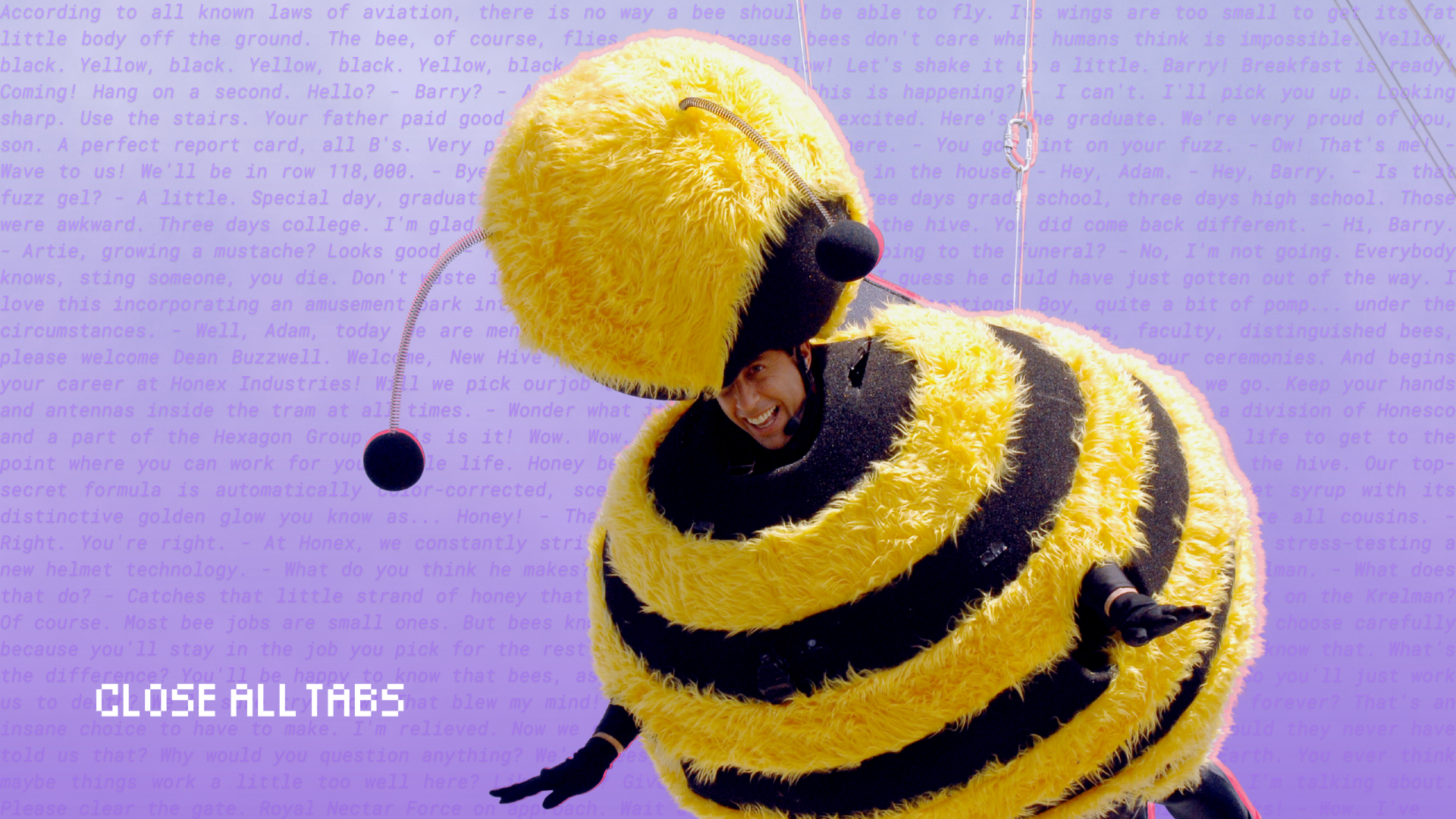
Bee Movie, "We Are Charlie Kirk," and the Enduring Bait-and-Switch Meme
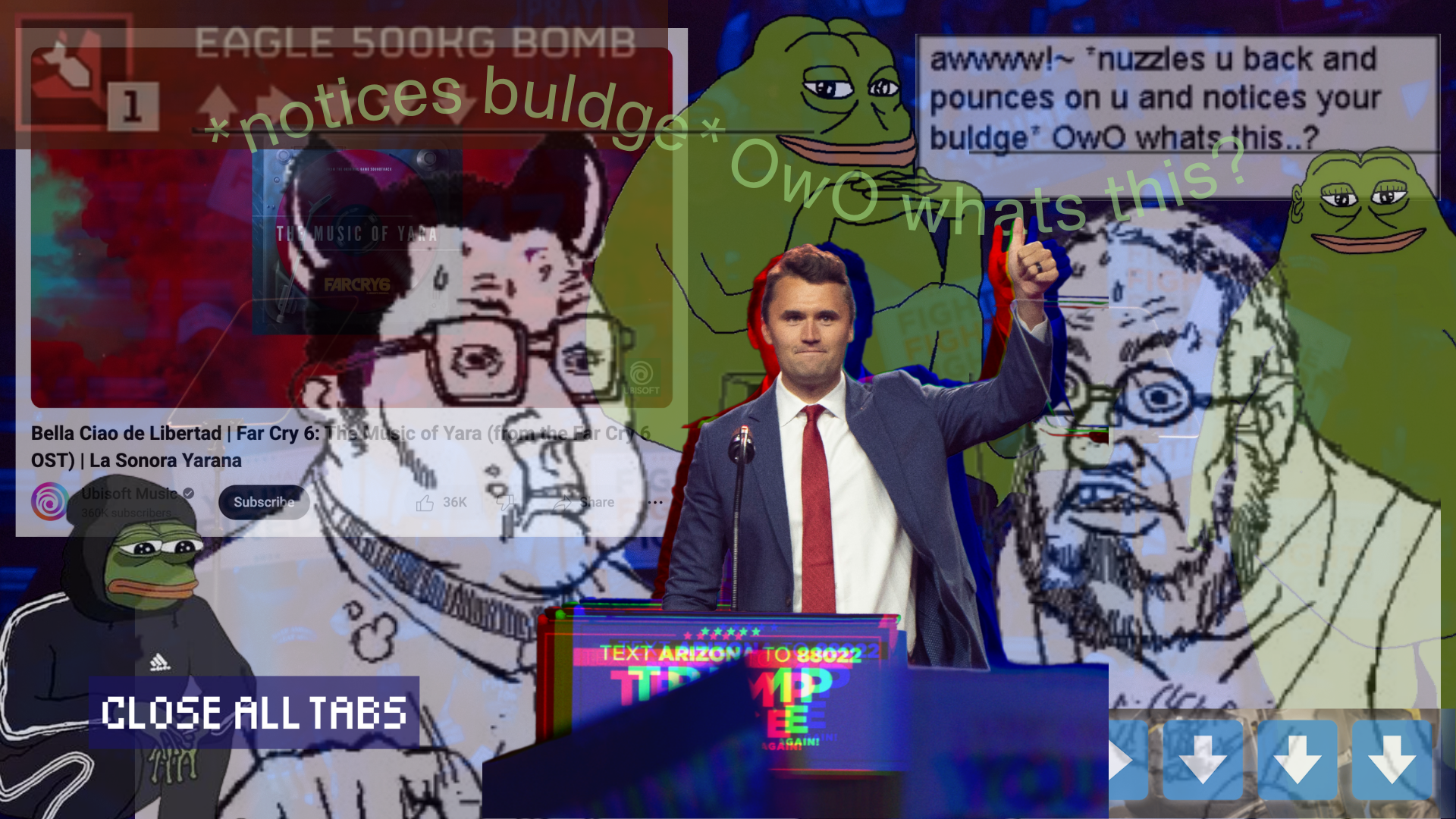
Groypers, Doxxing and Charlie Kirk’s Death as a S***post
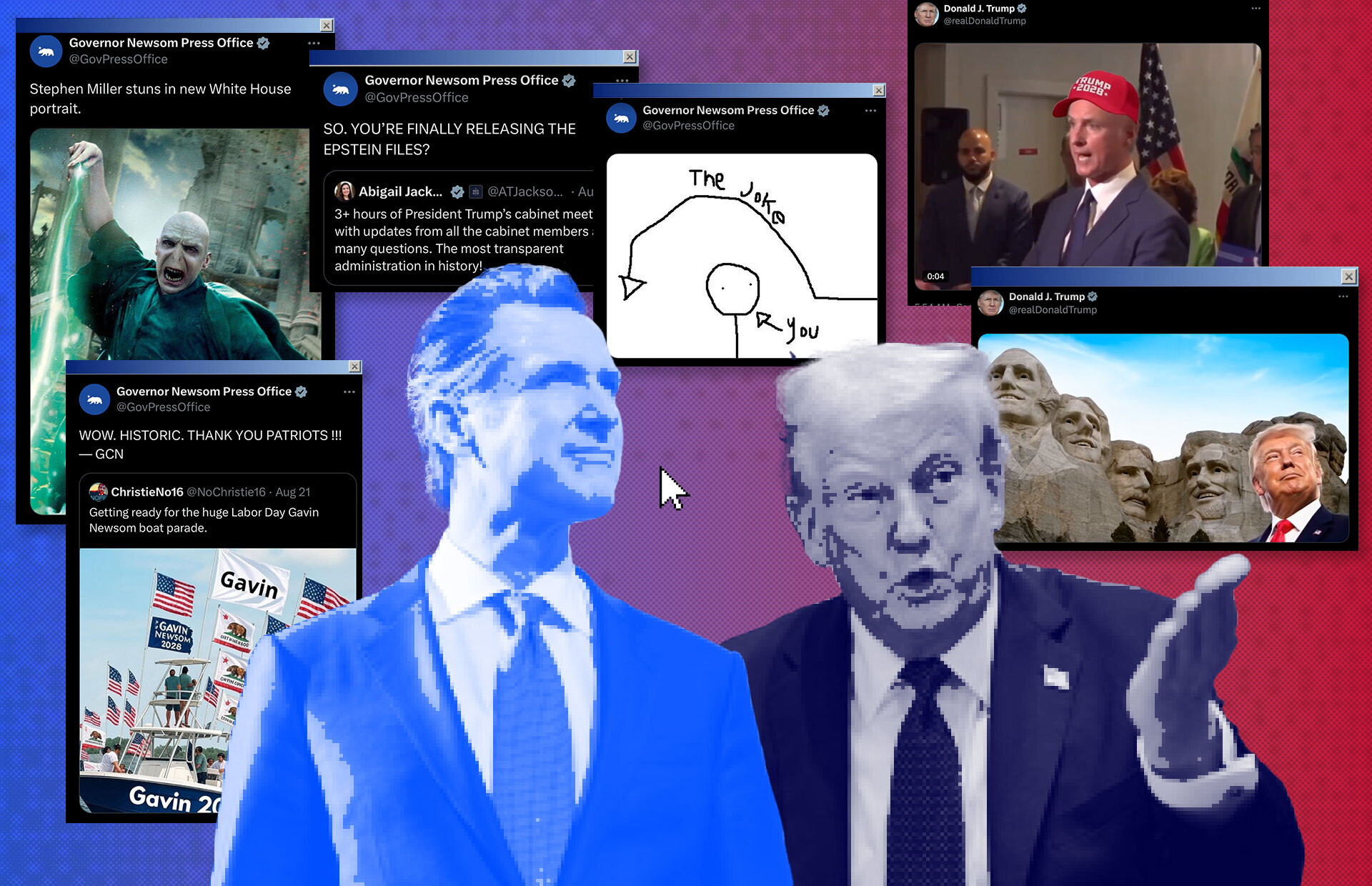
Newsom, Trump and How Trolling Got Co-Opted by the Powerful
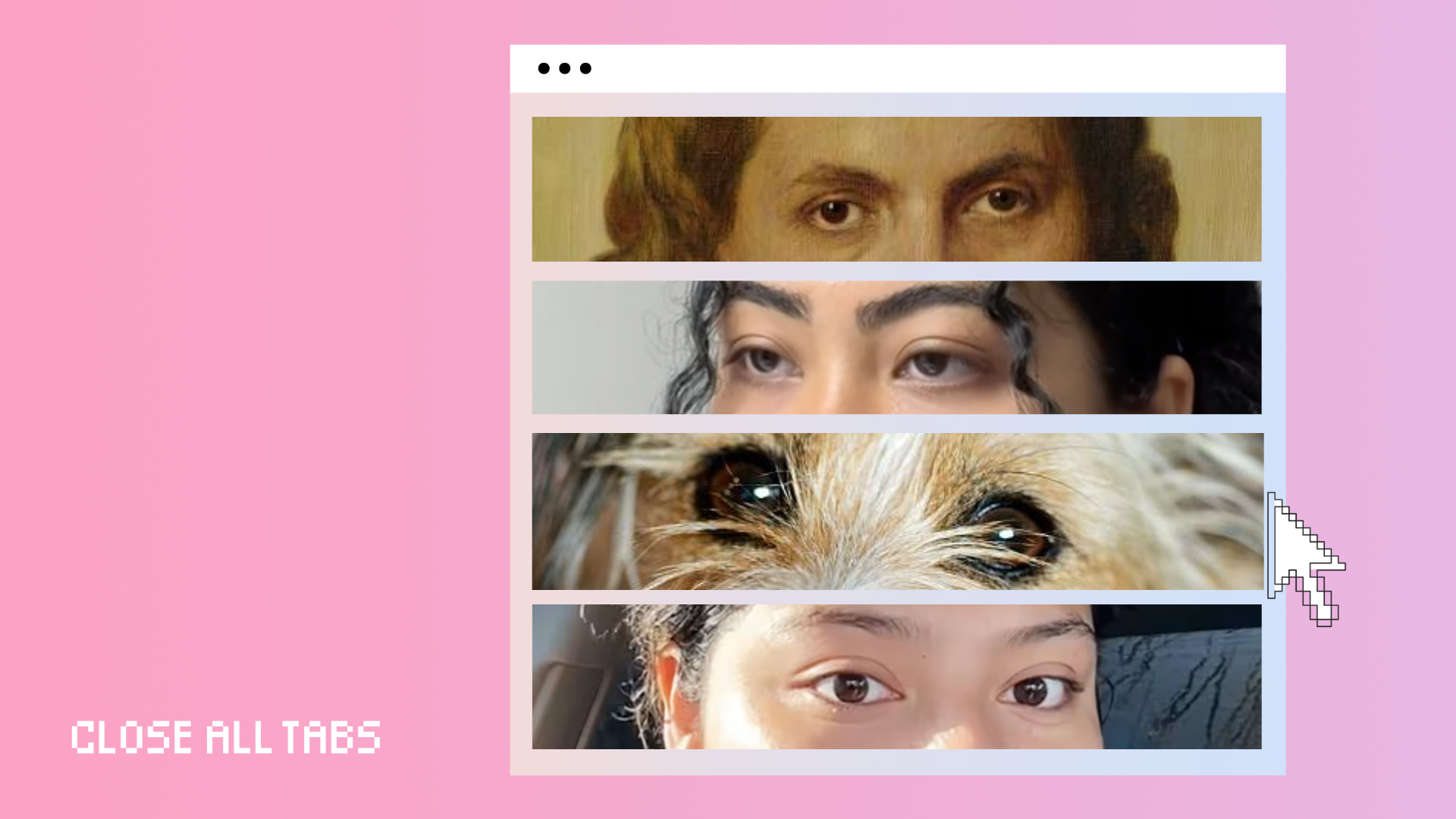
Does Gen Z Have A Staring Problem?
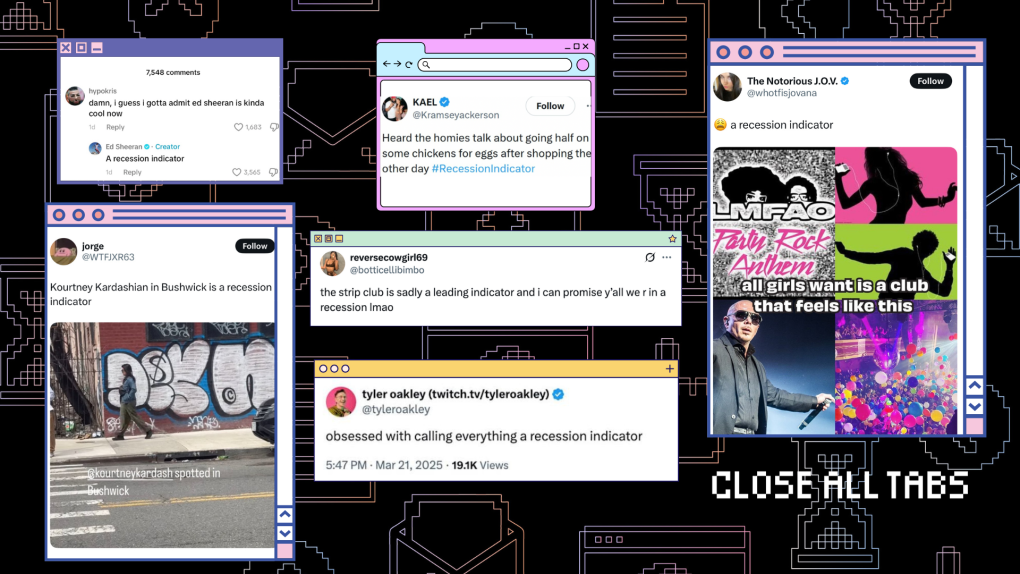
Recession Indicator Memes Are Getting Too Real
‘Recession Indicator’: What Memes Tell Us About How We Experience the Economy
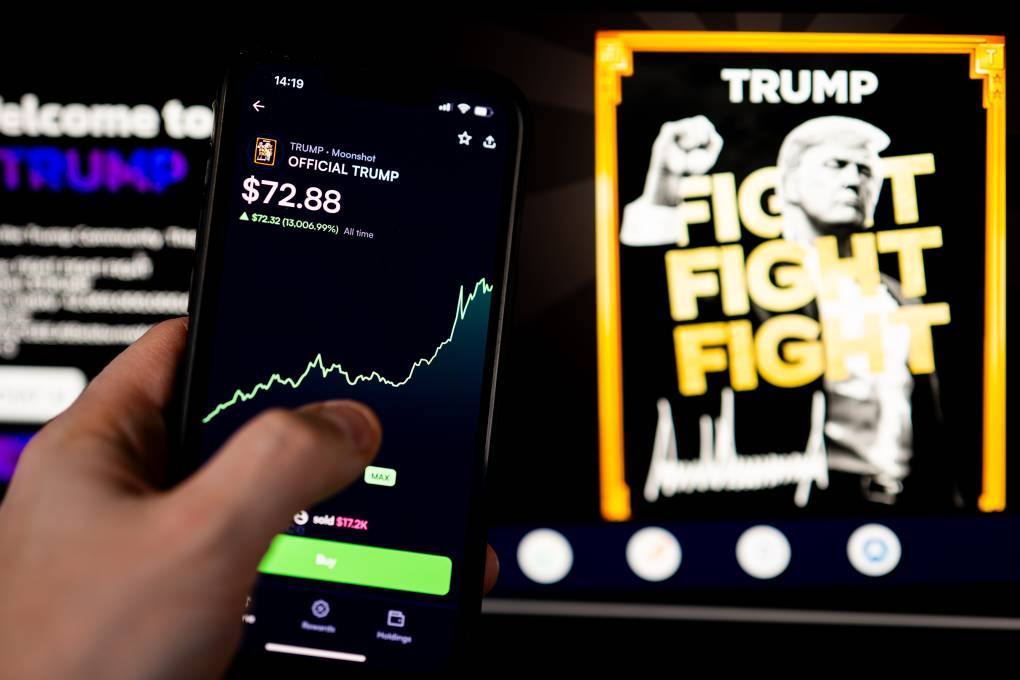
Trump Meme Coin Spurs Silicon Valley Democrat’s Bill to ‘Make Corruption Criminal Again’
Player sponsored by
window.__IS_SSR__=true
window.__INITIAL_STATE__={
"attachmentsReducer": {
"audio_0": {
"type": "attachments",
"id": "audio_0",
"imgSizes": {
"kqedFullSize": {
"file": "https://ww2.kqed.org/news/wp-content/themes/KQED-unified/img/audio_bgs/background0.jpg"
}
}
},
"audio_1": {
"type": "attachments",
"id": "audio_1",
"imgSizes": {
"kqedFullSize": {
"file": "https://ww2.kqed.org/news/wp-content/themes/KQED-unified/img/audio_bgs/background1.jpg"
}
}
},
"audio_2": {
"type": "attachments",
"id": "audio_2",
"imgSizes": {
"kqedFullSize": {
"file": "https://ww2.kqed.org/news/wp-content/themes/KQED-unified/img/audio_bgs/background2.jpg"
}
}
},
"audio_3": {
"type": "attachments",
"id": "audio_3",
"imgSizes": {
"kqedFullSize": {
"file": "https://ww2.kqed.org/news/wp-content/themes/KQED-unified/img/audio_bgs/background3.jpg"
}
}
},
"audio_4": {
"type": "attachments",
"id": "audio_4",
"imgSizes": {
"kqedFullSize": {
"file": "https://ww2.kqed.org/news/wp-content/themes/KQED-unified/img/audio_bgs/background4.jpg"
}
}
},
"placeholder": {
"type": "attachments",
"id": "placeholder",
"imgSizes": {
"thumbnail": {
"file": "https://cdn.kqed.org/wp-content/uploads/2024/12/KQED-Default-Image-816638274-2000x1333-1-160x107.jpg",
"width": 160,
"height": 107,
"mimeType": "image/jpeg"
},
"medium": {
"file": "https://cdn.kqed.org/wp-content/uploads/2024/12/KQED-Default-Image-816638274-2000x1333-1-800x533.jpg",
"width": 800,
"height": 533,
"mimeType": "image/jpeg"
},
"medium_large": {
"file": "https://cdn.kqed.org/wp-content/uploads/2024/12/KQED-Default-Image-816638274-2000x1333-1-768x512.jpg",
"width": 768,
"height": 512,
"mimeType": "image/jpeg"
},
"large": {
"file": "https://cdn.kqed.org/wp-content/uploads/2024/12/KQED-Default-Image-816638274-2000x1333-1-1020x680.jpg",
"width": 1020,
"height": 680,
"mimeType": "image/jpeg"
},
"1536x1536": {
"file": "https://cdn.kqed.org/wp-content/uploads/2024/12/KQED-Default-Image-816638274-2000x1333-1-1536x1024.jpg",
"width": 1536,
"height": 1024,
"mimeType": "image/jpeg"
},
"fd-lrg": {
"file": "https://cdn.kqed.org/wp-content/uploads/2024/12/KQED-Default-Image-816638274-2000x1333-1-1536x1024.jpg",
"width": 1536,
"height": 1024,
"mimeType": "image/jpeg"
},
"fd-med": {
"file": "https://cdn.kqed.org/wp-content/uploads/2024/12/KQED-Default-Image-816638274-2000x1333-1-1020x680.jpg",
"width": 1020,
"height": 680,
"mimeType": "image/jpeg"
},
"fd-sm": {
"file": "https://cdn.kqed.org/wp-content/uploads/2024/12/KQED-Default-Image-816638274-2000x1333-1-800x533.jpg",
"width": 800,
"height": 533,
"mimeType": "image/jpeg"
},
"post-thumbnail": {
"file": "https://cdn.kqed.org/wp-content/uploads/2024/12/KQED-Default-Image-816638274-2000x1333-1-672x372.jpg",
"width": 672,
"height": 372,
"mimeType": "image/jpeg"
},
"twentyfourteen-full-width": {
"file": "https://cdn.kqed.org/wp-content/uploads/2024/12/KQED-Default-Image-816638274-2000x1333-1-1038x576.jpg",
"width": 1038,
"height": 576,
"mimeType": "image/jpeg"
},
"xxsmall": {
"file": "https://cdn.kqed.org/wp-content/uploads/2024/12/KQED-Default-Image-816638274-2000x1333-1-160x107.jpg",
"width": 160,
"height": 107,
"mimeType": "image/jpeg"
},
"xsmall": {
"file": "https://cdn.kqed.org/wp-content/uploads/2024/12/KQED-Default-Image-816638274-2000x1333-1-672x372.jpg",
"width": 672,
"height": 372,
"mimeType": "image/jpeg"
},
"small": {
"file": "https://cdn.kqed.org/wp-content/uploads/2024/12/KQED-Default-Image-816638274-2000x1333-1-672x372.jpg",
"width": 672,
"height": 372,
"mimeType": "image/jpeg"
},
"xlarge": {
"file": "https://cdn.kqed.org/wp-content/uploads/2024/12/KQED-Default-Image-816638274-2000x1333-1-1020x680.jpg",
"width": 1020,
"height": 680,
"mimeType": "image/jpeg"
},
"full-width": {
"file": "https://cdn.kqed.org/wp-content/uploads/2024/12/KQED-Default-Image-816638274-2000x1333-1-1920x1280.jpg",
"width": 1920,
"height": 1280,
"mimeType": "image/jpeg"
},
"guest-author-32": {
"file": "https://cdn.kqed.org/wp-content/uploads/2025/01/KQED-Default-Image-816638274-1333x1333-1-160x160.jpg",
"width": 32,
"height": 32,
"mimeType": "image/jpeg"
},
"guest-author-50": {
"file": "https://cdn.kqed.org/wp-content/uploads/2025/01/KQED-Default-Image-816638274-1333x1333-1-160x160.jpg",
"width": 50,
"height": 50,
"mimeType": "image/jpeg"
},
"guest-author-64": {
"file": "https://cdn.kqed.org/wp-content/uploads/2025/01/KQED-Default-Image-816638274-1333x1333-1-160x160.jpg",
"width": 64,
"height": 64,
"mimeType": "image/jpeg"
},
"guest-author-96": {
"file": "https://cdn.kqed.org/wp-content/uploads/2025/01/KQED-Default-Image-816638274-1333x1333-1-160x160.jpg",
"width": 96,
"height": 96,
"mimeType": "image/jpeg"
},
"guest-author-128": {
"file": "https://cdn.kqed.org/wp-content/uploads/2025/01/KQED-Default-Image-816638274-1333x1333-1-160x160.jpg",
"width": 128,
"height": 128,
"mimeType": "image/jpeg"
},
"detail": {
"file": "https://cdn.kqed.org/wp-content/uploads/2025/01/KQED-Default-Image-816638274-1333x1333-1-160x160.jpg",
"width": 160,
"height": 160,
"mimeType": "image/jpeg"
},
"kqedFullSize": {
"file": "https://cdn.kqed.org/wp-content/uploads/2024/12/KQED-Default-Image-816638274-2000x1333-1.jpg",
"width": 2000,
"height": 1333
}
}
},
"news_12078315": {
"type": "attachments",
"id": "news_12078315",
"meta": {
"index": "attachments_1716263798",
"site": "news",
"id": "12078315",
"found": true
},
"title": "Bait and Switch_web img",
"publishDate": 1775009984,
"status": "inherit",
"parent": 12078303,
"modified": 1775010021,
"caption": "Jerry Seinfeld in a bee costume at a 2007 Bee Movie photocall in Cannes, France. The film’s script became one of the internet’s most enduring bait-and-switch memes.",
"credit": "Composite by Morgan Sung; original photo by George Pimentel/WireImage",
"altTag": "A composite image shows Jerry Seinfeld smiling in a large yellow-and-black bee costume at a 2007 Cannes Film Festival photocall. Behind him is a purple background filled with faint text from the Bee Movie script, referencing the film’s later life as an internet meme. The Close All Tabs logo appears in the bottom left.",
"description": null,
"imgSizes": {
"thumbnail": {
"file": "https://cdn.kqed.org/wp-content/uploads/sites/10/2026/04/Bait-and-Switch_web-img-160x90.png",
"width": 160,
"height": 90,
"mimeType": "image/png"
},
"1536x1536": {
"file": "https://cdn.kqed.org/wp-content/uploads/sites/10/2026/04/Bait-and-Switch_web-img-1536x864.png",
"width": 1536,
"height": 864,
"mimeType": "image/png"
},
"post-thumbnail": {
"file": "https://cdn.kqed.org/wp-content/uploads/sites/10/2026/04/Bait-and-Switch_web-img-672x372.png",
"width": 672,
"height": 372,
"mimeType": "image/png"
},
"twentyfourteen-full-width": {
"file": "https://cdn.kqed.org/wp-content/uploads/sites/10/2026/04/Bait-and-Switch_web-img-1038x576.png",
"width": 1038,
"height": 576,
"mimeType": "image/png"
},
"npr-cds-wide": {
"file": "https://cdn.kqed.org/wp-content/uploads/sites/10/2026/04/Bait-and-Switch_web-img-1200x675.png",
"width": 1200,
"height": 675,
"mimeType": "image/png"
},
"npr-cds-square": {
"file": "https://cdn.kqed.org/wp-content/uploads/sites/10/2026/04/Bait-and-Switch_web-img-600x600.png",
"width": 600,
"height": 600,
"mimeType": "image/png"
},
"kqedFullSize": {
"file": "https://cdn.kqed.org/wp-content/uploads/sites/10/2026/04/Bait-and-Switch_web-img.png",
"width": 1920,
"height": 1080
}
},
"fetchFailed": false,
"isLoading": false
},
"news_12056213": {
"type": "attachments",
"id": "news_12056213",
"meta": {
"index": "attachments_1716263798",
"site": "news",
"id": "12056213",
"found": true
},
"title": "CharlieKirkMemes_webimg",
"publishDate": 1758078700,
"status": "inherit",
"parent": 12056209,
"modified": 1758078808,
"caption": "A mix of obscure memes and video game references were inscribed on the casings of the bullets used to kill Charlie Kirk. ",
"credit": "Rebecca Noble / Stringer via Getty Images / Graphic by Morgan Sung / KQED",
"altTag": "A composite image made up of a variety of memes layered on top of one another. Some of the images include Pepe the frog memes — a crudely drawn cartoon green frog with bulging eyes. In the center is an image of Charlie Kirk standing at a podium in a blue suit with his arm raised, making a thumbs up sign. The Close All Tabs logo appears in white pixelated font with a purple background in the lower left corner.",
"description": null,
"imgSizes": {
"thumbnail": {
"file": "https://cdn.kqed.org/wp-content/uploads/sites/10/2025/09/CAT-—-Charlie-Kirk-Memes-Web-Img-160x90.png",
"width": 160,
"height": 90,
"mimeType": "image/png"
},
"1536x1536": {
"file": "https://cdn.kqed.org/wp-content/uploads/sites/10/2025/09/CAT-—-Charlie-Kirk-Memes-Web-Img-1536x864.png",
"width": 1536,
"height": 864,
"mimeType": "image/png"
},
"post-thumbnail": {
"file": "https://cdn.kqed.org/wp-content/uploads/sites/10/2025/09/CAT-—-Charlie-Kirk-Memes-Web-Img-672x372.png",
"width": 672,
"height": 372,
"mimeType": "image/png"
},
"twentyfourteen-full-width": {
"file": "https://cdn.kqed.org/wp-content/uploads/sites/10/2025/09/CAT-—-Charlie-Kirk-Memes-Web-Img-1038x576.png",
"width": 1038,
"height": 576,
"mimeType": "image/png"
},
"kqedFullSize": {
"file": "https://cdn.kqed.org/wp-content/uploads/sites/10/2025/09/CAT-—-Charlie-Kirk-Memes-Web-Img.png",
"width": 1920,
"height": 1080
}
},
"fetchFailed": false,
"isLoading": false
},
"news_12054948": {
"type": "attachments",
"id": "news_12054948",
"meta": {
"index": "attachments_1716263798",
"site": "news",
"id": "12054948",
"found": true
},
"title": "Newsom-Tweets_3",
"publishDate": 1757110034,
"status": "inherit",
"parent": 12054858,
"modified": 1757110067,
"caption": null,
"credit": "Darren Tu/KQED",
"altTag": null,
"description": null,
"imgSizes": {
"thumbnail": {
"file": "https://cdn.kqed.org/wp-content/uploads/sites/10/2025/09/Newsom-Tweets_3-160x103.jpg",
"width": 160,
"height": 103,
"mimeType": "image/jpeg"
},
"1536x1536": {
"file": "https://cdn.kqed.org/wp-content/uploads/sites/10/2025/09/Newsom-Tweets_3-1536x992.jpg",
"width": 1536,
"height": 992,
"mimeType": "image/jpeg"
},
"post-thumbnail": {
"file": "https://cdn.kqed.org/wp-content/uploads/sites/10/2025/09/Newsom-Tweets_3-672x372.jpg",
"width": 672,
"height": 372,
"mimeType": "image/jpeg"
},
"twentyfourteen-full-width": {
"file": "https://cdn.kqed.org/wp-content/uploads/sites/10/2025/09/Newsom-Tweets_3-1038x576.jpg",
"width": 1038,
"height": 576,
"mimeType": "image/jpeg"
},
"kqedFullSize": {
"file": "https://cdn.kqed.org/wp-content/uploads/sites/10/2025/09/Newsom-Tweets_3.jpg",
"width": 1920,
"height": 1240
}
},
"fetchFailed": false,
"isLoading": false
},
"news_12051991": {
"type": "attachments",
"id": "news_12051991",
"meta": {
"index": "attachments_1716263798",
"site": "news",
"id": "12051991",
"found": true
},
"title": "Gen Z Stare_web img",
"publishDate": 1755049132,
"status": "inherit",
"parent": 12051989,
"modified": 1755049818,
"caption": "An illustration features a browser window stacked with close-up images of eyes staring blankly—referencing the viral “Gen Z Stare.”",
"credit": "Illustration by Maya Cueva and Chris Egusa/KQED",
"altTag": "Illustration of a computer browser window with four stacked images showing pairs of eyes: the top from a classical painting, the second from a young person with dark eyebrows, the third from a small dog, and the fourth from another person staring blankly. A large pixelated cursor hovers on the right, and the background is pink with the words “Close All Tabs” in blocky white text.",
"description": null,
"imgSizes": {
"thumbnail": {
"file": "https://cdn.kqed.org/wp-content/uploads/sites/10/2025/08/Gen-Z-Stare_web-img-160x90.png",
"width": 160,
"height": 90,
"mimeType": "image/png"
},
"1536x1536": {
"file": "https://cdn.kqed.org/wp-content/uploads/sites/10/2025/08/Gen-Z-Stare_web-img-1536x864.png",
"width": 1536,
"height": 864,
"mimeType": "image/png"
},
"post-thumbnail": {
"file": "https://cdn.kqed.org/wp-content/uploads/sites/10/2025/08/Gen-Z-Stare_web-img-672x372.png",
"width": 672,
"height": 372,
"mimeType": "image/png"
},
"twentyfourteen-full-width": {
"file": "https://cdn.kqed.org/wp-content/uploads/sites/10/2025/08/Gen-Z-Stare_web-img-1038x576.png",
"width": 1038,
"height": 576,
"mimeType": "image/png"
},
"kqedFullSize": {
"file": "https://cdn.kqed.org/wp-content/uploads/sites/10/2025/08/Gen-Z-Stare_web-img.png",
"width": 1920,
"height": 1080
}
},
"fetchFailed": false,
"isLoading": false
},
"news_12038178": {
"type": "attachments",
"id": "news_12038178",
"meta": {
"index": "attachments_1716263798",
"site": "news",
"id": "12038178",
"found": true
},
"title": "CAT — Recession Indicators_web img",
"publishDate": 1745974497,
"status": "inherit",
"parent": 12038175,
"modified": 1745974971,
"caption": "Recession Indicator Memes Are Getting Too Real (Image collage by Maya Cueva, Morgan Sung, and Chris Egusa/KQED)",
"credit": null,
"altTag": "A collage of screenshots showing a series of “recession indicator memes” — funny social media posts and images highlighting examples of cultural trends that jokingly suggest a recession is coming.",
"description": null,
"imgSizes": {
"medium": {
"file": "https://cdn.kqed.org/wp-content/uploads/sites/10/2025/04/CAT-—-Recession-Indicators_web-img-800x450.png",
"width": 800,
"height": 450,
"mimeType": "image/png"
},
"large": {
"file": "https://cdn.kqed.org/wp-content/uploads/sites/10/2025/04/CAT-—-Recession-Indicators_web-img-1020x574.png",
"width": 1020,
"height": 574,
"mimeType": "image/png"
},
"thumbnail": {
"file": "https://cdn.kqed.org/wp-content/uploads/sites/10/2025/04/CAT-—-Recession-Indicators_web-img-160x90.png",
"width": 160,
"height": 90,
"mimeType": "image/png"
},
"1536x1536": {
"file": "https://cdn.kqed.org/wp-content/uploads/sites/10/2025/04/CAT-—-Recession-Indicators_web-img-1536x864.png",
"width": 1536,
"height": 864,
"mimeType": "image/png"
},
"post-thumbnail": {
"file": "https://cdn.kqed.org/wp-content/uploads/sites/10/2025/04/CAT-—-Recession-Indicators_web-img-672x372.png",
"width": 672,
"height": 372,
"mimeType": "image/png"
},
"twentyfourteen-full-width": {
"file": "https://cdn.kqed.org/wp-content/uploads/sites/10/2025/04/CAT-—-Recession-Indicators_web-img-1038x576.png",
"width": 1038,
"height": 576,
"mimeType": "image/png"
},
"kqedFullSize": {
"file": "https://cdn.kqed.org/wp-content/uploads/sites/10/2025/04/CAT-—-Recession-Indicators_web-img.png",
"width": 1920,
"height": 1080
}
},
"fetchFailed": false,
"isLoading": false
},
"news_12036660": {
"type": "attachments",
"id": "news_12036660",
"meta": {
"index": "attachments_1716263798",
"site": "news",
"id": "12036660",
"found": true
},
"title": "Recession-Graphic",
"publishDate": 1745005933,
"status": "inherit",
"parent": 12036654,
"modified": 1745005960,
"caption": null,
"credit": "Illustration by Darren Tu",
"altTag": null,
"description": null,
"imgSizes": {
"medium": {
"file": "https://cdn.kqed.org/wp-content/uploads/sites/10/2025/04/Recession-Graphic-800x517.jpg",
"width": 800,
"height": 517,
"mimeType": "image/jpeg"
},
"large": {
"file": "https://cdn.kqed.org/wp-content/uploads/sites/10/2025/04/Recession-Graphic-1020x659.jpg",
"width": 1020,
"height": 659,
"mimeType": "image/jpeg"
},
"thumbnail": {
"file": "https://cdn.kqed.org/wp-content/uploads/sites/10/2025/04/Recession-Graphic-160x103.jpg",
"width": 160,
"height": 103,
"mimeType": "image/jpeg"
},
"1536x1536": {
"file": "https://cdn.kqed.org/wp-content/uploads/sites/10/2025/04/Recession-Graphic-1536x992.jpg",
"width": 1536,
"height": 992,
"mimeType": "image/jpeg"
},
"post-thumbnail": {
"file": "https://cdn.kqed.org/wp-content/uploads/sites/10/2025/04/Recession-Graphic-672x372.jpg",
"width": 672,
"height": 372,
"mimeType": "image/jpeg"
},
"twentyfourteen-full-width": {
"file": "https://cdn.kqed.org/wp-content/uploads/sites/10/2025/04/Recession-Graphic-1038x576.jpg",
"width": 1038,
"height": 576,
"mimeType": "image/jpeg"
},
"kqedFullSize": {
"file": "https://cdn.kqed.org/wp-content/uploads/sites/10/2025/04/Recession-Graphic.jpg",
"width": 1920,
"height": 1240
}
},
"fetchFailed": false,
"isLoading": false
},
"news_12029064": {
"type": "attachments",
"id": "news_12029064",
"meta": {
"index": "attachments_1716263798",
"site": "news",
"id": "12029064",
"found": true
},
"title": "In this photo illustration, a Donald Trump meme coin $Trump",
"publishDate": 1740696347,
"status": "inherit",
"parent": 12029013,
"modified": 1740696399,
"caption": "A Donald Trump meme coin $Trump logo seen displayed on a smartphone.",
"credit": "Mateusz Slodkowski/SOPA Images/LightRocket via Getty Images",
"altTag": null,
"description": null,
"imgSizes": {
"medium": {
"file": "https://cdn.kqed.org/wp-content/uploads/sites/10/2025/02/GettyImages-2194283661-800x533.jpg",
"width": 800,
"height": 533,
"mimeType": "image/jpeg"
},
"large": {
"file": "https://cdn.kqed.org/wp-content/uploads/sites/10/2025/02/GettyImages-2194283661-1020x680.jpg",
"width": 1020,
"height": 680,
"mimeType": "image/jpeg"
},
"thumbnail": {
"file": "https://cdn.kqed.org/wp-content/uploads/sites/10/2025/02/GettyImages-2194283661-160x107.jpg",
"width": 160,
"height": 107,
"mimeType": "image/jpeg"
},
"1536x1536": {
"file": "https://cdn.kqed.org/wp-content/uploads/sites/10/2025/02/GettyImages-2194283661-1536x1024.jpg",
"width": 1536,
"height": 1024,
"mimeType": "image/jpeg"
},
"2048x2048": {
"file": "https://cdn.kqed.org/wp-content/uploads/sites/10/2025/02/GettyImages-2194283661-2048x1366.jpg",
"width": 2048,
"height": 1366,
"mimeType": "image/jpeg"
},
"post-thumbnail": {
"file": "https://cdn.kqed.org/wp-content/uploads/sites/10/2025/02/GettyImages-2194283661-672x372.jpg",
"width": 672,
"height": 372,
"mimeType": "image/jpeg"
},
"twentyfourteen-full-width": {
"file": "https://cdn.kqed.org/wp-content/uploads/sites/10/2025/02/GettyImages-2194283661-1038x576.jpg",
"width": 1038,
"height": 576,
"mimeType": "image/jpeg"
},
"full-width": {
"file": "https://cdn.kqed.org/wp-content/uploads/sites/10/2025/02/GettyImages-2194283661-1920x1280.jpg",
"width": 1920,
"height": 1280,
"mimeType": "image/jpeg"
},
"kqedFullSize": {
"file": "https://cdn.kqed.org/wp-content/uploads/sites/10/2025/02/GettyImages-2194283661-scaled.jpg",
"width": 2560,
"height": 1707
}
},
"fetchFailed": false,
"isLoading": false
}
},
"audioPlayerReducer": {
"postId": "stream_live",
"isPaused": true,
"isPlaying": false,
"pfsActive": false,
"pledgeModalIsOpen": true,
"playerDrawerIsOpen": false
},
"authorsReducer": {
"ccabreralomeli": {
"type": "authors",
"id": "11708",
"meta": {
"index": "authors_1716337520",
"id": "11708",
"found": true
},
"name": "Carlos Cabrera-Lomelí",
"firstName": "Carlos",
"lastName": "Cabrera-Lomelí",
"slug": "ccabreralomeli",
"email": "ccabreralomeli@KQED.org",
"display_author_email": true,
"staff_mastheads": [
"news"
],
"title": "Community Reporter",
"bio": "Carlos Cabrera-Lomelí is a community reporter with KQED's digital engagement team. He also reports and co-produces for KQED's bilingual news hub KQED en Español. He grew up in San Francisco's Mission District and has previously worked with Univision, 48 Hills and REFORMA in Mexico City.",
"avatar": "https://secure.gravatar.com/avatar/e95ff80bb2eaf18a8f2af4dcf7ffb54b?s=600&d=mm&r=g",
"twitter": "@LomeliCabrera",
"facebook": null,
"instagram": null,
"linkedin": null,
"sites": [
{
"site": "arts",
"roles": [
"editor"
]
},
{
"site": "news",
"roles": [
"editor"
]
},
{
"site": "about",
"roles": [
"editor"
]
},
{
"site": "science",
"roles": [
"editor"
]
},
{
"site": "perspectives",
"roles": [
"editor"
]
},
{
"site": "elections",
"roles": [
"editor"
]
},
{
"site": "liveblog",
"roles": [
"contributor"
]
}
],
"headData": {
"title": "Carlos Cabrera-Lomelí | KQED",
"description": "Community Reporter",
"ogImgSrc": "https://secure.gravatar.com/avatar/e95ff80bb2eaf18a8f2af4dcf7ffb54b?s=600&d=mm&r=g",
"twImgSrc": "https://secure.gravatar.com/avatar/e95ff80bb2eaf18a8f2af4dcf7ffb54b?s=600&d=mm&r=g"
},
"isLoading": false,
"link": "/author/ccabreralomeli"
},
"adahlstromeckman": {
"type": "authors",
"id": "11785",
"meta": {
"index": "authors_1716337520",
"id": "11785",
"found": true
},
"name": "Azul Dahlstrom-Eckman",
"firstName": "Azul",
"lastName": "Dahlstrom-Eckman",
"slug": "adahlstromeckman",
"email": "adahlstrom-eckman@kqed.org",
"display_author_email": true,
"staff_mastheads": [],
"title": "Reporter",
"bio": "Azul is a reporter for KQED who focuses on producing sound-rich audio features for KQED's Morning Edition segment and digital features for KQED's online audiences. He previously worked as the Weekend News Editor at KQED, responsible for overseeing radio and digital news on the weekends. He joined KQED in 2021 as an alumna of KALW's Audio Academy radio journalism training program. He was born and raised on Potrero Hill in San Francisco and holds a B.A. in Environmental Studies from the University of Oregon.",
"avatar": "https://secure.gravatar.com/avatar/99c0cfc680078897572931b34e941e1e?s=600&d=blank&r=g",
"twitter": "@zuliemann",
"facebook": null,
"instagram": null,
"linkedin": null,
"sites": [
{
"site": "arts",
"roles": [
"editor"
]
},
{
"site": "news",
"roles": [
"editor"
]
},
{
"site": "science",
"roles": [
"editor"
]
}
],
"headData": {
"title": "Azul Dahlstrom-Eckman | KQED",
"description": "Reporter",
"ogImgSrc": "https://secure.gravatar.com/avatar/99c0cfc680078897572931b34e941e1e?s=600&d=blank&r=g",
"twImgSrc": "https://secure.gravatar.com/avatar/99c0cfc680078897572931b34e941e1e?s=600&d=blank&r=g"
},
"isLoading": false,
"link": "/author/adahlstromeckman"
},
"chambrick": {
"type": "authors",
"id": "11832",
"meta": {
"index": "authors_1716337520",
"id": "11832",
"found": true
},
"name": "Chris Hambrick",
"firstName": "Chris",
"lastName": "Hambrick",
"slug": "chambrick",
"email": "chambrick@kqed.org",
"display_author_email": false,
"staff_mastheads": [],
"title": "KQED Contributor",
"bio": null,
"avatar": "https://secure.gravatar.com/avatar/c4a3663ebbd3a21fa35ef06a1236ce8a?s=600&d=blank&r=g",
"twitter": null,
"facebook": null,
"instagram": null,
"linkedin": null,
"sites": [
{
"site": "",
"roles": [
"editor"
]
},
{
"site": "arts",
"roles": [
"editor"
]
},
{
"site": "news",
"roles": [
"editor"
]
},
{
"site": "podcasts",
"roles": [
"editor"
]
}
],
"headData": {
"title": "Chris Hambrick | KQED",
"description": "KQED Contributor",
"ogImgSrc": "https://secure.gravatar.com/avatar/c4a3663ebbd3a21fa35ef06a1236ce8a?s=600&d=blank&r=g",
"twImgSrc": "https://secure.gravatar.com/avatar/c4a3663ebbd3a21fa35ef06a1236ce8a?s=600&d=blank&r=g"
},
"isLoading": false,
"link": "/author/chambrick"
},
"cegusa": {
"type": "authors",
"id": "11869",
"meta": {
"index": "authors_1716337520",
"id": "11869",
"found": true
},
"name": "Chris Egusa",
"firstName": "Chris",
"lastName": "Egusa",
"slug": "cegusa",
"email": "cegusa@kqed.org",
"display_author_email": false,
"staff_mastheads": [],
"title": "KQED Contributor",
"bio": null,
"avatar": "https://secure.gravatar.com/avatar/86d00b34cb7eeb5247e991f0e20c70c4?s=600&d=blank&r=g",
"twitter": null,
"facebook": null,
"instagram": null,
"linkedin": null,
"sites": [
{
"site": "arts",
"roles": [
"editor"
]
}
],
"headData": {
"title": "Chris Egusa | KQED",
"description": "KQED Contributor",
"ogImgSrc": "https://secure.gravatar.com/avatar/86d00b34cb7eeb5247e991f0e20c70c4?s=600&d=blank&r=g",
"twImgSrc": "https://secure.gravatar.com/avatar/86d00b34cb7eeb5247e991f0e20c70c4?s=600&d=blank&r=g"
},
"isLoading": false,
"link": "/author/cegusa"
},
"mcueva": {
"type": "authors",
"id": "11943",
"meta": {
"index": "authors_1716337520",
"id": "11943",
"found": true
},
"name": "Maya Cueva",
"firstName": "Maya",
"lastName": "Cueva",
"slug": "mcueva",
"email": "mcueva@kqed.org",
"display_author_email": false,
"staff_mastheads": [],
"title": "KQED Contributor",
"bio": null,
"avatar": "https://secure.gravatar.com/avatar/26d0967153608e4720f52779f754087a?s=600&d=blank&r=g",
"twitter": null,
"facebook": null,
"instagram": null,
"linkedin": null,
"sites": [
{
"site": "news",
"roles": [
"editor"
]
}
],
"headData": {
"title": "Maya Cueva | KQED",
"description": "KQED Contributor",
"ogImgSrc": "https://secure.gravatar.com/avatar/26d0967153608e4720f52779f754087a?s=600&d=blank&r=g",
"twImgSrc": "https://secure.gravatar.com/avatar/26d0967153608e4720f52779f754087a?s=600&d=blank&r=g"
},
"isLoading": false,
"link": "/author/mcueva"
},
"msung": {
"type": "authors",
"id": "11944",
"meta": {
"index": "authors_1716337520",
"id": "11944",
"found": true
},
"name": "Morgan Sung",
"firstName": "Morgan",
"lastName": "Sung",
"slug": "msung",
"email": "msung@kqed.org",
"display_author_email": false,
"staff_mastheads": [],
"title": "Close All Tabs Host",
"bio": null,
"avatar": "https://secure.gravatar.com/avatar/34033b8d232ee6c987ca6f0a1a28f0e5?s=600&d=blank&r=g",
"twitter": null,
"facebook": null,
"instagram": null,
"linkedin": null,
"sites": [
{
"site": "news",
"roles": [
"editor"
]
}
],
"headData": {
"title": "Morgan Sung | KQED",
"description": "Close All Tabs Host",
"ogImgSrc": "https://secure.gravatar.com/avatar/34033b8d232ee6c987ca6f0a1a28f0e5?s=600&d=blank&r=g",
"twImgSrc": "https://secure.gravatar.com/avatar/34033b8d232ee6c987ca6f0a1a28f0e5?s=600&d=blank&r=g"
},
"isLoading": false,
"link": "/author/msung"
}
},
"breakingNewsReducer": {},
"pagesReducer": {},
"postsReducer": {
"stream_live": {
"type": "live",
"id": "stream_live",
"audioUrl": "https://streams.kqed.org/kqedradio",
"title": "Live Stream",
"excerpt": "Live Stream information currently unavailable.",
"link": "/radio",
"featImg": "",
"label": {
"name": "KQED Live",
"link": "/"
}
},
"stream_kqedNewscast": {
"type": "posts",
"id": "stream_kqedNewscast",
"audioUrl": "https://www.kqed.org/.stream/anon/radio/RDnews/newscast.mp3?_=1",
"title": "KQED Newscast",
"featImg": "",
"label": {
"name": "88.5 FM",
"link": "/"
}
},
"news_12078303": {
"type": "posts",
"id": "news_12078303",
"meta": {
"index": "posts_1716263798",
"site": "news",
"id": "12078303",
"score": null,
"sort": [
1775037658000
]
},
"guestAuthors": [],
"slug": "bee-movie-we-are-charlie-kirk-and-the-enduring-bait-and-switch-meme",
"title": "Bee Movie, \"We Are Charlie Kirk,\" and the Enduring Bait-and-Switch Meme",
"publishDate": 1775037658,
"format": "audio",
"headTitle": "Bee Movie, “We Are Charlie Kirk,” and the Enduring Bait-and-Switch Meme | KQED",
"labelTerm": {},
"content": "\u003cp>\u003ca href=\"#episode-transcript\">\u003ci>View the full episode transcript.\u003c/i>\u003c/a>\u003c/p>\n\u003cp>\u003ci>\u003cspan style=\"font-weight: 400\">According to all known laws of aviation, there is no way a bee \u003c/span>\u003c/i>\u003ci>\u003cspan style=\"font-weight: 400\">should be able to fly. Its wings are too small to get its fat little body off the ground. \u003c/span>\u003c/i>\u003ci>\u003cspan style=\"font-weight: 400\">The bee, of course, flies anyway because bees don’t care what humans think is impossible.\u003c/span>\u003c/i>\u003cspan style=\"font-weight: 400\">\u003cbr>\n\u003c/span>\u003cspan style=\"font-weight: 400\">\u003cbr>\n\u003c/span>\u003cspan style=\"font-weight: 400\">In 2007, \u003c/span>\u003ci>\u003cspan style=\"font-weight: 400\">Bee Movie\u003c/span>\u003c/i>\u003cspan style=\"font-weight: 400\"> hit theaters with a strange plot and was considered a box office flop. Nearly two decades later, it’s somehow more relevant than ever, not because of the movie itself, but because of what happened next. The script became a meme, then a prank, then, eventually, a tool for protest.\u003c/span>\u003cspan style=\"font-weight: 400\">\u003cbr>\n\u003c/span>\u003cspan style=\"font-weight: 400\">\u003cbr>\n\u003c/span>\u003cspan style=\"font-weight: 400\">In this episode, host Morgan Sung traces the evolution of bait-and-switch memes, from early internet shock images to the rise of the “Never Gonna Give You Up” rickroll, all the way to TikTok-era pranks that burn out as quickly as they go viral. Along the way, she talks to \u003c/span>\u003ci>\u003cspan style=\"font-weight: 400\">Bee Movie \u003c/span>\u003c/i>\u003cspan style=\"font-weight: 400\">co-writer Spike Feresten about how the film\u003c/span>\u003cspan style=\"font-weight: 400\"> became an unlikely internet icon, and to digital rhetoric expert Bret Strauch about what makes a meme actually stick.\u003c/span>\u003c/p>\n\u003cp>\u003c!-- iframe plugin v.4.3 wordpress.org/plugins/iframe/ -->\u003cbr>\n\u003ciframe loading=\"lazy\" frameborder=\"0\" height=\"200\" scrolling=\"no\" src=\"https://playlist.megaphone.fm?e=KQINC1407643406\" width=\"100%\" class=\"iframe-class\">\u003c/iframe>\u003c/p>\n\u003cp>\u003cstrong>Guests:\u003c/strong>\u003c/p>\n\u003cul>\n\u003cli>\u003ca href=\"https://www.instagram.com/spikeferesten/\">\u003cspan style=\"font-weight: 400\">Spike Feresten\u003c/span>\u003c/a>\u003cspan style=\"font-weight: 400\">, screenwriter and comedian\u003c/span>\u003c/li>\n\u003cli>\u003ca href=\"https://www.colorado.edu/pwr/bret-strauch-phd\">Bret Strauch\u003c/a>, assistant professor of digital media, University of Colorado Boulder\u003c/li>\n\u003c/ul>\n\u003cp>\u003cb>Further Reading/Listening:\u003c/b>\u003c/p>\n\u003cul>\n\u003cli>\u003ca href=\"https://docs.google.com/document/d/1ZdGGIT3fu0Pad9itT8HZMGkIwtYFQBS1vH5j21rN2Ns/edit?usp=sharing\">\u003cspan style=\"font-weight: 400\">Behind the scenes content\u003c/span>\u003c/a>\u003cspan style=\"font-weight: 400\"> on the making of this episode!\u003c/span>\u003c/li>\n\u003cli>\u003ca href=\"https://www.wbur.org/endlessthread/2021/10/08/memes-never-gonna-give-you-up\">\u003cspan style=\"font-weight: 400\">MEMES, Part 3: Gotta make you understand\u003c/span>\u003c/a>\u003cspan style=\"font-weight: 400\"> — Endless Thread\u003c/span>\u003c/li>\n\u003cli>\u003ca href=\"https://nymag.com/intelligencer/2017/11/a-complete-history-of-bee-movies-many-many-memes.html\">\u003cspan style=\"font-weight: 400\">A Complete History of Bee Movie’s Many, Many Memes\u003c/span>\u003c/a>\u003cspan style=\"font-weight: 400\"> — Paris Martineau, \u003c/span>\u003ci>\u003cspan style=\"font-weight: 400\">Intelligencer\u003c/span>\u003c/i>\u003c/li>\n\u003cli>\u003ci>\u003c/i>\u003ca href=\"https://gamerant.com/bee-movie-meme/\">\u003cspan style=\"font-weight: 400\">Why Did Bee Movie Become A Meme?\u003c/span>\u003c/a>\u003cspan style=\"font-weight: 400\"> — Joshua Kristian McCoy, \u003c/span>\u003ci>\u003cspan style=\"font-weight: 400\">GameRant\u003c/span>\u003c/i>\u003c/li>\n\u003cli>\u003ci>\u003c/i>\u003ca href=\"https://www.polygon.com/23984032/josh-hutcherson-whistle-edit-meme-trend-explained/\">\u003cspan style=\"font-weight: 400\">The Josh Hutcherson ‘Whistle’ edit meme, explained\u003c/span>\u003c/a>\u003cspan style=\"font-weight: 400\"> — Ana Diaz, \u003c/span>\u003ci>\u003cspan style=\"font-weight: 400\">Polygon\u003c/span>\u003c/i>\u003c/li>\n\u003cli>\u003ci>\u003c/i>\u003ca href=\"https://www.themarysue.com/charlie-kirk-ai-song/\">‘His courage our own’: This Charlie Kirk tribute song is blowing up on Spotify. Was it made by a human—or AI?\u003c/a> — Braden Bjella, \u003ci>The Mary Sue\u003c/i>\u003c/li>\n\u003c/ul>\n\u003cp>Want to give us feedback on the show? Shoot us an email at \u003ca href=\"mailto:CloseAllTabs@KQED.org\">CloseAllTabs@KQED.org\u003c/a>\u003c/p>\n\u003cp>\u003cspan style=\"font-weight: 400\">Follow us on\u003c/span>\u003ca href=\"https://www.instagram.com/closealltabspod/\"> \u003cspan style=\"font-weight: 400\">Instagram\u003c/span>\u003c/a>\u003cspan style=\"font-weight: 400\"> and\u003c/span>\u003ca href=\"https://www.tiktok.com/@closealltabs\"> \u003cspan style=\"font-weight: 400\">TikTok\u003c/span>\u003c/a>\u003c/p>\n\u003cp>[ad fullwidth]\u003c/p>\n\u003ch2 id=\"episode-transcript\">Episode Transcript\u003c/h2>\n\u003cp>\u003ci>\u003cspan style=\"font-weight: 400\">This is a computer-generated transcript. While our team has reviewed it, there may be errors.\u003c/span>\u003c/i>\u003c/p>\n\u003cp>\u003cb>Spike Feresten: \u003c/b>\u003cspan style=\"font-weight: 400\">According to all known laws of aviation, there is no way a bee should be able to fly. Its wings are too small to get its fat little body off the ground. The bee, of course, flies anyway because bees don’t care what humans think is impossible.\u003c/span>\u003c/p>\n\u003cp>\u003cb>Morgan Sung: \u003c/b>\u003cspan style=\"font-weight: 400\">Those are the iconic opening lines of the 2007 film \u003c/span>\u003ci>\u003cspan style=\"font-weight: 400\">Bee Movie\u003c/span>\u003c/i>\u003cspan style=\"font-weight: 400\">. And the voice you heard reading those lines.\u003c/span>\u003c/p>\n\u003cp>\u003cb>Spike Feresten: \u003c/b>\u003cspan style=\"font-weight: 400\">My name is Spike Feresten. Is that really it? Is that what we wrote?\u003c/span>\u003c/p>\n\u003cp>\u003cb>Morgan Sung: \u003c/b>\u003cspan style=\"font-weight: 400\">Spike is a comedian and screenwriter who’s worked on Seinfeld, written for David Letterman, hosted his own show, and co-wrote the one and only \u003c/span>\u003ci>\u003cspan style=\"font-weight: 400\">Bee Movie\u003c/span>\u003c/i>\u003cspan style=\"font-weight: 400\">. You know, the one starring Jerry Seinfelt as a talking Bee.\u003c/span>\u003c/p>\n\u003cp>\u003ci>\u003cspan style=\"font-weight: 400\">[Audio clip from Bee Movie] \u003c/span>\u003c/i>\u003ci>\u003cspan style=\"font-weight: 400\">\u003cbr>\n\u003c/span>\u003c/i>\u003ci>\u003cspan style=\"font-weight: 400\">Barry: I’m going out. \u003c/span>\u003c/i>\u003ci>\u003cspan style=\"font-weight: 400\">\u003cbr>\n\u003c/span>\u003c/i>\u003ci>\u003cspan style=\"font-weight: 400\">Adam: Out? Out where? \u003c/span>\u003c/i>\u003ci>\u003cspan style=\"font-weight: 400\">\u003cbr>\n\u003c/span>\u003c/i>\u003ci>\u003cspan style=\"font-weight: 400\">Barry: Outside the hive. \u003c/span>\u003c/i>\u003ci>\u003cspan style=\"font-weight: 400\">\u003cbr>\n\u003c/span>\u003c/i>\u003ci>\u003cspan style=\"font-weight: 400\">Crowd: *Gasps*\u003c/span>\u003c/i>\u003c/p>\n\u003cp>\u003cb>Spike Feresten: \u003c/b>\u003cspan style=\"font-weight: 400\">What if the bees discovered the humans were taking their honey? That was one big idea that kind of unlocked a little bit of the plot, but the kind of larger idea was, what would happen if a bee didn’t want to just go into the honey business? Isn’t there, is there something more?\u003c/span>\u003c/p>\n\u003cp>\u003cspan style=\"font-weight: 400\"> \u003c/span>\u003cb>Morgan Sung: \u003c/b>\u003cspan style=\"font-weight: 400\">Hijinks ensue. \u003c/span>\u003ci>\u003cspan style=\"font-weight: 400\">Bee Movie \u003c/span>\u003c/i>\u003cspan style=\"font-weight: 400\">is a surprisingly deep story about exploitation, uncompensated labor, the vital environmental role that bees play as pollinators, and what it takes to break out of society’s mold. That is, if society is a honeybee hive in Manhattan. Oh, and the bee kind of falls in love with a human woman. It’s a whole thing. Spike said that Steven Spielberg asked Jerry Seinfeld if he wanted to do an animated movie. And Jerry Seinfeld said,\u003c/span>\u003c/p>\n\u003cp>\u003cb>Spike Feresten: \u003c/b>\u003cspan style=\"font-weight: 400\">“What about a movie about bees and we’ll call it Bee Movie.” And he went, “Sold!” It’s the shortest pitch in like film history. And then Jerry called us up the next day and said, I just sold a movie to Spielberg/Dreamworks Animation about bees. And we were like, what is it about? And he goes, that’s what we have to figure out. The very first thing we did was start reading about bees and we came across this fact. It was like, oh, this is kind of remarkable that these guys can’t fly in rain and that their bodies aren’t right and it’s hard for them to fly and everything in kind of fodder for, you know, the world of \u003c/span>\u003ci>\u003cspan style=\"font-weight: 400\">Bee Movie\u003c/span>\u003c/i>\u003cspan style=\"font-weight: 400\">.\u003c/span>\u003c/p>\n\u003cp>\u003cb>Morgan Sung: \u003c/b>\u003cspan style=\"font-weight: 400\">This was Jerry’s big comeback after Seinfeld, which had wrapped up about five years before development on \u003c/span>\u003ci>\u003cspan style=\"font-weight: 400\">Bee Movie\u003c/span>\u003c/i>\u003cspan style=\"font-weight: 400\"> started. And the movie did well at the box office, but among film critics, it was a flop. Kids loved it, but it didn’t compare to the Shrek franchise or Ratatouille, which dominated early 2000s animation. The plot was weird. The jokes skewed more adult, and the whole romantic vibe between a human woman and a honeybee, maybe a bit too out there for the general public. Jerry even joked about it a couple years ago. Here he is on the Tonight Show:\u003c/span>\u003c/p>\n\u003cp> \u003c/p>\n\u003cp>\u003ci>\u003cspan style=\"font-weight: 400\">[Clip of Jerry Seinfeld on the Tonight Show] \u003c/span>\u003c/i>\u003ci>\u003cspan style=\"font-weight: 400\">\u003cbr>\n\u003c/span>\u003c/i>\u003ci>\u003cspan style=\"font-weight: 400\">And I apologize for what seems to be a certain, uncomfortable, subtle, sexual aspect of the Bee Movie which really was not intentional. But after it came out, I realized, this is really not appropriate for children.\u003c/span>\u003c/i>\u003c/p>\n\u003cp>\u003cb>Morgan Sung: \u003c/b>\u003cspan style=\"font-weight: 400\">The world moved on. But today, almost 20 years later, Bee Movie is a cult classic. Because the \u003c/span>\u003ci>\u003cspan style=\"font-weight: 400\">Bee Movie\u003c/span>\u003c/i>\u003cspan style=\"font-weight: 400\"> script itself has become one of the quintessential internet pranks. Annoyed with someone? Dump the \u003c/span>\u003ci>\u003cspan style=\"font-weight: 400\">Bee Movie\u003c/span>\u003c/i>\u003cspan style=\"font-weight: 400\"> script in their comments. Protesting against the government’s anti-trans bathroom complaint forms? Spam the tip line with the \u003c/span>\u003ci>\u003cspan style=\"font-weight: 400\">Bee Movie\u003c/span>\u003c/i>\u003cspan style=\"font-weight: 400\"> script. Here’s Spike again.\u003c/span>\u003c/p>\n\u003cp>\u003cb>Spike Feresten: \u003c/b>\u003cspan style=\"font-weight: 400\">We couldn’t quite understand, are they making fun of us, which is fine, or are they really celebrating us, or is it are they just taking our weird thing and doing weird things with it? There’s simple ideas like weaponized absurdity, you know, so when some horrible right-winger has got some sort of hotline to expose the trans community or something, and people just load in the \u003c/span>\u003ci>\u003cspan style=\"font-weight: 400\">Bee Movie\u003c/span>\u003c/i>\u003cspan style=\"font-weight: 400\"> script. To us, like, that’s fantastic. We’re not even gonna engage you in conversation. We’re just gonna drop an absurdity bomb in there and just stop it.\u003c/span>\u003c/p>\n\u003cp>\u003cb>Morgan Sung: \u003c/b>\u003cspan style=\"font-weight: 400\">The \u003c/span>\u003ci>\u003cspan style=\"font-weight: 400\">Bee Movie\u003c/span>\u003c/i>\u003cspan style=\"font-weight: 400\"> script remains a top-tier internet prank. It’s up there with Rickrolling. This is a genre known as bait-and-switch memes. The internet has changed drastically since the days of pranking people with “Never Gonna Give You Up.” And memes have changed, too. Imagine trying to explain today’s trends to someone in 2007. But what hasn’t changed about internet culture is the love of a good prank. The art of the bait-and-switch meme endures. It’s April Fool’s Day, so today, we’re diving into the evolution of these memes. And what makes a meme prank actually stick around. Ready?\u003c/span>\u003c/p>\n\u003cp>\u003cb>Morgan Sung: \u003c/b>\u003cspan style=\"font-weight: 400\">This is Close All Tabs. I’m Morgan Sung, tech journalist, and your chronically online friend, here to open as many browser tabs as it takes to help you understand how the digital world affects our real lives. \u003c/span>\u003cspan style=\"font-weight: 400\">\u003cbr>\n\u003c/span>\u003cspan style=\"font-weight: 400\">\u003cbr>\n\u003c/span>\u003cspan style=\"font-weight: 400\">Let’s get into it. Before we talk about what makes a good bait-and-switch meme, let’s get into where they even came from. For today’s internet history lesson, we’re going back in time, before TikTok, before Vine, may she rest in peace, and before YouTube, to an era when the internet was simpler and darker. Let’s open a new tab: the internet forum wild west. Dr. Bret Strauch teaches at the University of Colorado in Boulder, where he studies digital genres and digital writing, also known as the rhetoric of memes. He’s gonna break down what a bait-and-switch meme is at its core.\u003c/span>\u003c/p>\n\u003cp>\u003cb>Bret Strauch: \u003c/b>\u003cspan style=\"font-weight: 400\">Bait-and-switch memes are fairly simple, like when you look at it from a genre perspective, usually you have some sort of setup that is directing your expectation towards one thing and then it flips and subverts that expectation, once we either scroll down or click on something or jump to a new video, something to that effect.\u003c/span>\u003c/p>\n\u003cp>\u003cb>Morgan Sung: \u003c/b>\u003cspan style=\"font-weight: 400\">What were the proto bait-and-switch memes like? Like before the Rickroll, where were they taking place? How did they work?\u003c/span>\u003c/p>\n\u003cp>\u003cb>Bret Strauch: \u003c/b>\u003cspan style=\"font-weight: 400\">In the analog era, before we get to our digital internet era, we have culture jammers and all they’re doing is taking a traditional sort of company advertisements and subverting them. So you would see something like, uh, Joe Camel, um, from the Camel cigarettes, but they would subvert the messaging, sort of pointing out some ideological problem or ethical problem. And so instead of Joe Camel they get an image using the camel likeness, but as Joe Chemo sort of pointing out the health effects of cigarettes.\u003c/span>\u003c/p>\n\u003cp>\u003cb>Morgan Sung: \u003c/b>\u003cspan style=\"font-weight: 400\">The first internet forums have been around since the 70s and 80s. This culture of posting and messaging didn’t become widespread until the 90s. The early forums and chat rooms didn’t have anything close to the moderation and rules that we have on social media today. That’s when we started to see the first bait-and-switch memes.\u003c/span>\u003c/p>\n\u003cp>\u003cspan style=\"font-weight: 400\"> \u003c/span>\u003c/p>\n\u003cp>\u003cb>Morgan Sung: \u003c/b>\u003cspan style=\"font-weight: 400\">I’ve seen people talk about the early internet forums of the late 90s, early 2000s as almost like. This unmoderated last frontier. We had an episode on political online history where we referred to that time period as “the bronze age of the internet.” Can you describe what this era of forums was like and what that meant for meme culture?\u003c/span>\u003c/p>\n\u003cp>\u003cb>Bret Strauch: \u003c/b>\u003cspan style=\"font-weight: 400\">I feel this early era so like we get like 4chan but there’s also other sites like somethingawful.com, rotten.com, (please don’t go to those sites) where a lot of this sort of proto-internet meme behavior is happening. And one of the things that we see in this early era is that it’s largely gate-kept in a way. We have a much smaller, more niche audience for these memes. And it’s usually driven through more, obviously, masculine sensibilities and sort of this gross-out culture. And there’s a little bit of a prank culture thing going on as well. We see a lot of shock sites. This is like earlier internet, like 2002, where people would send links to what essentially were just pornographic images as a form of hazing. And a lot people found this funny, but some people were also found it disturbing as well. \u003c/span>\u003c/p>\n\u003cp>\u003cb>Morgan Sung: \u003c/b>\u003cspan style=\"font-weight: 400\">One of these shock images, which we will not name here, involves…\u003c/span>\u003c/p>\n\u003cp>\u003cb>Bret Strauch: \u003c/b>\u003cspan style=\"font-weight: 400\">…a human orifice that is enlarged, so to speak, and usually we get sent like this file and people would click on it and then they would see this sort of grotesque image. Now, some people might laugh at that, but I think the people that found it funny were the people sending it, not necessarily the people receiving it in all cases. But also we see how like This fits this sort of frat boy gross out. Sort of community building, so to speak. I wouldn’t necessarily, it’s a community I’d want to be in, but it definitely has this sort of social function in those groups.\u003c/span>\u003c/p>\n\u003cp>\u003cb>Morgan Sung: \u003c/b>\u003cspan style=\"font-weight: 400\">So how do we go from that horrific image macro that Brett tactfully described to the family-friendly wholesome rickroll? Let’s open a new tab: pranks in the age of YouTube.\u003c/span>\u003c/p>\n\u003cp>\u003cb>Morgan Sung: \u003c/b>\u003cspan style=\"font-weight: 400\">Picture this, it’s 2007. You’re dressed in your most obscure band tee and skinniest skinny jeans, brand new Blackberry tucked in your back pocket. You’re on the family desktop, just made your first Facebook account. You’re scrolling through your feed, poking your friends, and you come across a post that says, “Grand Theft Auto 4 trailer just dropped, watch here.” You love GTA. You’ve been waiting for this. So you click it and…\u003c/span>\u003c/p>\n\u003cp>\u003ci>\u003cspan style=\"font-weight: 400\">[Clip of “Never Gonna Give You Up” song] \u003c/span>\u003c/i>\u003ci>\u003cspan style=\"font-weight: 400\">\u003cbr>\n\u003c/span>\u003c/i>\u003ci>\u003cspan style=\"font-weight: 400\">Never gonna give you up. \u003c/span>\u003c/i>\u003ci>\u003cspan style=\"font-weight: 400\">\u003cbr>\n\u003c/span>\u003c/i>\u003ci>\u003cspan style=\"font-weight: 400\">Never gonna let you down. \u003c/span>\u003c/i>\u003ci>\u003cspan style=\"font-weight: 400\">\u003cbr>\n\u003c/span>\u003c/i>\u003ci>\u003cspan style=\"font-weight: 400\">Never gonna run around and desert you.\u003c/span>\u003c/i>\u003c/p>\n\u003cp>\u003cb>Morgan Sung: \u003c/b>\u003cspan style=\"font-weight: 400\">You just got rickrolled. That’s exactly what happened to countless people that year. A teenager posted a link on 4chan claiming that it was a link to the highly anticipated trailer. When unsuspecting digital bystanders clicked it, they were surprised with a video of Rick Astley’s 1987 banger, “Never Gonna Give You Up.”\u003c/span>\u003c/p>\n\u003cp>\u003ci>\u003cspan style=\"font-weight: 400\">[Clip of “Never Gonna Give You Up” song]\u003c/span>\u003c/i>\u003ci>\u003cspan style=\"font-weight: 400\">\u003cbr>\n\u003c/span>\u003c/i>\u003ci>\u003cspan style=\"font-weight: 400\">Never gonna make you cry\u003c/span>\u003c/i>\u003cspan style=\"font-weight: 400\">…\u003c/span>\u003c/p>\n\u003cp>\u003cb>Morgan Sung: \u003c/b>\u003cspan style=\"font-weight: 400\">And so the rickroll was born.\u003c/span>\u003c/p>\n\u003cp>\u003cb>Bret Strauch: \u003c/b>\u003cspan style=\"font-weight: 400\">The change from sort of this gross out humor meme into something that’s more family friendly, I think comes along with the fact that internet platforms and social media platforms became much more accessible beyond sort of that initial niche computer nerd culture that we see. And so as part of ways in which the community functions, they wanna share. Like, if you receive it, it might be annoying, but I think at some point we find it funny. Where something that’s more gross out, that’s not going to have as much wide appeal.\u003c/span>\u003c/p>\n\u003cp>\u003cb>Morgan Sung: \u003c/b>\u003cspan style=\"font-weight: 400\">And rickrolling really took off. The hacktivist collective Anonymous protested against the Church of Scientology by blasting “Never Gonna Give You Up” on boomboxes outside of their headquarters. Radiohead announced their new album and posted the download link, only to rickroll everyone. For April Fool’s Day in 2008, YouTube made all of the links on the site’s page lead to “Never Gonna Give You Up,” rickrolling the world. And then for the annual Macy’s Thanksgiving Parade that year, Rick Astley himself appeared on a float and performed what was, at the time, possibly the most widely televised rickroll in the world. Rickrolling was a cultural phenomenon. It was also the last time everyone was on the same internet, before we were siloed by algorithms.\u003c/span>\u003c/p>\n\u003cp>\u003cb>Bret Strauch: \u003c/b>\u003cspan style=\"font-weight: 400\">We’re still at a moment in our media landscape where we’re still sharing media. We have TV shows we’re all watching. We have broadcast television. And even though people can create and share their own content, we don’t see as many content creators and so a lot of the shared cultural texts we have helps build toward this moment where, hey, we can share this meme because people know the reference. We’re not all listening to our own Spotify playlists, right? We’re all consuming the shows that we want on Netflix. We have the shared culture, which helps sort of propagate the fact that we have a meme that’s sort of ubiquitous, at least in the Western hemisphere.\u003c/span>\u003c/p>\n\u003cp>\u003cb>Morgan Sung: \u003c/b>\u003cspan style=\"font-weight: 400\">What was so appealing about the rickroll? Like, why did that work so well?\u003c/span>\u003c/p>\n\u003cp>\u003cb>Bret Strauch: \u003c/b>\u003cspan style=\"font-weight: 400\">Coming out of the 90s, there was a little bit of this 80s nostalgia, which we see building up in which now we see huge 80s nostalgia. There’s this sort of absurdity of the 80s era and its music that sort of plays into the absurdity of this internet prank, essentially.\u003c/span>\u003c/p>\n\u003cp>\u003cb>Morgan Sung: \u003c/b>\u003cspan style=\"font-weight: 400\">And no other bait-and-switch meme from that early YouTube era took off the same way. There was the Trololo guy.\u003c/span>\u003c/p>\n\u003cp>\u003ci>\u003cspan style=\"font-weight: 400\">[Singing]\u003c/span>\u003c/i>\u003c/p>\n\u003cp>\u003cb>Morgan Sung: \u003c/b>\u003cspan style=\"font-weight: 400\">It’s a clip of a Russian singer performing in the 70s. There was also You’ve Been Gnomed.\u003c/span>\u003c/p>\n\u003cp>\u003ci>\u003cspan style=\"font-weight: 400\">[Audio of animated gnome character]\u003c/span>\u003c/i>\u003ci>\u003cspan style=\"font-weight: 400\">\u003cbr>\n\u003c/span>\u003c/i>\u003ci>\u003cspan style=\"font-weight: 400\">I’m gnot a gnelf!\u003c/span>\u003c/i>\u003ci>\u003cspan style=\"font-weight: 400\">\u003cbr>\n\u003c/span>\u003c/i>\u003ci>\u003cspan style=\"font-weight: 400\">I’m gnot a gnoblin! \u003c/span>\u003c/i>\u003ci>\u003cspan style=\"font-weight: 400\">\u003cbr>\n\u003c/span>\u003c/i>\u003ci>\u003cspan style=\"font-weight: 400\">I’m a gnome!\u003c/span>\u003c/i>\u003c/p>\n\u003cp>\u003cb>Morgan Sung: \u003c/b>\u003cspan style=\"font-weight: 400\">Which was this video of an animated gnome laughing at the viewer while text flashes across the screen. It says, predictably…\u003c/span>\u003c/p>\n\u003cp>\u003ci>\u003cspan style=\"font-weight: 400\">[Audio of animated gnome character] \u003c/span>\u003c/i>\u003ci>\u003cspan style=\"font-weight: 400\">\u003cbr>\n\u003c/span>\u003c/i>\u003ci>\u003cspan style=\"font-weight: 400\">And you’ve been gnomed!\u003c/span>\u003c/i>\u003c/p>\n\u003cp>\u003cb>Morgan Sung: \u003c/b>\u003cspan style=\"font-weight: 400\">Both of these memes functioned like a rickroll. You click a link expecting one thing and, instead, you get another. But there was a historical framework for rickrolling. It was a huge 80s bop coming back around. The other memes lacked that, so they didn’t have the same cultural impact as rickrolling. By the early 2010s, a new challenger had arisen. This underlying media, as Bret put it, was ripe with meme material. Let’s talk about \u003c/span>\u003ci>\u003cspan style=\"font-weight: 400\">Bee Movie\u003c/span>\u003c/i>\u003cspan style=\"font-weight: 400\"> after this break.\u003c/span>\u003c/p>\n\u003cp>\u003cb>Morgan Sung: \u003c/b>\u003cspan style=\"font-weight: 400\">So what makes a good bait-and-switch meme? What makes that prank work so well? Obviously, we’re opening a new tab: \u003c/span>\u003ci>\u003cspan style=\"font-weight: 400\">Bee Movie\u003c/span>\u003c/i>\u003cspan style=\"font-weight: 400\"> and meme dada-ism. Memes were getting weirder, more absurd, and few memes defined the 2010s like \u003c/span>\u003ci>\u003cspan style=\"font-weight: 400\">Bee Movie.\u003c/span>\u003c/i>\u003c/p>\n\u003cp>\u003ci>\u003cspan style=\"font-weight: 400\">[Audio clip from Bee Movie] \u003c/span>\u003c/i>\u003ci>\u003cspan style=\"font-weight: 400\">\u003cbr>\n\u003c/span>\u003c/i>\u003ci>\u003cspan style=\"font-weight: 400\">Barry: How should I start it? You like jazz? No, that’s no good. Here she comes. Speak, you fool!\u003c/span>\u003c/i>\u003c/p>\n\u003cp>\u003ci>\u003cspan style=\"font-weight: 400\">[Clip of Jerry Seinfeld on the Tonight Show]\u003c/span>\u003c/i>\u003ci>\u003cspan style=\"font-weight: 400\">\u003cbr>\n\u003c/span>\u003c/i>\u003ci>\u003cspan style=\"font-weight: 400\">Jerry Seinfeld: The bee seemed to have a thing for the girl. \u003c/span>\u003c/i>\u003ci>\u003cspan style=\"font-weight: 400\">\u003cbr>\n\u003c/span>\u003c/i>\u003ci>\u003cspan style=\"font-weight: 400\">Jimmy Fallon: Yeah \u003c/span>\u003c/i>\u003ci>\u003cspan style=\"font-weight: 400\">\u003cbr>\n\u003c/span>\u003c/i>\u003ci>\u003cspan style=\"font-weight: 400\">Jerry Seinfeld: And we don’t really want to pursue that as an idea in children’s entertainment.\u003c/span>\u003c/i>\u003c/p>\n\u003cp>\u003cb>Morgan Sung: \u003c/b>\u003cspan style=\"font-weight: 400\">That was Jerry Seinfeld on The Tonight Show, acknowledging the taboo interspecies romantic undertones in \u003c/span>\u003ci>\u003cspan style=\"font-weight: 400\">Bee Movie\u003c/span>\u003c/i>\u003cspan style=\"font-weight: 400\">. Spike Feresten, the screenwriter who co-wrote the movie, got a kick out of writing the pairing.\u003c/span>\u003c/p>\n\u003cp>\u003cb>Spike Feresten: \u003c/b>\u003cspan style=\"font-weight: 400\">Here’s a funny anecdote from the room: so we were writing this in New York. You know, I was, I was doing a show in LA, but I would fly, you know, to New York every couple of weeks and we’d sit in this big room, Jerry’s office, and work on this. And to us, these characters were just two characters, it was just Barry and Vanessa. And then every once in a while we’d go, hey, that Barry’s a bee. He’s this big. So when you say they shake hands or they walk, you can’t, we can’t keep treating them like two characters who are friends, like Jerry and Elaine, which is kind of how we treated them. We were writing them like Jerry and Elaine forgetting about the size disparity and the species disparity. Yeah, and that’s kind of why it came out the way it came out.\u003c/span>\u003c/p>\n\u003cp>\u003cb>Morgan Sung: \u003c/b>\u003cspan style=\"font-weight: 400\">The romance is just one of many absurd plot lines in the movie. Like, we’ve got bees going to human court to sue humanity for the exploitation of their labor. But the movie was way too ahead of its time. Critics hated it. It was marketed as a kids’ movie. And instead, it was this story about freeing the bees and seizing the means of production of honey and also toeing the line of bee-stiality. But that’s why it was such good meme material. Here’s Bret Strauch again.\u003c/span>\u003c/p>\n\u003cp>\u003cb>Bret Strauch: \u003c/b>\u003cspan style=\"font-weight: 400\">People, when they originally went to see the \u003c/span>\u003ci>\u003cspan style=\"font-weight: 400\">Bee Movie\u003c/span>\u003c/i>\u003cspan style=\"font-weight: 400\">, were expecting a kid’s Bug’s Life or Ants movie, and they got something much more serious. And so in a way, like the \u003c/span>\u003ci>\u003cspan style=\"font-weight: 400\">Bee Movie\u003c/span>\u003c/i>\u003cspan style=\"font-weight: 400\"> is a bait and switch by itself. The trailers are selling it as sort of like a kid’s movie, but really there’s a lot more adult oriented content that people were not expecting. And so the fact that it sort of functioned as a bait-and-switch by itself made sense that people started using it as just a way to troll people.\u003c/span>\u003c/p>\n\u003cp>\u003cb>Morgan Sung: \u003c/b>\u003cspan style=\"font-weight: 400\">Tumblr latched onto the movie starting in 2011, fawning over the film’s poetic opening lines.\u003c/span>\u003c/p>\n\u003cp>\u003ci>\u003cspan style=\"font-weight: 400\">[Audio clip from Bee Movie] \u003c/span>\u003c/i>\u003ci>\u003cspan style=\"font-weight: 400\">\u003cbr>\n\u003c/span>\u003c/i>\u003ci>\u003cspan style=\"font-weight: 400\">Narrator: According to all known laws of aviation, there is no way that a bee should be able to fly. Its wings are too small to get its fat little body off the ground. The bee, of course, flies anyway, because bees don’t care what humans think is impossible.\u003c/span>\u003c/i>\u003c/p>\n\u003cp>\u003cb>Morgan Sung: \u003c/b>\u003cspan style=\"font-weight: 400\">Tumblr users were totally sincere about it, calling the lines inspirational. By 2013, the meme exploded. People were starting to realize how absurd the movie really was. Screenshots from the film became reaction memes. Edits of Seinfeld but with characters from \u003c/span>\u003ci>\u003cspan style=\"font-weight: 400\">Bee Movie\u003c/span>\u003c/i>\u003cspan style=\"font-weight: 400\"> went super viral. And then there’s the fan fiction, which is still going today. I told Spike about it.\u003c/span>\u003c/p>\n\u003cp>\u003cb>Morgan Sung: \u003c/b>\u003cspan style=\"font-weight: 400\">So, there is a real moment on Tumblr with people kind of sincerely appreciating the dialog in \u003c/span>\u003ci>\u003cspan style=\"font-weight: 400\">Bee Movie\u003c/span>\u003c/i>\u003cspan style=\"font-weight: 400\"> and the narration. Then people kind-of ironically started posting the memes, which I’m sure you’ve seen. It broke containment, moved to Twitter, and then it reached the peak of virality, which is sexy fan fiction.\u003c/span>\u003c/p>\n\u003cp>\u003cb>Spike Feresten: \u003c/b>\u003cspan style=\"font-weight: 400\">Oh, it did.\u003c/span>\u003c/p>\n\u003cp>\u003cb>Morgan Sung: \u003c/b>\u003cspan style=\"font-weight: 400\">Oh, I’m sorry I’m breaking this to you.\u003c/span>\u003c/p>\n\u003cp>\u003cb>Spike Feresten: \u003c/b>\u003cspan style=\"font-weight: 400\">I don’t know about that. This is good.\u003c/span>\u003c/p>\n\u003cp>\u003cb>Morgan Sung: \u003c/b>\u003cspan style=\"font-weight: 400\">Well, I am just going to read you a few tags from Archive of Our Own, from \u003c/span>\u003ci>\u003cspan style=\"font-weight: 400\">Bee Movie\u003c/span>\u003c/i>\u003cspan style=\"font-weight: 400\"> fanfics that were written this like this year.\u003c/span>\u003c/p>\n\u003cp>\u003cb>Spike Feresten: \u003c/b>\u003cspan style=\"font-weight: 400\">Okay.\u003c/span>\u003c/p>\n\u003cp>\u003cb>Morgan Sung: \u003c/b>\u003cspan style=\"font-weight: 400\">The tags include Vanessa X Barry, typical, Mega Mind X Barry Benson, Top Barry -Bottom Mega Mind, inter-species relationships, hive worship, and improper use of honey drizzler.\u003c/span>\u003c/p>\n\u003cp>\u003cb>Spike Feresten: \u003c/b>\u003cspan style=\"font-weight: 400\">[\u003c/span>\u003ci>\u003cspan style=\"font-weight: 400\">Laughter\u003c/span>\u003c/i>\u003cspan style=\"font-weight: 400\">]\u003c/span>\u003c/p>\n\u003cp>\u003cb>Morgan Sung: \u003c/b>\u003cspan style=\"font-weight: 400\">What do you make of the \u003c/span>\u003ci>\u003cspan style=\"font-weight: 400\">Bee Movie\u003c/span>\u003c/i>\u003cspan style=\"font-weight: 400\"> smut?\u003c/span>\u003c/p>\n\u003cp>\u003cb>Spike Feresten: \u003c/b>\u003cspan style=\"font-weight: 400\">Well, smut is a funny, funny word to use from the 50s: smut. Um, it, it kind of plays into what I would love to do. I mean, like, hypothetically, and this will never happen, but I want to do, uh, six sequels to \u003c/span>\u003ci>\u003cspan style=\"font-weight: 400\">Bee Movie\u003c/span>\u003c/i>\u003cspan style=\"font-weight: 400\"> all as a series on Netflix or wherever, 40 minutes apiece, Bee 2, Bee 3, Bee 4 , Bee 5, Bee 6, Bee 7. A lot of time has gone by and we’re going to do our six sequels now. What you just described is one of the areas I really want to dive into, which is that relationship, not the smut, but the fun you could have with a bee dating a woman. I think there’s a lot of comedy there and I think the world has changed and I think you could write that in a way that’s not smut but it also kind of celebrates what the world has done with this and, you know, I don’t think we would go as far as South Park, but kind of do our version of maybe a South Parkian take on \u003c/span>\u003ci>\u003cspan style=\"font-weight: 400\">Bee Movie\u003c/span>\u003c/i>\u003cspan style=\"font-weight: 400\">, because I love their relationship. I love that friendship. And I wonder what those conversations would be like should they explore the idea of dating.\u003c/span>\u003c/p>\n\u003cp>\u003cb>Morgan Sung: \u003c/b>\u003cspan style=\"font-weight: 400\">Yeah. I mean, look, if you ever need a writer’s room, there’s a bunch of people in Archive of Our Own who have already written some scenarios.\u003c/span>\u003c/p>\n\u003cp>\u003cb>Spike Feresten: \u003c/b>\u003cspan style=\"font-weight: 400\">I think that’s cool. No, that’s great. I mean, like any other stuff, you know, you put it out into the world and the world can do with it what it wants. That’s what’s nice about it.\u003c/span>\u003c/p>\n\u003cp>\u003cb>Morgan Sung: \u003c/b>\u003cspan style=\"font-weight: 400\">In 2013, a Facebook user posted the entire script on someone else’s Facebook wall. That was the start of the bait-and-switch\u003c/span>\u003ci>\u003cspan style=\"font-weight: 400\"> Bee Movie\u003c/span>\u003c/i>\u003cspan style=\"font-weight: 400\"> script. For the next few years, you might unwittingly open a link to a comment or post only for your phone to freeze and crash because it’s trying to load the entire \u003c/span>\u003ci>\u003cspan style=\"font-weight: 400\">Bee Movie\u003c/span>\u003c/i>\u003cspan style=\"font-weight: 400\"> script. It was like a more devious Rickroll. It wreaked havoc across the internet. \u003c/span>\u003cspan style=\"font-weight: 400\">\u003cbr>\n\u003c/span>\u003cspan style=\"font-weight: 400\">\u003cbr>\n\u003c/span>\u003cspan style=\"font-weight: 400\">Group chats were bombarded with the 9,000-word wall of text. Any email with an urgent subject line could just contain the \u003c/span>\u003ci>\u003cspan style=\"font-weight: 400\">Bee Movie\u003c/span>\u003c/i>\u003cspan style=\"font-weight: 400\"> script. It even moved offline. One college student pranked his classmates by spending 12 hours writing out the entire script on a chalkboard. The coolest kids in 2016 wore T-shirts printed with the entire strip. \u003c/span>\u003cspan style=\"font-weight: 400\">\u003cbr>\n\u003c/span>\u003cspan style=\"font-weight: 400\">\u003cbr>\n\u003c/span>\u003cspan style=\"font-weight: 400\">The meme did eventually slow down though. Phones got better and became capable of loading the whole script. Like rickrolling, surprising your friends with 131 pages of dialogue got old. But then the script was weaponized, again, as a form of protest. \u003c/span>\u003cspan style=\"font-weight: 400\">\u003cbr>\n\u003c/span>\u003cspan style=\"font-weight: 400\">\u003cbr>\n\u003c/span>\u003cspan style=\"font-weight: 400\">In 2021, Texas passed the Heartbeat Act, which effectively banned abortion after six weeks. The law allowed anyone to sue abortion providers and individuals who sought abortions after the six-week limit. The organization, Texas Right to Life, set up an anonymous tip site to report anyone who violated the Heart Beat Act. To protest TikTok users spammed the site with Shrek porn, lurid fan fiction, and the one and only \u003c/span>\u003ci>\u003cspan style=\"font-weight: 400\">Bee Movie\u003c/span>\u003c/i>\u003cspan style=\"font-weight: 400\"> script. Protesters did it again when Missouri opened an online forum to report clinics that provide gender-affirming care. And then, again, when Indiana’s attorney general launched a forum to support schools that teach gender ideology. And then again, when the Trump administration partnered with a far-right group to report schools that had DEI efforts. Any time the government or an organization working with it opens some kind of citizen surveillance tool, it’s a target for \u003c/span>\u003ci>\u003cspan style=\"font-weight: 400\">Bee Movie\u003c/span>\u003c/i>\u003cspan style=\"font-weight: 400\"> script dumps. Spike and other \u003c/span>\u003ci>\u003cspan style=\"font-weight: 400\">Bee Movie\u003c/span>\u003c/i>\u003cspan style=\"font-weight: 400\"> writers are big fans of this practice.\u003c/span>\u003c/p>\n\u003cp>\u003cb>Spike Feresten: \u003c/b>\u003cspan style=\"font-weight: 400\">Oh, we love it, absolutely love it. It gets passed around, you know, that it’s doing something good for the world, it always makes you feel good. And that we don’t have to be any part of it, that someone’s taking it and just disrupting, like I said, dropping an absurdity bomb on some bad cause. That just makes you feel good. Do it as much as you want. If I can help you, I will help in whatever way, but you’re doing a fine job by yourself.\u003c/span>\u003c/p>\n\u003cp>\u003cb>Morgan Sung: \u003c/b>\u003cspan style=\"font-weight: 400\">It’s funny because back in 2017, for the 10-year anniversary of \u003c/span>\u003ci>\u003cspan style=\"font-weight: 400\">Bee Movie\u003c/span>\u003c/i>\u003cspan style=\"font-weight: 400\">, New York Mag wrote this extensive history of the meme and traced the rise and fall of it. And back then, it was like, okay, there was a good year of no \u003c/span>\u003ci>\u003cspan style=\"font-weight: 400\">Bee Movie\u003c/span>\u003c/i>\u003cspan style=\"font-weight: 400\"> memes. And they questioned whether the meme was dead. That was almost 10 years ago. And the \u003c/span>\u003ci>\u003cspan style=\"font-weight: 400\">Bee Movie\u003c/span>\u003c/i>\u003cspan style=\"font-weight: 400\"> script keeps coming back. The meme has evolved so much, but the core of it is still the script, the dialogue. Why do you think it survives?\u003c/span>\u003c/p>\n\u003cp>\u003cb>Spike Feresten: \u003c/b>\u003cspan style=\"font-weight: 400\">I think it’s the writing. I think its the weirdness. You know, it’s funny. That movie was out of sync with culture in 2006 and I think still is out of synch with kind of cultural norms in a way.\u003c/span>\u003c/p>\n\u003cp>\u003cb>Morgan Sung: \u003c/b>\u003cspan style=\"font-weight: 400\">uh bee- human, you know…\u003c/span>\u003c/p>\n\u003cp>\u003cspan style=\"font-weight: 400\">Yeah, I know, but it’s still kind of hard to wrap your head around that. You know what I mean? I mean i don’t think anybody really thinks about dating a bee, so I don’t think there has been… and we like bees. To us, the bees are, you know, when you think about the planet, keeping the planet healthy, the bees are one of our canaries in the coal mine, if you will, like, how the bee is doing? I don’t know if you do this, but when you see a bee, kind of, dying on the sidewalk, don’t you get nervous. \u003c/span>\u003c/p>\n\u003cp>\u003cb>Morgan Sung: \u003c/b>\u003cspan style=\"font-weight: 400\">Oh yeah I’m like, let me help it, yeah.\u003c/span>\u003c/p>\n\u003cp>\u003cb>Spike Feresten: \u003c/b>\u003cspan style=\"font-weight: 400\">Well, is this global warming? What is doing this? So we have this special reverence for this insect that stings us occasionally, but still we like them a lot because they make this very sweet, gooey substance that we enjoy putting in our teas. But again, it’s not for me or us to say, it’s you’d have to ask the people who love this movie what they love about it. We’re just the people that put it out.\u003c/span>\u003c/p>\n\u003cp>\u003cb>Morgan Sung: \u003c/b>\u003cspan style=\"font-weight: 400\">The \u003c/span>\u003ci>\u003cspan style=\"font-weight: 400\">Bee Movie\u003c/span>\u003c/i>\u003cspan style=\"font-weight: 400\"> script is the gift that keeps on giving. But other bait-and-switch memes have also blown up. And unlike the trusty rickroll or the evergreen \u003c/span>\u003ci>\u003cspan style=\"font-weight: 400\">Bee Movie\u003c/span>\u003c/i>\u003cspan style=\"font-weight: 400\">, this new generation of internet pranks blow up fast and burn out quickly. They don’t last. Let’s get into that in one last tab: the short form vertical video revolution. Before the \u003c/span>\u003ci>\u003cspan style=\"font-weight: 400\">Bee Movie\u003c/span>\u003c/i>\u003cspan style=\"font-weight: 400\"> script was weaponized for protest the way that it is today, it had kind of peaked by 2016. And a slew of bait-and-switch memes cycled in and out of relevance. The primary force behind this rapid-fire meme lifespan? TikTok. In 2020, we had Get Stick Bugged. Watching a Minecraft compilation? Surprise, it cuts to a clip of a dancing stick bug.\u003c/span>\u003c/p>\n\u003cp>\u003cspan style=\"font-weight: 400\">[\u003c/span>\u003ci>\u003cspan style=\"font-weight: 400\">Funky music playing\u003c/span>\u003c/i>\u003cspan style=\"font-weight: 400\">]\u003c/span>\u003c/p>\n\u003cp>\u003cb>Morgan Sung: \u003c/b>\u003cspan style=\"font-weight: 400\">But that fizzled out by the end of the year. In 2022, TikTok users lured viewers in with videos about juicy celebrity gossip. And then…\u003c/span>\u003c/p>\n\u003cp>\u003ci>\u003cspan style=\"font-weight: 400\">[Audio from Moulin Rouge movie] \u003c/span>\u003c/i>\u003ci>\u003cspan style=\"font-weight: 400\">\u003cbr>\n\u003c/span>\u003c/i>\u003ci>\u003cspan style=\"font-weight: 400\">Gitchi Gitchi ya ya da da\u003c/span>\u003c/i>\u003c/p>\n\u003cp>\u003cb>Morgan Sung: \u003c/b>\u003cspan style=\"font-weight: 400\">…you got krissed! It’s a clip of Kris Jenner shimmying in this sequined shirt and bow tie set to a sped up version of “Lady Marmalade” from Moulin Rouge. The Cut said that “getting krissed” is the natural evolution of rickrolling. And then in 2023, we had the Josh Hutcherson whistle edits. Here’s one of my favorite ones. It’s video from inside a plane. The caption says, “Guys, the view is incredible!” The video pans to the closed window, and a hand reaches out to open the shade. And then…[music playing] The view through the window is just a closeup of Josh Hutcherson’s face from a 2014 fan edit set to a cover of Flo Rida’s “Whistle.” Polygon said that this trend was TikTok’s rickroll. And then at the end of last year, another rickroll successor blew up.\u003c/span>\u003c/p>\n\u003cp>\u003ci>\u003cspan style=\"font-weight: 400\">[Clip of “We Are Charlie Kirk Song”] \u003c/span>\u003c/i>\u003ci>\u003cspan style=\"font-weight: 400\">\u003cbr>\n\u003c/span>\u003c/i>\u003ci>\u003cspan style=\"font-weight: 400\">We are Charlie Kirk, we carry…\u003c/span>\u003c/i>\u003c/p>\n\u003cp>\u003cb>Morgan Sung: \u003c/b>\u003cspan style=\"font-weight: 400\">That is an AI-generated ballad about Charlie Kirk, which was first posted to YouTube and streaming platforms days after his death. It’s total AI slop, but unfortunately, very catchy. Like the \u003c/span>\u003ci>\u003cspan style=\"font-weight: 400\">Bee Movie\u003c/span>\u003c/i>\u003cspan style=\"font-weight: 400\"> script, it went viral at first out of sincerity. People listened to it as a tribute to Charlie Kirk. And then it became a meme. We’re talking remixes, Mongolian throat singing covers.\u003c/span>\u003c/p>\n\u003cp>\u003ci>\u003cspan style=\"font-weight: 400\">[Clip of “We Are Charlie Kirk Song”] \u003c/span>\u003c/i>\u003ci>\u003cspan style=\"font-weight: 400\">\u003cbr>\n\u003c/span>\u003c/i>\u003ci>\u003cspan style=\"font-weight: 400\">We are Charlie Kirk. We carry the flame. We fight for the…\u003c/span>\u003c/i>\u003c/p>\n\u003cp>\u003cb>Morgan Sung: \u003c/b>\u003cspan style=\"font-weight: 400\">And of course, pranks, like connecting to public bluetooth speakers and blasting cowbell dance remixes of “We Are Charlie Kirk.”\u003c/span>\u003c/p>\n\u003cp>\u003ci>\u003cspan style=\"font-weight: 400\">[Audio of “We Are Charlie Kirk” playing over loud speaker]\u003c/span>\u003c/i>\u003c/p>\n\u003cp>\u003cb>Morgan Sung: \u003c/b>\u003cspan style=\"font-weight: 400\">Here’s Bret’s take.\u003c/span>\u003c/p>\n\u003cp>\u003cb>Bret Strauch: \u003c/b>\u003cspan style=\"font-weight: 400\">All of them, it’s clear that there’s some sort of musical component people can latch onto and all the music itself is sort of absurd or ridiculous in a way. Whether it’s been altered and sped up like the we-are-krissed” or just sort of that funky beat that you’ve-been-stick-bugged has, especially like with the “We are Charlie Kirk.” There’s more levels of absurdity being that it was AI written. So this pathos is literally being manufactured. It’s not something that’s like, necessarily human-generated like emotion being generated, and so it just makes it rife for this type of inversion or subversion.\u003c/span>\u003c/p>\n\u003cp>\u003cb>Morgan Sung: \u003c/b>\u003cspan style=\"font-weight: 400\">Yeah. We just speed ran so many trends, and none of them really lasted more than six months. Maybe the Charlie Kirk one will last longer because of the current state of the world, but generally, why is the turnover rate for memes so high now?\u003c/span>\u003c/p>\n\u003cp>\u003cb>Bret Strauch: \u003c/b>\u003cspan style=\"font-weight: 400\">I think there’s a few reasons for this. The first is just the media context and media environment. We’re not sharing the same stuff that we did as a culture. It’s much more small niche cultures where these things are spreading. Another element to this that I believe is important is that it’s easier to create these than it was 15, 20 years ago. And so now more are being created. And so they’re essentially eating themselves out of existence. Um, so as soon as a new mean comes out, um, at least in the early mid 2000s, it stuck around because it took a little bit more technological know-how. You didn’t have the production software and access to it that you do now.\u003c/span>\u003c/p>\n\u003cp>\u003cb>Morgan Sung: \u003c/b>\u003cspan style=\"font-weight: 400\">I noticed that almost all bait-and-switch meme trends are on TikTok now, maybe Reels. But no one is pulling off a rickroll with YouTube anymore. I saw a video of someone rickrolling their friend by sending a TikTok link, which me makes me wonder, did YouTube ads ruin the rickroll? Kind of spoils the surprise.\u003c/span>\u003c/p>\n\u003cp>\u003cb>Bret Strauch: \u003c/b>\u003cspan style=\"font-weight: 400\">I mean, YouTube ads ruin everything. For humor to work, timing is critical, right? And so those ads really disrupt like the genre of humor that’s happening.\u003c/span>\u003c/p>\n\u003cp>\u003cb>Morgan Sung: \u003c/b>\u003cspan style=\"font-weight: 400\">Would the original rickroll work with modern content consumption habits? When we consume content, it’s a lot of times happening passively to us, algorithmically served, instead of us like actively seeking it out or actually clicking links.\u003c/span>\u003c/p>\n\u003cp>\u003cb>Bret Strauch: \u003c/b>\u003cspan style=\"font-weight: 400\">I don’t think so. We need that interaction, I think, for the rickroll to be successful. And it feels like at least it was another person presenting this to us. And now it’s sort of the algorithm is serving it up to a plate on us and we’re not finding these things. And so I think what makes a lot of media content special, whether it’s memes, movies, songs, is it’s stuff that we find, not that someone else or something else finds for us. And so… innately, there’s going to be less meaning for a lot of that.\u003c/span>\u003c/p>\n\u003cp>\u003cb>Morgan Sung: \u003c/b>\u003cspan style=\"font-weight: 400\">The meme turnover rate is so high that no internet prank really sticks around long enough to rival or recreate the magic of the rickroll. The very format of the rickroll is limiting, especially in today’s digital landscape. Even rickrolling itself is difficult to pull off today because internet habits have changed. But what has endured as a prank is the \u003c/span>\u003ci>\u003cspan style=\"font-weight: 400\">Bee Movie \u003c/span>\u003c/i>\u003cspan style=\"font-weight: 400\">script. \u003c/span>\u003cspan style=\"font-weight: 400\">\u003cbr>\n\u003c/span>\u003cspan style=\"font-weight: 400\">\u003cbr>\n\u003c/span>\u003cspan style=\"font-weight: 400\">I have this take and it’s that the \u003c/span>\u003ci>\u003cspan style=\"font-weight: 400\">Bee Movie\u003c/span>\u003c/i>\u003cspan style=\"font-weight: 400\"> script is the ultimate bait-and-switch because it’s purely text. There’s no image macro, there’s no video lead-in with ads or that you have to wait to load to ruin the prank. The joke itself is so malleable. It can be dumped in comment sections, in government tip lines or turned into an image macro and then deep fried, or just read by that TikTok AI voice in 2X speed, which makes it funnier. Do you have any thoughts on this, the flexibility of this meme?\u003c/span>\u003c/p>\n\u003cp>\u003cb>Bret Strauch: \u003c/b>\u003cspan style=\"font-weight: 400\">Well, that’s why I think we see certain memes that at least are being iterated and changed upon more, and some that don’t seem to change as much. And so with it being all text, it’s really easy to adapt all text to different formats. I think my favorite of the \u003c/span>\u003ci>\u003cspan style=\"font-weight: 400\">Bee Movie\u003c/span>\u003c/i>\u003cspan style=\"font-weight: 400\"> script ones is where they do the crawl from Star Wars, and we get the intro to the \u003c/span>\u003ci>\u003cspan style=\"font-weight: 400\">Bee Movie\u003c/span>\u003c/i>\u003cspan style=\"font-weight: 400\">. And so the easier that it is to manipulate that initial form of media, like, so text is super easy, makes it much easier to put it into different places, different platforms and distribute it.\u003c/span>\u003c/p>\n\u003cp>\u003cb>Morgan Sung: \u003c/b>\u003ci>\u003cspan style=\"font-weight: 400\">Bee Movie\u003c/span>\u003c/i>\u003cspan style=\"font-weight: 400\"> came out nearly 20 years ago. Script dumping started in 2013. Last year, 12 years after that Facebook user posted the entire script on someone else’s wall, the DOGE-led government HR email was pelted with \u003c/span>\u003ci>\u003cspan style=\"font-weight: 400\">Bee Movie\u003c/span>\u003c/i>\u003cspan style=\"font-weight: 400\"> scripts. At the request of Elon Musk, all federal employees were asked to email the Office of Personnel Management with five tasks they accomplished that week. On x, Musk posted, “Failure to respond will be taken as a resignation.” The email leaked online, and internet users responded on behalf of federal employees with pages and pages of \u003c/span>\u003ci>\u003cspan style=\"font-weight: 400\">Bee Movie\u003c/span>\u003c/i>\u003cspan style=\"font-weight: 400\"> dialog. Spike was thrilled.\u003c/span>\u003c/p>\n\u003cp>\u003cb>Spike Feresten: \u003c/b>\u003cspan style=\"font-weight: 400\">It’s pretty exciting that anybody’s even talking about it. Really! I mean, you have to look at it, we look at that way. I think that people are still talking about this movie from what 2006 that we made, you know, in that way and that it, that it has these second and third lives. You know, we get excited that people still watching that movie and enjoying it. Like, it’s flattering. That’s the only way to really put it that this movie hasn’t been forgotten. It hasn’t disappeared into a canyon of content and gone forever, that it comes up over and over again in generally a good way. And, you know, if people are making fun of it, that’s fine, too. That’s what we do. We make fun of things you can make fun of us. Go ahead.\u003c/span>\u003c/p>\n\u003cp>\u003cb>Morgan Sung: \u003c/b>\u003cspan style=\"font-weight: 400\">You heard Spike, go forth and prank. Let’s close all these tabs.\u003c/span>\u003c/p>\n\u003cp>\u003ci>\u003cspan style=\"font-weight: 400\">\u003cb>Morgan Sung: \u003c/b>Close All Tabs is a production of KQED Studios and is reported and hosted by me, Morgan Sung.\u003c/span>\u003c/i>\u003c/p>\n\u003cp>This episode was produced by our senior editor, Chris Egusa, who also composed our theme song and credits music. It was edited by Chris Hambrick. Our team includes producer Maya Cueva, additional music by APM. Brendan Willard is our audio engineer, audience engagement support from Maha Sanad. Jen Chien is KQED’s Director of Podcasts and Ethan Toven-Lindsey is our Editor-in-Chief.\u003c/p>\n\u003cp>Some members of the KQED podcast team are represented by the Screen Actors Guild, American Federation of Television and Radio Artists, San Francisco Northern California Local.\u003c/p>\n\u003cp>Keyboard sounds were recorded on my purple and pink dust silver K84 wired mechanical keyboard with Gateron red switches. Okay, and I know it’s a podcast cliche, but if you like these deep dives and want us to keep making more, it would really help us out if you could rate and review us on Spotify, Apple Podcasts, or wherever you listen to the show.\u003c/p>\n\u003cp>Email us at closealltabs@kqed.org. Follow us on Instagram @CloseAllTabsPod or TikTok @CloseallTabs. And join our Discord. We’re in the Close All tabs channel at discord.gg/kqed.\u003c/p>\n\u003cp>Thanks for listening.\u003c/p>\n\u003cp>[ad floatright]\u003c/p>\n",
"blocks": [],
"excerpt": "Morgan Sung traces the evolution of bait-and-switch memes, from the Rickroll to the Bee Movie script dump.",
"status": "publish",
"parent": 0,
"modified": 1775616372,
"stats": {
"hasAudio": true,
"hasVideo": false,
"hasChartOrMap": false,
"iframeSrcs": [],
"hasGoogleForm": false,
"hasGallery": false,
"hasHearkenModule": false,
"hasPolis": false,
"paragraphCount": 108,
"wordCount": 6687
},
"headData": {
"title": "Bee Movie, \"We Are Charlie Kirk,\" and the Enduring Bait-and-Switch Meme | KQED",
"description": "In 2007, Bee Movie hit theaters with a strange plot and was considered a box office flop. Nearly two decades later, it’s somehow more relevant than ever, not because of the movie itself, but because of what happened next. The script became a meme, then a prank, then, eventually, a tool for protest.In this episode, host Morgan Sung traces the evolution of bait-and-switch memes, from early internet shock images to the rise of the “Never Gonna Give You Up” rickroll, all the way to TikTok-era pranks that burn out as quickly as they go viral. Along the way, she talks to Bee Movie co-writer Spike Feresten about how the filmBee Movie became an unlikely internet icon, and to digital rhetoric expert Bret Strauch about what makes a meme actually stick.",
"ogTitle": "",
"ogDescription": "",
"ogImgId": "",
"twTitle": "",
"twDescription": "",
"twImgId": "",
"socialDescription": "In 2007, Bee Movie hit theaters with a strange plot and was considered a box office flop. Nearly two decades later, it’s somehow more relevant than ever, not because of the movie itself, but because of what happened next. The script became a meme, then a prank, then, eventually, a tool for protest.In this episode, host Morgan Sung traces the evolution of bait-and-switch memes, from early internet shock images to the rise of the “Never Gonna Give You Up” rickroll, all the way to TikTok-era pranks that burn out as quickly as they go viral. Along the way, she talks to Bee Movie co-writer Spike Feresten about how the filmBee Movie became an unlikely internet icon, and to digital rhetoric expert Bret Strauch about what makes a meme actually stick.",
"schema": {
"@context": "https://schema.org",
"@type": "NewsArticle",
"headline": "Bee Movie, \"We Are Charlie Kirk,\" and the Enduring Bait-and-Switch Meme",
"datePublished": "2026-04-01T03:00:58-07:00",
"dateModified": "2026-04-07T19:46:12-07:00",
"image": "https://cdn.kqed.org/wp-content/uploads/2020/02/KQED-OG-Image@1x.png",
"isAccessibleForFree": "True",
"publisher": {
"@type": "NewsMediaOrganization",
"@id": "https://www.kqed.org/#organization",
"name": "KQED",
"logo": "https://cdn.kqed.org/wp-content/uploads/2020/02/KQED-OG-Image@1x.png",
"url": "https://www.kqed.org",
"sameAs": [
"https://www.facebook.com/KQED",
"https://twitter.com/KQED",
"https://www.instagram.com/kqed/",
"https://www.tiktok.com/@kqedofficial",
"https://www.linkedin.com/company/kqed",
"https://www.youtube.com/channel/UCeC0IOo7i1P_61zVUWbJ4nw"
]
}
}
},
"primaryCategory": {
"termId": 33520,
"slug": "podcast",
"name": "Podcast"
},
"source": "Close All Tabs",
"sourceUrl": "https://www.kqed.org/podcasts/closealltabs",
"audioUrl": "https://traffic.megaphone.fm/KQINC1407643406.mp3",
"sticky": false,
"nprStoryId": "kqed-12078303",
"templateType": "standard",
"featuredImageType": "standard",
"excludeFromSiteSearch": "Include",
"articleAge": "0",
"path": "/news/12078303/bee-movie-we-are-charlie-kirk-and-the-enduring-bait-and-switch-meme",
"audioTrackLength": null,
"parsedContent": [
{
"type": "contentString",
"content": "\u003cdiv class=\"post-body\">\u003cp>\u003cp>\u003ca href=\"#episode-transcript\">\u003ci>View the full episode transcript.\u003c/i>\u003c/a>\u003c/p>\n\u003cp>\u003ci>\u003cspan style=\"font-weight: 400\">According to all known laws of aviation, there is no way a bee \u003c/span>\u003c/i>\u003ci>\u003cspan style=\"font-weight: 400\">should be able to fly. Its wings are too small to get its fat little body off the ground. \u003c/span>\u003c/i>\u003ci>\u003cspan style=\"font-weight: 400\">The bee, of course, flies anyway because bees don’t care what humans think is impossible.\u003c/span>\u003c/i>\u003cspan style=\"font-weight: 400\">\u003cbr>\n\u003c/span>\u003cspan style=\"font-weight: 400\">\u003cbr>\n\u003c/span>\u003cspan style=\"font-weight: 400\">In 2007, \u003c/span>\u003ci>\u003cspan style=\"font-weight: 400\">Bee Movie\u003c/span>\u003c/i>\u003cspan style=\"font-weight: 400\"> hit theaters with a strange plot and was considered a box office flop. Nearly two decades later, it’s somehow more relevant than ever, not because of the movie itself, but because of what happened next. The script became a meme, then a prank, then, eventually, a tool for protest.\u003c/span>\u003cspan style=\"font-weight: 400\">\u003cbr>\n\u003c/span>\u003cspan style=\"font-weight: 400\">\u003cbr>\n\u003c/span>\u003cspan style=\"font-weight: 400\">In this episode, host Morgan Sung traces the evolution of bait-and-switch memes, from early internet shock images to the rise of the “Never Gonna Give You Up” rickroll, all the way to TikTok-era pranks that burn out as quickly as they go viral. Along the way, she talks to \u003c/span>\u003ci>\u003cspan style=\"font-weight: 400\">Bee Movie \u003c/span>\u003c/i>\u003cspan style=\"font-weight: 400\">co-writer Spike Feresten about how the film\u003c/span>\u003cspan style=\"font-weight: 400\"> became an unlikely internet icon, and to digital rhetoric expert Bret Strauch about what makes a meme actually stick.\u003c/span>\u003c/p>\n\u003cp>\u003c!-- iframe plugin v.4.3 wordpress.org/plugins/iframe/ -->\u003cbr>\n\u003ciframe loading=\"lazy\" frameborder=\"0\" height=\"200\" scrolling=\"no\" src=\"https://playlist.megaphone.fm?e=KQINC1407643406\" width=\"100%\" class=\"iframe-class\">\u003c/iframe>\u003c/p>\n\u003cp>\u003cstrong>Guests:\u003c/strong>\u003c/p>\n\u003cul>\n\u003cli>\u003ca href=\"https://www.instagram.com/spikeferesten/\">\u003cspan style=\"font-weight: 400\">Spike Feresten\u003c/span>\u003c/a>\u003cspan style=\"font-weight: 400\">, screenwriter and comedian\u003c/span>\u003c/li>\n\u003cli>\u003ca href=\"https://www.colorado.edu/pwr/bret-strauch-phd\">Bret Strauch\u003c/a>, assistant professor of digital media, University of Colorado Boulder\u003c/li>\n\u003c/ul>\n\u003cp>\u003cb>Further Reading/Listening:\u003c/b>\u003c/p>\n\u003cul>\n\u003cli>\u003ca href=\"https://docs.google.com/document/d/1ZdGGIT3fu0Pad9itT8HZMGkIwtYFQBS1vH5j21rN2Ns/edit?usp=sharing\">\u003cspan style=\"font-weight: 400\">Behind the scenes content\u003c/span>\u003c/a>\u003cspan style=\"font-weight: 400\"> on the making of this episode!\u003c/span>\u003c/li>\n\u003cli>\u003ca href=\"https://www.wbur.org/endlessthread/2021/10/08/memes-never-gonna-give-you-up\">\u003cspan style=\"font-weight: 400\">MEMES, Part 3: Gotta make you understand\u003c/span>\u003c/a>\u003cspan style=\"font-weight: 400\"> — Endless Thread\u003c/span>\u003c/li>\n\u003cli>\u003ca href=\"https://nymag.com/intelligencer/2017/11/a-complete-history-of-bee-movies-many-many-memes.html\">\u003cspan style=\"font-weight: 400\">A Complete History of Bee Movie’s Many, Many Memes\u003c/span>\u003c/a>\u003cspan style=\"font-weight: 400\"> — Paris Martineau, \u003c/span>\u003ci>\u003cspan style=\"font-weight: 400\">Intelligencer\u003c/span>\u003c/i>\u003c/li>\n\u003cli>\u003ci>\u003c/i>\u003ca href=\"https://gamerant.com/bee-movie-meme/\">\u003cspan style=\"font-weight: 400\">Why Did Bee Movie Become A Meme?\u003c/span>\u003c/a>\u003cspan style=\"font-weight: 400\"> — Joshua Kristian McCoy, \u003c/span>\u003ci>\u003cspan style=\"font-weight: 400\">GameRant\u003c/span>\u003c/i>\u003c/li>\n\u003cli>\u003ci>\u003c/i>\u003ca href=\"https://www.polygon.com/23984032/josh-hutcherson-whistle-edit-meme-trend-explained/\">\u003cspan style=\"font-weight: 400\">The Josh Hutcherson ‘Whistle’ edit meme, explained\u003c/span>\u003c/a>\u003cspan style=\"font-weight: 400\"> — Ana Diaz, \u003c/span>\u003ci>\u003cspan style=\"font-weight: 400\">Polygon\u003c/span>\u003c/i>\u003c/li>\n\u003cli>\u003ci>\u003c/i>\u003ca href=\"https://www.themarysue.com/charlie-kirk-ai-song/\">‘His courage our own’: This Charlie Kirk tribute song is blowing up on Spotify. Was it made by a human—or AI?\u003c/a> — Braden Bjella, \u003ci>The Mary Sue\u003c/i>\u003c/li>\n\u003c/ul>\n\u003cp>Want to give us feedback on the show? Shoot us an email at \u003ca href=\"mailto:CloseAllTabs@KQED.org\">CloseAllTabs@KQED.org\u003c/a>\u003c/p>\n\u003cp>\u003cspan style=\"font-weight: 400\">Follow us on\u003c/span>\u003ca href=\"https://www.instagram.com/closealltabspod/\"> \u003cspan style=\"font-weight: 400\">Instagram\u003c/span>\u003c/a>\u003cspan style=\"font-weight: 400\"> and\u003c/span>\u003ca href=\"https://www.tiktok.com/@closealltabs\"> \u003cspan style=\"font-weight: 400\">TikTok\u003c/span>\u003c/a>\u003c/p>\n\u003cp>\u003c/p>\u003c/div>",
"attributes": {
"named": {},
"numeric": []
}
},
{
"type": "component",
"content": "",
"name": "ad",
"attributes": {
"named": {
"label": "fullwidth"
},
"numeric": [
"fullwidth"
]
}
},
{
"type": "contentString",
"content": "\u003cdiv class=\"post-body\">\u003c/div>",
"attributes": {
"named": {},
"numeric": []
}
},
{
"type": "contentString",
"content": "\u003cdiv class=\"post-content post-body\">\u003ch2 id=\"episode-transcript\">Episode Transcript\u003c/h2>\n\u003cp>\u003ci>\u003cspan style=\"font-weight: 400\">This is a computer-generated transcript. While our team has reviewed it, there may be errors.\u003c/span>\u003c/i>\u003c/p>\n\u003cp>\u003cb>Spike Feresten: \u003c/b>\u003cspan style=\"font-weight: 400\">According to all known laws of aviation, there is no way a bee should be able to fly. Its wings are too small to get its fat little body off the ground. The bee, of course, flies anyway because bees don’t care what humans think is impossible.\u003c/span>\u003c/p>\n\u003cp>\u003cb>Morgan Sung: \u003c/b>\u003cspan style=\"font-weight: 400\">Those are the iconic opening lines of the 2007 film \u003c/span>\u003ci>\u003cspan style=\"font-weight: 400\">Bee Movie\u003c/span>\u003c/i>\u003cspan style=\"font-weight: 400\">. And the voice you heard reading those lines.\u003c/span>\u003c/p>\n\u003cp>\u003cb>Spike Feresten: \u003c/b>\u003cspan style=\"font-weight: 400\">My name is Spike Feresten. Is that really it? Is that what we wrote?\u003c/span>\u003c/p>\n\u003cp>\u003cb>Morgan Sung: \u003c/b>\u003cspan style=\"font-weight: 400\">Spike is a comedian and screenwriter who’s worked on Seinfeld, written for David Letterman, hosted his own show, and co-wrote the one and only \u003c/span>\u003ci>\u003cspan style=\"font-weight: 400\">Bee Movie\u003c/span>\u003c/i>\u003cspan style=\"font-weight: 400\">. You know, the one starring Jerry Seinfelt as a talking Bee.\u003c/span>\u003c/p>\n\u003cp>\u003ci>\u003cspan style=\"font-weight: 400\">[Audio clip from Bee Movie] \u003c/span>\u003c/i>\u003ci>\u003cspan style=\"font-weight: 400\">\u003cbr>\n\u003c/span>\u003c/i>\u003ci>\u003cspan style=\"font-weight: 400\">Barry: I’m going out. \u003c/span>\u003c/i>\u003ci>\u003cspan style=\"font-weight: 400\">\u003cbr>\n\u003c/span>\u003c/i>\u003ci>\u003cspan style=\"font-weight: 400\">Adam: Out? Out where? \u003c/span>\u003c/i>\u003ci>\u003cspan style=\"font-weight: 400\">\u003cbr>\n\u003c/span>\u003c/i>\u003ci>\u003cspan style=\"font-weight: 400\">Barry: Outside the hive. \u003c/span>\u003c/i>\u003ci>\u003cspan style=\"font-weight: 400\">\u003cbr>\n\u003c/span>\u003c/i>\u003ci>\u003cspan style=\"font-weight: 400\">Crowd: *Gasps*\u003c/span>\u003c/i>\u003c/p>\n\u003cp>\u003cb>Spike Feresten: \u003c/b>\u003cspan style=\"font-weight: 400\">What if the bees discovered the humans were taking their honey? That was one big idea that kind of unlocked a little bit of the plot, but the kind of larger idea was, what would happen if a bee didn’t want to just go into the honey business? Isn’t there, is there something more?\u003c/span>\u003c/p>\n\u003cp>\u003cspan style=\"font-weight: 400\"> \u003c/span>\u003cb>Morgan Sung: \u003c/b>\u003cspan style=\"font-weight: 400\">Hijinks ensue. \u003c/span>\u003ci>\u003cspan style=\"font-weight: 400\">Bee Movie \u003c/span>\u003c/i>\u003cspan style=\"font-weight: 400\">is a surprisingly deep story about exploitation, uncompensated labor, the vital environmental role that bees play as pollinators, and what it takes to break out of society’s mold. That is, if society is a honeybee hive in Manhattan. Oh, and the bee kind of falls in love with a human woman. It’s a whole thing. Spike said that Steven Spielberg asked Jerry Seinfeld if he wanted to do an animated movie. And Jerry Seinfeld said,\u003c/span>\u003c/p>\n\u003cp>\u003cb>Spike Feresten: \u003c/b>\u003cspan style=\"font-weight: 400\">“What about a movie about bees and we’ll call it Bee Movie.” And he went, “Sold!” It’s the shortest pitch in like film history. And then Jerry called us up the next day and said, I just sold a movie to Spielberg/Dreamworks Animation about bees. And we were like, what is it about? And he goes, that’s what we have to figure out. The very first thing we did was start reading about bees and we came across this fact. It was like, oh, this is kind of remarkable that these guys can’t fly in rain and that their bodies aren’t right and it’s hard for them to fly and everything in kind of fodder for, you know, the world of \u003c/span>\u003ci>\u003cspan style=\"font-weight: 400\">Bee Movie\u003c/span>\u003c/i>\u003cspan style=\"font-weight: 400\">.\u003c/span>\u003c/p>\n\u003cp>\u003cb>Morgan Sung: \u003c/b>\u003cspan style=\"font-weight: 400\">This was Jerry’s big comeback after Seinfeld, which had wrapped up about five years before development on \u003c/span>\u003ci>\u003cspan style=\"font-weight: 400\">Bee Movie\u003c/span>\u003c/i>\u003cspan style=\"font-weight: 400\"> started. And the movie did well at the box office, but among film critics, it was a flop. Kids loved it, but it didn’t compare to the Shrek franchise or Ratatouille, which dominated early 2000s animation. The plot was weird. The jokes skewed more adult, and the whole romantic vibe between a human woman and a honeybee, maybe a bit too out there for the general public. Jerry even joked about it a couple years ago. Here he is on the Tonight Show:\u003c/span>\u003c/p>\n\u003cp> \u003c/p>\n\u003cp>\u003ci>\u003cspan style=\"font-weight: 400\">[Clip of Jerry Seinfeld on the Tonight Show] \u003c/span>\u003c/i>\u003ci>\u003cspan style=\"font-weight: 400\">\u003cbr>\n\u003c/span>\u003c/i>\u003ci>\u003cspan style=\"font-weight: 400\">And I apologize for what seems to be a certain, uncomfortable, subtle, sexual aspect of the Bee Movie which really was not intentional. But after it came out, I realized, this is really not appropriate for children.\u003c/span>\u003c/i>\u003c/p>\n\u003cp>\u003cb>Morgan Sung: \u003c/b>\u003cspan style=\"font-weight: 400\">The world moved on. But today, almost 20 years later, Bee Movie is a cult classic. Because the \u003c/span>\u003ci>\u003cspan style=\"font-weight: 400\">Bee Movie\u003c/span>\u003c/i>\u003cspan style=\"font-weight: 400\"> script itself has become one of the quintessential internet pranks. Annoyed with someone? Dump the \u003c/span>\u003ci>\u003cspan style=\"font-weight: 400\">Bee Movie\u003c/span>\u003c/i>\u003cspan style=\"font-weight: 400\"> script in their comments. Protesting against the government’s anti-trans bathroom complaint forms? Spam the tip line with the \u003c/span>\u003ci>\u003cspan style=\"font-weight: 400\">Bee Movie\u003c/span>\u003c/i>\u003cspan style=\"font-weight: 400\"> script. Here’s Spike again.\u003c/span>\u003c/p>\n\u003cp>\u003cb>Spike Feresten: \u003c/b>\u003cspan style=\"font-weight: 400\">We couldn’t quite understand, are they making fun of us, which is fine, or are they really celebrating us, or is it are they just taking our weird thing and doing weird things with it? There’s simple ideas like weaponized absurdity, you know, so when some horrible right-winger has got some sort of hotline to expose the trans community or something, and people just load in the \u003c/span>\u003ci>\u003cspan style=\"font-weight: 400\">Bee Movie\u003c/span>\u003c/i>\u003cspan style=\"font-weight: 400\"> script. To us, like, that’s fantastic. We’re not even gonna engage you in conversation. We’re just gonna drop an absurdity bomb in there and just stop it.\u003c/span>\u003c/p>\n\u003cp>\u003cb>Morgan Sung: \u003c/b>\u003cspan style=\"font-weight: 400\">The \u003c/span>\u003ci>\u003cspan style=\"font-weight: 400\">Bee Movie\u003c/span>\u003c/i>\u003cspan style=\"font-weight: 400\"> script remains a top-tier internet prank. It’s up there with Rickrolling. This is a genre known as bait-and-switch memes. The internet has changed drastically since the days of pranking people with “Never Gonna Give You Up.” And memes have changed, too. Imagine trying to explain today’s trends to someone in 2007. But what hasn’t changed about internet culture is the love of a good prank. The art of the bait-and-switch meme endures. It’s April Fool’s Day, so today, we’re diving into the evolution of these memes. And what makes a meme prank actually stick around. Ready?\u003c/span>\u003c/p>\n\u003cp>\u003cb>Morgan Sung: \u003c/b>\u003cspan style=\"font-weight: 400\">This is Close All Tabs. I’m Morgan Sung, tech journalist, and your chronically online friend, here to open as many browser tabs as it takes to help you understand how the digital world affects our real lives. \u003c/span>\u003cspan style=\"font-weight: 400\">\u003cbr>\n\u003c/span>\u003cspan style=\"font-weight: 400\">\u003cbr>\n\u003c/span>\u003cspan style=\"font-weight: 400\">Let’s get into it. Before we talk about what makes a good bait-and-switch meme, let’s get into where they even came from. For today’s internet history lesson, we’re going back in time, before TikTok, before Vine, may she rest in peace, and before YouTube, to an era when the internet was simpler and darker. Let’s open a new tab: the internet forum wild west. Dr. Bret Strauch teaches at the University of Colorado in Boulder, where he studies digital genres and digital writing, also known as the rhetoric of memes. He’s gonna break down what a bait-and-switch meme is at its core.\u003c/span>\u003c/p>\n\u003cp>\u003cb>Bret Strauch: \u003c/b>\u003cspan style=\"font-weight: 400\">Bait-and-switch memes are fairly simple, like when you look at it from a genre perspective, usually you have some sort of setup that is directing your expectation towards one thing and then it flips and subverts that expectation, once we either scroll down or click on something or jump to a new video, something to that effect.\u003c/span>\u003c/p>\n\u003cp>\u003cb>Morgan Sung: \u003c/b>\u003cspan style=\"font-weight: 400\">What were the proto bait-and-switch memes like? Like before the Rickroll, where were they taking place? How did they work?\u003c/span>\u003c/p>\n\u003cp>\u003cb>Bret Strauch: \u003c/b>\u003cspan style=\"font-weight: 400\">In the analog era, before we get to our digital internet era, we have culture jammers and all they’re doing is taking a traditional sort of company advertisements and subverting them. So you would see something like, uh, Joe Camel, um, from the Camel cigarettes, but they would subvert the messaging, sort of pointing out some ideological problem or ethical problem. And so instead of Joe Camel they get an image using the camel likeness, but as Joe Chemo sort of pointing out the health effects of cigarettes.\u003c/span>\u003c/p>\n\u003cp>\u003cb>Morgan Sung: \u003c/b>\u003cspan style=\"font-weight: 400\">The first internet forums have been around since the 70s and 80s. This culture of posting and messaging didn’t become widespread until the 90s. The early forums and chat rooms didn’t have anything close to the moderation and rules that we have on social media today. That’s when we started to see the first bait-and-switch memes.\u003c/span>\u003c/p>\n\u003cp>\u003cspan style=\"font-weight: 400\"> \u003c/span>\u003c/p>\n\u003cp>\u003cb>Morgan Sung: \u003c/b>\u003cspan style=\"font-weight: 400\">I’ve seen people talk about the early internet forums of the late 90s, early 2000s as almost like. This unmoderated last frontier. We had an episode on political online history where we referred to that time period as “the bronze age of the internet.” Can you describe what this era of forums was like and what that meant for meme culture?\u003c/span>\u003c/p>\n\u003cp>\u003cb>Bret Strauch: \u003c/b>\u003cspan style=\"font-weight: 400\">I feel this early era so like we get like 4chan but there’s also other sites like somethingawful.com, rotten.com, (please don’t go to those sites) where a lot of this sort of proto-internet meme behavior is happening. And one of the things that we see in this early era is that it’s largely gate-kept in a way. We have a much smaller, more niche audience for these memes. And it’s usually driven through more, obviously, masculine sensibilities and sort of this gross-out culture. And there’s a little bit of a prank culture thing going on as well. We see a lot of shock sites. This is like earlier internet, like 2002, where people would send links to what essentially were just pornographic images as a form of hazing. And a lot people found this funny, but some people were also found it disturbing as well. \u003c/span>\u003c/p>\n\u003cp>\u003cb>Morgan Sung: \u003c/b>\u003cspan style=\"font-weight: 400\">One of these shock images, which we will not name here, involves…\u003c/span>\u003c/p>\n\u003cp>\u003cb>Bret Strauch: \u003c/b>\u003cspan style=\"font-weight: 400\">…a human orifice that is enlarged, so to speak, and usually we get sent like this file and people would click on it and then they would see this sort of grotesque image. Now, some people might laugh at that, but I think the people that found it funny were the people sending it, not necessarily the people receiving it in all cases. But also we see how like This fits this sort of frat boy gross out. Sort of community building, so to speak. I wouldn’t necessarily, it’s a community I’d want to be in, but it definitely has this sort of social function in those groups.\u003c/span>\u003c/p>\n\u003cp>\u003cb>Morgan Sung: \u003c/b>\u003cspan style=\"font-weight: 400\">So how do we go from that horrific image macro that Brett tactfully described to the family-friendly wholesome rickroll? Let’s open a new tab: pranks in the age of YouTube.\u003c/span>\u003c/p>\n\u003cp>\u003cb>Morgan Sung: \u003c/b>\u003cspan style=\"font-weight: 400\">Picture this, it’s 2007. You’re dressed in your most obscure band tee and skinniest skinny jeans, brand new Blackberry tucked in your back pocket. You’re on the family desktop, just made your first Facebook account. You’re scrolling through your feed, poking your friends, and you come across a post that says, “Grand Theft Auto 4 trailer just dropped, watch here.” You love GTA. You’ve been waiting for this. So you click it and…\u003c/span>\u003c/p>\n\u003cp>\u003ci>\u003cspan style=\"font-weight: 400\">[Clip of “Never Gonna Give You Up” song] \u003c/span>\u003c/i>\u003ci>\u003cspan style=\"font-weight: 400\">\u003cbr>\n\u003c/span>\u003c/i>\u003ci>\u003cspan style=\"font-weight: 400\">Never gonna give you up. \u003c/span>\u003c/i>\u003ci>\u003cspan style=\"font-weight: 400\">\u003cbr>\n\u003c/span>\u003c/i>\u003ci>\u003cspan style=\"font-weight: 400\">Never gonna let you down. \u003c/span>\u003c/i>\u003ci>\u003cspan style=\"font-weight: 400\">\u003cbr>\n\u003c/span>\u003c/i>\u003ci>\u003cspan style=\"font-weight: 400\">Never gonna run around and desert you.\u003c/span>\u003c/i>\u003c/p>\n\u003cp>\u003cb>Morgan Sung: \u003c/b>\u003cspan style=\"font-weight: 400\">You just got rickrolled. That’s exactly what happened to countless people that year. A teenager posted a link on 4chan claiming that it was a link to the highly anticipated trailer. When unsuspecting digital bystanders clicked it, they were surprised with a video of Rick Astley’s 1987 banger, “Never Gonna Give You Up.”\u003c/span>\u003c/p>\n\u003cp>\u003ci>\u003cspan style=\"font-weight: 400\">[Clip of “Never Gonna Give You Up” song]\u003c/span>\u003c/i>\u003ci>\u003cspan style=\"font-weight: 400\">\u003cbr>\n\u003c/span>\u003c/i>\u003ci>\u003cspan style=\"font-weight: 400\">Never gonna make you cry\u003c/span>\u003c/i>\u003cspan style=\"font-weight: 400\">…\u003c/span>\u003c/p>\n\u003cp>\u003cb>Morgan Sung: \u003c/b>\u003cspan style=\"font-weight: 400\">And so the rickroll was born.\u003c/span>\u003c/p>\n\u003cp>\u003cb>Bret Strauch: \u003c/b>\u003cspan style=\"font-weight: 400\">The change from sort of this gross out humor meme into something that’s more family friendly, I think comes along with the fact that internet platforms and social media platforms became much more accessible beyond sort of that initial niche computer nerd culture that we see. And so as part of ways in which the community functions, they wanna share. Like, if you receive it, it might be annoying, but I think at some point we find it funny. Where something that’s more gross out, that’s not going to have as much wide appeal.\u003c/span>\u003c/p>\n\u003cp>\u003cb>Morgan Sung: \u003c/b>\u003cspan style=\"font-weight: 400\">And rickrolling really took off. The hacktivist collective Anonymous protested against the Church of Scientology by blasting “Never Gonna Give You Up” on boomboxes outside of their headquarters. Radiohead announced their new album and posted the download link, only to rickroll everyone. For April Fool’s Day in 2008, YouTube made all of the links on the site’s page lead to “Never Gonna Give You Up,” rickrolling the world. And then for the annual Macy’s Thanksgiving Parade that year, Rick Astley himself appeared on a float and performed what was, at the time, possibly the most widely televised rickroll in the world. Rickrolling was a cultural phenomenon. It was also the last time everyone was on the same internet, before we were siloed by algorithms.\u003c/span>\u003c/p>\n\u003cp>\u003cb>Bret Strauch: \u003c/b>\u003cspan style=\"font-weight: 400\">We’re still at a moment in our media landscape where we’re still sharing media. We have TV shows we’re all watching. We have broadcast television. And even though people can create and share their own content, we don’t see as many content creators and so a lot of the shared cultural texts we have helps build toward this moment where, hey, we can share this meme because people know the reference. We’re not all listening to our own Spotify playlists, right? We’re all consuming the shows that we want on Netflix. We have the shared culture, which helps sort of propagate the fact that we have a meme that’s sort of ubiquitous, at least in the Western hemisphere.\u003c/span>\u003c/p>\n\u003cp>\u003cb>Morgan Sung: \u003c/b>\u003cspan style=\"font-weight: 400\">What was so appealing about the rickroll? Like, why did that work so well?\u003c/span>\u003c/p>\n\u003cp>\u003cb>Bret Strauch: \u003c/b>\u003cspan style=\"font-weight: 400\">Coming out of the 90s, there was a little bit of this 80s nostalgia, which we see building up in which now we see huge 80s nostalgia. There’s this sort of absurdity of the 80s era and its music that sort of plays into the absurdity of this internet prank, essentially.\u003c/span>\u003c/p>\n\u003cp>\u003cb>Morgan Sung: \u003c/b>\u003cspan style=\"font-weight: 400\">And no other bait-and-switch meme from that early YouTube era took off the same way. There was the Trololo guy.\u003c/span>\u003c/p>\n\u003cp>\u003ci>\u003cspan style=\"font-weight: 400\">[Singing]\u003c/span>\u003c/i>\u003c/p>\n\u003cp>\u003cb>Morgan Sung: \u003c/b>\u003cspan style=\"font-weight: 400\">It’s a clip of a Russian singer performing in the 70s. There was also You’ve Been Gnomed.\u003c/span>\u003c/p>\n\u003cp>\u003ci>\u003cspan style=\"font-weight: 400\">[Audio of animated gnome character]\u003c/span>\u003c/i>\u003ci>\u003cspan style=\"font-weight: 400\">\u003cbr>\n\u003c/span>\u003c/i>\u003ci>\u003cspan style=\"font-weight: 400\">I’m gnot a gnelf!\u003c/span>\u003c/i>\u003ci>\u003cspan style=\"font-weight: 400\">\u003cbr>\n\u003c/span>\u003c/i>\u003ci>\u003cspan style=\"font-weight: 400\">I’m gnot a gnoblin! \u003c/span>\u003c/i>\u003ci>\u003cspan style=\"font-weight: 400\">\u003cbr>\n\u003c/span>\u003c/i>\u003ci>\u003cspan style=\"font-weight: 400\">I’m a gnome!\u003c/span>\u003c/i>\u003c/p>\n\u003cp>\u003cb>Morgan Sung: \u003c/b>\u003cspan style=\"font-weight: 400\">Which was this video of an animated gnome laughing at the viewer while text flashes across the screen. It says, predictably…\u003c/span>\u003c/p>\n\u003cp>\u003ci>\u003cspan style=\"font-weight: 400\">[Audio of animated gnome character] \u003c/span>\u003c/i>\u003ci>\u003cspan style=\"font-weight: 400\">\u003cbr>\n\u003c/span>\u003c/i>\u003ci>\u003cspan style=\"font-weight: 400\">And you’ve been gnomed!\u003c/span>\u003c/i>\u003c/p>\n\u003cp>\u003cb>Morgan Sung: \u003c/b>\u003cspan style=\"font-weight: 400\">Both of these memes functioned like a rickroll. You click a link expecting one thing and, instead, you get another. But there was a historical framework for rickrolling. It was a huge 80s bop coming back around. The other memes lacked that, so they didn’t have the same cultural impact as rickrolling. By the early 2010s, a new challenger had arisen. This underlying media, as Bret put it, was ripe with meme material. Let’s talk about \u003c/span>\u003ci>\u003cspan style=\"font-weight: 400\">Bee Movie\u003c/span>\u003c/i>\u003cspan style=\"font-weight: 400\"> after this break.\u003c/span>\u003c/p>\n\u003cp>\u003cb>Morgan Sung: \u003c/b>\u003cspan style=\"font-weight: 400\">So what makes a good bait-and-switch meme? What makes that prank work so well? Obviously, we’re opening a new tab: \u003c/span>\u003ci>\u003cspan style=\"font-weight: 400\">Bee Movie\u003c/span>\u003c/i>\u003cspan style=\"font-weight: 400\"> and meme dada-ism. Memes were getting weirder, more absurd, and few memes defined the 2010s like \u003c/span>\u003ci>\u003cspan style=\"font-weight: 400\">Bee Movie.\u003c/span>\u003c/i>\u003c/p>\n\u003cp>\u003ci>\u003cspan style=\"font-weight: 400\">[Audio clip from Bee Movie] \u003c/span>\u003c/i>\u003ci>\u003cspan style=\"font-weight: 400\">\u003cbr>\n\u003c/span>\u003c/i>\u003ci>\u003cspan style=\"font-weight: 400\">Barry: How should I start it? You like jazz? No, that’s no good. Here she comes. Speak, you fool!\u003c/span>\u003c/i>\u003c/p>\n\u003cp>\u003ci>\u003cspan style=\"font-weight: 400\">[Clip of Jerry Seinfeld on the Tonight Show]\u003c/span>\u003c/i>\u003ci>\u003cspan style=\"font-weight: 400\">\u003cbr>\n\u003c/span>\u003c/i>\u003ci>\u003cspan style=\"font-weight: 400\">Jerry Seinfeld: The bee seemed to have a thing for the girl. \u003c/span>\u003c/i>\u003ci>\u003cspan style=\"font-weight: 400\">\u003cbr>\n\u003c/span>\u003c/i>\u003ci>\u003cspan style=\"font-weight: 400\">Jimmy Fallon: Yeah \u003c/span>\u003c/i>\u003ci>\u003cspan style=\"font-weight: 400\">\u003cbr>\n\u003c/span>\u003c/i>\u003ci>\u003cspan style=\"font-weight: 400\">Jerry Seinfeld: And we don’t really want to pursue that as an idea in children’s entertainment.\u003c/span>\u003c/i>\u003c/p>\n\u003cp>\u003cb>Morgan Sung: \u003c/b>\u003cspan style=\"font-weight: 400\">That was Jerry Seinfeld on The Tonight Show, acknowledging the taboo interspecies romantic undertones in \u003c/span>\u003ci>\u003cspan style=\"font-weight: 400\">Bee Movie\u003c/span>\u003c/i>\u003cspan style=\"font-weight: 400\">. Spike Feresten, the screenwriter who co-wrote the movie, got a kick out of writing the pairing.\u003c/span>\u003c/p>\n\u003cp>\u003cb>Spike Feresten: \u003c/b>\u003cspan style=\"font-weight: 400\">Here’s a funny anecdote from the room: so we were writing this in New York. You know, I was, I was doing a show in LA, but I would fly, you know, to New York every couple of weeks and we’d sit in this big room, Jerry’s office, and work on this. And to us, these characters were just two characters, it was just Barry and Vanessa. And then every once in a while we’d go, hey, that Barry’s a bee. He’s this big. So when you say they shake hands or they walk, you can’t, we can’t keep treating them like two characters who are friends, like Jerry and Elaine, which is kind of how we treated them. We were writing them like Jerry and Elaine forgetting about the size disparity and the species disparity. Yeah, and that’s kind of why it came out the way it came out.\u003c/span>\u003c/p>\n\u003cp>\u003cb>Morgan Sung: \u003c/b>\u003cspan style=\"font-weight: 400\">The romance is just one of many absurd plot lines in the movie. Like, we’ve got bees going to human court to sue humanity for the exploitation of their labor. But the movie was way too ahead of its time. Critics hated it. It was marketed as a kids’ movie. And instead, it was this story about freeing the bees and seizing the means of production of honey and also toeing the line of bee-stiality. But that’s why it was such good meme material. Here’s Bret Strauch again.\u003c/span>\u003c/p>\n\u003cp>\u003cb>Bret Strauch: \u003c/b>\u003cspan style=\"font-weight: 400\">People, when they originally went to see the \u003c/span>\u003ci>\u003cspan style=\"font-weight: 400\">Bee Movie\u003c/span>\u003c/i>\u003cspan style=\"font-weight: 400\">, were expecting a kid’s Bug’s Life or Ants movie, and they got something much more serious. And so in a way, like the \u003c/span>\u003ci>\u003cspan style=\"font-weight: 400\">Bee Movie\u003c/span>\u003c/i>\u003cspan style=\"font-weight: 400\"> is a bait and switch by itself. The trailers are selling it as sort of like a kid’s movie, but really there’s a lot more adult oriented content that people were not expecting. And so the fact that it sort of functioned as a bait-and-switch by itself made sense that people started using it as just a way to troll people.\u003c/span>\u003c/p>\n\u003cp>\u003cb>Morgan Sung: \u003c/b>\u003cspan style=\"font-weight: 400\">Tumblr latched onto the movie starting in 2011, fawning over the film’s poetic opening lines.\u003c/span>\u003c/p>\n\u003cp>\u003ci>\u003cspan style=\"font-weight: 400\">[Audio clip from Bee Movie] \u003c/span>\u003c/i>\u003ci>\u003cspan style=\"font-weight: 400\">\u003cbr>\n\u003c/span>\u003c/i>\u003ci>\u003cspan style=\"font-weight: 400\">Narrator: According to all known laws of aviation, there is no way that a bee should be able to fly. Its wings are too small to get its fat little body off the ground. The bee, of course, flies anyway, because bees don’t care what humans think is impossible.\u003c/span>\u003c/i>\u003c/p>\n\u003cp>\u003cb>Morgan Sung: \u003c/b>\u003cspan style=\"font-weight: 400\">Tumblr users were totally sincere about it, calling the lines inspirational. By 2013, the meme exploded. People were starting to realize how absurd the movie really was. Screenshots from the film became reaction memes. Edits of Seinfeld but with characters from \u003c/span>\u003ci>\u003cspan style=\"font-weight: 400\">Bee Movie\u003c/span>\u003c/i>\u003cspan style=\"font-weight: 400\"> went super viral. And then there’s the fan fiction, which is still going today. I told Spike about it.\u003c/span>\u003c/p>\n\u003cp>\u003cb>Morgan Sung: \u003c/b>\u003cspan style=\"font-weight: 400\">So, there is a real moment on Tumblr with people kind of sincerely appreciating the dialog in \u003c/span>\u003ci>\u003cspan style=\"font-weight: 400\">Bee Movie\u003c/span>\u003c/i>\u003cspan style=\"font-weight: 400\"> and the narration. Then people kind-of ironically started posting the memes, which I’m sure you’ve seen. It broke containment, moved to Twitter, and then it reached the peak of virality, which is sexy fan fiction.\u003c/span>\u003c/p>\n\u003cp>\u003cb>Spike Feresten: \u003c/b>\u003cspan style=\"font-weight: 400\">Oh, it did.\u003c/span>\u003c/p>\n\u003cp>\u003cb>Morgan Sung: \u003c/b>\u003cspan style=\"font-weight: 400\">Oh, I’m sorry I’m breaking this to you.\u003c/span>\u003c/p>\n\u003cp>\u003cb>Spike Feresten: \u003c/b>\u003cspan style=\"font-weight: 400\">I don’t know about that. This is good.\u003c/span>\u003c/p>\n\u003cp>\u003cb>Morgan Sung: \u003c/b>\u003cspan style=\"font-weight: 400\">Well, I am just going to read you a few tags from Archive of Our Own, from \u003c/span>\u003ci>\u003cspan style=\"font-weight: 400\">Bee Movie\u003c/span>\u003c/i>\u003cspan style=\"font-weight: 400\"> fanfics that were written this like this year.\u003c/span>\u003c/p>\n\u003cp>\u003cb>Spike Feresten: \u003c/b>\u003cspan style=\"font-weight: 400\">Okay.\u003c/span>\u003c/p>\n\u003cp>\u003cb>Morgan Sung: \u003c/b>\u003cspan style=\"font-weight: 400\">The tags include Vanessa X Barry, typical, Mega Mind X Barry Benson, Top Barry -Bottom Mega Mind, inter-species relationships, hive worship, and improper use of honey drizzler.\u003c/span>\u003c/p>\n\u003cp>\u003cb>Spike Feresten: \u003c/b>\u003cspan style=\"font-weight: 400\">[\u003c/span>\u003ci>\u003cspan style=\"font-weight: 400\">Laughter\u003c/span>\u003c/i>\u003cspan style=\"font-weight: 400\">]\u003c/span>\u003c/p>\n\u003cp>\u003cb>Morgan Sung: \u003c/b>\u003cspan style=\"font-weight: 400\">What do you make of the \u003c/span>\u003ci>\u003cspan style=\"font-weight: 400\">Bee Movie\u003c/span>\u003c/i>\u003cspan style=\"font-weight: 400\"> smut?\u003c/span>\u003c/p>\n\u003cp>\u003cb>Spike Feresten: \u003c/b>\u003cspan style=\"font-weight: 400\">Well, smut is a funny, funny word to use from the 50s: smut. Um, it, it kind of plays into what I would love to do. I mean, like, hypothetically, and this will never happen, but I want to do, uh, six sequels to \u003c/span>\u003ci>\u003cspan style=\"font-weight: 400\">Bee Movie\u003c/span>\u003c/i>\u003cspan style=\"font-weight: 400\"> all as a series on Netflix or wherever, 40 minutes apiece, Bee 2, Bee 3, Bee 4 , Bee 5, Bee 6, Bee 7. A lot of time has gone by and we’re going to do our six sequels now. What you just described is one of the areas I really want to dive into, which is that relationship, not the smut, but the fun you could have with a bee dating a woman. I think there’s a lot of comedy there and I think the world has changed and I think you could write that in a way that’s not smut but it also kind of celebrates what the world has done with this and, you know, I don’t think we would go as far as South Park, but kind of do our version of maybe a South Parkian take on \u003c/span>\u003ci>\u003cspan style=\"font-weight: 400\">Bee Movie\u003c/span>\u003c/i>\u003cspan style=\"font-weight: 400\">, because I love their relationship. I love that friendship. And I wonder what those conversations would be like should they explore the idea of dating.\u003c/span>\u003c/p>\n\u003cp>\u003cb>Morgan Sung: \u003c/b>\u003cspan style=\"font-weight: 400\">Yeah. I mean, look, if you ever need a writer’s room, there’s a bunch of people in Archive of Our Own who have already written some scenarios.\u003c/span>\u003c/p>\n\u003cp>\u003cb>Spike Feresten: \u003c/b>\u003cspan style=\"font-weight: 400\">I think that’s cool. No, that’s great. I mean, like any other stuff, you know, you put it out into the world and the world can do with it what it wants. That’s what’s nice about it.\u003c/span>\u003c/p>\n\u003cp>\u003cb>Morgan Sung: \u003c/b>\u003cspan style=\"font-weight: 400\">In 2013, a Facebook user posted the entire script on someone else’s Facebook wall. That was the start of the bait-and-switch\u003c/span>\u003ci>\u003cspan style=\"font-weight: 400\"> Bee Movie\u003c/span>\u003c/i>\u003cspan style=\"font-weight: 400\"> script. For the next few years, you might unwittingly open a link to a comment or post only for your phone to freeze and crash because it’s trying to load the entire \u003c/span>\u003ci>\u003cspan style=\"font-weight: 400\">Bee Movie\u003c/span>\u003c/i>\u003cspan style=\"font-weight: 400\"> script. It was like a more devious Rickroll. It wreaked havoc across the internet. \u003c/span>\u003cspan style=\"font-weight: 400\">\u003cbr>\n\u003c/span>\u003cspan style=\"font-weight: 400\">\u003cbr>\n\u003c/span>\u003cspan style=\"font-weight: 400\">Group chats were bombarded with the 9,000-word wall of text. Any email with an urgent subject line could just contain the \u003c/span>\u003ci>\u003cspan style=\"font-weight: 400\">Bee Movie\u003c/span>\u003c/i>\u003cspan style=\"font-weight: 400\"> script. It even moved offline. One college student pranked his classmates by spending 12 hours writing out the entire script on a chalkboard. The coolest kids in 2016 wore T-shirts printed with the entire strip. \u003c/span>\u003cspan style=\"font-weight: 400\">\u003cbr>\n\u003c/span>\u003cspan style=\"font-weight: 400\">\u003cbr>\n\u003c/span>\u003cspan style=\"font-weight: 400\">The meme did eventually slow down though. Phones got better and became capable of loading the whole script. Like rickrolling, surprising your friends with 131 pages of dialogue got old. But then the script was weaponized, again, as a form of protest. \u003c/span>\u003cspan style=\"font-weight: 400\">\u003cbr>\n\u003c/span>\u003cspan style=\"font-weight: 400\">\u003cbr>\n\u003c/span>\u003cspan style=\"font-weight: 400\">In 2021, Texas passed the Heartbeat Act, which effectively banned abortion after six weeks. The law allowed anyone to sue abortion providers and individuals who sought abortions after the six-week limit. The organization, Texas Right to Life, set up an anonymous tip site to report anyone who violated the Heart Beat Act. To protest TikTok users spammed the site with Shrek porn, lurid fan fiction, and the one and only \u003c/span>\u003ci>\u003cspan style=\"font-weight: 400\">Bee Movie\u003c/span>\u003c/i>\u003cspan style=\"font-weight: 400\"> script. Protesters did it again when Missouri opened an online forum to report clinics that provide gender-affirming care. And then, again, when Indiana’s attorney general launched a forum to support schools that teach gender ideology. And then again, when the Trump administration partnered with a far-right group to report schools that had DEI efforts. Any time the government or an organization working with it opens some kind of citizen surveillance tool, it’s a target for \u003c/span>\u003ci>\u003cspan style=\"font-weight: 400\">Bee Movie\u003c/span>\u003c/i>\u003cspan style=\"font-weight: 400\"> script dumps. Spike and other \u003c/span>\u003ci>\u003cspan style=\"font-weight: 400\">Bee Movie\u003c/span>\u003c/i>\u003cspan style=\"font-weight: 400\"> writers are big fans of this practice.\u003c/span>\u003c/p>\n\u003cp>\u003cb>Spike Feresten: \u003c/b>\u003cspan style=\"font-weight: 400\">Oh, we love it, absolutely love it. It gets passed around, you know, that it’s doing something good for the world, it always makes you feel good. And that we don’t have to be any part of it, that someone’s taking it and just disrupting, like I said, dropping an absurdity bomb on some bad cause. That just makes you feel good. Do it as much as you want. If I can help you, I will help in whatever way, but you’re doing a fine job by yourself.\u003c/span>\u003c/p>\n\u003cp>\u003cb>Morgan Sung: \u003c/b>\u003cspan style=\"font-weight: 400\">It’s funny because back in 2017, for the 10-year anniversary of \u003c/span>\u003ci>\u003cspan style=\"font-weight: 400\">Bee Movie\u003c/span>\u003c/i>\u003cspan style=\"font-weight: 400\">, New York Mag wrote this extensive history of the meme and traced the rise and fall of it. And back then, it was like, okay, there was a good year of no \u003c/span>\u003ci>\u003cspan style=\"font-weight: 400\">Bee Movie\u003c/span>\u003c/i>\u003cspan style=\"font-weight: 400\"> memes. And they questioned whether the meme was dead. That was almost 10 years ago. And the \u003c/span>\u003ci>\u003cspan style=\"font-weight: 400\">Bee Movie\u003c/span>\u003c/i>\u003cspan style=\"font-weight: 400\"> script keeps coming back. The meme has evolved so much, but the core of it is still the script, the dialogue. Why do you think it survives?\u003c/span>\u003c/p>\n\u003cp>\u003cb>Spike Feresten: \u003c/b>\u003cspan style=\"font-weight: 400\">I think it’s the writing. I think its the weirdness. You know, it’s funny. That movie was out of sync with culture in 2006 and I think still is out of synch with kind of cultural norms in a way.\u003c/span>\u003c/p>\n\u003cp>\u003cb>Morgan Sung: \u003c/b>\u003cspan style=\"font-weight: 400\">uh bee- human, you know…\u003c/span>\u003c/p>\n\u003cp>\u003cspan style=\"font-weight: 400\">Yeah, I know, but it’s still kind of hard to wrap your head around that. You know what I mean? I mean i don’t think anybody really thinks about dating a bee, so I don’t think there has been… and we like bees. To us, the bees are, you know, when you think about the planet, keeping the planet healthy, the bees are one of our canaries in the coal mine, if you will, like, how the bee is doing? I don’t know if you do this, but when you see a bee, kind of, dying on the sidewalk, don’t you get nervous. \u003c/span>\u003c/p>\n\u003cp>\u003cb>Morgan Sung: \u003c/b>\u003cspan style=\"font-weight: 400\">Oh yeah I’m like, let me help it, yeah.\u003c/span>\u003c/p>\n\u003cp>\u003cb>Spike Feresten: \u003c/b>\u003cspan style=\"font-weight: 400\">Well, is this global warming? What is doing this? So we have this special reverence for this insect that stings us occasionally, but still we like them a lot because they make this very sweet, gooey substance that we enjoy putting in our teas. But again, it’s not for me or us to say, it’s you’d have to ask the people who love this movie what they love about it. We’re just the people that put it out.\u003c/span>\u003c/p>\n\u003cp>\u003cb>Morgan Sung: \u003c/b>\u003cspan style=\"font-weight: 400\">The \u003c/span>\u003ci>\u003cspan style=\"font-weight: 400\">Bee Movie\u003c/span>\u003c/i>\u003cspan style=\"font-weight: 400\"> script is the gift that keeps on giving. But other bait-and-switch memes have also blown up. And unlike the trusty rickroll or the evergreen \u003c/span>\u003ci>\u003cspan style=\"font-weight: 400\">Bee Movie\u003c/span>\u003c/i>\u003cspan style=\"font-weight: 400\">, this new generation of internet pranks blow up fast and burn out quickly. They don’t last. Let’s get into that in one last tab: the short form vertical video revolution. Before the \u003c/span>\u003ci>\u003cspan style=\"font-weight: 400\">Bee Movie\u003c/span>\u003c/i>\u003cspan style=\"font-weight: 400\"> script was weaponized for protest the way that it is today, it had kind of peaked by 2016. And a slew of bait-and-switch memes cycled in and out of relevance. The primary force behind this rapid-fire meme lifespan? TikTok. In 2020, we had Get Stick Bugged. Watching a Minecraft compilation? Surprise, it cuts to a clip of a dancing stick bug.\u003c/span>\u003c/p>\n\u003cp>\u003cspan style=\"font-weight: 400\">[\u003c/span>\u003ci>\u003cspan style=\"font-weight: 400\">Funky music playing\u003c/span>\u003c/i>\u003cspan style=\"font-weight: 400\">]\u003c/span>\u003c/p>\n\u003cp>\u003cb>Morgan Sung: \u003c/b>\u003cspan style=\"font-weight: 400\">But that fizzled out by the end of the year. In 2022, TikTok users lured viewers in with videos about juicy celebrity gossip. And then…\u003c/span>\u003c/p>\n\u003cp>\u003ci>\u003cspan style=\"font-weight: 400\">[Audio from Moulin Rouge movie] \u003c/span>\u003c/i>\u003ci>\u003cspan style=\"font-weight: 400\">\u003cbr>\n\u003c/span>\u003c/i>\u003ci>\u003cspan style=\"font-weight: 400\">Gitchi Gitchi ya ya da da\u003c/span>\u003c/i>\u003c/p>\n\u003cp>\u003cb>Morgan Sung: \u003c/b>\u003cspan style=\"font-weight: 400\">…you got krissed! It’s a clip of Kris Jenner shimmying in this sequined shirt and bow tie set to a sped up version of “Lady Marmalade” from Moulin Rouge. The Cut said that “getting krissed” is the natural evolution of rickrolling. And then in 2023, we had the Josh Hutcherson whistle edits. Here’s one of my favorite ones. It’s video from inside a plane. The caption says, “Guys, the view is incredible!” The video pans to the closed window, and a hand reaches out to open the shade. And then…[music playing] The view through the window is just a closeup of Josh Hutcherson’s face from a 2014 fan edit set to a cover of Flo Rida’s “Whistle.” Polygon said that this trend was TikTok’s rickroll. And then at the end of last year, another rickroll successor blew up.\u003c/span>\u003c/p>\n\u003cp>\u003ci>\u003cspan style=\"font-weight: 400\">[Clip of “We Are Charlie Kirk Song”] \u003c/span>\u003c/i>\u003ci>\u003cspan style=\"font-weight: 400\">\u003cbr>\n\u003c/span>\u003c/i>\u003ci>\u003cspan style=\"font-weight: 400\">We are Charlie Kirk, we carry…\u003c/span>\u003c/i>\u003c/p>\n\u003cp>\u003cb>Morgan Sung: \u003c/b>\u003cspan style=\"font-weight: 400\">That is an AI-generated ballad about Charlie Kirk, which was first posted to YouTube and streaming platforms days after his death. It’s total AI slop, but unfortunately, very catchy. Like the \u003c/span>\u003ci>\u003cspan style=\"font-weight: 400\">Bee Movie\u003c/span>\u003c/i>\u003cspan style=\"font-weight: 400\"> script, it went viral at first out of sincerity. People listened to it as a tribute to Charlie Kirk. And then it became a meme. We’re talking remixes, Mongolian throat singing covers.\u003c/span>\u003c/p>\n\u003cp>\u003ci>\u003cspan style=\"font-weight: 400\">[Clip of “We Are Charlie Kirk Song”] \u003c/span>\u003c/i>\u003ci>\u003cspan style=\"font-weight: 400\">\u003cbr>\n\u003c/span>\u003c/i>\u003ci>\u003cspan style=\"font-weight: 400\">We are Charlie Kirk. We carry the flame. We fight for the…\u003c/span>\u003c/i>\u003c/p>\n\u003cp>\u003cb>Morgan Sung: \u003c/b>\u003cspan style=\"font-weight: 400\">And of course, pranks, like connecting to public bluetooth speakers and blasting cowbell dance remixes of “We Are Charlie Kirk.”\u003c/span>\u003c/p>\n\u003cp>\u003ci>\u003cspan style=\"font-weight: 400\">[Audio of “We Are Charlie Kirk” playing over loud speaker]\u003c/span>\u003c/i>\u003c/p>\n\u003cp>\u003cb>Morgan Sung: \u003c/b>\u003cspan style=\"font-weight: 400\">Here’s Bret’s take.\u003c/span>\u003c/p>\n\u003cp>\u003cb>Bret Strauch: \u003c/b>\u003cspan style=\"font-weight: 400\">All of them, it’s clear that there’s some sort of musical component people can latch onto and all the music itself is sort of absurd or ridiculous in a way. Whether it’s been altered and sped up like the we-are-krissed” or just sort of that funky beat that you’ve-been-stick-bugged has, especially like with the “We are Charlie Kirk.” There’s more levels of absurdity being that it was AI written. So this pathos is literally being manufactured. It’s not something that’s like, necessarily human-generated like emotion being generated, and so it just makes it rife for this type of inversion or subversion.\u003c/span>\u003c/p>\n\u003cp>\u003cb>Morgan Sung: \u003c/b>\u003cspan style=\"font-weight: 400\">Yeah. We just speed ran so many trends, and none of them really lasted more than six months. Maybe the Charlie Kirk one will last longer because of the current state of the world, but generally, why is the turnover rate for memes so high now?\u003c/span>\u003c/p>\n\u003cp>\u003cb>Bret Strauch: \u003c/b>\u003cspan style=\"font-weight: 400\">I think there’s a few reasons for this. The first is just the media context and media environment. We’re not sharing the same stuff that we did as a culture. It’s much more small niche cultures where these things are spreading. Another element to this that I believe is important is that it’s easier to create these than it was 15, 20 years ago. And so now more are being created. And so they’re essentially eating themselves out of existence. Um, so as soon as a new mean comes out, um, at least in the early mid 2000s, it stuck around because it took a little bit more technological know-how. You didn’t have the production software and access to it that you do now.\u003c/span>\u003c/p>\n\u003cp>\u003cb>Morgan Sung: \u003c/b>\u003cspan style=\"font-weight: 400\">I noticed that almost all bait-and-switch meme trends are on TikTok now, maybe Reels. But no one is pulling off a rickroll with YouTube anymore. I saw a video of someone rickrolling their friend by sending a TikTok link, which me makes me wonder, did YouTube ads ruin the rickroll? Kind of spoils the surprise.\u003c/span>\u003c/p>\n\u003cp>\u003cb>Bret Strauch: \u003c/b>\u003cspan style=\"font-weight: 400\">I mean, YouTube ads ruin everything. For humor to work, timing is critical, right? And so those ads really disrupt like the genre of humor that’s happening.\u003c/span>\u003c/p>\n\u003cp>\u003cb>Morgan Sung: \u003c/b>\u003cspan style=\"font-weight: 400\">Would the original rickroll work with modern content consumption habits? When we consume content, it’s a lot of times happening passively to us, algorithmically served, instead of us like actively seeking it out or actually clicking links.\u003c/span>\u003c/p>\n\u003cp>\u003cb>Bret Strauch: \u003c/b>\u003cspan style=\"font-weight: 400\">I don’t think so. We need that interaction, I think, for the rickroll to be successful. And it feels like at least it was another person presenting this to us. And now it’s sort of the algorithm is serving it up to a plate on us and we’re not finding these things. And so I think what makes a lot of media content special, whether it’s memes, movies, songs, is it’s stuff that we find, not that someone else or something else finds for us. And so… innately, there’s going to be less meaning for a lot of that.\u003c/span>\u003c/p>\n\u003cp>\u003cb>Morgan Sung: \u003c/b>\u003cspan style=\"font-weight: 400\">The meme turnover rate is so high that no internet prank really sticks around long enough to rival or recreate the magic of the rickroll. The very format of the rickroll is limiting, especially in today’s digital landscape. Even rickrolling itself is difficult to pull off today because internet habits have changed. But what has endured as a prank is the \u003c/span>\u003ci>\u003cspan style=\"font-weight: 400\">Bee Movie \u003c/span>\u003c/i>\u003cspan style=\"font-weight: 400\">script. \u003c/span>\u003cspan style=\"font-weight: 400\">\u003cbr>\n\u003c/span>\u003cspan style=\"font-weight: 400\">\u003cbr>\n\u003c/span>\u003cspan style=\"font-weight: 400\">I have this take and it’s that the \u003c/span>\u003ci>\u003cspan style=\"font-weight: 400\">Bee Movie\u003c/span>\u003c/i>\u003cspan style=\"font-weight: 400\"> script is the ultimate bait-and-switch because it’s purely text. There’s no image macro, there’s no video lead-in with ads or that you have to wait to load to ruin the prank. The joke itself is so malleable. It can be dumped in comment sections, in government tip lines or turned into an image macro and then deep fried, or just read by that TikTok AI voice in 2X speed, which makes it funnier. Do you have any thoughts on this, the flexibility of this meme?\u003c/span>\u003c/p>\n\u003cp>\u003cb>Bret Strauch: \u003c/b>\u003cspan style=\"font-weight: 400\">Well, that’s why I think we see certain memes that at least are being iterated and changed upon more, and some that don’t seem to change as much. And so with it being all text, it’s really easy to adapt all text to different formats. I think my favorite of the \u003c/span>\u003ci>\u003cspan style=\"font-weight: 400\">Bee Movie\u003c/span>\u003c/i>\u003cspan style=\"font-weight: 400\"> script ones is where they do the crawl from Star Wars, and we get the intro to the \u003c/span>\u003ci>\u003cspan style=\"font-weight: 400\">Bee Movie\u003c/span>\u003c/i>\u003cspan style=\"font-weight: 400\">. And so the easier that it is to manipulate that initial form of media, like, so text is super easy, makes it much easier to put it into different places, different platforms and distribute it.\u003c/span>\u003c/p>\n\u003cp>\u003cb>Morgan Sung: \u003c/b>\u003ci>\u003cspan style=\"font-weight: 400\">Bee Movie\u003c/span>\u003c/i>\u003cspan style=\"font-weight: 400\"> came out nearly 20 years ago. Script dumping started in 2013. Last year, 12 years after that Facebook user posted the entire script on someone else’s wall, the DOGE-led government HR email was pelted with \u003c/span>\u003ci>\u003cspan style=\"font-weight: 400\">Bee Movie\u003c/span>\u003c/i>\u003cspan style=\"font-weight: 400\"> scripts. At the request of Elon Musk, all federal employees were asked to email the Office of Personnel Management with five tasks they accomplished that week. On x, Musk posted, “Failure to respond will be taken as a resignation.” The email leaked online, and internet users responded on behalf of federal employees with pages and pages of \u003c/span>\u003ci>\u003cspan style=\"font-weight: 400\">Bee Movie\u003c/span>\u003c/i>\u003cspan style=\"font-weight: 400\"> dialog. Spike was thrilled.\u003c/span>\u003c/p>\n\u003cp>\u003cb>Spike Feresten: \u003c/b>\u003cspan style=\"font-weight: 400\">It’s pretty exciting that anybody’s even talking about it. Really! I mean, you have to look at it, we look at that way. I think that people are still talking about this movie from what 2006 that we made, you know, in that way and that it, that it has these second and third lives. You know, we get excited that people still watching that movie and enjoying it. Like, it’s flattering. That’s the only way to really put it that this movie hasn’t been forgotten. It hasn’t disappeared into a canyon of content and gone forever, that it comes up over and over again in generally a good way. And, you know, if people are making fun of it, that’s fine, too. That’s what we do. We make fun of things you can make fun of us. Go ahead.\u003c/span>\u003c/p>\n\u003cp>\u003cb>Morgan Sung: \u003c/b>\u003cspan style=\"font-weight: 400\">You heard Spike, go forth and prank. Let’s close all these tabs.\u003c/span>\u003c/p>\n\u003cp>\u003ci>\u003cspan style=\"font-weight: 400\">\u003cb>Morgan Sung: \u003c/b>Close All Tabs is a production of KQED Studios and is reported and hosted by me, Morgan Sung.\u003c/span>\u003c/i>\u003c/p>\n\u003cp>This episode was produced by our senior editor, Chris Egusa, who also composed our theme song and credits music. It was edited by Chris Hambrick. Our team includes producer Maya Cueva, additional music by APM. Brendan Willard is our audio engineer, audience engagement support from Maha Sanad. Jen Chien is KQED’s Director of Podcasts and Ethan Toven-Lindsey is our Editor-in-Chief.\u003c/p>\n\u003cp>Some members of the KQED podcast team are represented by the Screen Actors Guild, American Federation of Television and Radio Artists, San Francisco Northern California Local.\u003c/p>\n\u003cp>Keyboard sounds were recorded on my purple and pink dust silver K84 wired mechanical keyboard with Gateron red switches. Okay, and I know it’s a podcast cliche, but if you like these deep dives and want us to keep making more, it would really help us out if you could rate and review us on Spotify, Apple Podcasts, or wherever you listen to the show.\u003c/p>\n\u003cp>Email us at closealltabs@kqed.org. Follow us on Instagram @CloseAllTabsPod or TikTok @CloseallTabs. And join our Discord. We’re in the Close All tabs channel at discord.gg/kqed.\u003c/p>\n\u003cp>Thanks for listening.\u003c/p>\n\u003cp>\u003c/p>\n\u003c/div>"
}
],
"link": "/news/12078303/bee-movie-we-are-charlie-kirk-and-the-enduring-bait-and-switch-meme",
"authors": [
"11944",
"11869",
"11832",
"11943"
],
"programs": [
"news_35082"
],
"categories": [
"news_33520"
],
"tags": [
"news_1149",
"news_22973",
"news_3137",
"news_34646",
"news_35111",
"news_3415",
"news_1631"
],
"featImg": "news_12078315",
"label": "source_news_12078303"
},
"news_12056209": {
"type": "posts",
"id": "news_12056209",
"meta": {
"index": "posts_1716263798",
"site": "news",
"id": "12056209",
"score": null,
"sort": [
1758103248000
]
},
"guestAuthors": [],
"slug": "groypers-doxxing-and-charlie-kirks-death-as-a-shitpost",
"title": "Groypers, Doxxing and Charlie Kirk’s Death as a S***post",
"publishDate": 1758103248,
"format": "audio",
"headTitle": "Groypers, Doxxing and Charlie Kirk’s Death as a S***post | KQED",
"labelTerm": {},
"content": "\u003cp>\u003cspan style=\"font-weight: 400\">What is a “groyper?” The term began trending on Google in the aftermath of Charlie Kirk’s death. Kirk, the right-wing podcaster and Turning Point USA co-founder, was fatally shot last Wednesday during an event at Utah Valley University. \u003c/span>\u003c/p>\n\u003cp>\u003cspan style=\"font-weight: 400\">Major news outlets quickly reported that authorities had found bullet casings engraved with a series of seemingly inscrutable messages, including, \u003c/span>\u003ci>\u003cspan style=\"font-weight: 400\">“\u003c/span>\u003c/i>\u003cspan style=\"font-weight: 400\">Notices bulge, OwO, what’s this?\u003c/span>\u003ci>\u003cspan style=\"font-weight: 400\">”; \u003c/span>\u003c/i>\u003cspan style=\"font-weight: 400\"> “Hey fascist! Catch!” followed by arrow symbols; “Bella ciao, bella ciao, bella ciao ciao ciao”; and “If you read this you are gay LMAO.” For most, the phrases seemed bizarre and incomprehensible. But for Aidan Walker, an internet researcher and meme historian, the messages told a clear story which many media outlets had missed. \u003c/span>\u003c/p>\n\u003cp>\u003cspan style=\"font-weight: 400\">On today’s episode, Aidan joins Morgan to break down what the messages may tell us about the alleged shooter, how a fringe extremist group known as “groypers” might be involved, and \u003c/span>\u003cspan style=\"font-weight: 400\">what the aftermath of Charlie Kirk’s death portends for our political and media landscapes.\u003c/span>\u003cspan style=\"font-weight: 400\"> \u003c/span>\u003c/p>\n\u003cp>\u003c!-- iframe plugin v.4.3 wordpress.org/plugins/iframe/ -->\u003cbr>\n\u003ciframe loading=\"lazy\" frameborder=\"0\" height=\"200\" scrolling=\"no\" src=\"https://playlist.megaphone.fm/?e=KQINC9395527724\" width=\"100%\" class=\"iframe-class\">\u003c/iframe>\u003c/p>\n\u003cp>\u003cspan style=\"font-weight: 400\">Guests: \u003c/span>\u003c/p>\n\u003cul>\n\u003cli>\u003cspan style=\"font-weight: 400\">\u003ca href=\"https://www.aidanwalker.info/\">Aidan Walker\u003c/a>, independent writer, content creator, and internet culture researcher\u003c/span>\u003c/li>\n\u003c/ul>\n\u003cp>\u003cspan style=\"font-weight: 400\">Further reading/listening: \u003c/span>\u003c/p>\n\u003cul>\n\u003cli>\u003ca href=\"https://howtodothingswithmemes.substack.com/p/a-theory-of-groyperfication\">\u003cspan style=\"font-weight: 400\">a theory of groyperfication\u003c/span>\u003c/a>\u003cspan style=\"font-weight: 400\"> — Aidan Walker, \u003c/span>\u003ci>\u003cspan style=\"font-weight: 400\">How To Do Things With Memes \u003c/span>\u003c/i>\u003c/li>\n\u003cli>\u003cspan style=\"font-weight: 400\">\u003ca href=\"https://www.nbcnews.com/news/us-news/tyler-robinson-text-messages-roommate-charlie-kirk-shooting-suspect-rcna231732\">Suspect in Charlie Kirk shooting texted roommate he ‘had enough of his hatred,’ officials say\u003c/a>\u003c/span>\u003cspan style=\"font-weight: 400\"> — Doha Madani & Corky Siemaszko, \u003c/span>\u003ci>\u003cspan style=\"font-weight: 400\">\u003ci>NBC News\u003c/i>\u003c/span>\u003c/i>\u003c/li>\n\u003cli>\u003cspan style=\"font-weight: 400\">\u003ca href=\"https://www.garbageday.email/p/charlie-kirk-was-killed-by-a-meme\">Charlie Kirk was killed by a meme\u003c/a>\u003c/span>\u003cspan style=\"font-weight: 400\"> — Ryan Broderick & Adam Bumas\u003c/span>\u003ci>\u003cspan style=\"font-weight: 400\">\u003ci>, \u003ci>Garbage Day\u003c/i>\u003c/i>\u003c/span>\u003c/i>\u003c/li>\n\u003cli>\u003cspan style=\"font-weight: 400\">\u003ca href=\"https://www.advocate.com/news/wall-street-journal-charlie-kirk\">Wall Street Journal quietly walks back false claim Charlie Kirk shooter had pro-trans messages on his bullets\u003c/a>\u003c/span>\u003cspan style=\"font-weight: 400\"> — Christopher Wiggins\u003c/span>\u003cspan style=\"font-weight: 400\">, \u003c/span>\u003ci>\u003cspan style=\"font-weight: 400\">\u003ci>\u003ci>\u003ci>Advocate \u003c/i>\u003c/i>\u003c/i>\u003c/span>\u003c/i>\u003c/li>\n\u003cli>\u003cspan style=\"font-weight: 400\">\u003ca href=\"https://www.usermag.co/p/conservatives-are-doxxing-innocent-people-over-charlie-kirk-ali-nasrati\">Conservatives Are Doxxing Innocent People Over Charlie Kirk\u003c/a>\u003c/span>\u003cspan style=\"font-weight: 400\"> — Taylor Lorenz, \u003c/span>\u003ci>\u003cspan style=\"font-weight: 400\">\u003ci>\u003ci>\u003ci>\u003ci>User Mag\u003c/i>\u003c/i>\u003c/i>\u003c/i>\u003c/span>\u003c/i>\u003c/li>\n\u003cli>\u003cspan style=\"font-weight: 400\">\u003ca href=\"https://www.kenklippenstein.com/p/charlie-kirk-assassination-sparks\">Charlie Kirk Assassination Sparks Social Media Crackdown\u003c/a>\u003c/span>\u003cspan style=\"font-weight: 400\"> — Ken Klippenstein, \u003c/span>\u003ci>\u003cspan style=\"font-weight: 400\">\u003ci>\u003ci>\u003ci>\u003ci>Ken Klippenstein \u003c/i>\u003c/i>\u003c/i>\u003c/i>\u003c/span>\u003c/i>\u003c/li>\n\u003cli>\u003cspan style=\"font-weight: 400\">\u003ca href=\"https://www.nytimes.com/2025/09/11/us/charlie-kirk-views-guns-gender-climate.html\">Where Charlie Kirk Stood on Key Political Issues\u003c/a>\u003c/span>\u003cspan style=\"font-weight: 400\"> — Ashley Ahn & Maxine Joselow, \u003c/span>\u003ci>\u003cspan style=\"font-weight: 400\">\u003ci>\u003ci>\u003ci>\u003ci>\u003ci>The New York Times\u003c/i>\u003c/i>\u003c/i>\u003c/i>\u003c/i>\u003c/span>\u003c/i>\u003c/li>\n\u003cli>\u003ci>\u003ci>\u003ci>\u003ci>\u003ci>\u003ci>\u003c/i>\u003c/i>\u003c/i>\u003c/i>\u003c/i>\u003c/i>\u003ca href=\"https://www.theguardian.com/us-news/2025/sep/11/charlie-kirk-quotes-beliefs\">\u003cspan style=\"font-weight: 400\">Charlie Kirk in his own words: ‘prowling Blacks’ and ‘the great replacement strategy’\u003c/span>\u003c/a>\u003cspan style=\"font-weight: 400\"> — Chris Stein, \u003c/span>\u003ci>\u003cspan style=\"font-weight: 400\">The Guardian\u003c/span>\u003c/i>\u003c/li>\n\u003c/ul>\n\u003cp>Want to give us feedback on the show? Shoot us an email at \u003ca href=\"mailto:CloseAllTabs@KQED.org\">CloseAllTabs@KQED.org\u003c/a>\u003c/p>\n\u003cp>\u003ca href=\"https://www.instagram.com/closealltabspod/\">Follow us on Instagram\u003c/a>\u003c/p>\n\u003cp>[ad fullwidth]\u003c/p>\n\u003cp> \u003c/p>\n\u003ch2 id=\"episode-transcript\">Episode Transcript\u003c/h2>\n\u003cp>\u003ci data-stringify-type=\"italic\">This is a computer-generated transcript. While our team has reviewed it, there may be errors.\u003c/i>\u003c/p>\n\u003cp>\u003cb>Morgan Sung:\u003c/b> \u003cspan style=\"font-weight: 400\">Charlie Kirk, the right-wing podcaster and Turning Point USA co-founder, was fatally shot on stage last Wednesday during an event at Utah Valley University. Kirk’s death has become a major cultural flashpoint. For many, it’s become an opportunity to point fingers at the other side. It’s also a moment that has shone a spotlight into corners of internet culture that don’t normally make it to, quote, “normie news.” We’re gonna dive into that in today’s episode. But first, let’s go through what we know so far. \u003c/span>\u003c/p>\n\u003cp>\u003cspan style=\"font-weight: 400\">On Thursday, the Wall Street Journal and other news outlets reported that authorities found ammunition engraved with expressions of, quote, “transgender and anti-fascist ideology.” The description came from an unverified internal law enforcement bulletin. Early reporting did not include any photos of the bullets or the precise words engraved on the bullet casings. LGBTQ organizations like GLAAD, Human Rights Campaign, and the Trans Journalist Association spoke out against using the phrase “transgender ideology” because it’s often used to attack marginalized people for political gain. Trans communities faced an onslaught of harassment and violent rhetoric after that report came out. \u003c/span>\u003c/p>\n\u003cp>\u003cspan style=\"font-weight: 400\">The next day, on Friday, Utah Governor Spencer Cox announced that authorities had identified and arrested a suspect: 22-year-old Tyler Robinson. In a press conference, Governor Cox also detailed the messages engraved on the bullet casings linked to Robinson. \u003c/span>\u003c/p>\n\u003cp>\u003cb>Governor Spencer Cox:\u003c/b>\u003cb> \u003c/b>\u003cspan style=\"font-weight: 400\">Inscriptions on a fired casing read, “Notices bulges, capital O W O, what’s this?” \u003c/span>\u003c/p>\n\u003cp>\u003cb>Morgan Sung:\u003c/b> \u003cspan style=\"font-weight: 400\">The messages on the unfired casings said, “Hey fascist! Catch!” with a few arrow symbols, and “Bella ciao, bella ciao, bella ciao ciao ciao.” The final unfired casing said: \u003c/span>\u003c/p>\n\u003cp>\u003cb>Governor Spencer Cox\u003c/b>\u003cb>: \u003c/b>\u003cspan style=\"font-weight: 400\">If you read this you are gay LMAO. \u003c/span>\u003c/p>\n\u003cp>\u003cb>Morgan Sung:\u003c/b> \u003cspan style=\"font-weight: 400\">These engravings all contain references to memes and video games. In the days that followed, political pundits, extremism experts, and mainstream news organizations tried to decipher the engravings. And through that, explained Robinson’s alleged political motives. \u003c/span>\u003c/p>\n\u003cp>\u003cb>Los Angeles Times: \u003c/b>\u003cspan style=\"font-weight: 400\">The O-U-O is a mistype of W-O-W. \u003c/span>\u003c/p>\n\u003cp>\u003cb>MSNBC \u003c/b>\u003cspan style=\"font-weight: 400\">Really, I would need to actually see these words in the way that they are on the bullet casings and the gun to make a proper interpretation. But just knowing what those words are, I’m kind of overwhelmed with how immature it all sounds and that there is no really chronic theme. \u003c/span>\u003c/p>\n\u003cp>\u003cb>NBC News: \u003c/b>\u003cspan style=\"font-weight: 400\">That’s a piece of evidence that is not normal, and so it shows there was some kind of intent there to to deliver a message. \u003c/span>\u003c/p>\n\u003cp>\u003cb>MSNBC: \u003c/b>\u003cspan style=\"font-weight: 400\">But also some of these things aren’t — don’t make a lot of sense and it almost seems like there might be some type of a psych problem here. \u003c/span>\u003c/p>\n\u003cp>\u003cb>Morgan Sung:\u003c/b> \u003cspan style=\"font-weight: 400\">As of this recording, we’ve learned that Robinson has been charged with aggravated murder and could face the death penalty. The court documents contained messages from Robinson to his roommate slash romantic partner, referring to Charlie Kirk. Robinson wrote, “I had enough of his hatred. Some hate can’t be negotiated out.” He also said that messages he engraved in the bullets were, quote, “mostly a big meme.” Quote, “If I see notices bulges uwu on fox news I might have a stroke.” This information wasn’t public when we started making this episode, but even with the limited details we had, we knew exactly who to call to help make sense of it. \u003c/span>\u003c/p>\n\u003cp>\u003cb>Aidan Walker:\u003c/b> \u003cspan style=\"font-weight: 400\">When the bullet casing kind of remark came out, um, I had several people on my TikTok commenting saying, “Aidan, talk about this, this is your moment.” \u003c/span>\u003c/p>\n\u003cp>\u003cb>Morgan Sung:\u003c/b> \u003cspan style=\"font-weight: 400\">Aidan Walker has been on the show a few times now. He’s an internet culture researcher and meme historian who breaks down these trends on TikTok as aidan etcetera and on his Substack, How To Do Things With Memes. \u003c/span>\u003c/p>\n\u003cp>\u003cb>Aidan Walker:\u003c/b> \u003cspan style=\"font-weight: 400\">I just sort of felt it was something to analyze and discuss because I think there’s a whole part of our politics that people just aren’t getting because they aren’t online enough. \u003c/span>\u003c/p>\n\u003cp>\u003cb>Morgan Sung:\u003c/b> \u003cspan style=\"font-weight: 400\">Many of the conversations around the alleged shooter’s digital footprint are laced with an undercurrent of trying to find a side to blame. But internet subcultures don’t always fall into neat little boxes that are clearly defined on the political spectrum. Today, we’re diving into the memes and more. What do these references really mean? What context is missing in all of these discussions? And the question that’s been Googled countless times in the last few days: what’s a groyper? \u003c/span>\u003c/p>\n\u003cp>\u003cb>Morgan Sung:\u003c/b> \u003cspan style=\"font-weight: 400\">This is Close All Tabs. I’m Morgan Sung, tech journalist, and your chronically online friend, here to open as many browser tabs as it takes to help you understand how the digital world affects our real lives. Let’s get into it. \u003c/span>\u003c/p>\n\u003cp>\u003cb>Morgan Sung:\u003c/b> \u003cspan style=\"font-weight: 400\">Kicking off this deep dive like we always do, we open a new tab. What do the engravings mean? \u003c/span>\u003c/p>\n\u003cp>\u003cspan style=\"font-weight: 400\">Before we dive in with Aidan, I want to run through and explain each of the references found on the ammunition. First, the inscription on the fired casing. Here’s Utah Governor Spencer Cox at the press conference again. \u003c/span>\u003c/p>\n\u003cp>\u003cb>Governor Spencer Cox\u003c/b>\u003cb>: \u003c/b>\u003cspan style=\"font-weight: 400\">Notices bulges, capital O-W-O, what’s this? \u003c/span>\u003c/p>\n\u003cp>\u003cb>Morgan Sung:\u003c/b> \u003cspan style=\"font-weight: 400\">This seems to be a reference to a ten-year-old meme that makes fun of furry roleplay. The image depicts a grotesque caricature of two sweaty, overweight men hiding behind their computer screens — a stark contrast to the cutesy, delicate language they’re using in their messages to each other. It’s a pretty mean-spirited meme. “Notices bulge” refers to a man’s crotch, and “oWo” — O-W-O — is an emoticon often used to express being pleasantly surprised. The O’s are the wide, round eyes, and the W is the mouth. Not to be confused with the more coy “uWu” — u-W-u. Nowadays, these emoticons are used ironically. All together, the phrase has spread to other parts of the internet and has been used in other memes as a joke about the cringiest message you could send to another person. Then, there are the engravings on the unfired bullets. \u003c/span>\u003c/p>\n\u003cp>\u003cb>Governor Spencer Cox:\u003c/b> \u003cspan style=\"font-weight: 400\">Hey fascist exclamation point, catch exclamation point, up arrow symbol, right arrow, and symbol and three down arrow symbols.\u003c/span>\u003c/p>\n\u003cp>\u003cb>Morgan Sung:\u003c/b> \u003cspan style=\"font-weight: 400\">The arrows are not exactly a hidden code. This is likely a reference to the video game Helldivers 2, a first-person shooter released last year. This series of commands drops a giant bomb on any enemies, and in some corners of the internet, has been used as a meme to denote the end to an argument. \u003c/span>\u003c/p>\n\u003cp>\u003cb>Governor Spencer Cox:\u003c/b> \u003cspan style=\"font-weight: 400\">Oh Bella ciao, Bella ciao, Bella ciao, ciao, ciao.\u003c/span>\u003c/p>\n\u003cp>\u003cb>Morgan Sung:\u003c/b> \u003cspan style=\"font-weight: 400\">These are the lyrics to an Italian folk song, known as a symbol of resistance to fascism during Benito Mussolini’s reign. But gamers and other young people might be more familiar with the version of the song from Far Cry 6, the 2021 video game. \u003c/span>\u003c/p>\n\u003cp>\u003cb>Bella Ciao de Libertad: \u003c/b>\u003cspan style=\"font-weight: 400\">Ciao, ciao! \u003c/span>\u003c/p>\n\u003cp>\u003cb>Morgan Sung:\u003c/b> \u003cspan style=\"font-weight: 400\">And then there’s the last inscription. \u003c/span>\u003c/p>\n\u003cp>\u003cb>Governor Spencer Cox:\u003c/b> \u003cspan style=\"font-weight: 400\">If you read this you are gay LMAO. \u003c/span>\u003c/p>\n\u003cp>\u003cb>Morgan Sung:\u003c/b> \u003cspan style=\"font-weight: 400\">This wording echoes classic homophobic trolling. Aidan says he clocks that right away. \u003c/span>\u003c/p>\n\u003cp>\u003cb>Aidan Walker:\u003c/b> \u003cspan style=\"font-weight: 400\">I know kind of the first headlines I saw about the bullet casings said that they like referenced “transgender ideology” and that was before we knew the specific phrasing. And then when the specific phrasing came out and it was that one of the four bullets said, “if you’re reading this you’re gay lmao”, I sort of totally saw that was bullshit. \u003c/span>\u003c/p>\n\u003cp>\u003cb>Morgan Sung:\u003c/b> \u003cspan style=\"font-weight: 400\">How would you describe these meme references? \u003c/span>\u003c/p>\n\u003cp>\u003cb>Aidan Walker:\u003c/b> \u003cspan style=\"font-weight: 400\">I would describe them as deeply ironic, which is the phrase many have used, but also deeply nihilistic in that they come from a place where the very idea of like saying something sincerely just doesn’t exist. They’re very old as well. The first one, the furry one, talk about like, “uWu” or “oWo” , the pronunciation is up for debate. That’s a very, that’s like a decade old. These are from deep corners of the internet that are kind of illegible to anybody who has not spent a significant portion of their life in these online spaces and made me think of ways that a lot of these dank corners of the internet, which are actually pretty influential and actually very old, it’s not some new thing that the kids are doing now. How deep they’ve gone and how, you know, this probably isn’t the last thing like this to reference some arcane meme. \u003c/span>\u003c/p>\n\u003cp>\u003cb>Morgan Sung:\u003c/b> \u003cspan style=\"font-weight: 400\">We don’t know the specifics of Tyler Robinson’s ideology, but do the cultural references on the bullet casing shed any light? \u003c/span>\u003c/p>\n\u003cp>\u003cb>Aidan Walker:\u003c/b> \u003cspan style=\"font-weight: 400\">So I think what the bullet casings tell us is that he’s not plugged into the same conversation about what’s going on in the world as you or I would be. Whether that conversation is mainstream media, you know, you’re reading a newspaper, you listen to a podcast like this, or it’s a bit more online, like you’re doom scrolling Twitter as a normal person would, or you’re, you know, on Instagram or TikTok. \u003c/span>\u003c/p>\n\u003cp>\u003cspan style=\"font-weight: 400\">I think these memes come from an image board, heavy culture from kind of a private discord chat kind of culture. And not to say those cultures are always dark or insidious in any way, um, but there means that the general internet, they show up, but they’re not, you know, the entry level sorts of memes. And it makes me think that left-right doesn’t really adhere here in those spaces. This is a type of politics that’s sort of gone past the conversation we’re having, and it’s just a purely nihilistic sort of thing. \u003c/span>\u003c/p>\n\u003cp>\u003cb>Morgan Sung:\u003c/b> \u003cspan style=\"font-weight: 400\">Again, in the messages cited in the court documents charging Robinson with aggravated murder, he allegedly told his roommate-slash-romantic partner that the engravings were, quote, “mostly a big meme.” \u003c/span>\u003c/p>\n\u003cp>\u003cb>Aidan Walker:\u003c/b> \u003cspan style=\"font-weight: 400\">I think we live in a time where our politics is already so scrambled. You know, we’re barraged in this media environment of things happening constantly. And the left-right kind of division of one party wants big government, one party wants small government. That isn’t really relevant to the lives that I think most Americans are leading or the things they’re worried about from or about their government. And I think, we live with such sort of this ambient layer of tension and violence going on in this country. You know national guard in the streets and so on, that this act to me seems to be about, you know, it’s a “s***post”. It’s about responding to that, mirroring that back if the world’s given you that, you give that back to the world. And to me, the bigger issue is like reality. You know, it’s like the IRL world, this is more an act against just reality or just other people or society at large. \u003c/span>\u003c/p>\n\u003cp>\u003cb>Morgan Sung:\u003c/b> \u003cspan style=\"font-weight: 400\">You said that this killing was a “shitpost.” um, can you elaborate on that? \u003c/span>\u003c/p>\n\u003cp>\u003cb>Aidan Walker:\u003c/b> \u003cspan style=\"font-weight: 400\">So a “shitpost” is a post that does not contribute to the conversation, that does not follow the rules of the conversation. One that sort of intentionally disrupts. Sometimes “shitposts” like kind of gently spread misinformation for comedic effect. Sometimes “shitposts” are just sort of a form of trolling. But in general, it’s kind of you just break the rules in the frame of the conversation to A, insert yourself and whoever you are into it. And sort of be just, I guess, to like protest the idea that, you know, this thing should make sense or that, you know, the people talking about it have any kind of authority or knowledge or standing. \u003c/span>\u003c/p>\n\u003cp>\u003cspan style=\"font-weight: 400\">And so by saying this killing was a “shitpost,” I think that it makes this intervention into our political discourse, which I think for young people and zoomers, Charlie Kirk was a really major figure into it and just refuses to recognize it as coherent. Comes in there like the troll comes into the forum, and disrupts the entire conversation, accelerates whatever’s happening, radicalizes it, just sort of comes into wreak havoc and destruction. And the impact of that and the appeal of it is to makes the shitposter the center of attention and derails the posting of other people and sucks up the oxygen in the room. \u003c/span>\u003c/p>\n\u003cp>\u003cb>Morgan Sung:\u003c/b> \u003cspan style=\"font-weight: 400\">Right, posting for the sake of posting without necessarily deeper meaning. \u003c/span>\u003c/p>\n\u003cp>\u003cb>Aidan Walker:\u003c/b> \u003cspan style=\"font-weight: 400\">Yeah, posting for the sake of posting and to just like attack meaning. You know, there’s a lot of shit posters that I like personally who are doing interesting work. They’re really essential to meme culture and that kind of approach to the internet is essential. You know to say this doesn’t make sense, you know, or we can fool you into saying this because you were prepared to say it anyway. But taking that sort of ethic of discussion and deranging it in this way, I think is really disgusting. And so I don’t, it’s purposefully incoherent is kind of what I meant by it being a “shitpost”. And that’s its effect. \u003c/span>\u003c/p>\n\u003cp>\u003cb>Morgan Sung:\u003c/b> \u003cspan style=\"font-weight: 400\">In the search for the alleged shooter’s motives, some people theorized a connection to a white nationalist alt-right subculture known for its incendiary practices and very online community. While that theory seems more and more unlikely, the conversation around it is evergreen as more young people fall into these kinds of groups. That’s a new tab. We’ll get into that after this break. \u003c/span>\u003c/p>\n\u003cp>\u003cb>Morgan Sung:\u003c/b> \u003cspan style=\"font-weight: 400\">Charlie Kirk was known for his inflammatory comments. \u003c/span>\u003c/p>\n\u003cp>\u003cb>Charlie Kirk: \u003c/b>\u003cspan style=\"font-weight: 400\">Joy Reid and Michelle Obama and Sheila Jackson Lee and Katanji Brown Jackson. They’re coming out and they’re saying, “I’m only here because of affirmative action.” Yeah, we know. You do not have the brain processing power to otherwise be taken really seriously. You had to go steal a white person’s slot to go be taken somewhat seriously. \u003c/span>\u003c/p>\n\u003cp>\u003cb>Morgan Sung:\u003c/b> \u003cspan style=\"font-weight: 400\">In addition to his anti-DEI stance, Kirk also opposed immigration, reproductive rights, gun control, vaccine requirements, LGBTQ rights, the passage of the Civil Rights Act, and the existence of climate change. He was a close ally of Donald Trump and was often lauded as the face of the new generation of Christian nationalism. But he was incredibly divisive. He It was even criticized by other conservatives who said that some of his speech was too extreme. \u003c/span>\u003c/p>\n\u003cp>\u003cspan style=\"font-weight: 400\">But another faction, led by an even more far-right influencer, criticized Kirk for his mainstream conservative appeal. Some people online have questioned whether the references on the bullet casings could have some connection to this alt-right subculture. To be clear, though there’s a lot we still don’t know about the specifics of the alleged shooter’s beliefs, it seems that his politics leans left of Kirk’s. Still, the groypers and their beef with Charlie Kirk are a noteworthy part of the context of this story. \u003c/span>\u003c/p>\n\u003cp>\u003cspan style=\"font-weight: 400\">And that’s a new tab. What is a groyper? \u003c/span>\u003c/p>\n\u003cp>\u003cb>Aidan Walker:\u003c/b> \u003cspan style=\"font-weight: 400\">So, groypers are the fringiest fringe of online right-wing culture on these image boards, 4chan, Reddit, all the other platforms. Their de facto leader is this streamer, Nick Fuentes, who famously dined with Trump and Kanye West. Groypers are the people Kanye started hanging out with when he kind of took that turn. And the groypers are extremely online and they’re essentially neo-Nazis, but it’s this sort of s***poster edgelord attitude of transgressing any boundary and really having no regard for other people. Their moniker is Groyper, who is a mutation of Pepe the Frog into a toad, but kind of uh a bulbous, kind of diabolical looking toad. \u003c/span>\u003c/p>\n\u003cp>\u003cb>Morgan Sung:\u003c/b> \u003cspan style=\"font-weight: 400\">Pepe the Frog is a relatively innocent webcomic character of a sad, green frog who was adopted as a mascot by 4chan users and the far-right back in 2015. Over the last decade, Pepe has evolved, taking on various costumes and forms. This more monstrous iteration, Groyper, has been adopted by an even more extreme group. \u003c/span>\u003c/p>\n\u003cp>\u003cb>Aidan Walker:\u003c/b> \u003cspan style=\"font-weight: 400\">And they call themselves “The Groyper Army” and they famously feuded with Charlie Kirk. \u003c/span>\u003c/p>\n\u003cp>\u003cb>Morgan Sung:\u003c/b> \u003cspan style=\"font-weight: 400\">Let’s talk about the Groyper Wars of 2019. Who led them, what happened, and why is this subculture being shoved into the limelight now? \u003c/span>\u003c/p>\n\u003cp>\u003cb>Aidan Walker:\u003c/b> \u003cspan style=\"font-weight: 400\">So to step into the time machine back to 2019. You have Turning Point USA run by Charlie Kirk, which essentially is an operation that takes donor money from right-wing sources and Kirk’s network of college chapters and youth influencers and brings these two things together to stage these massive events that are all about bringing young people to the right-wing cause. And in a way, laundering ideas and make them a bit more palatable to the younger generation. \u003c/span>\u003c/p>\n\u003cp>\u003cspan style=\"font-weight: 400\">Meanwhile, the groypers are here on these image boards posting radical stuff, many of them extremely young, like 13, 14 year olds. Um, and the groypers decide that Kirk is not radical enough for them or that Kirk is purposefully downplaying his radicality in order to, um, get mainstream appeal. And so the groypers decide to do this campaign of trolling him by showing up at these events where people are asking Kirk a question — these like “debate me” type things that he would — do and asking questions that, you know, are goading Kirk into saying something more extreme, more white supremacist, more antisemitic than what he was already saying. \u003c/span>\u003c/p>\n\u003cp>\u003cspan style=\"font-weight: 400\">And this groyper war, they come to his different events, they attack it. This all unfolds in 2019. And the leader of it is Nick Fuentes, who’s up on these streams, you know, calling his army onto Charlie Kirk, essentially. \u003c/span>\u003c/p>\n\u003cp>\u003cb>Morgan Sung:\u003c/b> \u003cspan style=\"font-weight: 400\">Can you talk about what these memes and the way they engage in internet culture represents beyond like clear cut partisan lines? \u003c/span>\u003c/p>\n\u003cp>\u003cb>Aidan Walker:\u003c/b> \u003cspan style=\"font-weight: 400\">Yeah, so it’s unconfirmed that Robinson was a groyper, but I’m certain in the internet spaces he frequented, he heard about it, he posted about it. He knew about it I’d imagine, just based off the niche-ness of those memes that are on the cartridges and other things we’ve learned about him. And what these memes overall show is Pepe the Frog is a collective self-portrait for a bunch of posters. And as a collective self-portrait, Pepe is interesting. You know, you can dress him up to represent whatever identity group, whatever, you know, subgroup you wanna have him be, put him in a cowboy hat, he’s Western, put them in a Confederate uniform, he’s that. \u003c/span>\u003c/p>\n\u003cp>\u003cspan style=\"font-weight: 400\">But Pepe’s also a very sad frog. He’s crying or about to cry. He’s very wistful and often he’s depicted as sort of very small and in these situations where he’s like a little boy or something. And so I think that is another way this community scrambles our sense of how politics usually work because you expect the fascists to you know wear boots and be really tough and try to look like you know a soldier or something but for these guys it’s all about they’re they’re just little guys. You know they’re sad they’re they’re melancholy um and the and the draw is if you two are lonely, isolated, fragile, in the world somehow, come here and you can feel strong. \u003c/span>\u003c/p>\n\u003cp>\u003cspan style=\"font-weight: 400\">And the price of that is you just reject everything that is normal and coherent in the world. And on the other side of that complete rejection, which you perform by posting the horrible meme or the hateful slur. On the other of that you find this brotherhood of violent freaks who will take you in. And I think that’s often the pitch that we see with these sort of far right online communities like groypers. \u003c/span>\u003c/p>\n\u003cp>\u003cb>Morgan Sung:\u003c/b> \u003cspan style=\"font-weight: 400\">I mean, the alt-right and other, like you said, extremist communities have really taken advantage of that kind of sentiment. Can you talk about the deep emotional place that this online nihilist culture comes out of? \u003c/span>\u003c/p>\n\u003cp>\u003cb>Aidan Walker:\u003c/b> \u003cspan style=\"font-weight: 400\">So it’s a deep emotional place that has existed long before the internet. You know, people have felt alienated, lonely, angry by society since we had society and researchers say that one of kind of the key triggers or amplifiers of radicalization is, you know, young people with nothing to do and no hope. And I think looking at the last 10 years of culture, um, there is a lack of hope happening. Um, the economy is bad. Uh, people feel isolated, uh, people feel like systems aren’t working for them. You know, people on both the right and the left feel a certain kind of, um, uncertainty, anxiety, and just disillusionment with, you know, traditional narrators, um telling the stories of our lives. Those no longer seem to cohere and make sense. \u003c/span>\u003c/p>\n\u003cp>\u003cspan style=\"font-weight: 400\">And so I think when you are a young person who is confused, who is lost, who, um doesn’t have the support structures that you need, often the catches you is this — like an incel forum or groypers or something online that really does not have your best interests at heart. And really, if anything encourages whatever pathology you might be experiencing. \u003c/span>\u003c/p>\n\u003cp>\u003cb>Morgan Sung:\u003c/b> \u003cspan style=\"font-weight: 400\">In the mainstream, whether on your everyday X feed or the traditional news media, there has been so much debate over which side of the political spectrum Robinson fell on. But Aidan said he found this kind of speculation counterproductive. \u003c/span>\u003c/p>\n\u003cp>\u003cb>Aidan Walker:\u003c/b> \u003cspan style=\"font-weight: 400\">The conversation is counterproductive to me for two reasons. The first is that it’s such a motivated conversation, particularly from the right-wing. Before anything at all was known, they were saying this was a left-wing radical. And there’s a very clear reason why they were saying that, because they have a political agenda and they have certain people on the left or liberals that they want to crack down on and this is the pretense to do that. But the second, less kind of specific reason that it feels counterproductive to me, is that we’re past a point in our political conversation where it’s about, “do you think that government programs should be smaller or larger?” \u003c/span>\u003c/p>\n\u003cp>\u003cspan style=\"font-weight: 400\">We’re at a point where most people are growing up in this context of disaster and crisis. And the things motivating their politics are resentments and kind of triggers that aren’t really mappable to someone from like 1995. Um, like the Republican coalition is not these days about, you know, fiscal conservatives, evangelicals, religious folks. The Democrat coalition is not necessarily like, you now, the, the post-Civil Rights coalition that existed. Um, the reasons people are in these different camps — or actually most Americans are not in either camp at all would define themselves independent — is totally different than it was in the past. \u003c/span>\u003c/p>\n\u003cp>\u003cspan style=\"font-weight: 400\">Um, and I think I find myself kind of struggling to find what then the new categories are, because it’s one thing, like I say in my videos, be like, “oh, it’s not a left-right issue.” Then people are like, “but then what is it?” And I think that project of figuring out what it is, you know, what it feels like, what it means, is something that, you, know, all of us are going to have to kind of go through. \u003c/span>\u003c/p>\n\u003cp>\u003cb>Morgan Sung:\u003c/b> \u003cspan style=\"font-weight: 400\">In wake of the shooting, social media sites and messaging platforms are under increased scrutiny. Both law enforcement and private civilians are monitoring the posts, videos, and comments that other people make about Charlie Kirk, taking action against anyone who criticizes the very controversial influencer. How will this change the way people engage with each other online? \u003c/span>\u003c/p>\n\u003cp>\u003cspan style=\"font-weight: 400\">We’re opening one last tab, Discord and Doxxing. \u003c/span>\u003c/p>\n\u003cp>\u003cspan style=\"font-weight: 400\">The government is cracking down on online activity revolving around Charlie Kirk’s death. In an X post last week, Defense Secretary Pete Hegseth warned that the Pentagon is keeping tabs on military personnel and Department of War civilian employees who celebrate or mock Kirk’s’ death. Deputy Secretary of State Christopher Landau threatened to revoke visas of anyone making similar posts. The FBI is reportedly monitoring the messaging platform Discord. Even people who haven’t explicitly celebrated or mocked the killing are being harassed and targeted for what they posted online. Opinion columnist Karen Attia announced that she had been fired from the Washington Post for social media posts in the wake of Kirk’s death that called out, quote, “political violence, racial double standards, and America’s apathy toward guns.” \u003c/span>\u003c/p>\n\u003cp>\u003cspan style=\"font-weight: 400\">It’s not just the government monitoring speech online. Private civilians are doing it too. An anonymously run website titled the Charlie Kirk Data Foundation has created a searchable database of people who’ve criticized Kirk online. Individual social media users have doxed others over their posts about Kirk, publicly posting their real names, phone numbers, home addresses, and other private information to target and harass them. All of this, from the government surveillance to the civilian-led doxing, is a serious threat to free speech on the internet. Here’s Aidan again. \u003c/span>\u003c/p>\n\u003cp>\u003cb>Aidan Walker:\u003c/b> \u003cspan style=\"font-weight: 400\">I’m extremely concerned about it. I’m more concerned about like a chilling effect on speech or on our online discourse and memes than I am with this escalating cycle of political violence. I mean, the two go hand in hand, of course, but I think stuff like JD Vance taking over the hosting chair for Kirk’s Show and using it to call out NGOs and liberal donors and leftists. I think that crack down is something that can have much deeper effects and hurt a lot of people. And I also think that in an age where we’re maybe seeing an authoritarian consolidation, calling for bans on the internet, calling for restrictions on the internet, the context that’s going to enter into is I think that will lead us down a dark road. \u003c/span>\u003c/p>\n\u003cp>\u003cb>Morgan Sung:\u003c/b> \u003cspan style=\"font-weight: 400\">Last question, what is the current conversation missing by not understanding the deeply online context of this entire case? \u003c/span>\u003c/p>\n\u003cp>\u003cb>Aidan Walker:\u003c/b> \u003cspan style=\"font-weight: 400\">I think the biggest thing the current conversation is missing is that it’s really not the current conversation. People who read newspapers, report for them, follow this stuff from kind of a news-brained, normie side of Twitter, I don’t think they realize that they’re just one niche among many niches on the internet. They’re a pretty big niche and a pretty important niche, of course. But I don’t think there’s really an understanding that CNN is no longer a narrator of American life. And not just from a partisan kind of perspective that really right-wing people are really left-wing people don’t listen to CNN anymore. Totally normal people don’t listen to CNN anymore because it isn’t legible to them. It doesn’t make sense to them, it talks in a way that, you know, seems to not acknowledge them or seems to treat them in a way that isn’t that respectful or doesn’t keep up with the times. And I worry that the mainstream conversation, it isn’t mainstream, but it still thinks of itself as mainstream. \u003c/span>\u003c/p>\n\u003cp>\u003cb>Morgan Sung:\u003c/b> \u003cspan style=\"font-weight: 400\">Well, Aidan, thank you so much for joining us and for always explaining these corners of the internet. \u003c/span>\u003c/p>\n\u003cp>\u003cb>Aidan Walker:\u003c/b> \u003cspan style=\"font-weight: 400\">Thank you so much for having me, Morgan, and for inviting me on. It’s always a joy. \u003c/span>\u003c/p>\n\u003cp>\u003cb>Morgan Sung:\u003c/b> \u003cspan style=\"font-weight: 400\">And with that, let’s close all these tabs. \u003c/span>\u003c/p>\n\u003cp>\u003cspan style=\"font-weight: 400\">Close All Tabs is a production of KQED Studios, and is reported and hosted by me, Morgan Sung. Close All Tabs’ producer is Maya Cueva. Chris Egusa is our Senior Editor. Additional editing by Chris Hambrick and Jen Chien, who’s KQDE’s Director of Podcasts. Original music, including our theme song and credits, by Chris Egusa. Sound design by Chris Egusa. Additional music by APM. \u003c/span>\u003c/p>\n\u003cp>\u003cspan style=\"font-weight: 400\">Audience engagement support from Maha Sanad. Katie Sprenger is our Podcast Operations Manager, and Ethan Toven-Lindsey is our Editor In Chief. Some members of the KQED podcast team are represented by the Screen Actors Guild, American Federation of Television and Radio Artists, San Francisco, Northern California Local. Keyboard sounds were recorded on my purple and pink Dust Silver K84 wired mechanical keyboard with Gateron red switches. \u003c/span>\u003c/p>\n\u003cp>\u003cspan style=\"font-weight: 400\">We want to hear from you. Email us at closealltabs@KQED.org. Follow us on Instagram @CloseAllTabsPod or TikTok @CloseAllTabs. And join our Discord. We’re in the Close All tabs channel at discord.gg/KQED. Thanks for listening. \u003c/span>\u003c/p>\n\u003cp>[ad floatright]\u003c/p>\n",
"blocks": [],
"excerpt": "Internet researcher Aidan Walker explains the deep online lore behind the messages inscribed on the bullets at the scene of Charlie Kirk's death.",
"status": "publish",
"parent": 0,
"modified": 1758166162,
"stats": {
"hasAudio": true,
"hasVideo": false,
"hasChartOrMap": false,
"iframeSrcs": [],
"hasGoogleForm": false,
"hasGallery": false,
"hasHearkenModule": false,
"hasPolis": false,
"paragraphCount": 90,
"wordCount": 5553
},
"headData": {
"title": "Groypers, Doxxing and Charlie Kirk’s Death as a S***post | KQED",
"description": "What is a “groyper?” The term began trending on Google in the aftermath of Charlie Kirk’s death. Kirk, the right-wing podcaster and Turning Point USA co-founder, was fatally shot last Wednesday during an event at Utah Valley University. Major news outlets quickly reported that authorities had found bullet casings engraved with a series of seemingly inscrutable messages, including, “Notices bulge, OwO, what’s this?”; “Hey fascist! Catch!” followed by arrow symbols; “Bella ciao, bella ciao, bella ciao ciao ciao”; and “If you read this you are gay LMAO.” For most, the phrases seemed bizarre and incomprehensible. But for Aidan Walker, an internet researcher and meme historian, the messages told a clear story which many media outlets had missed. On today’s episode, Aidan joins Morgan to break down what the messages may tell us about the alleged shooter, how a fringe extremist group known as “groypers” might be involved, and what the aftermath of Charlie Kirk's death portends for our political and media landscapes.",
"ogTitle": "",
"ogDescription": "",
"ogImgId": "",
"twTitle": "",
"twDescription": "",
"twImgId": "",
"socialDescription": "What is a “groyper?” The term began trending on Google in the aftermath of Charlie Kirk’s death. Kirk, the right-wing podcaster and Turning Point USA co-founder, was fatally shot last Wednesday during an event at Utah Valley University. Major news outlets quickly reported that authorities had found bullet casings engraved with a series of seemingly inscrutable messages, including, “Notices bulge, OwO, what’s this?”; “Hey fascist! Catch!” followed by arrow symbols; “Bella ciao, bella ciao, bella ciao ciao ciao”; and “If you read this you are gay LMAO.” For most, the phrases seemed bizarre and incomprehensible. But for Aidan Walker, an internet researcher and meme historian, the messages told a clear story which many media outlets had missed. On today’s episode, Aidan joins Morgan to break down what the messages may tell us about the alleged shooter, how a fringe extremist group known as “groypers” might be involved, and what the aftermath of Charlie Kirk's death portends for our political and media landscapes.",
"schema": {
"@context": "https://schema.org",
"@type": "NewsArticle",
"headline": "Groypers, Doxxing and Charlie Kirk’s Death as a S***post",
"datePublished": "2025-09-17T03:00:48-07:00",
"dateModified": "2025-09-17T20:29:22-07:00",
"image": "https://cdn.kqed.org/wp-content/uploads/2020/02/KQED-OG-Image@1x.png",
"isAccessibleForFree": "True",
"publisher": {
"@type": "NewsMediaOrganization",
"@id": "https://www.kqed.org/#organization",
"name": "KQED",
"logo": "https://cdn.kqed.org/wp-content/uploads/2020/02/KQED-OG-Image@1x.png",
"url": "https://www.kqed.org",
"sameAs": [
"https://www.facebook.com/KQED",
"https://twitter.com/KQED",
"https://www.instagram.com/kqed/",
"https://www.tiktok.com/@kqedofficial",
"https://www.linkedin.com/company/kqed",
"https://www.youtube.com/channel/UCeC0IOo7i1P_61zVUWbJ4nw"
]
}
}
},
"primaryCategory": {
"termId": 33520,
"slug": "podcast",
"name": "Podcast"
},
"source": "Close All Tabs",
"sourceUrl": "https://www.kqed.org/podcasts/closealltabs",
"audioUrl": "https://chrt.fm/track/G6C7C3/traffic.megaphone.fm/KQINC9395527724.mp3",
"sticky": false,
"nprStoryId": "kqed-12056209",
"templateType": "standard",
"featuredImageType": "standard",
"excludeFromSiteSearch": "Include",
"articleAge": "0",
"path": "/news/12056209/groypers-doxxing-and-charlie-kirks-death-as-a-shitpost",
"audioTrackLength": null,
"parsedContent": [
{
"type": "contentString",
"content": "\u003cdiv class=\"post-body\">\u003cp>\u003cp>\u003cspan style=\"font-weight: 400\">What is a “groyper?” The term began trending on Google in the aftermath of Charlie Kirk’s death. Kirk, the right-wing podcaster and Turning Point USA co-founder, was fatally shot last Wednesday during an event at Utah Valley University. \u003c/span>\u003c/p>\n\u003cp>\u003cspan style=\"font-weight: 400\">Major news outlets quickly reported that authorities had found bullet casings engraved with a series of seemingly inscrutable messages, including, \u003c/span>\u003ci>\u003cspan style=\"font-weight: 400\">“\u003c/span>\u003c/i>\u003cspan style=\"font-weight: 400\">Notices bulge, OwO, what’s this?\u003c/span>\u003ci>\u003cspan style=\"font-weight: 400\">”; \u003c/span>\u003c/i>\u003cspan style=\"font-weight: 400\"> “Hey fascist! Catch!” followed by arrow symbols; “Bella ciao, bella ciao, bella ciao ciao ciao”; and “If you read this you are gay LMAO.” For most, the phrases seemed bizarre and incomprehensible. But for Aidan Walker, an internet researcher and meme historian, the messages told a clear story which many media outlets had missed. \u003c/span>\u003c/p>\n\u003cp>\u003cspan style=\"font-weight: 400\">On today’s episode, Aidan joins Morgan to break down what the messages may tell us about the alleged shooter, how a fringe extremist group known as “groypers” might be involved, and \u003c/span>\u003cspan style=\"font-weight: 400\">what the aftermath of Charlie Kirk’s death portends for our political and media landscapes.\u003c/span>\u003cspan style=\"font-weight: 400\"> \u003c/span>\u003c/p>\n\u003cp>\u003c!-- iframe plugin v.4.3 wordpress.org/plugins/iframe/ -->\u003cbr>\n\u003ciframe loading=\"lazy\" frameborder=\"0\" height=\"200\" scrolling=\"no\" src=\"https://playlist.megaphone.fm/?e=KQINC9395527724\" width=\"100%\" class=\"iframe-class\">\u003c/iframe>\u003c/p>\n\u003cp>\u003cspan style=\"font-weight: 400\">Guests: \u003c/span>\u003c/p>\n\u003cul>\n\u003cli>\u003cspan style=\"font-weight: 400\">\u003ca href=\"https://www.aidanwalker.info/\">Aidan Walker\u003c/a>, independent writer, content creator, and internet culture researcher\u003c/span>\u003c/li>\n\u003c/ul>\n\u003cp>\u003cspan style=\"font-weight: 400\">Further reading/listening: \u003c/span>\u003c/p>\n\u003cul>\n\u003cli>\u003ca href=\"https://howtodothingswithmemes.substack.com/p/a-theory-of-groyperfication\">\u003cspan style=\"font-weight: 400\">a theory of groyperfication\u003c/span>\u003c/a>\u003cspan style=\"font-weight: 400\"> — Aidan Walker, \u003c/span>\u003ci>\u003cspan style=\"font-weight: 400\">How To Do Things With Memes \u003c/span>\u003c/i>\u003c/li>\n\u003cli>\u003cspan style=\"font-weight: 400\">\u003ca href=\"https://www.nbcnews.com/news/us-news/tyler-robinson-text-messages-roommate-charlie-kirk-shooting-suspect-rcna231732\">Suspect in Charlie Kirk shooting texted roommate he ‘had enough of his hatred,’ officials say\u003c/a>\u003c/span>\u003cspan style=\"font-weight: 400\"> — Doha Madani & Corky Siemaszko, \u003c/span>\u003ci>\u003cspan style=\"font-weight: 400\">\u003ci>NBC News\u003c/i>\u003c/span>\u003c/i>\u003c/li>\n\u003cli>\u003cspan style=\"font-weight: 400\">\u003ca href=\"https://www.garbageday.email/p/charlie-kirk-was-killed-by-a-meme\">Charlie Kirk was killed by a meme\u003c/a>\u003c/span>\u003cspan style=\"font-weight: 400\"> — Ryan Broderick & Adam Bumas\u003c/span>\u003ci>\u003cspan style=\"font-weight: 400\">\u003ci>, \u003ci>Garbage Day\u003c/i>\u003c/i>\u003c/span>\u003c/i>\u003c/li>\n\u003cli>\u003cspan style=\"font-weight: 400\">\u003ca href=\"https://www.advocate.com/news/wall-street-journal-charlie-kirk\">Wall Street Journal quietly walks back false claim Charlie Kirk shooter had pro-trans messages on his bullets\u003c/a>\u003c/span>\u003cspan style=\"font-weight: 400\"> — Christopher Wiggins\u003c/span>\u003cspan style=\"font-weight: 400\">, \u003c/span>\u003ci>\u003cspan style=\"font-weight: 400\">\u003ci>\u003ci>\u003ci>Advocate \u003c/i>\u003c/i>\u003c/i>\u003c/span>\u003c/i>\u003c/li>\n\u003cli>\u003cspan style=\"font-weight: 400\">\u003ca href=\"https://www.usermag.co/p/conservatives-are-doxxing-innocent-people-over-charlie-kirk-ali-nasrati\">Conservatives Are Doxxing Innocent People Over Charlie Kirk\u003c/a>\u003c/span>\u003cspan style=\"font-weight: 400\"> — Taylor Lorenz, \u003c/span>\u003ci>\u003cspan style=\"font-weight: 400\">\u003ci>\u003ci>\u003ci>\u003ci>User Mag\u003c/i>\u003c/i>\u003c/i>\u003c/i>\u003c/span>\u003c/i>\u003c/li>\n\u003cli>\u003cspan style=\"font-weight: 400\">\u003ca href=\"https://www.kenklippenstein.com/p/charlie-kirk-assassination-sparks\">Charlie Kirk Assassination Sparks Social Media Crackdown\u003c/a>\u003c/span>\u003cspan style=\"font-weight: 400\"> — Ken Klippenstein, \u003c/span>\u003ci>\u003cspan style=\"font-weight: 400\">\u003ci>\u003ci>\u003ci>\u003ci>Ken Klippenstein \u003c/i>\u003c/i>\u003c/i>\u003c/i>\u003c/span>\u003c/i>\u003c/li>\n\u003cli>\u003cspan style=\"font-weight: 400\">\u003ca href=\"https://www.nytimes.com/2025/09/11/us/charlie-kirk-views-guns-gender-climate.html\">Where Charlie Kirk Stood on Key Political Issues\u003c/a>\u003c/span>\u003cspan style=\"font-weight: 400\"> — Ashley Ahn & Maxine Joselow, \u003c/span>\u003ci>\u003cspan style=\"font-weight: 400\">\u003ci>\u003ci>\u003ci>\u003ci>\u003ci>The New York Times\u003c/i>\u003c/i>\u003c/i>\u003c/i>\u003c/i>\u003c/span>\u003c/i>\u003c/li>\n\u003cli>\u003ci>\u003ci>\u003ci>\u003ci>\u003ci>\u003ci>\u003c/i>\u003c/i>\u003c/i>\u003c/i>\u003c/i>\u003c/i>\u003ca href=\"https://www.theguardian.com/us-news/2025/sep/11/charlie-kirk-quotes-beliefs\">\u003cspan style=\"font-weight: 400\">Charlie Kirk in his own words: ‘prowling Blacks’ and ‘the great replacement strategy’\u003c/span>\u003c/a>\u003cspan style=\"font-weight: 400\"> — Chris Stein, \u003c/span>\u003ci>\u003cspan style=\"font-weight: 400\">The Guardian\u003c/span>\u003c/i>\u003c/li>\n\u003c/ul>\n\u003cp>Want to give us feedback on the show? Shoot us an email at \u003ca href=\"mailto:CloseAllTabs@KQED.org\">CloseAllTabs@KQED.org\u003c/a>\u003c/p>\n\u003cp>\u003ca href=\"https://www.instagram.com/closealltabspod/\">Follow us on Instagram\u003c/a>\u003c/p>\n\u003cp>\u003c/p>\u003c/div>",
"attributes": {
"named": {},
"numeric": []
}
},
{
"type": "component",
"content": "",
"name": "ad",
"attributes": {
"named": {
"label": "fullwidth"
},
"numeric": [
"fullwidth"
]
}
},
{
"type": "contentString",
"content": "\u003cdiv class=\"post-body\">\u003c/div>",
"attributes": {
"named": {},
"numeric": []
}
},
{
"type": "contentString",
"content": "\u003cdiv class=\"post-content post-body\">\u003ch2 id=\"episode-transcript\">Episode Transcript\u003c/h2>\n\u003cp>\u003ci data-stringify-type=\"italic\">This is a computer-generated transcript. While our team has reviewed it, there may be errors.\u003c/i>\u003c/p>\n\u003cp>\u003cb>Morgan Sung:\u003c/b> \u003cspan style=\"font-weight: 400\">Charlie Kirk, the right-wing podcaster and Turning Point USA co-founder, was fatally shot on stage last Wednesday during an event at Utah Valley University. Kirk’s death has become a major cultural flashpoint. For many, it’s become an opportunity to point fingers at the other side. It’s also a moment that has shone a spotlight into corners of internet culture that don’t normally make it to, quote, “normie news.” We’re gonna dive into that in today’s episode. But first, let’s go through what we know so far. \u003c/span>\u003c/p>\n\u003cp>\u003cspan style=\"font-weight: 400\">On Thursday, the Wall Street Journal and other news outlets reported that authorities found ammunition engraved with expressions of, quote, “transgender and anti-fascist ideology.” The description came from an unverified internal law enforcement bulletin. Early reporting did not include any photos of the bullets or the precise words engraved on the bullet casings. LGBTQ organizations like GLAAD, Human Rights Campaign, and the Trans Journalist Association spoke out against using the phrase “transgender ideology” because it’s often used to attack marginalized people for political gain. Trans communities faced an onslaught of harassment and violent rhetoric after that report came out. \u003c/span>\u003c/p>\n\u003cp>\u003cspan style=\"font-weight: 400\">The next day, on Friday, Utah Governor Spencer Cox announced that authorities had identified and arrested a suspect: 22-year-old Tyler Robinson. In a press conference, Governor Cox also detailed the messages engraved on the bullet casings linked to Robinson. \u003c/span>\u003c/p>\n\u003cp>\u003cb>Governor Spencer Cox:\u003c/b>\u003cb> \u003c/b>\u003cspan style=\"font-weight: 400\">Inscriptions on a fired casing read, “Notices bulges, capital O W O, what’s this?” \u003c/span>\u003c/p>\n\u003cp>\u003cb>Morgan Sung:\u003c/b> \u003cspan style=\"font-weight: 400\">The messages on the unfired casings said, “Hey fascist! Catch!” with a few arrow symbols, and “Bella ciao, bella ciao, bella ciao ciao ciao.” The final unfired casing said: \u003c/span>\u003c/p>\n\u003cp>\u003cb>Governor Spencer Cox\u003c/b>\u003cb>: \u003c/b>\u003cspan style=\"font-weight: 400\">If you read this you are gay LMAO. \u003c/span>\u003c/p>\n\u003cp>\u003cb>Morgan Sung:\u003c/b> \u003cspan style=\"font-weight: 400\">These engravings all contain references to memes and video games. In the days that followed, political pundits, extremism experts, and mainstream news organizations tried to decipher the engravings. And through that, explained Robinson’s alleged political motives. \u003c/span>\u003c/p>\n\u003cp>\u003cb>Los Angeles Times: \u003c/b>\u003cspan style=\"font-weight: 400\">The O-U-O is a mistype of W-O-W. \u003c/span>\u003c/p>\n\u003cp>\u003cb>MSNBC \u003c/b>\u003cspan style=\"font-weight: 400\">Really, I would need to actually see these words in the way that they are on the bullet casings and the gun to make a proper interpretation. But just knowing what those words are, I’m kind of overwhelmed with how immature it all sounds and that there is no really chronic theme. \u003c/span>\u003c/p>\n\u003cp>\u003cb>NBC News: \u003c/b>\u003cspan style=\"font-weight: 400\">That’s a piece of evidence that is not normal, and so it shows there was some kind of intent there to to deliver a message. \u003c/span>\u003c/p>\n\u003cp>\u003cb>MSNBC: \u003c/b>\u003cspan style=\"font-weight: 400\">But also some of these things aren’t — don’t make a lot of sense and it almost seems like there might be some type of a psych problem here. \u003c/span>\u003c/p>\n\u003cp>\u003cb>Morgan Sung:\u003c/b> \u003cspan style=\"font-weight: 400\">As of this recording, we’ve learned that Robinson has been charged with aggravated murder and could face the death penalty. The court documents contained messages from Robinson to his roommate slash romantic partner, referring to Charlie Kirk. Robinson wrote, “I had enough of his hatred. Some hate can’t be negotiated out.” He also said that messages he engraved in the bullets were, quote, “mostly a big meme.” Quote, “If I see notices bulges uwu on fox news I might have a stroke.” This information wasn’t public when we started making this episode, but even with the limited details we had, we knew exactly who to call to help make sense of it. \u003c/span>\u003c/p>\n\u003cp>\u003cb>Aidan Walker:\u003c/b> \u003cspan style=\"font-weight: 400\">When the bullet casing kind of remark came out, um, I had several people on my TikTok commenting saying, “Aidan, talk about this, this is your moment.” \u003c/span>\u003c/p>\n\u003cp>\u003cb>Morgan Sung:\u003c/b> \u003cspan style=\"font-weight: 400\">Aidan Walker has been on the show a few times now. He’s an internet culture researcher and meme historian who breaks down these trends on TikTok as aidan etcetera and on his Substack, How To Do Things With Memes. \u003c/span>\u003c/p>\n\u003cp>\u003cb>Aidan Walker:\u003c/b> \u003cspan style=\"font-weight: 400\">I just sort of felt it was something to analyze and discuss because I think there’s a whole part of our politics that people just aren’t getting because they aren’t online enough. \u003c/span>\u003c/p>\n\u003cp>\u003cb>Morgan Sung:\u003c/b> \u003cspan style=\"font-weight: 400\">Many of the conversations around the alleged shooter’s digital footprint are laced with an undercurrent of trying to find a side to blame. But internet subcultures don’t always fall into neat little boxes that are clearly defined on the political spectrum. Today, we’re diving into the memes and more. What do these references really mean? What context is missing in all of these discussions? And the question that’s been Googled countless times in the last few days: what’s a groyper? \u003c/span>\u003c/p>\n\u003cp>\u003cb>Morgan Sung:\u003c/b> \u003cspan style=\"font-weight: 400\">This is Close All Tabs. I’m Morgan Sung, tech journalist, and your chronically online friend, here to open as many browser tabs as it takes to help you understand how the digital world affects our real lives. Let’s get into it. \u003c/span>\u003c/p>\n\u003cp>\u003cb>Morgan Sung:\u003c/b> \u003cspan style=\"font-weight: 400\">Kicking off this deep dive like we always do, we open a new tab. What do the engravings mean? \u003c/span>\u003c/p>\n\u003cp>\u003cspan style=\"font-weight: 400\">Before we dive in with Aidan, I want to run through and explain each of the references found on the ammunition. First, the inscription on the fired casing. Here’s Utah Governor Spencer Cox at the press conference again. \u003c/span>\u003c/p>\n\u003cp>\u003cb>Governor Spencer Cox\u003c/b>\u003cb>: \u003c/b>\u003cspan style=\"font-weight: 400\">Notices bulges, capital O-W-O, what’s this? \u003c/span>\u003c/p>\n\u003cp>\u003cb>Morgan Sung:\u003c/b> \u003cspan style=\"font-weight: 400\">This seems to be a reference to a ten-year-old meme that makes fun of furry roleplay. The image depicts a grotesque caricature of two sweaty, overweight men hiding behind their computer screens — a stark contrast to the cutesy, delicate language they’re using in their messages to each other. It’s a pretty mean-spirited meme. “Notices bulge” refers to a man’s crotch, and “oWo” — O-W-O — is an emoticon often used to express being pleasantly surprised. The O’s are the wide, round eyes, and the W is the mouth. Not to be confused with the more coy “uWu” — u-W-u. Nowadays, these emoticons are used ironically. All together, the phrase has spread to other parts of the internet and has been used in other memes as a joke about the cringiest message you could send to another person. Then, there are the engravings on the unfired bullets. \u003c/span>\u003c/p>\n\u003cp>\u003cb>Governor Spencer Cox:\u003c/b> \u003cspan style=\"font-weight: 400\">Hey fascist exclamation point, catch exclamation point, up arrow symbol, right arrow, and symbol and three down arrow symbols.\u003c/span>\u003c/p>\n\u003cp>\u003cb>Morgan Sung:\u003c/b> \u003cspan style=\"font-weight: 400\">The arrows are not exactly a hidden code. This is likely a reference to the video game Helldivers 2, a first-person shooter released last year. This series of commands drops a giant bomb on any enemies, and in some corners of the internet, has been used as a meme to denote the end to an argument. \u003c/span>\u003c/p>\n\u003cp>\u003cb>Governor Spencer Cox:\u003c/b> \u003cspan style=\"font-weight: 400\">Oh Bella ciao, Bella ciao, Bella ciao, ciao, ciao.\u003c/span>\u003c/p>\n\u003cp>\u003cb>Morgan Sung:\u003c/b> \u003cspan style=\"font-weight: 400\">These are the lyrics to an Italian folk song, known as a symbol of resistance to fascism during Benito Mussolini’s reign. But gamers and other young people might be more familiar with the version of the song from Far Cry 6, the 2021 video game. \u003c/span>\u003c/p>\n\u003cp>\u003cb>Bella Ciao de Libertad: \u003c/b>\u003cspan style=\"font-weight: 400\">Ciao, ciao! \u003c/span>\u003c/p>\n\u003cp>\u003cb>Morgan Sung:\u003c/b> \u003cspan style=\"font-weight: 400\">And then there’s the last inscription. \u003c/span>\u003c/p>\n\u003cp>\u003cb>Governor Spencer Cox:\u003c/b> \u003cspan style=\"font-weight: 400\">If you read this you are gay LMAO. \u003c/span>\u003c/p>\n\u003cp>\u003cb>Morgan Sung:\u003c/b> \u003cspan style=\"font-weight: 400\">This wording echoes classic homophobic trolling. Aidan says he clocks that right away. \u003c/span>\u003c/p>\n\u003cp>\u003cb>Aidan Walker:\u003c/b> \u003cspan style=\"font-weight: 400\">I know kind of the first headlines I saw about the bullet casings said that they like referenced “transgender ideology” and that was before we knew the specific phrasing. And then when the specific phrasing came out and it was that one of the four bullets said, “if you’re reading this you’re gay lmao”, I sort of totally saw that was bullshit. \u003c/span>\u003c/p>\n\u003cp>\u003cb>Morgan Sung:\u003c/b> \u003cspan style=\"font-weight: 400\">How would you describe these meme references? \u003c/span>\u003c/p>\n\u003cp>\u003cb>Aidan Walker:\u003c/b> \u003cspan style=\"font-weight: 400\">I would describe them as deeply ironic, which is the phrase many have used, but also deeply nihilistic in that they come from a place where the very idea of like saying something sincerely just doesn’t exist. They’re very old as well. The first one, the furry one, talk about like, “uWu” or “oWo” , the pronunciation is up for debate. That’s a very, that’s like a decade old. These are from deep corners of the internet that are kind of illegible to anybody who has not spent a significant portion of their life in these online spaces and made me think of ways that a lot of these dank corners of the internet, which are actually pretty influential and actually very old, it’s not some new thing that the kids are doing now. How deep they’ve gone and how, you know, this probably isn’t the last thing like this to reference some arcane meme. \u003c/span>\u003c/p>\n\u003cp>\u003cb>Morgan Sung:\u003c/b> \u003cspan style=\"font-weight: 400\">We don’t know the specifics of Tyler Robinson’s ideology, but do the cultural references on the bullet casing shed any light? \u003c/span>\u003c/p>\n\u003cp>\u003cb>Aidan Walker:\u003c/b> \u003cspan style=\"font-weight: 400\">So I think what the bullet casings tell us is that he’s not plugged into the same conversation about what’s going on in the world as you or I would be. Whether that conversation is mainstream media, you know, you’re reading a newspaper, you listen to a podcast like this, or it’s a bit more online, like you’re doom scrolling Twitter as a normal person would, or you’re, you know, on Instagram or TikTok. \u003c/span>\u003c/p>\n\u003cp>\u003cspan style=\"font-weight: 400\">I think these memes come from an image board, heavy culture from kind of a private discord chat kind of culture. And not to say those cultures are always dark or insidious in any way, um, but there means that the general internet, they show up, but they’re not, you know, the entry level sorts of memes. And it makes me think that left-right doesn’t really adhere here in those spaces. This is a type of politics that’s sort of gone past the conversation we’re having, and it’s just a purely nihilistic sort of thing. \u003c/span>\u003c/p>\n\u003cp>\u003cb>Morgan Sung:\u003c/b> \u003cspan style=\"font-weight: 400\">Again, in the messages cited in the court documents charging Robinson with aggravated murder, he allegedly told his roommate-slash-romantic partner that the engravings were, quote, “mostly a big meme.” \u003c/span>\u003c/p>\n\u003cp>\u003cb>Aidan Walker:\u003c/b> \u003cspan style=\"font-weight: 400\">I think we live in a time where our politics is already so scrambled. You know, we’re barraged in this media environment of things happening constantly. And the left-right kind of division of one party wants big government, one party wants small government. That isn’t really relevant to the lives that I think most Americans are leading or the things they’re worried about from or about their government. And I think, we live with such sort of this ambient layer of tension and violence going on in this country. You know national guard in the streets and so on, that this act to me seems to be about, you know, it’s a “s***post”. It’s about responding to that, mirroring that back if the world’s given you that, you give that back to the world. And to me, the bigger issue is like reality. You know, it’s like the IRL world, this is more an act against just reality or just other people or society at large. \u003c/span>\u003c/p>\n\u003cp>\u003cb>Morgan Sung:\u003c/b> \u003cspan style=\"font-weight: 400\">You said that this killing was a “shitpost.” um, can you elaborate on that? \u003c/span>\u003c/p>\n\u003cp>\u003cb>Aidan Walker:\u003c/b> \u003cspan style=\"font-weight: 400\">So a “shitpost” is a post that does not contribute to the conversation, that does not follow the rules of the conversation. One that sort of intentionally disrupts. Sometimes “shitposts” like kind of gently spread misinformation for comedic effect. Sometimes “shitposts” are just sort of a form of trolling. But in general, it’s kind of you just break the rules in the frame of the conversation to A, insert yourself and whoever you are into it. And sort of be just, I guess, to like protest the idea that, you know, this thing should make sense or that, you know, the people talking about it have any kind of authority or knowledge or standing. \u003c/span>\u003c/p>\n\u003cp>\u003cspan style=\"font-weight: 400\">And so by saying this killing was a “shitpost,” I think that it makes this intervention into our political discourse, which I think for young people and zoomers, Charlie Kirk was a really major figure into it and just refuses to recognize it as coherent. Comes in there like the troll comes into the forum, and disrupts the entire conversation, accelerates whatever’s happening, radicalizes it, just sort of comes into wreak havoc and destruction. And the impact of that and the appeal of it is to makes the shitposter the center of attention and derails the posting of other people and sucks up the oxygen in the room. \u003c/span>\u003c/p>\n\u003cp>\u003cb>Morgan Sung:\u003c/b> \u003cspan style=\"font-weight: 400\">Right, posting for the sake of posting without necessarily deeper meaning. \u003c/span>\u003c/p>\n\u003cp>\u003cb>Aidan Walker:\u003c/b> \u003cspan style=\"font-weight: 400\">Yeah, posting for the sake of posting and to just like attack meaning. You know, there’s a lot of shit posters that I like personally who are doing interesting work. They’re really essential to meme culture and that kind of approach to the internet is essential. You know to say this doesn’t make sense, you know, or we can fool you into saying this because you were prepared to say it anyway. But taking that sort of ethic of discussion and deranging it in this way, I think is really disgusting. And so I don’t, it’s purposefully incoherent is kind of what I meant by it being a “shitpost”. And that’s its effect. \u003c/span>\u003c/p>\n\u003cp>\u003cb>Morgan Sung:\u003c/b> \u003cspan style=\"font-weight: 400\">In the search for the alleged shooter’s motives, some people theorized a connection to a white nationalist alt-right subculture known for its incendiary practices and very online community. While that theory seems more and more unlikely, the conversation around it is evergreen as more young people fall into these kinds of groups. That’s a new tab. We’ll get into that after this break. \u003c/span>\u003c/p>\n\u003cp>\u003cb>Morgan Sung:\u003c/b> \u003cspan style=\"font-weight: 400\">Charlie Kirk was known for his inflammatory comments. \u003c/span>\u003c/p>\n\u003cp>\u003cb>Charlie Kirk: \u003c/b>\u003cspan style=\"font-weight: 400\">Joy Reid and Michelle Obama and Sheila Jackson Lee and Katanji Brown Jackson. They’re coming out and they’re saying, “I’m only here because of affirmative action.” Yeah, we know. You do not have the brain processing power to otherwise be taken really seriously. You had to go steal a white person’s slot to go be taken somewhat seriously. \u003c/span>\u003c/p>\n\u003cp>\u003cb>Morgan Sung:\u003c/b> \u003cspan style=\"font-weight: 400\">In addition to his anti-DEI stance, Kirk also opposed immigration, reproductive rights, gun control, vaccine requirements, LGBTQ rights, the passage of the Civil Rights Act, and the existence of climate change. He was a close ally of Donald Trump and was often lauded as the face of the new generation of Christian nationalism. But he was incredibly divisive. He It was even criticized by other conservatives who said that some of his speech was too extreme. \u003c/span>\u003c/p>\n\u003cp>\u003cspan style=\"font-weight: 400\">But another faction, led by an even more far-right influencer, criticized Kirk for his mainstream conservative appeal. Some people online have questioned whether the references on the bullet casings could have some connection to this alt-right subculture. To be clear, though there’s a lot we still don’t know about the specifics of the alleged shooter’s beliefs, it seems that his politics leans left of Kirk’s. Still, the groypers and their beef with Charlie Kirk are a noteworthy part of the context of this story. \u003c/span>\u003c/p>\n\u003cp>\u003cspan style=\"font-weight: 400\">And that’s a new tab. What is a groyper? \u003c/span>\u003c/p>\n\u003cp>\u003cb>Aidan Walker:\u003c/b> \u003cspan style=\"font-weight: 400\">So, groypers are the fringiest fringe of online right-wing culture on these image boards, 4chan, Reddit, all the other platforms. Their de facto leader is this streamer, Nick Fuentes, who famously dined with Trump and Kanye West. Groypers are the people Kanye started hanging out with when he kind of took that turn. And the groypers are extremely online and they’re essentially neo-Nazis, but it’s this sort of s***poster edgelord attitude of transgressing any boundary and really having no regard for other people. Their moniker is Groyper, who is a mutation of Pepe the Frog into a toad, but kind of uh a bulbous, kind of diabolical looking toad. \u003c/span>\u003c/p>\n\u003cp>\u003cb>Morgan Sung:\u003c/b> \u003cspan style=\"font-weight: 400\">Pepe the Frog is a relatively innocent webcomic character of a sad, green frog who was adopted as a mascot by 4chan users and the far-right back in 2015. Over the last decade, Pepe has evolved, taking on various costumes and forms. This more monstrous iteration, Groyper, has been adopted by an even more extreme group. \u003c/span>\u003c/p>\n\u003cp>\u003cb>Aidan Walker:\u003c/b> \u003cspan style=\"font-weight: 400\">And they call themselves “The Groyper Army” and they famously feuded with Charlie Kirk. \u003c/span>\u003c/p>\n\u003cp>\u003cb>Morgan Sung:\u003c/b> \u003cspan style=\"font-weight: 400\">Let’s talk about the Groyper Wars of 2019. Who led them, what happened, and why is this subculture being shoved into the limelight now? \u003c/span>\u003c/p>\n\u003cp>\u003cb>Aidan Walker:\u003c/b> \u003cspan style=\"font-weight: 400\">So to step into the time machine back to 2019. You have Turning Point USA run by Charlie Kirk, which essentially is an operation that takes donor money from right-wing sources and Kirk’s network of college chapters and youth influencers and brings these two things together to stage these massive events that are all about bringing young people to the right-wing cause. And in a way, laundering ideas and make them a bit more palatable to the younger generation. \u003c/span>\u003c/p>\n\u003cp>\u003cspan style=\"font-weight: 400\">Meanwhile, the groypers are here on these image boards posting radical stuff, many of them extremely young, like 13, 14 year olds. Um, and the groypers decide that Kirk is not radical enough for them or that Kirk is purposefully downplaying his radicality in order to, um, get mainstream appeal. And so the groypers decide to do this campaign of trolling him by showing up at these events where people are asking Kirk a question — these like “debate me” type things that he would — do and asking questions that, you know, are goading Kirk into saying something more extreme, more white supremacist, more antisemitic than what he was already saying. \u003c/span>\u003c/p>\n\u003cp>\u003cspan style=\"font-weight: 400\">And this groyper war, they come to his different events, they attack it. This all unfolds in 2019. And the leader of it is Nick Fuentes, who’s up on these streams, you know, calling his army onto Charlie Kirk, essentially. \u003c/span>\u003c/p>\n\u003cp>\u003cb>Morgan Sung:\u003c/b> \u003cspan style=\"font-weight: 400\">Can you talk about what these memes and the way they engage in internet culture represents beyond like clear cut partisan lines? \u003c/span>\u003c/p>\n\u003cp>\u003cb>Aidan Walker:\u003c/b> \u003cspan style=\"font-weight: 400\">Yeah, so it’s unconfirmed that Robinson was a groyper, but I’m certain in the internet spaces he frequented, he heard about it, he posted about it. He knew about it I’d imagine, just based off the niche-ness of those memes that are on the cartridges and other things we’ve learned about him. And what these memes overall show is Pepe the Frog is a collective self-portrait for a bunch of posters. And as a collective self-portrait, Pepe is interesting. You know, you can dress him up to represent whatever identity group, whatever, you know, subgroup you wanna have him be, put him in a cowboy hat, he’s Western, put them in a Confederate uniform, he’s that. \u003c/span>\u003c/p>\n\u003cp>\u003cspan style=\"font-weight: 400\">But Pepe’s also a very sad frog. He’s crying or about to cry. He’s very wistful and often he’s depicted as sort of very small and in these situations where he’s like a little boy or something. And so I think that is another way this community scrambles our sense of how politics usually work because you expect the fascists to you know wear boots and be really tough and try to look like you know a soldier or something but for these guys it’s all about they’re they’re just little guys. You know they’re sad they’re they’re melancholy um and the and the draw is if you two are lonely, isolated, fragile, in the world somehow, come here and you can feel strong. \u003c/span>\u003c/p>\n\u003cp>\u003cspan style=\"font-weight: 400\">And the price of that is you just reject everything that is normal and coherent in the world. And on the other side of that complete rejection, which you perform by posting the horrible meme or the hateful slur. On the other of that you find this brotherhood of violent freaks who will take you in. And I think that’s often the pitch that we see with these sort of far right online communities like groypers. \u003c/span>\u003c/p>\n\u003cp>\u003cb>Morgan Sung:\u003c/b> \u003cspan style=\"font-weight: 400\">I mean, the alt-right and other, like you said, extremist communities have really taken advantage of that kind of sentiment. Can you talk about the deep emotional place that this online nihilist culture comes out of? \u003c/span>\u003c/p>\n\u003cp>\u003cb>Aidan Walker:\u003c/b> \u003cspan style=\"font-weight: 400\">So it’s a deep emotional place that has existed long before the internet. You know, people have felt alienated, lonely, angry by society since we had society and researchers say that one of kind of the key triggers or amplifiers of radicalization is, you know, young people with nothing to do and no hope. And I think looking at the last 10 years of culture, um, there is a lack of hope happening. Um, the economy is bad. Uh, people feel isolated, uh, people feel like systems aren’t working for them. You know, people on both the right and the left feel a certain kind of, um, uncertainty, anxiety, and just disillusionment with, you know, traditional narrators, um telling the stories of our lives. Those no longer seem to cohere and make sense. \u003c/span>\u003c/p>\n\u003cp>\u003cspan style=\"font-weight: 400\">And so I think when you are a young person who is confused, who is lost, who, um doesn’t have the support structures that you need, often the catches you is this — like an incel forum or groypers or something online that really does not have your best interests at heart. And really, if anything encourages whatever pathology you might be experiencing. \u003c/span>\u003c/p>\n\u003cp>\u003cb>Morgan Sung:\u003c/b> \u003cspan style=\"font-weight: 400\">In the mainstream, whether on your everyday X feed or the traditional news media, there has been so much debate over which side of the political spectrum Robinson fell on. But Aidan said he found this kind of speculation counterproductive. \u003c/span>\u003c/p>\n\u003cp>\u003cb>Aidan Walker:\u003c/b> \u003cspan style=\"font-weight: 400\">The conversation is counterproductive to me for two reasons. The first is that it’s such a motivated conversation, particularly from the right-wing. Before anything at all was known, they were saying this was a left-wing radical. And there’s a very clear reason why they were saying that, because they have a political agenda and they have certain people on the left or liberals that they want to crack down on and this is the pretense to do that. But the second, less kind of specific reason that it feels counterproductive to me, is that we’re past a point in our political conversation where it’s about, “do you think that government programs should be smaller or larger?” \u003c/span>\u003c/p>\n\u003cp>\u003cspan style=\"font-weight: 400\">We’re at a point where most people are growing up in this context of disaster and crisis. And the things motivating their politics are resentments and kind of triggers that aren’t really mappable to someone from like 1995. Um, like the Republican coalition is not these days about, you know, fiscal conservatives, evangelicals, religious folks. The Democrat coalition is not necessarily like, you now, the, the post-Civil Rights coalition that existed. Um, the reasons people are in these different camps — or actually most Americans are not in either camp at all would define themselves independent — is totally different than it was in the past. \u003c/span>\u003c/p>\n\u003cp>\u003cspan style=\"font-weight: 400\">Um, and I think I find myself kind of struggling to find what then the new categories are, because it’s one thing, like I say in my videos, be like, “oh, it’s not a left-right issue.” Then people are like, “but then what is it?” And I think that project of figuring out what it is, you know, what it feels like, what it means, is something that, you, know, all of us are going to have to kind of go through. \u003c/span>\u003c/p>\n\u003cp>\u003cb>Morgan Sung:\u003c/b> \u003cspan style=\"font-weight: 400\">In wake of the shooting, social media sites and messaging platforms are under increased scrutiny. Both law enforcement and private civilians are monitoring the posts, videos, and comments that other people make about Charlie Kirk, taking action against anyone who criticizes the very controversial influencer. How will this change the way people engage with each other online? \u003c/span>\u003c/p>\n\u003cp>\u003cspan style=\"font-weight: 400\">We’re opening one last tab, Discord and Doxxing. \u003c/span>\u003c/p>\n\u003cp>\u003cspan style=\"font-weight: 400\">The government is cracking down on online activity revolving around Charlie Kirk’s death. In an X post last week, Defense Secretary Pete Hegseth warned that the Pentagon is keeping tabs on military personnel and Department of War civilian employees who celebrate or mock Kirk’s’ death. Deputy Secretary of State Christopher Landau threatened to revoke visas of anyone making similar posts. The FBI is reportedly monitoring the messaging platform Discord. Even people who haven’t explicitly celebrated or mocked the killing are being harassed and targeted for what they posted online. Opinion columnist Karen Attia announced that she had been fired from the Washington Post for social media posts in the wake of Kirk’s death that called out, quote, “political violence, racial double standards, and America’s apathy toward guns.” \u003c/span>\u003c/p>\n\u003cp>\u003cspan style=\"font-weight: 400\">It’s not just the government monitoring speech online. Private civilians are doing it too. An anonymously run website titled the Charlie Kirk Data Foundation has created a searchable database of people who’ve criticized Kirk online. Individual social media users have doxed others over their posts about Kirk, publicly posting their real names, phone numbers, home addresses, and other private information to target and harass them. All of this, from the government surveillance to the civilian-led doxing, is a serious threat to free speech on the internet. Here’s Aidan again. \u003c/span>\u003c/p>\n\u003cp>\u003cb>Aidan Walker:\u003c/b> \u003cspan style=\"font-weight: 400\">I’m extremely concerned about it. I’m more concerned about like a chilling effect on speech or on our online discourse and memes than I am with this escalating cycle of political violence. I mean, the two go hand in hand, of course, but I think stuff like JD Vance taking over the hosting chair for Kirk’s Show and using it to call out NGOs and liberal donors and leftists. I think that crack down is something that can have much deeper effects and hurt a lot of people. And I also think that in an age where we’re maybe seeing an authoritarian consolidation, calling for bans on the internet, calling for restrictions on the internet, the context that’s going to enter into is I think that will lead us down a dark road. \u003c/span>\u003c/p>\n\u003cp>\u003cb>Morgan Sung:\u003c/b> \u003cspan style=\"font-weight: 400\">Last question, what is the current conversation missing by not understanding the deeply online context of this entire case? \u003c/span>\u003c/p>\n\u003cp>\u003cb>Aidan Walker:\u003c/b> \u003cspan style=\"font-weight: 400\">I think the biggest thing the current conversation is missing is that it’s really not the current conversation. People who read newspapers, report for them, follow this stuff from kind of a news-brained, normie side of Twitter, I don’t think they realize that they’re just one niche among many niches on the internet. They’re a pretty big niche and a pretty important niche, of course. But I don’t think there’s really an understanding that CNN is no longer a narrator of American life. And not just from a partisan kind of perspective that really right-wing people are really left-wing people don’t listen to CNN anymore. Totally normal people don’t listen to CNN anymore because it isn’t legible to them. It doesn’t make sense to them, it talks in a way that, you know, seems to not acknowledge them or seems to treat them in a way that isn’t that respectful or doesn’t keep up with the times. And I worry that the mainstream conversation, it isn’t mainstream, but it still thinks of itself as mainstream. \u003c/span>\u003c/p>\n\u003cp>\u003cb>Morgan Sung:\u003c/b> \u003cspan style=\"font-weight: 400\">Well, Aidan, thank you so much for joining us and for always explaining these corners of the internet. \u003c/span>\u003c/p>\n\u003cp>\u003cb>Aidan Walker:\u003c/b> \u003cspan style=\"font-weight: 400\">Thank you so much for having me, Morgan, and for inviting me on. It’s always a joy. \u003c/span>\u003c/p>\n\u003cp>\u003cb>Morgan Sung:\u003c/b> \u003cspan style=\"font-weight: 400\">And with that, let’s close all these tabs. \u003c/span>\u003c/p>\n\u003cp>\u003cspan style=\"font-weight: 400\">Close All Tabs is a production of KQED Studios, and is reported and hosted by me, Morgan Sung. Close All Tabs’ producer is Maya Cueva. Chris Egusa is our Senior Editor. Additional editing by Chris Hambrick and Jen Chien, who’s KQDE’s Director of Podcasts. Original music, including our theme song and credits, by Chris Egusa. Sound design by Chris Egusa. Additional music by APM. \u003c/span>\u003c/p>\n\u003cp>\u003cspan style=\"font-weight: 400\">Audience engagement support from Maha Sanad. Katie Sprenger is our Podcast Operations Manager, and Ethan Toven-Lindsey is our Editor In Chief. Some members of the KQED podcast team are represented by the Screen Actors Guild, American Federation of Television and Radio Artists, San Francisco, Northern California Local. Keyboard sounds were recorded on my purple and pink Dust Silver K84 wired mechanical keyboard with Gateron red switches. \u003c/span>\u003c/p>\n\u003cp>\u003cspan style=\"font-weight: 400\">We want to hear from you. Email us at closealltabs@KQED.org. Follow us on Instagram @CloseAllTabsPod or TikTok @CloseAllTabs. And join our Discord. We’re in the Close All tabs channel at discord.gg/KQED. Thanks for listening. \u003c/span>\u003c/p>\n\u003cp>\u003c/p>\n\u003c/div>"
}
],
"link": "/news/12056209/groypers-doxxing-and-charlie-kirks-death-as-a-shitpost",
"authors": [
"11944",
"11943",
"11869"
],
"programs": [
"news_35082"
],
"categories": [
"news_33520"
],
"tags": [
"news_35881",
"news_22434",
"news_3137",
"news_34646",
"news_35111",
"news_34305",
"news_17968",
"news_1631"
],
"featImg": "news_12056213",
"label": "source_news_12056209"
},
"news_12054858": {
"type": "posts",
"id": "news_12054858",
"meta": {
"index": "posts_1716263798",
"site": "news",
"id": "12054858",
"score": null,
"sort": [
1757156431000
]
},
"guestAuthors": [],
"slug": "newsom-trump-and-how-trolling-got-co-opted-by-the-powerful",
"title": "Newsom, Trump and How Trolling Got Co-Opted by the Powerful",
"publishDate": 1757156431,
"format": "standard",
"headTitle": "Newsom, Trump and How Trolling Got Co-Opted by the Powerful | KQED",
"labelTerm": {
"site": "news"
},
"content": "\u003cp>He has compared senior White House officials to Voldemort, called the Speaker of the House Mike “Little Man” Johnson, and turned President Donald Trump’s signature catchphrase into “Make America Gavin Again.”\u003c/p>\n\u003cp>This summer, Gov. Gavin Newsom \u003ca href=\"https://www.kqed.org/forum/2010101911041/newsom-charges-ahead-with-redistricting-plan-prompting-republican-lawsuit\">has transformed\u003c/a> the way he talks \u003ca href=\"https://x.com/GovPressOffice\">on social media\u003c/a> about Republicans — by deliberately adopting Trump’s own style.\u003c/p>\n\u003cp>As X feeds become one more front \u003ca href=\"https://www.kqed.org/news/12053140/california-lawmakers-pass-redistricting-plan-now-it-heads-to-voters\">in the battle between the White House and California Democrats\u003c/a>, who say they are now \u003ca href=\"https://www.gov.ca.gov/2025/08/14/governor-newsom-launches-statewide-response-to-trump-rigging-texas-elections/\">fighting “fire with fire,”\u003c/a> Newsom keeps relentlessly posting: taunting MAGA with run-on sentences in all-caps that brim with self-promotion, in stark contrast to \u003ca href=\"https://x.com/GovPressOffice/status/1828921061523763266\">his previous online style\u003c/a>.\u003c/p>\n\u003cp>[ad fullwidth]\u003c/p>\n\u003cp>Newsom’s online about-face came in the wake of Trump’s decision to \u003ca href=\"https://www.kqed.org/news/12043221/protesters-and-immigration-authorities-face-off-for-a-2nd-day-in-la-area-after-arrests\">send the National Guard into Los Angeles\u003c/a> in June, in response to protests against immigration enforcement operations. This move by the White House saw the swift \u003ca href=\"https://calmatters.org/politics/2025/06/california-newsom-trump-national-guard/\">collapse\u003c/a> of \u003ca href=\"https://www.politico.com/news/2025/01/24/trump-newsom-la-visit-00200593\">the delicate peace\u003c/a> which had previously existed between the two men as Newsom sought federal funds to rebuild areas devastated by January’s California wildfires — a shift which was then supercharged by\u003ca href=\"https://www.kqed.org/news/12052064/newsom-calls-for-special-election-to-redraw-californias-congressional-maps\"> gerrymandering efforts in Texas\u003c/a> directed by Trump and other Republican-led states.\u003c/p>\n\u003cp>Newsom has vigorously defended his posting style. “If you’ve got issues with what I’m putting out, you sure as hell should have concerns about what he’s putting out as president,” \u003ca href=\"https://www.kqed.org/news/12053623/california-gop-sues-to-block-prop-50-a-democratic-led-redistricting-measure\">the governor said at an August press conference.\u003c/a>\u003c/p>\n\u003cp>https://x.com/GovPressOffice/status/1959802491849306461\u003c/p>\n\u003cp>The governor’s office would only refer KQED to his \u003ca href=\"https://www.youtube.com/live/5XC6hH7qqT0?si=rAELbYpHgSgFUVO6&t=1082\">public comments\u003c/a> on \u003ca href=\"https://x.com/MeidasTouch/status/1956192543517106573\">the matter\u003c/a>, but noted that despite public interest in \u003cem>who\u003c/em> exactly was posting these tweets to his accounts, “the truth is this a reflection only of Gavin Newsom, his years of consumption of right-wing media, and now he’s using what he’s learned for good: holding a mirror to MAGA.”\u003c/p>\n\u003cp>But posting deliberately outrageous, provocative and hyperbolic content to provoke someone is nothing new. It’s a tactic rooted in Internet culture — trolling, memes, and what’s often called “\u003ca href=\"https://www.merriam-webster.com/dictionary/shitpost\">shitposting\u003c/a>,” or posting absurd, low-quality content as humor. And it’s all now, somewhat unexpectedly, part of Newsom’s rhetorical arsenal.\u003c/p>\n\u003ch2>One nation under memes?\u003c/h2>\n\u003cp>Watching Newsom spar online with Trump \u003ca href=\"https://nymag.com/intelligencer/article/this-is-the-summer-of-gavin-newsom.html\">has undoubtedly delighted many Democrats\u003c/a> — who are looking for someone that can fire back against the president and \u003ca href=\"https://www.axios.com/newsletters/axios-communicators-7fb06710-8761-11f0-8353-efc6fcc93b51\">electrify the base\u003c/a> — while \u003ca href=\"https://www.latimes.com/entertainment-arts/story/2025-08-22/fox-news-triggered-by-gov-gavin-newsom-trumpy-tweets\">infuriating conservative outlets like Fox News\u003c/a>.\u003c/p>\n\u003cp>And it was startling for meme connoisseurs to see their medium being employed by the leader of the country’s most populous state. For Abe Woodliff, Vallejo-based writer, filmmaker and creator of meme account \u003ca href=\"https://www.instagram.com/realbayareamemes/\">realbayareamemes\u003c/a>, the trolling battle was downright disappointing.[aside postID=news_12054630 hero='https://cdn.kqed.org/wp-content/uploads/sites/10/2025/09/GavinNewsomAP.jpg']“Politics — at least where the public is involved — is now just one person trying to dunk on another person,” he said. A millennial raised on the Internet, who identifies as a Democratic Socialist, Woodliff uses his fluency in memes and shitposting to mock California politicians for what he sees as a contradiction between the values they publicly promote and the reality that many residents experience.\u003c/p>\n\u003cp>“You can’t have this progressive utopia if no one can afford to live here, homelessness is rising and police brutality is out of control,” he said. “Memes became an outlet for my frustration with things here.”\u003c/p>\n\u003cp>Woodliff is \u003ca href=\"https://www.newyorker.com/news/annals-of-communications/the-meme-ification-of-american-politics\">only one out of many content creators\u003c/a> who use rhetorical and visual styles unique to the Internet to criticize powerful individuals. Newsom’s new online persona, riffing off Trump’s own style, however, shows that those in power can also adopt this online language to advance \u003cem>their \u003c/em>objectives — regardless of their political party.\u003c/p>\n\u003cp>“When something is manufactured like this, it loses its authenticity,” Woodliff said.\u003c/p>\n\u003cp>Mixing politics with trolling may help Democrats respond to Trump online, but this strategy could impact regular Internet users and voters, who must navigate an online reality — driven by algorithms that thrive on the inflammatory — where what is real, fake or shitpost gets muddled more each day.\u003c/p>\n\u003ch2>Memes: A history of subversion online\u003c/h2>\n\u003cp>Thanks to artificial intelligence programs, even those with no graphic design experience can now make a meme in a few moments — even one meant to resemble reality (remember Pope Francis \u003ca href=\"https://www.cbsnews.com/news/pope-francis-puffer-jacket-fake-photos-deepfake-power-peril-of-ai/\">in a stylish puffer jacket\u003c/a>?).\u003c/p>\n\u003cp>But for the better part of the Internet’s existence, content poking fun at the powerful was decidedly unpolished.\u003c/p>\n\u003cp>https://x.com/DubyaEraLeft/status/1876418473816912214\u003c/p>\n\u003cp>Starting in the early 2000s, you could visit MySpace and chat rooms to see pixelated photos of then-president George W. Bush, \u003ca href=\"https://x.com/DubyaEraLeft/status/1886564683097751778\">pasted on top of a nuclear explosion\u003c/a> or holding a Dr. Seuss book above the caption “his most recent foreign policy briefing book.”\u003c/p>\n\u003cp>Low-quality absurdist humor, albeit the kind that required rudimentary knowledge of photo editing software, became a medium for people all over the world to discuss actions out of their control — like the Bush administration’s \u003ca href=\"https://www.pewresearch.org/politics/2023/03/14/a-look-back-at-how-fear-and-false-beliefs-bolstered-u-s-public-support-for-war-in-iraq/\">decision to invade Iraq\u003c/a>.\u003c/p>\n\u003cp>And for many, the caliber of the memes didn’t actually matter. “There’s a real value in speaking about politics in a vernacular language because a lot of people feel alienated from politics,” said Abigail De Kosnik, professor at UC Berkeley who studies performance and new media.[aside postID=news_12054700 hero='https://cdn.kqed.org/wp-content/uploads/sites/10/2025/06/GettyImages-2219434485-2000x1333.jpg']Memes found a home in the growing social media ecosystem of the 2010s, where regular people began to feel more comfortable expressing their opinions about the powerful with barbed humor and distinct vocabularies.\u003c/p>\n\u003cp>De Kosnik points to \u003ca href=\"https://www.pbs.org/newshour/show/black-twitter-documentary-explores-its-history-and-cultural-impact\">“Black Twitter”\u003c/a> — the informal, but expansive community of Black commentators that developed on the platform now known as X in the late 2000s — as one online space that developed a universe of memes and humorous rhetoric, influenced by \u003ca href=\"https://www.britannica.com/topic/African-American-Vernacular-English\">African American Vernacular English\u003c/a>. “Black Twitter was a contentious, but also very funny space,” she said.\u003c/p>\n\u003cp>After the 2012 killing of teenager Trayvon Martin, Black Twitter translated its comical critiques of power into the real world, De Kosnik said — as commentators \u003ca href=\"https://www.wired.com/story/black-twitter-oral-history-part-i-coming-together/\">swiftly mobilized in support of the Black Lives Matter movement\u003c/a>.\u003c/p>\n\u003cp>This online language, she said, “now questioned: “What are we doing to protect people? What are we going to critique police violence?”\u003c/p>\n\u003ch2>MAGA welcomes the trolls\u003c/h2>\n\u003cp>But as spaces like Black Twitter grew, a parallel trolling ecosystem on the far right grew — with accounts promoting racist, sexist and homophobic views \u003ca href=\"https://www.newyorker.com/magazine/2016/10/31/trolls-for-trump\">saturating social media\u003c/a> by the end of the 2010s. And that was due to the very algorithm these platforms run on, said UC Los Angeles professor Ramesh Srinivasan, who studies the connections between technology and democracy.\u003c/p>\n\u003cp>“What tends to go most viral on social media platforms is what is computationally predicted to grab attention,” he said. If someone posts something that insults certain groups and many users engage with that post — whether out of anger or agreement — the social media algorithm \u003ca href=\"https://theconversation.com/social-media-algorithms-warp-how-people-learn-from-each-other-research-shows-211172\">notices those high levels of activity\u003c/a> and will promote similar posts in the future. Trolling your opposition to an extreme, or “ragebaiting,” has become an effective strategy to dominate online conversations.\u003c/p>\n\u003cp>https://x.com/realdonaldtrump/status/1107981131012628481\u003c/p>\n\u003cp>During his first White House run in 2016, Trump consumed entire news cycles by \u003ca href=\"https://www.vox.com/2016/5/16/11603854/donald-trump-twitter\">shitposting from his Twitter account\u003c/a>. But he wasn’t the only one trolling anyone who opposed the MAGA agenda.\u003c/p>\n\u003cp>Far-right trolls that \u003ca href=\"https://www.vice.com/en/article/trump-shitposters-twitter-bots/\">supported Trump’s campaign\u003c/a> were now bringing brought white supremacist views from platforms with no moderation, like 4chan, into the wider Internet. Pepe the Frog — a cartoon \u003ca href=\"https://www.theguardian.com/books/2016/sep/14/pepe-the-frog-artist-supports-hillary-clinton\">created in 2005 on MySpace\u003c/a> by San Francisco artist Furie — became a recurring character in \u003ca href=\"https://www.isdglobal.org/explainers/memes-the-extreme-right-wing/\">deeply racist and misogynistic memes\u003c/a> that showed up on Instagram and Facebook. In October 2015, then-candidate Trump would \u003ca href=\"https://www.bbc.com/news/world-us-canada-37493165\">retweet an image of himself as Pepe\u003c/a>.\u003c/p>\n\u003cp>“When Trump started politicizing his shitposting during the Obama administration, I would say he was really riding this bigger wave of alt-right accounts combining this vernacular, informal language with political agendas,” UC Berkeley’s De Kosnik said. “The right wing appropriated those tactics very quickly.”\u003c/p>\n\u003cp>Trolling strategies were employed by the far-right to attack those they thought had become \u003cem>too\u003c/em> powerful during the social justice movements of the 2010s, including women, minorities and the LGBTQ+ community. “The alt-right always has adopted this victim mentality,” De Kosnik added.\u003c/p>\n\u003cp>The language of Internet culture that not long ago had been used to ridicule American presidents like Bush now helped get one elected.\u003c/p>\n\u003ch2>Where does posting end and policy begin?\u003c/h2>\n\u003cp>As the 2016 campaign reached its final weeks, then-First Lady Michelle Obama encouraged Democrats to engage Trump with civility and respect, with the phrase: “\u003ca href=\"https://obamawhitehouse.archives.gov/the-press-office/2016/07/25/remarks-first-lady-democratic-national-convention\">When they go low, we go high\u003c/a>.”\u003c/p>\n\u003cp>Almost 10 years later, now during a second Trump administration, Newsom’s team has learned that, “if you stay high, then it’s over,” De Kosnik said. In fact, Obama herself abandoned her old mantra by the time of the 2024 election, \u003ca href=\"https://www.politico.com/news/2024/08/21/michelle-obama-dnc-speech-chicago-2024-00175324\">bashing Trump to a national audience\u003c/a>.\u003c/p>\n\u003cp>https://x.com/WhiteHouse/status/1892295984928993698\u003c/p>\n\u003cp>https://x.com/GovPressOffice/status/1956196831261851887\u003c/p>\n\u003cp>But there are consequences when politicians online take up to ragebaiting to chase after the algorithm’s attention, Srinivasan said.\u003c/p>\n\u003cp>“If certain voices remain invisible and only the most dominant, provocative and divisive voices go viral, you can imagine how much that creates distrust in what is actually real,” Srinivasan said. “Democracy isn’t just about everybody having a vote — it’s also about dialogue.”[aside postID=news_12028570 hero='https://cdn.kqed.org/wp-content/uploads/sites/10/2025/02/Dean-Scream_web-1020x574.png']Big Tech companies will have to be part of any solution to address civil discourse online, he added, especially as politicians start posting more \u003ca href=\"https://www.kqed.org/news/12021954/misinformation-about-the-la-fires-spreads-fast-heres-how-to-spot-it\">images and videos created by artificial intelligence\u003c/a>. “We need to not let AI go down the same path that social media went down,” he said.\u003c/p>\n\u003cp>Woodliff of realbayareamemes also worries that there could be a degrading effect on reality when figures like Trump and Newsom mix shitposting with AI.\u003c/p>\n\u003cp>It’s one thing for a humorous meme page like his to post intentionally absurd AI images, he said — but it makes it harder for voters to keep elected officials accountable if blurring the line between reality and AI-generated fiction is part of their political game.\u003c/p>\n\u003cp>“Media literacy won’t even matter because eventually it will all look the same and everything will be so ridiculous we won’t be able to tell fact from fiction,” he said.\u003c/p>\n\u003cp>Ultimately, for Woodliff, Newsom and Trump’s war of words online is still just that — words. What he really cares about, he said, is not how these politicians communicate online but how their rhetoric actually matches their policies.\u003c/p>\n\u003cp>“Until that happens, it’s just people trolling each other with big budgets,” he said.\u003c/p>\n\u003cp>[ad floatright]\u003c/p>\n",
"blocks": [],
"excerpt": "As the war of memes between Gavin Newsom and Donald Trump heats up, what happens when Internet humor — once a tool for Internet users to criticize the powerful — gets co-opted by those in power themselves?",
"status": "publish",
"parent": 0,
"modified": 1757115745,
"stats": {
"hasAudio": false,
"hasVideo": false,
"hasChartOrMap": false,
"iframeSrcs": [],
"hasGoogleForm": false,
"hasGallery": false,
"hasHearkenModule": false,
"hasPolis": false,
"paragraphCount": 39,
"wordCount": 1905
},
"headData": {
"title": "Newsom, Trump and How Trolling Got Co-Opted by the Powerful | KQED",
"description": "As the war of memes between Gavin Newsom and Donald Trump heats up, what happens when Internet humor — once a tool for Internet users to criticize the powerful — gets co-opted by those in power themselves?",
"ogTitle": "",
"ogDescription": "",
"ogImgId": "",
"twTitle": "",
"twDescription": "",
"twImgId": "",
"schema": {
"@context": "https://schema.org",
"@type": "NewsArticle",
"headline": "Newsom, Trump and How Trolling Got Co-Opted by the Powerful",
"datePublished": "2025-09-06T04:00:31-07:00",
"dateModified": "2025-09-05T16:42:25-07:00",
"image": "https://cdn.kqed.org/wp-content/uploads/2020/02/KQED-OG-Image@1x.png",
"isAccessibleForFree": "True",
"publisher": {
"@type": "NewsMediaOrganization",
"@id": "https://www.kqed.org/#organization",
"name": "KQED",
"logo": "https://cdn.kqed.org/wp-content/uploads/2020/02/KQED-OG-Image@1x.png",
"url": "https://www.kqed.org",
"sameAs": [
"https://www.facebook.com/KQED",
"https://twitter.com/KQED",
"https://www.instagram.com/kqed/",
"https://www.tiktok.com/@kqedofficial",
"https://www.linkedin.com/company/kqed",
"https://www.youtube.com/channel/UCeC0IOo7i1P_61zVUWbJ4nw"
]
}
}
},
"primaryCategory": {
"termId": 13,
"slug": "politics",
"name": "Politics"
},
"sticky": false,
"nprStoryId": "kqed-11999014",
"templateType": "standard",
"featuredImageType": "standard",
"excludeFromSiteSearch": "Include",
"articleAge": "0",
"path": "/news/12054858/newsom-trump-and-how-trolling-got-co-opted-by-the-powerful",
"audioTrackLength": null,
"parsedContent": [
{
"type": "contentString",
"content": "\u003cdiv class=\"post-body\">\u003cp>\u003cp>He has compared senior White House officials to Voldemort, called the Speaker of the House Mike “Little Man” Johnson, and turned President Donald Trump’s signature catchphrase into “Make America Gavin Again.”\u003c/p>\n\u003cp>This summer, Gov. Gavin Newsom \u003ca href=\"https://www.kqed.org/forum/2010101911041/newsom-charges-ahead-with-redistricting-plan-prompting-republican-lawsuit\">has transformed\u003c/a> the way he talks \u003ca href=\"https://x.com/GovPressOffice\">on social media\u003c/a> about Republicans — by deliberately adopting Trump’s own style.\u003c/p>\n\u003cp>As X feeds become one more front \u003ca href=\"https://www.kqed.org/news/12053140/california-lawmakers-pass-redistricting-plan-now-it-heads-to-voters\">in the battle between the White House and California Democrats\u003c/a>, who say they are now \u003ca href=\"https://www.gov.ca.gov/2025/08/14/governor-newsom-launches-statewide-response-to-trump-rigging-texas-elections/\">fighting “fire with fire,”\u003c/a> Newsom keeps relentlessly posting: taunting MAGA with run-on sentences in all-caps that brim with self-promotion, in stark contrast to \u003ca href=\"https://x.com/GovPressOffice/status/1828921061523763266\">his previous online style\u003c/a>.\u003c/p>\n\u003cp>\u003c/p>\u003c/div>",
"attributes": {
"named": {},
"numeric": []
}
},
{
"type": "component",
"content": "",
"name": "ad",
"attributes": {
"named": {
"label": "fullwidth"
},
"numeric": [
"fullwidth"
]
}
},
{
"type": "contentString",
"content": "\u003cdiv class=\"post-body\">\u003cp>\u003c/p>\n\u003cp>Newsom’s online about-face came in the wake of Trump’s decision to \u003ca href=\"https://www.kqed.org/news/12043221/protesters-and-immigration-authorities-face-off-for-a-2nd-day-in-la-area-after-arrests\">send the National Guard into Los Angeles\u003c/a> in June, in response to protests against immigration enforcement operations. This move by the White House saw the swift \u003ca href=\"https://calmatters.org/politics/2025/06/california-newsom-trump-national-guard/\">collapse\u003c/a> of \u003ca href=\"https://www.politico.com/news/2025/01/24/trump-newsom-la-visit-00200593\">the delicate peace\u003c/a> which had previously existed between the two men as Newsom sought federal funds to rebuild areas devastated by January’s California wildfires — a shift which was then supercharged by\u003ca href=\"https://www.kqed.org/news/12052064/newsom-calls-for-special-election-to-redraw-californias-congressional-maps\"> gerrymandering efforts in Texas\u003c/a> directed by Trump and other Republican-led states.\u003c/p>\n\u003cp>Newsom has vigorously defended his posting style. “If you’ve got issues with what I’m putting out, you sure as hell should have concerns about what he’s putting out as president,” \u003ca href=\"https://www.kqed.org/news/12053623/california-gop-sues-to-block-prop-50-a-democratic-led-redistricting-measure\">the governor said at an August press conference.\u003c/a>\u003c/p>\u003c/p>\u003c/div>",
"attributes": {
"named": {},
"numeric": []
}
},
{
"type": "component",
"content": "",
"name": "singleTwitterStatus",
"attributes": {
"named": {
"id": "1959802491849306461"
},
"numeric": []
}
},
{
"type": "contentString",
"content": "\u003cdiv class=\"post-body\">\u003cp>\n\u003cp>The governor’s office would only refer KQED to his \u003ca href=\"https://www.youtube.com/live/5XC6hH7qqT0?si=rAELbYpHgSgFUVO6&t=1082\">public comments\u003c/a> on \u003ca href=\"https://x.com/MeidasTouch/status/1956192543517106573\">the matter\u003c/a>, but noted that despite public interest in \u003cem>who\u003c/em> exactly was posting these tweets to his accounts, “the truth is this a reflection only of Gavin Newsom, his years of consumption of right-wing media, and now he’s using what he’s learned for good: holding a mirror to MAGA.”\u003c/p>\n\u003cp>But posting deliberately outrageous, provocative and hyperbolic content to provoke someone is nothing new. It’s a tactic rooted in Internet culture — trolling, memes, and what’s often called “\u003ca href=\"https://www.merriam-webster.com/dictionary/shitpost\">shitposting\u003c/a>,” or posting absurd, low-quality content as humor. And it’s all now, somewhat unexpectedly, part of Newsom’s rhetorical arsenal.\u003c/p>\n\u003ch2>One nation under memes?\u003c/h2>\n\u003cp>Watching Newsom spar online with Trump \u003ca href=\"https://nymag.com/intelligencer/article/this-is-the-summer-of-gavin-newsom.html\">has undoubtedly delighted many Democrats\u003c/a> — who are looking for someone that can fire back against the president and \u003ca href=\"https://www.axios.com/newsletters/axios-communicators-7fb06710-8761-11f0-8353-efc6fcc93b51\">electrify the base\u003c/a> — while \u003ca href=\"https://www.latimes.com/entertainment-arts/story/2025-08-22/fox-news-triggered-by-gov-gavin-newsom-trumpy-tweets\">infuriating conservative outlets like Fox News\u003c/a>.\u003c/p>\n\u003cp>And it was startling for meme connoisseurs to see their medium being employed by the leader of the country’s most populous state. For Abe Woodliff, Vallejo-based writer, filmmaker and creator of meme account \u003ca href=\"https://www.instagram.com/realbayareamemes/\">realbayareamemes\u003c/a>, the trolling battle was downright disappointing.\u003c/p>\u003c/div>",
"attributes": {
"named": {},
"numeric": []
}
},
{
"type": "component",
"content": "",
"name": "aside",
"attributes": {
"named": {
"postid": "news_12054630",
"hero": "https://cdn.kqed.org/wp-content/uploads/sites/10/2025/09/GavinNewsomAP.jpg",
"label": ""
},
"numeric": []
}
},
{
"type": "contentString",
"content": "\u003cdiv class=\"post-body\">\u003cp>“Politics — at least where the public is involved — is now just one person trying to dunk on another person,” he said. A millennial raised on the Internet, who identifies as a Democratic Socialist, Woodliff uses his fluency in memes and shitposting to mock California politicians for what he sees as a contradiction between the values they publicly promote and the reality that many residents experience.\u003c/p>\n\u003cp>“You can’t have this progressive utopia if no one can afford to live here, homelessness is rising and police brutality is out of control,” he said. “Memes became an outlet for my frustration with things here.”\u003c/p>\n\u003cp>Woodliff is \u003ca href=\"https://www.newyorker.com/news/annals-of-communications/the-meme-ification-of-american-politics\">only one out of many content creators\u003c/a> who use rhetorical and visual styles unique to the Internet to criticize powerful individuals. Newsom’s new online persona, riffing off Trump’s own style, however, shows that those in power can also adopt this online language to advance \u003cem>their \u003c/em>objectives — regardless of their political party.\u003c/p>\n\u003cp>“When something is manufactured like this, it loses its authenticity,” Woodliff said.\u003c/p>\n\u003cp>Mixing politics with trolling may help Democrats respond to Trump online, but this strategy could impact regular Internet users and voters, who must navigate an online reality — driven by algorithms that thrive on the inflammatory — where what is real, fake or shitpost gets muddled more each day.\u003c/p>\n\u003ch2>Memes: A history of subversion online\u003c/h2>\n\u003cp>Thanks to artificial intelligence programs, even those with no graphic design experience can now make a meme in a few moments — even one meant to resemble reality (remember Pope Francis \u003ca href=\"https://www.cbsnews.com/news/pope-francis-puffer-jacket-fake-photos-deepfake-power-peril-of-ai/\">in a stylish puffer jacket\u003c/a>?).\u003c/p>\n\u003cp>But for the better part of the Internet’s existence, content poking fun at the powerful was decidedly unpolished.\u003c/p>\u003c/p>\u003c/div>",
"attributes": {
"named": {},
"numeric": []
}
},
{
"type": "component",
"content": "",
"name": "singleTwitterStatus",
"attributes": {
"named": {
"id": "1876418473816912214"
},
"numeric": []
}
},
{
"type": "contentString",
"content": "\u003cdiv class=\"post-body\">\u003cp>\n\u003cp>Starting in the early 2000s, you could visit MySpace and chat rooms to see pixelated photos of then-president George W. Bush, \u003ca href=\"https://x.com/DubyaEraLeft/status/1886564683097751778\">pasted on top of a nuclear explosion\u003c/a> or holding a Dr. Seuss book above the caption “his most recent foreign policy briefing book.”\u003c/p>\n\u003cp>Low-quality absurdist humor, albeit the kind that required rudimentary knowledge of photo editing software, became a medium for people all over the world to discuss actions out of their control — like the Bush administration’s \u003ca href=\"https://www.pewresearch.org/politics/2023/03/14/a-look-back-at-how-fear-and-false-beliefs-bolstered-u-s-public-support-for-war-in-iraq/\">decision to invade Iraq\u003c/a>.\u003c/p>\n\u003cp>And for many, the caliber of the memes didn’t actually matter. “There’s a real value in speaking about politics in a vernacular language because a lot of people feel alienated from politics,” said Abigail De Kosnik, professor at UC Berkeley who studies performance and new media.\u003c/p>\u003c/div>",
"attributes": {
"named": {},
"numeric": []
}
},
{
"type": "component",
"content": "",
"name": "aside",
"attributes": {
"named": {
"postid": "news_12054700",
"hero": "https://cdn.kqed.org/wp-content/uploads/sites/10/2025/06/GettyImages-2219434485-2000x1333.jpg",
"label": ""
},
"numeric": []
}
},
{
"type": "contentString",
"content": "\u003cdiv class=\"post-body\">\u003cp>Memes found a home in the growing social media ecosystem of the 2010s, where regular people began to feel more comfortable expressing their opinions about the powerful with barbed humor and distinct vocabularies.\u003c/p>\n\u003cp>De Kosnik points to \u003ca href=\"https://www.pbs.org/newshour/show/black-twitter-documentary-explores-its-history-and-cultural-impact\">“Black Twitter”\u003c/a> — the informal, but expansive community of Black commentators that developed on the platform now known as X in the late 2000s — as one online space that developed a universe of memes and humorous rhetoric, influenced by \u003ca href=\"https://www.britannica.com/topic/African-American-Vernacular-English\">African American Vernacular English\u003c/a>. “Black Twitter was a contentious, but also very funny space,” she said.\u003c/p>\n\u003cp>After the 2012 killing of teenager Trayvon Martin, Black Twitter translated its comical critiques of power into the real world, De Kosnik said — as commentators \u003ca href=\"https://www.wired.com/story/black-twitter-oral-history-part-i-coming-together/\">swiftly mobilized in support of the Black Lives Matter movement\u003c/a>.\u003c/p>\n\u003cp>This online language, she said, “now questioned: “What are we doing to protect people? What are we going to critique police violence?”\u003c/p>\n\u003ch2>MAGA welcomes the trolls\u003c/h2>\n\u003cp>But as spaces like Black Twitter grew, a parallel trolling ecosystem on the far right grew — with accounts promoting racist, sexist and homophobic views \u003ca href=\"https://www.newyorker.com/magazine/2016/10/31/trolls-for-trump\">saturating social media\u003c/a> by the end of the 2010s. And that was due to the very algorithm these platforms run on, said UC Los Angeles professor Ramesh Srinivasan, who studies the connections between technology and democracy.\u003c/p>\n\u003cp>“What tends to go most viral on social media platforms is what is computationally predicted to grab attention,” he said. If someone posts something that insults certain groups and many users engage with that post — whether out of anger or agreement — the social media algorithm \u003ca href=\"https://theconversation.com/social-media-algorithms-warp-how-people-learn-from-each-other-research-shows-211172\">notices those high levels of activity\u003c/a> and will promote similar posts in the future. Trolling your opposition to an extreme, or “ragebaiting,” has become an effective strategy to dominate online conversations.\u003c/p>\u003c/p>\u003c/div>",
"attributes": {
"named": {},
"numeric": []
}
},
{
"type": "component",
"content": "",
"name": "singleTwitterStatus",
"attributes": {
"named": {
"id": "1107981131012628481"
},
"numeric": []
}
},
{
"type": "contentString",
"content": "\u003cdiv class=\"post-body\">\u003cp>\n\u003cp>During his first White House run in 2016, Trump consumed entire news cycles by \u003ca href=\"https://www.vox.com/2016/5/16/11603854/donald-trump-twitter\">shitposting from his Twitter account\u003c/a>. But he wasn’t the only one trolling anyone who opposed the MAGA agenda.\u003c/p>\n\u003cp>Far-right trolls that \u003ca href=\"https://www.vice.com/en/article/trump-shitposters-twitter-bots/\">supported Trump’s campaign\u003c/a> were now bringing brought white supremacist views from platforms with no moderation, like 4chan, into the wider Internet. Pepe the Frog — a cartoon \u003ca href=\"https://www.theguardian.com/books/2016/sep/14/pepe-the-frog-artist-supports-hillary-clinton\">created in 2005 on MySpace\u003c/a> by San Francisco artist Furie — became a recurring character in \u003ca href=\"https://www.isdglobal.org/explainers/memes-the-extreme-right-wing/\">deeply racist and misogynistic memes\u003c/a> that showed up on Instagram and Facebook. In October 2015, then-candidate Trump would \u003ca href=\"https://www.bbc.com/news/world-us-canada-37493165\">retweet an image of himself as Pepe\u003c/a>.\u003c/p>\n\u003cp>“When Trump started politicizing his shitposting during the Obama administration, I would say he was really riding this bigger wave of alt-right accounts combining this vernacular, informal language with political agendas,” UC Berkeley’s De Kosnik said. “The right wing appropriated those tactics very quickly.”\u003c/p>\n\u003cp>Trolling strategies were employed by the far-right to attack those they thought had become \u003cem>too\u003c/em> powerful during the social justice movements of the 2010s, including women, minorities and the LGBTQ+ community. “The alt-right always has adopted this victim mentality,” De Kosnik added.\u003c/p>\n\u003cp>The language of Internet culture that not long ago had been used to ridicule American presidents like Bush now helped get one elected.\u003c/p>\n\u003ch2>Where does posting end and policy begin?\u003c/h2>\n\u003cp>As the 2016 campaign reached its final weeks, then-First Lady Michelle Obama encouraged Democrats to engage Trump with civility and respect, with the phrase: “\u003ca href=\"https://obamawhitehouse.archives.gov/the-press-office/2016/07/25/remarks-first-lady-democratic-national-convention\">When they go low, we go high\u003c/a>.”\u003c/p>\n\u003cp>Almost 10 years later, now during a second Trump administration, Newsom’s team has learned that, “if you stay high, then it’s over,” De Kosnik said. In fact, Obama herself abandoned her old mantra by the time of the 2024 election, \u003ca href=\"https://www.politico.com/news/2024/08/21/michelle-obama-dnc-speech-chicago-2024-00175324\">bashing Trump to a national audience\u003c/a>.\u003c/p>\u003c/p>\u003c/div>",
"attributes": {
"named": {},
"numeric": []
}
},
{
"type": "component",
"content": "",
"name": "singleTwitterStatus",
"attributes": {
"named": {
"id": "1892295984928993698"
},
"numeric": []
}
},
{
"type": "contentString",
"content": "\u003cdiv class=\"post-body\">\u003cp>\u003c/p>\u003c/div>",
"attributes": {
"named": {},
"numeric": []
}
},
{
"type": "component",
"content": "",
"name": "singleTwitterStatus",
"attributes": {
"named": {
"id": "1956196831261851887"
},
"numeric": []
}
},
{
"type": "contentString",
"content": "\u003cdiv class=\"post-body\">\u003cp>\n\u003cp>But there are consequences when politicians online take up to ragebaiting to chase after the algorithm’s attention, Srinivasan said.\u003c/p>\n\u003cp>“If certain voices remain invisible and only the most dominant, provocative and divisive voices go viral, you can imagine how much that creates distrust in what is actually real,” Srinivasan said. “Democracy isn’t just about everybody having a vote — it’s also about dialogue.”\u003c/p>\u003c/div>",
"attributes": {
"named": {},
"numeric": []
}
},
{
"type": "component",
"content": "",
"name": "aside",
"attributes": {
"named": {
"postid": "news_12028570",
"hero": "https://cdn.kqed.org/wp-content/uploads/sites/10/2025/02/Dean-Scream_web-1020x574.png",
"label": ""
},
"numeric": []
}
},
{
"type": "contentString",
"content": "\u003cdiv class=\"post-body\">\u003cp>Big Tech companies will have to be part of any solution to address civil discourse online, he added, especially as politicians start posting more \u003ca href=\"https://www.kqed.org/news/12021954/misinformation-about-the-la-fires-spreads-fast-heres-how-to-spot-it\">images and videos created by artificial intelligence\u003c/a>. “We need to not let AI go down the same path that social media went down,” he said.\u003c/p>\n\u003cp>Woodliff of realbayareamemes also worries that there could be a degrading effect on reality when figures like Trump and Newsom mix shitposting with AI.\u003c/p>\n\u003cp>It’s one thing for a humorous meme page like his to post intentionally absurd AI images, he said — but it makes it harder for voters to keep elected officials accountable if blurring the line between reality and AI-generated fiction is part of their political game.\u003c/p>\n\u003cp>“Media literacy won’t even matter because eventually it will all look the same and everything will be so ridiculous we won’t be able to tell fact from fiction,” he said.\u003c/p>\n\u003cp>Ultimately, for Woodliff, Newsom and Trump’s war of words online is still just that — words. What he really cares about, he said, is not how these politicians communicate online but how their rhetoric actually matches their policies.\u003c/p>\n\u003cp>“Until that happens, it’s just people trolling each other with big budgets,” he said.\u003c/p>\n\u003cp>\u003c/p>\u003c/div>",
"attributes": {
"named": {},
"numeric": []
}
},
{
"type": "component",
"content": "",
"name": "ad",
"attributes": {
"named": {
"label": "floatright"
},
"numeric": [
"floatright"
]
}
},
{
"type": "contentString",
"content": "\u003cdiv class=\"post-body\">\u003cp>\u003c/p>\n\u003c/div>\u003c/p>",
"attributes": {
"named": {},
"numeric": []
}
}
],
"link": "/news/12054858/newsom-trump-and-how-trolling-got-co-opted-by-the-powerful",
"authors": [
"11708"
],
"categories": [
"news_34168",
"news_8",
"news_13"
],
"tags": [
"news_32707",
"news_18538",
"news_1323",
"news_16",
"news_34646",
"news_35111",
"news_17968"
],
"featImg": "news_12054948",
"label": "news"
},
"news_12051989": {
"type": "posts",
"id": "news_12051989",
"meta": {
"index": "posts_1716263798",
"site": "news",
"id": "12051989",
"score": null,
"sort": [
1755079254000
]
},
"guestAuthors": [],
"slug": "does-gen-z-have-a-staring-problem",
"title": "Does Gen Z Have A Staring Problem?",
"publishDate": 1755079254,
"format": "audio",
"headTitle": "Does Gen Z Have A Staring Problem? | KQED",
"labelTerm": {},
"content": "\u003cp>\u003cspan style=\"font-weight: 400\">Have you heard of the “Gen Z stare”? It’s the blank look some Gen Zers seem to give instead of the usual greetings or small talk—and it’s the latest skirmish in a years-long generation war between Gen Z and Millennials. Internet culture researcher Aidan Walker joins Morgan to trace the origins of this rivalry, unpack what behavioral quirks like “the Gen Z stare” and “the Millennial pause” reveal about each generation’s relationship with technology, and explore why everyone seems to forget about Gen X. \u003c/span>\u003c/p>\n\u003cp>\u003c!-- iframe plugin v.4.3 wordpress.org/plugins/iframe/ -->\u003cbr>\n\u003ciframe loading=\"lazy\" frameborder=\"0\" height=\"200\" scrolling=\"no\" src=\"https://playlist.megaphone.fm/?e=KQINC5336355522\" width=\"100%\" class=\"iframe-class\">\u003c/iframe>\u003c/p>\n\u003cp>\u003cspan style=\"font-weight: 400\">Guests: \u003c/span>\u003c/p>\n\u003cul>\n\u003cli>\u003ca href=\"https://www.aidanwalker.info/\">\u003cspan style=\"font-weight: 400\">Aidan Walker\u003c/span>\u003c/a>\u003cspan style=\"font-weight: 400\">, independent writer, content creator, and internet culture researcher\u003c/span>\u003c/li>\n\u003c/ul>\n\u003cp>\u003cspan style=\"font-weight: 400\">Further reading/listening: \u003c/span>\u003c/p>\n\u003cul>\n\u003cli>\u003cspan style=\"font-weight: 400\">\u003ca href=\"https://www.npr.org/2025/07/18/nx-s1-5468597/gen-z-stare-tiktok-explained-meme-expert-trend-viral\">Is the ‘Gen Z stare’ just a call to look inward?\u003c/a>\u003ci> — \u003c/i>Manuela López Restrepo and Mia Venkat, \u003ci>NPR\u003c/i>\u003c/span>\u003c/li>\n\u003cli>\u003cspan style=\"font-weight: 400\">\u003ca href=\"https://www.theguardian.com/commentisfree/2025/jul/27/gen-z-stare-its-got-nothing-on-the-gen-x-look-of-dread\">Have you been a victim of the ‘gen Z stare’? It’s got nothing on the gen X look of dread\u003c/a> — Emma Beddington, \u003ci>The Guardian\u003c/i>\u003c/span>\u003c/li>\n\u003cli>\u003ca href=\"https://www.nbcnews.com/pop-culture/pop-culture-news/gen-z-stare-explainer-rcna219262\">\u003cspan style=\"font-weight: 400\">Gen Z is staring at you. It may be more than just a quirk.\u003c/span>\u003c/a>\u003cspan style=\"font-weight: 400\"> — Kalhan Rosenblatt, \u003c/span>\u003ci>\u003cspan style=\"font-weight: 400\">NBC News\u003c/span>\u003c/i>\u003c/li>\n\u003c/ul>\n\u003cp>Want to give us feedback on the show? Shoot us an email at \u003ca href=\"mailto:CloseAllTabs@KQED.org\">CloseAllTabs@KQED.org\u003c/a>\u003c/p>\n\u003cp>\u003ca href=\"https://www.instagram.com/closealltabspod/\">Follow us on Instagram\u003c/a>\u003c/p>\n\u003cp>[ad fullwidth]\u003c/p>\n\u003cp> \u003c/p>\n\u003ch2 id=\"episode-transcript\">Episode Transcript\u003c/h2>\n\u003cp>\u003ci data-stringify-type=\"italic\">This is a computer-generated transcript. While our team has reviewed it, there may be errors.\u003c/i>\u003c/p>\n\u003cp>\u003cb>Morgan Sung:\u003c/b> \u003cspan style=\"font-weight: 400\">We are on the heels of yet another battle. The two factions, once united against a common enemy, have been attacking each other for nearly half a decade. And by attack, I mean they’re calling each other cringe. This is the war between Gen Z and Millennials. \u003c/span>\u003c/p>\n\u003cp>\u003cspan style=\"font-weight: 400\">Gen Z is on the defensive in this latest skirmish as they fight accusations of the Gen Z stare. It’s that blank, glassy gaze that young people have in lieu of socially acceptable small talk. On social media, millennials and Gen Xers have complained about the Gen Z stare in meetings with colleagues, in customer service interactions, and pretty much every social exchange in a public space. \u003c/span>\u003c/p>\n\u003cp>\u003cb>Brooke (@nolablest2020): \u003c/b>\u003cspan style=\"font-weight: 400\">We’re talking about the stare when anyone tries to have just a normal human interaction with you like in the flesh and you guys freeze the f**k up. \u003c/span>\u003c/p>\n\u003cp>\u003cb>Katherine Burleson (@katherineburleson0): \u003c/b>\u003cspan style=\"font-weight: 400\">People are going back and forth and Gen Z’s like, “No it’s like an are you serious like are you dumb type of stare.” And other people are like, “No it’s almost like a blank look are you even there?” \u003c/span>\u003c/p>\n\u003cp>\u003cb>Morgan Sung:\u003c/b> \u003cspan style=\"font-weight: 400\">To be fair, sometimes the Gen Z stare is warranted. If you’ve ever worked in customer service, you know exactly what I mean. \u003c/span>\u003c/p>\n\u003cp>\u003cb>Natalie Reynolds (@natalie.reynolds178): \u003c/b>\u003cspan style=\"font-weight: 400\">Yes, the strawberry banana smoothie does have banana in it, unfortunately. \u003c/span>\u003c/p>\n\u003cp>\u003cb>Morgan Sung:\u003c/b> \u003cspan style=\"font-weight: 400\">And Gen Z has been making fun of millennials for years, too. \u003c/span>\u003c/p>\n\u003cp>\u003cb>@she_legacy1: \u003c/b>\u003cspan style=\"font-weight: 400\">Have you guys ever noticed that when older people post videos and by older, I mean like, maybe like 35, 40s and on, they always start the video. They wait like one, two, three seconds to make sure it’s filming and then they smile and then they start talking. \u003c/span>\u003c/p>\n\u003cp>\u003cb>Morgan Sung:\u003c/b> \u003cspan style=\"font-weight: 400\">Where did this war between Gen Z and Millennials really start? What can this seemingly eternal fight tell us about the ways each generation has been shaped by the internet? And amid all of these petty generational spats, why does everyone forget about Gen X? \u003c/span>\u003c/p>\n\u003cp>\u003cspan style=\"font-weight: 400\">This is Close All Tabs. I’m Morgan Sung, tech journalist, and your chronically online friend, here to open as many browser tabs as it takes to help you understand how the digital world affects our real lives. Let’s get into it. \u003c/span>\u003c/p>\n\u003cp>\u003cspan style=\"font-weight: 400\">Okay, so I have something to confess. I am a cusper, or zillennial, or whatever you wanna call that generational cohort that was born too late to count as a millennial and too early to really be Gen Z. So in the seemingly eternal war between the two groups, I’ve always been a double agent. Joining me to unpack this generational war today is another double agent, Aidan Walker. \u003c/span>\u003c/p>\n\u003cp>\u003cb>Aidan Walker:\u003c/b> \u003cspan style=\"font-weight: 400\">So I’d say I’m an internet culture researcher and historian. \u003c/span>\u003c/p>\n\u003cp>\u003cb>Morgan Sung:\u003c/b> \u003cspan style=\"font-weight: 400\">In addition to his actual academic research on memes, Aidan also breaks down these cultural trends on TikTok as @Aidanetcetera, and on his sub stack, How To Do Things with Memes. Before we get into this generational warfare, I’m very curious, what generation do you most closely identify with? \u003c/span>\u003c/p>\n\u003cp>\u003cb>Aidan Walker:\u003c/b> \u003cspan style=\"font-weight: 400\">I’m cusp. I’m like between the two. I guess I’m like an elder Gen Z. \u003c/span>\u003c/p>\n\u003cp>\u003cb>Morgan Sung:\u003c/b> \u003cspan style=\"font-weight: 400\">Same, I’m like, yeah, either the oldest of the Gen Z or the youngest of the millennials. And in my many years of covering this ongoing warfare, I’ve been a spy for both sides. I’ve faking it this whole time. \u003c/span>\u003c/p>\n\u003cp>\u003cb>Aidan Walker:\u003c/b> \u003cspan style=\"font-weight: 400\">Well, I’ll say this, I’m not sure that there’s specific battles in the Gen Z millennial war that are going to be sung of by the bards. I think it’s often been a cold war at certain points. I think its been kind of like a war of attrition. \u003c/span>\u003c/p>\n\u003cp>\u003cb>Morgan Sung:\u003c/b> \u003cspan style=\"font-weight: 400\">So we’re going to look at the origins of this cold war, starting with a new tab. The Great Millennial Gen Z War. This war didn’t begin with any public declaration. In fact, this generational tension started way, way before skinny jeans were cringe. Back in 2012, Tide Pods hit the market. \u003c/span>\u003c/p>\n\u003cp>\u003cb>Aidan Walker:\u003c/b> \u003cspan style=\"font-weight: 400\">They have bright colors. They look like a kind of heart candy. And it’s just the most delicious thing, but it’s also the forbidden fruit of all time because “They,” capital T, “They” tell you that if you eat a Tide Pod, you will be unalived, as a Gen Z person would say. \u003c/span>\u003c/p>\n\u003cp>\u003cb>Morgan Sung:\u003c/b> \u003cspan style=\"font-weight: 400\">In the years that followed, poison control centers reported that thousands of young children had eaten the tempting, but deadly, laundry pots. Eating Tide Pods kind of became a joke online. And so, by 2018, the Tide Pot Challenge was born. \u003c/span>\u003c/p>\n\u003cp>\u003cb>Dominic Beesley (@dominicbeesley8589): \u003c/b>\u003cspan style=\"font-weight: 400\"> Hey guys, what’s up, Dominic here, and in today’s video I’ll be doing the Tide Pod challenge where you bite into a Tide pod… did you really think i was gonna eat a tide pod?\u003c/span>\u003c/p>\n\u003cp>\u003cb>Morgan Sung:\u003c/b> \u003cspan style=\"font-weight: 400\">Media outlets warned parents of the lethal Tide Pod craze sweeping the internet. And although some teenagers did actually record themselves trying to eat TidePods, social media and mainstream press coverage very quickly blew it out of proportion. \u003c/span>\u003c/p>\n\u003cp>\u003cb>News Anchor: \u003c/b>\u003cspan style=\"font-weight: 400\">Well what began as a social media joke is leading to some serious concerns from doctors tonight. It involves teenagers appearing to eat laundry detergent pods and posting the pictures on social media. Photos show the pods being used as pizza toppings or a bowl of them mixed with bleach for breakfast. \u003c/span>\u003c/p>\n\u003cp>\u003cb>Morgan Sung:\u003c/b> \u003cspan style=\"font-weight: 400\">The vast majority of teenagers were not guzzling down Tide Pods, but they were making and liking memes about being tempted by Tide Pods, which only fueled the hysteria. Some millennials, meanwhile, distanced themselves from the antics of Gen Z. This is where we really start to see the rift between generations form online. The relationship was briefly mended in 2019 when the phrase, “okay boomer” blew up. \u003c/span>\u003c/p>\n\u003cp>\u003cb>Peter Kuli and Jedwill: \u003c/b>\u003cspan style=\"font-weight: 400\">He gonna take over the mic. Okay boomer, okay okay boomer. Okay boomer. Okay boomer.\u003c/span>\u003c/p>\n\u003cp>\u003cb>Morgan Sung:\u003c/b> \u003cspan style=\"font-weight: 400\">For a few beautiful months, Millennials and Gen Z were a united front against the baby boomers, or really anyone they perceived as a boomer. It was the perfect comeback. If someone online had a bad out-of-touch take, Millennials on Gen Z would hit back with, “okay, boomer.” For a while, there was peace. And then the COVID pandemic started and the internet evolved. \u003c/span>\u003c/p>\n\u003cp>\u003cb>TikTok: \u003c/b>\u003cspan style=\"font-weight: 400\">It’s Corona Time! Hey, it’s Corona time right now! \u003c/span>\u003c/p>\n\u003cp>\u003cb>Aidan Walker:\u003c/b> \u003cspan style=\"font-weight: 400\">So COVID is this moment that disrupts all of our lives. For Gen Z, COVID is this thing that happens before your life has really begun. Maybe you’re in high school, maybe you’re college, maybe you are like the first or second year out of college. And it becomes this thing where you’re like entering the world and you see the world ending kind of in a way. \u003c/span>\u003c/p>\n\u003cp>\u003cspan style=\"font-weight: 400\">But for millennials, I feel like they were maybe a little bit more established. And so it became this sudden, like, ghostly pause where you were working from home for a year or two. And I think for both groups, it was very hard in different ways. But I think it’s when you start to see the glaring difference. \u003c/span>\u003c/p>\n\u003cp>\u003cb>Morgan Sung:\u003c/b> \u003cspan style=\"font-weight: 400\">Yeah, I feel like COVID happened 2020. TikTok is the hottest social media platform and it’s like mostly Gen Z on TikTok. \u003c/span>\u003c/p>\n\u003cp>\u003cb>TikTok: \u003c/b>\u003cspan style=\"font-weight: 400\">Feelin’ shitty in my bed, didn’t take my fucking meds. The beat, sound to the beat…\u003c/span>\u003c/p>\n\u003cp>\u003cb>Morgan Sung:\u003c/b> \u003cspan style=\"font-weight: 400\">I feel like that’s when Gen Z started to really gain this kind of cultural capital online. How might that start to stoke the tensions between generations? \u003c/span>\u003c/p>\n\u003cp>\u003cb>Aidan Walker:\u003c/b> \u003cspan style=\"font-weight: 400\">It changes the format of online culture. It’s now things start on vertical video, then they trickle out to the other platforms. And TikTok is dominated by these young kids, so all these young kids are video editors and they’re able to start putting their own mark on things. I think it really was a moment where suddenly the cutting edge of internet culture is a little bit younger than it was before. \u003c/span>\u003c/p>\n\u003cp>\u003cb>Morgan Sung:\u003c/b> \u003cspan style=\"font-weight: 400\">Can you talk about this resistance that a lot of millennials had to using TikTok at first, if you remember back then? \u003c/span>\u003c/p>\n\u003cp>\u003cb>Aidan Walker:\u003c/b> \u003cspan style=\"font-weight: 400\">I remember it because I had that resistance as well. It was the first social media app where I didn’t feel native to it right away. I was just kind of, it’s almost too fast, you know, it had this bad rap, like in the boomer press, people are like, “Oh, it’s Chinese intelligence, mining our data.” And it just sort of felt as if I didn’t t need it in my life, or there would be a bit of a learning curve to get into it. And, uh, of course now I’m, uh… I guess a TikTok influencer to some extent. So I did end up adopting it. But it just was this alienating moment where you sort of realize, “I grew up with the internet and now the internet has grown past me.” \u003c/span>\u003c/p>\n\u003cp>\u003cb>Morgan Sung:\u003c/b> \u003cspan style=\"font-weight: 400\">We also see fashion trends moving on, like side parts are supposedly out, middle parts are in. Skinny jeans, people are ditching those, like post-COVID, no one wants to wear skinny jeans after quarantine. And moving on from this almost seems like a rejection of like the millennial fashion. How did millennials react to this? Because I didn’t think it was that deep, but if you look at media coverage, it was like, “Oh my God.” You’d expect like a massacre of skinny jeans. \u003c/span>\u003c/p>\n\u003cp>\u003cb>Aidan Walker:\u003c/b> \u003cspan style=\"font-weight: 400\">Well, it is that deep for some people because I think we have such a weird fixation on youth in our culture. So it’s really an existential crisis for people to feel themselves move from like one demographic category to another. You know, you’re sitting there looking at your skinny jeans and you’ve just turned 30. And it’s like, it’s time to let them go. And it not just that you’re going through that sort of private process. It’s that you see someone 10 years younger than you on TikTok when you open your phone mocking you for it. And so I understand why people felt hurt. \u003c/span>\u003c/p>\n\u003cp>\u003cb>Morgan Sung:\u003c/b> \u003cspan style=\"font-weight: 400\">Millennials defended themselves with an arsenal of clap back songs? \u003c/span>\u003c/p>\n\u003cp>\u003cb>Alicia Arise (@aliciaarise): \u003c/b>\u003cspan style=\"font-weight: 400\">I’m about to be a millennial with my side part and skinny jeans. \u003c/span>\u003c/p>\n\u003cp>\u003cb>Serena Terry: \u003c/b>\u003cspan style=\"font-weight: 400\">So you think we’re old? Well I ain’t having that. We give you wifi and we can take it back \u003c/span>\u003c/p>\n\u003cp>\u003cb>Mikki Hommel (@mikkihommel.music): \u003c/b>\u003cspan style=\"font-weight: 400\">I was born in 1985, side part and and skinny jeans, and I overused the laugh emoji.\u003c/span>\u003c/p>\n\u003cp>\u003cb>Morgan Sung:\u003c/b> \u003cspan style=\"font-weight: 400\">By 2022, Gen Z had become very adept at rage-baiting millennials. Rage-bait is exactly what it sounds like. It’s content deliberately made to provoke anger so that viewers respond and it drives up engagement. It’s pivotal in this war between generations. \u003c/span>\u003c/p>\n\u003cp>\u003cb>Aidan Walker:\u003c/b> \u003cspan style=\"font-weight: 400\">Well, anything that is a controversy does well on the internet. That’s like a fundamental law that everybody knows. And so I think why the generational rage bait begins is first of all, it does numbers for those reasons. And secondly, it kind of helps people to establish their own identity. \u003c/span>\u003c/p>\n\u003cp>\u003cspan style=\"font-weight: 400\">You know, this is a time where Gen Z is just distinguishing itself from millennials. And so the way you do that is by, you know, kind of aggressively saying like, “They wear skinny jeans.” Like these sorts of things that may be cosmetic, but you know, when you’re very nascent in figuring out your identity, they mean a lot to you. \u003c/span>\u003c/p>\n\u003cp>\u003cb>Morgan Sung:\u003c/b> \u003cspan style=\"font-weight: 400\">By the early 2020s, the difference in the way that millennials and Gen Z interact with the internet and with technology also becomes very clear. There’s the dreaded millennial pause, which is that dead air at the beginning of a video before someone starts talking. Usually it’s because they started recording, but they pause to check that it’s recording and they don’t edit that out. And then there’s the inverse, which is the Gen Z shake. Do you wanna explain what that is? \u003c/span>\u003c/p>\n\u003cp>\u003cb>Aidan Walker:\u003c/b> \u003cspan style=\"font-weight: 400\">So the Gen Z shake, and I’ve seen millennials do it too, so it’s not just limited to that, is when you start a recording, but you kind of do it in such a way that it seems like you just threw your phone down on the table. Like, suddenly you had this opinion about Taylor Swift and you just couldn’t hold it in. You’re about to head out the door, but you press record and the phone’s not even on the the table, and so the entire screen shakes. \u003c/span>\u003c/p>\n\u003cp>\u003cspan style=\"font-weight: 400\">And you sit down and you say, “guys,” and you’re just unburdened yourself. And it’s kind of like a faked casualness because you imagine them. You know, setting the phone down on the table several times, you know, over the course of different takes doing this video. \u003c/span>\u003c/p>\n\u003cp>\u003cb>Morgan Sung:\u003c/b> \u003cspan style=\"font-weight: 400\">But what do these two habits, the millennial pause and the Gen Z shake, of which I am both guilty. I mean, honestly, I’ve done both, I’m not gonna lie. But what can they tell us about the way that each generation performs online? \u003c/span>\u003c/p>\n\u003cp>\u003cb>Aidan Walker:\u003c/b> \u003cspan style=\"font-weight: 400\">So with the millennial pause, the first thing it tells you is they aren’t as good at editing themselves on video or it isn’t as natural to them. But I think what the millennia pause really says to me is it’s that moment where you see the difference between the offstage persona that is like setting up the recording that is sitting in their kitchen and then the onstage persona that is giving the take that is saying the thing they’ve planned to say. \u003c/span>\u003c/p>\n\u003cp>\u003cspan style=\"font-weight: 400\">And because you see that transition, you know that the take is scripted somehow, you know, that it’s the real them, but it’s the them that they’ve curated and made. And it feels almost like someone wearing like an untucked shirt or something to a business meeting. You know, it’s like everybody knows that it doesn’t really matter. But like, you tuck in the shirt, that’s just the way it’s done. \u003c/span>\u003c/p>\n\u003cp>\u003cb>Morgan Sung:\u003c/b> \u003cspan style=\"font-weight: 400\">Yeah, you go in cap cut and you just shave off your half a second. \u003c/span>\u003c/p>\n\u003cp>\u003cb>Aidan Walker:\u003c/b> \u003cspan style=\"font-weight: 400\">Yeah, you make it seem seamless so that as a viewer, I can forget that everything is fake. And the Gen Z shake is of course equally fake and inauthentic, but it’s seamless. \u003c/span>\u003c/p>\n\u003cp>\u003cb>Morgan Sung:\u003c/b> \u003cspan style=\"font-weight: 400\">Though there have been a few developments in the last year, similar to the skinny jeans debacle, crew socks are very popular with Gen Z. Millennials are very defensive of their ankle socks. \u003c/span>\u003c/p>\n\u003cp>\u003cspan style=\"font-weight: 400\">But then we also saw millennials taking digs against Gen Z. There was a whole debate over, you know, whether Gen Z is aging faster than millennials did, that kind of thing. And it just feels like every single one of these developments is just like another petty dig that honestly could apply to either generation. What do you think? \u003c/span>\u003c/p>\n\u003cp>\u003cb>Aidan Walker:\u003c/b> \u003cspan style=\"font-weight: 400\">I think they are petty digs. I think that they tie into real anxieties about aging that people have. I also think it’s worth mentioning that technically generations are fake. They’re a thing we made up. Everything’s a social construct, right? But generations are a little more socially constructed than some other things. \u003c/span>\u003c/p>\n\u003cp>\u003cspan style=\"font-weight: 400\">And so I think often what we’re dealing with are these anxieties around aging and then anxieties about social media itself and how it’s changing and how fast it’s changing. And people do get a certain amount of like, identity affirmation out of fighting people that aren’t like them. \u003c/span>\u003c/p>\n\u003cp>\u003cb>Morgan Sung:\u003c/b> \u003cspan style=\"font-weight: 400\">Speaking of identity groups and anxiety about aging, where is Gen X in all of this? We’ll talk about that after this break. Okay, new tab. What about Gen X? Let’s talk about Gen X throwing their hat in the ring, trying to join the fight. Do you remember Gen X Rise? \u003c/span>\u003c/p>\n\u003cp>\u003cb>Aidan Walker:\u003c/b> \u003cspan style=\"font-weight: 400\">Yes. It was Gen-Xers venerating their own culture’s uniqueness and importance. It was a lot of like Star Wars. It’s a lot like 80s kid type references. It was lot of Gen X, you know, asserting space on the internet. And I can’t really enter into the mindset of a Gen Xer. But I think a piece of it is they probably have always kind of felt outsiders on this. I think a lot of them only got online maybe in like the late 2010s when it became a mainstream adult thing for people to do and then now they want to clean their little corner of it. \u003c/span>\u003c/p>\n\u003cp>\u003cb>Morgan Sung:\u003c/b> \u003cspan style=\"font-weight: 400\">I just remember from the trend, it was like in the middle of the whole Gen Z-millennial, you know, going at each other and all these making all these petty jabs. And then you’d be scrolling through all these videos of millennials and Gen Z fighting and then the middle would just be like… \u003c/span>\u003c/p>\n\u003cp>\u003cb>TikTok: \u003c/b>\u003cspan style=\"font-weight: 400\">Gen X Rise. \u003c/span>\u003c/p>\n\u003cp>\u003cb>Aidan Walker:\u003c/b> \u003cspan style=\"font-weight: 400\">We’re here, too, like. \u003c/span>\u003c/p>\n\u003cp>\u003cb>Morgan Sung:\u003c/b> \u003cspan style=\"font-weight: 400\">Basically, yeah. And so I just think it’s very funny that Gen Z and Millennials put aside their differences to fight a common enemy. And by fight, I mean make cringe compilations. Can you talk about how cringe is like wielded in generation wars? \u003c/span>\u003c/p>\n\u003cp>\u003cb>Aidan Walker:\u003c/b> \u003cspan style=\"font-weight: 400\">Cringe is the weapon of choice in Generation Wars, I would say, calling the other side cringe, compiling examples of them having done it and editing it with like a jaunty soundtrack. Cringe like is always in the eye of the beholder, you know, and so you really I think create cringe by having enough beholders agree with you that it is cringe. There is an element to it though, particularly with millennial cringe. That is centered around like seeing through or around the performance. I’m thinking of like the stomp clap music. \u003c/span>\u003c/p>\n\u003cp>\u003cb>The Lumineers: \u003c/b>\u003cspan style=\"font-weight: 400\">Ho! Hey!\u003c/span>\u003c/p>\n\u003cp>\u003cb>Morgan Sung:\u003c/b> \u003cspan style=\"font-weight: 400\">The Lumineers style, right. \u003c/span>\u003c/p>\n\u003cp>\u003cb>Aidan Walker:\u003c/b> \u003cspan style=\"font-weight: 400\">The Lumineers style, that’s sort of become cringe now because it’s so sincere and yet it’s sincere in a way that it’s overly performative. You aren’t from the holler, you’re like a dude in Brooklyn and that’s what gets cringed is when people try too hard. And then the genius of the cringe tactic as an offensive kind of move against an enemy is that because it’s trying too hard if they try to defend themselves, they’re, again, trying too hard. \u003c/span>\u003c/p>\n\u003cp>\u003cb>Morgan Sung:\u003c/b> \u003cspan style=\"font-weight: 400\">Going back to Gen X Rise and all that, you know, Gen X is so often forgotten online that it’s become a meme in itself. Why do you think that entire generation is, yeah, just so often overlooked and forgotten about online? \u003c/span>\u003c/p>\n\u003cp>\u003cb>Aidan Walker:\u003c/b> \u003cspan style=\"font-weight: 400\">I think Gen X is forgotten. I think demographically, they’re smaller than the other generations. So that’s one piece of it. Another part of it is that there’s not as much of like a meme trail there. Like one of the weird things about these fights between Gen Z and millennials is that they kind of like make each other through the fight. \u003c/span>\u003c/p>\n\u003cp>\u003cspan style=\"font-weight: 400\">You know, so the things that millennials say, “Oh, that’s a Gen Z trait,” or the things the Gen Z says, “Oh, That’s a millennial trait.” And I don’t know if Gen X was ever that closely watched or faught with by millennials. \u003c/span>\u003c/p>\n\u003cp>\u003cb>Morgan Sung:\u003c/b> \u003cspan style=\"font-weight: 400\">I also wonder how much of it is like you can’t use cringe against them as effectively because Gen X just doesn’t have as much of a digital footprint as millennials did. \u003c/span>\u003c/p>\n\u003cp>\u003cb>Aidan Walker:\u003c/b> \u003cspan style=\"font-weight: 400\">We don’t have the receipts, yeah. We have like, yeah, we have like the music video of Kurt Cobain, but we don’t have the posts of all the people trying to do grunge culture on- \u003c/span>\u003c/p>\n\u003cp>\u003cb>Aidan Walker:\u003c/b> \u003cspan style=\"font-weight: 400\">Yeah! \u003c/span>\u003c/p>\n\u003cp>\u003cb>Aidan Walker:\u003c/b> \u003cspan style=\"font-weight: 400\">When they’re 15 from their bedrooms, we see it in movies, it’s less raw, there’s less of a record and so Gen X escapes scrutiny that way. \u003c/span>\u003c/p>\n\u003cp>\u003cb>Morgan Sung:\u003c/b> \u003cspan style=\"font-weight: 400\">Once upon a time, older generations referred to millennials as the lazy, entitled generation. But it seems like every time a new generation ages into young adulthood, it’s their turn to be scrutinized. \u003c/span>\u003c/p>\n\u003cp>\u003cspan style=\"font-weight: 400\">And that brings us back to the most recent skirmish in this generational war. The Gen Z stare. Let’s open a new tab. What’s up with the Gen Z stare? Okay, so let’s talk about the Gen Z stare. What is it? How would you describe it? \u003c/span>\u003c/p>\n\u003cp>\u003cb>Aidan Walker:\u003c/b> \u003cspan style=\"font-weight: 400\">So the Gen Z stare is just… \u003c/span>\u003c/p>\n\u003cp>\u003cb>Morgan Sung:\u003c/b> \u003cspan style=\"font-weight: 400\">That’s not dead air. Aiden has this vacant slack expression as if he was just factory reset. He’s doing the Gen Z stare. \u003c/span>\u003c/p>\n\u003cp>\u003cb>Aidan Walker:\u003c/b> \u003cspan style=\"font-weight: 400\">Blank face. You know, someone’s just looking at you just a long pause and their brain is either buffering or processing or they’re dissociating, staring off into space. The context that people saw it most often come up was like customer service type things. \u003c/span>\u003c/p>\n\u003cp>\u003cspan style=\"font-weight: 400\">So I guess like the stereotypical interaction would be some millennial or Gen X is like getting a coffee. And then they say they want, you know, sugar in it or something, or like a certain type of pump. And then the barista who’s Gen Z just kind of looks at them. \u003c/span>\u003c/p>\n\u003cp>\u003cspan style=\"font-weight: 400\">And so it’s this like, they’re not quite housebroken in a way for like public social interactions is the Gen Z stare. You know, they aren’t able to like interface fully or they don’t recognize when it’s their turn to talk essentially. \u003c/span>\u003c/p>\n\u003cp>\u003cb>Morgan Sung:\u003c/b> \u003cspan style=\"font-weight: 400\">Yeah, a lot of people have blamed like the pandemic as these like this most formative time in childhood development is, but you’re kept in isolation, you know, and your only interactions are online. But you had your own theory, which you posted about. Can you explain that? \u003c/span>\u003c/p>\n\u003cp>\u003cb>Aidan Walker:\u003c/b> \u003cspan style=\"font-weight: 400\">Yeah, my own theory was that if the millennial pause is you’re seeing the shift between offstage to onstage, so they’re performing too much, the Gen Z stare is like a refusal to perform. It is a total like, “Okay, I’m not going to make the small talk. I’m not going to ask the follow-up question. I’m just here and people are gonna help me because I’m in public and I’m here, I’m a customer,” or whatever it is. \u003c/span>\u003c/p>\n\u003cp>\u003cspan style=\"font-weight: 400\">I’ve been thinking about it in terms of like, if you go to a downtown of like any major city in the U.S. and you go look at the lunch places, they’re all like slop bowl places for the most part. And you think of how much human interaction actually happens, like you could be ordering from a screen. And the idea is just you go and you get your food, you leave. And I think so many public spaces are like that, that the etiquette is essentially like being on a train or a bus. If you’re on the subway and you don’t really talk to people, like that’s not proper. \u003c/span>\u003c/p>\n\u003cp>\u003cspan style=\"font-weight: 400\">And I think it’s almost like Gen Z sees all IRL public space like the subway in a way where it doesn’t make sense, you know, to have a small talk interaction, you know, this sort of asocial — COVID being the intensifier of it, you know, when really we were so distant from each other. I think it’s downstream of that. Like Gen Z just doesn’t see public space the same way. \u003c/span>\u003c/p>\n\u003cp>\u003cb>Morgan Sung:\u003c/b> \u003cspan style=\"font-weight: 400\">Right. I mean, because so much interaction with strangers, with people who aren’t directly in your life just happens online anyway. Whereas previous generations, like, yeah, like I guess boomers and maybe like some Gen Xers were like really into small talk because they didn’t have the internet. They didn’t social media. And now it’s like, well, you’re getting all that interaction anyway, just in a different way. \u003c/span>\u003c/p>\n\u003cp>\u003cb>Aidan Walker:\u003c/b> \u003cspan style=\"font-weight: 400\">Exactly, yeah, like the example I said in the video was I was at a cracker barrel at this point, like a month or two ago, and I was traveling on the road to elsewhere. And at the table next to us, like a booth next to us, there’s an older couple sitting there, a man and a woman. And another old man walks by and the two old men recognize each other. \u003c/span>\u003c/p>\n\u003cp>\u003cspan style=\"font-weight: 400\">And they start having this small talk conversation about, you know, one guy’s brother going into a home and then sort of they’re catching up. It occurs to me that these two old guys don’t seem to know each other very well. I’m almost imagining that it’s the kind of thing like maybe they went to high school together or something in this same small town and they’ve had a marginal relationship their entire lives, have known of each other’s existence, been in the same network, or maybe they were co-workers somewhere before they were retired. \u003c/span>\u003c/p>\n\u003cp>\u003cspan style=\"font-weight: 400\">And that this conversation of the two of them talking and taking the time to stop in the cracker barrel to have this pleasantry exchange is actually how this one guy is going to find out about this other guy’s brother going to a home. You know, it’s how they’re going to find out how people they know are doing. It’s how they’re gonna find out what’s happening in the community, because their intel about their social environment is made up of these interactions that happen in these public spaces. Whether it’s Cracker Barrel, whether it’s church, whether, you know, the store. \u003c/span>\u003c/p>\n\u003cp>\u003cspan style=\"font-weight: 400\">And the fact that Gen Z doesn’t have that, it sort of occurred to me that, you know, I’m not sure I would have that conversation with someone I knew marginally that I went to high school, but I haven’t really talked to since. I would probably pretend I didn’t notice them in a public space. And it’s because if I want that data, I go on Instagram and I see, okay, she’s getting married. Her fiance looks nice. Haven’t seen her in eight years. Happy for her. You know, like there’s this kind of immediacy, but also it happens through the platforms. \u003c/span>\u003cspan style=\"font-weight: 400\">You know you no longer need these specially made places for it. And so the Cracker Barrel just becomes a place to eat for me. \u003c/span>\u003c/p>\n\u003cp>\u003cspan style=\"font-weight: 400\">So the Gen Z stare is a refusal to use public space as public space. It’s. Treating it as private space, right? You’re just there to get what you want to get to fulfill the particular function. And you’re not gonna put on the front of saying, oh, how was the weather? How are you doing? If you’re just gonna say, how do I get from point A to point B? And you gonna save your emotional labor, I guess your social presentation for the platforms where you actually have more of a chance to control it and more of chance to choose where it goes and who it’s going to. \u003c/span>\u003c/p>\n\u003cp>\u003cb>Morgan Sung:\u003c/b> \u003cspan style=\"font-weight: 400\">What does the Gen Z stare tell us about… us? Well, instead of being expected to perform social niceties all the time, a lot of younger generations choose when and how they want to be perceived. \u003c/span>\u003c/p>\n\u003cp>\u003cspan style=\"font-weight: 400\">But maybe there is something lost in the way we socialize now. Everything online is so curated, and there is some thing about the messiness of spontaneous real-life connections that feels very human. \u003c/span>\u003cspan style=\"font-weight: 400\">But then again, the Gen Z stare could just be a sign that people are finding this kind of connection online instead. \u003c/span>\u003c/p>\n\u003cp>\u003cspan style=\"font-weight: 400\">Let’s be real. Every generation has been hated on and criticized by previous generations. It’s just how things go. But things are different now. The internet and the way we’re constantly consuming and participating in content puts each generation under more of a microscope. It amplifies the tension between each group. \u003c/span>\u003c/p>\n\u003cp>\u003cspan style=\"font-weight: 400\">So we often see these arguments end with, you know, Gen Z expressing anger over the current economic and labor conditions that they’ve grown into, you know that they have aged into. But millennials, aren’t necessarily the ones to blame because they also faced very, you now, tumultuous economic and labor conditions when they aged into adulthood. \u003c/span>\u003c/p>\n\u003cp>\u003cb>Aidan Walker:\u003c/b> \u003cspan style=\"font-weight: 400\">Gen Z probably hates the boomers more than millennials, just as I’m sure millennials kind of know the boomers are… If you, I think if you were to do polling, that’s what people would say would be my suspicion. \u003c/span>\u003c/p>\n\u003cp>\u003cspan style=\"font-weight: 400\">But I think the economic angle of it is important because if COVID for Gen Z was this moment kind of before their adult life began, where it kind of threw the whole thing in doubt. And for millennials, it was, you know, they, this sort of hard one stability or you know, first few steps on the path of life that suddenly get derailed or jostled around. \u003c/span>\u003c/p>\n\u003cp>\u003cb>Morgan Sung:\u003c/b> \u003cspan style=\"font-weight: 400\">So are these markers of cultural conflicts really just a distraction from the realities of, you know, the world right now with these very precarious and unpredictable economic and social changes? \u003c/span>\u003c/p>\n\u003cp>\u003cb>Aidan Walker:\u003c/b> \u003cspan style=\"font-weight: 400\">I think what makes them feel a little bit more serious is the way that young people feel disempowered today as all these changes are coming down the pike. I mean, not to be like the gerontocracy guy or banging that drum constantly, but it seems like a lot of the people in charge at high levels or even at like medium levels are going to hang on and they have economic incentives to do so as well. You know, it’s getting more difficult to be a retired person. \u003c/span>\u003c/p>\n\u003cp>\u003cspan style=\"font-weight: 400\">And so it feels a little like Gen Z and millennials to a lesser extent are through their voices online sort of trying to assert a kind of power that is largely unavailable to them, because our whole lives I think we kind of grew up knowing this tsunami of whatever is coming, whether it’s the AI apocalypse or climate change or whatever is arriving. And it’s like, actually, no, just keep playing on the beach, the adults are going to do something about it. And now it’s sort of like Let us grab the wheel, let us grab the wheel. Come on, guys, and it’s not happening. \u003c/span>\u003c/p>\n\u003cp>\u003cb>Morgan Sung:\u003c/b> \u003cspan style=\"font-weight: 400\">This whole thing really picked up when Gen Z aged into adulthood and started taking over spaces that had been ruled by millennials. They didn’t just usurp millennial territories, but started carving out new ones too, places that millennials might’ve been hesitant to explore but have eventually settled into. Take TikTok, for example. A Pew Research study last year found that TikTok’s 35 to 49 demographic is actually growing faster than its 18 to 34 users. \u003c/span>\u003c/p>\n\u003cp>\u003cspan style=\"font-weight: 400\">But a new faction is gaining power more quickly than millennials or Gen Z ever did. And everyone seems to be a little bit scared of them. They’re built different. They’ve been online since birth. They communicate in emojis before they can even read. And their memes are weirder. \u003c/span>\u003c/p>\n\u003cp>\u003cb>Skibidi Toilet: \u003c/b>\u003cspan style=\"font-weight: 400\">What the heck is goin’ on, on, you, on Brrrr Skibidibobobobo, yes, yes Skibidibobo the neem, neem \u003c/span>\u003c/p>\n\u003cp>\u003cb>Morgan Sung:\u003c/b> \u003cspan style=\"font-weight: 400\">It’s only a matter of time before Gen Alpha takes over the internet. \u003c/span>\u003c/p>\n\u003cp>\u003cb>Aidan Walker:\u003c/b> \u003cspan style=\"font-weight: 400\">I think Gen Z is going to react worse to the rise of Gen Alpha than millennials reacted to the Gen Z. \u003c/span>\u003c/p>\n\u003cp>\u003cb>Morgan Sung:\u003c/b> \u003cspan style=\"font-weight: 400\">Why is that? \u003c/span>\u003c/p>\n\u003cp>\u003cb>Aidan Walker:\u003c/b> \u003cspan style=\"font-weight: 400\">Cuz I think for Gen Z, the identity is a little even more tied into the internet than for millennials. I think, for GenZ, they have this sense that, oh, they’re the weirdest, they’re the most special. So I think as Gen Alpha rises and they get into niche memes that Gen Z doesn’t understand, I think that the sense that the meme cultural capital is with Gen Alpha will be much more re-stabilizing. I think Gen Alpha is also much more like, doesn’t need us, and that’s the most annoying thing. \u003c/span>\u003c/p>\n\u003cp>\u003cb>Morgan Sung:\u003c/b> \u003cspan style=\"font-weight: 400\">They’re so self-sufficient. \u003c/span>\u003c/p>\n\u003cp>\u003cb>Aidan Walker:\u003c/b> \u003cspan style=\"font-weight: 400\">They don’t need us at all, yeah. They’re like little aliens and they sit there on their iPads or you know watch their Roblox or their Bluey or whatever and there’s just- there’s just no engagement or like need to listen to us. \u003c/span>\u003c/p>\n\u003cp>\u003cb>Morgan Sung:\u003c/b> \u003cspan style=\"font-weight: 400\">Thank you so much for joining us, Aidan. \u003c/span>\u003c/p>\n\u003cp>\u003cb>Aidan Walker:\u003c/b> \u003cspan style=\"font-weight: 400\">Thank you, Morgan. \u003c/span>\u003c/p>\n\u003cp>\u003cb>Morgan Sung:\u003c/b> Let’s c\u003cspan style=\"font-weight: 400\">lose all these tabs. \u003c/span>\u003c/p>\n\u003cp>\u003cspan style=\"font-weight: 400\">Close All Tabs is a production of KQED Studios, and is reported and hosted by me, Morgan Sung. Our producer is Maya Cueva. Chris Egusa is our Senior Editor. Jen Chien is KQED’s Director of Podcasts and helps edit the show.\u003c/span>\u003c/p>\n\u003cp>\u003cspan style=\"font-weight: 400\">Original music, including our theme song, by Chris Egusa. Sound design by Chris Egusa. Additional music by APM. \u003c/span>\u003c/p>\n\u003cp>\u003cspan style=\"font-weight: 400\">Mixing and mastering by Brendan Willard.\u003c/span>\u003c/p>\n\u003cp>\u003cspan style=\"font-weight: 400\">Audience engagement support from Maha Sanad. Katie Sprenger is our Podcast Operations Manager and Ethan Toven-Lindsey is our Editor in Chief.\u003c/span>\u003c/p>\n\u003cp>\u003cspan style=\"font-weight: 400\">Support for this program comes from Birong Hu and supporters of the KQED Studios Fund. \u003c/span>\u003c/p>\n\u003cp>\u003cspan style=\"font-weight: 400\">Some members of the KQED podcast team are represented by The Screen Actors Guild, American Federation of Television and Radio Artists. San Francisco Northern California Local.\u003c/span>\u003c/p>\n\u003cp>\u003cspan style=\"font-weight: 400\">Keyboard sounds were recorded on my purple and pink Dustsilver K-84 wired mechanical keyboard with Gateron Red switches. \u003c/span>\u003c/p>\n\u003cp>\u003cspan style=\"font-weight: 400\">If you have feedback, or a topic you think we should cover, hit us up at CloseAllTabs@kqed.org. Follow us on instagram @CloseAllTabsPod, or drop it on Discord — we’re in the Close All Tabs channel at discord.gg/KQED. And if you’re enjoying the show, give us a rating on Apple podcasts or whatever platform you use.\u003c/span>\u003c/p>\n\u003cp>\u003cspan style=\"font-weight: 400\">Thanks for listening! \u003c/span>\u003c/p>\n\u003cp>[ad floatright]\u003c/p>\n",
"blocks": [],
"excerpt": "What's behind \"the Gen Z stare\" — the latest skirmish in the years-long generational war online.",
"status": "publish",
"parent": 0,
"modified": 1755108384,
"stats": {
"hasAudio": true,
"hasVideo": false,
"hasChartOrMap": false,
"iframeSrcs": [],
"hasGoogleForm": false,
"hasGallery": false,
"hasHearkenModule": false,
"hasPolis": false,
"paragraphCount": 128,
"wordCount": 6408
},
"headData": {
"title": "Does Gen Z Have A Staring Problem? | KQED",
"description": "Have you heard of the “Gen Z stare”? It’s the blank look some Gen Zers seem to give instead of the usual greetings or small talk—and it’s the latest skirmish in a years-long generation war between Gen Z and Millennials. Internet culture researcher Aidan Walker joins Morgan to trace the origins of this rivalry, unpack what behavioral quirks like “the Gen Z stare” and “the Millennial pause” reveal about each generation’s relationship with technology, and explore why everyone seems to forget about Gen X. ",
"ogTitle": "",
"ogDescription": "",
"ogImgId": "",
"twTitle": "",
"twDescription": "",
"twImgId": "",
"socialDescription": "Have you heard of the “Gen Z stare”? It’s the blank look some Gen Zers seem to give instead of the usual greetings or small talk—and it’s the latest skirmish in a years-long generation war between Gen Z and Millennials. Internet culture researcher Aidan Walker joins Morgan to trace the origins of this rivalry, unpack what behavioral quirks like “the Gen Z stare” and “the Millennial pause” reveal about each generation’s relationship with technology, and explore why everyone seems to forget about Gen X. ",
"schema": {
"@context": "https://schema.org",
"@type": "NewsArticle",
"headline": "Does Gen Z Have A Staring Problem?",
"datePublished": "2025-08-13T03:00:54-07:00",
"dateModified": "2025-08-13T11:06:24-07:00",
"image": "https://cdn.kqed.org/wp-content/uploads/2020/02/KQED-OG-Image@1x.png",
"isAccessibleForFree": "True",
"publisher": {
"@type": "NewsMediaOrganization",
"@id": "https://www.kqed.org/#organization",
"name": "KQED",
"logo": "https://cdn.kqed.org/wp-content/uploads/2020/02/KQED-OG-Image@1x.png",
"url": "https://www.kqed.org",
"sameAs": [
"https://www.facebook.com/KQED",
"https://twitter.com/KQED",
"https://www.instagram.com/kqed/",
"https://www.tiktok.com/@kqedofficial",
"https://www.linkedin.com/company/kqed",
"https://www.youtube.com/channel/UCeC0IOo7i1P_61zVUWbJ4nw"
]
}
}
},
"primaryCategory": {
"termId": 33520,
"slug": "podcast",
"name": "Podcast"
},
"source": "Close All Tabs",
"sourceUrl": "https://www.kqed.org/podcasts/closealltabs",
"audioUrl": "https://chrt.fm/track/G6C7C3/traffic.megaphone.fm/KQINC5336355522.mp3",
"sticky": false,
"nprStoryId": "kqed-12051989",
"templateType": "standard",
"featuredImageType": "standard",
"excludeFromSiteSearch": "Include",
"articleAge": "0",
"path": "/news/12051989/does-gen-z-have-a-staring-problem",
"audioTrackLength": null,
"parsedContent": [
{
"type": "contentString",
"content": "\u003cdiv class=\"post-body\">\u003cp>\u003cp>\u003cspan style=\"font-weight: 400\">Have you heard of the “Gen Z stare”? It’s the blank look some Gen Zers seem to give instead of the usual greetings or small talk—and it’s the latest skirmish in a years-long generation war between Gen Z and Millennials. Internet culture researcher Aidan Walker joins Morgan to trace the origins of this rivalry, unpack what behavioral quirks like “the Gen Z stare” and “the Millennial pause” reveal about each generation’s relationship with technology, and explore why everyone seems to forget about Gen X. \u003c/span>\u003c/p>\n\u003cp>\u003c!-- iframe plugin v.4.3 wordpress.org/plugins/iframe/ -->\u003cbr>\n\u003ciframe loading=\"lazy\" frameborder=\"0\" height=\"200\" scrolling=\"no\" src=\"https://playlist.megaphone.fm/?e=KQINC5336355522\" width=\"100%\" class=\"iframe-class\">\u003c/iframe>\u003c/p>\n\u003cp>\u003cspan style=\"font-weight: 400\">Guests: \u003c/span>\u003c/p>\n\u003cul>\n\u003cli>\u003ca href=\"https://www.aidanwalker.info/\">\u003cspan style=\"font-weight: 400\">Aidan Walker\u003c/span>\u003c/a>\u003cspan style=\"font-weight: 400\">, independent writer, content creator, and internet culture researcher\u003c/span>\u003c/li>\n\u003c/ul>\n\u003cp>\u003cspan style=\"font-weight: 400\">Further reading/listening: \u003c/span>\u003c/p>\n\u003cul>\n\u003cli>\u003cspan style=\"font-weight: 400\">\u003ca href=\"https://www.npr.org/2025/07/18/nx-s1-5468597/gen-z-stare-tiktok-explained-meme-expert-trend-viral\">Is the ‘Gen Z stare’ just a call to look inward?\u003c/a>\u003ci> — \u003c/i>Manuela López Restrepo and Mia Venkat, \u003ci>NPR\u003c/i>\u003c/span>\u003c/li>\n\u003cli>\u003cspan style=\"font-weight: 400\">\u003ca href=\"https://www.theguardian.com/commentisfree/2025/jul/27/gen-z-stare-its-got-nothing-on-the-gen-x-look-of-dread\">Have you been a victim of the ‘gen Z stare’? It’s got nothing on the gen X look of dread\u003c/a> — Emma Beddington, \u003ci>The Guardian\u003c/i>\u003c/span>\u003c/li>\n\u003cli>\u003ca href=\"https://www.nbcnews.com/pop-culture/pop-culture-news/gen-z-stare-explainer-rcna219262\">\u003cspan style=\"font-weight: 400\">Gen Z is staring at you. It may be more than just a quirk.\u003c/span>\u003c/a>\u003cspan style=\"font-weight: 400\"> — Kalhan Rosenblatt, \u003c/span>\u003ci>\u003cspan style=\"font-weight: 400\">NBC News\u003c/span>\u003c/i>\u003c/li>\n\u003c/ul>\n\u003cp>Want to give us feedback on the show? Shoot us an email at \u003ca href=\"mailto:CloseAllTabs@KQED.org\">CloseAllTabs@KQED.org\u003c/a>\u003c/p>\n\u003cp>\u003ca href=\"https://www.instagram.com/closealltabspod/\">Follow us on Instagram\u003c/a>\u003c/p>\n\u003cp>\u003c/p>\u003c/div>",
"attributes": {
"named": {},
"numeric": []
}
},
{
"type": "component",
"content": "",
"name": "ad",
"attributes": {
"named": {
"label": "fullwidth"
},
"numeric": [
"fullwidth"
]
}
},
{
"type": "contentString",
"content": "\u003cdiv class=\"post-body\">\u003c/div>",
"attributes": {
"named": {},
"numeric": []
}
},
{
"type": "contentString",
"content": "\u003cdiv class=\"post-content post-body\">\u003ch2 id=\"episode-transcript\">Episode Transcript\u003c/h2>\n\u003cp>\u003ci data-stringify-type=\"italic\">This is a computer-generated transcript. While our team has reviewed it, there may be errors.\u003c/i>\u003c/p>\n\u003cp>\u003cb>Morgan Sung:\u003c/b> \u003cspan style=\"font-weight: 400\">We are on the heels of yet another battle. The two factions, once united against a common enemy, have been attacking each other for nearly half a decade. And by attack, I mean they’re calling each other cringe. This is the war between Gen Z and Millennials. \u003c/span>\u003c/p>\n\u003cp>\u003cspan style=\"font-weight: 400\">Gen Z is on the defensive in this latest skirmish as they fight accusations of the Gen Z stare. It’s that blank, glassy gaze that young people have in lieu of socially acceptable small talk. On social media, millennials and Gen Xers have complained about the Gen Z stare in meetings with colleagues, in customer service interactions, and pretty much every social exchange in a public space. \u003c/span>\u003c/p>\n\u003cp>\u003cb>Brooke (@nolablest2020): \u003c/b>\u003cspan style=\"font-weight: 400\">We’re talking about the stare when anyone tries to have just a normal human interaction with you like in the flesh and you guys freeze the f**k up. \u003c/span>\u003c/p>\n\u003cp>\u003cb>Katherine Burleson (@katherineburleson0): \u003c/b>\u003cspan style=\"font-weight: 400\">People are going back and forth and Gen Z’s like, “No it’s like an are you serious like are you dumb type of stare.” And other people are like, “No it’s almost like a blank look are you even there?” \u003c/span>\u003c/p>\n\u003cp>\u003cb>Morgan Sung:\u003c/b> \u003cspan style=\"font-weight: 400\">To be fair, sometimes the Gen Z stare is warranted. If you’ve ever worked in customer service, you know exactly what I mean. \u003c/span>\u003c/p>\n\u003cp>\u003cb>Natalie Reynolds (@natalie.reynolds178): \u003c/b>\u003cspan style=\"font-weight: 400\">Yes, the strawberry banana smoothie does have banana in it, unfortunately. \u003c/span>\u003c/p>\n\u003cp>\u003cb>Morgan Sung:\u003c/b> \u003cspan style=\"font-weight: 400\">And Gen Z has been making fun of millennials for years, too. \u003c/span>\u003c/p>\n\u003cp>\u003cb>@she_legacy1: \u003c/b>\u003cspan style=\"font-weight: 400\">Have you guys ever noticed that when older people post videos and by older, I mean like, maybe like 35, 40s and on, they always start the video. They wait like one, two, three seconds to make sure it’s filming and then they smile and then they start talking. \u003c/span>\u003c/p>\n\u003cp>\u003cb>Morgan Sung:\u003c/b> \u003cspan style=\"font-weight: 400\">Where did this war between Gen Z and Millennials really start? What can this seemingly eternal fight tell us about the ways each generation has been shaped by the internet? And amid all of these petty generational spats, why does everyone forget about Gen X? \u003c/span>\u003c/p>\n\u003cp>\u003cspan style=\"font-weight: 400\">This is Close All Tabs. I’m Morgan Sung, tech journalist, and your chronically online friend, here to open as many browser tabs as it takes to help you understand how the digital world affects our real lives. Let’s get into it. \u003c/span>\u003c/p>\n\u003cp>\u003cspan style=\"font-weight: 400\">Okay, so I have something to confess. I am a cusper, or zillennial, or whatever you wanna call that generational cohort that was born too late to count as a millennial and too early to really be Gen Z. So in the seemingly eternal war between the two groups, I’ve always been a double agent. Joining me to unpack this generational war today is another double agent, Aidan Walker. \u003c/span>\u003c/p>\n\u003cp>\u003cb>Aidan Walker:\u003c/b> \u003cspan style=\"font-weight: 400\">So I’d say I’m an internet culture researcher and historian. \u003c/span>\u003c/p>\n\u003cp>\u003cb>Morgan Sung:\u003c/b> \u003cspan style=\"font-weight: 400\">In addition to his actual academic research on memes, Aidan also breaks down these cultural trends on TikTok as @Aidanetcetera, and on his sub stack, How To Do Things with Memes. Before we get into this generational warfare, I’m very curious, what generation do you most closely identify with? \u003c/span>\u003c/p>\n\u003cp>\u003cb>Aidan Walker:\u003c/b> \u003cspan style=\"font-weight: 400\">I’m cusp. I’m like between the two. I guess I’m like an elder Gen Z. \u003c/span>\u003c/p>\n\u003cp>\u003cb>Morgan Sung:\u003c/b> \u003cspan style=\"font-weight: 400\">Same, I’m like, yeah, either the oldest of the Gen Z or the youngest of the millennials. And in my many years of covering this ongoing warfare, I’ve been a spy for both sides. I’ve faking it this whole time. \u003c/span>\u003c/p>\n\u003cp>\u003cb>Aidan Walker:\u003c/b> \u003cspan style=\"font-weight: 400\">Well, I’ll say this, I’m not sure that there’s specific battles in the Gen Z millennial war that are going to be sung of by the bards. I think it’s often been a cold war at certain points. I think its been kind of like a war of attrition. \u003c/span>\u003c/p>\n\u003cp>\u003cb>Morgan Sung:\u003c/b> \u003cspan style=\"font-weight: 400\">So we’re going to look at the origins of this cold war, starting with a new tab. The Great Millennial Gen Z War. This war didn’t begin with any public declaration. In fact, this generational tension started way, way before skinny jeans were cringe. Back in 2012, Tide Pods hit the market. \u003c/span>\u003c/p>\n\u003cp>\u003cb>Aidan Walker:\u003c/b> \u003cspan style=\"font-weight: 400\">They have bright colors. They look like a kind of heart candy. And it’s just the most delicious thing, but it’s also the forbidden fruit of all time because “They,” capital T, “They” tell you that if you eat a Tide Pod, you will be unalived, as a Gen Z person would say. \u003c/span>\u003c/p>\n\u003cp>\u003cb>Morgan Sung:\u003c/b> \u003cspan style=\"font-weight: 400\">In the years that followed, poison control centers reported that thousands of young children had eaten the tempting, but deadly, laundry pots. Eating Tide Pods kind of became a joke online. And so, by 2018, the Tide Pot Challenge was born. \u003c/span>\u003c/p>\n\u003cp>\u003cb>Dominic Beesley (@dominicbeesley8589): \u003c/b>\u003cspan style=\"font-weight: 400\"> Hey guys, what’s up, Dominic here, and in today’s video I’ll be doing the Tide Pod challenge where you bite into a Tide pod… did you really think i was gonna eat a tide pod?\u003c/span>\u003c/p>\n\u003cp>\u003cb>Morgan Sung:\u003c/b> \u003cspan style=\"font-weight: 400\">Media outlets warned parents of the lethal Tide Pod craze sweeping the internet. And although some teenagers did actually record themselves trying to eat TidePods, social media and mainstream press coverage very quickly blew it out of proportion. \u003c/span>\u003c/p>\n\u003cp>\u003cb>News Anchor: \u003c/b>\u003cspan style=\"font-weight: 400\">Well what began as a social media joke is leading to some serious concerns from doctors tonight. It involves teenagers appearing to eat laundry detergent pods and posting the pictures on social media. Photos show the pods being used as pizza toppings or a bowl of them mixed with bleach for breakfast. \u003c/span>\u003c/p>\n\u003cp>\u003cb>Morgan Sung:\u003c/b> \u003cspan style=\"font-weight: 400\">The vast majority of teenagers were not guzzling down Tide Pods, but they were making and liking memes about being tempted by Tide Pods, which only fueled the hysteria. Some millennials, meanwhile, distanced themselves from the antics of Gen Z. This is where we really start to see the rift between generations form online. The relationship was briefly mended in 2019 when the phrase, “okay boomer” blew up. \u003c/span>\u003c/p>\n\u003cp>\u003cb>Peter Kuli and Jedwill: \u003c/b>\u003cspan style=\"font-weight: 400\">He gonna take over the mic. Okay boomer, okay okay boomer. Okay boomer. Okay boomer.\u003c/span>\u003c/p>\n\u003cp>\u003cb>Morgan Sung:\u003c/b> \u003cspan style=\"font-weight: 400\">For a few beautiful months, Millennials and Gen Z were a united front against the baby boomers, or really anyone they perceived as a boomer. It was the perfect comeback. If someone online had a bad out-of-touch take, Millennials on Gen Z would hit back with, “okay, boomer.” For a while, there was peace. And then the COVID pandemic started and the internet evolved. \u003c/span>\u003c/p>\n\u003cp>\u003cb>TikTok: \u003c/b>\u003cspan style=\"font-weight: 400\">It’s Corona Time! Hey, it’s Corona time right now! \u003c/span>\u003c/p>\n\u003cp>\u003cb>Aidan Walker:\u003c/b> \u003cspan style=\"font-weight: 400\">So COVID is this moment that disrupts all of our lives. For Gen Z, COVID is this thing that happens before your life has really begun. Maybe you’re in high school, maybe you’re college, maybe you are like the first or second year out of college. And it becomes this thing where you’re like entering the world and you see the world ending kind of in a way. \u003c/span>\u003c/p>\n\u003cp>\u003cspan style=\"font-weight: 400\">But for millennials, I feel like they were maybe a little bit more established. And so it became this sudden, like, ghostly pause where you were working from home for a year or two. And I think for both groups, it was very hard in different ways. But I think it’s when you start to see the glaring difference. \u003c/span>\u003c/p>\n\u003cp>\u003cb>Morgan Sung:\u003c/b> \u003cspan style=\"font-weight: 400\">Yeah, I feel like COVID happened 2020. TikTok is the hottest social media platform and it’s like mostly Gen Z on TikTok. \u003c/span>\u003c/p>\n\u003cp>\u003cb>TikTok: \u003c/b>\u003cspan style=\"font-weight: 400\">Feelin’ shitty in my bed, didn’t take my fucking meds. The beat, sound to the beat…\u003c/span>\u003c/p>\n\u003cp>\u003cb>Morgan Sung:\u003c/b> \u003cspan style=\"font-weight: 400\">I feel like that’s when Gen Z started to really gain this kind of cultural capital online. How might that start to stoke the tensions between generations? \u003c/span>\u003c/p>\n\u003cp>\u003cb>Aidan Walker:\u003c/b> \u003cspan style=\"font-weight: 400\">It changes the format of online culture. It’s now things start on vertical video, then they trickle out to the other platforms. And TikTok is dominated by these young kids, so all these young kids are video editors and they’re able to start putting their own mark on things. I think it really was a moment where suddenly the cutting edge of internet culture is a little bit younger than it was before. \u003c/span>\u003c/p>\n\u003cp>\u003cb>Morgan Sung:\u003c/b> \u003cspan style=\"font-weight: 400\">Can you talk about this resistance that a lot of millennials had to using TikTok at first, if you remember back then? \u003c/span>\u003c/p>\n\u003cp>\u003cb>Aidan Walker:\u003c/b> \u003cspan style=\"font-weight: 400\">I remember it because I had that resistance as well. It was the first social media app where I didn’t feel native to it right away. I was just kind of, it’s almost too fast, you know, it had this bad rap, like in the boomer press, people are like, “Oh, it’s Chinese intelligence, mining our data.” And it just sort of felt as if I didn’t t need it in my life, or there would be a bit of a learning curve to get into it. And, uh, of course now I’m, uh… I guess a TikTok influencer to some extent. So I did end up adopting it. But it just was this alienating moment where you sort of realize, “I grew up with the internet and now the internet has grown past me.” \u003c/span>\u003c/p>\n\u003cp>\u003cb>Morgan Sung:\u003c/b> \u003cspan style=\"font-weight: 400\">We also see fashion trends moving on, like side parts are supposedly out, middle parts are in. Skinny jeans, people are ditching those, like post-COVID, no one wants to wear skinny jeans after quarantine. And moving on from this almost seems like a rejection of like the millennial fashion. How did millennials react to this? Because I didn’t think it was that deep, but if you look at media coverage, it was like, “Oh my God.” You’d expect like a massacre of skinny jeans. \u003c/span>\u003c/p>\n\u003cp>\u003cb>Aidan Walker:\u003c/b> \u003cspan style=\"font-weight: 400\">Well, it is that deep for some people because I think we have such a weird fixation on youth in our culture. So it’s really an existential crisis for people to feel themselves move from like one demographic category to another. You know, you’re sitting there looking at your skinny jeans and you’ve just turned 30. And it’s like, it’s time to let them go. And it not just that you’re going through that sort of private process. It’s that you see someone 10 years younger than you on TikTok when you open your phone mocking you for it. And so I understand why people felt hurt. \u003c/span>\u003c/p>\n\u003cp>\u003cb>Morgan Sung:\u003c/b> \u003cspan style=\"font-weight: 400\">Millennials defended themselves with an arsenal of clap back songs? \u003c/span>\u003c/p>\n\u003cp>\u003cb>Alicia Arise (@aliciaarise): \u003c/b>\u003cspan style=\"font-weight: 400\">I’m about to be a millennial with my side part and skinny jeans. \u003c/span>\u003c/p>\n\u003cp>\u003cb>Serena Terry: \u003c/b>\u003cspan style=\"font-weight: 400\">So you think we’re old? Well I ain’t having that. We give you wifi and we can take it back \u003c/span>\u003c/p>\n\u003cp>\u003cb>Mikki Hommel (@mikkihommel.music): \u003c/b>\u003cspan style=\"font-weight: 400\">I was born in 1985, side part and and skinny jeans, and I overused the laugh emoji.\u003c/span>\u003c/p>\n\u003cp>\u003cb>Morgan Sung:\u003c/b> \u003cspan style=\"font-weight: 400\">By 2022, Gen Z had become very adept at rage-baiting millennials. Rage-bait is exactly what it sounds like. It’s content deliberately made to provoke anger so that viewers respond and it drives up engagement. It’s pivotal in this war between generations. \u003c/span>\u003c/p>\n\u003cp>\u003cb>Aidan Walker:\u003c/b> \u003cspan style=\"font-weight: 400\">Well, anything that is a controversy does well on the internet. That’s like a fundamental law that everybody knows. And so I think why the generational rage bait begins is first of all, it does numbers for those reasons. And secondly, it kind of helps people to establish their own identity. \u003c/span>\u003c/p>\n\u003cp>\u003cspan style=\"font-weight: 400\">You know, this is a time where Gen Z is just distinguishing itself from millennials. And so the way you do that is by, you know, kind of aggressively saying like, “They wear skinny jeans.” Like these sorts of things that may be cosmetic, but you know, when you’re very nascent in figuring out your identity, they mean a lot to you. \u003c/span>\u003c/p>\n\u003cp>\u003cb>Morgan Sung:\u003c/b> \u003cspan style=\"font-weight: 400\">By the early 2020s, the difference in the way that millennials and Gen Z interact with the internet and with technology also becomes very clear. There’s the dreaded millennial pause, which is that dead air at the beginning of a video before someone starts talking. Usually it’s because they started recording, but they pause to check that it’s recording and they don’t edit that out. And then there’s the inverse, which is the Gen Z shake. Do you wanna explain what that is? \u003c/span>\u003c/p>\n\u003cp>\u003cb>Aidan Walker:\u003c/b> \u003cspan style=\"font-weight: 400\">So the Gen Z shake, and I’ve seen millennials do it too, so it’s not just limited to that, is when you start a recording, but you kind of do it in such a way that it seems like you just threw your phone down on the table. Like, suddenly you had this opinion about Taylor Swift and you just couldn’t hold it in. You’re about to head out the door, but you press record and the phone’s not even on the the table, and so the entire screen shakes. \u003c/span>\u003c/p>\n\u003cp>\u003cspan style=\"font-weight: 400\">And you sit down and you say, “guys,” and you’re just unburdened yourself. And it’s kind of like a faked casualness because you imagine them. You know, setting the phone down on the table several times, you know, over the course of different takes doing this video. \u003c/span>\u003c/p>\n\u003cp>\u003cb>Morgan Sung:\u003c/b> \u003cspan style=\"font-weight: 400\">But what do these two habits, the millennial pause and the Gen Z shake, of which I am both guilty. I mean, honestly, I’ve done both, I’m not gonna lie. But what can they tell us about the way that each generation performs online? \u003c/span>\u003c/p>\n\u003cp>\u003cb>Aidan Walker:\u003c/b> \u003cspan style=\"font-weight: 400\">So with the millennial pause, the first thing it tells you is they aren’t as good at editing themselves on video or it isn’t as natural to them. But I think what the millennia pause really says to me is it’s that moment where you see the difference between the offstage persona that is like setting up the recording that is sitting in their kitchen and then the onstage persona that is giving the take that is saying the thing they’ve planned to say. \u003c/span>\u003c/p>\n\u003cp>\u003cspan style=\"font-weight: 400\">And because you see that transition, you know that the take is scripted somehow, you know, that it’s the real them, but it’s the them that they’ve curated and made. And it feels almost like someone wearing like an untucked shirt or something to a business meeting. You know, it’s like everybody knows that it doesn’t really matter. But like, you tuck in the shirt, that’s just the way it’s done. \u003c/span>\u003c/p>\n\u003cp>\u003cb>Morgan Sung:\u003c/b> \u003cspan style=\"font-weight: 400\">Yeah, you go in cap cut and you just shave off your half a second. \u003c/span>\u003c/p>\n\u003cp>\u003cb>Aidan Walker:\u003c/b> \u003cspan style=\"font-weight: 400\">Yeah, you make it seem seamless so that as a viewer, I can forget that everything is fake. And the Gen Z shake is of course equally fake and inauthentic, but it’s seamless. \u003c/span>\u003c/p>\n\u003cp>\u003cb>Morgan Sung:\u003c/b> \u003cspan style=\"font-weight: 400\">Though there have been a few developments in the last year, similar to the skinny jeans debacle, crew socks are very popular with Gen Z. Millennials are very defensive of their ankle socks. \u003c/span>\u003c/p>\n\u003cp>\u003cspan style=\"font-weight: 400\">But then we also saw millennials taking digs against Gen Z. There was a whole debate over, you know, whether Gen Z is aging faster than millennials did, that kind of thing. And it just feels like every single one of these developments is just like another petty dig that honestly could apply to either generation. What do you think? \u003c/span>\u003c/p>\n\u003cp>\u003cb>Aidan Walker:\u003c/b> \u003cspan style=\"font-weight: 400\">I think they are petty digs. I think that they tie into real anxieties about aging that people have. I also think it’s worth mentioning that technically generations are fake. They’re a thing we made up. Everything’s a social construct, right? But generations are a little more socially constructed than some other things. \u003c/span>\u003c/p>\n\u003cp>\u003cspan style=\"font-weight: 400\">And so I think often what we’re dealing with are these anxieties around aging and then anxieties about social media itself and how it’s changing and how fast it’s changing. And people do get a certain amount of like, identity affirmation out of fighting people that aren’t like them. \u003c/span>\u003c/p>\n\u003cp>\u003cb>Morgan Sung:\u003c/b> \u003cspan style=\"font-weight: 400\">Speaking of identity groups and anxiety about aging, where is Gen X in all of this? We’ll talk about that after this break. Okay, new tab. What about Gen X? Let’s talk about Gen X throwing their hat in the ring, trying to join the fight. Do you remember Gen X Rise? \u003c/span>\u003c/p>\n\u003cp>\u003cb>Aidan Walker:\u003c/b> \u003cspan style=\"font-weight: 400\">Yes. It was Gen-Xers venerating their own culture’s uniqueness and importance. It was a lot of like Star Wars. It’s a lot like 80s kid type references. It was lot of Gen X, you know, asserting space on the internet. And I can’t really enter into the mindset of a Gen Xer. But I think a piece of it is they probably have always kind of felt outsiders on this. I think a lot of them only got online maybe in like the late 2010s when it became a mainstream adult thing for people to do and then now they want to clean their little corner of it. \u003c/span>\u003c/p>\n\u003cp>\u003cb>Morgan Sung:\u003c/b> \u003cspan style=\"font-weight: 400\">I just remember from the trend, it was like in the middle of the whole Gen Z-millennial, you know, going at each other and all these making all these petty jabs. And then you’d be scrolling through all these videos of millennials and Gen Z fighting and then the middle would just be like… \u003c/span>\u003c/p>\n\u003cp>\u003cb>TikTok: \u003c/b>\u003cspan style=\"font-weight: 400\">Gen X Rise. \u003c/span>\u003c/p>\n\u003cp>\u003cb>Aidan Walker:\u003c/b> \u003cspan style=\"font-weight: 400\">We’re here, too, like. \u003c/span>\u003c/p>\n\u003cp>\u003cb>Morgan Sung:\u003c/b> \u003cspan style=\"font-weight: 400\">Basically, yeah. And so I just think it’s very funny that Gen Z and Millennials put aside their differences to fight a common enemy. And by fight, I mean make cringe compilations. Can you talk about how cringe is like wielded in generation wars? \u003c/span>\u003c/p>\n\u003cp>\u003cb>Aidan Walker:\u003c/b> \u003cspan style=\"font-weight: 400\">Cringe is the weapon of choice in Generation Wars, I would say, calling the other side cringe, compiling examples of them having done it and editing it with like a jaunty soundtrack. Cringe like is always in the eye of the beholder, you know, and so you really I think create cringe by having enough beholders agree with you that it is cringe. There is an element to it though, particularly with millennial cringe. That is centered around like seeing through or around the performance. I’m thinking of like the stomp clap music. \u003c/span>\u003c/p>\n\u003cp>\u003cb>The Lumineers: \u003c/b>\u003cspan style=\"font-weight: 400\">Ho! Hey!\u003c/span>\u003c/p>\n\u003cp>\u003cb>Morgan Sung:\u003c/b> \u003cspan style=\"font-weight: 400\">The Lumineers style, right. \u003c/span>\u003c/p>\n\u003cp>\u003cb>Aidan Walker:\u003c/b> \u003cspan style=\"font-weight: 400\">The Lumineers style, that’s sort of become cringe now because it’s so sincere and yet it’s sincere in a way that it’s overly performative. You aren’t from the holler, you’re like a dude in Brooklyn and that’s what gets cringed is when people try too hard. And then the genius of the cringe tactic as an offensive kind of move against an enemy is that because it’s trying too hard if they try to defend themselves, they’re, again, trying too hard. \u003c/span>\u003c/p>\n\u003cp>\u003cb>Morgan Sung:\u003c/b> \u003cspan style=\"font-weight: 400\">Going back to Gen X Rise and all that, you know, Gen X is so often forgotten online that it’s become a meme in itself. Why do you think that entire generation is, yeah, just so often overlooked and forgotten about online? \u003c/span>\u003c/p>\n\u003cp>\u003cb>Aidan Walker:\u003c/b> \u003cspan style=\"font-weight: 400\">I think Gen X is forgotten. I think demographically, they’re smaller than the other generations. So that’s one piece of it. Another part of it is that there’s not as much of like a meme trail there. Like one of the weird things about these fights between Gen Z and millennials is that they kind of like make each other through the fight. \u003c/span>\u003c/p>\n\u003cp>\u003cspan style=\"font-weight: 400\">You know, so the things that millennials say, “Oh, that’s a Gen Z trait,” or the things the Gen Z says, “Oh, That’s a millennial trait.” And I don’t know if Gen X was ever that closely watched or faught with by millennials. \u003c/span>\u003c/p>\n\u003cp>\u003cb>Morgan Sung:\u003c/b> \u003cspan style=\"font-weight: 400\">I also wonder how much of it is like you can’t use cringe against them as effectively because Gen X just doesn’t have as much of a digital footprint as millennials did. \u003c/span>\u003c/p>\n\u003cp>\u003cb>Aidan Walker:\u003c/b> \u003cspan style=\"font-weight: 400\">We don’t have the receipts, yeah. We have like, yeah, we have like the music video of Kurt Cobain, but we don’t have the posts of all the people trying to do grunge culture on- \u003c/span>\u003c/p>\n\u003cp>\u003cb>Aidan Walker:\u003c/b> \u003cspan style=\"font-weight: 400\">Yeah! \u003c/span>\u003c/p>\n\u003cp>\u003cb>Aidan Walker:\u003c/b> \u003cspan style=\"font-weight: 400\">When they’re 15 from their bedrooms, we see it in movies, it’s less raw, there’s less of a record and so Gen X escapes scrutiny that way. \u003c/span>\u003c/p>\n\u003cp>\u003cb>Morgan Sung:\u003c/b> \u003cspan style=\"font-weight: 400\">Once upon a time, older generations referred to millennials as the lazy, entitled generation. But it seems like every time a new generation ages into young adulthood, it’s their turn to be scrutinized. \u003c/span>\u003c/p>\n\u003cp>\u003cspan style=\"font-weight: 400\">And that brings us back to the most recent skirmish in this generational war. The Gen Z stare. Let’s open a new tab. What’s up with the Gen Z stare? Okay, so let’s talk about the Gen Z stare. What is it? How would you describe it? \u003c/span>\u003c/p>\n\u003cp>\u003cb>Aidan Walker:\u003c/b> \u003cspan style=\"font-weight: 400\">So the Gen Z stare is just… \u003c/span>\u003c/p>\n\u003cp>\u003cb>Morgan Sung:\u003c/b> \u003cspan style=\"font-weight: 400\">That’s not dead air. Aiden has this vacant slack expression as if he was just factory reset. He’s doing the Gen Z stare. \u003c/span>\u003c/p>\n\u003cp>\u003cb>Aidan Walker:\u003c/b> \u003cspan style=\"font-weight: 400\">Blank face. You know, someone’s just looking at you just a long pause and their brain is either buffering or processing or they’re dissociating, staring off into space. The context that people saw it most often come up was like customer service type things. \u003c/span>\u003c/p>\n\u003cp>\u003cspan style=\"font-weight: 400\">So I guess like the stereotypical interaction would be some millennial or Gen X is like getting a coffee. And then they say they want, you know, sugar in it or something, or like a certain type of pump. And then the barista who’s Gen Z just kind of looks at them. \u003c/span>\u003c/p>\n\u003cp>\u003cspan style=\"font-weight: 400\">And so it’s this like, they’re not quite housebroken in a way for like public social interactions is the Gen Z stare. You know, they aren’t able to like interface fully or they don’t recognize when it’s their turn to talk essentially. \u003c/span>\u003c/p>\n\u003cp>\u003cb>Morgan Sung:\u003c/b> \u003cspan style=\"font-weight: 400\">Yeah, a lot of people have blamed like the pandemic as these like this most formative time in childhood development is, but you’re kept in isolation, you know, and your only interactions are online. But you had your own theory, which you posted about. Can you explain that? \u003c/span>\u003c/p>\n\u003cp>\u003cb>Aidan Walker:\u003c/b> \u003cspan style=\"font-weight: 400\">Yeah, my own theory was that if the millennial pause is you’re seeing the shift between offstage to onstage, so they’re performing too much, the Gen Z stare is like a refusal to perform. It is a total like, “Okay, I’m not going to make the small talk. I’m not going to ask the follow-up question. I’m just here and people are gonna help me because I’m in public and I’m here, I’m a customer,” or whatever it is. \u003c/span>\u003c/p>\n\u003cp>\u003cspan style=\"font-weight: 400\">I’ve been thinking about it in terms of like, if you go to a downtown of like any major city in the U.S. and you go look at the lunch places, they’re all like slop bowl places for the most part. And you think of how much human interaction actually happens, like you could be ordering from a screen. And the idea is just you go and you get your food, you leave. And I think so many public spaces are like that, that the etiquette is essentially like being on a train or a bus. If you’re on the subway and you don’t really talk to people, like that’s not proper. \u003c/span>\u003c/p>\n\u003cp>\u003cspan style=\"font-weight: 400\">And I think it’s almost like Gen Z sees all IRL public space like the subway in a way where it doesn’t make sense, you know, to have a small talk interaction, you know, this sort of asocial — COVID being the intensifier of it, you know, when really we were so distant from each other. I think it’s downstream of that. Like Gen Z just doesn’t see public space the same way. \u003c/span>\u003c/p>\n\u003cp>\u003cb>Morgan Sung:\u003c/b> \u003cspan style=\"font-weight: 400\">Right. I mean, because so much interaction with strangers, with people who aren’t directly in your life just happens online anyway. Whereas previous generations, like, yeah, like I guess boomers and maybe like some Gen Xers were like really into small talk because they didn’t have the internet. They didn’t social media. And now it’s like, well, you’re getting all that interaction anyway, just in a different way. \u003c/span>\u003c/p>\n\u003cp>\u003cb>Aidan Walker:\u003c/b> \u003cspan style=\"font-weight: 400\">Exactly, yeah, like the example I said in the video was I was at a cracker barrel at this point, like a month or two ago, and I was traveling on the road to elsewhere. And at the table next to us, like a booth next to us, there’s an older couple sitting there, a man and a woman. And another old man walks by and the two old men recognize each other. \u003c/span>\u003c/p>\n\u003cp>\u003cspan style=\"font-weight: 400\">And they start having this small talk conversation about, you know, one guy’s brother going into a home and then sort of they’re catching up. It occurs to me that these two old guys don’t seem to know each other very well. I’m almost imagining that it’s the kind of thing like maybe they went to high school together or something in this same small town and they’ve had a marginal relationship their entire lives, have known of each other’s existence, been in the same network, or maybe they were co-workers somewhere before they were retired. \u003c/span>\u003c/p>\n\u003cp>\u003cspan style=\"font-weight: 400\">And that this conversation of the two of them talking and taking the time to stop in the cracker barrel to have this pleasantry exchange is actually how this one guy is going to find out about this other guy’s brother going to a home. You know, it’s how they’re going to find out how people they know are doing. It’s how they’re gonna find out what’s happening in the community, because their intel about their social environment is made up of these interactions that happen in these public spaces. Whether it’s Cracker Barrel, whether it’s church, whether, you know, the store. \u003c/span>\u003c/p>\n\u003cp>\u003cspan style=\"font-weight: 400\">And the fact that Gen Z doesn’t have that, it sort of occurred to me that, you know, I’m not sure I would have that conversation with someone I knew marginally that I went to high school, but I haven’t really talked to since. I would probably pretend I didn’t notice them in a public space. And it’s because if I want that data, I go on Instagram and I see, okay, she’s getting married. Her fiance looks nice. Haven’t seen her in eight years. Happy for her. You know, like there’s this kind of immediacy, but also it happens through the platforms. \u003c/span>\u003cspan style=\"font-weight: 400\">You know you no longer need these specially made places for it. And so the Cracker Barrel just becomes a place to eat for me. \u003c/span>\u003c/p>\n\u003cp>\u003cspan style=\"font-weight: 400\">So the Gen Z stare is a refusal to use public space as public space. It’s. Treating it as private space, right? You’re just there to get what you want to get to fulfill the particular function. And you’re not gonna put on the front of saying, oh, how was the weather? How are you doing? If you’re just gonna say, how do I get from point A to point B? And you gonna save your emotional labor, I guess your social presentation for the platforms where you actually have more of a chance to control it and more of chance to choose where it goes and who it’s going to. \u003c/span>\u003c/p>\n\u003cp>\u003cb>Morgan Sung:\u003c/b> \u003cspan style=\"font-weight: 400\">What does the Gen Z stare tell us about… us? Well, instead of being expected to perform social niceties all the time, a lot of younger generations choose when and how they want to be perceived. \u003c/span>\u003c/p>\n\u003cp>\u003cspan style=\"font-weight: 400\">But maybe there is something lost in the way we socialize now. Everything online is so curated, and there is some thing about the messiness of spontaneous real-life connections that feels very human. \u003c/span>\u003cspan style=\"font-weight: 400\">But then again, the Gen Z stare could just be a sign that people are finding this kind of connection online instead. \u003c/span>\u003c/p>\n\u003cp>\u003cspan style=\"font-weight: 400\">Let’s be real. Every generation has been hated on and criticized by previous generations. It’s just how things go. But things are different now. The internet and the way we’re constantly consuming and participating in content puts each generation under more of a microscope. It amplifies the tension between each group. \u003c/span>\u003c/p>\n\u003cp>\u003cspan style=\"font-weight: 400\">So we often see these arguments end with, you know, Gen Z expressing anger over the current economic and labor conditions that they’ve grown into, you know that they have aged into. But millennials, aren’t necessarily the ones to blame because they also faced very, you now, tumultuous economic and labor conditions when they aged into adulthood. \u003c/span>\u003c/p>\n\u003cp>\u003cb>Aidan Walker:\u003c/b> \u003cspan style=\"font-weight: 400\">Gen Z probably hates the boomers more than millennials, just as I’m sure millennials kind of know the boomers are… If you, I think if you were to do polling, that’s what people would say would be my suspicion. \u003c/span>\u003c/p>\n\u003cp>\u003cspan style=\"font-weight: 400\">But I think the economic angle of it is important because if COVID for Gen Z was this moment kind of before their adult life began, where it kind of threw the whole thing in doubt. And for millennials, it was, you know, they, this sort of hard one stability or you know, first few steps on the path of life that suddenly get derailed or jostled around. \u003c/span>\u003c/p>\n\u003cp>\u003cb>Morgan Sung:\u003c/b> \u003cspan style=\"font-weight: 400\">So are these markers of cultural conflicts really just a distraction from the realities of, you know, the world right now with these very precarious and unpredictable economic and social changes? \u003c/span>\u003c/p>\n\u003cp>\u003cb>Aidan Walker:\u003c/b> \u003cspan style=\"font-weight: 400\">I think what makes them feel a little bit more serious is the way that young people feel disempowered today as all these changes are coming down the pike. I mean, not to be like the gerontocracy guy or banging that drum constantly, but it seems like a lot of the people in charge at high levels or even at like medium levels are going to hang on and they have economic incentives to do so as well. You know, it’s getting more difficult to be a retired person. \u003c/span>\u003c/p>\n\u003cp>\u003cspan style=\"font-weight: 400\">And so it feels a little like Gen Z and millennials to a lesser extent are through their voices online sort of trying to assert a kind of power that is largely unavailable to them, because our whole lives I think we kind of grew up knowing this tsunami of whatever is coming, whether it’s the AI apocalypse or climate change or whatever is arriving. And it’s like, actually, no, just keep playing on the beach, the adults are going to do something about it. And now it’s sort of like Let us grab the wheel, let us grab the wheel. Come on, guys, and it’s not happening. \u003c/span>\u003c/p>\n\u003cp>\u003cb>Morgan Sung:\u003c/b> \u003cspan style=\"font-weight: 400\">This whole thing really picked up when Gen Z aged into adulthood and started taking over spaces that had been ruled by millennials. They didn’t just usurp millennial territories, but started carving out new ones too, places that millennials might’ve been hesitant to explore but have eventually settled into. Take TikTok, for example. A Pew Research study last year found that TikTok’s 35 to 49 demographic is actually growing faster than its 18 to 34 users. \u003c/span>\u003c/p>\n\u003cp>\u003cspan style=\"font-weight: 400\">But a new faction is gaining power more quickly than millennials or Gen Z ever did. And everyone seems to be a little bit scared of them. They’re built different. They’ve been online since birth. They communicate in emojis before they can even read. And their memes are weirder. \u003c/span>\u003c/p>\n\u003cp>\u003cb>Skibidi Toilet: \u003c/b>\u003cspan style=\"font-weight: 400\">What the heck is goin’ on, on, you, on Brrrr Skibidibobobobo, yes, yes Skibidibobo the neem, neem \u003c/span>\u003c/p>\n\u003cp>\u003cb>Morgan Sung:\u003c/b> \u003cspan style=\"font-weight: 400\">It’s only a matter of time before Gen Alpha takes over the internet. \u003c/span>\u003c/p>\n\u003cp>\u003cb>Aidan Walker:\u003c/b> \u003cspan style=\"font-weight: 400\">I think Gen Z is going to react worse to the rise of Gen Alpha than millennials reacted to the Gen Z. \u003c/span>\u003c/p>\n\u003cp>\u003cb>Morgan Sung:\u003c/b> \u003cspan style=\"font-weight: 400\">Why is that? \u003c/span>\u003c/p>\n\u003cp>\u003cb>Aidan Walker:\u003c/b> \u003cspan style=\"font-weight: 400\">Cuz I think for Gen Z, the identity is a little even more tied into the internet than for millennials. I think, for GenZ, they have this sense that, oh, they’re the weirdest, they’re the most special. So I think as Gen Alpha rises and they get into niche memes that Gen Z doesn’t understand, I think that the sense that the meme cultural capital is with Gen Alpha will be much more re-stabilizing. I think Gen Alpha is also much more like, doesn’t need us, and that’s the most annoying thing. \u003c/span>\u003c/p>\n\u003cp>\u003cb>Morgan Sung:\u003c/b> \u003cspan style=\"font-weight: 400\">They’re so self-sufficient. \u003c/span>\u003c/p>\n\u003cp>\u003cb>Aidan Walker:\u003c/b> \u003cspan style=\"font-weight: 400\">They don’t need us at all, yeah. They’re like little aliens and they sit there on their iPads or you know watch their Roblox or their Bluey or whatever and there’s just- there’s just no engagement or like need to listen to us. \u003c/span>\u003c/p>\n\u003cp>\u003cb>Morgan Sung:\u003c/b> \u003cspan style=\"font-weight: 400\">Thank you so much for joining us, Aidan. \u003c/span>\u003c/p>\n\u003cp>\u003cb>Aidan Walker:\u003c/b> \u003cspan style=\"font-weight: 400\">Thank you, Morgan. \u003c/span>\u003c/p>\n\u003cp>\u003cb>Morgan Sung:\u003c/b> Let’s c\u003cspan style=\"font-weight: 400\">lose all these tabs. \u003c/span>\u003c/p>\n\u003cp>\u003cspan style=\"font-weight: 400\">Close All Tabs is a production of KQED Studios, and is reported and hosted by me, Morgan Sung. Our producer is Maya Cueva. Chris Egusa is our Senior Editor. Jen Chien is KQED’s Director of Podcasts and helps edit the show.\u003c/span>\u003c/p>\n\u003cp>\u003cspan style=\"font-weight: 400\">Original music, including our theme song, by Chris Egusa. Sound design by Chris Egusa. Additional music by APM. \u003c/span>\u003c/p>\n\u003cp>\u003cspan style=\"font-weight: 400\">Mixing and mastering by Brendan Willard.\u003c/span>\u003c/p>\n\u003cp>\u003cspan style=\"font-weight: 400\">Audience engagement support from Maha Sanad. Katie Sprenger is our Podcast Operations Manager and Ethan Toven-Lindsey is our Editor in Chief.\u003c/span>\u003c/p>\n\u003cp>\u003cspan style=\"font-weight: 400\">Support for this program comes from Birong Hu and supporters of the KQED Studios Fund. \u003c/span>\u003c/p>\n\u003cp>\u003cspan style=\"font-weight: 400\">Some members of the KQED podcast team are represented by The Screen Actors Guild, American Federation of Television and Radio Artists. San Francisco Northern California Local.\u003c/span>\u003c/p>\n\u003cp>\u003cspan style=\"font-weight: 400\">Keyboard sounds were recorded on my purple and pink Dustsilver K-84 wired mechanical keyboard with Gateron Red switches. \u003c/span>\u003c/p>\n\u003cp>\u003cspan style=\"font-weight: 400\">If you have feedback, or a topic you think we should cover, hit us up at CloseAllTabs@kqed.org. Follow us on instagram @CloseAllTabsPod, or drop it on Discord — we’re in the Close All Tabs channel at discord.gg/KQED. And if you’re enjoying the show, give us a rating on Apple podcasts or whatever platform you use.\u003c/span>\u003c/p>\n\u003cp>\u003cspan style=\"font-weight: 400\">Thanks for listening! \u003c/span>\u003c/p>\n\u003cp>\u003c/p>\n\u003c/div>"
}
],
"link": "/news/12051989/does-gen-z-have-a-staring-problem",
"authors": [
"11944",
"11943",
"11869"
],
"programs": [
"news_35082"
],
"categories": [
"news_33520"
],
"tags": [
"news_22973",
"news_2451",
"news_3137",
"news_34646",
"news_35111",
"news_1089",
"news_1631",
"news_29435"
],
"featImg": "news_12051991",
"label": "source_news_12051989"
},
"news_12038175": {
"type": "posts",
"id": "news_12038175",
"meta": {
"index": "posts_1716263798",
"site": "news",
"id": "12038175",
"score": null,
"sort": [
1746007232000
]
},
"guestAuthors": [],
"slug": "recession-indicator-memes-are-getting-too-real",
"title": "Recession Indicator Memes Are Getting Too Real",
"publishDate": 1746007232,
"format": "audio",
"headTitle": "Recession Indicator Memes Are Getting Too Real | KQED",
"labelTerm": {},
"content": "\u003cp>\u003cspan style=\"font-weight: 400\">Recession indicator memes are everywhere, pointing to everything from office wear at the club to Lady Gaga’s return to pop music as signs of looming economic doom. But with the stock market sinking and tariffs piling up, the jokes are starting to hit closer to home. In this episode, KQED community reporter Carlos Cabrera-Lomelí joins Morgan to unpack how the memes might be fueling the very recession they joke about. We also hear from USC public policy professor Elizabeth Currid-Halkett on the links between culture, consumption, and the economy.\u003c/span>\u003c/p>\n\u003cp>\u003c!-- iframe plugin v.4.3 wordpress.org/plugins/iframe/ -->\u003cbr>\n\u003ciframe loading=\"lazy\" frameborder=\"0\" height=\"200\" scrolling=\"no\" src=\"https://playlist.megaphone.fm/?e=KQINC9837431458\" width=\"100%\" class=\"iframe-class\">\u003c/iframe>\u003c/p>\n\u003cp>\u003cspan style=\"font-weight: 400\">Guests:\u003c/span>\u003c/p>\n\u003cul>\n\u003cli>\u003ca href=\"https://slate.com/podcasts/icymi\">\u003cspan style=\"font-weight: 400\">Candice Lim\u003c/span>\u003c/a>\u003cspan style=\"font-weight: 400\">, co-host of \u003c/span>\u003ca href=\"https://slate.com/podcasts/icymi\">\u003ci>\u003cspan style=\"font-weight: 400\">ICYMI\u003c/span>\u003c/i>\u003c/a>\u003cspan style=\"font-weight: 400\"> from Slate\u003c/span>\u003c/li>\n\u003cli>\u003ca href=\"https://www.kqed.org/author/ccabreralomeli\">\u003cspan style=\"font-weight: 400\">Carlos Cabrera-Lomelí\u003c/span>\u003c/a>\u003cspan style=\"font-weight: 400\">, community reporter at KQED\u003c/span>\u003c/li>\n\u003cli>\u003ca href=\"https://elizabethcurridhalkett.com/\">Elizabeth Currid-Halkett\u003c/a>, professor of public policy at the University of Southern California\u003c/li>\n\u003c/ul>\n\u003cp>\u003cspan style=\"font-weight: 400\">Further reading:\u003c/span>\u003c/p>\n\u003cul>\n\u003cli>\u003ca href=\"https://www.kqed.org/news/12036654/2025-recession-indicator-meme-us-economy\">\u003cspan style=\"font-weight: 400\">‘Recession Indicator’: What Memes Tell Us About How We Experience the Economy\u003c/span>\u003c/a>\u003cspan style=\"font-weight: 400\"> – Carlos Cabrera-Lomelí, \u003c/span>\u003ci>\u003cspan style=\"font-weight: 400\">KQED\u003c/span>\u003c/i>\u003c/li>\n\u003cli>\u003ca href=\"https://mashable.com/article/recession-indicator-meme-explained\">\u003cspan style=\"font-weight: 400\">The ‘recession indicator’ meme, explained\u003c/span>\u003c/a>\u003cspan style=\"font-weight: 400\"> – Christianna Silva, \u003c/span>\u003ci>\u003cspan style=\"font-weight: 400\">Mashable\u003c/span>\u003c/i>\u003c/li>\n\u003cli>\u003ca href=\"https://www.glamour.com/story/can-strippers-really-forecast-a-financial-crisis\">\u003cspan style=\"font-weight: 400\">Can Strippers Really Forecast a Financial Crisis?\u003c/span>\u003c/a>\u003cspan style=\"font-weight: 400\"> – Jenny Singer, \u003c/span>\u003ci>\u003cspan style=\"font-weight: 400\">Glamour\u003c/span>\u003c/i>\u003c/li>\n\u003c/ul>\n\u003cp>Want to give us feedback on the show? Shoot us an email at \u003ca href=\"mailto:CloseAllTabs@KQED.org\">CloseAllTabs@KQED.org\u003c/a>\u003c/p>\n\u003cp>\u003ca href=\"https://www.instagram.com/closealltabspod/\">Follow us on Instagram\u003c/a>\u003c/p>\n\u003cp>[ad fullwidth]\u003c/p>\n\u003ch2 id=\"episode-transcript\">Episode Transcript\u003c/h2>\n\u003cp>\u003ci data-stringify-type=\"italic\">This is a computer-generated transcript. While our team has reviewed it, there may be errors.\u003c/i>\u003c/p>\n\u003cp>\u003cb>Morgan Sung: \u003c/b>\u003cspan style=\"font-weight: 400\">Okay. So a few weeks ago, my friend Candice Lim joined us on the show. \u003c/span>\u003c/p>\n\u003cp>\u003cb>Candice Lim: \u003c/b>\u003cspan style=\"font-weight: 400\">Morgan, I hate to be the bearer of bad news, but I do think we are entering a recession culture era. \u003c/span>\u003c/p>\n\u003cp>\u003cb>Morgan Sung: \u003c/b>\u003cspan style=\"font-weight: 400\"> We ended up having to cut some stuff out of that episode, but I wanted to bring this part back because I can’t stop thinking about it. \u003c/span>\u003c/p>\n\u003cp>\u003cb>Candice Lim: \u003c/b>\u003cspan style=\"font-weight: 400\">Do you remember back in 2016, 2017, there was this song called “Cut It” by OT Genesis and it became a dance trend. What’s funny is that I missed that boat, but the boat is back because a week ago, I opened my For You page and there are four white boys dancing in a Wayfair customized apartment and they’re doing 2020-esque TikTok dances. Can I play one for you now? \u003c/span>\u003c/p>\n\u003cp>\u003cb>O.T. Genasis: \u003c/b>\u003cspan style=\"font-weight: 400\">Cut it, cut it cut it cut it \u003c/span>\u003c/p>\n\u003cp>\u003cb>Candice Lim: \u003c/b>\u003cspan style=\"font-weight: 400\">So I think this video also alarms me because it does make me believe that white boy swag is back and white boy swag is a recession indicator. After this, I saw so many more videos of white guys trying to dance to the song. Please notice I said try. And I think that cut it getting revived on TikTok — it’s white boys trying to have a swag-a-thon. Sorry, producer just asked what does white boy swag mean, Morgan, please step in. \u003c/span>\u003c/p>\n\u003cp>\u003cb>Morgan Sung: \u003c/b>\u003cspan style=\"font-weight: 400\">White boy swag, in this meme context we’re talking about here, is this phenomenon in which white teenage boys get really into dancing to hip-hop, and it seems to trend right before some kind of economic downturn, like how, in 2007, Soulja Boy released “Crank That (Soulja Boy),” right? That year, every suburban kid was doing that dance in a little snapback hat. That’s white boy swag. And then 2008, financial crisis. \u003c/span>\u003c/p>\n\u003cp>\u003cb>Candice Lim: \u003c/b>\u003cspan style=\"font-weight: 400\">So here’s the deal. Morgan, I’m obsessed with recession indicators because it’s like a joke, right? Like for me to try to create correlation between white guys dancing on TikTok and the reason I can’t buy eggs, it’s stupid. But I like recession indicators because I think it’s really funny to talk about how the economy does affect culture. \u003c/span>\u003c/p>\n\u003cp>\u003cb>Morgan Sung: \u003c/b>\u003cspan style=\"font-weight: 400\">The stock market actually crashed days after recording that segment. And Candice is right. The economy and culture are inextricably linked. And while recession indicators have been a kind of online joke for the last few years, the meme is feeling a little too real. You may have seen some of these theories floating around on the internet, like how Lady Gaga is bringing back recession pop with her latest album, or how flash mobs are back in, and surely that’s a sign of economic downturn. \u003c/span>\u003c/p>\n\u003cp>\u003cspan style=\"font-weight: 400\">A lot of them are pretty silly. But some are actually grounded in reality and are based on changes to consumer spending. Like how press on nails are trending because manicures are an expensive luxury. It seems like every aspect of internet culture right now could somehow be a recession indicator. But when did this meme actually start? And at this point, what isn’t a recession indicator? \u003c/span>\u003c/p>\n\u003cp>\u003cspan style=\"font-weight: 400\">This is Close All Tabs. I’m Morgan Sung, tech journalist, and your chronically online friend, here to open as many browser tabs as it takes to help you understand how the digital world affects our real lives. Let’s get into it. \u003c/span>\u003c/p>\n\u003cp>\u003cspan style=\"font-weight: 400\">Let’s open a new tab. \u003c/span>\u003cspan style=\"font-weight: 400\">What are recession indicators? \u003c/span>\u003c/p>\n\u003cp>\u003cspan style=\"font-weight: 400\">To be clear, recession indicators are not just memes. \u003c/span>\u003c/p>\n\u003cp>\u003cb>Carlos Cabrera-Lomelí: \u003c/b>\u003cspan style=\"font-weight: 400\">Hey Morgan, I’m Carlos Cabrera-Lomelí. I’m a reporter here at KQED News, and you know, when I saw the recession indicator kind of make a comeback, and people really just labeling many ridiculous things recession indicators, I absolutely loved it. And I wish I had this when I was studying recessions and economics back in college. \u003c/span>\u003c/p>\n\u003cp>\u003cb>Morgan Sung: \u003c/b>\u003cspan style=\"font-weight: 400\">Carlos actually has a degree in economics, which came in handy when he reported on recession indicator memes for KQED, where this podcast is produced. \u003c/span>\u003c/p>\n\u003cp>\u003cb>Carlos Cabrera-Lomelí: \u003c/b>\u003cspan style=\"font-weight: 400\">So I think the most useful place to start is first defining what a recession is. For economists for a long time, what they would look at is if we had two consecutive quarters of negative GDP growth. So a couple ideas that we need to unpack there. So first off GDP, that’s the total amount of goods, of services that is produced consumed by a country, right? So if that number shrinks… that means that people are consuming less, producing less. So there’s just less dollars moving through the system. What economists do is that they measure GDP, that total number, four times a year, every quarter. So, we already went down twice. That is the technical definition of a recession. \u003c/span>\u003c/p>\n\u003cp>\u003cb>Morgan Sung: \u003c/b>\u003cspan style=\"font-weight: 400\">But GDP alone doesn’t account for other signs of economic health, like unemployment and investments, and importantly, how consumers are feeling about the economy. These other factors are all recession indicators, including consumer confidence. \u003c/span>\u003c/p>\n\u003cp>\u003cb>Carlos Cabrera-Lomelí: \u003c/b>\u003cspan style=\"font-weight: 400\">The idea of consumer confidence. That tells us how consumers, like you and I and folks listening to us, how they feel about the future of the economy. Because how you feel about the future the economy will influence your personal decisions of whether you wanna start a business, whether you want to buy a car, a home, or even plan a family. \u003c/span>\u003c/p>\n\u003cp>\u003cb>Morgan Sung: \u003c/b>\u003cspan style=\"font-weight: 400\">The meme may be a modern phenomenon, but theories about cultural recession indicators have been around for decades. Like the Hemline Index from the 1920s and the Great Depression. It claims that skirt length is correlated to economic health. When the economy is doing well, skirts get shorter. But when the economy’s doing poorly, like during the Great Depression, fashion trends are more modest and skirts get longer. That theory has been debunked, but others are a little more convincing since they revolve around how people are spending their money. Like the lipstick index of the early 2000s, which claims that during recessions, women are less inclined to spend money on big ticket purchases like designer bags or nice jackets. Instead, they’ll buy affordable small luxuries like lipstick. \u003c/span>\u003c/p>\n\u003cp>\u003cb>Carlos Cabrera-Lomelí: \u003c/b>\u003cspan style=\"font-weight: 400\">So if lipstick sales go up randomly, that means that the economy is slowing down, right? Because consumers feel less confident. That’s going to affect what they buy, what they look for. \u003c/span>\u003c/p>\n\u003cp>\u003cb>Morgan Sung: \u003c/b>\u003cspan style=\"font-weight: 400\">Okay, so that’s like a traditional economics definition of a recession indicator. But we’re talking about internet culture here. So where did this meme come from? We have to go all the way back to 2019. A Twitter user who goes by Lit Capital posted screenshots of news articles that all warned of impending economic doom from declining RV sales to Bitcoin trends to an uptake in the price of a Popeye’s chicken sandwich. Along with the screenshot, they posted “When did everything become a recession indicator?” That’s when people started jokingly referring to trends as recession indicators. Let’s fast forward to 2022. A dancer who goes by Botticelli Bimbo tweeted, “The Strip Club is sadly a leading indicator and I can promise y’all we are in a recession.” And that became known as the stripper index. If the strip clubs are empty, we’re screwed.\u003c/span>\u003c/p>\n\u003cp>\u003cb>Carlos Cabrera-Lomelí: \u003c/b>\u003cspan style=\"font-weight: 400\">If people feel nervous about the economy, they feel like, “oh shoot, am I gonna lose my job?” They might pull back and spend less on things that they may see as frivolous or as extra costs, right? Consumers drive the U.S. economy. \u003c/span>\u003c/p>\n\u003cp>\u003cb>Morgan Sung: \u003c/b>\u003cspan style=\"font-weight: 400\">And in the years since, so-called recession indicators have sprung up again and again, from theories about bleach blondes going back to their natural hair color to save money, to the resurgence of Y2K fashion and early 2000s dance music that was trending before the last recession. \u003c/span>\u003c/p>\n\u003cp>\u003cb>Carlos Cabrera-Lomelí: \u003c/b>\u003cspan style=\"font-weight: 400\">So I think that when we think about things like recession pop, it’s less about the, you know, if there’s a correlation or causation between certain type of pop music and the economy, but rather it says a lot more about us and about how we experience the economy and how we create certain benchmarks in our mind of how time passes, right? We’re like, “oh yeah, that’s, you now, my parent got laid off back then. And also, you know, my favorite Lady Gaga album came out.” Humans are really good at finding patterns. And when folks don’t have access to, you know, like the super complex economic data that economists are looking at, we’re gonna try to make, you know seek the patterns out with the data that we have at hand. \u003c/span>\u003c/p>\n\u003cp>\u003cb>Morgan Sung: \u003c/b>\u003cspan style=\"font-weight: 400\">Yeah, so if Soulja Boy comes back, we’re screwed. \u003c/span>\u003c/p>\n\u003cp>\u003cb>Carlos Cabrera-Lomelí: \u003c/b>\u003cspan style=\"font-weight: 400\">Exactly, exactly. \u003c/span>\u003c/p>\n\u003cp>\u003cb>Morgan Sung: \u003c/b>\u003cspan style=\"font-weight: 400\">As economic anxiety ramped up, so did the theories about these cultural recession indicators. The meme really took off late last year in the aftermath of the election. According to economists, we weren’t necessarily headed for a recession, but the vibes were bad and consumers were nervous and recession indicators seemed more real than ever. \u003c/span>\u003c/p>\n\u003cp>\u003cb>Carlos Cabrera-Lomelí: \u003c/b>\u003cspan style=\"font-weight: 400\">If people are nervous about something, they’re gonna talk about it more on social media. And a few of the economists I spoke to, what they cautioned was, you know, it’s one thing to talk about the recession, but it’s another thing if, you now, people, every time they go on social media, they hear their friends, or all these things about recession, it kind of actually starts going into your head, and you’re like, “Oh, yeah, huh, the economy is slowing down, the economy’s slowing down. You know what? Maybe this weekend, I don’t go to the movies, or maybe I don’t go out to eat anymore. I’ll just pack my own lunch.” \u003c/span>\u003c/p>\n\u003cp>\u003cspan style=\"font-weight: 400\">So it kind of becomes a bit of a self-fulfilling prophecy where people hear “recession, recession, recession” all the time. That’s gonna influence their behavior. They’re gonna spend less. That’s less money moving through the economy, less consumption, and stronger probability of a recession. So it’s interesting that memes can actually signal consumer confidence as well. And if it’s low or if just people are nervous, then it just makes the signs of a recessions bigger and stronger. \u003c/span>\u003c/p>\n\u003cp>\u003cb>Morgan Sung: \u003c/b>\u003cspan style=\"font-weight: 400\">So, are recession indicator memes a recession indicator? \u003c/span>\u003c/p>\n\u003cp>\u003cb>Carlos Cabrera-Lomelí: \u003c/b>\u003cspan style=\"font-weight: 400\">I think… I think there’s a pretty good argument to say that they are. \u003c/span>\u003c/p>\n\u003cp>\u003cb>Morgan Sung: \u003c/b>\u003cspan style=\"font-weight: 400\">Earlier this month, President Trump announced sweeping tariffs on 90 other countries, stoking a trade war and rattling the economy. The stock market tanked, Google searches for recession spiked, and suddenly the recession indicator memes blew up. Anything and everything could be a sign of another recession. And after the tariff announcement, it seems like the joke wasn’t a joke anymore. So how did spending and consumer confidence change during the last recession? More on that after this break. \u003c/span>\u003c/p>\n\u003cp>\u003cspan style=\"font-weight: 400\">Let’s get back to the story. So most of the more grounded recession indicator theories, like the rise in making matcha lattes at home instead of buying them at trendy cafes, are really about the spending habits of a particular group of people. Let’s talk about that and how the economy is intertwined with culture in a new tab. Recession… consumer… culture. We’re diving into this with an expert who studies the intersections of culture and economics. \u003c/span>\u003c/p>\n\u003cp>\u003cb>Elizabeth Currid-Halkett: \u003c/b>\u003cspan style=\"font-weight: 400\">My name is Elizabeth Currid-Halkett and I am professor of public policy at the University of Southern California. \u003c/span>\u003c/p>\n\u003cp>\u003cb>Morgan Sung: \u003c/b>\u003cspan style=\"font-weight: 400\">And the author of several books. Back in 2017, she wrote a book called The Sum of Small Things. In this book, she examines the habits of the tote bag carrying, green smoothie loving, public radio listening consumer, a group she calls “the aspirational class.” \u003c/span>\u003c/p>\n\u003cp>\u003cb>Elizabeth Currid-Halkett: \u003c/b>\u003cspan style=\"font-weight: 400\">The aspirational class are different in the sense that they are meritocrats. They tend to be highly educated and they also tend to have higher income. We know education and income tend to go hand in hand for the most part. And they also, and I think this is the thing that makes them kind of an unusual new kind of class of people, which is that they constantly aspiring to some better life and that better life might be you know, really what we now call wellness. You know, it’s their how they exercise, how they eat, you know their relationship to the environment, their impassioned view towards social justice and equality. All of these things, by the way, are very laudable. But I think it’s this idea that it is still quite self-focused.\u003c/span>\u003c/p>\n\u003cp>\u003cb>Morgan Sung: \u003c/b>\u003cspan style=\"font-weight: 400\">Yeah. A lot of the so-called recession indicators that we’re talking about in this episode really have to do with consumption and spending habits, but in your book you lay out the difference between conspicuous consumption and inconspicuous consumption. What is that difference? \u003c/span>\u003c/p>\n\u003cp>\u003cb>Elizabeth Currid-Halkett: \u003c/b>\u003cspan style=\"font-weight: 400\">You probably already know the term conspicuous consumption, which is this idea that we buy consumer goods to in an overt way to show our status. So think about like a Rolex watch or a handbag with lots of logos, okay? That’s like classic conspicuously consumption. Like you don’t need a Rolex watch, like a plastic Timex watch will be perfectly fine. You know, we buy things that basically, functionally speaking, are not better, but they show status. Inconspicuous consumption is actually very hidden, except for people who are in the know. \u003c/span>\u003c/p>\n\u003cp>\u003cspan style=\"font-weight: 400\">And I found that right around the recession of 2007 through 2009, that, you know, the top income groups, their conspicuous consumption tanked. But instead, they were spending all this money on like gardeners and, child care and education and health care, all of these things that you can’t see but are really expensive. So, you know, a college tuition, for example, is way more expensive than, like, the lease on a BMW car. One you can see and the other is really obvious, but both are really about status in different ways. \u003c/span>\u003c/p>\n\u003cp>\u003cb>Morgan Sung: \u003c/b>\u003cspan style=\"font-weight: 400\">You wrote The Sum of Small Things back in 2017. How have the markers of the aspirational class changed? Have they changed since then? And has it been influenced by the state of the economy? \u003c/span>\u003c/p>\n\u003cp>\u003cb>Elizabeth Currid-Halkett: \u003c/b>\u003cspan style=\"font-weight: 400\">Think it’s actually gone on steroids. So when I wrote The Sum of Small Things, I was thinking a lot about inconspicuous consumption. I was observing it anecdotally. And what I’ve actually found since is that a lot of that stuff has become more expensive. We know that private schools, colleges, even exercise classes, and then wellness in general exploded. And I see wellness for the most part as something that’s quite an expensive luxury to engage in wellness as a phenomenon. \u003c/span>\u003c/p>\n\u003cp>\u003cspan style=\"font-weight: 400\">And even something like, you know, in Los Angeles, we have this store called Erewhon, like that didn’t exist when I wrote about The Sum of Small Things, but literally Erewhon encapsulates everything about the aspirational class. You know, it’s this really expensive, organic wellness, like tonics and milkshakes and organic, humane meat and all the things. And it’s like in this one-stop shop, and it also ties into other things like fitness and well-being, not just simply food. So it took Whole Foods and was like, let’s just layer on what you need at the yoga studio as well. \u003c/span>\u003c/p>\n\u003cp>\u003cb>Morgan Sung: \u003c/b>\u003cspan style=\"font-weight: 400\">I know, those celebrity smoothies, they get you. \u003c/span>\u003c/p>\n\u003cp>\u003cb>Elizabeth Currid-Halkett: \u003c/b>\u003cspan style=\"font-weight: 400\">Well, I mean, it’s amazing because they’re like $30 each, and you’re just thinking, who spends $30 on a smoothie? It turns out lots and lots of people. There’s a long line.\u003c/span>\u003c/p>\n\u003cp>\u003cb>Morgan Sung: \u003c/b>\u003cspan style=\"font-weight: 400\">The Erewhon smoothie line is impossible. So we’ve talked a lot about these kind of silly recession indicators that may or may not be based in reality, but how are culture and consumption habits and the state of the economy intertwined according to your research? \u003c/span>\u003c/p>\n\u003cp>\u003cb>Elizabeth Currid-Halkett: \u003c/b>\u003cspan style=\"font-weight: 400\">As someone who has spent my entire career studying culture in one way or another, I believe it explains an awful lot, although it’s so hard to put your finger on what it is. But think about it like this. First of all, for the most part, when there’s a recession or a fear of recession, most people on some level are wary, right? I mean, I guess maybe if you’re super, super, super rich, you’re not as worried. But most people start rethinking purchases because they’re like, “Maybe it’ll be my job. Maybe my stock’s going to go down.” Whatever, there’s all sorts of things. \u003c/span>\u003c/p>\n\u003cp>\u003cspan style=\"font-weight: 400\">So you’ve got a recession, impacts consumption, but recessions impact culture, too, because they can impact people’s emotional, psychological states. And we know that that is intertwined in culture. I mean, think about how different cultural production would have been or the cultural sensibilities would have in the roaring 20s versus the Great Depression. Like, it’s just different. And then that of course changes how things are produced and then it changes how people choose to consume things. So they’re always intertwined and I think probably the larger through-line there is that there’s a kind of an emotional mood associated with a moment in time which permeates through these different areas. \u003c/span>\u003c/p>\n\u003cp>\u003cb>Morgan Sung: \u003c/b>\u003cspan style=\"font-weight: 400\">Absolutely. Do you have any recession indicators? Like, you know, these kind of like meme-y ones, silly or not real or not? Is there anything to you that says, “Ooh, we’re like the economy is bad.” \u003c/span>\u003c/p>\n\u003cp>\u003cb>Elizabeth Currid-Halkett: \u003c/b>\u003cspan style=\"font-weight: 400\">Oh my gosh. You know what? It’s so funny. I was actually thinking about that. I think when you can get a table at a really hot restaurant easily, that maybe there’s something going on. Because it’s so gratuitous. Like no one needs to go to a really trendy restaurant. So if suddenly people are worried about money or having their job, probably that’s one thing that might go. And so that’s what I think. If you easily get a table at a trendy restaurant may- maybe that’s a harbinger of you know, tough economic times. \u003c/span>\u003c/p>\n\u003cp>\u003cb>Morgan Sung: \u003c/b>\u003cspan style=\"font-weight: 400\">Like we heard from Elizabeth, consumer habits run deeper than just buying things. So not every shift in spending trends is proof of a recession. But at the same time, the vibes are bad right now. And trying to find explanations for things that make us anxious, like the economy, can be comforting. It’s also fun. We’ve gone into some of the viral recession indicators, but they’re not universally held beliefs. Everyone has their own theories and their own hot takes. We’re going to hear a few of those takes… in a new tab. Other recession indicators. So I reached out to a few people who all cover the internet or culture in some way and asked them for their recession indicators, and more importantly, why they think they’re recession indicators. \u003c/span>\u003c/p>\n\u003cp>\u003cb>Christiana Silva: \u003c/b>\u003cspan style=\"font-weight: 400\">My personal recession indicator is that TikTok wants me to host a dinner party and I can’t afford to do that. I could host a potluck and I could go to a picnic, but there’s this like quiet luxury of a dinner where none of your friends bring side dishes or bottles of wine and you provide everyone with three courses of food and centerpieces with fresh flowers and tapered candles. It’s just not in my economic future. Like the bougiest thing you can do is have raspberries and eggs in your fridge? That can’t be good. \u003c/span>\u003c/p>\n\u003cp>\u003cb>Tanya Chen: \u003c/b>\u003cspan style=\"font-weight: 400\">It is not a joke. A real recession indicator has been that I’ve taken up chain smoking. I am a member of the media kind of just trying to stay afloat and I’ll have the occasional cigarette and joint to help kind of ease the stress of it all right now, but I’ve lately just been chain smoking, like my Chinese ancestors would be both proud and disappointed to know. And it is what it is. It is the realest recession indicator of this moment in time and in my life. \u003c/span>\u003c/p>\n\u003cp>\u003cb>Moises Mendez II: \u003c/b>\u003cspan style=\"font-weight: 400\">I think that the Tumblr aesthetics revival is such a recession indicator, and Addison Rae is like the leader of this Tumblr aesthetics revival because of so many references in her music. Like just using wired headphones, I don’t know why that’s so revolutionary, but it’s just like, that’s such a pointed choice and I love it, I think it’s so fascinating. Like there’s so many different things of people wanting that simplicity again. And I think that that’s a recession indicator. \u003c/span>\u003c/p>\n\u003cp>\u003cb>Daysia Tolentino: \u003c/b>\u003cspan style=\"font-weight: 400\">My recession indicator is Domo making a comeback in the US. For those who are unfamiliar, Domo is a cute Japanese monster and he has a square brown body and sharp triangular teeth. He rose to prominence among kids my age during the last recession because he was on Nickelodeon. It was recently announced that he was returning in 2025, which immediately set off my recession indicator alarm bells. \u003c/span>\u003c/p>\n\u003cp>\u003cb>Sarah Vasile: \u003c/b>\u003cspan style=\"font-weight: 400\">So, historically, in the sports world, a Phillies World Series victory has been a recession indicator. And the last time that they actually won was in 2008. We all know what happened then, but they’ve had a string of winning seasons. I do think it is somehow related to how significant Pennsylvania’s impact is when it comes to the Electoral College. So if you want a healthy economy, you just have to pray that raw milk poisons Bryce Harper, I guess. \u003c/span>\u003c/p>\n\u003cp>\u003cb>Aidan Walker: \u003c/b>\u003cspan style=\"font-weight: 400\">Calling in to share with you a recession indicator I’ve stumbled upon on X, the everything app. It is a deep fried image, a selfie of a guy sitting in a car. You know, all the distortion is kind of turned up to max. And to the extent recession indicator just means any piece of culture that’s giving, you know, peak millennial ascendancy type of vibes, peak recession vibes, this definitely fits into it. You know deep fried memes from a specific era of the internet. And that post has 129,000 likes, so maybe it means something. \u003c/span>\u003c/p>\n\u003cp>\u003cb>Jen Chien: \u003c/b>\u003cspan style=\"font-weight: 400\">Over Easter weekend, my friend sent me several links to articles about using potatoes instead of eggs for Easter. One of them was a delicious — “exclamation point, exclamation point, exclamation point” — recipe for deviled potatoes and really had this vibe of, “it’s so exciting to eat deviled potatoes. It’s a hack. It’s something delicious that you will want to do year after year.” And then several articles about dyeing potatoes for Easter instead of Easter eggs, and also with a vibe of trying to get you really excited. One of the subheadings on one of the articles said, “why you’ll love dying potatoes for Easter,” and I thought, ooh, we’re in trouble. \u003c/span>\u003c/p>\n\u003cp>\u003cb>Morgan Sung: \u003c/b>\u003cspan style=\"font-weight: 400\">Joking about recession indicators might make coping with this existential anxiety just a little bit easier. It’s human nature to notice patterns and like we talked about, the economy does influence culture. But that doesn’t mean that every trend is somehow a recession indicator. Just take it from Carlos, who investigated his own theory after a night at the club. \u003c/span>\u003c/p>\n\u003cp>\u003cb>Carlos Cabrera-Lomelí: \u003c/b>\u003cspan style=\"font-weight: 400\">I noticed that there were a lot more people walking around the club with blue drinks, which is an AMF, and it’s a blue drink because it has blue curacao. It has like five, seven types of liquor. And you can get it for the same price as any other cocktail, but it’s really strong cocktail. So then, you know, my friends were like, “Well, it’s probably because people are trying to save money.” And in my head, I was like, “is this a recession indicator?” \u003c/span>\u003c/p>\n\u003cp>\u003cspan style=\"font-weight: 400\">I did reach out to multiple liquor distribution companies. And one of them did confirm with me that yes, they’ve seen an increase in blue curacao sales. And then I’m like, okay, well now second step, let’s talk to owners of the biggest clubs in San Francisco, see if they are noticing this too. And the ones that got back to me said, “no, they’re kind of like the same. We’re not seeing a spike.” So my theory was kind of disproved or didn’t have again the data I needed to keep moving forward, but it goes to back we’ve been talking about, that we notice the things that we’re most familiar with. We notice something that’s really important or just relevant to us and then we connect it with other things that we maybe associate with it subconsciously, right? Like a Dunkin Donuts closing, we are like, “Oh my gosh, you know, economic hardship.” Uh, Lady Gaga. “Ah, 2008. Ah! Like, losing Homes.” \u003c/span>\u003c/p>\n\u003cp>\u003cb>Morgan Sung: \u003c/b>\u003cspan style=\"font-weight: 400\">Peplums back in. \u003c/span>\u003c/p>\n\u003cp>\u003cb>Carlos Cabrera-Lomelí: \u003c/b>\u003cspan style=\"font-weight: 400\">Exactly. \u003c/span>\u003c/p>\n\u003cp>\u003cspan style=\"font-weight: 400\">\u003cstrong>Morgan Sung: \u003c/strong>Office wear at the club. \u003c/span>\u003c/p>\n\u003cp>\u003cb>Carlos Cabrera-Lomelí: \u003c/b>\u003cspan style=\"font-weight: 400\">Yeah, true. That’s, hey, great reporting happens at the club.\u003c/span>\u003c/p>\n\u003cp>\u003cb>Morgan Sung: \u003c/b>\u003cspan style=\"font-weight: 400\">Special thanks to Cristiana Silva, Tanya Chen, Moises Mendez II, Daysia Tolentino, Sarah Vasile, Aidan Walker, and Jen Chien for sharing their recession indicators with us. Let’s close all these tabs. Close All Tabs is a production of KQED Studios and is reported and hosted by me, Morgan Sung. Our Producer is Maya Cueva. Chris Egusa is our Senior Editor. Jen Chien is KQED’s Director of Podcasts and helps edit the show. \u003c/span>\u003c/p>\n\u003cp>\u003cspan style=\"font-weight: 400\">Original music and sound design by Chris Egusa. Additional music by APM. Mixing and mastering by Brendan Willard and Katherine Monahan. Audience engagement support from Maha Sanad and Alana Walker. Katie Sprenger is our Podcast Operations manager. And Holly Kernan is our chief content officer. \u003c/span>\u003c/p>\n\u003cp>\u003cspan style=\"font-weight: 400\">Support for this program comes from Birong Hu and supporters of the KQED Studios Fund. Some members of the KQED podcast team are represented by the Screen Actors Guild, American Federation of Television and Radio Artists, San Francisco, Northern California Local. \u003c/span>\u003c/p>\n\u003cp>\u003cspan style=\"font-weight: 400\">This episode’s keyboard sounds were submitted by Alex Tran and recorded on his white Epomaker Hi75 keyboard with Fogruaden Red Samurai keycaps and Gateron Milky Yellow Pro V2 switches. \u003c/span>\u003c/p>\n\u003cp>\u003cspan style=\"font-weight: 400\">If you have feedback or a topic you think we should cover, hit us up at CloseAllTabs@kqed.org. Follow us on Instagram @CloseAllTabsPod or drop it on Discord. We’re in the Close All tabs channel at discord.gg/kqed. And if you’re enjoying the show, give us a rating on Apple podcasts or whatever platform you use. \u003c/span>\u003c/p>\n\u003cp>\u003cspan style=\"font-weight: 400\">Thanks for listening!\u003c/span>\u003c/p>\n\u003cp> \u003c/p>\n\u003cp>[ad floatright]\u003c/p>\n",
"blocks": [],
"excerpt": "In this episode we explore the links between memes, culture, consumption and the economy.",
"status": "publish",
"parent": 0,
"modified": 1745996524,
"stats": {
"hasAudio": true,
"hasVideo": false,
"hasChartOrMap": false,
"iframeSrcs": [],
"hasGoogleForm": false,
"hasGallery": false,
"hasHearkenModule": false,
"hasPolis": false,
"paragraphCount": 79,
"wordCount": 5007
},
"headData": {
"title": "Recession Indicator Memes Are Getting Too Real | KQED",
"description": "Recession indicator memes are everywhere, pointing to everything from office wear at the club to Lady Gaga’s return to pop music as signs of looming economic doom. But with the stock market sinking and tariffs piling up, the jokes are starting to hit closer to home. In this episode, KQED community reporter Carlos Cabrera-Lomelí joins Morgan to unpack how the memes might be fueling the very recession they joke about. We also hear from USC public policy professor Elizabeth Currid-Halkett on the links between culture, consumption, and the economy.",
"ogTitle": "",
"ogDescription": "",
"ogImgId": "",
"twTitle": "",
"twDescription": "",
"twImgId": "",
"socialDescription": "Recession indicator memes are everywhere, pointing to everything from office wear at the club to Lady Gaga’s return to pop music as signs of looming economic doom. But with the stock market sinking and tariffs piling up, the jokes are starting to hit closer to home. In this episode, KQED community reporter Carlos Cabrera-Lomelí joins Morgan to unpack how the memes might be fueling the very recession they joke about. We also hear from USC public policy professor Elizabeth Currid-Halkett on the links between culture, consumption, and the economy.",
"schema": {
"@context": "https://schema.org",
"@type": "NewsArticle",
"headline": "Recession Indicator Memes Are Getting Too Real",
"datePublished": "2025-04-30T03:00:32-07:00",
"dateModified": "2025-04-30T00:02:04-07:00",
"image": "https://cdn.kqed.org/wp-content/uploads/2020/02/KQED-OG-Image@1x.png",
"isAccessibleForFree": "True",
"publisher": {
"@type": "NewsMediaOrganization",
"@id": "https://www.kqed.org/#organization",
"name": "KQED",
"logo": "https://cdn.kqed.org/wp-content/uploads/2020/02/KQED-OG-Image@1x.png",
"url": "https://www.kqed.org",
"sameAs": [
"https://www.facebook.com/KQED",
"https://twitter.com/KQED",
"https://www.instagram.com/kqed/",
"https://www.tiktok.com/@kqedofficial",
"https://www.linkedin.com/company/kqed",
"https://www.youtube.com/channel/UCeC0IOo7i1P_61zVUWbJ4nw"
]
}
}
},
"source": "Close All Tabs",
"sourceUrl": "https://www.kqed.org/podcasts/closealltabs",
"audioUrl": "https://chrt.fm/track/G6C7C3/traffic.megaphone.fm/KQINC9837431458.mp3?updated=1745974343",
"sticky": false,
"templateType": "standard",
"featuredImageType": "standard",
"excludeFromSiteSearch": "Include",
"articleAge": "0",
"path": "/news/12038175/recession-indicator-memes-are-getting-too-real",
"audioTrackLength": null,
"parsedContent": [
{
"type": "contentString",
"content": "\u003cdiv class=\"post-body\">\u003cp>\u003cp>\u003cspan style=\"font-weight: 400\">Recession indicator memes are everywhere, pointing to everything from office wear at the club to Lady Gaga’s return to pop music as signs of looming economic doom. But with the stock market sinking and tariffs piling up, the jokes are starting to hit closer to home. In this episode, KQED community reporter Carlos Cabrera-Lomelí joins Morgan to unpack how the memes might be fueling the very recession they joke about. We also hear from USC public policy professor Elizabeth Currid-Halkett on the links between culture, consumption, and the economy.\u003c/span>\u003c/p>\n\u003cp>\u003c!-- iframe plugin v.4.3 wordpress.org/plugins/iframe/ -->\u003cbr>\n\u003ciframe loading=\"lazy\" frameborder=\"0\" height=\"200\" scrolling=\"no\" src=\"https://playlist.megaphone.fm/?e=KQINC9837431458\" width=\"100%\" class=\"iframe-class\">\u003c/iframe>\u003c/p>\n\u003cp>\u003cspan style=\"font-weight: 400\">Guests:\u003c/span>\u003c/p>\n\u003cul>\n\u003cli>\u003ca href=\"https://slate.com/podcasts/icymi\">\u003cspan style=\"font-weight: 400\">Candice Lim\u003c/span>\u003c/a>\u003cspan style=\"font-weight: 400\">, co-host of \u003c/span>\u003ca href=\"https://slate.com/podcasts/icymi\">\u003ci>\u003cspan style=\"font-weight: 400\">ICYMI\u003c/span>\u003c/i>\u003c/a>\u003cspan style=\"font-weight: 400\"> from Slate\u003c/span>\u003c/li>\n\u003cli>\u003ca href=\"https://www.kqed.org/author/ccabreralomeli\">\u003cspan style=\"font-weight: 400\">Carlos Cabrera-Lomelí\u003c/span>\u003c/a>\u003cspan style=\"font-weight: 400\">, community reporter at KQED\u003c/span>\u003c/li>\n\u003cli>\u003ca href=\"https://elizabethcurridhalkett.com/\">Elizabeth Currid-Halkett\u003c/a>, professor of public policy at the University of Southern California\u003c/li>\n\u003c/ul>\n\u003cp>\u003cspan style=\"font-weight: 400\">Further reading:\u003c/span>\u003c/p>\n\u003cul>\n\u003cli>\u003ca href=\"https://www.kqed.org/news/12036654/2025-recession-indicator-meme-us-economy\">\u003cspan style=\"font-weight: 400\">‘Recession Indicator’: What Memes Tell Us About How We Experience the Economy\u003c/span>\u003c/a>\u003cspan style=\"font-weight: 400\"> – Carlos Cabrera-Lomelí, \u003c/span>\u003ci>\u003cspan style=\"font-weight: 400\">KQED\u003c/span>\u003c/i>\u003c/li>\n\u003cli>\u003ca href=\"https://mashable.com/article/recession-indicator-meme-explained\">\u003cspan style=\"font-weight: 400\">The ‘recession indicator’ meme, explained\u003c/span>\u003c/a>\u003cspan style=\"font-weight: 400\"> – Christianna Silva, \u003c/span>\u003ci>\u003cspan style=\"font-weight: 400\">Mashable\u003c/span>\u003c/i>\u003c/li>\n\u003cli>\u003ca href=\"https://www.glamour.com/story/can-strippers-really-forecast-a-financial-crisis\">\u003cspan style=\"font-weight: 400\">Can Strippers Really Forecast a Financial Crisis?\u003c/span>\u003c/a>\u003cspan style=\"font-weight: 400\"> – Jenny Singer, \u003c/span>\u003ci>\u003cspan style=\"font-weight: 400\">Glamour\u003c/span>\u003c/i>\u003c/li>\n\u003c/ul>\n\u003cp>Want to give us feedback on the show? Shoot us an email at \u003ca href=\"mailto:CloseAllTabs@KQED.org\">CloseAllTabs@KQED.org\u003c/a>\u003c/p>\n\u003cp>\u003ca href=\"https://www.instagram.com/closealltabspod/\">Follow us on Instagram\u003c/a>\u003c/p>\n\u003cp>\u003c/p>\u003c/div>",
"attributes": {
"named": {},
"numeric": []
}
},
{
"type": "component",
"content": "",
"name": "ad",
"attributes": {
"named": {
"label": "fullwidth"
},
"numeric": [
"fullwidth"
]
}
},
{
"type": "contentString",
"content": "\u003cdiv class=\"post-body\">\u003c/div>",
"attributes": {
"named": {},
"numeric": []
}
},
{
"type": "contentString",
"content": "\u003cdiv class=\"post-content post-body\">\u003ch2 id=\"episode-transcript\">Episode Transcript\u003c/h2>\n\u003cp>\u003ci data-stringify-type=\"italic\">This is a computer-generated transcript. While our team has reviewed it, there may be errors.\u003c/i>\u003c/p>\n\u003cp>\u003cb>Morgan Sung: \u003c/b>\u003cspan style=\"font-weight: 400\">Okay. So a few weeks ago, my friend Candice Lim joined us on the show. \u003c/span>\u003c/p>\n\u003cp>\u003cb>Candice Lim: \u003c/b>\u003cspan style=\"font-weight: 400\">Morgan, I hate to be the bearer of bad news, but I do think we are entering a recession culture era. \u003c/span>\u003c/p>\n\u003cp>\u003cb>Morgan Sung: \u003c/b>\u003cspan style=\"font-weight: 400\"> We ended up having to cut some stuff out of that episode, but I wanted to bring this part back because I can’t stop thinking about it. \u003c/span>\u003c/p>\n\u003cp>\u003cb>Candice Lim: \u003c/b>\u003cspan style=\"font-weight: 400\">Do you remember back in 2016, 2017, there was this song called “Cut It” by OT Genesis and it became a dance trend. What’s funny is that I missed that boat, but the boat is back because a week ago, I opened my For You page and there are four white boys dancing in a Wayfair customized apartment and they’re doing 2020-esque TikTok dances. Can I play one for you now? \u003c/span>\u003c/p>\n\u003cp>\u003cb>O.T. Genasis: \u003c/b>\u003cspan style=\"font-weight: 400\">Cut it, cut it cut it cut it \u003c/span>\u003c/p>\n\u003cp>\u003cb>Candice Lim: \u003c/b>\u003cspan style=\"font-weight: 400\">So I think this video also alarms me because it does make me believe that white boy swag is back and white boy swag is a recession indicator. After this, I saw so many more videos of white guys trying to dance to the song. Please notice I said try. And I think that cut it getting revived on TikTok — it’s white boys trying to have a swag-a-thon. Sorry, producer just asked what does white boy swag mean, Morgan, please step in. \u003c/span>\u003c/p>\n\u003cp>\u003cb>Morgan Sung: \u003c/b>\u003cspan style=\"font-weight: 400\">White boy swag, in this meme context we’re talking about here, is this phenomenon in which white teenage boys get really into dancing to hip-hop, and it seems to trend right before some kind of economic downturn, like how, in 2007, Soulja Boy released “Crank That (Soulja Boy),” right? That year, every suburban kid was doing that dance in a little snapback hat. That’s white boy swag. And then 2008, financial crisis. \u003c/span>\u003c/p>\n\u003cp>\u003cb>Candice Lim: \u003c/b>\u003cspan style=\"font-weight: 400\">So here’s the deal. Morgan, I’m obsessed with recession indicators because it’s like a joke, right? Like for me to try to create correlation between white guys dancing on TikTok and the reason I can’t buy eggs, it’s stupid. But I like recession indicators because I think it’s really funny to talk about how the economy does affect culture. \u003c/span>\u003c/p>\n\u003cp>\u003cb>Morgan Sung: \u003c/b>\u003cspan style=\"font-weight: 400\">The stock market actually crashed days after recording that segment. And Candice is right. The economy and culture are inextricably linked. And while recession indicators have been a kind of online joke for the last few years, the meme is feeling a little too real. You may have seen some of these theories floating around on the internet, like how Lady Gaga is bringing back recession pop with her latest album, or how flash mobs are back in, and surely that’s a sign of economic downturn. \u003c/span>\u003c/p>\n\u003cp>\u003cspan style=\"font-weight: 400\">A lot of them are pretty silly. But some are actually grounded in reality and are based on changes to consumer spending. Like how press on nails are trending because manicures are an expensive luxury. It seems like every aspect of internet culture right now could somehow be a recession indicator. But when did this meme actually start? And at this point, what isn’t a recession indicator? \u003c/span>\u003c/p>\n\u003cp>\u003cspan style=\"font-weight: 400\">This is Close All Tabs. I’m Morgan Sung, tech journalist, and your chronically online friend, here to open as many browser tabs as it takes to help you understand how the digital world affects our real lives. Let’s get into it. \u003c/span>\u003c/p>\n\u003cp>\u003cspan style=\"font-weight: 400\">Let’s open a new tab. \u003c/span>\u003cspan style=\"font-weight: 400\">What are recession indicators? \u003c/span>\u003c/p>\n\u003cp>\u003cspan style=\"font-weight: 400\">To be clear, recession indicators are not just memes. \u003c/span>\u003c/p>\n\u003cp>\u003cb>Carlos Cabrera-Lomelí: \u003c/b>\u003cspan style=\"font-weight: 400\">Hey Morgan, I’m Carlos Cabrera-Lomelí. I’m a reporter here at KQED News, and you know, when I saw the recession indicator kind of make a comeback, and people really just labeling many ridiculous things recession indicators, I absolutely loved it. And I wish I had this when I was studying recessions and economics back in college. \u003c/span>\u003c/p>\n\u003cp>\u003cb>Morgan Sung: \u003c/b>\u003cspan style=\"font-weight: 400\">Carlos actually has a degree in economics, which came in handy when he reported on recession indicator memes for KQED, where this podcast is produced. \u003c/span>\u003c/p>\n\u003cp>\u003cb>Carlos Cabrera-Lomelí: \u003c/b>\u003cspan style=\"font-weight: 400\">So I think the most useful place to start is first defining what a recession is. For economists for a long time, what they would look at is if we had two consecutive quarters of negative GDP growth. So a couple ideas that we need to unpack there. So first off GDP, that’s the total amount of goods, of services that is produced consumed by a country, right? So if that number shrinks… that means that people are consuming less, producing less. So there’s just less dollars moving through the system. What economists do is that they measure GDP, that total number, four times a year, every quarter. So, we already went down twice. That is the technical definition of a recession. \u003c/span>\u003c/p>\n\u003cp>\u003cb>Morgan Sung: \u003c/b>\u003cspan style=\"font-weight: 400\">But GDP alone doesn’t account for other signs of economic health, like unemployment and investments, and importantly, how consumers are feeling about the economy. These other factors are all recession indicators, including consumer confidence. \u003c/span>\u003c/p>\n\u003cp>\u003cb>Carlos Cabrera-Lomelí: \u003c/b>\u003cspan style=\"font-weight: 400\">The idea of consumer confidence. That tells us how consumers, like you and I and folks listening to us, how they feel about the future of the economy. Because how you feel about the future the economy will influence your personal decisions of whether you wanna start a business, whether you want to buy a car, a home, or even plan a family. \u003c/span>\u003c/p>\n\u003cp>\u003cb>Morgan Sung: \u003c/b>\u003cspan style=\"font-weight: 400\">The meme may be a modern phenomenon, but theories about cultural recession indicators have been around for decades. Like the Hemline Index from the 1920s and the Great Depression. It claims that skirt length is correlated to economic health. When the economy is doing well, skirts get shorter. But when the economy’s doing poorly, like during the Great Depression, fashion trends are more modest and skirts get longer. That theory has been debunked, but others are a little more convincing since they revolve around how people are spending their money. Like the lipstick index of the early 2000s, which claims that during recessions, women are less inclined to spend money on big ticket purchases like designer bags or nice jackets. Instead, they’ll buy affordable small luxuries like lipstick. \u003c/span>\u003c/p>\n\u003cp>\u003cb>Carlos Cabrera-Lomelí: \u003c/b>\u003cspan style=\"font-weight: 400\">So if lipstick sales go up randomly, that means that the economy is slowing down, right? Because consumers feel less confident. That’s going to affect what they buy, what they look for. \u003c/span>\u003c/p>\n\u003cp>\u003cb>Morgan Sung: \u003c/b>\u003cspan style=\"font-weight: 400\">Okay, so that’s like a traditional economics definition of a recession indicator. But we’re talking about internet culture here. So where did this meme come from? We have to go all the way back to 2019. A Twitter user who goes by Lit Capital posted screenshots of news articles that all warned of impending economic doom from declining RV sales to Bitcoin trends to an uptake in the price of a Popeye’s chicken sandwich. Along with the screenshot, they posted “When did everything become a recession indicator?” That’s when people started jokingly referring to trends as recession indicators. Let’s fast forward to 2022. A dancer who goes by Botticelli Bimbo tweeted, “The Strip Club is sadly a leading indicator and I can promise y’all we are in a recession.” And that became known as the stripper index. If the strip clubs are empty, we’re screwed.\u003c/span>\u003c/p>\n\u003cp>\u003cb>Carlos Cabrera-Lomelí: \u003c/b>\u003cspan style=\"font-weight: 400\">If people feel nervous about the economy, they feel like, “oh shoot, am I gonna lose my job?” They might pull back and spend less on things that they may see as frivolous or as extra costs, right? Consumers drive the U.S. economy. \u003c/span>\u003c/p>\n\u003cp>\u003cb>Morgan Sung: \u003c/b>\u003cspan style=\"font-weight: 400\">And in the years since, so-called recession indicators have sprung up again and again, from theories about bleach blondes going back to their natural hair color to save money, to the resurgence of Y2K fashion and early 2000s dance music that was trending before the last recession. \u003c/span>\u003c/p>\n\u003cp>\u003cb>Carlos Cabrera-Lomelí: \u003c/b>\u003cspan style=\"font-weight: 400\">So I think that when we think about things like recession pop, it’s less about the, you know, if there’s a correlation or causation between certain type of pop music and the economy, but rather it says a lot more about us and about how we experience the economy and how we create certain benchmarks in our mind of how time passes, right? We’re like, “oh yeah, that’s, you now, my parent got laid off back then. And also, you know, my favorite Lady Gaga album came out.” Humans are really good at finding patterns. And when folks don’t have access to, you know, like the super complex economic data that economists are looking at, we’re gonna try to make, you know seek the patterns out with the data that we have at hand. \u003c/span>\u003c/p>\n\u003cp>\u003cb>Morgan Sung: \u003c/b>\u003cspan style=\"font-weight: 400\">Yeah, so if Soulja Boy comes back, we’re screwed. \u003c/span>\u003c/p>\n\u003cp>\u003cb>Carlos Cabrera-Lomelí: \u003c/b>\u003cspan style=\"font-weight: 400\">Exactly, exactly. \u003c/span>\u003c/p>\n\u003cp>\u003cb>Morgan Sung: \u003c/b>\u003cspan style=\"font-weight: 400\">As economic anxiety ramped up, so did the theories about these cultural recession indicators. The meme really took off late last year in the aftermath of the election. According to economists, we weren’t necessarily headed for a recession, but the vibes were bad and consumers were nervous and recession indicators seemed more real than ever. \u003c/span>\u003c/p>\n\u003cp>\u003cb>Carlos Cabrera-Lomelí: \u003c/b>\u003cspan style=\"font-weight: 400\">If people are nervous about something, they’re gonna talk about it more on social media. And a few of the economists I spoke to, what they cautioned was, you know, it’s one thing to talk about the recession, but it’s another thing if, you now, people, every time they go on social media, they hear their friends, or all these things about recession, it kind of actually starts going into your head, and you’re like, “Oh, yeah, huh, the economy is slowing down, the economy’s slowing down. You know what? Maybe this weekend, I don’t go to the movies, or maybe I don’t go out to eat anymore. I’ll just pack my own lunch.” \u003c/span>\u003c/p>\n\u003cp>\u003cspan style=\"font-weight: 400\">So it kind of becomes a bit of a self-fulfilling prophecy where people hear “recession, recession, recession” all the time. That’s gonna influence their behavior. They’re gonna spend less. That’s less money moving through the economy, less consumption, and stronger probability of a recession. So it’s interesting that memes can actually signal consumer confidence as well. And if it’s low or if just people are nervous, then it just makes the signs of a recessions bigger and stronger. \u003c/span>\u003c/p>\n\u003cp>\u003cb>Morgan Sung: \u003c/b>\u003cspan style=\"font-weight: 400\">So, are recession indicator memes a recession indicator? \u003c/span>\u003c/p>\n\u003cp>\u003cb>Carlos Cabrera-Lomelí: \u003c/b>\u003cspan style=\"font-weight: 400\">I think… I think there’s a pretty good argument to say that they are. \u003c/span>\u003c/p>\n\u003cp>\u003cb>Morgan Sung: \u003c/b>\u003cspan style=\"font-weight: 400\">Earlier this month, President Trump announced sweeping tariffs on 90 other countries, stoking a trade war and rattling the economy. The stock market tanked, Google searches for recession spiked, and suddenly the recession indicator memes blew up. Anything and everything could be a sign of another recession. And after the tariff announcement, it seems like the joke wasn’t a joke anymore. So how did spending and consumer confidence change during the last recession? More on that after this break. \u003c/span>\u003c/p>\n\u003cp>\u003cspan style=\"font-weight: 400\">Let’s get back to the story. So most of the more grounded recession indicator theories, like the rise in making matcha lattes at home instead of buying them at trendy cafes, are really about the spending habits of a particular group of people. Let’s talk about that and how the economy is intertwined with culture in a new tab. Recession… consumer… culture. We’re diving into this with an expert who studies the intersections of culture and economics. \u003c/span>\u003c/p>\n\u003cp>\u003cb>Elizabeth Currid-Halkett: \u003c/b>\u003cspan style=\"font-weight: 400\">My name is Elizabeth Currid-Halkett and I am professor of public policy at the University of Southern California. \u003c/span>\u003c/p>\n\u003cp>\u003cb>Morgan Sung: \u003c/b>\u003cspan style=\"font-weight: 400\">And the author of several books. Back in 2017, she wrote a book called The Sum of Small Things. In this book, she examines the habits of the tote bag carrying, green smoothie loving, public radio listening consumer, a group she calls “the aspirational class.” \u003c/span>\u003c/p>\n\u003cp>\u003cb>Elizabeth Currid-Halkett: \u003c/b>\u003cspan style=\"font-weight: 400\">The aspirational class are different in the sense that they are meritocrats. They tend to be highly educated and they also tend to have higher income. We know education and income tend to go hand in hand for the most part. And they also, and I think this is the thing that makes them kind of an unusual new kind of class of people, which is that they constantly aspiring to some better life and that better life might be you know, really what we now call wellness. You know, it’s their how they exercise, how they eat, you know their relationship to the environment, their impassioned view towards social justice and equality. All of these things, by the way, are very laudable. But I think it’s this idea that it is still quite self-focused.\u003c/span>\u003c/p>\n\u003cp>\u003cb>Morgan Sung: \u003c/b>\u003cspan style=\"font-weight: 400\">Yeah. A lot of the so-called recession indicators that we’re talking about in this episode really have to do with consumption and spending habits, but in your book you lay out the difference between conspicuous consumption and inconspicuous consumption. What is that difference? \u003c/span>\u003c/p>\n\u003cp>\u003cb>Elizabeth Currid-Halkett: \u003c/b>\u003cspan style=\"font-weight: 400\">You probably already know the term conspicuous consumption, which is this idea that we buy consumer goods to in an overt way to show our status. So think about like a Rolex watch or a handbag with lots of logos, okay? That’s like classic conspicuously consumption. Like you don’t need a Rolex watch, like a plastic Timex watch will be perfectly fine. You know, we buy things that basically, functionally speaking, are not better, but they show status. Inconspicuous consumption is actually very hidden, except for people who are in the know. \u003c/span>\u003c/p>\n\u003cp>\u003cspan style=\"font-weight: 400\">And I found that right around the recession of 2007 through 2009, that, you know, the top income groups, their conspicuous consumption tanked. But instead, they were spending all this money on like gardeners and, child care and education and health care, all of these things that you can’t see but are really expensive. So, you know, a college tuition, for example, is way more expensive than, like, the lease on a BMW car. One you can see and the other is really obvious, but both are really about status in different ways. \u003c/span>\u003c/p>\n\u003cp>\u003cb>Morgan Sung: \u003c/b>\u003cspan style=\"font-weight: 400\">You wrote The Sum of Small Things back in 2017. How have the markers of the aspirational class changed? Have they changed since then? And has it been influenced by the state of the economy? \u003c/span>\u003c/p>\n\u003cp>\u003cb>Elizabeth Currid-Halkett: \u003c/b>\u003cspan style=\"font-weight: 400\">Think it’s actually gone on steroids. So when I wrote The Sum of Small Things, I was thinking a lot about inconspicuous consumption. I was observing it anecdotally. And what I’ve actually found since is that a lot of that stuff has become more expensive. We know that private schools, colleges, even exercise classes, and then wellness in general exploded. And I see wellness for the most part as something that’s quite an expensive luxury to engage in wellness as a phenomenon. \u003c/span>\u003c/p>\n\u003cp>\u003cspan style=\"font-weight: 400\">And even something like, you know, in Los Angeles, we have this store called Erewhon, like that didn’t exist when I wrote about The Sum of Small Things, but literally Erewhon encapsulates everything about the aspirational class. You know, it’s this really expensive, organic wellness, like tonics and milkshakes and organic, humane meat and all the things. And it’s like in this one-stop shop, and it also ties into other things like fitness and well-being, not just simply food. So it took Whole Foods and was like, let’s just layer on what you need at the yoga studio as well. \u003c/span>\u003c/p>\n\u003cp>\u003cb>Morgan Sung: \u003c/b>\u003cspan style=\"font-weight: 400\">I know, those celebrity smoothies, they get you. \u003c/span>\u003c/p>\n\u003cp>\u003cb>Elizabeth Currid-Halkett: \u003c/b>\u003cspan style=\"font-weight: 400\">Well, I mean, it’s amazing because they’re like $30 each, and you’re just thinking, who spends $30 on a smoothie? It turns out lots and lots of people. There’s a long line.\u003c/span>\u003c/p>\n\u003cp>\u003cb>Morgan Sung: \u003c/b>\u003cspan style=\"font-weight: 400\">The Erewhon smoothie line is impossible. So we’ve talked a lot about these kind of silly recession indicators that may or may not be based in reality, but how are culture and consumption habits and the state of the economy intertwined according to your research? \u003c/span>\u003c/p>\n\u003cp>\u003cb>Elizabeth Currid-Halkett: \u003c/b>\u003cspan style=\"font-weight: 400\">As someone who has spent my entire career studying culture in one way or another, I believe it explains an awful lot, although it’s so hard to put your finger on what it is. But think about it like this. First of all, for the most part, when there’s a recession or a fear of recession, most people on some level are wary, right? I mean, I guess maybe if you’re super, super, super rich, you’re not as worried. But most people start rethinking purchases because they’re like, “Maybe it’ll be my job. Maybe my stock’s going to go down.” Whatever, there’s all sorts of things. \u003c/span>\u003c/p>\n\u003cp>\u003cspan style=\"font-weight: 400\">So you’ve got a recession, impacts consumption, but recessions impact culture, too, because they can impact people’s emotional, psychological states. And we know that that is intertwined in culture. I mean, think about how different cultural production would have been or the cultural sensibilities would have in the roaring 20s versus the Great Depression. Like, it’s just different. And then that of course changes how things are produced and then it changes how people choose to consume things. So they’re always intertwined and I think probably the larger through-line there is that there’s a kind of an emotional mood associated with a moment in time which permeates through these different areas. \u003c/span>\u003c/p>\n\u003cp>\u003cb>Morgan Sung: \u003c/b>\u003cspan style=\"font-weight: 400\">Absolutely. Do you have any recession indicators? Like, you know, these kind of like meme-y ones, silly or not real or not? Is there anything to you that says, “Ooh, we’re like the economy is bad.” \u003c/span>\u003c/p>\n\u003cp>\u003cb>Elizabeth Currid-Halkett: \u003c/b>\u003cspan style=\"font-weight: 400\">Oh my gosh. You know what? It’s so funny. I was actually thinking about that. I think when you can get a table at a really hot restaurant easily, that maybe there’s something going on. Because it’s so gratuitous. Like no one needs to go to a really trendy restaurant. So if suddenly people are worried about money or having their job, probably that’s one thing that might go. And so that’s what I think. If you easily get a table at a trendy restaurant may- maybe that’s a harbinger of you know, tough economic times. \u003c/span>\u003c/p>\n\u003cp>\u003cb>Morgan Sung: \u003c/b>\u003cspan style=\"font-weight: 400\">Like we heard from Elizabeth, consumer habits run deeper than just buying things. So not every shift in spending trends is proof of a recession. But at the same time, the vibes are bad right now. And trying to find explanations for things that make us anxious, like the economy, can be comforting. It’s also fun. We’ve gone into some of the viral recession indicators, but they’re not universally held beliefs. Everyone has their own theories and their own hot takes. We’re going to hear a few of those takes… in a new tab. Other recession indicators. So I reached out to a few people who all cover the internet or culture in some way and asked them for their recession indicators, and more importantly, why they think they’re recession indicators. \u003c/span>\u003c/p>\n\u003cp>\u003cb>Christiana Silva: \u003c/b>\u003cspan style=\"font-weight: 400\">My personal recession indicator is that TikTok wants me to host a dinner party and I can’t afford to do that. I could host a potluck and I could go to a picnic, but there’s this like quiet luxury of a dinner where none of your friends bring side dishes or bottles of wine and you provide everyone with three courses of food and centerpieces with fresh flowers and tapered candles. It’s just not in my economic future. Like the bougiest thing you can do is have raspberries and eggs in your fridge? That can’t be good. \u003c/span>\u003c/p>\n\u003cp>\u003cb>Tanya Chen: \u003c/b>\u003cspan style=\"font-weight: 400\">It is not a joke. A real recession indicator has been that I’ve taken up chain smoking. I am a member of the media kind of just trying to stay afloat and I’ll have the occasional cigarette and joint to help kind of ease the stress of it all right now, but I’ve lately just been chain smoking, like my Chinese ancestors would be both proud and disappointed to know. And it is what it is. It is the realest recession indicator of this moment in time and in my life. \u003c/span>\u003c/p>\n\u003cp>\u003cb>Moises Mendez II: \u003c/b>\u003cspan style=\"font-weight: 400\">I think that the Tumblr aesthetics revival is such a recession indicator, and Addison Rae is like the leader of this Tumblr aesthetics revival because of so many references in her music. Like just using wired headphones, I don’t know why that’s so revolutionary, but it’s just like, that’s such a pointed choice and I love it, I think it’s so fascinating. Like there’s so many different things of people wanting that simplicity again. And I think that that’s a recession indicator. \u003c/span>\u003c/p>\n\u003cp>\u003cb>Daysia Tolentino: \u003c/b>\u003cspan style=\"font-weight: 400\">My recession indicator is Domo making a comeback in the US. For those who are unfamiliar, Domo is a cute Japanese monster and he has a square brown body and sharp triangular teeth. He rose to prominence among kids my age during the last recession because he was on Nickelodeon. It was recently announced that he was returning in 2025, which immediately set off my recession indicator alarm bells. \u003c/span>\u003c/p>\n\u003cp>\u003cb>Sarah Vasile: \u003c/b>\u003cspan style=\"font-weight: 400\">So, historically, in the sports world, a Phillies World Series victory has been a recession indicator. And the last time that they actually won was in 2008. We all know what happened then, but they’ve had a string of winning seasons. I do think it is somehow related to how significant Pennsylvania’s impact is when it comes to the Electoral College. So if you want a healthy economy, you just have to pray that raw milk poisons Bryce Harper, I guess. \u003c/span>\u003c/p>\n\u003cp>\u003cb>Aidan Walker: \u003c/b>\u003cspan style=\"font-weight: 400\">Calling in to share with you a recession indicator I’ve stumbled upon on X, the everything app. It is a deep fried image, a selfie of a guy sitting in a car. You know, all the distortion is kind of turned up to max. And to the extent recession indicator just means any piece of culture that’s giving, you know, peak millennial ascendancy type of vibes, peak recession vibes, this definitely fits into it. You know deep fried memes from a specific era of the internet. And that post has 129,000 likes, so maybe it means something. \u003c/span>\u003c/p>\n\u003cp>\u003cb>Jen Chien: \u003c/b>\u003cspan style=\"font-weight: 400\">Over Easter weekend, my friend sent me several links to articles about using potatoes instead of eggs for Easter. One of them was a delicious — “exclamation point, exclamation point, exclamation point” — recipe for deviled potatoes and really had this vibe of, “it’s so exciting to eat deviled potatoes. It’s a hack. It’s something delicious that you will want to do year after year.” And then several articles about dyeing potatoes for Easter instead of Easter eggs, and also with a vibe of trying to get you really excited. One of the subheadings on one of the articles said, “why you’ll love dying potatoes for Easter,” and I thought, ooh, we’re in trouble. \u003c/span>\u003c/p>\n\u003cp>\u003cb>Morgan Sung: \u003c/b>\u003cspan style=\"font-weight: 400\">Joking about recession indicators might make coping with this existential anxiety just a little bit easier. It’s human nature to notice patterns and like we talked about, the economy does influence culture. But that doesn’t mean that every trend is somehow a recession indicator. Just take it from Carlos, who investigated his own theory after a night at the club. \u003c/span>\u003c/p>\n\u003cp>\u003cb>Carlos Cabrera-Lomelí: \u003c/b>\u003cspan style=\"font-weight: 400\">I noticed that there were a lot more people walking around the club with blue drinks, which is an AMF, and it’s a blue drink because it has blue curacao. It has like five, seven types of liquor. And you can get it for the same price as any other cocktail, but it’s really strong cocktail. So then, you know, my friends were like, “Well, it’s probably because people are trying to save money.” And in my head, I was like, “is this a recession indicator?” \u003c/span>\u003c/p>\n\u003cp>\u003cspan style=\"font-weight: 400\">I did reach out to multiple liquor distribution companies. And one of them did confirm with me that yes, they’ve seen an increase in blue curacao sales. And then I’m like, okay, well now second step, let’s talk to owners of the biggest clubs in San Francisco, see if they are noticing this too. And the ones that got back to me said, “no, they’re kind of like the same. We’re not seeing a spike.” So my theory was kind of disproved or didn’t have again the data I needed to keep moving forward, but it goes to back we’ve been talking about, that we notice the things that we’re most familiar with. We notice something that’s really important or just relevant to us and then we connect it with other things that we maybe associate with it subconsciously, right? Like a Dunkin Donuts closing, we are like, “Oh my gosh, you know, economic hardship.” Uh, Lady Gaga. “Ah, 2008. Ah! Like, losing Homes.” \u003c/span>\u003c/p>\n\u003cp>\u003cb>Morgan Sung: \u003c/b>\u003cspan style=\"font-weight: 400\">Peplums back in. \u003c/span>\u003c/p>\n\u003cp>\u003cb>Carlos Cabrera-Lomelí: \u003c/b>\u003cspan style=\"font-weight: 400\">Exactly. \u003c/span>\u003c/p>\n\u003cp>\u003cspan style=\"font-weight: 400\">\u003cstrong>Morgan Sung: \u003c/strong>Office wear at the club. \u003c/span>\u003c/p>\n\u003cp>\u003cb>Carlos Cabrera-Lomelí: \u003c/b>\u003cspan style=\"font-weight: 400\">Yeah, true. That’s, hey, great reporting happens at the club.\u003c/span>\u003c/p>\n\u003cp>\u003cb>Morgan Sung: \u003c/b>\u003cspan style=\"font-weight: 400\">Special thanks to Cristiana Silva, Tanya Chen, Moises Mendez II, Daysia Tolentino, Sarah Vasile, Aidan Walker, and Jen Chien for sharing their recession indicators with us. Let’s close all these tabs. Close All Tabs is a production of KQED Studios and is reported and hosted by me, Morgan Sung. Our Producer is Maya Cueva. Chris Egusa is our Senior Editor. Jen Chien is KQED’s Director of Podcasts and helps edit the show. \u003c/span>\u003c/p>\n\u003cp>\u003cspan style=\"font-weight: 400\">Original music and sound design by Chris Egusa. Additional music by APM. Mixing and mastering by Brendan Willard and Katherine Monahan. Audience engagement support from Maha Sanad and Alana Walker. Katie Sprenger is our Podcast Operations manager. And Holly Kernan is our chief content officer. \u003c/span>\u003c/p>\n\u003cp>\u003cspan style=\"font-weight: 400\">Support for this program comes from Birong Hu and supporters of the KQED Studios Fund. Some members of the KQED podcast team are represented by the Screen Actors Guild, American Federation of Television and Radio Artists, San Francisco, Northern California Local. \u003c/span>\u003c/p>\n\u003cp>\u003cspan style=\"font-weight: 400\">This episode’s keyboard sounds were submitted by Alex Tran and recorded on his white Epomaker Hi75 keyboard with Fogruaden Red Samurai keycaps and Gateron Milky Yellow Pro V2 switches. \u003c/span>\u003c/p>\n\u003cp>\u003cspan style=\"font-weight: 400\">If you have feedback or a topic you think we should cover, hit us up at CloseAllTabs@kqed.org. Follow us on Instagram @CloseAllTabsPod or drop it on Discord. We’re in the Close All tabs channel at discord.gg/kqed. And if you’re enjoying the show, give us a rating on Apple podcasts or whatever platform you use. \u003c/span>\u003c/p>\n\u003cp>\u003cspan style=\"font-weight: 400\">Thanks for listening!\u003c/span>\u003c/p>\n\u003cp> \u003c/p>\n\u003cp>\u003c/p>\n\u003c/div>"
}
],
"link": "/news/12038175/recession-indicator-memes-are-getting-too-real",
"authors": [
"11944",
"11943",
"11869"
],
"programs": [
"news_35082"
],
"categories": [
"news_33520"
],
"tags": [
"news_22973",
"news_1761",
"news_3137",
"news_34646",
"news_35111",
"news_28844",
"news_1089"
],
"featImg": "news_12038178",
"label": "source_news_12038175"
},
"news_12036654": {
"type": "posts",
"id": "news_12036654",
"meta": {
"index": "posts_1716263798",
"site": "news",
"id": "12036654",
"score": null,
"sort": [
1745060442000
]
},
"guestAuthors": [],
"slug": "2025-recession-indicator-meme-us-economy",
"title": "‘Recession Indicator’: What Memes Tell Us About How We Experience the Economy",
"publishDate": 1745060442,
"format": "standard",
"headTitle": "‘Recession Indicator’: What Memes Tell Us About How We Experience the Economy | KQED",
"labelTerm": {
"site": "news"
},
"content": "\u003cp>\u003ca href=\"https://x.com/chulbolpandey/status/1909127476988481650\">Formal wear at the club\u003c/a>. \u003ca href=\"https://www.tiktok.com/t/ZP8j6UFKc/\">Lady Gaga’s pivot back to pop music\u003c/a>. \u003ca href=\"https://x.com/confusionm8trix/status/1909064622059016334\">The resurgence of the ‘flash mob.’\u003c/a> \u003ca href=\"https://x.com/botticellibimbo/status/1527390388167659528\">Dwindling attendance at strip clubs.\u003c/a>\u003c/p>\n\u003cp>Even before the markets were plunged into chaos by \u003ca href=\"https://www.npr.org/2025/04/03/nx-s1-5349403/trump-unveils-10-tariff-on-all-imports-and-reciprocal-tariffs-dozens-of-economies\">President Donald Trump’s tariffs announcement \u003c/a>at the start of the month, a certain genre of meme was spreading across social media: posts labeling a comically wide variety of observations and situations like these as “recession indicators.”\u003c/p>\n\u003cp>As uncertainty grows in every corner of the U.S. economy — \u003ca href=\"https://www.kqed.org/news/12034730/trump-tariffs-shake-world-economy-rattling-silicon-valley\">Silicon Valley\u003c/a>, \u003ca href=\"https://www.nytimes.com/2025/04/08/business/trump-tariffs-cars-auto-industry.html\">manufacturing\u003c/a>, \u003ca href=\"https://www.sfgate.com/realestate/article/trump-s-tariffs-are-expected-to-raise-new-home-20258385.php\">housing\u003c/a> and \u003ca href=\"https://www.npr.org/2025/04/07/nx-s1-5352901/tariffs-trump-asian-grocery-stores\">retail\u003c/a>, to name a few — internet users who might not even have lived through the \u003ca href=\"https://www.federalreservehistory.org/essays/great-recession-of-200709\">Great Recession of the late 2000s\u003c/a> or the \u003ca href=\"https://www.federalreservehistory.org/essays/recession-of-1981-82\">recession of 1981\u003c/a> see signs of imminent recession almost everywhere. Supposed indicators include people \u003ca href=\"https://www.instagram.com/reel/DHlQ55GxXSk/\">exiting the job market in favor of law school\u003c/a>, saving money by \u003ca href=\"https://www.tiktok.com/@djgoss1p/video/7490713864733232430?_r=1&_t=ZP-8vMxodNOD8h\">cooking at home\u003c/a> or \u003ca href=\"https://x.com/lilgrapefruits/status/1907260849594798085\">streaming years-old episodes of \u003cem>American Idol\u003c/em>.\u003c/a>\u003c/p>\n\u003cp>https://twitter.com/lilgrapefruits/status/1907260849594798085\u003c/p>\n\u003cp>While the recession indicator trope is not new — \u003ca href=\"https://x.com/botticellibimbo/status/1527390388167659528\">the viral tweet from a dancer linking declining strip club attendance and U.S. economic health\u003c/a> was posted in 2022 — the 2025 meme strain specifically focuses on the apparent resurgence of 2000s pop culture as a sign of the economic times, with an increasingly absurdist twist. This is how we get the recession indicator of British singer-songwriter \u003ca href=\"https://x.com/PopCrave/status/1906028446028820689\">Ed Sheeran, whose debut album was released in 2011, being “cool” again\u003c/a> — or \u003ca href=\"https://x.com/BivouacChillin/status/1907609632001958122\">a rare public sighting of a child star from TV’s Malcolm in the Middle\u003c/a> (which debuted in 2000: the same year that \u003ca href=\"https://www.npr.org/sections/thetwo-way/2015/04/23/397113284/15-years-after-the-dot-com-bust-nasdaq-closes-at-new-record\">the dot-com bubble burst in U.S. stock markets\u003c/a>).\u003c/p>\n\u003cp>https://twitter.com/PopCrave/status/1906028446028820689\u003c/p>\n\u003cp>But in other posts, “throwback” leanings \u003cem>are \u003c/em>directly linked to financial behavior — the idea that 2010s formal wear-at-the-club style is making a comeback precisely because it \u003ca href=\"https://www.voguebusiness.com/story/fashion/why-is-everything-in-fashion-suddenly-a-recession-indicator\">allows the wearer to save money by reusing office clothing\u003c/a>:\u003c/p>\n\u003cp>https://twitter.com/chulbolpandey/status/1909127476988481650\u003c/p>\n\u003cp>As purposefully goofy as many of these observations are, there’s a serious question here: What can recession indicator memes actually tell us — or even predict — about the national economy? And what do online trends like this communicate about how regular people experience economic uncertainty?\u003c/p>\n\u003ch2>\u003cstrong>On the hunt for signs of a recession\u003c/strong>\u003c/h2>\n\u003cp>At the time of writing, the U.S. is \u003cem>not \u003c/em>currently in a recession, although \u003ca href=\"https://www.npr.org/2025/04/07/nx-s1-5354927/recession-trump-tariffs\">experts have warned that the uncertainty stoked by Trump’s tariffs could accelerate one\u003c/a>.\u003c/p>\n\u003cp>\u003ca href=\"https://www.imf.org/external/pubs/ft/fandd/basics/recess.htm#:~:text=Most%20commentators%20and%20analysts%20use,and%20services%20a%20country%20produces.\">The “rule of thumb” definition of a recession\u003c/a> is when a country experiences two consecutive quarters of decline in its gross domestic product, or the total value of all goods and services a country produces.\u003c/p>\n\u003cp>However, for many economists and financial analysts, just looking at GDP \u003ca href=\"https://www.vox.com/the-goods/2022/7/28/23280969/gdp-report-recession-economy-climate-change-happiness\">is not enough to identify a recession\u003c/a>. GDP is “a very high level” signal of economic activity, said Julian Vogel, assistant professor of finance at San José State University and \u003ca href=\"https://career.rady.ucsd.edu/blog/2023/01/24/what-is-a-chartered-financial-analyst-cfa/\">chartered financial analyst\u003c/a>. Since \u003ca href=\"https://www.bea.gov/data/gdp/gross-domestic-product\">the U.S. Department of Commerce only reports this data once the quarter has concluded\u003c/a>, it’s also a “lagging indicator,” he said. And by the time economists are reporting six months’ worth of declining GDP and proclaiming a recession, “most people will be like, ‘Yeah, no kidding — I was there, I felt it,’” Vogel said. (They may even have already posted about it.)\u003c/p>\n\u003cp>https://twitter.com/_cingraham/status/1912889427338076414\u003c/p>\n\u003cp>Instead, economists and analysts \u003ca href=\"https://www.nber.org/research/business-cycle-dating\">look at multiple metrics at once\u003c/a>, which could include employment levels, income levels or investment in industrial production, among others. One piece of data that is key for Vogel is “\u003ca href=\"https://www.stlouisfed.org/publications/regional-economist/april-2003/consumer-confidence-surveys-do-they-boost-forecasters-confidence\">consumer confidence\u003c/a>”: how individual consumers, like you, \u003cem>feel\u003c/em> about the overall state of the economy and the direction it’s heading.\u003c/p>\n\u003cp>And according to the business research group \u003ca href=\"https://www.conference-board.org/topics/consumer-confidence\">Conference Board\u003c/a>, short-term expectations about the economy among Americans last month fell to their lowest levels in 12 years, with consumer confidence \u003ca href=\"https://www.conference-board.org/topics/consumer-confidence\">falling across all income brackets\u003c/a> except for households earning more than $125,000 a year.\u003c/p>\n\u003cp>“If people are less confident about the future, they’re going to cut back in some shape or form,” Vogel said. “They’re going to either stop certain types of spending … or they are going to substitute [certain goods] for a cheaper product.”\u003c/p>\n\u003cp>In other words, the stuff of recession indicator memes.\u003c/p>\n\u003cp>[ad fullwidth]\u003c/p>\n\u003ch2>\u003cstrong>Lipstick: the original ‘recession indicator’ meme?\u003c/strong>\u003c/h2>\n\u003cp>The \u003ca href=\"https://www.britannica.com/topic/substitution-effect\">“substitution effect”\u003c/a> is one way economists measure how consumers feel about the future: if folks want to cut back on expenses, they will replace certain goods with more affordable substitutes. This phenomenon gives us one of the most pervasive “recession indicator” memes from the days of the early internet: the so-called \u003ca href=\"https://www.newsweek.com/what-lipstick-index-economic-recession-predictor-1917082\">“lipstick index.”\u003c/a>\u003c/p>\n\u003cp>This theory, \u003ca href=\"https://www.cnn.com/2024/06/09/investing/markets-lookahead-lipstick-indicator/index.html\">proposed by Estée Lauder chairman Leonard Lauder\u003c/a> amid the post-9/11 downturn, assumes that consumers purchase cheaper products like lipstick as a way to \u003ca href=\"https://www.sciencedirect.com/science/article/abs/pii/S2214804319304884\">“treat themselves”\u003c/a> when they can’t afford more expensive items like clothing or jewelry.\u003c/p>\n\u003cp>https://twitter.com/iiiitsandrea/status/1909989407110619511\u003c/p>\n\u003cp>Economists \u003ca href=\"https://www.newsweek.com/what-lipstick-index-economic-recession-predictor-1917082\">are still researching the accuracy of the “lipstick index.”\u003c/a> However, relatable and informal measurements, like falling \u003ca href=\"https://www.bloomberg.com/news/articles/2025-04-11/recession-indicator-us-hairstylists-report-clients-cut-spending\">hair salon profits\u003c/a>, stick around in the popular imagination and paved the way for recession indicator memes.\u003c/p>\n\u003cp>https://twitter.com/kennykeil/status/1910527218364871026\u003c/p>\n\u003cp>For its part, the Trump administration \u003ca href=\"https://www.youtube.com/watch?v=gcYJxJezXkI\">argues that sinking consumer confidence doesn’t necessarily mean the economy itself is slowing down\u003c/a> — contradicting what \u003ca href=\"https://www.stlouisfed.org/on-the-economy/2024/jan/what-behind-recent-slump-consumer-sentiment\">most economists think\u003c/a>. And because consumption is deeply intertwined with production in the U.S. economy, noted San José State’s Vogel, the kind of reduced spending that comes with low consumer confidence can impact how much manufacturers order from their suppliers.\u003c/p>\n\u003cp>“We are entering a kind of self-reinforcing cycle where less demand leads to less need for workers, which leads to \u003ca href=\"https://kqed.org/layoffs\">layoffs\u003c/a>,” Vogel said. “That leads to less money being available, which leads to less demand, and so on.”\u003c/p>\n\u003ch2>\u003cstrong>Don’t discount the memes \u003c/strong>\u003c/h2>\n\u003cp>The recession indicator meme shows no signs of slowing down right now, finding dark humor in any sign of consumers spending less or \u003ca href=\"https://time.com/7276586/recession-pop-benefits-essay/\">dabbling in “recession pop.”\u003c/a>\u003c/p>\n\u003cp>But ultimately, the recession indicator trend might be less about the \u003cem>accuracy \u003c/em>of these alleged recession indicators — \u003ca href=\"https://x.com/WTFJXR63/status/1908219374311203144\">Kourtney Kardashian spotted in Bushwick\u003c/a>, anyone? — and more about how they reflect the anxieties of consumers trying to process \u003ca href=\"https://news.sky.com/story/tariffs-latest-trumps-worldwide-tariffs-come-into-effect-with-china-facing-104-levy-13209921?postid=9419597\">an ever-changing economic reality\u003c/a> in real-time, said Ellen Evers, associate professor of marketing at UC Berkeley.\u003c/p>\n\u003cp>https://twitter.com/N_Sportelli/status/1912230520655687745\u003c/p>\n\u003cp>“The way the economy works is not necessarily similar to the way consumers \u003cem>experience \u003c/em>the economy,” said Evers, whose research focuses on understanding how humans make decisions. “As a consumer, what you see are the very concrete things: ‘Is my rent going up? Is my salary going up? How much is a gallon of milk?’” she said.\u003c/p>\n\u003cp>Decades of research \u003ca href=\"https://news.uchicago.edu/explainer/what-is-behavioral-economics#tversky\">show that most humans depend on information that they can easily recall\u003c/a> — the price of eggs, for example, or what trends were popular the last time \u003cem>they \u003c/em>witnessed an economic crisis. Being able to then “report” these observations on social media, however humorously, in the form of recession indicator memes, is just another part of talking about what we see in front of us, Evers said. “You choose your own network,” she said. “And if you want to believe a thing, you choose people in your network that also believe those things.”\u003c/p>\n\u003cp>https://twitter.com/HKesvani/status/1904161124389437822\u003c/p>\n\u003cp>All of which might explain how a complicated economic idea like “a drop in GDP” can now be represented through something much more familiar, like \u003ca href=\"https://x.com/JordanMeehan/status/1909632675947610226\">a shuttered downtown Dunkin Donuts location\u003c/a> — because “the recession indicator memes are just much easier to understand than any of the fundamental economics,” Evers said.\u003c/p>\n\u003cp>https://twitter.com/iiiitsandrea/status/1910342795002364104\u003c/p>\n\u003cp>She did caution that these memes \u003cem>could \u003c/em>prompt people to feel even more jittery about the economy and adjust their spending accordingly, giving us “a kind of self-fulfilling prophecy.” But San José State’s Vogel, on the other hand, noted the deep economic uncertainty COVID wrought, from price hikes to supply chain disruptions, has left many people “quite scarred” — and memers could be \u003ca href=\"https://www.psychologytoday.com/us/blog/the-science-of-fandom/202403/how-memes-help-us-cope\">processing their last bout of financial panic by joking\u003c/a> that the next one might be around the corner.\u003c/p>\n\u003cp>Sounds like it’s time to add a lesson on memes to the Economics 101 syllabus.\u003c/p>\n\u003cp>[ad floatright]\u003c/p>\n",
"blocks": [],
"excerpt": "From flash mobs to club style, how the hyper-specific 'recession indicator' meme could be an expression of consumer confidence.",
"status": "publish",
"parent": 0,
"modified": 1745085826,
"stats": {
"hasAudio": false,
"hasVideo": false,
"hasChartOrMap": false,
"iframeSrcs": [],
"hasGoogleForm": false,
"hasGallery": false,
"hasHearkenModule": false,
"hasPolis": false,
"paragraphCount": 27,
"wordCount": 1459
},
"headData": {
"title": "‘Recession Indicator’: What Memes Tell Us About How We Experience the Economy | KQED",
"description": "From flash mobs to club style, how the hyper-specific 'recession indicator' meme could be an expression of consumer confidence.",
"ogTitle": "",
"ogDescription": "",
"ogImgId": "",
"twTitle": "",
"twDescription": "",
"twImgId": "",
"schema": {
"@context": "https://schema.org",
"@type": "NewsArticle",
"headline": "‘Recession Indicator’: What Memes Tell Us About How We Experience the Economy",
"datePublished": "2025-04-19T04:00:42-07:00",
"dateModified": "2025-04-19T11:03:46-07:00",
"image": "https://cdn.kqed.org/wp-content/uploads/2020/02/KQED-OG-Image@1x.png",
"isAccessibleForFree": "True",
"publisher": {
"@type": "NewsMediaOrganization",
"@id": "https://www.kqed.org/#organization",
"name": "KQED",
"logo": "https://cdn.kqed.org/wp-content/uploads/2020/02/KQED-OG-Image@1x.png",
"url": "https://www.kqed.org",
"sameAs": [
"https://www.facebook.com/KQED",
"https://twitter.com/KQED",
"https://www.instagram.com/kqed/",
"https://www.tiktok.com/@kqedofficial",
"https://www.linkedin.com/company/kqed",
"https://www.youtube.com/channel/UCeC0IOo7i1P_61zVUWbJ4nw"
]
}
}
},
"sticky": false,
"nprStoryId": "kqed-12036654",
"templateType": "standard",
"featuredImageType": "standard",
"excludeFromSiteSearch": "Include",
"articleAge": "0",
"path": "/news/12036654/2025-recession-indicator-meme-us-economy",
"audioTrackLength": null,
"parsedContent": [
{
"type": "contentString",
"content": "\u003cdiv class=\"post-body\">\u003cp>\u003cp>\u003ca href=\"https://x.com/chulbolpandey/status/1909127476988481650\">Formal wear at the club\u003c/a>. \u003ca href=\"https://www.tiktok.com/t/ZP8j6UFKc/\">Lady Gaga’s pivot back to pop music\u003c/a>. \u003ca href=\"https://x.com/confusionm8trix/status/1909064622059016334\">The resurgence of the ‘flash mob.’\u003c/a> \u003ca href=\"https://x.com/botticellibimbo/status/1527390388167659528\">Dwindling attendance at strip clubs.\u003c/a>\u003c/p>\n\u003cp>Even before the markets were plunged into chaos by \u003ca href=\"https://www.npr.org/2025/04/03/nx-s1-5349403/trump-unveils-10-tariff-on-all-imports-and-reciprocal-tariffs-dozens-of-economies\">President Donald Trump’s tariffs announcement \u003c/a>at the start of the month, a certain genre of meme was spreading across social media: posts labeling a comically wide variety of observations and situations like these as “recession indicators.”\u003c/p>\n\u003cp>As uncertainty grows in every corner of the U.S. economy — \u003ca href=\"https://www.kqed.org/news/12034730/trump-tariffs-shake-world-economy-rattling-silicon-valley\">Silicon Valley\u003c/a>, \u003ca href=\"https://www.nytimes.com/2025/04/08/business/trump-tariffs-cars-auto-industry.html\">manufacturing\u003c/a>, \u003ca href=\"https://www.sfgate.com/realestate/article/trump-s-tariffs-are-expected-to-raise-new-home-20258385.php\">housing\u003c/a> and \u003ca href=\"https://www.npr.org/2025/04/07/nx-s1-5352901/tariffs-trump-asian-grocery-stores\">retail\u003c/a>, to name a few — internet users who might not even have lived through the \u003ca href=\"https://www.federalreservehistory.org/essays/great-recession-of-200709\">Great Recession of the late 2000s\u003c/a> or the \u003ca href=\"https://www.federalreservehistory.org/essays/recession-of-1981-82\">recession of 1981\u003c/a> see signs of imminent recession almost everywhere. Supposed indicators include people \u003ca href=\"https://www.instagram.com/reel/DHlQ55GxXSk/\">exiting the job market in favor of law school\u003c/a>, saving money by \u003ca href=\"https://www.tiktok.com/@djgoss1p/video/7490713864733232430?_r=1&_t=ZP-8vMxodNOD8h\">cooking at home\u003c/a> or \u003ca href=\"https://x.com/lilgrapefruits/status/1907260849594798085\">streaming years-old episodes of \u003cem>American Idol\u003c/em>.\u003c/a>\u003c/p>\u003c/p>\u003c/div>",
"attributes": {
"named": {},
"numeric": []
}
},
{
"type": "component",
"content": "",
"name": "singleTwitterStatus",
"attributes": {
"named": {
"id": "1907260849594798085"
},
"numeric": []
}
},
{
"type": "contentString",
"content": "\u003cdiv class=\"post-body\">\u003cp>\n\u003cp>While the recession indicator trope is not new — \u003ca href=\"https://x.com/botticellibimbo/status/1527390388167659528\">the viral tweet from a dancer linking declining strip club attendance and U.S. economic health\u003c/a> was posted in 2022 — the 2025 meme strain specifically focuses on the apparent resurgence of 2000s pop culture as a sign of the economic times, with an increasingly absurdist twist. This is how we get the recession indicator of British singer-songwriter \u003ca href=\"https://x.com/PopCrave/status/1906028446028820689\">Ed Sheeran, whose debut album was released in 2011, being “cool” again\u003c/a> — or \u003ca href=\"https://x.com/BivouacChillin/status/1907609632001958122\">a rare public sighting of a child star from TV’s Malcolm in the Middle\u003c/a> (which debuted in 2000: the same year that \u003ca href=\"https://www.npr.org/sections/thetwo-way/2015/04/23/397113284/15-years-after-the-dot-com-bust-nasdaq-closes-at-new-record\">the dot-com bubble burst in U.S. stock markets\u003c/a>).\u003c/p>\u003c/p>\u003c/div>",
"attributes": {
"named": {},
"numeric": []
}
},
{
"type": "component",
"content": "",
"name": "singleTwitterStatus",
"attributes": {
"named": {
"id": "1906028446028820689"
},
"numeric": []
}
},
{
"type": "contentString",
"content": "\u003cdiv class=\"post-body\">\u003cp>\n\u003cp>But in other posts, “throwback” leanings \u003cem>are \u003c/em>directly linked to financial behavior — the idea that 2010s formal wear-at-the-club style is making a comeback precisely because it \u003ca href=\"https://www.voguebusiness.com/story/fashion/why-is-everything-in-fashion-suddenly-a-recession-indicator\">allows the wearer to save money by reusing office clothing\u003c/a>:\u003c/p>\u003c/p>\u003c/div>",
"attributes": {
"named": {},
"numeric": []
}
},
{
"type": "component",
"content": "",
"name": "singleTwitterStatus",
"attributes": {
"named": {
"id": "1909127476988481650"
},
"numeric": []
}
},
{
"type": "contentString",
"content": "\u003cdiv class=\"post-body\">\u003cp>\n\u003cp>As purposefully goofy as many of these observations are, there’s a serious question here: What can recession indicator memes actually tell us — or even predict — about the national economy? And what do online trends like this communicate about how regular people experience economic uncertainty?\u003c/p>\n\u003ch2>\u003cstrong>On the hunt for signs of a recession\u003c/strong>\u003c/h2>\n\u003cp>At the time of writing, the U.S. is \u003cem>not \u003c/em>currently in a recession, although \u003ca href=\"https://www.npr.org/2025/04/07/nx-s1-5354927/recession-trump-tariffs\">experts have warned that the uncertainty stoked by Trump’s tariffs could accelerate one\u003c/a>.\u003c/p>\n\u003cp>\u003ca href=\"https://www.imf.org/external/pubs/ft/fandd/basics/recess.htm#:~:text=Most%20commentators%20and%20analysts%20use,and%20services%20a%20country%20produces.\">The “rule of thumb” definition of a recession\u003c/a> is when a country experiences two consecutive quarters of decline in its gross domestic product, or the total value of all goods and services a country produces.\u003c/p>\n\u003cp>However, for many economists and financial analysts, just looking at GDP \u003ca href=\"https://www.vox.com/the-goods/2022/7/28/23280969/gdp-report-recession-economy-climate-change-happiness\">is not enough to identify a recession\u003c/a>. GDP is “a very high level” signal of economic activity, said Julian Vogel, assistant professor of finance at San José State University and \u003ca href=\"https://career.rady.ucsd.edu/blog/2023/01/24/what-is-a-chartered-financial-analyst-cfa/\">chartered financial analyst\u003c/a>. Since \u003ca href=\"https://www.bea.gov/data/gdp/gross-domestic-product\">the U.S. Department of Commerce only reports this data once the quarter has concluded\u003c/a>, it’s also a “lagging indicator,” he said. And by the time economists are reporting six months’ worth of declining GDP and proclaiming a recession, “most people will be like, ‘Yeah, no kidding — I was there, I felt it,’” Vogel said. (They may even have already posted about it.)\u003c/p>\u003c/p>\u003c/div>",
"attributes": {
"named": {},
"numeric": []
}
},
{
"type": "component",
"content": "",
"name": "singleTwitterStatus",
"attributes": {
"named": {
"id": "1912889427338076414"
},
"numeric": []
}
},
{
"type": "contentString",
"content": "\u003cdiv class=\"post-body\">\u003cp>\n\u003cp>Instead, economists and analysts \u003ca href=\"https://www.nber.org/research/business-cycle-dating\">look at multiple metrics at once\u003c/a>, which could include employment levels, income levels or investment in industrial production, among others. One piece of data that is key for Vogel is “\u003ca href=\"https://www.stlouisfed.org/publications/regional-economist/april-2003/consumer-confidence-surveys-do-they-boost-forecasters-confidence\">consumer confidence\u003c/a>”: how individual consumers, like you, \u003cem>feel\u003c/em> about the overall state of the economy and the direction it’s heading.\u003c/p>\n\u003cp>And according to the business research group \u003ca href=\"https://www.conference-board.org/topics/consumer-confidence\">Conference Board\u003c/a>, short-term expectations about the economy among Americans last month fell to their lowest levels in 12 years, with consumer confidence \u003ca href=\"https://www.conference-board.org/topics/consumer-confidence\">falling across all income brackets\u003c/a> except for households earning more than $125,000 a year.\u003c/p>\n\u003cp>“If people are less confident about the future, they’re going to cut back in some shape or form,” Vogel said. “They’re going to either stop certain types of spending … or they are going to substitute [certain goods] for a cheaper product.”\u003c/p>\n\u003cp>In other words, the stuff of recession indicator memes.\u003c/p>\n\u003cp>\u003c/p>\u003c/div>",
"attributes": {
"named": {},
"numeric": []
}
},
{
"type": "component",
"content": "",
"name": "ad",
"attributes": {
"named": {
"label": "fullwidth"
},
"numeric": [
"fullwidth"
]
}
},
{
"type": "contentString",
"content": "\u003cdiv class=\"post-body\">\u003cp>\u003c/p>\n\u003ch2>\u003cstrong>Lipstick: the original ‘recession indicator’ meme?\u003c/strong>\u003c/h2>\n\u003cp>The \u003ca href=\"https://www.britannica.com/topic/substitution-effect\">“substitution effect”\u003c/a> is one way economists measure how consumers feel about the future: if folks want to cut back on expenses, they will replace certain goods with more affordable substitutes. This phenomenon gives us one of the most pervasive “recession indicator” memes from the days of the early internet: the so-called \u003ca href=\"https://www.newsweek.com/what-lipstick-index-economic-recession-predictor-1917082\">“lipstick index.”\u003c/a>\u003c/p>\n\u003cp>This theory, \u003ca href=\"https://www.cnn.com/2024/06/09/investing/markets-lookahead-lipstick-indicator/index.html\">proposed by Estée Lauder chairman Leonard Lauder\u003c/a> amid the post-9/11 downturn, assumes that consumers purchase cheaper products like lipstick as a way to \u003ca href=\"https://www.sciencedirect.com/science/article/abs/pii/S2214804319304884\">“treat themselves”\u003c/a> when they can’t afford more expensive items like clothing or jewelry.\u003c/p>\u003c/p>\u003c/div>",
"attributes": {
"named": {},
"numeric": []
}
},
{
"type": "component",
"content": "",
"name": "singleTwitterStatus",
"attributes": {
"named": {
"id": "1909989407110619511"
},
"numeric": []
}
},
{
"type": "contentString",
"content": "\u003cdiv class=\"post-body\">\u003cp>\n\u003cp>Economists \u003ca href=\"https://www.newsweek.com/what-lipstick-index-economic-recession-predictor-1917082\">are still researching the accuracy of the “lipstick index.”\u003c/a> However, relatable and informal measurements, like falling \u003ca href=\"https://www.bloomberg.com/news/articles/2025-04-11/recession-indicator-us-hairstylists-report-clients-cut-spending\">hair salon profits\u003c/a>, stick around in the popular imagination and paved the way for recession indicator memes.\u003c/p>\u003c/p>\u003c/div>",
"attributes": {
"named": {},
"numeric": []
}
},
{
"type": "component",
"content": "",
"name": "singleTwitterStatus",
"attributes": {
"named": {
"id": "1910527218364871026"
},
"numeric": []
}
},
{
"type": "contentString",
"content": "\u003cdiv class=\"post-body\">\u003cp>\n\u003cp>For its part, the Trump administration \u003ca href=\"https://www.youtube.com/watch?v=gcYJxJezXkI\">argues that sinking consumer confidence doesn’t necessarily mean the economy itself is slowing down\u003c/a> — contradicting what \u003ca href=\"https://www.stlouisfed.org/on-the-economy/2024/jan/what-behind-recent-slump-consumer-sentiment\">most economists think\u003c/a>. And because consumption is deeply intertwined with production in the U.S. economy, noted San José State’s Vogel, the kind of reduced spending that comes with low consumer confidence can impact how much manufacturers order from their suppliers.\u003c/p>\n\u003cp>“We are entering a kind of self-reinforcing cycle where less demand leads to less need for workers, which leads to \u003ca href=\"https://kqed.org/layoffs\">layoffs\u003c/a>,” Vogel said. “That leads to less money being available, which leads to less demand, and so on.”\u003c/p>\n\u003ch2>\u003cstrong>Don’t discount the memes \u003c/strong>\u003c/h2>\n\u003cp>The recession indicator meme shows no signs of slowing down right now, finding dark humor in any sign of consumers spending less or \u003ca href=\"https://time.com/7276586/recession-pop-benefits-essay/\">dabbling in “recession pop.”\u003c/a>\u003c/p>\n\u003cp>But ultimately, the recession indicator trend might be less about the \u003cem>accuracy \u003c/em>of these alleged recession indicators — \u003ca href=\"https://x.com/WTFJXR63/status/1908219374311203144\">Kourtney Kardashian spotted in Bushwick\u003c/a>, anyone? — and more about how they reflect the anxieties of consumers trying to process \u003ca href=\"https://news.sky.com/story/tariffs-latest-trumps-worldwide-tariffs-come-into-effect-with-china-facing-104-levy-13209921?postid=9419597\">an ever-changing economic reality\u003c/a> in real-time, said Ellen Evers, associate professor of marketing at UC Berkeley.\u003c/p>\u003c/p>\u003c/div>",
"attributes": {
"named": {},
"numeric": []
}
},
{
"type": "component",
"content": "",
"name": "singleTwitterStatus",
"attributes": {
"named": {
"id": "1912230520655687745"
},
"numeric": []
}
},
{
"type": "contentString",
"content": "\u003cdiv class=\"post-body\">\u003cp>\n\u003cp>“The way the economy works is not necessarily similar to the way consumers \u003cem>experience \u003c/em>the economy,” said Evers, whose research focuses on understanding how humans make decisions. “As a consumer, what you see are the very concrete things: ‘Is my rent going up? Is my salary going up? How much is a gallon of milk?’” she said.\u003c/p>\n\u003cp>Decades of research \u003ca href=\"https://news.uchicago.edu/explainer/what-is-behavioral-economics#tversky\">show that most humans depend on information that they can easily recall\u003c/a> — the price of eggs, for example, or what trends were popular the last time \u003cem>they \u003c/em>witnessed an economic crisis. Being able to then “report” these observations on social media, however humorously, in the form of recession indicator memes, is just another part of talking about what we see in front of us, Evers said. “You choose your own network,” she said. “And if you want to believe a thing, you choose people in your network that also believe those things.”\u003c/p>\u003c/p>\u003c/div>",
"attributes": {
"named": {},
"numeric": []
}
},
{
"type": "component",
"content": "",
"name": "singleTwitterStatus",
"attributes": {
"named": {
"id": "1904161124389437822"
},
"numeric": []
}
},
{
"type": "contentString",
"content": "\u003cdiv class=\"post-body\">\u003cp>\n\u003cp>All of which might explain how a complicated economic idea like “a drop in GDP” can now be represented through something much more familiar, like \u003ca href=\"https://x.com/JordanMeehan/status/1909632675947610226\">a shuttered downtown Dunkin Donuts location\u003c/a> — because “the recession indicator memes are just much easier to understand than any of the fundamental economics,” Evers said.\u003c/p>\u003c/p>\u003c/div>",
"attributes": {
"named": {},
"numeric": []
}
},
{
"type": "component",
"content": "",
"name": "singleTwitterStatus",
"attributes": {
"named": {
"id": "1910342795002364104"
},
"numeric": []
}
},
{
"type": "contentString",
"content": "\u003cdiv class=\"post-body\">\u003cp>\n\u003cp>She did caution that these memes \u003cem>could \u003c/em>prompt people to feel even more jittery about the economy and adjust their spending accordingly, giving us “a kind of self-fulfilling prophecy.” But San José State’s Vogel, on the other hand, noted the deep economic uncertainty COVID wrought, from price hikes to supply chain disruptions, has left many people “quite scarred” — and memers could be \u003ca href=\"https://www.psychologytoday.com/us/blog/the-science-of-fandom/202403/how-memes-help-us-cope\">processing their last bout of financial panic by joking\u003c/a> that the next one might be around the corner.\u003c/p>\n\u003cp>Sounds like it’s time to add a lesson on memes to the Economics 101 syllabus.\u003c/p>\n\u003cp>\u003c/p>\u003c/div>",
"attributes": {
"named": {},
"numeric": []
}
},
{
"type": "component",
"content": "",
"name": "ad",
"attributes": {
"named": {
"label": "floatright"
},
"numeric": [
"floatright"
]
}
},
{
"type": "contentString",
"content": "\u003cdiv class=\"post-body\">\u003cp>\u003c/p>\n\u003c/div>\u003c/p>",
"attributes": {
"named": {},
"numeric": []
}
}
],
"link": "/news/12036654/2025-recession-indicator-meme-us-economy",
"authors": [
"11708"
],
"categories": [
"news_1758",
"news_34168",
"news_8",
"news_13"
],
"tags": [
"news_32707",
"news_18545",
"news_27626",
"news_30877",
"news_35111",
"news_28844",
"news_23908"
],
"featImg": "news_12036660",
"label": "news"
},
"news_12029013": {
"type": "posts",
"id": "news_12029013",
"meta": {
"index": "posts_1716263798",
"site": "news",
"id": "12029013",
"score": null,
"sort": [
1740696932000
]
},
"guestAuthors": [],
"slug": "trump-meme-coin-spurs-silicon-valley-democrats-bill-to-make-corruption-criminal-again",
"title": "Trump Meme Coin Spurs Silicon Valley Democrat’s Bill to ‘Make Corruption Criminal Again’",
"publishDate": 1740696932,
"format": "standard",
"headTitle": "Trump Meme Coin Spurs Silicon Valley Democrat’s Bill to ‘Make Corruption Criminal Again’ | KQED",
"labelTerm": {
"site": "news"
},
"content": "\u003cp>In the days before \u003ca href=\"https://www.kqed.org/news/tag/donald-trump\">President Trump\u003c/a> took office, he did what no other president had done before.\u003c/p>\n\u003cp>He launched a meme coin.\u003c/p>\n\u003cp>It’s estimated that the entities behind the $TRUMP cryptocurrency coin, including one owned by Trump, accumulated \u003ca href=\"https://www.reuters.com/markets/currencies/trumps-meme-coin-made-nearly-100-million-trading-fees-small-traders-lost-money-2025-02-03/\">close to $100 million in trading fees in less than two weeks\u003c/a>.\u003c/p>\n\u003cp>To Silicon Valley’s \u003ca href=\"https://www.kqed.org/news/12019672/sam-liccardo-and-lateefah-simon-the-bay-areas-two-freshmen-members-of-congress\">freshman Rep. Sam Liccardo\u003c/a>, the president’s issuance and endorsement of a digital asset raises “glaring ethical concerns.”\u003c/p>\n\u003cp>“Because whatever the tool, it creates the same risk of self-dealing, of abuse of public office and the risk of foreign interests that may buy up those financial assets to influence decision-making,” Liccardo said.\u003c/p>\n\u003cp>[ad fullwidth]\u003c/p>\n\u003cp>That’s what led Liccardo on Thursday to introduce the Modern Emoluments and Malfeasance Enforcement Act, or MEME Act, as his first piece of legislation. The bill would prohibit the president, vice president, members of Congress, senior executive branch officials, and their spouses and dependent children from issuing, sponsoring or endorsing a security, future, commodity or digital asset. Liccardo said that’s needed to prevent public officials from using their office for personal gain, ensure investors aren’t able to influence elected officials and protect the general public.\u003c/p>\n\u003cp>Liccardo admitted that it was “ never my plan to be introducing a bill like this out of the gate,” but he said that as someone representing Silicon Valley, he is responding to “folks in the nascent industry that are very frustrated with the president over this.”\u003c/p>\n\u003cfigure id=\"attachment_12016376\" class=\"wp-caption alignnone\" style=\"max-width: 2000px\">\u003ca href=\"https://cdn.kqed.org/wp-content/uploads/sites/10/2024/12/241202-NewBayAreaCongressmembers-14-BL.jpg\">\u003cimg loading=\"lazy\" decoding=\"async\" class=\"size-full wp-image-12016376\" src=\"https://cdn.kqed.org/wp-content/uploads/sites/10/2024/12/241202-NewBayAreaCongressmembers-14-BL.jpg\" alt=\"\" width=\"2000\" height=\"1332\" srcset=\"https://cdn.kqed.org/wp-content/uploads/sites/10/2024/12/241202-NewBayAreaCongressmembers-14-BL.jpg 2000w, https://cdn.kqed.org/wp-content/uploads/sites/10/2024/12/241202-NewBayAreaCongressmembers-14-BL-800x533.jpg 800w, https://cdn.kqed.org/wp-content/uploads/sites/10/2024/12/241202-NewBayAreaCongressmembers-14-BL-1020x679.jpg 1020w, https://cdn.kqed.org/wp-content/uploads/sites/10/2024/12/241202-NewBayAreaCongressmembers-14-BL-160x107.jpg 160w, https://cdn.kqed.org/wp-content/uploads/sites/10/2024/12/241202-NewBayAreaCongressmembers-14-BL-1536x1023.jpg 1536w, https://cdn.kqed.org/wp-content/uploads/sites/10/2024/12/241202-NewBayAreaCongressmembers-14-BL-1920x1279.jpg 1920w\" sizes=\"auto, (max-width: 2000px) 100vw, 2000px\">\u003c/a>\u003cfigcaption class=\"wp-caption-text\">Rep. Sam Liccardo posed for a portrait at KQED’s offices in San Francisco on Dec. 2, 2024. The Silicon Valley politician said the president’s issuance and endorsement of a digital asset raises “glaring ethical concerns.” \u003ccite>(Beth LaBerge/KQED)\u003c/cite>\u003c/figcaption>\u003c/figure>\n\u003cp>“They don’t like how this paints their industry at a time when they’re \u003ca href=\"https://www.kqed.org/news/12017551/is-san-francisco-a-bellwether-for-cryptocurrency-influence-on-local-elections\">trying to get regulations\u003c/a> to ensure the legitimacy and legality of transactions in their industry,” Liccardo said.\u003c/p>\n\u003cp>His bill would also allow lawsuits from crypto speculators who lose money by investing in a meme coin sponsored by a public official. Some 800,000 retail investors lost at least $2 billion when early insider investors quickly sold their $TRUMP coin after its issuance, according to a press release from Liccardo’s office.\u003c/p>\n\u003cp>First Lady Melania Trump also issued a meme coin that rose and fell quickly in value in the days following Trump’s inauguration. A developer who said he was involved in its launch has also said he helped with $LIBRA, a separate meme coin that led to \u003ca href=\"https://apnews.com/article/argentina-milei-meme-coins-crypto-melania-e83b5ffd61b1dbc9e7c1272096d39aaa\">a corruption probe\u003c/a> into Argentine President Javier Milei after he promoted it ahead of its collapse in price.\u003c/p>\n\u003cp>With Republicans holding a \u003ca href=\"https://www.kqed.org/news/12014251/republicans-win-control-of-the-house-lifted-by-key-california-victories\">slim majority in the House of Representatives\u003c/a>, Liccardo said he “doesn’t expect the bill to make it out of committee next week.”\u003c/p>\n\u003cp>Despite that, Liccardo said the point of the bill is to “make corruption criminal again.” He said he hopes Republican lawmakers will “get a little more of a spine” and support the MEME Act if Trump’s approval rating declines.\u003c/p>\n\u003cp>“ We know that over time, the cult of Trump starts to degrade, and we’ll see more and more Republicans break away when it becomes so apparent that people in their districts or their states are being so horribly harmed by these policies,” Liccardo said. “And as those things start to happen, we can start to pull Republican support for a bill like this.”\u003c/p>\n\u003cp>\u003c/p>\n",
"blocks": [],
"excerpt": "The MEME Act from Rep. Sam Liccardo would make it illegal for the president, other government officials and their family members to sponsor or issue their own financial assets. ",
"status": "publish",
"parent": 0,
"modified": 1740701464,
"stats": {
"hasAudio": false,
"hasVideo": false,
"hasChartOrMap": false,
"iframeSrcs": [],
"hasGoogleForm": false,
"hasGallery": false,
"hasHearkenModule": false,
"hasPolis": false,
"paragraphCount": 15,
"wordCount": 606
},
"headData": {
"title": "Trump Meme Coin Spurs Silicon Valley Democrat’s Bill to ‘Make Corruption Criminal Again’ | KQED",
"description": "The MEME Act from Rep. Sam Liccardo would make it illegal for the president, other government officials and their family members to sponsor or issue their own financial assets. ",
"ogTitle": "",
"ogDescription": "",
"ogImgId": "",
"twTitle": "",
"twDescription": "",
"twImgId": "",
"schema": {
"@context": "https://schema.org",
"@type": "NewsArticle",
"headline": "Trump Meme Coin Spurs Silicon Valley Democrat’s Bill to ‘Make Corruption Criminal Again’",
"datePublished": "2025-02-27T14:55:32-08:00",
"dateModified": "2025-02-27T16:11:04-08:00",
"image": "https://cdn.kqed.org/wp-content/uploads/2020/02/KQED-OG-Image@1x.png",
"isAccessibleForFree": "True",
"publisher": {
"@type": "NewsMediaOrganization",
"@id": "https://www.kqed.org/#organization",
"name": "KQED",
"logo": "https://cdn.kqed.org/wp-content/uploads/2020/02/KQED-OG-Image@1x.png",
"url": "https://www.kqed.org",
"sameAs": [
"https://www.facebook.com/KQED",
"https://twitter.com/KQED",
"https://www.instagram.com/kqed/",
"https://www.tiktok.com/@kqedofficial",
"https://www.linkedin.com/company/kqed",
"https://www.youtube.com/channel/UCeC0IOo7i1P_61zVUWbJ4nw"
]
}
}
},
"sticky": false,
"nprStoryId": "kqed-12029013",
"templateType": "standard",
"featuredImageType": "standard",
"excludeFromSiteSearch": "Include",
"articleAge": "0",
"path": "/news/12029013/trump-meme-coin-spurs-silicon-valley-democrats-bill-to-make-corruption-criminal-again",
"audioTrackLength": null,
"parsedContent": [
{
"type": "contentString",
"content": "\u003cdiv class=\"post-body\">\u003cp>\u003cp>In the days before \u003ca href=\"https://www.kqed.org/news/tag/donald-trump\">President Trump\u003c/a> took office, he did what no other president had done before.\u003c/p>\n\u003cp>He launched a meme coin.\u003c/p>\n\u003cp>It’s estimated that the entities behind the $TRUMP cryptocurrency coin, including one owned by Trump, accumulated \u003ca href=\"https://www.reuters.com/markets/currencies/trumps-meme-coin-made-nearly-100-million-trading-fees-small-traders-lost-money-2025-02-03/\">close to $100 million in trading fees in less than two weeks\u003c/a>.\u003c/p>\n\u003cp>To Silicon Valley’s \u003ca href=\"https://www.kqed.org/news/12019672/sam-liccardo-and-lateefah-simon-the-bay-areas-two-freshmen-members-of-congress\">freshman Rep. Sam Liccardo\u003c/a>, the president’s issuance and endorsement of a digital asset raises “glaring ethical concerns.”\u003c/p>\n\u003cp>“Because whatever the tool, it creates the same risk of self-dealing, of abuse of public office and the risk of foreign interests that may buy up those financial assets to influence decision-making,” Liccardo said.\u003c/p>\n\u003cp>\u003c/p>\u003c/div>",
"attributes": {
"named": {},
"numeric": []
}
},
{
"type": "component",
"content": "",
"name": "ad",
"attributes": {
"named": {
"label": "fullwidth"
},
"numeric": [
"fullwidth"
]
}
},
{
"type": "contentString",
"content": "\u003cdiv class=\"post-body\">\u003cp>\u003c/p>\n\u003cp>That’s what led Liccardo on Thursday to introduce the Modern Emoluments and Malfeasance Enforcement Act, or MEME Act, as his first piece of legislation. The bill would prohibit the president, vice president, members of Congress, senior executive branch officials, and their spouses and dependent children from issuing, sponsoring or endorsing a security, future, commodity or digital asset. Liccardo said that’s needed to prevent public officials from using their office for personal gain, ensure investors aren’t able to influence elected officials and protect the general public.\u003c/p>\n\u003cp>Liccardo admitted that it was “ never my plan to be introducing a bill like this out of the gate,” but he said that as someone representing Silicon Valley, he is responding to “folks in the nascent industry that are very frustrated with the president over this.”\u003c/p>\n\u003cfigure id=\"attachment_12016376\" class=\"wp-caption alignnone\" style=\"max-width: 2000px\">\u003ca href=\"https://cdn.kqed.org/wp-content/uploads/sites/10/2024/12/241202-NewBayAreaCongressmembers-14-BL.jpg\">\u003cimg loading=\"lazy\" decoding=\"async\" class=\"size-full wp-image-12016376\" src=\"https://cdn.kqed.org/wp-content/uploads/sites/10/2024/12/241202-NewBayAreaCongressmembers-14-BL.jpg\" alt=\"\" width=\"2000\" height=\"1332\" srcset=\"https://cdn.kqed.org/wp-content/uploads/sites/10/2024/12/241202-NewBayAreaCongressmembers-14-BL.jpg 2000w, https://cdn.kqed.org/wp-content/uploads/sites/10/2024/12/241202-NewBayAreaCongressmembers-14-BL-800x533.jpg 800w, https://cdn.kqed.org/wp-content/uploads/sites/10/2024/12/241202-NewBayAreaCongressmembers-14-BL-1020x679.jpg 1020w, https://cdn.kqed.org/wp-content/uploads/sites/10/2024/12/241202-NewBayAreaCongressmembers-14-BL-160x107.jpg 160w, https://cdn.kqed.org/wp-content/uploads/sites/10/2024/12/241202-NewBayAreaCongressmembers-14-BL-1536x1023.jpg 1536w, https://cdn.kqed.org/wp-content/uploads/sites/10/2024/12/241202-NewBayAreaCongressmembers-14-BL-1920x1279.jpg 1920w\" sizes=\"auto, (max-width: 2000px) 100vw, 2000px\">\u003c/a>\u003cfigcaption class=\"wp-caption-text\">Rep. Sam Liccardo posed for a portrait at KQED’s offices in San Francisco on Dec. 2, 2024. The Silicon Valley politician said the president’s issuance and endorsement of a digital asset raises “glaring ethical concerns.” \u003ccite>(Beth LaBerge/KQED)\u003c/cite>\u003c/figcaption>\u003c/figure>\n\u003cp>“They don’t like how this paints their industry at a time when they’re \u003ca href=\"https://www.kqed.org/news/12017551/is-san-francisco-a-bellwether-for-cryptocurrency-influence-on-local-elections\">trying to get regulations\u003c/a> to ensure the legitimacy and legality of transactions in their industry,” Liccardo said.\u003c/p>\n\u003cp>His bill would also allow lawsuits from crypto speculators who lose money by investing in a meme coin sponsored by a public official. Some 800,000 retail investors lost at least $2 billion when early insider investors quickly sold their $TRUMP coin after its issuance, according to a press release from Liccardo’s office.\u003c/p>\n\u003cp>First Lady Melania Trump also issued a meme coin that rose and fell quickly in value in the days following Trump’s inauguration. A developer who said he was involved in its launch has also said he helped with $LIBRA, a separate meme coin that led to \u003ca href=\"https://apnews.com/article/argentina-milei-meme-coins-crypto-melania-e83b5ffd61b1dbc9e7c1272096d39aaa\">a corruption probe\u003c/a> into Argentine President Javier Milei after he promoted it ahead of its collapse in price.\u003c/p>\n\u003cp>With Republicans holding a \u003ca href=\"https://www.kqed.org/news/12014251/republicans-win-control-of-the-house-lifted-by-key-california-victories\">slim majority in the House of Representatives\u003c/a>, Liccardo said he “doesn’t expect the bill to make it out of committee next week.”\u003c/p>\n\u003cp>Despite that, Liccardo said the point of the bill is to “make corruption criminal again.” He said he hopes Republican lawmakers will “get a little more of a spine” and support the MEME Act if Trump’s approval rating declines.\u003c/p>\n\u003cp>“ We know that over time, the cult of Trump starts to degrade, and we’ll see more and more Republicans break away when it becomes so apparent that people in their districts or their states are being so horribly harmed by these policies,” Liccardo said. “And as those things start to happen, we can start to pull Republican support for a bill like this.”\u003c/p>\n\u003cp>\u003c/p>\n\u003c/div>\u003c/p>",
"attributes": {
"named": {},
"numeric": []
}
}
],
"link": "/news/12029013/trump-meme-coin-spurs-silicon-valley-democrats-bill-to-make-corruption-criminal-again",
"authors": [
"11785"
],
"categories": [
"news_31795",
"news_8"
],
"tags": [
"news_18538",
"news_35112",
"news_1323",
"news_27626",
"news_35111",
"news_17996",
"news_17968",
"news_6413"
],
"featImg": "news_12029064",
"label": "news"
}
},
"programsReducer": {
"all-things-considered": {
"id": "all-things-considered",
"title": "All Things Considered",
"info": "Every weekday, \u003cem>All Things Considered\u003c/em> hosts Robert Siegel, Audie Cornish, Ari Shapiro, and Kelly McEvers present the program's trademark mix of news, interviews, commentaries, reviews, and offbeat features. Michel Martin hosts on the weekends.",
"airtime": "MON-FRI 1pm-2pm, 4:30pm-6:30pm\u003cbr />SAT-SUN 5pm-6pm",
"imageSrc": "https://cdn.kqed.org/wp-content/uploads/2024/04/All-Things-Considered-Podcast-Tile-360x360-1.jpg",
"officialWebsiteLink": "https://www.npr.org/programs/all-things-considered/",
"meta": {
"site": "news",
"source": "npr"
},
"link": "/radio/program/all-things-considered"
},
"american-suburb-podcast": {
"id": "american-suburb-podcast",
"title": "American Suburb: The Podcast",
"tagline": "The flip side of gentrification, told through one town",
"info": "Gentrification is changing cities across America, forcing people from neighborhoods they have long called home. Call them the displaced. Now those priced out of the Bay Area are looking for a better life in an unlikely place. American Suburb follows this migration to one California town along the Delta, 45 miles from San Francisco. But is this once sleepy suburb ready for them?",
"imageSrc": "https://cdn.kqed.org/wp-content/uploads/2024/04/American-Suburb-Podcast-Tile-703x703-1.jpg",
"officialWebsiteLink": "/news/series/american-suburb-podcast",
"meta": {
"site": "news",
"source": "kqed",
"order": 19
},
"link": "/news/series/american-suburb-podcast/",
"subscribe": {
"npr": "https://rpb3r.app.goo.gl/RBrW",
"apple": "https://itunes.apple.com/WebObjects/MZStore.woa/wa/viewPodcast?mt=2&id=1287748328",
"tuneIn": "https://tunein.com/radio/American-Suburb-p1086805/",
"rss": "https://ww2.kqed.org/news/series/american-suburb-podcast/feed/podcast",
"google": "https://podcasts.google.com/feed/aHR0cHM6Ly9mZWVkcy5tZWdhcGhvbmUuZm0vS1FJTkMzMDExODgxNjA5"
}
},
"baycurious": {
"id": "baycurious",
"title": "Bay Curious",
"tagline": "Exploring the Bay Area, one question at a time",
"info": "KQED’s new podcast, Bay Curious, gets to the bottom of the mysteries — both profound and peculiar — that give the Bay Area its unique identity. And we’ll do it with your help! You ask the questions. You decide what Bay Curious investigates. And you join us on the journey to find the answers.",
"imageSrc": "https://cdn.kqed.org/wp-content/uploads/2024/04/Bay-Curious-Podcast-Tile-703x703-1.jpg",
"imageAlt": "KQED Bay Curious",
"officialWebsiteLink": "/news/series/baycurious",
"meta": {
"site": "news",
"source": "kqed",
"order": 3
},
"link": "/podcasts/baycurious",
"subscribe": {
"apple": "https://podcasts.apple.com/us/podcast/bay-curious/id1172473406",
"npr": "https://www.npr.org/podcasts/500557090/bay-curious",
"rss": "https://ww2.kqed.org/news/category/bay-curious-podcast/feed/podcast",
"amazon": "https://music.amazon.com/podcasts/9a90d476-aa04-455d-9a4c-0871ed6216d4/bay-curious",
"stitcher": "https://www.stitcher.com/podcast/kqed/bay-curious",
"spotify": "https://open.spotify.com/show/6O76IdmhixfijmhTZLIJ8k"
}
},
"bbc-world-service": {
"id": "bbc-world-service",
"title": "BBC World Service",
"info": "The day's top stories from BBC News compiled twice daily in the week, once at weekends.",
"airtime": "MON-FRI 9pm-10pm, TUE-FRI 1am-2am",
"imageSrc": "https://cdn.kqed.org/wp-content/uploads/2024/04/BBC-World-Service-Podcast-Tile-360x360-1.jpg",
"officialWebsiteLink": "https://www.bbc.co.uk/sounds/play/live:bbc_world_service",
"meta": {
"site": "news",
"source": "BBC World Service"
},
"link": "/radio/program/bbc-world-service",
"subscribe": {
"apple": "https://itunes.apple.com/us/podcast/global-news-podcast/id135067274?mt=2",
"tuneIn": "https://tunein.com/radio/BBC-World-Service-p455581/",
"rss": "https://podcasts.files.bbci.co.uk/p02nq0gn.rss"
}
},
"californiareport": {
"id": "californiareport",
"title": "The California Report",
"tagline": "California, day by day",
"info": "KQED’s statewide radio news program providing daily coverage of issues, trends and public policy decisions.",
"imageSrc": "https://cdn.kqed.org/wp-content/uploads/2024/04/The-California-Report-Podcast-Tile-703x703-1.jpg",
"imageAlt": "KQED The California Report",
"officialWebsiteLink": "/californiareport",
"meta": {
"site": "news",
"source": "kqed",
"order": 8
},
"link": "/californiareport",
"subscribe": {
"apple": "https://podcasts.apple.com/us/podcast/kqeds-the-california-report/id79681292",
"google": "https://podcasts.google.com/feed/aHR0cHM6Ly9mZWVkcy5tZWdhcGhvbmUuZm0vS1FJTkM1MDAyODE4NTgz",
"npr": "https://www.npr.org/podcasts/432285393/the-california-report",
"stitcher": "https://www.stitcher.com/podcast/kqedfm-kqeds-the-california-report-podcast-8838",
"rss": "https://ww2.kqed.org/news/tag/tcram/feed/podcast"
}
},
"californiareportmagazine": {
"id": "californiareportmagazine",
"title": "The California Report Magazine",
"tagline": "Your state, your stories",
"info": "Every week, The California Report Magazine takes you on a road trip for the ears: to visit the places and meet the people who make California unique. The in-depth storytelling podcast from the California Report.",
"airtime": "FRI 4:30pm-5pm, 6:30pm-7pm, 11pm-11:30pm",
"imageSrc": "https://cdn.kqed.org/wp-content/uploads/2024/04/The-California-Report-Magazine-Podcast-Tile-703x703-1.jpg",
"imageAlt": "KQED The California Report Magazine",
"officialWebsiteLink": "/californiareportmagazine",
"meta": {
"site": "news",
"source": "kqed",
"order": 10
},
"link": "/californiareportmagazine",
"subscribe": {
"apple": "https://podcasts.apple.com/us/podcast/the-california-report-magazine/id1314750545",
"google": "https://podcasts.google.com/feed/aHR0cHM6Ly9mZWVkcy5tZWdhcGhvbmUuZm0vS1FJTkM3NjkwNjk1OTAz",
"npr": "https://www.npr.org/podcasts/564733126/the-california-report-magazine",
"stitcher": "https://www.stitcher.com/podcast/kqed/the-california-report-magazine",
"rss": "https://ww2.kqed.org/news/tag/tcrmag/feed/podcast"
}
},
"city-arts": {
"id": "city-arts",
"title": "City Arts & Lectures",
"info": "A one-hour radio program to hear celebrated writers, artists and thinkers address contemporary ideas and values, often discussing the creative process. Please note: tapes or transcripts are not available",
"imageSrc": "https://ww2.kqed.org/radio/wp-content/uploads/sites/50/2018/05/cityartsandlecture-300x300.jpg",
"officialWebsiteLink": "https://www.cityarts.net/",
"airtime": "SUN 1pm-2pm, TUE 10pm, WED 1am",
"meta": {
"site": "news",
"source": "City Arts & Lectures"
},
"link": "https://www.cityarts.net",
"subscribe": {
"tuneIn": "https://tunein.com/radio/City-Arts-and-Lectures-p692/",
"rss": "https://www.cityarts.net/feed/"
}
},
"closealltabs": {
"id": "closealltabs",
"title": "Close All Tabs",
"tagline": "Your irreverent guide to the trends redefining our world",
"info": "Close All Tabs breaks down how digital culture shapes our world through thoughtful insights and irreverent humor.",
"imageSrc": "https://cdn.kqed.org/wp-content/uploads/2025/02/CAT_2_Tile-scaled.jpg",
"imageAlt": "KQED Close All Tabs",
"officialWebsiteLink": "/podcasts/closealltabs",
"meta": {
"site": "news",
"source": "kqed",
"order": 1
},
"link": "/podcasts/closealltabs",
"subscribe": {
"apple": "https://podcasts.apple.com/us/podcast/close-all-tabs/id214663465",
"rss": "https://feeds.megaphone.fm/KQINC6993880386",
"amazon": "https://music.amazon.com/podcasts/92d9d4ac-67a3-4eed-b10a-fb45d45b1ef2/close-all-tabs",
"spotify": "https://open.spotify.com/show/6LAJFHnGK1pYXYzv6SIol6?si=deb0cae19813417c"
}
},
"code-switch-life-kit": {
"id": "code-switch-life-kit",
"title": "Code Switch / Life Kit",
"info": "\u003cem>Code Switch\u003c/em>, which listeners will hear in the first part of the hour, has fearless and much-needed conversations about race. Hosted by journalists of color, the show tackles the subject of race head-on, exploring how it impacts every part of society — from politics and pop culture to history, sports and more.\u003cbr />\u003cbr />\u003cem>Life Kit\u003c/em>, which will be in the second part of the hour, guides you through spaces and feelings no one prepares you for — from finances to mental health, from workplace microaggressions to imposter syndrome, from relationships to parenting. The show features experts with real world experience and shares their knowledge. Because everyone needs a little help being human.\u003cbr />\u003cbr />\u003ca href=\"https://www.npr.org/podcasts/510312/codeswitch\">\u003cem>Code Switch\u003c/em> offical site and podcast\u003c/a>\u003cbr />\u003ca href=\"https://www.npr.org/lifekit\">\u003cem>Life Kit\u003c/em> offical site and podcast\u003c/a>\u003cbr />",
"airtime": "SUN 9pm-10pm",
"imageSrc": "https://cdn.kqed.org/wp-content/uploads/2024/04/Code-Switch-Life-Kit-Podcast-Tile-360x360-1.jpg",
"meta": {
"site": "radio",
"source": "npr"
},
"link": "/radio/program/code-switch-life-kit",
"subscribe": {
"apple": "https://podcasts.apple.com/podcast/1112190608?mt=2&at=11l79Y&ct=nprdirectory",
"google": "https://podcasts.google.com/feed/aHR0cHM6Ly93d3cubnByLm9yZy9yc3MvcG9kY2FzdC5waHA_aWQ9NTEwMzEy",
"spotify": "https://open.spotify.com/show/3bExJ9JQpkwNhoHvaIIuyV",
"rss": "https://feeds.npr.org/510312/podcast.xml"
}
},
"commonwealth-club": {
"id": "commonwealth-club",
"title": "Commonwealth Club of California Podcast",
"info": "The Commonwealth Club of California is the nation's oldest and largest public affairs forum. As a non-partisan forum, The Club brings to the public airwaves diverse viewpoints on important topics. The Club's weekly radio broadcast - the oldest in the U.S., dating back to 1924 - is carried across the nation on public radio stations and is now podcasting. Our website archive features audio of our recent programs, as well as selected speeches from our long and distinguished history. This podcast feed is usually updated twice a week and is always un-edited.",
"airtime": "THU 10pm, FRI 1am",
"imageSrc": "https://cdn.kqed.org/wp-content/uploads/2024/04/Commonwealth-Club-Podcast-Tile-360x360-1.jpg",
"officialWebsiteLink": "https://www.commonwealthclub.org/podcasts",
"meta": {
"site": "news",
"source": "Commonwealth Club of California"
},
"link": "/radio/program/commonwealth-club",
"subscribe": {
"apple": "https://itunes.apple.com/us/podcast/commonwealth-club-of-california-podcast/id976334034?mt=2",
"google": "https://podcasts.google.com/feed/aHR0cDovL3d3dy5jb21tb253ZWFsdGhjbHViLm9yZy9hdWRpby9wb2RjYXN0L3dlZWtseS54bWw",
"tuneIn": "https://tunein.com/radio/Commonwealth-Club-of-California-p1060/"
}
},
"forum": {
"id": "forum",
"title": "Forum",
"tagline": "The conversation starts here",
"info": "KQED’s live call-in program discussing local, state, national and international issues, as well as in-depth interviews.",
"airtime": "MON-FRI 9am-11am, 10pm-11pm",
"imageSrc": "https://cdn.kqed.org/wp-content/uploads/2024/04/Forum-Podcast-Tile-703x703-1.jpg",
"imageAlt": "KQED Forum with Mina Kim and Alexis Madrigal",
"officialWebsiteLink": "/forum",
"meta": {
"site": "news",
"source": "kqed",
"order": 9
},
"link": "/forum",
"subscribe": {
"apple": "https://podcasts.apple.com/us/podcast/kqeds-forum/id73329719",
"google": "https://podcasts.google.com/feed/aHR0cHM6Ly9mZWVkcy5tZWdhcGhvbmUuZm0vS1FJTkM5NTU3MzgxNjMz",
"npr": "https://www.npr.org/podcasts/432307980/forum",
"stitcher": "https://www.stitcher.com/podcast/kqedfm-kqeds-forum-podcast",
"rss": "https://feeds.megaphone.fm/KQINC9557381633"
}
},
"freakonomics-radio": {
"id": "freakonomics-radio",
"title": "Freakonomics Radio",
"info": "Freakonomics Radio is a one-hour award-winning podcast and public-radio project hosted by Stephen Dubner, with co-author Steve Levitt as a regular guest. It is produced in partnership with WNYC.",
"imageSrc": "https://ww2.kqed.org/news/wp-content/uploads/sites/10/2018/05/freakonomicsRadio.png",
"officialWebsiteLink": "http://freakonomics.com/",
"airtime": "SUN 1am-2am, SAT 3pm-4pm",
"meta": {
"site": "radio",
"source": "WNYC"
},
"link": "/radio/program/freakonomics-radio",
"subscribe": {
"npr": "https://rpb3r.app.goo.gl/4s8b",
"apple": "https://itunes.apple.com/us/podcast/freakonomics-radio/id354668519",
"tuneIn": "https://tunein.com/podcasts/WNYC-Podcasts/Freakonomics-Radio-p272293/",
"rss": "https://feeds.feedburner.com/freakonomicsradio"
}
},
"fresh-air": {
"id": "fresh-air",
"title": "Fresh Air",
"info": "Hosted by Terry Gross, \u003cem>Fresh Air from WHYY\u003c/em> is the Peabody Award-winning weekday magazine of contemporary arts and issues. One of public radio's most popular programs, Fresh Air features intimate conversations with today's biggest luminaries.",
"airtime": "MON-FRI 7pm-8pm",
"imageSrc": "https://cdn.kqed.org/wp-content/uploads/2024/04/Fresh-Air-Podcast-Tile-360x360-1.jpg",
"officialWebsiteLink": "https://www.npr.org/programs/fresh-air/",
"meta": {
"site": "radio",
"source": "npr"
},
"link": "/radio/program/fresh-air",
"subscribe": {
"npr": "https://rpb3r.app.goo.gl/4s8b",
"apple": "https://itunes.apple.com/WebObjects/MZStore.woa/wa/viewPodcast?s=143441&mt=2&id=214089682&at=11l79Y&ct=nprdirectory",
"tuneIn": "https://tunein.com/radio/Fresh-Air-p17/",
"rss": "https://feeds.npr.org/381444908/podcast.xml"
}
},
"here-and-now": {
"id": "here-and-now",
"title": "Here & Now",
"info": "A live production of NPR and WBUR Boston, in collaboration with stations across the country, Here & Now reflects the fluid world of news as it's happening in the middle of the day, with timely, in-depth news, interviews and conversation. Hosted by Robin Young, Jeremy Hobson and Tonya Mosley.",
"airtime": "MON-THU 11am-12pm",
"imageSrc": "https://cdn.kqed.org/wp-content/uploads/2024/04/Here-And-Now-Podcast-Tile-360x360-1.jpg",
"officialWebsiteLink": "http://www.wbur.org/hereandnow",
"meta": {
"site": "news",
"source": "npr"
},
"link": "/radio/program/here-and-now",
"subsdcribe": {
"apple": "https://itunes.apple.com/WebObjects/MZStore.woa/wa/viewPodcast?mt=2&id=426698661",
"tuneIn": "https://tunein.com/radio/Here--Now-p211/",
"rss": "https://feeds.npr.org/510051/podcast.xml"
}
},
"hidden-brain": {
"id": "hidden-brain",
"title": "Hidden Brain",
"info": "Shankar Vedantam uses science and storytelling to reveal the unconscious patterns that drive human behavior, shape our choices and direct our relationships.",
"imageSrc": "https://ww2.kqed.org/radio/wp-content/uploads/sites/50/2018/05/hiddenbrain.jpg",
"officialWebsiteLink": "https://www.npr.org/series/423302056/hidden-brain",
"airtime": "SUN 7pm-8pm",
"meta": {
"site": "news",
"source": "NPR"
},
"link": "/radio/program/hidden-brain",
"subscribe": {
"apple": "https://itunes.apple.com/us/podcast/hidden-brain/id1028908750?mt=2",
"tuneIn": "https://tunein.com/podcasts/Science-Podcasts/Hidden-Brain-p787503/",
"rss": "https://feeds.npr.org/510308/podcast.xml"
}
},
"how-i-built-this": {
"id": "how-i-built-this",
"title": "How I Built This with Guy Raz",
"info": "Guy Raz dives into the stories behind some of the world's best known companies. How I Built This weaves a narrative journey about innovators, entrepreneurs and idealists—and the movements they built.",
"imageSrc": "https://ww2.kqed.org/news/wp-content/uploads/sites/10/2018/05/howIBuiltThis.png",
"officialWebsiteLink": "https://www.npr.org/podcasts/510313/how-i-built-this",
"airtime": "SUN 7:30pm-8pm",
"meta": {
"site": "news",
"source": "npr"
},
"link": "/radio/program/how-i-built-this",
"subscribe": {
"npr": "https://rpb3r.app.goo.gl/3zxy",
"apple": "https://itunes.apple.com/us/podcast/how-i-built-this-with-guy-raz/id1150510297?mt=2",
"tuneIn": "https://tunein.com/podcasts/Arts--Culture-Podcasts/How-I-Built-This-p910896/",
"rss": "https://feeds.npr.org/510313/podcast.xml"
}
},
"hyphenacion": {
"id": "hyphenacion",
"title": "Hyphenación",
"tagline": "Where conversation and cultura meet",
"info": "What kind of no sabo word is Hyphenación? For us, it’s about living within a hyphenation. Like being a third-gen Mexican-American from the Texas border now living that Bay Area Chicano life. Like Xorje! Each week we bring together a couple of hyphenated Latinos to talk all about personal life choices: family, careers, relationships, belonging … everything is on the table. ",
"imageSrc": "https://cdn.kqed.org/wp-content/uploads/2025/03/Hyphenacion_FinalAssets_PodcastTile.png",
"imageAlt": "KQED Hyphenación",
"officialWebsiteLink": "/podcasts/hyphenacion",
"meta": {
"site": "news",
"source": "kqed",
"order": 15
},
"link": "/podcasts/hyphenacion",
"subscribe": {
"apple": "https://podcasts.apple.com/us/podcast/hyphenaci%C3%B3n/id1191591838",
"spotify": "https://open.spotify.com/show/2p3Fifq96nw9BPcmFdIq0o?si=39209f7b25774f38",
"youtube": "https://www.youtube.com/c/kqedarts",
"amazon": "https://music.amazon.com/podcasts/6c3dd23c-93fb-4aab-97ba-1725fa6315f1/hyphenaci%C3%B3n",
"rss": "https://feeds.megaphone.fm/KQINC2275451163"
}
},
"jerrybrown": {
"id": "jerrybrown",
"title": "The Political Mind of Jerry Brown",
"tagline": "Lessons from a lifetime in politics",
"info": "The Political Mind of Jerry Brown brings listeners the wisdom of the former Governor, Mayor, and presidential candidate. Scott Shafer interviewed Brown for more than 40 hours, covering the former governor's life and half-century in the political game – and Brown has some lessons he'd like to share. ",
"imageSrc": "https://cdn.kqed.org/wp-content/uploads/2024/04/The-Political-Mind-of-Jerry-Brown-Podcast-Tile-703x703-1.jpg",
"imageAlt": "KQED The Political Mind of Jerry Brown",
"officialWebsiteLink": "/podcasts/jerrybrown",
"meta": {
"site": "news",
"source": "kqed",
"order": 18
},
"link": "/podcasts/jerrybrown",
"subscribe": {
"npr": "https://www.npr.org/podcasts/790253322/the-political-mind-of-jerry-brown",
"apple": "https://itunes.apple.com/us/podcast/id1492194549",
"rss": "https://ww2.kqed.org/news/series/jerrybrown/feed/podcast/",
"tuneIn": "http://tun.in/pjGcK",
"stitcher": "https://www.stitcher.com/podcast/kqed/the-political-mind-of-jerry-brown",
"spotify": "https://open.spotify.com/show/54C1dmuyFyKMFttY6X2j6r?si=K8SgRCoISNK6ZbjpXrX5-w",
"google": "https://podcasts.google.com/feed/aHR0cHM6Ly93dzIua3FlZC5vcmcvbmV3cy9zZXJpZXMvamVycnlicm93bi9mZWVkL3BvZGNhc3Qv"
}
},
"latino-usa": {
"id": "latino-usa",
"title": "Latino USA",
"airtime": "MON 1am-2am, SUN 6pm-7pm",
"info": "Latino USA, the radio journal of news and culture, is the only national, English-language radio program produced from a Latino perspective.",
"imageSrc": "https://ww2.kqed.org/radio/wp-content/uploads/sites/50/2018/04/latinoUsa.jpg",
"officialWebsiteLink": "http://latinousa.org/",
"meta": {
"site": "news",
"source": "npr"
},
"link": "/radio/program/latino-usa",
"subscribe": {
"npr": "https://rpb3r.app.goo.gl/xtTd",
"apple": "https://itunes.apple.com/WebObjects/MZStore.woa/wa/viewPodcast?s=143441&mt=2&id=79681317&at=11l79Y&ct=nprdirectory",
"tuneIn": "https://tunein.com/radio/Latino-USA-p621/",
"rss": "https://feeds.npr.org/510016/podcast.xml"
}
},
"marketplace": {
"id": "marketplace",
"title": "Marketplace",
"info": "Our flagship program, helmed by Kai Ryssdal, examines what the day in money delivered, through stories, conversations, newsworthy numbers and more. Updated Monday through Friday at about 3:30 p.m. PT.",
"airtime": "MON-FRI 4pm-4:30pm, MON-WED 6:30pm-7pm",
"imageSrc": "https://cdn.kqed.org/wp-content/uploads/2024/04/Marketplace-Podcast-Tile-360x360-1.jpg",
"officialWebsiteLink": "https://www.marketplace.org/",
"meta": {
"site": "news",
"source": "American Public Media"
},
"link": "/radio/program/marketplace",
"subscribe": {
"apple": "https://itunes.apple.com/WebObjects/MZStore.woa/wa/viewPodcast?s=143441&mt=2&id=201853034&at=11l79Y&ct=nprdirectory",
"tuneIn": "https://tunein.com/radio/APM-Marketplace-p88/",
"rss": "https://feeds.publicradio.org/public_feeds/marketplace-pm/rss/rss"
}
},
"masters-of-scale": {
"id": "masters-of-scale",
"title": "Masters of Scale",
"info": "Masters of Scale is an original podcast in which LinkedIn co-founder and Greylock Partner Reid Hoffman sets out to describe and prove theories that explain how great entrepreneurs take their companies from zero to a gazillion in ingenious fashion.",
"airtime": "Every other Wednesday June 12 through October 16 at 8pm (repeats Thursdays at 2am)",
"imageSrc": "https://cdn.kqed.org/wp-content/uploads/2024/04/Masters-of-Scale-Podcast-Tile-360x360-1.jpg",
"officialWebsiteLink": "https://mastersofscale.com/",
"meta": {
"site": "radio",
"source": "WaitWhat"
},
"link": "/radio/program/masters-of-scale",
"subscribe": {
"apple": "http://mastersofscale.app.link/",
"rss": "https://rss.art19.com/masters-of-scale"
}
},
"mindshift": {
"id": "mindshift",
"title": "MindShift",
"tagline": "A podcast about the future of learning and how we raise our kids",
"info": "The MindShift podcast explores the innovations in education that are shaping how kids learn. Hosts Ki Sung and Katrina Schwartz introduce listeners to educators, researchers, parents and students who are developing effective ways to improve how kids learn. We cover topics like how fed-up administrators are developing surprising tactics to deal with classroom disruptions; how listening to podcasts are helping kids develop reading skills; the consequences of overparenting; and why interdisciplinary learning can engage students on all ends of the traditional achievement spectrum. This podcast is part of the MindShift education site, a division of KQED News. KQED is an NPR/PBS member station based in San Francisco. You can also visit the MindShift website for episodes and supplemental blog posts or tweet us \u003ca href=\"https://twitter.com/MindShiftKQED\">@MindShiftKQED\u003c/a> or visit us at \u003ca href=\"/mindshift\">MindShift.KQED.org\u003c/a>",
"imageSrc": "https://cdn.kqed.org/wp-content/uploads/2024/04/Mindshift-Podcast-Tile-703x703-1.jpg",
"imageAlt": "KQED MindShift: How We Will Learn",
"officialWebsiteLink": "/mindshift/",
"meta": {
"site": "news",
"source": "kqed",
"order": 12
},
"link": "/podcasts/mindshift",
"subscribe": {
"apple": "https://podcasts.apple.com/us/podcast/mindshift-podcast/id1078765985",
"google": "https://podcasts.google.com/feed/aHR0cHM6Ly9mZWVkcy5tZWdhcGhvbmUuZm0vS1FJTkM1NzY0NjAwNDI5",
"npr": "https://www.npr.org/podcasts/464615685/mind-shift-podcast",
"stitcher": "https://www.stitcher.com/podcast/kqed/stories-teachers-share",
"spotify": "https://open.spotify.com/show/0MxSpNYZKNprFLCl7eEtyx"
}
},
"morning-edition": {
"id": "morning-edition",
"title": "Morning Edition",
"info": "\u003cem>Morning Edition\u003c/em> takes listeners around the country and the world with multi-faceted stories and commentaries every weekday. Hosts Steve Inskeep, David Greene and Rachel Martin bring you the latest breaking news and features to prepare you for the day.",
"airtime": "MON-FRI 3am-9am",
"imageSrc": "https://cdn.kqed.org/wp-content/uploads/2024/04/Morning-Edition-Podcast-Tile-360x360-1.jpg",
"officialWebsiteLink": "https://www.npr.org/programs/morning-edition/",
"meta": {
"site": "news",
"source": "npr"
},
"link": "/radio/program/morning-edition"
},
"onourwatch": {
"id": "onourwatch",
"title": "On Our Watch",
"tagline": "Deeply-reported investigative journalism",
"info": "For decades, the process for how police police themselves has been inconsistent – if not opaque. In some states, like California, these proceedings were completely hidden. After a new police transparency law unsealed scores of internal affairs files, our reporters set out to examine these cases and the shadow world of police discipline. On Our Watch brings listeners into the rooms where officers are questioned and witnesses are interrogated to find out who this system is really protecting. Is it the officers, or the public they've sworn to serve?",
"imageSrc": "https://cdn.kqed.org/wp-content/uploads/2024/04/On-Our-Watch-Podcast-Tile-703x703-1.jpg",
"imageAlt": "On Our Watch from NPR and KQED",
"officialWebsiteLink": "/podcasts/onourwatch",
"meta": {
"site": "news",
"source": "kqed",
"order": 11
},
"link": "/podcasts/onourwatch",
"subscribe": {
"apple": "https://podcasts.apple.com/podcast/id1567098962",
"google": "https://podcasts.google.com/feed/aHR0cHM6Ly9mZWVkcy5ucHIub3JnLzUxMDM2MC9wb2RjYXN0LnhtbD9zYz1nb29nbGVwb2RjYXN0cw",
"npr": "https://rpb3r.app.goo.gl/onourwatch",
"spotify": "https://open.spotify.com/show/0OLWoyizopu6tY1XiuX70x",
"tuneIn": "https://tunein.com/radio/On-Our-Watch-p1436229/",
"stitcher": "https://www.stitcher.com/show/on-our-watch",
"rss": "https://feeds.npr.org/510360/podcast.xml"
}
},
"on-the-media": {
"id": "on-the-media",
"title": "On The Media",
"info": "Our weekly podcast explores how the media 'sausage' is made, casts an incisive eye on fluctuations in the marketplace of ideas, and examines threats to the freedom of information and expression in America and abroad. For one hour a week, the show tries to lift the veil from the process of \"making media,\" especially news media, because it's through that lens that we see the world and the world sees us",
"airtime": "SUN 2pm-3pm, MON 12am-1am",
"imageSrc": "https://ww2.kqed.org/radio/wp-content/uploads/sites/50/2018/04/onTheMedia.png",
"officialWebsiteLink": "https://www.wnycstudios.org/shows/otm",
"meta": {
"site": "news",
"source": "wnyc"
},
"link": "/radio/program/on-the-media",
"subscribe": {
"apple": "https://itunes.apple.com/us/podcast/on-the-media/id73330715?mt=2",
"tuneIn": "https://tunein.com/radio/On-the-Media-p69/",
"rss": "http://feeds.wnyc.org/onthemedia"
}
},
"pbs-newshour": {
"id": "pbs-newshour",
"title": "PBS NewsHour",
"info": "Analysis, background reports and updates from the PBS NewsHour putting today's news in context.",
"airtime": "MON-FRI 3pm-4pm",
"imageSrc": "https://cdn.kqed.org/wp-content/uploads/2024/04/PBS-News-Hour-Podcast-Tile-360x360-1.jpg",
"officialWebsiteLink": "https://www.pbs.org/newshour/",
"meta": {
"site": "news",
"source": "pbs"
},
"link": "/radio/program/pbs-newshour",
"subscribe": {
"apple": "https://itunes.apple.com/us/podcast/pbs-newshour-full-show/id394432287?mt=2",
"tuneIn": "https://tunein.com/radio/PBS-NewsHour---Full-Show-p425698/",
"rss": "https://www.pbs.org/newshour/feeds/rss/podcasts/show"
}
},
"perspectives": {
"id": "perspectives",
"title": "Perspectives",
"tagline": "KQED's series of daily listener commentaries since 1991",
"info": "KQED's series of daily listener commentaries since 1991.",
"imageSrc": "https://cdn.kqed.org/wp-content/uploads/2025/01/Perspectives_Tile_Final.jpg",
"imageAlt": "KQED Perspectives",
"officialWebsiteLink": "/perspectives/",
"meta": {
"site": "radio",
"source": "kqed",
"order": 14
},
"link": "/perspectives",
"subscribe": {
"apple": "https://podcasts.apple.com/us/podcast/id73801135",
"npr": "https://www.npr.org/podcasts/432309616/perspectives",
"rss": "https://ww2.kqed.org/perspectives/category/perspectives/feed/",
"google": "https://podcasts.google.com/feed/aHR0cHM6Ly93dzIua3FlZC5vcmcvcGVyc3BlY3RpdmVzL2NhdGVnb3J5L3BlcnNwZWN0aXZlcy9mZWVkLw"
}
},
"planet-money": {
"id": "planet-money",
"title": "Planet Money",
"info": "The economy explained. Imagine you could call up a friend and say, Meet me at the bar and tell me what's going on with the economy. Now imagine that's actually a fun evening.",
"airtime": "SUN 3pm-4pm",
"imageSrc": "https://ww2.kqed.org/radio/wp-content/uploads/sites/50/2018/04/planetmoney.jpg",
"officialWebsiteLink": "https://www.npr.org/sections/money/",
"meta": {
"site": "news",
"source": "npr"
},
"link": "/radio/program/planet-money",
"subscribe": {
"npr": "https://rpb3r.app.goo.gl/M4f5",
"apple": "https://itunes.apple.com/us/podcast/planet-money/id290783428?mt=2",
"tuneIn": "https://tunein.com/podcasts/Business--Economics-Podcasts/Planet-Money-p164680/",
"rss": "https://feeds.npr.org/510289/podcast.xml"
}
},
"politicalbreakdown": {
"id": "politicalbreakdown",
"title": "Political Breakdown",
"tagline": "Politics from a personal perspective",
"info": "Political Breakdown is a new series that explores the political intersection of California and the nation. Each week hosts Scott Shafer and Marisa Lagos are joined with a new special guest to unpack politics -- with personality — and offer an insider’s glimpse at how politics happens.",
"airtime": "THU 6:30pm-7pm",
"imageSrc": "https://cdn.kqed.org/wp-content/uploads/2024/04/Political-Breakdown-2024-Podcast-Tile-703x703-1.jpg",
"imageAlt": "KQED Political Breakdown",
"officialWebsiteLink": "/podcasts/politicalbreakdown",
"meta": {
"site": "radio",
"source": "kqed",
"order": 5
},
"link": "/podcasts/politicalbreakdown",
"subscribe": {
"apple": "https://podcasts.apple.com/us/podcast/political-breakdown/id1327641087",
"google": "https://podcasts.google.com/feed/aHR0cHM6Ly9mZWVkcy5tZWdhcGhvbmUuZm0vS1FJTkM5Nzk2MzI2MTEx",
"npr": "https://www.npr.org/podcasts/572155894/political-breakdown",
"stitcher": "https://www.stitcher.com/podcast/kqed/political-breakdown",
"spotify": "https://open.spotify.com/show/07RVyIjIdk2WDuVehvBMoN",
"rss": "https://ww2.kqed.org/news/tag/political-breakdown/feed/podcast"
}
},
"possible": {
"id": "possible",
"title": "Possible",
"info": "Possible is hosted by entrepreneur Reid Hoffman and writer Aria Finger. Together in Possible, Hoffman and Finger lead enlightening discussions about building a brighter collective future. The show features interviews with visionary guests like Trevor Noah, Sam Altman and Janette Sadik-Khan. Possible paints an optimistic portrait of the world we can create through science, policy, business, art and our shared humanity. It asks: What if everything goes right for once? How can we get there? Each episode also includes a short fiction story generated by advanced AI GPT-4, serving as a thought-provoking springboard to speculate how humanity could leverage technology for good.",
"airtime": "SUN 2pm",
"imageSrc": "https://cdn.kqed.org/wp-content/uploads/2024/04/Possible-Podcast-Tile-360x360-1.jpg",
"officialWebsiteLink": "https://www.possible.fm/",
"meta": {
"site": "news",
"source": "Possible"
},
"link": "/radio/program/possible",
"subscribe": {
"apple": "https://podcasts.apple.com/us/podcast/possible/id1677184070",
"spotify": "https://open.spotify.com/show/730YpdUSNlMyPQwNnyjp4k"
}
},
"pri-the-world": {
"id": "pri-the-world",
"title": "PRI's The World: Latest Edition",
"info": "Each weekday, host Marco Werman and his team of producers bring you the world's most interesting stories in an hour of radio that reminds us just how small our planet really is.",
"airtime": "MON-FRI 2pm-3pm",
"imageSrc": "https://cdn.kqed.org/wp-content/uploads/2024/04/The-World-Podcast-Tile-360x360-1.jpg",
"officialWebsiteLink": "https://www.pri.org/programs/the-world",
"meta": {
"site": "news",
"source": "PRI"
},
"link": "/radio/program/pri-the-world",
"subscribe": {
"apple": "https://itunes.apple.com/us/podcast/pris-the-world-latest-edition/id278196007?mt=2",
"tuneIn": "https://tunein.com/podcasts/News--Politics-Podcasts/PRIs-The-World-p24/",
"rss": "http://feeds.feedburner.com/pri/theworld"
}
},
"radiolab": {
"id": "radiolab",
"title": "Radiolab",
"info": "A two-time Peabody Award-winner, Radiolab is an investigation told through sounds and stories, and centered around one big idea. In the Radiolab world, information sounds like music and science and culture collide. Hosted by Jad Abumrad and Robert Krulwich, the show is designed for listeners who demand skepticism, but appreciate wonder. WNYC Studios is the producer of other leading podcasts including Freakonomics Radio, Death, Sex & Money, On the Media and many more.",
"airtime": "SUN 12am-1am, SAT 2pm-3pm",
"imageSrc": "https://ww2.kqed.org/radio/wp-content/uploads/sites/50/2018/04/radiolab1400.png",
"officialWebsiteLink": "https://www.wnycstudios.org/shows/radiolab/",
"meta": {
"site": "science",
"source": "WNYC"
},
"link": "/radio/program/radiolab",
"subscribe": {
"apple": "https://itunes.apple.com/us/podcast/radiolab/id152249110?mt=2",
"tuneIn": "https://tunein.com/radio/RadioLab-p68032/",
"rss": "https://feeds.wnyc.org/radiolab"
}
},
"reveal": {
"id": "reveal",
"title": "Reveal",
"info": "Created by The Center for Investigative Reporting and PRX, Reveal is public radios first one-hour weekly radio show and podcast dedicated to investigative reporting. Credible, fact based and without a partisan agenda, Reveal combines the power and artistry of driveway moment storytelling with data-rich reporting on critically important issues. The result is stories that inform and inspire, arming our listeners with information to right injustices, hold the powerful accountable and improve lives.Reveal is hosted by Al Letson and showcases the award-winning work of CIR and newsrooms large and small across the nation. In a radio and podcast market crowded with choices, Reveal focuses on important and often surprising stories that illuminate the world for our listeners.",
"airtime": "SAT 4pm-5pm",
"imageSrc": "https://ww2.kqed.org/radio/wp-content/uploads/sites/50/2018/04/reveal300px.png",
"officialWebsiteLink": "https://www.revealnews.org/episodes/",
"meta": {
"site": "news",
"source": "npr"
},
"link": "/radio/program/reveal",
"subscribe": {
"apple": "https://itunes.apple.com/us/podcast/reveal/id886009669",
"tuneIn": "https://tunein.com/radio/Reveal-p679597/",
"rss": "http://feeds.revealradio.org/revealpodcast"
}
},
"rightnowish": {
"id": "rightnowish",
"title": "Rightnowish",
"tagline": "Art is where you find it",
"info": "Rightnowish digs into life in the Bay Area right now… ish. Journalist Pendarvis Harshaw takes us to galleries painted on the sides of liquor stores in West Oakland. We'll dance in warehouses in the Bayview, make smoothies with kids in South Berkeley, and listen to classical music in a 1984 Cutlass Supreme in Richmond. Every week, Pen talks to movers and shakers about how the Bay Area shapes what they create, and how they shape the place we call home.",
"imageSrc": "https://cdn.kqed.org/wp-content/uploads/2024/04/Rightnowish-Podcast-Tile-500x500-1.jpg",
"imageAlt": "KQED Rightnowish with Pendarvis Harshaw",
"officialWebsiteLink": "/podcasts/rightnowish",
"meta": {
"site": "arts",
"source": "kqed",
"order": 16
},
"link": "/podcasts/rightnowish",
"subscribe": {
"npr": "https://www.npr.org/podcasts/721590300/rightnowish",
"rss": "https://ww2.kqed.org/arts/programs/rightnowish/feed/podcast",
"apple": "https://podcasts.apple.com/us/podcast/rightnowish/id1482187648",
"stitcher": "https://www.stitcher.com/podcast/kqed/rightnowish",
"google": "https://podcasts.google.com/feed/aHR0cHM6Ly9mZWVkcy5tZWdhcGhvbmUuZm0vS1FJTkMxMjU5MTY3NDc4",
"spotify": "https://open.spotify.com/show/7kEJuafTzTVan7B78ttz1I"
}
},
"science-friday": {
"id": "science-friday",
"title": "Science Friday",
"info": "Science Friday is a weekly science talk show, broadcast live over public radio stations nationwide. Each week, the show focuses on science topics that are in the news and tries to bring an educated, balanced discussion to bear on the scientific issues at hand. Panels of expert guests join host Ira Flatow, a veteran science journalist, to discuss science and to take questions from listeners during the call-in portion of the program.",
"airtime": "FRI 11am-1pm",
"imageSrc": "https://cdn.kqed.org/wp-content/uploads/2024/04/Science-Friday-Podcast-Tile-360x360-1.jpg",
"officialWebsiteLink": "https://www.wnycstudios.org/shows/science-friday",
"meta": {
"site": "news",
"source": "npr"
},
"link": "/radio/program/science-friday",
"subscribe": {
"apple": "https://itunes.apple.com/WebObjects/MZStore.woa/wa/viewPodcast?s=143441&mt=2&id=73329284&at=11l79Y&ct=nprdirectory",
"tuneIn": "https://tunein.com/radio/Science-Friday-p394/",
"rss": "http://feeds.wnyc.org/science-friday"
}
},
"snap-judgment": {
"id": "snap-judgment",
"title": "Snap Judgment",
"tagline": "Real stories with killer beats",
"info": "The Snap Judgment radio show and podcast mixes real stories with killer beats to produce cinematic, dramatic radio. Snap's musical brand of storytelling dares listeners to see the world through the eyes of another. This is storytelling... with a BEAT!! Snap first aired on public radio stations nationwide in July 2010. Today, Snap Judgment airs on over 450 public radio stations and is brought to the airwaves by KQED & PRX.",
"airtime": "SAT 1pm-2pm, 9pm-10pm",
"imageSrc": "https://cdn.kqed.org/wp-content/uploads/2024/05/Snap-Judgment-Podcast-Tile-703x703-1.jpg",
"imageAlt": "KQED Snap Judgment",
"officialWebsiteLink": "https://snapjudgment.org",
"meta": {
"site": "arts",
"source": "kqed",
"order": 4
},
"link": "https://snapjudgment.org",
"subscribe": {
"apple": "https://podcasts.apple.com/us/podcast/snap-judgment/id283657561",
"npr": "https://www.npr.org/podcasts/449018144/snap-judgment",
"stitcher": "https://www.pandora.com/podcast/snap-judgment/PC:241?source=stitcher-sunset",
"spotify": "https://open.spotify.com/show/3Cct7ZWmxHNAtLgBTqjC5v",
"rss": "https://snap.feed.snapjudgment.org/"
}
},
"soldout": {
"id": "soldout",
"title": "SOLD OUT: Rethinking Housing in America",
"tagline": "A new future for housing",
"info": "Sold Out: Rethinking Housing in America",
"imageSrc": "https://cdn.kqed.org/wp-content/uploads/2024/04/Sold-Out-Podcast-Tile-703x703-1.jpg",
"imageAlt": "KQED Sold Out: Rethinking Housing in America",
"officialWebsiteLink": "/podcasts/soldout",
"meta": {
"site": "news",
"source": "kqed",
"order": 13
},
"link": "/podcasts/soldout",
"subscribe": {
"npr": "https://www.npr.org/podcasts/911586047/s-o-l-d-o-u-t-a-new-future-for-housing",
"apple": "https://podcasts.apple.com/us/podcast/introducing-sold-out-rethinking-housing-in-america/id1531354937",
"rss": "https://feeds.megaphone.fm/soldout",
"spotify": "https://open.spotify.com/show/38dTBSk2ISFoPiyYNoKn1X",
"stitcher": "https://www.stitcher.com/podcast/kqed/sold-out-rethinking-housing-in-america",
"tunein": "https://tunein.com/radio/SOLD-OUT-Rethinking-Housing-in-America-p1365871/",
"google": "https://podcasts.google.com/feed/aHR0cHM6Ly9mZWVkcy5tZWdhcGhvbmUuZm0vc29sZG91dA"
}
},
"spooked": {
"id": "spooked",
"title": "Spooked",
"tagline": "True-life supernatural stories",
"info": "",
"imageSrc": "https://cdn.kqed.org/wp-content/uploads/2024/10/Spooked-Podcast-Tile-703x703-1.jpg",
"imageAlt": "KQED Spooked",
"officialWebsiteLink": "https://spookedpodcast.org/",
"meta": {
"site": "news",
"source": "kqed",
"order": 7
},
"link": "https://spookedpodcast.org/",
"subscribe": {
"apple": "https://podcasts.apple.com/us/podcast/spooked/id1279361017",
"npr": "https://www.npr.org/podcasts/549547848/snap-judgment-presents-spooked",
"spotify": "https://open.spotify.com/show/76571Rfl3m7PLJQZKQIGCT",
"rss": "https://feeds.simplecast.com/TBotaapn"
}
},
"tech-nation": {
"id": "tech-nation",
"title": "Tech Nation Radio Podcast",
"info": "Tech Nation is a weekly public radio program, hosted by Dr. Moira Gunn. Founded in 1993, it has grown from a simple interview show to a multi-faceted production, featuring conversations with noted technology and science leaders, and a weekly science and technology-related commentary.",
"airtime": "FRI 10pm",
"imageSrc": "https://cdn.kqed.org/wp-content/uploads/2024/04/Tech-Nation-Radio-Podcast-Tile-360x360-1.jpg",
"officialWebsiteLink": "http://technation.podomatic.com/",
"meta": {
"site": "science",
"source": "Tech Nation Media"
},
"link": "/radio/program/tech-nation",
"subscribe": {
"rss": "https://technation.podomatic.com/rss2.xml"
}
},
"ted-radio-hour": {
"id": "ted-radio-hour",
"title": "TED Radio Hour",
"info": "The TED Radio Hour is a journey through fascinating ideas, astonishing inventions, fresh approaches to old problems, and new ways to think and create.",
"airtime": "SUN 3pm-4pm, SAT 10pm-11pm",
"imageSrc": "https://ww2.kqed.org/radio/wp-content/uploads/sites/50/2018/04/tedRadioHour.jpg",
"officialWebsiteLink": "https://www.npr.org/programs/ted-radio-hour/?showDate=2018-06-22",
"meta": {
"site": "news",
"source": "npr"
},
"link": "/radio/program/ted-radio-hour",
"subscribe": {
"npr": "https://rpb3r.app.goo.gl/8vsS",
"apple": "https://itunes.apple.com/WebObjects/MZStore.woa/wa/viewPodcast?s=143441&mt=2&id=523121474&at=11l79Y&ct=nprdirectory",
"tuneIn": "https://tunein.com/radio/TED-Radio-Hour-p418021/",
"rss": "https://feeds.npr.org/510298/podcast.xml"
}
},
"thebay": {
"id": "thebay",
"title": "The Bay",
"tagline": "Local news to keep you rooted",
"info": "Host Devin Katayama walks you through the biggest story of the day with reporters and newsmakers.",
"imageSrc": "https://cdn.kqed.org/wp-content/uploads/2024/04/The-Bay-Podcast-Tile-703x703-1.jpg",
"imageAlt": "KQED The Bay",
"officialWebsiteLink": "/podcasts/thebay",
"meta": {
"site": "radio",
"source": "kqed",
"order": 2
},
"link": "/podcasts/thebay",
"subscribe": {
"apple": "https://podcasts.apple.com/us/podcast/the-bay/id1350043452",
"google": "https://podcasts.google.com/feed/aHR0cHM6Ly9mZWVkcy5tZWdhcGhvbmUuZm0vS1FJTkM4MjU5Nzg2MzI3",
"npr": "https://www.npr.org/podcasts/586725995/the-bay",
"stitcher": "https://www.stitcher.com/podcast/kqed/the-bay",
"spotify": "https://open.spotify.com/show/4BIKBKIujizLHlIlBNaAqQ",
"rss": "https://feeds.megaphone.fm/KQINC8259786327"
}
},
"thelatest": {
"id": "thelatest",
"title": "The Latest",
"tagline": "Trusted local news in real time",
"info": "",
"imageSrc": "https://cdn.kqed.org/wp-content/uploads/2025/05/The-Latest-2025-Podcast-Tile-703x703-1.jpg",
"imageAlt": "KQED The Latest",
"officialWebsiteLink": "/thelatest",
"meta": {
"site": "news",
"source": "kqed",
"order": 6
},
"link": "/thelatest",
"subscribe": {
"apple": "https://podcasts.apple.com/us/podcast/the-latest-from-kqed/id1197721799",
"npr": "https://www.npr.org/podcasts/1257949365/the-latest-from-k-q-e-d",
"spotify": "https://open.spotify.com/show/5KIIXMgM9GTi5AepwOYvIZ?si=bd3053fec7244dba",
"rss": "https://feeds.megaphone.fm/KQINC9137121918"
}
},
"theleap": {
"id": "theleap",
"title": "The Leap",
"tagline": "What if you closed your eyes, and jumped?",
"info": "Stories about people making dramatic, risky changes, told by award-winning public radio reporter Judy Campbell.",
"imageSrc": "https://cdn.kqed.org/wp-content/uploads/2024/04/The-Leap-Podcast-Tile-703x703-1.jpg",
"imageAlt": "KQED The Leap",
"officialWebsiteLink": "/podcasts/theleap",
"meta": {
"site": "news",
"source": "kqed",
"order": 17
},
"link": "/podcasts/theleap",
"subscribe": {
"apple": "https://podcasts.apple.com/us/podcast/the-leap/id1046668171",
"google": "https://podcasts.google.com/feed/aHR0cHM6Ly9mZWVkcy5tZWdhcGhvbmUuZm0vS1FJTkM0NTcwODQ2MjY2",
"npr": "https://www.npr.org/podcasts/447248267/the-leap",
"stitcher": "https://www.stitcher.com/podcast/kqed/the-leap",
"spotify": "https://open.spotify.com/show/3sSlVHHzU0ytLwuGs1SD1U",
"rss": "https://ww2.kqed.org/news/programs/the-leap/feed/podcast"
}
},
"the-moth-radio-hour": {
"id": "the-moth-radio-hour",
"title": "The Moth Radio Hour",
"info": "Since its launch in 1997, The Moth has presented thousands of true stories, told live and without notes, to standing-room-only crowds worldwide. Moth storytellers stand alone, under a spotlight, with only a microphone and a roomful of strangers. The storyteller and the audience embark on a high-wire act of shared experience which is both terrifying and exhilarating. Since 2008, The Moth podcast has featured many of our favorite stories told live on Moth stages around the country. For information on all of our programs and live events, visit themoth.org.",
"airtime": "SAT 8pm-9pm and SUN 11am-12pm",
"imageSrc": "https://ww2.kqed.org/radio/wp-content/uploads/sites/50/2018/04/theMoth.jpg",
"officialWebsiteLink": "https://themoth.org/",
"meta": {
"site": "arts",
"source": "prx"
},
"link": "/radio/program/the-moth-radio-hour",
"subscribe": {
"apple": "https://itunes.apple.com/us/podcast/the-moth-podcast/id275699983?mt=2",
"tuneIn": "https://tunein.com/radio/The-Moth-p273888/",
"rss": "http://feeds.themoth.org/themothpodcast"
}
},
"the-new-yorker-radio-hour": {
"id": "the-new-yorker-radio-hour",
"title": "The New Yorker Radio Hour",
"info": "The New Yorker Radio Hour is a weekly program presented by the magazine's editor, David Remnick, and produced by WNYC Studios and The New Yorker. Each episode features a diverse mix of interviews, profiles, storytelling, and an occasional burst of humor inspired by the magazine, and shaped by its writers, artists, and editors. This isn't a radio version of a magazine, but something all its own, reflecting the rich possibilities of audio storytelling and conversation. Theme music for the show was composed and performed by Merrill Garbus of tUnE-YArDs.",
"airtime": "SAT 10am-11am",
"imageSrc": "https://cdn.kqed.org/wp-content/uploads/2024/04/The-New-Yorker-Podcast-Tile-360x360-1.jpg",
"officialWebsiteLink": "https://www.wnycstudios.org/shows/tnyradiohour",
"meta": {
"site": "arts",
"source": "WNYC"
},
"link": "/radio/program/the-new-yorker-radio-hour",
"subscribe": {
"apple": "https://itunes.apple.com/us/podcast/id1050430296",
"tuneIn": "https://tunein.com/podcasts/WNYC-Podcasts/New-Yorker-Radio-Hour-p803804/",
"rss": "https://feeds.feedburner.com/newyorkerradiohour"
}
},
"the-sam-sanders-show": {
"id": "the-sam-sanders-show",
"title": "The Sam Sanders Show",
"info": "One of public radio's most dynamic voices, Sam Sanders helped launch The NPR Politics Podcast and hosted NPR's hit show It's Been A Minute. Now, the award-winning host returns with something brand new, The Sam Sanders Show. Every week, Sam Sanders and friends dig into the culture that shapes our lives: what's driving the biggest trends, how artists really think, and even the memes you can't stop scrolling past. Sam is beloved for his way of unpacking the world and bringing you up close to fresh currents and engaging conversations. The Sam Sanders Show is smart, funny and always a good time.",
"airtime": "FRI 12-1pm AND SAT 11am-12pm",
"imageSrc": "https://cdn.kqed.org/wp-content/uploads/2025/11/The-Sam-Sanders-Show-Podcast-Tile-400x400-1.jpg",
"officialWebsiteLink": "https://www.kcrw.com/shows/the-sam-sanders-show/latest",
"meta": {
"site": "arts",
"source": "KCRW"
},
"link": "https://www.kcrw.com/shows/the-sam-sanders-show/latest",
"subscribe": {
"rss": "https://feed.cdnstream1.com/zjb/feed/download/ac/28/59/ac28594c-e1d0-4231-8728-61865cdc80e8.xml"
}
},
"the-splendid-table": {
"id": "the-splendid-table",
"title": "The Splendid Table",
"info": "\u003cem>The Splendid Table\u003c/em> hosts our nation's conversations about cooking, sustainability and food culture.",
"imageSrc": "https://cdn.kqed.org/wp-content/uploads/2024/04/The-Splendid-Table-Podcast-Tile-360x360-1.jpg",
"officialWebsiteLink": "https://www.splendidtable.org/",
"airtime": "SUN 10-11 pm",
"meta": {
"site": "radio",
"source": "npr"
},
"link": "/radio/program/the-splendid-table"
},
"this-american-life": {
"id": "this-american-life",
"title": "This American Life",
"info": "This American Life is a weekly public radio show, heard by 2.2 million people on more than 500 stations. Another 2.5 million people download the weekly podcast. It is hosted by Ira Glass, produced in collaboration with Chicago Public Media, delivered to stations by PRX The Public Radio Exchange, and has won all of the major broadcasting awards.",
"airtime": "SAT 12pm-1pm, 7pm-8pm",
"imageSrc": "https://ww2.kqed.org/radio/wp-content/uploads/sites/50/2018/04/thisAmericanLife.png",
"officialWebsiteLink": "https://www.thisamericanlife.org/",
"meta": {
"site": "news",
"source": "wbez"
},
"link": "/radio/program/this-american-life",
"subscribe": {
"apple": "https://itunes.apple.com/WebObjects/MZStore.woa/wa/viewPodcast?s=143441&mt=2&id=201671138&at=11l79Y&ct=nprdirectory",
"rss": "https://www.thisamericanlife.org/podcast/rss.xml"
}
},
"tinydeskradio": {
"id": "tinydeskradio",
"title": "Tiny Desk Radio",
"info": "We're bringing the best of Tiny Desk to the airwaves, only on public radio.",
"airtime": "SUN 8pm and SAT 9pm",
"imageSrc": "https://cdn.kqed.org/wp-content/uploads/2025/04/300x300-For-Member-Station-Logo-Tiny-Desk-Radio-@2x.png",
"officialWebsiteLink": "https://www.npr.org/series/g-s1-52030/tiny-desk-radio",
"meta": {
"site": "news",
"source": "npr"
},
"link": "/radio/program/tinydeskradio",
"subscribe": {
"rss": "https://feeds.npr.org/g-s1-52030/rss.xml"
}
},
"wait-wait-dont-tell-me": {
"id": "wait-wait-dont-tell-me",
"title": "Wait Wait... Don't Tell Me!",
"info": "Peter Sagal and Bill Kurtis host the weekly NPR News quiz show alongside some of the best and brightest news and entertainment personalities.",
"airtime": "SUN 10am-11am, SAT 11am-12pm, SAT 6pm-7pm",
"imageSrc": "https://cdn.kqed.org/wp-content/uploads/2024/04/Wait-Wait-Podcast-Tile-300x300-1.jpg",
"officialWebsiteLink": "https://www.npr.org/programs/wait-wait-dont-tell-me/",
"meta": {
"site": "news",
"source": "npr"
},
"link": "/radio/program/wait-wait-dont-tell-me",
"subscribe": {
"npr": "https://rpb3r.app.goo.gl/Xogv",
"apple": "https://itunes.apple.com/WebObjects/MZStore.woa/wa/viewPodcast?s=143441&mt=2&id=121493804&at=11l79Y&ct=nprdirectory",
"tuneIn": "https://tunein.com/radio/Wait-Wait-Dont-Tell-Me-p46/",
"rss": "https://feeds.npr.org/344098539/podcast.xml"
}
},
"weekend-edition-saturday": {
"id": "weekend-edition-saturday",
"title": "Weekend Edition Saturday",
"info": "Weekend Edition Saturday wraps up the week's news and offers a mix of analysis and features on a wide range of topics, including arts, sports, entertainment, and human interest stories. The two-hour program is hosted by NPR's Peabody Award-winning Scott Simon.",
"airtime": "SAT 5am-10am",
"imageSrc": "https://cdn.kqed.org/wp-content/uploads/2024/04/Weekend-Edition-Podcast-Tile-360x360-1.jpg",
"officialWebsiteLink": "https://www.npr.org/programs/weekend-edition-saturday/",
"meta": {
"site": "news",
"source": "npr"
},
"link": "/radio/program/weekend-edition-saturday"
},
"weekend-edition-sunday": {
"id": "weekend-edition-sunday",
"title": "Weekend Edition Sunday",
"info": "Weekend Edition Sunday features interviews with newsmakers, artists, scientists, politicians, musicians, writers, theologians and historians. The program has covered news events from Nelson Mandela's 1990 release from a South African prison to the capture of Saddam Hussein.",
"airtime": "SUN 5am-10am",
"imageSrc": "https://cdn.kqed.org/wp-content/uploads/2024/04/Weekend-Edition-Podcast-Tile-360x360-1.jpg",
"officialWebsiteLink": "https://www.npr.org/programs/weekend-edition-sunday/",
"meta": {
"site": "news",
"source": "npr"
},
"link": "/radio/program/weekend-edition-sunday"
}
},
"racesReducer": {},
"racesGenElectionReducer": {},
"radioSchedulesReducer": {},
"listsReducer": {
"posts/news?tag=meme": {
"isFetching": false,
"latestQuery": {
"from": 0,
"postsToRender": 9
},
"tag": null,
"vitalsOnly": true,
"totalRequested": 7,
"isLoading": false,
"isLoadingMore": true,
"total": {
"value": 7,
"relation": "eq"
},
"items": [
"news_12078303",
"news_12056209",
"news_12054858",
"news_12051989",
"news_12038175",
"news_12036654",
"news_12029013"
]
}
},
"recallGuideReducer": {
"intros": {},
"policy": {},
"candidates": {}
},
"savedArticleReducer": {
"articles": [],
"status": {}
},
"pfsSessionReducer": {},
"subscriptionsReducer": {},
"termsReducer": {
"about": {
"name": "About",
"type": "terms",
"id": "about",
"slug": "about",
"link": "/about",
"taxonomy": "site"
},
"arts": {
"name": "Arts & Culture",
"grouping": [
"arts",
"pop",
"trulyca"
],
"description": "KQED Arts provides daily in-depth coverage of the Bay Area's music, art, film, performing arts, literature and arts news, as well as cultural commentary and criticism.",
"type": "terms",
"id": "arts",
"slug": "arts",
"link": "/arts",
"taxonomy": "site"
},
"artschool": {
"name": "Art School",
"parent": "arts",
"type": "terms",
"id": "artschool",
"slug": "artschool",
"link": "/artschool",
"taxonomy": "site"
},
"bayareabites": {
"name": "KQED food",
"grouping": [
"food",
"bayareabites",
"checkplease"
],
"parent": "food",
"type": "terms",
"id": "bayareabites",
"slug": "bayareabites",
"link": "/food",
"taxonomy": "site"
},
"bayareahiphop": {
"name": "Bay Area Hiphop",
"type": "terms",
"id": "bayareahiphop",
"slug": "bayareahiphop",
"link": "/bayareahiphop",
"taxonomy": "site"
},
"campaign21": {
"name": "Campaign 21",
"type": "terms",
"id": "campaign21",
"slug": "campaign21",
"link": "/campaign21",
"taxonomy": "site"
},
"checkplease": {
"name": "KQED food",
"grouping": [
"food",
"bayareabites",
"checkplease"
],
"parent": "food",
"type": "terms",
"id": "checkplease",
"slug": "checkplease",
"link": "/food",
"taxonomy": "site"
},
"education": {
"name": "Education",
"grouping": [
"education"
],
"type": "terms",
"id": "education",
"slug": "education",
"link": "/education",
"taxonomy": "site"
},
"elections": {
"name": "Elections",
"type": "terms",
"id": "elections",
"slug": "elections",
"link": "/elections",
"taxonomy": "site"
},
"events": {
"name": "Events",
"type": "terms",
"id": "events",
"slug": "events",
"link": "/events",
"taxonomy": "site"
},
"event": {
"name": "Event",
"alias": "events",
"type": "terms",
"id": "event",
"slug": "event",
"link": "/event",
"taxonomy": "site"
},
"filmschoolshorts": {
"name": "Film School Shorts",
"type": "terms",
"id": "filmschoolshorts",
"slug": "filmschoolshorts",
"link": "/filmschoolshorts",
"taxonomy": "site"
},
"food": {
"name": "KQED food",
"grouping": [
"food",
"bayareabites",
"checkplease"
],
"type": "terms",
"id": "food",
"slug": "food",
"link": "/food",
"taxonomy": "site"
},
"forum": {
"name": "Forum",
"relatedContentQuery": "posts/forum?",
"parent": "news",
"type": "terms",
"id": "forum",
"slug": "forum",
"link": "/forum",
"taxonomy": "site"
},
"futureofyou": {
"name": "Future of You",
"grouping": [
"science",
"futureofyou"
],
"parent": "science",
"type": "terms",
"id": "futureofyou",
"slug": "futureofyou",
"link": "/futureofyou",
"taxonomy": "site"
},
"jpepinheart": {
"name": "KQED food",
"relatedContentQuery": "posts/food,bayareabites,checkplease",
"parent": "food",
"type": "terms",
"id": "jpepinheart",
"slug": "jpepinheart",
"link": "/food",
"taxonomy": "site"
},
"liveblog": {
"name": "Live Blog",
"type": "terms",
"id": "liveblog",
"slug": "liveblog",
"link": "/liveblog",
"taxonomy": "site"
},
"livetv": {
"name": "Live TV",
"parent": "tv",
"type": "terms",
"id": "livetv",
"slug": "livetv",
"link": "/livetv",
"taxonomy": "site"
},
"lowdown": {
"name": "The Lowdown",
"relatedContentQuery": "posts/lowdown?",
"parent": "news",
"type": "terms",
"id": "lowdown",
"slug": "lowdown",
"link": "/lowdown",
"taxonomy": "site"
},
"mindshift": {
"name": "Mindshift",
"parent": "news",
"description": "MindShift explores the future of education by highlighting the innovative – and sometimes counterintuitive – ways educators and parents are helping all children succeed.",
"type": "terms",
"id": "mindshift",
"slug": "mindshift",
"link": "/mindshift",
"taxonomy": "site"
},
"news": {
"name": "News",
"grouping": [
"news",
"forum"
],
"type": "terms",
"id": "news",
"slug": "news",
"link": "/news",
"taxonomy": "site"
},
"perspectives": {
"name": "Perspectives",
"parent": "radio",
"type": "terms",
"id": "perspectives",
"slug": "perspectives",
"link": "/perspectives",
"taxonomy": "site"
},
"podcasts": {
"name": "Podcasts",
"type": "terms",
"id": "podcasts",
"slug": "podcasts",
"link": "/podcasts",
"taxonomy": "site"
},
"pop": {
"name": "Pop",
"parent": "arts",
"type": "terms",
"id": "pop",
"slug": "pop",
"link": "/pop",
"taxonomy": "site"
},
"pressroom": {
"name": "Pressroom",
"type": "terms",
"id": "pressroom",
"slug": "pressroom",
"link": "/pressroom",
"taxonomy": "site"
},
"quest": {
"name": "Quest",
"parent": "science",
"type": "terms",
"id": "quest",
"slug": "quest",
"link": "/quest",
"taxonomy": "site"
},
"radio": {
"name": "Radio",
"grouping": [
"forum",
"perspectives"
],
"description": "Listen to KQED Public Radio – home of Forum and The California Report – on 88.5 FM in San Francisco, 89.3 FM in Sacramento, 88.3 FM in Santa Rosa and 88.1 FM in Martinez.",
"type": "terms",
"id": "radio",
"slug": "radio",
"link": "/radio",
"taxonomy": "site"
},
"root": {
"name": "KQED",
"image": "https://ww2.kqed.org/app/uploads/2020/02/KQED-OG-Image@1x.png",
"imageWidth": 1200,
"imageHeight": 630,
"headData": {
"title": "KQED | News, Radio, Podcasts, TV | Public Media for Northern California",
"description": "KQED provides public radio, television, and independent reporting on issues that matter to the Bay Area. We’re the NPR and PBS member station for Northern California."
},
"type": "terms",
"id": "root",
"slug": "root",
"link": "/root",
"taxonomy": "site"
},
"science": {
"name": "Science",
"grouping": [
"science",
"futureofyou"
],
"description": "KQED Science brings you award-winning science and environment coverage from the Bay Area and beyond.",
"type": "terms",
"id": "science",
"slug": "science",
"link": "/science",
"taxonomy": "site"
},
"stateofhealth": {
"name": "State of Health",
"parent": "science",
"type": "terms",
"id": "stateofhealth",
"slug": "stateofhealth",
"link": "/stateofhealth",
"taxonomy": "site"
},
"support": {
"name": "Support",
"type": "terms",
"id": "support",
"slug": "support",
"link": "/support",
"taxonomy": "site"
},
"thedolist": {
"name": "The Do List",
"parent": "arts",
"type": "terms",
"id": "thedolist",
"slug": "thedolist",
"link": "/thedolist",
"taxonomy": "site"
},
"trulyca": {
"name": "Truly CA",
"grouping": [
"arts",
"pop",
"trulyca"
],
"parent": "arts",
"type": "terms",
"id": "trulyca",
"slug": "trulyca",
"link": "/trulyca",
"taxonomy": "site"
},
"tv": {
"name": "TV",
"type": "terms",
"id": "tv",
"slug": "tv",
"link": "/tv",
"taxonomy": "site"
},
"voterguide": {
"name": "Voter Guide",
"parent": "elections",
"alias": "elections",
"type": "terms",
"id": "voterguide",
"slug": "voterguide",
"link": "/voterguide",
"taxonomy": "site"
},
"guiaelectoral": {
"name": "Guia Electoral",
"parent": "elections",
"alias": "elections",
"type": "terms",
"id": "guiaelectoral",
"slug": "guiaelectoral",
"link": "/guiaelectoral",
"taxonomy": "site"
},
"news_35111": {
"type": "terms",
"id": "news_35111",
"meta": {
"index": "terms_1716263798",
"site": "news",
"id": "35111",
"found": true
},
"relationships": {},
"name": "meme",
"slug": "meme",
"taxonomy": "tag",
"description": null,
"featImg": null,
"headData": {
"title": "meme | KQED News",
"description": null,
"ogTitle": null,
"ogDescription": null,
"ogImgId": null,
"twTitle": null,
"twDescription": null,
"twImgId": null,
"imageData": {
"ogImageSize": {
"file": "https://cdn.kqed.org/wp-content/uploads/2020/02/KQED-OG-Image@1x.png",
"width": 1200,
"height": 630
},
"twImageSize": {
"file": "https://cdn.kqed.org/wp-content/uploads/2020/02/KQED-OG-Image@1x.png"
},
"twitterCard": "summary_large_image"
}
},
"ttid": 35128,
"isLoading": false,
"link": "/news/tag/meme"
},
"source_news_12078303": {
"type": "terms",
"id": "source_news_12078303",
"meta": {
"override": true
},
"name": "Close All Tabs",
"link": "https://www.kqed.org/podcasts/closealltabs",
"isLoading": false
},
"source_news_12056209": {
"type": "terms",
"id": "source_news_12056209",
"meta": {
"override": true
},
"name": "Close All Tabs",
"link": "https://www.kqed.org/podcasts/closealltabs",
"isLoading": false
},
"source_news_12051989": {
"type": "terms",
"id": "source_news_12051989",
"meta": {
"override": true
},
"name": "Close All Tabs",
"link": "https://www.kqed.org/podcasts/closealltabs",
"isLoading": false
},
"source_news_12038175": {
"type": "terms",
"id": "source_news_12038175",
"meta": {
"override": true
},
"name": "Close All Tabs",
"link": "https://www.kqed.org/podcasts/closealltabs",
"isLoading": false
},
"news_35082": {
"type": "terms",
"id": "news_35082",
"meta": {
"index": "terms_1716263798",
"site": "news",
"id": "35082",
"found": true
},
"relationships": {},
"name": "Close All Tabs",
"slug": "close-all-tabs",
"taxonomy": "program",
"description": null,
"featImg": null,
"headData": {
"title": "Close All Tabs | KQED News",
"description": null,
"ogTitle": null,
"ogDescription": null,
"ogImgId": null,
"twTitle": null,
"twDescription": null,
"twImgId": null
},
"ttid": 35099,
"isLoading": false,
"link": "/news/program/close-all-tabs"
},
"news_33520": {
"type": "terms",
"id": "news_33520",
"meta": {
"index": "terms_1716263798",
"site": "news",
"id": "33520",
"found": true
},
"relationships": {},
"featImg": null,
"name": "Podcast",
"description": null,
"taxonomy": "category",
"headData": {
"twImgId": null,
"twTitle": null,
"ogTitle": null,
"ogImgId": null,
"twDescription": null,
"description": null,
"title": "Podcast Archives | KQED News",
"ogDescription": null
},
"ttid": 33537,
"slug": "podcast",
"isLoading": false,
"link": "/news/category/podcast"
},
"news_1149": {
"type": "terms",
"id": "news_1149",
"meta": {
"index": "terms_1716263798",
"site": "news",
"id": "1149",
"found": true
},
"relationships": {},
"name": "April Fool's",
"slug": "april-fools",
"taxonomy": "tag",
"description": null,
"featImg": null,
"headData": {
"title": "April Fool's | KQED News",
"description": null,
"ogTitle": null,
"ogDescription": null,
"ogImgId": null,
"twTitle": null,
"twDescription": null,
"twImgId": null,
"metaRobotsNoIndex": "noindex"
},
"ttid": 1160,
"isLoading": false,
"link": "/news/tag/april-fools"
},
"news_22973": {
"type": "terms",
"id": "news_22973",
"meta": {
"index": "terms_1716263798",
"site": "news",
"id": "22973",
"found": true
},
"relationships": {},
"featImg": null,
"name": "culture",
"description": null,
"taxonomy": "tag",
"headData": {
"twImgId": null,
"twTitle": null,
"ogTitle": null,
"ogImgId": null,
"twDescription": null,
"description": null,
"title": "culture Archives | KQED News",
"ogDescription": null
},
"ttid": 22990,
"slug": "culture",
"isLoading": false,
"link": "/news/tag/culture"
},
"news_3137": {
"type": "terms",
"id": "news_3137",
"meta": {
"index": "terms_1716263798",
"site": "news",
"id": "3137",
"found": true
},
"relationships": {},
"featImg": null,
"name": "internet",
"description": null,
"taxonomy": "tag",
"headData": {
"twImgId": null,
"twTitle": null,
"ogTitle": null,
"ogImgId": null,
"twDescription": null,
"description": null,
"title": "internet Archives | KQED News",
"ogDescription": null
},
"ttid": 3155,
"slug": "internet",
"isLoading": false,
"link": "/news/tag/internet"
},
"news_34646": {
"type": "terms",
"id": "news_34646",
"meta": {
"index": "terms_1716263798",
"site": "news",
"id": "34646",
"found": true
},
"relationships": {},
"name": "internet culture",
"slug": "internet-culture",
"taxonomy": "tag",
"description": null,
"featImg": null,
"headData": {
"title": "internet culture | KQED News",
"description": null,
"ogTitle": null,
"ogDescription": null,
"ogImgId": null,
"twTitle": null,
"twDescription": null,
"twImgId": null
},
"ttid": 34663,
"isLoading": false,
"link": "/news/tag/internet-culture"
},
"news_3415": {
"type": "terms",
"id": "news_3415",
"meta": {
"index": "terms_1716263798",
"site": "news",
"id": "3415",
"found": true
},
"relationships": {},
"name": "online",
"slug": "online",
"taxonomy": "tag",
"description": null,
"featImg": null,
"headData": {
"title": "online | KQED News",
"description": null,
"ogTitle": null,
"ogDescription": null,
"ogImgId": null,
"twTitle": null,
"twDescription": null,
"twImgId": null,
"metaRobotsNoIndex": "noindex"
},
"ttid": 3433,
"isLoading": false,
"link": "/news/tag/online"
},
"news_1631": {
"type": "terms",
"id": "news_1631",
"meta": {
"index": "terms_1716263798",
"site": "news",
"id": "1631",
"found": true
},
"relationships": {},
"name": "Technology",
"slug": "technology",
"taxonomy": "tag",
"description": null,
"featImg": null,
"headData": {
"title": "Technology | KQED News",
"description": null,
"ogTitle": null,
"ogDescription": null,
"ogImgId": null,
"twTitle": null,
"twDescription": null,
"twImgId": null
},
"ttid": 1643,
"isLoading": false,
"link": "/news/tag/technology"
},
"news_33732": {
"type": "terms",
"id": "news_33732",
"meta": {
"index": "terms_1716263798",
"site": "news",
"id": "33732",
"found": true
},
"relationships": {},
"featImg": null,
"name": "Technology",
"description": null,
"taxonomy": "interest",
"headData": {
"twImgId": null,
"twTitle": null,
"ogTitle": null,
"ogImgId": null,
"twDescription": null,
"description": null,
"title": "Technology Archives | KQED News",
"ogDescription": null
},
"ttid": 33749,
"slug": "technology",
"isLoading": false,
"link": "/news/interest/technology"
},
"news_35881": {
"type": "terms",
"id": "news_35881",
"meta": {
"index": "terms_1716263798",
"site": "news",
"id": "35881",
"found": true
},
"relationships": {},
"name": "charlie kirk",
"slug": "charlie-kirk",
"taxonomy": "tag",
"description": null,
"featImg": null,
"headData": {
"title": "charlie kirk | KQED News",
"description": null,
"ogTitle": null,
"ogDescription": null,
"ogImgId": null,
"twTitle": null,
"twDescription": null,
"twImgId": null
},
"ttid": 35898,
"isLoading": false,
"link": "/news/tag/charlie-kirk"
},
"news_22434": {
"type": "terms",
"id": "news_22434",
"meta": {
"index": "terms_1716263798",
"site": "news",
"id": "22434",
"found": true
},
"relationships": {},
"featImg": null,
"name": "death",
"description": null,
"taxonomy": "tag",
"headData": {
"twImgId": null,
"twTitle": null,
"ogTitle": null,
"ogImgId": null,
"twDescription": null,
"description": null,
"title": "death Archives | KQED News",
"ogDescription": null
},
"ttid": 22451,
"slug": "death",
"isLoading": false,
"link": "/news/tag/death"
},
"news_34305": {
"type": "terms",
"id": "news_34305",
"meta": {
"index": "terms_1716263798",
"site": "news",
"id": "34305",
"found": true
},
"relationships": {},
"name": "political violence",
"slug": "political-violence",
"taxonomy": "tag",
"description": null,
"featImg": null,
"headData": {
"title": "political violence | KQED News",
"description": null,
"ogTitle": null,
"ogDescription": null,
"ogImgId": null,
"twTitle": null,
"twDescription": null,
"twImgId": null,
"metaRobotsNoIndex": "noindex"
},
"ttid": 34322,
"isLoading": false,
"link": "/news/tag/political-violence"
},
"news_17968": {
"type": "terms",
"id": "news_17968",
"meta": {
"index": "terms_1716263798",
"site": "news",
"id": "17968",
"found": true
},
"relationships": {},
"name": "Politics",
"slug": "politics",
"taxonomy": "tag",
"description": null,
"featImg": null,
"headData": {
"title": "Politics | KQED News",
"description": null,
"ogTitle": null,
"ogDescription": null,
"ogImgId": null,
"twTitle": null,
"twDescription": null,
"twImgId": null
},
"ttid": 18002,
"isLoading": false,
"link": "/news/tag/politics"
},
"news_34168": {
"type": "terms",
"id": "news_34168",
"meta": {
"index": "terms_1716263798",
"site": "news",
"id": "34168",
"found": true
},
"relationships": {},
"name": "Guides and Explainers",
"slug": "guides-and-explainers",
"taxonomy": "category",
"description": null,
"featImg": null,
"headData": {
"title": "Guides and Explainers Archives | KQED News",
"description": null,
"ogTitle": null,
"ogDescription": null,
"ogImgId": null,
"twTitle": null,
"twDescription": null,
"twImgId": null
},
"ttid": 34185,
"isLoading": false,
"link": "/news/category/guides-and-explainers"
},
"news_8": {
"type": "terms",
"id": "news_8",
"meta": {
"index": "terms_1716263798",
"site": "news",
"id": "8",
"found": true
},
"relationships": {},
"featImg": null,
"name": "News",
"description": null,
"taxonomy": "category",
"headData": {
"twImgId": null,
"twTitle": null,
"ogTitle": null,
"ogImgId": null,
"twDescription": null,
"description": null,
"title": "News Archives | KQED News",
"ogDescription": null
},
"ttid": 8,
"slug": "news",
"isLoading": false,
"link": "/news/category/news"
},
"news_13": {
"type": "terms",
"id": "news_13",
"meta": {
"index": "terms_1716263798",
"site": "news",
"id": "13",
"found": true
},
"relationships": {},
"name": "Politics",
"slug": "politics",
"taxonomy": "category",
"description": null,
"featImg": null,
"headData": {
"title": "Politics | KQED News",
"description": null,
"ogTitle": null,
"ogDescription": null,
"ogImgId": null,
"twTitle": null,
"twDescription": null,
"twImgId": null
},
"ttid": 13,
"isLoading": false,
"link": "/news/category/politics"
},
"news_32707": {
"type": "terms",
"id": "news_32707",
"meta": {
"index": "terms_1716263798",
"site": "news",
"id": "32707",
"found": true
},
"relationships": {},
"featImg": null,
"name": "audience-news",
"description": null,
"taxonomy": "tag",
"headData": {
"twImgId": null,
"twTitle": null,
"ogTitle": null,
"ogImgId": null,
"twDescription": null,
"description": null,
"title": "audience-news Archives | KQED News",
"ogDescription": null
},
"ttid": 32724,
"slug": "audience-news",
"isLoading": false,
"link": "/news/tag/audience-news"
},
"news_18538": {
"type": "terms",
"id": "news_18538",
"meta": {
"index": "terms_1716263798",
"site": "news",
"id": "18538",
"found": true
},
"relationships": {},
"featImg": null,
"name": "California",
"description": null,
"taxonomy": "tag",
"headData": {
"twImgId": null,
"twTitle": null,
"ogTitle": null,
"ogImgId": null,
"twDescription": null,
"description": null,
"title": "California Archives | KQED News",
"ogDescription": null
},
"ttid": 31,
"slug": "california",
"isLoading": false,
"link": "/news/tag/california"
},
"news_1323": {
"type": "terms",
"id": "news_1323",
"meta": {
"index": "terms_1716263798",
"site": "news",
"id": "1323",
"found": true
},
"relationships": {},
"featImg": null,
"name": "Donald Trump",
"description": null,
"taxonomy": "tag",
"headData": {
"twImgId": null,
"twTitle": null,
"ogTitle": null,
"ogImgId": null,
"twDescription": null,
"description": null,
"title": "Donald Trump Archives | KQED News",
"ogDescription": null
},
"ttid": 1335,
"slug": "donald-trump",
"isLoading": false,
"link": "/news/tag/donald-trump"
},
"news_16": {
"type": "terms",
"id": "news_16",
"meta": {
"index": "terms_1716263798",
"site": "news",
"id": "16",
"found": true
},
"relationships": {},
"featImg": null,
"name": "Gavin Newsom",
"description": null,
"taxonomy": "tag",
"headData": {
"twImgId": null,
"twTitle": null,
"ogTitle": null,
"ogImgId": null,
"twDescription": null,
"description": null,
"title": "Gavin Newsom Archives | KQED News",
"ogDescription": null
},
"ttid": 16,
"slug": "gavin-newsom",
"isLoading": false,
"link": "/news/tag/gavin-newsom"
},
"news_33738": {
"type": "terms",
"id": "news_33738",
"meta": {
"index": "terms_1716263798",
"site": "news",
"id": "33738",
"found": true
},
"relationships": {},
"featImg": null,
"name": "California",
"description": null,
"taxonomy": "interest",
"headData": {
"twImgId": null,
"twTitle": null,
"ogTitle": null,
"ogImgId": null,
"twDescription": null,
"description": null,
"title": "California Archives | KQED News",
"ogDescription": null
},
"ttid": 33755,
"slug": "california",
"isLoading": false,
"link": "/news/interest/california"
},
"news_33734": {
"type": "terms",
"id": "news_33734",
"meta": {
"index": "terms_1716263798",
"site": "news",
"id": "33734",
"found": true
},
"relationships": {},
"featImg": null,
"name": "Local Politics",
"description": null,
"taxonomy": "interest",
"headData": {
"twImgId": null,
"twTitle": null,
"ogTitle": null,
"ogImgId": null,
"twDescription": null,
"description": null,
"title": "Local Politics Archives | KQED News",
"ogDescription": null
},
"ttid": 33751,
"slug": "local-politics",
"isLoading": false,
"link": "/news/interest/local-politics"
},
"news_33733": {
"type": "terms",
"id": "news_33733",
"meta": {
"index": "terms_1716263798",
"site": "news",
"id": "33733",
"found": true
},
"relationships": {},
"featImg": null,
"name": "News",
"description": null,
"taxonomy": "interest",
"headData": {
"twImgId": null,
"twTitle": null,
"ogTitle": null,
"ogImgId": null,
"twDescription": null,
"description": null,
"title": "News Archives | KQED News",
"ogDescription": null
},
"ttid": 33750,
"slug": "news",
"isLoading": false,
"link": "/news/interest/news"
},
"news_2451": {
"type": "terms",
"id": "news_2451",
"meta": {
"index": "terms_1716263798",
"site": "news",
"id": "2451",
"found": true
},
"relationships": {},
"featImg": null,
"name": "Instagram",
"description": null,
"taxonomy": "tag",
"headData": {
"twImgId": null,
"twTitle": null,
"ogTitle": null,
"ogImgId": null,
"twDescription": null,
"description": null,
"title": "Instagram Archives | KQED News",
"ogDescription": null
},
"ttid": 2466,
"slug": "instagram",
"isLoading": false,
"link": "/news/tag/instagram"
},
"news_1089": {
"type": "terms",
"id": "news_1089",
"meta": {
"index": "terms_1716263798",
"site": "news",
"id": "1089",
"found": true
},
"relationships": {},
"featImg": null,
"name": "social media",
"description": null,
"taxonomy": "tag",
"headData": {
"twImgId": null,
"twTitle": null,
"ogTitle": null,
"ogImgId": null,
"twDescription": null,
"description": null,
"title": "social media Archives | KQED News",
"ogDescription": null
},
"ttid": 1100,
"slug": "social-media",
"isLoading": false,
"link": "/news/tag/social-media"
},
"news_29435": {
"type": "terms",
"id": "news_29435",
"meta": {
"index": "terms_1716263798",
"site": "news",
"id": "29435",
"found": true
},
"relationships": {},
"featImg": null,
"name": "tiktok",
"description": null,
"taxonomy": "tag",
"headData": {
"twImgId": null,
"twTitle": null,
"ogTitle": null,
"ogImgId": null,
"twDescription": null,
"description": null,
"title": "tiktok Archives | KQED News",
"ogDescription": null
},
"ttid": 29452,
"slug": "tiktok",
"isLoading": false,
"link": "/news/tag/tiktok"
},
"news_1761": {
"type": "terms",
"id": "news_1761",
"meta": {
"index": "terms_1716263798",
"site": "news",
"id": "1761",
"found": true
},
"relationships": {},
"featImg": null,
"name": "economics",
"description": null,
"taxonomy": "tag",
"headData": {
"twImgId": null,
"twTitle": null,
"ogTitle": null,
"ogImgId": null,
"twDescription": null,
"description": null,
"title": "economics Archives | KQED News",
"ogDescription": null
},
"ttid": 1774,
"slug": "economics-2",
"isLoading": false,
"link": "/news/tag/economics-2"
},
"news_28844": {
"type": "terms",
"id": "news_28844",
"meta": {
"index": "terms_1716263798",
"site": "news",
"id": "28844",
"found": true
},
"relationships": {},
"featImg": null,
"name": "recession",
"description": null,
"taxonomy": "tag",
"headData": {
"twImgId": null,
"twTitle": null,
"ogTitle": null,
"ogImgId": null,
"twDescription": null,
"description": null,
"title": "recession Archives | KQED News",
"ogDescription": null
},
"ttid": 28861,
"slug": "recession",
"isLoading": false,
"link": "/news/tag/recession"
},
"news_1758": {
"type": "terms",
"id": "news_1758",
"meta": {
"index": "terms_1716263798",
"site": "news",
"id": "1758",
"found": true
},
"relationships": {},
"featImg": null,
"name": "Economy",
"description": null,
"taxonomy": "category",
"headData": {
"twImgId": null,
"twTitle": null,
"ogTitle": null,
"ogImgId": null,
"twDescription": null,
"description": "Full coverage of the economy",
"title": "Economy Archives | KQED News",
"ogDescription": null
},
"ttid": 2648,
"slug": "economy",
"isLoading": false,
"link": "/news/category/economy"
},
"news_18545": {
"type": "terms",
"id": "news_18545",
"meta": {
"index": "terms_1716263798",
"site": "news",
"id": "18545",
"found": true
},
"relationships": {},
"featImg": null,
"name": "Economy",
"description": null,
"taxonomy": "tag",
"headData": {
"twImgId": null,
"twTitle": null,
"ogTitle": null,
"ogImgId": null,
"twDescription": null,
"description": null,
"title": "Economy Archives | KQED News",
"ogDescription": null
},
"ttid": 1771,
"slug": "economy",
"isLoading": false,
"link": "/news/tag/economy"
},
"news_27626": {
"type": "terms",
"id": "news_27626",
"meta": {
"index": "terms_1716263798",
"site": "news",
"id": "27626",
"found": true
},
"relationships": {},
"featImg": null,
"name": "featured-news",
"description": null,
"taxonomy": "tag",
"headData": {
"twImgId": null,
"twTitle": null,
"ogTitle": null,
"ogImgId": null,
"twDescription": null,
"description": null,
"title": "featured-news Archives | KQED News",
"ogDescription": null
},
"ttid": 27643,
"slug": "featured-news",
"isLoading": false,
"link": "/news/tag/featured-news"
},
"news_30877": {
"type": "terms",
"id": "news_30877",
"meta": {
"index": "terms_1716263798",
"site": "news",
"id": "30877",
"found": true
},
"relationships": {},
"featImg": null,
"name": "inflation",
"description": null,
"taxonomy": "tag",
"headData": {
"twImgId": null,
"twTitle": null,
"ogTitle": null,
"ogImgId": null,
"twDescription": null,
"description": null,
"title": "inflation Archives | KQED News",
"ogDescription": null
},
"ttid": 30894,
"slug": "inflation",
"isLoading": false,
"link": "/news/tag/inflation"
},
"news_23908": {
"type": "terms",
"id": "news_23908",
"meta": {
"index": "terms_1716263798",
"site": "news",
"id": "23908",
"found": true
},
"relationships": {},
"featImg": null,
"name": "tariffs",
"description": null,
"taxonomy": "tag",
"headData": {
"twImgId": null,
"twTitle": null,
"ogTitle": null,
"ogImgId": null,
"twDescription": null,
"description": null,
"title": "tariffs Archives | KQED News",
"ogDescription": null
},
"ttid": 23925,
"slug": "tariffs",
"isLoading": false,
"link": "/news/tag/tariffs"
},
"news_33736": {
"type": "terms",
"id": "news_33736",
"meta": {
"index": "terms_1716263798",
"site": "news",
"id": "33736",
"found": true
},
"relationships": {},
"featImg": null,
"name": "Arts and Culture",
"description": null,
"taxonomy": "interest",
"headData": {
"twImgId": null,
"twTitle": null,
"ogTitle": null,
"ogImgId": null,
"twDescription": null,
"description": null,
"title": "Arts and Culture Archives | KQED News",
"ogDescription": null
},
"ttid": 33753,
"slug": "arts-and-culture",
"isLoading": false,
"link": "/news/interest/arts-and-culture"
},
"news_31795": {
"type": "terms",
"id": "news_31795",
"meta": {
"index": "terms_1716263798",
"site": "news",
"id": "31795",
"found": true
},
"relationships": {},
"featImg": null,
"name": "California",
"description": null,
"taxonomy": "category",
"headData": {
"twImgId": null,
"twTitle": null,
"ogTitle": null,
"ogImgId": null,
"twDescription": null,
"description": null,
"title": "California Archives | KQED News",
"ogDescription": null
},
"ttid": 31812,
"slug": "california",
"isLoading": false,
"link": "/news/category/california"
},
"news_35112": {
"type": "terms",
"id": "news_35112",
"meta": {
"index": "terms_1716263798",
"site": "news",
"id": "35112",
"found": true
},
"relationships": {},
"name": "crypto",
"slug": "crypto",
"taxonomy": "tag",
"description": null,
"featImg": null,
"headData": {
"title": "crypto | KQED News",
"description": null,
"ogTitle": null,
"ogDescription": null,
"ogImgId": null,
"twTitle": null,
"twDescription": null,
"twImgId": null
},
"ttid": 35129,
"isLoading": false,
"link": "/news/tag/crypto"
},
"news_17996": {
"type": "terms",
"id": "news_17996",
"meta": {
"index": "terms_1716263798",
"site": "news",
"id": "17996",
"found": true
},
"relationships": {},
"featImg": null,
"name": "News",
"description": null,
"taxonomy": "tag",
"headData": {
"twImgId": null,
"twTitle": null,
"ogTitle": null,
"ogImgId": null,
"twDescription": null,
"description": null,
"title": "News Archives | KQED News",
"ogDescription": null
},
"ttid": 18030,
"slug": "news",
"isLoading": false,
"link": "/news/tag/news"
},
"news_6413": {
"type": "terms",
"id": "news_6413",
"meta": {
"index": "terms_1716263798",
"site": "news",
"id": "6413",
"found": true
},
"relationships": {},
"featImg": null,
"name": "Sam Liccardo",
"description": null,
"taxonomy": "tag",
"headData": {
"twImgId": null,
"twTitle": null,
"ogTitle": null,
"ogImgId": null,
"twDescription": null,
"description": null,
"title": "Sam Liccardo Archives | KQED News",
"ogDescription": null
},
"ttid": 6437,
"slug": "sam-liccardo",
"isLoading": false,
"link": "/news/tag/sam-liccardo"
}
},
"userAgentReducer": {
"userAgent": "Mozilla/5.0 AppleWebKit/537.36 (KHTML, like Gecko; compatible; ClaudeBot/1.0; +claudebot@anthropic.com)",
"isBot": true
},
"userPermissionsReducer": {
"wpLoggedIn": false
},
"localStorageReducer": {},
"browserHistoryReducer": [],
"eventsReducer": {},
"fssReducer": {},
"tvDailyScheduleReducer": {},
"tvWeeklyScheduleReducer": {},
"tvPrimetimeScheduleReducer": {},
"tvMonthlyScheduleReducer": {},
"userAccountReducer": {
"user": {
"email": null,
"emailStatus": "EMAIL_UNVALIDATED",
"loggedStatus": "LOGGED_OUT",
"loggingChecked": false,
"articles": [],
"firstName": null,
"lastName": null,
"phoneNumber": null,
"fetchingMembership": false,
"membershipError": false,
"memberships": [
{
"id": null,
"startDate": null,
"firstName": null,
"lastName": null,
"familyNumber": null,
"memberNumber": null,
"memberSince": null,
"expirationDate": null,
"pfsEligible": false,
"isSustaining": false,
"membershipLevel": "Prospect",
"membershipStatus": "Non Member",
"lastGiftDate": null,
"renewalDate": null,
"lastDonationAmount": null
}
]
},
"authModal": {
"isOpen": false,
"view": "LANDING_VIEW"
},
"error": null
},
"youthMediaReducer": {},
"checkPleaseReducer": {
"filterData": {
"region": {
"key": "Restaurant Region",
"filters": [
"Any Region"
]
},
"cuisine": {
"key": "Restaurant Cuisine",
"filters": [
"Any Cuisine"
]
}
},
"restaurantDataById": {},
"restaurantIdsSorted": [],
"error": null
},
"location": {
"pathname": "/news/tag/meme",
"previousPathname": "/"
}
}