Episode Transcript
This is a computer-generated transcript. While our team has reviewed it, there may be errors.
Morgan Sung: Charlie Kirk, the right-wing podcaster and Turning Point USA co-founder, was fatally shot on stage last Wednesday during an event at Utah Valley University. Kirk’s death has become a major cultural flashpoint. For many, it’s become an opportunity to point fingers at the other side. It’s also a moment that has shone a spotlight into corners of internet culture that don’t normally make it to, quote, “normie news.” We’re gonna dive into that in today’s episode. But first, let’s go through what we know so far.
On Thursday, the Wall Street Journal and other news outlets reported that authorities found ammunition engraved with expressions of, quote, “transgender and anti-fascist ideology.” The description came from an unverified internal law enforcement bulletin. Early reporting did not include any photos of the bullets or the precise words engraved on the bullet casings. LGBTQ organizations like GLAAD, Human Rights Campaign, and the Trans Journalist Association spoke out against using the phrase “transgender ideology” because it’s often used to attack marginalized people for political gain. Trans communities faced an onslaught of harassment and violent rhetoric after that report came out.
The next day, on Friday, Utah Governor Spencer Cox announced that authorities had identified and arrested a suspect: 22-year-old Tyler Robinson. In a press conference, Governor Cox also detailed the messages engraved on the bullet casings linked to Robinson.
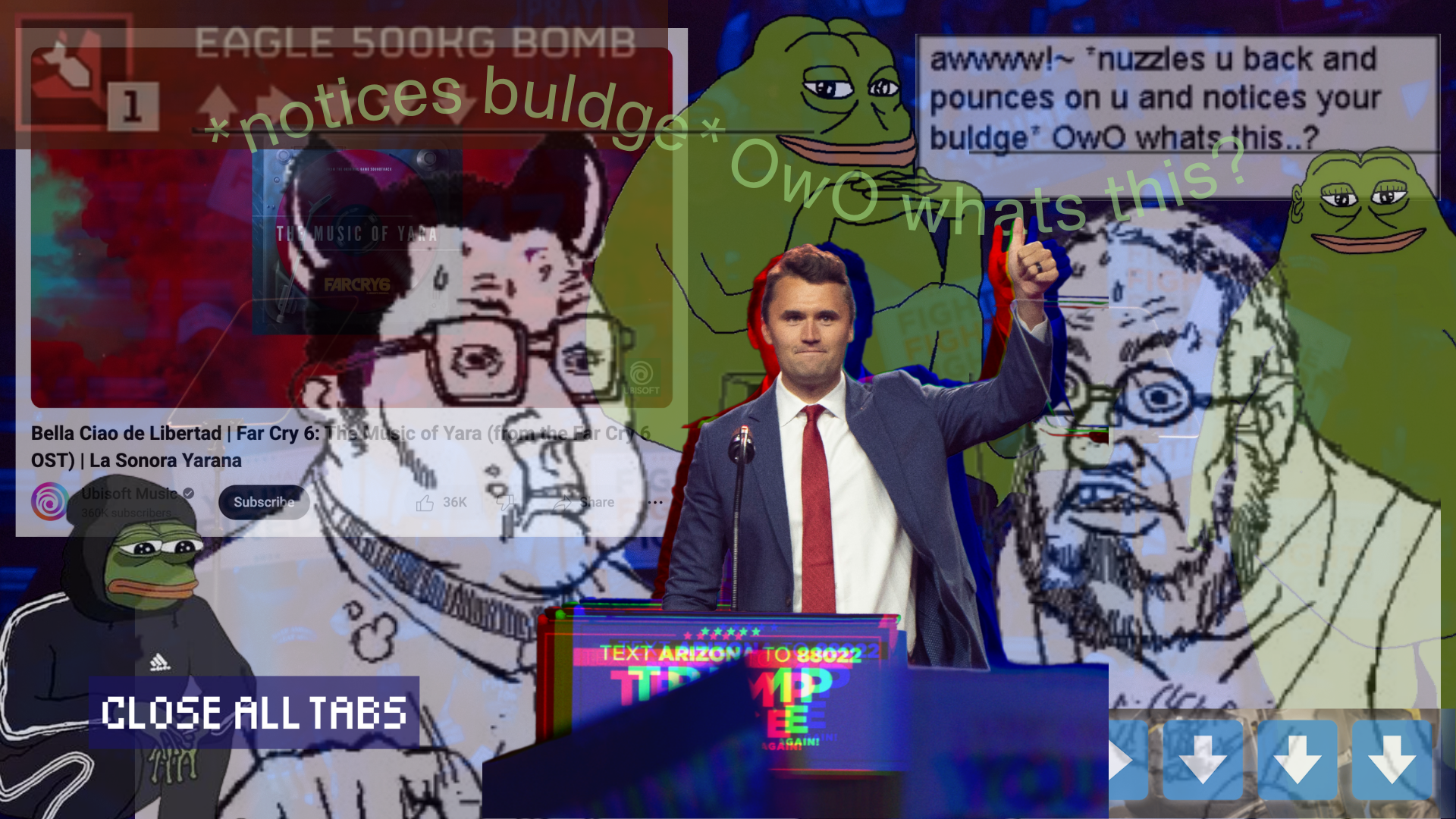
Governor Spencer Cox: Inscriptions on a fired casing read, “Notices bulges, capital O W O, what’s this?”
Morgan Sung: The messages on the unfired casings said, “Hey fascist! Catch!” with a few arrow symbols, and “Bella ciao, bella ciao, bella ciao ciao ciao.” The final unfired casing said:
Governor Spencer Cox: If you read this you are gay LMAO.
Morgan Sung: These engravings all contain references to memes and video games. In the days that followed, political pundits, extremism experts, and mainstream news organizations tried to decipher the engravings. And through that, explained Robinson’s alleged political motives.
Los Angeles Times: The O-U-O is a mistype of W-O-W.
MSNBC Really, I would need to actually see these words in the way that they are on the bullet casings and the gun to make a proper interpretation. But just knowing what those words are, I’m kind of overwhelmed with how immature it all sounds and that there is no really chronic theme.
NBC News: That’s a piece of evidence that is not normal, and so it shows there was some kind of intent there to to deliver a message.
MSNBC: But also some of these things aren’t — don’t make a lot of sense and it almost seems like there might be some type of a psych problem here.
Morgan Sung: As of this recording, we’ve learned that Robinson has been charged with aggravated murder and could face the death penalty. The court documents contained messages from Robinson to his roommate slash romantic partner, referring to Charlie Kirk. Robinson wrote, “I had enough of his hatred. Some hate can’t be negotiated out.” He also said that messages he engraved in the bullets were, quote, “mostly a big meme.” Quote, “If I see notices bulges uwu on fox news I might have a stroke.” This information wasn’t public when we started making this episode, but even with the limited details we had, we knew exactly who to call to help make sense of it.
Aidan Walker: When the bullet casing kind of remark came out, um, I had several people on my TikTok commenting saying, “Aidan, talk about this, this is your moment.”
Morgan Sung: Aidan Walker has been on the show a few times now. He’s an internet culture researcher and meme historian who breaks down these trends on TikTok as aidan etcetera and on his Substack, How To Do Things With Memes.
Aidan Walker: I just sort of felt it was something to analyze and discuss because I think there’s a whole part of our politics that people just aren’t getting because they aren’t online enough.
Morgan Sung: Many of the conversations around the alleged shooter’s digital footprint are laced with an undercurrent of trying to find a side to blame. But internet subcultures don’t always fall into neat little boxes that are clearly defined on the political spectrum. Today, we’re diving into the memes and more. What do these references really mean? What context is missing in all of these discussions? And the question that’s been Googled countless times in the last few days: what’s a groyper?
Morgan Sung: This is Close All Tabs. I’m Morgan Sung, tech journalist, and your chronically online friend, here to open as many browser tabs as it takes to help you understand how the digital world affects our real lives. Let’s get into it.
Morgan Sung: Kicking off this deep dive like we always do, we open a new tab. What do the engravings mean?
Before we dive in with Aidan, I want to run through and explain each of the references found on the ammunition. First, the inscription on the fired casing. Here’s Utah Governor Spencer Cox at the press conference again.
Governor Spencer Cox: Notices bulges, capital O-W-O, what’s this?
Morgan Sung: This seems to be a reference to a ten-year-old meme that makes fun of furry roleplay. The image depicts a grotesque caricature of two sweaty, overweight men hiding behind their computer screens — a stark contrast to the cutesy, delicate language they’re using in their messages to each other. It’s a pretty mean-spirited meme. “Notices bulge” refers to a man’s crotch, and “oWo” — O-W-O — is an emoticon often used to express being pleasantly surprised. The O’s are the wide, round eyes, and the W is the mouth. Not to be confused with the more coy “uWu” — u-W-u. Nowadays, these emoticons are used ironically. All together, the phrase has spread to other parts of the internet and has been used in other memes as a joke about the cringiest message you could send to another person. Then, there are the engravings on the unfired bullets.
Governor Spencer Cox: Hey fascist exclamation point, catch exclamation point, up arrow symbol, right arrow, and symbol and three down arrow symbols.
Morgan Sung: The arrows are not exactly a hidden code. This is likely a reference to the video game Helldivers 2, a first-person shooter released last year. This series of commands drops a giant bomb on any enemies, and in some corners of the internet, has been used as a meme to denote the end to an argument.
Governor Spencer Cox: Oh Bella ciao, Bella ciao, Bella ciao, ciao, ciao.
Morgan Sung: These are the lyrics to an Italian folk song, known as a symbol of resistance to fascism during Benito Mussolini’s reign. But gamers and other young people might be more familiar with the version of the song from Far Cry 6, the 2021 video game.
Bella Ciao de Libertad: Ciao, ciao!
Morgan Sung: And then there’s the last inscription.
Governor Spencer Cox: If you read this you are gay LMAO.
Morgan Sung: This wording echoes classic homophobic trolling. Aidan says he clocks that right away.
Aidan Walker: I know kind of the first headlines I saw about the bullet casings said that they like referenced “transgender ideology” and that was before we knew the specific phrasing. And then when the specific phrasing came out and it was that one of the four bullets said, “if you’re reading this you’re gay lmao”, I sort of totally saw that was bullshit.
Morgan Sung: How would you describe these meme references?
Aidan Walker: I would describe them as deeply ironic, which is the phrase many have used, but also deeply nihilistic in that they come from a place where the very idea of like saying something sincerely just doesn’t exist. They’re very old as well. The first one, the furry one, talk about like, “uWu” or “oWo” , the pronunciation is up for debate. That’s a very, that’s like a decade old. These are from deep corners of the internet that are kind of illegible to anybody who has not spent a significant portion of their life in these online spaces and made me think of ways that a lot of these dank corners of the internet, which are actually pretty influential and actually very old, it’s not some new thing that the kids are doing now. How deep they’ve gone and how, you know, this probably isn’t the last thing like this to reference some arcane meme.
Morgan Sung: We don’t know the specifics of Tyler Robinson’s ideology, but do the cultural references on the bullet casing shed any light?
Aidan Walker: So I think what the bullet casings tell us is that he’s not plugged into the same conversation about what’s going on in the world as you or I would be. Whether that conversation is mainstream media, you know, you’re reading a newspaper, you listen to a podcast like this, or it’s a bit more online, like you’re doom scrolling Twitter as a normal person would, or you’re, you know, on Instagram or TikTok.
I think these memes come from an image board, heavy culture from kind of a private discord chat kind of culture. And not to say those cultures are always dark or insidious in any way, um, but there means that the general internet, they show up, but they’re not, you know, the entry level sorts of memes. And it makes me think that left-right doesn’t really adhere here in those spaces. This is a type of politics that’s sort of gone past the conversation we’re having, and it’s just a purely nihilistic sort of thing.
Morgan Sung: Again, in the messages cited in the court documents charging Robinson with aggravated murder, he allegedly told his roommate-slash-romantic partner that the engravings were, quote, “mostly a big meme.”
Aidan Walker: I think we live in a time where our politics is already so scrambled. You know, we’re barraged in this media environment of things happening constantly. And the left-right kind of division of one party wants big government, one party wants small government. That isn’t really relevant to the lives that I think most Americans are leading or the things they’re worried about from or about their government. And I think, we live with such sort of this ambient layer of tension and violence going on in this country. You know national guard in the streets and so on, that this act to me seems to be about, you know, it’s a “s***post”. It’s about responding to that, mirroring that back if the world’s given you that, you give that back to the world. And to me, the bigger issue is like reality. You know, it’s like the IRL world, this is more an act against just reality or just other people or society at large.
Morgan Sung: You said that this killing was a “shitpost.” um, can you elaborate on that?
Aidan Walker: So a “shitpost” is a post that does not contribute to the conversation, that does not follow the rules of the conversation. One that sort of intentionally disrupts. Sometimes “shitposts” like kind of gently spread misinformation for comedic effect. Sometimes “shitposts” are just sort of a form of trolling. But in general, it’s kind of you just break the rules in the frame of the conversation to A, insert yourself and whoever you are into it. And sort of be just, I guess, to like protest the idea that, you know, this thing should make sense or that, you know, the people talking about it have any kind of authority or knowledge or standing.
And so by saying this killing was a “shitpost,” I think that it makes this intervention into our political discourse, which I think for young people and zoomers, Charlie Kirk was a really major figure into it and just refuses to recognize it as coherent. Comes in there like the troll comes into the forum, and disrupts the entire conversation, accelerates whatever’s happening, radicalizes it, just sort of comes into wreak havoc and destruction. And the impact of that and the appeal of it is to makes the shitposter the center of attention and derails the posting of other people and sucks up the oxygen in the room.
Morgan Sung: Right, posting for the sake of posting without necessarily deeper meaning.
Aidan Walker: Yeah, posting for the sake of posting and to just like attack meaning. You know, there’s a lot of shit posters that I like personally who are doing interesting work. They’re really essential to meme culture and that kind of approach to the internet is essential. You know to say this doesn’t make sense, you know, or we can fool you into saying this because you were prepared to say it anyway. But taking that sort of ethic of discussion and deranging it in this way, I think is really disgusting. And so I don’t, it’s purposefully incoherent is kind of what I meant by it being a “shitpost”. And that’s its effect.
Morgan Sung: In the search for the alleged shooter’s motives, some people theorized a connection to a white nationalist alt-right subculture known for its incendiary practices and very online community. While that theory seems more and more unlikely, the conversation around it is evergreen as more young people fall into these kinds of groups. That’s a new tab. We’ll get into that after this break.
Morgan Sung: Charlie Kirk was known for his inflammatory comments.
Charlie Kirk: Joy Reid and Michelle Obama and Sheila Jackson Lee and Katanji Brown Jackson. They’re coming out and they’re saying, “I’m only here because of affirmative action.” Yeah, we know. You do not have the brain processing power to otherwise be taken really seriously. You had to go steal a white person’s slot to go be taken somewhat seriously.
Morgan Sung: In addition to his anti-DEI stance, Kirk also opposed immigration, reproductive rights, gun control, vaccine requirements, LGBTQ rights, the passage of the Civil Rights Act, and the existence of climate change. He was a close ally of Donald Trump and was often lauded as the face of the new generation of Christian nationalism. But he was incredibly divisive. He It was even criticized by other conservatives who said that some of his speech was too extreme.
But another faction, led by an even more far-right influencer, criticized Kirk for his mainstream conservative appeal. Some people online have questioned whether the references on the bullet casings could have some connection to this alt-right subculture. To be clear, though there’s a lot we still don’t know about the specifics of the alleged shooter’s beliefs, it seems that his politics leans left of Kirk’s. Still, the groypers and their beef with Charlie Kirk are a noteworthy part of the context of this story.
And that’s a new tab. What is a groyper?
Aidan Walker: So, groypers are the fringiest fringe of online right-wing culture on these image boards, 4chan, Reddit, all the other platforms. Their de facto leader is this streamer, Nick Fuentes, who famously dined with Trump and Kanye West. Groypers are the people Kanye started hanging out with when he kind of took that turn. And the groypers are extremely online and they’re essentially neo-Nazis, but it’s this sort of s***poster edgelord attitude of transgressing any boundary and really having no regard for other people. Their moniker is Groyper, who is a mutation of Pepe the Frog into a toad, but kind of uh a bulbous, kind of diabolical looking toad.
Morgan Sung: Pepe the Frog is a relatively innocent webcomic character of a sad, green frog who was adopted as a mascot by 4chan users and the far-right back in 2015. Over the last decade, Pepe has evolved, taking on various costumes and forms. This more monstrous iteration, Groyper, has been adopted by an even more extreme group.
Aidan Walker: And they call themselves “The Groyper Army” and they famously feuded with Charlie Kirk.
Morgan Sung: Let’s talk about the Groyper Wars of 2019. Who led them, what happened, and why is this subculture being shoved into the limelight now?
Aidan Walker: So to step into the time machine back to 2019. You have Turning Point USA run by Charlie Kirk, which essentially is an operation that takes donor money from right-wing sources and Kirk’s network of college chapters and youth influencers and brings these two things together to stage these massive events that are all about bringing young people to the right-wing cause. And in a way, laundering ideas and make them a bit more palatable to the younger generation.
Meanwhile, the groypers are here on these image boards posting radical stuff, many of them extremely young, like 13, 14 year olds. Um, and the groypers decide that Kirk is not radical enough for them or that Kirk is purposefully downplaying his radicality in order to, um, get mainstream appeal. And so the groypers decide to do this campaign of trolling him by showing up at these events where people are asking Kirk a question — these like “debate me” type things that he would — do and asking questions that, you know, are goading Kirk into saying something more extreme, more white supremacist, more antisemitic than what he was already saying.
And this groyper war, they come to his different events, they attack it. This all unfolds in 2019. And the leader of it is Nick Fuentes, who’s up on these streams, you know, calling his army onto Charlie Kirk, essentially.
Morgan Sung: Can you talk about what these memes and the way they engage in internet culture represents beyond like clear cut partisan lines?
Aidan Walker: Yeah, so it’s unconfirmed that Robinson was a groyper, but I’m certain in the internet spaces he frequented, he heard about it, he posted about it. He knew about it I’d imagine, just based off the niche-ness of those memes that are on the cartridges and other things we’ve learned about him. And what these memes overall show is Pepe the Frog is a collective self-portrait for a bunch of posters. And as a collective self-portrait, Pepe is interesting. You know, you can dress him up to represent whatever identity group, whatever, you know, subgroup you wanna have him be, put him in a cowboy hat, he’s Western, put them in a Confederate uniform, he’s that.
But Pepe’s also a very sad frog. He’s crying or about to cry. He’s very wistful and often he’s depicted as sort of very small and in these situations where he’s like a little boy or something. And so I think that is another way this community scrambles our sense of how politics usually work because you expect the fascists to you know wear boots and be really tough and try to look like you know a soldier or something but for these guys it’s all about they’re they’re just little guys. You know they’re sad they’re they’re melancholy um and the and the draw is if you two are lonely, isolated, fragile, in the world somehow, come here and you can feel strong.
And the price of that is you just reject everything that is normal and coherent in the world. And on the other side of that complete rejection, which you perform by posting the horrible meme or the hateful slur. On the other of that you find this brotherhood of violent freaks who will take you in. And I think that’s often the pitch that we see with these sort of far right online communities like groypers.
Morgan Sung: I mean, the alt-right and other, like you said, extremist communities have really taken advantage of that kind of sentiment. Can you talk about the deep emotional place that this online nihilist culture comes out of?
Aidan Walker: So it’s a deep emotional place that has existed long before the internet. You know, people have felt alienated, lonely, angry by society since we had society and researchers say that one of kind of the key triggers or amplifiers of radicalization is, you know, young people with nothing to do and no hope. And I think looking at the last 10 years of culture, um, there is a lack of hope happening. Um, the economy is bad. Uh, people feel isolated, uh, people feel like systems aren’t working for them. You know, people on both the right and the left feel a certain kind of, um, uncertainty, anxiety, and just disillusionment with, you know, traditional narrators, um telling the stories of our lives. Those no longer seem to cohere and make sense.
And so I think when you are a young person who is confused, who is lost, who, um doesn’t have the support structures that you need, often the catches you is this — like an incel forum or groypers or something online that really does not have your best interests at heart. And really, if anything encourages whatever pathology you might be experiencing.
Morgan Sung: In the mainstream, whether on your everyday X feed or the traditional news media, there has been so much debate over which side of the political spectrum Robinson fell on. But Aidan said he found this kind of speculation counterproductive.
Aidan Walker: The conversation is counterproductive to me for two reasons. The first is that it’s such a motivated conversation, particularly from the right-wing. Before anything at all was known, they were saying this was a left-wing radical. And there’s a very clear reason why they were saying that, because they have a political agenda and they have certain people on the left or liberals that they want to crack down on and this is the pretense to do that. But the second, less kind of specific reason that it feels counterproductive to me, is that we’re past a point in our political conversation where it’s about, “do you think that government programs should be smaller or larger?”
We’re at a point where most people are growing up in this context of disaster and crisis. And the things motivating their politics are resentments and kind of triggers that aren’t really mappable to someone from like 1995. Um, like the Republican coalition is not these days about, you know, fiscal conservatives, evangelicals, religious folks. The Democrat coalition is not necessarily like, you now, the, the post-Civil Rights coalition that existed. Um, the reasons people are in these different camps — or actually most Americans are not in either camp at all would define themselves independent — is totally different than it was in the past.
Um, and I think I find myself kind of struggling to find what then the new categories are, because it’s one thing, like I say in my videos, be like, “oh, it’s not a left-right issue.” Then people are like, “but then what is it?” And I think that project of figuring out what it is, you know, what it feels like, what it means, is something that, you, know, all of us are going to have to kind of go through.
Morgan Sung: In wake of the shooting, social media sites and messaging platforms are under increased scrutiny. Both law enforcement and private civilians are monitoring the posts, videos, and comments that other people make about Charlie Kirk, taking action against anyone who criticizes the very controversial influencer. How will this change the way people engage with each other online?
We’re opening one last tab, Discord and Doxxing.
The government is cracking down on online activity revolving around Charlie Kirk’s death. In an X post last week, Defense Secretary Pete Hegseth warned that the Pentagon is keeping tabs on military personnel and Department of War civilian employees who celebrate or mock Kirk’s’ death. Deputy Secretary of State Christopher Landau threatened to revoke visas of anyone making similar posts. The FBI is reportedly monitoring the messaging platform Discord. Even people who haven’t explicitly celebrated or mocked the killing are being harassed and targeted for what they posted online. Opinion columnist Karen Attia announced that she had been fired from the Washington Post for social media posts in the wake of Kirk’s death that called out, quote, “political violence, racial double standards, and America’s apathy toward guns.”
It’s not just the government monitoring speech online. Private civilians are doing it too. An anonymously run website titled the Charlie Kirk Data Foundation has created a searchable database of people who’ve criticized Kirk online. Individual social media users have doxed others over their posts about Kirk, publicly posting their real names, phone numbers, home addresses, and other private information to target and harass them. All of this, from the government surveillance to the civilian-led doxing, is a serious threat to free speech on the internet. Here’s Aidan again.
Aidan Walker: I’m extremely concerned about it. I’m more concerned about like a chilling effect on speech or on our online discourse and memes than I am with this escalating cycle of political violence. I mean, the two go hand in hand, of course, but I think stuff like JD Vance taking over the hosting chair for Kirk’s Show and using it to call out NGOs and liberal donors and leftists. I think that crack down is something that can have much deeper effects and hurt a lot of people. And I also think that in an age where we’re maybe seeing an authoritarian consolidation, calling for bans on the internet, calling for restrictions on the internet, the context that’s going to enter into is I think that will lead us down a dark road.
Morgan Sung: Last question, what is the current conversation missing by not understanding the deeply online context of this entire case?
Aidan Walker: I think the biggest thing the current conversation is missing is that it’s really not the current conversation. People who read newspapers, report for them, follow this stuff from kind of a news-brained, normie side of Twitter, I don’t think they realize that they’re just one niche among many niches on the internet. They’re a pretty big niche and a pretty important niche, of course. But I don’t think there’s really an understanding that CNN is no longer a narrator of American life. And not just from a partisan kind of perspective that really right-wing people are really left-wing people don’t listen to CNN anymore. Totally normal people don’t listen to CNN anymore because it isn’t legible to them. It doesn’t make sense to them, it talks in a way that, you know, seems to not acknowledge them or seems to treat them in a way that isn’t that respectful or doesn’t keep up with the times. And I worry that the mainstream conversation, it isn’t mainstream, but it still thinks of itself as mainstream.
Morgan Sung: Well, Aidan, thank you so much for joining us and for always explaining these corners of the internet.
Aidan Walker: Thank you so much for having me, Morgan, and for inviting me on. It’s always a joy.
Morgan Sung: And with that, let’s close all these tabs.
Close All Tabs is a production of KQED Studios, and is reported and hosted by me, Morgan Sung. Close All Tabs’ producer is Maya Cueva. Chris Egusa is our Senior Editor. Additional editing by Chris Hambrick and Jen Chien, who’s KQDE’s Director of Podcasts. Original music, including our theme song and credits, by Chris Egusa. Sound design by Chris Egusa. Additional music by APM.
Audience engagement support from Maha Sanad. Katie Sprenger is our Podcast Operations Manager, and Ethan Toven-Lindsey is our Editor In Chief. Some members of the KQED podcast team are represented by the Screen Actors Guild, American Federation of Television and Radio Artists, San Francisco, Northern California Local. Keyboard sounds were recorded on my purple and pink Dust Silver K84 wired mechanical keyboard with Gateron red switches.
We want to hear from you. Email us at [email protected]. Follow us on Instagram @CloseAllTabsPod or TikTok @CloseAllTabs. And join our Discord. We’re in the Close All tabs channel at discord.gg/KQED. Thanks for listening.