window.__IS_SSR__=true
window.__INITIAL_STATE__={
"attachmentsReducer": {
"audio_0": {
"type": "attachments",
"id": "audio_0",
"imgSizes": {
"kqedFullSize": {
"file": "https://ww2.kqed.org/news/wp-content/themes/KQED-unified/img/audio_bgs/background0.jpg"
}
}
},
"audio_1": {
"type": "attachments",
"id": "audio_1",
"imgSizes": {
"kqedFullSize": {
"file": "https://ww2.kqed.org/news/wp-content/themes/KQED-unified/img/audio_bgs/background1.jpg"
}
}
},
"audio_2": {
"type": "attachments",
"id": "audio_2",
"imgSizes": {
"kqedFullSize": {
"file": "https://ww2.kqed.org/news/wp-content/themes/KQED-unified/img/audio_bgs/background2.jpg"
}
}
},
"audio_3": {
"type": "attachments",
"id": "audio_3",
"imgSizes": {
"kqedFullSize": {
"file": "https://ww2.kqed.org/news/wp-content/themes/KQED-unified/img/audio_bgs/background3.jpg"
}
}
},
"audio_4": {
"type": "attachments",
"id": "audio_4",
"imgSizes": {
"kqedFullSize": {
"file": "https://ww2.kqed.org/news/wp-content/themes/KQED-unified/img/audio_bgs/background4.jpg"
}
}
},
"placeholder": {
"type": "attachments",
"id": "placeholder",
"imgSizes": {
"thumbnail": {
"file": "https://cdn.kqed.org/wp-content/uploads/2024/12/KQED-Default-Image-816638274-2000x1333-1-160x107.jpg",
"width": 160,
"height": 107,
"mimeType": "image/jpeg"
},
"medium": {
"file": "https://cdn.kqed.org/wp-content/uploads/2024/12/KQED-Default-Image-816638274-2000x1333-1-800x533.jpg",
"width": 800,
"height": 533,
"mimeType": "image/jpeg"
},
"medium_large": {
"file": "https://cdn.kqed.org/wp-content/uploads/2024/12/KQED-Default-Image-816638274-2000x1333-1-768x512.jpg",
"width": 768,
"height": 512,
"mimeType": "image/jpeg"
},
"large": {
"file": "https://cdn.kqed.org/wp-content/uploads/2024/12/KQED-Default-Image-816638274-2000x1333-1-1020x680.jpg",
"width": 1020,
"height": 680,
"mimeType": "image/jpeg"
},
"1536x1536": {
"file": "https://cdn.kqed.org/wp-content/uploads/2024/12/KQED-Default-Image-816638274-2000x1333-1-1536x1024.jpg",
"width": 1536,
"height": 1024,
"mimeType": "image/jpeg"
},
"fd-lrg": {
"file": "https://cdn.kqed.org/wp-content/uploads/2024/12/KQED-Default-Image-816638274-2000x1333-1-1536x1024.jpg",
"width": 1536,
"height": 1024,
"mimeType": "image/jpeg"
},
"fd-med": {
"file": "https://cdn.kqed.org/wp-content/uploads/2024/12/KQED-Default-Image-816638274-2000x1333-1-1020x680.jpg",
"width": 1020,
"height": 680,
"mimeType": "image/jpeg"
},
"fd-sm": {
"file": "https://cdn.kqed.org/wp-content/uploads/2024/12/KQED-Default-Image-816638274-2000x1333-1-800x533.jpg",
"width": 800,
"height": 533,
"mimeType": "image/jpeg"
},
"post-thumbnail": {
"file": "https://cdn.kqed.org/wp-content/uploads/2024/12/KQED-Default-Image-816638274-2000x1333-1-672x372.jpg",
"width": 672,
"height": 372,
"mimeType": "image/jpeg"
},
"twentyfourteen-full-width": {
"file": "https://cdn.kqed.org/wp-content/uploads/2024/12/KQED-Default-Image-816638274-2000x1333-1-1038x576.jpg",
"width": 1038,
"height": 576,
"mimeType": "image/jpeg"
},
"xxsmall": {
"file": "https://cdn.kqed.org/wp-content/uploads/2024/12/KQED-Default-Image-816638274-2000x1333-1-160x107.jpg",
"width": 160,
"height": 107,
"mimeType": "image/jpeg"
},
"xsmall": {
"file": "https://cdn.kqed.org/wp-content/uploads/2024/12/KQED-Default-Image-816638274-2000x1333-1-672x372.jpg",
"width": 672,
"height": 372,
"mimeType": "image/jpeg"
},
"small": {
"file": "https://cdn.kqed.org/wp-content/uploads/2024/12/KQED-Default-Image-816638274-2000x1333-1-672x372.jpg",
"width": 672,
"height": 372,
"mimeType": "image/jpeg"
},
"xlarge": {
"file": "https://cdn.kqed.org/wp-content/uploads/2024/12/KQED-Default-Image-816638274-2000x1333-1-1020x680.jpg",
"width": 1020,
"height": 680,
"mimeType": "image/jpeg"
},
"full-width": {
"file": "https://cdn.kqed.org/wp-content/uploads/2024/12/KQED-Default-Image-816638274-2000x1333-1-1920x1280.jpg",
"width": 1920,
"height": 1280,
"mimeType": "image/jpeg"
},
"guest-author-32": {
"file": "https://cdn.kqed.org/wp-content/uploads/2025/01/KQED-Default-Image-816638274-1333x1333-1-160x160.jpg",
"width": 32,
"height": 32,
"mimeType": "image/jpeg"
},
"guest-author-50": {
"file": "https://cdn.kqed.org/wp-content/uploads/2025/01/KQED-Default-Image-816638274-1333x1333-1-160x160.jpg",
"width": 50,
"height": 50,
"mimeType": "image/jpeg"
},
"guest-author-64": {
"file": "https://cdn.kqed.org/wp-content/uploads/2025/01/KQED-Default-Image-816638274-1333x1333-1-160x160.jpg",
"width": 64,
"height": 64,
"mimeType": "image/jpeg"
},
"guest-author-96": {
"file": "https://cdn.kqed.org/wp-content/uploads/2025/01/KQED-Default-Image-816638274-1333x1333-1-160x160.jpg",
"width": 96,
"height": 96,
"mimeType": "image/jpeg"
},
"guest-author-128": {
"file": "https://cdn.kqed.org/wp-content/uploads/2025/01/KQED-Default-Image-816638274-1333x1333-1-160x160.jpg",
"width": 128,
"height": 128,
"mimeType": "image/jpeg"
},
"detail": {
"file": "https://cdn.kqed.org/wp-content/uploads/2025/01/KQED-Default-Image-816638274-1333x1333-1-160x160.jpg",
"width": 160,
"height": 160,
"mimeType": "image/jpeg"
},
"kqedFullSize": {
"file": "https://cdn.kqed.org/wp-content/uploads/2024/12/KQED-Default-Image-816638274-2000x1333-1.jpg",
"width": 2000,
"height": 1333
}
}
},
"news_12005403": {
"type": "attachments",
"id": "news_12005403",
"meta": {
"index": "attachments_1716263798",
"site": "news",
"id": "12005403",
"found": true
},
"title": "240903-MARIN SUBSTANDARD AG WORKER HOUSING-MD-04-KQED-2",
"publishDate": 1726704016,
"status": "inherit",
"parent": 12002972,
"modified": 1726704038,
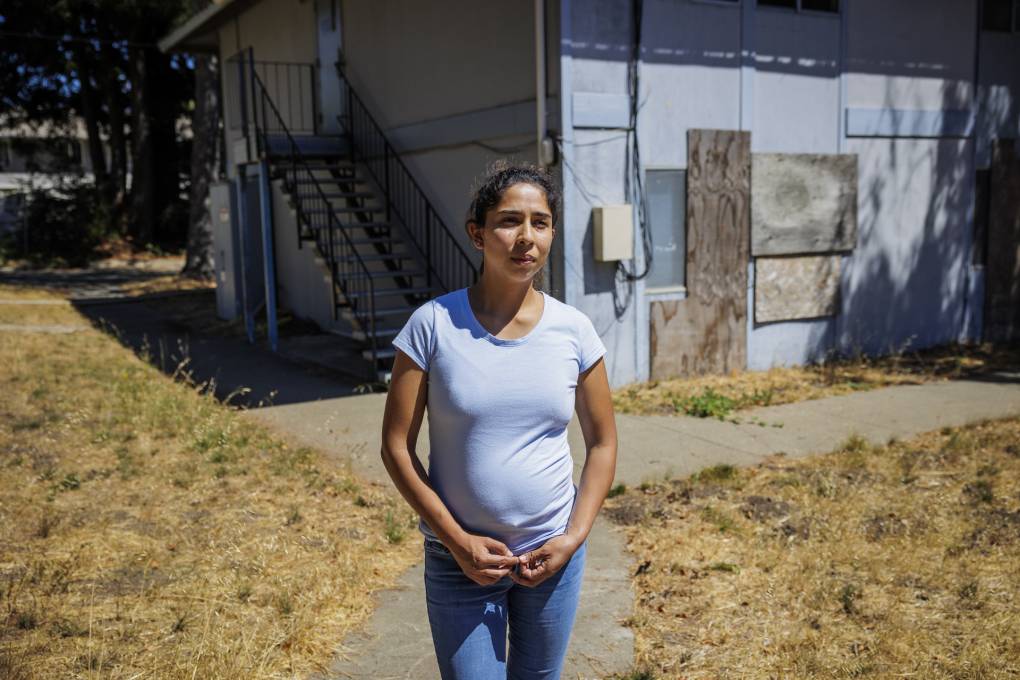
"caption": "Yesenia Bernal Martinez outside of former Coast Guard housing that CLAM, the Community Land Trust of West Marin, aims to turn into affordable housing in Point Reyes Station on Sept. 3, 2024. Bernal Martinez, who works at CLAM, grew up in housing on ranches and said the report's findings are \"not surprising.\"",
"credit": "Martin do Nascimento/KQED",
"altTag": null,
"description": null,
"imgSizes": {
"medium": {
"file": "https://cdn.kqed.org/wp-content/uploads/sites/10/2024/09/240903-MARIN-SUBSTANDARD-AG-WORKER-HOUSING-MD-04-KQED-2-800x533.jpg",
"width": 800,
"height": 533,
"mimeType": "image/jpeg"
},
"large": {
"file": "https://cdn.kqed.org/wp-content/uploads/sites/10/2024/09/240903-MARIN-SUBSTANDARD-AG-WORKER-HOUSING-MD-04-KQED-2-1020x680.jpg",
"width": 1020,
"height": 680,
"mimeType": "image/jpeg"
},
"thumbnail": {
"file": "https://cdn.kqed.org/wp-content/uploads/sites/10/2024/09/240903-MARIN-SUBSTANDARD-AG-WORKER-HOUSING-MD-04-KQED-2-160x107.jpg",
"width": 160,
"height": 107,
"mimeType": "image/jpeg"
},
"1536x1536": {
"file": "https://cdn.kqed.org/wp-content/uploads/sites/10/2024/09/240903-MARIN-SUBSTANDARD-AG-WORKER-HOUSING-MD-04-KQED-2-1536x1024.jpg",
"width": 1536,
"height": 1024,
"mimeType": "image/jpeg"
},
"post-thumbnail": {
"file": "https://cdn.kqed.org/wp-content/uploads/sites/10/2024/09/240903-MARIN-SUBSTANDARD-AG-WORKER-HOUSING-MD-04-KQED-2-672x372.jpg",
"width": 672,
"height": 372,
"mimeType": "image/jpeg"
},
"twentyfourteen-full-width": {
"file": "https://cdn.kqed.org/wp-content/uploads/sites/10/2024/09/240903-MARIN-SUBSTANDARD-AG-WORKER-HOUSING-MD-04-KQED-2-1038x576.jpg",
"width": 1038,
"height": 576,
"mimeType": "image/jpeg"
},
"kqedFullSize": {
"file": "https://cdn.kqed.org/wp-content/uploads/sites/10/2024/09/240903-MARIN-SUBSTANDARD-AG-WORKER-HOUSING-MD-04-KQED-2.jpg",
"width": 1920,
"height": 1280
}
},
"isLoading": false,
"fetchFailed": false
},
"news_11949939": {
"type": "attachments",
"id": "news_11949939",
"meta": {
"index": "attachments_1716263798",
"site": "news",
"id": "11949939",
"found": true
},
"parent": 11949914,
"imgSizes": {
"twentyfourteen-full-width": {
"file": "https://ww2.kqed.org/app/uploads/sites/10/2023/05/RS64876_044_KQED_FireFoundryRescueTraining_04212023-qut-1038x576.jpg",
"width": 1038,
"mimeType": "image/jpeg",
"height": 576
},
"thumbnail": {
"file": "https://ww2.kqed.org/app/uploads/sites/10/2023/05/RS64876_044_KQED_FireFoundryRescueTraining_04212023-qut-160x107.jpg",
"width": 160,
"mimeType": "image/jpeg",
"height": 107
},
"post-thumbnail": {
"file": "https://ww2.kqed.org/app/uploads/sites/10/2023/05/RS64876_044_KQED_FireFoundryRescueTraining_04212023-qut-672x372.jpg",
"width": 672,
"mimeType": "image/jpeg",
"height": 372
},
"kqedFullSize": {
"file": "https://ww2.kqed.org/app/uploads/sites/10/2023/05/RS64876_044_KQED_FireFoundryRescueTraining_04212023-qut.jpg",
"width": 1920,
"height": 1280
},
"large": {
"file": "https://ww2.kqed.org/app/uploads/sites/10/2023/05/RS64876_044_KQED_FireFoundryRescueTraining_04212023-qut-1020x680.jpg",
"width": 1020,
"mimeType": "image/jpeg",
"height": 680
},
"1536x1536": {
"file": "https://ww2.kqed.org/app/uploads/sites/10/2023/05/RS64876_044_KQED_FireFoundryRescueTraining_04212023-qut-1536x1024.jpg",
"width": 1536,
"mimeType": "image/jpeg",
"height": 1024
},
"medium": {
"file": "https://ww2.kqed.org/app/uploads/sites/10/2023/05/RS64876_044_KQED_FireFoundryRescueTraining_04212023-qut-800x533.jpg",
"width": 800,
"mimeType": "image/jpeg",
"height": 533
}
},
"publishDate": 1684426304,
"modified": 1684430639,
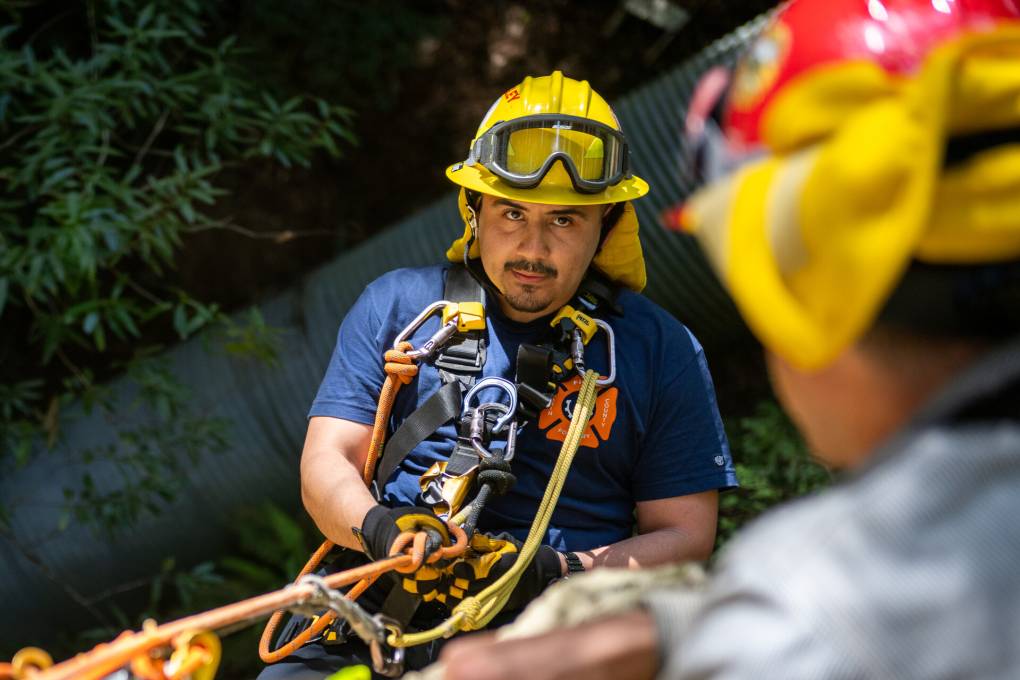
"caption": "Lupe Duran descends over a cliff guided by Field Supervisor Darrell Galli during a FIRE Foundry rope rescue training in Marin on April 21, 2023.",
"description": null,
"title": "RS64876_044_KQED_FireFoundryRescueTraining_04212023-qut",
"credit": "Beth LaBerge/KQED",
"status": "inherit",
"altTag": "A Latino man wearing fire gear and helmet with goggles looks up at a fire instructor while rappelling down a cliff.",
"isLoading": false,
"fetchFailed": false
},
"news_11892562": {
"type": "attachments",
"id": "news_11892562",
"meta": {
"index": "attachments_1716263798",
"site": "news",
"id": "11892562",
"found": true
},
"parent": 11892561,
"imgSizes": {
"twentyfourteen-full-width": {
"file": "https://ww2.kqed.org/app/uploads/sites/10/2021/10/RS44233_GettyImages-1253314486-qut-1038x576.jpg",
"width": 1038,
"mimeType": "image/jpeg",
"height": 576
},
"thumbnail": {
"file": "https://ww2.kqed.org/app/uploads/sites/10/2021/10/RS44233_GettyImages-1253314486-qut-160x104.jpg",
"width": 160,
"mimeType": "image/jpeg",
"height": 104
},
"post-thumbnail": {
"file": "https://ww2.kqed.org/app/uploads/sites/10/2021/10/RS44233_GettyImages-1253314486-qut-672x372.jpg",
"width": 672,
"mimeType": "image/jpeg",
"height": 372
},
"kqedFullSize": {
"file": "https://ww2.kqed.org/app/uploads/sites/10/2021/10/RS44233_GettyImages-1253314486-qut.jpg",
"width": 1920,
"height": 1250
},
"large": {
"file": "https://ww2.kqed.org/app/uploads/sites/10/2021/10/RS44233_GettyImages-1253314486-qut-1020x664.jpg",
"width": 1020,
"mimeType": "image/jpeg",
"height": 664
},
"1536x1536": {
"file": "https://ww2.kqed.org/app/uploads/sites/10/2021/10/RS44233_GettyImages-1253314486-qut-1536x1000.jpg",
"width": 1536,
"mimeType": "image/jpeg",
"height": 1000
},
"medium": {
"file": "https://ww2.kqed.org/app/uploads/sites/10/2021/10/RS44233_GettyImages-1253314486-qut-800x521.jpg",
"width": 800,
"mimeType": "image/jpeg",
"height": 521
}
},
"publishDate": 1634398751,
"modified": 1679013142,
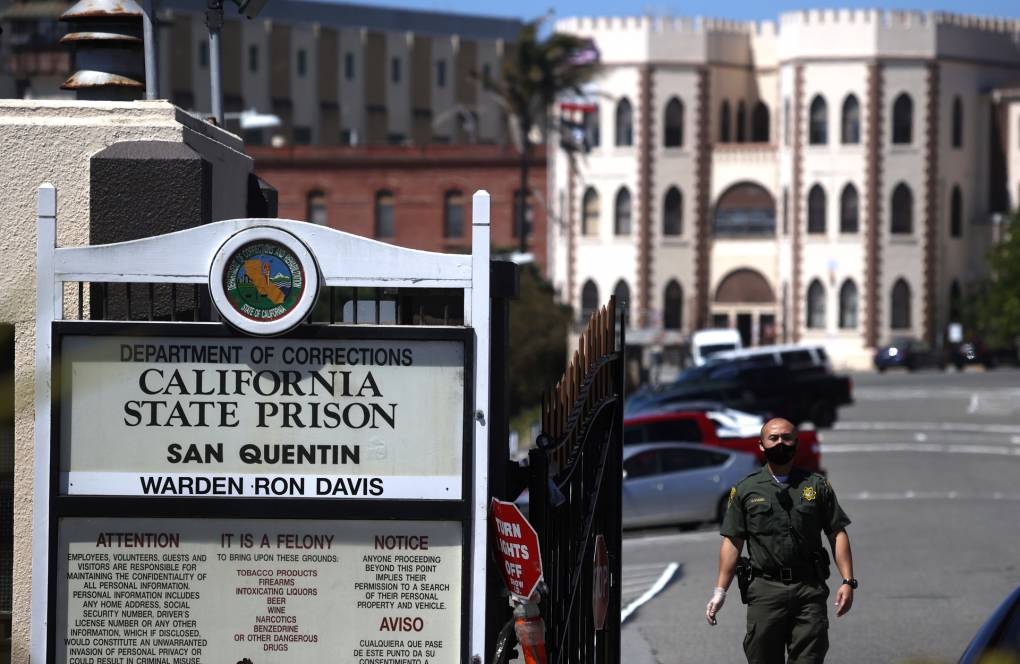
"caption": "A California Department of Corrections and Rehabilitation officer wears a protective mask as he stands guard at the front gate of San Quentin State Prison on June 29, 2020, in Marin County.",
"description": null,
"title": null,
"credit": "Justin Sullivan/Getty Images",
"status": "inherit",
"altTag": "A man in uniform stands next to a sign that says \"California State Prison, San Quentin,\" with the castle-like facade of the prison behind him.",
"isLoading": false,
"fetchFailed": false
},
"news_11753253": {
"type": "attachments",
"id": "news_11753253",
"meta": {
"index": "attachments_1716263798",
"site": "news",
"id": "11753253",
"found": true
},
"parent": 11753198,
"imgSizes": {
"apple_news_ca_landscape_5_5": {
"file": "https://ww2.kqed.org/app/uploads/sites/10/2019/06/IMG_2008-1044x783.jpeg",
"width": 1044,
"mimeType": "image/jpeg",
"height": 783
},
"apple_news_ca_square_4_0": {
"file": "https://ww2.kqed.org/app/uploads/sites/10/2019/06/IMG_2008-470x470.jpeg",
"width": 470,
"mimeType": "image/jpeg",
"height": 470
},
"twentyfourteen-full-width": {
"file": "https://ww2.kqed.org/app/uploads/sites/10/2019/06/IMG_2008-1038x576.jpeg",
"width": 1038,
"mimeType": "image/jpeg",
"height": 576
},
"thumbnail": {
"file": "https://ww2.kqed.org/app/uploads/sites/10/2019/06/IMG_2008-160x120.jpeg",
"width": 160,
"mimeType": "image/jpeg",
"height": 120
},
"post-thumbnail": {
"file": "https://ww2.kqed.org/app/uploads/sites/10/2019/06/IMG_2008-672x372.jpeg",
"width": 672,
"mimeType": "image/jpeg",
"height": 372
},
"kqedFullSize": {
"file": "https://ww2.kqed.org/app/uploads/sites/10/2019/06/IMG_2008.jpeg",
"width": 1950,
"height": 1463
},
"apple_news_ca_landscape_4_7": {
"file": "https://ww2.kqed.org/app/uploads/sites/10/2019/06/IMG_2008-632x474.jpeg",
"width": 632,
"mimeType": "image/jpeg",
"height": 474
},
"large": {
"file": "https://ww2.kqed.org/app/uploads/sites/10/2019/06/IMG_2008-1020x765.jpeg",
"width": 1020,
"mimeType": "image/jpeg",
"height": 765
},
"complete_open_graph": {
"file": "https://ww2.kqed.org/app/uploads/sites/10/2019/06/IMG_2008-1200x900.jpeg",
"width": 1200,
"mimeType": "image/jpeg",
"height": 900
},
"apple_news_ca_landscape_4_0": {
"file": "https://ww2.kqed.org/app/uploads/sites/10/2019/06/IMG_2008-536x402.jpeg",
"width": 536,
"mimeType": "image/jpeg",
"height": 402
},
"apple_news_ca_portrait_12_9": {
"file": "https://ww2.kqed.org/app/uploads/sites/10/2019/06/IMG_2008-1122x1463.jpeg",
"width": 1122,
"mimeType": "image/jpeg",
"height": 1463
},
"medium": {
"file": "https://ww2.kqed.org/app/uploads/sites/10/2019/06/IMG_2008-800x600.jpeg",
"width": 800,
"mimeType": "image/jpeg",
"height": 600
},
"apple_news_ca_portrait_4_0": {
"file": "https://ww2.kqed.org/app/uploads/sites/10/2019/06/IMG_2008-354x472.jpeg",
"width": 354,
"mimeType": "image/jpeg",
"height": 472
},
"apple_news_ca_portrait_9_7": {
"file": "https://ww2.kqed.org/app/uploads/sites/10/2019/06/IMG_2008-840x1120.jpeg",
"width": 840,
"mimeType": "image/jpeg",
"height": 1120
},
"apple_news_ca_landscape_12_9": {
"file": "https://ww2.kqed.org/app/uploads/sites/10/2019/06/IMG_2008-1832x1374.jpeg",
"width": 1832,
"mimeType": "image/jpeg",
"height": 1374
},
"apple_news_ca_square_9_7": {
"file": "https://ww2.kqed.org/app/uploads/sites/10/2019/06/IMG_2008-1104x1104.jpeg",
"width": 1104,
"mimeType": "image/jpeg",
"height": 1104
},
"apple_news_ca_portrait_4_7": {
"file": "https://ww2.kqed.org/app/uploads/sites/10/2019/06/IMG_2008-414x552.jpeg",
"width": 414,
"mimeType": "image/jpeg",
"height": 552
},
"apple_news_ca_square_12_9": {
"file": "https://ww2.kqed.org/app/uploads/sites/10/2019/06/IMG_2008-1472x1463.jpeg",
"width": 1472,
"mimeType": "image/jpeg",
"height": 1463
},
"apple_news_ca_portrait_5_5": {
"file": "https://ww2.kqed.org/app/uploads/sites/10/2019/06/IMG_2008-687x916.jpeg",
"width": 687,
"mimeType": "image/jpeg",
"height": 916
},
"full-width": {
"file": "https://ww2.kqed.org/app/uploads/sites/10/2019/06/IMG_2008-1920x1440.jpeg",
"width": 1920,
"mimeType": "image/jpeg",
"height": 1440
},
"apple_news_ca_square_4_7": {
"file": "https://ww2.kqed.org/app/uploads/sites/10/2019/06/IMG_2008-550x550.jpeg",
"width": 550,
"mimeType": "image/jpeg",
"height": 550
},
"apple_news_ca_landscape_9_7": {
"file": "https://ww2.kqed.org/app/uploads/sites/10/2019/06/IMG_2008-1376x1032.jpeg",
"width": 1376,
"mimeType": "image/jpeg",
"height": 1032
},
"apple_news_ca_square_5_5": {
"file": "https://ww2.kqed.org/app/uploads/sites/10/2019/06/IMG_2008-912x912.jpeg",
"width": 912,
"mimeType": "image/jpeg",
"height": 912
}
},
"publishDate": 1559945991,
"modified": 1559946192,
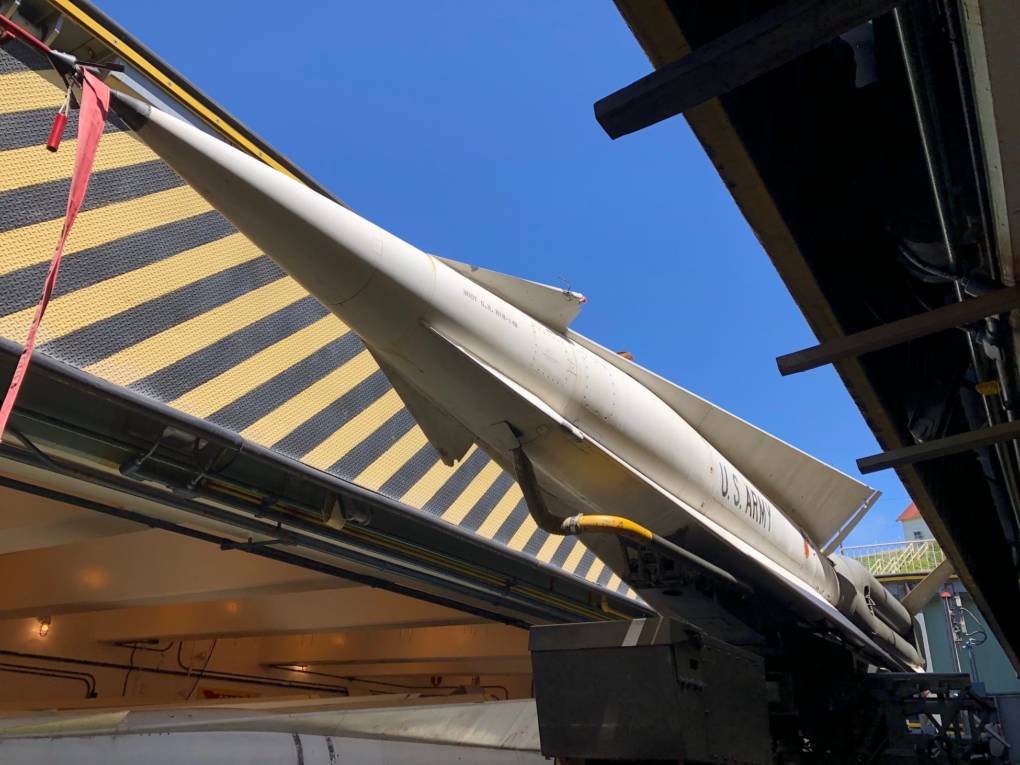
"caption": "A Nike Hercules missile at the Marin Headlands site rises from its underground bunker on a huge elevator, to be raised into launch position. The Nikes were decommissioned in 1974.",
"description": "A Nike Hercules missile at the Marin Headlands site rises from its underground bunker on a huge elevator, to be raised into launch position. The Nikes were decommissioned in 1974.",
"title": "IMG_2008",
"credit": "Craig Miller/KQED",
"status": "inherit",
"isLoading": false,
"fetchFailed": false
},
"news_11866181": {
"type": "attachments",
"id": "news_11866181",
"meta": {
"index": "attachments_1716263798",
"site": "news",
"id": "11866181",
"found": true
},
"parent": 11866002,
"imgSizes": {
"twentyfourteen-full-width": {
"file": "https://ww2.kqed.org/app/uploads/sites/10/2021/03/GettyImages-1231150579-1-1038x576.jpg",
"width": 1038,
"mimeType": "image/jpeg",
"height": 576
},
"thumbnail": {
"file": "https://ww2.kqed.org/app/uploads/sites/10/2021/03/GettyImages-1231150579-1-160x101.jpg",
"width": 160,
"mimeType": "image/jpeg",
"height": 101
},
"post-thumbnail": {
"file": "https://ww2.kqed.org/app/uploads/sites/10/2021/03/GettyImages-1231150579-1-672x372.jpg",
"width": 672,
"mimeType": "image/jpeg",
"height": 372
},
"kqedFullSize": {
"file": "https://ww2.kqed.org/app/uploads/sites/10/2021/03/GettyImages-1231150579-1-scaled.jpg",
"width": 2560,
"height": 1624
},
"2048x2048": {
"file": "https://ww2.kqed.org/app/uploads/sites/10/2021/03/GettyImages-1231150579-1-2048x1299.jpg",
"width": 2048,
"mimeType": "image/jpeg",
"height": 1299
},
"large": {
"file": "https://ww2.kqed.org/app/uploads/sites/10/2021/03/GettyImages-1231150579-1-1020x647.jpg",
"width": 1020,
"mimeType": "image/jpeg",
"height": 647
},
"1536x1536": {
"file": "https://ww2.kqed.org/app/uploads/sites/10/2021/03/GettyImages-1231150579-1-1536x974.jpg",
"width": 1536,
"mimeType": "image/jpeg",
"height": 974
},
"full-width": {
"file": "https://ww2.kqed.org/app/uploads/sites/10/2021/03/GettyImages-1231150579-1-1920x1218.jpg",
"width": 1920,
"mimeType": "image/jpeg",
"height": 1218
},
"medium": {
"file": "https://ww2.kqed.org/app/uploads/sites/10/2021/03/GettyImages-1231150579-1-800x507.jpg",
"width": 800,
"mimeType": "image/jpeg",
"height": 507
}
},
"publishDate": 1616551023,
"modified": 1616606450,
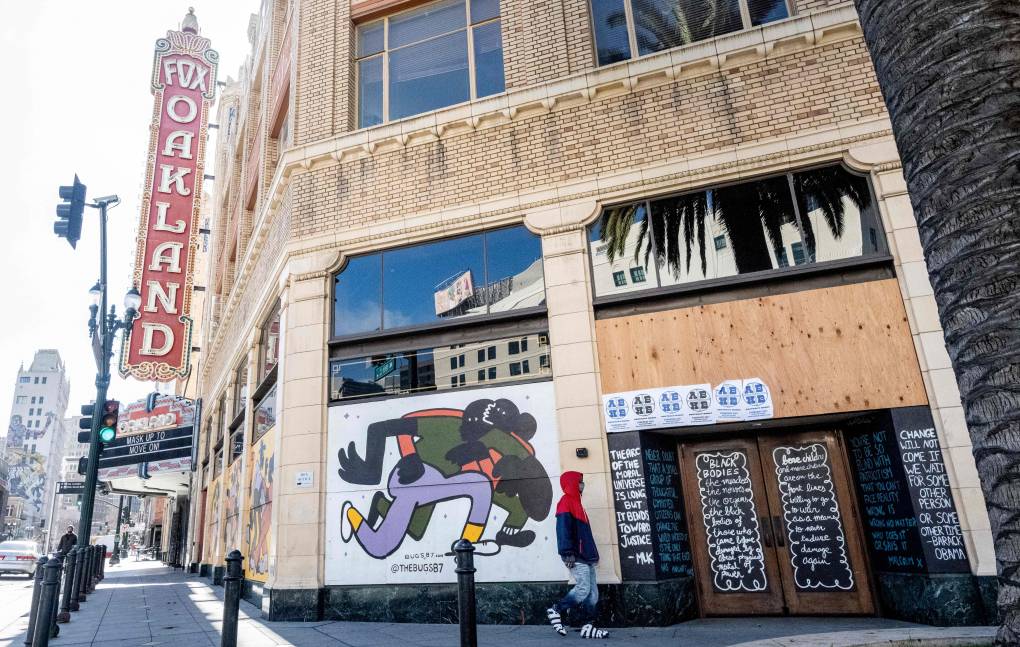
"caption": "A person walks by a boarded-up shop in Oakland on Feb. 12, 2021. Oakland residents of color have borne the economic brunt of the COVID-19 pandemic, with higher rates of unemployment and business failure. Oakland Resilient Families, a new initiative, aims to target aid to the most affected families.",
"description": null,
"title": "US-ECONOMY-POLITICS-MINORITIES-STIMULUS",
"credit": "Josh Edelson/AFP via Getty Images",
"status": "inherit",
"altTag": null,
"isLoading": false,
"fetchFailed": false
},
"news_11838849": {
"type": "attachments",
"id": "news_11838849",
"meta": {
"index": "attachments_1716263798",
"site": "news",
"id": "11838849",
"found": true
},
"parent": 11838665,
"imgSizes": {
"apple_news_ca_landscape_5_5": {
"file": "https://ww2.kqed.org/app/uploads/sites/10/2020/09/744-MARQUEE-1044x720.jpg",
"width": 1044,
"mimeType": "image/jpeg",
"height": 720
},
"apple_news_ca_square_4_0": {
"file": "https://ww2.kqed.org/app/uploads/sites/10/2020/09/744-MARQUEE-470x470.jpg",
"width": 470,
"mimeType": "image/jpeg",
"height": 470
},
"twentyfourteen-full-width": {
"file": "https://ww2.kqed.org/app/uploads/sites/10/2020/09/744-MARQUEE-1038x576.jpg",
"width": 1038,
"mimeType": "image/jpeg",
"height": 576
},
"thumbnail": {
"file": "https://ww2.kqed.org/app/uploads/sites/10/2020/09/744-MARQUEE-160x90.jpg",
"width": 160,
"mimeType": "image/jpeg",
"height": 90
},
"post-thumbnail": {
"file": "https://ww2.kqed.org/app/uploads/sites/10/2020/09/744-MARQUEE-672x372.jpg",
"width": 672,
"mimeType": "image/jpeg",
"height": 372
},
"kqedFullSize": {
"file": "https://ww2.kqed.org/app/uploads/sites/10/2020/09/744-MARQUEE.jpg",
"width": 1280,
"height": 720
},
"apple_news_ca_landscape_4_7": {
"file": "https://ww2.kqed.org/app/uploads/sites/10/2020/09/744-MARQUEE-632x474.jpg",
"width": 632,
"mimeType": "image/jpeg",
"height": 474
},
"large": {
"file": "https://ww2.kqed.org/app/uploads/sites/10/2020/09/744-MARQUEE-1020x574.jpg",
"width": 1020,
"mimeType": "image/jpeg",
"height": 574
},
"apple_news_ca_landscape_4_0": {
"file": "https://ww2.kqed.org/app/uploads/sites/10/2020/09/744-MARQUEE-536x402.jpg",
"width": 536,
"mimeType": "image/jpeg",
"height": 402
},
"apple_news_ca_portrait_12_9": {
"file": "https://ww2.kqed.org/app/uploads/sites/10/2020/09/744-MARQUEE-1122x720.jpg",
"width": 1122,
"mimeType": "image/jpeg",
"height": 720
},
"medium": {
"file": "https://ww2.kqed.org/app/uploads/sites/10/2020/09/744-MARQUEE-800x450.jpg",
"width": 800,
"mimeType": "image/jpeg",
"height": 450
},
"apple_news_ca_portrait_4_0": {
"file": "https://ww2.kqed.org/app/uploads/sites/10/2020/09/744-MARQUEE-354x472.jpg",
"width": 354,
"mimeType": "image/jpeg",
"height": 472
},
"apple_news_ca_portrait_9_7": {
"file": "https://ww2.kqed.org/app/uploads/sites/10/2020/09/744-MARQUEE-840x720.jpg",
"width": 840,
"mimeType": "image/jpeg",
"height": 720
},
"apple_news_ca_square_9_7": {
"file": "https://ww2.kqed.org/app/uploads/sites/10/2020/09/744-MARQUEE-1104x720.jpg",
"width": 1104,
"mimeType": "image/jpeg",
"height": 720
},
"apple_news_ca_portrait_4_7": {
"file": "https://ww2.kqed.org/app/uploads/sites/10/2020/09/744-MARQUEE-414x552.jpg",
"width": 414,
"mimeType": "image/jpeg",
"height": 552
},
"apple_news_ca_portrait_5_5": {
"file": "https://ww2.kqed.org/app/uploads/sites/10/2020/09/744-MARQUEE-687x720.jpg",
"width": 687,
"mimeType": "image/jpeg",
"height": 720
},
"apple_news_ca_square_4_7": {
"file": "https://ww2.kqed.org/app/uploads/sites/10/2020/09/744-MARQUEE-550x550.jpg",
"width": 550,
"mimeType": "image/jpeg",
"height": 550
},
"apple_news_ca_square_5_5": {
"file": "https://ww2.kqed.org/app/uploads/sites/10/2020/09/744-MARQUEE-912x720.jpg",
"width": 912,
"mimeType": "image/jpeg",
"height": 720
}
},
"publishDate": 1600477499,
"modified": 1600477499,
"caption": null,
"description": null,
"title": "744 MARQUEE",
"credit": null,
"status": "inherit",
"isLoading": false,
"fetchFailed": false
},
"news_11822490": {
"type": "attachments",
"id": "news_11822490",
"meta": {
"index": "attachments_1716263798",
"site": "news",
"id": "11822490",
"found": true
},
"parent": 11822469,
"imgSizes": {
"apple_news_ca_landscape_5_5": {
"file": "https://ww2.kqed.org/app/uploads/sites/10/2020/06/marincityprotest-quillian-200602-e1591142811384-1044x783.jpeg",
"width": 1044,
"mimeType": "image/jpeg",
"height": 783
},
"apple_news_ca_square_4_0": {
"file": "https://ww2.kqed.org/app/uploads/sites/10/2020/06/marincityprotest-quillian-200602-e1591142811384-470x470.jpeg",
"width": 470,
"mimeType": "image/jpeg",
"height": 470
},
"twentyfourteen-full-width": {
"file": "https://ww2.kqed.org/app/uploads/sites/10/2020/06/marincityprotest-quillian-200602-e1591142811384-1038x576.jpeg",
"width": 1038,
"mimeType": "image/jpeg",
"height": 576
},
"thumbnail": {
"file": "https://ww2.kqed.org/app/uploads/sites/10/2020/06/marincityprotest-quillian-200602-e1591142811384-160x99.jpeg",
"width": 160,
"mimeType": "image/jpeg",
"height": 99
},
"post-thumbnail": {
"file": "https://ww2.kqed.org/app/uploads/sites/10/2020/06/marincityprotest-quillian-200602-e1591142811384-672x372.jpeg",
"width": 672,
"mimeType": "image/jpeg",
"height": 372
},
"kqedFullSize": {
"file": "https://ww2.kqed.org/app/uploads/sites/10/2020/06/marincityprotest-quillian-200602-e1591142811384.jpeg",
"width": 1950,
"height": 1208
},
"apple_news_ca_landscape_4_7": {
"file": "https://ww2.kqed.org/app/uploads/sites/10/2020/06/marincityprotest-quillian-200602-e1591142811384-632x474.jpeg",
"width": 632,
"mimeType": "image/jpeg",
"height": 474
},
"large": {
"file": "https://ww2.kqed.org/app/uploads/sites/10/2020/06/marincityprotest-quillian-200602-e1591142811384-1020x632.jpeg",
"width": 1020,
"mimeType": "image/jpeg",
"height": 632
},
"apple_news_ca_landscape_4_0": {
"file": "https://ww2.kqed.org/app/uploads/sites/10/2020/06/marincityprotest-quillian-200602-e1591142811384-536x402.jpeg",
"width": 536,
"mimeType": "image/jpeg",
"height": 402
},
"apple_news_ca_portrait_12_9": {
"file": "https://ww2.kqed.org/app/uploads/sites/10/2020/06/marincityprotest-quillian-200602-e1591142811384-1122x1208.jpeg",
"width": 1122,
"mimeType": "image/jpeg",
"height": 1208
},
"medium": {
"file": "https://ww2.kqed.org/app/uploads/sites/10/2020/06/marincityprotest-quillian-200602-e1591142811384-800x496.jpeg",
"width": 800,
"mimeType": "image/jpeg",
"height": 496
},
"apple_news_ca_portrait_4_0": {
"file": "https://ww2.kqed.org/app/uploads/sites/10/2020/06/marincityprotest-quillian-200602-e1591142811384-354x472.jpeg",
"width": 354,
"mimeType": "image/jpeg",
"height": 472
},
"apple_news_ca_portrait_9_7": {
"file": "https://ww2.kqed.org/app/uploads/sites/10/2020/06/marincityprotest-quillian-200602-e1591142811384-840x1120.jpeg",
"width": 840,
"mimeType": "image/jpeg",
"height": 1120
},
"apple_news_ca_landscape_12_9": {
"file": "https://ww2.kqed.org/app/uploads/sites/10/2020/06/marincityprotest-quillian-200602-e1591142811384-1832x1208.jpeg",
"width": 1832,
"mimeType": "image/jpeg",
"height": 1208
},
"apple_news_ca_square_9_7": {
"file": "https://ww2.kqed.org/app/uploads/sites/10/2020/06/marincityprotest-quillian-200602-e1591142811384-1104x1104.jpeg",
"width": 1104,
"mimeType": "image/jpeg",
"height": 1104
},
"apple_news_ca_portrait_4_7": {
"file": "https://ww2.kqed.org/app/uploads/sites/10/2020/06/marincityprotest-quillian-200602-e1591142811384-414x552.jpeg",
"width": 414,
"mimeType": "image/jpeg",
"height": 552
},
"apple_news_ca_square_12_9": {
"file": "https://ww2.kqed.org/app/uploads/sites/10/2020/06/marincityprotest-quillian-200602-e1591142811384-1472x1208.jpeg",
"width": 1472,
"mimeType": "image/jpeg",
"height": 1208
},
"apple_news_ca_portrait_5_5": {
"file": "https://ww2.kqed.org/app/uploads/sites/10/2020/06/marincityprotest-quillian-200602-e1591142811384-687x916.jpeg",
"width": 687,
"mimeType": "image/jpeg",
"height": 916
},
"full-width": {
"file": "https://ww2.kqed.org/app/uploads/sites/10/2020/06/marincityprotest-quillian-200602-e1591142811384-1920x1189.jpeg",
"width": 1920,
"mimeType": "image/jpeg",
"height": 1189
},
"apple_news_ca_square_4_7": {
"file": "https://ww2.kqed.org/app/uploads/sites/10/2020/06/marincityprotest-quillian-200602-e1591142811384-550x550.jpeg",
"width": 550,
"mimeType": "image/jpeg",
"height": 550
},
"apple_news_ca_landscape_9_7": {
"file": "https://ww2.kqed.org/app/uploads/sites/10/2020/06/marincityprotest-quillian-200602-e1591142811384-1376x1032.jpeg",
"width": 1376,
"mimeType": "image/jpeg",
"height": 1032
},
"apple_news_ca_square_5_5": {
"file": "https://ww2.kqed.org/app/uploads/sites/10/2020/06/marincityprotest-quillian-200602-e1591142811384-912x912.jpeg",
"width": 912,
"mimeType": "image/jpeg",
"height": 912
}
},
"publishDate": 1591142647,
"modified": 1591148151,
"caption": "A crowd of several hundred gathered Tuesday in Marin City to protest police violence. ",
"description": "A crowd of several hundred gathered Tuesday in Marin City to protest police violence. ",
"title": "Marin City-George Floyd Protests",
"credit": "Kathleen Quillian/KQED",
"status": "inherit",
"isLoading": false,
"fetchFailed": false
},
"news_11803206": {
"type": "attachments",
"id": "news_11803206",
"meta": {
"index": "attachments_1716263798",
"site": "news",
"id": "11803206",
"found": true
},
"parent": 11803187,
"imgSizes": {
"apple_news_ca_landscape_5_5": {
"file": "https://ww2.kqed.org/app/uploads/sites/10/2020/02/RS41541_Search_Team_ERff9NcU4AAoSWR-qut-1044x783.jpg",
"width": 1044,
"mimeType": "image/jpeg",
"height": 783
},
"apple_news_ca_square_4_0": {
"file": "https://ww2.kqed.org/app/uploads/sites/10/2020/02/RS41541_Search_Team_ERff9NcU4AAoSWR-qut-470x470.jpg",
"width": 470,
"mimeType": "image/jpeg",
"height": 470
},
"twentyfourteen-full-width": {
"file": "https://ww2.kqed.org/app/uploads/sites/10/2020/02/RS41541_Search_Team_ERff9NcU4AAoSWR-qut-1038x576.jpg",
"width": 1038,
"mimeType": "image/jpeg",
"height": 576
},
"thumbnail": {
"file": "https://ww2.kqed.org/app/uploads/sites/10/2020/02/RS41541_Search_Team_ERff9NcU4AAoSWR-qut-160x120.jpg",
"width": 160,
"mimeType": "image/jpeg",
"height": 120
},
"post-thumbnail": {
"file": "https://ww2.kqed.org/app/uploads/sites/10/2020/02/RS41541_Search_Team_ERff9NcU4AAoSWR-qut-672x372.jpg",
"width": 672,
"mimeType": "image/jpeg",
"height": 372
},
"kqedFullSize": {
"file": "https://ww2.kqed.org/app/uploads/sites/10/2020/02/RS41541_Search_Team_ERff9NcU4AAoSWR-qut-e1582588067584.jpg",
"width": 1919,
"height": 1439
},
"apple_news_ca_landscape_4_7": {
"file": "https://ww2.kqed.org/app/uploads/sites/10/2020/02/RS41541_Search_Team_ERff9NcU4AAoSWR-qut-632x474.jpg",
"width": 632,
"mimeType": "image/jpeg",
"height": 474
},
"large": {
"file": "https://ww2.kqed.org/app/uploads/sites/10/2020/02/RS41541_Search_Team_ERff9NcU4AAoSWR-qut-1020x765.jpg",
"width": 1020,
"mimeType": "image/jpeg",
"height": 765
},
"apple_news_ca_landscape_4_0": {
"file": "https://ww2.kqed.org/app/uploads/sites/10/2020/02/RS41541_Search_Team_ERff9NcU4AAoSWR-qut-536x402.jpg",
"width": 536,
"mimeType": "image/jpeg",
"height": 402
},
"apple_news_ca_portrait_12_9": {
"file": "https://ww2.kqed.org/app/uploads/sites/10/2020/02/RS41541_Search_Team_ERff9NcU4AAoSWR-qut-1122x1440.jpg",
"width": 1122,
"mimeType": "image/jpeg",
"height": 1440
},
"medium": {
"file": "https://ww2.kqed.org/app/uploads/sites/10/2020/02/RS41541_Search_Team_ERff9NcU4AAoSWR-qut-800x600.jpg",
"width": 800,
"mimeType": "image/jpeg",
"height": 600
},
"apple_news_ca_portrait_4_0": {
"file": "https://ww2.kqed.org/app/uploads/sites/10/2020/02/RS41541_Search_Team_ERff9NcU4AAoSWR-qut-354x472.jpg",
"width": 354,
"mimeType": "image/jpeg",
"height": 472
},
"apple_news_ca_portrait_9_7": {
"file": "https://ww2.kqed.org/app/uploads/sites/10/2020/02/RS41541_Search_Team_ERff9NcU4AAoSWR-qut-840x1120.jpg",
"width": 840,
"mimeType": "image/jpeg",
"height": 1120
},
"apple_news_ca_landscape_12_9": {
"file": "https://ww2.kqed.org/app/uploads/sites/10/2020/02/RS41541_Search_Team_ERff9NcU4AAoSWR-qut-1832x1374.jpg",
"width": 1832,
"mimeType": "image/jpeg",
"height": 1374
},
"apple_news_ca_square_9_7": {
"file": "https://ww2.kqed.org/app/uploads/sites/10/2020/02/RS41541_Search_Team_ERff9NcU4AAoSWR-qut-1104x1104.jpg",
"width": 1104,
"mimeType": "image/jpeg",
"height": 1104
},
"apple_news_ca_portrait_4_7": {
"file": "https://ww2.kqed.org/app/uploads/sites/10/2020/02/RS41541_Search_Team_ERff9NcU4AAoSWR-qut-414x552.jpg",
"width": 414,
"mimeType": "image/jpeg",
"height": 552
},
"apple_news_ca_square_12_9": {
"file": "https://ww2.kqed.org/app/uploads/sites/10/2020/02/RS41541_Search_Team_ERff9NcU4AAoSWR-qut-1472x1440.jpg",
"width": 1472,
"mimeType": "image/jpeg",
"height": 1440
},
"apple_news_ca_portrait_5_5": {
"file": "https://ww2.kqed.org/app/uploads/sites/10/2020/02/RS41541_Search_Team_ERff9NcU4AAoSWR-qut-687x916.jpg",
"width": 687,
"mimeType": "image/jpeg",
"height": 916
},
"full-width": {
"file": "https://ww2.kqed.org/app/uploads/sites/10/2020/02/RS41541_Search_Team_ERff9NcU4AAoSWR-qut-1920x1440.jpg",
"width": 1920,
"mimeType": "image/jpeg",
"height": 1440
},
"apple_news_ca_square_4_7": {
"file": "https://ww2.kqed.org/app/uploads/sites/10/2020/02/RS41541_Search_Team_ERff9NcU4AAoSWR-qut-550x550.jpg",
"width": 550,
"mimeType": "image/jpeg",
"height": 550
},
"apple_news_ca_landscape_9_7": {
"file": "https://ww2.kqed.org/app/uploads/sites/10/2020/02/RS41541_Search_Team_ERff9NcU4AAoSWR-qut-1376x1032.jpg",
"width": 1376,
"mimeType": "image/jpeg",
"height": 1032
},
"apple_news_ca_square_5_5": {
"file": "https://ww2.kqed.org/app/uploads/sites/10/2020/02/RS41541_Search_Team_ERff9NcU4AAoSWR-qut-912x912.jpg",
"width": 912,
"mimeType": "image/jpeg",
"height": 912
}
},
"publishDate": 1582585542,
"modified": 1582588054,
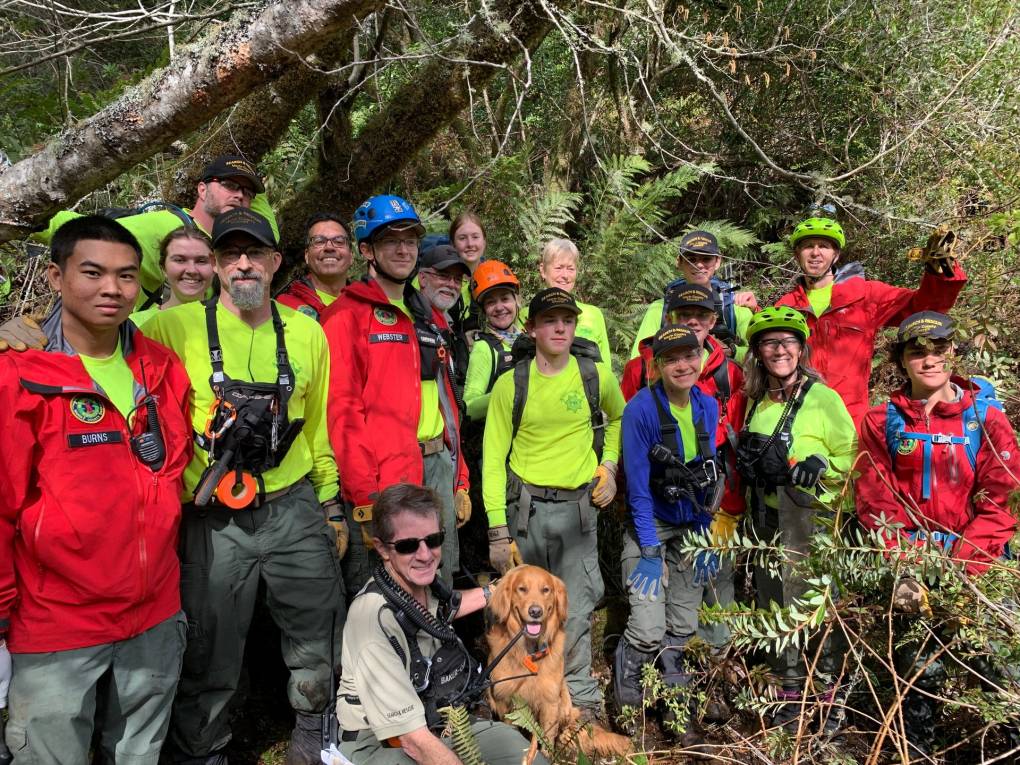
"caption": "The rescue team that found the missing couple on Saturday (led by rescue dog Groot).",
"description": "The rescue team that found the missing couple on Saturday (led by rescue dog Groot).",
"title": "RS41541_Search_Team_ERff9NcU4AAoSWR-qut",
"credit": "Courtesy of Marin County Sheriff via Twitter",
"status": "inherit",
"isLoading": false,
"fetchFailed": false
},
"news_11801993": {
"type": "attachments",
"id": "news_11801993",
"meta": {
"index": "attachments_1716263798",
"site": "news",
"id": "11801993",
"found": true
},
"parent": 11801992,
"imgSizes": {
"apple_news_ca_landscape_5_5": {
"file": "https://ww2.kqed.org/app/uploads/sites/10/2020/02/thumbnail_Trailblazers-MAH4-1044x783.jpg",
"width": 1044,
"mimeType": "image/jpeg",
"height": 783
},
"apple_news_ca_square_4_0": {
"file": "https://ww2.kqed.org/app/uploads/sites/10/2020/02/thumbnail_Trailblazers-MAH4-470x470.jpg",
"width": 470,
"mimeType": "image/jpeg",
"height": 470
},
"twentyfourteen-full-width": {
"file": "https://ww2.kqed.org/app/uploads/sites/10/2020/02/thumbnail_Trailblazers-MAH4-1038x576.jpg",
"width": 1038,
"mimeType": "image/jpeg",
"height": 576
},
"thumbnail": {
"file": "https://ww2.kqed.org/app/uploads/sites/10/2020/02/thumbnail_Trailblazers-MAH4-160x120.jpg",
"width": 160,
"mimeType": "image/jpeg",
"height": 120
},
"post-thumbnail": {
"file": "https://ww2.kqed.org/app/uploads/sites/10/2020/02/thumbnail_Trailblazers-MAH4-672x372.jpg",
"width": 672,
"mimeType": "image/jpeg",
"height": 372
},
"kqedFullSize": {
"file": "https://ww2.kqed.org/app/uploads/sites/10/2020/02/thumbnail_Trailblazers-MAH4.jpg",
"width": 1280,
"height": 960
},
"apple_news_ca_landscape_4_7": {
"file": "https://ww2.kqed.org/app/uploads/sites/10/2020/02/thumbnail_Trailblazers-MAH4-632x474.jpg",
"width": 632,
"mimeType": "image/jpeg",
"height": 474
},
"large": {
"file": "https://ww2.kqed.org/app/uploads/sites/10/2020/02/thumbnail_Trailblazers-MAH4-1020x765.jpg",
"width": 1020,
"mimeType": "image/jpeg",
"height": 765
},
"apple_news_ca_landscape_4_0": {
"file": "https://ww2.kqed.org/app/uploads/sites/10/2020/02/thumbnail_Trailblazers-MAH4-536x402.jpg",
"width": 536,
"mimeType": "image/jpeg",
"height": 402
},
"apple_news_ca_portrait_12_9": {
"file": "https://ww2.kqed.org/app/uploads/sites/10/2020/02/thumbnail_Trailblazers-MAH4-1122x960.jpg",
"width": 1122,
"mimeType": "image/jpeg",
"height": 960
},
"medium": {
"file": "https://ww2.kqed.org/app/uploads/sites/10/2020/02/thumbnail_Trailblazers-MAH4-800x600.jpg",
"width": 800,
"mimeType": "image/jpeg",
"height": 600
},
"apple_news_ca_portrait_4_0": {
"file": "https://ww2.kqed.org/app/uploads/sites/10/2020/02/thumbnail_Trailblazers-MAH4-354x472.jpg",
"width": 354,
"mimeType": "image/jpeg",
"height": 472
},
"apple_news_ca_portrait_9_7": {
"file": "https://ww2.kqed.org/app/uploads/sites/10/2020/02/thumbnail_Trailblazers-MAH4-840x960.jpg",
"width": 840,
"mimeType": "image/jpeg",
"height": 960
},
"apple_news_ca_square_9_7": {
"file": "https://ww2.kqed.org/app/uploads/sites/10/2020/02/thumbnail_Trailblazers-MAH4-1104x960.jpg",
"width": 1104,
"mimeType": "image/jpeg",
"height": 960
},
"apple_news_ca_portrait_4_7": {
"file": "https://ww2.kqed.org/app/uploads/sites/10/2020/02/thumbnail_Trailblazers-MAH4-414x552.jpg",
"width": 414,
"mimeType": "image/jpeg",
"height": 552
},
"apple_news_ca_portrait_5_5": {
"file": "https://ww2.kqed.org/app/uploads/sites/10/2020/02/thumbnail_Trailblazers-MAH4-687x916.jpg",
"width": 687,
"mimeType": "image/jpeg",
"height": 916
},
"apple_news_ca_square_4_7": {
"file": "https://ww2.kqed.org/app/uploads/sites/10/2020/02/thumbnail_Trailblazers-MAH4-550x550.jpg",
"width": 550,
"mimeType": "image/jpeg",
"height": 550
},
"apple_news_ca_square_5_5": {
"file": "https://ww2.kqed.org/app/uploads/sites/10/2020/02/thumbnail_Trailblazers-MAH4-912x912.jpg",
"width": 912,
"mimeType": "image/jpeg",
"height": 912
}
},
"publishDate": 1581865032,
"modified": 1582055343,
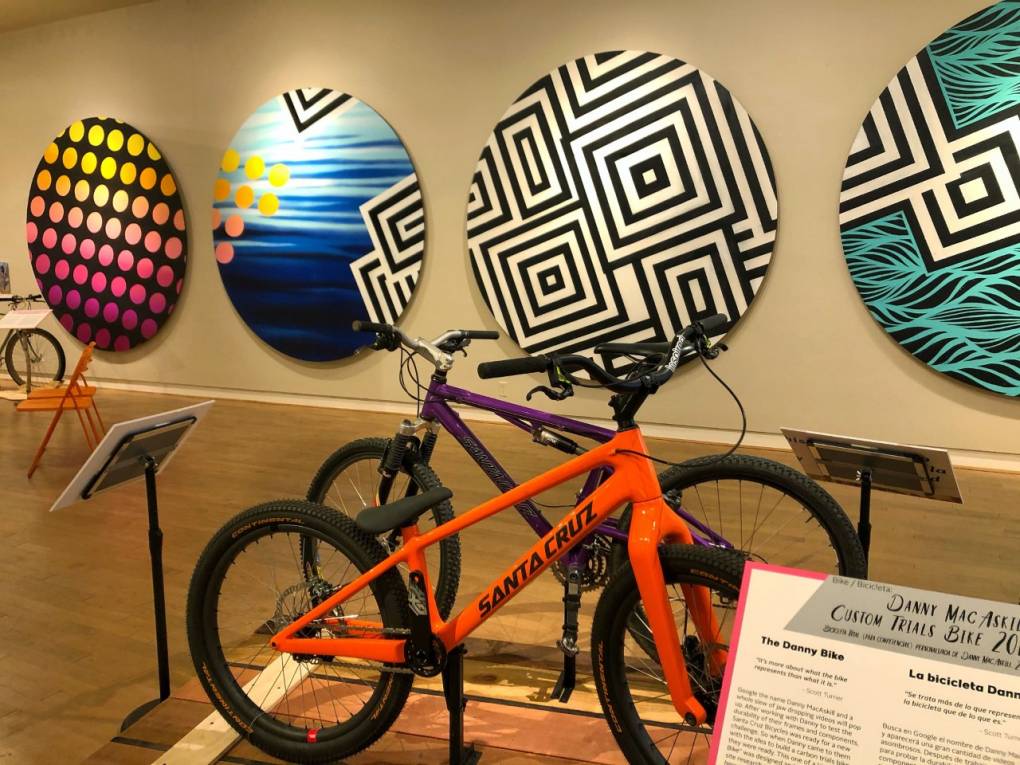
"caption": "'Trailblazers: The Creative Story Behind Mountain Biking in Santa Cruz' runs Feb. 7 to Sept. 20, 2020, at the Santa Cruz Museum of Art & History.",
"description": "Trailblazers: The Creative Story Behind Mountain Biking in Santa Cruz runs February 7 - September 20, 2020 at the Santa Cruz Museum of Art & History.",
"title": "thumbnail_Trailblazers-MAH4",
"credit": "Courtesy of Santa Cruz Museum of Art & History ",
"status": "inherit",
"isLoading": false,
"fetchFailed": false
},
"news_11767052": {
"type": "attachments",
"id": "news_11767052",
"meta": {
"index": "attachments_1716263798",
"site": "news",
"id": "11767052",
"found": true
},
"parent": 11767037,
"imgSizes": {
"apple_news_ca_landscape_5_5": {
"file": "https://ww2.kqed.org/app/uploads/sites/10/2019/08/sausalitomarincity_081219_final-1044x783.jpg",
"width": 1044,
"mimeType": "image/jpeg",
"height": 783
},
"apple_news_ca_square_4_0": {
"file": "https://ww2.kqed.org/app/uploads/sites/10/2019/08/sausalitomarincity_081219_final-470x470.jpg",
"width": 470,
"mimeType": "image/jpeg",
"height": 470
},
"twentyfourteen-full-width": {
"file": "https://ww2.kqed.org/app/uploads/sites/10/2019/08/sausalitomarincity_081219_final-1038x576.jpg",
"width": 1038,
"mimeType": "image/jpeg",
"height": 576
},
"thumbnail": {
"file": "https://ww2.kqed.org/app/uploads/sites/10/2019/08/sausalitomarincity_081219_final-160x129.jpg",
"width": 160,
"mimeType": "image/jpeg",
"height": 129
},
"post-thumbnail": {
"file": "https://ww2.kqed.org/app/uploads/sites/10/2019/08/sausalitomarincity_081219_final-672x372.jpg",
"width": 672,
"mimeType": "image/jpeg",
"height": 372
},
"kqedFullSize": {
"file": "https://ww2.kqed.org/app/uploads/sites/10/2019/08/sausalitomarincity_081219_final.jpg",
"width": 1920,
"height": 1547
},
"apple_news_ca_landscape_4_7": {
"file": "https://ww2.kqed.org/app/uploads/sites/10/2019/08/sausalitomarincity_081219_final-632x474.jpg",
"width": 632,
"mimeType": "image/jpeg",
"height": 474
},
"large": {
"file": "https://ww2.kqed.org/app/uploads/sites/10/2019/08/sausalitomarincity_081219_final-1020x822.jpg",
"width": 1020,
"mimeType": "image/jpeg",
"height": 822
},
"complete_open_graph": {
"file": "https://ww2.kqed.org/app/uploads/sites/10/2019/08/sausalitomarincity_081219_final-1200x967.jpg",
"width": 1200,
"mimeType": "image/jpeg",
"height": 967
},
"apple_news_ca_landscape_4_0": {
"file": "https://ww2.kqed.org/app/uploads/sites/10/2019/08/sausalitomarincity_081219_final-536x402.jpg",
"width": 536,
"mimeType": "image/jpeg",
"height": 402
},
"apple_news_ca_portrait_12_9": {
"file": "https://ww2.kqed.org/app/uploads/sites/10/2019/08/sausalitomarincity_081219_final-1122x1496.jpg",
"width": 1122,
"mimeType": "image/jpeg",
"height": 1496
},
"medium": {
"file": "https://ww2.kqed.org/app/uploads/sites/10/2019/08/sausalitomarincity_081219_final-800x645.jpg",
"width": 800,
"mimeType": "image/jpeg",
"height": 645
},
"apple_news_ca_portrait_4_0": {
"file": "https://ww2.kqed.org/app/uploads/sites/10/2019/08/sausalitomarincity_081219_final-354x472.jpg",
"width": 354,
"mimeType": "image/jpeg",
"height": 472
},
"apple_news_ca_portrait_9_7": {
"file": "https://ww2.kqed.org/app/uploads/sites/10/2019/08/sausalitomarincity_081219_final-840x1120.jpg",
"width": 840,
"mimeType": "image/jpeg",
"height": 1120
},
"apple_news_ca_landscape_12_9": {
"file": "https://ww2.kqed.org/app/uploads/sites/10/2019/08/sausalitomarincity_081219_final-1832x1374.jpg",
"width": 1832,
"mimeType": "image/jpeg",
"height": 1374
},
"apple_news_ca_square_9_7": {
"file": "https://ww2.kqed.org/app/uploads/sites/10/2019/08/sausalitomarincity_081219_final-1104x1104.jpg",
"width": 1104,
"mimeType": "image/jpeg",
"height": 1104
},
"apple_news_ca_portrait_4_7": {
"file": "https://ww2.kqed.org/app/uploads/sites/10/2019/08/sausalitomarincity_081219_final-414x552.jpg",
"width": 414,
"mimeType": "image/jpeg",
"height": 552
},
"apple_news_ca_square_12_9": {
"file": "https://ww2.kqed.org/app/uploads/sites/10/2019/08/sausalitomarincity_081219_final-1472x1472.jpg",
"width": 1472,
"mimeType": "image/jpeg",
"height": 1472
},
"apple_news_ca_portrait_5_5": {
"file": "https://ww2.kqed.org/app/uploads/sites/10/2019/08/sausalitomarincity_081219_final-687x916.jpg",
"width": 687,
"mimeType": "image/jpeg",
"height": 916
},
"full-width": {
"file": "https://ww2.kqed.org/app/uploads/sites/10/2019/08/sausalitomarincity_081219_final-1920x1547.jpg",
"width": 1920,
"mimeType": "image/jpeg",
"height": 1547
},
"apple_news_ca_square_4_7": {
"file": "https://ww2.kqed.org/app/uploads/sites/10/2019/08/sausalitomarincity_081219_final-550x550.jpg",
"width": 550,
"mimeType": "image/jpeg",
"height": 550
},
"apple_news_ca_landscape_9_7": {
"file": "https://ww2.kqed.org/app/uploads/sites/10/2019/08/sausalitomarincity_081219_final-1376x1032.jpg",
"width": 1376,
"mimeType": "image/jpeg",
"height": 1032
},
"apple_news_ca_square_5_5": {
"file": "https://ww2.kqed.org/app/uploads/sites/10/2019/08/sausalitomarincity_081219_final-912x912.jpg",
"width": 912,
"mimeType": "image/jpeg",
"height": 912
}
},
"publishDate": 1565642303,
"modified": 1565642340,
"caption": null,
"description": null,
"title": "sausalitomarincity_081219_final",
"credit": null,
"status": "inherit",
"isLoading": false,
"fetchFailed": false
},
"news_11766771": {
"type": "attachments",
"id": "news_11766771",
"meta": {
"index": "attachments_1716263798",
"site": "news",
"id": "11766771",
"found": true
},
"parent": 11766733,
"imgSizes": {
"apple_news_ca_landscape_5_5": {
"file": "https://ww2.kqed.org/app/uploads/sites/10/2019/08/bayside-1044x783.jpg",
"width": 1044,
"mimeType": "image/jpeg",
"height": 783
},
"apple_news_ca_square_4_0": {
"file": "https://ww2.kqed.org/app/uploads/sites/10/2019/08/bayside-470x470.jpg",
"width": 470,
"mimeType": "image/jpeg",
"height": 470
},
"twentyfourteen-full-width": {
"file": "https://ww2.kqed.org/app/uploads/sites/10/2019/08/bayside-1038x576.jpg",
"width": 1038,
"mimeType": "image/jpeg",
"height": 576
},
"thumbnail": {
"file": "https://ww2.kqed.org/app/uploads/sites/10/2019/08/bayside-160x120.jpg",
"width": 160,
"mimeType": "image/jpeg",
"height": 120
},
"post-thumbnail": {
"file": "https://ww2.kqed.org/app/uploads/sites/10/2019/08/bayside-672x372.jpg",
"width": 672,
"mimeType": "image/jpeg",
"height": 372
},
"kqedFullSize": {
"file": "https://ww2.kqed.org/app/uploads/sites/10/2019/08/bayside.jpg",
"width": 1632,
"height": 1224
},
"apple_news_ca_landscape_4_7": {
"file": "https://ww2.kqed.org/app/uploads/sites/10/2019/08/bayside-632x474.jpg",
"width": 632,
"mimeType": "image/jpeg",
"height": 474
},
"large": {
"file": "https://ww2.kqed.org/app/uploads/sites/10/2019/08/bayside-1020x765.jpg",
"width": 1020,
"mimeType": "image/jpeg",
"height": 765
},
"complete_open_graph": {
"file": "https://ww2.kqed.org/app/uploads/sites/10/2019/08/bayside-1200x900.jpg",
"width": 1200,
"mimeType": "image/jpeg",
"height": 900
},
"apple_news_ca_landscape_4_0": {
"file": "https://ww2.kqed.org/app/uploads/sites/10/2019/08/bayside-536x402.jpg",
"width": 536,
"mimeType": "image/jpeg",
"height": 402
},
"apple_news_ca_portrait_12_9": {
"file": "https://ww2.kqed.org/app/uploads/sites/10/2019/08/bayside-1122x1224.jpg",
"width": 1122,
"mimeType": "image/jpeg",
"height": 1224
},
"medium": {
"file": "https://ww2.kqed.org/app/uploads/sites/10/2019/08/bayside-800x600.jpg",
"width": 800,
"mimeType": "image/jpeg",
"height": 600
},
"apple_news_ca_portrait_4_0": {
"file": "https://ww2.kqed.org/app/uploads/sites/10/2019/08/bayside-354x472.jpg",
"width": 354,
"mimeType": "image/jpeg",
"height": 472
},
"apple_news_ca_portrait_9_7": {
"file": "https://ww2.kqed.org/app/uploads/sites/10/2019/08/bayside-840x1120.jpg",
"width": 840,
"mimeType": "image/jpeg",
"height": 1120
},
"apple_news_ca_square_9_7": {
"file": "https://ww2.kqed.org/app/uploads/sites/10/2019/08/bayside-1104x1104.jpg",
"width": 1104,
"mimeType": "image/jpeg",
"height": 1104
},
"apple_news_ca_portrait_4_7": {
"file": "https://ww2.kqed.org/app/uploads/sites/10/2019/08/bayside-414x552.jpg",
"width": 414,
"mimeType": "image/jpeg",
"height": 552
},
"apple_news_ca_square_12_9": {
"file": "https://ww2.kqed.org/app/uploads/sites/10/2019/08/bayside-1472x1224.jpg",
"width": 1472,
"mimeType": "image/jpeg",
"height": 1224
},
"apple_news_ca_portrait_5_5": {
"file": "https://ww2.kqed.org/app/uploads/sites/10/2019/08/bayside-687x916.jpg",
"width": 687,
"mimeType": "image/jpeg",
"height": 916
},
"apple_news_ca_square_4_7": {
"file": "https://ww2.kqed.org/app/uploads/sites/10/2019/08/bayside-550x550.jpg",
"width": 550,
"mimeType": "image/jpeg",
"height": 550
},
"apple_news_ca_landscape_9_7": {
"file": "https://ww2.kqed.org/app/uploads/sites/10/2019/08/bayside-1376x1032.jpg",
"width": 1376,
"mimeType": "image/jpeg",
"height": 1032
},
"apple_news_ca_square_5_5": {
"file": "https://ww2.kqed.org/app/uploads/sites/10/2019/08/bayside-912x912.jpg",
"width": 912,
"mimeType": "image/jpeg",
"height": 912
}
},
"publishDate": 1565394212,
"modified": 1565397854,
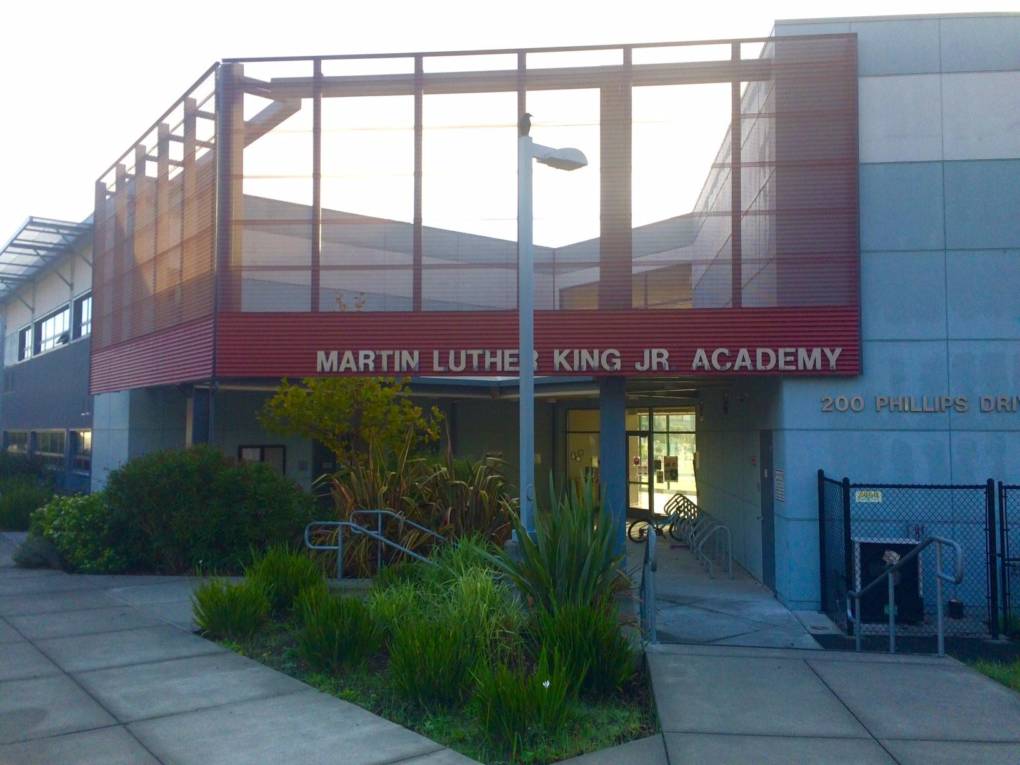
"caption": "Attorney General Xavier Becerra said on Friday, Aug. 9, 2019, that the Bayside Martin Luther King Jr. Academy in Sausalito was created in 2013 primarily for African American and Hispanic students from Marin City, and had been intentionally starved of resources in order to benefit a nearby charter school with more white students. ",
"description": null,
"title": "bayside",
"credit": "Tiffany Camhi/KQED",
"status": "inherit",
"isLoading": false,
"fetchFailed": false
},
"news_11716784": {
"type": "attachments",
"id": "news_11716784",
"meta": {
"index": "attachments_1716263798",
"site": "news",
"id": "11716784",
"found": true
},
"parent": 11716715,
"imgSizes": {
"twentyfourteen-full-width": {
"file": "https://ww2.kqed.org/app/uploads/sites/10/2019/01/SewageTruck-1038x576.jpg",
"width": 1038,
"mimeType": "image/jpeg",
"height": 576
},
"thumbnail": {
"file": "https://ww2.kqed.org/app/uploads/sites/10/2019/01/SewageTruck-160x127.jpg",
"width": 160,
"mimeType": "image/jpeg",
"height": 127
},
"post-thumbnail": {
"file": "https://ww2.kqed.org/app/uploads/sites/10/2019/01/SewageTruck-672x372.jpg",
"width": 672,
"mimeType": "image/jpeg",
"height": 372
},
"kqedFullSize": {
"file": "https://ww2.kqed.org/app/uploads/sites/10/2019/01/SewageTruck.jpg",
"width": 1920,
"height": 1528
},
"large": {
"file": "https://ww2.kqed.org/app/uploads/sites/10/2019/01/SewageTruck-1020x812.jpg",
"width": 1020,
"mimeType": "image/jpeg",
"height": 812
},
"complete_open_graph": {
"file": "https://ww2.kqed.org/app/uploads/sites/10/2019/01/SewageTruck-1200x955.jpg",
"width": 1200,
"mimeType": "image/jpeg",
"height": 955
},
"guest-author-50": {
"file": "https://ww2.kqed.org/app/uploads/sites/10/2019/01/SewageTruck-50x50.jpg",
"width": 50,
"mimeType": "image/jpeg",
"height": 50
},
"guest-author-96": {
"file": "https://ww2.kqed.org/app/uploads/sites/10/2019/01/SewageTruck-96x96.jpg",
"width": 96,
"mimeType": "image/jpeg",
"height": 96
},
"medium": {
"file": "https://ww2.kqed.org/app/uploads/sites/10/2019/01/SewageTruck-800x637.jpg",
"width": 800,
"mimeType": "image/jpeg",
"height": 637
},
"guest-author-64": {
"file": "https://ww2.kqed.org/app/uploads/sites/10/2019/01/SewageTruck-64x64.jpg",
"width": 64,
"mimeType": "image/jpeg",
"height": 64
},
"guest-author-32": {
"file": "https://ww2.kqed.org/app/uploads/sites/10/2019/01/SewageTruck-32x32.jpg",
"width": 32,
"mimeType": "image/jpeg",
"height": 32
},
"full-width": {
"file": "https://ww2.kqed.org/app/uploads/sites/10/2019/01/SewageTruck-1920x1528.jpg",
"width": 1920,
"mimeType": "image/jpeg",
"height": 1528
},
"detail": {
"file": "https://ww2.kqed.org/app/uploads/sites/10/2019/01/SewageTruck-150x150.jpg",
"width": 150,
"mimeType": "image/jpeg",
"height": 150
},
"guest-author-128": {
"file": "https://ww2.kqed.org/app/uploads/sites/10/2019/01/SewageTruck-128x128.jpg",
"width": 128,
"mimeType": "image/jpeg",
"height": 128
}
},
"publishDate": 1546984393,
"modified": 1546989566,
"caption": "Crews work to clean up a sewage spill in San Anselmo that took place on Jan. 6, 2019.",
"description": "Crews work to clean up a sewage spill in San Anselmo that took place on Jan. 6, 2018.",
"title": "SewageTruck",
"credit": "Courtesy of Ross Valley Sanitary District",
"status": "inherit",
"isLoading": false,
"fetchFailed": false
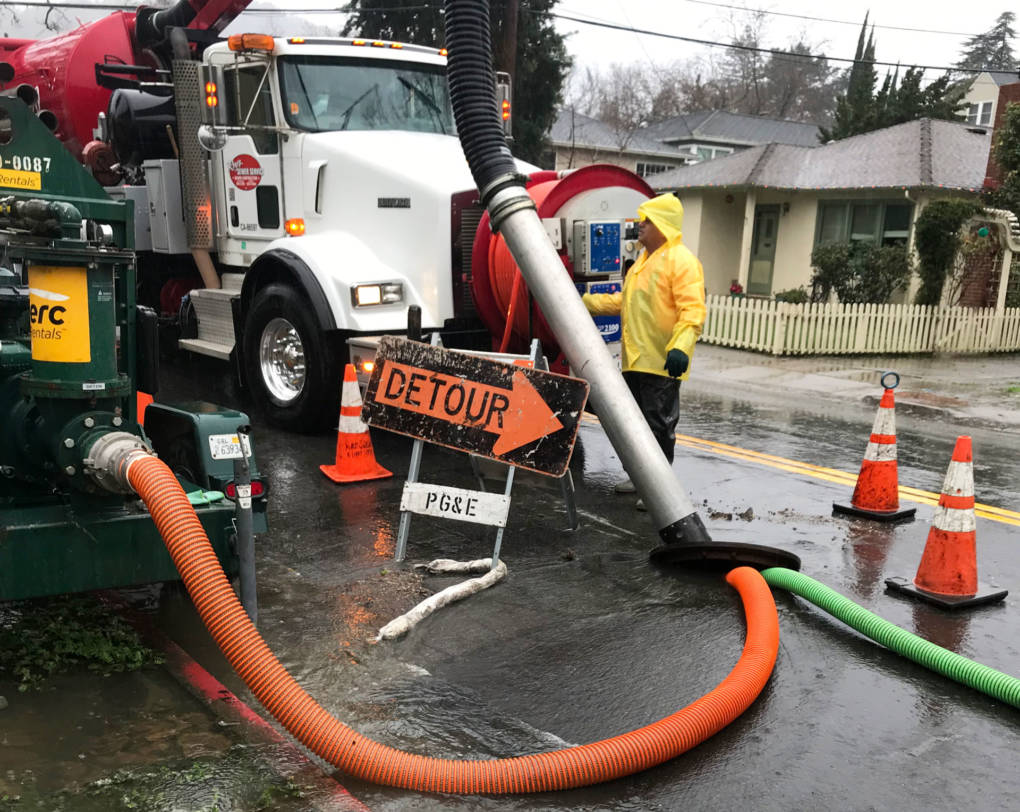
}
},
"audioPlayerReducer": {
"postId": "stream_live",
"isPaused": true,
"isPlaying": false,
"pfsActive": false,
"pledgeModalIsOpen": true,
"playerDrawerIsOpen": false,
"liveAudioPlayStartedAt": 0,
"liveAudioPlayContext": ""
},
"authorsReducer": {
"byline_news_11892561": {
"type": "authors",
"id": "byline_news_11892561",
"meta": {
"override": true
},
"slug": "byline_news_11892561",
"name": "Don Thompson \u003cbr> Associated Press",
"isLoading": false
},
"byline_news_11803187": {
"type": "authors",
"id": "byline_news_11803187",
"meta": {
"override": true
},
"slug": "byline_news_11803187",
"name": "The Associated Press",
"isLoading": false
},
"byline_news_11766733": {
"type": "authors",
"id": "byline_news_11766733",
"meta": {
"override": true
},
"slug": "byline_news_11766733",
"name": "Janie Har\u003cbr>Associated Press",
"isLoading": false
},
"gmeline": {
"type": "authors",
"id": "185",
"meta": {
"index": "authors_1716337520",
"id": "185",
"found": true
},
"name": "Gabe Meline",
"firstName": "Gabe",
"lastName": "Meline",
"slug": "gmeline",
"email": "gmeline@kqed.org",
"display_author_email": true,
"staff_mastheads": [
"arts"
],
"title": "Senior Editor, KQED Arts & Culture",
"bio": "Gabe Meline entered journalism at age 15 making photocopied zines, and has since earned awards from the Edward R. Murrow Awards, the Society for Professional Journalists, the Online Journalism Awards, the Association of Alternative Newsweeklies and the California Newspaper Publishers Association. Prior to KQED, he was the editor of the \u003cem>North Bay Bohemian\u003c/em> and a touring musician. He lives with his wife and daughter in his hometown of Santa Rosa, CA.",
"avatar": "https://secure.gravatar.com/avatar/5bebe57be0d8bc2dd318934feb47299e2d2d10cba28d09d8d7afb389a2ce2bdd?s=600&d=blank&r=g",
"twitter": null,
"bluesky": null,
"facebook": null,
"instagram": null,
"linkedin": null,
"sites": [
{
"site": "",
"roles": [
"editor"
]
},
{
"site": "arts",
"roles": [
"administrator"
]
},
{
"site": "artschool",
"roles": [
"editor"
]
},
{
"site": "news",
"roles": [
"author"
]
},
{
"site": "pop",
"roles": [
"editor"
]
},
{
"site": "bayareabites",
"roles": [
"editor"
]
},
{
"site": "food",
"roles": [
"editor"
]
},
{
"site": "forum",
"roles": [
"administrator"
]
},
{
"site": "liveblog",
"roles": [
"editor"
]
},
{
"site": "hiphop",
"roles": [
"editor"
]
}
],
"headData": {
"title": "Gabe Meline | KQED",
"description": "Senior Editor, KQED Arts & Culture",
"ogImgSrc": "https://secure.gravatar.com/avatar/5bebe57be0d8bc2dd318934feb47299e2d2d10cba28d09d8d7afb389a2ce2bdd?s=600&d=blank&r=g",
"twImgSrc": "https://secure.gravatar.com/avatar/5bebe57be0d8bc2dd318934feb47299e2d2d10cba28d09d8d7afb389a2ce2bdd?s=600&d=blank&r=g"
},
"isLoading": false,
"link": "/author/gmeline"
},
"cmiller": {
"type": "authors",
"id": "221",
"meta": {
"index": "authors_1716337520",
"id": "221",
"found": true
},
"name": "Craig Miller",
"firstName": "Craig",
"lastName": "Miller",
"slug": "cmiller",
"email": "craig@voxterra.net",
"display_author_email": false,
"staff_mastheads": [
"science"
],
"title": "Editor Emeritus, Science",
"bio": "Craig is a former KQED Science editor, specializing in weather, climate, water & energy issues, with a little seismology thrown in just to shake things up. Prior to that, he launched and led the station's award-winning multimedia project, Climate Watch. Craig is also an accomplished writer/producer of television documentaries, with a focus on natural resource issues.",
"avatar": "https://secure.gravatar.com/avatar/b91661df645e001a9cafe0861fa685f9?s=600&d=blank&r=g",
"twitter": "voxterra",
"facebook": null,
"instagram": null,
"linkedin": null,
"sites": [
{
"site": "news",
"roles": [
"author"
]
},
{
"site": "futureofyou",
"roles": [
"editor"
]
},
{
"site": "stateofhealth",
"roles": [
"author"
]
},
{
"site": "science",
"roles": [
"editor"
]
},
{
"site": "quest",
"roles": [
"editor"
]
}
],
"headData": {
"title": "Craig Miller | KQED",
"description": "Editor Emeritus, Science",
"ogImgSrc": "https://secure.gravatar.com/avatar/b91661df645e001a9cafe0861fa685f9?s=600&d=blank&r=g",
"twImgSrc": "https://secure.gravatar.com/avatar/b91661df645e001a9cafe0861fa685f9?s=600&d=blank&r=g"
},
"isLoading": false,
"link": "/author/cmiller"
},
"danbrekke": {
"type": "authors",
"id": "222",
"meta": {
"index": "authors_1716337520",
"id": "222",
"found": true
},
"name": "Dan Brekke",
"firstName": "Dan",
"lastName": "Brekke",
"slug": "danbrekke",
"email": "dbrekke@kqed.org",
"display_author_email": true,
"staff_mastheads": [
"news",
"science"
],
"title": "KQED Editor and Reporter",
"bio": "Dan Brekke is a reporter and editor for KQED News, responsible for coverage of topics ranging from California water issues to the Bay Area's transportation challenges. In a newsroom career that began in Chicago in 1972, Dan has worked for \u003cem>The San Francisco Examiner,\u003c/em> Wired and TechTV and has been published in The New York Times, The New York Times Magazine, Business 2.0, Salon and elsewhere.\r\n\r\nSince joining KQED in 2007, Dan has reported, edited and produced both radio and online features and breaking news pieces. He has shared as both editor and reporter in four Society of Professional Journalists Norcal Excellence in Journalism awards and one Edward R. Murrow regional award. He was chosen for a spring 2017 residency at the Mesa Refuge to advance his research on California salmon.\r\n\r\nEmail Dan at: \u003ca href=\"mailto:dbrekke@kqed.org\">dbrekke@kqed.org\u003c/a>\r\n\r\n\u003cstrong>Twitter:\u003c/strong> \u003ca href=\"https://twitter.com/danbrekke\" rel=\"noopener noreferrer\">twitter.com/danbrekke\u003c/a>\r\n\u003cstrong>Facebook:\u003c/strong> \u003ca href=\"https://www.facebook.com/danbrekke\" rel=\"noopener noreferrer\">www.facebook.com/danbrekke\u003c/a>\r\n\u003cstrong>LinkedIn:\u003c/strong> \u003ca href=\"https://www.linkedin.com/in/danbrekke\" rel=\"noopener noreferrer\">www.linkedin.com/in/danbrekke\u003c/a>",
"avatar": "https://secure.gravatar.com/avatar/8f1f0d2a978fb3b23426c922c7e2af558fa36905b49c4ce76a97dc3c72d27226?s=600&d=mm&r=g",
"twitter": "danbrekke",
"bluesky": null,
"facebook": null,
"instagram": "https://www.instagram.com/dan.brekke/",
"linkedin": "https://www.linkedin.com/in/danbrekke/",
"sites": [
{
"site": "news",
"roles": [
"administrator",
"create_posts"
]
},
{
"site": "stateofhealth",
"roles": [
"editor"
]
},
{
"site": "science",
"roles": [
"editor"
]
},
{
"site": "quest",
"roles": [
"contributor"
]
},
{
"site": "food",
"roles": [
"contributor"
]
},
{
"site": "forum",
"roles": [
"contributor"
]
},
{
"site": "elections",
"roles": [
"editor"
]
},
{
"site": "liveblog",
"roles": [
"editor"
]
}
],
"headData": {
"title": "Dan Brekke | KQED",
"description": "KQED Editor and Reporter",
"ogImgSrc": "https://secure.gravatar.com/avatar/8f1f0d2a978fb3b23426c922c7e2af558fa36905b49c4ce76a97dc3c72d27226?s=600&d=mm&r=g",
"twImgSrc": "https://secure.gravatar.com/avatar/8f1f0d2a978fb3b23426c922c7e2af558fa36905b49c4ce76a97dc3c72d27226?s=600&d=mm&r=g"
},
"isLoading": false,
"link": "/author/danbrekke"
},
"gmarzorati": {
"type": "authors",
"id": "227",
"meta": {
"index": "authors_1716337520",
"id": "227",
"found": true
},
"name": "Guy Marzorati",
"firstName": "Guy",
"lastName": "Marzorati",
"slug": "gmarzorati",
"email": "gmarzorati@KQED.org",
"display_author_email": true,
"staff_mastheads": [
"news"
],
"title": "Correspondent",
"bio": "Guy Marzorati is a correspondent on KQED's California Politics and Government Desk, based in San Jose. A graduate of Santa Clara University, Guy joined KQED in 2013. He reports on state and local politics and produces KQED's digital voter guide.",
"avatar": "https://secure.gravatar.com/avatar/e7038b8dbfd55b104369b76b1cd0b9de?s=600&d=blank&r=g",
"twitter": "guymarzorati",
"facebook": null,
"instagram": null,
"linkedin": null,
"sites": [
{
"site": "",
"roles": [
"editor"
]
},
{
"site": "news",
"roles": [
"editor"
]
},
{
"site": "science",
"roles": [
"editor"
]
},
{
"site": "forum",
"roles": [
"editor"
]
},
{
"site": "elections",
"roles": [
"editor"
]
},
{
"site": "liveblog",
"roles": [
"editor"
]
}
],
"headData": {
"title": "Guy Marzorati | KQED",
"description": "Correspondent",
"ogImgSrc": "https://secure.gravatar.com/avatar/e7038b8dbfd55b104369b76b1cd0b9de?s=600&d=blank&r=g",
"twImgSrc": "https://secure.gravatar.com/avatar/e7038b8dbfd55b104369b76b1cd0b9de?s=600&d=blank&r=g"
},
"isLoading": false,
"link": "/author/gmarzorati"
},
"kqed": {
"type": "authors",
"id": "236",
"meta": {
"index": "authors_1716337520",
"id": "236",
"found": true
},
"name": "KQED News Staff",
"firstName": "KQED News Staff",
"lastName": null,
"slug": "kqed",
"email": "faq@kqed.org",
"display_author_email": false,
"staff_mastheads": [],
"title": null,
"bio": null,
"avatar": "https://secure.gravatar.com/avatar/ef0e801a68c4c54afa9180db14084167?s=600&d=blank&r=g",
"twitter": null,
"facebook": null,
"instagram": null,
"linkedin": null,
"sites": [
{
"site": "arts",
"roles": [
"contributor"
]
},
{
"site": "news",
"roles": [
"editor"
]
},
{
"site": "futureofyou",
"roles": [
"author"
]
}
],
"headData": {
"title": "KQED News Staff | KQED",
"description": null,
"ogImgSrc": "https://secure.gravatar.com/avatar/ef0e801a68c4c54afa9180db14084167?s=600&d=blank&r=g",
"twImgSrc": "https://secure.gravatar.com/avatar/ef0e801a68c4c54afa9180db14084167?s=600&d=blank&r=g"
},
"isLoading": false,
"link": "/author/kqed"
},
"rachael-myrow": {
"type": "authors",
"id": "251",
"meta": {
"index": "authors_1716337520",
"id": "251",
"found": true
},
"name": "Rachael Myrow",
"firstName": "Rachael",
"lastName": "Myrow",
"slug": "rachael-myrow",
"email": "rmyrow@kqed.org",
"display_author_email": true,
"staff_mastheads": [
"news"
],
"title": "Senior Editor of KQED's Silicon Valley News Desk",
"bio": "• I write and edit stories about how Silicon Valley power and policies shape everyday life in California. I’m also passionate about making Bay Area history and culture more accessible to a broad public. • I’ve been a journalist for most of my life, starting in high school with The Franklin Press in Los Angeles, where I grew up. While earning my first degree in English at UC Berkeley, I got my start in public radio at KALX-FM. After completing a second degree in journalism at Cal, I landed my first professional job at Marketplace, then moved on to KPCC (now LAist), and then KQED, where I hosted The California Report for more than seven years. • My reporting has appeared on NPR, The World, WBUR’s \u003ci>Here & Now\u003c/i>, and the BBC. I also guest host for KQED’s \u003ci>Forum\u003c/i>, as well as the Commonwealth Club in San Francisco. • I speak periodically on media, democracy and technology issues, and do voiceover work for documentaries and educational video projects. • Outside of the studio, you'll find me hiking Bay Area trails and whipping up Insta-ready meals in my kitchen. • I do not accept gifts, money, or favors from anyone connected to my reporting, I don't pay people for information, and I do not support or donate to political causes. • I strive to treat the people I report on with fairness, honesty, and respect. I also recognize there are often multiple sides to a story and work to verify information through multiple sources and documentation. If I get something wrong, I correct it.",
"avatar": "https://secure.gravatar.com/avatar/3ed8a3c5f26025e4a805ba634cda8cd764906b97438a6d9ce216b044e340da4e?s=600&d=blank&r=g",
"twitter": "rachaelmyrow",
"bluesky": null,
"facebook": null,
"instagram": null,
"linkedin": "https://www.linkedin.com/in/rachaelmyrow/",
"sites": [
{
"site": "arts",
"roles": [
"administrator"
]
},
{
"site": "news",
"roles": [
"edit_others_posts",
"editor"
]
},
{
"site": "futureofyou",
"roles": [
"editor"
]
},
{
"site": "bayareabites",
"roles": [
"editor"
]
},
{
"site": "stateofhealth",
"roles": [
"editor"
]
},
{
"site": "science",
"roles": [
"editor"
]
},
{
"site": "food",
"roles": [
"editor"
]
},
{
"site": "forum",
"roles": [
"editor"
]
},
{
"site": "liveblog",
"roles": [
"author"
]
}
],
"headData": {
"title": "Rachael Myrow | KQED",
"description": "Senior Editor of KQED's Silicon Valley News Desk",
"ogImgSrc": "https://secure.gravatar.com/avatar/3ed8a3c5f26025e4a805ba634cda8cd764906b97438a6d9ce216b044e340da4e?s=600&d=blank&r=g",
"twImgSrc": "https://secure.gravatar.com/avatar/3ed8a3c5f26025e4a805ba634cda8cd764906b97438a6d9ce216b044e340da4e?s=600&d=blank&r=g"
},
"isLoading": false,
"link": "/author/rachael-myrow"
},
"tgoldberg": {
"type": "authors",
"id": "258",
"meta": {
"index": "authors_1716337520",
"id": "258",
"found": true
},
"name": "Ted Goldberg",
"firstName": "Ted",
"lastName": "Goldberg",
"slug": "tgoldberg",
"email": "tgoldberg@kqed.org",
"display_author_email": true,
"staff_mastheads": [
"news"
],
"title": "KQED Managing Editor, News and Newscasts",
"bio": "Ted Goldberg is Managing Editor of News and Newscasts at KQED. His main reporting beat is the Bay Area's oil refining industry.\r\n\r\nPrior to joining KQED in 2014, Ted worked at CBS News and WCBS AM in New York and Bay City News and KCBS Radio in San Francisco. He graduated from Oberlin College in Ohio in 1998.",
"avatar": "https://secure.gravatar.com/avatar/30ce2e4fe89135e104f89be2394d16225b9d36c121b5b3cb7651ce642978b96f?s=600&d=blank&r=g",
"twitter": "TedrickG",
"bluesky": null,
"facebook": null,
"instagram": null,
"linkedin": null,
"sites": [
{
"site": "news",
"roles": [
"editor"
]
},
{
"site": "science",
"roles": [
"editor"
]
}
],
"headData": {
"title": "Ted Goldberg | KQED",
"description": "KQED Managing Editor, News and Newscasts",
"ogImgSrc": "https://secure.gravatar.com/avatar/30ce2e4fe89135e104f89be2394d16225b9d36c121b5b3cb7651ce642978b96f?s=600&d=blank&r=g",
"twImgSrc": "https://secure.gravatar.com/avatar/30ce2e4fe89135e104f89be2394d16225b9d36c121b5b3cb7651ce642978b96f?s=600&d=blank&r=g"
},
"isLoading": false,
"link": "/author/tgoldberg"
},
"markfiore": {
"type": "authors",
"id": "3236",
"meta": {
"index": "authors_1716337520",
"id": "3236",
"found": true
},
"name": "Mark Fiore",
"firstName": "Mark",
"lastName": "Fiore",
"slug": "markfiore",
"email": "mark@markfiore.com",
"display_author_email": false,
"staff_mastheads": [
"news"
],
"title": "KQED News Cartoonist",
"bio": "\u003ca href=\"http://www.MarkFiore.com\">MarkFiore.com\u003c/a> | \u003ca href=\"https://twitter.com/markfiore\">Follow on Twitter\u003c/a> | \u003ca href=\"https://www.facebook.com/pages/Mark-Fiore-Animated-Political-Cartoons/94451707396?ref=bookmarks\">Facebook\u003c/a> | \u003ca href=\"mailto:mark@markfiore.com\">email\u003c/a>\r\n\r\nPulitzer Prize-winner, Mark Fiore, who the Wall Street Journal has called “the undisputed guru of the form,” creates animated political cartoons in San Francisco, where his work has been featured regularly on the San Francisco Chronicle’s web site, SFGate.com. His work has appeared on Newsweek.com, Slate.com, CBSNews.com, MotherJones.com, DailyKos.com and NPR’s web site. Fiore’s political animation has appeared on CNN, Frontline, Bill Moyers Journal, Salon.com and cable and broadcast outlets across the globe.\r\n\r\nBeginning his professional life by drawing traditional political cartoons for newspapers, Fiore’s work appeared in publications ranging from the Washington Post to the Los Angeles Times. In the late 1990s, he began to experiment with animating political cartoons and, after a short stint at the San Jose Mercury News as their staff cartoonist, Fiore devoted all his energies to animation.\r\nGrowing up in California, Fiore also spent a good portion of his life in the backwoods of Idaho. It was this combination that shaped him politically. Mark majored in political science at Colorado College, where, in a perfect send-off for a cartoonist, he received his diploma in 1991 as commencement speaker Dick Cheney smiled approvingly.\r\nMark Fiore was awarded the Pulitzer Prize for political cartooning in 2010, a Robert F. Kennedy Journalism Award in 2004 and has twice received an Online Journalism Award for commentary from the Online News Association (2002, 2008). Fiore has received two awards for his work in new media from the National Cartoonists Society (2001, 2002), and in 2006 received The James Madison Freedom of Information Award from The Society of Professional Journalists.",
"avatar": "https://secure.gravatar.com/avatar/fc4e2a612b15b67bad0c6f0e1db4ca9b?s=600&d=blank&r=g",
"twitter": "MarkFiore",
"facebook": null,
"instagram": "https://www.instagram.com/markfiore/?hl=en",
"linkedin": null,
"sites": [
{
"site": "arts",
"roles": [
"contributor"
]
},
{
"site": "news",
"roles": [
"editor"
]
},
{
"site": "futureofyou",
"roles": [
"editor"
]
},
{
"site": "science",
"roles": [
"editor"
]
}
],
"headData": {
"title": "Mark Fiore | KQED",
"description": "KQED News Cartoonist",
"ogImgSrc": "https://secure.gravatar.com/avatar/fc4e2a612b15b67bad0c6f0e1db4ca9b?s=600&d=blank&r=g",
"twImgSrc": "https://secure.gravatar.com/avatar/fc4e2a612b15b67bad0c6f0e1db4ca9b?s=600&d=blank&r=g"
},
"isLoading": false,
"link": "/author/markfiore"
},
"sheraz-sadiq": {
"type": "authors",
"id": "6176",
"meta": {
"index": "authors_1716337520",
"id": "6176",
"found": true
},
"name": "Sheraz Sadiq",
"firstName": "Sheraz",
"lastName": "Sadiq",
"slug": "sheraz-sadiq",
"email": "ssadiq@kqed.org",
"display_author_email": false,
"staff_mastheads": [],
"title": "KQED Contributor",
"bio": "Sheraz Sadiq is an Emmy Award-winning producer at San Francisco PBS affiliate KQED. In 2012, he received the AAAS Kavli Science Journalism award for a story he produced about the seismic retrofit of the Hetch Hetchy water delivery system which serves the San Francisco Bay Area. In addition to producing television content for KQED Science, he has also created online features and written news articles on scientific subjects ranging from astronomy to synthetic biology.",
"avatar": "https://secure.gravatar.com/avatar/d88c61c214e477c4c6f0ebaed4f581bf7c9b1dafd94cd4361285d427107adb8d?s=600&d=blank&r=g",
"twitter": null,
"bluesky": null,
"facebook": null,
"instagram": null,
"linkedin": null,
"sites": [
{
"site": "arts",
"roles": [
"subscriber"
]
},
{
"site": "news",
"roles": [
"subscriber"
]
},
{
"site": "futureofyou",
"roles": [
"subscriber"
]
},
{
"site": "science",
"roles": [
"subscriber"
]
},
{
"site": "quest",
"roles": [
"leadcoordinator",
"subscriber"
]
}
],
"headData": {
"title": "Sheraz Sadiq | KQED",
"description": "KQED Contributor",
"ogImgSrc": "https://secure.gravatar.com/avatar/d88c61c214e477c4c6f0ebaed4f581bf7c9b1dafd94cd4361285d427107adb8d?s=600&d=blank&r=g",
"twImgSrc": "https://secure.gravatar.com/avatar/d88c61c214e477c4c6f0ebaed4f581bf7c9b1dafd94cd4361285d427107adb8d?s=600&d=blank&r=g"
},
"isLoading": false,
"link": "/author/sheraz-sadiq"
},
"fjhabvala": {
"type": "authors",
"id": "8659",
"meta": {
"index": "authors_1716337520",
"id": "8659",
"found": true
},
"name": "Farida Jhabvala Romero",
"firstName": "Farida",
"lastName": "Jhabvala Romero",
"slug": "fjhabvala",
"email": "fjhabvala@kqed.org",
"display_author_email": true,
"staff_mastheads": [
"news"
],
"title": "KQED Contributor",
"bio": "Farida Jhabvala Romero is a Labor Correspondent for KQED. She previously covered immigration. Farida was \u003ca href=\"https://www.ccnma.org/2022-most-influential-latina-journalists\">named\u003c/a> one of the 10 Most Influential Latina Journalists in California in 2022 by the California Chicano News Media Association. Her work has won awards from the Society of Professional Journalists (Northern California), as well as a national and regional Edward M. Murrow Award for the collaborative reporting projects “Dangerous Air” and “Graying California.” Before joining KQED, Farida worked as a producer at Radio Bilingüe, a national public radio network. Farida earned her master’s degree in journalism from Stanford University.",
"avatar": "https://secure.gravatar.com/avatar/f9f022d4e2609741874222a1e9d41f48fea74011aa7c615eef91d9a50c944ebe?s=600&d=blank&r=g",
"twitter": "FaridaJhabvala",
"bluesky": null,
"facebook": null,
"instagram": null,
"linkedin": "https://www.linkedin.com/in/faridajhabvala/",
"sites": [
{
"site": "news",
"roles": [
"editor"
]
},
{
"site": "stateofhealth",
"roles": [
"author"
]
},
{
"site": "liveblog",
"roles": [
"author"
]
}
],
"headData": {
"title": "Farida Jhabvala Romero | KQED",
"description": "KQED Contributor",
"ogImgSrc": "https://secure.gravatar.com/avatar/f9f022d4e2609741874222a1e9d41f48fea74011aa7c615eef91d9a50c944ebe?s=600&d=blank&r=g",
"twImgSrc": "https://secure.gravatar.com/avatar/f9f022d4e2609741874222a1e9d41f48fea74011aa7c615eef91d9a50c944ebe?s=600&d=blank&r=g"
},
"isLoading": false,
"link": "/author/fjhabvala"
},
"ebaldassari": {
"type": "authors",
"id": "11652",
"meta": {
"index": "authors_1716337520",
"id": "11652",
"found": true
},
"name": "Erin Baldassari",
"firstName": "Erin",
"lastName": "Baldassari",
"slug": "ebaldassari",
"email": "ebaldassari@KQED.org",
"display_author_email": true,
"staff_mastheads": [
"news"
],
"title": "Staff Writer",
"bio": "Erin Baldassari covers housing for KQED. She's a former print journalist and most recently worked as the transportation reporter for the \u003cem>Mercury News\u003c/em> and \u003cem>East Bay Times. \u003c/em>There, she focused on how the Bay Area’s housing shortage has changed the way people move around the region. She also served on the \u003cem>East Bay Times\u003c/em>’ 2017 Pulitzer Prize-winning team for coverage of the Ghost Ship Fire in Oakland. Prior to that, Erin worked as a breaking news and general assignment reporter for a variety of outlets in the Bay Area and the greater Boston area. A Tufts University alumna, Erin grew up in the foothills of the Sierra Nevada mountains and in Sonoma County. She is a life-long KQED listener.",
"avatar": "https://secure.gravatar.com/avatar/5e95cad64a8ca08288082212e199d2b0cbeb4fd8e8ef5339395f361032bbe005?s=600&d=blank&r=g",
"twitter": "e_baldi",
"bluesky": null,
"facebook": null,
"instagram": null,
"linkedin": null,
"sites": [
{
"site": "news",
"roles": [
"edit_others_posts",
"editor"
]
},
{
"site": "science",
"roles": [
"editor"
]
},
{
"site": "liveblog",
"roles": [
"editor"
]
}
],
"headData": {
"title": "Erin Baldassari | KQED",
"description": "Staff Writer",
"ogImgSrc": "https://secure.gravatar.com/avatar/5e95cad64a8ca08288082212e199d2b0cbeb4fd8e8ef5339395f361032bbe005?s=600&d=blank&r=g",
"twImgSrc": "https://secure.gravatar.com/avatar/5e95cad64a8ca08288082212e199d2b0cbeb4fd8e8ef5339395f361032bbe005?s=600&d=blank&r=g"
},
"isLoading": false,
"link": "/author/ebaldassari"
},
"jrodriguez": {
"type": "authors",
"id": "11690",
"meta": {
"index": "authors_1716337520",
"id": "11690",
"found": true
},
"name": "Joe Fitzgerald Rodriguez",
"firstName": "Joe",
"lastName": "Fitzgerald Rodriguez",
"slug": "jrodriguez",
"email": "jrodriguez@kqed.org",
"display_author_email": true,
"staff_mastheads": [
"news"
],
"title": "Reporter and Producer",
"bio": "Joe Fitzgerald Rodriguez is a reporter and digital producer for KQED covering politics. Joe most recently wrote for the \u003cem>San Francisco Examiner\u003c/em> as a political columnist covering The City. He was raised in San Francisco and has spent his reporting career in his beloved, foggy, city by the bay. Joe was 12-years-old when he conducted his first interview in journalism, grilling former San Francisco Mayor Willie Brown for the Marina Middle School newspaper, \u003cem>The Penguin Press, \u003c/em>and he continues to report on the San Francisco Bay Area to this day.",
"avatar": "https://secure.gravatar.com/avatar/2247beb0564c1e9c62228d5649d2edac?s=600&d=blank&r=g",
"twitter": "FitztheReporter",
"facebook": null,
"instagram": "https://www.instagram.com/fitzthereporter/",
"linkedin": null,
"sites": [
{
"site": "",
"roles": [
"editor"
]
},
{
"site": "arts",
"roles": [
"editor"
]
},
{
"site": "news",
"roles": [
"editor"
]
},
{
"site": "science",
"roles": [
"editor"
]
},
{
"site": "elections",
"roles": [
"editor"
]
},
{
"site": "liveblog",
"roles": [
"editor"
]
}
],
"headData": {
"title": "Joe Fitzgerald Rodriguez | KQED",
"description": "Reporter and Producer",
"ogImgSrc": "https://secure.gravatar.com/avatar/2247beb0564c1e9c62228d5649d2edac?s=600&d=blank&r=g",
"twImgSrc": "https://secure.gravatar.com/avatar/2247beb0564c1e9c62228d5649d2edac?s=600&d=blank&r=g"
},
"isLoading": false,
"link": "/author/jrodriguez"
}
},
"pagesReducer": {
"news_tag_marin": {
"type": "terms",
"id": "news_6505",
"meta": {
"index": "terms_1716263798",
"site": "news",
"id": "6505",
"score": 8.79519
},
"featImg": null,
"name": "Marin",
"description": null,
"taxonomy": "tag",
"headData": {
"twImgId": null,
"twTitle": null,
"ogTitle": null,
"ogImgId": null,
"twDescription": null,
"description": null,
"title": "Marin Archives | KQED News",
"ogDescription": null
},
"ttid": 6529,
"slug": "marin",
"isLoading": false,
"title": "Marin",
"pageMeta": {
"site": "news",
"WpPageTemplate": "page-topic-editorial",
"currentPage": 2
},
"blocks": [
{
"blockName": "kqed/post-list",
"attrs": {
"layout": "cardArticle2",
"query": "posts/news?tag=marin",
"seeMore": false,
"paginated": true,
"page": 2
}
},
{
"blockName": "kqed/ad"
}
]
}
},
"pfsSessionReducer": {},
"postsReducer": {
"stream_live": {
"type": "live",
"id": "stream_live",
"audioUrl": "https://streams.kqed.org/kqedradio",
"title": "Live Stream",
"excerpt": "Live Stream information currently unavailable.",
"link": "/radio",
"featImg": "",
"label": {
"name": "KQED Live",
"link": "/"
}
},
"stream_kqedNewscast": {
"type": "posts",
"id": "stream_kqedNewscast",
"audioUrl": "https://www.kqed.org/.stream/anon/radio/RDnews/newscast.mp3?_=1",
"title": "KQED Newscast",
"featImg": "",
"label": {
"name": "88.5 FM",
"link": "/"
}
},
"news_12002972": {
"type": "posts",
"id": "news_12002972",
"meta": {
"index": "posts_1716263798",
"site": "news",
"id": "12002972",
"score": null,
"sort": [
1725644497000
]
},
"guestAuthors": [],
"slug": "west-marin-worker-housing-often-substandard-and-faulty-new-report-finds",
"title": "West Marin Worker Housing Often Substandard and Faulty, New Report Finds",
"publishDate": 1725644497,
"format": "standard",
"headTitle": "West Marin Worker Housing Often Substandard and Faulty, New Report Finds | KQED",
"labelTerm": {
"site": "news"
},
"content": "\u003cp>Low-wage Latino workers who reside in \u003ca href=\"https://www.kqed.org/news/tag/marin-county\">Marin County\u003c/a>’s western region often live in substandard rentals with mold, mice and other serious problems because they have no other affordable options, according to a report released Thursday.\u003c/p>\n\u003cp>The \u003ca href=\"https://www.wmhousingsolutions.org/\">study\u003c/a> on the West Marin housing landscape, which was funded by the county and philanthropic organizations, offers a glimpse into the living conditions of the population, relegated to a largely underground rental market that powers the agriculture and tourism industries in the bucolic area.\u003c/p>\n\u003cp>Nearly 80% of the study’s participants lived in units with several major health and safety violations, according to interviews with dozens of Latino workers, representing the experience of more than 280 adults and children. The conditions, ranging from non-functioning toilets to holes in the walls and leaky ceilings, were particularly acute at housing on ranches, where most of the respondents resided, according to researchers.\u003c/p>\n\u003cp>[ad fullwidth]\u003c/p>\n\u003cp>Jasmine Bravo, who lived as a child in local ranches where her father worked, remembers the smell of mold, which can be toxic, in the shower and while falling asleep. Rats scratched the walls. She hopes the findings stir the local community and county to act.\u003c/p>\n\u003cp>“People have been aware of these conditions for so many years and have just looked away or have wanted to help, but nothing has come out of it,” said Bravo, 29, who was an interviewer for the report. “This survey is putting facts on paper. You cannot look away any longer.”\u003c/p>\n\u003cfigure id=\"attachment_12003102\" class=\"wp-caption aligncenter\" style=\"max-width: 2000px\">\u003cimg loading=\"lazy\" decoding=\"async\" class=\"size-full wp-image-12003102\" src=\"https://cdn.kqed.org/wp-content/uploads/sites/10/2024/09/240903-MARIN-SUBSTANDARD-AG-WORKER-HOUSING-MD-01-KQED.jpg\" alt=\"\" width=\"2000\" height=\"1333\" srcset=\"https://cdn.kqed.org/wp-content/uploads/sites/10/2024/09/240903-MARIN-SUBSTANDARD-AG-WORKER-HOUSING-MD-01-KQED.jpg 2000w, https://cdn.kqed.org/wp-content/uploads/sites/10/2024/09/240903-MARIN-SUBSTANDARD-AG-WORKER-HOUSING-MD-01-KQED-800x533.jpg 800w, https://cdn.kqed.org/wp-content/uploads/sites/10/2024/09/240903-MARIN-SUBSTANDARD-AG-WORKER-HOUSING-MD-01-KQED-1020x680.jpg 1020w, https://cdn.kqed.org/wp-content/uploads/sites/10/2024/09/240903-MARIN-SUBSTANDARD-AG-WORKER-HOUSING-MD-01-KQED-160x107.jpg 160w, https://cdn.kqed.org/wp-content/uploads/sites/10/2024/09/240903-MARIN-SUBSTANDARD-AG-WORKER-HOUSING-MD-01-KQED-1536x1024.jpg 1536w, https://cdn.kqed.org/wp-content/uploads/sites/10/2024/09/240903-MARIN-SUBSTANDARD-AG-WORKER-HOUSING-MD-01-KQED-1920x1280.jpg 1920w\" sizes=\"(max-width: 2000px) 100vw, 2000px\">\u003cfigcaption class=\"wp-caption-text\">Jasmine Bravo in Point Reyes Station on Sept. 3, 2024. \u003ccite>(Martin do Nascimento/KQED)\u003c/cite>\u003c/figcaption>\u003c/figure>\n\u003cp>According to the report titled \u003cem>Growing Together: Advancing Housing Solutions for Workers in West Marin\u003c/em>, the area needs a bare minimum of 460 additional units of quality housing but likely closer to 1,000.\u003c/p>\n\u003cp>The lack of decent housing for agricultural and other lower-income workers and their families is threatening the survival of local farms, restaurants and other businesses, according to employers surveyed for the report.\u003c/p>\n\u003cp>Much of the land in West Marin, spanning from Stinson Beach in the south to Tomales in the north, is protected from development and dedicated to parks or agriculture. Restrictive land use policies, limited infrastructure for water and septic systems and community resistance to new developments have made housing scarce and very expensive, researchers concluded.\u003c/p>\n\u003cp>Most Latino households in the rural area rent their homes. Researchers found that many long-term rentals are unpermitted, old and often mobile homes or conversions of buildings not designed for residential use.\u003c/p>\n\u003cp>Ranches are a top provider of affordable housing in West Marin. Most of the surveyed dairy and cattle workers lived in employer-provided housing. Other ranches have closed agricultural operations but continue to offer rentals.\u003c/p>\n\u003cp>About half of the 68 Latino workers who participated in the in-depth interviews had one or more household members working in agriculture, including oyster and vegetable farms. The rest had jobs in fields such as food service, landscaping and housekeeping.\u003c/p>\n\u003cp>Many reported reluctance to request repairs because they feared losing the only housing they could afford near their jobs. Half of the participants were undocumented immigrants, even though all reported living in the United States for 20 years on average.\u003c/p>\n\u003cp>In Bravo’s case, rent for her family of six was taken out of her father’s paycheck.\u003c/p>\n\u003cp>“That’s another reason a lot of these people don’t feel like they have the right to say something because it’s tied to their employment, and they fear losing their employment if they speak up about these conditions in their homes,” said Bravo, who became a community advocate with the Bolinas Community Land Trust and is pushing for fair and secure housing.\u003c/p>\n\u003cfigure id=\"attachment_12003104\" class=\"wp-caption aligncenter\" style=\"max-width: 2000px\">\u003cimg loading=\"lazy\" decoding=\"async\" class=\"size-full wp-image-12003104\" src=\"https://cdn.kqed.org/wp-content/uploads/sites/10/2024/09/240903-MARIN-SUBSTANDARD-AG-WORKER-HOUSING-MD-03-KQED.jpg\" alt=\"\" width=\"2000\" height=\"1333\" srcset=\"https://cdn.kqed.org/wp-content/uploads/sites/10/2024/09/240903-MARIN-SUBSTANDARD-AG-WORKER-HOUSING-MD-03-KQED.jpg 2000w, https://cdn.kqed.org/wp-content/uploads/sites/10/2024/09/240903-MARIN-SUBSTANDARD-AG-WORKER-HOUSING-MD-03-KQED-800x533.jpg 800w, https://cdn.kqed.org/wp-content/uploads/sites/10/2024/09/240903-MARIN-SUBSTANDARD-AG-WORKER-HOUSING-MD-03-KQED-1020x680.jpg 1020w, https://cdn.kqed.org/wp-content/uploads/sites/10/2024/09/240903-MARIN-SUBSTANDARD-AG-WORKER-HOUSING-MD-03-KQED-160x107.jpg 160w, https://cdn.kqed.org/wp-content/uploads/sites/10/2024/09/240903-MARIN-SUBSTANDARD-AG-WORKER-HOUSING-MD-03-KQED-1536x1024.jpg 1536w, https://cdn.kqed.org/wp-content/uploads/sites/10/2024/09/240903-MARIN-SUBSTANDARD-AG-WORKER-HOUSING-MD-03-KQED-1920x1280.jpg 1920w\" sizes=\"(max-width: 2000px) 100vw, 2000px\">\u003cfigcaption class=\"wp-caption-text\">Former Coast Guard housing that CLAM, the Community Land Trust of West Marin, aims to turn into affordable housing in Point Reyes Station on Sept. 3, 2024. \u003ccite>(Martin do Nascimento/KQED)\u003c/cite>\u003c/figcaption>\u003c/figure>\n\u003cp>In 2022, the county found dozens of Latino families living with \u003ca href=\"https://www.marinij.com/2023/10/21/bolinas-rv-camp-proposed-for-emergency-housing/?clearUserState=true\">raw sewage on the ground\u003c/a> and using water through garden hoses in unpermitted mobile homes at a Bolinas ranch. The property, which was cited about 30 years ago for unsanitary living conditions, now hosts a temporary recreational vehicle park secured by the Bolinas Community Land Trust while it \u003ca href=\"https://www.sfchronicle.com/bayarea/article/marin-bolinas-housing-workers-19717600.php\">attempts to build\u003c/a> permanent homes.\u003c/p>\n\u003cp>With its natural coastal beauty and uninhabited open space, West Marin draws millions of visitors each year and most likely don’t see where the people shucking oysters, milking cows or making organic cheese live.\u003c/p>\n\u003cp>As more workers in West Marin commute from Sonoma and East Bay counties, local employers face increased competition from other businesses that are also recruiting for jobs, according to the researchers, who surveyed a total of 150 workers and 17 agricultural employers.\u003c/p>\n\u003cfigure id=\"attachment_12003108\" class=\"wp-caption aligncenter\" style=\"max-width: 2000px\">\u003cimg loading=\"lazy\" decoding=\"async\" class=\"size-full wp-image-12003108\" src=\"https://cdn.kqed.org/wp-content/uploads/sites/10/2024/09/240903-MARIN-SUBSTANDARD-AG-WORKER-HOUSING-MD-10-KQED.jpg\" alt=\"\" width=\"2000\" height=\"1333\" srcset=\"https://cdn.kqed.org/wp-content/uploads/sites/10/2024/09/240903-MARIN-SUBSTANDARD-AG-WORKER-HOUSING-MD-10-KQED.jpg 2000w, https://cdn.kqed.org/wp-content/uploads/sites/10/2024/09/240903-MARIN-SUBSTANDARD-AG-WORKER-HOUSING-MD-10-KQED-800x533.jpg 800w, https://cdn.kqed.org/wp-content/uploads/sites/10/2024/09/240903-MARIN-SUBSTANDARD-AG-WORKER-HOUSING-MD-10-KQED-1020x680.jpg 1020w, https://cdn.kqed.org/wp-content/uploads/sites/10/2024/09/240903-MARIN-SUBSTANDARD-AG-WORKER-HOUSING-MD-10-KQED-160x107.jpg 160w, https://cdn.kqed.org/wp-content/uploads/sites/10/2024/09/240903-MARIN-SUBSTANDARD-AG-WORKER-HOUSING-MD-10-KQED-1536x1024.jpg 1536w, https://cdn.kqed.org/wp-content/uploads/sites/10/2024/09/240903-MARIN-SUBSTANDARD-AG-WORKER-HOUSING-MD-10-KQED-1920x1280.jpg 1920w\" sizes=\"(max-width: 2000px) 100vw, 2000px\">\u003cfigcaption class=\"wp-caption-text\">Tamara Hicks closes a gate to a pasture where goats are grazing on her ranch in Tomales on Sept. 3, 2024. \u003ccite>(Martin do Nascimento/KQED)\u003c/cite>\u003c/figcaption>\u003c/figure>\n\u003cp>Tamara Hicks, co-owner of Toluma Farms & Tomales Farmstead Creamery, bought permitted Airstream and Park Model trailers to house four of her 10 employees at the 160-acre property. They share a kitchen with all the amenities in a separate building. But that’s not a long-term solution, she said. She expects her workers, currently single and in their 20s, to move on to have families and better housing.\u003c/p>\n\u003cp>“The biggest rate-limiting factor of maintaining great people is the housing by far. And so, I’ve lost most of our really fantastic people to Vermont, to Maine, to Arizona,” said Hicks, who has owned the certified-organic goat and sheep farm with her husband for 21 years.\u003c/p>\n\u003cp>Hicks said many farms and ranches in the region are more than a century old. Some landowners now fear that trying to fix or build units could lead to inspections that open the door to costly penalties due to other code violations, she said.\u003c/p>\n\u003cp>“There’s not a good, streamlined, affordable, fast, easy way for people to either rehab existing housing or build new housing,” Hicks, 56, said.\u003c/p>\n\u003cp>She and her husband have plans that were drawn a decade ago to build a couple of units for workers on their land. But the biggest obstacles have been permits and the money to do it, Hicks said.\u003c/p>\n\u003cfigure id=\"attachment_12003106\" class=\"wp-caption aligncenter\" style=\"max-width: 2000px\">\u003cimg loading=\"lazy\" decoding=\"async\" class=\"size-full wp-image-12003106\" src=\"https://cdn.kqed.org/wp-content/uploads/sites/10/2024/09/240903-MARIN-SUBSTANDARD-AG-WORKER-HOUSING-MD-06-KQED.jpg\" alt=\"\" width=\"2000\" height=\"1333\" srcset=\"https://cdn.kqed.org/wp-content/uploads/sites/10/2024/09/240903-MARIN-SUBSTANDARD-AG-WORKER-HOUSING-MD-06-KQED.jpg 2000w, https://cdn.kqed.org/wp-content/uploads/sites/10/2024/09/240903-MARIN-SUBSTANDARD-AG-WORKER-HOUSING-MD-06-KQED-800x533.jpg 800w, https://cdn.kqed.org/wp-content/uploads/sites/10/2024/09/240903-MARIN-SUBSTANDARD-AG-WORKER-HOUSING-MD-06-KQED-1020x680.jpg 1020w, https://cdn.kqed.org/wp-content/uploads/sites/10/2024/09/240903-MARIN-SUBSTANDARD-AG-WORKER-HOUSING-MD-06-KQED-160x107.jpg 160w, https://cdn.kqed.org/wp-content/uploads/sites/10/2024/09/240903-MARIN-SUBSTANDARD-AG-WORKER-HOUSING-MD-06-KQED-1536x1024.jpg 1536w, https://cdn.kqed.org/wp-content/uploads/sites/10/2024/09/240903-MARIN-SUBSTANDARD-AG-WORKER-HOUSING-MD-06-KQED-1920x1280.jpg 1920w\" sizes=\"(max-width: 2000px) 100vw, 2000px\">\u003cfigcaption class=\"wp-caption-text\">Tamara Hicks’ home on her ranch in Tomales on Sept. 3, 2024. \u003ccite>(Martin do Nascimento/KQED)\u003c/cite>\u003c/figcaption>\u003c/figure>\n\u003cp>The study makes several recommendations to counteract what authors call decades of inaction limiting affordable housing. They include, among other things, proposed reforms to zoning and permitting and a code amnesty and financial assistance for landowners who want to improve housing.\u003c/p>\n\u003cp>“I wish there was one solution. I’d say housing is a team sport,” said Cassandra Benjamin, who led the study and is interim director of housing at the Marin Community Foundation. “The way to solve this is through everybody flexing and doing more than they’re doing now — from the county to the local foundations, to the nonprofits, to businesses, to residents. So everybody has to be in this.”\u003c/p>\n\u003cp>[aside postID=news_12002081 hero='https://cdn.kqed.org/wp-content/uploads/sites/10/2024/08/014_qed-1020x680.jpg']\u003c/p>\n\u003cp>The report also recommends that foundations invest in strengthening Latino organizing and advocacy so that agricultural workers and other residents can participate in housing solutions. Racist and exclusionary policies have long constrained opportunities for this workforce in Marin County, the most segregated in the Bay Area, according to the researchers.\u003c/p>\n\u003cp>“We really became very restrictive, both in terms of community acceptance but also regulation about housing,” Benjamin said at her office in Point Reyes Station. “That’s part of what we have to turn around in this work. And what’s exciting is that county supervisors know we need more housing. The ranchers are advocating for it. Certainly, the workers are. So I’m hopeful.”\u003c/p>\n\u003cp>Edward Flores, who studies farmworker wellbeing at the UC Merced Community and Labor Center, said the \u003ca href=\"https://www.kqed.org/news/11973396/half-moon-bay-commemorates-1-year-anniversary-of-mass-shooting-that-killed-7\">mass shooting that killed seven workers at two farms in Half Moon Bay last year\u003c/a> highlighted deplorable living conditions for farmworkers at those sites, increasing awareness about the issue throughout the state.\u003c/p>\n\u003cp>If Marin County decides to use public funds to help agriculture businesses build housing, Flores said it would be an opportunity to support employers that raise pay and safety standards for laborers.\u003c/p>\n\u003cp>“The question is, how do you best support the farms that want to do the right thing?” he said. “Because the competition is so stiff that if you’re not providing public subsidies to those farms that want to do the right thing, they might be pushed out of business, and that’s not in the public interest.”\u003c/p>\n\u003cp>[ad floatright]\u003c/p>\n",
"blocks": [],
"excerpt": "Researchers found that housing conditions on ranches, where most respondents lived, were especially dire, with issues like non-functioning toilets, mold, holes in walls and leaky ceilings.",
"status": "publish",
"parent": 0,
"modified": 1726704041,
"stats": {
"hasAudio": false,
"hasVideo": false,
"hasChartOrMap": false,
"iframeSrcs": [],
"hasGoogleForm": false,
"hasGallery": false,
"hasHearkenModule": false,
"hasPolis": false,
"paragraphCount": 32,
"wordCount": 1479
},
"headData": {
"title": "West Marin Worker Housing Often Substandard and Faulty, New Report Finds | KQED",
"description": "Researchers found that housing conditions on ranches, where most respondents lived, were especially dire, with issues like non-functioning toilets, mold, holes in walls and leaky ceilings.",
"ogTitle": "",
"ogDescription": "",
"ogImgId": "",
"twTitle": "",
"twDescription": "",
"twImgId": "",
"schema": {
"@context": "https://schema.org",
"@type": "NewsArticle",
"headline": "West Marin Worker Housing Often Substandard and Faulty, New Report Finds",
"datePublished": "2024-09-06T10:41:37-07:00",
"dateModified": "2024-09-18T17:00:41-07:00",
"image": "https://cdn.kqed.org/wp-content/uploads/2020/02/KQED-OG-Image@1x.png",
"isAccessibleForFree": "True",
"publisher": {
"@type": "NewsMediaOrganization",
"@id": "https://www.kqed.org/#organization",
"name": "KQED",
"logo": "https://cdn.kqed.org/wp-content/uploads/2020/02/KQED-OG-Image@1x.png",
"url": "https://www.kqed.org",
"sameAs": [
"https://www.facebook.com/KQED",
"https://twitter.com/KQED",
"https://www.instagram.com/kqed/",
"https://www.tiktok.com/@kqedofficial",
"https://www.linkedin.com/company/kqed",
"https://www.youtube.com/channel/UCeC0IOo7i1P_61zVUWbJ4nw"
]
}
}
},
"audioUrl": "https://traffic.omny.fm/d/clips/0af137ef-751e-4b19-a055-aaef00d2d578/ffca7e9f-6831-41c5-bcaf-aaef00f5a073/4e322814-c483-493e-915a-b1e2010941bc/audio.mp3",
"sticky": false,
"nprStoryId": "kqed-12002972",
"excludeFromSiteSearch": "Include",
"articleAge": "0",
"path": "/news/12002972/west-marin-worker-housing-often-substandard-and-faulty-new-report-finds",
"audioTrackLength": null,
"parsedContent": [
{
"type": "contentString",
"content": "\u003cdiv class=\"post-body\">\u003cp>\u003cp>Low-wage Latino workers who reside in \u003ca href=\"https://www.kqed.org/news/tag/marin-county\">Marin County\u003c/a>’s western region often live in substandard rentals with mold, mice and other serious problems because they have no other affordable options, according to a report released Thursday.\u003c/p>\n\u003cp>The \u003ca href=\"https://www.wmhousingsolutions.org/\">study\u003c/a> on the West Marin housing landscape, which was funded by the county and philanthropic organizations, offers a glimpse into the living conditions of the population, relegated to a largely underground rental market that powers the agriculture and tourism industries in the bucolic area.\u003c/p>\n\u003cp>Nearly 80% of the study’s participants lived in units with several major health and safety violations, according to interviews with dozens of Latino workers, representing the experience of more than 280 adults and children. The conditions, ranging from non-functioning toilets to holes in the walls and leaky ceilings, were particularly acute at housing on ranches, where most of the respondents resided, according to researchers.\u003c/p>\n\u003cp>\u003c/p>\u003c/div>",
"attributes": {
"named": {},
"numeric": []
}
},
{
"type": "component",
"content": "",
"name": "ad",
"attributes": {
"named": {
"label": "fullwidth"
},
"numeric": [
"fullwidth"
]
}
},
{
"type": "contentString",
"content": "\u003cdiv class=\"post-body\">\u003cp>\u003c/p>\n\u003cp>Jasmine Bravo, who lived as a child in local ranches where her father worked, remembers the smell of mold, which can be toxic, in the shower and while falling asleep. Rats scratched the walls. She hopes the findings stir the local community and county to act.\u003c/p>\n\u003cp>“People have been aware of these conditions for so many years and have just looked away or have wanted to help, but nothing has come out of it,” said Bravo, 29, who was an interviewer for the report. “This survey is putting facts on paper. You cannot look away any longer.”\u003c/p>\n\u003cfigure id=\"attachment_12003102\" class=\"wp-caption aligncenter\" style=\"max-width: 2000px\">\u003cimg loading=\"lazy\" decoding=\"async\" class=\"size-full wp-image-12003102\" src=\"https://cdn.kqed.org/wp-content/uploads/sites/10/2024/09/240903-MARIN-SUBSTANDARD-AG-WORKER-HOUSING-MD-01-KQED.jpg\" alt=\"\" width=\"2000\" height=\"1333\" srcset=\"https://cdn.kqed.org/wp-content/uploads/sites/10/2024/09/240903-MARIN-SUBSTANDARD-AG-WORKER-HOUSING-MD-01-KQED.jpg 2000w, https://cdn.kqed.org/wp-content/uploads/sites/10/2024/09/240903-MARIN-SUBSTANDARD-AG-WORKER-HOUSING-MD-01-KQED-800x533.jpg 800w, https://cdn.kqed.org/wp-content/uploads/sites/10/2024/09/240903-MARIN-SUBSTANDARD-AG-WORKER-HOUSING-MD-01-KQED-1020x680.jpg 1020w, https://cdn.kqed.org/wp-content/uploads/sites/10/2024/09/240903-MARIN-SUBSTANDARD-AG-WORKER-HOUSING-MD-01-KQED-160x107.jpg 160w, https://cdn.kqed.org/wp-content/uploads/sites/10/2024/09/240903-MARIN-SUBSTANDARD-AG-WORKER-HOUSING-MD-01-KQED-1536x1024.jpg 1536w, https://cdn.kqed.org/wp-content/uploads/sites/10/2024/09/240903-MARIN-SUBSTANDARD-AG-WORKER-HOUSING-MD-01-KQED-1920x1280.jpg 1920w\" sizes=\"(max-width: 2000px) 100vw, 2000px\">\u003cfigcaption class=\"wp-caption-text\">Jasmine Bravo in Point Reyes Station on Sept. 3, 2024. \u003ccite>(Martin do Nascimento/KQED)\u003c/cite>\u003c/figcaption>\u003c/figure>\n\u003cp>According to the report titled \u003cem>Growing Together: Advancing Housing Solutions for Workers in West Marin\u003c/em>, the area needs a bare minimum of 460 additional units of quality housing but likely closer to 1,000.\u003c/p>\n\u003cp>The lack of decent housing for agricultural and other lower-income workers and their families is threatening the survival of local farms, restaurants and other businesses, according to employers surveyed for the report.\u003c/p>\n\u003cp>Much of the land in West Marin, spanning from Stinson Beach in the south to Tomales in the north, is protected from development and dedicated to parks or agriculture. Restrictive land use policies, limited infrastructure for water and septic systems and community resistance to new developments have made housing scarce and very expensive, researchers concluded.\u003c/p>\n\u003cp>Most Latino households in the rural area rent their homes. Researchers found that many long-term rentals are unpermitted, old and often mobile homes or conversions of buildings not designed for residential use.\u003c/p>\n\u003cp>Ranches are a top provider of affordable housing in West Marin. Most of the surveyed dairy and cattle workers lived in employer-provided housing. Other ranches have closed agricultural operations but continue to offer rentals.\u003c/p>\n\u003cp>About half of the 68 Latino workers who participated in the in-depth interviews had one or more household members working in agriculture, including oyster and vegetable farms. The rest had jobs in fields such as food service, landscaping and housekeeping.\u003c/p>\n\u003cp>Many reported reluctance to request repairs because they feared losing the only housing they could afford near their jobs. Half of the participants were undocumented immigrants, even though all reported living in the United States for 20 years on average.\u003c/p>\n\u003cp>In Bravo’s case, rent for her family of six was taken out of her father’s paycheck.\u003c/p>\n\u003cp>“That’s another reason a lot of these people don’t feel like they have the right to say something because it’s tied to their employment, and they fear losing their employment if they speak up about these conditions in their homes,” said Bravo, who became a community advocate with the Bolinas Community Land Trust and is pushing for fair and secure housing.\u003c/p>\n\u003cfigure id=\"attachment_12003104\" class=\"wp-caption aligncenter\" style=\"max-width: 2000px\">\u003cimg loading=\"lazy\" decoding=\"async\" class=\"size-full wp-image-12003104\" src=\"https://cdn.kqed.org/wp-content/uploads/sites/10/2024/09/240903-MARIN-SUBSTANDARD-AG-WORKER-HOUSING-MD-03-KQED.jpg\" alt=\"\" width=\"2000\" height=\"1333\" srcset=\"https://cdn.kqed.org/wp-content/uploads/sites/10/2024/09/240903-MARIN-SUBSTANDARD-AG-WORKER-HOUSING-MD-03-KQED.jpg 2000w, https://cdn.kqed.org/wp-content/uploads/sites/10/2024/09/240903-MARIN-SUBSTANDARD-AG-WORKER-HOUSING-MD-03-KQED-800x533.jpg 800w, https://cdn.kqed.org/wp-content/uploads/sites/10/2024/09/240903-MARIN-SUBSTANDARD-AG-WORKER-HOUSING-MD-03-KQED-1020x680.jpg 1020w, https://cdn.kqed.org/wp-content/uploads/sites/10/2024/09/240903-MARIN-SUBSTANDARD-AG-WORKER-HOUSING-MD-03-KQED-160x107.jpg 160w, https://cdn.kqed.org/wp-content/uploads/sites/10/2024/09/240903-MARIN-SUBSTANDARD-AG-WORKER-HOUSING-MD-03-KQED-1536x1024.jpg 1536w, https://cdn.kqed.org/wp-content/uploads/sites/10/2024/09/240903-MARIN-SUBSTANDARD-AG-WORKER-HOUSING-MD-03-KQED-1920x1280.jpg 1920w\" sizes=\"(max-width: 2000px) 100vw, 2000px\">\u003cfigcaption class=\"wp-caption-text\">Former Coast Guard housing that CLAM, the Community Land Trust of West Marin, aims to turn into affordable housing in Point Reyes Station on Sept. 3, 2024. \u003ccite>(Martin do Nascimento/KQED)\u003c/cite>\u003c/figcaption>\u003c/figure>\n\u003cp>In 2022, the county found dozens of Latino families living with \u003ca href=\"https://www.marinij.com/2023/10/21/bolinas-rv-camp-proposed-for-emergency-housing/?clearUserState=true\">raw sewage on the ground\u003c/a> and using water through garden hoses in unpermitted mobile homes at a Bolinas ranch. The property, which was cited about 30 years ago for unsanitary living conditions, now hosts a temporary recreational vehicle park secured by the Bolinas Community Land Trust while it \u003ca href=\"https://www.sfchronicle.com/bayarea/article/marin-bolinas-housing-workers-19717600.php\">attempts to build\u003c/a> permanent homes.\u003c/p>\n\u003cp>With its natural coastal beauty and uninhabited open space, West Marin draws millions of visitors each year and most likely don’t see where the people shucking oysters, milking cows or making organic cheese live.\u003c/p>\n\u003cp>As more workers in West Marin commute from Sonoma and East Bay counties, local employers face increased competition from other businesses that are also recruiting for jobs, according to the researchers, who surveyed a total of 150 workers and 17 agricultural employers.\u003c/p>\n\u003cfigure id=\"attachment_12003108\" class=\"wp-caption aligncenter\" style=\"max-width: 2000px\">\u003cimg loading=\"lazy\" decoding=\"async\" class=\"size-full wp-image-12003108\" src=\"https://cdn.kqed.org/wp-content/uploads/sites/10/2024/09/240903-MARIN-SUBSTANDARD-AG-WORKER-HOUSING-MD-10-KQED.jpg\" alt=\"\" width=\"2000\" height=\"1333\" srcset=\"https://cdn.kqed.org/wp-content/uploads/sites/10/2024/09/240903-MARIN-SUBSTANDARD-AG-WORKER-HOUSING-MD-10-KQED.jpg 2000w, https://cdn.kqed.org/wp-content/uploads/sites/10/2024/09/240903-MARIN-SUBSTANDARD-AG-WORKER-HOUSING-MD-10-KQED-800x533.jpg 800w, https://cdn.kqed.org/wp-content/uploads/sites/10/2024/09/240903-MARIN-SUBSTANDARD-AG-WORKER-HOUSING-MD-10-KQED-1020x680.jpg 1020w, https://cdn.kqed.org/wp-content/uploads/sites/10/2024/09/240903-MARIN-SUBSTANDARD-AG-WORKER-HOUSING-MD-10-KQED-160x107.jpg 160w, https://cdn.kqed.org/wp-content/uploads/sites/10/2024/09/240903-MARIN-SUBSTANDARD-AG-WORKER-HOUSING-MD-10-KQED-1536x1024.jpg 1536w, https://cdn.kqed.org/wp-content/uploads/sites/10/2024/09/240903-MARIN-SUBSTANDARD-AG-WORKER-HOUSING-MD-10-KQED-1920x1280.jpg 1920w\" sizes=\"(max-width: 2000px) 100vw, 2000px\">\u003cfigcaption class=\"wp-caption-text\">Tamara Hicks closes a gate to a pasture where goats are grazing on her ranch in Tomales on Sept. 3, 2024. \u003ccite>(Martin do Nascimento/KQED)\u003c/cite>\u003c/figcaption>\u003c/figure>\n\u003cp>Tamara Hicks, co-owner of Toluma Farms & Tomales Farmstead Creamery, bought permitted Airstream and Park Model trailers to house four of her 10 employees at the 160-acre property. They share a kitchen with all the amenities in a separate building. But that’s not a long-term solution, she said. She expects her workers, currently single and in their 20s, to move on to have families and better housing.\u003c/p>\n\u003cp>“The biggest rate-limiting factor of maintaining great people is the housing by far. And so, I’ve lost most of our really fantastic people to Vermont, to Maine, to Arizona,” said Hicks, who has owned the certified-organic goat and sheep farm with her husband for 21 years.\u003c/p>\n\u003cp>Hicks said many farms and ranches in the region are more than a century old. Some landowners now fear that trying to fix or build units could lead to inspections that open the door to costly penalties due to other code violations, she said.\u003c/p>\n\u003cp>“There’s not a good, streamlined, affordable, fast, easy way for people to either rehab existing housing or build new housing,” Hicks, 56, said.\u003c/p>\n\u003cp>She and her husband have plans that were drawn a decade ago to build a couple of units for workers on their land. But the biggest obstacles have been permits and the money to do it, Hicks said.\u003c/p>\n\u003cfigure id=\"attachment_12003106\" class=\"wp-caption aligncenter\" style=\"max-width: 2000px\">\u003cimg loading=\"lazy\" decoding=\"async\" class=\"size-full wp-image-12003106\" src=\"https://cdn.kqed.org/wp-content/uploads/sites/10/2024/09/240903-MARIN-SUBSTANDARD-AG-WORKER-HOUSING-MD-06-KQED.jpg\" alt=\"\" width=\"2000\" height=\"1333\" srcset=\"https://cdn.kqed.org/wp-content/uploads/sites/10/2024/09/240903-MARIN-SUBSTANDARD-AG-WORKER-HOUSING-MD-06-KQED.jpg 2000w, https://cdn.kqed.org/wp-content/uploads/sites/10/2024/09/240903-MARIN-SUBSTANDARD-AG-WORKER-HOUSING-MD-06-KQED-800x533.jpg 800w, https://cdn.kqed.org/wp-content/uploads/sites/10/2024/09/240903-MARIN-SUBSTANDARD-AG-WORKER-HOUSING-MD-06-KQED-1020x680.jpg 1020w, https://cdn.kqed.org/wp-content/uploads/sites/10/2024/09/240903-MARIN-SUBSTANDARD-AG-WORKER-HOUSING-MD-06-KQED-160x107.jpg 160w, https://cdn.kqed.org/wp-content/uploads/sites/10/2024/09/240903-MARIN-SUBSTANDARD-AG-WORKER-HOUSING-MD-06-KQED-1536x1024.jpg 1536w, https://cdn.kqed.org/wp-content/uploads/sites/10/2024/09/240903-MARIN-SUBSTANDARD-AG-WORKER-HOUSING-MD-06-KQED-1920x1280.jpg 1920w\" sizes=\"(max-width: 2000px) 100vw, 2000px\">\u003cfigcaption class=\"wp-caption-text\">Tamara Hicks’ home on her ranch in Tomales on Sept. 3, 2024. \u003ccite>(Martin do Nascimento/KQED)\u003c/cite>\u003c/figcaption>\u003c/figure>\n\u003cp>The study makes several recommendations to counteract what authors call decades of inaction limiting affordable housing. They include, among other things, proposed reforms to zoning and permitting and a code amnesty and financial assistance for landowners who want to improve housing.\u003c/p>\n\u003cp>“I wish there was one solution. I’d say housing is a team sport,” said Cassandra Benjamin, who led the study and is interim director of housing at the Marin Community Foundation. “The way to solve this is through everybody flexing and doing more than they’re doing now — from the county to the local foundations, to the nonprofits, to businesses, to residents. So everybody has to be in this.”\u003c/p>\n\u003cp>\u003c/p>\u003c/div>",
"attributes": {
"named": {},
"numeric": []
}
},
{
"type": "component",
"content": "",
"name": "aside",
"attributes": {
"named": {
"postid": "news_12002081",
"hero": "https://cdn.kqed.org/wp-content/uploads/sites/10/2024/08/014_qed-1020x680.jpg",
"label": ""
},
"numeric": []
}
},
{
"type": "contentString",
"content": "\u003cdiv class=\"post-body\">\u003cp>\u003c/p>\n\u003cp>The report also recommends that foundations invest in strengthening Latino organizing and advocacy so that agricultural workers and other residents can participate in housing solutions. Racist and exclusionary policies have long constrained opportunities for this workforce in Marin County, the most segregated in the Bay Area, according to the researchers.\u003c/p>\n\u003cp>“We really became very restrictive, both in terms of community acceptance but also regulation about housing,” Benjamin said at her office in Point Reyes Station. “That’s part of what we have to turn around in this work. And what’s exciting is that county supervisors know we need more housing. The ranchers are advocating for it. Certainly, the workers are. So I’m hopeful.”\u003c/p>\n\u003cp>Edward Flores, who studies farmworker wellbeing at the UC Merced Community and Labor Center, said the \u003ca href=\"https://www.kqed.org/news/11973396/half-moon-bay-commemorates-1-year-anniversary-of-mass-shooting-that-killed-7\">mass shooting that killed seven workers at two farms in Half Moon Bay last year\u003c/a> highlighted deplorable living conditions for farmworkers at those sites, increasing awareness about the issue throughout the state.\u003c/p>\n\u003cp>If Marin County decides to use public funds to help agriculture businesses build housing, Flores said it would be an opportunity to support employers that raise pay and safety standards for laborers.\u003c/p>\n\u003cp>“The question is, how do you best support the farms that want to do the right thing?” he said. “Because the competition is so stiff that if you’re not providing public subsidies to those farms that want to do the right thing, they might be pushed out of business, and that’s not in the public interest.”\u003c/p>\n\u003cp>\u003c/p>\u003c/div>",
"attributes": {
"named": {},
"numeric": []
}
},
{
"type": "component",
"content": "",
"name": "ad",
"attributes": {
"named": {
"label": "floatright"
},
"numeric": [
"floatright"
]
}
},
{
"type": "contentString",
"content": "\u003cdiv class=\"post-body\">\u003cp>\u003c/p>\n\u003c/div>\u003c/p>",
"attributes": {
"named": {},
"numeric": []
}
}
],
"link": "/news/12002972/west-marin-worker-housing-often-substandard-and-faulty-new-report-finds",
"authors": [
"8659"
],
"categories": [
"news_31795",
"news_6266",
"news_1169",
"news_8"
],
"tags": [
"news_4092",
"news_18538",
"news_18269",
"news_27626",
"news_1775",
"news_20202",
"news_19904",
"news_18142",
"news_6505"
],
"featImg": "news_12005403",
"label": "news"
},
"news_11949914": {
"type": "posts",
"id": "news_11949914",
"meta": {
"index": "posts_1716263798",
"site": "news",
"id": "11949914",
"score": null,
"sort": [
1684454620000
]
},
"guestAuthors": [],
"slug": "its-all-ive-wanted-how-an-innovative-bay-area-training-program-is-helping-this-fire-victim-become-a-firefighter",
"title": "'It's All I've Wanted': How an Innovative Bay Area Training Program Is Helping This Fire Victim Become a Firefighter",
"publishDate": 1684454620,
"format": "standard",
"headTitle": "‘It’s All I’ve Wanted’: How an Innovative Bay Area Training Program Is Helping This Fire Victim Become a Firefighter | KQED",
"labelTerm": {
"site": "news"
},
"content": "\u003cp>In the fall of 2017, Lupe Duran sat overwhelmed with loss and uncertainty in an empty community college classroom in Santa Rosa. The Tubbs Fire had just killed 22 people and decimated thousands of homes in the city, including his own.\u003c/p>\n\u003cp>A stream of questions weighed on the 23-year-old: Could he afford to stay in Santa Rosa and continue school? Whose couch would he sleep on tonight?\u003c/p>\n\u003cp>As Duran pondered his future, one thing became clear: He didn’t want to feel completely powerless before a fire anymore. A welding student at the time, it occurred to him he should become a firefighter, like the professionals he’d seen save people’s homes.\u003c/p>\n\u003cp>“It was a feeling of wanting to do more, wanting to actually help and give back to the community,” said Duran, now 28.\u003c/p>\n\u003cp>This would prove easier said than done. California’s firefighting ranks remain disproportionately white, and male. In recent decades, agencies across the state have started to address common barriers for underrepresented communities, including the time and cost of training to qualify for many full-time job openings.[pullquote align=\"right\" size=\"medium\" citation=\"Lupe Duran\"]‘It was a feeling of wanting to do more, wanting to actually help and give back to the community.’[/pullquote]But for Duran, what got him on his way was a comprehensive workforce development program that seeks to diversify the profession.\u003c/p>\n\u003cp>The \u003ca href=\"https://www.firefoundry.org/about-fire-foundry\">FIRE Foundry\u003c/a>, a nonprofit collaboration of the Marin County Fire Department and local organizations and universities, offers free educational services and support aimed at propelling women and people of color into sustainable careers in the fire service.\u003c/p>\n\u003cp>Participants get a paid job in fire prevention with the county, so they can afford to fully engage in the one-year program, which covers the cost of fire academy prerequisite classes, counseling services, housing at fire stations, hands-on skills training, mentorship and more.\u003c/p>\n\u003ch2>‘They’ll see that it’s like the perfect job’\u003c/h2>\n\u003cp>On a recent morning, Duran and about a dozen other FIRE Foundry recruits participated in a mock rescue training in a forested area near Mount Tamalpais. Wearing firefighting uniforms, the team practiced how to use ropes and carabiners to help pull hikers who fall into ravines back to safety.\u003c/p>\n\u003cp>Recruits took turns rappelling off a vertical drop about 50 feet high, while connected to a rope system they had set up around a redwood tree. Once at the bottom, they helped a colleague playing the “victim” start the tough climb up the rocky wall, while the rest of the team pulled on the rope from the top.\u003c/p>\n\u003cp>“I’m hoping that, by showing them all the aspects of what we do in fire service, be it rope rescue or wildland fires, they’ll see that it’s like the perfect job,” said Marin County Fire Captain Rick Wonneberger, one of the instructors supervising the training. “The FIRE Foundry program gives people who may never have considered a career in public safety, who never had a direct \u003cem>in \u003c/em>with it, a way to get their feet wet, see if they really like it.”\u003c/p>\n\u003cfigure id=\"attachment_11949933\" class=\"wp-caption alignnone\" style=\"max-width: 1920px\">\u003cimg loading=\"lazy\" decoding=\"async\" class=\"size-full wp-image-11949933\" src=\"https://ww2.kqed.org/app/uploads/sites/10/2023/05/RS64855_011_KQED_FireFoundryRescueTraining_04212023-qut.jpg\" alt=\"A Latino trainee smiles as he works the rope controls with a female trainee looking on and smiling in a forest setting.\" width=\"1920\" height=\"1280\" srcset=\"https://cdn.kqed.org/wp-content/uploads/sites/10/2023/05/RS64855_011_KQED_FireFoundryRescueTraining_04212023-qut.jpg 1920w, https://cdn.kqed.org/wp-content/uploads/sites/10/2023/05/RS64855_011_KQED_FireFoundryRescueTraining_04212023-qut-800x533.jpg 800w, https://cdn.kqed.org/wp-content/uploads/sites/10/2023/05/RS64855_011_KQED_FireFoundryRescueTraining_04212023-qut-1020x680.jpg 1020w, https://cdn.kqed.org/wp-content/uploads/sites/10/2023/05/RS64855_011_KQED_FireFoundryRescueTraining_04212023-qut-160x107.jpg 160w, https://cdn.kqed.org/wp-content/uploads/sites/10/2023/05/RS64855_011_KQED_FireFoundryRescueTraining_04212023-qut-1536x1024.jpg 1536w\" sizes=\"(max-width: 1920px) 100vw, 1920px\">\u003cfigcaption class=\"wp-caption-text\">Lupe Duran holds the rope that connects the rescuer and rescuee to the team pulling them over a small cliff during a FIRE Foundry rope rescue training in Marin on April 21, 2023. \u003ccite>(Beth LaBerge/KQED)\u003c/cite>\u003c/figcaption>\u003c/figure>\n\u003cp>Most of the calls U.S. fire departments get are not about fires, but about medical emergencies. Medical aid comprised more than 70% of those emergency calls in 2021, while actual fires were just 4%, according to the \u003ca href=\"https://www.nfpa.org/News-and-Research/Data-research-and-tools/Emergency-Responders/Fire-department-calls\">National Fire Protection Association\u003c/a>.\u003c/p>\n\u003cp>Today, many job openings in the field are for firefighter paramedics or emergency medical technicians (EMTs). The expense and years it can take to get certified are prohibitive for candidates with lower incomes and less time to spend training and studying, such as caretakers of young children — often women — or those already working full-time in other occupations.\u003c/p>\n\u003cp>Also, the profession has a strong family tradition — children and other relatives of firefighters apply with a leg up on cultural knowledge, plus valuable information on how to pass tests and requirements, according to experts on diversity in the fire service.\u003c/p>\n\u003cp>To those on the outside, the process can look intimidating and unfamiliar. This helps explain why a profession that historically has been mostly white and male has largely stayed that way: Nearly all the 307,000 firefighters in the country are men, and about 85% identify as white, according to the most recent \u003ca class=\"c-link\" href=\"https://www.bls.gov/cps/cpsaat11.htm\" target=\"_blank\" rel=\"noopener noreferrer\" data-stringify-link=\"https://www.bls.gov/cps/cpsaat11.htm\" data-sk=\"tooltip_parent\">estimates\u003c/a> by the U.S. Bureau of Labor Statistics.\u003c/p>\n\u003cp>The agency does not publish demographic information about the occupation at the state level. While a number of statistics point to a more racially and ethnically diverse firefighting workforce in California, diversity experts said fire departments have more work to do to better reflect the communities they are sworn to serve.\u003c/p>\n\u003cp>“We’ve made some progress, but we have such a long way to go,” said Reginald Freeman, with the International Association of Fire Chiefs. He added that he became a champion for diversity, inclusion and belonging after experiencing intense mistreatment as an African American while at his first firefighter job in Mississippi.\u003c/p>\n\u003cfigure id=\"attachment_11949940\" class=\"wp-caption alignnone\" style=\"max-width: 1920px\">\u003cimg loading=\"lazy\" decoding=\"async\" class=\"size-full wp-image-11949940\" src=\"https://ww2.kqed.org/app/uploads/sites/10/2023/05/RS64877_046_KQED_FireFoundryRescueTraining_04212023-qut.jpg\" alt=\"A white man and a Latino man wearing fire gear and helmets with goggles smile at the camera in the woods with a rope running behind them.\" width=\"1920\" height=\"1280\" srcset=\"https://cdn.kqed.org/wp-content/uploads/sites/10/2023/05/RS64877_046_KQED_FireFoundryRescueTraining_04212023-qut.jpg 1920w, https://cdn.kqed.org/wp-content/uploads/sites/10/2023/05/RS64877_046_KQED_FireFoundryRescueTraining_04212023-qut-800x533.jpg 800w, https://cdn.kqed.org/wp-content/uploads/sites/10/2023/05/RS64877_046_KQED_FireFoundryRescueTraining_04212023-qut-1020x680.jpg 1020w, https://cdn.kqed.org/wp-content/uploads/sites/10/2023/05/RS64877_046_KQED_FireFoundryRescueTraining_04212023-qut-160x107.jpg 160w, https://cdn.kqed.org/wp-content/uploads/sites/10/2023/05/RS64877_046_KQED_FireFoundryRescueTraining_04212023-qut-1536x1024.jpg 1536w\" sizes=\"(max-width: 1920px) 100vw, 1920px\">\u003cfigcaption class=\"wp-caption-text\">Field Supervisor Darrell Galli and Lupe Duran pose for a portrait during a FIRE Foundry rope rescue training in Marin on April 21, 2023. \u003ccite>(Beth LaBerge/KQED)\u003c/cite>\u003c/figcaption>\u003c/figure>\n\u003cp>Freeman stuck it out. And a challenge throughout his more than 22 years of service, he said, has been the erroneous notion among fire ranks that they must compromise quality in pursuit of candidates from different backgrounds.\u003c/p>\n\u003cp>“That’s malarkey. You can have a great diverse applicant pool and not ‘lower your standards,’ to join the profession,” said Freeman, the fire chief in Oakland, who is set to retire next month. “What we are trying to do is increase the standard of equity, social justice, and rightful access to these great jobs.”\u003c/p>\n\u003ch2>Increasing diversity in California’s firefighting workforce\u003c/h2>\n\u003cp>In California, where white and Latino workers comprise similar proportions of the labor force at about 40% each, white firefighters continue to be overrepresented while less than a third are Latino, according to U.S. Census estimates.\u003c/p>\n\u003cp>In 2021, nearly 64% of the state’s firefighters identified as white. Other groups, such as Asians and women, together totaled less than 7% of the firefighting workforce.[aside postID=science_1980766 hero='https://ww2.kqed.org/app/uploads/sites/35/2022/11/RS58620_002_KQED_FireFoundryMarin_09152022-sfi-2.jpeg']Mirroring the state’s population, larger agencies in cities tend to be more diverse, compared to smaller ones located in rural or suburban areas. People of color represent slightly more than half of the firefighting personnel in cities like Los Angeles and San Francisco. Then again, both of those agencies were forced to diversify decades ago under court consent decrees.\u003c/p>\n\u003cp>In the Marin County Fire Department, which launched the FIRE Foundry program last year, more than 80% of firefighters identify as white.\u003c/p>\n\u003cp>More departments are now proactively trying to recruit in communities that historically haven’t considered the fire service as an occupation, said Yvonne de la Peña, executive director of the \u003ca href=\"https://www.caljac.org/\">California Firefighter Joint Apprenticeship Committee\u003c/a>, which offers financial aid for education and help connecting with jobs at more than 190 agencies.\u003c/p>\n\u003cp>“I’ve never seen as many fire departments so interested in trying to reach out to a diverse group of candidates,” said de la Peña, who has worked 37 years for the employment training program. “They recognize that diverse individuals really enhance what they do.”\u003c/p>\n\u003cfigure id=\"attachment_11949937\" class=\"wp-caption alignnone\" style=\"max-width: 1920px\">\u003cimg loading=\"lazy\" decoding=\"async\" class=\"size-full wp-image-11949937\" src=\"https://ww2.kqed.org/app/uploads/sites/10/2023/05/RS64871_031_KQED_FireFoundryRescueTraining_04212023-qut.jpg\" alt=\"A group of trainees wearing firefighting gear hold a rope as they stand in line behind each other, all but one wearing yellow helmets and goggles, trainees are male and female of different ethnicities.\" width=\"1920\" height=\"1280\" srcset=\"https://cdn.kqed.org/wp-content/uploads/sites/10/2023/05/RS64871_031_KQED_FireFoundryRescueTraining_04212023-qut.jpg 1920w, https://cdn.kqed.org/wp-content/uploads/sites/10/2023/05/RS64871_031_KQED_FireFoundryRescueTraining_04212023-qut-800x533.jpg 800w, https://cdn.kqed.org/wp-content/uploads/sites/10/2023/05/RS64871_031_KQED_FireFoundryRescueTraining_04212023-qut-1020x680.jpg 1020w, https://cdn.kqed.org/wp-content/uploads/sites/10/2023/05/RS64871_031_KQED_FireFoundryRescueTraining_04212023-qut-160x107.jpg 160w, https://cdn.kqed.org/wp-content/uploads/sites/10/2023/05/RS64871_031_KQED_FireFoundryRescueTraining_04212023-qut-1536x1024.jpg 1536w\" sizes=\"(max-width: 1920px) 100vw, 1920px\">\u003cfigcaption class=\"wp-caption-text\">(From left) Alfredo Campos, Lupe Duran, Rafael Sanchez and FIRE Foundry students train in rope rescue during a class in Marin on April 21, 2023. \u003ccite>(Beth LaBerge/KQED)\u003c/cite>\u003c/figcaption>\u003c/figure>\n\u003cp>For Fire Captain Wonneberger, diversifying his department will help better serve people in need, including a growing Latino population in the county, and visitors from around the world who flock to local state parks and recreation areas. For him, diversity means cultural competency as well as language proficiency on his team.\u003c/p>\n\u003cp>“In my engine currently they are all English speakers. Some of us can speak a little bit of Spanish,” said Wonneberger. “But how much better would it be if I truly was fluent? How much that person would feel truly at ease?”\u003c/p>\n\u003ch2>Program’s future uncertain\u003c/h2>\n\u003cp>Of the 18 recruits who graduated from the FIRE Foundry its first year — most of them women and people of color — some have gone on to accept seasonal positions with Cal Fire, the Marin County Fire Department and agencies outside the state, said Mimi Choudhury, who coordinates the program.[pullquote align=\"right\" size=\"medium\" citation=\"Yvonne de la Peña, executive director, California Firefighter Joint Apprenticeship Committee\"]‘I’ve never seen as many fire departments so interested in trying to reach out to a diverse group of candidates. They recognize that diverse individuals really enhance what they do.’[/pullquote]But even with that success and a promising 2023 class, the program’s future is in question without long-term funding to continue its wraparound services and support. The FIRE Foundry is partially funded through a California Volunteers state grant, as well as private donations, said Thomas Azwell, a UC Berkeley professor who co-founded the program.\u003c/p>\n\u003cp>“Those grants are going to run out. They all have an expiration date,” said Azwell, who guides recruits to test and research fire technology innovations through the university’s \u003ca href=\"https://disasterlab.berkeley.edu/\">Disaster Lab\u003c/a>. “I believe that we’ve created an effective model, and if it has the funding that it needs, it could be replicated across the state.”\u003c/p>\n\u003cp>For now, Lupe Duran worries others won’t get the chance he got when he found the FIRE Foundry by chance, through an advertisement he saw while reading the news, and applied. Getting a paid job in fuel reduction, while he focuses on getting certified as an EMT and taking care of other requirements, has been a game changer for him.\u003c/p>\n\u003cp>He also values the opportunity to learn directly from professional firefighters, who expose him to the profession’s culture and demystify the process to get into and succeed in the field, Duran said.\u003c/p>\n\u003cfigure id=\"attachment_11949938\" class=\"wp-caption alignnone\" style=\"max-width: 1920px\">\u003cimg loading=\"lazy\" decoding=\"async\" class=\"size-full wp-image-11949938\" src=\"https://ww2.kqed.org/app/uploads/sites/10/2023/05/RS64874_036_KQED_FireFoundryRescueTraining_04212023-qut.jpg\" alt=\"A Latino man with a blue tshirt with a FIRE Foundry logo smiles as he looks away from the camera.\" width=\"1920\" height=\"1280\" srcset=\"https://cdn.kqed.org/wp-content/uploads/sites/10/2023/05/RS64874_036_KQED_FireFoundryRescueTraining_04212023-qut.jpg 1920w, https://cdn.kqed.org/wp-content/uploads/sites/10/2023/05/RS64874_036_KQED_FireFoundryRescueTraining_04212023-qut-800x533.jpg 800w, https://cdn.kqed.org/wp-content/uploads/sites/10/2023/05/RS64874_036_KQED_FireFoundryRescueTraining_04212023-qut-1020x680.jpg 1020w, https://cdn.kqed.org/wp-content/uploads/sites/10/2023/05/RS64874_036_KQED_FireFoundryRescueTraining_04212023-qut-160x107.jpg 160w, https://cdn.kqed.org/wp-content/uploads/sites/10/2023/05/RS64874_036_KQED_FireFoundryRescueTraining_04212023-qut-1536x1024.jpg 1536w\" sizes=\"(max-width: 1920px) 100vw, 1920px\">\u003cfigcaption class=\"wp-caption-text\">Lupe Duran poses for a portrait during a FIRE Foundry rope rescue training in Marin on April 21, 2023. \u003ccite>(Beth LaBerge/KQED)\u003c/cite>\u003c/figcaption>\u003c/figure>\n\u003cp>“The fire captains you meet, the battalion chiefs you meet, you can’t really get that exposure just walking in off the street, unless you know somebody who’s in the fire department, which really makes a difference,” he said.\u003c/p>\n\u003cp>Duran, the first in his family to attend college, is now set to graduate with an associate degree in fire technology. He recently got a job with the Marin County Fire Department, as a wildfire defensible space inspector. And he believes he is now on a path to achieve his dream of working as a firefighter paramedic.\u003c/p>\n\u003cp>“It’s very exciting. I mean, it’s all I’ve wanted for the past six years,” said Duran. “It took some time, but it’s paying off now. And the FIRE Foundry helped a lot. It’s a great push forward.”\u003c/p>\n\u003cp>[ad fullwidth]\u003c/p>\n\u003cp>[ad floatright]\u003c/p>\n",
"blocks": [],
"excerpt": "Lupe Duran, who survived the 2017 Tubbs Fire, is well on his way to becoming a professional firefighter, thanks to a Marin County program that offers free firefighter training to women and people of color.",
"status": "publish",
"parent": 0,
"modified": 1721126181,
"stats": {
"hasAudio": false,
"hasVideo": false,
"hasChartOrMap": false,
"iframeSrcs": [],
"hasGoogleForm": false,
"hasGallery": false,
"hasHearkenModule": false,
"hasPolis": false,
"paragraphCount": 34,
"wordCount": 1924
},
"headData": {
"title": "'It's All I've Wanted': How an Innovative Bay Area Training Program Is Helping This Fire Victim Become a Firefighter | KQED",
"description": "Lupe Duran, who survived the 2017 Tubbs Fire, is well on his way to becoming a professional firefighter, thanks to a Marin County program that offers free firefighter training to women and people of color.",
"ogTitle": "",
"ogDescription": "",
"ogImgId": "",
"twTitle": "",
"twDescription": "",
"twImgId": "",
"schema": {
"@context": "https://schema.org",
"@type": "NewsArticle",
"headline": "'It's All I've Wanted': How an Innovative Bay Area Training Program Is Helping This Fire Victim Become a Firefighter",
"datePublished": "2023-05-18T17:03:40-07:00",
"dateModified": "2024-07-16T03:36:21-07:00",
"image": "https://cdn.kqed.org/wp-content/uploads/2020/02/KQED-OG-Image@1x.png",
"isAccessibleForFree": "True",
"publisher": {
"@type": "NewsMediaOrganization",
"@id": "https://www.kqed.org/#organization",
"name": "KQED",
"logo": "https://cdn.kqed.org/wp-content/uploads/2020/02/KQED-OG-Image@1x.png",
"url": "https://www.kqed.org",
"sameAs": [
"https://www.facebook.com/KQED",
"https://twitter.com/KQED",
"https://www.instagram.com/kqed/",
"https://www.tiktok.com/@kqedofficial",
"https://www.linkedin.com/company/kqed",
"https://www.youtube.com/channel/UCeC0IOo7i1P_61zVUWbJ4nw"
]
}
}
},
"audioUrl": "https://traffic.omny.fm/d/clips/0af137ef-751e-4b19-a055-aaef00d2d578/ffca7e9f-6831-41c5-bcaf-aaef00f5a073/392de2b5-3861-4ae1-96df-b0050103aea2/audio.mp3",
"sticky": false,
"excludeFromSiteSearch": "Include",
"articleAge": "0",
"path": "/news/11949914/its-all-ive-wanted-how-an-innovative-bay-area-training-program-is-helping-this-fire-victim-become-a-firefighter",
"audioTrackLength": null,
"parsedContent": [
{
"type": "contentString",
"content": "\u003cdiv class=\"post-body\">\u003cp>\u003cp>In the fall of 2017, Lupe Duran sat overwhelmed with loss and uncertainty in an empty community college classroom in Santa Rosa. The Tubbs Fire had just killed 22 people and decimated thousands of homes in the city, including his own.\u003c/p>\n\u003cp>A stream of questions weighed on the 23-year-old: Could he afford to stay in Santa Rosa and continue school? Whose couch would he sleep on tonight?\u003c/p>\n\u003cp>As Duran pondered his future, one thing became clear: He didn’t want to feel completely powerless before a fire anymore. A welding student at the time, it occurred to him he should become a firefighter, like the professionals he’d seen save people’s homes.\u003c/p>\n\u003cp>“It was a feeling of wanting to do more, wanting to actually help and give back to the community,” said Duran, now 28.\u003c/p>\n\u003cp>This would prove easier said than done. California’s firefighting ranks remain disproportionately white, and male. In recent decades, agencies across the state have started to address common barriers for underrepresented communities, including the time and cost of training to qualify for many full-time job openings.\u003c/p>\u003c/div>",
"attributes": {
"named": {},
"numeric": []
}
},
{
"type": "component",
"content": "‘It was a feeling of wanting to do more, wanting to actually help and give back to the community.’",
"name": "pullquote",
"attributes": {
"named": {
"align": "right",
"size": "medium",
"citation": "Lupe Duran",
"label": ""
},
"numeric": []
}
},
{
"type": "contentString",
"content": "\u003cdiv class=\"post-body\">\u003cp>But for Duran, what got him on his way was a comprehensive workforce development program that seeks to diversify the profession.\u003c/p>\n\u003cp>The \u003ca href=\"https://www.firefoundry.org/about-fire-foundry\">FIRE Foundry\u003c/a>, a nonprofit collaboration of the Marin County Fire Department and local organizations and universities, offers free educational services and support aimed at propelling women and people of color into sustainable careers in the fire service.\u003c/p>\n\u003cp>Participants get a paid job in fire prevention with the county, so they can afford to fully engage in the one-year program, which covers the cost of fire academy prerequisite classes, counseling services, housing at fire stations, hands-on skills training, mentorship and more.\u003c/p>\n\u003ch2>‘They’ll see that it’s like the perfect job’\u003c/h2>\n\u003cp>On a recent morning, Duran and about a dozen other FIRE Foundry recruits participated in a mock rescue training in a forested area near Mount Tamalpais. Wearing firefighting uniforms, the team practiced how to use ropes and carabiners to help pull hikers who fall into ravines back to safety.\u003c/p>\n\u003cp>Recruits took turns rappelling off a vertical drop about 50 feet high, while connected to a rope system they had set up around a redwood tree. Once at the bottom, they helped a colleague playing the “victim” start the tough climb up the rocky wall, while the rest of the team pulled on the rope from the top.\u003c/p>\n\u003cp>“I’m hoping that, by showing them all the aspects of what we do in fire service, be it rope rescue or wildland fires, they’ll see that it’s like the perfect job,” said Marin County Fire Captain Rick Wonneberger, one of the instructors supervising the training. “The FIRE Foundry program gives people who may never have considered a career in public safety, who never had a direct \u003cem>in \u003c/em>with it, a way to get their feet wet, see if they really like it.”\u003c/p>\n\u003cfigure id=\"attachment_11949933\" class=\"wp-caption alignnone\" style=\"max-width: 1920px\">\u003cimg loading=\"lazy\" decoding=\"async\" class=\"size-full wp-image-11949933\" src=\"https://ww2.kqed.org/app/uploads/sites/10/2023/05/RS64855_011_KQED_FireFoundryRescueTraining_04212023-qut.jpg\" alt=\"A Latino trainee smiles as he works the rope controls with a female trainee looking on and smiling in a forest setting.\" width=\"1920\" height=\"1280\" srcset=\"https://cdn.kqed.org/wp-content/uploads/sites/10/2023/05/RS64855_011_KQED_FireFoundryRescueTraining_04212023-qut.jpg 1920w, https://cdn.kqed.org/wp-content/uploads/sites/10/2023/05/RS64855_011_KQED_FireFoundryRescueTraining_04212023-qut-800x533.jpg 800w, https://cdn.kqed.org/wp-content/uploads/sites/10/2023/05/RS64855_011_KQED_FireFoundryRescueTraining_04212023-qut-1020x680.jpg 1020w, https://cdn.kqed.org/wp-content/uploads/sites/10/2023/05/RS64855_011_KQED_FireFoundryRescueTraining_04212023-qut-160x107.jpg 160w, https://cdn.kqed.org/wp-content/uploads/sites/10/2023/05/RS64855_011_KQED_FireFoundryRescueTraining_04212023-qut-1536x1024.jpg 1536w\" sizes=\"(max-width: 1920px) 100vw, 1920px\">\u003cfigcaption class=\"wp-caption-text\">Lupe Duran holds the rope that connects the rescuer and rescuee to the team pulling them over a small cliff during a FIRE Foundry rope rescue training in Marin on April 21, 2023. \u003ccite>(Beth LaBerge/KQED)\u003c/cite>\u003c/figcaption>\u003c/figure>\n\u003cp>Most of the calls U.S. fire departments get are not about fires, but about medical emergencies. Medical aid comprised more than 70% of those emergency calls in 2021, while actual fires were just 4%, according to the \u003ca href=\"https://www.nfpa.org/News-and-Research/Data-research-and-tools/Emergency-Responders/Fire-department-calls\">National Fire Protection Association\u003c/a>.\u003c/p>\n\u003cp>Today, many job openings in the field are for firefighter paramedics or emergency medical technicians (EMTs). The expense and years it can take to get certified are prohibitive for candidates with lower incomes and less time to spend training and studying, such as caretakers of young children — often women — or those already working full-time in other occupations.\u003c/p>\n\u003cp>Also, the profession has a strong family tradition — children and other relatives of firefighters apply with a leg up on cultural knowledge, plus valuable information on how to pass tests and requirements, according to experts on diversity in the fire service.\u003c/p>\n\u003cp>To those on the outside, the process can look intimidating and unfamiliar. This helps explain why a profession that historically has been mostly white and male has largely stayed that way: Nearly all the 307,000 firefighters in the country are men, and about 85% identify as white, according to the most recent \u003ca class=\"c-link\" href=\"https://www.bls.gov/cps/cpsaat11.htm\" target=\"_blank\" rel=\"noopener noreferrer\" data-stringify-link=\"https://www.bls.gov/cps/cpsaat11.htm\" data-sk=\"tooltip_parent\">estimates\u003c/a> by the U.S. Bureau of Labor Statistics.\u003c/p>\n\u003cp>The agency does not publish demographic information about the occupation at the state level. While a number of statistics point to a more racially and ethnically diverse firefighting workforce in California, diversity experts said fire departments have more work to do to better reflect the communities they are sworn to serve.\u003c/p>\n\u003cp>“We’ve made some progress, but we have such a long way to go,” said Reginald Freeman, with the International Association of Fire Chiefs. He added that he became a champion for diversity, inclusion and belonging after experiencing intense mistreatment as an African American while at his first firefighter job in Mississippi.\u003c/p>\n\u003cfigure id=\"attachment_11949940\" class=\"wp-caption alignnone\" style=\"max-width: 1920px\">\u003cimg loading=\"lazy\" decoding=\"async\" class=\"size-full wp-image-11949940\" src=\"https://ww2.kqed.org/app/uploads/sites/10/2023/05/RS64877_046_KQED_FireFoundryRescueTraining_04212023-qut.jpg\" alt=\"A white man and a Latino man wearing fire gear and helmets with goggles smile at the camera in the woods with a rope running behind them.\" width=\"1920\" height=\"1280\" srcset=\"https://cdn.kqed.org/wp-content/uploads/sites/10/2023/05/RS64877_046_KQED_FireFoundryRescueTraining_04212023-qut.jpg 1920w, https://cdn.kqed.org/wp-content/uploads/sites/10/2023/05/RS64877_046_KQED_FireFoundryRescueTraining_04212023-qut-800x533.jpg 800w, https://cdn.kqed.org/wp-content/uploads/sites/10/2023/05/RS64877_046_KQED_FireFoundryRescueTraining_04212023-qut-1020x680.jpg 1020w, https://cdn.kqed.org/wp-content/uploads/sites/10/2023/05/RS64877_046_KQED_FireFoundryRescueTraining_04212023-qut-160x107.jpg 160w, https://cdn.kqed.org/wp-content/uploads/sites/10/2023/05/RS64877_046_KQED_FireFoundryRescueTraining_04212023-qut-1536x1024.jpg 1536w\" sizes=\"(max-width: 1920px) 100vw, 1920px\">\u003cfigcaption class=\"wp-caption-text\">Field Supervisor Darrell Galli and Lupe Duran pose for a portrait during a FIRE Foundry rope rescue training in Marin on April 21, 2023. \u003ccite>(Beth LaBerge/KQED)\u003c/cite>\u003c/figcaption>\u003c/figure>\n\u003cp>Freeman stuck it out. And a challenge throughout his more than 22 years of service, he said, has been the erroneous notion among fire ranks that they must compromise quality in pursuit of candidates from different backgrounds.\u003c/p>\n\u003cp>“That’s malarkey. You can have a great diverse applicant pool and not ‘lower your standards,’ to join the profession,” said Freeman, the fire chief in Oakland, who is set to retire next month. “What we are trying to do is increase the standard of equity, social justice, and rightful access to these great jobs.”\u003c/p>\n\u003ch2>Increasing diversity in California’s firefighting workforce\u003c/h2>\n\u003cp>In California, where white and Latino workers comprise similar proportions of the labor force at about 40% each, white firefighters continue to be overrepresented while less than a third are Latino, according to U.S. Census estimates.\u003c/p>\n\u003cp>In 2021, nearly 64% of the state’s firefighters identified as white. Other groups, such as Asians and women, together totaled less than 7% of the firefighting workforce.\u003c/p>\u003c/div>",
"attributes": {
"named": {},
"numeric": []
}
},
{
"type": "component",
"content": "",
"name": "aside",
"attributes": {
"named": {
"postid": "science_1980766",
"hero": "https://ww2.kqed.org/app/uploads/sites/35/2022/11/RS58620_002_KQED_FireFoundryMarin_09152022-sfi-2.jpeg",
"label": ""
},
"numeric": []
}
},
{
"type": "contentString",
"content": "\u003cdiv class=\"post-body\">\u003cp>Mirroring the state’s population, larger agencies in cities tend to be more diverse, compared to smaller ones located in rural or suburban areas. People of color represent slightly more than half of the firefighting personnel in cities like Los Angeles and San Francisco. Then again, both of those agencies were forced to diversify decades ago under court consent decrees.\u003c/p>\n\u003cp>In the Marin County Fire Department, which launched the FIRE Foundry program last year, more than 80% of firefighters identify as white.\u003c/p>\n\u003cp>More departments are now proactively trying to recruit in communities that historically haven’t considered the fire service as an occupation, said Yvonne de la Peña, executive director of the \u003ca href=\"https://www.caljac.org/\">California Firefighter Joint Apprenticeship Committee\u003c/a>, which offers financial aid for education and help connecting with jobs at more than 190 agencies.\u003c/p>\n\u003cp>“I’ve never seen as many fire departments so interested in trying to reach out to a diverse group of candidates,” said de la Peña, who has worked 37 years for the employment training program. “They recognize that diverse individuals really enhance what they do.”\u003c/p>\n\u003cfigure id=\"attachment_11949937\" class=\"wp-caption alignnone\" style=\"max-width: 1920px\">\u003cimg loading=\"lazy\" decoding=\"async\" class=\"size-full wp-image-11949937\" src=\"https://ww2.kqed.org/app/uploads/sites/10/2023/05/RS64871_031_KQED_FireFoundryRescueTraining_04212023-qut.jpg\" alt=\"A group of trainees wearing firefighting gear hold a rope as they stand in line behind each other, all but one wearing yellow helmets and goggles, trainees are male and female of different ethnicities.\" width=\"1920\" height=\"1280\" srcset=\"https://cdn.kqed.org/wp-content/uploads/sites/10/2023/05/RS64871_031_KQED_FireFoundryRescueTraining_04212023-qut.jpg 1920w, https://cdn.kqed.org/wp-content/uploads/sites/10/2023/05/RS64871_031_KQED_FireFoundryRescueTraining_04212023-qut-800x533.jpg 800w, https://cdn.kqed.org/wp-content/uploads/sites/10/2023/05/RS64871_031_KQED_FireFoundryRescueTraining_04212023-qut-1020x680.jpg 1020w, https://cdn.kqed.org/wp-content/uploads/sites/10/2023/05/RS64871_031_KQED_FireFoundryRescueTraining_04212023-qut-160x107.jpg 160w, https://cdn.kqed.org/wp-content/uploads/sites/10/2023/05/RS64871_031_KQED_FireFoundryRescueTraining_04212023-qut-1536x1024.jpg 1536w\" sizes=\"(max-width: 1920px) 100vw, 1920px\">\u003cfigcaption class=\"wp-caption-text\">(From left) Alfredo Campos, Lupe Duran, Rafael Sanchez and FIRE Foundry students train in rope rescue during a class in Marin on April 21, 2023. \u003ccite>(Beth LaBerge/KQED)\u003c/cite>\u003c/figcaption>\u003c/figure>\n\u003cp>For Fire Captain Wonneberger, diversifying his department will help better serve people in need, including a growing Latino population in the county, and visitors from around the world who flock to local state parks and recreation areas. For him, diversity means cultural competency as well as language proficiency on his team.\u003c/p>\n\u003cp>“In my engine currently they are all English speakers. Some of us can speak a little bit of Spanish,” said Wonneberger. “But how much better would it be if I truly was fluent? How much that person would feel truly at ease?”\u003c/p>\n\u003ch2>Program’s future uncertain\u003c/h2>\n\u003cp>Of the 18 recruits who graduated from the FIRE Foundry its first year — most of them women and people of color — some have gone on to accept seasonal positions with Cal Fire, the Marin County Fire Department and agencies outside the state, said Mimi Choudhury, who coordinates the program.\u003c/p>\u003c/div>",
"attributes": {
"named": {},
"numeric": []
}
},
{
"type": "component",
"content": "‘I’ve never seen as many fire departments so interested in trying to reach out to a diverse group of candidates. They recognize that diverse individuals really enhance what they do.’",
"name": "pullquote",
"attributes": {
"named": {
"align": "right",
"size": "medium",
"citation": "Yvonne de la Peña, executive director, California Firefighter Joint Apprenticeship Committee",
"label": ""
},
"numeric": []
}
},
{
"type": "contentString",
"content": "\u003cdiv class=\"post-body\">\u003cp>But even with that success and a promising 2023 class, the program’s future is in question without long-term funding to continue its wraparound services and support. The FIRE Foundry is partially funded through a California Volunteers state grant, as well as private donations, said Thomas Azwell, a UC Berkeley professor who co-founded the program.\u003c/p>\n\u003cp>“Those grants are going to run out. They all have an expiration date,” said Azwell, who guides recruits to test and research fire technology innovations through the university’s \u003ca href=\"https://disasterlab.berkeley.edu/\">Disaster Lab\u003c/a>. “I believe that we’ve created an effective model, and if it has the funding that it needs, it could be replicated across the state.”\u003c/p>\n\u003cp>For now, Lupe Duran worries others won’t get the chance he got when he found the FIRE Foundry by chance, through an advertisement he saw while reading the news, and applied. Getting a paid job in fuel reduction, while he focuses on getting certified as an EMT and taking care of other requirements, has been a game changer for him.\u003c/p>\n\u003cp>He also values the opportunity to learn directly from professional firefighters, who expose him to the profession’s culture and demystify the process to get into and succeed in the field, Duran said.\u003c/p>\n\u003cfigure id=\"attachment_11949938\" class=\"wp-caption alignnone\" style=\"max-width: 1920px\">\u003cimg loading=\"lazy\" decoding=\"async\" class=\"size-full wp-image-11949938\" src=\"https://ww2.kqed.org/app/uploads/sites/10/2023/05/RS64874_036_KQED_FireFoundryRescueTraining_04212023-qut.jpg\" alt=\"A Latino man with a blue tshirt with a FIRE Foundry logo smiles as he looks away from the camera.\" width=\"1920\" height=\"1280\" srcset=\"https://cdn.kqed.org/wp-content/uploads/sites/10/2023/05/RS64874_036_KQED_FireFoundryRescueTraining_04212023-qut.jpg 1920w, https://cdn.kqed.org/wp-content/uploads/sites/10/2023/05/RS64874_036_KQED_FireFoundryRescueTraining_04212023-qut-800x533.jpg 800w, https://cdn.kqed.org/wp-content/uploads/sites/10/2023/05/RS64874_036_KQED_FireFoundryRescueTraining_04212023-qut-1020x680.jpg 1020w, https://cdn.kqed.org/wp-content/uploads/sites/10/2023/05/RS64874_036_KQED_FireFoundryRescueTraining_04212023-qut-160x107.jpg 160w, https://cdn.kqed.org/wp-content/uploads/sites/10/2023/05/RS64874_036_KQED_FireFoundryRescueTraining_04212023-qut-1536x1024.jpg 1536w\" sizes=\"(max-width: 1920px) 100vw, 1920px\">\u003cfigcaption class=\"wp-caption-text\">Lupe Duran poses for a portrait during a FIRE Foundry rope rescue training in Marin on April 21, 2023. \u003ccite>(Beth LaBerge/KQED)\u003c/cite>\u003c/figcaption>\u003c/figure>\n\u003cp>“The fire captains you meet, the battalion chiefs you meet, you can’t really get that exposure just walking in off the street, unless you know somebody who’s in the fire department, which really makes a difference,” he said.\u003c/p>\n\u003cp>Duran, the first in his family to attend college, is now set to graduate with an associate degree in fire technology. He recently got a job with the Marin County Fire Department, as a wildfire defensible space inspector. And he believes he is now on a path to achieve his dream of working as a firefighter paramedic.\u003c/p>\n\u003cp>“It’s very exciting. I mean, it’s all I’ve wanted for the past six years,” said Duran. “It took some time, but it’s paying off now. And the FIRE Foundry helped a lot. It’s a great push forward.”\u003c/p>\n\u003cp>\u003c/p>\u003c/div>",
"attributes": {
"named": {},
"numeric": []
}
},
{
"type": "component",
"content": "",
"name": "ad",
"attributes": {
"named": {
"label": "fullwidth"
},
"numeric": [
"fullwidth"
]
}
},
{
"type": "contentString",
"content": "\u003cdiv class=\"post-body\">\u003cp>\u003c/p>\n\u003cp>\u003c/p>\u003c/div>",
"attributes": {
"named": {},
"numeric": []
}
},
{
"type": "component",
"content": "",
"name": "ad",
"attributes": {
"named": {
"label": "floatright"
},
"numeric": [
"floatright"
]
}
},
{
"type": "contentString",
"content": "\u003cdiv class=\"post-body\">\u003cp>\u003c/p>\n\u003c/div>\u003c/p>",
"attributes": {
"named": {},
"numeric": []
}
}
],
"link": "/news/11949914/its-all-ive-wanted-how-an-innovative-bay-area-training-program-is-helping-this-fire-victim-become-a-firefighter",
"authors": [
"8659"
],
"categories": [
"news_31795",
"news_19906",
"news_8"
],
"tags": [
"news_18538",
"news_212",
"news_18512",
"news_6505"
],
"featImg": "news_11949939",
"label": "news"
},
"news_11892561": {
"type": "posts",
"id": "news_11892561",
"meta": {
"index": "posts_1716263798",
"site": "news",
"id": "11892561",
"score": null,
"sort": [
1634404710000
]
},
"guestAuthors": [],
"slug": "marin-judge-tentatively-rejects-cutting-san-quentin-crowding",
"title": "Marin Judge Tentatively Rejects Cutting San Quentin Crowding",
"publishDate": 1634404710,
"format": "standard",
"headTitle": "Marin Judge Tentatively Rejects Cutting San Quentin Crowding | KQED",
"labelTerm": {
"site": "news"
},
"content": "\u003cp>A Marin County judge tentatively ruled Friday that state prison officials acted with deliberate indifference when they caused a deadly coronavirus outbreak at San Quentin last year. But he said vaccines have since so changed the landscape that officials are no longer violating the constitutional rights of those incarcerated.\u003c/p>\n\u003cp>The lawsuit stemmed from the botched transfer of infected inmates in May 2020 from a Southern California prison to San Quentin, which at the time had no infections. The coronavirus then quickly sickened 75% of those incarcerated at the prison, leading to the deaths of 28 incarcerated people and a correctional officer.\u003c/p>\n\u003cp>Prison officials “ignored virtually every safety measure in doing so,” Marin County Superior Court Judge Geoffrey Howard wrote in a 114-page tentative ruling Friday.\u003c/p>\n\u003cp>“The tragic, inevitable … result of this bumbling sequence of events was an exponential COVID-19 outbreak at San Quentin that, to date, has killed 28 people,” he wrote. “It more than qualifies as deliberate indifference to a known risk.” [pullquote size=\"medium\" align=\"right\" citation=\"Marin County Superior Court Judge Geoffrey Howard\"]‘The tragic, inevitable … result of this bumbling sequence of events was an exponential COVID-19 outbreak at San Quentin that, to date, has killed 28 people. … It more than qualifies as deliberate indifference to a known risk.’[/pullquote]\u003c/p>\n\u003cp>But he preliminarily rejected inmates’ request that he essentially reinstate an appeals court ruling from October 2020 requiring corrections officials to cut the incarcerated population to less than half of San Quentin’s designed capacity.\u003c/p>\n\u003cp>The California Supreme Court put that appeals court order on hold in December pending the trial that took place in Howard’s courtroom this summer.\u003c/p>\n\u003cp>The appeals court order came during the height of the pandemic in October 2020, after the deadly summer surge at San Quentin and before a statewide winter spike that strained hospitals and intensive care units.\u003c/p>\n\u003cp>Howard tentatively concluded that conditions have substantially changed since then, mainly because he said prison officials have done their best to vaccinate every incarcerated person who agrees to be inoculated.\u003c/p>\n\u003cp>Those vaccinations “substantially reduce the danger posed by COVID-19 within the prison. That risk, though undoubtedly substantial and serious, may well not exceed contemporary standards of decency,” he wrote.\u003c/p>\n\u003cp>“The vaccine — in combination with the myriad other measures [the prison system] has undertaken — has essentially eliminated the more serious threat from COVID-19 to any inmate who accepts the vaccine.”[pullquote size=\"medium\" align=\"right\" citation=\"Attorney Charles Carbone\"]‘You can violate the rights of your prisoner population to the point where you basically cause preventable deaths, and there’s really not going to be any accountability.’[/pullquote]\u003c/p>\n\u003cp>Howard said he will hear attorneys’ objections or comments on Nov. 8 before making a final ruling.\u003c/p>\n\u003cp>Attorney Charles Carbone, who represented the first incarcerated person in a case that now involves hundreds, said there is little chance of changing Howard’s ruling, but that it will be appealed.\u003c/p>\n\u003cp>Howard meticulously documented human rights and constitutional abuses, Carbone said, but then “said, ‘Sorry, so what. Sorry that people died, sorry that hundreds of correctional staff got sick, and sorry that it was largely if not entirely preventable. But as a body of law, we’re not going to do anything about it.’”\u003c/p>\n\u003cp>\u003c!-- iframe plugin v.4.3 wordpress.org/plugins/iframe/ -->\u003cbr>\n\u003ciframe loading=\"lazy\" src=\"https://open.spotify.com/embed/episode/2roxKfFBAyxqnhNehITOkL\" width=\"100%\" height=\"232\" frameborder=\"0\" allowtransparency=\"true\" scrolling=\"yes\" class=\"iframe-class\">\u003c/iframe>\u003c/p>\n\u003cp>Carbone said that also sends the wrong message to corrections officials, who may now feel “you can violate the rights of your prisoner population to the point where you basically cause preventable deaths, and there’s really not going to be any accountability.”\u003c/p>\n\u003cp>Corrections officials said they are reviewing the tentative ruling.\u003c/p>\n\u003cp>In arguing for a court-ordered population reduction, the attorneys of those who are incarcerated called overcrowding the “original sin” of the California prison system.\u003c/p>\n\u003cp>[ad fullwidth]\u003c/p>\n\u003cp>Overcrowding “is why San Quentin presented a virtual tinderbox for an epidemiological conflagration in early 2020, because its population stood at 131.4% of capacity,” they argued.\u003c/p>\n\u003cp>California prison officials countered that they took numerous steps to try to protect those incarcerated from infection, including temporarily reducing the population of the state’s oldest prison by 40%, short of the 50% recommended in June 2020 by health experts.[aside tag=\"san-quentin\" label=\"More Related Stories\"]\u003c/p>\n\u003cp>Prison officials said the botched transfer itself was a flawed but well-intentioned effort to move 121 vulnerable inmates away from an outbreak at a Southern California prison. Some of the incarcerated people sent to San Quentin had already been infected but were inadequately tested for the virus, and they were not quarantined upon their arrival.\u003c/p>\n\u003cp>The outbreak prompted more than 700 people incarcerated at San Quentin to petition the Marin County Superior Court for their immediate release. About 300 were consolidated into a single case.\u003c/p>\n\u003cp>A federal judge in September ordered all California prison employees to be vaccinated, though the state is fighting the mandate.\u003c/p>\n\u003cp>Howard ruled in one of several lawsuits resulting from the San Quentin outbreak, including a federal civil rights lawsuit by the family of 61-year-old Daniel Ruiz, who died, and a proposed Marin County class-action lawsuit on behalf of Steven Malear and what the lawsuit says are at least 1,400 incarcerated people infected at San Quentin .\u003c/p>\n\u003cp>\u003c/p>\n",
"blocks": [],
"excerpt": "A Marin County judge tentatively ruled Friday that state prison officials acted with deliberate indifference when they caused a deadly coronavirus outbreak at San Quentin last year. However, he said the landscape has since changed and officials are no longer violating the constitutional rights of those incarcerated.",
"status": "publish",
"parent": 0,
"modified": 1738778228,
"stats": {
"hasAudio": false,
"hasVideo": false,
"hasChartOrMap": false,
"iframeSrcs": [],
"hasGoogleForm": false,
"hasGallery": false,
"hasHearkenModule": false,
"hasPolis": false,
"paragraphCount": 25,
"wordCount": 900
},
"headData": {
"title": "Marin Judge Tentatively Rejects Cutting San Quentin Crowding | KQED",
"description": "A Marin County judge tentatively ruled Friday that state prison officials acted with deliberate indifference when they caused a deadly coronavirus outbreak at San Quentin last year. However, he said the landscape has since changed and officials are no longer violating the constitutional rights of those incarcerated.",
"ogTitle": "",
"ogDescription": "",
"ogImgId": "",
"twTitle": "",
"twDescription": "",
"twImgId": "",
"schema": {
"@context": "https://schema.org",
"@type": "NewsArticle",
"headline": "Marin Judge Tentatively Rejects Cutting San Quentin Crowding",
"datePublished": "2021-10-16T10:18:30-07:00",
"dateModified": "2025-02-05T09:57:08-08:00",
"image": "https://cdn.kqed.org/wp-content/uploads/2020/02/KQED-OG-Image@1x.png",
"isAccessibleForFree": "True",
"publisher": {
"@type": "NewsMediaOrganization",
"@id": "https://www.kqed.org/#organization",
"name": "KQED",
"logo": "https://cdn.kqed.org/wp-content/uploads/2020/02/KQED-OG-Image@1x.png",
"url": "https://www.kqed.org",
"sameAs": [
"https://www.facebook.com/KQED",
"https://twitter.com/KQED",
"https://www.instagram.com/kqed/",
"https://www.tiktok.com/@kqedofficial",
"https://www.linkedin.com/company/kqed",
"https://www.youtube.com/channel/UCeC0IOo7i1P_61zVUWbJ4nw"
]
}
}
},
"sticky": false,
"nprByline": "Don Thompson \u003cbr> Associated Press",
"path": "/news/11892561/marin-judge-tentatively-rejects-cutting-san-quentin-crowding",
"audioTrackLength": null,
"parsedContent": [
{
"type": "contentString",
"content": "\u003cdiv class=\"post-body\">\u003cp>\u003cp>A Marin County judge tentatively ruled Friday that state prison officials acted with deliberate indifference when they caused a deadly coronavirus outbreak at San Quentin last year. But he said vaccines have since so changed the landscape that officials are no longer violating the constitutional rights of those incarcerated.\u003c/p>\n\u003cp>The lawsuit stemmed from the botched transfer of infected inmates in May 2020 from a Southern California prison to San Quentin, which at the time had no infections. The coronavirus then quickly sickened 75% of those incarcerated at the prison, leading to the deaths of 28 incarcerated people and a correctional officer.\u003c/p>\n\u003cp>Prison officials “ignored virtually every safety measure in doing so,” Marin County Superior Court Judge Geoffrey Howard wrote in a 114-page tentative ruling Friday.\u003c/p>\n\u003cp>“The tragic, inevitable … result of this bumbling sequence of events was an exponential COVID-19 outbreak at San Quentin that, to date, has killed 28 people,” he wrote. “It more than qualifies as deliberate indifference to a known risk.” \u003c/p>\u003c/div>",
"attributes": {
"named": {},
"numeric": []
}
},
{
"type": "component",
"content": "‘The tragic, inevitable … result of this bumbling sequence of events was an exponential COVID-19 outbreak at San Quentin that, to date, has killed 28 people. … It more than qualifies as deliberate indifference to a known risk.’",
"name": "pullquote",
"attributes": {
"named": {
"size": "medium",
"align": "right",
"citation": "Marin County Superior Court Judge Geoffrey Howard",
"label": ""
},
"numeric": []
}
},
{
"type": "contentString",
"content": "\u003cdiv class=\"post-body\">\u003cp>\u003c/p>\n\u003cp>But he preliminarily rejected inmates’ request that he essentially reinstate an appeals court ruling from October 2020 requiring corrections officials to cut the incarcerated population to less than half of San Quentin’s designed capacity.\u003c/p>\n\u003cp>The California Supreme Court put that appeals court order on hold in December pending the trial that took place in Howard’s courtroom this summer.\u003c/p>\n\u003cp>The appeals court order came during the height of the pandemic in October 2020, after the deadly summer surge at San Quentin and before a statewide winter spike that strained hospitals and intensive care units.\u003c/p>\n\u003cp>Howard tentatively concluded that conditions have substantially changed since then, mainly because he said prison officials have done their best to vaccinate every incarcerated person who agrees to be inoculated.\u003c/p>\n\u003cp>Those vaccinations “substantially reduce the danger posed by COVID-19 within the prison. That risk, though undoubtedly substantial and serious, may well not exceed contemporary standards of decency,” he wrote.\u003c/p>\n\u003cp>“The vaccine — in combination with the myriad other measures [the prison system] has undertaken — has essentially eliminated the more serious threat from COVID-19 to any inmate who accepts the vaccine.”\u003c/p>\u003c/div>",
"attributes": {
"named": {},
"numeric": []
}
},
{
"type": "component",
"content": "‘You can violate the rights of your prisoner population to the point where you basically cause preventable deaths, and there’s really not going to be any accountability.’",
"name": "pullquote",
"attributes": {
"named": {
"size": "medium",
"align": "right",
"citation": "Attorney Charles Carbone",
"label": ""
},
"numeric": []
}
},
{
"type": "contentString",
"content": "\u003cdiv class=\"post-body\">\u003cp>\u003c/p>\n\u003cp>Howard said he will hear attorneys’ objections or comments on Nov. 8 before making a final ruling.\u003c/p>\n\u003cp>Attorney Charles Carbone, who represented the first incarcerated person in a case that now involves hundreds, said there is little chance of changing Howard’s ruling, but that it will be appealed.\u003c/p>\n\u003cp>Howard meticulously documented human rights and constitutional abuses, Carbone said, but then “said, ‘Sorry, so what. Sorry that people died, sorry that hundreds of correctional staff got sick, and sorry that it was largely if not entirely preventable. But as a body of law, we’re not going to do anything about it.’”\u003c/p>\n\u003cp>\u003c!-- iframe plugin v.4.3 wordpress.org/plugins/iframe/ -->\u003cbr>\n\u003ciframe loading=\"lazy\" src=\"https://open.spotify.com/embed/episode/2roxKfFBAyxqnhNehITOkL\" width=\"100%\" height=\"232\" frameborder=\"0\" allowtransparency=\"true\" scrolling=\"yes\" class=\"iframe-class\">\u003c/iframe>\u003c/p>\n\u003cp>Carbone said that also sends the wrong message to corrections officials, who may now feel “you can violate the rights of your prisoner population to the point where you basically cause preventable deaths, and there’s really not going to be any accountability.”\u003c/p>\n\u003cp>Corrections officials said they are reviewing the tentative ruling.\u003c/p>\n\u003cp>In arguing for a court-ordered population reduction, the attorneys of those who are incarcerated called overcrowding the “original sin” of the California prison system.\u003c/p>\n\u003cp>\u003c/p>\u003c/div>",
"attributes": {
"named": {},
"numeric": []
}
},
{
"type": "component",
"content": "",
"name": "ad",
"attributes": {
"named": {
"label": "fullwidth"
},
"numeric": [
"fullwidth"
]
}
},
{
"type": "contentString",
"content": "\u003cdiv class=\"post-body\">\u003cp>\u003c/p>\n\u003cp>Overcrowding “is why San Quentin presented a virtual tinderbox for an epidemiological conflagration in early 2020, because its population stood at 131.4% of capacity,” they argued.\u003c/p>\n\u003cp>California prison officials countered that they took numerous steps to try to protect those incarcerated from infection, including temporarily reducing the population of the state’s oldest prison by 40%, short of the 50% recommended in June 2020 by health experts.\u003c/p>\u003c/div>",
"attributes": {
"named": {},
"numeric": []
}
},
{
"type": "component",
"content": "",
"name": "aside",
"attributes": {
"named": {
"tag": "san-quentin",
"label": "More Related Stories "
},
"numeric": []
}
},
{
"type": "contentString",
"content": "\u003cdiv class=\"post-body\">\u003cp>\u003c/p>\n\u003cp>Prison officials said the botched transfer itself was a flawed but well-intentioned effort to move 121 vulnerable inmates away from an outbreak at a Southern California prison. Some of the incarcerated people sent to San Quentin had already been infected but were inadequately tested for the virus, and they were not quarantined upon their arrival.\u003c/p>\n\u003cp>The outbreak prompted more than 700 people incarcerated at San Quentin to petition the Marin County Superior Court for their immediate release. About 300 were consolidated into a single case.\u003c/p>\n\u003cp>A federal judge in September ordered all California prison employees to be vaccinated, though the state is fighting the mandate.\u003c/p>\n\u003cp>Howard ruled in one of several lawsuits resulting from the San Quentin outbreak, including a federal civil rights lawsuit by the family of 61-year-old Daniel Ruiz, who died, and a proposed Marin County class-action lawsuit on behalf of Steven Malear and what the lawsuit says are at least 1,400 incarcerated people infected at San Quentin .\u003c/p>\n\u003cp>\u003c/p>\n\u003c/div>\u003c/p>",
"attributes": {
"named": {},
"numeric": []
}
}
],
"link": "/news/11892561/marin-judge-tentatively-rejects-cutting-san-quentin-crowding",
"authors": [
"byline_news_11892561"
],
"categories": [
"news_6188",
"news_8",
"news_13"
],
"tags": [
"news_27504",
"news_28654",
"news_2997",
"news_6505",
"news_27660",
"news_1471",
"news_486"
],
"featImg": "news_11892562",
"label": "news"
},
"news_11753198": {
"type": "posts",
"id": "news_11753198",
"meta": {
"index": "posts_1716263798",
"site": "news",
"id": "11753198",
"score": null,
"sort": [
1619690484000
]
},
"guestAuthors": [],
"slug": "nuclear-missiles-in-marin-oh-yeah-in-fact-all-around-the-bay-at-one-time-2",
"title": "Marin Was Once Armed With Nuclear Missiles. Thankfully, They Were Never Launched",
"publishDate": 1619690484,
"format": "standard",
"headTitle": "Marin Was Once Armed With Nuclear Missiles. Thankfully, They Were Never Launched | KQED",
"labelTerm": {},
"content": "\u003cp>\u003cem>This article originally published on June 13, 2019.\u003c/em>\u003c/p>\n\u003cp>Throughout its history, the Bay Area has been a hotbed of military activity, from the original Army prison on \u003ca href=\"https://www.nps.gov/alca/learn/historyculture/alcatraz-military-timeline.htm\" target=\"_blank\" rel=\"noopener noreferrer\">Alcatraz Island\u003c/a>, to the building of nuclear submarines in Vallejo.\u003c/p>\n\u003cp>(One of the \u003ca href=\"http://www.mareislandmuseum.org/about_x404/lcs-mariano-vallejo/mariano-g-vallejo/\" target=\"_blank\" rel=\"noopener noreferrer\">nuclear subs\u003c/a> built there was named after Mariano Vallejo, one of California’s early statesmen. You can see the vertical “sail” of that sub on Mare Island today.)\u003c/p>\n\u003cp>It’s a mere shadow of what it was during World War II or even up until the mid-1990s, when you could still catch sight of subs slinking to and from the Mare Island shipyard or aircraft carriers putting in at Alameda Naval Air Station.\u003c/p>\n\u003cp>But did you know we also had missiles?\u003c/p>\n\u003cp>[ad fullwidth]\u003c/p>\n\u003cp>Bay Curious listener Chris Johanson has done a little bit of reading about the old Nike missile base in the Marin Headlands, which is \u003ca href=\"https://www.nps.gov/goga/nike-missile-site.htm\" target=\"_blank\" rel=\"noopener noreferrer\">now a museum\u003c/a> run by the National Park Service, and he knew that it had the ability to be equipped with nuclear missiles.\u003c/p>\n\u003cp>“But I wasn’t sure if they ever actually had nuclear missiles in the Headlands themselves,” Chris said.\u003c/p>\n\u003cp>Oh, yeah there were nuclear missiles.\u003c/p>\n\u003ch3>Last Line of Defense\u003c/h3>\n\u003cp>In the 1950s and ’60s, there were Nike Ajax and \u003ca href=\"http://nikemissile.org/IFC/nike_hercules.shtml\" target=\"_blank\" rel=\"noopener noreferrer\">Hercules missiles\u003c/a> based all over the Bay Area, not just in the Marin Headlands. There were batteries in Pacifica, Fremont, San Rafael and on Angel Island. They were built to be a last line of defense against air attack during the Cold War.\u003cbr>\n[youtube https://www.youtube.com/watch?v=D_tSIlMdZok&w=560&h=315]\u003c/p>\n\u003cp>They weren’t standing in vertical silos, as we think of land-based missiles today, but rather laid out horizontally in underground magazines, known as “the pit.” Each one was about the length of a school bus but much more sleek, like a set of lawn darts on steroids.\u003c/p>\n\u003cp>The missiles are essentially shells now, but until the 1970s they carried nuclear warheads with a maximum yield of 40 to 60 kilotons. One kiloton is equivalent to the energy force of 1,000 tons of dynamite.\u003c/p>\n\u003cp>“A lot of people think we exaggerate destruction,” said Jerry Feight, a former Air Force missileman who now leads tours of the site, “but it was not an exaggeration.”\u003c/p>\n\u003cp>[baycuriouspodcastinfo]\u003c/p>\n\u003cp>The \u003ca href=\"https://www.globalsecurity.org/wmd/systems/w31.htm\" target=\"_blank\" rel=\"noopener noreferrer\">W31 nuclear warheads\u003c/a> on the Nike were “variable yield;” crews could literally dial up the size of the detonation. At 40 kilotons, the young soldiers stationed at the Marin Headlands battery, designated SF-88, could with a single missile unleash an atomic force greater than the bombs dropped on Hiroshima and Nagasaki combined.\u003c/p>\n\u003cp>“Some people think that’s kind of a bit of overkill,” Feight recently told a tour group, “but if we had to fire, effectively you’re already at World War III because the target had been identified, the Navy and Air Force hadn’t been able to bring him down, and we’re goin’ to war.”\u003c/p>\n\u003ch3>‘If It Flies, It Dies’\u003c/h3>\n\u003cp>“You had this responsibility at a very young age,” said Dave Kreutzinger. He was stationed at SF-88 from 1967 to 1969.\u003c/p>\n\u003cp>“I came here when I was 18,” he remembered.\u003c/p>\n\u003cfigure id=\"attachment_11753257\" class=\"wp-caption alignleft\" style=\"max-width: 1806px\">\u003ca href=\"https://ww2.kqed.org/news/wp-content/uploads/sites/10/2019/06/IMG_2003.jpeg\">\u003cimg loading=\"lazy\" decoding=\"async\" class=\"size-full wp-image-11753257\" src=\"https://ww2.kqed.org/news/wp-content/uploads/sites/10/2019/06/IMG_2003.jpeg\" alt=\"Photo: Dave Kreutzinger in the missile magazine at SF-88\" width=\"1806\" height=\"1263\" srcset=\"https://cdn.kqed.org/wp-content/uploads/sites/10/2019/06/IMG_2003.jpeg 1806w, https://cdn.kqed.org/wp-content/uploads/sites/10/2019/06/IMG_2003-160x112.jpeg 160w, https://cdn.kqed.org/wp-content/uploads/sites/10/2019/06/IMG_2003-800x559.jpeg 800w, https://cdn.kqed.org/wp-content/uploads/sites/10/2019/06/IMG_2003-1020x713.jpeg 1020w, https://cdn.kqed.org/wp-content/uploads/sites/10/2019/06/IMG_2003-1200x839.jpeg 1200w\" sizes=\"(max-width: 1806px) 100vw, 1806px\">\u003c/a>\u003cfigcaption class=\"wp-caption-text\">Retired car dealer Dave Kreutzinger was among the young GIs who manned Marin’s Nike missile batteries in the 1960s. \u003ccite>(Craig Miller/KQED)\u003c/cite>\u003c/figcaption>\u003c/figure>\n\u003cp>By the time he was 19, he was the launch officer, though as a specialist 4, he held the rank equivalent of a corporal.\u003c/p>\n\u003cp>“The oldest guy out here was 28,” he said matter-of-factly. “Most of us were 19.”\u003c/p>\n\u003cp>Their job was to shoot down incoming Soviet bombers — most likely whole squadrons carrying atomic bombs in the 20-megaton range. That was the perceived threat when the Nikes were rolled out in 1954, less than a decade after the first atomic bombs were dropped on Japan to force surrender and end World War II.\u003c/p>\n\u003cp>The Army cohort of 120 or so crewing the Nike battery had one primary mission: to try to save the Bay Area from the same fate by launching a single missile that would vaporize anything in the air for a radius of 30 miles around the intercept — a statistic that gave rise to the unit’s charming motto: “If it flies, it dies.”\u003c/p>\n\u003cfigure id=\"attachment_11753261\" class=\"wp-caption aligncenter\" style=\"max-width: 1950px\">\u003ca href=\"https://ww2.kqed.org/news/wp-content/uploads/sites/10/2019/06/IMG_2011.jpeg\">\u003cimg loading=\"lazy\" decoding=\"async\" class=\"size-full wp-image-11753261\" src=\"https://ww2.kqed.org/news/wp-content/uploads/sites/10/2019/06/IMG_2011.jpeg\" alt=\"Photo: warhead housing\" width=\"1950\" height=\"1463\" srcset=\"https://cdn.kqed.org/wp-content/uploads/sites/10/2019/06/IMG_2011.jpeg 1950w, https://cdn.kqed.org/wp-content/uploads/sites/10/2019/06/IMG_2011-160x120.jpeg 160w, https://cdn.kqed.org/wp-content/uploads/sites/10/2019/06/IMG_2011-800x600.jpeg 800w, https://cdn.kqed.org/wp-content/uploads/sites/10/2019/06/IMG_2011-1020x765.jpeg 1020w, https://cdn.kqed.org/wp-content/uploads/sites/10/2019/06/IMG_2011-1200x900.jpeg 1200w, https://cdn.kqed.org/wp-content/uploads/sites/10/2019/06/IMG_2011-1920x1440.jpeg 1920w, https://cdn.kqed.org/wp-content/uploads/sites/10/2019/06/IMG_2011-1832x1374.jpeg 1832w, https://cdn.kqed.org/wp-content/uploads/sites/10/2019/06/IMG_2011-1376x1032.jpeg 1376w, https://cdn.kqed.org/wp-content/uploads/sites/10/2019/06/IMG_2011-1044x783.jpeg 1044w, https://cdn.kqed.org/wp-content/uploads/sites/10/2019/06/IMG_2011-632x474.jpeg 632w, https://cdn.kqed.org/wp-content/uploads/sites/10/2019/06/IMG_2011-536x402.jpeg 536w\" sizes=\"(max-width: 1950px) 100vw, 1950px\">\u003c/a>\u003cfigcaption class=\"wp-caption-text\">Housing for the W-31 nuclear warhead carried by the Nike Hercules missiles. These were “enhanced fission” devices that could release more than twice the energy of the bomb that devastated Nagasaki, Japan, at the end of World War II. \u003ccite>(Craig Miller/KQED)\u003c/cite>\u003c/figcaption>\u003c/figure>\n\u003cp>By the time Dave Kreutzinger was there, the primary threat had shifted to intercontinental ballistic missiles (ICBMs). But for years after the whole setup was obsolete, radar at SF-88 still swept the skies for 150 miles out, looking for Russian “Bear” bombers carrying nuclear weapons, something that Kreutzinger and his crew kind of took for granted.\u003c/p>\n\u003cp>“Actually, you didn’t think about it very much,” he said. “There was so much training, a lot of education went into being here. We knew the responsibility of it, but you practiced and practiced and practiced, and there’s a lot of testing involved to be sure that you have the mental ability to launch this weapon.”\u003c/p>\n\u003cp>By the time that would ever happen, of course, the U.S. would already be facing a nuclear attack from those incoming planes and/or missiles. It was taken for granted that a nuclear exchange with the Soviet Union would be the end of the world as we know it, a concept \u003ca href=\"http://www.nuclearfiles.org/menu/key-issues/nuclear-weapons/history/cold-war/strategy/strategy-mutual-assured-destruction.htm\" target=\"_blank\" rel=\"noopener noreferrer\">known as MAD\u003c/a> for “mutual assured destruction.” So, launching one of these Nike Hercules missiles would essentially mean that the apocalypse was already underway.\u003c/p>\n\u003cp>“We kind of knew,” Kreutzinger said, “but it wasn’t on the top of our minds that this was pretty much the end. It wasn’t something you thought about all the time.”\u003c/p>\n\u003cp>But the Nike crews also knew that launching one of their supersonic spears in anger would likely be their last living act. The Army didn’t mince around this fact. They told Kreutzinger and his fellow GIs flat-out what their life expectancy would be after an actual launch.\u003c/p>\n\u003cp>“Thirty minutes,” said Kreutzinger. “That was the thing that every crewman knew.”\u003c/p>\n\u003ch3>Prepared but Never Put Into Action\u003c/h3>\n\u003cp>Since Kreutzinger was still around to talk to us, that pretty well answers another question that Bay Curious listener Chris Johanson had: Were any of these missiles ever launched?\u003c/p>\n\u003cp>Thankfully, no — except for training flights in New Mexico — though the crews were called to battle stations with regularity when worrisome “bogeys” appeared on the radar.\u003c/p>\n\u003cp>The site was finally decommissioned in 1974 and the Park Service took it over. Since then, a small cadre of Cold War missile veterans has spent years cobbling parts together, often catching them just before they were scrapped, so that visitors can watch an actual Nike Hercules missile raised ominously on a giant elevator and hoisted into launch position at SF-88. Few visitors leave unimpressed.\u003c/p>\n\u003cp>Even more eerie was the feeling it gave Chris when Jerry Feight handed him the actual launch keys from 50 years ago.\u003c/p>\n\u003cp>“If you had those in your hand and it was of that era,” Feight calmly explained, “you could be part of sending the world to destruction.”\u003c/p>\n\u003cp>So, no pressure.\u003c/p>\n\u003cp>“No pressure,” agreed Chris, laughing nervously, “no pressure whatsoever.”\u003c/p>\n\u003cp>\u003cem>You can see veteran docents walk you through a mock launch sequence and answer all of your nuclear annihilation questions at the SF-88 site in the Marin Headlands on \u003ca href=\"https://www.nps.gov/goga/nike-missile-site.htm\" rel=\"noopener noreferrer\" target=\"_blank\">Saturday afternoons\u003c/a> from 12:30 p.m. to 3:30 p.m. During the COVID-19 pandemic, there are no tours.\u003c/em>\u003c/p>\n\u003cp>[ad floatright]\u003c/p>\n\u003cp>[baycuriousquestion]\u003c/p>\n\n",
"blocks": [],
"excerpt": "Veterans say the Cold War missile batteries that ringed the Bay Area packed nuclear warheads with a punch that more than equaled the Hiroshima and Nagasaki bombs combined.",
"status": "publish",
"parent": 0,
"modified": 1721154129,
"stats": {
"hasAudio": false,
"hasVideo": true,
"hasChartOrMap": false,
"iframeSrcs": [],
"hasGoogleForm": false,
"hasGallery": false,
"hasHearkenModule": true,
"hasPolis": false,
"paragraphCount": 38,
"wordCount": 1357
},
"headData": {
"title": "Marin Was Once Armed With Nuclear Missiles. Thankfully, They Were Never Launched | KQED",
"description": "Veterans say the Cold War missile batteries that ringed the Bay Area packed nuclear warheads with a punch that more than equaled the Hiroshima and Nagasaki bombs combined.",
"ogTitle": "",
"ogDescription": "",
"ogImgId": "",
"twTitle": "",
"twDescription": "",
"twImgId": "",
"schema": {
"@context": "https://schema.org",
"@type": "NewsArticle",
"headline": "Marin Was Once Armed With Nuclear Missiles. Thankfully, They Were Never Launched",
"datePublished": "2021-04-29T03:01:24-07:00",
"dateModified": "2024-07-16T11:22:09-07:00",
"image": "https://cdn.kqed.org/wp-content/uploads/2020/02/KQED-OG-Image@1x.png",
"isAccessibleForFree": "True",
"publisher": {
"@type": "NewsMediaOrganization",
"@id": "https://www.kqed.org/#organization",
"name": "KQED",
"logo": "https://cdn.kqed.org/wp-content/uploads/2020/02/KQED-OG-Image@1x.png",
"url": "https://www.kqed.org",
"sameAs": [
"https://www.facebook.com/KQED",
"https://twitter.com/KQED",
"https://www.instagram.com/kqed/",
"https://www.tiktok.com/@kqedofficial",
"https://www.linkedin.com/company/kqed",
"https://www.youtube.com/channel/UCeC0IOo7i1P_61zVUWbJ4nw"
]
}
}
},
"source": "Food",
"sourceUrl": "/food/",
"audioUrl": "https://www.podtrac.com/pts/redirect.mp3/traffic.megaphone.fm/KQINC4239887450.mp3?updated=1619131391",
"sticky": false,
"audioTrackLength": 544,
"path": "/news/11753198/nuclear-missiles-in-marin-oh-yeah-in-fact-all-around-the-bay-at-one-time-2",
"parsedContent": [
{
"type": "contentString",
"content": "\u003cdiv class=\"post-body\">\u003cp>\u003cp>\u003cem>This article originally published on June 13, 2019.\u003c/em>\u003c/p>\n\u003cp>Throughout its history, the Bay Area has been a hotbed of military activity, from the original Army prison on \u003ca href=\"https://www.nps.gov/alca/learn/historyculture/alcatraz-military-timeline.htm\" target=\"_blank\" rel=\"noopener noreferrer\">Alcatraz Island\u003c/a>, to the building of nuclear submarines in Vallejo.\u003c/p>\n\u003cp>(One of the \u003ca href=\"http://www.mareislandmuseum.org/about_x404/lcs-mariano-vallejo/mariano-g-vallejo/\" target=\"_blank\" rel=\"noopener noreferrer\">nuclear subs\u003c/a> built there was named after Mariano Vallejo, one of California’s early statesmen. You can see the vertical “sail” of that sub on Mare Island today.)\u003c/p>\n\u003cp>It’s a mere shadow of what it was during World War II or even up until the mid-1990s, when you could still catch sight of subs slinking to and from the Mare Island shipyard or aircraft carriers putting in at Alameda Naval Air Station.\u003c/p>\n\u003cp>But did you know we also had missiles?\u003c/p>\n\u003cp>\u003c/p>\u003c/div>",
"attributes": {
"named": {},
"numeric": []
}
},
{
"type": "component",
"content": "",
"name": "ad",
"attributes": {
"named": {
"label": "fullwidth"
},
"numeric": [
"fullwidth"
]
}
},
{
"type": "contentString",
"content": "\u003cdiv class=\"post-body\">\u003cp>\u003c/p>\n\u003cp>Bay Curious listener Chris Johanson has done a little bit of reading about the old Nike missile base in the Marin Headlands, which is \u003ca href=\"https://www.nps.gov/goga/nike-missile-site.htm\" target=\"_blank\" rel=\"noopener noreferrer\">now a museum\u003c/a> run by the National Park Service, and he knew that it had the ability to be equipped with nuclear missiles.\u003c/p>\n\u003cp>“But I wasn’t sure if they ever actually had nuclear missiles in the Headlands themselves,” Chris said.\u003c/p>\n\u003cp>Oh, yeah there were nuclear missiles.\u003c/p>\n\u003ch3>Last Line of Defense\u003c/h3>\n\u003cp>In the 1950s and ’60s, there were Nike Ajax and \u003ca href=\"http://nikemissile.org/IFC/nike_hercules.shtml\" target=\"_blank\" rel=\"noopener noreferrer\">Hercules missiles\u003c/a> based all over the Bay Area, not just in the Marin Headlands. There were batteries in Pacifica, Fremont, San Rafael and on Angel Island. They were built to be a last line of defense against air attack during the Cold War.\u003cbr>\n\u003c/p>\u003cp>\u003cspan class='utils-parseShortcode-shortcodes-__youtubeShortcode__embedYoutube'>\n \u003cspan class='utils-parseShortcode-shortcodes-__youtubeShortcode__embedYoutubeInside'>\n \u003ciframe\n loading='lazy'\n class='utils-parseShortcode-shortcodes-__youtubeShortcode__youtubePlayer'\n type='text/html'\n src='//www.youtube.com/embed/D_tSIlMdZok'\n title='//www.youtube.com/embed/D_tSIlMdZok'\n allowfullscreen='true'\n style='border:0;'>\u003c/iframe>\n \u003c/span>\n \u003c/span>\u003c/p>\u003cp>\u003c/p>\n\u003cp>They weren’t standing in vertical silos, as we think of land-based missiles today, but rather laid out horizontally in underground magazines, known as “the pit.” Each one was about the length of a school bus but much more sleek, like a set of lawn darts on steroids.\u003c/p>\n\u003cp>The missiles are essentially shells now, but until the 1970s they carried nuclear warheads with a maximum yield of 40 to 60 kilotons. One kiloton is equivalent to the energy force of 1,000 tons of dynamite.\u003c/p>\n\u003cp>“A lot of people think we exaggerate destruction,” said Jerry Feight, a former Air Force missileman who now leads tours of the site, “but it was not an exaggeration.”\u003c/p>\n\u003cp>\u003c/p>\u003cp>\u003caside class=\"alignleft utils-parseShortcode-shortcodes-__bayCuriousPodcastShortcode__bayCurious\">\u003cimg src=https://cdn.kqed.org/wp-content/uploads/2023/02/bayCuriousLogo.png alt=\"Bay Curious Podcast\" loading=\"lazy\" />\n \u003ca href=\"/news/series/baycurious\">Bay Curious\u003c/a> is a podcast that answers your questions about the Bay Area.\n Subscribe on \u003ca href=\"https://itunes.apple.com/us/podcast/bay-curious/id1172473406\" target=\"_blank\" rel=\"noopener noreferrer\">Apple Podcasts\u003c/a>,\n \u003ca href=\"http://www.npr.org/podcasts/500557090/bay-curious\" target=\"_blank\" rel=\"noopener noreferrer\">NPR One\u003c/a> or your favorite podcast platform.\u003c/aside>\u003c/p>\u003cp>\u003c/p>\n\u003cp>The \u003ca href=\"https://www.globalsecurity.org/wmd/systems/w31.htm\" target=\"_blank\" rel=\"noopener noreferrer\">W31 nuclear warheads\u003c/a> on the Nike were “variable yield;” crews could literally dial up the size of the detonation. At 40 kilotons, the young soldiers stationed at the Marin Headlands battery, designated SF-88, could with a single missile unleash an atomic force greater than the bombs dropped on Hiroshima and Nagasaki combined.\u003c/p>\n\u003cp>“Some people think that’s kind of a bit of overkill,” Feight recently told a tour group, “but if we had to fire, effectively you’re already at World War III because the target had been identified, the Navy and Air Force hadn’t been able to bring him down, and we’re goin’ to war.”\u003c/p>\n\u003ch3>‘If It Flies, It Dies’\u003c/h3>\n\u003cp>“You had this responsibility at a very young age,” said Dave Kreutzinger. He was stationed at SF-88 from 1967 to 1969.\u003c/p>\n\u003cp>“I came here when I was 18,” he remembered.\u003c/p>\n\u003cfigure id=\"attachment_11753257\" class=\"wp-caption alignleft\" style=\"max-width: 1806px\">\u003ca href=\"https://ww2.kqed.org/news/wp-content/uploads/sites/10/2019/06/IMG_2003.jpeg\">\u003cimg loading=\"lazy\" decoding=\"async\" class=\"size-full wp-image-11753257\" src=\"https://ww2.kqed.org/news/wp-content/uploads/sites/10/2019/06/IMG_2003.jpeg\" alt=\"Photo: Dave Kreutzinger in the missile magazine at SF-88\" width=\"1806\" height=\"1263\" srcset=\"https://cdn.kqed.org/wp-content/uploads/sites/10/2019/06/IMG_2003.jpeg 1806w, https://cdn.kqed.org/wp-content/uploads/sites/10/2019/06/IMG_2003-160x112.jpeg 160w, https://cdn.kqed.org/wp-content/uploads/sites/10/2019/06/IMG_2003-800x559.jpeg 800w, https://cdn.kqed.org/wp-content/uploads/sites/10/2019/06/IMG_2003-1020x713.jpeg 1020w, https://cdn.kqed.org/wp-content/uploads/sites/10/2019/06/IMG_2003-1200x839.jpeg 1200w\" sizes=\"(max-width: 1806px) 100vw, 1806px\">\u003c/a>\u003cfigcaption class=\"wp-caption-text\">Retired car dealer Dave Kreutzinger was among the young GIs who manned Marin’s Nike missile batteries in the 1960s. \u003ccite>(Craig Miller/KQED)\u003c/cite>\u003c/figcaption>\u003c/figure>\n\u003cp>By the time he was 19, he was the launch officer, though as a specialist 4, he held the rank equivalent of a corporal.\u003c/p>\n\u003cp>“The oldest guy out here was 28,” he said matter-of-factly. “Most of us were 19.”\u003c/p>\n\u003cp>Their job was to shoot down incoming Soviet bombers — most likely whole squadrons carrying atomic bombs in the 20-megaton range. That was the perceived threat when the Nikes were rolled out in 1954, less than a decade after the first atomic bombs were dropped on Japan to force surrender and end World War II.\u003c/p>\n\u003cp>The Army cohort of 120 or so crewing the Nike battery had one primary mission: to try to save the Bay Area from the same fate by launching a single missile that would vaporize anything in the air for a radius of 30 miles around the intercept — a statistic that gave rise to the unit’s charming motto: “If it flies, it dies.”\u003c/p>\n\u003cfigure id=\"attachment_11753261\" class=\"wp-caption aligncenter\" style=\"max-width: 1950px\">\u003ca href=\"https://ww2.kqed.org/news/wp-content/uploads/sites/10/2019/06/IMG_2011.jpeg\">\u003cimg loading=\"lazy\" decoding=\"async\" class=\"size-full wp-image-11753261\" src=\"https://ww2.kqed.org/news/wp-content/uploads/sites/10/2019/06/IMG_2011.jpeg\" alt=\"Photo: warhead housing\" width=\"1950\" height=\"1463\" srcset=\"https://cdn.kqed.org/wp-content/uploads/sites/10/2019/06/IMG_2011.jpeg 1950w, https://cdn.kqed.org/wp-content/uploads/sites/10/2019/06/IMG_2011-160x120.jpeg 160w, https://cdn.kqed.org/wp-content/uploads/sites/10/2019/06/IMG_2011-800x600.jpeg 800w, https://cdn.kqed.org/wp-content/uploads/sites/10/2019/06/IMG_2011-1020x765.jpeg 1020w, https://cdn.kqed.org/wp-content/uploads/sites/10/2019/06/IMG_2011-1200x900.jpeg 1200w, https://cdn.kqed.org/wp-content/uploads/sites/10/2019/06/IMG_2011-1920x1440.jpeg 1920w, https://cdn.kqed.org/wp-content/uploads/sites/10/2019/06/IMG_2011-1832x1374.jpeg 1832w, https://cdn.kqed.org/wp-content/uploads/sites/10/2019/06/IMG_2011-1376x1032.jpeg 1376w, https://cdn.kqed.org/wp-content/uploads/sites/10/2019/06/IMG_2011-1044x783.jpeg 1044w, https://cdn.kqed.org/wp-content/uploads/sites/10/2019/06/IMG_2011-632x474.jpeg 632w, https://cdn.kqed.org/wp-content/uploads/sites/10/2019/06/IMG_2011-536x402.jpeg 536w\" sizes=\"(max-width: 1950px) 100vw, 1950px\">\u003c/a>\u003cfigcaption class=\"wp-caption-text\">Housing for the W-31 nuclear warhead carried by the Nike Hercules missiles. These were “enhanced fission” devices that could release more than twice the energy of the bomb that devastated Nagasaki, Japan, at the end of World War II. \u003ccite>(Craig Miller/KQED)\u003c/cite>\u003c/figcaption>\u003c/figure>\n\u003cp>By the time Dave Kreutzinger was there, the primary threat had shifted to intercontinental ballistic missiles (ICBMs). But for years after the whole setup was obsolete, radar at SF-88 still swept the skies for 150 miles out, looking for Russian “Bear” bombers carrying nuclear weapons, something that Kreutzinger and his crew kind of took for granted.\u003c/p>\n\u003cp>“Actually, you didn’t think about it very much,” he said. “There was so much training, a lot of education went into being here. We knew the responsibility of it, but you practiced and practiced and practiced, and there’s a lot of testing involved to be sure that you have the mental ability to launch this weapon.”\u003c/p>\n\u003cp>By the time that would ever happen, of course, the U.S. would already be facing a nuclear attack from those incoming planes and/or missiles. It was taken for granted that a nuclear exchange with the Soviet Union would be the end of the world as we know it, a concept \u003ca href=\"http://www.nuclearfiles.org/menu/key-issues/nuclear-weapons/history/cold-war/strategy/strategy-mutual-assured-destruction.htm\" target=\"_blank\" rel=\"noopener noreferrer\">known as MAD\u003c/a> for “mutual assured destruction.” So, launching one of these Nike Hercules missiles would essentially mean that the apocalypse was already underway.\u003c/p>\n\u003cp>“We kind of knew,” Kreutzinger said, “but it wasn’t on the top of our minds that this was pretty much the end. It wasn’t something you thought about all the time.”\u003c/p>\n\u003cp>But the Nike crews also knew that launching one of their supersonic spears in anger would likely be their last living act. The Army didn’t mince around this fact. They told Kreutzinger and his fellow GIs flat-out what their life expectancy would be after an actual launch.\u003c/p>\n\u003cp>“Thirty minutes,” said Kreutzinger. “That was the thing that every crewman knew.”\u003c/p>\n\u003ch3>Prepared but Never Put Into Action\u003c/h3>\n\u003cp>Since Kreutzinger was still around to talk to us, that pretty well answers another question that Bay Curious listener Chris Johanson had: Were any of these missiles ever launched?\u003c/p>\n\u003cp>Thankfully, no — except for training flights in New Mexico — though the crews were called to battle stations with regularity when worrisome “bogeys” appeared on the radar.\u003c/p>\n\u003cp>The site was finally decommissioned in 1974 and the Park Service took it over. Since then, a small cadre of Cold War missile veterans has spent years cobbling parts together, often catching them just before they were scrapped, so that visitors can watch an actual Nike Hercules missile raised ominously on a giant elevator and hoisted into launch position at SF-88. Few visitors leave unimpressed.\u003c/p>\n\u003cp>Even more eerie was the feeling it gave Chris when Jerry Feight handed him the actual launch keys from 50 years ago.\u003c/p>\n\u003cp>“If you had those in your hand and it was of that era,” Feight calmly explained, “you could be part of sending the world to destruction.”\u003c/p>\n\u003cp>So, no pressure.\u003c/p>\n\u003cp>“No pressure,” agreed Chris, laughing nervously, “no pressure whatsoever.”\u003c/p>\n\u003cp>\u003cem>You can see veteran docents walk you through a mock launch sequence and answer all of your nuclear annihilation questions at the SF-88 site in the Marin Headlands on \u003ca href=\"https://www.nps.gov/goga/nike-missile-site.htm\" rel=\"noopener noreferrer\" target=\"_blank\">Saturday afternoons\u003c/a> from 12:30 p.m. to 3:30 p.m. During the COVID-19 pandemic, there are no tours.\u003c/em>\u003c/p>\n\u003cp>\u003c/p>\u003c/div>",
"attributes": {
"named": {},
"numeric": []
}
},
{
"type": "component",
"content": "",
"name": "ad",
"attributes": {
"named": {
"label": "floatright"
},
"numeric": [
"floatright"
]
}
},
{
"type": "contentString",
"content": "\u003cdiv class=\"post-body\">\u003cp>\u003c/p>\n\u003cp>\u003c/p>\u003c/div>",
"attributes": {
"named": {},
"numeric": []
}
},
{
"type": "component",
"content": "",
"name": "baycuriousquestion",
"attributes": {
"named": {
"label": ""
},
"numeric": []
}
},
{
"type": "contentString",
"content": "\u003cdiv class=\"post-body\">\u003cp>\u003c/p>\n\n\u003c/div>\u003c/p>",
"attributes": {
"named": {},
"numeric": []
}
}
],
"link": "/news/11753198/nuclear-missiles-in-marin-oh-yeah-in-fact-all-around-the-bay-at-one-time-2",
"authors": [
"221"
],
"programs": [
"news_33523"
],
"series": [
"news_17986"
],
"categories": [
"news_8",
"news_33520",
"news_356",
"news_248"
],
"tags": [
"news_6505",
"news_80"
],
"featImg": "news_11753253",
"label": "source_news_11753198"
},
"news_11866002": {
"type": "posts",
"id": "news_11866002",
"meta": {
"index": "posts_1716263798",
"site": "news",
"id": "11866002",
"score": null,
"sort": [
1616551477000
]
},
"guestAuthors": [],
"slug": "following-stocktons-lead-guaranteed-income-programs-to-launch-in-oakland-and-marin-county",
"title": "Following Stockton's Lead, Guaranteed Income Programs to Launch in Oakland and Marin County",
"publishDate": 1616551477,
"format": "standard",
"headTitle": "Following Stockton’s Lead, Guaranteed Income Programs to Launch in Oakland and Marin County | KQED",
"labelTerm": {
"site": "news"
},
"content": "\u003cp>Oakland and Marin County this Tuesday became the latest jurisdictions in California to launch a guaranteed income program for hundreds of low-income residents, joining a growing progressive movement around the country that views direct cash payments as a crucial strategy in lifting families out of poverty.\u003c/p>\n\u003cp>Building on \u003ca href=\"https://www.kqed.org/news/11863446/like-being-able-to-breathe-stocktons-universal-basic-income-experiment-paid-off-study-finds\">a high-profile guaranteed income experiment\u003c/a> conducted in Stockton, the pilot programs in Marin County and Oakland will be among the first in the nation to send aid exclusively to residents of color.\u003c/p>\n\u003cp>“Our vision is an Oakland that has closed the racial wealth gap, and where all families thrive,” Oakland Mayor Libby Schaaf said at a Tuesday morning press conference. “We believe that guaranteed income is the most transformative policy that can achieve this vision and whose time has come.”\u003c/p>\n\u003cp>A key premise of the basic income experiments is to let residents use the payments however they see fit, bucking the post-welfare reform trend of placing requirements or restrictions around government aid.\u003c/p>\n\u003cblockquote class=\"twitter-tweet\">\n\u003cp dir=\"ltr\" lang=\"en\">Boosted by Stockton’s results, our goal is to add to the body of evidence that unrestricted cash to our lowest-income residents – and particularly those who’ve suffered from historical racial inequity – can improve outcomes + change systems.\u003c/p>\n\u003cp>— Libby Schaaf (@LibbySchaaf) \u003ca href=\"https://twitter.com/LibbySchaaf/status/1374459810205241347?ref_src=twsrc%5Etfw\">March 23, 2021\u003c/a>\u003c/p>\u003c/blockquote>\n\u003cp>“Guaranteed income is based on the belief that those in poverty are best able to identify what they need to escape that poverty,” said Oakland City Councilmember Loren Taylor. “If someone is tethered to a life of poverty, we can’t untether them by tying them down with more strings.”\u003c/p>\n\u003cp>The Oakland Resilient Families program will send $500 a month for 18 months to 600 families that identify as Black, Indigenous or as other people of color, chosen at random from a pool of applicants.\u003c/p>\n\u003cp>Half of the spots will be reserved for families with a household income at or below 50% of the area median income (roughly $65,000 a year for a family of four), with the other half for families earning below 138% of the federal poverty level (about $36,000 annually for a family of four).\u003c/p>\n\u003cp>Additionally, the participants will be split into two groups: one comprised of East Oakland residents and a separate group made up of residents from other parts of the city. Residents interested in applying for the basic income program can visit \u003ca href=\"https://oaklandresilientfamilies.org/faqs\">the website of Oakland Resilient Families\u003c/a>.\u003c/p>\n\u003cp>The program will be funded by donations, chiefly from the nonprofit Blue Meridian Partners.\u003c/p>\n\u003cp>Jesús Gerena, CEO of the Family Independence Initiative, an anti-poverty nonprofit, said $6.75 million has been raised so far to begin payments to families this spring.\u003c/p>\n\u003cp>Gerena affirmed that this initiative, with its explicit focus on racial disparities in a \u003ca href=\"https://www.ppic.org/publication/income-inequality-in-california/\" target=\"_blank\" rel=\"noopener noreferrer\">region beset by income inequality\u003c/a>, recognizes “the value of our under-resourced communities and their contributions.”\u003cbr>\n[ad fullwidth]\u003c/p>\n\u003ch3>Cash Aid Paired With Social Services\u003c/h3>\n\u003cp>Hours after the Oakland announcement, the Marin County Board of Supervisors signed off on a guaranteed income program for dozens of low-income mothers of color.\u003c/p>\n\u003cp>On a 5-0 vote, the board agreed to spend $400,000 on a two-year pilot initiative, in partnership with the \u003ca href=\"https://www.marincf.org/\">Marin Community Foundation\u003c/a>.\u003c/p>\n\u003cp>Monthly payments of $1,000 would be sent to 125 women whose children are younger than 18.\u003c/p>\n\u003cp>Participants will be chosen at random, but program organizers said they are hoping to source candidates from four underserved areas of the county: Marin City, Novato, the Canal area in San Rafael and West Marin.\u003c/p>\n\u003cp>[pullquote align=\"right\" size=\"medium\" citation=\"Jonathan Logan, vice president of community engagement at Marin Community Foundation\"]‘Philanthropy is at its best when it’s testing out things, providing laboratories, if you will, to come up with great social policy or proof points that ultimately become policy.’[/pullquote]The novel feature of Marin’s program is that the cash aid will be paired with optional wrap-around services for eligible mothers: The county’s share of the investment will go to services such as job training and placement.\u003c/p>\n\u003cp>The county, along with MCF, is currently ironing out the details on how eligible residents can apply. \u003c/p>\n\u003cp>“We are still probably in the tail end of the design phase,” said Barbara Clifton Zarate, director for economic opportunity at MCF.\u003c/p>\n\u003cp>“The opportunity to test out and be part of new social policy is very exciting and it’s the right thing for Marin County to do,” said Supervisor Stephanie Moulton-Peters.\u003c/p>\n\u003cp>As in Oakland, the Marin payments are financed by significant private investment, mitigating any potential spending concerns on the part of local officials.\u003c/p>\n\u003cp>But Jonathan Logan, vice president of community engagement at MCF said the long-term goal is for the public sector to take an increasing role in funding guaranteed income.\u003c/p>\n\u003cp>“Philanthropy is at its best when it’s testing out things, providing laboratories, if you will, to come up with great social policy or proof points that ultimately become policy,” he said.\u003c/p>\n\u003ch3>‘An Investment Directly to Our People’\u003c/h3>\n\u003cp>Proposals to funnel basic income payments to residents have been \u003ca href=\"https://www.kqed.org/news/11643575/stockton-gets-ready-to-experiment-with-universal-basic-income\" target=\"_blank\" rel=\"noopener noreferrer\">floated for decades\u003c/a> — including by the \u003ca href=\"https://blackpower.web.unc.edu/2017/04/the-black-panthers-10-point-program/\" target=\"_blank\" rel=\"noopener noreferrer\">Black Panther Party\u003c/a> — but this policy idea \u003ca href=\"https://www.kqed.org/news/11818088/stockton-mayor-tubbs-how-residents-are-using-guaranteed-income-during-the-pandemic\">gathered momentum\u003c/a> when the city of Stockton took on a \u003ca href=\"https://www.kqed.org/news/11732253/stocktons-guaranteed-income-experiment-why-mayor-tubbs-is-doing-it\" target=\"_blank\" rel=\"noopener noreferrer\">two-year experiment\u003c/a> of sending $500 payments to residents.\u003c/p>\n\u003cp>[aside postID=\"news_11864244\" hero=\"https://ww2.kqed.org/app/uploads/sites/10/2021/03/iStock_daycare_01-1020x680.jpeg\"]Researchers found that recipients in Stockton had \u003ca href=\"https://www.kqed.org/news/11863446/like-being-able-to-breathe-stocktons-universal-basic-income-experiment-paid-off-study-finds\" target=\"_blank\" rel=\"noopener noreferrer\">increased rates of employment\u003c/a>, along with better physical and emotional health outcomes. And the cash payments seemed to stabilize fluctuations in household incomes from month to month.\u003c/p>\n\u003cp>The pilot in Stockton was spearheaded by the city’s former mayor, Michael Tubbs, who has founded the advocacy group Mayors for a Guaranteed Income to encourage the policy’s adoption across the country.\u003c/p>\n\u003cp>The promise of a universal basic income was a central plank of Democrat Andrew Yang’s run for president in 2020. And the American Rescue Plan Act recently signed into law by President Biden relies on forms of direct aid including $1,400 checks for individuals and a child tax credit for parents.\u003c/p>\n\u003cp>Tubbs, who joined Mayor Schaaf Tuesday for the announcement, said, “We truly believe the most important investment we can make as a government is an investment directly to our people.”\u003cbr>\n[ad fullwidth]\u003c/p>\n\u003cp>[ad floatright]\u003c/p>\n",
"blocks": [],
"excerpt": "Lawmakers hope monthly payments, with no strings attached, will help close the region's racial wealth gap. ",
"status": "publish",
"parent": 0,
"modified": 1721101245,
"stats": {
"hasAudio": false,
"hasVideo": false,
"hasChartOrMap": false,
"iframeSrcs": [],
"hasGoogleForm": false,
"hasGallery": false,
"hasHearkenModule": false,
"hasPolis": false,
"paragraphCount": 29,
"wordCount": 1078
},
"headData": {
"title": "Following Stockton's Lead, Guaranteed Income Programs to Launch in Oakland and Marin County | KQED",
"description": "Lawmakers hope monthly payments, with no strings attached, will help close the region's racial wealth gap. ",
"ogTitle": "",
"ogDescription": "",
"ogImgId": "",
"twTitle": "",
"twDescription": "",
"twImgId": "",
"schema": {
"@context": "https://schema.org",
"@type": "NewsArticle",
"headline": "Following Stockton's Lead, Guaranteed Income Programs to Launch in Oakland and Marin County",
"datePublished": "2021-03-23T19:04:37-07:00",
"dateModified": "2024-07-15T20:40:45-07:00",
"image": "https://cdn.kqed.org/wp-content/uploads/2020/02/KQED-OG-Image@1x.png",
"isAccessibleForFree": "True",
"publisher": {
"@type": "NewsMediaOrganization",
"@id": "https://www.kqed.org/#organization",
"name": "KQED",
"logo": "https://cdn.kqed.org/wp-content/uploads/2020/02/KQED-OG-Image@1x.png",
"url": "https://www.kqed.org",
"sameAs": [
"https://www.facebook.com/KQED",
"https://twitter.com/KQED",
"https://www.instagram.com/kqed/",
"https://www.tiktok.com/@kqedofficial",
"https://www.linkedin.com/company/kqed",
"https://www.youtube.com/channel/UCeC0IOo7i1P_61zVUWbJ4nw"
]
}
}
},
"sticky": false,
"path": "/news/11866002/following-stocktons-lead-guaranteed-income-programs-to-launch-in-oakland-and-marin-county",
"audioTrackLength": null,
"parsedContent": [
{
"type": "contentString",
"content": "\u003cdiv class=\"post-body\">\u003cp>\u003cp>Oakland and Marin County this Tuesday became the latest jurisdictions in California to launch a guaranteed income program for hundreds of low-income residents, joining a growing progressive movement around the country that views direct cash payments as a crucial strategy in lifting families out of poverty.\u003c/p>\n\u003cp>Building on \u003ca href=\"https://www.kqed.org/news/11863446/like-being-able-to-breathe-stocktons-universal-basic-income-experiment-paid-off-study-finds\">a high-profile guaranteed income experiment\u003c/a> conducted in Stockton, the pilot programs in Marin County and Oakland will be among the first in the nation to send aid exclusively to residents of color.\u003c/p>\n\u003cp>“Our vision is an Oakland that has closed the racial wealth gap, and where all families thrive,” Oakland Mayor Libby Schaaf said at a Tuesday morning press conference. “We believe that guaranteed income is the most transformative policy that can achieve this vision and whose time has come.”\u003c/p>\n\u003cp>A key premise of the basic income experiments is to let residents use the payments however they see fit, bucking the post-welfare reform trend of placing requirements or restrictions around government aid.\u003c/p>\n\u003cblockquote class=\"twitter-tweet\">\n\u003cp dir=\"ltr\" lang=\"en\">Boosted by Stockton’s results, our goal is to add to the body of evidence that unrestricted cash to our lowest-income residents – and particularly those who’ve suffered from historical racial inequity – can improve outcomes + change systems.\u003c/p>\n\u003cp>— Libby Schaaf (@LibbySchaaf) \u003ca href=\"https://twitter.com/LibbySchaaf/status/1374459810205241347?ref_src=twsrc%5Etfw\">March 23, 2021\u003c/a>\u003c/p>\u003c/blockquote>\n\u003cp>“Guaranteed income is based on the belief that those in poverty are best able to identify what they need to escape that poverty,” said Oakland City Councilmember Loren Taylor. “If someone is tethered to a life of poverty, we can’t untether them by tying them down with more strings.”\u003c/p>\n\u003cp>The Oakland Resilient Families program will send $500 a month for 18 months to 600 families that identify as Black, Indigenous or as other people of color, chosen at random from a pool of applicants.\u003c/p>\n\u003cp>Half of the spots will be reserved for families with a household income at or below 50% of the area median income (roughly $65,000 a year for a family of four), with the other half for families earning below 138% of the federal poverty level (about $36,000 annually for a family of four).\u003c/p>\n\u003cp>Additionally, the participants will be split into two groups: one comprised of East Oakland residents and a separate group made up of residents from other parts of the city. Residents interested in applying for the basic income program can visit \u003ca href=\"https://oaklandresilientfamilies.org/faqs\">the website of Oakland Resilient Families\u003c/a>.\u003c/p>\n\u003cp>The program will be funded by donations, chiefly from the nonprofit Blue Meridian Partners.\u003c/p>\n\u003cp>Jesús Gerena, CEO of the Family Independence Initiative, an anti-poverty nonprofit, said $6.75 million has been raised so far to begin payments to families this spring.\u003c/p>\n\u003cp>Gerena affirmed that this initiative, with its explicit focus on racial disparities in a \u003ca href=\"https://www.ppic.org/publication/income-inequality-in-california/\" target=\"_blank\" rel=\"noopener noreferrer\">region beset by income inequality\u003c/a>, recognizes “the value of our under-resourced communities and their contributions.”\u003cbr>\n\u003c/p>\u003c/div>",
"attributes": {
"named": {},
"numeric": []
}
},
{
"type": "component",
"content": "",
"name": "ad",
"attributes": {
"named": {
"label": "fullwidth"
},
"numeric": [
"fullwidth"
]
}
},
{
"type": "contentString",
"content": "\u003cdiv class=\"post-body\">\u003cp>\u003c/p>\n\u003ch3>Cash Aid Paired With Social Services\u003c/h3>\n\u003cp>Hours after the Oakland announcement, the Marin County Board of Supervisors signed off on a guaranteed income program for dozens of low-income mothers of color.\u003c/p>\n\u003cp>On a 5-0 vote, the board agreed to spend $400,000 on a two-year pilot initiative, in partnership with the \u003ca href=\"https://www.marincf.org/\">Marin Community Foundation\u003c/a>.\u003c/p>\n\u003cp>Monthly payments of $1,000 would be sent to 125 women whose children are younger than 18.\u003c/p>\n\u003cp>Participants will be chosen at random, but program organizers said they are hoping to source candidates from four underserved areas of the county: Marin City, Novato, the Canal area in San Rafael and West Marin.\u003c/p>\n\u003cp>\u003c/p>\u003c/div>",
"attributes": {
"named": {},
"numeric": []
}
},
{
"type": "component",
"content": "‘Philanthropy is at its best when it’s testing out things, providing laboratories, if you will, to come up with great social policy or proof points that ultimately become policy.’",
"name": "pullquote",
"attributes": {
"named": {
"align": "right",
"size": "medium",
"citation": "Jonathan Logan, vice president of community engagement at Marin Community Foundation",
"label": ""
},
"numeric": []
}
},
{
"type": "contentString",
"content": "\u003cdiv class=\"post-body\">\u003cp>The novel feature of Marin’s program is that the cash aid will be paired with optional wrap-around services for eligible mothers: The county’s share of the investment will go to services such as job training and placement.\u003c/p>\n\u003cp>The county, along with MCF, is currently ironing out the details on how eligible residents can apply. \u003c/p>\n\u003cp>“We are still probably in the tail end of the design phase,” said Barbara Clifton Zarate, director for economic opportunity at MCF.\u003c/p>\n\u003cp>“The opportunity to test out and be part of new social policy is very exciting and it’s the right thing for Marin County to do,” said Supervisor Stephanie Moulton-Peters.\u003c/p>\n\u003cp>As in Oakland, the Marin payments are financed by significant private investment, mitigating any potential spending concerns on the part of local officials.\u003c/p>\n\u003cp>But Jonathan Logan, vice president of community engagement at MCF said the long-term goal is for the public sector to take an increasing role in funding guaranteed income.\u003c/p>\n\u003cp>“Philanthropy is at its best when it’s testing out things, providing laboratories, if you will, to come up with great social policy or proof points that ultimately become policy,” he said.\u003c/p>\n\u003ch3>‘An Investment Directly to Our People’\u003c/h3>\n\u003cp>Proposals to funnel basic income payments to residents have been \u003ca href=\"https://www.kqed.org/news/11643575/stockton-gets-ready-to-experiment-with-universal-basic-income\" target=\"_blank\" rel=\"noopener noreferrer\">floated for decades\u003c/a> — including by the \u003ca href=\"https://blackpower.web.unc.edu/2017/04/the-black-panthers-10-point-program/\" target=\"_blank\" rel=\"noopener noreferrer\">Black Panther Party\u003c/a> — but this policy idea \u003ca href=\"https://www.kqed.org/news/11818088/stockton-mayor-tubbs-how-residents-are-using-guaranteed-income-during-the-pandemic\">gathered momentum\u003c/a> when the city of Stockton took on a \u003ca href=\"https://www.kqed.org/news/11732253/stocktons-guaranteed-income-experiment-why-mayor-tubbs-is-doing-it\" target=\"_blank\" rel=\"noopener noreferrer\">two-year experiment\u003c/a> of sending $500 payments to residents.\u003c/p>\n\u003cp>\u003c/p>\u003c/div>",
"attributes": {
"named": {},
"numeric": []
}
},
{
"type": "component",
"content": "",
"name": "aside",
"attributes": {
"named": {
"postid": "news_11864244",
"hero": "https://ww2.kqed.org/app/uploads/sites/10/2021/03/iStock_daycare_01-1020x680.jpeg",
"label": ""
},
"numeric": []
}
},
{
"type": "contentString",
"content": "\u003cdiv class=\"post-body\">\u003cp>Researchers found that recipients in Stockton had \u003ca href=\"https://www.kqed.org/news/11863446/like-being-able-to-breathe-stocktons-universal-basic-income-experiment-paid-off-study-finds\" target=\"_blank\" rel=\"noopener noreferrer\">increased rates of employment\u003c/a>, along with better physical and emotional health outcomes. And the cash payments seemed to stabilize fluctuations in household incomes from month to month.\u003c/p>\n\u003cp>The pilot in Stockton was spearheaded by the city’s former mayor, Michael Tubbs, who has founded the advocacy group Mayors for a Guaranteed Income to encourage the policy’s adoption across the country.\u003c/p>\n\u003cp>The promise of a universal basic income was a central plank of Democrat Andrew Yang’s run for president in 2020. And the American Rescue Plan Act recently signed into law by President Biden relies on forms of direct aid including $1,400 checks for individuals and a child tax credit for parents.\u003c/p>\n\u003cp>Tubbs, who joined Mayor Schaaf Tuesday for the announcement, said, “We truly believe the most important investment we can make as a government is an investment directly to our people.”\u003cbr>\n\u003c/p>\u003c/div>",
"attributes": {
"named": {},
"numeric": []
}
},
{
"type": "component",
"content": "",
"name": "ad",
"attributes": {
"named": {
"label": "fullwidth"
},
"numeric": [
"fullwidth"
]
}
},
{
"type": "contentString",
"content": "\u003cdiv class=\"post-body\">\u003cp>\u003c/p>\n\u003cp>\u003c/p>\u003c/div>",
"attributes": {
"named": {},
"numeric": []
}
},
{
"type": "component",
"content": "",
"name": "ad",
"attributes": {
"named": {
"label": "floatright"
},
"numeric": [
"floatright"
]
}
},
{
"type": "contentString",
"content": "\u003cdiv class=\"post-body\">\u003cp>\u003c/p>\n\u003c/div>\u003c/p>",
"attributes": {
"named": {},
"numeric": []
}
}
],
"link": "/news/11866002/following-stocktons-lead-guaranteed-income-programs-to-launch-in-oakland-and-marin-county",
"authors": [
"227"
],
"categories": [
"news_8"
],
"tags": [
"news_20013",
"news_27626",
"news_28824",
"news_5605",
"news_6905",
"news_6505",
"news_3729",
"news_22418",
"news_19961"
],
"featImg": "news_11866181",
"label": "news"
},
"news_11838665": {
"type": "posts",
"id": "news_11838665",
"meta": {
"index": "posts_1716263798",
"site": "news",
"id": "11838665",
"score": null,
"sort": [
1600477637000
]
},
"guestAuthors": [],
"slug": "climate-change-and-economic-outlook",
"title": "Climate Change and Economic Outlook",
"publishDate": 1600477637,
"format": "video",
"headTitle": "Climate Change and Economic Outlook | KQED",
"labelTerm": {
"term": 7052,
"site": "news"
},
"content": "\u003cp>\u003cb>Fighting Climate Change Amid Wildfires, Extreme Weather and Presidential Denial\u003cbr>\n\u003c/b>\u003cspan style=\"font-weight: 400\">On Monday, during a trip to California, President Trump refused to acknowledge the role climate change has played in generating wildfires that have burned more than 3 million acres and killed at least 26 people, including one firefighter battling the El Dorado Fire east of Los Angeles. Trump asserted that poor forest management was to blame and that the weather would get cooler. But Trump’s denial of climate change is at odds with public opinion. According to the Yale Program on Climate Change Communication, more than 70% of Americans believe that climate change is happening, and nearly 60% believe that it is mostly due to human activities. Meanwhile, California remains a leader on fighting greenhouse gas emissions, with more than 30% of its energy coming from renewables like solar and wind, a figure that is mandated to double in a decade. Last week, Gov. Gavin Newsom said the state would accelerate its climate change strategies, including a goal to get to 100% carbon-free electricity by 2045.\u003c/span>\u003c/p>\n\u003cp>\u003cspan style=\"font-weight: 400\"> \u003c/span>\u003cb>Guests:\u003c/b>\u003c/p>\n\u003cul>\n\u003cli style=\"font-weight: 400\">\u003cspan style=\"font-weight: 400\">Daniel Kammen, professor of energy and director, Renewable and Appropriate Energy Laboratory, UC Berkeley\u003c/span>\u003c/li>\n\u003cli style=\"font-weight: 400\">\u003cspan style=\"font-weight: 400\">Jennifer Marlon, professor and research scientist, Yale Program on Climate Change Communication\u003c/span>\u003c/li>\n\u003c/ul>\n\u003cp>\u003cb>Economic Outlook and the Struggles of a Small Business Owner\u003cbr>\n\u003c/b>\u003cspan style=\"font-weight: 400\">Some Bay Area businesses are eagerly opening their doors and rolling out the welcome mat to customers — although on a limited basis. San Franciscans enjoyed exercising and getting their nails done indoors once again. Marin, Napa, Santa Clara and San Francisco counties have all moved one step up from the heaviest restrictions —\u003c/span>\u003cspan style=\"font-weight: 400\">shifting from the purple tier to the red tier in the state’s color-coded system that assesses the level of COVID-19 risk in each county.\u003c/span>\u003cspan style=\"font-weight: 400\"> But even so, many small business owners worry if they can survive while complying with protocols and measures to keep customers and workers safe. Meanwhile, the Department of Labor announced there were 860,000 first-time unemployment insurance claims filed last week, continuing a downward trend from a peak of nearly 7 million in late March. But concerns abound for the pace of economic recovery, which could be hampered by a wave of new coronavirus infections and the continuing drag on restaurants, tourism and other service sector jobs. \u003c/span>\u003c/p>\n\u003cp>\u003cb>Guests:\u003c/b>\u003c/p>\n\u003cul>\n\u003cli style=\"font-weight: 400\">\u003cspan style=\"font-weight: 400\">Joe Talmadge, owner, World Gym San Francisco\u003c/span>\u003c/li>\n\u003cli style=\"font-weight: 400\">\u003cspan style=\"font-weight: 400\">Christopher Thornberg, founding partner, Beacon Economics and director, UC Riverside Center for Economic Forecasting and Development \u003c/span>\u003c/li>\n\u003c/ul>\n\u003cp>\u003cb>‘Something Beautiful: Painted Hearts in Parks’\u003cbr>\n\u003c/b>\u003cspan style=\"font-weight: 400\">This week, KQED Newsroom is launching a new recurring segment called “Something Beautiful,” which highlights beauty in our communities during a time of anxiety, stress and multiple challenges our society is grappling with, from the coronavirus pandemic to the national reckoning over racial justice to deadly wildfires that have filled the sky with smoke and ash. In this edition of “Something Beautiful,” we spotlight hearts that have been painted in chalk in several San Francisco parks by the San Francisco Parks Alliance to help visitors socially distance and raise awareness and money for urban parks. \u003c/span>\u003c/p>\n\u003cp>[ad fullwidth]\u003c/p>\u003cp>\u003c/p>\n",
"blocks": [],
"excerpt": null,
"status": "publish",
"parent": 0,
"modified": 1726001104,
"stats": {
"hasAudio": false,
"hasVideo": false,
"hasChartOrMap": false,
"iframeSrcs": [],
"hasGoogleForm": false,
"hasGallery": false,
"hasHearkenModule": false,
"hasPolis": false,
"paragraphCount": 6,
"wordCount": 523
},
"headData": {
"title": "Climate Change and Economic Outlook | KQED",
"description": "Fighting Climate Change Amid Wildfires, Extreme Weather and Presidential Denial On Monday, during a trip to California, President Trump refused to acknowledge the role climate change has played in generating wildfires that have burned more than 3 million acres and killed at least 26 people, including one firefighter battling the El Dorado Fire east of Los Angeles. Trump asserted that poor forest management was to blame and that the weather would get cooler. But Trump’s denial of climate change is at odds with public opinion. According to the Yale Program on Climate Change Communication, more than 70% of Americans believe",
"ogTitle": "",
"ogDescription": "",
"ogImgId": "",
"twTitle": "",
"twDescription": "",
"twImgId": "",
"schema": {
"@context": "https://schema.org",
"@type": "NewsArticle",
"headline": "Climate Change and Economic Outlook",
"datePublished": "2020-09-18T18:07:17-07:00",
"dateModified": "2024-09-10T13:45:04-07:00",
"image": "https://cdn.kqed.org/wp-content/uploads/2020/02/KQED-OG-Image@1x.png",
"isAccessibleForFree": "True",
"publisher": {
"@type": "NewsMediaOrganization",
"@id": "https://www.kqed.org/#organization",
"name": "KQED",
"logo": "https://cdn.kqed.org/wp-content/uploads/2020/02/KQED-OG-Image@1x.png",
"url": "https://www.kqed.org",
"sameAs": [
"https://www.facebook.com/KQED",
"https://twitter.com/KQED",
"https://www.instagram.com/kqed/",
"https://www.tiktok.com/@kqedofficial",
"https://www.linkedin.com/company/kqed",
"https://www.youtube.com/channel/UCeC0IOo7i1P_61zVUWbJ4nw"
]
}
}
},
"videoEmbed": "https://youtu.be/CK_iwJwwZD0 ",
"sticky": false,
"path": "/news/11838665/climate-change-and-economic-outlook",
"audioTrackLength": null,
"parsedContent": [
{
"type": "contentString",
"content": "\u003cdiv class=\"post-body\">\u003cp>\u003cp>\u003cb>Fighting Climate Change Amid Wildfires, Extreme Weather and Presidential Denial\u003cbr>\n\u003c/b>\u003cspan style=\"font-weight: 400\">On Monday, during a trip to California, President Trump refused to acknowledge the role climate change has played in generating wildfires that have burned more than 3 million acres and killed at least 26 people, including one firefighter battling the El Dorado Fire east of Los Angeles. Trump asserted that poor forest management was to blame and that the weather would get cooler. But Trump’s denial of climate change is at odds with public opinion. According to the Yale Program on Climate Change Communication, more than 70% of Americans believe that climate change is happening, and nearly 60% believe that it is mostly due to human activities. Meanwhile, California remains a leader on fighting greenhouse gas emissions, with more than 30% of its energy coming from renewables like solar and wind, a figure that is mandated to double in a decade. Last week, Gov. Gavin Newsom said the state would accelerate its climate change strategies, including a goal to get to 100% carbon-free electricity by 2045.\u003c/span>\u003c/p>\n\u003cp>\u003cspan style=\"font-weight: 400\"> \u003c/span>\u003cb>Guests:\u003c/b>\u003c/p>\n\u003cul>\n\u003cli style=\"font-weight: 400\">\u003cspan style=\"font-weight: 400\">Daniel Kammen, professor of energy and director, Renewable and Appropriate Energy Laboratory, UC Berkeley\u003c/span>\u003c/li>\n\u003cli style=\"font-weight: 400\">\u003cspan style=\"font-weight: 400\">Jennifer Marlon, professor and research scientist, Yale Program on Climate Change Communication\u003c/span>\u003c/li>\n\u003c/ul>\n\u003cp>\u003cb>Economic Outlook and the Struggles of a Small Business Owner\u003cbr>\n\u003c/b>\u003cspan style=\"font-weight: 400\">Some Bay Area businesses are eagerly opening their doors and rolling out the welcome mat to customers — although on a limited basis. San Franciscans enjoyed exercising and getting their nails done indoors once again. Marin, Napa, Santa Clara and San Francisco counties have all moved one step up from the heaviest restrictions —\u003c/span>\u003cspan style=\"font-weight: 400\">shifting from the purple tier to the red tier in the state’s color-coded system that assesses the level of COVID-19 risk in each county.\u003c/span>\u003cspan style=\"font-weight: 400\"> But even so, many small business owners worry if they can survive while complying with protocols and measures to keep customers and workers safe. Meanwhile, the Department of Labor announced there were 860,000 first-time unemployment insurance claims filed last week, continuing a downward trend from a peak of nearly 7 million in late March. But concerns abound for the pace of economic recovery, which could be hampered by a wave of new coronavirus infections and the continuing drag on restaurants, tourism and other service sector jobs. \u003c/span>\u003c/p>\n\u003cp>\u003cb>Guests:\u003c/b>\u003c/p>\n\u003cul>\n\u003cli style=\"font-weight: 400\">\u003cspan style=\"font-weight: 400\">Joe Talmadge, owner, World Gym San Francisco\u003c/span>\u003c/li>\n\u003cli style=\"font-weight: 400\">\u003cspan style=\"font-weight: 400\">Christopher Thornberg, founding partner, Beacon Economics and director, UC Riverside Center for Economic Forecasting and Development \u003c/span>\u003c/li>\n\u003c/ul>\n\u003cp>\u003cb>‘Something Beautiful: Painted Hearts in Parks’\u003cbr>\n\u003c/b>\u003cspan style=\"font-weight: 400\">This week, KQED Newsroom is launching a new recurring segment called “Something Beautiful,” which highlights beauty in our communities during a time of anxiety, stress and multiple challenges our society is grappling with, from the coronavirus pandemic to the national reckoning over racial justice to deadly wildfires that have filled the sky with smoke and ash. In this edition of “Something Beautiful,” we spotlight hearts that have been painted in chalk in several San Francisco parks by the San Francisco Parks Alliance to help visitors socially distance and raise awareness and money for urban parks. \u003c/span>\u003c/p>\n\u003cp>\u003c/p>\u003c/div>",
"attributes": {
"named": {},
"numeric": []
}
},
{
"type": "component",
"content": "",
"name": "ad",
"attributes": {
"named": {
"label": "fullwidth"
},
"numeric": [
"fullwidth"
]
}
},
{
"type": "contentString",
"content": "\u003cdiv class=\"post-body\">\u003cp>\u003c/p>\u003cp>\u003c/p>\n\u003c/div>\u003c/p>",
"attributes": {
"named": {},
"numeric": []
}
}
],
"link": "/news/11838665/climate-change-and-economic-outlook",
"authors": [
"236"
],
"programs": [
"news_7052"
],
"categories": [
"news_34165",
"news_1758",
"news_457",
"news_8",
"news_13",
"news_356"
],
"tags": [
"news_2863",
"news_255",
"news_27504",
"news_1323",
"news_20297",
"news_19177",
"news_6505",
"news_2520",
"news_27881",
"news_26943",
"news_1749"
],
"featImg": "news_11838849",
"label": "news_7052"
},
"news_11822469": {
"type": "posts",
"id": "news_11822469",
"meta": {
"index": "posts_1716263798",
"site": "news",
"id": "11822469",
"score": null,
"sort": [
1591168850000
]
},
"guestAuthors": [],
"slug": "george-floyd-police-violence-protests-curfew-bay-area",
"title": "As Anti-Violence Protests Continue, Oakland Police Call for Information on Officers' Shooting",
"publishDate": 1591168850,
"format": "standard",
"headTitle": "As Anti-Violence Protests Continue, Oakland Police Call for Information on Officers’ Shooting | KQED",
"labelTerm": {
"site": "news"
},
"content": "\u003cp>\u003cem>Updated, 12:20 a.m. Wednesday\u003c/em>\u003c/p>\n\u003cp>Oakland police put out a call to the public Tuesday for information on last week’s shooting of two federal security personnel, an attack that took place while protesters moved through nearby streets. \u003c/p>\n\u003cp>That call, from interim Police Chief Susan Manheimer, came as another day of protests triggered by last week’s killing of George Floyd by Minneapolis police rolled through the Bay Area. \u003c/p>\n\u003cp>By the end of the evening, gatherings had drawn hundreds to San Francisco’s Great Highway, to City Hall, to north of the Golden Gate in Marin City, to Santa Rosa, Vallejo and Fairfield, to Broadway and the Fruitvale in Oakland, to the East Bay cities of Newark and Fremont, to Redwood City and San Jose. (See details below.)\u003c/p>\n\u003cp>[aside postID=\"news_11822230,news_11822277,news_11821931,news_11821834\" label=\"Bay Area's George Floyd Protests\"]\u003c/p>\n\u003cp>Friday night’s drive-by attack, in which one of the officers was killed, took place at 9:45 p.m. outside the Ronald V. Dellums Federal Building on 12th Street. The Federal Protective Service officer who died in the incident was later identified as Dave Patrick “Pat” Underwood, 55, of Pinole. The second, unidentified officer suffered life-threatening wounds. \u003c/p>\n\u003cp>Oakland police initially said they didn’t believe the shooting was connected to the demonstrations called to protest the killing of George Floyd by a Minneapolis police officer. The FBI took over the investigation of the attack the next day.\u003c/p>\n\u003cp>But during a media briefing Tuesday, Manheimer said investigators now believe those involved in the attack were targeting uniformed officers.\u003c/p>\n\u003cp>“We know they were out and about in the area where our officers were stationed and ultimately came upon these two individuals who were off in a more secluded area,” Manheimer said. \u003c/p>\n\u003cp>She said that Oakland police are working on a daily basis with federal investigators, who are seeking evidence from the public. \u003c/p>\n\u003cp>“It’s very distressing. Those were local, wonderful individuals,” Manheimer said. “And so we’re asking now if anyone has any video or other information, please bring it forward.”\u003c/p>\n\u003cp>[ad fullwidth]\u003c/p>\n\u003cp>A quick rundown of Tuesday’s Bay Area protests:\u003c/p>\n\u003cp>\u003cstrong>San Francisco:\u003c/strong> More than 1,000 people thronged the Great Highway in a march from Sloat Boulevard to Lincoln Way. Protesters criticized curfew orders imposed in the city and around the Bay Area. \u003c/p>\n\u003cp>“The curfew is an attempt to curb First Amendment rights under the guise of ‘law and order,’ ” Margot Bruce, a San Francisco resident at the protest, said. \u003c/p>\n\u003cp>https://twitter.com/karlmondon/status/1267918499755601920\u003c/p>\n\u003cp>Later in the evening, about 50 people gathered outside City Hall in defiance of the curfew.\u003c/p>\n\u003cp>Police did not order them to disperse, however, and most of the crowd then marched to the city’s Hall of Justice and staged a sit-in. Police started detaining about 30 remaining protesters shortly before 10:30 p.m.\u003c/p>\n\u003cp>https://twitter.com/SherazSadiq1/status/1268051221224419328\u003c/p>\n\u003cp>Officers also briefly detained KQED reporter Sheraz Sadiq, despite his telling police he is a reporter and his prominently displayed press credentials. Sadiq was not handcuffed but was held for about 10 minutes and then was issued a certificate of release.\u003c/p>\n\u003cp>\u003cstrong>Oakland:\u003c/strong> A crowd in the low hundreds kept up a protest vigil on the lower end of Broadway, near Oakland Police Department headquarters, for most of the day and into the evening. Among those gathered was Dione Green, 28, a lifelong Oakland resident who says he hopes to have a child soon. But he also said he wonders how he will raise children in the current situation. \u003c/p>\n\u003cp>“It’s a frightening moment living in today’s society, it really is,” he said. “Do you teach them to respect the police with all that’s being done?”\u003c/p>\n\u003cp>https://twitter.com/e_baldi/status/1267978961033719810\u003c/p>\n\u003cp>As in San Francisco, a small group of protesters remained on the street past the start of the 8 p.m. curfew. But unlike a similar scenario Monday, when officers responded to thrown objects with tear gas and flash-bang grenades and eventually arrests, the situation remained calm. After two hours of protesters chanting and trying to talk to individual officers, an order to disperse was given at 10 p.m. The remaining two or three dozen people at the gathering left without incident. \u003c/p>\n\u003cp>https://twitter.com/e_baldi/status/1268019875437395970\u003c/p>\n\u003cp>\u003cstrong>Santa Rosa:\u003c/strong> Things were not so placid as the evening ended in Santa Rosa. The evening began with a couple hundred people gathered in the city’s Roseland neighborhood to remember the slaying of 13-year-old Andy Lopez, shot to death from behind by Sonoma County Sheriff’s Deputy Erick Gelhaus in 2013. The teenager was killed as he walked along a street on the city’s outskirts holding a replica automatic rifle that was actually a pellet gun. \u003c/p>\n\u003cp>One demonstrator held a sign that said “Andy Lopez=George Floyd” as speakers switched off between remembering Lopez, who was born on June 2 and would have turned 20 Tuesday, and talking about the Black Lives Matter movement.\u003c/p>\n\u003cp>About 50 or 60 young demonstrators remained on the streets past the start of the curfew at 8 p.m. and eventually blocked the intersection of Mendocino and Pacific avenues, adjacent to Santa Rosa High School. Around 11 p.m., officers surrounded the group, moved in and began making arrests. Just how many were detained wasn’t clear at midnight.\u003c/p>\n\u003cp>https://twitter.com/gmeline/status/1268060389100490752\u003c/p>\n\u003cp>\u003cstrong>Newark/Fremont:\u003c/strong> Hundreds of people marched from Newark along Mowry Avenue to Fremont’s City Hall. As \u003ca href=\"https://www.mercurynews.com/2020/06/02/bay-areas-george-floyd-protests-keep-spreading-thousands-march-in-fremont-san-franciscos-great-highway/\" rel=\"noopener noreferrer\" target=\"_blank\">the Mercury News noted\u003c/a>, relatively affluent, Asian-majority Fremont does not see many protests. They quoted one resident who had taken to the streets: \u003c/p>\n\u003cblockquote>\u003cp>Kristie, a 21 year old from Fremont who didn’t want to give her last name, said she came to the protest to speak out against more than just police brutality. She was one of several Asian Americans at the protest holding a sign that read “Yellow Peril Stands With Black Power,” which she said is a way to acknowledge that without black people who fought for civil rights, people like her and her family likely wouldn’t be living in Fremont and the country today.\u003c/p>\n\u003cp>“It means making sure you’re cognizant of your privilege as an Asian American person, recognizing the work that black activists have paved and recognizing our need to continue to stand for the black community and with the black community, and make space to continue to make their voices heard,” she said.\u003c/p>\u003c/blockquote>\n\u003cp>\u003cstrong>Marin City:\u003c/strong> Several hundred people gathered for an afternoon rally in the historically segregated community adjacent to affluent Sausalito. \u003c/p>\n\u003cp>Ayana Morgan Woodard, from the Our City Our Voice movement, spoke to the crowd: “This is what we want from you guys: We want better relationships with the police, that’s Number One. We want you to be within the school district, that’s Number Two. We want solidarity in all the generations for this city. We cannot do this alone. All the generations. Elders: Talk to us. Don’t dictate us — talk to us. And young folks: Listen. Stop acting like you know everything — we don’t.”\u003c/p>\n\u003cp>https://twitter.com/QuillianK/status/1267964610369302529\u003c/p>\n\u003cp>\u003cstrong>Redwood City:\u003c/strong> An estimated 2,000 people rallied at the old San Mateo County Courthouse, then marched to U.S. 101. After an hours-long standoff with police that continued until the approach of an 8:30 p.m. curfew, several hundred remaining protesters dispersed after a California Highway Patrol officer took a knee with the crowd. \u003c/p>\n\u003cp>\u003cstrong>San Jose:\u003c/strong> Several hundred people gathered for an energetic but peaceful march and rally downtown, with a stop outside City Hall. \u003c/p>\n\u003cp>https://twitter.com/Rigobinho93/status/1267989677283266561\u003c/p>\n\u003cp>San Jose police were involved in a shooting at about 9:30 p.m. Tuesday night, but the department provided no further details.\u003c/p>\n\u003cp>\u003cstrong>Solano County:\u003c/strong> National Guard troops were deployed in Vallejo Tuesday night, according to the \u003ca href=\"https://www.sfchronicle.com/bayarea/article/National-Guard-rolls-into-Vallejo-as-police-15312902.php\" rel=\"noopener noreferrer\" target=\"_blank\">San Francisco Chronicle\u003c/a>. A march and protest over the death of George Floyd drew several hundred people in the city.\u003c/p>\n\u003cp>A crowd, and dozens of vehicles, “surrounded” the Vallejo Police Department as calls reporting thefts, shots fired and other crimes came in from other areas of the city, the Chronicle reported.\u003c/p>\n\u003cp>In Fairfield, about 100 people gathered for a rally.\u003c/p>\n\u003cp>\u003cem>KQED’s Kathleen Quillian, Adhiti Bandlamudi and Alex Emslie contributed to this story.\u003c/em>\u003c/p>\n\u003cp>[ad floatright]\u003c/p>\n",
"blocks": [],
"excerpt": "Oakland police chief says investigators believe attack during Friday night protest — which killed one Federal Protective Service guard and wounded another — specifically targeted uniformed officers. ",
"status": "publish",
"parent": 0,
"modified": 1720819891,
"stats": {
"hasAudio": false,
"hasVideo": false,
"hasChartOrMap": false,
"iframeSrcs": [],
"hasGoogleForm": false,
"hasGallery": false,
"hasHearkenModule": false,
"hasPolis": false,
"paragraphCount": 37,
"wordCount": 1442
},
"headData": {
"title": "As Anti-Violence Protests Continue, Oakland Police Call for Information on Officers' Shooting | KQED",
"description": "Oakland police chief says investigators believe attack during Friday night protest — which killed one Federal Protective Service guard and wounded another — specifically targeted uniformed officers. ",
"ogTitle": "",
"ogDescription": "",
"ogImgId": "",
"twTitle": "",
"twDescription": "",
"twImgId": "",
"schema": {
"@context": "https://schema.org",
"@type": "NewsArticle",
"headline": "As Anti-Violence Protests Continue, Oakland Police Call for Information on Officers' Shooting",
"datePublished": "2020-06-03T00:20:50-07:00",
"dateModified": "2024-07-12T14:31:31-07:00",
"image": "https://cdn.kqed.org/wp-content/uploads/2020/02/KQED-OG-Image@1x.png",
"isAccessibleForFree": "True",
"publisher": {
"@type": "NewsMediaOrganization",
"@id": "https://www.kqed.org/#organization",
"name": "KQED",
"logo": "https://cdn.kqed.org/wp-content/uploads/2020/02/KQED-OG-Image@1x.png",
"url": "https://www.kqed.org",
"sameAs": [
"https://www.facebook.com/KQED",
"https://twitter.com/KQED",
"https://www.instagram.com/kqed/",
"https://www.tiktok.com/@kqedofficial",
"https://www.linkedin.com/company/kqed",
"https://www.youtube.com/channel/UCeC0IOo7i1P_61zVUWbJ4nw"
]
}
}
},
"sticky": false,
"path": "/news/11822469/george-floyd-police-violence-protests-curfew-bay-area",
"audioTrackLength": null,
"parsedContent": [
{
"type": "contentString",
"content": "\u003cdiv class=\"post-body\">\u003cp>\u003cp>\u003cem>Updated, 12:20 a.m. Wednesday\u003c/em>\u003c/p>\n\u003cp>Oakland police put out a call to the public Tuesday for information on last week’s shooting of two federal security personnel, an attack that took place while protesters moved through nearby streets. \u003c/p>\n\u003cp>That call, from interim Police Chief Susan Manheimer, came as another day of protests triggered by last week’s killing of George Floyd by Minneapolis police rolled through the Bay Area. \u003c/p>\n\u003cp>By the end of the evening, gatherings had drawn hundreds to San Francisco’s Great Highway, to City Hall, to north of the Golden Gate in Marin City, to Santa Rosa, Vallejo and Fairfield, to Broadway and the Fruitvale in Oakland, to the East Bay cities of Newark and Fremont, to Redwood City and San Jose. (See details below.)\u003c/p>\n\u003cp>\u003c/p>\u003c/div>",
"attributes": {
"named": {},
"numeric": []
}
},
{
"type": "component",
"content": "",
"name": "aside",
"attributes": {
"named": {
"postid": "news_11822230,news_11822277,news_11821931,news_11821834",
"label": "Bay Area's George Floyd Protests "
},
"numeric": []
}
},
{
"type": "contentString",
"content": "\u003cdiv class=\"post-body\">\u003cp>\u003c/p>\n\u003cp>Friday night’s drive-by attack, in which one of the officers was killed, took place at 9:45 p.m. outside the Ronald V. Dellums Federal Building on 12th Street. The Federal Protective Service officer who died in the incident was later identified as Dave Patrick “Pat” Underwood, 55, of Pinole. The second, unidentified officer suffered life-threatening wounds. \u003c/p>\n\u003cp>Oakland police initially said they didn’t believe the shooting was connected to the demonstrations called to protest the killing of George Floyd by a Minneapolis police officer. The FBI took over the investigation of the attack the next day.\u003c/p>\n\u003cp>But during a media briefing Tuesday, Manheimer said investigators now believe those involved in the attack were targeting uniformed officers.\u003c/p>\n\u003cp>“We know they were out and about in the area where our officers were stationed and ultimately came upon these two individuals who were off in a more secluded area,” Manheimer said. \u003c/p>\n\u003cp>She said that Oakland police are working on a daily basis with federal investigators, who are seeking evidence from the public. \u003c/p>\n\u003cp>“It’s very distressing. Those were local, wonderful individuals,” Manheimer said. “And so we’re asking now if anyone has any video or other information, please bring it forward.”\u003c/p>\n\u003cp>\u003c/p>\u003c/div>",
"attributes": {
"named": {},
"numeric": []
}
},
{
"type": "component",
"content": "",
"name": "ad",
"attributes": {
"named": {
"label": "fullwidth"
},
"numeric": [
"fullwidth"
]
}
},
{
"type": "contentString",
"content": "\u003cdiv class=\"post-body\">\u003cp>\u003c/p>\n\u003cp>A quick rundown of Tuesday’s Bay Area protests:\u003c/p>\n\u003cp>\u003cstrong>San Francisco:\u003c/strong> More than 1,000 people thronged the Great Highway in a march from Sloat Boulevard to Lincoln Way. Protesters criticized curfew orders imposed in the city and around the Bay Area. \u003c/p>\n\u003cp>“The curfew is an attempt to curb First Amendment rights under the guise of ‘law and order,’ ” Margot Bruce, a San Francisco resident at the protest, said. \u003c/p>\u003c/p>\u003c/div>",
"attributes": {
"named": {},
"numeric": []
}
},
{
"type": "component",
"content": "",
"name": "singleTwitterStatus",
"attributes": {
"named": {
"id": "1267918499755601920"
},
"numeric": []
}
},
{
"type": "contentString",
"content": "\u003cdiv class=\"post-body\">\u003cp>\n\u003cp>Later in the evening, about 50 people gathered outside City Hall in defiance of the curfew.\u003c/p>\n\u003cp>Police did not order them to disperse, however, and most of the crowd then marched to the city’s Hall of Justice and staged a sit-in. Police started detaining about 30 remaining protesters shortly before 10:30 p.m.\u003c/p>\u003c/p>\u003c/div>",
"attributes": {
"named": {},
"numeric": []
}
},
{
"type": "component",
"content": "",
"name": "singleTwitterStatus",
"attributes": {
"named": {
"id": "1268051221224419328"
},
"numeric": []
}
},
{
"type": "contentString",
"content": "\u003cdiv class=\"post-body\">\u003cp>\n\u003cp>Officers also briefly detained KQED reporter Sheraz Sadiq, despite his telling police he is a reporter and his prominently displayed press credentials. Sadiq was not handcuffed but was held for about 10 minutes and then was issued a certificate of release.\u003c/p>\n\u003cp>\u003cstrong>Oakland:\u003c/strong> A crowd in the low hundreds kept up a protest vigil on the lower end of Broadway, near Oakland Police Department headquarters, for most of the day and into the evening. Among those gathered was Dione Green, 28, a lifelong Oakland resident who says he hopes to have a child soon. But he also said he wonders how he will raise children in the current situation. \u003c/p>\n\u003cp>“It’s a frightening moment living in today’s society, it really is,” he said. “Do you teach them to respect the police with all that’s being done?”\u003c/p>\u003c/p>\u003c/div>",
"attributes": {
"named": {},
"numeric": []
}
},
{
"type": "component",
"content": "",
"name": "singleTwitterStatus",
"attributes": {
"named": {
"id": "1267978961033719810"
},
"numeric": []
}
},
{
"type": "contentString",
"content": "\u003cdiv class=\"post-body\">\u003cp>\n\u003cp>As in San Francisco, a small group of protesters remained on the street past the start of the 8 p.m. curfew. But unlike a similar scenario Monday, when officers responded to thrown objects with tear gas and flash-bang grenades and eventually arrests, the situation remained calm. After two hours of protesters chanting and trying to talk to individual officers, an order to disperse was given at 10 p.m. The remaining two or three dozen people at the gathering left without incident. \u003c/p>\u003c/p>\u003c/div>",
"attributes": {
"named": {},
"numeric": []
}
},
{
"type": "component",
"content": "",
"name": "singleTwitterStatus",
"attributes": {
"named": {
"id": "1268019875437395970"
},
"numeric": []
}
},
{
"type": "contentString",
"content": "\u003cdiv class=\"post-body\">\u003cp>\n\u003cp>\u003cstrong>Santa Rosa:\u003c/strong> Things were not so placid as the evening ended in Santa Rosa. The evening began with a couple hundred people gathered in the city’s Roseland neighborhood to remember the slaying of 13-year-old Andy Lopez, shot to death from behind by Sonoma County Sheriff’s Deputy Erick Gelhaus in 2013. The teenager was killed as he walked along a street on the city’s outskirts holding a replica automatic rifle that was actually a pellet gun. \u003c/p>\n\u003cp>One demonstrator held a sign that said “Andy Lopez=George Floyd” as speakers switched off between remembering Lopez, who was born on June 2 and would have turned 20 Tuesday, and talking about the Black Lives Matter movement.\u003c/p>\n\u003cp>About 50 or 60 young demonstrators remained on the streets past the start of the curfew at 8 p.m. and eventually blocked the intersection of Mendocino and Pacific avenues, adjacent to Santa Rosa High School. Around 11 p.m., officers surrounded the group, moved in and began making arrests. Just how many were detained wasn’t clear at midnight.\u003c/p>\u003c/p>\u003c/div>",
"attributes": {
"named": {},
"numeric": []
}
},
{
"type": "component",
"content": "",
"name": "singleTwitterStatus",
"attributes": {
"named": {
"id": "1268060389100490752"
},
"numeric": []
}
},
{
"type": "contentString",
"content": "\u003cdiv class=\"post-body\">\u003cp>\n\u003cp>\u003cstrong>Newark/Fremont:\u003c/strong> Hundreds of people marched from Newark along Mowry Avenue to Fremont’s City Hall. As \u003ca href=\"https://www.mercurynews.com/2020/06/02/bay-areas-george-floyd-protests-keep-spreading-thousands-march-in-fremont-san-franciscos-great-highway/\" rel=\"noopener noreferrer\" target=\"_blank\">the Mercury News noted\u003c/a>, relatively affluent, Asian-majority Fremont does not see many protests. They quoted one resident who had taken to the streets: \u003c/p>\n\u003cblockquote>\u003cp>Kristie, a 21 year old from Fremont who didn’t want to give her last name, said she came to the protest to speak out against more than just police brutality. She was one of several Asian Americans at the protest holding a sign that read “Yellow Peril Stands With Black Power,” which she said is a way to acknowledge that without black people who fought for civil rights, people like her and her family likely wouldn’t be living in Fremont and the country today.\u003c/p>\n\u003cp>“It means making sure you’re cognizant of your privilege as an Asian American person, recognizing the work that black activists have paved and recognizing our need to continue to stand for the black community and with the black community, and make space to continue to make their voices heard,” she said.\u003c/p>\u003c/blockquote>\n\u003cp>\u003cstrong>Marin City:\u003c/strong> Several hundred people gathered for an afternoon rally in the historically segregated community adjacent to affluent Sausalito. \u003c/p>\n\u003cp>Ayana Morgan Woodard, from the Our City Our Voice movement, spoke to the crowd: “This is what we want from you guys: We want better relationships with the police, that’s Number One. We want you to be within the school district, that’s Number Two. We want solidarity in all the generations for this city. We cannot do this alone. All the generations. Elders: Talk to us. Don’t dictate us — talk to us. And young folks: Listen. Stop acting like you know everything — we don’t.”\u003c/p>\u003c/p>\u003c/div>",
"attributes": {
"named": {},
"numeric": []
}
},
{
"type": "component",
"content": "",
"name": "singleTwitterStatus",
"attributes": {
"named": {
"id": "1267964610369302529"
},
"numeric": []
}
},
{
"type": "contentString",
"content": "\u003cdiv class=\"post-body\">\u003cp>\n\u003cp>\u003cstrong>Redwood City:\u003c/strong> An estimated 2,000 people rallied at the old San Mateo County Courthouse, then marched to U.S. 101. After an hours-long standoff with police that continued until the approach of an 8:30 p.m. curfew, several hundred remaining protesters dispersed after a California Highway Patrol officer took a knee with the crowd. \u003c/p>\n\u003cp>\u003cstrong>San Jose:\u003c/strong> Several hundred people gathered for an energetic but peaceful march and rally downtown, with a stop outside City Hall. \u003c/p>\u003c/p>\u003c/div>",
"attributes": {
"named": {},
"numeric": []
}
},
{
"type": "component",
"content": "",
"name": "singleTwitterStatus",
"attributes": {
"named": {
"id": "1267989677283266561"
},
"numeric": []
}
},
{
"type": "contentString",
"content": "\u003cdiv class=\"post-body\">\u003cp>\n\u003cp>San Jose police were involved in a shooting at about 9:30 p.m. Tuesday night, but the department provided no further details.\u003c/p>\n\u003cp>\u003cstrong>Solano County:\u003c/strong> National Guard troops were deployed in Vallejo Tuesday night, according to the \u003ca href=\"https://www.sfchronicle.com/bayarea/article/National-Guard-rolls-into-Vallejo-as-police-15312902.php\" rel=\"noopener noreferrer\" target=\"_blank\">San Francisco Chronicle\u003c/a>. A march and protest over the death of George Floyd drew several hundred people in the city.\u003c/p>\n\u003cp>A crowd, and dozens of vehicles, “surrounded” the Vallejo Police Department as calls reporting thefts, shots fired and other crimes came in from other areas of the city, the Chronicle reported.\u003c/p>\n\u003cp>In Fairfield, about 100 people gathered for a rally.\u003c/p>\n\u003cp>\u003cem>KQED’s Kathleen Quillian, Adhiti Bandlamudi and Alex Emslie contributed to this story.\u003c/em>\u003c/p>\n\u003cp>\u003c/p>\u003c/div>",
"attributes": {
"named": {},
"numeric": []
}
},
{
"type": "component",
"content": "",
"name": "ad",
"attributes": {
"named": {
"label": "floatright"
},
"numeric": [
"floatright"
]
}
},
{
"type": "contentString",
"content": "\u003cdiv class=\"post-body\">\u003cp>\u003c/p>\n\u003c/div>\u003c/p>",
"attributes": {
"named": {},
"numeric": []
}
}
],
"link": "/news/11822469/george-floyd-police-violence-protests-curfew-bay-area",
"authors": [
"222",
"11690",
"11652",
"185",
"6176"
],
"categories": [
"news_6188",
"news_8"
],
"tags": [
"news_28031",
"news_6505",
"news_18046"
],
"featImg": "news_11822490",
"label": "news"
},
"news_11803187": {
"type": "posts",
"id": "news_11803187",
"meta": {
"index": "posts_1716263798",
"site": "news",
"id": "11803187",
"score": null,
"sort": [
1582588490000
]
},
"parent": 0,
"labelTerm": {
"site": "news"
},
"blocks": [],
"publishDate": 1582588490,
"format": "standard",
"disqusTitle": "Palo Alto Couple Lost in Tomales Bay State Park Survived on Muddy Water, Fern Fronds",
"title": "Palo Alto Couple Lost in Tomales Bay State Park Survived on Muddy Water, Fern Fronds",
"headTitle": "KQED News",
"content": "\u003cp>A couple who went missing for a week in the woods of Tomales Bay State Park survived by drinking from a muddy puddle and eating fern fronds, said rescuers who had given up hopes of finding them alive.\u003c/p>\n\u003cp>Carol Kiparsky, 77, and Ian Irwin, 72, were found Saturday in a densely forested area near Inverness, and were airlifted to a hospital for treatment of hypothermia.\u003c/p>\n\u003cp>https://twitter.com/MarinSheriff/status/1231355537687580672?s=20\u003c/p>\n\u003cp>The Marin County Sheriff’s Office said in a statement Sunday that the couple was not ready for interviews, but that they were in “amazing spirits and expressed gratitude to everyone.”\u003c/p>\n\u003cp>When Quincy Webster, an 18-year-old volunteer with the sheriff’s search and rescue team and dog handler Rich Cassens and his golden retriever Groot found the couple Saturday holding hands, they couldn’t quite believe what they were seeing, the Marin Independent Journal reported.\u003c/p>\n\u003cp>https://twitter.com/marinij/status/1231788869688885249?s=20\u003c/p>\n\u003cp>“We looked at each other, we’re like, we were not expecting this at all,” Webster said.\u003c/p>\n\u003cp>“We started crashing through the brush as much as possible. We were yelling to them to hold on, we’re coming,” he said.\u003c/p>\n\u003cp>When Webster and Cassens reached the couple, weak and bloody, the husband had one question: “Are you real? Are you really real?”\u003c/p>\n\u003cp>https://twitter.com/WestMarinFeed/status/1231350032546156544?s=20\u003c/p>\n\u003cp>Kiparsky and Irwin were last seen Feb. 14 at a vacation cottage near Inverness. The couple from Palo Alto never checked out the next day as planned and failed to show up for an appointment on Feb. 16.\u003c/p>\n\u003cp>Webster and Cassens — who spent half an hour with the couple before they were airlifted out — and Michael St. John, the unit leader of the volunteers, who spoke with the couple Saturday night at MarinHealth Medical Center, recounted what it took to bring the couple home.\u003c/p>\n\u003cp>On Valentine’s Day, the couple, who knew the area, went for a hike before returning home. But with the moon waning and the thick canopy of pines and oaks overhead, darkness fell early and the couple was quickly lost.\u003c/p>\n\u003cp>“They found themselves on their hands and knees, crawling, off the trail in the brush,” and became mired in thickets of coyote brush, blackberry vines and poison oak, St. John said.\u003c/p>\n\u003cp>[aside postID=\"news_11803031\" label=\"Couple Who Vanished During California Getaway Found Alive\"]The brush on the wide peninsula of hilly terrain is so dense that it swallowed up a radio and GPS monitor that rescuers dropped in the ensuing days, sucked out the sound of the searchers’ plaintive calls through loudspeakers at night and absorbed any pleas for help that parabolic microphones were set up to capture.\u003c/p>\n\u003cp>A day earlier in Marin County, rescuers Webster and Cassens, a 51-year-old dog handler from the California Rescue Dog Association, headed to a drainage area close to a beach.\u003c/p>\n\u003cp>For two hours, they forged over, under and through the brush. They followed a narrow deer trail briefly before it was consumed by undergrowth, and that’s when they heard the bewildered “Hello.”\u003c/p>\n\u003cp>Groot dashed to the couple through a hollow in the underbrush. The couple were 200 feet away. It took nearly 10 minutes to reach them. Leaning against a log, their back to their saviors, Kiparsky and Irwin were so weak they could barely move. But their voices gained strength as they called for help.\u003c/p>\n\u003cp>“We asked them their names,” said Webster, still too shocked to believe what he was seeing.\u003c/p>\n\u003cp>“We’re Carol and Ian,” they said.\u003c/p>\n\u003cp>“I kept looking at them, (thinking), is this even possible?” Webster said. “They didn’t believe it either. They were on the verge of tears, overjoyed.”\u003c/p>\n\u003cp>[ad fullwidth]\u003c/p>\n\u003cp>\u003c/p>\n",
"disqusIdentifier": "11803187 https://ww2.kqed.org/news/?p=11803187",
"disqusUrl": "https://ww2.kqed.org/news/2020/02/24/palo-alto-couple-lost-in-tomales-bay-state-park-survived-on-muddy-water-fern-fronds/",
"stats": {
"hasVideo": false,
"hasChartOrMap": false,
"hasAudio": false,
"hasPolis": false,
"wordCount": 652,
"hasGoogleForm": false,
"hasGallery": false,
"hasHearkenModule": false,
"iframeSrcs": [],
"paragraphCount": 20
},
"modified": 1582589943,
"excerpt": "Carol Kiparsky, 77, and Ian Irwin, 72, were found by search and rescue volunteers Saturday in a densely forested area near Inverness.",
"headData": {
"twImgId": "",
"twTitle": "",
"ogTitle": "",
"ogImgId": "",
"twDescription": "",
"description": "Carol Kiparsky, 77, and Ian Irwin, 72, were found by search and rescue volunteers Saturday in a densely forested area near Inverness.",
"title": "Palo Alto Couple Lost in Tomales Bay State Park Survived on Muddy Water, Fern Fronds | KQED",
"ogDescription": "",
"schema": {
"@context": "https://schema.org",
"@type": "NewsArticle",
"headline": "Palo Alto Couple Lost in Tomales Bay State Park Survived on Muddy Water, Fern Fronds",
"datePublished": "2020-02-24T15:54:50-08:00",
"dateModified": "2020-02-24T16:19:03-08:00",
"image": "https://cdn.kqed.org/wp-content/uploads/2020/02/KQED-OG-Image@1x.png",
"isAccessibleForFree": "True",
"publisher": {
"@type": "NewsMediaOrganization",
"@id": "https://www.kqed.org/#organization",
"name": "KQED",
"logo": "https://cdn.kqed.org/wp-content/uploads/2020/02/KQED-OG-Image@1x.png",
"url": "https://www.kqed.org",
"sameAs": [
"https://www.facebook.com/KQED",
"https://twitter.com/KQED",
"https://www.instagram.com/kqed/",
"https://www.tiktok.com/@kqedofficial",
"https://www.linkedin.com/company/kqed",
"https://www.youtube.com/channel/UCeC0IOo7i1P_61zVUWbJ4nw"
]
}
}
},
"guestAuthors": [],
"slug": "palo-alto-couple-lost-in-tomales-bay-state-park-survived-on-muddy-water-fern-fronds",
"status": "publish",
"nprByline": "The Associated Press",
"path": "/news/11803187/palo-alto-couple-lost-in-tomales-bay-state-park-survived-on-muddy-water-fern-fronds",
"audioTrackLength": null,
"parsedContent": [
{
"type": "contentString",
"content": "\u003cdiv class=\"post-body\">\u003cp>\u003cp>A couple who went missing for a week in the woods of Tomales Bay State Park survived by drinking from a muddy puddle and eating fern fronds, said rescuers who had given up hopes of finding them alive.\u003c/p>\n\u003cp>Carol Kiparsky, 77, and Ian Irwin, 72, were found Saturday in a densely forested area near Inverness, and were airlifted to a hospital for treatment of hypothermia.\u003c/p>\u003c/p>\u003c/div>",
"attributes": {
"named": {},
"numeric": []
}
},
{
"type": "component",
"content": "",
"name": "singleTwitterStatus",
"attributes": {
"named": {
"id": "1231355537687580672"
},
"numeric": []
}
},
{
"type": "contentString",
"content": "\u003cdiv class=\"post-body\">\u003cp>\n\u003cp>The Marin County Sheriff’s Office said in a statement Sunday that the couple was not ready for interviews, but that they were in “amazing spirits and expressed gratitude to everyone.”\u003c/p>\n\u003cp>When Quincy Webster, an 18-year-old volunteer with the sheriff’s search and rescue team and dog handler Rich Cassens and his golden retriever Groot found the couple Saturday holding hands, they couldn’t quite believe what they were seeing, the Marin Independent Journal reported.\u003c/p>\u003c/p>\u003c/div>",
"attributes": {
"named": {},
"numeric": []
}
},
{
"type": "component",
"content": "",
"name": "singleTwitterStatus",
"attributes": {
"named": {
"id": "1231788869688885249"
},
"numeric": []
}
},
{
"type": "contentString",
"content": "\u003cdiv class=\"post-body\">\u003cp>\n\u003cp>“We looked at each other, we’re like, we were not expecting this at all,” Webster said.\u003c/p>\n\u003cp>“We started crashing through the brush as much as possible. We were yelling to them to hold on, we’re coming,” he said.\u003c/p>\n\u003cp>When Webster and Cassens reached the couple, weak and bloody, the husband had one question: “Are you real? Are you really real?”\u003c/p>\u003c/p>\u003c/div>",
"attributes": {
"named": {},
"numeric": []
}
},
{
"type": "component",
"content": "",
"name": "singleTwitterStatus",
"attributes": {
"named": {
"id": "1231350032546156544"
},
"numeric": []
}
},
{
"type": "contentString",
"content": "\u003cdiv class=\"post-body\">\u003cp>\n\u003cp>Kiparsky and Irwin were last seen Feb. 14 at a vacation cottage near Inverness. The couple from Palo Alto never checked out the next day as planned and failed to show up for an appointment on Feb. 16.\u003c/p>\n\u003cp>Webster and Cassens — who spent half an hour with the couple before they were airlifted out — and Michael St. John, the unit leader of the volunteers, who spoke with the couple Saturday night at MarinHealth Medical Center, recounted what it took to bring the couple home.\u003c/p>\n\u003cp>On Valentine’s Day, the couple, who knew the area, went for a hike before returning home. But with the moon waning and the thick canopy of pines and oaks overhead, darkness fell early and the couple was quickly lost.\u003c/p>\n\u003cp>“They found themselves on their hands and knees, crawling, off the trail in the brush,” and became mired in thickets of coyote brush, blackberry vines and poison oak, St. John said.\u003c/p>\n\u003cp>\u003c/p>\u003c/div>",
"attributes": {
"named": {},
"numeric": []
}
},
{
"type": "component",
"content": "",
"name": "aside",
"attributes": {
"named": {
"postid": "news_11803031",
"label": "Couple Who Vanished During California Getaway Found Alive "
},
"numeric": []
}
},
{
"type": "contentString",
"content": "\u003cdiv class=\"post-body\">\u003cp>The brush on the wide peninsula of hilly terrain is so dense that it swallowed up a radio and GPS monitor that rescuers dropped in the ensuing days, sucked out the sound of the searchers’ plaintive calls through loudspeakers at night and absorbed any pleas for help that parabolic microphones were set up to capture.\u003c/p>\n\u003cp>A day earlier in Marin County, rescuers Webster and Cassens, a 51-year-old dog handler from the California Rescue Dog Association, headed to a drainage area close to a beach.\u003c/p>\n\u003cp>For two hours, they forged over, under and through the brush. They followed a narrow deer trail briefly before it was consumed by undergrowth, and that’s when they heard the bewildered “Hello.”\u003c/p>\n\u003cp>Groot dashed to the couple through a hollow in the underbrush. The couple were 200 feet away. It took nearly 10 minutes to reach them. Leaning against a log, their back to their saviors, Kiparsky and Irwin were so weak they could barely move. But their voices gained strength as they called for help.\u003c/p>\n\u003cp>“We asked them their names,” said Webster, still too shocked to believe what he was seeing.\u003c/p>\n\u003cp>“We’re Carol and Ian,” they said.\u003c/p>\n\u003cp>“I kept looking at them, (thinking), is this even possible?” Webster said. “They didn’t believe it either. They were on the verge of tears, overjoyed.”\u003c/p>\n\u003cp>\u003c/p>\u003c/div>",
"attributes": {
"named": {},
"numeric": []
}
},
{
"type": "component",
"content": "",
"name": "ad",
"attributes": {
"named": {
"label": "fullwidth"
},
"numeric": [
"fullwidth"
]
}
},
{
"type": "contentString",
"content": "\u003cdiv class=\"post-body\">\u003cp>\u003c/p>\n\u003cp>\u003c/p>\n\u003c/div>\u003c/p>",
"attributes": {
"named": {},
"numeric": []
}
}
],
"link": "/news/11803187/palo-alto-couple-lost-in-tomales-bay-state-park-survived-on-muddy-water-fern-fronds",
"authors": [
"byline_news_11803187"
],
"categories": [
"news_19906",
"news_8"
],
"tags": [
"news_6505"
],
"featImg": "news_11803206",
"label": "news"
},
"news_11801992": {
"type": "posts",
"id": "news_11801992",
"meta": {
"index": "posts_1716263798",
"site": "news",
"id": "11801992",
"score": null,
"sort": [
1581854452000
]
},
"parent": 0,
"labelTerm": {
"site": "news"
},
"blocks": [],
"publishDate": 1581854452,
"format": "standard",
"disqusTitle": "Creativity and Innovation of Mountain Biking on View in Santa Cruz",
"title": "Creativity and Innovation of Mountain Biking on View in Santa Cruz",
"headTitle": "KQED News",
"content": "\u003cp>Mountain bikes in a museum? Yes, and not just in Fairfax, home of the \u003ca href=\"https://mmbhof.org\" target=\"_blank\" rel=\"noopener noreferrer\">Marin Museum of Bicycling\u003c/a>. The \u003ca href=\"https://santacruzmah.org\" target=\"_blank\" rel=\"noopener noreferrer\">Santa Cruz Museum of Art and History (MAH)\u003c/a> has collaborated with its neighbor to the north to recount the history and burnish the legend.\u003c/p>\n\u003cp>\"Any bike can be a mountain bike if you ride it in the mountains,\" said Whitney Ford-Terry, the exhibition's catalyst for \"\u003ca href=\"https://santacruzmah.org/exhibitions/trailblazers\" target=\"_blank\" rel=\"noopener noreferrer\">Trailblazers: The Creative Story Behind Mountain Biking in Santa Cruz\u003c/a>.\" The exhibit explores how Santa Cruz became a major mountain biking destination and home to several big biking brands.\u003c/p>\n\u003cp>\"People kind of cross-pollinated ideas, and a lot of folks from Santa Cruz learned from people who had picked up things there or who had come down to Santa Cruz to really test out what they were making on the very unique trail system we have here,\" Ford-Terry said.\u003c/p>\n\u003cp>Off-road riding has been with us as long as bicycles have, but in the late 1960s, a clutch of guys in Marin County modified old Schwinn bicycles they called “clunkers” to race down \u003ca href=\"https://www.parks.ca.gov/?page_id=471\" target=\"_blank\" rel=\"noopener noreferrer\">Mount Tamalpais\u003c/a>. It didn’t take long before they started modifying the bikes with stiffer frames, wider tires, multiple gears and so on.\u003c/p>\n\u003cp>[youtube https://www.youtube.com/watch?v=8CWMCNzmKNM]In \u003ca href=\"https://www.kqed.org/arts/13810966/former-foster-youth-change-narrative\" target=\"_blank\" rel=\"noopener noreferrer\">classic MAH fashion\u003c/a>, the exhibition is not so much a collection of historical objects as it is a collaboration with a host of local people and groups like \u003ca href=\"http://mbosc.org\" target=\"_blank\" rel=\"noopener noreferrer\">Mountain Bikers of Santa Cruz\u003c/a>. So, for example, \"Trailblazers\" encourages visitors to think about getting involved in the community, in this case, by focusing on the importance of trail stewardship.\u003c/p>\n\u003cp>[ad fullwidth]\u003c/p>\n\u003cp>The exhibition also encourages visitors to think in a hands-on fashion about what makes for a good mountain bike. It's a sport, after all, born of tinkering to maximize delight traveling through the great California outdoors. \u003c/p>\n\u003cp>\"What really makes this community special is our trails: how we use them, how we take care of them, how we built them,\" Ford-Terry said.\u003c/p>\n\u003cp>From the Flow Trail in Soquel Demonstration State Forest to the coastline of Wilder Ranch State Park to the campus byways of UC Santa Cruz, \"It is a wildly popular sport in our county and community,\" Ford-Terry said. \"So we looked to the experts to help us get a better idea of what should be in the show, but also, how to contextualize this history.\"\u003c/p>\n\u003cp>\u003c/p>\n\u003cp>On a sunny day, it's hard to imagine why you wouldn't be out on one of those trails, but at some point, you're going to be downtown for an ice cream or a sandwich, and that's when this gallery at MAH beckons you inside to reflect and appreciate the \"trailblazers\" who came before you.\u003c/p>\n\n",
"disqusIdentifier": "11801992 https://ww2.kqed.org/news/?p=11801992",
"disqusUrl": "https://ww2.kqed.org/news/2020/02/16/creativity-and-innovation-of-mountain-biking-on-view-in-santa-cruz/",
"stats": {
"hasVideo": true,
"hasChartOrMap": false,
"hasAudio": false,
"hasPolis": false,
"wordCount": 466,
"hasGoogleForm": false,
"hasGallery": false,
"hasHearkenModule": false,
"iframeSrcs": [],
"paragraphCount": 11
},
"modified": 1582055384,
"excerpt": "'Trailblazers' at the Santa Cruz Museum of Art and History explores how Santa Cruz became a mountain biking destination.",
"headData": {
"twImgId": "",
"twTitle": "",
"ogTitle": "",
"ogImgId": "",
"twDescription": "",
"description": "'Trailblazers' at the Santa Cruz Museum of Art and History explores how Santa Cruz became a mountain biking destination.",
"title": "Creativity and Innovation of Mountain Biking on View in Santa Cruz | KQED",
"ogDescription": "",
"schema": {
"@context": "https://schema.org",
"@type": "NewsArticle",
"headline": "Creativity and Innovation of Mountain Biking on View in Santa Cruz",
"datePublished": "2020-02-16T04:00:52-08:00",
"dateModified": "2020-02-18T11:49:44-08:00",
"image": "https://cdn.kqed.org/wp-content/uploads/2020/02/KQED-OG-Image@1x.png",
"isAccessibleForFree": "True",
"publisher": {
"@type": "NewsMediaOrganization",
"@id": "https://www.kqed.org/#organization",
"name": "KQED",
"logo": "https://cdn.kqed.org/wp-content/uploads/2020/02/KQED-OG-Image@1x.png",
"url": "https://www.kqed.org",
"sameAs": [
"https://www.facebook.com/KQED",
"https://twitter.com/KQED",
"https://www.instagram.com/kqed/",
"https://www.tiktok.com/@kqedofficial",
"https://www.linkedin.com/company/kqed",
"https://www.youtube.com/channel/UCeC0IOo7i1P_61zVUWbJ4nw"
]
}
}
},
"guestAuthors": [],
"slug": "creativity-and-innovation-of-mountain-biking-on-view-in-santa-cruz",
"status": "publish",
"path": "/news/11801992/creativity-and-innovation-of-mountain-biking-on-view-in-santa-cruz",
"audioTrackLength": null,
"parsedContent": [
{
"type": "contentString",
"content": "\u003cdiv class=\"post-body\">\u003cp>\u003cp>Mountain bikes in a museum? Yes, and not just in Fairfax, home of the \u003ca href=\"https://mmbhof.org\" target=\"_blank\" rel=\"noopener noreferrer\">Marin Museum of Bicycling\u003c/a>. The \u003ca href=\"https://santacruzmah.org\" target=\"_blank\" rel=\"noopener noreferrer\">Santa Cruz Museum of Art and History (MAH)\u003c/a> has collaborated with its neighbor to the north to recount the history and burnish the legend.\u003c/p>\n\u003cp>\"Any bike can be a mountain bike if you ride it in the mountains,\" said Whitney Ford-Terry, the exhibition's catalyst for \"\u003ca href=\"https://santacruzmah.org/exhibitions/trailblazers\" target=\"_blank\" rel=\"noopener noreferrer\">Trailblazers: The Creative Story Behind Mountain Biking in Santa Cruz\u003c/a>.\" The exhibit explores how Santa Cruz became a major mountain biking destination and home to several big biking brands.\u003c/p>\n\u003cp>\"People kind of cross-pollinated ideas, and a lot of folks from Santa Cruz learned from people who had picked up things there or who had come down to Santa Cruz to really test out what they were making on the very unique trail system we have here,\" Ford-Terry said.\u003c/p>\n\u003cp>Off-road riding has been with us as long as bicycles have, but in the late 1960s, a clutch of guys in Marin County modified old Schwinn bicycles they called “clunkers” to race down \u003ca href=\"https://www.parks.ca.gov/?page_id=471\" target=\"_blank\" rel=\"noopener noreferrer\">Mount Tamalpais\u003c/a>. It didn’t take long before they started modifying the bikes with stiffer frames, wider tires, multiple gears and so on.\u003c/p>\n\u003cp>\u003c/p>\u003cp>\u003cspan class='utils-parseShortcode-shortcodes-__youtubeShortcode__embedYoutube'>\n \u003cspan class='utils-parseShortcode-shortcodes-__youtubeShortcode__embedYoutubeInside'>\n \u003ciframe\n loading='lazy'\n class='utils-parseShortcode-shortcodes-__youtubeShortcode__youtubePlayer'\n type='text/html'\n src='//www.youtube.com/embed/8CWMCNzmKNM'\n title='//www.youtube.com/embed/8CWMCNzmKNM'\n allowfullscreen='true'\n style='border:0;'>\u003c/iframe>\n \u003c/span>\n \u003c/span>\u003c/p>\u003cp>In \u003ca href=\"https://www.kqed.org/arts/13810966/former-foster-youth-change-narrative\" target=\"_blank\" rel=\"noopener noreferrer\">classic MAH fashion\u003c/a>, the exhibition is not so much a collection of historical objects as it is a collaboration with a host of local people and groups like \u003ca href=\"http://mbosc.org\" target=\"_blank\" rel=\"noopener noreferrer\">Mountain Bikers of Santa Cruz\u003c/a>. So, for example, \"Trailblazers\" encourages visitors to think about getting involved in the community, in this case, by focusing on the importance of trail stewardship.\u003c/p>\n\u003cp>\u003c/p>\u003c/div>",
"attributes": {
"named": {},
"numeric": []
}
},
{
"type": "component",
"content": "",
"name": "ad",
"attributes": {
"named": {
"label": "fullwidth"
},
"numeric": [
"fullwidth"
]
}
},
{
"type": "contentString",
"content": "\u003cdiv class=\"post-body\">\u003cp>\u003c/p>\n\u003cp>The exhibition also encourages visitors to think in a hands-on fashion about what makes for a good mountain bike. It's a sport, after all, born of tinkering to maximize delight traveling through the great California outdoors. \u003c/p>\n\u003cp>\"What really makes this community special is our trails: how we use them, how we take care of them, how we built them,\" Ford-Terry said.\u003c/p>\n\u003cp>From the Flow Trail in Soquel Demonstration State Forest to the coastline of Wilder Ranch State Park to the campus byways of UC Santa Cruz, \"It is a wildly popular sport in our county and community,\" Ford-Terry said. \"So we looked to the experts to help us get a better idea of what should be in the show, but also, how to contextualize this history.\"\u003c/p>\n\u003cp>\u003c/p>\n\u003cp>On a sunny day, it's hard to imagine why you wouldn't be out on one of those trails, but at some point, you're going to be downtown for an ice cream or a sandwich, and that's when this gallery at MAH beckons you inside to reflect and appreciate the \"trailblazers\" who came before you.\u003c/p>\n\n\u003c/div>\u003c/p>",
"attributes": {
"named": {},
"numeric": []
}
}
],
"link": "/news/11801992/creativity-and-innovation-of-mountain-biking-on-view-in-santa-cruz",
"authors": [
"251"
],
"categories": [
"news_223",
"news_8",
"news_10"
],
"tags": [
"news_6505",
"news_5718",
"news_721",
"news_25682"
],
"featImg": "news_11801993",
"label": "news"
},
"news_11767037": {
"type": "posts",
"id": "news_11767037",
"meta": {
"index": "posts_1716263798",
"site": "news",
"id": "11767037",
"score": null,
"sort": [
1565643025000
]
},
"guestAuthors": [],
"slug": "yes-were-still-trying-to-integrate-schools-in-2019",
"title": "Yes, We're Still Trying to Integrate Schools in 2019",
"publishDate": 1565643025,
"format": "standard",
"headTitle": "Yes, We’re Still Trying to Integrate Schools in 2019 | KQED",
"labelTerm": {
"term": 18515,
"site": "news"
},
"content": "\u003cp>A state investigation found the Sausalito Marin City School District “\u003ca href=\"https://oag.ca.gov/system/files/attachments/press-docs/SMCSD%20Filed%20Complaint.pdf\" target=\"_blank\" rel=\"noopener\">knowingly and intentionally\u003c/a>” segregated students based on race.\u003c/p>\n\u003cp>California Attorney General Xavier Becerra \u003ca href=\"http://bit.ly/fioremarincitysegregation\" target=\"_blank\" rel=\"noopener\">announced a settlement\u003c/a> with the district on Friday that attempts to integrate Sausalito and Marin City schools.\u003c/p>\n\u003cp>While the schools weren’t completely segregated into the black and white divisions of 1963 Alabama, separate-but-unequal pervaded Bayside Martin Luther King Jr. Academy and its enrollment of 80% African American or Latino students.\u003c/p>\n\u003cp>Yes, we are trying to integrate schools in Marin County.\u003c/p>\n\u003cp>And, yes, it is 2019.\u003c/p>\n\u003cp>[ad fullwidth]\u003c/p>\n\u003cp>\u003c/p>\n",
"blocks": [],
"excerpt": "A state investigation found the Sausalito Marin City School District 'knowingly and intentionally' segregated students based on race.",
"status": "publish",
"parent": 0,
"modified": 1721122483,
"stats": {
"hasAudio": false,
"hasVideo": false,
"hasChartOrMap": false,
"iframeSrcs": [],
"hasGoogleForm": false,
"hasGallery": false,
"hasHearkenModule": false,
"hasPolis": false,
"paragraphCount": 7,
"wordCount": 96
},
"headData": {
"title": "Yes, We're Still Trying to Integrate Schools in 2019 | KQED",
"description": "A state investigation found the Sausalito Marin City School District 'knowingly and intentionally' segregated students based on race.",
"ogTitle": "",
"ogDescription": "",
"ogImgId": "",
"twTitle": "",
"twDescription": "",
"twImgId": "",
"schema": {
"@context": "https://schema.org",
"@type": "NewsArticle",
"headline": "Yes, We're Still Trying to Integrate Schools in 2019",
"datePublished": "2019-08-12T13:50:25-07:00",
"dateModified": "2024-07-16T02:34:43-07:00",
"image": "https://cdn.kqed.org/wp-content/uploads/2020/02/KQED-OG-Image@1x.png",
"isAccessibleForFree": "True",
"publisher": {
"@type": "NewsMediaOrganization",
"@id": "https://www.kqed.org/#organization",
"name": "KQED",
"logo": "https://cdn.kqed.org/wp-content/uploads/2020/02/KQED-OG-Image@1x.png",
"url": "https://www.kqed.org",
"sameAs": [
"https://www.facebook.com/KQED",
"https://twitter.com/KQED",
"https://www.instagram.com/kqed/",
"https://www.tiktok.com/@kqedofficial",
"https://www.linkedin.com/company/kqed",
"https://www.youtube.com/channel/UCeC0IOo7i1P_61zVUWbJ4nw"
]
}
}
},
"sticky": false,
"path": "/news/11767037/yes-were-still-trying-to-integrate-schools-in-2019",
"audioTrackLength": null,
"parsedContent": [
{
"type": "contentString",
"content": "\u003cdiv class=\"post-body\">\u003cp>\u003cp>A state investigation found the Sausalito Marin City School District “\u003ca href=\"https://oag.ca.gov/system/files/attachments/press-docs/SMCSD%20Filed%20Complaint.pdf\" target=\"_blank\" rel=\"noopener\">knowingly and intentionally\u003c/a>” segregated students based on race.\u003c/p>\n\u003cp>California Attorney General Xavier Becerra \u003ca href=\"http://bit.ly/fioremarincitysegregation\" target=\"_blank\" rel=\"noopener\">announced a settlement\u003c/a> with the district on Friday that attempts to integrate Sausalito and Marin City schools.\u003c/p>\n\u003cp>While the schools weren’t completely segregated into the black and white divisions of 1963 Alabama, separate-but-unequal pervaded Bayside Martin Luther King Jr. Academy and its enrollment of 80% African American or Latino students.\u003c/p>\n\u003cp>Yes, we are trying to integrate schools in Marin County.\u003c/p>\n\u003cp>And, yes, it is 2019.\u003c/p>\n\u003cp>\u003c/p>\u003c/div>",
"attributes": {
"named": {},
"numeric": []
}
},
{
"type": "component",
"content": "",
"name": "ad",
"attributes": {
"named": {
"label": "fullwidth"
},
"numeric": [
"fullwidth"
]
}
},
{
"type": "contentString",
"content": "\u003cdiv class=\"post-body\">\u003cp>\u003c/p>\n\u003cp>\u003c/p>\n\u003c/div>\u003c/p>",
"attributes": {
"named": {},
"numeric": []
}
}
],
"link": "/news/11767037/yes-were-still-trying-to-integrate-schools-in-2019",
"authors": [
"3236"
],
"series": [
"news_18515"
],
"categories": [
"news_18540",
"news_6188",
"news_8",
"news_13"
],
"tags": [
"news_20013",
"news_6505",
"news_20949",
"news_655"
],
"featImg": "news_11767052",
"label": "news_18515"
},
"news_11766733": {
"type": "posts",
"id": "news_11766733",
"meta": {
"index": "posts_1716263798",
"site": "news",
"id": "11766733",
"score": null,
"sort": [
1565395729000
]
},
"guestAuthors": [],
"slug": "marin-district-agrees-to-desegregate-underresourced-school-in-settlement-with-state",
"title": "Marin District Agrees to Desegregate Struggling School in Settlement With State",
"publishDate": 1565395729,
"format": "standard",
"headTitle": "Marin District Agrees to Desegregate Struggling School in Settlement With State | KQED",
"labelTerm": {
"site": "news"
},
"content": "\u003cp>A school district in one of California’s wealthiest and most politically liberal counties has agreed to desegregate a struggling school that state officials found had been intentionally created for low-income minority children and then starved of resources.\u003c/p>\n\u003cp>California Attorney General Xavier Becerra said Friday that students at \u003ca href=\"https://www.smcsd.org/\" target=\"_blank\" rel=\"noopener\">Bayside Martin Luther King Jr. Academy\u003c/a>, a K-8 school started in 2013, were denied a rich curriculum, in stark contrast to a higher-performing K-8 public charter school about a mile away that enrolls more white students.\u003c/p>\n\u003caside class=\"pullquote alignright\">‘Your skin color or ZIP code should not determine winners and losers.’\u003ccite>California Attorney General Xavier Becerra\u003c/cite>\u003c/aside>\n\u003cp>“Depriving a child of a fair chance to learn is wicked, it’s warped, it’s morally bankrupt, and it’s corrupt,” Becerra said at a press conference on Friday. “Your skin color or ZIP code should not determine winners and losers.”\u003c/p>\n\u003cp>State investigators found that black students in the district were suspended for 66 times as many days as white students, which Becerra called the largest such disparity in California.\u003c/p>\n\u003cp dir=\"ltr\">“I had a chance, and all these kids should have a chance,” said Becerra, who was the first in his family to attend college. “So these are deeply personal and deeply important [issues] for me because, but for a change in circumstances, that could have been me.”\u003c/p>\n\u003cp>The Sausalito Marin City School District in expensive Marin County straddles two very different communities. Sausalito, which has a tourist-heavy waterfront and multimillion-dollar homes with decks and hot tubs overlooking the bay, is predominantly white.\u003c/p>\n\u003cp>The much smaller community of Marin City on the western side of the U.S. 101 freeway has a large black population dating back to when African Americans migrated to the Bay Area in the 1940s for work in the naval shipyards.\u003c/p>\n\u003cp>The attorney general’s office began investigating charges of racial discrimination in the school district in 2016, following a \u003ca href=\"https://www.sfgate.com/news/article/State-report-finds-resource-disparity-in-a-Marin-9193904.php\" target=\"_blank\" rel=\"noopener\">searing report\u003c/a> from the state’s Fiscal Crisis & Management Assistance Team that identified glaring resource disparities.\u003c/p>\n\u003cp>The agreement calls for an independent monitor to track the district’s progress, create a desegregation advisory group, establish a scholarship program, and provide college and career guidance for students.\u003c/p>\n\u003cp>It comes as the issue of school desegregation has recently been thrust into the national spotlight following an exchange between former Vice President Joe Biden and California Sen. Kamala Harris during a Democratic presidential debate in June. Speaking about federal efforts to integrate schools, Harris attacked Biden for his opposition, when he was a senator in the 1970s, to federally ordered busing that was intended to help racially balance schools. She said she was bused to an integrated elementary school in Berkeley.\u003c/p>\n\u003cp>Recent studies from the \u003ca href=\"https://www.civilrightsproject.ucla.edu/research/k-12-education/integration-and-diversity/harming-our-common-future-americas-segregated-schools-65-years-after-brown\" target=\"_blank\" rel=\"noopener\">UCLA Civil Rights Project\u003c/a> and \u003ca href=\"https://news.berkeley.edu/2019/07/30/school-segregation-worsens-for-latino-children-compared-with-a-generation-ago/\" target=\"_blank\" rel=\"noopener\">UC Berkeley\u003c/a> found patterns of worsening segregation in many schools throughout the country.\u003c/p>\n\u003cp>[aside label=\"related stories\" tag=\"civil-rights\"]\u003c/p>\n\u003cp>Becerra called the settlement the first comprehensive effort to desegregate a California school in five decades. In 1964, the same district was ordered to desegregate its students, and for years, students from Marin City and Sausalito attended the same schools.\u003c/p>\n\u003cp>In 2013, when the district opened Bayside MLK, it promised a rigorous curriculum. Instead, it cut classes, programs and counselors, the state found. In the 2018-19 school year, the consistently underperforming school enrolled just 119 students, of which 80% were African American or Latino.\u003c/p>\n\u003cp>Willow Creek Academy, by contrast, the nearby public charter school, enrolled more than 400 students in the 2017-18 school year, with a student population that was roughly 40% white, 25% Latino, 10% African American and 10% Asian, according to its \u003ca href=\"https://www.willowcreekacademy.org/\" target=\"_blank\" rel=\"noopener\">website\u003c/a>.\u003c/p>\n\u003cp>“It is very, very unusual for a state attorney general to bring an action to compel a local school district to desegregate its schools,” said Bill Koski, a professor at Stanford Law School. The U.S. Department of Justice or independent nonprofits, not the state, have typically been the ones to initiate these types of legal actions to force desegregation, he said.\u003c/p>\n\u003cp>“At least historically speaking, the state attorney general has always been in the position of defending the state against desegregation actions, or even defending districts against desegregation actions.”\u003c/p>\n\u003cp>Pedro Noguera, an education professor at UCLA, said the real question is whether the district can voluntarily attract affluent parents.\u003c/p>\n\u003cp>“It’s good they called them out on this attempt to reinforce the inequity,” he said. “Now can they come up with a strategy to educate the kids together and provide them with a high-quality education?”\u003c/p>\n\u003cp>\u003ci>KQED’s Vanessa Rancaño contributed to this story.\u003c/i>\u003c/p>\n\u003cp>\u003ci>Correction: A previous version of this story incorrectly listed the student demographic percentages at Willow Creek Academy.\u003c/i> \u003c/p>\n\u003cp>[ad fullwidth]\u003c/p>\n\u003cp>\u003c/p>\n",
"blocks": [],
"excerpt": "The agreement calls for an independent monitor to track the district's progress, create a desegregation advisory group, establish a scholarship program and provide college and career guidance for students.",
"status": "publish",
"parent": 0,
"modified": 1721122487,
"stats": {
"hasAudio": false,
"hasVideo": false,
"hasChartOrMap": false,
"iframeSrcs": [],
"hasGoogleForm": false,
"hasGallery": false,
"hasHearkenModule": false,
"hasPolis": false,
"paragraphCount": 22,
"wordCount": 810
},
"headData": {
"title": "Marin District Agrees to Desegregate Struggling School in Settlement With State | KQED",
"description": "The agreement calls for an independent monitor to track the district's progress, create a desegregation advisory group, establish a scholarship program and provide college and career guidance for students.",
"ogTitle": "",
"ogDescription": "",
"ogImgId": "",
"twTitle": "",
"twDescription": "",
"twImgId": "",
"schema": {
"@context": "https://schema.org",
"@type": "NewsArticle",
"headline": "Marin District Agrees to Desegregate Struggling School in Settlement With State",
"datePublished": "2019-08-09T17:08:49-07:00",
"dateModified": "2024-07-16T02:34:47-07:00",
"image": "https://cdn.kqed.org/wp-content/uploads/2020/02/KQED-OG-Image@1x.png",
"isAccessibleForFree": "True",
"publisher": {
"@type": "NewsMediaOrganization",
"@id": "https://www.kqed.org/#organization",
"name": "KQED",
"logo": "https://cdn.kqed.org/wp-content/uploads/2020/02/KQED-OG-Image@1x.png",
"url": "https://www.kqed.org",
"sameAs": [
"https://www.facebook.com/KQED",
"https://twitter.com/KQED",
"https://www.instagram.com/kqed/",
"https://www.tiktok.com/@kqedofficial",
"https://www.linkedin.com/company/kqed",
"https://www.youtube.com/channel/UCeC0IOo7i1P_61zVUWbJ4nw"
]
}
}
},
"sticky": false,
"nprByline": "Janie Har\u003cbr>Associated Press",
"path": "/news/11766733/marin-district-agrees-to-desegregate-underresourced-school-in-settlement-with-state",
"audioTrackLength": null,
"parsedContent": [
{
"type": "contentString",
"content": "\u003cdiv class=\"post-body\">\u003cp>\u003cp>A school district in one of California’s wealthiest and most politically liberal counties has agreed to desegregate a struggling school that state officials found had been intentionally created for low-income minority children and then starved of resources.\u003c/p>\n\u003cp>California Attorney General Xavier Becerra said Friday that students at \u003ca href=\"https://www.smcsd.org/\" target=\"_blank\" rel=\"noopener\">Bayside Martin Luther King Jr. Academy\u003c/a>, a K-8 school started in 2013, were denied a rich curriculum, in stark contrast to a higher-performing K-8 public charter school about a mile away that enrolls more white students.\u003c/p>\n\u003caside class=\"pullquote alignright\">‘Your skin color or ZIP code should not determine winners and losers.’\u003ccite>California Attorney General Xavier Becerra\u003c/cite>\u003c/aside>\n\u003cp>“Depriving a child of a fair chance to learn is wicked, it’s warped, it’s morally bankrupt, and it’s corrupt,” Becerra said at a press conference on Friday. “Your skin color or ZIP code should not determine winners and losers.”\u003c/p>\n\u003cp>State investigators found that black students in the district were suspended for 66 times as many days as white students, which Becerra called the largest such disparity in California.\u003c/p>\n\u003cp dir=\"ltr\">“I had a chance, and all these kids should have a chance,” said Becerra, who was the first in his family to attend college. “So these are deeply personal and deeply important [issues] for me because, but for a change in circumstances, that could have been me.”\u003c/p>\n\u003cp>The Sausalito Marin City School District in expensive Marin County straddles two very different communities. Sausalito, which has a tourist-heavy waterfront and multimillion-dollar homes with decks and hot tubs overlooking the bay, is predominantly white.\u003c/p>\n\u003cp>The much smaller community of Marin City on the western side of the U.S. 101 freeway has a large black population dating back to when African Americans migrated to the Bay Area in the 1940s for work in the naval shipyards.\u003c/p>\n\u003cp>The attorney general’s office began investigating charges of racial discrimination in the school district in 2016, following a \u003ca href=\"https://www.sfgate.com/news/article/State-report-finds-resource-disparity-in-a-Marin-9193904.php\" target=\"_blank\" rel=\"noopener\">searing report\u003c/a> from the state’s Fiscal Crisis & Management Assistance Team that identified glaring resource disparities.\u003c/p>\n\u003cp>The agreement calls for an independent monitor to track the district’s progress, create a desegregation advisory group, establish a scholarship program, and provide college and career guidance for students.\u003c/p>\n\u003cp>It comes as the issue of school desegregation has recently been thrust into the national spotlight following an exchange between former Vice President Joe Biden and California Sen. Kamala Harris during a Democratic presidential debate in June. Speaking about federal efforts to integrate schools, Harris attacked Biden for his opposition, when he was a senator in the 1970s, to federally ordered busing that was intended to help racially balance schools. She said she was bused to an integrated elementary school in Berkeley.\u003c/p>\n\u003cp>Recent studies from the \u003ca href=\"https://www.civilrightsproject.ucla.edu/research/k-12-education/integration-and-diversity/harming-our-common-future-americas-segregated-schools-65-years-after-brown\" target=\"_blank\" rel=\"noopener\">UCLA Civil Rights Project\u003c/a> and \u003ca href=\"https://news.berkeley.edu/2019/07/30/school-segregation-worsens-for-latino-children-compared-with-a-generation-ago/\" target=\"_blank\" rel=\"noopener\">UC Berkeley\u003c/a> found patterns of worsening segregation in many schools throughout the country.\u003c/p>\n\u003cp>\u003c/p>\u003c/div>",
"attributes": {
"named": {},
"numeric": []
}
},
{
"type": "component",
"content": "",
"name": "aside",
"attributes": {
"named": {
"label": "related stories ",
"tag": "civil-rights"
},
"numeric": []
}
},
{
"type": "contentString",
"content": "\u003cdiv class=\"post-body\">\u003cp>\u003c/p>\n\u003cp>Becerra called the settlement the first comprehensive effort to desegregate a California school in five decades. In 1964, the same district was ordered to desegregate its students, and for years, students from Marin City and Sausalito attended the same schools.\u003c/p>\n\u003cp>In 2013, when the district opened Bayside MLK, it promised a rigorous curriculum. Instead, it cut classes, programs and counselors, the state found. In the 2018-19 school year, the consistently underperforming school enrolled just 119 students, of which 80% were African American or Latino.\u003c/p>\n\u003cp>Willow Creek Academy, by contrast, the nearby public charter school, enrolled more than 400 students in the 2017-18 school year, with a student population that was roughly 40% white, 25% Latino, 10% African American and 10% Asian, according to its \u003ca href=\"https://www.willowcreekacademy.org/\" target=\"_blank\" rel=\"noopener\">website\u003c/a>.\u003c/p>\n\u003cp>“It is very, very unusual for a state attorney general to bring an action to compel a local school district to desegregate its schools,” said Bill Koski, a professor at Stanford Law School. The U.S. Department of Justice or independent nonprofits, not the state, have typically been the ones to initiate these types of legal actions to force desegregation, he said.\u003c/p>\n\u003cp>“At least historically speaking, the state attorney general has always been in the position of defending the state against desegregation actions, or even defending districts against desegregation actions.”\u003c/p>\n\u003cp>Pedro Noguera, an education professor at UCLA, said the real question is whether the district can voluntarily attract affluent parents.\u003c/p>\n\u003cp>“It’s good they called them out on this attempt to reinforce the inequity,” he said. “Now can they come up with a strategy to educate the kids together and provide them with a high-quality education?”\u003c/p>\n\u003cp>\u003ci>KQED’s Vanessa Rancaño contributed to this story.\u003c/i>\u003c/p>\n\u003cp>\u003ci>Correction: A previous version of this story incorrectly listed the student demographic percentages at Willow Creek Academy.\u003c/i> \u003c/p>\n\u003cp>\u003c/p>\u003c/div>",
"attributes": {
"named": {},
"numeric": []
}
},
{
"type": "component",
"content": "",
"name": "ad",
"attributes": {
"named": {
"label": "fullwidth"
},
"numeric": [
"fullwidth"
]
}
},
{
"type": "contentString",
"content": "\u003cdiv class=\"post-body\">\u003cp>\u003c/p>\n\u003cp>\u003c/p>\n\u003c/div>\u003c/p>",
"attributes": {
"named": {},
"numeric": []
}
}
],
"link": "/news/11766733/marin-district-agrees-to-desegregate-underresourced-school-in-settlement-with-state",
"authors": [
"byline_news_11766733"
],
"categories": [
"news_18540",
"news_6188",
"news_8"
],
"tags": [
"news_4750",
"news_20013",
"news_6505",
"news_3729",
"news_655"
],
"featImg": "news_11766771",
"label": "news"
},
"news_11716715": {
"type": "posts",
"id": "news_11716715",
"meta": {
"index": "posts_1716263798",
"site": "news",
"id": "11716715",
"score": null,
"sort": [
1546986426000
]
},
"guestAuthors": [],
"slug": "state-launches-probe-into-50000-gallon-marin-county-sewage-spill",
"title": "State Launches Probe Into 100,000-Gallon Marin County Sewage Spill",
"publishDate": 1546986426,
"format": "standard",
"headTitle": "State Launches Probe Into 100,000-Gallon Marin County Sewage Spill | KQED",
"labelTerm": {
"term": 72,
"site": "news"
},
"content": "\u003cp>California water quality regulators are investigating an incident in San Anselmo on Sunday that caused at least 100,000 gallons of raw sewage to spill out of manholes in the city.\u003c/p>\n\u003cp>The spill took place during a rainstorm that overwhelmed a Ross Valley Sanitary District sewer improvement project, sending sewage onto portions of Sir Francis Drake Boulevard, Broadmoor Avenue and Morningside Drive.\u003c/p>\n\u003cp>“It was an avoidable spill,” said the agency’s general manager, Steve Moore, in an interview Tuesday. “It’s unacceptable because of the risks to public health and the environment.”\u003c/p>\n\u003cp>The district has been in the process of replacing a series of century-old pipes. When rain was in the forecast for Sunday, construction crews worked to set up a bypass to divert stormwater around the replacement project.\u003c/p>\n\u003cp>“The bypass system that was placed over the weekend was inadequate to convey the storm-swollen sewer flows around the project site,” Moore said.\u003c/p>\n\u003cp>[ad fullwidth]\u003c/p>\n\u003cp>Sanitation crews worked to contain the spill, which was first reported by the \u003ca href=\"https://www.marinij.com/2019/01/07/rain-floods-ross-valley-sewer-work-causes-spill/\" target=\"_blank\" rel=\"noopener\">Marin Independent Journal\u003c/a>. They used vacuum and tanker trucks to recover the sewage.\u003c/p>\n\u003cp>The agency notified the \u003ca href=\"https://w3.calema.ca.gov/operational/malhaz.nsf/f1841a103c102734882563e200760c4a/92c4557d16f9025d8825837b006f1aa8?OpenDocument&Highlight=0,ross,valley\" target=\"_blank\" rel=\"noopener\">California Office of Emergency Services\u003c/a>, initially believing 25,000 gallons of sewage had spilled.\u003c/p>\n\u003cp>On Monday afternoon, the district told state officials there were actually two releases and that more than 50,000 gallons had spilled. On Tuesday, Moore’s office doubled that estimate.\u003c/p>\n\u003cp>And the agency believes those measurements will increase.\u003c/p>\n\u003cp>“The spill amount is expected to rise after the videos are looked at,” the district wrote in a report filed with state water regulators on Tuesday.\u003c/p>\n\u003cp>That report also revealed that the spill lasted around 12 hours, starting at 12:40 p.m. on Sunday and ending just before 1 a.m. Monday.\u003c/p>\n\u003cp>A representative for the San Francisco Bay Regional Water Quality Control Board confirmed Tuesday that it was investigating the spill.\u003c/p>\n\u003cp>Moore said his agency failed to plan well enough for Sunday’s rain.\u003c/p>\n\u003cp>“It’s part of our standard protocol to make sure that we’re prepared,” he said. “We fell short of that standard this weekend.”\u003c/p>\n\u003cp>On Sunday, San Anselmo received more than 3.7 inches of rain. Over the weekend, around 5.6 inches fell on the city, making it among the highest rainfall amounts in the Bay Area during that time period, according to Steve Anderson, a meteorologist with the National Weather Service.\u003c/p>\n\u003cp>“There was an extraordinary storm this Sunday,” Moore said. “It was larger than predicted and it was especially intense. It was one of those rain bombs,” he said.\u003c/p>\n\u003cp>Sanitation district officials believe the sewage flowed out of manholes and into street gutters. which drain into the San Anselmo and Corte Madera creeks, and eventually San Francisco Bay.\u003c/p>\n\u003cp>The spill prompted Marin County officials to post more than 10 signs along Sleepy Hollow Creek, which leads to San Anselmo Creek, cautioning people to not go into the water because of the contamination, according to Rebecca Ng, deputy director of the county’s environmental health services.\u003c/p>\n\u003cp>The county is also testing water samples from local creeks for bacterial counts, Ng said in an email. Results from those tests are expected at the end of the week.\u003c/p>\n\u003cp>San Anselmo has had a history of flooding, and the Ross Valley Sanitary District is one of the oldest such districts in California.\u003c/p>\n\u003cp>“Over time it becomes leaky and prone to infiltration of stormwater,” Moore said of the agency’s system.\u003c/p>\n\u003cp>The ongoing sewer replacement project is designed to prevent the very type of spill that took place on Sunday, he emphasized.\u003c/p>\n\u003cp>A spokesman for the project’s contractor group, Maggiora & Ghilotti Inc., did not respond to a request for comment.\u003c/p>\n\u003cp>The sewer work is slated to be completed Jan. 18.\u003c/p>\n\u003cp>\u003c/p>\n\u003cp>\u003cem>This post has been updated. \u003c/em>\u003c/p>\n\n",
"blocks": [],
"excerpt": "'It was an avoidable spill,' said Ross Valley Sanitary District’s general manager of Sunday’s incident in San Anselmo that caused raw sewage to spill out of manholes.",
"status": "publish",
"parent": 0,
"modified": 1721106740,
"stats": {
"hasAudio": false,
"hasVideo": false,
"hasChartOrMap": false,
"iframeSrcs": [],
"hasGoogleForm": false,
"hasGallery": false,
"hasHearkenModule": false,
"hasPolis": false,
"paragraphCount": 27,
"wordCount": 657
},
"headData": {
"title": "State Launches Probe Into 100,000-Gallon Marin County Sewage Spill | KQED",
"description": "'It was an avoidable spill,' said Ross Valley Sanitary District’s general manager of Sunday’s incident in San Anselmo that caused raw sewage to spill out of manholes.",
"ogTitle": "",
"ogDescription": "",
"ogImgId": "",
"twTitle": "",
"twDescription": "",
"twImgId": "",
"schema": {
"@context": "https://schema.org",
"@type": "NewsArticle",
"headline": "State Launches Probe Into 100,000-Gallon Marin County Sewage Spill",
"datePublished": "2019-01-08T14:27:06-08:00",
"dateModified": "2024-07-15T22:12:20-07:00",
"image": "https://cdn.kqed.org/wp-content/uploads/2020/02/KQED-OG-Image@1x.png",
"isAccessibleForFree": "True",
"publisher": {
"@type": "NewsMediaOrganization",
"@id": "https://www.kqed.org/#organization",
"name": "KQED",
"logo": "https://cdn.kqed.org/wp-content/uploads/2020/02/KQED-OG-Image@1x.png",
"url": "https://www.kqed.org",
"sameAs": [
"https://www.facebook.com/KQED",
"https://twitter.com/KQED",
"https://www.instagram.com/kqed/",
"https://www.tiktok.com/@kqedofficial",
"https://www.linkedin.com/company/kqed",
"https://www.youtube.com/channel/UCeC0IOo7i1P_61zVUWbJ4nw"
]
}
}
},
"sticky": false,
"path": "/news/11716715/state-launches-probe-into-50000-gallon-marin-county-sewage-spill",
"audioTrackLength": null,
"parsedContent": [
{
"type": "contentString",
"content": "\u003cdiv class=\"post-body\">\u003cp>\u003cp>California water quality regulators are investigating an incident in San Anselmo on Sunday that caused at least 100,000 gallons of raw sewage to spill out of manholes in the city.\u003c/p>\n\u003cp>The spill took place during a rainstorm that overwhelmed a Ross Valley Sanitary District sewer improvement project, sending sewage onto portions of Sir Francis Drake Boulevard, Broadmoor Avenue and Morningside Drive.\u003c/p>\n\u003cp>“It was an avoidable spill,” said the agency’s general manager, Steve Moore, in an interview Tuesday. “It’s unacceptable because of the risks to public health and the environment.”\u003c/p>\n\u003cp>The district has been in the process of replacing a series of century-old pipes. When rain was in the forecast for Sunday, construction crews worked to set up a bypass to divert stormwater around the replacement project.\u003c/p>\n\u003cp>“The bypass system that was placed over the weekend was inadequate to convey the storm-swollen sewer flows around the project site,” Moore said.\u003c/p>\n\u003cp>\u003c/p>\u003c/div>",
"attributes": {
"named": {},
"numeric": []
}
},
{
"type": "component",
"content": "",
"name": "ad",
"attributes": {
"named": {
"label": "fullwidth"
},
"numeric": [
"fullwidth"
]
}
},
{
"type": "contentString",
"content": "\u003cdiv class=\"post-body\">\u003cp>\u003c/p>\n\u003cp>Sanitation crews worked to contain the spill, which was first reported by the \u003ca href=\"https://www.marinij.com/2019/01/07/rain-floods-ross-valley-sewer-work-causes-spill/\" target=\"_blank\" rel=\"noopener\">Marin Independent Journal\u003c/a>. They used vacuum and tanker trucks to recover the sewage.\u003c/p>\n\u003cp>The agency notified the \u003ca href=\"https://w3.calema.ca.gov/operational/malhaz.nsf/f1841a103c102734882563e200760c4a/92c4557d16f9025d8825837b006f1aa8?OpenDocument&Highlight=0,ross,valley\" target=\"_blank\" rel=\"noopener\">California Office of Emergency Services\u003c/a>, initially believing 25,000 gallons of sewage had spilled.\u003c/p>\n\u003cp>On Monday afternoon, the district told state officials there were actually two releases and that more than 50,000 gallons had spilled. On Tuesday, Moore’s office doubled that estimate.\u003c/p>\n\u003cp>And the agency believes those measurements will increase.\u003c/p>\n\u003cp>“The spill amount is expected to rise after the videos are looked at,” the district wrote in a report filed with state water regulators on Tuesday.\u003c/p>\n\u003cp>That report also revealed that the spill lasted around 12 hours, starting at 12:40 p.m. on Sunday and ending just before 1 a.m. Monday.\u003c/p>\n\u003cp>A representative for the San Francisco Bay Regional Water Quality Control Board confirmed Tuesday that it was investigating the spill.\u003c/p>\n\u003cp>Moore said his agency failed to plan well enough for Sunday’s rain.\u003c/p>\n\u003cp>“It’s part of our standard protocol to make sure that we’re prepared,” he said. “We fell short of that standard this weekend.”\u003c/p>\n\u003cp>On Sunday, San Anselmo received more than 3.7 inches of rain. Over the weekend, around 5.6 inches fell on the city, making it among the highest rainfall amounts in the Bay Area during that time period, according to Steve Anderson, a meteorologist with the National Weather Service.\u003c/p>\n\u003cp>“There was an extraordinary storm this Sunday,” Moore said. “It was larger than predicted and it was especially intense. It was one of those rain bombs,” he said.\u003c/p>\n\u003cp>Sanitation district officials believe the sewage flowed out of manholes and into street gutters. which drain into the San Anselmo and Corte Madera creeks, and eventually San Francisco Bay.\u003c/p>\n\u003cp>The spill prompted Marin County officials to post more than 10 signs along Sleepy Hollow Creek, which leads to San Anselmo Creek, cautioning people to not go into the water because of the contamination, according to Rebecca Ng, deputy director of the county’s environmental health services.\u003c/p>\n\u003cp>The county is also testing water samples from local creeks for bacterial counts, Ng said in an email. Results from those tests are expected at the end of the week.\u003c/p>\n\u003cp>San Anselmo has had a history of flooding, and the Ross Valley Sanitary District is one of the oldest such districts in California.\u003c/p>\n\u003cp>“Over time it becomes leaky and prone to infiltration of stormwater,” Moore said of the agency’s system.\u003c/p>\n\u003cp>The ongoing sewer replacement project is designed to prevent the very type of spill that took place on Sunday, he emphasized.\u003c/p>\n\u003cp>A spokesman for the project’s contractor group, Maggiora & Ghilotti Inc., did not respond to a request for comment.\u003c/p>\n\u003cp>The sewer work is slated to be completed Jan. 18.\u003c/p>\n\u003cp>\u003c/p>\n\u003cp>\u003cem>This post has been updated. \u003c/em>\u003c/p>\n\n\u003c/div>\u003c/p>",
"attributes": {
"named": {},
"numeric": []
}
}
],
"link": "/news/11716715/state-launches-probe-into-50000-gallon-marin-county-sewage-spill",
"authors": [
"258"
],
"programs": [
"news_72"
],
"categories": [
"news_19906",
"news_457",
"news_8"
],
"tags": [
"news_31711",
"news_6505",
"news_3729",
"news_19960",
"news_5909",
"news_483"
],
"featImg": "news_11716784",
"label": "news_72"
}
},
"podcastsReducer": {
"isFetching": false,
"fetchFailed": false,
"hasFetched": false,
"podcasts": {}
},
"radioProgramsReducer": {
"isFetching": false,
"fetchFailed": false,
"hasFetched": false,
"radioPrograms": {}
},
"radioSearchSegmentsReducer": {},
"programsReducer": {
"all-things-considered": {
"id": "all-things-considered",
"title": "All Things Considered",
"info": "Every weekday, \u003cem>All Things Considered\u003c/em> hosts Robert Siegel, Audie Cornish, Ari Shapiro, and Kelly McEvers present the program's trademark mix of news, interviews, commentaries, reviews, and offbeat features. Michel Martin hosts on the weekends.",
"airtime": "MON-FRI 1pm-2pm, 4:30pm-6:30pm\u003cbr />SAT-SUN 5pm-6pm",
"imageSrc": "https://cdn.kqed.org/wp-content/uploads/2024/04/All-Things-Considered-Podcast-Tile-360x360-1.jpg",
"officialWebsiteLink": "https://www.npr.org/programs/all-things-considered/",
"meta": {
"site": "news",
"source": "npr"
},
"link": "/radio/program/all-things-considered"
},
"american-suburb-podcast": {
"id": "american-suburb-podcast",
"title": "American Suburb: The Podcast",
"tagline": "The flip side of gentrification, told through one town",
"info": "Gentrification is changing cities across America, forcing people from neighborhoods they have long called home. Call them the displaced. Now those priced out of the Bay Area are looking for a better life in an unlikely place. American Suburb follows this migration to one California town along the Delta, 45 miles from San Francisco. But is this once sleepy suburb ready for them?",
"imageSrc": "https://cdn.kqed.org/wp-content/uploads/2024/04/American-Suburb-Podcast-Tile-703x703-1.jpg",
"officialWebsiteLink": "/news/series/american-suburb-podcast",
"meta": {
"site": "news",
"source": "kqed",
"order": 19
},
"link": "/news/series/american-suburb-podcast/",
"subscribe": {
"npr": "https://rpb3r.app.goo.gl/RBrW",
"apple": "https://itunes.apple.com/WebObjects/MZStore.woa/wa/viewPodcast?mt=2&id=1287748328",
"tuneIn": "https://tunein.com/radio/American-Suburb-p1086805/",
"rss": "https://ww2.kqed.org/news/series/american-suburb-podcast/feed/podcast",
"google": "https://podcasts.google.com/feed/aHR0cHM6Ly9mZWVkcy5tZWdhcGhvbmUuZm0vS1FJTkMzMDExODgxNjA5"
}
},
"baycurious": {
"id": "baycurious",
"title": "Bay Curious",
"tagline": "Exploring the Bay Area, one question at a time",
"info": "KQED’s new podcast, Bay Curious, gets to the bottom of the mysteries — both profound and peculiar — that give the Bay Area its unique identity. And we’ll do it with your help! You ask the questions. You decide what Bay Curious investigates. And you join us on the journey to find the answers.",
"imageSrc": "https://cdn.kqed.org/wp-content/uploads/2024/04/Bay-Curious-Podcast-Tile-703x703-1.jpg",
"imageAlt": "KQED Bay Curious",
"officialWebsiteLink": "/news/series/baycurious",
"meta": {
"site": "news",
"source": "kqed",
"order": 3
},
"link": "/podcasts/baycurious",
"subscribe": {
"apple": "https://podcasts.apple.com/us/podcast/bay-curious/id1172473406",
"npr": "https://www.npr.org/podcasts/500557090/bay-curious",
"rss": "https://ww2.kqed.org/news/category/bay-curious-podcast/feed/podcast",
"amazon": "https://music.amazon.com/podcasts/9a90d476-aa04-455d-9a4c-0871ed6216d4/bay-curious",
"stitcher": "https://www.stitcher.com/podcast/kqed/bay-curious",
"spotify": "https://open.spotify.com/show/6O76IdmhixfijmhTZLIJ8k"
}
},
"bbc-world-service": {
"id": "bbc-world-service",
"title": "BBC World Service",
"info": "The day's top stories from BBC News compiled twice daily in the week, once at weekends.",
"airtime": "MON-FRI 9pm-10pm, TUE-FRI 1am-2am",
"imageSrc": "https://cdn.kqed.org/wp-content/uploads/2024/04/BBC-World-Service-Podcast-Tile-360x360-1.jpg",
"officialWebsiteLink": "https://www.bbc.co.uk/sounds/play/live:bbc_world_service",
"meta": {
"site": "news",
"source": "BBC World Service"
},
"link": "/radio/program/bbc-world-service",
"subscribe": {
"apple": "https://itunes.apple.com/us/podcast/global-news-podcast/id135067274?mt=2",
"tuneIn": "https://tunein.com/radio/BBC-World-Service-p455581/",
"rss": "https://podcasts.files.bbci.co.uk/p02nq0gn.rss"
}
},
"californiareport": {
"id": "californiareport",
"title": "The California Report",
"tagline": "California, day by day",
"info": "KQED’s statewide radio news program providing daily coverage of issues, trends and public policy decisions.",
"imageSrc": "https://cdn.kqed.org/wp-content/uploads/2024/04/The-California-Report-Podcast-Tile-703x703-1.jpg",
"imageAlt": "KQED The California Report",
"officialWebsiteLink": "/californiareport",
"meta": {
"site": "news",
"source": "kqed",
"order": 8
},
"link": "/californiareport",
"subscribe": {
"apple": "https://podcasts.apple.com/us/podcast/kqeds-the-california-report/id79681292",
"amazon": "https://music.amazon.com/podcasts/26099305-72af-4542-9dde-ac1807fe36d5/kqed-s-the-california-report",
"npr": "https://www.npr.org/podcasts/432285393/the-california-report",
"stitcher": "https://www.stitcher.com/podcast/kqedfm-kqeds-the-california-report-podcast-8838",
"rss": "https://ww2.kqed.org/news/tag/tcram/feed/podcast"
}
},
"californiareportmagazine": {
"id": "californiareportmagazine",
"title": "The California Report Magazine",
"tagline": "Your state, your stories",
"info": "Every week, The California Report Magazine takes you on a road trip for the ears: to visit the places and meet the people who make California unique. The in-depth storytelling podcast from the California Report.",
"airtime": "FRI 4:30pm-5pm, 6:30pm-7pm, 11pm-11:30pm",
"imageSrc": "https://cdn.kqed.org/wp-content/uploads/2024/04/The-California-Report-Magazine-Podcast-Tile-703x703-1.jpg",
"imageAlt": "KQED The California Report Magazine",
"officialWebsiteLink": "/californiareportmagazine",
"meta": {
"site": "news",
"source": "kqed",
"order": 10
},
"link": "/californiareportmagazine",
"subscribe": {
"apple": "https://podcasts.apple.com/us/podcast/the-california-report-magazine/id1314750545",
"google": "https://podcasts.google.com/feed/aHR0cHM6Ly9mZWVkcy5tZWdhcGhvbmUuZm0vS1FJTkM3NjkwNjk1OTAz",
"npr": "https://www.npr.org/podcasts/564733126/the-california-report-magazine",
"stitcher": "https://www.stitcher.com/podcast/kqed/the-california-report-magazine",
"rss": "https://ww2.kqed.org/news/tag/tcrmag/feed/podcast"
}
},
"city-arts": {
"id": "city-arts",
"title": "City Arts & Lectures",
"info": "A one-hour radio program to hear celebrated writers, artists and thinkers address contemporary ideas and values, often discussing the creative process. Please note: tapes or transcripts are not available",
"imageSrc": "https://ww2.kqed.org/radio/wp-content/uploads/sites/50/2018/05/cityartsandlecture-300x300.jpg",
"officialWebsiteLink": "https://www.cityarts.net/",
"airtime": "SUN 1pm-2pm, TUE 10pm, WED 1am",
"meta": {
"site": "news",
"source": "City Arts & Lectures"
},
"link": "https://www.cityarts.net",
"subscribe": {
"tuneIn": "https://tunein.com/radio/City-Arts-and-Lectures-p692/",
"rss": "https://www.cityarts.net/feed/"
}
},
"closealltabs": {
"id": "closealltabs",
"title": "Close All Tabs",
"tagline": "Your irreverent guide to the trends redefining our world",
"info": "Close All Tabs breaks down how digital culture shapes our world through thoughtful insights and irreverent humor.",
"imageSrc": "https://cdn.kqed.org/wp-content/uploads/2025/02/CAT_2_Tile-scaled.jpg",
"imageAlt": "KQED Close All Tabs",
"officialWebsiteLink": "/podcasts/closealltabs",
"meta": {
"site": "news",
"source": "kqed",
"order": 1
},
"link": "/podcasts/closealltabs",
"subscribe": {
"apple": "https://podcasts.apple.com/us/podcast/close-all-tabs/id214663465",
"rss": "https://feeds.megaphone.fm/KQINC6993880386",
"amazon": "https://music.amazon.com/podcasts/92d9d4ac-67a3-4eed-b10a-fb45d45b1ef2/close-all-tabs",
"spotify": "https://open.spotify.com/show/6LAJFHnGK1pYXYzv6SIol6?si=deb0cae19813417c"
}
},
"code-switch-life-kit": {
"id": "code-switch-life-kit",
"title": "Code Switch / Life Kit",
"info": "\u003cem>Code Switch\u003c/em>, which listeners will hear in the first part of the hour, has fearless and much-needed conversations about race. Hosted by journalists of color, the show tackles the subject of race head-on, exploring how it impacts every part of society — from politics and pop culture to history, sports and more.\u003cbr />\u003cbr />\u003cem>Life Kit\u003c/em>, which will be in the second part of the hour, guides you through spaces and feelings no one prepares you for — from finances to mental health, from workplace microaggressions to imposter syndrome, from relationships to parenting. The show features experts with real world experience and shares their knowledge. Because everyone needs a little help being human.\u003cbr />\u003cbr />\u003ca href=\"https://www.npr.org/podcasts/510312/codeswitch\">\u003cem>Code Switch\u003c/em> offical site and podcast\u003c/a>\u003cbr />\u003ca href=\"https://www.npr.org/lifekit\">\u003cem>Life Kit\u003c/em> offical site and podcast\u003c/a>\u003cbr />",
"airtime": "SUN 9pm-10pm",
"imageSrc": "https://cdn.kqed.org/wp-content/uploads/2024/04/Code-Switch-Life-Kit-Podcast-Tile-360x360-1.jpg",
"meta": {
"site": "radio",
"source": "npr"
},
"link": "/radio/program/code-switch-life-kit",
"subscribe": {
"apple": "https://podcasts.apple.com/podcast/1112190608?mt=2&at=11l79Y&ct=nprdirectory",
"google": "https://podcasts.google.com/feed/aHR0cHM6Ly93d3cubnByLm9yZy9yc3MvcG9kY2FzdC5waHA_aWQ9NTEwMzEy",
"spotify": "https://open.spotify.com/show/3bExJ9JQpkwNhoHvaIIuyV",
"rss": "https://feeds.npr.org/510312/podcast.xml"
}
},
"commonwealth-club": {
"id": "commonwealth-club",
"title": "Commonwealth Club of California Podcast",
"info": "The Commonwealth Club of California is the nation's oldest and largest public affairs forum. As a non-partisan forum, The Club brings to the public airwaves diverse viewpoints on important topics. The Club's weekly radio broadcast - the oldest in the U.S., dating back to 1924 - is carried across the nation on public radio stations and is now podcasting. Our website archive features audio of our recent programs, as well as selected speeches from our long and distinguished history. This podcast feed is usually updated twice a week and is always un-edited.",
"airtime": "THU 10pm, FRI 1am",
"imageSrc": "https://cdn.kqed.org/wp-content/uploads/2024/04/Commonwealth-Club-Podcast-Tile-360x360-1.jpg",
"officialWebsiteLink": "https://www.commonwealthclub.org/podcasts",
"meta": {
"site": "news",
"source": "Commonwealth Club of California"
},
"link": "/radio/program/commonwealth-club",
"subscribe": {
"apple": "https://itunes.apple.com/us/podcast/commonwealth-club-of-california-podcast/id976334034?mt=2",
"google": "https://podcasts.google.com/feed/aHR0cDovL3d3dy5jb21tb253ZWFsdGhjbHViLm9yZy9hdWRpby9wb2RjYXN0L3dlZWtseS54bWw",
"tuneIn": "https://tunein.com/radio/Commonwealth-Club-of-California-p1060/"
}
},
"forum": {
"id": "forum",
"title": "Forum",
"tagline": "The conversation starts here",
"info": "KQED’s live call-in program discussing local, state, national and international issues, as well as in-depth interviews.",
"airtime": "MON-FRI 9am-11am, 10pm-11pm",
"imageSrc": "https://cdn.kqed.org/wp-content/uploads/2024/04/Forum-Podcast-Tile-703x703-1.jpg",
"imageAlt": "KQED Forum with Mina Kim and Alexis Madrigal",
"officialWebsiteLink": "/forum",
"meta": {
"site": "news",
"source": "kqed",
"order": 9
},
"link": "/forum",
"subscribe": {
"apple": "https://podcasts.apple.com/us/podcast/kqeds-forum/id73329719",
"google": "https://podcasts.google.com/feed/aHR0cHM6Ly9mZWVkcy5tZWdhcGhvbmUuZm0vS1FJTkM5NTU3MzgxNjMz",
"npr": "https://www.npr.org/podcasts/432307980/forum",
"stitcher": "https://www.stitcher.com/podcast/kqedfm-kqeds-forum-podcast",
"rss": "https://feeds.megaphone.fm/KQINC9557381633"
}
},
"freakonomics-radio": {
"id": "freakonomics-radio",
"title": "Freakonomics Radio",
"info": "Freakonomics Radio is a one-hour award-winning podcast and public-radio project hosted by Stephen Dubner, with co-author Steve Levitt as a regular guest. It is produced in partnership with WNYC.",
"imageSrc": "https://ww2.kqed.org/news/wp-content/uploads/sites/10/2018/05/freakonomicsRadio.png",
"officialWebsiteLink": "http://freakonomics.com/",
"airtime": "SUN 1am-2am, SAT 3pm-4pm",
"meta": {
"site": "radio",
"source": "WNYC"
},
"link": "/radio/program/freakonomics-radio",
"subscribe": {
"npr": "https://rpb3r.app.goo.gl/4s8b",
"apple": "https://itunes.apple.com/us/podcast/freakonomics-radio/id354668519",
"tuneIn": "https://tunein.com/podcasts/WNYC-Podcasts/Freakonomics-Radio-p272293/",
"rss": "https://feeds.feedburner.com/freakonomicsradio"
}
},
"fresh-air": {
"id": "fresh-air",
"title": "Fresh Air",
"info": "Hosted by Terry Gross, \u003cem>Fresh Air from WHYY\u003c/em> is the Peabody Award-winning weekday magazine of contemporary arts and issues. One of public radio's most popular programs, Fresh Air features intimate conversations with today's biggest luminaries.",
"airtime": "MON-FRI 7pm-8pm",
"imageSrc": "https://cdn.kqed.org/wp-content/uploads/2024/04/Fresh-Air-Podcast-Tile-360x360-1.jpg",
"officialWebsiteLink": "https://www.npr.org/programs/fresh-air/",
"meta": {
"site": "radio",
"source": "npr"
},
"link": "/radio/program/fresh-air",
"subscribe": {
"npr": "https://rpb3r.app.goo.gl/4s8b",
"apple": "https://itunes.apple.com/WebObjects/MZStore.woa/wa/viewPodcast?s=143441&mt=2&id=214089682&at=11l79Y&ct=nprdirectory",
"tuneIn": "https://tunein.com/radio/Fresh-Air-p17/",
"rss": "https://feeds.npr.org/381444908/podcast.xml"
}
},
"here-and-now": {
"id": "here-and-now",
"title": "Here & Now",
"info": "A live production of NPR and WBUR Boston, in collaboration with stations across the country, Here & Now reflects the fluid world of news as it's happening in the middle of the day, with timely, in-depth news, interviews and conversation. Hosted by Robin Young, Jeremy Hobson and Tonya Mosley.",
"airtime": "MON-THU 11am-12pm",
"imageSrc": "https://cdn.kqed.org/wp-content/uploads/2024/04/Here-And-Now-Podcast-Tile-360x360-1.jpg",
"officialWebsiteLink": "http://www.wbur.org/hereandnow",
"meta": {
"site": "news",
"source": "npr"
},
"link": "/radio/program/here-and-now",
"subsdcribe": {
"apple": "https://itunes.apple.com/WebObjects/MZStore.woa/wa/viewPodcast?mt=2&id=426698661",
"tuneIn": "https://tunein.com/radio/Here--Now-p211/",
"rss": "https://feeds.npr.org/510051/podcast.xml"
}
},
"hidden-brain": {
"id": "hidden-brain",
"title": "Hidden Brain",
"info": "Shankar Vedantam uses science and storytelling to reveal the unconscious patterns that drive human behavior, shape our choices and direct our relationships.",
"imageSrc": "https://ww2.kqed.org/radio/wp-content/uploads/sites/50/2018/05/hiddenbrain.jpg",
"officialWebsiteLink": "https://www.npr.org/series/423302056/hidden-brain",
"airtime": "SUN 7pm-8pm",
"meta": {
"site": "news",
"source": "NPR"
},
"link": "/radio/program/hidden-brain",
"subscribe": {
"apple": "https://itunes.apple.com/us/podcast/hidden-brain/id1028908750?mt=2",
"tuneIn": "https://tunein.com/podcasts/Science-Podcasts/Hidden-Brain-p787503/",
"rss": "https://feeds.npr.org/510308/podcast.xml"
}
},
"how-i-built-this": {
"id": "how-i-built-this",
"title": "How I Built This with Guy Raz",
"info": "Guy Raz dives into the stories behind some of the world's best known companies. How I Built This weaves a narrative journey about innovators, entrepreneurs and idealists—and the movements they built.",
"imageSrc": "https://ww2.kqed.org/news/wp-content/uploads/sites/10/2018/05/howIBuiltThis.png",
"officialWebsiteLink": "https://www.npr.org/podcasts/510313/how-i-built-this",
"airtime": "SUN 7:30pm-8pm",
"meta": {
"site": "news",
"source": "npr"
},
"link": "/radio/program/how-i-built-this",
"subscribe": {
"npr": "https://rpb3r.app.goo.gl/3zxy",
"apple": "https://itunes.apple.com/us/podcast/how-i-built-this-with-guy-raz/id1150510297?mt=2",
"tuneIn": "https://tunein.com/podcasts/Arts--Culture-Podcasts/How-I-Built-This-p910896/",
"rss": "https://feeds.npr.org/510313/podcast.xml"
}
},
"hyphenacion": {
"id": "hyphenacion",
"title": "Hyphenación",
"tagline": "Where conversation and cultura meet",
"info": "What kind of no sabo word is Hyphenación? For us, it’s about living within a hyphenation. Like being a third-gen Mexican-American from the Texas border now living that Bay Area Chicano life. Like Xorje! Each week we bring together a couple of hyphenated Latinos to talk all about personal life choices: family, careers, relationships, belonging … everything is on the table. ",
"imageSrc": "https://cdn.kqed.org/wp-content/uploads/2025/03/Hyphenacion_FinalAssets_PodcastTile.png",
"imageAlt": "KQED Hyphenación",
"officialWebsiteLink": "/podcasts/hyphenacion",
"meta": {
"site": "news",
"source": "kqed",
"order": 15
},
"link": "/podcasts/hyphenacion",
"subscribe": {
"apple": "https://podcasts.apple.com/us/podcast/hyphenaci%C3%B3n/id1191591838",
"spotify": "https://open.spotify.com/show/2p3Fifq96nw9BPcmFdIq0o?si=39209f7b25774f38",
"youtube": "https://www.youtube.com/c/kqedarts",
"amazon": "https://music.amazon.com/podcasts/6c3dd23c-93fb-4aab-97ba-1725fa6315f1/hyphenaci%C3%B3n",
"rss": "https://feeds.megaphone.fm/KQINC2275451163"
}
},
"jerrybrown": {
"id": "jerrybrown",
"title": "The Political Mind of Jerry Brown",
"tagline": "Lessons from a lifetime in politics",
"info": "The Political Mind of Jerry Brown brings listeners the wisdom of the former Governor, Mayor, and presidential candidate. Scott Shafer interviewed Brown for more than 40 hours, covering the former governor's life and half-century in the political game – and Brown has some lessons he'd like to share. ",
"imageSrc": "https://cdn.kqed.org/wp-content/uploads/2024/04/The-Political-Mind-of-Jerry-Brown-Podcast-Tile-703x703-1.jpg",
"imageAlt": "KQED The Political Mind of Jerry Brown",
"officialWebsiteLink": "/podcasts/jerrybrown",
"meta": {
"site": "news",
"source": "kqed",
"order": 18
},
"link": "/podcasts/jerrybrown",
"subscribe": {
"npr": "https://www.npr.org/podcasts/790253322/the-political-mind-of-jerry-brown",
"apple": "https://itunes.apple.com/us/podcast/id1492194549",
"rss": "https://ww2.kqed.org/news/series/jerrybrown/feed/podcast/",
"tuneIn": "http://tun.in/pjGcK",
"stitcher": "https://www.stitcher.com/podcast/kqed/the-political-mind-of-jerry-brown",
"spotify": "https://open.spotify.com/show/54C1dmuyFyKMFttY6X2j6r?si=K8SgRCoISNK6ZbjpXrX5-w",
"amazon": "https://music.amazon.com/podcasts/44420f75-3b0e-4301-ab3b-16da6b09e543/the-political-mind-of-jerry-brown"
}
},
"latino-usa": {
"id": "latino-usa",
"title": "Latino USA",
"airtime": "MON 1am-2am, SUN 6pm-7pm",
"info": "Latino USA, the radio journal of news and culture, is the only national, English-language radio program produced from a Latino perspective.",
"imageSrc": "https://ww2.kqed.org/radio/wp-content/uploads/sites/50/2018/04/latinoUsa.jpg",
"officialWebsiteLink": "http://latinousa.org/",
"meta": {
"site": "news",
"source": "npr"
},
"link": "/radio/program/latino-usa",
"subscribe": {
"npr": "https://rpb3r.app.goo.gl/xtTd",
"apple": "https://itunes.apple.com/WebObjects/MZStore.woa/wa/viewPodcast?s=143441&mt=2&id=79681317&at=11l79Y&ct=nprdirectory",
"tuneIn": "https://tunein.com/radio/Latino-USA-p621/",
"rss": "https://feeds.npr.org/510016/podcast.xml"
}
},
"marketplace": {
"id": "marketplace",
"title": "Marketplace",
"info": "Our flagship program, helmed by Kai Ryssdal, examines what the day in money delivered, through stories, conversations, newsworthy numbers and more. Updated Monday through Friday at about 3:30 p.m. PT.",
"airtime": "MON-FRI 4pm-4:30pm, MON-WED 6:30pm-7pm",
"imageSrc": "https://cdn.kqed.org/wp-content/uploads/2024/04/Marketplace-Podcast-Tile-360x360-1.jpg",
"officialWebsiteLink": "https://www.marketplace.org/",
"meta": {
"site": "news",
"source": "American Public Media"
},
"link": "/radio/program/marketplace",
"subscribe": {
"apple": "https://itunes.apple.com/WebObjects/MZStore.woa/wa/viewPodcast?s=143441&mt=2&id=201853034&at=11l79Y&ct=nprdirectory",
"tuneIn": "https://tunein.com/radio/APM-Marketplace-p88/",
"rss": "https://feeds.publicradio.org/public_feeds/marketplace-pm/rss/rss"
}
},
"masters-of-scale": {
"id": "masters-of-scale",
"title": "Masters of Scale",
"info": "Masters of Scale is an original podcast in which LinkedIn co-founder and Greylock Partner Reid Hoffman sets out to describe and prove theories that explain how great entrepreneurs take their companies from zero to a gazillion in ingenious fashion.",
"airtime": "Every other Wednesday June 12 through October 16 at 8pm (repeats Thursdays at 2am)",
"imageSrc": "https://cdn.kqed.org/wp-content/uploads/2024/04/Masters-of-Scale-Podcast-Tile-360x360-1.jpg",
"officialWebsiteLink": "https://mastersofscale.com/",
"meta": {
"site": "radio",
"source": "WaitWhat"
},
"link": "/radio/program/masters-of-scale",
"subscribe": {
"apple": "http://mastersofscale.app.link/",
"rss": "https://rss.art19.com/masters-of-scale"
}
},
"mindshift": {
"id": "mindshift",
"title": "MindShift",
"tagline": "A podcast about the future of learning and how we raise our kids",
"info": "The MindShift podcast explores the innovations in education that are shaping how kids learn. Hosts Ki Sung and Katrina Schwartz introduce listeners to educators, researchers, parents and students who are developing effective ways to improve how kids learn. We cover topics like how fed-up administrators are developing surprising tactics to deal with classroom disruptions; how listening to podcasts are helping kids develop reading skills; the consequences of overparenting; and why interdisciplinary learning can engage students on all ends of the traditional achievement spectrum. This podcast is part of the MindShift education site, a division of KQED News. KQED is an NPR/PBS member station based in San Francisco. You can also visit the MindShift website for episodes and supplemental blog posts or tweet us \u003ca href=\"https://twitter.com/MindShiftKQED\">@MindShiftKQED\u003c/a> or visit us at \u003ca href=\"/mindshift\">MindShift.KQED.org\u003c/a>",
"imageSrc": "https://cdn.kqed.org/wp-content/uploads/2024/04/Mindshift-Podcast-Tile-703x703-1.jpg",
"imageAlt": "KQED MindShift: How We Will Learn",
"officialWebsiteLink": "/mindshift/",
"meta": {
"site": "news",
"source": "kqed",
"order": 12
},
"link": "/podcasts/mindshift",
"subscribe": {
"apple": "https://podcasts.apple.com/us/podcast/mindshift-podcast/id1078765985",
"google": "https://podcasts.google.com/feed/aHR0cHM6Ly9mZWVkcy5tZWdhcGhvbmUuZm0vS1FJTkM1NzY0NjAwNDI5",
"npr": "https://www.npr.org/podcasts/464615685/mind-shift-podcast",
"stitcher": "https://www.stitcher.com/podcast/kqed/stories-teachers-share",
"spotify": "https://open.spotify.com/show/0MxSpNYZKNprFLCl7eEtyx"
}
},
"morning-edition": {
"id": "morning-edition",
"title": "Morning Edition",
"info": "\u003cem>Morning Edition\u003c/em> takes listeners around the country and the world with multi-faceted stories and commentaries every weekday. Hosts Steve Inskeep, David Greene and Rachel Martin bring you the latest breaking news and features to prepare you for the day.",
"airtime": "MON-FRI 3am-9am",
"imageSrc": "https://cdn.kqed.org/wp-content/uploads/2024/04/Morning-Edition-Podcast-Tile-360x360-1.jpg",
"officialWebsiteLink": "https://www.npr.org/programs/morning-edition/",
"meta": {
"site": "news",
"source": "npr"
},
"link": "/radio/program/morning-edition"
},
"onourwatch": {
"id": "onourwatch",
"title": "On Our Watch",
"tagline": "Deeply-reported investigative journalism",
"info": "For decades, the process for how police police themselves has been inconsistent – if not opaque. In some states, like California, these proceedings were completely hidden. After a new police transparency law unsealed scores of internal affairs files, our reporters set out to examine these cases and the shadow world of police discipline. On Our Watch brings listeners into the rooms where officers are questioned and witnesses are interrogated to find out who this system is really protecting. Is it the officers, or the public they've sworn to serve?",
"imageSrc": "https://cdn.kqed.org/wp-content/uploads/2024/04/On-Our-Watch-Podcast-Tile-703x703-1.jpg",
"imageAlt": "On Our Watch from NPR and KQED",
"officialWebsiteLink": "/podcasts/onourwatch",
"meta": {
"site": "news",
"source": "kqed",
"order": 11
},
"link": "/podcasts/onourwatch",
"subscribe": {
"apple": "https://podcasts.apple.com/podcast/id1567098962",
"google": "https://podcasts.google.com/feed/aHR0cHM6Ly9mZWVkcy5ucHIub3JnLzUxMDM2MC9wb2RjYXN0LnhtbD9zYz1nb29nbGVwb2RjYXN0cw",
"npr": "https://rpb3r.app.goo.gl/onourwatch",
"spotify": "https://open.spotify.com/show/0OLWoyizopu6tY1XiuX70x",
"tuneIn": "https://tunein.com/radio/On-Our-Watch-p1436229/",
"stitcher": "https://www.stitcher.com/show/on-our-watch",
"rss": "https://feeds.npr.org/510360/podcast.xml"
}
},
"on-the-media": {
"id": "on-the-media",
"title": "On The Media",
"info": "Our weekly podcast explores how the media 'sausage' is made, casts an incisive eye on fluctuations in the marketplace of ideas, and examines threats to the freedom of information and expression in America and abroad. For one hour a week, the show tries to lift the veil from the process of \"making media,\" especially news media, because it's through that lens that we see the world and the world sees us",
"airtime": "SUN 2pm-3pm, MON 12am-1am",
"imageSrc": "https://ww2.kqed.org/radio/wp-content/uploads/sites/50/2018/04/onTheMedia.png",
"officialWebsiteLink": "https://www.wnycstudios.org/shows/otm",
"meta": {
"site": "news",
"source": "wnyc"
},
"link": "/radio/program/on-the-media",
"subscribe": {
"apple": "https://itunes.apple.com/us/podcast/on-the-media/id73330715?mt=2",
"tuneIn": "https://tunein.com/radio/On-the-Media-p69/",
"rss": "http://feeds.wnyc.org/onthemedia"
}
},
"pbs-newshour": {
"id": "pbs-newshour",
"title": "PBS NewsHour",
"info": "Analysis, background reports and updates from the PBS NewsHour putting today's news in context.",
"airtime": "MON-FRI 3pm-4pm",
"imageSrc": "https://cdn.kqed.org/wp-content/uploads/2024/04/PBS-News-Hour-Podcast-Tile-360x360-1.jpg",
"officialWebsiteLink": "https://www.pbs.org/newshour/",
"meta": {
"site": "news",
"source": "pbs"
},
"link": "/radio/program/pbs-newshour",
"subscribe": {
"apple": "https://itunes.apple.com/us/podcast/pbs-newshour-full-show/id394432287?mt=2",
"tuneIn": "https://tunein.com/radio/PBS-NewsHour---Full-Show-p425698/",
"rss": "https://www.pbs.org/newshour/feeds/rss/podcasts/show"
}
},
"perspectives": {
"id": "perspectives",
"title": "Perspectives",
"tagline": "KQED's series of daily listener commentaries since 1991",
"info": "KQED's series of daily listener commentaries since 1991.",
"imageSrc": "https://cdn.kqed.org/wp-content/uploads/2025/01/Perspectives_Tile_Final.jpg",
"imageAlt": "KQED Perspectives",
"officialWebsiteLink": "/perspectives/",
"meta": {
"site": "radio",
"source": "kqed",
"order": 14
},
"link": "/perspectives",
"subscribe": {
"apple": "https://podcasts.apple.com/us/podcast/id73801135",
"npr": "https://www.npr.org/podcasts/432309616/perspectives",
"rss": "https://ww2.kqed.org/perspectives/category/perspectives/feed/",
"google": "https://podcasts.google.com/feed/aHR0cHM6Ly93dzIua3FlZC5vcmcvcGVyc3BlY3RpdmVzL2NhdGVnb3J5L3BlcnNwZWN0aXZlcy9mZWVkLw"
}
},
"planet-money": {
"id": "planet-money",
"title": "Planet Money",
"info": "The economy explained. Imagine you could call up a friend and say, Meet me at the bar and tell me what's going on with the economy. Now imagine that's actually a fun evening.",
"airtime": "SUN 3pm-4pm",
"imageSrc": "https://ww2.kqed.org/radio/wp-content/uploads/sites/50/2018/04/planetmoney.jpg",
"officialWebsiteLink": "https://www.npr.org/sections/money/",
"meta": {
"site": "news",
"source": "npr"
},
"link": "/radio/program/planet-money",
"subscribe": {
"npr": "https://rpb3r.app.goo.gl/M4f5",
"apple": "https://itunes.apple.com/us/podcast/planet-money/id290783428?mt=2",
"tuneIn": "https://tunein.com/podcasts/Business--Economics-Podcasts/Planet-Money-p164680/",
"rss": "https://feeds.npr.org/510289/podcast.xml"
}
},
"politicalbreakdown": {
"id": "politicalbreakdown",
"title": "Political Breakdown",
"tagline": "Politics from a personal perspective",
"info": "Political Breakdown is a new series that explores the political intersection of California and the nation. Each week hosts Scott Shafer and Marisa Lagos are joined with a new special guest to unpack politics -- with personality — and offer an insider’s glimpse at how politics happens.",
"airtime": "THU 6:30pm-7pm",
"imageSrc": "https://cdn.kqed.org/wp-content/uploads/2024/04/Political-Breakdown-2024-Podcast-Tile-703x703-1.jpg",
"imageAlt": "KQED Political Breakdown",
"officialWebsiteLink": "/podcasts/politicalbreakdown",
"meta": {
"site": "radio",
"source": "kqed",
"order": 5
},
"link": "/podcasts/politicalbreakdown",
"subscribe": {
"apple": "https://podcasts.apple.com/us/podcast/political-breakdown/id1327641087",
"amazon": "https://music.amazon.com/podcasts/e0c2d153-ad36-4c8d-901d-f1da6a724824/political-breakdown",
"npr": "https://www.npr.org/podcasts/572155894/political-breakdown",
"stitcher": "https://www.stitcher.com/podcast/kqed/political-breakdown",
"spotify": "https://open.spotify.com/show/07RVyIjIdk2WDuVehvBMoN",
"rss": "https://ww2.kqed.org/news/tag/political-breakdown/feed/podcast"
}
},
"possible": {
"id": "possible",
"title": "Possible",
"info": "Possible is hosted by entrepreneur Reid Hoffman and writer Aria Finger. Together in Possible, Hoffman and Finger lead enlightening discussions about building a brighter collective future. The show features interviews with visionary guests like Trevor Noah, Sam Altman and Janette Sadik-Khan. Possible paints an optimistic portrait of the world we can create through science, policy, business, art and our shared humanity. It asks: What if everything goes right for once? How can we get there? Each episode also includes a short fiction story generated by advanced AI GPT-4, serving as a thought-provoking springboard to speculate how humanity could leverage technology for good.",
"airtime": "SUN 2pm",
"imageSrc": "https://cdn.kqed.org/wp-content/uploads/2024/04/Possible-Podcast-Tile-360x360-1.jpg",
"officialWebsiteLink": "https://www.possible.fm/",
"meta": {
"site": "news",
"source": "Possible"
},
"link": "/radio/program/possible",
"subscribe": {
"apple": "https://podcasts.apple.com/us/podcast/possible/id1677184070",
"spotify": "https://open.spotify.com/show/730YpdUSNlMyPQwNnyjp4k"
}
},
"pri-the-world": {
"id": "pri-the-world",
"title": "PRI's The World: Latest Edition",
"info": "Each weekday, host Marco Werman and his team of producers bring you the world's most interesting stories in an hour of radio that reminds us just how small our planet really is.",
"airtime": "MON-FRI 2pm-3pm",
"imageSrc": "https://cdn.kqed.org/wp-content/uploads/2024/04/The-World-Podcast-Tile-360x360-1.jpg",
"officialWebsiteLink": "https://www.pri.org/programs/the-world",
"meta": {
"site": "news",
"source": "PRI"
},
"link": "/radio/program/pri-the-world",
"subscribe": {
"apple": "https://itunes.apple.com/us/podcast/pris-the-world-latest-edition/id278196007?mt=2",
"tuneIn": "https://tunein.com/podcasts/News--Politics-Podcasts/PRIs-The-World-p24/",
"rss": "http://feeds.feedburner.com/pri/theworld"
}
},
"radiolab": {
"id": "radiolab",
"title": "Radiolab",
"info": "A two-time Peabody Award-winner, Radiolab is an investigation told through sounds and stories, and centered around one big idea. In the Radiolab world, information sounds like music and science and culture collide. Hosted by Jad Abumrad and Robert Krulwich, the show is designed for listeners who demand skepticism, but appreciate wonder. WNYC Studios is the producer of other leading podcasts including Freakonomics Radio, Death, Sex & Money, On the Media and many more.",
"airtime": "SUN 12am-1am, SAT 2pm-3pm",
"imageSrc": "https://ww2.kqed.org/radio/wp-content/uploads/sites/50/2018/04/radiolab1400.png",
"officialWebsiteLink": "https://www.wnycstudios.org/shows/radiolab/",
"meta": {
"site": "science",
"source": "WNYC"
},
"link": "/radio/program/radiolab",
"subscribe": {
"apple": "https://itunes.apple.com/us/podcast/radiolab/id152249110?mt=2",
"tuneIn": "https://tunein.com/radio/RadioLab-p68032/",
"rss": "https://feeds.wnyc.org/radiolab"
}
},
"reveal": {
"id": "reveal",
"title": "Reveal",
"info": "Created by The Center for Investigative Reporting and PRX, Reveal is public radios first one-hour weekly radio show and podcast dedicated to investigative reporting. Credible, fact based and without a partisan agenda, Reveal combines the power and artistry of driveway moment storytelling with data-rich reporting on critically important issues. The result is stories that inform and inspire, arming our listeners with information to right injustices, hold the powerful accountable and improve lives.Reveal is hosted by Al Letson and showcases the award-winning work of CIR and newsrooms large and small across the nation. In a radio and podcast market crowded with choices, Reveal focuses on important and often surprising stories that illuminate the world for our listeners.",
"airtime": "SAT 4pm-5pm",
"imageSrc": "https://ww2.kqed.org/radio/wp-content/uploads/sites/50/2018/04/reveal300px.png",
"officialWebsiteLink": "https://www.revealnews.org/episodes/",
"meta": {
"site": "news",
"source": "npr"
},
"link": "/radio/program/reveal",
"subscribe": {
"apple": "https://itunes.apple.com/us/podcast/reveal/id886009669",
"tuneIn": "https://tunein.com/radio/Reveal-p679597/",
"rss": "http://feeds.revealradio.org/revealpodcast"
}
},
"rightnowish": {
"id": "rightnowish",
"title": "Rightnowish",
"tagline": "Art is where you find it",
"info": "Rightnowish digs into life in the Bay Area right now… ish. Journalist Pendarvis Harshaw takes us to galleries painted on the sides of liquor stores in West Oakland. We'll dance in warehouses in the Bayview, make smoothies with kids in South Berkeley, and listen to classical music in a 1984 Cutlass Supreme in Richmond. Every week, Pen talks to movers and shakers about how the Bay Area shapes what they create, and how they shape the place we call home.",
"imageSrc": "https://cdn.kqed.org/wp-content/uploads/2024/04/Rightnowish-Podcast-Tile-500x500-1.jpg",
"imageAlt": "KQED Rightnowish with Pendarvis Harshaw",
"officialWebsiteLink": "/podcasts/rightnowish",
"meta": {
"site": "arts",
"source": "kqed",
"order": 16
},
"link": "/podcasts/rightnowish",
"subscribe": {
"npr": "https://www.npr.org/podcasts/721590300/rightnowish",
"rss": "https://ww2.kqed.org/arts/programs/rightnowish/feed/podcast",
"apple": "https://podcasts.apple.com/us/podcast/rightnowish/id1482187648",
"stitcher": "https://www.stitcher.com/podcast/kqed/rightnowish",
"google": "https://podcasts.google.com/feed/aHR0cHM6Ly9mZWVkcy5tZWdhcGhvbmUuZm0vS1FJTkMxMjU5MTY3NDc4",
"spotify": "https://open.spotify.com/show/7kEJuafTzTVan7B78ttz1I"
}
},
"science-friday": {
"id": "science-friday",
"title": "Science Friday",
"info": "Science Friday is a weekly science talk show, broadcast live over public radio stations nationwide. Each week, the show focuses on science topics that are in the news and tries to bring an educated, balanced discussion to bear on the scientific issues at hand. Panels of expert guests join host Ira Flatow, a veteran science journalist, to discuss science and to take questions from listeners during the call-in portion of the program.",
"airtime": "FRI 11am-1pm",
"imageSrc": "https://cdn.kqed.org/wp-content/uploads/2024/04/Science-Friday-Podcast-Tile-360x360-1.jpg",
"officialWebsiteLink": "https://www.wnycstudios.org/shows/science-friday",
"meta": {
"site": "news",
"source": "npr"
},
"link": "/radio/program/science-friday",
"subscribe": {
"apple": "https://itunes.apple.com/WebObjects/MZStore.woa/wa/viewPodcast?s=143441&mt=2&id=73329284&at=11l79Y&ct=nprdirectory",
"tuneIn": "https://tunein.com/radio/Science-Friday-p394/",
"rss": "http://feeds.wnyc.org/science-friday"
}
},
"snap-judgment": {
"id": "snap-judgment",
"title": "Snap Judgment",
"tagline": "Real stories with killer beats",
"info": "The Snap Judgment radio show and podcast mixes real stories with killer beats to produce cinematic, dramatic radio. Snap's musical brand of storytelling dares listeners to see the world through the eyes of another. This is storytelling... with a BEAT!! Snap first aired on public radio stations nationwide in July 2010. Today, Snap Judgment airs on over 450 public radio stations and is brought to the airwaves by KQED & PRX.",
"airtime": "SAT 1pm-2pm, 9pm-10pm",
"imageSrc": "https://cdn.kqed.org/wp-content/uploads/2024/05/Snap-Judgment-Podcast-Tile-703x703-1.jpg",
"imageAlt": "KQED Snap Judgment",
"officialWebsiteLink": "https://snapjudgment.org",
"meta": {
"site": "arts",
"source": "kqed",
"order": 4
},
"link": "https://snapjudgment.org",
"subscribe": {
"apple": "https://podcasts.apple.com/us/podcast/snap-judgment/id283657561",
"npr": "https://www.npr.org/podcasts/449018144/snap-judgment",
"stitcher": "https://www.pandora.com/podcast/snap-judgment/PC:241?source=stitcher-sunset",
"spotify": "https://open.spotify.com/show/3Cct7ZWmxHNAtLgBTqjC5v",
"rss": "https://snap.feed.snapjudgment.org/"
}
},
"soldout": {
"id": "soldout",
"title": "SOLD OUT: Rethinking Housing in America",
"tagline": "A new future for housing",
"info": "Sold Out: Rethinking Housing in America",
"imageSrc": "https://cdn.kqed.org/wp-content/uploads/2024/04/Sold-Out-Podcast-Tile-703x703-1.jpg",
"imageAlt": "KQED Sold Out: Rethinking Housing in America",
"officialWebsiteLink": "/podcasts/soldout",
"meta": {
"site": "news",
"source": "kqed",
"order": 13
},
"link": "/podcasts/soldout",
"subscribe": {
"npr": "https://www.npr.org/podcasts/911586047/s-o-l-d-o-u-t-a-new-future-for-housing",
"apple": "https://podcasts.apple.com/us/podcast/introducing-sold-out-rethinking-housing-in-america/id1531354937",
"rss": "https://feeds.megaphone.fm/soldout",
"spotify": "https://open.spotify.com/show/38dTBSk2ISFoPiyYNoKn1X",
"stitcher": "https://www.stitcher.com/podcast/kqed/sold-out-rethinking-housing-in-america",
"tunein": "https://tunein.com/radio/SOLD-OUT-Rethinking-Housing-in-America-p1365871/"
}
},
"spooked": {
"id": "spooked",
"title": "Spooked",
"tagline": "True-life supernatural stories",
"info": "",
"imageSrc": "https://cdn.kqed.org/wp-content/uploads/2024/10/Spooked-Podcast-Tile-703x703-1.jpg",
"imageAlt": "KQED Spooked",
"officialWebsiteLink": "https://spookedpodcast.org/",
"meta": {
"site": "news",
"source": "kqed",
"order": 7
},
"link": "https://spookedpodcast.org/",
"subscribe": {
"apple": "https://podcasts.apple.com/us/podcast/spooked/id1279361017",
"npr": "https://www.npr.org/podcasts/549547848/snap-judgment-presents-spooked",
"spotify": "https://open.spotify.com/show/76571Rfl3m7PLJQZKQIGCT",
"rss": "https://feeds.simplecast.com/TBotaapn"
}
},
"tech-nation": {
"id": "tech-nation",
"title": "Tech Nation Radio Podcast",
"info": "Tech Nation is a weekly public radio program, hosted by Dr. Moira Gunn. Founded in 1993, it has grown from a simple interview show to a multi-faceted production, featuring conversations with noted technology and science leaders, and a weekly science and technology-related commentary.",
"airtime": "FRI 10pm",
"imageSrc": "https://cdn.kqed.org/wp-content/uploads/2024/04/Tech-Nation-Radio-Podcast-Tile-360x360-1.jpg",
"officialWebsiteLink": "http://technation.podomatic.com/",
"meta": {
"site": "science",
"source": "Tech Nation Media"
},
"link": "/radio/program/tech-nation",
"subscribe": {
"rss": "https://technation.podomatic.com/rss2.xml"
}
},
"ted-radio-hour": {
"id": "ted-radio-hour",
"title": "TED Radio Hour",
"info": "The TED Radio Hour is a journey through fascinating ideas, astonishing inventions, fresh approaches to old problems, and new ways to think and create.",
"airtime": "SUN 3pm-4pm, SAT 10pm-11pm",
"imageSrc": "https://ww2.kqed.org/radio/wp-content/uploads/sites/50/2018/04/tedRadioHour.jpg",
"officialWebsiteLink": "https://www.npr.org/programs/ted-radio-hour/?showDate=2018-06-22",
"meta": {
"site": "news",
"source": "npr"
},
"link": "/radio/program/ted-radio-hour",
"subscribe": {
"npr": "https://rpb3r.app.goo.gl/8vsS",
"apple": "https://itunes.apple.com/WebObjects/MZStore.woa/wa/viewPodcast?s=143441&mt=2&id=523121474&at=11l79Y&ct=nprdirectory",
"tuneIn": "https://tunein.com/radio/TED-Radio-Hour-p418021/",
"rss": "https://feeds.npr.org/510298/podcast.xml"
}
},
"thebay": {
"id": "thebay",
"title": "The Bay",
"tagline": "Local news to keep you rooted",
"info": "Host Devin Katayama walks you through the biggest story of the day with reporters and newsmakers.",
"imageSrc": "https://cdn.kqed.org/wp-content/uploads/2024/04/The-Bay-Podcast-Tile-703x703-1.jpg",
"imageAlt": "KQED The Bay",
"officialWebsiteLink": "/podcasts/thebay",
"meta": {
"site": "radio",
"source": "kqed",
"order": 2
},
"link": "/podcasts/thebay",
"subscribe": {
"apple": "https://podcasts.apple.com/us/podcast/the-bay/id1350043452",
"amazon": "https://music.amazon.com/podcasts/d800ea4c-7a2c-42f2-b861-edaf78a5db0b/the-bay",
"npr": "https://www.npr.org/podcasts/586725995/the-bay",
"stitcher": "https://www.stitcher.com/podcast/kqed/the-bay",
"spotify": "https://open.spotify.com/show/4BIKBKIujizLHlIlBNaAqQ",
"rss": "https://feeds.megaphone.fm/KQINC8259786327"
}
},
"thelatest": {
"id": "thelatest",
"title": "The Latest",
"tagline": "Trusted local news in real time",
"info": "",
"imageSrc": "https://cdn.kqed.org/wp-content/uploads/2025/05/The-Latest-2025-Podcast-Tile-703x703-1.jpg",
"imageAlt": "KQED The Latest",
"officialWebsiteLink": "/thelatest",
"meta": {
"site": "news",
"source": "kqed",
"order": 6
},
"link": "/thelatest",
"subscribe": {
"apple": "https://podcasts.apple.com/us/podcast/the-latest-from-kqed/id1197721799",
"npr": "https://www.npr.org/podcasts/1257949365/the-latest-from-k-q-e-d",
"spotify": "https://open.spotify.com/show/5KIIXMgM9GTi5AepwOYvIZ?si=bd3053fec7244dba",
"rss": "https://feeds.megaphone.fm/KQINC9137121918"
}
},
"theleap": {
"id": "theleap",
"title": "The Leap",
"tagline": "What if you closed your eyes, and jumped?",
"info": "Stories about people making dramatic, risky changes, told by award-winning public radio reporter Judy Campbell.",
"imageSrc": "https://cdn.kqed.org/wp-content/uploads/2024/04/The-Leap-Podcast-Tile-703x703-1.jpg",
"imageAlt": "KQED The Leap",
"officialWebsiteLink": "/podcasts/theleap",
"meta": {
"site": "news",
"source": "kqed",
"order": 17
},
"link": "/podcasts/theleap",
"subscribe": {
"apple": "https://podcasts.apple.com/us/podcast/the-leap/id1046668171",
"npr": "https://www.npr.org/podcasts/447248267/the-leap",
"stitcher": "https://www.stitcher.com/podcast/kqed/the-leap",
"spotify": "https://open.spotify.com/show/3sSlVHHzU0ytLwuGs1SD1U",
"rss": "https://ww2.kqed.org/news/programs/the-leap/feed/podcast"
}
},
"the-moth-radio-hour": {
"id": "the-moth-radio-hour",
"title": "The Moth Radio Hour",
"info": "Since its launch in 1997, The Moth has presented thousands of true stories, told live and without notes, to standing-room-only crowds worldwide. Moth storytellers stand alone, under a spotlight, with only a microphone and a roomful of strangers. The storyteller and the audience embark on a high-wire act of shared experience which is both terrifying and exhilarating. Since 2008, The Moth podcast has featured many of our favorite stories told live on Moth stages around the country. For information on all of our programs and live events, visit themoth.org.",
"airtime": "SAT 8pm-9pm and SUN 11am-12pm",
"imageSrc": "https://ww2.kqed.org/radio/wp-content/uploads/sites/50/2018/04/theMoth.jpg",
"officialWebsiteLink": "https://themoth.org/",
"meta": {
"site": "arts",
"source": "prx"
},
"link": "/radio/program/the-moth-radio-hour",
"subscribe": {
"apple": "https://itunes.apple.com/us/podcast/the-moth-podcast/id275699983?mt=2",
"tuneIn": "https://tunein.com/radio/The-Moth-p273888/",
"rss": "http://feeds.themoth.org/themothpodcast"
}
},
"the-new-yorker-radio-hour": {
"id": "the-new-yorker-radio-hour",
"title": "The New Yorker Radio Hour",
"info": "The New Yorker Radio Hour is a weekly program presented by the magazine's editor, David Remnick, and produced by WNYC Studios and The New Yorker. Each episode features a diverse mix of interviews, profiles, storytelling, and an occasional burst of humor inspired by the magazine, and shaped by its writers, artists, and editors. This isn't a radio version of a magazine, but something all its own, reflecting the rich possibilities of audio storytelling and conversation. Theme music for the show was composed and performed by Merrill Garbus of tUnE-YArDs.",
"airtime": "SAT 10am-11am",
"imageSrc": "https://cdn.kqed.org/wp-content/uploads/2024/04/The-New-Yorker-Podcast-Tile-360x360-1.jpg",
"officialWebsiteLink": "https://www.wnycstudios.org/shows/tnyradiohour",
"meta": {
"site": "arts",
"source": "WNYC"
},
"link": "/radio/program/the-new-yorker-radio-hour",
"subscribe": {
"apple": "https://itunes.apple.com/us/podcast/id1050430296",
"tuneIn": "https://tunein.com/podcasts/WNYC-Podcasts/New-Yorker-Radio-Hour-p803804/",
"rss": "https://feeds.feedburner.com/newyorkerradiohour"
}
},
"the-sam-sanders-show": {
"id": "the-sam-sanders-show",
"title": "The Sam Sanders Show",
"info": "One of public radio's most dynamic voices, Sam Sanders helped launch The NPR Politics Podcast and hosted NPR's hit show It's Been A Minute. Now, the award-winning host returns with something brand new, The Sam Sanders Show. Every week, Sam Sanders and friends dig into the culture that shapes our lives: what's driving the biggest trends, how artists really think, and even the memes you can't stop scrolling past. Sam is beloved for his way of unpacking the world and bringing you up close to fresh currents and engaging conversations. The Sam Sanders Show is smart, funny and always a good time.",
"airtime": "FRI 12-1pm AND SAT 11am-12pm",
"imageSrc": "https://cdn.kqed.org/wp-content/uploads/2025/11/The-Sam-Sanders-Show-Podcast-Tile-400x400-1.jpg",
"officialWebsiteLink": "https://www.kcrw.com/shows/the-sam-sanders-show/latest",
"meta": {
"site": "arts",
"source": "KCRW"
},
"link": "https://www.kcrw.com/shows/the-sam-sanders-show/latest",
"subscribe": {
"rss": "https://feed.cdnstream1.com/zjb/feed/download/ac/28/59/ac28594c-e1d0-4231-8728-61865cdc80e8.xml"
}
},
"the-splendid-table": {
"id": "the-splendid-table",
"title": "The Splendid Table",
"info": "\u003cem>The Splendid Table\u003c/em> hosts our nation's conversations about cooking, sustainability and food culture.",
"imageSrc": "https://cdn.kqed.org/wp-content/uploads/2024/04/The-Splendid-Table-Podcast-Tile-360x360-1.jpg",
"officialWebsiteLink": "https://www.splendidtable.org/",
"airtime": "SUN 10-11 pm",
"meta": {
"site": "radio",
"source": "npr"
},
"link": "/radio/program/the-splendid-table"
},
"this-american-life": {
"id": "this-american-life",
"title": "This American Life",
"info": "This American Life is a weekly public radio show, heard by 2.2 million people on more than 500 stations. Another 2.5 million people download the weekly podcast. It is hosted by Ira Glass, produced in collaboration with Chicago Public Media, delivered to stations by PRX The Public Radio Exchange, and has won all of the major broadcasting awards.",
"airtime": "SAT 12pm-1pm, 7pm-8pm",
"imageSrc": "https://ww2.kqed.org/radio/wp-content/uploads/sites/50/2018/04/thisAmericanLife.png",
"officialWebsiteLink": "https://www.thisamericanlife.org/",
"meta": {
"site": "news",
"source": "wbez"
},
"link": "/radio/program/this-american-life",
"subscribe": {
"apple": "https://itunes.apple.com/WebObjects/MZStore.woa/wa/viewPodcast?s=143441&mt=2&id=201671138&at=11l79Y&ct=nprdirectory",
"rss": "https://www.thisamericanlife.org/podcast/rss.xml"
}
},
"tinydeskradio": {
"id": "tinydeskradio",
"title": "Tiny Desk Radio",
"info": "We're bringing the best of Tiny Desk to the airwaves, only on public radio.",
"airtime": "SUN 8pm and SAT 9pm",
"imageSrc": "https://cdn.kqed.org/wp-content/uploads/2025/04/300x300-For-Member-Station-Logo-Tiny-Desk-Radio-@2x.png",
"officialWebsiteLink": "https://www.npr.org/series/g-s1-52030/tiny-desk-radio",
"meta": {
"site": "news",
"source": "npr"
},
"link": "/radio/program/tinydeskradio",
"subscribe": {
"rss": "https://feeds.npr.org/g-s1-52030/rss.xml"
}
},
"wait-wait-dont-tell-me": {
"id": "wait-wait-dont-tell-me",
"title": "Wait Wait... Don't Tell Me!",
"info": "Peter Sagal and Bill Kurtis host the weekly NPR News quiz show alongside some of the best and brightest news and entertainment personalities.",
"airtime": "SUN 10am-11am, SAT 11am-12pm, SAT 6pm-7pm",
"imageSrc": "https://cdn.kqed.org/wp-content/uploads/2024/04/Wait-Wait-Podcast-Tile-300x300-1.jpg",
"officialWebsiteLink": "https://www.npr.org/programs/wait-wait-dont-tell-me/",
"meta": {
"site": "news",
"source": "npr"
},
"link": "/radio/program/wait-wait-dont-tell-me",
"subscribe": {
"npr": "https://rpb3r.app.goo.gl/Xogv",
"apple": "https://itunes.apple.com/WebObjects/MZStore.woa/wa/viewPodcast?s=143441&mt=2&id=121493804&at=11l79Y&ct=nprdirectory",
"tuneIn": "https://tunein.com/radio/Wait-Wait-Dont-Tell-Me-p46/",
"rss": "https://feeds.npr.org/344098539/podcast.xml"
}
},
"weekend-edition-saturday": {
"id": "weekend-edition-saturday",
"title": "Weekend Edition Saturday",
"info": "Weekend Edition Saturday wraps up the week's news and offers a mix of analysis and features on a wide range of topics, including arts, sports, entertainment, and human interest stories. The two-hour program is hosted by NPR's Peabody Award-winning Scott Simon.",
"airtime": "SAT 5am-10am",
"imageSrc": "https://cdn.kqed.org/wp-content/uploads/2024/04/Weekend-Edition-Podcast-Tile-360x360-1.jpg",
"officialWebsiteLink": "https://www.npr.org/programs/weekend-edition-saturday/",
"meta": {
"site": "news",
"source": "npr"
},
"link": "/radio/program/weekend-edition-saturday"
},
"weekend-edition-sunday": {
"id": "weekend-edition-sunday",
"title": "Weekend Edition Sunday",
"info": "Weekend Edition Sunday features interviews with newsmakers, artists, scientists, politicians, musicians, writers, theologians and historians. The program has covered news events from Nelson Mandela's 1990 release from a South African prison to the capture of Saddam Hussein.",
"airtime": "SUN 5am-10am",
"imageSrc": "https://cdn.kqed.org/wp-content/uploads/2024/04/Weekend-Edition-Podcast-Tile-360x360-1.jpg",
"officialWebsiteLink": "https://www.npr.org/programs/weekend-edition-sunday/",
"meta": {
"site": "news",
"source": "npr"
},
"link": "/radio/program/weekend-edition-sunday"
}
},
"racesReducer": {},
"racesGenElectionReducer": {},
"racesGenElection2026Reducer": {},
"racesGenElection2026PresidentialReducer": {},
"radioSchedulesReducer": {},
"listsReducer": {
"posts/news?tag=marin": {
"isFetching": false,
"latestQuery": {
"from": 12,
"size": 12
},
"vitalsOnly": false,
"totalRequested": 12,
"isLoading": false,
"isLoadingMore": true,
"total": {
"value": 39,
"relation": "eq"
},
"items": [
"news_12002972",
"news_11949914",
"news_11892561",
"news_11753198",
"news_11866002",
"news_11838665",
"news_11822469",
"news_11803187",
"news_11801992",
"news_11767037",
"news_11766733",
"news_11716715"
],
"complete": true
}
},
"recallGuideReducer": {
"intros": {},
"policy": {},
"candidates": {}
},
"savedArticleReducer": {
"articles": [],
"status": {}
},
"newslettersReducer": {
"isFetching": false,
"fetchFailed": false,
"hasFetched": false,
"newsletters": {},
"isSubscribing": false,
"isUnsubscribing": false,
"subscribedNewsletters": {}
},
"termsReducer": {
"about": {
"name": "About",
"type": "terms",
"id": "about",
"slug": "about",
"link": "/about",
"taxonomy": "site"
},
"arts": {
"name": "Arts & Culture",
"grouping": [
"arts",
"pop",
"trulyca"
],
"description": "KQED Arts provides daily in-depth coverage of the Bay Area's music, art, film, performing arts, literature and arts news, as well as cultural commentary and criticism.",
"type": "terms",
"id": "arts",
"slug": "arts",
"link": "/arts",
"taxonomy": "site"
},
"artschool": {
"name": "Art School",
"parent": "arts",
"type": "terms",
"id": "artschool",
"slug": "artschool",
"link": "/artschool",
"taxonomy": "site"
},
"bayareabites": {
"name": "KQED food",
"grouping": [
"food",
"bayareabites",
"checkplease"
],
"parent": "food",
"type": "terms",
"id": "bayareabites",
"slug": "bayareabites",
"link": "/food",
"taxonomy": "site"
},
"bayareahiphop": {
"name": "Bay Area Hiphop",
"type": "terms",
"id": "bayareahiphop",
"slug": "bayareahiphop",
"link": "/bayareahiphop",
"taxonomy": "site"
},
"campaign21": {
"name": "Campaign 21",
"type": "terms",
"id": "campaign21",
"slug": "campaign21",
"link": "/campaign21",
"taxonomy": "site"
},
"careers": {
"name": "Careers",
"type": "terms",
"id": "careers",
"slug": "careers",
"link": "/careers",
"taxonomy": "site"
},
"checkplease": {
"name": "KQED food",
"grouping": [
"food",
"bayareabites",
"checkplease"
],
"parent": "food",
"type": "terms",
"id": "checkplease",
"slug": "checkplease",
"link": "/food",
"taxonomy": "site"
},
"education": {
"name": "Education",
"grouping": [
"education"
],
"type": "terms",
"id": "education",
"slug": "education",
"link": "/education",
"taxonomy": "site"
},
"elections": {
"name": "Elections",
"type": "terms",
"id": "elections",
"slug": "elections",
"link": "/elections",
"taxonomy": "site"
},
"events": {
"name": "Events",
"type": "terms",
"id": "events",
"slug": "events",
"link": "/events",
"taxonomy": "site"
},
"event": {
"name": "Event",
"alias": "events",
"type": "terms",
"id": "event",
"slug": "event",
"link": "/event",
"taxonomy": "site"
},
"filmschoolshorts": {
"name": "Film School Shorts",
"type": "terms",
"id": "filmschoolshorts",
"slug": "filmschoolshorts",
"link": "/filmschoolshorts",
"taxonomy": "site"
},
"food": {
"name": "KQED food",
"grouping": [
"food",
"bayareabites",
"checkplease"
],
"type": "terms",
"id": "food",
"slug": "food",
"link": "/food",
"taxonomy": "site"
},
"forum": {
"name": "Forum",
"relatedContentQuery": "posts/forum?",
"parent": "news",
"type": "terms",
"id": "forum",
"slug": "forum",
"link": "/forum",
"taxonomy": "site"
},
"futureofyou": {
"name": "Future of You",
"grouping": [
"science",
"futureofyou"
],
"parent": "science",
"type": "terms",
"id": "futureofyou",
"slug": "futureofyou",
"link": "/futureofyou",
"taxonomy": "site"
},
"jpepinheart": {
"name": "KQED food",
"relatedContentQuery": "posts/food,bayareabites,checkplease",
"parent": "food",
"type": "terms",
"id": "jpepinheart",
"slug": "jpepinheart",
"link": "/food",
"taxonomy": "site"
},
"liveblog": {
"name": "Live Blog",
"type": "terms",
"id": "liveblog",
"slug": "liveblog",
"link": "/liveblog",
"taxonomy": "site"
},
"livetv": {
"name": "Live TV",
"parent": "tv",
"type": "terms",
"id": "livetv",
"slug": "livetv",
"link": "/livetv",
"taxonomy": "site"
},
"lowdown": {
"name": "The Lowdown",
"relatedContentQuery": "posts/lowdown?",
"parent": "news",
"type": "terms",
"id": "lowdown",
"slug": "lowdown",
"link": "/lowdown",
"taxonomy": "site"
},
"mindshift": {
"name": "Mindshift",
"parent": "news",
"description": "MindShift explores the future of education by highlighting the innovative – and sometimes counterintuitive – ways educators and parents are helping all children succeed.",
"type": "terms",
"id": "mindshift",
"slug": "mindshift",
"link": "/mindshift",
"taxonomy": "site"
},
"news": {
"name": "News",
"grouping": [
"news",
"forum"
],
"type": "terms",
"id": "news",
"slug": "news",
"link": "/news",
"taxonomy": "site"
},
"newsletters": {
"name": "newsletters",
"type": "terms",
"id": "newsletters",
"slug": "newsletters",
"link": "/newsletters",
"taxonomy": "site"
},
"perspectives": {
"name": "Perspectives",
"parent": "radio",
"type": "terms",
"id": "perspectives",
"slug": "perspectives",
"link": "/perspectives",
"taxonomy": "site"
},
"podcasts": {
"name": "Podcasts",
"type": "terms",
"id": "podcasts",
"slug": "podcasts",
"link": "/podcasts",
"taxonomy": "site"
},
"pop": {
"name": "Pop",
"parent": "arts",
"type": "terms",
"id": "pop",
"slug": "pop",
"link": "/pop",
"taxonomy": "site"
},
"pressroom": {
"name": "Pressroom",
"type": "terms",
"id": "pressroom",
"slug": "pressroom",
"link": "/pressroom",
"taxonomy": "site"
},
"quest": {
"name": "Quest",
"parent": "science",
"type": "terms",
"id": "quest",
"slug": "quest",
"link": "/quest",
"taxonomy": "site"
},
"radio": {
"name": "Radio",
"grouping": [
"forum",
"perspectives"
],
"description": "Listen to KQED Public Radio – home of Forum and The California Report – on 88.5 FM in San Francisco, 89.3 FM in Sacramento, 88.3 FM in Santa Rosa and 88.1 FM in Martinez.",
"type": "terms",
"id": "radio",
"slug": "radio",
"link": "/radio",
"taxonomy": "site"
},
"root": {
"name": "KQED",
"image": "https://ww2.kqed.org/app/uploads/2020/02/KQED-OG-Image@1x.png",
"imageWidth": 1200,
"imageHeight": 630,
"headData": {
"title": "KQED | News, Radio, Podcasts, TV | Public Media for Northern California",
"description": "KQED provides public radio, television, and independent reporting on issues that matter to the Bay Area. We’re the NPR and PBS member station for Northern California."
},
"type": "terms",
"id": "root",
"slug": "root",
"link": "/root",
"taxonomy": "site"
},
"science": {
"name": "Science",
"grouping": [
"science",
"futureofyou"
],
"description": "KQED Science brings you award-winning science and environment coverage from the Bay Area and beyond.",
"type": "terms",
"id": "science",
"slug": "science",
"link": "/science",
"taxonomy": "site"
},
"stateofhealth": {
"name": "State of Health",
"parent": "science",
"type": "terms",
"id": "stateofhealth",
"slug": "stateofhealth",
"link": "/stateofhealth",
"taxonomy": "site"
},
"support": {
"name": "Support",
"type": "terms",
"id": "support",
"slug": "support",
"link": "/support",
"taxonomy": "site"
},
"thedolist": {
"name": "The Do List",
"parent": "arts",
"type": "terms",
"id": "thedolist",
"slug": "thedolist",
"link": "/thedolist",
"taxonomy": "site"
},
"trulyca": {
"name": "Truly CA",
"grouping": [
"arts",
"pop",
"trulyca"
],
"parent": "arts",
"type": "terms",
"id": "trulyca",
"slug": "trulyca",
"link": "/trulyca",
"taxonomy": "site"
},
"tv": {
"name": "TV",
"type": "terms",
"id": "tv",
"slug": "tv",
"link": "/tv",
"taxonomy": "site"
},
"voterguide": {
"name": "Voter Guide",
"parent": "elections",
"alias": "elections",
"type": "terms",
"id": "voterguide",
"slug": "voterguide",
"link": "/voterguide",
"taxonomy": "site"
},
"guiaelectoral": {
"name": "Guia Electoral",
"parent": "elections",
"alias": "elections",
"type": "terms",
"id": "guiaelectoral",
"slug": "guiaelectoral",
"link": "/guiaelectoral",
"taxonomy": "site"
},
"news_tag_marin": {
"isLoading": true
},
"news_6505": {
"type": "terms",
"id": "news_6505",
"meta": {
"index": "terms_1716263798",
"site": "news",
"id": "6505",
"found": true
},
"relationships": {},
"featImg": null,
"name": "Marin",
"description": null,
"taxonomy": "tag",
"headData": {
"twImgId": null,
"twTitle": null,
"ogTitle": null,
"ogImgId": null,
"twDescription": null,
"description": null,
"title": "Marin Archives | KQED News",
"ogDescription": null
},
"ttid": 6529,
"slug": "marin",
"isLoading": false,
"link": "/news/tag/marin"
},
"source_news_11753198": {
"type": "terms",
"id": "source_news_11753198",
"meta": {
"override": true
},
"name": "Food",
"link": "/food/",
"isLoading": false
},
"news_31795": {
"type": "terms",
"id": "news_31795",
"meta": {
"index": "terms_1716263798",
"site": "news",
"id": "31795",
"found": true
},
"relationships": {},
"featImg": null,
"name": "California",
"description": null,
"taxonomy": "category",
"headData": {
"twImgId": null,
"twTitle": null,
"ogTitle": null,
"ogImgId": null,
"twDescription": null,
"description": null,
"title": "California Archives | KQED News",
"ogDescription": null
},
"ttid": 31812,
"slug": "california",
"isLoading": false,
"link": "/news/category/california"
},
"news_6266": {
"type": "terms",
"id": "news_6266",
"meta": {
"index": "terms_1716263798",
"site": "news",
"id": "6266",
"found": true
},
"relationships": {},
"featImg": null,
"name": "Housing",
"description": null,
"taxonomy": "category",
"headData": {
"twImgId": null,
"twTitle": null,
"ogTitle": null,
"ogImgId": null,
"twDescription": null,
"description": null,
"title": "Housing Archives | KQED News",
"ogDescription": null
},
"ttid": 6290,
"slug": "housing",
"isLoading": false,
"link": "/news/category/housing"
},
"news_1169": {
"type": "terms",
"id": "news_1169",
"meta": {
"index": "terms_1716263798",
"site": "news",
"id": "1169",
"found": true
},
"relationships": {},
"featImg": null,
"name": "Immigration",
"description": null,
"taxonomy": "category",
"headData": {
"twImgId": null,
"twTitle": null,
"ogTitle": null,
"ogImgId": null,
"twDescription": null,
"description": null,
"title": "Immigration Archives | KQED News",
"ogDescription": null
},
"ttid": 1180,
"slug": "immigration",
"isLoading": false,
"link": "/news/category/immigration"
},
"news_8": {
"type": "terms",
"id": "news_8",
"meta": {
"index": "terms_1716263798",
"site": "news",
"id": "8",
"found": true
},
"relationships": {},
"featImg": null,
"name": "News",
"description": null,
"taxonomy": "category",
"headData": {
"twImgId": null,
"twTitle": null,
"ogTitle": null,
"ogImgId": null,
"twDescription": null,
"description": null,
"title": "News Archives | KQED News",
"ogDescription": null
},
"ttid": 8,
"slug": "news",
"isLoading": false,
"link": "/news/category/news"
},
"news_4092": {
"type": "terms",
"id": "news_4092",
"meta": {
"index": "terms_1716263798",
"site": "news",
"id": "4092",
"found": true
},
"relationships": {},
"featImg": null,
"name": "agriculture",
"description": null,
"taxonomy": "tag",
"headData": {
"twImgId": null,
"twTitle": null,
"ogTitle": null,
"ogImgId": null,
"twDescription": null,
"description": null,
"title": "agriculture Archives | KQED News",
"ogDescription": null
},
"ttid": 4111,
"slug": "agriculture-2",
"isLoading": false,
"link": "/news/tag/agriculture-2"
},
"news_18538": {
"type": "terms",
"id": "news_18538",
"meta": {
"index": "terms_1716263798",
"site": "news",
"id": "18538",
"found": true
},
"relationships": {},
"featImg": null,
"name": "California",
"description": null,
"taxonomy": "tag",
"headData": {
"twImgId": null,
"twTitle": null,
"ogTitle": null,
"ogImgId": null,
"twDescription": null,
"description": null,
"title": "California Archives | KQED News",
"ogDescription": null
},
"ttid": 31,
"slug": "california",
"isLoading": false,
"link": "/news/tag/california"
},
"news_18269": {
"type": "terms",
"id": "news_18269",
"meta": {
"index": "terms_1716263798",
"site": "news",
"id": "18269",
"found": true
},
"relationships": {},
"featImg": null,
"name": "farmworkers",
"description": null,
"taxonomy": "tag",
"headData": {
"twImgId": null,
"twTitle": null,
"ogTitle": null,
"ogImgId": null,
"twDescription": null,
"description": null,
"title": "farmworkers Archives | KQED News",
"ogDescription": null
},
"ttid": 18303,
"slug": "farmworkers",
"isLoading": false,
"link": "/news/tag/farmworkers"
},
"news_27626": {
"type": "terms",
"id": "news_27626",
"meta": {
"index": "terms_1716263798",
"site": "news",
"id": "27626",
"found": true
},
"relationships": {},
"featImg": null,
"name": "featured-news",
"description": null,
"taxonomy": "tag",
"headData": {
"twImgId": null,
"twTitle": null,
"ogTitle": null,
"ogImgId": null,
"twDescription": null,
"description": null,
"title": "featured-news Archives | KQED News",
"ogDescription": null
},
"ttid": 27643,
"slug": "featured-news",
"isLoading": false,
"link": "/news/tag/featured-news"
},
"news_1775": {
"type": "terms",
"id": "news_1775",
"meta": {
"index": "terms_1716263798",
"site": "news",
"id": "1775",
"found": true
},
"relationships": {},
"featImg": null,
"name": "housing",
"description": null,
"taxonomy": "tag",
"headData": {
"twImgId": null,
"twTitle": null,
"ogTitle": null,
"ogImgId": null,
"twDescription": null,
"description": null,
"title": "housing Archives | KQED News",
"ogDescription": null
},
"ttid": 1790,
"slug": "housing",
"isLoading": false,
"link": "/news/tag/housing"
},
"news_20202": {
"type": "terms",
"id": "news_20202",
"meta": {
"index": "terms_1716263798",
"site": "news",
"id": "20202",
"found": true
},
"relationships": {},
"featImg": null,
"name": "immigration",
"description": null,
"taxonomy": "tag",
"headData": {
"twImgId": null,
"twTitle": null,
"ogTitle": null,
"ogImgId": null,
"twDescription": null,
"description": null,
"title": "immigration Archives | KQED News",
"ogDescription": null
},
"ttid": 20219,
"slug": "immigration",
"isLoading": false,
"link": "/news/tag/immigration"
},
"news_19904": {
"type": "terms",
"id": "news_19904",
"meta": {
"index": "terms_1716263798",
"site": "news",
"id": "19904",
"found": true
},
"relationships": {},
"name": "Labor",
"slug": "labor",
"taxonomy": "tag",
"description": null,
"featImg": null,
"headData": {
"title": "Labor | KQED News",
"description": null,
"ogTitle": null,
"ogDescription": null,
"ogImgId": null,
"twTitle": null,
"twDescription": null,
"twImgId": null
},
"ttid": 19921,
"isLoading": false,
"link": "/news/tag/labor"
},
"news_18142": {
"type": "terms",
"id": "news_18142",
"meta": {
"index": "terms_1716263798",
"site": "news",
"id": "18142",
"found": true
},
"relationships": {},
"featImg": null,
"name": "Latinos",
"description": null,
"taxonomy": "tag",
"headData": {
"twImgId": null,
"twTitle": null,
"ogTitle": null,
"ogImgId": null,
"twDescription": null,
"description": null,
"title": "Latinos Archives | KQED News",
"ogDescription": null
},
"ttid": 18176,
"slug": "latinos",
"isLoading": false,
"link": "/news/tag/latinos"
},
"news_33738": {
"type": "terms",
"id": "news_33738",
"meta": {
"index": "terms_1716263798",
"site": "news",
"id": "33738",
"found": true
},
"relationships": {},
"featImg": null,
"name": "California",
"description": null,
"taxonomy": "interest",
"headData": {
"twImgId": null,
"twTitle": null,
"ogTitle": null,
"ogImgId": null,
"twDescription": null,
"description": null,
"title": "California Archives | KQED News",
"ogDescription": null
},
"ttid": 33755,
"slug": "california",
"isLoading": false,
"link": "/news/interest/california"
},
"news_33748": {
"type": "terms",
"id": "news_33748",
"meta": {
"index": "terms_1716263798",
"site": "news",
"id": "33748",
"found": true
},
"relationships": {},
"featImg": null,
"name": "Immigration",
"description": null,
"taxonomy": "interest",
"headData": {
"twImgId": null,
"twTitle": null,
"ogTitle": null,
"ogImgId": null,
"twDescription": null,
"description": null,
"title": "Immigration Archives | KQED News",
"ogDescription": null
},
"ttid": 33765,
"slug": "immigration",
"isLoading": false,
"link": "/news/interest/immigration"
},
"news_33733": {
"type": "terms",
"id": "news_33733",
"meta": {
"index": "terms_1716263798",
"site": "news",
"id": "33733",
"found": true
},
"relationships": {},
"featImg": null,
"name": "News",
"description": null,
"taxonomy": "interest",
"headData": {
"twImgId": null,
"twTitle": null,
"ogTitle": null,
"ogImgId": null,
"twDescription": null,
"description": null,
"title": "News Archives | KQED News",
"ogDescription": null
},
"ttid": 33750,
"slug": "news",
"isLoading": false,
"link": "/news/interest/news"
},
"news_19906": {
"type": "terms",
"id": "news_19906",
"meta": {
"index": "terms_1716263798",
"site": "news",
"id": "19906",
"found": true
},
"relationships": {},
"featImg": null,
"name": "Environment",
"description": null,
"taxonomy": "category",
"headData": {
"twImgId": null,
"twTitle": null,
"ogTitle": null,
"ogImgId": null,
"twDescription": null,
"description": null,
"title": "Environment Archives | KQED News",
"ogDescription": null
},
"ttid": 19923,
"slug": "environment",
"isLoading": false,
"link": "/news/category/environment"
},
"news_212": {
"type": "terms",
"id": "news_212",
"meta": {
"index": "terms_1716263798",
"site": "news",
"id": "212",
"found": true
},
"relationships": {},
"featImg": null,
"name": "Fire",
"description": null,
"taxonomy": "tag",
"headData": {
"twImgId": null,
"twTitle": null,
"ogTitle": null,
"ogImgId": null,
"twDescription": null,
"description": null,
"title": "Fire Archives | KQED News",
"ogDescription": null
},
"ttid": 220,
"slug": "fire",
"isLoading": false,
"link": "/news/tag/fire"
},
"news_18512": {
"type": "terms",
"id": "news_18512",
"meta": {
"index": "terms_1716263798",
"site": "news",
"id": "18512",
"found": true
},
"relationships": {},
"featImg": null,
"name": "firefighters",
"description": null,
"taxonomy": "tag",
"headData": {
"twImgId": null,
"twTitle": null,
"ogTitle": null,
"ogImgId": null,
"twDescription": null,
"description": null,
"title": "firefighters Archives | KQED News",
"ogDescription": null
},
"ttid": 18546,
"slug": "firefighters",
"isLoading": false,
"link": "/news/tag/firefighters"
},
"news_6188": {
"type": "terms",
"id": "news_6188",
"meta": {
"index": "terms_1716263798",
"site": "news",
"id": "6188",
"found": true
},
"relationships": {},
"featImg": null,
"name": "Law and Justice",
"description": null,
"taxonomy": "category",
"headData": {
"twImgId": null,
"twTitle": null,
"ogTitle": null,
"ogImgId": null,
"twDescription": null,
"description": null,
"title": "Law and Justice Archives | KQED News",
"ogDescription": null
},
"ttid": 6212,
"slug": "law-and-justice",
"isLoading": false,
"link": "/news/category/law-and-justice"
},
"news_13": {
"type": "terms",
"id": "news_13",
"meta": {
"index": "terms_1716263798",
"site": "news",
"id": "13",
"found": true
},
"relationships": {},
"name": "Politics",
"slug": "politics",
"taxonomy": "category",
"description": null,
"featImg": null,
"headData": {
"title": "Politics | KQED News",
"description": null,
"ogTitle": null,
"ogDescription": null,
"ogImgId": null,
"twTitle": null,
"twDescription": null,
"twImgId": null
},
"ttid": 13,
"isLoading": false,
"link": "/news/category/politics"
},
"news_27504": {
"type": "terms",
"id": "news_27504",
"meta": {
"index": "terms_1716263798",
"site": "news",
"id": "27504",
"found": true
},
"relationships": {},
"featImg": null,
"name": "covid-19",
"description": null,
"taxonomy": "tag",
"headData": {
"twImgId": null,
"twTitle": null,
"ogTitle": null,
"ogImgId": null,
"twDescription": null,
"description": null,
"title": "covid-19 Archives | KQED News",
"ogDescription": null
},
"ttid": 27521,
"slug": "covid-19",
"isLoading": false,
"link": "/news/tag/covid-19"
},
"news_28654": {
"type": "terms",
"id": "news_28654",
"meta": {
"index": "terms_1716263798",
"site": "news",
"id": "28654",
"found": true
},
"relationships": {},
"featImg": null,
"name": "incarcerated",
"description": null,
"taxonomy": "tag",
"headData": {
"twImgId": null,
"twTitle": null,
"ogTitle": null,
"ogImgId": null,
"twDescription": null,
"description": null,
"title": "incarcerated Archives | KQED News",
"ogDescription": null
},
"ttid": 28671,
"slug": "incarcerated",
"isLoading": false,
"link": "/news/tag/incarcerated"
},
"news_2997": {
"type": "terms",
"id": "news_2997",
"meta": {
"index": "terms_1716263798",
"site": "news",
"id": "2997",
"found": true
},
"relationships": {},
"featImg": null,
"name": "justice",
"description": null,
"taxonomy": "tag",
"headData": {
"twImgId": null,
"twTitle": null,
"ogTitle": null,
"ogImgId": null,
"twDescription": null,
"description": null,
"title": "justice Archives | KQED News",
"ogDescription": null
},
"ttid": 3015,
"slug": "justice",
"isLoading": false,
"link": "/news/tag/justice"
},
"news_27660": {
"type": "terms",
"id": "news_27660",
"meta": {
"index": "terms_1716263798",
"site": "news",
"id": "27660",
"found": true
},
"relationships": {},
"featImg": null,
"name": "pandemic",
"description": null,
"taxonomy": "tag",
"headData": {
"twImgId": null,
"twTitle": null,
"ogTitle": null,
"ogImgId": null,
"twDescription": null,
"description": null,
"title": "pandemic Archives | KQED News",
"ogDescription": null
},
"ttid": 27677,
"slug": "pandemic",
"isLoading": false,
"link": "/news/tag/pandemic"
},
"news_1471": {
"type": "terms",
"id": "news_1471",
"meta": {
"index": "terms_1716263798",
"site": "news",
"id": "1471",
"found": true
},
"relationships": {},
"featImg": null,
"name": "prisons",
"description": null,
"taxonomy": "tag",
"headData": {
"twImgId": null,
"twTitle": null,
"ogTitle": null,
"ogImgId": null,
"twDescription": null,
"description": null,
"title": "prisons Archives | KQED News",
"ogDescription": null
},
"ttid": 1483,
"slug": "prisons",
"isLoading": false,
"link": "/news/tag/prisons"
},
"news_486": {
"type": "terms",
"id": "news_486",
"meta": {
"index": "terms_1716263798",
"site": "news",
"id": "486",
"found": true
},
"relationships": {},
"featImg": null,
"name": "San Quentin",
"description": null,
"taxonomy": "tag",
"headData": {
"twImgId": null,
"twTitle": null,
"ogTitle": null,
"ogImgId": null,
"twDescription": null,
"description": null,
"title": "San Quentin Archives | KQED News",
"ogDescription": null
},
"ttid": 495,
"slug": "san-quentin",
"isLoading": false,
"link": "/news/tag/san-quentin"
},
"news_33523": {
"type": "terms",
"id": "news_33523",
"meta": {
"index": "terms_1716263798",
"site": "news",
"id": "33523",
"found": true
},
"relationships": {},
"featImg": null,
"name": "Bay Curious",
"description": null,
"taxonomy": "program",
"headData": {
"twImgId": null,
"twTitle": null,
"ogTitle": null,
"ogImgId": null,
"twDescription": null,
"description": null,
"title": "Bay Curious Archives | KQED News",
"ogDescription": null
},
"ttid": 33540,
"slug": "bay-curious",
"isLoading": false,
"link": "/news/program/bay-curious"
},
"news_17986": {
"type": "terms",
"id": "news_17986",
"meta": {
"index": "terms_1716263798",
"site": "news",
"id": "17986",
"found": true
},
"relationships": {},
"featImg": "https://ww2.kqed.org/app/uploads/sites/10/2016/11/BayCuriousLogoFinal01-e1493662037229.png",
"name": "Bay Curious",
"description": "\u003ch2>A podcast exploring the Bay Area one question at a time\u003c/h2>\r\n\r\n\u003caside>\r\n\u003cdiv style=\"width: 100%; padding-right: 20px;\">\r\n\r\nKQED’s \u003cstrong>Bay Curious\u003c/strong> gets to the bottom of the mysteries — both profound and peculiar — that give the Bay Area its unique identity. And we’ll do it with your help! You ask the questions. You decide what Bay Curious investigates. And you join us on the journey to find the answers.\r\n\u003cbr />\r\n\u003cspan class=\"alignleft\">\u003ca href=\"https://itunes.apple.com/us/podcast/id1172473406\">\u003cimg width=\"75px\" src=\"https://ww2.kqed.org/news/wp-content/uploads/sites/10/2016/11/DownloadOniTunes_100x100.png\">\u003c/a> \u003ca href=\"https://goo.gl/app/playmusic?ibi=com.google.PlayMusic&isi=691797987&ius=googleplaymusic&link=https://play.google.com/music/m/Ipi2mc5aqfen4nr2daayiziiyuy?t%3DBay_Curious\">\u003cimg width=\"75px\" src=\"https://ww2.kqed.org/news/wp-content/uploads/sites/10/2016/11/Google_Play_100x100.png\">\u003c/a>\u003c/span>\u003c/div>\r\n\u003c/aside> \r\n\u003ch2>What's your question?\u003c/h2>\r\n\u003cdiv id=\"huxq6\" class=\"curiosity-module\" data-pym-src=\"//modules.wearehearken.com/kqed/curiosity_modules/133\">\u003c/div>\r\n\u003cscript src=\"//assets.wearehearken.com/production/thirdparty/p.m.js\">\u003c/script>\r\n\u003ch2>Bay Curious monthly newsletter\u003c/h2>\r\nWe're launching it soon! \u003ca href=\"https://docs.google.com/forms/d/e/1FAIpQLSdEtzbyNbSQkRHCCAkKhoGiAl3Bd0zWxhk0ZseJ1KH_o_ZDjQ/viewform\" target=\"_blank\">Sign up\u003c/a> so you don't miss it when it drops.\r\n",
"taxonomy": "series",
"headData": {
"twImgId": null,
"twTitle": null,
"ogTitle": null,
"ogImgId": null,
"twDescription": null,
"description": "A podcast exploring the Bay Area one question at a time KQED’s Bay Curious gets to the bottom of the mysteries — both profound and peculiar — that give the Bay Area its unique identity. And we’ll do it with your help! You ask the questions. You decide what Bay Curious investigates. And you join us on the journey to find the answers. What's your question? Bay Curious monthly newsletter We're launching it soon! Sign up so you don't miss it when it drops.",
"title": "Bay Curious Archives | KQED News",
"ogDescription": null
},
"ttid": 18020,
"slug": "baycurious",
"isLoading": false,
"link": "/news/series/baycurious"
},
"news_33520": {
"type": "terms",
"id": "news_33520",
"meta": {
"index": "terms_1716263798",
"site": "news",
"id": "33520",
"found": true
},
"relationships": {},
"featImg": null,
"name": "Podcast",
"description": null,
"taxonomy": "category",
"headData": {
"twImgId": null,
"twTitle": null,
"ogTitle": null,
"ogImgId": null,
"twDescription": null,
"description": null,
"title": "Podcast Archives | KQED News",
"ogDescription": null
},
"ttid": 33537,
"slug": "podcast",
"isLoading": false,
"link": "/news/category/podcast"
},
"news_356": {
"type": "terms",
"id": "news_356",
"meta": {
"index": "terms_1716263798",
"site": "news",
"id": "356",
"found": true
},
"relationships": {},
"featImg": null,
"name": "Science",
"description": null,
"taxonomy": "category",
"headData": {
"twImgId": null,
"twTitle": null,
"ogTitle": null,
"ogImgId": null,
"twDescription": null,
"description": null,
"title": "Science Archives | KQED News",
"ogDescription": null
},
"ttid": 364,
"slug": "science",
"isLoading": false,
"link": "/news/category/science"
},
"news_248": {
"type": "terms",
"id": "news_248",
"meta": {
"index": "terms_1716263798",
"site": "news",
"id": "248",
"found": true
},
"relationships": {},
"featImg": null,
"name": "Technology",
"description": null,
"taxonomy": "category",
"headData": {
"twImgId": null,
"twTitle": null,
"ogTitle": null,
"ogImgId": null,
"twDescription": null,
"description": null,
"title": "Technology Archives | KQED News",
"ogDescription": null
},
"ttid": 256,
"slug": "technology",
"isLoading": false,
"link": "/news/category/technology"
},
"news_80": {
"type": "terms",
"id": "news_80",
"meta": {
"index": "terms_1716263798",
"site": "news",
"id": "80",
"found": true
},
"relationships": {},
"featImg": null,
"name": "Military",
"description": null,
"taxonomy": "tag",
"headData": {
"twImgId": null,
"twTitle": null,
"ogTitle": null,
"ogImgId": null,
"twDescription": null,
"description": null,
"title": "Military Archives | KQED News",
"ogDescription": null
},
"ttid": 81,
"slug": "military",
"isLoading": false,
"link": "/news/tag/military"
},
"news_20013": {
"type": "terms",
"id": "news_20013",
"meta": {
"index": "terms_1716263798",
"site": "news",
"id": "20013",
"found": true
},
"relationships": {},
"featImg": null,
"name": "education",
"description": null,
"taxonomy": "tag",
"headData": {
"twImgId": null,
"twTitle": null,
"ogTitle": null,
"ogImgId": null,
"twDescription": null,
"description": null,
"title": "education Archives | KQED News",
"ogDescription": null
},
"ttid": 20030,
"slug": "education",
"isLoading": false,
"link": "/news/tag/education"
},
"news_28824": {
"type": "terms",
"id": "news_28824",
"meta": {
"index": "terms_1716263798",
"site": "news",
"id": "28824",
"found": true
},
"relationships": {},
"featImg": null,
"name": "guaranteed income",
"description": null,
"taxonomy": "tag",
"headData": {
"twImgId": null,
"twTitle": null,
"ogTitle": null,
"ogImgId": null,
"twDescription": null,
"description": null,
"title": "guaranteed income Archives | KQED News",
"ogDescription": null
},
"ttid": 28841,
"slug": "guaranteed-income",
"isLoading": false,
"link": "/news/tag/guaranteed-income"
},
"news_5605": {
"type": "terms",
"id": "news_5605",
"meta": {
"index": "terms_1716263798",
"site": "news",
"id": "5605",
"found": true
},
"relationships": {},
"featImg": null,
"name": "inequality",
"description": null,
"taxonomy": "tag",
"headData": {
"twImgId": null,
"twTitle": null,
"ogTitle": null,
"ogImgId": null,
"twDescription": null,
"description": null,
"title": "inequality Archives | KQED News",
"ogDescription": null
},
"ttid": 5629,
"slug": "inequality",
"isLoading": false,
"link": "/news/tag/inequality"
},
"news_6905": {
"type": "terms",
"id": "news_6905",
"meta": {
"index": "terms_1716263798",
"site": "news",
"id": "6905",
"found": true
},
"relationships": {},
"featImg": null,
"name": "Libby Schaaf",
"description": null,
"taxonomy": "tag",
"headData": {
"twImgId": null,
"twTitle": null,
"ogTitle": null,
"ogImgId": null,
"twDescription": null,
"description": null,
"title": "Libby Schaaf Archives | KQED News",
"ogDescription": null
},
"ttid": 6929,
"slug": "libby-schaaf",
"isLoading": false,
"link": "/news/tag/libby-schaaf"
},
"news_3729": {
"type": "terms",
"id": "news_3729",
"meta": {
"index": "terms_1716263798",
"site": "news",
"id": "3729",
"found": true
},
"relationships": {},
"featImg": null,
"name": "Marin County",
"description": null,
"taxonomy": "tag",
"headData": {
"twImgId": null,
"twTitle": null,
"ogTitle": null,
"ogImgId": null,
"twDescription": null,
"description": null,
"title": "Marin County Archives | KQED News",
"ogDescription": null
},
"ttid": 3747,
"slug": "marin-county",
"isLoading": false,
"link": "/news/tag/marin-county"
},
"news_22418": {
"type": "terms",
"id": "news_22418",
"meta": {
"index": "terms_1716263798",
"site": "news",
"id": "22418",
"found": true
},
"relationships": {},
"featImg": null,
"name": "UBI",
"description": null,
"taxonomy": "tag",
"headData": {
"twImgId": null,
"twTitle": null,
"ogTitle": null,
"ogImgId": null,
"twDescription": null,
"description": null,
"title": "UBI Archives | KQED News",
"ogDescription": null
},
"ttid": 22435,
"slug": "ubi",
"isLoading": false,
"link": "/news/tag/ubi"
},
"news_19961": {
"type": "terms",
"id": "news_19961",
"meta": {
"index": "terms_1716263798",
"site": "news",
"id": "19961",
"found": true
},
"relationships": {},
"featImg": null,
"name": "universal basic income",
"description": null,
"taxonomy": "tag",
"headData": {
"twImgId": null,
"twTitle": null,
"ogTitle": null,
"ogImgId": null,
"twDescription": null,
"description": null,
"title": "universal basic income Archives | KQED News",
"ogDescription": null
},
"ttid": 19978,
"slug": "universal-basic-income",
"isLoading": false,
"link": "/news/tag/universal-basic-income"
},
"news_7052": {
"type": "terms",
"id": "news_7052",
"meta": {
"index": "terms_1716263798",
"site": "news",
"id": "7052",
"found": true
},
"relationships": {
"ogImgId": {
"data": {
"type": "attachments",
"id": "news_117396"
}
}
},
"featImg": "https://ww2.kqed.org/app/uploads/sites/10/2014/10/KQED-Newsroom-Logo-Web-Banners-051.png",
"name": "KQED Newsroom",
"description": null,
"taxonomy": "program",
"headData": {
"twImgId": null,
"twTitle": null,
"ogTitle": "KQED Newsroom",
"ogImgId": "news_117396",
"twDescription": null,
"description": "KQED Newsroom airs every Friday on KQED-9",
"title": "KQED Newsroom | KQED Arts",
"ogDescription": "KQED Newsroom is our weekly show highlighting the issues that matter most to the people of Northern California."
},
"ttid": 7078,
"slug": "kqed-newsroom",
"isLoading": false,
"link": "/news/program/kqed-newsroom"
},
"news_34165": {
"type": "terms",
"id": "news_34165",
"meta": {
"index": "terms_1716263798",
"site": "news",
"id": "34165",
"found": true
},
"relationships": {},
"name": "Climate",
"slug": "climate",
"taxonomy": "category",
"description": null,
"featImg": null,
"headData": {
"title": "Climate Archives | KQED News",
"description": null,
"ogTitle": null,
"ogDescription": null,
"ogImgId": null,
"twTitle": null,
"twDescription": null,
"twImgId": null
},
"ttid": 34182,
"isLoading": false,
"link": "/news/category/climate"
},
"news_1758": {
"type": "terms",
"id": "news_1758",
"meta": {
"index": "terms_1716263798",
"site": "news",
"id": "1758",
"found": true
},
"relationships": {},
"featImg": null,
"name": "Economy",
"description": null,
"taxonomy": "category",
"headData": {
"twImgId": null,
"twTitle": null,
"ogTitle": null,
"ogImgId": null,
"twDescription": null,
"description": "Full coverage of the economy",
"title": "Economy Archives | KQED News",
"ogDescription": null
},
"ttid": 2648,
"slug": "economy",
"isLoading": false,
"link": "/news/category/economy"
},
"news_457": {
"type": "terms",
"id": "news_457",
"meta": {
"index": "terms_1716263798",
"site": "news",
"id": "457",
"found": true
},
"relationships": {},
"featImg": null,
"name": "Health",
"description": null,
"taxonomy": "category",
"headData": {
"twImgId": null,
"twTitle": null,
"ogTitle": null,
"ogImgId": null,
"twDescription": null,
"description": null,
"title": "Health Archives | KQED News",
"ogDescription": null
},
"ttid": 16998,
"slug": "health",
"isLoading": false,
"link": "/news/category/health"
},
"news_2863": {
"type": "terms",
"id": "news_2863",
"meta": {
"index": "terms_1716263798",
"site": "news",
"id": "2863",
"found": true
},
"relationships": {},
"featImg": null,
"name": "City College of San Francisco",
"description": null,
"taxonomy": "tag",
"headData": {
"twImgId": null,
"twTitle": null,
"ogTitle": null,
"ogImgId": null,
"twDescription": null,
"description": null,
"title": "City College of San Francisco Archives | KQED News",
"ogDescription": null
},
"ttid": 2881,
"slug": "city-college-of-san-francisco",
"isLoading": false,
"link": "/news/tag/city-college-of-san-francisco"
},
"news_255": {
"type": "terms",
"id": "news_255",
"meta": {
"index": "terms_1716263798",
"site": "news",
"id": "255",
"found": true
},
"relationships": {},
"featImg": null,
"name": "climate change",
"description": null,
"taxonomy": "tag",
"headData": {
"twImgId": null,
"twTitle": null,
"ogTitle": null,
"ogImgId": null,
"twDescription": null,
"description": null,
"title": "climate change Archives | KQED News",
"ogDescription": null
},
"ttid": 263,
"slug": "climate-change",
"isLoading": false,
"link": "/news/tag/climate-change"
},
"news_1323": {
"type": "terms",
"id": "news_1323",
"meta": {
"index": "terms_1716263798",
"site": "news",
"id": "1323",
"found": true
},
"relationships": {},
"featImg": null,
"name": "Donald Trump",
"description": null,
"taxonomy": "tag",
"headData": {
"twImgId": null,
"twTitle": null,
"ogTitle": null,
"ogImgId": null,
"twDescription": null,
"description": null,
"title": "Donald Trump Archives | KQED News",
"ogDescription": null
},
"ttid": 1335,
"slug": "donald-trump",
"isLoading": false,
"link": "/news/tag/donald-trump"
},
"news_20297": {
"type": "terms",
"id": "news_20297",
"meta": {
"index": "terms_1716263798",
"site": "news",
"id": "20297",
"found": true
},
"relationships": {},
"featImg": "https://ww2.kqed.org/app/uploads/sites/10/2014/10/KQED-Newsroom-Logo-Web-Banners-051.png",
"name": "KQED Newsroom Full Episodes",
"description": null,
"taxonomy": "tag",
"headData": {
"twImgId": null,
"twTitle": null,
"ogTitle": null,
"ogImgId": null,
"twDescription": null,
"description": null,
"title": "KQED Newsroom Full Episodes Archives | KQED News",
"ogDescription": null
},
"ttid": 20314,
"slug": "kqed-newsroom-episode",
"isLoading": false,
"link": "/news/tag/kqed-newsroom-episode"
},
"news_19177": {
"type": "terms",
"id": "news_19177",
"meta": {
"index": "terms_1716263798",
"site": "news",
"id": "19177",
"found": true
},
"relationships": {},
"featImg": null,
"name": "kqed-newsroom-featured",
"description": null,
"taxonomy": "tag",
"headData": {
"twImgId": null,
"twTitle": null,
"ogTitle": null,
"ogImgId": null,
"twDescription": null,
"description": null,
"title": "kqed-newsroom-featured Archives | KQED News",
"ogDescription": null
},
"ttid": 19194,
"slug": "kqed-newsroom-featured",
"isLoading": false,
"link": "/news/tag/kqed-newsroom-featured"
},
"news_2520": {
"type": "terms",
"id": "news_2520",
"meta": {
"index": "terms_1716263798",
"site": "news",
"id": "2520",
"found": true
},
"relationships": {},
"featImg": null,
"name": "Napa",
"description": null,
"taxonomy": "tag",
"headData": {
"twImgId": null,
"twTitle": null,
"ogTitle": null,
"ogImgId": null,
"twDescription": null,
"description": null,
"title": "Napa Archives | KQED News",
"ogDescription": null
},
"ttid": 2535,
"slug": "napa",
"isLoading": false,
"link": "/news/tag/napa"
},
"news_27881": {
"type": "terms",
"id": "news_27881",
"meta": {
"index": "terms_1716263798",
"site": "news",
"id": "27881",
"found": true
},
"relationships": {},
"featImg": null,
"name": "reopening",
"description": null,
"taxonomy": "tag",
"headData": {
"twImgId": null,
"twTitle": null,
"ogTitle": null,
"ogImgId": null,
"twDescription": null,
"description": null,
"title": "reopening Archives | KQED News",
"ogDescription": null
},
"ttid": 27898,
"slug": "reopening",
"isLoading": false,
"link": "/news/tag/reopening"
},
"news_26943": {
"type": "terms",
"id": "news_26943",
"meta": {
"index": "terms_1716263798",
"site": "news",
"id": "26943",
"found": true
},
"relationships": {},
"featImg": null,
"name": "restaurant",
"description": null,
"taxonomy": "tag",
"headData": {
"twImgId": null,
"twTitle": null,
"ogTitle": null,
"ogImgId": null,
"twDescription": null,
"description": null,
"title": "restaurant Archives | KQED News",
"ogDescription": null
},
"ttid": 26960,
"slug": "restaurant",
"isLoading": false,
"link": "/news/tag/restaurant"
},
"news_1749": {
"type": "terms",
"id": "news_1749",
"meta": {
"index": "terms_1716263798",
"site": "news",
"id": "1749",
"found": true
},
"relationships": {},
"featImg": null,
"name": "Santa Clara",
"description": null,
"taxonomy": "tag",
"headData": {
"twImgId": null,
"twTitle": null,
"ogTitle": null,
"ogImgId": null,
"twDescription": null,
"description": null,
"title": "Santa Clara Archives | KQED News",
"ogDescription": null
},
"ttid": 1761,
"slug": "santa-clara",
"isLoading": false,
"link": "/news/tag/santa-clara"
},
"news_28031": {
"type": "terms",
"id": "news_28031",
"meta": {
"index": "terms_1716263798",
"site": "news",
"id": "28031",
"found": true
},
"relationships": {},
"featImg": null,
"name": "George Floyd",
"description": null,
"taxonomy": "tag",
"headData": {
"twImgId": null,
"twTitle": null,
"ogTitle": null,
"ogImgId": null,
"twDescription": null,
"description": null,
"title": "George Floyd Archives | KQED News",
"ogDescription": null
},
"ttid": 28048,
"slug": "george-floyd",
"isLoading": false,
"link": "/news/tag/george-floyd"
},
"news_18046": {
"type": "terms",
"id": "news_18046",
"meta": {
"index": "terms_1716263798",
"site": "news",
"id": "18046",
"found": true
},
"relationships": {},
"featImg": null,
"name": "police violence",
"description": null,
"taxonomy": "tag",
"headData": {
"twImgId": null,
"twTitle": null,
"ogTitle": null,
"ogImgId": null,
"twDescription": null,
"description": null,
"title": "police violence Archives | KQED News",
"ogDescription": null
},
"ttid": 18080,
"slug": "police-violence",
"isLoading": false,
"link": "/news/tag/police-violence"
},
"news_223": {
"type": "terms",
"id": "news_223",
"meta": {
"index": "terms_1716263798",
"site": "news",
"id": "223",
"found": true
},
"relationships": {},
"featImg": null,
"name": "Arts and Culture",
"description": null,
"taxonomy": "category",
"headData": {
"twImgId": null,
"twTitle": null,
"ogTitle": null,
"ogImgId": null,
"twDescription": null,
"description": null,
"title": "Arts and Culture Archives | KQED News",
"ogDescription": null
},
"ttid": 231,
"slug": "arts-and-culture",
"isLoading": false,
"link": "/news/category/arts-and-culture"
},
"news_10": {
"type": "terms",
"id": "news_10",
"meta": {
"index": "terms_1716263798",
"site": "news",
"id": "10",
"found": true
},
"relationships": {},
"featImg": null,
"name": "Sports",
"description": null,
"taxonomy": "category",
"headData": {
"twImgId": null,
"twTitle": null,
"ogTitle": null,
"ogImgId": null,
"twDescription": null,
"description": null,
"title": "Sports Archives | KQED News",
"ogDescription": null
},
"ttid": 10,
"slug": "sports",
"isLoading": false,
"link": "/news/category/sports"
},
"news_5718": {
"type": "terms",
"id": "news_5718",
"meta": {
"index": "terms_1716263798",
"site": "news",
"id": "5718",
"found": true
},
"relationships": {},
"featImg": null,
"name": "Mount Tamalpais",
"description": null,
"taxonomy": "tag",
"headData": {
"twImgId": null,
"twTitle": null,
"ogTitle": null,
"ogImgId": null,
"twDescription": null,
"description": null,
"title": "Mount Tamalpais Archives | KQED News",
"ogDescription": null
},
"ttid": 5742,
"slug": "mount-tamalpais",
"isLoading": false,
"link": "/news/tag/mount-tamalpais"
},
"news_721": {
"type": "terms",
"id": "news_721",
"meta": {
"index": "terms_1716263798",
"site": "news",
"id": "721",
"found": true
},
"relationships": {},
"featImg": null,
"name": "Santa Cruz",
"description": null,
"taxonomy": "tag",
"headData": {
"twImgId": null,
"twTitle": null,
"ogTitle": null,
"ogImgId": null,
"twDescription": null,
"description": null,
"title": "Santa Cruz Archives | KQED News",
"ogDescription": null
},
"ttid": 730,
"slug": "santa-cruz",
"isLoading": false,
"link": "/news/tag/santa-cruz"
},
"news_25682": {
"type": "terms",
"id": "news_25682",
"meta": {
"index": "terms_1716263798",
"site": "news",
"id": "25682",
"found": true
},
"relationships": {},
"featImg": null,
"name": "UC Santa Cruz",
"description": null,
"taxonomy": "tag",
"headData": {
"twImgId": null,
"twTitle": null,
"ogTitle": null,
"ogImgId": null,
"twDescription": null,
"description": null,
"title": "UC Santa Cruz Archives | KQED News",
"ogDescription": null
},
"ttid": 25699,
"slug": "uc-santa-cruz",
"isLoading": false,
"link": "/news/tag/uc-santa-cruz"
},
"news_18515": {
"type": "terms",
"id": "news_18515",
"meta": {
"index": "terms_1716263798",
"site": "news",
"id": "18515",
"found": true
},
"relationships": {},
"featImg": "https://ww2.kqed.org/app/uploads/sites/10/2015/09/DrawnBayHeader.jpg",
"name": "Mark Fiore: Drawn to the Bay",
"description": "\"Mark Fiore: Drawn to the Bay\" is a look at the Bay Area through the eyes of a longtime local cartoonist. Sometimes current, sometimes quirky, always interesting and engaging, you can find Drawn to the Bay here and on KQED’s Facebook, Twitter and Instagram feeds Monday through Friday. Mark Fiore is a Pulitzer Prize-winning political animator and cartoonist who hatched in California before the Intertubes were even invented.\r\n",
"taxonomy": "series",
"headData": {
"twImgId": null,
"twTitle": null,
"ogTitle": null,
"ogImgId": null,
"twDescription": null,
"description": "\"Mark Fiore: Drawn to the Bay\" is a look at the Bay Area through the eyes of a longtime local cartoonist. Sometimes current, sometimes quirky, always interesting and engaging, you can find Drawn to the Bay here and on KQED’s Facebook, Twitter and Instagram feeds Monday through Friday. Mark Fiore is a Pulitzer Prize-winning political animator and cartoonist who hatched in California before the Intertubes were even invented.",
"title": "Mark Fiore: Drawn to the Bay Archives | KQED News",
"ogDescription": null
},
"ttid": 18549,
"slug": "mark-fiore-drawn-to-the-bay",
"isLoading": false,
"link": "/news/series/mark-fiore-drawn-to-the-bay"
},
"news_18540": {
"type": "terms",
"id": "news_18540",
"meta": {
"index": "terms_1716263798",
"site": "news",
"id": "18540",
"found": true
},
"relationships": {},
"featImg": null,
"name": "Education",
"description": null,
"taxonomy": "category",
"headData": {
"twImgId": null,
"twTitle": null,
"ogTitle": null,
"ogImgId": null,
"twDescription": null,
"description": null,
"title": "Education Archives | KQED News",
"ogDescription": null
},
"ttid": 2595,
"slug": "education",
"isLoading": false,
"link": "/news/category/education"
},
"news_20949": {
"type": "terms",
"id": "news_20949",
"meta": {
"index": "terms_1716263798",
"site": "news",
"id": "20949",
"found": true
},
"relationships": {},
"featImg": null,
"name": "mark-fiore-drawn-to-the-bay-featured",
"description": null,
"taxonomy": "tag",
"headData": {
"twImgId": null,
"twTitle": null,
"ogTitle": null,
"ogImgId": null,
"twDescription": null,
"description": null,
"title": "mark-fiore-drawn-to-the-bay-featured Archives | KQED News",
"ogDescription": null
},
"ttid": 20966,
"slug": "mark-fiore-drawn-to-the-bay-featured",
"isLoading": false,
"link": "/news/tag/mark-fiore-drawn-to-the-bay-featured"
},
"news_655": {
"type": "terms",
"id": "news_655",
"meta": {
"index": "terms_1716263798",
"site": "news",
"id": "655",
"found": true
},
"relationships": {},
"featImg": null,
"name": "Sausalito",
"description": null,
"taxonomy": "tag",
"headData": {
"twImgId": null,
"twTitle": null,
"ogTitle": null,
"ogImgId": null,
"twDescription": null,
"description": null,
"title": "Sausalito Archives | KQED News",
"ogDescription": null
},
"ttid": 664,
"slug": "sausalito",
"isLoading": false,
"link": "/news/tag/sausalito"
},
"news_4750": {
"type": "terms",
"id": "news_4750",
"meta": {
"index": "terms_1716263798",
"site": "news",
"id": "4750",
"found": true
},
"relationships": {},
"featImg": null,
"name": "civil rights",
"description": null,
"taxonomy": "tag",
"headData": {
"twImgId": null,
"twTitle": null,
"ogTitle": null,
"ogImgId": null,
"twDescription": null,
"description": null,
"title": "civil rights Archives | KQED News",
"ogDescription": null
},
"ttid": 4769,
"slug": "civil-rights",
"isLoading": false,
"link": "/news/tag/civil-rights"
},
"news_72": {
"type": "terms",
"id": "news_72",
"meta": {
"index": "terms_1716263798",
"site": "news",
"id": "72",
"found": true
},
"relationships": {},
"featImg": "https://ww2.kqed.org/app/uploads/sites/10/2014/10/TCR-2-Logo-Web-Banners-03.png",
"name": "The California Report",
"description": null,
"taxonomy": "program",
"headData": {
"twImgId": null,
"twTitle": null,
"ogTitle": null,
"ogImgId": null,
"twDescription": null,
"description": null,
"title": "The California Report Archives | KQED News",
"ogDescription": null
},
"ttid": 6969,
"slug": "the-california-report",
"isLoading": false,
"link": "/news/program/the-california-report"
},
"news_31711": {
"type": "terms",
"id": "news_31711",
"meta": {
"index": "terms_1716263798",
"site": "news",
"id": "31711",
"found": true
},
"relationships": {},
"name": "#water",
"slug": "water",
"taxonomy": "tag",
"description": null,
"featImg": null,
"headData": {
"title": "#water | KQED News",
"description": null,
"ogTitle": null,
"ogDescription": null,
"ogImgId": null,
"twTitle": null,
"twDescription": null,
"twImgId": null
},
"ttid": 31728,
"isLoading": false,
"link": "/news/tag/water"
},
"news_19960": {
"type": "terms",
"id": "news_19960",
"meta": {
"index": "terms_1716263798",
"site": "news",
"id": "19960",
"found": true
},
"relationships": {},
"featImg": null,
"name": "public health",
"description": null,
"taxonomy": "tag",
"headData": {
"twImgId": null,
"twTitle": null,
"ogTitle": null,
"ogImgId": null,
"twDescription": null,
"description": null,
"title": "public health Archives | KQED News",
"ogDescription": null
},
"ttid": 19977,
"slug": "public-health",
"isLoading": false,
"link": "/news/tag/public-health"
},
"news_5909": {
"type": "terms",
"id": "news_5909",
"meta": {
"index": "terms_1716263798",
"site": "news",
"id": "5909",
"found": true
},
"relationships": {},
"featImg": null,
"name": "sewage",
"description": null,
"taxonomy": "tag",
"headData": {
"twImgId": null,
"twTitle": null,
"ogTitle": null,
"ogImgId": null,
"twDescription": null,
"description": null,
"title": "sewage Archives | KQED News",
"ogDescription": null
},
"ttid": 5933,
"slug": "sewage",
"isLoading": false,
"link": "/news/tag/sewage"
},
"news_483": {
"type": "terms",
"id": "news_483",
"meta": {
"index": "terms_1716263798",
"site": "news",
"id": "483",
"found": true
},
"relationships": {},
"featImg": null,
"name": "water",
"description": null,
"taxonomy": "tag",
"headData": {
"twImgId": null,
"twTitle": null,
"ogTitle": null,
"ogImgId": null,
"twDescription": null,
"description": null,
"title": "water Archives | KQED News",
"ogDescription": null
},
"ttid": 492,
"slug": "water-2",
"isLoading": false,
"link": "/news/tag/water-2"
}
},
"userPermissionsReducer": {
"wpLoggedIn": false
},
"eventsReducer": {},
"fssReducer": {},
"tvDailyScheduleReducer": {},
"tvWeeklyScheduleReducer": {},
"tvPrimetimeScheduleReducer": {},
"tvMonthlyScheduleReducer": {},
"userAccountReducer": {
"user": {
"email": null,
"emailStatus": "EMAIL_UNVALIDATED",
"loggedStatus": "LOGGED_OUT",
"loggingChecked": false,
"articles": [],
"firstName": null,
"lastName": null,
"phoneNumber": null,
"fetchingMembership": false,
"membershipError": false,
"memberships": [
{
"id": null,
"startDate": null,
"firstName": null,
"lastName": null,
"familyNumber": null,
"memberNumber": null,
"memberSince": null,
"expirationDate": null,
"pfsEligible": false,
"isSustaining": false,
"membershipLevel": "Prospect",
"membershipStatus": "Non Member",
"lastGiftDate": null,
"renewalDate": null,
"lastDonationAmount": null
}
]
},
"authModal": {
"isOpen": false,
"view": "LANDING_VIEW"
},
"error": null
},
"youthMediaReducer": {},
"checkPleaseReducer": {
"filterData": {
"region": {
"key": "Restaurant Region",
"filters": [
"Any Region"
]
},
"cuisine": {
"key": "Restaurant Cuisine",
"filters": [
"Any Cuisine"
]
}
},
"restaurantDataById": {},
"restaurantIdsSorted": [],
"error": null
},
"userAgentReducer": {
"userAgent": "Mozilla/5.0 AppleWebKit/537.36 (KHTML, like Gecko; compatible; ClaudeBot/1.0; +claudebot@anthropic.com)",
"isBot": true
},
"requestOutcomesReducer": {
"notFound": []
}
}