window.__IS_SSR__=true
window.__INITIAL_STATE__={
"attachmentsReducer": {
"audio_0": {
"type": "attachments",
"id": "audio_0",
"imgSizes": {
"kqedFullSize": {
"file": "https://ww2.kqed.org/news/wp-content/themes/KQED-unified/img/audio_bgs/background0.jpg"
}
}
},
"audio_1": {
"type": "attachments",
"id": "audio_1",
"imgSizes": {
"kqedFullSize": {
"file": "https://ww2.kqed.org/news/wp-content/themes/KQED-unified/img/audio_bgs/background1.jpg"
}
}
},
"audio_2": {
"type": "attachments",
"id": "audio_2",
"imgSizes": {
"kqedFullSize": {
"file": "https://ww2.kqed.org/news/wp-content/themes/KQED-unified/img/audio_bgs/background2.jpg"
}
}
},
"audio_3": {
"type": "attachments",
"id": "audio_3",
"imgSizes": {
"kqedFullSize": {
"file": "https://ww2.kqed.org/news/wp-content/themes/KQED-unified/img/audio_bgs/background3.jpg"
}
}
},
"audio_4": {
"type": "attachments",
"id": "audio_4",
"imgSizes": {
"kqedFullSize": {
"file": "https://ww2.kqed.org/news/wp-content/themes/KQED-unified/img/audio_bgs/background4.jpg"
}
}
},
"placeholder": {
"type": "attachments",
"id": "placeholder",
"imgSizes": {
"thumbnail": {
"file": "https://cdn.kqed.org/wp-content/uploads/2024/12/KQED-Default-Image-816638274-2000x1333-1-160x107.jpg",
"width": 160,
"height": 107,
"mimeType": "image/jpeg"
},
"medium": {
"file": "https://cdn.kqed.org/wp-content/uploads/2024/12/KQED-Default-Image-816638274-2000x1333-1-800x533.jpg",
"width": 800,
"height": 533,
"mimeType": "image/jpeg"
},
"medium_large": {
"file": "https://cdn.kqed.org/wp-content/uploads/2024/12/KQED-Default-Image-816638274-2000x1333-1-768x512.jpg",
"width": 768,
"height": 512,
"mimeType": "image/jpeg"
},
"large": {
"file": "https://cdn.kqed.org/wp-content/uploads/2024/12/KQED-Default-Image-816638274-2000x1333-1-1020x680.jpg",
"width": 1020,
"height": 680,
"mimeType": "image/jpeg"
},
"1536x1536": {
"file": "https://cdn.kqed.org/wp-content/uploads/2024/12/KQED-Default-Image-816638274-2000x1333-1-1536x1024.jpg",
"width": 1536,
"height": 1024,
"mimeType": "image/jpeg"
},
"fd-lrg": {
"file": "https://cdn.kqed.org/wp-content/uploads/2024/12/KQED-Default-Image-816638274-2000x1333-1-1536x1024.jpg",
"width": 1536,
"height": 1024,
"mimeType": "image/jpeg"
},
"fd-med": {
"file": "https://cdn.kqed.org/wp-content/uploads/2024/12/KQED-Default-Image-816638274-2000x1333-1-1020x680.jpg",
"width": 1020,
"height": 680,
"mimeType": "image/jpeg"
},
"fd-sm": {
"file": "https://cdn.kqed.org/wp-content/uploads/2024/12/KQED-Default-Image-816638274-2000x1333-1-800x533.jpg",
"width": 800,
"height": 533,
"mimeType": "image/jpeg"
},
"post-thumbnail": {
"file": "https://cdn.kqed.org/wp-content/uploads/2024/12/KQED-Default-Image-816638274-2000x1333-1-672x372.jpg",
"width": 672,
"height": 372,
"mimeType": "image/jpeg"
},
"twentyfourteen-full-width": {
"file": "https://cdn.kqed.org/wp-content/uploads/2024/12/KQED-Default-Image-816638274-2000x1333-1-1038x576.jpg",
"width": 1038,
"height": 576,
"mimeType": "image/jpeg"
},
"xxsmall": {
"file": "https://cdn.kqed.org/wp-content/uploads/2024/12/KQED-Default-Image-816638274-2000x1333-1-160x107.jpg",
"width": 160,
"height": 107,
"mimeType": "image/jpeg"
},
"xsmall": {
"file": "https://cdn.kqed.org/wp-content/uploads/2024/12/KQED-Default-Image-816638274-2000x1333-1-672x372.jpg",
"width": 672,
"height": 372,
"mimeType": "image/jpeg"
},
"small": {
"file": "https://cdn.kqed.org/wp-content/uploads/2024/12/KQED-Default-Image-816638274-2000x1333-1-672x372.jpg",
"width": 672,
"height": 372,
"mimeType": "image/jpeg"
},
"xlarge": {
"file": "https://cdn.kqed.org/wp-content/uploads/2024/12/KQED-Default-Image-816638274-2000x1333-1-1020x680.jpg",
"width": 1020,
"height": 680,
"mimeType": "image/jpeg"
},
"full-width": {
"file": "https://cdn.kqed.org/wp-content/uploads/2024/12/KQED-Default-Image-816638274-2000x1333-1-1920x1280.jpg",
"width": 1920,
"height": 1280,
"mimeType": "image/jpeg"
},
"guest-author-32": {
"file": "https://cdn.kqed.org/wp-content/uploads/2025/01/KQED-Default-Image-816638274-1333x1333-1-160x160.jpg",
"width": 32,
"height": 32,
"mimeType": "image/jpeg"
},
"guest-author-50": {
"file": "https://cdn.kqed.org/wp-content/uploads/2025/01/KQED-Default-Image-816638274-1333x1333-1-160x160.jpg",
"width": 50,
"height": 50,
"mimeType": "image/jpeg"
},
"guest-author-64": {
"file": "https://cdn.kqed.org/wp-content/uploads/2025/01/KQED-Default-Image-816638274-1333x1333-1-160x160.jpg",
"width": 64,
"height": 64,
"mimeType": "image/jpeg"
},
"guest-author-96": {
"file": "https://cdn.kqed.org/wp-content/uploads/2025/01/KQED-Default-Image-816638274-1333x1333-1-160x160.jpg",
"width": 96,
"height": 96,
"mimeType": "image/jpeg"
},
"guest-author-128": {
"file": "https://cdn.kqed.org/wp-content/uploads/2025/01/KQED-Default-Image-816638274-1333x1333-1-160x160.jpg",
"width": 128,
"height": 128,
"mimeType": "image/jpeg"
},
"detail": {
"file": "https://cdn.kqed.org/wp-content/uploads/2025/01/KQED-Default-Image-816638274-1333x1333-1-160x160.jpg",
"width": 160,
"height": 160,
"mimeType": "image/jpeg"
},
"kqedFullSize": {
"file": "https://cdn.kqed.org/wp-content/uploads/2024/12/KQED-Default-Image-816638274-2000x1333-1.jpg",
"width": 2000,
"height": 1333
}
}
},
"news_12011934": {
"type": "attachments",
"id": "news_12011934",
"meta": {
"index": "attachments_1716263798",
"site": "news",
"id": "12011934",
"found": true
},
"title": "241031-BORDER CROSSINGS-ZM-02-KQED",
"publishDate": 1730402820,
"status": "inherit",
"parent": 12084687,
"modified": 1780098414,
"caption": "The heavily fortified U.S.-Mexico border fence ends in the Pacific Ocean between the Playas de Tijuana neighborhood and Border Field State Park in San Diego, Sept. 16, 2024.",
"credit": "Zoë Meyers for KQED",
"altTag": null,
"description": null,
"imgSizes": {
"medium": {
"file": "https://cdn.kqed.org/wp-content/uploads/sites/10/2024/10/241031-BORDER-CROSSINGS-ZM-02-KQED-800x533.jpg",
"width": 800,
"height": 533,
"mimeType": "image/jpeg"
},
"large": {
"file": "https://cdn.kqed.org/wp-content/uploads/sites/10/2024/10/241031-BORDER-CROSSINGS-ZM-02-KQED-1020x680.jpg",
"width": 1020,
"height": 680,
"mimeType": "image/jpeg"
},
"thumbnail": {
"file": "https://cdn.kqed.org/wp-content/uploads/sites/10/2024/10/241031-BORDER-CROSSINGS-ZM-02-KQED-160x107.jpg",
"width": 160,
"height": 107,
"mimeType": "image/jpeg"
},
"1536x1536": {
"file": "https://cdn.kqed.org/wp-content/uploads/sites/10/2024/10/241031-BORDER-CROSSINGS-ZM-02-KQED-1536x1024.jpg",
"width": 1536,
"height": 1024,
"mimeType": "image/jpeg"
},
"post-thumbnail": {
"file": "https://cdn.kqed.org/wp-content/uploads/sites/10/2024/10/241031-BORDER-CROSSINGS-ZM-02-KQED-672x372.jpg",
"width": 672,
"height": 372,
"mimeType": "image/jpeg"
},
"twentyfourteen-full-width": {
"file": "https://cdn.kqed.org/wp-content/uploads/sites/10/2024/10/241031-BORDER-CROSSINGS-ZM-02-KQED-1038x576.jpg",
"width": 1038,
"height": 576,
"mimeType": "image/jpeg"
},
"full-width": {
"file": "https://cdn.kqed.org/wp-content/uploads/sites/10/2024/10/241031-BORDER-CROSSINGS-ZM-02-KQED-1920x1280.jpg",
"width": 1920,
"height": 1280,
"mimeType": "image/jpeg"
},
"kqedFullSize": {
"file": "https://cdn.kqed.org/wp-content/uploads/sites/10/2024/10/241031-BORDER-CROSSINGS-ZM-02-KQED.jpg",
"width": 2000,
"height": 1333
}
},
"isLoading": false,
"fetchFailed": false
},
"news_12010877": {
"type": "attachments",
"id": "news_12010877",
"meta": {
"index": "attachments_1716263798",
"site": "news",
"id": "12010877",
"found": true
},
"title": "U.S.-Mexico Border Crossings Remain Low Ahead Of U.S. Presidential Election",
"publishDate": 1729778110,
"status": "inherit",
"parent": 12010875,
"modified": 1729778148,
"caption": "JACUMBA HOT SPRINGS, CALIFORNIA - SEPTEMBER 22: From an aerial view U.S. Border Patrol agents gather a group of Colombian asylum seekers after they crossed over from Mexico on September 22, 2024 near Jacumba Hot Springs, California. Immigrant border crossings remain low months after the Biden Administration's executive order banning most asylum claims at the southern border. The issues of asylum and illegal immigration remain motivating topics for voters ahead of the upcoming U.S. election. ",
"credit": "Photo by John Moore/Getty Images",
"altTag": "us border",
"description": null,
"imgSizes": {
"medium": {
"file": "https://cdn.kqed.org/wp-content/uploads/sites/10/2024/10/GettyImages-2173918251-800x450.jpg",
"width": 800,
"height": 450,
"mimeType": "image/jpeg"
},
"large": {
"file": "https://cdn.kqed.org/wp-content/uploads/sites/10/2024/10/GettyImages-2173918251-1020x574.jpg",
"width": 1020,
"height": 574,
"mimeType": "image/jpeg"
},
"thumbnail": {
"file": "https://cdn.kqed.org/wp-content/uploads/sites/10/2024/10/GettyImages-2173918251-160x90.jpg",
"width": 160,
"height": 90,
"mimeType": "image/jpeg"
},
"1536x1536": {
"file": "https://cdn.kqed.org/wp-content/uploads/sites/10/2024/10/GettyImages-2173918251-1536x864.jpg",
"width": 1536,
"height": 864,
"mimeType": "image/jpeg"
},
"2048x2048": {
"file": "https://cdn.kqed.org/wp-content/uploads/sites/10/2024/10/GettyImages-2173918251-2048x1152.jpg",
"width": 2048,
"height": 1152,
"mimeType": "image/jpeg"
},
"post-thumbnail": {
"file": "https://cdn.kqed.org/wp-content/uploads/sites/10/2024/10/GettyImages-2173918251-672x372.jpg",
"width": 672,
"height": 372,
"mimeType": "image/jpeg"
},
"twentyfourteen-full-width": {
"file": "https://cdn.kqed.org/wp-content/uploads/sites/10/2024/10/GettyImages-2173918251-1038x576.jpg",
"width": 1038,
"height": 576,
"mimeType": "image/jpeg"
},
"full-width": {
"file": "https://cdn.kqed.org/wp-content/uploads/sites/10/2024/10/GettyImages-2173918251-1920x1080.jpg",
"width": 1920,
"height": 1080,
"mimeType": "image/jpeg"
},
"kqedFullSize": {
"file": "https://cdn.kqed.org/wp-content/uploads/sites/10/2024/10/GettyImages-2173918251-scaled.jpg",
"width": 2560,
"height": 1440
}
},
"isLoading": false,
"fetchFailed": false
},
"news_12007786": {
"type": "attachments",
"id": "news_12007786",
"meta": {
"index": "attachments_1716263798",
"site": "news",
"id": "12007786",
"found": true
},
"title": "KQED-49-KQED",
"publishDate": 1727986917,
"status": "inherit",
"parent": 0,
"modified": 1727987217,
"caption": "Vivianne Petit Frere works from the corner of her restaurant, Lakou Lakay, in Tijuana on Sept. 18, 2024. ",
"credit": "Zoë Meyers for KQED",
"altTag": null,
"description": null,
"imgSizes": {
"medium": {
"file": "https://cdn.kqed.org/wp-content/uploads/sites/10/2024/10/KQED-49-KQED-800x534.jpg",
"width": 800,
"height": 534,
"mimeType": "image/jpeg"
},
"large": {
"file": "https://cdn.kqed.org/wp-content/uploads/sites/10/2024/10/KQED-49-KQED-1020x680.jpg",
"width": 1020,
"height": 680,
"mimeType": "image/jpeg"
},
"thumbnail": {
"file": "https://cdn.kqed.org/wp-content/uploads/sites/10/2024/10/KQED-49-KQED-160x107.jpg",
"width": 160,
"height": 107,
"mimeType": "image/jpeg"
},
"1536x1536": {
"file": "https://cdn.kqed.org/wp-content/uploads/sites/10/2024/10/KQED-49-KQED-1536x1025.jpg",
"width": 1536,
"height": 1025,
"mimeType": "image/jpeg"
},
"post-thumbnail": {
"file": "https://cdn.kqed.org/wp-content/uploads/sites/10/2024/10/KQED-49-KQED-672x372.jpg",
"width": 672,
"height": 372,
"mimeType": "image/jpeg"
},
"twentyfourteen-full-width": {
"file": "https://cdn.kqed.org/wp-content/uploads/sites/10/2024/10/KQED-49-KQED-1038x576.jpg",
"width": 1038,
"height": 576,
"mimeType": "image/jpeg"
},
"full-width": {
"file": "https://cdn.kqed.org/wp-content/uploads/sites/10/2024/10/KQED-49-KQED-1920x1281.jpg",
"width": 1920,
"height": 1281,
"mimeType": "image/jpeg"
},
"kqedFullSize": {
"file": "https://cdn.kqed.org/wp-content/uploads/sites/10/2024/10/KQED-49-KQED.jpg",
"width": 2000,
"height": 1334
}
},
"isLoading": false,
"fetchFailed": false
},
"news_11971091": {
"type": "attachments",
"id": "news_11971091",
"meta": {
"index": "attachments_1716263798",
"site": "news",
"id": "11971091",
"found": true
},
"title": "Donald Trump Delivers Remarks At Nevada Recruitment Event",
"publishDate": 1703793049,
"status": "inherit",
"parent": 0,
"modified": 1726466386,
"caption": "Former U.S. President and Republican presidential candidate Donald Trump delivers remarks at a Nevada Republican volunteer recruiting event at Fervent: A Calvary Chapel on July 8, 2023, in Las Vegas. ",
"credit": "Mario Tama/Getty Images",
"altTag": "An older white man with a navy blue suit and red tie gestures as he speaks.",
"description": null,
"imgSizes": {
"medium": {
"file": "https://cdn.kqed.org/wp-content/uploads/sites/10/2023/12/GettyImages-1527386991-800x533.jpg",
"width": 800,
"height": 533,
"mimeType": "image/jpeg"
},
"large": {
"file": "https://cdn.kqed.org/wp-content/uploads/sites/10/2023/12/GettyImages-1527386991-1020x680.jpg",
"width": 1020,
"height": 680,
"mimeType": "image/jpeg"
},
"thumbnail": {
"file": "https://cdn.kqed.org/wp-content/uploads/sites/10/2023/12/GettyImages-1527386991-160x107.jpg",
"width": 160,
"height": 107,
"mimeType": "image/jpeg"
},
"1536x1536": {
"file": "https://cdn.kqed.org/wp-content/uploads/sites/10/2023/12/GettyImages-1527386991-1536x1024.jpg",
"width": 1536,
"height": 1024,
"mimeType": "image/jpeg"
},
"post-thumbnail": {
"file": "https://cdn.kqed.org/wp-content/uploads/sites/10/2023/12/GettyImages-1527386991-672x372.jpg",
"width": 672,
"height": 372,
"mimeType": "image/jpeg"
},
"twentyfourteen-full-width": {
"file": "https://cdn.kqed.org/wp-content/uploads/sites/10/2023/12/GettyImages-1527386991-1038x576.jpg",
"width": 1038,
"height": 576,
"mimeType": "image/jpeg"
},
"kqedFullSize": {
"file": "https://cdn.kqed.org/wp-content/uploads/sites/10/2023/12/GettyImages-1527386991.jpg",
"width": 1920,
"height": 1280
}
},
"isLoading": false,
"fetchFailed": false
},
"news_12003809": {
"type": "attachments",
"id": "news_12003809",
"meta": {
"index": "attachments_1716263798",
"site": "news",
"id": "12003809",
"found": true
},
"title": "A sits on a park bench in Northern California, July 25, 2024.",
"publishDate": 1725992143,
"status": "inherit",
"parent": 0,
"modified": 1726247154,
"caption": "A. sits on a park bench in Northern California on July 25, 2024.",
"credit": "Lauren DeLaunay Miller for KQED",
"altTag": "A young man sits on a bench outside.",
"description": null,
"imgSizes": {
"medium": {
"file": "https://cdn.kqed.org/wp-content/uploads/sites/10/2024/09/240909-UNACCOMPANIED-YOUTH-LDM-01-KQED-800x533.jpg",
"width": 800,
"height": 533,
"mimeType": "image/jpeg"
},
"large": {
"file": "https://cdn.kqed.org/wp-content/uploads/sites/10/2024/09/240909-UNACCOMPANIED-YOUTH-LDM-01-KQED-1020x680.jpg",
"width": 1020,
"height": 680,
"mimeType": "image/jpeg"
},
"thumbnail": {
"file": "https://cdn.kqed.org/wp-content/uploads/sites/10/2024/09/240909-UNACCOMPANIED-YOUTH-LDM-01-KQED-160x107.jpg",
"width": 160,
"height": 107,
"mimeType": "image/jpeg"
},
"1536x1536": {
"file": "https://cdn.kqed.org/wp-content/uploads/sites/10/2024/09/240909-UNACCOMPANIED-YOUTH-LDM-01-KQED-1536x1024.jpg",
"width": 1536,
"height": 1024,
"mimeType": "image/jpeg"
},
"post-thumbnail": {
"file": "https://cdn.kqed.org/wp-content/uploads/sites/10/2024/09/240909-UNACCOMPANIED-YOUTH-LDM-01-KQED-672x372.jpg",
"width": 672,
"height": 372,
"mimeType": "image/jpeg"
},
"twentyfourteen-full-width": {
"file": "https://cdn.kqed.org/wp-content/uploads/sites/10/2024/09/240909-UNACCOMPANIED-YOUTH-LDM-01-KQED-1038x576.jpg",
"width": 1038,
"height": 576,
"mimeType": "image/jpeg"
},
"full-width": {
"file": "https://cdn.kqed.org/wp-content/uploads/sites/10/2024/09/240909-UNACCOMPANIED-YOUTH-LDM-01-KQED-1920x1280.jpg",
"width": 1920,
"height": 1280,
"mimeType": "image/jpeg"
},
"kqedFullSize": {
"file": "https://cdn.kqed.org/wp-content/uploads/sites/10/2024/09/240909-UNACCOMPANIED-YOUTH-LDM-01-KQED.jpg",
"width": 2000,
"height": 1333
}
},
"isLoading": false,
"fetchFailed": false
},
"news_12003447": {
"type": "attachments",
"id": "news_12003447",
"meta": {
"index": "attachments_1716263798",
"site": "news",
"id": "12003447",
"found": true
},
"title": "California Affordable Housing Settlement",
"publishDate": 1725656828,
"status": "inherit",
"parent": 12003444,
"modified": 1733176104,
"caption": "Gov. Gavin Newsom speaks next to Attorney General Rob Bonta during a press conference on Sept. 4, 2024, in Sacramento. ",
"credit": "Sophie Austin/AP Photo",
"altTag": null,
"description": "Gov. Gavin Newsom speaks next to Attorney General Rob Bonta during a press conference on Sept. 4, 2024, in Sacramento. On Friday, Newsom announced that he vetoed AB 1840, which aimed to prevent California’s Housing Finance Agency from disqualifying applicants for the California Dream For All Shared Appreciation Loan based solely on their immigration status.",
"imgSizes": {
"medium": {
"file": "https://cdn.kqed.org/wp-content/uploads/sites/10/2024/09/GavinNewsomAP-800x533.jpg",
"width": 800,
"height": 533,
"mimeType": "image/jpeg"
},
"large": {
"file": "https://cdn.kqed.org/wp-content/uploads/sites/10/2024/09/GavinNewsomAP-1020x680.jpg",
"width": 1020,
"height": 680,
"mimeType": "image/jpeg"
},
"thumbnail": {
"file": "https://cdn.kqed.org/wp-content/uploads/sites/10/2024/09/GavinNewsomAP-160x107.jpg",
"width": 160,
"height": 107,
"mimeType": "image/jpeg"
},
"1536x1536": {
"file": "https://cdn.kqed.org/wp-content/uploads/sites/10/2024/09/GavinNewsomAP-1536x1024.jpg",
"width": 1536,
"height": 1024,
"mimeType": "image/jpeg"
},
"post-thumbnail": {
"file": "https://cdn.kqed.org/wp-content/uploads/sites/10/2024/09/GavinNewsomAP-672x372.jpg",
"width": 672,
"height": 372,
"mimeType": "image/jpeg"
},
"twentyfourteen-full-width": {
"file": "https://cdn.kqed.org/wp-content/uploads/sites/10/2024/09/GavinNewsomAP-1038x576.jpg",
"width": 1038,
"height": 576,
"mimeType": "image/jpeg"
},
"full-width": {
"file": "https://cdn.kqed.org/wp-content/uploads/sites/10/2024/09/GavinNewsomAP-1920x1280.jpg",
"width": 1920,
"height": 1280,
"mimeType": "image/jpeg"
},
"kqedFullSize": {
"file": "https://cdn.kqed.org/wp-content/uploads/sites/10/2024/09/GavinNewsomAP.jpg",
"width": 2000,
"height": 1333
}
},
"isLoading": false,
"fetchFailed": false
},
"news_12005403": {
"type": "attachments",
"id": "news_12005403",
"meta": {
"index": "attachments_1716263798",
"site": "news",
"id": "12005403",
"found": true
},
"title": "240903-MARIN SUBSTANDARD AG WORKER HOUSING-MD-04-KQED-2",
"publishDate": 1726704016,
"status": "inherit",
"parent": 12002972,
"modified": 1726704038,
"caption": "Yesenia Bernal Martinez outside of former Coast Guard housing that CLAM, the Community Land Trust of West Marin, aims to turn into affordable housing in Point Reyes Station on Sept. 3, 2024. Bernal Martinez, who works at CLAM, grew up in housing on ranches and said the report's findings are \"not surprising.\"",
"credit": "Martin do Nascimento/KQED",
"altTag": null,
"description": null,
"imgSizes": {
"medium": {
"file": "https://cdn.kqed.org/wp-content/uploads/sites/10/2024/09/240903-MARIN-SUBSTANDARD-AG-WORKER-HOUSING-MD-04-KQED-2-800x533.jpg",
"width": 800,
"height": 533,
"mimeType": "image/jpeg"
},
"large": {
"file": "https://cdn.kqed.org/wp-content/uploads/sites/10/2024/09/240903-MARIN-SUBSTANDARD-AG-WORKER-HOUSING-MD-04-KQED-2-1020x680.jpg",
"width": 1020,
"height": 680,
"mimeType": "image/jpeg"
},
"thumbnail": {
"file": "https://cdn.kqed.org/wp-content/uploads/sites/10/2024/09/240903-MARIN-SUBSTANDARD-AG-WORKER-HOUSING-MD-04-KQED-2-160x107.jpg",
"width": 160,
"height": 107,
"mimeType": "image/jpeg"
},
"1536x1536": {
"file": "https://cdn.kqed.org/wp-content/uploads/sites/10/2024/09/240903-MARIN-SUBSTANDARD-AG-WORKER-HOUSING-MD-04-KQED-2-1536x1024.jpg",
"width": 1536,
"height": 1024,
"mimeType": "image/jpeg"
},
"post-thumbnail": {
"file": "https://cdn.kqed.org/wp-content/uploads/sites/10/2024/09/240903-MARIN-SUBSTANDARD-AG-WORKER-HOUSING-MD-04-KQED-2-672x372.jpg",
"width": 672,
"height": 372,
"mimeType": "image/jpeg"
},
"twentyfourteen-full-width": {
"file": "https://cdn.kqed.org/wp-content/uploads/sites/10/2024/09/240903-MARIN-SUBSTANDARD-AG-WORKER-HOUSING-MD-04-KQED-2-1038x576.jpg",
"width": 1038,
"height": 576,
"mimeType": "image/jpeg"
},
"kqedFullSize": {
"file": "https://cdn.kqed.org/wp-content/uploads/sites/10/2024/09/240903-MARIN-SUBSTANDARD-AG-WORKER-HOUSING-MD-04-KQED-2.jpg",
"width": 1920,
"height": 1280
}
},
"isLoading": false,
"fetchFailed": false
},
"news_12002086": {
"type": "attachments",
"id": "news_12002086",
"meta": {
"index": "attachments_1716263798",
"site": "news",
"id": "12002086",
"found": true
},
"title": "014_qed",
"publishDate": 1724793177,
"status": "inherit",
"parent": 12002081,
"modified": 1725037696,
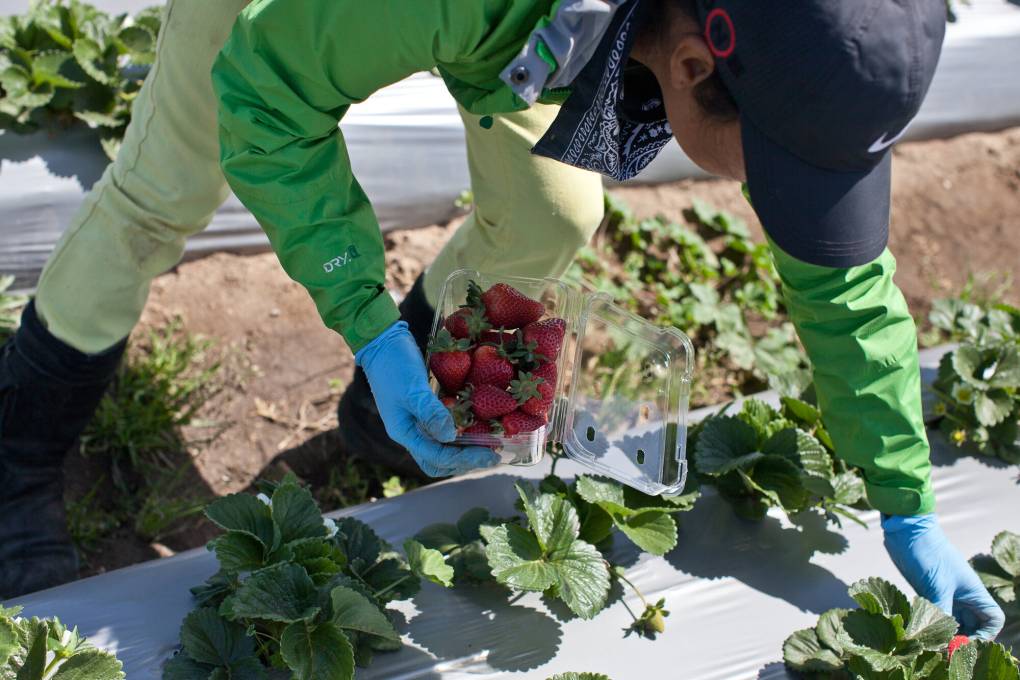
"caption": "A farmworker tends to a plot of land in the Salinas Valley where she grows strawberries, sweet peas, zucchini and onions on April 13, 2017.",
"credit": "Deborah Svoboda/KQED",
"altTag": null,
"description": null,
"imgSizes": {
"medium": {
"file": "https://cdn.kqed.org/wp-content/uploads/sites/10/2024/08/014_qed-800x533.jpg",
"width": 800,
"height": 533,
"mimeType": "image/jpeg"
},
"large": {
"file": "https://cdn.kqed.org/wp-content/uploads/sites/10/2024/08/014_qed-1020x680.jpg",
"width": 1020,
"height": 680,
"mimeType": "image/jpeg"
},
"thumbnail": {
"file": "https://cdn.kqed.org/wp-content/uploads/sites/10/2024/08/014_qed-160x107.jpg",
"width": 160,
"height": 107,
"mimeType": "image/jpeg"
},
"1536x1536": {
"file": "https://cdn.kqed.org/wp-content/uploads/sites/10/2024/08/014_qed-1536x1024.jpg",
"width": 1536,
"height": 1024,
"mimeType": "image/jpeg"
},
"post-thumbnail": {
"file": "https://cdn.kqed.org/wp-content/uploads/sites/10/2024/08/014_qed-672x372.jpg",
"width": 672,
"height": 372,
"mimeType": "image/jpeg"
},
"twentyfourteen-full-width": {
"file": "https://cdn.kqed.org/wp-content/uploads/sites/10/2024/08/014_qed-1038x576.jpg",
"width": 1038,
"height": 576,
"mimeType": "image/jpeg"
},
"full-width": {
"file": "https://cdn.kqed.org/wp-content/uploads/sites/10/2024/08/014_qed-1920x1280.jpg",
"width": 1920,
"height": 1280,
"mimeType": "image/jpeg"
},
"kqedFullSize": {
"file": "https://cdn.kqed.org/wp-content/uploads/sites/10/2024/08/014_qed.jpg",
"width": 2000,
"height": 1333
}
},
"isLoading": false,
"fetchFailed": false
},
"news_12002205": {
"type": "attachments",
"id": "news_12002205",
"meta": {
"index": "attachments_1716263798",
"site": "news",
"id": "12002205",
"found": true
},
"title": "FSA/8b38000/8b382008b38215a.tif",
"publishDate": 1724879482,
"status": "inherit",
"parent": 0,
"modified": 1724884061,
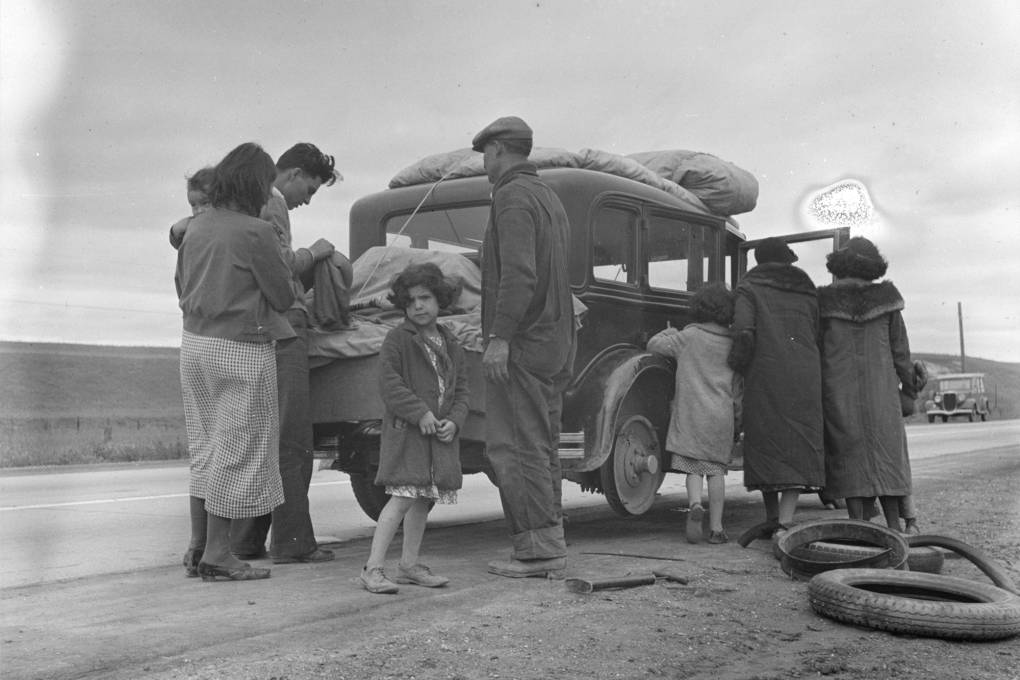
"caption": "Migrants, a family of Mexicans, on the road with tire trouble in California in 1936.",
"credit": "Dorothea Lange/Farm Security Administration",
"altTag": "A vintage black and white image of a family of adults and children standing around and entering a car.",
"description": null,
"imgSizes": {
"medium": {
"file": "https://cdn.kqed.org/wp-content/uploads/sites/10/2024/08/240828-Migrant-Family-DL-KQED-800x534.jpg",
"width": 800,
"height": 534,
"mimeType": "image/jpeg"
},
"large": {
"file": "https://cdn.kqed.org/wp-content/uploads/sites/10/2024/08/240828-Migrant-Family-DL-KQED-1020x680.jpg",
"width": 1020,
"height": 680,
"mimeType": "image/jpeg"
},
"thumbnail": {
"file": "https://cdn.kqed.org/wp-content/uploads/sites/10/2024/08/240828-Migrant-Family-DL-KQED-160x107.jpg",
"width": 160,
"height": 107,
"mimeType": "image/jpeg"
},
"1536x1536": {
"file": "https://cdn.kqed.org/wp-content/uploads/sites/10/2024/08/240828-Migrant-Family-DL-KQED-1536x1025.jpg",
"width": 1536,
"height": 1025,
"mimeType": "image/jpeg"
},
"post-thumbnail": {
"file": "https://cdn.kqed.org/wp-content/uploads/sites/10/2024/08/240828-Migrant-Family-DL-KQED-672x372.jpg",
"width": 672,
"height": 372,
"mimeType": "image/jpeg"
},
"twentyfourteen-full-width": {
"file": "https://cdn.kqed.org/wp-content/uploads/sites/10/2024/08/240828-Migrant-Family-DL-KQED-1038x576.jpg",
"width": 1038,
"height": 576,
"mimeType": "image/jpeg"
},
"full-width": {
"file": "https://cdn.kqed.org/wp-content/uploads/sites/10/2024/08/240828-Migrant-Family-DL-KQED-1920x1281.jpg",
"width": 1920,
"height": 1281,
"mimeType": "image/jpeg"
},
"kqedFullSize": {
"file": "https://cdn.kqed.org/wp-content/uploads/sites/10/2024/08/240828-Migrant-Family-DL-KQED.jpg",
"width": 2000,
"height": 1334
}
},
"isLoading": false,
"fetchFailed": false
},
"news_12002183": {
"type": "attachments",
"id": "news_12002183",
"meta": {
"index": "attachments_1716263798",
"site": "news",
"id": "12002183",
"found": true
},
"title": "240828-ICEDETAINEES-15-BL-KQED",
"publishDate": 1724876552,
"status": "inherit",
"parent": 0,
"modified": 1724956845,
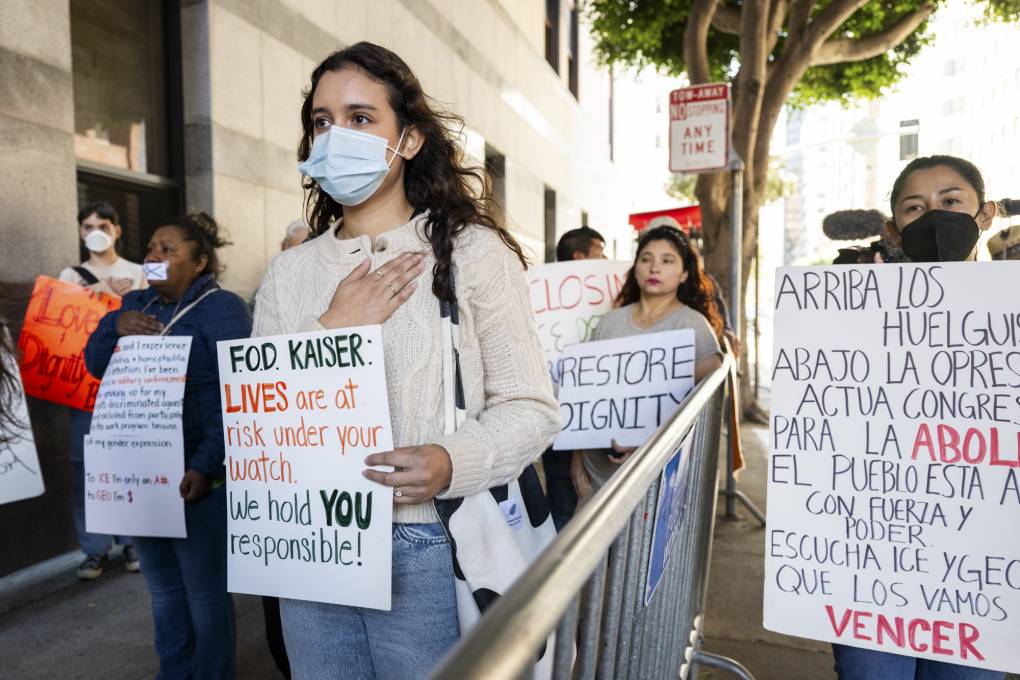
"caption": "Natalia Peña (center left) rallies outside the U.S. Customs and Immigration Enforcement offices in San Francisco on Aug. 28, 2024, in support of labor and hunger strikers inside two detention centers in Kern County.",
"credit": "Beth LaBerge/KQED",
"altTag": null,
"description": null,
"imgSizes": {
"medium": {
"file": "https://cdn.kqed.org/wp-content/uploads/sites/10/2024/08/240828-ICEDETAINEES-15-BL-KQED-800x533.jpg",
"width": 800,
"height": 533,
"mimeType": "image/jpeg"
},
"large": {
"file": "https://cdn.kqed.org/wp-content/uploads/sites/10/2024/08/240828-ICEDETAINEES-15-BL-KQED-1020x680.jpg",
"width": 1020,
"height": 680,
"mimeType": "image/jpeg"
},
"thumbnail": {
"file": "https://cdn.kqed.org/wp-content/uploads/sites/10/2024/08/240828-ICEDETAINEES-15-BL-KQED-160x107.jpg",
"width": 160,
"height": 107,
"mimeType": "image/jpeg"
},
"1536x1536": {
"file": "https://cdn.kqed.org/wp-content/uploads/sites/10/2024/08/240828-ICEDETAINEES-15-BL-KQED-1536x1024.jpg",
"width": 1536,
"height": 1024,
"mimeType": "image/jpeg"
},
"post-thumbnail": {
"file": "https://cdn.kqed.org/wp-content/uploads/sites/10/2024/08/240828-ICEDETAINEES-15-BL-KQED-672x372.jpg",
"width": 672,
"height": 372,
"mimeType": "image/jpeg"
},
"twentyfourteen-full-width": {
"file": "https://cdn.kqed.org/wp-content/uploads/sites/10/2024/08/240828-ICEDETAINEES-15-BL-KQED-1038x576.jpg",
"width": 1038,
"height": 576,
"mimeType": "image/jpeg"
},
"full-width": {
"file": "https://cdn.kqed.org/wp-content/uploads/sites/10/2024/08/240828-ICEDETAINEES-15-BL-KQED-1920x1280.jpg",
"width": 1920,
"height": 1280,
"mimeType": "image/jpeg"
},
"kqedFullSize": {
"file": "https://cdn.kqed.org/wp-content/uploads/sites/10/2024/08/240828-ICEDETAINEES-15-BL-KQED.jpg",
"width": 2000,
"height": 1333
}
},
"isLoading": false,
"fetchFailed": false
},
"news_12000845": {
"type": "attachments",
"id": "news_12000845",
"meta": {
"index": "attachments_1716263798",
"site": "news",
"id": "12000845",
"found": true
},
"title": "GettyImages-1301312861",
"publishDate": 1724112210,
"status": "inherit",
"parent": 12000804,
"modified": 1724112267,
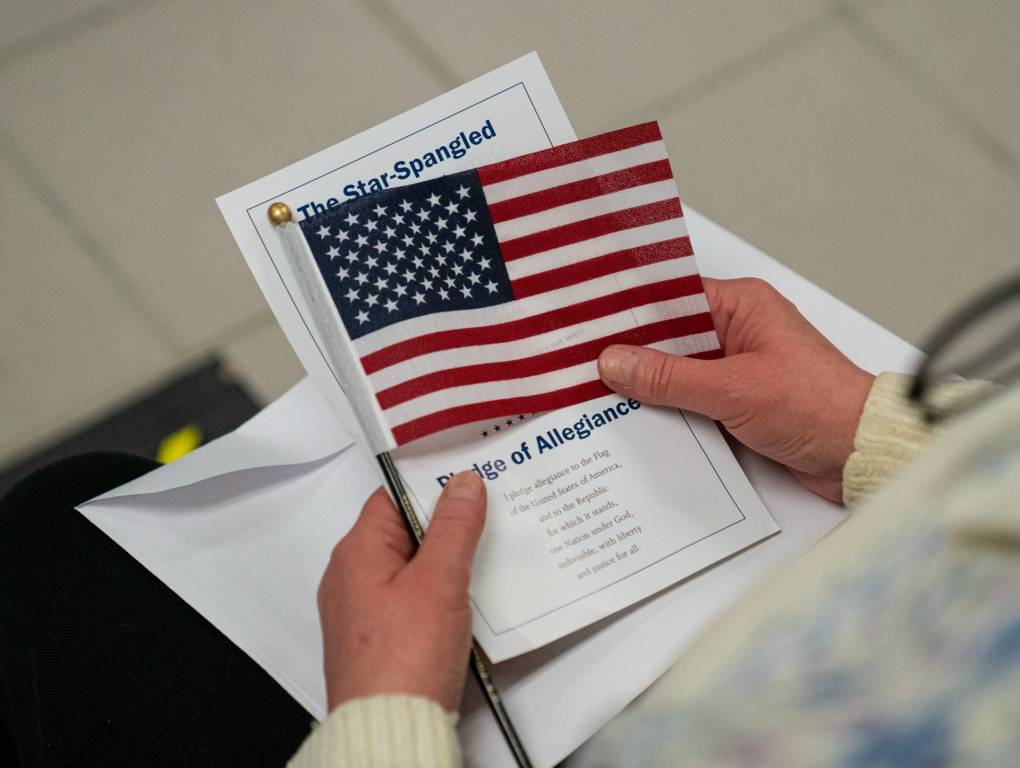
"caption": "Candidates for U.S. citizenship during a naturalization ceremony February 9, 2021.",
"credit": "Robert Nickelsberg/Getty Images",
"altTag": null,
"description": null,
"imgSizes": {
"medium": {
"file": "https://cdn.kqed.org/wp-content/uploads/sites/10/2024/08/GettyImages-1301312861-800x603.jpg",
"width": 800,
"height": 603,
"mimeType": "image/jpeg"
},
"large": {
"file": "https://cdn.kqed.org/wp-content/uploads/sites/10/2024/08/GettyImages-1301312861-1020x768.jpg",
"width": 1020,
"height": 768,
"mimeType": "image/jpeg"
},
"thumbnail": {
"file": "https://cdn.kqed.org/wp-content/uploads/sites/10/2024/08/GettyImages-1301312861-160x121.jpg",
"width": 160,
"height": 121,
"mimeType": "image/jpeg"
},
"1536x1536": {
"file": "https://cdn.kqed.org/wp-content/uploads/sites/10/2024/08/GettyImages-1301312861-1536x1157.jpg",
"width": 1536,
"height": 1157,
"mimeType": "image/jpeg"
},
"post-thumbnail": {
"file": "https://cdn.kqed.org/wp-content/uploads/sites/10/2024/08/GettyImages-1301312861-672x372.jpg",
"width": 672,
"height": 372,
"mimeType": "image/jpeg"
},
"twentyfourteen-full-width": {
"file": "https://cdn.kqed.org/wp-content/uploads/sites/10/2024/08/GettyImages-1301312861-1038x576.jpg",
"width": 1038,
"height": 576,
"mimeType": "image/jpeg"
},
"kqedFullSize": {
"file": "https://cdn.kqed.org/wp-content/uploads/sites/10/2024/08/GettyImages-1301312861.jpg",
"width": 1920,
"height": 1446
}
},
"isLoading": false,
"fetchFailed": false
},
"news_12000062": {
"type": "attachments",
"id": "news_12000062",
"meta": {
"index": "attachments_1716263798",
"site": "news",
"id": "12000062",
"found": true
},
"title": "US-POLITICS-HARRIS-BORDER",
"publishDate": 1723589517,
"status": "inherit",
"parent": 0,
"modified": 1723589600,
"caption": "US Vice President Kamala Harris (center) tours the El Paso Border Patrol Station, on June 25, 2021 in El Paso, Texas.",
"credit": "Patrick T. Fallon/AFP via Getty Images",
"altTag": null,
"description": null,
"imgSizes": {
"medium": {
"file": "https://cdn.kqed.org/wp-content/uploads/sites/10/2024/08/GETTYIMAGES-1233648146-KQED-800x533.jpg",
"width": 800,
"height": 533,
"mimeType": "image/jpeg"
},
"large": {
"file": "https://cdn.kqed.org/wp-content/uploads/sites/10/2024/08/GETTYIMAGES-1233648146-KQED-1020x680.jpg",
"width": 1020,
"height": 680,
"mimeType": "image/jpeg"
},
"thumbnail": {
"file": "https://cdn.kqed.org/wp-content/uploads/sites/10/2024/08/GETTYIMAGES-1233648146-KQED-160x107.jpg",
"width": 160,
"height": 107,
"mimeType": "image/jpeg"
},
"1536x1536": {
"file": "https://cdn.kqed.org/wp-content/uploads/sites/10/2024/08/GETTYIMAGES-1233648146-KQED-1536x1024.jpg",
"width": 1536,
"height": 1024,
"mimeType": "image/jpeg"
},
"post-thumbnail": {
"file": "https://cdn.kqed.org/wp-content/uploads/sites/10/2024/08/GETTYIMAGES-1233648146-KQED-672x372.jpg",
"width": 672,
"height": 372,
"mimeType": "image/jpeg"
},
"twentyfourteen-full-width": {
"file": "https://cdn.kqed.org/wp-content/uploads/sites/10/2024/08/GETTYIMAGES-1233648146-KQED-1038x576.jpg",
"width": 1038,
"height": 576,
"mimeType": "image/jpeg"
},
"full-width": {
"file": "https://cdn.kqed.org/wp-content/uploads/sites/10/2024/08/GETTYIMAGES-1233648146-KQED-1920x1280.jpg",
"width": 1920,
"height": 1280,
"mimeType": "image/jpeg"
},
"kqedFullSize": {
"file": "https://cdn.kqed.org/wp-content/uploads/sites/10/2024/08/GETTYIMAGES-1233648146-KQED.jpg",
"width": 2000,
"height": 1333
}
},
"isLoading": false,
"fetchFailed": false
}
},
"audioPlayerReducer": {
"postId": "stream_live",
"isPaused": true,
"isPlaying": false,
"pfsActive": false,
"pledgeModalIsOpen": true,
"playerDrawerIsOpen": false,
"liveAudioPlayStartedAt": 0,
"liveAudioPlayContext": ""
},
"authorsReducer": {
"byline_news_12004810": {
"type": "authors",
"id": "byline_news_12004810",
"meta": {
"override": true
},
"slug": "byline_news_12004810",
"name": "\u003ca href=\"https://calmatters.org/author/yue-yu\">Yue Stella Yu, \u003c/a>CalMatters",
"isLoading": false
},
"byline_news_12004373": {
"type": "authors",
"id": "byline_news_12004373",
"meta": {
"override": true
},
"slug": "byline_news_12004373",
"name": "Lauren DeLaunay Miller",
"isLoading": false
},
"tychehendricks": {
"type": "authors",
"id": "259",
"meta": {
"index": "authors_1716337520",
"id": "259",
"found": true
},
"name": "Tyche Hendricks",
"firstName": "Tyche",
"lastName": "Hendricks",
"slug": "tychehendricks",
"email": "thendricks@kqed.org",
"display_author_email": true,
"staff_mastheads": [
"news"
],
"title": "KQED Senior Editor, Immigration",
"bio": "\u003cspan style=\"font-weight: 400;\">Tyche Hendricks is KQED’s senior editor for immigration, leading coverage of the policy and politics that affect California’s immigrant communities. Her work for KQED’s radio and online audiences is also carried on NPR and other national outlets. She has been recognized with awards from the Radio and Television News Directors Association, the Society for Professional Journalists; the Education Writers Association; the Best of the West and the National Federation of Community Broadcasters. Before joining KQED in 2010, Tyche spent more than a dozen years as a newspaper reporter, notably at the \u003c/span>\u003ci>\u003cspan style=\"font-weight: 400;\">San Francisco Chronicle\u003c/span>\u003c/i>\u003cspan style=\"font-weight: 400;\">. At different times she has covered criminal justice, government and politics and urban planning. Tyche has taught in the MFA Creative Writing program at the University of San Francisco and at UC Berkeley’s Graduate School of Journalism, where she was co-director of a national immigration symposium for professional journalists. She is the author of \u003c/span>\u003ci>\u003cspan style=\"font-weight: 400;\">The Wind Doesn't Need a Passport: Stories from the U.S.-Mexico Borderlands\u003c/span>\u003c/i>\u003cspan style=\"font-weight: 400;\"> (University of California Press). \u003c/span>",
"avatar": "https://secure.gravatar.com/avatar/b8ee458e2731c2d43df86882ce17267e?s=600&d=blank&r=g",
"twitter": "tychehendricks",
"facebook": null,
"instagram": null,
"linkedin": null,
"sites": [
{
"site": "news",
"roles": [
"editor"
]
},
{
"site": "stateofhealth",
"roles": [
"editor"
]
}
],
"headData": {
"title": "Tyche Hendricks | KQED",
"description": "KQED Senior Editor, Immigration",
"ogImgSrc": "https://secure.gravatar.com/avatar/b8ee458e2731c2d43df86882ce17267e?s=600&d=blank&r=g",
"twImgSrc": "https://secure.gravatar.com/avatar/b8ee458e2731c2d43df86882ce17267e?s=600&d=blank&r=g"
},
"isLoading": false,
"link": "/author/tychehendricks"
},
"fjhabvala": {
"type": "authors",
"id": "8659",
"meta": {
"index": "authors_1716337520",
"id": "8659",
"found": true
},
"name": "Farida Jhabvala Romero",
"firstName": "Farida",
"lastName": "Jhabvala Romero",
"slug": "fjhabvala",
"email": "fjhabvala@kqed.org",
"display_author_email": true,
"staff_mastheads": [
"news"
],
"title": "KQED Contributor",
"bio": "\u003cspan style=\"font-weight: 400;\">Farida Jhabvala Romero is a Labor Correspondent for KQED. She previously covered immigration. Farida was \u003ca href=\"https://www.ccnma.org/2022-most-influential-latina-journalists\">named\u003c/a> one of the 10 Most Influential Latina Journalists in California in 2022 by the California Chicano News Media Association. Her work has won awards from the Society of Professional Journalists (Northern California), as well as a national and regional Edward M. Murrow Award for the collaborative reporting projects “Dangerous Air” and “Graying California.” \u003c/span>\u003cspan style=\"font-weight: 400;\">Before joining KQED, Farida worked as a producer at Radio Bilingüe, a national public radio network. Farida earned her master’s degree in journalism from Stanford University.\u003c/span>",
"avatar": "https://secure.gravatar.com/avatar/c3ab27c5554b67b478f80971e515aa02?s=600&d=blank&r=g",
"twitter": "FaridaJhabvala",
"facebook": null,
"instagram": null,
"linkedin": "https://www.linkedin.com/in/faridajhabvala/",
"sites": [
{
"site": "news",
"roles": [
"editor"
]
},
{
"site": "stateofhealth",
"roles": [
"author"
]
}
],
"headData": {
"title": "Farida Jhabvala Romero | KQED",
"description": "KQED Contributor",
"ogImgSrc": "https://secure.gravatar.com/avatar/c3ab27c5554b67b478f80971e515aa02?s=600&d=blank&r=g",
"twImgSrc": "https://secure.gravatar.com/avatar/c3ab27c5554b67b478f80971e515aa02?s=600&d=blank&r=g"
},
"isLoading": false,
"link": "/author/fjhabvala"
},
"abandlamudi": {
"type": "authors",
"id": "11672",
"meta": {
"index": "authors_1716337520",
"id": "11672",
"found": true
},
"name": "Adhiti Bandlamudi",
"firstName": "Adhiti",
"lastName": "Bandlamudi",
"slug": "abandlamudi",
"email": "abandlamudi@kqed.org",
"display_author_email": false,
"staff_mastheads": [
"news"
],
"title": "KQED Housing Reporter",
"bio": "Adhiti Bandlamudi reports for KQED's Housing desk. She focuses on how housing gets built across the Bay Area. Before joining KQED in 2020, she reported for WUNC in Durham, North Carolina, WABE in Atlanta, Georgia and Capital Public Radio in Sacramento. In 2017, she was awarded a Kroc Fellowship at NPR where she reported on everything from sprinkles to the Golden State Killer's arrest. When she's not reporting, she's baking new recipes in her kitchen or watching movies with friends and family. She's originally from Georgia and has strong opinions about Great British Bake Off.",
"avatar": "https://secure.gravatar.com/avatar/868129c8b257bb99a3500e2c86a65400?s=600&d=mm&r=g",
"twitter": "oddity_adhiti",
"facebook": null,
"instagram": null,
"linkedin": null,
"sites": [
{
"site": "arts",
"roles": [
"author"
]
},
{
"site": "news",
"roles": [
"editor"
]
},
{
"site": "liveblog",
"roles": [
"author"
]
}
],
"headData": {
"title": "Adhiti Bandlamudi | KQED",
"description": "KQED Housing Reporter",
"ogImgSrc": "https://secure.gravatar.com/avatar/868129c8b257bb99a3500e2c86a65400?s=600&d=mm&r=g",
"twImgSrc": "https://secure.gravatar.com/avatar/868129c8b257bb99a3500e2c86a65400?s=600&d=mm&r=g"
},
"isLoading": false,
"link": "/author/abandlamudi"
},
"kmizuguchi": {
"type": "authors",
"id": "11739",
"meta": {
"index": "authors_1716337520",
"id": "11739",
"found": true
},
"name": "Keith Mizuguchi",
"firstName": "Keith",
"lastName": "Mizuguchi",
"slug": "kmizuguchi",
"email": "kmizuguchi@kqed.org",
"display_author_email": false,
"staff_mastheads": [],
"title": "KQED Contributor",
"bio": null,
"avatar": "https://secure.gravatar.com/avatar/64d8a7de0723d4099b9fe4e915136103febcc20809abce228ee4415bcb237023?s=600&d=blank&r=g",
"twitter": null,
"bluesky": null,
"facebook": null,
"instagram": null,
"linkedin": null,
"sites": [
{
"site": "news",
"roles": [
"editor"
]
},
{
"site": "science",
"roles": [
"editor"
]
}
],
"headData": {
"title": "Keith Mizuguchi | KQED",
"description": "KQED Contributor",
"ogImgSrc": "https://secure.gravatar.com/avatar/64d8a7de0723d4099b9fe4e915136103febcc20809abce228ee4415bcb237023?s=600&d=blank&r=g",
"twImgSrc": "https://secure.gravatar.com/avatar/64d8a7de0723d4099b9fe4e915136103febcc20809abce228ee4415bcb237023?s=600&d=blank&r=g"
},
"isLoading": false,
"link": "/author/kmizuguchi"
}
},
"pagesReducer": {
"news_tag_immigration": {
"type": "terms",
"id": "news_20202",
"meta": {
"index": "terms_1716263798",
"site": "news",
"id": "20202",
"score": 6.9038835
},
"featImg": null,
"name": "immigration",
"description": null,
"taxonomy": "tag",
"headData": {
"twImgId": null,
"twTitle": null,
"ogTitle": null,
"ogImgId": null,
"twDescription": null,
"description": null,
"title": "immigration Archives | KQED News",
"ogDescription": null
},
"ttid": 20219,
"slug": "immigration",
"isLoading": false,
"title": "immigration",
"pageMeta": {
"site": "news",
"WpPageTemplate": "page-topic-editorial",
"currentPage": 40
},
"blocks": [
{
"blockName": "kqed/post-list",
"attrs": {
"layout": "cardArticle2",
"query": "posts/news?tag=immigration",
"seeMore": false,
"paginated": true,
"page": 40
}
},
{
"blockName": "kqed/ad"
}
]
}
},
"pfsSessionReducer": {},
"postsReducer": {
"stream_live": {
"type": "live",
"id": "stream_live",
"audioUrl": "https://streams.kqed.org/kqedradio",
"title": "Live Stream",
"excerpt": "Live Stream information currently unavailable.",
"link": "/radio",
"featImg": "",
"label": {
"name": "KQED Live",
"link": "/"
}
},
"stream_kqedNewscast": {
"type": "posts",
"id": "stream_kqedNewscast",
"audioUrl": "https://www.kqed.org/.stream/anon/radio/RDnews/newscast.mp3?_=1",
"title": "KQED Newscast",
"featImg": "",
"label": {
"name": "88.5 FM",
"link": "/"
}
},
"news_12011983": {
"type": "posts",
"id": "news_12011983",
"meta": {
"index": "posts_1716263798",
"site": "news",
"id": "12011983",
"score": null,
"sort": [
1730458906000
]
},
"guestAuthors": [],
"slug": "despite-election-rhetoric-illegal-border-crossings-sit-at-4-year-low",
"title": "Despite Election Rhetoric, Illegal Border Crossings Sit at 4-Year Low",
"publishDate": 1730458906,
"format": "standard",
"headTitle": "Despite Election Rhetoric, Illegal Border Crossings Sit at 4-Year Low | KQED",
"labelTerm": {
"site": "news"
},
"content": "\u003cp>[dropcap]I[/dropcap]n the final days of the presidential campaign, immigration at the U.S.-Mexico border remains one of the most heated topics of the election. Former President Donald Trump calls it an “invasion,” crudely disparages immigrants and threatens mass deportations. Vice President Kamala Harris, in tacit recognition of the Biden administration’s border challenges, also vows tougher enforcement. \u003c/p>\n\u003cp>Yet illegal border crossings have \u003ca href=\"https://www.migrationpolicy.org/news/fy2024-us-border-encounters-plunge\">plunged to the lowest level in four years\u003c/a>, according to \u003ca href=\"https://www.cbp.gov/newsroom/national-media-release/cbp-releases-september-2024-monthly-update\">new data\u003c/a> released by U.S. Customs and Border Protection. To understand how that fact squares with the fraught political rhetoric, KQED looked at the current dynamics of migration at California’s border with Mexico.\u003c/p>\n\u003cp>As the Pacific Ocean crashed against the beach nearby, Customs and Border Patrol spokesman Michael Scappechio stood on a well-maintained road flanked by a pair of formidable fences — 18-feet and 30-feet high — dividing the streets of Tijuana from a deserted state park in San Diego.\u003c/p>\n\u003cp>“Just in the last two months, this region has seen an approximate 50% decline in illegal entries,” Scappechio said. “Nationwide numbers have declined as well.”\u003c/p>\n\u003cp>The U.S. government first began erecting a metal fence along the border here 30 years ago this fall. Today, it’s more fortified than ever, with lighting, motion detectors, cameras, drones and other technology — as well as manpower — augmenting the fence. It’s all been reinforced under both Trump and President Joe Biden.\u003c/p>\n\u003cp>[ad fullwidth]\u003c/p>\n\u003cp>Yet, in the wake of the coronavirus pandemic, as a \u003ca href=\"https://www.iom.int/news/world-migration-report-2024-reveals-latest-global-trends-and-challenges-human-mobility\">global migration crisis\u003c/a> grew, the Biden administration confronted rising numbers of people arriving at the U.S.-Mexico border. Monthly Border Patrol migrant encounters \u003ca href=\"https://www.cbp.gov/newsroom/stats/southwest-land-border-encounters\">hit a record high\u003c/a> of nearly 250,000 last December.\u003c/p>\n\u003cp>In response, the administration ramped up a set of tough measures meant to deter unauthorized border crossings, reversing course from the more compassionate approach of the early years of Biden’s presidency. \u003c/p>\n\u003cp>The results have been striking. In September, Border Patrol encounters fell to 54,000 nationally, just 22% of December’s peak. The San Diego sector had the largest share of those encounters, with 13,000, but that too was down from a peak of 37,000 in April.\u003c/p>\n\u003cp>Several factors are contributing to the turnaround. For one, since the beginning of the year, Mexico has cracked down on migrants heading for the U.S. border. And in June, Biden issued an executive order barring access to the asylum process for those who enter illegally when crossings are high. \u003c/p>\n\u003cp>And, Scappechio said, a sharp \u003ca href=\"https://www.cbp.gov/newsroom/national-media-release/cbp-releases-september-2024-monthly-update\">increase in expedited removals\u003c/a> and repatriation flights — or flying people to their home country — is sending a message to would-be migrants before they make the journey “that the borders are, in fact, not open.”\u003c/p>\n\u003cp>“Partnerships with Mexico have enhanced. Policies have changed,” he said. “Messaging, I think, plays a key role because a lot of migration is oftentimes fueled by misinformation.”\u003c/p>\n\u003ch2>Smartphone app aids in vetting migrants\u003c/h2>\n\u003cfigure id=\"attachment_12011958\" class=\"wp-caption alignnone\" style=\"max-width: 2000px\">\u003cimg loading=\"lazy\" decoding=\"async\" class=\"wp-image-12011958 size-full\" src=\"https://cdn.kqed.org/wp-content/uploads/sites/10/2024/10/241031-BORDER-CROSSINGS-ZM-18-KQED.jpg\" alt=\"\" width=\"2000\" height=\"1333\" srcset=\"https://cdn.kqed.org/wp-content/uploads/sites/10/2024/10/241031-BORDER-CROSSINGS-ZM-18-KQED.jpg 2000w, https://cdn.kqed.org/wp-content/uploads/sites/10/2024/10/241031-BORDER-CROSSINGS-ZM-18-KQED-800x533.jpg 800w, https://cdn.kqed.org/wp-content/uploads/sites/10/2024/10/241031-BORDER-CROSSINGS-ZM-18-KQED-1020x680.jpg 1020w, https://cdn.kqed.org/wp-content/uploads/sites/10/2024/10/241031-BORDER-CROSSINGS-ZM-18-KQED-160x107.jpg 160w, https://cdn.kqed.org/wp-content/uploads/sites/10/2024/10/241031-BORDER-CROSSINGS-ZM-18-KQED-1536x1024.jpg 1536w, https://cdn.kqed.org/wp-content/uploads/sites/10/2024/10/241031-BORDER-CROSSINGS-ZM-18-KQED-1920x1280.jpg 1920w\" sizes=\"(max-width: 2000px) 100vw, 2000px\">\u003cfigcaption class=\"wp-caption-text\">David Boniface of the Haitian Bridge Alliance assists Gregory Montilla, a migrant from Venezuela, at San Diego International Airport on Sept. 16, 2024. \u003ccite>(Zoë Meyers for KQED)\u003c/cite>\u003c/figcaption>\u003c/figure>\n\u003cp>In addition to preventing unauthorized border crossings, the Biden administration has also created a process for migrants without a visa to come in lawfully. They can make an appointment using a smartphone app called CBP One, get vetted at a port of entry and then enter with a temporary \u003ca href=\"https://www.americanimmigrationcouncil.org/research/use-parole-under-immigration-law\">humanitarian parole\u003c/a>. \u003c/p>\n\u003cp>Immigrant advocates strongly criticize the CBP One app as unreliable, and \u003ca href=\"https://cgrs.uclawsf.edu/our-work/litigation/al-otro-lado-and-haitian-bridge-alliance-v-mayorkas\">they’ve sued to block its use\u003c/a>, saying asylum seekers who lack appointments have wrongly been turned away from ports of entry. \u003c/p>\n\u003cp>However, since it began in January 2023, the process has provided more than 850,000 migrants a way to reach the U.S. legally. The parole status lasts just two years, but parolees are eligible for a work permit and can apply for asylum or another form of legal status once on U.S. soil. \u003c/p>\n\u003cp>But the appointments are scarce — 1,450 per day nationwide — compared to the number of migrants who want them. And advocates say people often spend months of insecurity in Mexican shelters, trying daily to schedule a slot.\u003c/p>\n\u003cp>At the San Diego airport one recent afternoon, about a dozen families who entered through the CBP One process — most from Haiti, Venezuela and Honduras — sat quietly in a designated area near the baggage claim. Volunteers from the Haitian Bridge Alliance handed out snacks and helped people make travel arrangements. \u003c/p>\n\u003cfigure id=\"attachment_12011963\" class=\"wp-caption alignnone\" style=\"max-width: 2000px\">\u003cimg loading=\"lazy\" decoding=\"async\" class=\"wp-image-12011963 size-full\" src=\"https://cdn.kqed.org/wp-content/uploads/sites/10/2024/10/241031-BORDER-CROSSINGS-ZM-19-KQED.jpg\" alt=\"\" width=\"2000\" height=\"1333\" srcset=\"https://cdn.kqed.org/wp-content/uploads/sites/10/2024/10/241031-BORDER-CROSSINGS-ZM-19-KQED.jpg 2000w, https://cdn.kqed.org/wp-content/uploads/sites/10/2024/10/241031-BORDER-CROSSINGS-ZM-19-KQED-800x533.jpg 800w, https://cdn.kqed.org/wp-content/uploads/sites/10/2024/10/241031-BORDER-CROSSINGS-ZM-19-KQED-1020x680.jpg 1020w, https://cdn.kqed.org/wp-content/uploads/sites/10/2024/10/241031-BORDER-CROSSINGS-ZM-19-KQED-160x107.jpg 160w, https://cdn.kqed.org/wp-content/uploads/sites/10/2024/10/241031-BORDER-CROSSINGS-ZM-19-KQED-1536x1024.jpg 1536w, https://cdn.kqed.org/wp-content/uploads/sites/10/2024/10/241031-BORDER-CROSSINGS-ZM-19-KQED-1920x1280.jpg 1920w\" sizes=\"(max-width: 2000px) 100vw, 2000px\">\u003cfigcaption class=\"wp-caption-text\">Gabriel Herrera, right, and Josie Mejia from Honduras wait with their two children for an evening flight at San Diego International Airport on Sept. 16, 2024. They were paroled into the U.S. after a screening scheduled through the CBP One smartphone app. \u003ccite>(Zoë Meyers for KQED)\u003c/cite>\u003c/figcaption>\u003c/figure>\n\u003cp>Gabriel Herrera and his wife, Josie Mejía, entertained their two small children, ages 6 and 3, with markers and cell phone video games. They’d spent the night in the airport after they were granted permission to enter the U.S. the day before. \u003c/p>\n\u003cp>Herrera, 33, said they’d waited seven months, mostly in Mexico City, for their turn.\u003c/p>\n\u003cp>“Thank God we’ve arrived, and this country is giving us an opportunity. We should all appreciate the effort they’re making to receive us,” he said in a voice that expressed strain as well as relief. “We’re here because we really, really need it — not to make money, but to live where there’s safety and justice.”\u003c/p>\n\u003cp>Mejía, 28, said they were going to Charleston, South Carolina, where her sister lives. They have an appointment to appear in immigration court next March, she said.\u003c/p>\n\u003cp>Her husband said the odyssey that led them here began more than two years earlier, when his business partner’s wife was murdered after their auto repair shop in Tegucigalpa failed to pay the monthly extortion fee demanded by a criminal group. \u003c/p>\n\u003cp>They took off for Spain with people who promised them jobs, said Herrera, but found themselves in the hands of labor traffickers who threatened them and took their pay. It took a year to escape, he said, but as soon as they made it back to Honduras, they faced threats again. \u003c/p>\n\u003cp>“Our only hope was to get to the U.S.,” Herrera said. \u003c/p>\n\u003cfigure id=\"attachment_12011953\" class=\"wp-caption alignnone\" style=\"max-width: 2000px\">\u003cimg loading=\"lazy\" decoding=\"async\" class=\"wp-image-12011953 size-full\" src=\"https://cdn.kqed.org/wp-content/uploads/sites/10/2024/10/241031-BORDER-CROSSINGS-ZM-17-KQED.jpg\" alt=\"\" width=\"2000\" height=\"1333\" srcset=\"https://cdn.kqed.org/wp-content/uploads/sites/10/2024/10/241031-BORDER-CROSSINGS-ZM-17-KQED.jpg 2000w, https://cdn.kqed.org/wp-content/uploads/sites/10/2024/10/241031-BORDER-CROSSINGS-ZM-17-KQED-800x533.jpg 800w, https://cdn.kqed.org/wp-content/uploads/sites/10/2024/10/241031-BORDER-CROSSINGS-ZM-17-KQED-1020x680.jpg 1020w, https://cdn.kqed.org/wp-content/uploads/sites/10/2024/10/241031-BORDER-CROSSINGS-ZM-17-KQED-160x107.jpg 160w, https://cdn.kqed.org/wp-content/uploads/sites/10/2024/10/241031-BORDER-CROSSINGS-ZM-17-KQED-1536x1024.jpg 1536w, https://cdn.kqed.org/wp-content/uploads/sites/10/2024/10/241031-BORDER-CROSSINGS-ZM-17-KQED-1920x1280.jpg 1920w\" sizes=\"(max-width: 2000px) 100vw, 2000px\">\u003cfigcaption class=\"wp-caption-text\">Gabriel Herrera sits with his daughter at San Diego International Airport, Sept. 16, 2024. He, his wife and two children were traveling to unite with family after being paroled into the U.S. at a border interview scheduled through the CBP One smartphone app. \u003ccite>(Zoë Meyers for KQED)\u003c/cite>\u003c/figcaption>\u003c/figure>\n\u003cp>But on the journey north through Guatemala and Mexico, Herrera said they were repeatedly robbed and mistreated — by both criminals and law enforcement. In one Guatemalan town, police stripped his 6-year-old daughter naked and touched her body, he said, leaving the girl traumatized.\u003c/p>\n\u003cp>“I came here so we could live without fear,” he said. “I want my daughter to finally be able to go to school and make friends. To have a normal life.”\u003c/p>\n\u003cfigure id=\"attachment_12011941\" class=\"wp-caption alignnone\" style=\"max-width: 2000px\">\u003cimg loading=\"lazy\" decoding=\"async\" class=\"wp-image-12011941 size-full\" src=\"https://cdn.kqed.org/wp-content/uploads/sites/10/2024/10/241031-BORDER-CROSSINGS-ZM-08-KQED.jpg\" alt=\"\" width=\"2000\" height=\"1333\" srcset=\"https://cdn.kqed.org/wp-content/uploads/sites/10/2024/10/241031-BORDER-CROSSINGS-ZM-08-KQED.jpg 2000w, https://cdn.kqed.org/wp-content/uploads/sites/10/2024/10/241031-BORDER-CROSSINGS-ZM-08-KQED-800x533.jpg 800w, https://cdn.kqed.org/wp-content/uploads/sites/10/2024/10/241031-BORDER-CROSSINGS-ZM-08-KQED-1020x680.jpg 1020w, https://cdn.kqed.org/wp-content/uploads/sites/10/2024/10/241031-BORDER-CROSSINGS-ZM-08-KQED-160x107.jpg 160w, https://cdn.kqed.org/wp-content/uploads/sites/10/2024/10/241031-BORDER-CROSSINGS-ZM-08-KQED-1536x1024.jpg 1536w, https://cdn.kqed.org/wp-content/uploads/sites/10/2024/10/241031-BORDER-CROSSINGS-ZM-08-KQED-1920x1280.jpg 1920w\" sizes=\"(max-width: 2000px) 100vw, 2000px\">\u003cfigcaption class=\"wp-caption-text\">Asylum seekers Gabriel Herrera and Josie Mejia head to their flight with their two children at San Diego International Airport on Sept. 16, 2024. They were traveling to unite with family after entering the U.S. lawfully using the CBP One app. \u003ccite>(Zoë Meyers for KQED)\u003c/cite>\u003c/figcaption>\u003c/figure>\n\u003cp>Then Herrera and Mejía packed up the markers and helped the children into their small jackets. It was time for their flight to Charleston. Carrying their belongings in one daypack each, they took their kids by the hand and headed up the escalator to the security line.\u003c/p>\n\u003ch2>San Diego as a national model: ‘It’s about dignity’\u003c/h2>\n\u003cfigure id=\"attachment_12011951\" class=\"wp-caption alignnone\" style=\"max-width: 2000px\">\u003cimg loading=\"lazy\" decoding=\"async\" class=\"wp-image-12011951 size-full\" src=\"https://cdn.kqed.org/wp-content/uploads/sites/10/2024/10/241031-BORDER-CROSSINGS-ZM-16-KQED.jpg\" alt=\"\" width=\"2000\" height=\"1334\" srcset=\"https://cdn.kqed.org/wp-content/uploads/sites/10/2024/10/241031-BORDER-CROSSINGS-ZM-16-KQED.jpg 2000w, https://cdn.kqed.org/wp-content/uploads/sites/10/2024/10/241031-BORDER-CROSSINGS-ZM-16-KQED-800x534.jpg 800w, https://cdn.kqed.org/wp-content/uploads/sites/10/2024/10/241031-BORDER-CROSSINGS-ZM-16-KQED-1020x680.jpg 1020w, https://cdn.kqed.org/wp-content/uploads/sites/10/2024/10/241031-BORDER-CROSSINGS-ZM-16-KQED-160x107.jpg 160w, https://cdn.kqed.org/wp-content/uploads/sites/10/2024/10/241031-BORDER-CROSSINGS-ZM-16-KQED-1536x1025.jpg 1536w, https://cdn.kqed.org/wp-content/uploads/sites/10/2024/10/241031-BORDER-CROSSINGS-ZM-16-KQED-1920x1281.jpg 1920w\" sizes=\"(max-width: 2000px) 100vw, 2000px\">\u003cfigcaption class=\"wp-caption-text\">Children play outside at the Jewish Family Service shelter for migrants in San Diego, Sept. 19, 2024. \u003ccite>(Zoë Meyers for KQED)\u003c/cite>\u003c/figcaption>\u003c/figure>\n\u003cp>Stories like Herrera’s are common, said Dana Toppel, the CEO of Jewish Family Service of San Diego, which runs a shelter serving about 1,200 migrants a week — mostly families who entered using the CBP One app.\u003c/p>\n\u003cp>“To us, it’s about dignity. It’s really about centering the individual and being very trauma-informed,” she said, as a bus pulled up at the shelter with dozens of migrants that JFS staff had met at the San Ysidro port of entry. “They’ve gone through a lot on their journey. So anything we can do to make it easy, to make it understandable and calm, is our focus.”\u003c/p>\n\u003cp>Inside, everyone received meals, a warm bed and a place for the children to play. The shelter also provided a medical screening and help refilling prescriptions, a legal orientation about the asylum process and help applying for a work permit, and assistance making travel plans. \u003c/p>\n\u003cp>The vast majority of migrants don’t stay in San Diego long, most spending no more than a night or two at the JFS shelter before traveling on to other parts of the country to reunite with family members, Toppel said.\u003c/p>\n\u003cfigure id=\"attachment_12011950\" class=\"wp-caption alignnone\" style=\"max-width: 2000px\">\u003cimg loading=\"lazy\" decoding=\"async\" class=\"wp-image-12011950 size-full\" src=\"https://cdn.kqed.org/wp-content/uploads/sites/10/2024/10/241031-BORDER-CROSSINGS-ZM-15-KQED.jpg\" alt=\"\" width=\"2000\" height=\"1334\" srcset=\"https://cdn.kqed.org/wp-content/uploads/sites/10/2024/10/241031-BORDER-CROSSINGS-ZM-15-KQED.jpg 2000w, https://cdn.kqed.org/wp-content/uploads/sites/10/2024/10/241031-BORDER-CROSSINGS-ZM-15-KQED-800x534.jpg 800w, https://cdn.kqed.org/wp-content/uploads/sites/10/2024/10/241031-BORDER-CROSSINGS-ZM-15-KQED-1020x680.jpg 1020w, https://cdn.kqed.org/wp-content/uploads/sites/10/2024/10/241031-BORDER-CROSSINGS-ZM-15-KQED-160x107.jpg 160w, https://cdn.kqed.org/wp-content/uploads/sites/10/2024/10/241031-BORDER-CROSSINGS-ZM-15-KQED-1536x1025.jpg 1536w, https://cdn.kqed.org/wp-content/uploads/sites/10/2024/10/241031-BORDER-CROSSINGS-ZM-15-KQED-1920x1281.jpg 1920w\" sizes=\"(max-width: 2000px) 100vw, 2000px\">\u003cfigcaption class=\"wp-caption-text\">Migrants collect luggage after arriving on a bus at the Jewish Family Service shelter for migrants in San Diego, Sept. 19, 2024. \u003ccite>(Zoë Meyers for KQED)\u003c/cite>\u003c/figcaption>\u003c/figure>\n\u003cp>Groups like JFS and the Haitian Bridge Alliance are part of a \u003ca href=\"https://rapidresponsesd.org\">robust network of local nonprofits\u003c/a> responding to the needs of immigrants in the border region. Though they’re always looking for more resources, they say the San Diego community has stepped up and the region is not facing a migrant crisis.\u003c/p>\n\u003cfigure id=\"attachment_12011935\" class=\"wp-caption alignnone\" style=\"max-width: 2000px\">\u003cimg loading=\"lazy\" decoding=\"async\" class=\"wp-image-12011935 size-full\" src=\"https://cdn.kqed.org/wp-content/uploads/sites/10/2024/10/241031-BORDER-CROSSINGS-ZM-03-KQED.jpg\" alt=\"\" width=\"2000\" height=\"1333\" srcset=\"https://cdn.kqed.org/wp-content/uploads/sites/10/2024/10/241031-BORDER-CROSSINGS-ZM-03-KQED.jpg 2000w, https://cdn.kqed.org/wp-content/uploads/sites/10/2024/10/241031-BORDER-CROSSINGS-ZM-03-KQED-800x533.jpg 800w, https://cdn.kqed.org/wp-content/uploads/sites/10/2024/10/241031-BORDER-CROSSINGS-ZM-03-KQED-1020x680.jpg 1020w, https://cdn.kqed.org/wp-content/uploads/sites/10/2024/10/241031-BORDER-CROSSINGS-ZM-03-KQED-160x107.jpg 160w, https://cdn.kqed.org/wp-content/uploads/sites/10/2024/10/241031-BORDER-CROSSINGS-ZM-03-KQED-1536x1024.jpg 1536w, https://cdn.kqed.org/wp-content/uploads/sites/10/2024/10/241031-BORDER-CROSSINGS-ZM-03-KQED-1920x1280.jpg 1920w\" sizes=\"(max-width: 2000px) 100vw, 2000px\">\u003cfigcaption class=\"wp-caption-text\">A U.S. Border Patrol agent drives east between the primary and secondary fences at the U.S.-Mexico border in San Diego, Sept. 16, 2024. \u003ccite>(Zoë Meyers for KQED)\u003c/cite>\u003c/figcaption>\u003c/figure>\n\u003cp>San Diego County Supervisor Nora Vargas said the county has become a national model for reducing Border Patrol releases of migrants onto the streets and treating asylum seekers with dignity. The county recently won nearly $20 million from the federal Shelter and Services Program for a migrant transition center, she said.\u003c/p>\n\u003cp>“There’s still a lot of work to be done, but we’ve been able to allocate resources from the federal government specifically for this,” she said. “The partnership with Governor Newsom and the Biden administration has really been one that we have not had before from previous administrations.” \u003c/p>\n\u003cp>Toppel added that Gov. Gavin Newsom and the state legislature have been stalwart in providing funds for her group and others, including backfilling with state dollars when federal grants have gotten tied up in red tape.\u003c/p>\n\u003cp>“We are so lucky to be in the state of California,” she said.\u003c/p>\n\u003cp>But the humanitarian work of welcoming asylum seekers is at risk, Toppel said, as Trump has centered his campaign on the message that immigrants are criminal “animals” who are \u003ca href=\"https://www.youtube.com/watch?v=RKPFjAhd3KQ\">“poisoning the blood”\u003c/a> of the country. \u003c/p>\n\u003cp>“With the election coming up and the narrative that’s out there, it’s all getting mixed up,” she said. “As we head up towards November, I would say that it has created an opportunity to tell the stories of the people that we’re serving, to try to change hearts and minds around who’s actually coming and that these folks are not dangerous.”\u003c/p>\n\u003ch2>‘It’s more difficult to travel across Mexico’\u003c/h2>\n\u003cfigure id=\"attachment_12011949\" class=\"wp-caption alignnone\" style=\"max-width: 2000px\">\u003cimg loading=\"lazy\" decoding=\"async\" class=\"wp-image-12011949 size-full\" src=\"https://cdn.kqed.org/wp-content/uploads/sites/10/2024/10/241031-BORDER-CROSSINGS-ZM-14-KQED.jpg\" alt=\"\" width=\"2000\" height=\"1334\" srcset=\"https://cdn.kqed.org/wp-content/uploads/sites/10/2024/10/241031-BORDER-CROSSINGS-ZM-14-KQED.jpg 2000w, https://cdn.kqed.org/wp-content/uploads/sites/10/2024/10/241031-BORDER-CROSSINGS-ZM-14-KQED-800x534.jpg 800w, https://cdn.kqed.org/wp-content/uploads/sites/10/2024/10/241031-BORDER-CROSSINGS-ZM-14-KQED-1020x680.jpg 1020w, https://cdn.kqed.org/wp-content/uploads/sites/10/2024/10/241031-BORDER-CROSSINGS-ZM-14-KQED-160x107.jpg 160w, https://cdn.kqed.org/wp-content/uploads/sites/10/2024/10/241031-BORDER-CROSSINGS-ZM-14-KQED-1536x1025.jpg 1536w, https://cdn.kqed.org/wp-content/uploads/sites/10/2024/10/241031-BORDER-CROSSINGS-ZM-14-KQED-1920x1281.jpg 1920w\" sizes=\"(max-width: 2000px) 100vw, 2000px\">\u003cfigcaption class=\"wp-caption-text\">Wendy Betance walks to dinner with her two daughters at a migrant shelter in Tijuana, Sept. 18, 2024. Migrants who hope to enter the U.S. lawfully using the CBP One app often wait months for an appointment. \u003ccite>(Zoë Meyers for KQED)\u003c/cite>\u003c/figcaption>\u003c/figure>\n\u003cp>Across the border in Tijuana, the number of migrants waiting for their CBP One appointments or preparing to cross the border illegally has also diminished. Roughly 2,000 of the city’s shelter beds were available in September, according to Enrique Lucero, who recently stepped down as Tijuana’s head of migrant affairs.\u003c/p>\n\u003cp>That’s partly because migrants can now \u003ca href=\"https://www.cbp.gov/about/mobile-apps-directory/cbpone\">access the CBP One app\u003c/a> from central and southern Mexico. Appointments are set 21 days in advance, giving people time to reach the U.S. border. And the Mexican government will issue a 20-day transit permit to those with proof of a CBP One appointment, Lucero said.\u003c/p>\n\u003cp>“It’s harder and harder to get to the north if you don’t have an appointment or a visa,” he said. “Tijuana’s not getting the foreign migrants we used to because it’s more difficult to travel across Mexico.”\u003c/p>\n\u003cp>That difficulty is largely due to the fact that Mexican authorities are transporting non-Mexican migrants south to the state of Tabasco and containing them in southern Mexico, said Lucero. \u003c/p>\n\u003cp>“There’s pressure, or at least a request, from the United States to help put the brakes on the number of migrants reaching the border. It’s a political question, with an election underway,” Lucero said. “We need migration controls because we can’t turn a blind eye to the smuggling operations. And also it affects the binational relationship.” \u003c/p>\n\u003ch2>Fewer people navigate the harsh terrain to reach the U.S.\u003c/h2>\n\u003cfigure id=\"attachment_12011948\" class=\"wp-caption alignnone\" style=\"max-width: 2000px\">\u003cimg loading=\"lazy\" decoding=\"async\" class=\"wp-image-12011948 size-full\" src=\"https://cdn.kqed.org/wp-content/uploads/sites/10/2024/10/241031-BORDER-CROSSINGS-ZM-13-KQED.jpg\" alt=\"\" width=\"2000\" height=\"1334\" srcset=\"https://cdn.kqed.org/wp-content/uploads/sites/10/2024/10/241031-BORDER-CROSSINGS-ZM-13-KQED.jpg 2000w, https://cdn.kqed.org/wp-content/uploads/sites/10/2024/10/241031-BORDER-CROSSINGS-ZM-13-KQED-800x534.jpg 800w, https://cdn.kqed.org/wp-content/uploads/sites/10/2024/10/241031-BORDER-CROSSINGS-ZM-13-KQED-1020x680.jpg 1020w, https://cdn.kqed.org/wp-content/uploads/sites/10/2024/10/241031-BORDER-CROSSINGS-ZM-13-KQED-160x107.jpg 160w, https://cdn.kqed.org/wp-content/uploads/sites/10/2024/10/241031-BORDER-CROSSINGS-ZM-13-KQED-1536x1025.jpg 1536w, https://cdn.kqed.org/wp-content/uploads/sites/10/2024/10/241031-BORDER-CROSSINGS-ZM-13-KQED-1920x1281.jpg 1920w\" sizes=\"(max-width: 2000px) 100vw, 2000px\">\u003cfigcaption class=\"wp-caption-text\">Alejandro Salinas of Grupo Beta (L) sits with Irving Ortiz, as he calls his mother, on Sept. 17, 2024. Ortiz was picked up and offered assistance by Grupo Beta when he was walking along Highway 2D between Tijuana and Tecate. \u003ccite>(Zoë Meyers for KQED)\u003c/cite>\u003c/figcaption>\u003c/figure>\n\u003cp>Alejandro Salinas, the head of the Baja California office of Grupo Beta, the Mexican immigration agency’s search and rescue arm, said that when his teams go out to locate migrants in distress, they encounter fewer people trying to sneak into the U.S.\u003c/p>\n\u003cp>“We’re seeing fewer migrants trying to cross the mountains or the desert,” he said. “But, unfortunately, we’ve had four deaths this year from heat stroke, just in Baja California.” \u003c/p>\n\u003cp>Driving east from Tijuana along Highway 2 with the border fence in sight, Salinas said he’s seen more policing underway by his counterparts in the enforcement arm of \u003ca href=\"https://www.gob.mx/inm/que-hacemos\">Mexico’s National Immigration Institute\u003c/a>, or INM. Though they’re both part of the same agency, he emphasized that Grupo Beta’s work is strictly humanitarian.\u003c/p>\n\u003cfigure id=\"attachment_12011945\" class=\"wp-caption alignnone\" style=\"max-width: 2000px\">\u003cimg loading=\"lazy\" decoding=\"async\" class=\"wp-image-12011945 size-full\" src=\"https://cdn.kqed.org/wp-content/uploads/sites/10/2024/10/241031-BORDER-CROSSINGS-ZM-11-KQED.jpg\" alt=\"\" width=\"2000\" height=\"1334\" srcset=\"https://cdn.kqed.org/wp-content/uploads/sites/10/2024/10/241031-BORDER-CROSSINGS-ZM-11-KQED.jpg 2000w, https://cdn.kqed.org/wp-content/uploads/sites/10/2024/10/241031-BORDER-CROSSINGS-ZM-11-KQED-800x534.jpg 800w, https://cdn.kqed.org/wp-content/uploads/sites/10/2024/10/241031-BORDER-CROSSINGS-ZM-11-KQED-1020x680.jpg 1020w, https://cdn.kqed.org/wp-content/uploads/sites/10/2024/10/241031-BORDER-CROSSINGS-ZM-11-KQED-160x107.jpg 160w, https://cdn.kqed.org/wp-content/uploads/sites/10/2024/10/241031-BORDER-CROSSINGS-ZM-11-KQED-1536x1025.jpg 1536w, https://cdn.kqed.org/wp-content/uploads/sites/10/2024/10/241031-BORDER-CROSSINGS-ZM-11-KQED-1920x1281.jpg 1920w\" sizes=\"(max-width: 2000px) 100vw, 2000px\">\u003cfigcaption class=\"wp-caption-text\">A member of the Mexican army keeps watch outside a camp along the U.S.-Mexico border in Tecate, Sept. 17, 2024. The camps were established along the border earlier this year to deter migrant crossings. \u003ccite>(Zoë Meyers for KQED)\u003c/cite>\u003c/figcaption>\u003c/figure>\n\u003cp>Salinas and his team stopped at one of several bases that the INM established in rural stretches along the border earlier this year. With soldiers from the Mexican Armed Forces to protect against criminal smuggling organizations, INM agents patrol the remote rural areas to intercept non-Mexicans. \u003c/p>\n\u003cp>INM enforcement agent Abraham Basurto said they had been out before dawn and encountered an Uzbek man with a broken ankle.\u003c/p>\n\u003cp>“We provided first aid and transferred him to Tijuana,” Basurto said. “We make sure migrants are okay. After that, the most important thing is to check whether they’re in the country legally.”\u003c/p>\n\u003cfigure id=\"attachment_12011937\" class=\"wp-caption alignnone\" style=\"max-width: 2000px\">\u003cimg loading=\"lazy\" decoding=\"async\" class=\"wp-image-12011937 size-full\" src=\"https://cdn.kqed.org/wp-content/uploads/sites/10/2024/10/241031-BORDER-CROSSINGS-ZM-05-KQED.jpg\" alt=\"\" width=\"2000\" height=\"1334\" srcset=\"https://cdn.kqed.org/wp-content/uploads/sites/10/2024/10/241031-BORDER-CROSSINGS-ZM-05-KQED.jpg 2000w, https://cdn.kqed.org/wp-content/uploads/sites/10/2024/10/241031-BORDER-CROSSINGS-ZM-05-KQED-800x534.jpg 800w, https://cdn.kqed.org/wp-content/uploads/sites/10/2024/10/241031-BORDER-CROSSINGS-ZM-05-KQED-1020x680.jpg 1020w, https://cdn.kqed.org/wp-content/uploads/sites/10/2024/10/241031-BORDER-CROSSINGS-ZM-05-KQED-160x107.jpg 160w, https://cdn.kqed.org/wp-content/uploads/sites/10/2024/10/241031-BORDER-CROSSINGS-ZM-05-KQED-1536x1025.jpg 1536w, https://cdn.kqed.org/wp-content/uploads/sites/10/2024/10/241031-BORDER-CROSSINGS-ZM-05-KQED-1920x1281.jpg 1920w\" sizes=\"(max-width: 2000px) 100vw, 2000px\">\u003cfigcaption class=\"wp-caption-text\">The U.S.-Mexico border fence runs west between the eastern outskirts of Tijuana and the Otay Mountain Wilderness, Sept. 16, 2024. \u003ccite>(Zoë Meyers for KQED)\u003c/cite>\u003c/figcaption>\u003c/figure>\n\u003cp>He said the patrols commonly encounter groups of 10 to 20 migrants. And they’re coming from countries outside the hemisphere. Those migrants often cross the border illegally and turn themselves in to Border Patrol agents to request asylum, but in recent months, the number of people from those nationalities reaching the U.S. has dropped dramatically. \u003c/p>\n\u003cp>“We see people out here from many countries — Uzbekistan, Mauritania, China, Cameroon, Tajikistan — but not from Latin America,” he said. “With groups like this, we obviously have to check what they’re doing out here.”\u003c/p>\n\u003cp>Then the Grupo Beta team drove on to La Rumorosa, a forbidding mountainous region at 4,000 feet elevation, studded with boulders and cactus and known for its howling winds. \u003c/p>\n\u003cfigure id=\"attachment_12011947\" class=\"wp-caption alignnone\" style=\"max-width: 2000px\">\u003cimg loading=\"lazy\" decoding=\"async\" class=\"wp-image-12011947 size-full\" src=\"https://cdn.kqed.org/wp-content/uploads/sites/10/2024/10/241031-BORDER-CROSSINGS-ZM-12-KQED.jpg\" alt=\"\" width=\"2000\" height=\"1334\" srcset=\"https://cdn.kqed.org/wp-content/uploads/sites/10/2024/10/241031-BORDER-CROSSINGS-ZM-12-KQED.jpg 2000w, https://cdn.kqed.org/wp-content/uploads/sites/10/2024/10/241031-BORDER-CROSSINGS-ZM-12-KQED-800x534.jpg 800w, https://cdn.kqed.org/wp-content/uploads/sites/10/2024/10/241031-BORDER-CROSSINGS-ZM-12-KQED-1020x680.jpg 1020w, https://cdn.kqed.org/wp-content/uploads/sites/10/2024/10/241031-BORDER-CROSSINGS-ZM-12-KQED-160x107.jpg 160w, https://cdn.kqed.org/wp-content/uploads/sites/10/2024/10/241031-BORDER-CROSSINGS-ZM-12-KQED-1536x1025.jpg 1536w, https://cdn.kqed.org/wp-content/uploads/sites/10/2024/10/241031-BORDER-CROSSINGS-ZM-12-KQED-1920x1281.jpg 1920w\" sizes=\"(max-width: 2000px) 100vw, 2000px\">\u003cfigcaption class=\"wp-caption-text\">Migrants attempting to cross the U.S.-Mexico border illegally frequently travel through the rugged and dangerous terrain in La Rumorosa, Mexico, Sept. 17, 2024. \u003ccite>(Zoë Meyers for KQED)\u003c/cite>\u003c/figcaption>\u003c/figure>\n\u003cp>Salinas and his three colleagues, in their trademark orange jackets, left their trucks on a highway turnout and started down through the rocks. It’s a common smuggling route, so they typically hike through there every couple of days on the lookout for stranded migrants. They’ve even marked certain boulders with large numerals to help navigate the bleak terrain where migrants are often abandoned.\u003cb>\u003cbr>\n\u003c/b>\u003cb>\u003cbr>\n\u003c/b>“The smuggler just points north — toward a U.S. wind farm or the border fence — and they say, ‘Just walk and you’ll reach the United States,’” he said. “But they don’t say that you have to descend this mountain and climb the next one. They don’t say how dangerous it is or how easily a person can get lost out here.”\u003c/p>\n\u003cfigure id=\"attachment_12011964\" class=\"wp-caption alignnone\" style=\"max-width: 2000px\">\u003cimg loading=\"lazy\" decoding=\"async\" class=\"wp-image-12011964 size-full\" src=\"https://cdn.kqed.org/wp-content/uploads/sites/10/2024/10/241031-BORDER-CROSSINGS-ZM-20-KQED.jpg\" alt=\"\" width=\"2000\" height=\"1334\" srcset=\"https://cdn.kqed.org/wp-content/uploads/sites/10/2024/10/241031-BORDER-CROSSINGS-ZM-20-KQED.jpg 2000w, https://cdn.kqed.org/wp-content/uploads/sites/10/2024/10/241031-BORDER-CROSSINGS-ZM-20-KQED-800x534.jpg 800w, https://cdn.kqed.org/wp-content/uploads/sites/10/2024/10/241031-BORDER-CROSSINGS-ZM-20-KQED-1020x680.jpg 1020w, https://cdn.kqed.org/wp-content/uploads/sites/10/2024/10/241031-BORDER-CROSSINGS-ZM-20-KQED-160x107.jpg 160w, https://cdn.kqed.org/wp-content/uploads/sites/10/2024/10/241031-BORDER-CROSSINGS-ZM-20-KQED-1536x1025.jpg 1536w, https://cdn.kqed.org/wp-content/uploads/sites/10/2024/10/241031-BORDER-CROSSINGS-ZM-20-KQED-1920x1281.jpg 1920w\" sizes=\"(max-width: 2000px) 100vw, 2000px\">\u003cfigcaption class=\"wp-caption-text\">Perla Godínez from Grupo Beta looks out across the rugged terrain of La Rumorosa, a desolate area traversed by migrants crossing the U.S.-Mexico border illegally, on Sept. 17, 2024. \u003ccite>(Zoë Meyers for KQED)\u003c/cite>\u003c/figcaption>\u003c/figure>\n\u003cp>To emphasize the point, one of the other agents, Perla Godínez, pulled out her phone and opened up a video of a recent rescue. In it, a man is sobbing.\u003c/p>\n\u003cp>“It took a long time to find this group. There were five of them, including a child,” she said. “The rescue took 18 hours because we had no cell phone signal, so we went from one place to another, looking. They were really weak when we found them, and one guy was crying because he thought they were going to die.”\u003c/p>\n\u003cp>Godínez said she first learned about Grupo Beta when she worked as a 911 dispatcher.\u003c/p>\n\u003cp>“I took the calls from migrants who were lost, and I passed the reports to Grupo Beta,” she said. “I decided to change jobs because I wanted to know that the migrants who called for help were being found.”\u003c/p>\n\u003cfigure id=\"attachment_12011943\" class=\"wp-caption alignnone\" style=\"max-width: 2000px\">\u003cimg loading=\"lazy\" decoding=\"async\" class=\"wp-image-12011943 size-full\" src=\"https://cdn.kqed.org/wp-content/uploads/sites/10/2024/10/241031-BORDER-CROSSINGS-ZM-09-KQED.jpg\" alt=\"\" width=\"2000\" height=\"1334\" srcset=\"https://cdn.kqed.org/wp-content/uploads/sites/10/2024/10/241031-BORDER-CROSSINGS-ZM-09-KQED.jpg 2000w, https://cdn.kqed.org/wp-content/uploads/sites/10/2024/10/241031-BORDER-CROSSINGS-ZM-09-KQED-800x534.jpg 800w, https://cdn.kqed.org/wp-content/uploads/sites/10/2024/10/241031-BORDER-CROSSINGS-ZM-09-KQED-1020x680.jpg 1020w, https://cdn.kqed.org/wp-content/uploads/sites/10/2024/10/241031-BORDER-CROSSINGS-ZM-09-KQED-160x107.jpg 160w, https://cdn.kqed.org/wp-content/uploads/sites/10/2024/10/241031-BORDER-CROSSINGS-ZM-09-KQED-1536x1025.jpg 1536w, https://cdn.kqed.org/wp-content/uploads/sites/10/2024/10/241031-BORDER-CROSSINGS-ZM-09-KQED-1920x1281.jpg 1920w\" sizes=\"(max-width: 2000px) 100vw, 2000px\">\u003cfigcaption class=\"wp-caption-text\">Maribel Moreno, left, and Carlos Parra from a Grupo Beta search and rescue team walk along old train tracks that are a common route for migrants crossing the U.S.-Mexico border outside Tecate, Sept. 17, 2024. \u003ccite>(Zoë Meyers for KQED)\u003c/cite>\u003c/figcaption>\u003c/figure>\n\u003cp>All the fencing and the policing by both countries, the asylum restrictions and the lawful pathways to humanitarian parole have vastly reduced the number of people entering the U.S. illegally. But they don’t get at the root causes of why people migrate, so some will keep trying, said Lucero, the former Tijuana migrant affairs director.\u003c/p>\n\u003cp>[ad floatright]\u003c/p>\n\u003cp>“It’s not as if things are all better in Venezuela, or the war in Ukraine is over, or there’s no more poverty in southern Africa,” he said. “This calm that we’re seeing may be temporary. We don’t know how long it’s going to last.”\u003c/p>\n\n",
"blocks": [],
"excerpt": "Border Patrol encounters with unauthorized migrants at the U.S.-Mexico border are the lowest in four years, while San Diego emerges as a national model for aiding those seeking refuge.",
"status": "publish",
"parent": 0,
"modified": 1732133906,
"stats": {
"hasAudio": false,
"hasVideo": false,
"hasChartOrMap": false,
"iframeSrcs": [],
"hasGoogleForm": false,
"hasGallery": false,
"hasHearkenModule": false,
"hasPolis": false,
"paragraphCount": 60,
"wordCount": 3271
},
"headData": {
"title": "Despite Election Rhetoric, Illegal Border Crossings Sit at 4-Year Low | KQED",
"description": "Border Patrol encounters with unauthorized migrants at the U.S.-Mexico border are the lowest in four years, while San Diego emerges as a national model for aiding those seeking refuge.",
"ogTitle": "",
"ogDescription": "",
"ogImgId": "",
"twTitle": "",
"twDescription": "",
"twImgId": "",
"schema": {
"@context": "https://schema.org",
"@type": "NewsArticle",
"headline": "Despite Election Rhetoric, Illegal Border Crossings Sit at 4-Year Low",
"datePublished": "2024-11-01T04:01:46-07:00",
"dateModified": "2024-11-20T12:18:26-08:00",
"image": "https://cdn.kqed.org/wp-content/uploads/2020/02/KQED-OG-Image@1x.png",
"isAccessibleForFree": "True",
"publisher": {
"@type": "NewsMediaOrganization",
"@id": "https://www.kqed.org/#organization",
"name": "KQED",
"logo": "https://cdn.kqed.org/wp-content/uploads/2020/02/KQED-OG-Image@1x.png",
"url": "https://www.kqed.org",
"sameAs": [
"https://www.facebook.com/KQED",
"https://twitter.com/KQED",
"https://www.instagram.com/kqed/",
"https://www.tiktok.com/@kqedofficial",
"https://www.linkedin.com/company/kqed",
"https://www.youtube.com/channel/UCeC0IOo7i1P_61zVUWbJ4nw"
]
}
}
},
"audioUrl": "https://traffic.omny.fm/d/clips/0af137ef-751e-4b19-a055-aaef00d2d578/ffca7e9f-6831-4[…]f-aaef00f5a073/df147072-ef80-4ef0-b572-b2130102d4c6/audio.mp3",
"sticky": false,
"nprStoryId": "kqed-12011983",
"excludeFromSiteSearch": "Include",
"showOnAuthorArchivePages": "No",
"articleAge": "0",
"path": "/news/12011983/despite-election-rhetoric-illegal-border-crossings-sit-at-4-year-low",
"audioTrackLength": null,
"parsedContent": [
{
"type": "contentString",
"content": "\u003cdiv class=\"post-body\">\u003cp>\u003cp>\u003c/p>\u003cp>\u003cspan class=\"utils-parseShortcode-shortcodes-__dropcapShortcode__dropcap\">I\u003c/span>\u003c/p>\u003cp>n the final days of the presidential campaign, immigration at the U.S.-Mexico border remains one of the most heated topics of the election. Former President Donald Trump calls it an “invasion,” crudely disparages immigrants and threatens mass deportations. Vice President Kamala Harris, in tacit recognition of the Biden administration’s border challenges, also vows tougher enforcement. \u003c/p>\n\u003cp>Yet illegal border crossings have \u003ca href=\"https://www.migrationpolicy.org/news/fy2024-us-border-encounters-plunge\">plunged to the lowest level in four years\u003c/a>, according to \u003ca href=\"https://www.cbp.gov/newsroom/national-media-release/cbp-releases-september-2024-monthly-update\">new data\u003c/a> released by U.S. Customs and Border Protection. To understand how that fact squares with the fraught political rhetoric, KQED looked at the current dynamics of migration at California’s border with Mexico.\u003c/p>\n\u003cp>As the Pacific Ocean crashed against the beach nearby, Customs and Border Patrol spokesman Michael Scappechio stood on a well-maintained road flanked by a pair of formidable fences — 18-feet and 30-feet high — dividing the streets of Tijuana from a deserted state park in San Diego.\u003c/p>\n\u003cp>“Just in the last two months, this region has seen an approximate 50% decline in illegal entries,” Scappechio said. “Nationwide numbers have declined as well.”\u003c/p>\n\u003cp>The U.S. government first began erecting a metal fence along the border here 30 years ago this fall. Today, it’s more fortified than ever, with lighting, motion detectors, cameras, drones and other technology — as well as manpower — augmenting the fence. It’s all been reinforced under both Trump and President Joe Biden.\u003c/p>\n\u003cp>\u003c/p>\u003c/div>",
"attributes": {
"named": {},
"numeric": []
}
},
{
"type": "component",
"content": "",
"name": "ad",
"attributes": {
"named": {
"label": "fullwidth"
},
"numeric": [
"fullwidth"
]
}
},
{
"type": "contentString",
"content": "\u003cdiv class=\"post-body\">\u003cp>\u003c/p>\n\u003cp>Yet, in the wake of the coronavirus pandemic, as a \u003ca href=\"https://www.iom.int/news/world-migration-report-2024-reveals-latest-global-trends-and-challenges-human-mobility\">global migration crisis\u003c/a> grew, the Biden administration confronted rising numbers of people arriving at the U.S.-Mexico border. Monthly Border Patrol migrant encounters \u003ca href=\"https://www.cbp.gov/newsroom/stats/southwest-land-border-encounters\">hit a record high\u003c/a> of nearly 250,000 last December.\u003c/p>\n\u003cp>In response, the administration ramped up a set of tough measures meant to deter unauthorized border crossings, reversing course from the more compassionate approach of the early years of Biden’s presidency. \u003c/p>\n\u003cp>The results have been striking. In September, Border Patrol encounters fell to 54,000 nationally, just 22% of December’s peak. The San Diego sector had the largest share of those encounters, with 13,000, but that too was down from a peak of 37,000 in April.\u003c/p>\n\u003cp>Several factors are contributing to the turnaround. For one, since the beginning of the year, Mexico has cracked down on migrants heading for the U.S. border. And in June, Biden issued an executive order barring access to the asylum process for those who enter illegally when crossings are high. \u003c/p>\n\u003cp>And, Scappechio said, a sharp \u003ca href=\"https://www.cbp.gov/newsroom/national-media-release/cbp-releases-september-2024-monthly-update\">increase in expedited removals\u003c/a> and repatriation flights — or flying people to their home country — is sending a message to would-be migrants before they make the journey “that the borders are, in fact, not open.”\u003c/p>\n\u003cp>“Partnerships with Mexico have enhanced. Policies have changed,” he said. “Messaging, I think, plays a key role because a lot of migration is oftentimes fueled by misinformation.”\u003c/p>\n\u003ch2>Smartphone app aids in vetting migrants\u003c/h2>\n\u003cfigure id=\"attachment_12011958\" class=\"wp-caption alignnone\" style=\"max-width: 2000px\">\u003cimg loading=\"lazy\" decoding=\"async\" class=\"wp-image-12011958 size-full\" src=\"https://cdn.kqed.org/wp-content/uploads/sites/10/2024/10/241031-BORDER-CROSSINGS-ZM-18-KQED.jpg\" alt=\"\" width=\"2000\" height=\"1333\" srcset=\"https://cdn.kqed.org/wp-content/uploads/sites/10/2024/10/241031-BORDER-CROSSINGS-ZM-18-KQED.jpg 2000w, https://cdn.kqed.org/wp-content/uploads/sites/10/2024/10/241031-BORDER-CROSSINGS-ZM-18-KQED-800x533.jpg 800w, https://cdn.kqed.org/wp-content/uploads/sites/10/2024/10/241031-BORDER-CROSSINGS-ZM-18-KQED-1020x680.jpg 1020w, https://cdn.kqed.org/wp-content/uploads/sites/10/2024/10/241031-BORDER-CROSSINGS-ZM-18-KQED-160x107.jpg 160w, https://cdn.kqed.org/wp-content/uploads/sites/10/2024/10/241031-BORDER-CROSSINGS-ZM-18-KQED-1536x1024.jpg 1536w, https://cdn.kqed.org/wp-content/uploads/sites/10/2024/10/241031-BORDER-CROSSINGS-ZM-18-KQED-1920x1280.jpg 1920w\" sizes=\"(max-width: 2000px) 100vw, 2000px\">\u003cfigcaption class=\"wp-caption-text\">David Boniface of the Haitian Bridge Alliance assists Gregory Montilla, a migrant from Venezuela, at San Diego International Airport on Sept. 16, 2024. \u003ccite>(Zoë Meyers for KQED)\u003c/cite>\u003c/figcaption>\u003c/figure>\n\u003cp>In addition to preventing unauthorized border crossings, the Biden administration has also created a process for migrants without a visa to come in lawfully. They can make an appointment using a smartphone app called CBP One, get vetted at a port of entry and then enter with a temporary \u003ca href=\"https://www.americanimmigrationcouncil.org/research/use-parole-under-immigration-law\">humanitarian parole\u003c/a>. \u003c/p>\n\u003cp>Immigrant advocates strongly criticize the CBP One app as unreliable, and \u003ca href=\"https://cgrs.uclawsf.edu/our-work/litigation/al-otro-lado-and-haitian-bridge-alliance-v-mayorkas\">they’ve sued to block its use\u003c/a>, saying asylum seekers who lack appointments have wrongly been turned away from ports of entry. \u003c/p>\n\u003cp>However, since it began in January 2023, the process has provided more than 850,000 migrants a way to reach the U.S. legally. The parole status lasts just two years, but parolees are eligible for a work permit and can apply for asylum or another form of legal status once on U.S. soil. \u003c/p>\n\u003cp>But the appointments are scarce — 1,450 per day nationwide — compared to the number of migrants who want them. And advocates say people often spend months of insecurity in Mexican shelters, trying daily to schedule a slot.\u003c/p>\n\u003cp>At the San Diego airport one recent afternoon, about a dozen families who entered through the CBP One process — most from Haiti, Venezuela and Honduras — sat quietly in a designated area near the baggage claim. Volunteers from the Haitian Bridge Alliance handed out snacks and helped people make travel arrangements. \u003c/p>\n\u003cfigure id=\"attachment_12011963\" class=\"wp-caption alignnone\" style=\"max-width: 2000px\">\u003cimg loading=\"lazy\" decoding=\"async\" class=\"wp-image-12011963 size-full\" src=\"https://cdn.kqed.org/wp-content/uploads/sites/10/2024/10/241031-BORDER-CROSSINGS-ZM-19-KQED.jpg\" alt=\"\" width=\"2000\" height=\"1333\" srcset=\"https://cdn.kqed.org/wp-content/uploads/sites/10/2024/10/241031-BORDER-CROSSINGS-ZM-19-KQED.jpg 2000w, https://cdn.kqed.org/wp-content/uploads/sites/10/2024/10/241031-BORDER-CROSSINGS-ZM-19-KQED-800x533.jpg 800w, https://cdn.kqed.org/wp-content/uploads/sites/10/2024/10/241031-BORDER-CROSSINGS-ZM-19-KQED-1020x680.jpg 1020w, https://cdn.kqed.org/wp-content/uploads/sites/10/2024/10/241031-BORDER-CROSSINGS-ZM-19-KQED-160x107.jpg 160w, https://cdn.kqed.org/wp-content/uploads/sites/10/2024/10/241031-BORDER-CROSSINGS-ZM-19-KQED-1536x1024.jpg 1536w, https://cdn.kqed.org/wp-content/uploads/sites/10/2024/10/241031-BORDER-CROSSINGS-ZM-19-KQED-1920x1280.jpg 1920w\" sizes=\"(max-width: 2000px) 100vw, 2000px\">\u003cfigcaption class=\"wp-caption-text\">Gabriel Herrera, right, and Josie Mejia from Honduras wait with their two children for an evening flight at San Diego International Airport on Sept. 16, 2024. They were paroled into the U.S. after a screening scheduled through the CBP One smartphone app. \u003ccite>(Zoë Meyers for KQED)\u003c/cite>\u003c/figcaption>\u003c/figure>\n\u003cp>Gabriel Herrera and his wife, Josie Mejía, entertained their two small children, ages 6 and 3, with markers and cell phone video games. They’d spent the night in the airport after they were granted permission to enter the U.S. the day before. \u003c/p>\n\u003cp>Herrera, 33, said they’d waited seven months, mostly in Mexico City, for their turn.\u003c/p>\n\u003cp>“Thank God we’ve arrived, and this country is giving us an opportunity. We should all appreciate the effort they’re making to receive us,” he said in a voice that expressed strain as well as relief. “We’re here because we really, really need it — not to make money, but to live where there’s safety and justice.”\u003c/p>\n\u003cp>Mejía, 28, said they were going to Charleston, South Carolina, where her sister lives. They have an appointment to appear in immigration court next March, she said.\u003c/p>\n\u003cp>Her husband said the odyssey that led them here began more than two years earlier, when his business partner’s wife was murdered after their auto repair shop in Tegucigalpa failed to pay the monthly extortion fee demanded by a criminal group. \u003c/p>\n\u003cp>They took off for Spain with people who promised them jobs, said Herrera, but found themselves in the hands of labor traffickers who threatened them and took their pay. It took a year to escape, he said, but as soon as they made it back to Honduras, they faced threats again. \u003c/p>\n\u003cp>“Our only hope was to get to the U.S.,” Herrera said. \u003c/p>\n\u003cfigure id=\"attachment_12011953\" class=\"wp-caption alignnone\" style=\"max-width: 2000px\">\u003cimg loading=\"lazy\" decoding=\"async\" class=\"wp-image-12011953 size-full\" src=\"https://cdn.kqed.org/wp-content/uploads/sites/10/2024/10/241031-BORDER-CROSSINGS-ZM-17-KQED.jpg\" alt=\"\" width=\"2000\" height=\"1333\" srcset=\"https://cdn.kqed.org/wp-content/uploads/sites/10/2024/10/241031-BORDER-CROSSINGS-ZM-17-KQED.jpg 2000w, https://cdn.kqed.org/wp-content/uploads/sites/10/2024/10/241031-BORDER-CROSSINGS-ZM-17-KQED-800x533.jpg 800w, https://cdn.kqed.org/wp-content/uploads/sites/10/2024/10/241031-BORDER-CROSSINGS-ZM-17-KQED-1020x680.jpg 1020w, https://cdn.kqed.org/wp-content/uploads/sites/10/2024/10/241031-BORDER-CROSSINGS-ZM-17-KQED-160x107.jpg 160w, https://cdn.kqed.org/wp-content/uploads/sites/10/2024/10/241031-BORDER-CROSSINGS-ZM-17-KQED-1536x1024.jpg 1536w, https://cdn.kqed.org/wp-content/uploads/sites/10/2024/10/241031-BORDER-CROSSINGS-ZM-17-KQED-1920x1280.jpg 1920w\" sizes=\"(max-width: 2000px) 100vw, 2000px\">\u003cfigcaption class=\"wp-caption-text\">Gabriel Herrera sits with his daughter at San Diego International Airport, Sept. 16, 2024. He, his wife and two children were traveling to unite with family after being paroled into the U.S. at a border interview scheduled through the CBP One smartphone app. \u003ccite>(Zoë Meyers for KQED)\u003c/cite>\u003c/figcaption>\u003c/figure>\n\u003cp>But on the journey north through Guatemala and Mexico, Herrera said they were repeatedly robbed and mistreated — by both criminals and law enforcement. In one Guatemalan town, police stripped his 6-year-old daughter naked and touched her body, he said, leaving the girl traumatized.\u003c/p>\n\u003cp>“I came here so we could live without fear,” he said. “I want my daughter to finally be able to go to school and make friends. To have a normal life.”\u003c/p>\n\u003cfigure id=\"attachment_12011941\" class=\"wp-caption alignnone\" style=\"max-width: 2000px\">\u003cimg loading=\"lazy\" decoding=\"async\" class=\"wp-image-12011941 size-full\" src=\"https://cdn.kqed.org/wp-content/uploads/sites/10/2024/10/241031-BORDER-CROSSINGS-ZM-08-KQED.jpg\" alt=\"\" width=\"2000\" height=\"1333\" srcset=\"https://cdn.kqed.org/wp-content/uploads/sites/10/2024/10/241031-BORDER-CROSSINGS-ZM-08-KQED.jpg 2000w, https://cdn.kqed.org/wp-content/uploads/sites/10/2024/10/241031-BORDER-CROSSINGS-ZM-08-KQED-800x533.jpg 800w, https://cdn.kqed.org/wp-content/uploads/sites/10/2024/10/241031-BORDER-CROSSINGS-ZM-08-KQED-1020x680.jpg 1020w, https://cdn.kqed.org/wp-content/uploads/sites/10/2024/10/241031-BORDER-CROSSINGS-ZM-08-KQED-160x107.jpg 160w, https://cdn.kqed.org/wp-content/uploads/sites/10/2024/10/241031-BORDER-CROSSINGS-ZM-08-KQED-1536x1024.jpg 1536w, https://cdn.kqed.org/wp-content/uploads/sites/10/2024/10/241031-BORDER-CROSSINGS-ZM-08-KQED-1920x1280.jpg 1920w\" sizes=\"(max-width: 2000px) 100vw, 2000px\">\u003cfigcaption class=\"wp-caption-text\">Asylum seekers Gabriel Herrera and Josie Mejia head to their flight with their two children at San Diego International Airport on Sept. 16, 2024. They were traveling to unite with family after entering the U.S. lawfully using the CBP One app. \u003ccite>(Zoë Meyers for KQED)\u003c/cite>\u003c/figcaption>\u003c/figure>\n\u003cp>Then Herrera and Mejía packed up the markers and helped the children into their small jackets. It was time for their flight to Charleston. Carrying their belongings in one daypack each, they took their kids by the hand and headed up the escalator to the security line.\u003c/p>\n\u003ch2>San Diego as a national model: ‘It’s about dignity’\u003c/h2>\n\u003cfigure id=\"attachment_12011951\" class=\"wp-caption alignnone\" style=\"max-width: 2000px\">\u003cimg loading=\"lazy\" decoding=\"async\" class=\"wp-image-12011951 size-full\" src=\"https://cdn.kqed.org/wp-content/uploads/sites/10/2024/10/241031-BORDER-CROSSINGS-ZM-16-KQED.jpg\" alt=\"\" width=\"2000\" height=\"1334\" srcset=\"https://cdn.kqed.org/wp-content/uploads/sites/10/2024/10/241031-BORDER-CROSSINGS-ZM-16-KQED.jpg 2000w, https://cdn.kqed.org/wp-content/uploads/sites/10/2024/10/241031-BORDER-CROSSINGS-ZM-16-KQED-800x534.jpg 800w, https://cdn.kqed.org/wp-content/uploads/sites/10/2024/10/241031-BORDER-CROSSINGS-ZM-16-KQED-1020x680.jpg 1020w, https://cdn.kqed.org/wp-content/uploads/sites/10/2024/10/241031-BORDER-CROSSINGS-ZM-16-KQED-160x107.jpg 160w, https://cdn.kqed.org/wp-content/uploads/sites/10/2024/10/241031-BORDER-CROSSINGS-ZM-16-KQED-1536x1025.jpg 1536w, https://cdn.kqed.org/wp-content/uploads/sites/10/2024/10/241031-BORDER-CROSSINGS-ZM-16-KQED-1920x1281.jpg 1920w\" sizes=\"(max-width: 2000px) 100vw, 2000px\">\u003cfigcaption class=\"wp-caption-text\">Children play outside at the Jewish Family Service shelter for migrants in San Diego, Sept. 19, 2024. \u003ccite>(Zoë Meyers for KQED)\u003c/cite>\u003c/figcaption>\u003c/figure>\n\u003cp>Stories like Herrera’s are common, said Dana Toppel, the CEO of Jewish Family Service of San Diego, which runs a shelter serving about 1,200 migrants a week — mostly families who entered using the CBP One app.\u003c/p>\n\u003cp>“To us, it’s about dignity. It’s really about centering the individual and being very trauma-informed,” she said, as a bus pulled up at the shelter with dozens of migrants that JFS staff had met at the San Ysidro port of entry. “They’ve gone through a lot on their journey. So anything we can do to make it easy, to make it understandable and calm, is our focus.”\u003c/p>\n\u003cp>Inside, everyone received meals, a warm bed and a place for the children to play. The shelter also provided a medical screening and help refilling prescriptions, a legal orientation about the asylum process and help applying for a work permit, and assistance making travel plans. \u003c/p>\n\u003cp>The vast majority of migrants don’t stay in San Diego long, most spending no more than a night or two at the JFS shelter before traveling on to other parts of the country to reunite with family members, Toppel said.\u003c/p>\n\u003cfigure id=\"attachment_12011950\" class=\"wp-caption alignnone\" style=\"max-width: 2000px\">\u003cimg loading=\"lazy\" decoding=\"async\" class=\"wp-image-12011950 size-full\" src=\"https://cdn.kqed.org/wp-content/uploads/sites/10/2024/10/241031-BORDER-CROSSINGS-ZM-15-KQED.jpg\" alt=\"\" width=\"2000\" height=\"1334\" srcset=\"https://cdn.kqed.org/wp-content/uploads/sites/10/2024/10/241031-BORDER-CROSSINGS-ZM-15-KQED.jpg 2000w, https://cdn.kqed.org/wp-content/uploads/sites/10/2024/10/241031-BORDER-CROSSINGS-ZM-15-KQED-800x534.jpg 800w, https://cdn.kqed.org/wp-content/uploads/sites/10/2024/10/241031-BORDER-CROSSINGS-ZM-15-KQED-1020x680.jpg 1020w, https://cdn.kqed.org/wp-content/uploads/sites/10/2024/10/241031-BORDER-CROSSINGS-ZM-15-KQED-160x107.jpg 160w, https://cdn.kqed.org/wp-content/uploads/sites/10/2024/10/241031-BORDER-CROSSINGS-ZM-15-KQED-1536x1025.jpg 1536w, https://cdn.kqed.org/wp-content/uploads/sites/10/2024/10/241031-BORDER-CROSSINGS-ZM-15-KQED-1920x1281.jpg 1920w\" sizes=\"(max-width: 2000px) 100vw, 2000px\">\u003cfigcaption class=\"wp-caption-text\">Migrants collect luggage after arriving on a bus at the Jewish Family Service shelter for migrants in San Diego, Sept. 19, 2024. \u003ccite>(Zoë Meyers for KQED)\u003c/cite>\u003c/figcaption>\u003c/figure>\n\u003cp>Groups like JFS and the Haitian Bridge Alliance are part of a \u003ca href=\"https://rapidresponsesd.org\">robust network of local nonprofits\u003c/a> responding to the needs of immigrants in the border region. Though they’re always looking for more resources, they say the San Diego community has stepped up and the region is not facing a migrant crisis.\u003c/p>\n\u003cfigure id=\"attachment_12011935\" class=\"wp-caption alignnone\" style=\"max-width: 2000px\">\u003cimg loading=\"lazy\" decoding=\"async\" class=\"wp-image-12011935 size-full\" src=\"https://cdn.kqed.org/wp-content/uploads/sites/10/2024/10/241031-BORDER-CROSSINGS-ZM-03-KQED.jpg\" alt=\"\" width=\"2000\" height=\"1333\" srcset=\"https://cdn.kqed.org/wp-content/uploads/sites/10/2024/10/241031-BORDER-CROSSINGS-ZM-03-KQED.jpg 2000w, https://cdn.kqed.org/wp-content/uploads/sites/10/2024/10/241031-BORDER-CROSSINGS-ZM-03-KQED-800x533.jpg 800w, https://cdn.kqed.org/wp-content/uploads/sites/10/2024/10/241031-BORDER-CROSSINGS-ZM-03-KQED-1020x680.jpg 1020w, https://cdn.kqed.org/wp-content/uploads/sites/10/2024/10/241031-BORDER-CROSSINGS-ZM-03-KQED-160x107.jpg 160w, https://cdn.kqed.org/wp-content/uploads/sites/10/2024/10/241031-BORDER-CROSSINGS-ZM-03-KQED-1536x1024.jpg 1536w, https://cdn.kqed.org/wp-content/uploads/sites/10/2024/10/241031-BORDER-CROSSINGS-ZM-03-KQED-1920x1280.jpg 1920w\" sizes=\"(max-width: 2000px) 100vw, 2000px\">\u003cfigcaption class=\"wp-caption-text\">A U.S. Border Patrol agent drives east between the primary and secondary fences at the U.S.-Mexico border in San Diego, Sept. 16, 2024. \u003ccite>(Zoë Meyers for KQED)\u003c/cite>\u003c/figcaption>\u003c/figure>\n\u003cp>San Diego County Supervisor Nora Vargas said the county has become a national model for reducing Border Patrol releases of migrants onto the streets and treating asylum seekers with dignity. The county recently won nearly $20 million from the federal Shelter and Services Program for a migrant transition center, she said.\u003c/p>\n\u003cp>“There’s still a lot of work to be done, but we’ve been able to allocate resources from the federal government specifically for this,” she said. “The partnership with Governor Newsom and the Biden administration has really been one that we have not had before from previous administrations.” \u003c/p>\n\u003cp>Toppel added that Gov. Gavin Newsom and the state legislature have been stalwart in providing funds for her group and others, including backfilling with state dollars when federal grants have gotten tied up in red tape.\u003c/p>\n\u003cp>“We are so lucky to be in the state of California,” she said.\u003c/p>\n\u003cp>But the humanitarian work of welcoming asylum seekers is at risk, Toppel said, as Trump has centered his campaign on the message that immigrants are criminal “animals” who are \u003ca href=\"https://www.youtube.com/watch?v=RKPFjAhd3KQ\">“poisoning the blood”\u003c/a> of the country. \u003c/p>\n\u003cp>“With the election coming up and the narrative that’s out there, it’s all getting mixed up,” she said. “As we head up towards November, I would say that it has created an opportunity to tell the stories of the people that we’re serving, to try to change hearts and minds around who’s actually coming and that these folks are not dangerous.”\u003c/p>\n\u003ch2>‘It’s more difficult to travel across Mexico’\u003c/h2>\n\u003cfigure id=\"attachment_12011949\" class=\"wp-caption alignnone\" style=\"max-width: 2000px\">\u003cimg loading=\"lazy\" decoding=\"async\" class=\"wp-image-12011949 size-full\" src=\"https://cdn.kqed.org/wp-content/uploads/sites/10/2024/10/241031-BORDER-CROSSINGS-ZM-14-KQED.jpg\" alt=\"\" width=\"2000\" height=\"1334\" srcset=\"https://cdn.kqed.org/wp-content/uploads/sites/10/2024/10/241031-BORDER-CROSSINGS-ZM-14-KQED.jpg 2000w, https://cdn.kqed.org/wp-content/uploads/sites/10/2024/10/241031-BORDER-CROSSINGS-ZM-14-KQED-800x534.jpg 800w, https://cdn.kqed.org/wp-content/uploads/sites/10/2024/10/241031-BORDER-CROSSINGS-ZM-14-KQED-1020x680.jpg 1020w, https://cdn.kqed.org/wp-content/uploads/sites/10/2024/10/241031-BORDER-CROSSINGS-ZM-14-KQED-160x107.jpg 160w, https://cdn.kqed.org/wp-content/uploads/sites/10/2024/10/241031-BORDER-CROSSINGS-ZM-14-KQED-1536x1025.jpg 1536w, https://cdn.kqed.org/wp-content/uploads/sites/10/2024/10/241031-BORDER-CROSSINGS-ZM-14-KQED-1920x1281.jpg 1920w\" sizes=\"(max-width: 2000px) 100vw, 2000px\">\u003cfigcaption class=\"wp-caption-text\">Wendy Betance walks to dinner with her two daughters at a migrant shelter in Tijuana, Sept. 18, 2024. Migrants who hope to enter the U.S. lawfully using the CBP One app often wait months for an appointment. \u003ccite>(Zoë Meyers for KQED)\u003c/cite>\u003c/figcaption>\u003c/figure>\n\u003cp>Across the border in Tijuana, the number of migrants waiting for their CBP One appointments or preparing to cross the border illegally has also diminished. Roughly 2,000 of the city’s shelter beds were available in September, according to Enrique Lucero, who recently stepped down as Tijuana’s head of migrant affairs.\u003c/p>\n\u003cp>That’s partly because migrants can now \u003ca href=\"https://www.cbp.gov/about/mobile-apps-directory/cbpone\">access the CBP One app\u003c/a> from central and southern Mexico. Appointments are set 21 days in advance, giving people time to reach the U.S. border. And the Mexican government will issue a 20-day transit permit to those with proof of a CBP One appointment, Lucero said.\u003c/p>\n\u003cp>“It’s harder and harder to get to the north if you don’t have an appointment or a visa,” he said. “Tijuana’s not getting the foreign migrants we used to because it’s more difficult to travel across Mexico.”\u003c/p>\n\u003cp>That difficulty is largely due to the fact that Mexican authorities are transporting non-Mexican migrants south to the state of Tabasco and containing them in southern Mexico, said Lucero. \u003c/p>\n\u003cp>“There’s pressure, or at least a request, from the United States to help put the brakes on the number of migrants reaching the border. It’s a political question, with an election underway,” Lucero said. “We need migration controls because we can’t turn a blind eye to the smuggling operations. And also it affects the binational relationship.” \u003c/p>\n\u003ch2>Fewer people navigate the harsh terrain to reach the U.S.\u003c/h2>\n\u003cfigure id=\"attachment_12011948\" class=\"wp-caption alignnone\" style=\"max-width: 2000px\">\u003cimg loading=\"lazy\" decoding=\"async\" class=\"wp-image-12011948 size-full\" src=\"https://cdn.kqed.org/wp-content/uploads/sites/10/2024/10/241031-BORDER-CROSSINGS-ZM-13-KQED.jpg\" alt=\"\" width=\"2000\" height=\"1334\" srcset=\"https://cdn.kqed.org/wp-content/uploads/sites/10/2024/10/241031-BORDER-CROSSINGS-ZM-13-KQED.jpg 2000w, https://cdn.kqed.org/wp-content/uploads/sites/10/2024/10/241031-BORDER-CROSSINGS-ZM-13-KQED-800x534.jpg 800w, https://cdn.kqed.org/wp-content/uploads/sites/10/2024/10/241031-BORDER-CROSSINGS-ZM-13-KQED-1020x680.jpg 1020w, https://cdn.kqed.org/wp-content/uploads/sites/10/2024/10/241031-BORDER-CROSSINGS-ZM-13-KQED-160x107.jpg 160w, https://cdn.kqed.org/wp-content/uploads/sites/10/2024/10/241031-BORDER-CROSSINGS-ZM-13-KQED-1536x1025.jpg 1536w, https://cdn.kqed.org/wp-content/uploads/sites/10/2024/10/241031-BORDER-CROSSINGS-ZM-13-KQED-1920x1281.jpg 1920w\" sizes=\"(max-width: 2000px) 100vw, 2000px\">\u003cfigcaption class=\"wp-caption-text\">Alejandro Salinas of Grupo Beta (L) sits with Irving Ortiz, as he calls his mother, on Sept. 17, 2024. Ortiz was picked up and offered assistance by Grupo Beta when he was walking along Highway 2D between Tijuana and Tecate. \u003ccite>(Zoë Meyers for KQED)\u003c/cite>\u003c/figcaption>\u003c/figure>\n\u003cp>Alejandro Salinas, the head of the Baja California office of Grupo Beta, the Mexican immigration agency’s search and rescue arm, said that when his teams go out to locate migrants in distress, they encounter fewer people trying to sneak into the U.S.\u003c/p>\n\u003cp>“We’re seeing fewer migrants trying to cross the mountains or the desert,” he said. “But, unfortunately, we’ve had four deaths this year from heat stroke, just in Baja California.” \u003c/p>\n\u003cp>Driving east from Tijuana along Highway 2 with the border fence in sight, Salinas said he’s seen more policing underway by his counterparts in the enforcement arm of \u003ca href=\"https://www.gob.mx/inm/que-hacemos\">Mexico’s National Immigration Institute\u003c/a>, or INM. Though they’re both part of the same agency, he emphasized that Grupo Beta’s work is strictly humanitarian.\u003c/p>\n\u003cfigure id=\"attachment_12011945\" class=\"wp-caption alignnone\" style=\"max-width: 2000px\">\u003cimg loading=\"lazy\" decoding=\"async\" class=\"wp-image-12011945 size-full\" src=\"https://cdn.kqed.org/wp-content/uploads/sites/10/2024/10/241031-BORDER-CROSSINGS-ZM-11-KQED.jpg\" alt=\"\" width=\"2000\" height=\"1334\" srcset=\"https://cdn.kqed.org/wp-content/uploads/sites/10/2024/10/241031-BORDER-CROSSINGS-ZM-11-KQED.jpg 2000w, https://cdn.kqed.org/wp-content/uploads/sites/10/2024/10/241031-BORDER-CROSSINGS-ZM-11-KQED-800x534.jpg 800w, https://cdn.kqed.org/wp-content/uploads/sites/10/2024/10/241031-BORDER-CROSSINGS-ZM-11-KQED-1020x680.jpg 1020w, https://cdn.kqed.org/wp-content/uploads/sites/10/2024/10/241031-BORDER-CROSSINGS-ZM-11-KQED-160x107.jpg 160w, https://cdn.kqed.org/wp-content/uploads/sites/10/2024/10/241031-BORDER-CROSSINGS-ZM-11-KQED-1536x1025.jpg 1536w, https://cdn.kqed.org/wp-content/uploads/sites/10/2024/10/241031-BORDER-CROSSINGS-ZM-11-KQED-1920x1281.jpg 1920w\" sizes=\"(max-width: 2000px) 100vw, 2000px\">\u003cfigcaption class=\"wp-caption-text\">A member of the Mexican army keeps watch outside a camp along the U.S.-Mexico border in Tecate, Sept. 17, 2024. The camps were established along the border earlier this year to deter migrant crossings. \u003ccite>(Zoë Meyers for KQED)\u003c/cite>\u003c/figcaption>\u003c/figure>\n\u003cp>Salinas and his team stopped at one of several bases that the INM established in rural stretches along the border earlier this year. With soldiers from the Mexican Armed Forces to protect against criminal smuggling organizations, INM agents patrol the remote rural areas to intercept non-Mexicans. \u003c/p>\n\u003cp>INM enforcement agent Abraham Basurto said they had been out before dawn and encountered an Uzbek man with a broken ankle.\u003c/p>\n\u003cp>“We provided first aid and transferred him to Tijuana,” Basurto said. “We make sure migrants are okay. After that, the most important thing is to check whether they’re in the country legally.”\u003c/p>\n\u003cfigure id=\"attachment_12011937\" class=\"wp-caption alignnone\" style=\"max-width: 2000px\">\u003cimg loading=\"lazy\" decoding=\"async\" class=\"wp-image-12011937 size-full\" src=\"https://cdn.kqed.org/wp-content/uploads/sites/10/2024/10/241031-BORDER-CROSSINGS-ZM-05-KQED.jpg\" alt=\"\" width=\"2000\" height=\"1334\" srcset=\"https://cdn.kqed.org/wp-content/uploads/sites/10/2024/10/241031-BORDER-CROSSINGS-ZM-05-KQED.jpg 2000w, https://cdn.kqed.org/wp-content/uploads/sites/10/2024/10/241031-BORDER-CROSSINGS-ZM-05-KQED-800x534.jpg 800w, https://cdn.kqed.org/wp-content/uploads/sites/10/2024/10/241031-BORDER-CROSSINGS-ZM-05-KQED-1020x680.jpg 1020w, https://cdn.kqed.org/wp-content/uploads/sites/10/2024/10/241031-BORDER-CROSSINGS-ZM-05-KQED-160x107.jpg 160w, https://cdn.kqed.org/wp-content/uploads/sites/10/2024/10/241031-BORDER-CROSSINGS-ZM-05-KQED-1536x1025.jpg 1536w, https://cdn.kqed.org/wp-content/uploads/sites/10/2024/10/241031-BORDER-CROSSINGS-ZM-05-KQED-1920x1281.jpg 1920w\" sizes=\"(max-width: 2000px) 100vw, 2000px\">\u003cfigcaption class=\"wp-caption-text\">The U.S.-Mexico border fence runs west between the eastern outskirts of Tijuana and the Otay Mountain Wilderness, Sept. 16, 2024. \u003ccite>(Zoë Meyers for KQED)\u003c/cite>\u003c/figcaption>\u003c/figure>\n\u003cp>He said the patrols commonly encounter groups of 10 to 20 migrants. And they’re coming from countries outside the hemisphere. Those migrants often cross the border illegally and turn themselves in to Border Patrol agents to request asylum, but in recent months, the number of people from those nationalities reaching the U.S. has dropped dramatically. \u003c/p>\n\u003cp>“We see people out here from many countries — Uzbekistan, Mauritania, China, Cameroon, Tajikistan — but not from Latin America,” he said. “With groups like this, we obviously have to check what they’re doing out here.”\u003c/p>\n\u003cp>Then the Grupo Beta team drove on to La Rumorosa, a forbidding mountainous region at 4,000 feet elevation, studded with boulders and cactus and known for its howling winds. \u003c/p>\n\u003cfigure id=\"attachment_12011947\" class=\"wp-caption alignnone\" style=\"max-width: 2000px\">\u003cimg loading=\"lazy\" decoding=\"async\" class=\"wp-image-12011947 size-full\" src=\"https://cdn.kqed.org/wp-content/uploads/sites/10/2024/10/241031-BORDER-CROSSINGS-ZM-12-KQED.jpg\" alt=\"\" width=\"2000\" height=\"1334\" srcset=\"https://cdn.kqed.org/wp-content/uploads/sites/10/2024/10/241031-BORDER-CROSSINGS-ZM-12-KQED.jpg 2000w, https://cdn.kqed.org/wp-content/uploads/sites/10/2024/10/241031-BORDER-CROSSINGS-ZM-12-KQED-800x534.jpg 800w, https://cdn.kqed.org/wp-content/uploads/sites/10/2024/10/241031-BORDER-CROSSINGS-ZM-12-KQED-1020x680.jpg 1020w, https://cdn.kqed.org/wp-content/uploads/sites/10/2024/10/241031-BORDER-CROSSINGS-ZM-12-KQED-160x107.jpg 160w, https://cdn.kqed.org/wp-content/uploads/sites/10/2024/10/241031-BORDER-CROSSINGS-ZM-12-KQED-1536x1025.jpg 1536w, https://cdn.kqed.org/wp-content/uploads/sites/10/2024/10/241031-BORDER-CROSSINGS-ZM-12-KQED-1920x1281.jpg 1920w\" sizes=\"(max-width: 2000px) 100vw, 2000px\">\u003cfigcaption class=\"wp-caption-text\">Migrants attempting to cross the U.S.-Mexico border illegally frequently travel through the rugged and dangerous terrain in La Rumorosa, Mexico, Sept. 17, 2024. \u003ccite>(Zoë Meyers for KQED)\u003c/cite>\u003c/figcaption>\u003c/figure>\n\u003cp>Salinas and his three colleagues, in their trademark orange jackets, left their trucks on a highway turnout and started down through the rocks. It’s a common smuggling route, so they typically hike through there every couple of days on the lookout for stranded migrants. They’ve even marked certain boulders with large numerals to help navigate the bleak terrain where migrants are often abandoned.\u003cb>\u003cbr>\n\u003c/b>\u003cb>\u003cbr>\n\u003c/b>“The smuggler just points north — toward a U.S. wind farm or the border fence — and they say, ‘Just walk and you’ll reach the United States,’” he said. “But they don’t say that you have to descend this mountain and climb the next one. They don’t say how dangerous it is or how easily a person can get lost out here.”\u003c/p>\n\u003cfigure id=\"attachment_12011964\" class=\"wp-caption alignnone\" style=\"max-width: 2000px\">\u003cimg loading=\"lazy\" decoding=\"async\" class=\"wp-image-12011964 size-full\" src=\"https://cdn.kqed.org/wp-content/uploads/sites/10/2024/10/241031-BORDER-CROSSINGS-ZM-20-KQED.jpg\" alt=\"\" width=\"2000\" height=\"1334\" srcset=\"https://cdn.kqed.org/wp-content/uploads/sites/10/2024/10/241031-BORDER-CROSSINGS-ZM-20-KQED.jpg 2000w, https://cdn.kqed.org/wp-content/uploads/sites/10/2024/10/241031-BORDER-CROSSINGS-ZM-20-KQED-800x534.jpg 800w, https://cdn.kqed.org/wp-content/uploads/sites/10/2024/10/241031-BORDER-CROSSINGS-ZM-20-KQED-1020x680.jpg 1020w, https://cdn.kqed.org/wp-content/uploads/sites/10/2024/10/241031-BORDER-CROSSINGS-ZM-20-KQED-160x107.jpg 160w, https://cdn.kqed.org/wp-content/uploads/sites/10/2024/10/241031-BORDER-CROSSINGS-ZM-20-KQED-1536x1025.jpg 1536w, https://cdn.kqed.org/wp-content/uploads/sites/10/2024/10/241031-BORDER-CROSSINGS-ZM-20-KQED-1920x1281.jpg 1920w\" sizes=\"(max-width: 2000px) 100vw, 2000px\">\u003cfigcaption class=\"wp-caption-text\">Perla Godínez from Grupo Beta looks out across the rugged terrain of La Rumorosa, a desolate area traversed by migrants crossing the U.S.-Mexico border illegally, on Sept. 17, 2024. \u003ccite>(Zoë Meyers for KQED)\u003c/cite>\u003c/figcaption>\u003c/figure>\n\u003cp>To emphasize the point, one of the other agents, Perla Godínez, pulled out her phone and opened up a video of a recent rescue. In it, a man is sobbing.\u003c/p>\n\u003cp>“It took a long time to find this group. There were five of them, including a child,” she said. “The rescue took 18 hours because we had no cell phone signal, so we went from one place to another, looking. They were really weak when we found them, and one guy was crying because he thought they were going to die.”\u003c/p>\n\u003cp>Godínez said she first learned about Grupo Beta when she worked as a 911 dispatcher.\u003c/p>\n\u003cp>“I took the calls from migrants who were lost, and I passed the reports to Grupo Beta,” she said. “I decided to change jobs because I wanted to know that the migrants who called for help were being found.”\u003c/p>\n\u003cfigure id=\"attachment_12011943\" class=\"wp-caption alignnone\" style=\"max-width: 2000px\">\u003cimg loading=\"lazy\" decoding=\"async\" class=\"wp-image-12011943 size-full\" src=\"https://cdn.kqed.org/wp-content/uploads/sites/10/2024/10/241031-BORDER-CROSSINGS-ZM-09-KQED.jpg\" alt=\"\" width=\"2000\" height=\"1334\" srcset=\"https://cdn.kqed.org/wp-content/uploads/sites/10/2024/10/241031-BORDER-CROSSINGS-ZM-09-KQED.jpg 2000w, https://cdn.kqed.org/wp-content/uploads/sites/10/2024/10/241031-BORDER-CROSSINGS-ZM-09-KQED-800x534.jpg 800w, https://cdn.kqed.org/wp-content/uploads/sites/10/2024/10/241031-BORDER-CROSSINGS-ZM-09-KQED-1020x680.jpg 1020w, https://cdn.kqed.org/wp-content/uploads/sites/10/2024/10/241031-BORDER-CROSSINGS-ZM-09-KQED-160x107.jpg 160w, https://cdn.kqed.org/wp-content/uploads/sites/10/2024/10/241031-BORDER-CROSSINGS-ZM-09-KQED-1536x1025.jpg 1536w, https://cdn.kqed.org/wp-content/uploads/sites/10/2024/10/241031-BORDER-CROSSINGS-ZM-09-KQED-1920x1281.jpg 1920w\" sizes=\"(max-width: 2000px) 100vw, 2000px\">\u003cfigcaption class=\"wp-caption-text\">Maribel Moreno, left, and Carlos Parra from a Grupo Beta search and rescue team walk along old train tracks that are a common route for migrants crossing the U.S.-Mexico border outside Tecate, Sept. 17, 2024. \u003ccite>(Zoë Meyers for KQED)\u003c/cite>\u003c/figcaption>\u003c/figure>\n\u003cp>All the fencing and the policing by both countries, the asylum restrictions and the lawful pathways to humanitarian parole have vastly reduced the number of people entering the U.S. illegally. But they don’t get at the root causes of why people migrate, so some will keep trying, said Lucero, the former Tijuana migrant affairs director.\u003c/p>\n\u003cp>\u003c/p>\u003c/div>",
"attributes": {
"named": {},
"numeric": []
}
},
{
"type": "component",
"content": "",
"name": "ad",
"attributes": {
"named": {
"label": "floatright"
},
"numeric": [
"floatright"
]
}
},
{
"type": "contentString",
"content": "\u003cdiv class=\"post-body\">\u003cp>\u003c/p>\n\u003cp>“It’s not as if things are all better in Venezuela, or the war in Ukraine is over, or there’s no more poverty in southern Africa,” he said. “This calm that we’re seeing may be temporary. We don’t know how long it’s going to last.”\u003c/p>\n\n\u003c/div>\u003c/p>",
"attributes": {
"named": {},
"numeric": []
}
}
],
"link": "/news/12011983/despite-election-rhetoric-illegal-border-crossings-sit-at-4-year-low",
"authors": [
"259"
],
"categories": [
"news_31795",
"news_1169",
"news_8",
"news_13"
],
"tags": [
"news_18538",
"news_27626",
"news_20202"
],
"featImg": "news_12011934",
"label": "news"
},
"news_12010875": {
"type": "posts",
"id": "news_12010875",
"meta": {
"index": "posts_1716263798",
"site": "news",
"id": "12010875",
"score": null,
"sort": [
1729793861000
]
},
"guestAuthors": [],
"slug": "a-trip-to-the-border-as-election-day-looms",
"title": "A Trip To The Border As Election Day Looms",
"publishDate": 1729793861,
"format": "audio",
"headTitle": "A Trip To The Border As Election Day Looms | KQED",
"labelTerm": {},
"content": "\u003cp>\u003cb>Here are the morning’s top stories on Thursday, October 24, 2024…\u003c/b>\u003c/p>\n\u003cul>\n\u003cli style=\"font-weight: 400\">\u003cspan style=\"font-weight: 400\">In the final weeks of the presidential campaign, \u003c/span>\u003ca href=\"https://www.npr.org/2024/10/22/nx-s1-5161557/2024-election-updates-kamala-harris-donald-trump\">\u003cspan style=\"font-weight: 400\">migration at the U.S.-Mexico border\u003c/span>\u003c/a>\u003cspan style=\"font-weight: 400\"> remains a heated topic. Former President Donald Trump calls it an “invasion.” And Vice President Kamala Harris is vowing tougher enforcement. So what is actually happening at the border? \u003c/span>\u003c/li>\n\u003cli>The editorials editor of the Los Angeles Times \u003ca href=\"https://www.cjr.org/business_of_news/los-angeles-times-editorials-editor-resigns-after-owner-blocks-presidential-endorsement.php\">has resigned\u003c/a> after the newspaper’s owner, Patrick Soon-Shiong, blocked the editorials team’s plan to endorse Kamala Harris in this year’s presidential election.\u003c/li>\n\u003c/ul>\n\u003ch2>\u003cstrong>What’s Really Happening At The US-Mexico Border?\u003c/strong>\u003c/h2>\n\u003cp>Immigration remains one of the biggest issues for many voters in the presidential election. Former President Donald Trump has called for mass deportations, describing migration at the U.S.-Mexico border as an “invasion.” Meanwhile, Vice President Kamala Harris has also vowed tougher enforcement at the border, \u003ca href=\"https://www.ap.org/news-highlights/elections/2024/where-trump-and-harris-stand-on-immigration-and-border-security/\">outlining a plan\u003c/a> to crack down further on asylum claims and extend restrictions put in place by President Biden.\u003c/p>\n\u003cp>But what’s the situation at the border actually like? The San Diego sector is the busiest stretch of the border right now. But illegal crossings are down dramatically. “Just in the last two months this region has seen an approximate 50% decline in illegal entries. Nationwide numbers have declined as well,” said Mike Scappechio with Customs and Border Protection.\u003c/p>\n\u003cp>Nationally, Border Patrol encounters were at a record high in December. Today, they’re less than a quarter of that number. “Partnerships with Mexico have enhanced. Policies have changed,” Scappechio said. Since the beginning of the year, Mexico has cracked down on migrants heading for the U.S. border. And in June, President Joe Biden issued \u003ca href=\"https://www.whitehouse.gov/briefing-room/statements-releases/2024/06/04/fact-sheet-president-biden-announces-new-actions-to-secure-the-border/\">an executive order\u003c/a>, barring access to the asylum process for those who enter illegally when crossings are high. The administration has also created a process for migrants to come lawfully. They make an appointment using a smartphone app called CBP One, get vetted at a port of entry and then enter with a temporary humanitarian parole. But that app \u003ca href=\"https://www.kpbs.org/news/border-immigration/2024/06/19/an-already-glitchy-app-could-worsen-migrant-plight-under-bidens-new-asylum-actions\">has had issues.\u003c/a>\u003c/p>\n\u003ch2>\u003cstrong>LA Times Editor Resigns After Paper’s Owner Blocks Presidential Endorsement \u003c/strong>\u003c/h2>\n\u003cp>The editorials editor of the Los Angeles Times has resigned after the newspaper’s owner, Patrick Soon-Shiong, blocked the editorials team’s plan to endorse Kamala Harris in this year’s presidential election.\u003c/p>\n\u003cp>[ad fullwidth]\u003c/p>\n\u003cp>“In dangerous times honest people need to stand up. This is how I am standing up” Mariel Garza \u003ca href=\"https://www.cjr.org/business_of_news/los-angeles-times-editorials-editor-resigns-after-owner-blocks-presidential-endorsement.php\">told the Columbia Journalism Review\u003c/a>, explaining her resignation from the paper.\u003c/p>\n\u003cp>\u003c/p>\n\u003cp>Instead of an endorsement, Soon-Shiong says he wanted the L.A. Times editorial page to do a factual analysis of the policy proposals of Harris and Donald Trump. The endorsement dispute follows other conflicts over Soon-Shiong’s influence over editorial decisions and coverage choices by Times editors and reporters.\u003c/p>\n\n",
"blocks": [],
"excerpt": "Immigration remains a big topic in the race, but all the political rhetoric may not tell the whole story. ",
"status": "publish",
"parent": 0,
"modified": 1729793861,
"stats": {
"hasAudio": false,
"hasVideo": false,
"hasChartOrMap": false,
"iframeSrcs": [],
"hasGoogleForm": false,
"hasGallery": false,
"hasHearkenModule": false,
"hasPolis": false,
"paragraphCount": 9,
"wordCount": 498
},
"headData": {
"title": "A Trip To The Border As Election Day Looms | KQED",
"description": "Immigration remains a big topic in the race, but all the political rhetoric may not tell the whole story. ",
"ogTitle": "",
"ogDescription": "",
"ogImgId": "",
"twTitle": "",
"twDescription": "",
"twImgId": "",
"schema": {
"@context": "https://schema.org",
"@type": "NewsArticle",
"headline": "A Trip To The Border As Election Day Looms",
"datePublished": "2024-10-24T11:17:41-07:00",
"dateModified": "2024-10-24T11:17:41-07:00",
"image": "https://cdn.kqed.org/wp-content/uploads/2020/02/KQED-OG-Image@1x.png",
"isAccessibleForFree": "True",
"publisher": {
"@type": "NewsMediaOrganization",
"@id": "https://www.kqed.org/#organization",
"name": "KQED",
"logo": "https://cdn.kqed.org/wp-content/uploads/2020/02/KQED-OG-Image@1x.png",
"url": "https://www.kqed.org",
"sameAs": [
"https://www.facebook.com/KQED",
"https://twitter.com/KQED",
"https://www.instagram.com/kqed/",
"https://www.tiktok.com/@kqedofficial",
"https://www.linkedin.com/company/kqed",
"https://www.youtube.com/channel/UCeC0IOo7i1P_61zVUWbJ4nw"
]
}
}
},
"source": "The California Report",
"sourceUrl": "https://www.kqed.org/news/tag/tcrarchive/",
"audioUrl": "https://www.podtrac.com/pts/redirect.mp3/chrt.fm/track/G6C7C3/traffic.megaphone.fm/KQINC5390773299.mp3?updated=1729778605",
"sticky": false,
"nprStoryId": "kqed-12010875",
"excludeFromSiteSearch": "Include",
"articleAge": "0",
"path": "/news/12010875/a-trip-to-the-border-as-election-day-looms",
"audioTrackLength": null,
"parsedContent": [
{
"type": "contentString",
"content": "\u003cdiv class=\"post-body\">\u003cp>\u003cp>\u003cb>Here are the morning’s top stories on Thursday, October 24, 2024…\u003c/b>\u003c/p>\n\u003cul>\n\u003cli style=\"font-weight: 400\">\u003cspan style=\"font-weight: 400\">In the final weeks of the presidential campaign, \u003c/span>\u003ca href=\"https://www.npr.org/2024/10/22/nx-s1-5161557/2024-election-updates-kamala-harris-donald-trump\">\u003cspan style=\"font-weight: 400\">migration at the U.S.-Mexico border\u003c/span>\u003c/a>\u003cspan style=\"font-weight: 400\"> remains a heated topic. Former President Donald Trump calls it an “invasion.” And Vice President Kamala Harris is vowing tougher enforcement. So what is actually happening at the border? \u003c/span>\u003c/li>\n\u003cli>The editorials editor of the Los Angeles Times \u003ca href=\"https://www.cjr.org/business_of_news/los-angeles-times-editorials-editor-resigns-after-owner-blocks-presidential-endorsement.php\">has resigned\u003c/a> after the newspaper’s owner, Patrick Soon-Shiong, blocked the editorials team’s plan to endorse Kamala Harris in this year’s presidential election.\u003c/li>\n\u003c/ul>\n\u003ch2>\u003cstrong>What’s Really Happening At The US-Mexico Border?\u003c/strong>\u003c/h2>\n\u003cp>Immigration remains one of the biggest issues for many voters in the presidential election. Former President Donald Trump has called for mass deportations, describing migration at the U.S.-Mexico border as an “invasion.” Meanwhile, Vice President Kamala Harris has also vowed tougher enforcement at the border, \u003ca href=\"https://www.ap.org/news-highlights/elections/2024/where-trump-and-harris-stand-on-immigration-and-border-security/\">outlining a plan\u003c/a> to crack down further on asylum claims and extend restrictions put in place by President Biden.\u003c/p>\n\u003cp>But what’s the situation at the border actually like? The San Diego sector is the busiest stretch of the border right now. But illegal crossings are down dramatically. “Just in the last two months this region has seen an approximate 50% decline in illegal entries. Nationwide numbers have declined as well,” said Mike Scappechio with Customs and Border Protection.\u003c/p>\n\u003cp>Nationally, Border Patrol encounters were at a record high in December. Today, they’re less than a quarter of that number. “Partnerships with Mexico have enhanced. Policies have changed,” Scappechio said. Since the beginning of the year, Mexico has cracked down on migrants heading for the U.S. border. And in June, President Joe Biden issued \u003ca href=\"https://www.whitehouse.gov/briefing-room/statements-releases/2024/06/04/fact-sheet-president-biden-announces-new-actions-to-secure-the-border/\">an executive order\u003c/a>, barring access to the asylum process for those who enter illegally when crossings are high. The administration has also created a process for migrants to come lawfully. They make an appointment using a smartphone app called CBP One, get vetted at a port of entry and then enter with a temporary humanitarian parole. But that app \u003ca href=\"https://www.kpbs.org/news/border-immigration/2024/06/19/an-already-glitchy-app-could-worsen-migrant-plight-under-bidens-new-asylum-actions\">has had issues.\u003c/a>\u003c/p>\n\u003ch2>\u003cstrong>LA Times Editor Resigns After Paper’s Owner Blocks Presidential Endorsement \u003c/strong>\u003c/h2>\n\u003cp>The editorials editor of the Los Angeles Times has resigned after the newspaper’s owner, Patrick Soon-Shiong, blocked the editorials team’s plan to endorse Kamala Harris in this year’s presidential election.\u003c/p>\n\u003cp>\u003c/p>\u003c/div>",
"attributes": {
"named": {},
"numeric": []
}
},
{
"type": "component",
"content": "",
"name": "ad",
"attributes": {
"named": {
"label": "fullwidth"
},
"numeric": [
"fullwidth"
]
}
},
{
"type": "contentString",
"content": "\u003cdiv class=\"post-body\">\u003cp>\u003c/p>\n\u003cp>“In dangerous times honest people need to stand up. This is how I am standing up” Mariel Garza \u003ca href=\"https://www.cjr.org/business_of_news/los-angeles-times-editorials-editor-resigns-after-owner-blocks-presidential-endorsement.php\">told the Columbia Journalism Review\u003c/a>, explaining her resignation from the paper.\u003c/p>\n\u003cp>\u003c/p>\n\u003cp>Instead of an endorsement, Soon-Shiong says he wanted the L.A. Times editorial page to do a factual analysis of the policy proposals of Harris and Donald Trump. The endorsement dispute follows other conflicts over Soon-Shiong’s influence over editorial decisions and coverage choices by Times editors and reporters.\u003c/p>\n\n\u003c/div>\u003c/p>",
"attributes": {
"named": {},
"numeric": []
}
}
],
"link": "/news/12010875/a-trip-to-the-border-as-election-day-looms",
"authors": [
"11739"
],
"programs": [
"news_72"
],
"categories": [
"news_33520",
"news_34018"
],
"tags": [
"news_20458",
"news_20202",
"news_23978",
"news_21998",
"news_21268"
],
"featImg": "news_12010877",
"label": "source_news_12010875"
},
"news_12007740": {
"type": "posts",
"id": "news_12007740",
"meta": {
"index": "posts_1716263798",
"site": "news",
"id": "12007740",
"score": null,
"sort": [
1728052226000
]
},
"guestAuthors": [],
"slug": "haitians-on-edge-at-californias-border-even-as-they-put-down-roots",
"title": "Haitians Are Settling Along California-Mexico Border, Despite Concerns Over Anti-Immigrant Politics",
"publishDate": 1728052226,
"format": "standard",
"headTitle": "Haitians Are Settling Along California-Mexico Border, Despite Concerns Over Anti-Immigrant Politics | KQED",
"labelTerm": {},
"content": "\u003cp>[dropcap]I[/dropcap]n San Diego’s City Heights neighborhood, one recent day, Rosemarthe Pierre, 37, was among dozens of immigrants spilling out the doors into the sunshine after morning English classes at the city’s College of Continuing Education.\u003c/p>\n\u003cp>Pierre, an asylum seeker from Haiti, said she’s been studying here for a year and hopes learning English will help her find a job once her work permit is approved.\u003c/p>\n\u003cp>Speaking through an interpreter in her native Haitian Creole, Pierre said she fled her country when it \u003ca href=\"https://www.amnesty.org/en/latest/news/2024/03/haiti-crisis-requires-international-condemnation-lasting-solutions/#:~:text=Haiti%20has%20been%20plunged%20into,such%20as%20ports%20and%20airports\">plunged into turmoil\u003c/a> following the assassination of President \u003ca href=\"https://en.wikipedia.org/wiki/Jovenel_Mo%C3%AFse\">Jovenel Moïse\u003c/a> in 2021. Gang members killed her husband before he could get out, but with the help of family, Pierre was able to bring her daughter, now 13, to the U.S., she said.\u003c/p>\n\u003cp>[ad fullwidth]\u003c/p>\n\u003cp>Pierre and her daughter are among more than \u003ca href=\"https://www.cbp.gov/newsroom/national-media-release/cbp-releases-august-2024-monthly-update\">300,000\u003c/a> \u003ca href=\"https://ohss.dhs.gov/topics/immigration/immigration-enforcement/immigration-enforcement-and-legal-processes-monthly#table-data-heading\">Haitians\u003c/a> who have been granted temporary humanitarian parole — and an opportunity to apply for asylum — in the U.S. since January 2023.\u003c/p>\n\u003cp>The vast majority who come through Tijuana and San Diego travel on to jobs or loved ones in other cities, but a few thousand, including Pierre, are putting down roots here.\u003c/p>\n\u003cp>Yet even as they work to build more secure new lives in the U.S., Haitians are confronting a new kind of crisis — the barrage of anti-immigrant rhetoric from the Republican presidential campaign of Donald Trump, who targeted Haitians in Ohio last month with outlandish and false accusations of eating other peoples’ pets.\u003c/p>\n\u003cp>This week \u003ca href=\"https://x.com/newsnation/status/1841672076371099873?s=46&t=-Fryv-WUcoW_Mg1M5zBACQ\">Trump told NewsNation\u003c/a> that, if elected, he would revoke Temporary Protected Status, a humanitarian legal protection, and deport the Haitians living in Springfield, Ohio.\u003c/p>\n\u003cp>“Absolutely I’d revoke it,” he said. “What’s happening there is horrible … You have to remove the people. We cannot destroy our country.”\u003c/p>\n\u003cp>Trump’s attacks set Pierre on edge. And though his claim that Haitians were making meals of cats and dogs was patently untrue, she felt a need to rebut it.\u003c/p>\n\u003cp>“That’s something that I’ve never done. Never,” she said. “I don’t know where this comes from. But my parents raised me well. I would never in my life do something like that.”\u003c/p>\n\u003cfigure id=\"attachment_12007792\" class=\"wp-caption aligncenter\" style=\"max-width: 2000px\">\u003cimg loading=\"lazy\" decoding=\"async\" class=\"size-full wp-image-12007792\" src=\"https://cdn.kqed.org/wp-content/uploads/sites/10/2024/10/KQED-72-KQED.jpg\" alt=\"\" width=\"2000\" height=\"1334\" srcset=\"https://cdn.kqed.org/wp-content/uploads/sites/10/2024/10/KQED-72-KQED.jpg 2000w, https://cdn.kqed.org/wp-content/uploads/sites/10/2024/10/KQED-72-KQED-800x534.jpg 800w, https://cdn.kqed.org/wp-content/uploads/sites/10/2024/10/KQED-72-KQED-1020x680.jpg 1020w, https://cdn.kqed.org/wp-content/uploads/sites/10/2024/10/KQED-72-KQED-160x107.jpg 160w, https://cdn.kqed.org/wp-content/uploads/sites/10/2024/10/KQED-72-KQED-1536x1025.jpg 1536w, https://cdn.kqed.org/wp-content/uploads/sites/10/2024/10/KQED-72-KQED-1920x1281.jpg 1920w\" sizes=\"(max-width: 2000px) 100vw, 2000px\">\u003cfigcaption class=\"wp-caption-text\">Rosemarthe Pierre waits outside of San Diego Continuing Education’s Mid-City campus after attending English class on Sept. 19, 2024. \u003ccite>(Zoë Meyers for KQED)\u003c/cite>\u003c/figcaption>\u003c/figure>\n\u003ch2>‘The scars could take years to heal’\u003c/h2>\n\u003cp>Across the street from the college, a cluster of Haitians gathered on their lunch breaks in the parking lot of El Super, a supermarket specializing in Latin American products. One man served up generous portions of rice and stewed crab from pots in the back of his minivan while others chatted.\u003c/p>\n\u003cp>Even though it was weeks after Trump and his running mate, Sen. J.D. Vance, first made the anti-Haitian slurs, the men were still venting their frustration and fear, said Jeef Nelson, a community advocate with the nonprofit Haitian Bridge Alliance, who joined in the conversation.\u003c/p>\n\u003cp>“They feel hurt. They feel betrayed to hear speech like that coming out of the mouth of a presidential candidate,” Nelson said. “It’s going to have ugly repercussions on the Haitian population. And the scars could take years to heal.”\u003c/p>\n\u003cfigure id=\"attachment_12007784\" class=\"wp-caption aligncenter\" style=\"max-width: 2000px\">\u003cimg loading=\"lazy\" decoding=\"async\" class=\"size-full wp-image-12007784\" src=\"https://cdn.kqed.org/wp-content/uploads/sites/10/2024/10/KQED-19-KQED.jpg\" alt=\"\" width=\"2000\" height=\"1333\" srcset=\"https://cdn.kqed.org/wp-content/uploads/sites/10/2024/10/KQED-19-KQED.jpg 2000w, https://cdn.kqed.org/wp-content/uploads/sites/10/2024/10/KQED-19-KQED-800x533.jpg 800w, https://cdn.kqed.org/wp-content/uploads/sites/10/2024/10/KQED-19-KQED-1020x680.jpg 1020w, https://cdn.kqed.org/wp-content/uploads/sites/10/2024/10/KQED-19-KQED-160x107.jpg 160w, https://cdn.kqed.org/wp-content/uploads/sites/10/2024/10/KQED-19-KQED-1536x1024.jpg 1536w, https://cdn.kqed.org/wp-content/uploads/sites/10/2024/10/KQED-19-KQED-1920x1280.jpg 1920w\" sizes=\"(max-width: 2000px) 100vw, 2000px\">\u003cfigcaption class=\"wp-caption-text\">Jeef Nelson (right) and David Boniface from the Haitian Bridge Alliance bring meals to migrants waiting for flights at San Diego International Airport on Sept. 16, 2024. \u003ccite>(Zoë Meyers for KQED)\u003c/cite>\u003c/figcaption>\u003c/figure>\n\u003cp>But Zachee St. Vil, a father of three with a small moving company in San Diego, said he’d lived through much worse. Standing in the shade, he chalked up Trump’s comments to electioneering and decided not to let it get to him.\u003c/p>\n\u003cp>“There’s the Democrat and the Republican. One says one thing, and one says another,” said St. Vil, 52, speaking in Spanish. “But in a democracy, once the voting is over, the country unites and peace can return. We all need peace.”\u003c/p>\n\u003cp>In St. Vil’s life, peace hasn’t always been a given. He said he left Haiti 25 years ago \u003ca href=\"https://1997-2001.state.gov/global/human_rights/1999_hrp_report/haiti.html\">when police violence and insecurity became intolerable\u003c/a>. For years, he made a home in Venezuela, but then that country, too, fell into economic and political collapse. So four years ago, he and his family journeyed on to California, crossing the border illegally. They eventually received protection from deportation and were given work permits — but no pathway to citizenship — under a humanitarian program called Temporary Protected Status.\u003c/p>\n\u003cp>Then tragedy struck. St. Vil’s son, \u003ca href=\"https://www.cbs8.com/article/news/local/2-people-rescued-one-still-missing-mission-beach/509-68fde096-7ec8-4eec-a25e-df74f4b7fb38\">a popular and promising basketball player\u003c/a>, \u003ca href=\"https://www.sacbee.com/news/california/article275277841.html\">drowned on a trip to the beach\u003c/a> just days after his high school graduation. Two years on, St. Vil is still gripped by grief. Yet he said he’s found San Diego to be a welcoming place that’s finally provided his family with a baseline of security.\u003c/p>\n\u003cp>“I can build my business here. I feel safe to go outside at any hour,” he said. “Compared to other countries, it’s a lot better here.”\u003c/p>\n\u003cfigure id=\"attachment_12007794\" class=\"wp-caption aligncenter\" style=\"max-width: 1333px\">\u003cimg loading=\"lazy\" decoding=\"async\" class=\"size-full wp-image-12007794\" src=\"https://cdn.kqed.org/wp-content/uploads/sites/10/2024/10/KQED-74-KQED-e1727990802264.jpg\" alt=\"\" width=\"1333\" height=\"983\" srcset=\"https://cdn.kqed.org/wp-content/uploads/sites/10/2024/10/KQED-74-KQED-e1727990802264.jpg 1333w, https://cdn.kqed.org/wp-content/uploads/sites/10/2024/10/KQED-74-KQED-e1727990802264-800x590.jpg 800w, https://cdn.kqed.org/wp-content/uploads/sites/10/2024/10/KQED-74-KQED-e1727990802264-1020x752.jpg 1020w, https://cdn.kqed.org/wp-content/uploads/sites/10/2024/10/KQED-74-KQED-e1727990802264-160x118.jpg 160w\" sizes=\"(max-width: 1333px) 100vw, 1333px\">\u003cfigcaption class=\"wp-caption-text\">Zachee St. Vil, an immigrant from Haiti, stops by to see friends in San Diego’s City Heights neighborhood before starting work on Sept. 19, 2024. \u003ccite>(Zoë Meyers for KQED)\u003c/cite>\u003c/figcaption>\u003c/figure>\n\u003ch2>Haitians have integrated\u003c/h2>\n\u003cp>But on the presidential campaign trail, Trump and Vance have not backed off their inflammatory, racialized claims that immigrants are “invading” and “poisoning the blood” of the country.\u003c/p>\n\u003cp>At rallies, \u003ca href=\"https://www.youtube.com/watch?v=aTIxM7Kfh38\">Trump has declared\u003c/a> that immigrants are “attacking villages and towns” and that predominantly white Midwestern communities “will be transformed into a Third World hellhole.”\u003c/p>\n\u003cp>San Diego County Supervisor Nora Vargas calls that rhetoric “disgusting.”\u003c/p>\n\u003cp>“Using this as a talking point to get votes, I think, signifies the racism that exists,” said Vargas, whose district hugs the border and includes City Heights, one of San Diego’s most diverse neighborhoods and home to a large share of immigrants and refugees.\u003c/p>\n\u003cp>“We need to set the record straight that Haitians who are in the United States have integrated,” she said. “They’re doing their work, they’re participating.”\u003c/p>\n\u003cp>Today, at the U.S.–Mexico border, almost all Haitians are arriving legally through a process established last year by the Biden administration that lets migrants in Mexico make appointments on a cellphone app and be vetted by U.S. border officials for parole. Once in the U.S., they’re put into immigration court proceedings, where they can make a claim for asylum.\u003c/p>\n\u003cfigure id=\"attachment_12007793\" class=\"wp-caption aligncenter\" style=\"max-width: 2000px\">\u003cimg loading=\"lazy\" decoding=\"async\" class=\"size-full wp-image-12007793\" src=\"https://cdn.kqed.org/wp-content/uploads/sites/10/2024/10/KQED-73-KQED.jpg\" alt=\"\" width=\"2000\" height=\"1334\" srcset=\"https://cdn.kqed.org/wp-content/uploads/sites/10/2024/10/KQED-73-KQED.jpg 2000w, https://cdn.kqed.org/wp-content/uploads/sites/10/2024/10/KQED-73-KQED-800x534.jpg 800w, https://cdn.kqed.org/wp-content/uploads/sites/10/2024/10/KQED-73-KQED-1020x680.jpg 1020w, https://cdn.kqed.org/wp-content/uploads/sites/10/2024/10/KQED-73-KQED-160x107.jpg 160w, https://cdn.kqed.org/wp-content/uploads/sites/10/2024/10/KQED-73-KQED-1536x1025.jpg 1536w, https://cdn.kqed.org/wp-content/uploads/sites/10/2024/10/KQED-73-KQED-1920x1281.jpg 1920w\" sizes=\"(max-width: 2000px) 100vw, 2000px\">\u003cfigcaption class=\"wp-caption-text\">Alex, an immigrant from Haiti, prepares lunch for other Haitians in San Diego on Sept. 19, 2024. \u003ccite>(Zoë Meyers for KQED)\u003c/cite>\u003c/figcaption>\u003c/figure>\n\u003cp>In Haiti, decades of political instability, dire poverty, natural disasters and weak civic institutions have led to a grave crisis, \u003ca href=\"https://www.amnesty.org/en/latest/news/2024/03/haiti-crisis-requires-international-condemnation-lasting-solutions/#:~:text=Haiti%20has%20been%20plunged%20into,such%20as%20ports%20and%20airports\">Amnesty International declared\u003c/a> this year. Criminal gangs now control most of Port au Prince and have unleashed terrifying violence.\u003c/p>\n\u003cp>“It’s not that people want to leave. But they cannot stay. They can’t see a future in such chaos,” said Nelson, of the Haitian Bridge Alliance. “It’s not safe. Everybody’s living day by day, knowing that the next day they might die.”\u003c/p>\n\u003cp>Nelson came to the U.S. in 2018 when he was invited to be a research assistant for a California professor he had met through his job as an office manager at a Haitian university. He said his six-month position was renewed, and he eventually was able to obtain a green card and U.S. citizenship.\u003c/p>\n\u003cp>Now he works to support the Haitians who’ve settled in San Diego, as well as newly arrived migrants who are heading on to other destinations. (His organization, Haitian Bridge Alliance, also recently filed a criminal complaint in Ohio against Donald Trump over the incendiary pet-eating allegations.)\u003c/p>\n\u003cp>A \u003ca href=\"https://www.sandiegocounty.gov/content/dam/sdc/hhsa/programs/hsec/oira/2024-2026%20Refugee%20Support%20Services%20Plan.pdf\">recent report (PDF)\u003c/a> on refugees and asylees in San Diego County found that between 2,700 and 4,700 Haitians had settled in the area between autumn of 2020 and summer of 2023.\u003c/p>\n\u003cp>However, not all the Haitians arriving at the border are entering the U.S. San Diego’s small Haitian community, which is mirrored by a similar one in Tijuana. An estimated 5,000 Haitians have settled there, beginning in 2016.\u003c/p>\n\u003ch2>‘My American dream has evaporated’\u003c/h2>\n\u003cfigure id=\"attachment_12007785\" class=\"wp-caption aligncenter\" style=\"max-width: 1333px\">\u003cimg loading=\"lazy\" decoding=\"async\" class=\"size-full wp-image-12007785\" src=\"https://cdn.kqed.org/wp-content/uploads/sites/10/2024/10/KQED-48-KQED-e1727990650659.jpg\" alt=\"\" width=\"1333\" height=\"1010\" srcset=\"https://cdn.kqed.org/wp-content/uploads/sites/10/2024/10/KQED-48-KQED-e1727990650659.jpg 1333w, https://cdn.kqed.org/wp-content/uploads/sites/10/2024/10/KQED-48-KQED-e1727990650659-800x606.jpg 800w, https://cdn.kqed.org/wp-content/uploads/sites/10/2024/10/KQED-48-KQED-e1727990650659-1020x773.jpg 1020w, https://cdn.kqed.org/wp-content/uploads/sites/10/2024/10/KQED-48-KQED-e1727990650659-160x121.jpg 160w\" sizes=\"(max-width: 1333px) 100vw, 1333px\">\u003cfigcaption class=\"wp-caption-text\">Vivianne Petit Frere looks out the entrance of her restaurant, Lakou Lakay, in Tijuana on Sept. 18, 2024. \u003ccite>(Zoë Meyers for KQED)\u003c/cite>\u003c/figcaption>\u003c/figure>\n\u003cp>One of those is Vivianne Petit Frere. She left Haiti in 2019 when mass protests over skyrocketing fuel prices led to a political crisis and crackdown. She settled first in Brazil, then made it to Mexico in 2021. The journey — through 10 countries and across the perilous jungle of the Darien Gap — took five months, she said.\u003c/p>\n\u003cp>“We came here to cross into the U.S.,” she said. “You know everyone has their American dream.”\u003c/p>\n\u003cp>However, three years later, Petit Frere has put down roots and become an anchor of the Haitian community in Tijuana. She runs a restaurant downtown called Lakou Lakay. The phrase translates from Haitian Creole as the patio or courtyard of a home — a place for people to gather.\u003c/p>\n\u003cp>“Haitians are the best at cooking rice,” Petit Frere said, serving up a plate heaped with a rice and beans dish, fried chicken, fried green plantain and a spicy, pickled cabbage slaw called pikliz. “I want Mexicans to learn how delicious Haitian food is.”\u003c/p>\n\u003cfigure id=\"attachment_12007823\" class=\"wp-caption aligncenter\" style=\"max-width: 2513px\">\u003cimg loading=\"lazy\" decoding=\"async\" class=\"size-full wp-image-12007823\" src=\"https://cdn.kqed.org/wp-content/uploads/sites/10/2024/10/HAITIANS-AT-THE-BORDER-DIPTYCH-2.jpg\" alt=\"\" width=\"2513\" height=\"833\" srcset=\"https://cdn.kqed.org/wp-content/uploads/sites/10/2024/10/HAITIANS-AT-THE-BORDER-DIPTYCH-2.jpg 2513w, https://cdn.kqed.org/wp-content/uploads/sites/10/2024/10/HAITIANS-AT-THE-BORDER-DIPTYCH-2-800x265.jpg 800w, https://cdn.kqed.org/wp-content/uploads/sites/10/2024/10/HAITIANS-AT-THE-BORDER-DIPTYCH-2-1020x338.jpg 1020w, https://cdn.kqed.org/wp-content/uploads/sites/10/2024/10/HAITIANS-AT-THE-BORDER-DIPTYCH-2-160x53.jpg 160w, https://cdn.kqed.org/wp-content/uploads/sites/10/2024/10/HAITIANS-AT-THE-BORDER-DIPTYCH-2-1536x509.jpg 1536w, https://cdn.kqed.org/wp-content/uploads/sites/10/2024/10/HAITIANS-AT-THE-BORDER-DIPTYCH-2-2048x679.jpg 2048w, https://cdn.kqed.org/wp-content/uploads/sites/10/2024/10/HAITIANS-AT-THE-BORDER-DIPTYCH-2-1920x636.jpg 1920w\" sizes=\"(max-width: 2513px) 100vw, 2513px\">\u003cfigcaption class=\"wp-caption-text\">Left: The restaurant Lakou Lakay serves Haitian food in Tijuana. Right: Vivianne Petit Frere completes school work from a table in her restaurant, Lakou Lakay, in Tijuana on Sept. 18, 2024. \u003ccite>(Zoë Meyers for KQED)\u003c/cite>\u003c/figcaption>\u003c/figure>\n\u003cp>The restaurant — with aqua green walls, bright yellow beams, blue chairs and photographs of Caribbean beaches — is not only a place for Mexicans to taste a bit of Haiti but also an informal gathering spot for Tijuana Haitians, who know they are welcome to come in and sit down, whether or not they order anything. It’s also Petit Frere’s informal office.\u003c/p>\n\u003cp>“I’m a mother, a businesswoman, a student and a social worker,” she said, opening up her laptop at a back table. Petit Frere is studying for a degree in social work at the University of Baja California. And she’s become the Tijuana community organizer for the Haitian Bridge Alliance.\u003c/p>\n\u003cp>Earlier that morning, she and her husband delivered a carload of diapers and other baby supplies to a maternal health clinic serving migrants of all backgrounds.\u003c/p>\n\u003cp>“We help other community groups, and they help us,” she said. “We support them with donations, translation, whatever we can. And they provide things like health services and legal aid to Haitian migrants.”\u003c/p>\n\u003cfigure id=\"attachment_12007825\" class=\"wp-caption aligncenter\" style=\"max-width: 2513px\">\u003cimg loading=\"lazy\" decoding=\"async\" class=\"size-full wp-image-12007825\" src=\"https://cdn.kqed.org/wp-content/uploads/sites/10/2024/10/HAITIANS-AT-THE-BORDER-DIPTYCH-1.jpg\" alt=\"\" width=\"2513\" height=\"833\" srcset=\"https://cdn.kqed.org/wp-content/uploads/sites/10/2024/10/HAITIANS-AT-THE-BORDER-DIPTYCH-1.jpg 2513w, https://cdn.kqed.org/wp-content/uploads/sites/10/2024/10/HAITIANS-AT-THE-BORDER-DIPTYCH-1-800x265.jpg 800w, https://cdn.kqed.org/wp-content/uploads/sites/10/2024/10/HAITIANS-AT-THE-BORDER-DIPTYCH-1-1020x338.jpg 1020w, https://cdn.kqed.org/wp-content/uploads/sites/10/2024/10/HAITIANS-AT-THE-BORDER-DIPTYCH-1-160x53.jpg 160w, https://cdn.kqed.org/wp-content/uploads/sites/10/2024/10/HAITIANS-AT-THE-BORDER-DIPTYCH-1-1536x509.jpg 1536w, https://cdn.kqed.org/wp-content/uploads/sites/10/2024/10/HAITIANS-AT-THE-BORDER-DIPTYCH-1-2048x679.jpg 2048w, https://cdn.kqed.org/wp-content/uploads/sites/10/2024/10/HAITIANS-AT-THE-BORDER-DIPTYCH-1-1920x636.jpg 1920w\" sizes=\"(max-width: 2513px) 100vw, 2513px\">\u003cfigcaption class=\"wp-caption-text\">Left: Vivianne Petit Frere drops off diapers at a women’s health clinic in Tijuana. Right: Petit Frere stops to speak with a friend outside of a women’s health care clinic in Tijuana on Sept. 18, 2024. \u003ccite>(Zoë Meyers for KQED)\u003c/cite>\u003c/figcaption>\u003c/figure>\n\u003cp>Petit Frere feels that Haitians are treated with respect in Tijuana, though she said the Mexican government is sometimes slow to respond to their needs. Still, she’s become a legal permanent resident of Mexico, a process that’s somewhat easier than in the U.S.\u003c/p>\n\u003cp>Tijuana is where she met her husband, Joseph Saint, who’s also from Haiti. Together, they’re raising three children from their past marriages. … and a toddler who was born in Mexico.\u003c/p>\n\u003cp>“My son, who was born in Haiti, came here as a small child, so now he behaves like a Mexican,” she said. “And I have my Mexican daughter as well, so I see myself as part of this community. My life is here now.”\u003c/p>\n\u003cfigure id=\"attachment_12007795\" class=\"wp-caption aligncenter\" style=\"max-width: 2000px\">\u003cimg loading=\"lazy\" decoding=\"async\" class=\"size-full wp-image-12007795\" src=\"https://cdn.kqed.org/wp-content/uploads/sites/10/2024/10/KQED-75-KQED.jpg\" alt=\"\" width=\"2000\" height=\"1334\" srcset=\"https://cdn.kqed.org/wp-content/uploads/sites/10/2024/10/KQED-75-KQED.jpg 2000w, https://cdn.kqed.org/wp-content/uploads/sites/10/2024/10/KQED-75-KQED-800x534.jpg 800w, https://cdn.kqed.org/wp-content/uploads/sites/10/2024/10/KQED-75-KQED-1020x680.jpg 1020w, https://cdn.kqed.org/wp-content/uploads/sites/10/2024/10/KQED-75-KQED-160x107.jpg 160w, https://cdn.kqed.org/wp-content/uploads/sites/10/2024/10/KQED-75-KQED-1536x1025.jpg 1536w, https://cdn.kqed.org/wp-content/uploads/sites/10/2024/10/KQED-75-KQED-1920x1281.jpg 1920w\" sizes=\"(max-width: 2000px) 100vw, 2000px\">\u003cfigcaption class=\"wp-caption-text\">Joseph Saint, Vivianne Petit Frere’s husband, bargains with a salesman at his wife’s restaurant in Tijuana on Sept. 18, 2024. \u003ccite>(Zoë Meyers for KQED)\u003c/cite>\u003c/figcaption>\u003c/figure>\n\u003cp>Now, when she looks at the United States, she said she sees a presidential candidate stirring up fear and revulsion toward Haitian immigrants. And she sees a culture where people’s lives revolve around making money and chasing material things rather than building community.\u003c/p>\n\u003cp>“My American dream has evaporated,” she said. “The United States has so many contradictions. I realized that over there, you never really belong. … I feel more free here.”\u003c/p>\n\u003cp>[ad floatright]\u003c/p>\n",
"blocks": [],
"excerpt": "A small community of Haitians calls San Diego home. But former President Donald Trump’s anti-immigrant message leaves some wondering if they can truly belong. The view looks different for those in Tijuana.",
"status": "publish",
"parent": 0,
"modified": 1729131994,
"stats": {
"hasAudio": false,
"hasVideo": false,
"hasChartOrMap": false,
"iframeSrcs": [],
"hasGoogleForm": false,
"hasGallery": false,
"hasHearkenModule": false,
"hasPolis": false,
"paragraphCount": 45,
"wordCount": 2146
},
"headData": {
"title": "Haitians Are Settling Along California-Mexico Border, Despite Concerns Over Anti-Immigrant Politics | KQED",
"description": "A small community of Haitians calls San Diego home. But former President Donald Trump’s anti-immigrant message leaves some wondering if they can truly belong. The view looks different for those in Tijuana.",
"ogTitle": "",
"ogDescription": "",
"ogImgId": "",
"twTitle": "",
"twDescription": "",
"twImgId": "",
"schema": {
"@context": "https://schema.org",
"@type": "NewsArticle",
"headline": "Haitians Are Settling Along California-Mexico Border, Despite Concerns Over Anti-Immigrant Politics",
"datePublished": "2024-10-04T07:30:26-07:00",
"dateModified": "2024-10-16T19:26:34-07:00",
"image": "https://cdn.kqed.org/wp-content/uploads/2020/02/KQED-OG-Image@1x.png",
"isAccessibleForFree": "True",
"publisher": {
"@type": "NewsMediaOrganization",
"@id": "https://www.kqed.org/#organization",
"name": "KQED",
"logo": "https://cdn.kqed.org/wp-content/uploads/2020/02/KQED-OG-Image@1x.png",
"url": "https://www.kqed.org",
"sameAs": [
"https://www.facebook.com/KQED",
"https://twitter.com/KQED",
"https://www.instagram.com/kqed/",
"https://www.tiktok.com/@kqedofficial",
"https://www.linkedin.com/company/kqed",
"https://www.youtube.com/channel/UCeC0IOo7i1P_61zVUWbJ4nw"
]
}
}
},
"source": "immigration",
"sourceUrl": "https://www.kqed.org/immigration",
"audioUrl": "https://cdn.kqed.org/wp-content/uploads/sites/10/2024/10/Tyche-SD-Haitians.mp3",
"sticky": false,
"nprStoryId": "kqed-12007740",
"excludeFromSiteSearch": "Include",
"articleAge": "0",
"path": "/news/12007740/haitians-on-edge-at-californias-border-even-as-they-put-down-roots",
"audioTrackLength": null,
"parsedContent": [
{
"type": "contentString",
"content": "\u003cdiv class=\"post-body\">\u003cp>\u003cp>\u003c/p>\u003cp>\u003cspan class=\"utils-parseShortcode-shortcodes-__dropcapShortcode__dropcap\">I\u003c/span>\u003c/p>\u003cp>n San Diego’s City Heights neighborhood, one recent day, Rosemarthe Pierre, 37, was among dozens of immigrants spilling out the doors into the sunshine after morning English classes at the city’s College of Continuing Education.\u003c/p>\n\u003cp>Pierre, an asylum seeker from Haiti, said she’s been studying here for a year and hopes learning English will help her find a job once her work permit is approved.\u003c/p>\n\u003cp>Speaking through an interpreter in her native Haitian Creole, Pierre said she fled her country when it \u003ca href=\"https://www.amnesty.org/en/latest/news/2024/03/haiti-crisis-requires-international-condemnation-lasting-solutions/#:~:text=Haiti%20has%20been%20plunged%20into,such%20as%20ports%20and%20airports\">plunged into turmoil\u003c/a> following the assassination of President \u003ca href=\"https://en.wikipedia.org/wiki/Jovenel_Mo%C3%AFse\">Jovenel Moïse\u003c/a> in 2021. Gang members killed her husband before he could get out, but with the help of family, Pierre was able to bring her daughter, now 13, to the U.S., she said.\u003c/p>\n\u003cp>\u003c/p>\u003c/div>",
"attributes": {
"named": {},
"numeric": []
}
},
{
"type": "component",
"content": "",
"name": "ad",
"attributes": {
"named": {
"label": "fullwidth"
},
"numeric": [
"fullwidth"
]
}
},
{
"type": "contentString",
"content": "\u003cdiv class=\"post-body\">\u003cp>\u003c/p>\n\u003cp>Pierre and her daughter are among more than \u003ca href=\"https://www.cbp.gov/newsroom/national-media-release/cbp-releases-august-2024-monthly-update\">300,000\u003c/a> \u003ca href=\"https://ohss.dhs.gov/topics/immigration/immigration-enforcement/immigration-enforcement-and-legal-processes-monthly#table-data-heading\">Haitians\u003c/a> who have been granted temporary humanitarian parole — and an opportunity to apply for asylum — in the U.S. since January 2023.\u003c/p>\n\u003cp>The vast majority who come through Tijuana and San Diego travel on to jobs or loved ones in other cities, but a few thousand, including Pierre, are putting down roots here.\u003c/p>\n\u003cp>Yet even as they work to build more secure new lives in the U.S., Haitians are confronting a new kind of crisis — the barrage of anti-immigrant rhetoric from the Republican presidential campaign of Donald Trump, who targeted Haitians in Ohio last month with outlandish and false accusations of eating other peoples’ pets.\u003c/p>\n\u003cp>This week \u003ca href=\"https://x.com/newsnation/status/1841672076371099873?s=46&t=-Fryv-WUcoW_Mg1M5zBACQ\">Trump told NewsNation\u003c/a> that, if elected, he would revoke Temporary Protected Status, a humanitarian legal protection, and deport the Haitians living in Springfield, Ohio.\u003c/p>\n\u003cp>“Absolutely I’d revoke it,” he said. “What’s happening there is horrible … You have to remove the people. We cannot destroy our country.”\u003c/p>\n\u003cp>Trump’s attacks set Pierre on edge. And though his claim that Haitians were making meals of cats and dogs was patently untrue, she felt a need to rebut it.\u003c/p>\n\u003cp>“That’s something that I’ve never done. Never,” she said. “I don’t know where this comes from. But my parents raised me well. I would never in my life do something like that.”\u003c/p>\n\u003cfigure id=\"attachment_12007792\" class=\"wp-caption aligncenter\" style=\"max-width: 2000px\">\u003cimg loading=\"lazy\" decoding=\"async\" class=\"size-full wp-image-12007792\" src=\"https://cdn.kqed.org/wp-content/uploads/sites/10/2024/10/KQED-72-KQED.jpg\" alt=\"\" width=\"2000\" height=\"1334\" srcset=\"https://cdn.kqed.org/wp-content/uploads/sites/10/2024/10/KQED-72-KQED.jpg 2000w, https://cdn.kqed.org/wp-content/uploads/sites/10/2024/10/KQED-72-KQED-800x534.jpg 800w, https://cdn.kqed.org/wp-content/uploads/sites/10/2024/10/KQED-72-KQED-1020x680.jpg 1020w, https://cdn.kqed.org/wp-content/uploads/sites/10/2024/10/KQED-72-KQED-160x107.jpg 160w, https://cdn.kqed.org/wp-content/uploads/sites/10/2024/10/KQED-72-KQED-1536x1025.jpg 1536w, https://cdn.kqed.org/wp-content/uploads/sites/10/2024/10/KQED-72-KQED-1920x1281.jpg 1920w\" sizes=\"(max-width: 2000px) 100vw, 2000px\">\u003cfigcaption class=\"wp-caption-text\">Rosemarthe Pierre waits outside of San Diego Continuing Education’s Mid-City campus after attending English class on Sept. 19, 2024. \u003ccite>(Zoë Meyers for KQED)\u003c/cite>\u003c/figcaption>\u003c/figure>\n\u003ch2>‘The scars could take years to heal’\u003c/h2>\n\u003cp>Across the street from the college, a cluster of Haitians gathered on their lunch breaks in the parking lot of El Super, a supermarket specializing in Latin American products. One man served up generous portions of rice and stewed crab from pots in the back of his minivan while others chatted.\u003c/p>\n\u003cp>Even though it was weeks after Trump and his running mate, Sen. J.D. Vance, first made the anti-Haitian slurs, the men were still venting their frustration and fear, said Jeef Nelson, a community advocate with the nonprofit Haitian Bridge Alliance, who joined in the conversation.\u003c/p>\n\u003cp>“They feel hurt. They feel betrayed to hear speech like that coming out of the mouth of a presidential candidate,” Nelson said. “It’s going to have ugly repercussions on the Haitian population. And the scars could take years to heal.”\u003c/p>\n\u003cfigure id=\"attachment_12007784\" class=\"wp-caption aligncenter\" style=\"max-width: 2000px\">\u003cimg loading=\"lazy\" decoding=\"async\" class=\"size-full wp-image-12007784\" src=\"https://cdn.kqed.org/wp-content/uploads/sites/10/2024/10/KQED-19-KQED.jpg\" alt=\"\" width=\"2000\" height=\"1333\" srcset=\"https://cdn.kqed.org/wp-content/uploads/sites/10/2024/10/KQED-19-KQED.jpg 2000w, https://cdn.kqed.org/wp-content/uploads/sites/10/2024/10/KQED-19-KQED-800x533.jpg 800w, https://cdn.kqed.org/wp-content/uploads/sites/10/2024/10/KQED-19-KQED-1020x680.jpg 1020w, https://cdn.kqed.org/wp-content/uploads/sites/10/2024/10/KQED-19-KQED-160x107.jpg 160w, https://cdn.kqed.org/wp-content/uploads/sites/10/2024/10/KQED-19-KQED-1536x1024.jpg 1536w, https://cdn.kqed.org/wp-content/uploads/sites/10/2024/10/KQED-19-KQED-1920x1280.jpg 1920w\" sizes=\"(max-width: 2000px) 100vw, 2000px\">\u003cfigcaption class=\"wp-caption-text\">Jeef Nelson (right) and David Boniface from the Haitian Bridge Alliance bring meals to migrants waiting for flights at San Diego International Airport on Sept. 16, 2024. \u003ccite>(Zoë Meyers for KQED)\u003c/cite>\u003c/figcaption>\u003c/figure>\n\u003cp>But Zachee St. Vil, a father of three with a small moving company in San Diego, said he’d lived through much worse. Standing in the shade, he chalked up Trump’s comments to electioneering and decided not to let it get to him.\u003c/p>\n\u003cp>“There’s the Democrat and the Republican. One says one thing, and one says another,” said St. Vil, 52, speaking in Spanish. “But in a democracy, once the voting is over, the country unites and peace can return. We all need peace.”\u003c/p>\n\u003cp>In St. Vil’s life, peace hasn’t always been a given. He said he left Haiti 25 years ago \u003ca href=\"https://1997-2001.state.gov/global/human_rights/1999_hrp_report/haiti.html\">when police violence and insecurity became intolerable\u003c/a>. For years, he made a home in Venezuela, but then that country, too, fell into economic and political collapse. So four years ago, he and his family journeyed on to California, crossing the border illegally. They eventually received protection from deportation and were given work permits — but no pathway to citizenship — under a humanitarian program called Temporary Protected Status.\u003c/p>\n\u003cp>Then tragedy struck. St. Vil’s son, \u003ca href=\"https://www.cbs8.com/article/news/local/2-people-rescued-one-still-missing-mission-beach/509-68fde096-7ec8-4eec-a25e-df74f4b7fb38\">a popular and promising basketball player\u003c/a>, \u003ca href=\"https://www.sacbee.com/news/california/article275277841.html\">drowned on a trip to the beach\u003c/a> just days after his high school graduation. Two years on, St. Vil is still gripped by grief. Yet he said he’s found San Diego to be a welcoming place that’s finally provided his family with a baseline of security.\u003c/p>\n\u003cp>“I can build my business here. I feel safe to go outside at any hour,” he said. “Compared to other countries, it’s a lot better here.”\u003c/p>\n\u003cfigure id=\"attachment_12007794\" class=\"wp-caption aligncenter\" style=\"max-width: 1333px\">\u003cimg loading=\"lazy\" decoding=\"async\" class=\"size-full wp-image-12007794\" src=\"https://cdn.kqed.org/wp-content/uploads/sites/10/2024/10/KQED-74-KQED-e1727990802264.jpg\" alt=\"\" width=\"1333\" height=\"983\" srcset=\"https://cdn.kqed.org/wp-content/uploads/sites/10/2024/10/KQED-74-KQED-e1727990802264.jpg 1333w, https://cdn.kqed.org/wp-content/uploads/sites/10/2024/10/KQED-74-KQED-e1727990802264-800x590.jpg 800w, https://cdn.kqed.org/wp-content/uploads/sites/10/2024/10/KQED-74-KQED-e1727990802264-1020x752.jpg 1020w, https://cdn.kqed.org/wp-content/uploads/sites/10/2024/10/KQED-74-KQED-e1727990802264-160x118.jpg 160w\" sizes=\"(max-width: 1333px) 100vw, 1333px\">\u003cfigcaption class=\"wp-caption-text\">Zachee St. Vil, an immigrant from Haiti, stops by to see friends in San Diego’s City Heights neighborhood before starting work on Sept. 19, 2024. \u003ccite>(Zoë Meyers for KQED)\u003c/cite>\u003c/figcaption>\u003c/figure>\n\u003ch2>Haitians have integrated\u003c/h2>\n\u003cp>But on the presidential campaign trail, Trump and Vance have not backed off their inflammatory, racialized claims that immigrants are “invading” and “poisoning the blood” of the country.\u003c/p>\n\u003cp>At rallies, \u003ca href=\"https://www.youtube.com/watch?v=aTIxM7Kfh38\">Trump has declared\u003c/a> that immigrants are “attacking villages and towns” and that predominantly white Midwestern communities “will be transformed into a Third World hellhole.”\u003c/p>\n\u003cp>San Diego County Supervisor Nora Vargas calls that rhetoric “disgusting.”\u003c/p>\n\u003cp>“Using this as a talking point to get votes, I think, signifies the racism that exists,” said Vargas, whose district hugs the border and includes City Heights, one of San Diego’s most diverse neighborhoods and home to a large share of immigrants and refugees.\u003c/p>\n\u003cp>“We need to set the record straight that Haitians who are in the United States have integrated,” she said. “They’re doing their work, they’re participating.”\u003c/p>\n\u003cp>Today, at the U.S.–Mexico border, almost all Haitians are arriving legally through a process established last year by the Biden administration that lets migrants in Mexico make appointments on a cellphone app and be vetted by U.S. border officials for parole. Once in the U.S., they’re put into immigration court proceedings, where they can make a claim for asylum.\u003c/p>\n\u003cfigure id=\"attachment_12007793\" class=\"wp-caption aligncenter\" style=\"max-width: 2000px\">\u003cimg loading=\"lazy\" decoding=\"async\" class=\"size-full wp-image-12007793\" src=\"https://cdn.kqed.org/wp-content/uploads/sites/10/2024/10/KQED-73-KQED.jpg\" alt=\"\" width=\"2000\" height=\"1334\" srcset=\"https://cdn.kqed.org/wp-content/uploads/sites/10/2024/10/KQED-73-KQED.jpg 2000w, https://cdn.kqed.org/wp-content/uploads/sites/10/2024/10/KQED-73-KQED-800x534.jpg 800w, https://cdn.kqed.org/wp-content/uploads/sites/10/2024/10/KQED-73-KQED-1020x680.jpg 1020w, https://cdn.kqed.org/wp-content/uploads/sites/10/2024/10/KQED-73-KQED-160x107.jpg 160w, https://cdn.kqed.org/wp-content/uploads/sites/10/2024/10/KQED-73-KQED-1536x1025.jpg 1536w, https://cdn.kqed.org/wp-content/uploads/sites/10/2024/10/KQED-73-KQED-1920x1281.jpg 1920w\" sizes=\"(max-width: 2000px) 100vw, 2000px\">\u003cfigcaption class=\"wp-caption-text\">Alex, an immigrant from Haiti, prepares lunch for other Haitians in San Diego on Sept. 19, 2024. \u003ccite>(Zoë Meyers for KQED)\u003c/cite>\u003c/figcaption>\u003c/figure>\n\u003cp>In Haiti, decades of political instability, dire poverty, natural disasters and weak civic institutions have led to a grave crisis, \u003ca href=\"https://www.amnesty.org/en/latest/news/2024/03/haiti-crisis-requires-international-condemnation-lasting-solutions/#:~:text=Haiti%20has%20been%20plunged%20into,such%20as%20ports%20and%20airports\">Amnesty International declared\u003c/a> this year. Criminal gangs now control most of Port au Prince and have unleashed terrifying violence.\u003c/p>\n\u003cp>“It’s not that people want to leave. But they cannot stay. They can’t see a future in such chaos,” said Nelson, of the Haitian Bridge Alliance. “It’s not safe. Everybody’s living day by day, knowing that the next day they might die.”\u003c/p>\n\u003cp>Nelson came to the U.S. in 2018 when he was invited to be a research assistant for a California professor he had met through his job as an office manager at a Haitian university. He said his six-month position was renewed, and he eventually was able to obtain a green card and U.S. citizenship.\u003c/p>\n\u003cp>Now he works to support the Haitians who’ve settled in San Diego, as well as newly arrived migrants who are heading on to other destinations. (His organization, Haitian Bridge Alliance, also recently filed a criminal complaint in Ohio against Donald Trump over the incendiary pet-eating allegations.)\u003c/p>\n\u003cp>A \u003ca href=\"https://www.sandiegocounty.gov/content/dam/sdc/hhsa/programs/hsec/oira/2024-2026%20Refugee%20Support%20Services%20Plan.pdf\">recent report (PDF)\u003c/a> on refugees and asylees in San Diego County found that between 2,700 and 4,700 Haitians had settled in the area between autumn of 2020 and summer of 2023.\u003c/p>\n\u003cp>However, not all the Haitians arriving at the border are entering the U.S. San Diego’s small Haitian community, which is mirrored by a similar one in Tijuana. An estimated 5,000 Haitians have settled there, beginning in 2016.\u003c/p>\n\u003ch2>‘My American dream has evaporated’\u003c/h2>\n\u003cfigure id=\"attachment_12007785\" class=\"wp-caption aligncenter\" style=\"max-width: 1333px\">\u003cimg loading=\"lazy\" decoding=\"async\" class=\"size-full wp-image-12007785\" src=\"https://cdn.kqed.org/wp-content/uploads/sites/10/2024/10/KQED-48-KQED-e1727990650659.jpg\" alt=\"\" width=\"1333\" height=\"1010\" srcset=\"https://cdn.kqed.org/wp-content/uploads/sites/10/2024/10/KQED-48-KQED-e1727990650659.jpg 1333w, https://cdn.kqed.org/wp-content/uploads/sites/10/2024/10/KQED-48-KQED-e1727990650659-800x606.jpg 800w, https://cdn.kqed.org/wp-content/uploads/sites/10/2024/10/KQED-48-KQED-e1727990650659-1020x773.jpg 1020w, https://cdn.kqed.org/wp-content/uploads/sites/10/2024/10/KQED-48-KQED-e1727990650659-160x121.jpg 160w\" sizes=\"(max-width: 1333px) 100vw, 1333px\">\u003cfigcaption class=\"wp-caption-text\">Vivianne Petit Frere looks out the entrance of her restaurant, Lakou Lakay, in Tijuana on Sept. 18, 2024. \u003ccite>(Zoë Meyers for KQED)\u003c/cite>\u003c/figcaption>\u003c/figure>\n\u003cp>One of those is Vivianne Petit Frere. She left Haiti in 2019 when mass protests over skyrocketing fuel prices led to a political crisis and crackdown. She settled first in Brazil, then made it to Mexico in 2021. The journey — through 10 countries and across the perilous jungle of the Darien Gap — took five months, she said.\u003c/p>\n\u003cp>“We came here to cross into the U.S.,” she said. “You know everyone has their American dream.”\u003c/p>\n\u003cp>However, three years later, Petit Frere has put down roots and become an anchor of the Haitian community in Tijuana. She runs a restaurant downtown called Lakou Lakay. The phrase translates from Haitian Creole as the patio or courtyard of a home — a place for people to gather.\u003c/p>\n\u003cp>“Haitians are the best at cooking rice,” Petit Frere said, serving up a plate heaped with a rice and beans dish, fried chicken, fried green plantain and a spicy, pickled cabbage slaw called pikliz. “I want Mexicans to learn how delicious Haitian food is.”\u003c/p>\n\u003cfigure id=\"attachment_12007823\" class=\"wp-caption aligncenter\" style=\"max-width: 2513px\">\u003cimg loading=\"lazy\" decoding=\"async\" class=\"size-full wp-image-12007823\" src=\"https://cdn.kqed.org/wp-content/uploads/sites/10/2024/10/HAITIANS-AT-THE-BORDER-DIPTYCH-2.jpg\" alt=\"\" width=\"2513\" height=\"833\" srcset=\"https://cdn.kqed.org/wp-content/uploads/sites/10/2024/10/HAITIANS-AT-THE-BORDER-DIPTYCH-2.jpg 2513w, https://cdn.kqed.org/wp-content/uploads/sites/10/2024/10/HAITIANS-AT-THE-BORDER-DIPTYCH-2-800x265.jpg 800w, https://cdn.kqed.org/wp-content/uploads/sites/10/2024/10/HAITIANS-AT-THE-BORDER-DIPTYCH-2-1020x338.jpg 1020w, https://cdn.kqed.org/wp-content/uploads/sites/10/2024/10/HAITIANS-AT-THE-BORDER-DIPTYCH-2-160x53.jpg 160w, https://cdn.kqed.org/wp-content/uploads/sites/10/2024/10/HAITIANS-AT-THE-BORDER-DIPTYCH-2-1536x509.jpg 1536w, https://cdn.kqed.org/wp-content/uploads/sites/10/2024/10/HAITIANS-AT-THE-BORDER-DIPTYCH-2-2048x679.jpg 2048w, https://cdn.kqed.org/wp-content/uploads/sites/10/2024/10/HAITIANS-AT-THE-BORDER-DIPTYCH-2-1920x636.jpg 1920w\" sizes=\"(max-width: 2513px) 100vw, 2513px\">\u003cfigcaption class=\"wp-caption-text\">Left: The restaurant Lakou Lakay serves Haitian food in Tijuana. Right: Vivianne Petit Frere completes school work from a table in her restaurant, Lakou Lakay, in Tijuana on Sept. 18, 2024. \u003ccite>(Zoë Meyers for KQED)\u003c/cite>\u003c/figcaption>\u003c/figure>\n\u003cp>The restaurant — with aqua green walls, bright yellow beams, blue chairs and photographs of Caribbean beaches — is not only a place for Mexicans to taste a bit of Haiti but also an informal gathering spot for Tijuana Haitians, who know they are welcome to come in and sit down, whether or not they order anything. It’s also Petit Frere’s informal office.\u003c/p>\n\u003cp>“I’m a mother, a businesswoman, a student and a social worker,” she said, opening up her laptop at a back table. Petit Frere is studying for a degree in social work at the University of Baja California. And she’s become the Tijuana community organizer for the Haitian Bridge Alliance.\u003c/p>\n\u003cp>Earlier that morning, she and her husband delivered a carload of diapers and other baby supplies to a maternal health clinic serving migrants of all backgrounds.\u003c/p>\n\u003cp>“We help other community groups, and they help us,” she said. “We support them with donations, translation, whatever we can. And they provide things like health services and legal aid to Haitian migrants.”\u003c/p>\n\u003cfigure id=\"attachment_12007825\" class=\"wp-caption aligncenter\" style=\"max-width: 2513px\">\u003cimg loading=\"lazy\" decoding=\"async\" class=\"size-full wp-image-12007825\" src=\"https://cdn.kqed.org/wp-content/uploads/sites/10/2024/10/HAITIANS-AT-THE-BORDER-DIPTYCH-1.jpg\" alt=\"\" width=\"2513\" height=\"833\" srcset=\"https://cdn.kqed.org/wp-content/uploads/sites/10/2024/10/HAITIANS-AT-THE-BORDER-DIPTYCH-1.jpg 2513w, https://cdn.kqed.org/wp-content/uploads/sites/10/2024/10/HAITIANS-AT-THE-BORDER-DIPTYCH-1-800x265.jpg 800w, https://cdn.kqed.org/wp-content/uploads/sites/10/2024/10/HAITIANS-AT-THE-BORDER-DIPTYCH-1-1020x338.jpg 1020w, https://cdn.kqed.org/wp-content/uploads/sites/10/2024/10/HAITIANS-AT-THE-BORDER-DIPTYCH-1-160x53.jpg 160w, https://cdn.kqed.org/wp-content/uploads/sites/10/2024/10/HAITIANS-AT-THE-BORDER-DIPTYCH-1-1536x509.jpg 1536w, https://cdn.kqed.org/wp-content/uploads/sites/10/2024/10/HAITIANS-AT-THE-BORDER-DIPTYCH-1-2048x679.jpg 2048w, https://cdn.kqed.org/wp-content/uploads/sites/10/2024/10/HAITIANS-AT-THE-BORDER-DIPTYCH-1-1920x636.jpg 1920w\" sizes=\"(max-width: 2513px) 100vw, 2513px\">\u003cfigcaption class=\"wp-caption-text\">Left: Vivianne Petit Frere drops off diapers at a women’s health clinic in Tijuana. Right: Petit Frere stops to speak with a friend outside of a women’s health care clinic in Tijuana on Sept. 18, 2024. \u003ccite>(Zoë Meyers for KQED)\u003c/cite>\u003c/figcaption>\u003c/figure>\n\u003cp>Petit Frere feels that Haitians are treated with respect in Tijuana, though she said the Mexican government is sometimes slow to respond to their needs. Still, she’s become a legal permanent resident of Mexico, a process that’s somewhat easier than in the U.S.\u003c/p>\n\u003cp>Tijuana is where she met her husband, Joseph Saint, who’s also from Haiti. Together, they’re raising three children from their past marriages. … and a toddler who was born in Mexico.\u003c/p>\n\u003cp>“My son, who was born in Haiti, came here as a small child, so now he behaves like a Mexican,” she said. “And I have my Mexican daughter as well, so I see myself as part of this community. My life is here now.”\u003c/p>\n\u003cfigure id=\"attachment_12007795\" class=\"wp-caption aligncenter\" style=\"max-width: 2000px\">\u003cimg loading=\"lazy\" decoding=\"async\" class=\"size-full wp-image-12007795\" src=\"https://cdn.kqed.org/wp-content/uploads/sites/10/2024/10/KQED-75-KQED.jpg\" alt=\"\" width=\"2000\" height=\"1334\" srcset=\"https://cdn.kqed.org/wp-content/uploads/sites/10/2024/10/KQED-75-KQED.jpg 2000w, https://cdn.kqed.org/wp-content/uploads/sites/10/2024/10/KQED-75-KQED-800x534.jpg 800w, https://cdn.kqed.org/wp-content/uploads/sites/10/2024/10/KQED-75-KQED-1020x680.jpg 1020w, https://cdn.kqed.org/wp-content/uploads/sites/10/2024/10/KQED-75-KQED-160x107.jpg 160w, https://cdn.kqed.org/wp-content/uploads/sites/10/2024/10/KQED-75-KQED-1536x1025.jpg 1536w, https://cdn.kqed.org/wp-content/uploads/sites/10/2024/10/KQED-75-KQED-1920x1281.jpg 1920w\" sizes=\"(max-width: 2000px) 100vw, 2000px\">\u003cfigcaption class=\"wp-caption-text\">Joseph Saint, Vivianne Petit Frere’s husband, bargains with a salesman at his wife’s restaurant in Tijuana on Sept. 18, 2024. \u003ccite>(Zoë Meyers for KQED)\u003c/cite>\u003c/figcaption>\u003c/figure>\n\u003cp>Now, when she looks at the United States, she said she sees a presidential candidate stirring up fear and revulsion toward Haitian immigrants. And she sees a culture where people’s lives revolve around making money and chasing material things rather than building community.\u003c/p>\n\u003cp>“My American dream has evaporated,” she said. “The United States has so many contradictions. I realized that over there, you never really belong. … I feel more free here.”\u003c/p>\n\u003cp>\u003c/p>\u003c/div>",
"attributes": {
"named": {},
"numeric": []
}
},
{
"type": "component",
"content": "",
"name": "ad",
"attributes": {
"named": {
"label": "floatright"
},
"numeric": [
"floatright"
]
}
},
{
"type": "contentString",
"content": "\u003cdiv class=\"post-body\">\u003cp>\u003c/p>\n\u003c/div>\u003c/p>",
"attributes": {
"named": {},
"numeric": []
}
}
],
"link": "/news/12007740/haitians-on-edge-at-californias-border-even-as-they-put-down-roots",
"authors": [
"259"
],
"categories": [
"news_1169",
"news_8",
"news_33520"
],
"tags": [
"news_24736",
"news_27626",
"news_34582",
"news_17708",
"news_20202",
"news_21998"
],
"featImg": "news_12007786",
"label": "source_news_12007740"
},
"news_12004810": {
"type": "posts",
"id": "news_12004810",
"meta": {
"index": "posts_1716263798",
"site": "news",
"id": "12004810",
"score": null,
"sort": [
1726439442000
]
},
"guestAuthors": [],
"slug": "fact-check-reveals-trumps-inaccurate-claims-about-california-and-kamala-harris",
"title": "Fact-Check Reveals Trump's Inaccurate Claims About California and Kamala Harris",
"publishDate": 1726439442,
"format": "standard",
"headTitle": "Fact-Check Reveals Trump’s Inaccurate Claims About California and Kamala Harris | KQED",
"labelTerm": {
"term": 18481,
"site": "news"
},
"content": "\u003cp>Overlooking the Pacific Ocean from his \u003ca href=\"https://www.latimes.com/california/story/2024-09-13/trump-golf-course-rancho-palos-verdes-landslides\">own golf course in Rancho Palos Verdes\u003c/a>, former president Donald Trump praised his California property as one of the most beautiful in the world.\u003c/p>\n\u003cp>The rest of the state, however, is being destroyed by rampant crime, sweeping homelessness and unauthorized immigrants — and it’s spurring a mass exodus, Trump said at a press conference today.\u003c/p>\n\u003cp>“The state of California is a mess,” said Trump.\u003c/p>\n\u003cp>“We cannot allow Comrade Kamala Harris and the communist left to do to America what they did to California,” said the former president, who had held a fundraiser in Los Angeles on Thursday night and plans one later today in the Bay Area community of Woodside to cash in on \u003ca href=\"https://calmatters.org/politics/elections/2024/07/kamala-harris-donald-trump-campaign-money-california/\">California’s lucrative trove of donors\u003c/a>.\u003c/p>\n\u003cp>Attacking California is something Trump didn’t even do once in his first — and \u003ca href=\"https://x.com/meridithmcgraw/status/1834311545729225026\">he says only\u003c/a> — presidential debate with Vice President Kamala Harris Tuesday night in Philadelphia. Political experts perceived it as a missed opportunity: After all, his allies have for decades decried California as too liberal for the rest of the nation — \u003ca href=\"https://calmatters.org/politics/elections/2024/08/kamala-harris-california-record-democrats/\">partly why there has never been a California Democrat elected president\u003c/a>.\u003c/p>\n\u003cp>[ad fullwidth]\u003c/p>\n\u003cp>The jury is still out on how much Harris’ California ties could hurt her chance among undecided voters. For most Michigan and Arizona voters who spoke to CalMatters last month, Harris’ record in the White House \u003ca href=\"https://calmatters.org/politics/elections/2024/08/kamala-harris-california-record-democrats/\">mattered more\u003c/a> than her California brand.\u003c/p>\n\u003cp>Trump, who repeatedly mispronounced Harris’s first name, also blamed Harris for federal economic and border policies and insisted he outperformed her \u003ca href=\"https://calmatters.org/newsletter/presidential-debate-kamala-harris-donald-trump/\">during the debate\u003c/a>.\u003c/p>\n\u003cp>The Harris campaign’s rapid response team \u003ca href=\"https://x.com/KamalaHQ\">posted about some of Trump’s statements\u003c/a>, but has not directly responded to what he said about her record or her home state.\u003c/p>\n\u003cp>How much of the many, many things Trump said about California and Harris’ record is accurate? Here’s our fact check on some notable claims:\u003c/p>\n\u003ch3>State of the state\u003c/h3>\n\u003cp>\u003cstrong>What Trump said\u003c/strong>:\u003cbr>\n“California has the highest inflation, highest taxes, the highest gas prices, the most illegal aliens, the most regulations, the most expensive utilities, and it ranks as the third worst state to start a business.”\u003c/p>\n\u003cp>\u003cstrong>Facts\u003c/strong>:\u003c/p>\n\u003cul class=\"wp-block-list\">\n\u003cli>\u003cstrong>Inflation\u003c/strong>: Inflation rates fluctuate month to month. Florida had the highest inflation at 4% as of March, while California had the seventh highest, at 3.6%, according to an \u003ca href=\"https://www.usatoday.com/story/money/2024/04/09/states-highest-lowest-inflation/73184932007/\">analysis of the Bureau of Labor Statistics data\u003c/a> by Moody’s Analytics. Even according to U.S. Senate Republicans’ own inflation tracker, as of August, \u003ca href=\"https://www.jec.senate.gov/public/index.cfm/republicans/california-inflation-report/\">California\u003c/a> ranked 5th for increased monthly inflation costs since January 2021 and had a cumulative inflation rate lower than Florida and \u003ca href=\"https://www.jec.senate.gov/public/index.cfm/republicans/state-inflation-tracker\">other states in the West region\u003c/a>.\u003c/li>\n\u003cli>\u003cstrong>Taxes:\u003c/strong> California does have the highest state sales tax at 7.25%, but \u003ca href=\"https://taxfoundation.org/data/all/state/2024-sales-taxes/\">ranks 8th\u003c/a> in total state and local sales tax rates this year, according to the Tax Foundation. California’s property tax rate is at 0.75%, \u003ca href=\"https://www.businessinsider.com/personal-finance/mortgages/property-tax-by-state\">the 34th highest\u003c/a> of all 50 states. The state also has a progressive income tax rate while other states have a flat rate for all.\u003c/li>\n\u003cli>\u003cstrong>Gas prices\u003c/strong>: It is true. California does have the highest gas price of all states, at $4.76 a gallon as of today, \u003ca href=\"https://gasprices.aaa.com/?state=CA\">according to the AAA\u003c/a>. The national average is $3.23.\u003c/li>\n\u003cli>\u003cstrong>Unauthorized immigrants\u003c/strong>: California is estimated to have the largest population of undocumented immigrants, at \u003ca href=\"https://www.pewresearch.org/short-reads/2024/07/22/what-we-know-about-unauthorized-immigrants-living-in-the-us/\">1.8 million\u003c/a>, based on a Pew Research Center estimate of 2022 Census figures. But California is also the only state where that population decreased from 2019 to 2022, while the populations in Republican-led Florida and Texas grew the most.\u003c/li>\n\u003cli>\u003cstrong>Utility rates\u003c/strong>: \u003ca href=\"https://www.eia.gov/electricity/monthly/epm_table_grapher.php?t=epmt_5_6_a\">As of June\u003c/a>, Hawaii — not California — had the highest electricity rates, averaging 42.4 cents per kilowatt hour for residential customers, according to the U.S. Energy Information Administration. In California, residential customers paid an average of 33.0 cents per kilowatt hour. \u003ca href=\"https://www.forbes.com/home-improvement/living/monthly-utility-costs-by-state/#states_with_the_most_expensive_utilities_section\">A Forbes analysis\u003c/a> of monthly utility bills by state ranked Alaska the most expensive, followed by Hawaii, Connecticut, West Virginia and Georgia.\u003c/li>\n\u003cli>\u003cstrong>Worst state to start a business\u003c/strong>: It depends which ranking you look at, but \u003ca href=\"https://www.forbes.com/advisor/business/best-states-to-start-a-business/#state_by_state_ranking_the_best_states_to_start_a_business_section\">according to Forbes\u003c/a>, California is the 37th best state to start a business this year.\u003c/li>\n\u003c/ul>\n\u003ch3>Crime in California\u003c/h3>\n\u003cp>\u003cstrong>What Trump said:\u003c/strong> Trump blamed the “destruction” of San Francisco on Gov. Gavin Newsom and Harris. He said murders rose “significantly” and car thefts “went through the roof” while Harris was state attorney general. He argued that Harris was lenient in prosecuting several cases, that she had endorsed defunding the police and that “the police don’t endorse her.”\u003c/p>\n\u003cp>\u003cstrong>Facts:\u003c/strong>\u003c/p>\n\u003cul class=\"wp-block-list\">\n\u003cli>\u003cstrong>Crime stats\u003c/strong>: When Harris was California attorney general between 2011 and 2017, homicide rates fluctuated, with an average of 1,819 homicides — or 4.7 per 100,000 people — each year, according to \u003ca href=\"https://data-openjustice.doj.ca.gov/sites/default/files/2023-06/Crime%20In%20CA%202022f.pdf\">the state Department of Justice\u003c/a>. Vehicle thefts ebbed and flowed, averaging 164,000 or 424.9 per 100,000 people. Both rates were far lower than during the 1990s.\u003c/li>\n\u003cli>\u003cstrong>Leniency\u003c/strong>: Despite claims she’s soft on crime, Harris has a mixed record. As a local prosecutor, Harris \u003ca href=\"https://calmatters.org/politics/elections/2024/08/kamala-harris-prosecutor-california-san-francisco/\">did not pursue the death penalty against a cop killer\u003c/a> — a case Trump used during the press conference to justify his claim. But years later, Harris prosecuted a woman with mental illness for assaulting police officers. As California’s attorney general, Harris defended \u003ca href=\"https://calmatters.org/politics/elections/2024/08/kamala-harris-prosecutor-california-san-francisco/\">the state’s death penalty\u003c/a> even though she personally opposed it. Harris remained neutral on various ballot measures about reducing penalties for low-level offenses and \u003ca href=\"https://www.politico.com/news/2024/07/29/kamala-harris-california-criminal-justice-00171490\">allowing earlier release for more offenders\u003c/a>.\u003c/li>\n\u003cli>\u003cstrong>Defund the police\u003c/strong>: It is true that Harris \u003ca href=\"https://www.politifact.com/factchecks/2024/jul/30/donald-trump/fact-checking-trumps-false-statement-that-kamala-h/\">expressed support for redirecting some money\u003c/a> and “reimagining” public safety during her 2020 presidential campaign, weeks after George Floyd was murdered by a police officer in Minneapolis, sparking waves of protests against law enforcement. “This whole movement is about rightly saying, we need to take a look at these budgets and figure out whether it reflects the right priorities,” she said at the time. After President Joe Biden tapped her as his running mate, however, she denounced the “defund” movement.\u003c/li>\n\u003cli>\u003cstrong>Police endorsements\u003c/strong>: \u003ca href=\"https://thehill.com/homenews/campaign/4865127-law-enforcement-endorse-kamala-harris/\">More than 100 law enforcement officials\u003c/a> — including sheriffs, former and current police chiefs and FBI agents — endorsed Harris last week.\u003c/li>\n\u003c/ul>\n\u003cfigure id=\"attachment_12004813\" class=\"wp-caption aligncenter\" style=\"max-width: 2560px\">\u003ca href=\"https://cdn.kqed.org/wp-content/uploads/sites/10/2024/09/091024_PresidentialDebate_FM_CM-04-scaled-1.jpg\">\u003cimg loading=\"lazy\" decoding=\"async\" class=\"size-full wp-image-12004813\" src=\"https://cdn.kqed.org/wp-content/uploads/sites/10/2024/09/091024_PresidentialDebate_FM_CM-04-scaled-1.jpg\" alt=\"Several people are seating facing a split screen showing a man and woman.\" width=\"2560\" height=\"1708\" srcset=\"https://cdn.kqed.org/wp-content/uploads/sites/10/2024/09/091024_PresidentialDebate_FM_CM-04-scaled-1.jpg 2560w, https://cdn.kqed.org/wp-content/uploads/sites/10/2024/09/091024_PresidentialDebate_FM_CM-04-scaled-1-800x534.jpg 800w, https://cdn.kqed.org/wp-content/uploads/sites/10/2024/09/091024_PresidentialDebate_FM_CM-04-scaled-1-1020x681.jpg 1020w, https://cdn.kqed.org/wp-content/uploads/sites/10/2024/09/091024_PresidentialDebate_FM_CM-04-scaled-1-160x107.jpg 160w, https://cdn.kqed.org/wp-content/uploads/sites/10/2024/09/091024_PresidentialDebate_FM_CM-04-scaled-1-1536x1025.jpg 1536w, https://cdn.kqed.org/wp-content/uploads/sites/10/2024/09/091024_PresidentialDebate_FM_CM-04-scaled-1-2048x1366.jpg 2048w, https://cdn.kqed.org/wp-content/uploads/sites/10/2024/09/091024_PresidentialDebate_FM_CM-04-scaled-1-1920x1281.jpg 1920w\" sizes=\"(max-width: 2560px) 100vw, 2560px\">\u003c/a>\u003cfigcaption class=\"wp-caption-text\">People watch the presidential debate between former President Donald Trump and Vice President Kamala Harris at KQED headquarters in San Francisco on Sept. 10, 2024. \u003ccite>(Florence Middleton/CalMatters)\u003c/cite>\u003c/figcaption>\u003c/figure>\n\u003ch3>Immigration and the border\u003c/h3>\n\u003cp>\u003cstrong>What Trump said:\u003c/strong> He lambasted Harris for supporting “sanctuary cities” for undocumented immigrants while she was San Francisco’s district attorney, claiming she shielded “illegal aliens” who committed murders and refused to deport them.\u003c/p>\n\u003cp>\u003cstrong>Facts:\u003c/strong>\u003c/p>\n\u003cul class=\"wp-block-list\">\n\u003cli>\u003cstrong>Sanctuary city policy\u003c/strong>: The San Francisco city ordinance — which prevented officials from handing over unauthorized migrants to Immigration and Customs Enforcement even if they committed a felony — \u003ca href=\"https://www.factcheck.org/2024/08/trumps-false-and-misleading-claims-about-harris-record-on-crime/\">dates to 1985\u003c/a>. It was originally aimed at protecting asylum seekers from El Salvador and Guatemala, but was extended in 1989 to cover all immigrants. Harris — who was district attorney from 2004 to 2011 — \u003ca href=\"https://www.cnn.com/2019/02/11/politics/kfile-kamala-harris-undocumented-juveniles/index.html\">supported changing the policy\u003c/a> to report undocumented immigrants arrested on suspicion of a felony in 2008.\u003c/li>\n\u003cli>\u003cstrong>Prosecuting unauthorized immigrants\u003c/strong>: Trump said Harris offered sanctuary in 2008 to Edwin Ramos, a Salvadoran migrant who was charged with three counts of murder and who had prior convictions for assault and attempted robbery. Similarly, Trump mentioned the case of Rony Aguilera, a Honduran immigrant who murdered a 14-year-old boy in 2008. It is true city officials did not turn him over to federal agents at the time — under the sanctuary city policy that Harris helped change that year. Ramos was \u003ca href=\"https://www.sfgate.com/crime/article/SF-killer-Edwin-Ramos-sentenced-in-triple-slaying-3625545.php\">sentenced to life in prison in 2014\u003c/a>, and Aguilera was sentenced to 40 years to life in prison \u003ca href=\"https://www.sfgate.com/crime/article/s-f-gang-member-sentenced-in-teen-s-slaying-4847595.php\">in 2013\u003c/a>.\u003c/li>\n\u003c/ul>\n\u003ch3>Homelessness\u003c/h3>\n\u003cp>\u003cstrong>What Trump said:\u003c/strong> “After Kamala Harris and Gavin Newscum took charge of San Francisco, homelessness increased by over 200%.”\u003c/p>\n\u003cp>\u003cstrong>Facts:\u003c/strong> Homelessness has grown in California, but not by that much. From 2007 to 2023, the number of people experiencing homelessness grew \u003ca href=\"https://www.huduser.gov/portal/sites/default/files/pdf/2023-AHAR-Part-1.pdf\">by 30.5%\u003c/a>, according to a report to Congress. In San Francisco, the point-in-time count of homeless people this year reached the lowest level since 2015, \u003ca href=\"https://www.sf.gov/news/new-data-san-francisco-street-homelessness-hits-10-year-low\">according to the city\u003c/a>. Nearly 186,000 Californians live on the streets or homeless shelters, up 8% from 2022, \u003ca href=\"https://calmatters.org/housing/homelessness/2024/09/pit-count-analysis-2024/\">according to a new CalMatters analysis\u003c/a>. \u003ca href=\"https://shou.senate.ca.gov/sites/shou.senate.ca.gov/files/Homelessness%20in%20CA%202023%20Numbers%20-%201.2024.pdf\">As of last year\u003c/a>, California accounted for nearly 30% of the nation’s homeless population and roughly half of the unsheltered population. [aside postID=\"forum_2010101907043,news_12000992,news_12004347\" label=\"Related Stories\"]\u003c/p>\n\u003ch3>California exodus\u003c/h3>\n\u003cp>\u003cstrong>What Trump said\u003c/strong>: He claimed the state has the most number of people leaving.\u003c/p>\n\u003cp>\u003cstrong>Facts: \u003c/strong>It is true that California \u003ca href=\"https://www.census.gov/newsroom/press-releases/2023/population-trends-return-to-pre-pandemic-norms.html\">shed the most people\u003c/a> last year — 75,423, according to the Census Bureau. But it’s not just a California problem: \u003ca href=\"https://www.newsweek.com/population-map-reveals-states-growing-shrinking-1893641#:~:text=The%20states%20that%20lost%20the,same%20reasons%2C%22%20Poston%20said.\">New York\u003c/a> lost the most population between 2020 and 2022, losing 2.6% of its population, according to Census data. The \u003ca href=\"https://calmatters.org/newsletters/whatmatters/2023/02/california-population-exodus-housing/\">reasons for California’s shrinking population\u003c/a> are complicated: Some died, some moved to other states due to the high cost of living, and some left the country altogether.\u003c/p>\n\u003cp>[ad floatright]\u003c/p>\n\u003cp>\u003cem>Editor’s note: This story has been updated to clarify California’s crime rates.\u003c/em>\u003c/p>\n\n",
"blocks": [],
"excerpt": "Donald Trump didn’t attack California or Kamala Harris’s home-state record during their presidential debate. He didn’t miss his chance on a fundraising visit, blasting the state on crime, homelessness and more.",
"status": "publish",
"parent": 0,
"modified": 1727475106,
"stats": {
"hasAudio": false,
"hasVideo": false,
"hasChartOrMap": false,
"iframeSrcs": [],
"hasGoogleForm": false,
"hasGallery": false,
"hasHearkenModule": false,
"hasPolis": false,
"paragraphCount": 22,
"wordCount": 1560
},
"headData": {
"title": "Fact-Check Reveals Trump's Inaccurate Claims About California and Kamala Harris | KQED",
"description": "Donald Trump didn’t attack California or Kamala Harris’s home-state record during their presidential debate. He didn’t miss his chance on a fundraising visit, blasting the state on crime, homelessness and more.",
"ogTitle": "",
"ogDescription": "",
"ogImgId": "",
"twTitle": "",
"twDescription": "",
"twImgId": "",
"schema": {
"@context": "https://schema.org",
"@type": "NewsArticle",
"headline": "Fact-Check Reveals Trump's Inaccurate Claims About California and Kamala Harris",
"datePublished": "2024-09-15T15:30:42-07:00",
"dateModified": "2024-09-27T15:11:46-07:00",
"image": "https://cdn.kqed.org/wp-content/uploads/2020/02/KQED-OG-Image@1x.png",
"isAccessibleForFree": "True",
"publisher": {
"@type": "NewsMediaOrganization",
"@id": "https://www.kqed.org/#organization",
"name": "KQED",
"logo": "https://cdn.kqed.org/wp-content/uploads/2020/02/KQED-OG-Image@1x.png",
"url": "https://www.kqed.org",
"sameAs": [
"https://www.facebook.com/KQED",
"https://twitter.com/KQED",
"https://www.instagram.com/kqed/",
"https://www.tiktok.com/@kqedofficial",
"https://www.linkedin.com/company/kqed",
"https://www.youtube.com/channel/UCeC0IOo7i1P_61zVUWbJ4nw"
]
}
}
},
"sticky": false,
"nprByline": "\u003ca href=\"https://calmatters.org/author/yue-yu\">Yue Stella Yu, \u003c/a>CalMatters",
"nprStoryId": "kqed-12004810",
"templateType": "standard",
"featuredImageType": "standard",
"excludeFromSiteSearch": "Include",
"showOnAuthorArchivePages": "No",
"articleAge": "0",
"path": "/news/12004810/fact-check-reveals-trumps-inaccurate-claims-about-california-and-kamala-harris",
"audioTrackLength": null,
"parsedContent": [
{
"type": "contentString",
"content": "\u003cdiv class=\"post-body\">\u003cp>\u003cp>Overlooking the Pacific Ocean from his \u003ca href=\"https://www.latimes.com/california/story/2024-09-13/trump-golf-course-rancho-palos-verdes-landslides\">own golf course in Rancho Palos Verdes\u003c/a>, former president Donald Trump praised his California property as one of the most beautiful in the world.\u003c/p>\n\u003cp>The rest of the state, however, is being destroyed by rampant crime, sweeping homelessness and unauthorized immigrants — and it’s spurring a mass exodus, Trump said at a press conference today.\u003c/p>\n\u003cp>“The state of California is a mess,” said Trump.\u003c/p>\n\u003cp>“We cannot allow Comrade Kamala Harris and the communist left to do to America what they did to California,” said the former president, who had held a fundraiser in Los Angeles on Thursday night and plans one later today in the Bay Area community of Woodside to cash in on \u003ca href=\"https://calmatters.org/politics/elections/2024/07/kamala-harris-donald-trump-campaign-money-california/\">California’s lucrative trove of donors\u003c/a>.\u003c/p>\n\u003cp>Attacking California is something Trump didn’t even do once in his first — and \u003ca href=\"https://x.com/meridithmcgraw/status/1834311545729225026\">he says only\u003c/a> — presidential debate with Vice President Kamala Harris Tuesday night in Philadelphia. Political experts perceived it as a missed opportunity: After all, his allies have for decades decried California as too liberal for the rest of the nation — \u003ca href=\"https://calmatters.org/politics/elections/2024/08/kamala-harris-california-record-democrats/\">partly why there has never been a California Democrat elected president\u003c/a>.\u003c/p>\n\u003cp>\u003c/p>\u003c/div>",
"attributes": {
"named": {},
"numeric": []
}
},
{
"type": "component",
"content": "",
"name": "ad",
"attributes": {
"named": {
"label": "fullwidth"
},
"numeric": [
"fullwidth"
]
}
},
{
"type": "contentString",
"content": "\u003cdiv class=\"post-body\">\u003cp>\u003c/p>\n\u003cp>The jury is still out on how much Harris’ California ties could hurt her chance among undecided voters. For most Michigan and Arizona voters who spoke to CalMatters last month, Harris’ record in the White House \u003ca href=\"https://calmatters.org/politics/elections/2024/08/kamala-harris-california-record-democrats/\">mattered more\u003c/a> than her California brand.\u003c/p>\n\u003cp>Trump, who repeatedly mispronounced Harris’s first name, also blamed Harris for federal economic and border policies and insisted he outperformed her \u003ca href=\"https://calmatters.org/newsletter/presidential-debate-kamala-harris-donald-trump/\">during the debate\u003c/a>.\u003c/p>\n\u003cp>The Harris campaign’s rapid response team \u003ca href=\"https://x.com/KamalaHQ\">posted about some of Trump’s statements\u003c/a>, but has not directly responded to what he said about her record or her home state.\u003c/p>\n\u003cp>How much of the many, many things Trump said about California and Harris’ record is accurate? Here’s our fact check on some notable claims:\u003c/p>\n\u003ch3>State of the state\u003c/h3>\n\u003cp>\u003cstrong>What Trump said\u003c/strong>:\u003cbr>\n“California has the highest inflation, highest taxes, the highest gas prices, the most illegal aliens, the most regulations, the most expensive utilities, and it ranks as the third worst state to start a business.”\u003c/p>\n\u003cp>\u003cstrong>Facts\u003c/strong>:\u003c/p>\n\u003cul class=\"wp-block-list\">\n\u003cli>\u003cstrong>Inflation\u003c/strong>: Inflation rates fluctuate month to month. Florida had the highest inflation at 4% as of March, while California had the seventh highest, at 3.6%, according to an \u003ca href=\"https://www.usatoday.com/story/money/2024/04/09/states-highest-lowest-inflation/73184932007/\">analysis of the Bureau of Labor Statistics data\u003c/a> by Moody’s Analytics. Even according to U.S. Senate Republicans’ own inflation tracker, as of August, \u003ca href=\"https://www.jec.senate.gov/public/index.cfm/republicans/california-inflation-report/\">California\u003c/a> ranked 5th for increased monthly inflation costs since January 2021 and had a cumulative inflation rate lower than Florida and \u003ca href=\"https://www.jec.senate.gov/public/index.cfm/republicans/state-inflation-tracker\">other states in the West region\u003c/a>.\u003c/li>\n\u003cli>\u003cstrong>Taxes:\u003c/strong> California does have the highest state sales tax at 7.25%, but \u003ca href=\"https://taxfoundation.org/data/all/state/2024-sales-taxes/\">ranks 8th\u003c/a> in total state and local sales tax rates this year, according to the Tax Foundation. California’s property tax rate is at 0.75%, \u003ca href=\"https://www.businessinsider.com/personal-finance/mortgages/property-tax-by-state\">the 34th highest\u003c/a> of all 50 states. The state also has a progressive income tax rate while other states have a flat rate for all.\u003c/li>\n\u003cli>\u003cstrong>Gas prices\u003c/strong>: It is true. California does have the highest gas price of all states, at $4.76 a gallon as of today, \u003ca href=\"https://gasprices.aaa.com/?state=CA\">according to the AAA\u003c/a>. The national average is $3.23.\u003c/li>\n\u003cli>\u003cstrong>Unauthorized immigrants\u003c/strong>: California is estimated to have the largest population of undocumented immigrants, at \u003ca href=\"https://www.pewresearch.org/short-reads/2024/07/22/what-we-know-about-unauthorized-immigrants-living-in-the-us/\">1.8 million\u003c/a>, based on a Pew Research Center estimate of 2022 Census figures. But California is also the only state where that population decreased from 2019 to 2022, while the populations in Republican-led Florida and Texas grew the most.\u003c/li>\n\u003cli>\u003cstrong>Utility rates\u003c/strong>: \u003ca href=\"https://www.eia.gov/electricity/monthly/epm_table_grapher.php?t=epmt_5_6_a\">As of June\u003c/a>, Hawaii — not California — had the highest electricity rates, averaging 42.4 cents per kilowatt hour for residential customers, according to the U.S. Energy Information Administration. In California, residential customers paid an average of 33.0 cents per kilowatt hour. \u003ca href=\"https://www.forbes.com/home-improvement/living/monthly-utility-costs-by-state/#states_with_the_most_expensive_utilities_section\">A Forbes analysis\u003c/a> of monthly utility bills by state ranked Alaska the most expensive, followed by Hawaii, Connecticut, West Virginia and Georgia.\u003c/li>\n\u003cli>\u003cstrong>Worst state to start a business\u003c/strong>: It depends which ranking you look at, but \u003ca href=\"https://www.forbes.com/advisor/business/best-states-to-start-a-business/#state_by_state_ranking_the_best_states_to_start_a_business_section\">according to Forbes\u003c/a>, California is the 37th best state to start a business this year.\u003c/li>\n\u003c/ul>\n\u003ch3>Crime in California\u003c/h3>\n\u003cp>\u003cstrong>What Trump said:\u003c/strong> Trump blamed the “destruction” of San Francisco on Gov. Gavin Newsom and Harris. He said murders rose “significantly” and car thefts “went through the roof” while Harris was state attorney general. He argued that Harris was lenient in prosecuting several cases, that she had endorsed defunding the police and that “the police don’t endorse her.”\u003c/p>\n\u003cp>\u003cstrong>Facts:\u003c/strong>\u003c/p>\n\u003cul class=\"wp-block-list\">\n\u003cli>\u003cstrong>Crime stats\u003c/strong>: When Harris was California attorney general between 2011 and 2017, homicide rates fluctuated, with an average of 1,819 homicides — or 4.7 per 100,000 people — each year, according to \u003ca href=\"https://data-openjustice.doj.ca.gov/sites/default/files/2023-06/Crime%20In%20CA%202022f.pdf\">the state Department of Justice\u003c/a>. Vehicle thefts ebbed and flowed, averaging 164,000 or 424.9 per 100,000 people. Both rates were far lower than during the 1990s.\u003c/li>\n\u003cli>\u003cstrong>Leniency\u003c/strong>: Despite claims she’s soft on crime, Harris has a mixed record. As a local prosecutor, Harris \u003ca href=\"https://calmatters.org/politics/elections/2024/08/kamala-harris-prosecutor-california-san-francisco/\">did not pursue the death penalty against a cop killer\u003c/a> — a case Trump used during the press conference to justify his claim. But years later, Harris prosecuted a woman with mental illness for assaulting police officers. As California’s attorney general, Harris defended \u003ca href=\"https://calmatters.org/politics/elections/2024/08/kamala-harris-prosecutor-california-san-francisco/\">the state’s death penalty\u003c/a> even though she personally opposed it. Harris remained neutral on various ballot measures about reducing penalties for low-level offenses and \u003ca href=\"https://www.politico.com/news/2024/07/29/kamala-harris-california-criminal-justice-00171490\">allowing earlier release for more offenders\u003c/a>.\u003c/li>\n\u003cli>\u003cstrong>Defund the police\u003c/strong>: It is true that Harris \u003ca href=\"https://www.politifact.com/factchecks/2024/jul/30/donald-trump/fact-checking-trumps-false-statement-that-kamala-h/\">expressed support for redirecting some money\u003c/a> and “reimagining” public safety during her 2020 presidential campaign, weeks after George Floyd was murdered by a police officer in Minneapolis, sparking waves of protests against law enforcement. “This whole movement is about rightly saying, we need to take a look at these budgets and figure out whether it reflects the right priorities,” she said at the time. After President Joe Biden tapped her as his running mate, however, she denounced the “defund” movement.\u003c/li>\n\u003cli>\u003cstrong>Police endorsements\u003c/strong>: \u003ca href=\"https://thehill.com/homenews/campaign/4865127-law-enforcement-endorse-kamala-harris/\">More than 100 law enforcement officials\u003c/a> — including sheriffs, former and current police chiefs and FBI agents — endorsed Harris last week.\u003c/li>\n\u003c/ul>\n\u003cfigure id=\"attachment_12004813\" class=\"wp-caption aligncenter\" style=\"max-width: 2560px\">\u003ca href=\"https://cdn.kqed.org/wp-content/uploads/sites/10/2024/09/091024_PresidentialDebate_FM_CM-04-scaled-1.jpg\">\u003cimg loading=\"lazy\" decoding=\"async\" class=\"size-full wp-image-12004813\" src=\"https://cdn.kqed.org/wp-content/uploads/sites/10/2024/09/091024_PresidentialDebate_FM_CM-04-scaled-1.jpg\" alt=\"Several people are seating facing a split screen showing a man and woman.\" width=\"2560\" height=\"1708\" srcset=\"https://cdn.kqed.org/wp-content/uploads/sites/10/2024/09/091024_PresidentialDebate_FM_CM-04-scaled-1.jpg 2560w, https://cdn.kqed.org/wp-content/uploads/sites/10/2024/09/091024_PresidentialDebate_FM_CM-04-scaled-1-800x534.jpg 800w, https://cdn.kqed.org/wp-content/uploads/sites/10/2024/09/091024_PresidentialDebate_FM_CM-04-scaled-1-1020x681.jpg 1020w, https://cdn.kqed.org/wp-content/uploads/sites/10/2024/09/091024_PresidentialDebate_FM_CM-04-scaled-1-160x107.jpg 160w, https://cdn.kqed.org/wp-content/uploads/sites/10/2024/09/091024_PresidentialDebate_FM_CM-04-scaled-1-1536x1025.jpg 1536w, https://cdn.kqed.org/wp-content/uploads/sites/10/2024/09/091024_PresidentialDebate_FM_CM-04-scaled-1-2048x1366.jpg 2048w, https://cdn.kqed.org/wp-content/uploads/sites/10/2024/09/091024_PresidentialDebate_FM_CM-04-scaled-1-1920x1281.jpg 1920w\" sizes=\"(max-width: 2560px) 100vw, 2560px\">\u003c/a>\u003cfigcaption class=\"wp-caption-text\">People watch the presidential debate between former President Donald Trump and Vice President Kamala Harris at KQED headquarters in San Francisco on Sept. 10, 2024. \u003ccite>(Florence Middleton/CalMatters)\u003c/cite>\u003c/figcaption>\u003c/figure>\n\u003ch3>Immigration and the border\u003c/h3>\n\u003cp>\u003cstrong>What Trump said:\u003c/strong> He lambasted Harris for supporting “sanctuary cities” for undocumented immigrants while she was San Francisco’s district attorney, claiming she shielded “illegal aliens” who committed murders and refused to deport them.\u003c/p>\n\u003cp>\u003cstrong>Facts:\u003c/strong>\u003c/p>\n\u003cul class=\"wp-block-list\">\n\u003cli>\u003cstrong>Sanctuary city policy\u003c/strong>: The San Francisco city ordinance — which prevented officials from handing over unauthorized migrants to Immigration and Customs Enforcement even if they committed a felony — \u003ca href=\"https://www.factcheck.org/2024/08/trumps-false-and-misleading-claims-about-harris-record-on-crime/\">dates to 1985\u003c/a>. It was originally aimed at protecting asylum seekers from El Salvador and Guatemala, but was extended in 1989 to cover all immigrants. Harris — who was district attorney from 2004 to 2011 — \u003ca href=\"https://www.cnn.com/2019/02/11/politics/kfile-kamala-harris-undocumented-juveniles/index.html\">supported changing the policy\u003c/a> to report undocumented immigrants arrested on suspicion of a felony in 2008.\u003c/li>\n\u003cli>\u003cstrong>Prosecuting unauthorized immigrants\u003c/strong>: Trump said Harris offered sanctuary in 2008 to Edwin Ramos, a Salvadoran migrant who was charged with three counts of murder and who had prior convictions for assault and attempted robbery. Similarly, Trump mentioned the case of Rony Aguilera, a Honduran immigrant who murdered a 14-year-old boy in 2008. It is true city officials did not turn him over to federal agents at the time — under the sanctuary city policy that Harris helped change that year. Ramos was \u003ca href=\"https://www.sfgate.com/crime/article/SF-killer-Edwin-Ramos-sentenced-in-triple-slaying-3625545.php\">sentenced to life in prison in 2014\u003c/a>, and Aguilera was sentenced to 40 years to life in prison \u003ca href=\"https://www.sfgate.com/crime/article/s-f-gang-member-sentenced-in-teen-s-slaying-4847595.php\">in 2013\u003c/a>.\u003c/li>\n\u003c/ul>\n\u003ch3>Homelessness\u003c/h3>\n\u003cp>\u003cstrong>What Trump said:\u003c/strong> “After Kamala Harris and Gavin Newscum took charge of San Francisco, homelessness increased by over 200%.”\u003c/p>\n\u003cp>\u003cstrong>Facts:\u003c/strong> Homelessness has grown in California, but not by that much. From 2007 to 2023, the number of people experiencing homelessness grew \u003ca href=\"https://www.huduser.gov/portal/sites/default/files/pdf/2023-AHAR-Part-1.pdf\">by 30.5%\u003c/a>, according to a report to Congress. In San Francisco, the point-in-time count of homeless people this year reached the lowest level since 2015, \u003ca href=\"https://www.sf.gov/news/new-data-san-francisco-street-homelessness-hits-10-year-low\">according to the city\u003c/a>. Nearly 186,000 Californians live on the streets or homeless shelters, up 8% from 2022, \u003ca href=\"https://calmatters.org/housing/homelessness/2024/09/pit-count-analysis-2024/\">according to a new CalMatters analysis\u003c/a>. \u003ca href=\"https://shou.senate.ca.gov/sites/shou.senate.ca.gov/files/Homelessness%20in%20CA%202023%20Numbers%20-%201.2024.pdf\">As of last year\u003c/a>, California accounted for nearly 30% of the nation’s homeless population and roughly half of the unsheltered population. \u003c/p>\u003c/div>",
"attributes": {
"named": {},
"numeric": []
}
},
{
"type": "component",
"content": "",
"name": "aside",
"attributes": {
"named": {
"postid": "forum_2010101907043,news_12000992,news_12004347",
"label": "Related Stories "
},
"numeric": []
}
},
{
"type": "contentString",
"content": "\u003cdiv class=\"post-body\">\u003cp>\u003c/p>\n\u003ch3>California exodus\u003c/h3>\n\u003cp>\u003cstrong>What Trump said\u003c/strong>: He claimed the state has the most number of people leaving.\u003c/p>\n\u003cp>\u003cstrong>Facts: \u003c/strong>It is true that California \u003ca href=\"https://www.census.gov/newsroom/press-releases/2023/population-trends-return-to-pre-pandemic-norms.html\">shed the most people\u003c/a> last year — 75,423, according to the Census Bureau. But it’s not just a California problem: \u003ca href=\"https://www.newsweek.com/population-map-reveals-states-growing-shrinking-1893641#:~:text=The%20states%20that%20lost%20the,same%20reasons%2C%22%20Poston%20said.\">New York\u003c/a> lost the most population between 2020 and 2022, losing 2.6% of its population, according to Census data. The \u003ca href=\"https://calmatters.org/newsletters/whatmatters/2023/02/california-population-exodus-housing/\">reasons for California’s shrinking population\u003c/a> are complicated: Some died, some moved to other states due to the high cost of living, and some left the country altogether.\u003c/p>\n\u003cp>\u003c/p>\u003c/div>",
"attributes": {
"named": {},
"numeric": []
}
},
{
"type": "component",
"content": "",
"name": "ad",
"attributes": {
"named": {
"label": "floatright"
},
"numeric": [
"floatright"
]
}
},
{
"type": "contentString",
"content": "\u003cdiv class=\"post-body\">\u003cp>\u003c/p>\n\u003cp>\u003cem>Editor’s note: This story has been updated to clarify California’s crime rates.\u003c/em>\u003c/p>\n\n\u003c/div>\u003c/p>",
"attributes": {
"named": {},
"numeric": []
}
}
],
"link": "/news/12004810/fact-check-reveals-trumps-inaccurate-claims-about-california-and-kamala-harris",
"authors": [
"byline_news_12004810"
],
"categories": [
"news_1169",
"news_8",
"news_13"
],
"tags": [
"news_17626",
"news_1323",
"news_32839",
"news_4020",
"news_20202",
"news_61",
"news_17968",
"news_29111"
],
"affiliates": [
"news_18481"
],
"featImg": "news_11971091",
"label": "news_18481"
},
"news_12004373": {
"type": "posts",
"id": "news_12004373",
"meta": {
"index": "posts_1716263798",
"site": "news",
"id": "12004373",
"score": null,
"sort": [
1726254022000
]
},
"guestAuthors": [],
"slug": "one-unaccompanied-minors-quest-for-citizenship-illuminates-californias-pilot-program",
"title": "One Unaccompanied Minor's Journey to the US Sparks Hope in California's Pilot Program",
"publishDate": 1726254022,
"format": "standard",
"headTitle": "One Unaccompanied Minor’s Journey to the US Sparks Hope in California’s Pilot Program | KQED",
"labelTerm": {
"term": 26731,
"site": "news"
},
"content": "\u003cp>[dropcap]O[/dropcap]n Aug. 14, “A.” walked onto his Northern California high school campus as a senior. The 18-year-old, like most of his classmates, has come a long way since he first set foot on this campus as a freshman three years ago, though few have experienced the transformation that he has. A. (whose first name and exact location are being withheld to protect his identity), went from speaking only Spanish to performing skits on stage in English, from struggling to find his classes to helping other newcomers find theirs, and from undocumented and afraid of deportation to documented and eager to share his story.\u003c/p>\n\u003cp>A.’s childhood in San Pedro Sula, Honduras, was relatively normal: a close-knit family and a passion for soccer. That was until gangs started hovering near his school. After witnessing gang violence himself, he no longer felt safe walking to and from class. He and his parents began having heart-wrenching conversations, wondering aloud if he’d be better off living with extended family in the United States. Soon, the decision was made. A. would be heading north with a small group of migrants on the long journey through Guatemala and Mexico.\u003c/p>\n\u003cp>“They just [told] me, ‘You have to go with these people,’” A. said, “and that was all.” He was just 14 years old.\u003c/p>\n\u003cp>After a 23-day journey on foot, A. and his group arrived at the U.S.-Mexico border. They stood on the banks of the Rio Grande, and A. could see border patrol agents on the other side. There were drones flying overhead and lights scanning the shore. A. didn’t know how to swim, so he was given an inner tube to help him cross. When he landed on U.S. soil, Border Patrol agents apprehended him and the other members of the group.\u003c/p>\n\u003cp>A. was held by federal officials — first U.S. Customs and Border Protection and then the Office of Refugee Resettlement (ORR) — for two-and-a-half months before being released to the care of his aunt in Utah. He was relieved to finally be with family again, ready to tackle the next steps in establishing his new life in the United States.\u003c/p>\n\u003cp>[ad fullwidth]\u003c/p>\n\u003cp>When he was released, he was given a notice to appear in immigration court three weeks later. A. knew this court date was important, and he would need his aunt’s help to get him there. But when the day approached, his aunt wouldn’t take him. She was undocumented herself and afraid of what might happen if she showed up to immigration court. A. missed his court date, and not long after, his family decided he should live, instead, with an aunt in California, one with more financial resources to care for him.\u003c/p>\n\u003cfigure id=\"attachment_12003811\" class=\"wp-caption aligncenter\" style=\"max-width: 2000px\">\u003ca href=\"https://cdn.kqed.org/wp-content/uploads/sites/10/2024/09/240909-UNACCOMPANIED-YOUTH-LDM-03-KQED.jpg\">\u003cimg loading=\"lazy\" decoding=\"async\" class=\"size-full wp-image-12003811\" src=\"https://cdn.kqed.org/wp-content/uploads/sites/10/2024/09/240909-UNACCOMPANIED-YOUTH-LDM-03-KQED.jpg\" alt=\"A young man wearing a white shirt looks at a computer screen.\" width=\"2000\" height=\"1333\" srcset=\"https://cdn.kqed.org/wp-content/uploads/sites/10/2024/09/240909-UNACCOMPANIED-YOUTH-LDM-03-KQED.jpg 2000w, https://cdn.kqed.org/wp-content/uploads/sites/10/2024/09/240909-UNACCOMPANIED-YOUTH-LDM-03-KQED-800x533.jpg 800w, https://cdn.kqed.org/wp-content/uploads/sites/10/2024/09/240909-UNACCOMPANIED-YOUTH-LDM-03-KQED-1020x680.jpg 1020w, https://cdn.kqed.org/wp-content/uploads/sites/10/2024/09/240909-UNACCOMPANIED-YOUTH-LDM-03-KQED-160x107.jpg 160w, https://cdn.kqed.org/wp-content/uploads/sites/10/2024/09/240909-UNACCOMPANIED-YOUTH-LDM-03-KQED-1536x1024.jpg 1536w, https://cdn.kqed.org/wp-content/uploads/sites/10/2024/09/240909-UNACCOMPANIED-YOUTH-LDM-03-KQED-1920x1280.jpg 1920w\" sizes=\"(max-width: 2000px) 100vw, 2000px\">\u003c/a>\u003cfigcaption class=\"wp-caption-text\">A. works on his driver’s license application at a Northern California DMV on July 25, 2024. \u003ccite>(Lauren DeLaunay Miller for KQED)\u003c/cite>\u003c/figcaption>\u003c/figure>\n\u003cp>On the day of his 15th birthday, A. arrived in Northern California. He settled in quickly with his aunt and her younger children and, within weeks, was starting his first day of high school.\u003c/p>\n\u003cp>“I had nobody to translate for me,” A. said. “And it was so hard for me to understand what the teachers were saying and how the rules were.”\u003c/p>\n\u003cp>But soon, he received devastating news. A letter had arrived for him at his aunt’s house in Utah stating that, as a result of his failure to appear in court, the judge had issued a removal order for him.\u003c/p>\n\u003cp>After finding nothing but dead ends with the list of legal resources provided to him by ORR, A. gave up hope. He continued going to school and trying his best, but he kept his story to himself.\u003c/p>\n\u003cp>“I didn’t want to share my story because I was afraid that you never know what kind of people you’re going to meet with and if they were going to do something against you,” he recalled.\u003c/p>\n\u003cp>A year passed this way, with A. keeping his legal status to himself, in agony over his future.\u003c/p>\n\u003ch2>Children at the border\u003c/h2>\n\u003cp>Between October 2020 and September 2021, \u003ca href=\"https://www.acf.hhs.gov/orr/grant-funding/unaccompanied-children-released-sponsors-state\">the Office of Refugee Resettlement reported\u003c/a> that 107,646 unaccompanied children were released to sponsors nationwide, \u003ca href=\"https://www.hhs.gov/sites/default/files/orr-plan-for-uc-program-following-t42-termination.pdf\">a massive increase from the previous year\u003c/a> in which ORR released only 16,837 minors.\u003c/p>\n\u003cp>Despite landing in all 50 states, a few states routinely place the most, with Texas, Florida, and California each taking in more than 10,000 children in the past year. Most minors in ORR care, like A., have crossed the U.S.-Mexico border, coming from Guatemala, Honduras, and El Salvador. After being apprehended by immigration authorities, they are transferred to the care of the Office of Refugee Resettlement, which is responsible for housing and sheltering them while confirming their placement with a sponsor. Most youth sponsors are family members, and it can take weeks or months for ORR to confirm the safety and viability of that home.\u003c/p>\n\u003cp>But once the minor is relocated there, contact with ORR ends. Minors are typically given a notice to appear in court and a list of legal resources, as happened with A., but, as Kristina McKibben-Sias of \u003ca href=\"https://www.cjaca.org/\" target=\"_blank\" rel=\"noopener\">Community Justice Alliance\u003c/a> said, this system, which appears much like foster care, is distinctly different.\u003c/p>\n\u003cfigure id=\"attachment_12003812\" class=\"wp-caption aligncenter\" style=\"max-width: 2000px\">\u003ca href=\"https://cdn.kqed.org/wp-content/uploads/sites/10/2024/09/240909-UNACCOMPANIED-YOUTH-LDM-04-KQED.jpg\">\u003cimg loading=\"lazy\" decoding=\"async\" class=\"size-full wp-image-12003812\" src=\"https://cdn.kqed.org/wp-content/uploads/sites/10/2024/09/240909-UNACCOMPANIED-YOUTH-LDM-04-KQED.jpg\" alt=\"Two women stand by a wall with their arms folded.\" width=\"2000\" height=\"1266\" srcset=\"https://cdn.kqed.org/wp-content/uploads/sites/10/2024/09/240909-UNACCOMPANIED-YOUTH-LDM-04-KQED.jpg 2000w, https://cdn.kqed.org/wp-content/uploads/sites/10/2024/09/240909-UNACCOMPANIED-YOUTH-LDM-04-KQED-800x506.jpg 800w, https://cdn.kqed.org/wp-content/uploads/sites/10/2024/09/240909-UNACCOMPANIED-YOUTH-LDM-04-KQED-1020x646.jpg 1020w, https://cdn.kqed.org/wp-content/uploads/sites/10/2024/09/240909-UNACCOMPANIED-YOUTH-LDM-04-KQED-160x101.jpg 160w, https://cdn.kqed.org/wp-content/uploads/sites/10/2024/09/240909-UNACCOMPANIED-YOUTH-LDM-04-KQED-1536x972.jpg 1536w, https://cdn.kqed.org/wp-content/uploads/sites/10/2024/09/240909-UNACCOMPANIED-YOUTH-LDM-04-KQED-1920x1215.jpg 1920w\" sizes=\"(max-width: 2000px) 100vw, 2000px\">\u003c/a>\u003cfigcaption class=\"wp-caption-text\">Kristina McKibben (left) and Natalia Osorio-Elizondo in the Sacramento office of the Community Justice Alliance, which provides legal and social services to immigrants in Northern and Central California, on July 26, 2024. \u003ccite>(Lauren DeLaunay Miller for KQED)\u003c/cite>\u003c/figcaption>\u003c/figure>\n\u003cp>“This is just kind of uncharted territory where they’re left to navigate all of their basic needs on their own,” she said.\u003c/p>\n\u003cp>These basic needs often include things like housing support, healthcare, mental health services, and help accessing education, all on top of the need for trauma-informed legal representation. Immigration attorneys like McKibben say these needs go hand-in-hand as they all affect a child’s ability to resettle comfortably and safely in a new place.\u003c/p>\n\u003ch2>California’s new program for immigrant youth\u003c/h2>\n\u003cp>In response to the record-breaking number of unaccompanied minors coming to California, Gov. Gavin Newsom’s office and the California Department of Social Services in 2022 piloted a new program to provide wraparound services to immigrant youth across the state. The \u003ca href=\"https://acaciajustice.org/chirp/\">Children’s Holistic Immigration Representation Project\u003c/a>, or CHIRP, provided funding to 16 organizations, allowing them to integrate social services alongside legal aid. They could now provide their youth clients with an attorney and a case manager or social worker who would collaborate on each case.\u003c/p>\n\u003cp>CHIRP was the first program of its kind in the country, and advocates were hopeful it would provide a model to other states. They also hoped it would become permanent. The two-year term of the pilot would pose challenges. First, organizations would post job positions, hire new employees, and integrate them into their teams. Some organizations struggled at first to find qualified employees willing to take on the uncertainty of working under a pilot program. What kind of job security could they expect when their funding might run out in a matter of months? And second, immigration courts are complicated and notoriously backlogged, meaning the cases these organizations would be taking on would surely take more than two years to conclude. What would happen after two years if the funding wasn’t renewed?\u003c/p>\n\u003cfigure id=\"attachment_12003813\" class=\"wp-caption aligncenter\" style=\"max-width: 2000px\">\u003ca href=\"https://cdn.kqed.org/wp-content/uploads/sites/10/2024/09/240909-UNACCOMPANIED-YOUTH-LDM-05-KQED.jpg\">\u003cimg loading=\"lazy\" decoding=\"async\" class=\"size-full wp-image-12003813\" src=\"https://cdn.kqed.org/wp-content/uploads/sites/10/2024/09/240909-UNACCOMPANIED-YOUTH-LDM-05-KQED.jpg\" alt=\"A person holds a framed picture of a child's drawing.\" width=\"2000\" height=\"1916\" srcset=\"https://cdn.kqed.org/wp-content/uploads/sites/10/2024/09/240909-UNACCOMPANIED-YOUTH-LDM-05-KQED.jpg 2000w, https://cdn.kqed.org/wp-content/uploads/sites/10/2024/09/240909-UNACCOMPANIED-YOUTH-LDM-05-KQED-800x766.jpg 800w, https://cdn.kqed.org/wp-content/uploads/sites/10/2024/09/240909-UNACCOMPANIED-YOUTH-LDM-05-KQED-1020x977.jpg 1020w, https://cdn.kqed.org/wp-content/uploads/sites/10/2024/09/240909-UNACCOMPANIED-YOUTH-LDM-05-KQED-160x153.jpg 160w, https://cdn.kqed.org/wp-content/uploads/sites/10/2024/09/240909-UNACCOMPANIED-YOUTH-LDM-05-KQED-1536x1471.jpg 1536w, https://cdn.kqed.org/wp-content/uploads/sites/10/2024/09/240909-UNACCOMPANIED-YOUTH-LDM-05-KQED-1920x1839.jpg 1920w\" sizes=\"(max-width: 2000px) 100vw, 2000px\">\u003c/a>\u003cfigcaption class=\"wp-caption-text\">Kristina McKibben holds a drawing made to her by one of Community Justice Alliance’s youngest clients on July 26, 2024. \u003ccite>(Lauren DeLaunay Miller for KQED)\u003c/cite>\u003c/figcaption>\u003c/figure>\n\u003cp>Still, with all the uncertainty of a new program, advocates and the organizations that received funding were thrilled with the work they could do. In the two years since the program began, \u003ca href=\"https://acaciajustice.org/chirp/\">more than 600 children received services across 30 counties\u003c/a>.\u003c/p>\n\u003ch2>From hopeless to hope restored\u003c/h2>\n\u003cp>When A.’s sophomore year began, he tried to sign up for his school’s soccer team, only to find that he needed to provide his health insurance information for the required physical. A. didn’t have health insurance (\u003ca href=\"https://www.dhcs.ca.gov/services/medi-cal/eligibility/Pages/SB-75.aspx\">despite being eligible for Medi-Cal under a 2016 law\u003c/a> allowing for all children in California to qualify regardless of immigration status), and he needed help figuring out what to do.\u003c/p>\n\u003cp>A. turned to his English teacher, Dr. J, who he had developed a close and trusted relationship with over the past year. Learning of his status, Dr. J — whose full name is being withheld to protect A.’s identity — assured him that together, they would find a solution.\u003c/p>\n\u003cp>“I had no hopes,” A. said, “and she was the one who told me that we were not going to give up.”\u003c/p>\n\u003cp>She began calling legal aid organizations across the state, drawing on her two decades of teaching experience to connect with educators who had more experience working with newcomer youth.\u003c/p>\n\u003cp>“Although their dockets are completely full, [they] took their time to meet with me and educate me and then connect me eventually with the Community Justice Alliance,” Dr. J. recalled. After hearing A.’s story, CJA agreed to take his case.\u003c/p>\n\u003cp>Within weeks, their social services team was able to help him get physical and mental health appointments as the legal team assembled his case. They argued his eligibility for Special Immigrant Juvenile Status — and won. Special Immigrant Juvenile Status is an important tool for unaccompanied youth like A. — and one that’s nearly impossible to get without an attorney. It puts status holders on a pathway to permanent residency and, eventually, the ability to apply for citizenship.\u003c/p>\n\u003cfigure id=\"attachment_12003810\" class=\"wp-caption aligncenter\" style=\"max-width: 2000px\">\u003ca href=\"https://cdn.kqed.org/wp-content/uploads/sites/10/2024/09/240909-UNACCOMPANIED-YOUTH-LDM-02-KQED.jpg\">\u003cimg loading=\"lazy\" decoding=\"async\" class=\"size-full wp-image-12003810\" src=\"https://cdn.kqed.org/wp-content/uploads/sites/10/2024/09/240909-UNACCOMPANIED-YOUTH-LDM-02-KQED.jpg\" alt=\"A young man wearing a white shirt and black pants stands on a football field.\" width=\"2000\" height=\"1333\" srcset=\"https://cdn.kqed.org/wp-content/uploads/sites/10/2024/09/240909-UNACCOMPANIED-YOUTH-LDM-02-KQED.jpg 2000w, https://cdn.kqed.org/wp-content/uploads/sites/10/2024/09/240909-UNACCOMPANIED-YOUTH-LDM-02-KQED-800x533.jpg 800w, https://cdn.kqed.org/wp-content/uploads/sites/10/2024/09/240909-UNACCOMPANIED-YOUTH-LDM-02-KQED-1020x680.jpg 1020w, https://cdn.kqed.org/wp-content/uploads/sites/10/2024/09/240909-UNACCOMPANIED-YOUTH-LDM-02-KQED-160x107.jpg 160w, https://cdn.kqed.org/wp-content/uploads/sites/10/2024/09/240909-UNACCOMPANIED-YOUTH-LDM-02-KQED-1536x1024.jpg 1536w, https://cdn.kqed.org/wp-content/uploads/sites/10/2024/09/240909-UNACCOMPANIED-YOUTH-LDM-02-KQED-1920x1280.jpg 1920w\" sizes=\"(max-width: 2000px) 100vw, 2000px\">\u003c/a>\u003cfigcaption class=\"wp-caption-text\">A. on his high school’s football and soccer field on July 25, 2024, his passion for soccer eventually led him to get the social services he needed. \u003ccite>(Lauren DeLaunay Miller for KQED)\u003c/cite>\u003c/figcaption>\u003c/figure>\n\u003cp>For A., this represented a new start, the ability to be himself openly and to share his story with anyone who would listen. He no longer had to live in fear of deportation.\u003c/p>\n\u003cp>“I don’t feel embarrassed [about] my past. I feel proud [of] where I’m coming from and everything I’ve done. And I was able to tell my story to my friends. It was definitely a big change for me.”\u003c/p>\n\u003cp>And Dr. J saw her once-silent student blossom. He joined drama and performed skits on stage and used his new confidence to speak to California lawmakers about the importance of CHIRP. The program had quickly and radically transformed his life, and he wanted the same for the thousands of other children who continue to come to California alone each year.[aside postID=\"news_11986437,news_11976293,news_11683949\" label=\"Related Stories\"]\u003c/p>\n\u003cp>But in May of this year, Newsom announced in his budget revision that funding for CHIRP would not be extended beyond its initial two-year timeline, giving organizations until Aug. 31 to find a solution.\u003c/p>\n\u003cp>With the program on the chopping block, Community Justice Alliance was scrambling. But just days before the deadline, organizers received the news that the funding would be extended another 10 months. The extension comes as a huge relief, but it won’t last long. Advocates still hope California will find a permanent place in its budget for the $17.8 million program and argue that this relatively modest price tag is easily justified by the vulnerability of those it helps.\u003c/p>\n\u003cp>[ad floatright]\u003c/p>\n\u003cp>A. continues his own advocacy while he begins his senior year of high school. He thinks frequently about what he’d like to do after graduation, and his experience with CHIRP and the Community Justice Alliance has made his dream clear: “I think I would like to be a social worker,” he said.\u003c/p>\n\n",
"blocks": [],
"excerpt": "An unaccompanied minor shares his struggle to adjust to life in the U.S. He now champions California’s pilot program that helps immigrant youth but is scrambling for funding after budget cuts.",
"status": "publish",
"parent": 0,
"modified": 1726783612,
"stats": {
"hasAudio": false,
"hasVideo": false,
"hasChartOrMap": false,
"iframeSrcs": [],
"hasGoogleForm": false,
"hasGallery": false,
"hasHearkenModule": false,
"hasPolis": false,
"paragraphCount": 34,
"wordCount": 1996
},
"headData": {
"title": "One Unaccompanied Minor's Journey to the US Sparks Hope in California's Pilot Program | KQED",
"description": "An unaccompanied minor shares his struggle to adjust to life in the U.S. He now champions California’s pilot program that helps immigrant youth but is scrambling for funding after budget cuts.",
"ogTitle": "",
"ogDescription": "",
"ogImgId": "",
"twTitle": "",
"twDescription": "",
"twImgId": "",
"schema": {
"@context": "https://schema.org",
"@type": "NewsArticle",
"headline": "One Unaccompanied Minor's Journey to the US Sparks Hope in California's Pilot Program",
"datePublished": "2024-09-13T12:00:22-07:00",
"dateModified": "2024-09-19T15:06:52-07:00",
"image": "https://cdn.kqed.org/wp-content/uploads/2020/02/KQED-OG-Image@1x.png",
"isAccessibleForFree": "True",
"publisher": {
"@type": "NewsMediaOrganization",
"@id": "https://www.kqed.org/#organization",
"name": "KQED",
"logo": "https://cdn.kqed.org/wp-content/uploads/2020/02/KQED-OG-Image@1x.png",
"url": "https://www.kqed.org",
"sameAs": [
"https://www.facebook.com/KQED",
"https://twitter.com/KQED",
"https://www.instagram.com/kqed/",
"https://www.tiktok.com/@kqedofficial",
"https://www.linkedin.com/company/kqed",
"https://www.youtube.com/channel/UCeC0IOo7i1P_61zVUWbJ4nw"
]
}
}
},
"audioUrl": "https://traffic.omny.fm/d/clips/0af137ef-751e-4b19-a055-aaef00d2d578/ffca7e9f-6831-4[…]f-aaef00f5a073/e97afa3e-34e1-4566-94da-b1e8013f25fd/audio.mp3",
"sticky": false,
"nprByline": "Lauren DeLaunay Miller",
"nprStoryId": "kqed-12004373",
"excludeFromSiteSearch": "Include",
"showOnAuthorArchivePages": "No",
"articleAge": "0",
"path": "/news/12004373/one-unaccompanied-minors-quest-for-citizenship-illuminates-californias-pilot-program",
"audioTrackLength": null,
"parsedContent": [
{
"type": "contentString",
"content": "\u003cdiv class=\"post-body\">\u003cp>\u003cp>\u003c/p>\u003cp>\u003cspan class=\"utils-parseShortcode-shortcodes-__dropcapShortcode__dropcap\">O\u003c/span>\u003c/p>\u003cp>n Aug. 14, “A.” walked onto his Northern California high school campus as a senior. The 18-year-old, like most of his classmates, has come a long way since he first set foot on this campus as a freshman three years ago, though few have experienced the transformation that he has. A. (whose first name and exact location are being withheld to protect his identity), went from speaking only Spanish to performing skits on stage in English, from struggling to find his classes to helping other newcomers find theirs, and from undocumented and afraid of deportation to documented and eager to share his story.\u003c/p>\n\u003cp>A.’s childhood in San Pedro Sula, Honduras, was relatively normal: a close-knit family and a passion for soccer. That was until gangs started hovering near his school. After witnessing gang violence himself, he no longer felt safe walking to and from class. He and his parents began having heart-wrenching conversations, wondering aloud if he’d be better off living with extended family in the United States. Soon, the decision was made. A. would be heading north with a small group of migrants on the long journey through Guatemala and Mexico.\u003c/p>\n\u003cp>“They just [told] me, ‘You have to go with these people,’” A. said, “and that was all.” He was just 14 years old.\u003c/p>\n\u003cp>After a 23-day journey on foot, A. and his group arrived at the U.S.-Mexico border. They stood on the banks of the Rio Grande, and A. could see border patrol agents on the other side. There were drones flying overhead and lights scanning the shore. A. didn’t know how to swim, so he was given an inner tube to help him cross. When he landed on U.S. soil, Border Patrol agents apprehended him and the other members of the group.\u003c/p>\n\u003cp>A. was held by federal officials — first U.S. Customs and Border Protection and then the Office of Refugee Resettlement (ORR) — for two-and-a-half months before being released to the care of his aunt in Utah. He was relieved to finally be with family again, ready to tackle the next steps in establishing his new life in the United States.\u003c/p>\n\u003cp>\u003c/p>\u003c/div>",
"attributes": {
"named": {},
"numeric": []
}
},
{
"type": "component",
"content": "",
"name": "ad",
"attributes": {
"named": {
"label": "fullwidth"
},
"numeric": [
"fullwidth"
]
}
},
{
"type": "contentString",
"content": "\u003cdiv class=\"post-body\">\u003cp>\u003c/p>\n\u003cp>When he was released, he was given a notice to appear in immigration court three weeks later. A. knew this court date was important, and he would need his aunt’s help to get him there. But when the day approached, his aunt wouldn’t take him. She was undocumented herself and afraid of what might happen if she showed up to immigration court. A. missed his court date, and not long after, his family decided he should live, instead, with an aunt in California, one with more financial resources to care for him.\u003c/p>\n\u003cfigure id=\"attachment_12003811\" class=\"wp-caption aligncenter\" style=\"max-width: 2000px\">\u003ca href=\"https://cdn.kqed.org/wp-content/uploads/sites/10/2024/09/240909-UNACCOMPANIED-YOUTH-LDM-03-KQED.jpg\">\u003cimg loading=\"lazy\" decoding=\"async\" class=\"size-full wp-image-12003811\" src=\"https://cdn.kqed.org/wp-content/uploads/sites/10/2024/09/240909-UNACCOMPANIED-YOUTH-LDM-03-KQED.jpg\" alt=\"A young man wearing a white shirt looks at a computer screen.\" width=\"2000\" height=\"1333\" srcset=\"https://cdn.kqed.org/wp-content/uploads/sites/10/2024/09/240909-UNACCOMPANIED-YOUTH-LDM-03-KQED.jpg 2000w, https://cdn.kqed.org/wp-content/uploads/sites/10/2024/09/240909-UNACCOMPANIED-YOUTH-LDM-03-KQED-800x533.jpg 800w, https://cdn.kqed.org/wp-content/uploads/sites/10/2024/09/240909-UNACCOMPANIED-YOUTH-LDM-03-KQED-1020x680.jpg 1020w, https://cdn.kqed.org/wp-content/uploads/sites/10/2024/09/240909-UNACCOMPANIED-YOUTH-LDM-03-KQED-160x107.jpg 160w, https://cdn.kqed.org/wp-content/uploads/sites/10/2024/09/240909-UNACCOMPANIED-YOUTH-LDM-03-KQED-1536x1024.jpg 1536w, https://cdn.kqed.org/wp-content/uploads/sites/10/2024/09/240909-UNACCOMPANIED-YOUTH-LDM-03-KQED-1920x1280.jpg 1920w\" sizes=\"(max-width: 2000px) 100vw, 2000px\">\u003c/a>\u003cfigcaption class=\"wp-caption-text\">A. works on his driver’s license application at a Northern California DMV on July 25, 2024. \u003ccite>(Lauren DeLaunay Miller for KQED)\u003c/cite>\u003c/figcaption>\u003c/figure>\n\u003cp>On the day of his 15th birthday, A. arrived in Northern California. He settled in quickly with his aunt and her younger children and, within weeks, was starting his first day of high school.\u003c/p>\n\u003cp>“I had nobody to translate for me,” A. said. “And it was so hard for me to understand what the teachers were saying and how the rules were.”\u003c/p>\n\u003cp>But soon, he received devastating news. A letter had arrived for him at his aunt’s house in Utah stating that, as a result of his failure to appear in court, the judge had issued a removal order for him.\u003c/p>\n\u003cp>After finding nothing but dead ends with the list of legal resources provided to him by ORR, A. gave up hope. He continued going to school and trying his best, but he kept his story to himself.\u003c/p>\n\u003cp>“I didn’t want to share my story because I was afraid that you never know what kind of people you’re going to meet with and if they were going to do something against you,” he recalled.\u003c/p>\n\u003cp>A year passed this way, with A. keeping his legal status to himself, in agony over his future.\u003c/p>\n\u003ch2>Children at the border\u003c/h2>\n\u003cp>Between October 2020 and September 2021, \u003ca href=\"https://www.acf.hhs.gov/orr/grant-funding/unaccompanied-children-released-sponsors-state\">the Office of Refugee Resettlement reported\u003c/a> that 107,646 unaccompanied children were released to sponsors nationwide, \u003ca href=\"https://www.hhs.gov/sites/default/files/orr-plan-for-uc-program-following-t42-termination.pdf\">a massive increase from the previous year\u003c/a> in which ORR released only 16,837 minors.\u003c/p>\n\u003cp>Despite landing in all 50 states, a few states routinely place the most, with Texas, Florida, and California each taking in more than 10,000 children in the past year. Most minors in ORR care, like A., have crossed the U.S.-Mexico border, coming from Guatemala, Honduras, and El Salvador. After being apprehended by immigration authorities, they are transferred to the care of the Office of Refugee Resettlement, which is responsible for housing and sheltering them while confirming their placement with a sponsor. Most youth sponsors are family members, and it can take weeks or months for ORR to confirm the safety and viability of that home.\u003c/p>\n\u003cp>But once the minor is relocated there, contact with ORR ends. Minors are typically given a notice to appear in court and a list of legal resources, as happened with A., but, as Kristina McKibben-Sias of \u003ca href=\"https://www.cjaca.org/\" target=\"_blank\" rel=\"noopener\">Community Justice Alliance\u003c/a> said, this system, which appears much like foster care, is distinctly different.\u003c/p>\n\u003cfigure id=\"attachment_12003812\" class=\"wp-caption aligncenter\" style=\"max-width: 2000px\">\u003ca href=\"https://cdn.kqed.org/wp-content/uploads/sites/10/2024/09/240909-UNACCOMPANIED-YOUTH-LDM-04-KQED.jpg\">\u003cimg loading=\"lazy\" decoding=\"async\" class=\"size-full wp-image-12003812\" src=\"https://cdn.kqed.org/wp-content/uploads/sites/10/2024/09/240909-UNACCOMPANIED-YOUTH-LDM-04-KQED.jpg\" alt=\"Two women stand by a wall with their arms folded.\" width=\"2000\" height=\"1266\" srcset=\"https://cdn.kqed.org/wp-content/uploads/sites/10/2024/09/240909-UNACCOMPANIED-YOUTH-LDM-04-KQED.jpg 2000w, https://cdn.kqed.org/wp-content/uploads/sites/10/2024/09/240909-UNACCOMPANIED-YOUTH-LDM-04-KQED-800x506.jpg 800w, https://cdn.kqed.org/wp-content/uploads/sites/10/2024/09/240909-UNACCOMPANIED-YOUTH-LDM-04-KQED-1020x646.jpg 1020w, https://cdn.kqed.org/wp-content/uploads/sites/10/2024/09/240909-UNACCOMPANIED-YOUTH-LDM-04-KQED-160x101.jpg 160w, https://cdn.kqed.org/wp-content/uploads/sites/10/2024/09/240909-UNACCOMPANIED-YOUTH-LDM-04-KQED-1536x972.jpg 1536w, https://cdn.kqed.org/wp-content/uploads/sites/10/2024/09/240909-UNACCOMPANIED-YOUTH-LDM-04-KQED-1920x1215.jpg 1920w\" sizes=\"(max-width: 2000px) 100vw, 2000px\">\u003c/a>\u003cfigcaption class=\"wp-caption-text\">Kristina McKibben (left) and Natalia Osorio-Elizondo in the Sacramento office of the Community Justice Alliance, which provides legal and social services to immigrants in Northern and Central California, on July 26, 2024. \u003ccite>(Lauren DeLaunay Miller for KQED)\u003c/cite>\u003c/figcaption>\u003c/figure>\n\u003cp>“This is just kind of uncharted territory where they’re left to navigate all of their basic needs on their own,” she said.\u003c/p>\n\u003cp>These basic needs often include things like housing support, healthcare, mental health services, and help accessing education, all on top of the need for trauma-informed legal representation. Immigration attorneys like McKibben say these needs go hand-in-hand as they all affect a child’s ability to resettle comfortably and safely in a new place.\u003c/p>\n\u003ch2>California’s new program for immigrant youth\u003c/h2>\n\u003cp>In response to the record-breaking number of unaccompanied minors coming to California, Gov. Gavin Newsom’s office and the California Department of Social Services in 2022 piloted a new program to provide wraparound services to immigrant youth across the state. The \u003ca href=\"https://acaciajustice.org/chirp/\">Children’s Holistic Immigration Representation Project\u003c/a>, or CHIRP, provided funding to 16 organizations, allowing them to integrate social services alongside legal aid. They could now provide their youth clients with an attorney and a case manager or social worker who would collaborate on each case.\u003c/p>\n\u003cp>CHIRP was the first program of its kind in the country, and advocates were hopeful it would provide a model to other states. They also hoped it would become permanent. The two-year term of the pilot would pose challenges. First, organizations would post job positions, hire new employees, and integrate them into their teams. Some organizations struggled at first to find qualified employees willing to take on the uncertainty of working under a pilot program. What kind of job security could they expect when their funding might run out in a matter of months? And second, immigration courts are complicated and notoriously backlogged, meaning the cases these organizations would be taking on would surely take more than two years to conclude. What would happen after two years if the funding wasn’t renewed?\u003c/p>\n\u003cfigure id=\"attachment_12003813\" class=\"wp-caption aligncenter\" style=\"max-width: 2000px\">\u003ca href=\"https://cdn.kqed.org/wp-content/uploads/sites/10/2024/09/240909-UNACCOMPANIED-YOUTH-LDM-05-KQED.jpg\">\u003cimg loading=\"lazy\" decoding=\"async\" class=\"size-full wp-image-12003813\" src=\"https://cdn.kqed.org/wp-content/uploads/sites/10/2024/09/240909-UNACCOMPANIED-YOUTH-LDM-05-KQED.jpg\" alt=\"A person holds a framed picture of a child's drawing.\" width=\"2000\" height=\"1916\" srcset=\"https://cdn.kqed.org/wp-content/uploads/sites/10/2024/09/240909-UNACCOMPANIED-YOUTH-LDM-05-KQED.jpg 2000w, https://cdn.kqed.org/wp-content/uploads/sites/10/2024/09/240909-UNACCOMPANIED-YOUTH-LDM-05-KQED-800x766.jpg 800w, https://cdn.kqed.org/wp-content/uploads/sites/10/2024/09/240909-UNACCOMPANIED-YOUTH-LDM-05-KQED-1020x977.jpg 1020w, https://cdn.kqed.org/wp-content/uploads/sites/10/2024/09/240909-UNACCOMPANIED-YOUTH-LDM-05-KQED-160x153.jpg 160w, https://cdn.kqed.org/wp-content/uploads/sites/10/2024/09/240909-UNACCOMPANIED-YOUTH-LDM-05-KQED-1536x1471.jpg 1536w, https://cdn.kqed.org/wp-content/uploads/sites/10/2024/09/240909-UNACCOMPANIED-YOUTH-LDM-05-KQED-1920x1839.jpg 1920w\" sizes=\"(max-width: 2000px) 100vw, 2000px\">\u003c/a>\u003cfigcaption class=\"wp-caption-text\">Kristina McKibben holds a drawing made to her by one of Community Justice Alliance’s youngest clients on July 26, 2024. \u003ccite>(Lauren DeLaunay Miller for KQED)\u003c/cite>\u003c/figcaption>\u003c/figure>\n\u003cp>Still, with all the uncertainty of a new program, advocates and the organizations that received funding were thrilled with the work they could do. In the two years since the program began, \u003ca href=\"https://acaciajustice.org/chirp/\">more than 600 children received services across 30 counties\u003c/a>.\u003c/p>\n\u003ch2>From hopeless to hope restored\u003c/h2>\n\u003cp>When A.’s sophomore year began, he tried to sign up for his school’s soccer team, only to find that he needed to provide his health insurance information for the required physical. A. didn’t have health insurance (\u003ca href=\"https://www.dhcs.ca.gov/services/medi-cal/eligibility/Pages/SB-75.aspx\">despite being eligible for Medi-Cal under a 2016 law\u003c/a> allowing for all children in California to qualify regardless of immigration status), and he needed help figuring out what to do.\u003c/p>\n\u003cp>A. turned to his English teacher, Dr. J, who he had developed a close and trusted relationship with over the past year. Learning of his status, Dr. J — whose full name is being withheld to protect A.’s identity — assured him that together, they would find a solution.\u003c/p>\n\u003cp>“I had no hopes,” A. said, “and she was the one who told me that we were not going to give up.”\u003c/p>\n\u003cp>She began calling legal aid organizations across the state, drawing on her two decades of teaching experience to connect with educators who had more experience working with newcomer youth.\u003c/p>\n\u003cp>“Although their dockets are completely full, [they] took their time to meet with me and educate me and then connect me eventually with the Community Justice Alliance,” Dr. J. recalled. After hearing A.’s story, CJA agreed to take his case.\u003c/p>\n\u003cp>Within weeks, their social services team was able to help him get physical and mental health appointments as the legal team assembled his case. They argued his eligibility for Special Immigrant Juvenile Status — and won. Special Immigrant Juvenile Status is an important tool for unaccompanied youth like A. — and one that’s nearly impossible to get without an attorney. It puts status holders on a pathway to permanent residency and, eventually, the ability to apply for citizenship.\u003c/p>\n\u003cfigure id=\"attachment_12003810\" class=\"wp-caption aligncenter\" style=\"max-width: 2000px\">\u003ca href=\"https://cdn.kqed.org/wp-content/uploads/sites/10/2024/09/240909-UNACCOMPANIED-YOUTH-LDM-02-KQED.jpg\">\u003cimg loading=\"lazy\" decoding=\"async\" class=\"size-full wp-image-12003810\" src=\"https://cdn.kqed.org/wp-content/uploads/sites/10/2024/09/240909-UNACCOMPANIED-YOUTH-LDM-02-KQED.jpg\" alt=\"A young man wearing a white shirt and black pants stands on a football field.\" width=\"2000\" height=\"1333\" srcset=\"https://cdn.kqed.org/wp-content/uploads/sites/10/2024/09/240909-UNACCOMPANIED-YOUTH-LDM-02-KQED.jpg 2000w, https://cdn.kqed.org/wp-content/uploads/sites/10/2024/09/240909-UNACCOMPANIED-YOUTH-LDM-02-KQED-800x533.jpg 800w, https://cdn.kqed.org/wp-content/uploads/sites/10/2024/09/240909-UNACCOMPANIED-YOUTH-LDM-02-KQED-1020x680.jpg 1020w, https://cdn.kqed.org/wp-content/uploads/sites/10/2024/09/240909-UNACCOMPANIED-YOUTH-LDM-02-KQED-160x107.jpg 160w, https://cdn.kqed.org/wp-content/uploads/sites/10/2024/09/240909-UNACCOMPANIED-YOUTH-LDM-02-KQED-1536x1024.jpg 1536w, https://cdn.kqed.org/wp-content/uploads/sites/10/2024/09/240909-UNACCOMPANIED-YOUTH-LDM-02-KQED-1920x1280.jpg 1920w\" sizes=\"(max-width: 2000px) 100vw, 2000px\">\u003c/a>\u003cfigcaption class=\"wp-caption-text\">A. on his high school’s football and soccer field on July 25, 2024, his passion for soccer eventually led him to get the social services he needed. \u003ccite>(Lauren DeLaunay Miller for KQED)\u003c/cite>\u003c/figcaption>\u003c/figure>\n\u003cp>For A., this represented a new start, the ability to be himself openly and to share his story with anyone who would listen. He no longer had to live in fear of deportation.\u003c/p>\n\u003cp>“I don’t feel embarrassed [about] my past. I feel proud [of] where I’m coming from and everything I’ve done. And I was able to tell my story to my friends. It was definitely a big change for me.”\u003c/p>\n\u003cp>And Dr. J saw her once-silent student blossom. He joined drama and performed skits on stage and used his new confidence to speak to California lawmakers about the importance of CHIRP. The program had quickly and radically transformed his life, and he wanted the same for the thousands of other children who continue to come to California alone each year.\u003c/p>\u003c/div>",
"attributes": {
"named": {},
"numeric": []
}
},
{
"type": "component",
"content": "",
"name": "aside",
"attributes": {
"named": {
"postid": "news_11986437,news_11976293,news_11683949",
"label": "Related Stories "
},
"numeric": []
}
},
{
"type": "contentString",
"content": "\u003cdiv class=\"post-body\">\u003cp>\u003c/p>\n\u003cp>But in May of this year, Newsom announced in his budget revision that funding for CHIRP would not be extended beyond its initial two-year timeline, giving organizations until Aug. 31 to find a solution.\u003c/p>\n\u003cp>With the program on the chopping block, Community Justice Alliance was scrambling. But just days before the deadline, organizers received the news that the funding would be extended another 10 months. The extension comes as a huge relief, but it won’t last long. Advocates still hope California will find a permanent place in its budget for the $17.8 million program and argue that this relatively modest price tag is easily justified by the vulnerability of those it helps.\u003c/p>\n\u003cp>\u003c/p>\u003c/div>",
"attributes": {
"named": {},
"numeric": []
}
},
{
"type": "component",
"content": "",
"name": "ad",
"attributes": {
"named": {
"label": "floatright"
},
"numeric": [
"floatright"
]
}
},
{
"type": "contentString",
"content": "\u003cdiv class=\"post-body\">\u003cp>\u003c/p>\n\u003cp>A. continues his own advocacy while he begins his senior year of high school. He thinks frequently about what he’d like to do after graduation, and his experience with CHIRP and the Community Justice Alliance has made his dream clear: “I think I would like to be a social worker,” he said.\u003c/p>\n\n\u003c/div>\u003c/p>",
"attributes": {
"named": {},
"numeric": []
}
}
],
"link": "/news/12004373/one-unaccompanied-minors-quest-for-citizenship-illuminates-californias-pilot-program",
"authors": [
"byline_news_12004373"
],
"programs": [
"news_72",
"news_26731"
],
"categories": [
"news_1169"
],
"tags": [
"news_18123",
"news_27626",
"news_20202"
],
"featImg": "news_12003809",
"label": "news_26731"
},
"news_12003444": {
"type": "posts",
"id": "news_12003444",
"meta": {
"index": "posts_1716263798",
"site": "news",
"id": "12003444",
"score": null,
"sort": [
1725661870000
]
},
"guestAuthors": [],
"slug": "newsom-vetoes-controversial-bill-to-help-undocumented-immigrants-buy-homes",
"title": "Newsom Vetoes Controversial Bill to Help Undocumented Immigrants Buy Homes",
"publishDate": 1725661870,
"format": "standard",
"headTitle": "Newsom Vetoes Controversial Bill to Help Undocumented Immigrants Buy Homes | KQED",
"labelTerm": {
"site": "news"
},
"content": "\u003cp>Gov. Gavin Newsom announced Friday that he vetoed a controversial bill that would have allowed undocumented immigrants to access a wildly popular \u003ca href=\"https://www.kqed.org/news/11976218/california-will-help-fund-the-down-payment-for-your-first-house-heres-how-to-apply\">first-generation homeownership loan program\u003c/a>.\u003c/p>\n\u003cp>AB 1840, authored by Assemblymember Joaquin Arambula (D-Fresno), would have prohibited California’s Housing Finance Agency from disqualifying applicants from the California Dream For All Shared Appreciation Loan solely on an applicant’s immigration status.\u003c/p>\n\u003cp>Under the program, the state loans homebuyers 20% of the purchase price, or up to $150,000. Buyers repay the loan, without interest, when the home is sold, along with 20% of any appreciation on the home’s value.\u003c/p>\n\u003cp>[ad fullwidth]\u003c/p>\n\u003cp>The first round of funding in 2023 helped nearly 2,200 applicants purchase their first home. It was so popular — with the roughly $300 million in loans \u003ca href=\"https://www.kqed.org/news/11946353/californias-dream-for-all-home-loan-program-ran-through-300-million-in-11-days-who-got-the-money\">exhausted in just 11 days\u003c/a> after applications opened — that the state changed the rules for this year’s $250 million funding round and selected applicants based on a lottery.\u003c/p>\n\u003cp>So far, about 100 applicants have closed on their homes, according to CalHFA spokesperson Eric Johnson.\u003c/p>\n\u003cp>https://twitter.com/GarciaRETeam/status/1828613523494031404\u003c/p>\n\u003cp>As of Sept. 4, Johnson said about 18,000 people had applied for this year’s funding round. CalHFA predicts up to around 2,200 applicants will ultimately be awarded loans. However, with the state facing a \u003ca href=\"https://calmatters.org/housing/2024/05/may-revise-2024-homeless-housing/\">major budget deficit\u003c/a> this year, legislators declined to provide further funding in 2025.\u003c/p>\n\u003cp>“The bill that was sent to me was a program that had no money,” Newsom said. “I thought it was unnecessary and completely consistent with prior vetoes.”\u003c/p>\n\u003cp>[aside postID=news_12002972 hero='https://cdn.kqed.org/wp-content/uploads/sites/10/2024/09/240903-MARIN-SUBSTANDARD-AG-WORKER-HOUSING-MD-04-KQED-1020x680.jpg']\u003c/p>\n\u003cp>Arambula’s bill incited lively discussion between Republicans and Democrats and was often the subject of \u003ca href=\"https://thefederalist.com/2024/09/03/pelosi-celebrates-plans-for-illegal-immigrants-to-buy-homes-with-american-tax-dollars/\">race-baiting headlines\u003c/a>. In late August, the \u003ca href=\"https://src.senate.ca.gov/sites/src.senate.ca.gov/files/AB%201840%20%28Arambula%29%20Veto%20Request%20Letter_.pdf\">California Senate Republican Caucus\u003c/a> asked Newsom to veto the bill, saying, “legal California taxpayers are already struggling to purchase and maintain their homes.”\u003c/p>\n\u003cp>In Newsom’s \u003ca href=\"https://www.gov.ca.gov/wp-content/uploads/2024/09/AB-1840-Veto-Message.pdf\">veto message\u003c/a> to the California State Assembly, he noted there is “finite funding available” for such programs, and expanding eligibility “must be carefully considered within the context of the annual state budget.”\u003c/p>\n\u003cp>“I’m deeply disappointed that Gov. Newsom today vetoed AB 1840,” Arambula said in a statement Friday. “The veto doesn’t change the fact that many people — including undocumented immigrants — dream of owning a home so that generational wealth can be passed to their children.”\u003c/p>\n\u003ch2>What other housing questions do you have for KQED?\u003c/h2>\n\u003cp>Housing is one of the most crucial — and contentious — issues in the Bay Area, and here at KQED, we have a whole team dedicated to exploring \u003ca href=\"https://www.kqed.org/housing\">stories about housing affordability\u003c/a>.\u003c/p>\n\u003cp>As part of our work, we also want to bring you explainers and guides about housing in the region, offering practical advice and insight for renters, homeowners and unhoused folks on a wide range of housing situations. We also want you to send us your story ideas and tips, share your personal experience with housing in the Bay Area or volunteer to be one of the KQED readers and listeners we consult about housing stories.\u003c/p>\n\u003cp>\u003cstrong>So tell us: What housing question should we answer next?\u003c/strong>\u003c/p>\n\u003cp>You can use the comment box below to submit your question about housing in the Bay Area or California more widely. Or, maybe there’s a housing program you want to be explained or investigated. Whatever’s on your mind, use the Google Form below to talk to us. The information you provide here will be shared with the folks who work on KQED’s housing coverage, and we may follow up with you directly through the contact details you provide. (We’ll never share your information outside of KQED without your permission.) We won’t be able to reply to everyone who submits a question, but what you tell us will make our reporting stronger on KQED.org, KQED Public Radio and our social media channels.\u003c/p>\n\u003cp>https://docs.google.com/forms/d/e/1FAIpQLSfZ-ZKtuSHdeWqxooQwfEcr-oiOpdpJcf2RLZInU7aqjjQlRQ/viewform?embedded=true\u003c/p>\n\u003cp>\u003c/p>\n",
"blocks": [],
"excerpt": "Gov. Gavin Newsom vetoed a controversial bill on Friday that would have allowed undocumented immigrants to access one of the state’s first-generation homeownership loan programs. ",
"status": "publish",
"parent": 0,
"modified": 1725663657,
"stats": {
"hasAudio": false,
"hasVideo": false,
"hasChartOrMap": false,
"iframeSrcs": [],
"hasGoogleForm": true,
"hasGallery": false,
"hasHearkenModule": false,
"hasPolis": false,
"paragraphCount": 17,
"wordCount": 709
},
"headData": {
"title": "Newsom Vetoes Controversial Bill to Help Undocumented Immigrants Buy Homes | KQED",
"description": "Gov. Gavin Newsom vetoed a controversial bill on Friday that would have allowed undocumented immigrants to access one of the state’s first-generation homeownership loan programs. ",
"ogTitle": "",
"ogDescription": "",
"ogImgId": "",
"twTitle": "",
"twDescription": "",
"twImgId": "",
"schema": {
"@context": "https://schema.org",
"@type": "NewsArticle",
"headline": "Newsom Vetoes Controversial Bill to Help Undocumented Immigrants Buy Homes",
"datePublished": "2024-09-06T15:31:10-07:00",
"dateModified": "2024-09-06T16:00:57-07:00",
"image": "https://cdn.kqed.org/wp-content/uploads/2020/02/KQED-OG-Image@1x.png",
"isAccessibleForFree": "True",
"publisher": {
"@type": "NewsMediaOrganization",
"@id": "https://www.kqed.org/#organization",
"name": "KQED",
"logo": "https://cdn.kqed.org/wp-content/uploads/2020/02/KQED-OG-Image@1x.png",
"url": "https://www.kqed.org",
"sameAs": [
"https://www.facebook.com/KQED",
"https://twitter.com/KQED",
"https://www.instagram.com/kqed/",
"https://www.tiktok.com/@kqedofficial",
"https://www.linkedin.com/company/kqed",
"https://www.youtube.com/channel/UCeC0IOo7i1P_61zVUWbJ4nw"
]
}
}
},
"sticky": false,
"nprStoryId": "kqed-12003444",
"excludeFromSiteSearch": "Include",
"articleAge": "0",
"path": "/news/12003444/newsom-vetoes-controversial-bill-to-help-undocumented-immigrants-buy-homes",
"audioTrackLength": null,
"parsedContent": [
{
"type": "contentString",
"content": "\u003cdiv class=\"post-body\">\u003cp>\u003cp>Gov. Gavin Newsom announced Friday that he vetoed a controversial bill that would have allowed undocumented immigrants to access a wildly popular \u003ca href=\"https://www.kqed.org/news/11976218/california-will-help-fund-the-down-payment-for-your-first-house-heres-how-to-apply\">first-generation homeownership loan program\u003c/a>.\u003c/p>\n\u003cp>AB 1840, authored by Assemblymember Joaquin Arambula (D-Fresno), would have prohibited California’s Housing Finance Agency from disqualifying applicants from the California Dream For All Shared Appreciation Loan solely on an applicant’s immigration status.\u003c/p>\n\u003cp>Under the program, the state loans homebuyers 20% of the purchase price, or up to $150,000. Buyers repay the loan, without interest, when the home is sold, along with 20% of any appreciation on the home’s value.\u003c/p>\n\u003cp>\u003c/p>\u003c/div>",
"attributes": {
"named": {},
"numeric": []
}
},
{
"type": "component",
"content": "",
"name": "ad",
"attributes": {
"named": {
"label": "fullwidth"
},
"numeric": [
"fullwidth"
]
}
},
{
"type": "contentString",
"content": "\u003cdiv class=\"post-body\">\u003cp>\u003c/p>\n\u003cp>The first round of funding in 2023 helped nearly 2,200 applicants purchase their first home. It was so popular — with the roughly $300 million in loans \u003ca href=\"https://www.kqed.org/news/11946353/californias-dream-for-all-home-loan-program-ran-through-300-million-in-11-days-who-got-the-money\">exhausted in just 11 days\u003c/a> after applications opened — that the state changed the rules for this year’s $250 million funding round and selected applicants based on a lottery.\u003c/p>\n\u003cp>So far, about 100 applicants have closed on their homes, according to CalHFA spokesperson Eric Johnson.\u003c/p>\u003c/p>\u003c/div>",
"attributes": {
"named": {},
"numeric": []
}
},
{
"type": "component",
"content": "",
"name": "singleTwitterStatus",
"attributes": {
"named": {
"id": "1828613523494031404"
},
"numeric": []
}
},
{
"type": "contentString",
"content": "\u003cdiv class=\"post-body\">\u003cp>\n\u003cp>As of Sept. 4, Johnson said about 18,000 people had applied for this year’s funding round. CalHFA predicts up to around 2,200 applicants will ultimately be awarded loans. However, with the state facing a \u003ca href=\"https://calmatters.org/housing/2024/05/may-revise-2024-homeless-housing/\">major budget deficit\u003c/a> this year, legislators declined to provide further funding in 2025.\u003c/p>\n\u003cp>“The bill that was sent to me was a program that had no money,” Newsom said. “I thought it was unnecessary and completely consistent with prior vetoes.”\u003c/p>\n\u003cp>\u003c/p>\u003c/div>",
"attributes": {
"named": {},
"numeric": []
}
},
{
"type": "component",
"content": "",
"name": "aside",
"attributes": {
"named": {
"postid": "news_12002972",
"hero": "https://cdn.kqed.org/wp-content/uploads/sites/10/2024/09/240903-MARIN-SUBSTANDARD-AG-WORKER-HOUSING-MD-04-KQED-1020x680.jpg",
"label": ""
},
"numeric": []
}
},
{
"type": "contentString",
"content": "\u003cdiv class=\"post-body\">\u003cp>\u003c/p>\n\u003cp>Arambula’s bill incited lively discussion between Republicans and Democrats and was often the subject of \u003ca href=\"https://thefederalist.com/2024/09/03/pelosi-celebrates-plans-for-illegal-immigrants-to-buy-homes-with-american-tax-dollars/\">race-baiting headlines\u003c/a>. In late August, the \u003ca href=\"https://src.senate.ca.gov/sites/src.senate.ca.gov/files/AB%201840%20%28Arambula%29%20Veto%20Request%20Letter_.pdf\">California Senate Republican Caucus\u003c/a> asked Newsom to veto the bill, saying, “legal California taxpayers are already struggling to purchase and maintain their homes.”\u003c/p>\n\u003cp>In Newsom’s \u003ca href=\"https://www.gov.ca.gov/wp-content/uploads/2024/09/AB-1840-Veto-Message.pdf\">veto message\u003c/a> to the California State Assembly, he noted there is “finite funding available” for such programs, and expanding eligibility “must be carefully considered within the context of the annual state budget.”\u003c/p>\n\u003cp>“I’m deeply disappointed that Gov. Newsom today vetoed AB 1840,” Arambula said in a statement Friday. “The veto doesn’t change the fact that many people — including undocumented immigrants — dream of owning a home so that generational wealth can be passed to their children.”\u003c/p>\n\u003ch2>What other housing questions do you have for KQED?\u003c/h2>\n\u003cp>Housing is one of the most crucial — and contentious — issues in the Bay Area, and here at KQED, we have a whole team dedicated to exploring \u003ca href=\"https://www.kqed.org/housing\">stories about housing affordability\u003c/a>.\u003c/p>\n\u003cp>As part of our work, we also want to bring you explainers and guides about housing in the region, offering practical advice and insight for renters, homeowners and unhoused folks on a wide range of housing situations. We also want you to send us your story ideas and tips, share your personal experience with housing in the Bay Area or volunteer to be one of the KQED readers and listeners we consult about housing stories.\u003c/p>\n\u003cp>\u003cstrong>So tell us: What housing question should we answer next?\u003c/strong>\u003c/p>\n\u003cp>You can use the comment box below to submit your question about housing in the Bay Area or California more widely. Or, maybe there’s a housing program you want to be explained or investigated. Whatever’s on your mind, use the Google Form below to talk to us. The information you provide here will be shared with the folks who work on KQED’s housing coverage, and we may follow up with you directly through the contact details you provide. (We’ll never share your information outside of KQED without your permission.) We won’t be able to reply to everyone who submits a question, but what you tell us will make our reporting stronger on KQED.org, KQED Public Radio and our social media channels.\u003c/p>\u003c/p>\u003cp>\u003cdiv class='utils-parseShortcode-shortcodes-__shortcodes__shortcodeWrapper'>\n \u003ciframe\n src='https://docs.google.com/forms/d/e/1FAIpQLSfZ-ZKtuSHdeWqxooQwfEcr-oiOpdpJcf2RLZInU7aqjjQlRQ/viewform?embedded=true?embedded=true'\n title='https://docs.google.com/forms/d/e/1FAIpQLSfZ-ZKtuSHdeWqxooQwfEcr-oiOpdpJcf2RLZInU7aqjjQlRQ/viewform?embedded=true'\n width='760' height='500'\n frameborder='0'\n marginheight='0' marginwidth='0'>\u003c/iframe>\u003c/div>\u003c/p>\u003cp>\u003cp>\u003c/p>\n\u003c/div>\u003c/p>",
"attributes": {
"named": {},
"numeric": []
}
}
],
"link": "/news/12003444/newsom-vetoes-controversial-bill-to-help-undocumented-immigrants-buy-homes",
"authors": [
"11672"
],
"categories": [
"news_31795",
"news_6266",
"news_1169",
"news_8"
],
"tags": [
"news_3921",
"news_1386",
"news_18538",
"news_22307",
"news_16",
"news_1775",
"news_34502",
"news_20202"
],
"featImg": "news_12003447",
"label": "news"
},
"news_12002972": {
"type": "posts",
"id": "news_12002972",
"meta": {
"index": "posts_1716263798",
"site": "news",
"id": "12002972",
"score": null,
"sort": [
1725644497000
]
},
"guestAuthors": [],
"slug": "west-marin-worker-housing-often-substandard-and-faulty-new-report-finds",
"title": "West Marin Worker Housing Often Substandard and Faulty, New Report Finds",
"publishDate": 1725644497,
"format": "standard",
"headTitle": "West Marin Worker Housing Often Substandard and Faulty, New Report Finds | KQED",
"labelTerm": {
"site": "news"
},
"content": "\u003cp>Low-wage Latino workers who reside in \u003ca href=\"https://www.kqed.org/news/tag/marin-county\">Marin County\u003c/a>’s western region often live in substandard rentals with mold, mice and other serious problems because they have no other affordable options, according to a report released Thursday.\u003c/p>\n\u003cp>The \u003ca href=\"https://www.wmhousingsolutions.org/\">study\u003c/a> on the West Marin housing landscape, which was funded by the county and philanthropic organizations, offers a glimpse into the living conditions of the population, relegated to a largely underground rental market that powers the agriculture and tourism industries in the bucolic area.\u003c/p>\n\u003cp>Nearly 80% of the study’s participants lived in units with several major health and safety violations, according to interviews with dozens of Latino workers, representing the experience of more than 280 adults and children. The conditions, ranging from non-functioning toilets to holes in the walls and leaky ceilings, were particularly acute at housing on ranches, where most of the respondents resided, according to researchers.\u003c/p>\n\u003cp>[ad fullwidth]\u003c/p>\n\u003cp>Jasmine Bravo, who lived as a child in local ranches where her father worked, remembers the smell of mold, which can be toxic, in the shower and while falling asleep. Rats scratched the walls. She hopes the findings stir the local community and county to act.\u003c/p>\n\u003cp>“People have been aware of these conditions for so many years and have just looked away or have wanted to help, but nothing has come out of it,” said Bravo, 29, who was an interviewer for the report. “This survey is putting facts on paper. You cannot look away any longer.”\u003c/p>\n\u003cfigure id=\"attachment_12003102\" class=\"wp-caption aligncenter\" style=\"max-width: 2000px\">\u003cimg loading=\"lazy\" decoding=\"async\" class=\"size-full wp-image-12003102\" src=\"https://cdn.kqed.org/wp-content/uploads/sites/10/2024/09/240903-MARIN-SUBSTANDARD-AG-WORKER-HOUSING-MD-01-KQED.jpg\" alt=\"\" width=\"2000\" height=\"1333\" srcset=\"https://cdn.kqed.org/wp-content/uploads/sites/10/2024/09/240903-MARIN-SUBSTANDARD-AG-WORKER-HOUSING-MD-01-KQED.jpg 2000w, https://cdn.kqed.org/wp-content/uploads/sites/10/2024/09/240903-MARIN-SUBSTANDARD-AG-WORKER-HOUSING-MD-01-KQED-800x533.jpg 800w, https://cdn.kqed.org/wp-content/uploads/sites/10/2024/09/240903-MARIN-SUBSTANDARD-AG-WORKER-HOUSING-MD-01-KQED-1020x680.jpg 1020w, https://cdn.kqed.org/wp-content/uploads/sites/10/2024/09/240903-MARIN-SUBSTANDARD-AG-WORKER-HOUSING-MD-01-KQED-160x107.jpg 160w, https://cdn.kqed.org/wp-content/uploads/sites/10/2024/09/240903-MARIN-SUBSTANDARD-AG-WORKER-HOUSING-MD-01-KQED-1536x1024.jpg 1536w, https://cdn.kqed.org/wp-content/uploads/sites/10/2024/09/240903-MARIN-SUBSTANDARD-AG-WORKER-HOUSING-MD-01-KQED-1920x1280.jpg 1920w\" sizes=\"(max-width: 2000px) 100vw, 2000px\">\u003cfigcaption class=\"wp-caption-text\">Jasmine Bravo in Point Reyes Station on Sept. 3, 2024. \u003ccite>(Martin do Nascimento/KQED)\u003c/cite>\u003c/figcaption>\u003c/figure>\n\u003cp>According to the report titled \u003cem>Growing Together: Advancing Housing Solutions for Workers in West Marin\u003c/em>, the area needs a bare minimum of 460 additional units of quality housing but likely closer to 1,000.\u003c/p>\n\u003cp>The lack of decent housing for agricultural and other lower-income workers and their families is threatening the survival of local farms, restaurants and other businesses, according to employers surveyed for the report.\u003c/p>\n\u003cp>Much of the land in West Marin, spanning from Stinson Beach in the south to Tomales in the north, is protected from development and dedicated to parks or agriculture. Restrictive land use policies, limited infrastructure for water and septic systems and community resistance to new developments have made housing scarce and very expensive, researchers concluded.\u003c/p>\n\u003cp>Most Latino households in the rural area rent their homes. Researchers found that many long-term rentals are unpermitted, old and often mobile homes or conversions of buildings not designed for residential use.\u003c/p>\n\u003cp>Ranches are a top provider of affordable housing in West Marin. Most of the surveyed dairy and cattle workers lived in employer-provided housing. Other ranches have closed agricultural operations but continue to offer rentals.\u003c/p>\n\u003cp>About half of the 68 Latino workers who participated in the in-depth interviews had one or more household members working in agriculture, including oyster and vegetable farms. The rest had jobs in fields such as food service, landscaping and housekeeping.\u003c/p>\n\u003cp>Many reported reluctance to request repairs because they feared losing the only housing they could afford near their jobs. Half of the participants were undocumented immigrants, even though all reported living in the United States for 20 years on average.\u003c/p>\n\u003cp>In Bravo’s case, rent for her family of six was taken out of her father’s paycheck.\u003c/p>\n\u003cp>“That’s another reason a lot of these people don’t feel like they have the right to say something because it’s tied to their employment, and they fear losing their employment if they speak up about these conditions in their homes,” said Bravo, who became a community advocate with the Bolinas Community Land Trust and is pushing for fair and secure housing.\u003c/p>\n\u003cfigure id=\"attachment_12003104\" class=\"wp-caption aligncenter\" style=\"max-width: 2000px\">\u003cimg loading=\"lazy\" decoding=\"async\" class=\"size-full wp-image-12003104\" src=\"https://cdn.kqed.org/wp-content/uploads/sites/10/2024/09/240903-MARIN-SUBSTANDARD-AG-WORKER-HOUSING-MD-03-KQED.jpg\" alt=\"\" width=\"2000\" height=\"1333\" srcset=\"https://cdn.kqed.org/wp-content/uploads/sites/10/2024/09/240903-MARIN-SUBSTANDARD-AG-WORKER-HOUSING-MD-03-KQED.jpg 2000w, https://cdn.kqed.org/wp-content/uploads/sites/10/2024/09/240903-MARIN-SUBSTANDARD-AG-WORKER-HOUSING-MD-03-KQED-800x533.jpg 800w, https://cdn.kqed.org/wp-content/uploads/sites/10/2024/09/240903-MARIN-SUBSTANDARD-AG-WORKER-HOUSING-MD-03-KQED-1020x680.jpg 1020w, https://cdn.kqed.org/wp-content/uploads/sites/10/2024/09/240903-MARIN-SUBSTANDARD-AG-WORKER-HOUSING-MD-03-KQED-160x107.jpg 160w, https://cdn.kqed.org/wp-content/uploads/sites/10/2024/09/240903-MARIN-SUBSTANDARD-AG-WORKER-HOUSING-MD-03-KQED-1536x1024.jpg 1536w, https://cdn.kqed.org/wp-content/uploads/sites/10/2024/09/240903-MARIN-SUBSTANDARD-AG-WORKER-HOUSING-MD-03-KQED-1920x1280.jpg 1920w\" sizes=\"(max-width: 2000px) 100vw, 2000px\">\u003cfigcaption class=\"wp-caption-text\">Former Coast Guard housing that CLAM, the Community Land Trust of West Marin, aims to turn into affordable housing in Point Reyes Station on Sept. 3, 2024. \u003ccite>(Martin do Nascimento/KQED)\u003c/cite>\u003c/figcaption>\u003c/figure>\n\u003cp>In 2022, the county found dozens of Latino families living with \u003ca href=\"https://www.marinij.com/2023/10/21/bolinas-rv-camp-proposed-for-emergency-housing/?clearUserState=true\">raw sewage on the ground\u003c/a> and using water through garden hoses in unpermitted mobile homes at a Bolinas ranch. The property, which was cited about 30 years ago for unsanitary living conditions, now hosts a temporary recreational vehicle park secured by the Bolinas Community Land Trust while it \u003ca href=\"https://www.sfchronicle.com/bayarea/article/marin-bolinas-housing-workers-19717600.php\">attempts to build\u003c/a> permanent homes.\u003c/p>\n\u003cp>With its natural coastal beauty and uninhabited open space, West Marin draws millions of visitors each year and most likely don’t see where the people shucking oysters, milking cows or making organic cheese live.\u003c/p>\n\u003cp>As more workers in West Marin commute from Sonoma and East Bay counties, local employers face increased competition from other businesses that are also recruiting for jobs, according to the researchers, who surveyed a total of 150 workers and 17 agricultural employers.\u003c/p>\n\u003cfigure id=\"attachment_12003108\" class=\"wp-caption aligncenter\" style=\"max-width: 2000px\">\u003cimg loading=\"lazy\" decoding=\"async\" class=\"size-full wp-image-12003108\" src=\"https://cdn.kqed.org/wp-content/uploads/sites/10/2024/09/240903-MARIN-SUBSTANDARD-AG-WORKER-HOUSING-MD-10-KQED.jpg\" alt=\"\" width=\"2000\" height=\"1333\" srcset=\"https://cdn.kqed.org/wp-content/uploads/sites/10/2024/09/240903-MARIN-SUBSTANDARD-AG-WORKER-HOUSING-MD-10-KQED.jpg 2000w, https://cdn.kqed.org/wp-content/uploads/sites/10/2024/09/240903-MARIN-SUBSTANDARD-AG-WORKER-HOUSING-MD-10-KQED-800x533.jpg 800w, https://cdn.kqed.org/wp-content/uploads/sites/10/2024/09/240903-MARIN-SUBSTANDARD-AG-WORKER-HOUSING-MD-10-KQED-1020x680.jpg 1020w, https://cdn.kqed.org/wp-content/uploads/sites/10/2024/09/240903-MARIN-SUBSTANDARD-AG-WORKER-HOUSING-MD-10-KQED-160x107.jpg 160w, https://cdn.kqed.org/wp-content/uploads/sites/10/2024/09/240903-MARIN-SUBSTANDARD-AG-WORKER-HOUSING-MD-10-KQED-1536x1024.jpg 1536w, https://cdn.kqed.org/wp-content/uploads/sites/10/2024/09/240903-MARIN-SUBSTANDARD-AG-WORKER-HOUSING-MD-10-KQED-1920x1280.jpg 1920w\" sizes=\"(max-width: 2000px) 100vw, 2000px\">\u003cfigcaption class=\"wp-caption-text\">Tamara Hicks closes a gate to a pasture where goats are grazing on her ranch in Tomales on Sept. 3, 2024. \u003ccite>(Martin do Nascimento/KQED)\u003c/cite>\u003c/figcaption>\u003c/figure>\n\u003cp>Tamara Hicks, co-owner of Toluma Farms & Tomales Farmstead Creamery, bought permitted Airstream and Park Model trailers to house four of her 10 employees at the 160-acre property. They share a kitchen with all the amenities in a separate building. But that’s not a long-term solution, she said. She expects her workers, currently single and in their 20s, to move on to have families and better housing.\u003c/p>\n\u003cp>“The biggest rate-limiting factor of maintaining great people is the housing by far. And so, I’ve lost most of our really fantastic people to Vermont, to Maine, to Arizona,” said Hicks, who has owned the certified-organic goat and sheep farm with her husband for 21 years.\u003c/p>\n\u003cp>Hicks said many farms and ranches in the region are more than a century old. Some landowners now fear that trying to fix or build units could lead to inspections that open the door to costly penalties due to other code violations, she said.\u003c/p>\n\u003cp>“There’s not a good, streamlined, affordable, fast, easy way for people to either rehab existing housing or build new housing,” Hicks, 56, said.\u003c/p>\n\u003cp>She and her husband have plans that were drawn a decade ago to build a couple of units for workers on their land. But the biggest obstacles have been permits and the money to do it, Hicks said.\u003c/p>\n\u003cfigure id=\"attachment_12003106\" class=\"wp-caption aligncenter\" style=\"max-width: 2000px\">\u003cimg loading=\"lazy\" decoding=\"async\" class=\"size-full wp-image-12003106\" src=\"https://cdn.kqed.org/wp-content/uploads/sites/10/2024/09/240903-MARIN-SUBSTANDARD-AG-WORKER-HOUSING-MD-06-KQED.jpg\" alt=\"\" width=\"2000\" height=\"1333\" srcset=\"https://cdn.kqed.org/wp-content/uploads/sites/10/2024/09/240903-MARIN-SUBSTANDARD-AG-WORKER-HOUSING-MD-06-KQED.jpg 2000w, https://cdn.kqed.org/wp-content/uploads/sites/10/2024/09/240903-MARIN-SUBSTANDARD-AG-WORKER-HOUSING-MD-06-KQED-800x533.jpg 800w, https://cdn.kqed.org/wp-content/uploads/sites/10/2024/09/240903-MARIN-SUBSTANDARD-AG-WORKER-HOUSING-MD-06-KQED-1020x680.jpg 1020w, https://cdn.kqed.org/wp-content/uploads/sites/10/2024/09/240903-MARIN-SUBSTANDARD-AG-WORKER-HOUSING-MD-06-KQED-160x107.jpg 160w, https://cdn.kqed.org/wp-content/uploads/sites/10/2024/09/240903-MARIN-SUBSTANDARD-AG-WORKER-HOUSING-MD-06-KQED-1536x1024.jpg 1536w, https://cdn.kqed.org/wp-content/uploads/sites/10/2024/09/240903-MARIN-SUBSTANDARD-AG-WORKER-HOUSING-MD-06-KQED-1920x1280.jpg 1920w\" sizes=\"(max-width: 2000px) 100vw, 2000px\">\u003cfigcaption class=\"wp-caption-text\">Tamara Hicks’ home on her ranch in Tomales on Sept. 3, 2024. \u003ccite>(Martin do Nascimento/KQED)\u003c/cite>\u003c/figcaption>\u003c/figure>\n\u003cp>The study makes several recommendations to counteract what authors call decades of inaction limiting affordable housing. They include, among other things, proposed reforms to zoning and permitting and a code amnesty and financial assistance for landowners who want to improve housing.\u003c/p>\n\u003cp>“I wish there was one solution. I’d say housing is a team sport,” said Cassandra Benjamin, who led the study and is interim director of housing at the Marin Community Foundation. “The way to solve this is through everybody flexing and doing more than they’re doing now — from the county to the local foundations, to the nonprofits, to businesses, to residents. So everybody has to be in this.”\u003c/p>\n\u003cp>[aside postID=news_12002081 hero='https://cdn.kqed.org/wp-content/uploads/sites/10/2024/08/014_qed-1020x680.jpg']\u003c/p>\n\u003cp>The report also recommends that foundations invest in strengthening Latino organizing and advocacy so that agricultural workers and other residents can participate in housing solutions. Racist and exclusionary policies have long constrained opportunities for this workforce in Marin County, the most segregated in the Bay Area, according to the researchers.\u003c/p>\n\u003cp>“We really became very restrictive, both in terms of community acceptance but also regulation about housing,” Benjamin said at her office in Point Reyes Station. “That’s part of what we have to turn around in this work. And what’s exciting is that county supervisors know we need more housing. The ranchers are advocating for it. Certainly, the workers are. So I’m hopeful.”\u003c/p>\n\u003cp>Edward Flores, who studies farmworker wellbeing at the UC Merced Community and Labor Center, said the \u003ca href=\"https://www.kqed.org/news/11973396/half-moon-bay-commemorates-1-year-anniversary-of-mass-shooting-that-killed-7\">mass shooting that killed seven workers at two farms in Half Moon Bay last year\u003c/a> highlighted deplorable living conditions for farmworkers at those sites, increasing awareness about the issue throughout the state.\u003c/p>\n\u003cp>If Marin County decides to use public funds to help agriculture businesses build housing, Flores said it would be an opportunity to support employers that raise pay and safety standards for laborers.\u003c/p>\n\u003cp>“The question is, how do you best support the farms that want to do the right thing?” he said. “Because the competition is so stiff that if you’re not providing public subsidies to those farms that want to do the right thing, they might be pushed out of business, and that’s not in the public interest.”\u003c/p>\n\u003cp>[ad floatright]\u003c/p>\n",
"blocks": [],
"excerpt": "Researchers found that housing conditions on ranches, where most respondents lived, were especially dire, with issues like non-functioning toilets, mold, holes in walls and leaky ceilings.",
"status": "publish",
"parent": 0,
"modified": 1726704041,
"stats": {
"hasAudio": false,
"hasVideo": false,
"hasChartOrMap": false,
"iframeSrcs": [],
"hasGoogleForm": false,
"hasGallery": false,
"hasHearkenModule": false,
"hasPolis": false,
"paragraphCount": 32,
"wordCount": 1479
},
"headData": {
"title": "West Marin Worker Housing Often Substandard and Faulty, New Report Finds | KQED",
"description": "Researchers found that housing conditions on ranches, where most respondents lived, were especially dire, with issues like non-functioning toilets, mold, holes in walls and leaky ceilings.",
"ogTitle": "",
"ogDescription": "",
"ogImgId": "",
"twTitle": "",
"twDescription": "",
"twImgId": "",
"schema": {
"@context": "https://schema.org",
"@type": "NewsArticle",
"headline": "West Marin Worker Housing Often Substandard and Faulty, New Report Finds",
"datePublished": "2024-09-06T10:41:37-07:00",
"dateModified": "2024-09-18T17:00:41-07:00",
"image": "https://cdn.kqed.org/wp-content/uploads/2020/02/KQED-OG-Image@1x.png",
"isAccessibleForFree": "True",
"publisher": {
"@type": "NewsMediaOrganization",
"@id": "https://www.kqed.org/#organization",
"name": "KQED",
"logo": "https://cdn.kqed.org/wp-content/uploads/2020/02/KQED-OG-Image@1x.png",
"url": "https://www.kqed.org",
"sameAs": [
"https://www.facebook.com/KQED",
"https://twitter.com/KQED",
"https://www.instagram.com/kqed/",
"https://www.tiktok.com/@kqedofficial",
"https://www.linkedin.com/company/kqed",
"https://www.youtube.com/channel/UCeC0IOo7i1P_61zVUWbJ4nw"
]
}
}
},
"audioUrl": "https://traffic.omny.fm/d/clips/0af137ef-751e-4b19-a055-aaef00d2d578/ffca7e9f-6831-41c5-bcaf-aaef00f5a073/4e322814-c483-493e-915a-b1e2010941bc/audio.mp3",
"sticky": false,
"nprStoryId": "kqed-12002972",
"excludeFromSiteSearch": "Include",
"articleAge": "0",
"path": "/news/12002972/west-marin-worker-housing-often-substandard-and-faulty-new-report-finds",
"audioTrackLength": null,
"parsedContent": [
{
"type": "contentString",
"content": "\u003cdiv class=\"post-body\">\u003cp>\u003cp>Low-wage Latino workers who reside in \u003ca href=\"https://www.kqed.org/news/tag/marin-county\">Marin County\u003c/a>’s western region often live in substandard rentals with mold, mice and other serious problems because they have no other affordable options, according to a report released Thursday.\u003c/p>\n\u003cp>The \u003ca href=\"https://www.wmhousingsolutions.org/\">study\u003c/a> on the West Marin housing landscape, which was funded by the county and philanthropic organizations, offers a glimpse into the living conditions of the population, relegated to a largely underground rental market that powers the agriculture and tourism industries in the bucolic area.\u003c/p>\n\u003cp>Nearly 80% of the study’s participants lived in units with several major health and safety violations, according to interviews with dozens of Latino workers, representing the experience of more than 280 adults and children. The conditions, ranging from non-functioning toilets to holes in the walls and leaky ceilings, were particularly acute at housing on ranches, where most of the respondents resided, according to researchers.\u003c/p>\n\u003cp>\u003c/p>\u003c/div>",
"attributes": {
"named": {},
"numeric": []
}
},
{
"type": "component",
"content": "",
"name": "ad",
"attributes": {
"named": {
"label": "fullwidth"
},
"numeric": [
"fullwidth"
]
}
},
{
"type": "contentString",
"content": "\u003cdiv class=\"post-body\">\u003cp>\u003c/p>\n\u003cp>Jasmine Bravo, who lived as a child in local ranches where her father worked, remembers the smell of mold, which can be toxic, in the shower and while falling asleep. Rats scratched the walls. She hopes the findings stir the local community and county to act.\u003c/p>\n\u003cp>“People have been aware of these conditions for so many years and have just looked away or have wanted to help, but nothing has come out of it,” said Bravo, 29, who was an interviewer for the report. “This survey is putting facts on paper. You cannot look away any longer.”\u003c/p>\n\u003cfigure id=\"attachment_12003102\" class=\"wp-caption aligncenter\" style=\"max-width: 2000px\">\u003cimg loading=\"lazy\" decoding=\"async\" class=\"size-full wp-image-12003102\" src=\"https://cdn.kqed.org/wp-content/uploads/sites/10/2024/09/240903-MARIN-SUBSTANDARD-AG-WORKER-HOUSING-MD-01-KQED.jpg\" alt=\"\" width=\"2000\" height=\"1333\" srcset=\"https://cdn.kqed.org/wp-content/uploads/sites/10/2024/09/240903-MARIN-SUBSTANDARD-AG-WORKER-HOUSING-MD-01-KQED.jpg 2000w, https://cdn.kqed.org/wp-content/uploads/sites/10/2024/09/240903-MARIN-SUBSTANDARD-AG-WORKER-HOUSING-MD-01-KQED-800x533.jpg 800w, https://cdn.kqed.org/wp-content/uploads/sites/10/2024/09/240903-MARIN-SUBSTANDARD-AG-WORKER-HOUSING-MD-01-KQED-1020x680.jpg 1020w, https://cdn.kqed.org/wp-content/uploads/sites/10/2024/09/240903-MARIN-SUBSTANDARD-AG-WORKER-HOUSING-MD-01-KQED-160x107.jpg 160w, https://cdn.kqed.org/wp-content/uploads/sites/10/2024/09/240903-MARIN-SUBSTANDARD-AG-WORKER-HOUSING-MD-01-KQED-1536x1024.jpg 1536w, https://cdn.kqed.org/wp-content/uploads/sites/10/2024/09/240903-MARIN-SUBSTANDARD-AG-WORKER-HOUSING-MD-01-KQED-1920x1280.jpg 1920w\" sizes=\"(max-width: 2000px) 100vw, 2000px\">\u003cfigcaption class=\"wp-caption-text\">Jasmine Bravo in Point Reyes Station on Sept. 3, 2024. \u003ccite>(Martin do Nascimento/KQED)\u003c/cite>\u003c/figcaption>\u003c/figure>\n\u003cp>According to the report titled \u003cem>Growing Together: Advancing Housing Solutions for Workers in West Marin\u003c/em>, the area needs a bare minimum of 460 additional units of quality housing but likely closer to 1,000.\u003c/p>\n\u003cp>The lack of decent housing for agricultural and other lower-income workers and their families is threatening the survival of local farms, restaurants and other businesses, according to employers surveyed for the report.\u003c/p>\n\u003cp>Much of the land in West Marin, spanning from Stinson Beach in the south to Tomales in the north, is protected from development and dedicated to parks or agriculture. Restrictive land use policies, limited infrastructure for water and septic systems and community resistance to new developments have made housing scarce and very expensive, researchers concluded.\u003c/p>\n\u003cp>Most Latino households in the rural area rent their homes. Researchers found that many long-term rentals are unpermitted, old and often mobile homes or conversions of buildings not designed for residential use.\u003c/p>\n\u003cp>Ranches are a top provider of affordable housing in West Marin. Most of the surveyed dairy and cattle workers lived in employer-provided housing. Other ranches have closed agricultural operations but continue to offer rentals.\u003c/p>\n\u003cp>About half of the 68 Latino workers who participated in the in-depth interviews had one or more household members working in agriculture, including oyster and vegetable farms. The rest had jobs in fields such as food service, landscaping and housekeeping.\u003c/p>\n\u003cp>Many reported reluctance to request repairs because they feared losing the only housing they could afford near their jobs. Half of the participants were undocumented immigrants, even though all reported living in the United States for 20 years on average.\u003c/p>\n\u003cp>In Bravo’s case, rent for her family of six was taken out of her father’s paycheck.\u003c/p>\n\u003cp>“That’s another reason a lot of these people don’t feel like they have the right to say something because it’s tied to their employment, and they fear losing their employment if they speak up about these conditions in their homes,” said Bravo, who became a community advocate with the Bolinas Community Land Trust and is pushing for fair and secure housing.\u003c/p>\n\u003cfigure id=\"attachment_12003104\" class=\"wp-caption aligncenter\" style=\"max-width: 2000px\">\u003cimg loading=\"lazy\" decoding=\"async\" class=\"size-full wp-image-12003104\" src=\"https://cdn.kqed.org/wp-content/uploads/sites/10/2024/09/240903-MARIN-SUBSTANDARD-AG-WORKER-HOUSING-MD-03-KQED.jpg\" alt=\"\" width=\"2000\" height=\"1333\" srcset=\"https://cdn.kqed.org/wp-content/uploads/sites/10/2024/09/240903-MARIN-SUBSTANDARD-AG-WORKER-HOUSING-MD-03-KQED.jpg 2000w, https://cdn.kqed.org/wp-content/uploads/sites/10/2024/09/240903-MARIN-SUBSTANDARD-AG-WORKER-HOUSING-MD-03-KQED-800x533.jpg 800w, https://cdn.kqed.org/wp-content/uploads/sites/10/2024/09/240903-MARIN-SUBSTANDARD-AG-WORKER-HOUSING-MD-03-KQED-1020x680.jpg 1020w, https://cdn.kqed.org/wp-content/uploads/sites/10/2024/09/240903-MARIN-SUBSTANDARD-AG-WORKER-HOUSING-MD-03-KQED-160x107.jpg 160w, https://cdn.kqed.org/wp-content/uploads/sites/10/2024/09/240903-MARIN-SUBSTANDARD-AG-WORKER-HOUSING-MD-03-KQED-1536x1024.jpg 1536w, https://cdn.kqed.org/wp-content/uploads/sites/10/2024/09/240903-MARIN-SUBSTANDARD-AG-WORKER-HOUSING-MD-03-KQED-1920x1280.jpg 1920w\" sizes=\"(max-width: 2000px) 100vw, 2000px\">\u003cfigcaption class=\"wp-caption-text\">Former Coast Guard housing that CLAM, the Community Land Trust of West Marin, aims to turn into affordable housing in Point Reyes Station on Sept. 3, 2024. \u003ccite>(Martin do Nascimento/KQED)\u003c/cite>\u003c/figcaption>\u003c/figure>\n\u003cp>In 2022, the county found dozens of Latino families living with \u003ca href=\"https://www.marinij.com/2023/10/21/bolinas-rv-camp-proposed-for-emergency-housing/?clearUserState=true\">raw sewage on the ground\u003c/a> and using water through garden hoses in unpermitted mobile homes at a Bolinas ranch. The property, which was cited about 30 years ago for unsanitary living conditions, now hosts a temporary recreational vehicle park secured by the Bolinas Community Land Trust while it \u003ca href=\"https://www.sfchronicle.com/bayarea/article/marin-bolinas-housing-workers-19717600.php\">attempts to build\u003c/a> permanent homes.\u003c/p>\n\u003cp>With its natural coastal beauty and uninhabited open space, West Marin draws millions of visitors each year and most likely don’t see where the people shucking oysters, milking cows or making organic cheese live.\u003c/p>\n\u003cp>As more workers in West Marin commute from Sonoma and East Bay counties, local employers face increased competition from other businesses that are also recruiting for jobs, according to the researchers, who surveyed a total of 150 workers and 17 agricultural employers.\u003c/p>\n\u003cfigure id=\"attachment_12003108\" class=\"wp-caption aligncenter\" style=\"max-width: 2000px\">\u003cimg loading=\"lazy\" decoding=\"async\" class=\"size-full wp-image-12003108\" src=\"https://cdn.kqed.org/wp-content/uploads/sites/10/2024/09/240903-MARIN-SUBSTANDARD-AG-WORKER-HOUSING-MD-10-KQED.jpg\" alt=\"\" width=\"2000\" height=\"1333\" srcset=\"https://cdn.kqed.org/wp-content/uploads/sites/10/2024/09/240903-MARIN-SUBSTANDARD-AG-WORKER-HOUSING-MD-10-KQED.jpg 2000w, https://cdn.kqed.org/wp-content/uploads/sites/10/2024/09/240903-MARIN-SUBSTANDARD-AG-WORKER-HOUSING-MD-10-KQED-800x533.jpg 800w, https://cdn.kqed.org/wp-content/uploads/sites/10/2024/09/240903-MARIN-SUBSTANDARD-AG-WORKER-HOUSING-MD-10-KQED-1020x680.jpg 1020w, https://cdn.kqed.org/wp-content/uploads/sites/10/2024/09/240903-MARIN-SUBSTANDARD-AG-WORKER-HOUSING-MD-10-KQED-160x107.jpg 160w, https://cdn.kqed.org/wp-content/uploads/sites/10/2024/09/240903-MARIN-SUBSTANDARD-AG-WORKER-HOUSING-MD-10-KQED-1536x1024.jpg 1536w, https://cdn.kqed.org/wp-content/uploads/sites/10/2024/09/240903-MARIN-SUBSTANDARD-AG-WORKER-HOUSING-MD-10-KQED-1920x1280.jpg 1920w\" sizes=\"(max-width: 2000px) 100vw, 2000px\">\u003cfigcaption class=\"wp-caption-text\">Tamara Hicks closes a gate to a pasture where goats are grazing on her ranch in Tomales on Sept. 3, 2024. \u003ccite>(Martin do Nascimento/KQED)\u003c/cite>\u003c/figcaption>\u003c/figure>\n\u003cp>Tamara Hicks, co-owner of Toluma Farms & Tomales Farmstead Creamery, bought permitted Airstream and Park Model trailers to house four of her 10 employees at the 160-acre property. They share a kitchen with all the amenities in a separate building. But that’s not a long-term solution, she said. She expects her workers, currently single and in their 20s, to move on to have families and better housing.\u003c/p>\n\u003cp>“The biggest rate-limiting factor of maintaining great people is the housing by far. And so, I’ve lost most of our really fantastic people to Vermont, to Maine, to Arizona,” said Hicks, who has owned the certified-organic goat and sheep farm with her husband for 21 years.\u003c/p>\n\u003cp>Hicks said many farms and ranches in the region are more than a century old. Some landowners now fear that trying to fix or build units could lead to inspections that open the door to costly penalties due to other code violations, she said.\u003c/p>\n\u003cp>“There’s not a good, streamlined, affordable, fast, easy way for people to either rehab existing housing or build new housing,” Hicks, 56, said.\u003c/p>\n\u003cp>She and her husband have plans that were drawn a decade ago to build a couple of units for workers on their land. But the biggest obstacles have been permits and the money to do it, Hicks said.\u003c/p>\n\u003cfigure id=\"attachment_12003106\" class=\"wp-caption aligncenter\" style=\"max-width: 2000px\">\u003cimg loading=\"lazy\" decoding=\"async\" class=\"size-full wp-image-12003106\" src=\"https://cdn.kqed.org/wp-content/uploads/sites/10/2024/09/240903-MARIN-SUBSTANDARD-AG-WORKER-HOUSING-MD-06-KQED.jpg\" alt=\"\" width=\"2000\" height=\"1333\" srcset=\"https://cdn.kqed.org/wp-content/uploads/sites/10/2024/09/240903-MARIN-SUBSTANDARD-AG-WORKER-HOUSING-MD-06-KQED.jpg 2000w, https://cdn.kqed.org/wp-content/uploads/sites/10/2024/09/240903-MARIN-SUBSTANDARD-AG-WORKER-HOUSING-MD-06-KQED-800x533.jpg 800w, https://cdn.kqed.org/wp-content/uploads/sites/10/2024/09/240903-MARIN-SUBSTANDARD-AG-WORKER-HOUSING-MD-06-KQED-1020x680.jpg 1020w, https://cdn.kqed.org/wp-content/uploads/sites/10/2024/09/240903-MARIN-SUBSTANDARD-AG-WORKER-HOUSING-MD-06-KQED-160x107.jpg 160w, https://cdn.kqed.org/wp-content/uploads/sites/10/2024/09/240903-MARIN-SUBSTANDARD-AG-WORKER-HOUSING-MD-06-KQED-1536x1024.jpg 1536w, https://cdn.kqed.org/wp-content/uploads/sites/10/2024/09/240903-MARIN-SUBSTANDARD-AG-WORKER-HOUSING-MD-06-KQED-1920x1280.jpg 1920w\" sizes=\"(max-width: 2000px) 100vw, 2000px\">\u003cfigcaption class=\"wp-caption-text\">Tamara Hicks’ home on her ranch in Tomales on Sept. 3, 2024. \u003ccite>(Martin do Nascimento/KQED)\u003c/cite>\u003c/figcaption>\u003c/figure>\n\u003cp>The study makes several recommendations to counteract what authors call decades of inaction limiting affordable housing. They include, among other things, proposed reforms to zoning and permitting and a code amnesty and financial assistance for landowners who want to improve housing.\u003c/p>\n\u003cp>“I wish there was one solution. I’d say housing is a team sport,” said Cassandra Benjamin, who led the study and is interim director of housing at the Marin Community Foundation. “The way to solve this is through everybody flexing and doing more than they’re doing now — from the county to the local foundations, to the nonprofits, to businesses, to residents. So everybody has to be in this.”\u003c/p>\n\u003cp>\u003c/p>\u003c/div>",
"attributes": {
"named": {},
"numeric": []
}
},
{
"type": "component",
"content": "",
"name": "aside",
"attributes": {
"named": {
"postid": "news_12002081",
"hero": "https://cdn.kqed.org/wp-content/uploads/sites/10/2024/08/014_qed-1020x680.jpg",
"label": ""
},
"numeric": []
}
},
{
"type": "contentString",
"content": "\u003cdiv class=\"post-body\">\u003cp>\u003c/p>\n\u003cp>The report also recommends that foundations invest in strengthening Latino organizing and advocacy so that agricultural workers and other residents can participate in housing solutions. Racist and exclusionary policies have long constrained opportunities for this workforce in Marin County, the most segregated in the Bay Area, according to the researchers.\u003c/p>\n\u003cp>“We really became very restrictive, both in terms of community acceptance but also regulation about housing,” Benjamin said at her office in Point Reyes Station. “That’s part of what we have to turn around in this work. And what’s exciting is that county supervisors know we need more housing. The ranchers are advocating for it. Certainly, the workers are. So I’m hopeful.”\u003c/p>\n\u003cp>Edward Flores, who studies farmworker wellbeing at the UC Merced Community and Labor Center, said the \u003ca href=\"https://www.kqed.org/news/11973396/half-moon-bay-commemorates-1-year-anniversary-of-mass-shooting-that-killed-7\">mass shooting that killed seven workers at two farms in Half Moon Bay last year\u003c/a> highlighted deplorable living conditions for farmworkers at those sites, increasing awareness about the issue throughout the state.\u003c/p>\n\u003cp>If Marin County decides to use public funds to help agriculture businesses build housing, Flores said it would be an opportunity to support employers that raise pay and safety standards for laborers.\u003c/p>\n\u003cp>“The question is, how do you best support the farms that want to do the right thing?” he said. “Because the competition is so stiff that if you’re not providing public subsidies to those farms that want to do the right thing, they might be pushed out of business, and that’s not in the public interest.”\u003c/p>\n\u003cp>\u003c/p>\u003c/div>",
"attributes": {
"named": {},
"numeric": []
}
},
{
"type": "component",
"content": "",
"name": "ad",
"attributes": {
"named": {
"label": "floatright"
},
"numeric": [
"floatright"
]
}
},
{
"type": "contentString",
"content": "\u003cdiv class=\"post-body\">\u003cp>\u003c/p>\n\u003c/div>\u003c/p>",
"attributes": {
"named": {},
"numeric": []
}
}
],
"link": "/news/12002972/west-marin-worker-housing-often-substandard-and-faulty-new-report-finds",
"authors": [
"8659"
],
"categories": [
"news_31795",
"news_6266",
"news_1169",
"news_8"
],
"tags": [
"news_4092",
"news_18538",
"news_18269",
"news_27626",
"news_1775",
"news_20202",
"news_19904",
"news_18142",
"news_6505"
],
"featImg": "news_12005403",
"label": "news"
},
"news_12002081": {
"type": "posts",
"id": "news_12002081",
"meta": {
"index": "posts_1716263798",
"site": "news",
"id": "12002081",
"score": null,
"sort": [
1725037612000
]
},
"guestAuthors": [],
"slug": "california-wage-theft-victims-miss-out-on-millions-in-collected-funds",
"title": "California Wage Theft Victims Miss Out on Millions in Collected Funds",
"publishDate": 1725037612,
"format": "standard",
"headTitle": "California Wage Theft Victims Miss Out on Millions in Collected Funds | KQED",
"labelTerm": {
"site": "news"
},
"content": "\u003cp>Federal labor enforcement officials recover millions of dollars each year from employers who break minimum wage or overtime pay laws, but a significant percentage never makes it to workers who are owed.\u003c/p>\n\u003cp>More than $166 million was unclaimed by nearly 200,000 wage theft victims over the last three years, according to the U.S. Department of Labor. If workers don’t claim that money within three years, \u003ca href=\"https://www.dol.gov/agencies/whd/wow\">it’s sent\u003c/a> to the U.S. Treasury.\u003c/p>\n\u003cp>Many don’t know they are entitled to compensation. More than 15,000 employees with money waiting for them worked for businesses in California, one of the top states with unclaimed wages.\u003c/p>\n\u003cp>“It’s frustrating and sad all around,” said Yvonne Medrano, an attorney with Bet Tzedek Legal Services, a Los Angeles nonprofit that represents undocumented immigrants in wage theft cases. “It’s workers’ hard-earned money and yet it’s not getting to where it needs to be, which is into the workers’ pockets.”\u003c/p>\n\u003cp>[ad fullwidth]\u003c/p>\n\u003cp>Labor officials acknowledged that the department is more efficient at recovering wages from about nine in 10 employers through investigations than it is in getting the owed wages to the workers whose rights were violated.\u003c/p>\n\u003cp>Investigations often uncover past abuses in targeted low-wage industries that rely heavily on a transient or immigrant workforce, such as restaurants, agriculture and construction. By the time cases are resolved, people entitled to back pay may have moved on to other jobs or changed home addresses and phone numbers, making it hard to notify them of the resolution.\u003c/p>\n\u003cfigure id=\"attachment_12001955\" class=\"wp-caption aligncenter\" style=\"max-width: 2000px\">\u003cimg loading=\"lazy\" decoding=\"async\" class=\"size-full wp-image-12001955\" src=\"https://cdn.kqed.org/wp-content/uploads/sites/10/2024/08/240826-IMMIGRANTWORKERSRIGHTS-20-BL-KQED.jpg\" alt=\"\" width=\"2000\" height=\"1333\" srcset=\"https://cdn.kqed.org/wp-content/uploads/sites/10/2024/08/240826-IMMIGRANTWORKERSRIGHTS-20-BL-KQED.jpg 2000w, https://cdn.kqed.org/wp-content/uploads/sites/10/2024/08/240826-IMMIGRANTWORKERSRIGHTS-20-BL-KQED-800x533.jpg 800w, https://cdn.kqed.org/wp-content/uploads/sites/10/2024/08/240826-IMMIGRANTWORKERSRIGHTS-20-BL-KQED-1020x680.jpg 1020w, https://cdn.kqed.org/wp-content/uploads/sites/10/2024/08/240826-IMMIGRANTWORKERSRIGHTS-20-BL-KQED-160x107.jpg 160w, https://cdn.kqed.org/wp-content/uploads/sites/10/2024/08/240826-IMMIGRANTWORKERSRIGHTS-20-BL-KQED-1536x1024.jpg 1536w, https://cdn.kqed.org/wp-content/uploads/sites/10/2024/08/240826-IMMIGRANTWORKERSRIGHTS-20-BL-KQED-1920x1280.jpg 1920w\" sizes=\"auto, (max-width: 2000px) 100vw, 2000px\">\u003cfigcaption class=\"wp-caption-text\">Alberto Raymond, Assistant District Director of the U.S. Department of Labor’s Wage and Hour Division, speaks during a workers’ rights event for low-wage and at-risk workers hosted by the U.S. Department of Labor’s Wage and Hour Division and the Consulates of Mexico at the Consulate General of Mexico in San Francisco on Aug. 26, 2024. \u003ccite>(Beth LaBerge/KQED)\u003c/cite>\u003c/figcaption>\u003c/figure>\n\u003cp>Another hurdle to receiving remuneration is that many undocumented immigrants may recoil from filing ID verification documents with a federal agency to get a check because they fear that it could lead to deportation.\u003c/p>\n\u003cp>Most of the \u003ca href=\"https://www.dol.gov/agencies/whd/data/charts/all-acts\">$660 million\u003c/a> in back pay the labor department has recovered from employers from fiscal year 2021 through 2023 was distributed to workers, according to a high-ranking official with the wage and hour division, which investigates alleged violations. The official estimated that, potentially, as much as one-fifth of those funds don’t reach workers.\u003c/p>\n\u003cp>The department could not immediately provide how much money was transferred to the U.S. Treasury in recent years, a Labor Department spokesperson said. Alberto Raymond, a district director with the wage and hour division in San Francisco, said the agency pursues several avenues to try to get wage theft victims relief.\u003c/p>\n\u003cp>“We want workers to be paid. They are due that money, and we will work very, very, very hard to get them paid,” said Raymond, an investigator with the labor department for 27 years.\u003c/p>\n\u003cfigure id=\"attachment_12002502\" class=\"wp-caption aligncenter\" style=\"max-width: 2000px\">\u003cimg loading=\"lazy\" decoding=\"async\" class=\"size-full wp-image-12002502\" src=\"https://cdn.kqed.org/wp-content/uploads/sites/10/2024/08/017_KQED_Napa_VineyardFarmWorkers_09302020_qed.jpg\" alt=\"\" width=\"2000\" height=\"1333\" srcset=\"https://cdn.kqed.org/wp-content/uploads/sites/10/2024/08/017_KQED_Napa_VineyardFarmWorkers_09302020_qed.jpg 2000w, https://cdn.kqed.org/wp-content/uploads/sites/10/2024/08/017_KQED_Napa_VineyardFarmWorkers_09302020_qed-800x533.jpg 800w, https://cdn.kqed.org/wp-content/uploads/sites/10/2024/08/017_KQED_Napa_VineyardFarmWorkers_09302020_qed-1020x680.jpg 1020w, https://cdn.kqed.org/wp-content/uploads/sites/10/2024/08/017_KQED_Napa_VineyardFarmWorkers_09302020_qed-160x107.jpg 160w, https://cdn.kqed.org/wp-content/uploads/sites/10/2024/08/017_KQED_Napa_VineyardFarmWorkers_09302020_qed-1536x1024.jpg 1536w, https://cdn.kqed.org/wp-content/uploads/sites/10/2024/08/017_KQED_Napa_VineyardFarmWorkers_09302020_qed-1920x1280.jpg 1920w\" sizes=\"auto, (max-width: 2000px) 100vw, 2000px\">\u003cfigcaption class=\"wp-caption-text\">Dozens of migrant vineyard workers, who were underpaid and retaliated against by a labor contractor in California, were sent checks after the Mexican Consulate in San Francisco located them, according to a labor department spokesperson. \u003ccite>(Beth LaBerge/KQED)\u003c/cite>\u003c/figcaption>\u003c/figure>\n\u003cp>A handful of dedicated staff throughout the country combs public databases to find impacted workers, confirm their identities and disburse their wages.\u003c/p>\n\u003cp>The department distributed about \u003ca href=\"https://www.dol.gov/agencies/whd/data\">$27 million\u003c/a> to nearly 4,000 workers through its \u003ca href=\"https://www.dol.gov/agencies/whd/wow\">Workers Owed Wages\u003c/a> program in fiscal year 2023. More than 1,600 people claimed $9 million through the program in the previous fiscal year. Community organizations or foreign government authorities, such as Mexican Consulates in the United States, also help find people.\u003c/p>\n\u003cp>Dozens of migrant vineyard workers, who were \u003ca href=\"https://www.dol.gov/newsroom/releases/whd/whd20230601-0\">underpaid and retaliated against by a labor contractor\u003c/a> in California, were sent checks after the Mexican Consulate in San Francisco located them, according to a labor department spokesperson. Some of the 55 farmworkers were still in the U.S., but others had returned to remote, rural towns in Mexico, said Arturo Zaldivar, the Consulate staffer who tracked the workers. Finding them took weeks, Zaldivar said.\u003c/p>\n\u003cp>“They weren’t expecting that money. They thought they’d lost it forever,” he said in Spanish, adding that the farmworkers told him the money would cover food and rent for weeks or even months. “I’ve had contact with many workers in Mexico and supporting them in this way is very encouraging.”\u003c/p>\n\u003cfigure id=\"attachment_12001959\" class=\"wp-caption aligncenter\" style=\"max-width: 2000px\">\u003cimg loading=\"lazy\" decoding=\"async\" class=\"size-full wp-image-12001959\" src=\"https://cdn.kqed.org/wp-content/uploads/sites/10/2024/08/240826-IMMIGRANTWORKERSRIGHTS-77-BL-KQED.jpg\" alt=\"\" width=\"2000\" height=\"1333\" srcset=\"https://cdn.kqed.org/wp-content/uploads/sites/10/2024/08/240826-IMMIGRANTWORKERSRIGHTS-77-BL-KQED.jpg 2000w, https://cdn.kqed.org/wp-content/uploads/sites/10/2024/08/240826-IMMIGRANTWORKERSRIGHTS-77-BL-KQED-800x533.jpg 800w, https://cdn.kqed.org/wp-content/uploads/sites/10/2024/08/240826-IMMIGRANTWORKERSRIGHTS-77-BL-KQED-1020x680.jpg 1020w, https://cdn.kqed.org/wp-content/uploads/sites/10/2024/08/240826-IMMIGRANTWORKERSRIGHTS-77-BL-KQED-160x107.jpg 160w, https://cdn.kqed.org/wp-content/uploads/sites/10/2024/08/240826-IMMIGRANTWORKERSRIGHTS-77-BL-KQED-1536x1024.jpg 1536w, https://cdn.kqed.org/wp-content/uploads/sites/10/2024/08/240826-IMMIGRANTWORKERSRIGHTS-77-BL-KQED-1920x1280.jpg 1920w\" sizes=\"auto, (max-width: 2000px) 100vw, 2000px\">\u003cfigcaption class=\"wp-caption-text\">The Consulate General of Mexico, Consulado General de Mexico, in San Francisco on Aug. 26, 2024. \u003ccite>(Beth LaBerge/KQED)\u003c/cite>\u003c/figcaption>\u003c/figure>\n\u003cp>Zaldivar said he is scouring social media accounts and calling current and former employees of a business to find dozens of additional impacted workers. Once he gets in touch with one, that person can help find former co-workers who can also claim wages, he said.\u003c/p>\n\u003cp>“Our compatriots trust us, the Consulate,” he said. “If you say wage and hour division, they are like, ‘What’s that?’”\u003c/p>\n\u003cp>Historically, labor enforcement agencies were hesitant to collaborate with community groups out of fear that they’d appear biased, though that has been changing, according to advocates and academics who study wage theft.\u003c/p>\n\u003cp>To increase remuneration, the labor department should partner with more churches, immigrant rights organizations and others who can knock on doors and help find workers because they are trusted messengers, Medrano said.\u003c/p>\n\u003cfigure id=\"attachment_12002510\" class=\"wp-caption aligncenter\" style=\"max-width: 2000px\">\u003cimg loading=\"lazy\" decoding=\"async\" class=\"size-full wp-image-12002510\" src=\"https://cdn.kqed.org/wp-content/uploads/sites/10/2024/08/240826-ImmigrantWorkersRights-72-BL_qed.jpg\" alt=\"\" width=\"2000\" height=\"1333\" srcset=\"https://cdn.kqed.org/wp-content/uploads/sites/10/2024/08/240826-ImmigrantWorkersRights-72-BL_qed.jpg 2000w, https://cdn.kqed.org/wp-content/uploads/sites/10/2024/08/240826-ImmigrantWorkersRights-72-BL_qed-800x533.jpg 800w, https://cdn.kqed.org/wp-content/uploads/sites/10/2024/08/240826-ImmigrantWorkersRights-72-BL_qed-1020x680.jpg 1020w, https://cdn.kqed.org/wp-content/uploads/sites/10/2024/08/240826-ImmigrantWorkersRights-72-BL_qed-160x107.jpg 160w, https://cdn.kqed.org/wp-content/uploads/sites/10/2024/08/240826-ImmigrantWorkersRights-72-BL_qed-1536x1024.jpg 1536w, https://cdn.kqed.org/wp-content/uploads/sites/10/2024/08/240826-ImmigrantWorkersRights-72-BL_qed-1920x1280.jpg 1920w\" sizes=\"auto, (max-width: 2000px) 100vw, 2000px\">\u003cfigcaption class=\"wp-caption-text\">A sign during a workers’ rights event hosted by the U.S. Department of Labor’s Wage and Hour Division and the Consulates of Mexico at the Consulate General of Mexico in San Francisco on Aug. 26, 2024, for low-wage and at-risk workers. \u003ccite>(Beth LaBerge/KQED)\u003c/cite>\u003c/figcaption>\u003c/figure>\n\u003cp>“The disconnect and the lack of local relationships is clear in moments like this,” she said, referring to the $166 million in unclaimed wages. “I see the DOL moving towards a more community-oriented role, but we’re not there yet. And I think this is very much a symptom of that issue.”\u003c/p>\n\u003cp>Still, a top priority of the department is not distributing all uncollected wages but increasing businesses’ compliance with the rules, said Paul DeCamp, an attorney who ran the wage and hour division during the George W. Bush administration.\u003c/p>\n\u003cp>[aside postID=news_11999978 hero='https://cdn.kqed.org/wp-content/uploads/sites/10/2024/08/10Sandra-fields9_qed-1020x680.jpg']\u003c/p>\n\u003cp>“Honestly, I think the bigger priority for the department is stopping the violations and getting the back wages disgorged” from employers, said DeCamp, who represents and advises businesses at Epstein Becker Green, a law firm. “And if we can get the wages into the hands of the workers, all the better.”\u003c/p>\n\u003cp>Department officials said there are roughly 700 wage and hour investigators nationwide, with just a handful of staffers dedicated to getting money into the hands of the workers.\u003c/p>\n\u003cp>In California, workers don’t have a time limit to claim wages recovered by the state’s labor enforcement agency, the California Labor Commissioner, according to a spokesperson who said California’s \u003ca href=\"https://leginfo.legislature.ca.gov/faces/codes_displaySection.xhtml?sectionNum=96.7.&lawCode=LAB\">Unpaid Wage Fund\u003c/a> had a balance of $18.3 million as of Aug. 26.\u003c/p>\n\u003cp>The state also takes money from that fund for other expenditures. From fiscal years 2020 through 2022, nearly $17 million due to workers who weren’t found was transferred to the state’s general fund, according to the Department of Finance.\u003c/p>\n\u003cp>\u003cem>Know someone who might need to claim owed wages? Workers should call 877-552-9832 for help in Spanish or search the \u003c/em>\u003ca href=\"https://www.dol.gov/agencies/whd/wow\">\u003cem>Workers Owed Wages\u003c/em>\u003c/a>\u003cem> website to find out if they are due money and apply for compensation.\u003c/em>\u003c/p>\n\u003cp>[ad floatright]\u003c/p>\n",
"blocks": [],
"excerpt": "Nearly 200,000 wage theft victims have left millions unclaimed over the past three years, according to the U.S. Department of Labor.",
"status": "publish",
"parent": 0,
"modified": 1740182191,
"stats": {
"hasAudio": false,
"hasVideo": false,
"hasChartOrMap": false,
"iframeSrcs": [],
"hasGoogleForm": false,
"hasGallery": false,
"hasHearkenModule": false,
"hasPolis": false,
"paragraphCount": 28,
"wordCount": 1304
},
"headData": {
"title": "California Wage Theft Victims Miss Out on Millions in Collected Funds | KQED",
"description": "Nearly 200,000 wage theft victims have left millions unclaimed over the past three years, according to the U.S. Department of Labor.",
"ogTitle": "",
"ogDescription": "",
"ogImgId": "",
"twTitle": "",
"twDescription": "",
"twImgId": "",
"schema": {
"@context": "https://schema.org",
"@type": "NewsArticle",
"headline": "California Wage Theft Victims Miss Out on Millions in Collected Funds",
"datePublished": "2024-08-30T10:06:52-07:00",
"dateModified": "2025-02-21T15:56:31-08:00",
"image": "https://cdn.kqed.org/wp-content/uploads/2020/02/KQED-OG-Image@1x.png",
"isAccessibleForFree": "True",
"publisher": {
"@type": "NewsMediaOrganization",
"@id": "https://www.kqed.org/#organization",
"name": "KQED",
"logo": "https://cdn.kqed.org/wp-content/uploads/2020/02/KQED-OG-Image@1x.png",
"url": "https://www.kqed.org",
"sameAs": [
"https://www.facebook.com/KQED",
"https://twitter.com/KQED",
"https://www.instagram.com/kqed/",
"https://www.tiktok.com/@kqedofficial",
"https://www.linkedin.com/company/kqed",
"https://www.youtube.com/channel/UCeC0IOo7i1P_61zVUWbJ4nw"
]
}
}
},
"audioUrl": "https://traffic.omny.fm/d/clips/0af137ef-751e-4b19-a055-aaef00d2d578/ffca7e9f-6831-41c5-bcaf-aaef00f5a073/11960bbd-3204-41a8-adc1-b1dc01028b56/audio.mp3",
"sticky": false,
"nprStoryId": "kqed-12002081",
"excludeFromSiteSearch": "Include",
"articleAge": "0",
"path": "/news/12002081/california-wage-theft-victims-miss-out-on-millions-in-collected-funds",
"audioTrackLength": null,
"parsedContent": [
{
"type": "contentString",
"content": "\u003cdiv class=\"post-body\">\u003cp>\u003cp>Federal labor enforcement officials recover millions of dollars each year from employers who break minimum wage or overtime pay laws, but a significant percentage never makes it to workers who are owed.\u003c/p>\n\u003cp>More than $166 million was unclaimed by nearly 200,000 wage theft victims over the last three years, according to the U.S. Department of Labor. If workers don’t claim that money within three years, \u003ca href=\"https://www.dol.gov/agencies/whd/wow\">it’s sent\u003c/a> to the U.S. Treasury.\u003c/p>\n\u003cp>Many don’t know they are entitled to compensation. More than 15,000 employees with money waiting for them worked for businesses in California, one of the top states with unclaimed wages.\u003c/p>\n\u003cp>“It’s frustrating and sad all around,” said Yvonne Medrano, an attorney with Bet Tzedek Legal Services, a Los Angeles nonprofit that represents undocumented immigrants in wage theft cases. “It’s workers’ hard-earned money and yet it’s not getting to where it needs to be, which is into the workers’ pockets.”\u003c/p>\n\u003cp>\u003c/p>\u003c/div>",
"attributes": {
"named": {},
"numeric": []
}
},
{
"type": "component",
"content": "",
"name": "ad",
"attributes": {
"named": {
"label": "fullwidth"
},
"numeric": [
"fullwidth"
]
}
},
{
"type": "contentString",
"content": "\u003cdiv class=\"post-body\">\u003cp>\u003c/p>\n\u003cp>Labor officials acknowledged that the department is more efficient at recovering wages from about nine in 10 employers through investigations than it is in getting the owed wages to the workers whose rights were violated.\u003c/p>\n\u003cp>Investigations often uncover past abuses in targeted low-wage industries that rely heavily on a transient or immigrant workforce, such as restaurants, agriculture and construction. By the time cases are resolved, people entitled to back pay may have moved on to other jobs or changed home addresses and phone numbers, making it hard to notify them of the resolution.\u003c/p>\n\u003cfigure id=\"attachment_12001955\" class=\"wp-caption aligncenter\" style=\"max-width: 2000px\">\u003cimg loading=\"lazy\" decoding=\"async\" class=\"size-full wp-image-12001955\" src=\"https://cdn.kqed.org/wp-content/uploads/sites/10/2024/08/240826-IMMIGRANTWORKERSRIGHTS-20-BL-KQED.jpg\" alt=\"\" width=\"2000\" height=\"1333\" srcset=\"https://cdn.kqed.org/wp-content/uploads/sites/10/2024/08/240826-IMMIGRANTWORKERSRIGHTS-20-BL-KQED.jpg 2000w, https://cdn.kqed.org/wp-content/uploads/sites/10/2024/08/240826-IMMIGRANTWORKERSRIGHTS-20-BL-KQED-800x533.jpg 800w, https://cdn.kqed.org/wp-content/uploads/sites/10/2024/08/240826-IMMIGRANTWORKERSRIGHTS-20-BL-KQED-1020x680.jpg 1020w, https://cdn.kqed.org/wp-content/uploads/sites/10/2024/08/240826-IMMIGRANTWORKERSRIGHTS-20-BL-KQED-160x107.jpg 160w, https://cdn.kqed.org/wp-content/uploads/sites/10/2024/08/240826-IMMIGRANTWORKERSRIGHTS-20-BL-KQED-1536x1024.jpg 1536w, https://cdn.kqed.org/wp-content/uploads/sites/10/2024/08/240826-IMMIGRANTWORKERSRIGHTS-20-BL-KQED-1920x1280.jpg 1920w\" sizes=\"auto, (max-width: 2000px) 100vw, 2000px\">\u003cfigcaption class=\"wp-caption-text\">Alberto Raymond, Assistant District Director of the U.S. Department of Labor’s Wage and Hour Division, speaks during a workers’ rights event for low-wage and at-risk workers hosted by the U.S. Department of Labor’s Wage and Hour Division and the Consulates of Mexico at the Consulate General of Mexico in San Francisco on Aug. 26, 2024. \u003ccite>(Beth LaBerge/KQED)\u003c/cite>\u003c/figcaption>\u003c/figure>\n\u003cp>Another hurdle to receiving remuneration is that many undocumented immigrants may recoil from filing ID verification documents with a federal agency to get a check because they fear that it could lead to deportation.\u003c/p>\n\u003cp>Most of the \u003ca href=\"https://www.dol.gov/agencies/whd/data/charts/all-acts\">$660 million\u003c/a> in back pay the labor department has recovered from employers from fiscal year 2021 through 2023 was distributed to workers, according to a high-ranking official with the wage and hour division, which investigates alleged violations. The official estimated that, potentially, as much as one-fifth of those funds don’t reach workers.\u003c/p>\n\u003cp>The department could not immediately provide how much money was transferred to the U.S. Treasury in recent years, a Labor Department spokesperson said. Alberto Raymond, a district director with the wage and hour division in San Francisco, said the agency pursues several avenues to try to get wage theft victims relief.\u003c/p>\n\u003cp>“We want workers to be paid. They are due that money, and we will work very, very, very hard to get them paid,” said Raymond, an investigator with the labor department for 27 years.\u003c/p>\n\u003cfigure id=\"attachment_12002502\" class=\"wp-caption aligncenter\" style=\"max-width: 2000px\">\u003cimg loading=\"lazy\" decoding=\"async\" class=\"size-full wp-image-12002502\" src=\"https://cdn.kqed.org/wp-content/uploads/sites/10/2024/08/017_KQED_Napa_VineyardFarmWorkers_09302020_qed.jpg\" alt=\"\" width=\"2000\" height=\"1333\" srcset=\"https://cdn.kqed.org/wp-content/uploads/sites/10/2024/08/017_KQED_Napa_VineyardFarmWorkers_09302020_qed.jpg 2000w, https://cdn.kqed.org/wp-content/uploads/sites/10/2024/08/017_KQED_Napa_VineyardFarmWorkers_09302020_qed-800x533.jpg 800w, https://cdn.kqed.org/wp-content/uploads/sites/10/2024/08/017_KQED_Napa_VineyardFarmWorkers_09302020_qed-1020x680.jpg 1020w, https://cdn.kqed.org/wp-content/uploads/sites/10/2024/08/017_KQED_Napa_VineyardFarmWorkers_09302020_qed-160x107.jpg 160w, https://cdn.kqed.org/wp-content/uploads/sites/10/2024/08/017_KQED_Napa_VineyardFarmWorkers_09302020_qed-1536x1024.jpg 1536w, https://cdn.kqed.org/wp-content/uploads/sites/10/2024/08/017_KQED_Napa_VineyardFarmWorkers_09302020_qed-1920x1280.jpg 1920w\" sizes=\"auto, (max-width: 2000px) 100vw, 2000px\">\u003cfigcaption class=\"wp-caption-text\">Dozens of migrant vineyard workers, who were underpaid and retaliated against by a labor contractor in California, were sent checks after the Mexican Consulate in San Francisco located them, according to a labor department spokesperson. \u003ccite>(Beth LaBerge/KQED)\u003c/cite>\u003c/figcaption>\u003c/figure>\n\u003cp>A handful of dedicated staff throughout the country combs public databases to find impacted workers, confirm their identities and disburse their wages.\u003c/p>\n\u003cp>The department distributed about \u003ca href=\"https://www.dol.gov/agencies/whd/data\">$27 million\u003c/a> to nearly 4,000 workers through its \u003ca href=\"https://www.dol.gov/agencies/whd/wow\">Workers Owed Wages\u003c/a> program in fiscal year 2023. More than 1,600 people claimed $9 million through the program in the previous fiscal year. Community organizations or foreign government authorities, such as Mexican Consulates in the United States, also help find people.\u003c/p>\n\u003cp>Dozens of migrant vineyard workers, who were \u003ca href=\"https://www.dol.gov/newsroom/releases/whd/whd20230601-0\">underpaid and retaliated against by a labor contractor\u003c/a> in California, were sent checks after the Mexican Consulate in San Francisco located them, according to a labor department spokesperson. Some of the 55 farmworkers were still in the U.S., but others had returned to remote, rural towns in Mexico, said Arturo Zaldivar, the Consulate staffer who tracked the workers. Finding them took weeks, Zaldivar said.\u003c/p>\n\u003cp>“They weren’t expecting that money. They thought they’d lost it forever,” he said in Spanish, adding that the farmworkers told him the money would cover food and rent for weeks or even months. “I’ve had contact with many workers in Mexico and supporting them in this way is very encouraging.”\u003c/p>\n\u003cfigure id=\"attachment_12001959\" class=\"wp-caption aligncenter\" style=\"max-width: 2000px\">\u003cimg loading=\"lazy\" decoding=\"async\" class=\"size-full wp-image-12001959\" src=\"https://cdn.kqed.org/wp-content/uploads/sites/10/2024/08/240826-IMMIGRANTWORKERSRIGHTS-77-BL-KQED.jpg\" alt=\"\" width=\"2000\" height=\"1333\" srcset=\"https://cdn.kqed.org/wp-content/uploads/sites/10/2024/08/240826-IMMIGRANTWORKERSRIGHTS-77-BL-KQED.jpg 2000w, https://cdn.kqed.org/wp-content/uploads/sites/10/2024/08/240826-IMMIGRANTWORKERSRIGHTS-77-BL-KQED-800x533.jpg 800w, https://cdn.kqed.org/wp-content/uploads/sites/10/2024/08/240826-IMMIGRANTWORKERSRIGHTS-77-BL-KQED-1020x680.jpg 1020w, https://cdn.kqed.org/wp-content/uploads/sites/10/2024/08/240826-IMMIGRANTWORKERSRIGHTS-77-BL-KQED-160x107.jpg 160w, https://cdn.kqed.org/wp-content/uploads/sites/10/2024/08/240826-IMMIGRANTWORKERSRIGHTS-77-BL-KQED-1536x1024.jpg 1536w, https://cdn.kqed.org/wp-content/uploads/sites/10/2024/08/240826-IMMIGRANTWORKERSRIGHTS-77-BL-KQED-1920x1280.jpg 1920w\" sizes=\"auto, (max-width: 2000px) 100vw, 2000px\">\u003cfigcaption class=\"wp-caption-text\">The Consulate General of Mexico, Consulado General de Mexico, in San Francisco on Aug. 26, 2024. \u003ccite>(Beth LaBerge/KQED)\u003c/cite>\u003c/figcaption>\u003c/figure>\n\u003cp>Zaldivar said he is scouring social media accounts and calling current and former employees of a business to find dozens of additional impacted workers. Once he gets in touch with one, that person can help find former co-workers who can also claim wages, he said.\u003c/p>\n\u003cp>“Our compatriots trust us, the Consulate,” he said. “If you say wage and hour division, they are like, ‘What’s that?’”\u003c/p>\n\u003cp>Historically, labor enforcement agencies were hesitant to collaborate with community groups out of fear that they’d appear biased, though that has been changing, according to advocates and academics who study wage theft.\u003c/p>\n\u003cp>To increase remuneration, the labor department should partner with more churches, immigrant rights organizations and others who can knock on doors and help find workers because they are trusted messengers, Medrano said.\u003c/p>\n\u003cfigure id=\"attachment_12002510\" class=\"wp-caption aligncenter\" style=\"max-width: 2000px\">\u003cimg loading=\"lazy\" decoding=\"async\" class=\"size-full wp-image-12002510\" src=\"https://cdn.kqed.org/wp-content/uploads/sites/10/2024/08/240826-ImmigrantWorkersRights-72-BL_qed.jpg\" alt=\"\" width=\"2000\" height=\"1333\" srcset=\"https://cdn.kqed.org/wp-content/uploads/sites/10/2024/08/240826-ImmigrantWorkersRights-72-BL_qed.jpg 2000w, https://cdn.kqed.org/wp-content/uploads/sites/10/2024/08/240826-ImmigrantWorkersRights-72-BL_qed-800x533.jpg 800w, https://cdn.kqed.org/wp-content/uploads/sites/10/2024/08/240826-ImmigrantWorkersRights-72-BL_qed-1020x680.jpg 1020w, https://cdn.kqed.org/wp-content/uploads/sites/10/2024/08/240826-ImmigrantWorkersRights-72-BL_qed-160x107.jpg 160w, https://cdn.kqed.org/wp-content/uploads/sites/10/2024/08/240826-ImmigrantWorkersRights-72-BL_qed-1536x1024.jpg 1536w, https://cdn.kqed.org/wp-content/uploads/sites/10/2024/08/240826-ImmigrantWorkersRights-72-BL_qed-1920x1280.jpg 1920w\" sizes=\"auto, (max-width: 2000px) 100vw, 2000px\">\u003cfigcaption class=\"wp-caption-text\">A sign during a workers’ rights event hosted by the U.S. Department of Labor’s Wage and Hour Division and the Consulates of Mexico at the Consulate General of Mexico in San Francisco on Aug. 26, 2024, for low-wage and at-risk workers. \u003ccite>(Beth LaBerge/KQED)\u003c/cite>\u003c/figcaption>\u003c/figure>\n\u003cp>“The disconnect and the lack of local relationships is clear in moments like this,” she said, referring to the $166 million in unclaimed wages. “I see the DOL moving towards a more community-oriented role, but we’re not there yet. And I think this is very much a symptom of that issue.”\u003c/p>\n\u003cp>Still, a top priority of the department is not distributing all uncollected wages but increasing businesses’ compliance with the rules, said Paul DeCamp, an attorney who ran the wage and hour division during the George W. Bush administration.\u003c/p>\n\u003cp>\u003c/p>\u003c/div>",
"attributes": {
"named": {},
"numeric": []
}
},
{
"type": "component",
"content": "",
"name": "aside",
"attributes": {
"named": {
"postid": "news_11999978",
"hero": "https://cdn.kqed.org/wp-content/uploads/sites/10/2024/08/10Sandra-fields9_qed-1020x680.jpg",
"label": ""
},
"numeric": []
}
},
{
"type": "contentString",
"content": "\u003cdiv class=\"post-body\">\u003cp>\u003c/p>\n\u003cp>“Honestly, I think the bigger priority for the department is stopping the violations and getting the back wages disgorged” from employers, said DeCamp, who represents and advises businesses at Epstein Becker Green, a law firm. “And if we can get the wages into the hands of the workers, all the better.”\u003c/p>\n\u003cp>Department officials said there are roughly 700 wage and hour investigators nationwide, with just a handful of staffers dedicated to getting money into the hands of the workers.\u003c/p>\n\u003cp>In California, workers don’t have a time limit to claim wages recovered by the state’s labor enforcement agency, the California Labor Commissioner, according to a spokesperson who said California’s \u003ca href=\"https://leginfo.legislature.ca.gov/faces/codes_displaySection.xhtml?sectionNum=96.7.&lawCode=LAB\">Unpaid Wage Fund\u003c/a> had a balance of $18.3 million as of Aug. 26.\u003c/p>\n\u003cp>The state also takes money from that fund for other expenditures. From fiscal years 2020 through 2022, nearly $17 million due to workers who weren’t found was transferred to the state’s general fund, according to the Department of Finance.\u003c/p>\n\u003cp>\u003cem>Know someone who might need to claim owed wages? Workers should call 877-552-9832 for help in Spanish or search the \u003c/em>\u003ca href=\"https://www.dol.gov/agencies/whd/wow\">\u003cem>Workers Owed Wages\u003c/em>\u003c/a>\u003cem> website to find out if they are due money and apply for compensation.\u003c/em>\u003c/p>\n\u003cp>\u003c/p>\u003c/div>",
"attributes": {
"named": {},
"numeric": []
}
},
{
"type": "component",
"content": "",
"name": "ad",
"attributes": {
"named": {
"label": "floatright"
},
"numeric": [
"floatright"
]
}
},
{
"type": "contentString",
"content": "\u003cdiv class=\"post-body\">\u003cp>\u003c/p>\n\u003c/div>\u003c/p>",
"attributes": {
"named": {},
"numeric": []
}
}
],
"link": "/news/12002081/california-wage-theft-victims-miss-out-on-millions-in-collected-funds",
"authors": [
"8659"
],
"categories": [
"news_31795",
"news_1169",
"news_34551",
"news_8"
],
"tags": [
"news_18538",
"news_20579",
"news_20202",
"news_19904",
"news_31850",
"news_32380",
"news_3733"
],
"featImg": "news_12002086",
"label": "news"
},
"news_12002189": {
"type": "posts",
"id": "news_12002189",
"meta": {
"index": "posts_1716263798",
"site": "news",
"id": "12002189",
"score": null,
"sort": [
1724929218000
]
},
"guestAuthors": [],
"slug": "over-1-million-were-deported-to-mexico-nearly-100-years-ago-most-of-them-were-u-s-citizens",
"title": "Over 1 Million Were Deported to Mexico Nearly 100 Years Ago. Most of Them Were US Citizens",
"publishDate": 1724929218,
"format": "standard",
"headTitle": "Over 1 Million Were Deported to Mexico Nearly 100 Years Ago. Most of Them Were US Citizens | KQED",
"labelTerm": {
"term": 72,
"site": "news"
},
"content": "\u003cp>A bill making its way through the California state legislature would commemorate a little-known chapter of U.S. history: a large-scale deportation of Mexicans — and Mexican Americans — nearly a century ago. And the bill’s backers say it’s all the more relevant in this election year when \u003ca href=\"https://www.npr.org/2024/07/19/nx-s1-5044582/trump-has-promised-deportations-on-an-unprecedented-scale\">mass deportation is again a political topic\u003c/a>.\u003c/p>\n\u003cp>The yearslong episode, referred to as \u003ca href=\"https://www.npr.org/2015/09/10/439114563/americas-forgotten-history-of-mexican-american-repatriation\">the Mexican Repatriation\u003c/a> by those who enacted it, began in 1930, as the Great Depression took hold. As employment dwindled, hostility toward immigrants grew. President Herbert Hoover had announced a plan to ensure “American jobs for real Americans,” implying that anyone of Mexican descent was not a “real” American.\u003c/p>\n\u003cp>The \u003ca href=\"https://leginfo.legislature.ca.gov/faces/billTextClient.xhtml?bill_id=202320240SB537\">bill\u003c/a>, SB 537, would authorize a nonprofit organization representing Mexican Americans or immigrants to build a memorial in Los Angeles recognizing the people who were forcibly deported from the U.S. during the Great Depression.\u003c/p>\n\u003cp>Historians say more than a million people — and possibly as many as 1.8 million — throughout the country were forced to go to Mexico. But not all of them were Mexican. Indeed, \u003ca href=\"https://www.unmpress.com/9780826339744/decade-of-betrayal/\">scholars estimate that \u003c/a>more than half of those pushed out of the country were American citizens, often the U.S.-born children of immigrants.\u003c/p>\n\u003cp>One of those deported was Martin Cabrera’s grandfather, Emilio, who was born in 1918 in Wilmington, California, in Los Angeles County.\u003c/p>\n\u003cfigure id=\"attachment_12002188\" class=\"wp-caption aligncenter\" style=\"max-width: 640px\">\u003ca href=\"https://cdn.kqed.org/wp-content/uploads/sites/10/2024/08/240828-Mexican-Repatriation-01-KQED.jpg\">\u003cimg loading=\"lazy\" decoding=\"async\" class=\"size-large wp-image-12002188\" src=\"https://cdn.kqed.org/wp-content/uploads/sites/10/2024/08/240828-Mexican-Repatriation-01-KQED-1020x1648.jpg\" alt=\"A vintage black and white image of a man and woman dressed in wedding attire.\" width=\"640\" height=\"1034\" srcset=\"https://cdn.kqed.org/wp-content/uploads/sites/10/2024/08/240828-Mexican-Repatriation-01-KQED-1020x1648.jpg 1020w, https://cdn.kqed.org/wp-content/uploads/sites/10/2024/08/240828-Mexican-Repatriation-01-KQED-800x1292.jpg 800w, https://cdn.kqed.org/wp-content/uploads/sites/10/2024/08/240828-Mexican-Repatriation-01-KQED-160x258.jpg 160w, https://cdn.kqed.org/wp-content/uploads/sites/10/2024/08/240828-Mexican-Repatriation-01-KQED-951x1536.jpg 951w, https://cdn.kqed.org/wp-content/uploads/sites/10/2024/08/240828-Mexican-Repatriation-01-KQED.jpg 1238w\" sizes=\"(max-width: 640px) 100vw, 640px\">\u003c/a>\u003cfigcaption class=\"wp-caption-text\">Emilio Cabrera and Maria Asuncion pose for a portrait at their wedding in Mexico in 1934. \u003ccite>(Photo courtesy of the Cabrera family)\u003c/cite>\u003c/figcaption>\u003c/figure>\n\u003cp>Cabrera, the CEO of Cabrera Capital, an investment firm in Chicago, said that when he was a boy, his grandfather told him stories about being deported, along with his mother and little sister.\u003c/p>\n\u003cp>[ad fullwidth]\u003c/p>\n\u003cp>“He was about 12 years old in 1930,” Cabrera said. “He was put into a box car over by Los Angeles at Union Station, and they’re shipped out and ended up in San Luis Potosí in Mexico.”\u003c/p>\n\u003cp>He said his grandfather never complained about what he had been through and worked hard to build a good life for his family. But when Cabrera became an adult, he began to realize how hard it must have been for the family to leave everything behind.\u003c/p>\n\u003cp>“They didn’t have a lot of belongings that they took with them when they were being deported,” he said.\u003c/p>\n\u003ch2>‘A lawless deportation’\u003c/h2>\n\u003cp>UC Davis Law School Dean Kevin Johnson said government officials flagrantly \u003ca href=\"https://digitalcommons.pace.edu/plr/vol26/iss1/1/\">disregarded people’s constitutional rights\u003c/a>.\u003c/p>\n\u003cp>“It was a lawless deportation,” he said. “There were no removal procedures. There’s no process, there’s no nothing. And [under law] you can’t deport a citizen. You can’t force a citizen to leave the country.”\u003c/p>\n\u003cp>Johnson points out that “repatriation” is a misnomer for the hundreds of thousands of Americans who had never lived in Mexico, including his former colleague, the late \u003ca href=\"https://www.washingtonpost.com/posteverything/wp/2016/06/08/im-mexican-american-and-i-was-a-judge-what-trump-is-doing-is-appalling/\">California Supreme Court Justice Cruz Reynoso\u003c/a>.\u003c/p>\n\u003cp>“I view the repatriation as an ethnic cleansing that took place in the greater Southwest, including Los Angeles, in the Great Depression,” he said. “And it’s had significant impacts…. For generations, Mexican identities were kept, some might say, ‘in the closet.’ It was kept quiet.”\u003c/p>\n\u003cp>Officials in places like Los Angeles adopted the term “repatriation” because they were \u003ca href=\"https://www.uscis.gov/about-us/our-history/stories-from-the-archives/ins-records-for-1930s-mexican-repatriations\">waging pressure campaigns\u003c/a> to induce Mexicans to “voluntarily” depart, as well as collaborating with federal immigration authorities to carry out formal deportations.\u003c/p>\n\u003cp>Research shows some families were coerced into “self-deporting” through persuasion, threats or intimidation. Others were rounded up by force, even taken from hospitals. Johnson notes that, though immigration enforcement is a federal responsibility, local officials were often the ones conducting the raids.\u003c/p>\n\u003cp>One of the most notorious incidents took place in Los Angeles in February 1931, where city police corralled hundreds of people at La Placita, the plaza in front of Our Lady Queen of Angels Catholic Church, in a Mexican neighborhood. Officers checked papers and trucked dozens of people to the train station to send them to Mexico.\u003c/p>\n\u003ch2>‘Obviously it could happen again’\u003c/h2>\n\u003cp>Tamara Gisiger was a high school junior when she learned about the Mexican Repatriation. Her class was studying the Great Depression, and she wanted to focus her final paper on how it had affected people of Mexican heritage like her. She said she was shocked by what her research turned up.\u003c/p>\n\u003cp>“When I brought it up to my teacher, I was even more shocked when she didn’t know about it,” said Gisiger, who’s starting her first year at Bowdoin College. “So, I started talking to family members about it.”\u003c/p>\n\u003cp>She learned that a cousin’s grandfather was deported and the family had to start over at the southern tip of Baja California, a region where “repatriates” were promised land but, with no water, found it nearly impossible to farm.\u003c/p>\n\u003cp>“It’s very un-talked about because it’s shameful,” she said. “It’s traumatizing and hidden from the family.”\u003c/p>\n\u003cp>Gisiger’s paper came to the attention of California State Sen. Josh Becker, and together, \u003ca href=\"https://leginfo.legislature.ca.gov/faces/billTextClient.xhtml?bill_id=202320240SB537\">they wrote the bill\u003c/a> to place the memorial at La Placita park in Los Angeles.\u003c/p>\n\u003cp>Becker said Americans need to learn this history because \u003ca href=\"https://www.nbcnews.com/politics/2024-election/trump-says-immigrants-are-poisoning-blood-country-biden-campaign-liken-rcna130141\">the inflammatory way that former President Donald Trump speaks about immigrants\u003c/a> as he campaigns for president echoes the anti-immigrant climate that made Mexican Repatriation possible.\u003c/p>\n\u003cp>https://www.youtube.com/watch?v=TFch7SbrYWI&t=1s\u003c/p>\n\u003cp>“Today we are seeing the same kind of hateful, vile rhetoric coming from political leaders, and actually calls for mass deportation,” Becker said at a recent press conference promoting the bill. “I think many people think, ‘Oh, that’s just rhetoric that will never happen.’ We’re here to say: ‘This happened in the past and obviously it could happen again.’”\u003c/p>\n\u003cp>There were \u003ca href=\"https://www.pewresearch.org/short-reads/2024/07/22/what-we-know-about-unauthorized-immigrants-living-in-the-us/\">an estimated 11 million unauthorized immigrants\u003c/a> in the United States as of 2022. The \u003ca href=\"https://www.presidency.ucsb.edu/documents/2024-republican-party-platform\">Republican party platform\u003c/a> pledges to “Carry out the largest deportation operation in American history,” something analysts predict would be complicated and very costly. A \u003ca href=\"https://news.gallup.com/poll/647123/sharply-americans-curb-immigration.aspx\">growing share of Americans\u003c/a> — though still a minority — support large-scale deportations, polls show.[aside postID=\"news_12002117,news_11999292,news_11979997\" label=\"Related Stories\"]\u003c/p>\n\u003cp>The U.S. has more rigorous due process protections than it did in the 1930s, including a deportation process in the immigration courts, notes Johnson, the law school dean. But those protections could be overridden, he said, if a president were to declare a state of emergency for deportations and sympathetic courts were to uphold it.\u003c/p>\n\u003cp>“We could end up with mass removals or at least mass removals for a time,” he said. “So I think damage could be done.”\u003c/p>\n\u003cp>In 2006, \u003ca href=\"https://www.npr.org/2006/01/02/5079627/remembering-californias-repatriation-program\">California issued a formal apology\u003c/a> for its role in the Mexican Repatriation, acknowledging that it violated people’s civil liberties and constitutional rights.\u003c/p>\n\u003cp>Becker’s bill to erect a commemorative monument passed the state assembly unanimously Wednesday and is expected to pass the senate this week. It must make it to Gov. Gavin Newsom’s desk by Saturday if it’s to be signed into law.\u003c/p>\n\u003cp>Martin Cabrera thinks that recognition is needed to help raise awareness about what he calls “a dark part of our American history.”\u003c/p>\n\u003cp>[ad floatright]\u003c/p>\n\u003cp>“How do you learn from those negative points in our history? One: recognize it and then document it. But also educate people and what transpired,” he said.\u003c/p>\n\n",
"blocks": [],
"excerpt": "A new California bill would commemorate 'a dark part of our American history' known as the Mexican 'repatriation' of the 1930s.",
"status": "publish",
"parent": 0,
"modified": 1725058325,
"stats": {
"hasAudio": false,
"hasVideo": true,
"hasChartOrMap": false,
"iframeSrcs": [],
"hasGoogleForm": false,
"hasGallery": false,
"hasHearkenModule": false,
"hasPolis": false,
"paragraphCount": 32,
"wordCount": 1304
},
"headData": {
"title": "Over 1 Million Were Deported to Mexico Nearly 100 Years Ago. Most of Them Were US Citizens | KQED",
"description": "A new California bill would commemorate 'a dark part of our American history' known as the Mexican 'repatriation' of the 1930s.",
"ogTitle": "",
"ogDescription": "",
"ogImgId": "",
"twTitle": "",
"twDescription": "",
"twImgId": "",
"schema": {
"@context": "https://schema.org",
"@type": "NewsArticle",
"headline": "Over 1 Million Were Deported to Mexico Nearly 100 Years Ago. Most of Them Were US Citizens",
"datePublished": "2024-08-29T04:00:18-07:00",
"dateModified": "2024-08-30T15:52:05-07:00",
"image": "https://cdn.kqed.org/wp-content/uploads/2020/02/KQED-OG-Image@1x.png",
"isAccessibleForFree": "True",
"publisher": {
"@type": "NewsMediaOrganization",
"@id": "https://www.kqed.org/#organization",
"name": "KQED",
"logo": "https://cdn.kqed.org/wp-content/uploads/2020/02/KQED-OG-Image@1x.png",
"url": "https://www.kqed.org",
"sameAs": [
"https://www.facebook.com/KQED",
"https://twitter.com/KQED",
"https://www.instagram.com/kqed/",
"https://www.tiktok.com/@kqedofficial",
"https://www.linkedin.com/company/kqed",
"https://www.youtube.com/channel/UCeC0IOo7i1P_61zVUWbJ4nw"
]
}
}
},
"audioUrl": "https://traffic.omny.fm/d/clips/0af137ef-751e-4b19-a055-aaef00d2d578/ffca7e9f-6831-41c5-bcaf-aaef00f5a073/0d94dcfe-0f0d-46e4-ba29-b1da010a81a9/audio.mp3",
"sticky": false,
"nprStoryId": "kqed-12002189",
"excludeFromSiteSearch": "Include",
"articleAge": "0",
"path": "/news/12002189/over-1-million-were-deported-to-mexico-nearly-100-years-ago-most-of-them-were-u-s-citizens",
"audioTrackLength": null,
"parsedContent": [
{
"type": "contentString",
"content": "\u003cdiv class=\"post-body\">\u003cp>\u003cp>A bill making its way through the California state legislature would commemorate a little-known chapter of U.S. history: a large-scale deportation of Mexicans — and Mexican Americans — nearly a century ago. And the bill’s backers say it’s all the more relevant in this election year when \u003ca href=\"https://www.npr.org/2024/07/19/nx-s1-5044582/trump-has-promised-deportations-on-an-unprecedented-scale\">mass deportation is again a political topic\u003c/a>.\u003c/p>\n\u003cp>The yearslong episode, referred to as \u003ca href=\"https://www.npr.org/2015/09/10/439114563/americas-forgotten-history-of-mexican-american-repatriation\">the Mexican Repatriation\u003c/a> by those who enacted it, began in 1930, as the Great Depression took hold. As employment dwindled, hostility toward immigrants grew. President Herbert Hoover had announced a plan to ensure “American jobs for real Americans,” implying that anyone of Mexican descent was not a “real” American.\u003c/p>\n\u003cp>The \u003ca href=\"https://leginfo.legislature.ca.gov/faces/billTextClient.xhtml?bill_id=202320240SB537\">bill\u003c/a>, SB 537, would authorize a nonprofit organization representing Mexican Americans or immigrants to build a memorial in Los Angeles recognizing the people who were forcibly deported from the U.S. during the Great Depression.\u003c/p>\n\u003cp>Historians say more than a million people — and possibly as many as 1.8 million — throughout the country were forced to go to Mexico. But not all of them were Mexican. Indeed, \u003ca href=\"https://www.unmpress.com/9780826339744/decade-of-betrayal/\">scholars estimate that \u003c/a>more than half of those pushed out of the country were American citizens, often the U.S.-born children of immigrants.\u003c/p>\n\u003cp>One of those deported was Martin Cabrera’s grandfather, Emilio, who was born in 1918 in Wilmington, California, in Los Angeles County.\u003c/p>\n\u003cfigure id=\"attachment_12002188\" class=\"wp-caption aligncenter\" style=\"max-width: 640px\">\u003ca href=\"https://cdn.kqed.org/wp-content/uploads/sites/10/2024/08/240828-Mexican-Repatriation-01-KQED.jpg\">\u003cimg loading=\"lazy\" decoding=\"async\" class=\"size-large wp-image-12002188\" src=\"https://cdn.kqed.org/wp-content/uploads/sites/10/2024/08/240828-Mexican-Repatriation-01-KQED-1020x1648.jpg\" alt=\"A vintage black and white image of a man and woman dressed in wedding attire.\" width=\"640\" height=\"1034\" srcset=\"https://cdn.kqed.org/wp-content/uploads/sites/10/2024/08/240828-Mexican-Repatriation-01-KQED-1020x1648.jpg 1020w, https://cdn.kqed.org/wp-content/uploads/sites/10/2024/08/240828-Mexican-Repatriation-01-KQED-800x1292.jpg 800w, https://cdn.kqed.org/wp-content/uploads/sites/10/2024/08/240828-Mexican-Repatriation-01-KQED-160x258.jpg 160w, https://cdn.kqed.org/wp-content/uploads/sites/10/2024/08/240828-Mexican-Repatriation-01-KQED-951x1536.jpg 951w, https://cdn.kqed.org/wp-content/uploads/sites/10/2024/08/240828-Mexican-Repatriation-01-KQED.jpg 1238w\" sizes=\"(max-width: 640px) 100vw, 640px\">\u003c/a>\u003cfigcaption class=\"wp-caption-text\">Emilio Cabrera and Maria Asuncion pose for a portrait at their wedding in Mexico in 1934. \u003ccite>(Photo courtesy of the Cabrera family)\u003c/cite>\u003c/figcaption>\u003c/figure>\n\u003cp>Cabrera, the CEO of Cabrera Capital, an investment firm in Chicago, said that when he was a boy, his grandfather told him stories about being deported, along with his mother and little sister.\u003c/p>\n\u003cp>\u003c/p>\u003c/div>",
"attributes": {
"named": {},
"numeric": []
}
},
{
"type": "component",
"content": "",
"name": "ad",
"attributes": {
"named": {
"label": "fullwidth"
},
"numeric": [
"fullwidth"
]
}
},
{
"type": "contentString",
"content": "\u003cdiv class=\"post-body\">\u003cp>\u003c/p>\n\u003cp>“He was about 12 years old in 1930,” Cabrera said. “He was put into a box car over by Los Angeles at Union Station, and they’re shipped out and ended up in San Luis Potosí in Mexico.”\u003c/p>\n\u003cp>He said his grandfather never complained about what he had been through and worked hard to build a good life for his family. But when Cabrera became an adult, he began to realize how hard it must have been for the family to leave everything behind.\u003c/p>\n\u003cp>“They didn’t have a lot of belongings that they took with them when they were being deported,” he said.\u003c/p>\n\u003ch2>‘A lawless deportation’\u003c/h2>\n\u003cp>UC Davis Law School Dean Kevin Johnson said government officials flagrantly \u003ca href=\"https://digitalcommons.pace.edu/plr/vol26/iss1/1/\">disregarded people’s constitutional rights\u003c/a>.\u003c/p>\n\u003cp>“It was a lawless deportation,” he said. “There were no removal procedures. There’s no process, there’s no nothing. And [under law] you can’t deport a citizen. You can’t force a citizen to leave the country.”\u003c/p>\n\u003cp>Johnson points out that “repatriation” is a misnomer for the hundreds of thousands of Americans who had never lived in Mexico, including his former colleague, the late \u003ca href=\"https://www.washingtonpost.com/posteverything/wp/2016/06/08/im-mexican-american-and-i-was-a-judge-what-trump-is-doing-is-appalling/\">California Supreme Court Justice Cruz Reynoso\u003c/a>.\u003c/p>\n\u003cp>“I view the repatriation as an ethnic cleansing that took place in the greater Southwest, including Los Angeles, in the Great Depression,” he said. “And it’s had significant impacts…. For generations, Mexican identities were kept, some might say, ‘in the closet.’ It was kept quiet.”\u003c/p>\n\u003cp>Officials in places like Los Angeles adopted the term “repatriation” because they were \u003ca href=\"https://www.uscis.gov/about-us/our-history/stories-from-the-archives/ins-records-for-1930s-mexican-repatriations\">waging pressure campaigns\u003c/a> to induce Mexicans to “voluntarily” depart, as well as collaborating with federal immigration authorities to carry out formal deportations.\u003c/p>\n\u003cp>Research shows some families were coerced into “self-deporting” through persuasion, threats or intimidation. Others were rounded up by force, even taken from hospitals. Johnson notes that, though immigration enforcement is a federal responsibility, local officials were often the ones conducting the raids.\u003c/p>\n\u003cp>One of the most notorious incidents took place in Los Angeles in February 1931, where city police corralled hundreds of people at La Placita, the plaza in front of Our Lady Queen of Angels Catholic Church, in a Mexican neighborhood. Officers checked papers and trucked dozens of people to the train station to send them to Mexico.\u003c/p>\n\u003ch2>‘Obviously it could happen again’\u003c/h2>\n\u003cp>Tamara Gisiger was a high school junior when she learned about the Mexican Repatriation. Her class was studying the Great Depression, and she wanted to focus her final paper on how it had affected people of Mexican heritage like her. She said she was shocked by what her research turned up.\u003c/p>\n\u003cp>“When I brought it up to my teacher, I was even more shocked when she didn’t know about it,” said Gisiger, who’s starting her first year at Bowdoin College. “So, I started talking to family members about it.”\u003c/p>\n\u003cp>She learned that a cousin’s grandfather was deported and the family had to start over at the southern tip of Baja California, a region where “repatriates” were promised land but, with no water, found it nearly impossible to farm.\u003c/p>\n\u003cp>“It’s very un-talked about because it’s shameful,” she said. “It’s traumatizing and hidden from the family.”\u003c/p>\n\u003cp>Gisiger’s paper came to the attention of California State Sen. Josh Becker, and together, \u003ca href=\"https://leginfo.legislature.ca.gov/faces/billTextClient.xhtml?bill_id=202320240SB537\">they wrote the bill\u003c/a> to place the memorial at La Placita park in Los Angeles.\u003c/p>\n\u003cp>Becker said Americans need to learn this history because \u003ca href=\"https://www.nbcnews.com/politics/2024-election/trump-says-immigrants-are-poisoning-blood-country-biden-campaign-liken-rcna130141\">the inflammatory way that former President Donald Trump speaks about immigrants\u003c/a> as he campaigns for president echoes the anti-immigrant climate that made Mexican Repatriation possible.\u003c/p>\u003c/p>\u003cp>\u003cspan class='utils-parseShortcode-shortcodes-__youtubeShortcode__embedYoutube'>\n \u003cspan class='utils-parseShortcode-shortcodes-__youtubeShortcode__embedYoutubeInside'>\n \u003ciframe\n loading='lazy'\n class='utils-parseShortcode-shortcodes-__youtubeShortcode__youtubePlayer'\n type='text/html'\n src='//www.youtube.com/embed/TFch7SbrYWI'\n title='//www.youtube.com/embed/TFch7SbrYWI'\n allowfullscreen='true'\n style='border:0;'>\u003c/iframe>\n \u003c/span>\n \u003c/span>\u003c/p>\u003cp>\u003cp>“Today we are seeing the same kind of hateful, vile rhetoric coming from political leaders, and actually calls for mass deportation,” Becker said at a recent press conference promoting the bill. “I think many people think, ‘Oh, that’s just rhetoric that will never happen.’ We’re here to say: ‘This happened in the past and obviously it could happen again.’”\u003c/p>\n\u003cp>There were \u003ca href=\"https://www.pewresearch.org/short-reads/2024/07/22/what-we-know-about-unauthorized-immigrants-living-in-the-us/\">an estimated 11 million unauthorized immigrants\u003c/a> in the United States as of 2022. The \u003ca href=\"https://www.presidency.ucsb.edu/documents/2024-republican-party-platform\">Republican party platform\u003c/a> pledges to “Carry out the largest deportation operation in American history,” something analysts predict would be complicated and very costly. A \u003ca href=\"https://news.gallup.com/poll/647123/sharply-americans-curb-immigration.aspx\">growing share of Americans\u003c/a> — though still a minority — support large-scale deportations, polls show.\u003c/p>\u003c/div>",
"attributes": {
"named": {},
"numeric": []
}
},
{
"type": "component",
"content": "",
"name": "aside",
"attributes": {
"named": {
"postid": "news_12002117,news_11999292,news_11979997",
"label": "Related Stories "
},
"numeric": []
}
},
{
"type": "contentString",
"content": "\u003cdiv class=\"post-body\">\u003cp>\u003c/p>\n\u003cp>The U.S. has more rigorous due process protections than it did in the 1930s, including a deportation process in the immigration courts, notes Johnson, the law school dean. But those protections could be overridden, he said, if a president were to declare a state of emergency for deportations and sympathetic courts were to uphold it.\u003c/p>\n\u003cp>“We could end up with mass removals or at least mass removals for a time,” he said. “So I think damage could be done.”\u003c/p>\n\u003cp>In 2006, \u003ca href=\"https://www.npr.org/2006/01/02/5079627/remembering-californias-repatriation-program\">California issued a formal apology\u003c/a> for its role in the Mexican Repatriation, acknowledging that it violated people’s civil liberties and constitutional rights.\u003c/p>\n\u003cp>Becker’s bill to erect a commemorative monument passed the state assembly unanimously Wednesday and is expected to pass the senate this week. It must make it to Gov. Gavin Newsom’s desk by Saturday if it’s to be signed into law.\u003c/p>\n\u003cp>Martin Cabrera thinks that recognition is needed to help raise awareness about what he calls “a dark part of our American history.”\u003c/p>\n\u003cp>\u003c/p>\u003c/div>",
"attributes": {
"named": {},
"numeric": []
}
},
{
"type": "component",
"content": "",
"name": "ad",
"attributes": {
"named": {
"label": "floatright"
},
"numeric": [
"floatright"
]
}
},
{
"type": "contentString",
"content": "\u003cdiv class=\"post-body\">\u003cp>\u003c/p>\n\u003cp>“How do you learn from those negative points in our history? One: recognize it and then document it. But also educate people and what transpired,” he said.\u003c/p>\n\n\u003c/div>\u003c/p>",
"attributes": {
"named": {},
"numeric": []
}
}
],
"link": "/news/12002189/over-1-million-were-deported-to-mexico-nearly-100-years-ago-most-of-them-were-u-s-citizens",
"authors": [
"259"
],
"programs": [
"news_72"
],
"categories": [
"news_1169",
"news_8"
],
"tags": [
"news_2704",
"news_20202",
"news_34468",
"news_23121",
"news_34469"
],
"featImg": "news_12002205",
"label": "news_72"
},
"news_12002260": {
"type": "posts",
"id": "news_12002260",
"meta": {
"index": "posts_1716263798",
"site": "news",
"id": "12002260",
"score": null,
"sort": [
1724929207000
]
},
"guestAuthors": [],
"slug": "protesters-decry-conditions-at-ice-detention-centers-as-aclu-report-detail-alleged-abuses",
"title": "Protesters Decry Conditions at ICE Detention Centers as ACLU Report Details Alleged Abuses",
"publishDate": 1724929207,
"format": "standard",
"headTitle": "Protesters Decry Conditions at ICE Detention Centers as ACLU Report Details Alleged Abuses | KQED",
"labelTerm": {
"site": "news"
},
"content": "\u003cp>Advocates are escalating their condemnation of federal immigration authorities and a private prison company that operates ICE detention facilities in California, where dozens of detained men have waged months-long protests over what they say are sub-standard and abusive conditions.\u003c/p>\n\u003cp>At a protest in San Francisco Wednesday outside the office of the U.S. Immigration and Customs Enforcement agency, several dozen activists called on the agency’s field director to meet with detainees who are waging hunger and labor strikes inside two Kern County facilities: Mesa Verde ICE Processing Center and Golden State Annex.\u003c/p>\n\u003cp>After ICE ended free phone calls earlier this month, dozens of people resumed a hunger and labor strike they have waged intermittently for more than two years. The detainees began by \u003ca href=\"https://www.kqed.org/news/11917597/immigrant-detainees-strike-over-working-conditions-california-regulators-investigate\">protesting $1/day pay\u003c/a> for cleaning dormitories and bathrooms and then used the strikes to call attention to what they say are \u003ca href=\"https://www.kqed.org/news/11942414/with-detainee-hunger-strike-in-third-week-ice-is-failing-to-review-requests-for-freedom-advocates-say\">sexually abusive pat-downs, retaliatory use of solitary confinement and substandard care \u003c/a>and conditions. Advocates say eight people are still refusing food.\u003c/p>\n\u003cp>Eunice Hernandez Chenier, an organizer with Pangea Legal Services, said waging a hunger strike shows how serious the concerns are for people living inside the two privately operated immigration jails.\u003c/p>\n\u003cp>“It is obviously a very big sacrifice and a decision that one does not take lightly,” said Hernandez Chenier. “So you can imagine how terrible conditions and treatment are in the facilities in order for someone to make such a decision.”\u003c/p>\n\u003cp>[ad fullwidth]\u003c/p>\n\u003cp>Hernandez Chenier added that two hunger strikers were transferred to a different ICE facility in Tacoma, WA, last week, a move she called retaliation.\u003c/p>\n\u003cp>“Retaliatory transfers are common when folks are striking or when folks are just asserting their rights,” she said.[aside label=\"Related Stories\" tag=\"immigrant-detention-centers\"]Protesters called on ICE to end their contracts with GEO Group for both Mesa Verde and Golden State Annex this December, \u003ca href=\"https://www.businesswire.com/news/home/20191223005099/en/\">when the contracts are up for a 5-year review and renewal\u003c/a>. The publicly traded, multinational corrections corporation holds contracts to operate four out of six ICE detention centers in California.\u003c/p>\n\u003cp>In response to the protesters, an ICE spokeswoman referred KQED to a statement issued last year that reads in part: “ICE fully respects the rights of all people to voice their opinion without interference. ICE does not retaliate in any way against hunger strikers.”\u003c/p>\n\u003cp>The spokeswoman, Alethea Smock, also pointed to the agency’s recent statement that it had ended a pandemic-era free phone call program as a result of budget constraints. ICE “would gladly reinstate the 520 minutes calling program with adequate appropriated funds” from Congress, \u003ca href=\"https://www.ice.gov/news/releases/statement-free-cell-phone-minutes-provided-during-covid-19-public-health-emergency\">the statement said\u003c/a>.\u003c/p>\n\u003cp>And she referenced \u003ca href=\"https://www.ice.gov/doclib/detention-standards/2011/2-12.pdf\">ICE’s detention standards regarding solitary confinement\u003c/a>, which governs the use of cells for “disciplinary segregation” or “administrative segregation.” The standards say segregation must be reviewed every 30 days if it stretches longer than that. It also states that “every effort” shall be made to place detainees with “serious mental illness” in an alternate setting where they can receive care.\u003c/p>\n\u003ch2>Grievances Reveal Abuse and Neglect, Advocates Say\u003c/h2>\n\u003cp>The protest in San Francisco occurred on the same day that the ACLU of Northern California \u003ca href=\"https://www.aclunc.org/sites/default/files/Resistance%20Retaliation%20Repression%20-%20Two%20Years%20in%20California%20Immigration%20Detention.pdf\">released a report\u003c/a> documenting what it called a pattern of hazardous, inhumane conditions, medical neglect and retaliation across all six ICE facilities in California, which have a combined capacity to hold nearly 7,200 people.\u003c/p>\n\u003cp>The report is based on a database of 485 grievance claims filed over the past two years by immigrants held at all six ICE facilities in California. The claim records were obtained through a federal Freedom of Information Act lawsuit or directly from the people who filed them. According to the ACLU’s report, ICE determined that only 8% of the grievances were well-founded.\u003c/p>\n\u003cfigure id=\"attachment_12002182\" class=\"wp-caption aligncenter\" style=\"max-width: 2000px\">\u003cimg loading=\"lazy\" decoding=\"async\" src=\"https://cdn.kqed.org/wp-content/uploads/sites/10/2024/08/240828-ICEDETAINEES-04-BL-KQED.jpg\" alt=\"\" width=\"2000\" height=\"1333\" class=\"size-full wp-image-12002182\" srcset=\"https://cdn.kqed.org/wp-content/uploads/sites/10/2024/08/240828-ICEDETAINEES-04-BL-KQED.jpg 2000w, https://cdn.kqed.org/wp-content/uploads/sites/10/2024/08/240828-ICEDETAINEES-04-BL-KQED-800x533.jpg 800w, https://cdn.kqed.org/wp-content/uploads/sites/10/2024/08/240828-ICEDETAINEES-04-BL-KQED-1020x680.jpg 1020w, https://cdn.kqed.org/wp-content/uploads/sites/10/2024/08/240828-ICEDETAINEES-04-BL-KQED-160x107.jpg 160w, https://cdn.kqed.org/wp-content/uploads/sites/10/2024/08/240828-ICEDETAINEES-04-BL-KQED-1536x1024.jpg 1536w, https://cdn.kqed.org/wp-content/uploads/sites/10/2024/08/240828-ICEDETAINEES-04-BL-KQED-1920x1280.jpg 1920w\" sizes=\"(max-width: 2000px) 100vw, 2000px\">\u003cfigcaption class=\"wp-caption-text\">Jesse Lucas rallies outside the U.S. Customs and Immigraiton Enforcement offices in San Francisco on Aug. 28, 2024, in support of labor and hunger strikers inside two detention centers in Kern County. \u003ccite>(Beth LaBerge/KQED)\u003c/cite>\u003c/figcaption>\u003c/figure>\n\u003cp>Last year, ICE officials said in a statement that it is “committed to ensuring that all those in its custody reside in safe, secure, and humane environments under appropriate \u003ca href=\"https://protect-us.mimecast.com/s/7S-VCPNYRAu5q15KHzj81M?domain=ice.gov\">conditions of confinement\u003c/a>.” They added that “the agency takes allegations of misconduct very seriously – personnel are held to the highest standards of professional and ethical behavior, and when a complaint is received, it is investigated thoroughly to determine veracity and ensure comprehensive standards are strictly maintained and enforced.”\u003c/p>\n\u003cp>An \u003ca href=\"https://www.oig.dhs.gov/sites/default/files/assets/2024-04/OIG-24-23-Apr24.pdf\">unannounced federal inspection\u003c/a> at Golden State Annex in April found the facility “generally complied” with health care and other standards but failed to allow recreation for people in solitary confinement and did not meet requirements for responding to grievances. An \u003ca href=\"https://www.oig.dhs.gov/sites/default/files/assets/2023-11/OIG-24-03-Nov23.pdf\">inspection\u003c/a> last November at the Mesa Verde facility found staff did not accurately report a use of force incident.\u003c/p>\n\u003ch2>Complaint Charges Sexual Abuse\u003c/h2>\n\u003cp>On Tuesday, the day before the protest, half a dozen detained immigrants at Golden State Annex filed a \u003ca href=\"https://cdn.craft.cloud/5cd1c590-65ba-4ad2-a52c-b55e67f8f04b/assets/media/Programs/Immigrant-Rights/CRCL-Complaint-IR-08272024.pdf\">federal civil rights complaint \u003c/a>alleging sexual abuse, harassment and discrimination, based on their sexual orientation, gender expression or as retaliation for speaking out over poor conditions. The complaint charges that guards repeatedly made sexually suggestive and threatening comments to a gay couple who had fled violence in Colombia, subjected a transgender woman to sexually intrusive pat-down searches and waged a campaign of sexually degrading comments against a man after he protested medical neglect and mistreatment.\u003c/p>\n\u003cp>The detainees filing the complaint are asking the Department of Homeland Security’s Office of Civil Rights and Civil Liberties to investigate and ensure that staff members charged with abuse are barred from working with detained individuals, according to attorney Lee Ann Felder-Heim with the Asian Law Caucus in San Francisco.\u003c/p>\n\u003cp>She said the six people involved only filed the complaint after waiting months for a response to earlier reports of the abusive behavior.\u003c/p>\n\u003cp>“We’re aware of reports of sexual abuse and harassment in many facilities across the country,” Felder-Heim said. “So this is definitely not an isolated incident.”\u003c/p>\n\u003cp>In an emailed statement, GEO Group spokesman Christopher Ferreira said the company takes all allegations of sexual abuse and harassment “with the utmost seriousness.”\u003c/p>\n\u003cp>“We have a zero-tolerance policy as it relates to such matters and take steps to ensure a thorough investigation of all related complaints,” he said, adding that GEO is committed to providing services to the Department of Homeland Security “in accordance with all established federal standards.”\u003c/p>\n\u003ch2>Alternatives to Detention Are Cheaper\u003c/h2>\n\u003cp>ICE currently has \u003ca href=\"https://www.aila.org/library/featured-issue-immigration-detention\">funding to hold 41,500 people\u003c/a> in immigration detention at any given time at an annual cost of $3.4 billion. Just over \u003ca href=\"https://trac.syr.edu/immigration/quickfacts/\">36,000 people were in custody\u003c/a> as of Aug. 11. The American Immigration Lawyers Association estimates the \u003ca href=\"https://www.aila.org/library/featured-issue-immigration-detention\">cost of detention at $165/day\u003c/a> per person. ICE’s “Alternatives to Detention” program, involving community-based supervision, has \u003ca href=\"https://www.ice.gov/features/atd\">a cost of $8/day\u003c/a> per individual.[aside label=\"More Immigration Coverage\" tag=\"asylum-seeker\"]Immigration detention is not a punishment for a crime but a form of civil detention to ensure individuals appear for court proceedings and to protect the public from those who could be considered a safety risk. \u003ca href=\"https://crsreports.congress.gov/product/pdf/IF/IF11343\">Immigration law requires mandatory detention\u003c/a> for certain immigrants who are in deportation proceedings because of their criminal record, and in some cases for those seeking asylum.\u003c/p>\n\u003cp>Civil liberties advocates argue that it’s not necessary to detain people who are fighting deportation, as there are fairer and much less expensive \u003ca href=\"https://www.americanimmigrationcouncil.org/research/alternatives-immigration-detention-overview\">alternatives to detention\u003c/a>. They say immigration detention is harmful and inhumane. And they point to evidence that the \u003ca href=\"https://www.americanimmigrationcouncil.org/news/11-years-government-data-reveal-immigrants-do-show-court\">vast majority of non-detained people show up\u003c/a> for their immigration court appearances.\u003c/p>\n\u003cp>But many conservatives – and some moderates – insist that immigration detention is a necessary part of strengthening border enforcement and removing more of the estimated 11 million undocumented immigrants from the country. \u003c/p>\n\u003cp>[ad floatright]\u003c/p>\n\u003cp>Republican presidential nominee Donald Trump has pledged \u003ca href=\"https://www.politico.com/video/2024/01/10/trump-promises-largest-deportation-effort-in-the-history-of-our-country-1184677\">“the largest deportation effort in the history of our country,”\u003c/a> if elected in November. To carry that out would likely require a massive expansion of detention capacity if authorities plan to jail people while they await hearings in the backlogged immigration courts.\u003c/p>\n\n",
"blocks": [],
"excerpt": "The protest Wednesday came as the ACLU released a report documenting what it calls a pattern of inhumane conditions at all California ICE facilities, and immigrants at one of them filed a civil rights complaint over sexual abuse.",
"status": "publish",
"parent": 0,
"modified": 1724959906,
"stats": {
"hasAudio": false,
"hasVideo": false,
"hasChartOrMap": false,
"iframeSrcs": [],
"hasGoogleForm": false,
"hasGallery": false,
"hasHearkenModule": false,
"hasPolis": false,
"paragraphCount": 26,
"wordCount": 1397
},
"headData": {
"title": "Protesters Decry Conditions at ICE Detention Centers as ACLU Report Details Alleged Abuses | KQED",
"description": "The protest Wednesday came as the ACLU released a report documenting what it calls a pattern of inhumane conditions at all California ICE facilities, and immigrants at one of them filed a civil rights complaint over sexual abuse.",
"ogTitle": "",
"ogDescription": "",
"ogImgId": "",
"twTitle": "",
"twDescription": "",
"twImgId": "",
"schema": {
"@context": "https://schema.org",
"@type": "NewsArticle",
"headline": "Protesters Decry Conditions at ICE Detention Centers as ACLU Report Details Alleged Abuses",
"datePublished": "2024-08-29T04:00:07-07:00",
"dateModified": "2024-08-29T12:31:46-07:00",
"image": "https://cdn.kqed.org/wp-content/uploads/2020/02/KQED-OG-Image@1x.png",
"isAccessibleForFree": "True",
"publisher": {
"@type": "NewsMediaOrganization",
"@id": "https://www.kqed.org/#organization",
"name": "KQED",
"logo": "https://cdn.kqed.org/wp-content/uploads/2020/02/KQED-OG-Image@1x.png",
"url": "https://www.kqed.org",
"sameAs": [
"https://www.facebook.com/KQED",
"https://twitter.com/KQED",
"https://www.instagram.com/kqed/",
"https://www.tiktok.com/@kqedofficial",
"https://www.linkedin.com/company/kqed",
"https://www.youtube.com/channel/UCeC0IOo7i1P_61zVUWbJ4nw"
]
}
}
},
"sticky": false,
"nprStoryId": "kqed-12002260",
"excludeFromSiteSearch": "Include",
"articleAge": "0",
"path": "/news/12002260/protesters-decry-conditions-at-ice-detention-centers-as-aclu-report-detail-alleged-abuses",
"audioTrackLength": null,
"parsedContent": [
{
"type": "contentString",
"content": "\u003cdiv class=\"post-body\">\u003cp>\u003cp>Advocates are escalating their condemnation of federal immigration authorities and a private prison company that operates ICE detention facilities in California, where dozens of detained men have waged months-long protests over what they say are sub-standard and abusive conditions.\u003c/p>\n\u003cp>At a protest in San Francisco Wednesday outside the office of the U.S. Immigration and Customs Enforcement agency, several dozen activists called on the agency’s field director to meet with detainees who are waging hunger and labor strikes inside two Kern County facilities: Mesa Verde ICE Processing Center and Golden State Annex.\u003c/p>\n\u003cp>After ICE ended free phone calls earlier this month, dozens of people resumed a hunger and labor strike they have waged intermittently for more than two years. The detainees began by \u003ca href=\"https://www.kqed.org/news/11917597/immigrant-detainees-strike-over-working-conditions-california-regulators-investigate\">protesting $1/day pay\u003c/a> for cleaning dormitories and bathrooms and then used the strikes to call attention to what they say are \u003ca href=\"https://www.kqed.org/news/11942414/with-detainee-hunger-strike-in-third-week-ice-is-failing-to-review-requests-for-freedom-advocates-say\">sexually abusive pat-downs, retaliatory use of solitary confinement and substandard care \u003c/a>and conditions. Advocates say eight people are still refusing food.\u003c/p>\n\u003cp>Eunice Hernandez Chenier, an organizer with Pangea Legal Services, said waging a hunger strike shows how serious the concerns are for people living inside the two privately operated immigration jails.\u003c/p>\n\u003cp>“It is obviously a very big sacrifice and a decision that one does not take lightly,” said Hernandez Chenier. “So you can imagine how terrible conditions and treatment are in the facilities in order for someone to make such a decision.”\u003c/p>\n\u003cp>\u003c/p>\u003c/div>",
"attributes": {
"named": {},
"numeric": []
}
},
{
"type": "component",
"content": "",
"name": "ad",
"attributes": {
"named": {
"label": "fullwidth"
},
"numeric": [
"fullwidth"
]
}
},
{
"type": "contentString",
"content": "\u003cdiv class=\"post-body\">\u003cp>\u003c/p>\n\u003cp>Hernandez Chenier added that two hunger strikers were transferred to a different ICE facility in Tacoma, WA, last week, a move she called retaliation.\u003c/p>\n\u003cp>“Retaliatory transfers are common when folks are striking or when folks are just asserting their rights,” she said.\u003c/p>\u003c/div>",
"attributes": {
"named": {},
"numeric": []
}
},
{
"type": "component",
"content": "",
"name": "aside",
"attributes": {
"named": {
"label": "Related Stories ",
"tag": "immigrant-detention-centers"
},
"numeric": []
}
},
{
"type": "contentString",
"content": "\u003cdiv class=\"post-body\">\u003cp>Protesters called on ICE to end their contracts with GEO Group for both Mesa Verde and Golden State Annex this December, \u003ca href=\"https://www.businesswire.com/news/home/20191223005099/en/\">when the contracts are up for a 5-year review and renewal\u003c/a>. The publicly traded, multinational corrections corporation holds contracts to operate four out of six ICE detention centers in California.\u003c/p>\n\u003cp>In response to the protesters, an ICE spokeswoman referred KQED to a statement issued last year that reads in part: “ICE fully respects the rights of all people to voice their opinion without interference. ICE does not retaliate in any way against hunger strikers.”\u003c/p>\n\u003cp>The spokeswoman, Alethea Smock, also pointed to the agency’s recent statement that it had ended a pandemic-era free phone call program as a result of budget constraints. ICE “would gladly reinstate the 520 minutes calling program with adequate appropriated funds” from Congress, \u003ca href=\"https://www.ice.gov/news/releases/statement-free-cell-phone-minutes-provided-during-covid-19-public-health-emergency\">the statement said\u003c/a>.\u003c/p>\n\u003cp>And she referenced \u003ca href=\"https://www.ice.gov/doclib/detention-standards/2011/2-12.pdf\">ICE’s detention standards regarding solitary confinement\u003c/a>, which governs the use of cells for “disciplinary segregation” or “administrative segregation.” The standards say segregation must be reviewed every 30 days if it stretches longer than that. It also states that “every effort” shall be made to place detainees with “serious mental illness” in an alternate setting where they can receive care.\u003c/p>\n\u003ch2>Grievances Reveal Abuse and Neglect, Advocates Say\u003c/h2>\n\u003cp>The protest in San Francisco occurred on the same day that the ACLU of Northern California \u003ca href=\"https://www.aclunc.org/sites/default/files/Resistance%20Retaliation%20Repression%20-%20Two%20Years%20in%20California%20Immigration%20Detention.pdf\">released a report\u003c/a> documenting what it called a pattern of hazardous, inhumane conditions, medical neglect and retaliation across all six ICE facilities in California, which have a combined capacity to hold nearly 7,200 people.\u003c/p>\n\u003cp>The report is based on a database of 485 grievance claims filed over the past two years by immigrants held at all six ICE facilities in California. The claim records were obtained through a federal Freedom of Information Act lawsuit or directly from the people who filed them. According to the ACLU’s report, ICE determined that only 8% of the grievances were well-founded.\u003c/p>\n\u003cfigure id=\"attachment_12002182\" class=\"wp-caption aligncenter\" style=\"max-width: 2000px\">\u003cimg loading=\"lazy\" decoding=\"async\" src=\"https://cdn.kqed.org/wp-content/uploads/sites/10/2024/08/240828-ICEDETAINEES-04-BL-KQED.jpg\" alt=\"\" width=\"2000\" height=\"1333\" class=\"size-full wp-image-12002182\" srcset=\"https://cdn.kqed.org/wp-content/uploads/sites/10/2024/08/240828-ICEDETAINEES-04-BL-KQED.jpg 2000w, https://cdn.kqed.org/wp-content/uploads/sites/10/2024/08/240828-ICEDETAINEES-04-BL-KQED-800x533.jpg 800w, https://cdn.kqed.org/wp-content/uploads/sites/10/2024/08/240828-ICEDETAINEES-04-BL-KQED-1020x680.jpg 1020w, https://cdn.kqed.org/wp-content/uploads/sites/10/2024/08/240828-ICEDETAINEES-04-BL-KQED-160x107.jpg 160w, https://cdn.kqed.org/wp-content/uploads/sites/10/2024/08/240828-ICEDETAINEES-04-BL-KQED-1536x1024.jpg 1536w, https://cdn.kqed.org/wp-content/uploads/sites/10/2024/08/240828-ICEDETAINEES-04-BL-KQED-1920x1280.jpg 1920w\" sizes=\"(max-width: 2000px) 100vw, 2000px\">\u003cfigcaption class=\"wp-caption-text\">Jesse Lucas rallies outside the U.S. Customs and Immigraiton Enforcement offices in San Francisco on Aug. 28, 2024, in support of labor and hunger strikers inside two detention centers in Kern County. \u003ccite>(Beth LaBerge/KQED)\u003c/cite>\u003c/figcaption>\u003c/figure>\n\u003cp>Last year, ICE officials said in a statement that it is “committed to ensuring that all those in its custody reside in safe, secure, and humane environments under appropriate \u003ca href=\"https://protect-us.mimecast.com/s/7S-VCPNYRAu5q15KHzj81M?domain=ice.gov\">conditions of confinement\u003c/a>.” They added that “the agency takes allegations of misconduct very seriously – personnel are held to the highest standards of professional and ethical behavior, and when a complaint is received, it is investigated thoroughly to determine veracity and ensure comprehensive standards are strictly maintained and enforced.”\u003c/p>\n\u003cp>An \u003ca href=\"https://www.oig.dhs.gov/sites/default/files/assets/2024-04/OIG-24-23-Apr24.pdf\">unannounced federal inspection\u003c/a> at Golden State Annex in April found the facility “generally complied” with health care and other standards but failed to allow recreation for people in solitary confinement and did not meet requirements for responding to grievances. An \u003ca href=\"https://www.oig.dhs.gov/sites/default/files/assets/2023-11/OIG-24-03-Nov23.pdf\">inspection\u003c/a> last November at the Mesa Verde facility found staff did not accurately report a use of force incident.\u003c/p>\n\u003ch2>Complaint Charges Sexual Abuse\u003c/h2>\n\u003cp>On Tuesday, the day before the protest, half a dozen detained immigrants at Golden State Annex filed a \u003ca href=\"https://cdn.craft.cloud/5cd1c590-65ba-4ad2-a52c-b55e67f8f04b/assets/media/Programs/Immigrant-Rights/CRCL-Complaint-IR-08272024.pdf\">federal civil rights complaint \u003c/a>alleging sexual abuse, harassment and discrimination, based on their sexual orientation, gender expression or as retaliation for speaking out over poor conditions. The complaint charges that guards repeatedly made sexually suggestive and threatening comments to a gay couple who had fled violence in Colombia, subjected a transgender woman to sexually intrusive pat-down searches and waged a campaign of sexually degrading comments against a man after he protested medical neglect and mistreatment.\u003c/p>\n\u003cp>The detainees filing the complaint are asking the Department of Homeland Security’s Office of Civil Rights and Civil Liberties to investigate and ensure that staff members charged with abuse are barred from working with detained individuals, according to attorney Lee Ann Felder-Heim with the Asian Law Caucus in San Francisco.\u003c/p>\n\u003cp>She said the six people involved only filed the complaint after waiting months for a response to earlier reports of the abusive behavior.\u003c/p>\n\u003cp>“We’re aware of reports of sexual abuse and harassment in many facilities across the country,” Felder-Heim said. “So this is definitely not an isolated incident.”\u003c/p>\n\u003cp>In an emailed statement, GEO Group spokesman Christopher Ferreira said the company takes all allegations of sexual abuse and harassment “with the utmost seriousness.”\u003c/p>\n\u003cp>“We have a zero-tolerance policy as it relates to such matters and take steps to ensure a thorough investigation of all related complaints,” he said, adding that GEO is committed to providing services to the Department of Homeland Security “in accordance with all established federal standards.”\u003c/p>\n\u003ch2>Alternatives to Detention Are Cheaper\u003c/h2>\n\u003cp>ICE currently has \u003ca href=\"https://www.aila.org/library/featured-issue-immigration-detention\">funding to hold 41,500 people\u003c/a> in immigration detention at any given time at an annual cost of $3.4 billion. Just over \u003ca href=\"https://trac.syr.edu/immigration/quickfacts/\">36,000 people were in custody\u003c/a> as of Aug. 11. The American Immigration Lawyers Association estimates the \u003ca href=\"https://www.aila.org/library/featured-issue-immigration-detention\">cost of detention at $165/day\u003c/a> per person. ICE’s “Alternatives to Detention” program, involving community-based supervision, has \u003ca href=\"https://www.ice.gov/features/atd\">a cost of $8/day\u003c/a> per individual.\u003c/p>\u003c/div>",
"attributes": {
"named": {},
"numeric": []
}
},
{
"type": "component",
"content": "",
"name": "aside",
"attributes": {
"named": {
"label": "More Immigration Coverage ",
"tag": "asylum-seeker"
},
"numeric": []
}
},
{
"type": "contentString",
"content": "\u003cdiv class=\"post-body\">\u003cp>Immigration detention is not a punishment for a crime but a form of civil detention to ensure individuals appear for court proceedings and to protect the public from those who could be considered a safety risk. \u003ca href=\"https://crsreports.congress.gov/product/pdf/IF/IF11343\">Immigration law requires mandatory detention\u003c/a> for certain immigrants who are in deportation proceedings because of their criminal record, and in some cases for those seeking asylum.\u003c/p>\n\u003cp>Civil liberties advocates argue that it’s not necessary to detain people who are fighting deportation, as there are fairer and much less expensive \u003ca href=\"https://www.americanimmigrationcouncil.org/research/alternatives-immigration-detention-overview\">alternatives to detention\u003c/a>. They say immigration detention is harmful and inhumane. And they point to evidence that the \u003ca href=\"https://www.americanimmigrationcouncil.org/news/11-years-government-data-reveal-immigrants-do-show-court\">vast majority of non-detained people show up\u003c/a> for their immigration court appearances.\u003c/p>\n\u003cp>But many conservatives – and some moderates – insist that immigration detention is a necessary part of strengthening border enforcement and removing more of the estimated 11 million undocumented immigrants from the country. \u003c/p>\n\u003cp>\u003c/p>\u003c/div>",
"attributes": {
"named": {},
"numeric": []
}
},
{
"type": "component",
"content": "",
"name": "ad",
"attributes": {
"named": {
"label": "floatright"
},
"numeric": [
"floatright"
]
}
},
{
"type": "contentString",
"content": "\u003cdiv class=\"post-body\">\u003cp>\u003c/p>\n\u003cp>Republican presidential nominee Donald Trump has pledged \u003ca href=\"https://www.politico.com/video/2024/01/10/trump-promises-largest-deportation-effort-in-the-history-of-our-country-1184677\">“the largest deportation effort in the history of our country,”\u003c/a> if elected in November. To carry that out would likely require a massive expansion of detention capacity if authorities plan to jail people while they await hearings in the backlogged immigration courts.\u003c/p>\n\n\u003c/div>\u003c/p>",
"attributes": {
"named": {},
"numeric": []
}
}
],
"link": "/news/12002260/protesters-decry-conditions-at-ice-detention-centers-as-aclu-report-detail-alleged-abuses",
"authors": [
"259"
],
"categories": [
"news_1169",
"news_8"
],
"tags": [
"news_23087",
"news_26233",
"news_27240",
"news_6884",
"news_20606",
"news_23687",
"news_22215",
"news_20202"
],
"featImg": "news_12002183",
"label": "news"
},
"news_12000804": {
"type": "posts",
"id": "news_12000804",
"meta": {
"index": "posts_1716263798",
"site": "news",
"id": "12000804",
"score": null,
"sort": [
1724151628000
]
},
"guestAuthors": [],
"slug": "legal-pathway-opens-for-undocumented-spouses-of-u-s-citizens-why-are-some-waiting-to-apply",
"title": "Legal Pathway Opens for Undocumented Spouses of US Citizens. Why Are Some Waiting to Apply?",
"publishDate": 1724151628,
"format": "standard",
"headTitle": "Legal Pathway Opens for Undocumented Spouses of US Citizens. Why Are Some Waiting to Apply? | KQED",
"labelTerm": {
"term": 72,
"site": "news"
},
"content": "\u003cp>A rare legal pathway has opened up for as many as half a million undocumented immigrants in the Bay Area and across the country that could lead to eventual U.S. citizenship. But in an election year when immigration is a polarizing issue, it’s also raising questions for those who stand to benefit.\u003c/p>\n\u003cp>The Biden Administration began accepting Monday applications for \u003ca href=\"https://www.uscis.gov/newsroom/news-releases/dhs-implements-keeping-families-together\">a program\u003c/a> that would enable long-term unauthorized immigrants married to U.S. citizens — and 50,000 undocumented stepchildren of citizens — to become permanent legal residents.\u003c/p>\n\u003cp>Immigrant legal aid groups across California are rolling out information sessions on how to apply, even as they rush to read \u003ca href=\"https://public-inspection.federalregister.gov/2024-18725.pdf\">the program’s fine print (PDF)\u003c/a> — which won’t be officially published by the federal government until Tuesday, Aug. 20.\u003c/p>\n\u003cp>While some families said they were eager to take advantage of the long-sought opportunity to secure the full rights of citizenship, others were cautious about applying. With former President Donald Trump condemning undocumented immigrants as “poisoning the blood of our country,” they fear they’d be especially vulnerable if he makes good on his vow of mass deportations.\u003c/p>\n\u003ch2>Fear of deportation if Trump wins\u003c/h2>\n\u003cp>Janet Reyes, a dental assistant at an Oakland high school, is a U.S.-born citizen. She and her husband, Marco, have two kids, ages 8 and 15, who were also born here. But Marco, a construction worker, is undocumented, having come illegally from Mexico when he was a young man. KQED is not using his last name because of his concerns about deportation.\u003c/p>\n\u003cp>[ad fullwidth]\u003c/p>\n\u003cp>When President Joe Biden announced the legalization program in June, Reyes said she and her husband were “beyond excited” that it would allow him to get a better job and join Reyes and the kids on family vacations. But now Reyes says they’re not sure it’s wise to give the government so much information about Marco.\u003c/p>\n\u003cp>“If you apply, you’re going to be added to this list. … And if the Republican wins, it might be something bad that you’re on this list,” she said. “Some of my coworkers were just like, ‘I think we’re going to wait until after the election to see who wins.’”\u003c/p>\n\u003cp>Angélica Salas, the executive director of the Coalition for Humane Immigrant Rights of Los Angeles, is encouraging undocumented immigrants who’ve been in the U.S. for at least a decade and are married to a citizen to find out if they qualify and apply.[aside label=\"More Immigration Coverage\" tag=\"immigration\"]\u003c/p>\n\u003cp>At a press conference Monday, Salas applauded the Biden-Harris administration for creating the program, known as \u003ca href=\"https://www.uscis.gov/keepingfamiliestogether\">Keeping Families Together\u003c/a>. She acknowledged that it’s possible a future Trump administration could end the program or that it could face a challenge in court, as former Trump immigration adviser Stephen Miller has pledged. But Salas said that’s all the more reason for eligible families to get covered by the program now.\u003c/p>\n\u003cp>“What we know is that the program exists today,” said Salas. “We want to make sure as many families [as possible] are in the program, even as we know that there are many who see this as a threat. We just don’t understand why having U.S. citizens actually take advantage of their right as citizens to petition for their families is threatening to anybody in the United States.”\u003c/p>\n\u003cp>Critics on the right called the Biden executive order unconstitutional and suggested Vice President Kamala Harris would go further in granting legal status to undocumented immigrants if elected president.\u003c/p>\n\u003cp>“This illegal and unlegislated amnesty for half a million illegal aliens is just a cat’s paw for what is likely to come in a future administration if it is allowed to stand,” said Dan Stein, president of the conservative Federation for American Immigration Reform.\u003c/p>\n\u003ch2>How the program works\u003c/h2>\n\u003cp>Under current law, noncitizens who entered the country illegally cannot become legal residents without leaving and re-entering lawfully through an official port of entry. However, immigration law also states that those who have been in the U.S. without legal immigration status are \u003ca href=\"https://www.americanimmigrationcouncil.org/research/three-and-ten-year-bars\">barred from re-entering\u003c/a>, often for 10 years and sometimes longer. That has created a Catch-22 for undocumented immigrants, including spouses of U.S. citizens, who would otherwise be entitled to a green card.\u003c/p>\n\u003cp>The new program offers “parole in place,” or the ability to apply for legal admission to the U.S. while already here, on a case-by-case basis to noncitizens who:\u003c/p>\n\u003cul>\n\u003cli>Entered without authorization;\u003c/li>\n\u003cli>Have lived in the U.S. continuously for at least 10 years;\u003c/li>\n\u003cli>Are married to a U.S. citizen;\u003c/li>\n\u003cli>Have no felony convictions or current criminal charges;\u003c/li>\n\u003cli>Have not been ordered deported;\u003c/li>\n\u003cli>Undergo background checks and national security and public safety screenings.\u003c/li>\n\u003c/ul>\n\u003cp>It’s also available to undocumented immigrants under age 21 who are stepchildren of U.S. citizens and have a noncitizen parent married to that citizen.\u003c/p>\n\u003cp>In a statement released Monday, the director of U.S. Citizenship and Immigration Services, Ur Jaddou, said the process is geared toward noncitizens “who contribute to and have long standing connections within American communities across the country.”[aside label=\"More Stories about DACA\" tag=\"daca\"]\u003c/p>\n\u003cp>“Too often, noncitizen spouses of U.S. citizens — many of them mothers and fathers — live with uncertainty,” said Jaddou. “This process to keep U.S. families together will remove these undue barriers for those who would otherwise qualify to live and work lawfully in the U.S.”\u003c/p>\n\u003cp>One of those parents is Brenda Valle, 35, a student enrollment administrator and mother of two young sons, who spoke at the CHIRLA press conference in Los Angeles Monday.\u003c/p>\n\u003cp>Valle, who says she was brought to the U.S. as a 3-year-old, has protection from deportation and a renewable two-year work permit under DACA, or \u003ca href=\"https://www.uscis.gov/DACA\">Deferred Action for Childhood Arrivals\u003c/a>. But that protection is temporary, and until now, she had no way to legalize her status, even though as the spouse of a U.S. citizen, she’s technically entitled to become a citizen.\u003c/p>\n\u003cp>“It brings a sense of relief I can barely put into words,” said Valle. “I look forward to the day when I can focus on long-term goals … and leave behind the constant worry of what would happen to my children if we were separated.”\u003c/p>\n\u003ch2>Spreading the word\u003c/h2>\n\u003cp>Immigrant rights groups are beginning to host information sessions and \u003ca href=\"https://www.facebook.com/chirlausa/videos/466790242806055\">spread the word about the program through social media\u003c/a>. CHIRLA is hosting presentations three days a week.\u003c/p>\n\u003cp>The East Bay Sanctuary Covenant in Berkeley has started weekly information sessions over Zoom. The group’s immigration legal services manager, Shiori Akimoto, said she thinks the program will be especially beneficial for young adults with DACA because they’re likely to meet the criteria.\u003c/p>\n\u003cp>“DACA recipients have been in the U.S. since 2007, and many are married to U.S. citizens,” said Akimoto. “We have more than 1,000 DACA clients, and out of those, at least 200 may qualify.”\u003c/p>\n\u003cp>Other groups were taking a more cautious approach, with some lawyers complaining that the government had been slow to release the rules of the program. At Centro Legal de la Raza in Oakland, attorney Lourdes Martínez said her team is consulting with other groups in the area before setting up legal clinics.\u003c/p>\n\u003cp>“I expect this will be a very hot topic for many mixed households in our community,” she said. “We are training our staff, talking to partners and gearing up to respond to our community’s interest in the program.”\u003c/p>\n\u003cp>For Janet Reyes the thought of her husband Marco applying for legal immigration status generated both hope and apprehension. She said they plan to meet with their lawyer this week and find out whether he recommends applying now or seeing how the presidential election turns out.\u003c/p>\n\u003cp>[ad floatright]\u003c/p>\n\u003cp>“We’ve been waiting so long anyway, so it’s okay,” she said. “We’ll wait a little more.”\u003c/p>\n\n",
"blocks": [],
"excerpt": "An estimated half a million couples could benefit from the program. But some say they will hold off on applying for fear that giving the government their information would put them at risk him being deported if Donald Trump wins the November election.",
"status": "publish",
"parent": 0,
"modified": 1724179264,
"stats": {
"hasAudio": false,
"hasVideo": false,
"hasChartOrMap": false,
"iframeSrcs": [],
"hasGoogleForm": false,
"hasGallery": false,
"hasHearkenModule": false,
"hasPolis": false,
"paragraphCount": 29,
"wordCount": 1399
},
"headData": {
"title": "Legal Pathway Opens for Undocumented Spouses of US Citizens. Why Are Some Waiting to Apply? | KQED",
"description": "An estimated half a million couples could benefit from the program. But some say they will hold off on applying for fear that giving the government their information would put them at risk him being deported if Donald Trump wins the November election.",
"ogTitle": "",
"ogDescription": "",
"ogImgId": "",
"twTitle": "",
"twDescription": "",
"twImgId": "",
"schema": {
"@context": "https://schema.org",
"@type": "NewsArticle",
"headline": "Legal Pathway Opens for Undocumented Spouses of US Citizens. Why Are Some Waiting to Apply?",
"datePublished": "2024-08-20T04:00:28-07:00",
"dateModified": "2024-08-20T11:41:04-07:00",
"image": "https://cdn.kqed.org/wp-content/uploads/2020/02/KQED-OG-Image@1x.png",
"isAccessibleForFree": "True",
"publisher": {
"@type": "NewsMediaOrganization",
"@id": "https://www.kqed.org/#organization",
"name": "KQED",
"logo": "https://cdn.kqed.org/wp-content/uploads/2020/02/KQED-OG-Image@1x.png",
"url": "https://www.kqed.org",
"sameAs": [
"https://www.facebook.com/KQED",
"https://twitter.com/KQED",
"https://www.instagram.com/kqed/",
"https://www.tiktok.com/@kqedofficial",
"https://www.linkedin.com/company/kqed",
"https://www.youtube.com/channel/UCeC0IOo7i1P_61zVUWbJ4nw"
]
}
}
},
"audioUrl": "https://traffic.omny.fm/d/clips/0af137ef-751e-4b19-a055-aaef00d2d578/ffca7e9f-6831-41c5-bcaf-aaef00f5a073/34cb638f-0e3e-4088-9c9c-b1d201075ee6/audio.mp3",
"sticky": false,
"nprStoryId": "kqed-12000804",
"excludeFromSiteSearch": "Include",
"articleAge": "0",
"path": "/news/12000804/legal-pathway-opens-for-undocumented-spouses-of-u-s-citizens-why-are-some-waiting-to-apply",
"audioTrackLength": null,
"parsedContent": [
{
"type": "contentString",
"content": "\u003cdiv class=\"post-body\">\u003cp>\u003cp>A rare legal pathway has opened up for as many as half a million undocumented immigrants in the Bay Area and across the country that could lead to eventual U.S. citizenship. But in an election year when immigration is a polarizing issue, it’s also raising questions for those who stand to benefit.\u003c/p>\n\u003cp>The Biden Administration began accepting Monday applications for \u003ca href=\"https://www.uscis.gov/newsroom/news-releases/dhs-implements-keeping-families-together\">a program\u003c/a> that would enable long-term unauthorized immigrants married to U.S. citizens — and 50,000 undocumented stepchildren of citizens — to become permanent legal residents.\u003c/p>\n\u003cp>Immigrant legal aid groups across California are rolling out information sessions on how to apply, even as they rush to read \u003ca href=\"https://public-inspection.federalregister.gov/2024-18725.pdf\">the program’s fine print (PDF)\u003c/a> — which won’t be officially published by the federal government until Tuesday, Aug. 20.\u003c/p>\n\u003cp>While some families said they were eager to take advantage of the long-sought opportunity to secure the full rights of citizenship, others were cautious about applying. With former President Donald Trump condemning undocumented immigrants as “poisoning the blood of our country,” they fear they’d be especially vulnerable if he makes good on his vow of mass deportations.\u003c/p>\n\u003ch2>Fear of deportation if Trump wins\u003c/h2>\n\u003cp>Janet Reyes, a dental assistant at an Oakland high school, is a U.S.-born citizen. She and her husband, Marco, have two kids, ages 8 and 15, who were also born here. But Marco, a construction worker, is undocumented, having come illegally from Mexico when he was a young man. KQED is not using his last name because of his concerns about deportation.\u003c/p>\n\u003cp>\u003c/p>\u003c/div>",
"attributes": {
"named": {},
"numeric": []
}
},
{
"type": "component",
"content": "",
"name": "ad",
"attributes": {
"named": {
"label": "fullwidth"
},
"numeric": [
"fullwidth"
]
}
},
{
"type": "contentString",
"content": "\u003cdiv class=\"post-body\">\u003cp>\u003c/p>\n\u003cp>When President Joe Biden announced the legalization program in June, Reyes said she and her husband were “beyond excited” that it would allow him to get a better job and join Reyes and the kids on family vacations. But now Reyes says they’re not sure it’s wise to give the government so much information about Marco.\u003c/p>\n\u003cp>“If you apply, you’re going to be added to this list. … And if the Republican wins, it might be something bad that you’re on this list,” she said. “Some of my coworkers were just like, ‘I think we’re going to wait until after the election to see who wins.’”\u003c/p>\n\u003cp>Angélica Salas, the executive director of the Coalition for Humane Immigrant Rights of Los Angeles, is encouraging undocumented immigrants who’ve been in the U.S. for at least a decade and are married to a citizen to find out if they qualify and apply.\u003c/p>\u003c/div>",
"attributes": {
"named": {},
"numeric": []
}
},
{
"type": "component",
"content": "",
"name": "aside",
"attributes": {
"named": {
"label": "More Immigration Coverage ",
"tag": "immigration"
},
"numeric": []
}
},
{
"type": "contentString",
"content": "\u003cdiv class=\"post-body\">\u003cp>\u003c/p>\n\u003cp>At a press conference Monday, Salas applauded the Biden-Harris administration for creating the program, known as \u003ca href=\"https://www.uscis.gov/keepingfamiliestogether\">Keeping Families Together\u003c/a>. She acknowledged that it’s possible a future Trump administration could end the program or that it could face a challenge in court, as former Trump immigration adviser Stephen Miller has pledged. But Salas said that’s all the more reason for eligible families to get covered by the program now.\u003c/p>\n\u003cp>“What we know is that the program exists today,” said Salas. “We want to make sure as many families [as possible] are in the program, even as we know that there are many who see this as a threat. We just don’t understand why having U.S. citizens actually take advantage of their right as citizens to petition for their families is threatening to anybody in the United States.”\u003c/p>\n\u003cp>Critics on the right called the Biden executive order unconstitutional and suggested Vice President Kamala Harris would go further in granting legal status to undocumented immigrants if elected president.\u003c/p>\n\u003cp>“This illegal and unlegislated amnesty for half a million illegal aliens is just a cat’s paw for what is likely to come in a future administration if it is allowed to stand,” said Dan Stein, president of the conservative Federation for American Immigration Reform.\u003c/p>\n\u003ch2>How the program works\u003c/h2>\n\u003cp>Under current law, noncitizens who entered the country illegally cannot become legal residents without leaving and re-entering lawfully through an official port of entry. However, immigration law also states that those who have been in the U.S. without legal immigration status are \u003ca href=\"https://www.americanimmigrationcouncil.org/research/three-and-ten-year-bars\">barred from re-entering\u003c/a>, often for 10 years and sometimes longer. That has created a Catch-22 for undocumented immigrants, including spouses of U.S. citizens, who would otherwise be entitled to a green card.\u003c/p>\n\u003cp>The new program offers “parole in place,” or the ability to apply for legal admission to the U.S. while already here, on a case-by-case basis to noncitizens who:\u003c/p>\n\u003cul>\n\u003cli>Entered without authorization;\u003c/li>\n\u003cli>Have lived in the U.S. continuously for at least 10 years;\u003c/li>\n\u003cli>Are married to a U.S. citizen;\u003c/li>\n\u003cli>Have no felony convictions or current criminal charges;\u003c/li>\n\u003cli>Have not been ordered deported;\u003c/li>\n\u003cli>Undergo background checks and national security and public safety screenings.\u003c/li>\n\u003c/ul>\n\u003cp>It’s also available to undocumented immigrants under age 21 who are stepchildren of U.S. citizens and have a noncitizen parent married to that citizen.\u003c/p>\n\u003cp>In a statement released Monday, the director of U.S. Citizenship and Immigration Services, Ur Jaddou, said the process is geared toward noncitizens “who contribute to and have long standing connections within American communities across the country.”\u003c/p>\u003c/div>",
"attributes": {
"named": {},
"numeric": []
}
},
{
"type": "component",
"content": "",
"name": "aside",
"attributes": {
"named": {
"label": "More Stories about DACA ",
"tag": "daca"
},
"numeric": []
}
},
{
"type": "contentString",
"content": "\u003cdiv class=\"post-body\">\u003cp>\u003c/p>\n\u003cp>“Too often, noncitizen spouses of U.S. citizens — many of them mothers and fathers — live with uncertainty,” said Jaddou. “This process to keep U.S. families together will remove these undue barriers for those who would otherwise qualify to live and work lawfully in the U.S.”\u003c/p>\n\u003cp>One of those parents is Brenda Valle, 35, a student enrollment administrator and mother of two young sons, who spoke at the CHIRLA press conference in Los Angeles Monday.\u003c/p>\n\u003cp>Valle, who says she was brought to the U.S. as a 3-year-old, has protection from deportation and a renewable two-year work permit under DACA, or \u003ca href=\"https://www.uscis.gov/DACA\">Deferred Action for Childhood Arrivals\u003c/a>. But that protection is temporary, and until now, she had no way to legalize her status, even though as the spouse of a U.S. citizen, she’s technically entitled to become a citizen.\u003c/p>\n\u003cp>“It brings a sense of relief I can barely put into words,” said Valle. “I look forward to the day when I can focus on long-term goals … and leave behind the constant worry of what would happen to my children if we were separated.”\u003c/p>\n\u003ch2>Spreading the word\u003c/h2>\n\u003cp>Immigrant rights groups are beginning to host information sessions and \u003ca href=\"https://www.facebook.com/chirlausa/videos/466790242806055\">spread the word about the program through social media\u003c/a>. CHIRLA is hosting presentations three days a week.\u003c/p>\n\u003cp>The East Bay Sanctuary Covenant in Berkeley has started weekly information sessions over Zoom. The group’s immigration legal services manager, Shiori Akimoto, said she thinks the program will be especially beneficial for young adults with DACA because they’re likely to meet the criteria.\u003c/p>\n\u003cp>“DACA recipients have been in the U.S. since 2007, and many are married to U.S. citizens,” said Akimoto. “We have more than 1,000 DACA clients, and out of those, at least 200 may qualify.”\u003c/p>\n\u003cp>Other groups were taking a more cautious approach, with some lawyers complaining that the government had been slow to release the rules of the program. At Centro Legal de la Raza in Oakland, attorney Lourdes Martínez said her team is consulting with other groups in the area before setting up legal clinics.\u003c/p>\n\u003cp>“I expect this will be a very hot topic for many mixed households in our community,” she said. “We are training our staff, talking to partners and gearing up to respond to our community’s interest in the program.”\u003c/p>\n\u003cp>For Janet Reyes the thought of her husband Marco applying for legal immigration status generated both hope and apprehension. She said they plan to meet with their lawyer this week and find out whether he recommends applying now or seeing how the presidential election turns out.\u003c/p>\n\u003cp>\u003c/p>\u003c/div>",
"attributes": {
"named": {},
"numeric": []
}
},
{
"type": "component",
"content": "",
"name": "ad",
"attributes": {
"named": {
"label": "floatright"
},
"numeric": [
"floatright"
]
}
},
{
"type": "contentString",
"content": "\u003cdiv class=\"post-body\">\u003cp>\u003c/p>\n\u003cp>“We’ve been waiting so long anyway, so it’s okay,” she said. “We’ll wait a little more.”\u003c/p>\n\n\u003c/div>\u003c/p>",
"attributes": {
"named": {},
"numeric": []
}
}
],
"link": "/news/12000804/legal-pathway-opens-for-undocumented-spouses-of-u-s-citizens-why-are-some-waiting-to-apply",
"authors": [
"259"
],
"programs": [
"news_72"
],
"categories": [
"news_1169",
"news_8"
],
"tags": [
"news_29052",
"news_20226",
"news_27626",
"news_20202"
],
"featImg": "news_12000845",
"label": "news_72"
},
"news_11999957": {
"type": "posts",
"id": "news_11999957",
"meta": {
"index": "posts_1716263798",
"site": "news",
"id": "11999957",
"score": null,
"sort": [
1723576156000
]
},
"guestAuthors": [],
"slug": "what-does-kamala-harris-california-past-show-about-immigration-record",
"title": "What Does Kamala Harris' California Past Show About Immigration Record",
"publishDate": 1723576156,
"format": "standard",
"headTitle": "What Does Kamala Harris’ California Past Show About Immigration Record | KQED",
"labelTerm": {},
"content": "\u003cp>\u003cb>Here are the morning’s top stories on Tuesday, August 13, 2024…\u003c/b>\u003c/p>\n\u003cul>\n\u003cli style=\"font-weight: 400\">\u003cspan style=\"font-weight: 400\">Republicans are hammering Democratic presidential nominee Kamala Harris on \u003c/span>\u003ca href=\"https://www.npr.org/2024/07/22/1198912943/can-kamala-harris-find-her-footing-on-immigration\">\u003cspan style=\"font-weight: 400\">immigration\u003c/span>\u003c/a>\u003cspan style=\"font-weight: 400\">. They’re calling her a ‘failed border czar’ responsible for an “invasion” of migrants, but she’s pushing back with a tough on the border message. How does \u003c/span>\u003ca href=\"https://www.kqed.org/news/11999721/as-republicans-attack-harris-on-immigration-heres-what-her-california-record-reveals\">\u003cspan style=\"font-weight: 400\">Harris’ record in California\u003c/span>\u003c/a>\u003cspan style=\"font-weight: 400\"> shape her views on immigration and the border?\u003c/span>\u003c/li>\n\u003cli style=\"font-weight: 400\">\u003cspan style=\"font-weight: 400\">A \u003c/span>\u003ca href=\"https://laist.com/news/climate-environment/4-4-magnitude-quake-hits-near-highland-park\">\u003cspan style=\"font-weight: 400\">4.4 magnitude earthquake\u003c/span>\u003c/a>\u003cspan style=\"font-weight: 400\"> struck 2.5 miles southeast of Highland Park in Los Angeles County on Monday afternoon. In terms of intensity, the shaking was strong enough to knock items off shelves, but didn’t cause any widespread damage. It did startle quite a few people throughout the region. And thousands received early notice of the quake through the \u003c/span>\u003ca href=\"https://myshake.berkeley.edu/\">\u003cspan style=\"font-weight: 400\">MyShake app\u003c/span>\u003c/a>\u003cspan style=\"font-weight: 400\">.\u003c/span>\u003c/li>\n\u003cli>State lawmakers have \u003ca href=\"https://www.sacbee.com/news/politics-government/capitol-alert/article290892494.html\">approved a package of bills\u003c/a> aimed at combating retail theft. The bills now await Governor Newsom’s signature.\u003c/li>\n\u003c/ul>\n\u003ch2>\u003ca href=\"https://www.kqed.org/news/11999721/as-republicans-attack-harris-on-immigration-heres-what-her-california-record-reveals\">\u003cb>As Republicans Attack Harris on Immigration, Here’s What Her California Record Reveals\u003c/b>\u003c/a>\u003c/h2>\n\u003cp>\u003cspan style=\"font-weight: 400\">With the Biden administration facing \u003c/span>\u003ca href=\"https://news.gallup.com/poll/610322/immigration-leads-reasons-biden-detractors-disapprove.aspx\">\u003cspan style=\"font-weight: 400\">low approval ratings on immigration\u003c/span>\u003c/a>\u003cspan style=\"font-weight: 400\">, and Republicans blaming Democratic presidential nominee Kamala Harris for what they call a “border \u003c/span>\u003ca href=\"https://www.donaldjtrump.com/news/ca8d0dd5-2f4b-417b-8ed2-9d42b89f5946\">\u003cspan style=\"font-weight: 400\">invasion\u003c/span>\u003c/a>\u003cspan style=\"font-weight: 400\">,” Harris is pushing back, \u003c/span>\u003ca href=\"https://www.youtube.com/watch?v=hamD7RueuvA\">\u003cspan style=\"font-weight: 400\">spotlighting\u003c/span>\u003c/a>\u003cspan style=\"font-weight: 400\"> in campaign ads and speeches what she says is her history of tough border enforcement.\u003c/span>\u003c/p>\n\u003cp>\u003cspan style=\"font-weight: 400\">But a look at Harris’ record as a public official in California — the state with the largest number and share of immigrants — finds a more nuanced picture. Longtime political observers say her experience as the daughter of immigrants has intertwined with her career as a prosecutor to form a pattern: pro-immigration but tough in enforcing the law.\u003c/span>\u003c/p>\n\u003ch2>\u003ca href=\"https://laist.com/news/climate-environment/4-4-magnitude-quake-hits-near-highland-park\">\u003cb>4.4. Magnitude Earthquake Hits Los Angeles\u003c/b>\u003c/a>\u003c/h2>\n\u003cp>\u003cspan style=\"font-weight: 400\">A strong \u003c/span>\u003ca href=\"https://www.foxla.com/tag/weather/earthquakes\">\u003cspan style=\"font-weight: 400\">earthquake \u003c/span>\u003c/a>\u003cspan style=\"font-weight: 400\">struck \u003c/span>\u003ca href=\"https://www.foxla.com/tag/us/ca/los-angeles-county/los-angeles\">\u003cspan style=\"font-weight: 400\">Los Angeles on Monday afternoon,\u003c/span>\u003c/a>\u003cspan style=\"font-weight: 400\"> centered near the \u003c/span>\u003ca href=\"https://www.foxla.com/tag/us/ca/los-angeles-county/la-los-angeles-county/highland-park\">\u003cspan style=\"font-weight: 400\">Highland Park\u003c/span>\u003c/a>\u003cspan style=\"font-weight: 400\"> area. According to the U.S. Geological Survey, the 4.4. magnitude quake struck around 12:20 p.m.\u003c/span>\u003c/p>\n\u003cp>\u003cspan style=\"font-weight: 400\">The quake was centered right beneath a heavily populated part of Los Angeles, meaning more people felt it than if the same size quake hit in a remote location. Just a few hours after the quake hit, more than 20,000 people had submitted “\u003c/span>\u003ca href=\"https://earthquake.usgs.gov/earthquakes/eventpage/ci40699207/dyfi/intensity\">\u003cspan style=\"font-weight: 400\">Did You Feel It\u003c/span>\u003c/a>\u003cspan style=\"font-weight: 400\">” reports to the U.S. Geological Survey. Three aftershocks were recorded within a few hours of the main event, all smaller than magnitude 3.\u003c/span>\u003c/p>\n\u003cp>[ad fullwidth]\u003c/p>\n\u003cp>\u003cspan style=\"font-weight: 400\">The earthquake early warning system detected the quake 4 seconds after it started, calculated its size and issued warnings that were delivered by the app \u003c/span>\u003ca href=\"https://myshake.berkeley.edu/\">\u003cspan style=\"font-weight: 400\">MyShake\u003c/span>\u003c/a>\u003cspan style=\"font-weight: 400\"> to more than 370,000 phones, according to Elizabeth Cochran, a seismologist with the USGS.\u003c/span>\u003c/p>\n\u003ch2>\u003cstrong>State Lawmakers Send Retail Theft Bills To Governor’s Desk\u003c/strong>\u003c/h2>\n\u003cp>\u003cspan style=\"font-weight: 400\">State lawmakers approved \u003c/span>\u003ca href=\"https://www.sacbee.com/news/politics-government/capitol-alert/article290892494.html\">\u003cspan style=\"font-weight: 400\">a package of bills on Monday\u003c/span>\u003c/a>\u003cspan style=\"font-weight: 400\"> aimed at combating \u003ca href=\"https://www.kqed.org/news/11990587/californias-democratic-leaders-clash-with-businesses-over-curbing-retail-theft-heres-what-to-know\">retail theft.\u003c/a> The 10 bills include one that would require online marketplaces to have a policy prohibiting the sale of stolen items and alerting law enforcement if someone is trying to sell stolen goods in the state. The bills now head to Governor Newsom’s desk for his signature.\u003c/span>\u003c/p>\n\u003cp>\u003c/p>\n\u003cp>This comes as voters are set to decide on Proposition 36 this November. If passed the measure would allow courts to charge people with a felony if they have past convictions for shoplifting, burglary and carjacking and they’re accused of committing more theft crimes, essentially rolling back changes approved by California voters with \u003ca href=\"https://www.kqed.org/news/11986380/prop-47-has-saved-california-millions-these-are-the-programs-its-funded\">Prop 47. \u003c/a>\u003c/p>\n\n",
"blocks": [],
"excerpt": null,
"status": "publish",
"parent": 0,
"modified": 1730493699,
"stats": {
"hasAudio": false,
"hasVideo": false,
"hasChartOrMap": false,
"iframeSrcs": [],
"hasGoogleForm": false,
"hasGallery": false,
"hasHearkenModule": false,
"hasPolis": false,
"paragraphCount": 10,
"wordCount": 566
},
"headData": {
"title": "What Does Kamala Harris' California Past Show About Immigration Record | KQED",
"description": "Here are the morning's top stories on Tuesday, August 13, 2024… Republicans are hammering Democratic presidential nominee Kamala Harris on immigration. They're calling her a 'failed border czar' responsible for an “invasion” of migrants, but she's pushing back with a tough on the border message. How does Harris’ record in California shape her views on immigration and the border? A 4.4 magnitude earthquake struck 2.5 miles southeast of Highland Park in Los Angeles County on Monday afternoon. In terms of intensity, the shaking was strong enough to knock items off shelves, but didn't cause any widespread damage. It did startle",
"ogTitle": "",
"ogDescription": "",
"ogImgId": "",
"twTitle": "",
"twDescription": "",
"twImgId": "",
"schema": {
"@context": "https://schema.org",
"@type": "NewsArticle",
"headline": "What Does Kamala Harris' California Past Show About Immigration Record",
"datePublished": "2024-08-13T12:09:16-07:00",
"dateModified": "2024-11-01T13:41:39-07:00",
"image": "https://cdn.kqed.org/wp-content/uploads/2020/02/KQED-OG-Image@1x.png",
"isAccessibleForFree": "True",
"publisher": {
"@type": "NewsMediaOrganization",
"@id": "https://www.kqed.org/#organization",
"name": "KQED",
"logo": "https://cdn.kqed.org/wp-content/uploads/2020/02/KQED-OG-Image@1x.png",
"url": "https://www.kqed.org",
"sameAs": [
"https://www.facebook.com/KQED",
"https://twitter.com/KQED",
"https://www.instagram.com/kqed/",
"https://www.tiktok.com/@kqedofficial",
"https://www.linkedin.com/company/kqed",
"https://www.youtube.com/channel/UCeC0IOo7i1P_61zVUWbJ4nw"
]
}
}
},
"source": "The California Report",
"sourceUrl": "https://www.kqed.org/news/tag/tcrarchive/",
"audioUrl": "https://www.podtrac.com/pts/redirect.mp3/chrt.fm/track/G6C7C3/traffic.megaphone.fm/KQINC7365558103.mp3?updated=1723558445",
"sticky": false,
"nprStoryId": "kqed-11999957",
"excludeFromSiteSearch": "Include",
"articleAge": "0",
"path": "/news/11999957/what-does-kamala-harris-california-past-show-about-immigration-record",
"audioTrackLength": null,
"parsedContent": [
{
"type": "contentString",
"content": "\u003cdiv class=\"post-body\">\u003cp>\u003cp>\u003cb>Here are the morning’s top stories on Tuesday, August 13, 2024…\u003c/b>\u003c/p>\n\u003cul>\n\u003cli style=\"font-weight: 400\">\u003cspan style=\"font-weight: 400\">Republicans are hammering Democratic presidential nominee Kamala Harris on \u003c/span>\u003ca href=\"https://www.npr.org/2024/07/22/1198912943/can-kamala-harris-find-her-footing-on-immigration\">\u003cspan style=\"font-weight: 400\">immigration\u003c/span>\u003c/a>\u003cspan style=\"font-weight: 400\">. They’re calling her a ‘failed border czar’ responsible for an “invasion” of migrants, but she’s pushing back with a tough on the border message. How does \u003c/span>\u003ca href=\"https://www.kqed.org/news/11999721/as-republicans-attack-harris-on-immigration-heres-what-her-california-record-reveals\">\u003cspan style=\"font-weight: 400\">Harris’ record in California\u003c/span>\u003c/a>\u003cspan style=\"font-weight: 400\"> shape her views on immigration and the border?\u003c/span>\u003c/li>\n\u003cli style=\"font-weight: 400\">\u003cspan style=\"font-weight: 400\">A \u003c/span>\u003ca href=\"https://laist.com/news/climate-environment/4-4-magnitude-quake-hits-near-highland-park\">\u003cspan style=\"font-weight: 400\">4.4 magnitude earthquake\u003c/span>\u003c/a>\u003cspan style=\"font-weight: 400\"> struck 2.5 miles southeast of Highland Park in Los Angeles County on Monday afternoon. In terms of intensity, the shaking was strong enough to knock items off shelves, but didn’t cause any widespread damage. It did startle quite a few people throughout the region. And thousands received early notice of the quake through the \u003c/span>\u003ca href=\"https://myshake.berkeley.edu/\">\u003cspan style=\"font-weight: 400\">MyShake app\u003c/span>\u003c/a>\u003cspan style=\"font-weight: 400\">.\u003c/span>\u003c/li>\n\u003cli>State lawmakers have \u003ca href=\"https://www.sacbee.com/news/politics-government/capitol-alert/article290892494.html\">approved a package of bills\u003c/a> aimed at combating retail theft. The bills now await Governor Newsom’s signature.\u003c/li>\n\u003c/ul>\n\u003ch2>\u003ca href=\"https://www.kqed.org/news/11999721/as-republicans-attack-harris-on-immigration-heres-what-her-california-record-reveals\">\u003cb>As Republicans Attack Harris on Immigration, Here’s What Her California Record Reveals\u003c/b>\u003c/a>\u003c/h2>\n\u003cp>\u003cspan style=\"font-weight: 400\">With the Biden administration facing \u003c/span>\u003ca href=\"https://news.gallup.com/poll/610322/immigration-leads-reasons-biden-detractors-disapprove.aspx\">\u003cspan style=\"font-weight: 400\">low approval ratings on immigration\u003c/span>\u003c/a>\u003cspan style=\"font-weight: 400\">, and Republicans blaming Democratic presidential nominee Kamala Harris for what they call a “border \u003c/span>\u003ca href=\"https://www.donaldjtrump.com/news/ca8d0dd5-2f4b-417b-8ed2-9d42b89f5946\">\u003cspan style=\"font-weight: 400\">invasion\u003c/span>\u003c/a>\u003cspan style=\"font-weight: 400\">,” Harris is pushing back, \u003c/span>\u003ca href=\"https://www.youtube.com/watch?v=hamD7RueuvA\">\u003cspan style=\"font-weight: 400\">spotlighting\u003c/span>\u003c/a>\u003cspan style=\"font-weight: 400\"> in campaign ads and speeches what she says is her history of tough border enforcement.\u003c/span>\u003c/p>\n\u003cp>\u003cspan style=\"font-weight: 400\">But a look at Harris’ record as a public official in California — the state with the largest number and share of immigrants — finds a more nuanced picture. Longtime political observers say her experience as the daughter of immigrants has intertwined with her career as a prosecutor to form a pattern: pro-immigration but tough in enforcing the law.\u003c/span>\u003c/p>\n\u003ch2>\u003ca href=\"https://laist.com/news/climate-environment/4-4-magnitude-quake-hits-near-highland-park\">\u003cb>4.4. Magnitude Earthquake Hits Los Angeles\u003c/b>\u003c/a>\u003c/h2>\n\u003cp>\u003cspan style=\"font-weight: 400\">A strong \u003c/span>\u003ca href=\"https://www.foxla.com/tag/weather/earthquakes\">\u003cspan style=\"font-weight: 400\">earthquake \u003c/span>\u003c/a>\u003cspan style=\"font-weight: 400\">struck \u003c/span>\u003ca href=\"https://www.foxla.com/tag/us/ca/los-angeles-county/los-angeles\">\u003cspan style=\"font-weight: 400\">Los Angeles on Monday afternoon,\u003c/span>\u003c/a>\u003cspan style=\"font-weight: 400\"> centered near the \u003c/span>\u003ca href=\"https://www.foxla.com/tag/us/ca/los-angeles-county/la-los-angeles-county/highland-park\">\u003cspan style=\"font-weight: 400\">Highland Park\u003c/span>\u003c/a>\u003cspan style=\"font-weight: 400\"> area. According to the U.S. Geological Survey, the 4.4. magnitude quake struck around 12:20 p.m.\u003c/span>\u003c/p>\n\u003cp>\u003cspan style=\"font-weight: 400\">The quake was centered right beneath a heavily populated part of Los Angeles, meaning more people felt it than if the same size quake hit in a remote location. Just a few hours after the quake hit, more than 20,000 people had submitted “\u003c/span>\u003ca href=\"https://earthquake.usgs.gov/earthquakes/eventpage/ci40699207/dyfi/intensity\">\u003cspan style=\"font-weight: 400\">Did You Feel It\u003c/span>\u003c/a>\u003cspan style=\"font-weight: 400\">” reports to the U.S. Geological Survey. Three aftershocks were recorded within a few hours of the main event, all smaller than magnitude 3.\u003c/span>\u003c/p>\n\u003cp>\u003c/p>\u003c/div>",
"attributes": {
"named": {},
"numeric": []
}
},
{
"type": "component",
"content": "",
"name": "ad",
"attributes": {
"named": {
"label": "fullwidth"
},
"numeric": [
"fullwidth"
]
}
},
{
"type": "contentString",
"content": "\u003cdiv class=\"post-body\">\u003cp>\u003c/p>\n\u003cp>\u003cspan style=\"font-weight: 400\">The earthquake early warning system detected the quake 4 seconds after it started, calculated its size and issued warnings that were delivered by the app \u003c/span>\u003ca href=\"https://myshake.berkeley.edu/\">\u003cspan style=\"font-weight: 400\">MyShake\u003c/span>\u003c/a>\u003cspan style=\"font-weight: 400\"> to more than 370,000 phones, according to Elizabeth Cochran, a seismologist with the USGS.\u003c/span>\u003c/p>\n\u003ch2>\u003cstrong>State Lawmakers Send Retail Theft Bills To Governor’s Desk\u003c/strong>\u003c/h2>\n\u003cp>\u003cspan style=\"font-weight: 400\">State lawmakers approved \u003c/span>\u003ca href=\"https://www.sacbee.com/news/politics-government/capitol-alert/article290892494.html\">\u003cspan style=\"font-weight: 400\">a package of bills on Monday\u003c/span>\u003c/a>\u003cspan style=\"font-weight: 400\"> aimed at combating \u003ca href=\"https://www.kqed.org/news/11990587/californias-democratic-leaders-clash-with-businesses-over-curbing-retail-theft-heres-what-to-know\">retail theft.\u003c/a> The 10 bills include one that would require online marketplaces to have a policy prohibiting the sale of stolen items and alerting law enforcement if someone is trying to sell stolen goods in the state. The bills now head to Governor Newsom’s desk for his signature.\u003c/span>\u003c/p>\n\u003cp>\u003c/p>\n\u003cp>This comes as voters are set to decide on Proposition 36 this November. If passed the measure would allow courts to charge people with a felony if they have past convictions for shoplifting, burglary and carjacking and they’re accused of committing more theft crimes, essentially rolling back changes approved by California voters with \u003ca href=\"https://www.kqed.org/news/11986380/prop-47-has-saved-california-millions-these-are-the-programs-its-funded\">Prop 47. \u003c/a>\u003c/p>\n\n\u003c/div>\u003c/p>",
"attributes": {
"named": {},
"numeric": []
}
}
],
"link": "/news/11999957/what-does-kamala-harris-california-past-show-about-immigration-record",
"authors": [
"11739"
],
"programs": [
"news_72"
],
"categories": [
"news_1169",
"news_33520",
"news_34018"
],
"tags": [
"news_17626",
"news_1012",
"news_20202",
"news_61",
"news_21998",
"news_21268"
],
"featImg": "news_12000062",
"label": "source_news_11999957"
}
},
"podcastsReducer": {
"isFetching": false,
"fetchFailed": false,
"hasFetched": false,
"podcasts": {}
},
"radioProgramsReducer": {
"isFetching": false,
"fetchFailed": false,
"hasFetched": false,
"radioPrograms": {}
},
"programsReducer": {
"all-things-considered": {
"id": "all-things-considered",
"title": "All Things Considered",
"info": "Every weekday, \u003cem>All Things Considered\u003c/em> hosts Robert Siegel, Audie Cornish, Ari Shapiro, and Kelly McEvers present the program's trademark mix of news, interviews, commentaries, reviews, and offbeat features. Michel Martin hosts on the weekends.",
"airtime": "MON-FRI 1pm-2pm, 4:30pm-6:30pm\u003cbr />SAT-SUN 5pm-6pm",
"imageSrc": "https://cdn.kqed.org/wp-content/uploads/2024/04/All-Things-Considered-Podcast-Tile-360x360-1.jpg",
"officialWebsiteLink": "https://www.npr.org/programs/all-things-considered/",
"meta": {
"site": "news",
"source": "npr"
},
"link": "/radio/program/all-things-considered"
},
"american-suburb-podcast": {
"id": "american-suburb-podcast",
"title": "American Suburb: The Podcast",
"tagline": "The flip side of gentrification, told through one town",
"info": "Gentrification is changing cities across America, forcing people from neighborhoods they have long called home. Call them the displaced. Now those priced out of the Bay Area are looking for a better life in an unlikely place. American Suburb follows this migration to one California town along the Delta, 45 miles from San Francisco. But is this once sleepy suburb ready for them?",
"imageSrc": "https://cdn.kqed.org/wp-content/uploads/2024/04/American-Suburb-Podcast-Tile-703x703-1.jpg",
"officialWebsiteLink": "/news/series/american-suburb-podcast",
"meta": {
"site": "news",
"source": "kqed",
"order": 19
},
"link": "/news/series/american-suburb-podcast/",
"subscribe": {
"npr": "https://rpb3r.app.goo.gl/RBrW",
"apple": "https://itunes.apple.com/WebObjects/MZStore.woa/wa/viewPodcast?mt=2&id=1287748328",
"tuneIn": "https://tunein.com/radio/American-Suburb-p1086805/",
"rss": "https://ww2.kqed.org/news/series/american-suburb-podcast/feed/podcast",
"google": "https://podcasts.google.com/feed/aHR0cHM6Ly9mZWVkcy5tZWdhcGhvbmUuZm0vS1FJTkMzMDExODgxNjA5"
}
},
"baycurious": {
"id": "baycurious",
"title": "Bay Curious",
"tagline": "Exploring the Bay Area, one question at a time",
"info": "KQED’s new podcast, Bay Curious, gets to the bottom of the mysteries — both profound and peculiar — that give the Bay Area its unique identity. And we’ll do it with your help! You ask the questions. You decide what Bay Curious investigates. And you join us on the journey to find the answers.",
"imageSrc": "https://cdn.kqed.org/wp-content/uploads/2024/04/Bay-Curious-Podcast-Tile-703x703-1.jpg",
"imageAlt": "KQED Bay Curious",
"officialWebsiteLink": "/news/series/baycurious",
"meta": {
"site": "news",
"source": "kqed",
"order": 3
},
"link": "/podcasts/baycurious",
"subscribe": {
"apple": "https://podcasts.apple.com/us/podcast/bay-curious/id1172473406",
"npr": "https://www.npr.org/podcasts/500557090/bay-curious",
"rss": "https://ww2.kqed.org/news/category/bay-curious-podcast/feed/podcast",
"amazon": "https://music.amazon.com/podcasts/9a90d476-aa04-455d-9a4c-0871ed6216d4/bay-curious",
"stitcher": "https://www.stitcher.com/podcast/kqed/bay-curious",
"spotify": "https://open.spotify.com/show/6O76IdmhixfijmhTZLIJ8k"
}
},
"bbc-world-service": {
"id": "bbc-world-service",
"title": "BBC World Service",
"info": "The day's top stories from BBC News compiled twice daily in the week, once at weekends.",
"airtime": "MON-FRI 9pm-10pm, TUE-FRI 1am-2am",
"imageSrc": "https://cdn.kqed.org/wp-content/uploads/2024/04/BBC-World-Service-Podcast-Tile-360x360-1.jpg",
"officialWebsiteLink": "https://www.bbc.co.uk/sounds/play/live:bbc_world_service",
"meta": {
"site": "news",
"source": "BBC World Service"
},
"link": "/radio/program/bbc-world-service",
"subscribe": {
"apple": "https://itunes.apple.com/us/podcast/global-news-podcast/id135067274?mt=2",
"tuneIn": "https://tunein.com/radio/BBC-World-Service-p455581/",
"rss": "https://podcasts.files.bbci.co.uk/p02nq0gn.rss"
}
},
"californiareport": {
"id": "californiareport",
"title": "The California Report",
"tagline": "California, day by day",
"info": "KQED’s statewide radio news program providing daily coverage of issues, trends and public policy decisions.",
"imageSrc": "https://cdn.kqed.org/wp-content/uploads/2024/04/The-California-Report-Podcast-Tile-703x703-1.jpg",
"imageAlt": "KQED The California Report",
"officialWebsiteLink": "/californiareport",
"meta": {
"site": "news",
"source": "kqed",
"order": 8
},
"link": "/californiareport",
"subscribe": {
"apple": "https://podcasts.apple.com/us/podcast/kqeds-the-california-report/id79681292",
"amazon": "https://music.amazon.com/podcasts/26099305-72af-4542-9dde-ac1807fe36d5/kqed-s-the-california-report",
"npr": "https://www.npr.org/podcasts/432285393/the-california-report",
"stitcher": "https://www.stitcher.com/podcast/kqedfm-kqeds-the-california-report-podcast-8838",
"rss": "https://ww2.kqed.org/news/tag/tcram/feed/podcast"
}
},
"californiareportmagazine": {
"id": "californiareportmagazine",
"title": "The California Report Magazine",
"tagline": "Your state, your stories",
"info": "Every week, The California Report Magazine takes you on a road trip for the ears: to visit the places and meet the people who make California unique. The in-depth storytelling podcast from the California Report.",
"airtime": "FRI 4:30pm-5pm, 6:30pm-7pm, 11pm-11:30pm",
"imageSrc": "https://cdn.kqed.org/wp-content/uploads/2024/04/The-California-Report-Magazine-Podcast-Tile-703x703-1.jpg",
"imageAlt": "KQED The California Report Magazine",
"officialWebsiteLink": "/californiareportmagazine",
"meta": {
"site": "news",
"source": "kqed",
"order": 10
},
"link": "/californiareportmagazine",
"subscribe": {
"apple": "https://podcasts.apple.com/us/podcast/the-california-report-magazine/id1314750545",
"google": "https://podcasts.google.com/feed/aHR0cHM6Ly9mZWVkcy5tZWdhcGhvbmUuZm0vS1FJTkM3NjkwNjk1OTAz",
"npr": "https://www.npr.org/podcasts/564733126/the-california-report-magazine",
"stitcher": "https://www.stitcher.com/podcast/kqed/the-california-report-magazine",
"rss": "https://ww2.kqed.org/news/tag/tcrmag/feed/podcast"
}
},
"city-arts": {
"id": "city-arts",
"title": "City Arts & Lectures",
"info": "A one-hour radio program to hear celebrated writers, artists and thinkers address contemporary ideas and values, often discussing the creative process. Please note: tapes or transcripts are not available",
"imageSrc": "https://ww2.kqed.org/radio/wp-content/uploads/sites/50/2018/05/cityartsandlecture-300x300.jpg",
"officialWebsiteLink": "https://www.cityarts.net/",
"airtime": "SUN 1pm-2pm, TUE 10pm, WED 1am",
"meta": {
"site": "news",
"source": "City Arts & Lectures"
},
"link": "https://www.cityarts.net",
"subscribe": {
"tuneIn": "https://tunein.com/radio/City-Arts-and-Lectures-p692/",
"rss": "https://www.cityarts.net/feed/"
}
},
"closealltabs": {
"id": "closealltabs",
"title": "Close All Tabs",
"tagline": "Your irreverent guide to the trends redefining our world",
"info": "Close All Tabs breaks down how digital culture shapes our world through thoughtful insights and irreverent humor.",
"imageSrc": "https://cdn.kqed.org/wp-content/uploads/2025/02/CAT_2_Tile-scaled.jpg",
"imageAlt": "KQED Close All Tabs",
"officialWebsiteLink": "/podcasts/closealltabs",
"meta": {
"site": "news",
"source": "kqed",
"order": 1
},
"link": "/podcasts/closealltabs",
"subscribe": {
"apple": "https://podcasts.apple.com/us/podcast/close-all-tabs/id214663465",
"rss": "https://feeds.megaphone.fm/KQINC6993880386",
"amazon": "https://music.amazon.com/podcasts/92d9d4ac-67a3-4eed-b10a-fb45d45b1ef2/close-all-tabs",
"spotify": "https://open.spotify.com/show/6LAJFHnGK1pYXYzv6SIol6?si=deb0cae19813417c"
}
},
"code-switch-life-kit": {
"id": "code-switch-life-kit",
"title": "Code Switch / Life Kit",
"info": "\u003cem>Code Switch\u003c/em>, which listeners will hear in the first part of the hour, has fearless and much-needed conversations about race. Hosted by journalists of color, the show tackles the subject of race head-on, exploring how it impacts every part of society — from politics and pop culture to history, sports and more.\u003cbr />\u003cbr />\u003cem>Life Kit\u003c/em>, which will be in the second part of the hour, guides you through spaces and feelings no one prepares you for — from finances to mental health, from workplace microaggressions to imposter syndrome, from relationships to parenting. The show features experts with real world experience and shares their knowledge. Because everyone needs a little help being human.\u003cbr />\u003cbr />\u003ca href=\"https://www.npr.org/podcasts/510312/codeswitch\">\u003cem>Code Switch\u003c/em> offical site and podcast\u003c/a>\u003cbr />\u003ca href=\"https://www.npr.org/lifekit\">\u003cem>Life Kit\u003c/em> offical site and podcast\u003c/a>\u003cbr />",
"airtime": "SUN 9pm-10pm",
"imageSrc": "https://cdn.kqed.org/wp-content/uploads/2024/04/Code-Switch-Life-Kit-Podcast-Tile-360x360-1.jpg",
"meta": {
"site": "radio",
"source": "npr"
},
"link": "/radio/program/code-switch-life-kit",
"subscribe": {
"apple": "https://podcasts.apple.com/podcast/1112190608?mt=2&at=11l79Y&ct=nprdirectory",
"google": "https://podcasts.google.com/feed/aHR0cHM6Ly93d3cubnByLm9yZy9yc3MvcG9kY2FzdC5waHA_aWQ9NTEwMzEy",
"spotify": "https://open.spotify.com/show/3bExJ9JQpkwNhoHvaIIuyV",
"rss": "https://feeds.npr.org/510312/podcast.xml"
}
},
"commonwealth-club": {
"id": "commonwealth-club",
"title": "Commonwealth Club of California Podcast",
"info": "The Commonwealth Club of California is the nation's oldest and largest public affairs forum. As a non-partisan forum, The Club brings to the public airwaves diverse viewpoints on important topics. The Club's weekly radio broadcast - the oldest in the U.S., dating back to 1924 - is carried across the nation on public radio stations and is now podcasting. Our website archive features audio of our recent programs, as well as selected speeches from our long and distinguished history. This podcast feed is usually updated twice a week and is always un-edited.",
"airtime": "THU 10pm, FRI 1am",
"imageSrc": "https://cdn.kqed.org/wp-content/uploads/2024/04/Commonwealth-Club-Podcast-Tile-360x360-1.jpg",
"officialWebsiteLink": "https://www.commonwealthclub.org/podcasts",
"meta": {
"site": "news",
"source": "Commonwealth Club of California"
},
"link": "/radio/program/commonwealth-club",
"subscribe": {
"apple": "https://itunes.apple.com/us/podcast/commonwealth-club-of-california-podcast/id976334034?mt=2",
"google": "https://podcasts.google.com/feed/aHR0cDovL3d3dy5jb21tb253ZWFsdGhjbHViLm9yZy9hdWRpby9wb2RjYXN0L3dlZWtseS54bWw",
"tuneIn": "https://tunein.com/radio/Commonwealth-Club-of-California-p1060/"
}
},
"forum": {
"id": "forum",
"title": "Forum",
"tagline": "The conversation starts here",
"info": "KQED’s live call-in program discussing local, state, national and international issues, as well as in-depth interviews.",
"airtime": "MON-FRI 9am-11am, 10pm-11pm",
"imageSrc": "https://cdn.kqed.org/wp-content/uploads/2024/04/Forum-Podcast-Tile-703x703-1.jpg",
"imageAlt": "KQED Forum with Mina Kim and Alexis Madrigal",
"officialWebsiteLink": "/forum",
"meta": {
"site": "news",
"source": "kqed",
"order": 9
},
"link": "/forum",
"subscribe": {
"apple": "https://podcasts.apple.com/us/podcast/kqeds-forum/id73329719",
"google": "https://podcasts.google.com/feed/aHR0cHM6Ly9mZWVkcy5tZWdhcGhvbmUuZm0vS1FJTkM5NTU3MzgxNjMz",
"npr": "https://www.npr.org/podcasts/432307980/forum",
"stitcher": "https://www.stitcher.com/podcast/kqedfm-kqeds-forum-podcast",
"rss": "https://feeds.megaphone.fm/KQINC9557381633"
}
},
"freakonomics-radio": {
"id": "freakonomics-radio",
"title": "Freakonomics Radio",
"info": "Freakonomics Radio is a one-hour award-winning podcast and public-radio project hosted by Stephen Dubner, with co-author Steve Levitt as a regular guest. It is produced in partnership with WNYC.",
"imageSrc": "https://ww2.kqed.org/news/wp-content/uploads/sites/10/2018/05/freakonomicsRadio.png",
"officialWebsiteLink": "http://freakonomics.com/",
"airtime": "SUN 1am-2am, SAT 3pm-4pm",
"meta": {
"site": "radio",
"source": "WNYC"
},
"link": "/radio/program/freakonomics-radio",
"subscribe": {
"npr": "https://rpb3r.app.goo.gl/4s8b",
"apple": "https://itunes.apple.com/us/podcast/freakonomics-radio/id354668519",
"tuneIn": "https://tunein.com/podcasts/WNYC-Podcasts/Freakonomics-Radio-p272293/",
"rss": "https://feeds.feedburner.com/freakonomicsradio"
}
},
"fresh-air": {
"id": "fresh-air",
"title": "Fresh Air",
"info": "Hosted by Terry Gross, \u003cem>Fresh Air from WHYY\u003c/em> is the Peabody Award-winning weekday magazine of contemporary arts and issues. One of public radio's most popular programs, Fresh Air features intimate conversations with today's biggest luminaries.",
"airtime": "MON-FRI 7pm-8pm",
"imageSrc": "https://cdn.kqed.org/wp-content/uploads/2024/04/Fresh-Air-Podcast-Tile-360x360-1.jpg",
"officialWebsiteLink": "https://www.npr.org/programs/fresh-air/",
"meta": {
"site": "radio",
"source": "npr"
},
"link": "/radio/program/fresh-air",
"subscribe": {
"npr": "https://rpb3r.app.goo.gl/4s8b",
"apple": "https://itunes.apple.com/WebObjects/MZStore.woa/wa/viewPodcast?s=143441&mt=2&id=214089682&at=11l79Y&ct=nprdirectory",
"tuneIn": "https://tunein.com/radio/Fresh-Air-p17/",
"rss": "https://feeds.npr.org/381444908/podcast.xml"
}
},
"here-and-now": {
"id": "here-and-now",
"title": "Here & Now",
"info": "A live production of NPR and WBUR Boston, in collaboration with stations across the country, Here & Now reflects the fluid world of news as it's happening in the middle of the day, with timely, in-depth news, interviews and conversation. Hosted by Robin Young, Jeremy Hobson and Tonya Mosley.",
"airtime": "MON-THU 11am-12pm",
"imageSrc": "https://cdn.kqed.org/wp-content/uploads/2024/04/Here-And-Now-Podcast-Tile-360x360-1.jpg",
"officialWebsiteLink": "http://www.wbur.org/hereandnow",
"meta": {
"site": "news",
"source": "npr"
},
"link": "/radio/program/here-and-now",
"subsdcribe": {
"apple": "https://itunes.apple.com/WebObjects/MZStore.woa/wa/viewPodcast?mt=2&id=426698661",
"tuneIn": "https://tunein.com/radio/Here--Now-p211/",
"rss": "https://feeds.npr.org/510051/podcast.xml"
}
},
"hidden-brain": {
"id": "hidden-brain",
"title": "Hidden Brain",
"info": "Shankar Vedantam uses science and storytelling to reveal the unconscious patterns that drive human behavior, shape our choices and direct our relationships.",
"imageSrc": "https://ww2.kqed.org/radio/wp-content/uploads/sites/50/2018/05/hiddenbrain.jpg",
"officialWebsiteLink": "https://www.npr.org/series/423302056/hidden-brain",
"airtime": "SUN 7pm-8pm",
"meta": {
"site": "news",
"source": "NPR"
},
"link": "/radio/program/hidden-brain",
"subscribe": {
"apple": "https://itunes.apple.com/us/podcast/hidden-brain/id1028908750?mt=2",
"tuneIn": "https://tunein.com/podcasts/Science-Podcasts/Hidden-Brain-p787503/",
"rss": "https://feeds.npr.org/510308/podcast.xml"
}
},
"how-i-built-this": {
"id": "how-i-built-this",
"title": "How I Built This with Guy Raz",
"info": "Guy Raz dives into the stories behind some of the world's best known companies. How I Built This weaves a narrative journey about innovators, entrepreneurs and idealists—and the movements they built.",
"imageSrc": "https://ww2.kqed.org/news/wp-content/uploads/sites/10/2018/05/howIBuiltThis.png",
"officialWebsiteLink": "https://www.npr.org/podcasts/510313/how-i-built-this",
"airtime": "SUN 7:30pm-8pm",
"meta": {
"site": "news",
"source": "npr"
},
"link": "/radio/program/how-i-built-this",
"subscribe": {
"npr": "https://rpb3r.app.goo.gl/3zxy",
"apple": "https://itunes.apple.com/us/podcast/how-i-built-this-with-guy-raz/id1150510297?mt=2",
"tuneIn": "https://tunein.com/podcasts/Arts--Culture-Podcasts/How-I-Built-This-p910896/",
"rss": "https://feeds.npr.org/510313/podcast.xml"
}
},
"hyphenacion": {
"id": "hyphenacion",
"title": "Hyphenación",
"tagline": "Where conversation and cultura meet",
"info": "What kind of no sabo word is Hyphenación? For us, it’s about living within a hyphenation. Like being a third-gen Mexican-American from the Texas border now living that Bay Area Chicano life. Like Xorje! Each week we bring together a couple of hyphenated Latinos to talk all about personal life choices: family, careers, relationships, belonging … everything is on the table. ",
"imageSrc": "https://cdn.kqed.org/wp-content/uploads/2025/03/Hyphenacion_FinalAssets_PodcastTile.png",
"imageAlt": "KQED Hyphenación",
"officialWebsiteLink": "/podcasts/hyphenacion",
"meta": {
"site": "news",
"source": "kqed",
"order": 15
},
"link": "/podcasts/hyphenacion",
"subscribe": {
"apple": "https://podcasts.apple.com/us/podcast/hyphenaci%C3%B3n/id1191591838",
"spotify": "https://open.spotify.com/show/2p3Fifq96nw9BPcmFdIq0o?si=39209f7b25774f38",
"youtube": "https://www.youtube.com/c/kqedarts",
"amazon": "https://music.amazon.com/podcasts/6c3dd23c-93fb-4aab-97ba-1725fa6315f1/hyphenaci%C3%B3n",
"rss": "https://feeds.megaphone.fm/KQINC2275451163"
}
},
"jerrybrown": {
"id": "jerrybrown",
"title": "The Political Mind of Jerry Brown",
"tagline": "Lessons from a lifetime in politics",
"info": "The Political Mind of Jerry Brown brings listeners the wisdom of the former Governor, Mayor, and presidential candidate. Scott Shafer interviewed Brown for more than 40 hours, covering the former governor's life and half-century in the political game – and Brown has some lessons he'd like to share. ",
"imageSrc": "https://cdn.kqed.org/wp-content/uploads/2024/04/The-Political-Mind-of-Jerry-Brown-Podcast-Tile-703x703-1.jpg",
"imageAlt": "KQED The Political Mind of Jerry Brown",
"officialWebsiteLink": "/podcasts/jerrybrown",
"meta": {
"site": "news",
"source": "kqed",
"order": 18
},
"link": "/podcasts/jerrybrown",
"subscribe": {
"npr": "https://www.npr.org/podcasts/790253322/the-political-mind-of-jerry-brown",
"apple": "https://itunes.apple.com/us/podcast/id1492194549",
"rss": "https://ww2.kqed.org/news/series/jerrybrown/feed/podcast/",
"tuneIn": "http://tun.in/pjGcK",
"stitcher": "https://www.stitcher.com/podcast/kqed/the-political-mind-of-jerry-brown",
"spotify": "https://open.spotify.com/show/54C1dmuyFyKMFttY6X2j6r?si=K8SgRCoISNK6ZbjpXrX5-w",
"amazon": "https://music.amazon.com/podcasts/44420f75-3b0e-4301-ab3b-16da6b09e543/the-political-mind-of-jerry-brown"
}
},
"latino-usa": {
"id": "latino-usa",
"title": "Latino USA",
"airtime": "MON 1am-2am, SUN 6pm-7pm",
"info": "Latino USA, the radio journal of news and culture, is the only national, English-language radio program produced from a Latino perspective.",
"imageSrc": "https://ww2.kqed.org/radio/wp-content/uploads/sites/50/2018/04/latinoUsa.jpg",
"officialWebsiteLink": "http://latinousa.org/",
"meta": {
"site": "news",
"source": "npr"
},
"link": "/radio/program/latino-usa",
"subscribe": {
"npr": "https://rpb3r.app.goo.gl/xtTd",
"apple": "https://itunes.apple.com/WebObjects/MZStore.woa/wa/viewPodcast?s=143441&mt=2&id=79681317&at=11l79Y&ct=nprdirectory",
"tuneIn": "https://tunein.com/radio/Latino-USA-p621/",
"rss": "https://feeds.npr.org/510016/podcast.xml"
}
},
"marketplace": {
"id": "marketplace",
"title": "Marketplace",
"info": "Our flagship program, helmed by Kai Ryssdal, examines what the day in money delivered, through stories, conversations, newsworthy numbers and more. Updated Monday through Friday at about 3:30 p.m. PT.",
"airtime": "MON-FRI 4pm-4:30pm, MON-WED 6:30pm-7pm",
"imageSrc": "https://cdn.kqed.org/wp-content/uploads/2024/04/Marketplace-Podcast-Tile-360x360-1.jpg",
"officialWebsiteLink": "https://www.marketplace.org/",
"meta": {
"site": "news",
"source": "American Public Media"
},
"link": "/radio/program/marketplace",
"subscribe": {
"apple": "https://itunes.apple.com/WebObjects/MZStore.woa/wa/viewPodcast?s=143441&mt=2&id=201853034&at=11l79Y&ct=nprdirectory",
"tuneIn": "https://tunein.com/radio/APM-Marketplace-p88/",
"rss": "https://feeds.publicradio.org/public_feeds/marketplace-pm/rss/rss"
}
},
"masters-of-scale": {
"id": "masters-of-scale",
"title": "Masters of Scale",
"info": "Masters of Scale is an original podcast in which LinkedIn co-founder and Greylock Partner Reid Hoffman sets out to describe and prove theories that explain how great entrepreneurs take their companies from zero to a gazillion in ingenious fashion.",
"airtime": "Every other Wednesday June 12 through October 16 at 8pm (repeats Thursdays at 2am)",
"imageSrc": "https://cdn.kqed.org/wp-content/uploads/2024/04/Masters-of-Scale-Podcast-Tile-360x360-1.jpg",
"officialWebsiteLink": "https://mastersofscale.com/",
"meta": {
"site": "radio",
"source": "WaitWhat"
},
"link": "/radio/program/masters-of-scale",
"subscribe": {
"apple": "http://mastersofscale.app.link/",
"rss": "https://rss.art19.com/masters-of-scale"
}
},
"mindshift": {
"id": "mindshift",
"title": "MindShift",
"tagline": "A podcast about the future of learning and how we raise our kids",
"info": "The MindShift podcast explores the innovations in education that are shaping how kids learn. Hosts Ki Sung and Katrina Schwartz introduce listeners to educators, researchers, parents and students who are developing effective ways to improve how kids learn. We cover topics like how fed-up administrators are developing surprising tactics to deal with classroom disruptions; how listening to podcasts are helping kids develop reading skills; the consequences of overparenting; and why interdisciplinary learning can engage students on all ends of the traditional achievement spectrum. This podcast is part of the MindShift education site, a division of KQED News. KQED is an NPR/PBS member station based in San Francisco. You can also visit the MindShift website for episodes and supplemental blog posts or tweet us \u003ca href=\"https://twitter.com/MindShiftKQED\">@MindShiftKQED\u003c/a> or visit us at \u003ca href=\"/mindshift\">MindShift.KQED.org\u003c/a>",
"imageSrc": "https://cdn.kqed.org/wp-content/uploads/2024/04/Mindshift-Podcast-Tile-703x703-1.jpg",
"imageAlt": "KQED MindShift: How We Will Learn",
"officialWebsiteLink": "/mindshift/",
"meta": {
"site": "news",
"source": "kqed",
"order": 12
},
"link": "/podcasts/mindshift",
"subscribe": {
"apple": "https://podcasts.apple.com/us/podcast/mindshift-podcast/id1078765985",
"google": "https://podcasts.google.com/feed/aHR0cHM6Ly9mZWVkcy5tZWdhcGhvbmUuZm0vS1FJTkM1NzY0NjAwNDI5",
"npr": "https://www.npr.org/podcasts/464615685/mind-shift-podcast",
"stitcher": "https://www.stitcher.com/podcast/kqed/stories-teachers-share",
"spotify": "https://open.spotify.com/show/0MxSpNYZKNprFLCl7eEtyx"
}
},
"morning-edition": {
"id": "morning-edition",
"title": "Morning Edition",
"info": "\u003cem>Morning Edition\u003c/em> takes listeners around the country and the world with multi-faceted stories and commentaries every weekday. Hosts Steve Inskeep, David Greene and Rachel Martin bring you the latest breaking news and features to prepare you for the day.",
"airtime": "MON-FRI 3am-9am",
"imageSrc": "https://cdn.kqed.org/wp-content/uploads/2024/04/Morning-Edition-Podcast-Tile-360x360-1.jpg",
"officialWebsiteLink": "https://www.npr.org/programs/morning-edition/",
"meta": {
"site": "news",
"source": "npr"
},
"link": "/radio/program/morning-edition"
},
"onourwatch": {
"id": "onourwatch",
"title": "On Our Watch",
"tagline": "Deeply-reported investigative journalism",
"info": "For decades, the process for how police police themselves has been inconsistent – if not opaque. In some states, like California, these proceedings were completely hidden. After a new police transparency law unsealed scores of internal affairs files, our reporters set out to examine these cases and the shadow world of police discipline. On Our Watch brings listeners into the rooms where officers are questioned and witnesses are interrogated to find out who this system is really protecting. Is it the officers, or the public they've sworn to serve?",
"imageSrc": "https://cdn.kqed.org/wp-content/uploads/2024/04/On-Our-Watch-Podcast-Tile-703x703-1.jpg",
"imageAlt": "On Our Watch from NPR and KQED",
"officialWebsiteLink": "/podcasts/onourwatch",
"meta": {
"site": "news",
"source": "kqed",
"order": 11
},
"link": "/podcasts/onourwatch",
"subscribe": {
"apple": "https://podcasts.apple.com/podcast/id1567098962",
"google": "https://podcasts.google.com/feed/aHR0cHM6Ly9mZWVkcy5ucHIub3JnLzUxMDM2MC9wb2RjYXN0LnhtbD9zYz1nb29nbGVwb2RjYXN0cw",
"npr": "https://rpb3r.app.goo.gl/onourwatch",
"spotify": "https://open.spotify.com/show/0OLWoyizopu6tY1XiuX70x",
"tuneIn": "https://tunein.com/radio/On-Our-Watch-p1436229/",
"stitcher": "https://www.stitcher.com/show/on-our-watch",
"rss": "https://feeds.npr.org/510360/podcast.xml"
}
},
"on-the-media": {
"id": "on-the-media",
"title": "On The Media",
"info": "Our weekly podcast explores how the media 'sausage' is made, casts an incisive eye on fluctuations in the marketplace of ideas, and examines threats to the freedom of information and expression in America and abroad. For one hour a week, the show tries to lift the veil from the process of \"making media,\" especially news media, because it's through that lens that we see the world and the world sees us",
"airtime": "SUN 2pm-3pm, MON 12am-1am",
"imageSrc": "https://ww2.kqed.org/radio/wp-content/uploads/sites/50/2018/04/onTheMedia.png",
"officialWebsiteLink": "https://www.wnycstudios.org/shows/otm",
"meta": {
"site": "news",
"source": "wnyc"
},
"link": "/radio/program/on-the-media",
"subscribe": {
"apple": "https://itunes.apple.com/us/podcast/on-the-media/id73330715?mt=2",
"tuneIn": "https://tunein.com/radio/On-the-Media-p69/",
"rss": "http://feeds.wnyc.org/onthemedia"
}
},
"pbs-newshour": {
"id": "pbs-newshour",
"title": "PBS NewsHour",
"info": "Analysis, background reports and updates from the PBS NewsHour putting today's news in context.",
"airtime": "MON-FRI 3pm-4pm",
"imageSrc": "https://cdn.kqed.org/wp-content/uploads/2024/04/PBS-News-Hour-Podcast-Tile-360x360-1.jpg",
"officialWebsiteLink": "https://www.pbs.org/newshour/",
"meta": {
"site": "news",
"source": "pbs"
},
"link": "/radio/program/pbs-newshour",
"subscribe": {
"apple": "https://itunes.apple.com/us/podcast/pbs-newshour-full-show/id394432287?mt=2",
"tuneIn": "https://tunein.com/radio/PBS-NewsHour---Full-Show-p425698/",
"rss": "https://www.pbs.org/newshour/feeds/rss/podcasts/show"
}
},
"perspectives": {
"id": "perspectives",
"title": "Perspectives",
"tagline": "KQED's series of daily listener commentaries since 1991",
"info": "KQED's series of daily listener commentaries since 1991.",
"imageSrc": "https://cdn.kqed.org/wp-content/uploads/2025/01/Perspectives_Tile_Final.jpg",
"imageAlt": "KQED Perspectives",
"officialWebsiteLink": "/perspectives/",
"meta": {
"site": "radio",
"source": "kqed",
"order": 14
},
"link": "/perspectives",
"subscribe": {
"apple": "https://podcasts.apple.com/us/podcast/id73801135",
"npr": "https://www.npr.org/podcasts/432309616/perspectives",
"rss": "https://ww2.kqed.org/perspectives/category/perspectives/feed/",
"google": "https://podcasts.google.com/feed/aHR0cHM6Ly93dzIua3FlZC5vcmcvcGVyc3BlY3RpdmVzL2NhdGVnb3J5L3BlcnNwZWN0aXZlcy9mZWVkLw"
}
},
"planet-money": {
"id": "planet-money",
"title": "Planet Money",
"info": "The economy explained. Imagine you could call up a friend and say, Meet me at the bar and tell me what's going on with the economy. Now imagine that's actually a fun evening.",
"airtime": "SUN 3pm-4pm",
"imageSrc": "https://ww2.kqed.org/radio/wp-content/uploads/sites/50/2018/04/planetmoney.jpg",
"officialWebsiteLink": "https://www.npr.org/sections/money/",
"meta": {
"site": "news",
"source": "npr"
},
"link": "/radio/program/planet-money",
"subscribe": {
"npr": "https://rpb3r.app.goo.gl/M4f5",
"apple": "https://itunes.apple.com/us/podcast/planet-money/id290783428?mt=2",
"tuneIn": "https://tunein.com/podcasts/Business--Economics-Podcasts/Planet-Money-p164680/",
"rss": "https://feeds.npr.org/510289/podcast.xml"
}
},
"politicalbreakdown": {
"id": "politicalbreakdown",
"title": "Political Breakdown",
"tagline": "Politics from a personal perspective",
"info": "Political Breakdown is a new series that explores the political intersection of California and the nation. Each week hosts Scott Shafer and Marisa Lagos are joined with a new special guest to unpack politics -- with personality — and offer an insider’s glimpse at how politics happens.",
"airtime": "THU 6:30pm-7pm",
"imageSrc": "https://cdn.kqed.org/wp-content/uploads/2024/04/Political-Breakdown-2024-Podcast-Tile-703x703-1.jpg",
"imageAlt": "KQED Political Breakdown",
"officialWebsiteLink": "/podcasts/politicalbreakdown",
"meta": {
"site": "radio",
"source": "kqed",
"order": 5
},
"link": "/podcasts/politicalbreakdown",
"subscribe": {
"apple": "https://podcasts.apple.com/us/podcast/political-breakdown/id1327641087",
"amazon": "https://music.amazon.com/podcasts/e0c2d153-ad36-4c8d-901d-f1da6a724824/political-breakdown",
"npr": "https://www.npr.org/podcasts/572155894/political-breakdown",
"stitcher": "https://www.stitcher.com/podcast/kqed/political-breakdown",
"spotify": "https://open.spotify.com/show/07RVyIjIdk2WDuVehvBMoN",
"rss": "https://ww2.kqed.org/news/tag/political-breakdown/feed/podcast"
}
},
"possible": {
"id": "possible",
"title": "Possible",
"info": "Possible is hosted by entrepreneur Reid Hoffman and writer Aria Finger. Together in Possible, Hoffman and Finger lead enlightening discussions about building a brighter collective future. The show features interviews with visionary guests like Trevor Noah, Sam Altman and Janette Sadik-Khan. Possible paints an optimistic portrait of the world we can create through science, policy, business, art and our shared humanity. It asks: What if everything goes right for once? How can we get there? Each episode also includes a short fiction story generated by advanced AI GPT-4, serving as a thought-provoking springboard to speculate how humanity could leverage technology for good.",
"airtime": "SUN 2pm",
"imageSrc": "https://cdn.kqed.org/wp-content/uploads/2024/04/Possible-Podcast-Tile-360x360-1.jpg",
"officialWebsiteLink": "https://www.possible.fm/",
"meta": {
"site": "news",
"source": "Possible"
},
"link": "/radio/program/possible",
"subscribe": {
"apple": "https://podcasts.apple.com/us/podcast/possible/id1677184070",
"spotify": "https://open.spotify.com/show/730YpdUSNlMyPQwNnyjp4k"
}
},
"pri-the-world": {
"id": "pri-the-world",
"title": "PRI's The World: Latest Edition",
"info": "Each weekday, host Marco Werman and his team of producers bring you the world's most interesting stories in an hour of radio that reminds us just how small our planet really is.",
"airtime": "MON-FRI 2pm-3pm",
"imageSrc": "https://cdn.kqed.org/wp-content/uploads/2024/04/The-World-Podcast-Tile-360x360-1.jpg",
"officialWebsiteLink": "https://www.pri.org/programs/the-world",
"meta": {
"site": "news",
"source": "PRI"
},
"link": "/radio/program/pri-the-world",
"subscribe": {
"apple": "https://itunes.apple.com/us/podcast/pris-the-world-latest-edition/id278196007?mt=2",
"tuneIn": "https://tunein.com/podcasts/News--Politics-Podcasts/PRIs-The-World-p24/",
"rss": "http://feeds.feedburner.com/pri/theworld"
}
},
"radiolab": {
"id": "radiolab",
"title": "Radiolab",
"info": "A two-time Peabody Award-winner, Radiolab is an investigation told through sounds and stories, and centered around one big idea. In the Radiolab world, information sounds like music and science and culture collide. Hosted by Jad Abumrad and Robert Krulwich, the show is designed for listeners who demand skepticism, but appreciate wonder. WNYC Studios is the producer of other leading podcasts including Freakonomics Radio, Death, Sex & Money, On the Media and many more.",
"airtime": "SUN 12am-1am, SAT 2pm-3pm",
"imageSrc": "https://ww2.kqed.org/radio/wp-content/uploads/sites/50/2018/04/radiolab1400.png",
"officialWebsiteLink": "https://www.wnycstudios.org/shows/radiolab/",
"meta": {
"site": "science",
"source": "WNYC"
},
"link": "/radio/program/radiolab",
"subscribe": {
"apple": "https://itunes.apple.com/us/podcast/radiolab/id152249110?mt=2",
"tuneIn": "https://tunein.com/radio/RadioLab-p68032/",
"rss": "https://feeds.wnyc.org/radiolab"
}
},
"reveal": {
"id": "reveal",
"title": "Reveal",
"info": "Created by The Center for Investigative Reporting and PRX, Reveal is public radios first one-hour weekly radio show and podcast dedicated to investigative reporting. Credible, fact based and without a partisan agenda, Reveal combines the power and artistry of driveway moment storytelling with data-rich reporting on critically important issues. The result is stories that inform and inspire, arming our listeners with information to right injustices, hold the powerful accountable and improve lives.Reveal is hosted by Al Letson and showcases the award-winning work of CIR and newsrooms large and small across the nation. In a radio and podcast market crowded with choices, Reveal focuses on important and often surprising stories that illuminate the world for our listeners.",
"airtime": "SAT 4pm-5pm",
"imageSrc": "https://ww2.kqed.org/radio/wp-content/uploads/sites/50/2018/04/reveal300px.png",
"officialWebsiteLink": "https://www.revealnews.org/episodes/",
"meta": {
"site": "news",
"source": "npr"
},
"link": "/radio/program/reveal",
"subscribe": {
"apple": "https://itunes.apple.com/us/podcast/reveal/id886009669",
"tuneIn": "https://tunein.com/radio/Reveal-p679597/",
"rss": "http://feeds.revealradio.org/revealpodcast"
}
},
"rightnowish": {
"id": "rightnowish",
"title": "Rightnowish",
"tagline": "Art is where you find it",
"info": "Rightnowish digs into life in the Bay Area right now… ish. Journalist Pendarvis Harshaw takes us to galleries painted on the sides of liquor stores in West Oakland. We'll dance in warehouses in the Bayview, make smoothies with kids in South Berkeley, and listen to classical music in a 1984 Cutlass Supreme in Richmond. Every week, Pen talks to movers and shakers about how the Bay Area shapes what they create, and how they shape the place we call home.",
"imageSrc": "https://cdn.kqed.org/wp-content/uploads/2024/04/Rightnowish-Podcast-Tile-500x500-1.jpg",
"imageAlt": "KQED Rightnowish with Pendarvis Harshaw",
"officialWebsiteLink": "/podcasts/rightnowish",
"meta": {
"site": "arts",
"source": "kqed",
"order": 16
},
"link": "/podcasts/rightnowish",
"subscribe": {
"npr": "https://www.npr.org/podcasts/721590300/rightnowish",
"rss": "https://ww2.kqed.org/arts/programs/rightnowish/feed/podcast",
"apple": "https://podcasts.apple.com/us/podcast/rightnowish/id1482187648",
"stitcher": "https://www.stitcher.com/podcast/kqed/rightnowish",
"google": "https://podcasts.google.com/feed/aHR0cHM6Ly9mZWVkcy5tZWdhcGhvbmUuZm0vS1FJTkMxMjU5MTY3NDc4",
"spotify": "https://open.spotify.com/show/7kEJuafTzTVan7B78ttz1I"
}
},
"science-friday": {
"id": "science-friday",
"title": "Science Friday",
"info": "Science Friday is a weekly science talk show, broadcast live over public radio stations nationwide. Each week, the show focuses on science topics that are in the news and tries to bring an educated, balanced discussion to bear on the scientific issues at hand. Panels of expert guests join host Ira Flatow, a veteran science journalist, to discuss science and to take questions from listeners during the call-in portion of the program.",
"airtime": "FRI 11am-1pm",
"imageSrc": "https://cdn.kqed.org/wp-content/uploads/2024/04/Science-Friday-Podcast-Tile-360x360-1.jpg",
"officialWebsiteLink": "https://www.wnycstudios.org/shows/science-friday",
"meta": {
"site": "news",
"source": "npr"
},
"link": "/radio/program/science-friday",
"subscribe": {
"apple": "https://itunes.apple.com/WebObjects/MZStore.woa/wa/viewPodcast?s=143441&mt=2&id=73329284&at=11l79Y&ct=nprdirectory",
"tuneIn": "https://tunein.com/radio/Science-Friday-p394/",
"rss": "http://feeds.wnyc.org/science-friday"
}
},
"snap-judgment": {
"id": "snap-judgment",
"title": "Snap Judgment",
"tagline": "Real stories with killer beats",
"info": "The Snap Judgment radio show and podcast mixes real stories with killer beats to produce cinematic, dramatic radio. Snap's musical brand of storytelling dares listeners to see the world through the eyes of another. This is storytelling... with a BEAT!! Snap first aired on public radio stations nationwide in July 2010. Today, Snap Judgment airs on over 450 public radio stations and is brought to the airwaves by KQED & PRX.",
"airtime": "SAT 1pm-2pm, 9pm-10pm",
"imageSrc": "https://cdn.kqed.org/wp-content/uploads/2024/05/Snap-Judgment-Podcast-Tile-703x703-1.jpg",
"imageAlt": "KQED Snap Judgment",
"officialWebsiteLink": "https://snapjudgment.org",
"meta": {
"site": "arts",
"source": "kqed",
"order": 4
},
"link": "https://snapjudgment.org",
"subscribe": {
"apple": "https://podcasts.apple.com/us/podcast/snap-judgment/id283657561",
"npr": "https://www.npr.org/podcasts/449018144/snap-judgment",
"stitcher": "https://www.pandora.com/podcast/snap-judgment/PC:241?source=stitcher-sunset",
"spotify": "https://open.spotify.com/show/3Cct7ZWmxHNAtLgBTqjC5v",
"rss": "https://snap.feed.snapjudgment.org/"
}
},
"soldout": {
"id": "soldout",
"title": "SOLD OUT: Rethinking Housing in America",
"tagline": "A new future for housing",
"info": "Sold Out: Rethinking Housing in America",
"imageSrc": "https://cdn.kqed.org/wp-content/uploads/2024/04/Sold-Out-Podcast-Tile-703x703-1.jpg",
"imageAlt": "KQED Sold Out: Rethinking Housing in America",
"officialWebsiteLink": "/podcasts/soldout",
"meta": {
"site": "news",
"source": "kqed",
"order": 13
},
"link": "/podcasts/soldout",
"subscribe": {
"npr": "https://www.npr.org/podcasts/911586047/s-o-l-d-o-u-t-a-new-future-for-housing",
"apple": "https://podcasts.apple.com/us/podcast/introducing-sold-out-rethinking-housing-in-america/id1531354937",
"rss": "https://feeds.megaphone.fm/soldout",
"spotify": "https://open.spotify.com/show/38dTBSk2ISFoPiyYNoKn1X",
"stitcher": "https://www.stitcher.com/podcast/kqed/sold-out-rethinking-housing-in-america",
"tunein": "https://tunein.com/radio/SOLD-OUT-Rethinking-Housing-in-America-p1365871/"
}
},
"spooked": {
"id": "spooked",
"title": "Spooked",
"tagline": "True-life supernatural stories",
"info": "",
"imageSrc": "https://cdn.kqed.org/wp-content/uploads/2024/10/Spooked-Podcast-Tile-703x703-1.jpg",
"imageAlt": "KQED Spooked",
"officialWebsiteLink": "https://spookedpodcast.org/",
"meta": {
"site": "news",
"source": "kqed",
"order": 7
},
"link": "https://spookedpodcast.org/",
"subscribe": {
"apple": "https://podcasts.apple.com/us/podcast/spooked/id1279361017",
"npr": "https://www.npr.org/podcasts/549547848/snap-judgment-presents-spooked",
"spotify": "https://open.spotify.com/show/76571Rfl3m7PLJQZKQIGCT",
"rss": "https://feeds.simplecast.com/TBotaapn"
}
},
"tech-nation": {
"id": "tech-nation",
"title": "Tech Nation Radio Podcast",
"info": "Tech Nation is a weekly public radio program, hosted by Dr. Moira Gunn. Founded in 1993, it has grown from a simple interview show to a multi-faceted production, featuring conversations with noted technology and science leaders, and a weekly science and technology-related commentary.",
"airtime": "FRI 10pm",
"imageSrc": "https://cdn.kqed.org/wp-content/uploads/2024/04/Tech-Nation-Radio-Podcast-Tile-360x360-1.jpg",
"officialWebsiteLink": "http://technation.podomatic.com/",
"meta": {
"site": "science",
"source": "Tech Nation Media"
},
"link": "/radio/program/tech-nation",
"subscribe": {
"rss": "https://technation.podomatic.com/rss2.xml"
}
},
"ted-radio-hour": {
"id": "ted-radio-hour",
"title": "TED Radio Hour",
"info": "The TED Radio Hour is a journey through fascinating ideas, astonishing inventions, fresh approaches to old problems, and new ways to think and create.",
"airtime": "SUN 3pm-4pm, SAT 10pm-11pm",
"imageSrc": "https://ww2.kqed.org/radio/wp-content/uploads/sites/50/2018/04/tedRadioHour.jpg",
"officialWebsiteLink": "https://www.npr.org/programs/ted-radio-hour/?showDate=2018-06-22",
"meta": {
"site": "news",
"source": "npr"
},
"link": "/radio/program/ted-radio-hour",
"subscribe": {
"npr": "https://rpb3r.app.goo.gl/8vsS",
"apple": "https://itunes.apple.com/WebObjects/MZStore.woa/wa/viewPodcast?s=143441&mt=2&id=523121474&at=11l79Y&ct=nprdirectory",
"tuneIn": "https://tunein.com/radio/TED-Radio-Hour-p418021/",
"rss": "https://feeds.npr.org/510298/podcast.xml"
}
},
"thebay": {
"id": "thebay",
"title": "The Bay",
"tagline": "Local news to keep you rooted",
"info": "Host Devin Katayama walks you through the biggest story of the day with reporters and newsmakers.",
"imageSrc": "https://cdn.kqed.org/wp-content/uploads/2024/04/The-Bay-Podcast-Tile-703x703-1.jpg",
"imageAlt": "KQED The Bay",
"officialWebsiteLink": "/podcasts/thebay",
"meta": {
"site": "radio",
"source": "kqed",
"order": 2
},
"link": "/podcasts/thebay",
"subscribe": {
"apple": "https://podcasts.apple.com/us/podcast/the-bay/id1350043452",
"amazon": "https://music.amazon.com/podcasts/d800ea4c-7a2c-42f2-b861-edaf78a5db0b/the-bay",
"npr": "https://www.npr.org/podcasts/586725995/the-bay",
"stitcher": "https://www.stitcher.com/podcast/kqed/the-bay",
"spotify": "https://open.spotify.com/show/4BIKBKIujizLHlIlBNaAqQ",
"rss": "https://feeds.megaphone.fm/KQINC8259786327"
}
},
"thelatest": {
"id": "thelatest",
"title": "The Latest",
"tagline": "Trusted local news in real time",
"info": "",
"imageSrc": "https://cdn.kqed.org/wp-content/uploads/2025/05/The-Latest-2025-Podcast-Tile-703x703-1.jpg",
"imageAlt": "KQED The Latest",
"officialWebsiteLink": "/thelatest",
"meta": {
"site": "news",
"source": "kqed",
"order": 6
},
"link": "/thelatest",
"subscribe": {
"apple": "https://podcasts.apple.com/us/podcast/the-latest-from-kqed/id1197721799",
"npr": "https://www.npr.org/podcasts/1257949365/the-latest-from-k-q-e-d",
"spotify": "https://open.spotify.com/show/5KIIXMgM9GTi5AepwOYvIZ?si=bd3053fec7244dba",
"rss": "https://feeds.megaphone.fm/KQINC9137121918"
}
},
"theleap": {
"id": "theleap",
"title": "The Leap",
"tagline": "What if you closed your eyes, and jumped?",
"info": "Stories about people making dramatic, risky changes, told by award-winning public radio reporter Judy Campbell.",
"imageSrc": "https://cdn.kqed.org/wp-content/uploads/2024/04/The-Leap-Podcast-Tile-703x703-1.jpg",
"imageAlt": "KQED The Leap",
"officialWebsiteLink": "/podcasts/theleap",
"meta": {
"site": "news",
"source": "kqed",
"order": 17
},
"link": "/podcasts/theleap",
"subscribe": {
"apple": "https://podcasts.apple.com/us/podcast/the-leap/id1046668171",
"npr": "https://www.npr.org/podcasts/447248267/the-leap",
"stitcher": "https://www.stitcher.com/podcast/kqed/the-leap",
"spotify": "https://open.spotify.com/show/3sSlVHHzU0ytLwuGs1SD1U",
"rss": "https://ww2.kqed.org/news/programs/the-leap/feed/podcast"
}
},
"the-moth-radio-hour": {
"id": "the-moth-radio-hour",
"title": "The Moth Radio Hour",
"info": "Since its launch in 1997, The Moth has presented thousands of true stories, told live and without notes, to standing-room-only crowds worldwide. Moth storytellers stand alone, under a spotlight, with only a microphone and a roomful of strangers. The storyteller and the audience embark on a high-wire act of shared experience which is both terrifying and exhilarating. Since 2008, The Moth podcast has featured many of our favorite stories told live on Moth stages around the country. For information on all of our programs and live events, visit themoth.org.",
"airtime": "SAT 8pm-9pm and SUN 11am-12pm",
"imageSrc": "https://ww2.kqed.org/radio/wp-content/uploads/sites/50/2018/04/theMoth.jpg",
"officialWebsiteLink": "https://themoth.org/",
"meta": {
"site": "arts",
"source": "prx"
},
"link": "/radio/program/the-moth-radio-hour",
"subscribe": {
"apple": "https://itunes.apple.com/us/podcast/the-moth-podcast/id275699983?mt=2",
"tuneIn": "https://tunein.com/radio/The-Moth-p273888/",
"rss": "http://feeds.themoth.org/themothpodcast"
}
},
"the-new-yorker-radio-hour": {
"id": "the-new-yorker-radio-hour",
"title": "The New Yorker Radio Hour",
"info": "The New Yorker Radio Hour is a weekly program presented by the magazine's editor, David Remnick, and produced by WNYC Studios and The New Yorker. Each episode features a diverse mix of interviews, profiles, storytelling, and an occasional burst of humor inspired by the magazine, and shaped by its writers, artists, and editors. This isn't a radio version of a magazine, but something all its own, reflecting the rich possibilities of audio storytelling and conversation. Theme music for the show was composed and performed by Merrill Garbus of tUnE-YArDs.",
"airtime": "SAT 10am-11am",
"imageSrc": "https://cdn.kqed.org/wp-content/uploads/2024/04/The-New-Yorker-Podcast-Tile-360x360-1.jpg",
"officialWebsiteLink": "https://www.wnycstudios.org/shows/tnyradiohour",
"meta": {
"site": "arts",
"source": "WNYC"
},
"link": "/radio/program/the-new-yorker-radio-hour",
"subscribe": {
"apple": "https://itunes.apple.com/us/podcast/id1050430296",
"tuneIn": "https://tunein.com/podcasts/WNYC-Podcasts/New-Yorker-Radio-Hour-p803804/",
"rss": "https://feeds.feedburner.com/newyorkerradiohour"
}
},
"the-sam-sanders-show": {
"id": "the-sam-sanders-show",
"title": "The Sam Sanders Show",
"info": "One of public radio's most dynamic voices, Sam Sanders helped launch The NPR Politics Podcast and hosted NPR's hit show It's Been A Minute. Now, the award-winning host returns with something brand new, The Sam Sanders Show. Every week, Sam Sanders and friends dig into the culture that shapes our lives: what's driving the biggest trends, how artists really think, and even the memes you can't stop scrolling past. Sam is beloved for his way of unpacking the world and bringing you up close to fresh currents and engaging conversations. The Sam Sanders Show is smart, funny and always a good time.",
"airtime": "FRI 12-1pm AND SAT 11am-12pm",
"imageSrc": "https://cdn.kqed.org/wp-content/uploads/2025/11/The-Sam-Sanders-Show-Podcast-Tile-400x400-1.jpg",
"officialWebsiteLink": "https://www.kcrw.com/shows/the-sam-sanders-show/latest",
"meta": {
"site": "arts",
"source": "KCRW"
},
"link": "https://www.kcrw.com/shows/the-sam-sanders-show/latest",
"subscribe": {
"rss": "https://feed.cdnstream1.com/zjb/feed/download/ac/28/59/ac28594c-e1d0-4231-8728-61865cdc80e8.xml"
}
},
"the-splendid-table": {
"id": "the-splendid-table",
"title": "The Splendid Table",
"info": "\u003cem>The Splendid Table\u003c/em> hosts our nation's conversations about cooking, sustainability and food culture.",
"imageSrc": "https://cdn.kqed.org/wp-content/uploads/2024/04/The-Splendid-Table-Podcast-Tile-360x360-1.jpg",
"officialWebsiteLink": "https://www.splendidtable.org/",
"airtime": "SUN 10-11 pm",
"meta": {
"site": "radio",
"source": "npr"
},
"link": "/radio/program/the-splendid-table"
},
"this-american-life": {
"id": "this-american-life",
"title": "This American Life",
"info": "This American Life is a weekly public radio show, heard by 2.2 million people on more than 500 stations. Another 2.5 million people download the weekly podcast. It is hosted by Ira Glass, produced in collaboration with Chicago Public Media, delivered to stations by PRX The Public Radio Exchange, and has won all of the major broadcasting awards.",
"airtime": "SAT 12pm-1pm, 7pm-8pm",
"imageSrc": "https://ww2.kqed.org/radio/wp-content/uploads/sites/50/2018/04/thisAmericanLife.png",
"officialWebsiteLink": "https://www.thisamericanlife.org/",
"meta": {
"site": "news",
"source": "wbez"
},
"link": "/radio/program/this-american-life",
"subscribe": {
"apple": "https://itunes.apple.com/WebObjects/MZStore.woa/wa/viewPodcast?s=143441&mt=2&id=201671138&at=11l79Y&ct=nprdirectory",
"rss": "https://www.thisamericanlife.org/podcast/rss.xml"
}
},
"tinydeskradio": {
"id": "tinydeskradio",
"title": "Tiny Desk Radio",
"info": "We're bringing the best of Tiny Desk to the airwaves, only on public radio.",
"airtime": "SUN 8pm and SAT 9pm",
"imageSrc": "https://cdn.kqed.org/wp-content/uploads/2025/04/300x300-For-Member-Station-Logo-Tiny-Desk-Radio-@2x.png",
"officialWebsiteLink": "https://www.npr.org/series/g-s1-52030/tiny-desk-radio",
"meta": {
"site": "news",
"source": "npr"
},
"link": "/radio/program/tinydeskradio",
"subscribe": {
"rss": "https://feeds.npr.org/g-s1-52030/rss.xml"
}
},
"wait-wait-dont-tell-me": {
"id": "wait-wait-dont-tell-me",
"title": "Wait Wait... Don't Tell Me!",
"info": "Peter Sagal and Bill Kurtis host the weekly NPR News quiz show alongside some of the best and brightest news and entertainment personalities.",
"airtime": "SUN 10am-11am, SAT 11am-12pm, SAT 6pm-7pm",
"imageSrc": "https://cdn.kqed.org/wp-content/uploads/2024/04/Wait-Wait-Podcast-Tile-300x300-1.jpg",
"officialWebsiteLink": "https://www.npr.org/programs/wait-wait-dont-tell-me/",
"meta": {
"site": "news",
"source": "npr"
},
"link": "/radio/program/wait-wait-dont-tell-me",
"subscribe": {
"npr": "https://rpb3r.app.goo.gl/Xogv",
"apple": "https://itunes.apple.com/WebObjects/MZStore.woa/wa/viewPodcast?s=143441&mt=2&id=121493804&at=11l79Y&ct=nprdirectory",
"tuneIn": "https://tunein.com/radio/Wait-Wait-Dont-Tell-Me-p46/",
"rss": "https://feeds.npr.org/344098539/podcast.xml"
}
},
"weekend-edition-saturday": {
"id": "weekend-edition-saturday",
"title": "Weekend Edition Saturday",
"info": "Weekend Edition Saturday wraps up the week's news and offers a mix of analysis and features on a wide range of topics, including arts, sports, entertainment, and human interest stories. The two-hour program is hosted by NPR's Peabody Award-winning Scott Simon.",
"airtime": "SAT 5am-10am",
"imageSrc": "https://cdn.kqed.org/wp-content/uploads/2024/04/Weekend-Edition-Podcast-Tile-360x360-1.jpg",
"officialWebsiteLink": "https://www.npr.org/programs/weekend-edition-saturday/",
"meta": {
"site": "news",
"source": "npr"
},
"link": "/radio/program/weekend-edition-saturday"
},
"weekend-edition-sunday": {
"id": "weekend-edition-sunday",
"title": "Weekend Edition Sunday",
"info": "Weekend Edition Sunday features interviews with newsmakers, artists, scientists, politicians, musicians, writers, theologians and historians. The program has covered news events from Nelson Mandela's 1990 release from a South African prison to the capture of Saddam Hussein.",
"airtime": "SUN 5am-10am",
"imageSrc": "https://cdn.kqed.org/wp-content/uploads/2024/04/Weekend-Edition-Podcast-Tile-360x360-1.jpg",
"officialWebsiteLink": "https://www.npr.org/programs/weekend-edition-sunday/",
"meta": {
"site": "news",
"source": "npr"
},
"link": "/radio/program/weekend-edition-sunday"
}
},
"racesReducer": {},
"racesGenElectionReducer": {},
"racesGenElection2026Reducer": {},
"radioSchedulesReducer": {},
"listsReducer": {
"posts/news?tag=immigration": {
"isFetching": false,
"latestQuery": {
"from": 468,
"size": 12
},
"vitalsOnly": false,
"totalRequested": 12,
"isLoading": false,
"isLoadingMore": true,
"total": {
"value": 1098,
"relation": "eq"
},
"items": [
"news_12011983",
"news_12010875",
"news_12007740",
"news_12004810",
"news_12004373",
"news_12003444",
"news_12002972",
"news_12002081",
"news_12002189",
"news_12002260",
"news_12000804",
"news_11999957"
],
"complete": true
}
},
"recallGuideReducer": {
"intros": {},
"policy": {},
"candidates": {}
},
"savedArticleReducer": {
"articles": [],
"status": {}
},
"newslettersReducer": {
"isFetching": false,
"fetchFailed": false,
"hasFetched": false,
"newsletters": {},
"isSubscribing": false,
"isUnsubscribing": false,
"subscribedNewsletters": {}
},
"termsReducer": {
"about": {
"name": "About",
"type": "terms",
"id": "about",
"slug": "about",
"link": "/about",
"taxonomy": "site"
},
"arts": {
"name": "Arts & Culture",
"grouping": [
"arts",
"pop",
"trulyca"
],
"description": "KQED Arts provides daily in-depth coverage of the Bay Area's music, art, film, performing arts, literature and arts news, as well as cultural commentary and criticism.",
"type": "terms",
"id": "arts",
"slug": "arts",
"link": "/arts",
"taxonomy": "site"
},
"artschool": {
"name": "Art School",
"parent": "arts",
"type": "terms",
"id": "artschool",
"slug": "artschool",
"link": "/artschool",
"taxonomy": "site"
},
"bayareabites": {
"name": "KQED food",
"grouping": [
"food",
"bayareabites",
"checkplease"
],
"parent": "food",
"type": "terms",
"id": "bayareabites",
"slug": "bayareabites",
"link": "/food",
"taxonomy": "site"
},
"bayareahiphop": {
"name": "Bay Area Hiphop",
"type": "terms",
"id": "bayareahiphop",
"slug": "bayareahiphop",
"link": "/bayareahiphop",
"taxonomy": "site"
},
"campaign21": {
"name": "Campaign 21",
"type": "terms",
"id": "campaign21",
"slug": "campaign21",
"link": "/campaign21",
"taxonomy": "site"
},
"careers": {
"name": "Careers",
"type": "terms",
"id": "careers",
"slug": "careers",
"link": "/careers",
"taxonomy": "site"
},
"checkplease": {
"name": "KQED food",
"grouping": [
"food",
"bayareabites",
"checkplease"
],
"parent": "food",
"type": "terms",
"id": "checkplease",
"slug": "checkplease",
"link": "/food",
"taxonomy": "site"
},
"education": {
"name": "Education",
"grouping": [
"education"
],
"type": "terms",
"id": "education",
"slug": "education",
"link": "/education",
"taxonomy": "site"
},
"elections": {
"name": "Elections",
"type": "terms",
"id": "elections",
"slug": "elections",
"link": "/elections",
"taxonomy": "site"
},
"events": {
"name": "Events",
"type": "terms",
"id": "events",
"slug": "events",
"link": "/events",
"taxonomy": "site"
},
"event": {
"name": "Event",
"alias": "events",
"type": "terms",
"id": "event",
"slug": "event",
"link": "/event",
"taxonomy": "site"
},
"filmschoolshorts": {
"name": "Film School Shorts",
"type": "terms",
"id": "filmschoolshorts",
"slug": "filmschoolshorts",
"link": "/filmschoolshorts",
"taxonomy": "site"
},
"food": {
"name": "KQED food",
"grouping": [
"food",
"bayareabites",
"checkplease"
],
"type": "terms",
"id": "food",
"slug": "food",
"link": "/food",
"taxonomy": "site"
},
"forum": {
"name": "Forum",
"relatedContentQuery": "posts/forum?",
"parent": "news",
"type": "terms",
"id": "forum",
"slug": "forum",
"link": "/forum",
"taxonomy": "site"
},
"futureofyou": {
"name": "Future of You",
"grouping": [
"science",
"futureofyou"
],
"parent": "science",
"type": "terms",
"id": "futureofyou",
"slug": "futureofyou",
"link": "/futureofyou",
"taxonomy": "site"
},
"jpepinheart": {
"name": "KQED food",
"relatedContentQuery": "posts/food,bayareabites,checkplease",
"parent": "food",
"type": "terms",
"id": "jpepinheart",
"slug": "jpepinheart",
"link": "/food",
"taxonomy": "site"
},
"liveblog": {
"name": "Live Blog",
"type": "terms",
"id": "liveblog",
"slug": "liveblog",
"link": "/liveblog",
"taxonomy": "site"
},
"livetv": {
"name": "Live TV",
"parent": "tv",
"type": "terms",
"id": "livetv",
"slug": "livetv",
"link": "/livetv",
"taxonomy": "site"
},
"lowdown": {
"name": "The Lowdown",
"relatedContentQuery": "posts/lowdown?",
"parent": "news",
"type": "terms",
"id": "lowdown",
"slug": "lowdown",
"link": "/lowdown",
"taxonomy": "site"
},
"mindshift": {
"name": "Mindshift",
"parent": "news",
"description": "MindShift explores the future of education by highlighting the innovative – and sometimes counterintuitive – ways educators and parents are helping all children succeed.",
"type": "terms",
"id": "mindshift",
"slug": "mindshift",
"link": "/mindshift",
"taxonomy": "site"
},
"news": {
"name": "News",
"grouping": [
"news",
"forum"
],
"type": "terms",
"id": "news",
"slug": "news",
"link": "/news",
"taxonomy": "site"
},
"newsletters": {
"name": "newsletters",
"type": "terms",
"id": "newsletters",
"slug": "newsletters",
"link": "/newsletters",
"taxonomy": "site"
},
"perspectives": {
"name": "Perspectives",
"parent": "radio",
"type": "terms",
"id": "perspectives",
"slug": "perspectives",
"link": "/perspectives",
"taxonomy": "site"
},
"podcasts": {
"name": "Podcasts",
"type": "terms",
"id": "podcasts",
"slug": "podcasts",
"link": "/podcasts",
"taxonomy": "site"
},
"pop": {
"name": "Pop",
"parent": "arts",
"type": "terms",
"id": "pop",
"slug": "pop",
"link": "/pop",
"taxonomy": "site"
},
"pressroom": {
"name": "Pressroom",
"type": "terms",
"id": "pressroom",
"slug": "pressroom",
"link": "/pressroom",
"taxonomy": "site"
},
"quest": {
"name": "Quest",
"parent": "science",
"type": "terms",
"id": "quest",
"slug": "quest",
"link": "/quest",
"taxonomy": "site"
},
"radio": {
"name": "Radio",
"grouping": [
"forum",
"perspectives"
],
"description": "Listen to KQED Public Radio – home of Forum and The California Report – on 88.5 FM in San Francisco, 89.3 FM in Sacramento, 88.3 FM in Santa Rosa and 88.1 FM in Martinez.",
"type": "terms",
"id": "radio",
"slug": "radio",
"link": "/radio",
"taxonomy": "site"
},
"root": {
"name": "KQED",
"image": "https://ww2.kqed.org/app/uploads/2020/02/KQED-OG-Image@1x.png",
"imageWidth": 1200,
"imageHeight": 630,
"headData": {
"title": "KQED | News, Radio, Podcasts, TV | Public Media for Northern California",
"description": "KQED provides public radio, television, and independent reporting on issues that matter to the Bay Area. We’re the NPR and PBS member station for Northern California."
},
"type": "terms",
"id": "root",
"slug": "root",
"link": "/root",
"taxonomy": "site"
},
"science": {
"name": "Science",
"grouping": [
"science",
"futureofyou"
],
"description": "KQED Science brings you award-winning science and environment coverage from the Bay Area and beyond.",
"type": "terms",
"id": "science",
"slug": "science",
"link": "/science",
"taxonomy": "site"
},
"stateofhealth": {
"name": "State of Health",
"parent": "science",
"type": "terms",
"id": "stateofhealth",
"slug": "stateofhealth",
"link": "/stateofhealth",
"taxonomy": "site"
},
"support": {
"name": "Support",
"type": "terms",
"id": "support",
"slug": "support",
"link": "/support",
"taxonomy": "site"
},
"thedolist": {
"name": "The Do List",
"parent": "arts",
"type": "terms",
"id": "thedolist",
"slug": "thedolist",
"link": "/thedolist",
"taxonomy": "site"
},
"trulyca": {
"name": "Truly CA",
"grouping": [
"arts",
"pop",
"trulyca"
],
"parent": "arts",
"type": "terms",
"id": "trulyca",
"slug": "trulyca",
"link": "/trulyca",
"taxonomy": "site"
},
"tv": {
"name": "TV",
"type": "terms",
"id": "tv",
"slug": "tv",
"link": "/tv",
"taxonomy": "site"
},
"voterguide": {
"name": "Voter Guide",
"parent": "elections",
"alias": "elections",
"type": "terms",
"id": "voterguide",
"slug": "voterguide",
"link": "/voterguide",
"taxonomy": "site"
},
"guiaelectoral": {
"name": "Guia Electoral",
"parent": "elections",
"alias": "elections",
"type": "terms",
"id": "guiaelectoral",
"slug": "guiaelectoral",
"link": "/guiaelectoral",
"taxonomy": "site"
},
"news_tag_immigration": {
"isLoading": true
},
"news_20202": {
"type": "terms",
"id": "news_20202",
"meta": {
"index": "terms_1716263798",
"site": "news",
"id": "20202",
"found": true
},
"relationships": {},
"featImg": null,
"name": "immigration",
"description": null,
"taxonomy": "tag",
"headData": {
"twImgId": null,
"twTitle": null,
"ogTitle": null,
"ogImgId": null,
"twDescription": null,
"description": null,
"title": "immigration Archives | KQED News",
"ogDescription": null
},
"ttid": 20219,
"slug": "immigration",
"isLoading": false,
"link": "/news/tag/immigration"
},
"source_news_12010875": {
"type": "terms",
"id": "source_news_12010875",
"meta": {
"override": true
},
"name": "The California Report",
"link": "https://www.kqed.org/news/tag/tcrarchive/",
"isLoading": false
},
"source_news_12007740": {
"type": "terms",
"id": "source_news_12007740",
"meta": {
"override": true
},
"name": "immigration",
"link": "https://www.kqed.org/immigration",
"isLoading": false
},
"source_news_11999957": {
"type": "terms",
"id": "source_news_11999957",
"meta": {
"override": true
},
"name": "The California Report",
"link": "https://www.kqed.org/news/tag/tcrarchive/",
"isLoading": false
},
"news_31795": {
"type": "terms",
"id": "news_31795",
"meta": {
"index": "terms_1716263798",
"site": "news",
"id": "31795",
"found": true
},
"relationships": {},
"featImg": null,
"name": "California",
"description": null,
"taxonomy": "category",
"headData": {
"twImgId": null,
"twTitle": null,
"ogTitle": null,
"ogImgId": null,
"twDescription": null,
"description": null,
"title": "California Archives | KQED News",
"ogDescription": null
},
"ttid": 31812,
"slug": "california",
"isLoading": false,
"link": "/news/category/california"
},
"news_1169": {
"type": "terms",
"id": "news_1169",
"meta": {
"index": "terms_1716263798",
"site": "news",
"id": "1169",
"found": true
},
"relationships": {},
"featImg": null,
"name": "Immigration",
"description": null,
"taxonomy": "category",
"headData": {
"twImgId": null,
"twTitle": null,
"ogTitle": null,
"ogImgId": null,
"twDescription": null,
"description": null,
"title": "Immigration Archives | KQED News",
"ogDescription": null
},
"ttid": 1180,
"slug": "immigration",
"isLoading": false,
"link": "/news/category/immigration"
},
"news_8": {
"type": "terms",
"id": "news_8",
"meta": {
"index": "terms_1716263798",
"site": "news",
"id": "8",
"found": true
},
"relationships": {},
"featImg": null,
"name": "News",
"description": null,
"taxonomy": "category",
"headData": {
"twImgId": null,
"twTitle": null,
"ogTitle": null,
"ogImgId": null,
"twDescription": null,
"description": null,
"title": "News Archives | KQED News",
"ogDescription": null
},
"ttid": 8,
"slug": "news",
"isLoading": false,
"link": "/news/category/news"
},
"news_13": {
"type": "terms",
"id": "news_13",
"meta": {
"index": "terms_1716263798",
"site": "news",
"id": "13",
"found": true
},
"relationships": {},
"name": "Politics",
"slug": "politics",
"taxonomy": "category",
"description": null,
"featImg": null,
"headData": {
"title": "Politics | KQED News",
"description": null,
"ogTitle": null,
"ogDescription": null,
"ogImgId": null,
"twTitle": null,
"twDescription": null,
"twImgId": null
},
"ttid": 13,
"isLoading": false,
"link": "/news/category/politics"
},
"news_18538": {
"type": "terms",
"id": "news_18538",
"meta": {
"index": "terms_1716263798",
"site": "news",
"id": "18538",
"found": true
},
"relationships": {},
"featImg": null,
"name": "California",
"description": null,
"taxonomy": "tag",
"headData": {
"twImgId": null,
"twTitle": null,
"ogTitle": null,
"ogImgId": null,
"twDescription": null,
"description": null,
"title": "California Archives | KQED News",
"ogDescription": null
},
"ttid": 31,
"slug": "california",
"isLoading": false,
"link": "/news/tag/california"
},
"news_27626": {
"type": "terms",
"id": "news_27626",
"meta": {
"index": "terms_1716263798",
"site": "news",
"id": "27626",
"found": true
},
"relationships": {},
"featImg": null,
"name": "featured-news",
"description": null,
"taxonomy": "tag",
"headData": {
"twImgId": null,
"twTitle": null,
"ogTitle": null,
"ogImgId": null,
"twDescription": null,
"description": null,
"title": "featured-news Archives | KQED News",
"ogDescription": null
},
"ttid": 27643,
"slug": "featured-news",
"isLoading": false,
"link": "/news/tag/featured-news"
},
"news_33738": {
"type": "terms",
"id": "news_33738",
"meta": {
"index": "terms_1716263798",
"site": "news",
"id": "33738",
"found": true
},
"relationships": {},
"featImg": null,
"name": "California",
"description": null,
"taxonomy": "interest",
"headData": {
"twImgId": null,
"twTitle": null,
"ogTitle": null,
"ogImgId": null,
"twDescription": null,
"description": null,
"title": "California Archives | KQED News",
"ogDescription": null
},
"ttid": 33755,
"slug": "california",
"isLoading": false,
"link": "/news/interest/california"
},
"news_33748": {
"type": "terms",
"id": "news_33748",
"meta": {
"index": "terms_1716263798",
"site": "news",
"id": "33748",
"found": true
},
"relationships": {},
"featImg": null,
"name": "Immigration",
"description": null,
"taxonomy": "interest",
"headData": {
"twImgId": null,
"twTitle": null,
"ogTitle": null,
"ogImgId": null,
"twDescription": null,
"description": null,
"title": "Immigration Archives | KQED News",
"ogDescription": null
},
"ttid": 33765,
"slug": "immigration",
"isLoading": false,
"link": "/news/interest/immigration"
},
"news_33733": {
"type": "terms",
"id": "news_33733",
"meta": {
"index": "terms_1716263798",
"site": "news",
"id": "33733",
"found": true
},
"relationships": {},
"featImg": null,
"name": "News",
"description": null,
"taxonomy": "interest",
"headData": {
"twImgId": null,
"twTitle": null,
"ogTitle": null,
"ogImgId": null,
"twDescription": null,
"description": null,
"title": "News Archives | KQED News",
"ogDescription": null
},
"ttid": 33750,
"slug": "news",
"isLoading": false,
"link": "/news/interest/news"
},
"news_72": {
"type": "terms",
"id": "news_72",
"meta": {
"index": "terms_1716263798",
"site": "news",
"id": "72",
"found": true
},
"relationships": {},
"featImg": "https://ww2.kqed.org/app/uploads/sites/10/2014/10/TCR-2-Logo-Web-Banners-03.png",
"name": "The California Report",
"description": null,
"taxonomy": "program",
"headData": {
"twImgId": null,
"twTitle": null,
"ogTitle": null,
"ogImgId": null,
"twDescription": null,
"description": null,
"title": "The California Report Archives | KQED News",
"ogDescription": null
},
"ttid": 6969,
"slug": "the-california-report",
"isLoading": false,
"link": "/news/program/the-california-report"
},
"news_33520": {
"type": "terms",
"id": "news_33520",
"meta": {
"index": "terms_1716263798",
"site": "news",
"id": "33520",
"found": true
},
"relationships": {},
"featImg": null,
"name": "Podcast",
"description": null,
"taxonomy": "category",
"headData": {
"twImgId": null,
"twTitle": null,
"ogTitle": null,
"ogImgId": null,
"twDescription": null,
"description": null,
"title": "Podcast Archives | KQED News",
"ogDescription": null
},
"ttid": 33537,
"slug": "podcast",
"isLoading": false,
"link": "/news/category/podcast"
},
"news_34018": {
"type": "terms",
"id": "news_34018",
"meta": {
"index": "terms_1716263798",
"site": "news",
"id": "34018",
"found": true
},
"relationships": {},
"featImg": null,
"name": "tcr",
"description": null,
"taxonomy": "category",
"headData": {
"twImgId": null,
"twTitle": null,
"ogTitle": null,
"ogImgId": null,
"twDescription": null,
"description": null,
"title": "tcr Archives | KQED News",
"ogDescription": null
},
"ttid": 34035,
"slug": "tcr",
"isLoading": false,
"link": "/news/category/tcr"
},
"news_20458": {
"type": "terms",
"id": "news_20458",
"meta": {
"index": "terms_1716263798",
"site": "news",
"id": "20458",
"found": true
},
"relationships": {},
"featImg": null,
"name": "border",
"description": null,
"taxonomy": "tag",
"headData": {
"twImgId": null,
"twTitle": null,
"ogTitle": null,
"ogImgId": null,
"twDescription": null,
"description": null,
"title": "border Archives | KQED News",
"ogDescription": null
},
"ttid": 20475,
"slug": "border",
"isLoading": false,
"link": "/news/tag/border"
},
"news_23978": {
"type": "terms",
"id": "news_23978",
"meta": {
"index": "terms_1716263798",
"site": "news",
"id": "23978",
"found": true
},
"relationships": {},
"featImg": null,
"name": "migrants",
"description": null,
"taxonomy": "tag",
"headData": {
"twImgId": null,
"twTitle": null,
"ogTitle": null,
"ogImgId": null,
"twDescription": null,
"description": null,
"title": "migrants Archives | KQED News",
"ogDescription": null
},
"ttid": 23995,
"slug": "migrants",
"isLoading": false,
"link": "/news/tag/migrants"
},
"news_21998": {
"type": "terms",
"id": "news_21998",
"meta": {
"index": "terms_1716263798",
"site": "news",
"id": "21998",
"found": true
},
"relationships": {},
"featImg": null,
"name": "TCRAM",
"description": null,
"taxonomy": "tag",
"headData": {
"twImgId": null,
"twTitle": null,
"ogTitle": null,
"ogImgId": null,
"twDescription": null,
"description": null,
"title": "TCRAM Archives | KQED News",
"ogDescription": null
},
"ttid": 22015,
"slug": "tcram",
"isLoading": false,
"link": "/news/tag/tcram"
},
"news_21268": {
"type": "terms",
"id": "news_21268",
"meta": {
"index": "terms_1716263798",
"site": "news",
"id": "21268",
"found": true
},
"relationships": {},
"featImg": null,
"name": "tcrarchive",
"description": null,
"taxonomy": "tag",
"headData": {
"twImgId": null,
"twTitle": null,
"ogTitle": null,
"ogImgId": null,
"twDescription": null,
"description": null,
"title": "tcrarchive Archives | KQED News",
"ogDescription": null
},
"ttid": 21285,
"slug": "tcrarchive",
"isLoading": false,
"link": "/news/tag/tcrarchive"
},
"news_24736": {
"type": "terms",
"id": "news_24736",
"meta": {
"index": "terms_1716263798",
"site": "news",
"id": "24736",
"found": true
},
"relationships": {},
"featImg": null,
"name": "CBP",
"description": null,
"taxonomy": "tag",
"headData": {
"twImgId": null,
"twTitle": null,
"ogTitle": null,
"ogImgId": null,
"twDescription": null,
"description": null,
"title": "CBP Archives | KQED News",
"ogDescription": null
},
"ttid": 24753,
"slug": "cbp",
"isLoading": false,
"link": "/news/tag/cbp"
},
"news_34582": {
"type": "terms",
"id": "news_34582",
"meta": {
"index": "terms_1716263798",
"site": "news",
"id": "34582",
"found": true
},
"relationships": {},
"name": "Haitians",
"slug": "haitians",
"taxonomy": "tag",
"description": null,
"featImg": null,
"headData": {
"title": "Haitians | KQED News",
"description": null,
"ogTitle": null,
"ogDescription": null,
"ogImgId": null,
"twTitle": null,
"twDescription": null,
"twImgId": null,
"metaRobotsNoIndex": "noindex"
},
"ttid": 34599,
"isLoading": false,
"link": "/news/tag/haitians"
},
"news_17708": {
"type": "terms",
"id": "news_17708",
"meta": {
"index": "terms_1716263798",
"site": "news",
"id": "17708",
"found": true
},
"relationships": {},
"featImg": null,
"name": "immigrants",
"description": null,
"taxonomy": "tag",
"headData": {
"twImgId": null,
"twTitle": null,
"ogTitle": null,
"ogImgId": null,
"twDescription": null,
"description": null,
"title": "immigrants Archives | KQED News",
"ogDescription": null
},
"ttid": 17742,
"slug": "immigrants",
"isLoading": false,
"link": "/news/tag/immigrants"
},
"news_17626": {
"type": "terms",
"id": "news_17626",
"meta": {
"index": "terms_1716263798",
"site": "news",
"id": "17626",
"found": true
},
"relationships": {},
"featImg": null,
"name": "crime",
"description": null,
"taxonomy": "tag",
"headData": {
"twImgId": null,
"twTitle": null,
"ogTitle": null,
"ogImgId": null,
"twDescription": null,
"description": null,
"title": "crime Archives | KQED News",
"ogDescription": null
},
"ttid": 17660,
"slug": "crime",
"isLoading": false,
"link": "/news/tag/crime"
},
"news_1323": {
"type": "terms",
"id": "news_1323",
"meta": {
"index": "terms_1716263798",
"site": "news",
"id": "1323",
"found": true
},
"relationships": {},
"featImg": null,
"name": "Donald Trump",
"description": null,
"taxonomy": "tag",
"headData": {
"twImgId": null,
"twTitle": null,
"ogTitle": null,
"ogImgId": null,
"twDescription": null,
"description": null,
"title": "Donald Trump Archives | KQED News",
"ogDescription": null
},
"ttid": 1335,
"slug": "donald-trump",
"isLoading": false,
"link": "/news/tag/donald-trump"
},
"news_32839": {
"type": "terms",
"id": "news_32839",
"meta": {
"index": "terms_1716263798",
"site": "news",
"id": "32839",
"found": true
},
"relationships": {},
"featImg": null,
"name": "Election 2024",
"description": null,
"taxonomy": "tag",
"headData": {
"twImgId": null,
"twTitle": null,
"ogTitle": null,
"ogImgId": null,
"twDescription": null,
"description": null,
"title": "Election 2024 Archives | KQED News",
"ogDescription": null
},
"ttid": 32856,
"slug": "election-2024",
"isLoading": false,
"link": "/news/tag/election-2024"
},
"news_4020": {
"type": "terms",
"id": "news_4020",
"meta": {
"index": "terms_1716263798",
"site": "news",
"id": "4020",
"found": true
},
"relationships": {},
"name": "Homelessness",
"slug": "homelessness",
"taxonomy": "tag",
"description": null,
"featImg": null,
"headData": {
"title": "Homelessness | KQED News",
"description": null,
"ogTitle": null,
"ogDescription": null,
"ogImgId": null,
"twTitle": null,
"twDescription": null,
"twImgId": null,
"metaRobotsNoIndex": "index"
},
"ttid": 4039,
"isLoading": false,
"link": "/news/tag/homelessness"
},
"news_61": {
"type": "terms",
"id": "news_61",
"meta": {
"index": "terms_1716263798",
"site": "news",
"id": "61",
"found": true
},
"relationships": {},
"name": "Kamala Harris",
"slug": "kamala-harris",
"taxonomy": "tag",
"description": "Browse all our stories on Vice President Kamala Harris, including archive coverage of her accomplishments — and controversies — during her time in Bay Area and California politics before 2020.\r\n\r\nThe Oakland-born, Berkeley-raised Harris was San Francisco district attorney from 2004–10, California attorney general from 2011–17 and United States senator for California from 2017–21. In 2020, she became the first woman, the first Black woman and the first South Asian woman to be elected to vice president.",
"featImg": null,
"headData": {
"title": "Kamala Harris Archives | KQED News",
"description": "Browse all our stories on Vice President Kamala Harris, including archive coverage of her accomplishments — and controversies — during her time in Bay Area and California politics before 2020. The Oakland-born, Berkeley-raised Harris was San Francisco district attorney from 2004–10, California attorney general from 2011–17 and United States senator for California from 2017–21. In 2020, she became the first woman, the first Black woman and the first South Asian woman to be elected to vice president.",
"ogTitle": null,
"ogDescription": null,
"ogImgId": null,
"twTitle": null,
"twDescription": null,
"twImgId": null
},
"ttid": 62,
"isLoading": false,
"link": "/news/tag/kamala-harris"
},
"news_17968": {
"type": "terms",
"id": "news_17968",
"meta": {
"index": "terms_1716263798",
"site": "news",
"id": "17968",
"found": true
},
"relationships": {},
"name": "Politics",
"slug": "politics",
"taxonomy": "tag",
"description": null,
"featImg": null,
"headData": {
"title": "Politics | KQED News",
"description": null,
"ogTitle": null,
"ogDescription": null,
"ogImgId": null,
"twTitle": null,
"twDescription": null,
"twImgId": null
},
"ttid": 18002,
"isLoading": false,
"link": "/news/tag/politics"
},
"news_29111": {
"type": "terms",
"id": "news_29111",
"meta": {
"index": "terms_1716263798",
"site": "news",
"id": "29111",
"found": true
},
"relationships": {},
"name": "Presidential Election",
"slug": "presidential-election",
"taxonomy": "tag",
"description": null,
"featImg": null,
"headData": {
"title": "Presidential Election Archives | KQED News",
"description": null,
"ogTitle": null,
"ogDescription": null,
"ogImgId": null,
"twTitle": null,
"twDescription": null,
"twImgId": null
},
"ttid": 29128,
"isLoading": false,
"link": "/news/tag/presidential-election"
},
"news_18481": {
"type": "terms",
"id": "news_18481",
"meta": {
"index": "terms_1716263798",
"site": "news",
"id": "18481",
"found": true
},
"relationships": {},
"featImg": null,
"name": "CALmatters",
"description": null,
"taxonomy": "affiliate",
"headData": {
"twImgId": null,
"twTitle": null,
"ogTitle": null,
"ogImgId": null,
"twDescription": null,
"description": null,
"title": "CALmatters Archives | KQED Arts",
"ogDescription": null
},
"ttid": 18515,
"slug": "calmatters",
"isLoading": false,
"link": "/news/affiliate/calmatters"
},
"news_26731": {
"type": "terms",
"id": "news_26731",
"meta": {
"index": "terms_1716263798",
"site": "news",
"id": "26731",
"found": true
},
"relationships": {},
"featImg": null,
"name": "The California Report Magazine",
"description": null,
"taxonomy": "program",
"headData": {
"twImgId": null,
"twTitle": null,
"ogTitle": null,
"ogImgId": null,
"twDescription": null,
"description": null,
"title": "The California Report Magazine Archives | KQED News",
"ogDescription": null
},
"ttid": 26748,
"slug": "the-california-report-magazine",
"isLoading": false,
"link": "/news/program/the-california-report-magazine"
},
"news_18123": {
"type": "terms",
"id": "news_18123",
"meta": {
"index": "terms_1716263798",
"site": "news",
"id": "18123",
"found": true
},
"relationships": {},
"featImg": null,
"name": "deportation",
"description": null,
"taxonomy": "tag",
"headData": {
"twImgId": null,
"twTitle": null,
"ogTitle": null,
"ogImgId": null,
"twDescription": null,
"description": null,
"title": "deportation Archives | KQED News",
"ogDescription": null
},
"ttid": 18157,
"slug": "deportation",
"isLoading": false,
"link": "/news/tag/deportation"
},
"news_6266": {
"type": "terms",
"id": "news_6266",
"meta": {
"index": "terms_1716263798",
"site": "news",
"id": "6266",
"found": true
},
"relationships": {},
"featImg": null,
"name": "Housing",
"description": null,
"taxonomy": "category",
"headData": {
"twImgId": null,
"twTitle": null,
"ogTitle": null,
"ogImgId": null,
"twDescription": null,
"description": null,
"title": "Housing Archives | KQED News",
"ogDescription": null
},
"ttid": 6290,
"slug": "housing",
"isLoading": false,
"link": "/news/category/housing"
},
"news_3921": {
"type": "terms",
"id": "news_3921",
"meta": {
"index": "terms_1716263798",
"site": "news",
"id": "3921",
"found": true
},
"relationships": {},
"featImg": null,
"name": "affordable housing",
"description": null,
"taxonomy": "tag",
"headData": {
"twImgId": null,
"twTitle": null,
"ogTitle": null,
"ogImgId": null,
"twDescription": null,
"description": null,
"title": "affordable housing Archives | KQED News",
"ogDescription": null
},
"ttid": 3940,
"slug": "affordable-housing",
"isLoading": false,
"link": "/news/tag/affordable-housing"
},
"news_1386": {
"type": "terms",
"id": "news_1386",
"meta": {
"index": "terms_1716263798",
"site": "news",
"id": "1386",
"found": true
},
"relationships": {},
"featImg": null,
"name": "Bay Area",
"description": null,
"taxonomy": "tag",
"headData": {
"twImgId": null,
"twTitle": null,
"ogTitle": null,
"ogImgId": null,
"twDescription": null,
"description": null,
"title": "Bay Area Archives | KQED News",
"ogDescription": null
},
"ttid": 1398,
"slug": "bay-area",
"isLoading": false,
"link": "/news/tag/bay-area"
},
"news_22307": {
"type": "terms",
"id": "news_22307",
"meta": {
"index": "terms_1716263798",
"site": "news",
"id": "22307",
"found": true
},
"relationships": {},
"featImg": null,
"name": "california laws",
"description": null,
"taxonomy": "tag",
"headData": {
"twImgId": null,
"twTitle": null,
"ogTitle": null,
"ogImgId": null,
"twDescription": null,
"description": null,
"title": "california laws Archives | KQED News",
"ogDescription": null
},
"ttid": 22324,
"slug": "california-laws",
"isLoading": false,
"link": "/news/tag/california-laws"
},
"news_16": {
"type": "terms",
"id": "news_16",
"meta": {
"index": "terms_1716263798",
"site": "news",
"id": "16",
"found": true
},
"relationships": {},
"featImg": null,
"name": "Gavin Newsom",
"description": null,
"taxonomy": "tag",
"headData": {
"twImgId": null,
"twTitle": null,
"ogTitle": null,
"ogImgId": null,
"twDescription": null,
"description": null,
"title": "Gavin Newsom Archives | KQED News",
"ogDescription": null
},
"ttid": 16,
"slug": "gavin-newsom",
"isLoading": false,
"link": "/news/tag/gavin-newsom"
},
"news_1775": {
"type": "terms",
"id": "news_1775",
"meta": {
"index": "terms_1716263798",
"site": "news",
"id": "1775",
"found": true
},
"relationships": {},
"featImg": null,
"name": "housing",
"description": null,
"taxonomy": "tag",
"headData": {
"twImgId": null,
"twTitle": null,
"ogTitle": null,
"ogImgId": null,
"twDescription": null,
"description": null,
"title": "housing Archives | KQED News",
"ogDescription": null
},
"ttid": 1790,
"slug": "housing",
"isLoading": false,
"link": "/news/tag/housing"
},
"news_34502": {
"type": "terms",
"id": "news_34502",
"meta": {
"index": "terms_1716263798",
"site": "news",
"id": "34502",
"found": true
},
"relationships": {},
"name": "housing laws",
"slug": "housing-laws",
"taxonomy": "tag",
"description": null,
"featImg": null,
"headData": {
"title": "housing laws | KQED News",
"description": null,
"ogTitle": null,
"ogDescription": null,
"ogImgId": null,
"twTitle": null,
"twDescription": null,
"twImgId": null
},
"ttid": 34519,
"isLoading": false,
"link": "/news/tag/housing-laws"
},
"news_33739": {
"type": "terms",
"id": "news_33739",
"meta": {
"index": "terms_1716263798",
"site": "news",
"id": "33739",
"found": true
},
"relationships": {},
"featImg": null,
"name": "Housing",
"description": null,
"taxonomy": "interest",
"headData": {
"twImgId": null,
"twTitle": null,
"ogTitle": null,
"ogImgId": null,
"twDescription": null,
"description": null,
"title": "Housing Archives | KQED News",
"ogDescription": null
},
"ttid": 33756,
"slug": "housing",
"isLoading": false,
"link": "/news/interest/housing"
},
"news_4092": {
"type": "terms",
"id": "news_4092",
"meta": {
"index": "terms_1716263798",
"site": "news",
"id": "4092",
"found": true
},
"relationships": {},
"featImg": null,
"name": "agriculture",
"description": null,
"taxonomy": "tag",
"headData": {
"twImgId": null,
"twTitle": null,
"ogTitle": null,
"ogImgId": null,
"twDescription": null,
"description": null,
"title": "agriculture Archives | KQED News",
"ogDescription": null
},
"ttid": 4111,
"slug": "agriculture-2",
"isLoading": false,
"link": "/news/tag/agriculture-2"
},
"news_18269": {
"type": "terms",
"id": "news_18269",
"meta": {
"index": "terms_1716263798",
"site": "news",
"id": "18269",
"found": true
},
"relationships": {},
"featImg": null,
"name": "farmworkers",
"description": null,
"taxonomy": "tag",
"headData": {
"twImgId": null,
"twTitle": null,
"ogTitle": null,
"ogImgId": null,
"twDescription": null,
"description": null,
"title": "farmworkers Archives | KQED News",
"ogDescription": null
},
"ttid": 18303,
"slug": "farmworkers",
"isLoading": false,
"link": "/news/tag/farmworkers"
},
"news_19904": {
"type": "terms",
"id": "news_19904",
"meta": {
"index": "terms_1716263798",
"site": "news",
"id": "19904",
"found": true
},
"relationships": {},
"name": "Labor",
"slug": "labor",
"taxonomy": "tag",
"description": null,
"featImg": null,
"headData": {
"title": "Labor | KQED News",
"description": null,
"ogTitle": null,
"ogDescription": null,
"ogImgId": null,
"twTitle": null,
"twDescription": null,
"twImgId": null
},
"ttid": 19921,
"isLoading": false,
"link": "/news/tag/labor"
},
"news_18142": {
"type": "terms",
"id": "news_18142",
"meta": {
"index": "terms_1716263798",
"site": "news",
"id": "18142",
"found": true
},
"relationships": {},
"featImg": null,
"name": "Latinos",
"description": null,
"taxonomy": "tag",
"headData": {
"twImgId": null,
"twTitle": null,
"ogTitle": null,
"ogImgId": null,
"twDescription": null,
"description": null,
"title": "Latinos Archives | KQED News",
"ogDescription": null
},
"ttid": 18176,
"slug": "latinos",
"isLoading": false,
"link": "/news/tag/latinos"
},
"news_6505": {
"type": "terms",
"id": "news_6505",
"meta": {
"index": "terms_1716263798",
"site": "news",
"id": "6505",
"found": true
},
"relationships": {},
"featImg": null,
"name": "Marin",
"description": null,
"taxonomy": "tag",
"headData": {
"twImgId": null,
"twTitle": null,
"ogTitle": null,
"ogImgId": null,
"twDescription": null,
"description": null,
"title": "Marin Archives | KQED News",
"ogDescription": null
},
"ttid": 6529,
"slug": "marin",
"isLoading": false,
"link": "/news/tag/marin"
},
"news_34551": {
"type": "terms",
"id": "news_34551",
"meta": {
"index": "terms_1716263798",
"site": "news",
"id": "34551",
"found": true
},
"relationships": {},
"name": "Labor",
"slug": "labor",
"taxonomy": "category",
"description": "We examine worker safety, workplace regulation, employment trends and union organizing.",
"featImg": null,
"headData": {
"title": "Labor | KQED News",
"description": "We examine worker safety, workplace regulation, employment trends and union organizing.",
"ogTitle": null,
"ogDescription": null,
"ogImgId": null,
"twTitle": null,
"twDescription": null,
"twImgId": null
},
"ttid": 34568,
"isLoading": false,
"link": "/news/category/labor"
},
"news_20579": {
"type": "terms",
"id": "news_20579",
"meta": {
"index": "terms_1716263798",
"site": "news",
"id": "20579",
"found": true
},
"relationships": {},
"featImg": null,
"name": "immigrant rights",
"description": null,
"taxonomy": "tag",
"headData": {
"twImgId": null,
"twTitle": null,
"ogTitle": null,
"ogImgId": null,
"twDescription": null,
"description": null,
"title": "immigrant rights Archives | KQED News",
"ogDescription": null
},
"ttid": 20596,
"slug": "immigrant-rights",
"isLoading": false,
"link": "/news/tag/immigrant-rights"
},
"news_31850": {
"type": "terms",
"id": "news_31850",
"meta": {
"index": "terms_1716263798",
"site": "news",
"id": "31850",
"found": true
},
"relationships": {},
"featImg": null,
"name": "U.S. Department of Labor",
"description": null,
"taxonomy": "tag",
"headData": {
"twImgId": null,
"twTitle": null,
"ogTitle": null,
"ogImgId": null,
"twDescription": null,
"description": null,
"title": "U.S. Department of Labor Archives | KQED News",
"ogDescription": null
},
"ttid": 31867,
"slug": "u-s-department-of-labor",
"isLoading": false,
"link": "/news/tag/u-s-department-of-labor"
},
"news_32380": {
"type": "terms",
"id": "news_32380",
"meta": {
"index": "terms_1716263798",
"site": "news",
"id": "32380",
"found": true
},
"relationships": {},
"featImg": null,
"name": "undocumented workers",
"description": null,
"taxonomy": "tag",
"headData": {
"twImgId": null,
"twTitle": null,
"ogTitle": null,
"ogImgId": null,
"twDescription": null,
"description": null,
"title": "undocumented workers Archives | KQED News",
"ogDescription": null
},
"ttid": 32397,
"slug": "undocumented-workers",
"isLoading": false,
"link": "/news/tag/undocumented-workers"
},
"news_3733": {
"type": "terms",
"id": "news_3733",
"meta": {
"index": "terms_1716263798",
"site": "news",
"id": "3733",
"found": true
},
"relationships": {},
"featImg": null,
"name": "wages",
"description": null,
"taxonomy": "tag",
"headData": {
"twImgId": null,
"twTitle": null,
"ogTitle": null,
"ogImgId": null,
"twDescription": null,
"description": null,
"title": "wages Archives | KQED News",
"ogDescription": null
},
"ttid": 3751,
"slug": "wages",
"isLoading": false,
"link": "/news/tag/wages"
},
"news_2704": {
"type": "terms",
"id": "news_2704",
"meta": {
"index": "terms_1716263798",
"site": "news",
"id": "2704",
"found": true
},
"relationships": {},
"featImg": null,
"name": "California Legislature",
"description": null,
"taxonomy": "tag",
"headData": {
"twImgId": null,
"twTitle": null,
"ogTitle": null,
"ogImgId": null,
"twDescription": null,
"description": null,
"title": "California Legislature Archives | KQED News",
"ogDescription": null
},
"ttid": 2722,
"slug": "california-legislature",
"isLoading": false,
"link": "/news/tag/california-legislature"
},
"news_34468": {
"type": "terms",
"id": "news_34468",
"meta": {
"index": "terms_1716263798",
"site": "news",
"id": "34468",
"found": true
},
"relationships": {},
"name": "mass deportations",
"slug": "mass-deportations",
"taxonomy": "tag",
"description": null,
"featImg": null,
"headData": {
"title": "mass deportations | KQED News",
"description": null,
"ogTitle": null,
"ogDescription": null,
"ogImgId": null,
"twTitle": null,
"twDescription": null,
"twImgId": null
},
"ttid": 34485,
"isLoading": false,
"link": "/news/tag/mass-deportations"
},
"news_23121": {
"type": "terms",
"id": "news_23121",
"meta": {
"index": "terms_1716263798",
"site": "news",
"id": "23121",
"found": true
},
"relationships": {},
"featImg": null,
"name": "Mexican Americans",
"description": null,
"taxonomy": "tag",
"headData": {
"twImgId": null,
"twTitle": null,
"ogTitle": null,
"ogImgId": null,
"twDescription": null,
"description": null,
"title": "Mexican Americans Archives | KQED News",
"ogDescription": null
},
"ttid": 23138,
"slug": "mexican-americans",
"isLoading": false,
"link": "/news/tag/mexican-americans"
},
"news_34469": {
"type": "terms",
"id": "news_34469",
"meta": {
"index": "terms_1716263798",
"site": "news",
"id": "34469",
"found": true
},
"relationships": {},
"name": "Mexican Repatriation",
"slug": "mexican-repatriation",
"taxonomy": "tag",
"description": null,
"featImg": null,
"headData": {
"title": "Mexican Repatriation | KQED News",
"description": null,
"ogTitle": null,
"ogDescription": null,
"ogImgId": null,
"twTitle": null,
"twDescription": null,
"twImgId": null,
"metaRobotsNoIndex": "noindex"
},
"ttid": 34486,
"isLoading": false,
"link": "/news/tag/mexican-repatriation"
},
"news_23087": {
"type": "terms",
"id": "news_23087",
"meta": {
"index": "terms_1716263798",
"site": "news",
"id": "23087",
"found": true
},
"relationships": {},
"featImg": null,
"name": "Asylum",
"description": null,
"taxonomy": "tag",
"headData": {
"twImgId": null,
"twTitle": null,
"ogTitle": null,
"ogImgId": null,
"twDescription": null,
"description": null,
"title": "Asylum Archives | KQED News",
"ogDescription": null
},
"ttid": 23104,
"slug": "asylum",
"isLoading": false,
"link": "/news/tag/asylum"
},
"news_26233": {
"type": "terms",
"id": "news_26233",
"meta": {
"index": "terms_1716263798",
"site": "news",
"id": "26233",
"found": true
},
"relationships": {},
"featImg": null,
"name": "asylum seeker",
"description": null,
"taxonomy": "tag",
"headData": {
"twImgId": null,
"twTitle": null,
"ogTitle": null,
"ogImgId": null,
"twDescription": null,
"description": null,
"title": "asylum seeker Archives | KQED News",
"ogDescription": null
},
"ttid": 26250,
"slug": "asylum-seeker",
"isLoading": false,
"link": "/news/tag/asylum-seeker"
},
"news_27240": {
"type": "terms",
"id": "news_27240",
"meta": {
"index": "terms_1716263798",
"site": "news",
"id": "27240",
"found": true
},
"relationships": {},
"featImg": null,
"name": "detention centers",
"description": null,
"taxonomy": "tag",
"headData": {
"twImgId": null,
"twTitle": null,
"ogTitle": null,
"ogImgId": null,
"twDescription": null,
"description": null,
"title": "detention centers Archives | KQED News",
"ogDescription": null
},
"ttid": 27257,
"slug": "detention-centers",
"isLoading": false,
"link": "/news/tag/detention-centers"
},
"news_6884": {
"type": "terms",
"id": "news_6884",
"meta": {
"index": "terms_1716263798",
"site": "news",
"id": "6884",
"found": true
},
"relationships": {},
"featImg": null,
"name": "ICE detention",
"description": null,
"taxonomy": "tag",
"headData": {
"twImgId": null,
"twTitle": null,
"ogTitle": null,
"ogImgId": null,
"twDescription": null,
"description": null,
"title": "ICE detention Archives | KQED News",
"ogDescription": null
},
"ttid": 6908,
"slug": "ice-detention",
"isLoading": false,
"link": "/news/tag/ice-detention"
},
"news_20606": {
"type": "terms",
"id": "news_20606",
"meta": {
"index": "terms_1716263798",
"site": "news",
"id": "20606",
"found": true
},
"relationships": {},
"featImg": null,
"name": "immigrant detainees",
"description": null,
"taxonomy": "tag",
"headData": {
"twImgId": null,
"twTitle": null,
"ogTitle": null,
"ogImgId": null,
"twDescription": null,
"description": null,
"title": "immigrant detainees Archives | KQED News",
"ogDescription": null
},
"ttid": 20623,
"slug": "immigrant-detainees",
"isLoading": false,
"link": "/news/tag/immigrant-detainees"
},
"news_23687": {
"type": "terms",
"id": "news_23687",
"meta": {
"index": "terms_1716263798",
"site": "news",
"id": "23687",
"found": true
},
"relationships": {},
"featImg": null,
"name": "immigrant detention",
"description": null,
"taxonomy": "tag",
"headData": {
"twImgId": null,
"twTitle": null,
"ogTitle": null,
"ogImgId": null,
"twDescription": null,
"description": null,
"title": "immigrant detention Archives | KQED News",
"ogDescription": null
},
"ttid": 23704,
"slug": "immigrant-detention",
"isLoading": false,
"link": "/news/tag/immigrant-detention"
},
"news_22215": {
"type": "terms",
"id": "news_22215",
"meta": {
"index": "terms_1716263798",
"site": "news",
"id": "22215",
"found": true
},
"relationships": {},
"featImg": null,
"name": "immigrant detention centers",
"description": null,
"taxonomy": "tag",
"headData": {
"twImgId": null,
"twTitle": null,
"ogTitle": null,
"ogImgId": null,
"twDescription": null,
"description": null,
"title": "immigrant detention centers Archives | KQED News",
"ogDescription": null
},
"ttid": 22232,
"slug": "immigrant-detention-centers",
"isLoading": false,
"link": "/news/tag/immigrant-detention-centers"
},
"news_29052": {
"type": "terms",
"id": "news_29052",
"meta": {
"index": "terms_1716263798",
"site": "news",
"id": "29052",
"found": true
},
"relationships": {},
"featImg": null,
"name": "biden administration",
"description": null,
"taxonomy": "tag",
"headData": {
"twImgId": null,
"twTitle": null,
"ogTitle": null,
"ogImgId": null,
"twDescription": null,
"description": null,
"title": "biden administration Archives | KQED News",
"ogDescription": null
},
"ttid": 29069,
"slug": "biden-administration",
"isLoading": false,
"link": "/news/tag/biden-administration"
},
"news_20226": {
"type": "terms",
"id": "news_20226",
"meta": {
"index": "terms_1716263798",
"site": "news",
"id": "20226",
"found": true
},
"relationships": {},
"featImg": null,
"name": "DACA",
"description": null,
"taxonomy": "tag",
"headData": {
"twImgId": null,
"twTitle": null,
"ogTitle": null,
"ogImgId": null,
"twDescription": null,
"description": null,
"title": "DACA Archives | KQED News",
"ogDescription": null
},
"ttid": 20243,
"slug": "daca",
"isLoading": false,
"link": "/news/tag/daca"
},
"news_1012": {
"type": "terms",
"id": "news_1012",
"meta": {
"index": "terms_1716263798",
"site": "news",
"id": "1012",
"found": true
},
"relationships": {},
"featImg": null,
"name": "earthquake",
"description": null,
"taxonomy": "tag",
"headData": {
"twImgId": null,
"twTitle": null,
"ogTitle": null,
"ogImgId": null,
"twDescription": null,
"description": null,
"title": "earthquake Archives | KQED News",
"ogDescription": null
},
"ttid": 1022,
"slug": "earthquake",
"isLoading": false,
"link": "/news/tag/earthquake"
}
},
"userPermissionsReducer": {
"wpLoggedIn": false
},
"eventsReducer": {},
"fssReducer": {},
"tvDailyScheduleReducer": {},
"tvWeeklyScheduleReducer": {},
"tvPrimetimeScheduleReducer": {},
"tvMonthlyScheduleReducer": {},
"userAccountReducer": {
"user": {
"email": null,
"emailStatus": "EMAIL_UNVALIDATED",
"loggedStatus": "LOGGED_OUT",
"loggingChecked": false,
"articles": [],
"firstName": null,
"lastName": null,
"phoneNumber": null,
"fetchingMembership": false,
"membershipError": false,
"memberships": [
{
"id": null,
"startDate": null,
"firstName": null,
"lastName": null,
"familyNumber": null,
"memberNumber": null,
"memberSince": null,
"expirationDate": null,
"pfsEligible": false,
"isSustaining": false,
"membershipLevel": "Prospect",
"membershipStatus": "Non Member",
"lastGiftDate": null,
"renewalDate": null,
"lastDonationAmount": null
}
]
},
"authModal": {
"isOpen": false,
"view": "LANDING_VIEW"
},
"error": null
},
"youthMediaReducer": {},
"checkPleaseReducer": {
"filterData": {
"region": {
"key": "Restaurant Region",
"filters": [
"Any Region"
]
},
"cuisine": {
"key": "Restaurant Cuisine",
"filters": [
"Any Cuisine"
]
}
},
"restaurantDataById": {},
"restaurantIdsSorted": [],
"error": null
},
"userAgentReducer": {
"userAgent": "Mozilla/5.0 AppleWebKit/537.36 (KHTML, like Gecko; compatible; ClaudeBot/1.0; +claudebot@anthropic.com)",
"isBot": true
}
}